That feeling when you save a dozen pins of gray houses with gorgeous front doors, but still can’t decide which color is *the one*? We’ve all been there. A gray exterior is a perfect canvas, but that just makes the pressure to pick the right door color even higher. We get it, and we’ve done the heavy lifting for you.
After filtering through hundreds of real-home examples, we narrowed it down to 29 standout ideas that hit every style note, from daringly modern to timelessly traditional. This isn’t just a gallery of pretty pictures; we’re breaking down the design logic and practical considerations for each look.
And stay until the end — we break down the most common mistakes that can ruin these looks. 📌 Save this to Pinterest for later — you’ll want to revisit these ideas.
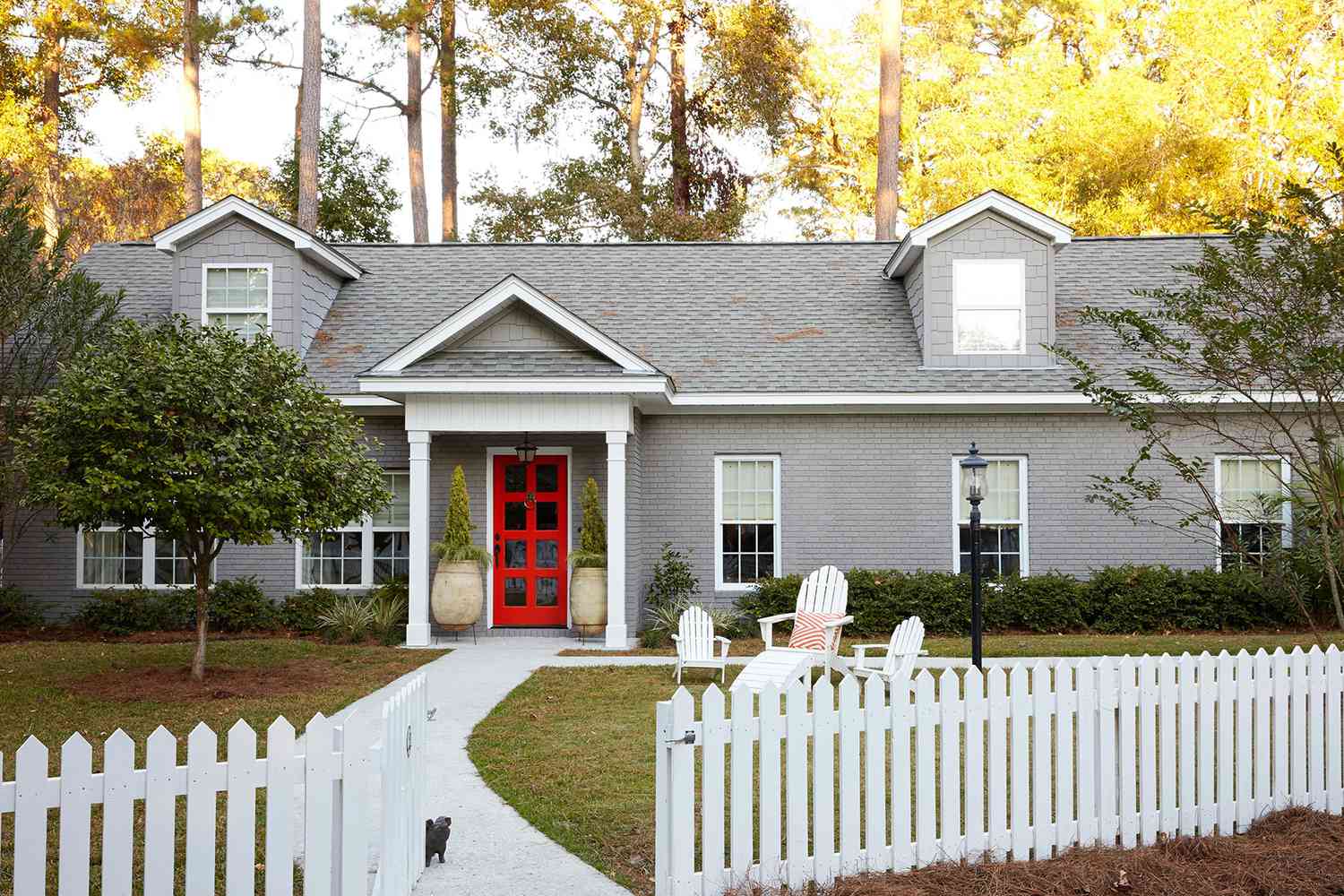
1. A Vibrant Red Door on a Modern Dark Gray House
This combination is all about intentional, high-impact contrast. The success here lies in a few key principles. First, the color theory is simple and strong: a primary color (red) pops dramatically against a deep neutral (charcoal gray). Second, the surrounding elements are kept minimalist. The sleek silver sconce, clean white trim, and simple concrete steps don’t compete for attention, allowing the red door to be the undisputed star. Finally, the textures are balanced; the smooth, painted door feels crisp against the linear texture of the horizontal siding.
⭐ The One Thing
Here’s a look at what it might cost to replicate this striking entrance. Keep in mind that labor costs for installation can vary wildly by location.
- Main Furniture (New Door): $800 – $2,500
- Lighting (Sconce): $150 – $400
- Paint & Supplies (High-quality exterior paint): $75 – $150
- Decor/Accessories (Hardware, House Numbers): $100 – $300
- TOTAL: $1,125 – $3,350
Budget alternative: Keep your existing door and get a similar vibe by painting it a bold red, updating the sconce from a big-box store, and swapping the handle for around $500 total.
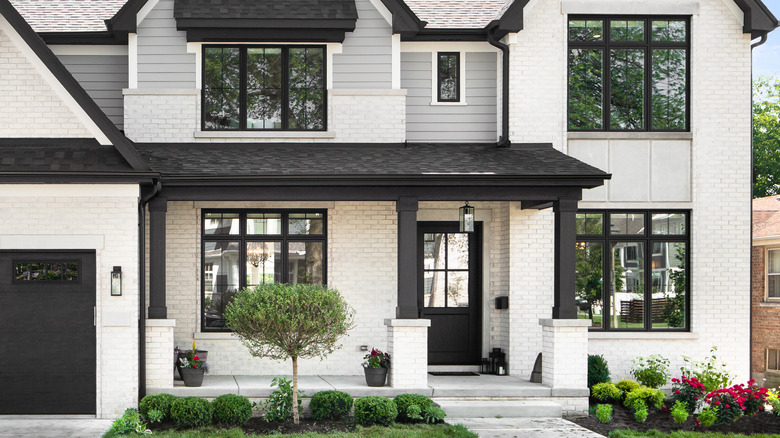
2. Crisp White Brick with a Black Door and Gray Siding
The formula for this clean, modern look is all about disciplined layering. Think of it as 50% light texture (the white brick), 30% smooth neutral (the light gray siding), and 20% sharp graphic accents (the black door, windows, and pillars). This ratio ensures the house feels bright and grounded at the same time. The black isn’t overwhelming; it’s used strategically to outline and define the architecture. You could swap the gray siding for a natural wood and still maintain the home’s modern character because the core black-and-white foundation is so strong.
💡 Designer Tip
When choosing black for an exterior, not all shades are created equal. A true jet black can look harsh and one-dimensional in bright sunlight. Instead, opt for a complex off-black with a hint of another color. For a look like this, ask for a black with a deep charcoal base, like Sherwin-Williams’ ‘Tricorn Black,’ or one with a slight navy undertone, such as Benjamin Moore’s ‘Wrought Iron.’ These nuanced blacks interact with natural light, revealing more depth and sophistication than a simple, flat black ever could.
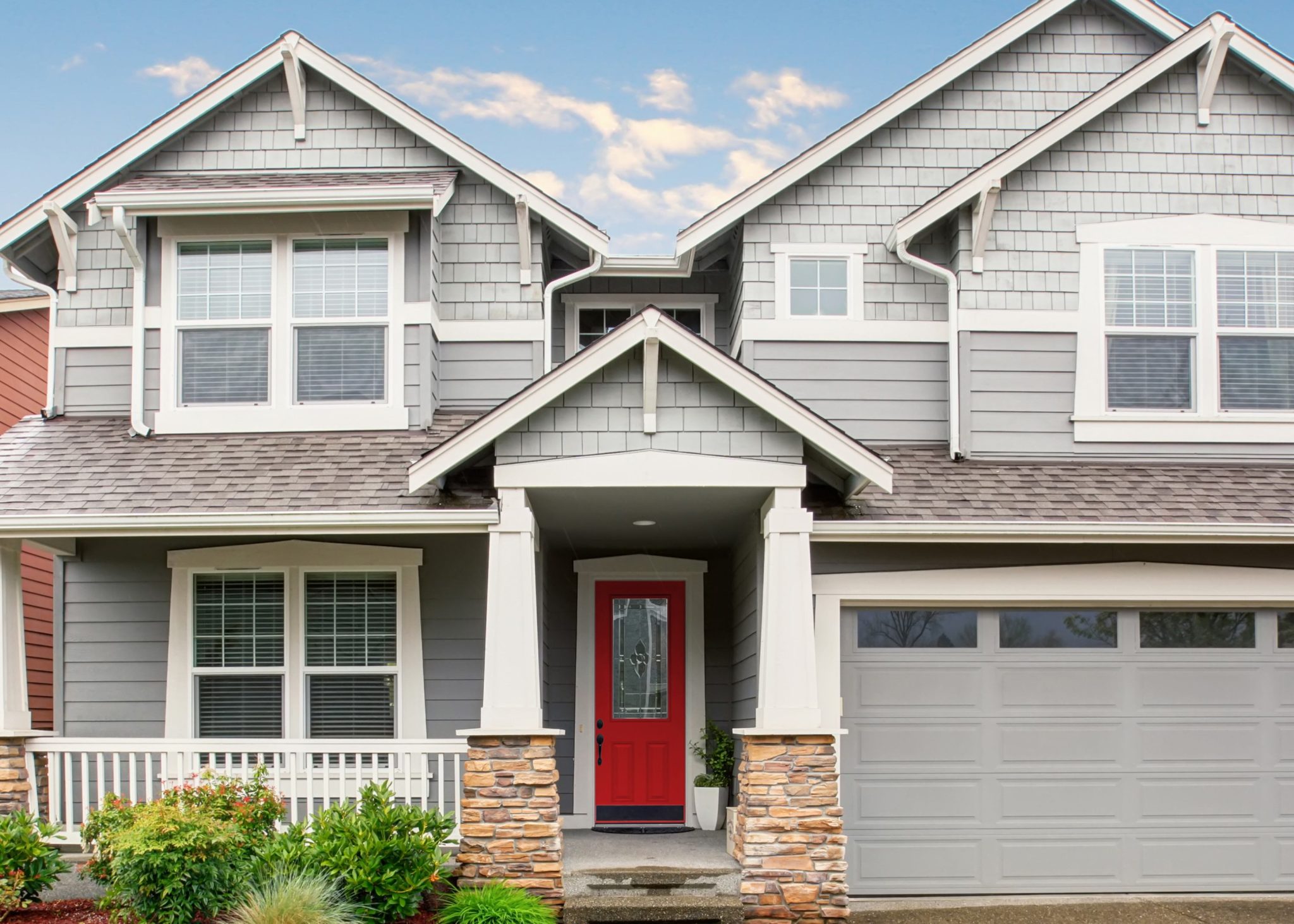
3. Warm Red Door Paired with Gray Siding and Stone Pillars
The single element holding this entire design together is the stone-clad porch columns. If you remove them, the look is still nice, but it becomes much more commonplace—just another gray house with a red door. The stone introduces a crucial third texture that bridges the gap between the smooth siding and the bold door. It adds a natural, rustic weight that makes the entrance feel more substantial and custom. The warm, earthy tones in the stone also subtly connect to the vibrant red, making the color choice feel integrated rather than random.
📐 Style Math
Let’s be honest: while stone veneer looks incredible, it requires careful planning. The biggest challenge is color-matching. The undertones in the stone must complement the undertones in your gray siding. A cool-toned gray siding with a warm, yellow-toned stone can look jarring. Always get large samples of both materials and view them together outside in morning, noon, and evening light before you commit. Also, be aware of potential maintenance—improperly installed veneer can trap moisture, leading to issues down the line.
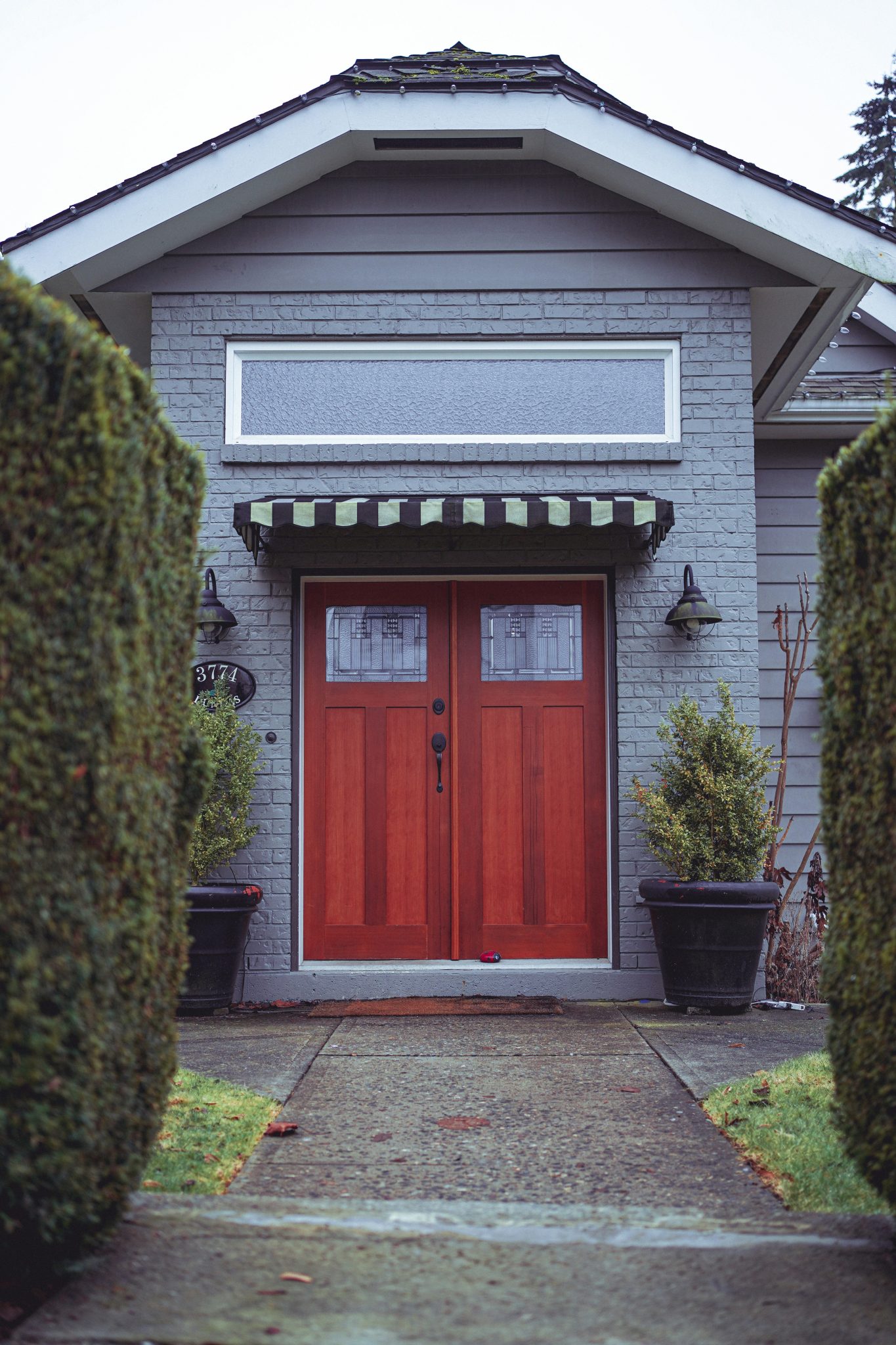
4. Reddish-Brown Double Doors Beneath a Striped Awning
This look leans into the ‘New Traditional’ trend we’re seeing everywhere. After years of stark modernism, homeowners are craving character, nostalgia, and a touch of stately charm. Elements like fabric awnings, leaded glass, and substantial double doors are making a huge comeback. It’s about creating a home that feels established and welcoming, not sterile. This entrance tells a story of a classic, comfortable home, which is a feeling many are trying to capture right now. It feels curated and personal, which is the antithesis of the builder-grade minimalism that dominated the last decade.
🧹 Maintenance Reality
A fabric awning adds incredible charm, but it’s not a set-it-and-forget-it feature. To keep it looking sharp, plan on a yearly cleaning with mild soap and water to remove dirt, pollen, and prevent mildew growth, especially in humid climates. Depending on the material and your sun exposure, expect the fabric to fade over time. High-quality, solution-dyed acrylic fabrics offer the best resistance to fading and may last 8-10 years, while less expensive options might need replacing in as few as 3-5 years. Factor that replacement cost into your long-term budget.
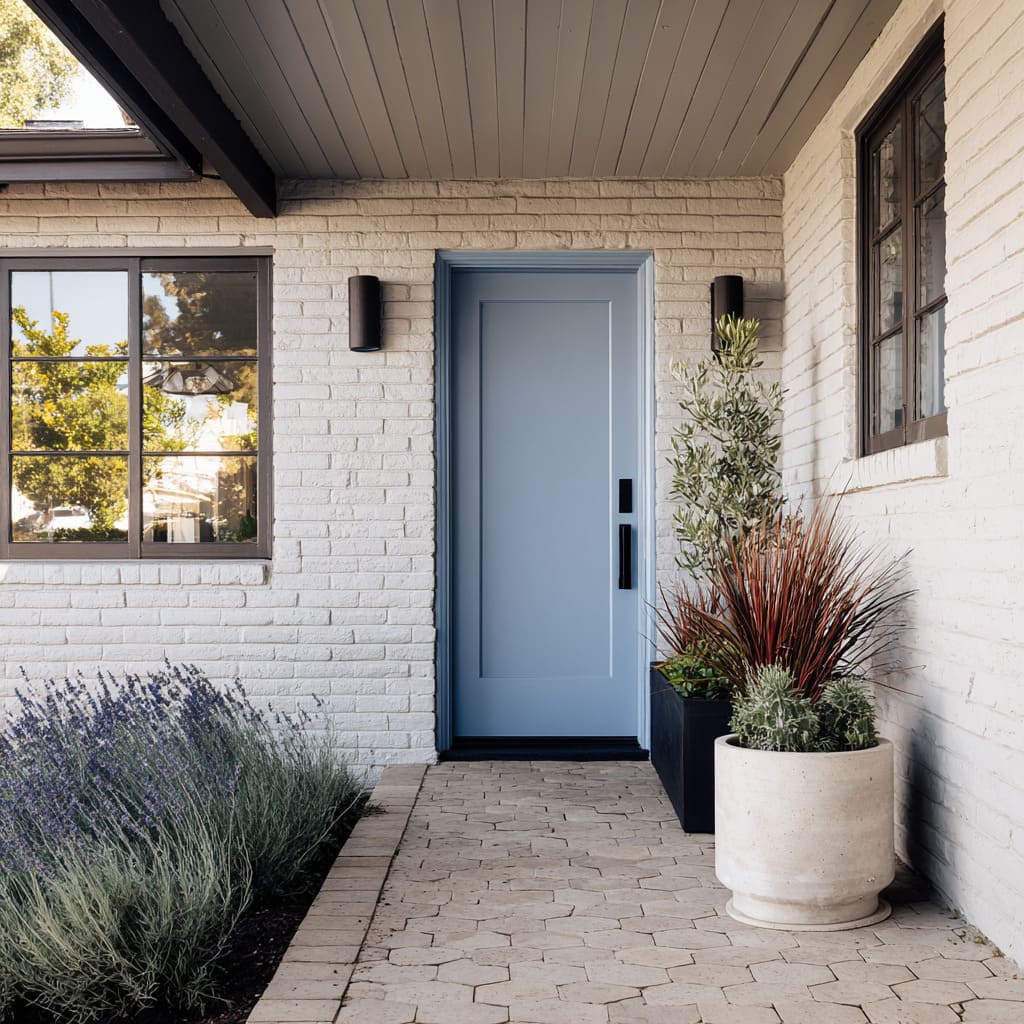
5. A Light Blue Door on a Whitewashed Brick Facade
This entry is so inviting because of its masterful blend of texture and color. The rough, imperfect surface of the whitewashed brick creates a soft, textural backdrop that prevents the house from feeling cold or stark. The light blue door injects a dose of fresh, serene color that feels both modern and friendly. The key is the grounding force of the black accents—the dark window frames and sconces provide a necessary graphic punch that keeps the whole look from becoming too washed out. It’s a perfect balance of rustic, modern, and classic.
✅ Before You Start
This style works beautifully on single-story ranch or cottage-style homes where the front door is a central feature. You need a facade that’s at least 15-20 feet wide to allow the door to have breathing room between the windows. The effect is less impactful on a very narrow or tall entryway. The irregular paver path also works best with a bit of a setback from the street, allowing for at least 6-10 feet of garden space to create that lush, layered look with planters. For a different take on a blue door, check out the bolder tones in Idea #24.
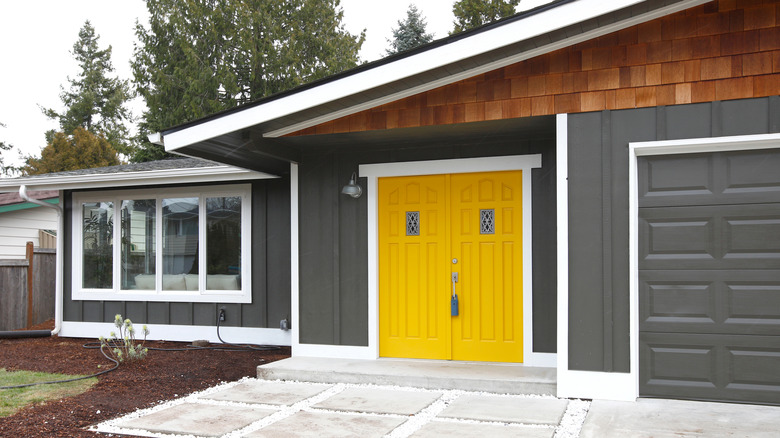
6. Bright Yellow Double Doors on a Dark Gray House
The bright yellow double doors are, without a doubt, the hero of this design. Take them away, and you’re left with a handsome but much more conventional modern exterior. The yellow provides an electrifying jolt of personality and optimism. It’s a fearless choice that communicates confidence. The fact that they are double doors amplifies this effect, creating a wider, more impactful block of color. This choice turns the simple act of entering the home into an event and ensures the house is memorable from the street.
🔥 Trending Context
You don’t need to spend a fortune on custom double doors to get this high-energy look. Start by hunting for a pair of used wooden doors on Facebook Marketplace or at a local architectural salvage yard—you can often find solid options for $200-$500. A high-quality exterior paint in a vibrant yellow, like ‘Decisive Yellow’ by Sherwin-Williams, will run you about $80 a gallon. Add some modern black hardware from a big-box store for around $100. With some DIY spirit, you can achieve this entire vibe for under $700. For a single-door version, see Idea #6.
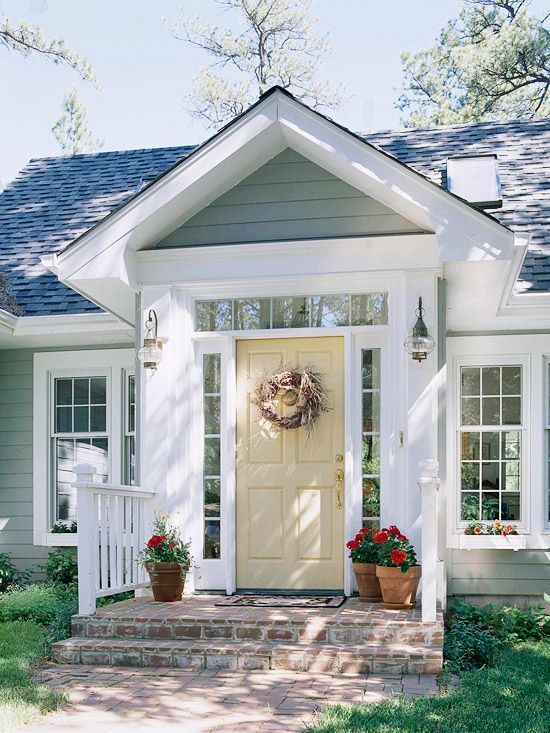
7. A Cheerful Yellow Door Paired with Medium Gray Siding
The visual equation here is pure, happy modernism: 70% calm neutral (the medium gray siding) + 20% crisp frame (the white trim) + 10% pure joy (the vibrant yellow door). The gray siding acts as the perfect quiet backdrop, allowing the yellow to truly sing without competition. The thick white trim is essential; it acts like a mat around a piece of art, separating the bold color from the neutral field and making it look intentional and sharp. If you were to remove the white trim, the effect would be far less impactful. This formula is easily adaptable—swap the yellow for a turquoise or coral for a different but equally cheerful mood.
📏 Scale Guide
To make a yellow door look chic and not childish, the specific shade is everything. Avoid primary, school-bus yellows. Instead, look for a yellow with a touch of a green or ochre undertone, which gives it more sophistication. A great example is ‘Babouche’ by Farrow & Ball, which has a rich, sunny quality. Always, always test your chosen yellow with a large painted sample board against your gray siding. A yellow that looks perfect in the paint store can appear much brighter or even neon in direct sunlight.
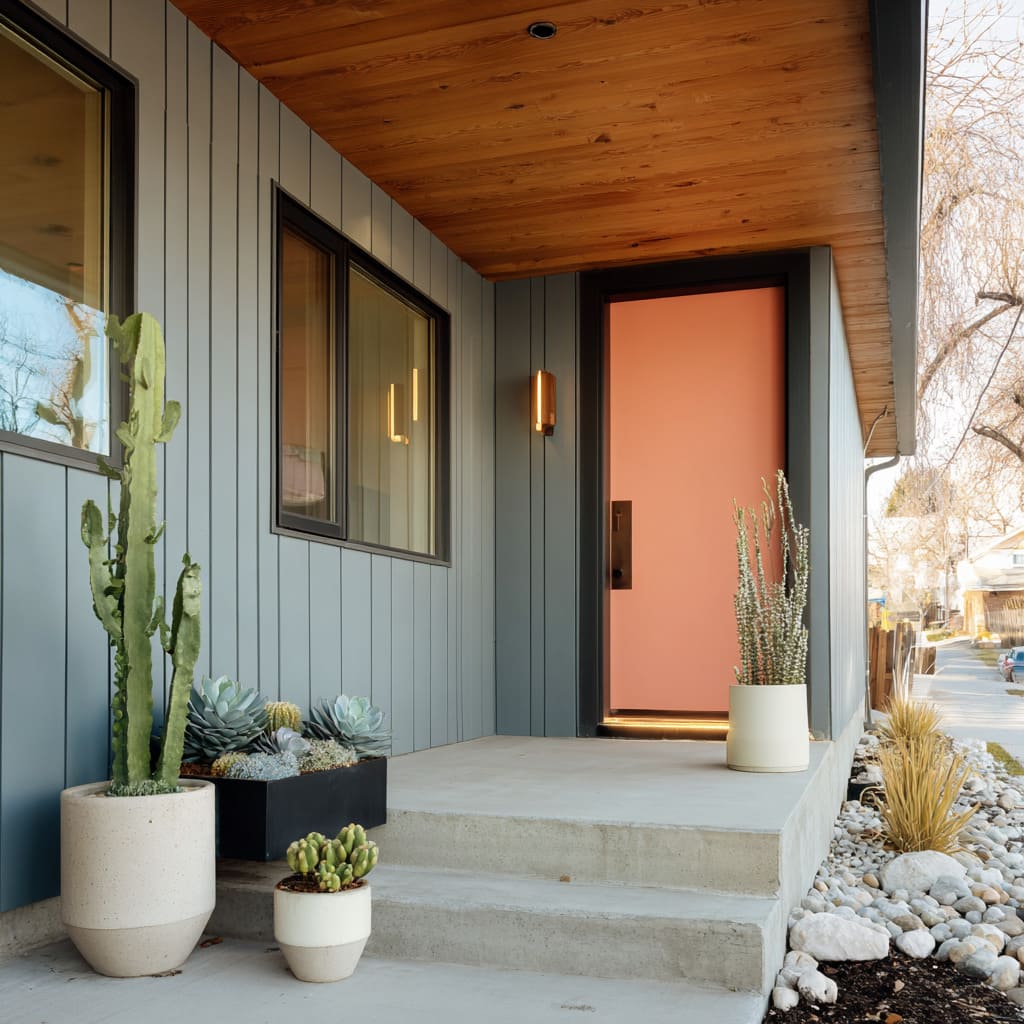
8. A Bold Coral Door on a Modern Gray Home with Wood Accents
This entryway works so well because it expertly balances three distinct styles: modern, natural, and vibrant. The clean lines of the vertical gray siding and black-framed door provide a stark, contemporary base. The light wood soffit overhead introduces a layer of natural warmth, preventing the gray and black from feeling too cold or industrial. Then, the coral-pink door delivers a confident, playful punch of color that brings the whole composition to life. The desert-inspired landscaping with cacti and succulents is the final touch, perfectly complementing the color palette.
🎯 What Makes It Work
A vibrant door color like coral is a stunning choice, but it’s not low-maintenance. Bright, saturated colors, especially in the red and pink family, are more prone to fading from UV exposure than other hues. To keep this color looking fresh, you’ll need to invest in a very high-quality exterior paint with UV inhibitors. Even then, expect to have to apply a fresh coat every 3-5 years, especially if the door receives a lot of direct afternoon sun. The payoff is huge, but you have to be prepared for the upkeep.
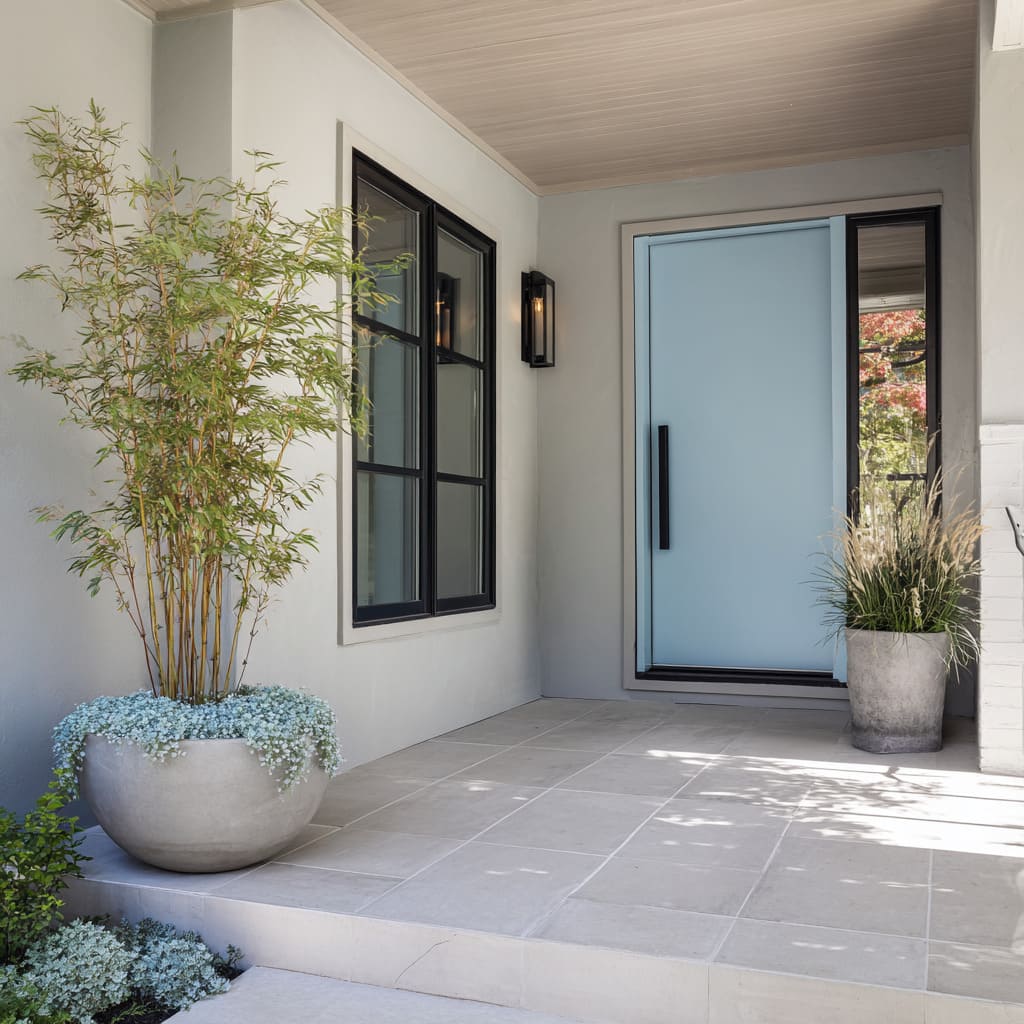
9. Light Blue Modern Door on a Light Gray Stucco Home
The key to making a slab door look high-end is all in the hardware. A long, vertical door pull, like the one seen here, instantly elevates the design. For maximum impact, the pull should be at least one-third the height of the door. A standard 80-inch door calls for a pull that is 26 inches or longer. Don’t be afraid to go even bigger—a 36-inch or 48-inch pull makes a confident, architectural statement. Stick to a simple, clean finish like matte black or brushed stainless steel to maintain that modern, uncluttered aesthetic.
💸 Get This Look For Less
This clean, minimalist look is ideal for modern or contemporary homes with defined, geometric entryways. It thrives in a space that has at least 8 feet of vertical clearance to accommodate the long door pull and allow the color to breathe. The width is also important; including the sidelight, this setup needs about 4-5 feet of horizontal space. Trying to squeeze this into a smaller, more traditional entryway can make the modern elements feel cramped and out of place. It’s a look that demands a bit of negative space to truly shine. Compare this to the more traditional light blue door in Idea #4.
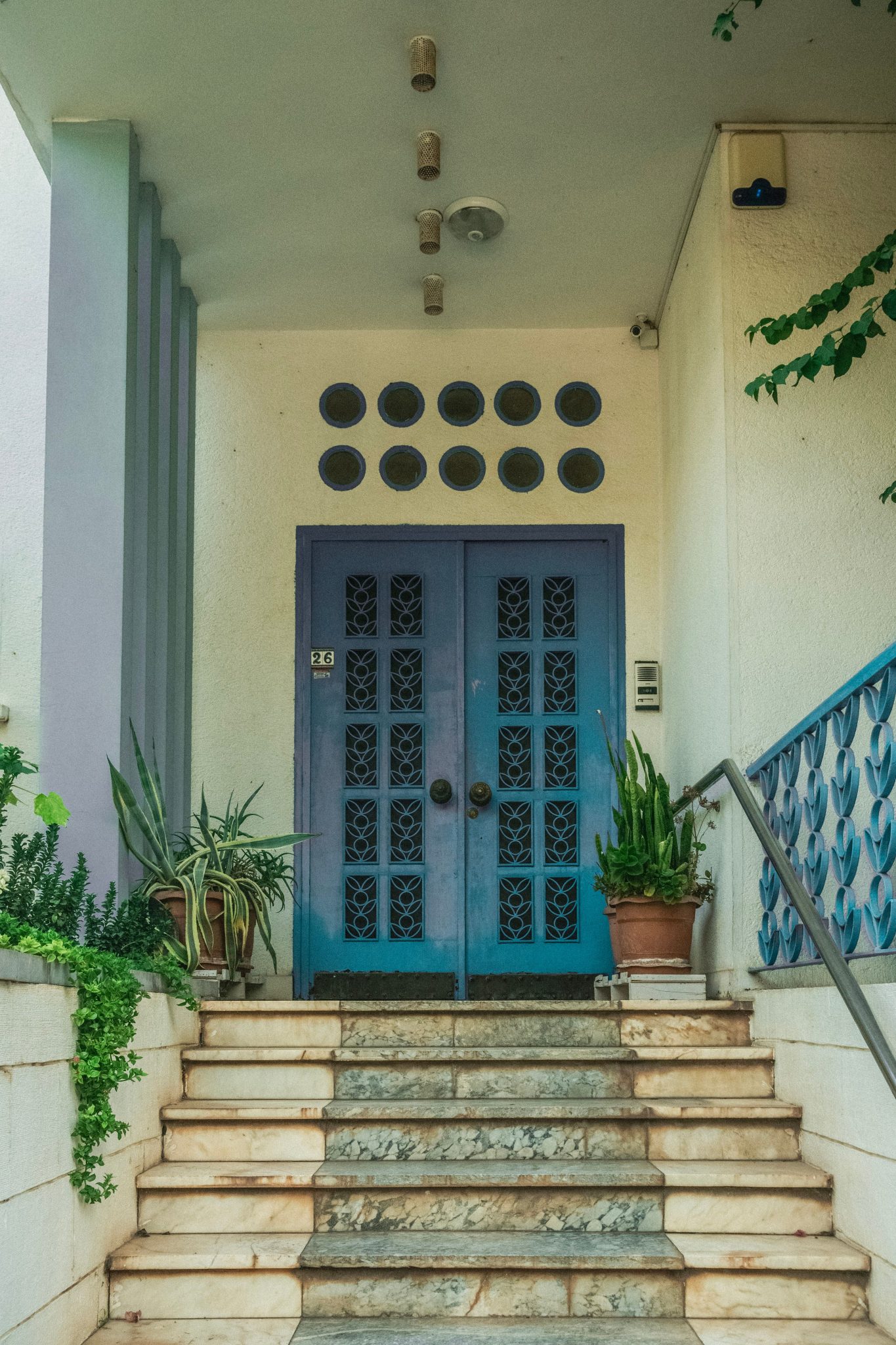
10. Teal Double Doors with Ornate Geometric Grilles
The absolute showstopper here is the custom geometric grilles on the teal doors. They are the single element that transforms this entrance from simply colorful to truly unforgettable and artistic. Without the grilles, they would be handsome teal doors. With them, the entrance becomes a bespoke piece of architectural art. The repeating pattern adds a layer of intricate detail and texture that plays beautifully against the smooth cream walls and the bold circular cutouts above, creating a look that is layered, unique, and full of personality.
🔧 How-To Brief
We’re in an era of maximalist expression, and this entryway is a perfect example. Homeowners are getting bolder, moving away from cookie-cutter designs and embracing unique, eclectic, and even retro-inspired elements. This look, with its Art Deco-esque column and bold color choices, feels like a direct rejection of the muted, ‘safe’ design rules of the past. It’s about creating a home that reflects a specific, curated point of view. It’s a conversation starter, and in 2026, that’s exactly what many people want their home to be.
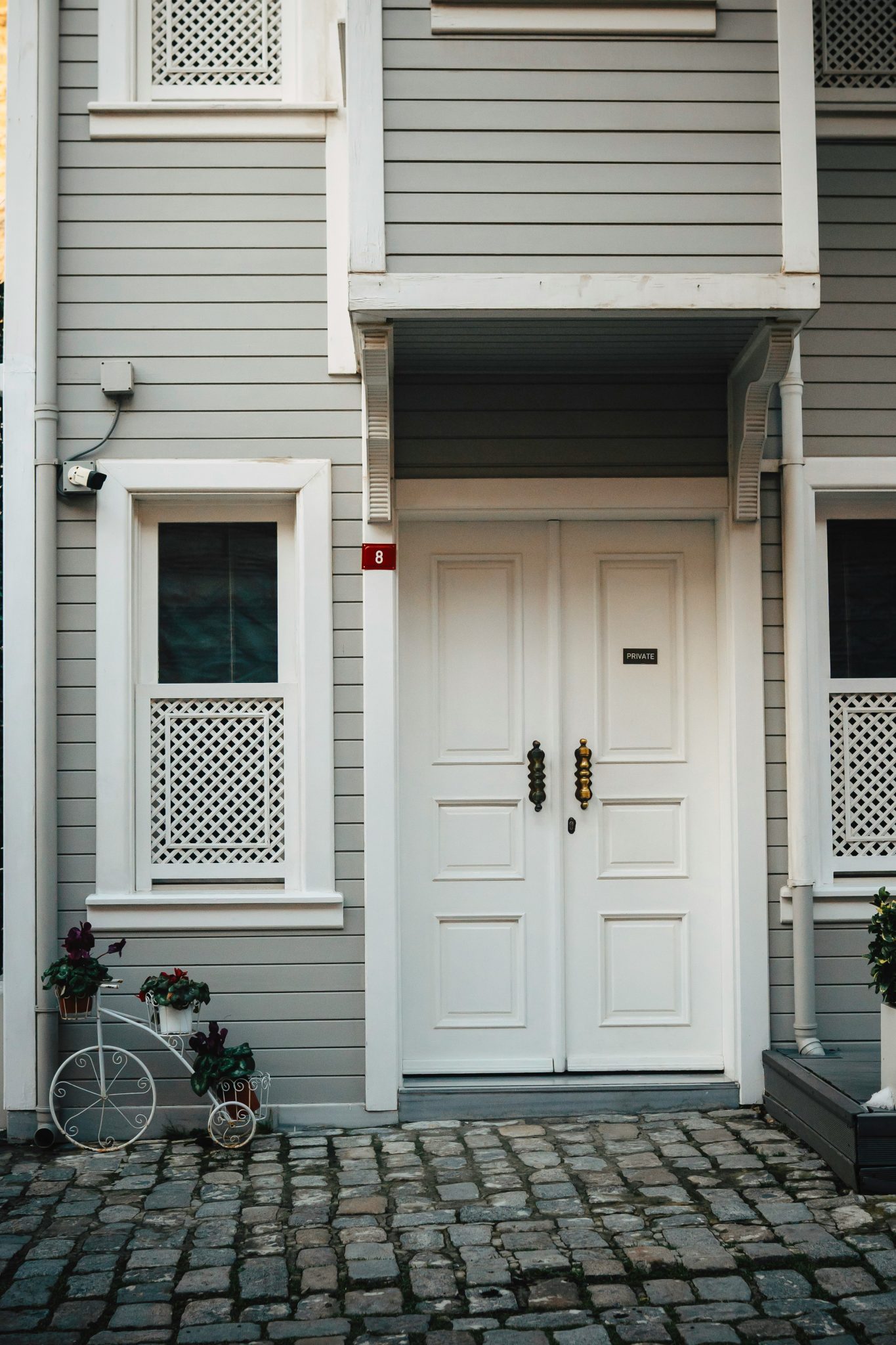
11. Classic White Double Doors on a Light Gray House
This is a masterclass in timeless, elegant design. The combination of light gray siding and classic white trim is a can’t-miss foundation that always looks fresh and clean. The white double doors add a sense of grandeur and tradition to the entrance, while the ornate brass handles introduce a touch of warmth and luxury. The beauty of this look is its quiet confidence. It doesn’t shout for attention with bold colors; instead, it relies on classic architectural details, a simple two-tone palette, and quality materials to create an inviting and sophisticated first impression.
💰 Budget Breakdown
You don’t need expensive double doors to get this classic, welcoming feel. A single paneled door can achieve a very similar effect. Start with a fresh coat of crisp white paint on your existing door (Benjamin Moore’s ‘Chantilly Lace’ is a designer favorite for a pure, clean white). Then, splurge a little on a high-quality, heavy-feeling brass or gold door handle set. This can cost $150-$250 but makes a huge difference. Add a classic coir doormat and a planter with some greenery. The total cost can be under $400, but the perceived value is much higher.
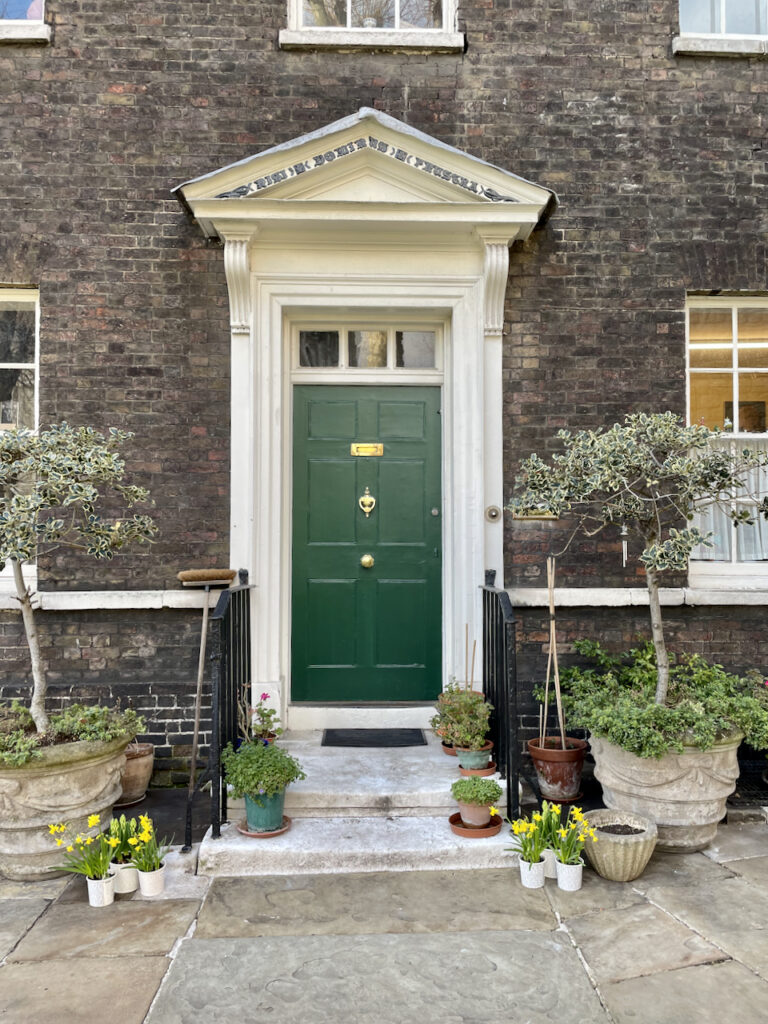
12. Deep Green Paneled Door on a Dark Gray Brick Facade
This rich, historic look follows a sophisticated formula: 60% deep texture (the weathered gray brick) + 30% architectural framing (the elaborate white pediment and trim) + 10% saturated color (the forest green door). The key is the balance of tones. The dark gray brick and deep green door are both dark, moody colors, but they are separated and lifted by the bright, crisp white of the trim. The small, gleaming hits of brass hardware act like jewelry, adding a final touch of polish. Without the generous white trim, the green and gray would blend together and lose their impact.
⚠️ Real Talk
A painted brick facade has immense charm, but it’s a significant commitment. Once you paint brick, you’re signing up for long-term maintenance, as it will likely need repainting every 7-10 years. More importantly, using the wrong type of paint (like a standard latex) can trap moisture within the brick, leading to spalling and damage over time. If you’re considering painting your brick, you must use a breathable, permeable paint specifically designed for masonry, like a silicate or mineral-based paint. It’s more expensive but crucial for the health of your brick.
13. Arched Navy Blue Door Against a Gray Stone Facade
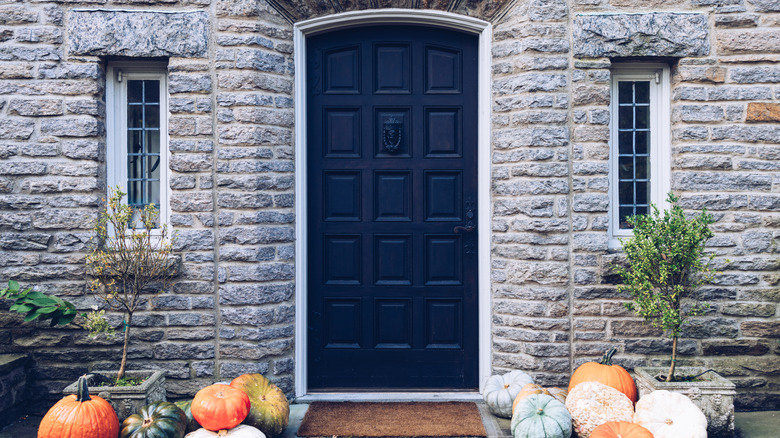
The arched door is unequivocally the element that makes this entrance feel so stately and special. A standard rectangular door would be fine, but the arch elevates the entire facade. It softens the hard, rough texture of the variegated stone and introduces a graceful, classic architectural curve. This single shape transforms the entryway from a simple opening into a grand, formal portal. It signals a transition into a home that values tradition, craftsmanship, and elegant details. The deep navy color further enhances this effect, adding a layer of dignified color.
⭐ The One Thing
When decorating a prominent entryway for the seasons, think in layers and clusters. Don’t just place one pumpkin on each side. Create a dynamic, natural-looking arrangement by grouping them in odd numbers (3, 5, or 7) of varying sizes, colors, and shapes. Start with the largest pumpkins in the back and layer smaller gourds and squashes in front. Tuck in some fall foliage or corn stalks for height and texture. The goal is to create an abundant, cascading effect that feels generous and welcoming, not sparse and symmetrical.
14. Charcoal Paneled Door with White Siding and Fall Gourds
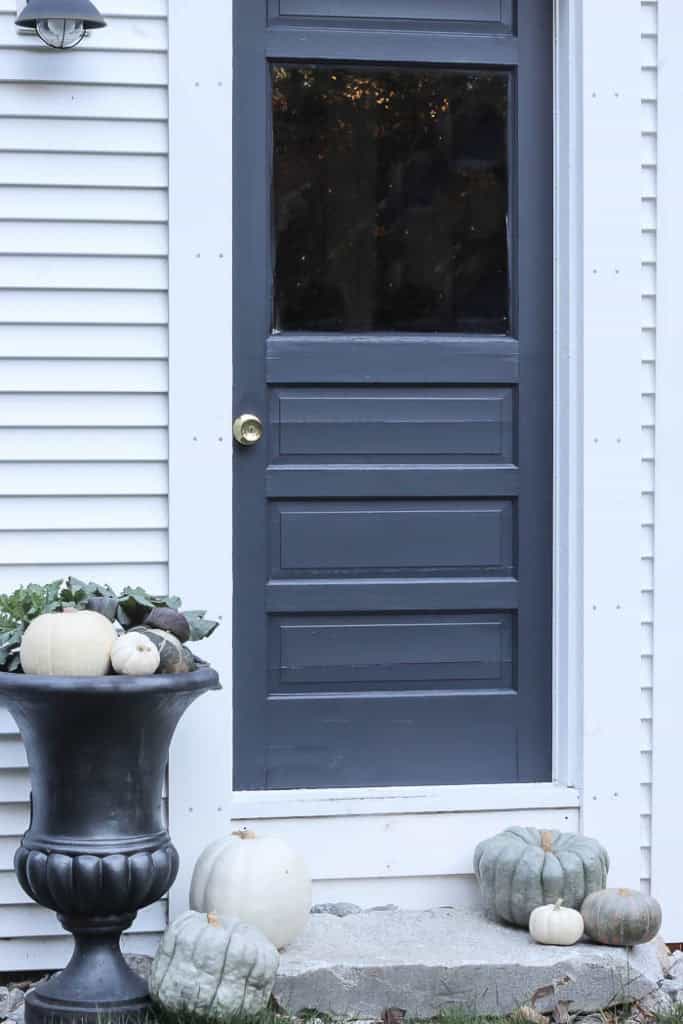
This look is a perfect example of sophisticated simplicity. The color palette is tightly controlled: charcoal gray, crisp white, and black, with a single metallic accent in the brass doorknob. This restraint is what makes it feel so chic and put-together. The texture comes from the simple lines of the horizontal siding and the panels on the door. The seasonal decor works because it adheres to this same controlled palette—the white and light green gourds feel intentional and fresh, avoiding the typical riot of autumn orange. It’s a quiet, confident, and incredibly classy look.
💡 Designer Tip
Thinking of painting your door a dark, moody charcoal? It’s a fantastic choice, but check these things first:
- Light Direction: Does your front door get hit with intense, direct afternoon sun? Dark colors absorb more heat, which can cause wood doors to warp or paint to fade faster. A north-facing door is ideal for a dark color.
- Hardware Finish: A charcoal door is the perfect backdrop for beautiful hardware. Decide if you want the warm contrast of brass (like here) or the sleek look of nickel or matte black.
- Existing Trim Color: This look relies on the sharp contrast with bright white trim. If your trim is beige or a different color, the effect won’t be as crisp.
15. Dark Green Door with Brass Hardware in a Snowy Scene
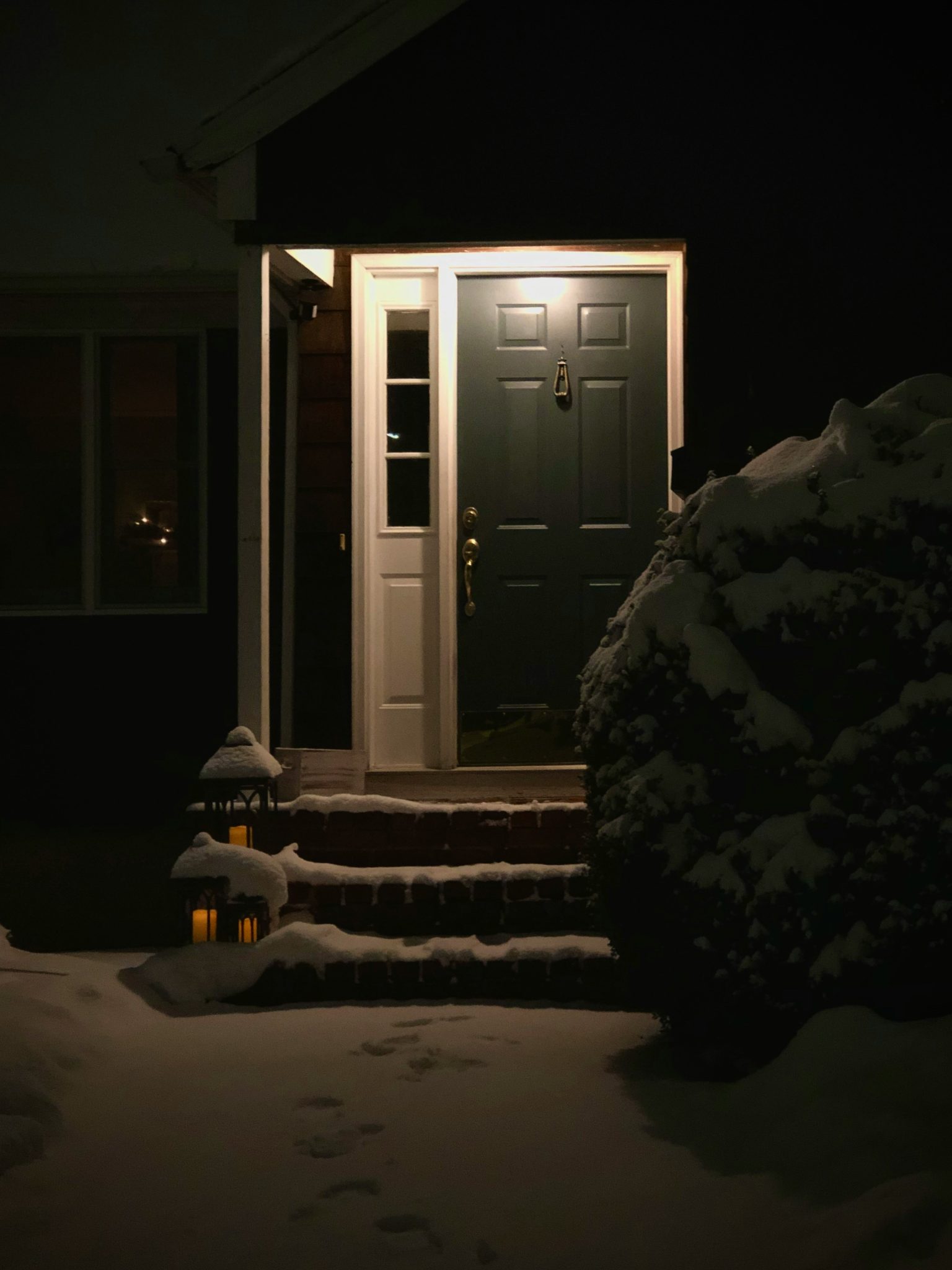
The enduring appeal of this combination lies in its classic, collegiate formula. It’s about 50% dignified neutral (the dark gray siding), 30% timeless heritage (the brick steps), and 20% saturated classic (the deep green door and bright white trim). The brass hardware is the essential finishing touch, adding a warm, metallic gleam that stands out against the cool tones of the green, gray, and snow. It’s a palette that feels rooted in history and nature, making it especially cozy and inviting during the winter months. For a similar vibe without snow, see the gorgeous entry in Idea #11.
📐 Style Math
Want to add those charming, warm-glowing lanterns to your steps or walkway for the winter? Here’s a quick guide to getting a similar look safely.
- Choose the Right Lanterns: Select sturdy, outdoor-rated lanterns with a heavy base to prevent them from tipping over in wind or snow. Look for styles with glass panels to protect the light source. (Est. cost: $40-$100 each).
- Opt for Flameless Candles: Never use real candles unattended outdoors. Instead, use high-quality, outdoor-rated LED flameless candles with a built-in timer function. (Est. cost: $15-$30 per set).
- Set the Timer: Program your candles to turn on at dusk and off at a set time (e.g., 11 PM) to conserve battery life.
- Secure the Placement: Place them on your steps, ensuring they don’t obstruct the walkway or create a tripping hazard.
16. Light Blue Front Door on a Dark Gray House with a Porch Swing
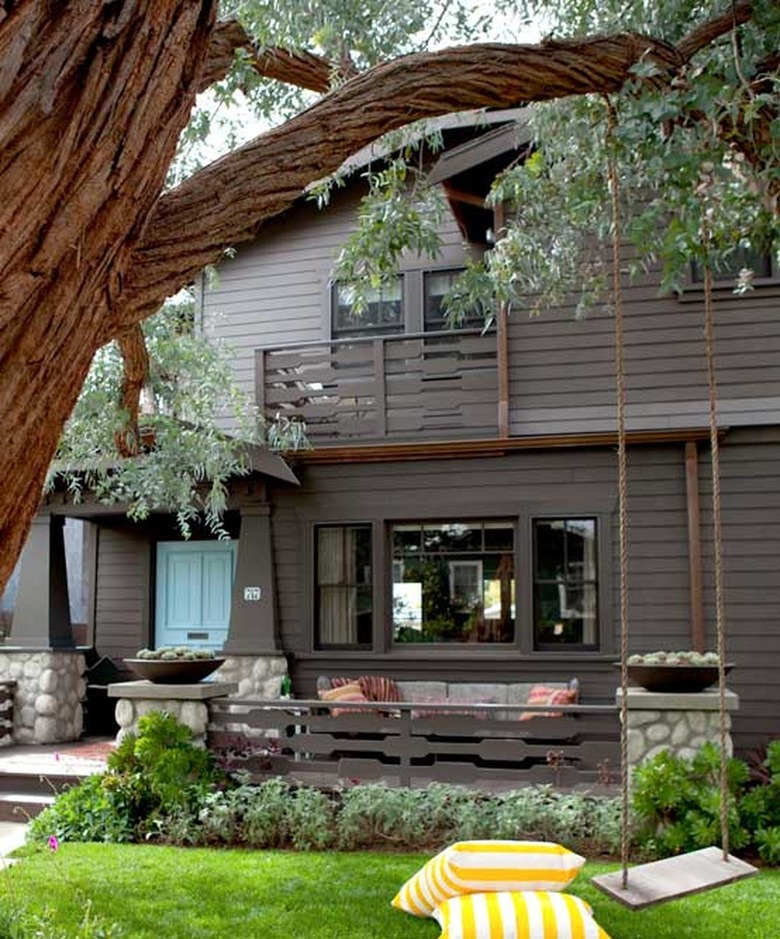
The single thing that gives this home its incredible charm is the porch swing. The house itself is lovely—a classic combination of dark gray siding and a friendly light blue door. But the swing transforms it from just a house into a home with a story. It evokes a feeling of lazy summer afternoons, conversations with neighbors, and a slower pace of life. It’s an emotional anchor for the entire property, suggesting comfort, family, and relaxation. Without it, the curb appeal is still there, but the heartwarming narrative is gone.
🧹 Maintenance Reality
That idyllic tree swing is a wonderful feature, but safety is paramount. Do not hang a swing from just any old branch. You need to select a healthy, mature hardwood tree (like an oak or maple) and a branch that is at least 8 inches in diameter, shows no signs of disease or cracking, and grows mostly horizontal to the ground. For a secure installation, it’s best to use a professional arborist or, if doing it yourself, use an eye-bolt drilled all the way through the branch, secured with a washer and nut, rather than just wrapping a rope around it, which can damage the tree over time.
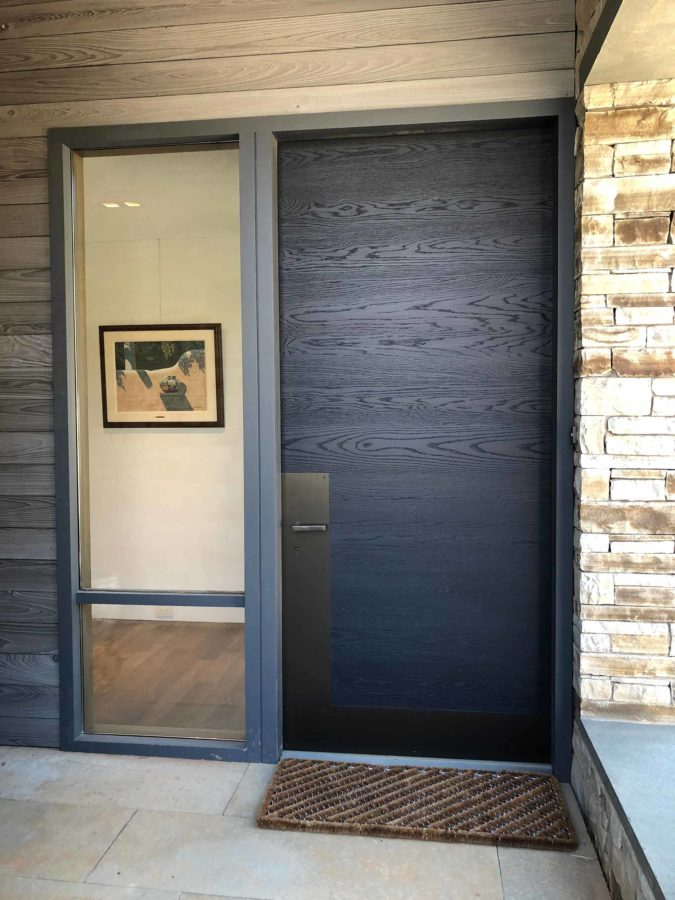
17. Modern Dark Blue-Gray Wood Grain Door with Stone Siding
This entryway is a masterclass in textural harmony. It works because it layers multiple natural and man-made materials in a cohesive, modern palette. The visible wood grain on the blue-gray door provides organic texture. This is beautifully contrasted by the rough, varied surface of the stacked stone veneer. Then, the smooth, linear planks of the light gray siding offer a clean, contemporary counterpoint. The full-length glass sidelight adds a touch of sleek transparency, preventing the entrance from feeling too heavy. The palette is tight—blues, grays, beiges—which allows the different textures to take center stage.
✅ Before You Start
A wood-grain door, whether it’s solid wood or a fiberglass look-alike, requires specific care to keep it looking sharp. If it’s real wood, it will need to be resealed every 2-3 years, especially if it’s exposed to direct sun and rain. You’ll need to lightly sand the old finish and apply a high-quality marine varnish with UV protection. For a fiberglass door, the maintenance is lower, but the finish can still fade or get scratched. A good quality car wax applied once or twice a year can help protect the finish and keep it looking rich.
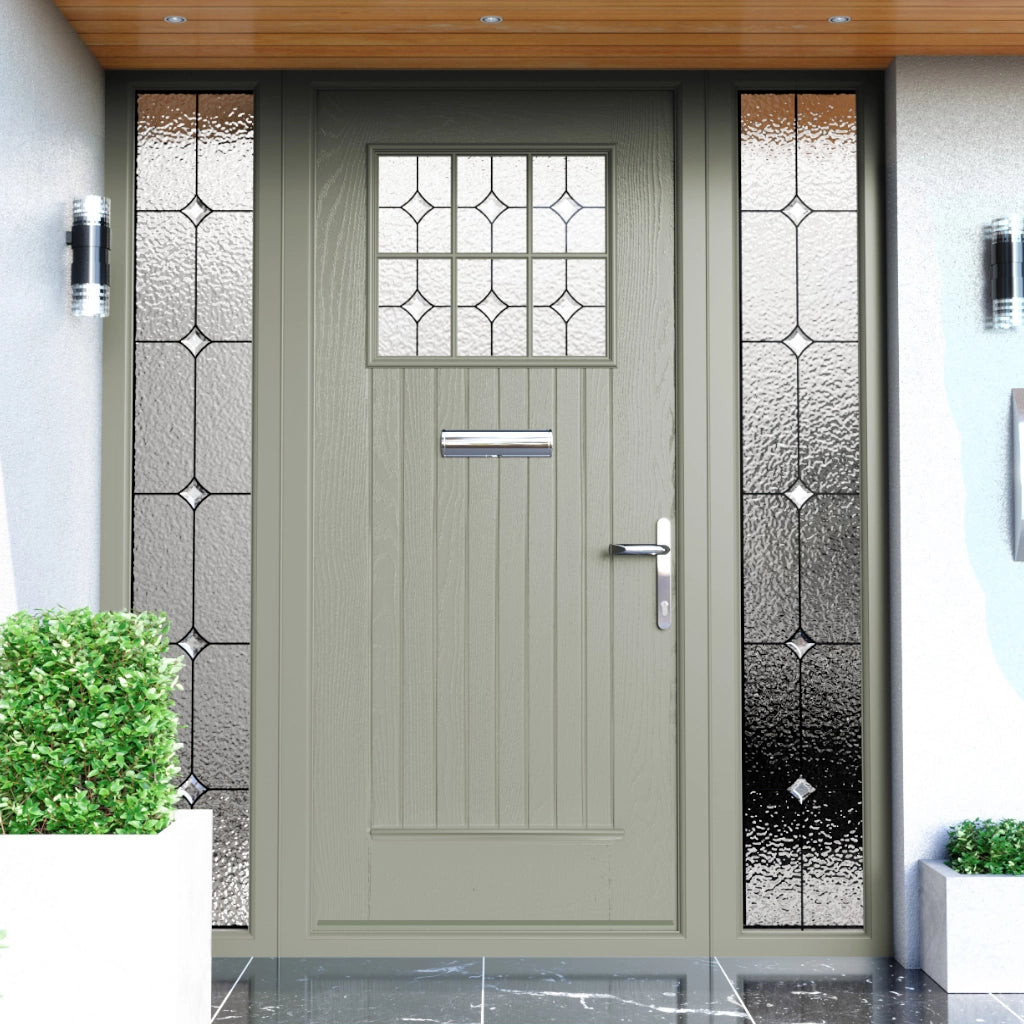
18. Light Gray-Green Door with Leaded and Frosted Glass
When using a soft, muted color like this gray-green, lighting becomes absolutely critical. A common mistake is to use a single, harsh overhead light, which can wash out the color or cast unflattering shadows. The solution, as seen here, is layered lighting. Recessed ceiling lights provide general ambient illumination, while the wall sconces on either side provide direct, focused light that highlights the door’s color and details. For an even more elevated look, choose sconces that cast light both up and down, creating a beautiful wash effect on the wall and making the entryway feel taller and more dramatic.
🔥 Trending Context
This design, with its door flanked by two tall sidelights, is best suited for a wide and generous entryway. You’ll need a total rough opening of at least 60-72 inches to accommodate a standard 36-inch door and two 12- or 18-inch sidelights. This grand scale is perfect for a main entrance that needs to make a statement. For narrower entryways (40-50 inches wide), consider a similar door style but with only one sidelight to avoid a cramped look. The vertical paneling on the door also helps to draw the eye upward, making it a great choice for standard 8-foot ceiling heights.
19. Modern Black Door with a Natural Wood Slat Ceiling
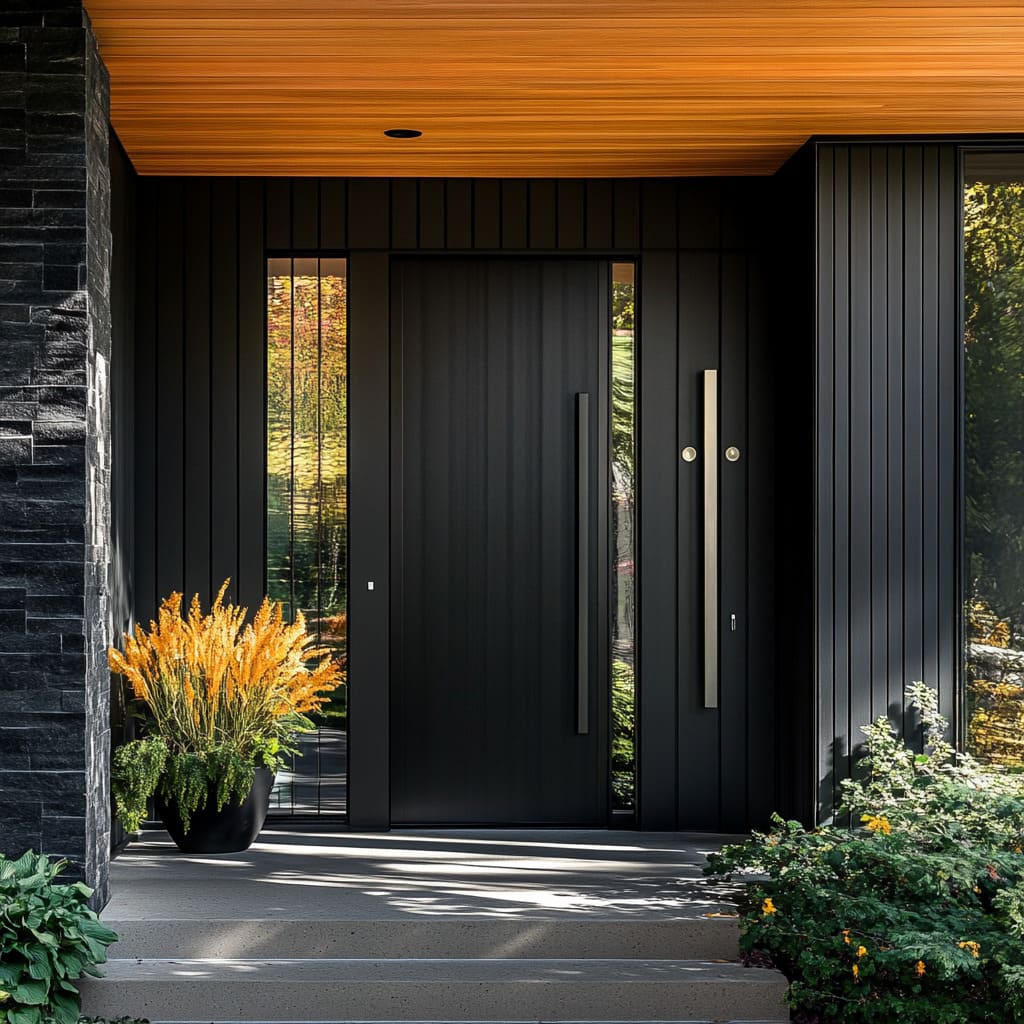
The light wood slat ceiling is the crucial element that breathes life into this modern entryway. Without it, the combination of the black door, dark siding, and stone column could feel overly stark and cold. The wood introduces essential warmth, organic texture, and a touch of mid-century modern flair. It breaks up the solid dark surfaces and draws the eye upward, creating a more dynamic and welcoming space. It’s the perfect material to bridge the gap between the sleek, man-made elements and the natural landscaping beyond.
📏 Scale Guide
This design succeeds by creating a powerful sense of contrast in multiple ways. There’s the obvious light-versus-dark contrast between the wood ceiling and the dark siding. There’s also a textural contrast between the smooth, grooved door and the rough, stacked stone column. Finally, there’s a color temperature contrast: the warm tones of the wood and the yellow grass play against the cool tones of the gray concrete and dark siding. This multi-layered approach to contrast makes the design feel rich, intentional, and visually stimulating.
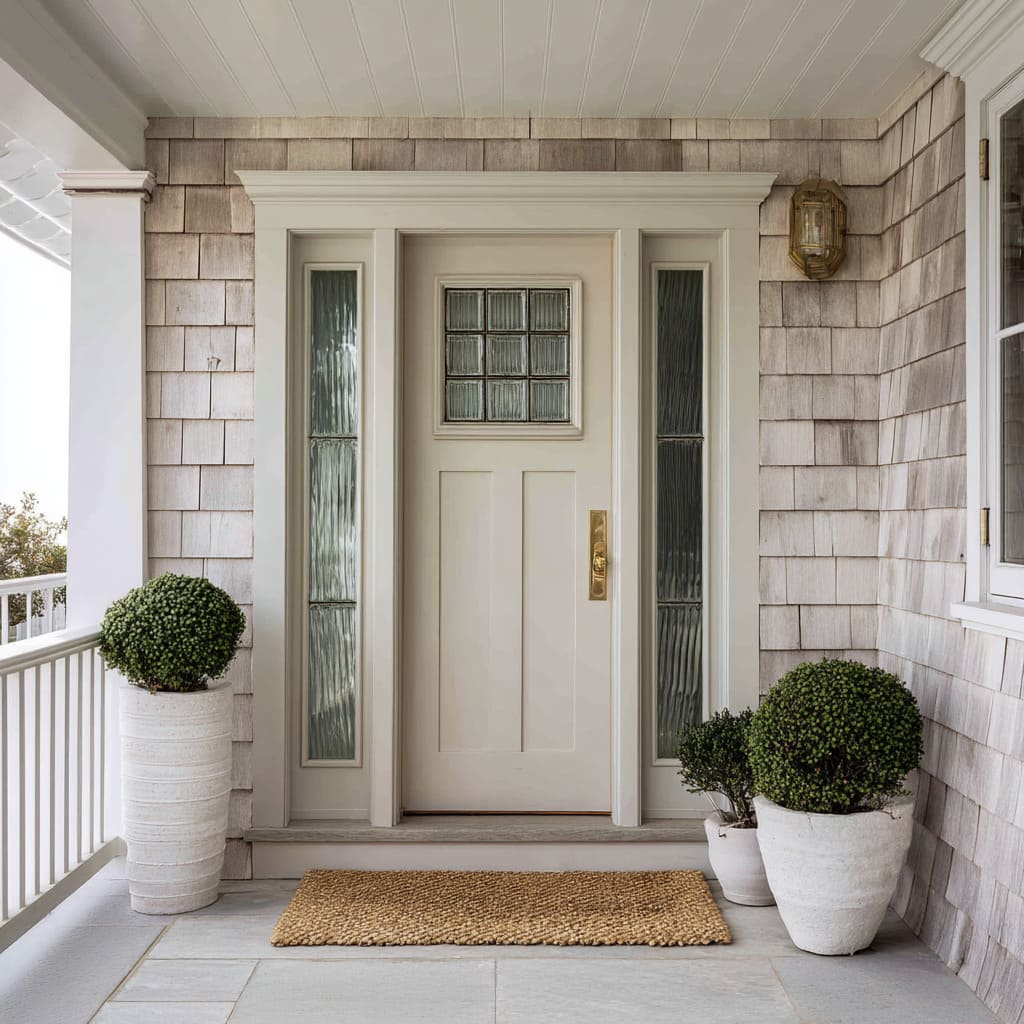
20. Cream Paneled Door with Textured Glass and Gray Shingles
This entrance perfectly captures the ‘Coastal Grandmother’ aesthetic that continues to dominate Pinterest boards. It’s not about living by the beach; it’s about evoking a feeling of relaxed, timeless elegance. The weathered gray shingles, the creamy off-white door, the classic topiaries, and the natural jute doormat all contribute to this vibe. The key is a light, airy palette and natural textures. It feels sophisticated but unpretentious, like a well-loved summer home. This trend has staying power because it prioritizes comfort and classic style over fleeting, flashy design.
🎯 What Makes It Work
Let’s talk about those beautiful weathered gray cedar shingles. While they offer unparalleled coastal charm, they are not a low-maintenance choice.
- Natural Weathering: Achieving that perfect, even silver-gray patina can take years and depends heavily on your home’s exposure to sun and rain. One side of the house might weather differently than another.
- Staining/Dipping: To get a more uniform look from day one, you can use a bleaching oil or a semi-transparent gray stain, but this will need to be reapplied every 3-5 years.
- Pest & Moisture: Cedar is naturally resistant to rot and insects, but not immune. Regular inspections for damage or moisture issues are a must.
21. Vibrant Teal Door with an Upper Glass Panel
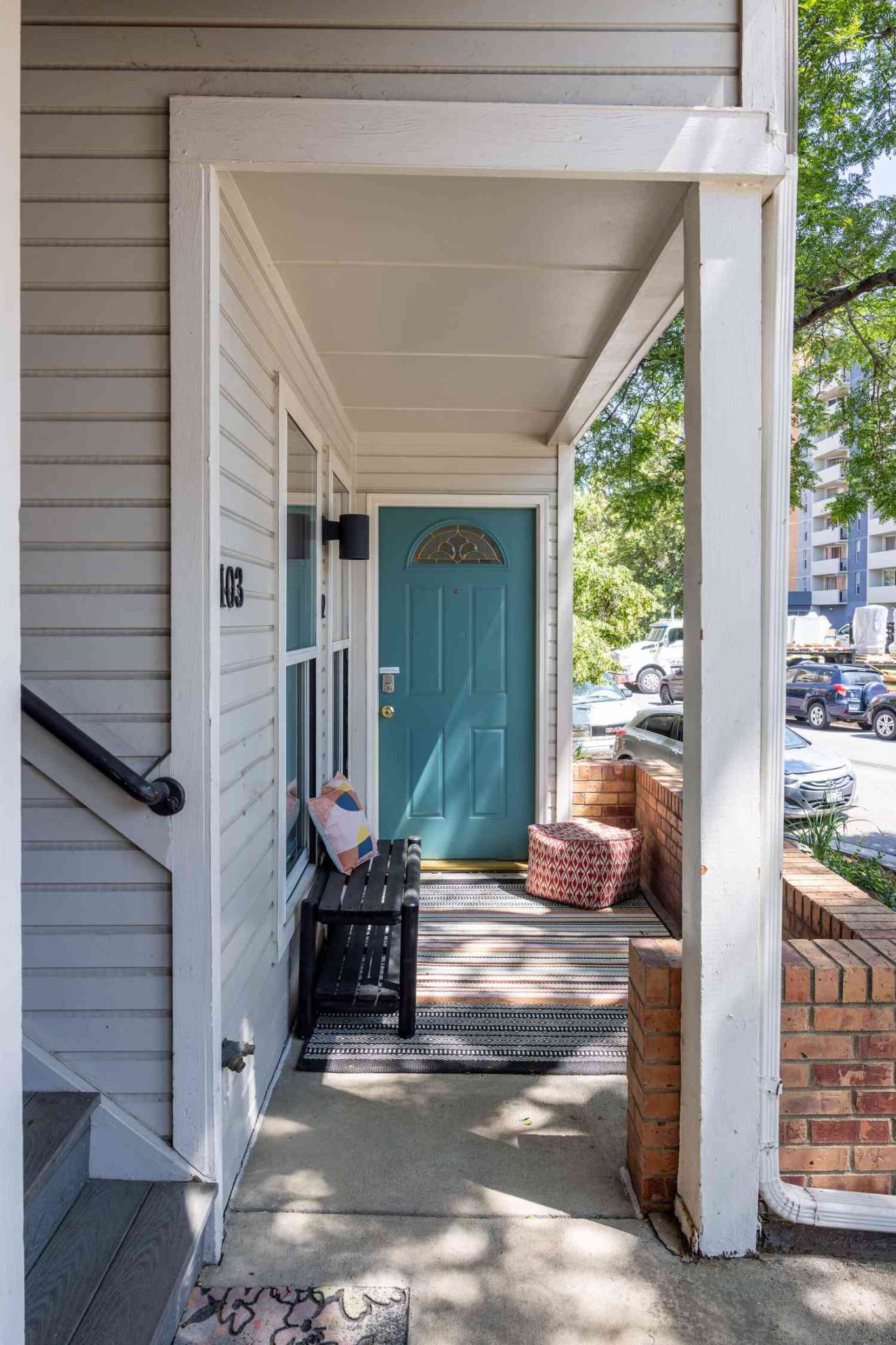
The formula here is simple but incredibly effective: 80% calm neutral (the gray siding) + 15% clean frame (the white trim) + 5% bold personality (the teal door). The gray and white create a quiet, unassuming canvas, which is exactly what a strong color like teal needs to stand out without overwhelming the facade. The dark hardware is a critical detail, grounding the bright color and giving it a touch of sophisticated weight. This high-contrast, low-complexity approach is a go-to for designers looking to make a statement that feels both modern and joyful.
💸 Get This Look For Less
Ready to paint your door a bold, saturated color like teal? Proper prep is the secret to a professional, long-lasting finish. It should take about 3-4 hours of active work, plus drying time.
- Clean Thoroughly: Start by scrubbing the door with a TSP (trisodium phosphate) substitute and water to remove all dirt, grime, and oils. Rinse well and let it dry completely. (Cost: $10)
- Sand Lightly: Scuff the entire surface with 120-grit sandpaper. You’re not trying to remove the old paint, just roughing it up so the new primer can grip. Wipe away all dust with a tack cloth.
- Prime Time: Apply one coat of a high-quality exterior bonding primer. This is the most important step for adhesion and true color. Let it dry according to the can’s instructions. (Cost: $25)
- Paint Two Coats: Using a high-quality exterior paint, apply two thin, even coats. Allow for proper drying time between coats. Thin coats are better than one thick, drippy one! (Cost: $50)
22. Periwinkle Double Doors within a Carved Yellow Stone Archway
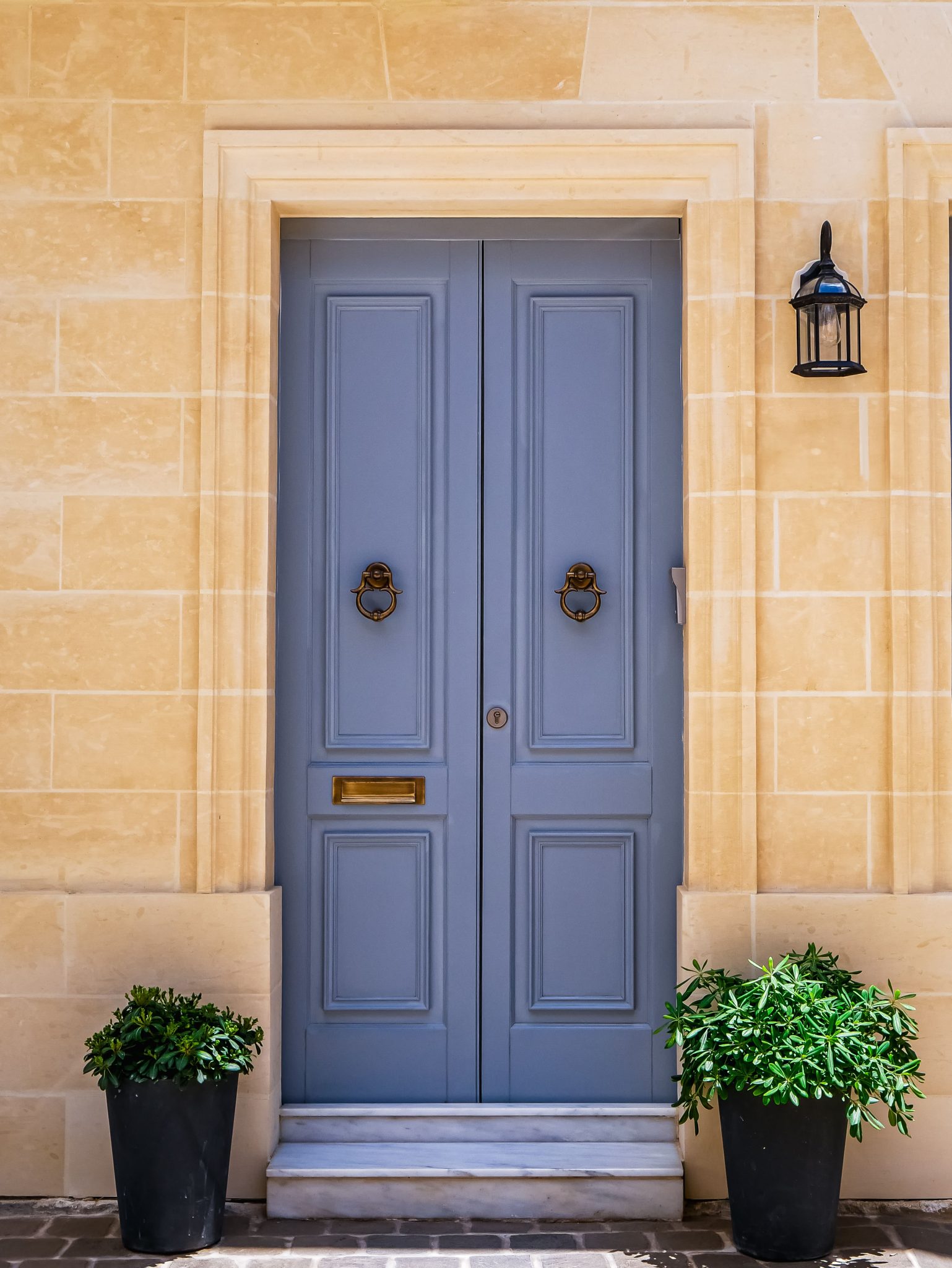
The undeniable focal point of this entryway is the massive, carved stone archway. It does more than just frame the door; it *is* the entrance. Its grand scale, warm yellowish color, and substantial texture set a tone of European-inspired elegance and permanence. The periwinkle doors are a beautiful, unexpected color choice, but they play a supporting role to the architectural star of the show. Without the stone surround, the doors would be pretty; within it, they become part of a truly magnificent and memorable composition.
🔧 How-To Brief
A look this grand and specific comes with considerations. Natural carved stone is a very expensive material, and installation is a specialized skill. This isn’t a weekend DIY project. Furthermore, the yellowish tone of the stone is a very dominant feature that will dictate all your other exterior color choices. It pairs beautifully with the cool periwinkle here, but could clash easily with other colors. This is a defining architectural feature you’ll have to design around for as long as you own the home. It’s a marriage, not a date.
23. Modern Brushed Nickel Door Hardware on a Clean White Door
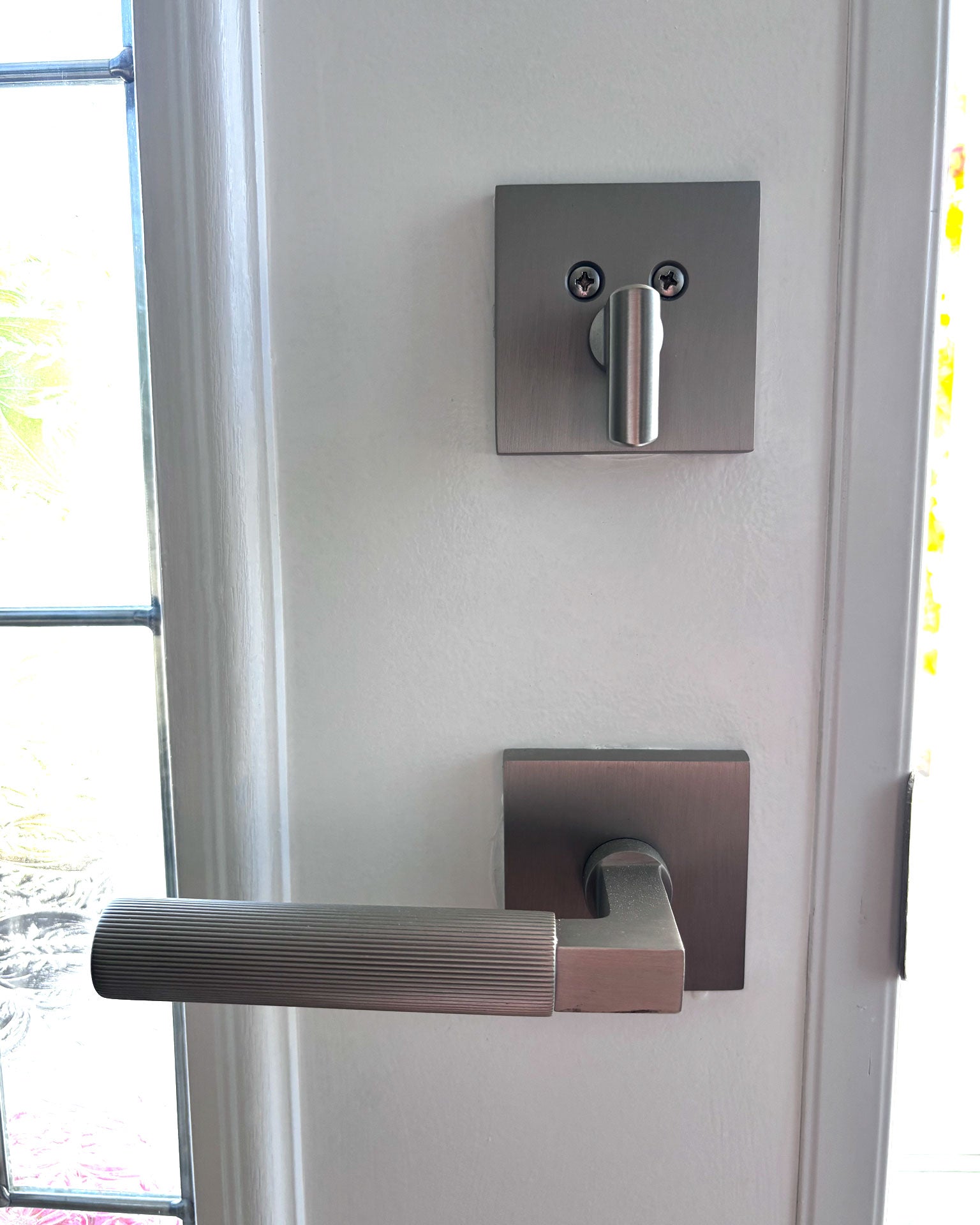
This close-up highlights a crucial design detail: the power of well-chosen hardware. The look is successful because of its clean, contemporary geometry. The square backplates provide a crisp, architectural anchor on the white door, creating a modern feel. The brushed nickel finish offers a soft, matte metallic sheen that’s sophisticated and less prone to showing fingerprints than polished chrome. This combination feels intentional and high-quality, proving that the small details are what elevate a simple element like a door from functional to truly stylish.
💰 Budget Breakdown
You don’t need a custom door to get this sleek, modern hardware update. This is one of the easiest and most impactful DIY upgrades you can make. You can find lever handle sets with similar square backplates at stores like Home Depot or Lowe’s for $50 – $150. For a super budget-friendly option, check out Amazon for surprisingly stylish sets starting around $40. Just be sure to measure your door’s ‘backset’ (the distance from the edge of the door to the center of the hole for the handle) before you buy to ensure a perfect fit.
24. White Board-and-Batten Farmhouse with a Bright Blue Door
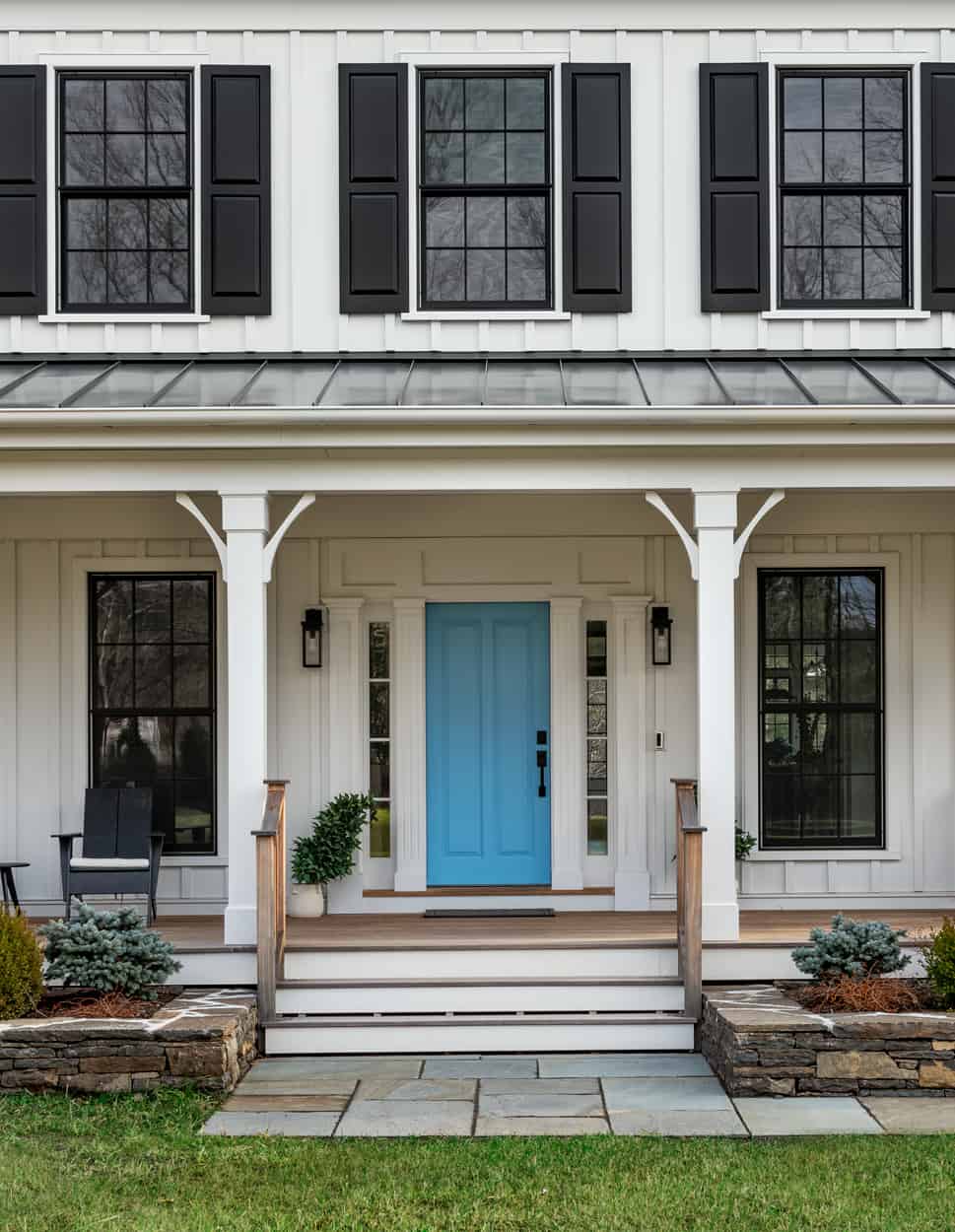
The Modern Farmhouse aesthetic is all about this exact formula: 60% crisp white base (the board-and-batten siding) + 30% sharp black accents (windows, shutters, sconces) + 10% friendly color pop (the vibrant blue door). The white creates a bright, clean canvas, while the black adds a graphic, industrial edge that keeps it from feeling too quaint. The blue door is the personality piece, offering a welcoming, cheerful signal that cuts through the monochrome palette. It’s a nearly foolproof recipe for curb appeal. The same bold door choice can be seen in a more traditional context in Idea #24.
⚠️ Real Talk
While the ‘Modern Farmhouse’ trend has been popular for a while, this look shows its evolution and staying power. The shift is toward bolder, more personal accent colors. Where early versions of this trend might have featured a black or wood-stained door, we’re now seeing homeowners embrace vibrant blues, greens, and yellows. It shows a move towards infusing this popular, comfortable style with more individual personality, ensuring it continues to feel fresh and relevant in 2026. It’s less of a strict trend and more of a new American classic.
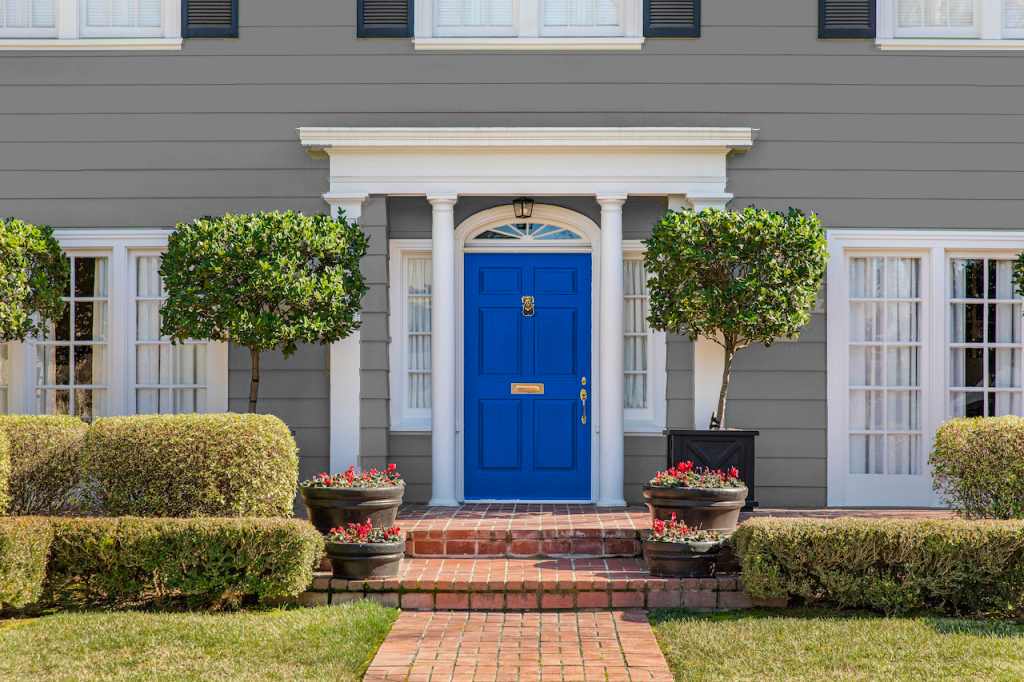
25. Traditional Gray House with a Vibrant Blue Door and Brick Path
This entryway nails the classic-with-a-twist look by balancing traditional forms with a bold, contemporary color. The architecture is pure tradition: symmetrical layout, formal white columns and trim, and a classic brick walkway. This established, formal setting is the perfect foil for the vibrant blue door. The door provides a jolt of unexpected energy that keeps the design from feeling stuffy. It’s the tension between the respected tradition of the architecture and the joyful rebellion of the color that makes this look so compelling and memorable.
⭐ The One Thing
A bright blue door is a fantastic way to add personality, but there are a few things to consider before you head to the paint store.
- Siding Undertone Check: Your gray siding has an undertone (cool blue/purple, warm green/brown, or neutral). Hold your blue paint chip up to your siding in the daylight to make sure the colors harmonize, not fight.
- HOA Rules: Before you fall in love with a bold color, double-check your Homeowners’ Association guidelines. Many have pre-approved color palettes, and a vibrant blue might require special permission.
- Resale Value: While you should design for yourself, if you plan to sell in the near future, a very specific, bold door color can be a turn-off for some buyers. It’s an easy thing to repaint, but something to keep in mind.
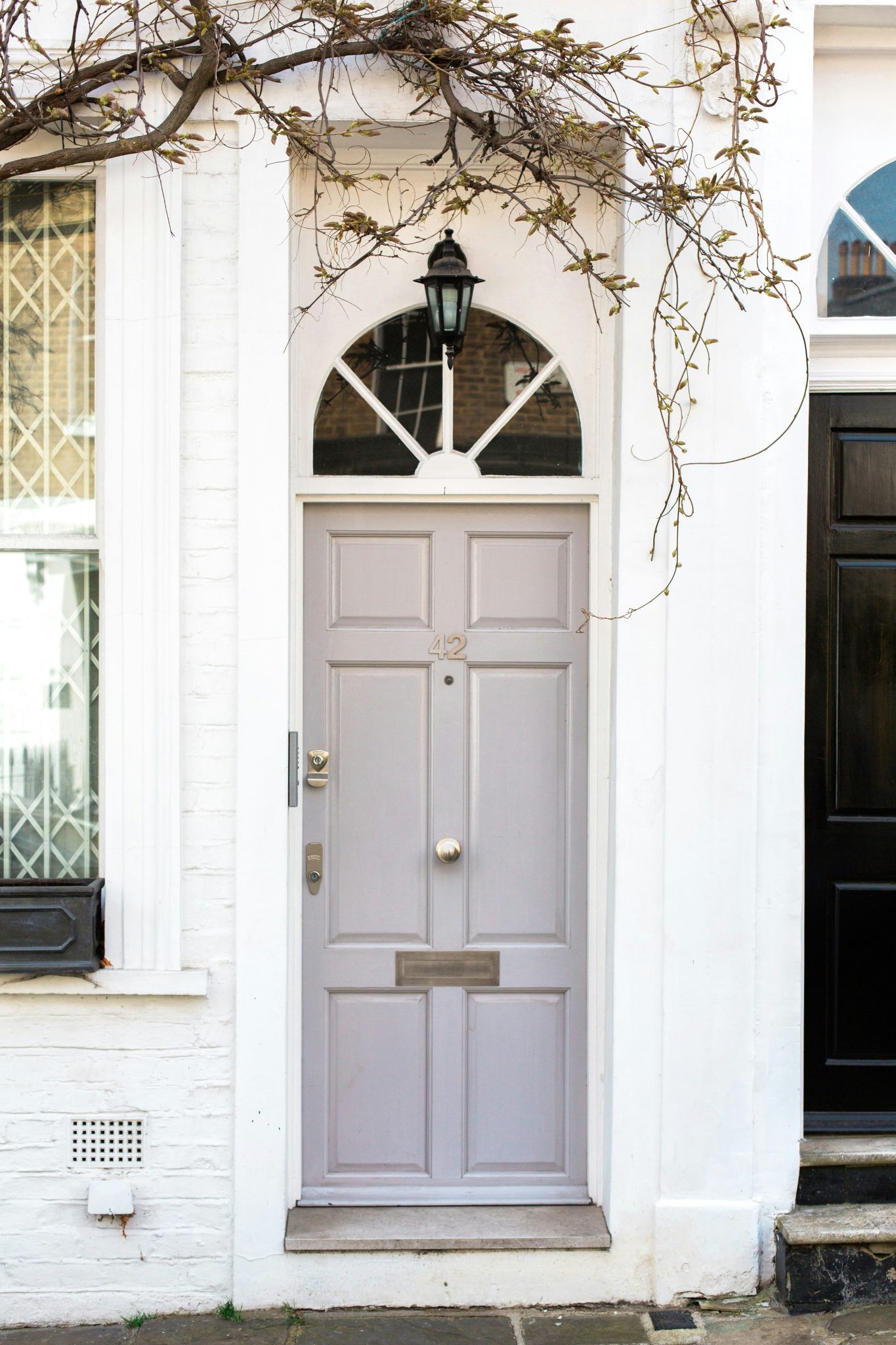
26. Light Gray Paneled Door with Brass Hardware on White Brick
When pairing metallics with a light gray and white palette, brass is a designer’s secret weapon. The key is to choose an ‘unlacquered’ or ‘living finish’ brass for the hardware. Unlike shiny, sealed brass which can look dated, a living finish will develop a beautiful, rich patina over time. It starts bright and gradually darkens, adding character and a sense of history to your entryway. This subtle aging process complements the classic, traditional feel of the paneled door and brick facade perfectly, making the entrance feel both elegant and soulful.
💡 Designer Tip
This is a high-end, classic look that can be achieved across a range of budgets. The biggest variables are the quality of the door and the hardware.
- Main Furniture (Solid Core Paneled Door): $700 – $2,000
- Lighting (Black Lantern Sconce): $100 – $350
- Paint & Supplies (Premium Masonry & Door Paint): $150 – $250
- Decor/Accessories (Living Finish Brass Hardware, House Numbers): $250 – $600
- TOTAL: $1,200 – $3,200
Budget alternative: Paint your existing door a chic light gray and invest in a quality brass-finish hardware set from a big-box store. The total cost could be under $400.
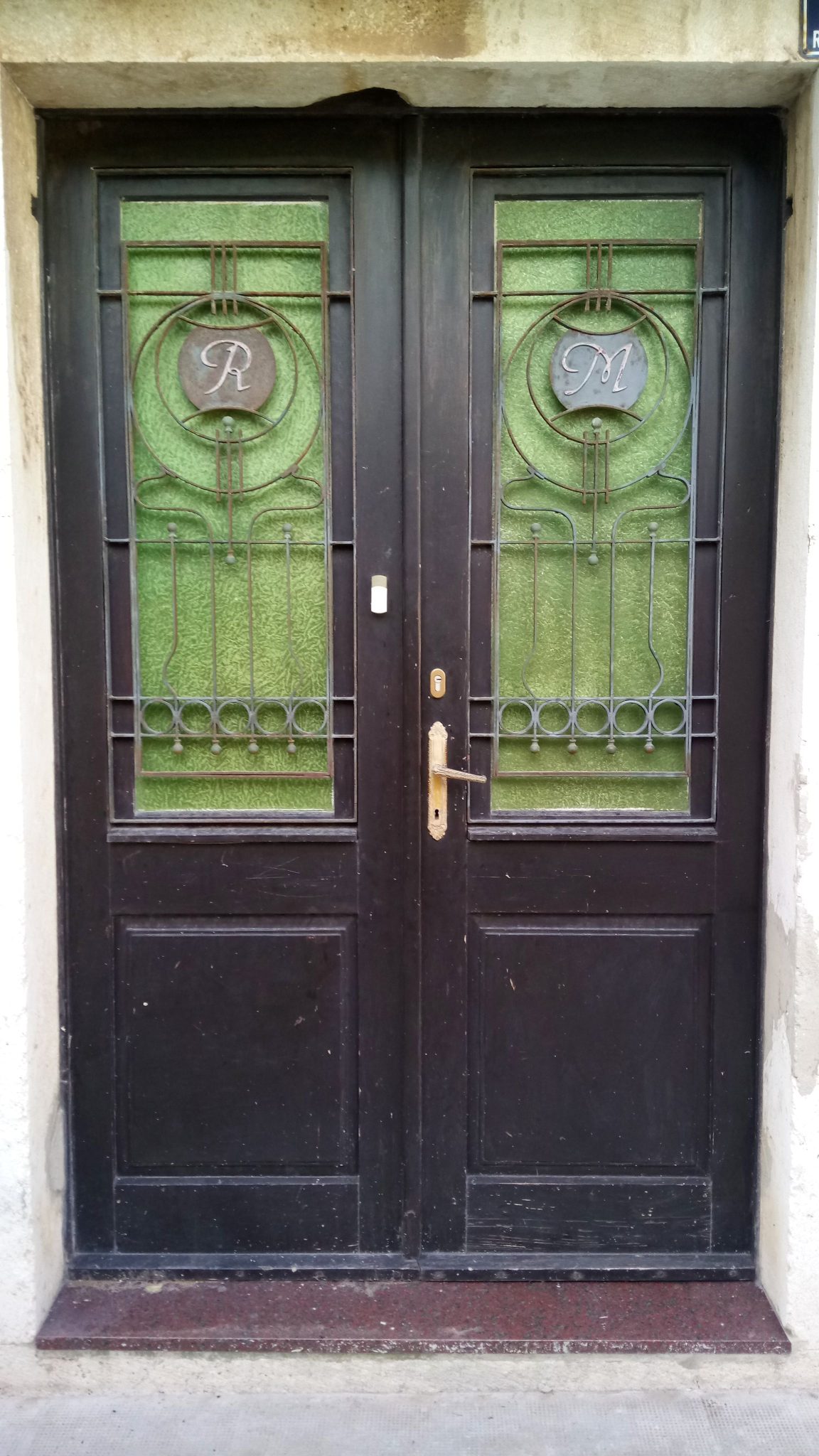
27. Ornate Stained Wood Door with Green Stained Glass Panels
The single element that defines this entrance is undeniably the artistic stained glass. It transforms the door from a simple entryway into a piece of custom craftsmanship. The organic, flowing lines of the metalwork and the rich green of the glass add a layer of intricate, historic detail that feels both elegant and unique. This is not a door you can buy off the shelf; it communicates a deep appreciation for artistry and character, making a powerful first impression before a guest even steps inside. It’s a focal point that tells a story of quality and bespoke design.
📐 Style Math
A beautiful stained wood and glass door like this is a treasure, but it requires diligent care. The wood needs protection from sun and moisture to prevent fading, cracking, and warping. Plan to apply a fresh coat of high-quality exterior varnish with UV inhibitors every 2 to 3 years. The stained glass itself is durable, but the lead or metal came that holds it together can degrade over time. Periodically inspect it for any gaps or cracks, and gently clean the glass with a soft cloth and a mild, non-ammonia-based cleaner to preserve its vibrancy.
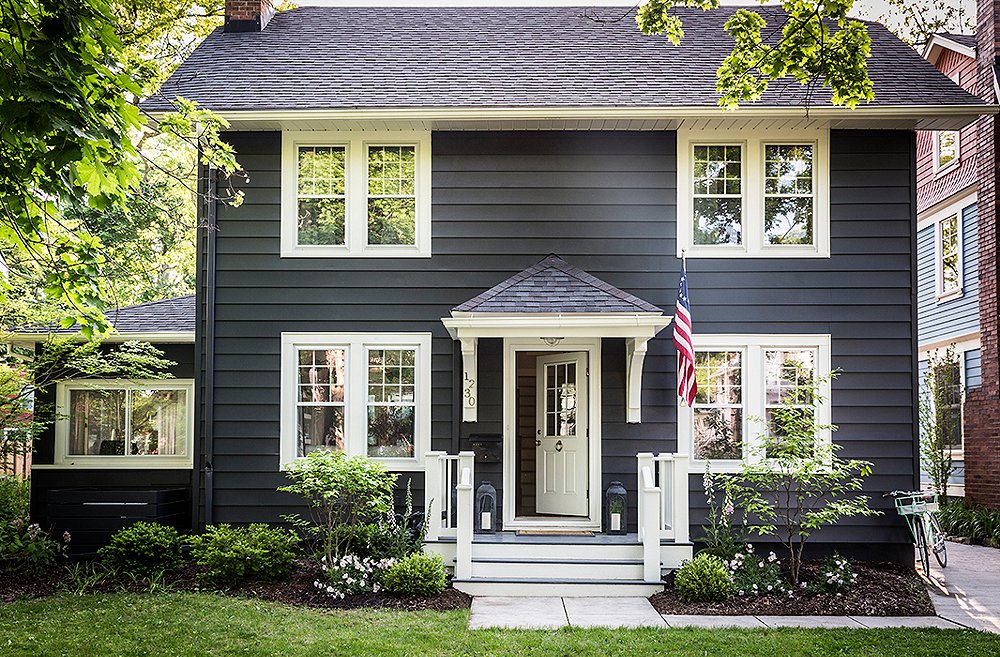
28. Dark Gray House with a Creamy Off-White Front Door
This look is a lesson in the power of nuance. Instead of a stark, bright white, the choice of a creamy, off-white door provides a softer, more welcoming contrast to the dark gray siding. This subtle warmth prevents the classic color scheme from feeling too cold or severe. The cream color has a historic, timeless quality that pairs beautifully with the traditional architecture, like the porch railings and decorative corbels. It proves that you don’t need a bold, saturated color to make a sophisticated statement. Sometimes, the quietest choices are the most elegant.
🧹 Maintenance Reality
Choosing the right off-white is an art. A common mistake is picking one that’s too yellow, which can look dingy against a cool gray siding, or one that’s too gray, which can get lost entirely. A perfect choice for this application would be something like Benjamin Moore’s ‘Swiss Coffee’ or ‘White Dove.’ These are warm off-whites that have just enough creaminess to feel soft and inviting, but are clean enough to still provide a crisp, pleasing contrast against a dark exterior. Always test a large sample outside!
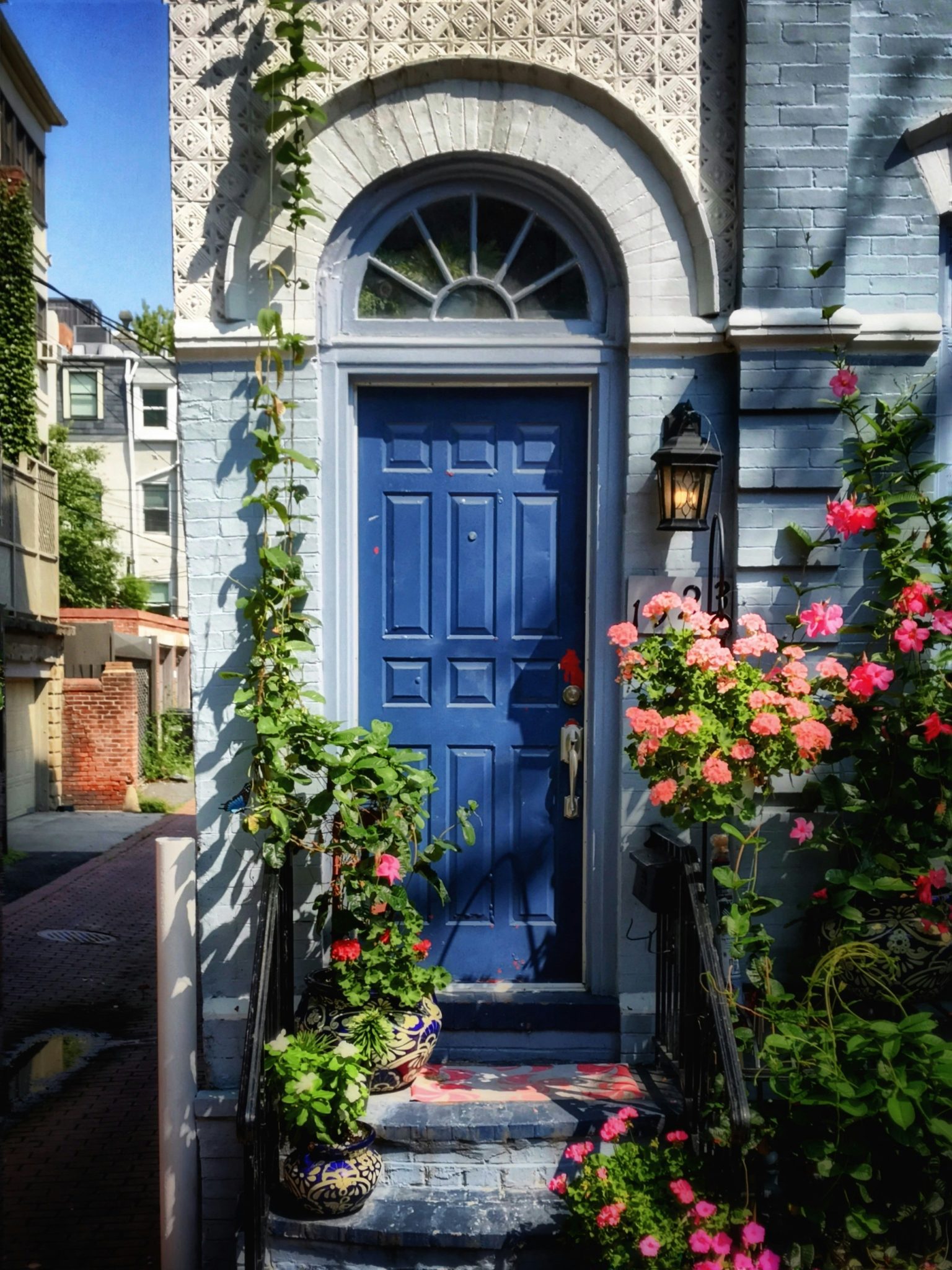
29. Vibrant Blue Door Surrounded by Lush Pink Flowers
The visual recipe for this stunning, vibrant entryway is a play on bold color and soft texture. It’s about 40% neutral foundation (the light gray brick), 20% bold architectural color (the vibrant blue door), and 40% lush, living color (the riot of pink and red flowers). The gray brick acts as a quiet, textured stage, allowing the two competing stars—the blue door and the pink flowers—to shine. The success lies in the confidence of the color combination. Blue and pink is a classic pairing that feels energetic, joyful, and utterly romantic.
✅ Before You Start
Achieving this lush, flower-filled look is gorgeous, but it’s a serious commitment for anyone who isn’t a dedicated gardener. Those abundant flowering plants in pots require daily attention during warm weather, including watering (sometimes twice a day in the heat), regular fertilizing to promote blooms, and ‘deadheading’ (pinching off spent flowers) to encourage new growth. It’s a constant cycle of care from spring through fall. If you love the look but not the labor, consider high-quality faux florals for a similar, though less authentic, effect.
Your Home’s First Impression Starts Here
A gray house is a timeless backdrop, but the right front door color is what gives it a soul. Whether you’re drawn to a cheerful yellow, a stately navy, or a classic cream, the perfect choice is the one that makes you smile every time you walk up to it. So go ahead, be bold and make that first impression count.
Don’t forget to save your favorite ideas to your Pinterest board! When you’re ready to pick up that paintbrush, you’ll know exactly where to find your inspiration.