You know that feeling when you save the tenth picture of a charming cottage to your Pinterest board, but your own home’s exterior still feels… uninspired? It’s easy to get lost in a sea of beautiful photos without a clear plan. We’ve done the deep dive for you, sifting through hundreds of designs to find what truly defines the cottage aesthetic for 2026. Inside, you’ll find 32 distinct and achievable exterior ideas, from classic English stone facades to modern French country homes and breezy coastal designs. And stay until the end — we break down the most common mistakes that can ruin these looks. 📌 Save this to Pinterest for later — you’ll want to revisit these ideas.
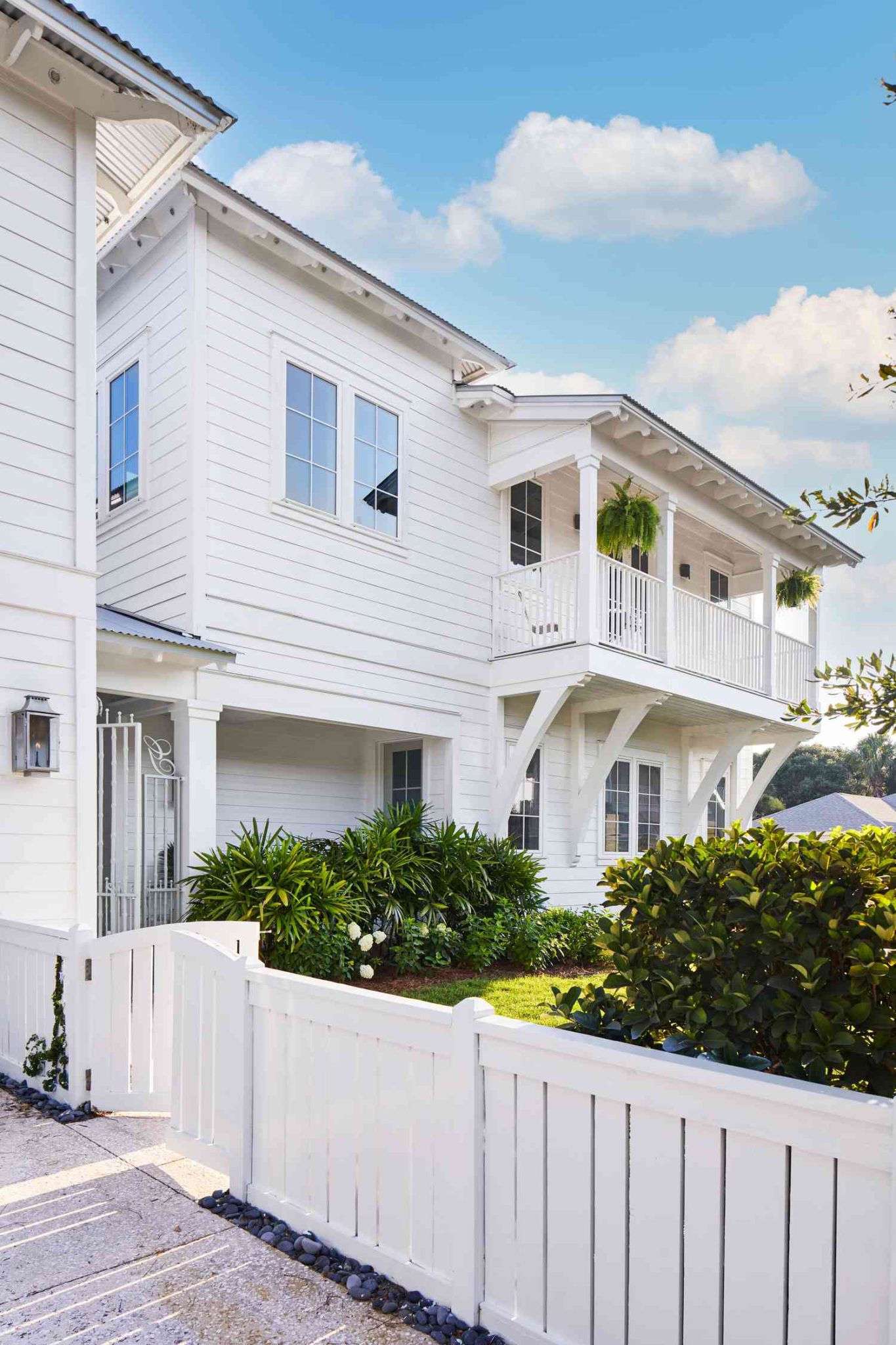
1. Crisp White Cottage with an Inviting Balcony and Picket Fence
The magic of this look is in its tight, fresh palette. Think of it as 60% clean white (siding, fence, railings) + 30% natural greens (surrounding foliage) + 10% dark accents (river rocks, lantern). This simple formula is the heart of modern coastal style. If you want to lean more traditional, you could swap the dark grey rocks for red brick pavers. For a moodier feel, change the white siding to a light grey and the black lantern to copper, but keep the formula ratios the same.
|
📋 Copy HEX 🔗 Share |
💰 Budget Breakdown
When installing a picket fence for curb appeal, the details make all the difference. For a classic cottage look, aim for a fence height of 36 to 42 inches. Anything taller can feel imposing and block views of your garden. The spacing between the pickets is just as crucial. A gap of 2 to 3 inches is ideal—wide enough to feel open and airy, but close enough to maintain the classic sense of enclosure and charm. Always use a level for a professional finish!
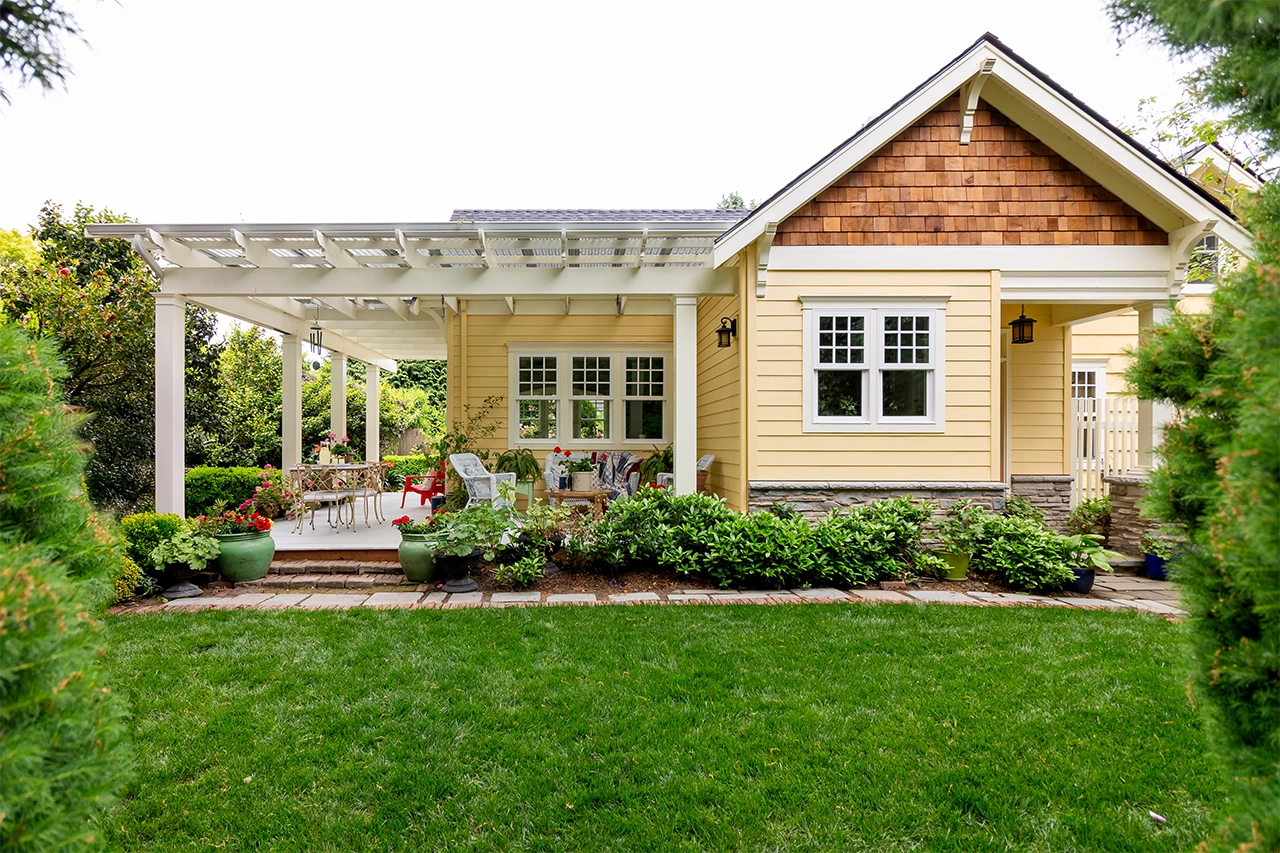
2. Sunny Yellow Cottage Featuring a Natural Wood Gable and Pergola
This exterior feels so warm and welcoming because of its smart use of color and texture. The soft, buttery yellow siding is a cheerful base, but the natural wood shingles on the gable prevent it from feeling one-note. This textural break adds rustic charm and visual weight. The white pergola and window trim act as clean, crisp lines that define the space and keep the overall look feeling fresh and organized, not chaotic. The result is a perfect balance of sunny color and natural materials.
|
📋 Copy HEX 🔗 Share |
⭐ The One Thing
A wood pergola looks stunning, but it requires commitment. Depending on your climate and the type of wood used (like cedar or pressure-treated pine), expect to re-stain or reseal it every 2-3 years to prevent rot and sun damage. Also, consider the gravel foundation shown here. While it provides excellent drainage, it can be a magnet for weeds and may need regular raking to keep it looking tidy. It’s a beautiful look, just be prepared for the annual upkeep it demands.
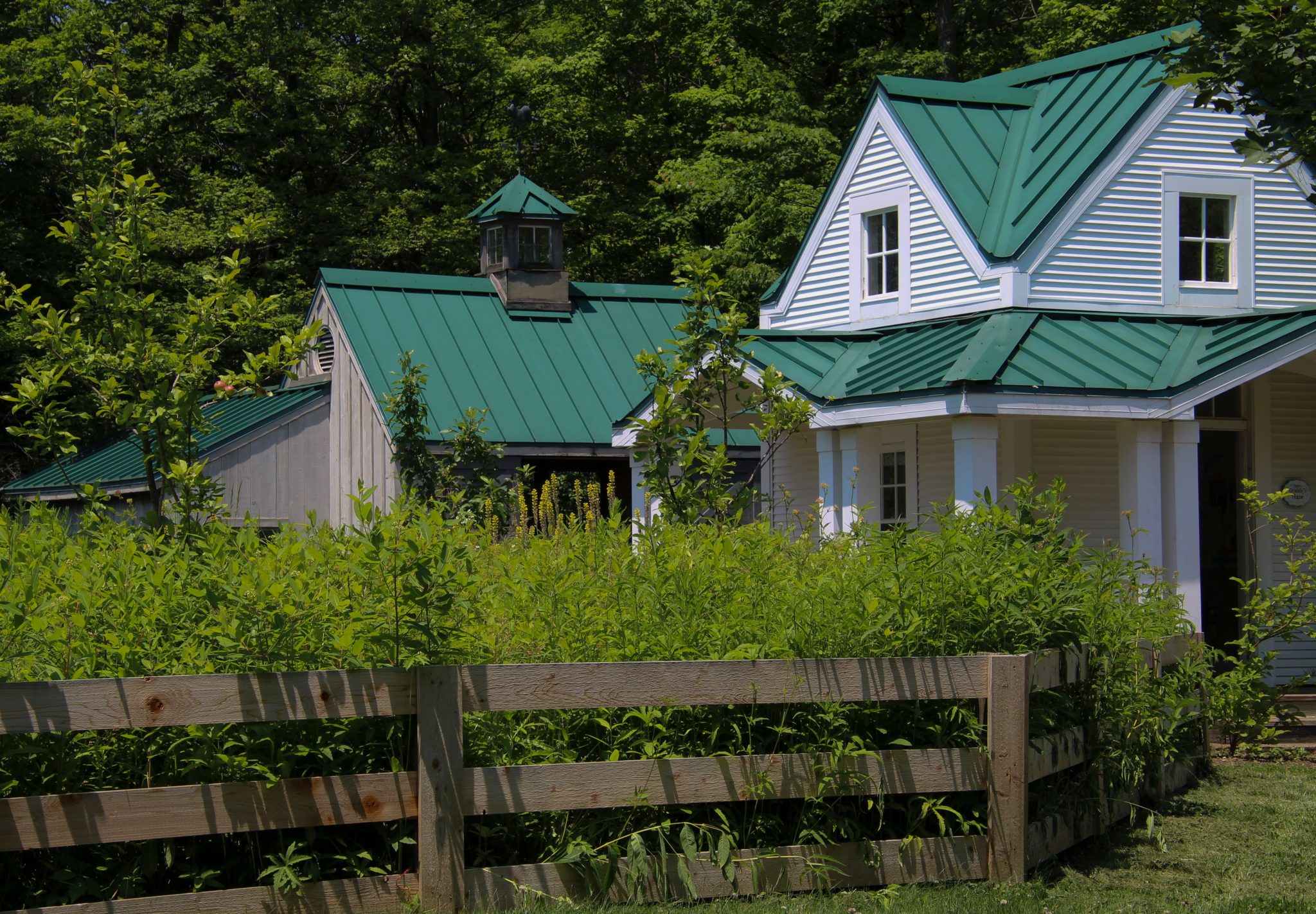
3. A Serene White Cottage with a Striking Green Metal Roof
The single element that defines this entire design is the green metal roof. Without it, this would be a lovely, but fairly standard, white cottage. The pop of forest green adds personality, a touch of modern farmhouse flair, and a beautiful connection to the surrounding lush foliage. It turns the roof from a simple necessity into a major design feature, proving that your “fifth wall” can be the most impactful one of all. It’s a bold choice that pays off in heaps of character.
|
📋 Copy HEX 🔗 Share |
📐 Style Math
A standing-seam metal roof is a fantastic long-term investment, often lasting 50 years or more with minimal upkeep. It sheds snow and rain beautifully and won’t grow moss like asphalt shingles can. However, the initial cost is significantly higher—often two to three times the price of a standard shingle roof. It can also be noisier during a heavy rain or hailstorm. While some find the sound soothing, it’s something to consider if you’re sensitive to noise. The color is also a long-term commitment, as it can’t be easily changed.
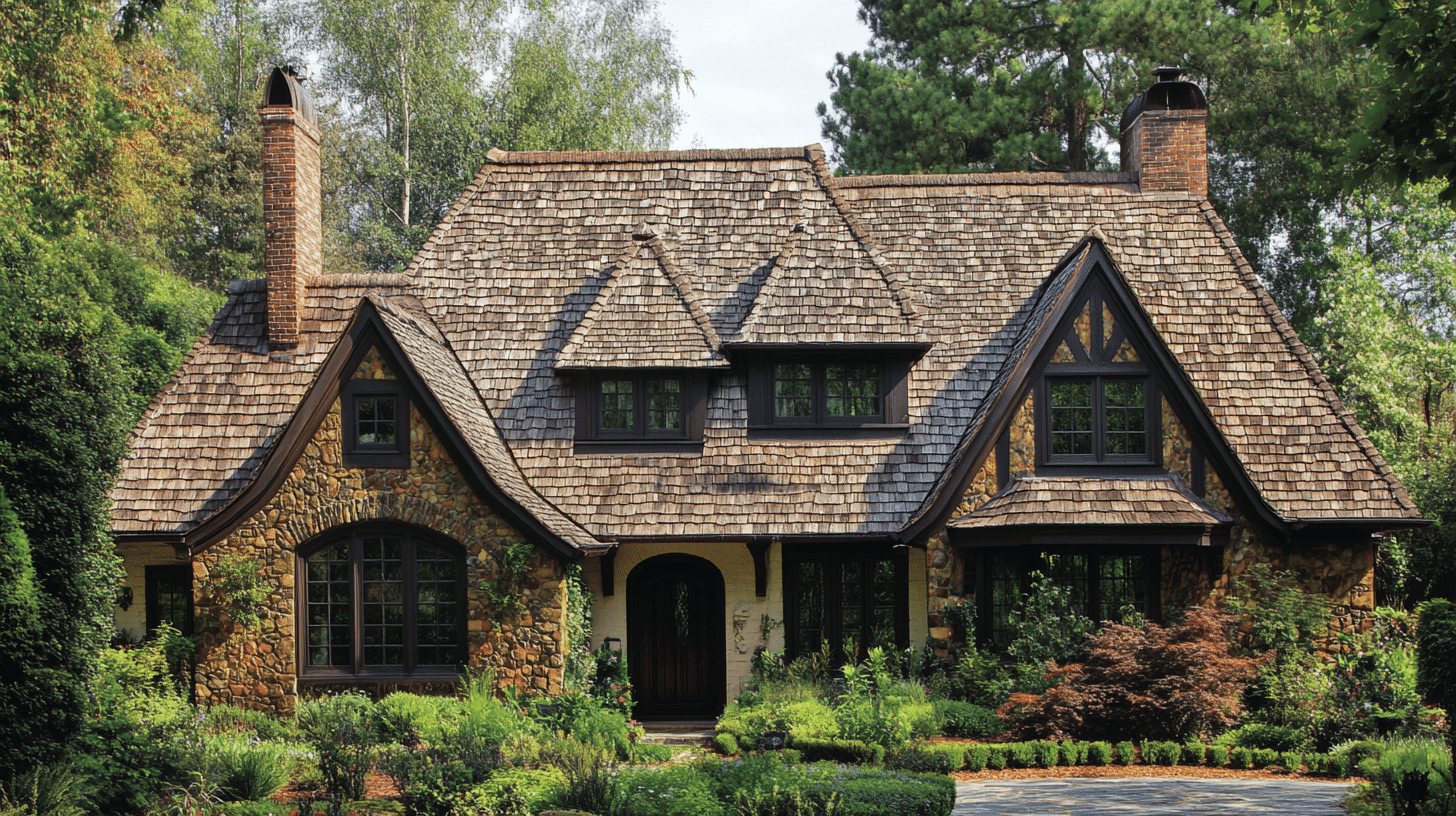
4. Storybook Stone Cottage with an Authentic Cedar Shingle Roof
This enchanting, whimsical look thrives on complexity and scale. To achieve this multi-level, storybook effect, you need a home with a larger footprint and a roof with multiple peaks and dormers. This style is best suited for properties of at least 2,500 square feet with a minimum lot width of 60-70 feet to allow the varied textures of stone, stucco, and shingles to breathe. The intricate rooflines require a higher ceiling pitch, which also adds to the grand, fairytale presence. Pulling this off on a small, simple ranch house would be nearly impossible.
|
📋 Copy HEX 🔗 Share |
✅ Before You Start
Real stone and cedar are premium materials. To get this vibe for about 40% less, focus on manufactured stone veneer. Modern veneers from brands like Boral or Eldorado Stone are incredibly realistic and much lighter, so you won’t need to pour additional foundation for support. For the roof, swap the real cedar shakes for high-definition architectural shingles in a varied brown or weathered grey colorway. From the street, you’ll get the same textured, rustic effect at a fraction of the cost.
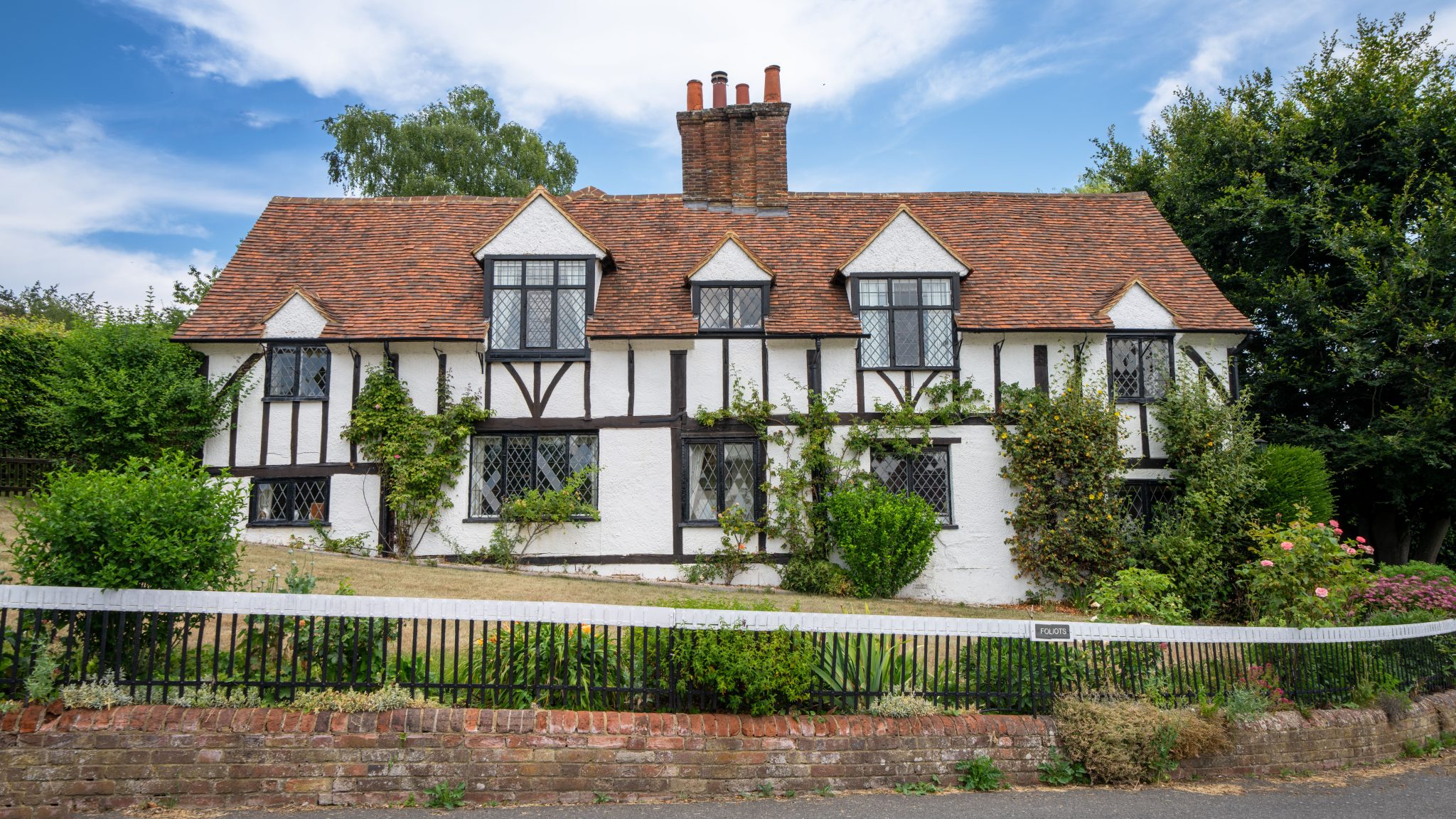
5. Classic Half-Timbered Cottage with a Red-Orange Tile Roof
Recreating this historic, high-character look requires a focus on authentic materials, which comes with a significant price tag. The real half-timbering and clay tile roof are the biggest expenses.
|
📋 Copy HEX 🔗 Share |
🧹 Maintenance Reality
- Wall Treatment (Stucco & Timbering): $15,000 – $25,000
- Roofing (Terracotta Clay Tiles): $20,000 – $40,000+
- Windows (Diamond-paned): $8,000 – $15,000
- Decor & Landscaping (Ivy, Fence): $2,000 – $5,000
- TOTAL: $45,000 – $85,000
Budget alternative: Use decorative composite timber boards over standard stucco and architectural shingles in a terracotta color for a similar feel at around $20,000 – $35,000.
After years of minimalist white boxes dominating design feeds, we’re seeing a huge swing back towards homes with history, texture, and a bit of romanticism. This “New Romantic” or “Modern Tudor” trend is all over Pinterest. People are craving authenticity and charm, and a half-timbered facade delivers that in spades. It feels grounded, historic, and completely unique compared to the standard modern farmhouse. This style suggests a story, and in 2026, homeowners want a home that tells one.
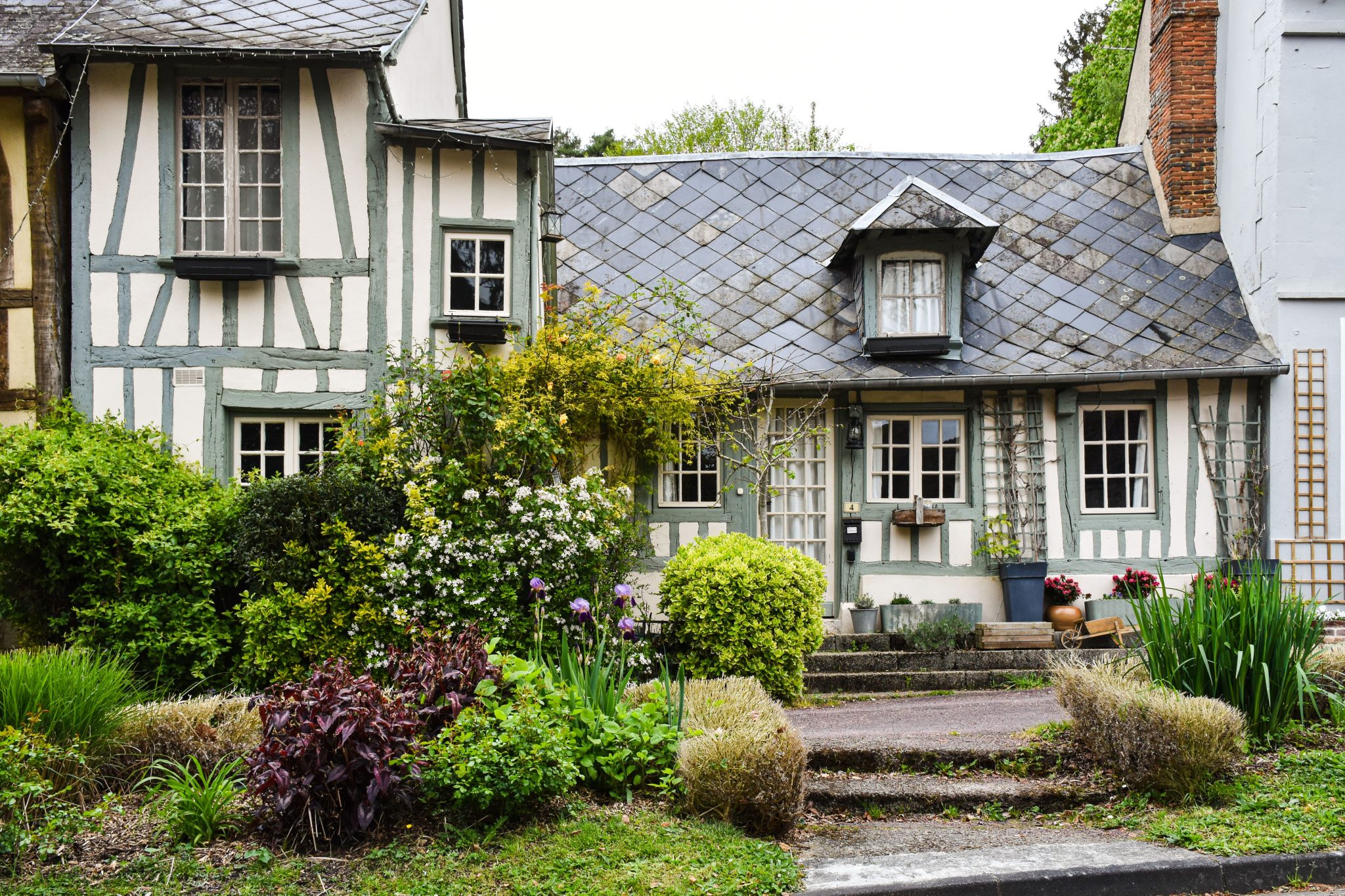
6. Quaint Timbered Cottage Embraced by a Lush Garden
This design is a masterclass in contrast. The rigid, geometric lines of the grey-green half-timbering create a strong architectural grid. This structure is then intentionally softened and “broken” by the wild, slightly overgrown garden that spills onto the steps and surrounds the base. It’s the play between the man-made order of the house and the natural chaos of the foliage that creates such a charming, lived-in feel. It’s less fussy than the pristine Tudor look seen in Idea #5, feeling more like an organic part of the landscape.
|
📋 Copy HEX 🔗 Share |
🔥 Trending Context
Want to create that lush, established garden look without waiting a decade? The key is layering plants of different heights and textures. Here’s a quick guide:
- Time: 1 weekend
- Cost: $300 – $800
- Step 1: Start with a base of mounding evergreen shrubs (like boxwood or euonymus) for year-round structure.
- Step 2: Add taller, airier perennials (like salvias or foxgloves) behind them for height.
- Step 3: Fill in the gaps with clumping, leafy plants like hostas or ferns.
- Step 4: Finish with low-growing groundcover (like creeping phlox) to spill over the edges of the bed.
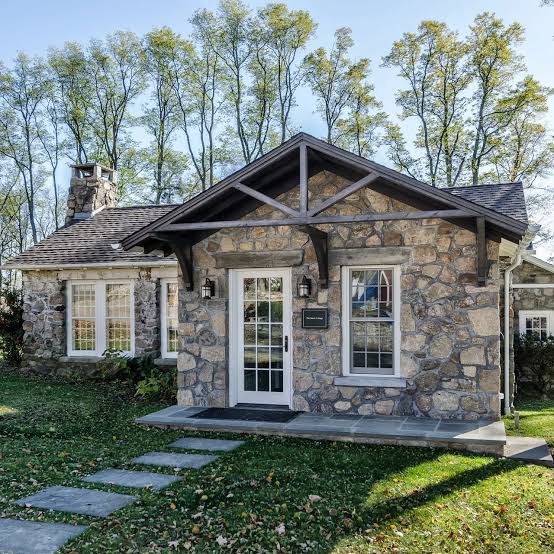
7. The Quintessential Rustic English Stone Cottage
To capture the soul of a rustic English cottage, focus on the authenticity of the primary material: stone. When selecting a natural stone or a high-quality veneer, insist on a blend with significant variation in color, size, and texture. Ask your mason to use a technique called “overgrouting” or “smear mortaring,” where the mortar is applied generously and spills over the edges of the stones. This technique softens the hard lines and instantly gives the facade a sense of age and history.
|
📋 Copy HEX 🔗 Share |
🔧 How-To Brief
A true rustic stone cottage is beautiful, but it’s not without its challenges. The irregular surface of the stone can make it difficult to hang decorations, install light fixtures, or even lean a ladder securely. Pointing (the mortar between the stones) will also need to be inspected every decade or so and potentially repaired, which is a specialist job. While the stone itself is durable, the system as a whole requires a different kind of maintenance than a simple sided house.
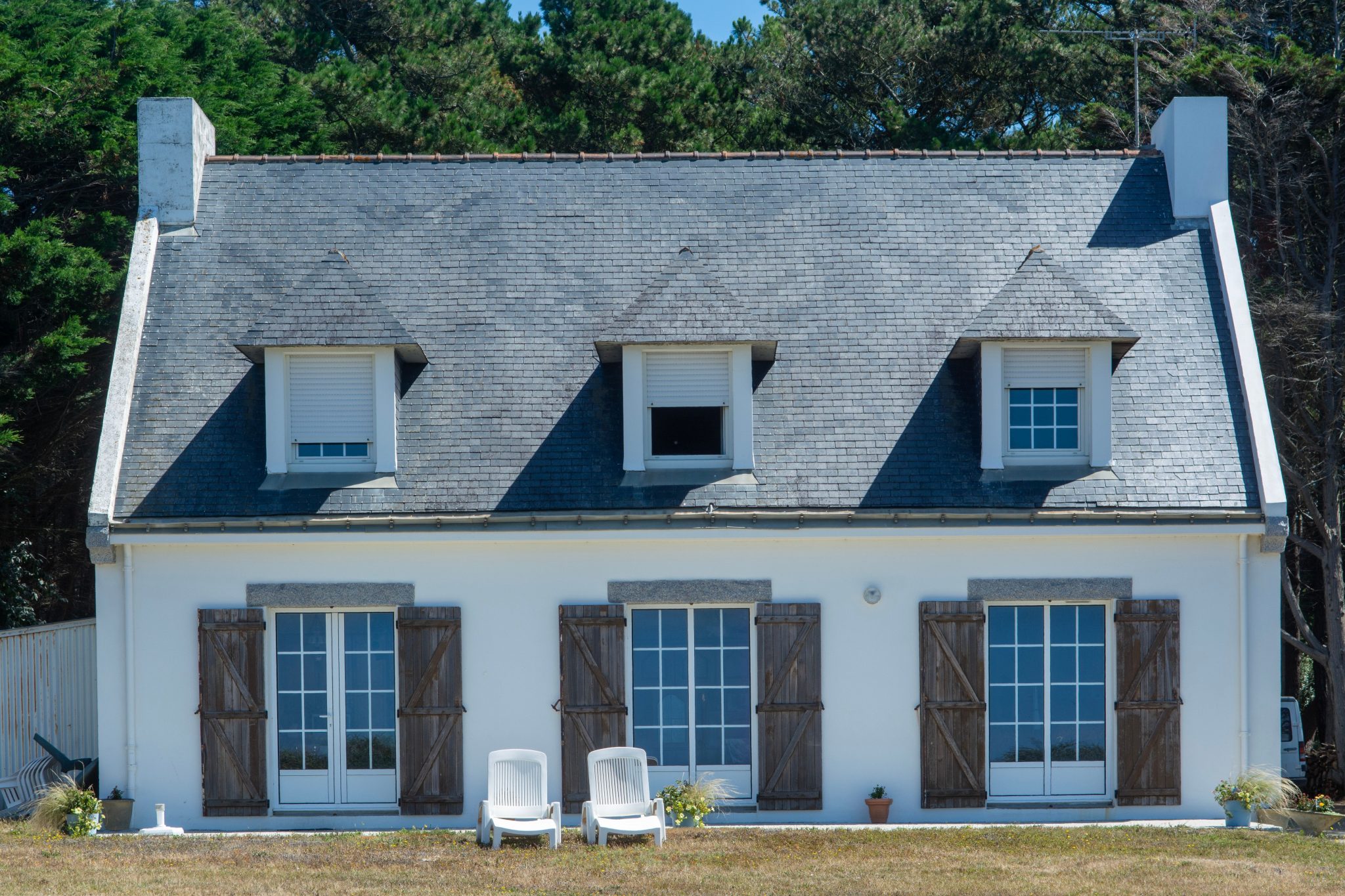
8. Seaside-Inspired White Cottage with Rustic Wooden Shutters
This look is a simple coastal equation: 70% crisp white (walls) + 20% weathered, natural texture (wooden shutters) + 10% dark, grounding elements (slate roof, stone lintels). The overwhelming majority of white keeps it bright and airy, reflecting the sun like a house by the sea. The wood shutters are the key piece of texture that prevents the white from feeling sterile, adding warmth and a rustic, found-object quality. The dark roof anchors the whole look, keeping it from floating away.
|
📋 Copy HEX 🔗 Share |
🎯 What Makes It Work
The rustic wooden shutters are, without a doubt, the element that makes this cottage special. If you removed them, you’d have a simple white building. But the shutters add a layer of history and texture that is central to the cottage aesthetic. Their weathered, slightly imperfect finish tells a story. They provide a critical warm tone against the cool white and grey, creating a visual balance that is both comforting and sophisticated. They are the personality of the facade.
9. A Charming Row of Stone Cottages with a Standout Red Tree
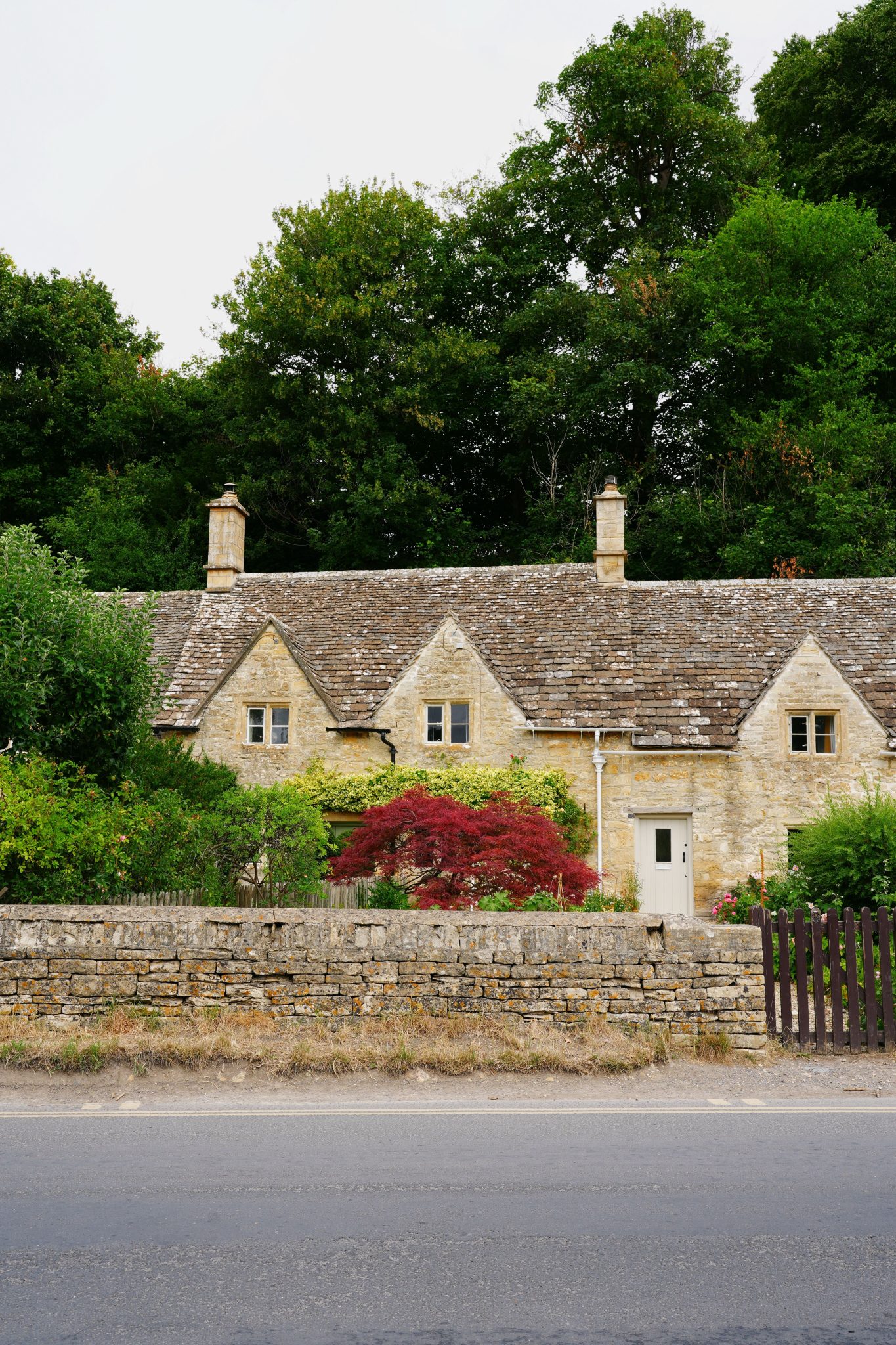
This scene is so effective because it pairs repetition with a single, dramatic surprise. The repeating shapes of the gabled cottage roofs and the consistent texture of the beige stone create a calming, rhythmic pattern. The dry stone wall in the foreground reinforces this sense of rustic uniformity. Then, your eye is drawn to the single vibrant red-leafed tree, which acts as a focal point. This “one-of-these-things-is-not-like-the-other” trick makes the entire view more dynamic and memorable.
|
📋 Copy HEX 🔗 Share |
💸 Get This Look For Less
Want a single tree to be the star of your landscape? Choose a variety known for its dramatic seasonal color, like a Japanese Maple (for red/orange), a Gingko (for brilliant yellow), or a Serviceberry (for a mix of yellow, orange, and red). Plant it at least 15-20 feet away from the house to give its canopy room to grow and to prevent root issues down the line. Frame it in a sightline from a major window to enjoy the view from inside, too.
10. Grand Cottage Exterior with Mixed Stone and Brick Veneer
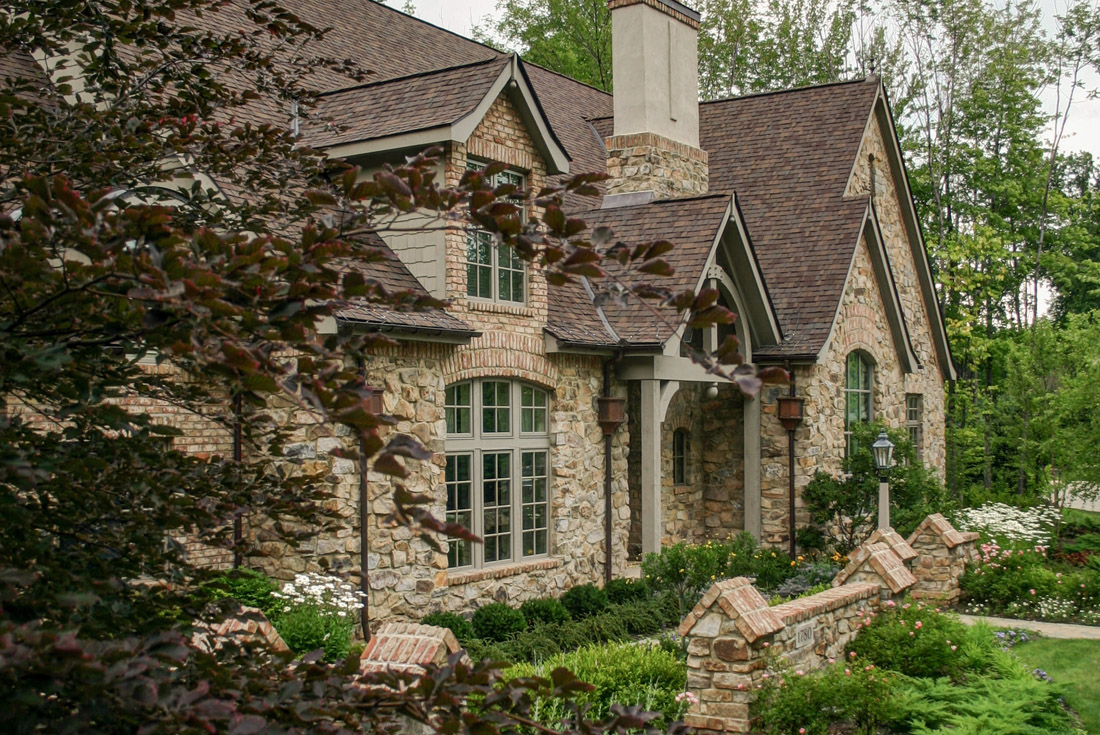
Mixing stone and brick can create a rich, layered look, but it’s a fine line to walk. The key is to ensure one material is dominant and the other is a true accent. Here, the light tan stone is the primary player, with the brick used to highlight gables and wall sections. If you mix them 50/50, it can look busy and chaotic rather than intentional. Also, be mindful of the undertones; the tan stone and reddish-brown brick here share warm undertones, which is why they work together and don’t clash.
|
📋 Copy HEX 🔗 Share |
⚠️ Real Talk
This is not a look for a small house. The visual weight of combining two heavy materials like stone and brick requires a large facade to feel balanced. This style is best for homes over 3,000 square feet with prominent, tall gable rooflines. On a smaller home, the combination can feel overwhelming and make the house appear shorter and more squat. A minimum ceiling height of 9-10 feet on the main floor helps support the verticality needed for this grand, sturdy aesthetic.
11. Stately Grey Brick French Mansion with Dramatic Black Accents
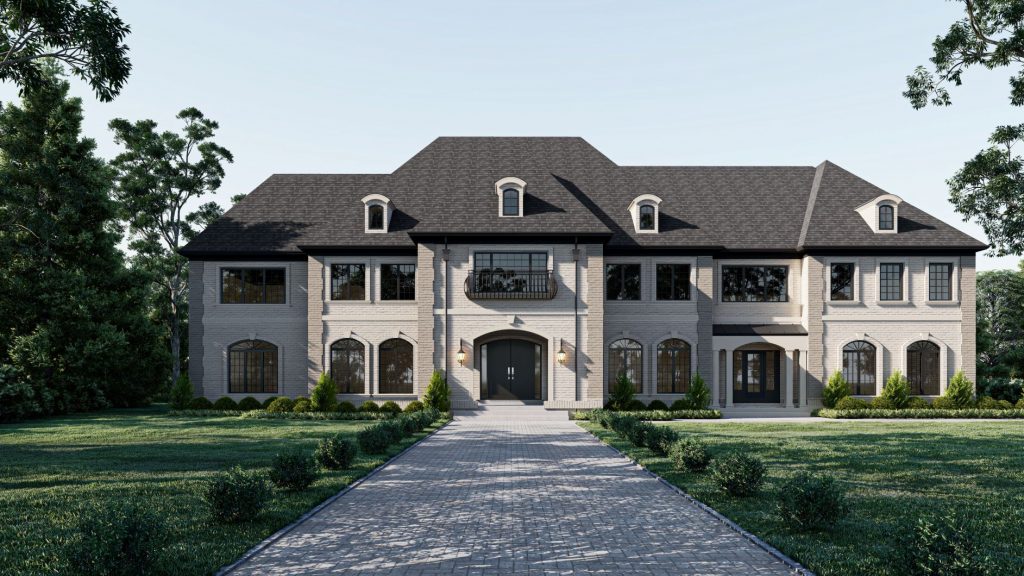
The formula for this elegant, modern French look is all about high-contrast sophistication. It breaks down to roughly 70% monochrome base (grey brick, black roof) + 20% sharp geometry (black window frames) + 10% manicured nature (green lawn, orderly shrubs). The power comes from the strict color palette. There are no whimsical pastels or rustic wood tones. It’s a disciplined, almost graphic design that communicates formality and timeless elegance. The symmetry of the windows and central door reinforces this sense of order.
|
📋 Copy HEX 🔗 Share |
📏 Scale Guide
This design works because of its unwavering commitment to symmetry and repetition. Notice how the windows are perfectly balanced on either side of the central axis created by the front door and balcony. The small dormer windows on the roof echo the shapes of the larger windows below. This repetition creates a sense of rhythm and intentionality. The high contrast between the cool grey brick and the stark black roof and window frames gives the facade a crisp, graphic quality that feels both classic and totally modern. A more subdued version of this is seen in Idea #21.
12. Idyllic Thatched Roof Cottage with Vibrant Climbing Roses
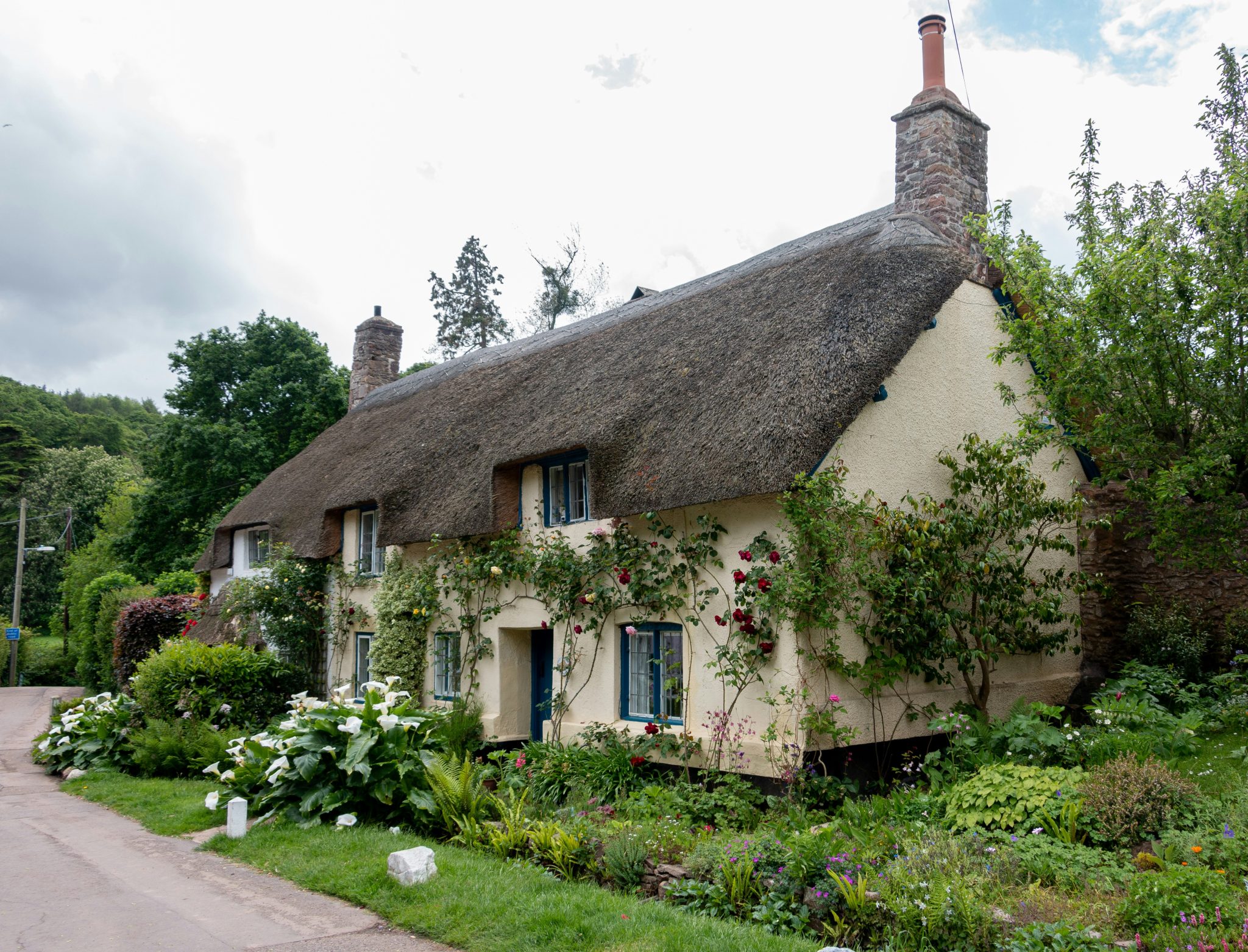
It’s the thatched roof, of course. This single element transports the home from simply “charming” to “fairytale.” Its thick, rolling texture is completely organic and softens every line of the house. No other roofing material offers this level of sculptural quality and deep, historical character. It connects the home to centuries of building tradition and instantly signals a commitment to a truly unique and artisanal aesthetic. Everything else—the roses, the blue windows—are lovely accents, but the thatch is the soul of the building.
|
📋 Copy HEX 🔗 Share |
💡 Designer Tip
A thatched roof is a living work of art, and it requires specialized care. A high-quality thatch can last 20-40 years, but it will need attention. You’ll need to have it inspected every few years for pests or moss growth. The ridge cap (the top part) typically needs to be replaced every 10-15 years. Finding a qualified thatcher can be difficult and expensive depending on your location. It’s not a standard roofing job, so be prepared to invest time and money into its unique upkeep. Compare with the thatched roof in Idea #22 to see another variation.
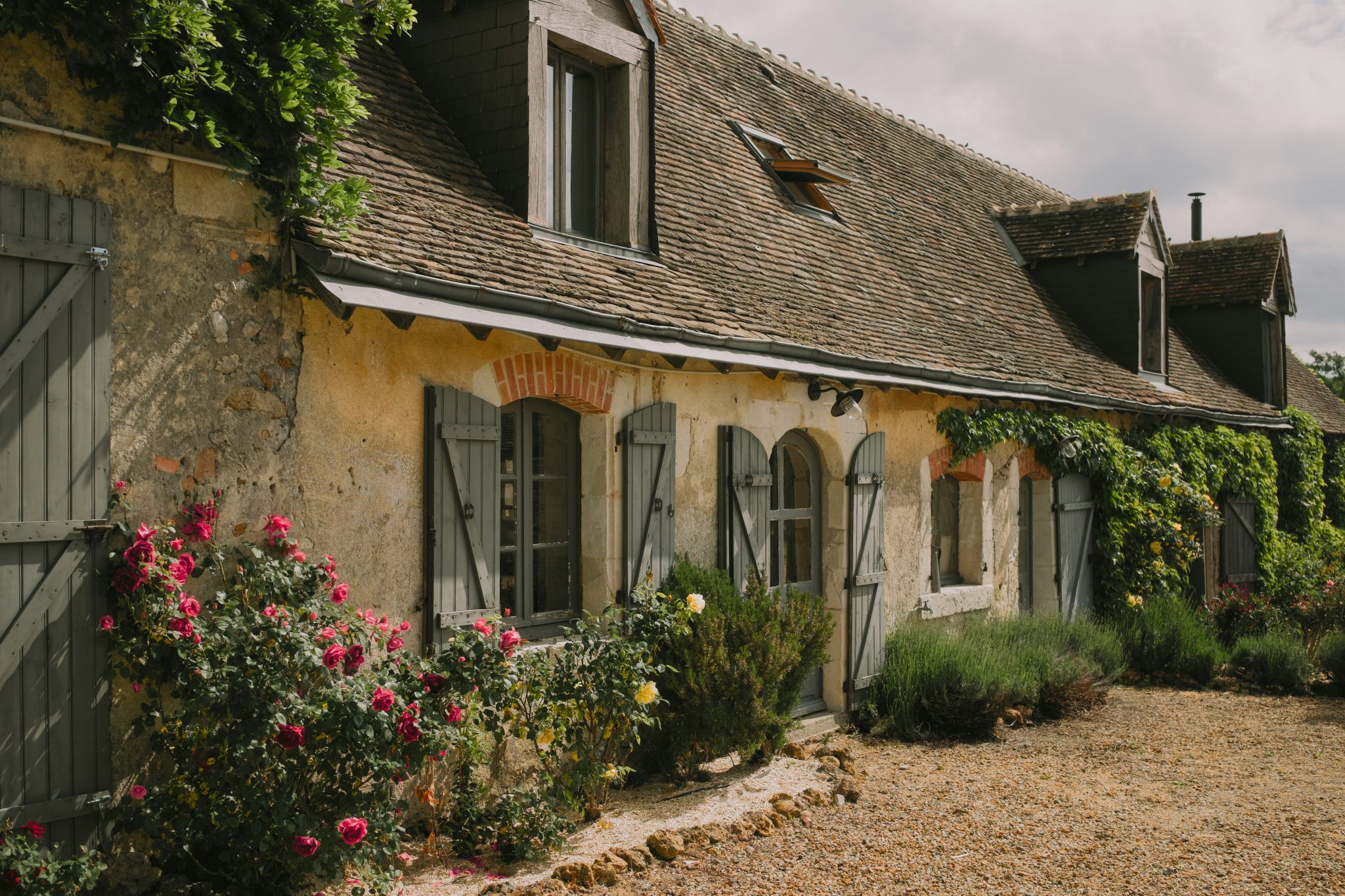
13. Rustic Stone Cottage with Terracotta Roof and Blooming Roses
This exterior feels so authentic and peaceful because it masters the art of “wabi-sabi”—finding beauty in imperfection and age. The weathered stone isn’t uniform, the terracotta roof tiles are varied in color, and the climbing vines are untamed. Nothing is perfectly symmetrical or brand new. This celebration of natural textures and the gentle patina of time is what gives the cottage its deep, restful character. The soft, grey-blue shutters provide a single touch of cool color against the warm stone and terracotta. It’s a warmer take on the stone look in Idea #4.
|
📋 Copy HEX 🔗 Share |
💰 Budget Breakdown
Love this aged, European look but not the price of reclaimed materials? You can get surprisingly close with modern products. Use a stucco finish on your walls and ask for a “limewash” or “romabio” paint finish, which gives a soft, chalky, slightly uneven look. For the roof, choose concrete tiles in a terracotta blend—they are much cheaper than real clay and offer a similar profile. And for the shutters, simply sand the edges of new wooden shutters before painting to give them a lived-in, weathered appearance.
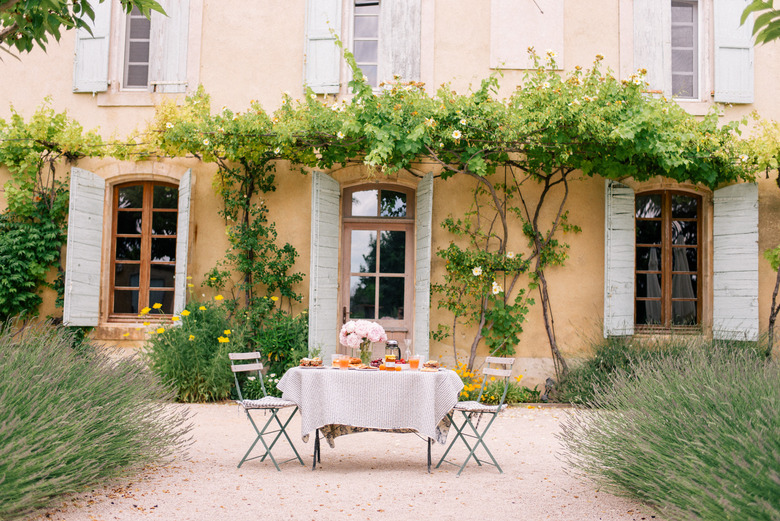
14. A Charming Provence-Inspired Patio with Light Blue Shutters
This little scene is a perfect slice of the South of France, and its formula is simple and effective. It’s about 50% warm, earthy texture (the ochre stucco, the pebbles) + 30% soft, cool color (the pale blue shutters, the lavender) + 20% fresh greenery. The balance between the warm wall and the cool shutters is the key relationship. It creates a gentle, pleasing tension that is easy on the eyes. The green acts as a neutral bridge between the two, tying it all together into a relaxed, rustic whole.
|
📋 Copy HEX 🔗 Share |
⭐ The One Thing
You can create this simple, charming breakfast spot in an afternoon. Here’s how:
- Time: 3 hours
- Cost: $150 – $400
- Step 1: Designate a small, sunny corner against a wall.
- Step 2: Lay down a 10×10 foot weed barrier fabric.
- Step 3: Cover the fabric with 2-3 inches of pea gravel or small river pebbles. Rake smooth.
- Step 4: Place a small bistro table (24-30 inches in diameter) and two folding chairs.
- Step 5: Add two or three pots planted with lavender, rosemary, or other herbs around the edge.
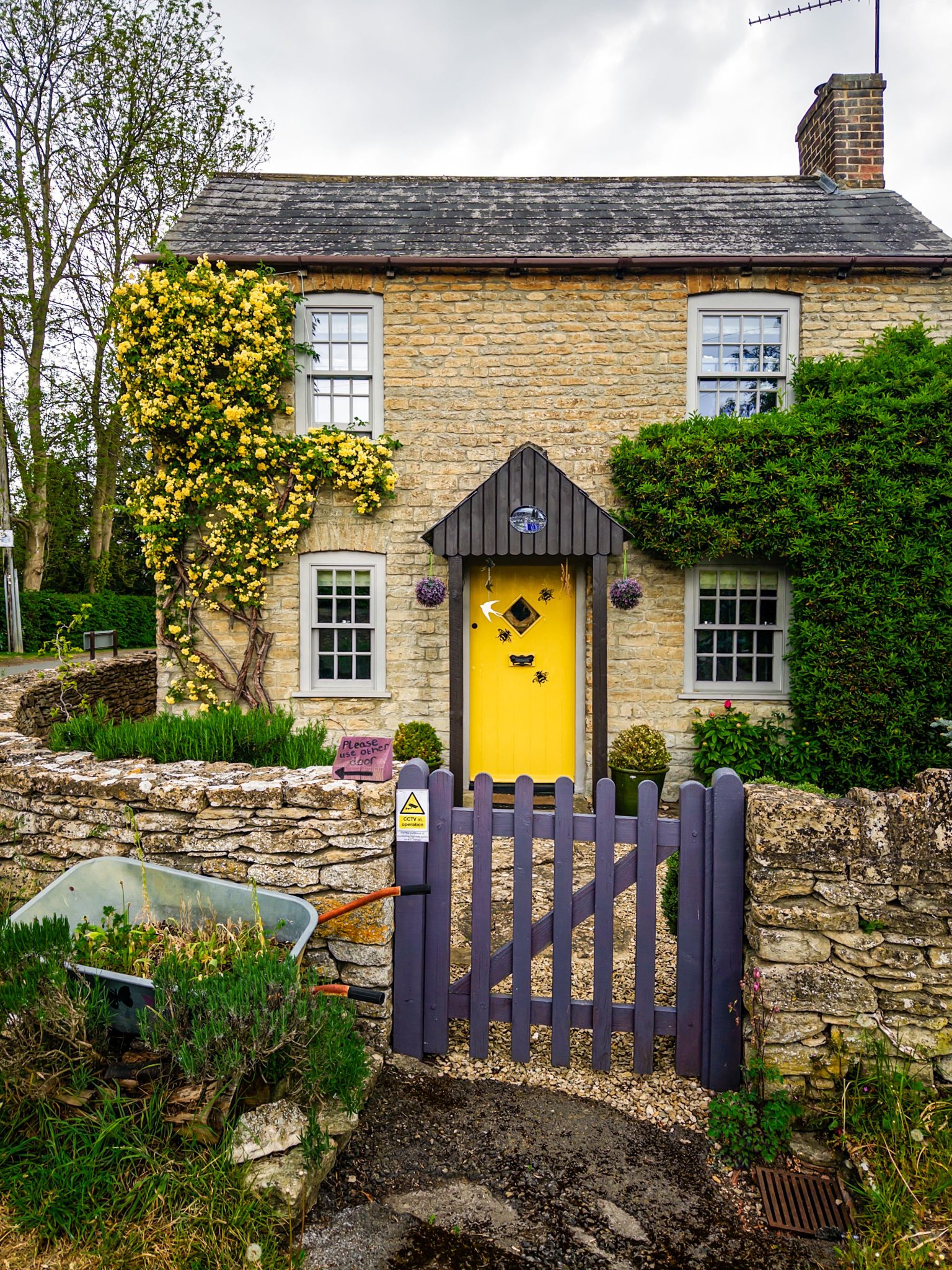
15. Quaint Stone Cottage with a Cheerful Yellow Front Door
The yellow door is everything here. On a house with so much natural, rustic texture—the stacked stone, the grey roof, the dense greenery—the clean, bright pop of a single primary color is an act of pure joy. It prevents the cottage from feeling too sleepy or blending into the landscape. It serves as an unmistakable focal point, drawing your eye and saying, “welcome.” Choosing such a bold, happy color for the entrance is a simple but incredibly powerful design move.
|
📋 Copy HEX 🔗 Share |
📐 Style Math
Before you commit to a bold front door color, run through this quick checklist:
- Check your neighborhood rules: Does your HOA or historic district have restrictions on paint colors? Get approval first to avoid having to repaint.
- Test the color: Paint a large poster board with a sample of your chosen color. Tape it to the door and observe it at different times of day—morning, noon, and dusk—to see how the light changes it.
- Consider your permanent elements: Does the color compliment your home’s brick or stone, roof color, and window frames? The yellow here works because it pops against the neutral grey and beige stone.
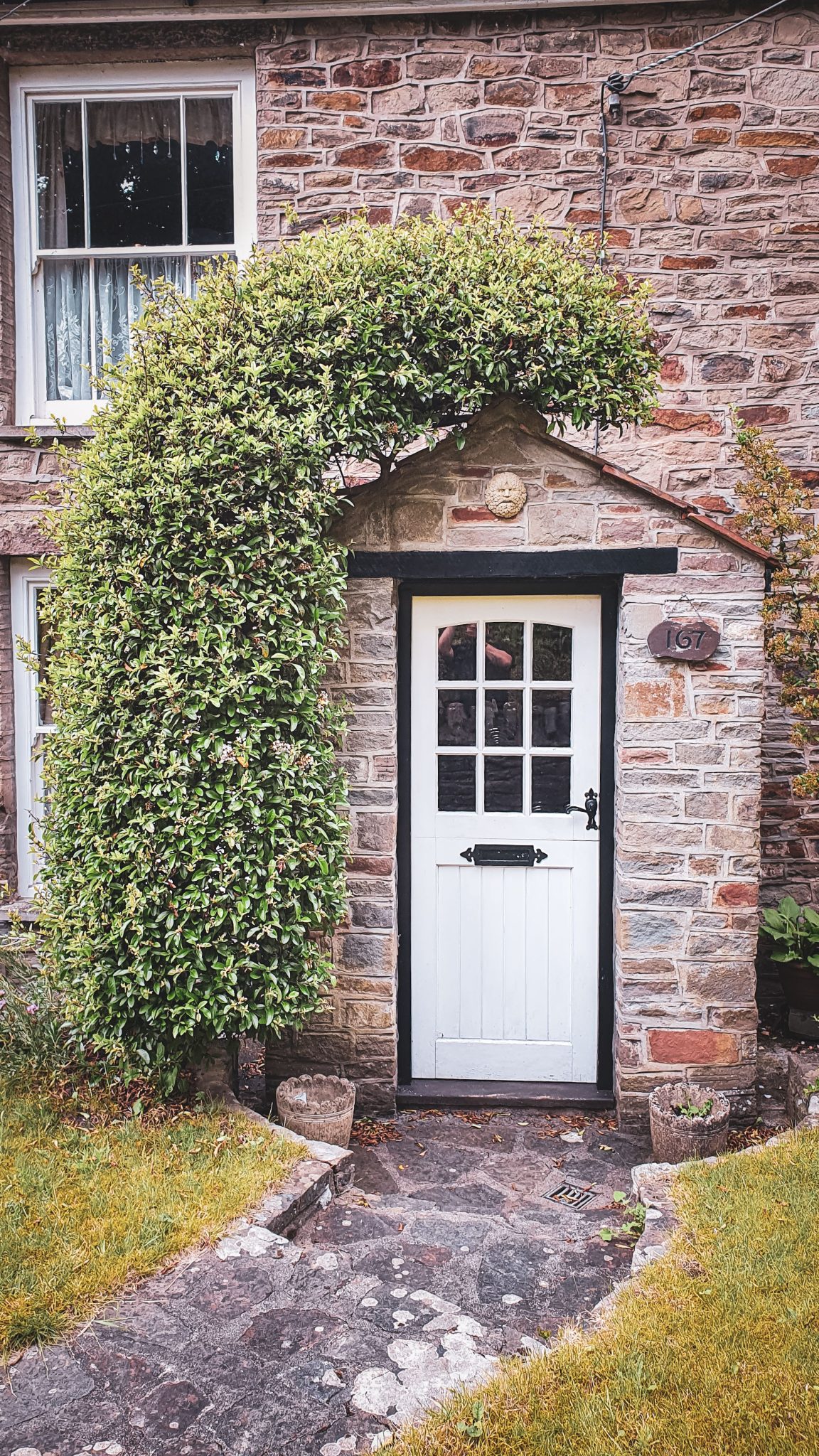
16. Inviting Stone Cottage Entrance with a Lush Foliage Arch
This entryway feels so magical because of the way it frames the door. The overhanging foliage creates a natural arch, which is a classic architectural element that signifies importance and transition. It draws you in. The texture of the multicolored stone provides a rustic, solid backdrop, while the clean white of the door with its simple glass panes offers a bright, welcoming focal point. It’s a beautiful interplay between the wildness of the greenery and the refined structure of the doorway.
|
📋 Copy HEX 🔗 Share |
✅ Before You Start
To get this lush, “living arch” look, choose a fast-growing, non-invasive climbing vine like a Clematis or a climbing Hydrangea. Install a sturdy metal or wooden trellis around your door frame, extending it about 12 inches out from the wall to allow for air circulation. This prevents moisture from getting trapped against your home’s facade. Plant the vine at the base and gently train its new growth onto the trellis each spring. Within 2-3 seasons, you’ll have a beautiful, natural frame for your entrance.
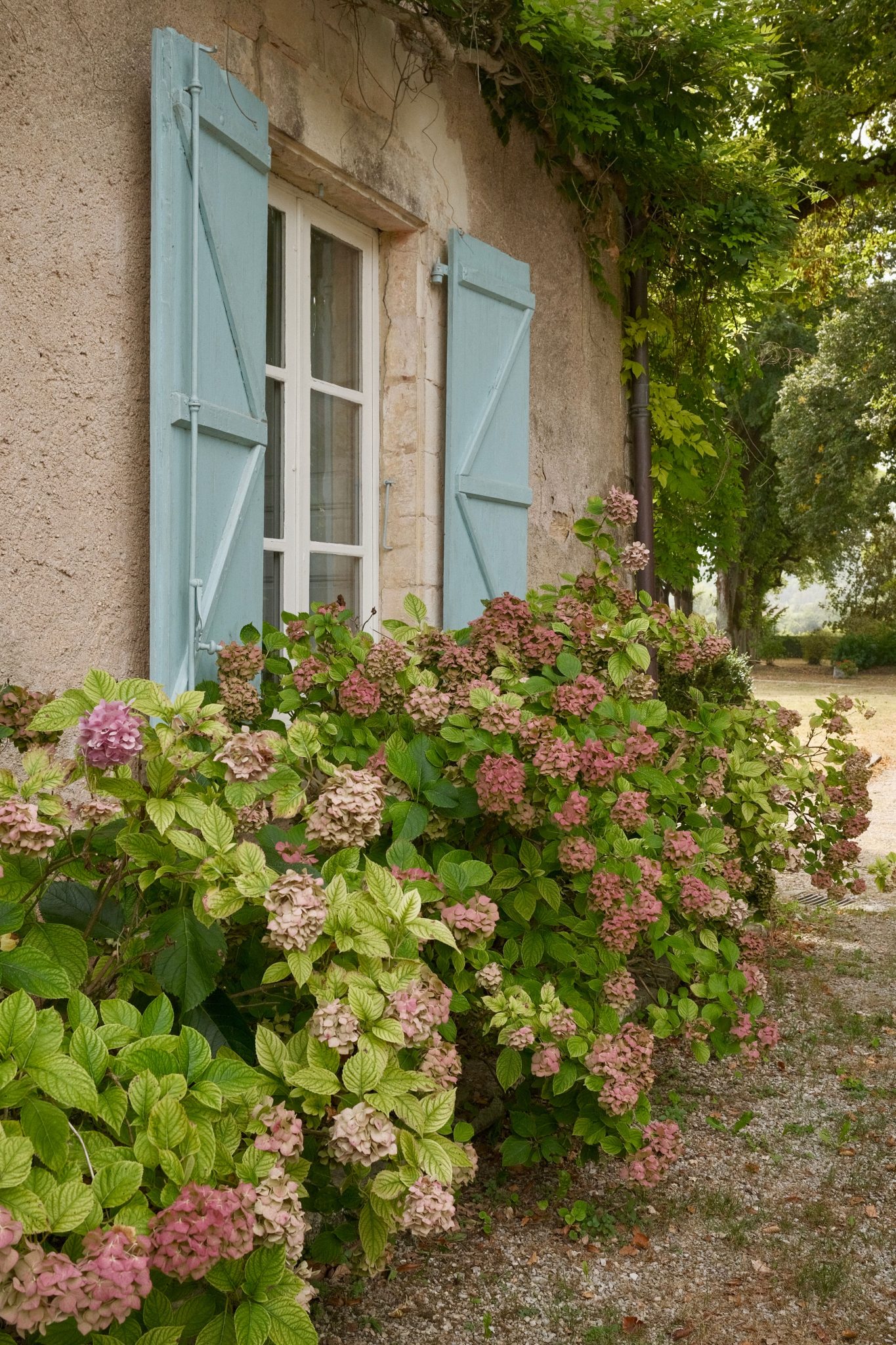
17. A Rustic Window Nook with Blue Shutters and Pink Hydrangeas
This charming vignette is a lesson in color theory. The formula is: 60% neutral texture (beige stucco wall) + 30% cool accent (pale blue shutters) + 10% vibrant floral pop (pink hydrangeas). The beige wall is a quiet, warm backdrop that allows the other colors to shine. The pale blue and soft pink are a classic complementary pairing—they are different but share a similar soft, pastel saturation level, so they feel harmonious together. The variety of greens in the leaves acts as a neutral connector for the whole palette. Compare with the similar vibe in Idea #14 but with a bolder yellow wall.
|
📋 Copy HEX 🔗 Share |
🧹 Maintenance Reality
This look is absolutely beautiful, but let’s be honest about hydrangeas. They are thirsty plants and require consistent watering, especially in full sun. They also bloom on old wood, meaning a late frost or improper pruning in the fall can leave you with a lovely green bush but no flowers the following summer. Also, the soil pH can change the color of some varieties (from blue to pink), so the color you plant may not be the color you get next year if your soil isn’t amended. They are gorgeous, but not a “plant it and forget it” flower.
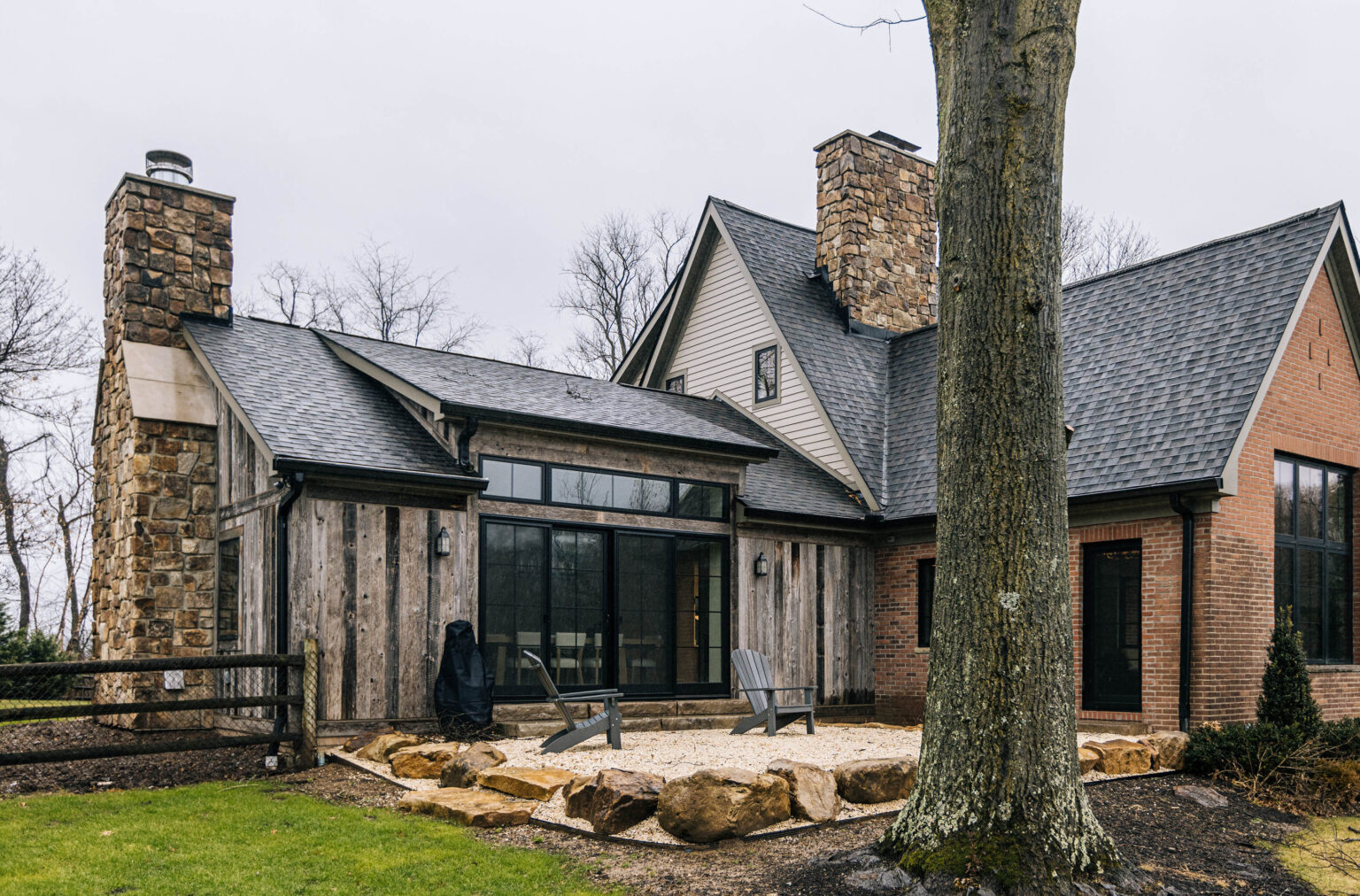
18. Modern Rustic Home with Mixed Materials and a Gravel Patio
This look is part of a growing trend called “Modern Lodge” or “Mountain Modern.” It takes the traditional materials of a rustic cabin—weathered wood, stone, brick—and applies them with the clean lines and large glass openings of contemporary design. People are drawn to it because it feels both grounded and modern; it connects to nature through its materials but doesn’t sacrifice the light, open feel of a 21st-century home. The use of large sliding glass doors seamlessly connecting the indoors to a patio space is a key feature of this trend.
|
📋 Copy HEX 🔗 Share |
🔥 Trending Context
When creating a gravel patio, the secret to a high-end look is the border. Using large, natural boulders as a retaining edge, like in this design, provides a much more organic and substantial feel than standard plastic edging or small pavers. Source the boulders locally to ensure they match the geology of your area. Bury the bottom third of each boulder for stability, and arrange them with slight variations in height and spacing for a more natural appearance. If your exterior has modern elements similar to this, be sure to avoid the common mistake highlighted in our design mistakes section!
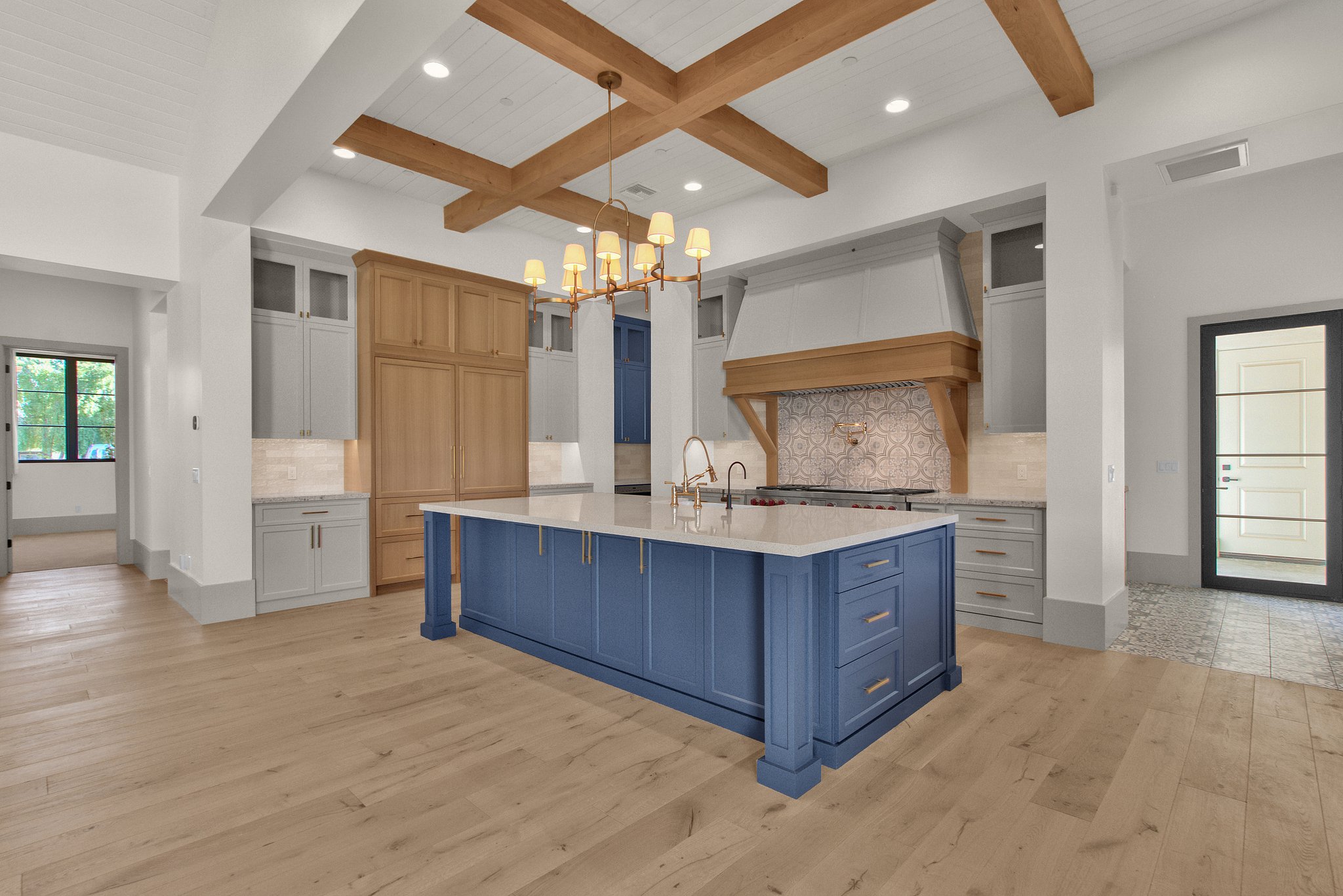
19. Bright Kitchen with a Bold Blue Island and Wood Beams
The large blue island is the undeniable heart of this kitchen. In a space with otherwise neutral and natural finishes—light wood floors, gray cabinets, white countertops—the island is a bold, confident statement. It anchors the entire room and provides a much-needed dose of saturated color. If the island were also wood or gray, the kitchen would still be beautiful, but it would lack this central point of gravity and personality. It’s the element that elevates the design from “nice” to “memorable.”
|
📋 Copy HEX 🔗 Share |
🔧 How-To Brief
This kitchen design succeeds by balancing warm and cool tones. The natural warmth of the wood flooring and ceiling beams is beautifully contrasted by the cool blue of the island and the light gray cabinets. This temperature mix creates a dynamic yet balanced space. The patterned tile adds a touch of intricate detail without overwhelming the room, and the gold chandelier introduces a metallic finish that adds a hint of glamour and reflects the warm light, tying the warm and cool elements together.
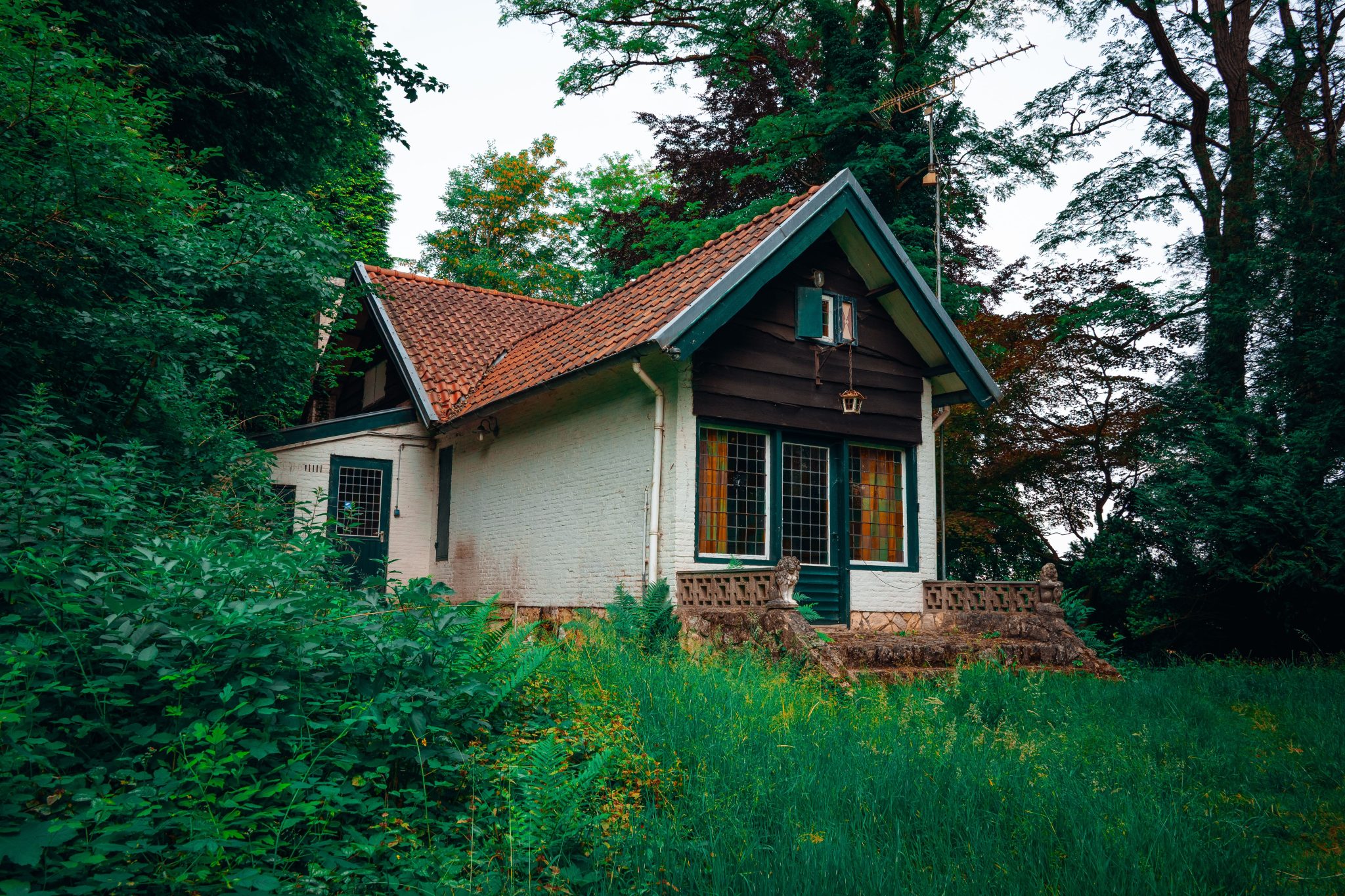
20. Secluded Forest Lodge with White Brick and Dark Green Trim
Here’s the recipe for a fairytale forest cottage: 40% earthy texture (terracotta roof, stone porch) + 40% crisp contrast (white brick, dark brown siding) + 20% deep accent color (dark green window frames). The key is the equal balance between the rustic, natural materials and the more graphic, high-contrast elements. The dark green trim is the secret ingredient that ties it all to the surrounding forest, making the house feel like it truly belongs among the trees. The result is a look that feels both historic and intentionally designed.
|
📋 Copy HEX 🔗 Share |
🎯 What Makes It Work
This “stacked” look, with a heavier material like brick on the bottom and a lighter one like wood siding on top, works best on a two-story home with a clear horizontal division. It’s particularly effective on a sloped lot, where the lower brick level can feel like a natural extension of the foundation. This is a great strategy for a smaller footprint cottage, as the vertical change in material adds a feeling of height and architectural interest without needing a wide, sprawling facade.
21. Chic Gray Cottage with a Vibrant Magenta Front Door
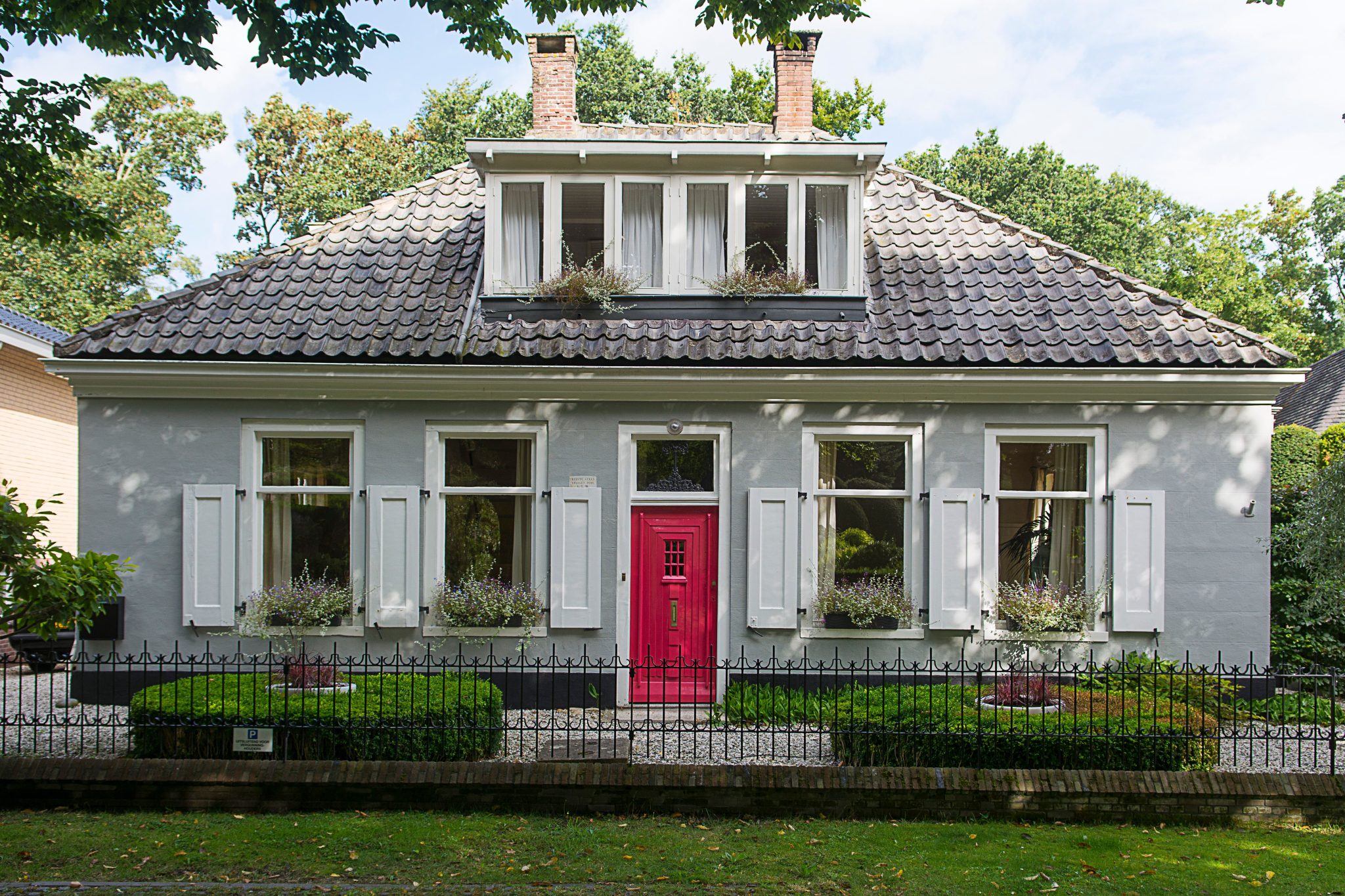
The magenta front door is the showstopper. It’s a completely unexpected, wonderfully confident splash of color against a very classic and neutral backdrop of gray stucco and white trim. This single choice transforms the home from traditional and lovely to chic and personality-filled. It demonstrates that you don’t need to change the entire facade to make a massive impact. This one bold move communicates creativity and a fearless approach to design, making the entire home feel more special.
|
📋 Copy HEX 🔗 Share |
💸 Get This Look For Less
If you’re going to use a bold, saturated color for your front door, make it the only one. Notice how the rest of this house is a quiet composition of gray, white, and black. The shutters are white, not another color. This discipline allows the magenta to have its moment without competing for attention. If the shutters were also a bright color, the effect would be chaotic rather than chic. Rule of thumb: one bold, unexpected color is a statement; two is a crowd.
22. Quaint White Brick Cottage with Thatched Roof and Heart Shutters
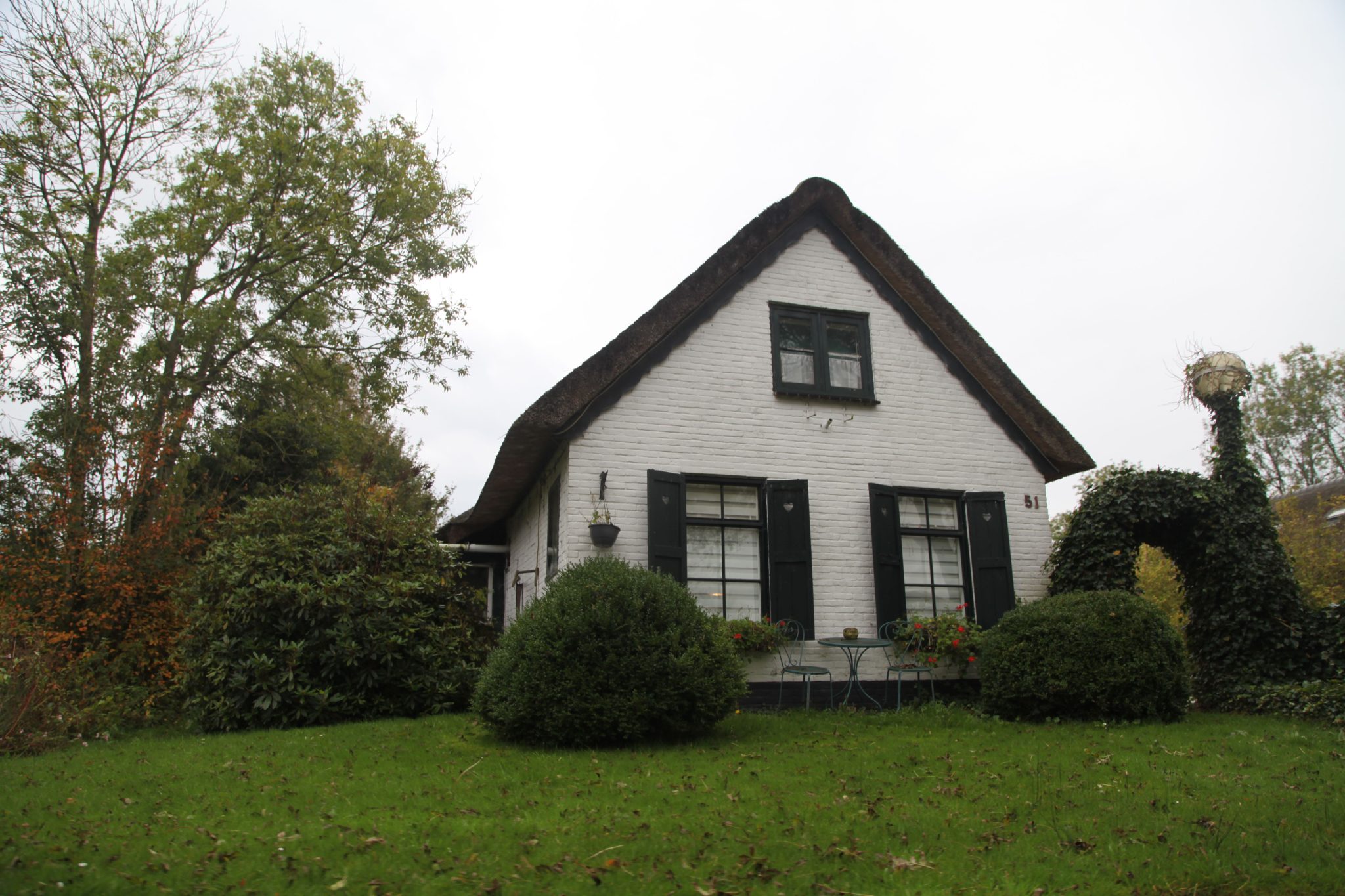
This cottage wins hearts because it fully commits to a miniature, storybook scale. The house itself is small, the bistro set is delicate, the windows are low, and even the heart cutouts in the shutters add a touch of playful detail. The dark, heavy texture of the thatched roof and deep green shutters visually “grounds” the small white structure, giving it a sense of substance and age. The bright red flowers in the window boxes provide a perfect, tiny pop of primary color. It feels like a complete, self-contained little world. A great comparison is the grander thatched roof in Idea #12.
|
📋 Copy HEX 🔗 Share |
⚠️ Real Talk
A real thatched roof is a rare and expensive feature. To get a similar rustic, top-heavy look, consider using synthetic thatch roofing, which is more durable and easier to install. Alternatively, opt for a thick, textured cedar shake roof, which provides a similar organic, chunky feeling. For the walls, you can achieve the white brick look by painting existing brick or applying a thin brick veneer. The key is creating that contrast between a heavy, textured roof and simple white walls.
23. Historic Timber-Framed Cottage Adorned with Wisteria
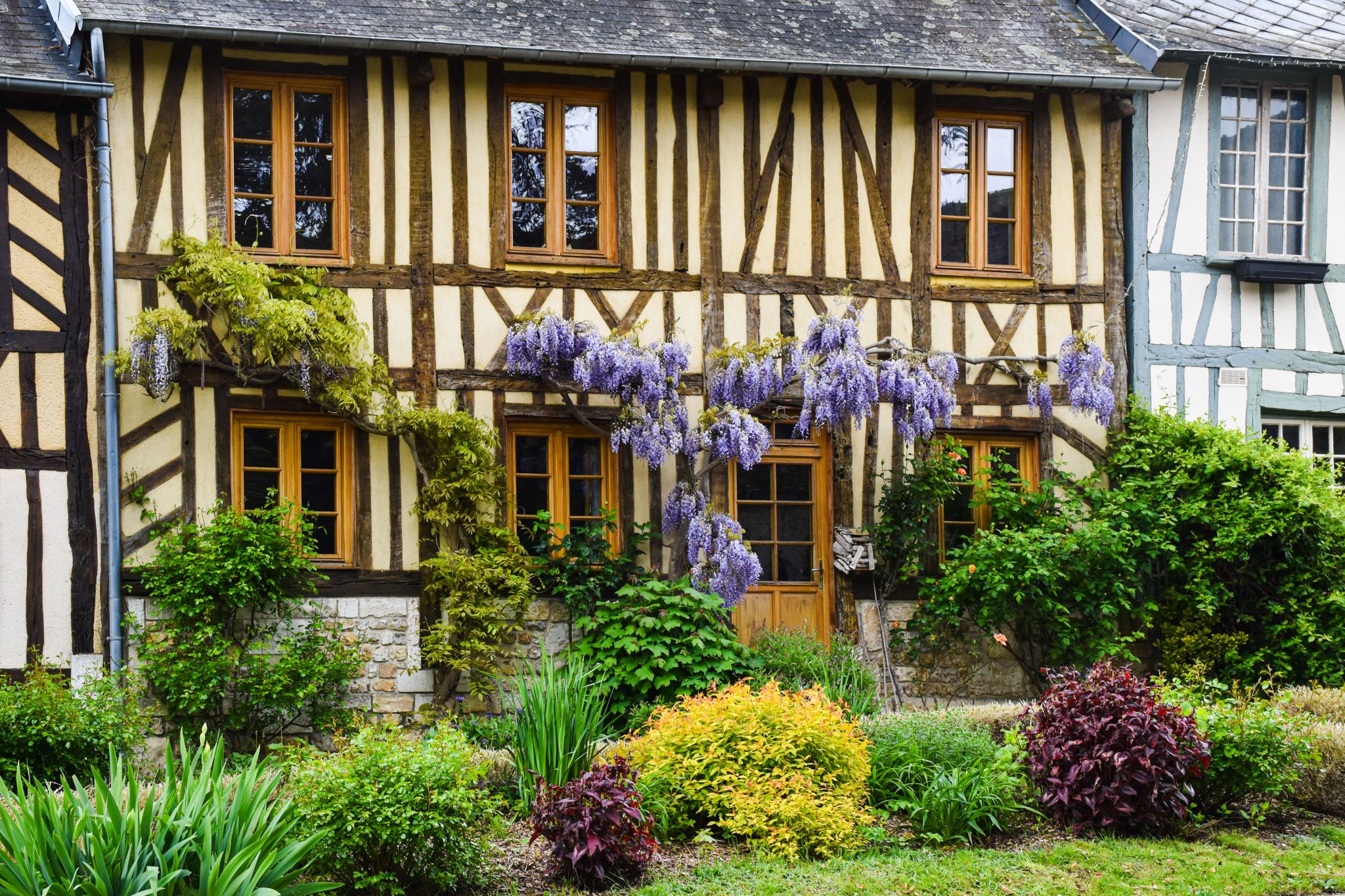
Wisteria is breathtakingly beautiful, but it’s a beast. This vigorous vine can pry apart wood, damage siding, and even disrupt foundations if left unchecked. To get this look safely, it must be grown on a very sturdy, external support system—like a heavy-duty trellis or strong cables bolted several inches away from the wall. It also requires aggressive pruning twice a year (in late winter and mid-summer) to keep it inbounds and encourage blooming. It’s not a plant for the faint of heart; it’s a serious gardening commitment.
|
📋 Copy HEX 🔗 Share |
📏 Scale Guide
The “cottagecore” aesthetic that exploded on social media continues to evolve, and this look is a perfect example of its more authentic, historic side. It moves beyond just the vibe and embraces the real materials and untamed nature that define a true country cottage. In 2026, there’s a growing appreciation for homes that show their age and integrate with the natural world. Flowering vines and visible timber framing speak to a desire for a slower, more picturesque way of life that feels like an escape from the digital world.
24. Classic Blue Clapboard House with Red Shutters and a Porch
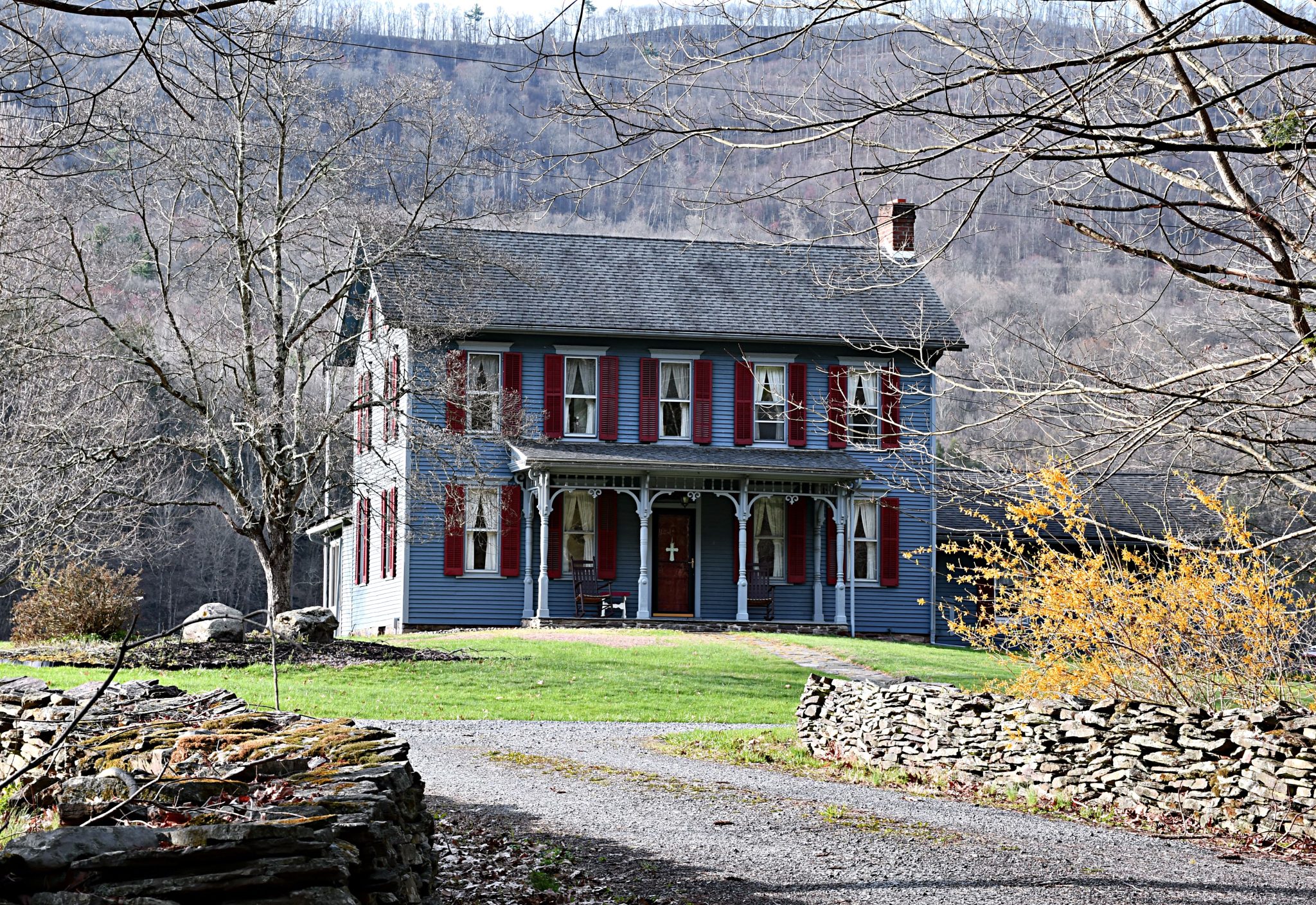
This is a quintessential American country color scheme. The formula is a patriotic-adjacent trio: 60% deep, historic blue (siding) + 30% crisp white (trim, porch columns) + 10% barn red (shutters, door). The blue provides a strong, dignified base, while the white trim makes every architectural detail pop with clean, sharp lines. The red is used sparingly as a high-energy accent, drawing attention to the windows and door. It’s a timeless, balanced palette that feels both stately and welcoming.
|
📋 Copy HEX 🔗 Share |
💡 Designer Tip
Wood shutters and siding are a core part of this historic look, but they are also the elements that will require the most maintenance. Expect to repaint the siding every 7-10 years and the shutters every 5-7 years, depending on your climate and sun exposure. Neglecting this regular painting doesn’t just look bad; it can lead to wood rot, which is a much more expensive problem to fix. If you love the look but hate the upkeep, consider fiber cement siding (like HardiePlank) and composite shutters, which offer a similar appearance with much greater longevity.
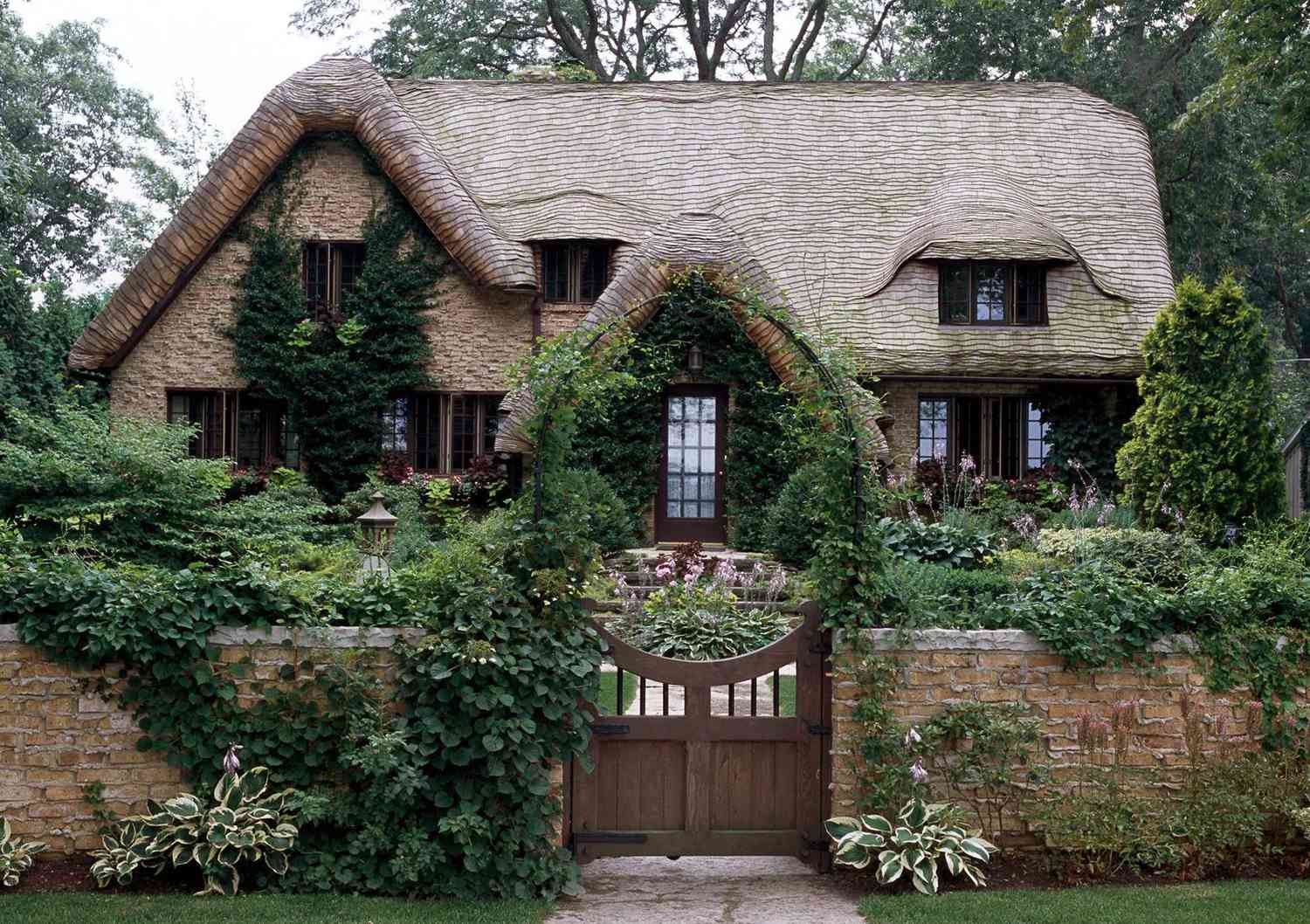
25. Enchanting Cottage with an Undulating Cedar Shake Roof
The undulating cedar shake roof is the single element that elevates this home into a work of art. This is not a standard roof; it’s a sculptural masterpiece. The “wavy” or “steam-bent” application of the shingles gives the entire structure an organic, almost cartoonishly charming quality, like something out of a fairytale. It’s an incredibly specialized and expensive technique, but it transforms the house from a building into a fantasy. The rest of the design wisely stays simple to let the magnificent roof be the star. The stone walls and dark-framed windows in Idea #4 have a similar storybook quality, but this roof is next-level.
|
📋 Copy HEX 🔗 Share |
💰 Budget Breakdown
A “hobbit roof” like this requires not just a skilled roofer but the right kind of house underneath it. This style works best on a rambling, one-to-two-story cottage with varied roof pitches and gables. On a simple rectangular house, the effect would be lost or look out of place. It needs corners, valleys, and different planes to really show off its sculptural quality. The house needs to have a certain amount of whimsy in its DNA to begin with; this isn’t a roof you can just put on any old colonial.
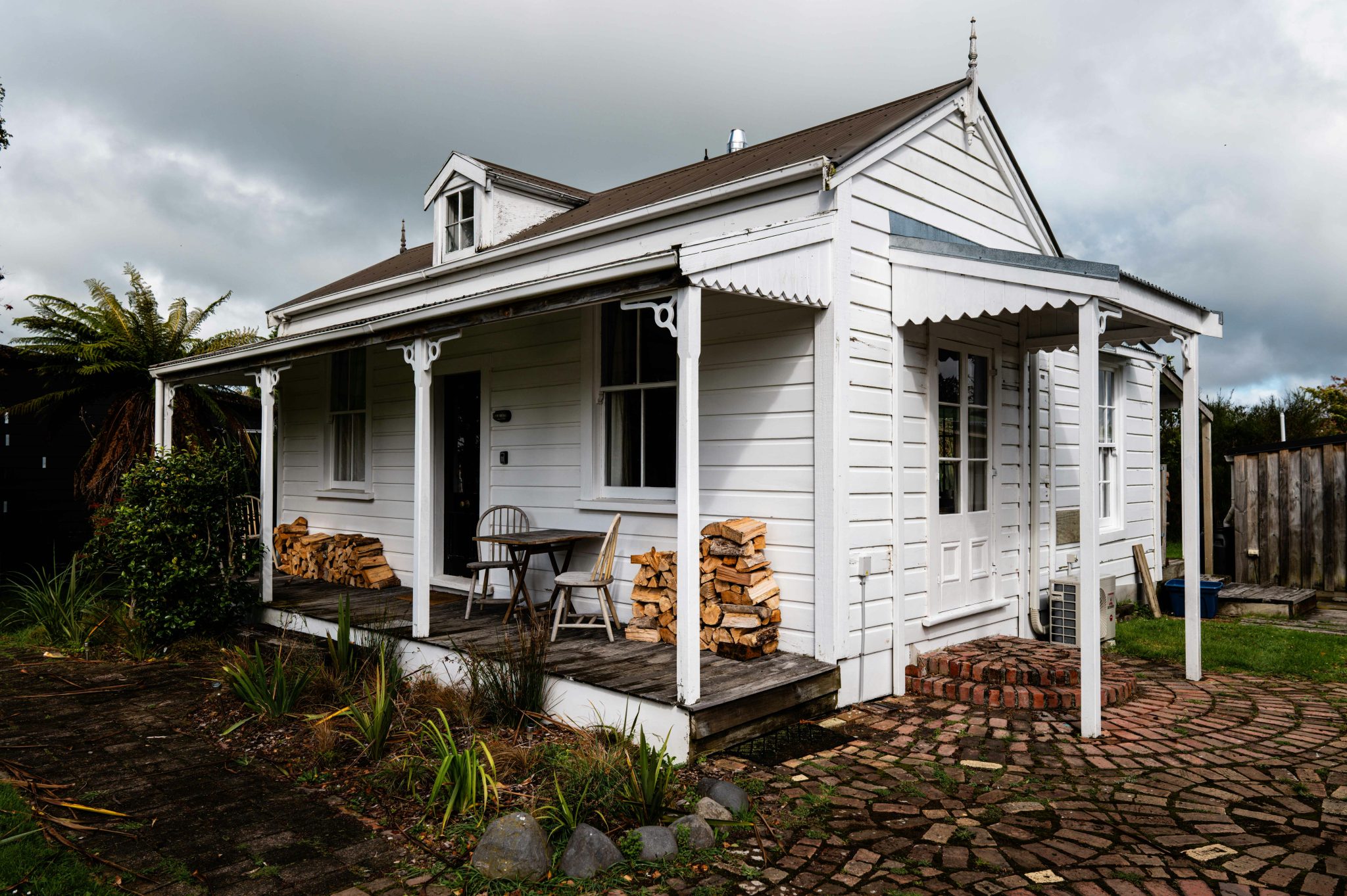
26. Cozy White Cottage with Firewood Stacks and a Brick Patio
This cottage feels incredibly cozy and “real” because it showcases the beauty of utility. The stacks of firewood aren’t just decor; they hint at a crackling fireplace inside. The weathered brick patio shows signs of use, and the simple wooden chairs are for sitting, not just for show. This “lived-in” quality is a core tenet of the cottage aesthetic. It’s not about being perfect or pristine; it’s about creating a home that is functional, comfortable, and a true reflection of the life lived there. The decorative corbels on the porch add just enough architectural polish.
|
📋 Copy HEX 🔗 Share |
⭐ The One Thing
A rustic brick patio is a perfect DIY project. You can achieve this weathered look by using reclaimed bricks. Here’s the quick version:
- Time: 1-2 weekends
- Cost: $400 – $1,000
- Step 1: Excavate the area to about 6 inches deep.
- Step 2: Add a 4-inch layer of paver base and tamp it down until it’s firm and level.
- Step 3: Add a 1-inch layer of sand and smooth it out.
- Step 4: Lay your bricks in the desired pattern (like basketweave or herringbone), leaving small gaps between them.
- Step 5: Sweep polymeric sand into the joints and mist with water to set it.
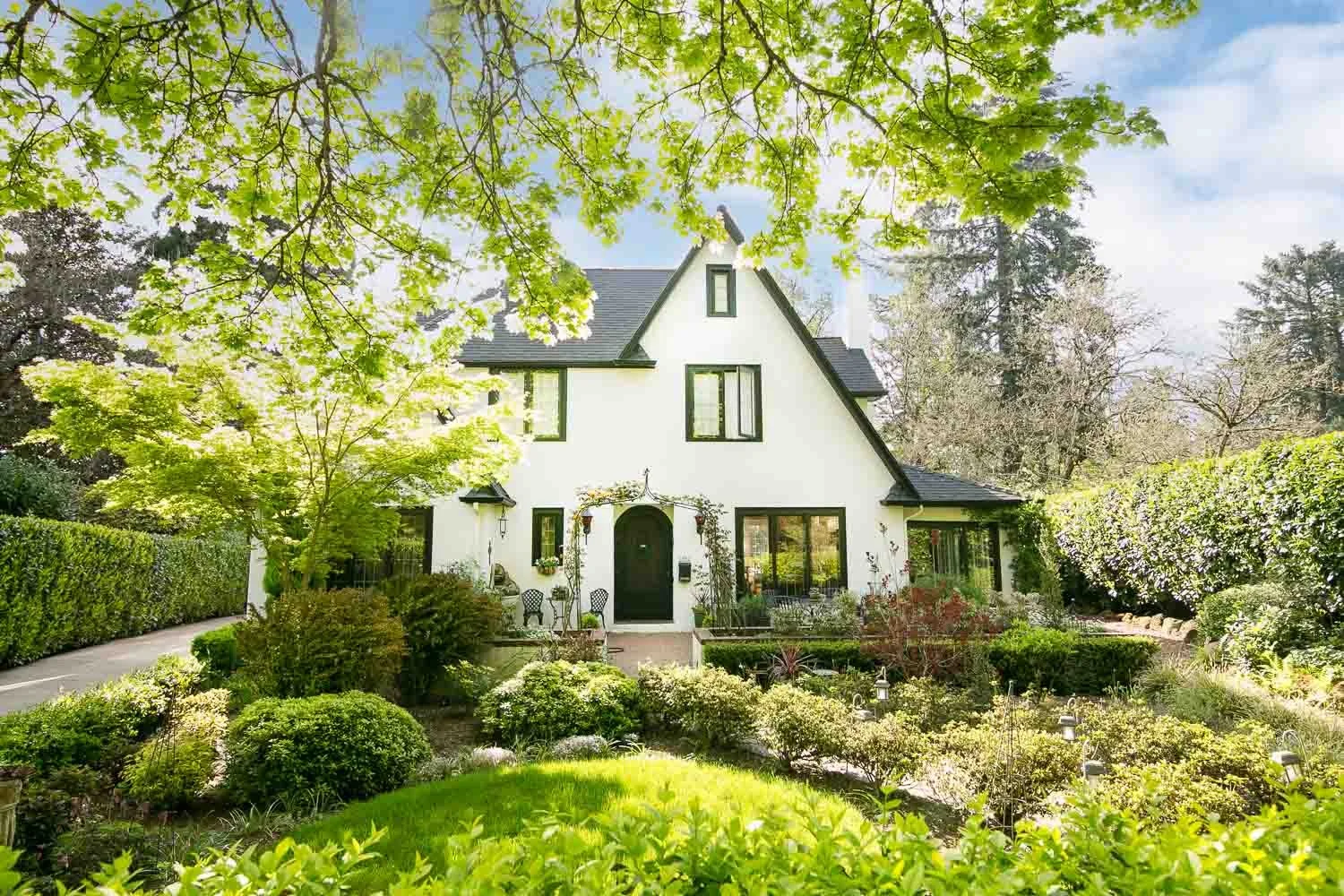
27. Classic White Tudor-Style Home with Lush Greenery
To achieve this charming, slightly overgrown Tudor look, the key is to let your landscaping get friendly with the house. Plant climbing vines like English Ivy or Boston Ivy at the base of the walls (ideally on a trellis to protect the masonry). Allow foundation shrubs, like the boxwoods seen here, to grow into full, organic shapes rather than shearing them into tight, formal hedges. The goal is to soften the home’s architectural lines and create a feeling that the garden is embracing the house.
|
📋 Copy HEX 🔗 Share |
📐 Style Math
While an ivy-covered facade is romantic, it requires vigilance. You must be prepared to prune it back from windows, gutters, and the roofline at least twice a year. If you don’t, the vines can work their way under shingles and into woodwork, causing significant damage over time. The lush greenery around the foundation can also trap moisture against the house and provide a highway for insects. It’s a beautiful look, but it’s a partnership between you and the plant—you can’t just let it go wild without consequences.
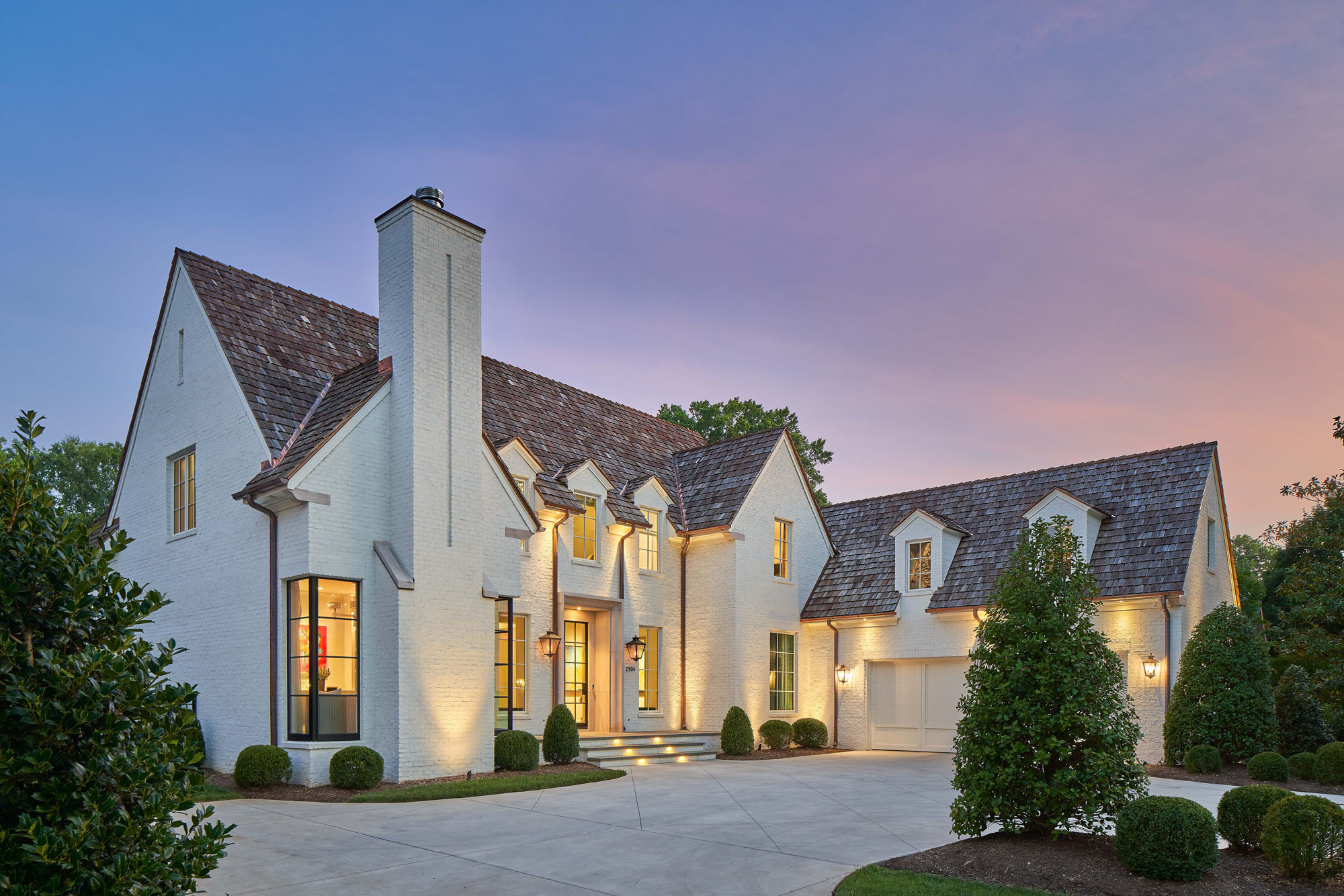
28. Elegant White Brick House with a Cedar Shake Roof and Copper Gutters
This exterior exudes elegance because of its sophisticated mix of high-end, natural materials. The painted white brick provides a classic, textured canvas. The dark brown cedar shake roof adds warmth and a heavy, substantial quality. But the master stroke is the use of real copper for the gutters and downspouts. Copper is a “living finish” that will develop a beautiful green patina over time, adding a layer of evolving character and distinction. The combination of brick, wood, and copper creates a rich, timeless, and undeniably luxurious palette.
|
📋 Copy HEX 🔗 Share |
✅ Before You Start
Achieving this level of classic, high-end appeal involves investing in premium materials across the board. The roof and gutters are particularly significant expenses.
- Wall Treatment (Painted Brick): $8,000 – $15,000
- Roofing (Cedar Shake): $25,000 – $45,000
- Gutters (Copper): $5,000 – $12,000
- Windows & Lighting: $10,000 – $20,000
- TOTAL: $48,000 – $92,000
Budget alternative: Use architectural shingles in a “cedar” color profile and aluminum gutters in a dark brown or bronze finish for a similar effect at roughly 40-50% of the cost.
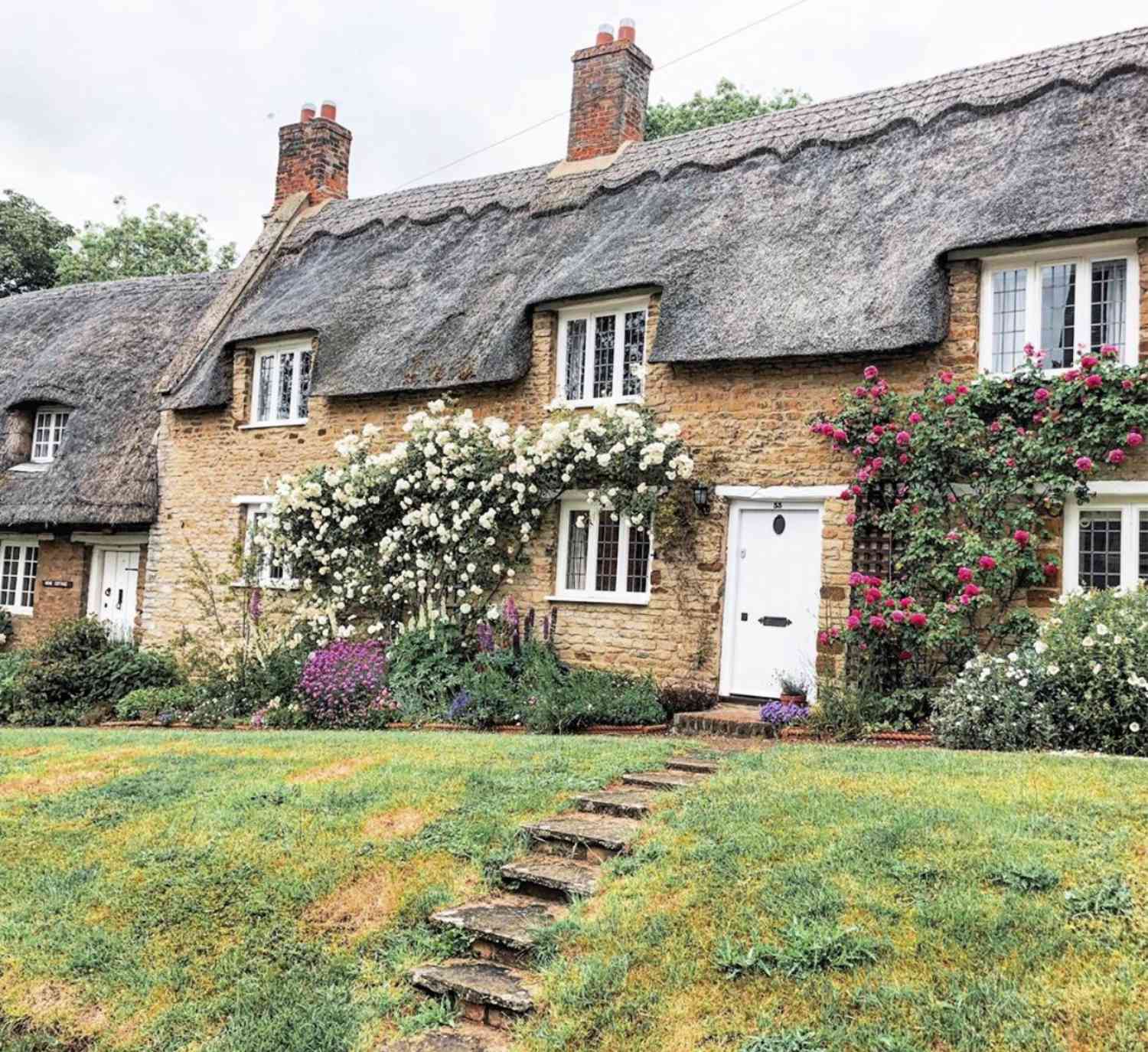
29. Picturesque Stone Cottage with a Thatched Roof and Climbing Roses
This idyllic look balances rustic texture with soft color. The formula: 50% heavy, natural texture (the grey-brown thatch and stone walls) + 30% clean white (windows, doors, and roses) + 20% vibrant life (pink roses and green lawn). The heavy textures provide the historic, weighty base, while the bright white elements feel fresh and light, preventing the facade from feeling too dark or dated. The pops of pink and green are the joyful accents that make the whole scene feel alive and picturesque.
|
📋 Copy HEX 🔗 Share |
🧹 Maintenance Reality
The climbing roses make this cottage unforgettable. While the stone and thatch are beautiful, the cascade of white and pink roses is what gives the home its romantic, storybook personality. The way they frame the windows and doors softens the hard stone and connects the man-made structure to the natural world of the garden. Removing the roses would leave a handsome, rustic building, but it would lose its heart and its most memorable feature. They are the living decoration that brings the architecture to life.
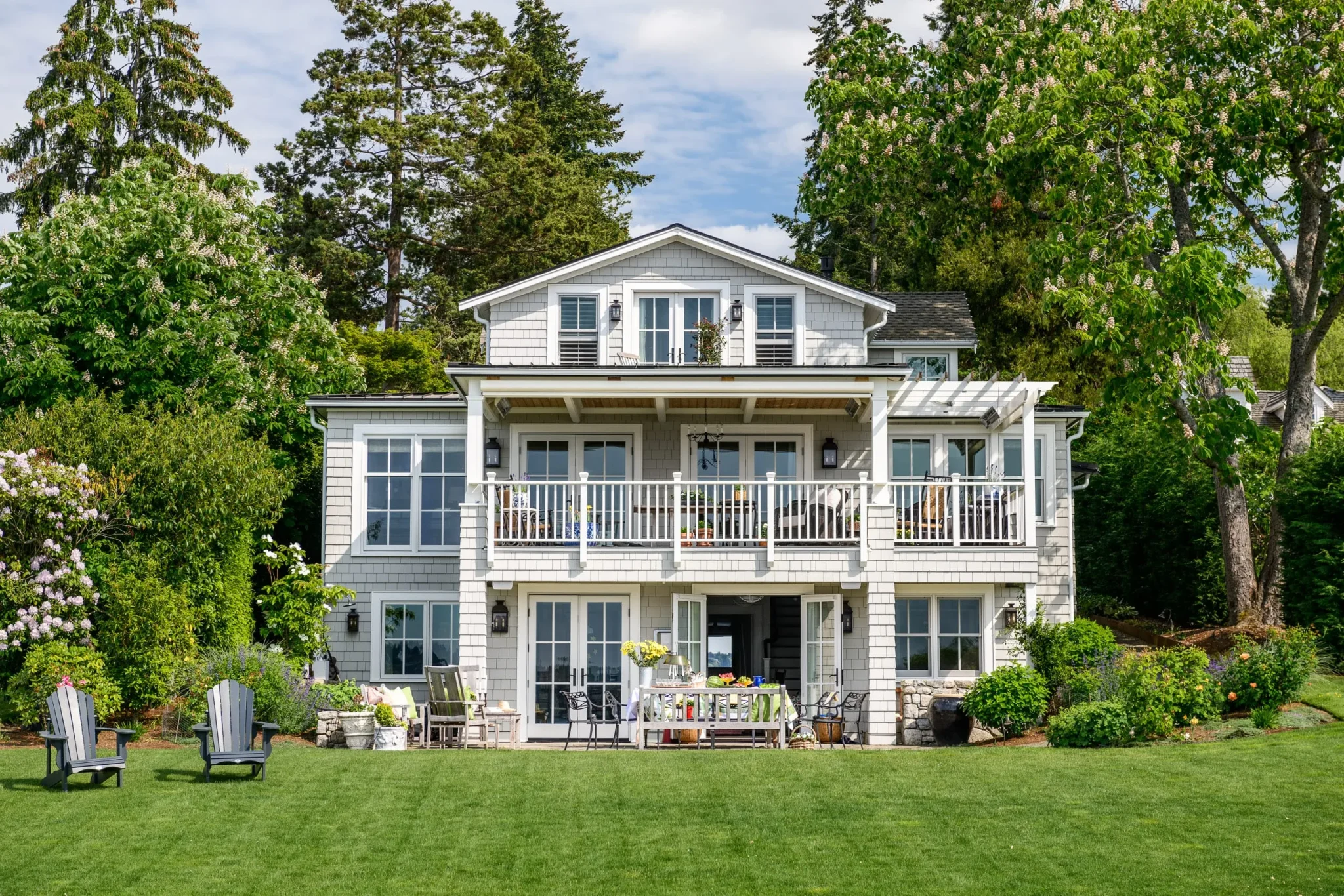
30. Expansive Gray Shingle Cottage with Multiple Balconies
This sprawling, multi-level design is ideal for a larger property, especially one with a view to capture. To accommodate the multiple balconies and generous patio space without feeling crowded, you’ll need a home that is at least 4000 square feet on a lot that is a half-acre or more. The three-story design works particularly well on a sloped lot, allowing for a walk-out lower level. This isn’t a style that translates well to a narrow or small lot; it needs room to breathe to achieve its serene, resort-like feel. It’s a more expansive version of the coastal look seen in Idea #1.
|
📋 Copy HEX 🔗 Share |
🔥 Trending Context
Love this breezy, coastal look but don’t have a multi-million dollar budget? Swap the individual shingle siding for shingle-style vinyl or fiber cement panels, which are much faster and cheaper to install. For the railings, choose a pre-fabricated composite railing system from a big-box store like Lowe’s or The Home Depot instead of custom-built wood. You can create a comfortable and stylish patio area with affordable outdoor furniture from Target or Wayfair, giving you this gracious living vibe for a fraction of the price.
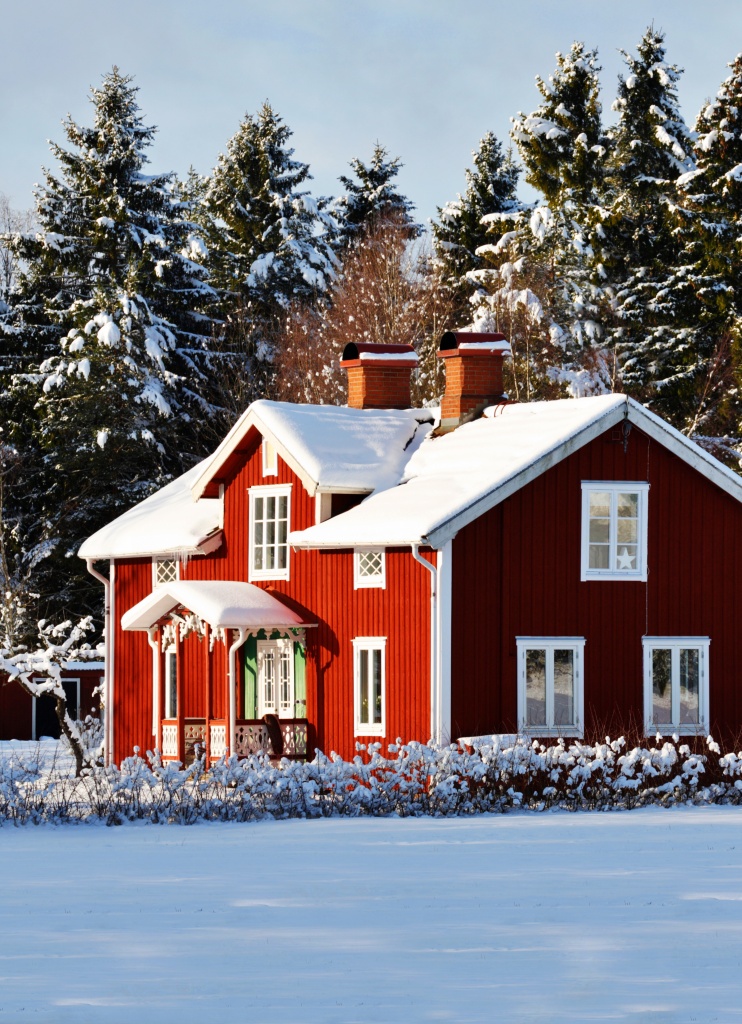
31. Cozy Red Cottage in a Snowy Winter Landscape
This image is so powerful because of its use of complementary colors. The deep, warm red of the siding is the direct opposite of the cool greens of the shutters and surrounding pine trees on the color wheel. This high-contrast pairing creates a visual energy that is incredibly striking, especially against the neutral white canvas of the snow. The house doesn’t blend in; it stands out in the most beautiful way. The white trim acts as a clean border, making both the red and the green pop even more.
|
📋 Copy HEX 🔗 Share |
🔧 How-To Brief
Painting a house in a snowy climate requires extra planning. The best time to paint is in the late spring or early fall when temperatures are consistently above 50°F (10°C) for at least a week, and humidity is low. This allows the paint to cure properly. Don’t try to rush a paint job before the first frost. Also, when choosing a paint, opt for a high-quality acrylic latex formula designed for exteriors, as it will remain more flexible in extreme temperature swings, reducing the risk of cracking and peeling.
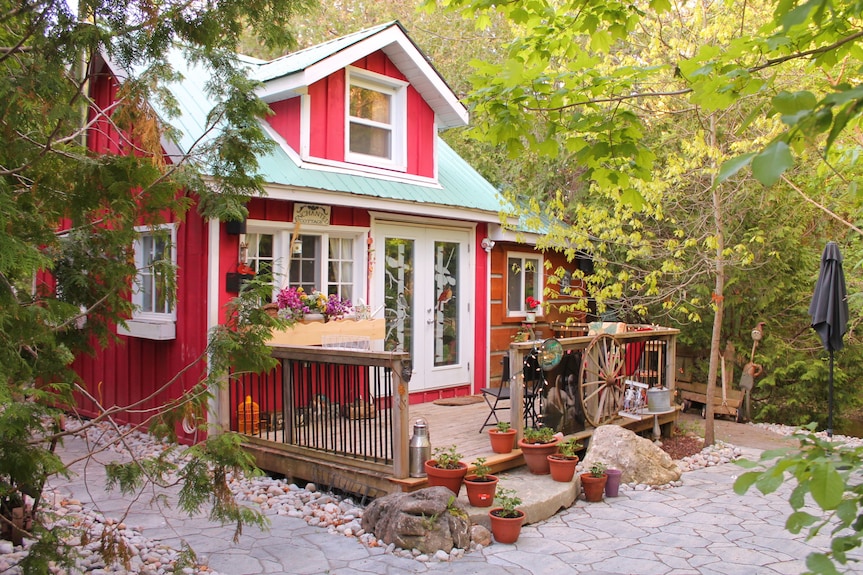
32. Vibrant Red Cottage with a Light Green Metal Roof and Deck
This playful, rustic look uses a daring color combination. The formula is a study in vibrant contrast: 50% bold primary color (the red siding) + 30% cool pastel accent (the light green roof) + 20% neutral framework (white trim, brown deck). The red and green are complementary colors, which creates a dynamic visual buzz. Using a very light, desaturated green on the roof keeps the combo from looking like a Christmas card. It’s a whimsical, confident palette that’s not for the faint of heart, but it creates a home bursting with personality.
|
📋 Copy HEX 🔗 Share |
🎯 What Makes It Work
A red house is a beautiful statement, but be aware that red pigments are notorious for fading faster than other colors, especially in sunny climates. To keep it looking vibrant, you’ll need to invest in a very high-quality paint with UV inhibitors, and you may still need to repaint a few years sooner than you would with a beige or gray house. When it comes time to sell, a bold red can also be polarizing for potential buyers. It’s a fantastic choice if you love it, just know it requires more commitment than a neutral hue.
From Pinterest Dream to Your Front Door
A cottage exterior is more than just siding and shutters; it’s a feeling. It’s about creating a place that feels like a sanctuary, full of character and personal history. Whether you’re drawn to classic stone, cheerful colors, or rustic wood, we hope these ideas have inspired you to start telling your own home’s story. The most beautiful homes are the ones that are truly loved, and that starts with a vision you’re excited about.
Ready to make it happen? Pin your favorite ideas from this article to your board, and start turning that dream cottage into a reality, one detail at a time.