You know that feeling when you finally find the one tropical landscape photo that looks exactly right for your space? It feels like destiny. But then reality hits—how do you actually make it happen? We’ve been there, endlessly scrolling Pinterest for inspiration. That’s why we did the heavy lifting for you. After filtering through hundreds of options, we narrowed it down to 30 incredible ideas that deliver on that lush, vacation-at-home fantasy. We’re covering everything from modern marvels to serene jungle retreats. And stay until the end—we break down the most common mistakes that can ruin these looks.
📌 Save this to Pinterest for later—you’ll want to revisit these ideas.
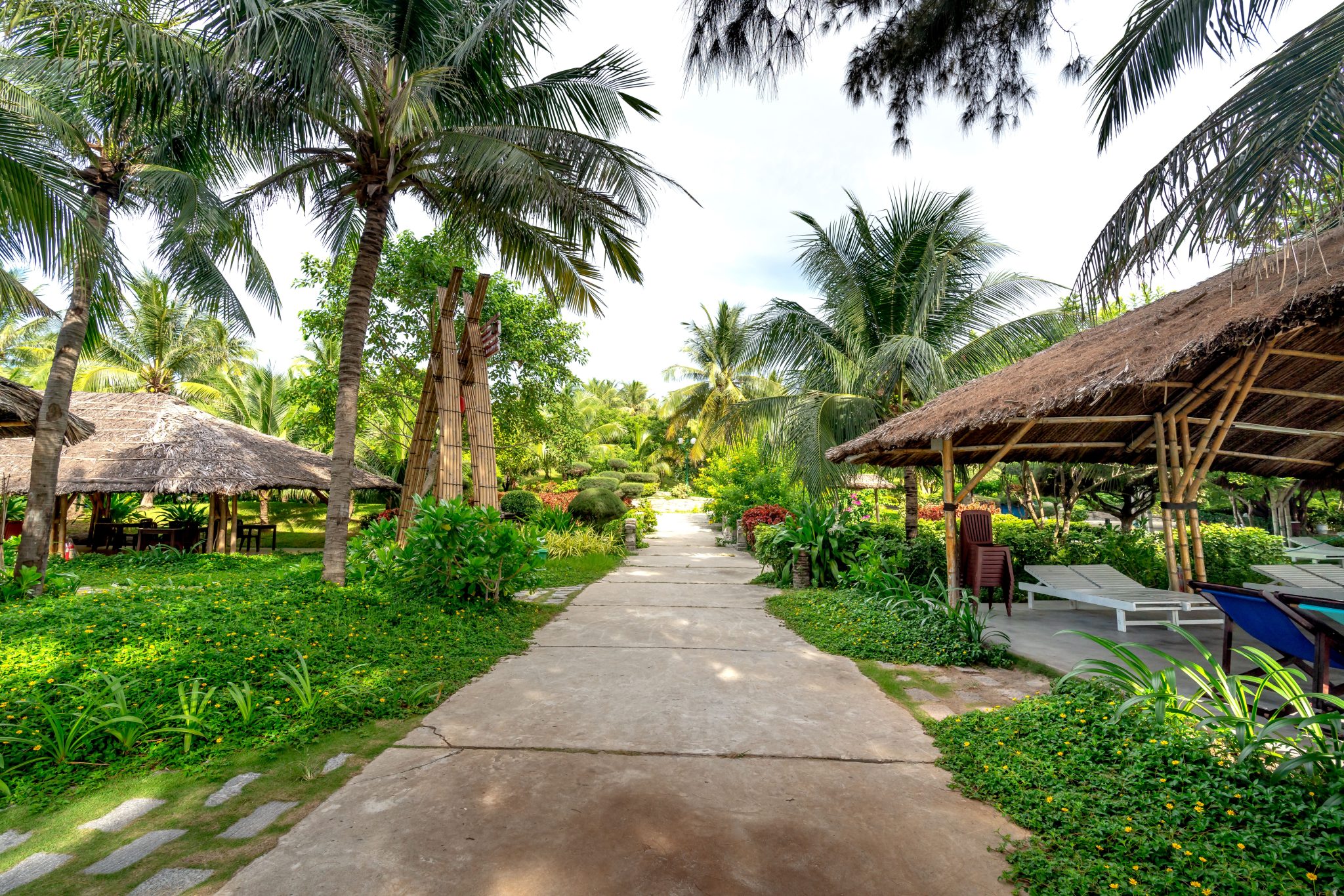
1. Concrete Pathway Through a Lush Thatched-Roof Oasis
The magic here is in the contrast between the clean, modern lines of the concrete path and the wild, organic shapes of the tropical foliage. The pathway acts as a strong leading line, drawing your eye through the space and inviting you to explore. It creates a sense of journey and discovery. Meanwhile, the thatched-roof shelters add an architectural, yet rustic, element that provides both visual interest and functional shade, making the garden a liveable space rather than just something to look at.
|
📋 Copy HEX 🔗 Share |
⚠️ Real Talk
This is a concept for a larger property. To get the full effect of a meandering path with significant planting on both sides, you’ll want a yard that is at least 50 feet deep. The thatched shelters require a footprint of about 10×10 feet each, so plan your layout accordingly to ensure you have enough room for seating and circulation. For smaller spaces, consider a more compact version of this look, as seen in Idea #7, which uses a narrower path.
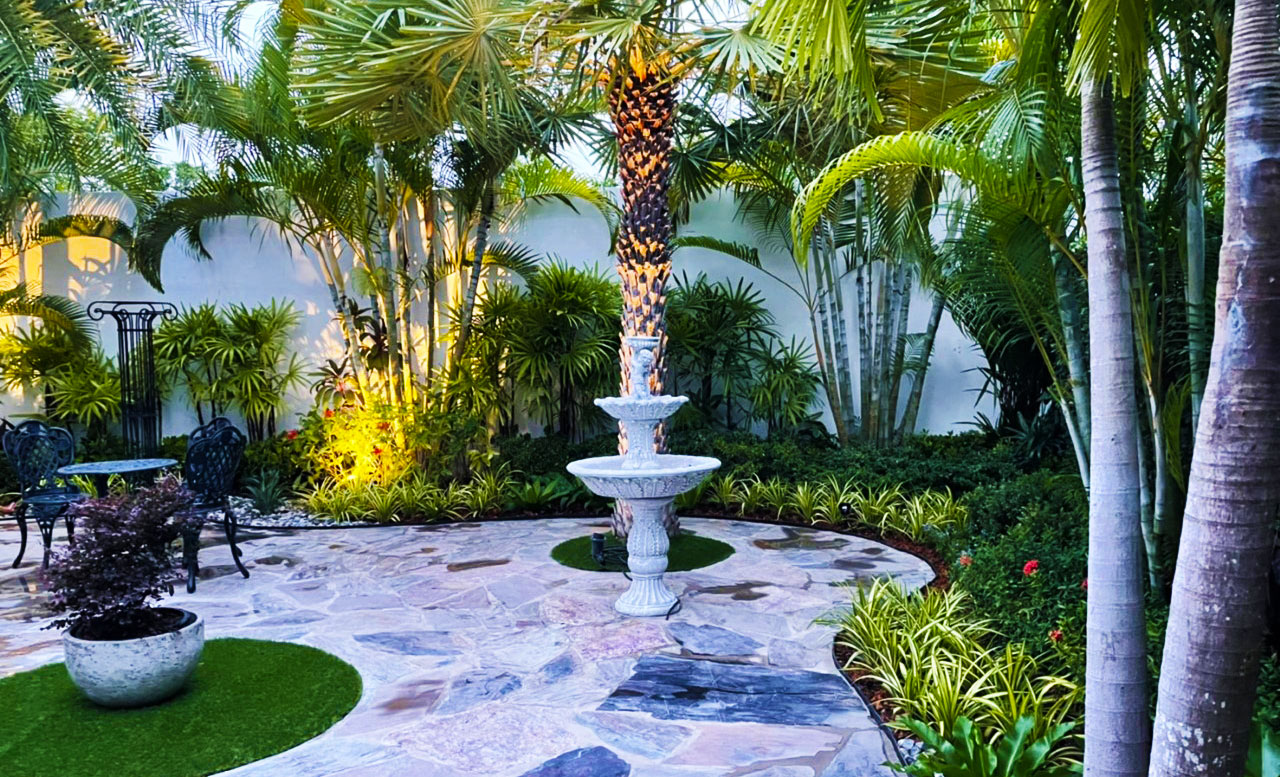
2. Serene Flagstone Patio with a Tiered Fountain
The undeniable hero of this space is the tiered stone fountain. It’s the heart of the design, providing a central focal point, the soothing sound of moving water, and a classic, romantic silhouette that elevates the entire patio. Without it, you’d have a pleasant, but far less captivating, garden. The fountain transforms the area from a simple patio into a tranquil sanctuary, creating a destination for relaxation and quiet contemplation. It’s proof that a single, well-chosen feature can define an entire outdoor room.
|
📋 Copy HEX 🔗 Share |
📏 Scale Guide
When installing a fountain, always consider the sound. A loud, splashing fountain can be more stressful than serene. For a residential patio like this, aim for a gentle cascade. A flow rate of around 200-300 gallons per hour (GPH) is typically perfect for creating a pleasant burble that masks ambient noise without being overwhelming. Also, ensure you have a GFI-protected outdoor outlet within 6-10 feet of the fountain’s location to power the pump safely.
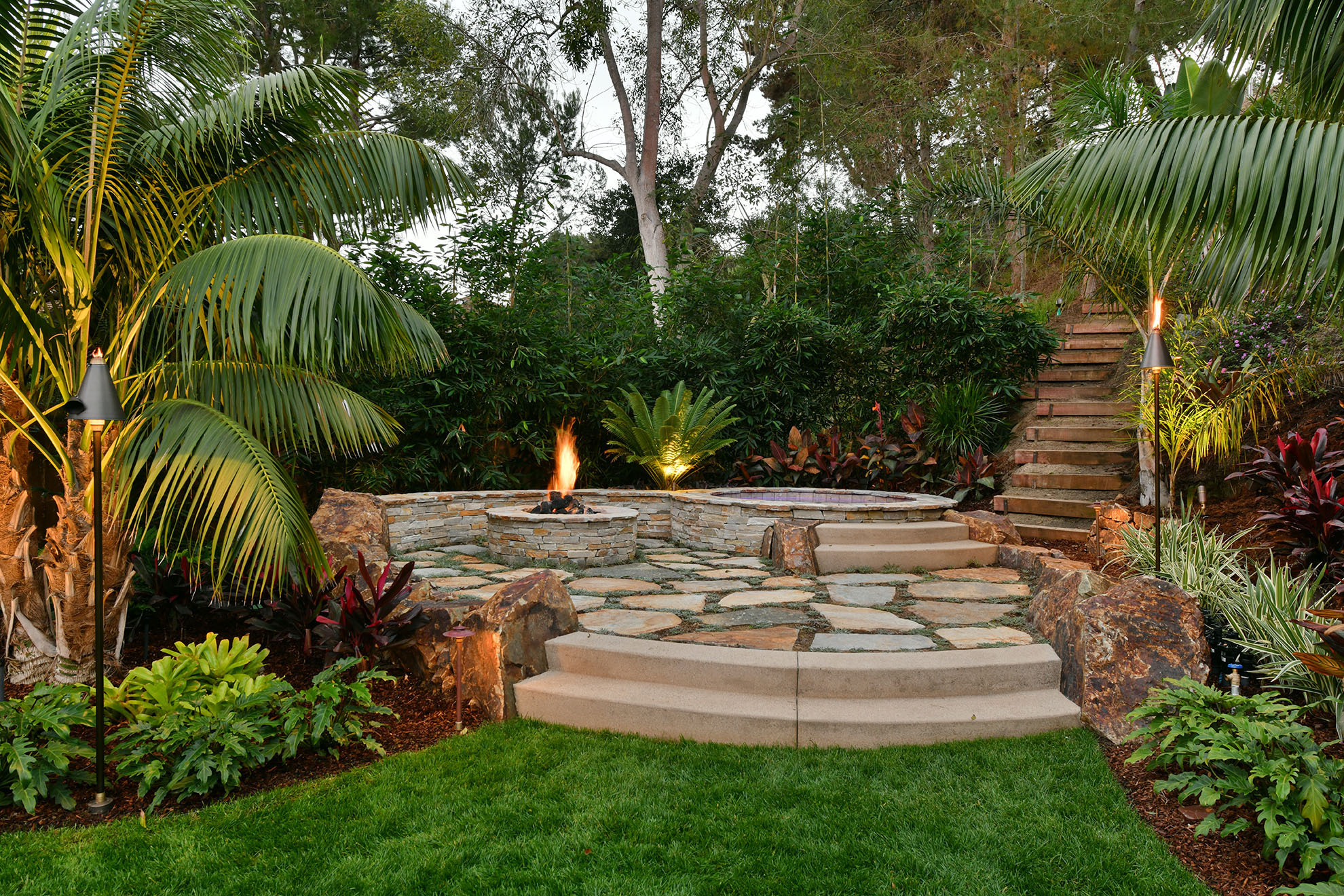
3. Lush and Layered Front Yard Landscaping
Designs from firms like Torrey Pines Landscape Company are gaining traction because they champion a specific type of ‘structured wildness.’ This isn’t about letting your garden go; it’s a very deliberate approach to layering textures, heights, and colors to create a front yard that feels both impeccably designed and completely natural. Homeowners are moving away from flat, boring lawns and embracing dynamic, curb-appeal-boosting landscapes that look beautiful year-round and offer more ecological benefits.
|
📋 Copy HEX 🔗 Share |
💡 Designer Tip
Before you dive into a full front-yard makeover, tick off these essential items. A thoughtful plan prevents costly mistakes and ensures the final result matches your vision.
- Map Your Sunlight: Track how many hours of direct sun each part of the yard gets. This will determine your plant selection more than anything else.
- Test Your Soil: Do a simple pH and composition test. You need to know if you’re working with clay, sand, or loam to choose plants that will thrive.
- Measure Everything: Get precise measurements of the entire area, including windows, doors, and existing walkways.
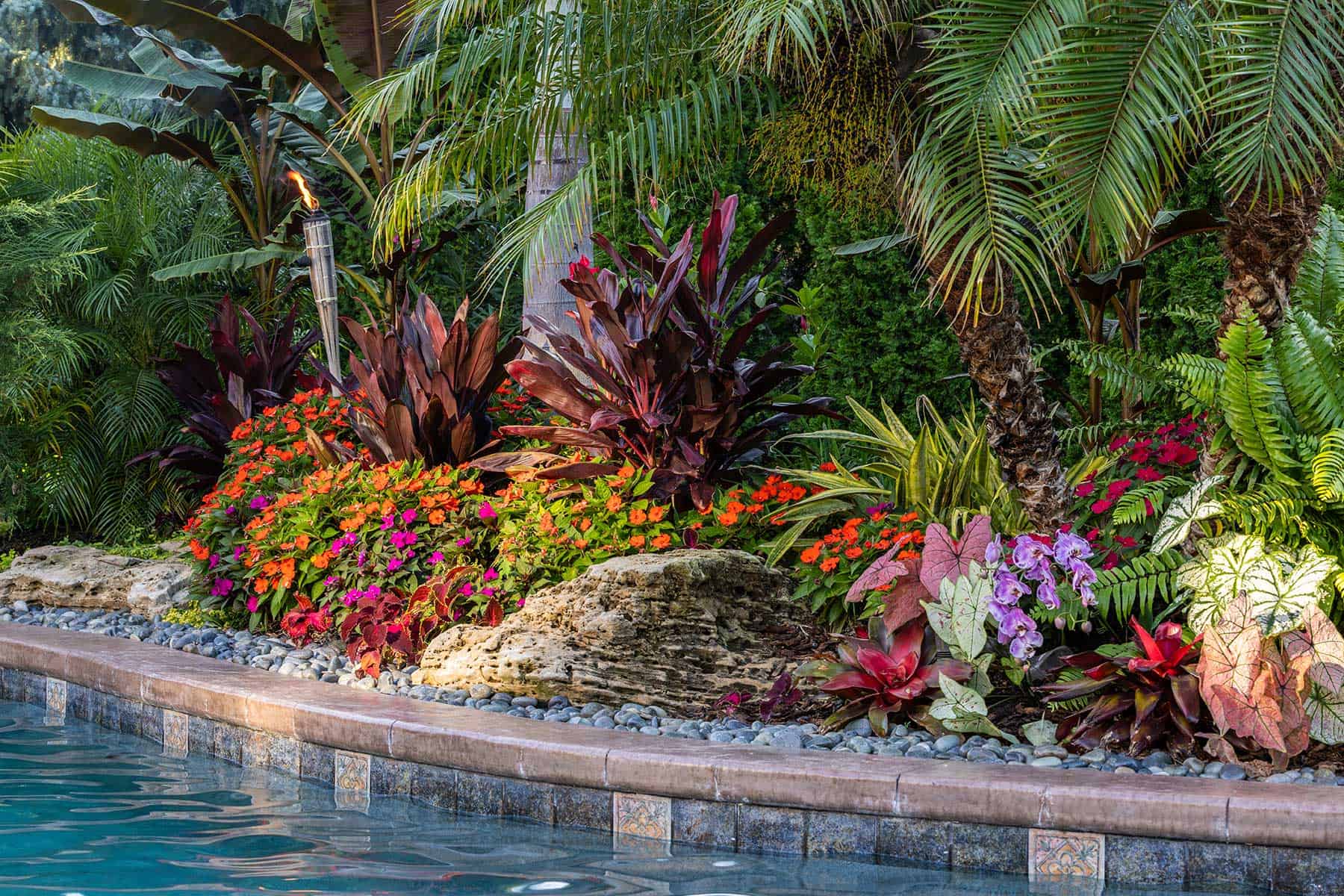
4. Vibrant Poolside Planting with Tiki Torch Accents
The visual success of this poolside garden is all about a balanced formula: 70% lush green foliage + 20% vibrant floral color + 10% natural hardscape. The deep greens from the various leaves create a rich, enveloping base. The pops of orange, pink, and red flowers are used as deliberate accents, drawing the eye without overwhelming it. Finally, the stone border and tiki torch provide the textural contrast that grounds the whole design, keeping it from feeling like an untamed jungle.
|
📋 Copy HEX 🔗 Share |
🔥 Trending Context
Having plants this close to a pool requires some specific upkeep. Splashes from chlorinated or saltwater pools can harm sensitive plants, so choose hardier species like canna lilies, birds of paradise, or cordylines. Be prepared for regular skimming, as flowers and leaves will inevitably fall into the water. The beautiful stacked stone border can also become a collection point for algae in damp, shady spots, requiring a scrub-down with a stiff brush and a mild cleaning solution once or twice a season.
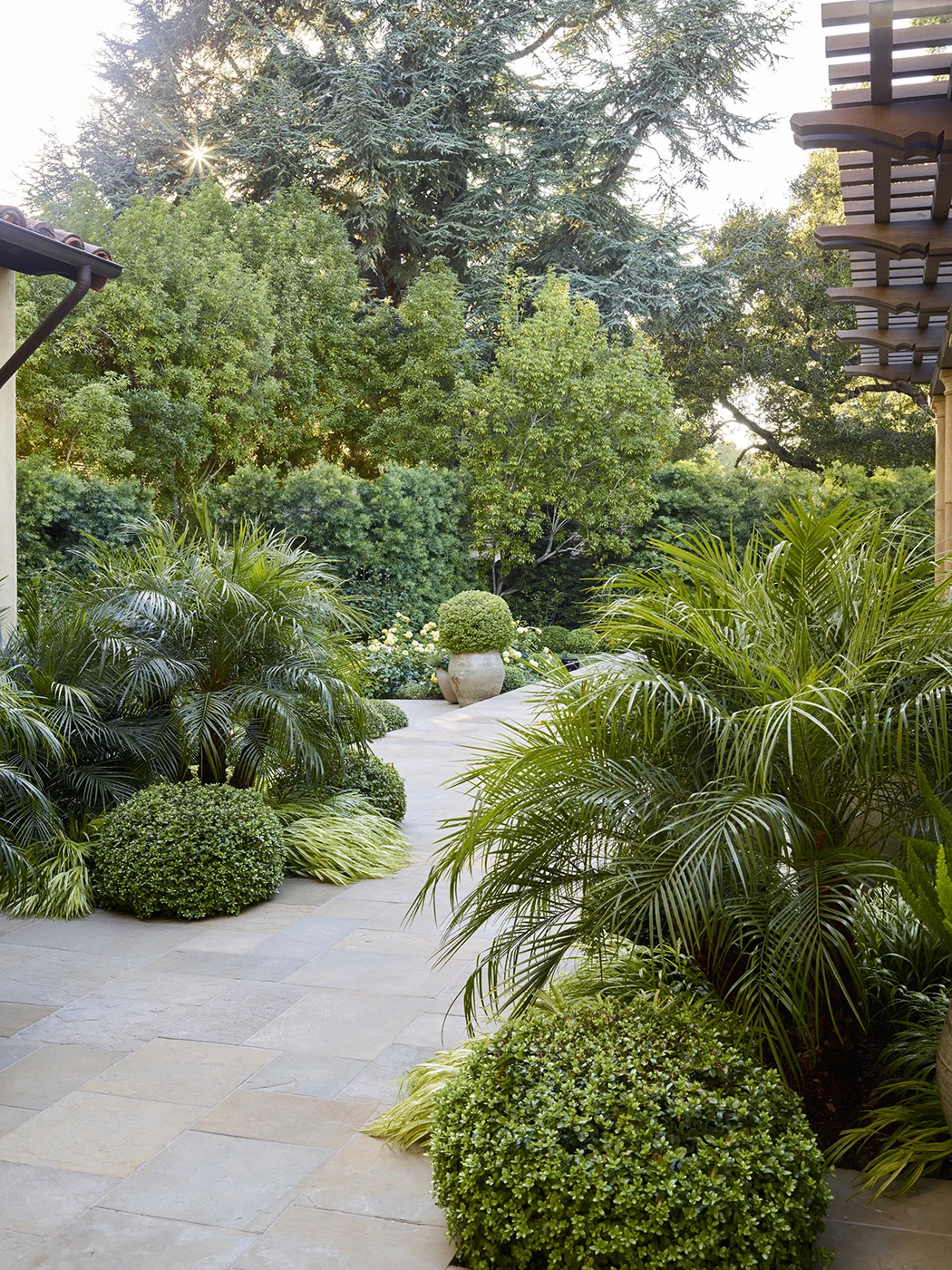
5. Winding Stone Pathway Through a Secluded Garden
This design masterfully uses a winding pathway to create a sense of mystery and make the garden feel larger than it is. Unlike a straight path, like the one in Idea #1, a curved walk conceals the destination, encouraging a slower, more mindful journey through the space. The dense, layered plantings on either side enhance this effect, creating little ‘rooms’ and vignettes that reveal themselves as you explore. The combination of manicured shrubs and large, wilder palms adds a delightful textural interplay.
|
📋 Copy HEX 🔗 Share |
⭐ The One Thing
Let’s be honest: a natural stone path like this can be a tripping hazard if not installed correctly. The pavers must be set level with each other and properly seated in a gravel or sand base to prevent wobbling. In wet or shady climates, the stone surface can become slippery with moss or algae. Regular pressure washing or scrubbing will be necessary for safety. This isn’t the best choice for areas with heavy foot traffic or for people with mobility concerns.
6. Transforming a Miami Yard into a Tropical Paradise
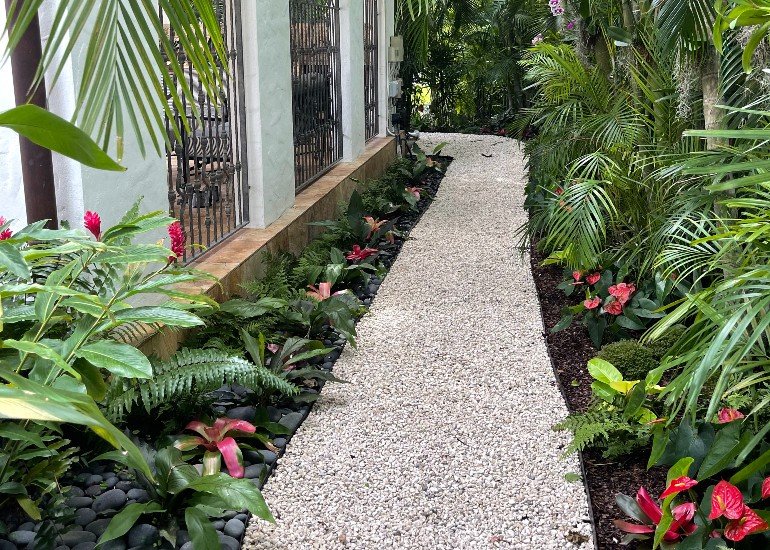
To capture that quintessential, luxe Miami look championed by designers like Knoll Landscape Design, you need to focus on scale and drama. Use large-leaved plants like Elephant Ears (Alocasia) and Giant Birds of Paradise (Strelitzia nicolai) as your architectural anchors. Don’t be afraid to plant them close together to create a dense, jungle-like effect. The key is to mix no more than 5-7 different types of plants but repeat them in large, sweeping groups for a high-impact, intentional design.
|
📋 Copy HEX 🔗 Share |
🎯 What Makes It Work
You don’t need to spend a fortune on mature, specimen plants to get this vibe. Start with smaller, less expensive versions from a big-box store. With the right climate and care, tropical plants grow incredibly fast. Supplement with fast-growing ground covers to fill in space. A few bags of dark mulch can make even a sparsely planted garden look more finished and intentional while you wait for things to grow in. A single, dramatic planter can also provide a high-end feel for under $100.
7. A Hidden Pathway Leading to a Secret Garden Entrance
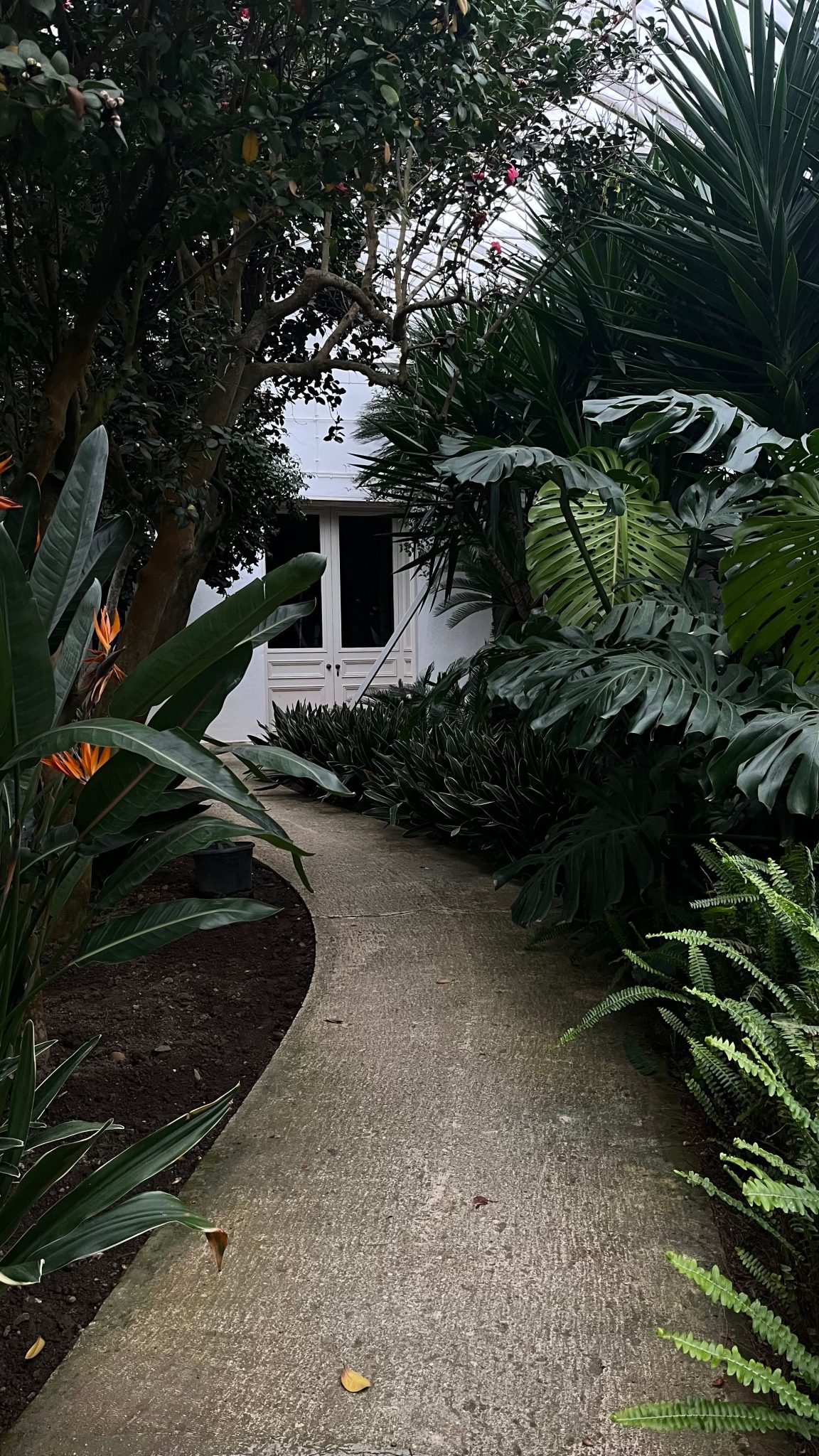
The single element that makes this scene so captivating is the sense of destination. The winding path isn’t just a walk through plants; it’s leading somewhere intriguing—the white building with its arched double doors. This creates a narrative and a feeling of arrival. Removing the structure at the end would turn a purposeful journey into a simple stroll. It’s the promise of a hidden sanctuary that gives the entire landscape a powerful, storybook quality that a simple planting bed could never achieve.
|
📋 Copy HEX 🔗 Share |
📐 Style Math
Want to create that ‘jungle path’ feel? Here’s a quick guide. (Est. time: 4-6 hours; Cost: $200-$500 for plants)
- Define Your Path: Lay out a gently curving path, about 3-4 feet wide.
- Establish the Canopy: Plant your tallest, most architectural plants (like Bird of Paradise) at the back, near the building or fence line.
- Layer the Mid-Ground: Add large-leafed plants like Monsteras and ferns in front of the tallest layer, allowing them to overlap.
- Fill the Floor: Use lush, spreading ground cover plants right up to the edge of the path to soften the lines and make it feel truly enveloped by nature.
8. Modern Grey Patio with a Rectangular Waterfall Feature
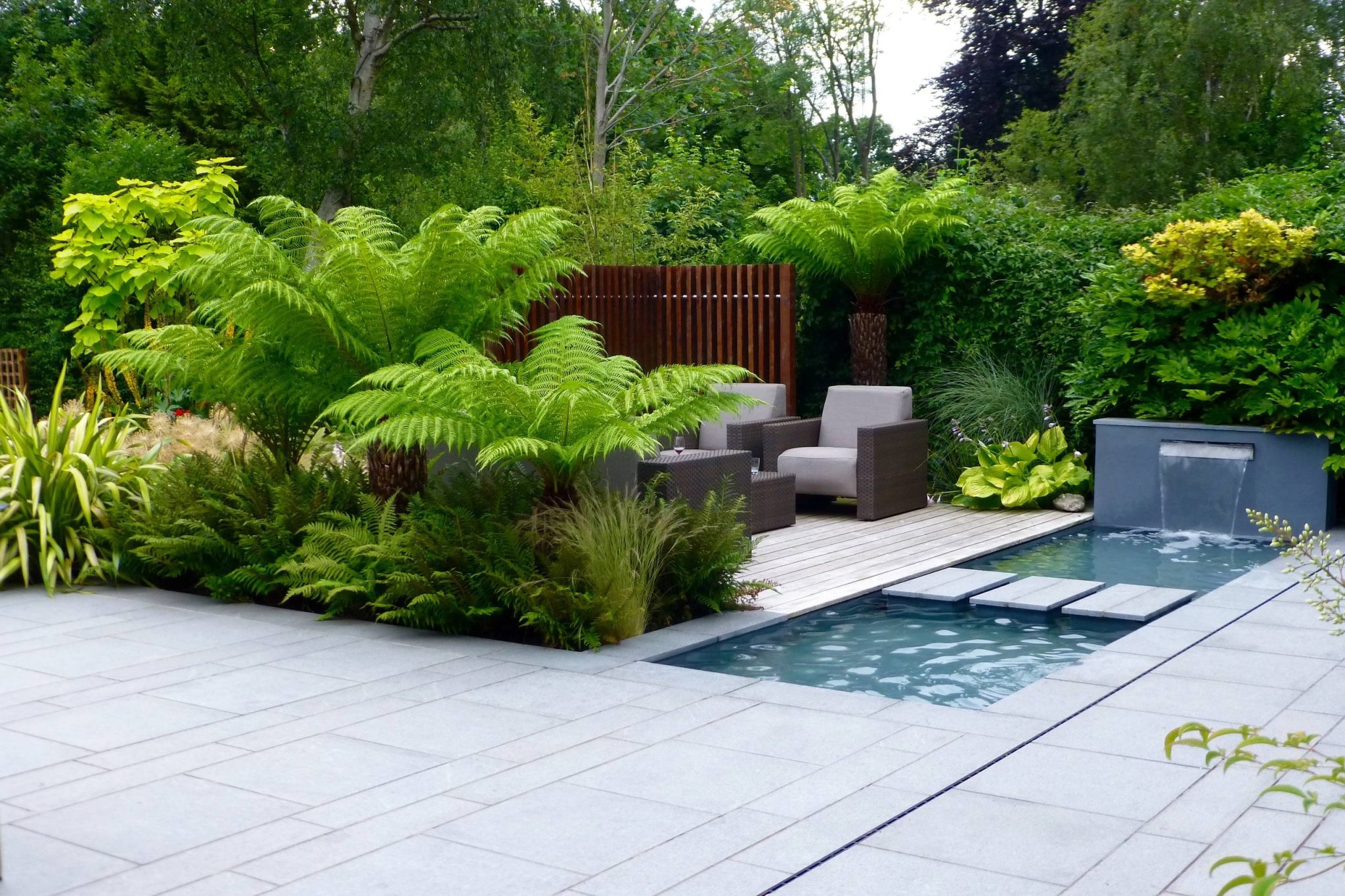
Recreating this sleek, modern look requires a focus on high-quality hardscaping and minimalist planting. The water feature is the main expense, but it provides both visual and audible tranquility.
- Water Feature & Stepping Stones: $4,000 – $9,000 (custom)
- Grey Porcelain Patio Tiles: $2,500 – $5,000 (materials & labor)
- Wicker Seating & Cushions: $1,200 – $3,000
- Lush Perimeter Plants (ferns, etc.): $800 – $1,500
- Slatted Wooden Fence: $1,500 – $4,000
- TOTAL: $10,000 – $22,500
- Budget alternative: A self-contained fountain ($500), comfortable chairs from a big-box store ($600), and DIY container planting can deliver a similar mood for around $2,000.
|
📋 Copy HEX 🔗 Share |
💰 Budget Breakdown
That serene water feature comes with a to-do list. The pump’s filter will need to be cleaned monthly to prevent clogging from leaves and debris. Depending on your climate, you may need to add an algaecide weekly to keep the water clear. The sleek grey patio tiles are great for a modern look, but they will show dirt and water spots more readily than textured stone. Plan on a good hose-down weekly and a deeper clean with a specialized tile cleaner 2-3 times a year to keep them looking sharp.
9. Cozy Garden Nook with Pebble Paths and String Lights
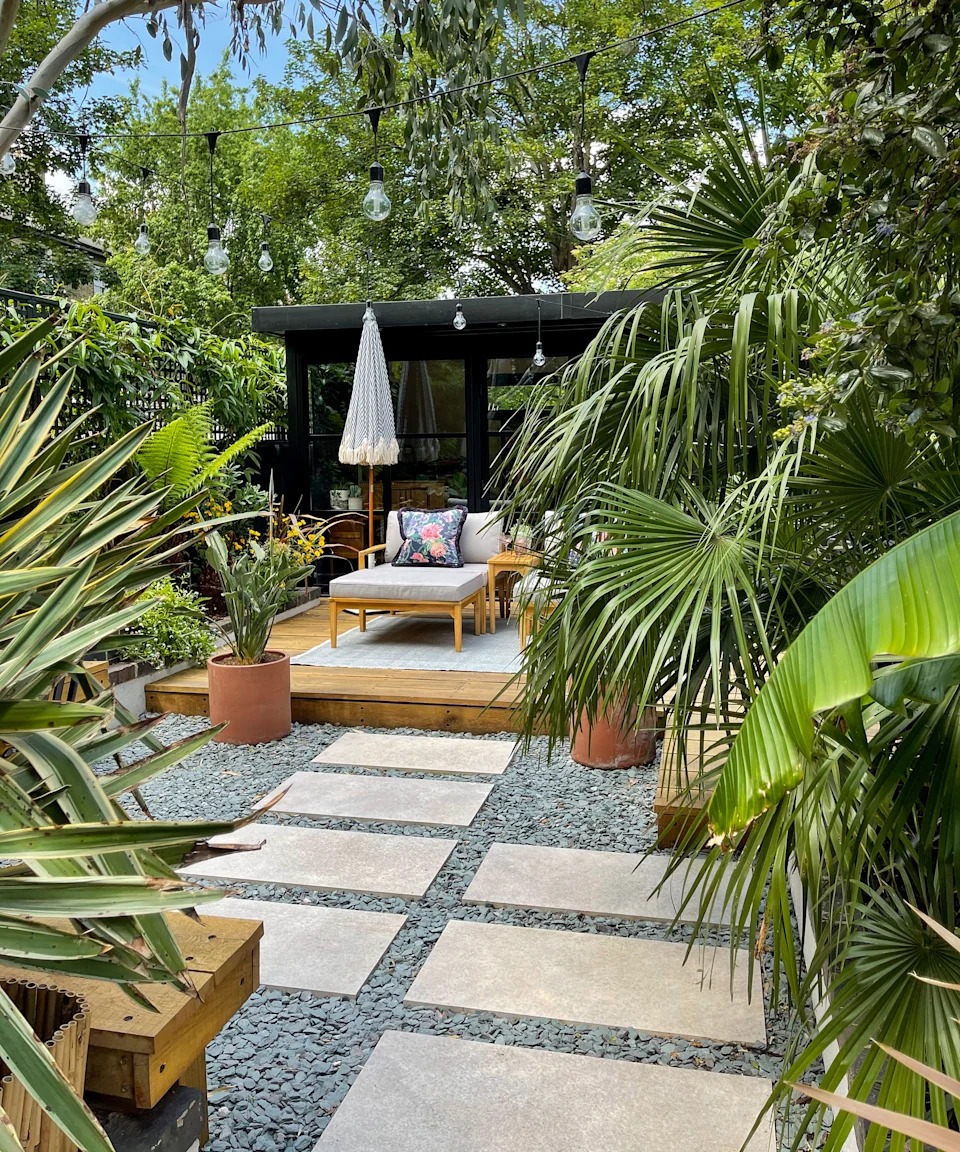
This enchanting look is incredibly achievable on a tight budget. Swap the wooden deck for a simple gravel or pea stone patio area ($100-$300 from a landscape supply store). Hunt for a comfortable lounge chair on Facebook Marketplace or at the end-of-season sales ($50-$150). The real magic comes from the string lights—a few strands of commercial-grade outdoor lights cost about $100. Fill the space with perennial green plants, which will come back year after year, saving you money in the long run. The entire vibe can be had for under $500.
|
📋 Copy HEX 🔗 Share |
🔧 How-To Brief
When hanging string lights, always create a gentle scallop rather than pulling them taut. Aim for a dip of about 1-2 feet for every 20 feet of length. This not only looks more relaxed and aesthetically pleasing but also puts less tension on the anchor points and the wire itself, especially during windy or wintery conditions. Use a galvanized steel guide wire to support the lights for runs longer than 15 feet to prevent sagging and extend the life of your light strands.
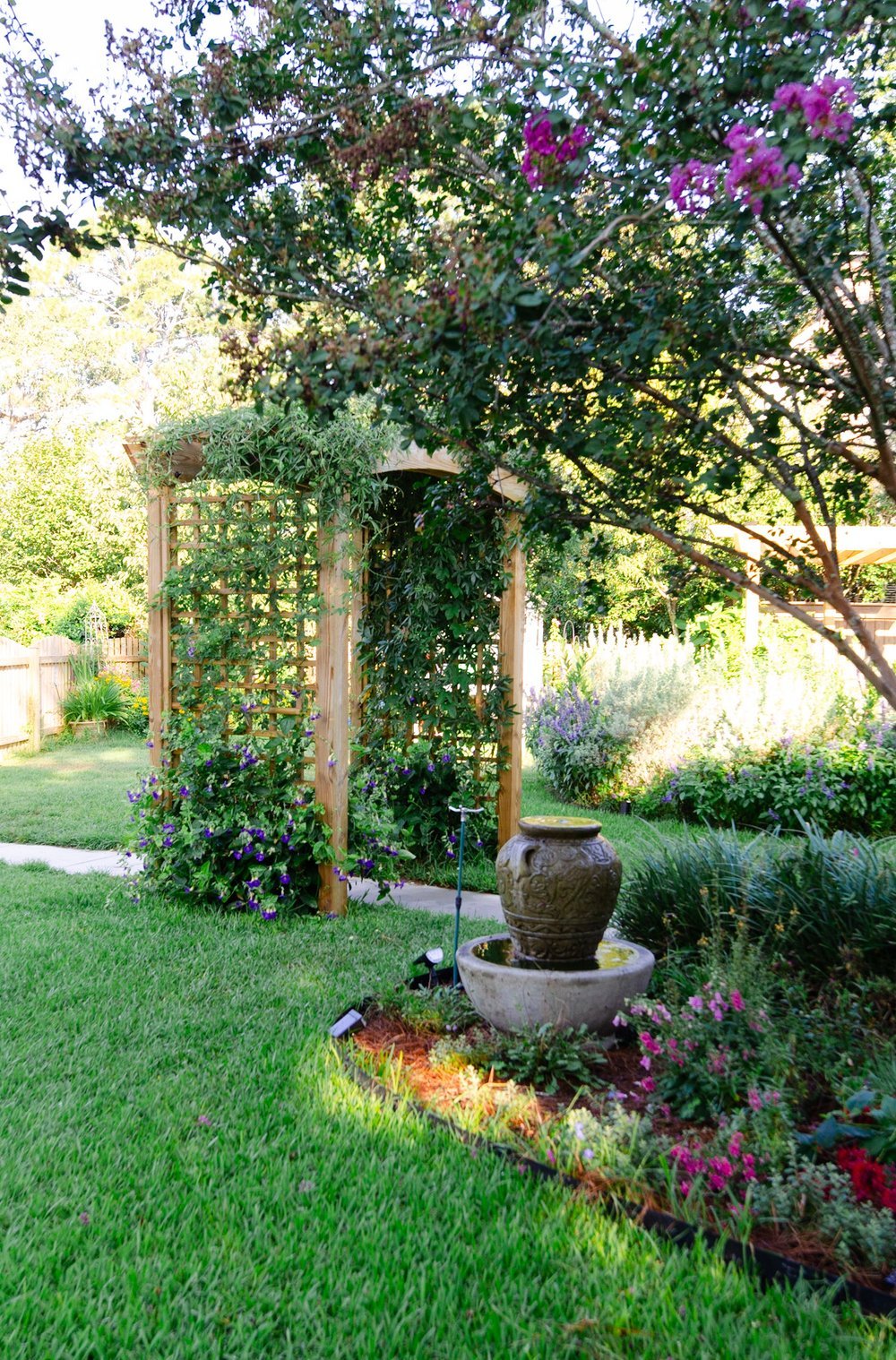
10. Garden Archway with Climbing Vines and a Tiered Urn Fountain
Training flowering vines to cover a trellis arch creates a stunning focal point. (Est. time: 2-3 hours for planting, plus ongoing training; Cost: $150-$400 for arch and plants)
- Choose the Right Vine: Select a vine suited to your climate that won’t overwhelm the structure, like a clematis or climbing rose.
- Plant Correctly: Plant the vine about 12 inches away from the base of the trellis to allow for root growth.
- Guide, Don’t Force: Gently weave the new growth through the trellis slats. Use soft plant ties or jute twine to loosely secure stems, removing them once the vine begins to cling on its own.
- Prune for Fullness: In the first year, pinch back the tips to encourage bushier growth from the base up.
|
📋 Copy HEX 🔗 Share |
✅ Before You Start
This romantic garden look follows a simple formula: 40% hard structure + 60% soft planting. The wooden trellis and the stone water feature provide the strong, architectural ‘bones’ of the design. The climbing vines, flowering plants, and surrounding lawn provide the lush, soft ‘skin’ that brings it to life. You can swap the materials while keeping the ratio: a metal arch could replace the wood, or a modern sculpture could replace the urn. As long as you maintain that balance of hard and soft, you’ll achieve a similarly harmonious effect.
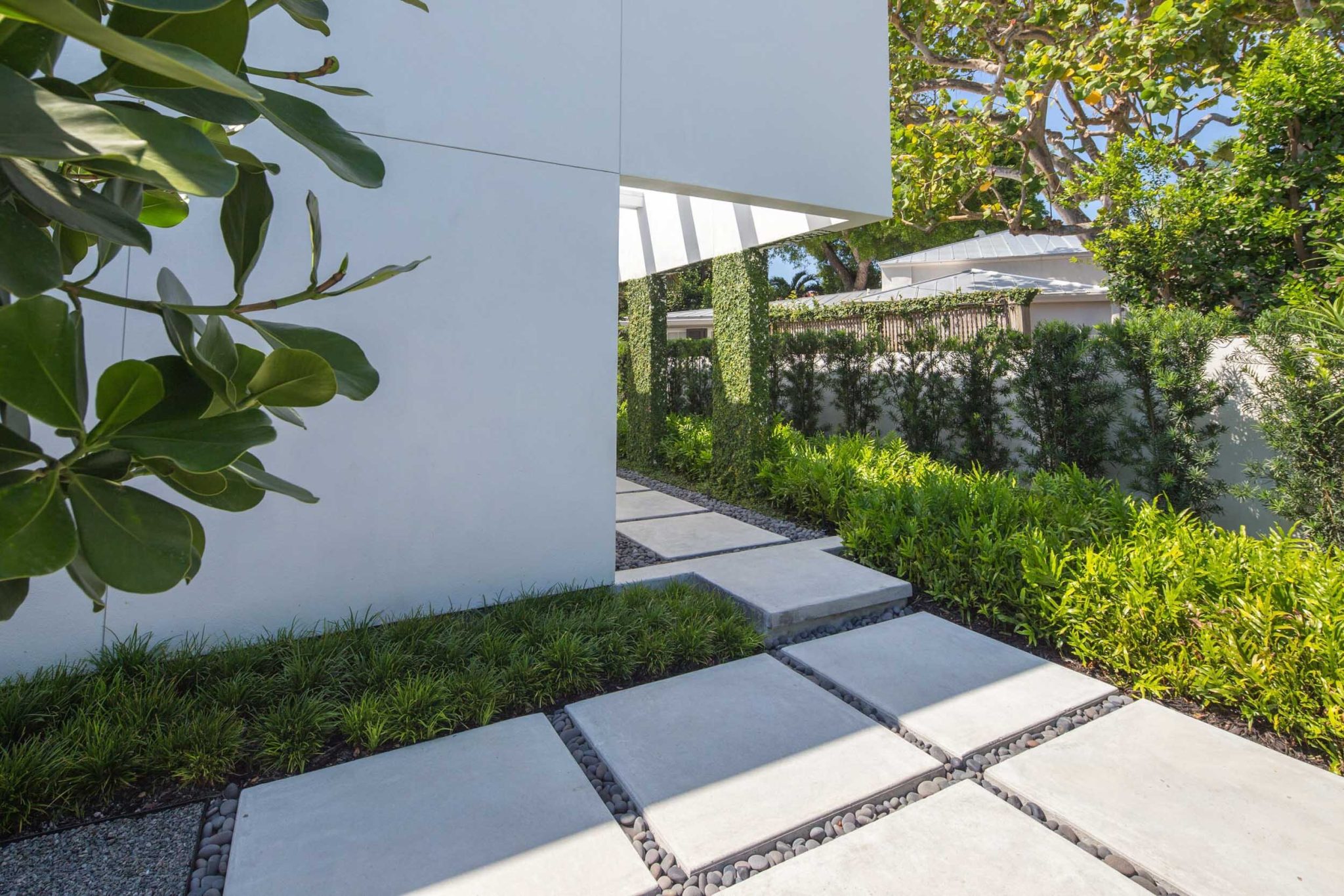
11. Modern Entryway with Concrete Pavers and Lush Groundcover
This design is a masterclass in textural contrast. It works because it pits the smooth, cool, man-made surfaces of the large concrete pavers and the stark white wall against the soft, varied, and intensely organic textures of the plants. The dark river pebbles act as a perfect bridge between the two, providing a textured, natural-but-controlled border. This high contrast is what gives the space its fresh, modern, and visually dynamic feel. It’s a statement of clean lines being softened and enhanced by nature.
|
📋 Copy HEX 🔗 Share |
💸 Get This Look For Less
While this look is undeniably chic, those gaps between the pavers filled with pebbles and groundcover can be a maintenance headache. They are prime real estate for weeds, which can be tedious to remove by hand. The pebbles can also get kicked onto the pavers, creating a trip-and-slip hazard. If you have dogs, be warned: those pebbles might end up all over your yard (or inside your house). A robotic lawnmower would also struggle with this kind of terrain. This look is best for low-traffic, purely aesthetic areas.
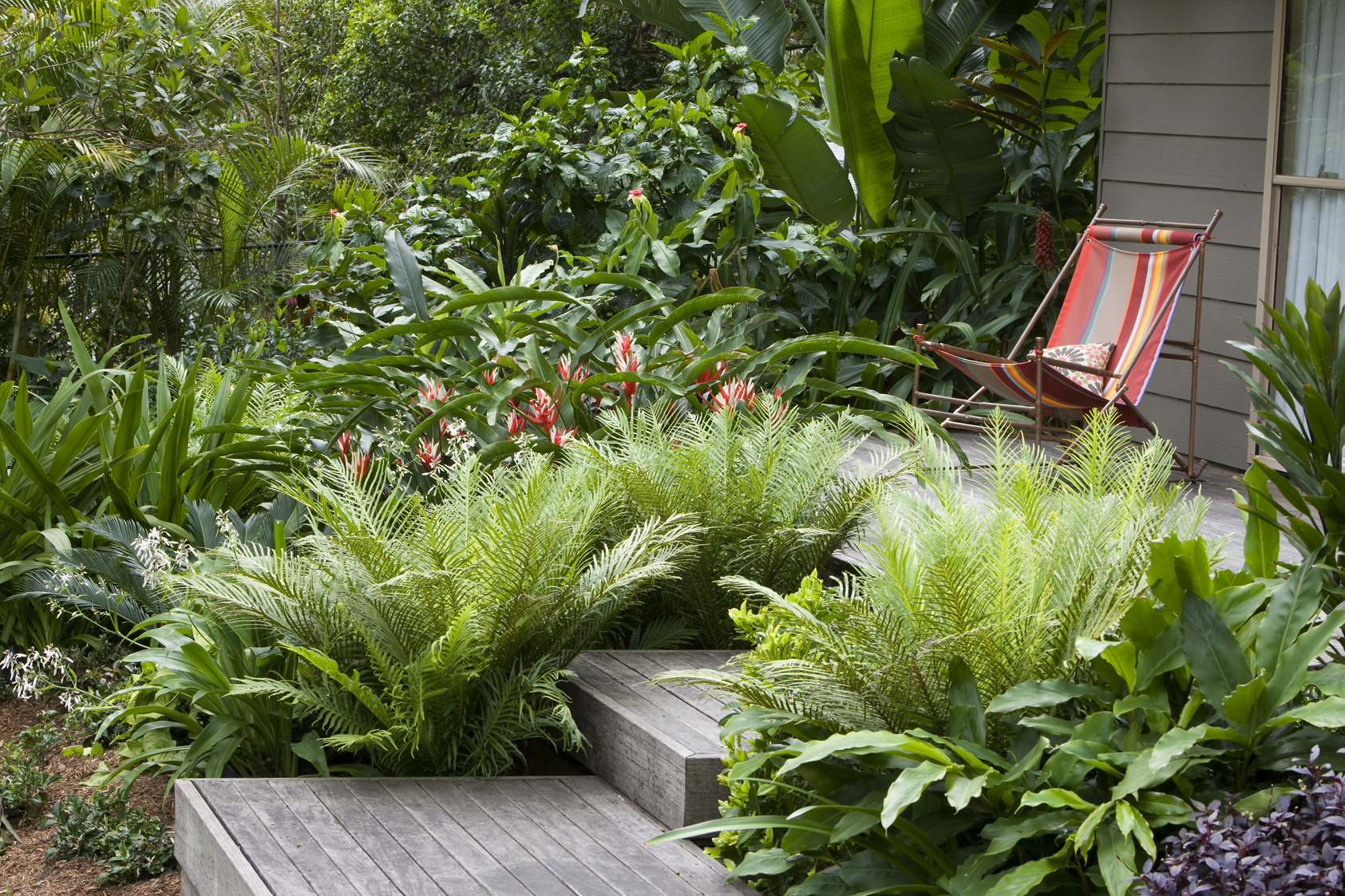
12. Vibrant Garden Deck with a Striped Sling Chair
It’s the chair. While the layered greenery and red flowers are beautiful, it’s the simple, striped sling chair that turns this from a pretty garden into an irresistible invitation to relax. It signals that this is a space for humans, not just plants. Its casual design and the pop of pattern on the pillow add a touch of personality and comfort that makes you want to grab a book and a cool drink and settle in for the afternoon. Without it, the space would have half the charm.
|
📋 Copy HEX 🔗 Share |
🧹 Maintenance Reality
This kind of integrated, ‘sunken’ deck works beautifully in yards with a slight slope, as it allows the garden to come right up to the edge of the seating area, creating an immersive experience. The deck itself doesn’t need to be huge—an 8×8 foot area is plenty for a couple of chairs and a small table. This approach is perfect for small to medium-sized backyards where you want to combine seating with dense planting without dedicating a huge footprint to a traditional raised deck.
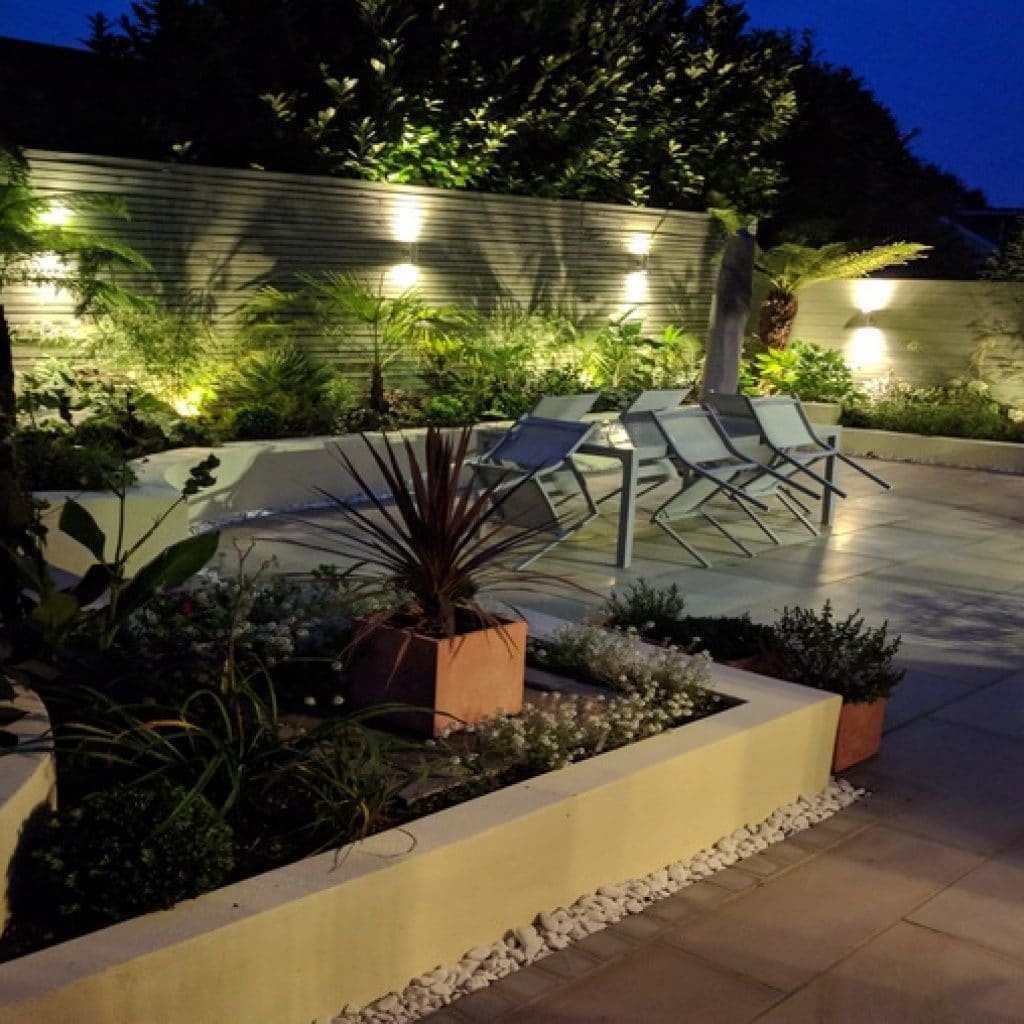
13. Night-Illuminated Patio with Raised Planters and Modern Seating
When designing landscape lighting, think in layers, just like you would for an interior. Use a combination of uplights, wall-mounted lights (wall washers), and path lights. For a dramatic effect like this, place uplights (around 300 lumens) at the base of your most architectural plants. Use a warmer color temperature—around 2700K—to create a cozy, inviting glow rather than a harsh, sterile white light. This approach makes the space feel luxurious and highlights your beautiful plant investments after dark.
|
📋 Copy HEX 🔗 Share |
⚠️ Real Talk
There’s a reason ‘Biophilic Design’—the concept of connecting people and nature—is everywhere. This patio is a perfect example. After years of homeowners focusing on indoor spaces, the trend is shifting to creating true outdoor rooms. This isn’t just a place to put a grill; it’s a fully realized living and dining area. The raised planters and slatted fence create a sense of enclosure and intimacy, making the outdoors feel as comfortable and deliberately designed as the indoors.
14. Modern Garden Lounge with a Concrete Fire Pit
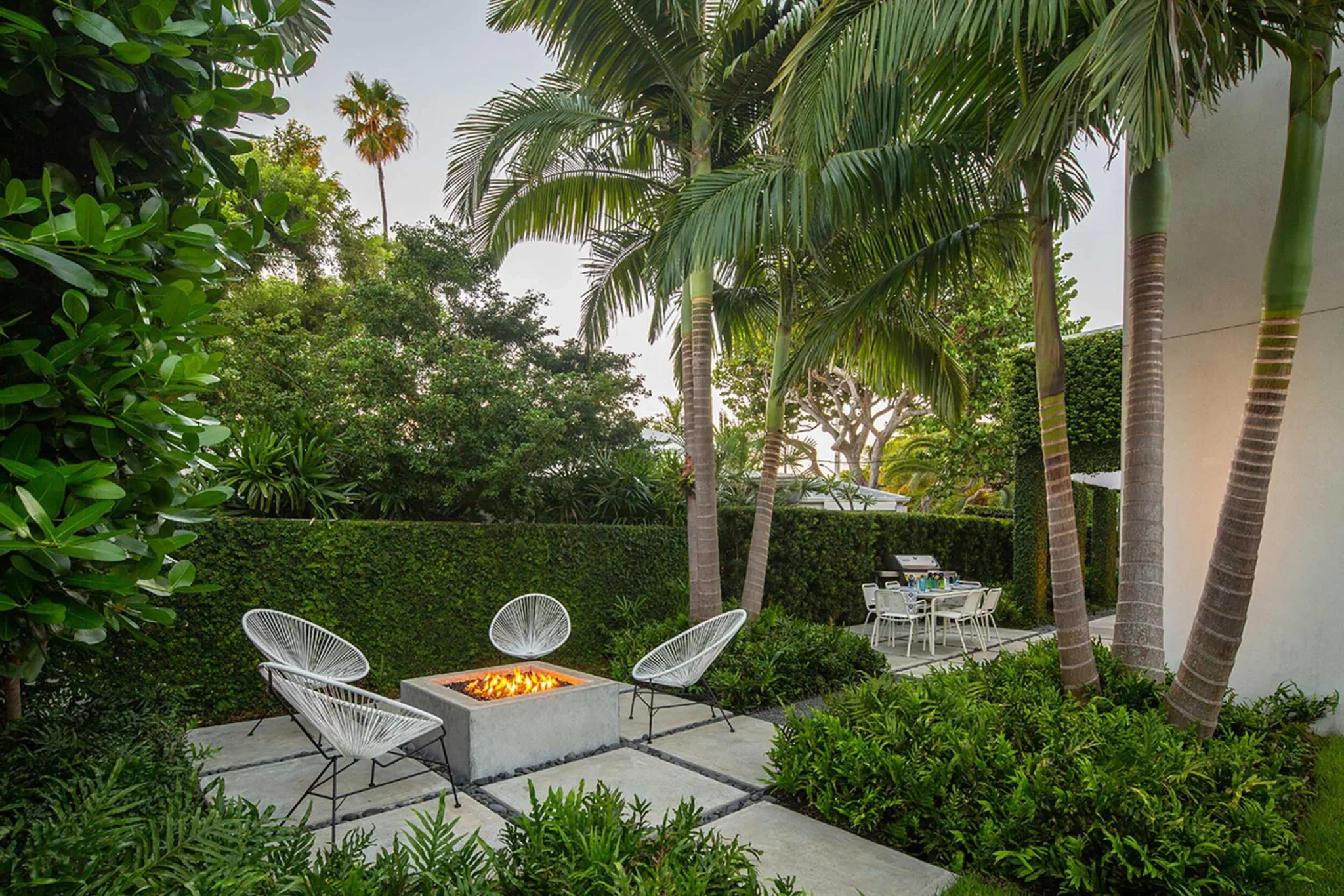
The success of this design lies in its clever use of ‘islands.’ The fire pit area is a distinct zone, defined by the large concrete pavers and surrounded by a ‘moat’ of pebbles and plants. This creates a cozy, intimate conversational nook that feels separate from the dining area in the background. Using different ground materials (large pavers vs. smaller pebbles) is a sophisticated way to define separate functional spaces within a single, open-concept yard without building walls. It’s a strategy that provides organization while maintaining an open, airy feel, unlike the more enclosed feel of Idea #21.
|
📋 Copy HEX 🔗 Share |
📏 Scale Guide
! A pre-fabricated metal fire pit from a hardware store ($150-$400) can stand in for the custom concrete one. Instead of pricey large-format pavers, use a circle of standard 12-inch concrete pavers ($5 each) to define your seating area. Four classic plastic Adirondack chairs ($25 each) can provide a similar feel to the pictured string chairs. The key elements—a circular seating arrangement around a fire, surrounded by greenery—are what matter most, and you can achieve that for under $700.
15. Relaxing Backyard Nook with Stepping Stone Path
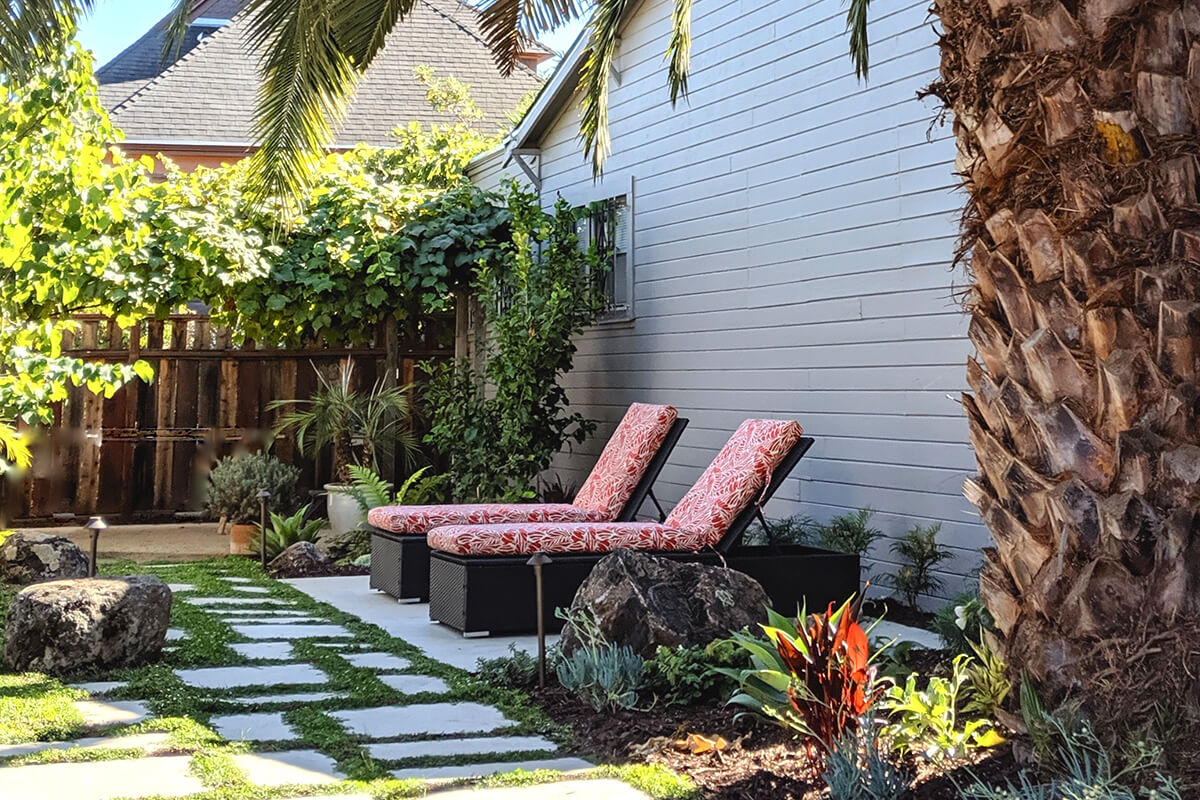
This inviting corner follows a simple recipe for relaxation: 50% lush greenery + 30% comfortable lounging + 20% defined pathways. The majority of the space is dedicated to soft, layered plantings, creating a green, living wall. A significant portion is given to the chaise lounges, clearly defining the area’s purpose as a place for rest. The stepping stone path makes up the smallest portion, but it’s crucial for providing access and structure without dominating the naturalistic vibe. Compare the irregular path here with the more formal pavers in Idea #11.
|
📋 Copy HEX 🔗 Share |
💡 Designer Tip
Those patterned red and white cushions look fantastic, but they come with a warning label. Bright, saturated colors like red are the most prone to fading in direct sunlight. Unless you’re using high-quality, solution-dyed outdoor fabrics (like Sunbrella), expect them to look washed out after just one or two seasons. To preserve their vibrancy, you’ll need to commit to bringing them indoors or using a deck box when they’re not in use. It’s a small hassle that makes a big difference in longevity.
16. Canopy Daybed in a Garden of Blue Agapanthus
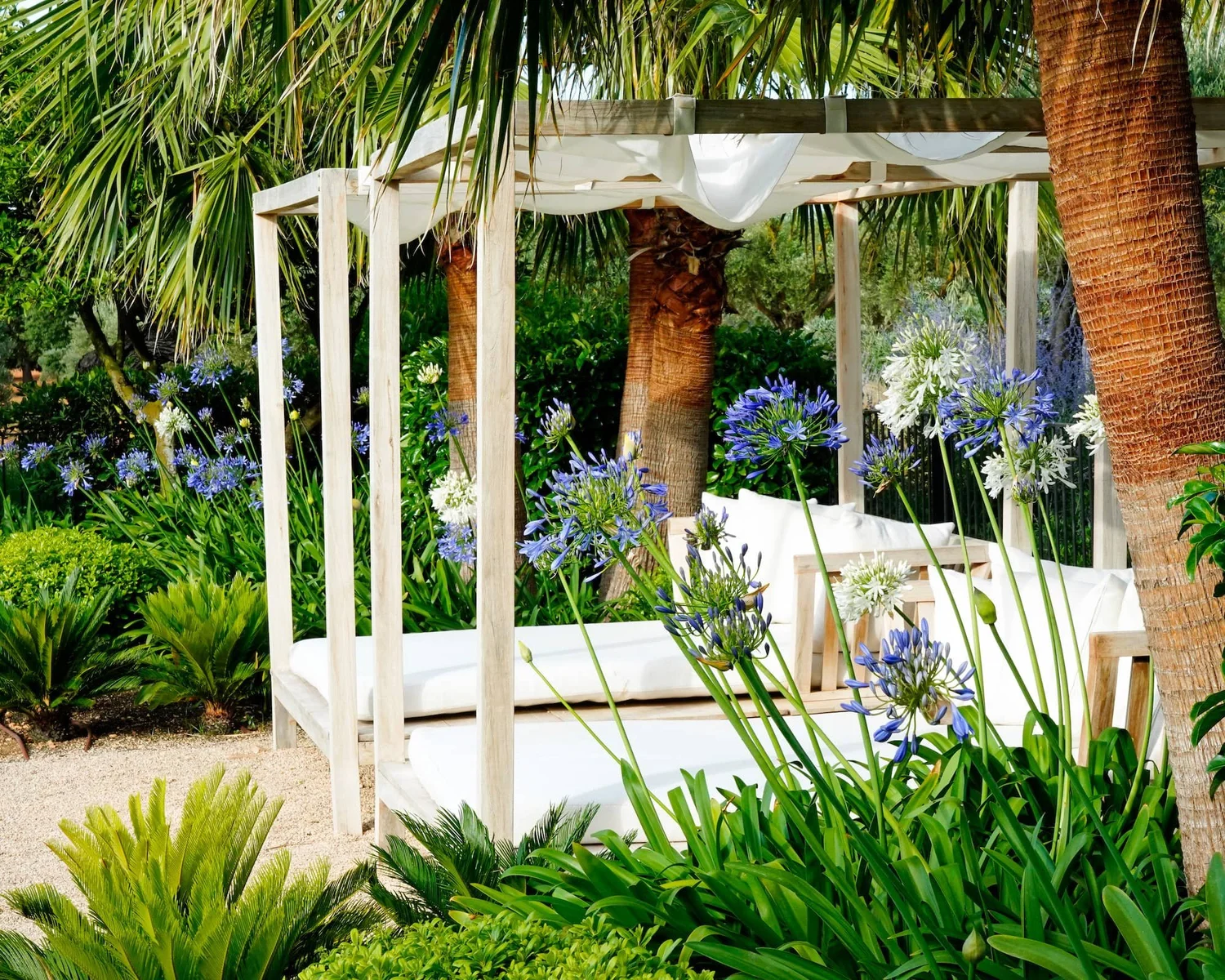
The single element that elevates this garden from pretty to truly luxurious is the canopy daybed. It’s an unabashed statement of leisure and indulgence. It suggests a lifestyle of long, lazy afternoons spent outdoors. While the plantings are stunning, the daybed is what provides the human-centric purpose. It’s not just a garden to be viewed; it’s a space to be inhabited in the most comfortable way possible. Draped in white fabric, it adds a soft, resort-like quality that is pure escapism.
|
📋 Copy HEX 🔗 Share |
🔥 Trending Context
Achieving this level of resort-style luxury has a wide price range depending on your choices. The daybed is the main investment.
- Wooden Canopy Daybed with Cushions/Drapes: $1,500 – $6,000
- Agapanthus & Other Perennials: $500 – $1,500 (depending on maturity and quantity)
- Mature Palm Trees (installed): $2,000 – $8,000+
- Gravel Ground Cover: $300 – $800
- TOTAL: $4,300 – $16,300+
- Budget alternative: A comfortable hammock ($150) hung between two existing trees, surrounded by younger Agapanthus plants ($15 each), can create a similar serene, relaxing vibe for a fraction of the cost.
17. Cozy Patio Bench with Vibrant Container Plantings
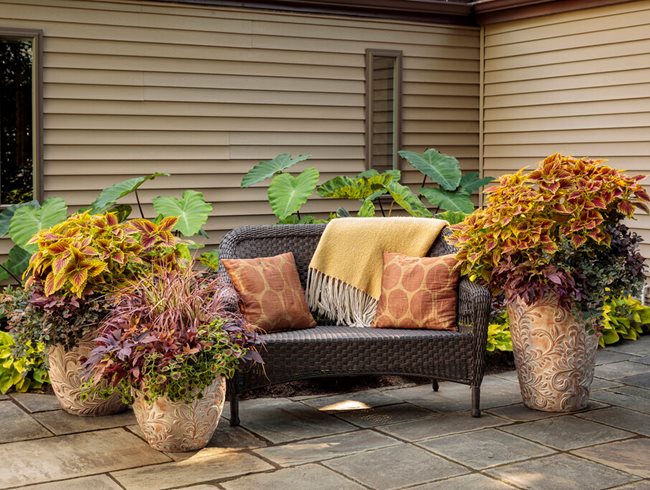
This small space works because of its smart use of color and scale. The dark brown woven bench and neutral paver patio create a calm, earthy base. The designers then layered on pops of high-contrast color with the yellow throw, orange pillows, and the vibrant red and green leaves of the coleus plants. The large, ornate planters are key; their substantial size makes the small seating area feel more intentional and grand. Using a few large pots makes a stronger statement than a clutter of small ones.
|
📋 Copy HEX 🔗 Share |
⭐ The One Thing
When decorating a small outdoor space, think vertically! The horizontal-paneled wall behind the bench is a perfect place to add more greenery without taking up floor space. You could install a simple wire trellis for a climbing vine or hang a trio of wall planters. This draws the eye upward, making the space feel larger and more immersive. It adds another layer of texture and life, turning a plain wall into a living part of the garden design.
18. Modern Backyard with Fire Pit and Bold Tropical Plants
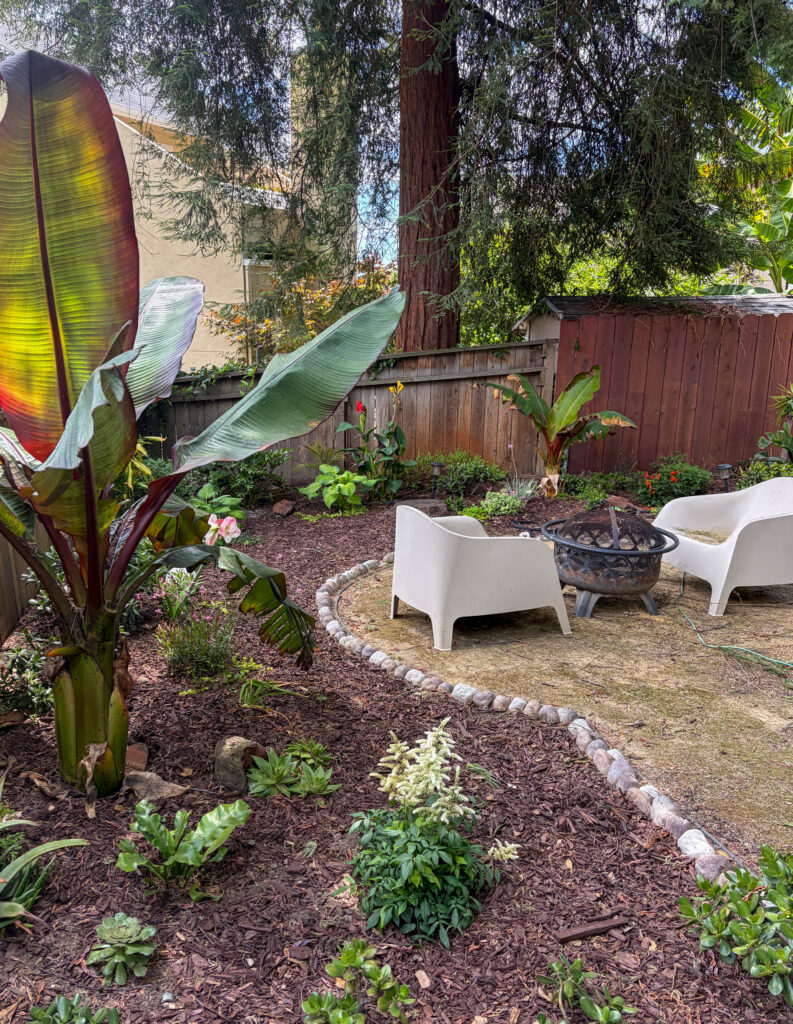
The single thing making this backyard pop is the fearless use of foliage color. While the minimalist white chairs and simple fire pit are nice, it’s the massive plant with its vibrant green and reddish-purple leaves that steals the show. This isn’t just a hint of color; it’s a bold, confident statement. It proves that plants can be the primary ‘artwork’ in an outdoor space. Removing it would leave a perfectly functional but far less memorable backyard. It’s a lesson in letting one spectacular plant be the star.
|
📋 Copy HEX 🔗 Share |
🎯 What Makes It Work
Before you commit to this beautifully simple setup, run through this quick checklist.
- Check Local Fire Pit Regulations: Many towns have rules about how far a wood-burning fire pit must be from fences, structures, and overhanging trees. Measure to ensure you have a safe and legal spot.
- Assess Your Ground Surface: A fire pit should be placed on a non-combustible surface like dirt, gravel, or stone—never directly on a wooden deck or dry grass.
- Consider Your Climate: Can your chosen ‘star’ plant survive your winters? A plant like this might be an expensive annual in a colder zone. Check its hardiness rating first.
19. Lush Garden Entrance with Japanese Stone Lantern
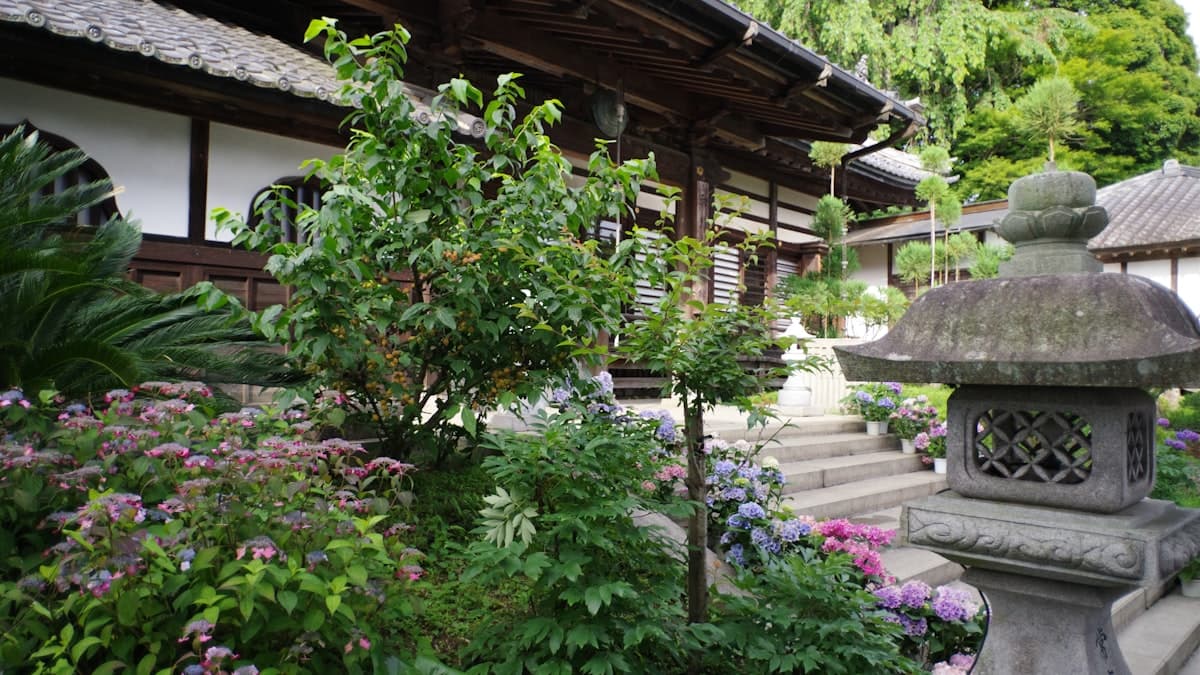
This design succeeds by masterfully blending two distinct styles: the lush, colorful exuberance of a Western-style cottage garden (the hydrangeas) and the serene, timeless principles of Japanese garden design (the stone lantern and traditional architecture). The vibrant, blooming shrubs provide a burst of seasonal energy, while the weathered stone and clean architectural lines offer a sense of permanence and tranquility. It’s this beautiful tension between the wild blooms and the structured elements that makes the scene so compelling and peaceful.
|
📋 Copy HEX 🔗 Share |
📐 Style Math
That beautiful stone lantern and the surrounding hydrangeas require specific care. The lantern, especially an intricate one, can collect debris and grow moss in its crevices. A gentle annual cleaning with a soft brush and water is needed to keep the details sharp. Hydrangeas are thirsty plants and will require consistent watering, especially in warmer months. Also, the flower color of many hydrangea varieties changes based on soil pH, so you may need to amend your soil periodically to maintain that specific shade of pink or blue.
20. Modern Architecture with an Integrated Water Garden
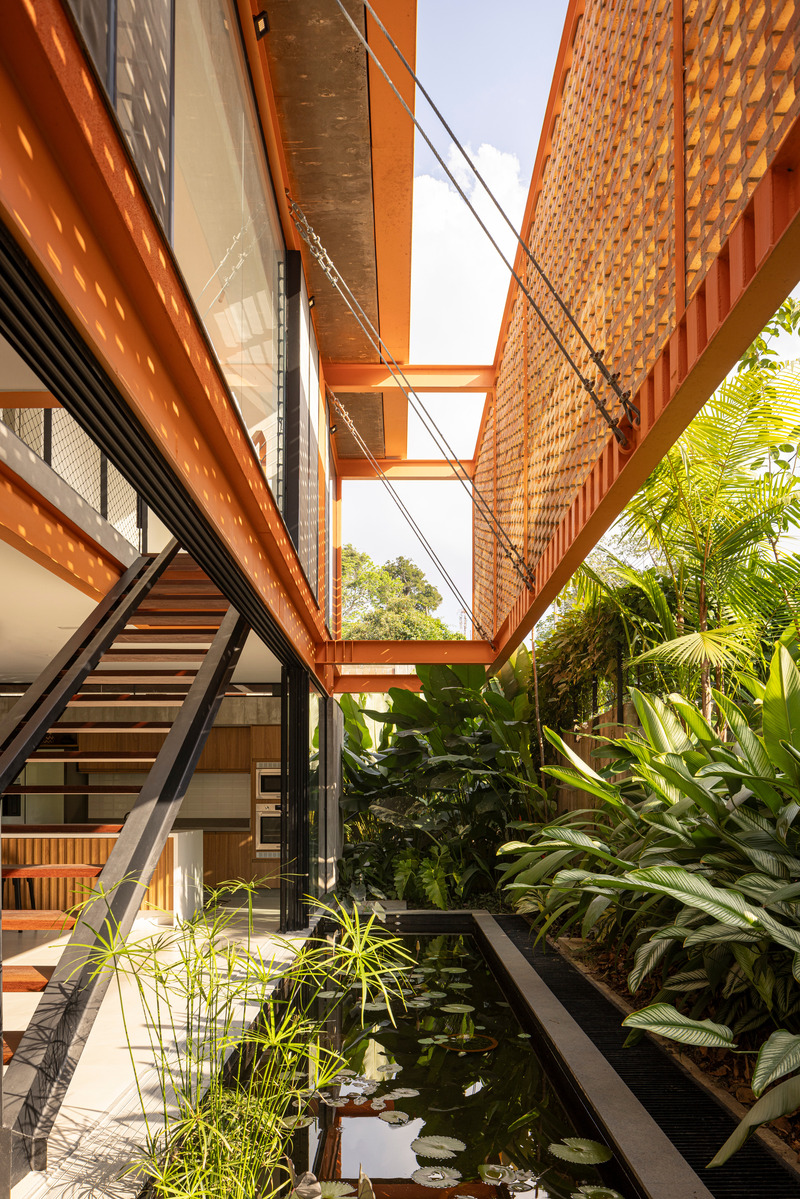
The defining feature here is the seamless integration of water into the architecture itself. The pond isn’t just an element placed *in* the landscape; it’s built *into* the floor, sitting flush with the surrounding concrete. This makes the water feel like a fundamental, structural part of the home’s design. The building doesn’t just sit next to nature; it contains it. This bold move dissolves the boundary between inside and out, creating a powerful statement about living with nature.
|
📋 Copy HEX 🔗 Share |
💰 Budget Breakdown
This is not a small-scale idea. The visual impact depends on the long, linear nature of the pond and the generous space around it. This concept is best suited for a large, custom-built home or commercial space with significant ground-floor square footage. You’d need a minimum length of 20-30 feet for the water feature to have the intended architectural effect. For a standard residential backyard, consider the reflecting pool concept in Idea #8 as a more manageable alternative.
21. Lush Enclosed Deck with Sectional Sofa and String Lights
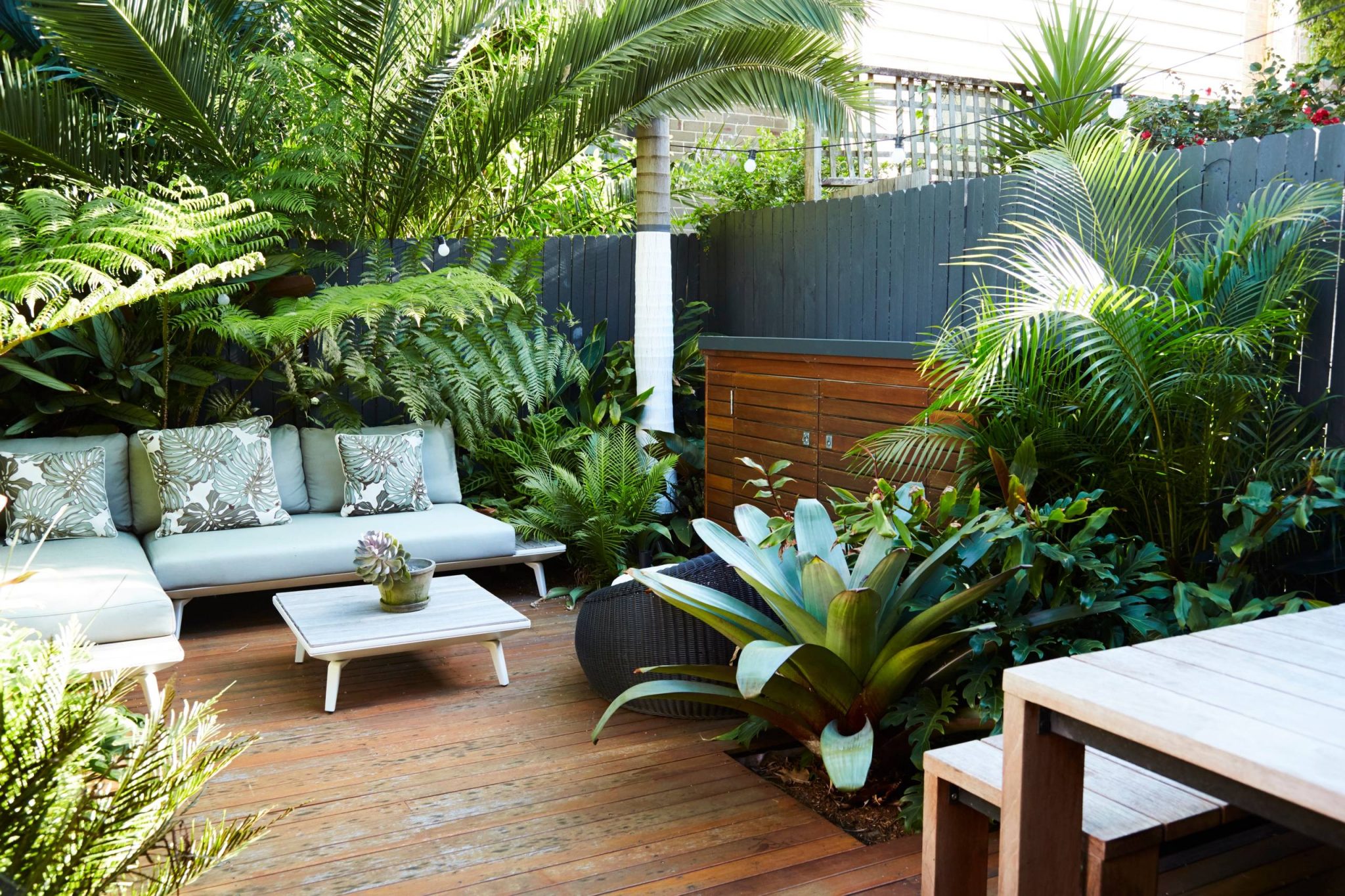
This deck feels like a true outdoor living room because it uses classic interior design principles. The dark fence and dense foliage create ‘walls,’ giving the space a sense of privacy and enclosure. The sectional sofa defines a clear conversation zone, just like a sofa does indoors. The string lights act as a ‘ceiling,’ adding to the intimate, room-like feel in the evening. By treating the deck as a room to be furnished and lit, the design creates a space that is as functional and inviting as any inside the house.
|
📋 Copy HEX 🔗 Share |
🔧 How-To Brief
You can get this cozy, enclosed feeling without a huge budget. Use fast-growing climbing vines on a simple wire trellis to create a green ‘wall’ instead of a solid fence. Look for an outdoor sectional on sale at the end of the season or check Facebook Marketplace; people move and are often selling nearly-new sets for a great price. A large outdoor rug can define the space just as effectively as a wooden deck, and a few strands of solar-powered string lights can provide that magical glow for under $50.
22. Paver Driveway Flanked by Lush Palms and Greenery
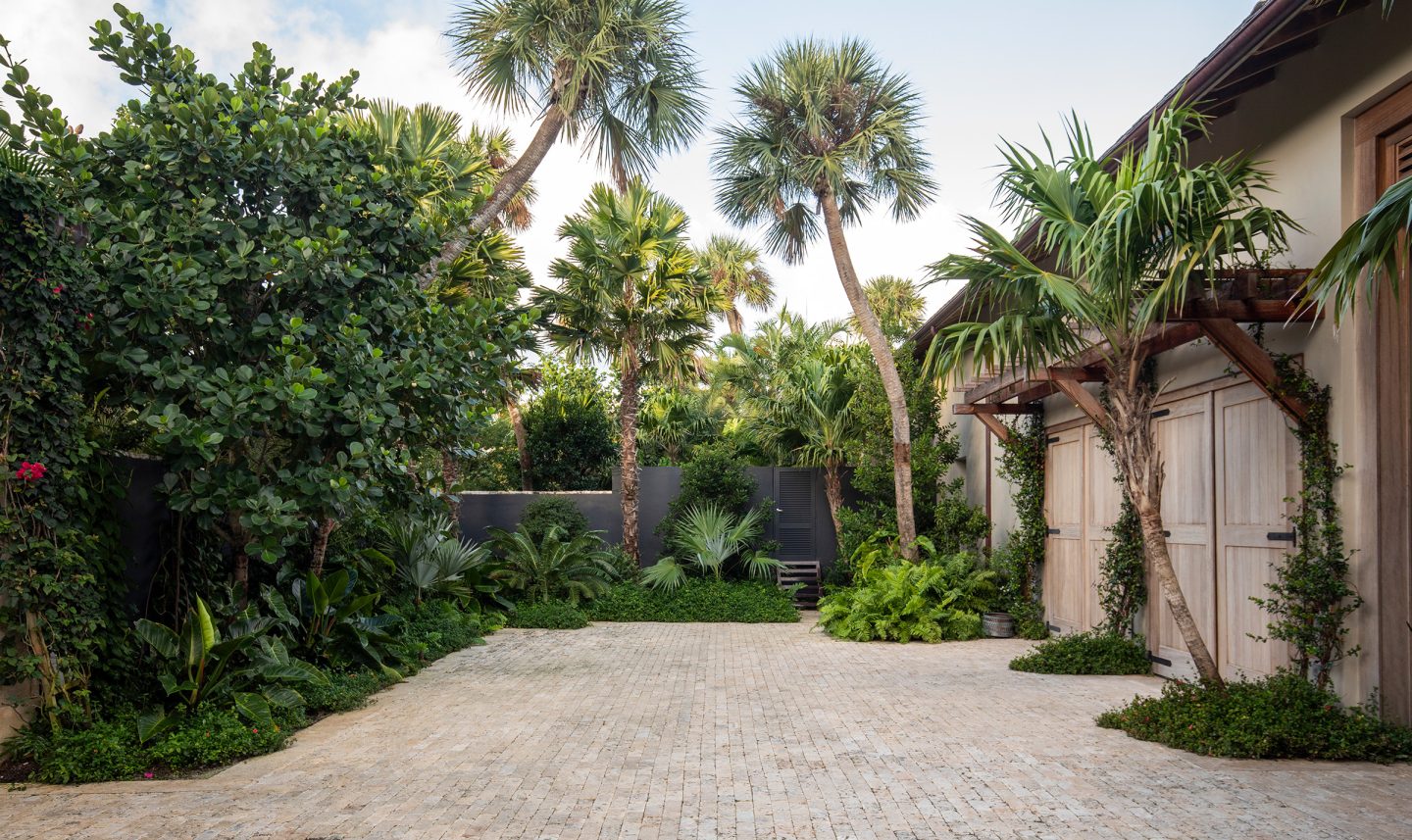
To get this high-end, verdant look, the key is layering your plantings by height. Start with your tallest elements, the palm trees, placing them furthest back from the driveway. Then, add a mid-layer of medium-height shrubs and large-leafed plants. Finally, fill in all the gaps at the front with low-growing ground covers and smaller shrubs. This creates a dense, multi-dimensional look that feels full and luxurious. Avoid planting everything in a single, soldiers-in-a-row line; organic, overlapping clusters are the secret.
|
📋 Copy HEX 🔗 Share |
✅ Before You Start
A paver driveway looks incredible, but be prepared for the maintenance. The sand-filled joints between pavers are a perfect spot for weeds to sprout. You will need to treat for weeds regularly or commit to pulling them by hand. Over time, the sand can also wash out, requiring you to re-sand the joints every few years to keep the pavers from shifting. Also, if you live in a climate with freeze-thaw cycles, paver driveways can become uneven over time, a phenomenon known as ‘frost heave’.
23. Modern Pool with a Lush, Living Green Wall
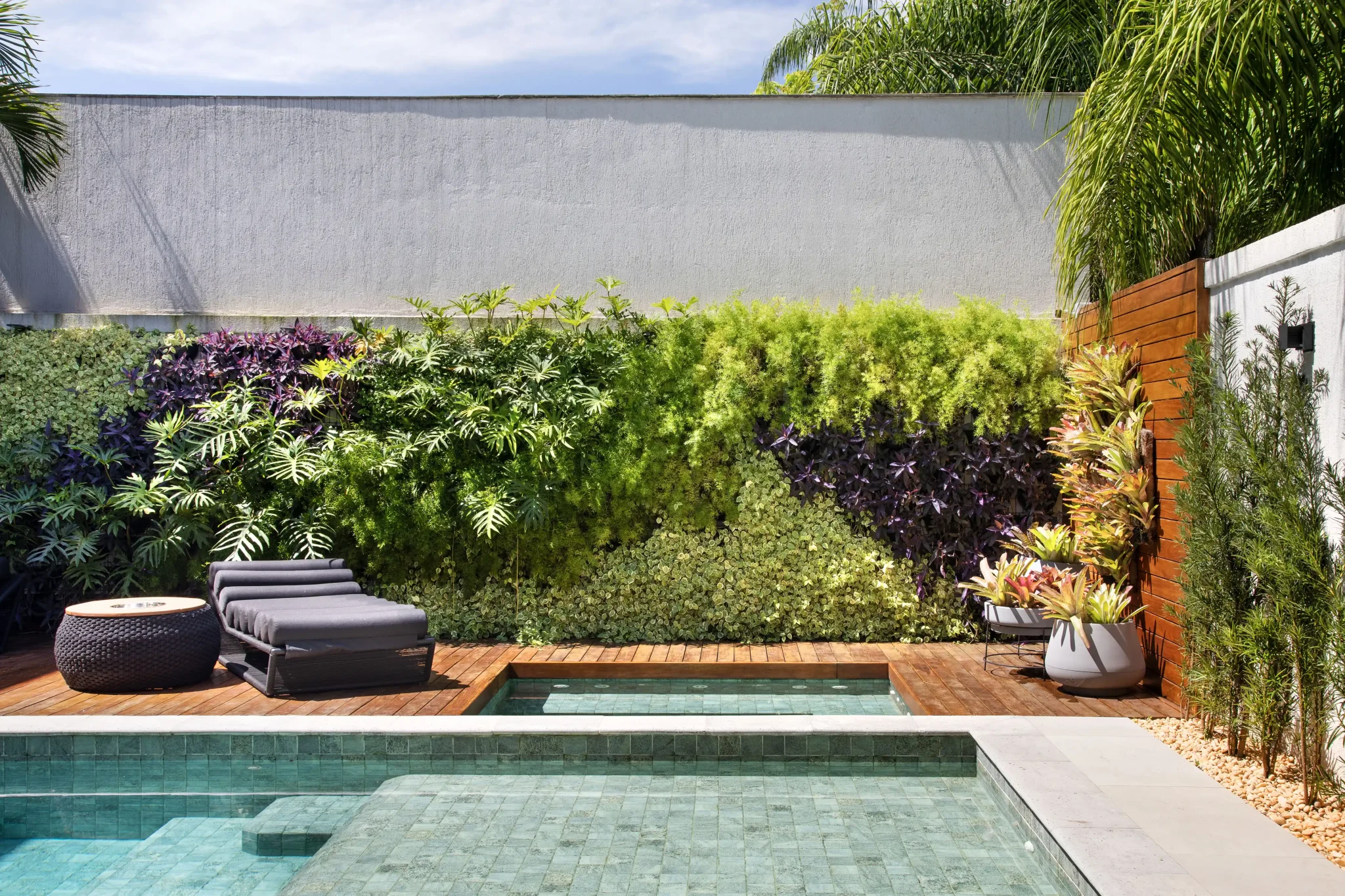
The genius of this design is the bold contrast in textures. The sleek, smooth surfaces of the light grey coping, the calm water, and the simple wooden deck create a serene, minimalist foundation. This makes the explosive, multi-textured green wall even more dramatic. It’s a riot of different leaf shapes, sizes, and shades, creating a single, massive piece of living art. This high-impact juxtaposition between the clean, hard lines and the wild, soft foliage is what gives the space its sophisticated and dynamic energy.
|
📋 Copy HEX 🔗 Share |
💸 Get This Look For Less
Creating a simple ‘plant wall’ look doesn’t necessarily require a complex hydroponic system. Here’s a DIY approach: (Est. time: 5-7 hours; Cost: $300-$800)
- Choose Your Wall: Pick a structurally sound wall or sturdy fence that gets the right amount of light for your chosen plants.
- Install a Trellis: Mount a wire grid or wooden lattice trellis about 2-3 inches off the wall to allow for air circulation.
- Select Climbing Plants: Choose fast-growing, clinging vines like creeping fig, ivy, or star jasmine.
- Plant at the Base: Plant your climbers at the base of the wall, about 1 foot apart.
- Train and Weave: As the plants grow, gently guide their tendrils onto and through the trellis until the wall is covered.
24. Open-Plan Living Space Flowing into a Tropical Garden
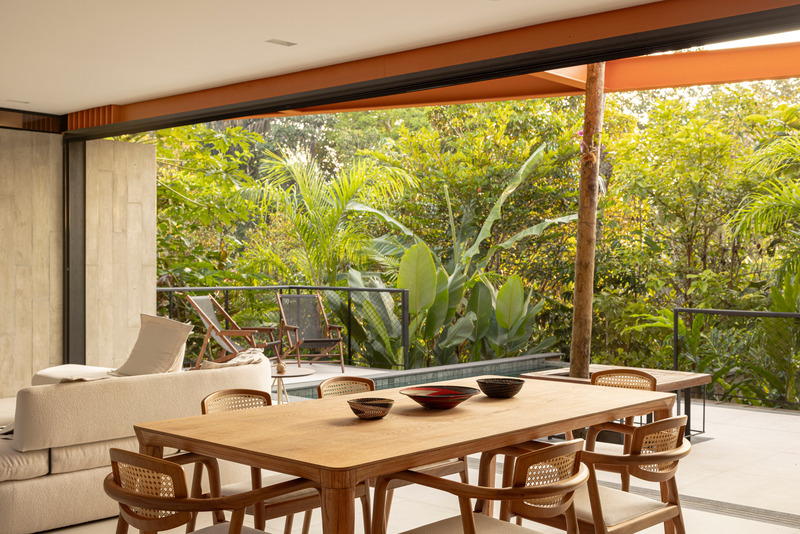
The single most important element here is the absence of a traditional wall. The wide-opening doors completely erase the barrier between the indoor dining room and the outdoor landscape. This creates one large, cohesive living space where the garden becomes the wallpaper. This seamless connection is what defines the entire experience of the home, promoting an indoor-outdoor lifestyle and making both the interior and exterior feel larger and more unified. It transforms the home from a container into a gateway to nature.
|
📋 Copy HEX 🔗 Share |
🧹 Maintenance Reality
This level of indoor-outdoor integration requires significant structural considerations. It’s not a simple renovation. This idea works best in new builds or major remodels where large openings can be engineered from the start. A sliding or bi-fold door system of this scale (15-20 feet wide) is a substantial investment. The concept is best suited for climates where these doors can be left open for a significant part of the year, otherwise, it becomes a very expensive window. A more modest version can be achieved with a standard 8-foot French or sliding door.
25. Lush Backyard with a Freeform Pool and Waterfall Spa
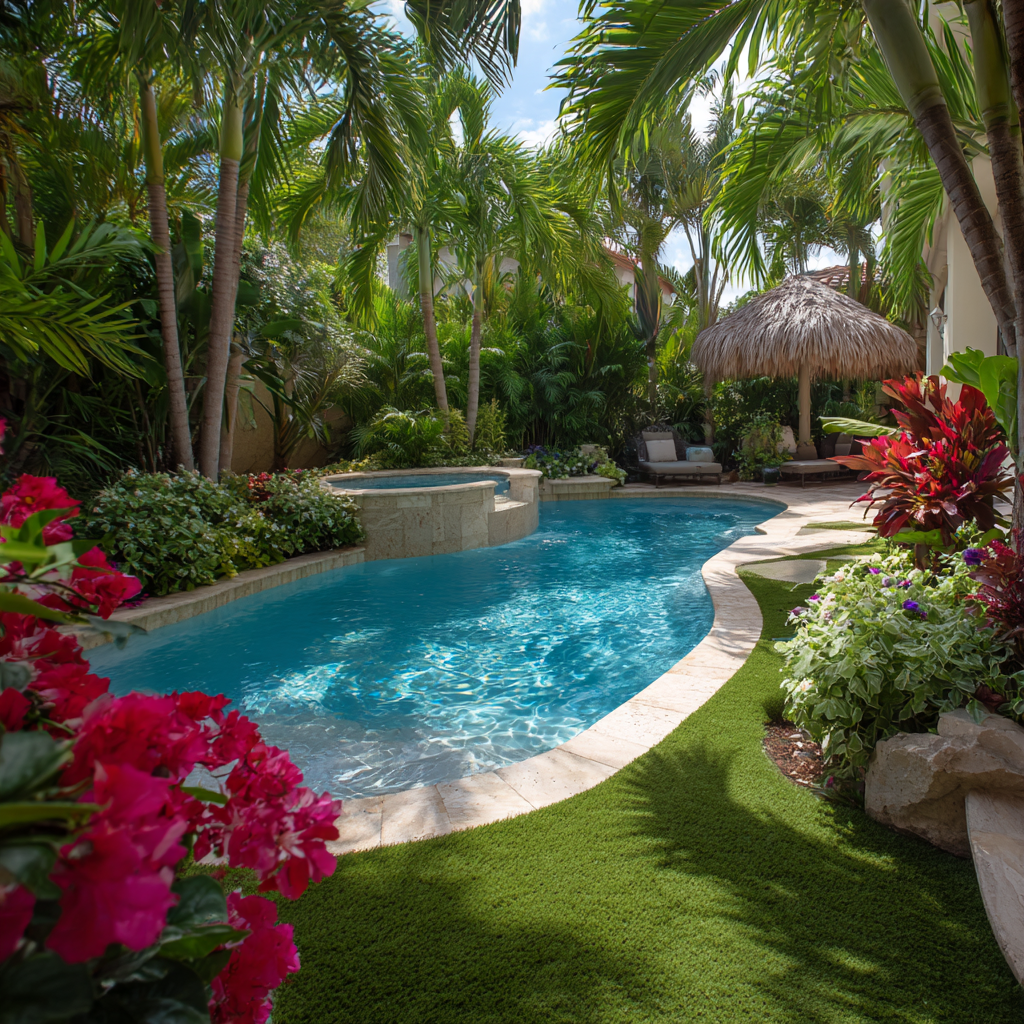
This landscape feels like a natural lagoon because it avoids straight lines. The freeform shape of the pool, the curved edges of the travertine patio, and the organic layout of the artificial turf all mimic the irregularity of nature. The raised spa, built with natural-looking stone, becomes a ‘rock outcropping,’ with the waterfall completing the illusion. By embracing curves and asymmetry, the design sheds a suburban backyard feel and takes on the character of a secluded tropical escape, a strong contrast to the modern angles of Idea #23.
|
📋 Copy HEX 🔗 Share |
⚠️ Real Talk
Let’s talk about that thatched tiki umbrella. While it delivers an instant dose of vacation vibes, it’s a high-maintenance accessory. Natural thatch is prone to mold, mildew, and decomposition, especially in humid or rainy climates. It can also become a home for insects and spiders. Expect to replace the thatch every 2-4 years, which can be a specialty job. For a similar look with less work, consider a synthetic thatch umbrella, which offers better durability and longevity.
26. Meandering Garden Path with Chartreuse Border Grasses
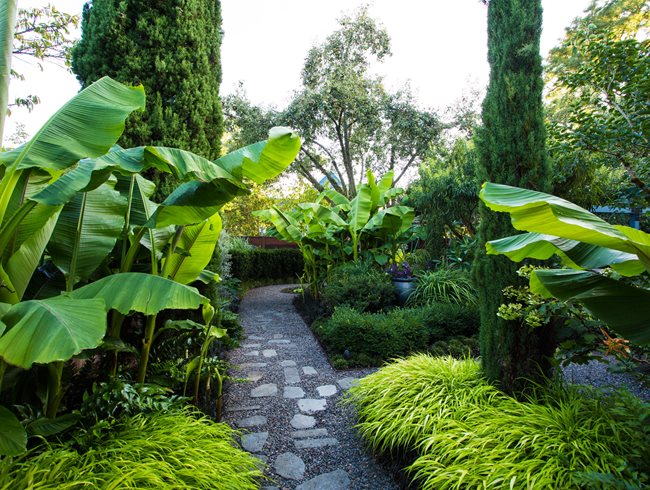
For a path that feels natural and integrated, vary your materials. Using dark gravel for the main walkway provides a soft, satisfying crunch underfoot. Setting larger, irregular stone pavers into the gravel adds stability and a more deliberate walking surface. This combination of materials is more visually interesting than a single-material path, like the concrete one in Idea #1. It creates texture and a professionally-designed feel, breaking up the visual monotony and adding another layer to the garden experience.
|
📋 Copy HEX 🔗 Share |
📏 Scale Guide
It’s the chartreuse grass. The single element that electrifies this entire scene is the band of bright, almost-neon ornamental grass along the path’s edge. Against the deep greens of the other foliage and the dark gray of the path, this pop of vibrant, acidic color is unexpected and thrilling. It guides the eye along the curve of the path and brings a jolt of modern energy to the otherwise naturalistic planting scheme. Without it, the garden would be lovely, but it wouldn’t be nearly as dynamic or memorable.
27. Tropical Garden with Integrated Pathway Lighting
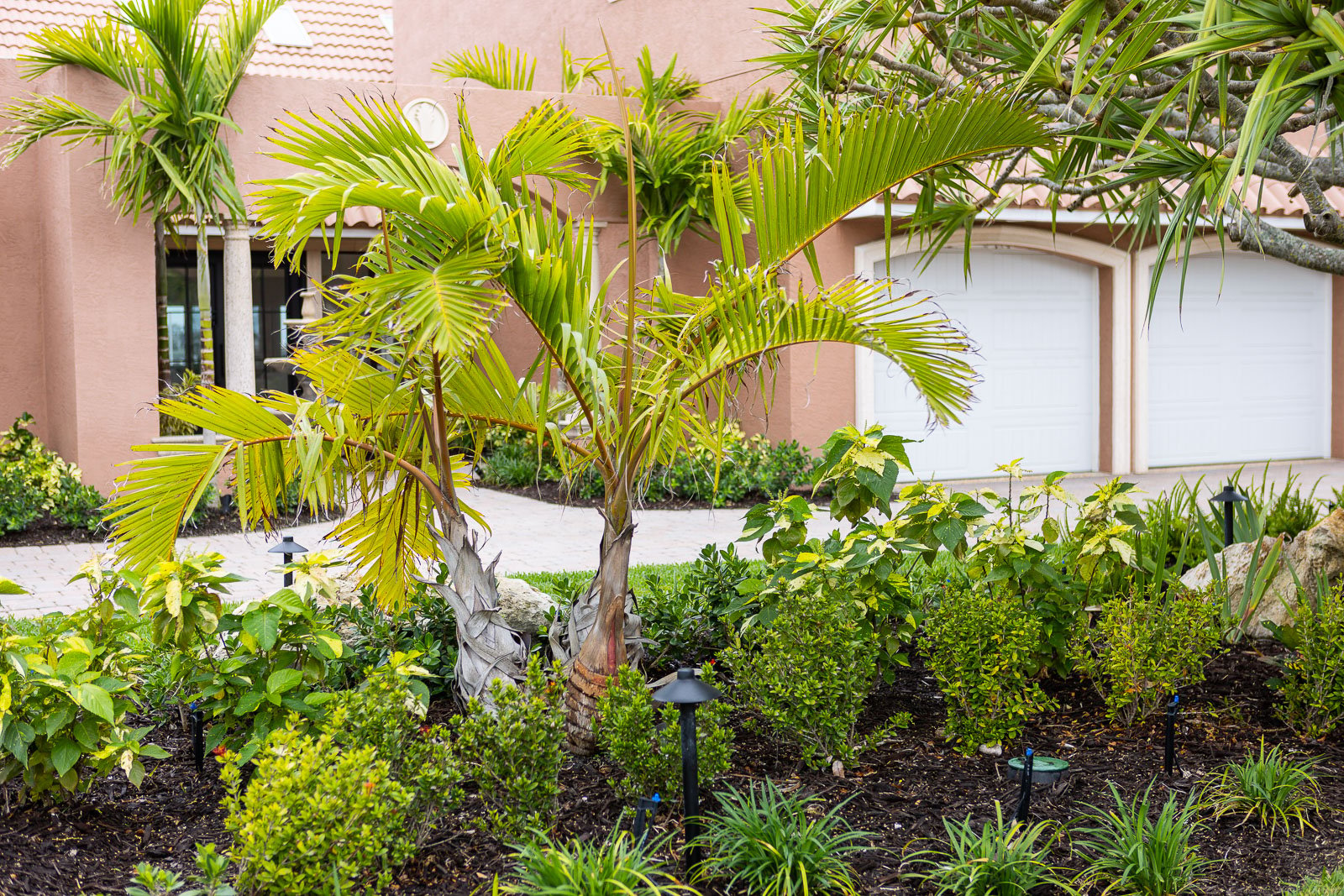
This pleasant, established look follows a comfortable formula: 50% mixed foliage + 30% structural elements + 20% access. Half the visual real estate is dedicated to a rich mix of palm trees and varied shrubs, creating that essential tropical lushness. The house itself—with its distinct stucco and terracotta roof—acts as a significant structural backdrop. Finally, the paver pathway and garage doors provide the functional access. This balance ensures the home feels nestled within the landscape, not overwhelmed by it.
|
📋 Copy HEX 🔗 Share |
💡 Designer Tip
While small landscape lights are great for ambiance and safety, they can be a pain when it comes to yard work. They can be easily damaged by lawn mowers or string trimmers. When weeding or mulching, you have to work around each fixture carefully. The wires, even when buried, can sometimes be accidentally severed with a shovel. For an easier approach, consider using solar-powered lights, which don’t require extensive wiring, or focusing on uplighting a few major trees instead of lining a whole path.
28. Manicured Garden Bed with Palms and Pink Flowers
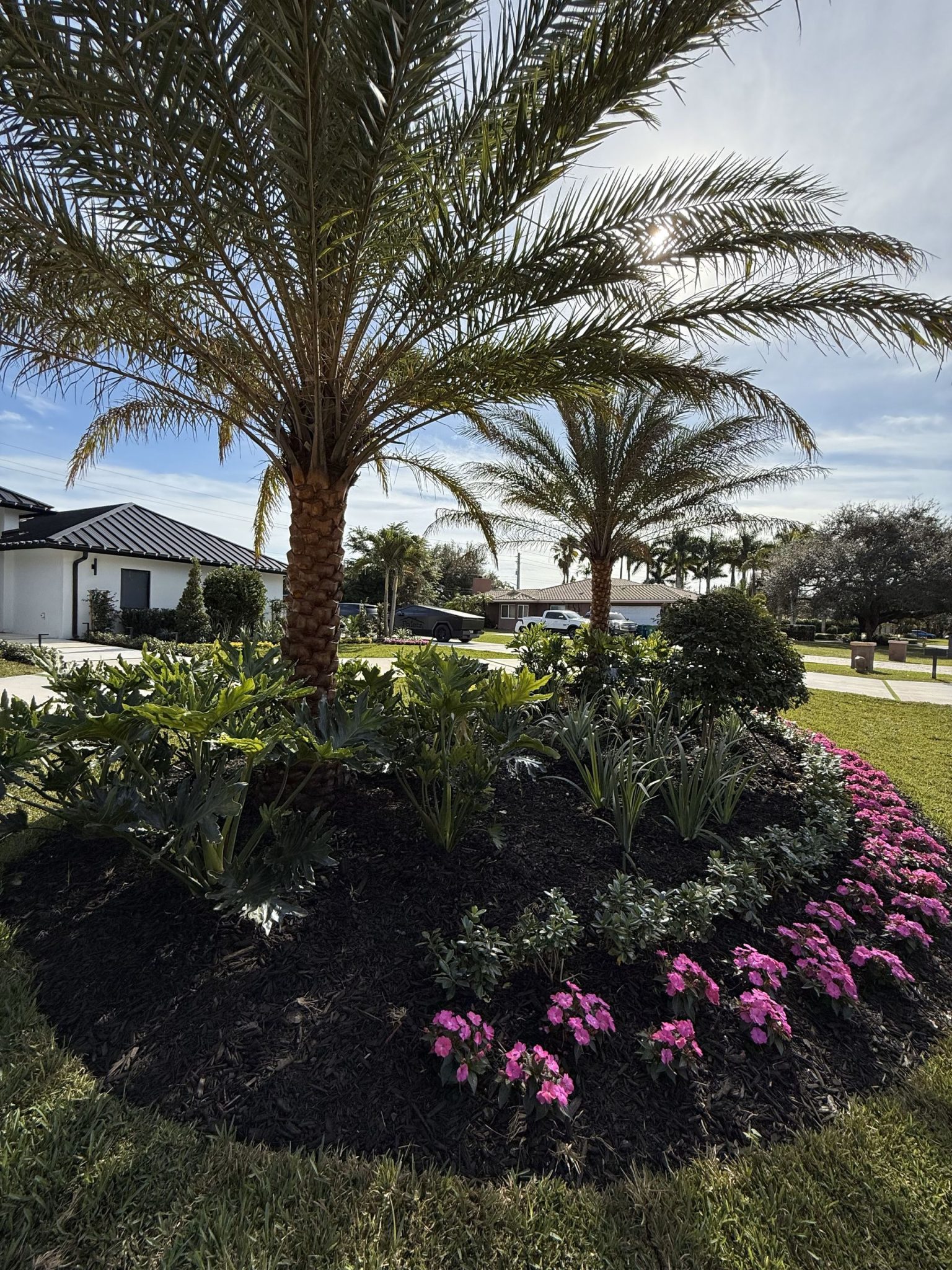
This design is so effective because of its clear and confident structure. It’s a study in ‘layers and borders.’ The lawn forms a neat green frame. The row of pink flowers creates a vibrant, colorful border for the main event. The raised bed, filled with dark mulch, contains the primary collection of green foliage. Finally, the two palm trees rise above it all as vertical exclamation points. This strong sense of order—grass, then flowers, then foliage, then trees—is visually satisfying and easy for the eye to read, resulting in a look that feels polished and intentional.
|
📋 Copy HEX 🔗 Share |
🔥 Trending Context
A perfectly manicured look like this requires consistent upkeep. The edge between the lawn and the garden bed will need to be re-defined with an edger at least monthly to keep the grass from creeping in. The row of pink flowers (likely annuals like impatiens or begonias) will require ‘deadheading’—pinching off spent blooms—to encourage continuous flowering. The dark mulch will fade in the sun and decompose, so plan on adding a fresh 1-inch layer every spring to keep it looking rich and dark.
29. Modern Coconut Grove-Inspired Backyard
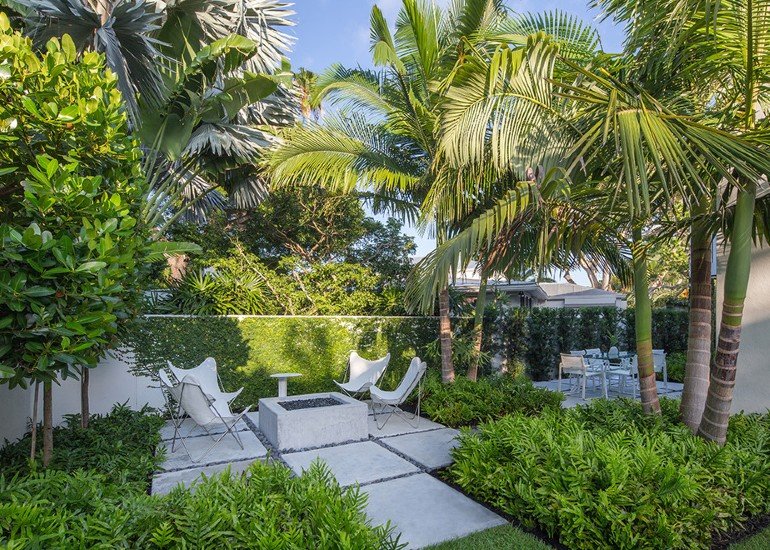
The ‘Coconut Grove’ style, often seen in the work of designers like Knoll Landscape Design, is having a moment because it perfectly marries modernism with tropical abundance. It’s not about kitschy tiki decor; it’s about using the bold, architectural forms of tropical plants as a counterpoint to clean lines and modern materials. This style resonates in 2026 because it feels both luxurious and deeply connected to nature, turning a backyard into a sophisticated, private resort that’s perfect for both relaxing and entertaining.
|
📋 Copy HEX 🔗 Share |
⭐ The One Thing
Thinking about bringing this look home? Here’s your initial checklist.
- Define Your Zones: Decide where you want to lounge, dine, or play. This style works best when you create distinct ‘rooms’ for different activities.
- Plan Your Hardscape: Modern looks rely on clean hardscaping. Will you use concrete, wood, or large format pavers? Your choice of material is fundamental to the aesthetic.
- Budget for Mature Plants: This style often uses large, architectural plants for instant impact. These ‘specimen’ plants are an investment, so budget accordingly.
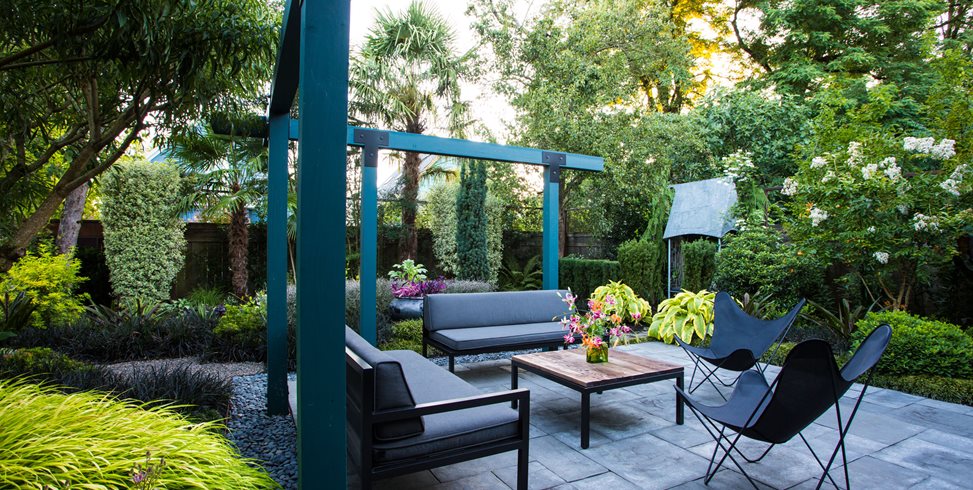
30. Lush Patio with a Blue-Green Pergola and Butterfly Chairs
This patio space feels so inviting because it expertly balances solid and open forms. The sofas are solid, grounded masses, providing a sense of comfort and stability. In contrast, the butterfly chairs and the slatted coffee table are light and airy, with visible space through their frames. This prevents the seating area from feeling too heavy or crowded. The pergola above adds a sense of enclosure without a solid roof, filtering light and defining the space while still feeling open to the sky. This interplay of heavy and light is a sophisticated design choice. Compare the pergola here with the trellis in Idea #10.
|
📋 Copy HEX 🔗 Share |
🎯 What Makes It Work
Don’t be afraid to use a bold, unexpected color on an architectural element. The choice of a rich blue-green for the pergola is what gives this patio its unique personality. In a sea of green foliage and neutral furniture, this splash of color is a game-changer. When painting an outdoor structure like a pergola or fence, choose a high-quality exterior paint in a satin or semi-gloss finish. These finishes are more durable and easier to clean than a flat finish.
Your Personal Paradise Awaits
Creating a tropical landscape is about crafting a daily escape, a place where you can unwind and feel transported. We hope these ideas have sparked your imagination and given you the confidence to start planning. Don’t be afraid to mix and match concepts to create a space that’s uniquely you. Ready to make it happen? Head over to Pinterest and start creating a board for your dream garden!