That feeling when you find the *one* exterior photo on Pinterest that makes you stop scrolling? It’s a little bit of magic. But turning that spark of inspiration into a real-life plan can feel overwhelming. Don’t worry, we’ve got you. We’ve gone through hundreds of projects—from high-end architectural builds to clever budget-friendly makeovers—to find the absolute best looks for right now.
We curated 27 distinct siding ideas that are defining curb appeal in 2026, covering styles from modern farmhouse to sleek metal and classic brick. The trend right now is all about texture and contrast, mixing materials in ways that feel both personal and timeless. And stay until the end — we break down the most common mistakes that can ruin these looks.
📌 Save this to Pinterest for later — you’ll want to revisit these ideas.
1. Modern Farmhouse with Mixed White Siding Profiles
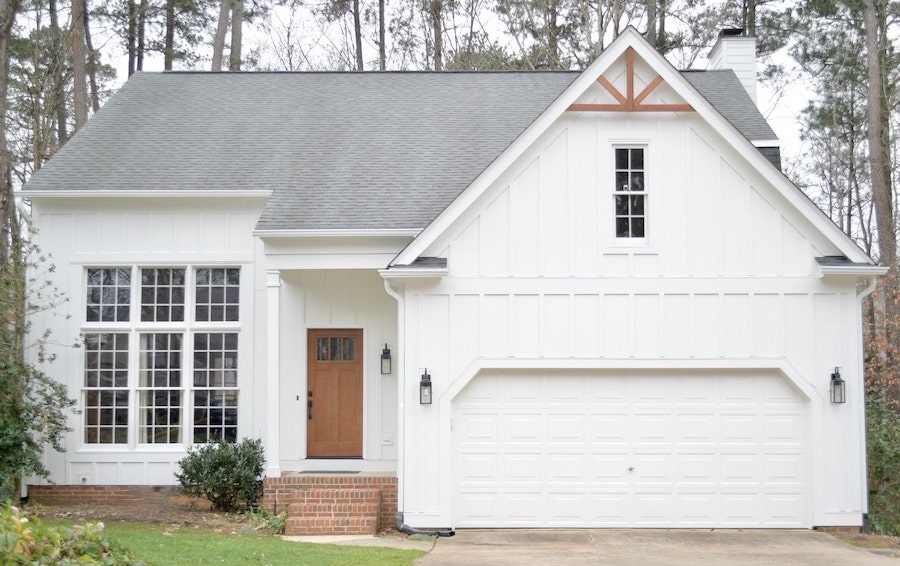
This look is a masterclass in subtle variation. The key is using two different types of siding in the same crisp white color. The main house uses vertical board and batten, which draws the eye upward and adds a sense of height. On the garage wing, narrower horizontal siding creates a contrasting texture that adds visual interest without complicating the clean color palette. This keeps the home from looking like a flat, white box.
|
📋 Copy HEX 🔗 Share |
💡 Designer Tip
Think of it as a simple recipe: 70% primary siding (the vertical board and batten) + 20% secondary siding (the horizontal planks) + 10% warm accents. The warm accents here are the light brown wooden front door and gable truss, which prevent the black-and-white scheme from feeling too sterile. You could swap the wood for a bold painted door (like a deep navy or forest green) and still maintain the same balanced formula.
2. Cream Board and Batten with a Dark Metal Roof
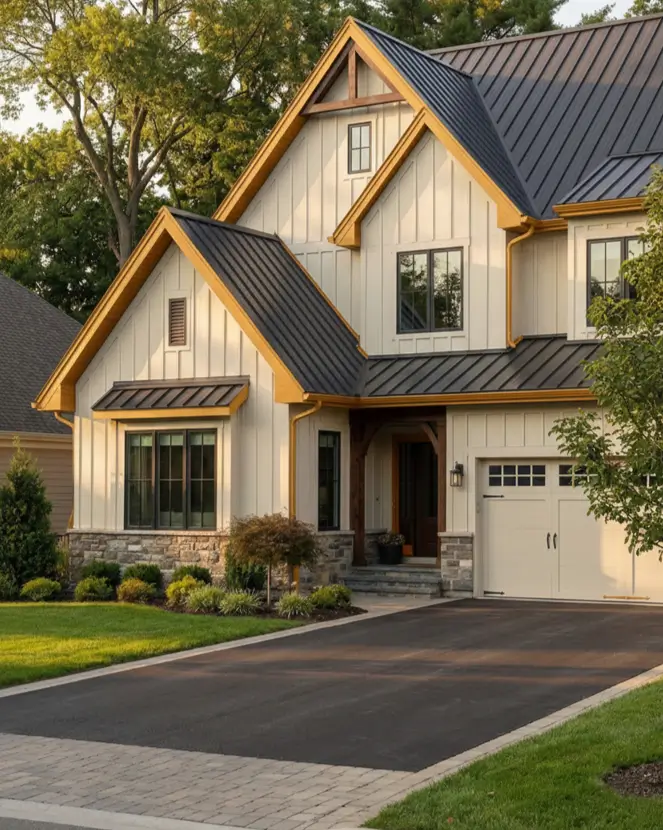
When pairing a light siding with a dark roof, the trim is what bridges the gap. Notice the golden-yellow fascia trim here—it’s an unexpected but brilliant choice. It adds a layer of warmth and sophistication that plain white or black trim would lack. For this to work, the color has to be intentional. Pull a warm tone from other elements, like the stone foundation or wooden entry columns, to ensure the look is cohesive rather than random. Test at least three paint samples on the actual fascia board before committing.
|
📋 Copy HEX 🔗 Share |
⭐ The One Thing
The single most important element here is the dark gray standing seam metal roof. It’s more than just a functional covering; it’s a powerful design statement. It provides a sharp, clean contrast to the creamy siding and rustic stone, defining the home’s modern farmhouse silhouette. Without it, the house would feel much more traditional and lose that crisp, contemporary edge that makes it feel current.
3. Trending Vinyl Siding Colors for a Small Home
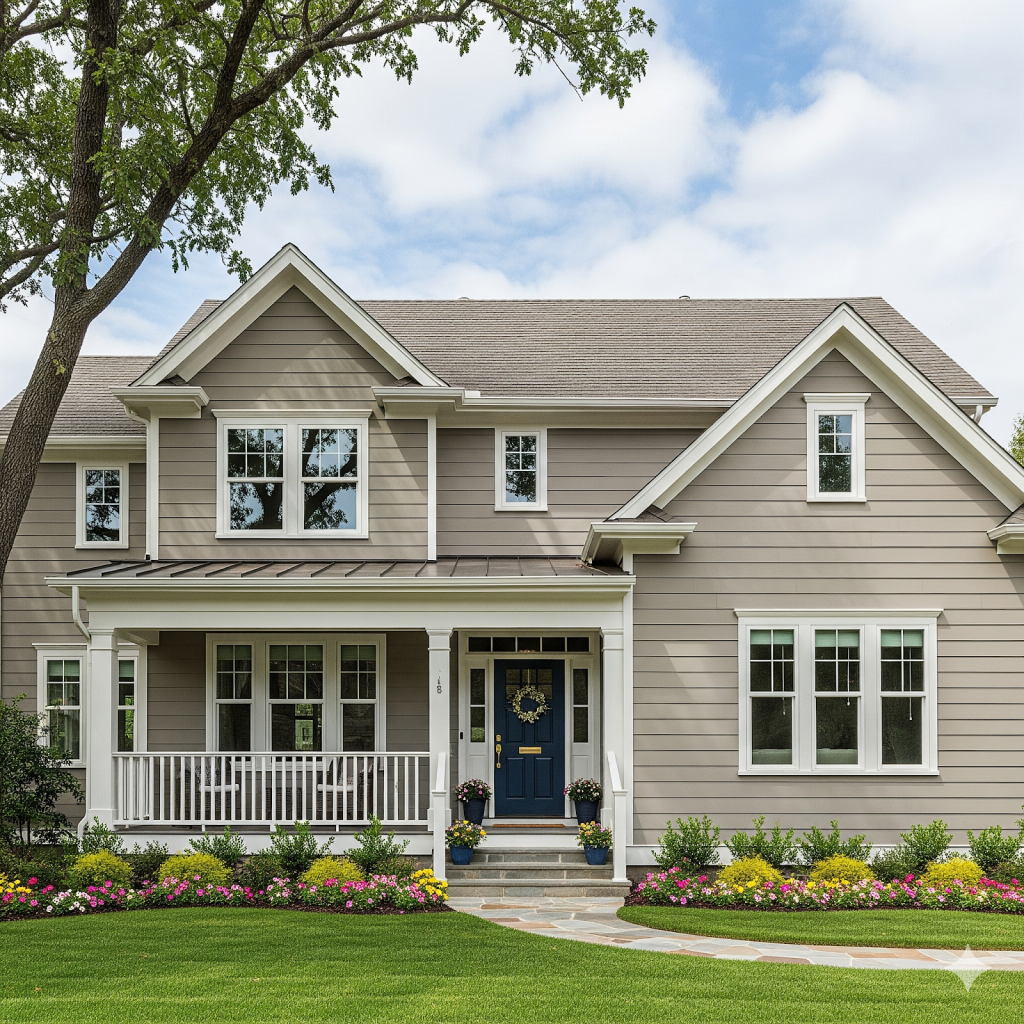
Vinyl siding is a popular budget-friendly choice, but color selection is critical, especially for a small house. While a bold, trendy color can look fantastic on a sample chip, it can easily overwhelm a smaller structure. Be sure to get large samples and view them outside next to your existing roof and trim at different times of day. A color that looks chic and muted in the store can appear surprisingly bright in direct sunlight. Also, consider the color of your neighbor’s homes to ensure your choice complements the streetscape.
|
📋 Copy HEX 🔗 Share |
🔧 How-To Brief
Gone are the days of boring beige being the only vinyl option. We’re seeing a significant trend towards moodier, more saturated colors that add character and depth. Think deep grays, earthy greens, and even some muted blues. These colors give vinyl siding a more premium, sophisticated look that mimics expensive fiber cement or wood, allowing homeowners to get a high-style look without the high price tag and heavy maintenance.
4. Craftsman Home with Cedar, Shake, and Stone
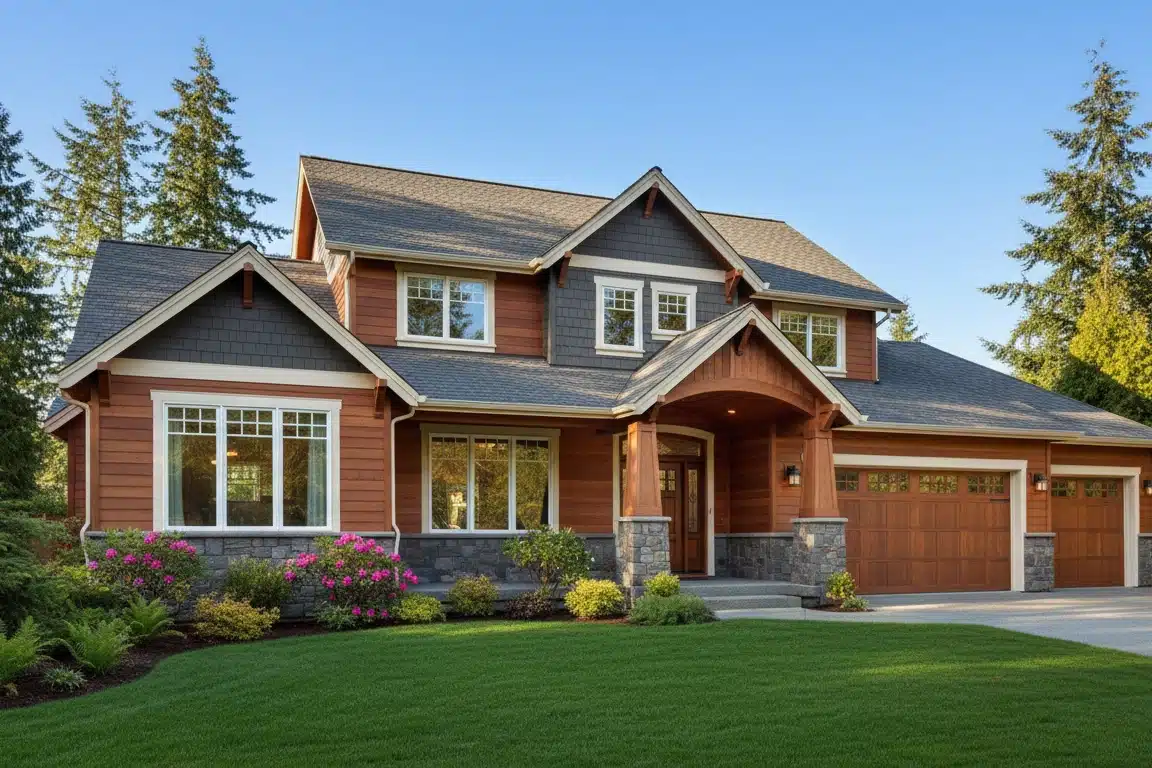
A multi-textured exterior like this requires careful planning. Before you fall in love with the look, get your checklist ready. This style works best on a home with complex massing—multiple gables, bump-outs, and rooflines give you natural places to switch materials.
- Confirm your budget can handle three different siding materials plus the labor for each.
- Check the sun exposure on each facade. Natural cedar requires maintenance and can fade; place it strategically.
- Ensure the textures have a common color thread. Here, the gray in the stone links to the gray shake siding.
|
📋 Copy HEX 🔗 Share |
📐 Style Math
This combination of materials works because it creates a rich visual hierarchy. The warm, cedar-toned horizontal siding forms the main body, feeling solid and welcoming. The darker grey shake siding in the gables acts as an accent, breaking up the facade and adding rustic charm. Finally, the dark grey stacked stone anchors the entire structure to the ground, giving it a sense of permanence and strength. The white trim acts like a crisp outline, neatly tying all the elements together.
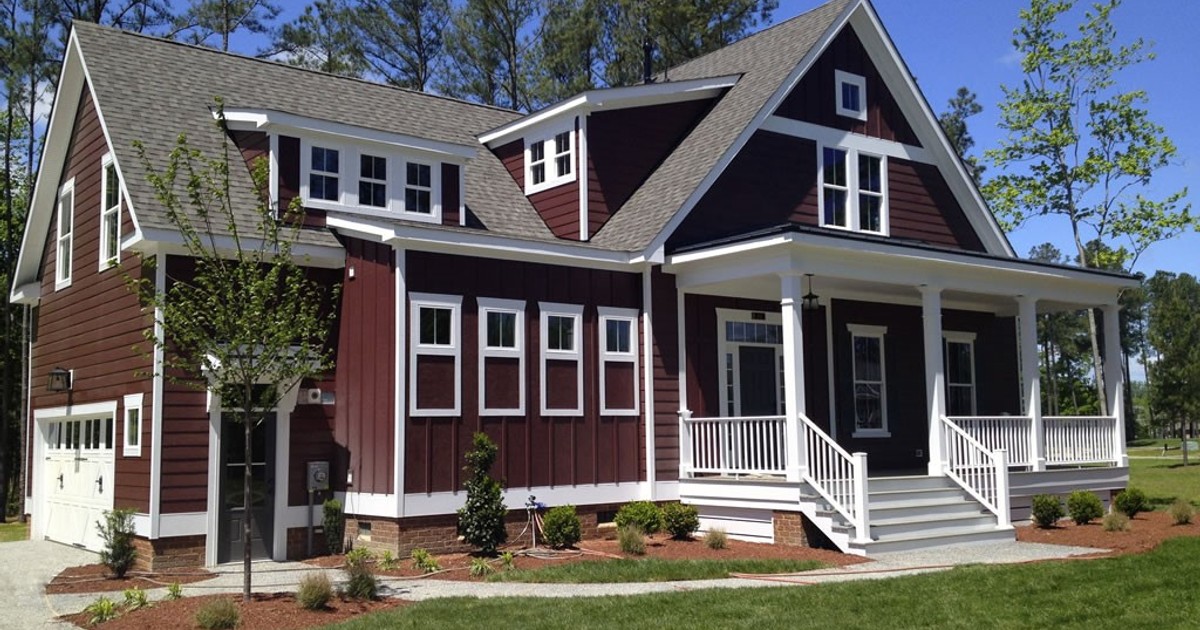
5. Deep Red Siding with Crisp White Porch Trim
It has to be the wraparound porch. While the deep red siding is beautiful, it’s the expansive, bright white porch that truly defines this home’s character. It breaks up the intensity of the red, provides a strong horizontal element to balance the home’s height, and creates an overwhelmingly inviting feeling. It signals that this is a home for relaxing and gathering. Remove the porch, and you’d have a much more imposing, less friendly facade. It’s the architectural equivalent of a welcoming smile.
|
📋 Copy HEX 🔗 Share |
🧹 Maintenance Reality
An exterior with this much presence needs room to breathe. This look is ideal for a house on a larger lot, at least a quarter-acre or more, where the bold color doesn’t feel cramped. The minimum width for the house itself should be around 50-60 feet to support the visual weight of the wraparound porch. For a smaller home, you can adapt this by using the deep red on a single accent wall, perhaps paired with a more neutral siding. See how Idea #21 uses a similar multi-material approach.
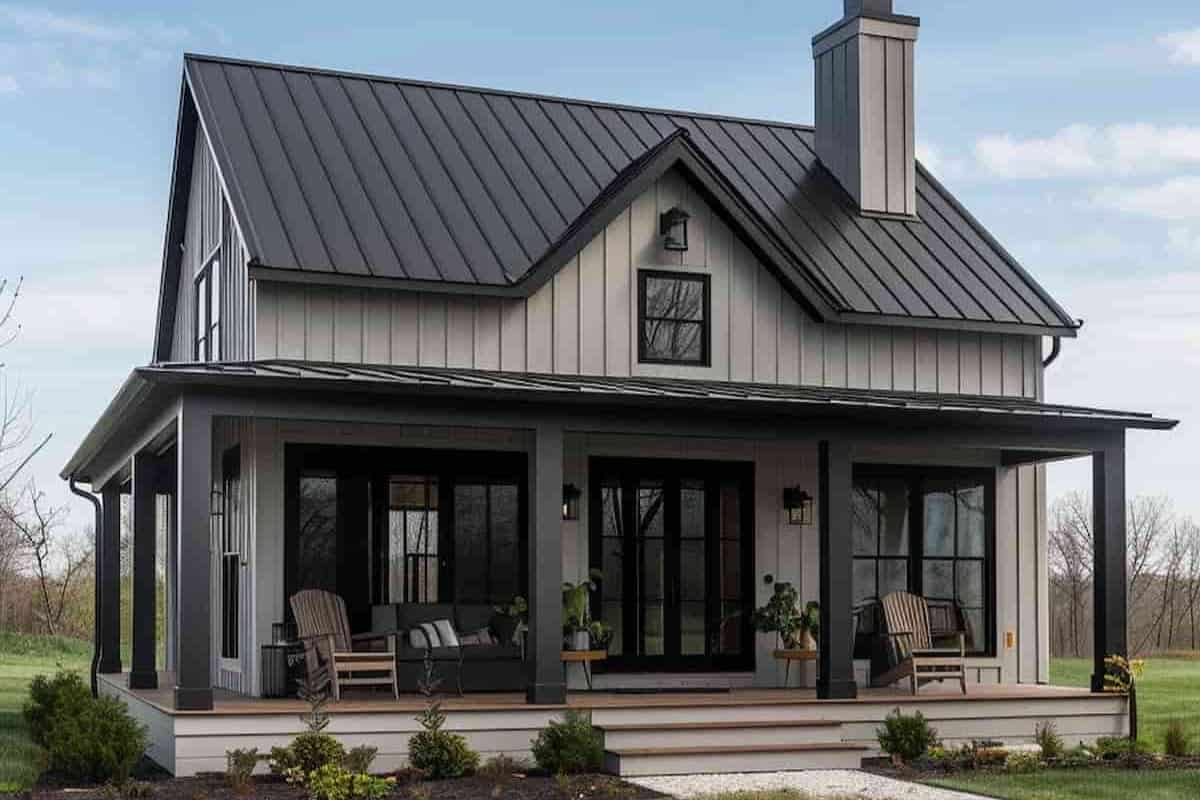
6. Modern Farmhouse with Light Gray Vertical Siding
The success of this minimalist porch lies in its proportions. To get this look, the porch depth should be at least 8 feet. This gives you enough space for comfortable seating without feeling cramped. The porch posts should be substantial—at least 6×6 inches, but 8×8 is better—to visually support the roof. Painting them a dark color, like the charcoal or black seen here, makes them recede, allowing the lighter siding to be the star. The light wood decking adds warmth and prevents the gray-and-black scheme from feeling too cold. Compare this to the cozier porch on Idea #14.
|
📋 Copy HEX 🔗 Share |
📏 Scale Guide
A corrugated metal roof is a fantastic, long-lasting choice, but it’s not zero-maintenance. Its channels can collect leaves, pine needles, and debris, especially on a low-slope roof like this one. Plan on a twice-yearly cleaning to prevent buildup, which can lead to water damming and potential leaks. A leaf blower is usually sufficient. In snowy climates, be aware that snow can slide off a metal roof in large, heavy sheets, so it’s wise to plan landing zones below and avoid placing seating or walkways directly under the eave line.
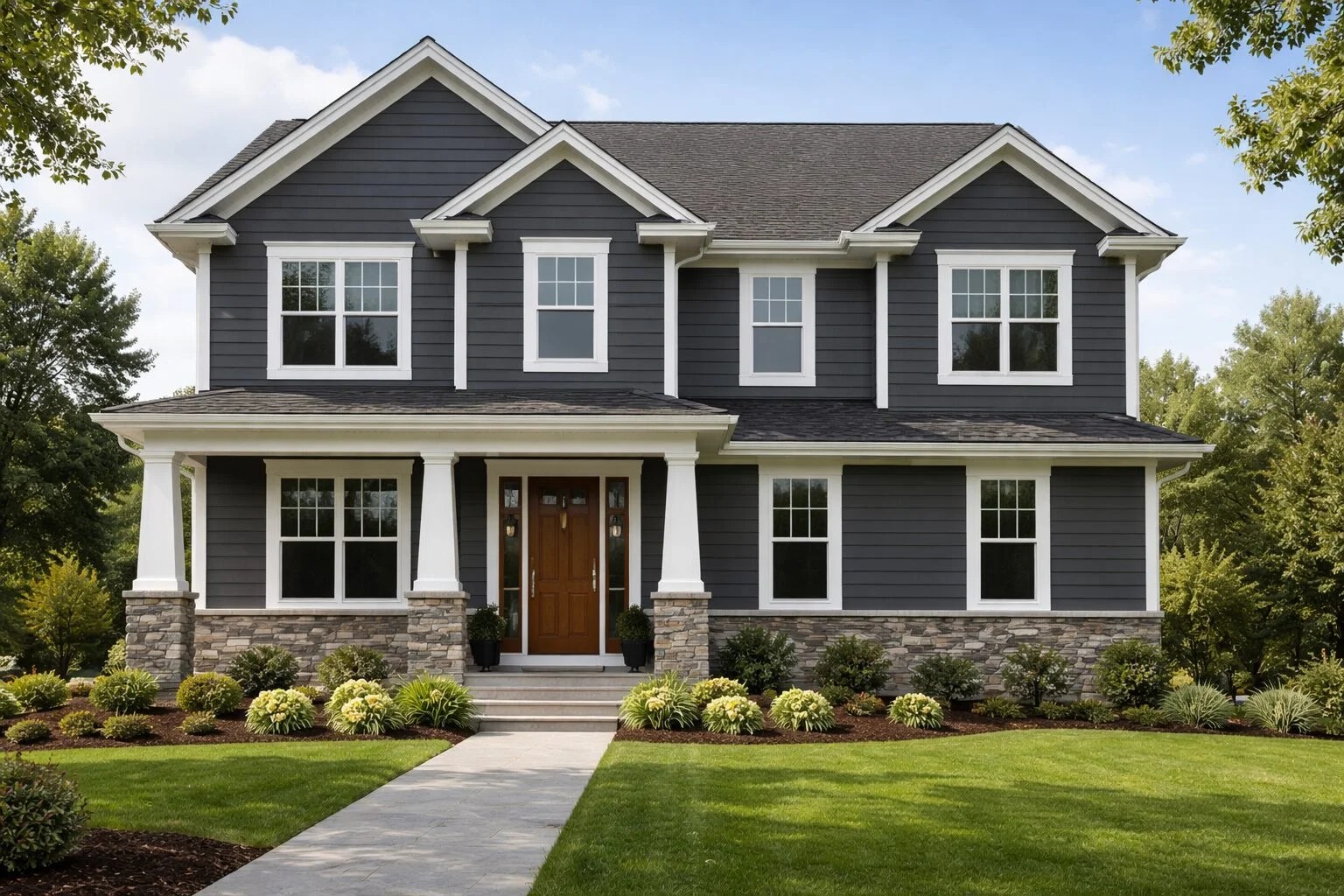
7. Dark Gray Horizontal Siding with a Stone Base
This design is all about grounding. By placing the heavy, textured stone at the base of the house, the entire structure feels more substantial and connected to the landscape. The dark gray horizontal siding on the upper level provides a smooth, clean contrast. The crisp white trim and columns then act as a bright accent, outlining the architecture and preventing the dark gray from feeling too heavy. The warm wood front door is the perfect finishing touch, serving as a welcoming focal point. Notice the similar color palette but different door choice in Idea #25.
|
📋 Copy HEX 🔗 Share |
⚠️ Real Talk
Stone veneer can be pricey, but you can get this same grounded effect for less. Instead of wrapping the entire base in stone, use it only on the front-facing sections of the foundation and porch columns. For an even more affordable option, consider high-quality manufactured stone veneer, which can be 40-50% cheaper than natural thin-cut stone. Another approach is to use a wide, contrasting trim board at the base of the siding, painted in a deep, earthy tone to mimic the visual weight of stone.
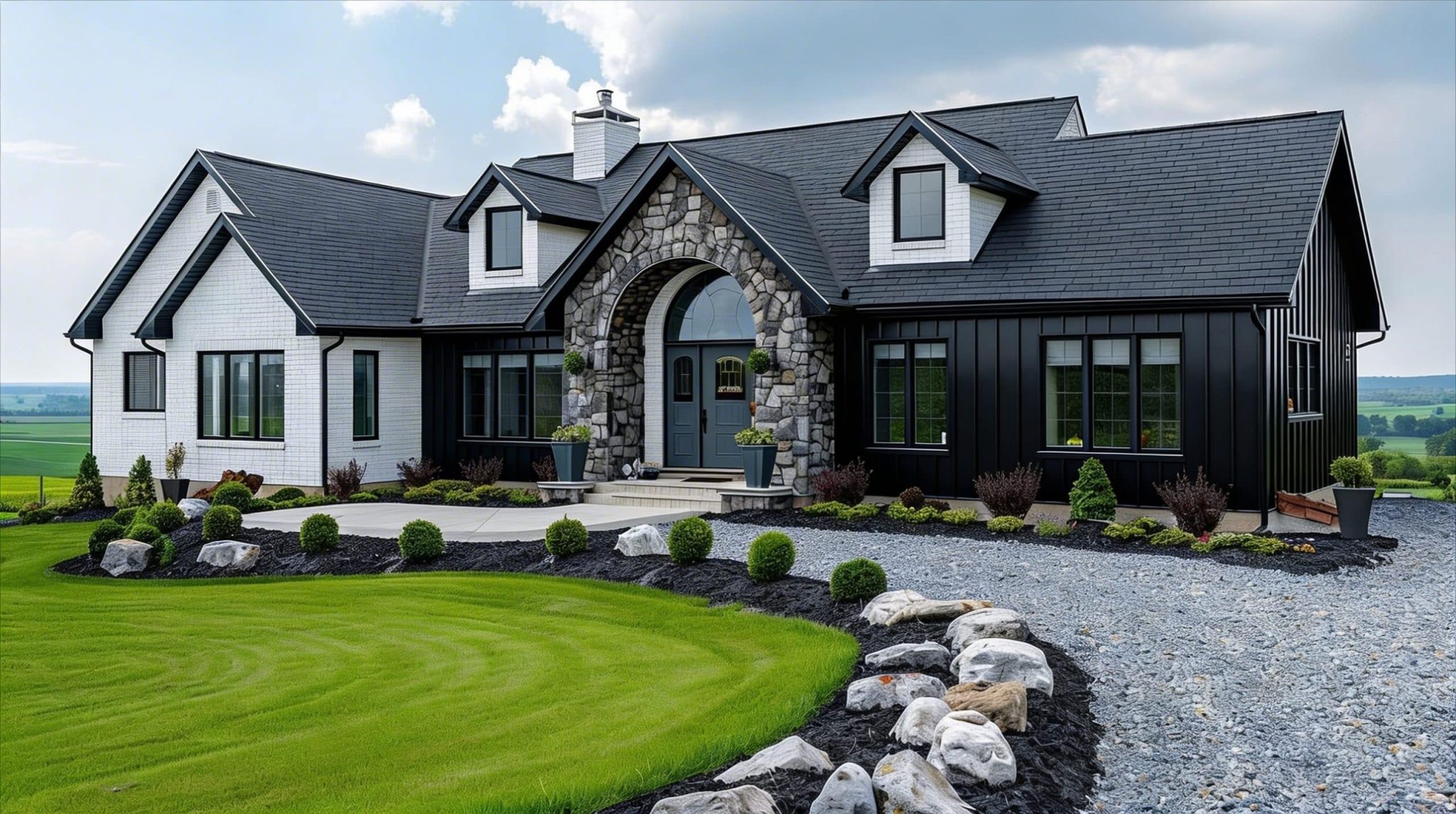
8. Modern Farmhouse with a Stone Arch and Black Siding
The stone archway is unequivocally the star of this show. It’s a bold, dramatic feature that elevates the entire design from a simple modern farmhouse to something truly special and custom. It adds texture, a sense of history, and a grand entrance that feels both rustic and incredibly sophisticated. The arch creates a beautiful frame for the dark gray front doors. If you removed this single element, the home would lose its most memorable and high-impact feature, blending in with other, more conventional designs.
|
📋 Copy HEX 🔗 Share |
🔥 Trending Context
A mix of white brick, black siding, and stone is stunning, but it’s a tricky balance to get right. This isn’t a forgiving palette. Every line and junction between materials has to be perfectly executed. Any sloppiness in the masonry, uneven gaps, or messy caulking will be glaringly obvious against the clean, contrasting surfaces. This is not a DIY-friendly project. Ensure you hire a contractor with proven experience in multi-material exteriors and ask to see examples of their previous work—specifically where different claddings meet.
9. Trending Exterior Designs for Smaller Vinyl Homes
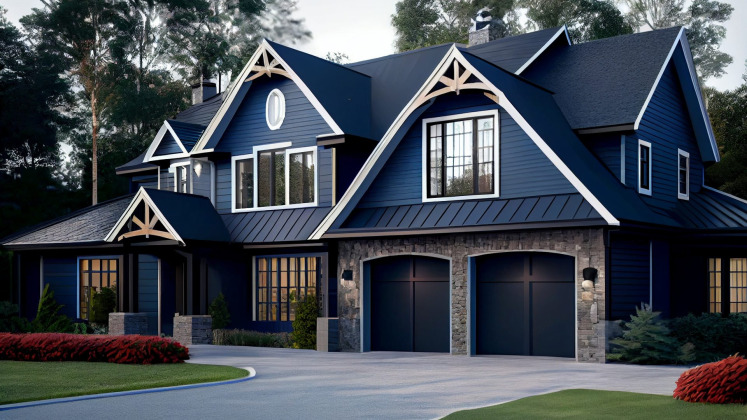
For a small house, a successful design formula is about smart restraint. Think: 70% neutral siding + 20% crisp trim + 10% accent color. The neutral siding (like a soft gray, tan, or even a muted green) covers the majority of the house, creating a clean canvas. The crisp white or off-white trim on windows, doors, and fascias defines the shape of the house. The final 10% is your moment to shine—a brightly painted front door, colorful shutters, or vibrant flowers in window boxes that add personality without overwhelming the small facade.
|
📋 Copy HEX 🔗 Share |
🎯 What Makes It Work
The biggest shift in exterior design, especially for entry-level and mid-range homes, is the demand for curb appeal that looks expensive without the associated cost. Homeowners are getting savvier, realizing that vinyl siding now comes in a huge array of colors and profiles that can mimic wood or fiber cement. Paired with upgraded light fixtures and thoughtful landscaping, vinyl siding is shedding its “boring” reputation and becoming a key player in creating stylish, trend-aware exteriors on a realistic budget.
10. Grand Exterior with Mixed Stone and Brick
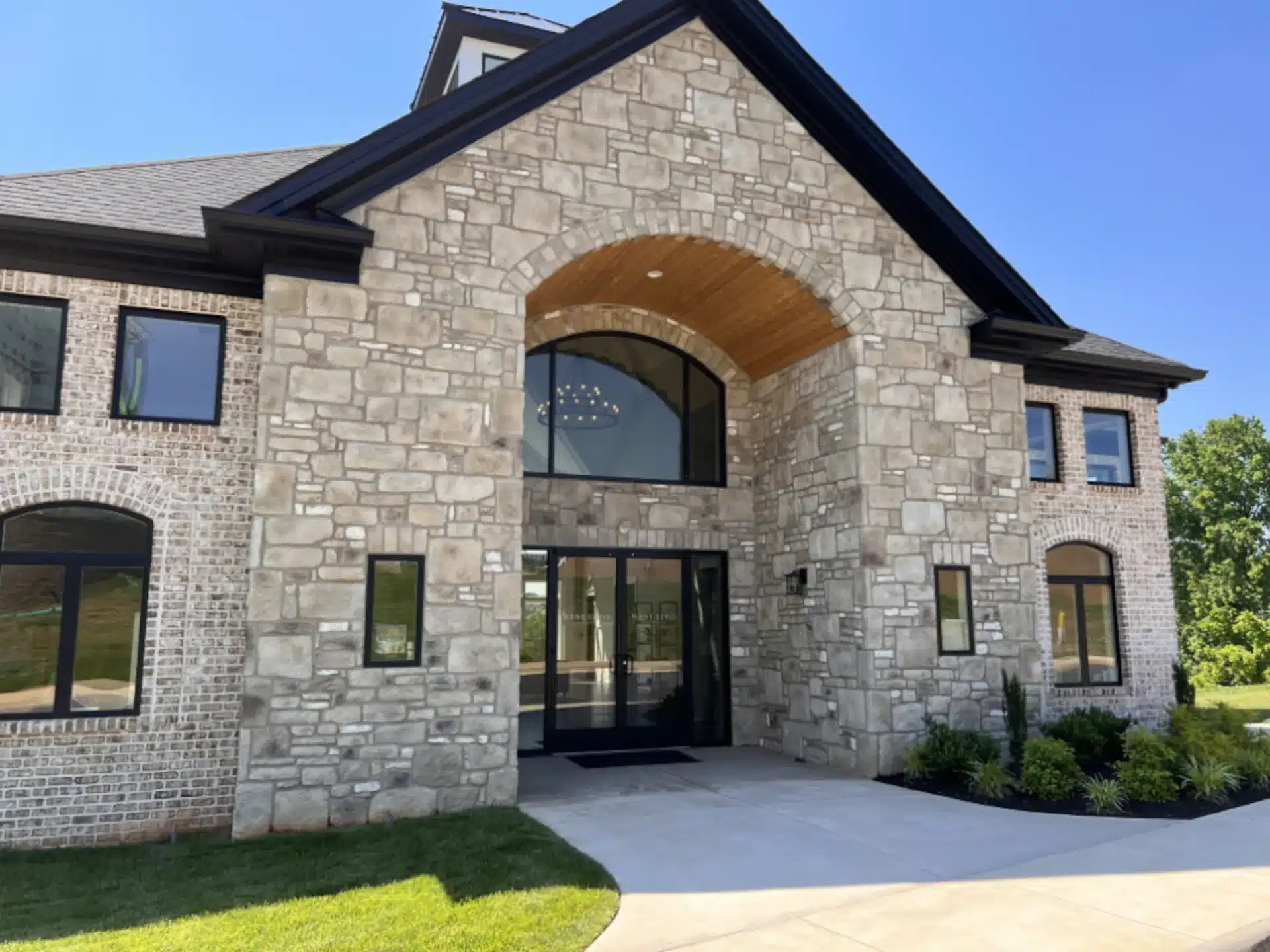
The combination of irregular stone and uniform brick works because they offer contrasting scales and textures while sharing a similar light color palette. The large, organic shapes of the stone provide a rustic, natural feel, while the smaller, repeating pattern of the brick adds a sense of order and tradition. The bold black window frames and roof trim act as a modernizing element, cutting through the traditional materials and giving the facade a crisp, graphic quality. The wood-lined archway adds a final touch of warmth, preventing the stone and brick from feeling too cold.
|
📋 Copy HEX 🔗 Share |
✅ Before You Start
While both brick and stone are incredibly durable, the mortar joints between them are the weak link. You should plan to inspect the mortar every 5-7 years for any signs of cracking or crumbling. Minor cracks can be a simple DIY repair with a tube of mortar sealant, but widespread issues may require professional repointing, which can cost several thousand dollars. Also, the light color of the stone and brick can be susceptible to mold or mildew stains in shady, damp climates, requiring occasional pressure washing to keep it looking fresh.
11. Exploring Metal Siding for a Dark House Exterior
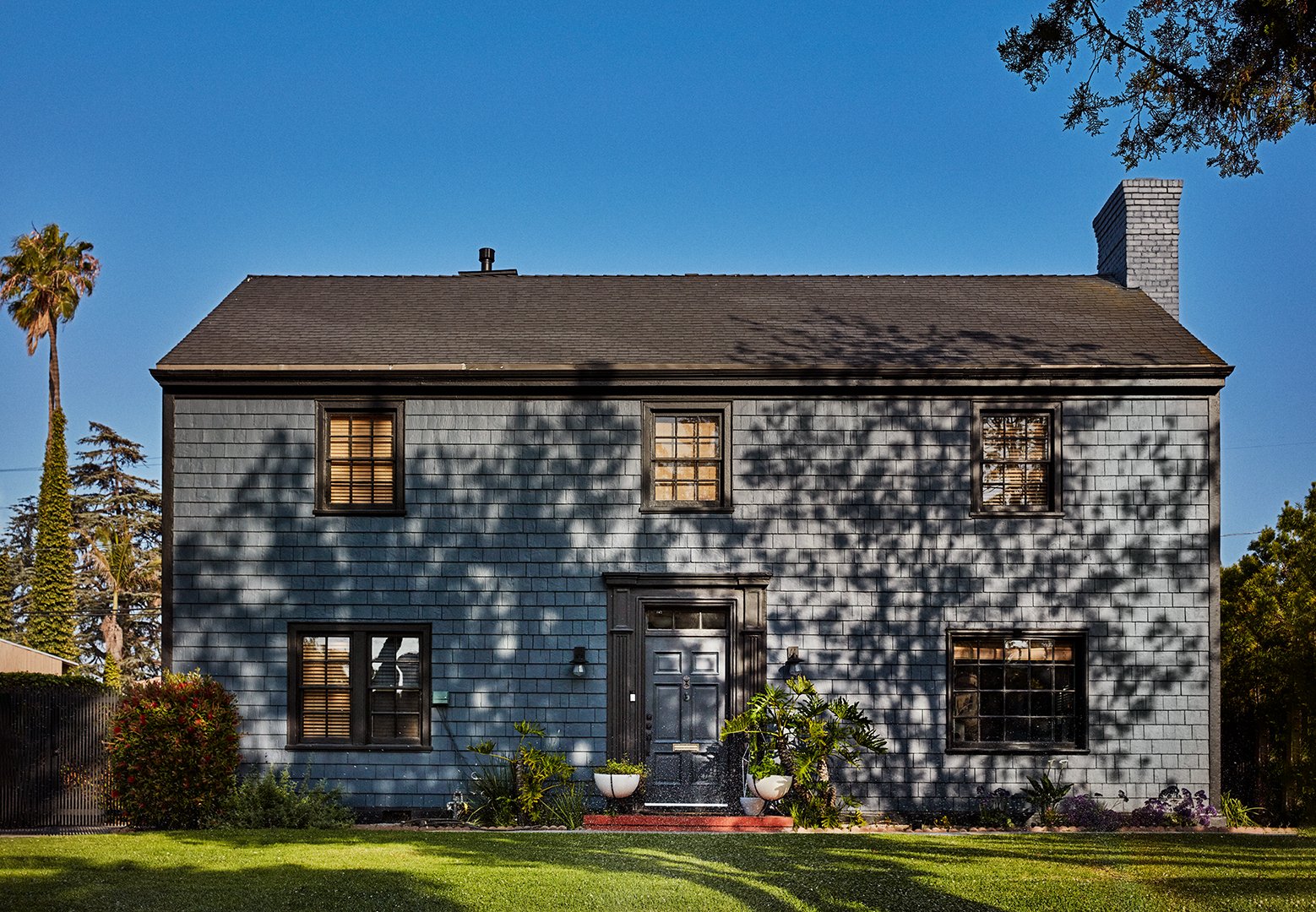
A dark metal exterior is a bold, minimalist statement, but it’s not for every climate. In hot, sunny regions, a dark metal facade will absorb a significant amount of solar heat, which can increase your cooling costs. While modern insulation and cool-metal paint finishes with reflective pigments can help mitigate this, it’s a crucial factor to discuss with your builder. Also, be aware that large, flat metal panels can sometimes exhibit slight waviness, known as “oil canning.” It’s a cosmetic issue, but one that minimalists might find distracting.
|
📋 Copy HEX 🔗 Share |
💰 Budget Breakdown
Metal siding, particularly in dark, moody shades like charcoal and black, is surging in popularity as an accent material or even for a full-house wrap. It taps into several trends at once: the move towards industrial-inspired materials, the desire for durable and low-maintenance exteriors, and the love for bold, high-contrast modern design. It’s a way to give a home an immediate architectural edge that feels both contemporary and incredibly long-lasting. Look for it paired with natural wood or stone to soften the industrial vibe.
12. Modern Mixed-Material Home with Brick and Metal
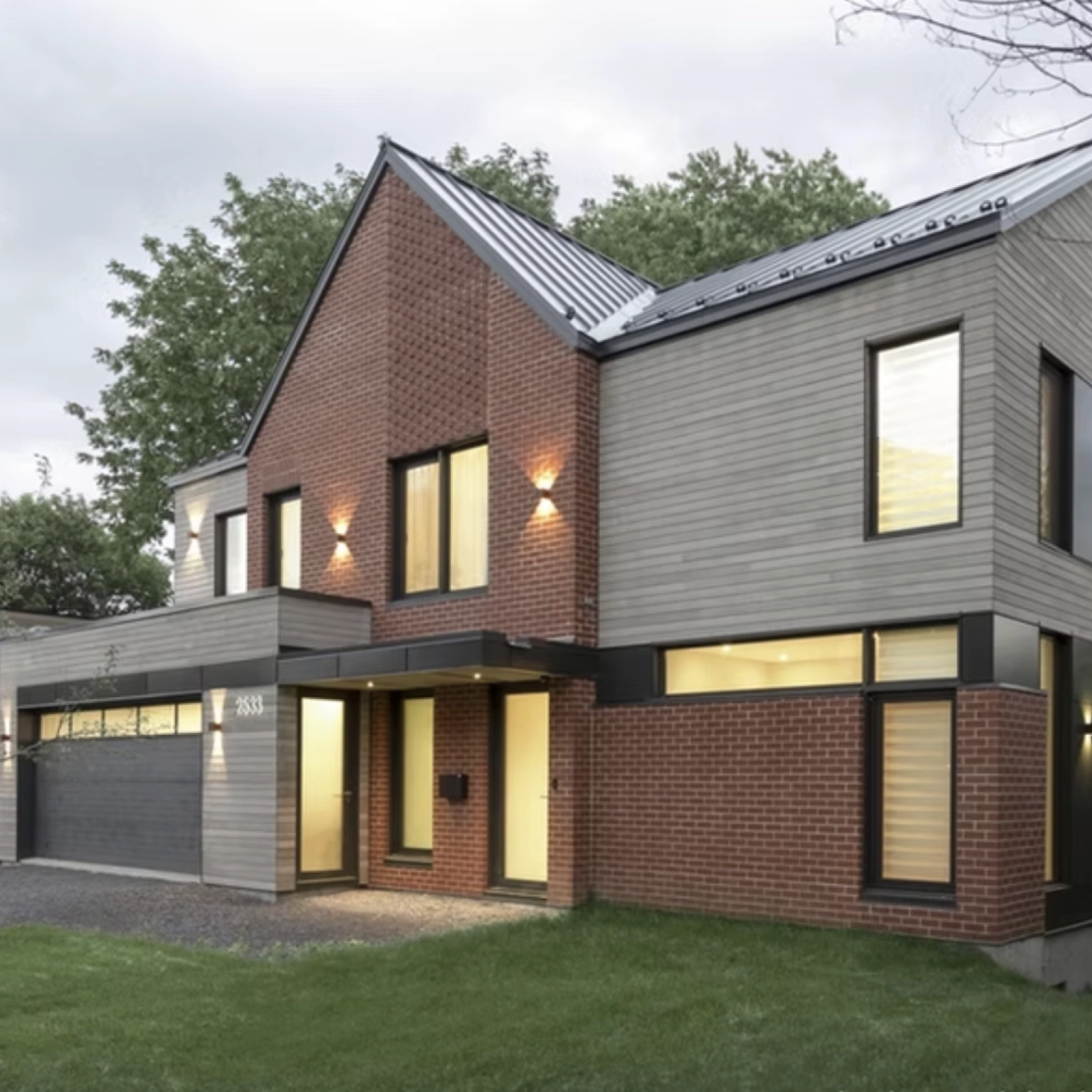
The uplight/downlight fixtures are key to this home’s sophisticated nighttime look. You can install similar fixtures yourself in an afternoon. Here’s a quick guide:
- Time: 2 hours, Cost: $100-$300 per light.
- Turn off the power to the existing exterior light at the breaker box. Always confirm it’s off with a voltage tester.
- Remove the old fixture and mounting bracket.
- Install the new fixture’s mounting bracket to the junction box, making sure it’s level.
- Connect the wires: black to black, white to white, and the ground wire (usually copper) to the green screw.
- Mount the new fixture onto the bracket, turn the power back on, and test it out.
|
📋 Copy HEX 🔗 Share |
💸 Get This Look For Less
This home’s exterior is a perfect example of a balanced material equation. It’s roughly 40% traditional red brick, 40% modern light gray siding, and 20% industrial dark metal. This balance is what makes it work. The brick adds warmth and a sense of history, the gray siding provides a neutral, contemporary canvas, and the dark metal roof and trim inject sharp, clean lines. By keeping the proportions relatively even, no single material overpowers the others, resulting in a design that feels cohesive and intentionally layered.
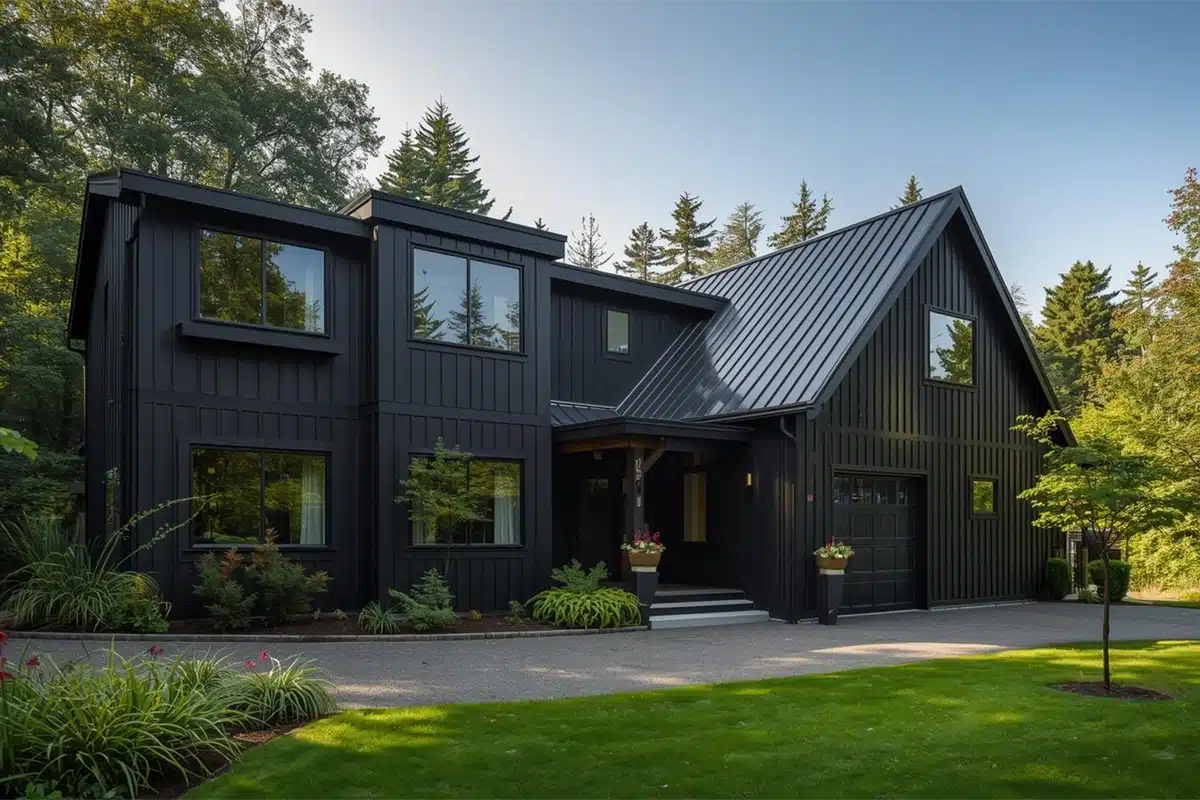
13. Bold in Black: A Modern Board and Batten House
When going for a monochromatic black-on-black look, texture is your best friend. This home is a prime example. It combines black board and batten siding with a black standing seam metal roof. The vertical lines of the siding and the ribs of the metal roof create subtle shadows and highlights that prevent the house from looking like a flat, featureless void. The large windows also play a huge role, their reflective surfaces breaking up the dark mass. If you use a single texture, the effect can be much less dynamic. Compare this to the glossy black look in Idea #17.
|
📋 Copy HEX 🔗 Share |
💡 Designer Tip
A black exterior is undeniably chic, but it comes with a reality check: it fades. All exterior colors fade over time from UV exposure, but it’s most noticeable on dark, saturated colors like black. To prolong the life of your finish, invest in the highest quality paint or pre-finished siding you can afford. Look for products with advanced UV inhibitors. Even so, be prepared for the color to soften over the years. Some people actually prefer the slightly weathered, charcoal-gray look it eventually settles into, but it’s something to be aware of from the start.
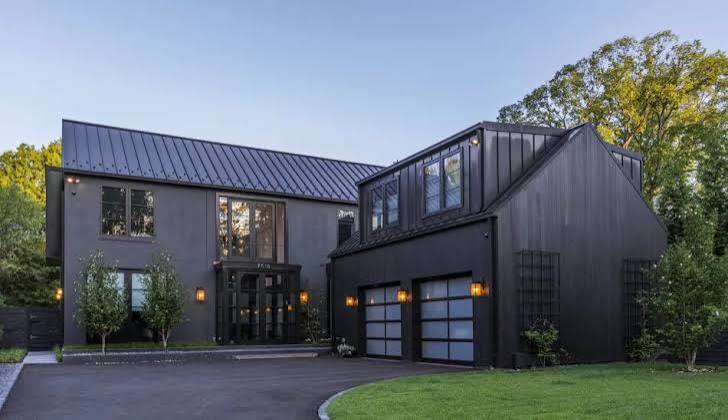
14. Sleek Dark Gray Stucco with Vertical Wood Siding
The success of this design lies in its tonal consistency. Both the main house’s stucco-like finish and the garage’s vertical wood siding are in a very similar dark gray/black hue. This creates a cohesive, monolithic look, but the difference in material texture (smooth vs. ridged) adds a subtle layer of sophistication and visual interest. The choice to use this same dark tone on the window frames and metal roofs unifies the entire project, making it feel intentional and architecturally rigorous. The bronze sconces add a necessary touch of warmth.
|
📋 Copy HEX 🔗 Share |
⭐ The One Thing
While everything here is sleek and modern, the single element that truly elevates the design is the use of glass-paneled garage doors. Standard, solid garage doors in the same dark color would have created a heavy, oppressive black wall. Instead, the frosted glass panels provide a sense of lightness and transparency. They break up the dark facade, emit a soft glow from within at night, and hint at the modern, light-filled spaces inside. They turn a purely functional element into a major design feature.
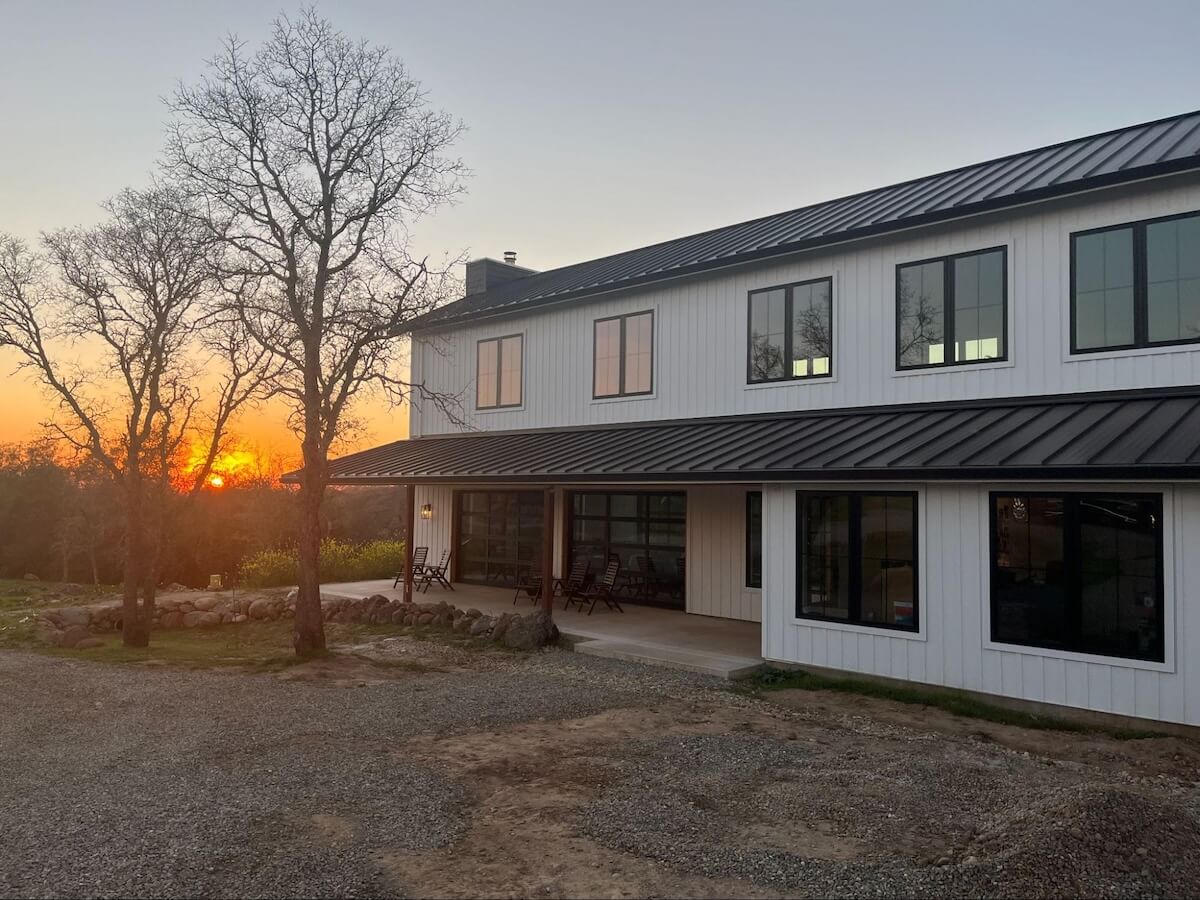
15. White Farmhouse with Vertical Siding and a Black Metal Roof
This is the quintessential modern farmhouse formula: 60% classic white siding + 30% bold black accents + 10% natural texture. The white vertical board and batten provides a timeless, bright base. The black metal roof, window frames, and porch chairs create a strong graphic contrast that feels clean and contemporary. The final 10% comes from the stone retaining wall and surrounding landscape, which add organic texture and prevent the high-contrast palette from feeling stark. You could swap the stone for a wood porch ceiling or a natural cedar front door to achieve a similar effect.
|
📋 Copy HEX 🔗 Share |
🔧 How-To Brief
A long, linear porch like this works best on a house that has a significant horizontal presence, ideally 50 feet wide or more. For the porch itself to be functional for seating and circulation, aim for a minimum depth of 8 feet from the wall to the railing. Anything less than 6 feet will feel too narrow for furniture. This two-story design also benefits from a higher ceiling on the porch, at least 9 feet, which keeps the space feeling open and airy rather than compressed. For a smaller footprint, consider a compact version like the porch in Idea #5.
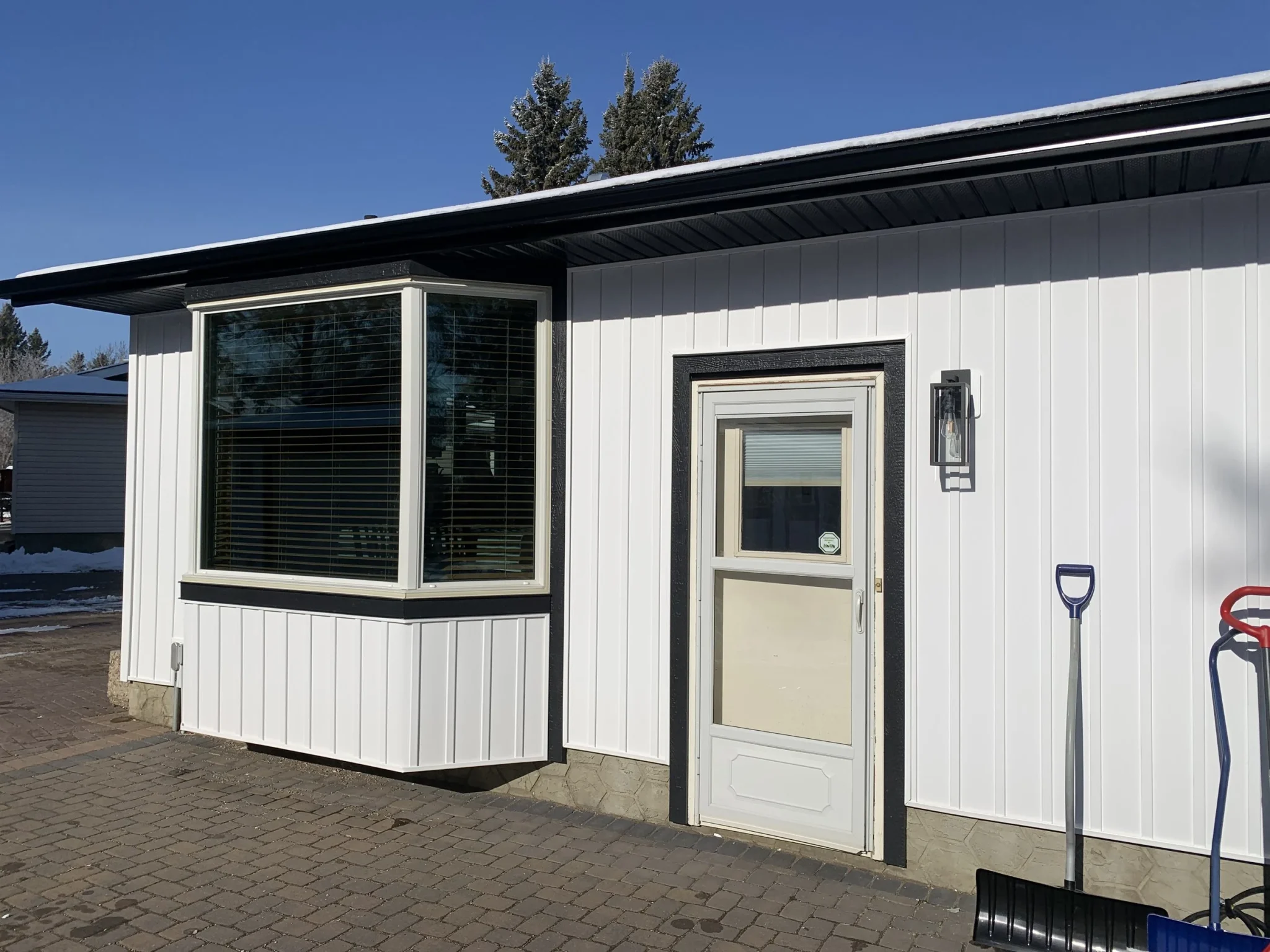
16. High-Contrast White Vertical Siding with Black Trim
This exterior demonstrates the power of graphic contrast. The brain loves clear, defined shapes, and that’s exactly what this delivers. The crisp black trim acts like a picture frame for every element of the house—the windows, the door, the roofline. It turns simple architectural forms into bold statements. The choice of vertical siding reinforces this by drawing the eye upwards, making the house feel taller and more stately. The simple palette is confident and clean, eliminating visual clutter and focusing on pure form.
|
📋 Copy HEX 🔗 Share |
📐 Style Math
You don’t need a huge budget to achieve this striking look. The key elements—vertical siding and contrasting trim—are available at accessible price points. Opt for affordable and durable vinyl siding in a standard white. Spend a bit more on pre-finished black trim pieces for a crisp, professional look, or get a clean finish by painting standard trim with a high-quality exterior paint. The most important part is the labor; ensure your installer is meticulous about keeping lines straight and cuts clean, as any imperfection will be obvious with this graphic style.
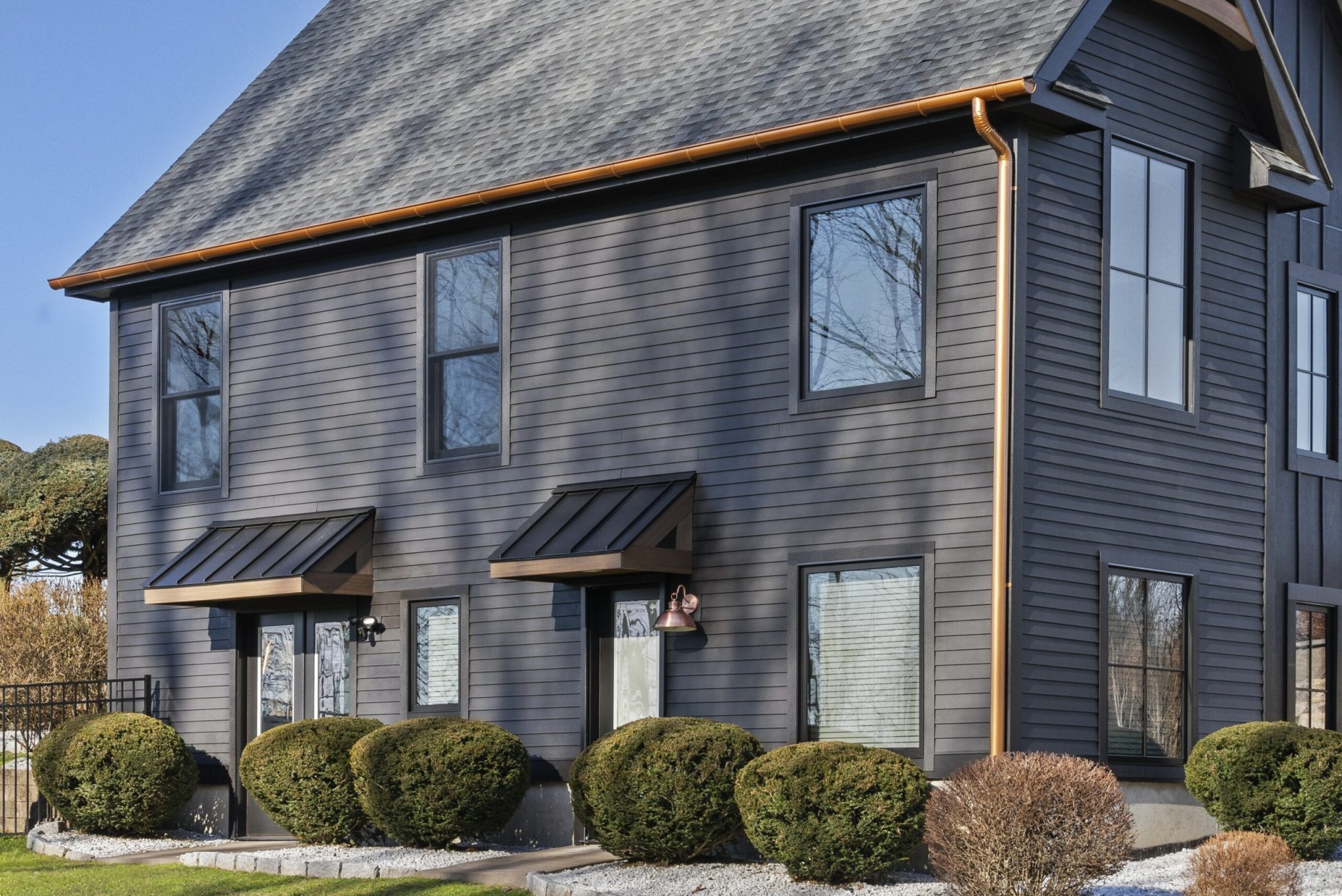
17. Dark Gray Siding with Statement Copper Gutters
It’s all about the copper. The dark gray siding and black awnings are handsome, but they are supporting players. The copper gutters and downspouts are the jewelry of this exterior. They introduce a warm, metallic element that catches the light and adds a layer of luxury and custom detail. Over time, the copper will develop a beautiful green patina, adding even more character. Without the copper, the house would be a much more conventional, monochromatic scheme; this single material choice makes it unforgettable.
|
📋 Copy HEX 🔗 Share |
🧹 Maintenance Reality
Real copper gutters are a significant investment, often 3-4 times the cost of aluminum, and they require specialized installation. While they are incredibly durable, they will change color over time, transitioning from a shiny penny-bright to a deep brown and eventually to a light green patina. This process can take anywhere from 5 to 20 years depending on your climate and air quality. While many cherish this natural aging process, if you want to maintain the shiny copper look, it will require regular, labor-intensive polishing and sealing—a task most homeowners choose to forgo.
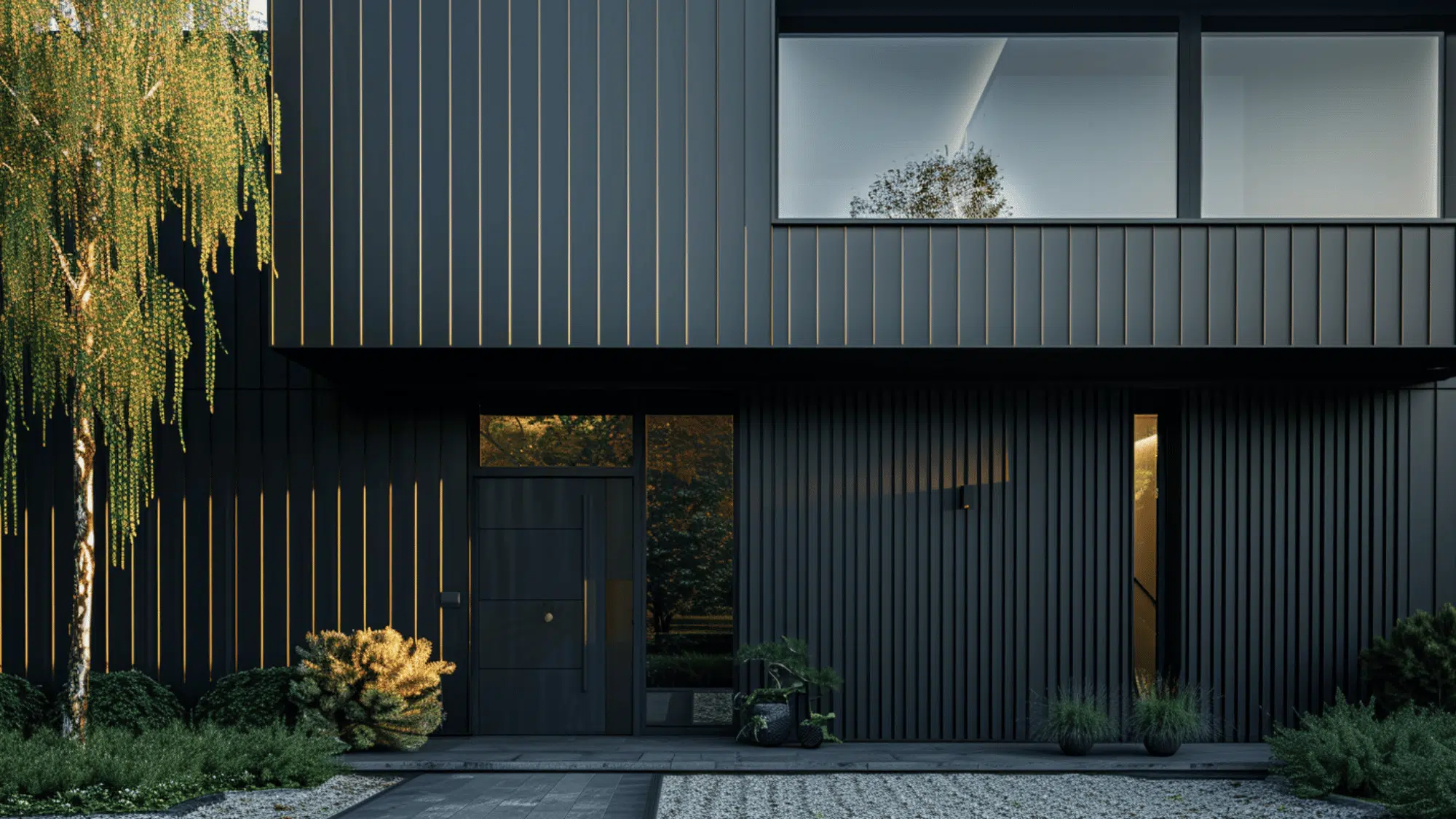
18. Modern Black Vertical Siding with Gold Accents
When adding a metallic accent to siding, subtlety is everything. These thin, reflective gold lines are successful because they are used sparingly and are integrated directly into the panel joints. This makes them feel like a natural part of the architectural detail, rather than something tacked on. To replicate this, use a thin metallic trim piece designed for siding systems, or for a high-end custom look, have a metal fabricator create custom inserts. Don’t try to paint a thin line; you’ll never get the crisp, clean edge that makes this work.
|
📋 Copy HEX 🔗 Share |
📏 Scale Guide
A sleek, dark, minimalist facade like this leaves absolutely no room for error. Every single panel must be perfectly plumb and aligned, as even a tiny deviation will be glaringly obvious on such a uniform surface. This applies to the window and door installations as well—the surrounding gaps must be perfectly even. This level of precision requires a highly skilled installer. Be sure to budget for top-tier labor, as trying to save money on installation will almost certainly compromise the high-end, flawless finish that this design demands.
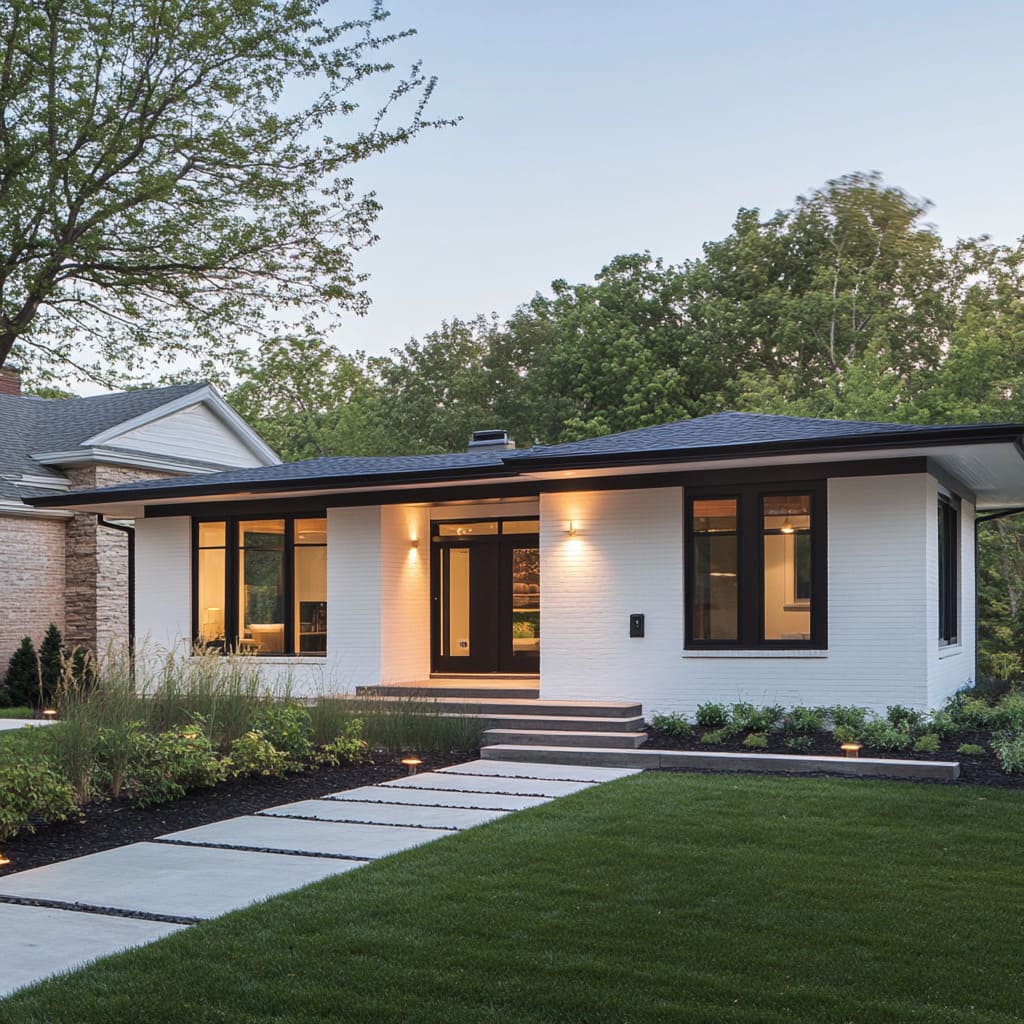
19. Modern White Brick with Black Trim and Stone Accent
This design succeeds by balancing three distinct textures within one clean, cohesive color family. The painted white brick provides a regular, repeating grid pattern that feels structured and modern. The light-colored stacked stone accent wall introduces an organic, irregular texture that breaks up the uniformity of the brick. Finally, the smooth, matte black of the window frames and roof trim acts as a sharp, graphic counterpoint to the textured walls. This interplay of textures—grid, organic, and smooth—creates a rich, layered look without using a lot of different colors.
|
📋 Copy HEX 🔗 Share |
⚠️ Real Talk
The visual recipe here is about dominance and accent. It’s roughly 70% primary material (the white brick), 20% accent material (the stone cladding), and 10% sharp contrast (the black trim). This formula ensures the look feels intentional, not chaotic. The brick establishes the main character of the house, the stone provides a focal point, and the black trim ties it all together. You could swap the stone for natural wood siding and achieve a similar, but warmer, result while keeping the same successful proportions.
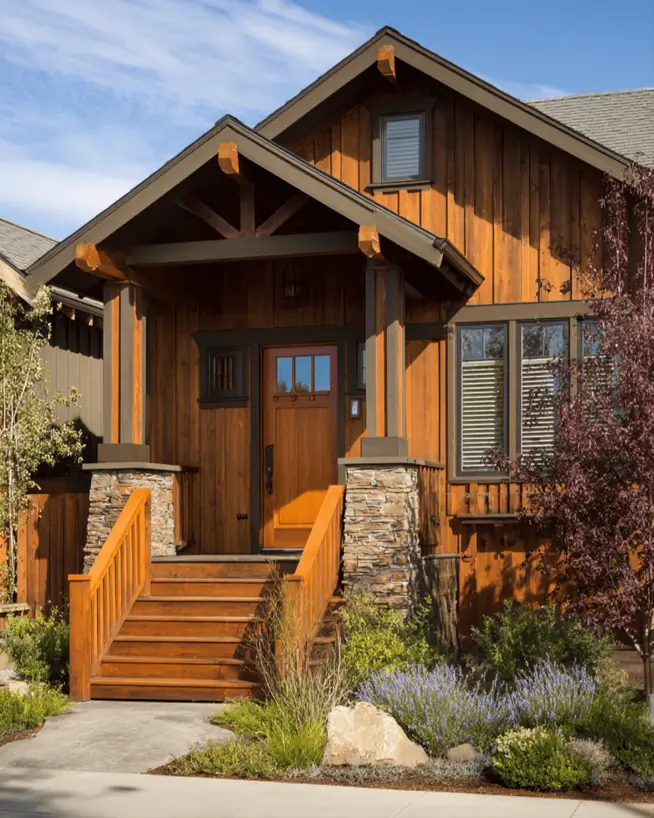
20. Craftsman Porch with Vertical Wood Siding
Natural wood siding is beautiful, but it’s a commitment. To keep this warm, rich tone, you’ll need to re-stain or re-seal it every 2-5 years, depending on your climate and how much direct sun it gets. The areas most exposed to rain and sun will weather fastest. If you neglect it, the wood will eventually turn a silvery gray color and can become susceptible to moisture damage. The annual cost might be low if you DIY (just the cost of stain), but professional re-staining can cost several thousand dollars for a whole house.
|
📋 Copy HEX 🔗 Share |
🔥 Trending Context
The key to a successful Craftsman exterior is showing how the house is put together. Notice the exposed rafter tails at the roofline and the substantial wood porch beams. These aren’t just decorative; they express the structure of the home. When choosing materials, lean into this. Use real wood (or a very convincing composite) for structural elements. The stone veneer on the column bases should be chunky and substantial, making the columns feel firmly planted. It’s about celebrating joinery and honest materiality.
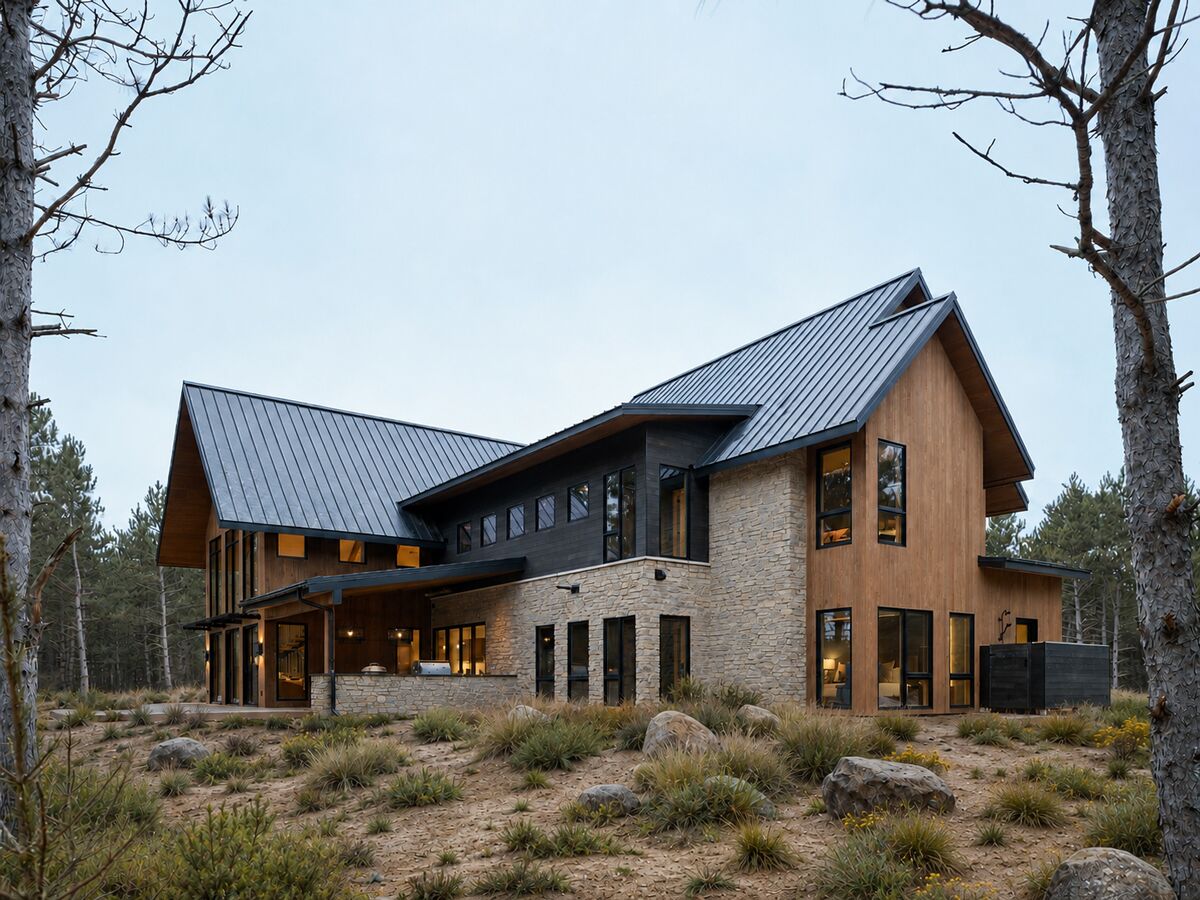
21. Modern Rustic Home with Wood, Stone, and Metal
The defining feature of this home is the harmonious blend of multiple materials. It’s not just the wood, the stone, or the dark siding on their own, but the way they are composed together across the home’s complex rooflines and facades. This intentional mix of natural, rustic textures (wood and stone) with a sleek, modern one (dark horizontal siding and metal roof) gives the house its unique ‘modern rustic’ identity. Removing any one of these three key materials would dramatically unbalance the design and diminish its custom, architectural feel.
|
📋 Copy HEX 🔗 Share |
🎯 What Makes It Work
A multi-material design like this is best suited for a larger home, typically 3,000 square feet or more. The complex massing, with multiple peaks and intersecting volumes, is what creates the natural planes for switching materials. On a smaller, simpler box-shaped house, trying to force this many materials can look busy and contrived. This style also demands a large lot to be fully appreciated, as the design is meant to be viewed from multiple angles, integrating with a natural or well-landscaped setting.
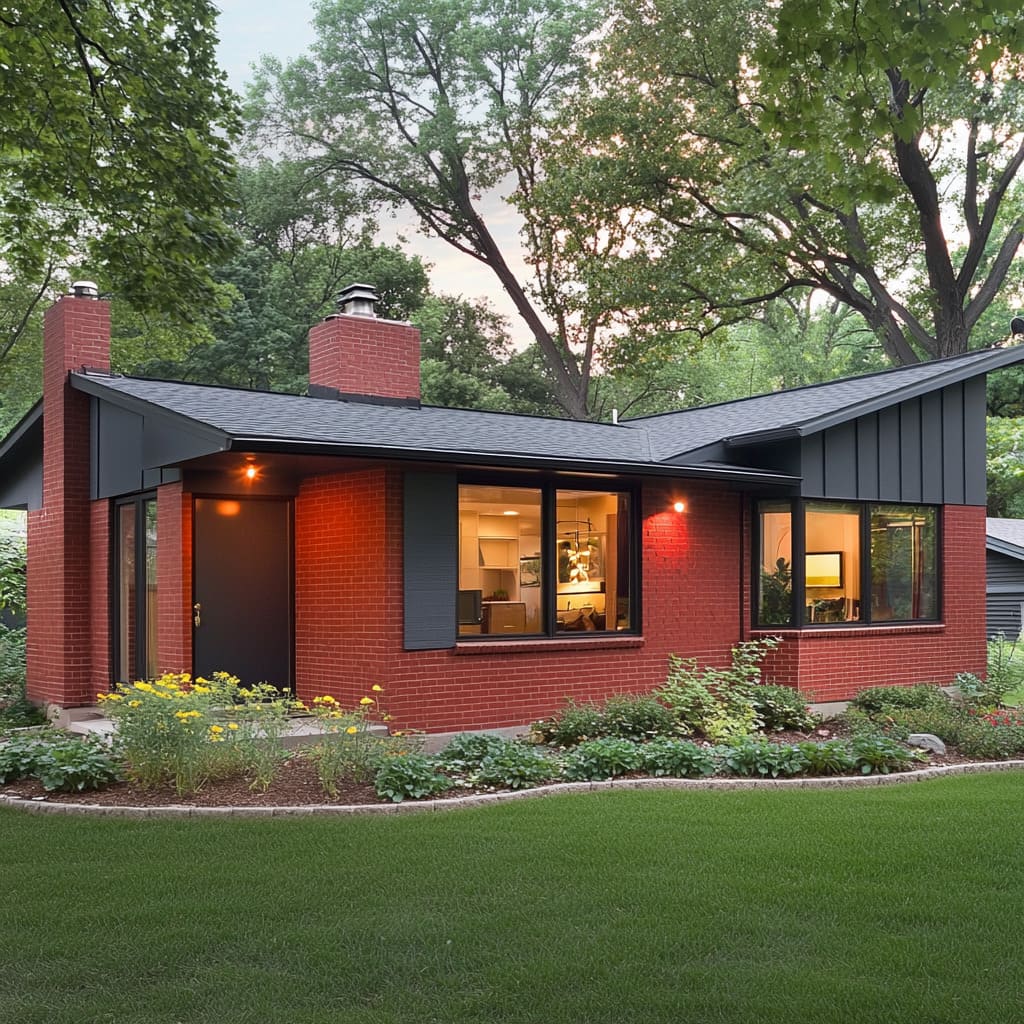
22. Deep Red Brick Paired with Dark Gray Vertical Siding
This is a powerful example of material blocking. Instead of mixing materials in a fussy, detailed way, the design dedicates large, clean sections to each one. The deep red brick provides a warm, textured, and traditional anchor, while the dark gray vertical siding introduces a cool, smooth, and contemporary element. The contrast is bold and confident. Using black window frames across both materials is the crucial move that unifies the two distinct blocks into one cohesive architectural vision. It’s a similar material mixing strategy to Idea #11, but with a warmer palette.
|
📋 Copy HEX 🔗 Share |
✅ Before You Start
If a full brick facade is outside your budget, you can get a very similar feeling with a different approach. Use a more affordable primary siding—like the dark gray vertical panels—across most of the house. Then, build a prominent architectural feature, like a large chimney or a front-facing gable, and clad only that single element in the deep red brick. This creates a powerful focal point and introduces the desired color and texture, but it can reduce your masonry costs by 60-70% or more.
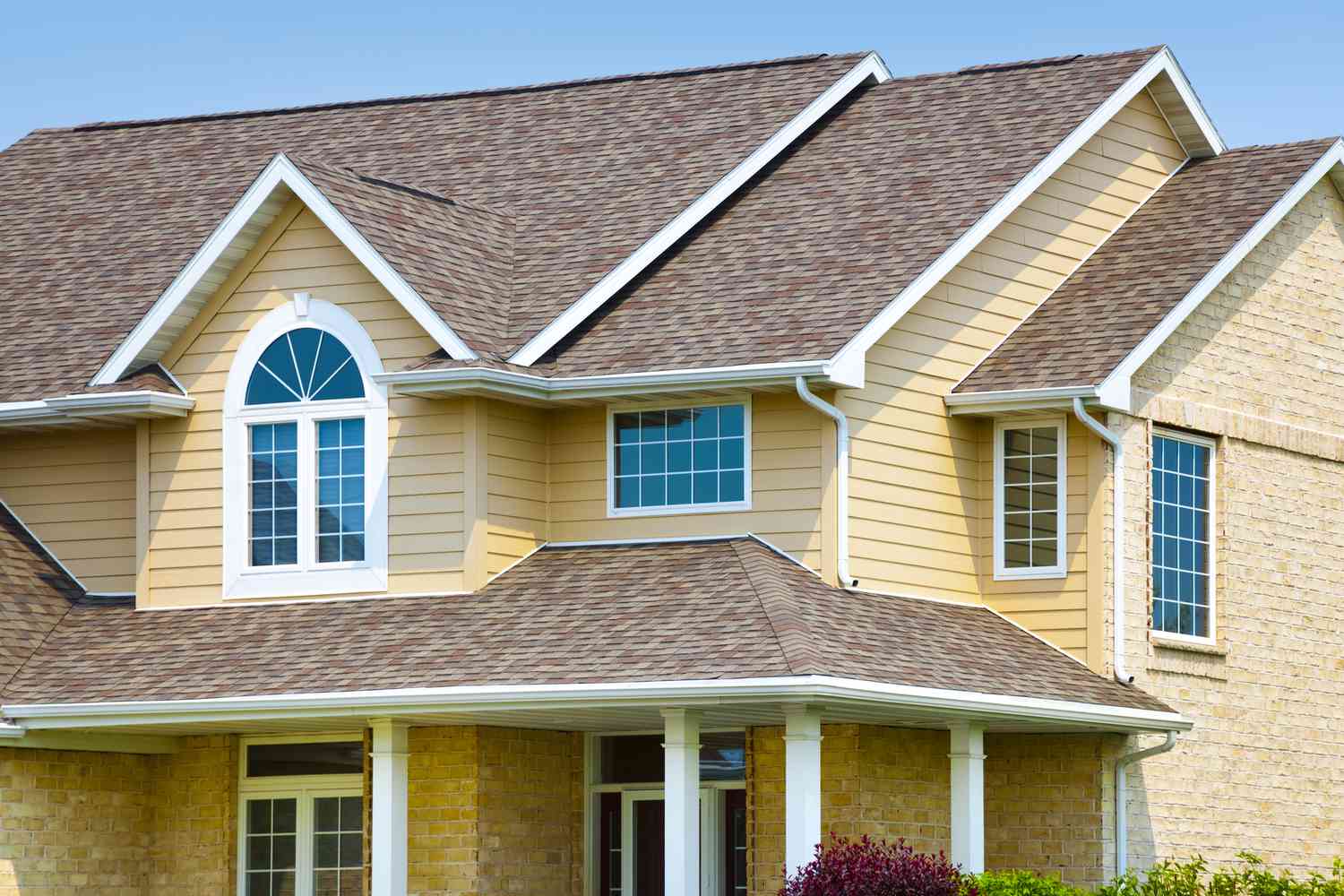
23. Beige Brick and Siding with a Feature Arch Window
The arched window is, without a doubt, the element that gives this home its distinct personality. The rest of the facade, with its beige brick and siding, is pleasant and traditional but fairly standard. The arch, with its radiating mullions (the grid divisions), introduces a touch of elegance and a custom architectural detail that elevates the entire front elevation. It serves as the primary focal point, breaking up the horizontal lines of the siding and the predictable grid of the brick. Without it, the house would be far less memorable.
|
📋 Copy HEX 🔗 Share |
💰 Budget Breakdown
A monochromatic beige-on-beige palette can be tricky. Done right, it looks sophisticated and cohesive. Done wrong, it can look bland and dated. The key is subtle variation in texture and tone. Here, the texture of the brick contrasts with the smooth siding. However, if the beige of the siding and the beige of the brick are *too* perfectly matched, they can blend into a single, uninteresting mass. It’s also critical that the white trim is a clean, crisp white to provide definition. A creamy or yellowish off-white could make the whole scheme look muddy.
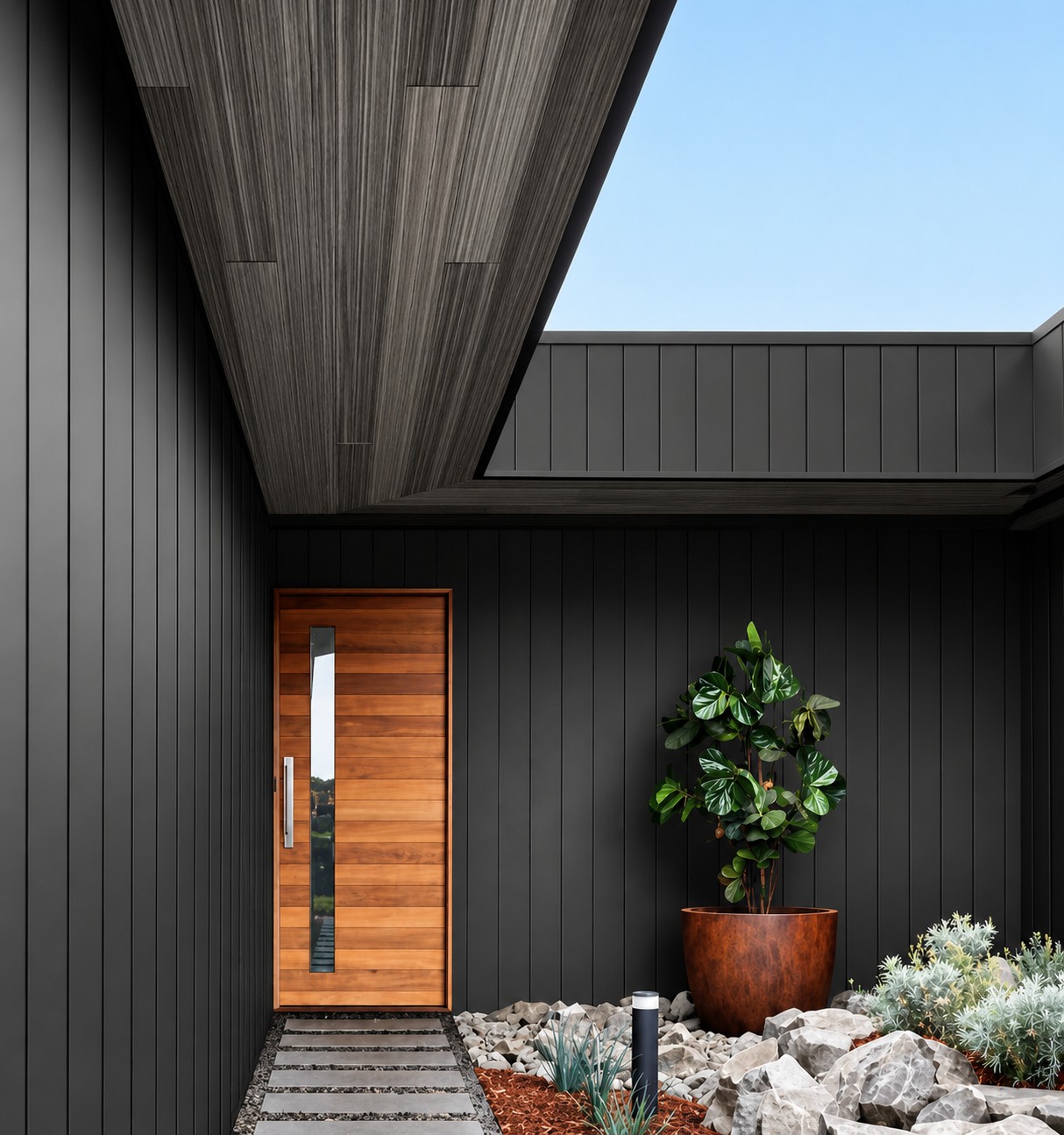
24. Modern Entry with Black Siding and a Wood Slat Door
That rust-colored planter is a perfect DIY project to complement a modern exterior. It’s likely made from Corten steel, but you can get the look for less.
- Time: 3-4 hours + drying time. Cost: $50-$80.
- Buy a simple, modern-shaped fiberglass or metal planter.
- Lightly sand the exterior to give the paint something to grip.
- Apply a primer designed for metal or plastics. Let dry completely.
- Use a specialty rust-effect paint kit, which often includes a metallic iron base coat and an acid solution that creates real rust.
- Or, for a simpler method, layer spray paints in shades of dark brown, orange, and tan, blotting with a rag while wet to blend.
- Finish with a matte clear coat to protect the finish.
|
📋 Copy HEX 🔗 Share |
💸 Get This Look For Less
When you have a dark, minimalist facade, the front door becomes the most important feature. This is where you signal the style and warmth of the home. The choice of a natural wood slat door here is perfect. It provides a necessary dose of organic texture and warmth against the cool, sleek black siding. The vertical glass insert echoes the vertical lines of the siding panels, creating a subtle but pleasing sense of rhythm and cohesion. Always invest in a high-quality, substantial-feeling front door—it’s the handshake of your home.
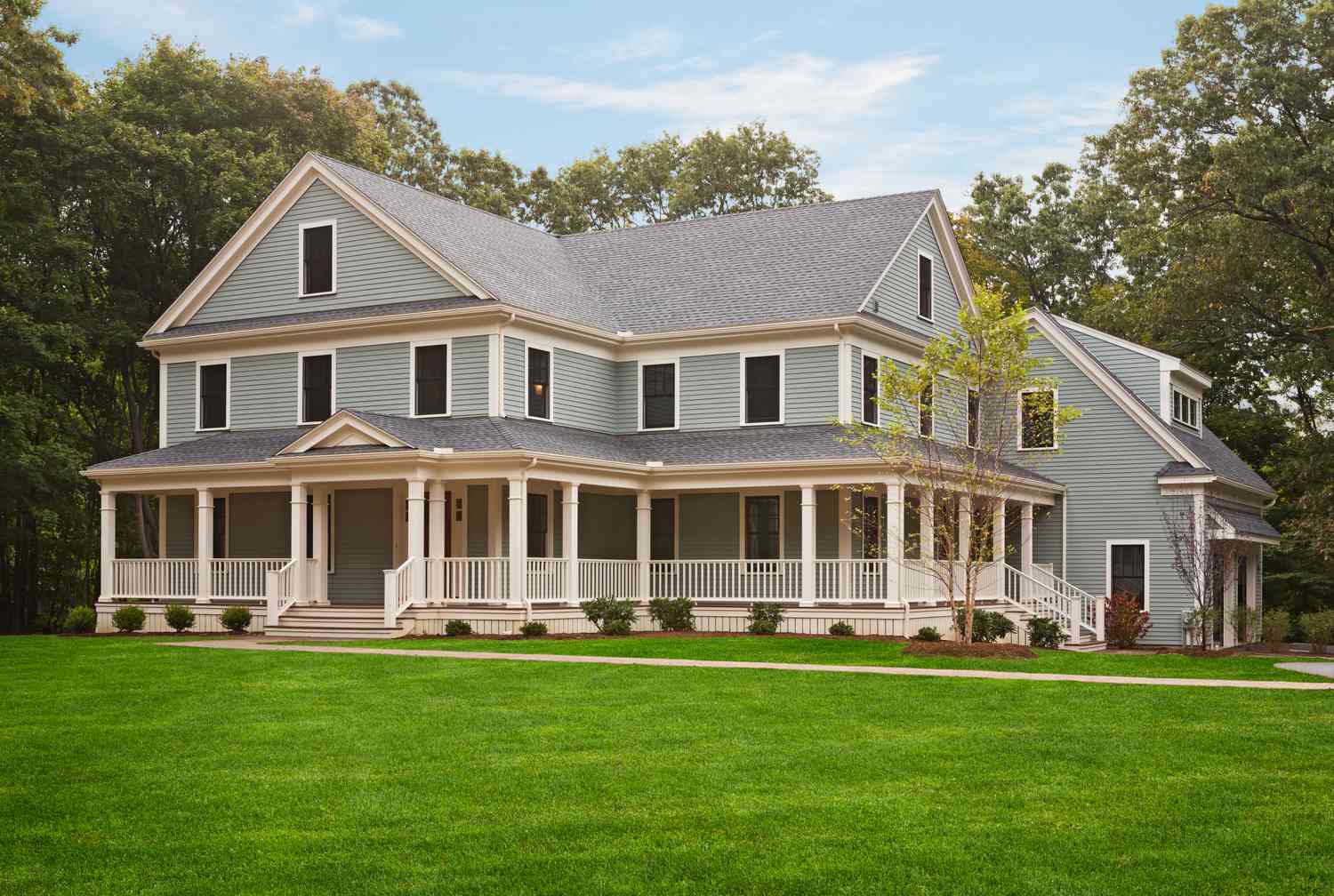
25. Traditional Home with Light Blue Siding and Grand Porch
This home feels so serene and classic because of its smart use of color and mass. The light blue-gray siding is a calming, recessive color, which allows the home’s grand size to feel graceful rather than imposing. The clean white of the expansive porch columns and railings creates a crisp, bright framework that defines the living spaces and contrasts beautifully with the soft blue. Finally, the dark window frames are a modern touch, adding a bit of graphic punch that keeps the traditional form from feeling dated. It’s a more colorful take on the grand porch style seen in Idea #4.
|
📋 Copy HEX 🔗 Share |
💡 Designer Tip
Recreating this grand traditional look is a significant investment, focused on architectural elements and quality finishes.
- Main Siding (Fiber Cement): $25,000 – $45,000
- Architectural Shingle Roof: $15,000 – $30,000
- Porch Structure (columns, railings, flooring): $20,000 – $40,000
- Windows & Doors: $15,000 – $25,000
- Paint & Trim: $8,000 – $15,000
- TOTAL: $83,000 – $155,000
Budget alternative: Achieve a similar vibe by using high-quality vinyl siding, focusing the budget on a well-built front porch (not a full wraparound), and using standard-sized windows. This could lower the total cost to the $45,000 – $75,000 range.
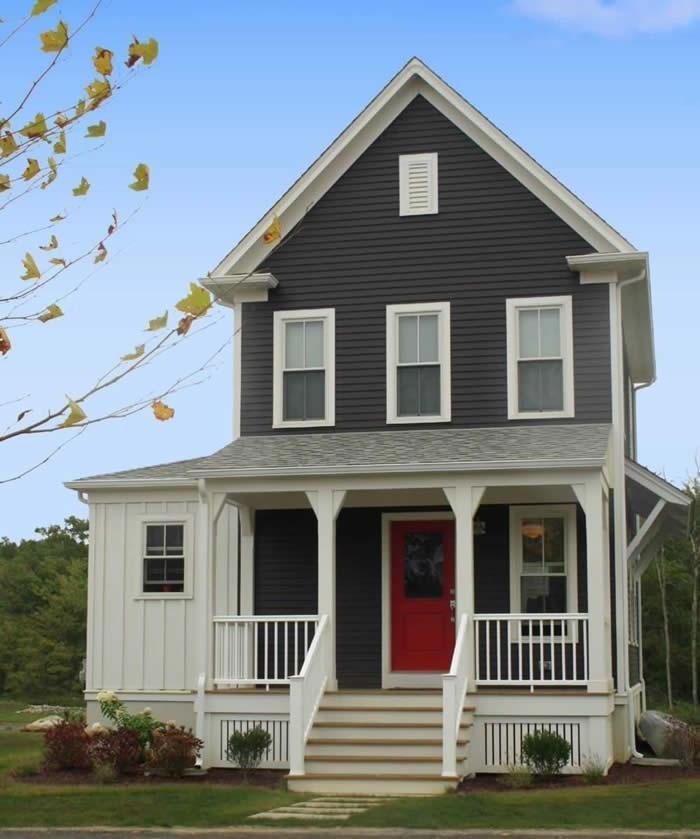
26. Dark Gray House with a Bright Red Front Door
It’s the red door. Period. The dark gray siding and white trim create a handsome, classic, and versatile backdrop, but it’s the jolt of vibrant red that gives this home its confident and welcoming personality. Your eye is drawn directly to it. It’s a small detail in terms of surface area, but it has an outsized impact on the home’s overall mood. Painting a front door is one of the easiest, cheapest, and most effective ways to completely change the character of your exterior. Without that splash of color, this house would be nice, but forgettable.
|
📋 Copy HEX 🔗 Share |
⭐ The One Thing
This exterior follows a classic design ratio: 80% neutral field + 15% crisp trim + 5% bold accent. The dark gray siding is the dominant neutral field. The white trim on the windows, porch, and eaves provides a clean, contrasting border. The final 5% is the high-impact accent—the red door. This formula is incredibly versatile. You could swap the gray for navy blue, the white for a soft gray, and the red for a bright yellow, and the mathematical balance would still work perfectly. It’s a foolproof recipe for a balanced facade.
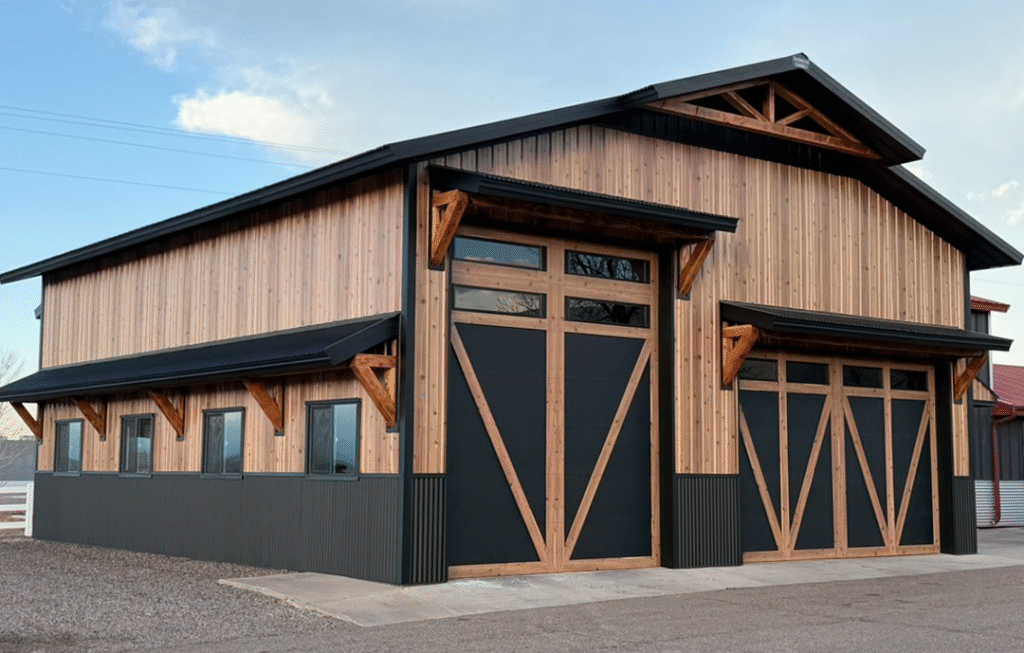
27. Modern Barn with Natural Wood and Corrugated Metal
This design is successful because it perfectly balances rustic materials with a clean, modern form. The natural vertical wood siding speaks to traditional barn architecture, while the corrugated black metal wainscoting adds a tough, industrial edge. The forms themselves are simple and geometric—rectangles and triangles. The genius is in the details: the diagonal wood bracing on the garage doors adds dynamic energy, and the chunky wooden corbels supporting the simple black awnings are a nod to classic craftsmanship within the modern structure.
|
📋 Copy HEX 🔗 Share |
🔧 How-To Brief
This look has a strong point of view. Before you commit, make sure it aligns with your home and neighborhood’s character.
- Is the barn/industrial aesthetic compatible with the surrounding homes? A modern barn can look out of place in a neighborhood of traditional brick colonials.
- Can your budget accommodate large custom or semi-custom garage doors? They are a huge part of this look and can be a major cost.
- Confirm your plan for wood maintenance. Natural wood siding requires regular sealing to prevent it from turning gray and weathering.
Your Home’s New Chapter Awaits
Deciding on a new exterior is a huge decision, but it’s also the start of a whole new chapter for your home. These ideas are more than just pictures—they’re starting points for your own story. Pick the elements you love, mix and match concepts, and create a look that feels genuinely you.
Ready to start planning? Pin your favorite ideas from this article to your board, and let the transformation begin!