You know that feeling when you find a picture of the perfect window box—lush, vibrant, and exactly the style you want—but have no idea how to make it happen? You’re not alone. Window boxes are the ultimate accessory for your home’s exterior, a way to add personality and life directly to your architecture. After filtering through hundreds of options from high-end nurseries to local garden centers, we’ve found the 30 best, most achievable window box planter ideas out there. We’re covering everything from classic overflowing florals to structured modern greenery. And stay until the end—we break down the most common mistakes that can ruin these looks. 📌 Save this to Pinterest for later—you’ll want to revisit these ideas.
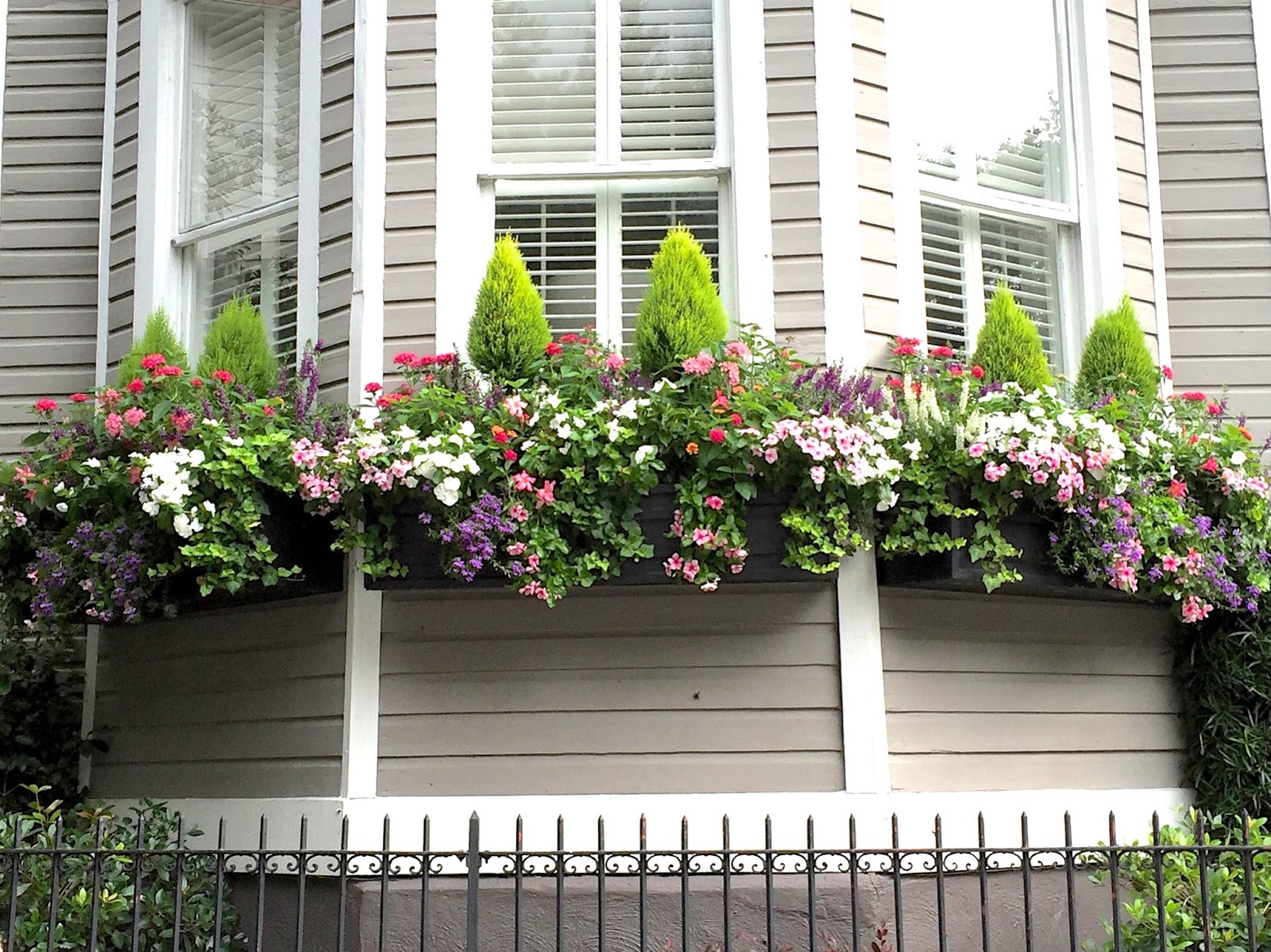
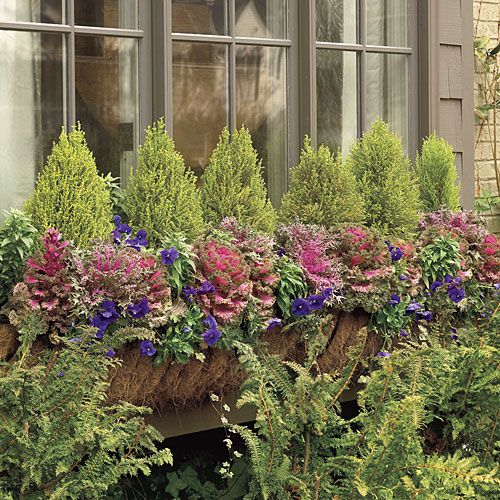
1. Vibrant Floral & Evergreen Boxes on a Taupe Bay Window
This arrangement is a masterclass in combining structure and seasonality. The small, conical evergreen shrubs act as the ‘bones’ of the design, providing height and year-round greenery. This permanent structure means the box never looks empty. The vibrant mix of pink, red, and purple flowers are then woven in as seasonal stars. The contrast between the formal, clipped evergreens and the soft, romantic flowers creates a dynamic tension that is incredibly appealing to the eye. The deep color of the window boxes themselves anchors the entire composition, preventing the bright colors from feeling chaotic against the neutral taupe siding.
💡 Designer Tip
When planting conical evergreens like these (likely dwarf Alberta spruce or similar), think about their mature size, not their nursery size. For a lush but not overcrowded look, a good rule of thumb is to space them so the widest part of their mature spread will be about 3-4 inches away from each other and the window frame. This ensures they have air circulation to prevent disease and room to grow into their natural shape without being squashed. You can temporarily fill the gaps with annuals for the first couple of seasons while they fill in.
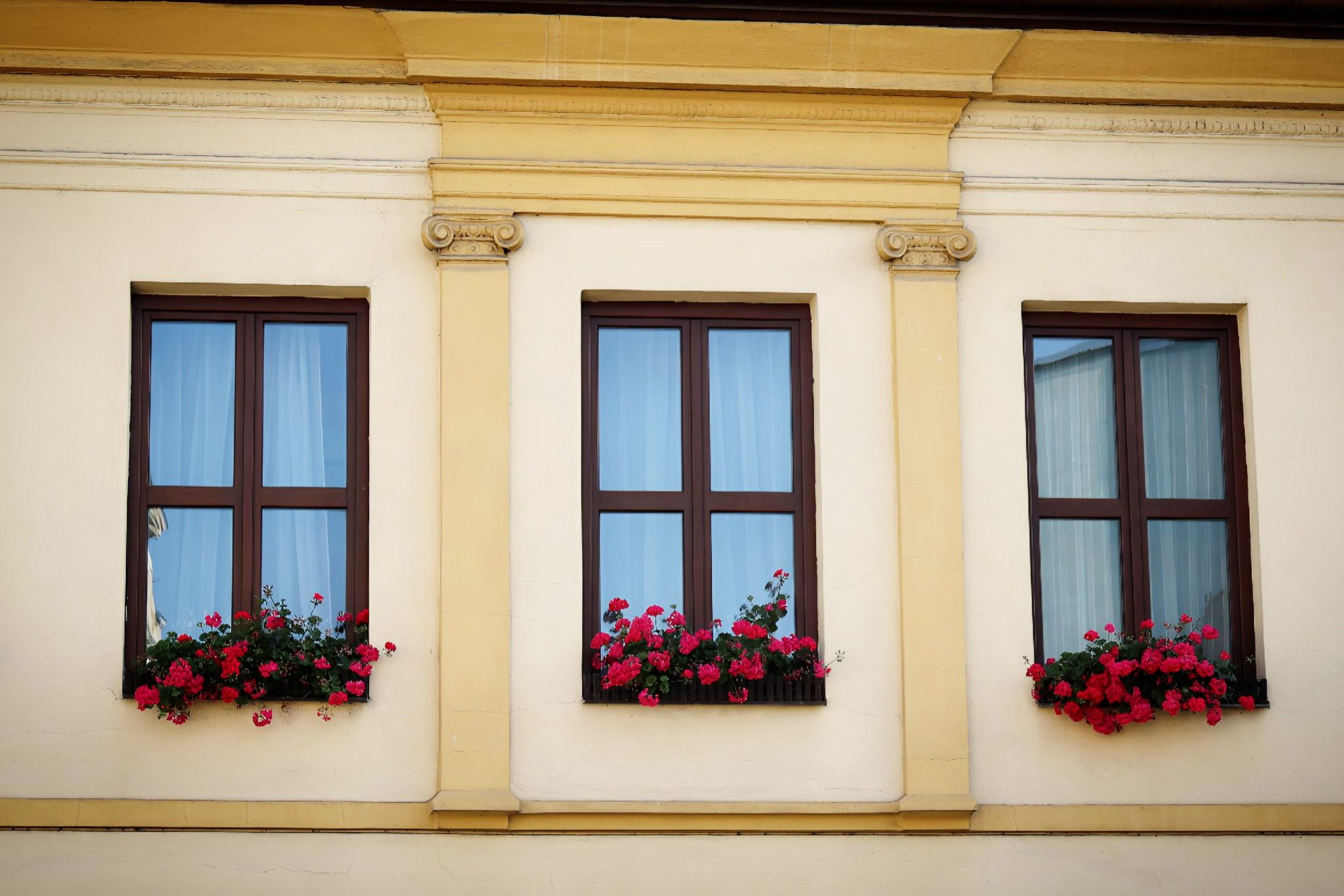
2. Red Geraniums in Dark Boxes on a Cream Facade
The formula here is simple but incredibly effective. Think of it as 60% neutral foundation + 30% bold color + 10% architectural detail. The vast cream facade is your neutral 60%, creating a calm, expansive backdrop. The vibrant red geraniums are your 30% accent, providing a powerful, focused punch of color that immediately draws the eye. The final 10% comes from the dark brown of the window frames and boxes, plus the pale yellow columns, which frame and define the composition. You could swap the red for fuchsia or pure white and the cream for a soft gray, and the math would still work perfectly.
🔧 How-To Brief
Let’s be honest: achieving geraniums this lush and red requires one thing above all else—sun. Lots of it. This is a full-sun look, meaning at least 6-8 hours of direct sunlight per day. If your window faces north or is heavily shaded by trees, you will not get this result. Geraniums will become ‘leggy’ (long, sparse stems) and refuse to bloom in the shade. Also, a display this bold on a light-colored facade means any drips, dirt, or water stains from the boxes will be highly visible. Plan for regular cleaning of the wall area below the boxes.
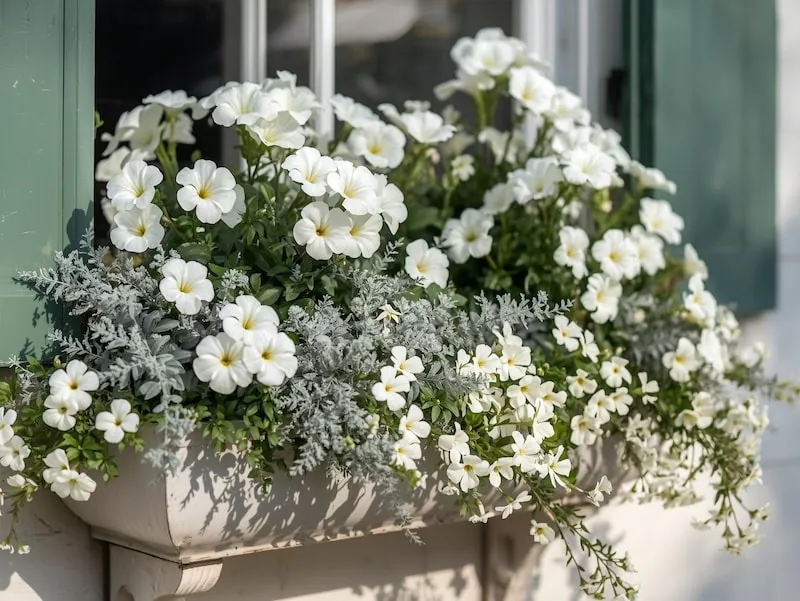
3. Lush White and Silver Foliage Box with Green Shutters
The single element that makes this design so sophisticated is the silvery-gray foliage. Without it, you’d have a pretty but simple combination of white flowers and green leaves. The silvery leaves (likely Dusty Miller or a similar variety) act as a visual bridge. They connect the bright white of the flowers to the soft green of the shutters, creating a harmonious, almost painterly transition. It adds a layer of texture and a cool tone that elevates the entire palette, turning a common color scheme into something truly elegant and memorable. It proves you don’t always need a pop of bright color to make a statement.
⚠️ Real Talk
A monochromatic white floral scheme is stunning, but it requires a bit of extra work to keep it looking pristine. White flowers, especially after rain, can show browning and spotting more obviously than their colorful counterparts. Diligent deadheading (pinching off spent blooms) isn’t just for encouraging new growth—it’s essential for maintaining the clean, fresh look. You’ll want to inspect the box every two to three days to remove any fading flowers. The silvery foliage is generally low-maintenance, but be prepared for this regular tidying to keep the white blossoms looking their best.
4. Dark Metal Window Box with White Flowers on White Siding
You don’t need a custom-forged iron planter to get this crisp, high-contrast look. A basic plastic or composite window box from a big-box store like Home Depot or Lowe’s can be transformed with the right paint. A can of matte black spray paint designed for outdoor use on plastic (like Krylon Fusion or Rust-Oleum for Plastic) will cost you about $10. For the plants, instead of expensive perennials, opt for hardworking annuals like white impatiens for shade or white vinca for sun. A flat of these typically costs $15-$25. The entire look, planter and plants, can easily be achieved for under $50.
💰 Budget Breakdown
Before you commit to this high-contrast look, check a few key things to make sure it works for your home. This isn’t just about slapping a box on the wall.
- Siding Material: Can you drill into your siding? Is it vinyl, wood, or brick? You’ll need different anchors for each. Drilling into vinyl can sometimes void warranties, so check first.
- Window Height: Is the window low enough that you can comfortably water the box with a watering can, or will you need a hose with a wand attachment? Plan your watering strategy beforehand.
- Sun Exposure: Stand outside and check the spot at 9 AM, 12 PM, and 4 PM. Is it full sun (6+ hours), partial sun (4-6 hours), or shade? This will determine which white flowers you can plant.
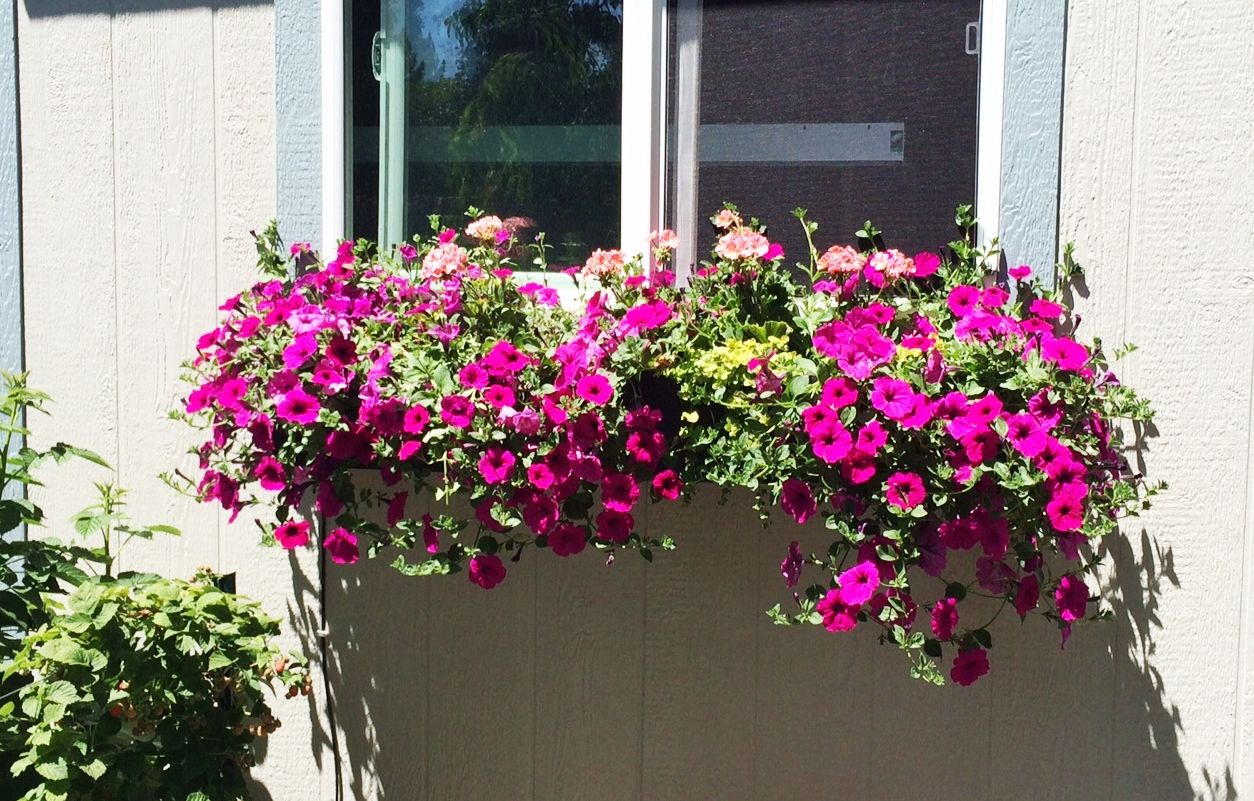
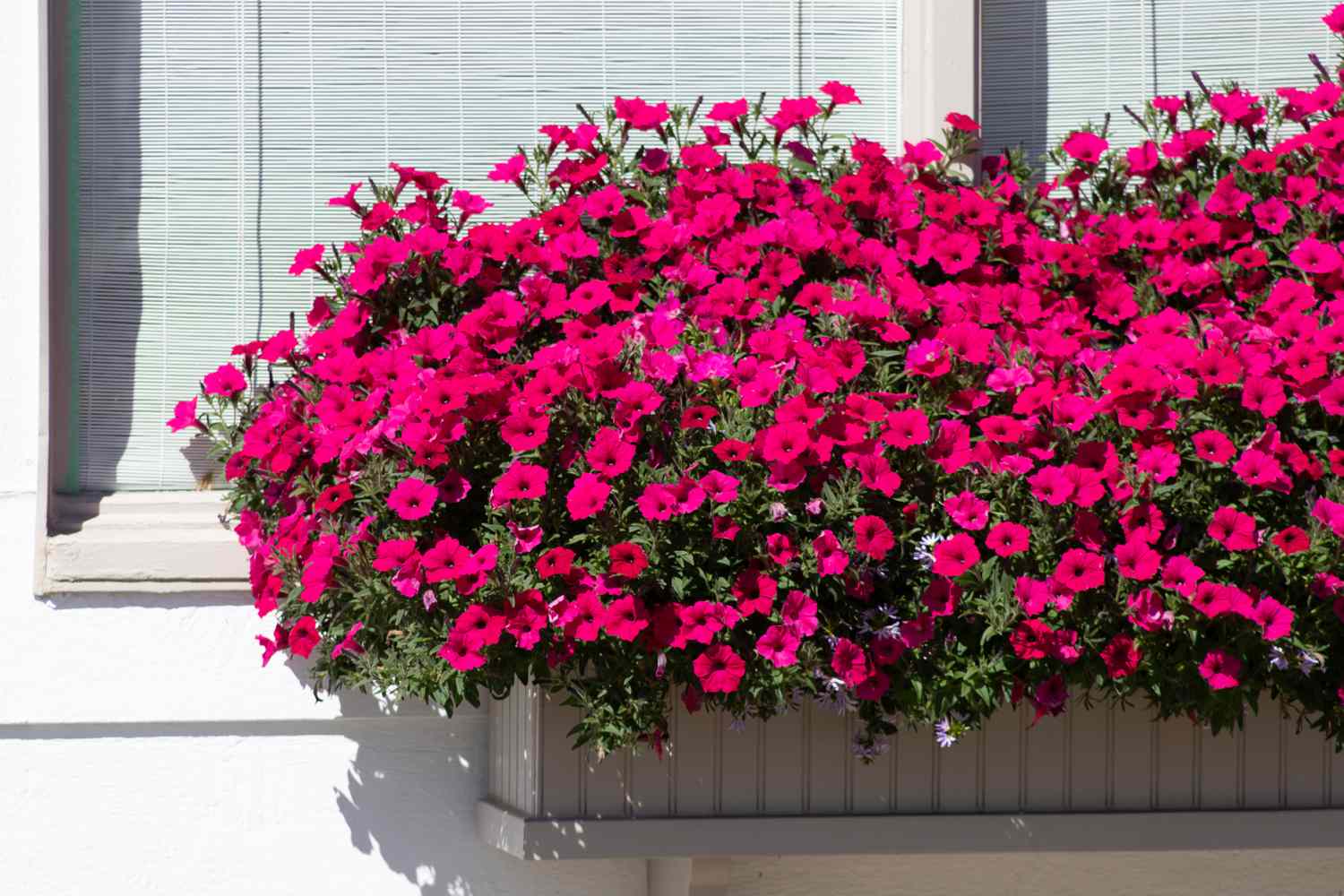
5. Overflowing Magenta Petunias in a Window Box
That incredible, overflowing look doesn’t happen by accident. It’s a classic planting technique often called ‘Thriller, Filler, Spiller’. Here’s how to do it for a window box.
- Thriller: In the center or back, plant something upright for height. This doesn’t have to be tall, just taller than the rest. A simple grass or a spiky dracaena works well.
- Filler: Around your thriller, add mounded plants. These are your ‘filler’ plants. In this case, more petunias fill this role perfectly. They create the main body of color and mass.
- Spiller: Along the front and side edges, plant your ‘spillers’. These are trailing plants that will cascade over the edge. Here, the magenta petunias themselves are doing the spilling, but you could also use something like sweet potato vine or calibrachoa.
- Plant Densely: Don’t be shy. For a full look from day one, place plants closer together than you would in a garden bed. You can always thin them later if needed.
Total time: 30 minutes. Cost: $30-$50 for plants.
⭐ The One Thing
A dramatic, cascading display like this works best on first or second-story windows where the ‘spilling’ effect can be fully appreciated from the ground. For windows on the third floor or higher, the beautiful trailing detail can be lost. This idea is ideal for a minimum window width of about 30 inches to give the plants enough room to establish. A box that is too small (less than 24 inches wide or 6 inches deep) will dry out too quickly and won’t support the volume of plants needed for this lush effect. Compare this with the more structured look in Idea #1, which works well at any height.
6. Ornate Iron Window Box with Terra Cotta Pots
This is such a clever and practical approach. The ornate wrought iron box acts as a decorative ‘cage’ or framework rather than a planter itself. This allows you to use standard, inexpensive terra cotta pots as inserts. Why is this brilliant? First, it creates visual layers: the dark iron, the warm terra cotta, and then the vibrant plants. Second, it makes plant rotation incredibly easy. If one plant starts to look tired, you can just lift the pot out and swap it with a fresh one without disturbing the whole arrangement. It turns the window box into a changeable stage for your plants.
🔥 Trending Context
While using individual terra cotta pots is charming and flexible, it has a significant downside: they dry out extremely fast. Terra cotta is porous, meaning water evaporates through the sides of the pot as well as from the soil surface. In a sunny, breezy spot, you will absolutely need to water these pots every single day in the summer, possibly even twice a day during a heatwave. If you are a forgetful waterer or travel frequently, this might not be the setup for you unless you install a drip irrigation system. A self-watering plastic insert would be a more forgiving choice.
7. Ornate Dark Metal Window Box with Lush Greenery
There’s a reason we’re seeing a return to classic, ornate details like this. In a world of minimalist design, there’s a growing appreciation for craftsmanship and historical texture. This style taps into the ‘Modern English Country’ trend, which celebrates heritage patterns and materials but uses them in a fresh way. Instead of being stuffed with fussy, old-fashioned flowers, this box is filled with simple, lush greenery. It’s the juxtaposition of the ornate, traditional metalwork with the clean, modern plant choice that makes it feel current and not like a dusty historical recreation.
📐 Style Math
that makes this work is the choice to go all-green. Filling an ornate, decorative planter like this with a riot of colorful flowers could easily become too busy, with the flowers and the metalwork competing for attention. By sticking to a monochrome palette of lush, varied greens, the focus shifts. Your eye is first drawn to the interesting shape and pattern of the planter itself, which is allowed to be the star. The greenery then becomes a rich, textural backdrop that enhances the metalwork instead of fighting it. It’s a confident design choice that whispers elegance rather than shouts for attention.
8. Black Window Box with Pink and Purple on a Brick Wall
The visual success here lies in a balanced equation of color and texture. We have 50% textured neutral (the reddish-brown brick), 30% lush greenery, 15% dominant floral color (pinks and purples), and 5% grounding black. The brick provides a warm, textured backdrop that keeps the vibrant flowers from feeling too jarring. The black of the window box is crucial; a white box would have been too stark, but the black anchors the entire vignette and makes the pink and purple hues pop. It’s a classic formula that feels both timeless and full of life.
🎯 What Makes It Work
A densely packed planter like this is stunning, but it’s also a thirsty beast. With so many plants competing for resources in a confined space, the soil will dry out very quickly, especially on a brick wall which absorbs and radiates heat. During peak summer, daily watering is a must. You’ll also need to feed it regularly—at least every two weeks with a water-soluble fertilizer—to keep the flowers producing. Without consistent food and water, a box this full will quickly exhaust its resources and the plants will stop blooming, turning your lush display into a sad, leggy mess.
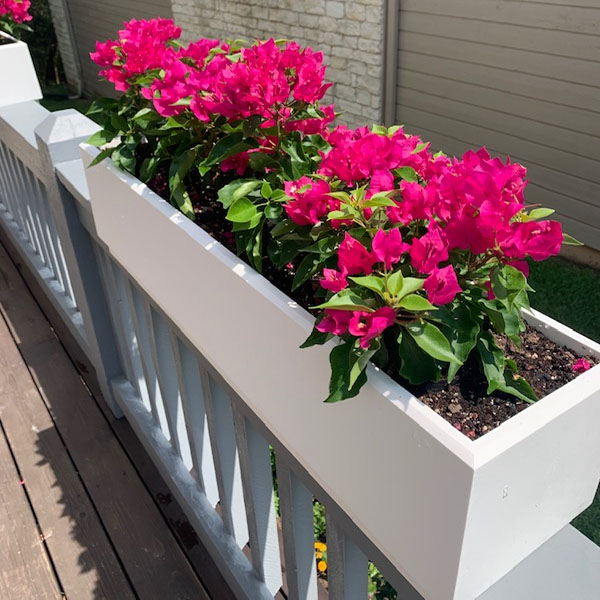
9. White Railing Planters Filled with Vibrant Fuchsia Flowers
This is such an impactful way to add color to a deck or balcony without any complex installation. The key here is repetition. Instead of one long, expensive custom planter, using multiple standard-sized railing planters creates a similar effect for a fraction of the cost. You can find these white rectangular planters at stores like Target, Walmart, or Amazon for about $20-$30 each. The fuchsia flowers are likely bougainvillea or a vibrant petunia, both of which are affordable and widely available in the spring. By repeating the same planter and the same bold flower color, you create a powerful, cohesive design statement on a budget.
✅ Before You Start
This idea is perfect for defining the edge of a deck, patio, or apartment balcony. The planters are designed to sit securely on standard 2×4 or 2×6 wood railings. The minimum space required is simply the length of your railing. However, for the best visual impact, you need at least three planters in a row. A single planter can look a bit lonely. This approach is less suited for traditional window applications, as the mounting mechanism is specifically for railings. For a similar look below a window, see Idea #13‘s simple white box.
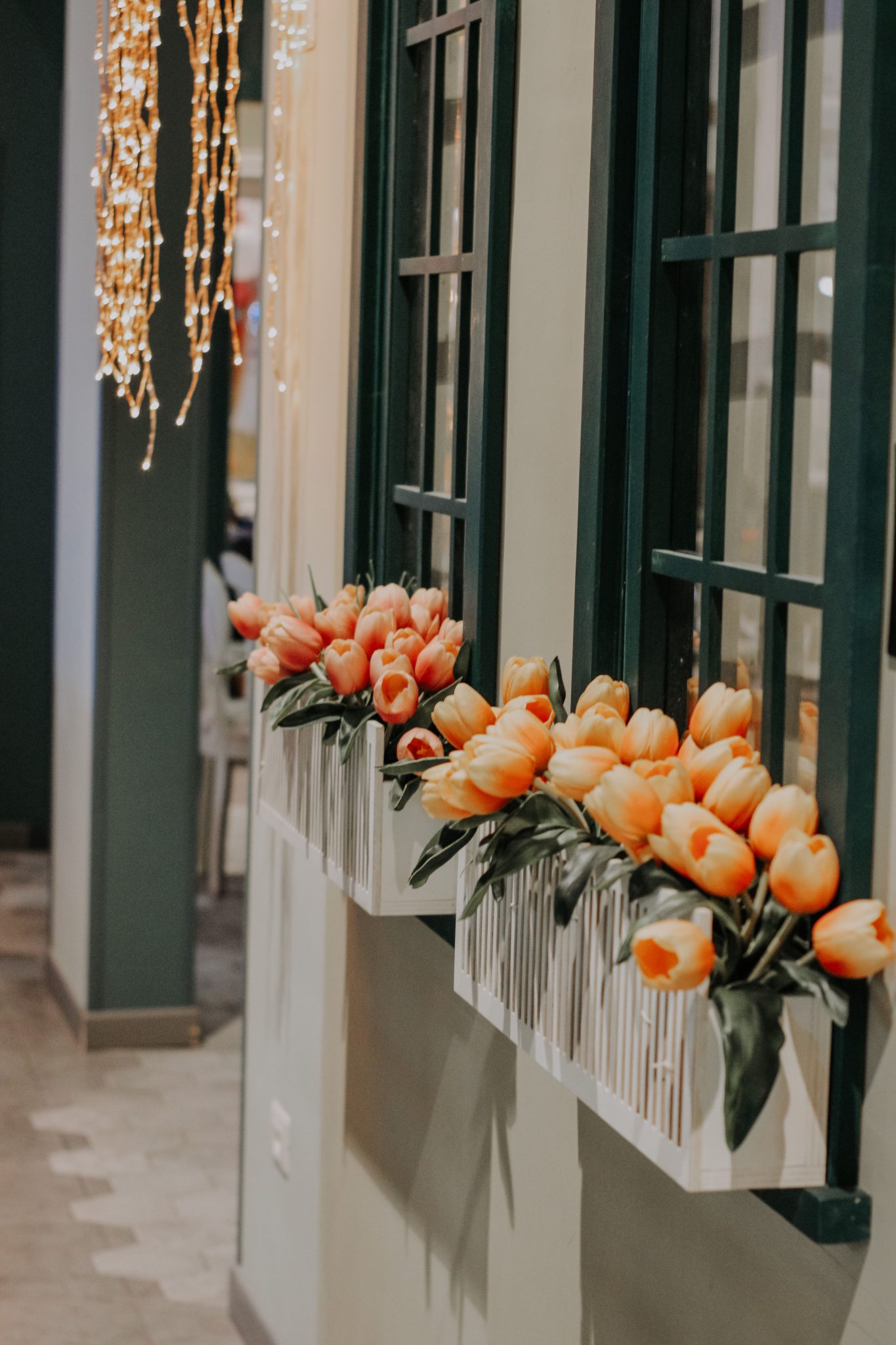
10. White Slatted Boxes with Orange Tulips and String Lights
Take away the cascading string lights, and you have a lovely, cheerful window box display. But with them, the entire scene is transformed into something magical. The lights are the element that extends the enjoyment of this design from day to night. During the day, they are a subtle decorative detail. At night, they create a warm, inviting glow that not only highlights the vibrant orange tulips but also adds a layer of coziness and ambiance to the whole facade. It’s a simple addition that doubles the impact of the design and makes the space feel special and celebratory.
🧹 Maintenance Reality
This design succeeds because of its masterful use of color theory. The deep, dark green of the window frames and the vibrant orange of the tulips are complementary colors (opposite each other on the color wheel). This creates the highest possible contrast, making the tulips appear even more vivid and saturated. The white of the slatted boxes and the light beige wall act as a neutral canvas, allowing the orange and green to take center stage without competition. The warm glow of the string lights then echoes the warmth of the orange, tying the whole look together.
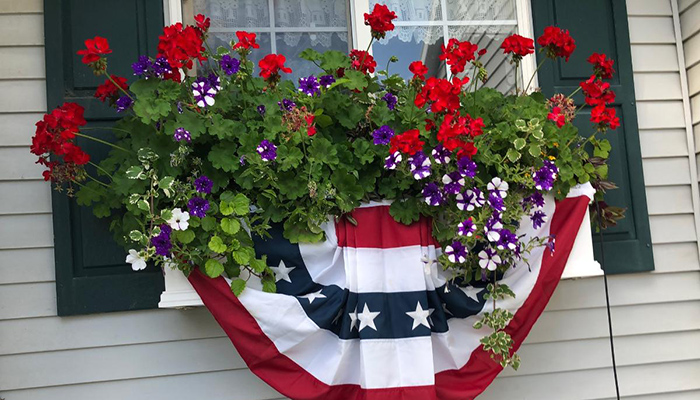
11. Patriotic Window Box with Red, White, and Purple Flowers
When combining multiple bold colors like red, white, and purple, the key to avoiding a chaotic mess is to plant in distinct color blocks or clusters rather than mixing individual plants randomly. Plant a section of red geraniums on one side, a cluster of purple petunias in the middle, and white flowers on the other end. This intentional grouping gives each color space to breathe and allows the eye to register the different hues clearly. It looks more professional and considered than a random jumble, even with the same plants. The lush green foliage then acts as a neutral separator between the blocks of color.
💸 Get This Look For Less
Creating the bunting effect is easier than you think and it’s what gives this box its festive charm. Here’s a quick guide:
- Measure Your Box: Measure the front face and the two short sides of your window box. Add those numbers together to get your total required bunting length.
- Purchase Bunting: You can find pre-pleated patriotic bunting fabric online or at party supply stores, especially around Memorial Day or the Fourth of July. Look for outdoor-rated fabric.
- Attach Securely: Use a heavy-duty staple gun with stainless steel staples (to prevent rust) to attach the top edge of the bunting to the underside of the window box’s top lip. Space staples every 4-6 inches.
- Secure the Ends: Neatly fold and staple the fabric at each end for a clean finish.
Total time: 15 minutes. Cost: $15-$30 for the bunting.
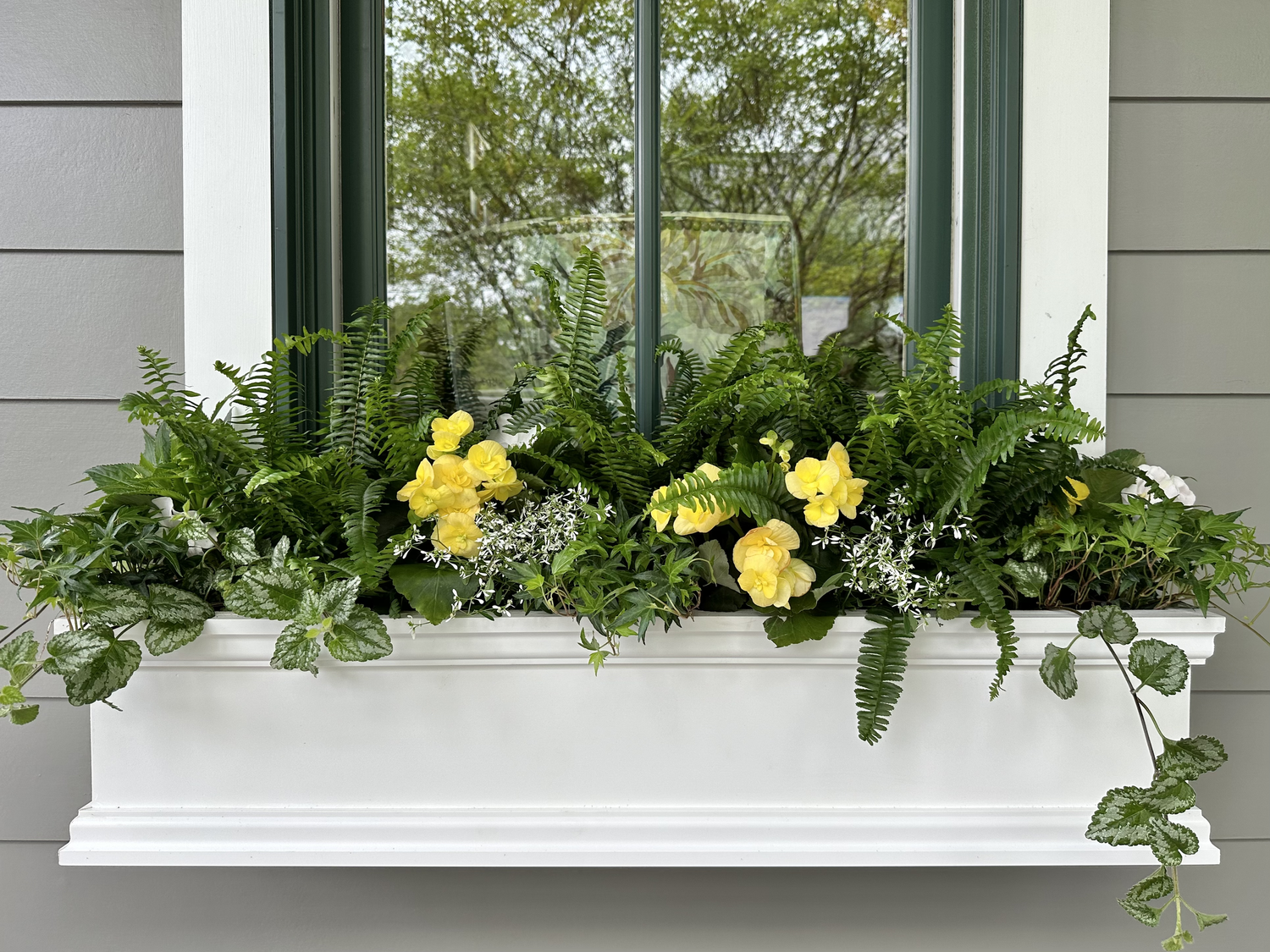
12. White Window Box with Lush Ferns and Yellow Begonias
This beautiful, lush, and shady look comes with a non-negotiable requirement: it needs to be in the shade. Those delicate ferns and bright begonias will absolutely fry in direct afternoon sun. This is a partial to full shade recipe. If your window gets blasted with sun from noon to 5 PM, this is not the plant combination for you, and no amount of watering will save them. You need a spot that gets gentle morning sun at most, or dappled light all day. Always choose your plants based on the light you have, not the look you want. It’s the first and most important rule of container gardening.
📏 Scale Guide
A box this full of foliage, especially ferns, needs consistent moisture. Ferns, in particular, will protest dramatically with brown, crispy fronds if they dry out completely even once. You’ll need to check the soil moisture daily by sticking your finger about an inch deep. The trailing variegated foliage is likely vinca vine, which is fairly hardy, but the begonias will require deadheading to keep producing those bright yellow blooms. Expect to spend about 5-10 minutes every other day on watering and tidying to keep this arrangement looking its best throughout the season.
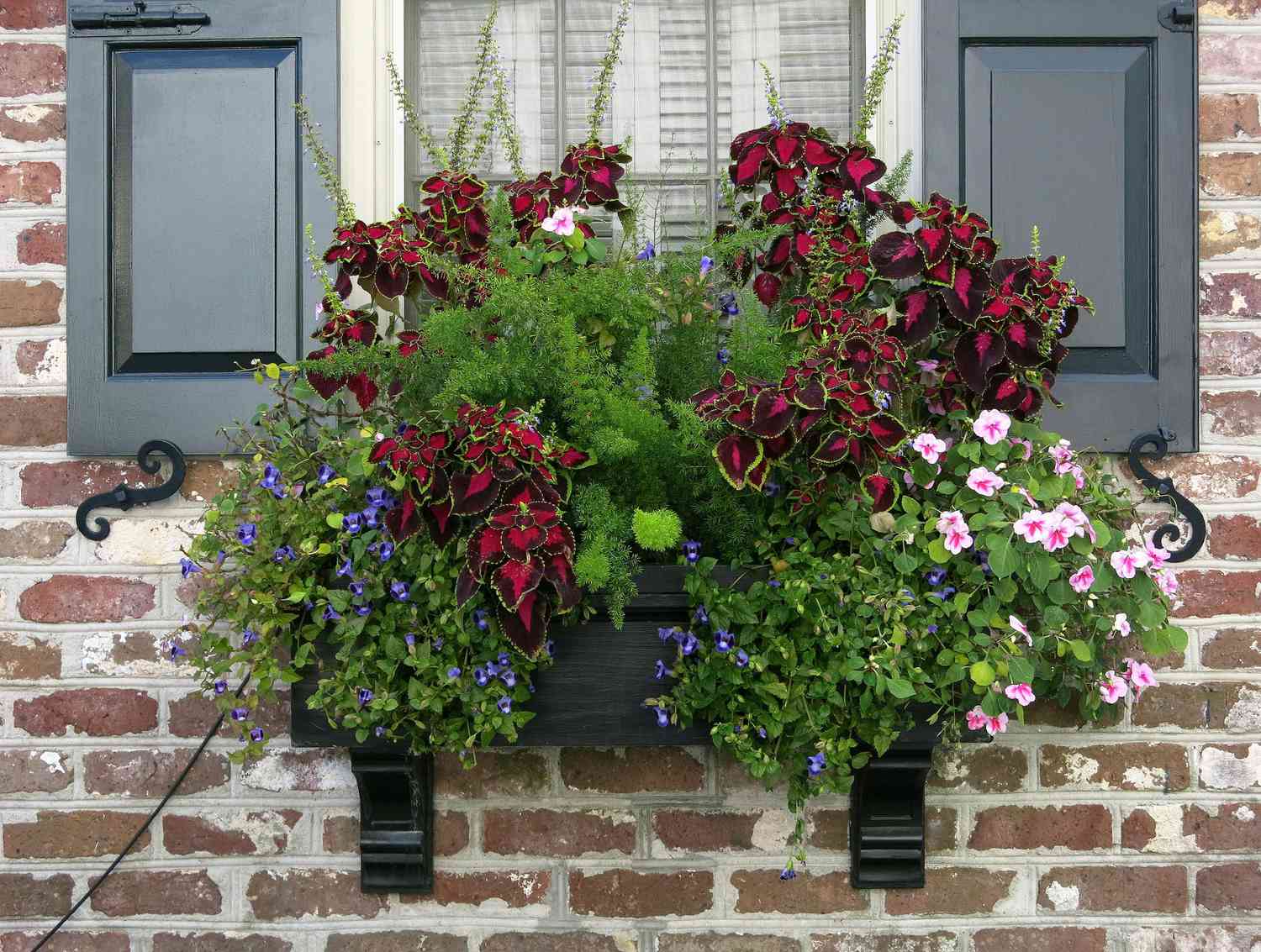
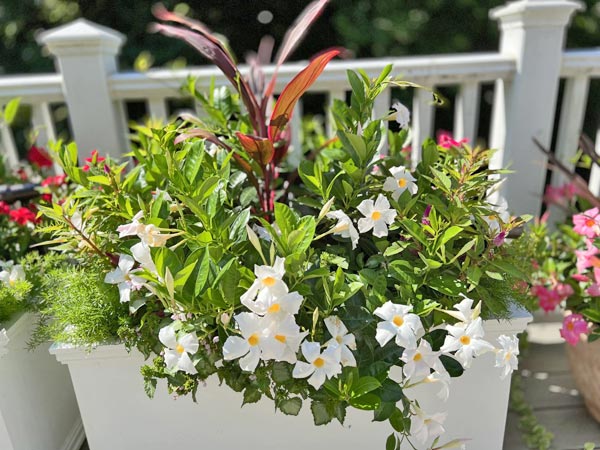
13. White Planter Box with Greenery, White Flowers, and Reddish Leaves
To recreate this lush and textured look, here’s a potential cost breakdown for a standard 36-inch box. Prices vary by region and nursery.
- Main Furniture (Planter): One 36″ white self-watering window box: $40 – $75
- Plants & Soil: Potting mix ($15), 2 ‘thriller’ plants (Cordyline, $20), 4 ‘filler’ plants (white geraniums, $20), 4 ‘spiller’ plants (vinca vine, $20): $75 – $100
- Decor/Accessories: None
- TOTAL: $115 – $175
Budget alternative: Use a standard plastic planter ($25), and grow flowers from seed or buy cheaper annuals like impatiens ($30). Total cost: $55.
💡 Designer Tip
This arrangement works so well because it follows the ‘Thriller, Filler, Spiller’ design principle perfectly, but with a twist. The reddish-purple spiky leaves (likely a Cordyline) serve as the ‘Thriller,’ providing height and a contrasting color. The broad green leaves and white flowers are the ‘Filler,’ creating the main body of the arrangement. The feathery, light green foliage cascades over the side as the ‘Spiller.’ The key is the variety in leaf shape, color, and texture. You have spiky, broad, and feathery forms all in one box, which creates immense visual interest even before you notice the flowers.
14. Classic White Window Box with Trailing Purple Flowers
This is the quintessential cottage look, and it’s surprisingly affordable to replicate. The white-on-white scheme (white box, white window, white siding) is timeless. You can find basic white vinyl or plastic window boxes at any home improvement store for $25-$40. The stars of the show are the plants: a trailing green vine (like ivy or vinca vine) and a purple flowering annual. For sun, purple wave petunias or calibrachoa are perfect. For shade, try purple torenia. A few 4-inch pots of each will run you about $20-$30 at a garden center. For a total investment of around $50-$70, you can have this charming, classic look all summer long.
🔧 How-To Brief
Before you mount that box, do a quick check. This is a simple look, but placement is everything.
- Window Function: Is this a double-hung window that opens from the bottom? Make sure the box is mounted low enough that you can still open the window and that the screen won’t be obstructed.
- Symmetry Check: Use a measuring tape and a level. Nothing screams amateur more than a crooked window box. Measure from the edges of the windowsill to ensure it’s perfectly centered.
- Drilling Plan: You are drilling holes in your house. Confirm you have the right drill bit and anchors for your specific siding material (wood, vinyl, brick). Hitting a stud is ideal for the most secure mount.
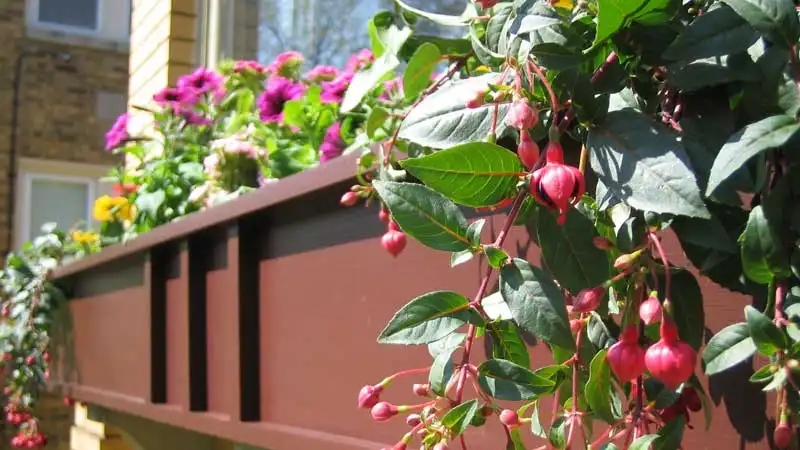
15. Brown Window Box with Cascading Fuchsia and Petunias
This vibrant mix follows a simple but powerful formula: 50% cascading elements + 40% mounded color + 10% upright texture. The cascading fuchsia flowers make up the dramatic ‘spiller’ half of the design, drawing the eye downward. The bright pink petunias act as the ‘filler,’ providing a dense mound of color that forms the core of the arrangement. The final 10% comes from the taller, unseen foliage and smaller yellow flowers at the back, adding a bit of height and complexity. The brown of the planter itself acts as a dark, earthy neutral that makes the bright pinks and magentas feel even more electric.
⚠️ Real Talk
To get that incredibly lush, cascading effect with fuchsias, there’s a trick: don’t be afraid to pinch them back early in the season. When you first plant them, and they have just a few long stems, pinch off the very tip of each stem. This forces the plant to branch out from lower down, creating a much fuller, bushier plant with significantly more flowers. It feels counterintuitive to remove potential buds, but sacrificing a few early blooms will give you a much more spectacular, long-lasting display for the rest of the summer. Do this just once when you plant them.
16. Dark Rectangular Window Box with Mixed Green & Red Foliage
The key element that prevents this from being just a simple box of greenery is the inclusion of the reddish-purple leafy accents. Without them, the box would be a pleasant but unremarkable mass of green. Those pops of red and purple (likely from a coleus or heuchera plant) introduce a vital point of contrast. They break up the monotony of the green, add warmth, and create depth. It’s a subtle but powerful move that makes the entire composition feel more curated and intentionally designed. It demonstrates that you don’t always need flowers to create color and interest.
💰 Budget Breakdown
This is a great example of creating interest through texture and form, rather than relying on blooms. The success of this all-foliage look comes from the variation in the plants. There are plants with broad leaves, small leaves, different shades of green, and the crucial reddish-purple accents. This variety ensures the arrangement is visually engaging. The dark, simple rectangular planter is the perfect choice here; a more ornate box would compete with the textural details of the plants. The planter’s dark color also recedes visually, making the foliage appear even more lush and vibrant.
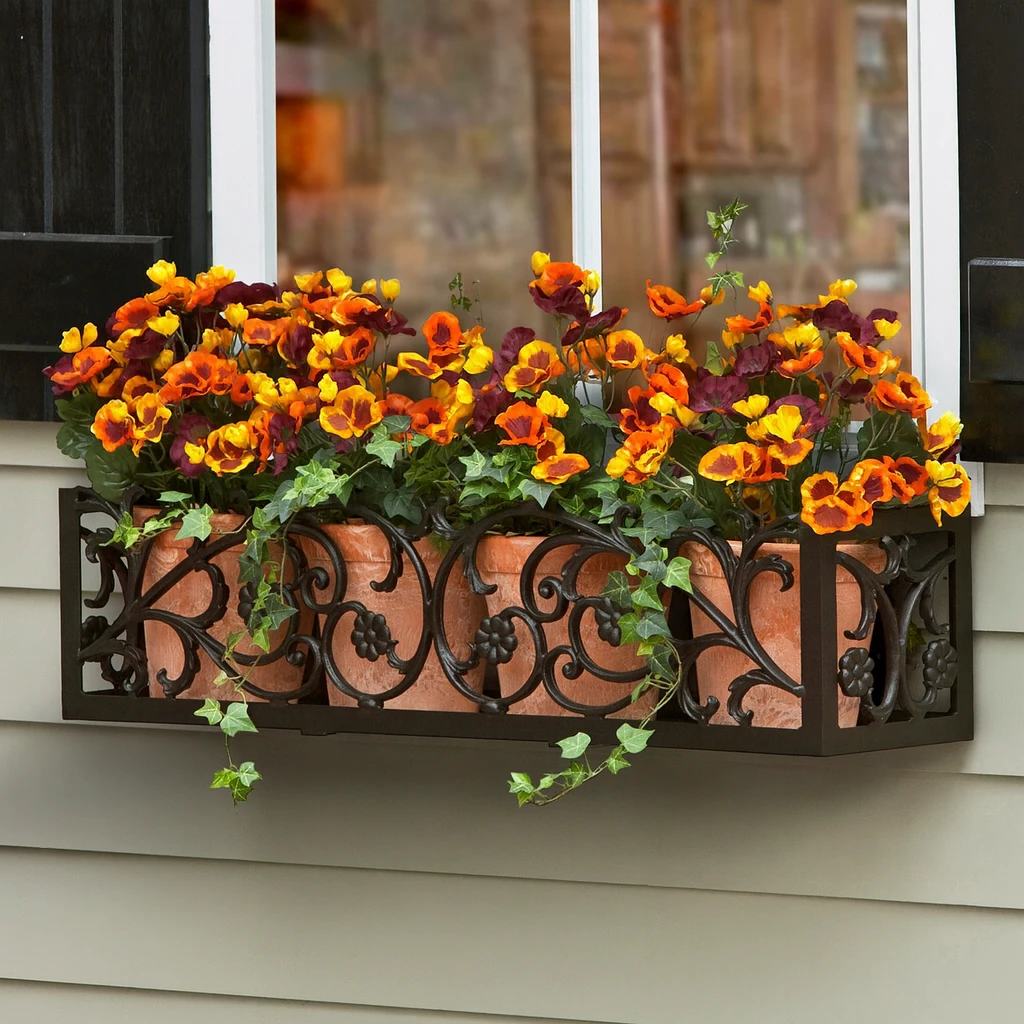
17. Autumnal Window Box with Faux Foliage and Metalwork
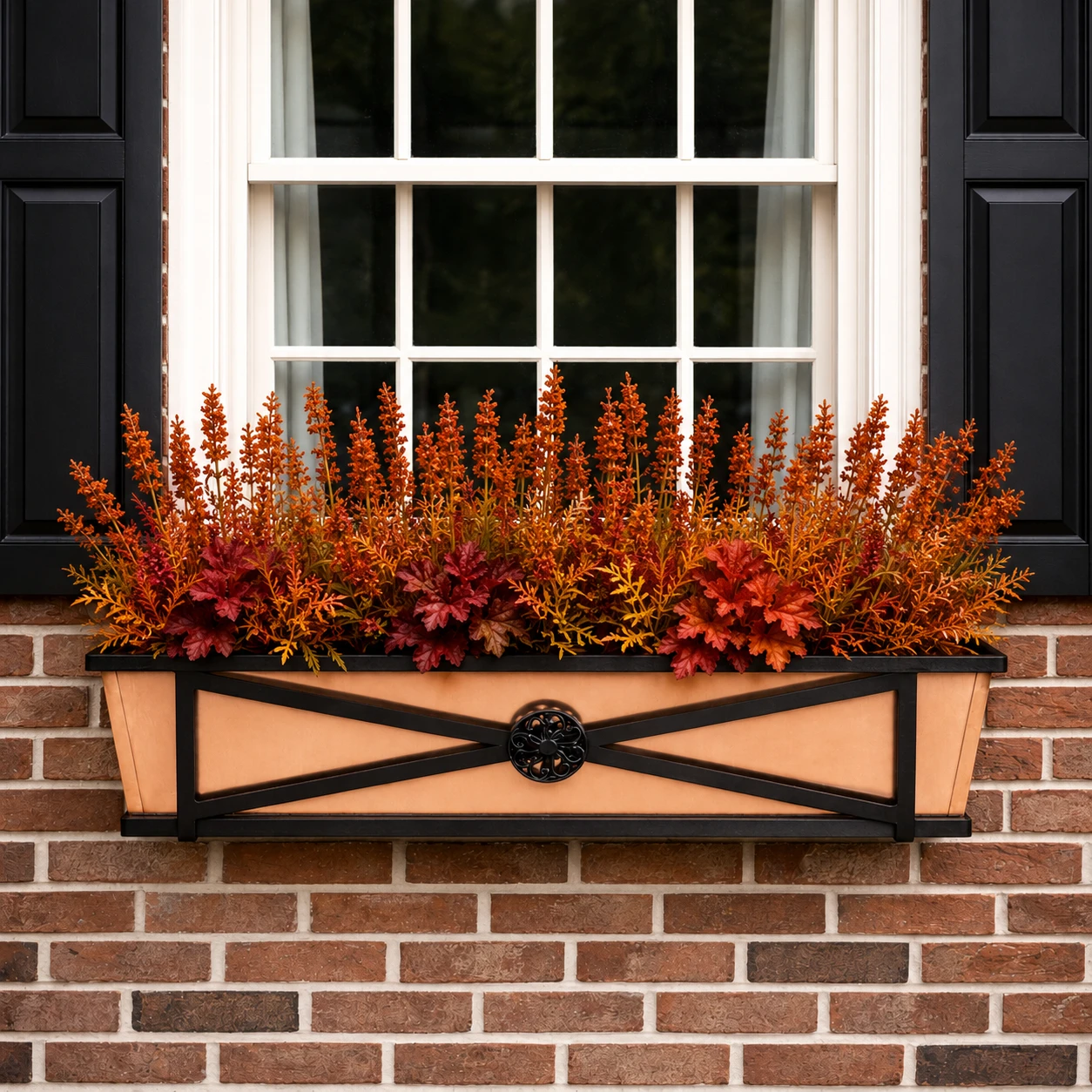
Using high-quality artificial foliage for seasonal displays is a huge trend, and for good reason. It’s zero-maintenance, lasts for years, and looks pristine from the moment you put it out until you take it down. For autumn, this is particularly smart. Real fall arrangements can look tired quickly, but a faux display like this provides that perfect, vibrant harvest look for the entire season from September through Thanksgiving. As the quality of artificials has skyrocketed, designers and homeowners are embracing them for these ‘set it and forget it’ seasonal moments. It’s about getting the maximum visual impact with minimum effort.
⭐ The One Thing
Creating a full, natural-looking faux arrangement is all about building a solid foundation. Here’s a quick guide:
- Create a Base: Fill your window box about three-quarters full with floral foam blocks. You can secure them with a bit of hot glue or just wedge them in tightly.
- ‘Green’ the Base: Cover the foam with a layer of preserved moss or even some crumpled brown paper to hide it.
- Insert Main Stems: Start with your largest or most structural stems (the branches with the most leaves). Push them firmly into the foam, establishing the overall shape and height.
- Add Filler Stems: Use smaller picks and sprays to fill in the gaps. Bend and shape the wired stems to create a more natural, less rigid look.
- Fluff and Finish: Once all stems are in, step back and look for holes. Fluff out the leaves and bend branches to create a sense of movement and abundance.
Total time: 20 minutes. Cost: $50-$100 for quality faux stems.
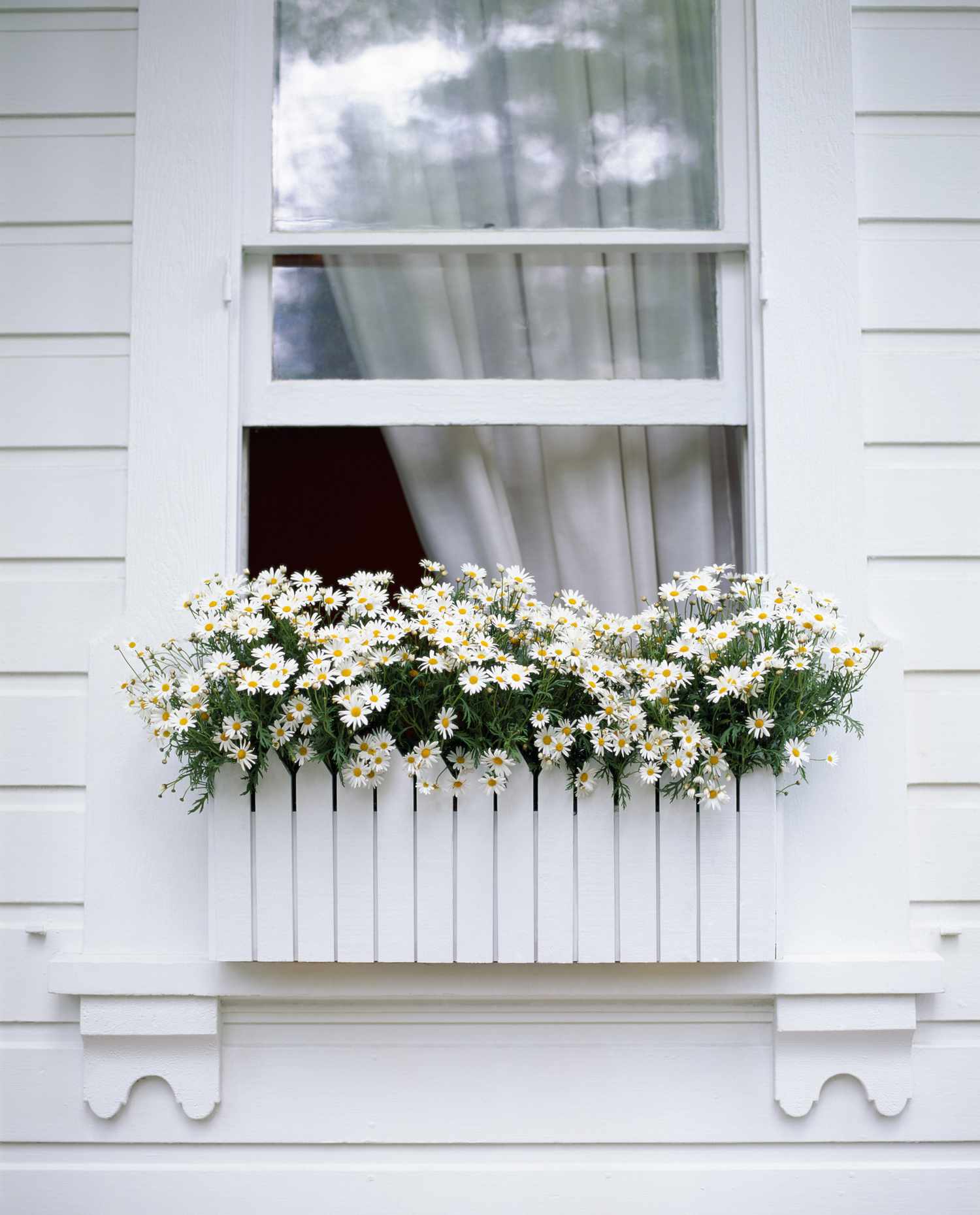
18. White Slatted Window Box on a Classic Red Brick House
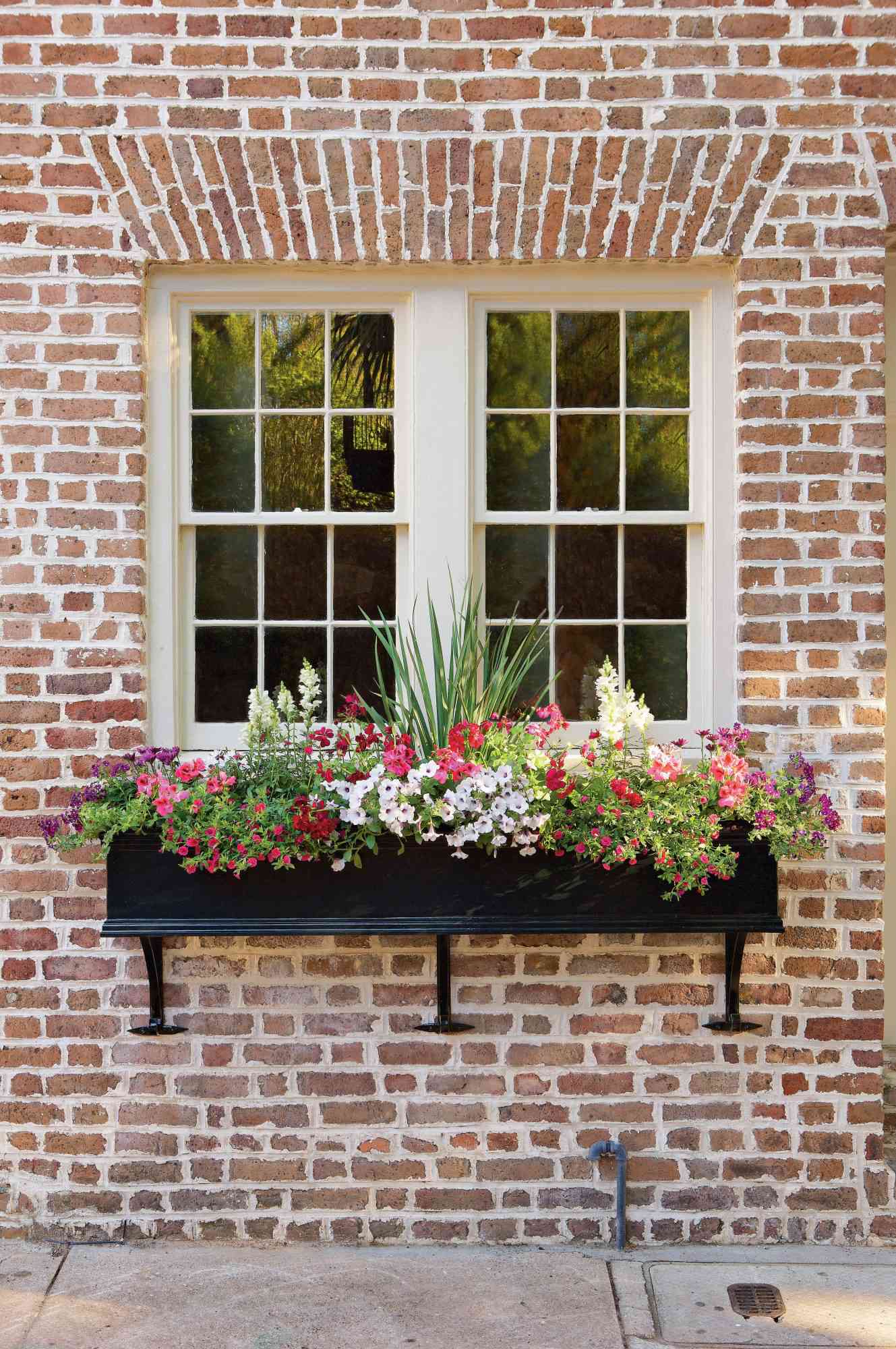
A word of caution when mounting anything, especially a heavy, water-filled window box, onto a brick facade. You cannot just drill into the brick itself. Brick is brittle and can crack or ‘spall’ under the pressure of a screw and the weight of the box. You must drill into the mortar joints between the bricks. The mortar is softer and designed to be a sacrificial layer. Use a masonry drill bit and the appropriate anchors (like lead or lag shields) designed for mortar. If you’re not 100% confident, this is a job worth hiring a handyperson for. A falling window box is a serious hazard.
🔥 Trending Context
This overflowing, cottage-style look is incredibly versatile, but it shines on facades with strong texture, like this red brick. The ideal window width for a single box like this is between 36 and 48 inches. Any smaller, and the box might feel cramped; any larger, and you might consider using two smaller boxes for better support and visual balance. The depth of the box is also key. Look for a box that is at least 8 inches deep and 8 inches tall to provide enough soil volume for this many plants to thrive without drying out instantly. Compare with the multi-pot approach of Idea #5.
19. Vibrant Striped Petunias in a Red-Brown Wooden Box
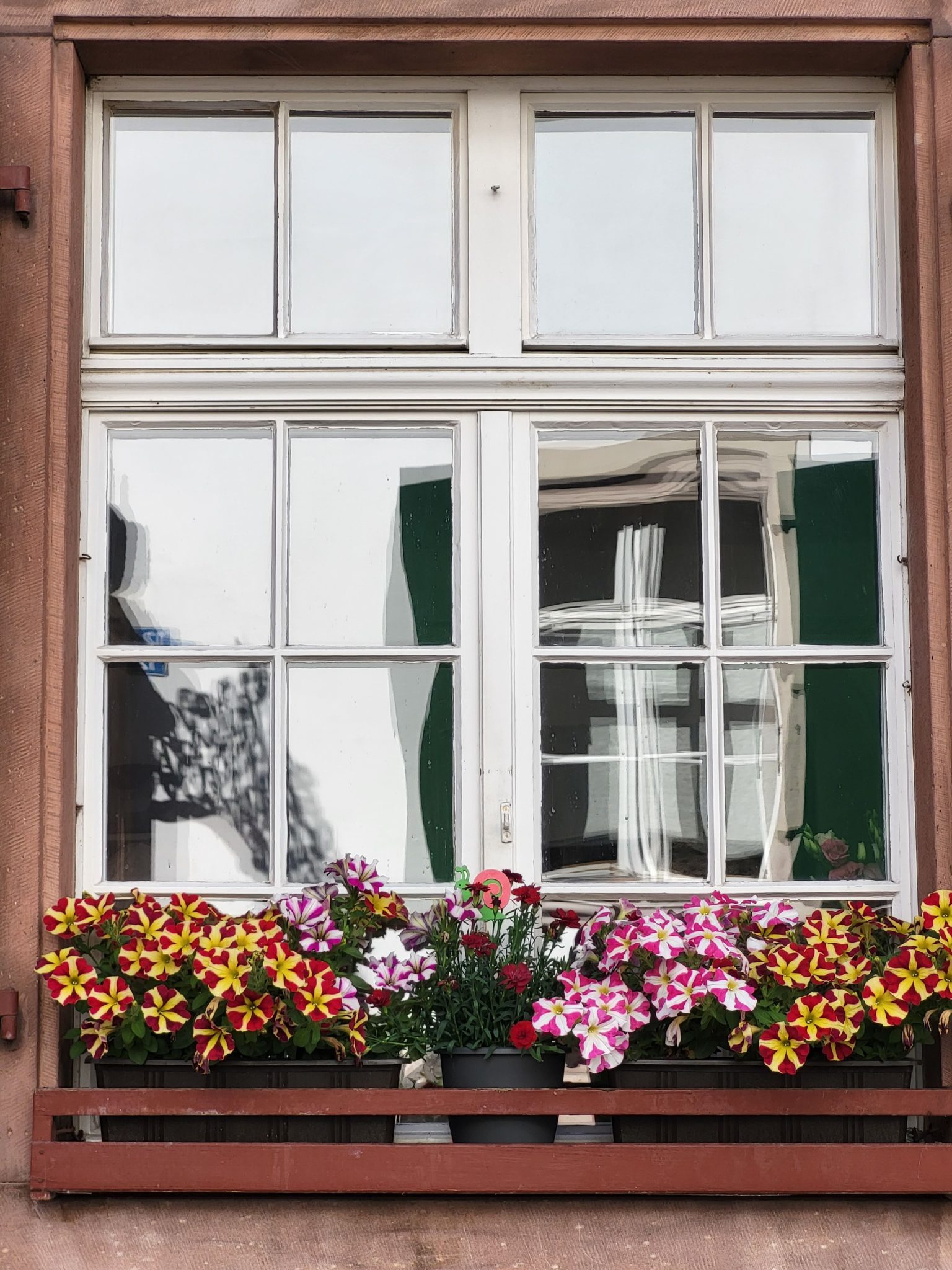
The single element that elevates this from a nice window box to a truly joyful one is the choice of striped petunias. Solid red or pink flowers would have been pretty, but the red-and-yellow and pink-and-white striped varieties add a layer of playful, almost whimsical, energy. They have a ‘candy-striper’ quality that feels fun and unexpected. This specific plant choice completely defines the mood of the arrangement, making it feel cheerful and bursting with personality. It’s a reminder that sometimes the most impactful decision is made at the nursery when choosing the specific cultivar.
📐 Style Math
This composition works because it’s a perfect harmony of coordination and contrast. The reddish-brown wooden window box coordinates beautifully with the textured brown facade of the building, creating a cohesive and warm foundation. The white of the multi-paned window provides a crisp, clean break. Then, the vibrant, multi-colored petunias are introduced as a point of high contrast, their bright, saturated colors popping against the neutral, earthy background. The balance is just right—it’s colorful and eye-catching without being chaotic.
20. White Box with a Diverse Mix of Colorful Flowers and Herbs
To create a similar ‘kitchen garden’ window box, you’ll be buying a variety of smaller plants. Here’s a sample budget for a 36-inch box.
- Main Furniture (Planter): One 36″ white composite window box: $50 – $80
- Plants & Soil: Potting mix ($15), One 6-pack of pink petunias ($8), one 6-pack of purple alyssum ($8), one 4-inch pot of rosemary ($6), one 4-inch pot of thyme ($6), one 4-inch pot of marigolds ($5): $60 – $85
- Fertilizer: Water-soluble plant food: $10
- TOTAL: $120 – $175
Budget alternative: Start all plants from seed for under $20, though it will take 6-8 weeks to get a full look. Find a used planter on Facebook Marketplace for $15.
🎯 What Makes It Work
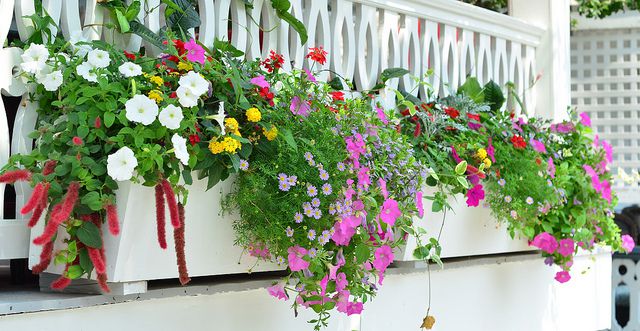
A ‘mixed-border’ style window box like this, with a dozen or more different plant varieties, requires a bit more finessing than a simple mono-planting. Different plants have different needs. The herbs (like rosemary) prefer to be a bit drier, while the flowering annuals (like petunias) are thirsty and need constant moisture and fertilizer to keep blooming. This means you can’t just water the whole box on a single schedule. You’ll need to spot-water the thirsty plants more often while letting the herb sections dry out a bit between waterings. It’s more maintenance, but the reward is a complex, evolving display.
21. Vibrant Red and White Flowers in a Green Box on a White House
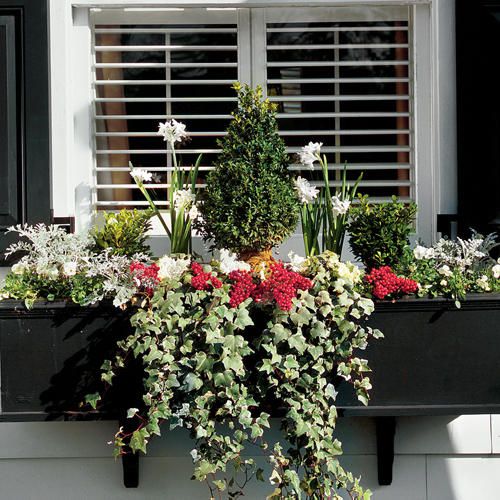
The color story here is a lesson in classic design. It’s roughly 70% Neutral White (house siding, window trim), 20% Bold Accent (red flowers), and 10% Grounding Color (dark green box). The white provides a bright, clean canvas. The dark green of the planter is a crucial intermediate step; it connects to the unseen foliage in the yard and provides a natural, earthy base for the flowers. Then, the pop of red provides the energy and focal point. It’s a timeless combination that evokes a sense of cheerful, welcoming Americana. The small clusters of white flowers mixed in help tie the arrangement back to the white house, creating a cohesive look.
✅ Before You Start
When you have a high-contrast combination like red flowers against a white house, you need the blooms to be dense and impactful. The secret to getting more flowers from annuals like these (likely geraniums or impatiens) is regular feeding. Once the plants are established, you should feed them with a water-soluble fertilizer specifically formulated for blooming plants (like a 15-30-15 formula) every 10 to 14 days. This ‘bloom boost’ fertilizer has a higher middle number (Phosphorus), which is what plants use to produce flowers. Consistent feeding is the difference between a few flowers and a truly lush display.
22. Dark Metal Box with Red Blooms on a Blue Facade
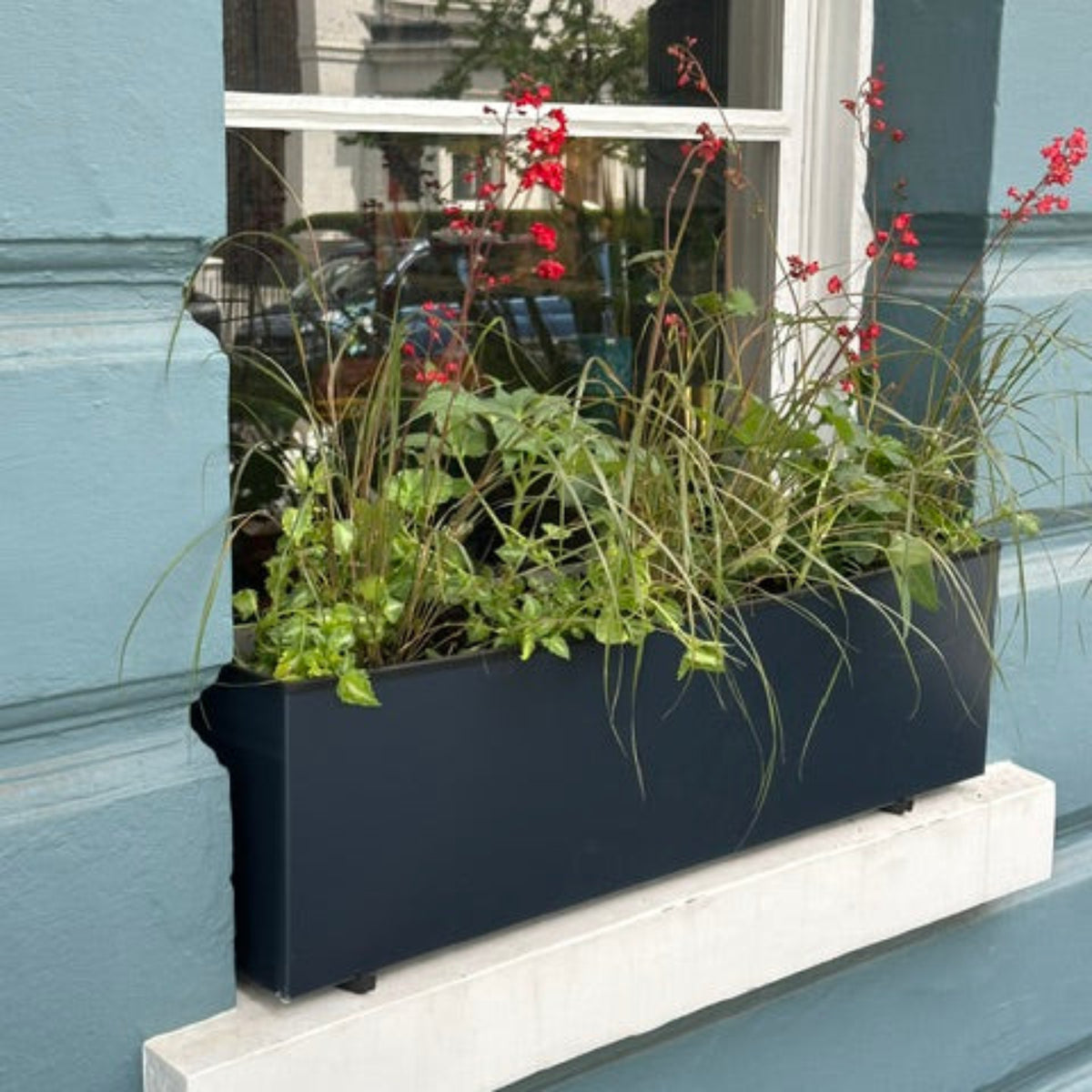
This combination is visually electric because it uses a triadic color scheme—three colors that are evenly spaced around the color wheel. Here we have blue (the facade), red (the flowers), and yellow-green (the foliage). This creates a vibrant, high-contrast palette that is naturally harmonious and pleasing to the eye. The dark metal of the planter and the white of the windowsill act as neutrals, giving the eye a place to rest and preventing the colors from overwhelming the scene. It’s a more sophisticated color theory than simple complementary colors and it really pays off.
🧹 Maintenance Reality
A planter resting on a windowsill, rather than being bracket-mounted to the wall, can seem like an easier, no-drilling-required solution. However, it comes with a major safety consideration. A window box filled with wet soil and plants is incredibly heavy. A strong gust of wind or an accidental bump could be enough to send it toppling, which is a serious hazard if it’s on an upper story. You must secure it. At a minimum, use L-brackets to fasten the back of the box to the window frame or siding, or look for security straps designed for this purpose. Never just let it sit freely.
23. Dark Green Window Boxes with Edison Bulb Lighting
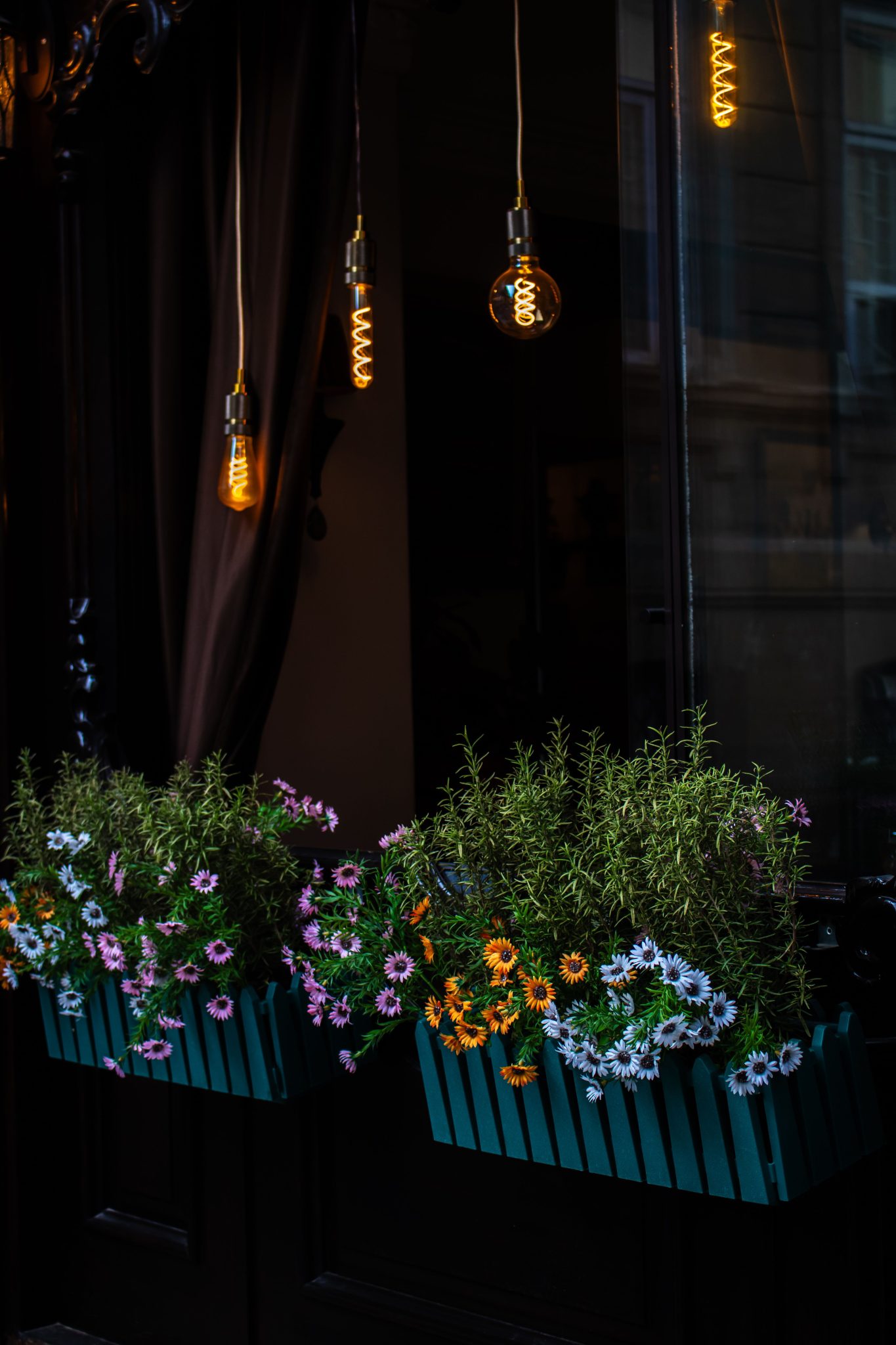
This look perfectly captures the ‘Cozy Nighttime Garden’ trend we’re seeing all over Pinterest. It’s about extending the use and enjoyment of our outdoor spaces past sunset. The combination of intimate, warm-toned lighting with lush plantings creates a magical, inviting atmosphere. The Edison bulbs, with their visible filaments and amber glow, provide a vintage, almost theatrical feel that is much more atmospheric than a harsh security floodlight. This approach treats the window box not just as daytime curb appeal, but as a key part of the home’s evening ambiance, visible from both inside and out.
💸 Get This Look For Less
Unquestionably, the element that makes this scene so captivating is the lighting. The planters themselves are lovely, but it’s the three hanging Edison bulbs that transform the mood from simple and pleasant to cozy and magical. The warm amber light highlights the textures of the foliage, makes the colors of the flowers richer, and creates beautiful reflections in the dark window glass. It turns a simple window display into a curated vignette that feels special and intentional. Without the lights, it’s just a window box; with them, it’s an entire mood. This is similar to the effect in Idea #9 but with a much cozier, more intimate feel.
24. Window Box Overflowing with White Petunias
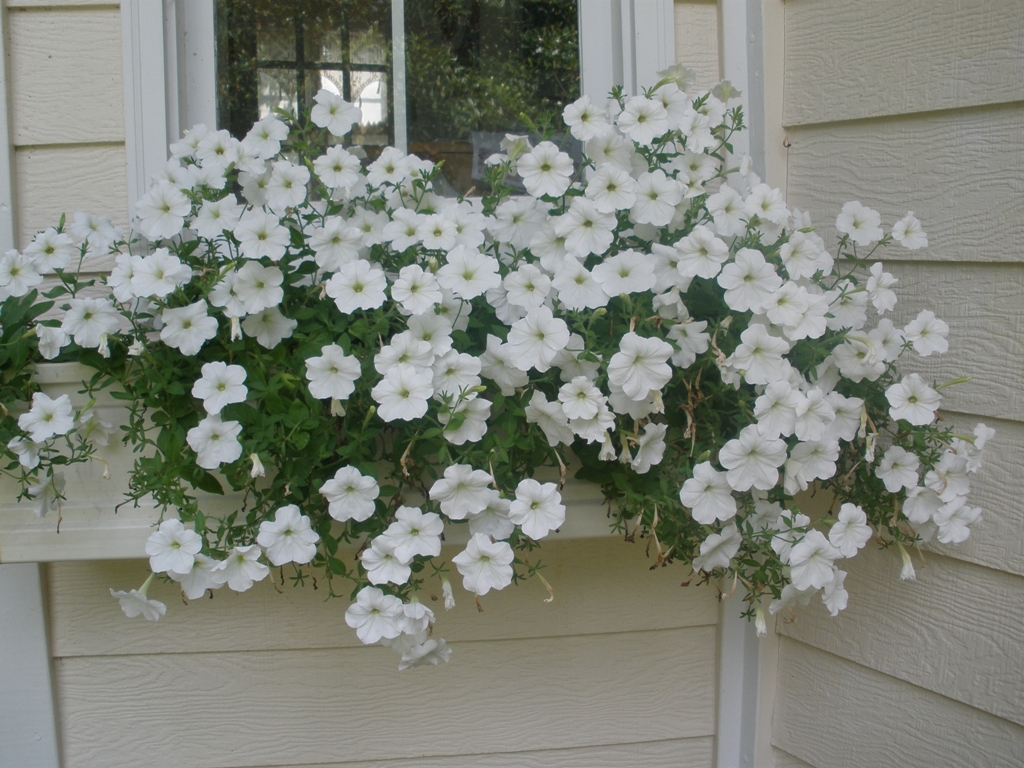
This abundant, single-color look is one of the most cost-effective ways to make a huge impact. The key is using a prolific, fast-growing annual like ‘Wave’ petunias. You don’t need a fancy planter; a basic white plastic one will disappear behind the blooms. A single 6-pack of white petunias, which can cost as little as $5-$8, can fill a 24-inch box if you feed and water it well. For a 36-inch box, two 6-packs ($10-$16) will create this overflowing abundance by mid-summer. It’s proof that you don’t need a big budget or a complex plant list to create a show-stopping display. Just add sun, water, and time.
📏 Scale Guide
Petunias are famous for their ‘sticky’ leaves and stems, and they are flower-making machines. To keep this display looking clean and full, you’ll need to do two things religiously. First, deadhead the spent flowers. The sticky texture means old, wilted blooms tend to cling to the foliage, looking messy. Pinch them off every few days. Second, petunias are notoriously heavy feeders. To get this many blooms, you must fertilize with a water-soluble bloom-booster formula at least once a week. Skipping fertilizer will result in fewer flowers and a stringy, less impressive plant.
25. Dark Green Window Box with White Flowers on a White Wall
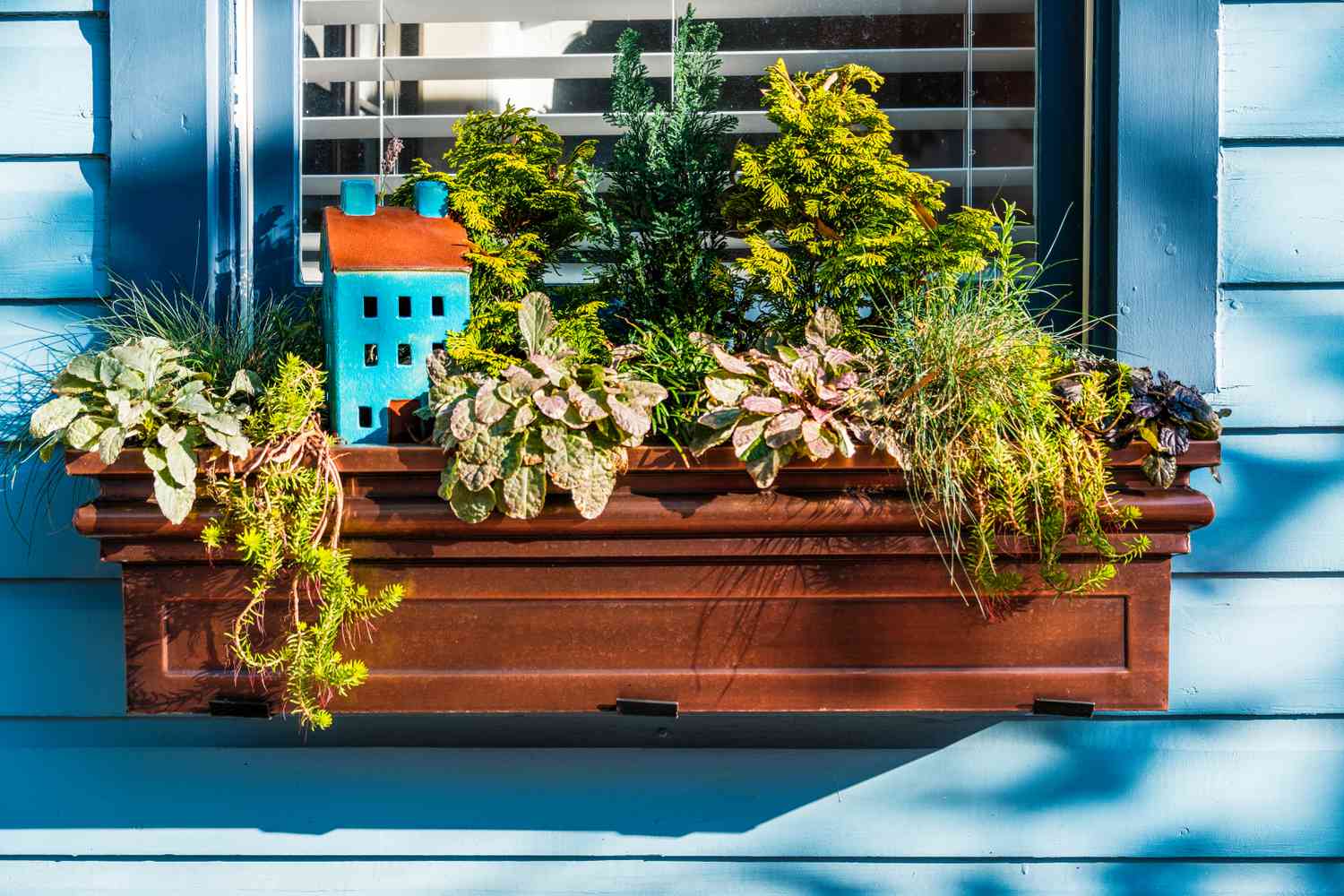
This crisp, elegant look is all about a clean, three-part color formula: 70% bright white (the wall and flowers), 20% deep black/charcoal (the window frame and sconce), and 10% rich green (the planter and foliage). The white creates a sense of freshness and modernity. The black provides a strong graphic element, a frame that gives the composition structure. The pop of dark green is the perfect accent color, adding a touch of nature and softness without disrupting the clean, high-contrast palette. It’s a sophisticated and tightly edited color scheme that feels both classic and completely modern.
💡 Designer Tip
This clean, minimalist look has specific requirements. Make sure you can check these boxes before you start.
- Wall Condition: This look puts your wall on display. Is your white exterior wall clean and in good repair? Any stains, cracks, or peeling paint will be highlighted by this simple design. Power wash first!
- Sunlight: To get the profusion of white flowers seen here (likely petunias or calibrachoa), you need at least 6 hours of direct sun. In a shady spot, you’d get far more foliage than flowers.
- Drainage Stains: A pristine white wall is the perfect canvas for ugly rust and soil stains from a draining window box. Ensure your box has good drainage holes, but consider lining the bottom with a layer of gravel to filter the water, and be prepared to wipe down the wall occasionally.
26. Terracotta-Toned Box with Black Metal Brackets and Greenery
Installing decorative brackets like these is what takes a window box from simply functional to a true architectural feature. Here’s the right way to do it:
- Choose the Right Brackets: Ensure the brackets are rated to hold the weight of your fully-watered planter box. Wrought iron or powder-coated steel is ideal for durability.
- Mark Your Placement: Place your window box on the wall and center it under the window. Lightly trace its outline. Remove the box and position your brackets about 4-6 inches in from each end. Mark the screw holes with a pencil.
- Drill Pilot Holes: Use a drill bit that’s slightly smaller than your screw diameter. If you’re drilling into brick or masonry as seen here, use a masonry bit and install the appropriate wall anchors.
- Secure the Brackets: Screw the brackets firmly to the wall, making sure they are level.
- Place the Box: Rest your window box on top of the secured brackets. For extra safety, you can add a screw from the back of the box into the wall.
Total time: 45 minutes.
🔧 How-To Brief
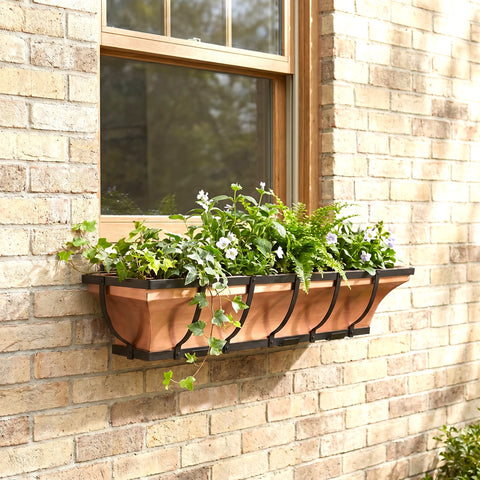
The success of this design lies in its harmonious material palette. Every element feels connected and natural. The terracotta color of the window box echoes the warmth of the sun on the tan brick. The light wood of the window frame adds another layer of natural texture. The black of the scrolled metal brackets provides a strong, graphic counterpoint and ties into the dark shadows cast by the sun. The whole composition feels earthy, warm, and integrated with the building’s materials. It’s a perfect example of how choosing the right materials can make a simple planting feel incredibly rich and established.
27. Railing Planter with Cascading Red and Green Foliage
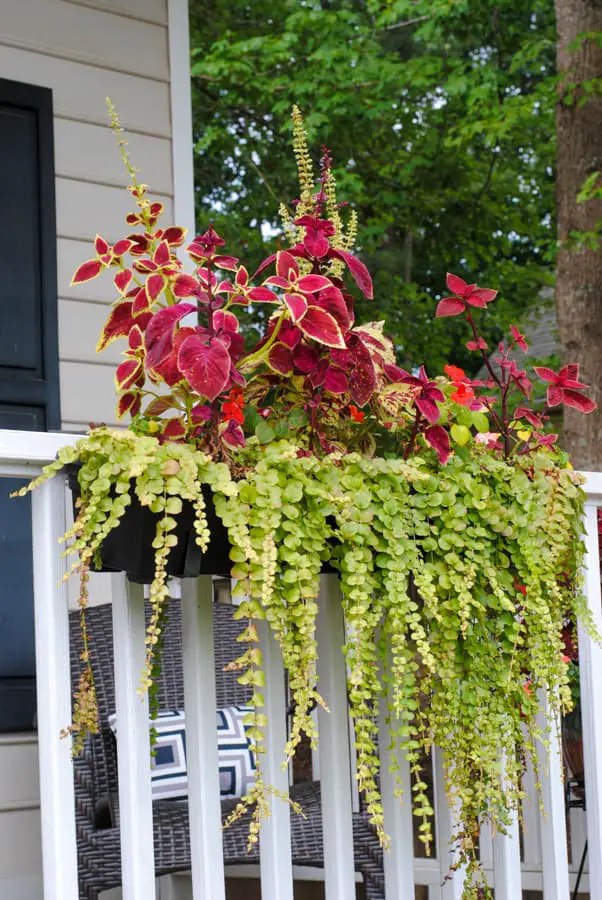
For a railing planter, creating a ‘double-sided’ display is a pro move. Most people only plant for the view from the deck or patio, but you should also consider the view from the yard or street below. Place your tallest, most structural plants (the ‘thriller,’ like the red and yellow foliage here) in the center of the planter. Then, plant your cascading ‘spiller’ elements along both the inner and outer edges of the box. This ensures the planter looks lush and intentional from every angle, not just from your chair on the deck. It’s a small detail that makes a huge difference in the overall finish.
⚠️ Real Talk
Railing planters are fantastic space-savers, but they have specific requirements. This look is designed for a standard white vinyl or painted wood deck railing with vertical balusters. The planter itself is likely 24 to 30 inches long. The key measurement is the width of your top railing; most planters are designed to fit over a standard 2×4 (3.5 inches wide) or 2×6 (5.5 inches wide) board. Measure your railing before you buy. This design is perfect for adding life to a balcony or deck, but wouldn’t work as a traditional under-the-window box unless you built a custom shelf for it. A very similar color scheme is used in Idea #15, but in a wall-mounted context.
28. Dark Window Box with Mixed Greenery on a White House
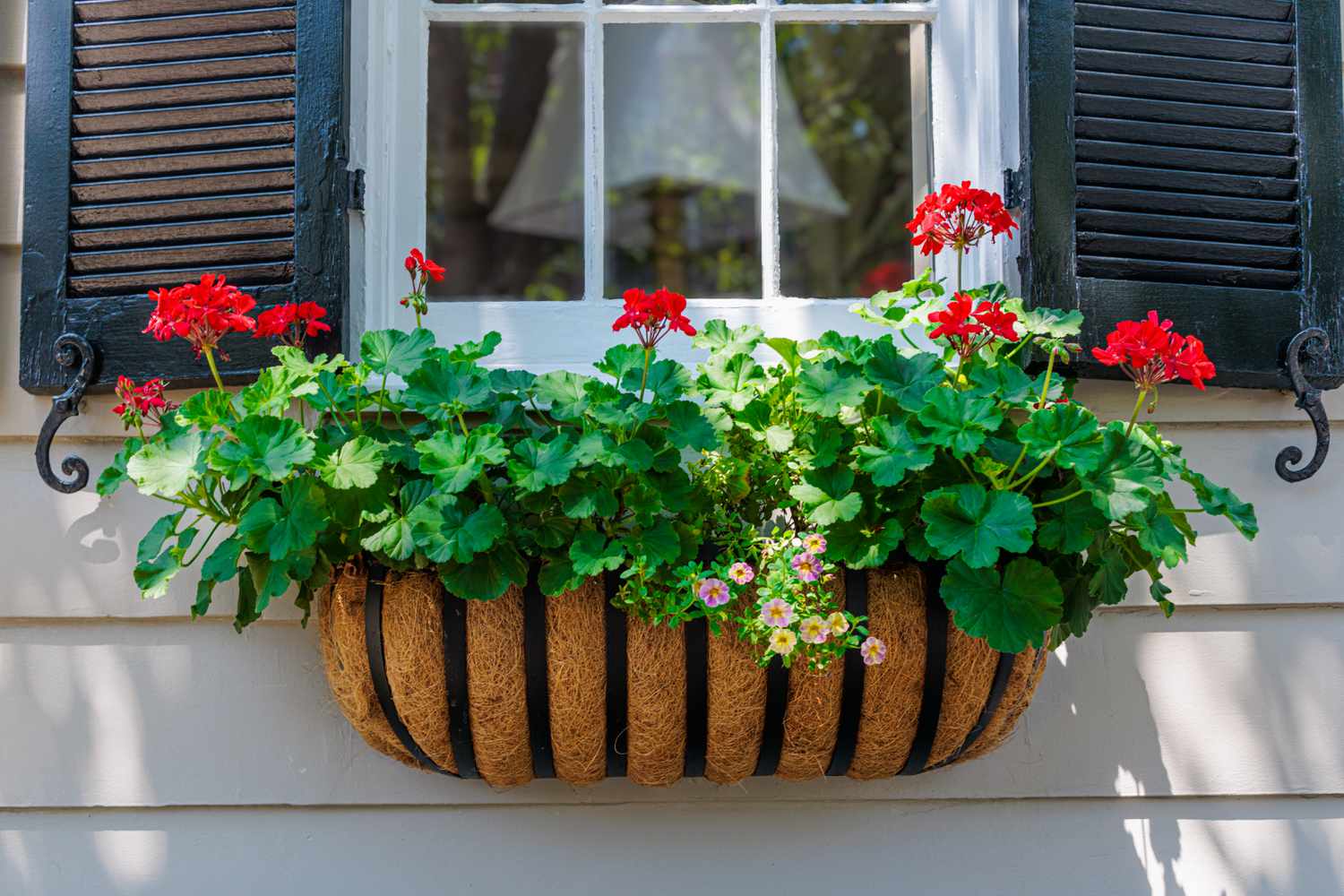
This lush, foliage-focused look is incredibly budget-friendly to create, especially if you’re a patient gardener. While you can buy individual pots of coleus, ferns, and heuchera for instant effect, you can also get a similar look for a fraction of the price using cuttings from existing plants or friends’ gardens. Many of the plants that create this look, like coleus and vinca vine, root incredibly easily in a simple glass of water. A few small pots of annuals like white alyssum for the blossoms can be had for under $10. With a basic dark-colored planter ($30), the whole look can be achieved for under $40 if you propagate your own foliage.
💰 Budget Breakdown
The single most important choice here is the dark-colored window box. Against the clean, bright white of the house siding and window frame, a white planter would have disappeared, and the plants would have lacked a strong visual anchor. The dark, almost-black box creates a crisp, graphic frame. It grounds the arrangement and provides the necessary contrast to make the varied shades of green and the pops of white and reddish-purple foliage truly stand out. It’s the dark foundation that allows the natural beauty of the plants to take center stage. This is the budget version of the more ornate planter in Idea #6.
29. Vibrant Wooden Window Boxes on a White Brick Building
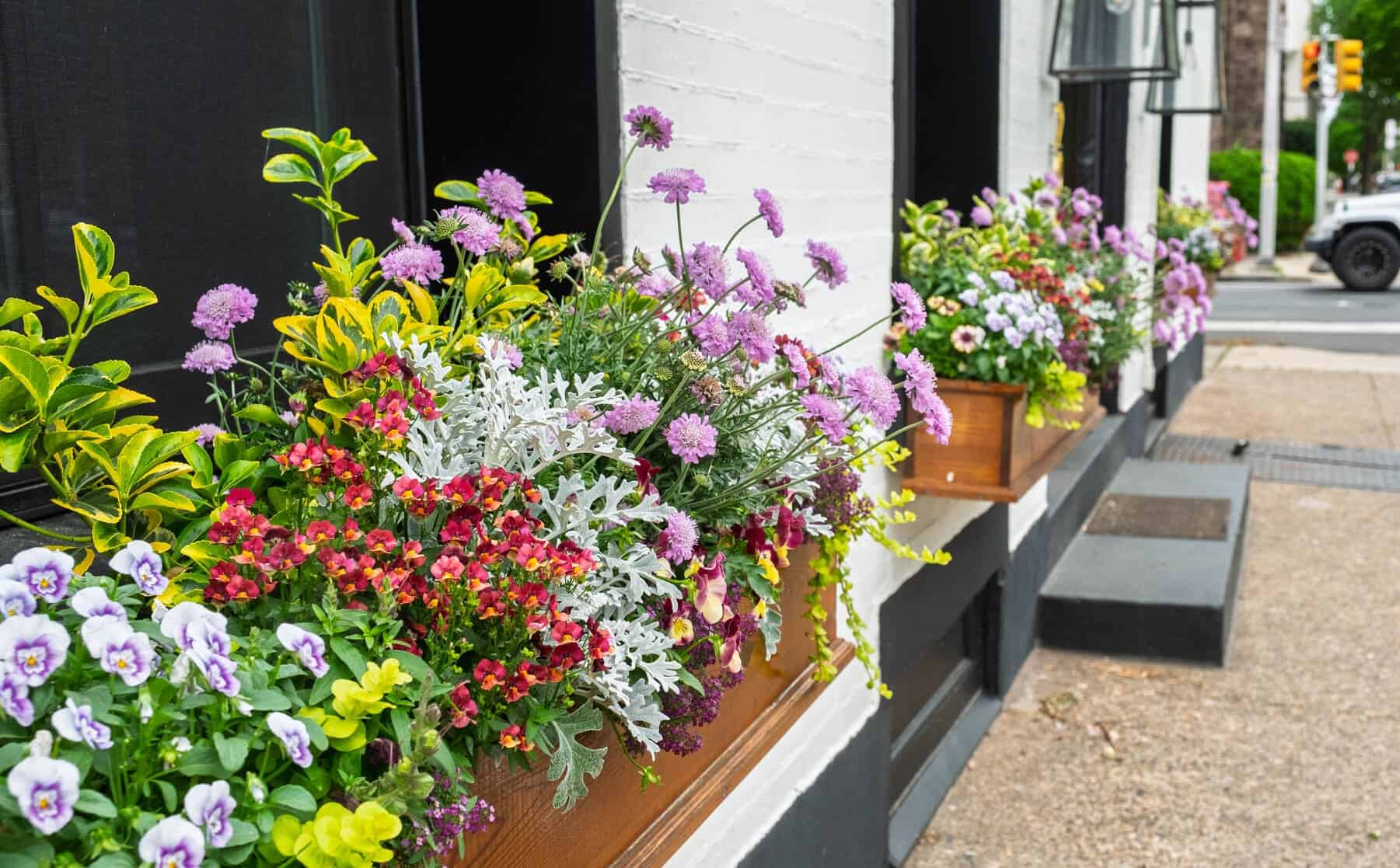
This is a professional, high-impact urban installation. Here’s a realistic breakdown for one 48-inch box, assuming professional planting.
- Main Furniture (Planter): One 48″ custom-built wooden window box, stained and sealed: $250 – $400
- Plants & Soil: Premium potting mix, soil moist crystals, slow-release fertilizer ($50), A diverse mix of premium annuals and perennials including Purple Pincushion Flowers, Dusty Miller, Heuchera, Ornamental Grasses ($150 – $200)
- Labor: Installation and planting service: $100 – $150
- TOTAL (per box): $500 – $750
Budget alternative: Use a pre-made wooden planter ($100), and choose more common, less expensive annuals ($60).
⭐ The One Thing
This stunning display works because of its brilliant use of repetition and contrast. The repetition of the identical wooden window boxes along the building creates a powerful rhythm and sense of cohesion. Then, within each box, the design plays with contrast on multiple levels. There’s color contrast (purple vs. yellow), texture contrast (spiky pincushion flowers vs. soft, fuzzy dusty miller foliage), and light/dark contrast (the dark black window frames against the bright white brick). This complexity within a repeated framework is what makes the design feel so dynamic, lush, and professionally executed.
30. Classic Pink Petunia Window Boxes on Brown Brick
This look is a masterclass in letting one element shine. The formula is approximately: 70% Neutral Texture (the brown brick facade), 25% Dominant Color (the vibrant pink petunias), and 5% Crisp Framing (the white window trim). The brown brick is a warm, forgiving background that absorbs light and lets the flowers take center stage. The white trim acts like a picture frame, creating a clean separation. The cascading pink petunias are the undisputed star, providing a massive wash of color and a soft, organic shape that contrasts beautifully with the hard lines of the brick and window.
🔥 Trending Context
Let’s have an honest moment about petunias. To get this kind of overflowing, cascading look, you need to use a specific type, often sold as ‘Wave’ or ‘Supertunia’ varieties. These have been bred to spread and trail aggressively. If you buy a standard, mounding petunia, you will not get this effect. Also, after a heavy rain, petunia blooms can look absolutely wrecked—they turn into a sad, translucent, mushy mess. While they usually recover, for a day or two your spectacular display might look a bit tragic. They also require full sun; in shade, you’ll get more leaves than flowers.
Ready to Frame Your View?
Your windows are more than just openings in a wall—they’re opportunities to add life, color, and personality to your home. Whether you start with one small box or go all out on a full facade makeover, the most important step is just to begin. Take your favorite idea from this list and make it your own. Go ahead and save this article to your favorite Pinterest board so you have all the inspiration ready when it’s time to get your hands dirty!