You know that feeling when you finally find the live edge wood idea that looks *exactly* right for your space, but turning that pin into a reality feels impossible? You’re not alone. We filtered through hundreds of options to find the ones that actually deliver. Inside, you’ll find 28 curated ideas covering everything from rustic dining tables and modern headboards to sleek floating shelves. In 2026, the push for authentic, natural materials in our homes is stronger than ever; it’s a return to craftsmanship and a rejection of the mass-produced. And stay until the end — we break down the most common mistakes that can ruin these looks. 📌 Save this to Pinterest for later — you’ll want to revisit these ideas.
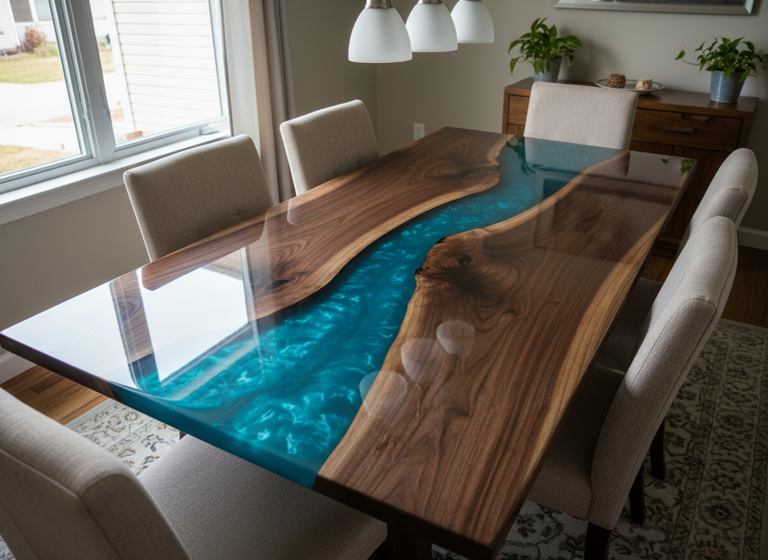
1. A Blue Resin River Flows Through This Live Edge Dining Table
What Makes It Work: This design is all about the power of contrast. The organic, unpredictable lines of the live edge wood create a beautiful tension with the sleek, vibrant blue resin river. It’s nature meets modern art. The key is that every other element in the room—the simple white pendant lights, the neutral beige chairs, the clean lines of the sideboard—is intentionally quiet. They provide a calm backdrop that allows the table to be the undisputed hero of the space without feeling chaotic.
🎯 What Makes It Work
Designer Tip: When commissioning a resin river table, always ask for a cured sample of the resin color. The color can look dramatically different depending on the light in your room and the specific tone of the wood it’s paired with. A deeper pour will also create a more opaque, intense color, while a shallower one can appear more translucent. Seeing it in person is the only way to know for sure you’ll love it.
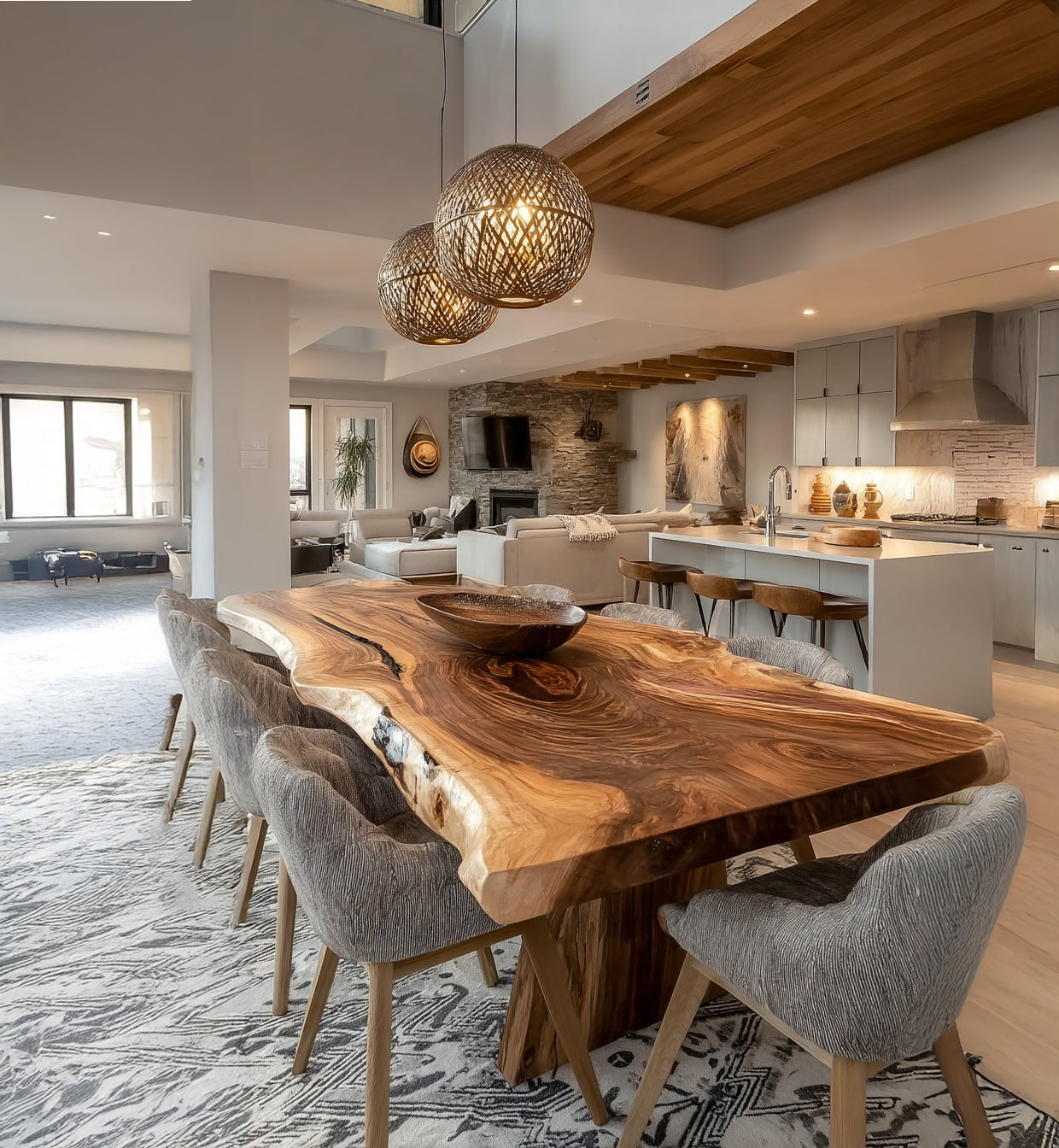
2. Woven Pendants and a Stone Fireplace Frame This Rustic Table
Style Math: The visual formula here is a masterclass in balance: 60% rustic warmth (the massive live edge slab table) + 30% organic texture (the oversized woven pendants and stone fireplace) + 10% soft modernism (the clean-lined gray upholstered chairs). By layering different natural materials, the room feels cohesive and earthy, not like a collection of random rustic items. The soft gray upholstery prevents the wood and stone from feeling too heavy.
⭐ The One Thing
Scale Guide: A statement look like this thrives in an open-concept dining area of at least 250 square feet with ceilings that are 9 feet or higher. The large scale of both the table and the spherical pendants needs significant visual space to feel balanced, not cramped. Trying this in a smaller, enclosed dining room would make the furniture feel overwhelming. For a similar vibe in a tighter space, see the square table in Idea #20.
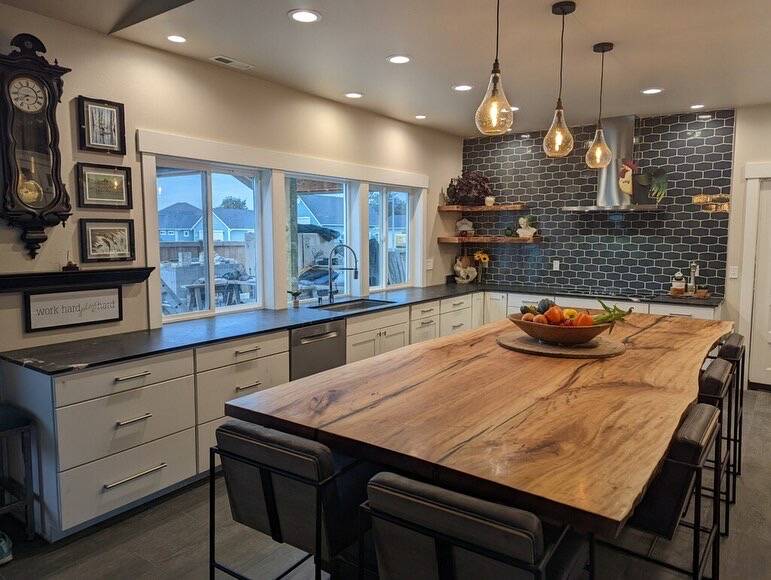
3. A Live Edge Island Becomes the Kitchen’s Social Hub
Budget Breakdown:
💡 Designer Tip
- Live Edge Wood Slab (e.g., Maple, Walnut, 4′ x 8′): $1,800 – $4,500
- Custom Island Base/Cabinetry & Installation: $2,500 – $6,000
- Glass Pendant Lights (Set of 3): $400 – $1,200
- Upholstered Bar Stools (per stool): $150 – $400
- Plumbing & Electrical Work: $500 – $1,500
- TOTAL: $5,200 – $13,200+
- Budget Alternative: Source a pre-made live edge countertop from a big-box store or a local lumber liquidator and build a simpler base to save 40-50%.
Real Talk: Let’s be honest: a wood kitchen island is gorgeous, but it’s not indestructible like quartz. It requires regular maintenance, including re-sealing with food-safe oil or wax every 6-12 months. Coasters and trivets are your new best friends. Red wine, oil, and coffee spills need to be wiped up *immediately* to prevent deep stains. It will gain character—a.k.a. scratches and dents—over time. If you’re someone who needs pristine surfaces, this might not be the best choice for a high-traffic kitchen.
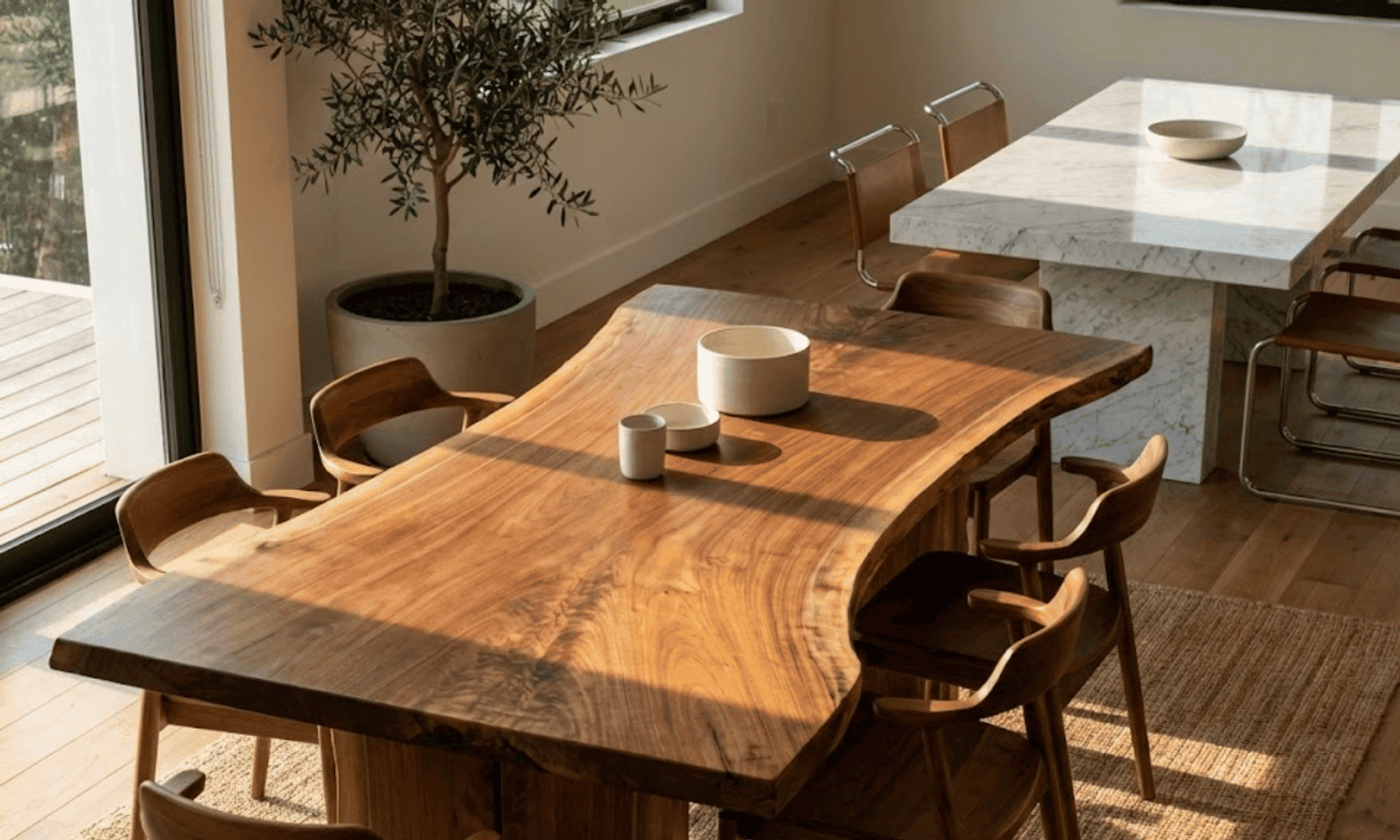
4. Sunlight and an Olive Tree Accent a Minimalist Live Edge Table
The One Thing: It’s the restraint. In a room with so many beautiful, high-end materials—the warm live edge wood, the cool white marble, the natural fiber rug—the most important element is the negative space. The minimalist styling, with just a few ceramic bowls and an olive tree, lets the quality of the materials speak for itself. Over-decorating here would completely undermine the serene, high-end feel. It’s a lesson in knowing when to stop.
🔥 Trending Context
Trending Context: This look perfectly captures the ‘Quiet Luxury’ and ‘Japandi’ trends that are dominating Pinterest. It’s not about loud colors or flashy logos; it’s about investing in timeless, natural materials and creating a sense of calm. The focus on sunlight, plants, and organic shapes (like the live edge slab and curved chairs) is a direct response to our desire for more serene and nature-connected living spaces. This isn’t a fleeting fad; it’s a long-term shift in design values.
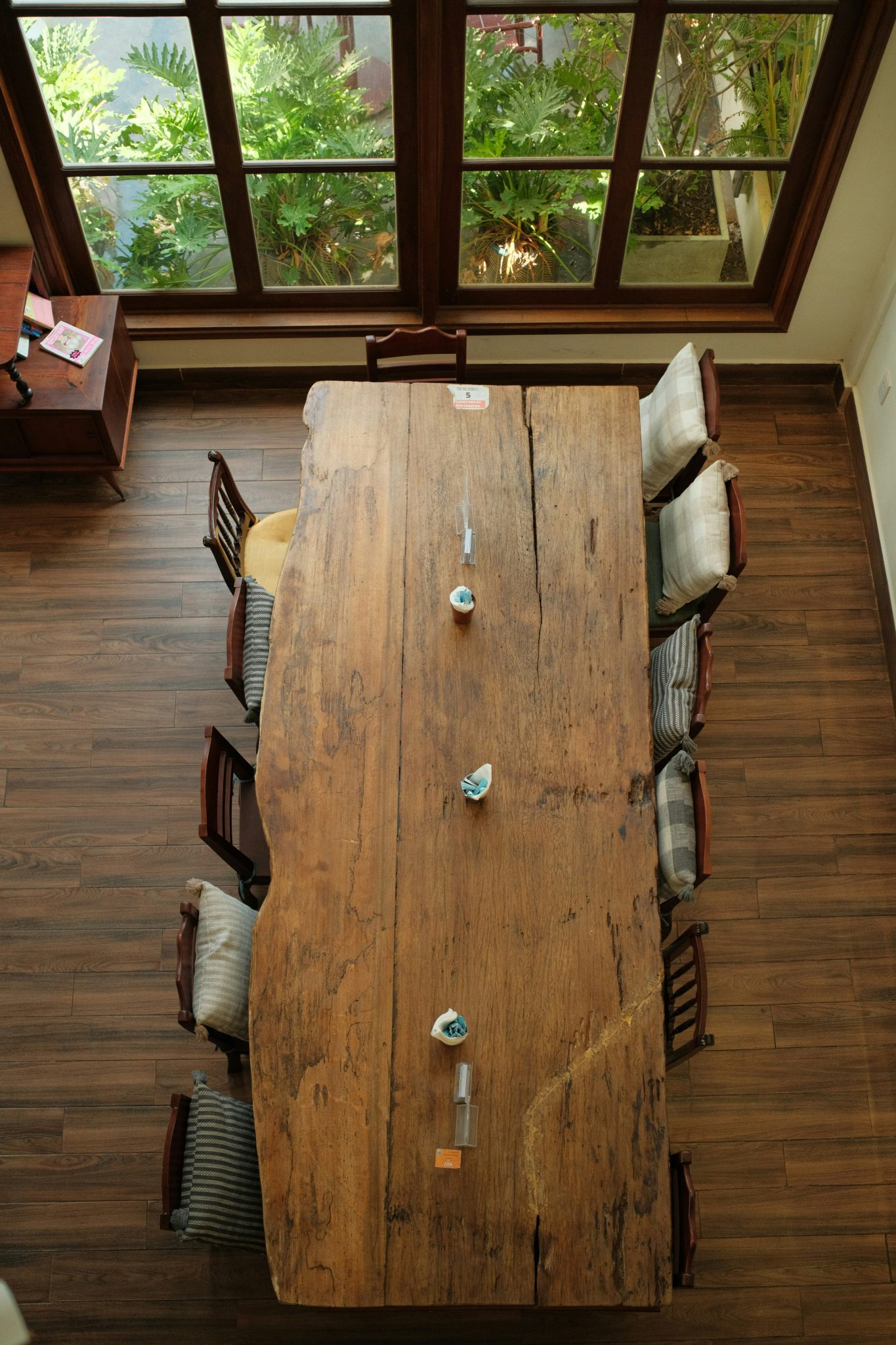
5. A Sloped Window Wall Illuminates This Rustic Slab Dining Table
What Makes It Work: This room succeeds because it fully commits to its rustic, lodge-like aesthetic. The massive live edge slab table isn’t just a piece of furniture; it’s an architectural element that echoes the scale of the dark wood-framed sloped window. The repetition of dark wood in the table, chairs, floor, and window frames creates a deeply cohesive and immersive atmosphere. The patterned cushions are a smart touch, adding a bit of softness and visual interest to break up all the wood tones.
📏 Scale Guide
Designer Tip: When you have a dominant architectural feature like this sloped window, lean into it. Don’t try to fight it with contrasting furniture. By matching the dark, heavy frame of the window with a similarly scaled and toned dining set, the design feels intentional and grand. If the table were light and delicate, it would look lost and disconnected from the powerful window feature. Match the energy of your room’s best features.
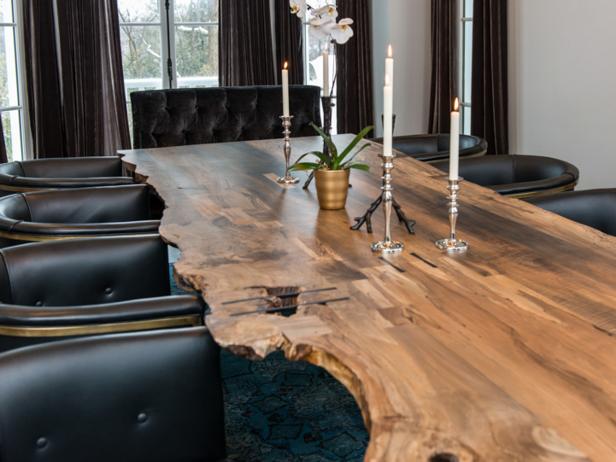
6. Formal Dining with a Live Edge Table and Black Leather Chairs
Maintenance Reality: A formal dining table like this, often used for entertaining, faces unique challenges. The combination of a natural wood surface and frequent dinner parties means you have to be vigilant. A high-quality satin polyurethane finish is a better choice here than a simple oil finish, as it provides more protection against spills and heat. Still, insist on placemats and coasters. The silver candlesticks can also leave tarnish marks on the wood if left directly on the surface for long periods—place them on a felt-bottomed tray.
✅ Before You Start
Get This Look For Less: You don’t need a $10,000 budget for this moody, elegant vibe. Find a more affordable live edge slab on Facebook Marketplace or from a local sawyer ($500-$1,500). Pair it with faux leather barrel-back chairs from Overstock or Wayfair (often around $200-$300 for a set of two). The dark, dramatic drapes can be found at IKEA. The key is to stick to the dark color palette—black, charcoal, dark wood—to achieve that same sophisticated mood.
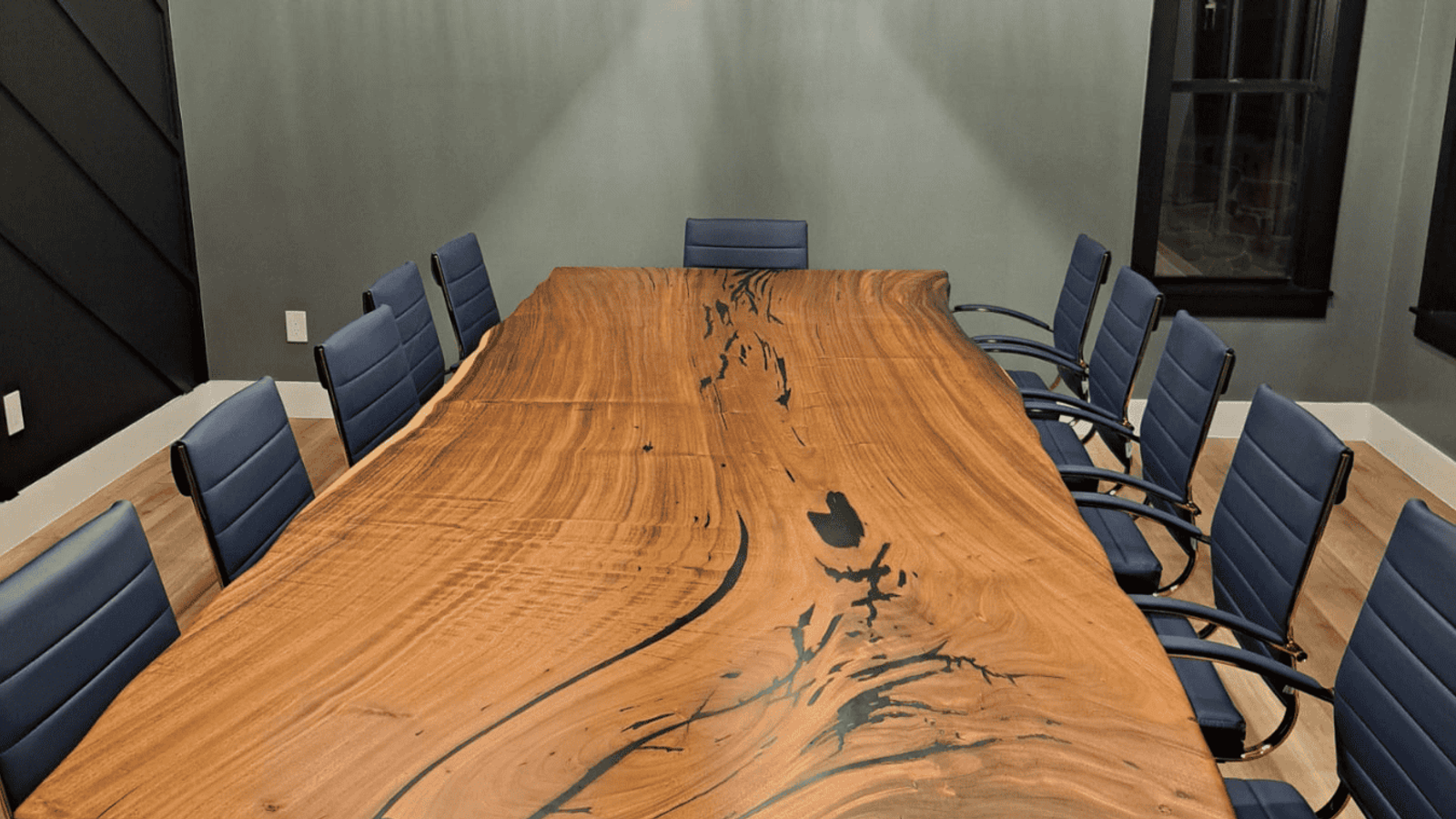
7. A Bold Conference Room with a Resin-Filled Live Edge Table
What Makes It Work: This design is successful because it isn’t afraid to be bold. The charcoal walls and black diagonal shiplap create a dramatic, focused environment. The warm wood of the conference table, with its dark resin infill, provides a necessary touch of organic texture that keeps the space from feeling cold or corporate. The navy blue chairs are a brilliant choice, adding a layer of sophisticated color that’s more interesting than standard black but still professional. It’s a perfect balance of modern edge and natural material.
⚠️ Real Talk
Real Talk: A dark accent wall, especially black shiplap, looks incredible but requires excellent lighting to work. In a room without enough natural or overhead light, this would feel like a cave. Notice the ample pot lights and the light-colored wood floor, which helps bounce light around the room. Also, a black wall shows every single scuff, handprint, and speck of dust. Be prepared for more frequent cleaning and touch-ups than you would with a lighter color.
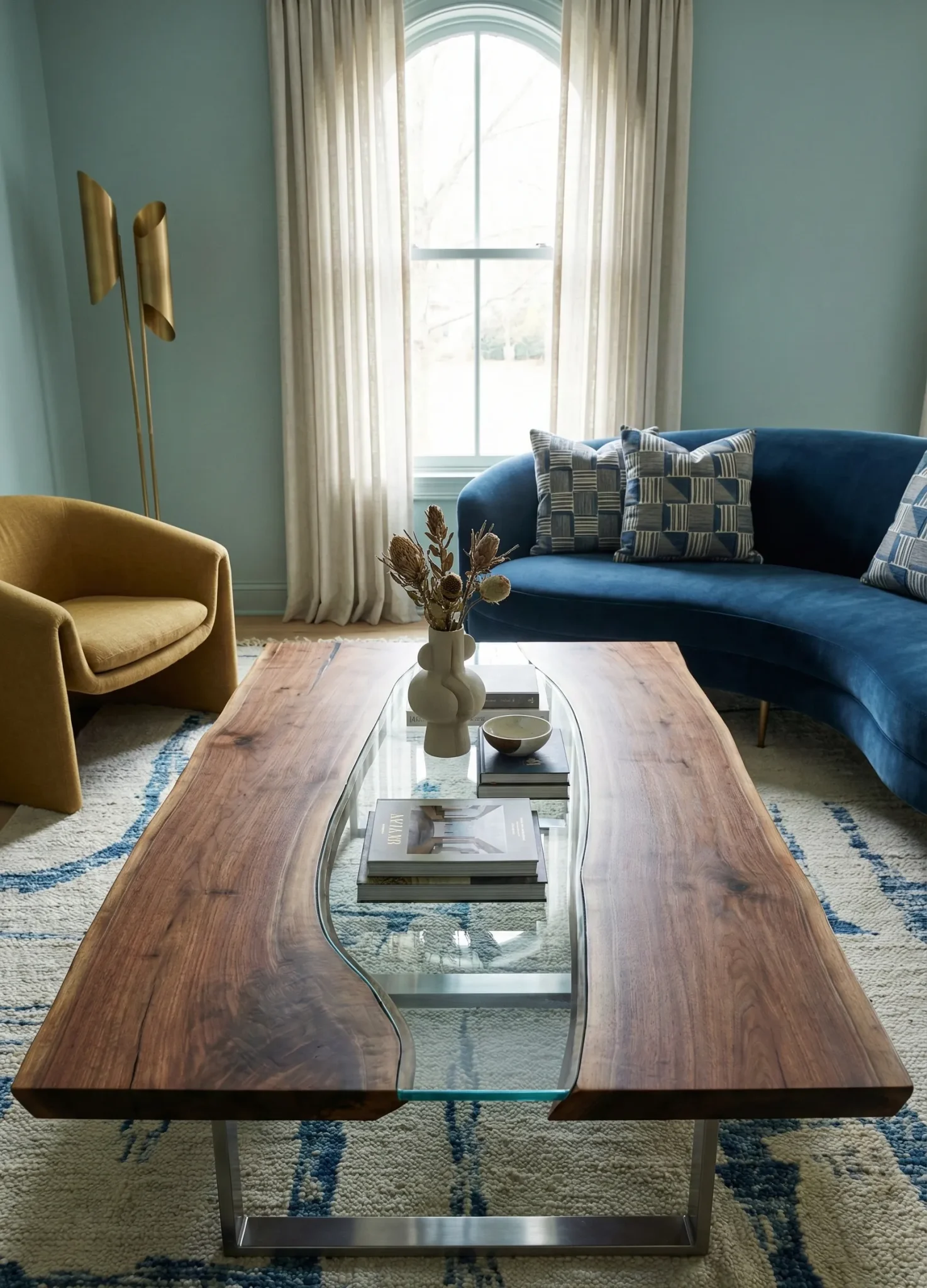
8. A Curved Blue Velvet Sofa Meets a Live Edge Coffee Table
Style Math: This living room’s chic formula is about balancing shapes and colors. It’s roughly 50% soft curves (the velvet sofa, the arched window) + 30% sharp, natural lines (the live edge coffee table) + 20% bold color accents (the deep blue and mustard yellow). The glass insert in the coffee table is a genius move; it lightens the visual weight of the wood slab, allowing the patterned rug to show through and connecting the piece to the airy feel of the sheer curtains.
💰 Budget Breakdown
Designer Tip: When pairing a long, rectangular coffee table with a curved sofa, the proportions are key. The coffee table should be approximately two-thirds the length of the sofa’s main seating area. Any longer, and it will feel disconnected from the curve; any shorter, and it will look undersized and lost. The metallic legs and brass floor lamp are also crucial for adding a touch of warm metal to balance the cool blue tones.
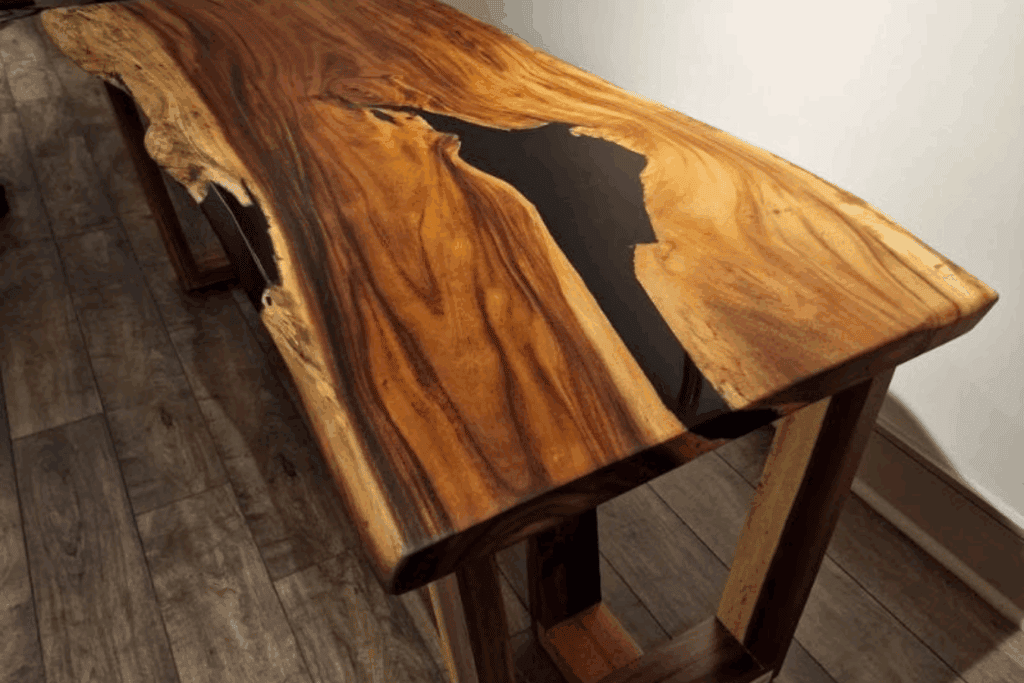
9. Close-Up on a Dark Epoxy Resin River Table
The One Thing: The star of this show is the flawless execution of the epoxy pour. A bad resin job can look cheap and cloudy, but this one is deep, glossy, and perfectly integrated with the natural wood edge, creating a convincing ‘river’ effect. The high-gloss finish enhances the depth of the resin and makes the wood grain pop. Without this level of craftsmanship in the finish, the entire piece would lose its sophisticated, high-end appeal. This is where you don’t want to cut corners on a DIY project.
🔧 How-To Brief
How-To Brief: To achieve a similar high-gloss, glass-like finish on a wood slab (Time: 3-4 days, Cost: $100-$200 for epoxy):
- Sand the entire wood surface completely smooth, working your way up to 220-grit sandpaper. Wipe away all dust with a tack cloth.
- Seal the wood with a thin coat of clear epoxy or a sanding sealer. This prevents air bubbles from releasing from the wood into your main pour. Let it cure completely.
- Build a leak-proof mold around your slab for the main ‘flood coat’.
- Mix and pour a self-leveling tabletop epoxy according to the manufacturer’s directions. Use a torch or heat gun to pop any bubbles that rise to the surface.
- Let it cure in a dust-free environment for at least 72 hours before handling.
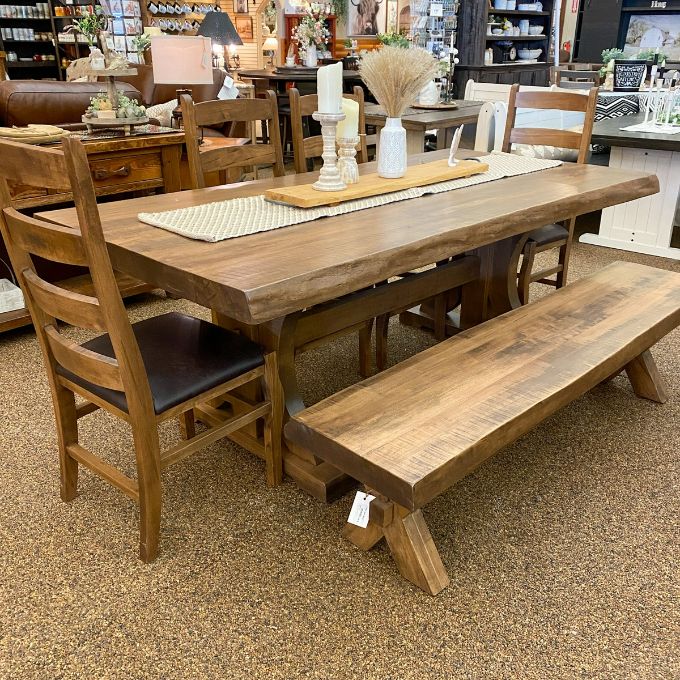
10. Rustic Dining Set with a Live Edge Table and Matching Bench
What Makes It Work: Cohesion is the key here. The dining table, chairs, and bench all share the same medium wood tone and robust, slightly rustic design language. The trestle base on the table is mirrored in the angled supports of the bench, creating a satisfying visual rhythm. Using a bench on one side is a classic trick to make a dining area feel more casual and open, as it has a lower profile than a row of chairs. The simple, light-colored textiles on the table prevent the matching wood set from feeling too heavy.
📐 Style Math
Scale Guide: A substantial set like this, especially with a long bench, works best in a dedicated dining area that is at least 11 feet wide. You need a minimum of 36 inches of clearance from the edge of the table to the wall on all sides to allow people to comfortably pull out chairs and walk around. The bench can be placed on the side with slightly less clearance if needed, as people can slide in from the end. For a visually lighter setup, see the mixed-chair look in Idea #11.
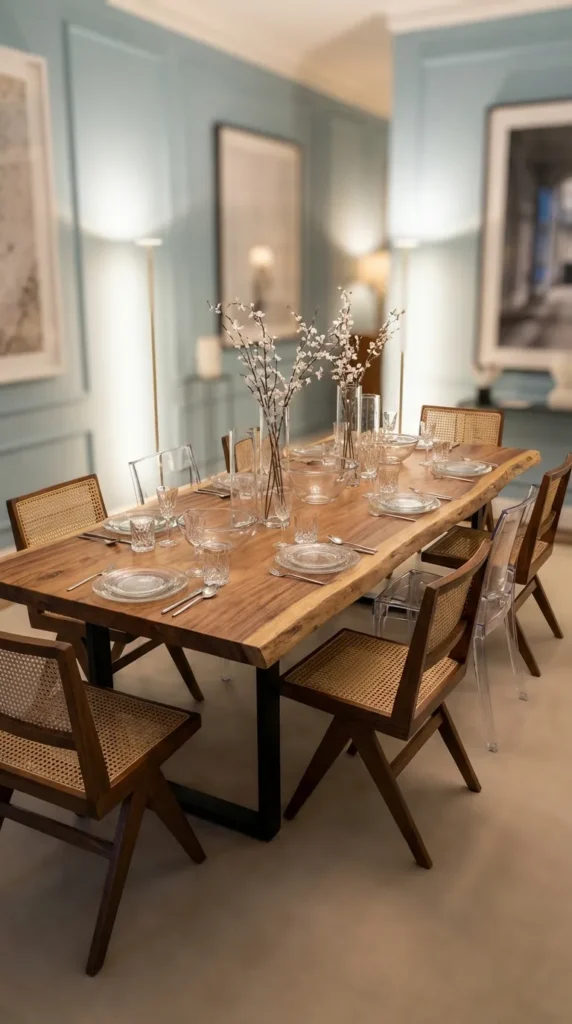
11. An Elegant Live Edge Table Paired with Mixed Modern Chairs
The One Thing: The mix of seating is what elevates this from a standard dining room to a high-style, curated space. Pairing the dark wood and cane-back chairs with the ultra-modern, almost invisible clear acrylic chairs is a bold, confident choice. It creates an unexpected play of textures and styles—rustic, traditional, and contemporary all at once. This single decision makes the entire room feel more dynamic and professionally designed. This is how you show personality in a dining room.
💸 Get This Look For Less
Get This Look For Less: The core concept—mixing chair styles—is a fantastic budget strategy. A beautiful live edge table can be the main investment. Then, hunt for chairs. Find a set of four vintage cane-back chairs on Facebook Marketplace or at a thrift store for under $200. Pair them with a couple of affordable clear acrylic chairs from Amazon or Wayfair (often under $100 each). The ‘mismatched’ look is intentional, so you don’t need to splurge on a full set of eight identical designer chairs.
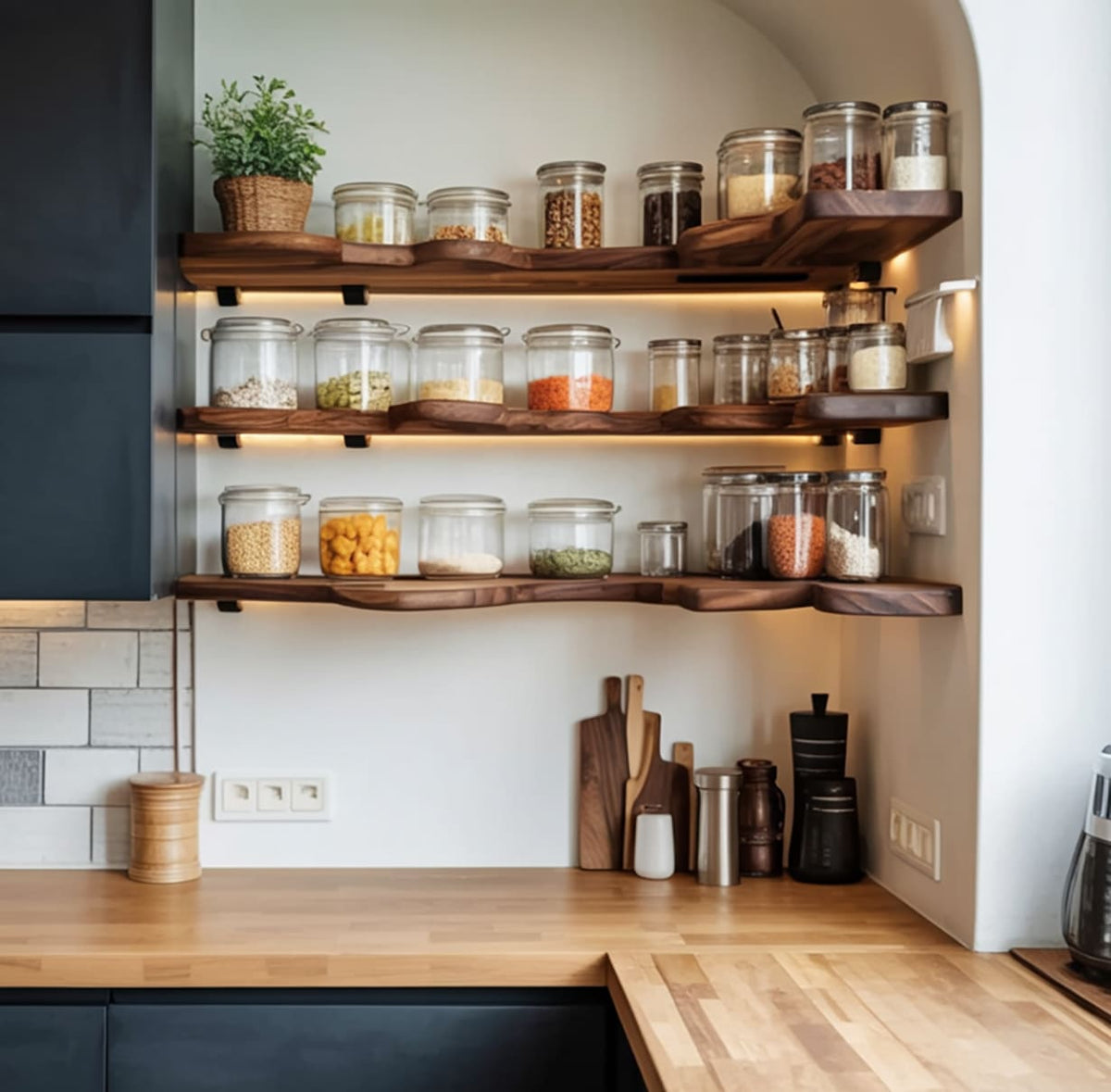
12. Floating Live Edge Wood Shelves with Under-Shelf Lighting
How-To Brief: To install floating shelves with hidden lighting (Time: 3-4 hours, Cost: $80-$200):
- Purchase heavy-duty floating shelf brackets rated for the weight of your slab.
- Mark a level line on your wall and locate the studs. Secure the brackets directly into the studs.
- On the back of your live edge slab, use a router to create a channel for the LED strip and a cavity for the bracket hardware.
- Drill precise holes for the bracket rods to slide into the shelf. Test the fit.
- Stick an adhesive-backed LED light strip into the routed channel. Run the wire along the back or through a small hole in the shelf.
- Slide the shelf onto the brackets and secure it. Connect your lighting to a power source.
🧹 Maintenance Reality
Before You Start Checklist:
- Confirm the wall you want to use has studs where you need them. These shelves are too heavy for drywall anchors alone.
- Measure the depth of your slab. Ensure you buy floating shelf brackets with rods long enough to support at least 2/3 of the shelf’s depth.
- Decide on your power source for the lights. Will you have a visible wire running down the wall, or can an electrician hide it behind the drywall for a cleaner look?
- Check the weight of your slab and the items you plan to store. Ensure your brackets are rated to hold at least 1.5x that total weight for safety.
13. Cozy Corner Shelves from Live Edge Wood with Candlelight
Designer Tip: For corner shelves, a live edge piece is perfect because you only need one finished ‘live’ edge facing out. Ask a local wood supplier for ‘offcuts’ or smaller pieces left over from larger table projects. You can often get beautiful, character-rich pieces for a fraction of the cost of a full slab. To enhance the cozy feel, choose wood with warmer, amber tones like this one, which pairs beautifully with the warm glow of candlelight.
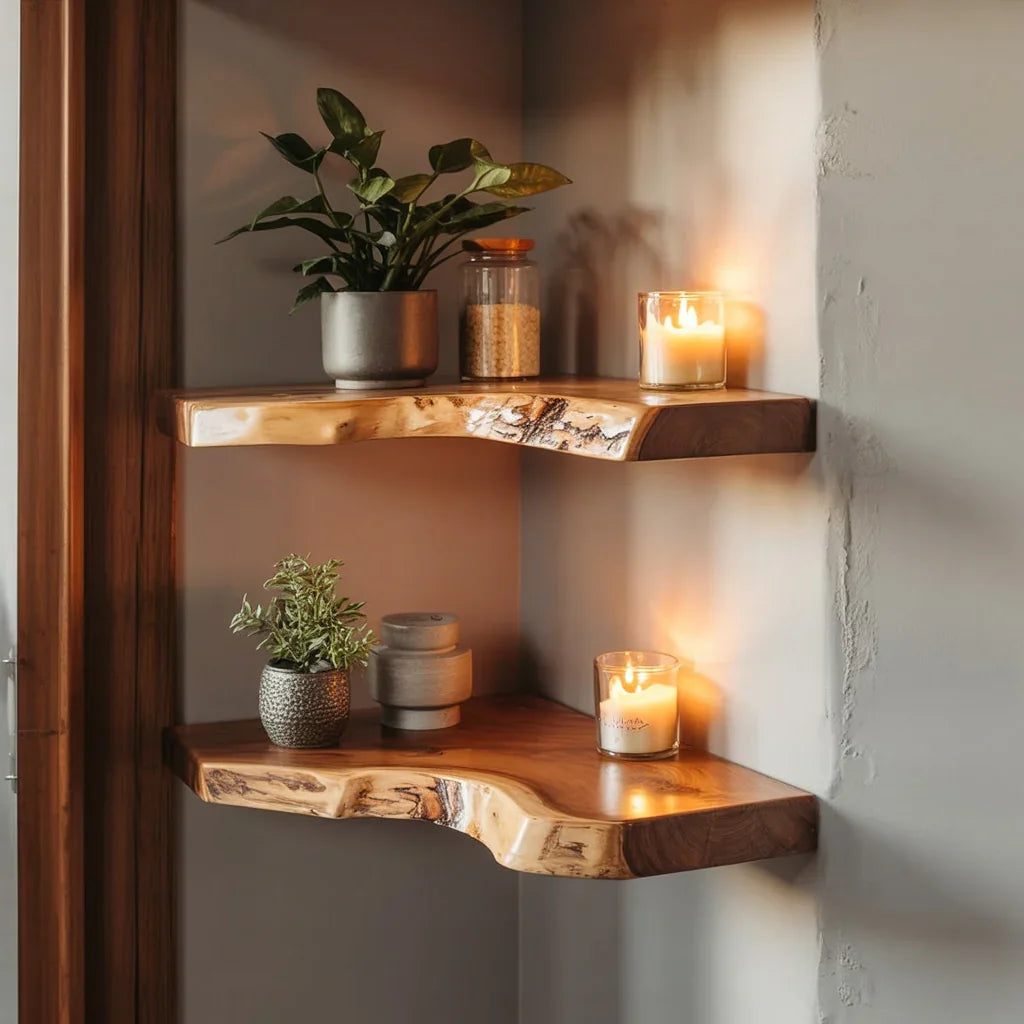
🎯 What Makes It Work
Get This Look For Less: This entire look can be recreated for under $75. The key is sourcing the wood smartly. Visit a local lumberyard or search ‘wood slab offcuts’ on Etsy. You can likely find two small pieces suitable for corner shelves for $20-$40. A set of simple, low-profile metal brackets from a hardware store will cost about $15. The rest is styling: a small potted plant from Trader Joe’s, a few candles, and a ceramic piece from a thrift store or Target.
14. A Dark and Moody Bedroom Built Around a Live Edge Headboard
Style Math: The recipe for this dramatic, cozy space is 40% dark moodiness (the black accent wall) + 30% natural texture (the live edge headboard, faux fur throw) + 20% bright contrast (the crisp white linens and sheepskin throw) + 10% metallic glam (the brass wall sconce and side table). The white elements are crucial; without them, the room would feel oppressive. They provide visual relief and make the rich textures of the wood and fur stand out even more.
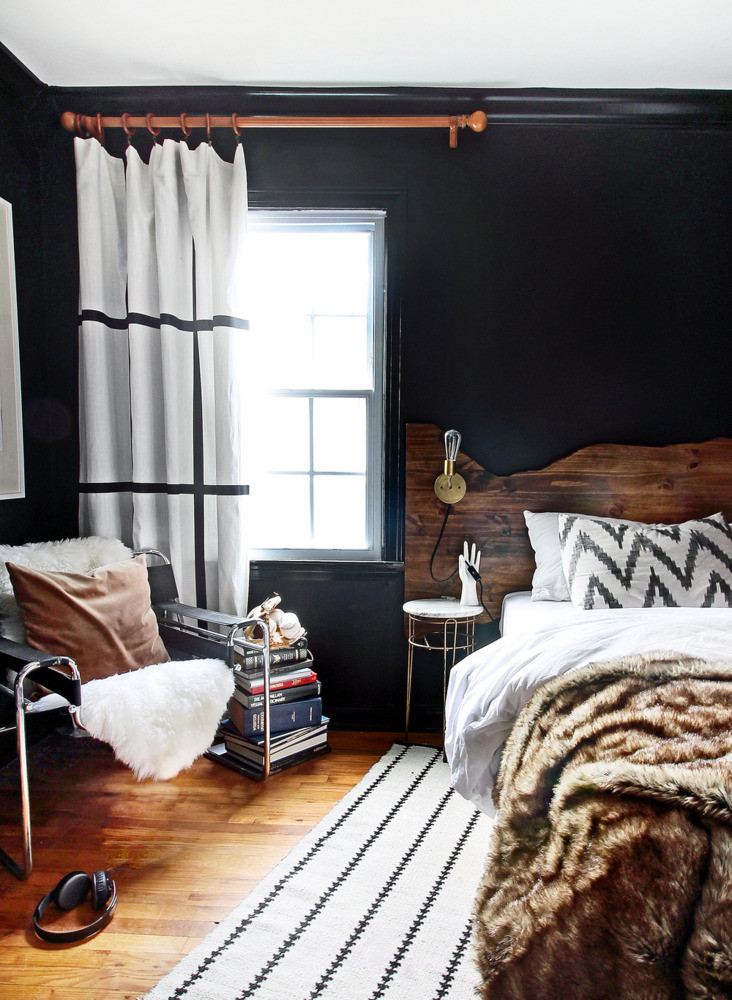
⭐ The One Thing
Real Talk: A black bedroom wall is a commitment. It will make the room feel smaller and darker, so it works best in a space with a good amount of natural light, like the one shown here with the large window. If your bedroom is already small or lacks light, consider a dark charcoal gray or deep navy instead of pure black. Also, be prepared to use multiple light sources—like the wall sconce and likely other lamps not pictured—to create a layered, inviting glow in the evenings.
15. A Live Edge Wood Slab Being Prepped on a Workbench
The One Thing: The most important thing in this image is the can of Odie’s Oil. It represents the crucial finishing step that transforms a raw piece of wood into a durable, beautiful piece of furniture. The choice of finish—oil, wax, polyurethane, epoxy—is just as important as the slab itself. It determines the final look, feel, and durability. An oil finish like this one provides a natural, matte look that lets you feel the wood grain, but it offers less protection than a film finish like poly.
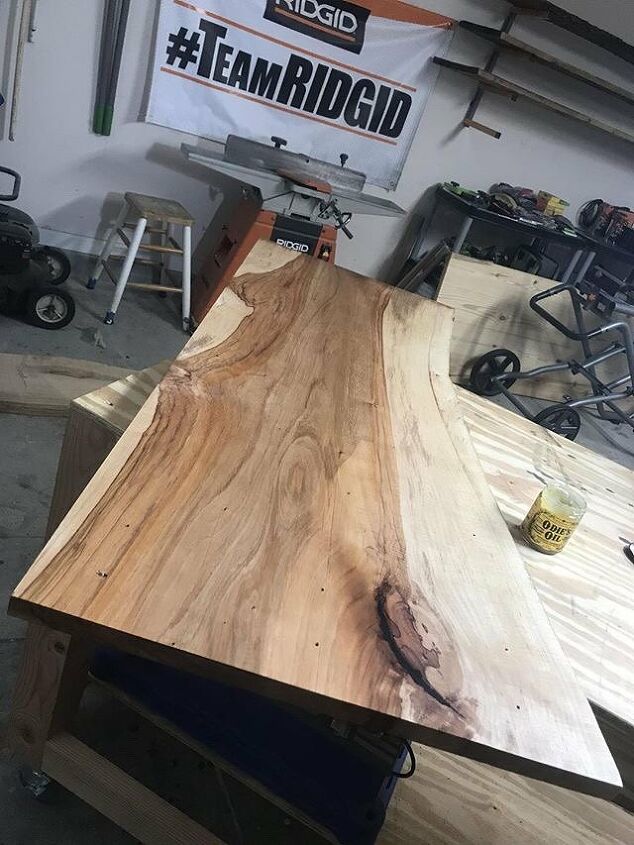
💡 Designer Tip
Maintenance Reality: Finishing a slab with a hardwax oil like Odie’s is a popular choice for a natural, non-plastic feel. However, it’s not a ‘finish it and forget it’ solution. It needs to be reapplied every 1-2 years to maintain its water resistance and luster. While minor scratches can be easily spot-repaired by lightly sanding and reapplying a bit of oil, it is more susceptible to water rings and stains than a polyurethane-coated surface. Know the upkeep before you commit to the finish.
16. A Minimalist Live Edge Table on Slender Metal Legs
What Makes It Work: This design is a perfect example of rustic-industrial style. The success lies in the pairing of opposites. The wood slab is thick, organic, and rustic, full of natural character and warmth. The metal legs, by contrast, are slender, dark, and manufactured, with clean geometric lines. This juxtaposition highlights the best qualities of each material. The slim profile of the legs keeps the heavy slab from looking bulky, creating an airy feel that works well in modern spaces. Compare this to the heavy wood base in Idea #10.
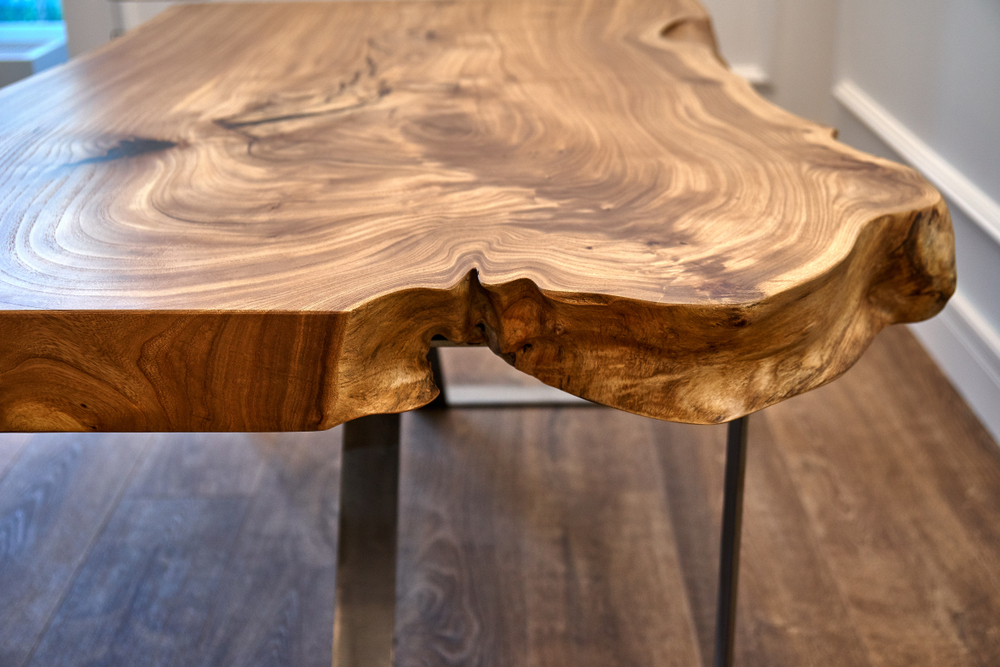
🔥 Trending Context
Get This Look For Less: The most expensive part of a table like this is often the finished slab. You can significantly cut costs by doing the finishing yourself, as shown in Idea #15. Buy an unfinished, kiln-dried slab online or from a local woodworker ($300-$800). Then, purchase a set of metal legs from a shop on Etsy or from a specialized retailer like DIY Furniture for $100-$250. With a bit of sanding and oiling, you can create a high-end looking table for a fraction of the showroom price.
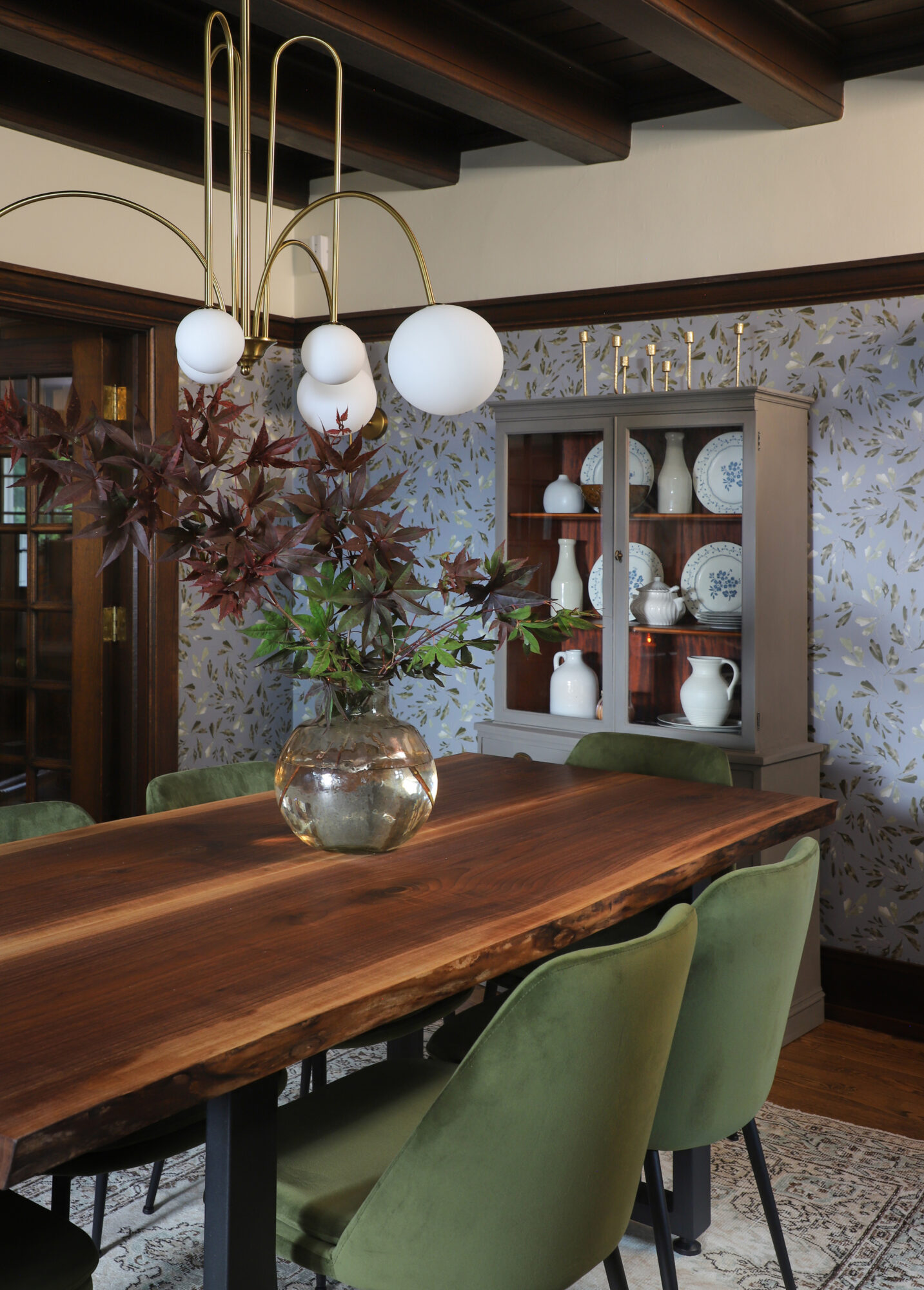
17. A Dark Walnut Table Paired with Olive Green Velvet Chairs
Style Math: This room’s luxurious formula is: 40% dark, moody elegance (the dark walnut table, wood beams, and grey cabinet) + 30% rich color and texture (the olive green velvet chairs) + 20% pattern and light (the botanical wallpaper and white glass chandelier) + 10% metallic warmth (the brass accents). The green velvet is the perfect mid-tone to bridge the gap between the dark wood and the lighter wallpaper, creating a seamless, layered look.
📏 Scale Guide
Trending Context: This is ‘Dopamine Decor’ done in a sophisticated, grown-up way. Instead of bright, primary colors, the trend is interpreted through rich, saturated jewel tones like olive green, paired with luxurious textures like velvet. The botanical wallpaper ties into the ongoing biophilia trend—our desire to bring nature indoors. The brass and gold accents add a touch of warmth and vintage-inspired glamour that has been popular on Pinterest for several years and shows no signs of slowing down.
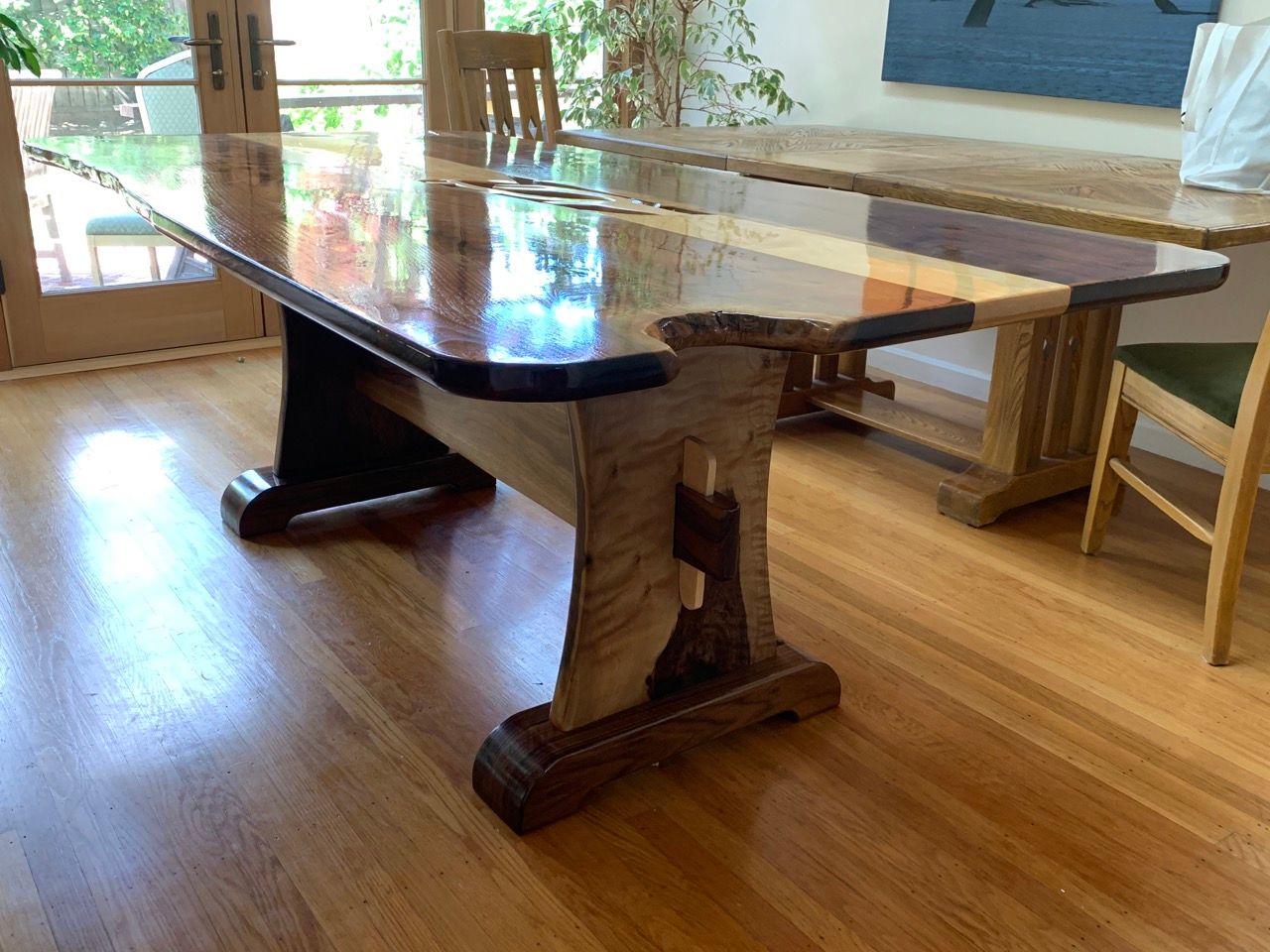
18. A High-Gloss Live Edge Dining Table on a Trestle Base
The One Thing: The high-gloss, almost liquid finish is what makes this table a showstopper. It turns a rustic wood slab into a piece of polished, refined furniture. This thick, poured-epoxy or multi-layer polyurethane finish not only provides incredible protection but also magnifies the depth and complexity of the multi-toned wood grain underneath. Without this reflective surface, the table would have a much more casual, rustic feel. The gloss is what makes it feel luxurious.
✅ Before You Start
Maintenance Reality: A high-gloss finish is a double-edged sword. While it’s extremely durable and water-resistant, it shows every single fingerprint, smudge, and speck of dust. It also shows scratches more readily than a matte or satin finish. A deep scratch in a thick epoxy finish is also much more difficult to repair than on an oiled surface; it often requires sanding down and re-pouring the entire top. It’s a stunning look, but it requires diligent cleaning to keep it looking its best.
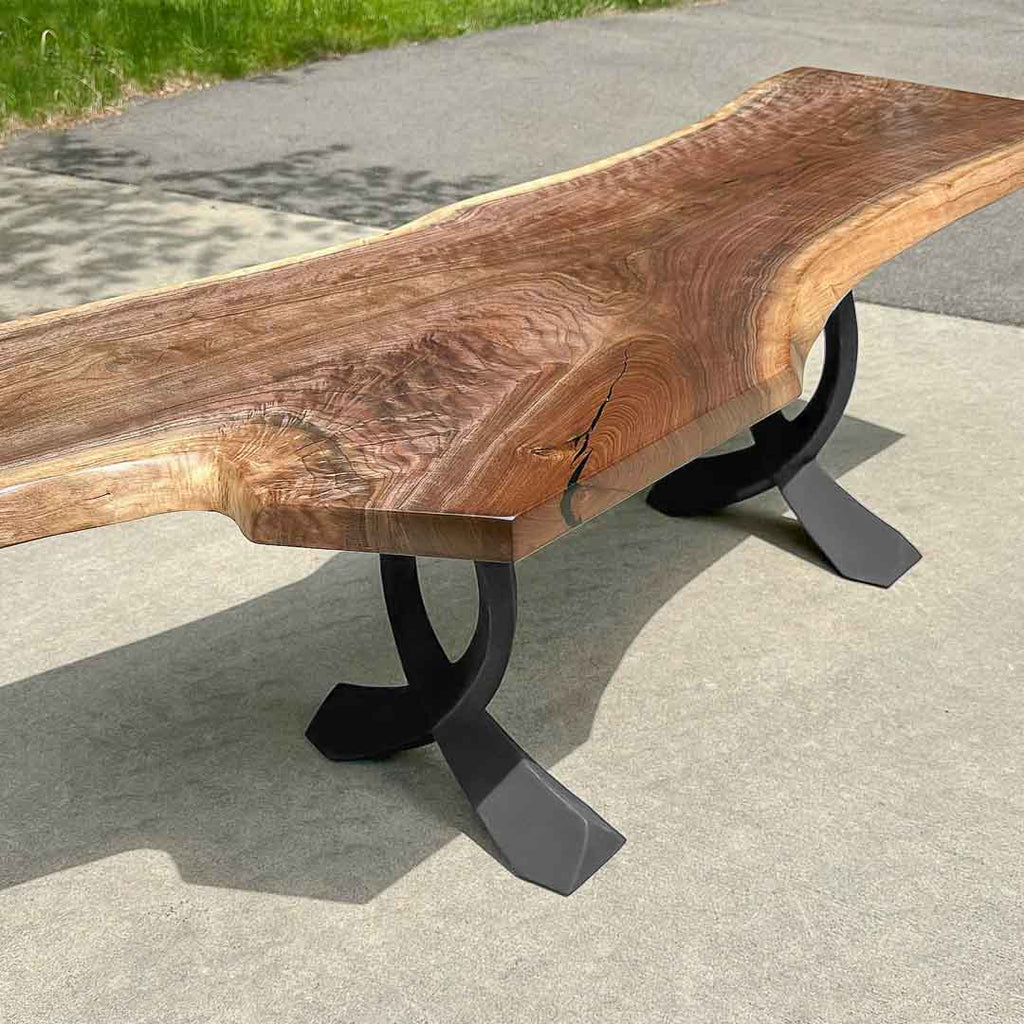
19. A Live Edge Slab Table on Sculptural Curved Metal Legs
What Makes It Work: The magic here is in the unexpected shape of the legs. Instead of standard straight or trapezoid legs, these sculptural, curved metal supports turn the table from a simple piece of furniture into a piece of art. The dark, matte finish of the metal provides a stark contrast to the polished, organic wood top, and the curved form adds a sense of movement and grace. The filled crack in the wood slab is also a key detail, adding another layer of industrial-meets-natural character.
⚠️ Real Talk
Designer Tip: The base of a table is 50% of its design. Don’t treat it as an afterthought. When you have a truly special slab of wood, consider investing in a custom or sculptural base to elevate the entire piece. Think of the slab as the canvas and the legs as the frame. A unique base is what separates a good DIY project from a great one. Look on sites like Etsy for metal fabricators who create unique, artistic table legs.
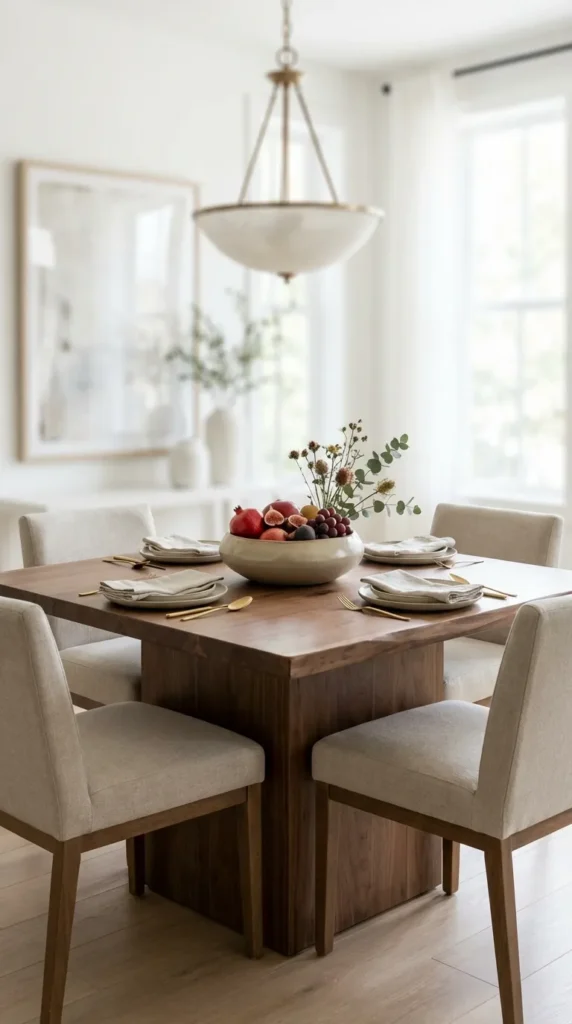
20. A Square Natural-Edge Dining Table with Elegant Accents
The One Thing: The square shape of the tabletop is the defining feature. While long, rectangular live edge tables are common, a square version creates a much more intimate and conversational dining experience. It encourages everyone at the table to face each other, making it ideal for smaller groups and family meals. The substantial pedestal base is also a smart choice, as it eliminates corner legs and makes it easier to fit chairs around the table without anyone knocking their knees.
💰 Budget Breakdown
Scale Guide: A square table is a fantastic solution for a square-shaped dining room or a smaller breakfast nook. This table, likely around 60″ x 60″, is perfect for a room that is at least 11′ x 11′. This allows for the necessary 36 inches of clearance on all sides. The single pedestal base is a space-saver compared to four legs, making it feel less crowded in a compact area. Compare this to the long, rectangular tables in Idea #1 and Idea #6, which require a longer room.
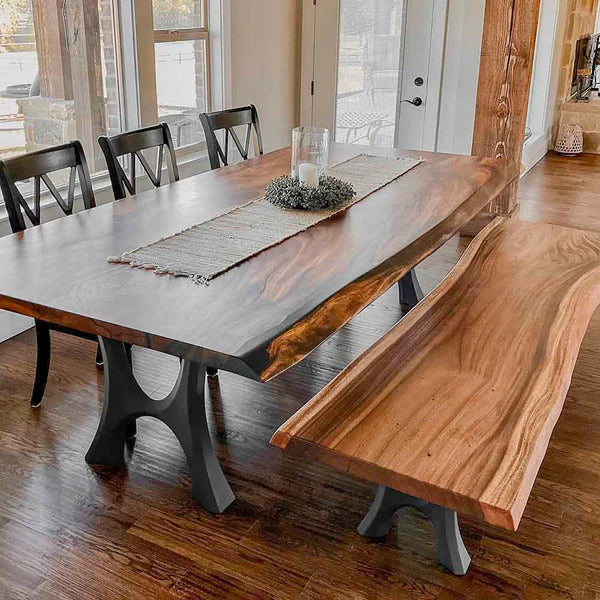
21. Matching Live Edge Dining Table and Bench with Metal Bases
Budget Breakdown:
🔧 How-To Brief
- Live Edge Dining Table Slab (6ft): $700 – $2,000
- Live Edge Bench Slab (6ft): $300 – $800
- Metal Table Bases (set of 2): $200 – $500
- Metal Bench Bases (set of 2): $150 – $350
- Black Wooden Chairs (each): $90 – $250
- Finishing Supplies (Oil/Sander): $100 – $150
- TOTAL (for a 4-chair set): $1,810 – $4,800
- Budget Alternative: Use construction-grade lumber (like three 2x10s joined together) and distress the edges yourself for a similar rustic look at a significantly lower material cost.
What Makes It Work: This look feels cohesive and intentional because of repetition with variation. The table and bench both use live edge wood slabs and black metal bases, creating a clear visual connection. However, the use of chairs on the opposite side prevents it from feeling too heavy or ‘matchy-matchy’. The black of the metal bases is repeated in the black wooden chairs, tying the whole arrangement together. This simple, consistent color and material palette is what makes the rustic-modern aesthetic feel so clean and deliberate.
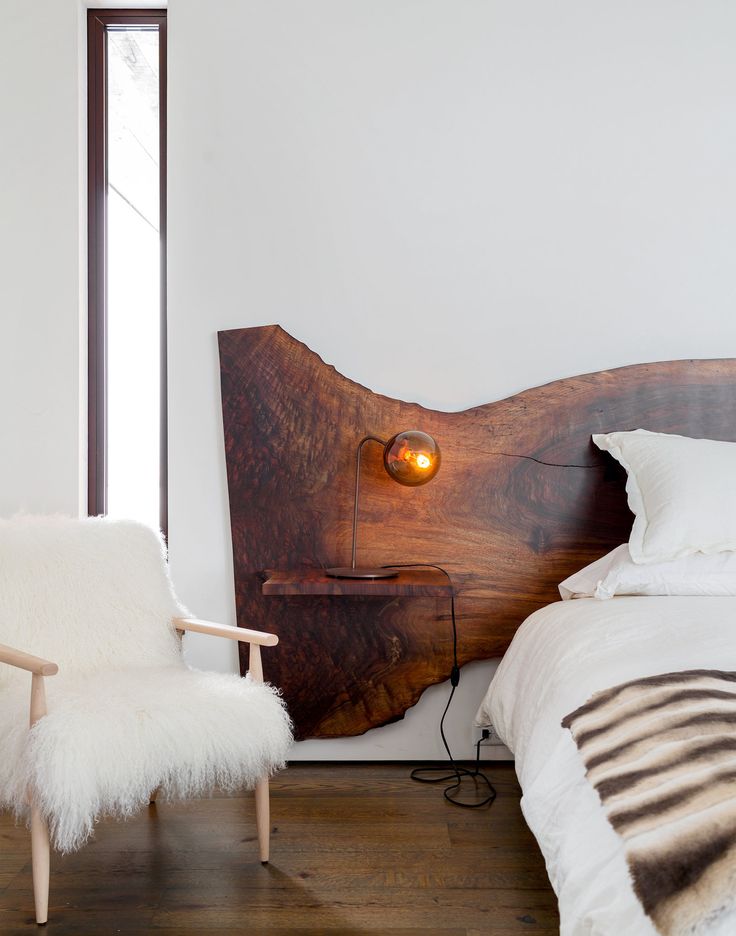
22. This Live Edge Headboard Features a Smart Integrated Shelf
Designer Tip: Integrating a shelf into a headboard is a brilliant space-saving move for smaller bedrooms. To make it look seamless, use a piece of wood from the same slab, or a piece with a very similar grain and color. The key is to make the shelf depth functional but not obtrusive—around 5-6 inches is perfect for a small lamp, a phone, and a book. Any deeper and it starts to feel bulky and you risk hitting your head. Using floating shelf hardware will give you this clean, hardware-free look.
📐 Style Math
Real Talk: That gorgeous spherical amber lamp provides beautiful mood lighting, but it is absolutely not enough light to read by. This setup is perfect for creating a warm, cozy evening ambiance, but you will need other light sources in the room, like overhead lighting or a floor lamp, for functional tasks. Also, a floating shelf like this needs to be installed perfectly level and securely into wall studs, especially if you plan to place anything glass or breakable on it.
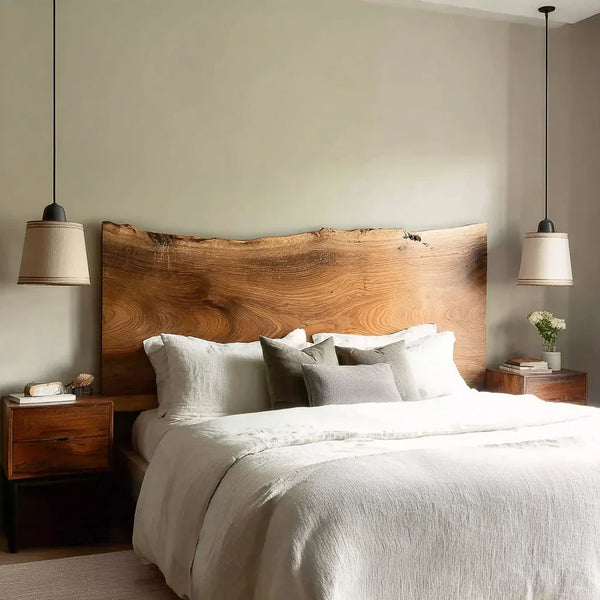
23. Natural Linen and a Live Edge Headboard Create a Serene Escape
Style Math: The calming formula for this bedroom is: 50% soft, layered textiles (the white textured bedding, grey pillows, fabric pendants) + 40% natural, organic elements (the prominent live edge headboard and dark wood nightstands) + 10% calm color (the muted green-gray wall paint). The focus is overwhelmingly on texture rather than bright color, which is a hallmark of serene, spa-like design. The softness of the bedding and pendants perfectly balances the hardness of the wood slab.
💸 Get This Look For Less
How-To Brief: To mount a heavy live edge headboard securely (Time: 2 hours, Cost: $30 for hardware):
- Choose your slab. Ensure it is wide enough to span the width of your bed and nightstands for this encompassing look.
- Sand and finish the slab to your liking.
- Locate the studs in the wall behind your bed using a stud finder. Mark them clearly.
- Use a French cleat system for mounting. Attach one side of the cleat to the studs in the wall, ensuring it is perfectly level.
- Attach the other side of the cleat to the back of your wood slab.
- Lift the slab and hang it on the wall-mounted cleat. The weight of the slab will hold it securely in place.
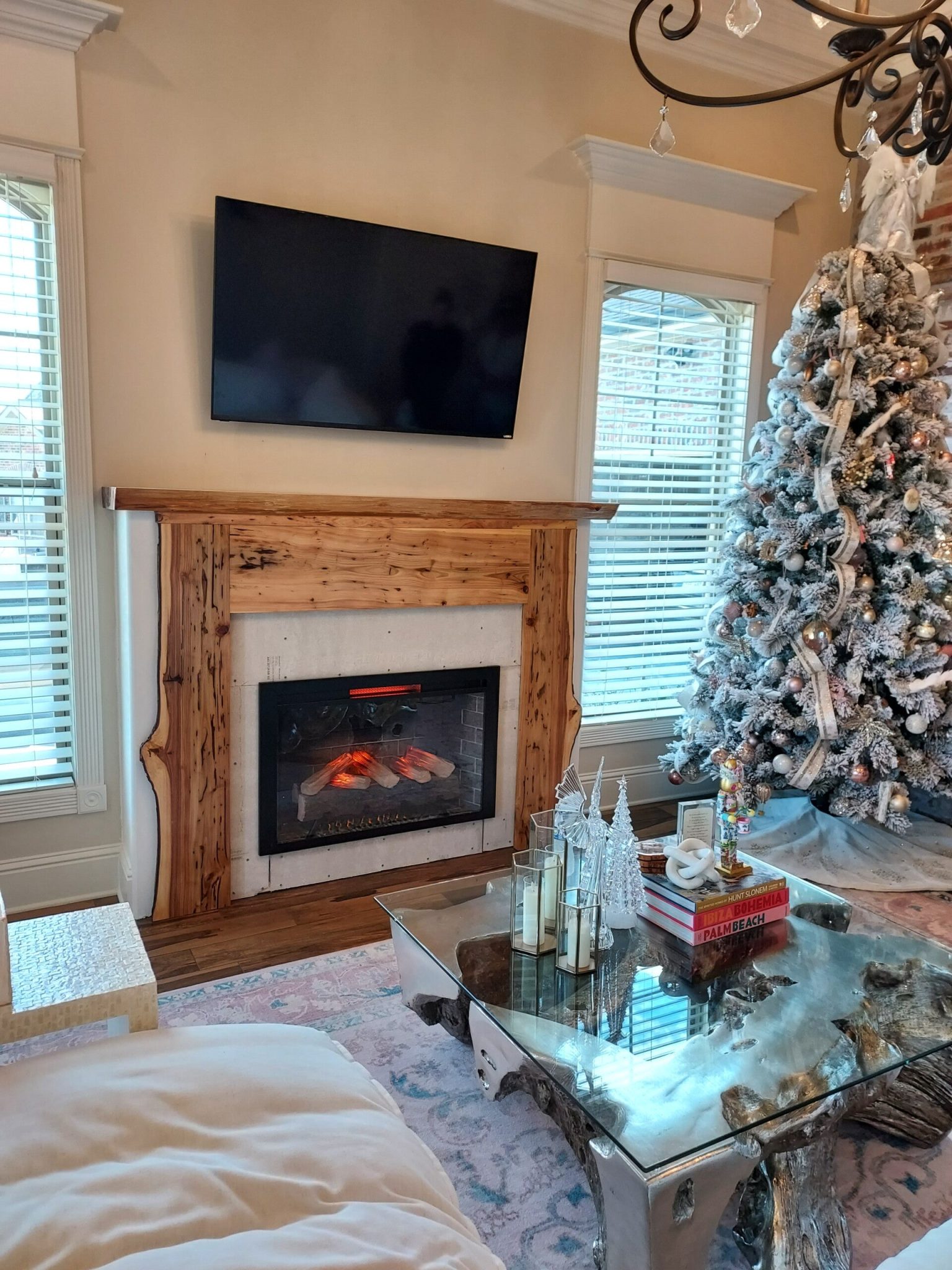
24. A Rustic Live Edge Wood Fireplace Mantel and Surround
The One Thing: The star here is the ambitious use of live edge wood as a full fireplace surround, not just a mantel. This bold choice turns the fireplace into a massive, rustic art installation. The raw, textured character of the wood panels, paired with the equally textured live edge base of the coffee table, commits fully to a high-end, modern lodge aesthetic. The light tone of the wood keeps it from feeling too heavy, despite its large scale. This is a go-big-or-go-home design move that pays off.
🧹 Maintenance Reality
Before You Start Checklist:
- Check your local building codes. There are strict regulations about the minimum distance combustible materials (like wood) must be from a fireplace opening. This is non-negotiable for safety.
- Confirm your fireplace is electric or a sealed gas insert. Using this much wood around a traditional open-hearth wood-burning fireplace is often not to code and is a fire hazard.
- Measure the weight of the wood slabs you plan to use. Ensure your wall framing can support the significant weight of a full wood surround.
- Plan your finish. The wood will need a fire-retardant sealant if it is close to the heat source.
25. A Polished Live Edge Bench Showcasing Exposed Joinery
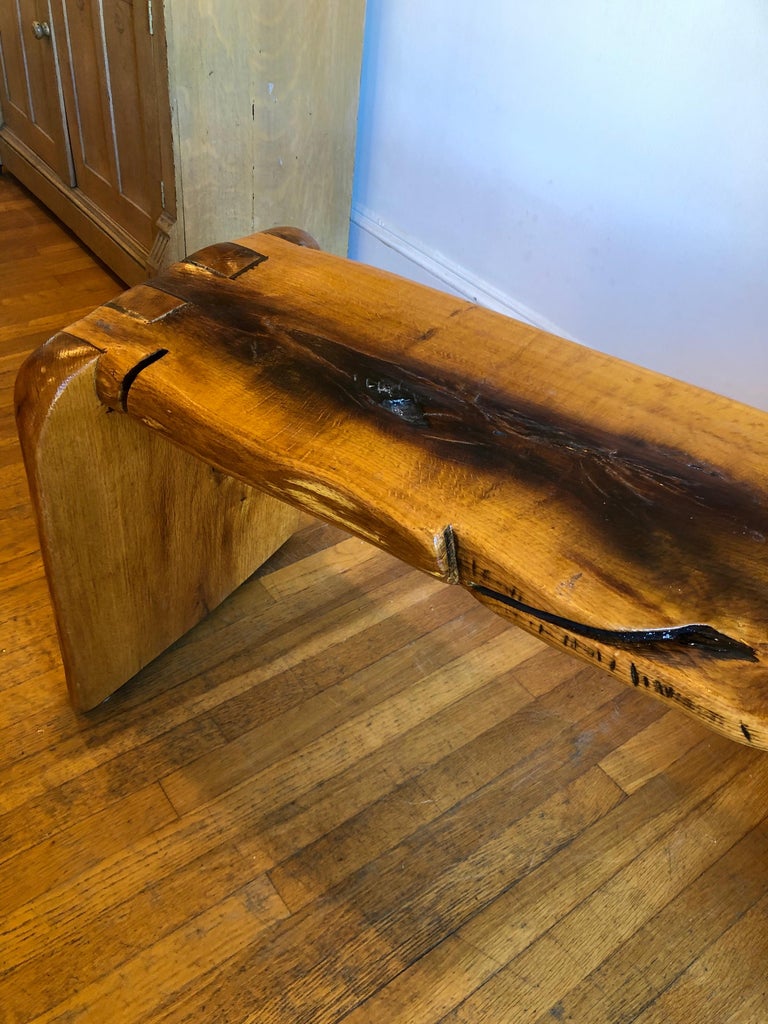
What Makes It Work: This piece is a celebration of craftsmanship. The visible dovetail-like joinery on the legs isn’t hidden; it’s a key design feature. This honesty in construction, where you can see how the piece is put together, elevates it from a simple bench to a piece of functional art. The high-gloss finish brings out the rich color and grain of the wood, while the elegant curve of the legs adds a touch of sophistication that contrasts beautifully with the rustic, visible joints.
🎯 What Makes It Work
Designer Tip: When buying or commissioning a piece of high-quality wood furniture, look for details like this. Exposed joinery, book-matched grain, and butterfly keys (used to stabilize cracks) are all signs of thoughtful craftsmanship and attention to detail. These are the elements that give a piece character and longevity, turning it into an heirloom rather than a temporary trend. Don’t be afraid to ask the maker about the techniques they used.
26. A Minimalist Bedroom with a Striking Dark Wood Slab Headboard
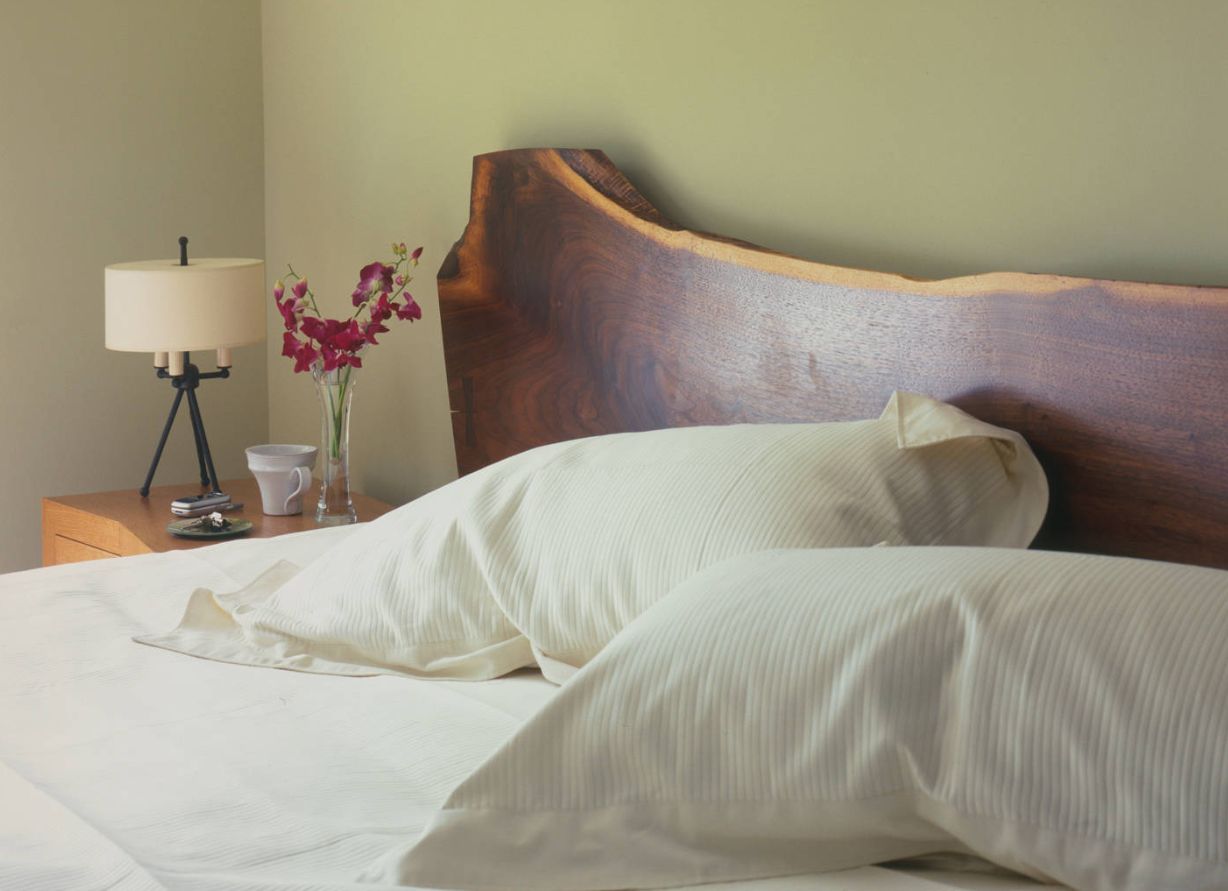
The One Thing: The power of this design comes from the dramatic contrast between the dark, heavy, organic headboard and the light, airy elements surrounding it. The pale cream bedding, the light green wall, and the slender tripod lamp all serve to make the dark slab pop. If the bedding were dark or the walls a deeper color, the headboard would lose its impact and the whole room would feel heavy. This is a lesson in using negative space and light colors to amplify a statement piece.
⭐ The One Thing
Get This Look For Less: A massive dark wood slab can be pricey. To get a similar effect on a budget, you can create a faux live edge headboard. Purchase two or three wide, dark-stained wood planks from a hardware store. Arrange them horizontally and use a jigsaw or sander to create an irregular, organic-looking top edge. Mount them directly to the wall behind the bed. From a distance, it will create the same dramatic silhouette for under $150.
27. A Rustic Plank Wall Highlights This Light Wood Live Edge Headboard
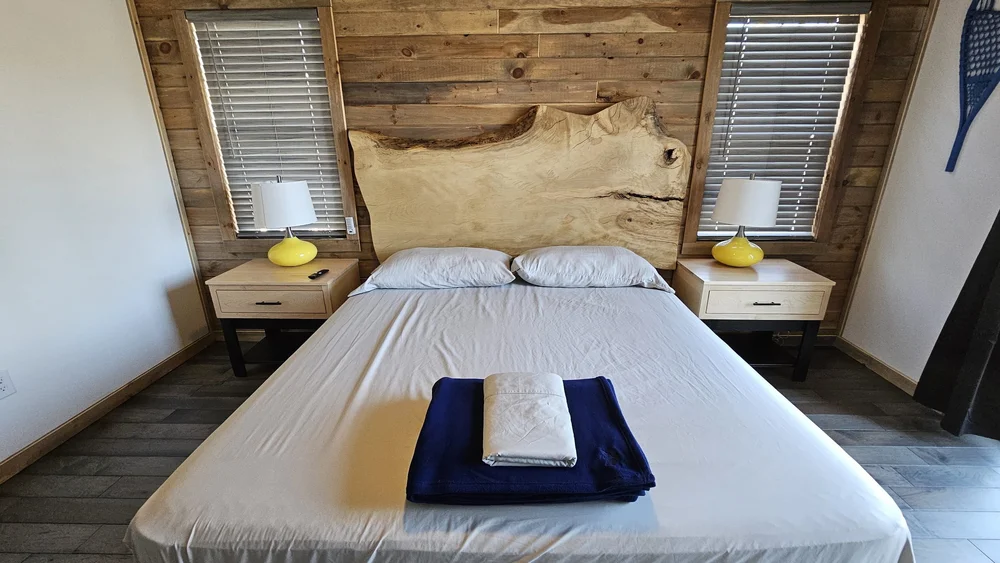
Style Math: This bedroom is a study in layered rustic textures: 50% rustic wood (the plank wall and headboard) + 30% soft neutrals (the light gray sheets and gray floor) + 20% bold, unexpected color (the bright yellow lamps and dark blue throw). The yellow lamps are a fantastic, confident choice. They prevent the room from feeling like a monotonous wood cabin and inject a dose of modern energy and personality. The blue throw provides a cool-toned counterpoint.
💡 Designer Tip
Real Talk: Pairing wood on wood can be tricky. The key, as shown here, is to have a distinct contrast in tone and texture. The headboard is a smooth, light-colored slab, while the wall behind it is made of rougher, multi-toned rustic planks. If the headboard and the wall were the same color and finish, the headboard would completely disappear. When layering similar materials, always create contrast in color, finish, or texture.
28. An Earthy Live Edge Table Grounds This Open-Concept Living Space
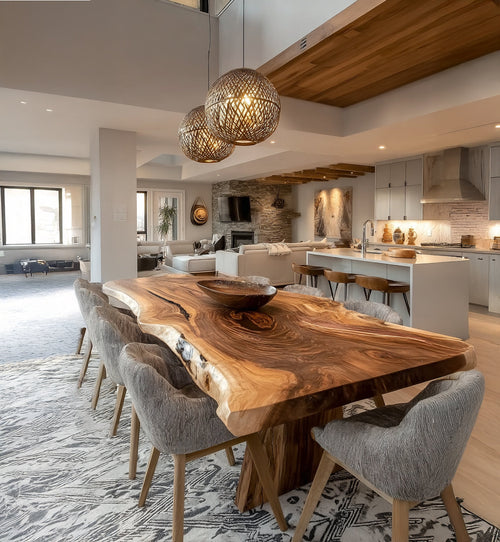
What Makes It Work: In a large, open-concept space, a substantial piece of furniture is needed to anchor the dining zone, and this table does it perfectly. The thick slab and matching wood base give it immense visual weight, clearly defining the dining area. The repetition of texture—the woven pendant lights, the patterned rug, the stone fireplace, the wood plank ceiling accent—creates a rich, layered, and cohesive environment. Every element feels connected through a shared palette of earthy, natural materials. Compare this to the very similar room in Idea #2.
🔥 Trending Context
Scale Guide: This look is specifically for large, open-plan homes with high or vaulted ceilings. The combined visual mass of the table, oversized pendants, and architectural features like the fireplace and ceiling planks requires a room of at least 400 square feet. In a standard 8-foot ceiling room, the pendants would feel oppressively low and the table would dominate entirely. This is about matching the scale of your furniture to the scale of your architecture.
Bring Nature Home, One Slab at a Time
Whether you’re ready to tackle a full DIY dining table or are starting small with a simple floating shelf, the inherent beauty of live edge wood is its perfectly imperfect character. It’s more than just furniture; it’s a story, a piece of nature, and a focal point for your home. Now, head over to Pinterest and start creating that board — your perfect project is waiting for you.