You know that feeling when you finally find the water feature that looks exactly right for your space? It can instantly turn a simple backyard into a serene escape. But with thousands of options out there, it’s easy to get overwhelmed. After filtering through hundreds of designs from top retailers and specialty garden shops, we narrowed it down to the 27 ideas that actually deliver. We’re covering everything from grand, classical fountains to subtle, modern spouts so you can find the perfect match for your style and budget. These are the looks dominating our Pinterest feeds in 2026, driven by a collective desire to create true sanctuary spaces at home. And stay until the end — we break down the most common mistakes that can ruin these looks.
📌 Save this to Pinterest for later — you’ll want to revisit these ideas.
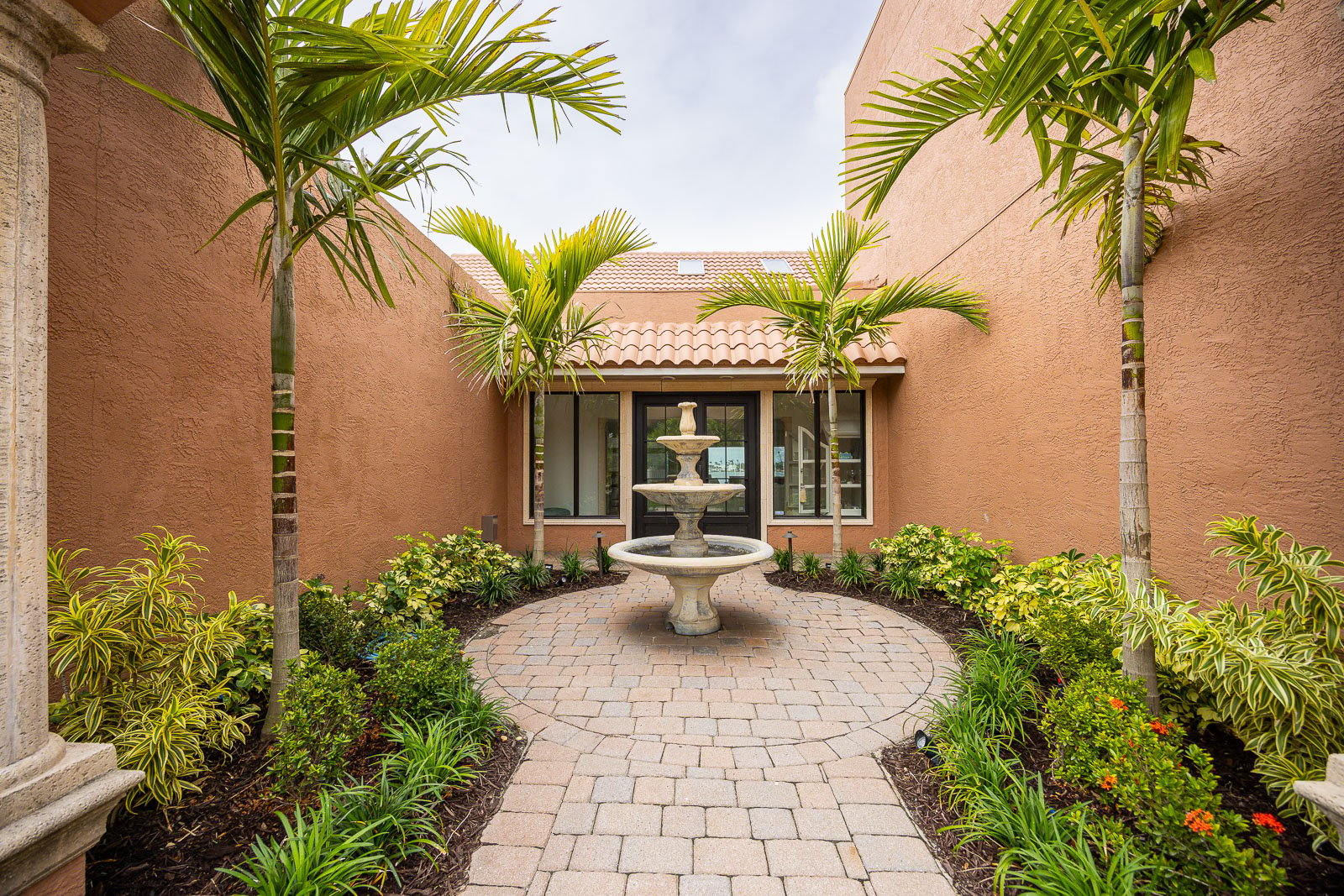
1. Mediterranean Courtyard with a Central Tiered Fountain
What makes this space so inviting is the classic use of a central focal point. The tiered stone fountain immediately draws your eye, and its sound creates a sense of tranquility that fills the courtyard. The design uses color harmony beautifully, with the warm apricot of the stucco walls playing off the terracotta roof tiles and the cool greens of the lush landscaping. The circular pavement around the fountain breaks up the linear path, creating a natural gathering spot. It’s a masterclass in using structure to create a relaxed, Mediterranean vibe.
|
📋 Copy HEX 🔗 Share |
💰 Budget Breakdown
Recreating a look like this involves a few key investments. The costs can vary wildly based on materials and labor, but here’s a general idea:
- Main Feature: Tiered stone fountain, professionally installed – $3,500-$8,000
- Pathways & Paving: Brick and stone pavers (approx. 200 sq. ft.) – $2,000-$5,000
- Landscaping: Palm trees, shrubs, and ground cover – $1,500-$4,000
- Decor: None needed, the architecture is the star.
- TOTAL: $7,000 – $17,000
2. A Subtle Water Feature for a Small Courtyard
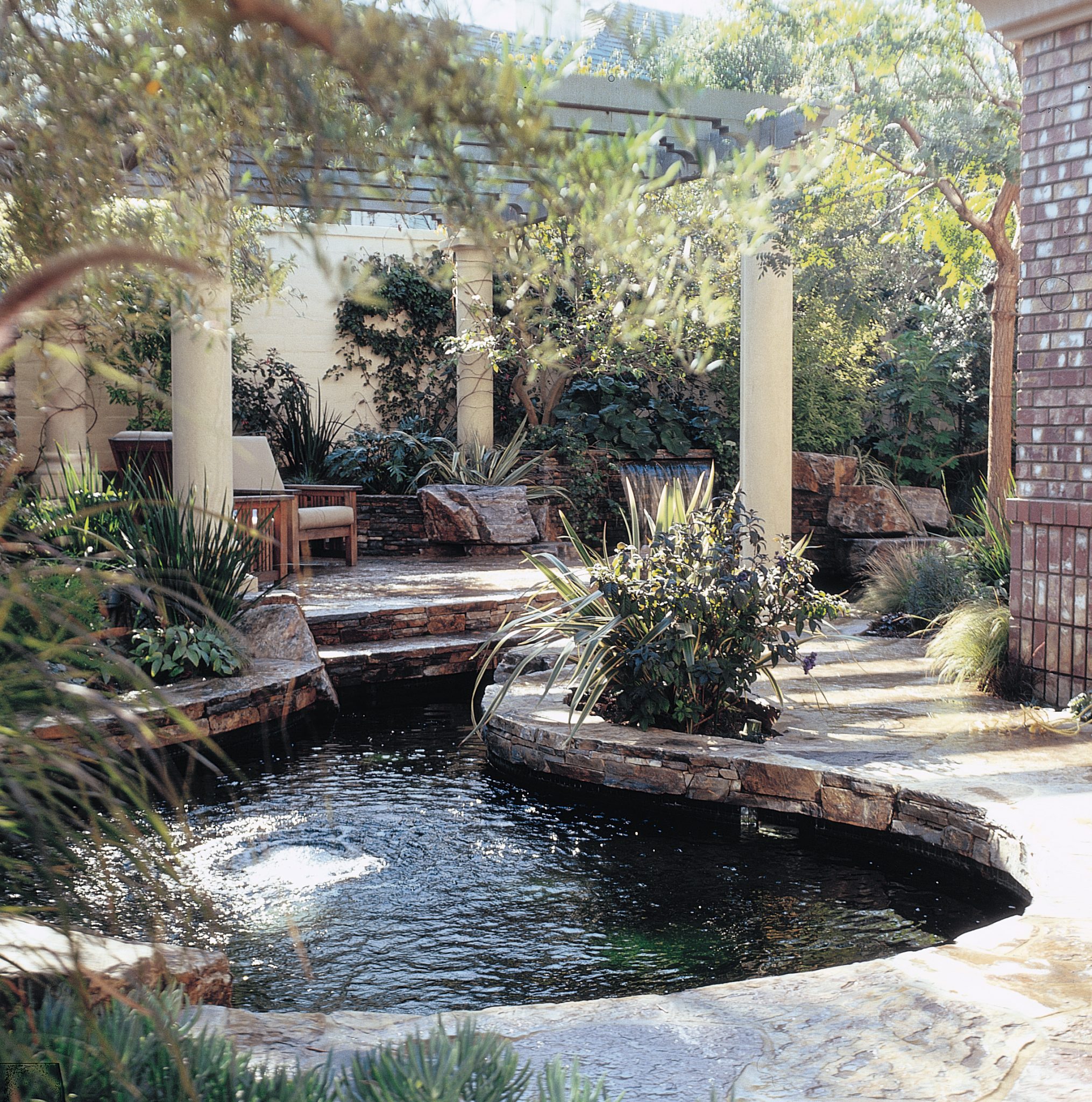
When working with a compact space, you don’t have to give up on the idea of a water feature. The key is to think small and integrated. Instead of a large, freestanding fountain, consider a small urn, a wall-mounted spout, or even just a beautiful pot with a simple, recirculating pump. A great trick is to use a pump kit (around $30-$60) in a waterproof ceramic planter you already love. This creates the sound and movement of water without requiring any major installation or a large footprint. Tuck it into a corner with some plants to make it feel like a natural part of the garden.
|
📋 Copy HEX 🔗 Share |
🔥 Trending Context
This approach is perfect for smaller, enclosed spaces. An ideal area would be a courtyard or patio from 50 to 200 square feet. It won’t get lost in a tiny space, and it won’t be overwhelmed by a larger yard. The goal is to provide a gentle auditory and visual element, not to be a massive focal point like the grand fountain in Idea #1. Ceiling height isn’t a concern here, but you do need an accessible outdoor electrical outlet for the pump, which is a key planning step.
3. Naturalistic Rock Waterfall with a Meandering Stone Path
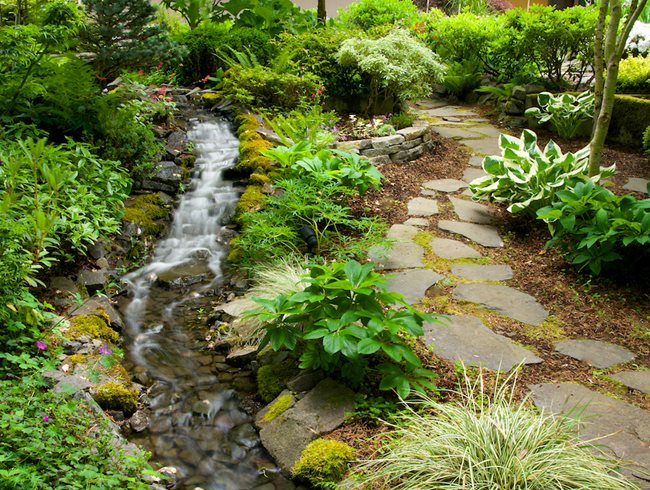
that makes this design work so well is its commitment to looking natural. It’s not just a pile of rocks; it’s a carefully constructed cascade that mimics how water would flow in a real forest stream. The use of moss on the rocks and the irregular flagstone path are critical details. If you remove that organic, slightly unkempt feel, you lose the entire serene, lush atmosphere. It feels discovered rather than built, and that’s a powerful illusion in a backyard setting. The varied green foliage completes the effect, making it feel like it has been there for years.
|
📋 Copy HEX 🔗 Share |
📐 Style Math
Let’s have some real talk about a feature like this. While stunning, natural rock waterfalls are high-maintenance. The crevices in the rocks and the slow-moving water are ideal breeding grounds for algae, especially in sunny locations. You’ll need to plan for regular cleaning, potentially involving scrubbing the rocks and using water treatments to keep it looking clear and beautiful. Also, the constant moisture can attract mosquitos if the water isn’t moving enough, so ensure your pump is sized correctly to maintain good flow.
4. Classic Lion’s Head Wall Fountain in a Formal Garden
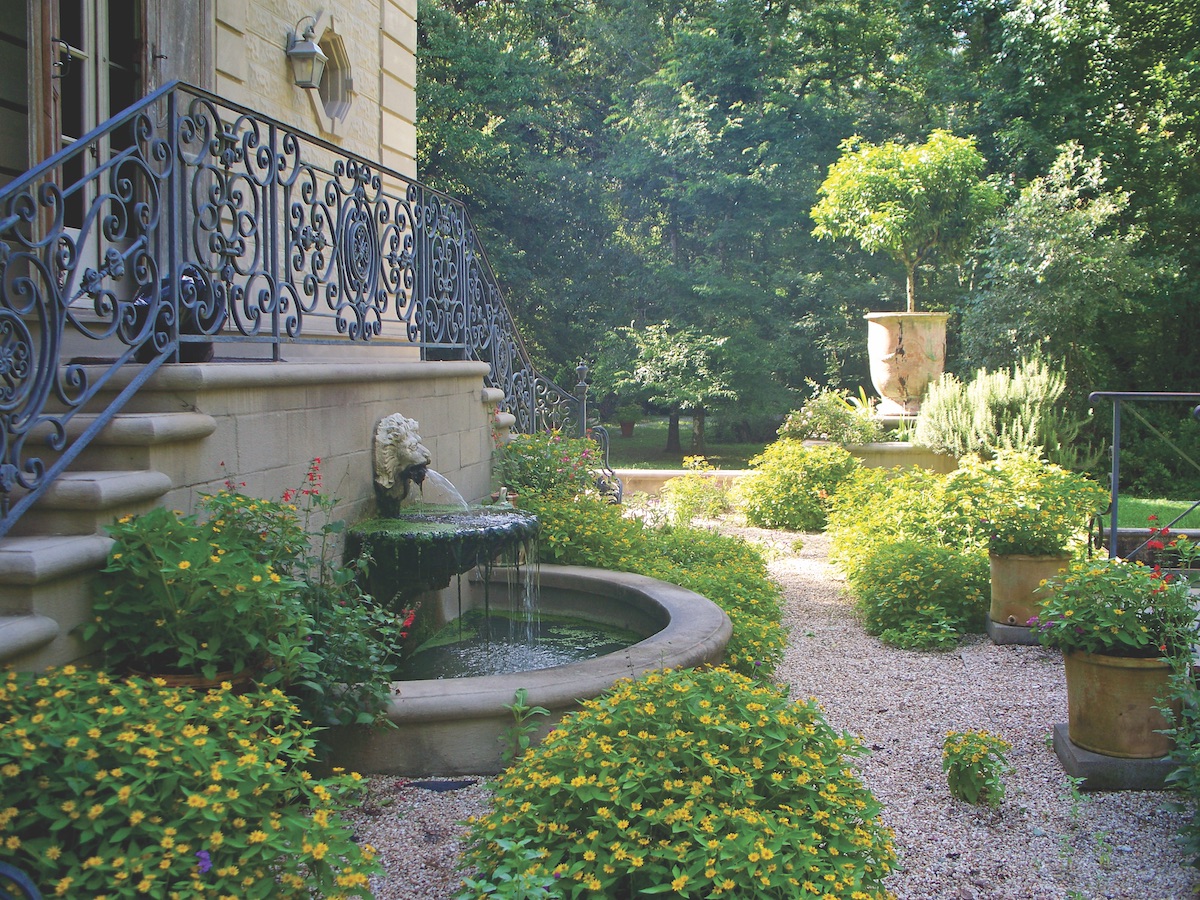
The formula for this timeless European garden look is surprisingly simple. Think of it as 50% classical architecture, 30% structured greenery, and 20% natural ground materials. The “architecture” is the stone wall and the ornate lion’s head fountain itself. The “structured greenery” comes from the potted plants and contained flower beds—it’s lush but not wild. The final 20% is the gravel path, which provides a soft, permeable surface that feels traditional and sounds wonderful to walk on. You could swap the lion’s head for a different classical spout or change the yellow flowers to white, and the formula would still hold.
|
📋 Copy HEX 🔗 Share |
✅ Before You Start
A stone fountain with a large, open pool requires consistent upkeep to stay looking its best. The basin can collect leaves, dirt, and fallen petals, which will clog the pump if not skimmed out every few days. The stone itself, especially light-colored beige stone, is prone to getting green or black water stains from mineral deposits and algae. Plan on a deep clean at least twice a year with a specialized stone cleaner and a soft-bristled brush to keep the material looking fresh and not grimy.
5. Modern Tiered Concrete Fountain in a Manicured Landscape
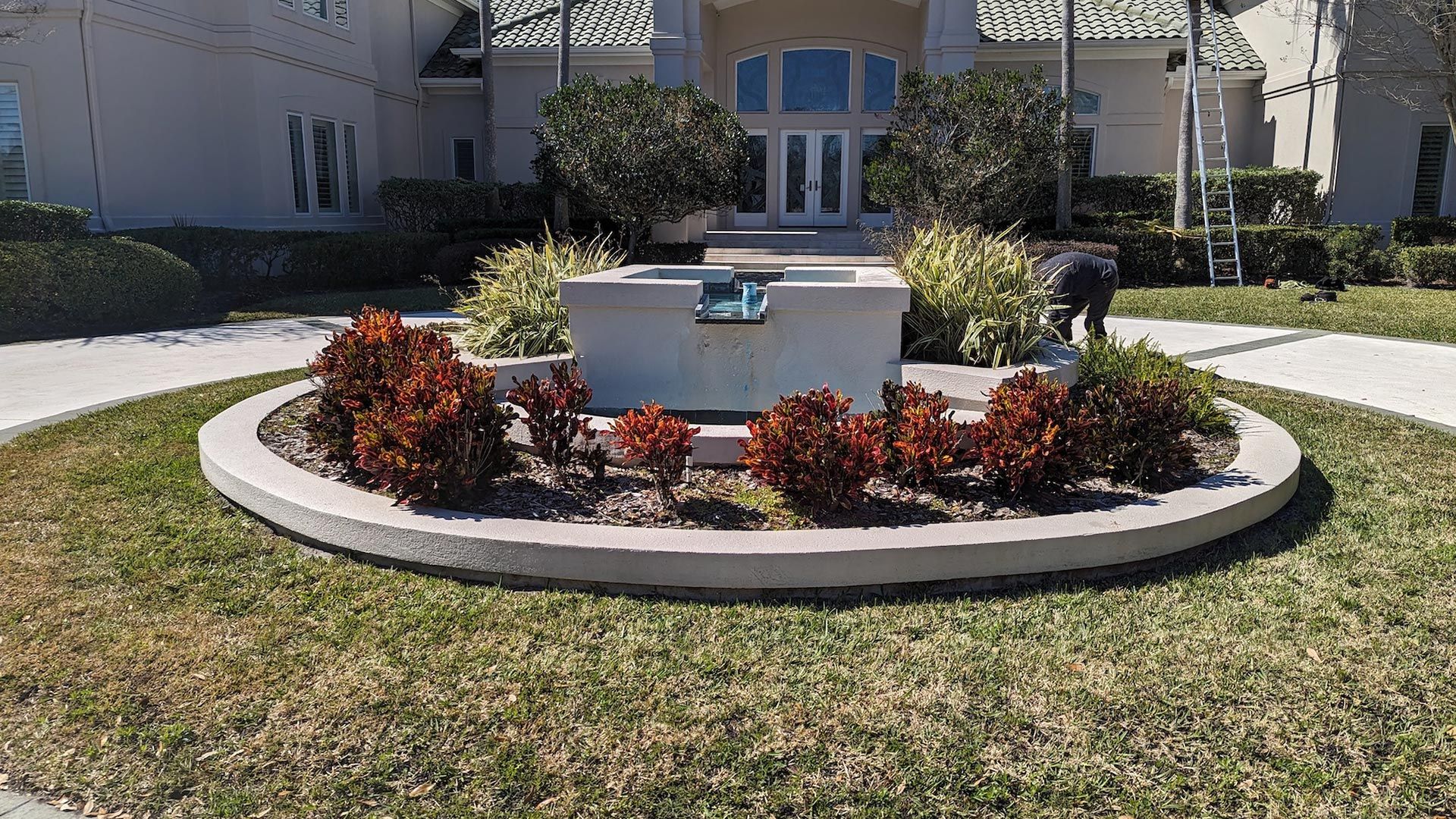
This design is all about contrast. The sharp, geometric lines and smooth grey surface of the concrete fountain stand out beautifully against the soft, organic shapes and textures of the plants. The circular planter bed further emphasizes the fountain as a focal point, creating a clean, intentional look. It’s the tension between the modern, man-made structure and the natural, colorful foliage that creates visual interest. The choice of fiery red-leafed shrubs against the cool grey concrete is a particularly smart color play that makes the whole composition pop.
|
📋 Copy HEX 🔗 Share |
🧹 Maintenance Reality
While a custom-poured concrete feature can be pricey, you can get this look for much less. Many garden centers and online retailers like Wayfair or Home Depot offer pre-cast concrete or concrete-look resin fountains starting from $300-$700. For the planter bed, use simple metal or plastic edging (around $50) instead of custom concrete curbing. Fill it with affordable, high-impact plants like coleus for the red color and hostas for the green from a local nursery. You can achieve a very similar vibe for under $1,000.
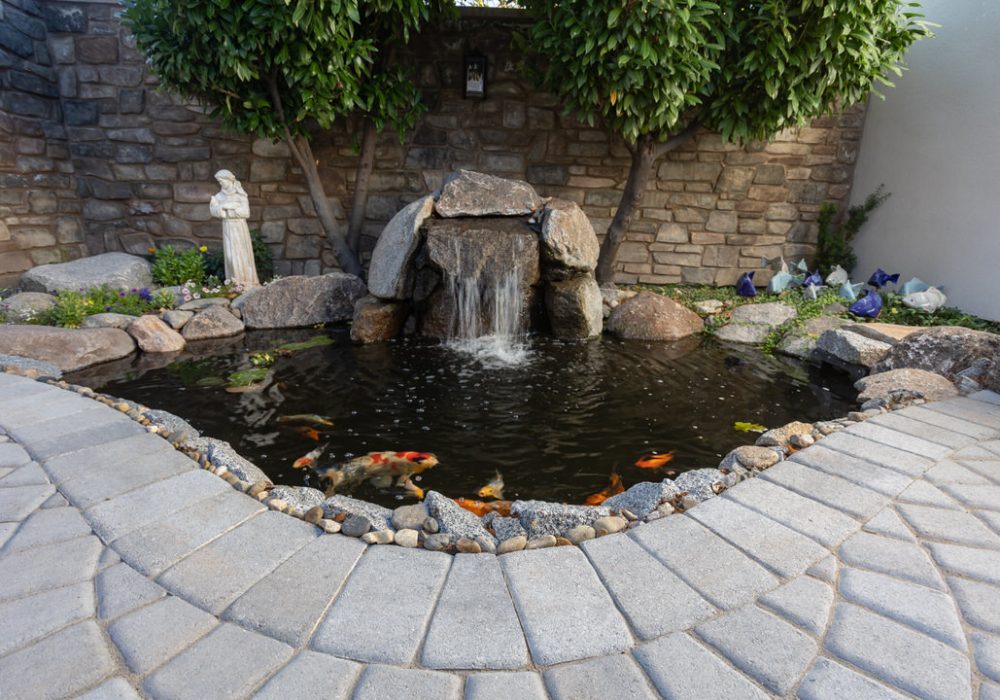
6. Serene Koi Pond with a Stone Waterfall and Paver Patio
A koi pond is a major commitment, so it pays to plan carefully. Before you even think about digging, work through this checklist:
|
📋 Copy HEX 🔗 Share |
🎯 What Makes It Work
- Filtration is Everything: Have you researched and budgeted for a proper biological and mechanical filtration system? Koi produce a lot of waste, and without it, your pond will be a mess.
- Predator Protection: Is the area safe from raccoons, herons, and cats? Consider depth (at least 3-4 feet) and potential netting options.
- Sunlight vs. Algae: Does the spot get 4-6 hours of sun (good for plants) but not so much that it will turn into an algae farm in the summer?
- Location, Location, Location: Can you see and hear the pond from your favorite seating area? Don’t hide it in a far corner of the yard.
When building a pond next to a paver patio, ensure the pond’s edge is slightly higher than the patio surface. A raised coping of about 1-2 inches is ideal. This simple detail prevents dirty runoff from the patio, along with dirt, mulch, and grass clippings, from washing directly into your pond every time it rains or you clean the patio. It’s a small construction detail that makes a huge difference in keeping your pond water clean and clear, saving you hours of maintenance.
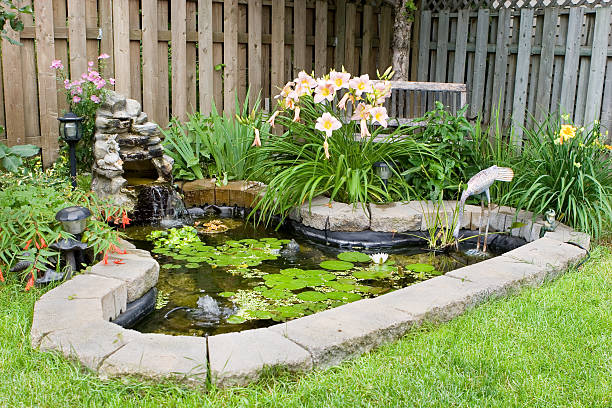
7. A Charming Backyard Pond with Pink Daylilies
Installing a flexible pond liner is a manageable DIY project that can save you thousands in labor. Here’s a quick guide:
🔧 How-To Brief
- Excavate the Hole: Dig your pond shape, creating different levels or shelves for plants. Ensure the sides are sloped, not vertical. Time: 3-5 hours. Cost: $0 (your labor).
- Install Underlayment: Remove any sharp rocks or roots. Lay down a special pond underlayment fabric (or old carpet) to protect the liner. Time: 30 minutes. Cost: $50-$100.
- Lay the Liner: Unfold your flexible EPDM rubber liner and settle it into the hole, leaving plenty of excess around the edges. Get a friend to help! Time: 1 hour. Cost: $150-$400.
- Add Water & a Border: Slowly fill the pond, smoothing out wrinkles as the liner stretches. Once full, trim the excess liner and secure the edges with your chosen stone pavers. Time: 2 hours. Cost: $100+.
A pond edged with pavers looks fantastic, but be practical about cleaning. Over time, gaps between the pavers can collect dirt and debris, which then washes into the pond. More annoyingly, grass and weeds will inevitably try to grow in those gaps. You might need to periodically pull weeds or use a pressure washer (carefully, pointing away from the pond) to keep the paver edge looking neat. It’s not a deal-breaker, but it’s a maintenance task to be aware of. Compare with the more integrated deck-side pond in Idea #8.
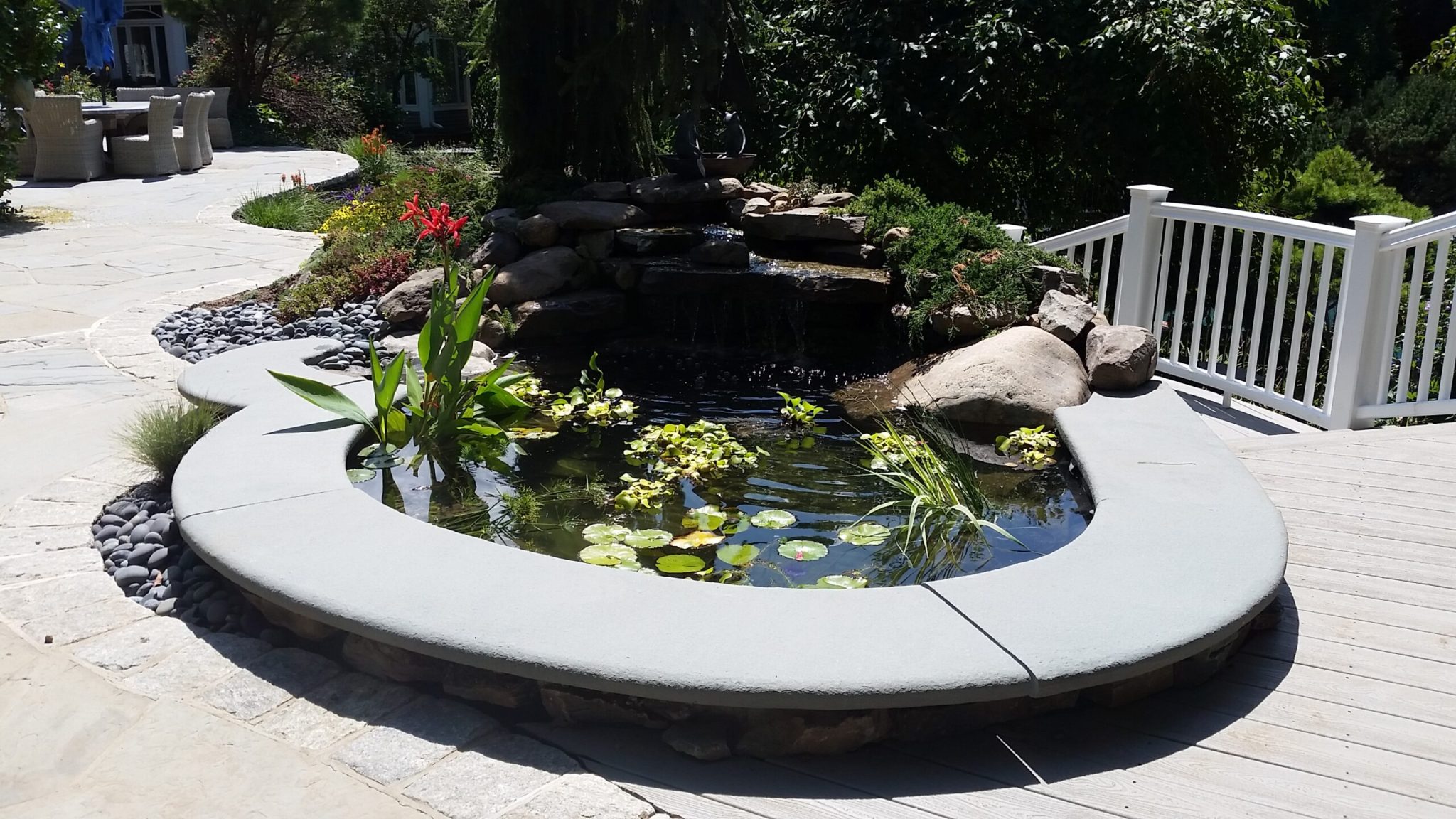
8. Deckside Waterfall and Pond Combination
This type of integrated water feature works best when it’s proportional to the adjoining deck or patio. For a standard 12×16 foot deck, a pond surface area of around 25-40 square feet (e.g., 5×6 ft) feels balanced. The waterfall shouldn’t be too tall; a drop of 2-3 feet from the top of the cascade to the pond surface is plenty to create sound without excessive splashing onto the deck. The key is to ensure it feels like a part of the deck structure, not a separate element that was just placed next to it.
|
📋 Copy HEX 🔗 Share |
⭐ The One Thing
The single element that makes this design so successful is its proximity to the living space. By building the pond and waterfall directly adjacent to the wooden deck, it transforms the area into a multi-sensory experience. You don’t just look at the water feature from a distance; you can sit right next to it, listen to the waterfall, and watch the lily pads. It merges the hardscaping of the deck with the naturalism of the pond, creating a cohesive and incredibly relaxing outdoor room.
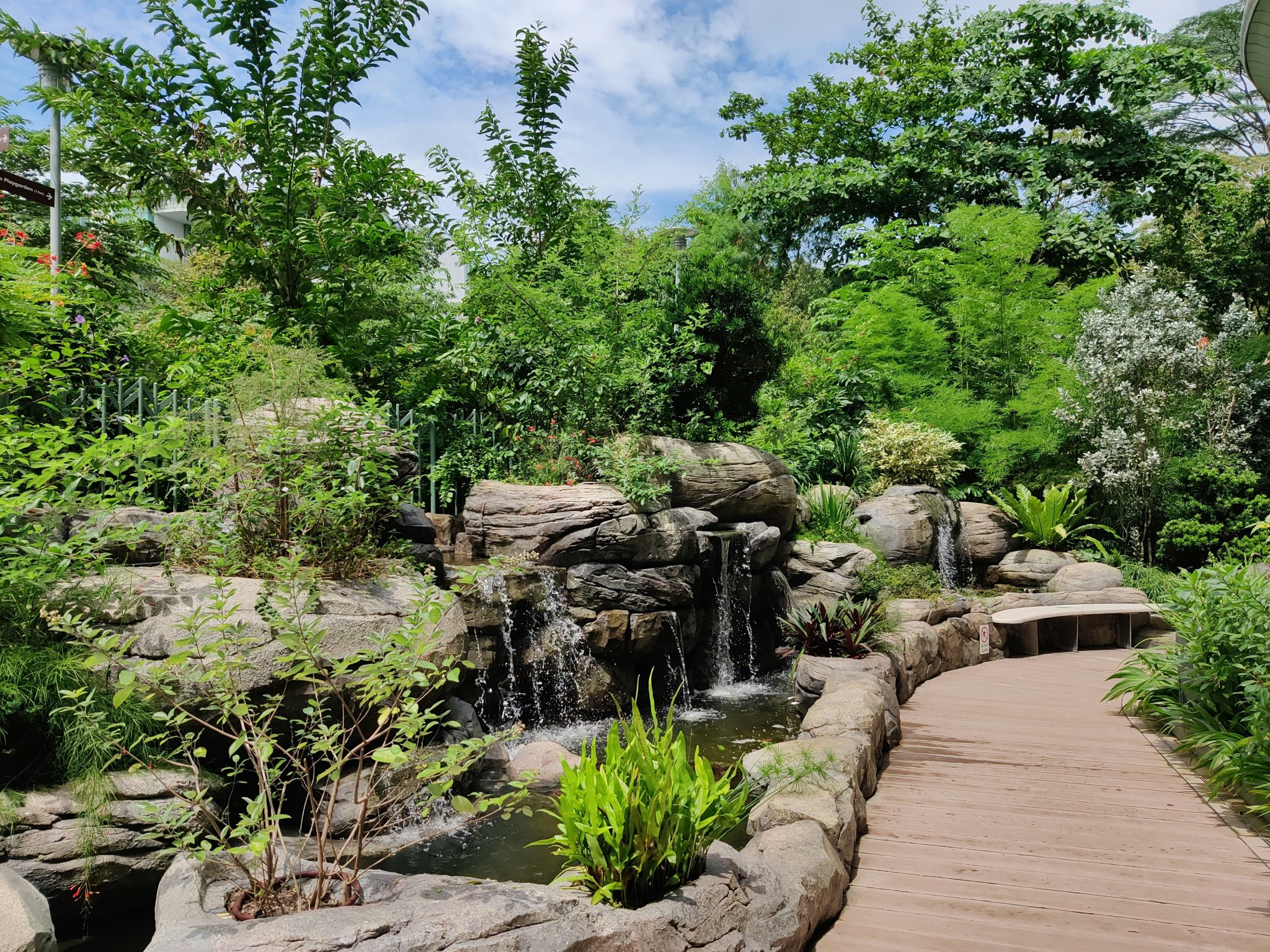
9. Lush Tropical Garden with Multi-Tiered Rock Waterfalls
The idea of creating a “backyard vacation” spot has been a huge driver in landscape design lately, and this image is a perfect example. People want to feel transported, and a lush, tropical-style water feature does exactly that. The sound of a multi-tiered waterfall is incredibly immersive, effectively drowning out neighborhood noise and creating a sense of a private oasis. The boardwalk element adds to this resort-like feel, guiding you on a journey through your own garden. This trend has real staying power because it’s rooted in wellness and the desire for a personal escape.
|
📋 Copy HEX 🔗 Share |
💸 Get This Look For Less
What makes this work is the brilliant use of scale and layering. The waterfall is large enough to feel significant and create real sound, making it the undeniable heart of the garden. The boardwalk isn’t just a path; its gentle curve follows the water’s edge, creating a sense of movement and discovery. Finally, the foliage is layered by height—low ground cover near the path, medium-sized variegated plants around the pond, and tall trees in the back—which creates a feeling of incredible depth and density, enclosing the space in a green hug.
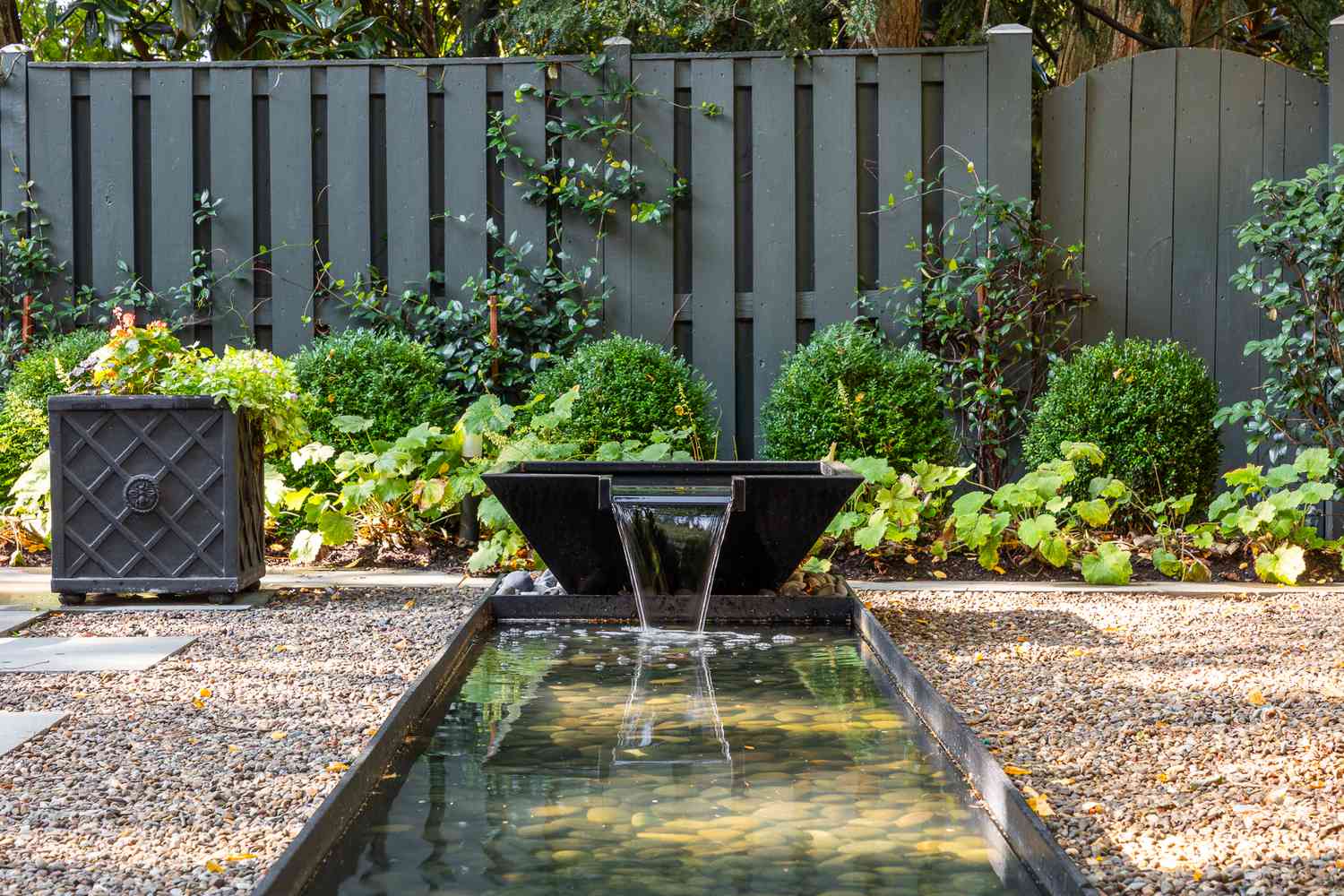
10. Modern Black Basin Water Feature with Gravel and Green Fence
This serene, modern look follows a clear formula: 60% minimalist hardscaping + 30% lush, monochromatic greenery + 10% water element. The “hardscaping” is the combination of the sleek black fountain, the dark fence, and the neutral gravel ground cover. The “greenery” is all about texture, not color—notice the climbing vines and graphic shrubs are all shades of green. The “water element” is the final touch, providing motion and sound. You could swap the gravel for smooth concrete pavers or change the black fountain to a corten steel one, and the minimalist balance would still be intact.
|
📋 Copy HEX 🔗 Share |
⚠️ Real Talk
While gravel is a fantastic low-water groundcover, it can be a pain to keep clean. Leaves, twigs, and dirt will inevitably collect on top of it and can look messy. Plan on using a leaf blower on a low setting or a garden vacuum every couple of weeks to keep the surface pristine. The other reality is that a dark-colored, shallow trough will heat up in direct sun, leading to faster water evaporation and potentially promoting algae growth. You might need to top it off more frequently in the summer months.
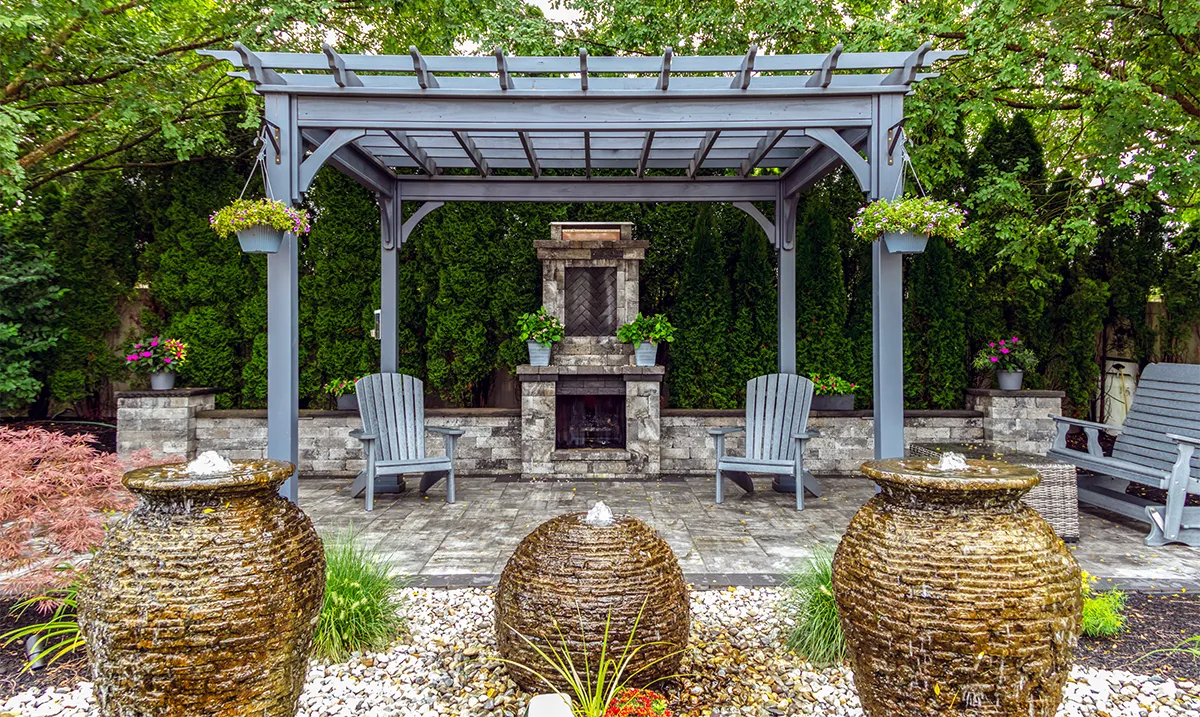
11. Backyard Pergola with Fireplace and Triple Jar Fountains
When grouping multiple decorative elements like these jar fountains, the rule of three is your best friend. A single jar can look lonely, and a pair can feel too symmetrical and stiff. Three allows you to create a more dynamic, natural-looking cluster. Arrange them in a slight triangle, with varied spacing between them, rather than in a straight line. Also, placing them in a bed of contrasting material—like the white pebbles here—gives them a distinct zone and prevents them from looking like they were just randomly placed on the patio.
|
📋 Copy HEX 🔗 Share |
📏 Scale Guide
that truly elevates this design is the combination of fire and water. Either element on its own is great, but together, they create a powerful, elemental experience. The warmth and flicker of the fireplace provide a beautiful contrast to the cool, soothing sound of the bubbling jar fountains. This pairing engages multiple senses and transforms a simple patio into a high-end, resort-like lounge area. If you remove one of these elements, the space loses its dynamic energy and becomes far less compelling.
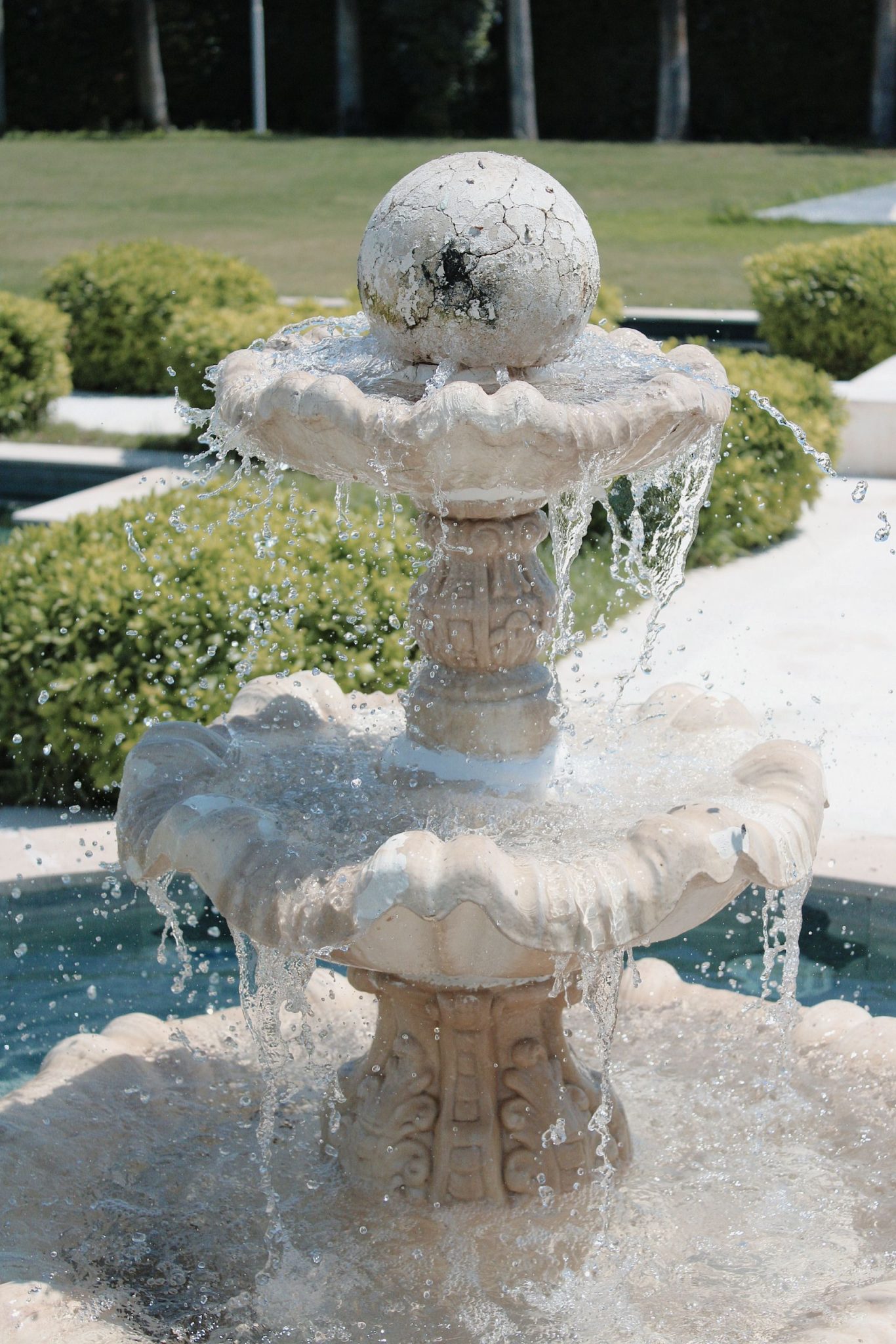
12. Three-Tiered Concrete Fountain with a Sphere Top
This fountain design is effective because it merges classical form with a touch of modern geometry. The three-tiered structure is a timeless, traditional shape that feels grand and established. However, the clean lines and, most importantly, the simple, unadorned sphere at the top give it a contemporary twist. This blend of styles allows it to fit comfortably in both formal, classic gardens and more modern, minimalist landscapes. The sound is also a key factor; the water falling from the sphere and then from tier to tier creates a complex, multi-layered splashing sound that is incredibly refreshing.
|
📋 Copy HEX 🔗 Share |
💡 Designer Tip
A large, poured concrete fountain like this represents a significant investment. For a similar effect on a smaller budget, look for fountains made of glass fiber reinforced concrete (GFRC). GFRC is much lighter than solid concrete, which reduces shipping and installation costs, and it can be molded into the same beautiful shapes. You can find a good quality GFRC tiered fountain for $800-$2,000, a fraction of the cost of a custom-poured or solid stone piece that offers the same visual impact. This is a much more achievable version of the grand display in Idea #13.
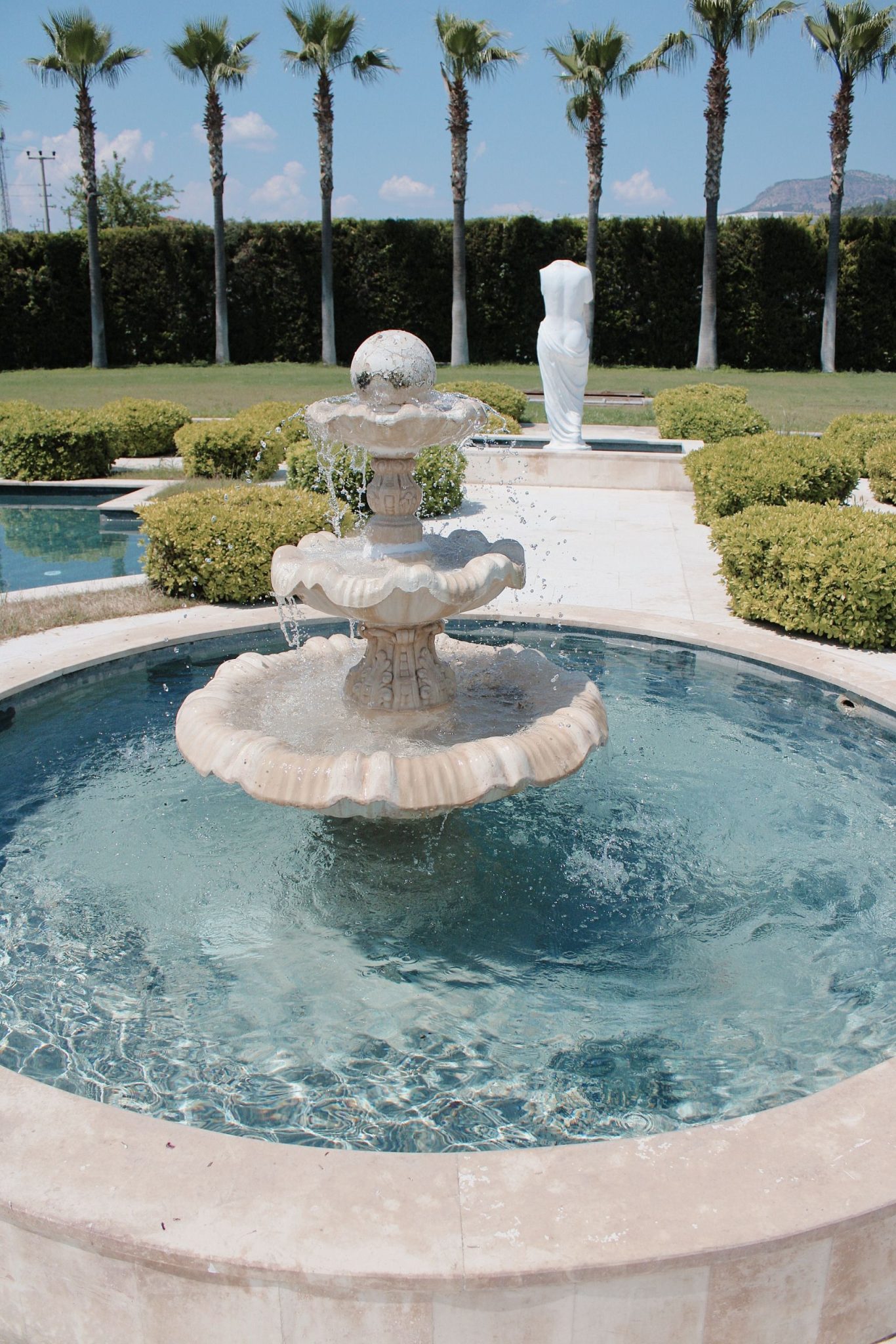
13. Formal Backyard Garden with Fountain and Pool
A grand, symmetrical design like this demands space. To truly work, the central fountain and pool need to be a focal point within a larger, well-defined area. This look is best suited for a backyard that is at least 50 feet wide and 50 feet deep, allowing for the fountain, the surrounding paved area, and the manicured lawn and hedges to breathe. In a smaller yard, this level of formality can feel cramped and overbearing. Additionally, a ceiling of open sky is required—the tall palm trees add to the sense of grandeur, which would be lost with low-hanging tree cover.
|
📋 Copy HEX 🔗 Share |
💰 Budget Breakdown
Creating this kind of meticulously manicured landscape is not a one-and-done project. Boxwood hedges require trimming at least twice a year to maintain their sharp, sculptural shapes. A large, open pool is a magnet for leaves and debris, necessitating daily skimming. The light beige pavement will show dirt and stains easily, likely requiring pressure washing annually. This is a high-maintenance aesthetic that requires a significant, ongoing commitment of either time or money for professional landscaping services.
14. Three-Tiered Stone Fountain in a Lush Garden Nook
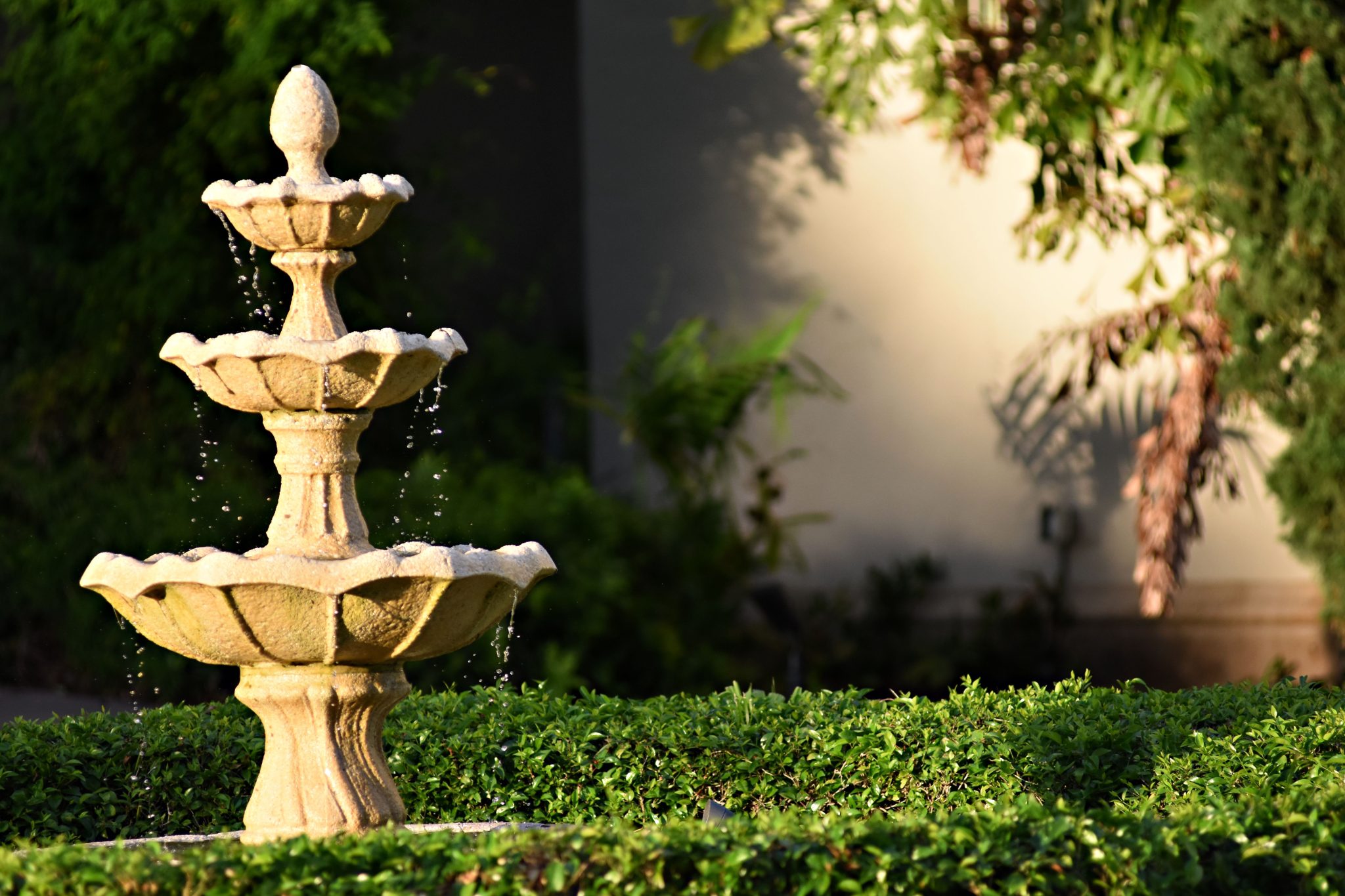
To make a traditional fountain feel lush and integrated rather than stark, pay close attention to the planting around its base. Don’t just leave a circle of grass. Plant a dense ring of manicured hedges or billowing groundcover right up to the edge of the fountain’s basin. This visually anchors the fountain to the landscape. In this example, the neatly trimmed green hedges act as a collar, making the stone fountain appear to rise organically from a bed of green, which is a much softer and more romantic look than placing it on a stone patio.
|
📋 Copy HEX 🔗 Share |
🔥 Trending Context
The single most important element here is the sound. In a relatively simple composition—fountain, hedge, wall, trees—the gentle, cascading water provides the life and movement. It turns a static visual into a dynamic, sensory experience. Without the sound and the sight of the splashing water droplets, this would just be a pretty garden statue. The water is what creates the peaceful, serene atmosphere and makes you want to linger in the space. It’s a perfect example of how audio is just as important as visuals in garden design.
15. Weathered Two-Tiered Fountain with a Star-Shaped Basin
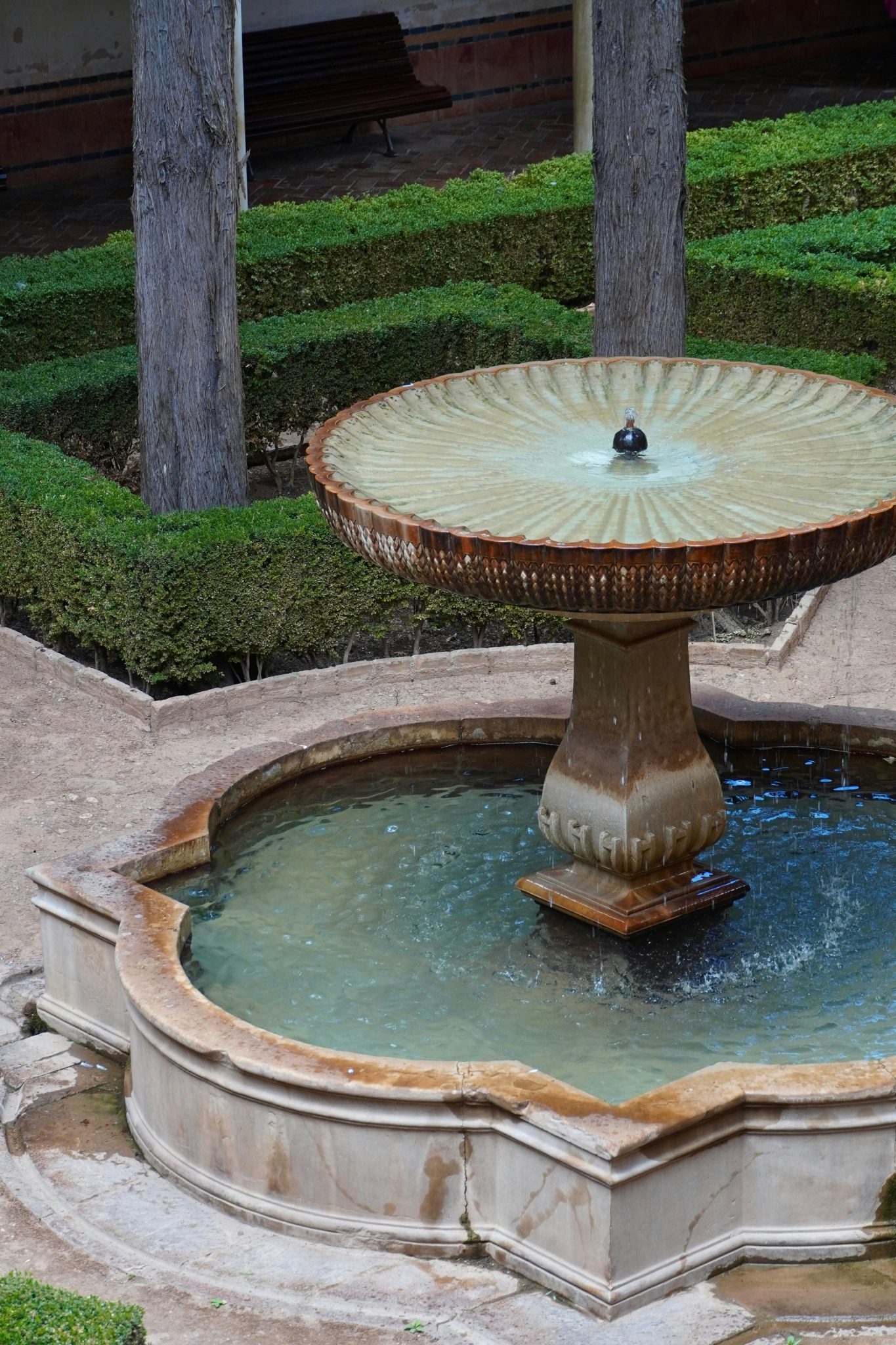
The beauty of this a piece is in its aged character. The weathered patina, with hints of green and brown on the light beige stone, tells a story. This isn’t a shiny new object; it feels like it has been a part of this garden for generations. The ornate details, like the ribbed upper basin and particularly the unusual star-shaped lower basin, add a layer of custom elegance you don’t find in mass-produced fountains. It’s this combination of unique shape and authentic aging that gives it such a powerful, serene presence.
📐 Style Math
You can accelerate the aging process on a new concrete or stone fountain to achieve a similar weathered patina. Here’s a quick method to encourage moss growth:
- Create the Mix: In a blender, combine one part live moss (found in your garden or a nursery), one part plain yogurt or buttermilk, and a half part sugar. Add a little water until it forms a thick, paintable paste.
- Paint the Fountain: Using a paintbrush, apply the mixture to the areas where you want moss to grow. Focus on crevices and areas that stay damp.
- Mist Regularly: Keep the area moist by misting it with water every day for a few weeks.
- Be Patient: Within a month, you should start to see fuzzy green growth appear.
16. Weathered Stone Fountain in a Rustic Heritage Garden
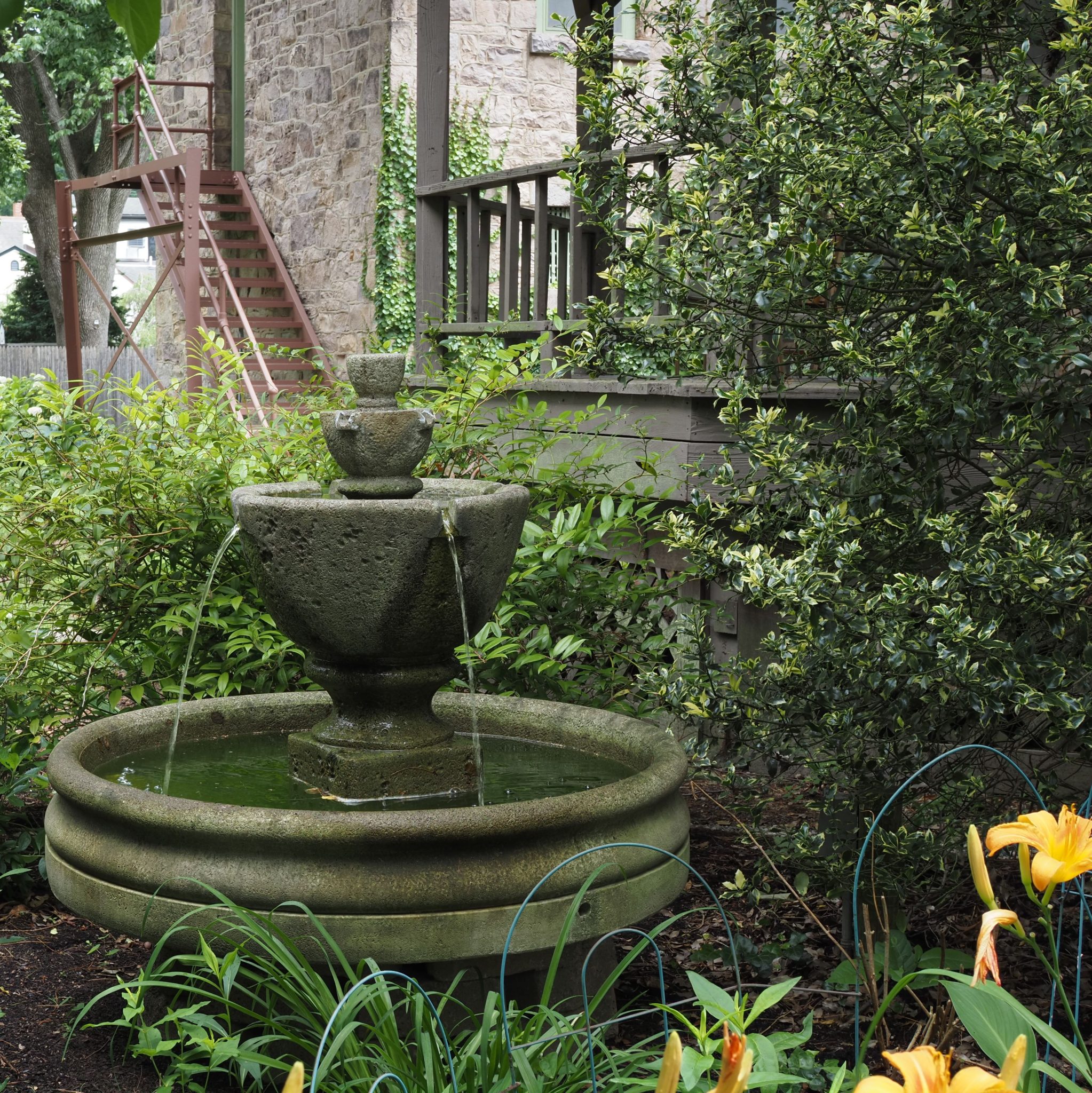
This rustic, established look is a delicate mix of permanence and nature. The formula is approximately 40% weathered hardscape + 50% untamed foliage + 10% curated color. The “hardscape” includes the grey stone fountain, the stone building, and the wooden railing—all materials that show their age. The “untamed foliage” is key; the plants are lush and slightly overgrown, spilling over their borders. This contrasts with the very formal garden in Idea #13. The final 10% is a touch of deliberate color, like the yellow daylilies, which provides a focal point within the sea of green.
|
📋 Copy HEX 🔗 Share |
✅ Before You Start
You don’t need a historic stone villa to get this vibe. The core components are a classic fountain and lush planting. Look for a cast stone or concrete fountain with a classic shape on Facebook Marketplace or at a garden salvage yard; a bit of weathering is a bonus! For a budget of around $400-$800, you can often find a beautiful second-hand piece. Surround it with inexpensive, fast-growing perennials like hostas, ferns, and daylilies from a local nursery to create that feeling of abundance and history, even in a newer garden.
17. Rustic Tiered Fountain with Colorful Potted Plants
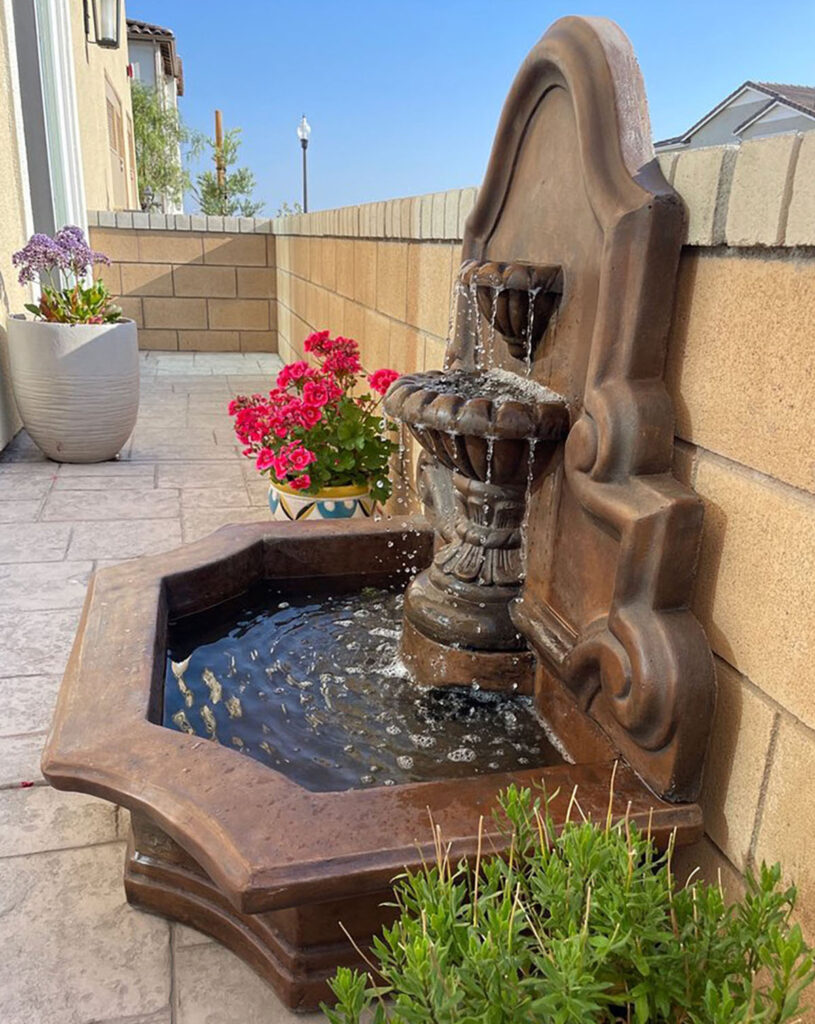
A brilliant way to add life to a simple patio fountain is to surround it with vibrant, potted plants. The key is to vary the height and color. Notice how the tall purple flowers draw the eye upwards, while the bright pink flowers create a pop of color at the mid-level. This creates layers of interest. Don’t be afraid to switch out the pots seasonally. You can have tulips in the spring, geraniums in the summer, and mums in the fall, keeping your water feature feeling fresh and dynamic all year round. It’s an easy, low-commitment way to change the entire feel of the space.
|
📋 Copy HEX 🔗 Share |
🧹 Maintenance Reality
This setup works because it’s a study in complementary textures and colors. The rough, rustic finish of the brown fountain and the textured beige brick wall provide a perfect neutral, earthy backdrop. This allows the bright, saturated colors of the pink and purple flowers to truly stand out. The softness of the flower petals and green leaves also provides a lovely contrast to the hard surfaces of the fountain and wall. It feels balanced, charming, and full of life—a mini-Mediterranean escape.
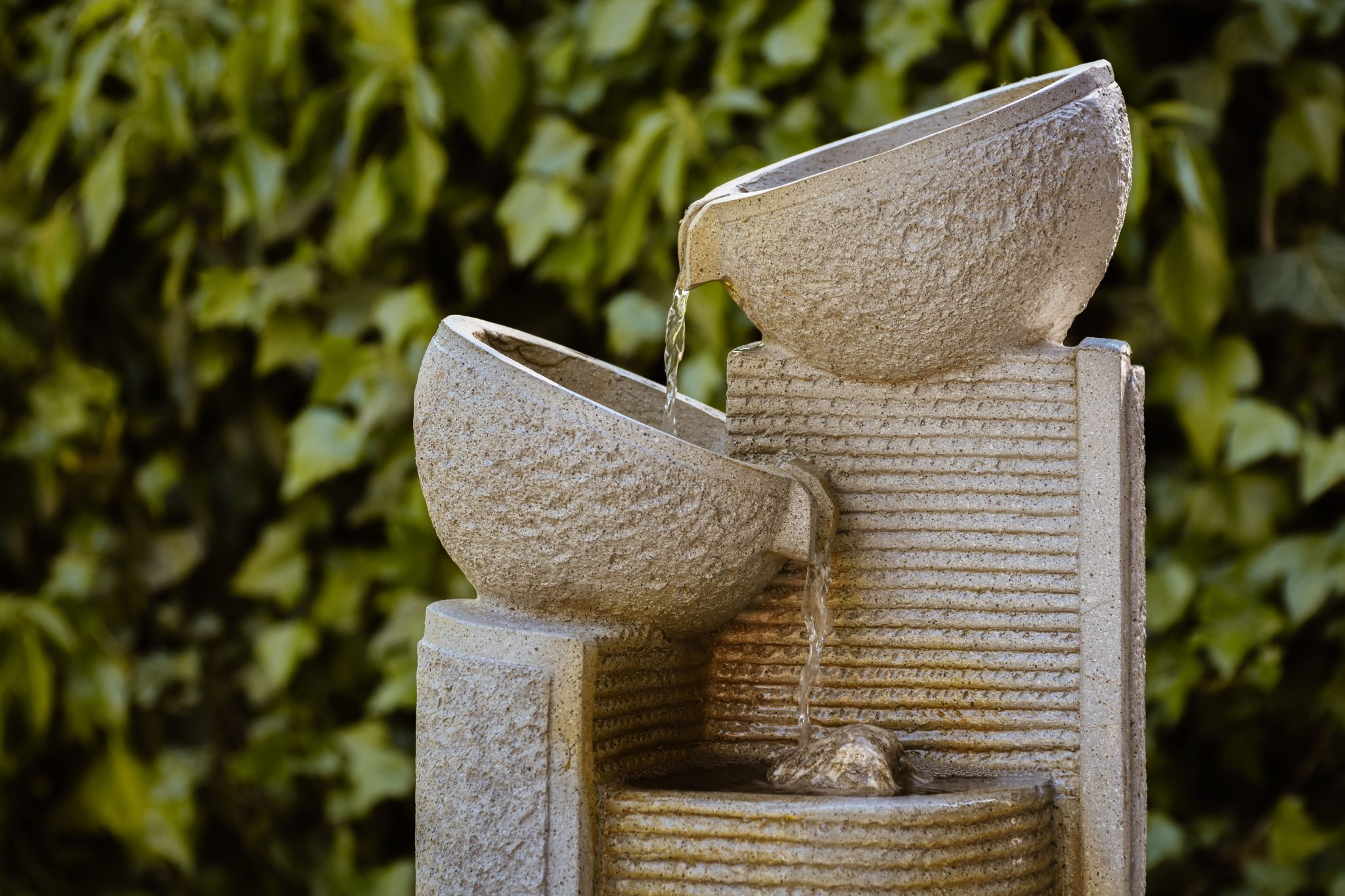
18. Cascading Concrete Bowls Water Feature
The single most critical element in this design is its texture. The ribbed, textured column and the slightly rough finish of the concrete bowls are everything. If this feature were made of smooth, polished material, it would look generic and far less interesting. The texture catches the light and creates shadows, adding depth and a hand-crafted feel. It also affects the way the water flows, directing it in little rivulets down the front. This texture is what gives the fountain its organic, earthy character, preventing it from feeling like a cold, modern sculpture.
|
📋 Copy HEX 🔗 Share |
🎯 What Makes It Work
A feature with this kind of textured surface and multiple bowls can be a bit tricky to clean. Algae and mineral deposits love to build up in the tiny grooves of the ribbed texture. You’ll need a stiff-bristled brush and some patience to scrub it clean. Also, the small upper bowl will evaporate water more quickly on hot, sunny days. This can cause the pump to run dry and burn out if you’re not diligent about topping it off. Consider a model with an auto-fill valve if you live in a hot climate.
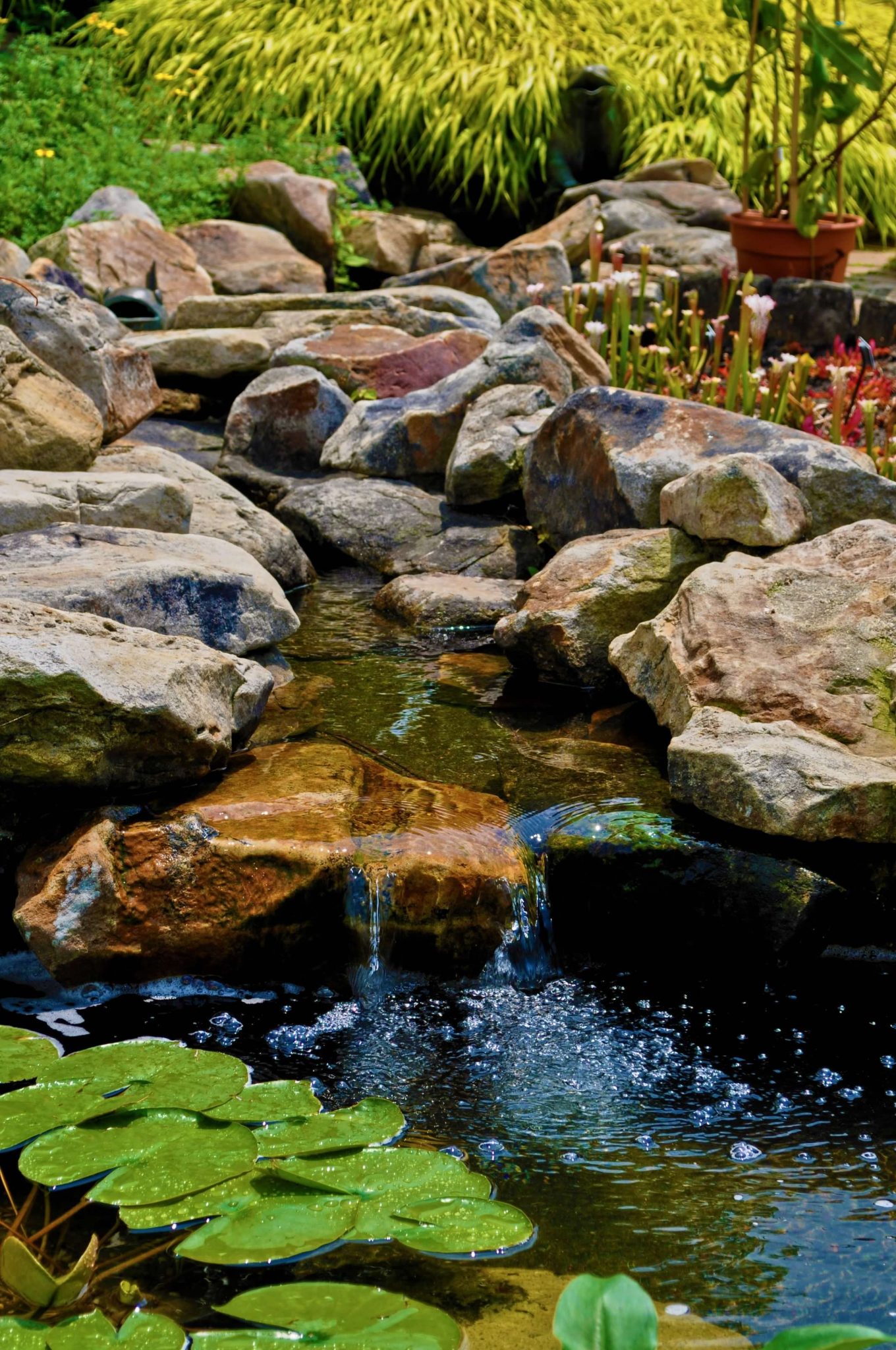
19. Cascading Rock Water Feature with Lily Pads
The magic of this feature lies in its naturalistic construction. The irregular shapes and varied earth-toned colors of the stacked rocks make it look like a naturally occurring waterfall you might stumble upon in the woods. Unlike a formal, symmetrical fountain, this design celebrates imperfection. The way the water bubbles and spills unevenly from one level to the next adds to the authenticity. Paired with the lush green lily pads, the entire scene feels alive and organic, bringing a true slice of nature into the backyard. It feels less like a built object and more like a living ecosystem.
|
📋 Copy HEX 🔗 Share |
🔧 How-To Brief
Building a custom rock waterfall and pond can range widely in price, depending on the scale and type of stone used. Here’s a sample estimate for a modest DIY-friendly version:
- Pump & Tubing Kit: $150 – $400
- Pond Liner & Underlayment: $200 – $500
- Stones & Boulders: $300 – $1,000+ (can be much cheaper if you can source them locally)
- Aquatic Plants (Lily pads, etc.): $100 – $250
- DIY TOTAL: $750 – $2,150
- Professional Installation: Add $2,000 – $5,000+ to the total
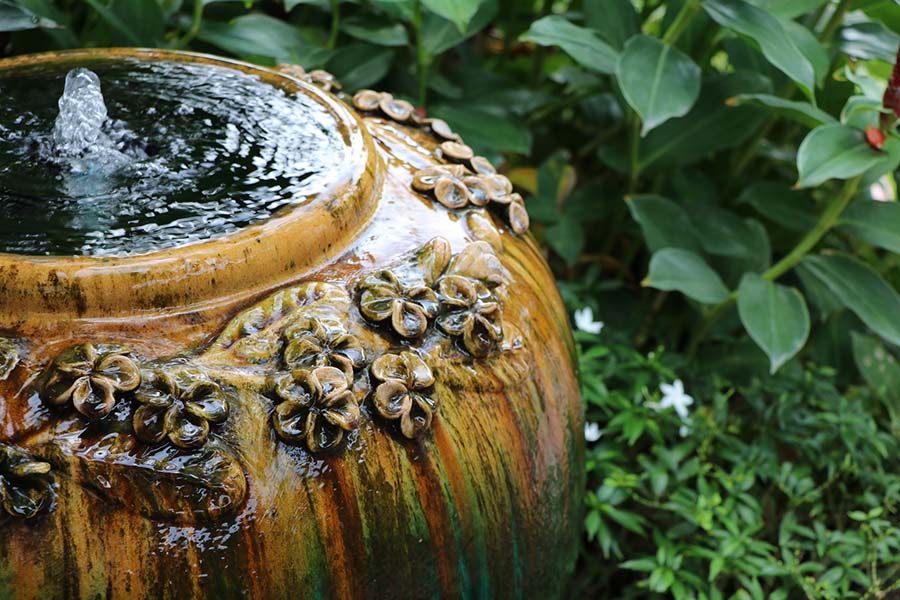
20. Glazed Ceramic Pot Fountain with Floral Details
When choosing a ceramic pot to turn into a fountain, look for one with a complex, multi-toned glaze. A single, flat color can look a bit dull, but a pot with layers of color—like the mix of teal, brown, and dark green here—has depth and character. The glaze catches the light and interacts with the water, creating a beautiful, shimmering effect. The raised floral pattern also adds another layer of texture and interest. You can turn any waterproof ceramic pot into a fountain with a simple recirculating pump kit available at most hardware stores for under $50.
|
📋 Copy HEX 🔗 Share |
⭐ The One Thing
that makes this little scene so enchanting is the bubbling water. It’s not a big, splashing cascade; it’s a gentle, gurgling spring. This subtle movement is just enough to create a soothing sound and catch the eye, turning a simple planter into a point of calm and focus. If the water were still, it would just be a pot of flowers. If it were a big spray, it would feel out of scale. The gentle bubble is the perfect, quiet touch that brings the whole vignette to life.
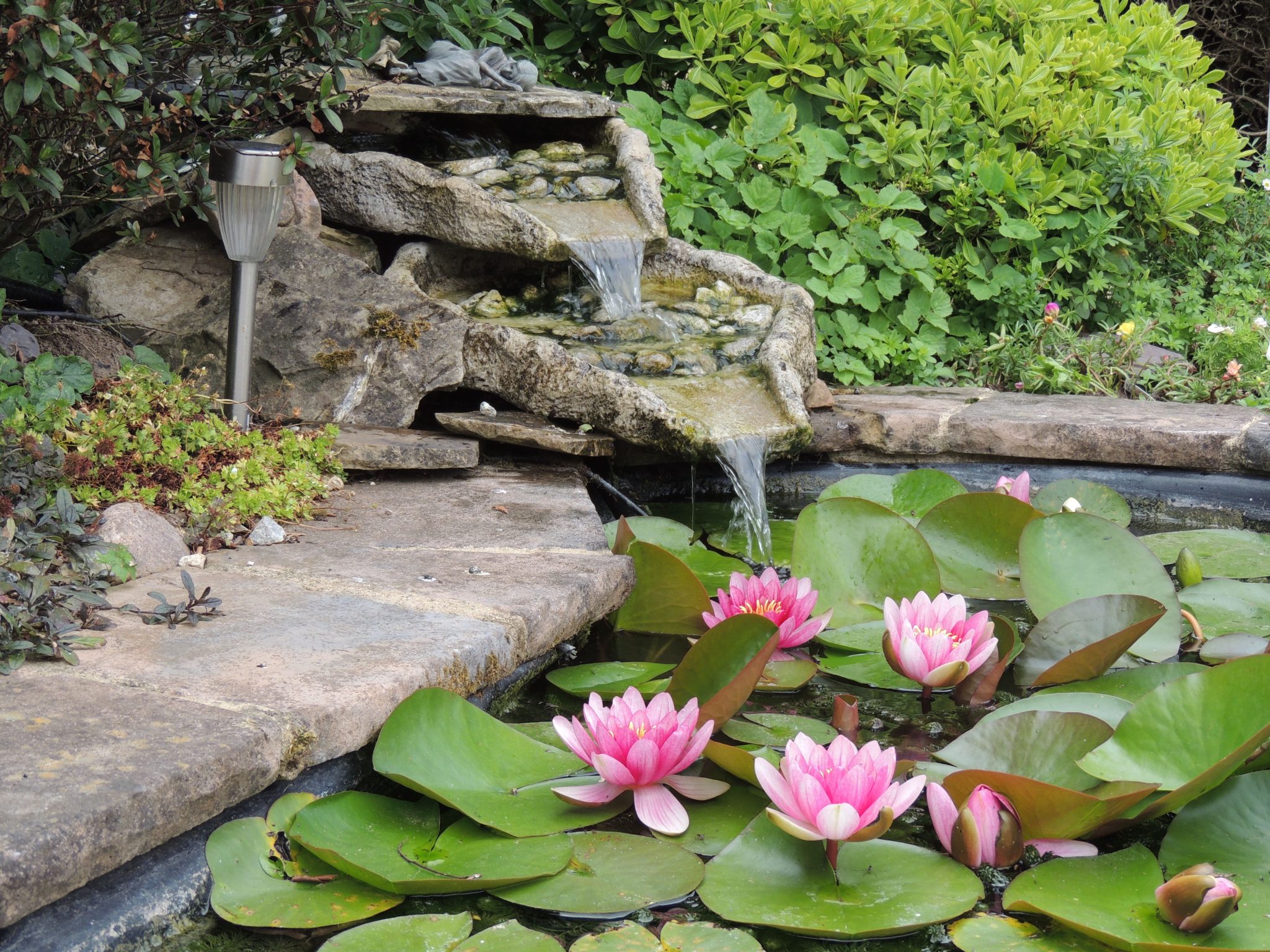
21. Layered Rock Waterfall into a Lily Pad Garden Pond
This tranquil pond scene follows a simple but effective design recipe: 50% calm water surface, 30% rustic stone, and 20% vibrant life. The “calm water” is the pond itself, populated with lily pads. The “rustic stone” is the rough-hewn edging and the layered rock waterfall, which provide texture and a sense of permanence. The “vibrant life” is the combination of the bright pink water lilies and the surrounding green foliage. You could change the flower color to yellow or white, but the formula of calm water, rough stone, and a pop of color would still create this same serene feeling.
|
📋 Copy HEX 🔗 Share |
💸 Get This Look For Less
While water lilies are stunning, they are not a “plant it and forget it” feature. They need to be fertilized a few times during the growing season to produce those big, beautiful blooms. They also need to be divided every year or two, as they can quickly become overgrown and take over a small pond. Also, the flat lily pads are notorious for collecting debris like fallen leaves, which you’ll want to remove promptly to keep the pond looking clean and healthy. It’s a bit of gardening, but in the water!
22. Modern Concrete Water Wall with Vertical Gardens
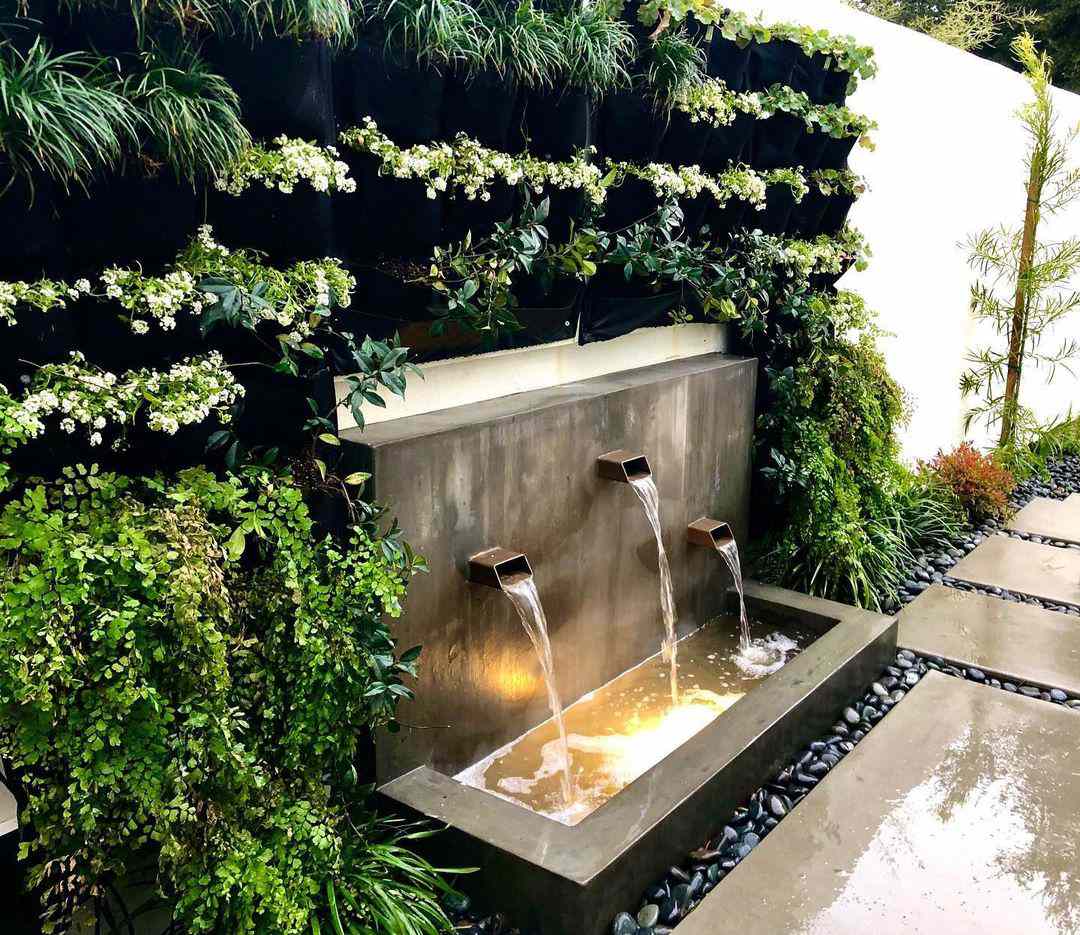
This design is a masterclass in using vertical space. By flanking the concrete water wall with wall-mounted planters, the eye is drawn upward, making the entire area feel larger and more dynamic. This combination of hard, architectural lines (the concrete wall, the stepping stones) and soft, lush greenery creates a powerful modern aesthetic. The bronze spouts add a touch of warmth and elegance, a metallic accent that contrasts beautifully with the cool grey concrete and black river rocks. The integrated lighting in the basin is the final touch, turning it into a dramatic feature at night.
|
📋 Copy HEX 🔗 Share |
⚠️ Real Talk
A water wall with an open basin requires diligent maintenance to look this sharp. The water is exposed to dust, leaves, and pollen, which can make the water cloudy and clog the pump filter. Plan on cleaning the filter weekly and doing a partial water change monthly. The smooth concrete surface, especially in the basin, will show algae growth quickly, so regular scrubbing is a must. The vertical planters will also need a dedicated watering system, likely drip irrigation, to ensure the plants thrive.
23. Modern Sheet Waterfall with a River Rock Basin
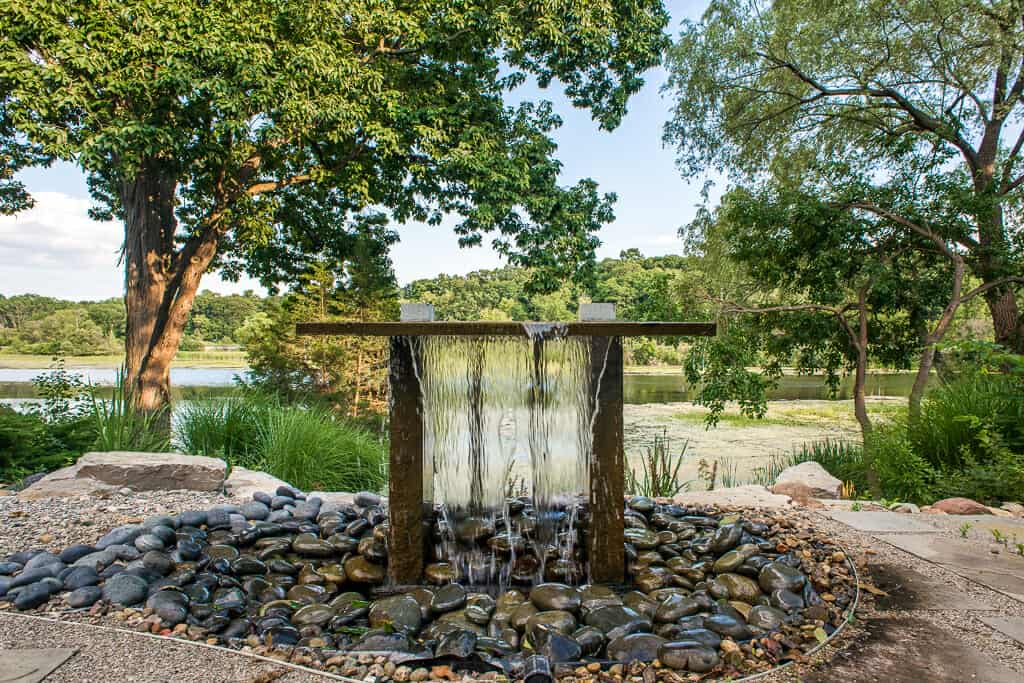
The single most captivating element here is the sheet of cascading water itself. Unlike a fountain that sprays or a waterfall that tumbles over rocks, this design creates a smooth, continuous curtain of water. It’s mesmerizing to watch and creates a consistent, gentle sound rather than a loud splash. This clean, uninterrupted flow is the epitome of modern landscape design. The dark, simple structure of the waterfall is intentionally minimalist to ensure that nothing distracts from the beauty of the moving water. It’s a living piece of art.
|
📋 Copy HEX 🔗 Share |
📏 Scale Guide
A custom-built sheet waterfall can be a high-end project. For a more accessible version, look for pre-fabricated “water wall” or “spillway” kits online from places like Amazon or specialty pond suppliers. You can get a stainless steel or acrylic spillway lip for $100-$300. You then build a simple frame for it using wood or cinder blocks faced with tile or stucco. Fill the basin with a bag of polished river rocks ($30 from a home improvement store) instead of a large custom quantity. You get the same chic sheeting effect for a much lower cost.
24. Patio with a Long Rectangular Pond and Stone Fountain
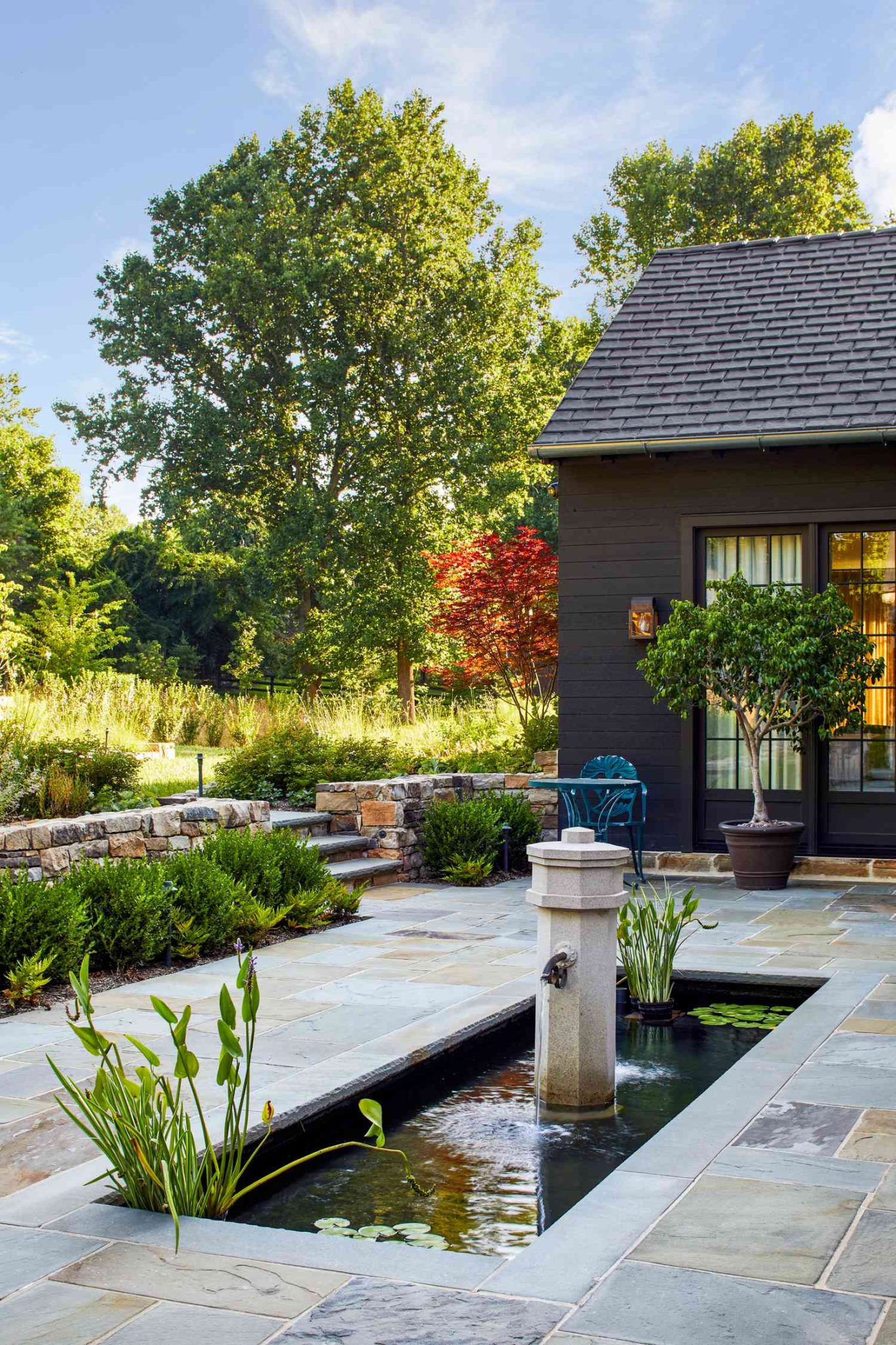
A long, linear pond like this is a fantastic solution for defining the edge of a patio or for use in a narrow side yard. This design works well in a space that is at least 15 feet long but perhaps only 8-10 feet wide. The rectangular shape mirrors the lines of the house and patio, creating a sense of order and cohesion. The fountain in the middle breaks up the long line and adds a vertical element, preventing the pond from looking like a simple trough. It’s a smart use of geometry to create a sophisticated water feature in a non-square space.
|
📋 Copy HEX 🔗 Share |
💡 Designer Tip
This design successfully integrates multiple materials and textures. You have the smooth surface of the water, the rough-hewn stone of the fountain and retaining wall, the varied tones of the flagstone patio, and the dark, smooth siding of the house. This rich palette of materials makes the space feel layered and established. The key is that they all exist within a cohesive, earthy color scheme of greys, browns, and greens. The presence of aquatic plants like water lilies softens the hardscaping and makes the pond feel alive.
25. Asian-Inspired Bamboo Spout and Carved Barrel Fountain
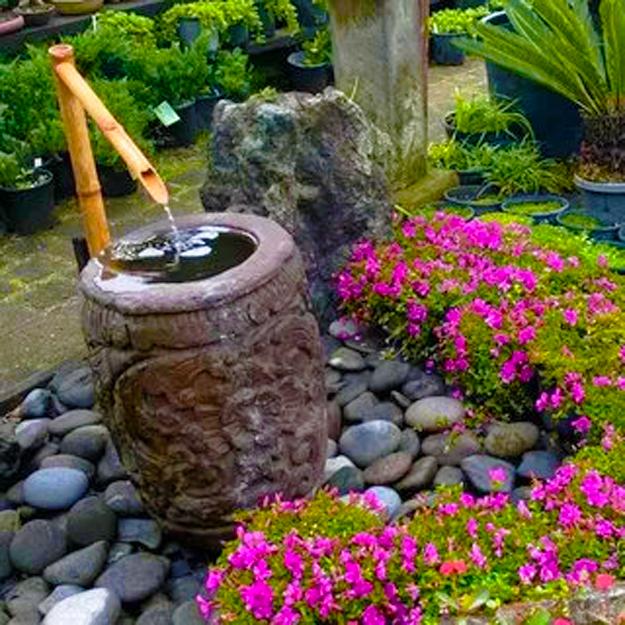
For an authentic Asian-inspired garden look, the sound of the water is just as important as the look of the fountain. This type of feature, known as a “shishi-odoshi” or deer-scarer, is designed to make a gentle clacking sound as the bamboo tube fills with water and then pivots to empty. To get it right, ensure the bamboo spout is positioned to hit a rock or the side of the basin when it empties. It is this intermittent, gentle sound—drip, drip, drip, clack—that is the hallmark of this tranquil style and creates a meditative atmosphere.
|
📋 Copy HEX 🔗 Share |
💰 Budget Breakdown
that sets this design apart is the use of bamboo. It immediately signals a specific style and aesthetic—one rooted in nature, simplicity, and tranquility. The light color and smooth, segmented texture of the bamboo spout provides a beautiful organic contrast to the dark, intricately carved barrel and the smooth grey pebbles. If you were to replace the bamboo with a metal or ceramic spout, you would completely lose that specific, zen-like character. The bamboo is the storyteller here.
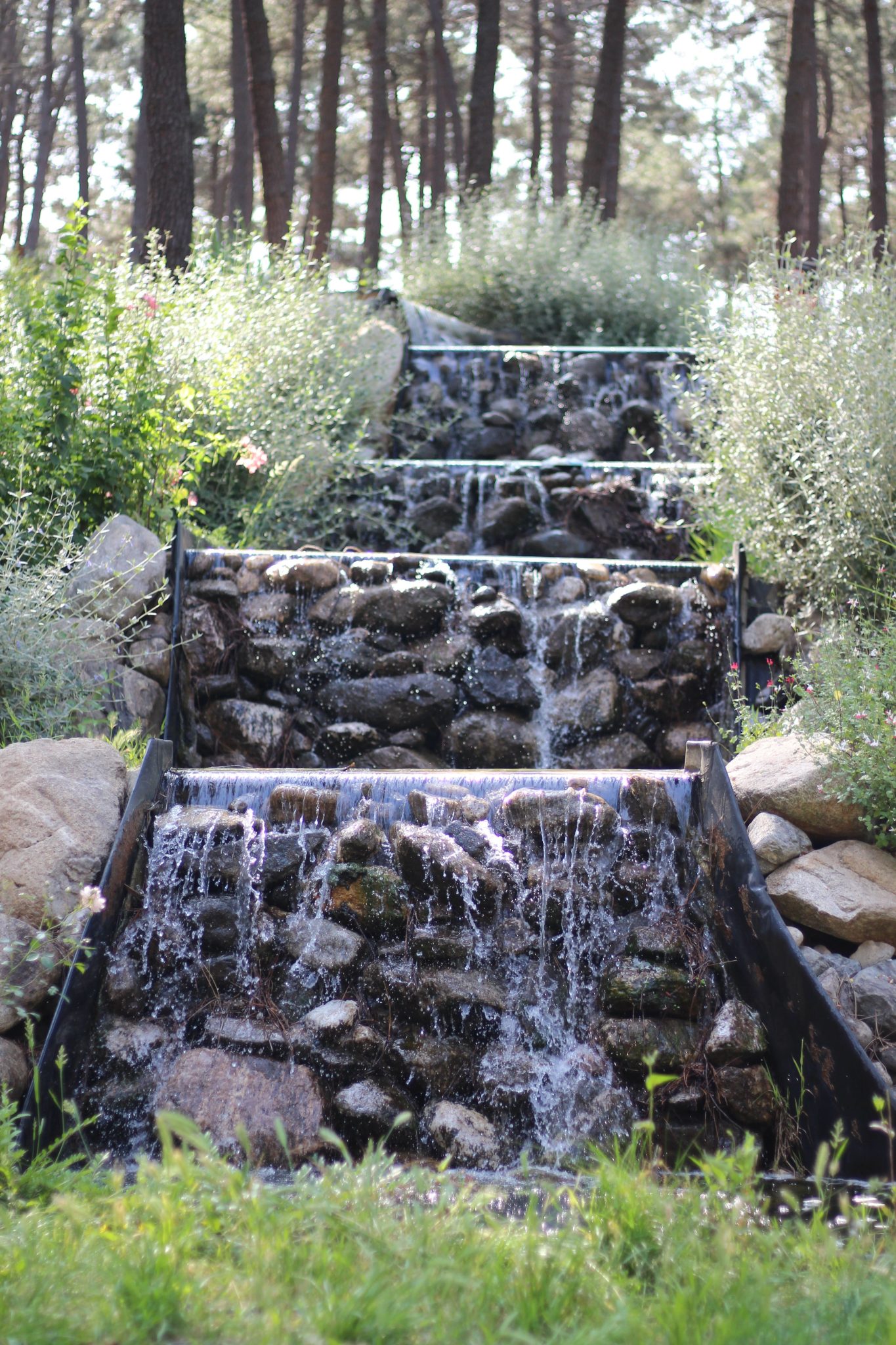
26. Cascading Natural Stone Stream in a Woodland Setting
This man-made stream works because it masterfully mimics nature. The key is the intentional randomness of the rock placement and the multi-tiered design, which make it look like a real creek flowing down a hillside. Using a variety of rock sizes, from small pebbles to larger anchor stones, adds to the authenticity. The way the lush green plants nestle into the crevices along the banks makes it feel like the stream has been there for years, carving its own path. It’s a great example of how a constructed feature can feel completely organic. This is a much larger version of the concept in Idea #19.
|
📋 Copy HEX 🔗 Share |
🔥 Trending Context
Building a recirculating stream like this is a complex project. The biggest challenge is getting the grading and the liner right to ensure the water flows correctly without any leaks or dry spots. It requires careful planning and execution. Also, be aware that a long, open stream with lots of rock crevices is a magnet for leaves and debris. Depending on how many trees are nearby, you might spend a significant amount of time in the fall scooping out leaves to prevent them from clogging the pump at the bottom.
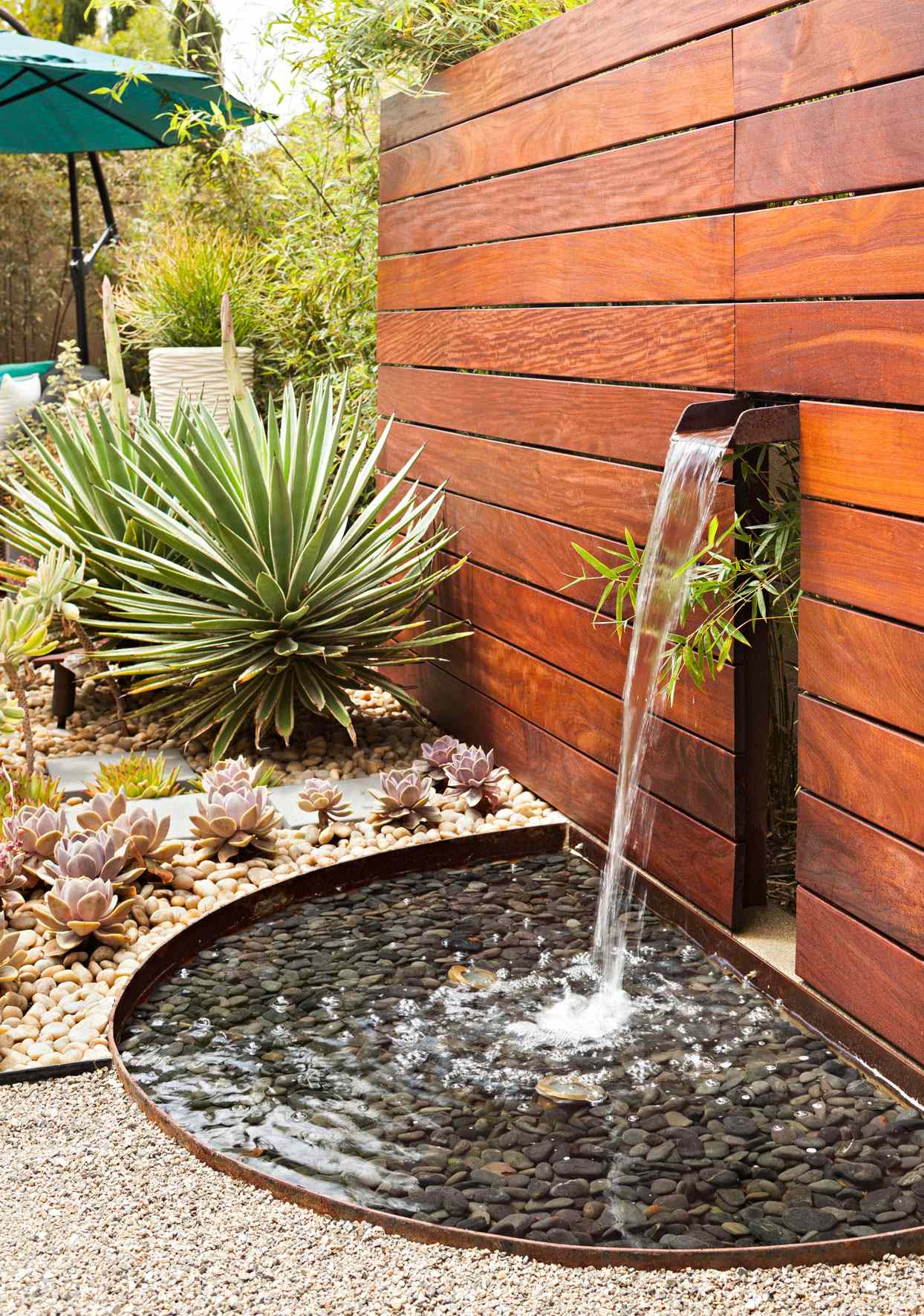
27. Modern Wood Slat Water Wall with a Succulent Garden
The formula for this stunning, modern desert look is about balancing organic and industrial materials. Think of it as 40% warm wood + 30% cool stone & gravel + 30% sculptural plants. The warm wood of the slat wall provides a soft, natural backdrop. The cool tones come from the dark pebbles in the basin and the light-colored surrounding gravel. The “sculptural plants” are the agaves and succulents, which have strong, architectural shapes. The water is the element that ties it all together, cascading down the wood and into the stone basin, creating a perfect fusion of textures.
|
📋 Copy HEX 🔗 Share |
📐 Style Math
A wooden water feature, while beautiful, requires more upkeep than stone or metal. To keep the wood from rotting or warping, it will need to be sealed with a marine-grade waterproof sealant every 1-2 years. The area where the water consistently hits the wood may discolor over time. Also, the combination of light-colored gravel and a rusty metal edge means you might see some rust staining on the gravel over time. It contributes to a rustic look, but if you prefer a pristine appearance, you might need to refresh the top layer of gravel occasionally.
Your Garden’s Next Chapter
A water feature is more than just garden decor; it’s an investment in tranquility. It’s the element that can tie your whole backyard together, creating a space that feels like a genuine retreat. We hope these 27 ideas have sparked your imagination for what’s possible in your own space, whether it’s a grand pond or a simple bubbling pot.
Now, head over to your Pinterest board and see which of these ideas truly resonates. Your perfect garden oasis is waiting.