You know that feeling when you see a perfectly tiny, integrated pet bedroom on Pinterest and think, “I want that!”? You save the pin, but turning that inspiration into a real, functional space for your furry (or feathered!) friend can feel overwhelming. Don’t worry, we’ve got you. We’ve filtered through hundreds of options to find what actually works.
This isn’t just a random collection of photos. We’ve curated 32 distinct, achievable ideas for cats, dogs, and even bunnies, from simple DIY corners to stunning built-in solutions. These concepts prove you don’t need a massive budget to create a space that’s both stylish and a true sanctuary for your pet. And stay until the end — we break down the most common mistakes that can ruin these looks.
Creating a dedicated spot for your pet is more than just a trend for 2026; it’s about fully integrating them into our home’s design story. 📌 Save this to Pinterest for later — you’ll want to revisit these ideas.
1. Airy Boho Bedroom with a Hidden Pet Nook
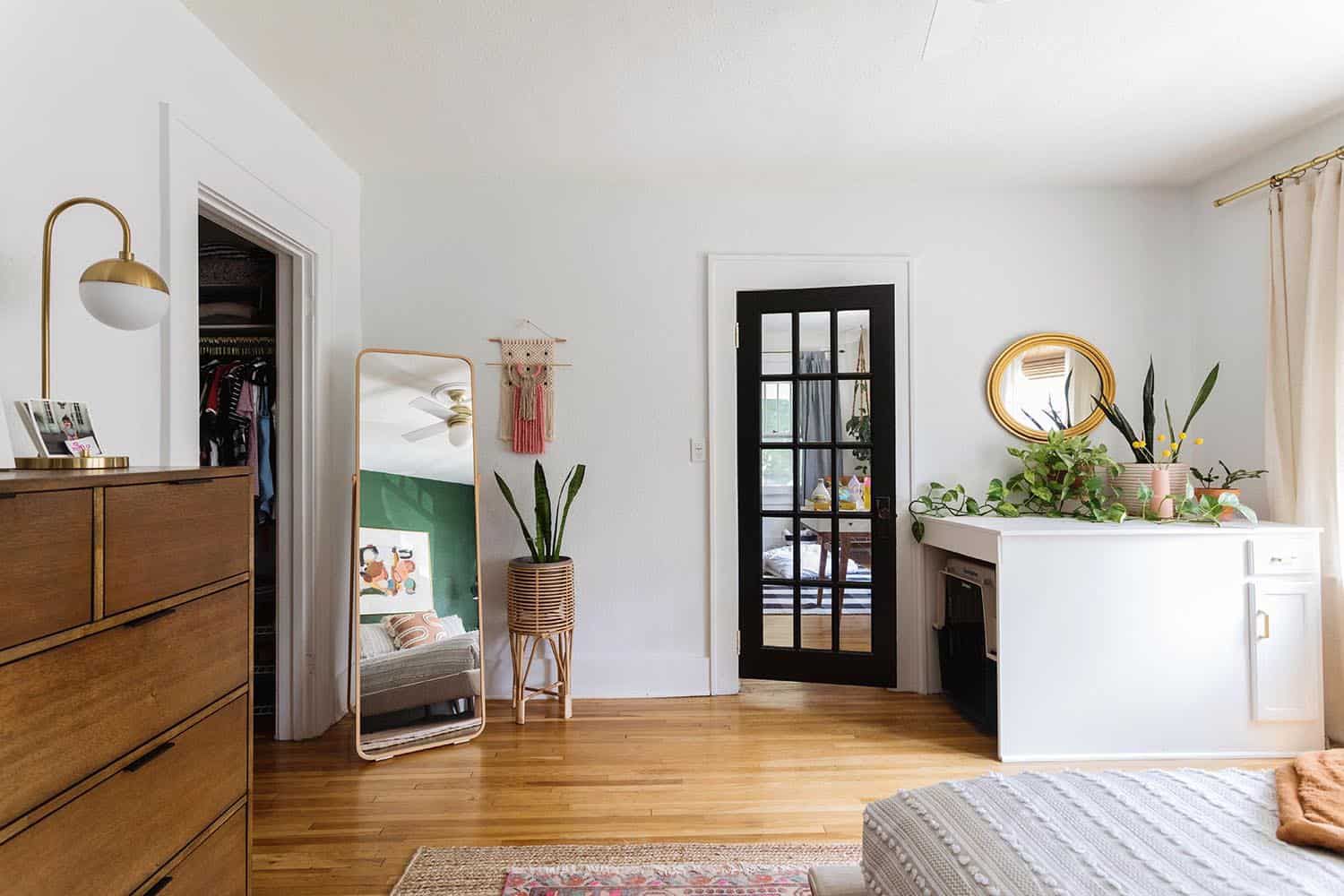
What makes this space so calming and clever is the seamless integration of the pet nook. Instead of a random dog bed in the corner, the alcove is built directly into a functional cabinet. This treats the pet’s space as a deliberate part of the architecture, not an afterthought. The design works because it maintains the room’s breezy, open feel by keeping the floor clear, and the repetition of white and light wood tones across the furniture, floor, and pet nook makes the whole room feel cohesive and intentional.
|
📋 Copy HEX 🔗 Share |
⚠️ Real Talk
When integrating a pet nook into cabinetry, ventilation is key. An enclosed space can get stuffy and overheat. Ensure you have openings, like the little doorway seen here, on at least two sides of the nook to allow for cross-ventilation. For a standard 24-inch deep cabinet, a 10″ by 10″ entry opening and at least a 4″ gap or a series of drilled holes at the back is a good rule of thumb to keep your pet comfortable and safe.
2. Bright Window Nook with Floral Textiles
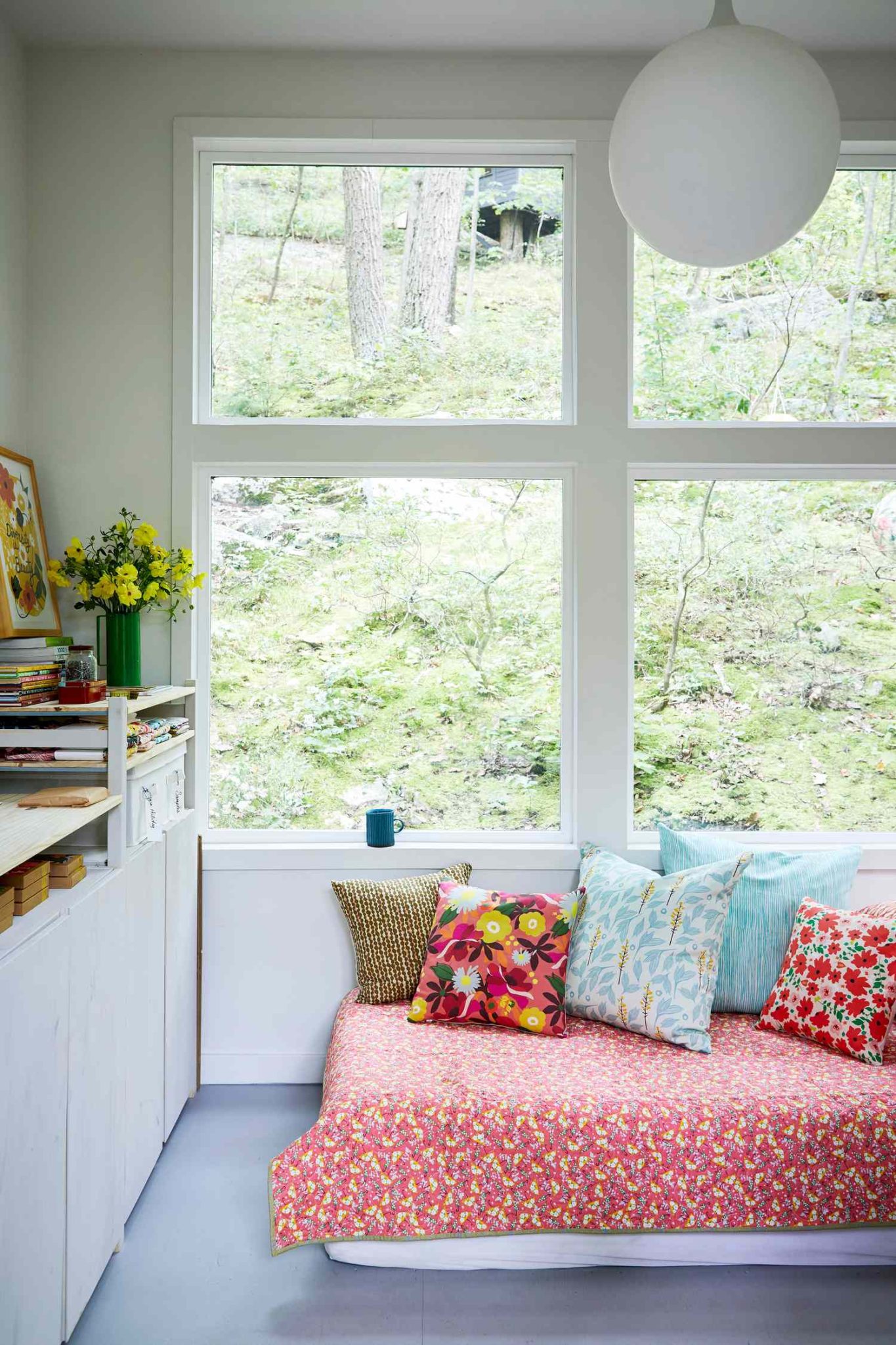
that makes this corner magical is the unapologetic use of pattern and color, grounded by the view. Without the vibrant floral quilt and the mix of patterned pillows, this would just be a generic daybed by a window. The textiles are the heart of the design; they inject personality and warmth, turning a simple structure into an irresistible spot for a lazy afternoon. It’s a masterclass in making a small space feel special and full of life, proving you don’t need to stick to neutrals in a cozy nook.
|
📋 Copy HEX 🔗 Share |
🔥 Trending Context
The visual formula here is a brilliant lesson in balance. Think of it as 50% Natural Foundation + 40% Patterned Textiles + 10% Sculptural Element. The expansive window and woodsy view provide the serene natural base. The floral quilt and assorted pillows are the dominant personality layer. Finally, the large, spherical pendant light adds a touch of modern geometry that prevents the look from becoming too cottagey. You could swap the floral for a bold geometric or a vintage stripe and still achieve the same balanced, inviting effect.
3. Minimalist Wall-Mounted Cat Climbing Shelves
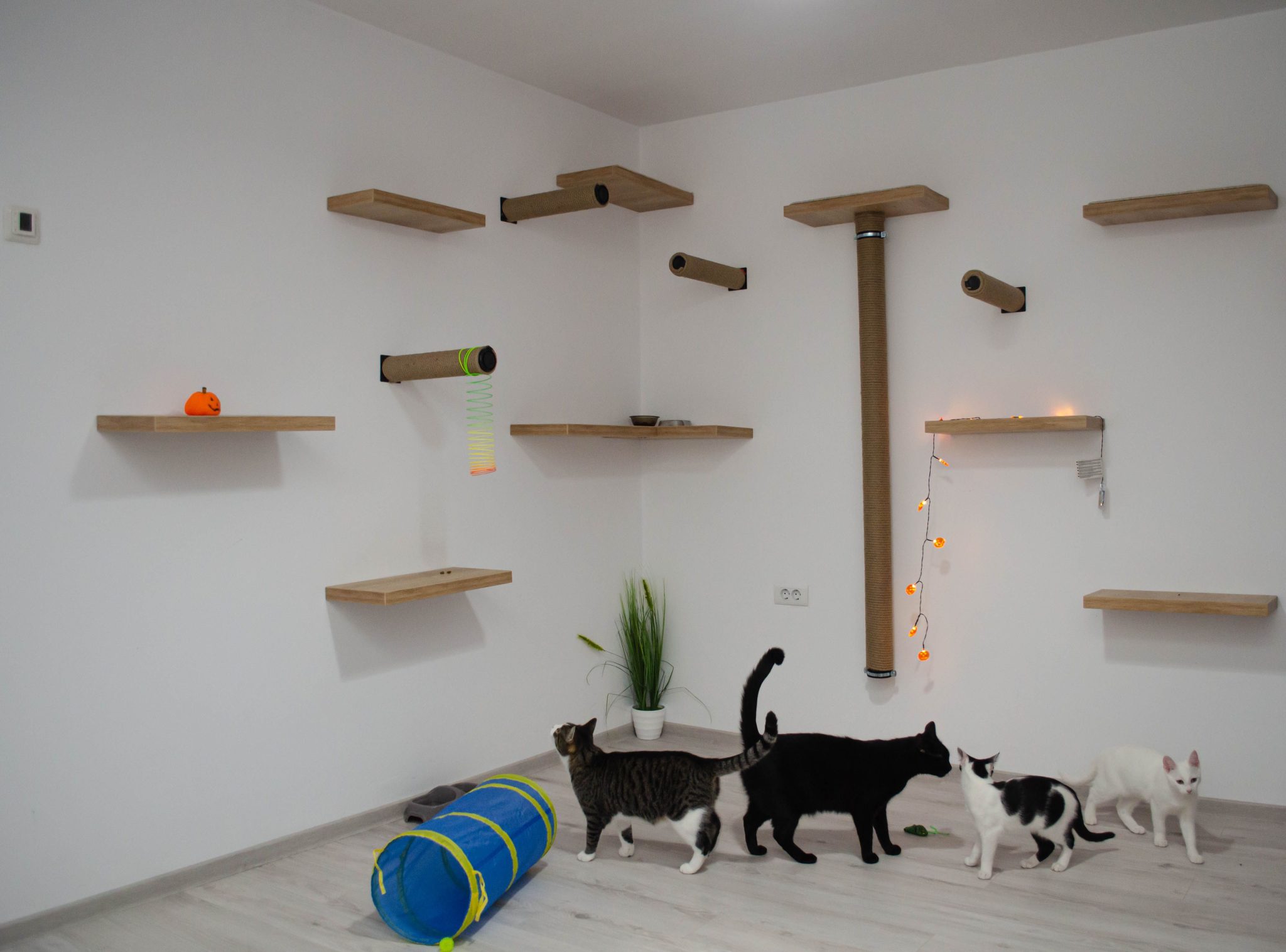
You can create a similar vertical playground for your cat with just a few items. This mini-project should take about 2-3 hours and cost around $75-$150, depending on your materials.
|
📋 Copy HEX 🔗 Share |
⭐ The One Thing
- Plan Your Layout: Use painter’s tape to map out where you want your shelves and posts on the wall. Ensure cats can easily jump from one to the next (about 12-18 inches apart is ideal).
- Wrap Your Posts: Tightly wrap a standard 4×4 post (cut to your desired length) with 3/8″ sisal rope, securing the ends with non-toxic glue and staples.
- Mount Brackets: Find the studs in your wall. Securely mount heavy-duty shelf brackets where you’ve planned.
- Attach Shelves & Posts: Screw your wooden shelves and sisal-wrapped posts onto the brackets from underneath. Double-check that everything is secure and doesn’t wobble.
You can absolutely get this look for less. Instead of buying designer “cat shelves,” head to IKEA or a home improvement store. A set of basic floating shelves like the LACK or a few simple pine boards and brackets will do the trick. For the scratching posts, buy a cheap, plain post from Walmart or a discount store and re-wrap it yourself with high-quality sisal rope from a hardware store. For the tunnel and toys, check out stores like Target or even a dollar store for colorful, budget-friendly options.
4. Festive Corner with Triple Red Dog Beds
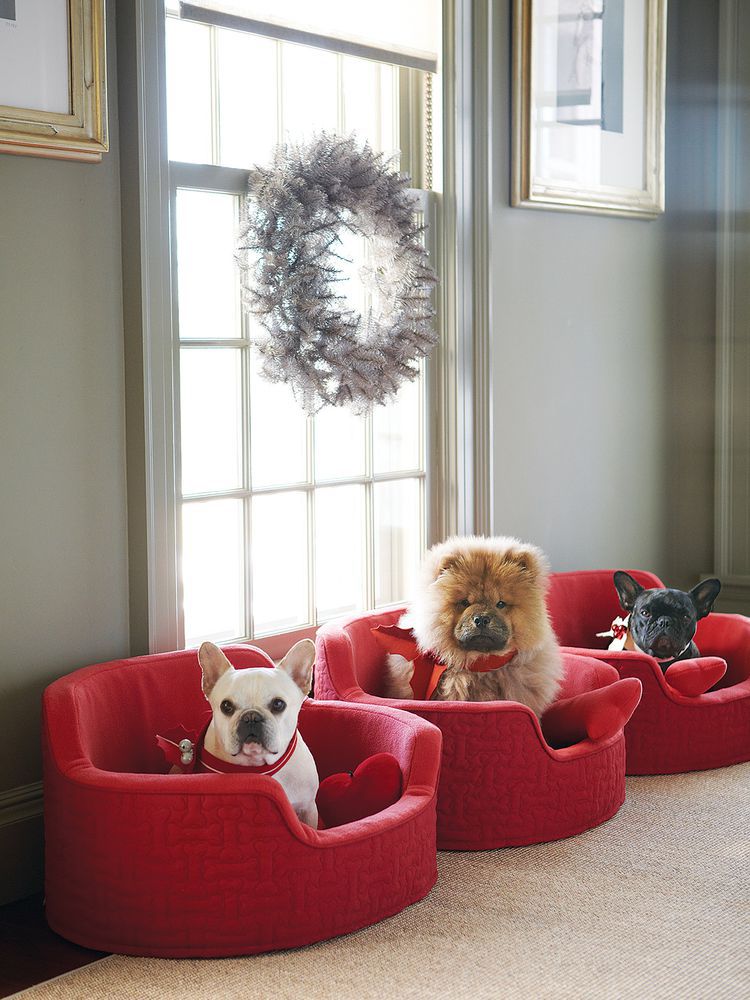
There’s a growing movement to “un-hide” our pet furniture. For years, the goal was to make dog beds blend in. Now, people are embracing them as decorative elements in their own right. Using bold, coordinated items like these three red beds turns the dogs’ space into a deliberate, joyful statement. It reflects a cultural shift where pets are not just accommodated but celebrated as part of the family and the home’s decor, especially during festive seasons. It feels confident and full of personality.
|
📋 Copy HEX 🔗 Share |
💰 Budget Breakdown
Let’s be honest: while visually striking, having three plush, light-colored beds in a high-traffic area is a commitment. Red is better than white for hiding minor dirt, but fabric beds are magnets for fur, dander, and whatever your dogs bring in from outside. If you have active or shedding dogs, you’ll need to commit to weekly vacuuming of the beds and be prepared for frequent washing. Opt for beds with removable, machine-washable covers to make your life infinitely easier.
5. Built-In Under-Stair Pet Nook with Integrated Feeder
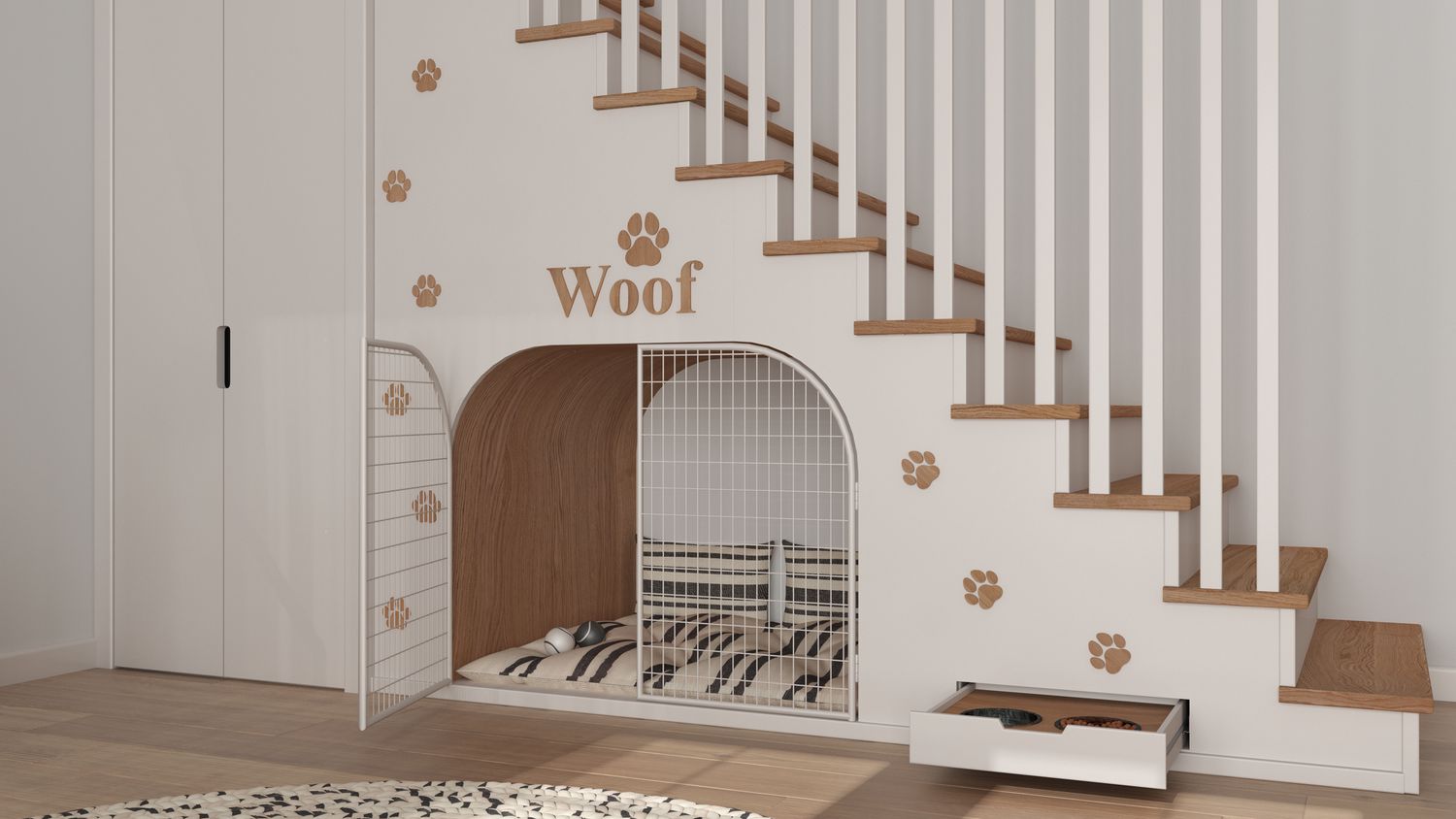
This idea is brilliant because it transforms a typically awkward, underutilized space into a highly functional and charming feature. The design works by using thoughtful, pet-centric details: the curved wooden interior makes it feel cozy and den-like, the pull-out feeder is a genius space-saver, and the paw-print decals add a touch of whimsy. It successfully contains all the pet paraphernalia (bed, bowls) in one tidy zone, which is a huge win for keeping the rest of the home clutter-free. Compare this to the repurposed armoire in Idea #6 for a non-built-in alternative.
|
📋 Copy HEX 🔗 Share |
🔧 How-To Brief
This kind of built-in is perfect for staircases with at least 36-48 inches of horizontal run and a height that starts at around 30-40 inches. It’s ideal for small to medium-sized dogs. You need enough depth (at least 24-30 inches) to accommodate a comfortable bed without it protruding into the hallway. If your staircase is smaller, consider a simpler open-nook concept without the gate or complex interior woodworking to avoid it feeling cramped. This is a project custom-built for an otherwise dead space.
6. Cozy Pet Nook in a Repurposed Armoire
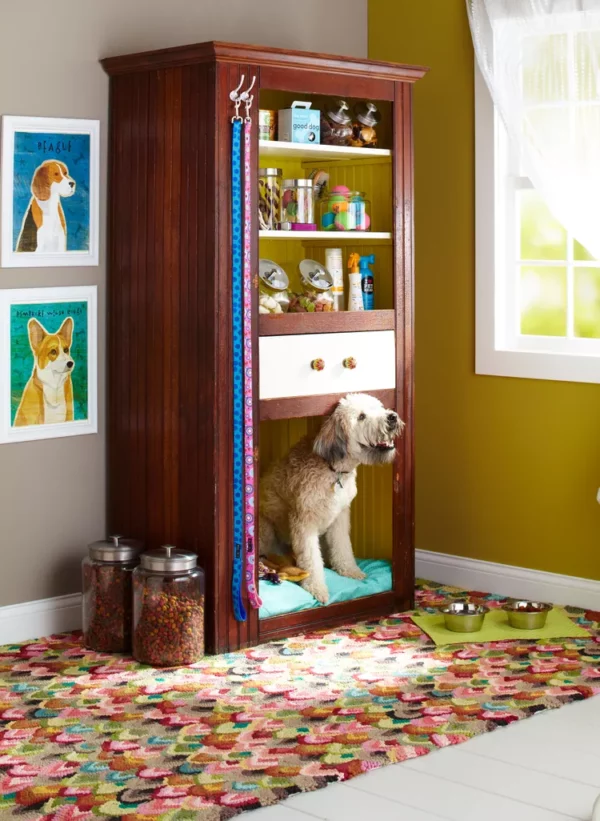
The single element that makes this idea so special is the bold splash of yellow paint inside the armoire. It’s a complete surprise. From the outside, it’s a handsome, traditional piece of dark wood furniture. But when you open it, the vibrant, sunny interior creates an unexpected moment of joy. This design choice transforms the armoire from a simple storage unit into a playful, custom feature. It shows how a can of paint and a little creativity can totally redefine an object and create a happy little world for a pet.
|
📋 Copy HEX 🔗 Share |
🎯 What Makes It Work
You don’t need an expensive antique to get this look. In fact, this is the perfect project for a scuffed-up, outdated armoire or cabinet from a thrift store or Facebook Marketplace, which you can often find for $50-$100. A sturdy, old entertainment center from the 90s is another great candidate. A quart of brightly colored “oops” paint from a hardware store can be as cheap as $5. The key is to see the potential in a piece of furniture that others might overlook. This is a wonderfully budget-friendly take on the more permanent built-in you see in Idea #5.
7. Serene Shiba Inu Corner with a Charcoal Gray Bed
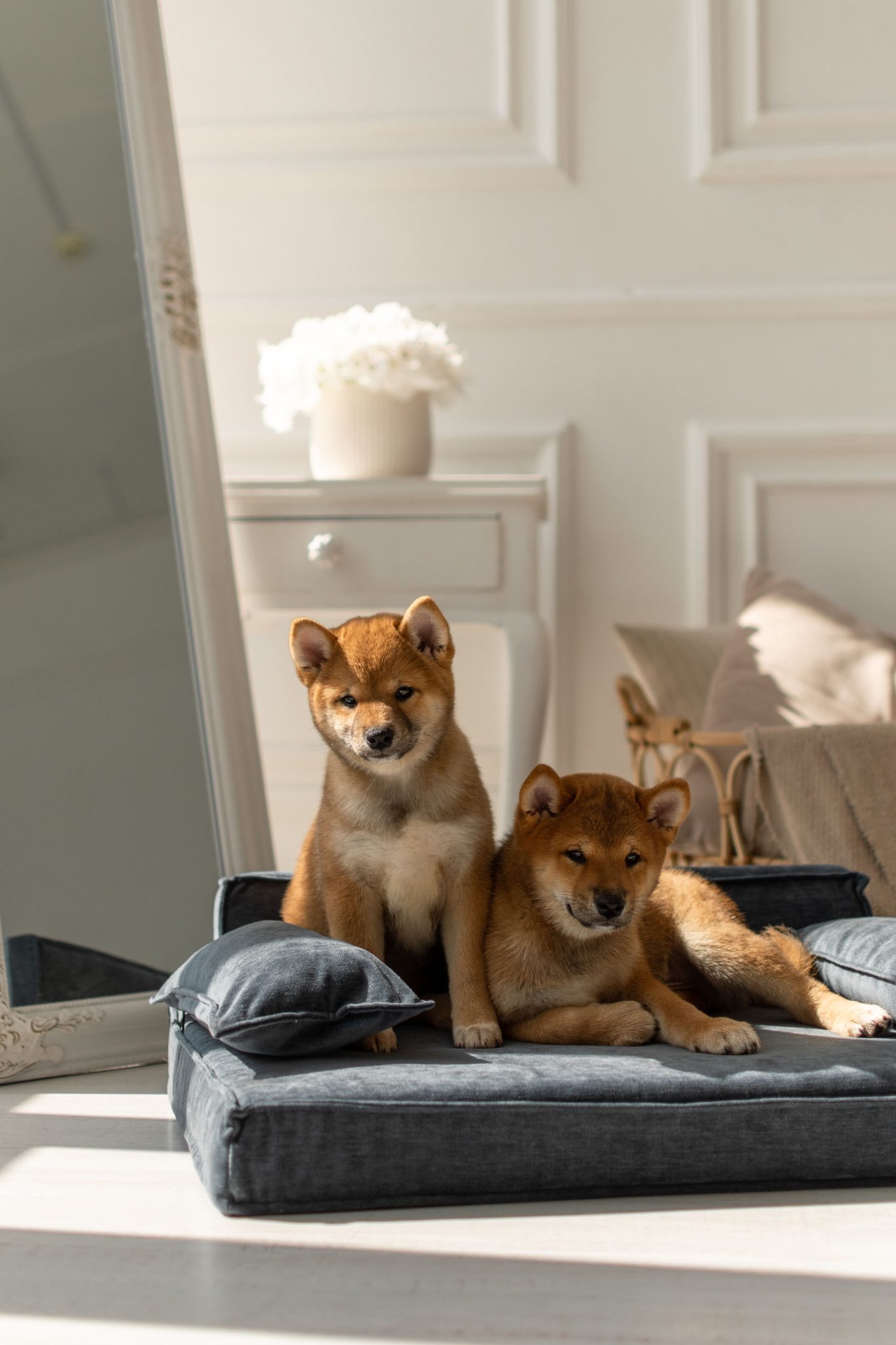
The serene and sophisticated feel of this corner comes down to a simple formula: 70% Monochromatic Whites + 20% Textural Light Wood + 10% Soft Charcoal Accent. The white paneled walls, nightstand, and floral arrangement create a bright, gallery-like canvas. The light wood floor adds warmth and natural texture. The charcoal pet bed is the key accent; it grounds the space and provides a point of soft contrast without shouting for attention. It’s a quiet, confident palette that feels incredibly calming.
|
📋 Copy HEX 🔗 Share |
💡 Designer Tip
A charcoal-colored bed is fantastic for hiding dirt and fur, especially compared to lighter colors. However, plush, soft-touch fabrics like this can act like a magnet for pet hair, which might be more visible depending on your dog’s coat color. To keep it looking fresh, you’ll need to vacuum it once or twice a week with an upholstery attachment. Most importantly, ensure the cover is removable and machine-washable. For this type of fabric, wash on a gentle cycle and consider air-drying to maintain its plush texture.
8. Built-in Dog Nook with Mesh Cabinet Doors
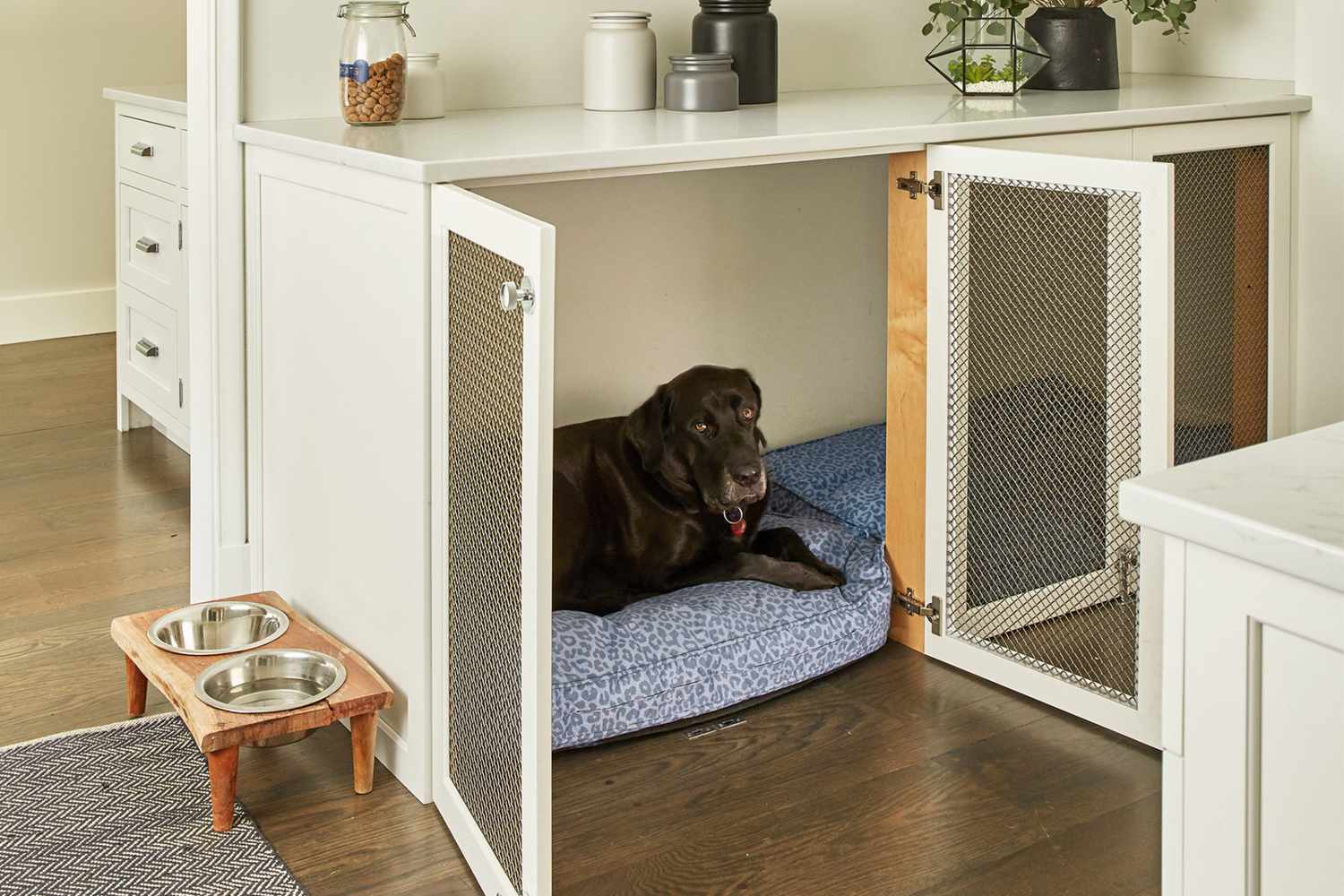
When using mesh or grille inserts for a pet nook, choose a material that matches or complements the other hardware in the room, like cabinet pulls or lighting fixtures. Here, the brass-toned mesh adds a touch of warmth and elegance that simple wire might lack. Also, consider the “open area percentage” of the mesh. A 60-70% open area provides excellent ventilation while still offering a sense of security and enclosure for the pet. It keeps the look high-end and cohesive, unlike standard kennel bars.
|
📋 Copy HEX 🔗 Share |
✅ Before You Start
Before you commit to cutting into your kitchen or mudroom cabinets, here are a few things to check:
- Measure Your Pet: Your pet should be able to stand up, turn around, and lie down comfortably. Add 4-6 inches to their standing height and length for a good fit.
- Confirm Cabinet Depth: Is the cabinet at least 24 inches deep? Anything less might be too shallow for most pets beyond the smallest breeds.
- Check for Obstructions: Make sure there is no plumbing, electrical wiring, or HVAC ducting running through the cabinet you plan to modify.
- Plan for Flooring: The cabinet floor might be rough. Plan to install a finished, scratch-resistant surface or a custom-fit, low-profile bed.
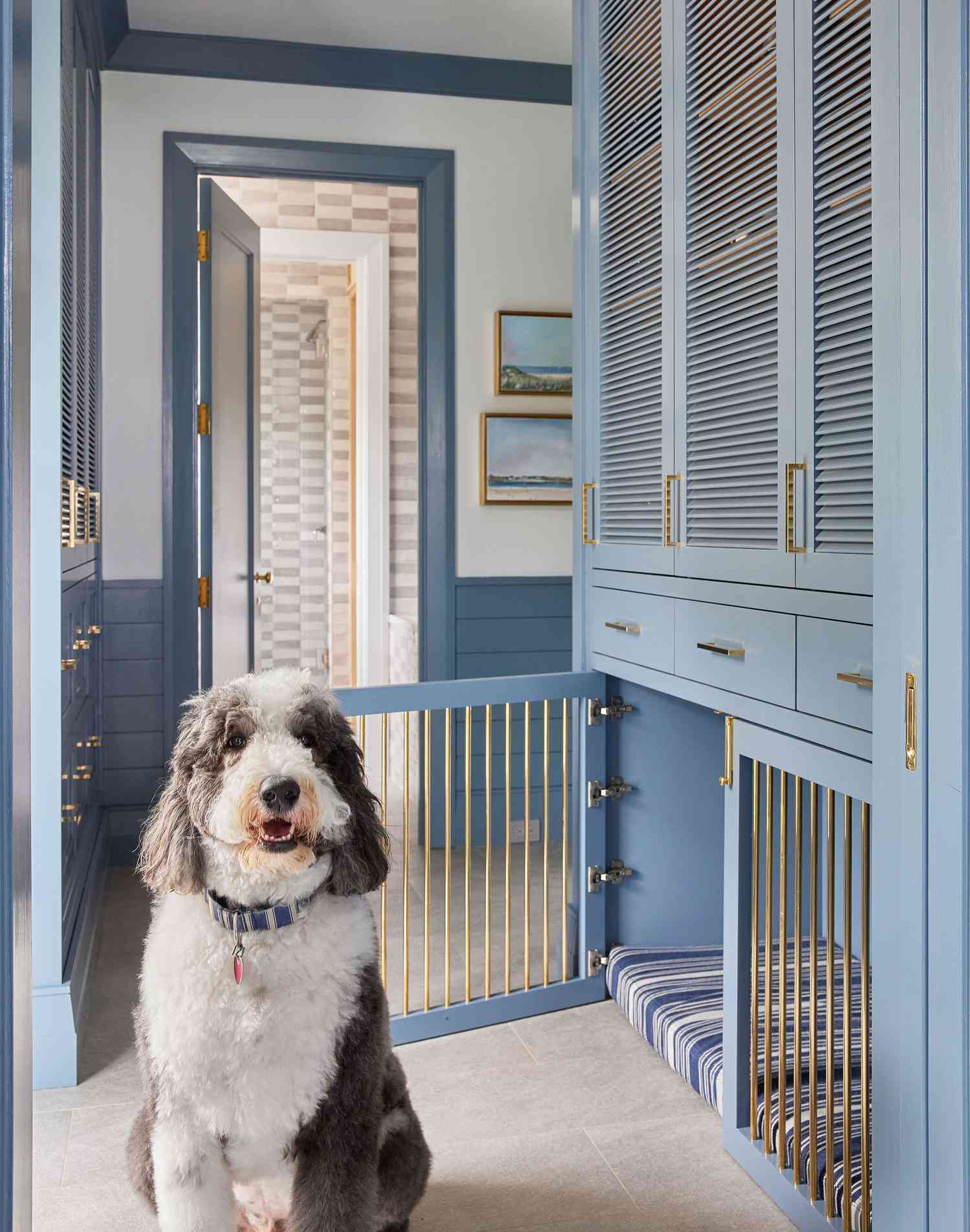
9. Chic Hallway Dog Nook with Gold Bar Accents
This design is so successful because it elevates a dog crate from a purely functional object to a piece of high-end, custom millwork. The use of sophisticated colors like light and dark blue, paired with the glamorous pop of the gold bars, makes the nook feel like it was designed by a luxury hotel. The gold mentally connects to the framed art, creating a cohesive and upscale look. It’s a statement that pet safety and high design can absolutely go hand-in-hand. This isn’t just a dog space; it’s a design moment.
|
📋 Copy HEX 🔗 Share |
📐 Style Math
While this is a stunningly beautiful solution, those gorgeous gold bars might not be practical for every dog. A determined chewer or a dog with separation anxiety could easily damage the finish on the bars or even injure themselves trying to get out. This setup is best suited for calm, crate-trained dogs who view their space as a relaxing den, not a prison to be escaped. It’s crucial to be honest about your pet’s temperament before investing in a high-end custom build like this.
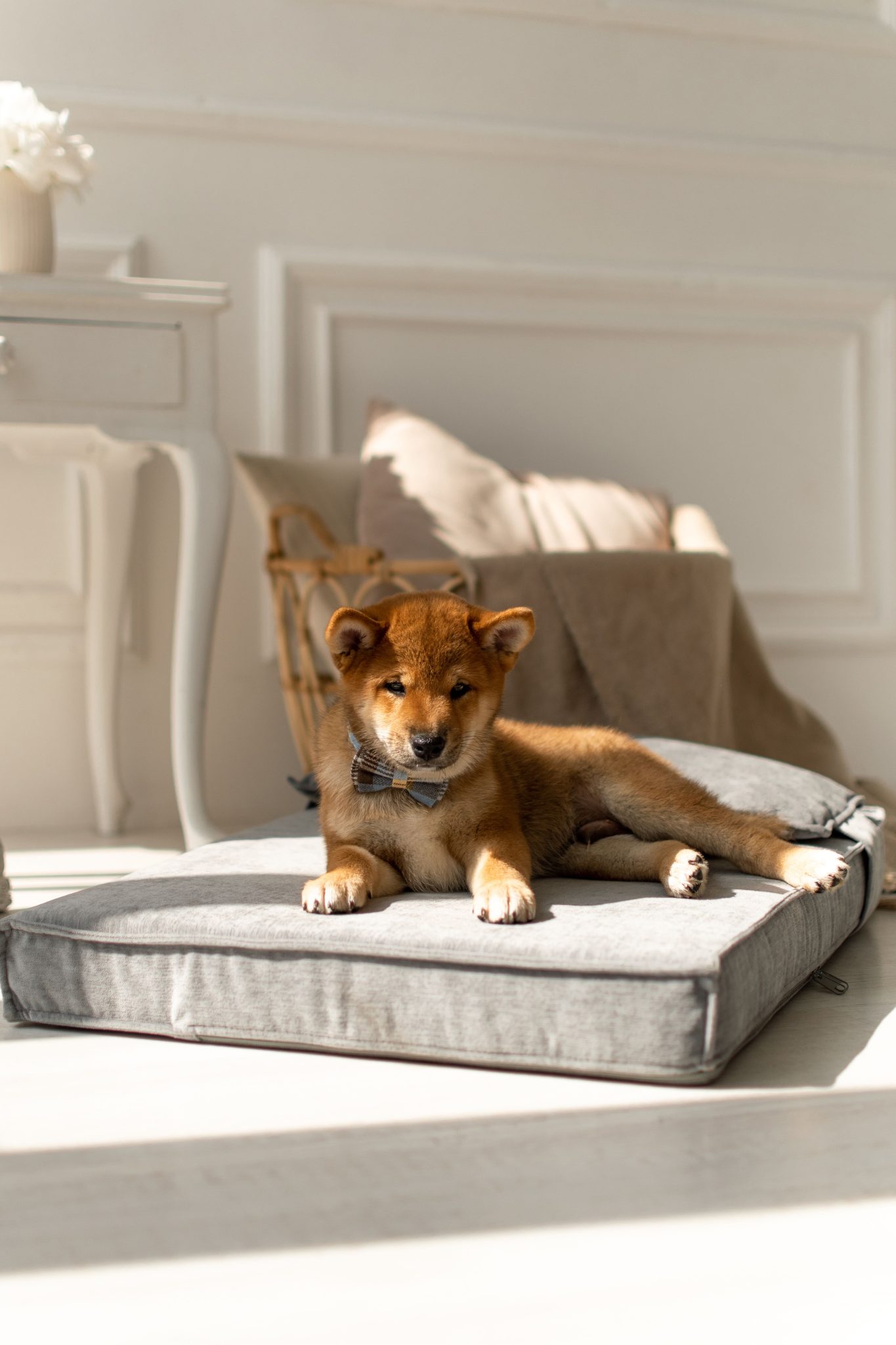
10. Sunlit Puppy Corner with an Elegant Gray Bed
that makes this scene so utterly charming is the classical white wall paneling. It serves as a crisp, elegant backdrop that elevates everything else in the shot. Without it, you would have a cute puppy in a bed on the floor. With it, you have a story—a picture of refined, comfortable living. The paneling adds architectural integrity and a sense of history that makes the simple pet bed and wicker chair feel more curated and timeless. It provides a formal structure that makes the scene feel composed, much like the serene look of Idea #7, but with a more traditional feel.
|
📋 Copy HEX 🔗 Share |
📏 Scale Guide
This idea—creating a small, elegant vignette for a pet—works beautifully in almost any size room, but it’s especially effective in a medium to large bedroom or living room where you have a “breathing room” corner. You need a space of about 4×4 feet to pull it off without it feeling cramped. The key is the height of the elements. The wall paneling or wainscoting should ideally be at least 36 inches high to provide a substantial backdrop for the pet bed and adjacent chair or side table.
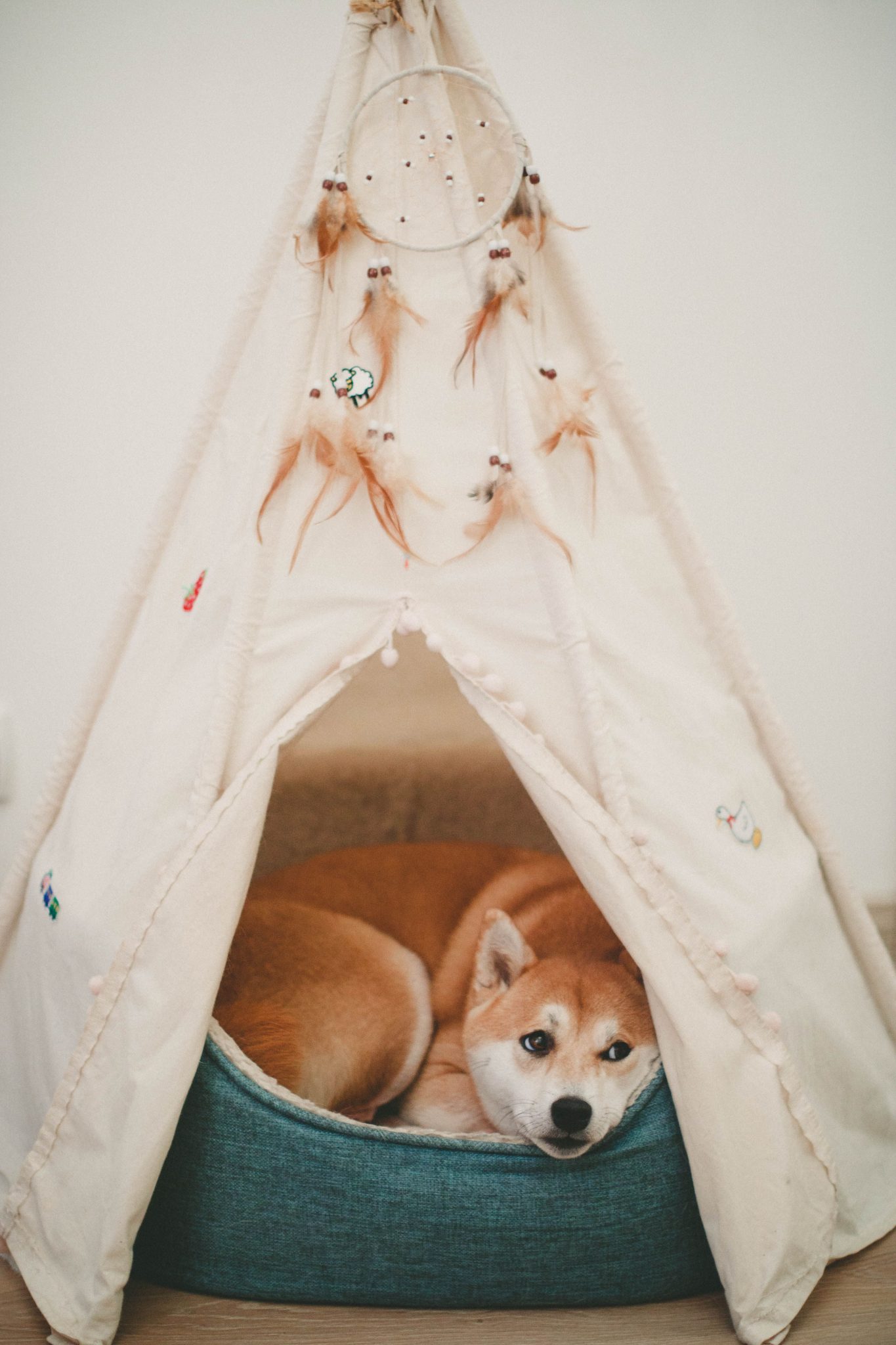
11. Cozy Teepee Pet Bed with Dreamcatcher Detail
You can find adorable pet teepees like this at budget-friendly stores like Target, HomeGoods, or online at Amazon or Chewy, often for under $40. To personalize it, grab a small dreamcatcher from a craft store or even the dollar store. The key is creating that cozy, den-like feeling for your pet. A plush, circular bed for the inside can also be found affordably. This look is all about charm and creating a sense of security, which you can easily achieve without a big spend.
|
📋 Copy HEX 🔗 Share |
💸 Get This Look For Less
This works because it taps into a primal desire for shelter and security that many pets have. The enclosed, den-like structure of the teepee makes a pet feel safe and protected, reducing anxiety. Visually, the conical shape provides a strong focal point, drawing the eye and adding a touch of playful geometry to a room. The soft fabric and whimsical details like the dreamcatcher soften the geometry, making it feel charming and cozy rather than just structural. It’s a mini-architectural statement that’s all about comfort.
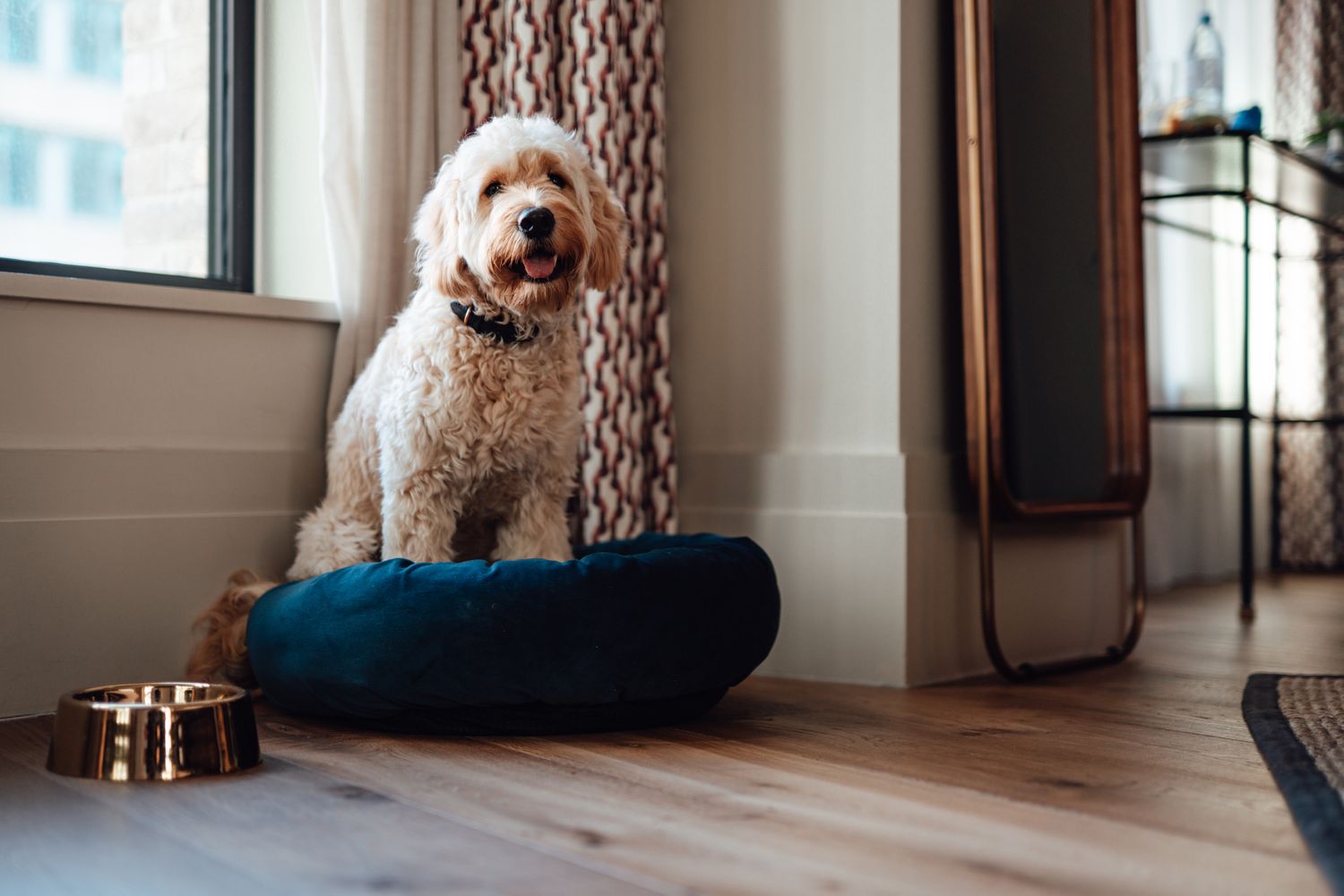
12. Luxe navy velvet bed with a golden bowl.
The formula for this chic corner is simple but effective: 60% Natural Neutrals + 30% Rich Jewel Tone + 10% Metallic Accent. The light wood floors and light beige walls provide a warm, neutral base that makes the space feel bright and airy. The deep, luxurious navy of the velvet bed is the anchor piece, adding a rich dose of color and texture. The single gold bowl is the perfect finishing touch—it’s that little bit of sparkle that elevates the whole vignette from simple to sophisticated.
|
📋 Copy HEX 🔗 Share |
🧹 Maintenance Reality
When you have a standout piece like this dark blue velvet bed, resist the urge to add more competing elements. The power of this look comes from its simplicity. The single gold bowl is just enough shine to complement the richness of the velvet. If you added a gold-patterned rug or a gold-framed picture right above it, you would dilute the impact. Let one or two luxury finishes be the star of the show against a calm, neutral background. This is a perfect example of “less is more.”
13. Minimalist Plywood Cat House with a Gabled Roof
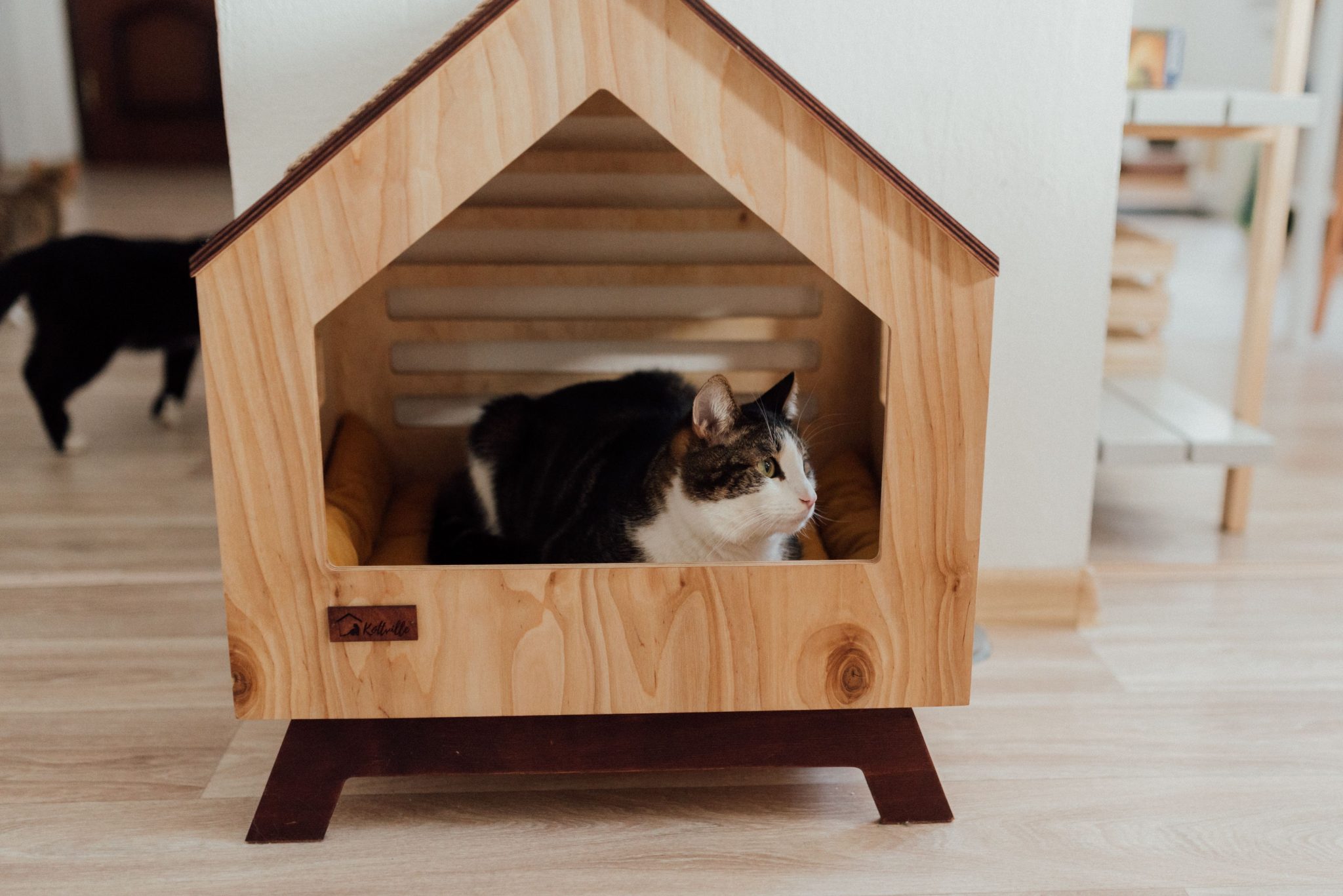
This design is a perfect example of “Japandi” style—a mix of Japanese minimalism and Scandinavian function. It works because it celebrates the simple beauty of its materials. The clean lines of the gabled roof and the natural grain of the light plywood are the main attraction. There’s no unnecessary ornamentation. The contrast between the light wood house and the dark brown base adds visual interest and a sense of grounding. It’s a piece of pet furniture that looks like a deliberate, sculptural object.
|
📋 Copy HEX 🔗 Share |
⚠️ Real Talk
Natural plywood is beautiful but can be susceptible to stains and scratches. To keep this cat house looking its best, apply a coat of pet-safe, non-toxic clear sealant (like a water-based polyurethane) before use. This will protect the wood from moisture and make it easier to wipe clean. For the cushion inside, choose one with a removable, machine-washable cover. A quick wipe-down of the wood and a weekly wash of the cushion will maintain its clean, minimalist aesthetic.
14. Woven Basket Pet Bed with Creamy Textiles
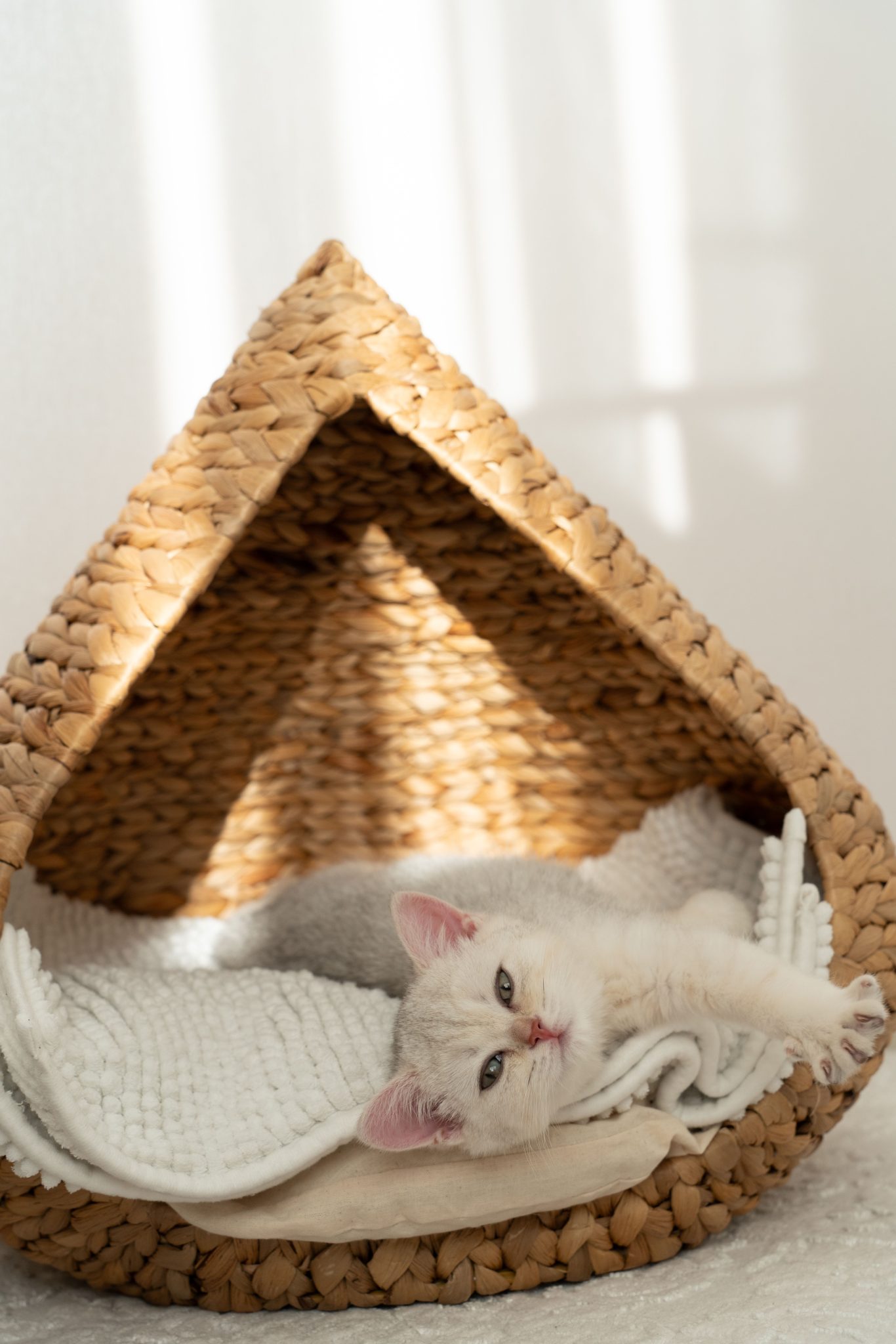
The single most important element here is the texture of the woven basket. It’s what gives this simple pet bed its warmth and organic appeal. The natural fibers and imperfect weave provide a tactile quality that feels both rustic and sophisticated. You could put the same cream-colored blankets in a plastic bin and it would have zero charm. The basket is what makes it feel like a cozy, thoughtfully chosen nest. It connects the space to nature and craft, even in its simple triangular form. For a similar vibe with a different material, see the wicker bed in Idea #30.
|
📋 Copy HEX 🔗 Share |
🔥 Trending Context
You don’t need a designer pet store for this look. Head to the home goods section of stores like Target, HomeGoods, or even a craft store like Michael’s. Look for large, decorative storage baskets. They often have the same beautiful woven textures for a fraction of the price of a product marketed specifically for pets. Just make sure the material is pet-safe (like seagrass or water hyacinth) and add a plush blanket or cushion. You can easily recreate this cozy, natural look for under $50.
15. Multi-Tiered Cat Tree with Faux Fur Beds
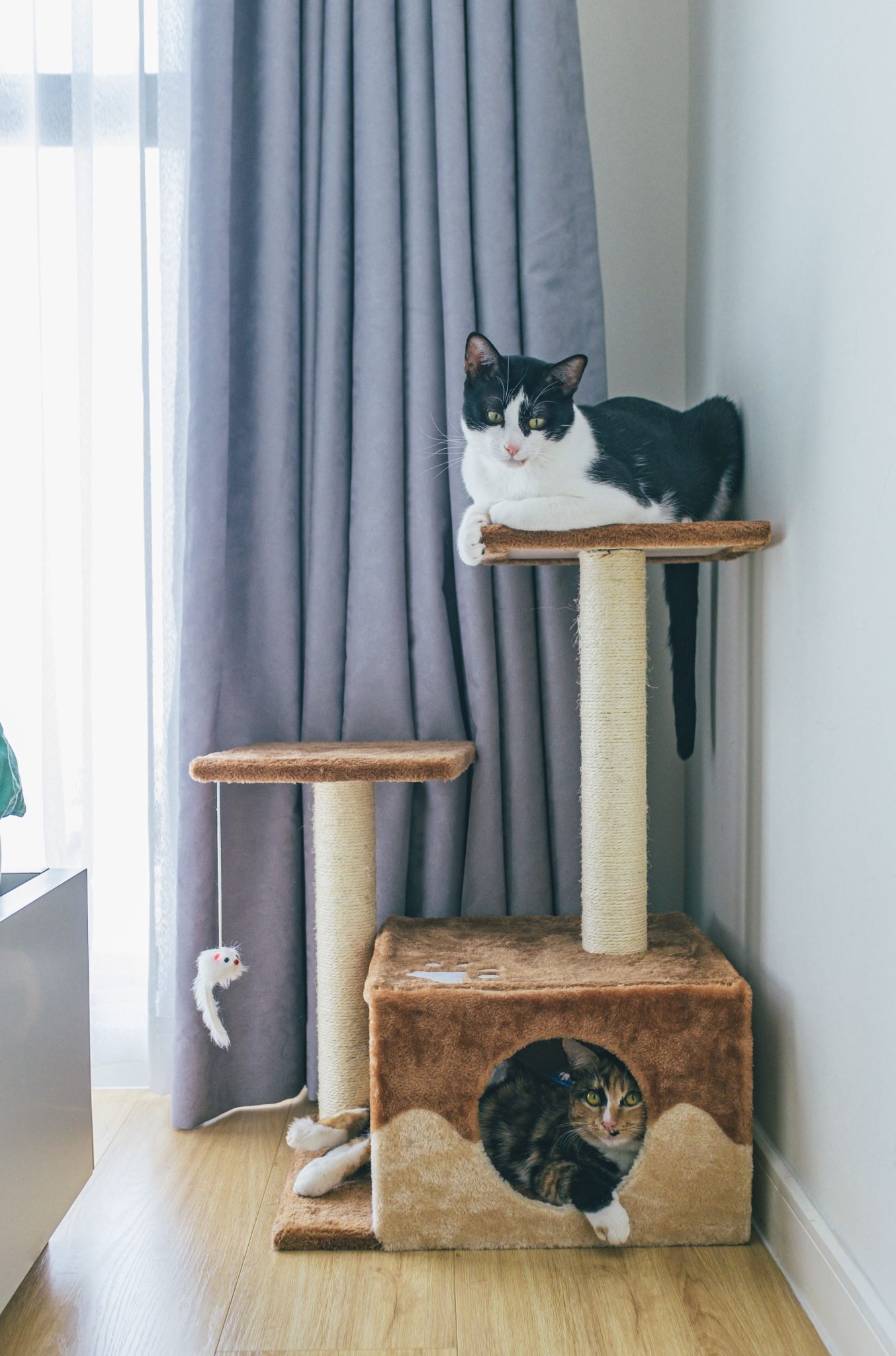
Getting a substantial cat tree like this involves a range of costs, depending on the brand and materials. Here’s a general breakdown to recreate this cozy activity center:
|
📋 Copy HEX 🔗 Share |
⭐ The One Thing
- Main Furniture: Multi-level cat tree with scratching posts and cubby: $80 – $250
- Textiles: (Usually included) Faux fur and sisal rope are standard.
- Decor/Accessories: Dangling toys are often included, or can be added for $5 – $15.
- TOTAL: $85 – $265
- Budget Alternative: Look for slightly smaller, un-branded versions on Amazon or Chewy.com for around $50-$70.
Let’s be real: most cat trees are not high design. While your cat will absolutely love the functionality, a large, multi-patterned faux fur structure can easily overwhelm a stylish room. This brown-and-beige model is relatively neutral, but it’s still a significant visual statement. Before buying, measure your space and be honest about whether you have a corner where this can live without becoming an eyesore. Placing it near a window, partially obscured by a curtain as shown here, can help it blend in better.
16. Cozy Cat Napping Spot in Sunlit Window
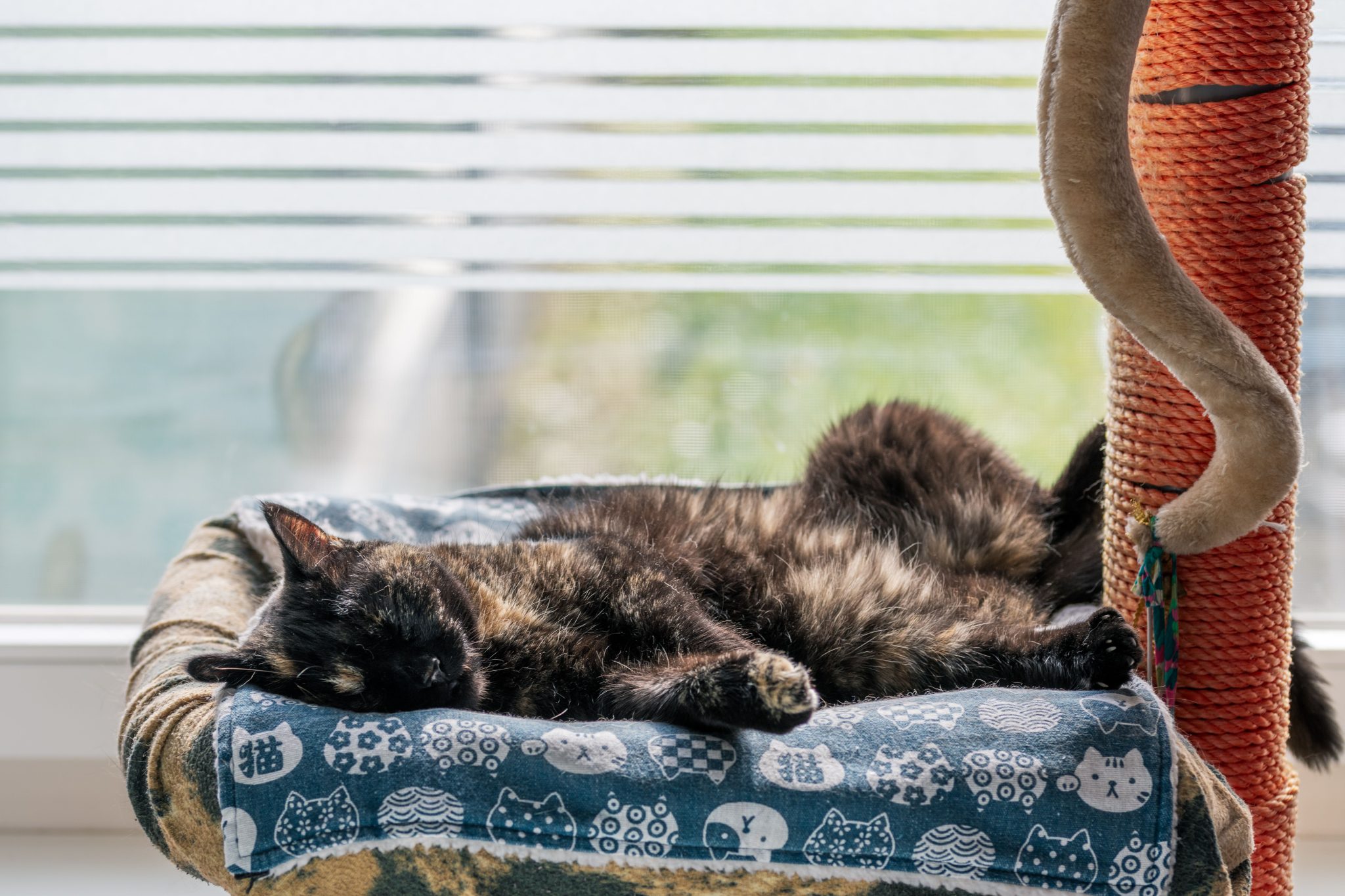
This little scene works because it masterfully layers textures to create an irresistible spot for a nap. You have the soft fur of the cat, the smooth patterned cushion, the nubby woven fabric of the cat tree, and the rough texture of the orange sisal rope. This textural variety is highly appealing to both cats and humans. The composition is also excellent; the sleeping cat is bathed in soft window light, making it the undeniable focal point and creating a feeling of ultimate peace and serenity.
|
📋 Copy HEX 🔗 Share |
💰 Budget Breakdown
Cats are heat-seekers. The number one rule for placing a cat bed or cat tree is to find the sunniest spots in your home. Watch where the sunbeams fall throughout the day and place the bed in a location that gets at least 2-3 hours of direct sunlight. A spot by a window is prime real estate as it offers both warmth and entertainment (what cat owners affectionately call “cat TV”). This simple act will make any bed you buy ten times more appealing to your feline friend.
17. Leopard Print Window Perch for Sunbathing
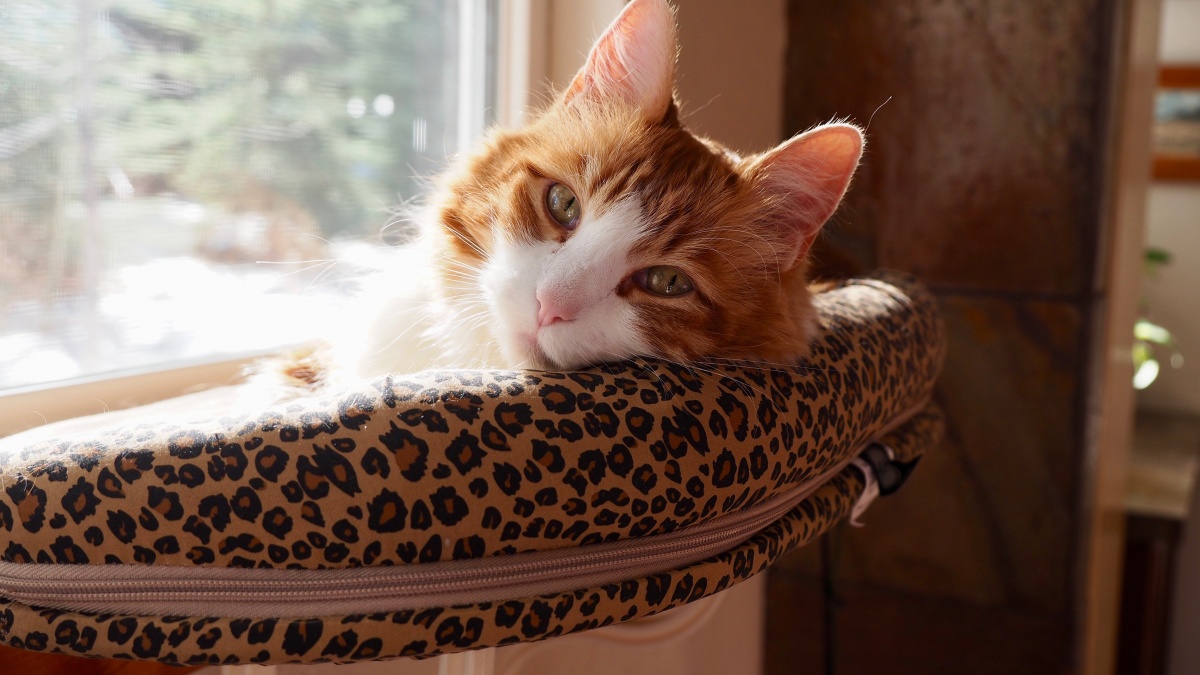
that makes this work is its unapologetic boldness. Leopard print is not a quiet pattern; it’s fun, a little wild, and confident. By placing it front and center in a window, the design embraces a touch of playful glamor. It turns a functional cat perch into a style statement. The print’s warm tones also happen to perfectly complement the orange fur of the cat, making the whole scene feel harmonious in its own vibrant way. It shows that pet furniture can have a personality as distinct as the pet itself.
|
📋 Copy HEX 🔗 Share |
🔧 How-To Brief
Window-mounted perches that use suction cups are fantastic space-savers, but their reliability is paramount. Always check the weight limit and make sure it’s appropriate for your cat (or multiple cats, if they like to pile on!). Before installing, thoroughly clean both the suction cups and the window glass with rubbing alcohol to ensure the best possible seal. It’s also a good idea to “burp” the suction cups every few weeks—press down firmly in the center to push out any trapped air and reseat the seal.
18. Cozy Cat Bed in a Multi-Textured Neutral Cat Tree
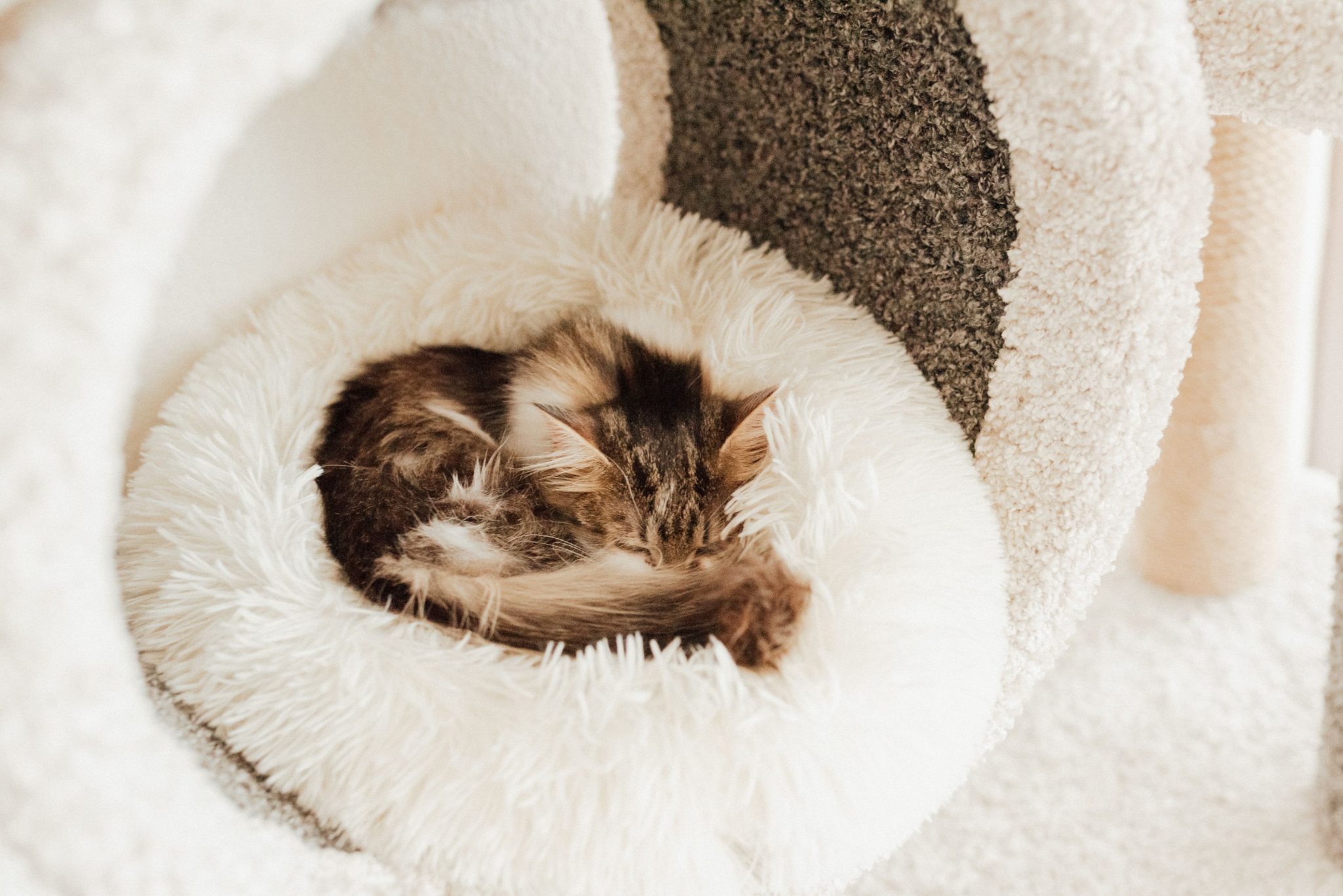
The deep comfort of this spot is achieved through a technique called “textural layering.” The cat isn’t just in a bed; it’s in a bed nestled within a larger structure of varied soft surfaces. You have the ultra-plush white fur of the bed, the shaggier dark gray carpet below, and the dense, creamy beige plush on the surrounding structure. This layering creates a sense of deep enclosure and sensory richness. It’s not just soft; it’s an entire environment of softness, which signals ultimate safety and comfort to a resting animal.
|
📋 Copy HEX 🔗 Share |
🎯 What Makes It Work
This composition follows a simple but effective formula: 80% Monochromatic Texture + 20% Natural Element. The different shades of white, cream, and gray plush make up the vast majority of the visual, creating a soft, unified landscape. The 20% natural element is the brown-and-white cat itself. The cat isn’t just using the bed; its own pattern and color are the final, living components of the design. You could achieve a similar feel by placing a richly textured throw blanket in a simple basket; the principle of layered softness is the same.
19. Beagle Resting in a Large, Supportive Grey Dog Bed
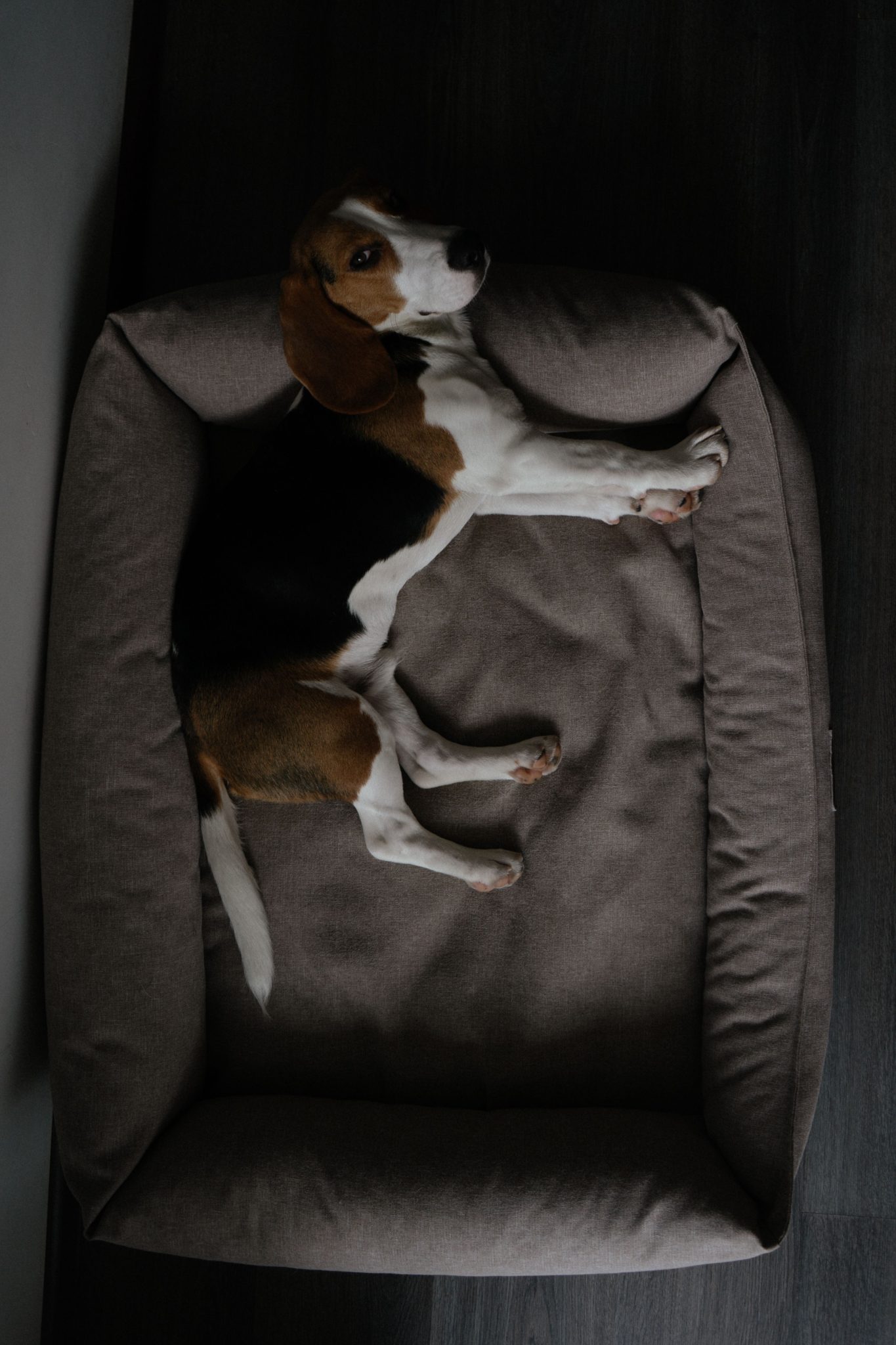
For medium to large dogs, especially those who like to lean or curl up against a surface, a bed with supportive bolsters or raised sides is a game-changer. These bolsters provide a sense of security and a comfortable place for your dog to rest their head. When choosing, press firmly on the bolsters. They should be densely packed and spring back quickly. Flimsy, under-stuffed sides will flatten in no time, losing their supportive function and leaving your dog with little more than a flat mat.
|
📋 Copy HEX 🔗 Share |
💡 Designer Tip
Linen and linen-like fabrics offer a sophisticated, textural look that’s a welcome change from typical plush or fleece. However, be aware that their looser weave can trap fine pet hair more readily than smoother fabrics. A weekly vacuum with a rubber-bristled pet hair brush is essential. While durable, linen can be prone to wrinkling. To minimize this, opt for a bed with a very snug-fitting cover and always put it back on the cushion while it’s still slightly damp after washing, letting it air dry in place for a smoother finish.
20. Tidy Pet Nook Converted from a Small Closet
Transforming a small, unused closet into a pet den is a fantastic weekend project. This should take about 3-4 hours and cost under $100.
|
📋 Copy HEX 🔗 Share |
✅ Before You Start
- Clear and Clean: Empty the closet completely. Remove any shelving or hanging rods if necessary and give the interior a thorough cleaning.
- Paint the Interior: Apply a fresh coat of paint. A semi-gloss finish is great for durability and is easy to wipe clean. A bold contrast color can be fun!
- Add a Personal Touch: Apply wall decals, a personalized nameplate, or a small, battery-operated picture light for a custom feel.
- Install the Bed: Place a comfortable, perfectly-sized pet bed on the floor of the closet. Make sure it’s cozy but still allows for easy entry and exit.
This entire concept is a budget-friendly superstar. You’re using existing space, so there are no construction costs. Check the “oops” paint section at your local hardware store for a quart of high-quality paint for just a few dollars. Wall decals can be found cheaply on Amazon or Etsy. For the bed itself, HomeGoods, TJ Maxx, and Marshalls are treasure troves for stylish, low-cost pet beds. You could easily create a gorgeous, custom-feeling nook like this for less than $75 from start to finish. This is much cheaper than the built-in cabinet approach of Idea #22.
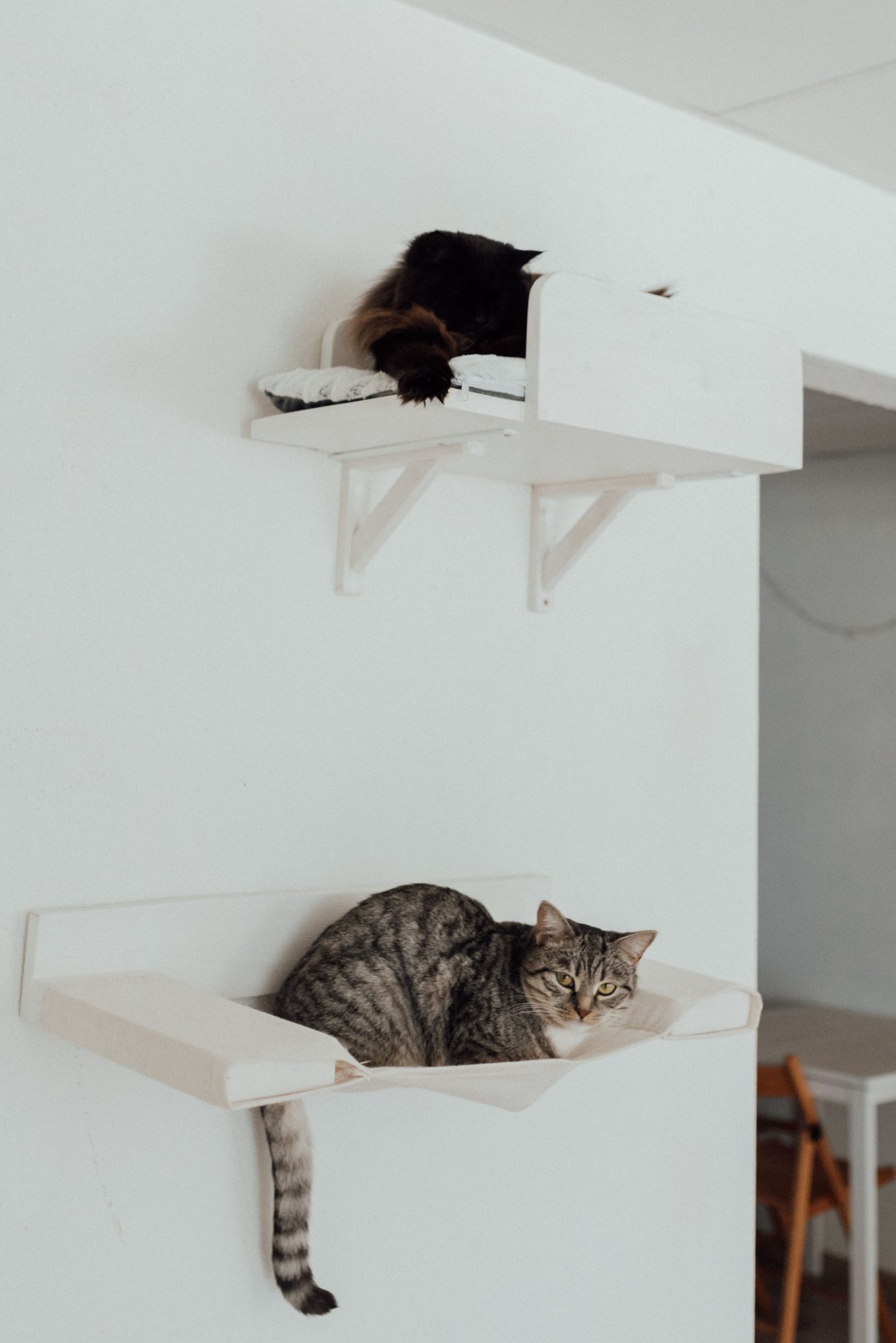
21. Wall-Mounted Cat Slings on a Clean White Wall
This solution is brilliant for small spaces because it utilizes vertical territory, a concept cats instinctively love. By getting the beds off the floor, you free up valuable square footage while providing your cats with an elevated, secure resting spot. The simple, clean lines of the white mounts and the soft curve of the fabric slings are minimalist and unobtrusive. They don’t scream “cat furniture,” but rather feel like a thoughtful, modern design choice that happens to be for pets.
|
📋 Copy HEX 🔗 Share |
📐 Style Math
Wall-mounted beds are a phenomenal solution for apartments or smaller rooms where a bulky cat tree would be overwhelming. They work in virtually any room, but you do need to ensure you have wall space with studs to anchor them securely. A single shelf requires about 24 inches of horizontal space. To create a multi-level path like the one suggested here, plan for a wall area about 3 feet wide by 5 feet high to allow for comfortable jumping distances between the beds (12-18 inches vertically and horizontally).
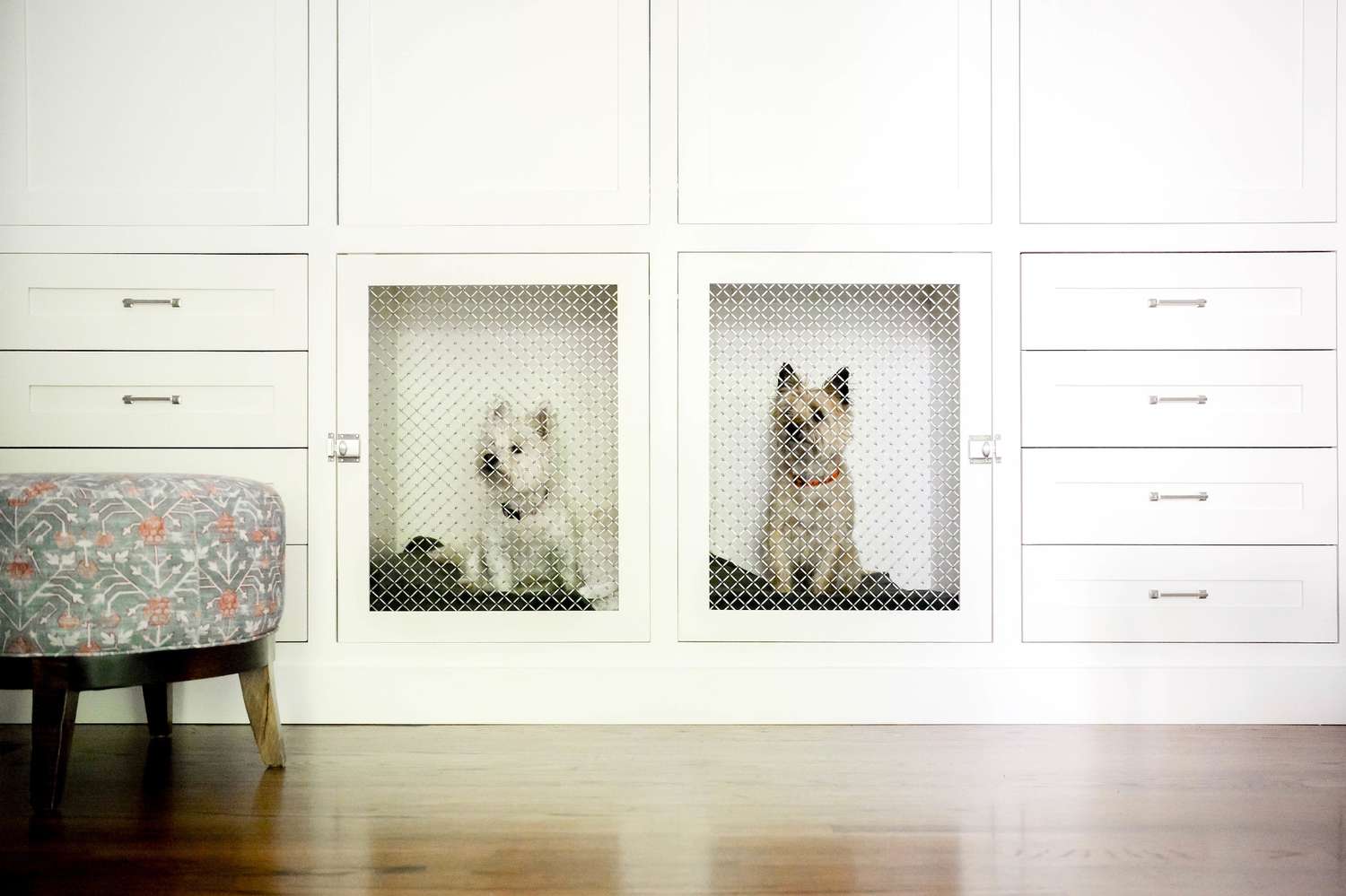
22. Custom Built-In Cabinets with Integrated Pet Crates
When designing custom built-ins for pets, think about the future. Incorporate standard cabinet and drawer sizes around the pet crate sections. This way, if your pet needs change down the line—perhaps you no longer need the crates—the mesh-front doors can be easily swapped out for solid cabinet doors. The space can then be converted into traditional storage without requiring a complete teardown. This forward-thinking approach adds immense long-term value to your investment.
|
📋 Copy HEX 🔗 Share |
📏 Scale Guide
A custom project of this scale is a significant undertaking. Here’s what to confirm before you call the cabinet maker:
- Finalize Your Appliances & Hardware: If this is part of a larger mudroom or laundry room renovation, have your washer/dryer models and all hardware (pulls, knobs) selected. This ensures all elements will be cohesive.
- Get Multiple Quotes: Talk to at least three different custom cabinet makers or carpenters. Prices and quality can vary dramatically. Ask for references and to see examples of their work.
- Verify Ventilation: Discuss how the back of the crate areas will be ventilated. A solid back is not sufficient. They need to be open or have significant cutouts to allow for airflow.
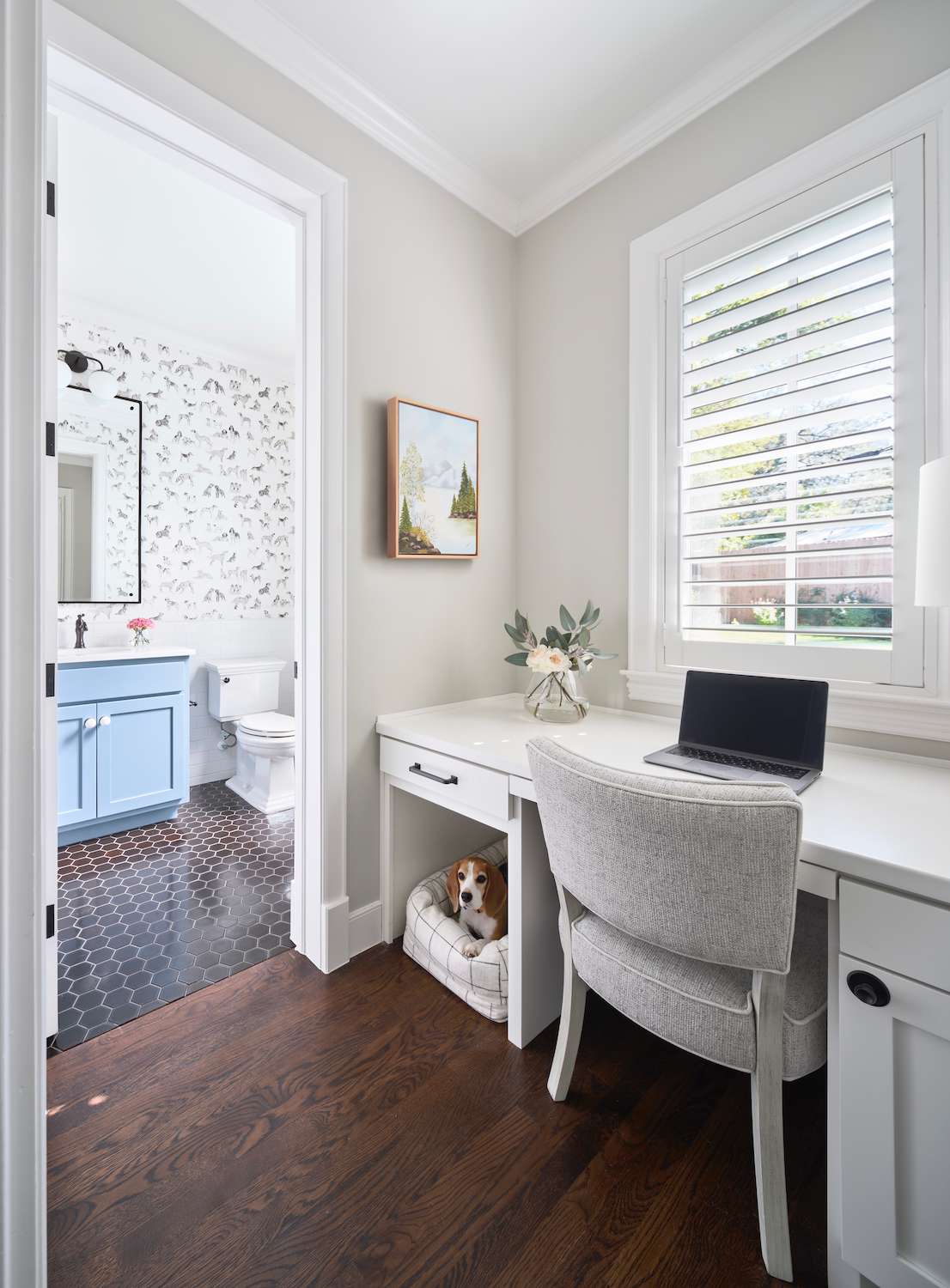
23. Cozy Under-Desk Dog Bed in a Home Office
This is a perfect example of “symbiotic design”—the pet’s comfort is integrated directly into the human’s workspace. It works because it designates a clear, safe spot for the dog that is out of the way of rolling chairs and foot traffic, yet still close to their person. For a dog, being in this protected “den” under the desk provides a huge sense of security. For the human, it keeps their beloved pet nearby without sacrificing productivity or floor space. The use of a plaid pattern that complements the room’s gray and white palette makes it feel deliberate and stylish.
|
📋 Copy HEX 🔗 Share |
💸 Get This Look For Less
While this looks incredibly sweet, be realistic about your own work habits and your dog’s personality. If you have a dog that is restless, snores loudly, or constantly nudges you for attention, having them directly underfoot could become a major distraction during important Zoom calls or focused work. This setup is ideal for calm, quiet dogs who are content to nap for long stretches. If your dog is more active, a bed placed slightly further away in the same room might be a more practical solution.
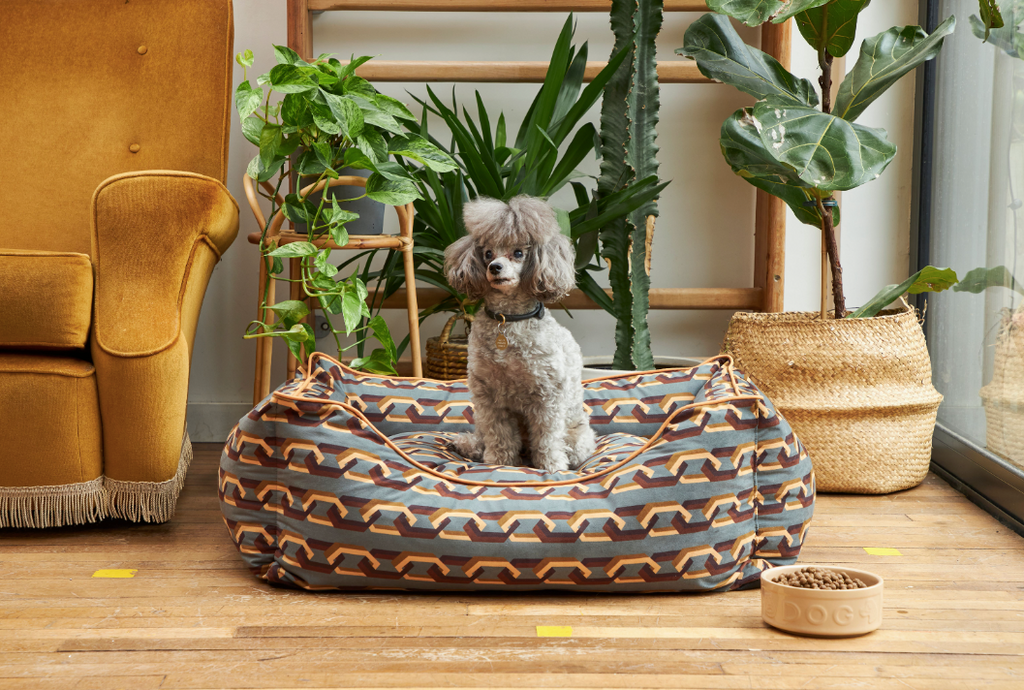
24. Eclectic Pet Corner with a Geometric Bed
This vibrant corner proves that pet furniture can be a key player in an eclectic design scheme. The formula is all about confident mixing: 40% Bold Furniture + 30% Natural Greenery + 20% Patterned Textiles + 10% Raw Texture. The mustard armchair is the undeniable anchor. The collection of plants adds a layer of lush, organic life. The geometric pet bed provides a pop of modern pattern, and the worn wooden floor planks add a rustic, textural base. Nothing is shy; everything contributes to the cheerfully maximalist vibe.
|
📋 Copy HEX 🔗 Share |
🧹 Maintenance Reality
This look is right on trend with the rise of “Dopamine Decor”—using color, pattern, and personal objects to create a home that genuinely makes you happy. The idea is to move away from sterile, monochrome palettes and embrace items that spark joy. A funky, geometric dog bed or a brightly colored armchair fits perfectly into this movement. It’s about personal expression and creating a space that feels energetic, optimistic, and uniquely you, rather than following a set of strict design rules.
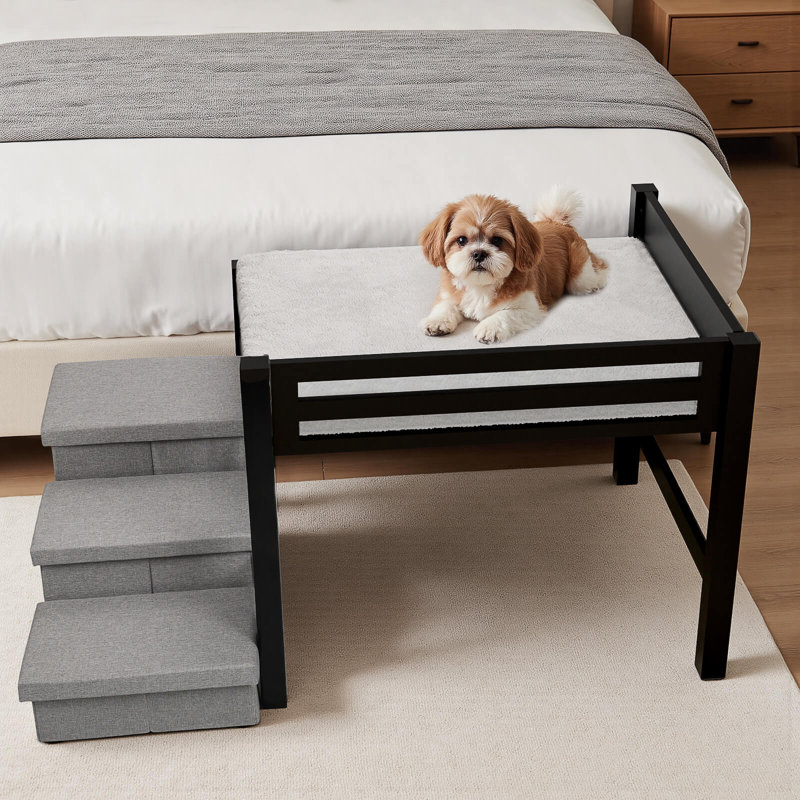
25. Pet Bed and Access Steps Integrated with a Master Bed
The single element that elevates this setup is the set of matching pet steps. Without them, it would just be a dog bed next to a human bed. The steps are the crucial link; they show that this isn’t just a convenient placement, but a thoughtful, integrated system designed for the pet’s ease of use. It acknowledges the pet’s needs (especially for smaller or older dogs who can’t jump) and solves the problem in a way that is visually cohesive with the furniture. It’s a small detail that speaks volumes about a pet-centric mindset. It’s more integrated than the separate pieces seen in Idea #10.
|
📋 Copy HEX 🔗 Share |
⚠️ Real Talk
This arrangement is ideal for bedrooms with a bit of extra space at the bedside. You need about 30-36 inches of clearance between the bed and the wall to comfortably fit both the pet bed and the steps without creating a tripping hazard. This works best with bed frames that are 25-30 inches high. If your bed is much higher or lower, the slope of the steps might become too steep or too long, making them awkward for your pet to use.
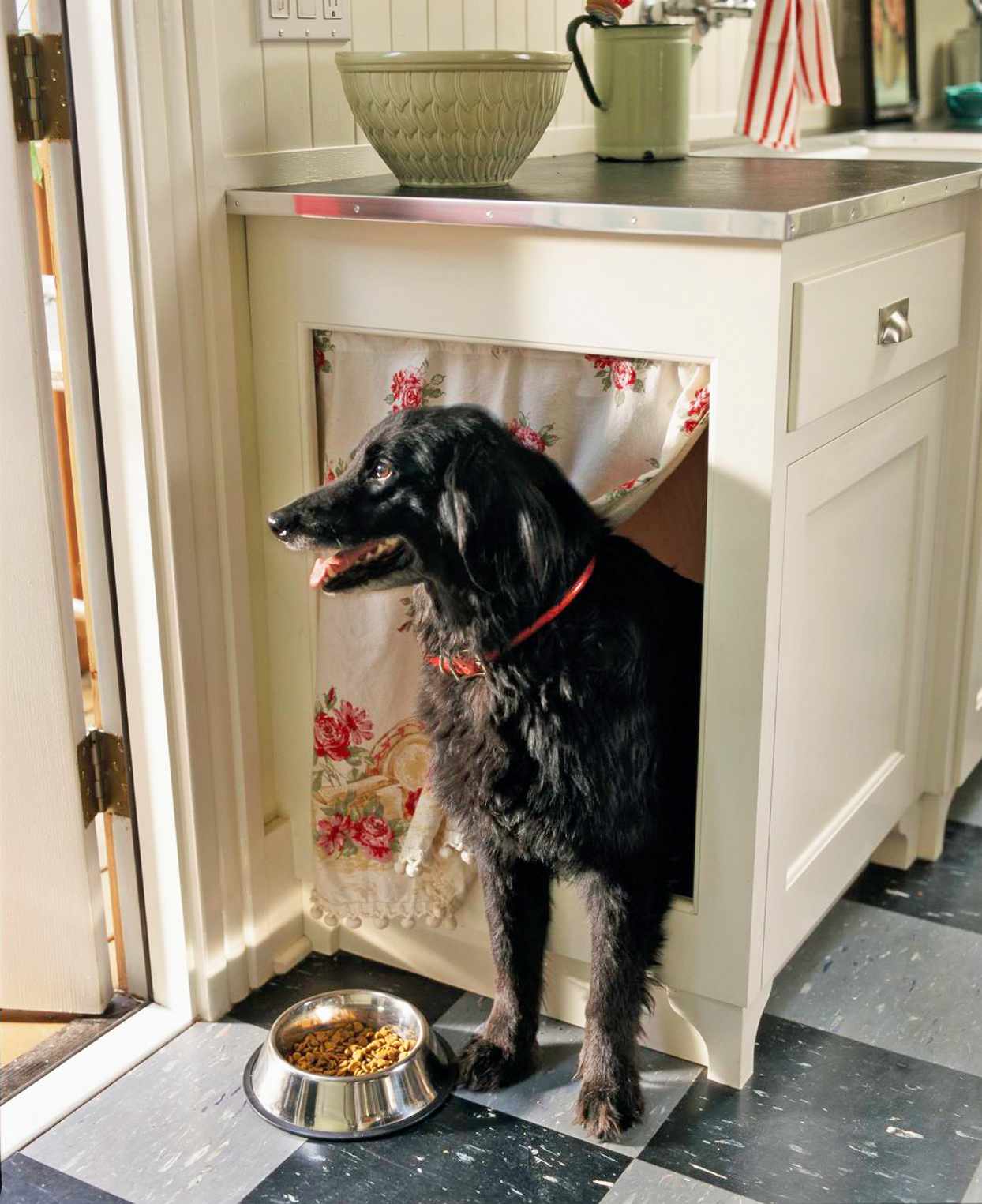
26. Built-in Dog Bed Nook with a Floral Curtain
This idea is charming because of its simple, low-tech approach to creating a cozy space. The fabric curtain is a soft, gentle touch that contrasts beautifully with the hard surfaces of the kitchen island. It provides the sense of a den or a private nook without the expense or rigidity of a custom-built door. The floral pattern adds a touch of cottage-core sweetness, making the whole kitchen feel more welcoming and less formal. It’s a perfect blend of practicality and personality.
|
📋 Copy HEX 🔗 Share |
🔥 Trending Context
When adding a curtain to a pet nook, use a tension rod instead of a permanently drilled-in curtain rod. This makes it incredibly easy to remove the entire curtain for washing—a necessity for any fabric that lives near a pet and their food bowls. You can find small, adjustable tension rods online or at any home goods store for under $10. This simple choice will save you a huge amount of hassle when it comes to keeping the space clean and fresh.
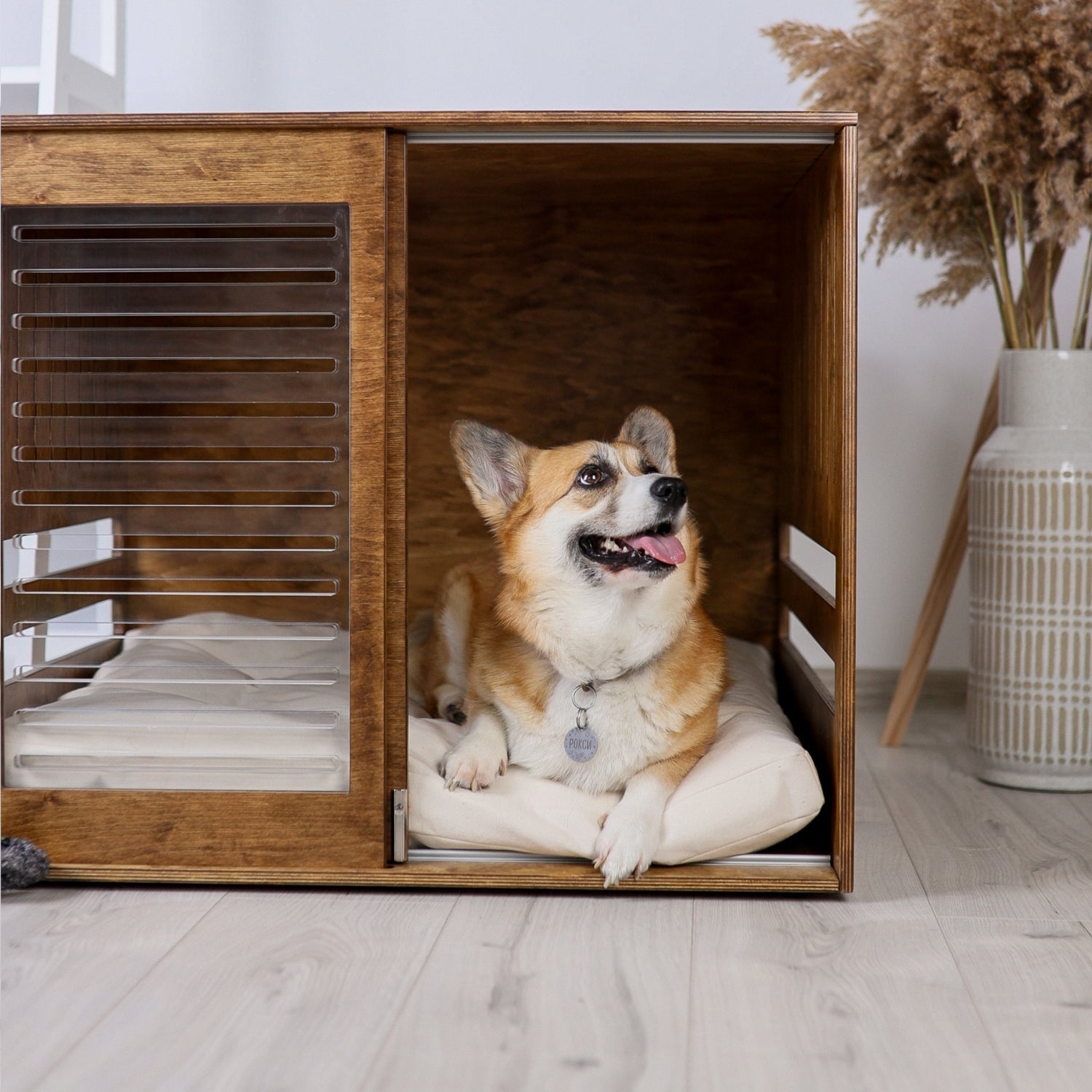
27. Modern Wooden Dog Crate with a Transparent Door
The game-changer here is the transparent sliding door. Traditional dog crates can feel very visually heavy and cage-like. This design, with its clear acrylic or glass panel, completely changes that feeling. It provides the necessary enclosure and security for the pet while maintaining a sense of lightness and openness. You can see your pet, they can see out, and the crate doesn’t feel like a visual block in the room. It transforms the crate from a cage into a modern, airy piece of furniture.
|
📋 Copy HEX 🔗 Share |
⭐ The One Thing
While transparent doors look fantastic, they will show every single nose-print, smudge, and slobber mark. If you have a dog that frequently licks or paws at the door, you will need to clean it daily with a glass or acrylic cleaner to keep it looking crisp and clear. This material is best for calm dogs who are relaxed in their crate. An anxious or destructive dog could potentially scratch the surface, marring the transparent look, so be honest about your pet’s habits before choosing this style.
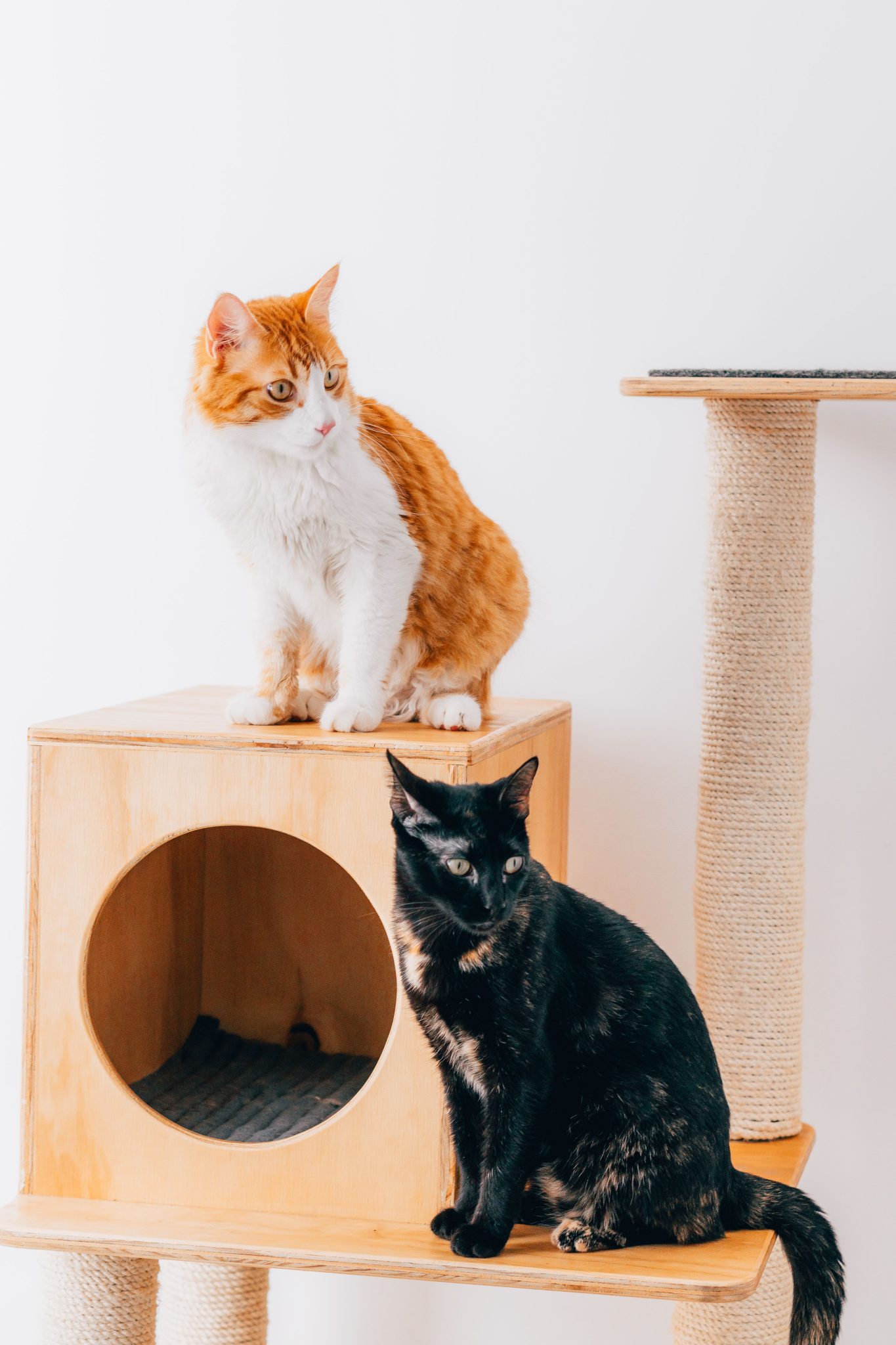
28. Modern Wooden Cat Tree with an Integrated Box Den
You don’t need a high-end designer brand to get this sleek, modern look. Stores like Wayfair, Amazon, and Chewy now offer a wide variety of cat trees made from light-colored wood or plywood that mimic this Scandinavian aesthetic. Look for keywords like “modern cat tree” or “wooden cat condo.” You can often find a very similar style for between $70 and $150, which is a great price for a piece of furniture that looks this good and provides so much enrichment for your cat.
|
📋 Copy HEX 🔗 Share |
💰 Budget Breakdown
Assembling a modern cat tree like this is usually a straightforward, one-person job that takes less than an hour.
- Unpack and Identify Parts: Lay out all the pieces and screws. The instructions will have a diagram matching each part to a letter or number.
- Attach Posts to Base: Start by screwing the main sisal-wrapped posts into the base platform. This is the foundation of your structure.
- Build Upwards: Attach the box den to the posts, followed by the top platform. Most kits use long screws that go through the platforms into the posts.
- Tighten Everything: Use the included Allen key to make sure every screw is fully tightened. Give the whole structure a good shake to ensure it’s stable before letting your cat on it.
- Add the Pads: Place the felt or fabric pads on the platforms. Many have velcro or non-slip backing to keep them in place.
29. Wall-Mounted Cat Playground with a Natural Wood Finish
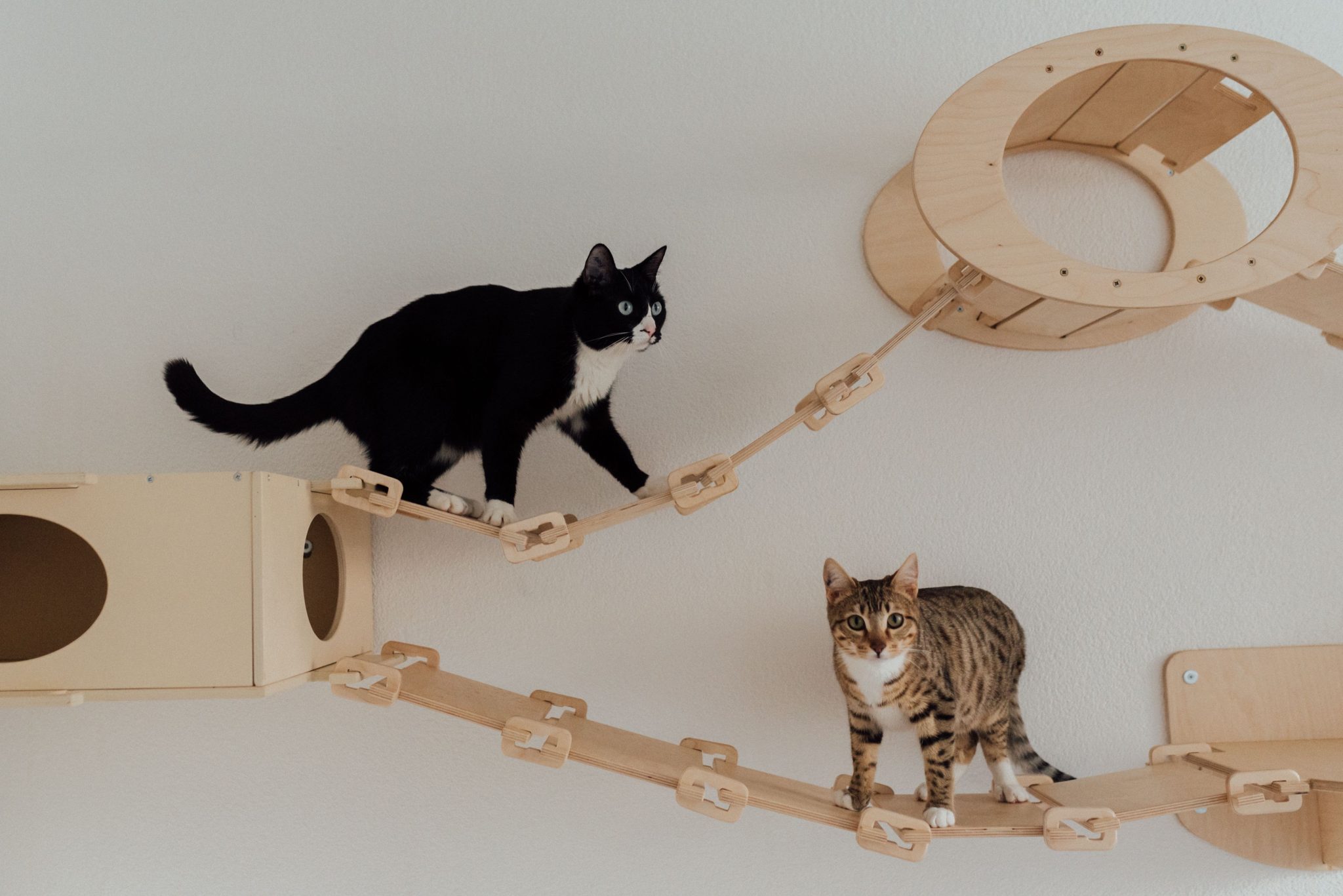
This system works because it’s designed entirely around a cat’s natural instincts. Cats love to climb, perch in high places, and survey their territory. This “cat highway” provides them with a stimulating, three-dimensional environment that traditional floor-based toys can’t match. It’s an enrichment activity and a resting place all in one. The natural plywood finish also allows it to blend in with modern and minimalist decor, looking more like intentional shelving than clunky pet gear. For a simpler version, see Idea #3.
|
📋 Copy HEX 🔗 Share |
🔧 How-To Brief
Unfinished plywood looks clean and modern, but it can be a magnet for dirt and oils from your cat’s paws. Wiping it down with a damp cloth is fine for light cleaning, but for long-term durability and hygiene, it’s wise to treat the wood. Before installation, apply 1-2 coats of a pet-safe, non-toxic, water-based clear sealant. This will create a wipeable surface that resists stains and makes cleaning much easier, ensuring the playground stays looking fresh for years.
30. Calm Pet Corner with Two-Tone Blue Walls
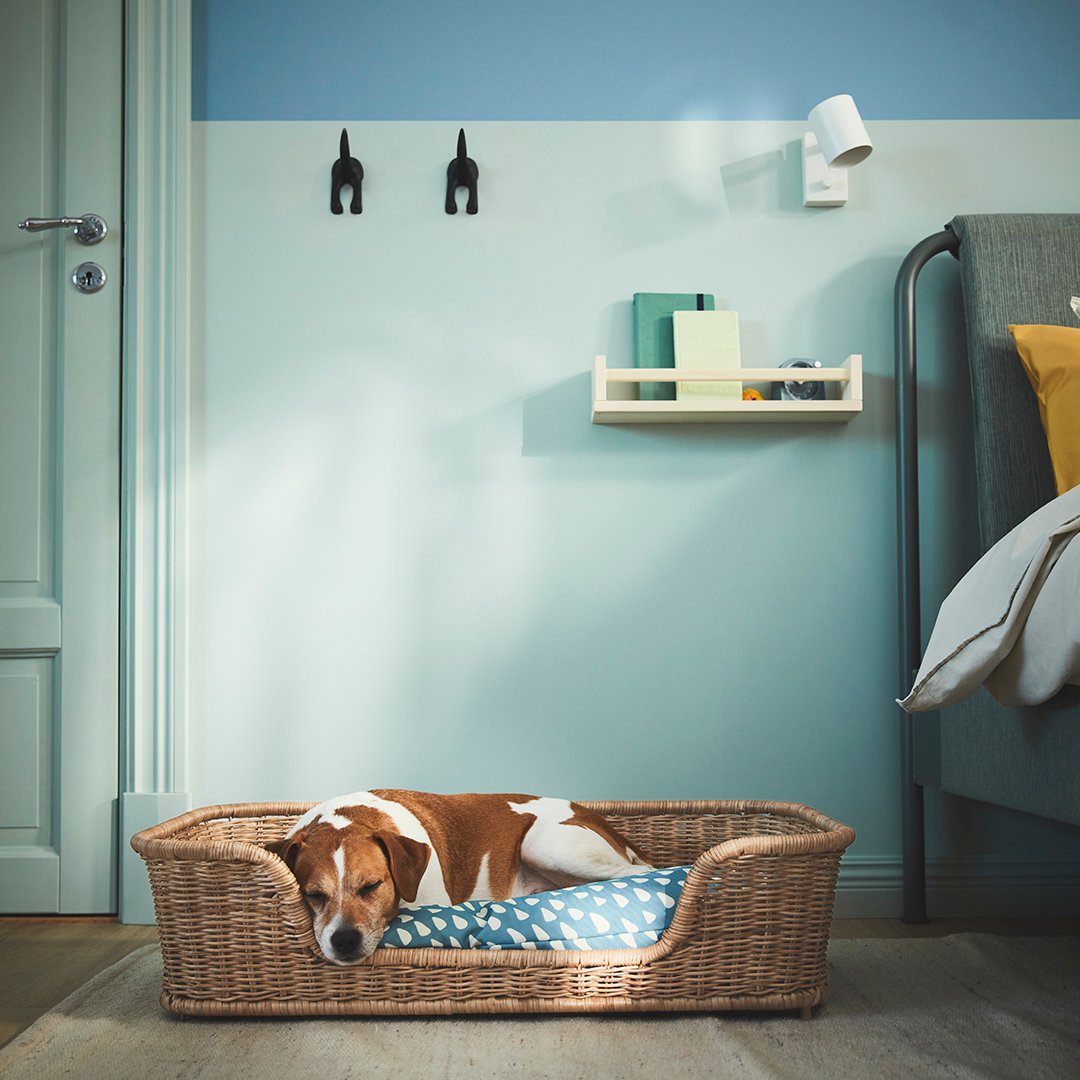
The single most impactful element in this space is the two-tone wall. It’s a simple but incredibly effective designer trick. By painting the bottom section a darker shade of blue, it visually grounds the space and creates the illusion of wainscoting without the cost or effort of installing wood trim. This color-blocking technique adds architectural interest to a plain wall and cleverly defines the “pet zone” where the bed and hooks live. It turns a simple wall into a thoughtful design feature.
🎯 What Makes It Work
The sophisticated yet relaxed feel of this room comes from a balanced equation: 50% Cool Tones + 30% Natural Materials + 20% Clean White. The light and medium blue walls provide the dominant, calming color story. The wicker bed and light wood shelf introduce warm, natural textures that keep the blue from feeling too cold. Finally, the crisp white of the area rug, spotlight, and wall above the color block adds brightness and keeps the overall look fresh and modern.
31. Modern Dog Crate Nightstand with Neutral Bedroom Decor
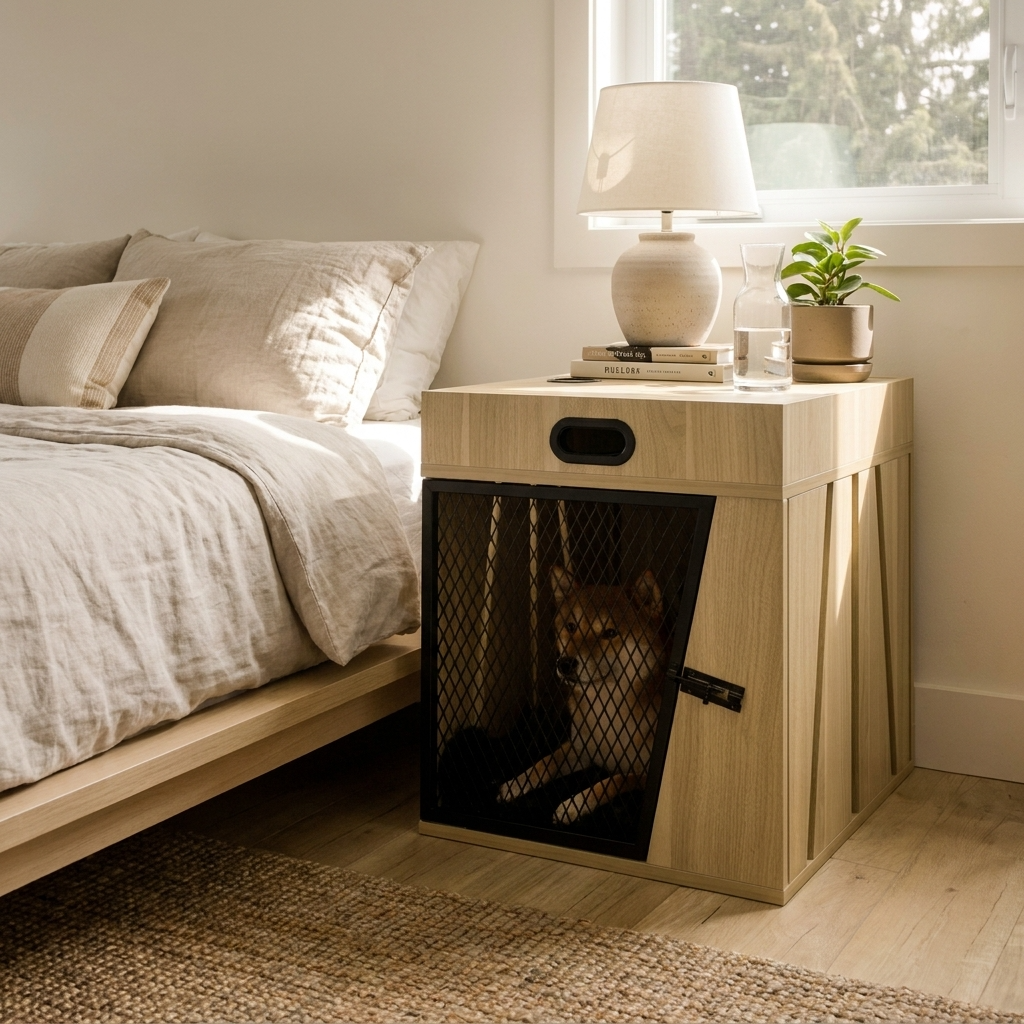
This idea is the ultimate fusion of form and function. It works because it solves two problems at once: “Where do I put the dog crate?” and “What nightstand should I get?” By combining them, the crate is no longer a bulky accessory taking up floor space; it becomes a handsome, integral part of the bedroom furniture set. The mix of light wood and black metal aligns perfectly with modern industrial and Scandinavian design trends, ensuring the piece looks like a stylish choice, not a compromise.
|
📋 Copy HEX 🔗 Share |
💡 Designer Tip
This reflects a major shift in the pet furniture market. For years, the only options were ugly wire crates. Now, designers and brands recognize that pet owners are design-conscious consumers. We want our homes to be beautiful and cohesive, and that includes our pet’s things. The availability of stylish, furniture-grade crates like this one is a direct response to the demand for products that don’t force us to choose between our pet’s comfort and our home’s aesthetic.
32. Upholstered Pet Crate Bench at the Foot of the Bed
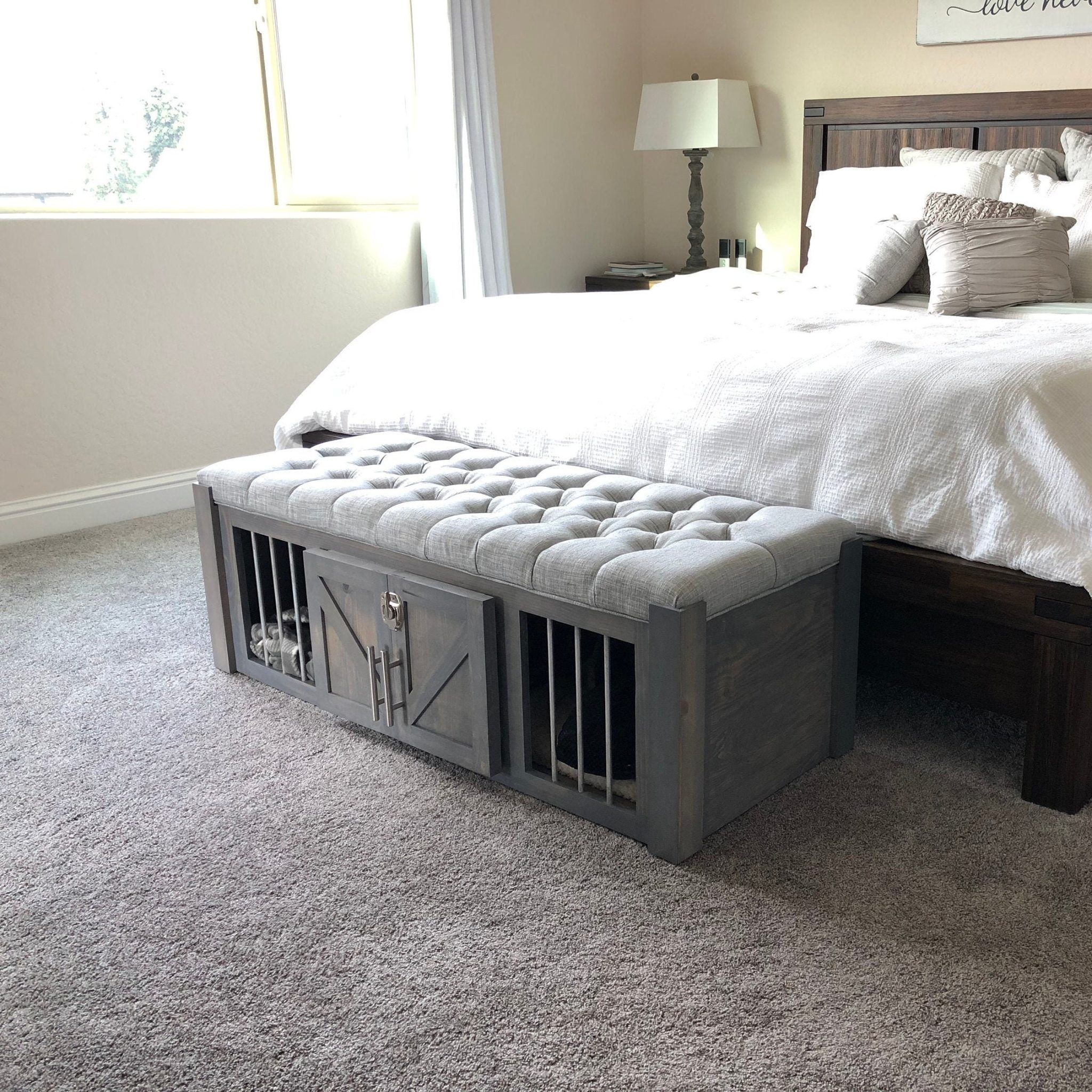
When commissioning or buying a piece of furniture-integrated pet furniture like this, opt for performance fabrics for any upholstered parts. A tufted bench at the foot of a bed is a prime spot for pets to jump, nap, and lounge. Performance fabrics are treated to resist stains, moisture, and odors, making them exponentially easier to clean. Brands like Crypton or Sunbrella offer beautiful, soft-to-the-touch options that are tough enough to handle daily pet life while still looking luxurious.
|
📋 Copy HEX 🔗 Share |
✅ Before You Start
An end-of-bed bench like this is a fantastic addition, but it needs the right amount of space to work. It’s best suited for larger bedrooms, where you have at least 36-40 inches of clear walkway between the foot of the bench and the opposing wall or dresser. Anything less will create a bottleneck and make the room feel cramped. The length of the bench should be slightly shorter than the width of the bed itself—a bench for a queen bed should be around 55-58 inches long, and for a king, around 70-74 inches.
Giving Your Best Friend Their Own Best Space
Creating a special spot for your pet is one of the most rewarding things you can do for your home and your four-legged family member. Whether it’s a simple, cozy basket or a fully integrated built-in, what matters most is the love and thought you put into it. We hope these ideas have sparked your imagination and shown you what’s possible!
Ready to start planning? Head over to Pinterest and create a board for your project—it’s the best way to gather your favorite concepts and start making your vision a reality.