29 Jaw-Dropping Apartment Decorating Ideas for Men That Are Surprisingly Masculine and Cozy

Still scrolling through apartment decorating photos without a clear plan? It’s easy to get lost in a sea of inspiration, but a great-looking space is more than just a collection of cool stuff. After filtering through hundreds of options from places like IKEA, Target, and West Elm, we narrowed it down to 29 distinct ideas that actually work in the real world. Inside, you’ll find looks covering modern, industrial, rustic, and minimalist styles. For 2026, the biggest trend is about creating a space that feels personal and assembled over time, not ordered from a single catalog page. Pin this guide for later—your future self will thank you when it’s time to decorate.
1. Modern Living with a Navy Sofa and Marble Floors
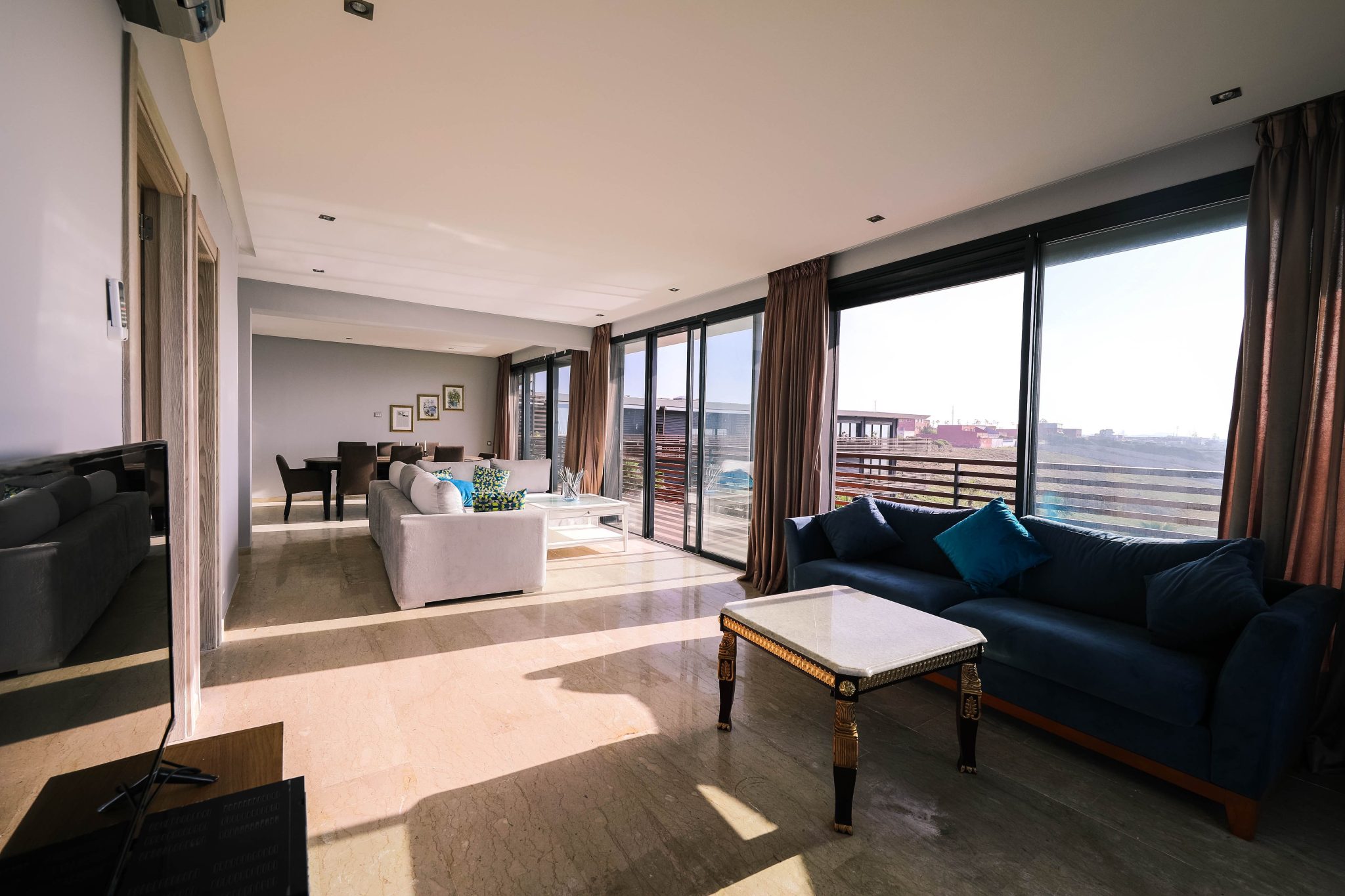
This look feels so bright and elegant because it expertly mixes light and dark. The light-colored marble flooring and natural sunlight create a luminous base, which allows the dark navy sofa to become a dramatic, grounding focal point without swallowing up the room. The contrast is key. Furthermore, the use of large, simple furniture shapes—the blocky sofas, the clean lines of the dining set—keeps the spacious room from feeling cluttered. It’s a masterclass in using scale and color to define different zones in an open-plan area.
|
📋 Copy HEX 🔗 Share |
💡 Designer Tip
An open-concept living and dining area like this thrives on substantial square footage. You’ll want a minimum of 350-400 square feet for the combined space to avoid feeling cramped. The key is allowing for generous walkways (at least 36 inches) around the main furniture groupings. This idea is best suited for high-ceilinged apartments, typically 9 feet or higher, where the large glass doors and substantial furniture won’t feel overwhelming. If your space is smaller, consider scaling down the sectional to a three-seater and choosing a smaller dining set.
2. High-Rise Living with a Tan Leather Sofa and City Views
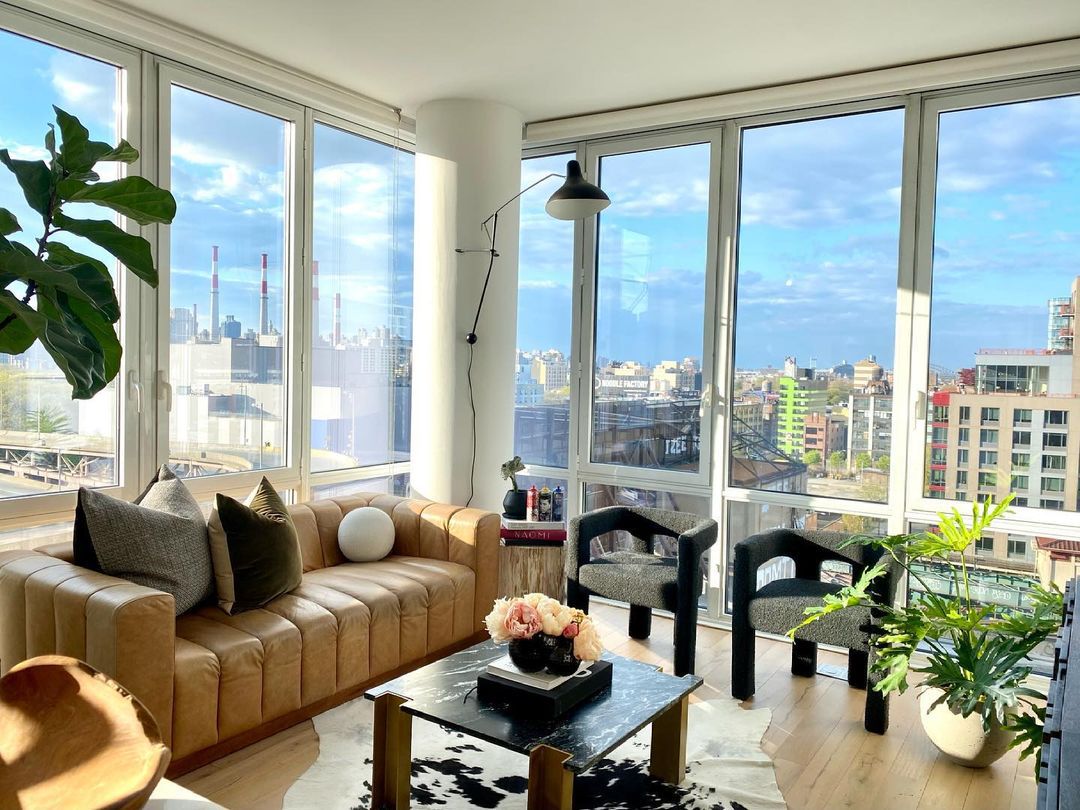
that absolutely makes this room is the tan tufted leather sofa. Without it, the space would risk feeling cold and generic, dominated by glass and modern lines. The sofa injects immediate warmth, texture, and a touch of classic character. Its rich color stands up to the vastness of the city view, providing a necessary anchor for the eye. It’s proof that in a minimalist, modern space, a single piece of furniture with strong personality can define the entire mood, making it feel inviting and lived-in rather than sterile.
|
📋 Copy HEX 🔗 Share |
🔧 How-To Brief
You don’t need a penthouse budget to capture this vibe. Swap the designer leather sofa for a more affordable version from a store like Article or even a lucky find on Facebook Marketplace for around $800-$1,500. The black marble coffee table can be mimicked with a convincing faux-marble version from Target or Wayfair for under $200. For the area rug, instead of genuine cowhide, look for a printed faux-cowhide or a simple black and white geometric rug from IKEA, which will give you the same graphic punch for less than $150.
3. Minimalist Dining with an Industrial Pendant and Black Accents
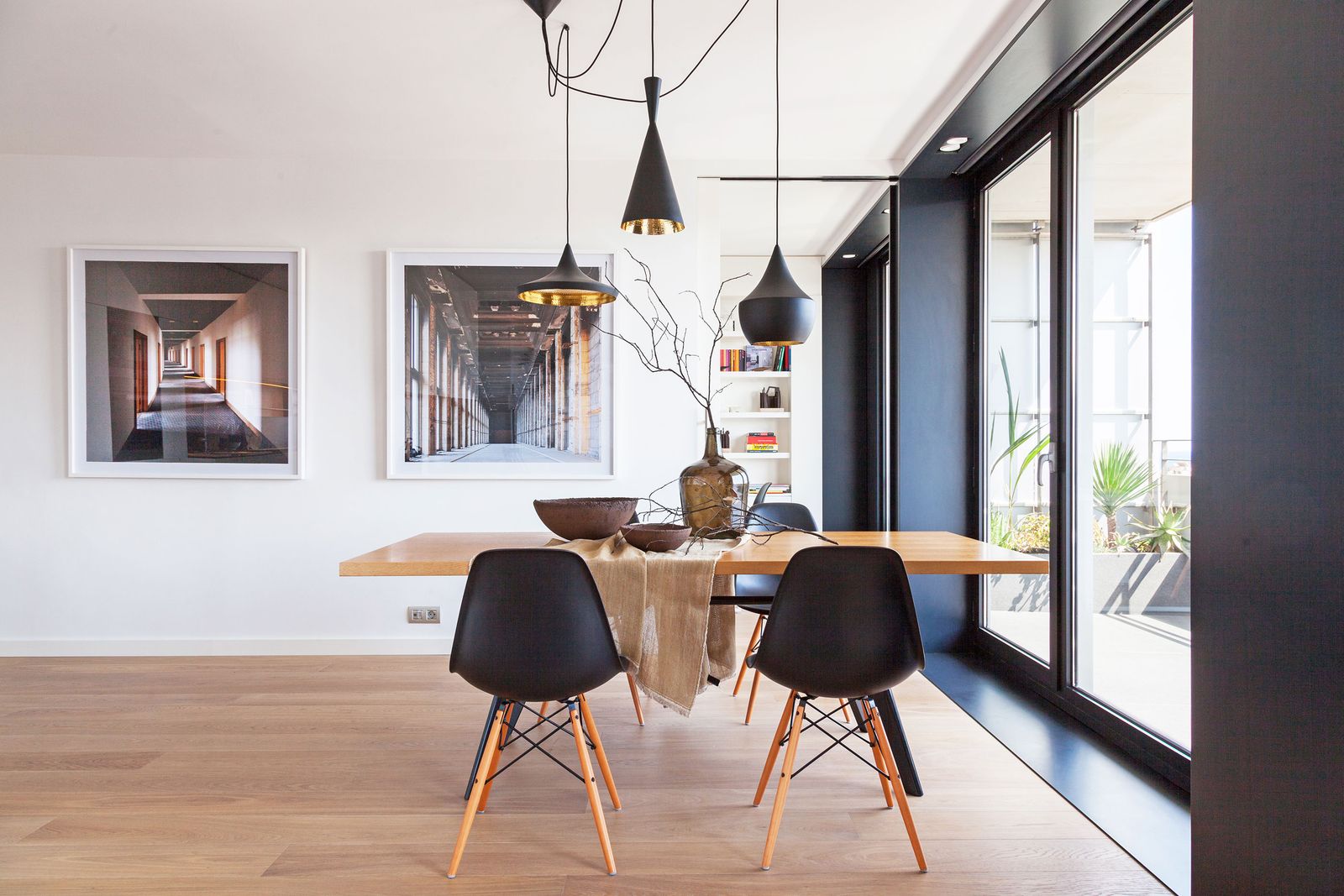
The formula here is refreshingly simple: 60% bright white + 30% matte black + 10% natural wood. The dominant white on the walls and floors creates a gallery-like feel, making the space feel open and clean. The strategic 30% of black—seen in the accent wall, chair frames, and statement lighting—adds graphic punch and definition. Finally, the 10% of wood on the tabletop and chair legs provides just enough warmth to keep the room from feeling stark. You could easily swap the wood for a different material, like concrete or metal, to shift the mood from warm-industrial to cool-industrial.
|
📋 Copy HEX 🔗 Share |
🎯 What Makes It Work
When hanging a multi-pendant light fixture over a dining table, the ideal height is 30 to 36 inches from the tabletop to the bottom of the lowest pendant. This ensures the light source is low enough to create an intimate ambiance and illuminate the table, but not so low that it obstructs views across the table or feels like a hazard. For a long table like this, make sure the fixture’s length is about 1/2 to 2/3 the length of the table to maintain a balanced scale.
4. Cozy Up with a Large Dark Gray Sectional and Neutral Layers
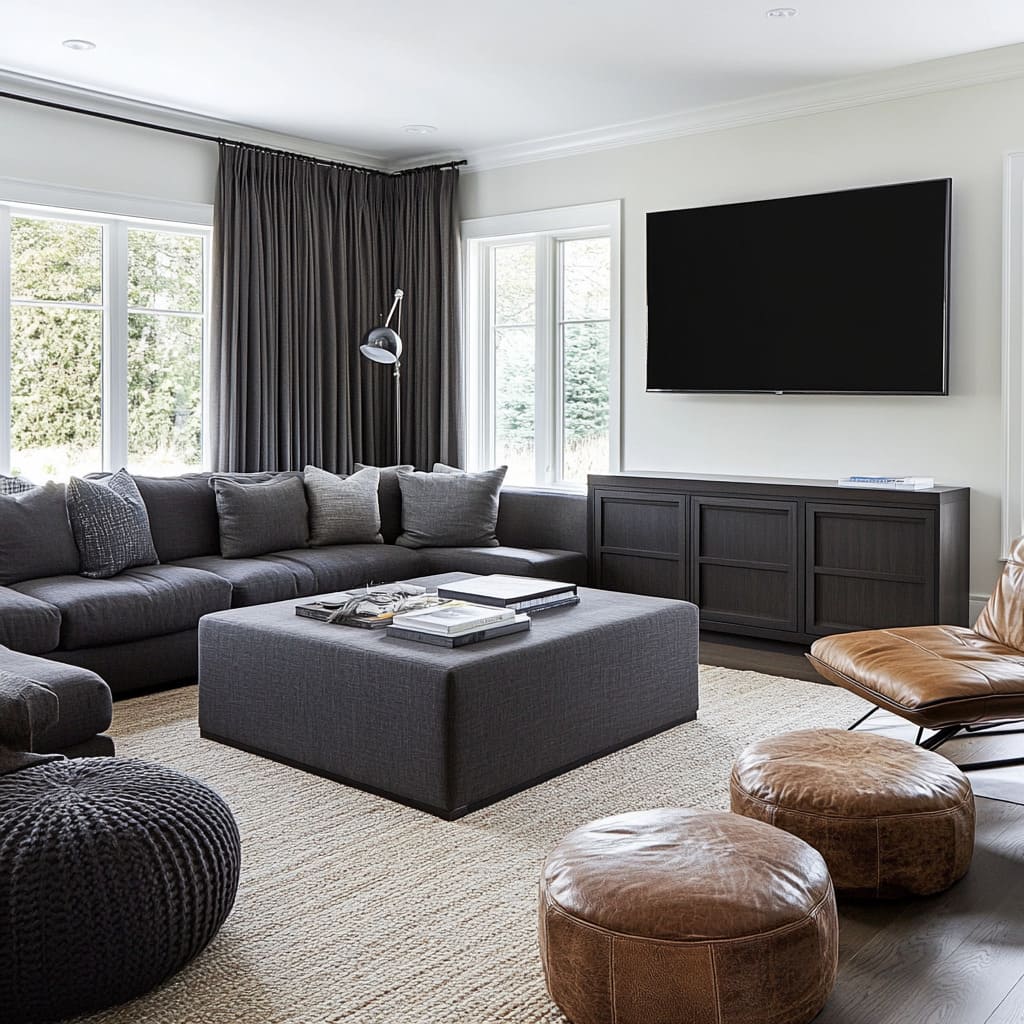
Let’s be honest: a giant, dark gray sectional can be a black hole for light. In a room without ample sunlight, this much dark upholstery will make the space feel heavy and smaller than it is. The sheer white curtains here are doing a lot of work to maximize brightness. If your room is north-facing or has small windows, you might consider a medium gray or even a warm beige sofa instead. Also, a fabric ottoman coffee table is incredibly comfortable for putting your feet up, but it’s a magnet for spills and stains. Be prepared with a good upholstery cleaner!
|
📋 Copy HEX 🔗 Share |
🔥 Trending Context
Recreating this cozy, modern look involves a few key big-ticket items. Here’s a possible breakdown for high-quality pieces:
- Main Furniture (sectional, leather chair): $4,000 – $7,000
- Lighting (floor lamps, accent lighting): $500 – $1,200
- Textiles (large area rug, drapes, pillows): $1,000 – $2,500
- Decor/Accessories (ottomans, console): $800 – $1,800
- TOTAL: $6,300 – $12,500
- Budget alternative: Find a similar sectional at a store like Rooms To Go or Bob’s Discount Furniture, a faux leather chair from Wayfair, and textiles from HomeGoods to achieve a similar feel for 40-50% less.
5. Balance Neutrals with a Pop of Abstract Art
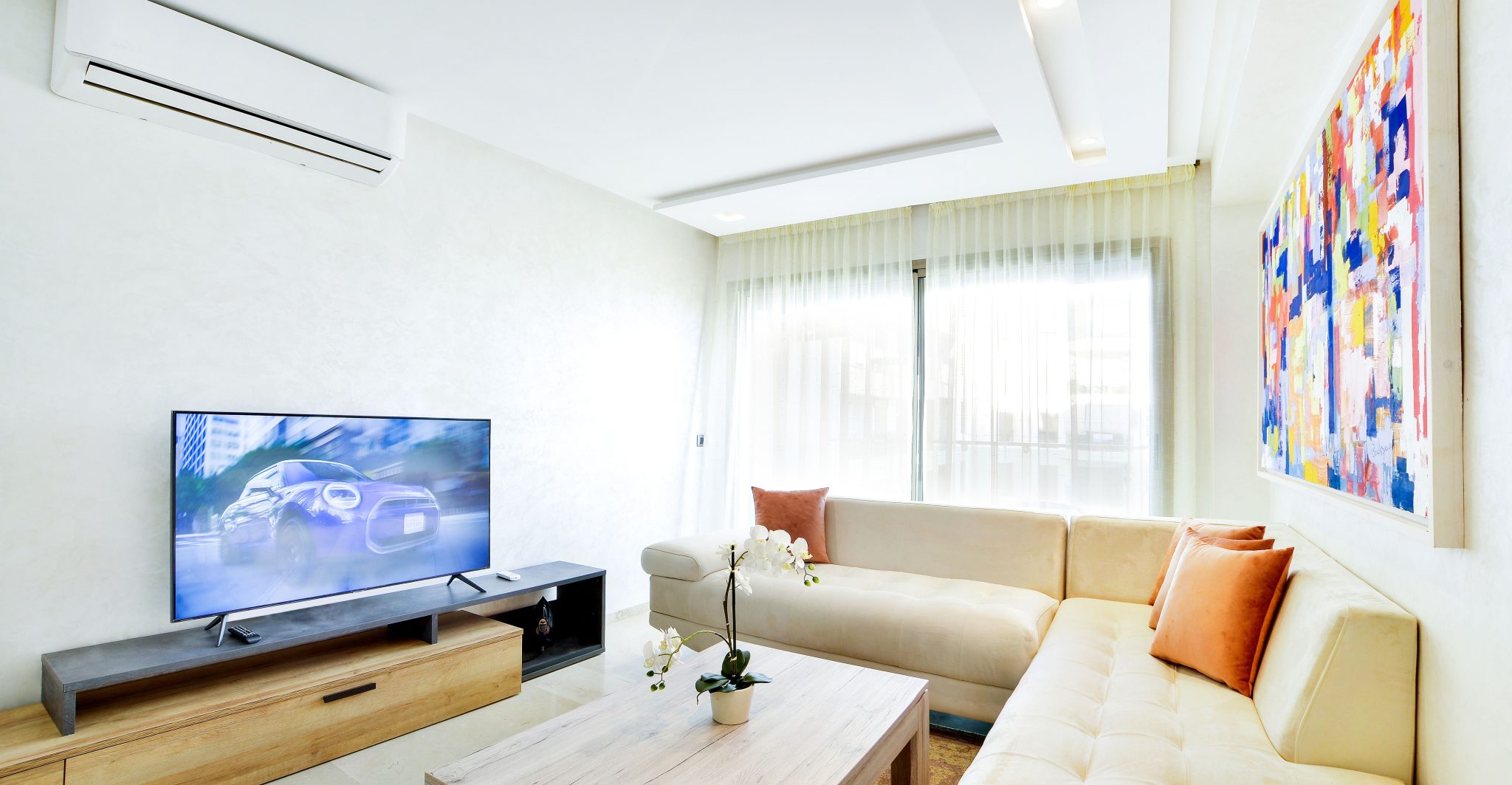
This room is a perfect example of the 80/20 rule in design. About 80% of the space is anchored in calm, gentle neutrals—the beige sofa, white walls, and light wood coffee table. This creates a relaxed and versatile foundation. The remaining 20% is where the personality comes in, primarily through the vibrant abstract art and the orange pillows. The artwork serves as the undisputed focal point, injecting energy and color. By keeping the base neutral, the art gets to be the star without competing with its surroundings. For a different vibe, check out the dramatic art in Idea #10.
|
📋 Copy HEX 🔗 Share |
✅ Before You Start
A light-colored fabric sectional is a beautiful choice, but it requires some commitment. It will show dirt, spills, and pet hair much more readily than a darker color. Plan for professional cleaning at least once a year, which can cost between $150 and $300 depending on the size and material. For DIY maintenance, invest in a good fabric protector spray (like Scotchgard) and a portable upholstery cleaner for spot treatments. If you have pets or young kids, consider a sofa with removable, machine-washable covers for a much less stressful experience.
6. Achieving a Masculine Modern Vibe
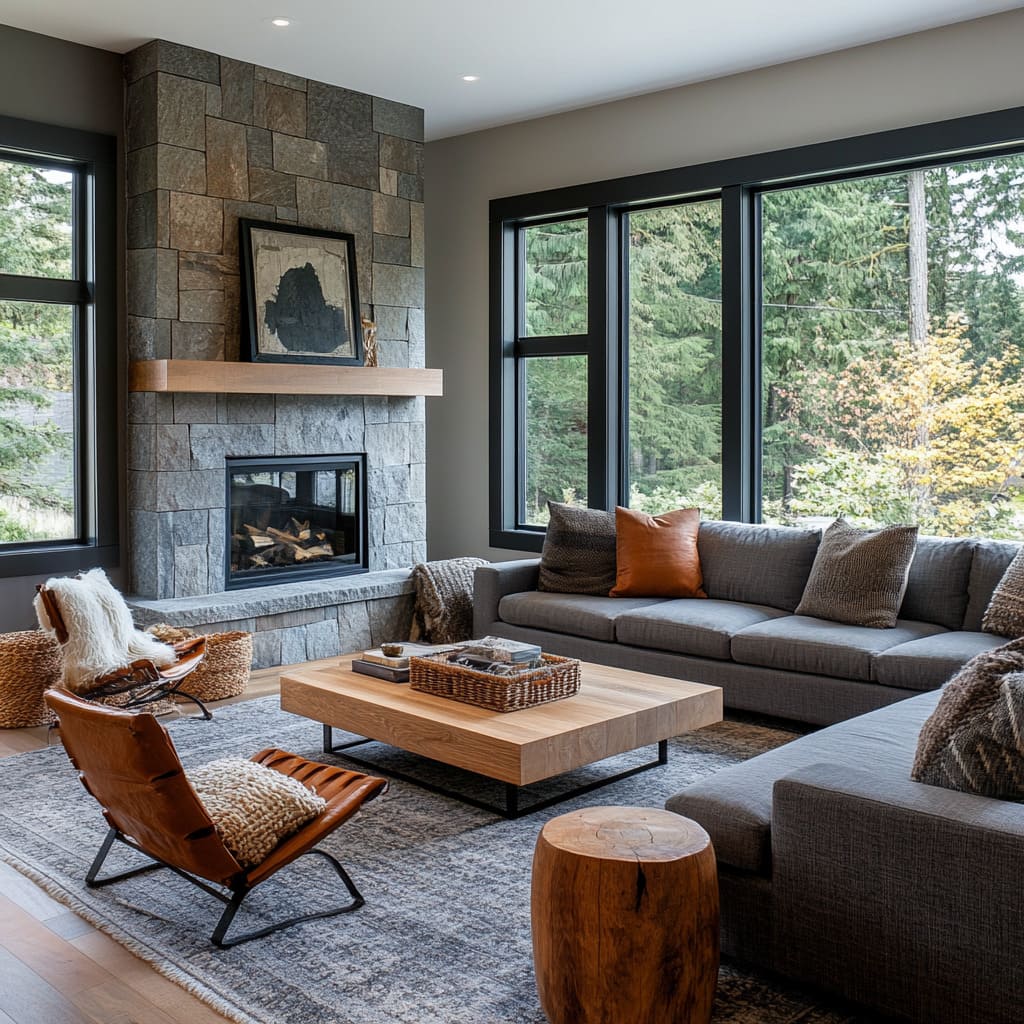
The ‘masculine modern’ aesthetic has shifted away from the clichéd dark leather and chrome of the early 2000s. Today, it’s about texture, quality materials, and a more curated feel. This look is trending on Pinterest because it feels both sophisticated and comfortable—it’s not trying too hard. The influence of Scandinavian design is clear, emphasizing clean lines, functionality, and a connection to natural materials. It’s an approachable style that values well-made pieces over flashy statements, reflecting a broader cultural shift towards conscious consumption and timeless design.
|
📋 Copy HEX 🔗 Share |
📏 Scale Guide
The formula for this look is about balancing hard and soft elements. Think: 40% clean-lined upholstery (like a structured sofa in grey or navy) + 30% natural materials (wood coffee tables, linen curtains, wool rugs) + 20% industrial accents (black metal lamps, concrete planters) + 10% personal touches (framed prints, books, a unique object). This ratio ensures the space feels grounded and warm, not cold or empty. The key is in the mix of textures—smooth metal against rough wood, soft fabric against a sleek surface.
7. Elements of a Rustic Bachelor Pad Bedroom
One way to get that rustic feel is by creating a faux reclaimed wood accent wall. Here’s a quick guide:
- Measure and Prep: Measure your wall and purchase peel-and-stick wood planks (like Stikwood or from a hardware store). Clean the wall thoroughly to ensure good adhesion. (Time: 30 min)
- Find Your Center: Mark the vertical center of the wall. Starting here helps ensure the pattern looks balanced. (Time: 10 min)
- Peel and Stick: Start applying planks from the center line, working your way out. Stagger the seams randomly for a natural look. (Time: 2-3 hours)
- Cut and Fit: Use a miter saw or a handsaw with a miter box to cut planks for the edges and around outlets. (Time: 1 hour)
Material cost for a standard 8×12 foot wall would be around $200-$500.
|
📋 Copy HEX 🔗 Share |
💰 Budget Breakdown
You don’t need to spend a fortune to get a rustic bedroom. Hit up thrift stores and Facebook Marketplace for a vintage dresser or nightstands—a little wear and tear adds to the character. For bedding, look for simple, durable fabrics like chambray, linen-blends, or flannel from affordable retailers like Target or IKEA. Instead of a pricey piece of art, a large, framed vintage-style map or a collection of your own black and white photos can create a powerful focal point for under $100.
8. An Artistic Touch with a Freestanding Fireplace
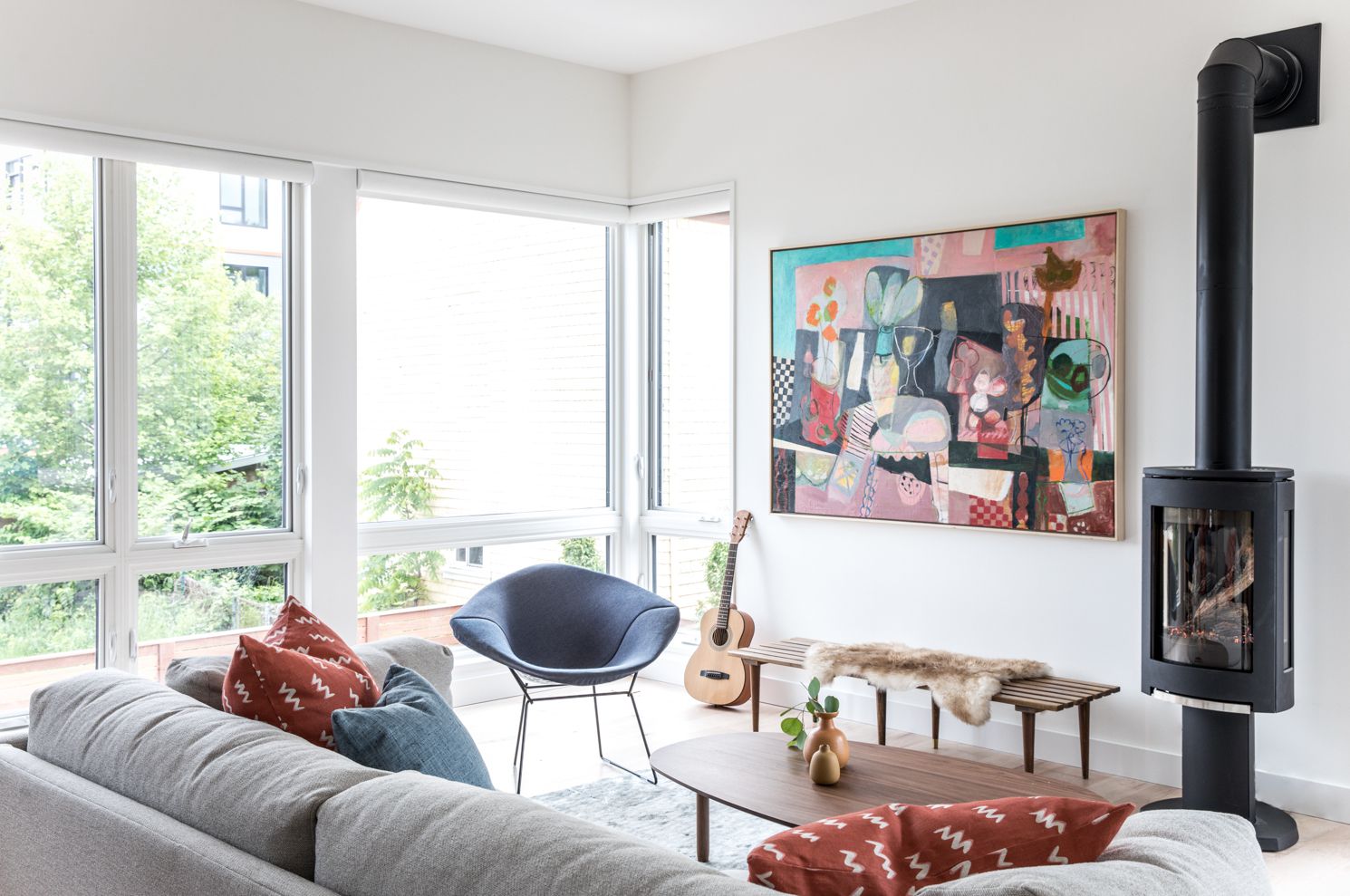
The single element that defines this space is the modern freestanding fireplace. It acts as a functional sculpture, providing a strong vertical line and a clear focal point that’s more unique than a traditional TV console. By choosing a fireplace in a contrasting black, it stands out against the white walls and light-colored furniture, adding a dose of drama and architectural interest. Removing it would leave the room feeling pleasant but far less memorable. It bridges the gap between the seating area and the large windows, making the whole composition feel deliberate and curated. Compare it to the built-in fireplace in Idea #21 for a different approach.
|
📋 Copy HEX 🔗 Share |
📐 Style Math
This idea works beautifully in a room with higher-than-average ceilings (at least 9 feet) to accommodate the vertical flue of the fireplace without it feeling cramped. The minimum room size would be around 200 square feet to allow for proper clearance around the fireplace (typically 18-36 inches, check manufacturer specs) and to balance its visual weight. In a smaller room, a freestanding fireplace can overwhelm the space. This look is particularly effective in apartments with an open floor plan or a loft-like feel, where its sculptural quality can be appreciated from multiple angles.
9. Go Bold with Deep Teal Walls and Warm Leather Chairs
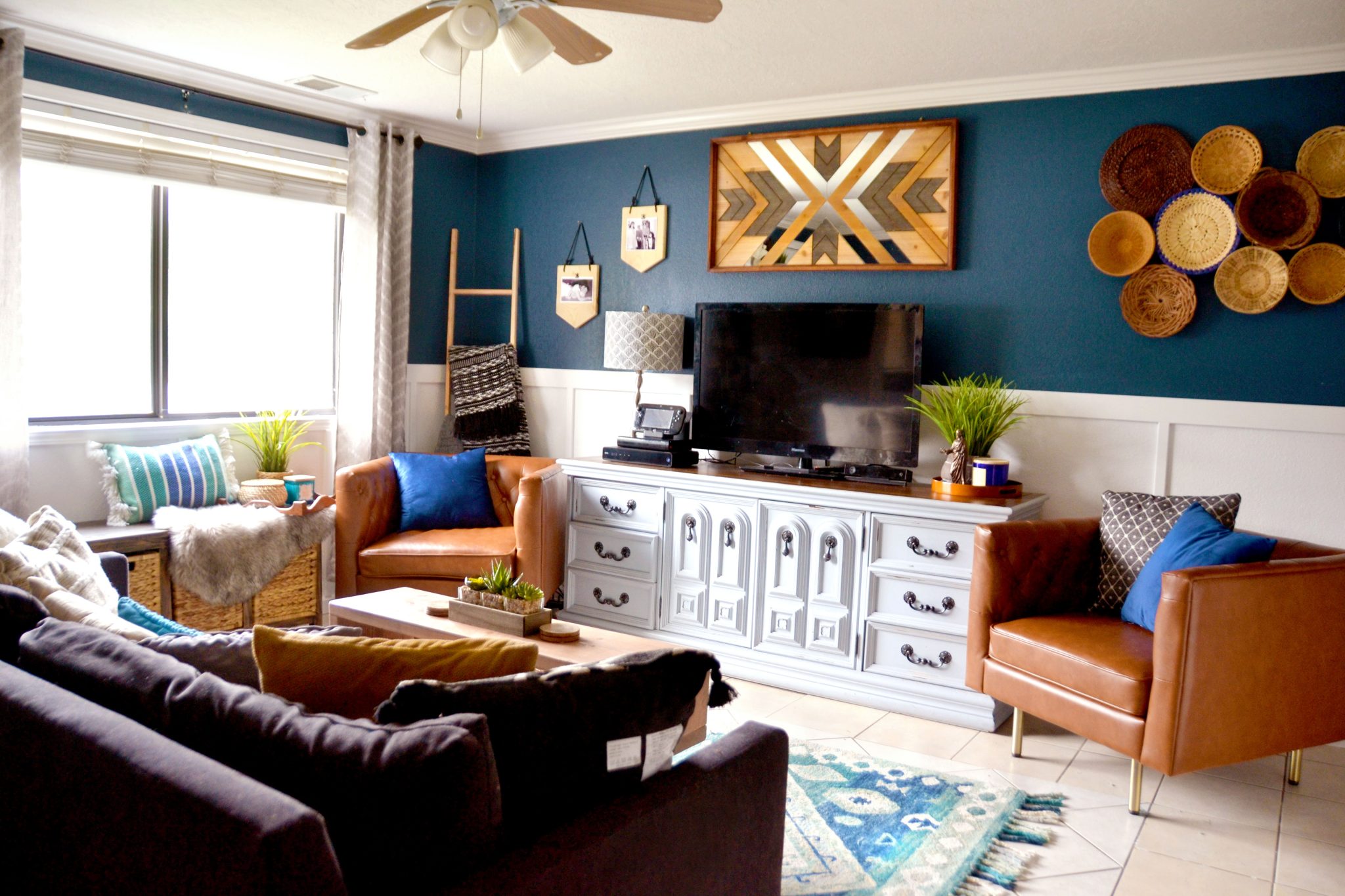
When using a dark, saturated wall color like this deep teal, painting the wainscoting and trim a crisp white is non-negotiable. This does two crucial things: First, it prevents the dark color from feeling oppressive by providing visual “breathing room.” Second, it creates clean, sharp lines that make the architecture pop, adding a sense of structure and sophistication. For an even more professional look, carry the same crisp white onto the ceiling. This will make the room feel taller and prevent the dreaded “cave effect.”
|
📋 Copy HEX 🔗 Share |
⚠️ Real Talk
A dark wall color like this isn’t for the faint of heart, and it’s not for every room. In a space with limited natural light, this shade of teal could read as murky or almost black, losing all its beautiful complexity. Before you commit, paint a large poster board with a sample of your chosen color and move it around the room at different times of day. This will show you how it interacts with your specific lighting conditions. What looks great on Pinterest might look gloomy in your north-facing apartment.
10. Vibrant and Opulent with an Orange Sofa and Tiger Mural
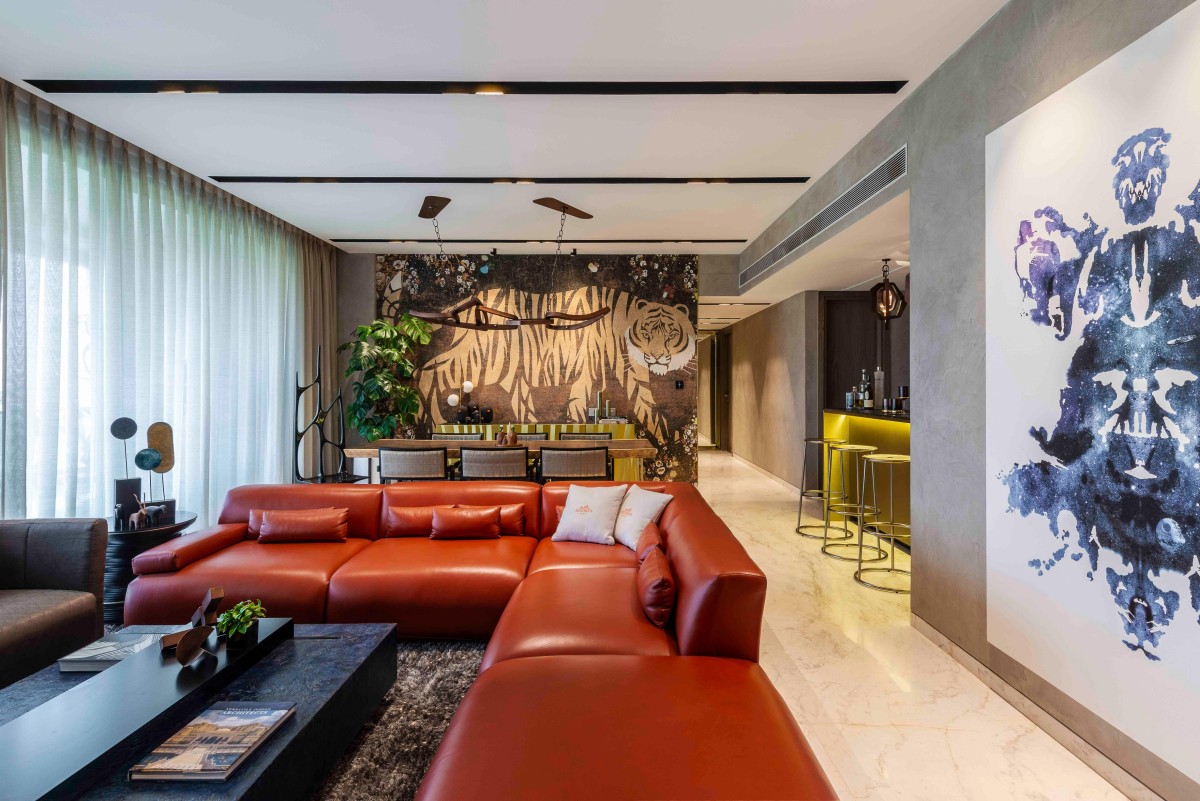
This space is successful because it commits fully to a bold vision. The design works through powerful contrast and repetition. The warm, vibrant orange of the sofa is a direct complementary contrast to the cool blues in the abstract art, creating an electric visual tension. The theme of opulence is repeated through multiple elements: the rich texture of the leather, the gleam of the yellow bar, the shine of the marble floors, and the dramatic scale of the tiger mural. By going all-in on a few audacious choices, the room feels cohesive and intentional rather than chaotic.
|
📋 Copy HEX 🔗 Share |
🧹 Maintenance Reality
This is a high-impact, higher-budget look. The custom wall mural and designer furniture set a premium tone.
- Main Furniture (large leather sectional, bar stools): $8,000 – $15,000
- Custom Elements (wall mural, illuminated bar): $5,000 – $20,000+
- Flooring & Lighting (marble, track lighting): $4,000 – $10,000
- Art & Decor: $2,000 – $7,000
- TOTAL: $19,000 – $52,000+
- Budget alternative: Get a similar effect with a large-scale art print or tapestry instead of a custom mural, a more affordable orange sofa from a retailer like Albany Park, and faux-marble flooring or tiles.
11. Industrial Warmth: Chesterfield Sofa Meets Exposed Brick
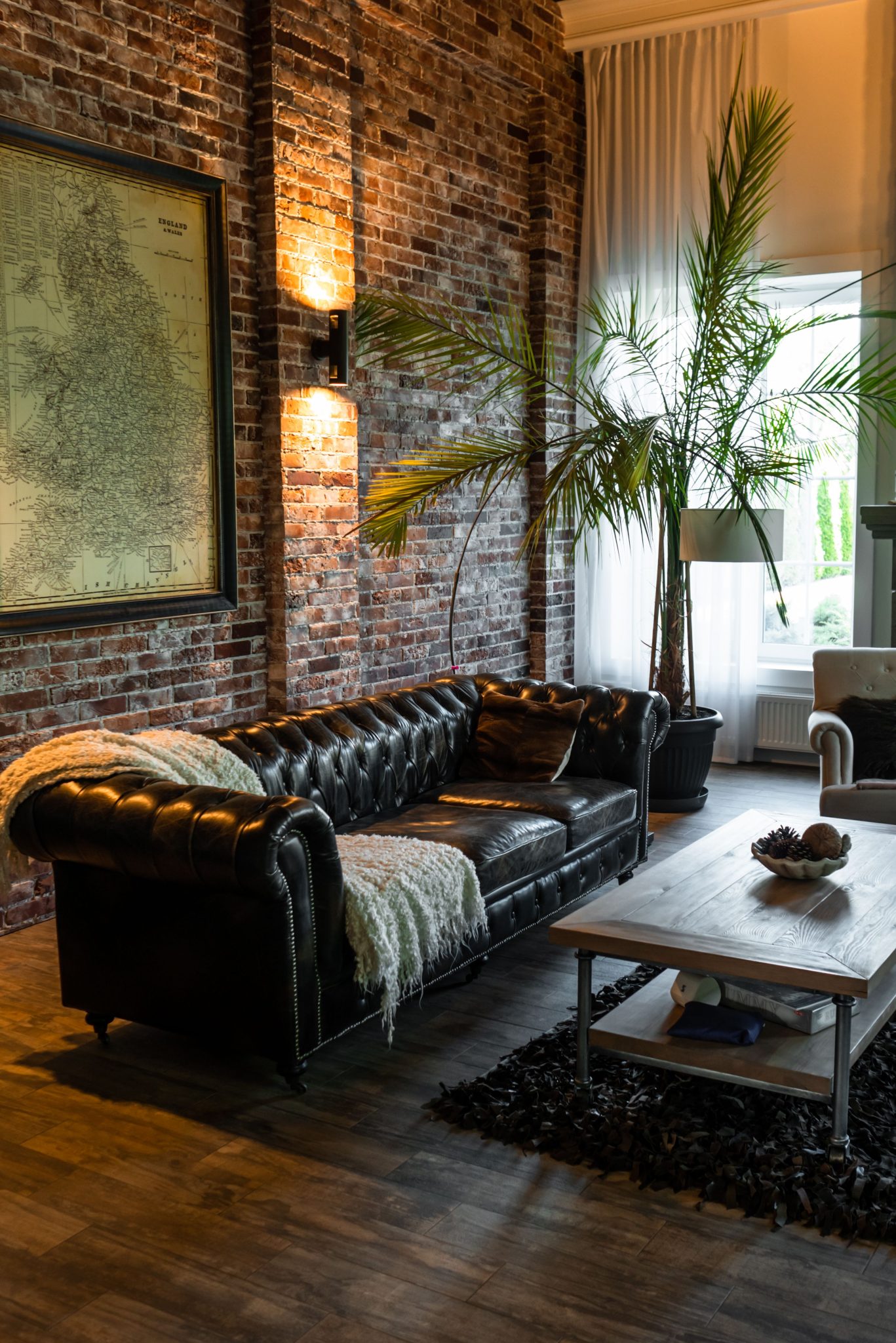
The formula here balances rugged and refined elements: 50% Rustic Industrial (the exposed brick wall, dark rug, metal-legged table) + 40% Classic Comfort (the timeless Chesterfield sofa, soft throw, sheer curtains) + 10% Natural Green (the large potted palm). The brick and leather provide a classic masculine base, but the soft textiles and the vibrant plant keep it from feeling like a caricature. This simple math ensures the space feels both strong and livable. This is a more classic take on the brick-and-leather combo seen in Idea #13.
|
📋 Copy HEX 🔗 Share |
⭐ The One Thing
An exposed brick wall looks amazing but comes with some practical considerations. It can be dusty, as brick naturally sheds. You may want to seal it with a matte sealant to reduce dust and make it easier to clean, but test in an inconspicuous area first as it can slightly darken the color. Cleaning involves gentle vacuuming with a brush attachment. Be mindful that hanging heavy items like a large map requires drilling into the mortar, not the brick itself, and using appropriate anchors. It’s more effort than drywall, but the character is often worth it.
12. Creating a Gentleman’s Rustic Retreat
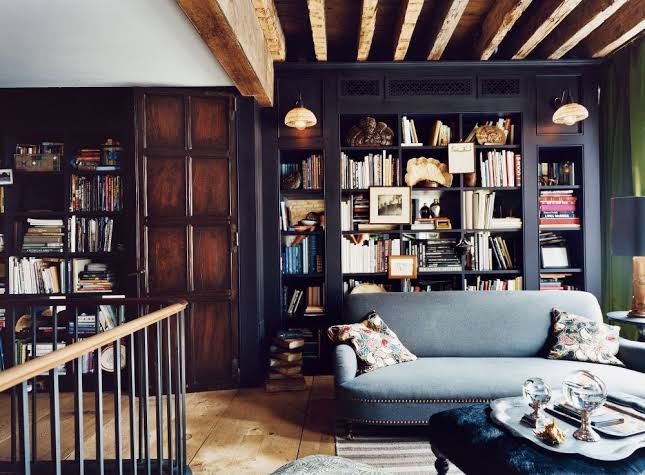
To nail the rustic bedroom look, focus on a tight color and material palette. Choose a maximum of three primary materials—for example, dark wood, black metal, and natural linen. Apply them consistently across your furniture, lighting, and textiles. For the color palette, stick to earthy, muted tones: charcoal, olive green, warm grays, and browns. This disciplined approach prevents the room from looking like a cluttered cabin and instead creates a sophisticated, cohesive retreat. One small, unexpected pop of color, perhaps in a pillow or a piece of art, can then have a much greater impact.
|
📋 Copy HEX 🔗 Share |
💸 Get This Look For Less
Before you commit to a full rustic bedroom makeover, run through this quick checklist:
- Assess your light: Rustic styles often involve darker woods and colors. Does your room get enough natural light to support this without feeling like a cave?
- Measure for scale: Rustic furniture can be bulky. Ensure your chosen bed frame and dressers won’t overpower the room. Note the height of your ceiling.
- Check your existing elements: Do you have flooring or architectural details (like trim or doors) that will clash with a rustic vibe? Be realistic about what you can’t change.
13. Create a Cozy Nook with a Leather Sofa and Brick
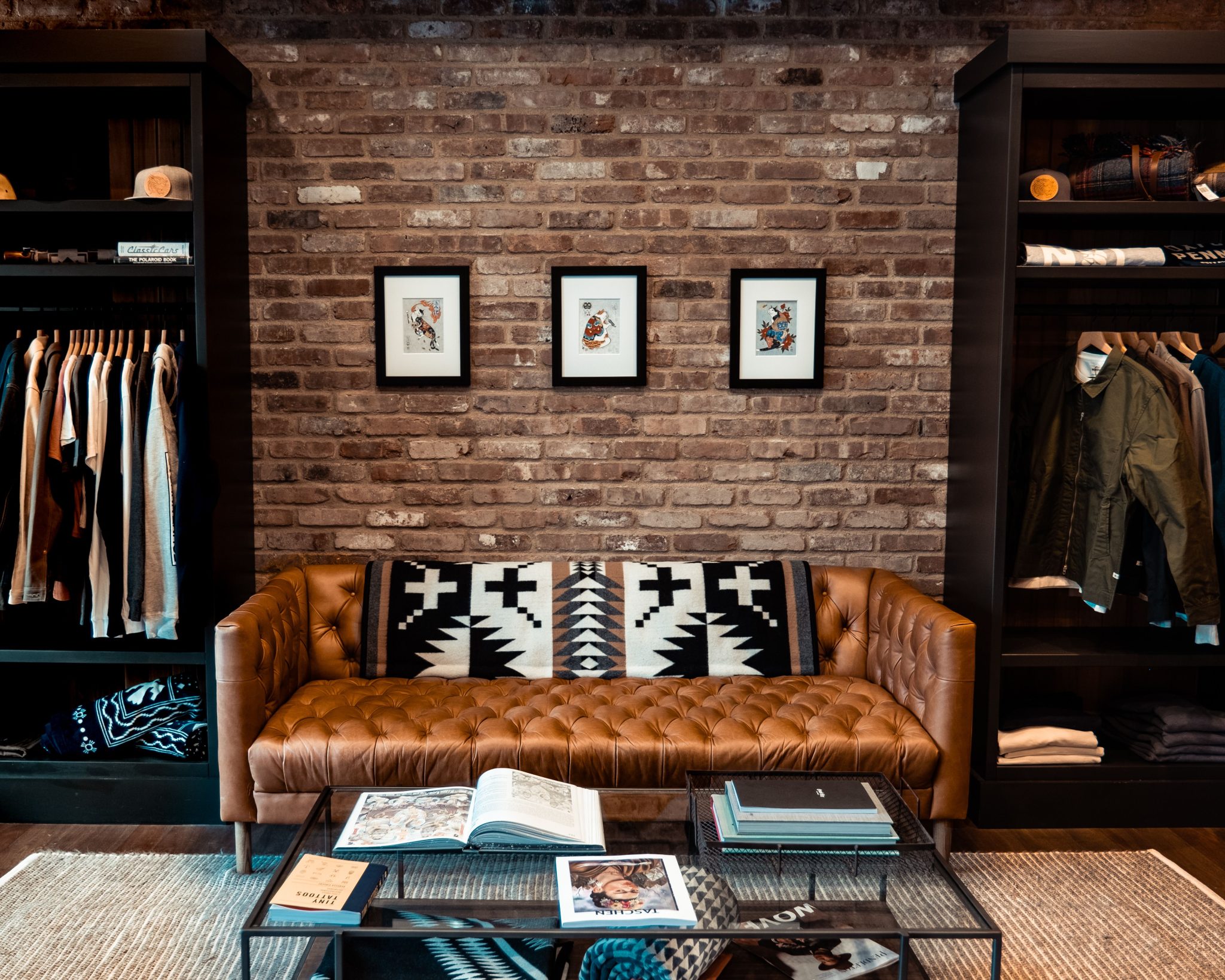
The defining feature here is the use of the built-in wardrobes to create a recessed “nook” for the sofa. This is a brilliant architectural trick that elevates the entire wall. It turns a simple sofa-against-a-wall setup into a deliberate, integrated design feature. The dark color of the wardrobes frames the warm, textured brick and the rich brown leather, making them feel even more cozy and intentional. This sense of being enveloped is what gives the space its strong, protective, and inviting character. Without the nook, it would just be a nice sofa and a brick wall; with it, it’s a complete concept.
|
📋 Copy HEX 🔗 Share |
💡 Designer Tip
This nook concept is surprisingly versatile. It works best on a wall that is at least 12-14 feet wide, allowing for a standard 7-8 foot sofa plus at least 2-3 feet of cabinetry on each side. The ideal depth for the recess is 18-24 inches, deep enough to feel intentional but not so deep that it darkens the seating area too much. This idea is a fantastic solution for long, narrow living rooms, as it breaks up the length of the wall and creates a clear focal point. It can also be adapted for smaller spaces by using shallower shelving instead of full wardrobes.
14. Mastering Sophisticated and Cozy Apartment Decor
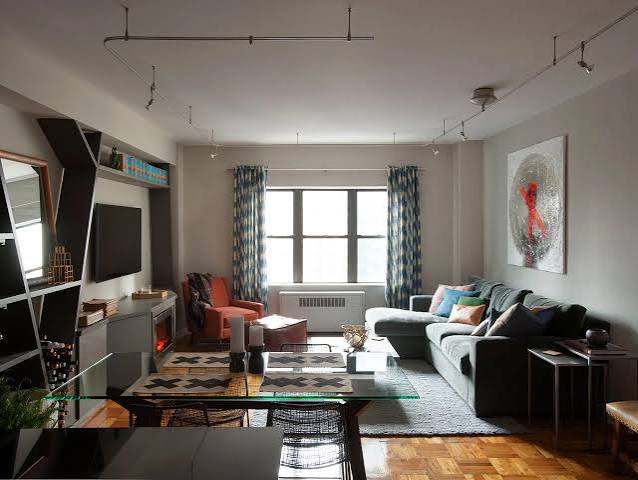
Achieving a look that is both sophisticated and cozy comes down to a simple recipe: 50% comfortable, large-scale furniture + 30% layered, soft textiles + 20% curated, meaningful decor. The large furniture (like a deep sofa or plush armchair) provides the “cozy” foundation. The layers of textiles—think a soft rug, multiple throw pillows with different textures, and a quality blanket—build on that comfort. The final 20% is the sophistication: well-chosen art, interesting lighting, and personal objects that aren’t just generic clutter. It’s this final layer that elevates “comfy” to “cozy and sophisticated.”
|
📋 Copy HEX 🔗 Share |
🔧 How-To Brief
You can get this sophisticated and cozy look without a designer price tag. The key is patience and smart shopping. Prioritize your budget for the piece you use most—likely the sofa. Places like Article or Joybird offer great style for less than high-end brands. For textiles and decor, which is where you can inject a lot of personality, turn to stores like H&M Home and Target. Their designer collaborations often feature high-style items at a fraction of the cost. And never underestimate the power of a well-placed, healthy plant from a local nursery to make a space feel instantly more curated and alive.
15. Sophisticated Blues Paired with a Modern Leather Armchair
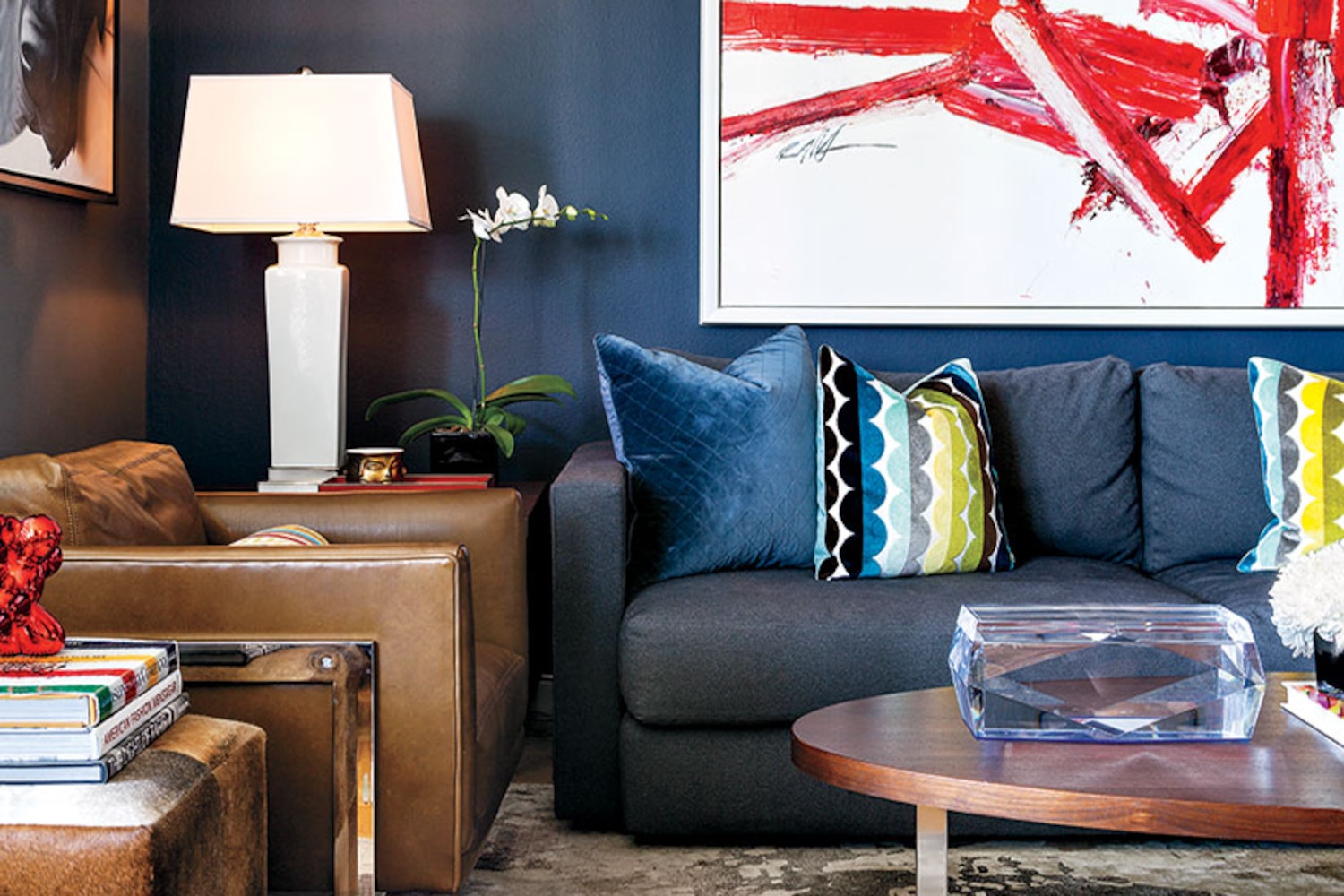
This room’s success lies in its confident use of color and its mix of modern forms. The deep blue wall creates a moody, enveloping backdrop that feels both luxurious and calming. The choice of a dark gray sofa, rather than a lighter color, is a sophisticated one—it complements the blue without creating a harsh contrast. The masterstroke is the brown leather armchair and the pops of red in the art. These warm tones balance the coolness of the blue and gray, adding life and preventing the palette from feeling one-note. For a similar effect with a different color, see the teal walls in Idea #9.
|
📋 Copy HEX 🔗 Share |
🎯 What Makes It Work
When decorating with a dark accent wall, lighting is everything. Notice the large white table lamp positioned right next to the dark sofa. A common mistake is to only rely on overhead lighting, which can make a dark room feel flat. Instead, create pools of light. Use a combination of floor lamps, table lamps, and perhaps a picture light over the artwork. Aim for at least three different light sources in the room to create depth, highlight points of interest (like the leather chair), and ensure the beautiful, dark wall color can be properly appreciated.
16. Modern Living with Abstract Art and an Exposed Brick Column
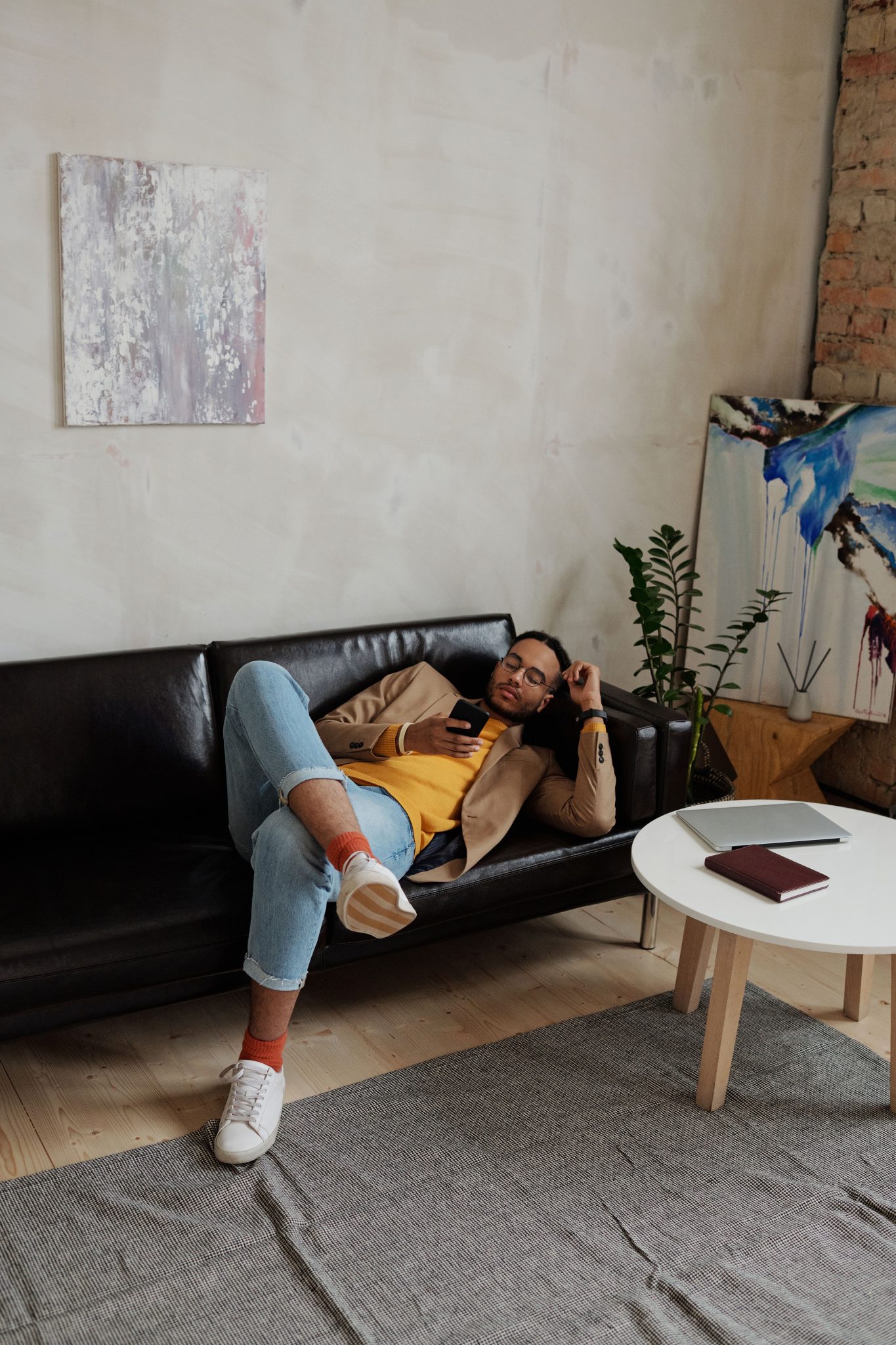
While an exposed brick column adds incredible character, it can also dictate your room’s layout in a way that’s tricky to work around. Before you fall in love with a space that has one, think carefully about your furniture. Can you arrange your sofa and chairs in a way that feels natural and conversational, or does the column create an awkward obstacle? It can sometimes create dead zones or interrupt the flow of a room. Also, if the brick is in poor condition, it can be a source of constant dust and drafts. It’s a feature that’s high on personality but can be low on practicality if not handled well.
|
📋 Copy HEX 🔗 Share |
🔥 Trending Context
Want to create your own abstract art duo like the ones shown here? It’s easier than you think. Here’s how:
- Get Supplies: Purchase two matching canvases (e.g., 24×36 inches), acrylic paints in 3-4 coordinating colors (plus black and white), and a few different-sized brushes. (Cost: $50-$80)
- Create a Base: Paint both canvases with a neutral base color from your palette. Let them dry completely.
- Add Color Blocks: On each canvas, paint large, loose blocks of your main colors. Don’t overthink it—the goal is abstract, not perfect.
- Add Detail and Contrast: Use a smaller brush to add lines, splatters, or smaller shapes in a contrasting color (like the black and white here) to create visual interest.
- Connect the Pair: Make sure one or two colors carry across both canvases to make them feel like a deliberate set. Let dry and hang!
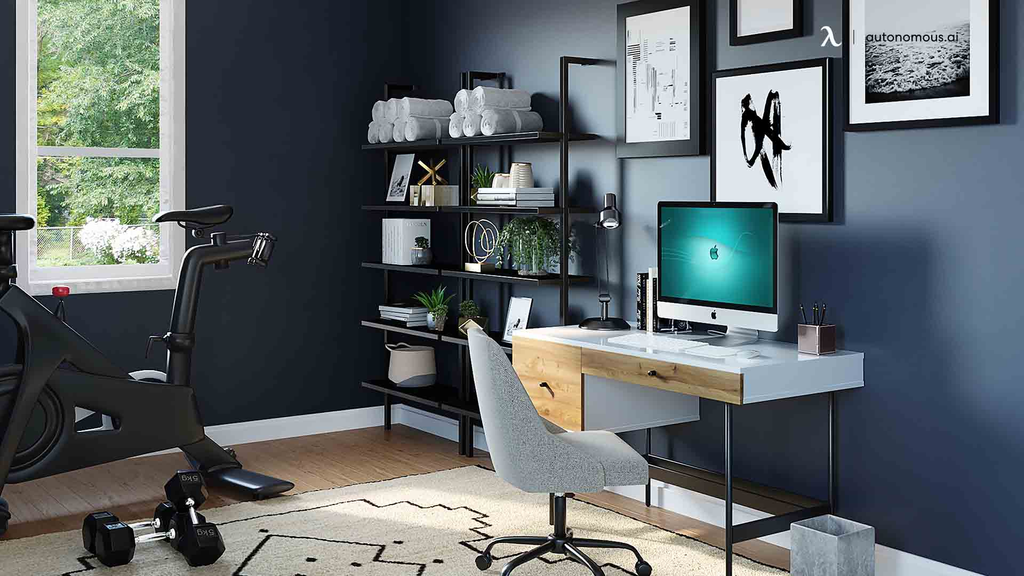
17. A Multi-Functional Nook with Dark Blue Walls
This space proves that a room can serve multiple functions without feeling chaotic. The key is a strong, unifying color palette. The dark blue walls, black furniture, and black-and-white artwork create a cohesive visual thread that ties the home office, gallery wall, and fitness area together. Using a consistent color scheme makes the different zones feel like they belong to the same story. The light wood accents and the cream-colored rug provide just enough warmth and softness to keep the space from feeling too cold or utilitarian. It’s a smart, stylish solution for modern apartment living.
|
📋 Copy HEX 🔗 Share |
✅ Before You Start
This look is highly achievable on a budget. The dark blue wall is just a can of paint—a high-impact, low-cost change. For the industrial shelving, look to IKEA’s “FJÄLLBO” series, which offers a similar style for a great price. The desk can be a simple tabletop and legs, also from IKEA. For the gallery wall, collect affordable prints from sites like Society6 or Etsy, and use simple, matching black frames from a craft store or even Walmart. The whole look can be put together for under $700 if you shop smart.
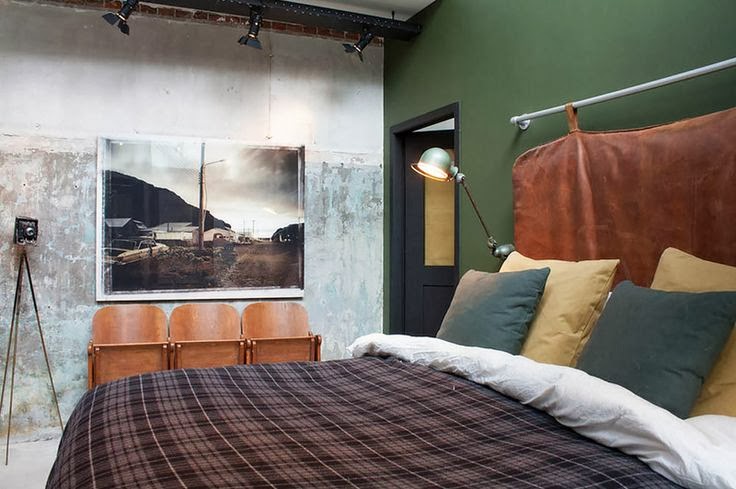
18. An Industrial Bedroom with an Olive Green Accent Wall
that elevates this bedroom from a standard industrial look to something truly special is the olive green accent wall. Industrial design can sometimes feel cold with its reliance on concrete, brick, and metal. The introduction of this earthy, organic color provides a perfect counterbalance. It softens the rough textures of the concrete and brick, adds a layer of sophisticated color, and connects the space to the natural tones in the landscape photo and plaid duvet. Without that splash of green, the room would lose its warmth and much of its personality.
|
📋 Copy HEX 🔗 Share |
📏 Scale Guide
A distressed concrete wall is the definition of industrial chic, but it’s not zero-maintenance. Unsealed concrete can be porous and susceptible to staining, and it can also shed fine dust. To keep it looking its best, it should be sealed with a matte-finish concrete sealer every 2-3 years. Cleaning is simple—just a wipe-down with a damp cloth. The track lighting is a great choice for this kind of wall, as it allows you to direct light and create different moods without having to drill multiple new holes into the concrete or brick for various fixtures.
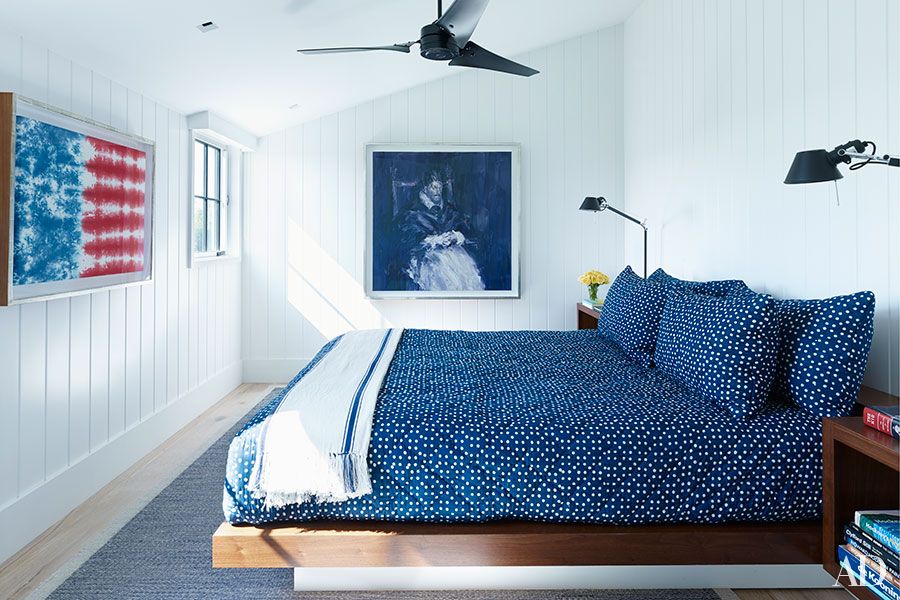
19. A Minimalist Bedroom with a Dark Wood Bed and Blue Art
In a minimalist room, every detail counts. Notice how the black metal of the wall lamps and the black ceiling fan are coordinated. This is a subtle but powerful choice. By matching the metal finishes of your hardware and fixtures, you create a sense of cohesion and intention. It’s a simple rule that makes a room feel polished and deliberately designed, rather than thrown together. In this white-walled space, the black accents provide a strong graphic element that grounds the room and ties the different functional pieces together.
|
📋 Copy HEX 🔗 Share |
💰 Budget Breakdown
This room follows a clean and simple formula: 70% Crisp White + 20% Rich Blue + 10% Dark Accents (Wood & Metal). The dominant white on the paneled walls and floor creates a bright, airy canvas. The 20% blue, concentrated in the bedding and artwork, provides a strong dose of color and personality. The final 10% of black and dark wood in the bed frame, fan, and lamps adds necessary contrast and keeps the room from feeling washed out. You could easily swap the blue for another bold color like forest green or terracotta to completely change the feel while using the same successful formula.
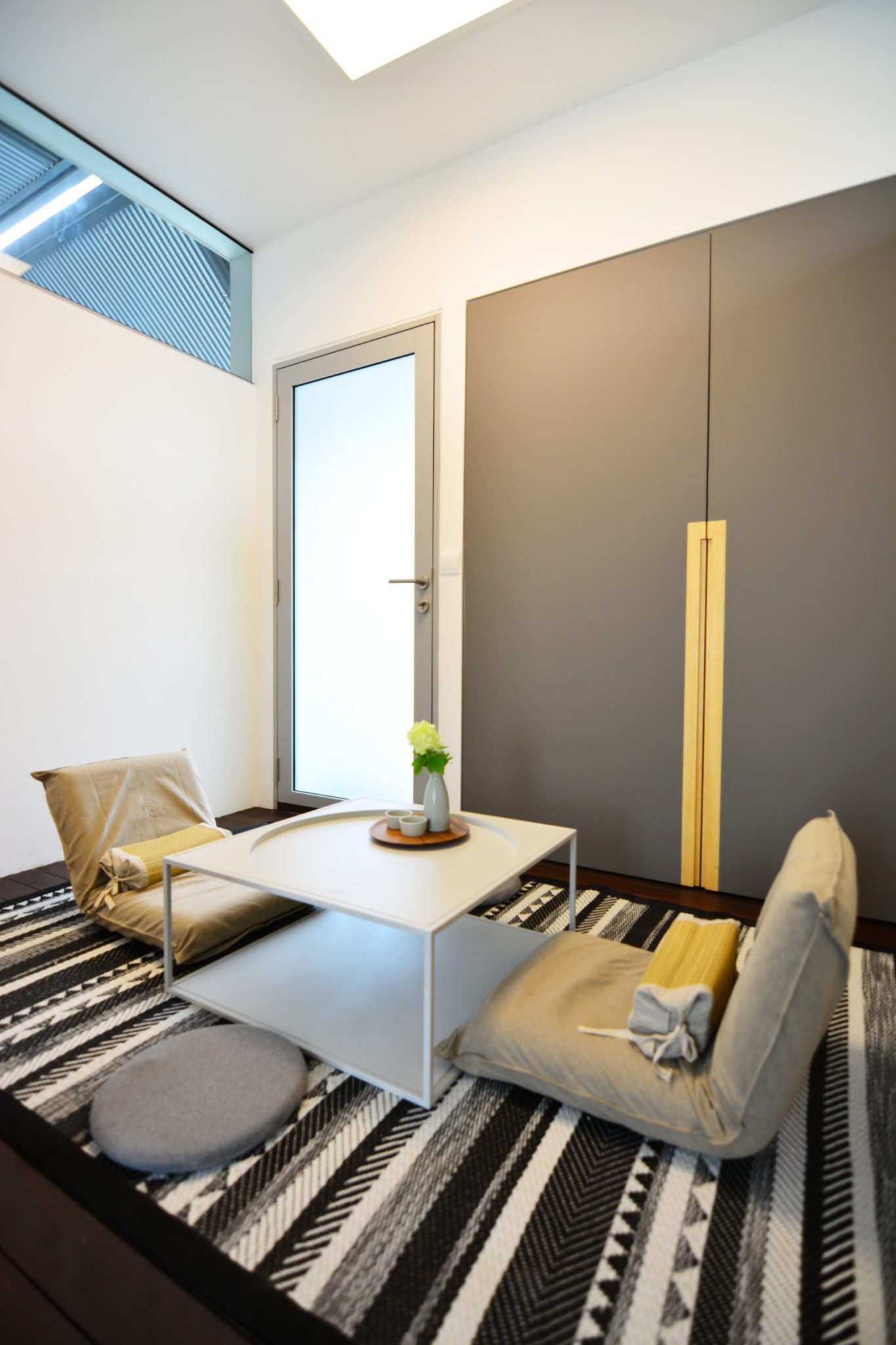
20. Modern Minimalist Lounge Area with Floor Cushions
Let’s get real about floor cushions: they look incredibly chic and serene, but they are not for everyone. If you have bad knees, a bad back, or guests who are older or have mobility issues, this is not a practical primary seating solution. It’s a style that prioritizes aesthetics and a certain kind of informal lounging over traditional comfort. Before you commit to this beautifully minimal look, be honest with yourself about how you and your guests actually like to sit. This might be a perfect secondary lounge space, but maybe not the best for your main living room.
|
📋 Copy HEX 🔗 Share |
📐 Style Math
This space works because of its extreme commitment to minimalism and geometry. The design is built on a foundation of strong, clean lines and simple shapes. You have the crisp rectangle of the ceiling light, the perfect square of the coffee table, the grid-like pattern of the rug, and the rectangular form of the cushions. This repetition of geometric forms creates a sense of order and tranquility. The palette is also tightly controlled—white, black, gray, beige—which allows the textures and the subtle wood accent to become the main points of interest.
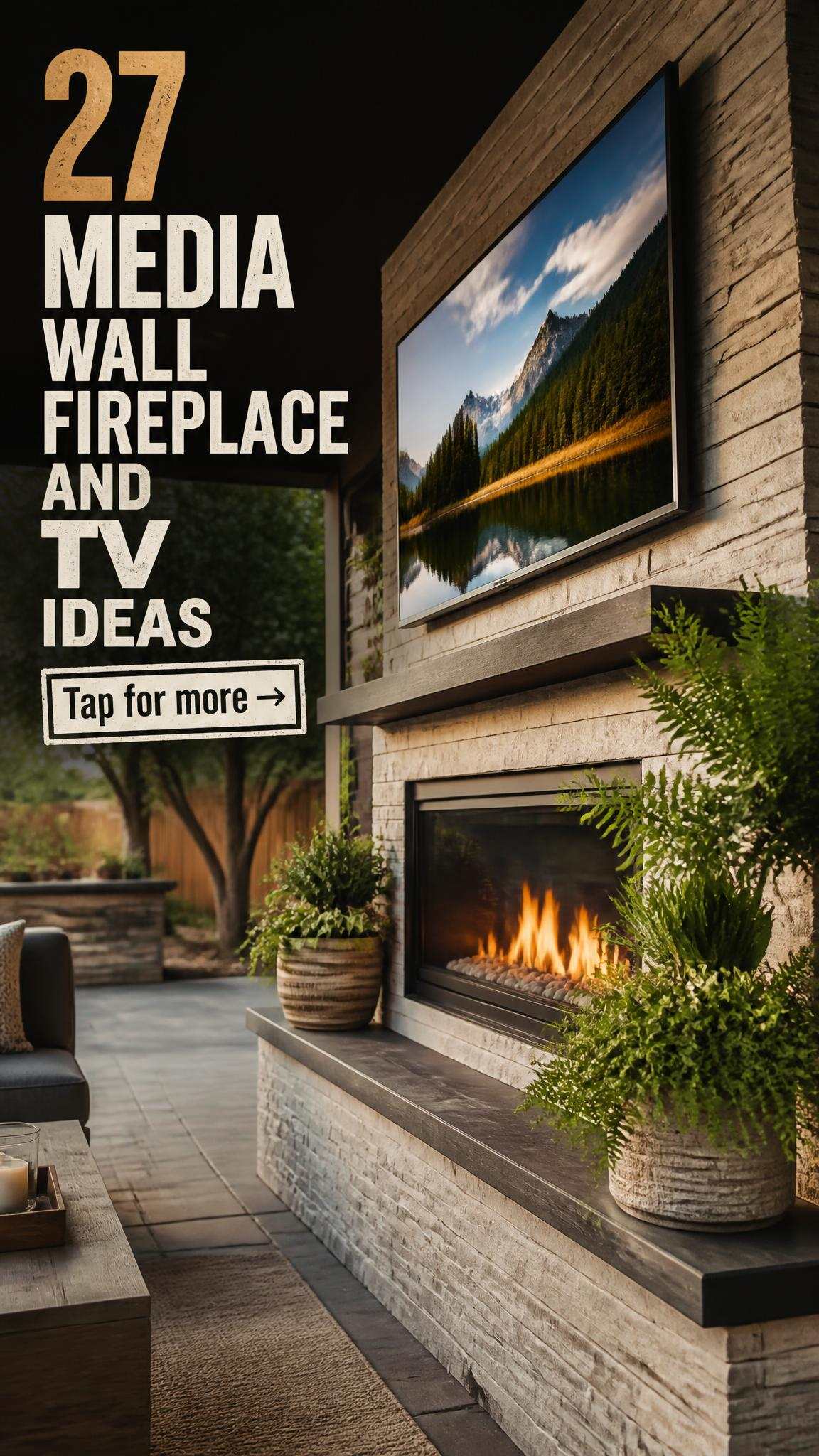
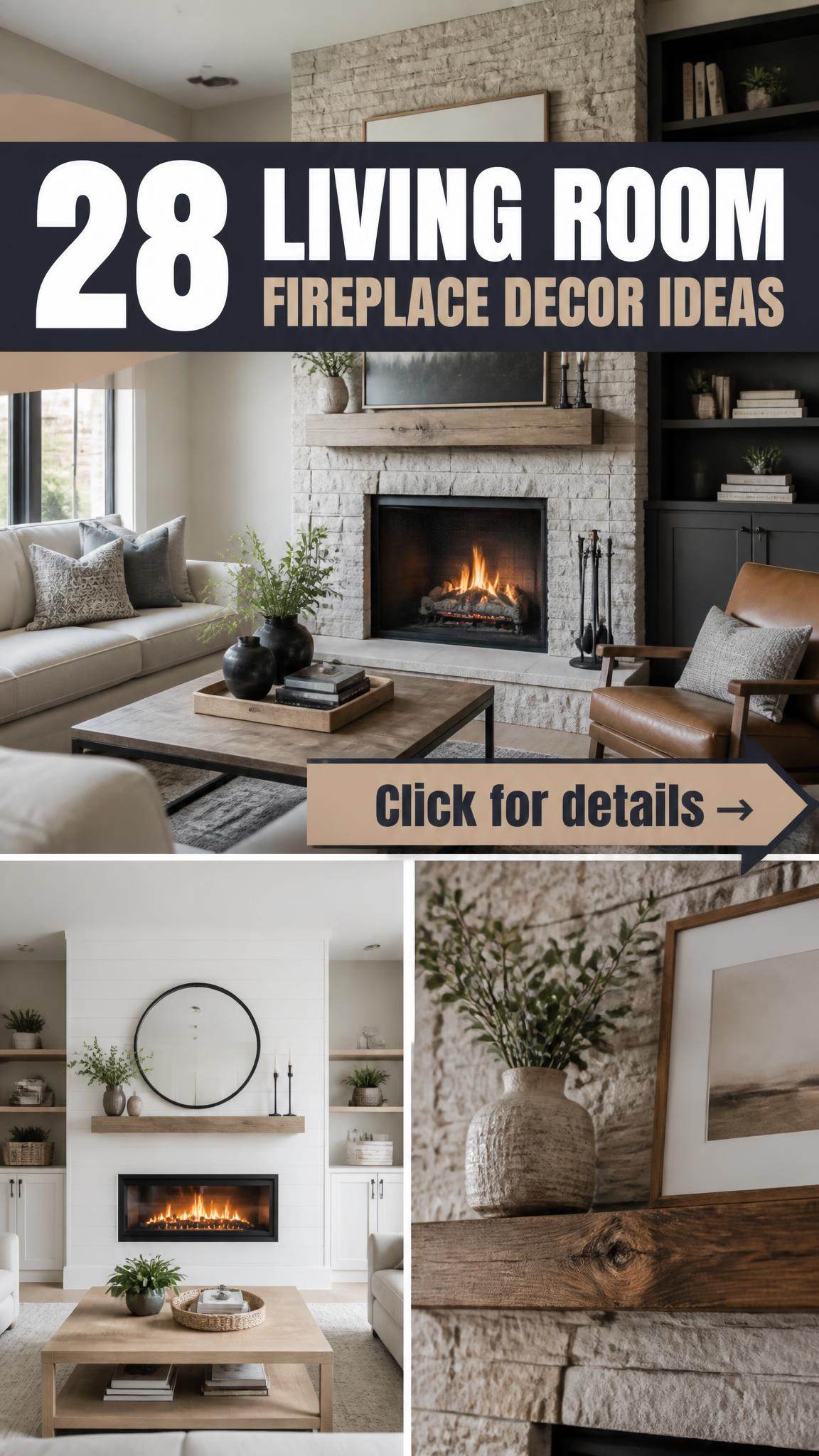
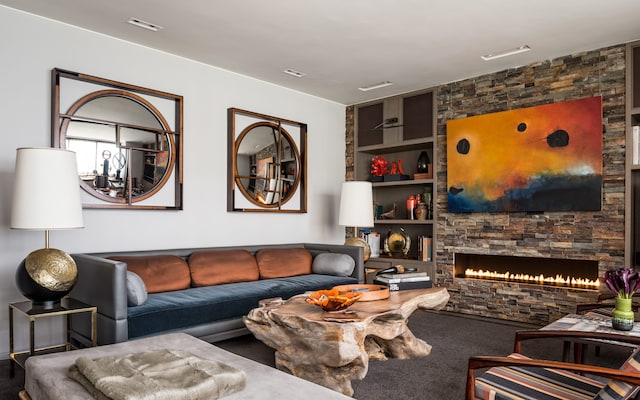
21. A Modern Living Room with a Stacked Stone Fireplace
The singular element holding this entire room together is the organic, live-edge wood coffee table. In a room full of clean lines and rectangular forms—the linear fireplace, the blocky sofa, the square mirrors—the coffee table’s natural, irregular shape provides a crucial moment of softness and organic beauty. It breaks up the geometry and prevents the room from feeling too rigid or sterile. Its warm wood tone also connects with the other wood elements in the room, while its unique form ensures it stands out as a stunning, sculptural centerpiece.
|
📋 Copy HEX 🔗 Share |
⚠️ Real Talk
A full-height stacked stone accent wall is a dominant feature that requires adequate space to feel impressive rather than oppressive. This look is best for a living room with a minimum width of 15 feet and ceiling heights of 9 feet or more. The long gray sofa also needs room to breathe; a piece of this size (likely 10-12 feet long) works best in a room that is at least 250-300 square feet. For a smaller apartment, you could capture a similar feel by using stacked stone only on the lower portion of the fireplace surround, as seen in Idea #28.
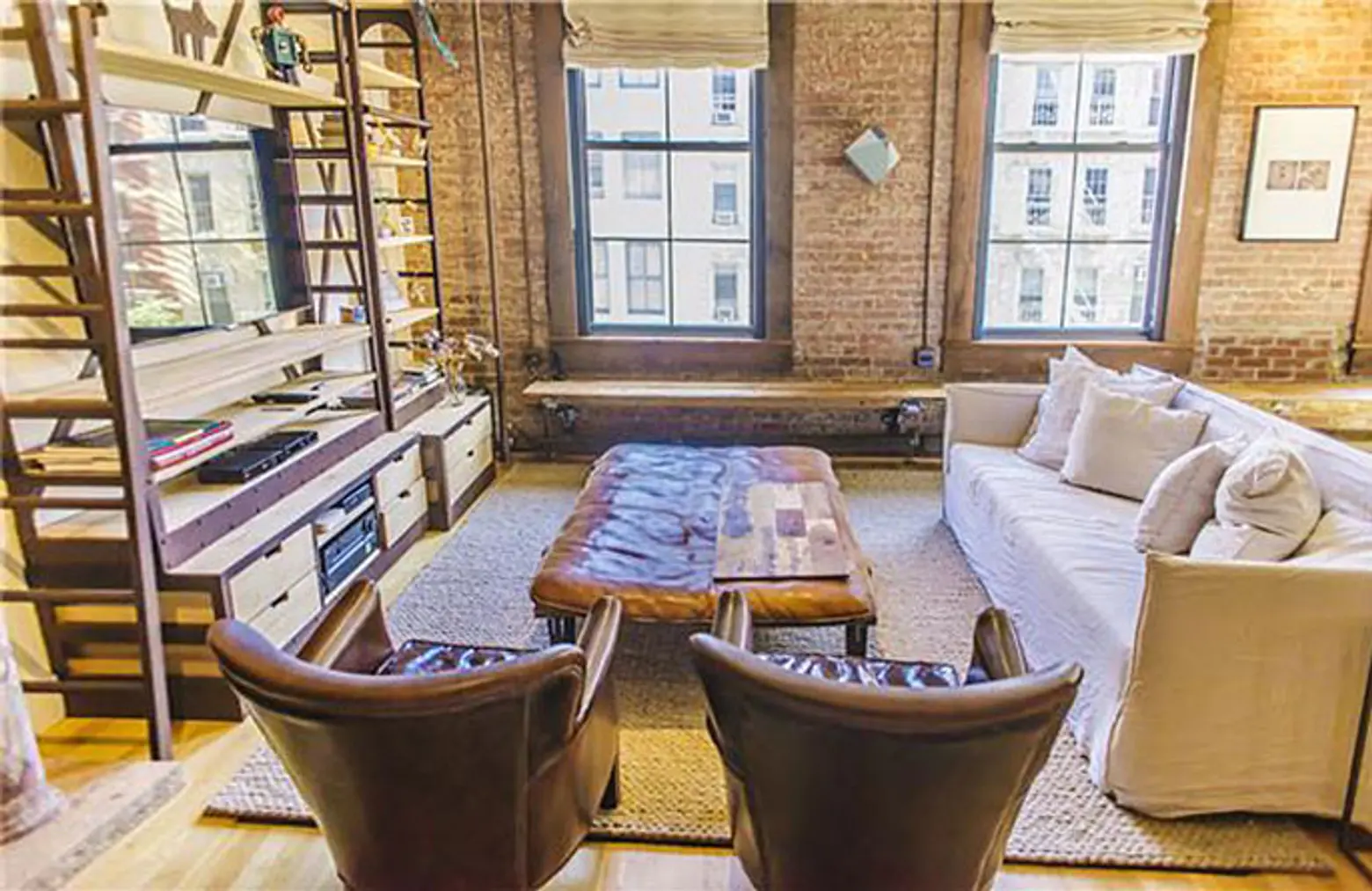
22. Industrial Loft Living Room with Brick Walls and Warm Wood
This quintessential loft look works because it masterfully balances scale and texture. The large industrial windows and high ceilings create a vast space, which is then made to feel human-scaled and cozy by the substantial furniture. The long sofa, deep armchairs, and oversized ottoman create an inviting conversational grouping that anchors the room. The texture-play is also key: the rough, ruddy brick is softened by the creamy white sofa slipcover, the smooth, rich leather, and the light wood of the shelving unit. It’s a perfect harmony of hard and soft, rugged and comfortable, just like in Idea #11.
|
📋 Copy HEX 🔗 Share |
🧹 Maintenance Reality
Exposed brick walls are a gift, but you can get this industrial loft feeling for less. Start with a neutral, comfortable sofa—IKEA’s “HÄRLANDA” or “KIVIK” are great budget-friendly options. Hunt for secondhand leather armchairs on Facebook Marketplace; they often have more character and cost a fraction of the price of new ones. A large, sturdy ottoman can be found at stores like HomeGoods or Target. For the industrial shelving, look for plumbing pipe DIY kits online or find more affordable metal-and-wood options from Wayfair to complete the look without breaking the bank.
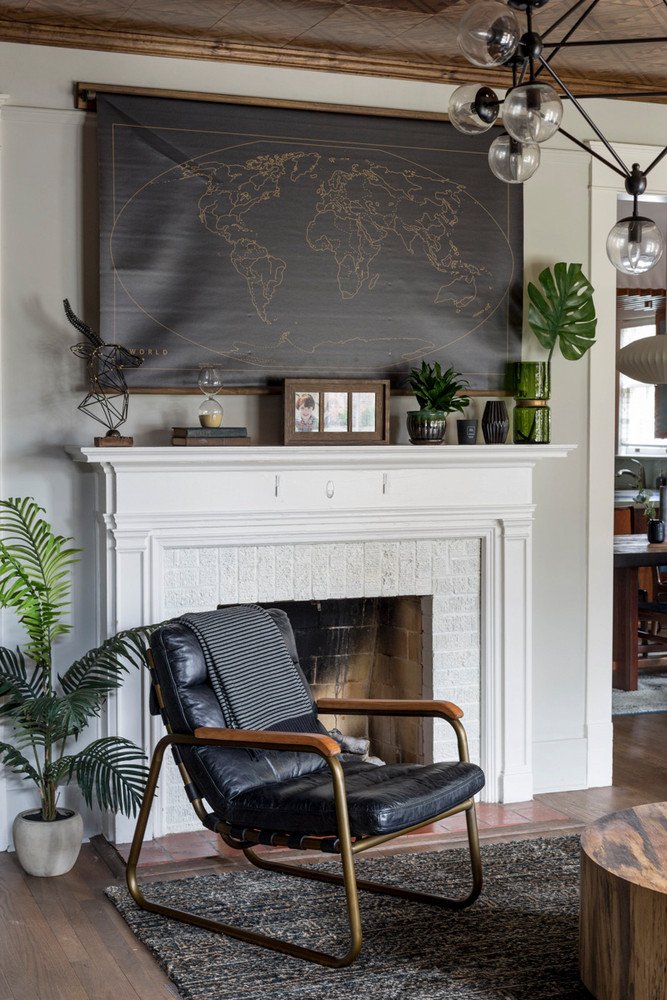
23. A Cozy Fireplace Nook with a World Map and Leather Armchair
The single element that gives this corner its unique personality is the large dark grey world map. A fireplace is a natural focal point, but adding the map above it accomplishes two things: it adds a layer of intellectual curiosity and a hint of wanderlust, making the space feel personal and worldly. Secondly, its dark color and gold details provide a dramatic, high-contrast backdrop for the decor on the mantel. It elevates the entire vignette from a simple fireplace to a statement about the person who lives there. It’s a conversation starter, literally and figuratively.
|
📋 Copy HEX 🔗 Share |
⭐ The One Thing
You can create a similarly striking mantel arrangement with a few easy steps:
- Establish an Anchor: Start with your large-scale piece—the map, a big mirror, or a piece of art. Center it and hang it 4-6 inches above the mantel.
- Add Height: Place a taller object on one side to create an asymmetrical line. This could be a vase with tall stems or a pair of stacked books.
- Create a Grouping: On the other side of the mantel, create a small grouping of 2-3 objects of varying heights. Think a small plant, a framed photo, and a decorative object.
- Add a Low Element: Place a low, horizontal object in front of your anchor piece, like a decorative bowl or a small tray, to add depth.
This process takes about 20 minutes and costs nothing if you use items you already own!
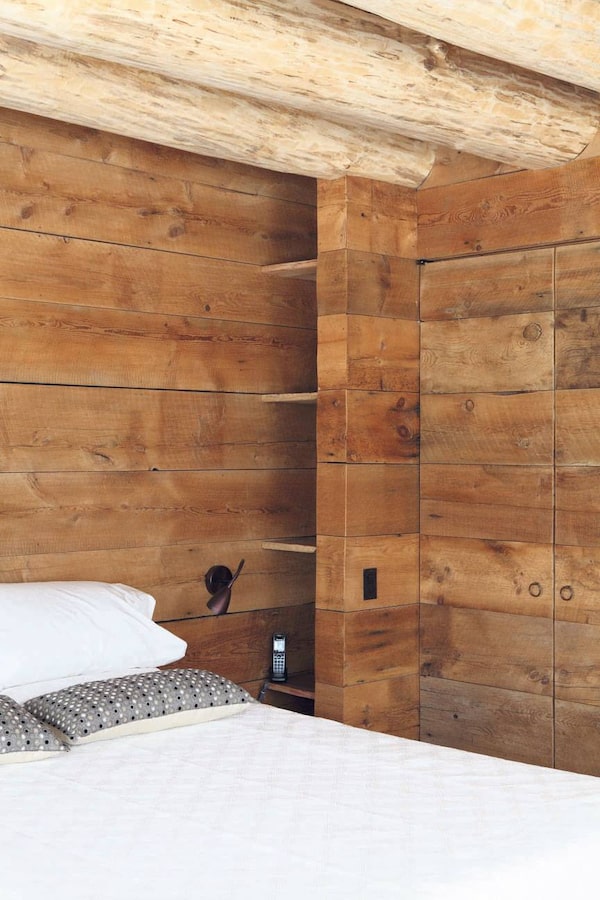
24. A Rustic Bedroom Nook with Integrated Wood Shelving
This design is so successful because it fully embraces a single material: natural wood. By using wood on the walls, shelving, and cabinetry, the space feels incredibly cohesive and enveloping, like a cozy, modern cabin. The variation in the wood tones and grain patterns adds depth and visual interest, preventing the look from becoming flat. The simple, clean lines of the integrated shelving and the bed keep the rustic material from feeling old-fashioned, striking a perfect balance between natural warmth and modern functionality. The result is a space that feels both simple and richly detailed.
|
📋 Copy HEX 🔗 Share |
💸 Get This Look For Less
If you’re building integrated shelving like this, don’t forget to plan for power. Notice the conveniently placed outlet right above the small bedside shelf. It’s a small detail that makes a huge difference in functionality, allowing for a charging phone, an alarm clock, or a reading lamp without draping cords everywhere. When designing built-ins, think about how you will actually use the space and integrate outlets, light switches, or even USB ports directly into the design. It’s much easier to do it during construction than to retrofit it later.
25. An Eclectic Loft with a Green Kitchen Wall and Chain-Link Table
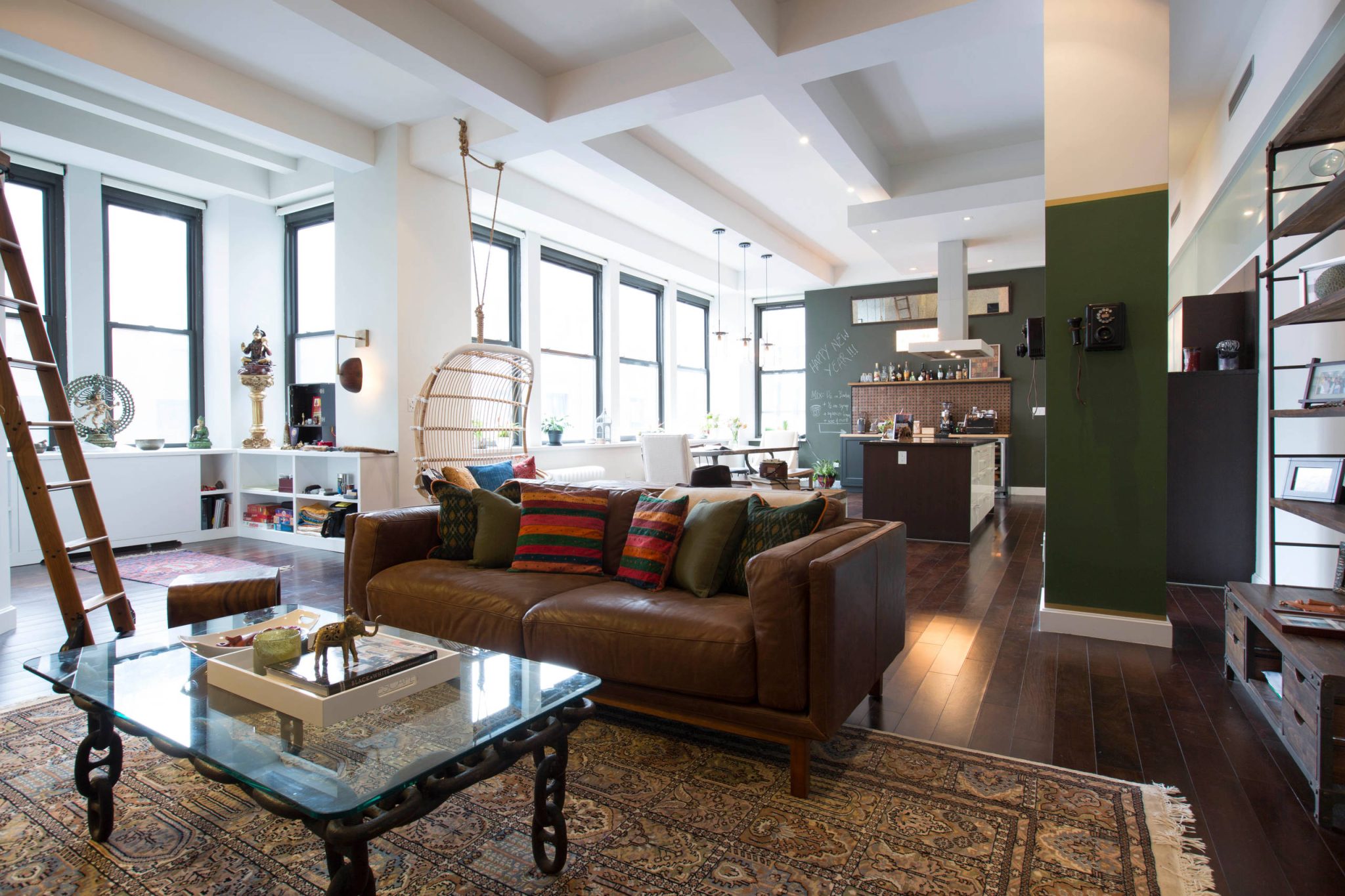
that absolutely makes this space is the fearless, eclectic mix of details. It’s not one single item but the confident combination of seemingly disparate elements: the classic leather sofa, the industrial chain-link coffee table, the bohemian suspended wicker chair, the traditional patterned rug, and the bold green kitchen wall. This is the opposite of a one-note, catalog-perfect room. It’s the unexpected pairings that tell a story and create a space that feels curated over time, reflecting a unique personality. The courage to mix styles is the true centerpiece here.
|
📋 Copy HEX 🔗 Share |
💡 Designer Tip
Let’s be honest about that amazing suspended wicker chair: it’s more of a style statement than a practical seating choice for everyday use. And installing one is not a simple task. It requires locating a sturdy ceiling joist and using heavy-duty hardware to ensure it can safely support weight. If you’re a renter, this is almost certainly not an option without explicit permission from your landlord, as it involves structural work. It looks incredible, but it’s a high-commitment accent that you should think through carefully before you fall in love with the idea.
26. A Serene Bedroom with Blue Textiles and Green Pendant Lights
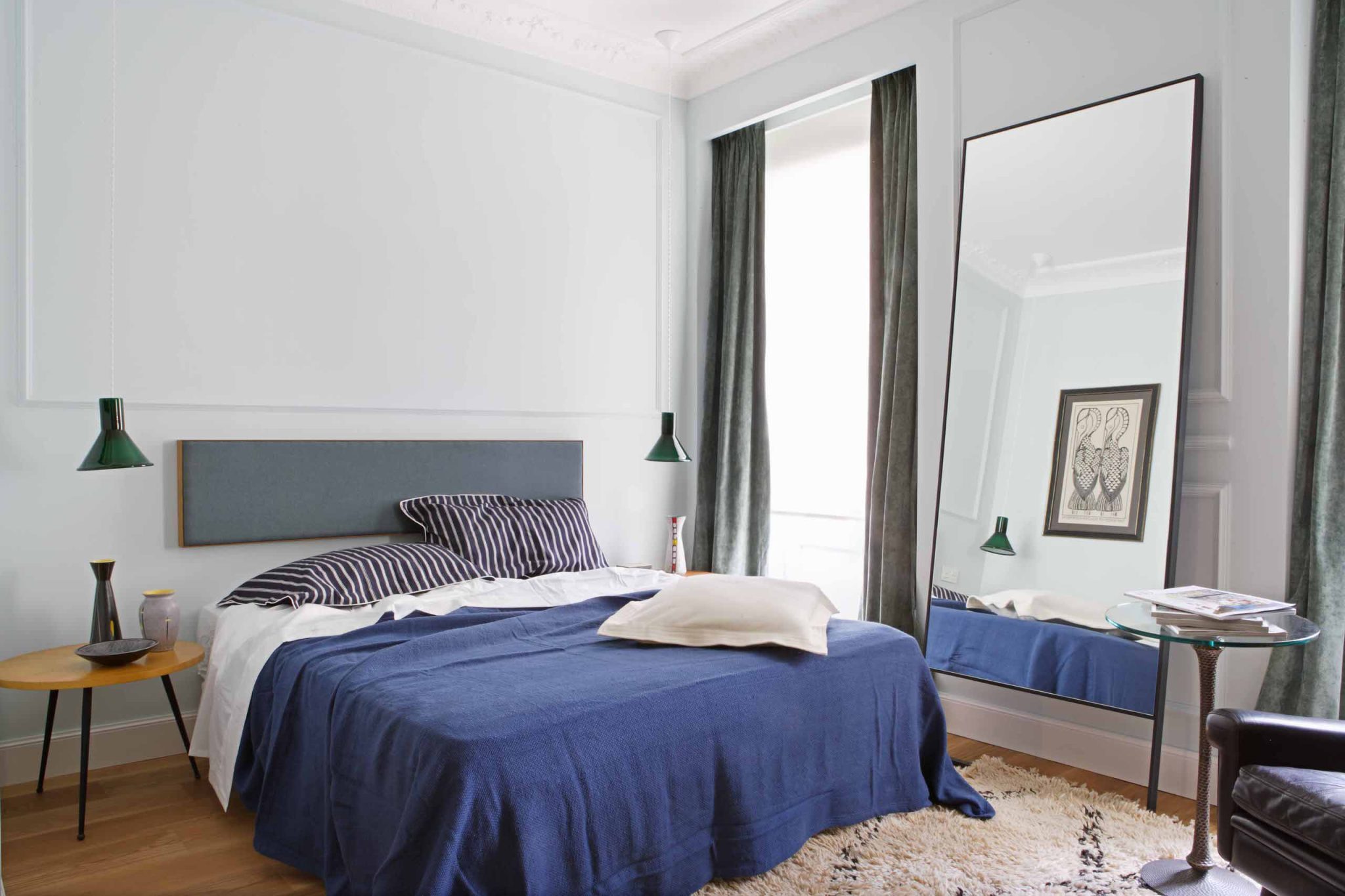
The calming atmosphere in this bedroom comes from a balanced and cool-toned color recipe: 60% Pale Blue & White + 30% Deeper Blues & Grays + 10% Accent Color (in this case, the dark green pendants). The light walls and white bedding create an airy, expansive base. The darker blues and grays of the headboard and throw blanket add depth and a sense of coziness. The final 10% of green is an unexpected but harmonious choice, as it’s a natural companion to blue. This layered approach to a single color family is what makes the room feel so serene and put-together.
|
📋 Copy HEX 🔗 Share |
🔧 How-To Brief
Before you commit to this serene look, consider these points:
- Lighting Temperature: Cool-toned walls like pale blue can look dingy or sad in the wrong light. Make sure your light bulbs are a neutral or warm white (2700K-3000K) to keep the space feeling welcoming.
- Your Existing Furniture: Pale blue and grey work beautifully with light wood, white, or black furniture. If you have heavy, dark cherry or mahogany pieces, they might clash with this light and airy palette.
- Commitment to Calm: This is a genuinely tranquil look. If you crave high energy and lots of vibrant color, this palette might feel too subdued for you long-term.
27. A Bright, Eclectic Living Area with a Pink Arched Doorway
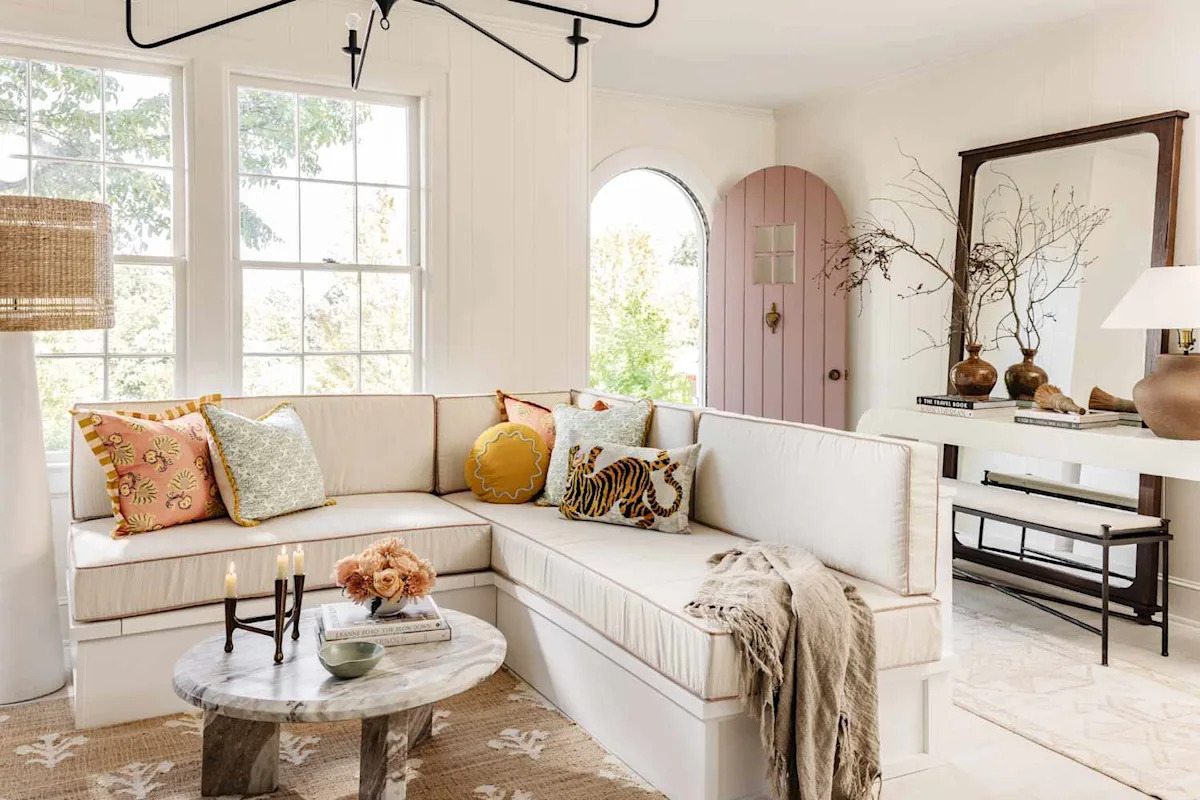
that elevates this room from cozy and pleasant to truly memorable and stylish is the pink arched doorway. It’s a completely unexpected and playful architectural element that acts as a piece of art in itself. It injects a dose of personality, color, and softness that contrasts beautifully with the more conventional shapes in the room. Without the pink arch, the space would still be lovely, but it would lose its defining feature—that spark of daring design that makes you smile. It’s proof that a single, bold choice can define an entire space.
|
📋 Copy HEX 🔗 Share |
🎯 What Makes It Work
This room succeeds by balancing a neutral foundation with carefully chosen, personality-filled accents. The white built-in sofa and neutral rug create a calm, bright base that can handle a lot of eclectic energy. The design works because the “weird” or “bold” items are distributed throughout the space: the vibrant pillows on the sofa, the unusual shape of the floor lamp, the round marble table, the pink door. Because the personality is spread out, it feels balanced and intentional, not chaotic. Every piece has room to breathe and be appreciated.
28. A Vaulted Living Room with Reclaimed Wood and a Brick Fireplace
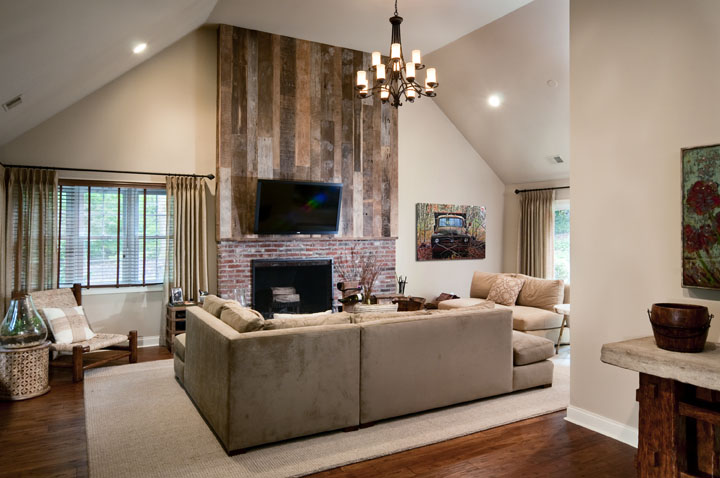
This rustic, spacious look is all about a commitment to earthy textures. The visual formula is roughly: 40% warm wood tones (floors, fireplace facade) + 30% neutral textiles (tan sectional, cream rug) + 20% rugged masonry (the red brick) + 10% black metal accents (chandelier, railings). The overwhelming majority of the surfaces are natural and textured, creating a cohesive and deeply cozy environment. The balance is key; the lighter textiles prevent the heavy wood and brick from making the room feel too dark, despite the wealth of materials. Compare the fireplace to the more modern one in Idea #21.
|
📋 Copy HEX 🔗 Share |
🔥 Trending Context
A design with this much scale and volume needs a very specific kind of space. It’s ideal for a room with vaulted ceilings (12 feet or higher) and a generous footprint of at least 400-500 square feet. In a standard 8-foot ceiling room, the floor-to-ceiling wood and brick facade would feel incredibly heavy and out of place. The large sectional sofa also demands a lot of space. This is a look for a suburban home, a barn conversion, or a particularly large loft apartment, not a standard city one-bedroom.
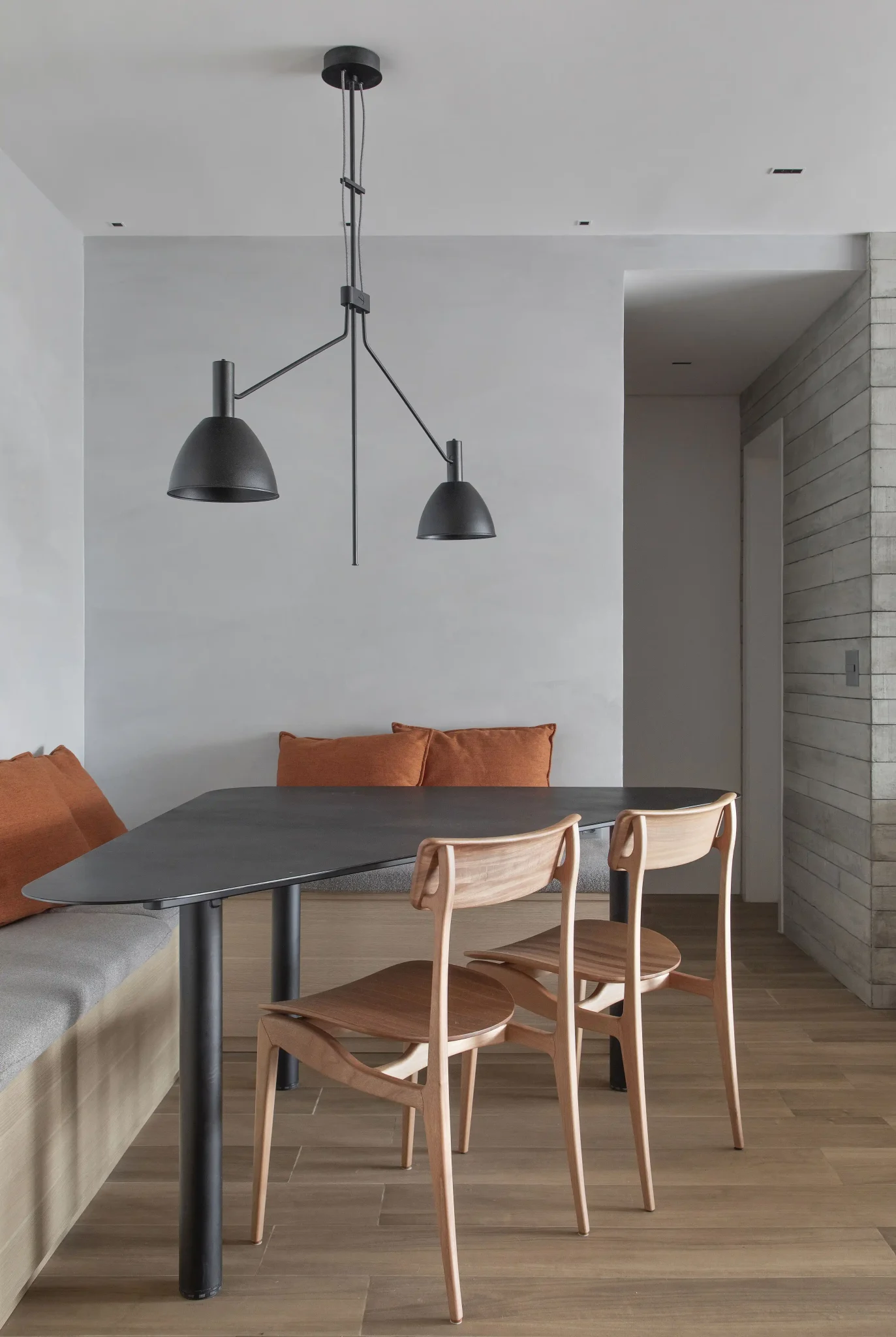
29. A Modern Dining Nook with a Built-in Bench
This dining area feels sleek and inviting because it perfectly balances cool tones and warm accents. The cool elements—the light gray wall, the black table and chandelier, the concrete-look wall—create a sophisticated, minimalist foundation. But it’s the strategic injection of warmth that makes it work. The light wood of the chairs and the pop of vibrant orange in the throw pillows provide a necessary contrast and a welcoming feel. This tension between cool and warm is what gives the space its modern, dynamic energy. It’s clean without being cold, and minimal without being boring.
|
📋 Copy HEX 🔗 Share |
✅ Before You Start
A built-in banquette is a fantastic way to save space and add custom flair. When designing one, the standard seat height (including the cushion) should be around 18 inches, the same as a dining chair. The seat depth is crucial for comfort; aim for 18-20 inches. To make it comfortable for lounging, angle the backrest slightly, about 5 to 10 degrees, rather than building it at a strict 90-degree angle to the seat. This small detail makes a huge difference in comfort for longer meals or conversations.
Your Apartment, Your Story
Your home is the one place where you get to write the entire story. Use these ideas as a starting point, but don’t be afraid to mix, match, and substitute to create a space that feels authentically you. Focus on quality pieces you love, layer in textures, and choose colors that make you feel good. Ready to get started? Head over to Pinterest and start creating a board for your perfect space.