You know that feeling when you finally find the floating staircase that looks exactly right for your space? It can feel like finding a needle in a haystack. These architectural centerpieces are more than just a way to get from one floor to another; they’re a statement. After filtering through hundreds of options from custom fabrication shops and high-end design studios, we narrowed it down to 30 ideas that actually deliver. We pulled the best floating staircase options across every price point—from $15,000 to over $100,000.
Inside, you’ll find 30 curated ideas covering modern, minimalist, industrial, and organic styles. In 2026, the trendiest homes are all about creating airy, light-filled interiors, and a floating staircase is one of the most effective ways to achieve that open feeling without sacrificing style. And stay until the end — we break down the most common mistakes that can ruin these looks. 📌 Save this to Pinterest for later — you’ll want to revisit these ideas.
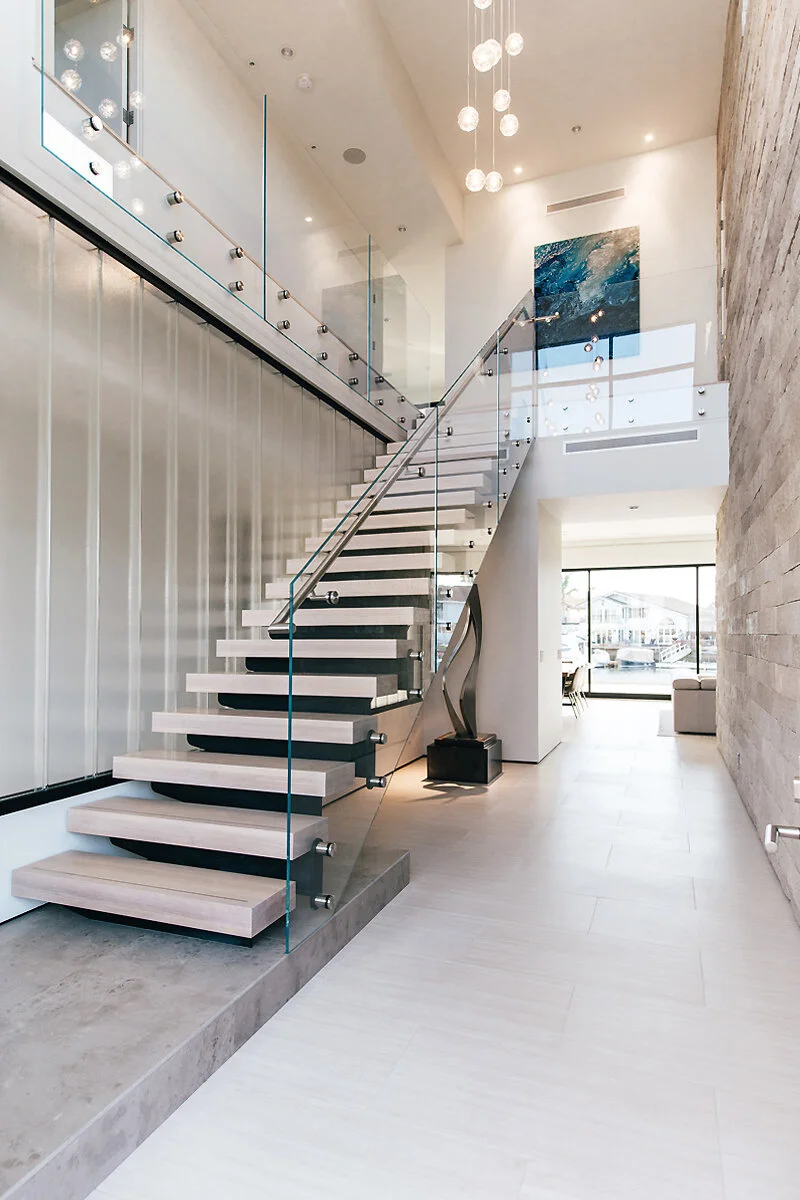
1. Modern Floating Staircase with Glass Railing and Statement Wall Art
This design is a masterclass in balancing texture and transparency. The rugged, textured grey stone wall provides a powerful, organic anchor for the ethereal floating stairs. The clear glass railing allows light to pass through, ensuring the stone feature isn’t visually obstructed. This contrast is what creates the drama. The large abstract blue painting introduces a necessary splash of color, preventing the modern, neutral palette from feeling too sterile and injecting personality into the grand space.
|
📋 Copy HEX 🔗 Share |
✅ Before You Start
When hanging pendant lights in a double-height space above a staircase, grouping is key. Instead of a single fixture, use a cluster of three or five globe pendants of slightly different sizes. Hang the lowest pendant at least 7 feet above the tread it overhangs. Stagger the heights of the others, with 4-6 inches of vertical separation between each, to create a dynamic, waterfall-like effect that draws the eye upward and fills the vertical volume beautifully.
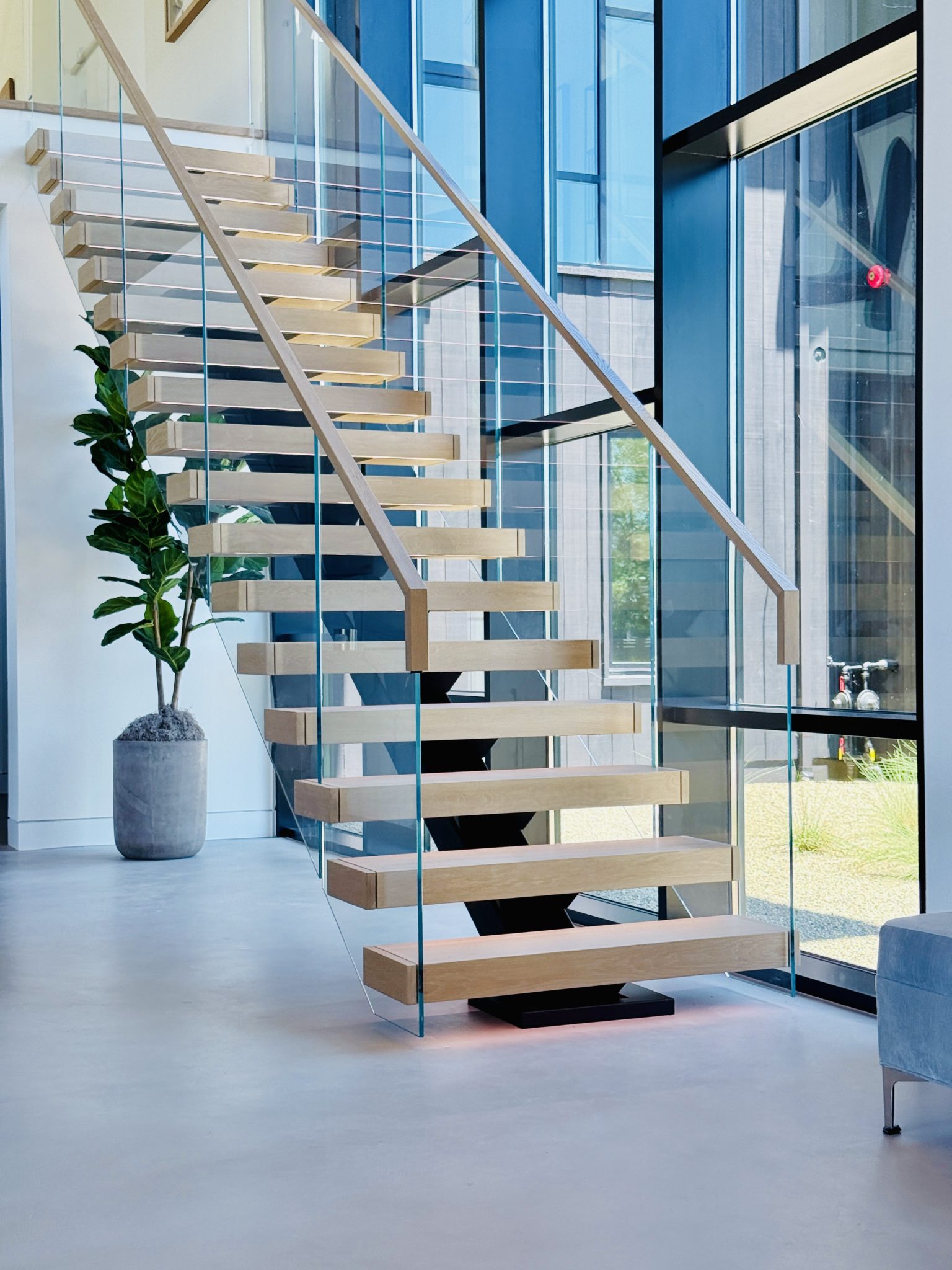
2. Light Wood Floating Stairs with Glass Railings and Slender Metal Rods
The single element that makes this design sing is the harmony between the staircase and the large exterior windows. The ultra-clear glass railings and minimal vertical supports are specifically chosen to be as visually unobtrusive as possible. The goal isn’t just to have a cool staircase; it’s to frame the view of the outdoors. The light wood treads and handrail echo the natural elements outside, making the entire space feel like a seamless extension of the landscape. Without that connection, it would just be a nice staircase, not an experience.
|
📋 Copy HEX 🔗 Share |
⭐ The One Thing
This look thrives in a space with generous ceiling height—at least 10 feet is recommended for the main floor. The visual lightness of the glass and thin rods needs vertical room to breathe. In a standard 8-foot room, it might feel a bit constrained. This design is ideal for open-plan living areas or entryways with a minimum footprint of 150 square feet to prevent the staircase from overwhelming the room. Compare this airy approach to the more solid feel of Idea #15.
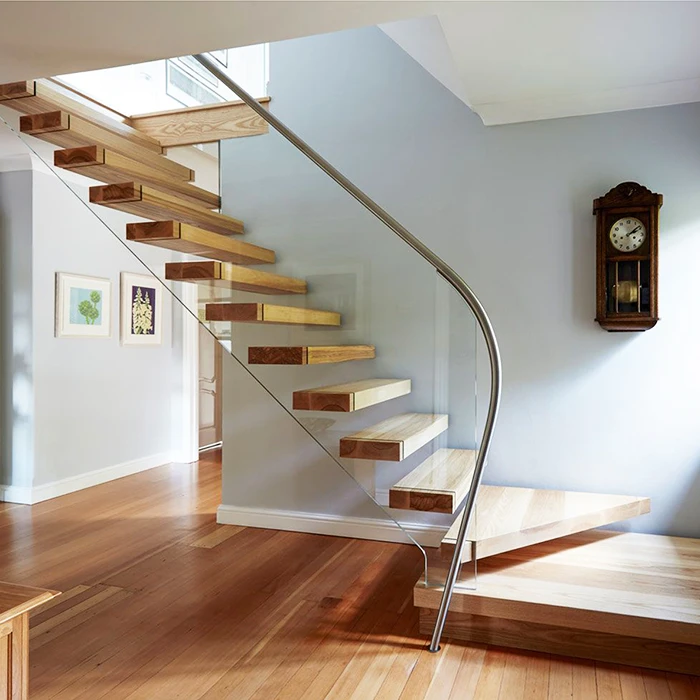
3. Modern Two-Tone Floating Treads with a Curved Glass Railing
The formula here is a study in balanced contrast: 50% warm wood + 40% transparent glass + 10% brushed steel. The alternating light and dark wood treads create a rhythm and visual interest that a monotone staircase would lack. The curved glass acts as a quiet, contemporary counterpoint, while the brushed steel handrail adds a touch of industrial polish. You could swap the wood for two shades of concrete or the brushed steel for matte black to change the mood while keeping the successful core ratio.
|
📋 Copy HEX 🔗 Share |
📐 Style Math
Let’s be honest: curved glass is stunning, but it’s a serious investment. Unlike flat panels, which are relatively standard, curved glass requires a custom-made template and a specialized fabrication process called “bending” or “slumping.” This can increase the cost of your railing by 200-400% compared to a straight glass system. It also requires highly skilled installers, as the tolerances for a perfect fit are incredibly tight. It’s a champagne feature on a high-end budget.
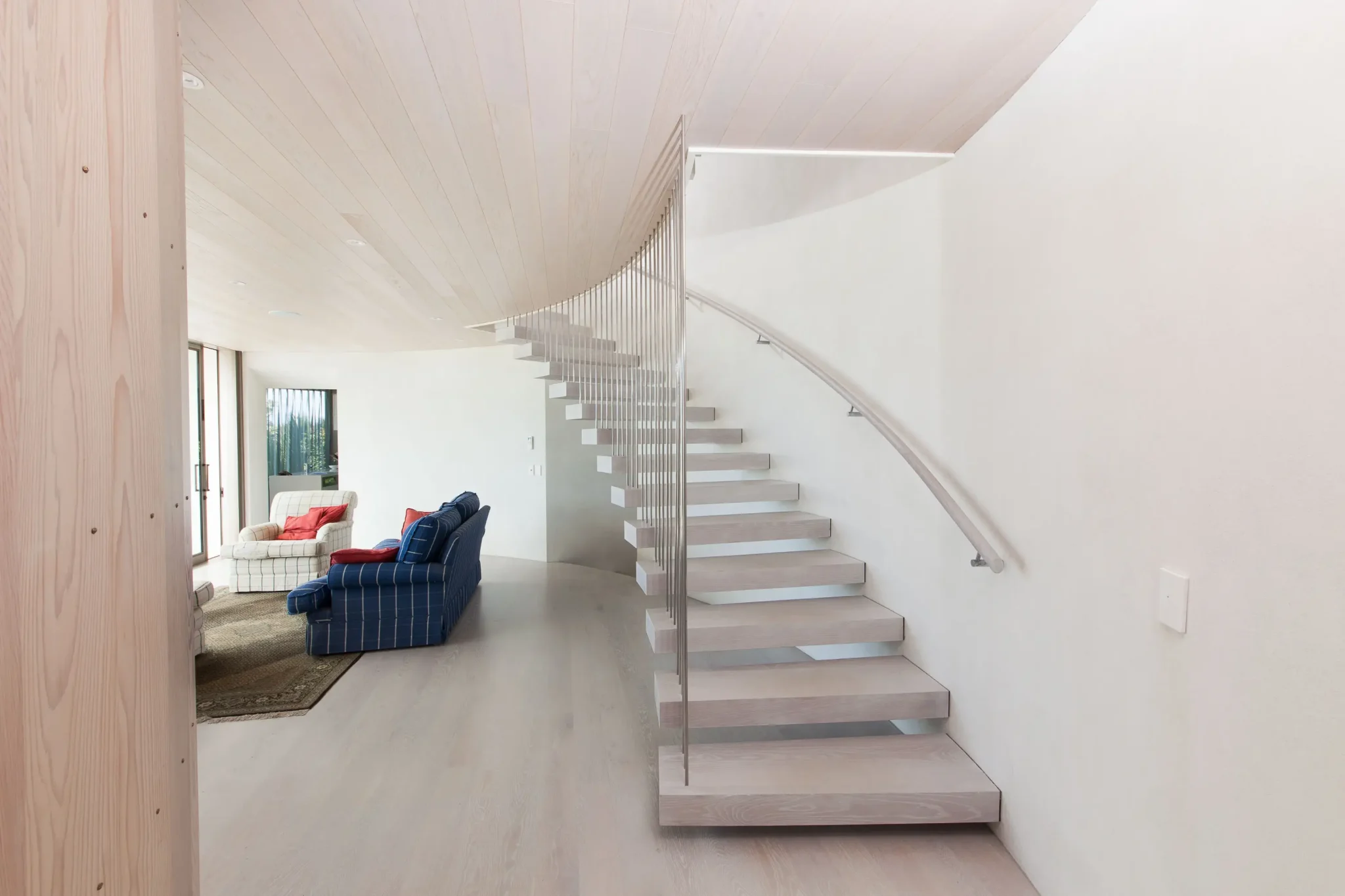
4. Curved Light Wood Floating Staircase with a Metal Rod Balustrade
Repetition is the secret hero of this serene design. The gentle arc of the floating treads is mirrored in the curved handrail mounted on the inner wall, creating a beautiful sense of fluid motion. The vertical stainless steel rods don’t just provide safety; they create a repeating vertical rhythm that guides the eye upward. This repetition of form—both curved and linear—results in a look that feels cohesive, intentional, and incredibly calming. The minimalist palette allows these strong shapes to take center stage.
|
📋 Copy HEX 🔗 Share |
📏 Scale Guide
While stainless steel rods look sharp and minimalist, they are magnets for fingerprints and smudges. To keep them looking pristine, plan on wiping them down weekly with a microfiber cloth and a stainless-steel cleaner. Pay special attention to the areas most frequently touched. Annually, check the tension on the rods if they are part of a cable system, as they can sometimes sag over time. For a lower-maintenance alternative with a similar look, consider powder-coated black aluminum rods, which are much better at hiding prints.
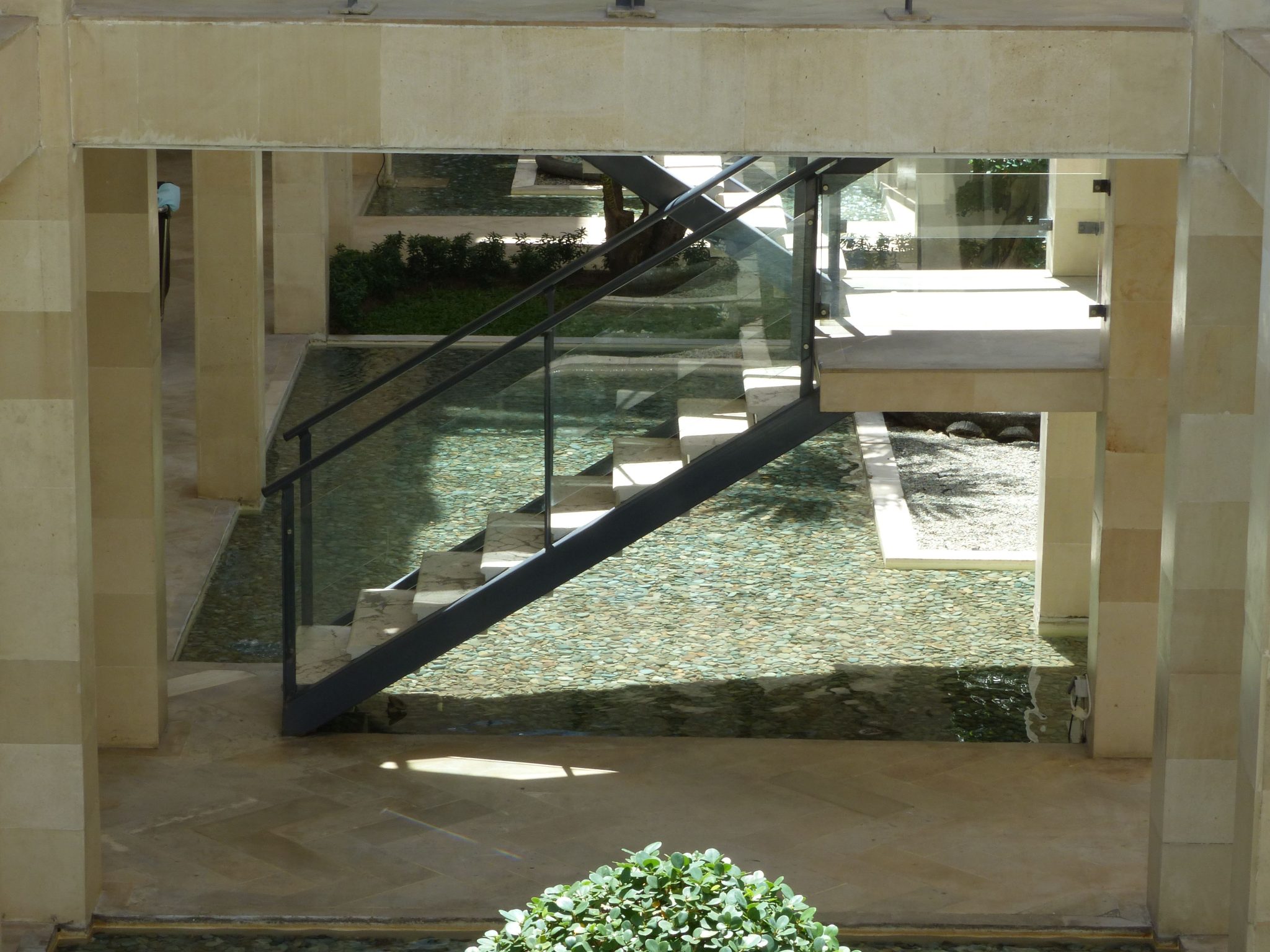
5. Modern Grey and Glass Staircase Over a Rock-Lined Water Feature
- Staircase structure (metal & glass): $9,000 – $18,000
- Water feature (pump, basin, waterproofing): $3,000 – $7,000
- Stone pillars & pebble base: $4,000 – $8,000
- Lighting & Landscaping: $1,500 – $3,500
- TOTAL: $17,500 – $36,500
- Budget alternative: Get a similar vibe by replacing the water feature with a dry rock garden of interesting stones and moss. This could save you $4,000-$10,000 in plumbing and waterproofing costs.
|
📋 Copy HEX 🔗 Share |
🧹 Maintenance Reality
An indoor water feature underneath a staircase is a showstopper, but it introduces complexity. You need to account for humidity and potential moisture affecting surrounding materials, like wood flooring or drywall. Proper ventilation is non-negotiable. Maintenance involves cleaning the water, checking the pump, and managing mineral buildup, especially in hard water areas. And be prepared for the sound—while many find the gentle babble relaxing, make sure it’s a sound you want to live with 24/7 in a central part of your home.
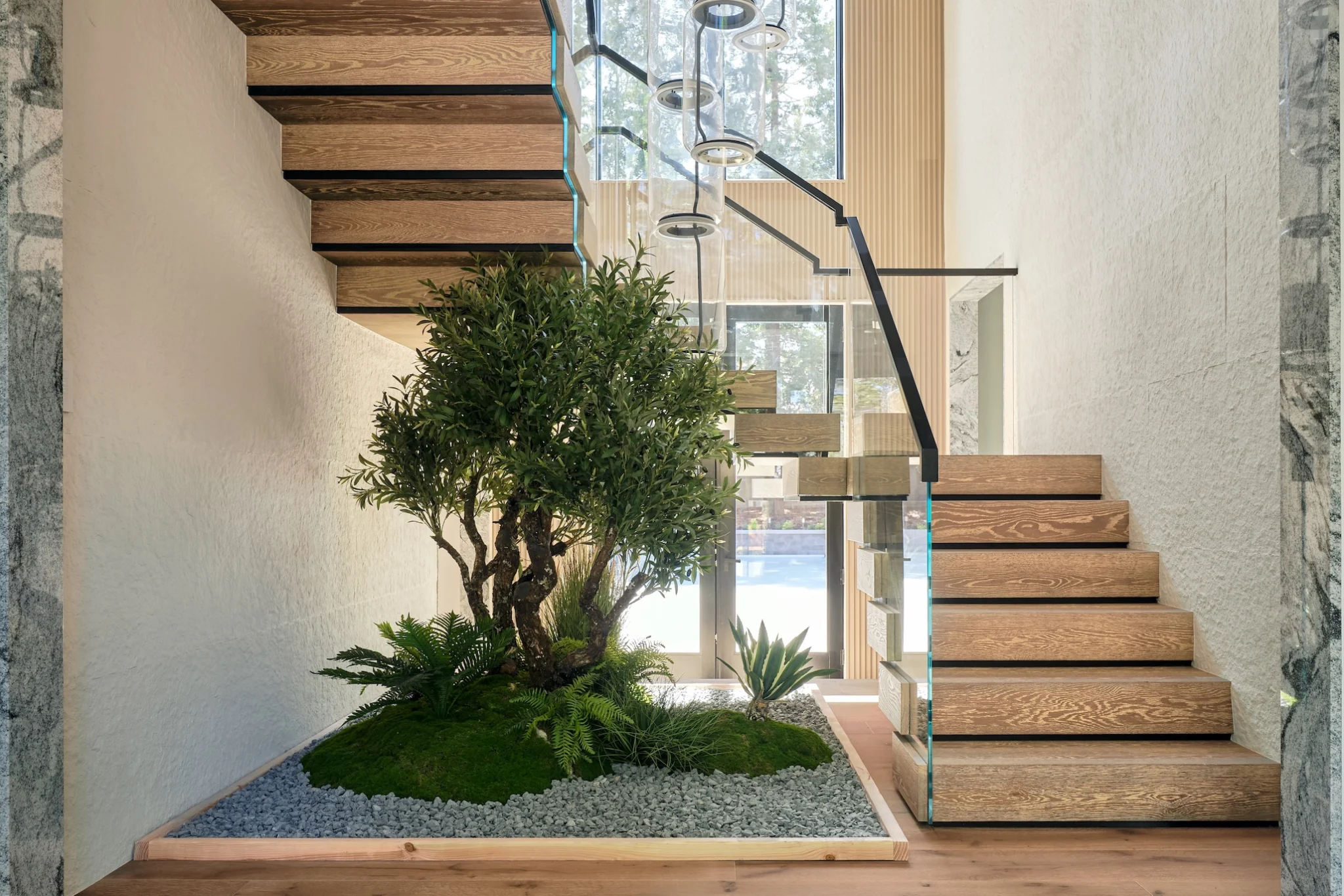
6. Floating Wood and Glass Staircase with an Indoor Garden Below
The game-changer here is, without a doubt, the indoor garden. Take away the tree and lush greenery, and you have a very nice, but standard, modern staircase. The garden transforms the entire area from a simple passageway into a living, breathing focal point. It injects a powerful dose of nature, softening the hard lines of the glass and metal and creating an unexpected moment of serenity right in the middle of the home. It’s a bold choice that pays off with incredible visual and atmospheric returns.
|
📋 Copy HEX 🔗 Share |
🎯 What Makes It Work
- Check your light: Does the area get enough natural light to sustain a real tree and plants? If not, are you prepared to invest in high-quality, full-spectrum grow lights?
- Plan for watering: How will you water the plants? Consider a built-in irrigation system or ensure easy access with a hose or watering can without making a mess on your floors.
- Confirm structural support: A mature tree and soil are heavy. Ensure your floor joists are rated to handle the significant, concentrated load, especially on an upper story.
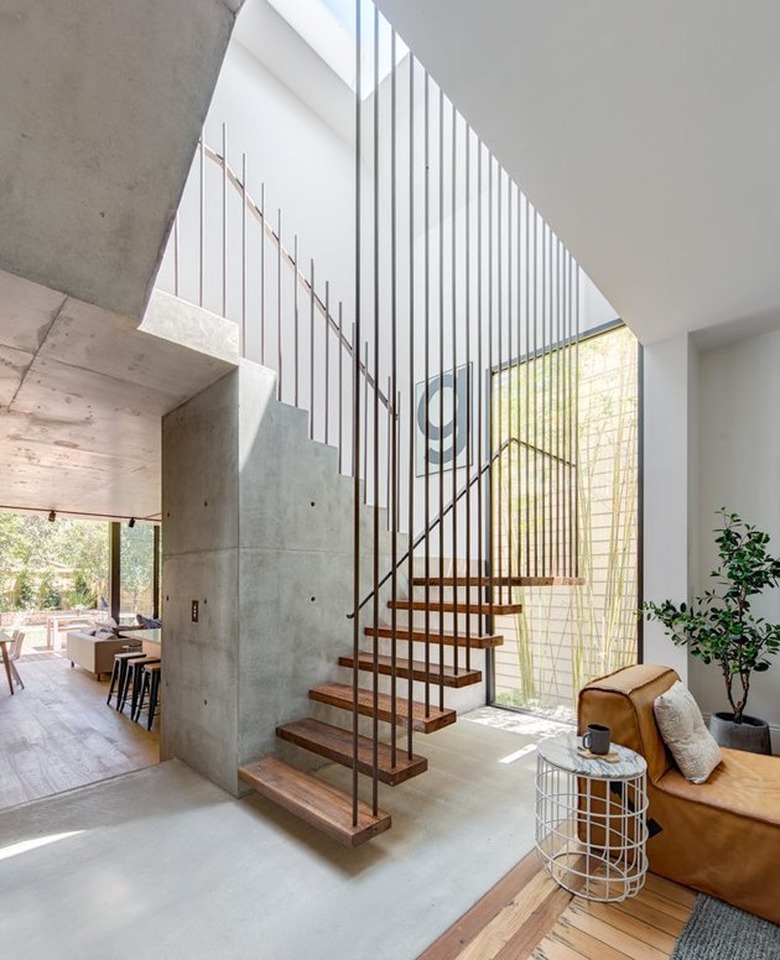
7. Modern Concrete Structure with a Light Wood Floating Staircase
This design succeeds by celebrating the tension between raw and refined materials. The heavy, monumental presence of the concrete wall creates a powerful backdrop for the warm, light wood treads. The wood seems to defy gravity as it emerges from the concrete. The thin, dark metal balusters add a delicate, graphic quality, allowing light to pour through and preventing the staircase from feeling heavy. It’s a perfect example of material contrast creating visual excitement. Compare the concrete here to the more industrial feel in Idea #15.
|
📋 Copy HEX 🔗 Share |
🔥 Trending Context
You don’t need a poured-in-place concrete wall to get this look. You can achieve a very similar aesthetic for about 50% less by using microcement or a concrete-finish plaster (like Roman clay) over standard drywall. For the stairs, use a robust hidden steel stringer inside the wall to support standard wood treads. On Facebook Marketplace, you can often find reclaimed wood for the treads for under $200, which you can then have a local carpenter cut and finish to your specifications, adding character and saving a bundle.
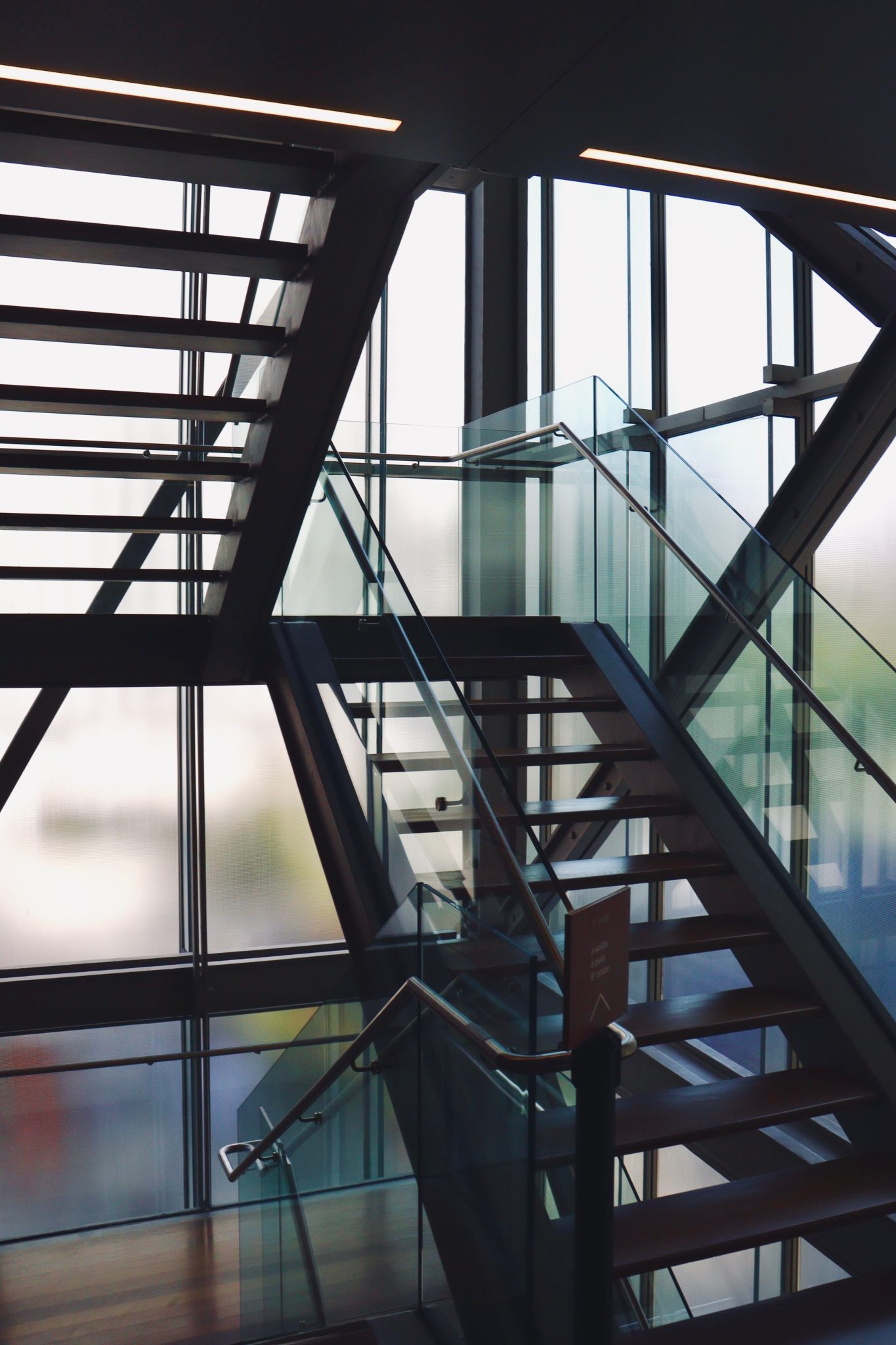
8. Modern Floating Staircase with Dark Treads and Glass Walls
A staircase with this much visual weight, due to the dark structural beams and treads, is best suited for a large, open-concept space or a grand entryway of at least 200 square feet. The key is the presence of large glass walls, which flood the area with light and create a sense of boundless space. In a smaller, enclosed area without the abundant natural light, these dark, heavy elements could feel oppressive and imposing rather than sleek and architectural.
|
📋 Copy HEX 🔗 Share |
🔧 How-To Brief
To make a staircase like this feel truly integrated, carry the material palette into the surrounding space. Notice how the dark metal of the structural beams could be echoed in window frames, light fixtures, or furniture legs. The dark wood of the treads could be matched to a console table or the frame of a piece of art on an adjacent wall. This repetition of materials makes the staircase feel like a deliberate and cohesive part of the overall design, not just a standalone feature.
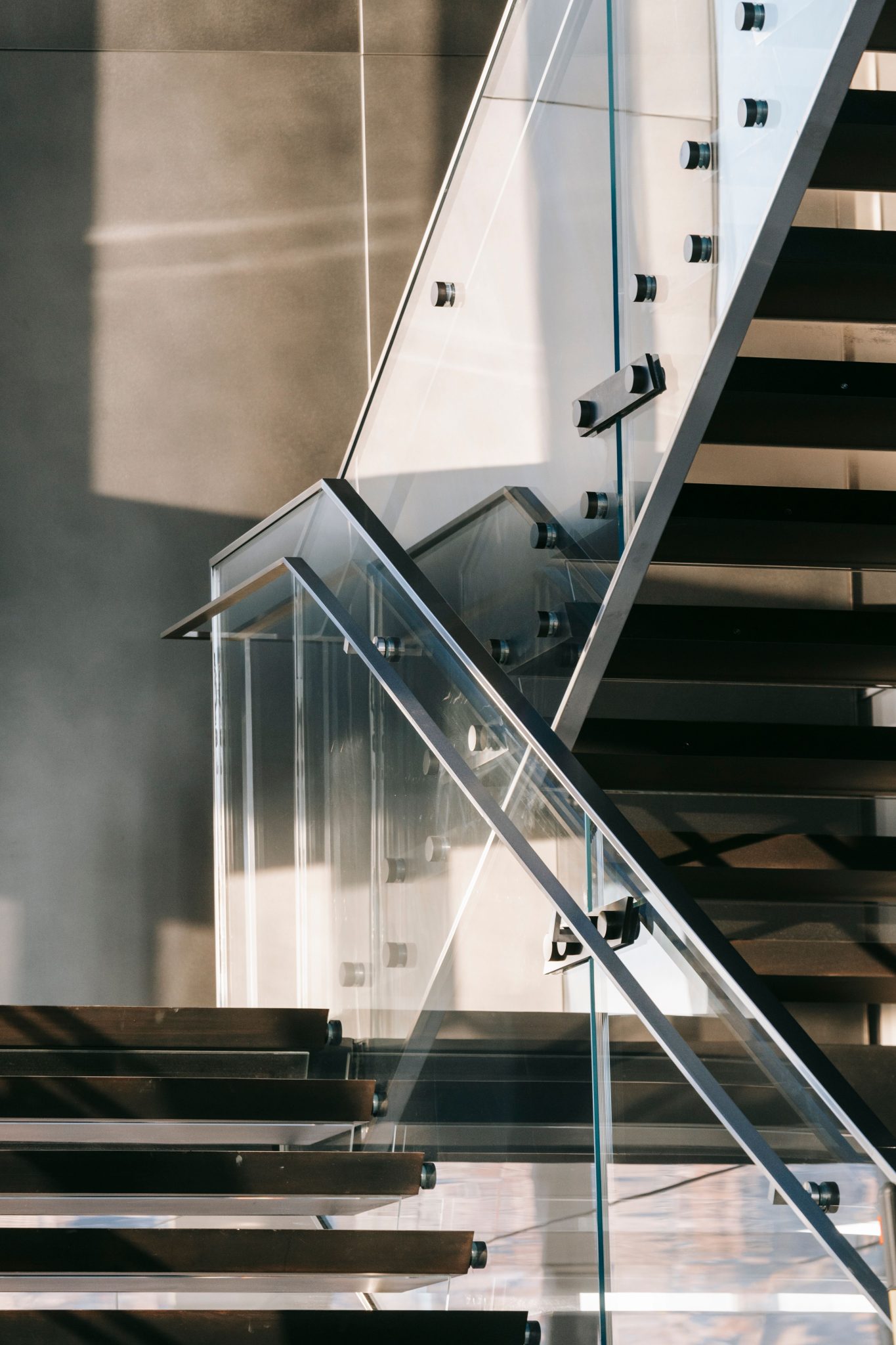
9. Modern Floating Staircase with Glass Railing and Dark Wood Treads
The magic of this design lies in the cylindrical railing fixtures. While the floating treads and glass panels are common elements in modern stairs, these specific fittings elevate the entire assembly. Their polished chrome and black finish adds a layer of refined detail and visual punctuation. They break up the sheer plane of the glass and create a subtle rhythm that draws the eye upward. If you were to swap these for simple clips, the staircase would instantly lose much of its bespoke, high-end character.
|
📋 Copy HEX 🔗 Share |
💸 Get This Look For Less
The visual recipe here is simple yet effective: 60% warm, dark wood + 35% clear, structural glass + 5% polished metallic accents. The large surface area of the dark wood treads provides a strong, grounding element. The glass keeps the feeling open and light, while the small, carefully placed metallic fixtures act like jewelry, adding a final touch of sparkle and sophistication. Keeping the accents to a minimum is key; too much metal would overwhelm the clean, modern aesthetic.
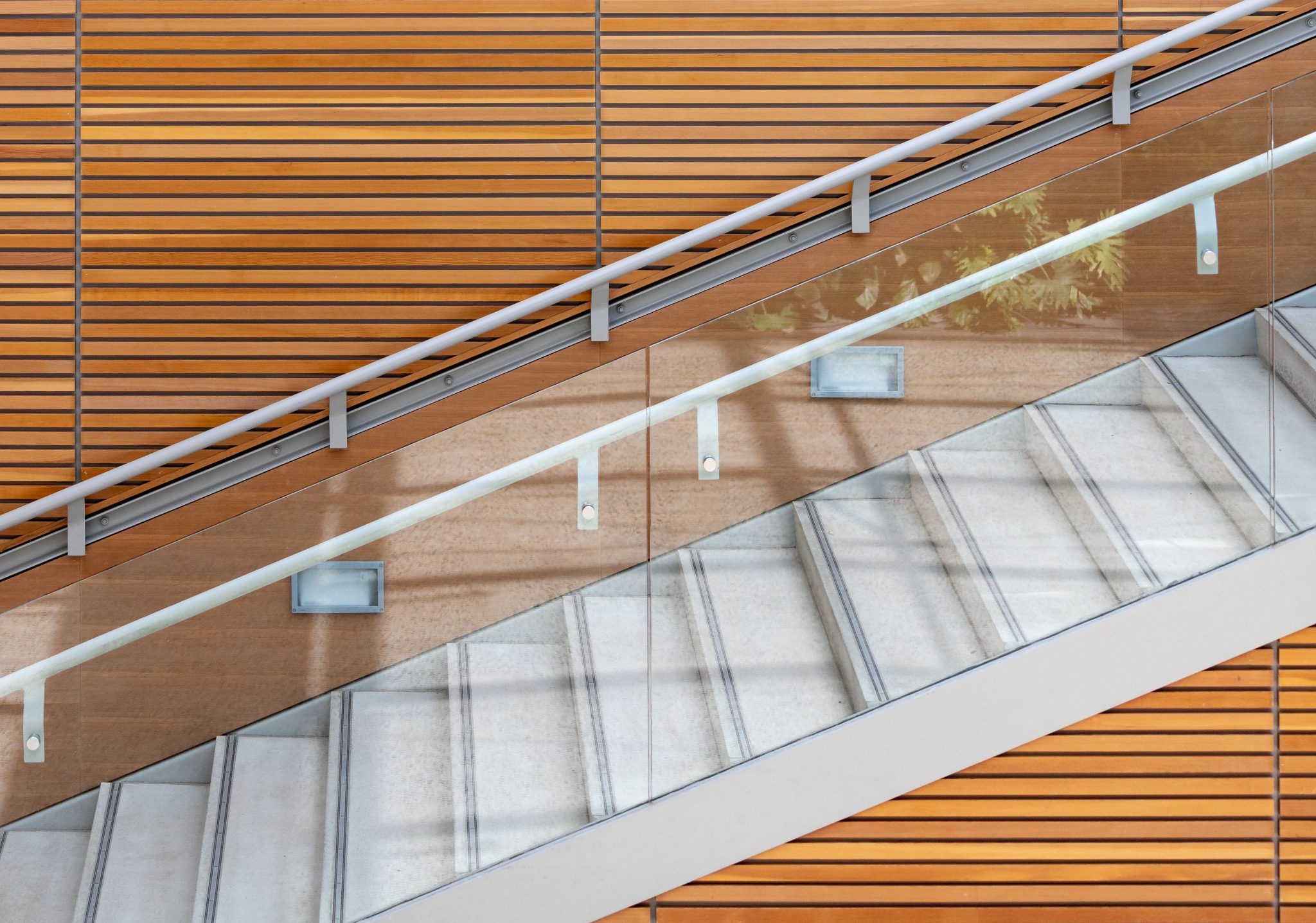
10. Modern Wooden Slat Wall with a Floating Concrete Staircase
To create a slatted wood wall like this one, follow these steps. Time estimate: 1 weekend. Material cost: $400-$900.
- Measure your wall and determine your desired slat width and spacing (e.g., 1.5″ slats with a 0.75″ gap).
- Calculate the total number of slats needed and purchase 1×2 lumber (or your chosen dimension), plus 10% extra.
- Sand and finish all your slats with stain or a clear sealant *before* installation. This is much easier than finishing them on the wall.
- Paint the backing wall a dark color (black or dark grey) to create depth in the gaps.
- Using a nail gun and construction adhesive, attach the slats to the wall, using a spacer block to ensure perfect, consistent gaps.
|
📋 Copy HEX 🔗 Share |
💡 Designer Tip
This combination works so well because it pairs a warm, organic texture with a cool, industrial one. The vertical lines of the wooden slatted wall create a sense of height and a beautiful, rhythmic pattern. Against this, the smooth, solid mass of the concrete steps provides a strong horizontal contrast. The clear glass railing is the quiet third element, adding safety without interrupting the powerful interplay between the two primary materials. The recessed lighting adds another layer, carving out the texture of the wood.
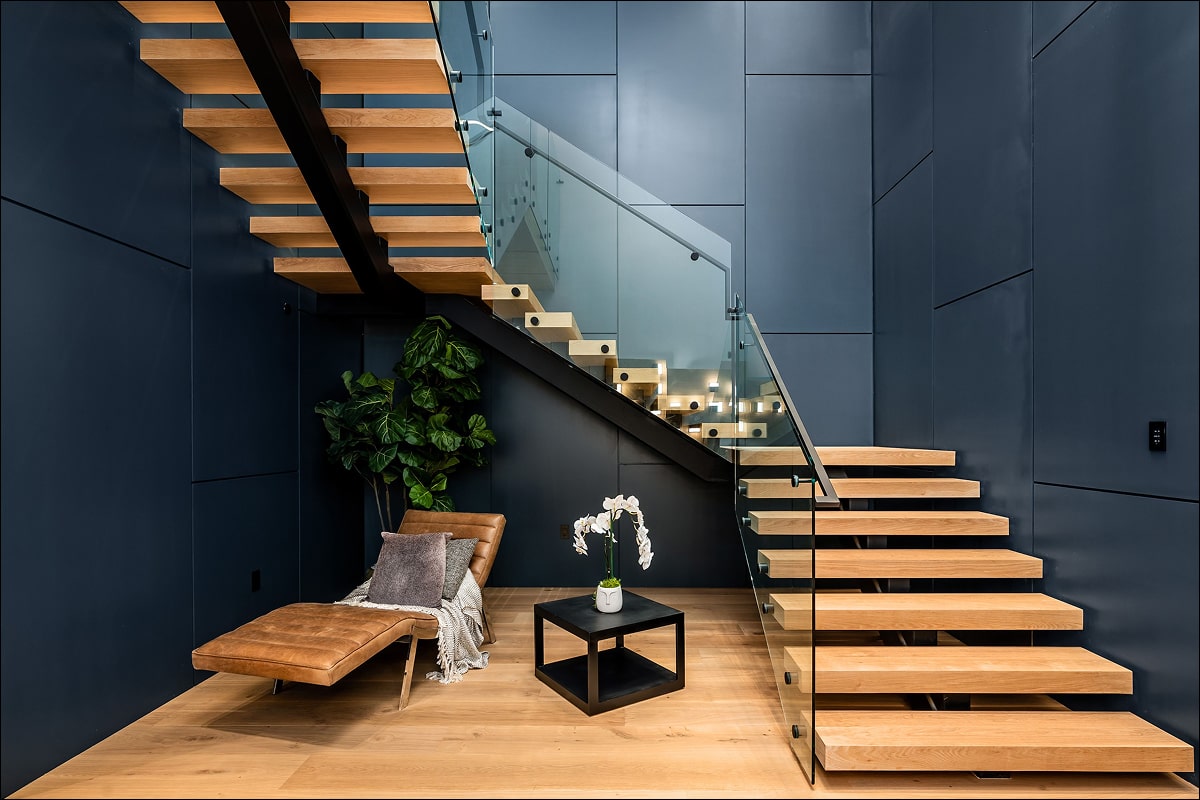
11. Floating Wood and Glass Staircase with Dark Paneled Walls
When using a dark, dramatic wall color like this deep blue-grey, lighting is everything. The key to success is layering. The open-tread design allows light from windows to pass through, but you should also incorporate dedicated artificial light. Consider washing the paneled wall with recessed ceiling spotlights (known as “wall washing”) to highlight the texture. Adding under-stair lighting, like the reading lamp for the chaise lounge, creates a cozy, functional nook and prevents the area from becoming a dark void.
|
📋 Copy HEX 🔗 Share |
💰 Budget Breakdown
This look is surging in popularity because it perfectly captures the “dark academia” and “moody interiors” trends we’re seeing all over Pinterest. After years of all-white-everything, people are craving color, depth, and a sense of history. The traditional wall paneling, given a modern twist with a dark, saturated color, feels sophisticated and timeless. Pairing it with a clean, modern floating staircase keeps the look from feeling stuffy and old-fashioned. It’s the perfect blend of classic and contemporary.
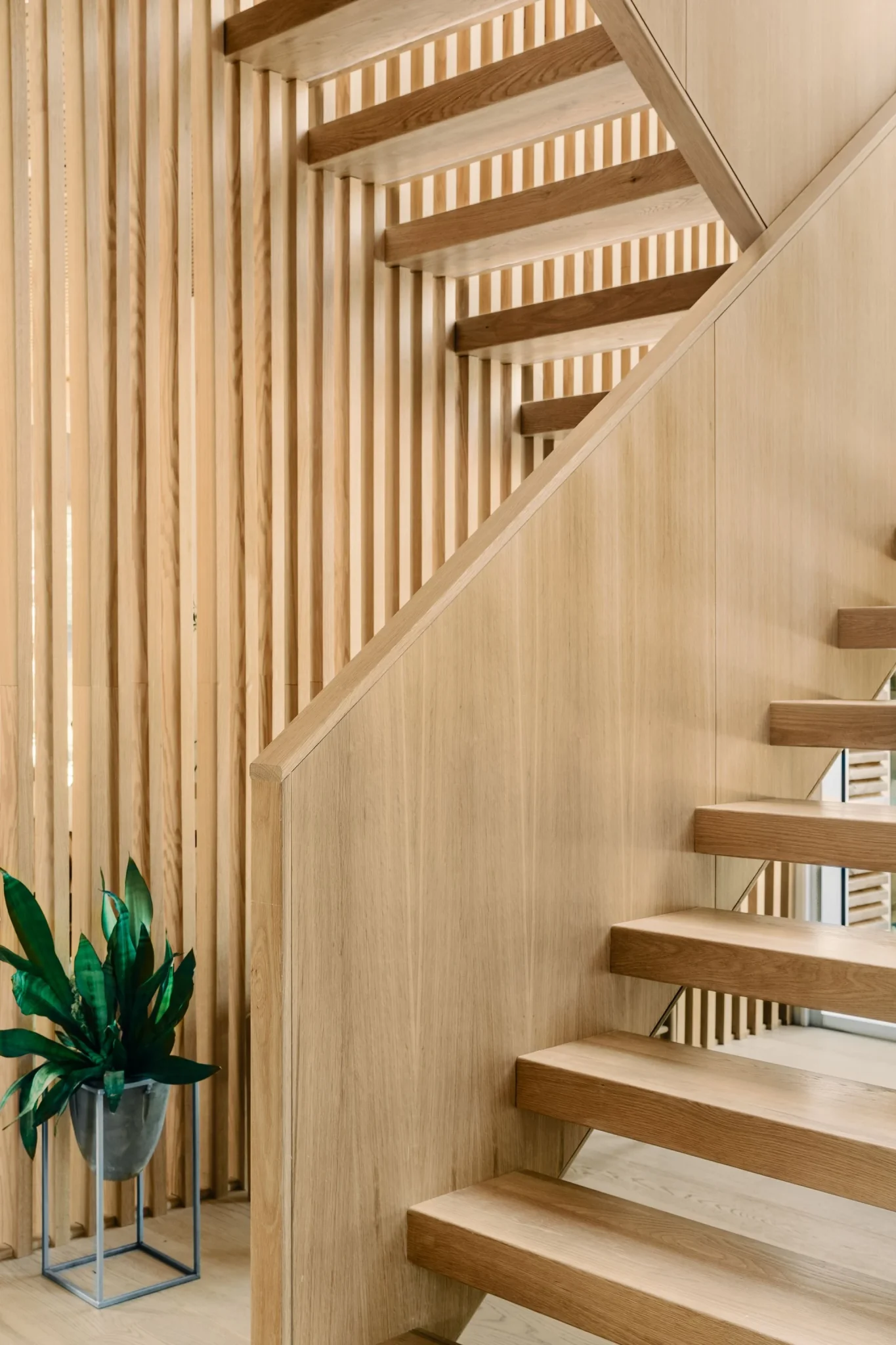
12. Floating Wooden Staircase with a Slatted Wood Screen
The defining element here is the vertical slatted wood screen. It serves multiple brilliant functions at once. It acts as a safety barrier for the staircase, a semi-transparent screen that divides the space without blocking light, and a stunning architectural feature in its own right. The repetition of the vertical lines creates a sense of height and texture that elevates the entire design from a simple staircase to a sculptural statement piece. Without the screen, the composition would feel far less complete and intentional. It’s a much more interesting solution than a solid wall or standard railing.
|
📋 Copy HEX 🔗 Share |
⚠️ Real Talk
A staircase designed with a solid wood banister wall on one side and a slatted screen on the other can create a feeling of compression or a “tunnel effect” as you ascend or descend. While visually striking, it dramatically reduces the open feeling typically associated with floating stairs. This is an important trade-off to consider. It provides more privacy and architectural interest but sacrifices the airy, spacious quality that many people seek with this type of stair. Also, dusting between all those slats is not a job for the faint of heart.
13. Modern Floating Staircase with Wood Slats and Integrated Lighting
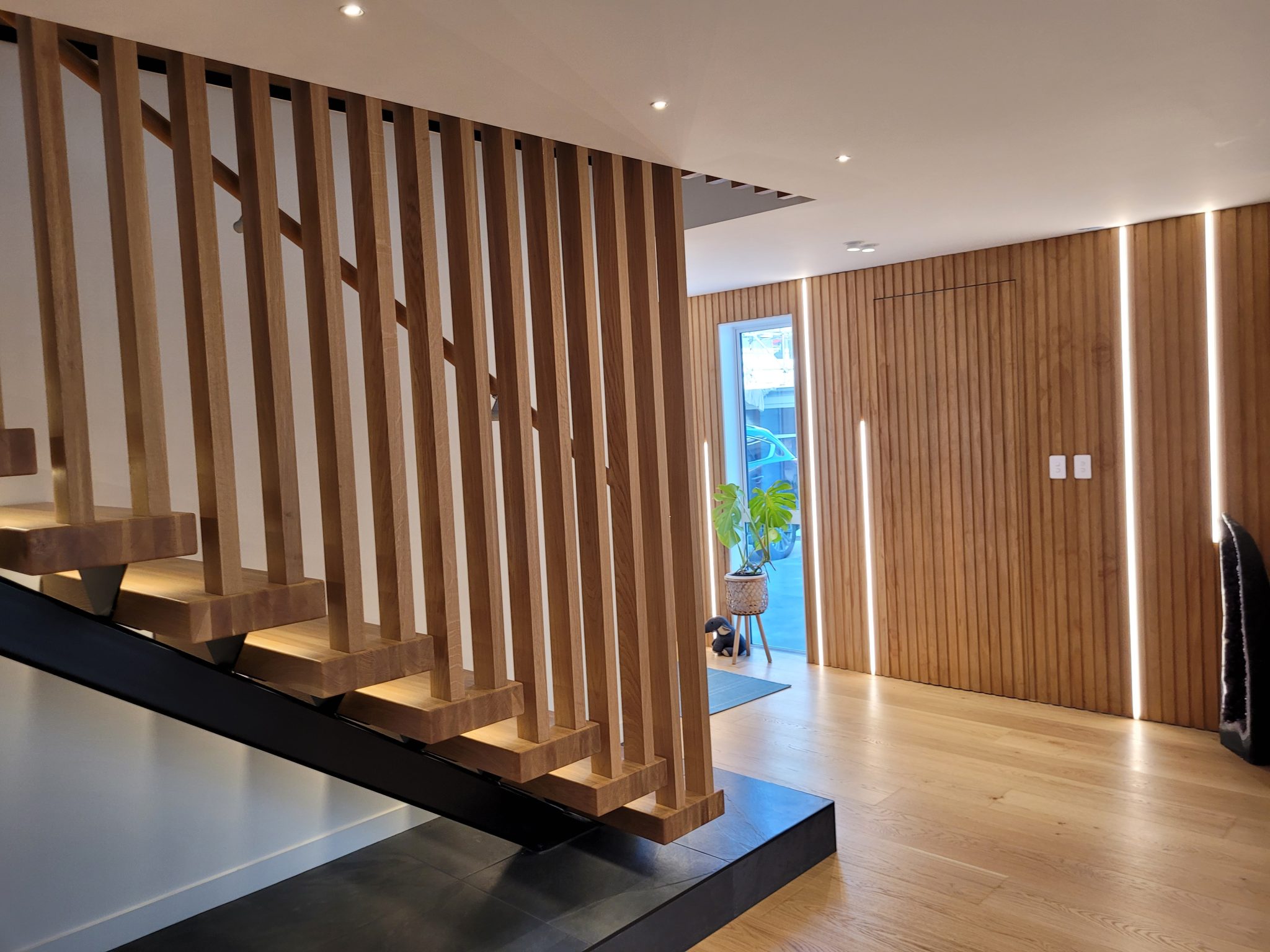
The success of this design lies in its cohesive use of a single material: light wood. It’s used for the stair treads, the vertical slat balustrade, and the wall paneling, creating a unified and immersive environment. The integrated vertical strip lighting is the masterstroke. It’s not just for illumination; it breaks up the monotony of the wood, adds a layer of depth, and accentuates the verticality of the slats, making the space feel taller and more dynamic. The dark metal stringer provides a subtle but necessary line of visual contrast.
|
📋 Copy HEX 🔗 Share |
✅ Before You Start
An all-wood interior like this is beautiful but requires specific care to stay looking its best. The primary enemy is moisture, which can cause wood to warp or stain. Be mindful of spills and humidity levels in the home. The second is UV light from windows, which can cause the wood to fade or change color over time. Consider UV-blocking film for any windows that cast direct sun on the staircase. For cleaning, avoid harsh, wet mops. A simple dusting or a lightly damp microfiber cloth is all that’s needed for the walls and slats.
14. Floating Wood and Glass Staircase with Textured Wall and Basket Decor
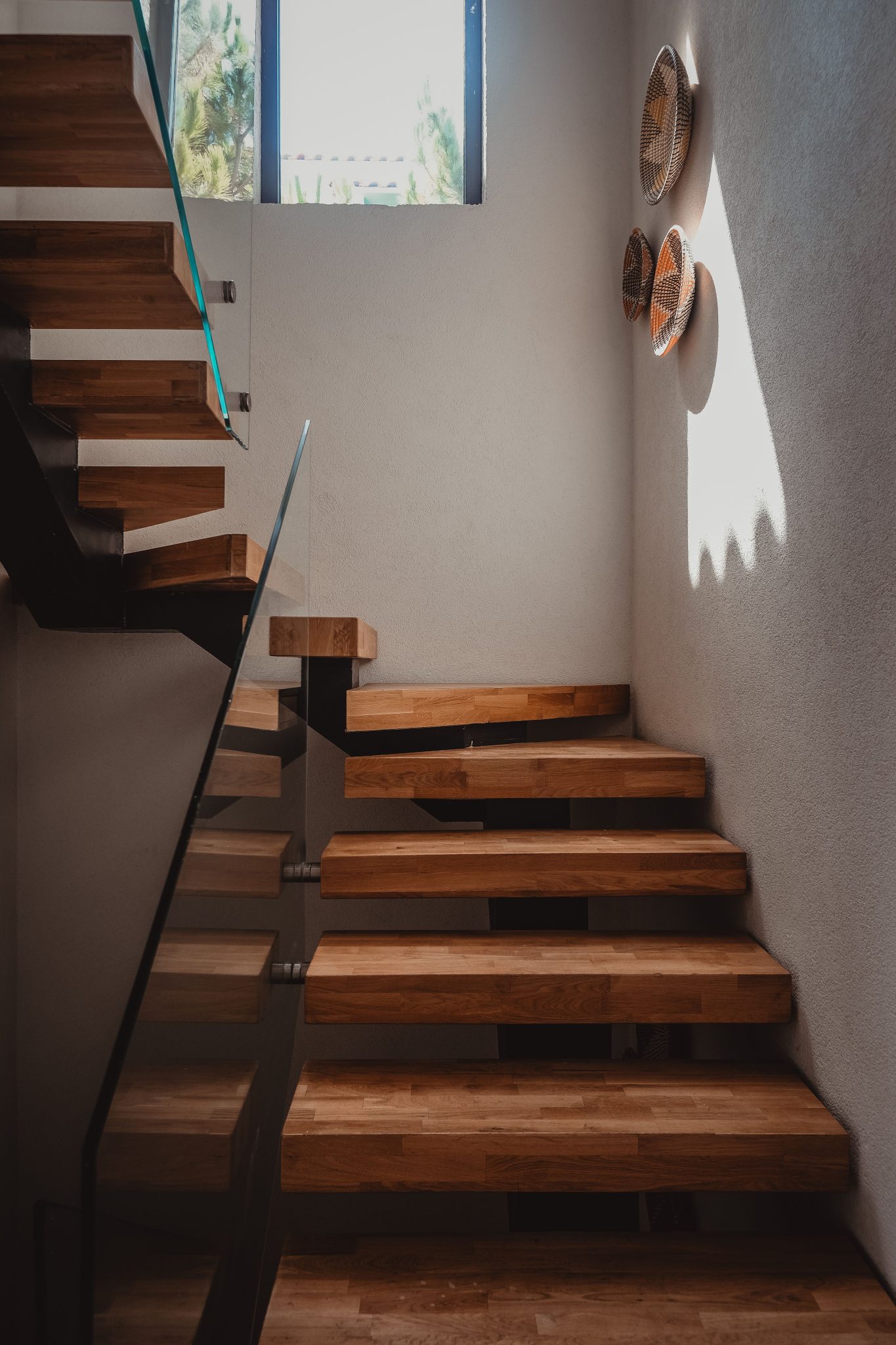
This look follows a warm, modern-boho formula: 40% structured wood and glass + 30% textured neutral backdrop + 30% natural, handcrafted decor. The clean lines of the floating staircase provide the modern architectural base. The light grey textured wall adds depth and a tactile quality that prevents the space from feeling flat. The final layer—the woven baskets and the strong pattern of natural light—infuses the scene with warmth, personality, and a touch of bohemian flair. It feels curated yet relaxed.
|
📋 Copy HEX 🔗 Share |
⭐ The One Thing
When decorating a large staircase wall, think in terms of threes or fives. A single piece of decor can look lost, but a well-arranged group creates a cohesive statement. Here, the three woven baskets are arranged in a loose triangle, which guides the eye naturally through the composition. Ensure there are varying sizes and textures within your group, but keep the color palette related. Hang the center of the grouping at eye level from the main floor—around 60 inches from the floor—not halfway up the stairs.
15. Minimalist Floating Wooden Treads Against a Raw Concrete Wall
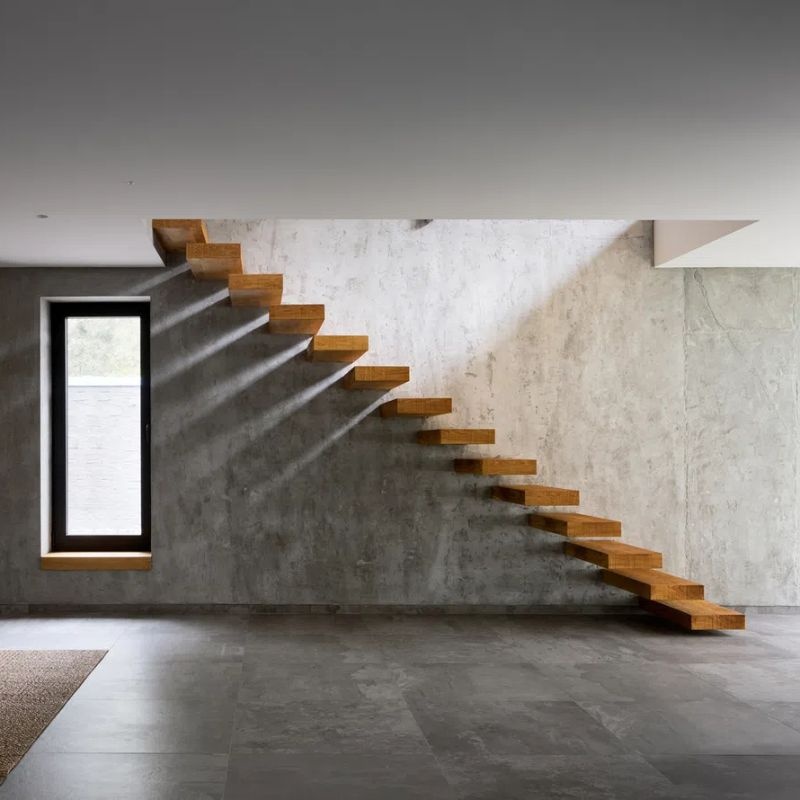
This is a powerful example of the “less is more” principle. The beauty of this design comes from what isn’t there: no visible stringer, no railing, no complicated details. The entire focus is on the simple, powerful contrast between the warm, organic wood treads and the cool, industrial texture of the raw concrete wall. The cantilevered design creates a sense of magic and lightness, as if the steps are simply emerging from the stone. The striped shadows from the window add a dynamic, graphic element to the composition.
|
📋 Copy HEX 🔗 Share |
📐 Style Math
A real board-formed concrete wall is expensive. To get a similar industrial vibe for much less, you can use concrete-look porcelain tiles or wall panels, which are surprisingly realistic. For an even more budget-friendly option, consider a DIY skim coat approach. You can apply a thin layer of Ardex Feather Finish or a similar concrete resurfacer over drywall, using a trowel to create texture. You can get the materials for a whole wall for under $150. Pair it with simple, thick wood shelves from IKEA or Target, mounted on hidden brackets, to mimic floating treads.
16. Modern Black Floating Staircase with a Minimalist Handrail
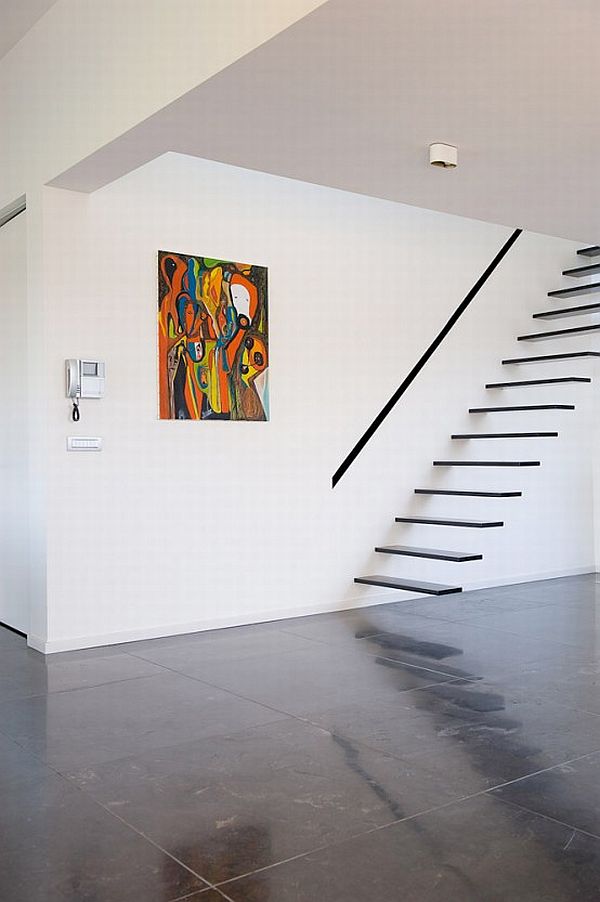
To achieve this ultra-minimalist floating tread look, the magic happens inside the wall. Time: 2-3 days (professional installation). Cost: $8,000 – $20,000.
- First, the wall is opened up to expose the studs.
- A heavy-duty steel stringer, a long beam with welded-on steel posts, is securely bolted to the structural studs of the wall.
- New, thicker drywall (often 5/8″) is installed over the stringer, with only the support posts protruding.
- Each tread, which is actually a hollow box or a thick slab with a hole drilled in the back, is slid over a corresponding steel post and secured.
- Finally, the wall is patched, sanded, and painted for a seamless finish where the treads appear to grow from the wall.
|
📋 Copy HEX 🔗 Share |
📏 Scale Guide
A staircase with no risers and a minimal handrail raises some very real safety and building code questions. While visually stunning, this exact design might not be legal in all jurisdictions. Many codes require balusters spaced so that a 4-inch sphere cannot pass through, to protect children. Open risers can also be a hazard. It’s absolutely critical to check your local building codes *before* you fall in love with this look. A designer or architect can help you adapt the aesthetic to meet safety requirements, perhaps with a glass guardrail as seen in Idea #1.
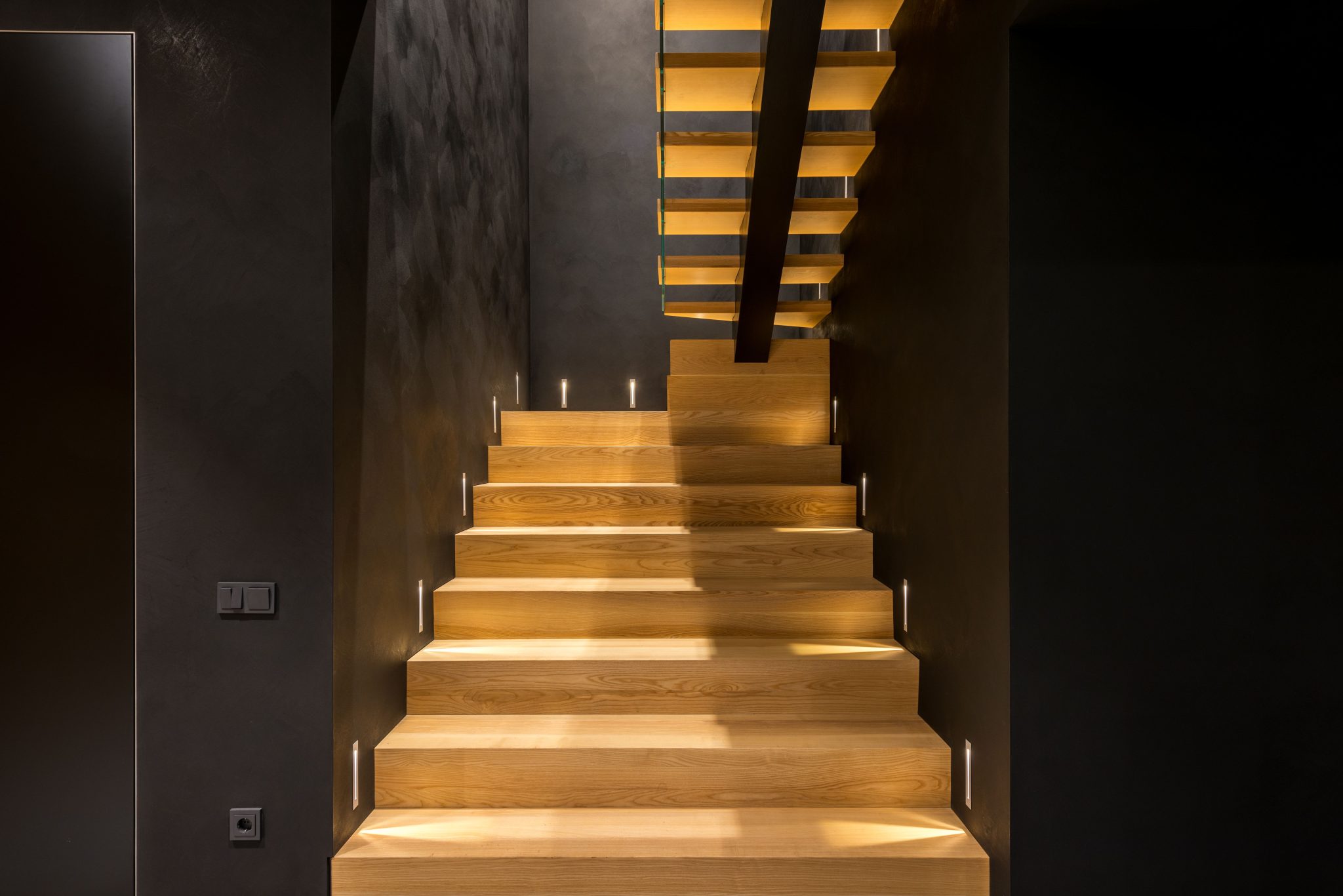
17. Illuminated Floating Light Wood Staircase with Glass Railing
The integrated wall lighting is the single element that transforms this staircase from simple to spectacular. Without it, the light wood treads against the dark walls would be a nice, but flat, contrast. The recessed strip lights do more than just illuminate the path for safety; they sculpt the architecture. Each glowing line defines its tread, creating a rhythmic, cascading waterfall of light. It introduces a layer of drama and sophistication that makes the entire experience of using the stairs feel like an event. This is a design where the lighting *is* the main feature.
|
📋 Copy HEX 🔗 Share |
🧹 Maintenance Reality
This design is particularly effective in a narrow or enclosed stairwell, where it can feel a bit like a tunnel. A typical width for such a staircase is 36 to 42 inches. The lighting is crucial in these tighter dimensions, as it creates a sense of visual expansion and prevents the dark walls from feeling claustrophobic. The glass railing is also key, as a solid or even spindled railing would further constrict the perceived space. It’s a perfect solution for adding a grand feature to a more compact architectural footprint.
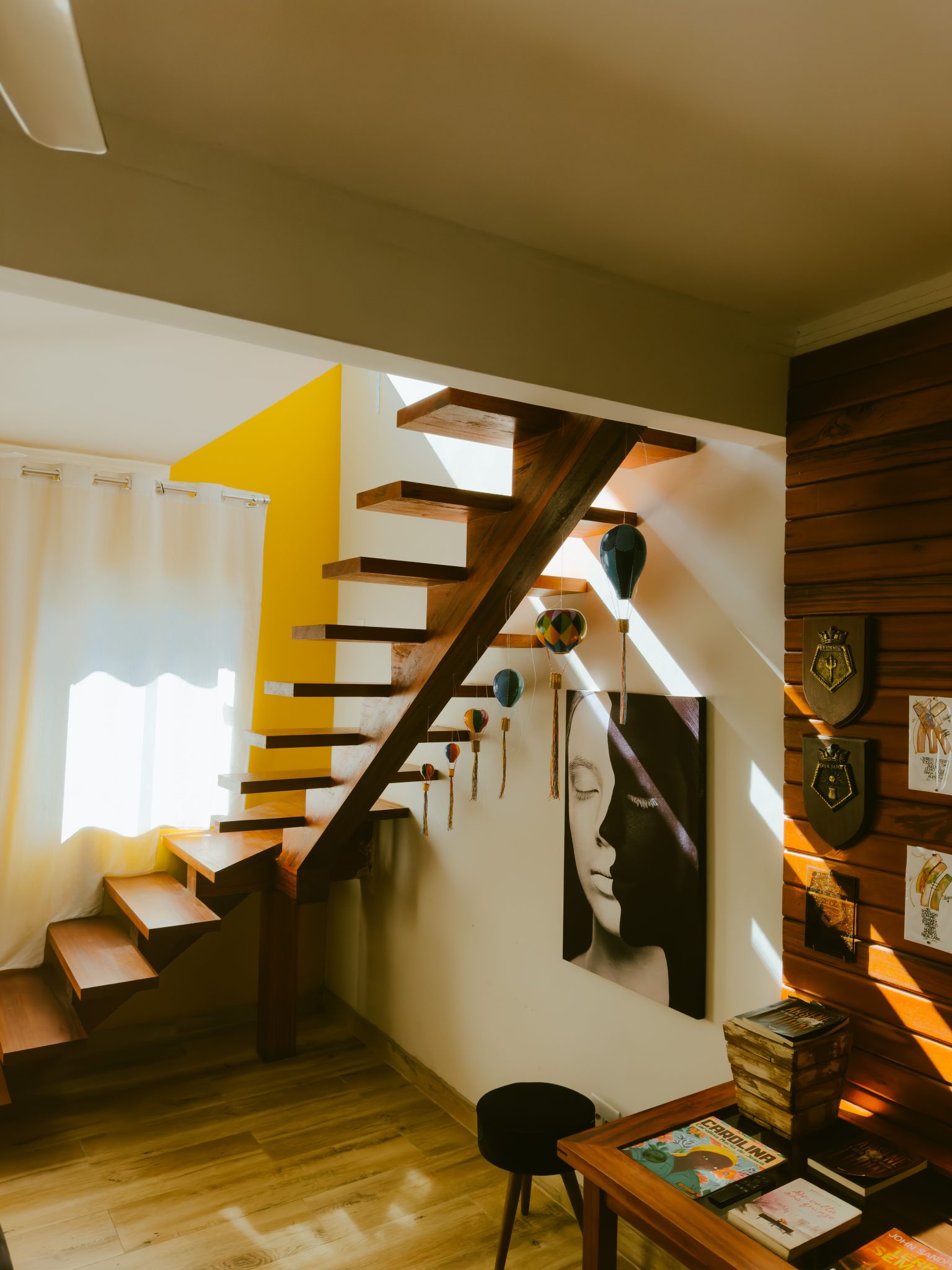
18. Floating Wood Staircase with a Sunny Yellow Accent Wall
The magic here is pure, unadulterated joy. The bold, sunny yellow accent wall is a shot of adrenaline in an otherwise calm, modern space. It works because it’s a confident and unapologetic choice. The warmth of the yellow beautifully complements the natural wood tones of the staircase, creating a palette that feels energetic and inviting. The strong shadows cast by the sunlight add another layer of graphic interest, turning the entire wall into a dynamic piece of art. The floating design of the stairs ensures that as much of that happy yellow is visible as possible.
|
📋 Copy HEX 🔗 Share |
🎯 What Makes It Work
You can capture this cheerful energy on a shoestring budget. A gallon of high-quality paint for an accent wall costs around $50-$80. That’s it. That’s the entire investment for the biggest impact element. For the decor, browse thrift stores or sites like Etsy for quirky, personal items like the hot air balloon ornaments shown here. The key isn’t spending a lot of money, but finding pieces that bring a sense of fun and personality to the space. You can get this entire vibe for well under $200 with a little bit of painting and thrifting.
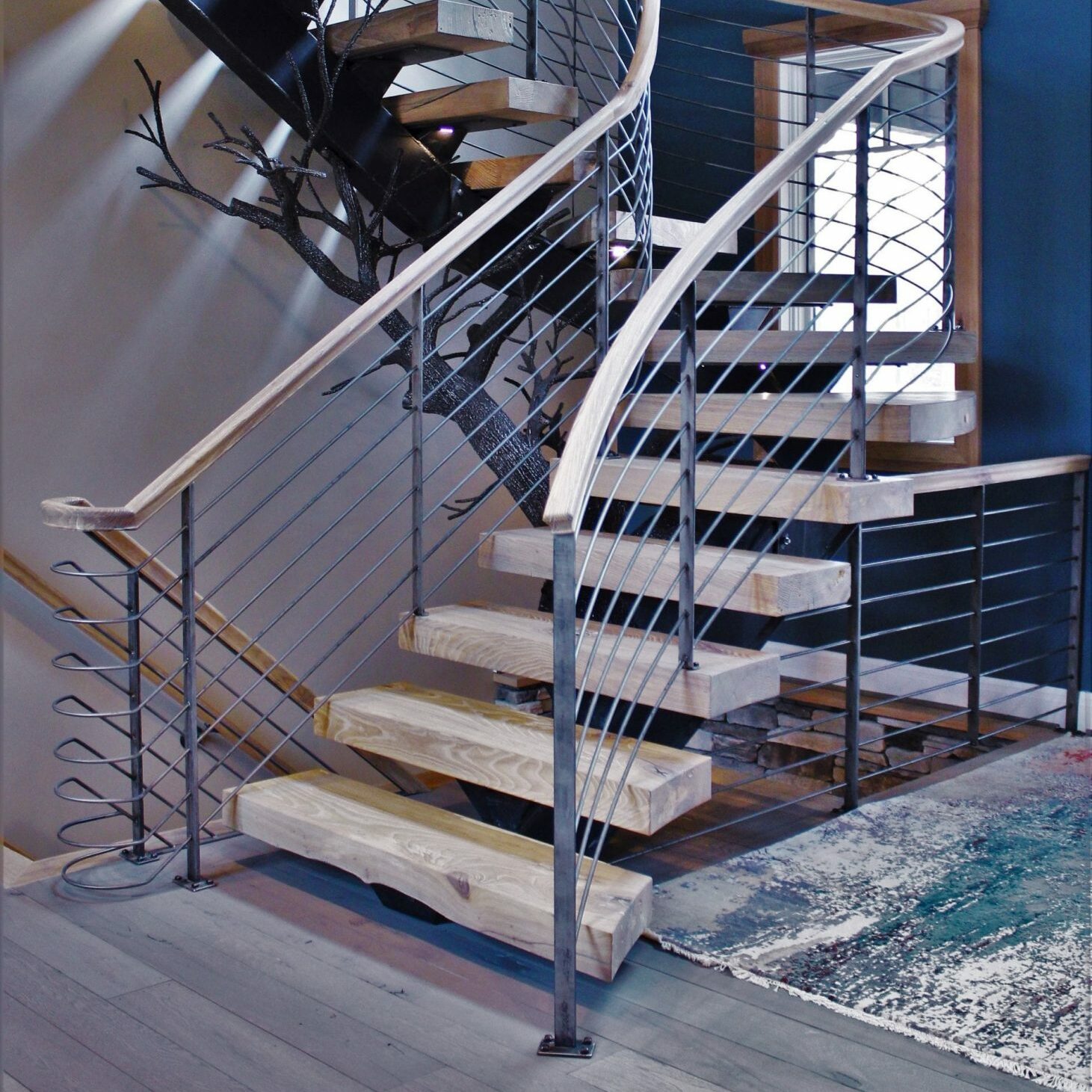
19. Floating Wood Slab Staircase with Curved Wire Railing and Tree-Like Art
This staircase achieves its unique organic-modern feel with a formula of: 40% Raw Nature + 40% Refined Craft + 20% Industrial Edge. The thick, natural-edge wood slabs provide the raw, rustic element. The beautifully curved handrail and the delicate wire balusters represent refined craftsmanship. Finally, the dark metal supports and the branch-like wall sculpture introduce a touch of dark, industrial weight. This blend of styles feels layered and sophisticated. See how a similar branch motif is used in Idea #20 for a more modern take.
|
📋 Copy HEX 🔗 Share |
🔥 Trending Context
Live-edge or “slab” wood treads are stunning, but they are not as uniform as standard milled lumber. The natural variations in thickness, width, and edge profile mean that installation requires a high degree of skill and customization. They can also be more susceptible to warping or cracking if not properly dried and sealed. Be prepared for a more intensive and costly installation process compared to standard treads. And the irregular surface, while beautiful, might be more of a trip hazard for some family members.
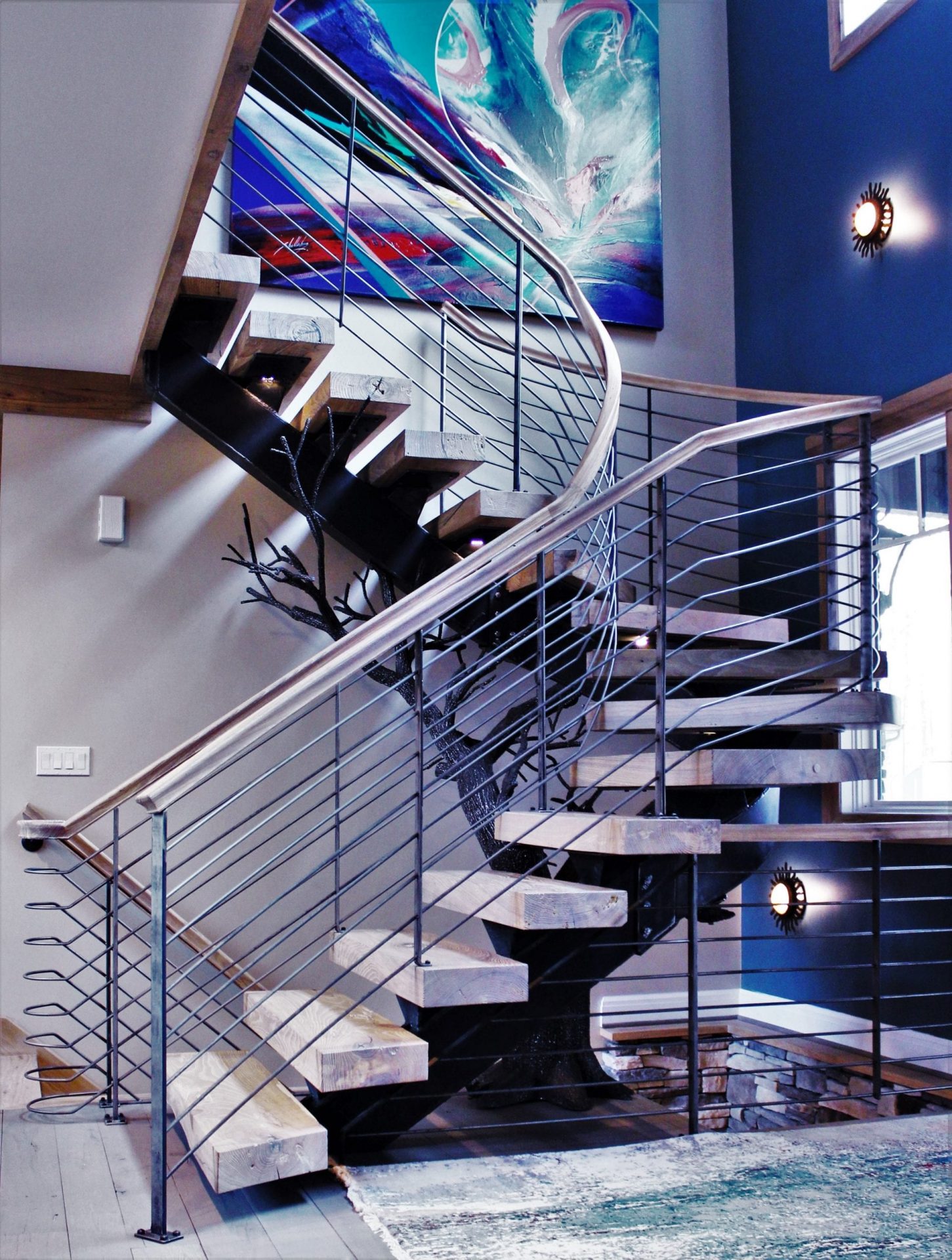
20. Modern Curved Floating Staircase with a Branch-Like Support
The undeniable centerpiece of this entire design is the incredible, branch-like metal support structure. It’s not just holding up the stairs; it IS the staircase. This sculptural element turns a functional object into a breathtaking piece of art. It’s a powerful, organic form that provides a dramatic contrast to the smooth, clean lines of the wooden treads and the simple rod railing. If you replaced this with a standard stringer, 90% of the design’s personality and wow-factor would disappear instantly. It’s a testament to how structural elements can become art.
|
📋 Copy HEX 🔗 Share |
🔧 How-To Brief
When you have a dominant, sculptural feature like this staircase, the surrounding decor should play a supporting role, not compete for attention. Notice how the wall art, while colorful, is abstract and its palette complements the deep blue wall and warm wood. The sunburst sconces have a unique shape but are small in scale. Your rule of thumb should be: one hero per room. Let the magnificent staircase be the star and choose lighting, art, and furniture that enhance it rather than fight with it.
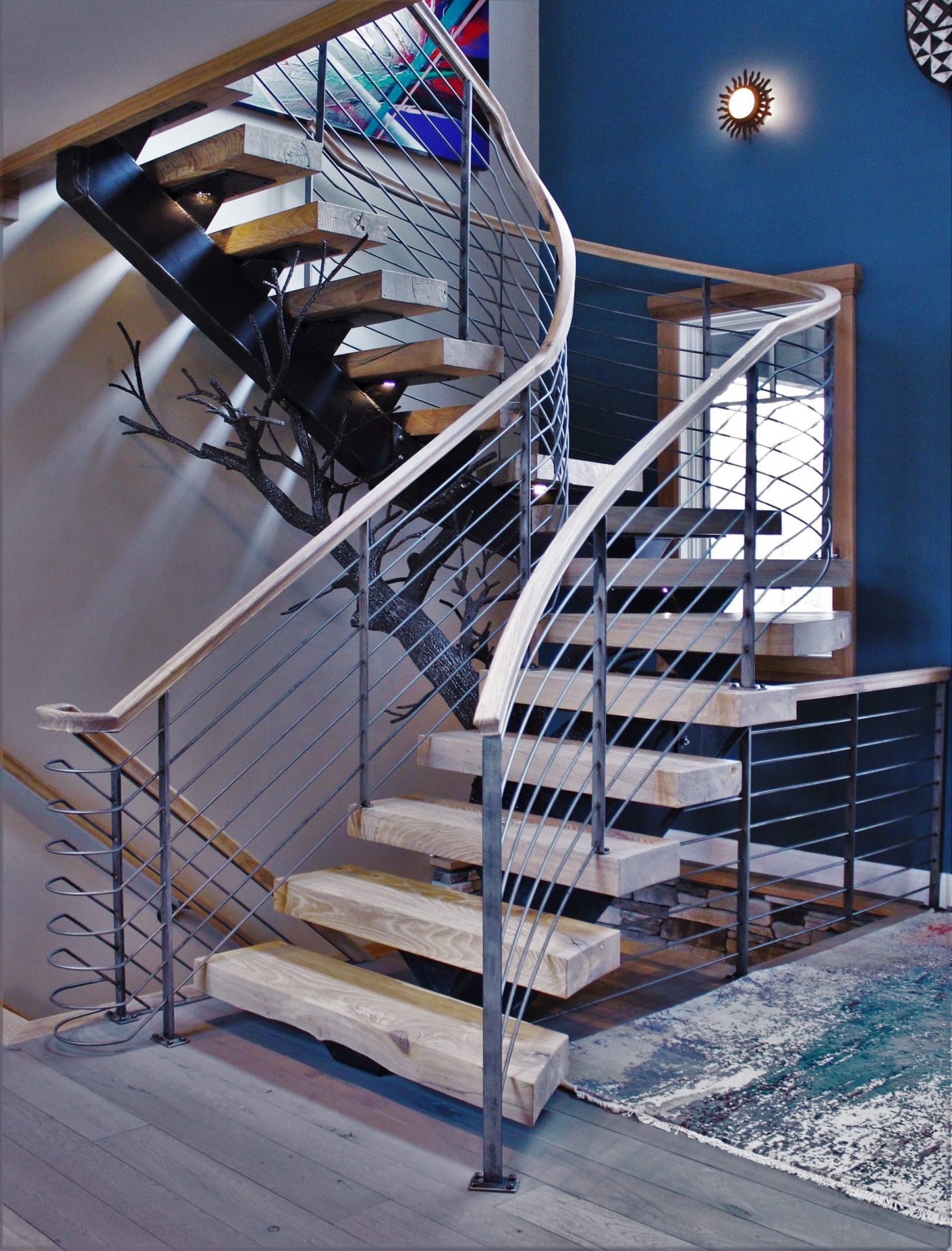
21. Curved Floating Staircase with Natural Wood Treads and Cable Railings
- Check Local Codes: Horizontal cable railings are a major point of contention in building codes. Many areas restrict them because they can create a “ladder effect” for small children. Verify that this style is permitted in your municipality before proceeding.
- Confirm Wall Structure: A curved staircase like this exerts complex forces on the supporting wall. Ensure an engineer signs off that your wall framing is sufficient to carry the load of the hidden stringer and treads without flex or failure.
- Budget for Complexity: Curved stairs and cable railings are both premium features. Acknowledge that this combination will be significantly more expensive than a straight staircase with standard balusters, often by 50-100%.
|
📋 Copy HEX 🔗 Share |
💸 Get This Look For Less
Cable railings look sleek and low-maintenance, but they have a specific upkeep need: tension. Over time, and with changes in temperature, the metal cables can stretch and sag, which is both a safety issue and an aesthetic problem. Plan to check and tighten the cables annually. This is usually done with a small wrench or a specialized tool at the end fittings. Also, the cables themselves should be wiped down periodically, as dust and grime can accumulate on them more than you’d think.
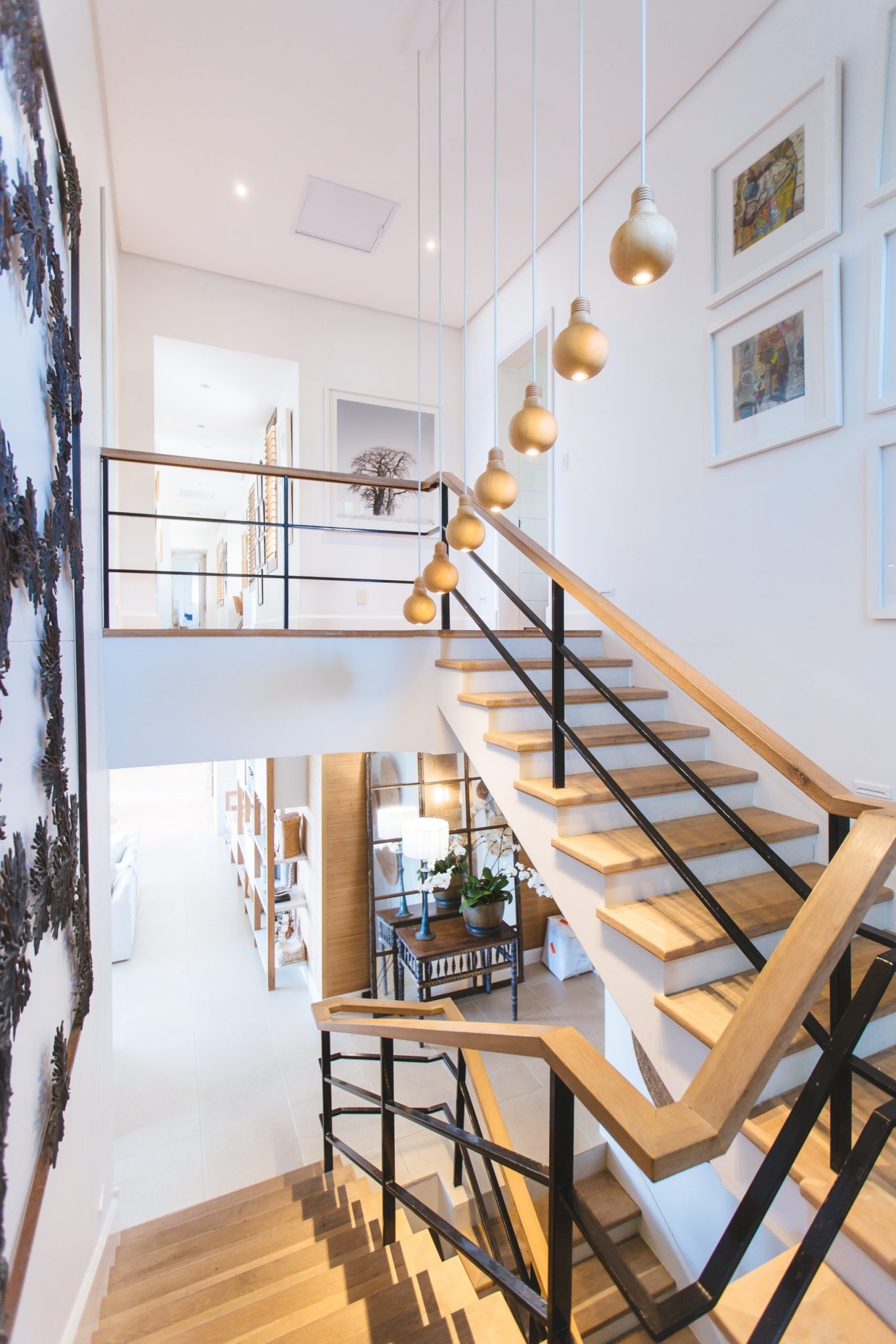
22. Modern Wooden Open Staircase with Black Metal and Pendant Lights
This multi-level design works because of its strong vertical emphasis. The black metal balusters and the descending cluster of pendant lights create powerful vertical lines that draw the eye up and down, connecting the different floors of the home. This creates a sense of soaring height and unity within the open space. The warmth of the light wood treads and handrails provides a necessary contrast to the black metal and white walls, keeping the design from feeling too stark or cold. The whole arrangement feels like a cohesive, illuminated sculpture.
|
📋 Copy HEX 🔗 Share |
💡 Designer Tip
An open, multi-story staircase like this demands significant volume. It is best suited for homes with a central atrium or an open-plan design where the staircase can be a focal point without cramping individual rooms. The ceiling height needs to accommodate the drama of the descending pendants—a minimum of 18-20 feet of total vertical space is ideal for this kind of installation. In a home with standard 8 or 9-foot ceilings, the effect would be lost and feel cluttered.
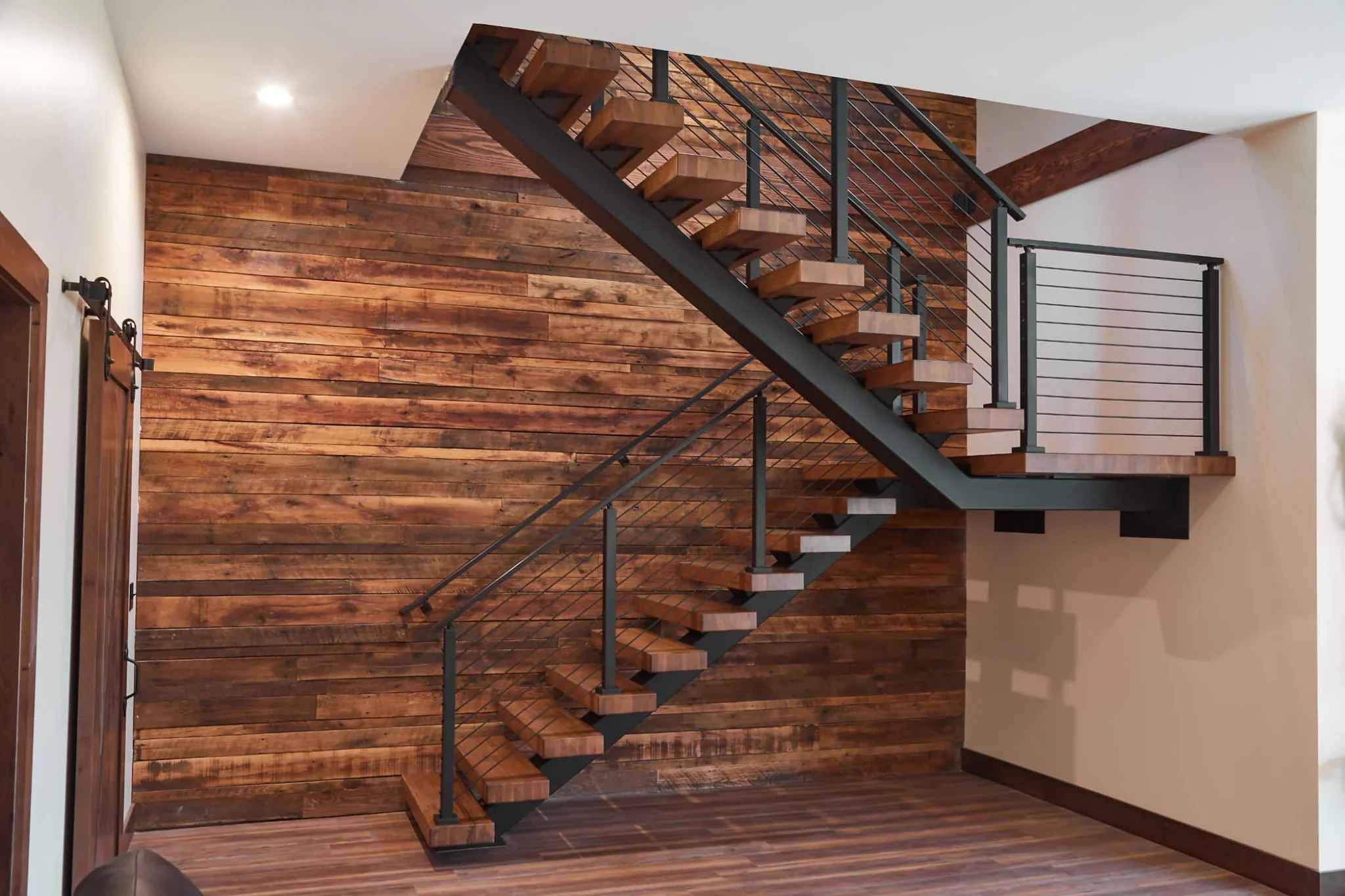
23. Rustic Floating Staircase with Industrial Cable Railing
The formula for this popular rustic-industrial look is a simple one: 50% warm, weathered wood + 40% matte black metal + 10% tensioned steel cable. The reclaimed wood accent wall and matching treads provide a strong dose of rustic texture and history. The black metal stringer and railing posts ground the design with a modern, industrial edge. Finally, the thin horizontal cables add a touch of technical precision and keep the view of the beautiful wood wall as open as possible. It’s a balanced mix of old and new, raw and refined.
|
📋 Copy HEX 🔗 Share |
💰 Budget Breakdown
As mentioned in Idea #21, horizontal cable railings can be a building code issue in many areas due to the “ladder effect” they can create for children. It is absolutely essential to consult your local building department before committing to this railing style. Some regions may permit them if the cables are spaced very closely together (e.g., less than 3 inches apart) or if they are non-flexible vertical cables instead. Don’t risk having to tear out your beautiful new railing; do the research first.
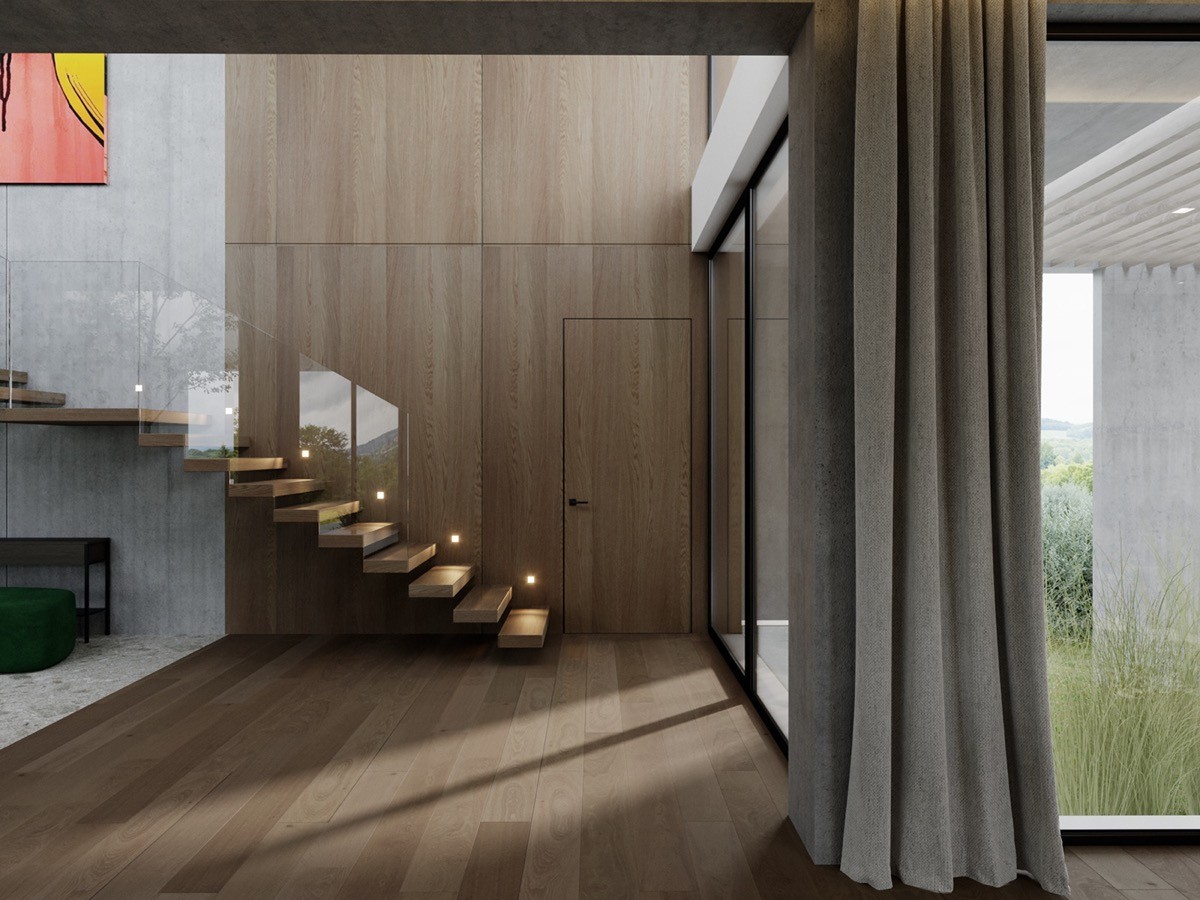
24. Floating Wood Tread Staircase with Glass Railing and Integrated Wall Lights
The secret to successful staircase lighting like this is subtlety and placement. Notice the lights are small, square, and placed low—aligned with every second or third tread. This provides perfect, glare-free illumination for safety without overwhelming the serene design. When selecting fixtures, choose a low-lumen, warm-temperature (2700K-3000K) LED. You want a gentle glow, not a runway landing strip. Placing them on a dimmer switch is always a pro move, allowing you to adjust the mood from functional to ambient.
|
📋 Copy HEX 🔗 Share |
⚠️ Real Talk
This design showcases a masterful blend of textures that all exist within a tight, neutral color palette. You have the smooth, clear glass; the warm, grained wood of the treads and wall paneling; the cool, solid surface of the concrete wall; and the soft, woven fabric of the curtains. Because the colors are all muted (light wood, grey, charcoal), the different textures can have a conversation without shouting. This creates a space that feels rich, layered, and sophisticated, but also calm and uncluttered.
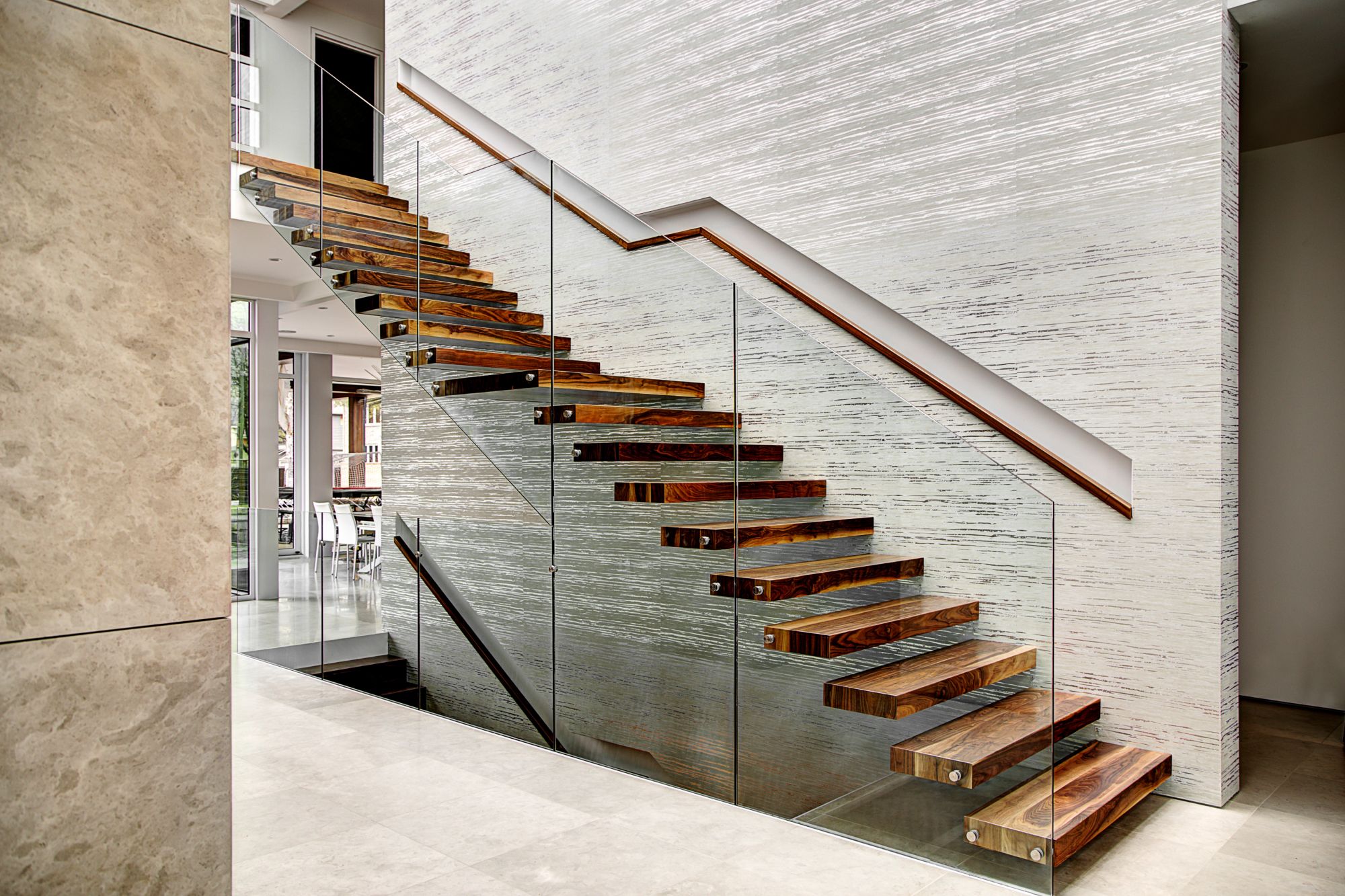
25. Modern Floating Staircase with Thick Wood Treads and a Textured Wall
- Thick wood treads (materials only): $2,000 – $5,000
- Glass panel railing system: $4,000 – $9,000
- Custom wood handrail: $1,500 – $3,000
- Wall texture (professional application): $1,000 – $2,500
- TOTAL: $8,500 – $19,500 (plus installation)
- Budget alternative: Use standard 2-inch thick wood treads instead of the extra-thick ones to save up to 40% on wood costs. For the wall, you can achieve a similar textured look with DIY-friendly Roman clay or limewash paint for a few hundred dollars.
|
📋 Copy HEX 🔗 Share |
✅ Before You Start
The single element that gives this staircase its substantial, high-end feel is the thickness of the wooden treads. These aren’t standard 1.5-inch boards; they appear to be 3- to 4-inch solid slabs of wood. This visual weight grounds the “floating” concept and communicates quality and permanence. It turns the staircase from a lightweight assembly into a piece of fine furniture. If you were to use thinner treads, the design would still be modern, but it would lose its commanding, architectural presence.
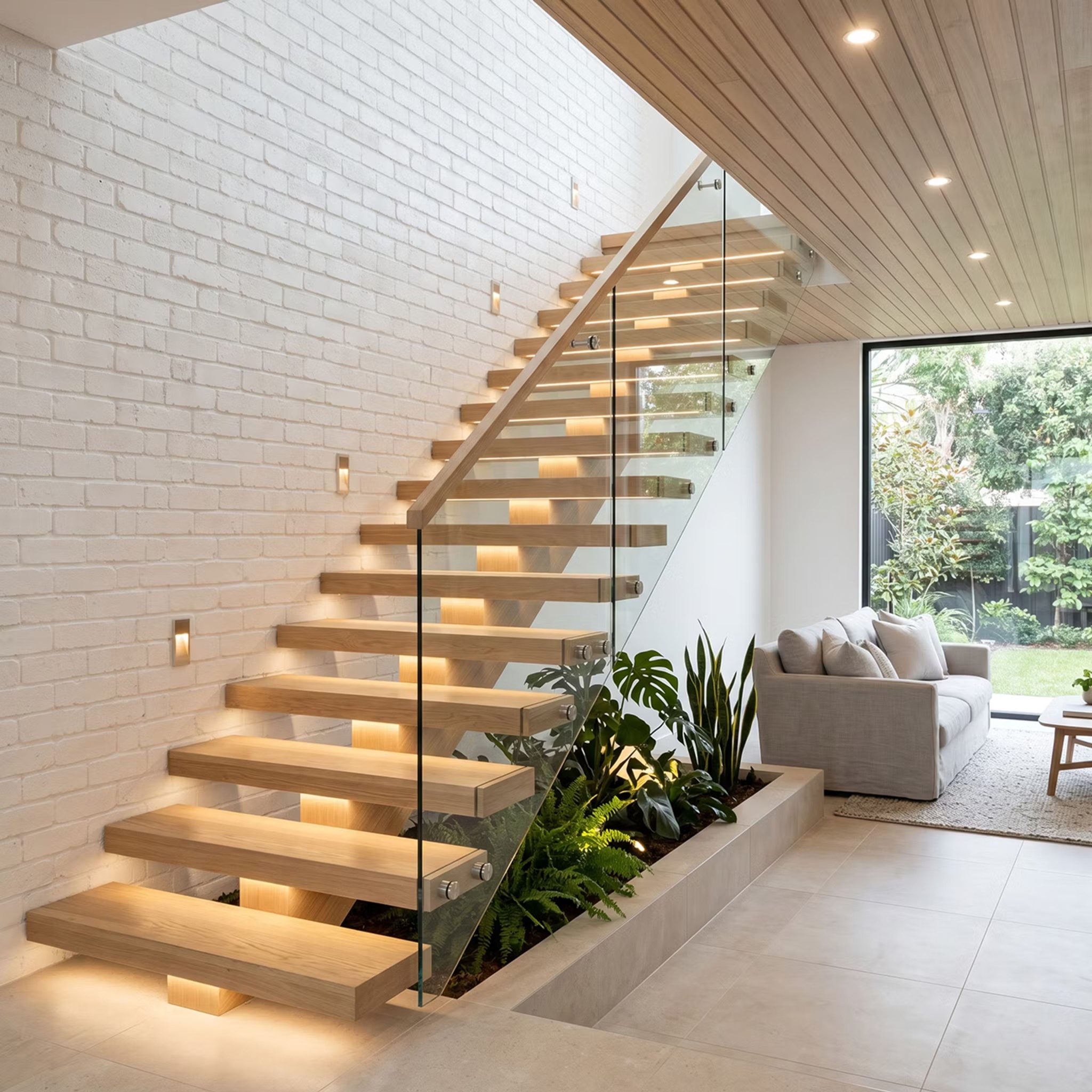
26. Light Oak Floating Staircase with Integrated Planter and Brick Wall
To create a built-in planter at the base of your stairs, you’ll need careful planning. Cost: $800 – $2,500. Time: 2 days.
- Frame the planter box using 2x4s, essentially creating a short wall.
- Line the inside of the frame COMPLETELY with a heavy-duty waterproof membrane, like a shower pan liner. Overlap all seams and run the liner up the full height of the interior walls. This step is non-negotiable.
- Install a drainage system. This could be a small pipe that leads to a floor drain or an exterior wall.
- Cover the exterior of the framed box with drywall or backer board, then finish to match your walls.
- Fill the bottom with a layer of gravel for drainage, then add your potting soil and plants.
- Consider adding low-voltage lighting for a professional touch.
|
📋 Copy HEX 🔗 Share |
⭐ The One Thing
This design feels so fresh and alive because it masters the blend of modern architecture and biophilic design (the integration of nature). The clean lines of the light oak treads, under-tread lighting, and glass railing are pure modernism. But the painted white brick wall adds a touch of rustic texture, and the built-in planter full of lush greenery injects life and organic softness directly into the structure. This fusion of sleek and natural elements creates a space that feels both stylishly current and fundamentally calming.
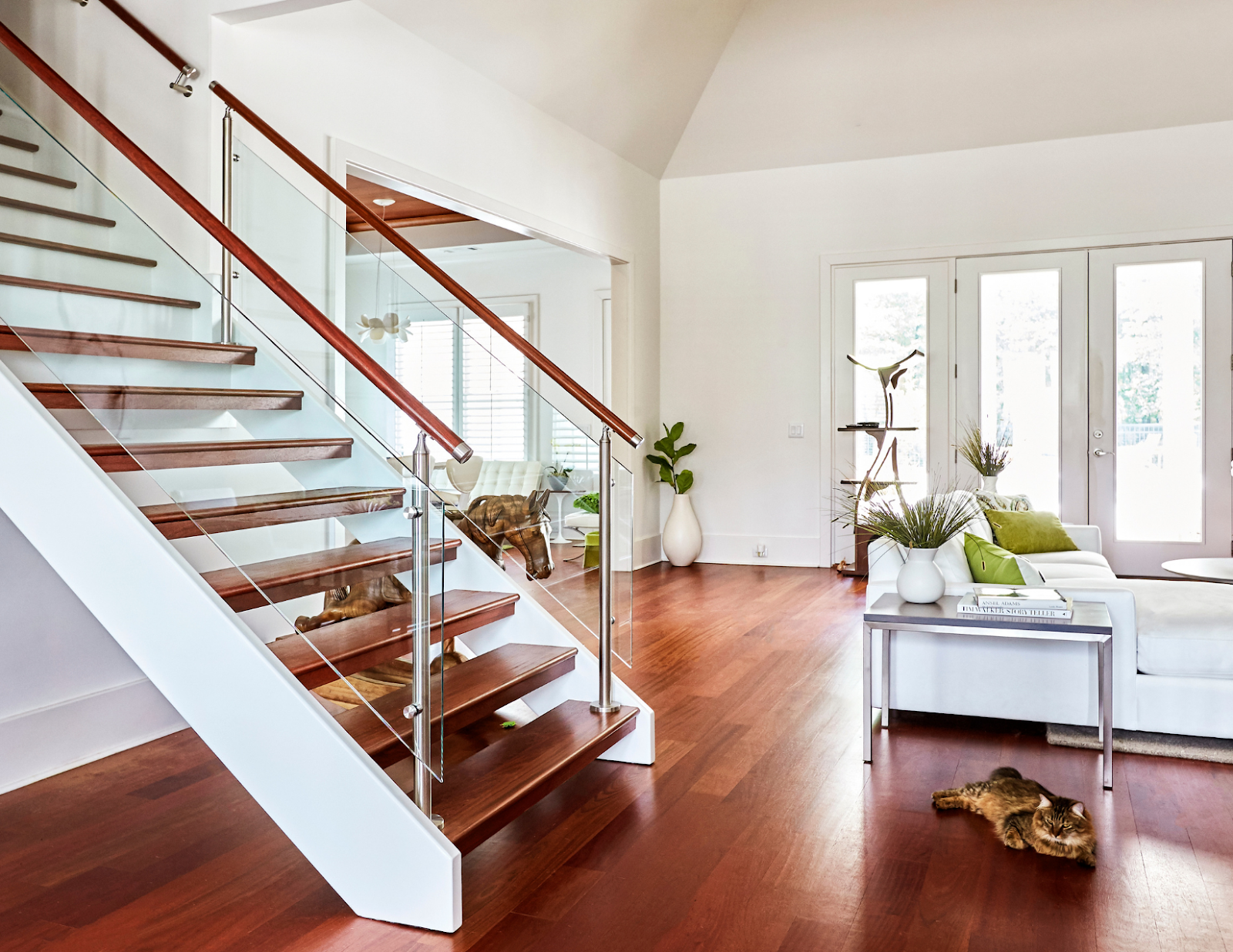
27. Modern Floating Staircase with Mixed Wood and Metal Railing
The visual recipe here is all about layering materials: 60% Crisp White + 30% Warm Dark Wood + 10% Polished Stainless Steel. The white stringer and walls create a bright, clean canvas that allows the other materials to pop. The dark wood of the treads and handrail adds warmth, richness, and a connection to traditional craftsmanship. The stainless steel posts and clamps provide a final layer of sleek, modern-industrial detail. The result is a look that feels balanced, bright, and sophisticated.
|
📋 Copy HEX 🔗 Share |
📐 Style Math
Mixing woods in a design can be tricky. Here, the dark red-brown wood of the staircase is successful because it is paired with a completely different wood tone on the floor. A key rule is to make the contrast intentional. Either match the wood tones almost exactly, or choose tones that are clearly and distinctly different, like here. The danger zone is trying to match and failing, resulting in two woods that are just slightly “off” from each other, which can look like a mistake. When in doubt, go for more contrast, not less.
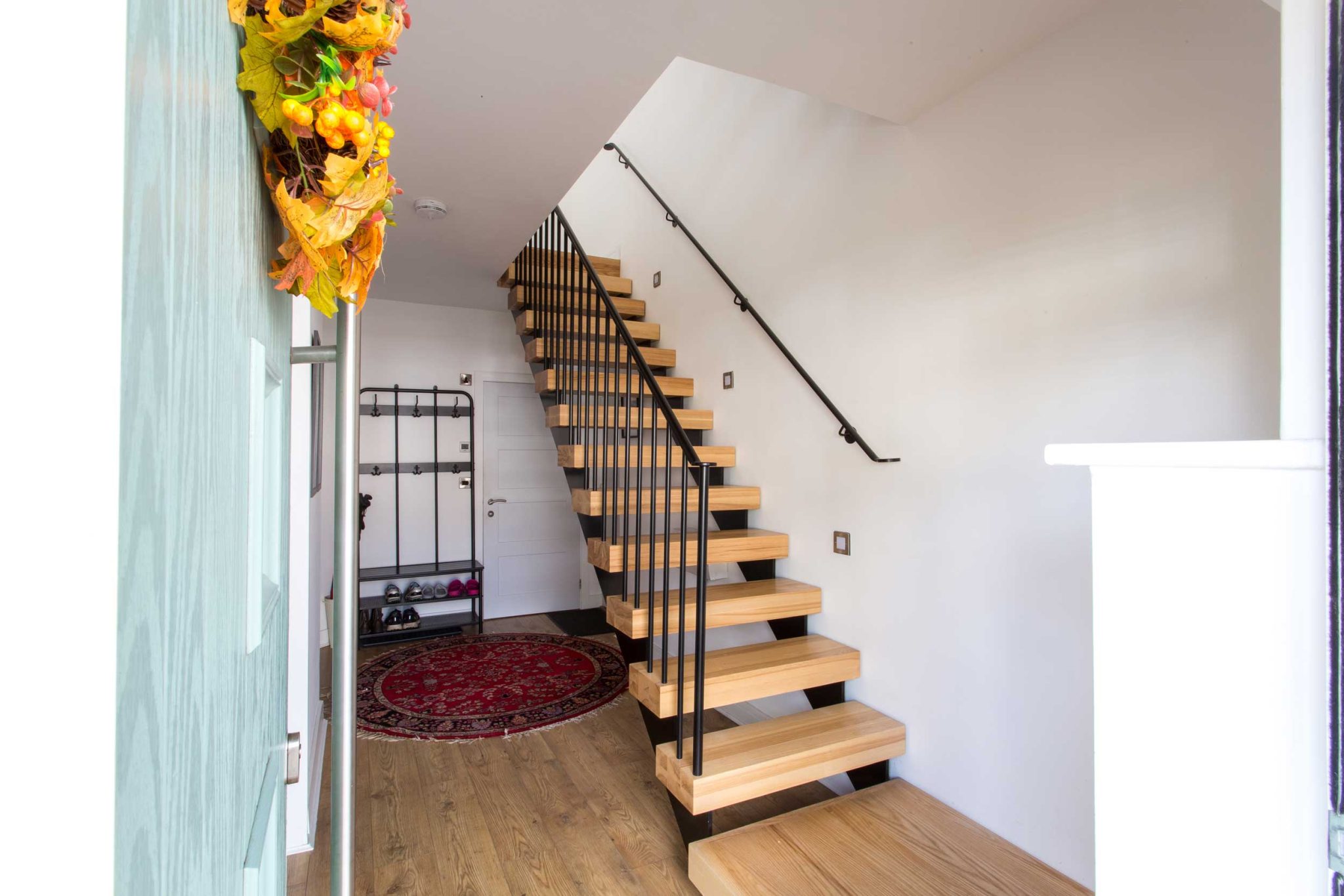
28. Minimalist Modern Floating Staircase with Black Metal Railing
In a minimalist design like this, every line matters. The success of this black metal railing is its graphic simplicity. To get this right, specify a railing with the thinnest possible profile that still meets structural code. Ask your fabricator for “knife-edge” welds at the joints, which are ground down to be nearly invisible. For the finish, choose a matte or satin black powder coat. A glossy finish would create reflections and detract from the pure, solid-line aesthetic you’re trying to achieve.
|
📋 Copy HEX 🔗 Share |
📏 Scale Guide
This high-impact, minimalist look is surprisingly achievable on a tighter budget. The key is in the simplicity. Stock, pre-made light wood treads from a home improvement store are very affordable. The real savings come from the railing. Instead of a custom-welded piece, look for modular black metal railing systems online or at stores like Home Depot. These affordable kits come with all the posts, handrails, and hardware you need. When paired with the clean white walls and simple treads, it creates a very convincing version of the high-end look for less than half the price. Compare this to the similar, more substantial feel of Idea #16.
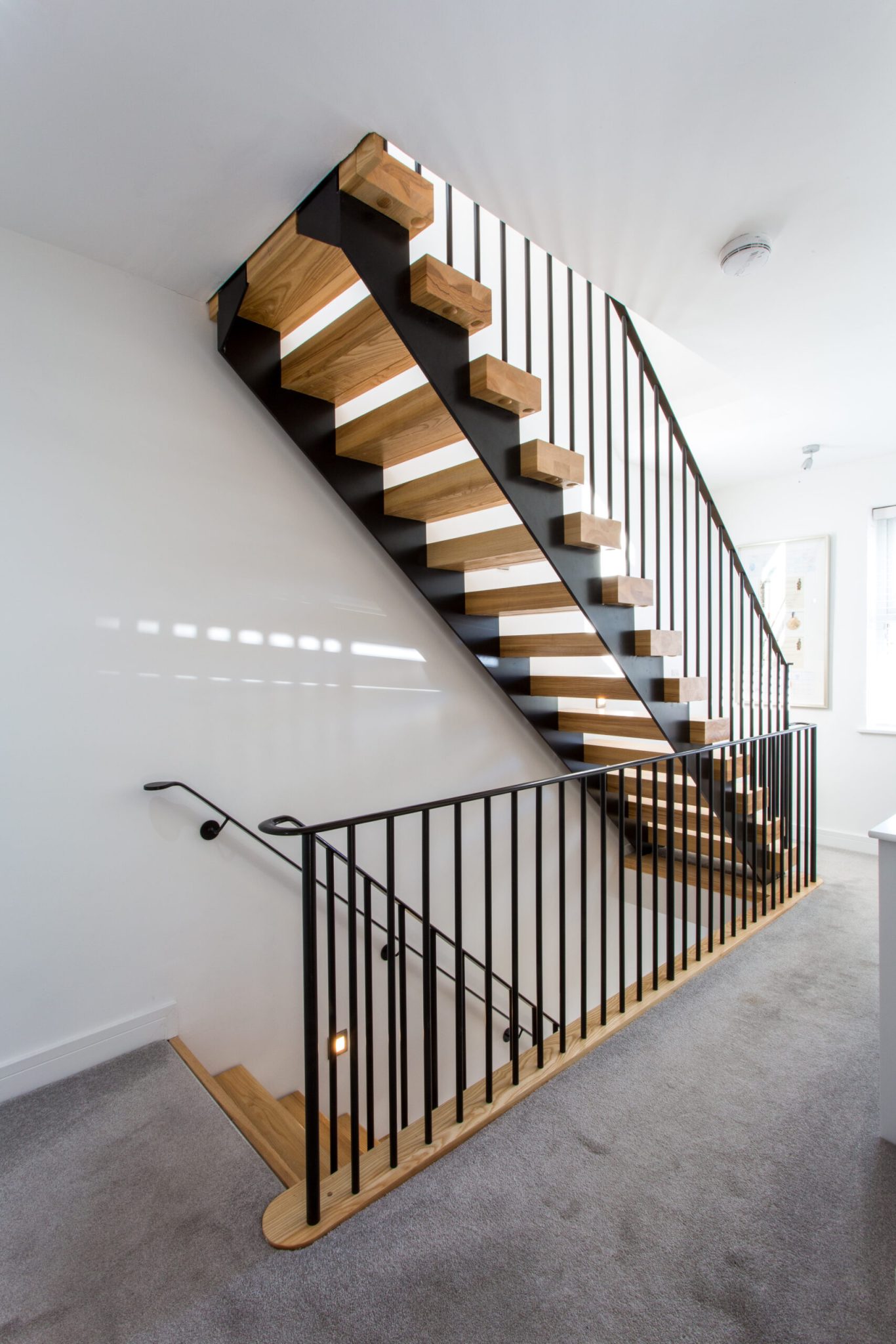
29. Modern Black Metal and Wood Floating Staircase
This design is a smart solution for a split-level or tight-turn staircase. It works by visually separating the two main functions of a railing: the guardrail and the handrail. On the upper level, the vertical balustrade provides a necessary safety barrier for the open loft space. On the lower, more enclosed section, the balustrade is eliminated in favor of a simple, wall-mounted handrail. This opens up the narrower part of the stairway, making it feel less constricted while still providing support. The consistent matte black finish ties the two elements together.
|
📋 Copy HEX 🔗 Share |
🧹 Maintenance Reality
- Confirm your turning radius: Ensure you have enough headroom and landing space at the turn. A common mistake is not allowing enough clearance, making the transition awkward.
- Plan your lighting: An L-shaped stair can have dark corners. The integrated tread lighting shown here is a great solution. If that’s not in the budget, plan for well-placed wall sconces or overhead lights.
- Choose your flooring wisely: Notice the use of carpet here? It can make a staircase quieter and feel safer underfoot, a practical consideration that shouldn’t be overlooked.
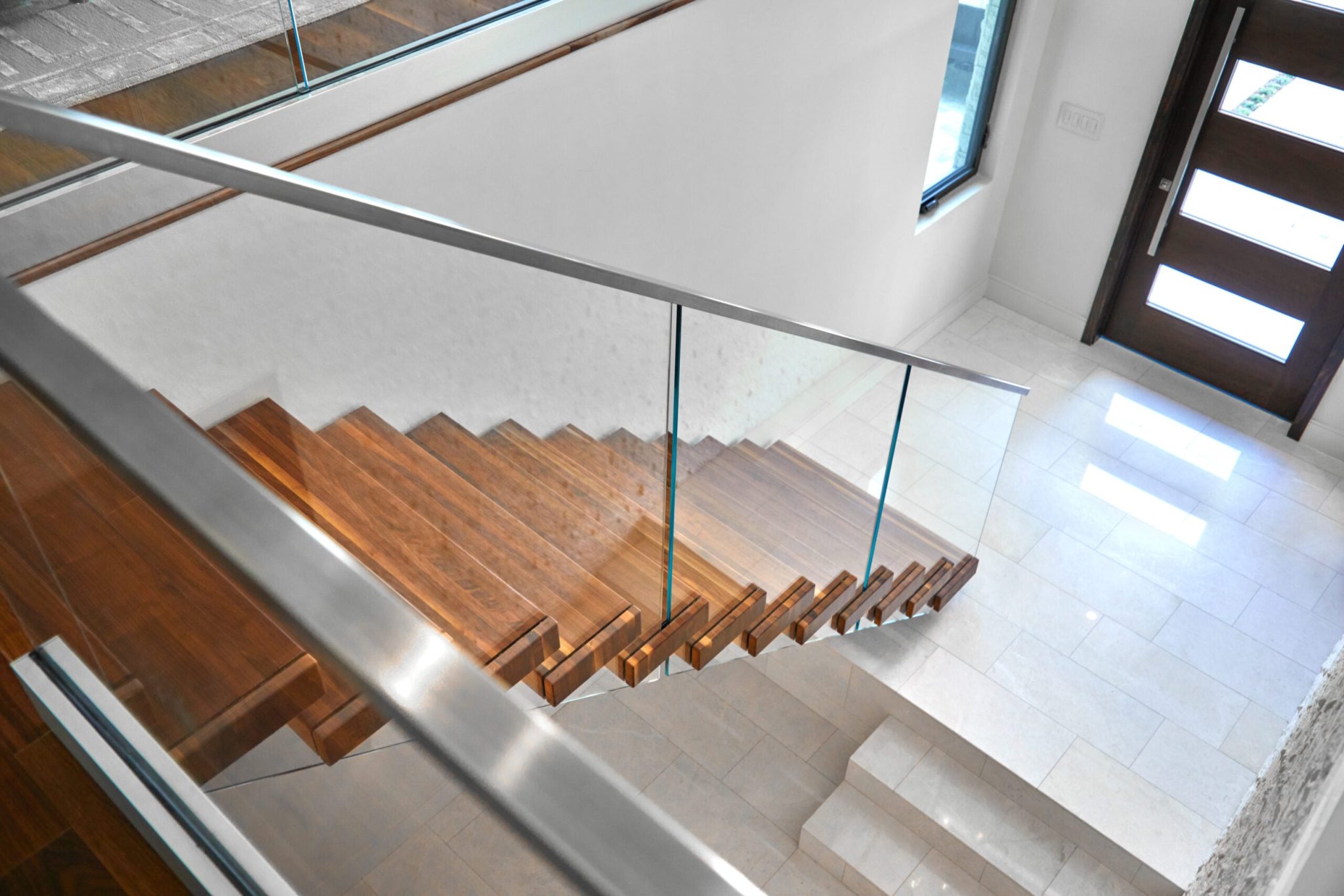
30. Sleek Floating Staircase with Wood Treads and Glass Balustrade
The singular element that makes this entryway feel so bright and open is the cantilevered design of the treads. By eliminating the stringer on the open side and supporting the steps directly from the wall, the staircase gains an incredible sense of lightness. This allows light from the entryway and adjacent rooms to flow uninterrupted beneath the stairs, visually expanding the space. If this staircase had a traditional stringer on the outside, it would create a solid visual barrier, making the entire entryway feel smaller and more closed-off.
|
📋 Copy HEX 🔗 Share |
🎯 What Makes It Work
A minimalist floating staircase like this is an excellent choice for a narrow entryway or hallway, as it takes up minimal visual space. The minimum comfortable width for a staircase is 36 inches, and this design excels in that dimension. However, the cantilevered engineering requires significant structural support within the wall. This isn’t a simple remodel job; it’s best planned for in a new build or a major renovation where the wall can be properly reinforced with steel or extensive laminated veneer lumber (LVL) beams.
Your Ascent to Great Design Begins Here
A floating staircase is more than just a connection between two floors—it’s a powerful architectural statement that can redefine your home. Whether you’re drawn to warm woods, cool concrete, or transparent glass, the right design will add light, space, and a serious dose of daily delight. Ready to take the next step? Head over to Pinterest to start your own board and let these ideas inspire your ascent.