You know that feeling when you finally find a kid’s bedroom idea that looks exactly right, but you have no idea how to make it happen? We’ve all been there, endlessly scrolling Pinterest for inspiration that feels just out of reach. After filtering through hundreds of designs from budget-friendly retailers to high-end designers, we’ve narrowed it down to the 30 ideas that actually deliver on style and function. Inside, you’ll find everything from whimsical wallpapered wonderlands to smart, small-space solutions. In 2026, the biggest trend is creating rooms that grow with your child, focusing on multi-functional furniture and timeless palettes that are easy to update. And stay until the end — we break down the most common mistakes that can ruin these looks. 📌 Save this to Pinterest for later — you’ll want to revisit these ideas.
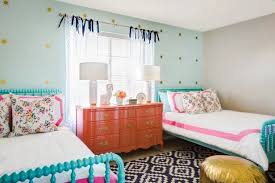
1. Embracing Yellow in a Small Shared Bedroom
When selecting a yellow for a small room, always get multiple paint samples. Paint large swatches (at least 2×2 feet) on two different walls and observe them throughout the day. A sunny yellow in the morning can turn into a rather aggressive, electric color in the afternoon sun. For bedrooms, look for yellows with a slightly muted or earthy undertone, like ochre or marigold, as they tend to be more soothing and less overwhelming, which is especially important in a space designed for rest.
|
📋 Copy HEX 🔗 Share |
⚠️ Real Talk
Yellow is a fantastic, joyful color, but it can be tricky. It reflects a huge amount of light, which can be overstimulating for some children, especially in a room meant for sleep. If you’re hesitant to commit to all four walls, consider a yellow accent wall behind the beds, painting the ceiling yellow, or bringing in the color through textiles like curtains, bedding, and a rug. This gives you the cheerful vibe without the full-on color commitment that might affect a calm bedtime routine.
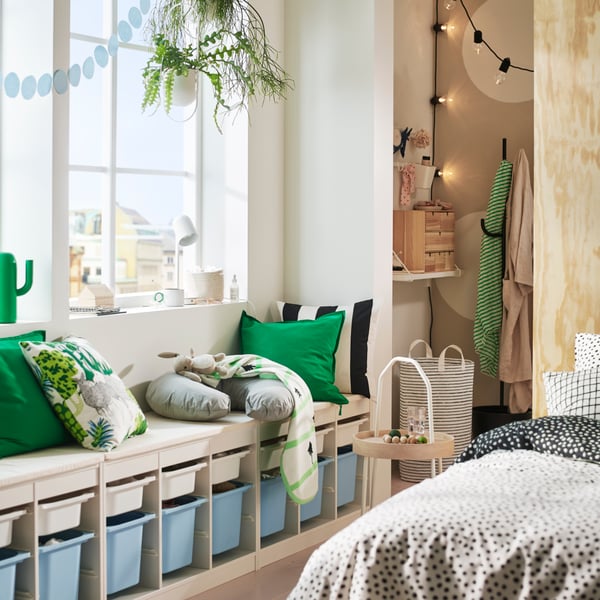
2. Window Bench Storage with Green and Black Accents
This room is a masterclass in functional design. The success lies in its smart use of vertical and built-in space. The window bench isn’t just seating; it’s low-level, accessible storage that a child can actually use. Paired with the wall nook for display and the hanging planter, the design draws the eye upwards and around the room, making the space feel both larger and cozier. The strict color palette of green, black, and white acts as a unifying thread that ties the different functional zones together seamlessly.
|
📋 Copy HEX 🔗 Share |
📏 Scale Guide
that makes this room truly special is the window bench. Without it, the room would lose its central focal point and its most clever feature. It transforms an often-underutilized area—the space under a window—into a multi-functional hub for reading, relaxing, and stashing away toys. It’s the element that elevates the room from just a collection of nice furniture to a thoughtfully designed space that understands the reality of a kid’s life: the need for both play and storage.
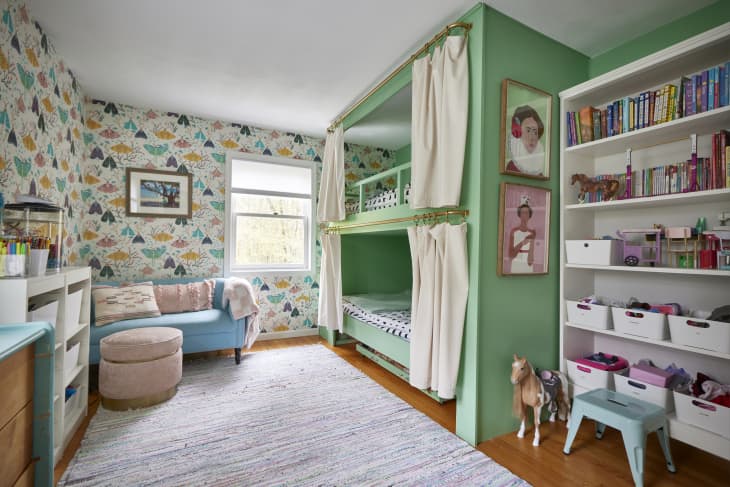
3. Built-in Bunks with Whimsical Moth Wallpaper
Here’s the formula for this playful yet structured look: 50% neutral foundation (the white bookshelf, the distressed rug), 30% soft color (the light green bunks and blue sofa), and 20% bold pattern (that fantastic moth wallpaper). The key is that the largest patterned element is contained to one feature wall, so it doesn’t overwhelm the space. You could easily swap the color palette—imagine navy bunks and a mustard sofa— and the room would still feel balanced and cohesive because the style math remains the same.
|
📋 Copy HEX 🔗 Share |
✅ Before You Start
Custom built-ins are a significant investment. To get this look for less, use two IKEA KURA loft beds (around $299 each) painted in that soft green. Face them towards each other and build a simple plywood arch between them to create that ‘enclosed’ feeling. For the whimsical wallpaper, check out Spoonflower or Etsy for peel-and-stick options, which can be found for $5-10 per square foot, and just do one accent wall to save money. A simple couch from Wayfair or Facebook Marketplace can complete the lounge area for a fraction of a custom piece.
4. A Shared Room in Blush Pink and Mint Green
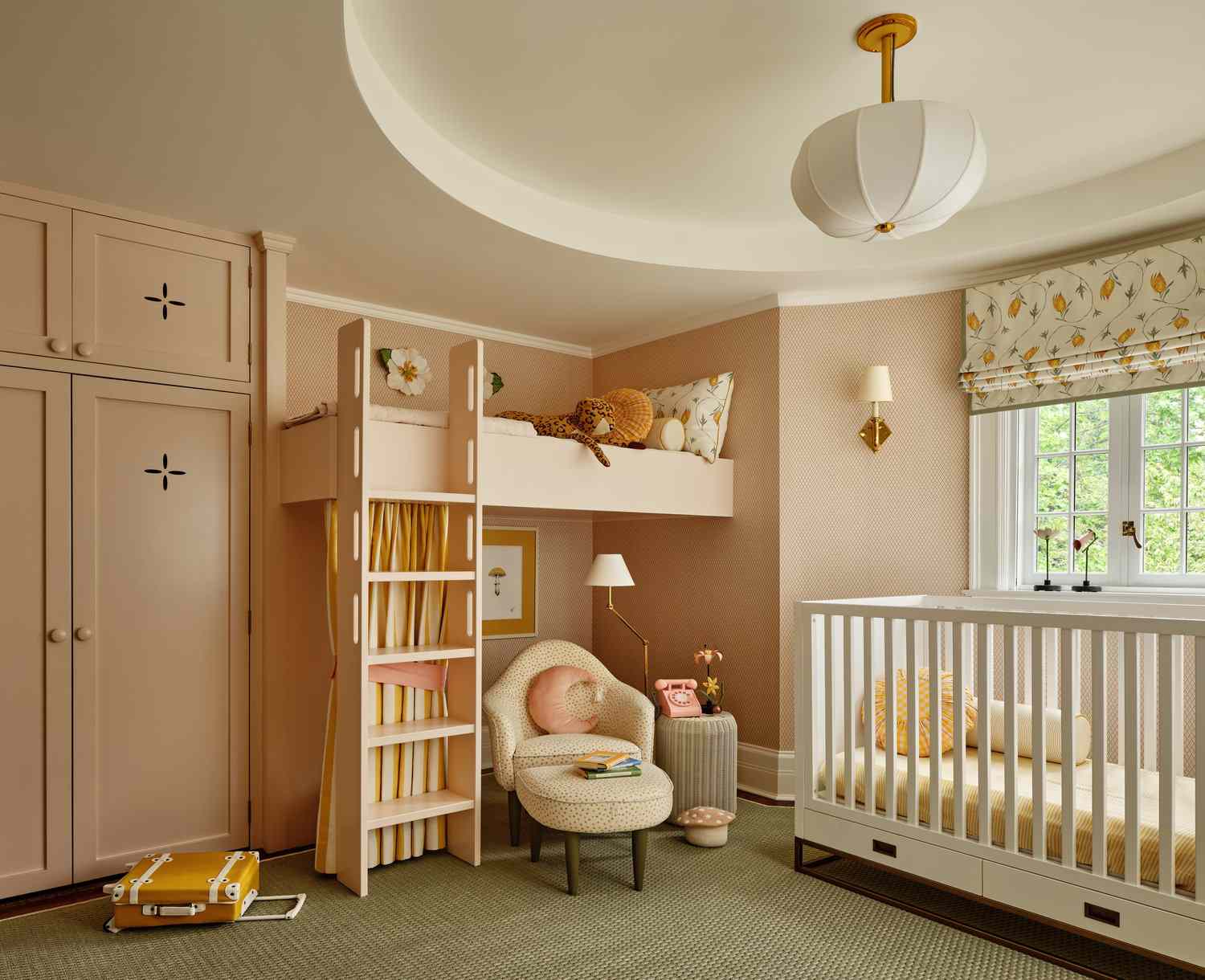
This layout is wonderfully efficient for a shared sibling space, especially for children of different ages. It works best in a room that’s at least 12 feet long to accommodate the length of the loft bed and crib with enough clearance. A minimum width of 10 feet is needed to allow for the armchair and open floor space for play. Ceiling height should be at least 8.5 feet, ideally 9 feet, to ensure the person in the loft bed doesn’t feel cramped. For a smaller room, consider a bunk bed instead of a separate loft and crib to consolidate the footprint, like in Idea #7.
|
📋 Copy HEX 🔗 Share |
🔥 Trending Context
A room that mixes a loft bed for an older child and a crib for a baby is a beautiful and practical solution, but be prepared for the reality. The older child needs to be mature enough not to drop items (accidentally or otherwise) into the crib from above. And as soon as the baby becomes a toddler, that beautiful open ladder on the loft bed becomes an irresistible climbing frame. You may need to invest in a temporary gate or ladder cover for a few years to ensure safety.
5. An Indoor Treehouse: Forest Loft Bunk Bed
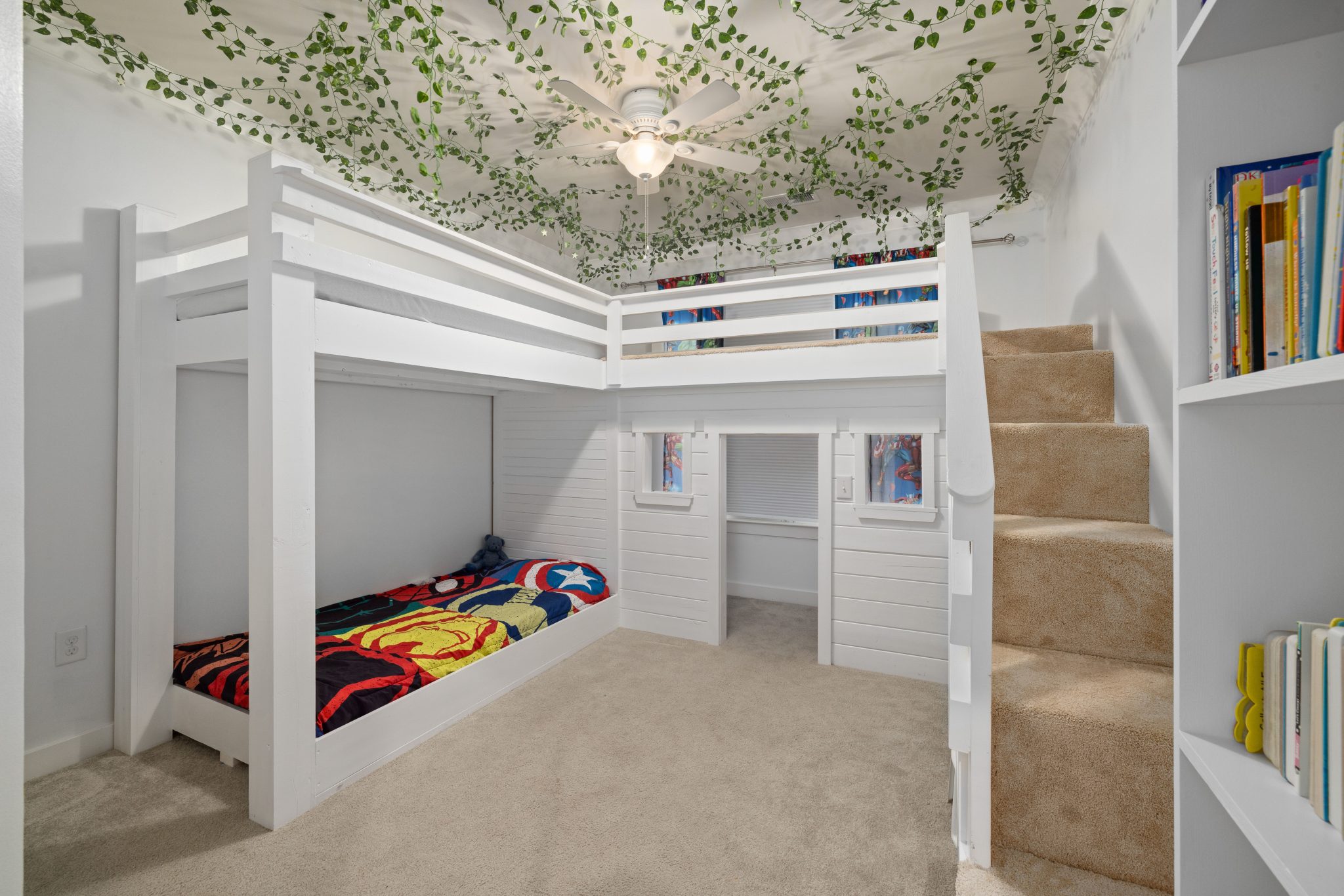
The single element that breathes life into this entire concept is the green artificial vines on the ceiling. Remove them, and you have a very nice, large white bunk bed. But with them, you have a forest canopy, an adventurous hideout, a jungle treehouse. It’s a relatively inexpensive addition that completely transforms the emotional feel of the space, taking it from a bedroom to a world of imagination. It proves that sometimes the most impactful feature isn’t the most expensive one.
|
📋 Copy HEX 🔗 Share |
⭐ The One Thing
This design works because it fully commits to its theme on a grand scale. The bunk bed structure isn’t just furniture; it’s architecture, creating a room-within-a-room. This play on scale makes a child feel like the space is truly their own world. Furthermore, the use of a simple, monochromatic palette (mostly white) for the massive structure prevents it from overwhelming the room. The color and theme are instead layered on top through adaptable elements like the vines and superhero bedding, which can be easily changed as the child’s interests evolve. This is a much more ambitious version of the bunk in Idea #6
6. A Playful Room with a House-Shaped Bunk Bed and Slide
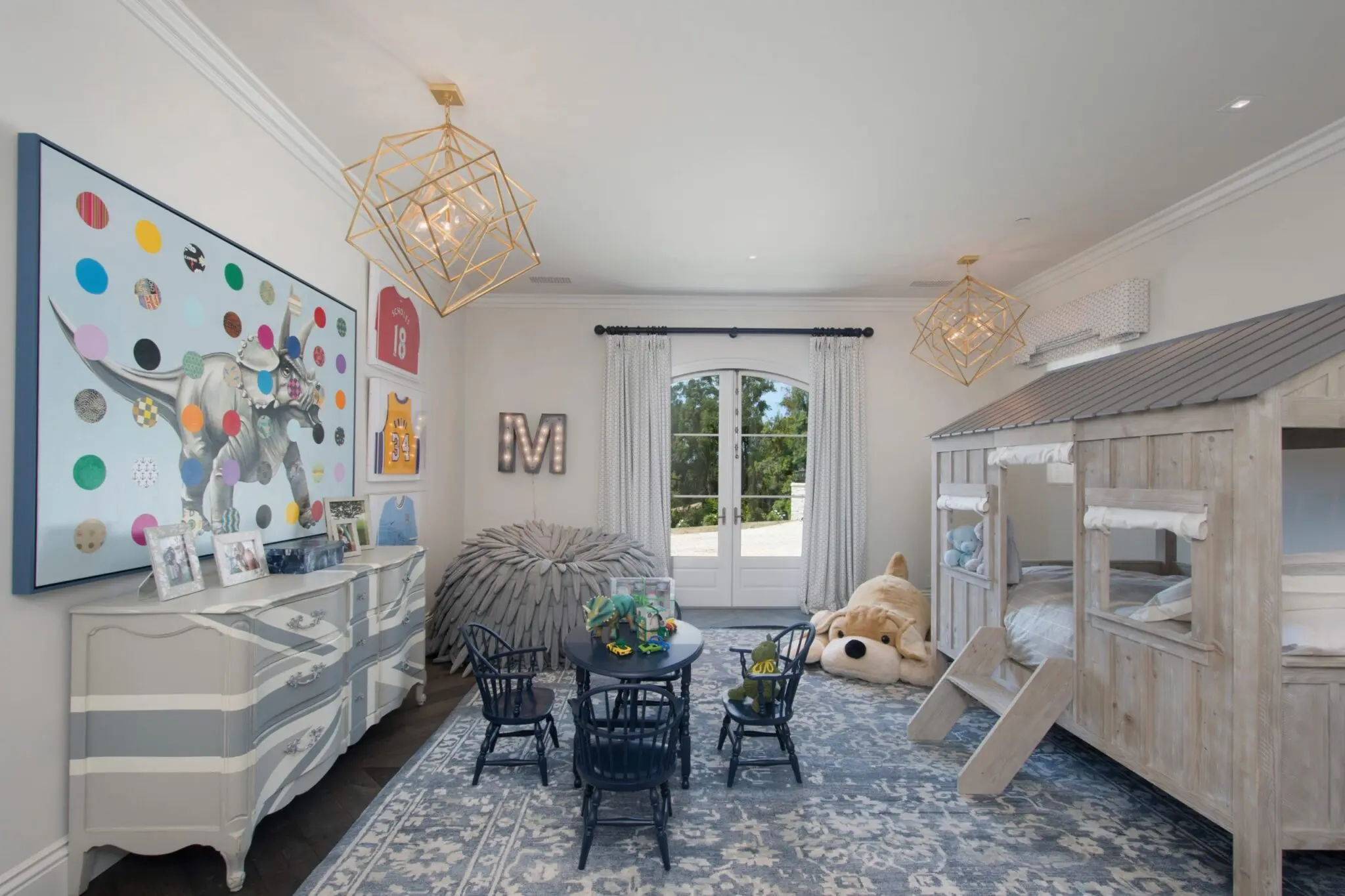
Recreating this bright and whimsical room involves investing in a few key statement pieces. The budget breaks down like this:
|
📋 Copy HEX 🔗 Share |
🔧 How-To Brief
- Main Furniture (House Bunk Bed, Dresser, Table & Chairs): $2,500 – $4,500
- Lighting (Two Pendant Lights): $300 – $700
- Textiles (Large Area Rug): $400 – $900
- Decor/Accessories (Dinosaur Artwork): $150 – $300
- TOTAL: $3,350 – $6,400
Budget alternative: Source a similar house bed from a maker on Etsy for under $1,500, find a large rug on Wayfair for $250, and use a standard IKEA dresser and paint your own Union Jack design.
When you have a large statement piece like this house bunk bed, the temptation is to put it against the largest, most obvious wall. However, consider how it interacts with the room’s traffic flow. By placing it on the side like this, it leaves a large, open central area for play, which is actually more functional. Always map out your ‘play zones’ and ‘walkways’ before deciding on the final placement of your big-ticket furniture items. A 36-inch clearance for main pathways is a good rule of thumb.
7. A Cozy Retreat with Light Green Walls and Wood Bunk Beds
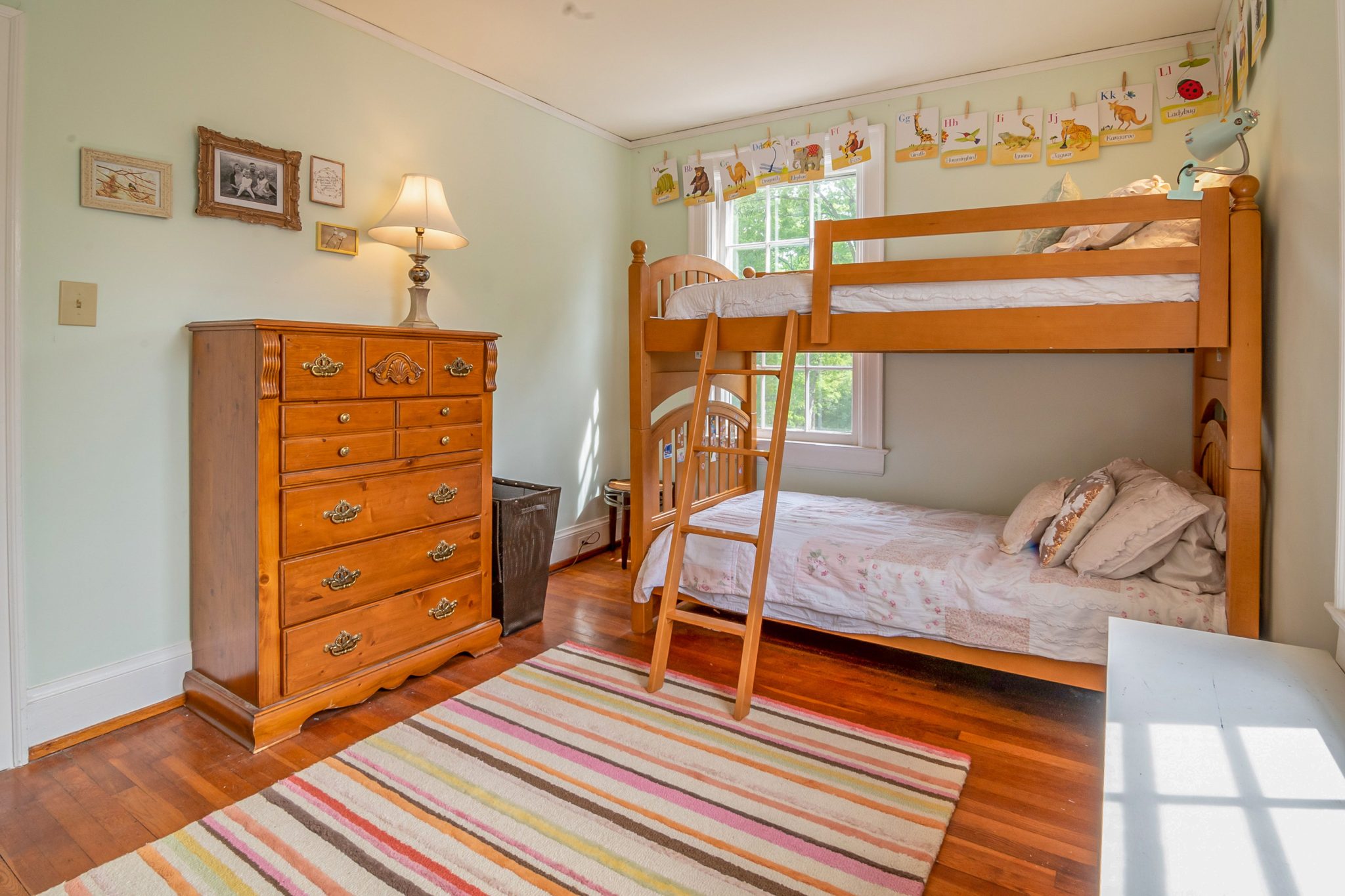
The magic of this room lies in its harmonious pairing of color and material. The soft, light green on the walls has an earthy, natural feel that is perfectly complemented by the warm tones of the natural wood furniture. This creates a serene, grounded atmosphere. The colorful striped rug then injects a dose of playful energy, preventing the room from feeling too muted or serious. It’s a beautiful balance of calm and cheerful, which is ideal for a child’s bedroom that needs to function for both sleep and play.
|
📋 Copy HEX 🔗 Share |
🎯 What Makes It Work
Natural wood furniture is durable and beautiful, but it requires some care to stay that way, especially in a kid’s room. Be prepared for the occasional scratch or ding; these can often be minimized with a wood touch-up pen. If the wood is unsealed, it will be more susceptible to stains from things like markers or spilled drinks. For a kid’s space, a satin or semi-gloss polyurethane finish is your friend. It protects the wood and is much easier to wipe clean. Plan to wipe it down weekly with a damp cloth to keep it looking fresh.
8. Sage Green and Orange in a Playful, Organized Space
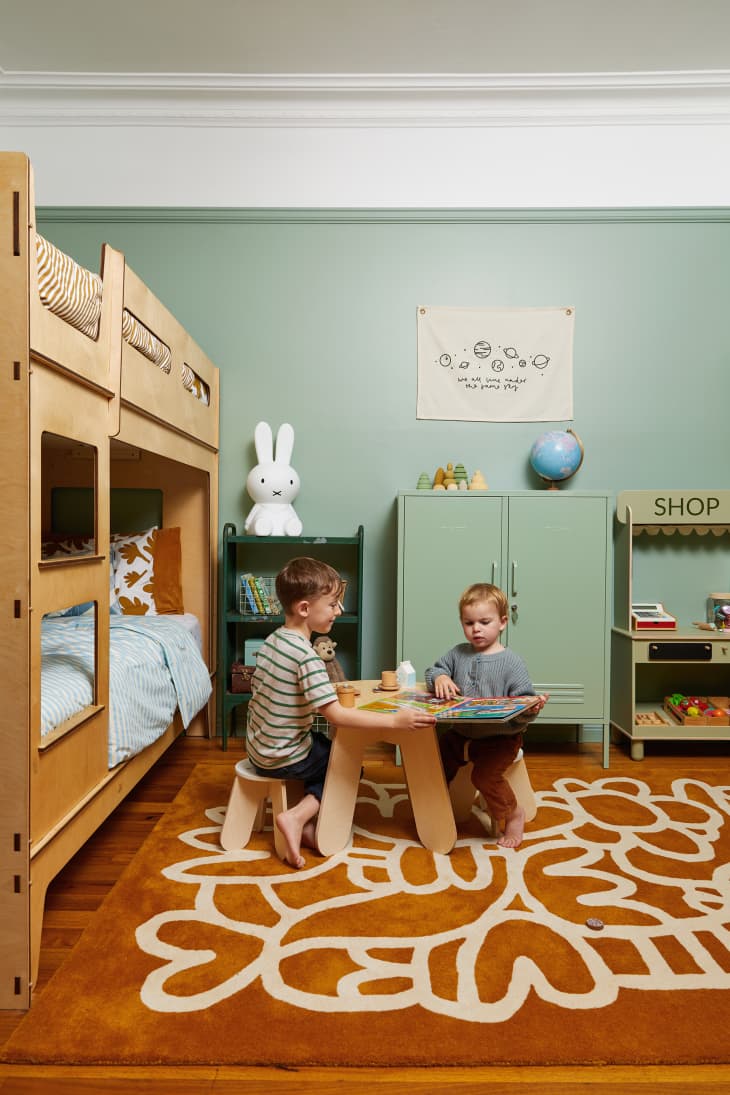
The formula here is all about confident color pairing. Let’s call it 60% calming green, 30% energetic orange, and 10% neutral wood and white. The sage green on the walls and storage creates a serene backdrop, while the large orange rug provides a powerful, joyful punch without being overwhelming. The light wood of the furniture acts as a neutral bridge between the two, adding warmth and texture. You could swap the orange for a vibrant cobalt blue or a sunny yellow and achieve the same dynamic balance.
|
📋 Copy HEX 🔗 Share |
💰 Budget Breakdown
Want to create your own animal card garland? It’s a simple DIY project. (Time: 30 mins, Cost: $15-25)
- Purchase a set of alphabet flashcards with animals you love (Etsy is great for this).
- Use a small hole punch to create a hole in the top two corners of each card.
- Measure a length of twine or string to fit your window or wall space, leaving about 12 inches extra on each end.
- Thread the twine through the holes on the back of the cards, so the string is hidden.
- Space the cards out evenly, about 1-2 inches apart.
- Secure the ends to the wall with small nails or removable hooks.
9. Making a Statement with a Luxury Ceiling Design
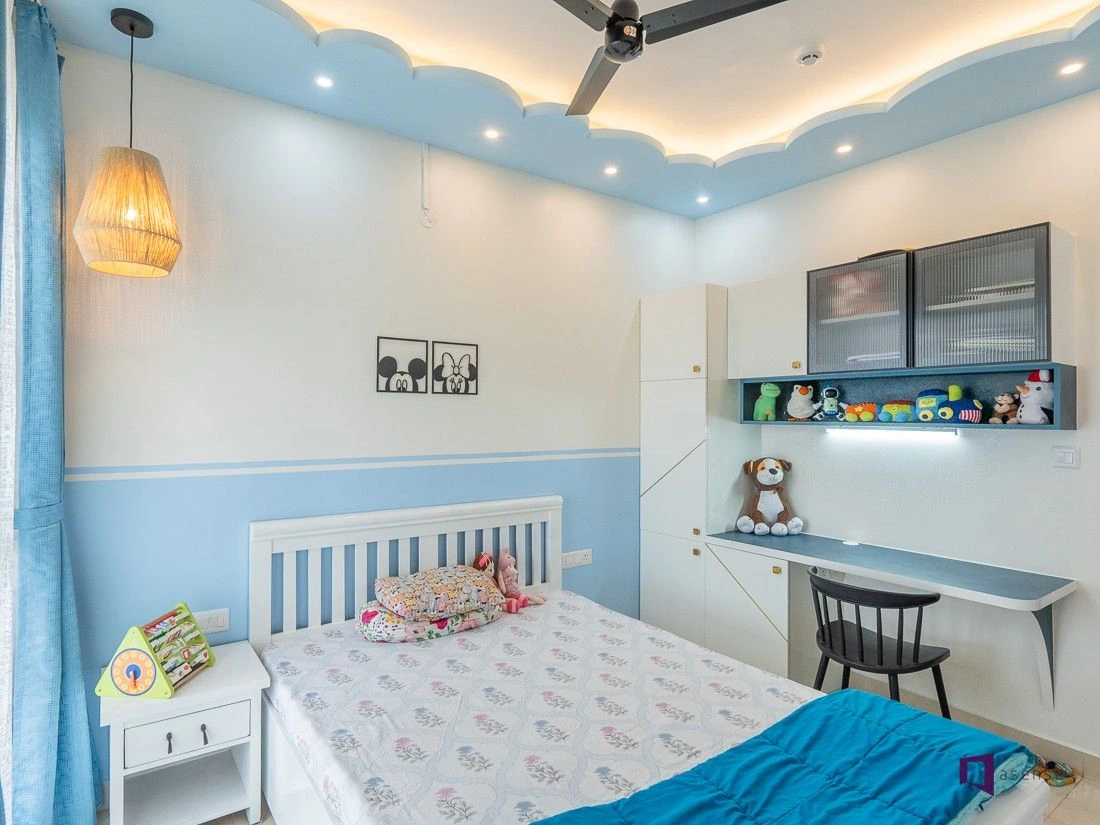
Focusing on the ‘fifth wall’—the ceiling—is a classic high-end design move. It draws the eye upward, making a room feel grander and more thoughtfully designed. In a child’s room, it adds a layer of magic and wonder that wallpaper or paint on walls alone can’t achieve. This approach works because it introduces complexity and detail into an often-ignored plane, creating a fully immersive environment. It suggests that every single surface of the room has been considered and cared for, which is the hallmark of luxury design.
|
📋 Copy HEX 🔗 Share |
📐 Style Math
A custom-built coffered or tray ceiling with integrated lighting can cost thousands. To get a similar ‘wow’ factor on a budget, you have options. A painter can create a faux tray ceiling effect for a few hundred dollars using strategically placed lines and different shades of paint. Or, for a more whimsical approach, apply a bold, graphic wallpaper to the entire ceiling—think stars, clouds, or a geometric pattern. Add a statement light fixture in the center, and you can achieve that luxurious, immersive feeling for less than $500.
10. A Serene, Playful Nursery with a Bear Wall Decal
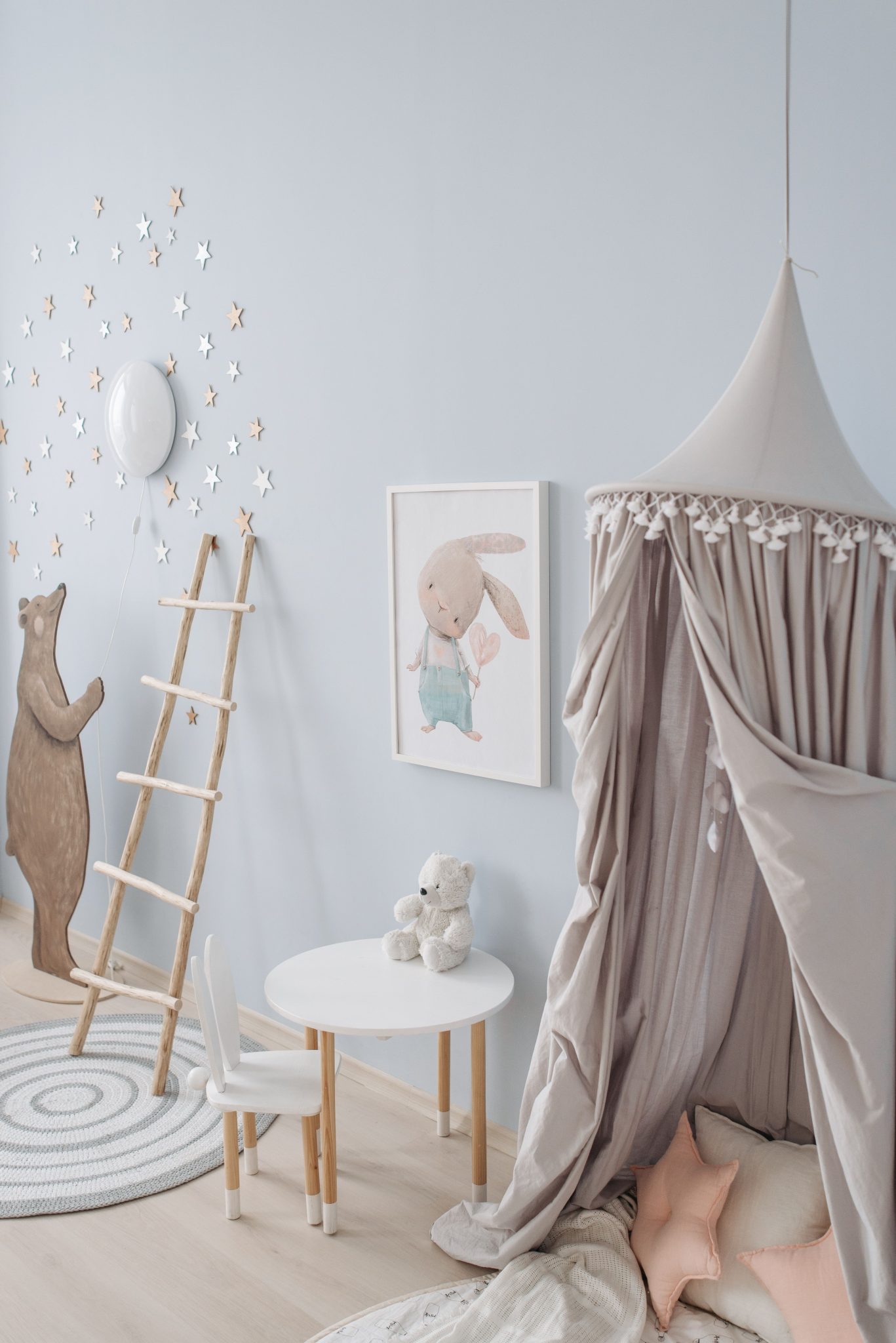
The defining feature of this nursery is, without a doubt, the bear-and-balloon wall decal. It’s the central narrative element of the room. Without it, you have a lovely, calm, blue-and-white nursery. With it, you have a story. It introduces a touch of sweet, gentle whimsy and a focal point that is pure charm. It’s what transforms the space from a decorated room into a memorable and emotionally resonant environment for a little one.
|
📋 Copy HEX 🔗 Share |
💸 Get This Look For Less
When working with a soft, pale color palette, the key to keeping it from feeling flat is to introduce a variety of textures and materials. Notice how this room combines a fuzzy braided rug, the soft plush of the star pillows, a smooth painted wall, the natural grain of wooden stars and ladders, and the light fabric of the canopy. Your eye registers these subtle shifts in texture, which adds depth and interest to the space. Aim for at least four different textures in a monochrome or pale room.
11. A Magical Reading Nook with a Unicorn & Castle Mural
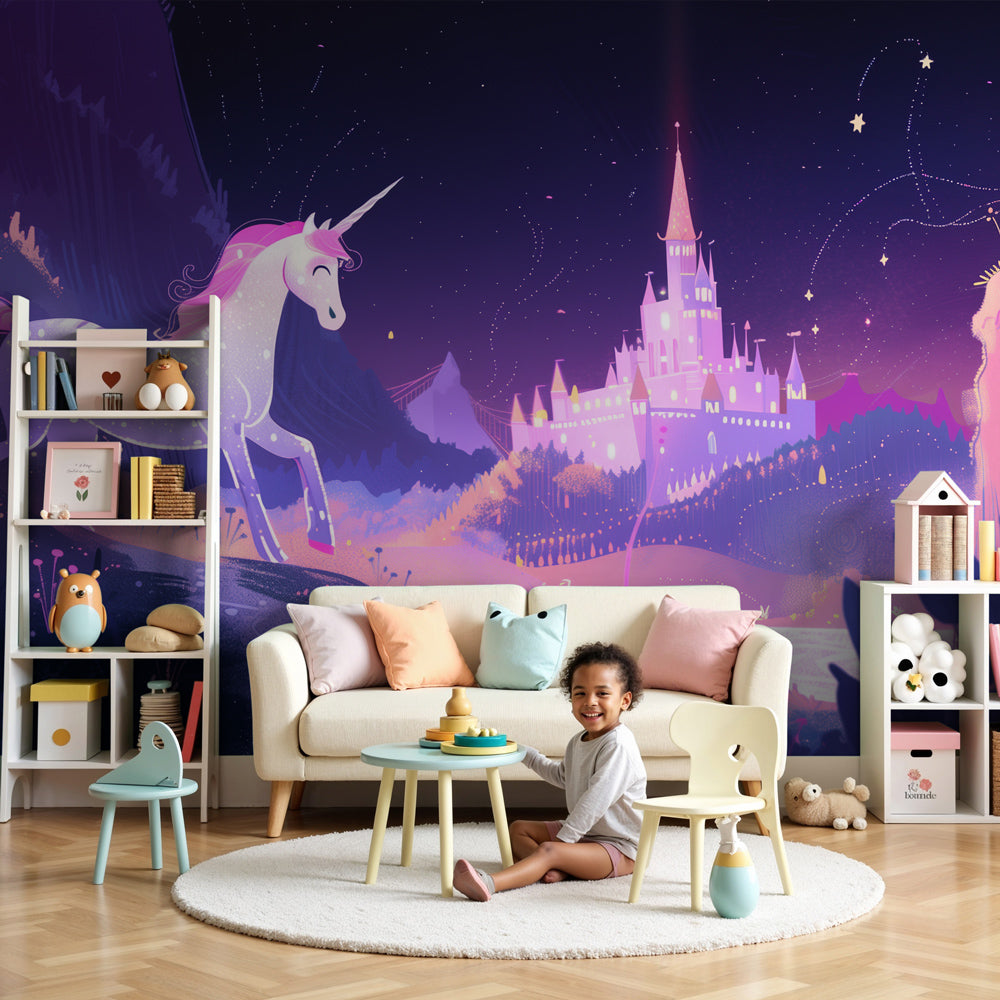
A full wall mural is an incredible statement piece, but be aware that it can be visually dominant. The key to success is keeping the rest of the room’s large elements relatively simple and neutral. Notice how the cream sofa, white bookcases, and light wood floor don’t compete with the mural; they support it. If you were to add a brightly colored sofa or a heavily patterned rug, the room would quickly feel chaotic and overwhelming. Let the mural be the star of the show.
|
📋 Copy HEX 🔗 Share |
💡 Designer Tip
An idea this bold works best in a room with a large, uninterrupted wall, at least 10-12 feet wide, to allow the full scope of the mural to be appreciated. It’s perfect for a playroom or a larger bedroom with at least 150 square feet of floor space. In a smaller room, a mural this detailed and colorful could feel claustrophobic. If your space is limited, consider using a single, large decal of just the unicorn or castle, as seen in Idea #27, to capture the magic without overwhelming the walls.
12. Minimalist Organization with Light Wood Modular Shelving
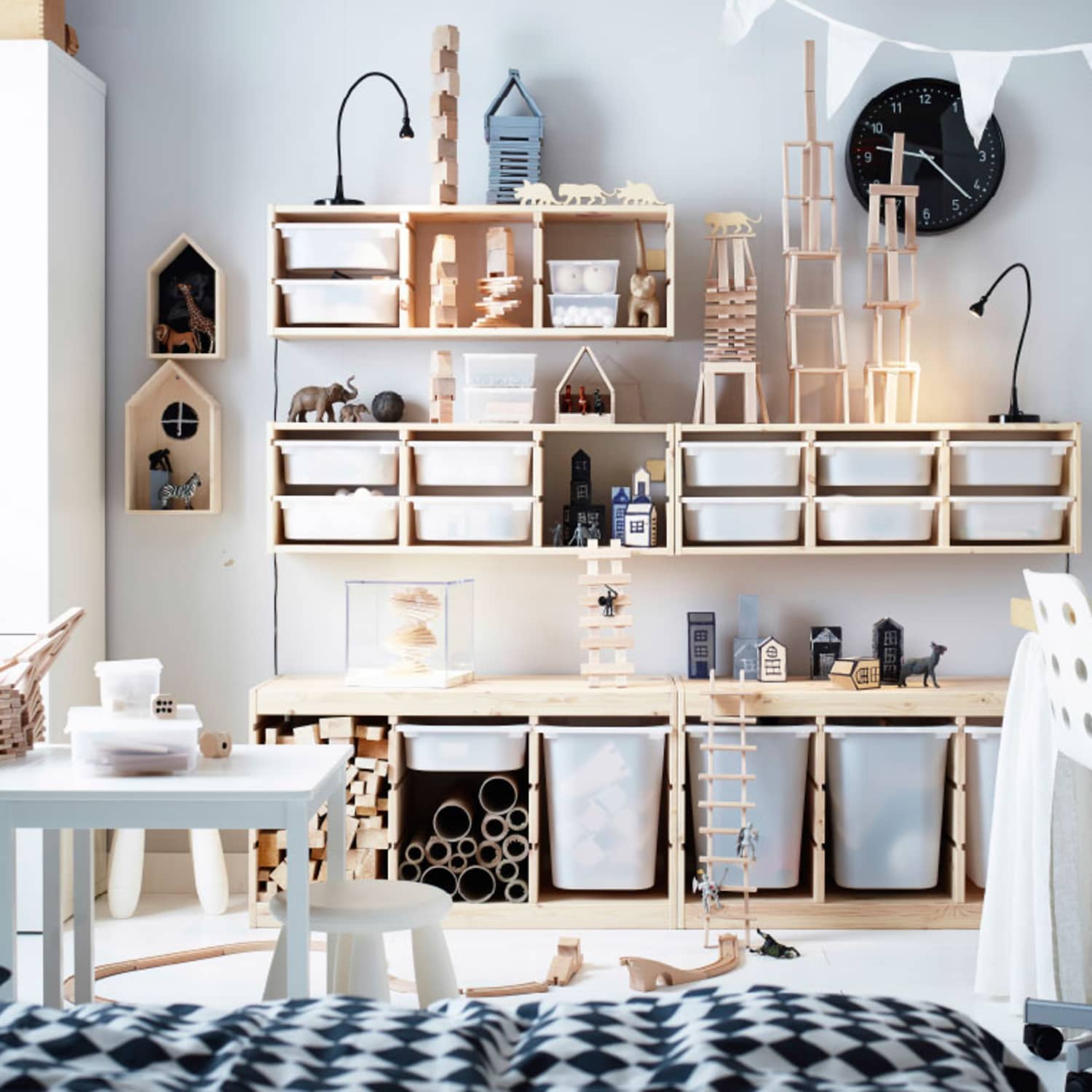
This system is successful because it masters the art of ‘contained chaos.’ The open, modular shelving is minimalist and modern, but the contents are pure kid-friendly fun. Using a consistent set of storage bins (all white and clear) creates a visual rhythm and sense of order, even when filled with a jumble of colorful toys. This approach allows the toys themselves to become the decoration, celebrating their colors and shapes within a structured, calming framework. The neutral grey walls and light wood provide a perfect, non-competing backdrop.
|
📋 Copy HEX 🔗 Share |
🧹 Maintenance Reality
The modular shelving units shown here are likely from a design store and can be pricey. For a very similar look and function, go straight to IKEA. The TROFAST storage system is the undisputed champion of this style. You can buy the frames (in light wood-effect or white) and a whole array of colorful or neutral bins for a fraction of the cost. A single frame with a variety of bins can be purchased for under $100, allowing you to build an entire wall of stylish, accessible storage for just a few hundred dollars.
13. A Natural Wood Bunk Bed with a Tropical Wallpaper Accent
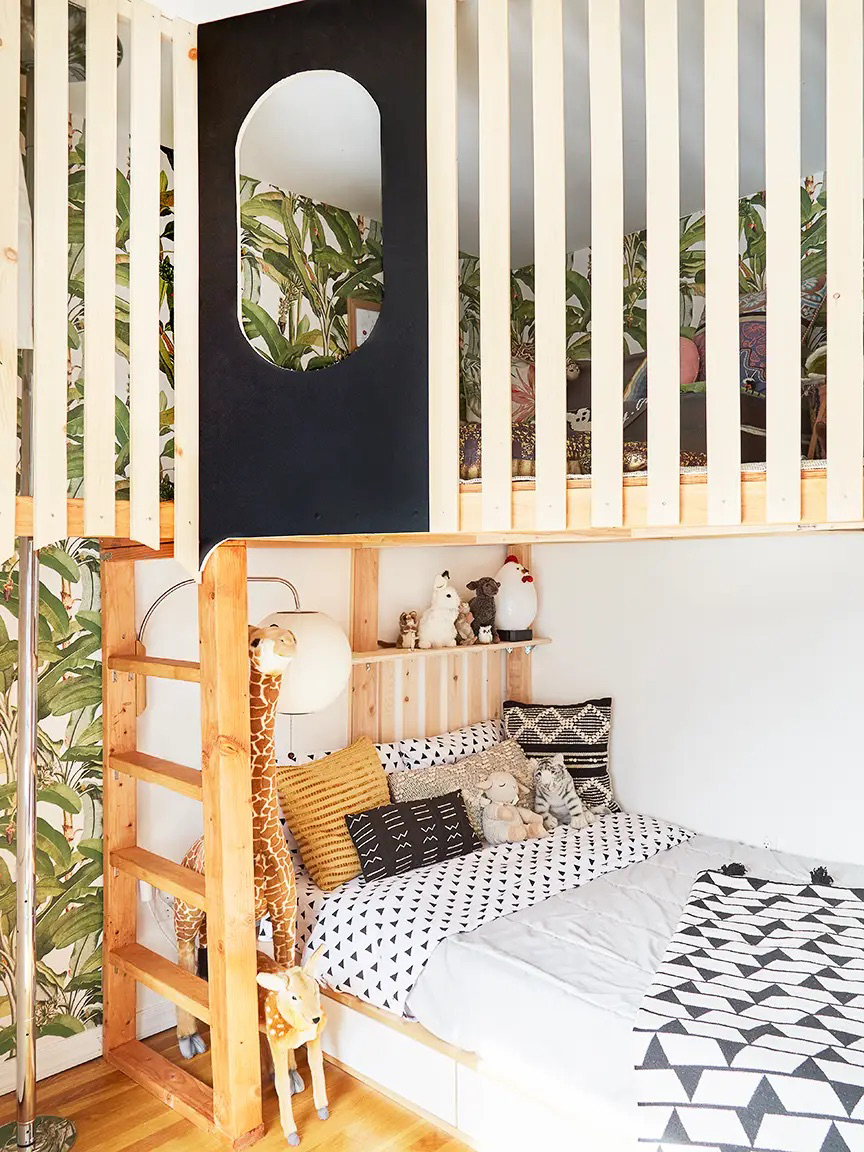
When using a bold, large-scale wallpaper like this tropical leaf print, you only need to cover one wall to make a huge impact. To make it feel intentional and integrated, pull colors from the wallpaper to use as accents in the rest of the room. Here, the green from the leaves is a perfect match, but you could also pull the dark stem color for accents. The key is to also use plenty of a ‘neutral’ color (in this case, the white from the wallpaper background and the natural wood) to give the eye a place to rest.
|
📋 Copy HEX 🔗 Share |
⚠️ Real Talk
Let’s break down the visual recipe for this vibrant room. It’s about 60% neutral base (the white walls and large surface area of the natural wood bed), 30% high-impact pattern (the tropical wallpaper on a single wall), and 10% sharp, graphic contrast (the black-and-white bedding and mustard yellow pillow). This formula is endlessly adaptable. You could swap the tropical print for a bold floral, change the bedding to a simple stripe, and switch the accent pillow to a bright pink, and the room would still feel just as balanced and dynamic.
14. A Cozy Reading Nook Framed by a Dark Green Archway
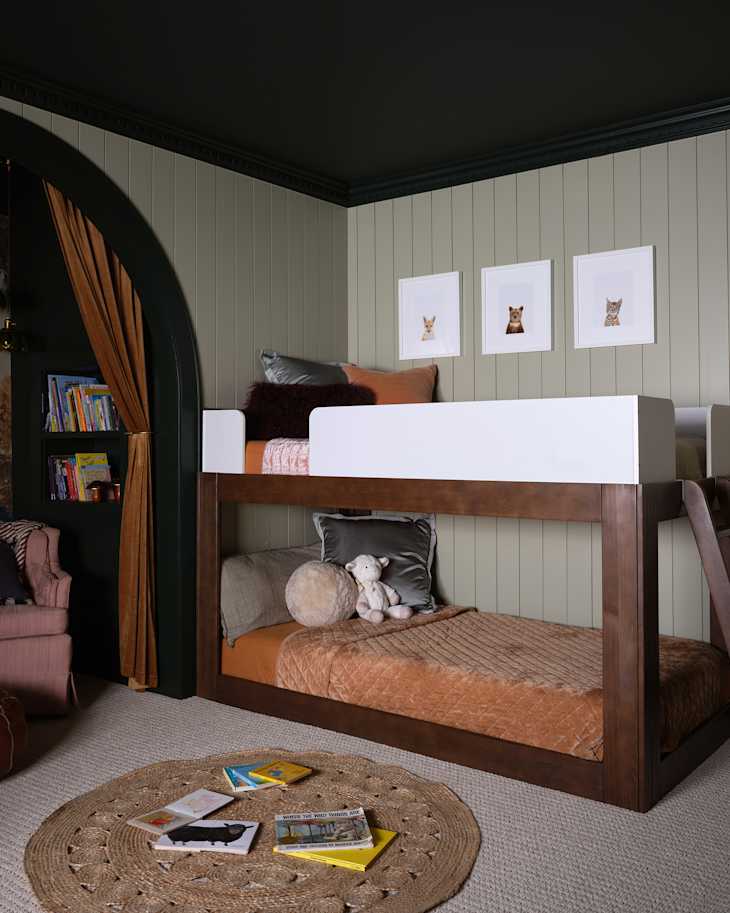
The dark green archway is the undisputed star of this bedroom. It’s a brilliant architectural illusion, creating a sense of depth and a destination within the room. It carves out a special, cozy zone from a standard square corner, making the bookshelf nook feel like a secret hideaway. The rust-colored curtain adds another layer of texture, color, and mystery. Without this single, painted feature, the corner would be fine, but with it, the room has personality and a touch of magic.
|
📋 Copy HEX 🔗 Share |
📏 Scale Guide
Painting an arch is a high-impact DIY you can do in a weekend. (Time: 3-4 hours, Cost: $50-80 for paint/supplies)
- Decide on the width and height. Use a pencil and a level to mark the vertical sides.
- To create the curve, tie a string to your pencil. Tack the other end of the string to the center point between your vertical lines. The length of the string will be half the width of your arch.
- Keeping the string taut, draw a perfect semi-circle connecting the two vertical lines.
- Use high-quality painter’s tape to tape off the outside edge of your arch.
- Carefully cut in the edges with a brush, then fill in the main area with a small roller. Apply two coats for a rich, even color.
15. A Playful Pop of Pastel Pink, Aqua, and Lavender
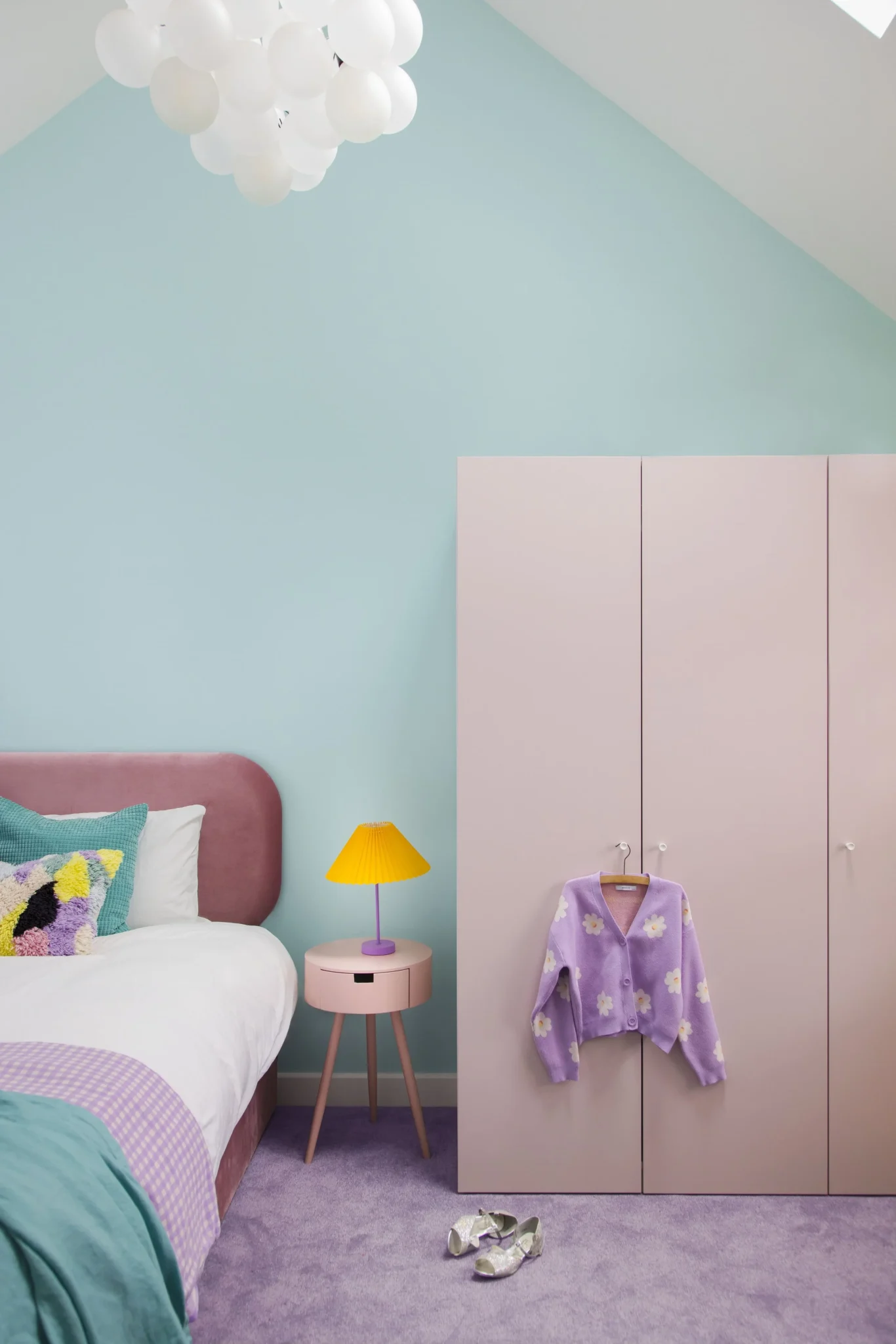
This room’s success comes from its fearless and masterful use of color blocking with an unconventional palette. Instead of sticking to one or two colors, it layers aqua, pink, and lavender. It works because the colors share a similar saturation level—they are all clear, bright pastels. The large swathes of solid color on the walls, carpet, and wardrobes create a bold, graphic effect. The introduction of white (the balloon light) and a pop of contrasting yellow (the lamp) adds a necessary spark that keeps the pastel scheme from feeling too sweet.
|
📋 Copy HEX 🔗 Share |
✅ Before You Start
This look is a direct evolution of the ‘dopamine dressing’ trend we’ve seen in fashion, now fully translated into interiors. After years of minimalist grey and beige, there’s a collective craving for joy, color, and personality in our homes. This bedroom embraces that shift with gusto. It’s part of a larger movement towards creating spaces that feel optimistic, and highly individualized. While the specific pastel shades might evolve, the trend of using bold, interesting color combinations in kids’ spaces has serious staying power.
16. Soft Pastels and Whimsical Animal Art in a Cheerful Bedroom
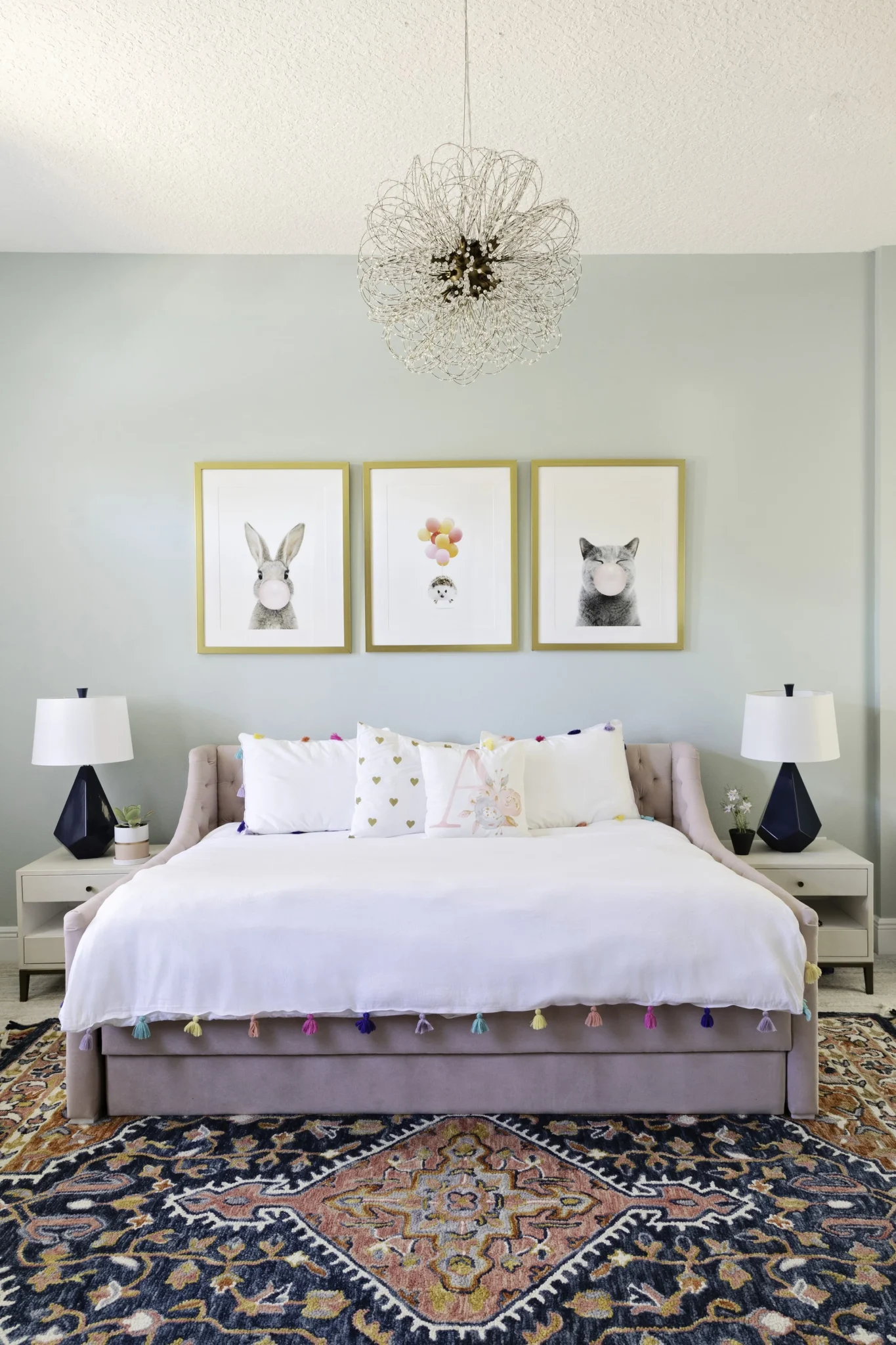
The easiest way to make a collection of art feel cohesive and intentional is to frame it identically. Notice how the three animal prints have the exact same gold frame. This repetition creates a sense of order and elevates the prints, making them feel like a purposeful grouping rather than a random collection. When you hang them, aim for the center of the middle frame to be at about 57 inches from the floor (standard gallery height), and keep the spacing between frames tight—just 2-3 inches apart—so they read as a single unit.
|
📋 Copy HEX 🔗 Share |
🔥 Trending Context
You don’t need to spend a fortune to get this charming, whimsical look. That mauve daybed is lovely, but a simple white or metal daybed from IKEA (like the UTÅKER or FLEKKE, around $200-$400) would work just as well. Add a mauve-colored daybed cover from Amazon or Target. The whimsical animal prints can be found as digital downloads on Etsy for just a few dollars—print them yourself and grab a set of three matching gold frames from a craft store like Michaels or Hobby Lobby during a sale.
17. A Cozy Shared Room with Wall-to-Wall Bookshelves
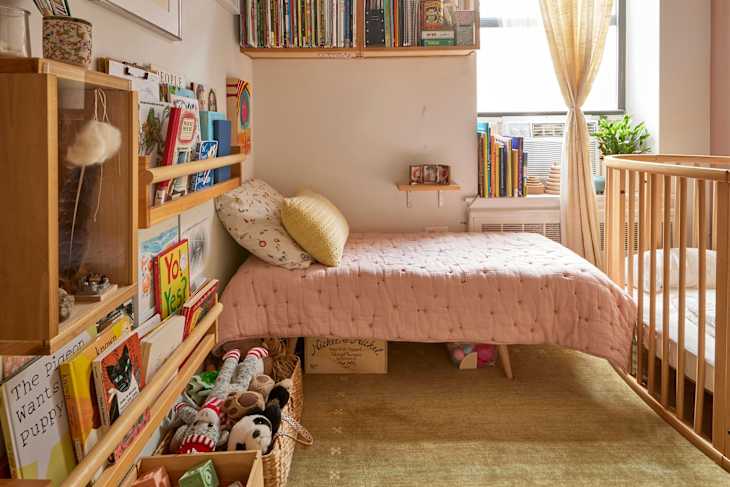
Before you commit to extensive wall shelving like this, run through this quick checklist:
|
📋 Copy HEX 🔗 Share |
⭐ The One Thing
- Measure your wall studs. Standard wall shelves need to be anchored into studs for safety, especially when they’ll be holding heavy books. Use a stud finder and plan your shelf placement accordingly.
- Evaluate the contents. Will these shelves be for beautifully curated objects or for the chaotic reality of a kid’s book and toy collection? Be honest, as this will determine if you need open shelves for display or baskets and bins for hiding clutter.
- Consider accessibility. The beauty of these shelves is that they are low enough for a child to reach. Ensure the items on the lower shelves are safe and accessible, while placing more decorative or fragile items up high.
This room feels so incredibly warm and nurturing because of the sheer volume of books. The wall-mounted wooden shelves do more than just store things; they wrap the room in stories and knowledge, creating a library-like embrace. This visible emphasis on reading and imagination makes the room feel both cozy and intellectually stimulating. The mix of a bed and a crib, seen in more compact form in Idea #4, is handled with a generous amount of floor space, making it feel like a truly shared and comfortable environment.
18. A Serene Nursery with a Grayscale Forest Mural
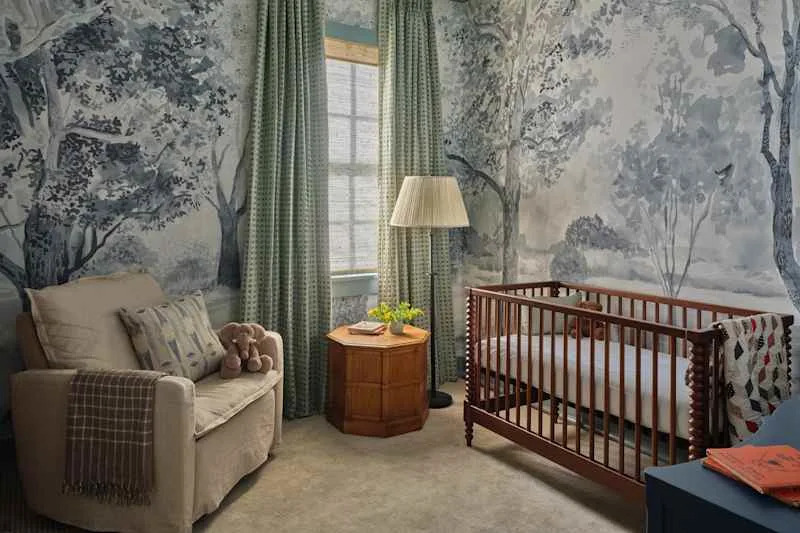
A grayscale mural is a sophisticated and beautiful choice for a nursery, offering a calm, natural vibe that won’t be quickly outgrown. However, be mindful of the room’s natural light. In a room that is already dark or north-facing, a wall-to-wall gray mural can feel a bit somber or gloomy. This look works best in a bright, well-lit space where the grayscale tones can feel airy and artistic rather than heavy. If your room is dark, consider a mural with a lighter background or one that only covers the top half of the wall above a white wainscoting.
|
📋 Copy HEX 🔗 Share |
🔧 How-To Brief
The success of this room’s design lies in its careful balance: 70% soft and serene elements (the grayscale mural, the light armchair, the cream rug) plus 30% warm, grounding elements (the dark wood crib, the patterned green curtains, the wood side table). The dark wood of the crib provides a necessary point of contrast, keeping the room from feeling washed out. It’s an anchor in the soft landscape of the mural. The green of the curtains adds a subtle touch of color that connects back to the natural theme.
19. Calm and Collected with a Green Paneled Accent Wall
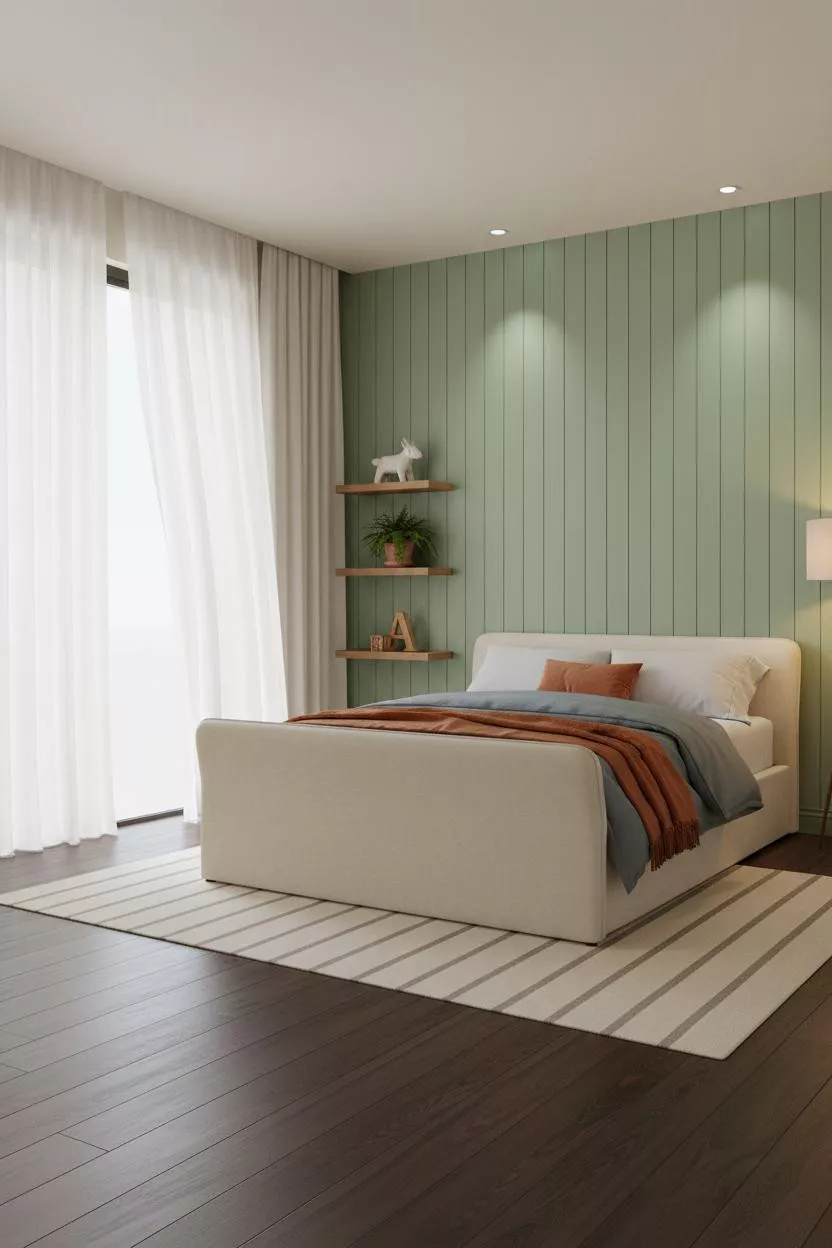
This bedroom achieves a sense of sophisticated calm through three key elements. First, the monochromatic color scheme: the light green paneled wall provides a gentle, consistent backdrop. Second, the use of texture: the vertical lines of the paneling, the weave of the upholstered bed, and the stripes of the rug add depth and interest without adding visual clutter. Third, the warm-toned accents in the floating shelves and terracotta pillow inject just enough warmth to keep the cool green and blue palette from feeling sterile. It’s a grown-up design that’s still soft enough for a child’s space.
|
📋 Copy HEX 🔗 Share |
🎯 What Makes It Work
A fully upholstered bed can be a splurge. To get a similar serene feeling for less, opt for a standard metal or simple wood bed frame—even a basic one from Walmart or Amazon will do—and focus on the bedding. You can buy a separate upholstered headboard that bolts to the wall for a much lower cost ($100-$250). Invest in creamy white linen-look bedding (IKEA’s DVALA is a great option), and find a similar striped rug on sites like Rugs USA. The key elements—the green wall and floating shelves—are already budget-friendly DIY projects.
20. Dramatic and Cozy with a Black Canopy Bed and Floral Ceiling
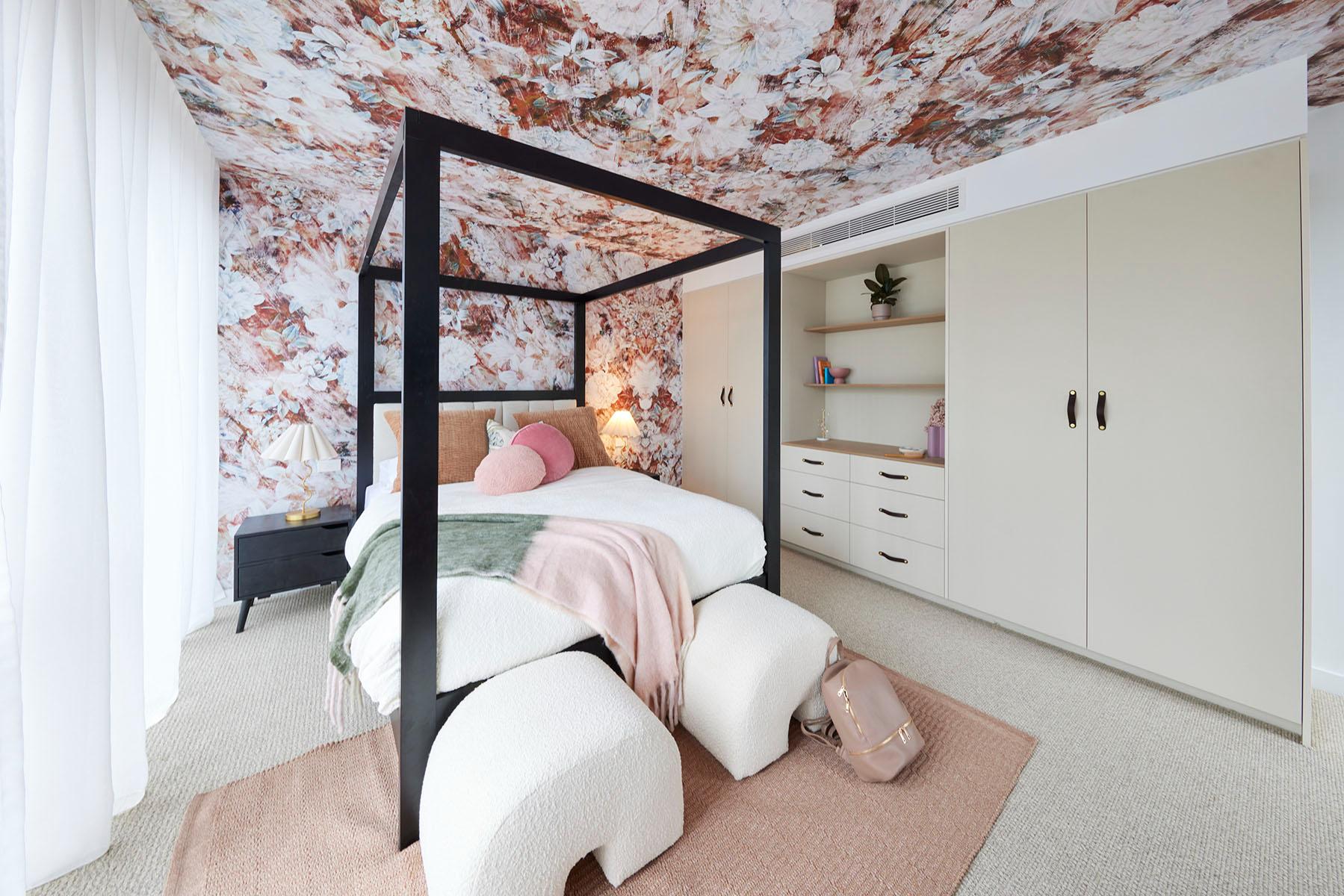
that makes this room a showstopper is the decision to run the floral wallpaper straight across the ceiling. It’s a bold, confident move that creates a completely immersive, jewel-box effect. It turns the entire room into a cozy, patterned cocoon. If the wallpaper stopped at the walls, it would be a pretty room, but by wrapping the ceiling, it becomes a truly memorable and dramatic design statement. It’s the difference between decorating a room and creating an experience.
|
📋 Copy HEX 🔗 Share |
💰 Budget Breakdown
This is an absolutely stunning look, but it’s not for the faint of heart or the lighting-challenged. A dark, patterned ceiling can absorb a lot of light and make a room feel smaller and darker. This design works here because it’s balanced by large, light-colored built-in wardrobes and what is likely a significant amount of natural light not seen in the photo. If you try this in a room with small windows or low ceilings, you must compensate with lots of layered lighting: bright lamps, sconces, and maybe even uplighting to keep the space from feeling like a cave.
21. A Joyful Shared Room with House-Shaped Bed Frames
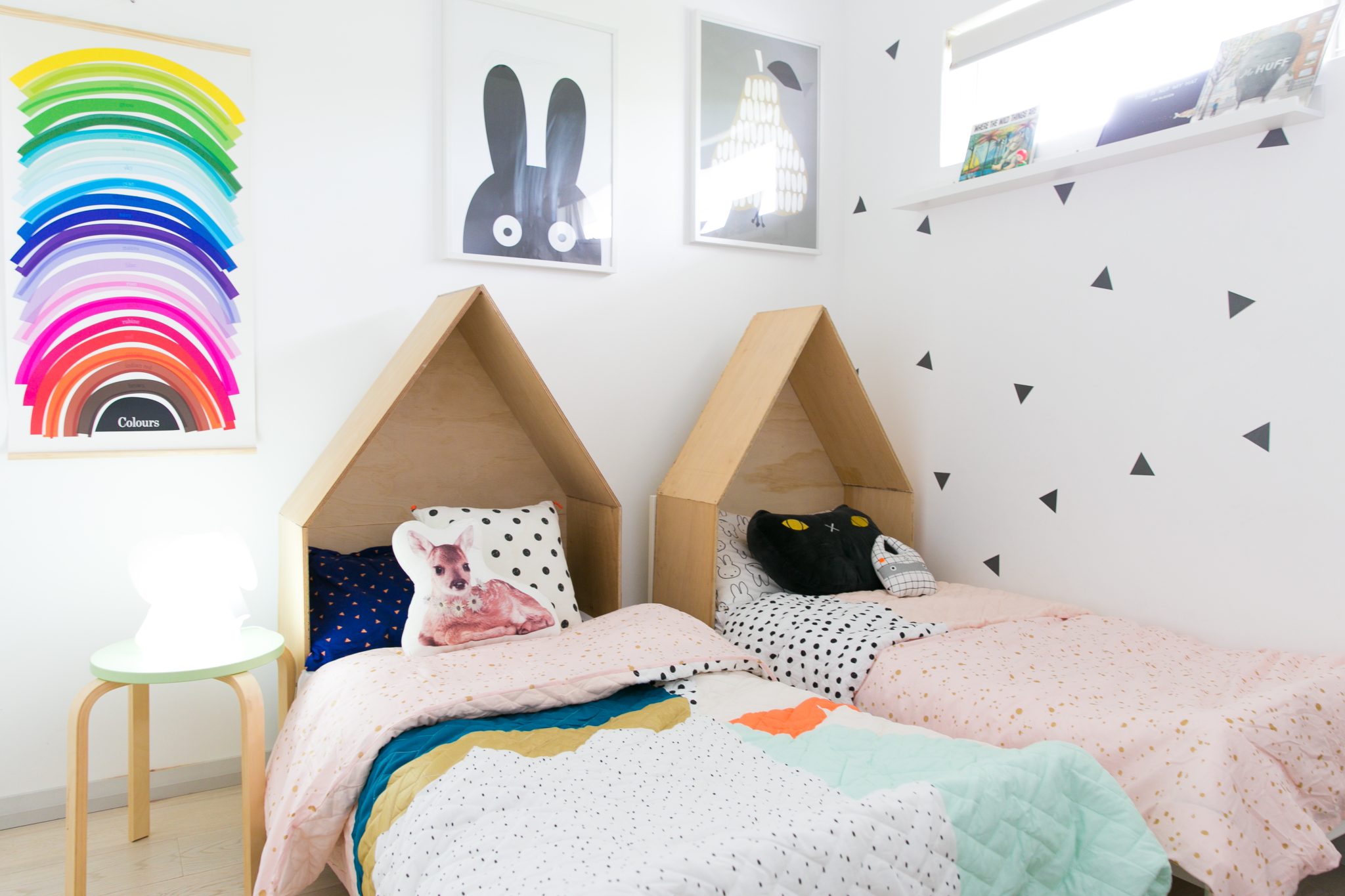
This room radiates pure joy, and its success lies in a clever design trick: using simple, open-frame ‘house’ beds. These frames provide the fun, imaginative outline of a house without the visual bulk of a solid piece of furniture. This keeps the room feeling airy, open, and bright. The white walls act as a blank canvas, allowing the real stars—the colorful textiles, rainbow art, and playful wall decals—to pop. It’s a space that feels creative and full of life, but not cluttered, thanks to that light and airy foundation.
|
📋 Copy HEX 🔗 Share |
📐 Style Math
In a shared room, giving each child a sense of their own personal space is key, even when they’re side-by-side. The house-shaped bed frames are brilliant for this. While they’re identical, they provide a clear boundary for each child’s zone. You can enhance this by letting each child choose their own unique quilt and a special pillow. This fosters a sense of ownership and individuality while maintaining a cohesive look for the overall room. It’s a design that says ‘we’re in this together, but you’re still you’.
22. A Glamorous Playroom with Pink Wallpaper and a Beaded Chandelier
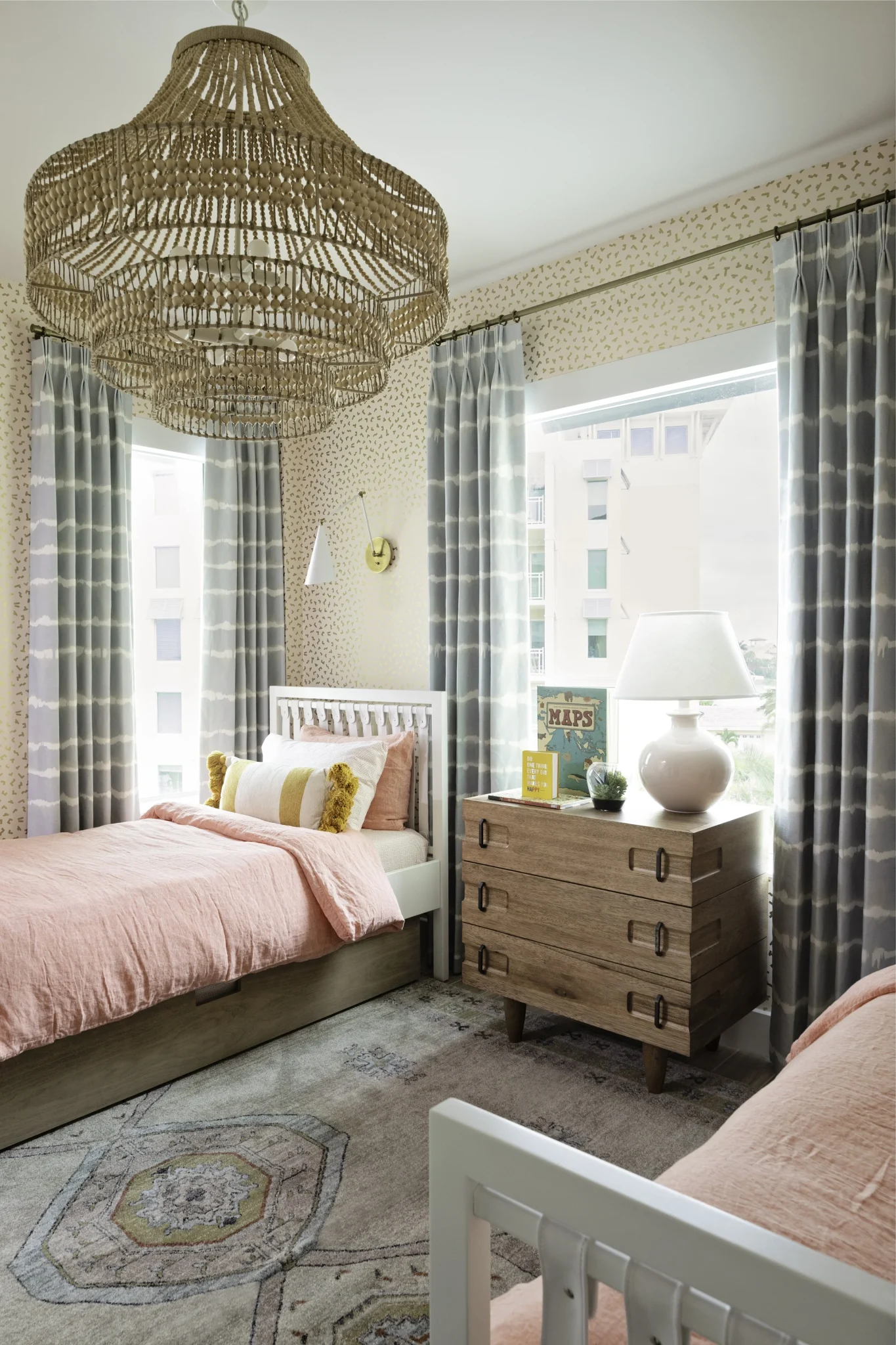
The single element that elevates this room from simply ‘pretty’ to ‘glamorous’ is the large, beaded chandelier. It’s an unexpected touch of formal elegance in a child’s space, and that playful contradiction is what makes it so successful. It serves as the central focal point, drawing the eye up and adding a sense of occasion to the room. Without it, the pink and gold wallpaper would be sweet, but the chandelier gives the entire design a sophisticated, whimsical sparkle that feels truly special.
|
📋 Copy HEX 🔗 Share |
💸 Get This Look For Less
A large statement chandelier needs room to breathe. To pull off a grand fixture like this, you need a ceiling height of at least 9 feet. In a standard 8-foot ceiling room, a chandelier this size would feel oppressive and be a hazard for tall parents. The room itself should be at least 12×12 feet (144 sq ft) to balance the scale of the light fixture and the two twin beds. For smaller rooms, get a similar effect with a smaller, flush-mount beaded light fixture and a pair of brass wall sconces, as seen here.
23. A Symmetrical Twin Room with Dragonfly Headboards
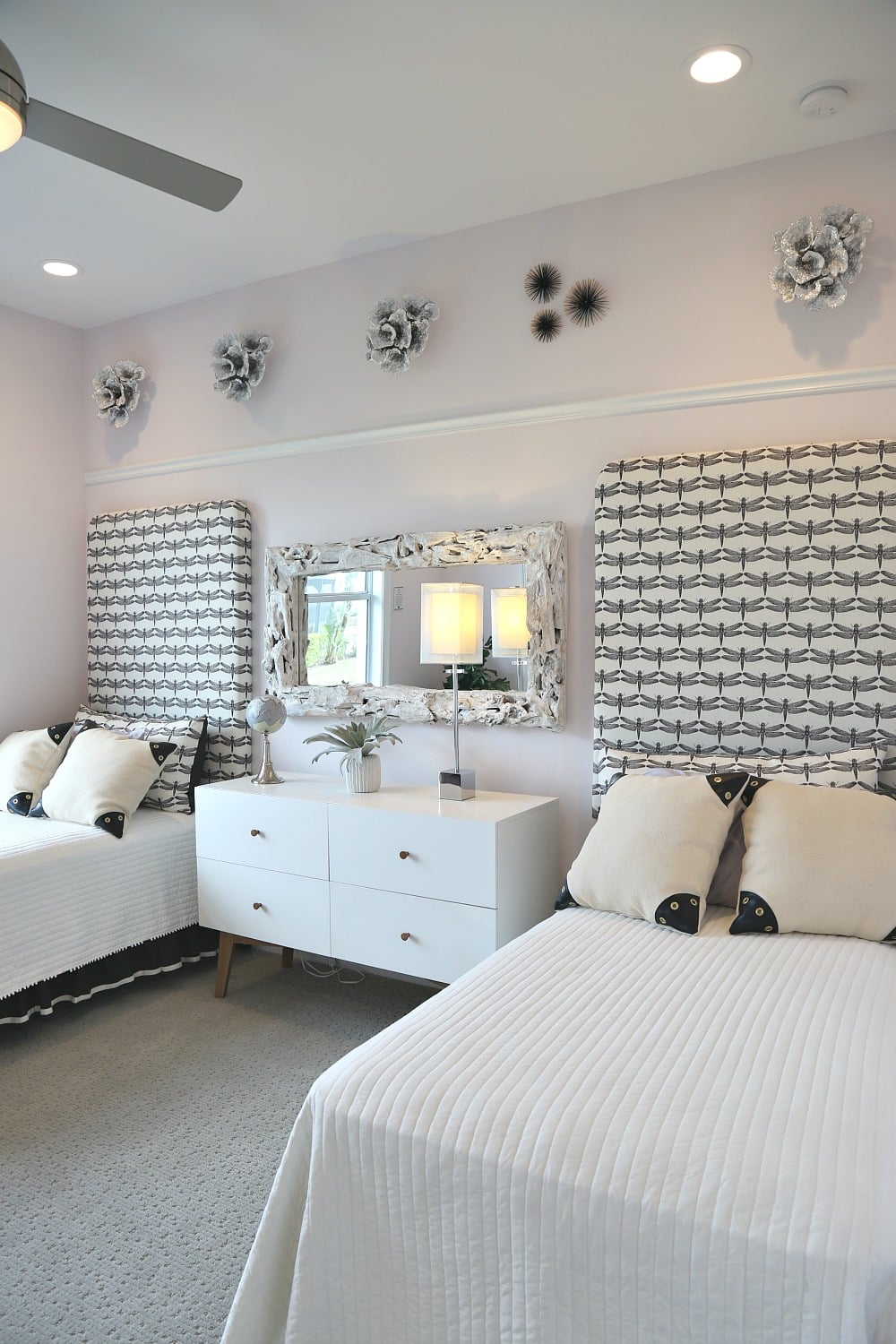
The serene and orderly feeling in this room is a direct result of its strong symmetrical layout. Placing the dresser and mirror centrally between the two identical beds creates a powerful visual anchor and a sense of balance. The eye finds this predictability calming and pleasing. The repetition of the headboards, bedspreads, and even the metallic wall art on either side reinforces this harmony. The soft pale lavender on the walls is the perfect backdrop—a gentle color that enhances the feeling of tranquility without being boring.
|
📋 Copy HEX 🔗 Share |
💡 Designer Tip
An all-white and pale-lavender bedroom is a beautiful dream… and a cleaning reality. Those pristine white quilted bedspreads will show every smudge, spot, and stray crayon mark. To make this look work in a real kid’s room, invest in duvet covers that are easily machine washable, and maybe have a backup set. The textured white mirror and dresser will also be magnets for dust. Plan for a weekly dusting session with a microfiber cloth to keep everything looking sharp and bright. Choosing a semi-gloss paint finish for the walls will also make wiping off fingerprints much easier.
24. A Serene Retreat with Sage Green Walls and Abstract Art
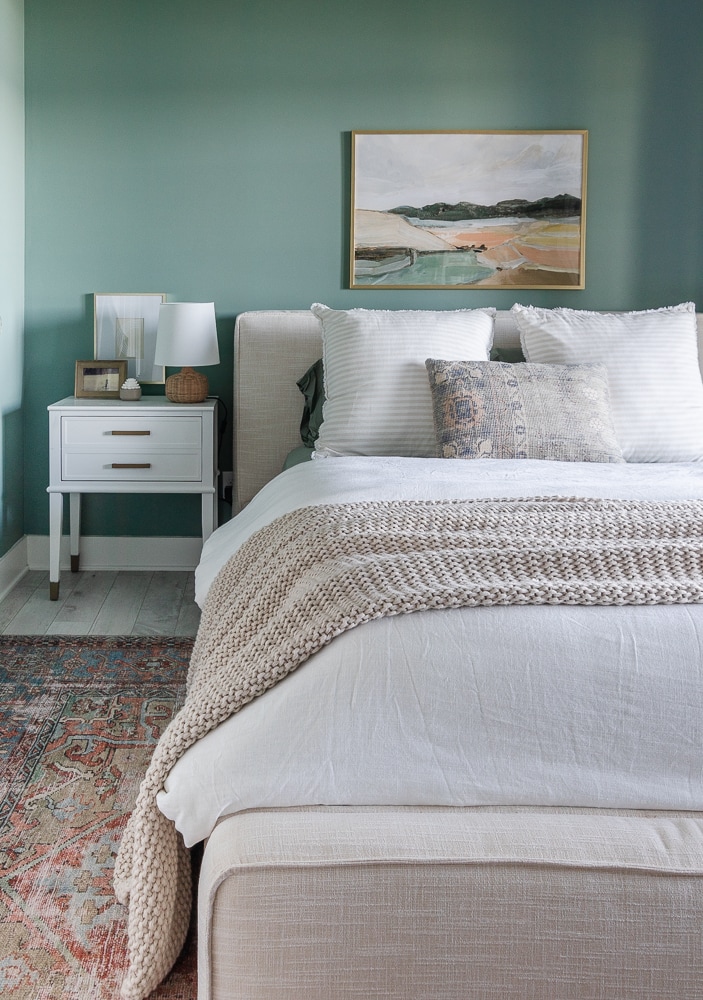
The single element that ties this entire serene look together is the abstract landscape art above the bed. It acts as the room’s color palette map. It contains the sage green of the walls, the beige of the bed and throw, the white of the linens and nightstand, and even introduces the warm tones of the rug. It’s the one piece that cohesively connects every other element in the room, making the whole design feel intentional, curated, and complete. Without it, the pieces would be nice, but they wouldn’t sing together in the same way.
|
📋 Copy HEX 🔗 Share |
🧹 Maintenance Reality
This room’s sophisticated formula is easy to replicate: 50% calming wall color (like this sage green), 30% soft neutral furniture and bedding (the beige and white), 10% texture (the chunky knit throw and wicker lamp), and 10% metallic shine (the gold frame and brass pulls). The key is the layering of similar tones with different textures. You could easily swap sage green for a dusty blue or a warm terracotta on the walls, and as long as you keep the rest of the percentages in balance, you’d create an equally calming and stylish space.
25. An Elegant Safari Theme with Blue and White Toile
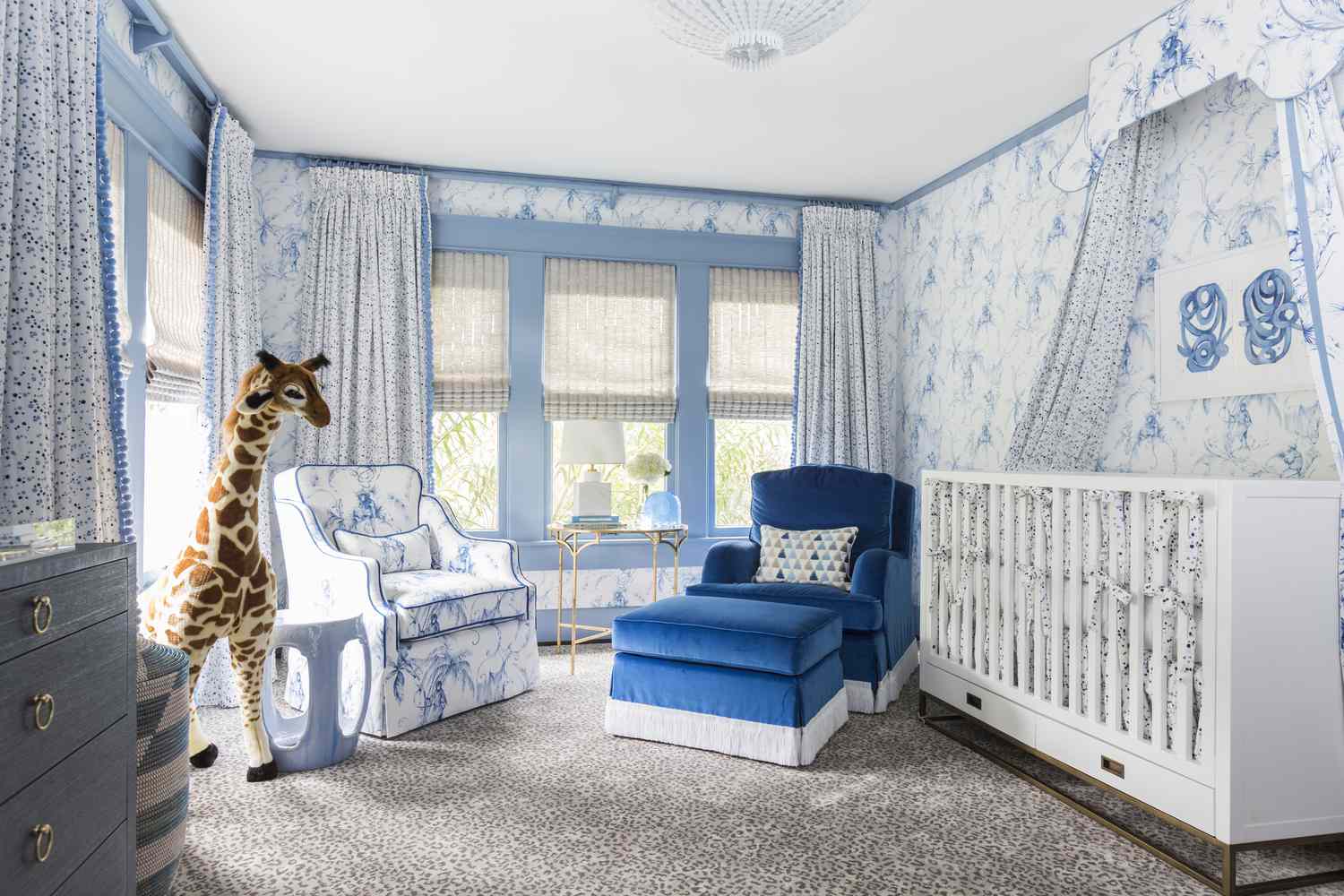
This room succeeds by masterfully blending traditional elegance with playful whimsy. The blue and white toile wallpaper, fringed armchairs, and formal curtains feel very classic and grown-up. But then, this sophisticated backdrop is delightfully subverted by a giant plush giraffe and bold leopard print carpet. It’s this high-low mix of ‘proper’ design and pure childhood fun that makes the space so compelling and unique. The consistent color palette of blues and whites prevents the mix of patterns from becoming chaotic.
|
📋 Copy HEX 🔗 Share |
⚠️ Real Talk
Let’s be honest: that beautiful leopard print carpet is a commitment, and so is the wall-to-wall toile. A highly specific, themed room like this is breathtaking, but it might have a shorter lifespan than a more neutral design. An eight-year-old might not be as charmed by the safari toile as a two-year-old was. If you love the idea but worry about longevity, consider getting the same effect with a large leopard print area rug over neutral hardwood, and using the toile pattern on removable peel-and-stick wallpaper on just one accent wall.
26. A Dreamy Pink Celestial Sky with a Fox Friend
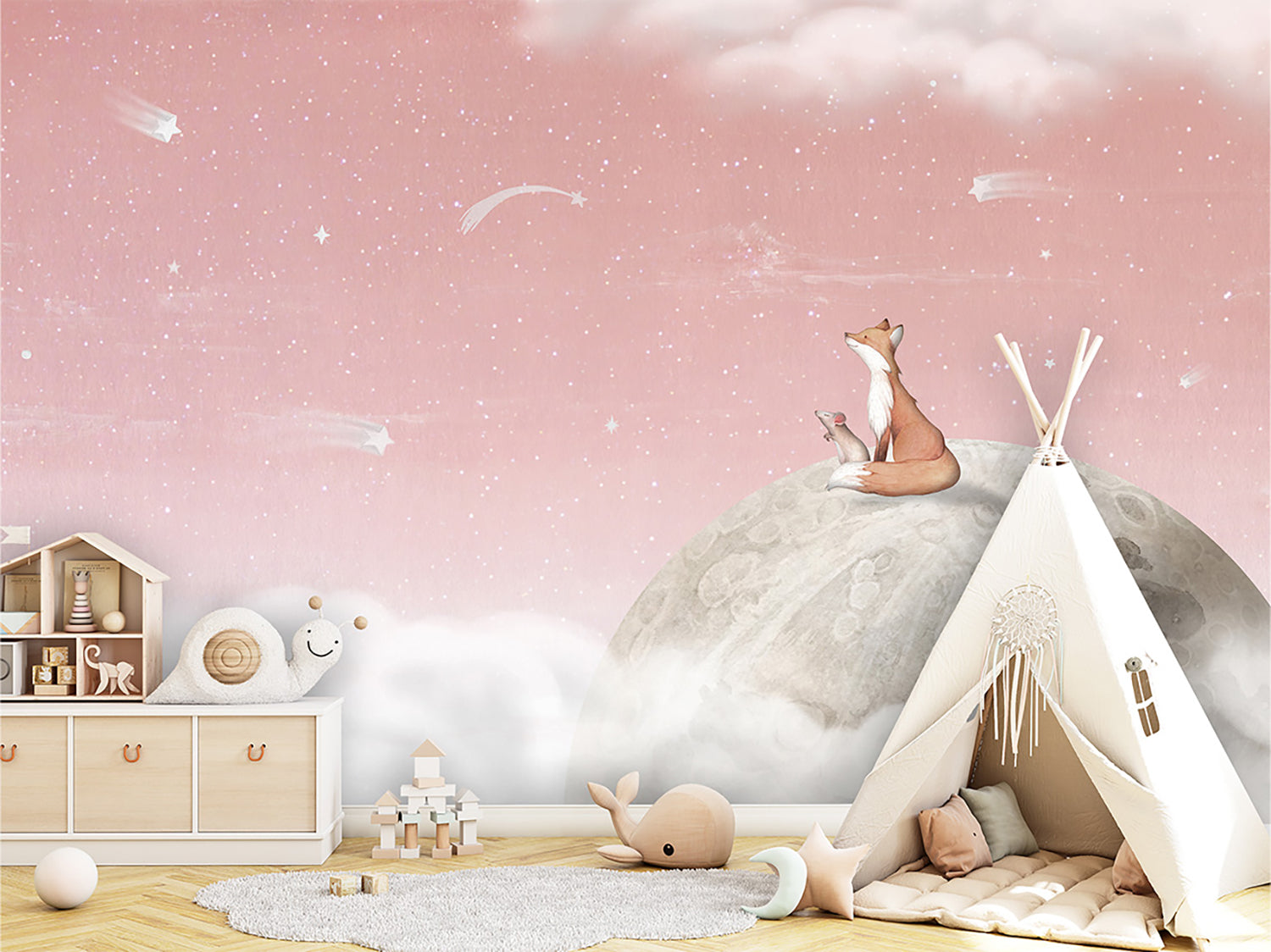
The soul of this room is the custom wallpaper featuring the large-scale illustration of the fox and mouse on the moon. It’s the narrative heart of the space. The starry wallpaper is lovely, but the addition of the charming characters gives the room a story and a focal point. It feels personal and artistic, like a page from a beloved children’s book brought to life. It elevates the room from a ‘pink starry room’ to a specific, magical place where this little fox lives.
|
📋 Copy HEX 🔗 Share |
📏 Scale Guide
When you have a dominant, feature wallpaper like this, lighting is crucial. Don’t rely on just one overhead light. To make it truly magical, add layers of light at different levels. This room does it perfectly: a low-level light source from a small lamp on the cabinet, perhaps a floor lamp inside the teepee for a soft glow, and maybe even some tiny LED fairy lights intertwined with the wallpaper stars. This creates a soft, ambient glow that is much more enchanting than a single harsh ceiling fixture.
27. Fairytale Bedroom with a Watercolor Castle Wall Decal
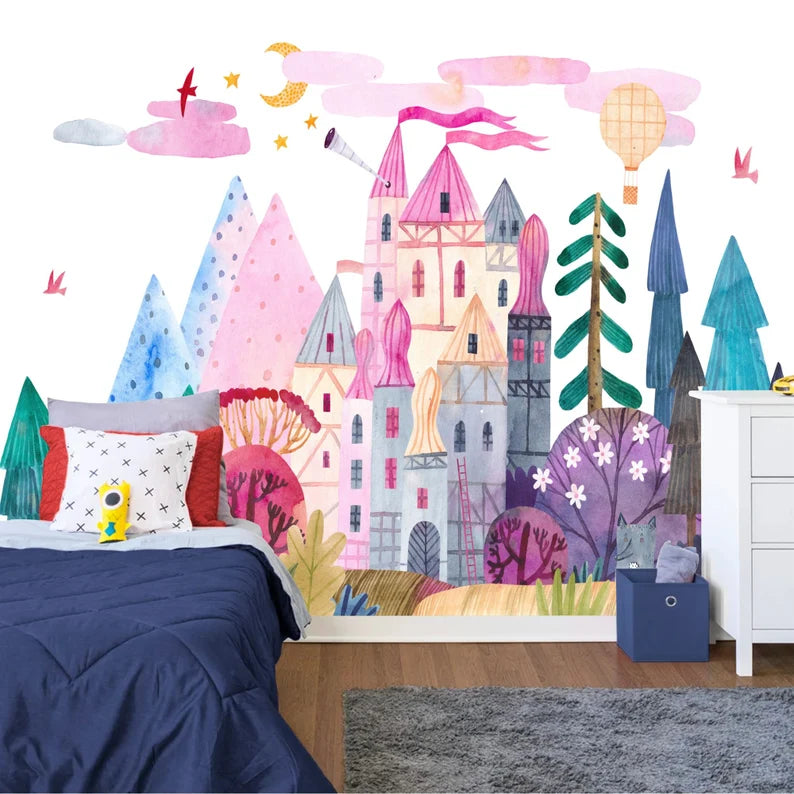
A hand-painted mural is an artist’s commission that can cost thousands. These large-scale watercolor decals are the savvy parent’s secret weapon for achieving a similar magical effect for a fraction of the price. You can find stunning, room-defining decals like this on Etsy or from brands like WallPops for $100 to $300. The beauty is that they are often removable, making them a lower-commitment way to embrace a theme you know your child will eventually outgrow. It’s high-impact fantasy on a real-world budget.
|
📋 Copy HEX 🔗 Share |
✅ Before You Start
This room feels like a storybook because of its smart use of color and scale. The wall decal is large, establishing the fairytale theme in a big way. The choice of a dark blue comforter creates a grounding contrast to the pastel colors of the decal, adding depth and preventing the room from feeling too sugary. The pops of bright red in the pillows then add a spark of energy, a classic fairytale color (think Red Riding Hood’s cloak) that draws the eye and completes the narrative feel. Compare this to the full mural in Idea #11 to see a different approach.
28. Functional and Feminine Design for a Growing Child
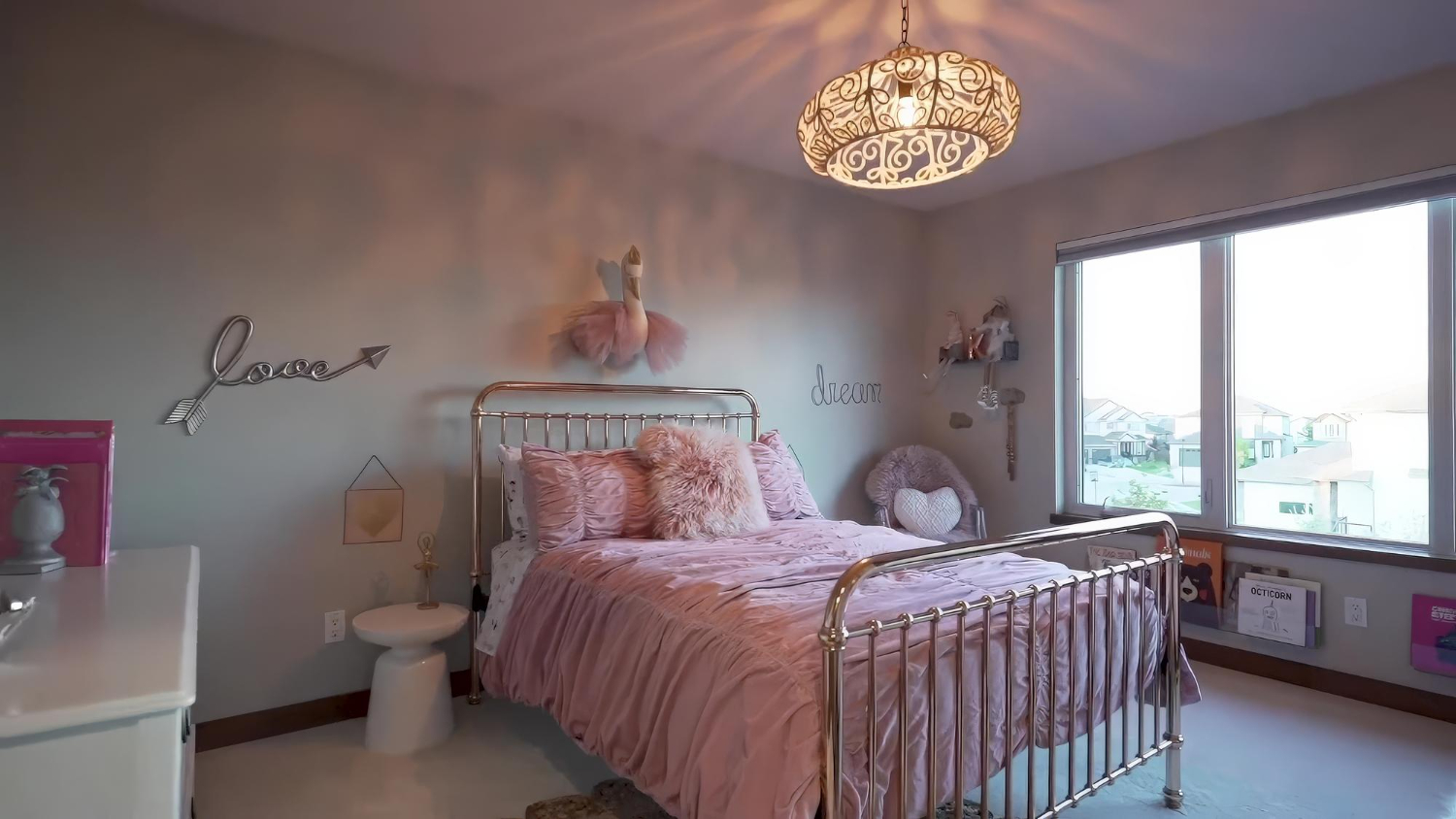
To create a room that can grow with a child, use a formula that’s easy to update: 60% sophisticated neutral base (think cream walls, classic white furniture), 30% ‘tween-friendly’ color (like a dusty rose, sage green, or cornflower blue), and 10% ‘little kid’ whimsy (a fun lamp, a playful rug, character bedding). As the child grows, you can easily swap out the 10% whimsical items for more mature accessories without having to re-do the entire room. The 60/30 base provides a timeless canvas that works for any age.
|
📋 Copy HEX 🔗 Share |
🔥 Trending Context
When designing a girl’s bedroom, avoid the trap of making everything one shade of pink and calling it a day. Instead, build a more sophisticated palette. Start with a main color you love, and then use a color wheel to find its complementary or analogous partners. For example, if you start with soft pink, adding touches of sage green, gold, and cream creates a much richer and more interesting space than pink alone. This creates a room that feels thoughtfully designed, not just color-coded.
29. A Compact, Multi-Zone Room with a Wooden Bunk Bed
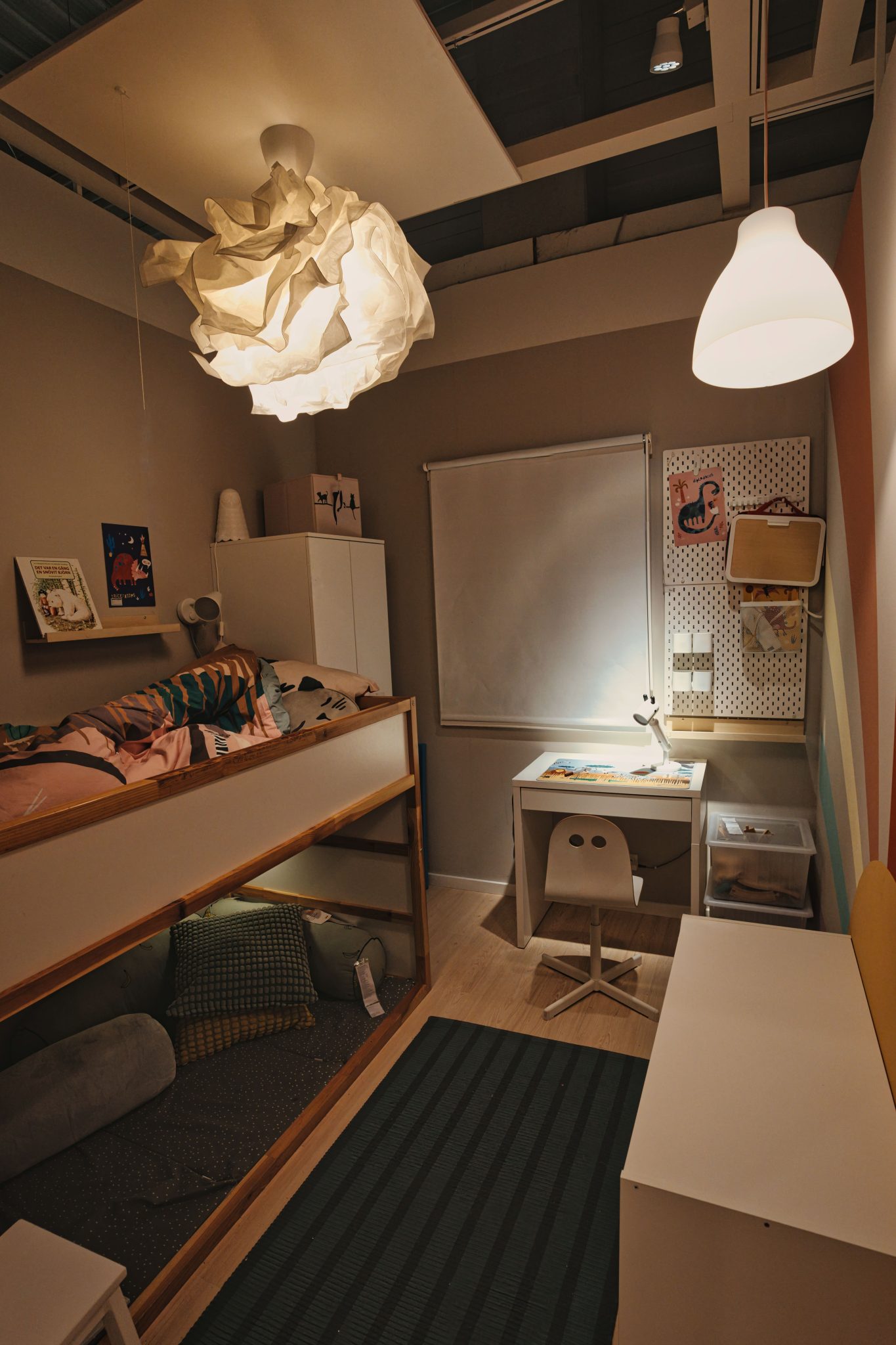
This room is a masterclass in space optimization, proving that you don’t need a huge room to have distinct zones for sleep, study, and play. The key is using furniture that works vertically, like the bunk bed, which frees up valuable floor space. The design clearly delineates a ‘study zone’ with the desk and pegboard, and a ‘cozy nook’ under the bunk. Consistent use of wood and white ties it all together, while the dark textiles add a grounded, stylish touch. Layered lighting further defines the areas, with specific task lighting for the desk and softer ambient light for the rest of the room.
|
📋 Copy HEX 🔗 Share |
⭐ The One Thing
Before you implement a multi-zone room, take a moment to assess the real needs. A dedicated study zone is only useful if your child is old enough to need it.
- Map the flow: Can you easily walk from the door to the bed to the desk without tripping? A compact room needs clear, non-negotiable pathways.
- Check your outlets: Does the designated study zone have an electrical outlet nearby for a lamp and charging devices? Plan this before you start moving heavy furniture.
- Measure for height: Ensure there is enough headroom in both the bunk bed and the study area for a child to sit up comfortably without bumping their head. A minimum of 30-36 inches of headroom is recommended.
30. Urban Cool: A Monochromatic Loft Bed with Exposed Brick
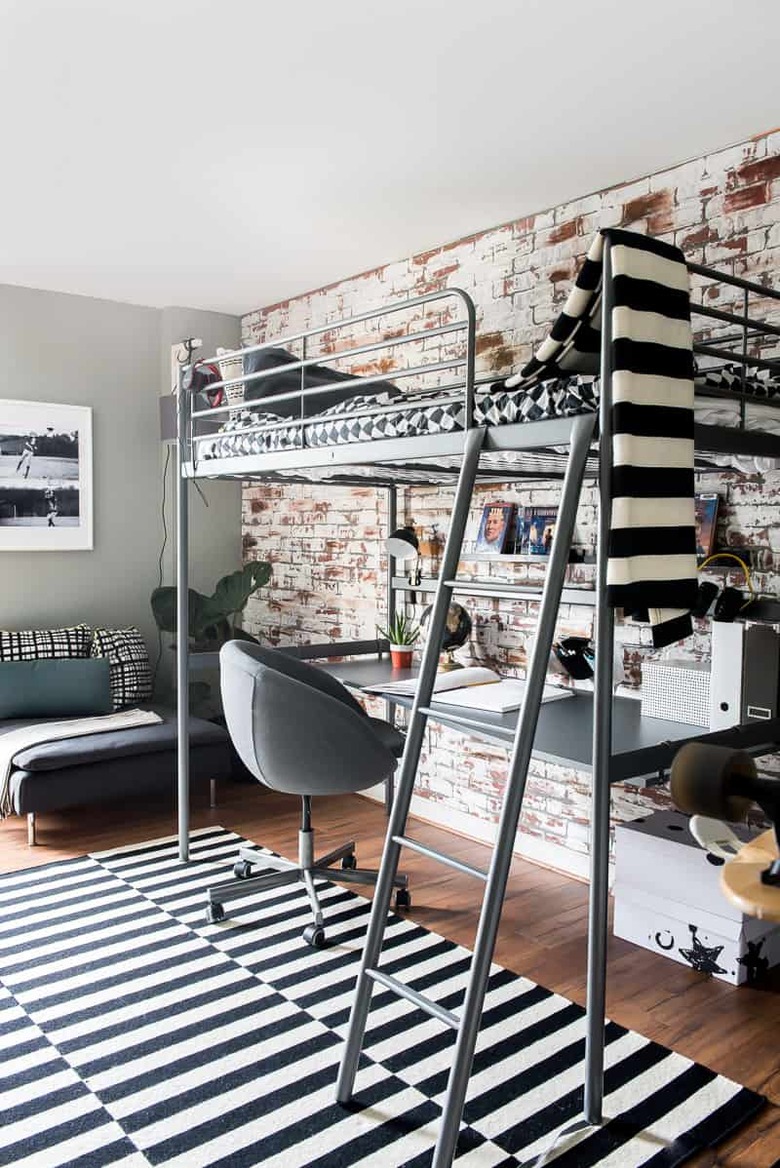
The success of this design lies in its strong graphic identity. The consistent use of black and white, from the bold striped rug to the geometric bedding, creates a powerful, cohesive statement. The exposed brick wall adds a layer of texture and warmth, preventing the monochromatic scheme from feeling cold or sterile. It gives the room an urban, loft-like feel. The silver metal of the loft bed frame enhances the industrial modern vibe. It’s a mature, stylish look that doesn’t feel childish, perfect for a teen or tween.
|
📋 Copy HEX 🔗 Share |
🔧 How-To Brief
An exposed brick wall is a fantastic feature, but it has its downsides. Real brick can be dusty and crumble slightly, which isn’t ideal for a sleep space unless it’s been properly sealed with a matte sealant. It’s also a very permanent, textured surface, which can make hanging posters or shelves tricky. And while it looks amazing, it offers zero insulation value and can feel cold in the winter. If you love the look but not the reality, there are incredibly realistic brick-effect wallpapers that give you the same urban vibe with none of the hassle.
Ready to Build Their Dream Room?
Creating a room that your child loves (and that you love looking at) is all about mixing personality with practicality. Hopefully, these ideas have sparked your imagination and shown you what’s possible, whether you’re working with a huge space or a tiny corner. Don’t be afraid to mix and match concepts until you land on the perfect story for your little one. Now, go get inspired and start planning on Pinterest!