You know that feeling when you finally find the fish tank that looks exactly right for your small living room, but the logistics feel… overwhelming? It’s easy to get stuck pinning beautiful photos without a clear plan. After filtering through hundreds of options from specialty aquarium shops and custom builders like CA Custom Aquariums and Armco Aquatics, we narrowed it down to the 28 ideas that actually deliver. We’re covering everything from high-end custom built-ins to stunning DIY aquascapes that look a million bucks but cost less than you think.
These aren’t just pretty pictures; we’re breaking down what makes them work with designer tips, budget advice, and real talk about maintenance. In 2026, the trend is all about seamless integration—making your aquarium a living piece of art that complements your home, not just an object that sits in the corner. And stay until the end — we break down the most common mistakes that can ruin these looks. 📌 Save this to Pinterest for later — you’ll want to revisit these ideas.
1. Modern Reef Tank on a Rustic Weathered Cabinet
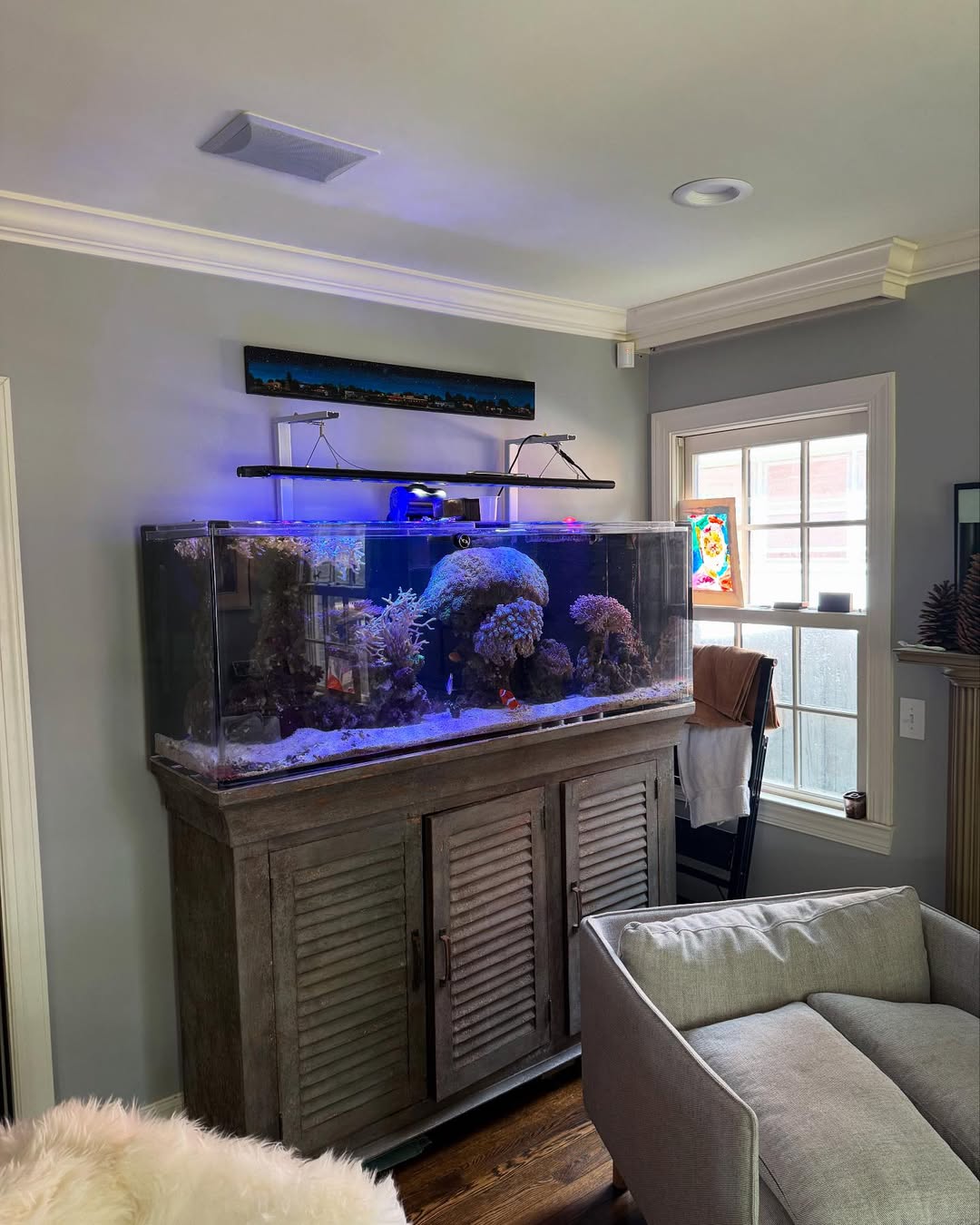
The magic here is in the mix of styles. The vibrant, almost futuristic blue glow of the reef aquarium creates a stunning contrast with the earthy, weathered wood of the louvered cabinet. It’s a perfect example of the “high/low” or “modern/rustic” trend that designers love. The sleek glass box feels crisp and new, while the cabinet below it adds warmth, history, and texture. This pairing prevents the high-tech tank from feeling cold or sterile, grounding it and making it feel like a deliberate part of the home’s cozy atmosphere.
|
📋 Copy HEX 🔗 Share |
🔧 How-To Brief
A reef tank of this size is a significant commitment. Weekly water changes of 10-20% are essential to keep corals healthy and water parameters stable. You’ll also need to manage salt creep—the white, crusty residue that forms as saltwater evaporates. Wiping down the cabinet, lid, and surrounding floor daily or every other day is a must to prevent damage to the wood and floors. Be prepared for regular equipment checks on the skimmer, pumps, and lighting, adding another 30-60 minutes to your weekly chores. Annual cost for salt, supplements, and replacement filter media can run from $300-$800.
2. Custom Aquarium for a Unique Living Room Nook
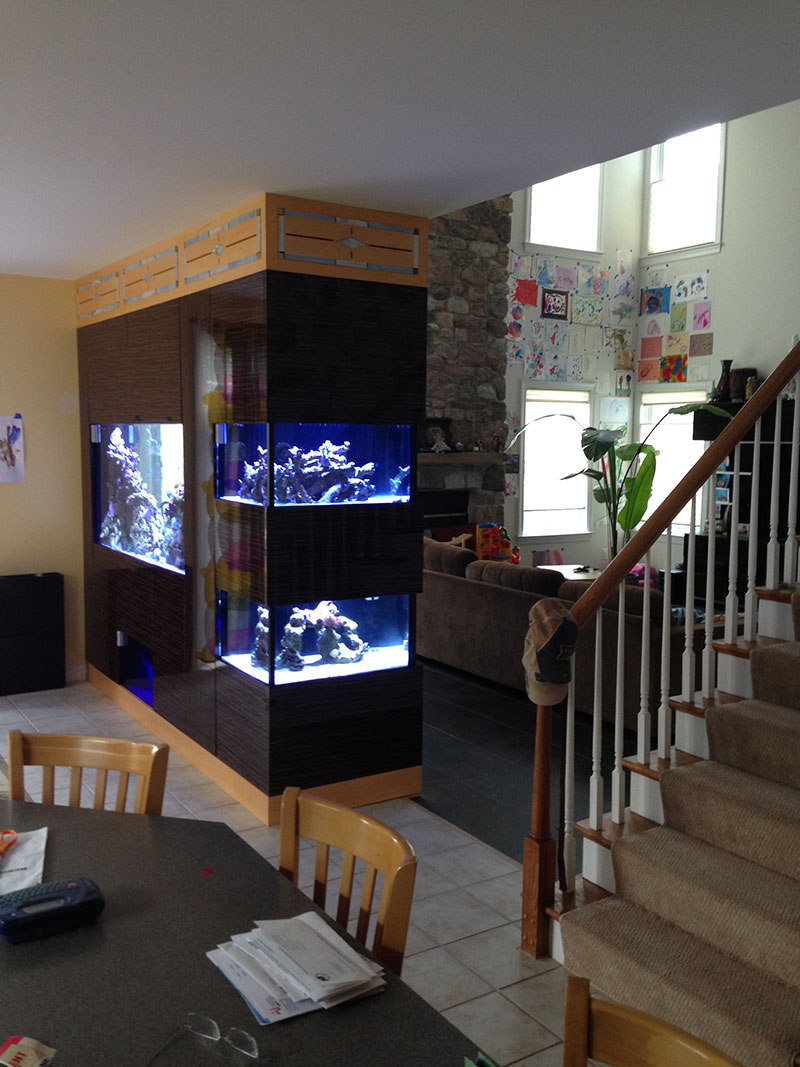
When you have an awkward corner or a specific nook you want to fill, off-the-shelf tanks often fall short. Working with a custom aquarium designer like Armco Aquatics allows you to specify the exact dimensions, materials, and filtration system to fit your space perfectly. For a truly seamless look, ask your designer about integrating the filtration plumbing into an adjacent cabinet or even a room behind the wall. This hides all the tubing and equipment, letting the beauty of the aquatic display be the sole focus and creating a much quieter experience in your living room.
|
📋 Copy HEX 🔗 Share |
💰 Budget Breakdown
Before you call a custom builder, have these details ready to get a more accurate quote and a better result. Answering these questions first will save you time and money in the long run.
- What are the exact measurements (width, depth, height) of the intended space?
- Where is the nearest electrical outlet, and can it handle the load of pumps, heaters, and lights?
- What is the flooring material, and can it support the immense weight of a large, water-filled tank? (Water weighs about 8.3 pounds per gallon!)
- Do you want a freshwater or saltwater setup? The equipment and maintenance needs are vastly different.
3. High-Contrast Aquascape with a White Sand River
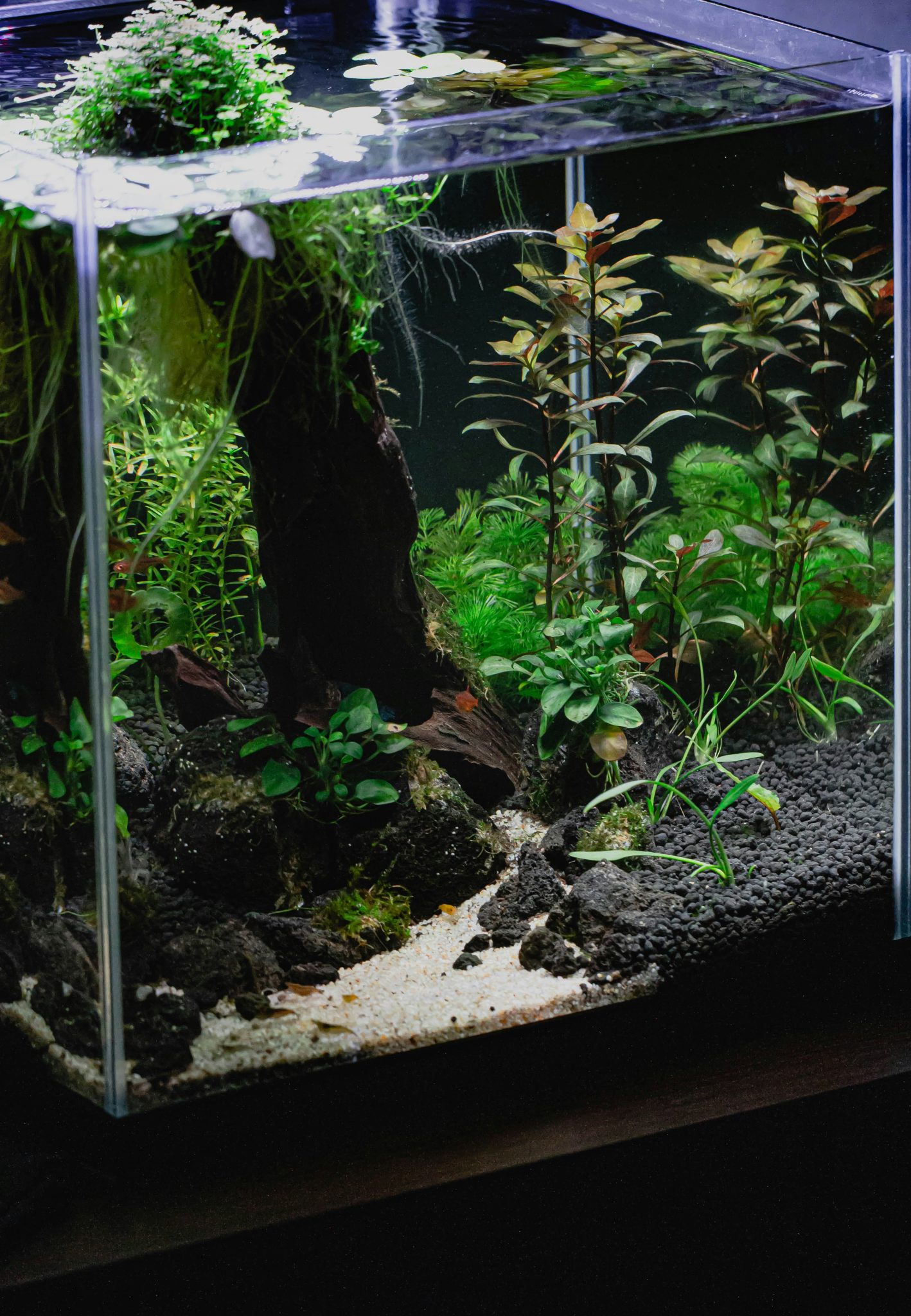
The single element that makes this aquascape so captivating is the winding white sand path. Without it, you’d have a pretty, but typical, collection of rocks and plants. The path introduces a powerful sense of direction and perspective, tricking the eye into seeing depth that isn’t really there. It feels like a miniature landscape painting, drawing you in and inviting your imagination to follow the river through the green valleys. It’s a masterful design choice that elevates the entire tank from a simple container for fish to a living work of art.
|
📋 Copy HEX 🔗 Share |
💡 Designer Tip
This look is all about a carefully balanced visual recipe. Think of it as: 60% lush greenery + 20% dark, textured hardscape + 20% bright white sand. The green plants provide the dominant color and life. The dark rocks and soil create shadow, height, and a natural backdrop. The white sand provides the crucial contrast and “negative space” that makes the other elements pop. You could swap the specific plants or rocks, but if you maintain that 60/20/20 ratio, you’ll achieve a similarly dramatic and balanced effect.
4. Minimalist Tank for a Clean, Custom Aesthetic
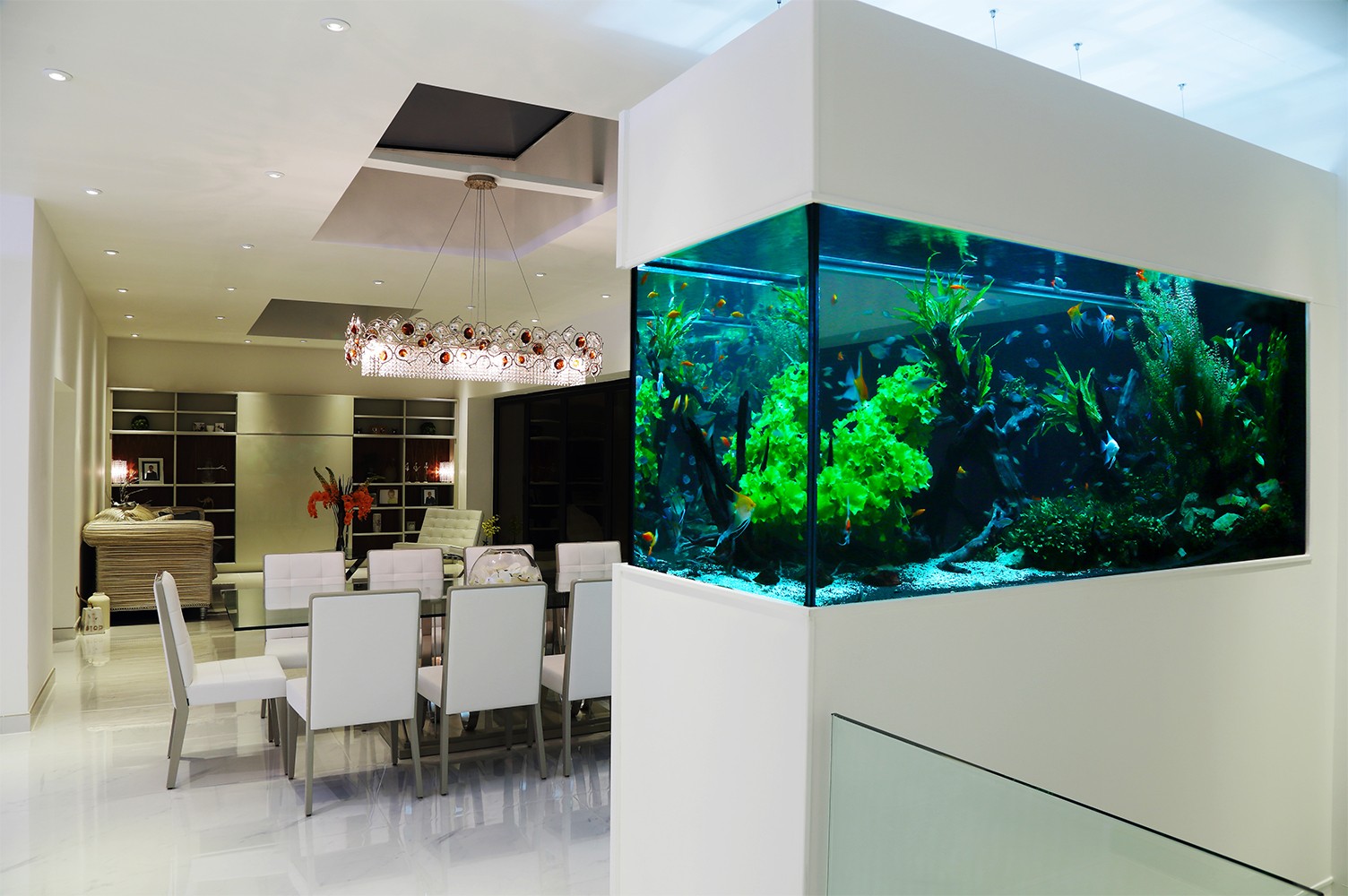
A minimalist aquarium shines in rooms from 100 to 250 square feet. The key is to match the tank’s footprint to your available space without creating clutter. For smaller living rooms, a “nano” tank (under 10 gallons) on an existing console or a dedicated small stand works beautifully. In a slightly larger space, a long, shallow rectangular tank (20-40 gallons) like those from CA Custom Aquariums can run along the back of a sofa or stand below a mounted TV, adding a dynamic element without overwhelming the room’s clean lines. The goal is for the tank to feel like an intentional, integrated piece of decor, not a bulky afterthought.
|
📋 Copy HEX 🔗 Share |
📏 Scale Guide
You don’t need a custom build to achieve a minimalist vibe. Look for rimless, low-iron glass tanks from brands like Waterbox or UNS—they offer crystal-clear viewing without bulky black plastic frames. Pair one with a simple, clean-lined cabinet from IKEA, like the BESTÅ series, for around $100-$200. For the inside, stick to a limited palette: one type of rock (like Seiryu stone), one type of wood (like spiderwood), and just two or three species of green plants. The discipline in your material choice is what creates the high-end minimalist feel for less.
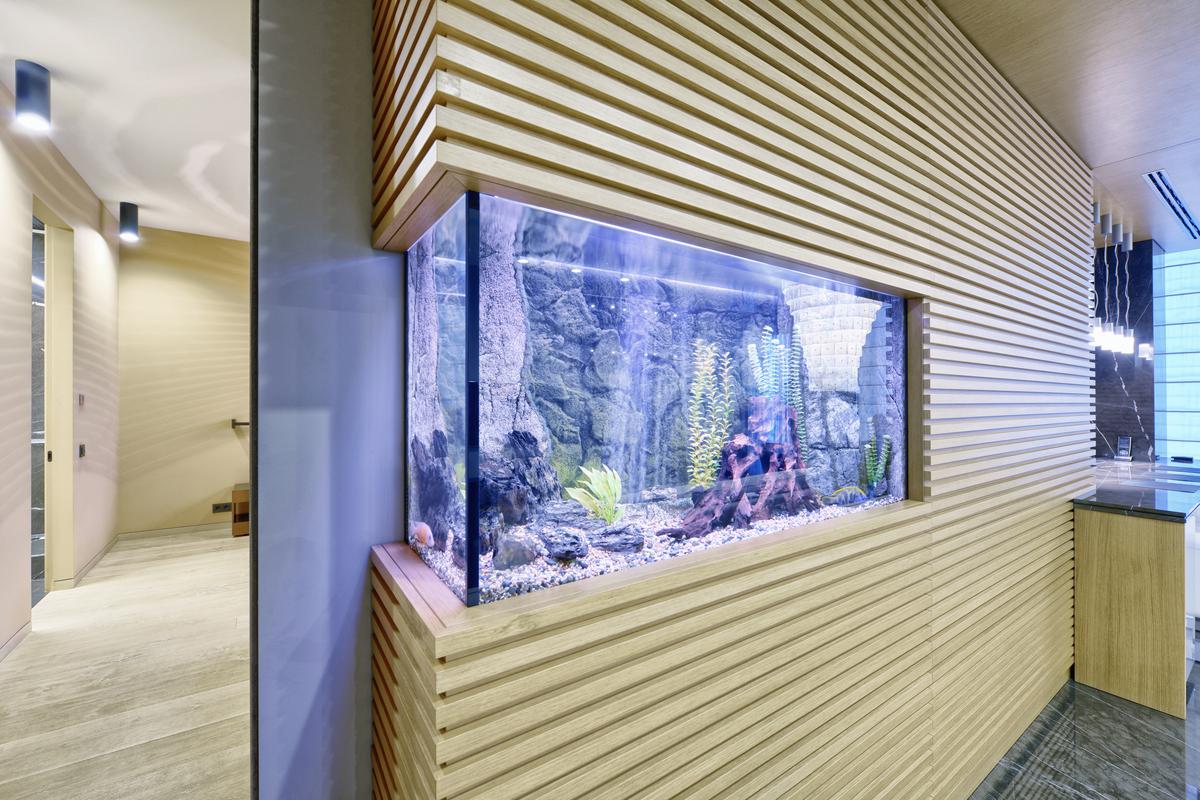
5. A Serene Aquarium Recessed into a Light Wood Slat Wall
Creating a recessed niche for an aquarium is a project for a confident DIYer or a professional. Here’s a simplified overview for building a non-load-bearing niche:
- Time: 2-3 days | Cost: $300-$800 (materials only)
- Frame the opening with 2x4s, ensuring it’s perfectly level and large enough for the tank and any surrounding trim. Add a header for support.
- Run electrical wiring for lights and filtration to a hidden, accessible location inside the wall or a nearby cabinet. Ensure it meets local codes.
- Install a waterproof backer board inside the niche to protect against moisture and spills.
- Install the wood slat paneling on the exterior wall, carefully cutting the pieces to frame the opening perfectly.
- Slide the aquarium into place, connect the equipment, and finish with trim for a polished look.
|
📋 Copy HEX 🔗 Share |
⭐ The One Thing
A built-in aquarium is a stunning architectural feature, but it’s also very permanent. Unlike a standalone tank you can move, this is part of your home’s structure. Any issues, like a leak, become a much bigger problem involving drywall and potential mold. Accessing the back of the tank for maintenance can be extremely difficult unless you build in a hidden access panel. You are also locked into that specific tank size. If you ever want to upgrade or downsize, you’re looking at another construction project, not just a simple swap.
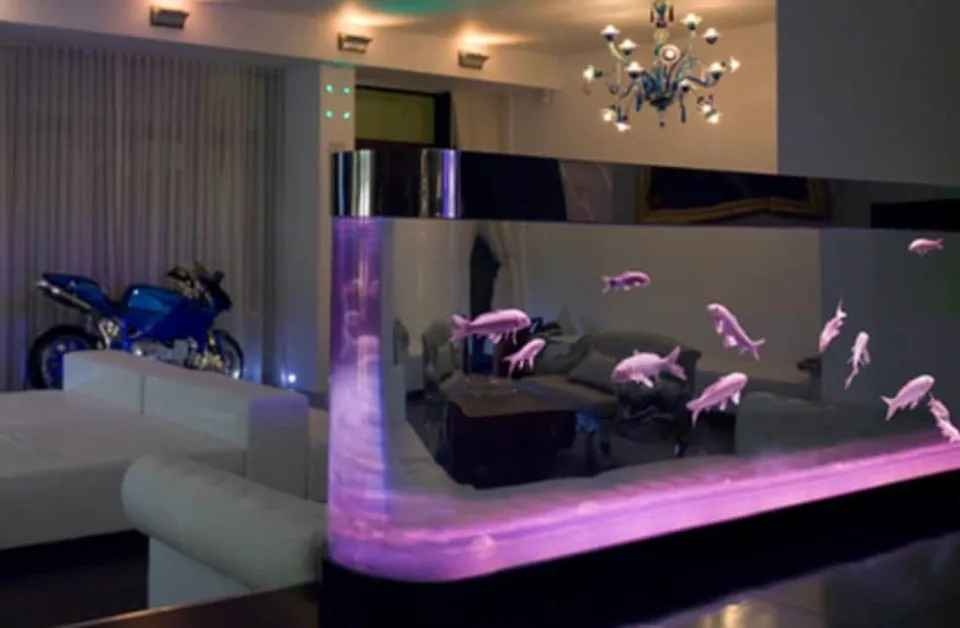
6. Using Pink Aquarium Decor for a Playful Vibe
When using a bold, unconventional color like pink in an aquarium, the key is intentionality. Don’t just throw in a single pink castle. Instead, commit to the color and weave it through the design. Use a pink-hued LED light, find gravel with pink accents, and choose two or three decorative items in varying shades of pink. By repeating the color at different levels (substrate, decor, lighting), you create a cohesive and designed look rather than a random, disjointed collection of items. This makes the color feel like a deliberate artistic choice.
|
📋 Copy HEX 🔗 Share |
🔥 Trending Context
After years of minimalist beige and grey, maximalism and playful color are making a huge comeback, partly fueled by trends like “Barbiecore” and a general desire for more joy and personality in our homes. An aquarium with pink decor fits right into this shift. It’s a rejection of sterile, overly serious design in favor of fun and self-expression. This look says you’re not afraid to be a little different and that your home is a place for creativity. While ultra-trendy, the core idea of using bold color has staying power if it genuinely reflects your personal style.
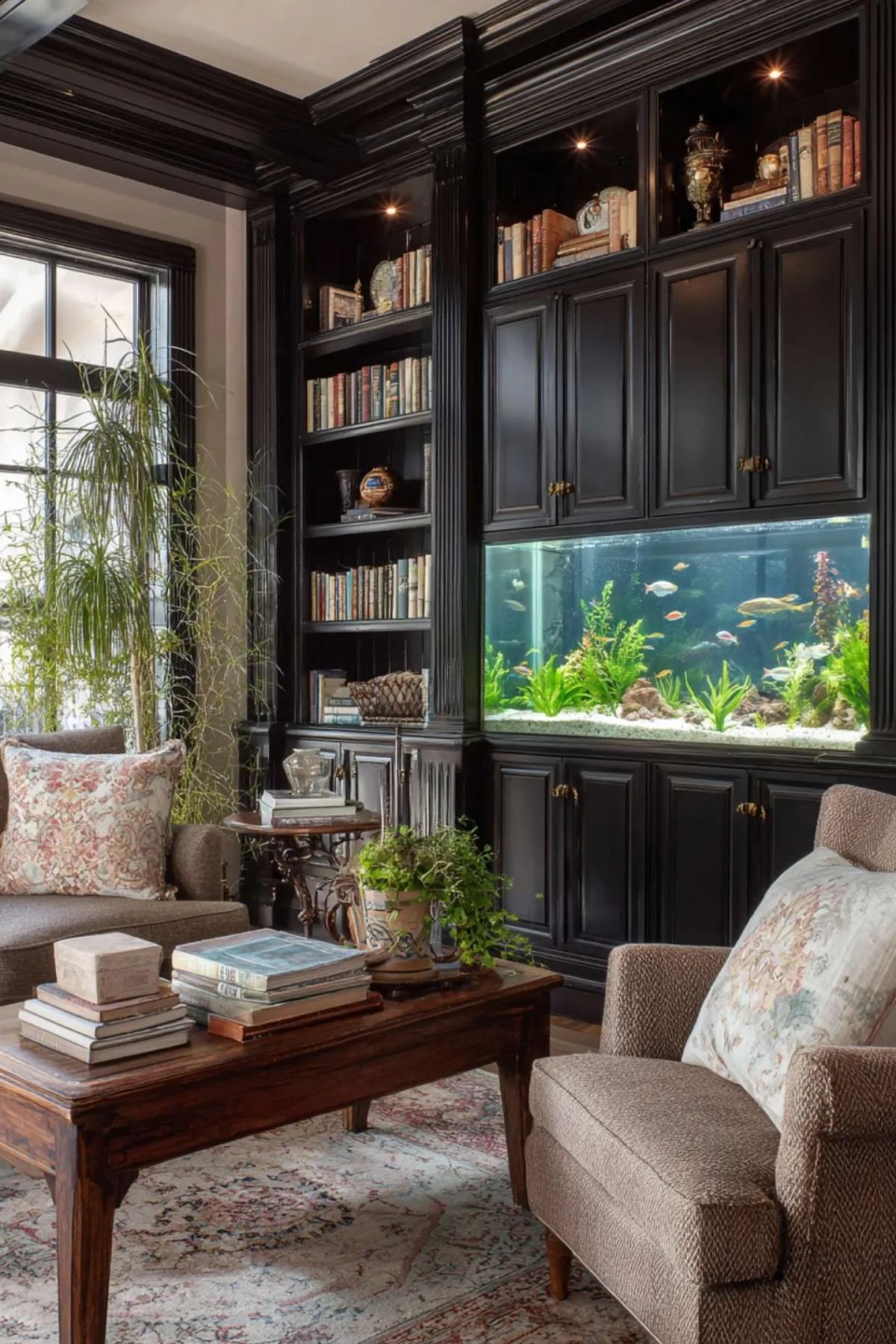
7. Traditional Library with an Integrated Fish Tank
In a room dominated by heavy, dark wood shelving and traditional furniture, an aquarium provides a much-needed point of dynamic contrast. The bright light, gentle movement of the fish, and vibrant green of the plants cut through the static, quiet energy of the library. It acts like a living window, adding a layer of life and brightness that prevents the space from feeling dated or stuffy. The tank’s modern, clean lines are balanced by the classicism of the room, creating an interesting and sophisticated dialogue between old and new.
|
📋 Copy HEX 🔗 Share |
⚠️ Real Talk
Keeping a large, built-in tank pristine in such an elegant setting requires diligence. In a formal space like this, any algae on the glass or cloudiness in the water is immediately noticeable and detracts from the high-end look. You’ll need to be militant about your weekly cleaning schedule, including scraping the interior glass. Be mindful of splashes during water changes, as they can damage the finish of the dark wood shelving. Also, consider noise; make sure the pumps and filters are high-quality, quiet models to maintain the serene atmosphere of a library.
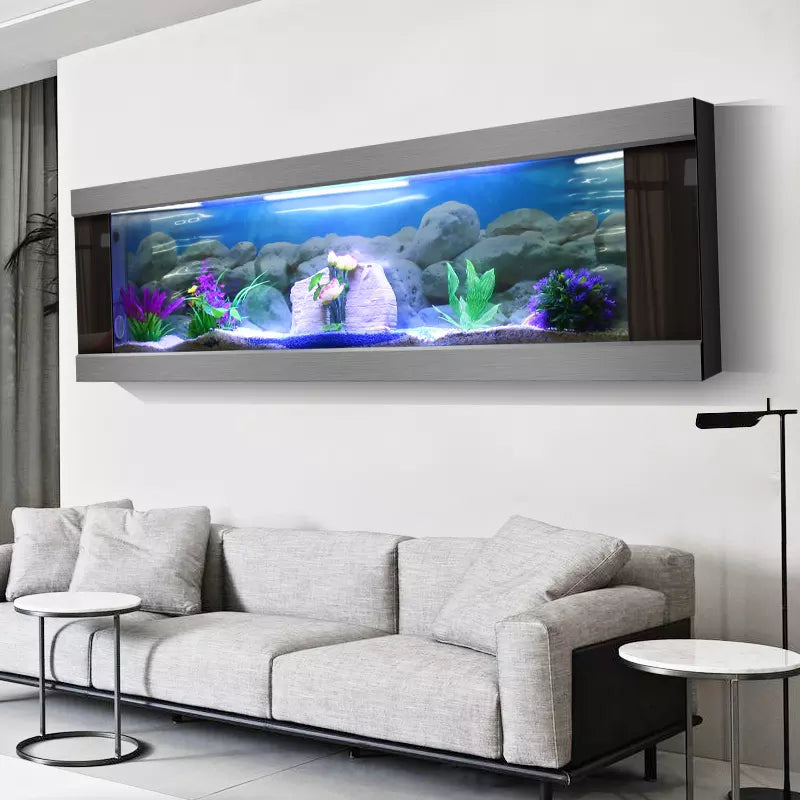
8. Sleek Wall-Mounted Aquarium Over a Sectional Sofa
This idea is perfect for living rooms with at least 9-foot ceilings and a long, uninterrupted wall. The aquarium should be at least two-thirds the length of the sofa below it to feel balanced. For example, a 96-inch sofa would call for a 64-inch (or longer) aquarium. The height is also critical: the bottom of the tank should be at least 12-18 inches above the top of the sofa cushions. This creates enough visual breathing room and prevents guests from feeling like the tank is looming over them. For a more grounded approach, compare this with the console-based setup in Idea #9.
|
📋 Copy HEX 🔗 Share |
✅ Before You Start
Let’s be honest: hanging a few hundred pounds of glass and water on the wall is a job for professionals. This is not a DIY weekend project. The wall must be properly reinforced to handle the weight, and the mounting hardware has to be top-grade. You also need to consider the logistics of water changes. You’ll be carrying buckets of water through your living room, with the risk of splashing your sectional sofa. A professionally installed system with a dedicated water line is a significant extra cost but can save your sanity and your furniture.
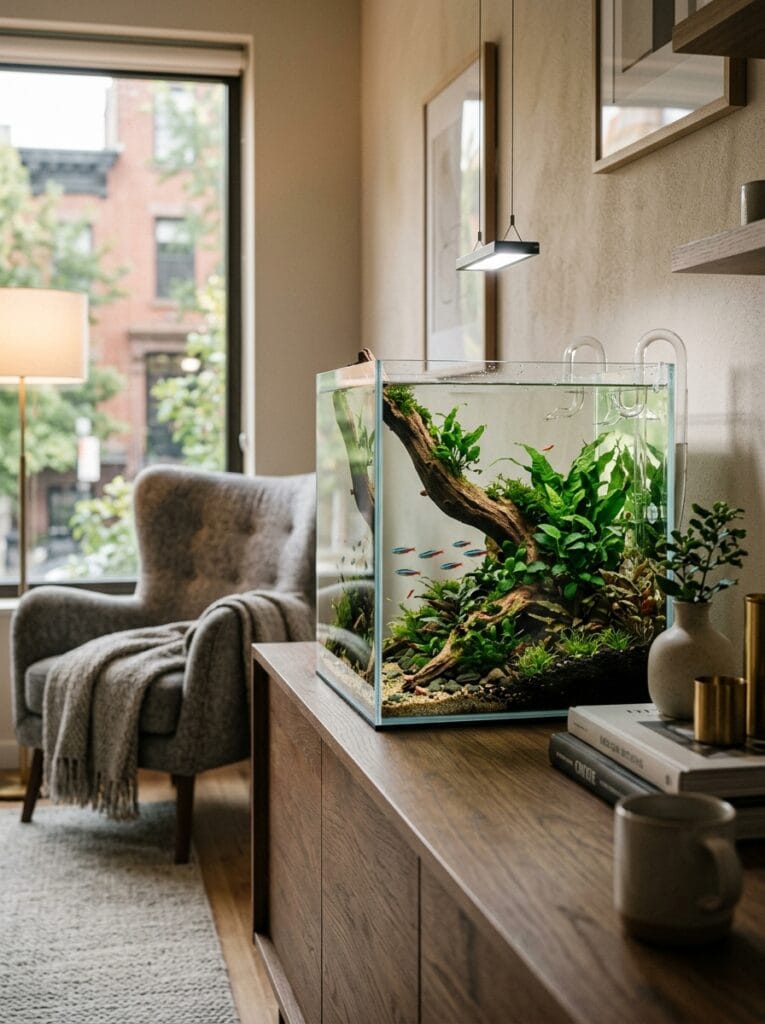
9. Minimal Cube Aquarium in an Earthy, Neutral Room
The single element that elevates this simple setup is the dedicated hanging light. By placing a sleek, minimalist pendant directly over the aquarium, the tank is transformed from just another object on a table into a deliberate, highlighted feature. It’s like putting a spotlight on a piece of art in a gallery. This focused light not only helps the aquatic plants thrive but also draws the eye, signaling that this small cube is important and worthy of attention. Without it, the tank would just blend into the background.
|
📋 Copy HEX 🔗 Share |
💸 Get This Look For Less
You can create this serene, earthy vibe on a surprisingly small budget. Start with a standard 10-gallon cube tank ($20-$30). Instead of a pricey console, look for a dark wood plant stand or a small side table from Target or Facebook Marketplace for under $50. The real key is the lighting. Find a simple, plug-in pendant light cord kit on Amazon for about $15 and pair it with an attractive lampshade or even a bare Edison bulb. For inside the tank, collect a few interesting pieces of driftwood and stick to easy, low-light plants like Anubias and Java Fern.
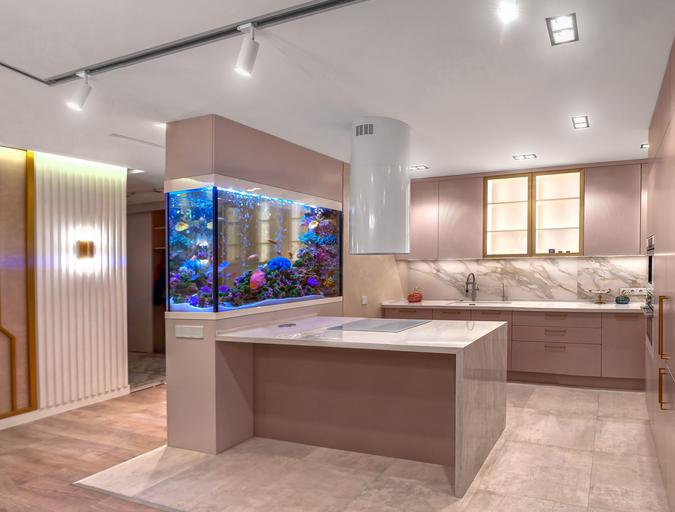
10. Kitchen Partition Wall Featuring a Blush Pink Aquarium
Using an aquarium as a room divider is a brilliant way to define zones in an open-concept space without blocking light or sightlines. To make it successful, the tank must be viewable and beautifully aquascaped from both sides. This is called a “peninsula” style tank. When planning, ensure the “front” and “back” are equally engaging. Use a central hardscape structure, like a pile of rocks or a large piece of driftwood, that looks good from all angles, and plant taller species in the middle to help hide equipment like filter intakes and heaters.
|
📋 Copy HEX 🔗 Share |
🧹 Maintenance Reality
The stunning look of this space comes down to a chic and unexpected color formula: 50% Blush Pink + 40% Cool White Marble + 10% Electric Blue. The pink cabinetry is the dominant, daring choice, softened by the large expanses of classic white marble on the island and backsplash. The aquarium’s blue light acts as a vibrant, jewel-like accent, injecting a shot of energy. You could swap the pink for a deep teal or forest green and still get the same sophisticated effect, as long as you keep the cool white and blue accents to balance it.
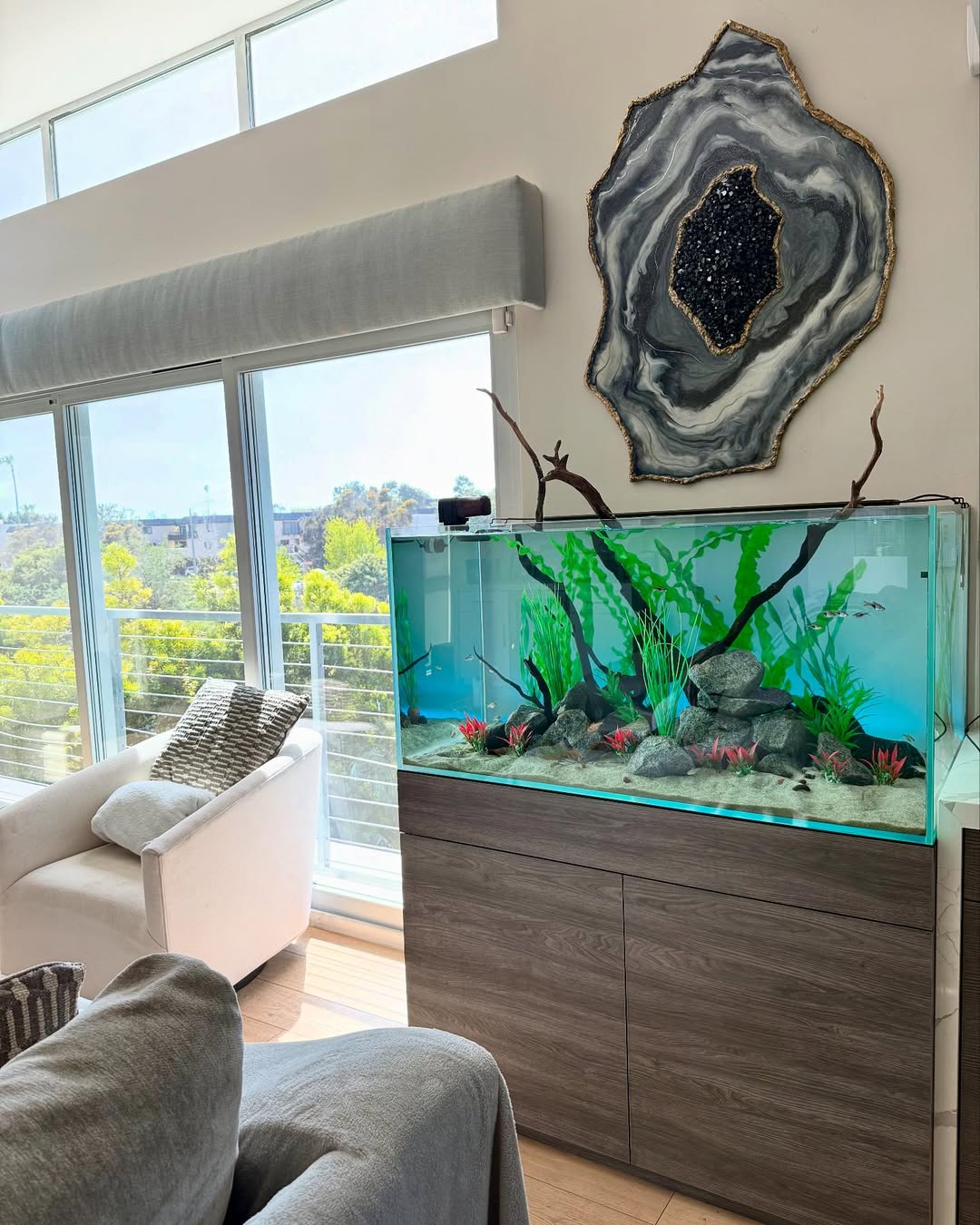
11. Modern Aquarium Paired with Geode Wall Art
This combination works so well because it layers natural elements on different scales. The aquarium presents a living, moving, miniature ecosystem—water, plants, life. The geode wall art above it presents a macro, geological element—the suggestion of crystal, stone, and earth, frozen in time. Both pieces are connected by their organic origins but display them in contrasting ways (dynamic vs. static, micro vs. macro). This creates a sophisticated visual conversation and makes the entire wall feel curated and thoughtfully designed around a central theme of nature.
|
📋 Copy HEX 🔗 Share |
🎯 What Makes It Work
Coordinating a statement tank with statement art requires careful planning. Make sure you check these boxes before you commit to the pairing:
- Color Harmony: Do the dominant colors in the art piece complement the colors of your aquascape (plants, fish, lighting)? Pull one or two subtle accent colors from the art to use in your tank decor.
- Scale and Proportion: As a rule of thumb, the artwork should be roughly the same width as the aquarium, or slightly narrower. A piece that is much wider or much smaller will look unbalanced.
- Lighting Plan: How will you light both pieces? You don’t want the aquarium light to create a glare on the art, or an art light to wash out the tank. Consider separate, adjustable spotlights for each.
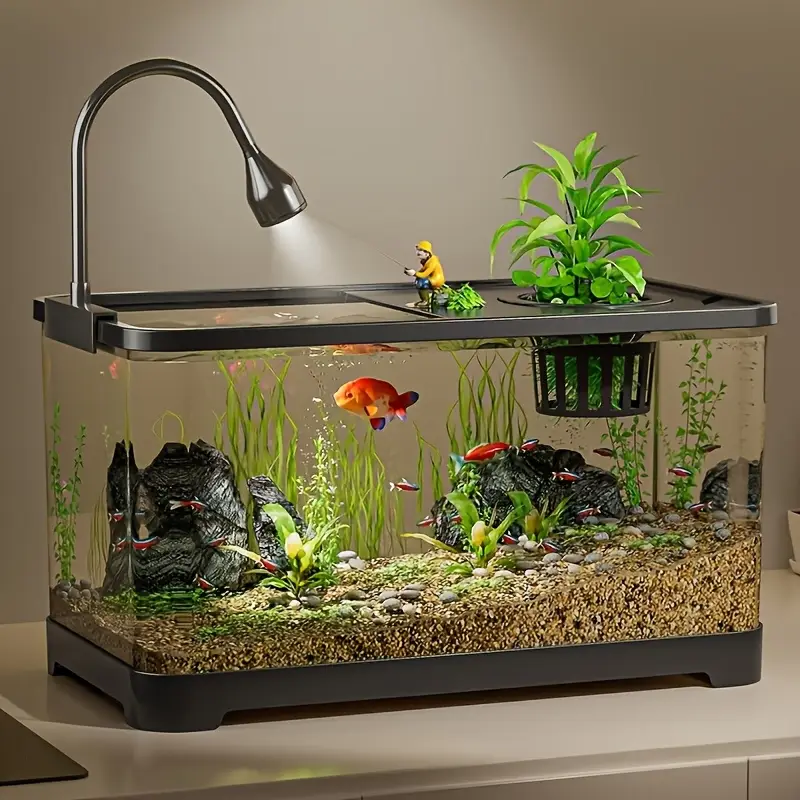
12. Compact Desktop Tank with an Integrated Plant Pod
Recreating this all-in-one desktop setup is quite accessible. These integrated kits are designed to be a complete, ready-to-go package.
- Main Furniture (All-in-one Tank Kit): $80 – $200
- Lighting (Included in kit): $0
- Textiles (Substrate/Gravel): $10 – $25
- Decor/Accessories (Small plants, rocks, fish): $30 – $75
- TOTAL: $120 – $300
Budget alternative: You can assemble a similar setup for about 40% less by buying a standard 5-gallon tank ($15), a separate clip-on light ($20), and a small hang-on-back filter ($15). The integrated look is what you pay a premium for in the kits.
|
📋 Copy HEX 🔗 Share |
📐 Style Math
A small, all-in-one tank like this is ideal for a home office desk, a bedroom dresser, or a kitchen counter. The key is placing it where you can appreciate it up close. Its small size (typically 2-5 gallons) means it won’t make a big impact from across the room. It’s meant for intimate viewing. Ensure the surface is perfectly level and located near an electrical outlet. Avoid placing it on the same desk as a large computer monitor, as the competing light sources can be distracting.
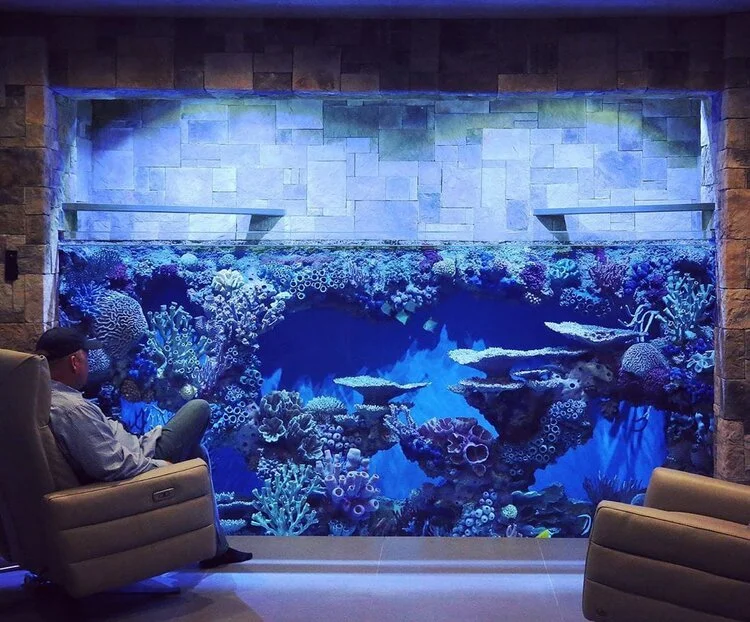
13. Immersive Built-In Aquarium with a Textured Stone Surround
When surrounding a built-in aquarium with a material like textured stone, moisture is a major concern. Even with a lid, evaporation and splashes from maintenance will happen. Opt for a high-quality porcelain or ceramic tile that *looks* like natural stone. These materials are non-porous and won’t be damaged by water or salt creep from a marine tank. If you must use real stone, ensure it is thoroughly sealed with a marine-grade sealant, and be prepared to re-seal it every 1-2 years to prevent water damage and staining.
|
📋 Copy HEX 🔗 Share |
🔧 How-To Brief
That cool blue accent lighting looks amazing, but it can also be your worst enemy. Blue light is known to accelerate algae growth, especially in saltwater tanks. While it makes the coral colors pop for viewing, leaving it on for more than 8-10 hours a day can lead to a constant battle with green or brown film on your glass and rocks. Many hobbyists use the blue lights only for a few hours in the evening and a more neutral, full-spectrum light during the main “daylight” period to balance coral health and aesthetics.
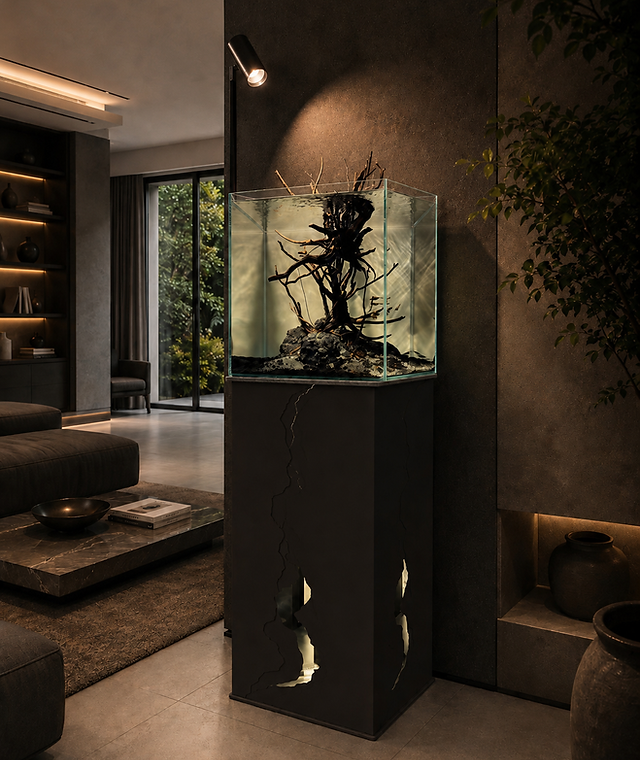
14. Sculptural Pedestal Aquarium in a Moody, Modern Space
The pedestal itself is the absolute star of this show. By transforming the typically utilitarian aquarium stand into a piece of sculpture, the entire setup becomes a functional work of art. The irregular cutouts and soft interior light create dramatic shadows and a sense of mystery. It draws attention not just to the tank, but to the entire object as a whole. This is a brilliant move in a minimalist space, as it combines two functions—stand and art piece—into one compelling statement.
|
📋 Copy HEX 🔗 Share |
💰 Budget Breakdown
A moody, dimly lit room creates a fantastic atmosphere, but it can make it harder to properly care for your aquarium. It is much more difficult to spot early signs of trouble, like sick fish, subtle algae growth, or equipment malfunctions, in a dark environment. You will need to use a dedicated flashlight to do your daily checks on the fish and equipment. Furthermore, the strong contrast between the bright tank and the dark room can sometimes cause eye strain, similar to watching TV in a pitch-black room.
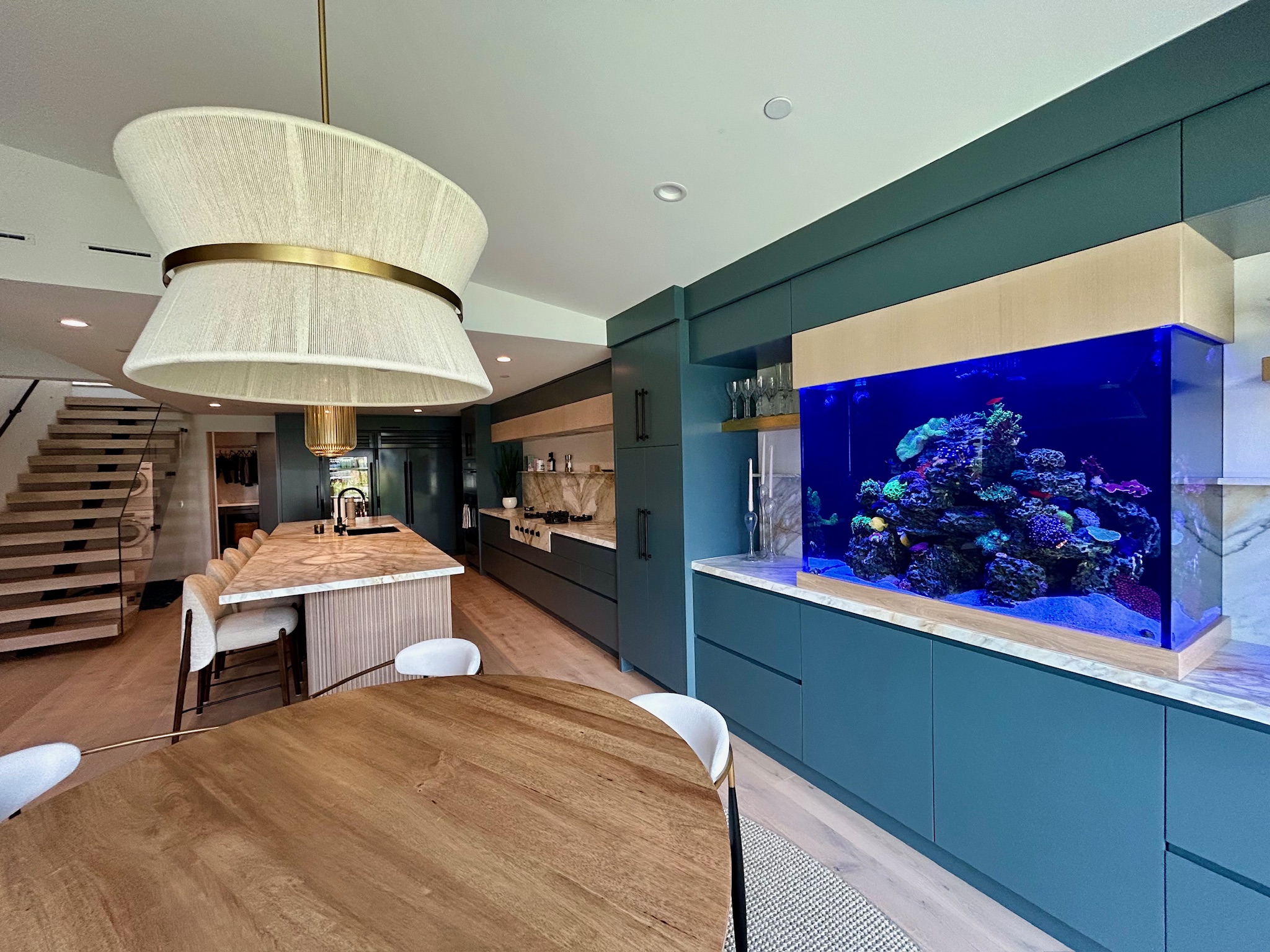
15. Vibrant Coral Tank Set in a Wall of Teal Cabinetry
This sophisticated look is a masterclass in color and texture. The formula is approximately: 60% deep teal cabinetry + 20% natural light wood + 10% vibrant blue aquarium light + 10% cool white marble. The teal provides a rich, dramatic base. The light wood trim around the aquarium acts as a natural frame, preventing the tank from looking like a cold, stark hole in the wall. The marble adds a touch of classic luxury, while the blue light is the energetic accent that brings it all to life. For a totally different mood with this base, check out the blush pink version in Idea #10.
|
📋 Copy HEX 🔗 Share |
💡 Designer Tip
A high-end, integrated saltwater setup like this involves significant investment, often professionally installed.
- Main Furniture (Custom Cabinetry & Tank): $8,000 – $25,000+
- Lighting (High-end Reef LEDs): $1,000 – $4,000
- Textiles (Live Rock, Sand, Corals): $2,000 – $10,000+
- Decor/Accessories (Filtration, Skimmer, Pumps): $2,000 – $6,000
- TOTAL: $13,000 – $45,000+
Budget alternative: For a more affordable take on a large tank, see Idea #1, which uses a standalone tank and a separate piece of furniture.
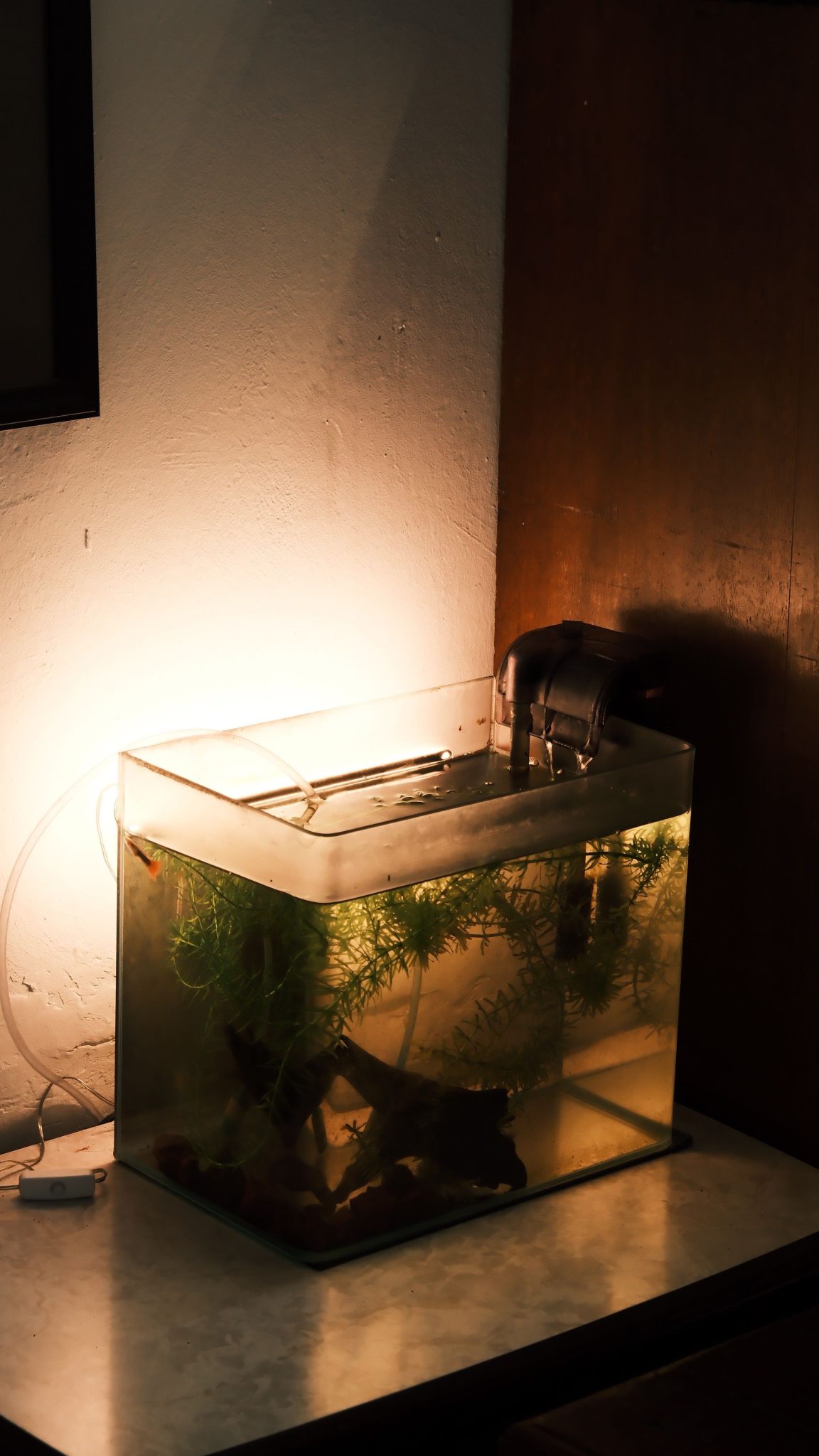
16. A Glowing Nano Tank in a Cozy Corner
For a small tank in a dim corner, lighting is everything. Instead of the standard overhead light that comes with most kits, try placing a small, dimmable LED spotlight or a strip of LED tape *behind* the aquarium. This technique, called backlighting, creates a beautiful silhouette of the plants and hardscape and gives the entire tank a warm, ambient glow. It turns the tank from a simple box into a living lantern. Just be sure the light is waterproof or positioned where it can’t get wet.
|
📋 Copy HEX 🔗 Share |
📏 Scale Guide
You can create this tranquil corner for less than the cost of a night out. Start with an inexpensive 2.5 or 5-gallon glass tank (around $15-$25 at Petco). For the interior, gather some interesting small rocks and a piece of spiderwood ($20). A simple clip-on LED light can be found on Amazon for $15. The real savings come from the plants: ask a friend with an established tank for a few trimmings of fast-growing plants like hornwort or anacharis. They’ll likely give them to you for free, and they’ll fill out your new tank in just a few weeks.
17. Illuminated Desktop Aquarium with a Single Goldfish
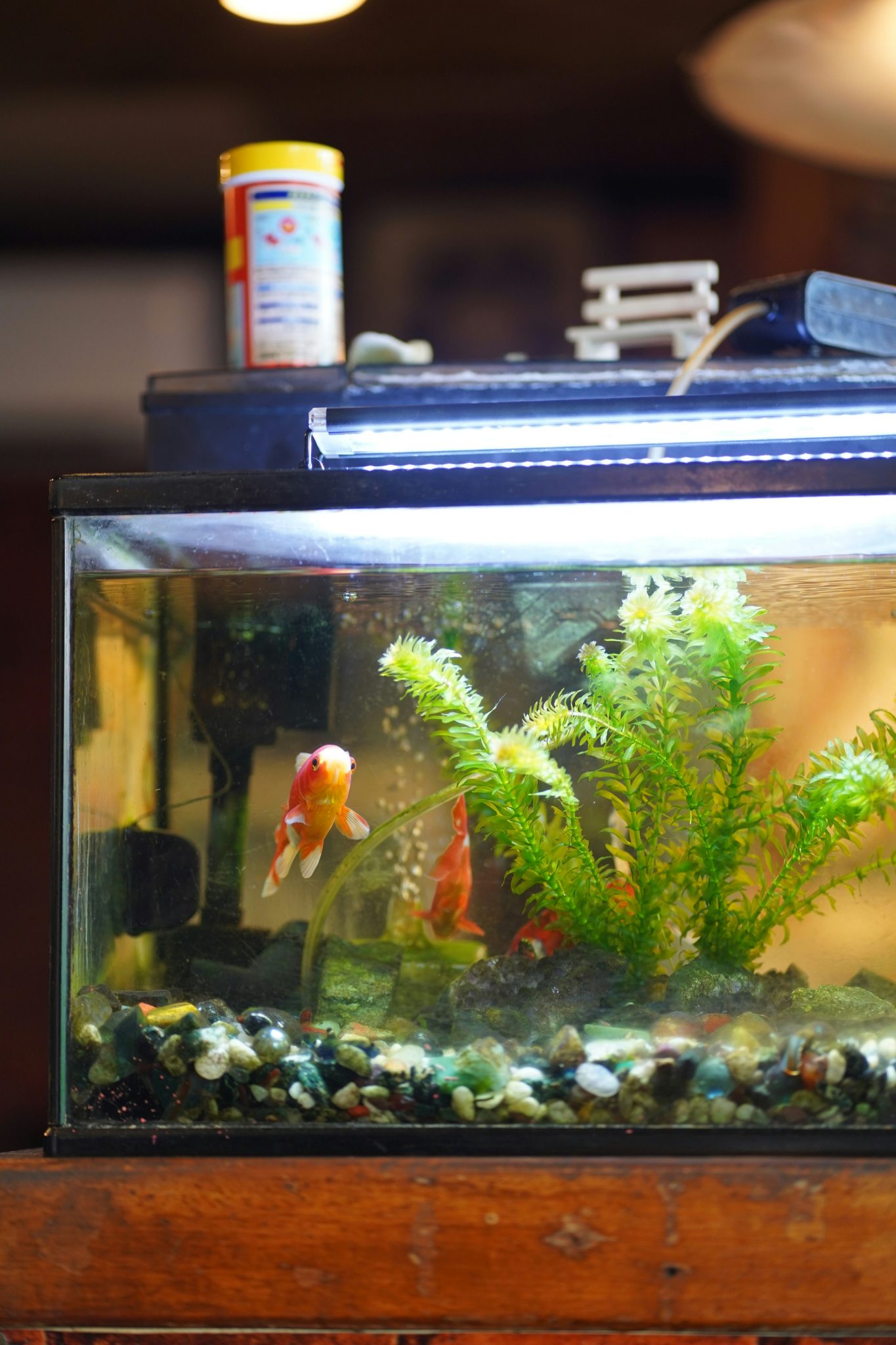
The success of this small setup lies in its simplicity and focus. Instead of being overstuffed with decor, the tank has a clear purpose: to showcase a single, vibrant goldfish. The bright orange and white of the fish stands out beautifully against the lush green plants. The strong overhead light acts like a spotlight, drawing all attention to the life within the tank. This minimalist approach allows the natural beauty of the fish and plants to be the main attraction, creating a scene that is both lively and uncluttered.
|
📋 Copy HEX 🔗 Share |
⭐ The One Thing
Here’s the hard truth: a small tank like this is not a suitable permanent home for a goldfish. That beautiful little fish is a juvenile. Common goldfish can grow up to a foot long and live for over 10 years, requiring a tank of 50 gallons or more, and ideally a pond. Keeping them in a small tank stunts their growth, leads to health problems, and drastically shortens their lifespan. This setup is lovely for a Betta fish or a small school of nano fish like chili rasboras, but goldfish need much, much more space to thrive.
18. A Simple Desktop Tank with Natural Algae
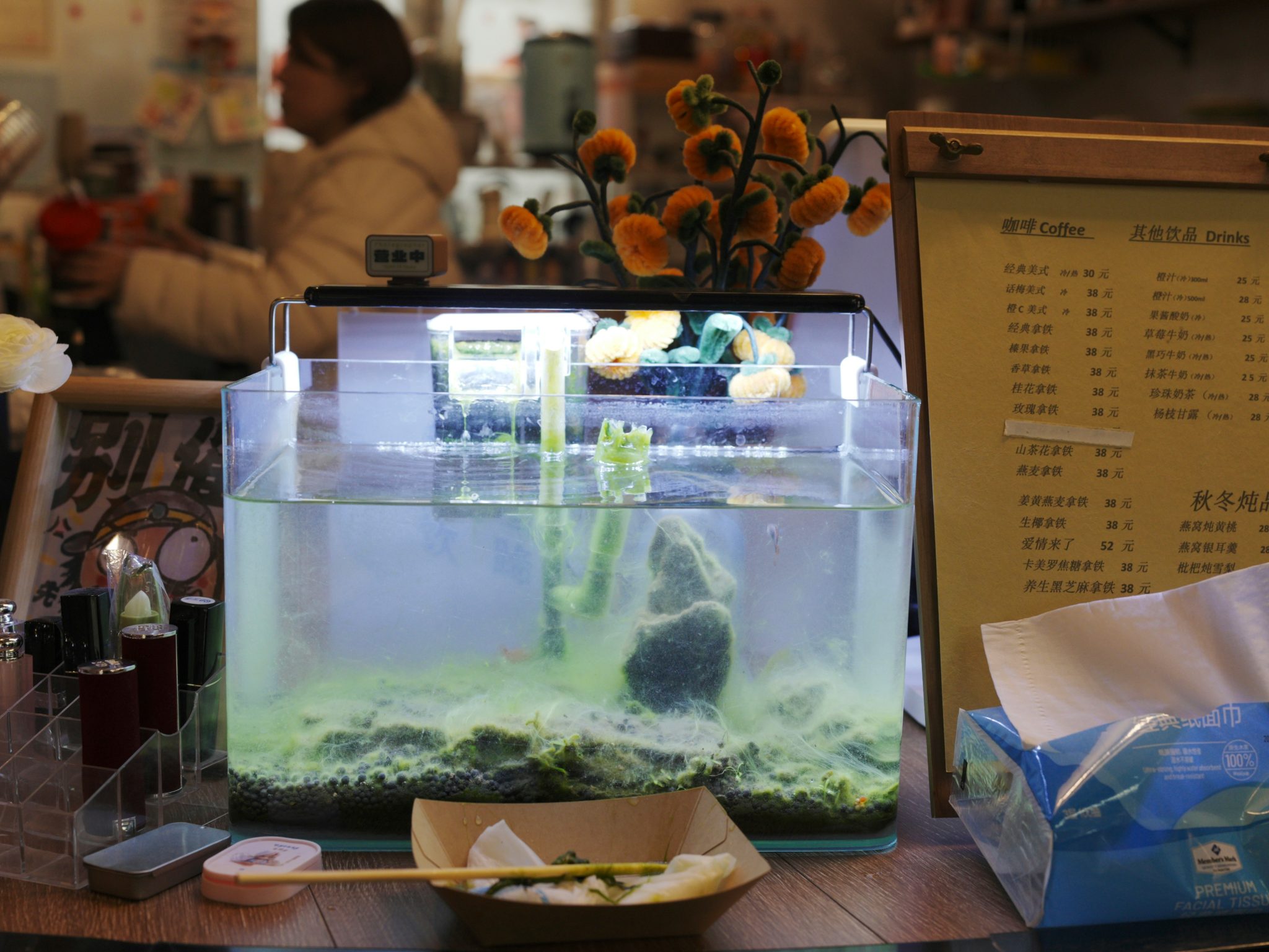
Let’s be honest for a second: this is what many beginner aquariums actually look like after a few months, and that’s okay. That green film on the glass and decor is algae. While pristine, algae-free tanks are what you see in magazines, a certain amount of algae is a natural and healthy part of an aquatic ecosystem. It means there are nutrients and light in your tank. A little bit of soft green algae can even provide a natural food source for shrimp and snails. The key is managing it so it doesn’t take over completely.
|
📋 Copy HEX 🔗 Share |
🔥 Trending Context
This look is essentially the starting point for the aquarium hobby on a shoestring budget. A simple glass tank with a basic light and some substrate is the most affordable entry point you can find. You can get a 5 or 10-gallon kit from Walmart or Petco for $30-$60 during sales. To elevate this just a bit without spending much, add a single striking piece of driftwood and plant a few low-light, easy-care plants like Anubias Nana Petite. This adds intentionality and structure for very little extra cost, making the look feel more curated.
19. A Tranquil Aquascape in a Cozy Reading Nook
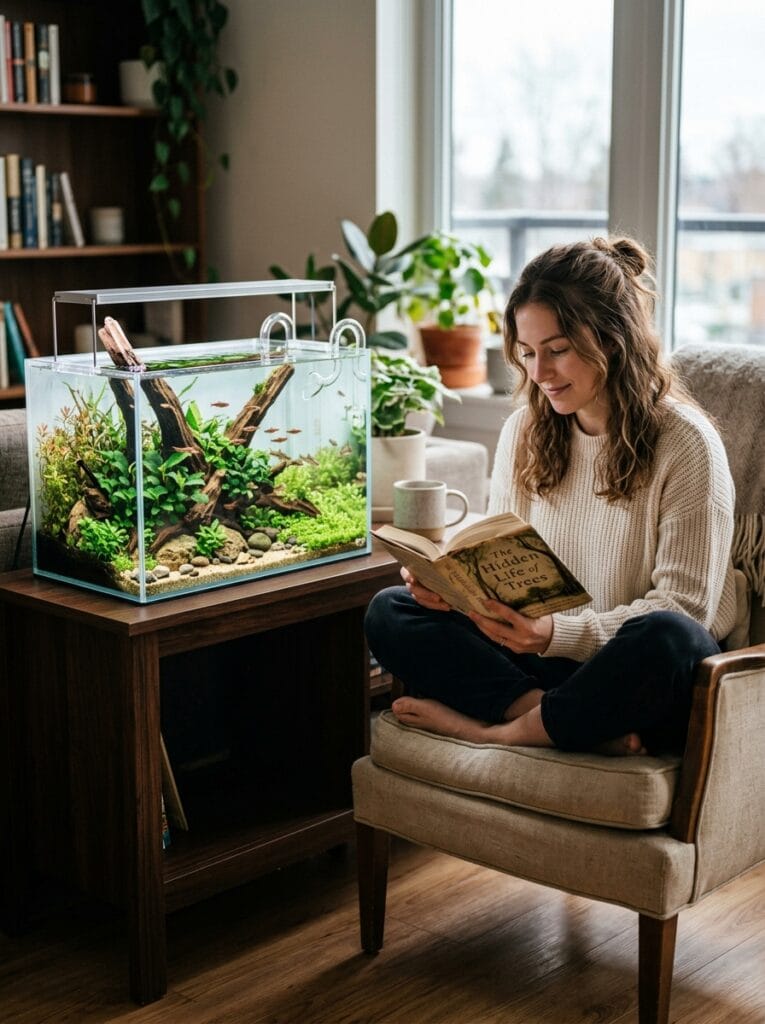
What makes this setup truly special isn’t just the beautiful aquascape—it’s the context. Placing the tank next to a comfortable armchair transforms it from a piece of decor into a companion for relaxation. It becomes part of a personal ritual: sitting down with a book, a cup of tea, and the gentle, calming movement of the fish and plants beside you. This pairing elevates the simple act of owning a fish tank into a fully integrated part of a mindful, relaxing lifestyle. It creates a “moment” and a destination within the home.
|
📋 Copy HEX 🔗 Share |
⚠️ Real Talk
To create a dedicated reading nook like this, you don’t need a huge amount of space. A corner that is at least 4 feet by 4 feet is ideal. This gives you enough room for a comfortable armchair (typically around 30-36 inches wide) and a small side table for the aquarium and your drink. Ensure there is an electrical outlet nearby for the tank’s light and filter. For an even more intimate feel, place a floor lamp behind the chair to provide focused reading light that doesn’t compete with the aquarium’s glow. For an even smaller space, consider the corner setup in Idea #16.
20. Lush Planted Aquarium with a Sand-and-Gravel Path
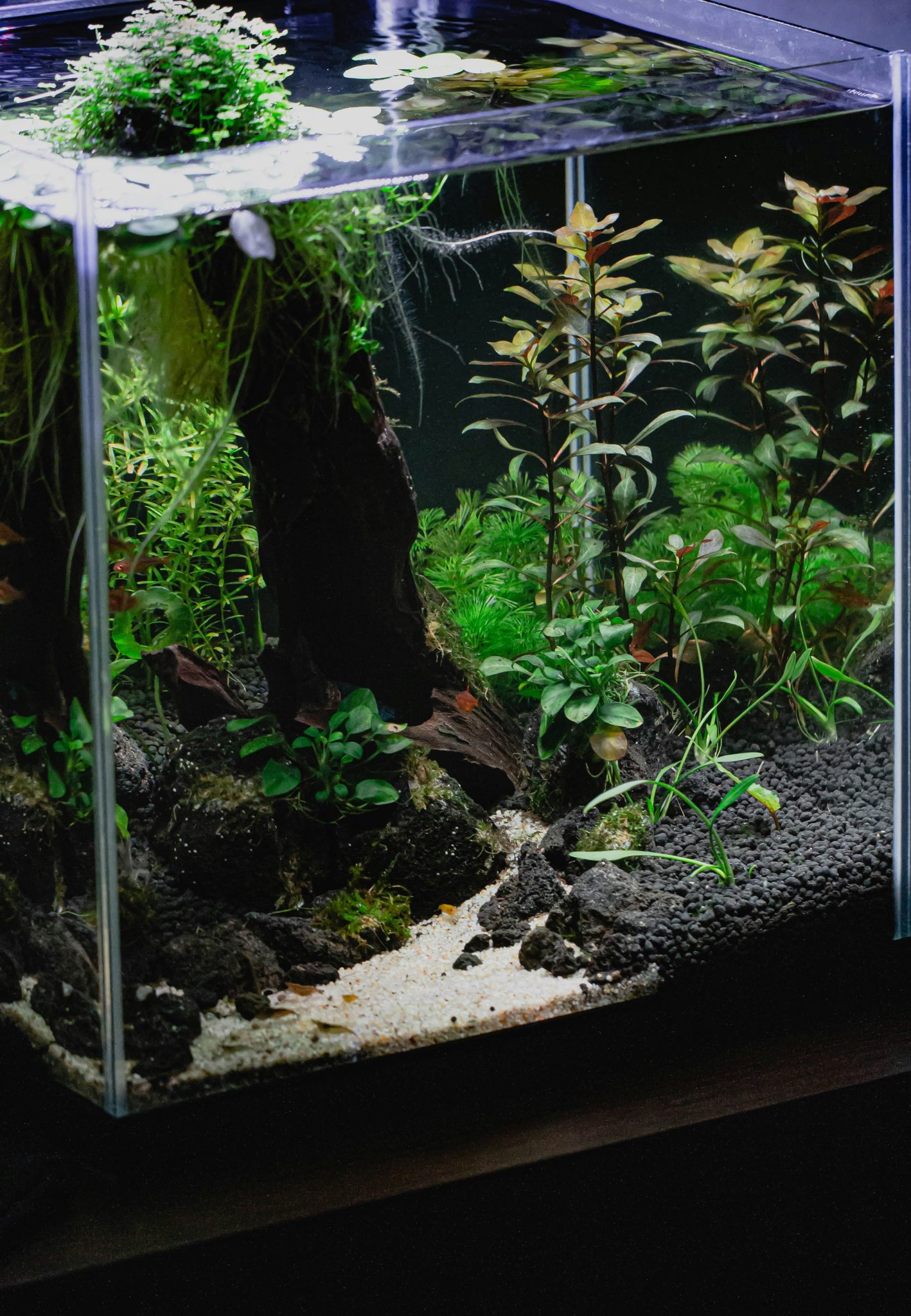
The visual interest in this tank comes from the strong diagonal line created by the division of the two substrates. This line cuts across the tank, creating a dynamic sense of movement and leading the eye from the front corner to the back. It’s a classic artistic technique to create the illusion of depth in a shallow space. The contrast in texture and color between the fine, light sand and the coarse, dark gravel adds another layer of complexity, making the tank floor as interesting as the plants above it. Notice the similar sand path technique used in Idea #3, but with darker rocks for higher contrast.
|
📋 Copy HEX 🔗 Share |
✅ Before You Start
Laying a clean path of sand that doesn’t mix with your gravel takes a bit of preparation, but it’s a great way to add professional polish to your aquascape. Here’s how:
- Time: 1 hour | Cost: $10-$20
- With the tank empty, use strips of cardboard or plastic to create a temporary barrier where you want the path to be.
- Pour your dark gravel substrate on one side of the barrier.
- Pour your light-colored sand on the other side, creating the path.
- Carefully remove the barrier strips. You should have a relatively clean line.
- Use a small paintbrush to tidy up any stray grains of gravel or sand.
- When filling the tank, place a plastic bag on the substrate and pour the water onto the bag to avoid disturbing your careful work.
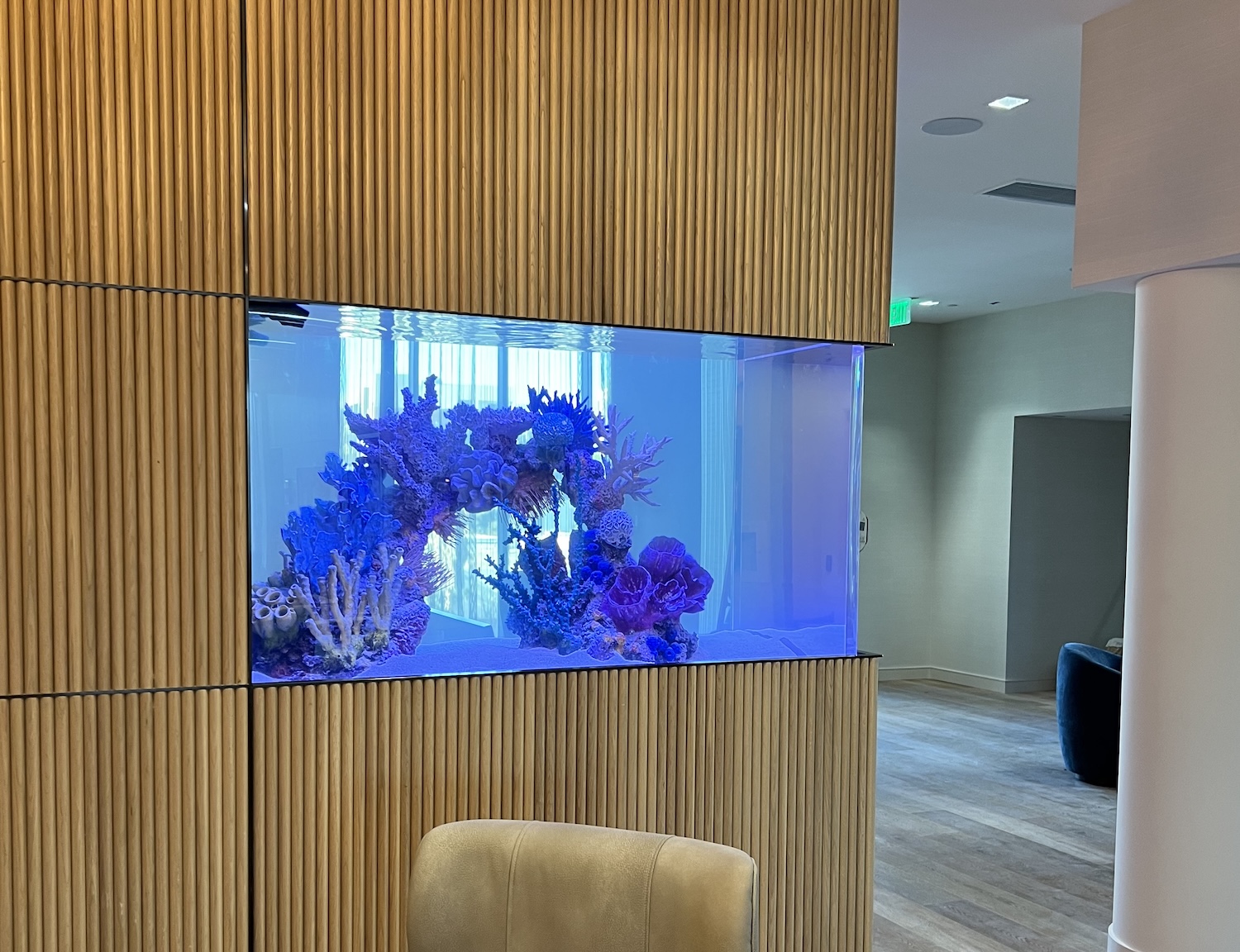
21. Frameless Fish Tank with Electric-Blue Coral in a Slatted Wood Wall
When using very bright, obviously artificial decor like this electric blue coral, the trick to making it look chic is to go all in. Don’t mix it with natural-looking decorations. By committing to a single, bold, artificial color and style, the look becomes intentional and graphic. It reads as a deliberate artistic choice, not a failed attempt at realism. Pair it with a minimalist, modern tank and setting, like this slatted wood wall, to reinforce the contemporary, non-natural aesthetic.
|
📋 Copy HEX 🔗 Share |
💸 Get This Look For Less
This striking look is built on a foundation of minimalist contrast. The visual recipe is simple: 70% Neutral Base + 30% High-Impact Color. The neutral base is the warm, light wood of the slatted wall and flooring, which provides a calm, organic backdrop. The high-impact color comes from the intensely saturated blue and purple of the coral structures, which are made even more vibrant by the tank’s lighting. This formula ensures the decor is a powerful focal point, not a chaotic mess. You could achieve a similar result by swapping the blue for a fiery orange or a vibrant fuchsia.
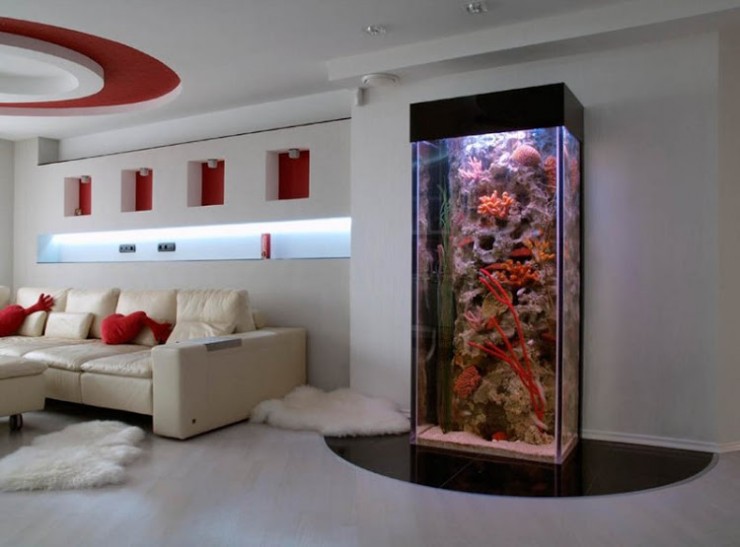
22. Tall Corner Aquarium with Playful Red Accents
Tall, narrow “column” or “corner” tanks look fantastic and save floor space, but they can be a real pain to clean and aquascape. The small opening at the top makes it difficult to get your arms in to place decor or scrub the bottom. You’ll need a long-handled scraper and aquascaping tongs. Water flow can also be an issue; ensuring good circulation all the way to the bottom often requires a more powerful filter or an additional small powerhead placed low in the tank to prevent dead spots where waste can accumulate.
|
📋 Copy HEX 🔗 Share |
🧹 Maintenance Reality
A corner aquarium is a brilliant solution for smaller living rooms (under 200 sq. ft.) where you don’t have a full, empty wall to dedicate to a tank. It makes use of what is often dead space. Look for a model with a curved front, as it provides a more panoramic view and feels less like a box just shoved into the corner. This setup works especially well anchoring the end of a sectional sofa, as seen here. It adds height and a point of interest to the room without jutting out into traffic pathways.
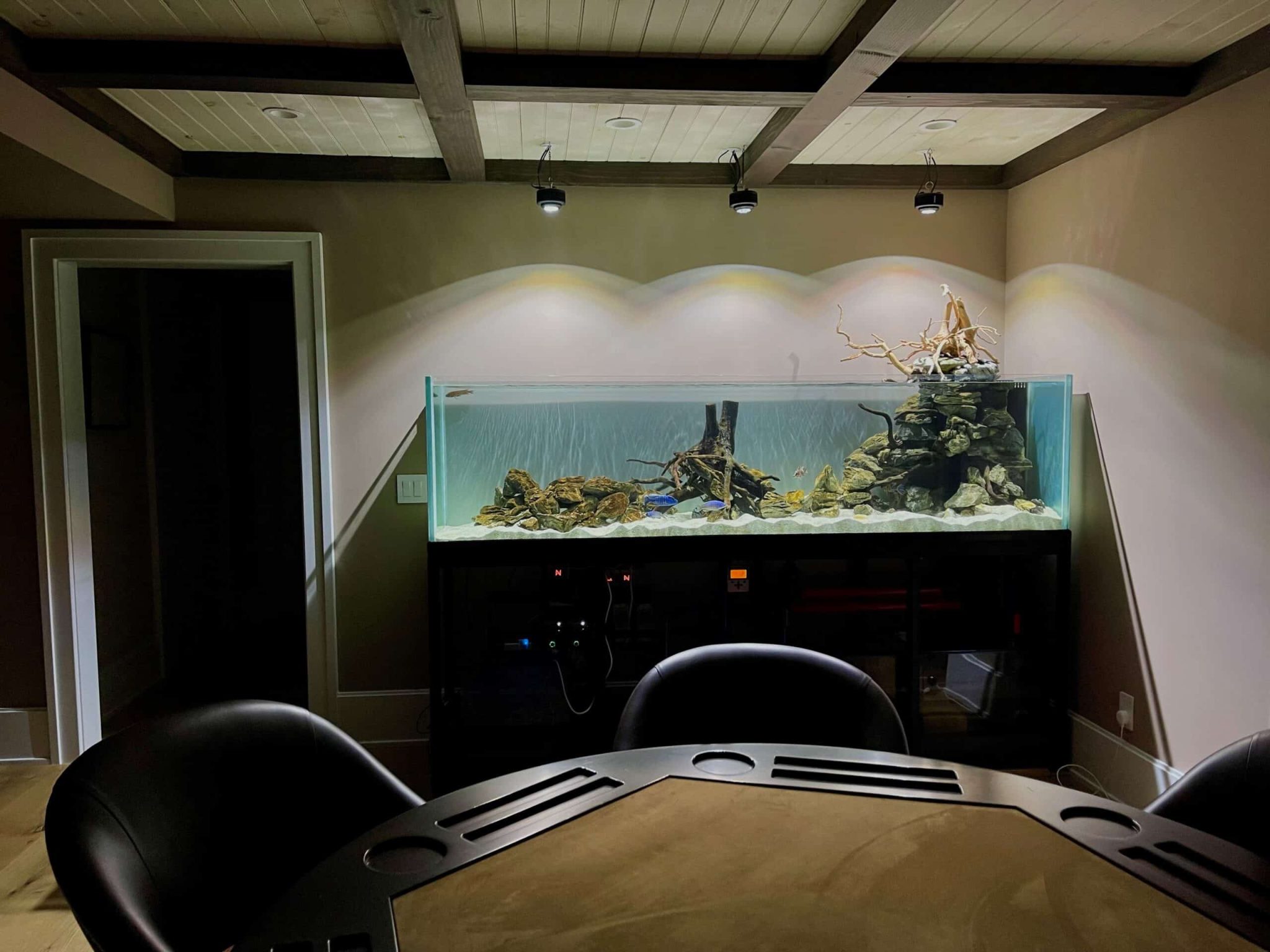
23. Sleek Aquarium with Backlit Wall and Beamed Ceiling
This setup works because the lighting is layered and architectural. The aquarium isn’t the only source of light; it’s part of a larger scheme. The unique curved patterns of light on the wall behind the tank create a glowing backdrop that makes the entire feature wall feel integrated and custom. This ambient light softens the bright rectangle of the tank, preventing it from looking like a TV screen in a dark room. The dark beams on the ceiling add another layer of architectural detail, framing the whole scene and drawing the eye towards this sophisticated focal point.
|
📋 Copy HEX 🔗 Share |
🎯 What Makes It Work
Maintaining a pristine aquarium near a gaming table and in a room with lots of beautiful wood requires extra care. Saltwater spray and evaporation (salt creep) from a marine tank can be corrosive to wood finishes and electronic equipment over time. Ensure the tank has a tight-fitting glass lid to minimize this. During water changes or maintenance, be extra cautious about drips and spills on the wood ceiling beams and the gaming table. A large drop cloth should be a non-negotiable part of your cleaning toolkit to protect the surrounding surfaces.
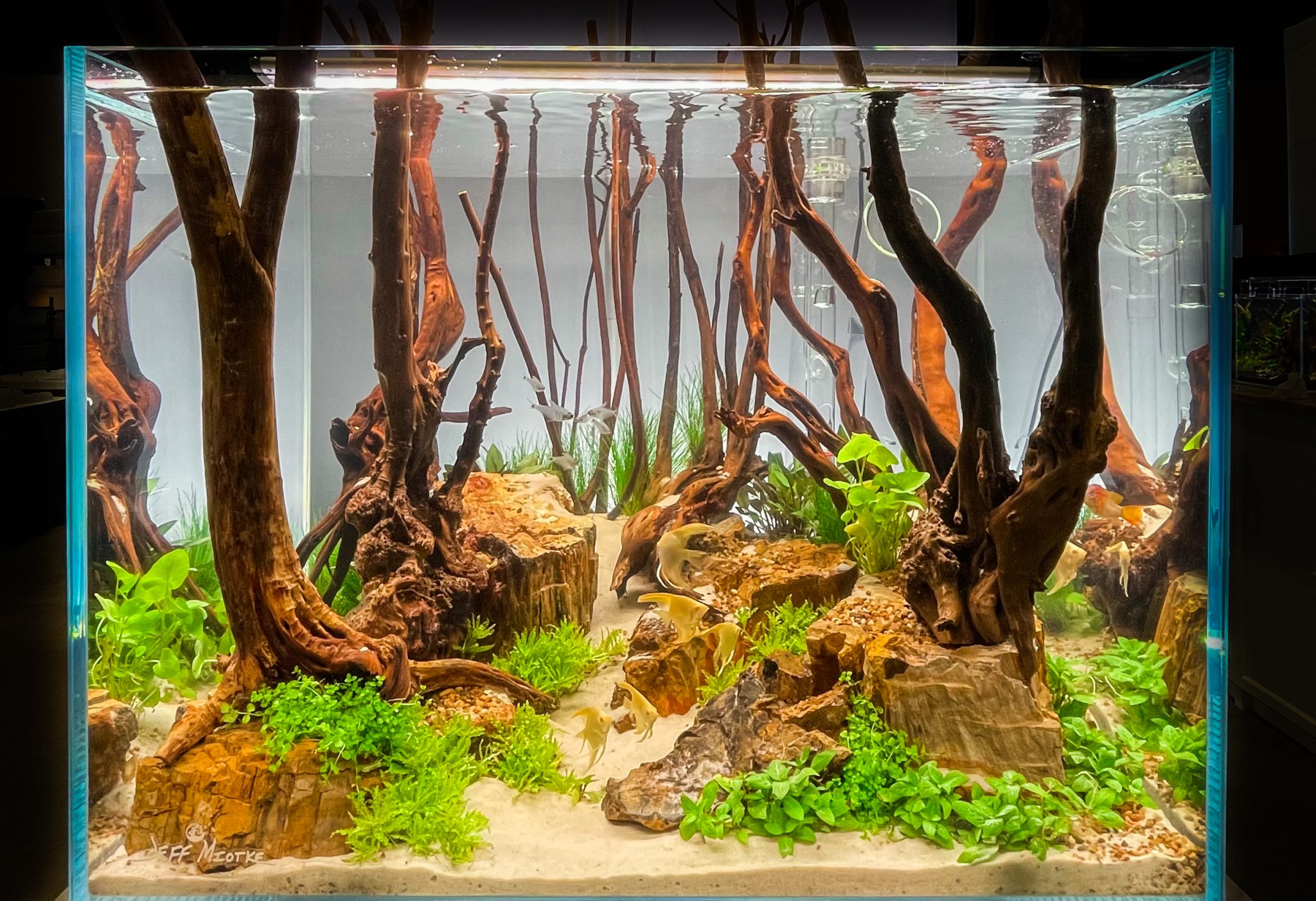
24. Lush Tropical Aquarium with a ‘Forest’ of Tall Roots
The single most impactful element here is the verticality. By using tall, slender pieces of driftwood that stretch from the bottom of the tank almost to the surface, the aquascaper has created a breathtaking sense of a dense, underwater forest. It draws the eye upward and creates incredible depth and complexity. This powerful vertical movement makes the tank feel much larger and more immersive than a typical aquascape with low-lying rocks and wood. It’s a bold choice that defines the entire character of the aquarium.
|
📋 Copy HEX 🔗 Share |
📐 Style Math
Using real wood in your aquarium creates a beautiful, natural look, but it requires proper preparation to prevent problems.
- Time: 1-7 days | Cost: $20-$100+ (depending on size)
- Source hardwoods like spiderwood, manzanita, or mopani from a pet store. Avoid softwoods or wood from your yard, as it can rot and foul the water.
- Scrub the wood thoroughly with a brush and hot water. Do not use soap or detergents.
- Boil the wood in a large stockpot for 1-2 hours. This helps to sterilize it and release some tannins (which can turn your water brown).
- After boiling, soak the wood in a bucket of clean water until it becomes waterlogged and sinks on its own. This can take anywhere from a day to a week.
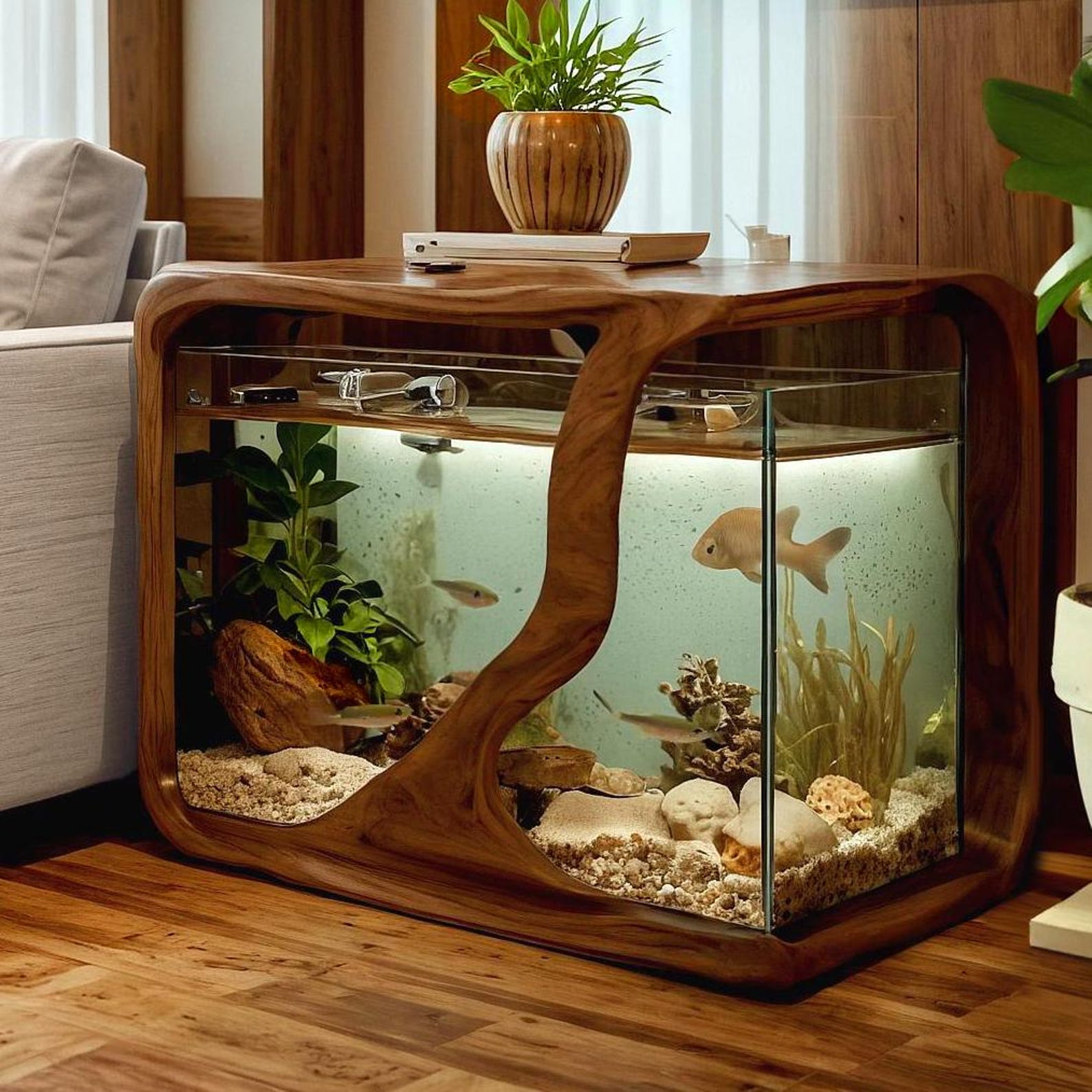
25. Curved Wood-and-Glass Aquarium as a Functional Side Table
When an aquarium doubles as a piece of furniture, it’s crucial to ensure the practical needs of the tank are cleverly hidden. If you’re considering a piece like this, look for one with a hollow frame or base where you can conceal the filter, heater, and wiring. Drilled holes in the back or bottom for tubing are a must. The goal is to have the beauty of the tank and the function of the table without a messy tangle of equipment ruining the clean, modern lines of the design.
|
📋 Copy HEX 🔗 Share |
🔧 How-To Brief
This is a stunning design, but it comes with practical considerations. Placing drinks or other items on the table creates vibrations that can stress the fish. Spills are also a major concern—a spilled drink could contaminate the tank water or damage the electrical components. And the open top, while beautiful, is a risk for curious pets or children. This piece works best in a relatively quiet, adult-only home where it can be appreciated more for its form than its function as a heavy-use table.
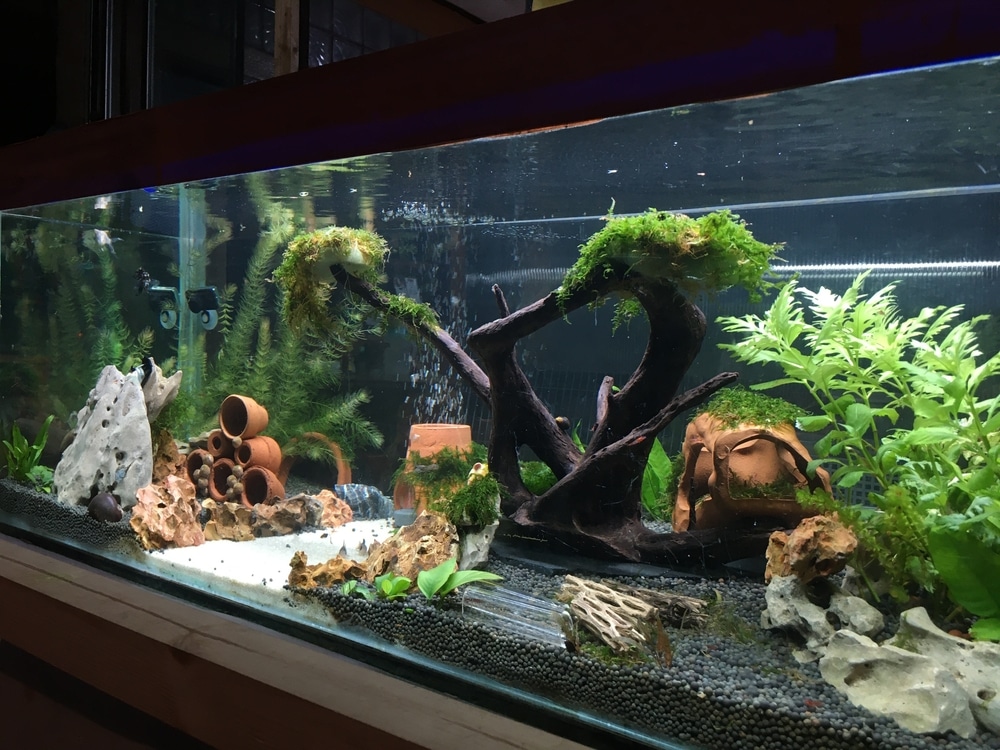
26. Detailed Aquascape Featuring a Bonsai-Style Driftwood Tree
The genius of this aquascape is how it borrows principles from the ancient art of bonsai. The central driftwood piece isn’t just a random log; it’s carefully chosen and positioned to mimic the form of a windswept, miniature tree. The moss attached to its “branches” perfectly simulates leaves. This creates a focal point with a clear narrative and a sense of age and tranquility. By applying the rules of an entirely different art form to the underwater world, the creator has made something truly unique and emotionally resonant. Compare the serene, deliberate planting here to the wilder look of Idea #19.
|
📋 Copy HEX 🔗 Share |
💰 Budget Breakdown
A pre-made bonsai driftwood tree can be pricey, but you can create your own for a fraction of the cost. Find an interesting piece of spiderwood with many fine “branches” ($20-$40). Purchase a small portion of aquarium-safe moss, like Java moss or Christmas moss ($10). To attach the moss, you can use a dab of super glue gel (make sure it’s cyanoacrylate-based) or tie it on with dark cotton thread. The thread will dissolve over time, by which point the moss will have attached itself to the wood naturally.
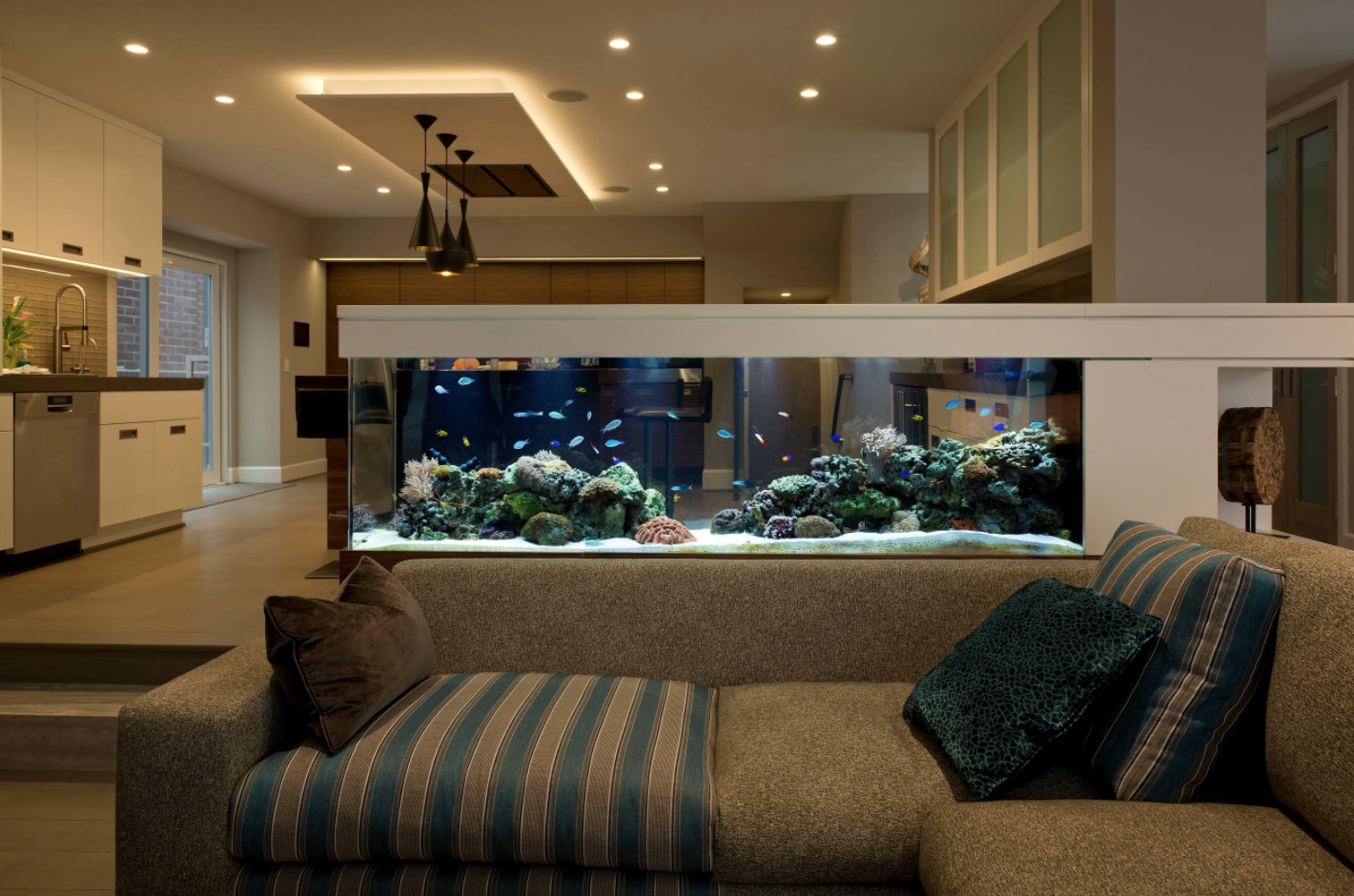
27. Room-Dividing Aquarium in an Open-Concept Space
Using a fish tank as a room partition is a fantastic way to define spaces. For a low wall like this one, which separates a seating area from a walkway or kitchen, the tank should be between 36 and 48 inches tall (including the stand/wall). This is high enough to create a clear visual separation while seated, but low enough to talk over when standing. The length should be substantial enough to feel architectural—at least 4 to 6 feet long. Anything smaller will look less like a wall and more like a standalone tank that was just placed there.
|
📋 Copy HEX 🔗 Share |
💡 Designer Tip
A professionally installed, large saltwater divider tank is a luxury feature with a corresponding price tag. This assumes the low wall is already constructed.
- Main Furniture (Custom “Peninsula” Tank): $4,000 – $12,000
- Lighting (Multiple high-end LED units): $1,500 – $5,000
- Textiles (Live Rock, Sand, Assorted Corals): $2,000 – $8,000
- Decor/Accessories (Sump, Skimmer, Pumps, Plumbing): $2,500 – $7,000
- TOTAL: $10,000 – $32,000
Budget alternative: A standard 75-gallon freshwater tank ($500-$800 for a full kit) placed on a sturdy console table can create a similar room-dividing effect for about 5% of the cost.
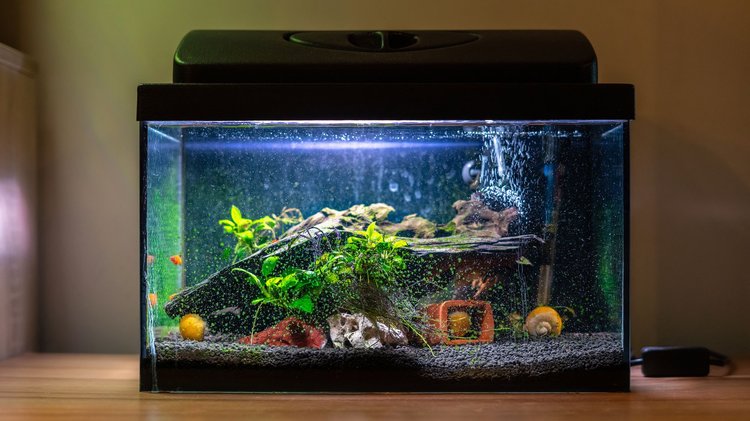
28. Illuminated Freshwater Nano Tank with Natural Decor
This entire look is a testament to how beautiful a budget-friendly setup can be. This is likely a standard 5 or 10-gallon aquarium kit, which you can often find for under $75. The key to making it look great is skipping the kitschy colored gravel and plastic castles. Instead, invest a small amount ($20-$30) in a bag of dark natural substrate and one nice piece of driftwood. Add a few live plants like Anubias or Java Fern ($10-$15). For under $120 all-in, you get a natural, serene look that feels much more sophisticated than its price tag suggests.
|
📋 Copy HEX 🔗 Share |
📏 Scale Guide
It’s a common misconception that smaller tanks are easier for beginners. In reality, the opposite is often true. With such a small volume of water, water chemistry can change very rapidly. A small mistake, like overfeeding, can create a toxic ammonia spike much faster than in a larger tank. These small “nano” tanks require consistent weekly water changes to remain stable. They are less forgiving of neglect. So while the initial cost is low, the demand for consistent attention is quite high.
Your Aquarium Story Starts Here
Remember, the perfect aquarium for your living room is one that brings you joy and fits your life—not just your space. Don’t be afraid to start small, learn as you go, and let your underwater world evolve over time. Got your inspiration? Time to start your own Pinterest board and make it happen.