Let’s be honest, you’ve spent hours scrolling Pinterest, saving photos of gorgeous living rooms, and then you spot it—the giant black rectangle of a TV, smack in the middle of an otherwise perfect space. That feeling is exactly why we’re here. After filtering through hundreds of options fromdirect-to-consumer brands and major retailers, we’ve nailed down the 29 best hidden TV ideas that are actually stylish and functional for 2026.
This isn’t just another list of generic cabinets. We’re diving deep into everything from sleek, modern media walls and minimalist consoles to clever TV lifts and custom built-ins that make your screen completely disappear. We’ll show you how to get these looks at different price points, too. The conversation around home design has shifted towards creating multi-functional spaces that feel serene and uncluttered, and making the television an intentional, integrated element—or hiding it completely—is a huge part of that. These ideas prove you don’t have to choose between a cozy movie night and a beautiful, design-forward room. And stay until the end — we break down the most common mistakes that can ruin these looks. Pin this guide for later — your future self will thank you when it’s time to get started.
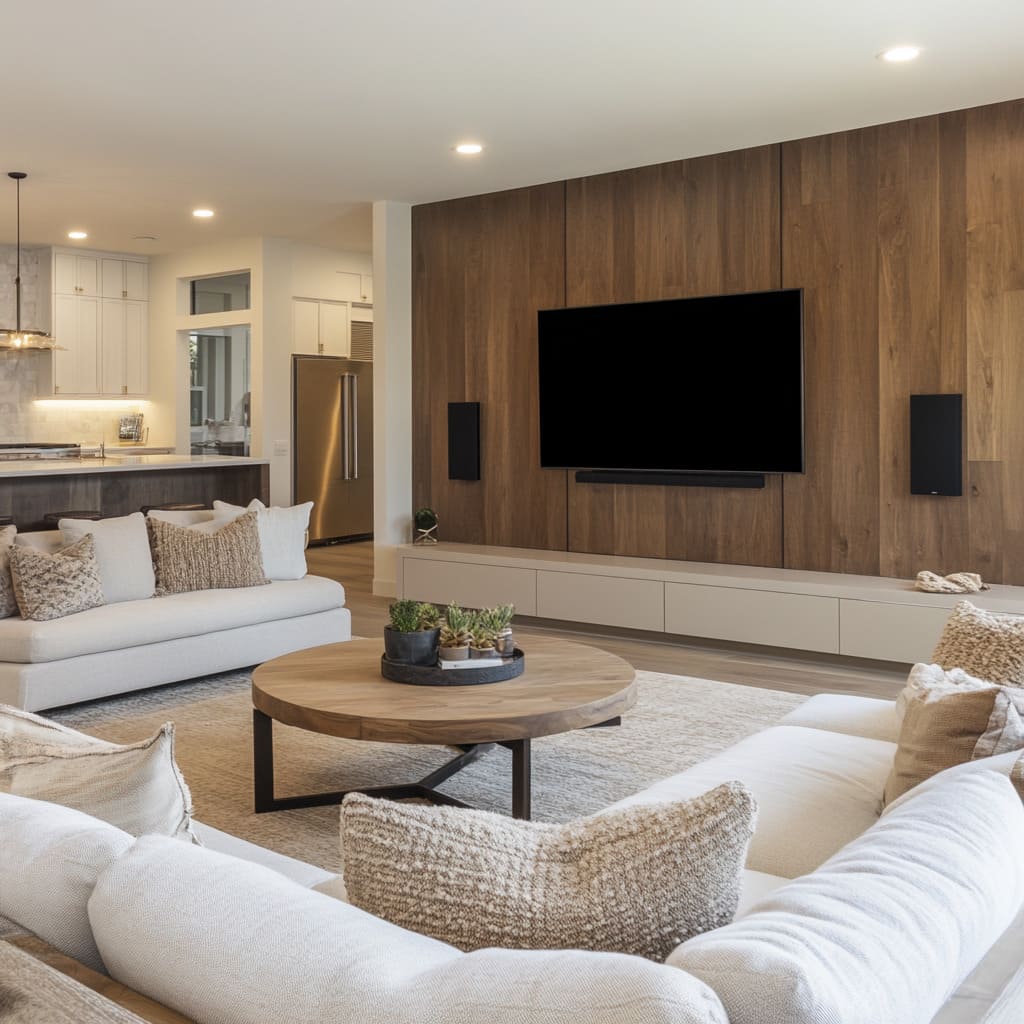
1. Integrated TV on a Modern Wood-Panel Accent Wall
What makes this setup so successful is the principle of integration. Instead of just placing a TV on a wall, the designers have made it part of a larger architectural feature. The vertical wood paneling adds warmth and texture, drawing the eye upwards and making the ceiling feel taller. The TV, speakers, and floating console are all intentionally placed within this feature wall, so they feel like a cohesive unit rather than separate objects. This creates a sense of order and intentionality, preventing the TV from feeling like an afterthought.
|
📋 Copy HEX 🔗 Share |
⭐ The One Thing
When creating a wood-paneled feature wall like this, the details make all the difference. For a truly high-end look, insist that the grain of the wood panels runs vertically and continuously. Also, specify an 1/8-inch (3mm) “reveal” or gap between each panel. This tiny shadow line adds incredible definition and a crisp, architectural look that you just don’t get from panels butted right up against each other. It’s a subtle detail that elevates the entire installation from a simple DIY to a professional-grade feature.
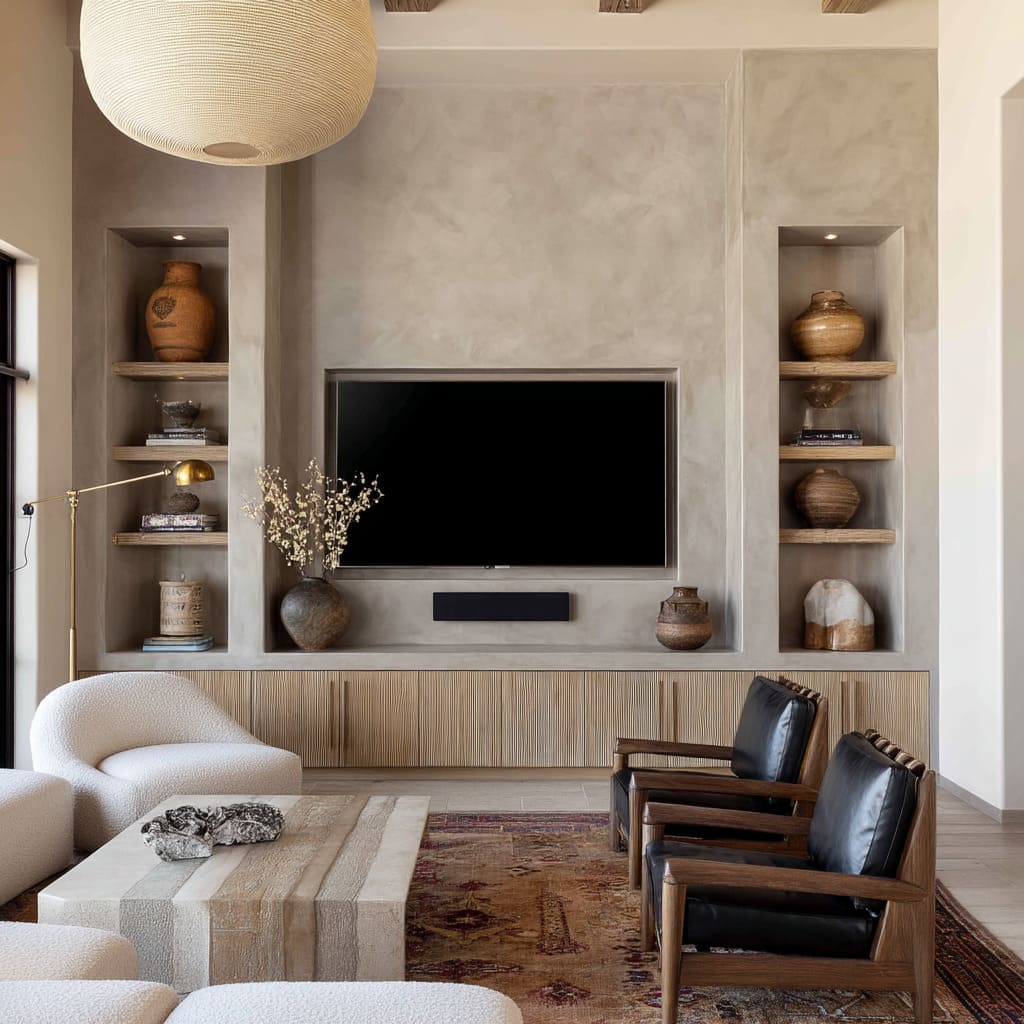
2. Recessed TV and Soundbar in a Textured Plaster Wall
The single element that makes this design truly special is the custom-built recess. By sinking the TV and soundbar perfectly flush with the wall surface, the entire setup becomes part of the room’s architecture. If you removed this detail and just mounted the TV on the surface, it would immediately look bulky and far less intentional. This seamless integration is the key to its refined, organic feel, turning a piece of technology into a quiet, textural part of the wall itself. It’s a commitment, but the payoff is a completely uncluttered look.
|
📋 Copy HEX 🔗 Share |
⚠️ Real Talk
This idea works best in medium to large living rooms, ideally with a viewing wall that is at least 12-15 feet wide. This allows for the built-in niches on either side without making the TV area feel cramped. You’ll need a standard ceiling height of at least 8 feet, but 9 feet or more is better to accommodate the scale of the large woven pendant light. The depth of the recess requires a false wall to be built, so you’ll lose about 6-8 inches of room depth, a crucial factor to consider in smaller spaces.
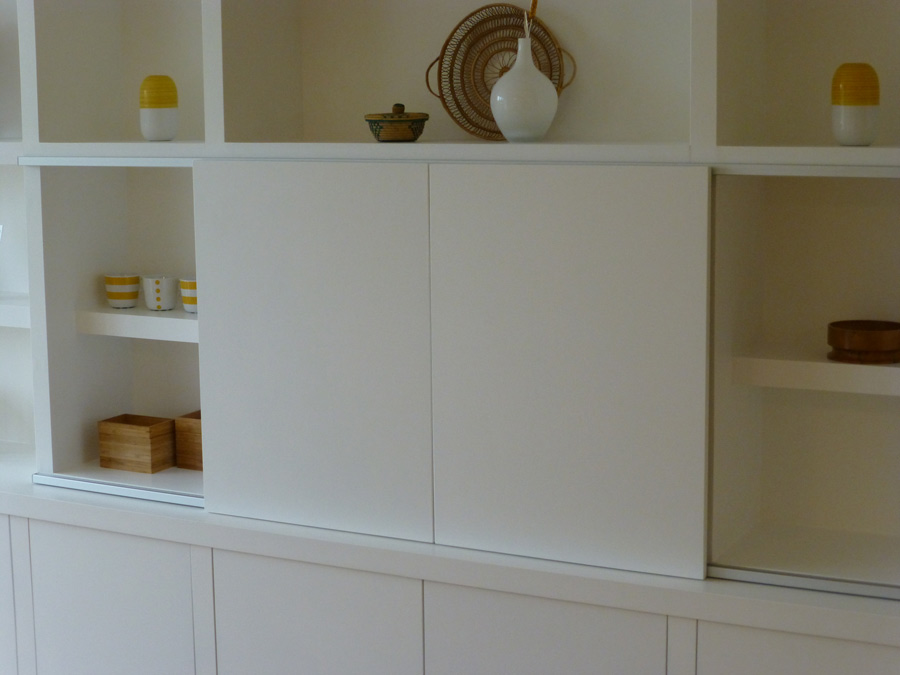
3. Minimalist White Cabinetry with TV-Hiding Sliding Doors
You can create a similar sliding panel system for an existing bookcase (like the IKEA BILLY) to hide clutter or a small TV. Here’s a simplified approach:
|
📋 Copy HEX 🔗 Share |
📐 Style Math
- Measure & Plan: Measure the height and width of the bookcase section you want to cover. Plan for one or two lightweight panels.
- Source Materials: Purchase thin MDF or plywood for the panels and a top-and-bottom track system designed for bypass doors. (~$50-$100)
- Cut & Finish Panels: Have the panels cut to size at the hardware store. Prime and paint them to match your cabinetry for a seamless look.
- Install Track: Carefully screw the top and bottom tracks into the bookcase frame, ensuring they are level.
- Mount Doors: Attach the rollers to the top of your panels and hang them on the track. Adjust as needed for a smooth glide.
For a fraction of the cost of custom built-ins, you can get a similar clean, minimalist vibe. Start with a basic white bookcase system from IKEA, like the BESTÅ or KALLAX series. Instead of complex sliding doors, use simple, high-quality fabric bins or decorative boxes (around $10-$25 each from Target or The Container Store) to fill the cubbies. This keeps things looking tidy and organized. For the TV itself, place it on the surface and create a gallery wall of art around it to help it blend in, turning it into part of a larger arrangement.
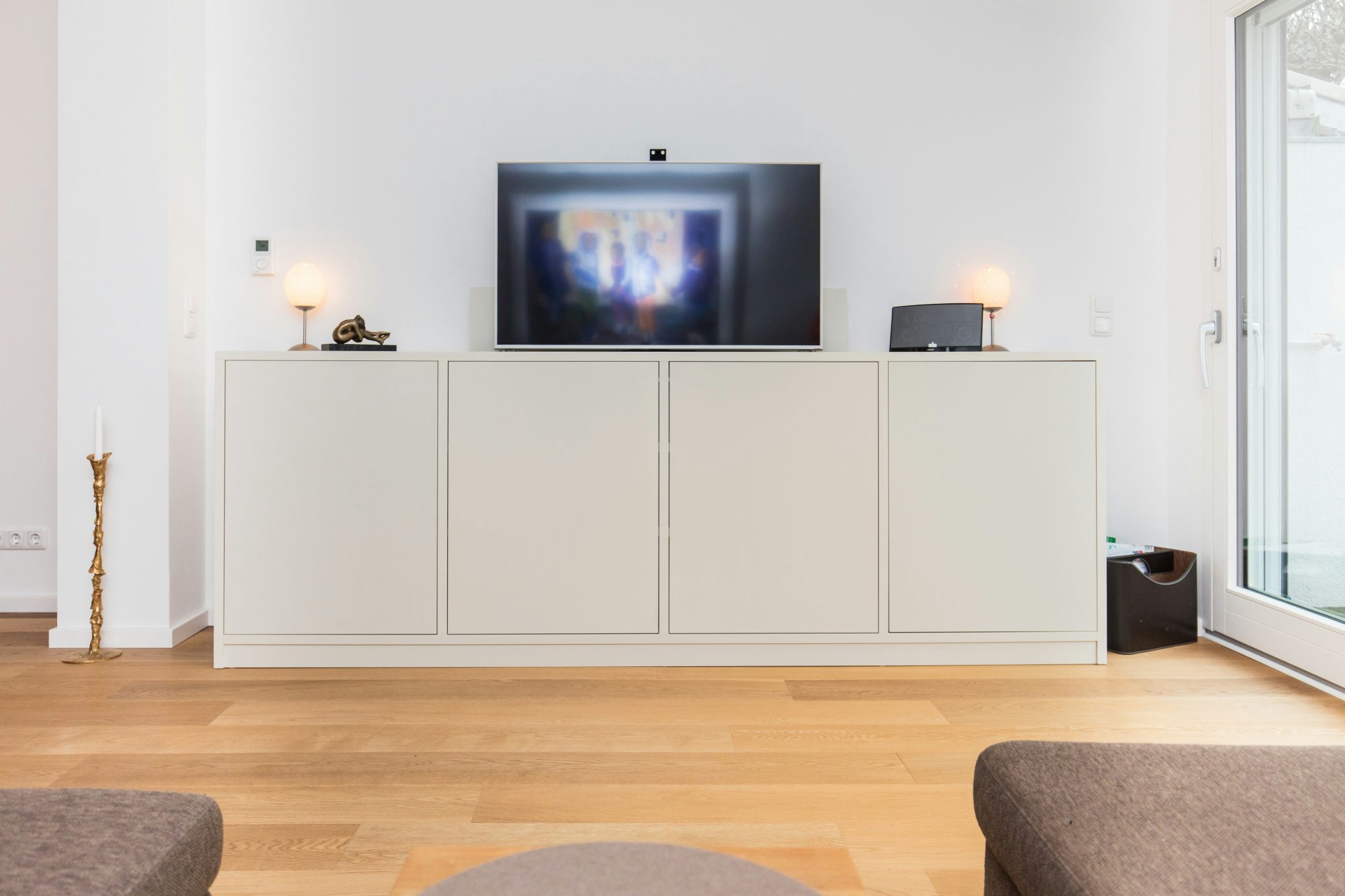
4. Low-Profile Brown Media Console with Globe Lamps
This look follows a simple, effective formula: 60% minimalist base + 30% symmetrical lighting + 10% curated decor. The long, low console and white walls provide a clean, neutral foundation. The two globe lamps create perfect symmetry, which is inherently calming and pleasing to the eye. The final 10% comes from a few well-chosen objects. You could swap the materials while keeping the ratio: try a dark grey console with black lamps for a moodier vibe, or a concrete-finish console with industrial-style lamps for an edgier feel. The balance remains the same.
|
📋 Copy HEX 🔗 Share |
🔧 How-To Brief
While this is a beautifully simple and achievable look, be honest with yourself about your clutter tolerance. A low, open-style console offers very little hiding space. If you have multiple gaming systems, a tangle of charging cords, and stacks of Blu-rays, this setup can quickly look messy. It’s best suited for those who have fully embraced streaming and have minimal hardware. Otherwise, you’ll spend all your time trying to creatively conceal cords and controllers, defeating the purpose of the minimalist design. You can compare this to Idea #20 which uses a similar console but with less open space.
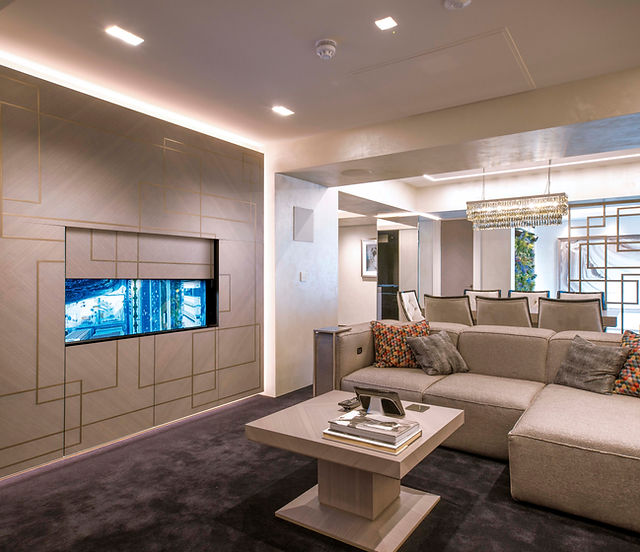
5. Geometric Wood Panels with a Retracting TV Mechanism
The absolute showstopper here is the motion itself. It’s not just that the TV is hidden, but *how* it’s hidden. The retracting panel that slides away to reveal the screen transforms the wall from a static architectural feature into something dynamic and surprising. This sense of mechanical magic and transformation is what you’d lose with a simpler solution like sliding doors. It elevates the entire concept from practical storage to a true statement of luxury and custom design. The integrated lighting aound the unit only enhances this theatrical effect.
|
📋 Copy HEX 🔗 Share |
💡 Designer Tip
This design taps directly into the “quiet luxury” and “stealth wealth” trends that are dominating high-end interior design. As homes become more open-plan and multi-functional, clients are requesting spaces that can transform from a sophisticated area for entertaining to a casual spot for media consumption without any visual compromise. Motorized, automated systems like this are the ultimate expression of that desire. They represent a move away from showcasing technology towards seamlessly integrating it into the background of our lives.
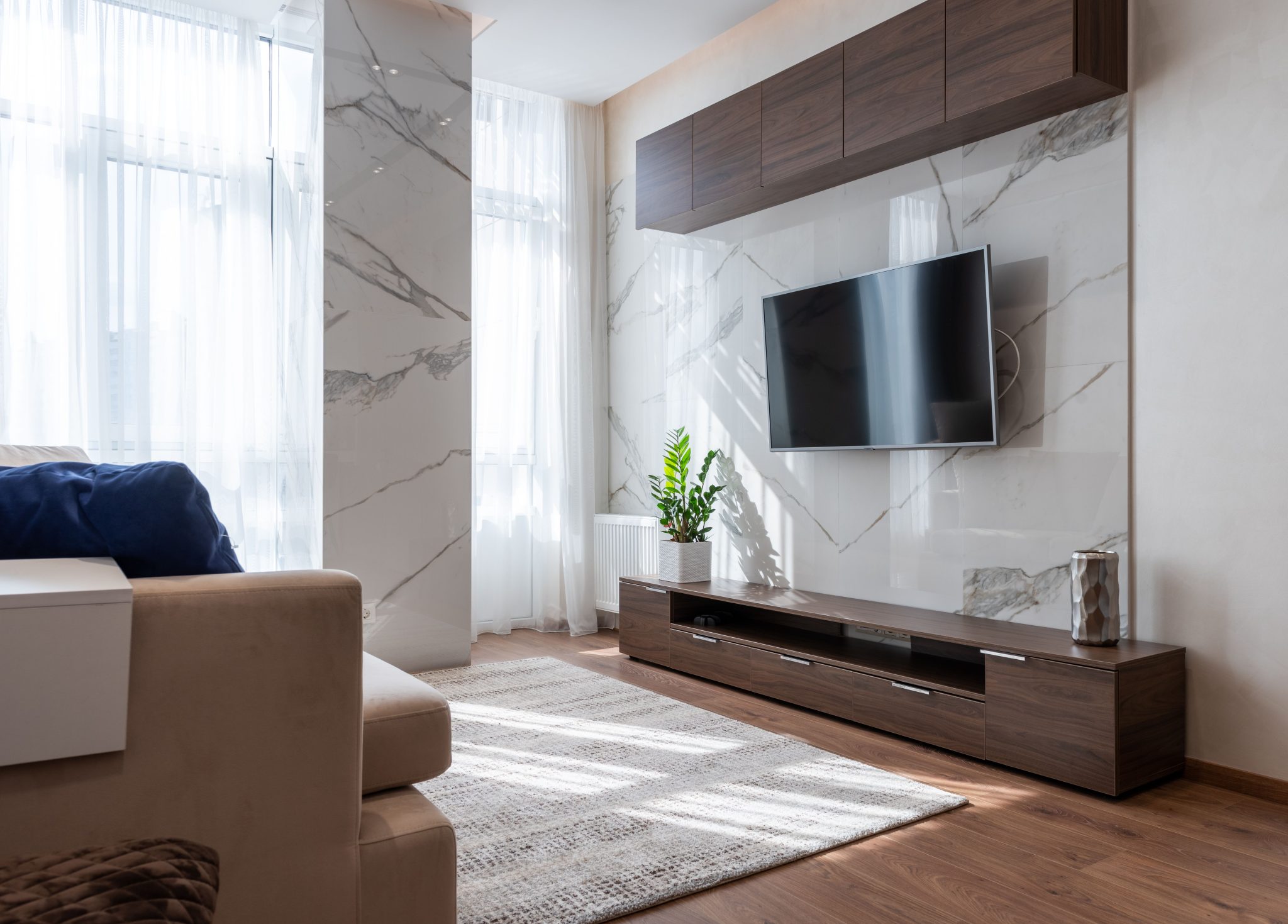
6. Media Wall with Dark Wood Cabinets and Marble-Effect Panels
This design works because of a masterful use of contrast and balance. The dark brown wood cabinets provide a strong, grounding horizontal element, while the tall, glossy marble-effect panels add verticality and light. The dramatic, large-scale veining of the marble creates a bold artistic statement, preventing the large wall from feeling blank or boring. The sheer curtains soften the entire composition, diffusing natural light and adding a layer of delicate texture that keeps the modern lines from feeling too harsh or clinical.
|
📋 Copy HEX 🔗 Share |
🔥 Trending Context
While beautiful, large-format glossy panels require specific care. They are fantastic for wiping down, but their high-gloss finish will show every single fingerprint and smudge, especially in a home with kids. Use a soft, damp microfiber cloth for regular cleaning, as paper towels can leave lint behind. Avoid any abrasive cleaners which can scratch the surface. The main challenge is dust build-up on the dark floating cabinets below. They will need to be dusted frequently (2-3 times a week) to look their best, as dark, flat surfaces make dust highly visible.
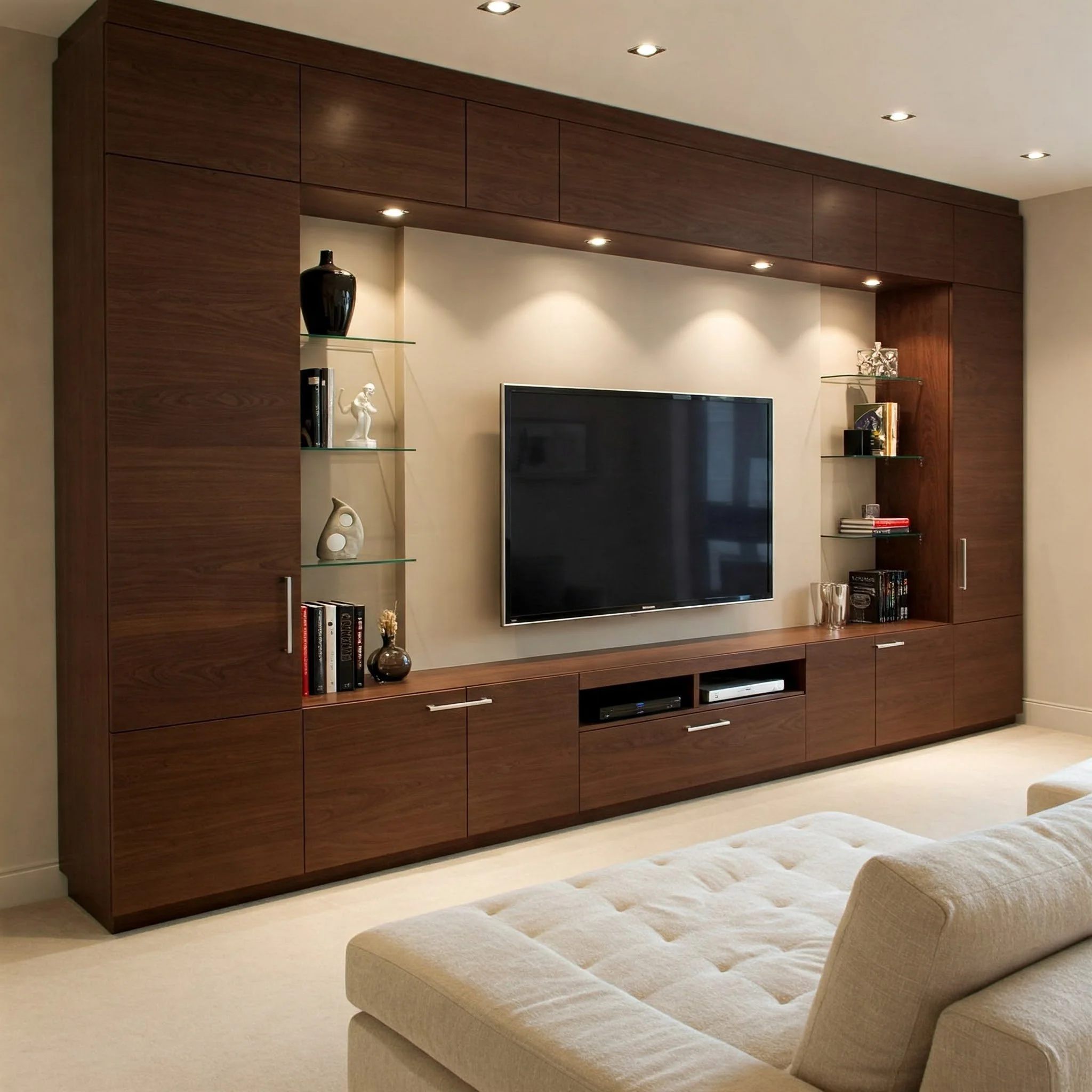
7. Sleek Dark Wood Media Wall with Integrated Lighting
When designing a built-in media wall, lighting is not an optional add-on; it’s essential. To get this polished, high-end look, use integrated linear LED strip lighting within the shelving and recesses. Specify a warm color temperature (between 2700K and 3000K) to complement the wood tones. Crucially, have the LEDs installed in a channel with a diffuser lens. This eliminates the “dotted” look of individual LED bulbs and creates a smooth, continuous line of light that looks far more expensive and professional.
|
📋 Copy HEX 🔗 Share |
🧹 Maintenance Reality
A full-wall built-in like this is best suited for larger rooms where it won’t overwhelm the space. You’ll need a wall at least 10 feet wide to accommodate a decently sized TV and flanking storage without it feeling cramped. This design is particularly effective in rooms with lower ceilings (8 feet), as the strong horizontal lines of the cabinetry can make the room feel wider and more expansive. However, because it’s so dark, it requires a room with good natural light or a robust lighting plan to avoid feeling too heavy and cavernous.
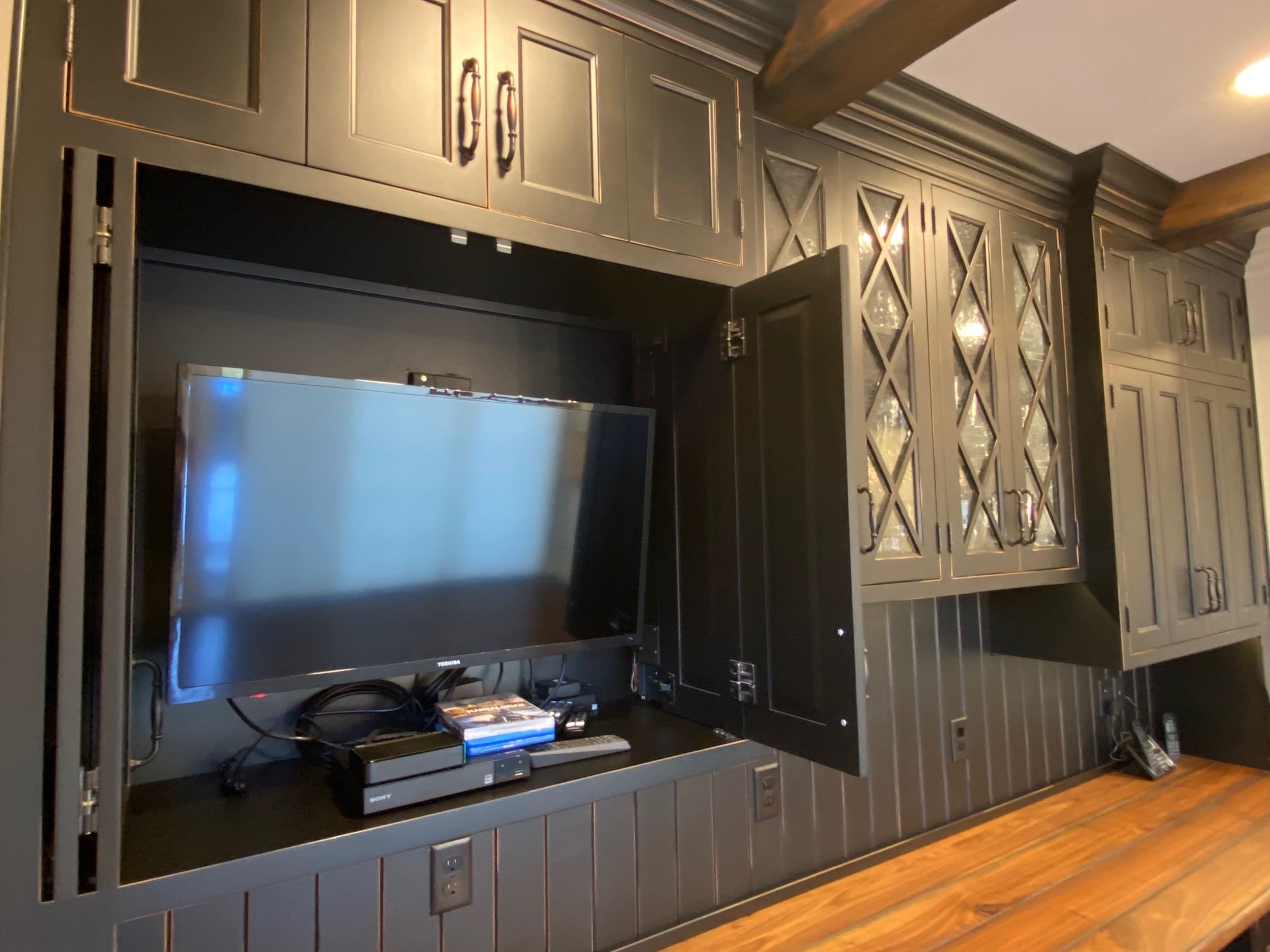
8. Traditional Dark Built-in Hiding a TV Behind Cabinet Doors
The success of this traditional design lies in its clever use of texture and consistency. The beadboard paneling on the lower section, the cross-hatched glass on the upper cabinets, and the simple raised-panel doors that hide the TV all belong to the same classic design language. This consistency makes the unit feel like a truly integrated piece of custom furniture. The warm wood countertop acts as a visual break, preventing the dark color from feeling monolithic and adding a touch of rustic charm. It feels a world away from the much more open console in Idea #11.
|
📋 Copy HEX 🔗 Share |
🎯 What Makes It Work
You can achieve a similar look on a budget. Start with unfinished stock kitchen cabinets from a big-box store like Home Depot or Lowe’s for the base. For the upper portion, use open shelving or simpler stock cabinets. Paint everything in a dark, moody color like Benjamin Moore’s ‘Hale Navy’ or ‘Iron Mountain’. To mimic the hidden TV feature, you can mount simple cabinet doors on the wall or a backing panel in front of a wall-mounted TV. You won’t have the fancy retracting hardware, but you can still close the doors and hide the screen when it’s not in use.
9. Industrial-Modern Shelving with a Concealed TV
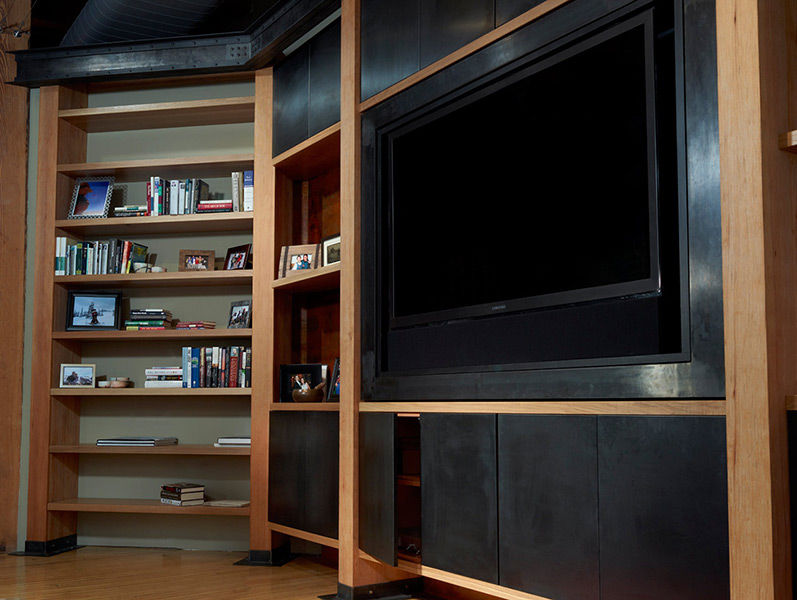
This look is a masterclass in material balance: 50% warm natural wood + 40% dark, matte metal + 10% curated color. The wood of the shelves brings in natural texture and warmth, keeping the unit from feeling cold. The dark metal framework and cabinetry provide a strong, industrial edge and a solid visual anchor. The final 10% comes from the books and decor, plus the surprising sage green back panel, which adds a soft, organic touch. You could change the formula by swapping the sage green for a terracotta for a warmer feel, or a deep navy for more drama.
|
📋 Copy HEX 🔗 Share |
✅ Before You Start
Let’s be real: open shelving is a magnet for dust and requires a commitment to curation. This is not a ‘set it and forget it’ solution. To keep it looking like the inspiration photo, you’ll need to dust the shelves and all the objects weekly. It also requires a certain level of styling discipline. If you tend to accumulate clutter, these beautiful open shelves can quickly become a source of visual stress. This look is perfect for the hyper-organized, but can be a challenge for everyone else.
10. Framed Art TV on a Dark Wall Above a Modern Console
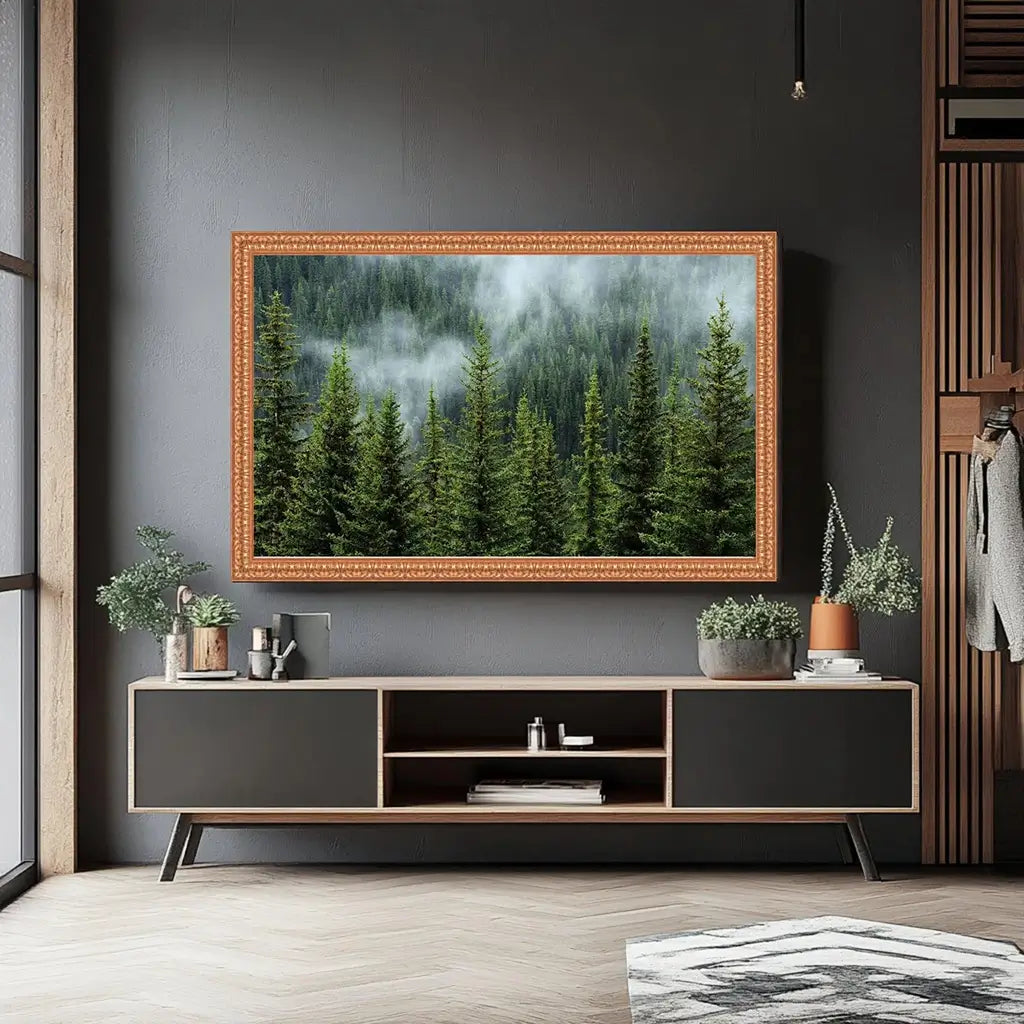
The game-changer here is the dark gray wall. By painting the wall a deep, saturated color, the black screen of the television (when off) visually merges with the background, almost disappearing. This is a powerful design trick. The ‘art mode’ feature is great, but even when the TV is just a black rectangle, the dark wall minimizes its presence far more effectively than a standard white wall would. The contrast makes the art pop when it’s on, and helps the TV recede when it’s off. A true win-win.
|
📋 Copy HEX 🔗 Share |
📏 Scale Guide
Recreating this ‘Art TV’ look is straightforward. This can be done in an afternoon for under $100.
- Choose Your Wall: Pick the wall where the TV will be mounted. Make sure you have studs to drill into or use appropriate anchors.
- Paint it Dark: Select a deep charcoal, navy, or even black paint. A matte or eggshell finish works best to minimize light reflection. Apply two coats for even coverage.
- Mount the TV: Use a no-gap wall mount for a flush, picture-like installation. These mounts are specifically designed for ‘frame’ style TVs.
- Select Your Art: Most art TVs come with a subscription service for a vast library of artwork. Choose a piece that complements your room’s decor.
11. TV on a Dark Wood Console Against a Shiplap Wall
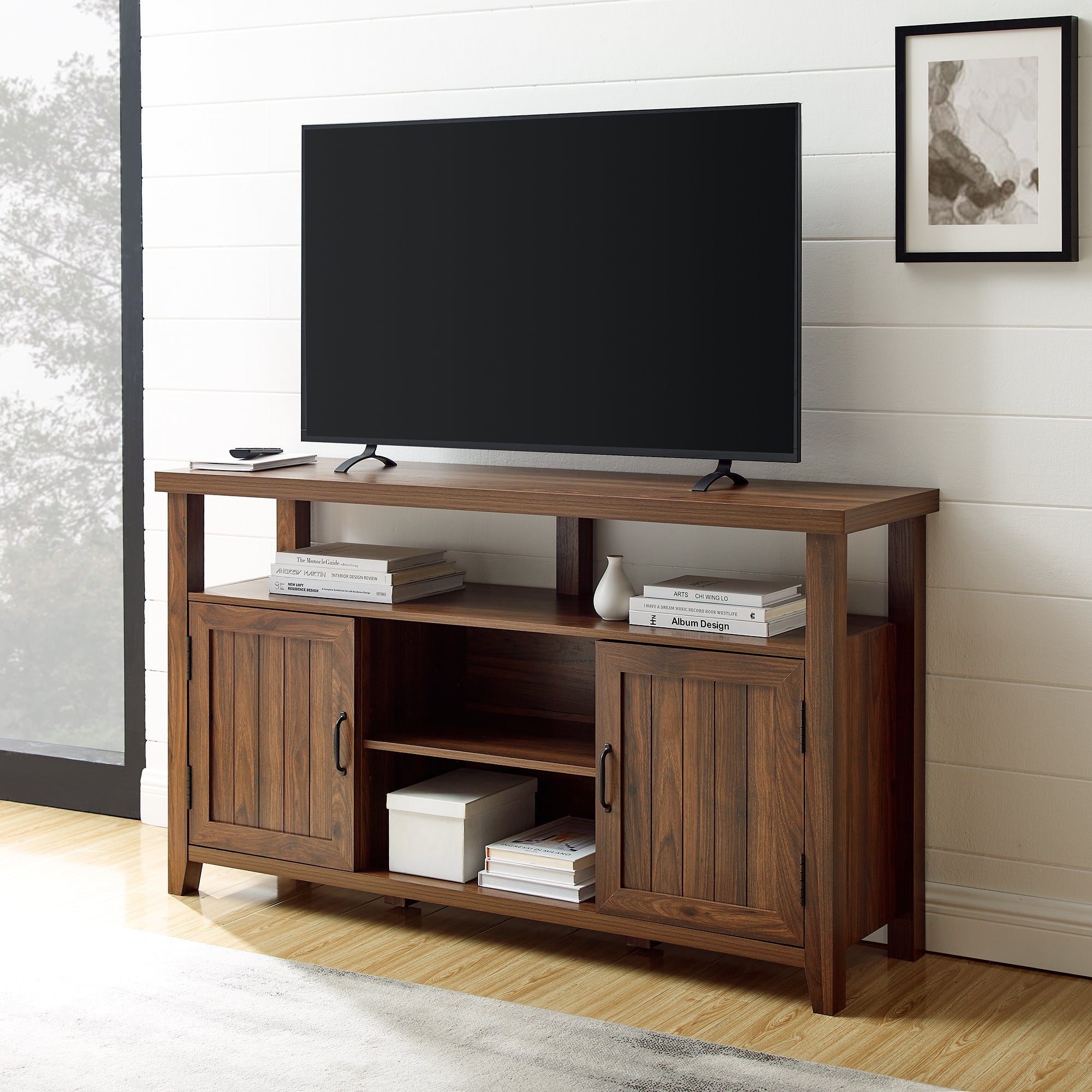
This design works because it perfectly balances rustic and modern elements. The white horizontal shiplap wall provides a clean, bright backdrop with a touch of farmhouse texture. This contrasts beautifully with the dark, clean-lined wooden console and the stark black of the television and artwork frames, which bring in the modern element. The composition is asymmetrical, with the large window on one side, but feels balanced due to the visual weight of the console and TV. It’s a great example of how to make a TV feel at home in a transitional space.
|
📋 Copy HEX 🔗 Share |
💸 Get This Look For Less
When you have a TV on a console, the key to a polished look is what you do *around* it. Don’t just leave it there alone. Create a deliberate, asymmetrical arrangement. Place a piece of framed art slightly overlapping one side of the TV, and a stack of books or a small plant on the other. This technique, called ‘visual grouping’, tricks the eye into seeing one large, intentional composition instead of a TV with some random stuff next to it. It makes everything feel more curated.
12. The Ultimate in Stealth: The Disappearing TV Lift Cabinet
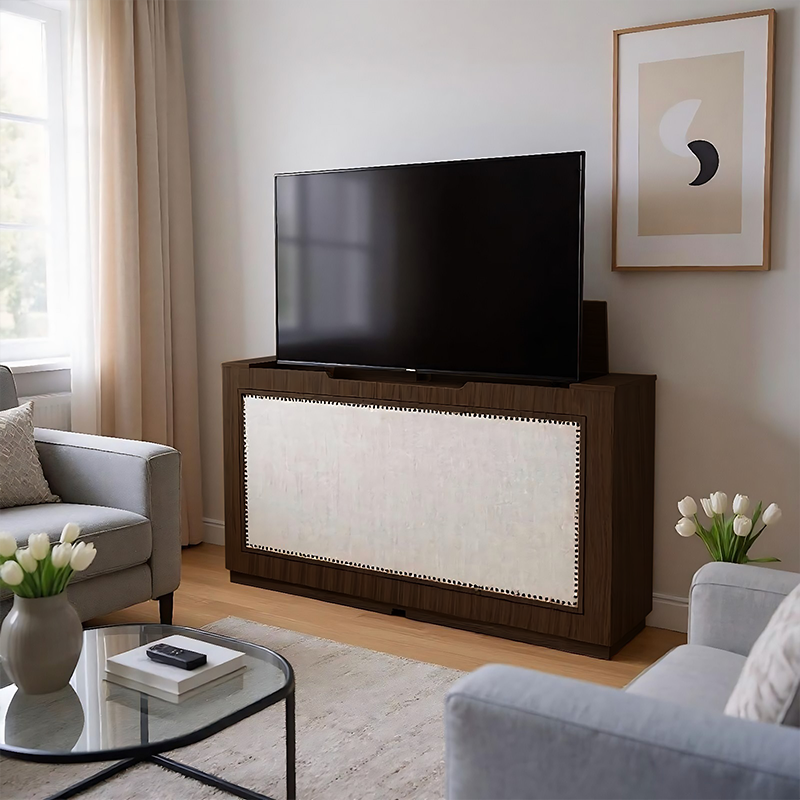
TV lift cabinets are at the forefront of the ‘invisible tech’ trend in home design. As we strive to make our living spaces more serene and less dominated by screens, solutions that make technology vanish on command are becoming incredibly popular. High-end furniture makers like Elevationize are capitalizing on this by creating pieces that are beautiful furniture first, and tech housing second. This isn’t just about hiding a TV; it’s about reclaiming a room’s aesthetic and purpose when the screen isn’t in use, a luxury homeowners are increasingly willing to invest in.
|
📋 Copy HEX 🔗 Share |
💰 Budget Breakdown
The magic of a TV lift comes with a few practical considerations. These units are heavy, expensive, and require a dedicated power source. The internal mechanisms, while generally reliable, are complex and can eventually require service, which may not be simple. Also, consider your components. You’ll need a way to control your cable box or streaming device when it’s hidden inside the cabinet, which usually means investing in an IR repeater system to relay the signal from your remote. It’s a fantastic solution, but not a simple plug-and-play one.
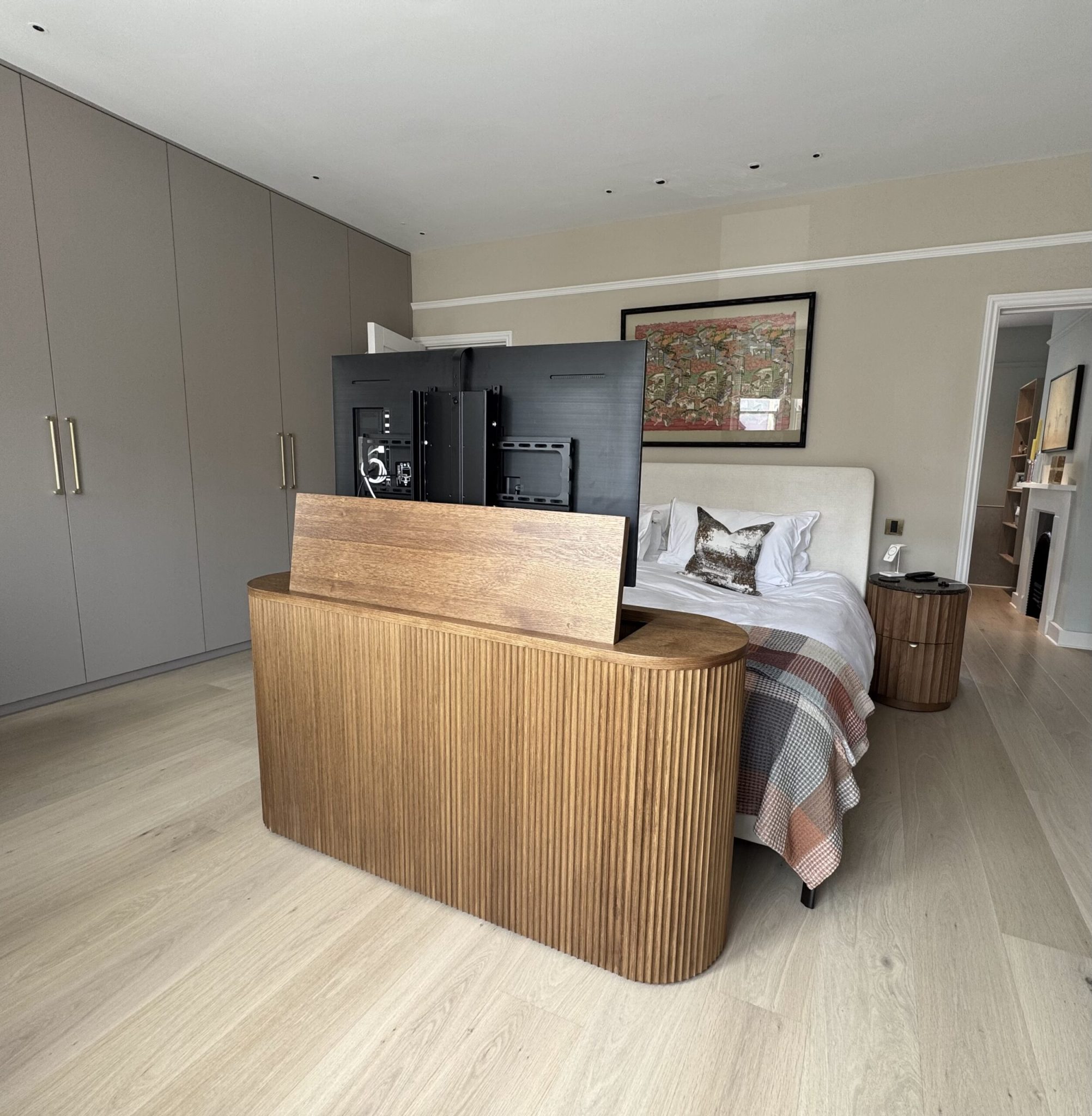
13. Serene Bedroom with a Fluted Wood TV Lift Cabinet
The fluted wood texture is the undeniable star of this show. It’s a design element that adds incredible dimension, rhythm, and a bespoke quality to what could otherwise be a simple cabinet. By repeating the fluted detail on the matching nightstand, it creates a cohesive and deeply intentional design story. This texture is what elevates the room from simply nice to truly designer-level. Without it, the TV lift would be purely functional; with it, it’s a piece of sculptural art that also happens to hide a television. You can see a different approach to a bedroom TV lift in Idea #18.
|
📋 Copy HEX 🔗 Share |
⭐ The One Thing
Fluted or reeded wood is stunning, but it’s a bit of a dust trap. The small grooves can collect dust more readily than a flat surface. To maintain its beauty, you’ll need to dust it weekly with a soft brush attachment on your vacuum cleaner or a microfiber duster. Don’t use Pledge or other wet sprays, as the residue can build up in the grooves and become difficult to remove. For any spills or marks, use a slightly damp cloth and dry immediately. It’s a little more work, but worth it for the high-impact look.
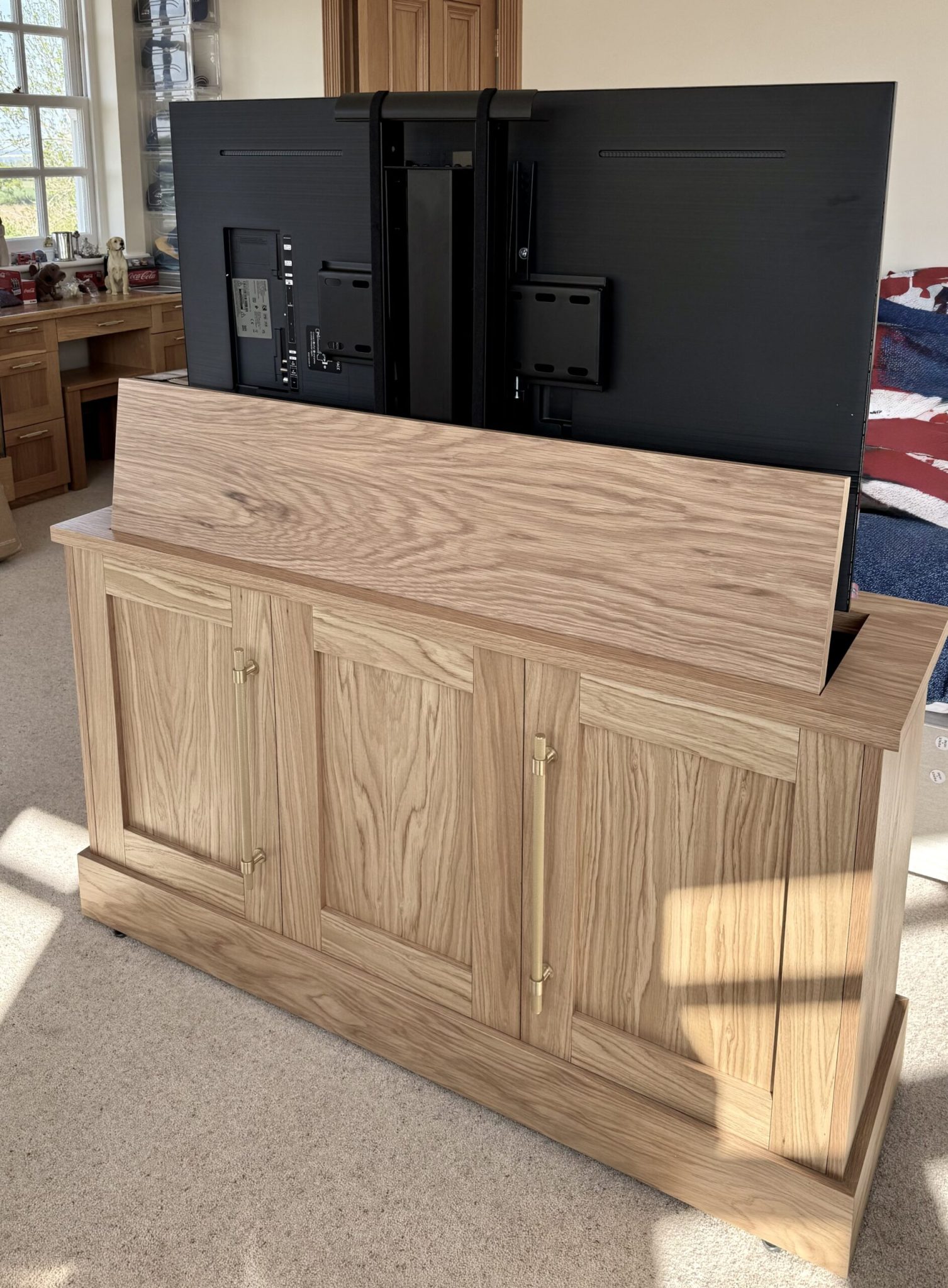
14. Classic TV Lift Cabinet in Light Oak with Brass Hardware
This piece works by perfectly blending traditional furniture design with modern technology. At first glance, it looks like a classic sideboard or buffet. The paneled doors, the warm light oak finish, and the elegant brass bar pulls all speak a language of timeless, traditional style. There’s no hint of the technology hidden inside. This ‘Trojan horse’ approach is why it’s so successful—it doesn’t try to look futuristic. It respects the room’s established decor, allowing the homeowner to have modern convenience without sacrificing their aesthetic.
|
📋 Copy HEX 🔗 Share |
⚠️ Real Talk
To get this ‘hidden in plain sight’ look for less, hunt for a vintage or second-hand buffet, credenza, or dresser on Facebook Marketplace or at a thrift store for $100-$300. Look for one with a solid wood top and enough internal depth for a TV. You can then purchase a separate TV lift mechanism online (prices range from $400 to $1,000) and have a handyman or a skilled DIYer retrofit it into the piece of furniture. It’s a more hands-on approach but can save you thousands compared to a brand-new, pre-made TV lift cabinet.
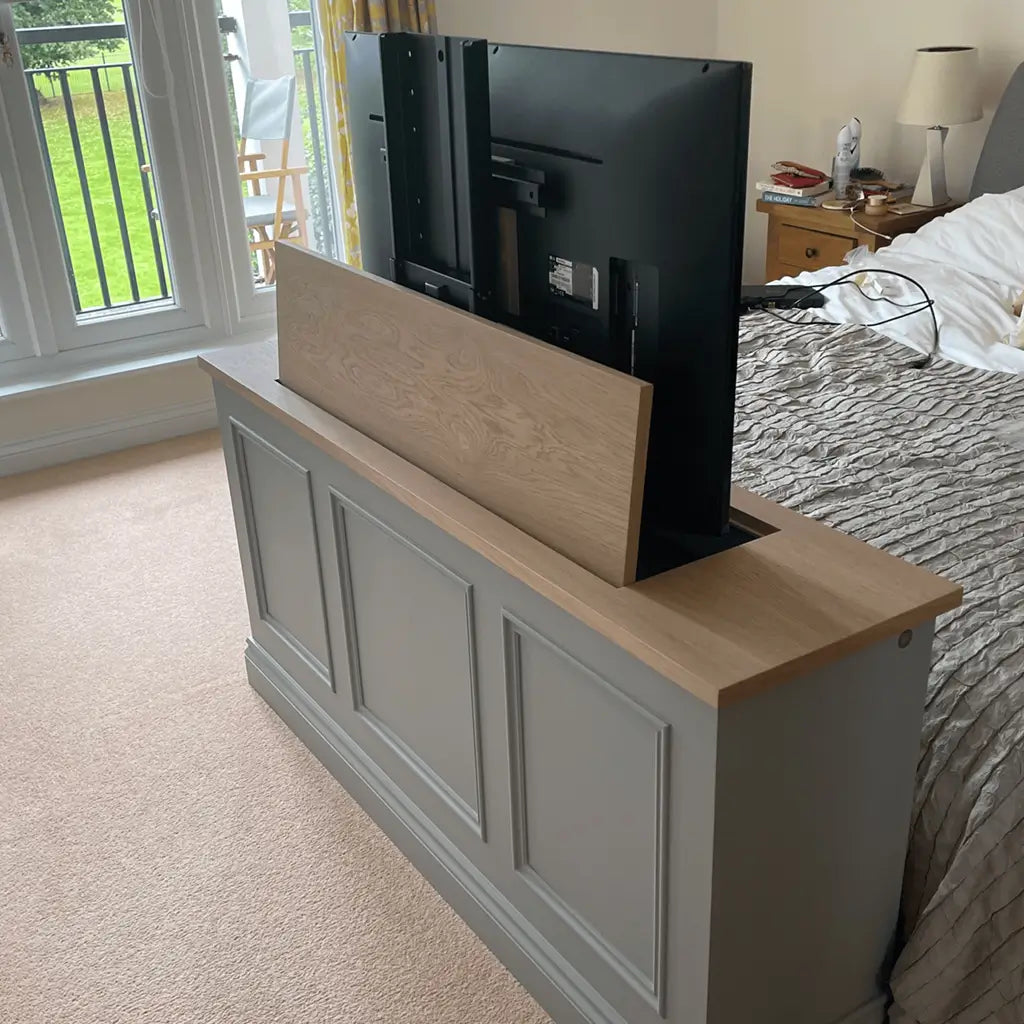
15. Cohesive Bedroom with a Grey Paneled TV Lift Cabinet
Before you commit to a TV lift cabinet at the foot of your bed, run through this quick checklist:
|
📋 Copy HEX 🔗 Share |
📐 Style Math
- Check your walkway: Measure the space between your bed and the cabinet to ensure you have at least 24-30 inches of clear walkway. Anything less will feel cramped.
- Confirm the viewing height: Sit up in bed as you normally would to watch TV. Does the fully extended height of the TV you’re considering place the screen at a comfortable eye level?
- Locate power: You will need a power outlet near the cabinet’s location. Plan for this in advance to avoid unsightly extension cords.
- Consider the sound: The TV’s native speakers will be facing away from you. Plan on adding a soundbar to the lift mechanism for better audio quality.
Here’s a small but crucial tip for integrating a piece like this: match the finish of the TV cabinet to another major element in the room. In this case, the grey paneled sides of the cabinet are a perfect echo of a neutral wall color or upholstered headboard. The light natural wood top is similarly coordinated with other wood tones in the room. This color coordination is what makes the cabinet feel like a planned part of the bedroom set, rather than a random piece of tech furniture that was just dropped into the space.
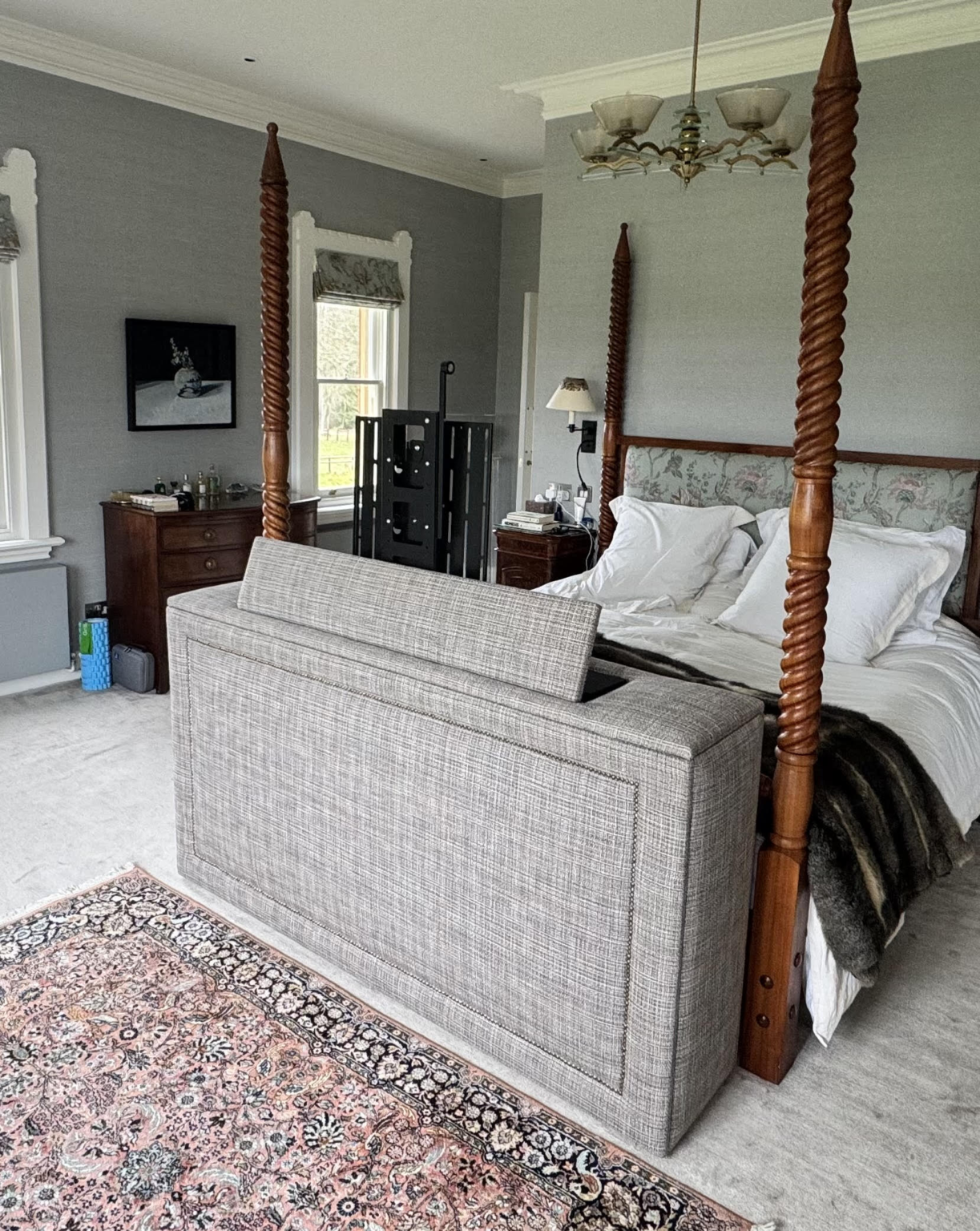
16. Pop-Up TV in a Traditional Four-Poster Bed Setting
A pop-up TV at the foot of the bed is a fantastic luxury, but be realistic about how it changes the room. When the TV is up, it creates a visual and physical barrier. This can make the room feel smaller and cut off the view from the bed to the rest of the space (or out a window). It also means that one person can’t easily read while the other watches TV without the screen being a dominant presence. It’s perfect for dedicated movie watching, but less ideal if you prefer a more open, shared bedroom environment. Contrast this with the wood cabinet version in Idea #17, which presents a more solid visual block.
|
📋 Copy HEX 🔗 Share |
🔧 How-To Brief
The single element that makes this idea work so well in a traditional room is the choice of upholstery. By using a textured grey fabric that coordinates with the wallpaper and bedding, the TV cabinet blends in beautifully. If this were a sleek black box or a modern wood finish, it would stick out and clash with the ornate four-poster bed and classic furniture. The soft, upholstered finish allows it to have the texture and subtlety of a piece of furniture, like an ottoman or a bench, rather than a piece of technology.
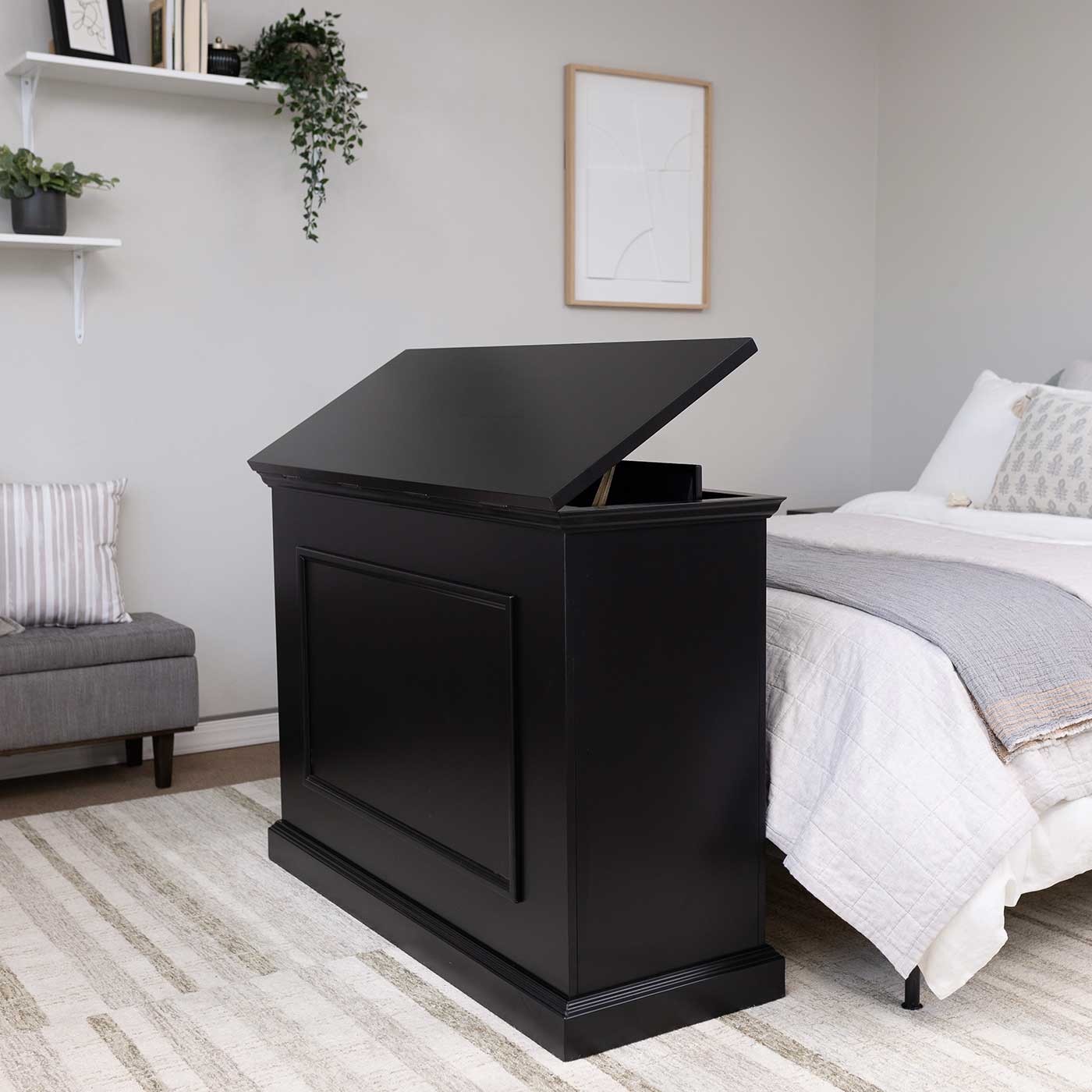
17. Discreet Black Pop-Up TV Cabinet at the Foot of a Bed
This look is a study in quiet sophistication using a simple formula: 80% neutral softness + 20% structured black. The vast majority of the room is wrapped in soft textures and light, neutral colors – the striped rug, the white and grey bedding, the light grey walls. This creates a calm and restful backdrop. The pop-up cabinet and a few other small details (not shown) introduce a strong, structured black element. This provides a necessary point of contrast and definition, preventing the room from feeling washed out. The black anchors the space without overwhelming it.
|
📋 Copy HEX 🔗 Share |
💡 Designer Tip
This design is successful because it leans into subtlety. The cabinet isn’t trying to be a statement piece. Instead, its classic framed paneling and simple form allow it to blend in as a traditional piece of furniture, almost like a small blanket chest. The black color gives it presence but in a classic, unassuming way. By keeping the design of the cabinet so understated, it doesn’t scream “I’m hiding a TV!” which is the ultimate goal. The slightly angled top when closed is a clever detail that hints at its function without giving the whole game away.
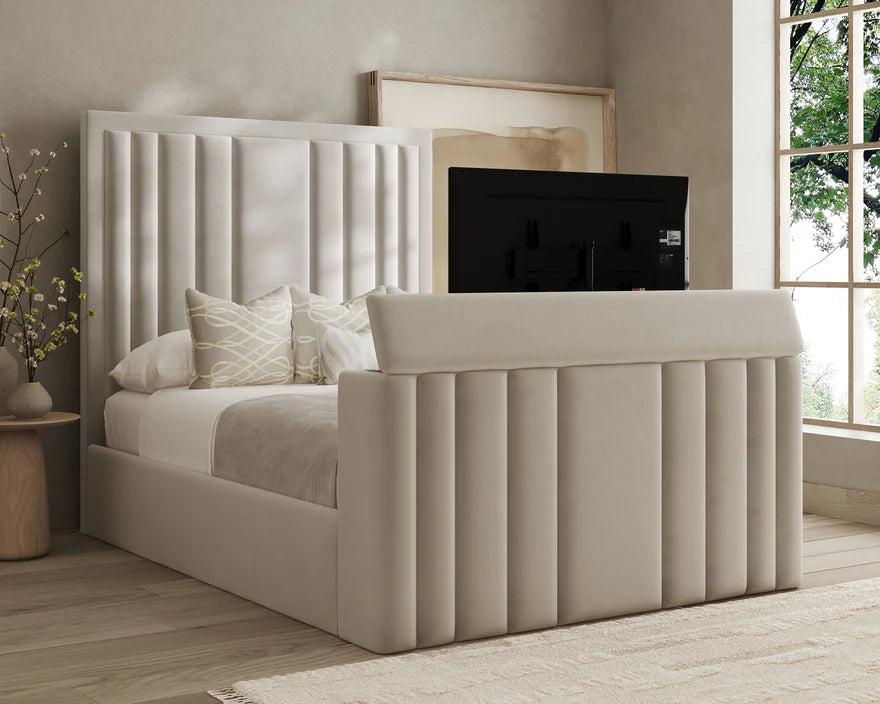
18. Fully Upholstered Bed with an Integrated Pop-Up TV Footboard
The total integration is what makes this design exceptional. This isn’t just a cabinet placed at the end of a bed; the TV lift mechanism is built directly into the structure of the footboard itself. This creates a completely seamless, unified piece of furniture. The continuous upholstery and channeled detailing on both the headboard and footboard make it clear that this was designed as a single concept. It’s the difference between buying a bed and a TV stand, and buying a single, brilliant piece of multi-functional furniture. It offers a cleaner look than the separate cabinet in Idea #13.
|
📋 Copy HEX 🔗 Share |
🔥 Trending Context
An all-in-one upholstered bed like this is a commitment. Unlike a separate cabinet, you can’t easily swap it out if your style changes or if the mechanism fails years down the line. Cleaning is also a consideration. The light beige fabric, while beautiful, is susceptible to dust, spills, or scuffs from shoes if you’re not careful. You’ll want to vacuum it regularly with an upholstery attachment. For spots, you’ll need to use a dedicated fabric cleaner. And be warned: the back of the TV is exposed when it’s up, which isn’t the most glamorous view.
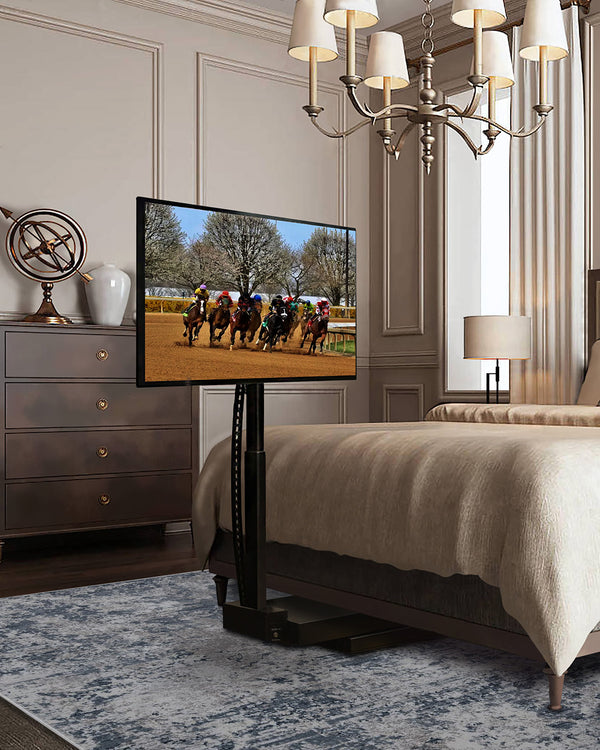
19. Under-Bed TV Lift: The Ultimate Space Saver
This is the holy grail for small bedrooms. An under-bed TV lift requires zero additional floor space, making it an ideal solution for rooms where you can’t fit a console or even a cabinet at the foot of the bed. It works with most standard bed frames that have at least 8-10 inches of clearance underneath. The key is ensuring the mechanism has a clear, unobstructed path to travel from under the bed to its final viewing position. This idea is a game-changer for studio apartments, guest rooms, or any bedroom tight on square footage.
|
📋 Copy HEX 🔗 Share |
🧹 Maintenance Reality
While this is a brilliant space-saving solution, there are some realities to consider. First, you’re sacrificing all your under-bed storage space. Those seasonal clothes or extra linens will have to find a new home. Second, installation is more complex than a simple cabinet; the mechanism needs to be securely bolted to the floor. Finally, dust bunnies are a real issue. The mechanism and the back of the TV will live under your bed, a prime spot for dust accumulation, so you’ll need to be diligent about cleaning under there regularly.
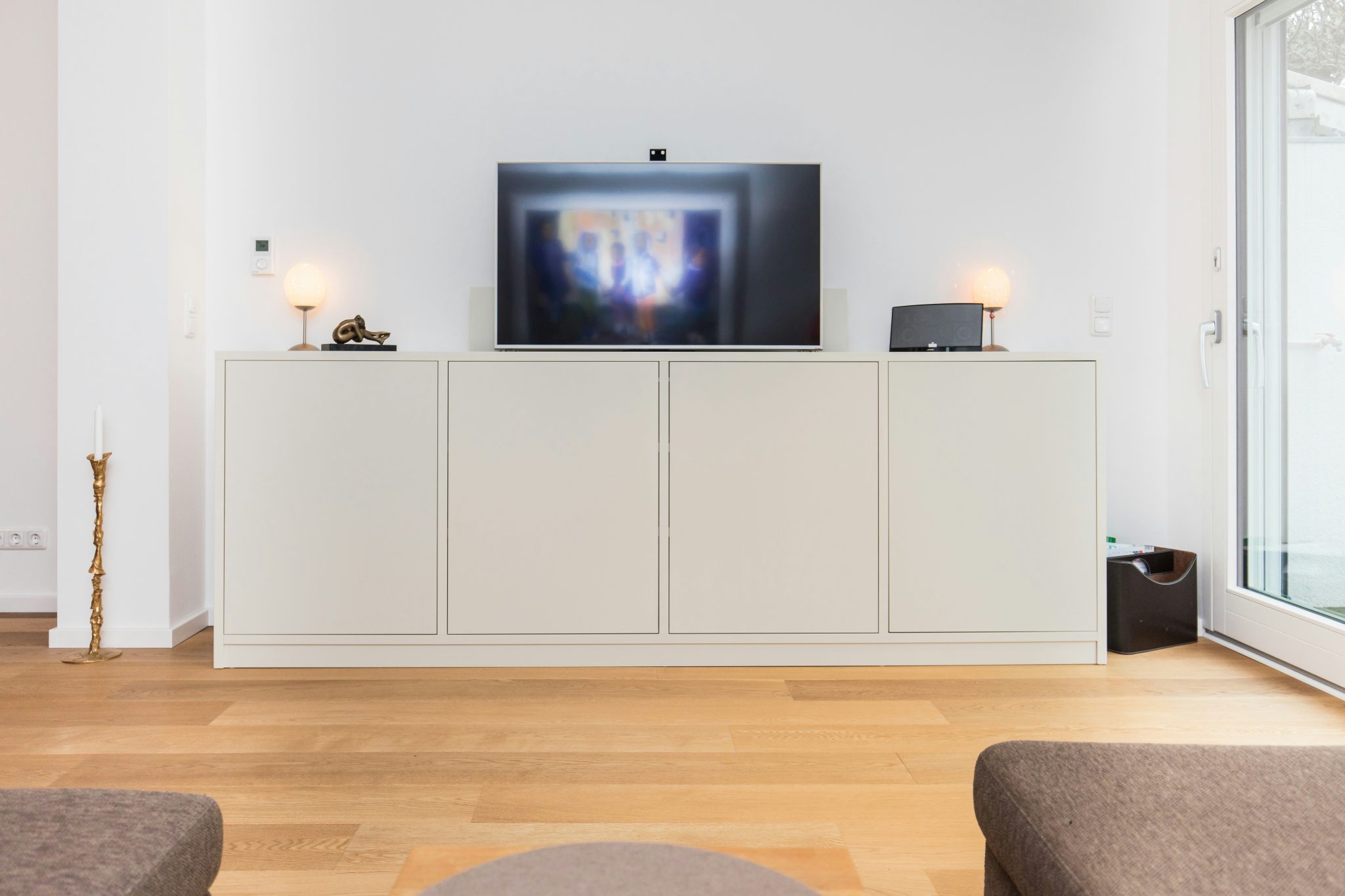
20. Minimalist Beige Cabinet with a Centered TV Display
The beauty of this setup lies in its serene simplicity and perfect symmetry. By placing the TV directly in the center of the clean-lined beige cabinet and flanking it with two identical orb lamps, the arrangement feels balanced, calm, and intentional. The lack of clutter, the minimal color palette of beige, white, and light wood, and the repetition of shapes (rectangular cabinet, rectangular TV) create a cohesive and deeply satisfying visual order. This is a look that feels clean without being cold, thanks to the warm bronze accents and wood tones. It’s similar to Idea #4 in its minimalist approach.
|
📋 Copy HEX 🔗 Share |
🎯 What Makes It Work
You don’t need a high-end designer console to get this look. The key is finding a simple, long cabinet with flat-front doors. The IKEA BESTÅ system is a fantastic and affordable option; you can configure a long, low cabinet for under $300. Pair it with a set of stylish but inexpensive matching lamps from Target or Walmart. The trick is to keep the styling minimal—don’t overcrowd the surface. The empty space is just as important as the objects you place on it for achieving this serene, minimalist aesthetic.
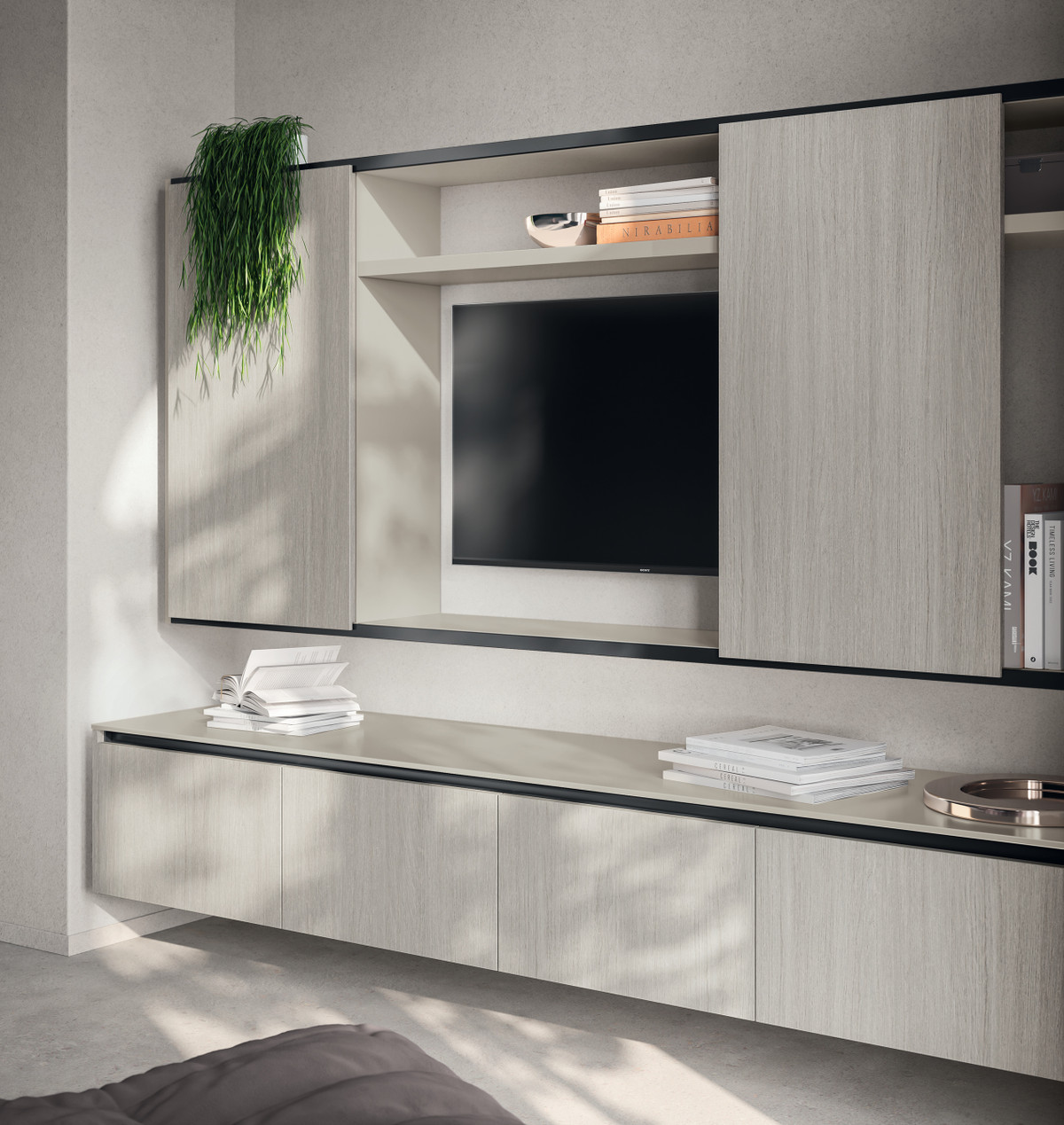
21. Modern Media Unit with Grey Wood Slat Sliding Panels
When you’re designing a media unit with sliding panels, the proportions are critical. A common mistake is to make the panels just wide enough to cover the TV. For a more sophisticated, high-end look, the panels should be oversized. They should slide to cover the TV completely, but also be able to slide over to conceal the side shelves. This creates a more flexible and visually interesting composition, allowing you to change the look of the wall unit entirely. This is a much more advanced version of the sliding panel concept in Idea #3.
|
📋 Copy HEX 🔗 Share |
✅ Before You Start
The single element that defines this piece is the use of vertical wood slats on the sliding panels. This detail adds immediate texture, rhythm, and a high-design feel. Without the slats, it would be a simple, flat-fronted cabinet. With them, it becomes a piece of architectural interest. The slats play with light and shadow, creating a sense of depth and sophistication. It’s a testament to how a single, well-chosen textural element can elevate an entire design from basic to brilliant.
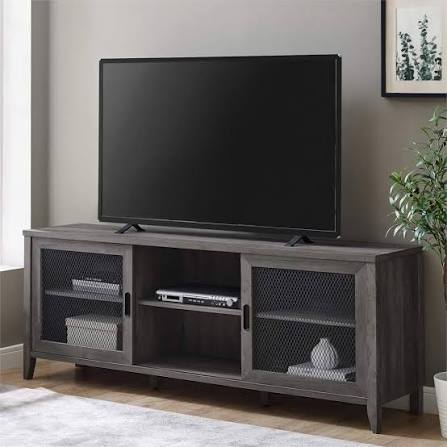
22. Weathered Grey Console with Sliding Mesh Doors
This console design is successful because it solves a very common problem: how to hide ugly media components while still allowing remote controls to work. The black metal mesh on the sliding doors is the perfect solution. It visually obscures the black boxes of a cable receiver or gaming console, blending them into the shadows. However, the mesh still allows infrared (IR) remote signals to pass through freely. This blend of visual concealment and practical functionality is what makes it a truly smart piece of furniture design.
|
📋 Copy HEX 🔗 Share |
📏 Scale Guide
That cool metal mesh on the doors is great for hiding electronics, but it’s also a bit of a dust magnet and can be tricky to clean. A simple feather duster won’t cut it. The best way to clean the mesh is with the brush attachment on a vacuum cleaner to pull dust out of the small openings. For anything stickier, a slightly damp cloth with a bit of mild soap will work, but be sure to dry it immediately to prevent any risk of rust on the metal or water damage to the wood frame. It’s a small price to pay for the great look and function.
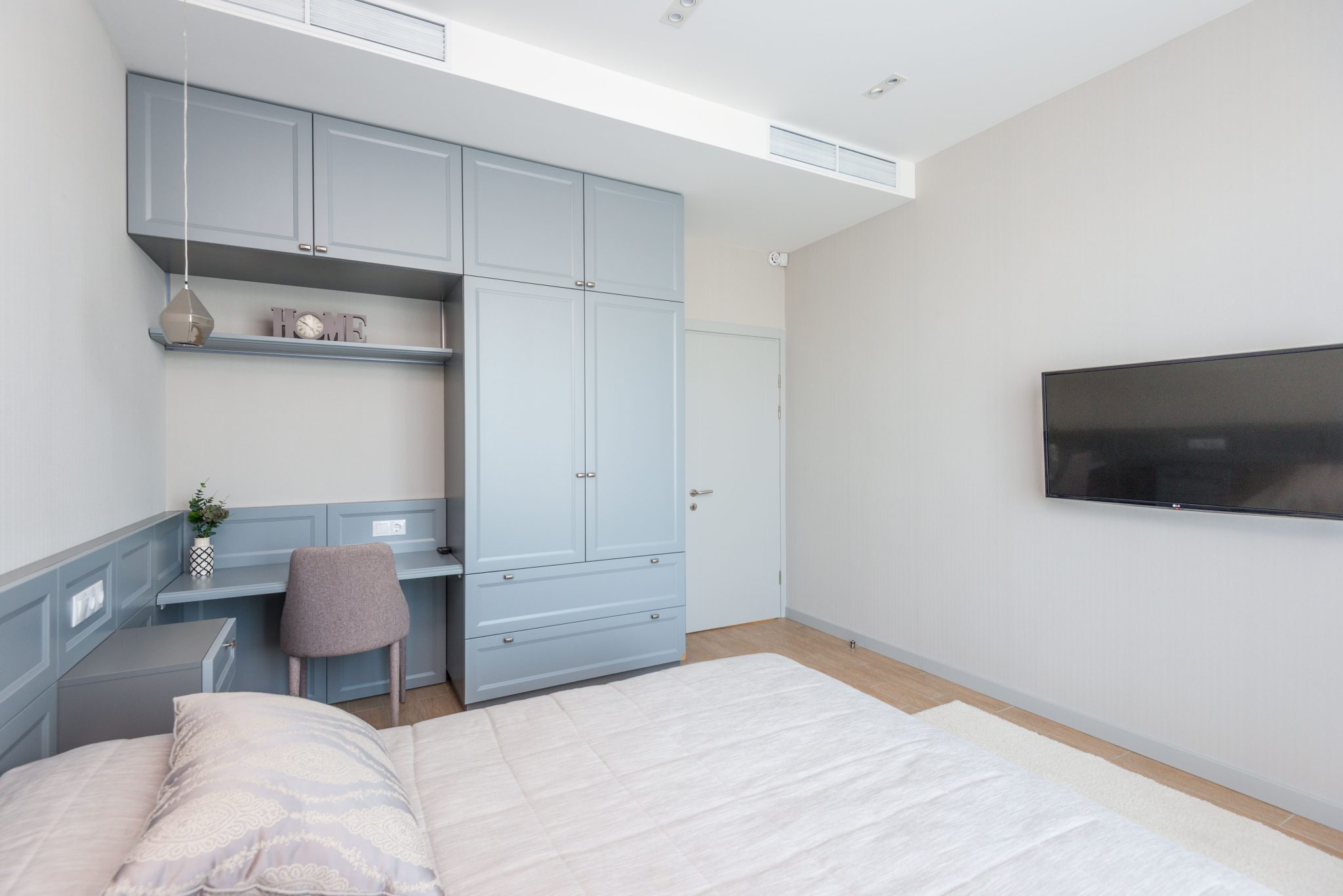
23. Wall-Mounted TV in a Serene Bedroom with Blue-Gray Built-Ins
This idea is perfect for small to medium-sized bedrooms, especially those that need to double as a work-from-home space. By integrating the wardrobe, desk, and media wall into a single, cohesive unit, you maximize floor space. This works best along a wall that is at least 10-12 feet long. The key is the shallow depth of the cabinetry and the light color palette. A dark, bulky unit would overwhelm a smaller room, but the soft blue-gray and simple, flat-panel doors keep the space feeling light, airy, and organized despite the amount of storage.
|
📋 Copy HEX 🔗 Share |
💸 Get This Look For Less
The secret to keeping a built-in like this from feeling too heavy or monolithic is to paint it the same color as—or a very similar color to—the walls. Notice how the light blue-gray of the cabinets is very close to the light gray of the wainscoting. This color-drenching technique helps the large volume of cabinetry recede and blend into the room’s architecture. If the cabinets were a starkly contrasting color, they would dominate the space and make it feel smaller. This is a pro-level trick for adding tons of storage without overwhelming a room.
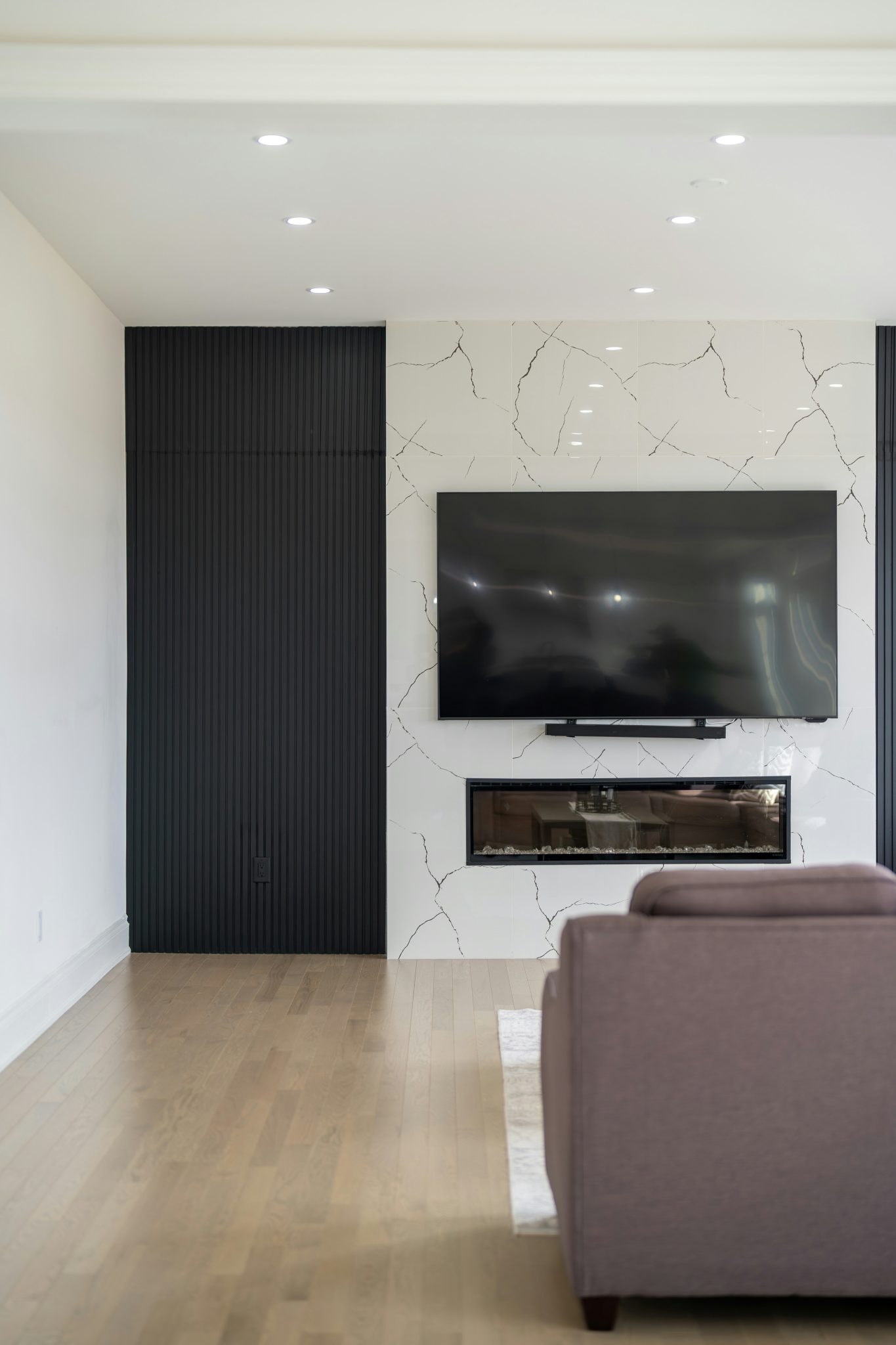
24. Seamless TV and Fireplace on a Marble-Look Tile Wall
The flush mounting is the absolute key to this look’s success. Both the television and the linear fireplace are recessed to be perfectly level with the face of the marble-look tile. This isn’t just a TV hung over a fireplace; it’s a completely integrated media and heat element that becomes part of the wall’s surface. This meticulous detail is what creates the ultra-clean, sophisticated, and architectural feel. It’s a significant construction choice that pays off with a seamless, high-end finish that is miles apart from the statement wall in Idea #1.
|
📋 Copy HEX 🔗 Share |
💰 Budget Breakdown
To recreate this dramatic feature wall, here’s a potential cost estimate:
- Framing & Electrical: Building the false wall to house the recessed units, plus electrical for both. ($1,500 – $3,000)
- Linear Electric Fireplace: A good quality 60″ model. ($1,200 – $2,500)
- Wall Material: Large format porcelain tiles with a marble look are a great option. ($800 – $2,000 for materials)
- Installation & Labor: Tiling and mounting. This is not a simple DIY. ($2,000 – $4,000)
- TOTAL: $5,500 – $11,500
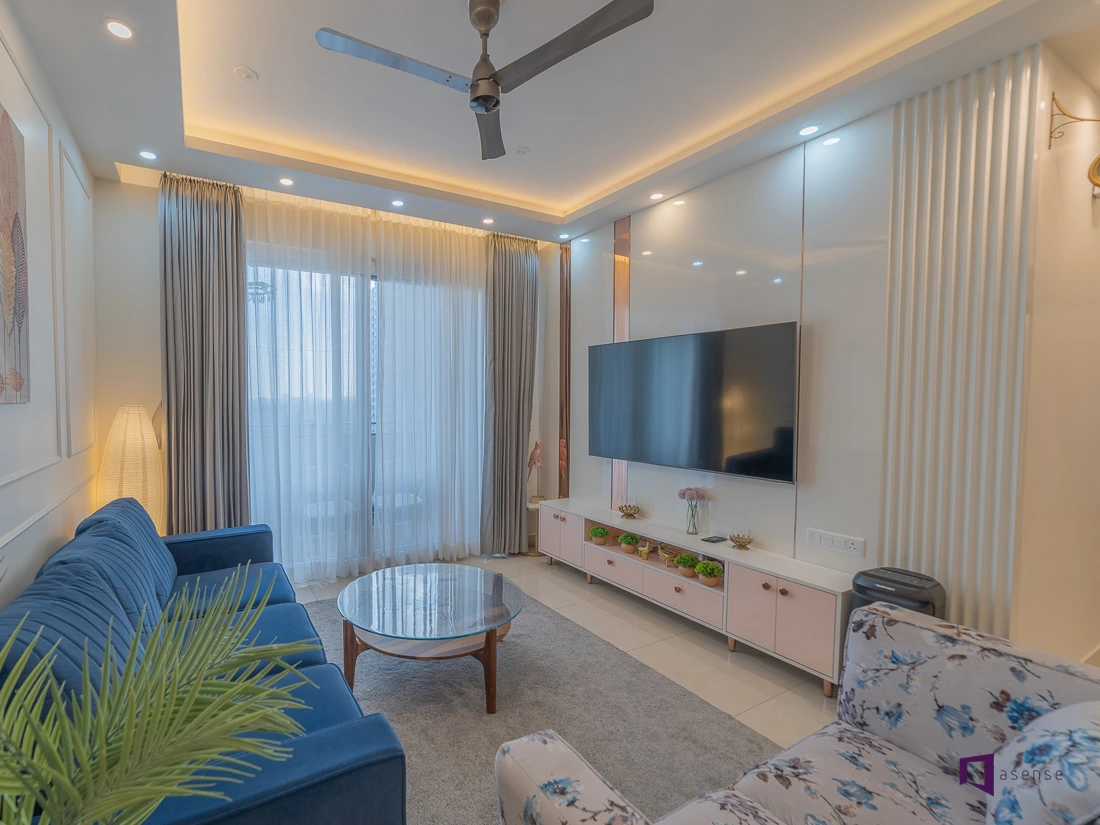
25. Sleek Wall-Mounted TV on a Glossy White Panel
Before you commit to a glossy, polished media wall, check these items first:
|
📋 Copy HEX 🔗 Share |
⭐ The One Thing
- Lighting Source: Where are your main lights and windows? A high-gloss surface will reflect everything, so if you have a window directly opposite, the glare could be intense and distracting.
- Wall Flatness: Glossy finishes are unforgiving and will highlight every bump and wave in your wall. Ensure your wall is perfectly flat (Level 5 finish) before installing panels.
- Cable Plan: A look this clean requires that every single cable is hidden. Plan the route for power, HDMI, and speaker wires from the start. This usually means running them behind the wall before the panels go up.
This ultra-modern look is all about a clean, bright, and airy formula: 70% high-gloss white + 20% soft color + 10% metallic accent. The glossy white panels and console provide a reflective, light-bouncing base that makes the whole space feel bigger. A soft color, like the light pink on the console, adds a touch of personality and warmth, preventing the white from feeling sterile. The final touch is the sharp, clean line of the rose gold accent trim, which adds a necessary layer of luxe detail and definition.
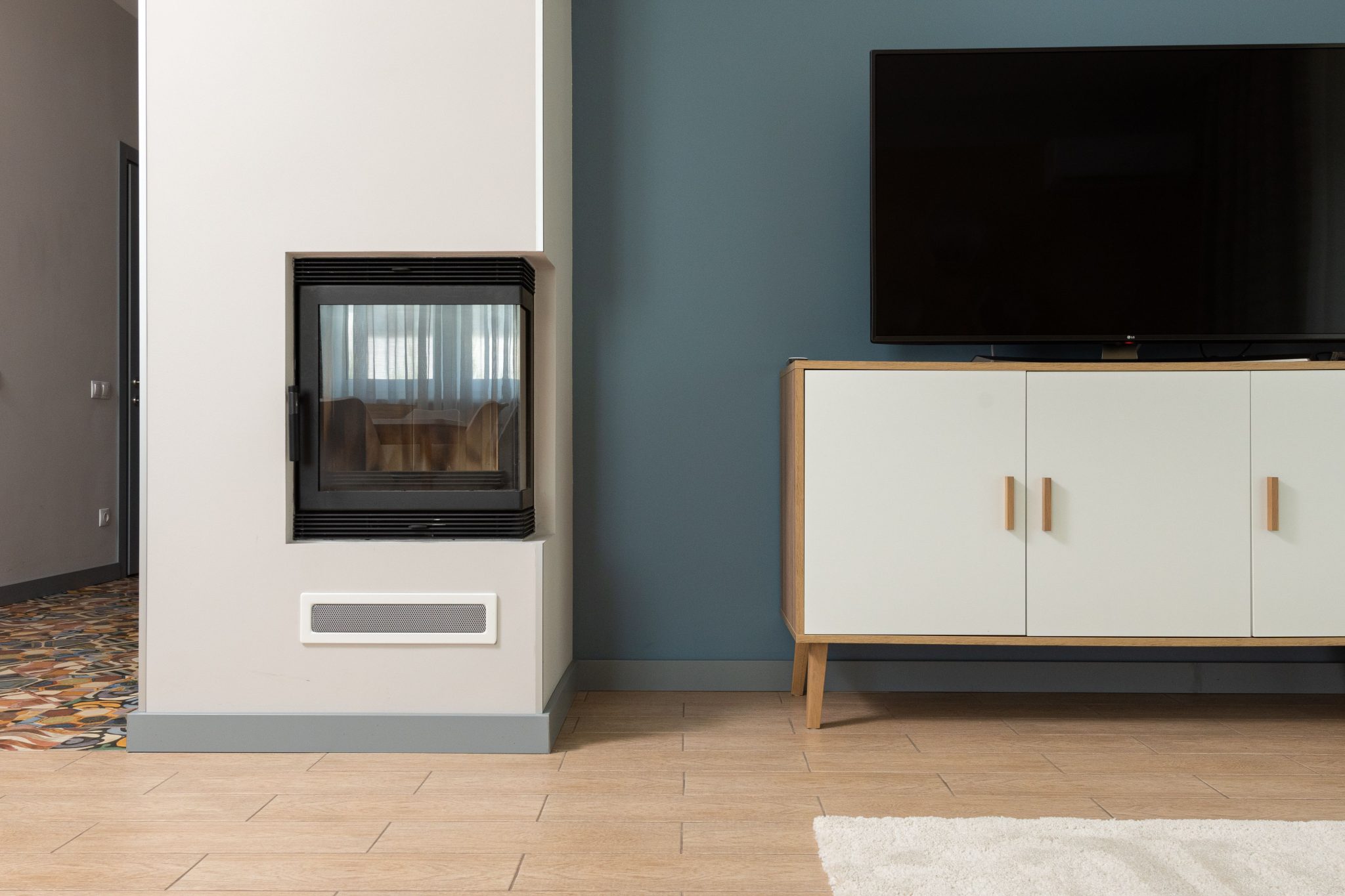
26. TV on Console with a Navy Blue Accent Wall and Fireplace
This composition works because it demonstrates a brilliant use of color blocking and asymmetry. The dark navy blue accent wall serves as a dramatic backdrop that makes the white console pop and helps the black TV screen recede. The design is asymmetrical, with the heavy visual weight of the fireplace on the left. However, it feels perfectly balanced because the long console and large TV on the right create an equal, opposing weight. This creates a dynamic, visually interesting layout that is much more engaging than a simple, centered setup would be.
|
📋 Copy HEX 🔗 Share |
⚠️ Real Talk
When you have a dark accent wall, don’t be afraid to put your TV on it. It’s a common misconception that this makes the room feel darker. In fact, it’s one of the best ways to minimize the visual impact of a large black screen. When the TV is off, it blends into the deep wall color. To ensure the look doesn’t feel too heavy, use a light-colored console (like the white and wood one here) to create sharp contrast and provide a visual lift. This contrast is what makes the whole vignette feel crisp and intentional.
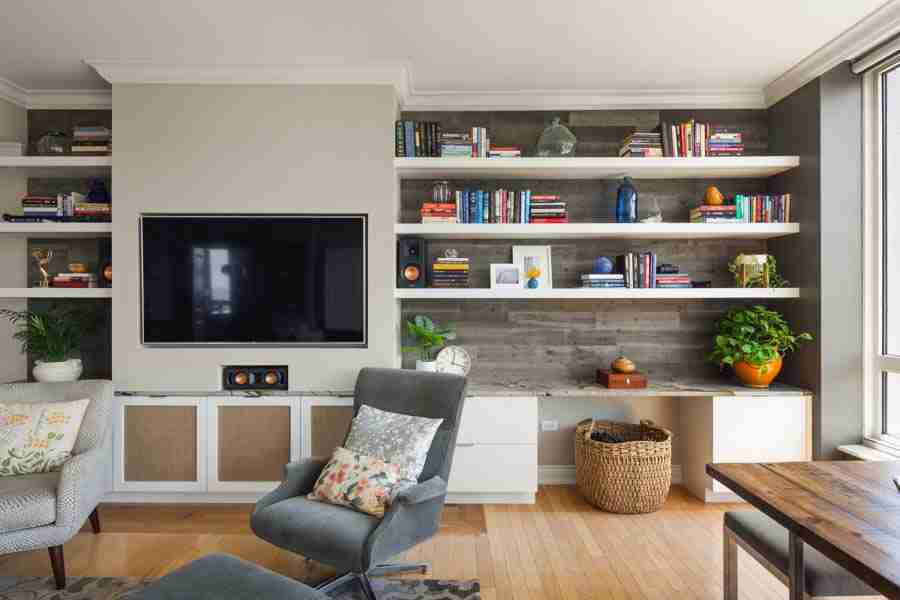
27. Styling Your Built-In TV Wall Like a Pro
The key to a beautifully styled built-in is the ’60/30/10 Rule’ for objects. 60% of your shelf space should be filled with books. Arrange some vertically and some horizontally to create rhythm. 30% should be decorative objects of varying heights and textures – vases, bowls, sculptures. The final 10% is for personal touches like framed photos and small pieces of art. This formula ensures the shelving looks full and interesting, but not cluttered. It provides a balance of personal items and curated decor.
|
📋 Copy HEX 🔗 Share |
📐 Style Math
To style a single shelf in your built-in, follow these simple steps for a designer look. Time: 5 minutes.
- Start with an Anchor: Place a small stack of 2-3 coffee table books horizontally on one side of the shelf.
- Add Height: Next to the books, place a taller vertical object, like a vase or a skinny sculpture. The height should be about 2/3 the height of the shelf.
- Create a Grouping: On the other side of the shelf, create a small vignette of 3 objects of varying heights. A small bowl, a candle, and a tiny plant work well.
- Layer In: Lean a small piece of framed art or a decorative plate against the back of the shelf, behind your grouping.
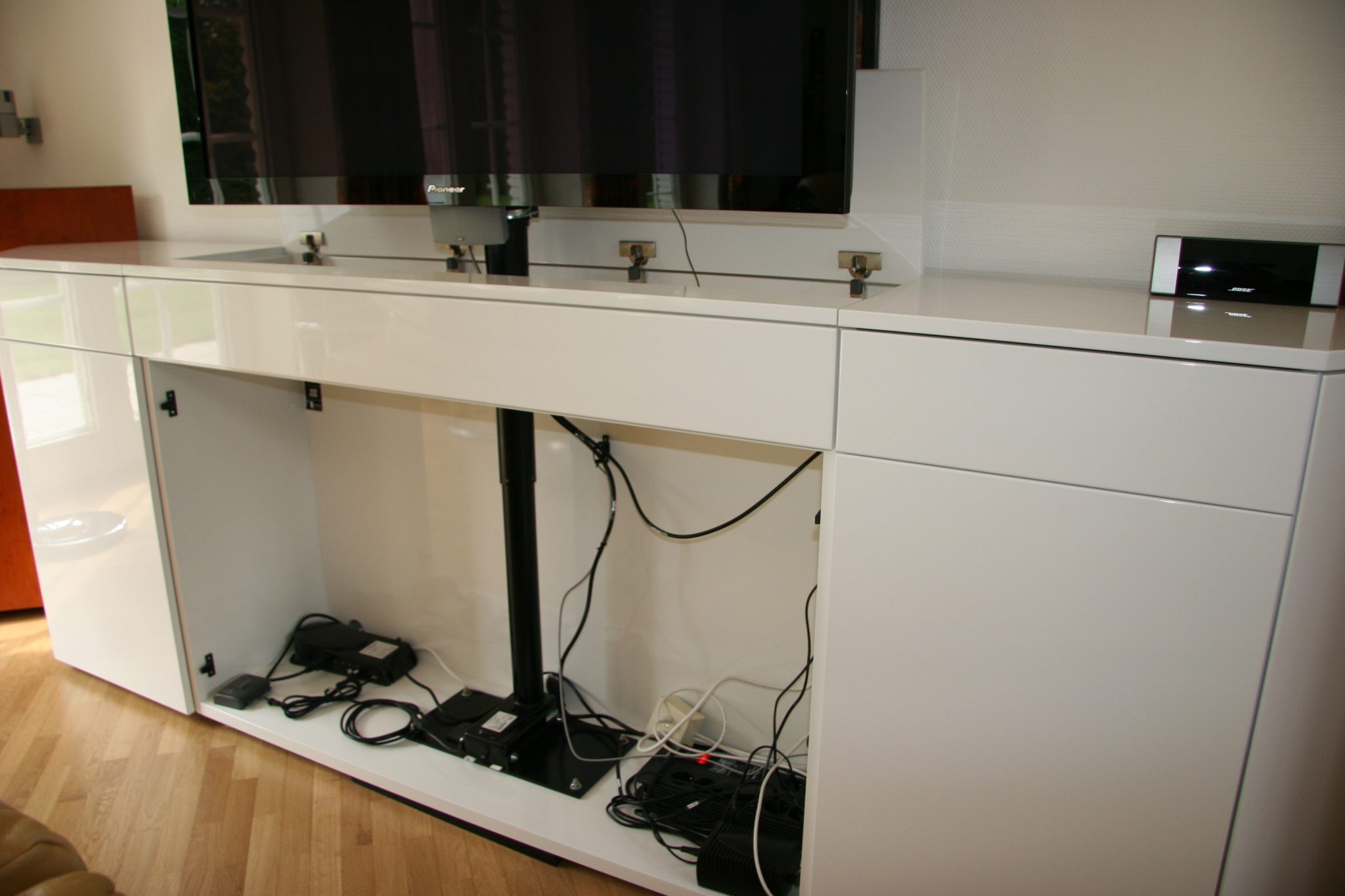
28. High-Gloss White Cabinet with a Pop-Up TV
Let’s have a moment of honesty about the inside of these cabinets. The marketing photos always show a pristine, empty cabinet. The reality is that the lift mechanism, the TV’s power brick, your streaming devices, a power strip, and a nest of cables all have to live inside that box. This photo is a rare, honest look at the ‘guts’ of the system. You will need to dedicate significant interior space to the hardware, so plan your storage needs accordingly. It’s not just a TV in a box; it’s a whole ecosystem of electronics.
|
📋 Copy HEX 🔗 Share |
🔧 How-To Brief
A high-gloss white finish looks incredibly sleek and modern, but it requires a specific type of care. It’s the enemy of fingerprints, smudges, and dust. You’ll want to wipe it down regularly with a clean, dry microfiber cloth. For more stubborn marks, use a separate, slightly damp microfiber cloth, followed immediately by a dry one. Never, ever use paper towels or abrasive cleaners like Windex, as they will create tiny scratches in the glossy surface, which will dull the finish over time. It’s a high-maintenance surface for a high-impact look.
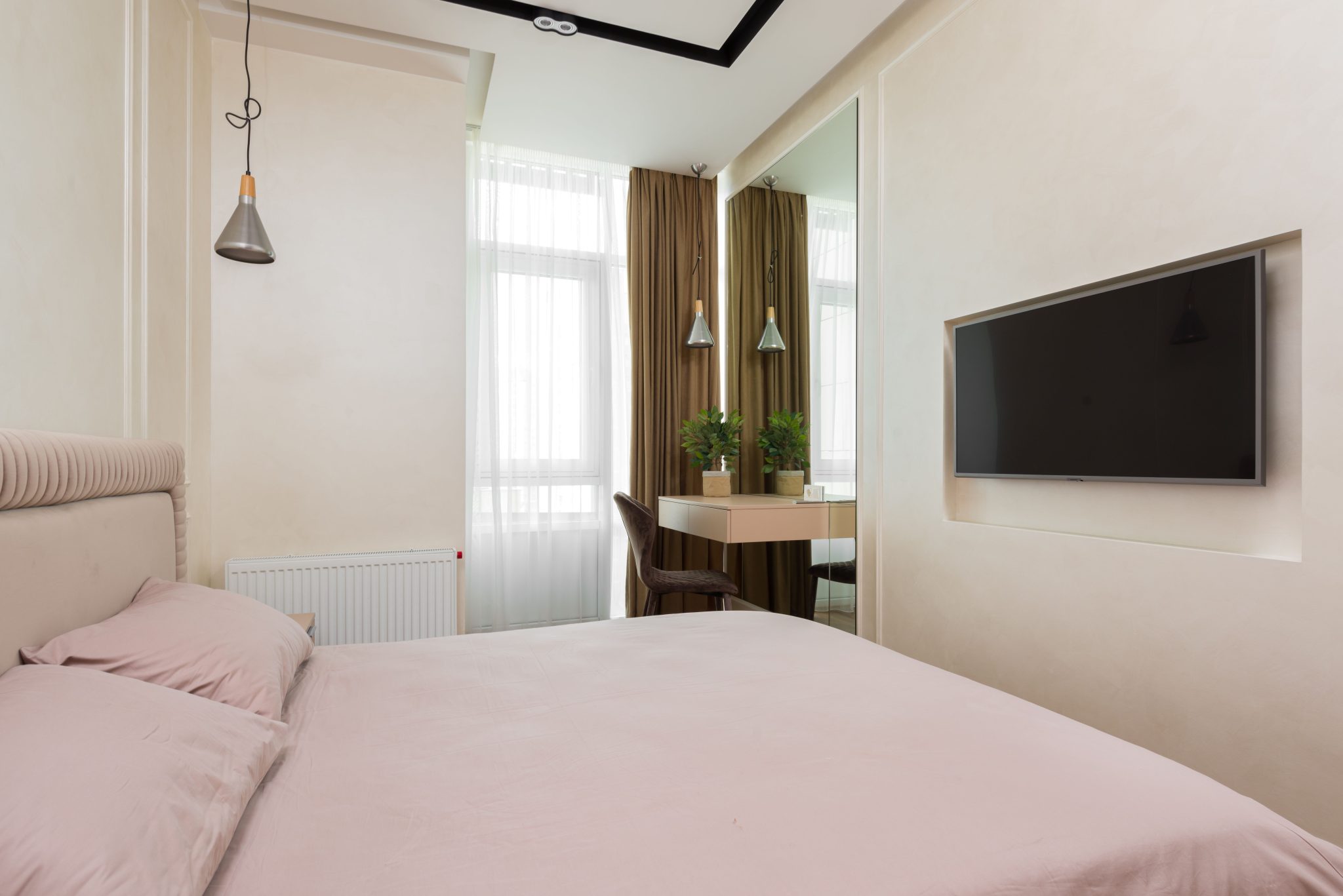
29. Recessed Bedroom TV with an Integrated Floating Vanity
This design’s success comes from its multi-functional minimalism. By recessing the TV, it becomes a non-issue, a flat plane that doesn’t protrude into the room. This allows the adjacent floating vanity to feel just as important. The floating design of the desk creates an unbroken line of sight to the floor, which is a classic trick to make a room feel larger and more airy. The shared light beige color palette for the wall, headboard, and vanity ties everything together into one serene, cohesive architectural unit rather than a collection of separate furniture pieces.
|
📋 Copy HEX 🔗 Share |
💡 Designer Tip
This integrated TV and vanity concept is exceptionally well-suited for long, narrow bedrooms. It works best on a wall that’s at least 12 feet long, allowing for a 4-foot section for the TV and an adjacent 4-5 foot section for the vanity, with some breathing room. Because the vanity is floating and the TV is recessed, it takes up very little physical and visual depth, preserving precious walkway space. This is a brilliant solution for adding a ‘get ready’ station to a primary suite without bringing in a bulky, separate piece of furniture.
Ready to Press Play on a More Stylish Space?
Finding the right way to handle your TV is about making your home work better for the way you actually live—and look beautiful while doing it. Whether you’re ready for a full-scale built-in or just a more intentional console, the perfect solution is out there. Now, go take another look at your Pinterest boards and see which of these ideas feels right for you. Your screen-free sanctuary awaits.