Still scrolling through Southwest landscaping photos on Pinterest without a clue where to actually start? It’s easy to get lost in a sea of saguaros and succulents. After filtering through hundreds of options from local nurseries to big-box home centers, we narrowed it down to the looks that truly work. In this guide, you’ll find 30 curated ideas that cover everything from modern xeriscapes to lush desert oases and rustic stone gardens. In 2026, the push for gorgeous, water-wise gardens is stronger than ever, and these designs prove you don’t have to sacrifice style for sustainability. And stay until the end — we break down the most common mistakes that can ruin these looks. 📌 Save this to Pinterest for later — you’ll want to revisit these ideas.
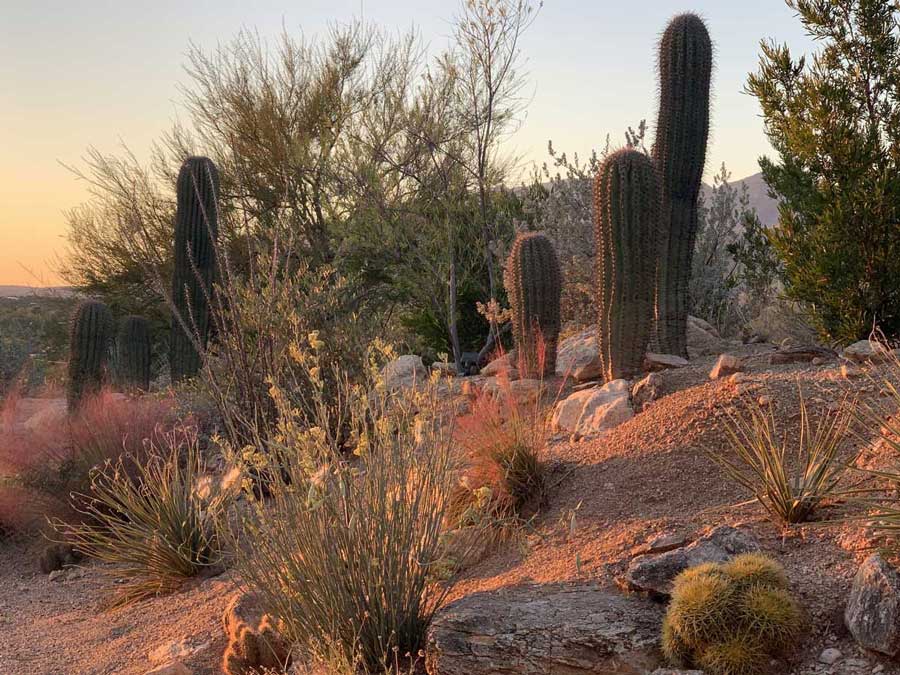
1. Golden Hour Glow in a Columnar Cactus Garden
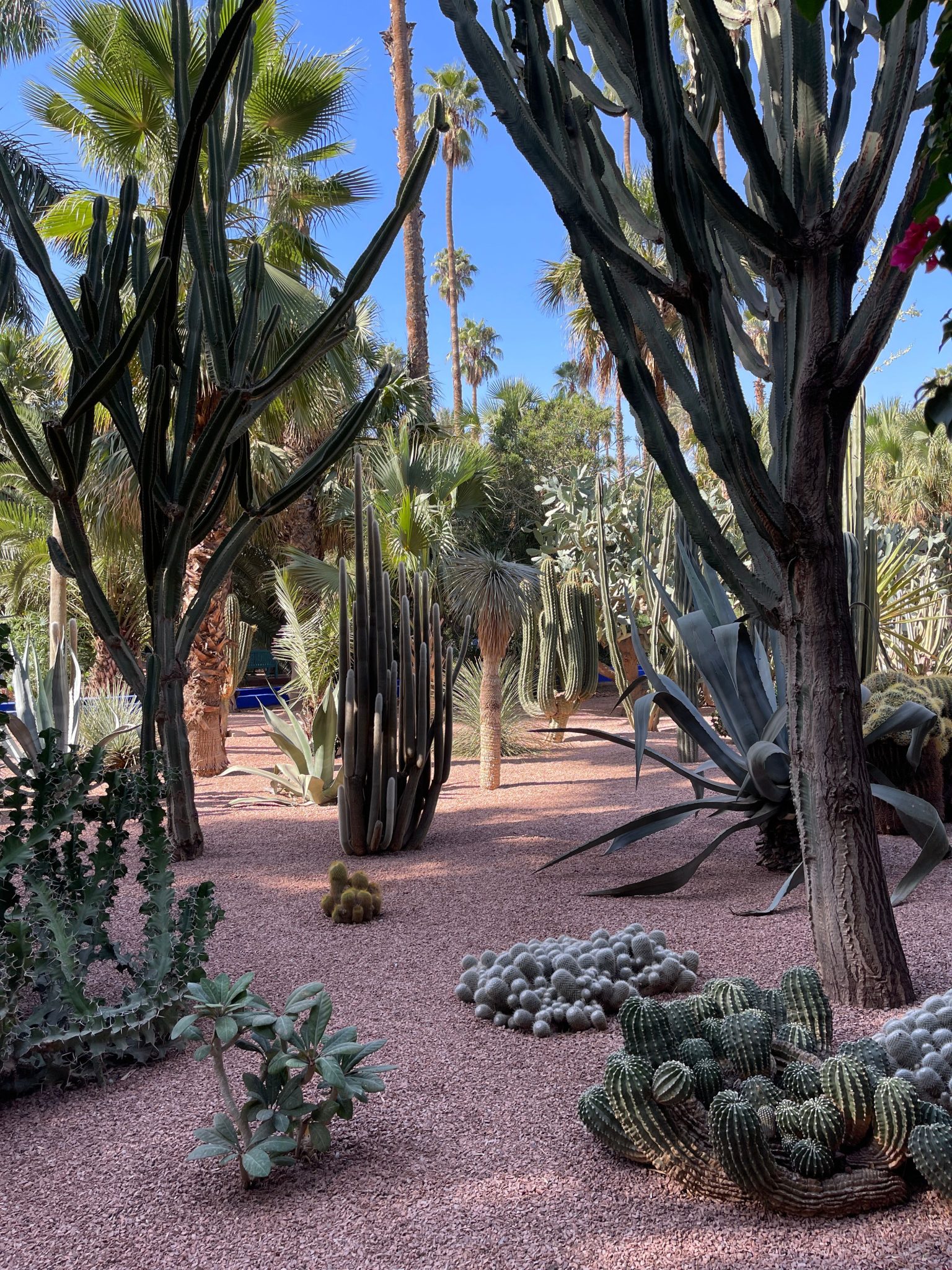
This landscape is all about texture and timing. The reason it feels so serene and magical is the interplay between the strong vertical lines of the columnar cacti and the soft, mounding shapes of the smaller shrubs. The reddish-brown gravelly soil provides a warm, monolithic base that makes the greens of the plants pop. It’s the golden hour light that pulls it all together, catching the fine spines on the cacti and casting long, soft shadows that add depth and drama to the scene.
🔧 How-To Brief
To get this glowing effect, plan your garden with the sunset in mind. Position your tallest, most textured plants (like these columnar cacti) where they will be backlit by the setting sun. For about 30-45 minutes before sunset, the low-angle light will rake across the textures, making them glow. Use a warm-toned gravel, like a crushed sienna or terracotta chip, to reflect that golden light back up into the plants and create an even warmer, more immersive atmosphere.
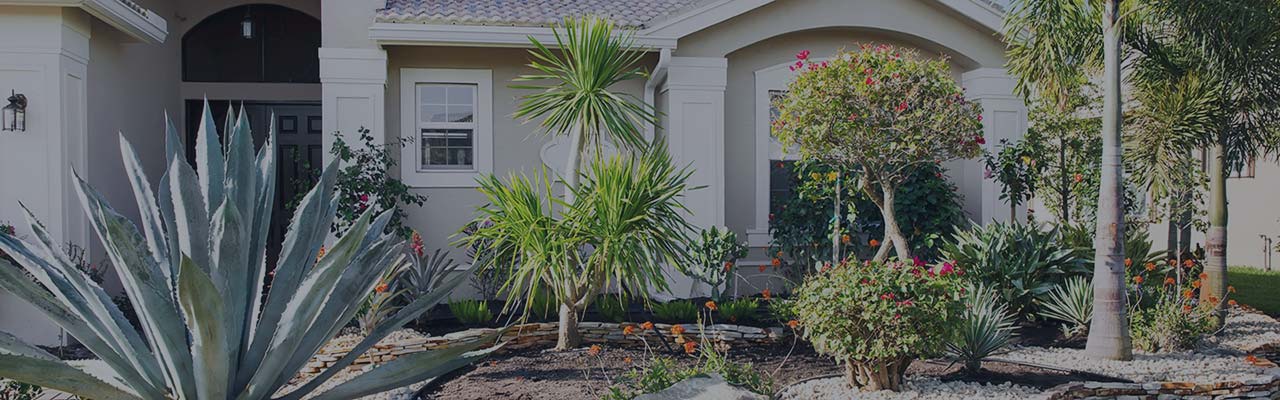
2. Lush Desert Yard with Tropical Palms and Stone Walls
Think of this look as 50% classic desert, 50% unexpected tropical. The formula relies on a base of drought-tolerant heroes like large agaves and low-water shrubs. Then, about 30% of the visual space is dedicated to lush, leafy palms that defy the arid expectation. The remaining 20% is texture and structure: low stacked stone walls to create levels, and a mix of light gravel and dark mulch to define planting zones. You could swap the palms for olive trees and the red flowers for purple sage to keep the formula but shift the color palette.
⚠️ Real Talk
A mix of desert and tropical-style plants looks stunning, but it can be a maintenance headache. Palm trees and lush flowering shrubs often require significantly more water than agaves and cacti. To make it work without a sky-high water bill, you need to set up separate irrigation zones. Group plants with similar water needs together, so you can give the thirsty ones a deep soak without drowning your succulents. This isn’t a ‘set it and forget it’ garden.
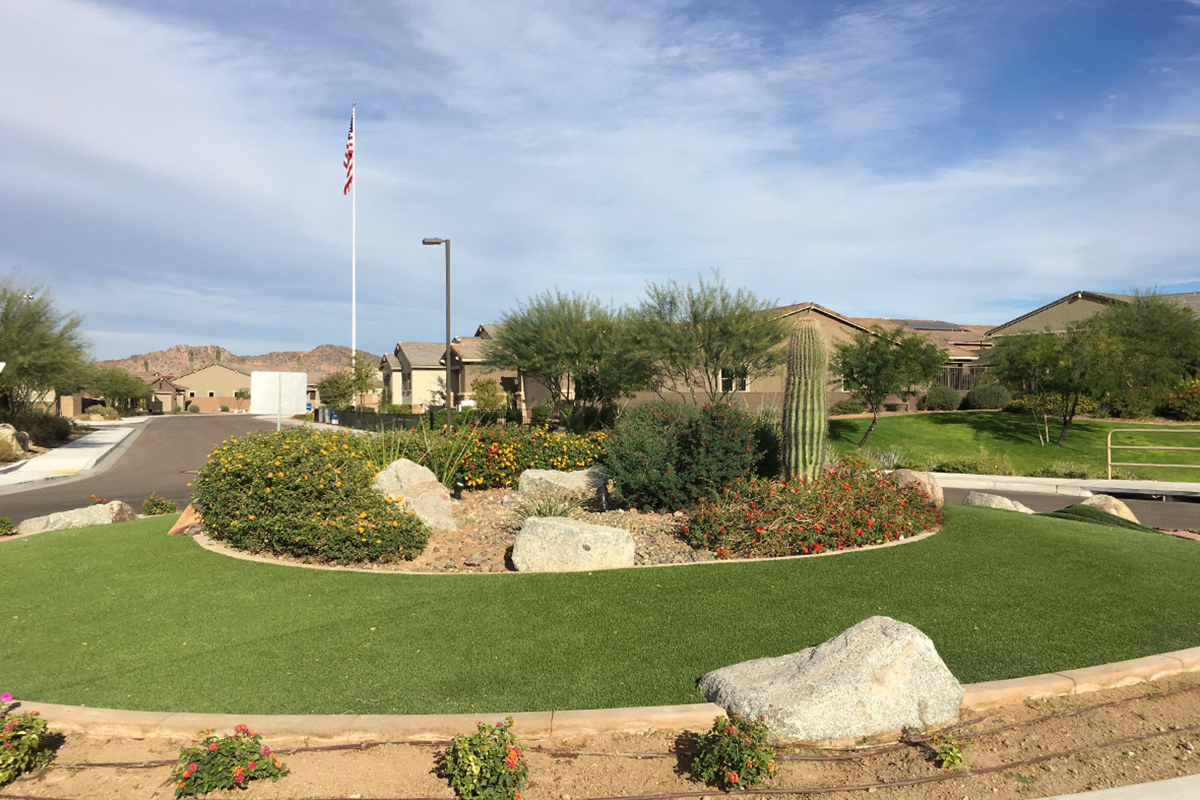
3. Manicured Desert Circle with Artificial Turf and Saguaro
Achieving this highly structured and manicured look requires some investment in materials and specimen plants.
📏 Scale Guide
- Artificial Turf: $2,000 – $4,500 (installed)
- Mature Saguaro Cactus: $1,500 – $5,000+ (depending on size and arms)
- Large Boulders: $800 – $2,000 (delivered and placed)
- Plants & Ground Cover: $1,000 – $2,500
- Concrete Curbing: $500 – $1,200
TOTAL: $5,800 – $15,200
Budget alternative: Use high-quality seed for a drought-tolerant grass ring instead of turf, choose a younger (and cheaper) saguaro, and opt for more small plants instead of large boulders to reduce costs by 40-50%.
The single element that defines this design is the vibrant green artificial turf. Remove it, and you have a standard, albeit nice, desert planting bed. The turf creates a sharp, clean frame that provides an almost surreal level of contrast against the natural textures of the boulders, saguaro, and gravel. It signals intentionality and high maintenance (even though it’s low maintenance), transforming the space from a simple garden into a deliberate, graphic landscape feature.
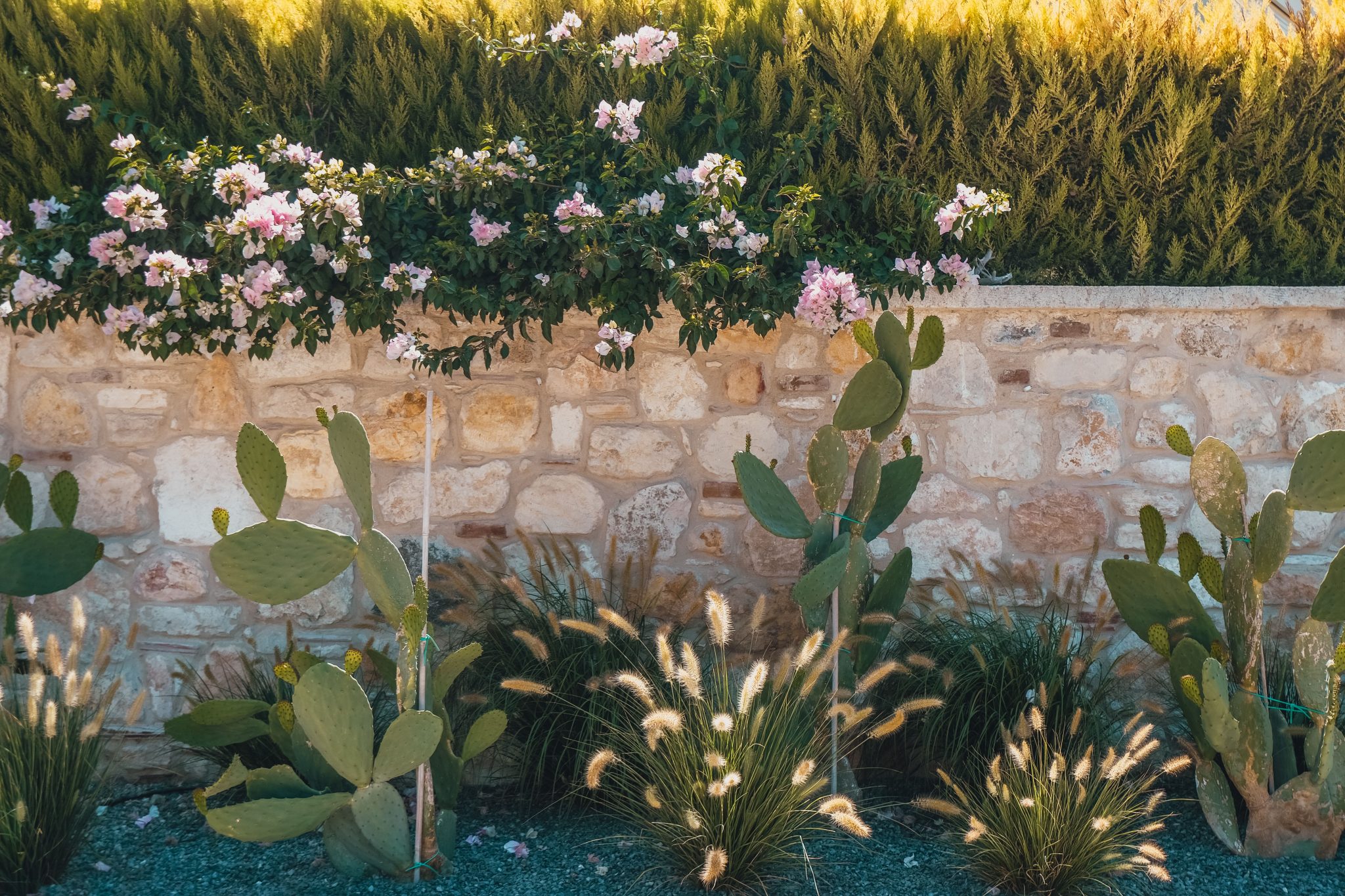
4. Clean Lines Meet Cacti in a Modern Southwest Garden
This modern, minimalist approach works best in small to medium-sized yards, from 400 to 1,500 square feet, where clean lines won’t get lost. The key is a clear geometry, so it’s perfect for courtyards or front yards with defined boundaries. You need a ceiling height equivalent of open sky, but a single-story home facade helps keep the focus on the horizontal planes. The low-profile plants and simple stone wall make it a great choice for spaces where you don’t want to block a view. Contrast this with the sprawling, expansive feel of Idea #9.
📐 Style Math
You can capture this modern vibe for under $1,000. Instead of a custom-built stone wall, look for modular concrete retaining wall blocks from a big-box store ($150-$300). For the cacti, start with smaller specimens from a local nursery; they’ll grow. The biggest savings is on ground cover. A few bags of dark grey gravel ($100-$200) can cover a small area effectively. Fill in with a few striking, but less expensive, agave or yucca plants ($50-$100 each) instead of a pricey, mature cactus.
5. Classic Desert Garden with a Riot of Cacti and Succulents
Want to create a dense, natural-looking succulent patch? Here’s how to do it right. (Time: 2-3 hours; Cost: $150-$400)
⭐ The One Thing
- Clear and level your chosen area, ensuring it gets at least 6 hours of direct sun.
- Amend the native soil with a 50/50 mix of sand and compost to create the fast-draining soil succulents need.
- Arrange your largest plants first (like barrel cacti or large agaves) to act as anchors. Don’t center them! Place them off-kilter.
- Fill in around the anchors with medium-sized succulents, creating visual clusters or ‘families’ of 3 or 5.
- Tuck in the smallest groundcover succulents and sedums last, allowing them to spill over rocks or edges.
- Top dress the entire bed with 1-2 inches of decorative gravel or decomposed granite.
A vibrant, packed garden like this looks incredible but isn’t zero-maintenance. Weeds are the number one enemy. They love to pop up in the gaps between plants and gravel. Plan on spending an hour every 2-3 weeks on your hands and knees pulling them out, especially after it rains. Using a pre-emergent herbicide in the spring can help, but manual weeding is inevitable. Also, some succulents grow faster than others and will need to be thinned or pruned annually to prevent overcrowding.
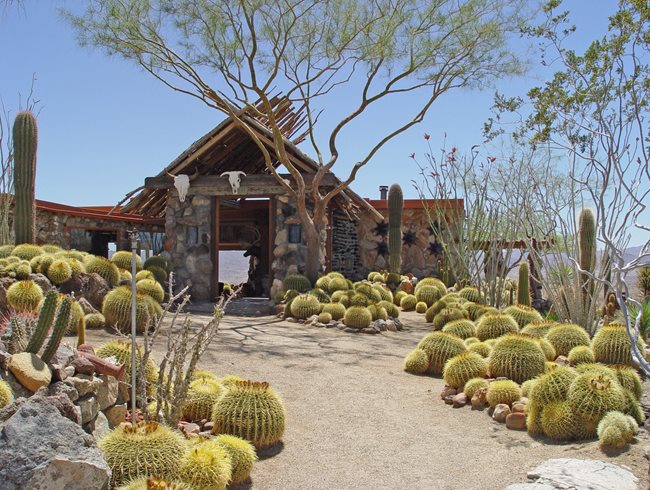
6. Rustic Stone Cabin with a Golden Barrel Cactus Grove
This scene feels authentic and timeless because of its commitment to a limited, rugged palette. The design works by repeating colors and textures. The warm browns of the dirt path echo the wood beams on the cabin, while the grey tones in the stone walls are picked up by the taller columnar cacti. The real star is the repetition of the golden barrel cacti. Planting them in a large, informal group creates a massive visual impact that feels more natural than a few scattered specimens would. It’s a powerful lesson in mass planting.
💰 Budget Breakdown
Before you commit to this rugged, rustic look, run through this quick checklist:
- Does your home’s architecture support a rustic stone look? This works best with cabins, ranch-style, or adobe homes.
- Do you have enough space for plants to mature? A grove of barrel cacti needs a significant footprint. Measure the mature spread, not the nursery pot size.
- Is the area you’ve chosen truly full-sun? Most of these cacti need at least 6-8 hours of direct, unfiltered sunlight to thrive.
- Is your soil appropriate? Heavy clay soil will kill desert plants. You must have or create sandy, well-draining soil.
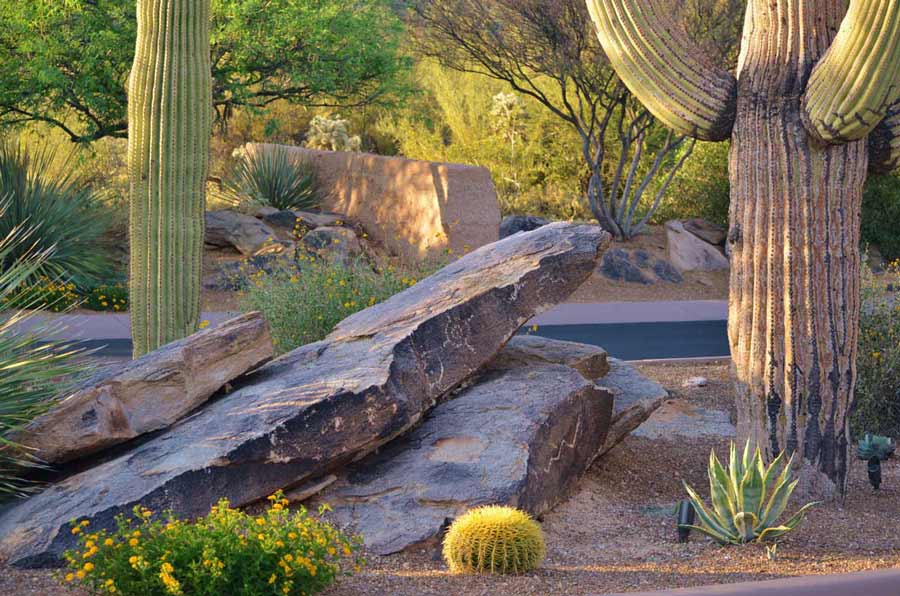
7. Dramatic Saguaro and Boulder Composition
When placing large boulders, think like a sculptor. Bury at least one-third of each boulder below ground level. This tiny trick makes them look like they’ve been there forever, emerging naturally from the earth, rather than just dropped on the surface. For a grouping of three, use a large, a medium, and a small boulder, and orient their longest faces or most interesting textures toward the primary viewing angle, just like you would with furniture in a living room.
💡 Designer Tip
The formula here is about dramatic scale: 60% open space + 30% massive focal points + 10% filler. The open space is the sandy gravel ground, which gives the eye a place to rest. The focal points are the towering saguaros and the huge, angular boulders. Their sheer size creates instant drama. The final 10% comes from smaller barrel cacti, agaves, and flowering shrubs that connect the large elements and add color without competing for attention. It’s a high-contrast recipe that always delivers.
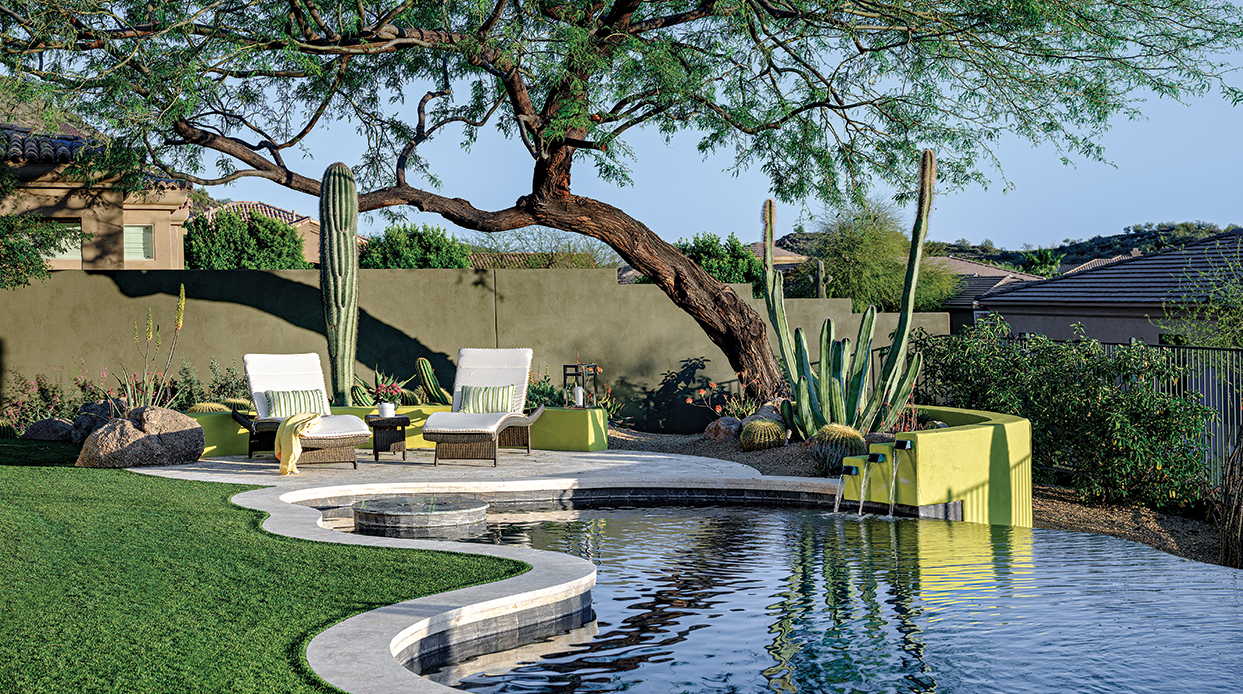
8. Poolside Oasis with Wicker Loungers and Cacti
Planting cacti, especially saguaros, right next to a high-traffic pool area can be tricky. While it looks amazing, remember that cactus spines are no joke. Be sure to plant them far enough from the pool’s edge and pathways that a stray beach towel or an excited kid won’t result in a painful encounter. A 3-foot buffer is a good minimum. Also, that large shade tree will drop leaves and debris into your pool, so plan on more frequent skimming and cleaning.
🎯 What Makes It Work
The chartreuse green water feature is the unexpected element that electrifies this entire space. Without it, you have a lovely, but fairly standard, desert poolside. That shot of acidic, almost-neon green injects a dose of modern energy and playful color that contrasts sharply with the earthy tones of the stucco and the deep greens of the cacti. It’s a bold, confident choice that announces this isn’t just any backyard—it’s a designed, curated oasis.
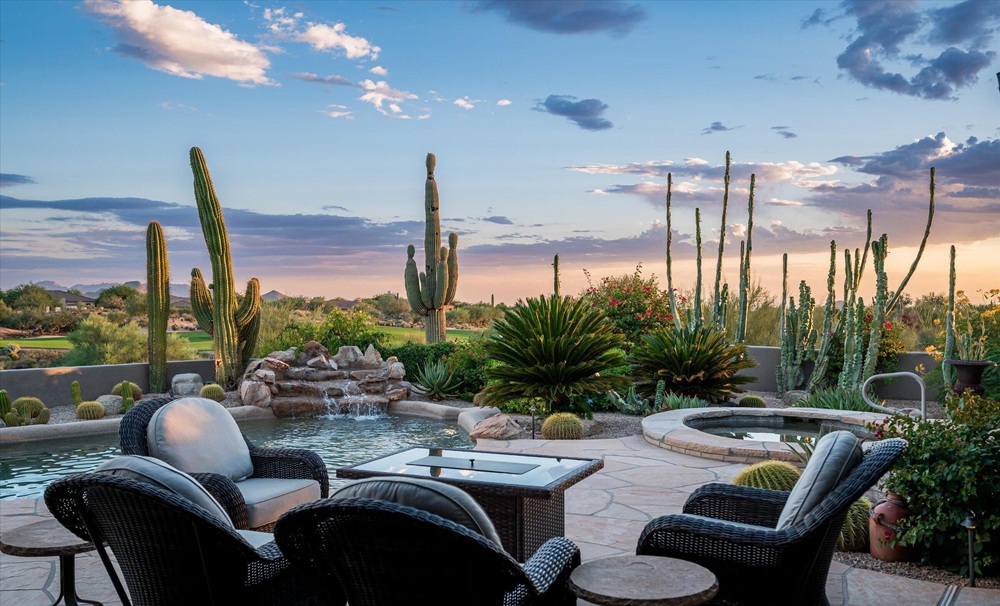
9. Expansive Flagstone Patio with Pool and Sunset Views
This isn’t just a backyard; it’s a ‘resimercial’ space—a blend of residential comfort and commercial resort luxury. This trend has exploded as homeowners want their outdoor spaces to feel like a vacation destination. The extensive flagstone, integrated hot tub, natural rock waterfall, and multiple seating zones are all hallmarks of high-end hotel design. It’s about creating an experience, not just a patio, and it has incredible staying power because it directly enhances lifestyle.
✅ Before You Start
This look requires one thing above all else: space. You’re looking at a minimum of 2,000-3,000 square feet of usable outdoor area to accommodate the large pool, extensive patio, and generous planting beds without feeling cramped. A wide, open view of a golf course or distant mountains is a huge bonus, as the design is meant to frame the vista. This is the antithesis of a small-space solution; for a more contained but equally lush feel, check out the design in Idea #26.
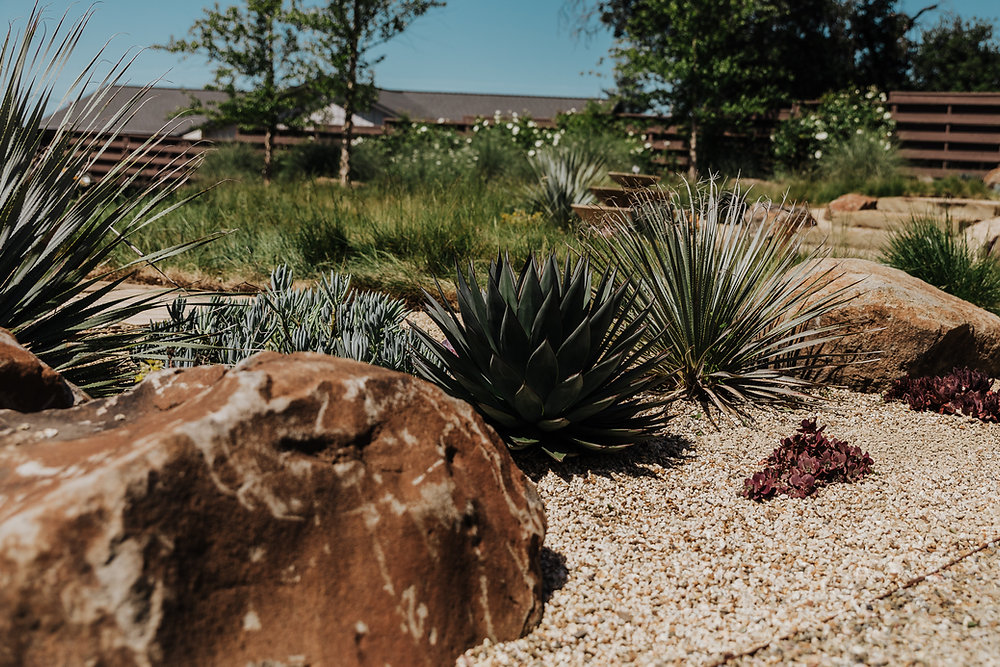
10. Xeriscape with Beige Gravel and Reddish-Brown Boulders
This entire look is a masterclass in getting a high-impact design on a reasonable budget. The key players—gravel and boulders—are relatively inexpensive materials, especially if you can source them locally. A ton of beige gravel might run you $50-$100, and you can often find great character boulders at a local stone yard for $100-$300 each. The plants are the main variable, but starting with smaller yuccas and agaves from a place like Lowe’s or Home Depot keeps costs down. This is essentially the budget-friendly version of the grand display in Idea #9.
🧹 Maintenance Reality
The success of this simple design hinges on color harmony and texture contrast. The light beige gravel acts as a bright, neutral canvas. The large, reddish-brown boulders provide a warm, earthy contrast and anchor the space with their immense visual weight. Then, the plants are layered in for pops of color and texture: the deep green of the agave, the spiky blue-green of the yucca, and the surprising reddish-purple of the groundcover. It’s a simple, foolproof palette that feels both natural and deliberate.
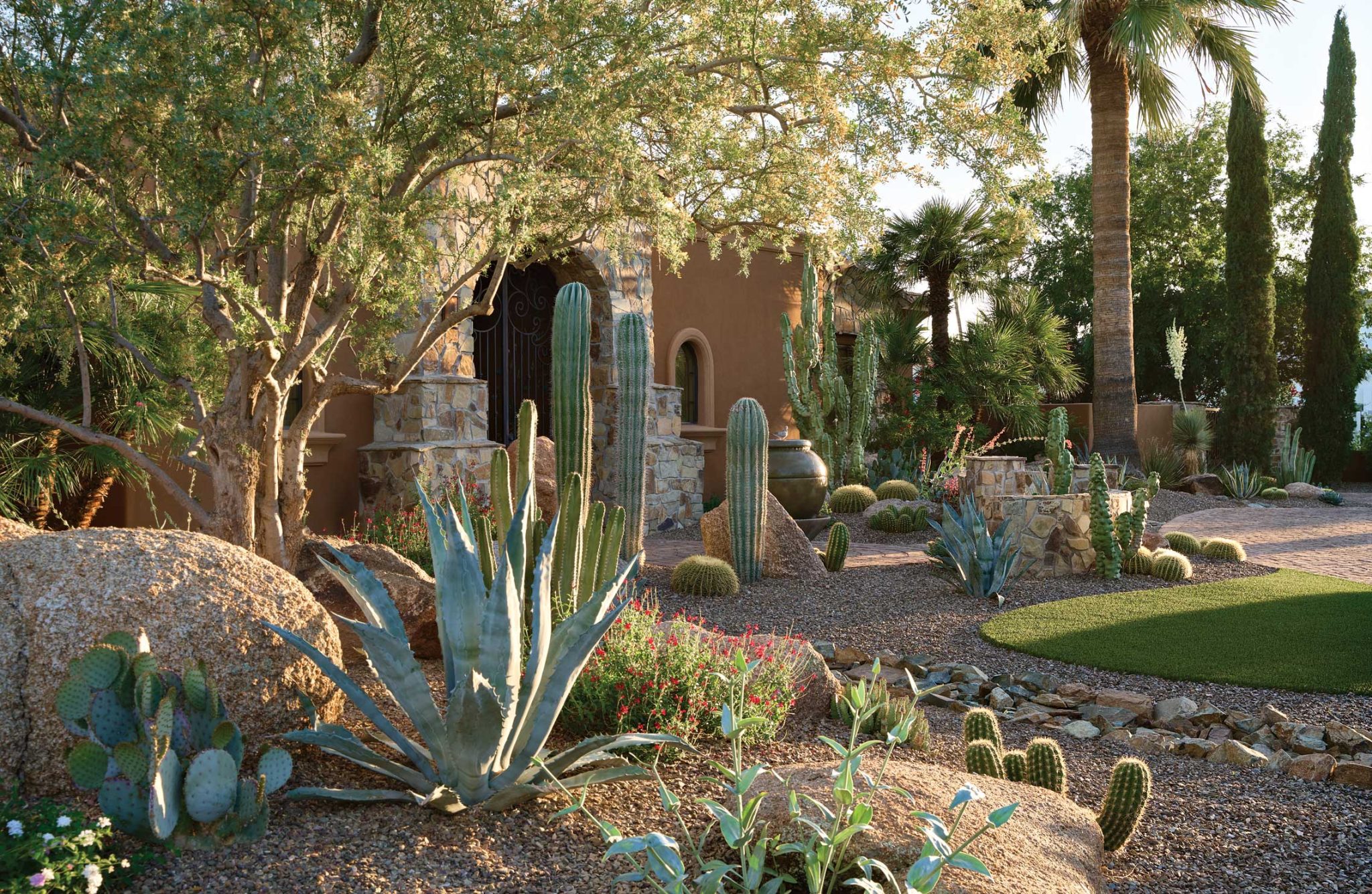
11. Lush Southwestern Garden with Putting Green and Agaves
An artificial putting green is low-maintenance, but not *no*-maintenance. To keep it looking pristine, you’ll need to use a leaf blower regularly to remove debris, especially with so many surrounding trees and plants. Depending on your climate, you may also need to periodically rinse it with a hose to wash away dust. Most importantly, you have to be vigilant about preventing sharp objects, like fallen branches or stones from the adjacent gravel beds, from damaging the turf surface.
💸 Get This Look For Less
When mixing multiple types of ground cover, like the different gravels and artificial turf here, a defined edge is your best friend. Use a rigid, low-profile landscape edging made of steel or heavy-duty plastic to create a clean, intentional line between materials. This prevents the gravel from migrating into the turf and the mulch from washing into the rock beds. For a nearly invisible look, install the edging so the top lip sits just below the level of the gravel, making the separation look effortlessly crisp.
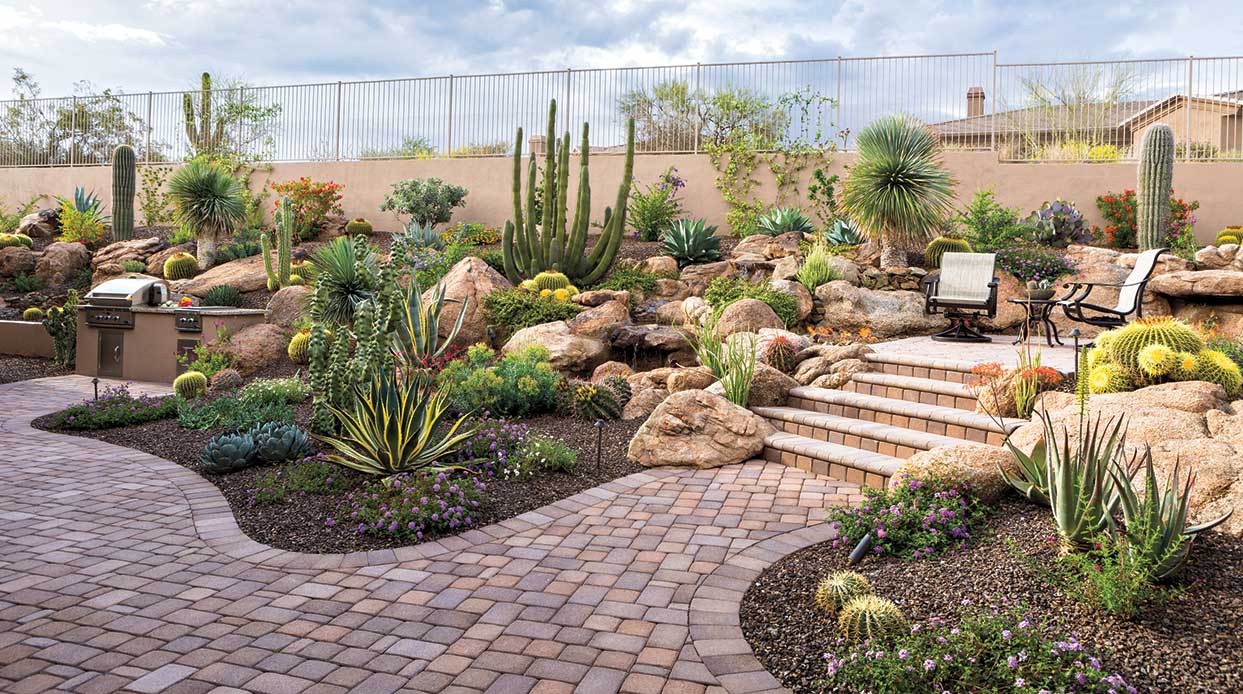
12. Terraced Desert Landscape with Winding Paver Path
A small rock waterfall can be a weekend project. Here’s a quick guide. (Time: 1 day; Cost: $300-$700)
🔥 Trending Context
- Dig a basin for the reservoir and place a pond liner in it. This is where the pump will live.
- Stack your flattest rocks to create the waterfall spillway, using a slightly sloped formation. Use pond foam sealant between rocks to direct the water flow forward.
- Run flexible tubing from the submersible pump in the basin up to the top of your waterfall, hiding it behind the rocks.
- Fill the basin around the pump with larger river stones to hide the liner and create a natural-looking pool.
- Fill the reservoir with water, plug in your pump, and adjust the rock placement to get the sound and look you want.
Recreating this multi-level look involves significant labor and materials, especially for the hardscaping.
- Paver Walkways & Steps: $4,000 – $9,000 (installed)
- Large Boulders & Tiering: $2,500 – $6,000 (includes placement)
- Plantings (Cacti & Succulents): $1,500 – $3,500
- Outdoor Kitchen & Grill Station: $3,000 – $10,000+
- Rock Waterfall Feature: $1,000 – $2,500
TOTAL: $12,000 – $31,000
Budget alternative: Create a similar tiered effect using more affordable timber retaining walls instead of boulders. Opt for a simple gravel path instead of pavers and start with smaller, less mature plants to cut the total cost by up to 60%.
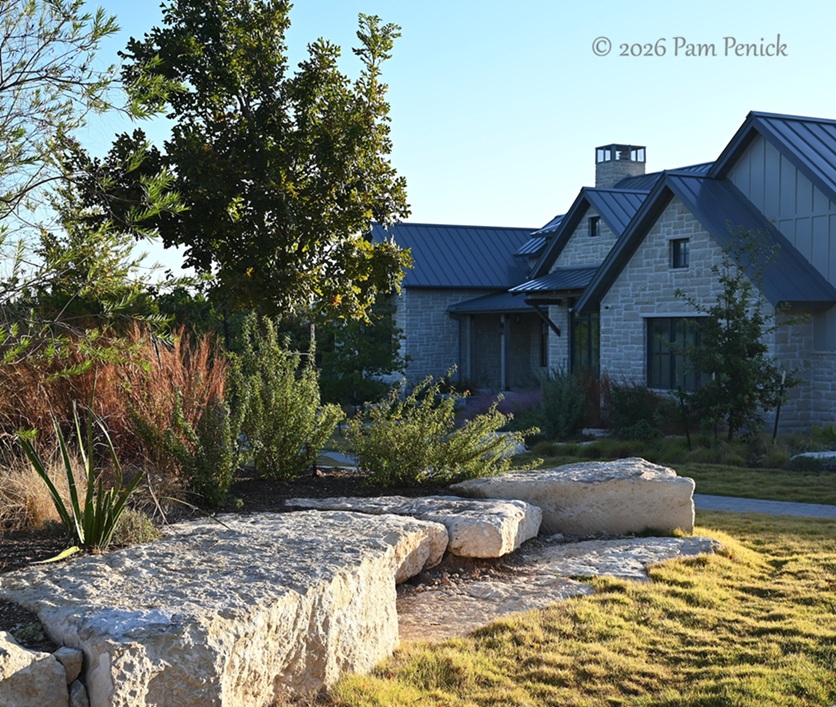
13. Modern Stone House with Large Boulders and Ornamental Grass
This look is a dialogue between modern architecture and naturalistic planting. The formula is about 40% hardscape (the stone house facade), 30% large-scale natural elements (the boulders), and 30% soft, textural plants (the grasses and shrubs). The key is the contrast. The clean, repeating lines of the house are softened by the random, organic shapes of the boulders and the wispy movement of the reddish-brown grasses. The color palette is strictly controlled: beige, grey, brown, and green, creating a sophisticated and cohesive feel.
🔧 How-To Brief
The single element that bridges the gap between the modern house and the wild-looking landscape is the tall, reddish-brown ornamental grass. It has the softness and movement of a natural plant, but its upright, vertical form subtly echoes the lines of the building. Its warm, rusty color provides a beautiful contrast to the cool grey roof and light beige stone, pulling the whole composition together. Without it, the boulders might feel disconnected from the house.
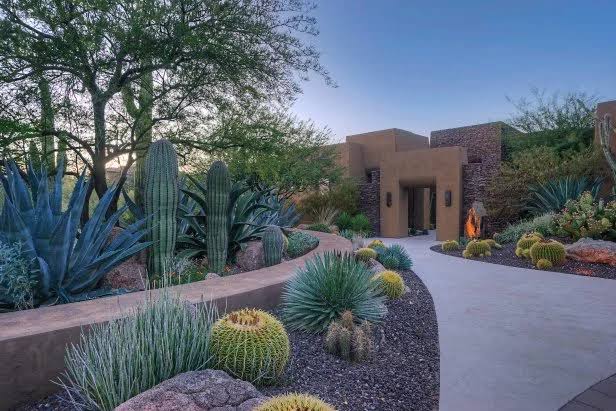
14. Winding Gravel Path Through an Arid Succulent Garden
A gravel path looks beautifully rustic, but it’s not the most practical surface for every situation. It can be difficult to walk on in anything other than flat shoes, and it’s a nightmare for rolling anything with wheels, like a trash can or a stroller. It also requires regular raking to keep it smooth and weeding to keep it clean. Before committing, really think about how you will use the path. If it’s a primary walkway, you might be happier with flagstone steppers set in the gravel for a more stable footing.
⚠️ Real Talk
digging, check these boxes:
- Soil Drainage Test: Dig a 1-foot-deep hole, fill it with water, and let it drain. Fill it again and time how long it takes to drain. If it takes more than 4-5 hours, your soil has poor drainage and you’ll need to amend it heavily for succulents to survive.
- Sun Mapping: Spend a day tracking the sun across your yard. Mark where the full sun (6+ hours), partial sun, and shady spots are. Place your plants accordingly.
- Local Sourcing: Check local stone yards and nurseries first. You’ll save a fortune on shipping for heavy materials like boulders and gravel, and the plants will already be acclimated to your area.
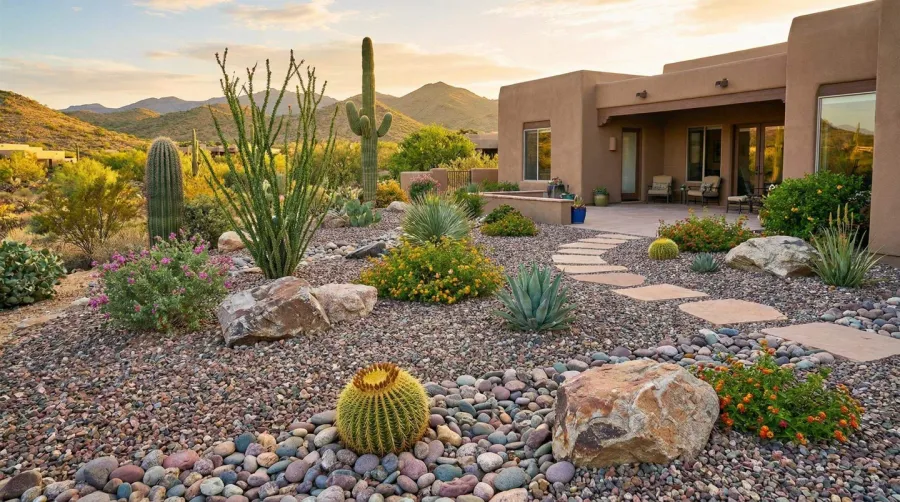
15. Xeriscape Garden with Flagstone Path and Adobe Home
You don’t need a mature saguaro to get this classic look. Start with a smaller golden barrel cactus ($40 from a nursery) as your focal point. Instead of buying expensive flagstone, check Facebook Marketplace or Craigslist for people giving away leftover patio stone for free. The ground cover is the real budget saver: decomposed granite or mixed gravel is very affordable, often under $100 for enough to cover a large area. Fill in with smaller, fast-spreading succulents and you can achieve this vibe for under $500.
📏 Scale Guide
This landscape feels so cohesive because every element shares the same warm, sun-baked DNA. The sandy tones of the flagstone path perfectly complement the warm beige of the adobe-style house. The mixed gravel ground cover includes tones of brown and gray that tie into both the house and the stones. Even the plants, like the saguaro and barrel cactus, have a dusty green hue that fits right in. It’s a masterclass in using a tight, analogous color scheme to create a harmonious and serene environment.
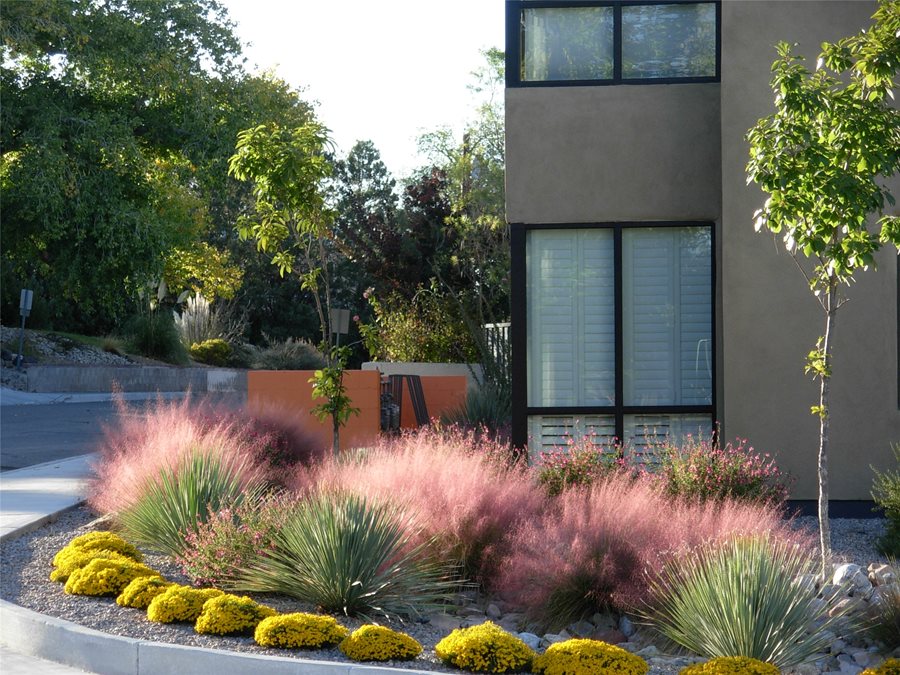
16. Modern Landscape with Feathery Pink Grass and Yellow Flowers
To get this bold, graphic look, plant in large, single-species masses. Instead of dotting one pink grass here and one yellow flower there, dedicate a significant area to just the pink muhly grass. Then, create a thick, uninterrupted border of just the yellow flowers. This technique, called ‘massing’ or ‘drifting’, creates a much stronger visual impact than a mix-and-match planting style. Aim for drifts of at least 5-7 of the same plant for smaller perennials, and 3-5 for larger grasses.
📐 Style Math
This high-contrast, modern style is incredibly versatile. It works wonderfully for narrow planting beds along a driveway or foundation, as shown here, where the bed might only be 3-5 feet deep. Because it relies on blocks of color, it also scales up beautifully for larger commercial spaces or expansive front yards. The key is maintaining the ratio of the color blocks. For a bigger space, you’d simply have a much larger mass of pink grass, not just more scattered clumps. The spiky green yuccas serve as punctuation and should be used more sparingly. Compare the color blocking here to the similar palette in Idea #23.
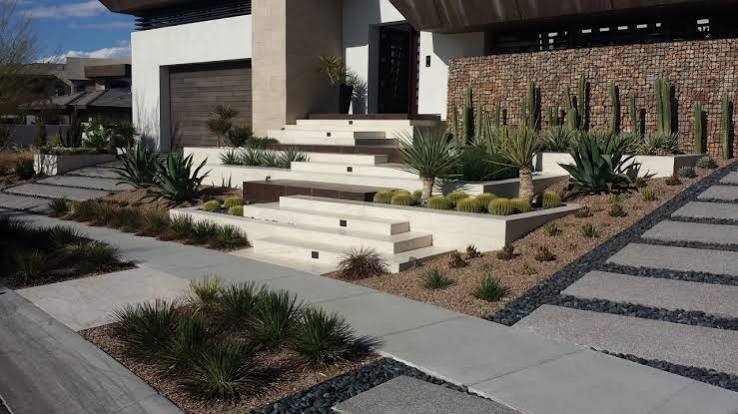
17. Low Stacked Stone Wall in a Xeriscape Garden
The low, dry-stacked stone wall is the single element that elevates this from a simple gravel bed to a structured garden. It provides a crucial sense of enclosure and intentionality. The wall creates a clean edge, defines the garden space, and introduces a layer of rustic texture that contrasts beautifully with both the fine gravel and the smooth leaves of the succulents. Even at a low height, it gives the entire landscape a finished, professional quality.
⭐ The One Thing
This rustic look follows a simple textural formula: 50% fine texture (the light gravel), 30% chunky texture (the stacked stone and large boulders), and 20% living texture (the assorted cacti and succulents). The balance is key. Too much gravel and it looks empty; too much rock and it looks harsh. The plants are the final layer that softens the hardscape and brings the whole thing to life. You can swap the tan stacked stone for a cooler grey slate to achieve a more modern, but equally balanced, composition.
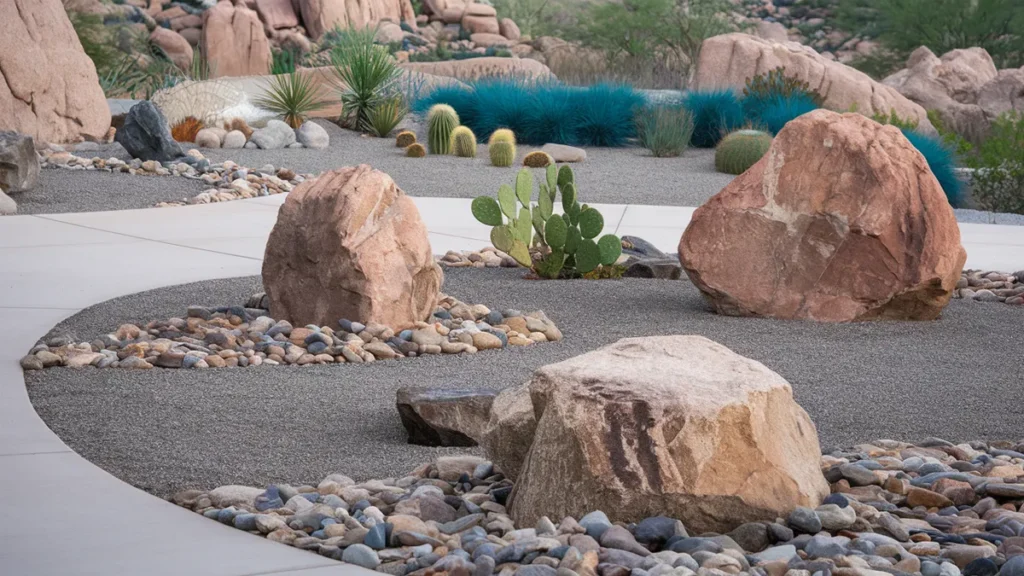
18. Xeriscape with Red Boulders, Grey Gravel, and Teal Grass
Here’s how to place boulders for a natural look. (Time: 2 Hours; Cost: $200-$800+ for boulders)
💰 Budget Breakdown
- Choose boulders of varying sizes—a large ‘mother’ stone, a medium ‘child’, and a smaller ‘grandchild’. Odd numbers always look more natural.
- Decide on the main viewing direction. This is where you want the most interesting faces of your rocks to point.
- Dig shallow depressions for each boulder. Burying even just the bottom quarter of the rock makes it look anchored.
- Place the largest boulder first. Then, nestle the medium and small boulders nearby, slightly overlapping, as if they broke off the main one.
- Tilt the boulders slightly. Perfectly level rocks look unnatural. A slight angle gives a sense of movement and history.
- Backfill soil around the base and then cover with your gravel or mulch.
That vibrant teal-blue grass looks incredible, but be aware that many ornamental grasses with intense, unnatural colors are either short-lived perennials or annuals in many climates. They might look amazing for one or two seasons and then need to be replaced. Before you fall in love, check the plant tag. Is it a true perennial for your zone? Or is it being sold as a novelty color that won’t return next year? It’s a fantastic accent, but be prepared for the potential replacement cost to maintain that specific pop of color.
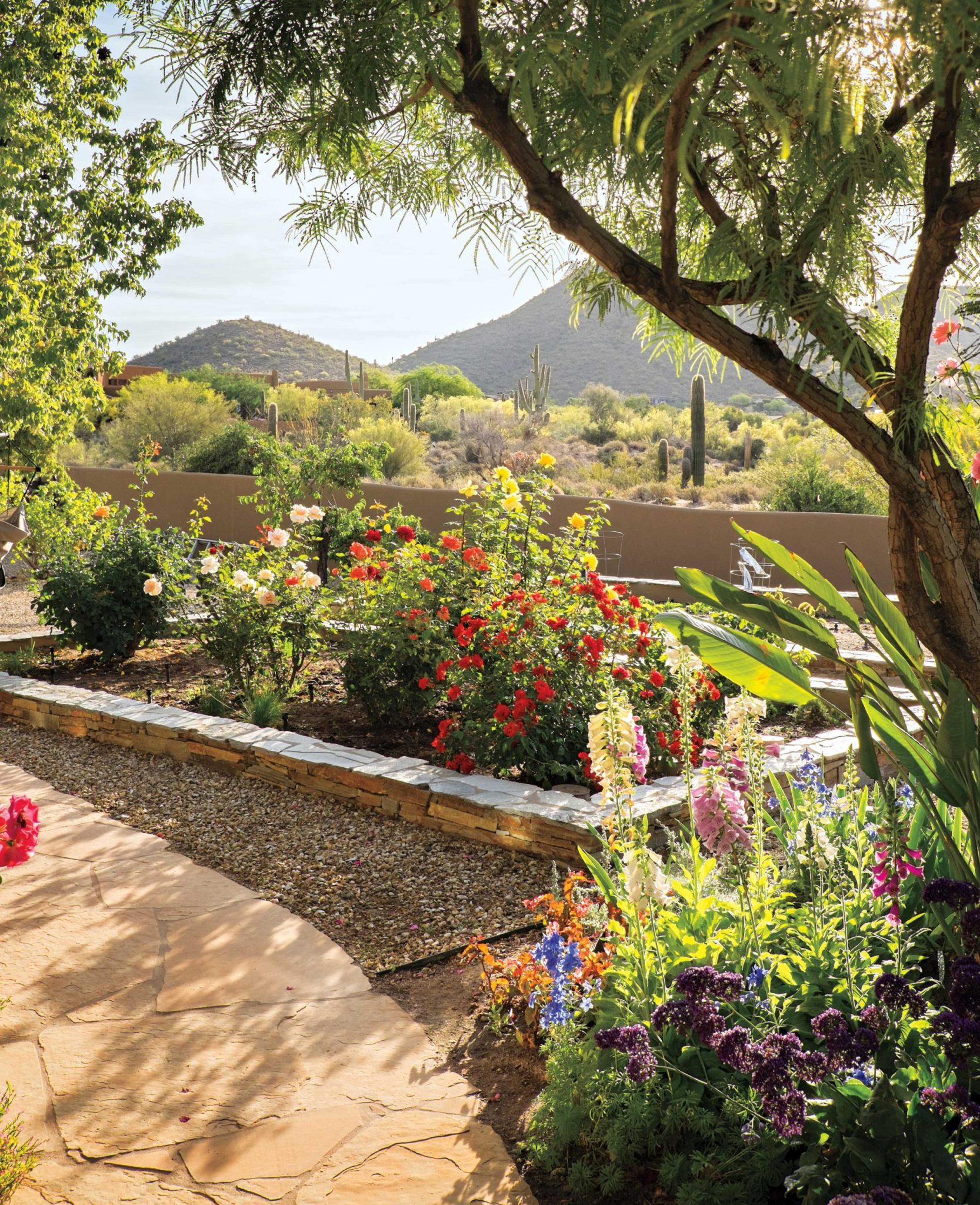
19. Vibrant Southwest Garden with Flagstone Path and Mountain View
This garden feels so lush and alive because it masters the art of ‘borrowed scenery’. The low, warm-toned wall doesn’t block the view—it frames it. The distant saguaros and mountains become part of this garden’s design. In the foreground, the overflowing, colorful flowers in the raised beds create a vibrant, concentrated dose of life that contrasts with the more muted tones of the natural desert beyond. The irregular flagstone path adds to the organic, informal feeling, inviting you to meander through the space.
💡 Designer Tip
This style, often called a ‘desert oasis’ or ‘high-desert cottage’ garden, is a direct response to the minimalism of pure xeriscaping. Homeowners are craving color and life, but still need to be water-wise. This hybrid approach is the answer. It uses classic drought-tolerant structures like gravel and stone walls but packs contained areas—like these raised beds—with a riot of colorful, low-water perennials. It’s the perfect compromise for people who love the look of an English garden but live in an arid climate.
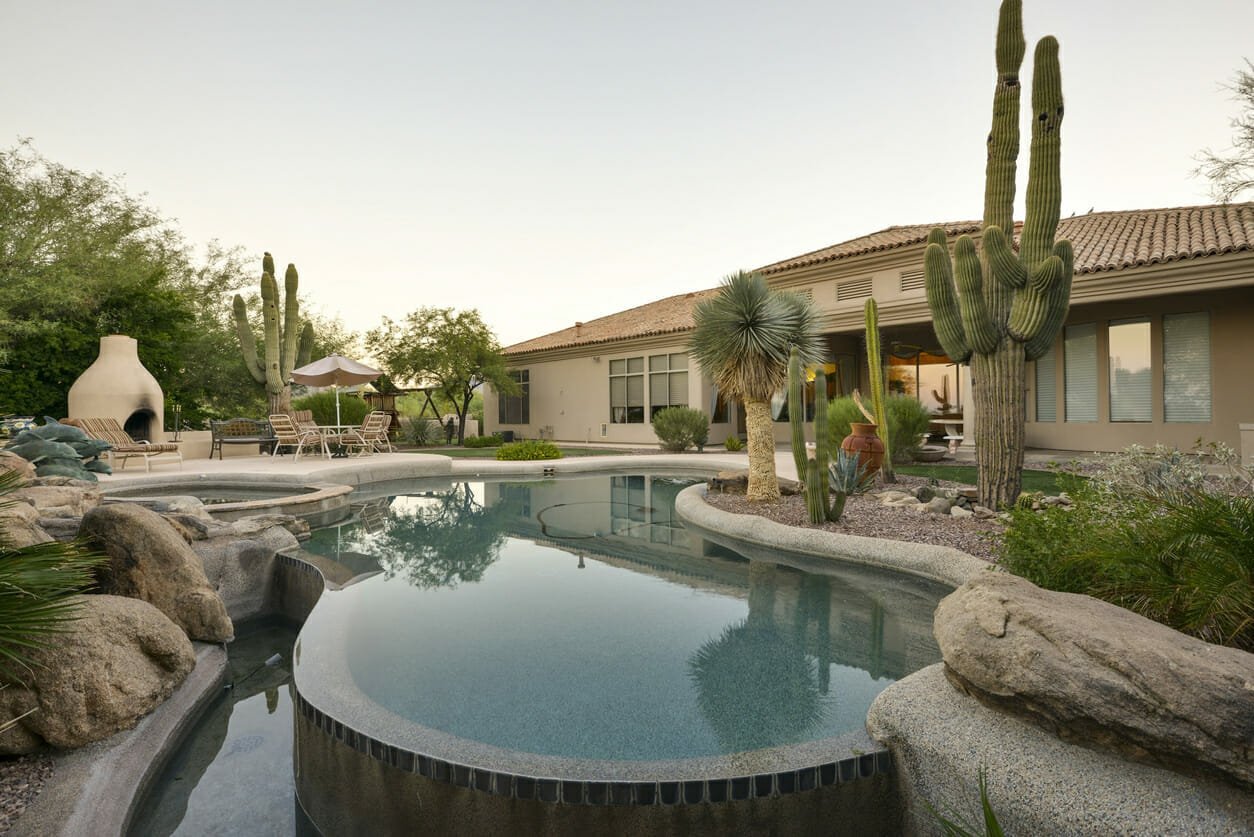
20. Poolside Oasis with Saguaros and Terracotta Roof
Creating a poolside desert oasis with mature plants is a significant investment.
🎯 What Makes It Work
- Irregular Shaped Pool & Spa: $60,000 – $120,000+
- Mature Saguaro Cacti: $2,000 – $7,000 each (transplanted)
- Natural Rock Formations: $5,000 – $15,000 (for delivery and artistic placement)
- Adobe-style Outdoor Oven: $1,500 – $4,000
- Other Plantings & Gravel: $2,000 – $5,000
TOTAL: $70,500 – $151,000+
Budget alternative: Start with a much smaller, pre-fabricated fiberglass pool. Use smaller, locally sourced boulders and plant younger, more affordable cacti like barrel or prickly pear. Build a simple fire pit instead of a custom oven. This can bring the spirit of the look into a more accessible $15,000 – $25,000 range.
Natural rock formations around a pool look spectacular but can make cleaning more difficult. Algae loves to grow in the nooks and crannies of the rocks at the waterline, requiring more frequent hand-scrubbing than a simple tiled edge. Also, the gravel and dirt from the surrounding landscape beds will inevitably find their way into the pool, meaning your pool filter will work harder and you’ll likely need to use a robotic pool cleaner more often. This is a high-beauty, high-upkeep choice.
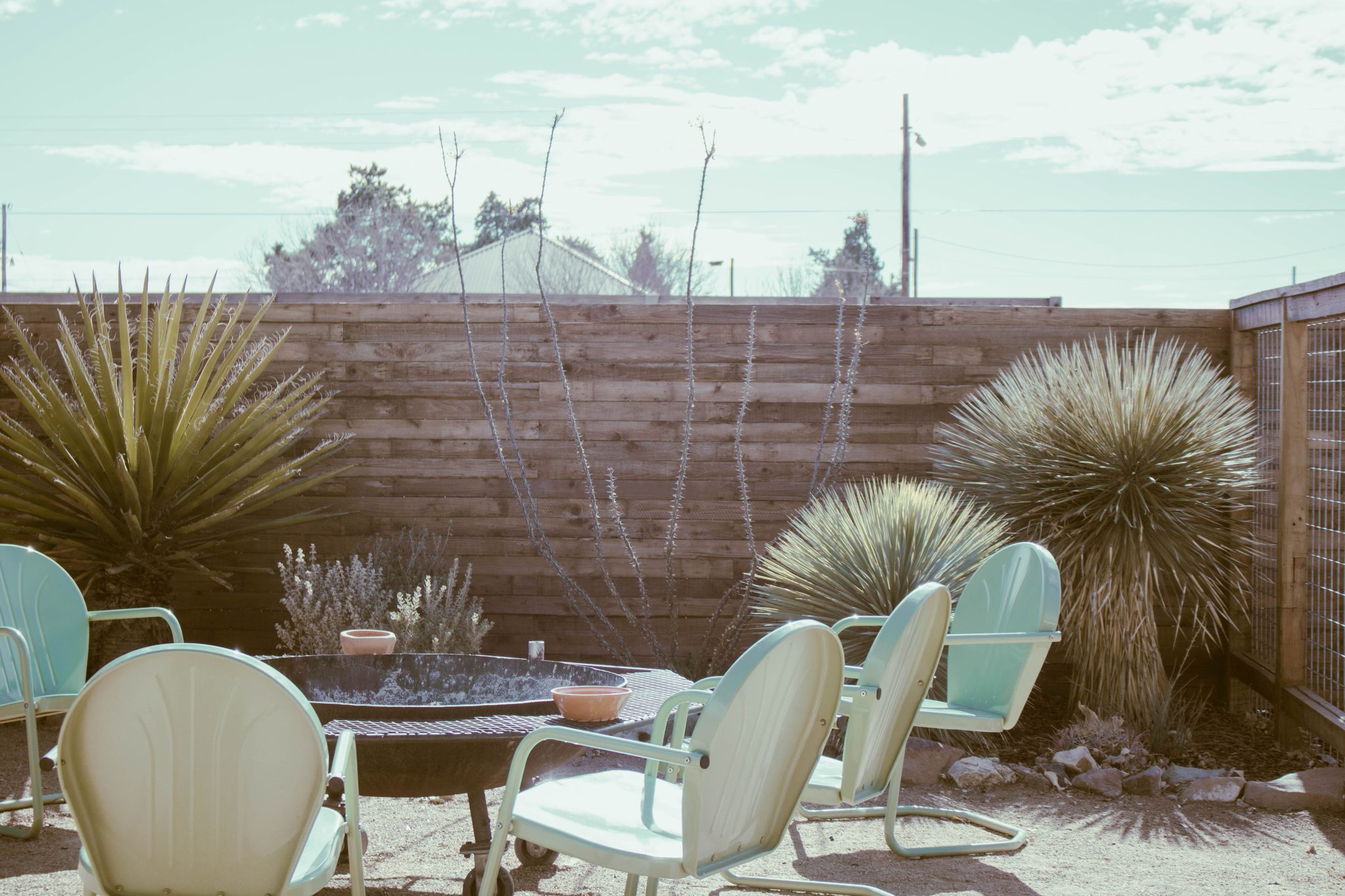
21. Mint Green Chairs Around a Rustic Fire Pit
This entire vibe is incredibly achievable on a tight budget. The key is thriftiness. You can find similar vintage-style metal chairs at flea markets or on Facebook Marketplace for $20-$50 each. A can of mint green spray paint ($8) will unify them. A simple, sturdy metal fire pit from Target or Walmart costs between $80 and $200. The most expensive part might be the ocotillo stalks and yucca plants, but even those can be found at reasonable prices at a local nursery. Cover the ground in affordable pea gravel, and you’ve got this look for under $400.
✅ Before You Start
The secret to making a collection of mismatched, vintage, or budget-friendly chairs look intentional is to paint them all the exact same color and finish. The mint green here turns a random assortment of chairs into a cohesive, stylish set. For outdoor metal furniture, always use a spray paint that is specifically formulated for metal and includes a rust-preventing primer. Apply two light coats for a durable, even finish that will stand up to the elements.
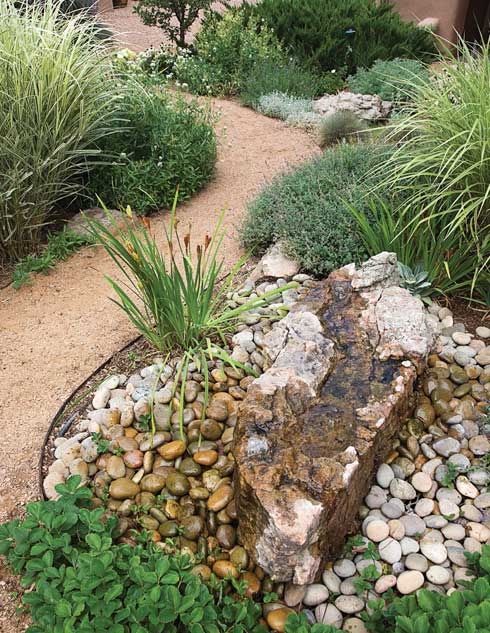
22. Serene Garden with a Natural Stone Water Feature
The bubbling water feature is, without a doubt, the heart of this garden. It does more than just add visual interest; it introduces the element of sound. The gentle sound of water flowing over the stone and trickling into the river rocks below transforms the space from a purely visual experience into a multi-sensory one. It masks unwanted background noise and creates an instant feeling of calm and tranquility. Remove the water feature, and you lose the garden’s soul.
🧹 Maintenance Reality
Thinking about adding a water feature? Here’s your pre-installation checklist:
- Power Source: Do you have a GFCI-protected outdoor electrical outlet within reach? Running new electrical can be expensive, so plan the location of your feature accordingly.
- Listen First: The pump’s hum can sometimes be louder than the water’s trickle. If possible, ask to hear the pump you’re buying operate before you purchase it.
- Debris Zone: Avoid placing the feature directly under a tree that drops a lot of leaves or flowers, as they will constantly clog the pump and make maintenance a chore.
- Pathways: Ensure the winding gravel path is at least 3 feet wide to feel comfortable, not cramped.
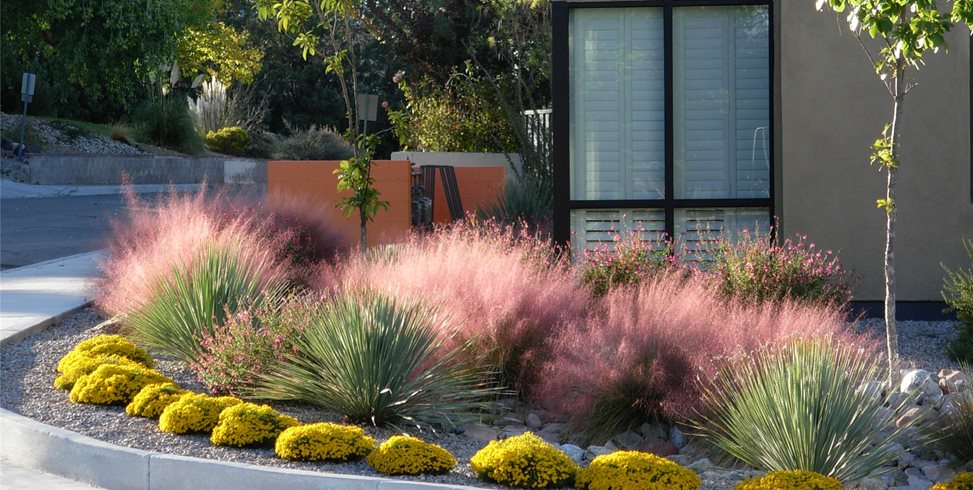
23. Modern Planting with Pink Grass, Yellow Flowers, and an Orange Wall
This is a perfect design for a narrow side yard or an entry courtyard, where you have a vertical wall to play with. The planting bed itself only needs to be about 4-6 feet deep to accommodate these masses of grass and flowers. The success of the look depends on having a tall, uninterrupted wall surface to act as a backdrop. An 8-foot or taller wall is ideal. This idea is all about vertical color blocking, which can make a small or narrow space feel intentionally designed and vibrant. Compare this to the similar planting in Idea #16, which is more horizontal.
💸 Get This Look For Less
This look uses a bold, analogous color scheme. It’s about 40% soft texture (the pink grass), 30% bold color (the orange wall), 20% accent color (the bright yellow flowers), and 10% neutral structure (the green yuccas and light grey stucco). The magic is in the color wheel relationship: pink, orange, and yellow are all next to each other, creating a fiery, energetic, yet harmonious palette. The cool grey stucco and gravel provide the necessary neutral ground to keep it from feeling overwhelming.
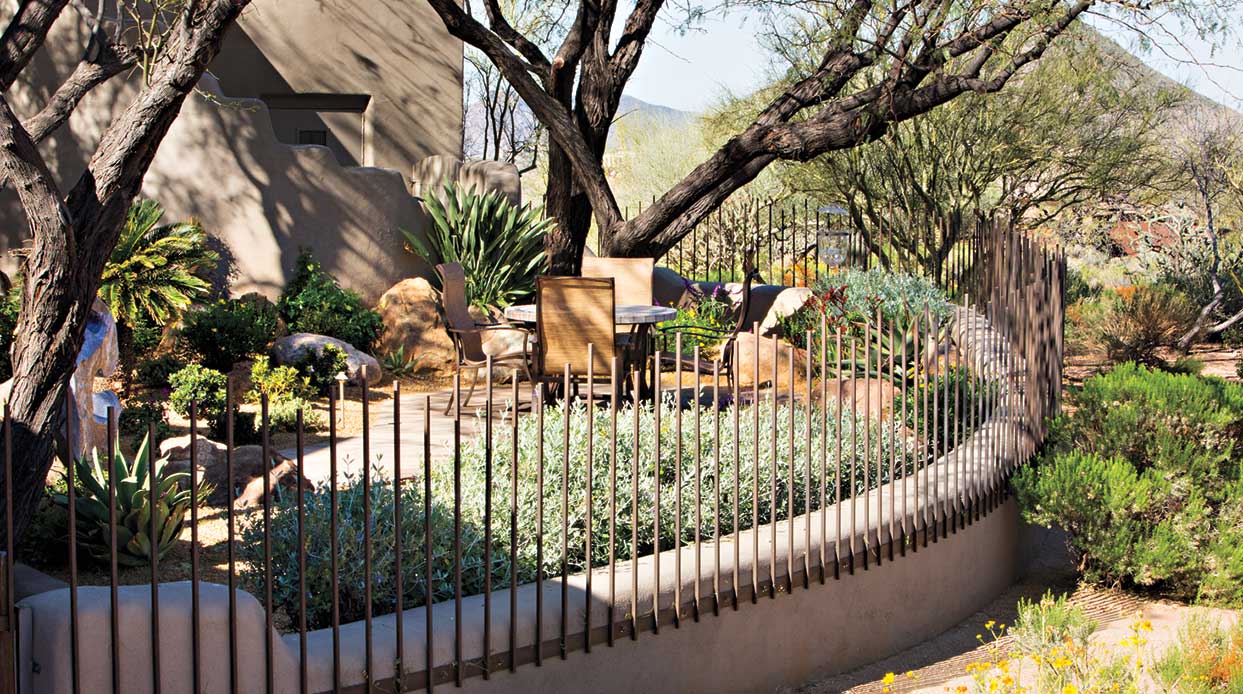
24. Patio Enclosed by a Curved Wrought Iron Fence
A wrought iron fence is a classic, beautiful choice, but it comes with maintenance. To prevent rust, especially at the welds and base, it will need to be inspected annually and touched up with a rust-inhibiting paint. In wetter climates, you may need to sand and repaint the entire fence every 5-7 years. If that sounds like too much work, you can get a similar look with a powder-coated aluminum fence, which is virtually maintenance-free but might lack the hand-forged character of true wrought iron.
🔥 Trending Context
The gentle curve of the wrought iron fence is what makes this space feel so special. A straight fence would have felt like a cage, abruptly separating the patio from the landscape. The curve, however, feels like an embrace. It softly defines the seating area while allowing visual and physical access to the surrounding garden. It creates a sense of ‘place’ without creating a hard barrier, blurring the lines between the manicured patio and the natural desert beyond.
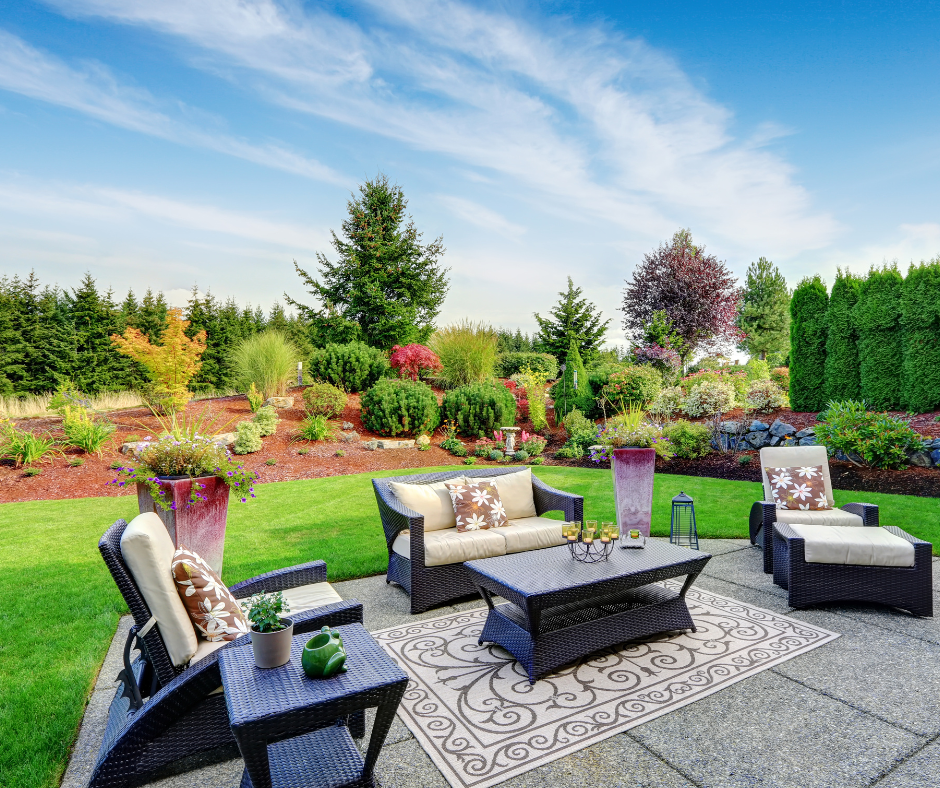
25. Wicker Patio Set on Concrete with a Layered Garden
An all-weather wicker set can be pricey, but you can get this look for less. Check out end-of-season sales at Target or Walmart, where sets like this are often marked down 50% or more. For the rug, look for indoor/outdoor options at stores like HomeGoods or on Wayfair for under $100. The lush garden is the trickiest part to replicate on a budget, but you can start with smaller, less expensive shrubs and groundcovers. They will fill in over a couple of seasons. Focus your plant budget on one or two larger ‘statement’ shrubs to anchor the design.
🔧 How-To Brief
Want to layer plants like a pro for a lush look? (Time: 4-6 hours, Cost: $300-$800)
- Start at the back. Place your tallest plants (small trees or large shrubs) along the rear boundary of the bed. This creates a backdrop.
- Add the mid-layer. In front of the tall plants, place your medium-sized shrubs. Stagger them, don’t line them up like soldiers. Make sure to leave space between them.
- Bring in the texture. Now, add your foreground plants—lower-growing shrubs, perennials, and ornamental grasses. These should be in front of and in between the mid-layer plants.
- Fill the gaps. Use low, spreading groundcover plants to fill any remaining empty spots. This will give that full, overflowing look and help suppress weeds.
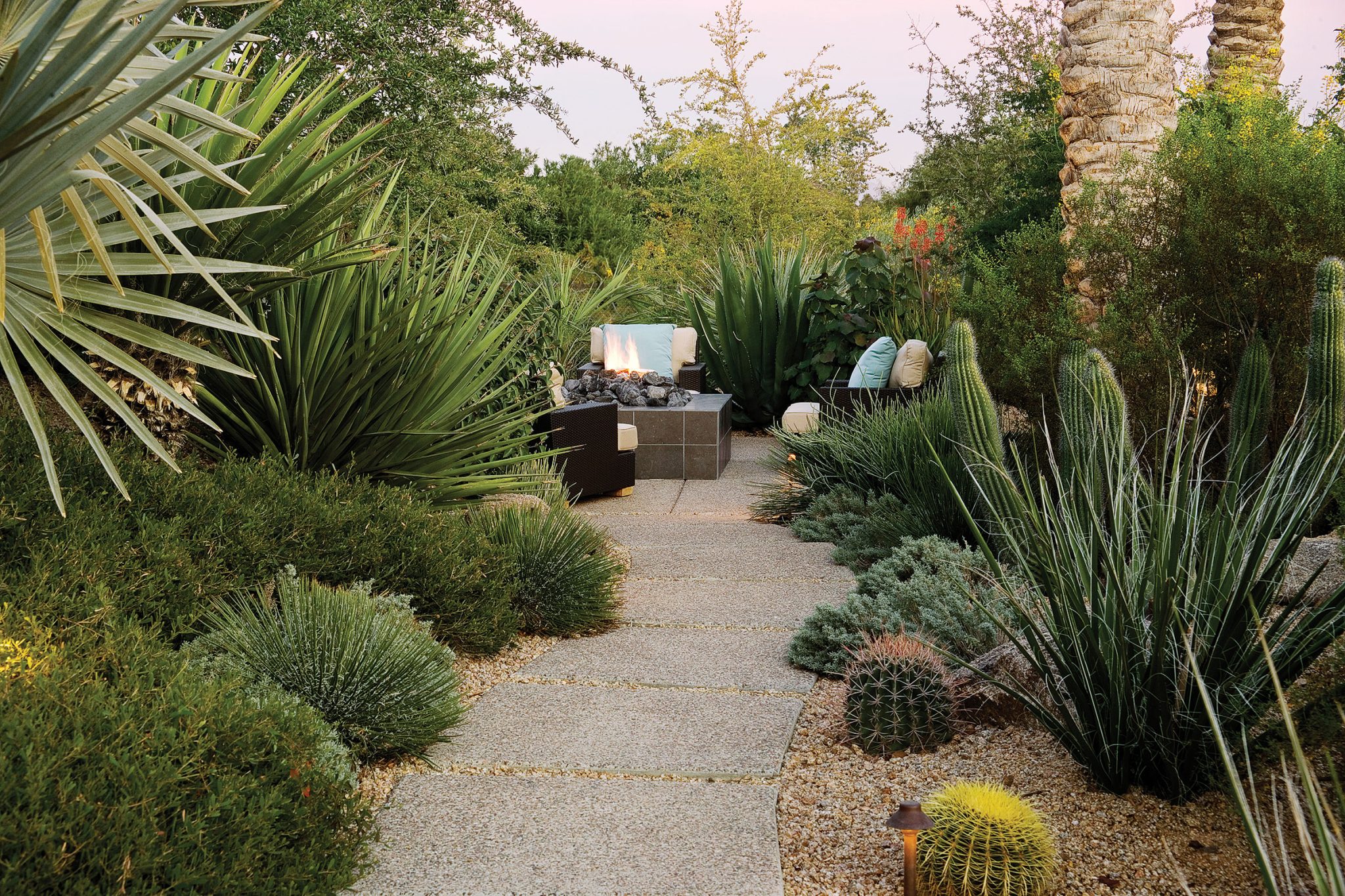
26. Lush Desert Fire Pit with a Stone and Gravel Path
When designing a pathway with both pavers and gravel, the key is to set the pavers first and make them the star. Lay out your flagstone or concrete pavers in an organic, flowing pattern with generous gaps of 6-12 inches between them. Then, backfill the entire area with your chosen gravel, using a stiff broom to sweep the gravel into the gaps and off the surface of the pavers. This creates a more stable walking surface than pure gravel, while still giving you the soft, permeable look. This design is similar to Idea #12 but feels more intimate and enclosed.
⚠️ Real Talk
The low-voltage path lighting is the element that transitions this space from a daytime garden to a magical evening lounge. Without it, the beautiful textures of the path and the surrounding agaves would disappear after sunset. The subtle pools of light guide the way, highlight the sculptural forms of the plants, and create a warm, inviting glow around the fire pit area. It’s a detail that dramatically extends the hours you can enjoy the garden and completely changes its mood.
27. Tiered Desert Garden with Outdoor Kitchen and Waterfall
This is a full-scale backyard renovation, and the costs reflect that complexity.
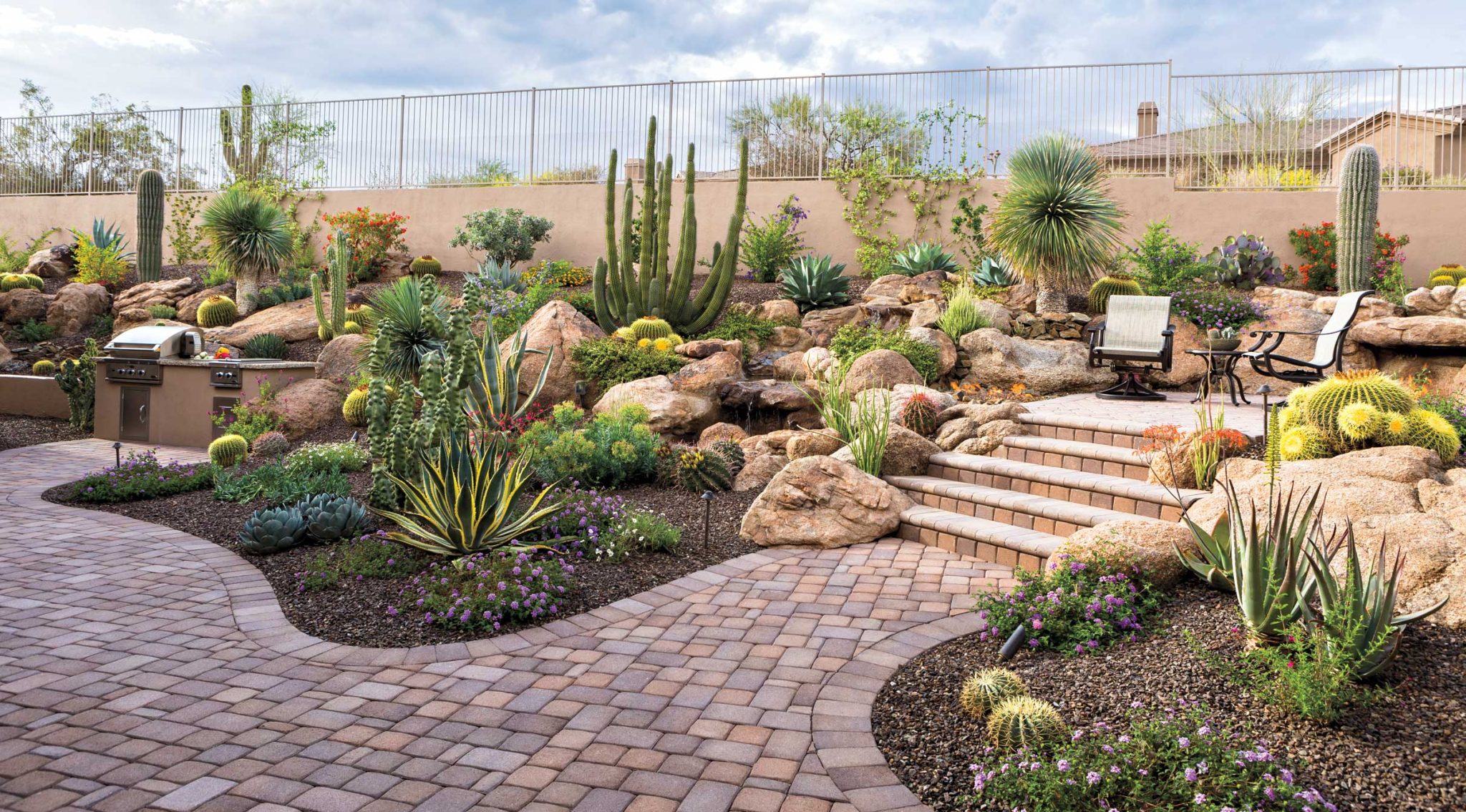
📏 Scale Guide
- Grading and Tiering with Boulders: $5,000 – $12,000
- Paver Patio and Steps Installation: $8,000 – $15,000
- Built-in Outdoor Kitchen (mid-range appliances): $7,000 – $20,000
- Rock Waterfall Feature: $1,500 – $4,000
- Mature Cacti, Agaves, and Plants: $3,000 – $7,000
TOTAL: $24,500 – $58,000
Budget alternative: Instead of a built-in kitchen, opt for a high-quality standalone grill on a simple paver pad. Use stacked landscape timbers for retaining walls instead of boulders, and choose a more affordable self-contained fountain instead of a custom waterfall. This could reduce the overall cost by 50-70%.
This design succeeds by creating distinct ‘rooms’ within a single, cohesive landscape. The paver path acts as a hallway, leading you from one area to the next: the cooking zone with the kitchen, the lounging zone by the waterfall, and the various planting zones. The consistent use of materials—the same pavers, the same type of boulders—ensures that even though the spaces have different functions, they all feel connected and part of a unified design. The multi-level layout adds interest and makes the yard feel larger than it is.
28. Side Yard Pathway with Stucco Walls and Vertical Trellises
This narrow space is transformed with a simple formula: 50% hardscape + 30% vertical green + 20% ground-level texture. The hardscape is the stucco walls and herringbone pavers, which establish the structure. The vertical green comes from the climbing vines on the trellises, which draws the eye upward and makes the space feel taller. The final 20% is the gravel and low plantings, adding texture underfoot. This formula is perfect for maximizing visual interest in a constrained side yard.
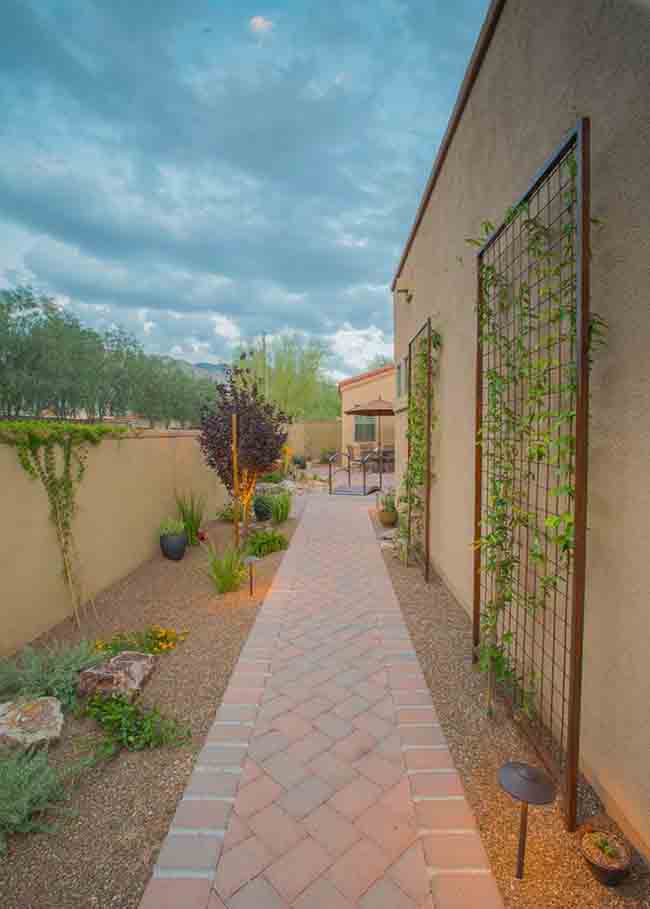
📐 Style Math
A herringbone brick path is stunning, but it can be a haven for weeds and moss in the cracks, especially in shadier spots. And if it’s not laid on a perfectly prepared, compacted base, the bricks can shift and become uneven over time, creating tripping hazards. This isn’t a simple DIY for a beginner. Professional installation is often worth the cost to ensure a long-lasting, level surface. Also, climbing vines on a stucco wall need to be managed, as their tendrils can damage the surface over time if not kept in check.
29. Layered Flagstone Path and Steps with Lush, Colorful Planting
A lush, heavily planted entrance like this requires consistent upkeep to look its best. The potted plants will need daily watering in hot climates and regular fertilizing to keep blooming. The shrubs will need annual pruning to maintain their shape and prevent them from overwhelming the walkway. Weeding the cracks in the flagstone and stacked stone walls is also a weekly chore in the growing season. While beautiful, this is a garden for someone who enjoys spending time tending to their plants, not for someone looking for a low-maintenance solution.
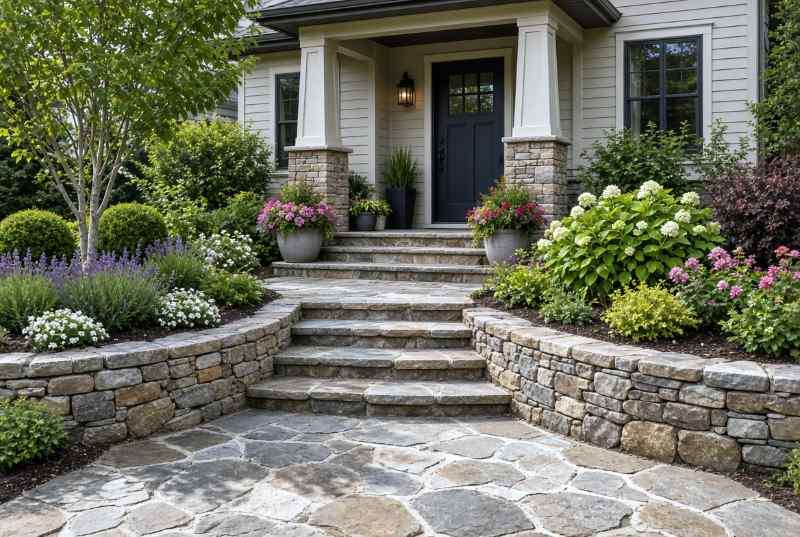
⭐ The One Thing
This grand, layered entrance is best suited for a home with a bit of elevation change from the street or driveway to the front door. The design relies on the tiers and steps to create its drama. You need at least 3-4 feet of vertical rise to justify the stacked stone retaining walls and multiple levels of steps. The width is also important; the path and surrounding beds should feel generous, not pinched. A minimum width of 10-12 feet for the entire landscaped area is ideal to accommodate the path, walls, and plantings without looking crowded.
30. Paved Patio with Modern Fireplace and Succulent Garden
Build a simple, modern garden wall with a fireplace cutout. (Time: 2-3 days; Cost: $1,200-$3,000)
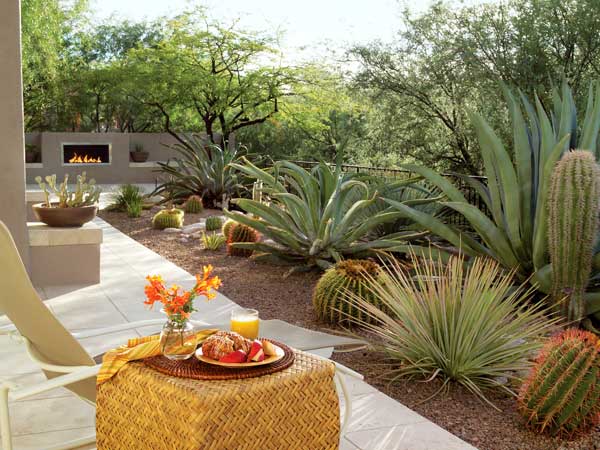
💰 Budget Breakdown
- Lay a concrete footer for the wall’s foundation. This is critical for stability.
- Build the wall using concrete masonry units (CMU blocks), leaving an opening for the fireplace insert. Ensure the opening dimensions match your chosen unit perfectly.
- Run a gas line to the opening (hire a licensed professional for this step!).
- Install the linear fireplace insert according to the manufacturer’s instructions.
- Clad the entire CMU wall with your desired finish, like a smooth stucco coat, to achieve this clean, modern look.
- Fill the recessed area with fire glass for a contemporary touch.
A built-in fireplace is a major expense. To get a similar focal point for a fraction of the cost, consider a standalone modern fire table. You can find beautiful, linear fire tables from brands like Elementi or Christopher Knight Home for $500 – $1,500. Place it at the edge of your patio against a simple, low retaining wall that you can build yourself from affordable landscape blocks. You get the same effect—a fiery focal point amidst the succulents—without the cost and complexity of custom construction.
Your Desert Dreamscape is Closer Than You Think
Creating a beautiful, water-wise Southwest landscape is all about choosing the right combination of plants and materials that work for your space and lifestyle. Whether you’re drawn to a lush oasis or a minimalist rock garden, the key is to be intentional with your choices. We hope these ideas have sparked your imagination and given you the confidence to start planning. Don’t forget to save your favorites to your Pinterest board to come back to when you’re ready to dig in!