Still scrolling through endless Stepping Stone Walkway Ideas without knowing where to start? It’s easy to get lost in a sea of pretty pictures, but a great walkway is about more than just looks. After filtering through hundreds of options across big-box stores like Home Depot and specialty stone suppliers, we narrowed it down to the 30 ideas that actually deliver on both style and function. This guide is packed with curated walkway ideas, focusing on the most requested styles: natural flagstone, modern concrete pavers, and rustic brick paths. As we continue to blend our indoor and outdoor living spaces, the humble walkway has become a critical design feature in 2026, tying the whole yard together. 📌 Save this to Pinterest for later — you’ll want to revisit these ideas.
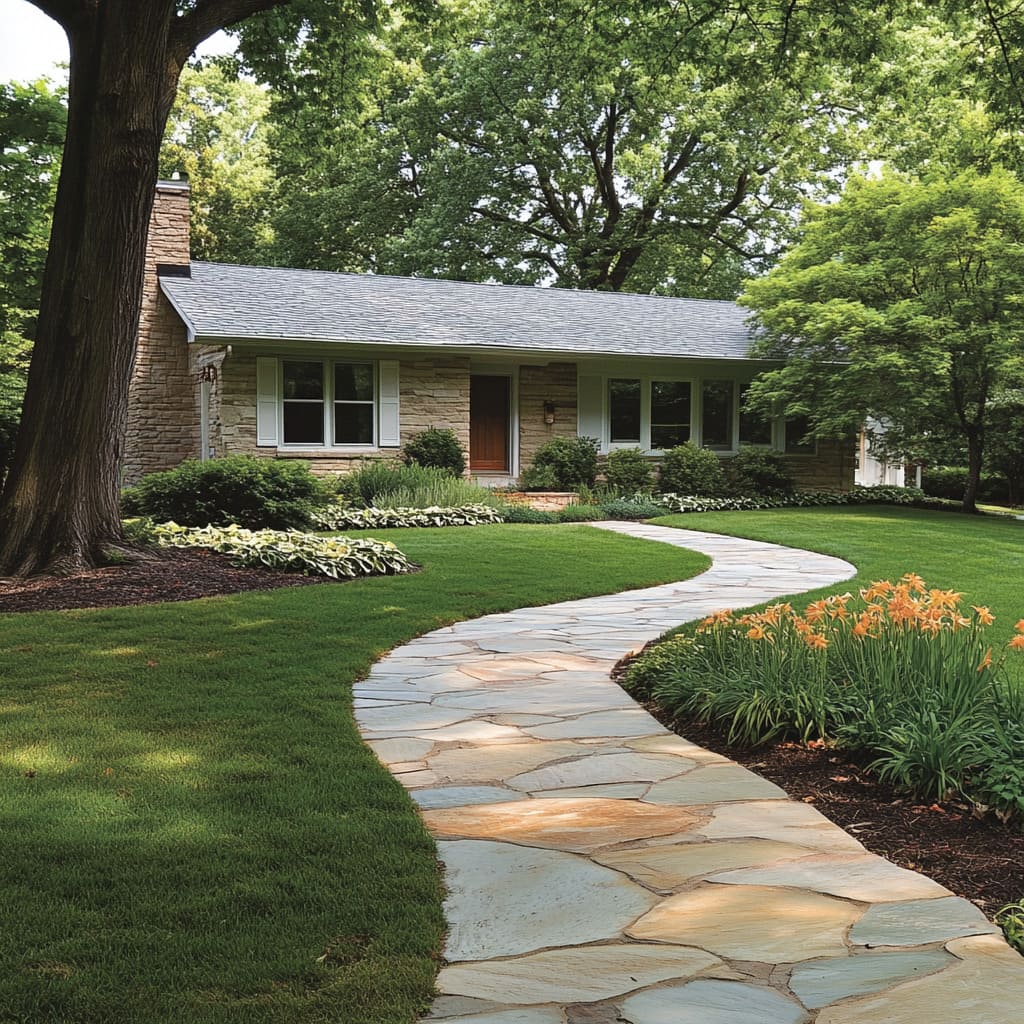
1. Curved Natural Flagstone Walkway Through a Lush Garden
What makes this walkway so successful is the artful blend of consistency and irregularity. The walkway uses one material—natural flagstone—which creates a cohesive visual path for the eye to follow. However, the irregular shapes and sizes of each stone prevent it from feeling sterile or rigid. This contrast is key. The organic, winding layout feels like it was discovered rather than built, allowing it to settle beautifully into the lush, colorful landscaping of hostas and daylilies that surround it.
|
📋 Copy HEX 🔗 Share |
💰 Budget Breakdown
When laying an irregular flagstone path like this one, purchase about 15-20% more stone than your square footage calculations suggest. You’ll need the extra material to find the perfect puzzle-piece fits between stones, which is what gives the path its high-end, custom look. The ideal gap between stones should be consistently between 1 to 2 inches. Anything wider can feel disjointed, while anything tighter makes it difficult to establish a healthy grass or moss infill between the stones.
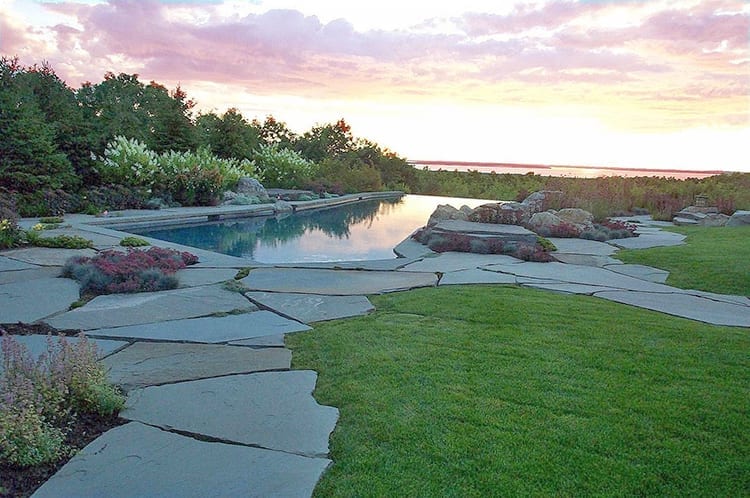
2. Winding Flagstone Path Alongside a Serene Pool
The single most important element here is the natural, uncut edge of the flagstones. While a perfectly straight, saw-cut edge has its place, the rugged, organic perimeter of these stones is what makes the design feel high-end and integrated with the landscape. It mirrors the natural shape of the boulders and plantings, preventing the walkway from feeling like a harsh man-made intrusion. If you were to replace these with uniform pavers, the entire serene, nature-inspired atmosphere would be lost.
|
📋 Copy HEX 🔗 Share |
💸 Get This Look For Less
This style of generous, winding path works best in larger, more expansive yards where the walkway has room to breathe. You’ll need a minimum width of 48 inches for the path itself to allow for comfortable passage. The design is particularly effective for connecting two distinct zones, like a patio and a pool area, across a property that’s at least 50 feet wide. For smaller yards, a more direct path might be more space-efficient, like the one in Idea #10, to avoid making the lawn area feel chopped up.
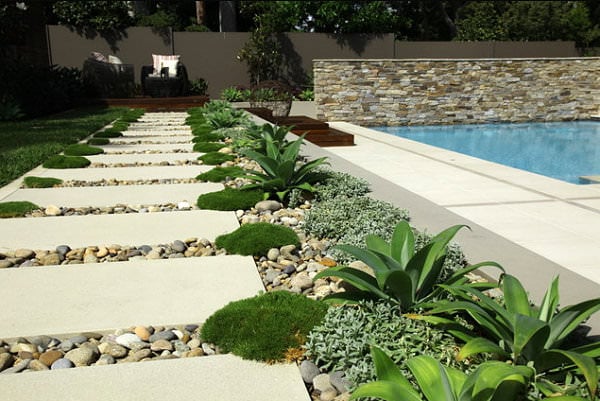
3. Modern Concrete Slabs with River Stone Infill
This look follows a simple but effective formula: 60% smooth, manufactured pavers + 30% organic, rounded river stones + 10% sculptural, low-water plants. The large, light-colored concrete slabs provide a clean, modern foundation. The river stones fill the gaps with texture and a contrasting scale, while the sharp, architectural shapes of the agave plants add vertical interest. You could swap the concrete for dark basalt pavers or the river stones for black lava rock, and the balanced, modern aesthetic would still hold true.
|
📋 Copy HEX 🔗 Share |
📏 Scale Guide
While this walkway is stunningly low-maintenance in terms of plant care, the river rock infill does require some upkeep. Over time, leaves and debris will collect in the rocks, and you’ll need to use a leaf blower (on a low setting) to clear them out periodically. Weeds can also eventually find their way through. We recommend laying a high-quality landscape fabric underneath the rocks before installation to drastically reduce weed growth. Annual cost for upkeep is minimal, but expect to spend an hour or two each season keeping it tidy.
4. Enchanted Garden Path with Mossy Flagstones and Lanterns
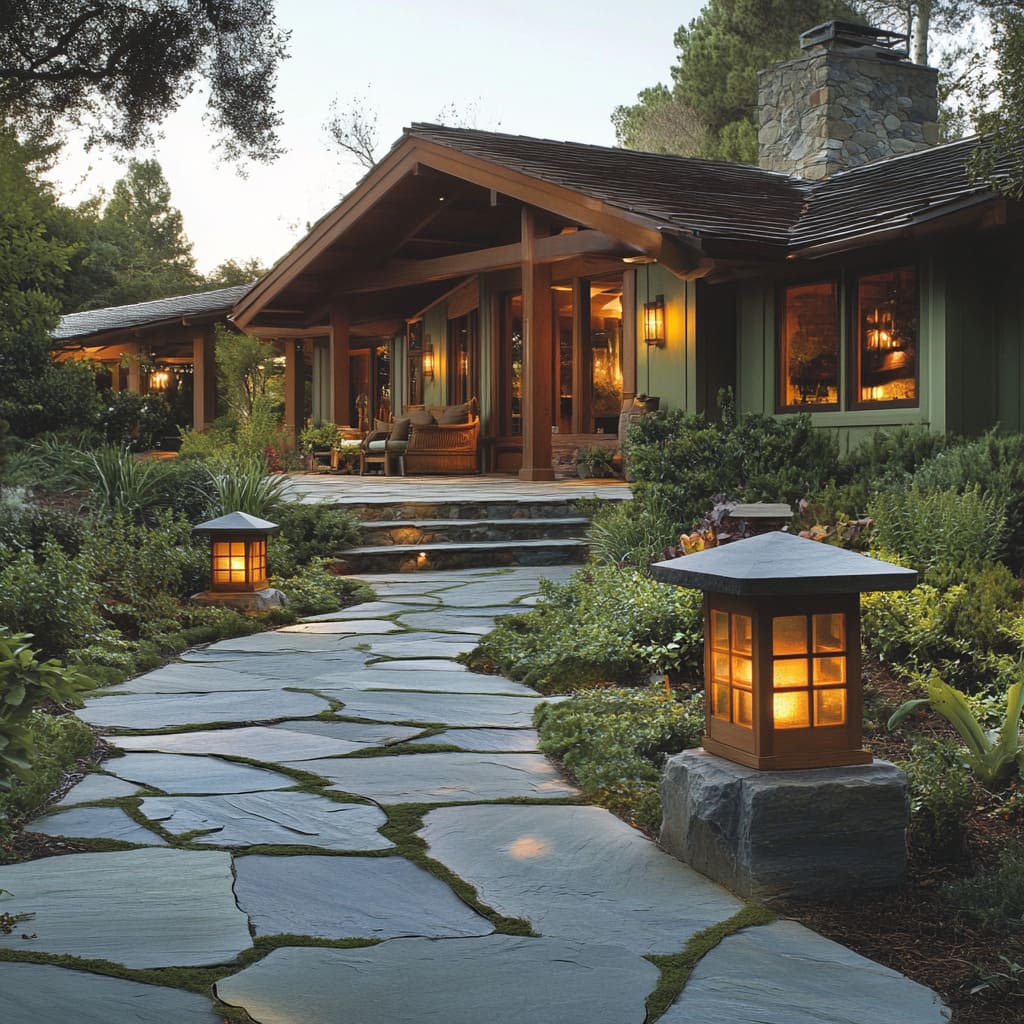
Achieving this dreamy, moss-covered look requires two things that not every yard has: ample shade and consistent moisture. Moss will quickly scorch and die in direct afternoon sun. If your intended path area is bright and sunny, you are better off using a hardy, sun-loving groundcover like creeping thyme or opting for gravel fill instead. This is a look that works *with* a damp, shady environment, not against it. Trying to force it elsewhere will only lead to frustration and a crispy, brown pathway.
|
📋 Copy HEX 🔗 Share |
⭐ The One Thing
Want to install your own low-voltage path lighting? Here’s a quick guide. Time: 2-3 hours. Cost: $150-$400.
- Plan your layout, placing fixtures every 8-10 feet.
- Assemble the light stakes and fixtures.
- Lay out the low-voltage cable along the path.
- Attach the fixtures to the cable using the simple snap-on connectors.
- Dig a shallow 3-inch trench and bury the cable.
- Mount the transformer on an exterior wall or post near an outlet, then plug it in and set the timer.
5. Light Flagstone & Pebble Path to a Modern Farmhouse
Before you commit to this beautiful, naturalistic design, run through this quick checklist to ensure it’s the right fit for your space and lifestyle:
- Is the path on a relatively level grade? This style is less suited for steep slopes.
- Do you have access to a good local source for both flagstone and bulk river pebbles? Shipping can be costly.
- Are you prepared for the upkeep of keeping pebbles tidy and out of the lawn? A solid border helps.
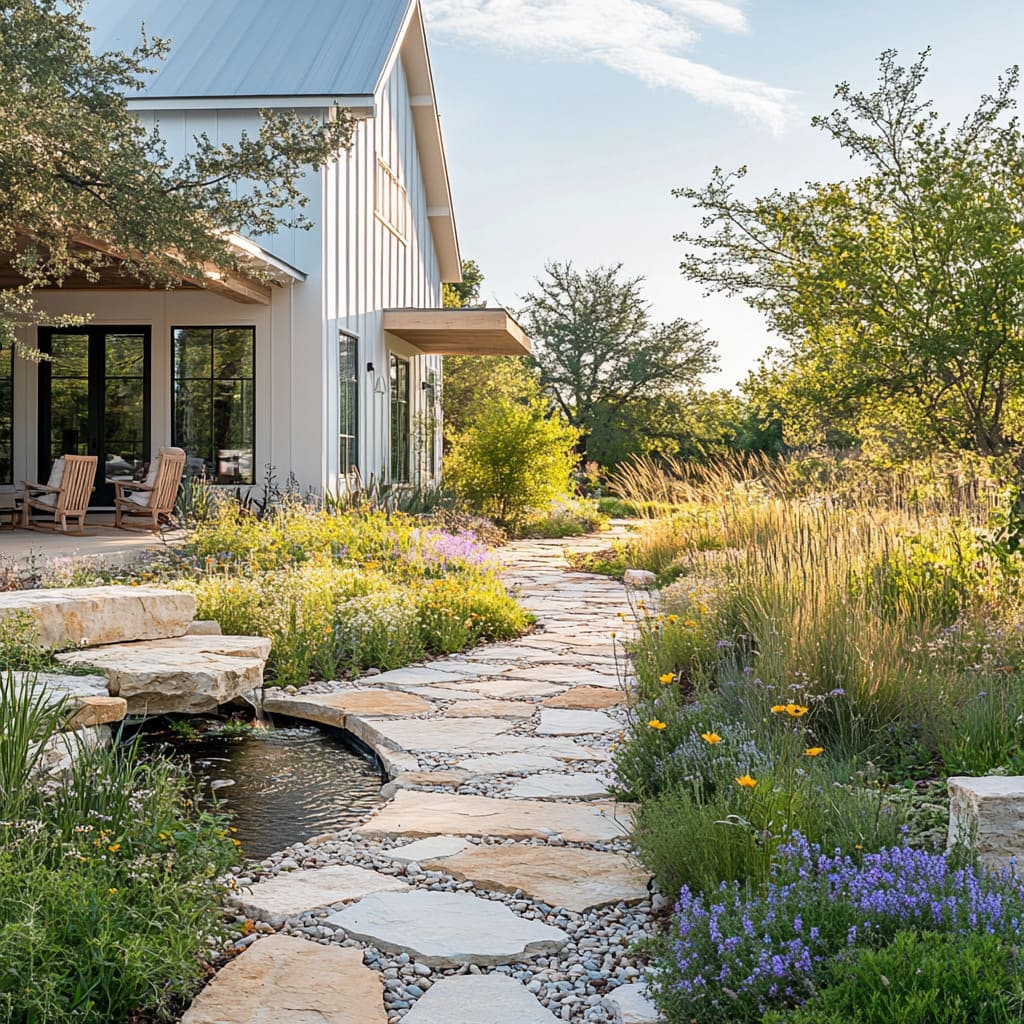
- Does the light, natural stone palette complement your home’s exterior? It pairs perfectly with the white modern farmhouse shown here.
|
📋 Copy HEX 🔗 Share |
🔥 Trending Context
To recreate this high-end rustic-modern look, plan for costs across several categories. The light beige flagstone is the star and the biggest investment.
- Main Furniture (Stones): $1,800 – $3,500
- Lighting (subtle fixtures): $300 – $600
- Textiles (River Pebble Infill): $400 – $800
- Decor/Accessories (Plants & Pond): $700 – $1,500
- Paint/Wall Treatment (n/a)
- TOTAL: $3,200 – $6,400
Budget alternative: Use larger concrete pavers instead of flagstone and a more common local gravel to bring the total cost down to the $1,500 – $2,500 range.
6. Creative and Thrifty DIY Garden Stepping Stones
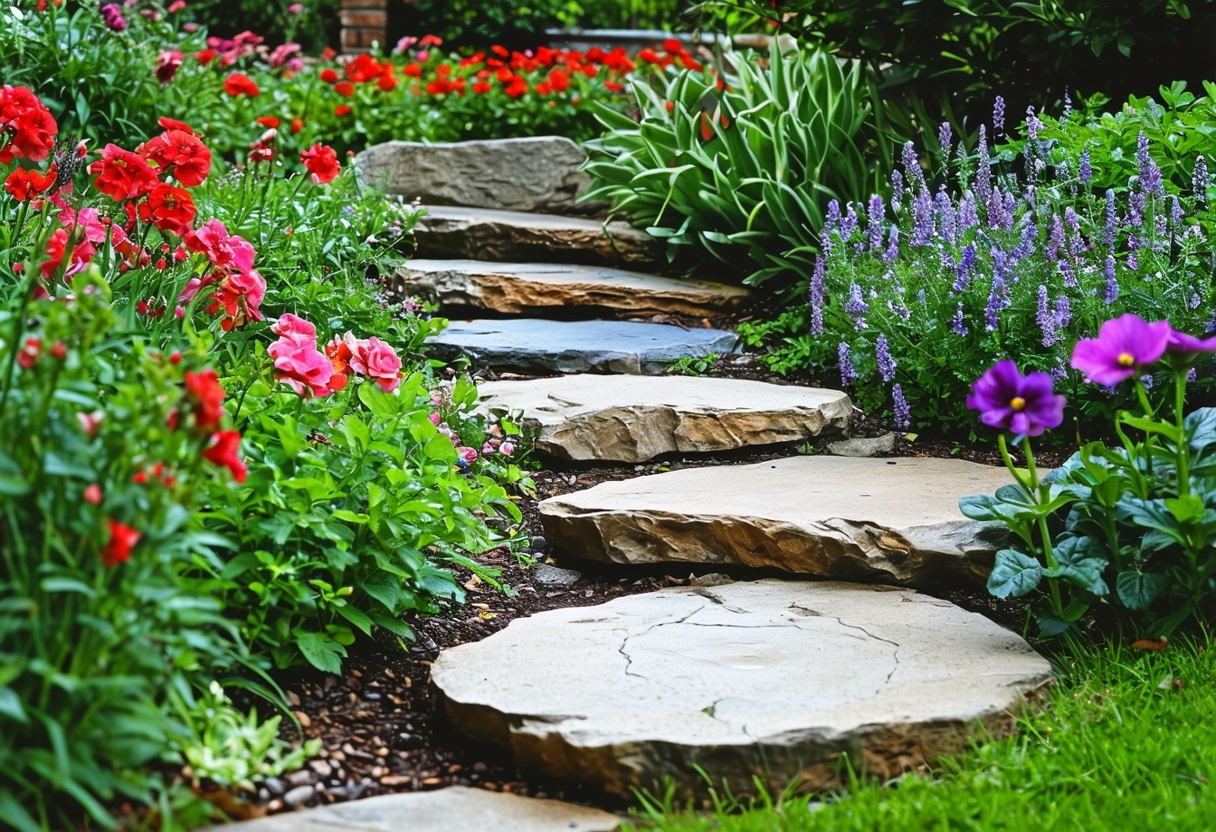
This is the ultimate budget-friendly walkway. Instead of expensive quarried stone, this look can be achieved with simple, cast-concrete stepping stones that you can often find for just a few dollars each at any home improvement store. You can also make them yourself with a bag of concrete mix and a mold for maximum savings. Arranging them in a gentle curve and surrounding them with inexpensive bark mulch or pea gravel creates a charming, effective path for a fraction of the cost of flagstone or brick. It’s a perfect weekend project that delivers huge impact for a tiny price tag.
|
📋 Copy HEX 🔗 Share |
🎯 What Makes It Work
The visual success of a simple path like this relies on texture and color contrast. The formula is straightforward: 50% simple pavers + 50% contrasting groundcover. The key is that the two elements must have different textures and colors. If you have light gray stones, use a dark brown or reddish mulch. If you use reddish brick-colored pavers, try a light tan pea gravel. This simple variance is what makes the path pop against the surrounding greenery, preventing it from looking flat or cheap.
7. Winding Flagstone Walkway with Integrated Steps and Lighting
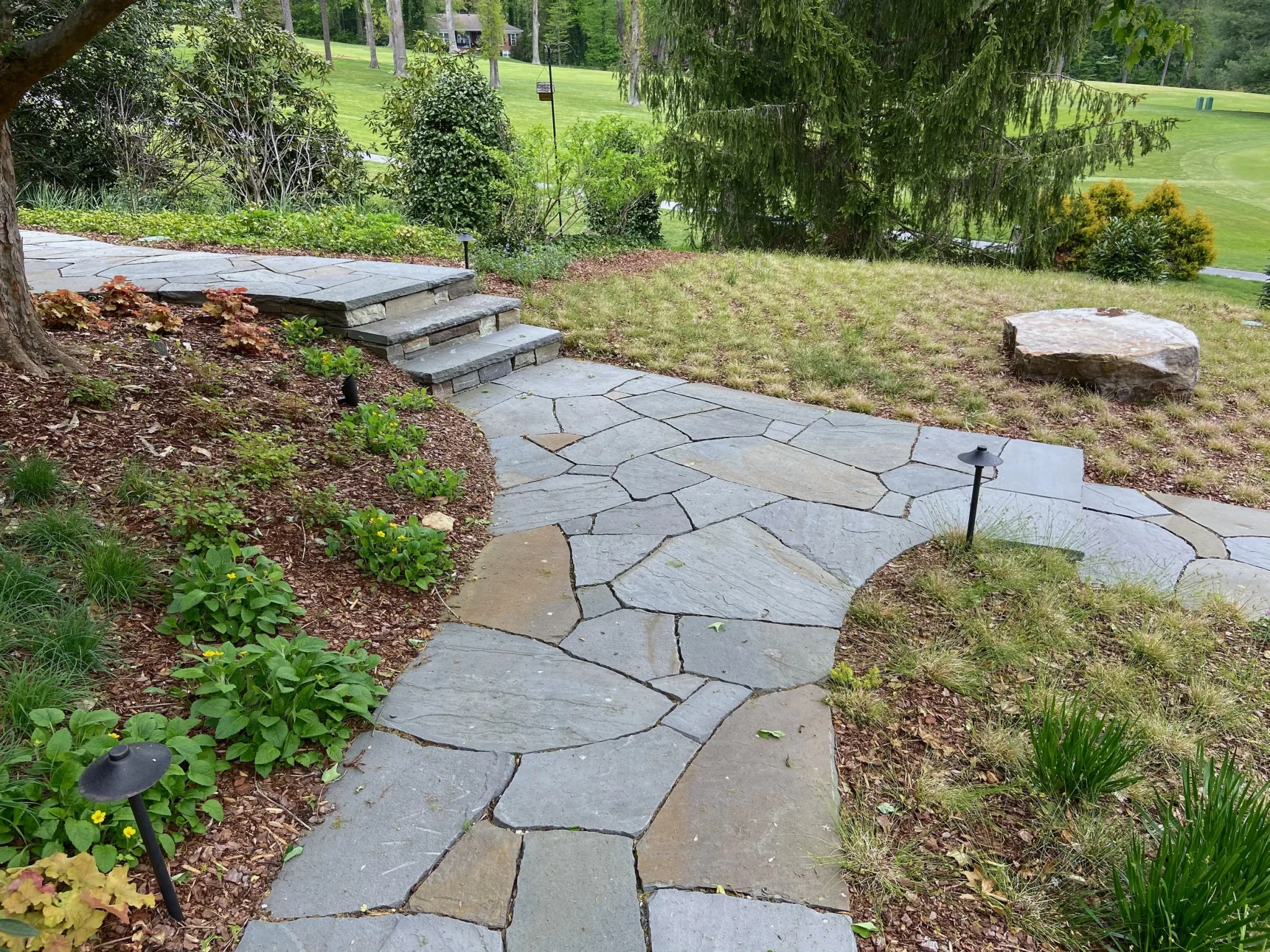
This design is a masterclass in handling a sloped yard. The walkway doesn’t fight the topography; it works with it. By integrating wide, deep stone steps directly into the path, the incline becomes a graceful feature rather than an obstacle. The continuous use of the same irregular flagstone for both the flat sections and the steps ensures the entire installation feels like a single, cohesive element. The low-profile landscape lights add safety without distracting from the natural beauty of the stone and plantings.
|
📋 Copy HEX 🔗 Share |
📐 Style Math
A multi-level path with integrated steps is not a beginner-level DIY project. Ensuring each step is perfectly level, stable, and has a consistent rise is crucial for safety and longevity. If the steps are not built on a properly compacted gravel base, they can shift and settle over time, creating a serious tripping hazard. For paths involving more than two or three steps, we strongly recommend hiring a professional landscape contractor who has experience with stonework. It’s an investment in safety and quality.
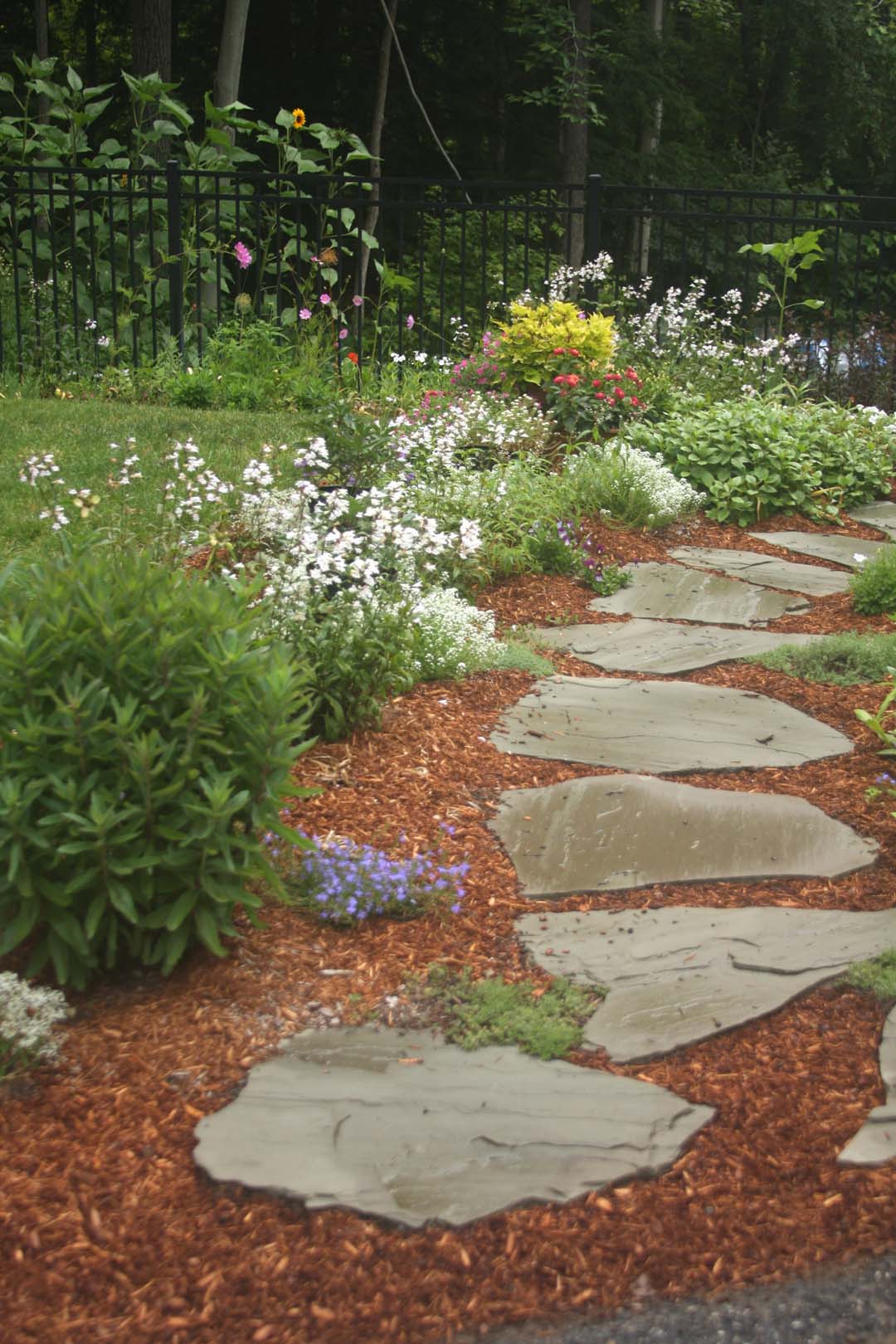
8. Irregular Grey Stepping Stones Set in Red-Brown Wood Chips
The wood chip groundcover is the single element that defines this walkway’s character. While grass or gravel could have been used, the rich, reddish-brown wood chips provide a soft, organic texture and a warm color that beautifully contrasts with the cool grey of the stepping stones. This choice immediately signals a more relaxed, natural garden style. It also serves the practical function of suppressing weeds and retaining soil moisture for the lush, flowering plants that line the path.
|
📋 Copy HEX 🔗 Share |
🧹 Maintenance Reality
When using wood chips or mulch as your walkway base, always install a defined edge to keep the material contained. A simple plastic or metal landscape edging, buried so only the top inch is visible, is all you need. This creates a clean line between the path and your lawn or garden beds, preventing the wood chips from scattering into the grass every time you mow. It’s a small installation step that saves you hours of maintenance and keeps the design looking crisp.
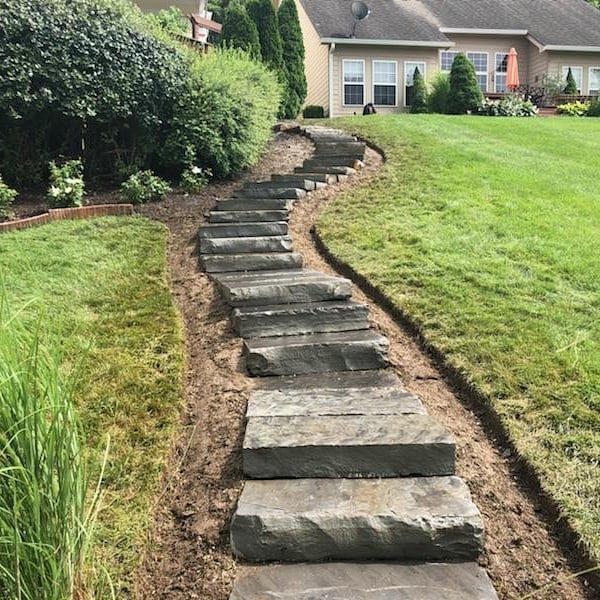
9. Natural Stone Steps Climbing a Grassy Slope
This ‘stones-in-lawn’ approach is perfect for smaller yards or for secondary paths on a larger property. It works best on a gentle to moderate slope where erosion isn’t a major concern. The key is to use large, heavy stones—at least 18-24 inches in diameter and 2-3 inches thick. This substantial size gives them the visual and physical weight to feel permanent and stable, rather than like loose, scattered rocks. For steep slopes, you’d need a more structured solution with retaining walls, like the path in Idea #21.
|
📋 Copy HEX 🔗 Share |
💡 Designer Tip
What makes this simple design so effective is its minimalism. By setting the stones directly into the grassy slope, the walkway becomes part of the lawn, not a separate feature. This creates an uninterrupted expanse of green, making the yard feel larger and more cohesive. The irregular shapes and slightly rustic placement of the stones prevent the path from looking too rigid, maintaining a natural, organic feel that complements the surrounding shrubs and trees perfectly.
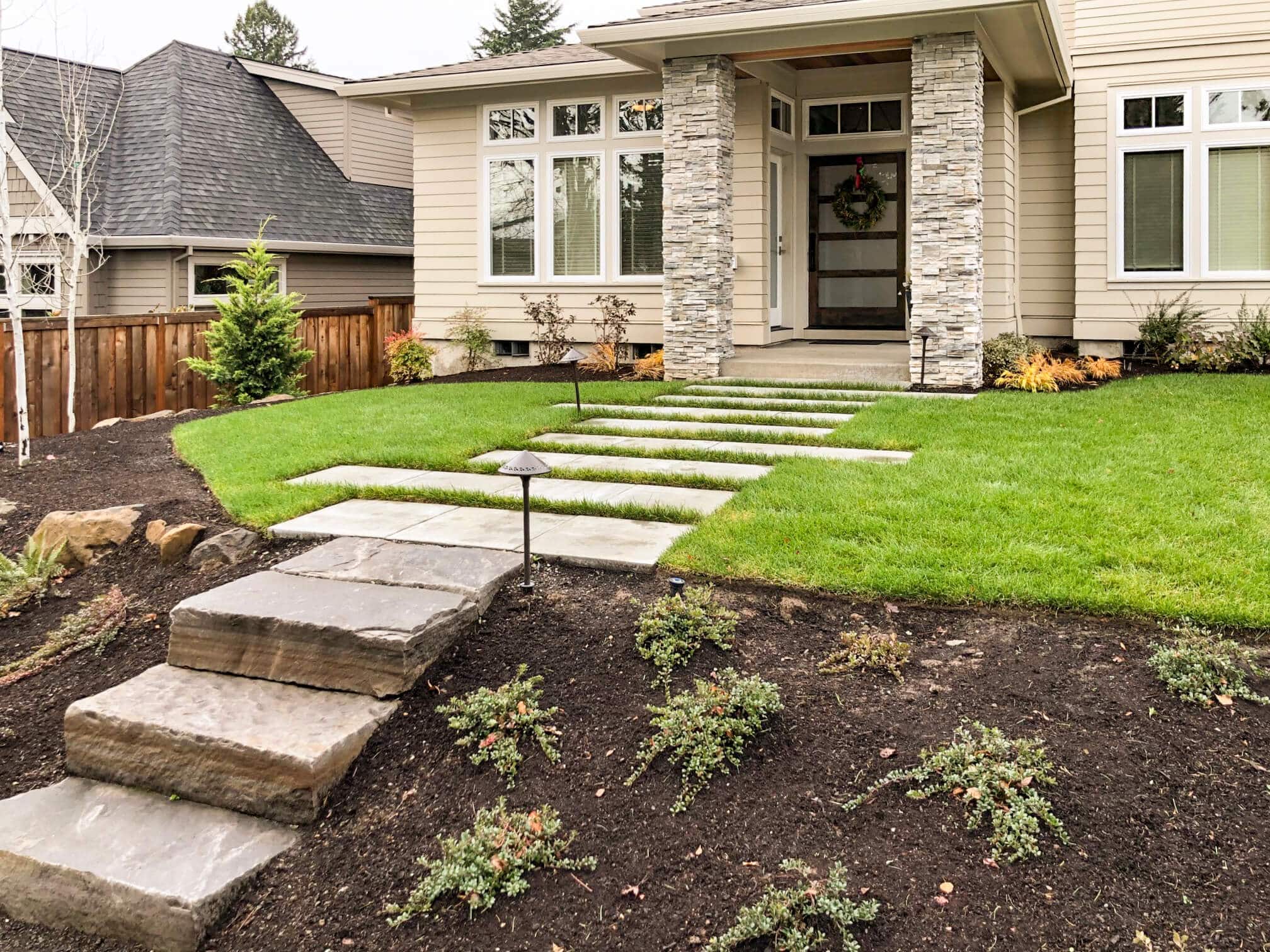
10. Modern Entry with Rectangular Pavers and Stone Block Steps
The clean, contemporary look here is achieved with a strict geometric formula: 50% manicured lawn + 30% hardscaping with clean lines + 20% neatly mulched beds. The rectangular stepping stones and the solid stone block steps provide strong, linear elements. This geometry is softened by the vibrant green lawn, while the dark mulch acts as a clean, negative space that makes the other elements pop. The key is the high contrast between the organic lawn and the rigid man-made shapes.
|
📋 Copy HEX 🔗 Share |
⚠️ Real Talk
You don’t need a huge budget to get this clean, modern vibe. The large natural stone block steps are a major cost. To get this look for less, use standard 4×8 concrete retaining wall blocks from a big-box store, which cost around $2-$4 each, to build your steps. For the walkway, opt for affordable 12×24 inch concrete pavers, which run about $5-$8 apiece. A bag of dark brown mulch is around $4. You can replicate the entire concept for under $300 if you’re willing to do the labor yourself.
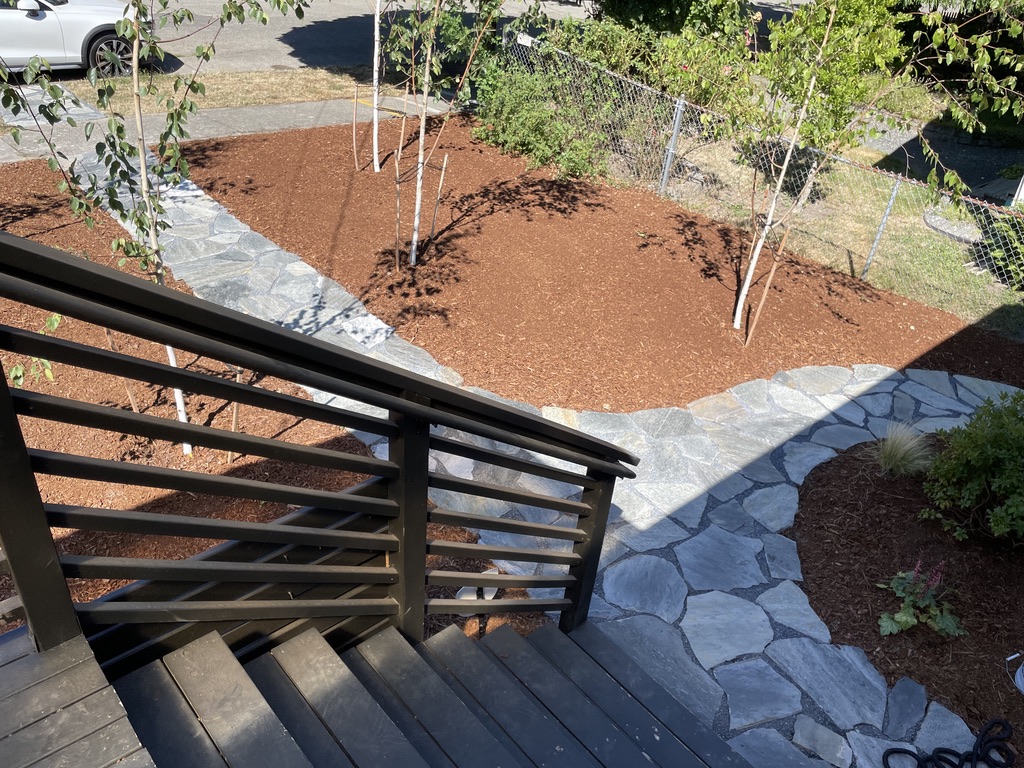
11. Curving Gray Flagstone Path Through a Mulched Landscape
A flagstone-and-mulch combination is one of the lowest-maintenance walkway options available. Unlike grass, the mulch requires no mowing, and unlike gravel, it tends to stay put. Your primary task will be replenishing the mulch every 2-3 years as it naturally decomposes and fades in the sun. A fresh layer on top is usually all that’s needed to restore its rich color. You may also get a few opportunistic weeds, but they are typically easy to pull from the loose mulch. Compared to the upkeep of a pristine lawn path, this is a breeze.
|
📋 Copy HEX 🔗 Share |
✅ Before You Start
The gentle curve is the element that makes this simple path successful. A straight path of the same materials could have felt utilitarian and boring. By introducing a soft, sweeping curve, the walkway becomes a deliberate design feature. It encourages a slower, more meandering journey through the space and creates a more natural, organic feeling. The curve adds a sense of discovery, making you wonder what’s around the bend, even in a small yard.
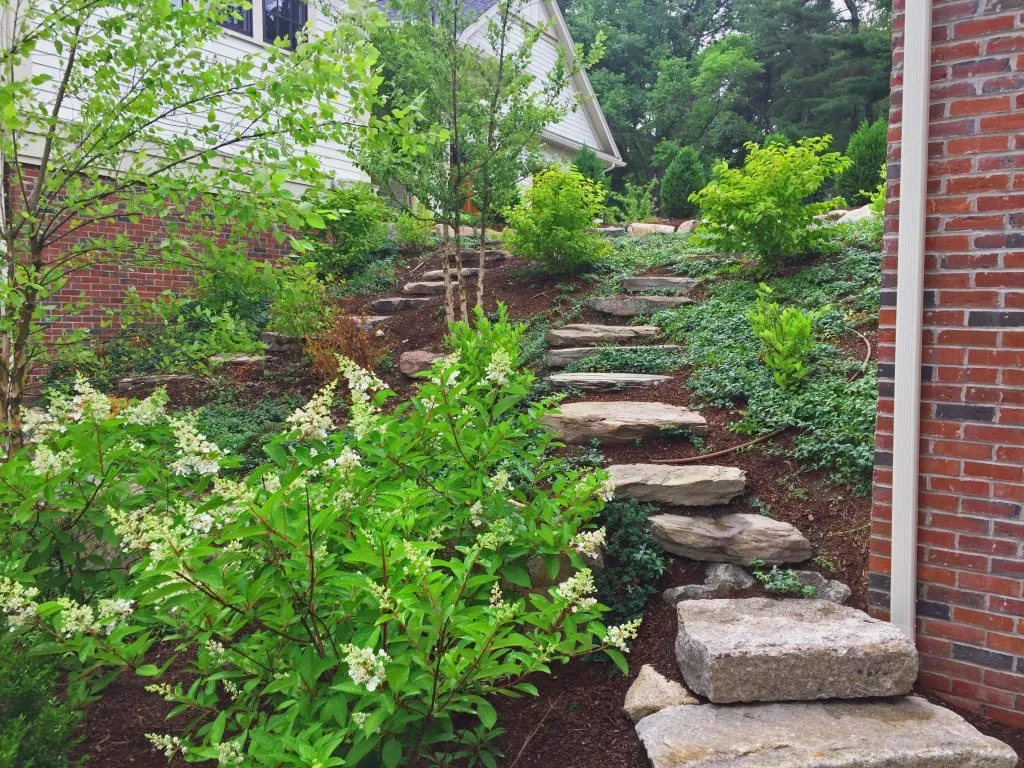
12. Natural Stone Steps on a Mulched Hillside Garden
This is a brilliant solution for a tricky, shaded slope next to a house foundation. The combination of large, irregular stone slab steps and a thick layer of dark mulch accomplishes three things. First, the stones provide safe, stable footing. Second, the mulch layer suppresses weeds and helps retain moisture in the soil, which is critical for a healthy garden. Third, the dark color of the mulch creates a visually quiet, uniform background that makes the varied green textures of the hostas and shrubs pop. For a similar but sunnier look, see Idea #8.
|
📋 Copy HEX 🔗 Share |
🔧 How-To Brief
When building steps on a slope, drainage is non-negotiable. Water will naturally run down the hill, and if you don’t plan for it, it can erode the soil and mulch from around and under your stones, causing them to shift and become unstable. This is especially true next to a house where water may be coming off the roof. Ensure the soil is graded correctly and consider installing a French drain or a subtle channel to direct water away from the path’s foundation.
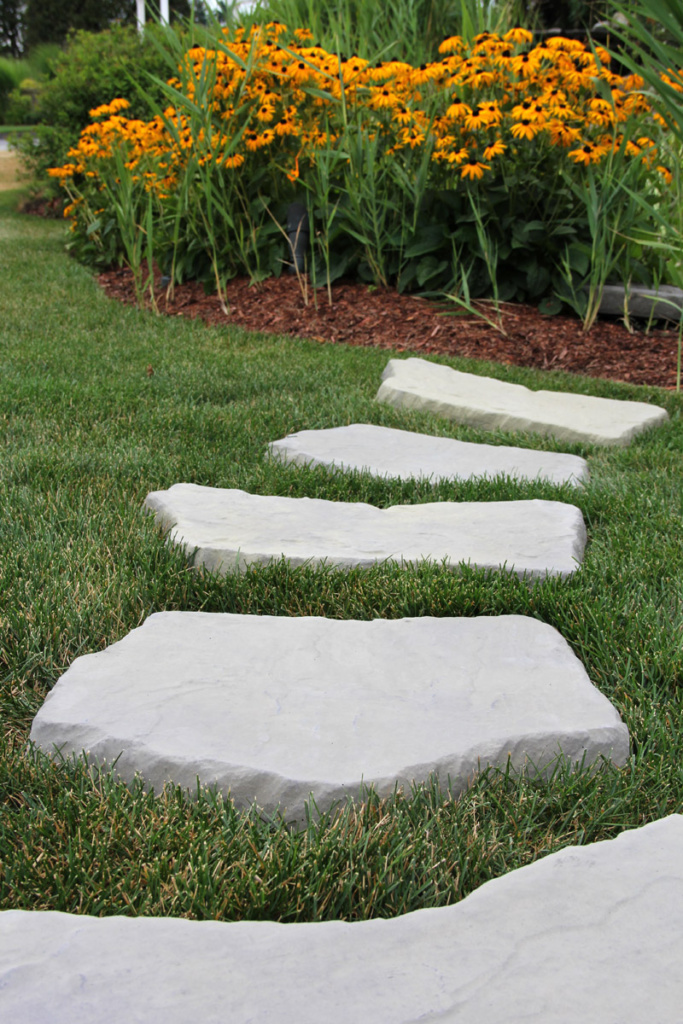
13. Gray Rectangular Stepping Stones in a Lawn with Vibrant Orange Flowers
A common mistake with in-lawn stepping stones is setting them too high. For a professional look and easy mowing, the top of the stone should be perfectly flush with the soil level, allowing a lawnmower to pass right over them without hitting the blade. To achieve this, excavate the shape of each stone about 1-2 inches deeper than the stone’s thickness. Add a layer of sand, level it, and then place the stone, tamping it down until it’s perfectly even with the lawn.
|
📋 Copy HEX 🔗 Share |
💰 Budget Breakdown
This path’s visual punch comes from a classic color theory formula: 80% cool neutrals + 20% hot accent color. The vast majority of the landscape is made up of the cool greens of the lawn and foliage and the neutral gray of the stepping stones. This creates a calm, serene base. That base then allows the bright, hot orange and yellow flowers to jump out with incredible vibrancy. Without the calm background, the bright flowers wouldn’t have nearly as much impact.
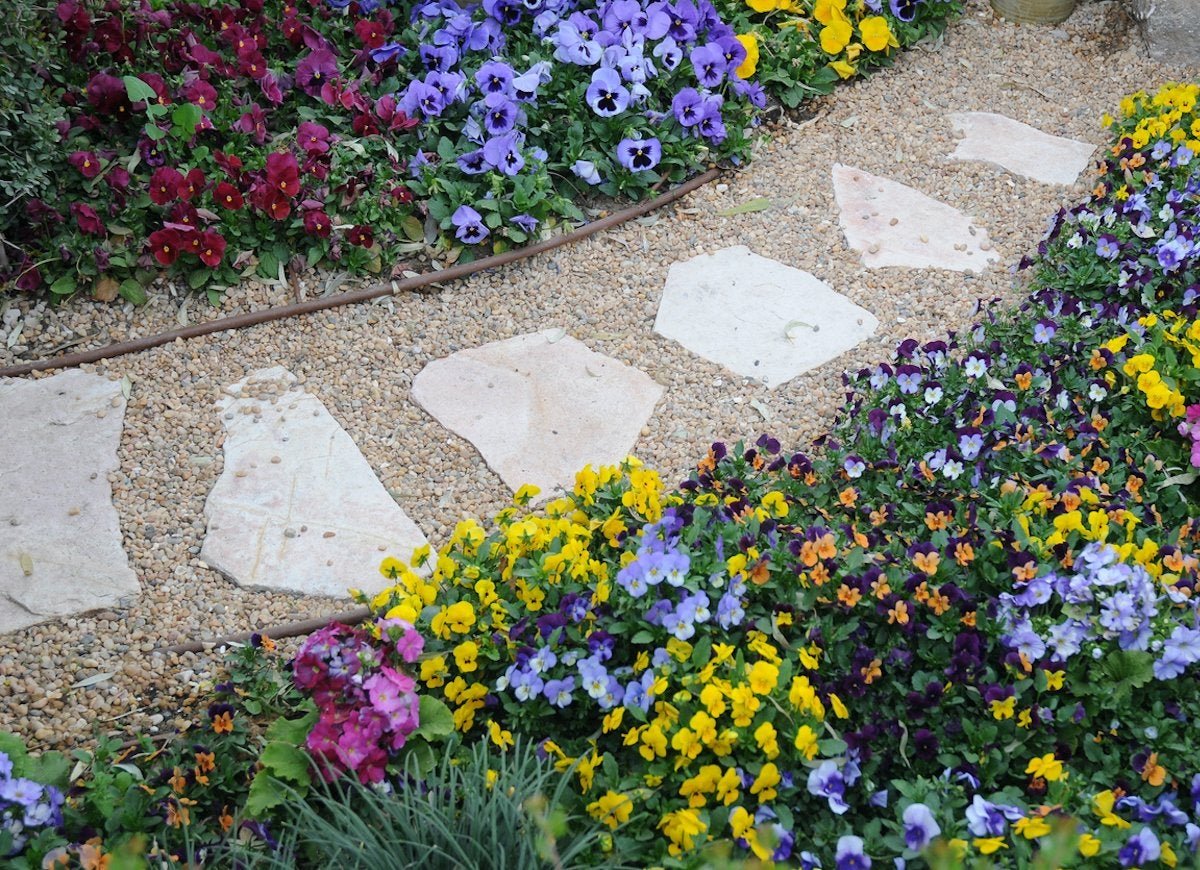
14. A Charming Garden Path of Pebbles and Irregular Stones
You can get this incredibly charming, cottage-garden look on a very tight budget. The key is to use inexpensive materials creatively. Instead of large, pricey flagstones, look for ‘reject’ or broken concrete pieces from a landscape supply yard, which are often sold at a steep discount. A few bags of basic pea gravel from a home improvement store will serve as the filler. The real investment here is time and plants—pack the borders with inexpensive, fast-spreading annuals like the pansies shown, and you’ll have a million-dollar look for less than a hundred.
|
📋 Copy HEX 🔗 Share |
💸 Get This Look For Less
A pebble-filled path like this requires a very firm and well-defined border. Without a solid edge (made of metal, brick, or stone), the small pebbles will constantly migrate into your garden beds and lawn, creating a messy look and a maintenance headache. You can also see the black irrigation tubing running along the edge. While practical, it can be an eyesore. A better solution is to bury the drip line just under the soil or pebbles to hide it from view while still delivering water to your plants.
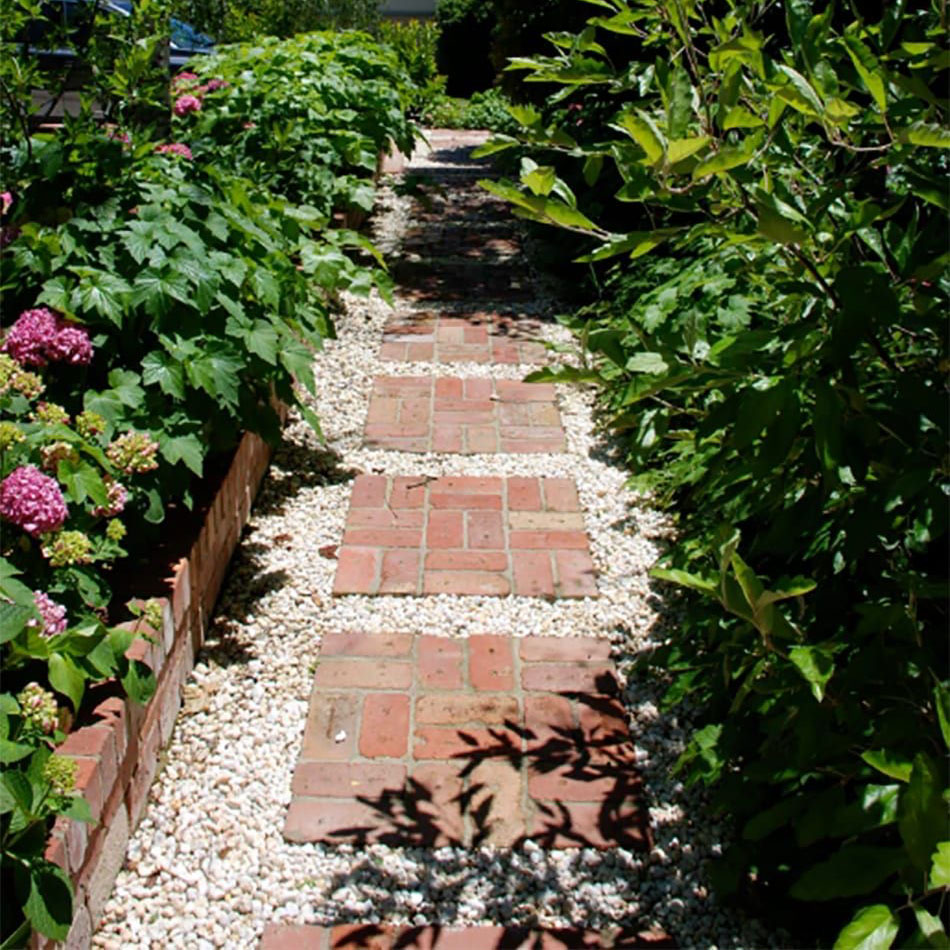
15. Brick Paver Stones on a Light Gravel Walkway
The basket-weave pattern is a classic for a reason, and it’s easier to create than it looks. Here’s a quick guide for one ‘stepping stone’ section. Time: 1 hour per section. Cost: $30-$50.
- Lay a square border of bricks.
- Place your first pair of ‘weft’ bricks horizontally side-by-side.
- Lay a pair of ‘warp’ bricks vertically next to them.
- Repeat this pattern, alternating horizontal and vertical pairs, until you fill the square.
- Ensure all bricks are snug and level.
- Fill the surrounding area with your chosen gravel.
|
📋 Copy HEX 🔗 Share |
📏 Scale Guide
The success of this design lies in its rich textural contrast. You have four distinct textures working together: the smooth, sharp-edged brick, the small, rounded gravel, the soft, varied foliage of the border plants, and the low, uniform brick edging. This layering of textures creates visual interest and depth. The color palette is also perfectly complementary, with the reddish-orange of the brick warming up the cool tones of the light gray gravel and the vibrant green foliage.
16. Natural Stone Path Flanked by Lush Green Hedges
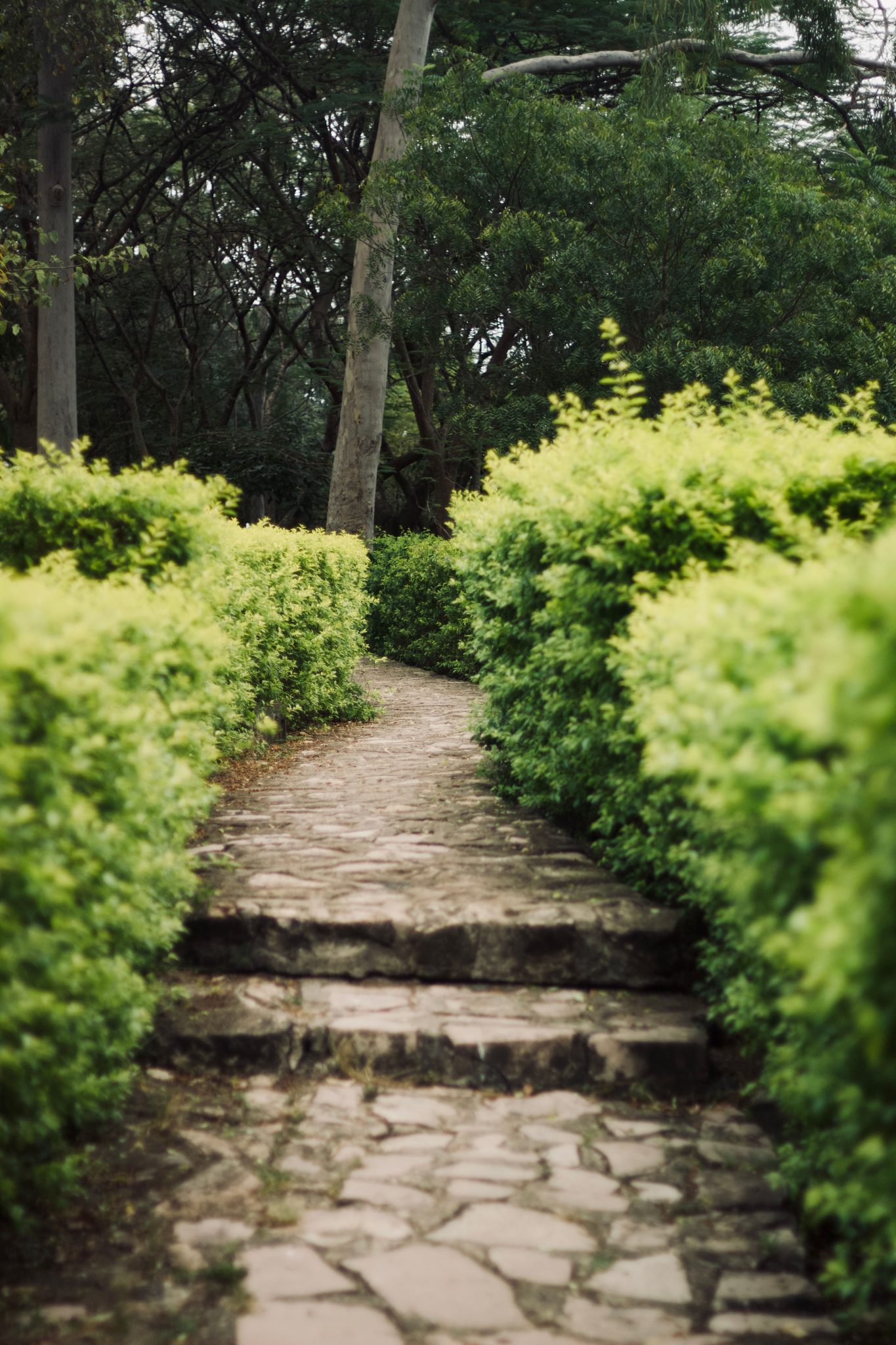
The hedges are, without a doubt, the defining element of this walkway. They transform a simple stone path into a formal, dramatic garden feature. The vibrant light green of the neatly trimmed hedges creates living walls that guide the eye and the visitor directly through the space. The hedges provide a soft, organic structure that contrasts beautifully with the hard, irregular texture of the stone, elevating the entire scene from a simple path to a grand entrance.
|
📋 Copy HEX 🔗 Share |
⭐ The One Thing
This kind of formal, hedge-lined path requires significant space. For the hedges to grow to the full, dense state shown here, you need at least 3-4 feet of width on *each side* of the walkway. With a path width of 4 feet, you’re looking at a total required width of 10-12 feet. This is a statement look best suited for larger properties where it can serve as a main artery, connecting a driveway to a front door or a house to a detached garden room. In a small space, it would feel overwhelming.
17. Japanese-Inspired Garden with a Gravel and Stone Path
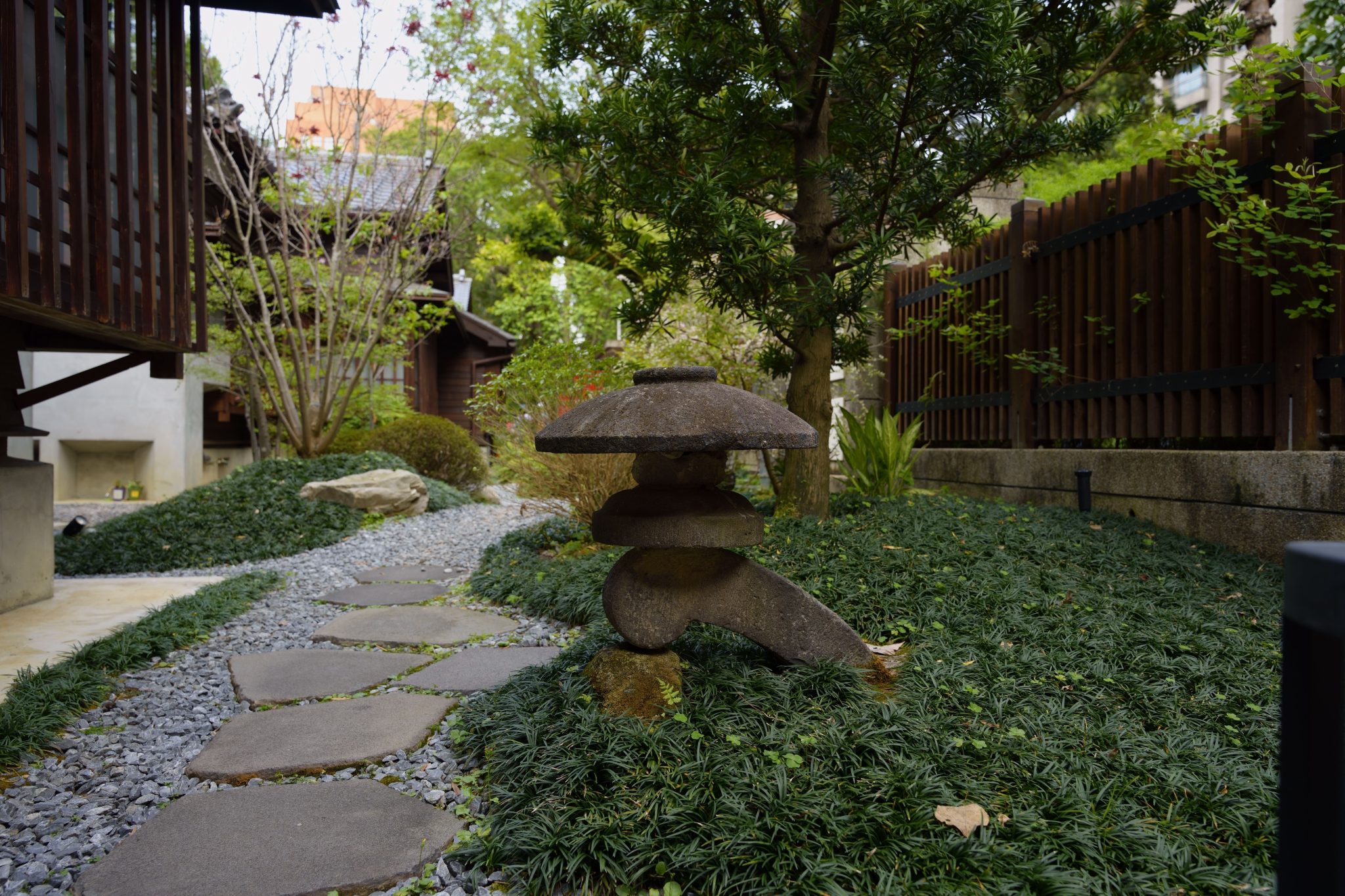
Japanese garden design principles are surging in popularity as homeowners seek to create tranquil, meditative outdoor spaces. This walkway is a perfect example of the trend. It’s not just a way to get from A to B; it’s designed to encourage mindfulness. The irregular stepping stones require you to watch your step, the raked gravel provides a sense of order and calm, and the stone lantern acts as a sculptural focal point. It’s a style that embraces nature, simplicity, and serenity, which is something many people are craving in 2026.
|
📋 Copy HEX 🔗 Share |
🔥 Trending Context
The formula for this serene look is about balance and natural materials: 40% raked gravel ground plane + 30% irregularly placed natural stones + 20% low, mounding green groundcover + 10% sculptural elements (like the lantern). The key is the interplay between the smooth, uniform gravel and the rough, organic shapes of the stones and plants. The color palette is deliberately restrained—mostly grays, greens, and browns—to create a calming, non-distracting environment.
18. Charming Cottage Patio with Flagstones Set in Grass
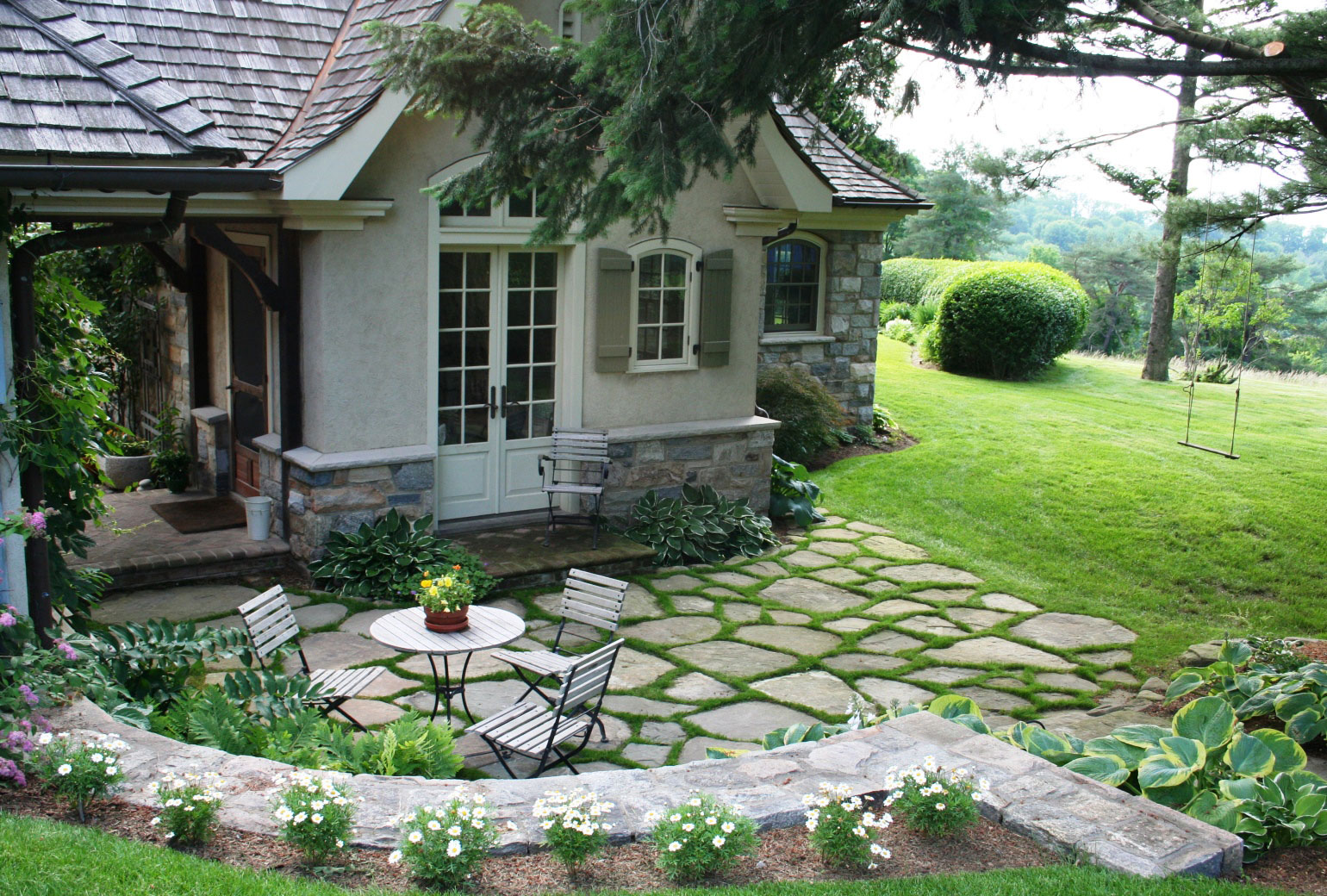
A flagstone-in-lawn patio looks incredibly charming, but it comes with a maintenance trade-off. Mowing can be tricky, and you’ll almost certainly need to use a string trimmer around the edges of every single stone to keep it looking neat. Grass will also try to creep over the edges of the stones. This isn’t a low-maintenance choice. It requires regular, detailed attention to keep it from looking overgrown and messy. However, for those who don’t mind the upkeep, the soft, romantic look is hard to beat.
|
📋 Copy HEX 🔗 Share |
🎯 What Makes It Work
The grass growing between the stones is the one thing that gives this patio its quaint, storybook character. If you were to replace the grass with gravel or sand, the entire feel would shift from a soft, integrated part of the garden to a harder, more defined patio space. The green grass softens the hardscape, making the stones feel as if they’ve been there for a century. It’s the key to achieving that relaxed, ‘English cottage’ aesthetic and a great alternative to the gravel-filled design in Idea #14.
19. Classic Red Brick Walkway with a Gentle Curve
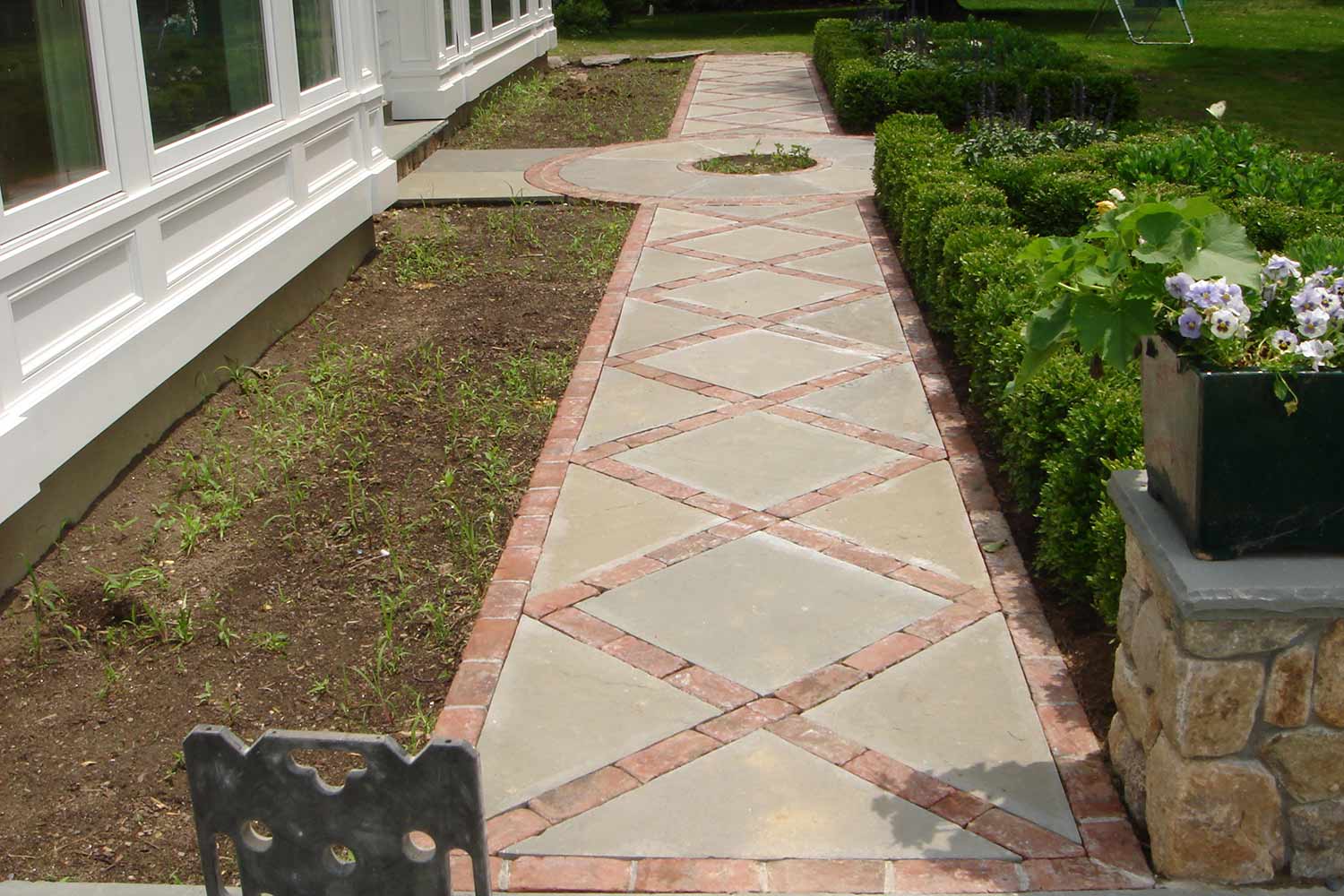
When laying a brick path, the foundation is everything. Don’t just lay bricks on dirt. For a path that will last for decades and remain level, you must excavate 4-6 inches. Then, add a 3-4 inch layer of compacted paver base (crushed stone aggregate) and a 1-inch layer of paver sand on top. This creates a stable, well-draining foundation that will prevent the bricks from heaving during freezes or sinking into the mud. It’s the unseen work that makes all the difference.
|
📋 Copy HEX 🔗 Share |
📐 Style Math
This design’s timeless appeal comes from its use of classic, warm materials and simple, elegant lines. The reddish-brown brick is a traditional choice that brings warmth and a sense of history to the landscape. Setting the bricks in a running bond pattern (the most common pattern) creates a simple, strong visual line. The gentle curve prevents the path from feeling too rigid or formal, allowing it to blend naturally with the surrounding green lawn and garden beds. It’s a tried-and-true formula that never goes out of style.
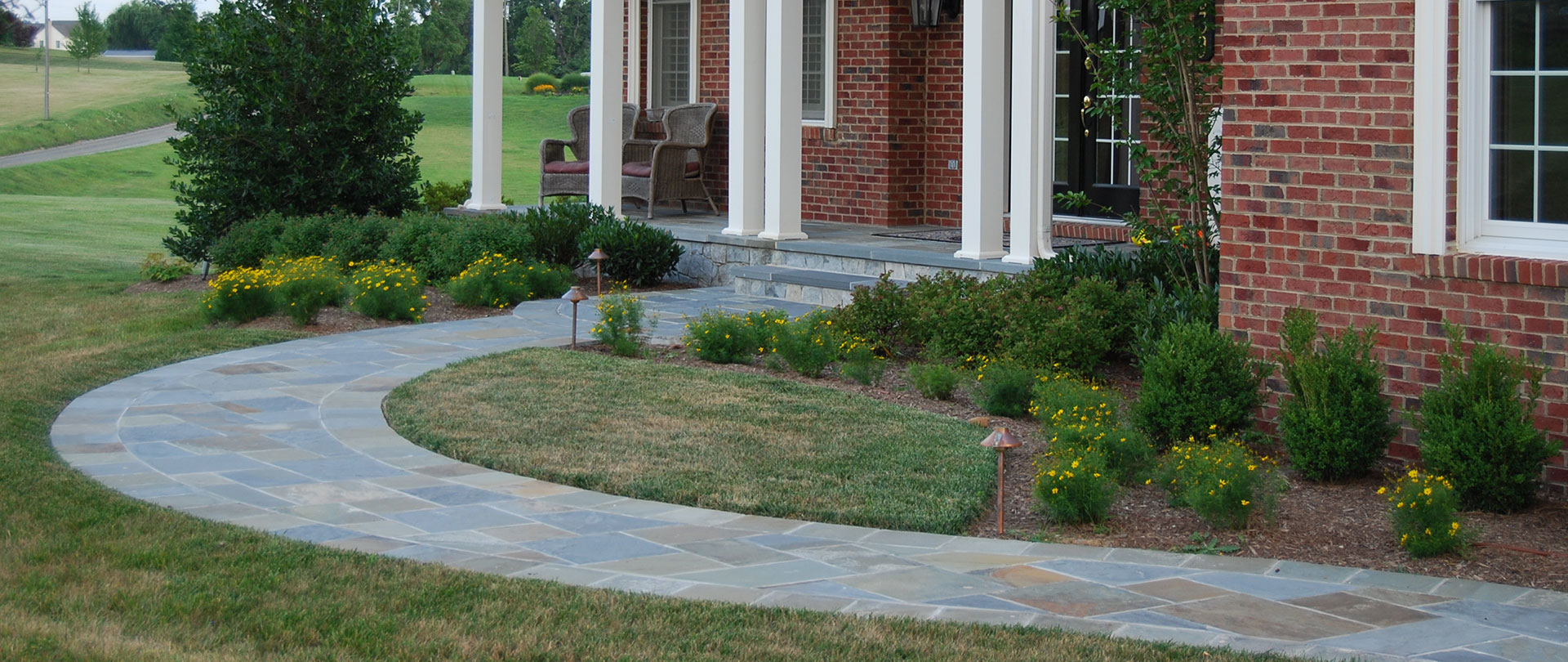
20. Curving Bluestone Walkway Leading to a Brick Porch
This is a significant investment, so it pays to plan ahead. Here’s what to confirm before you break ground:
- Have you had your utility lines marked? You must call 811 before any digging project to avoid hitting buried gas, water, or electric lines.
- Does the path have a slight, almost imperceptible-to-the-eye slope away from the house foundation for proper drainage?
- Have you selected a path lighting system that is rated for outdoor, in-ground use and provides a warm, welcoming light rather than a harsh, blue-toned glare?
|
📋 Copy HEX 🔗 Share |
🧹 Maintenance Reality
Bluestone is a premium material, and its cost reflects its beauty and durability. Here’s a realistic look at the budget for a professionally installed path of this caliber:
- Main Material (Irregular Bluestone Pavers): $2,500 – $5,000
- Lighting (Professional-grade low-voltage system): $800 – $1,500
- Labor & Installation (Base prep, laying, etc.): $2,000 – $4,000
- Decor/Accessories (Mulch and plants): $500 – $1,200
- TOTAL: $5,800 – $11,700
Budget alternative: Use a high-quality stamped concrete that mimics the look of bluestone to cut the material and labor cost by 40-50%.
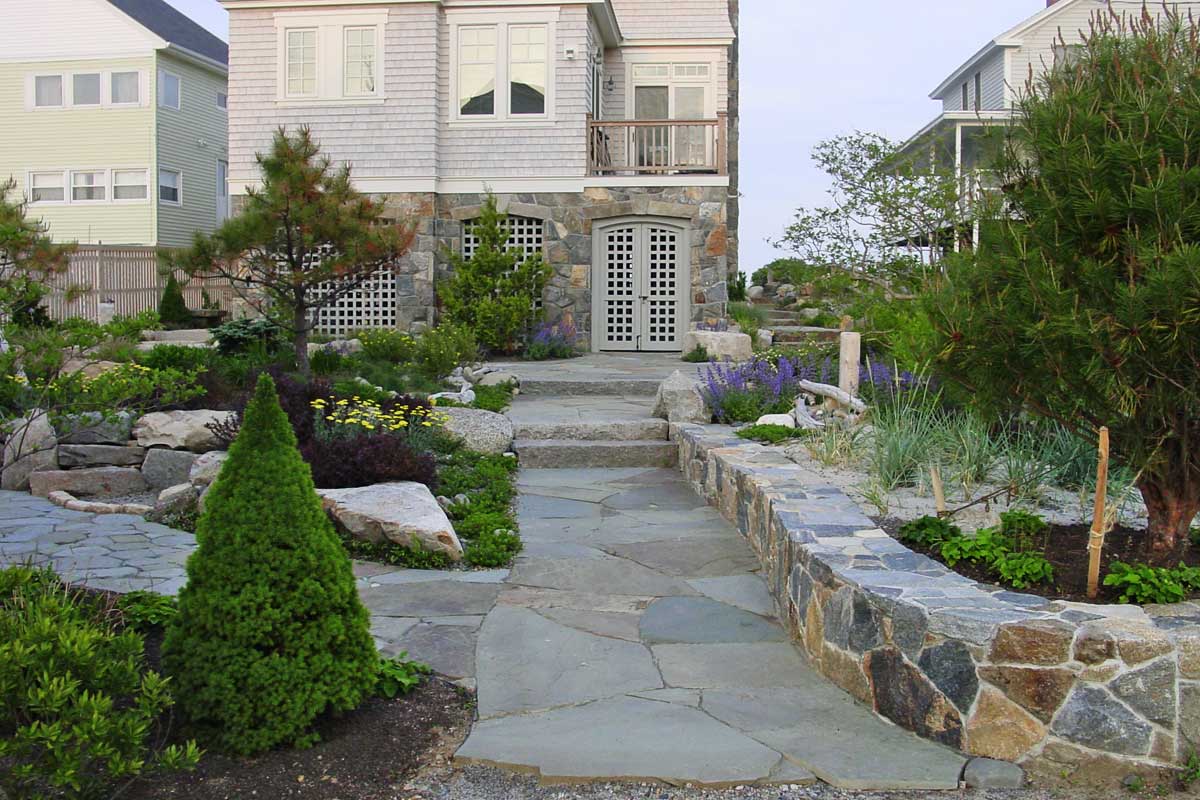
21. Flagstone Path and Steps with Natural Stone Retaining Walls
A project of this complexity, involving multi-level retaining walls and integrated steps, is best suited for medium to large properties with significant elevation changes. The retaining walls themselves require a footprint of at least 1-2 feet at their base, plus the walkway width of 4-5 feet. It’s a substantial installation designed to tame a challenging slope and turn it into a beautiful, functional feature. This would be overkill for a flat yard but is a perfect solution for a hillside home.
|
📋 Copy HEX 🔗 Share |
💡 Designer Tip
The stacked stone retaining walls are the element that makes this entire design possible. Without them, the steep slope would be unusable and prone to erosion. The walls create level terraces for the lush plantings and provide the necessary structure to support the flagstone path and steps. They are the functional bones of the entire landscape, but their beautiful, multi-colored natural stone also makes them a primary aesthetic feature, adding texture, color, and a sense of permanence.
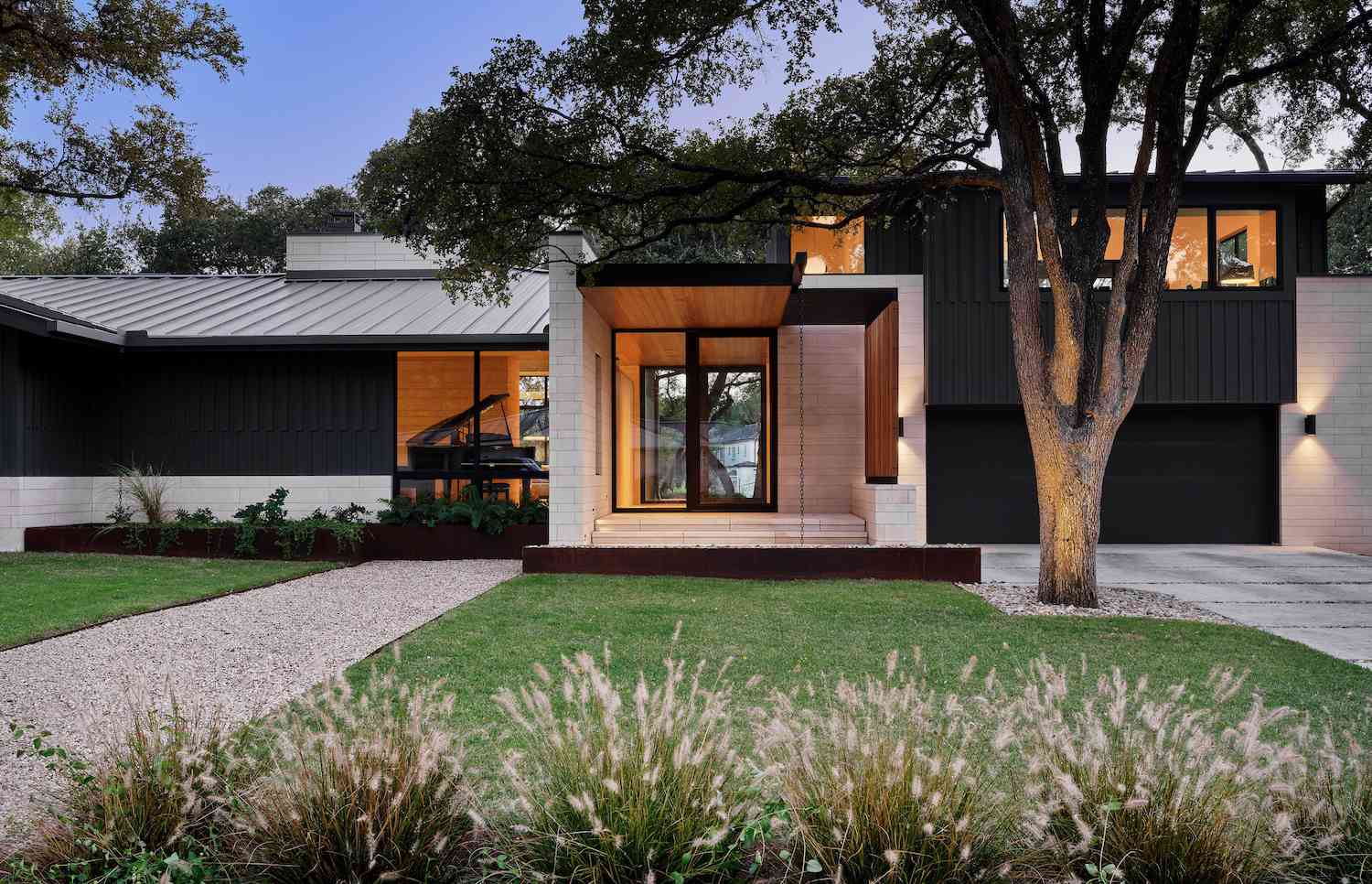
22. Modern House with a Minimalist Gray Gravel Walkway
The power of this design is in its stark simplicity and material contrast. The light gray gravel path creates a clean, straight line that cuts through the organic, vibrant green of the manicured lawn. This geometry is echoed in the architecture of the house itself, with its dark vertical siding and light stone facade. The walkway acts as a visual bridge between the landscape and the home, using a minimalist language that feels intentional and sophisticated. It proves that a path doesn’t need to be ornate to make a strong statement.
|
📋 Copy HEX 🔗 Share |
⚠️ Real Talk
A gravel path is beautifully simple, but it’s not zero-maintenance. To keep that crisp, clean edge, you will need to periodically rake stray stones back into place. Over time, the gravel will compact, and you may need to ‘top up’ the path with a few new bags every few years to keep it looking fresh and full. Most importantly, a high-quality, heavy-duty landscape fabric underneath is absolutely essential to prevent weeds from taking over and turning your minimalist path into a messy chore.
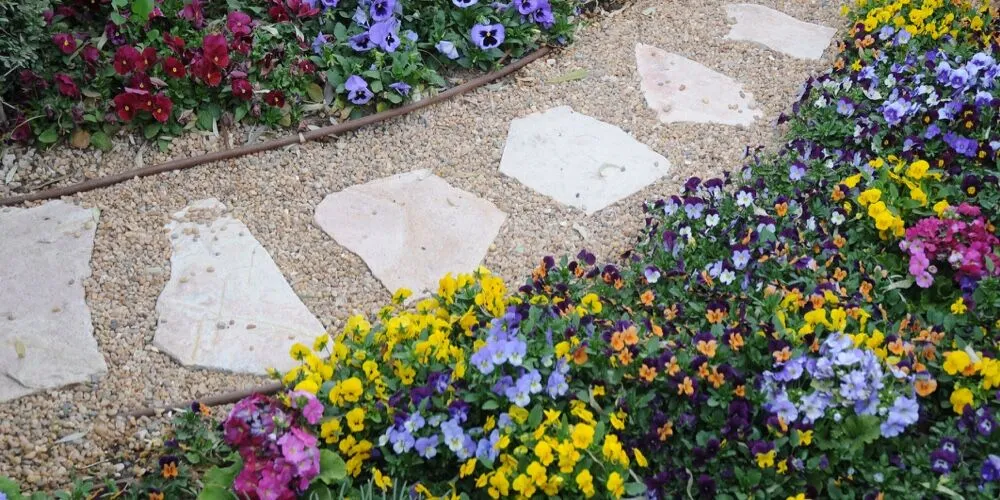
23. Irregular Beige Stepping Stones in a Gravel Path with Pansies
This vibrant cottage look is all about texture and color. The formula: 30% large, smooth stepping stones + 40% small, textured gravel + 30% bold, colorful flowers. The size and texture contrast between the big stones and the small gravel is essential. The flowers then provide a burst of color that brings the neutral path to life. The key is to pack the flowers in densely; a sparse planting would lose the effect. This is a great contrast to the more minimalist gravel path in Idea #22.
|
📋 Copy HEX 🔗 Share |
✅ Before You Start
To get this look for less, focus on smart material sourcing. Look for ‘flagstone remnants’ or ‘patio shorts’ at your local stone yard—these are the smaller, irregular pieces left over from larger jobs, and they’re often sold by the pound at a much lower price. For the filler, choose the most common and inexpensive type of pea gravel available in your region. The flowers are your secret weapon: a few flats of inexpensive annuals like these pansies can fill a large area with color for under $50.
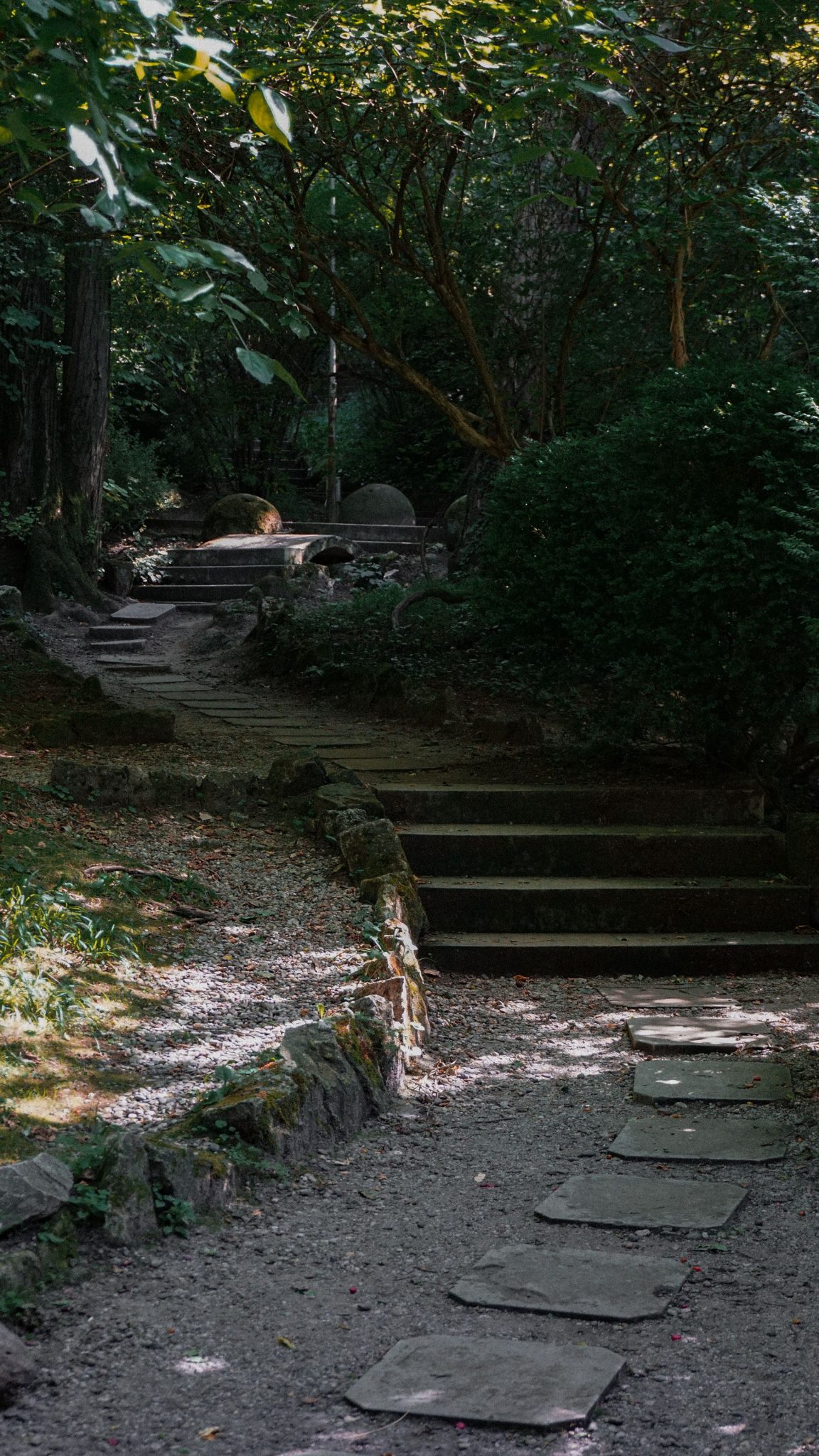
24. Forest Garden Path with Natural Stone Steps and Gravel
Creating a path in a dense, wooded area presents unique challenges. Tree roots are a major one; you cannot cut through large structural roots without risking the health of the tree. This often means the path has to meander and adapt to the existing root systems. You also need to accept that a shaded path will be a constant battle against leaf litter and potential moss or algae growth, which can make stones slippery. This is a style that embraces a certain amount of wildness; it will never be perfectly pristine.
|
📋 Copy HEX 🔗 Share |
🔧 How-To Brief
When building a path in a shady, natural area, use materials that look like they belong there. The combination of gray gravel and irregular gray stone steps seen here is perfect because it mimics the colors and textures of natural rock outcroppings. Avoid anything too perfect or manufactured, like brightly colored concrete pavers or pristine white marble chips. The goal is to make the path look like it was uncovered rather than installed. Let the site guide your material choices.
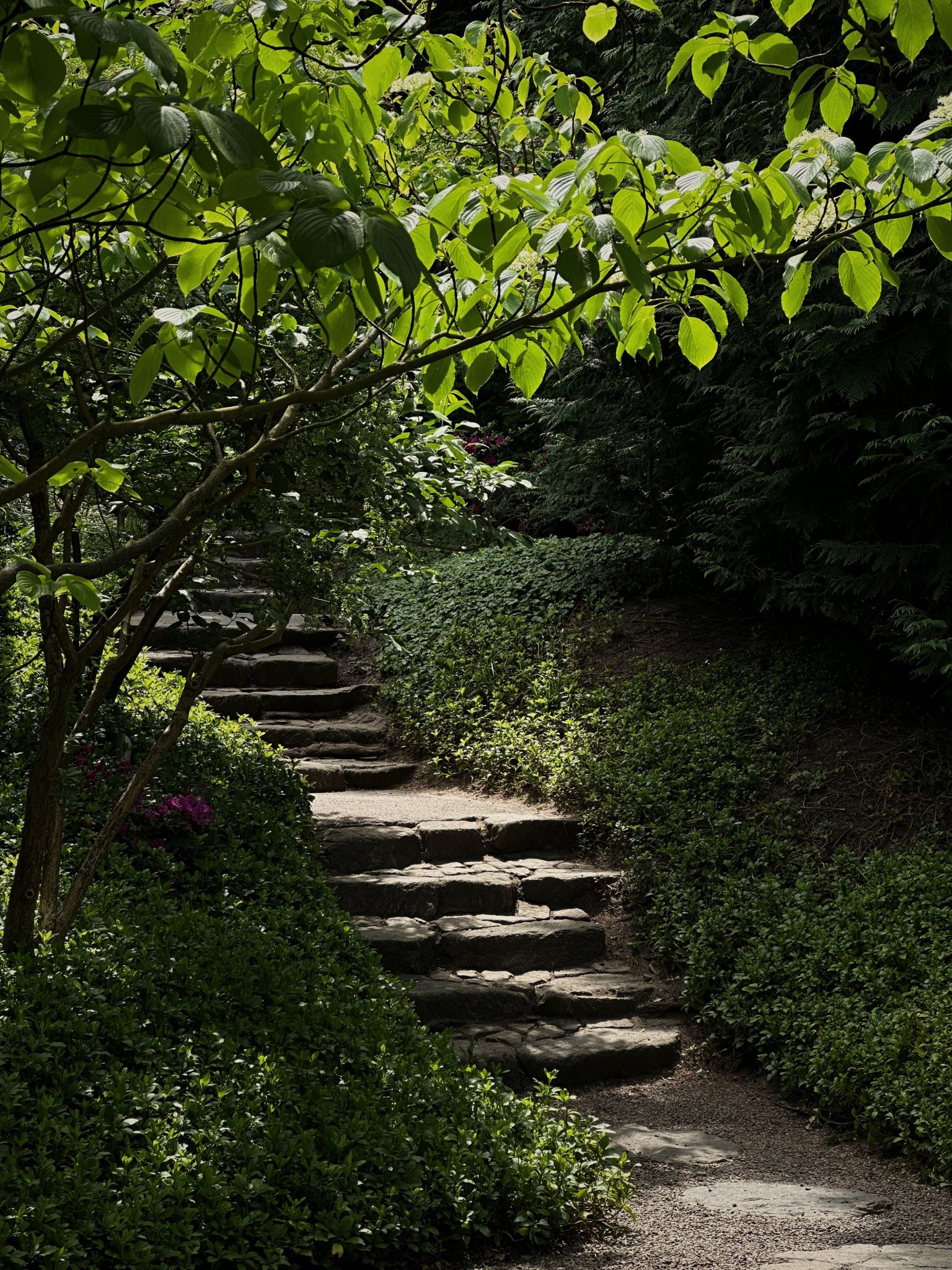
25. Shaded Stone Staircase Through a Lush, Wild Garden
The single most important element here is the dappled sunlight filtering through the dense tree canopy. It’s not a material you can buy, but it’s what gives the scene its magical, serene quality. The interplay of light and shadow highlights the textures of the stone and foliage, and creates a dynamic, changing environment. Without the overhead tree canopy and the resulting light patterns, this would just be a set of stone steps. With it, it’s an experience.
|
📋 Copy HEX 🔗 Share |
💰 Budget Breakdown
This design works because it embraces imperfection and the beauty of nature. The stone steps are uneven and rustic, the foliage is lush and slightly overgrown, and patches of gravel and earth are visible. This lack of rigid formality is what makes it feel so inviting and mysterious. It’s a powerful example of the design principle of ‘Wabi-Sabi’—finding beauty in the imperfect, impermanent, and incomplete. It feels like a secret garden path you’ve just discovered.
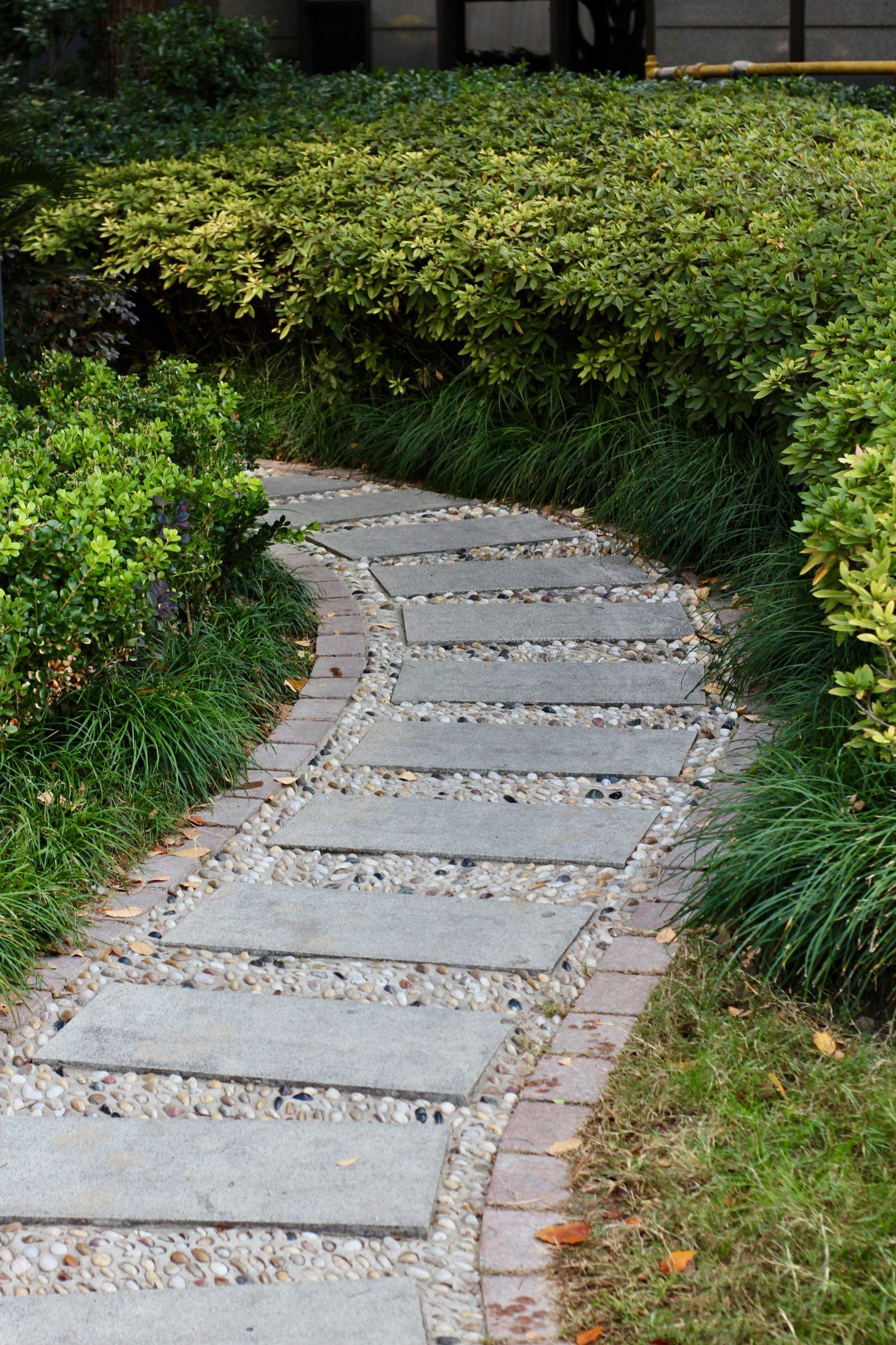
26. Curved Concrete Pavers with Pebble Infill and Brick Edging
A brick edge is a timeless way to define a walkway and contain materials like gravel. Here’s how to install one. Time: 4-6 hours for a 50ft path. Cost: $100-$200.
- Dig a trench along the edge of your path, about 6 inches deep and 4 inches wide.
- Add a 2-inch layer of paver sand to the bottom of the trench and tamp it level.
- Set your bricks in the trench, standing them on end or laying them flat depending on your desired look.
- Use a rubber mallet to tap them into place until they are level and snug against each other.
- Backfill the trench on both sides with soil or gravel to lock the bricks in place.
|
📋 Copy HEX 🔗 Share |
💸 Get This Look For Less
The combination of three different hardscaping materials—concrete pavers, river pebbles, and brick—means you’ll have a few different maintenance tasks. The concrete pavers may need occasional pressure washing to remove dirt and mildew. The pebbles, as in Idea #3, will collect leaves and may need to be cleared with a blower. The brick edging might need to be re-leveled every few years if it’s heaved by frost. While none of these tasks are difficult, it’s a path that requires more varied upkeep than one made of a single material.
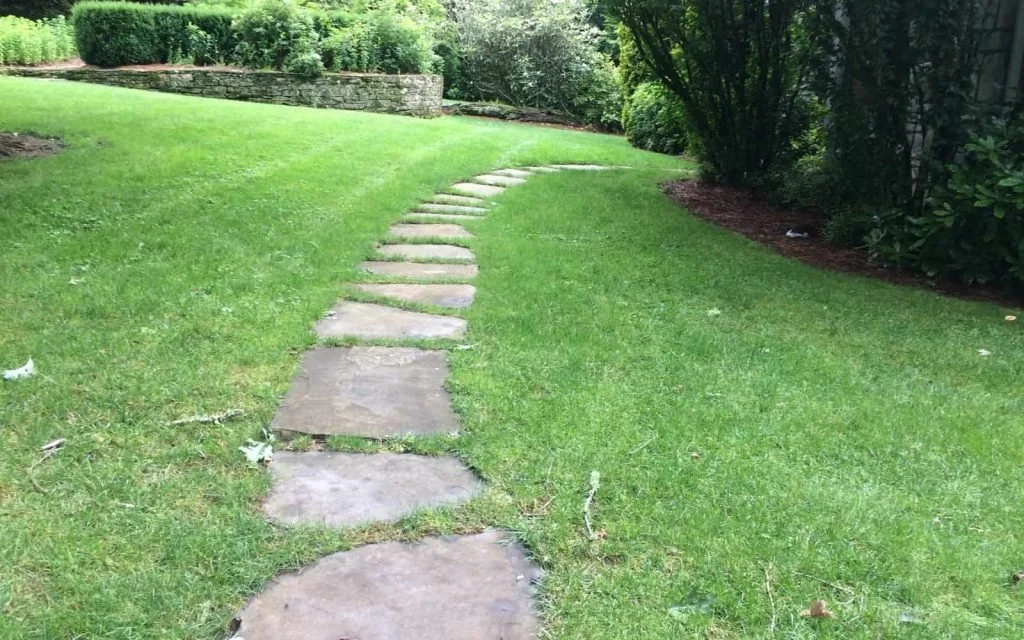
27. Gently Curving Stepping Stone Path Through a Green Lawn
The layout is just as important as the stones themselves. For a graceful, natural-looking curve, lay a garden hose on the ground and arrange it in the shape you want. This allows you to easily adjust the arc until it’s perfect. Then, use the hose as a guide for placing your stones. This simple trick prevents the awkward, jerky-looking curves that can happen when you just eyeball the placement. For a truly comfortable walk, the center of each stone should be about 22-26 inches from the center of the next.
|
📋 Copy HEX 🔗 Share |
📏 Scale Guide
This is a classic look that can be adapted for almost any budget. Large, quarried flagstones can be expensive. For a more affordable option, look for ‘concrete flagstone’ pavers at home improvement stores. These are concrete pavers that are molded and colored to mimic the look of natural stone but at a much lower price point—often $5-10 per stone instead of $30-50. From a distance, the effect is very similar, and you’ll save a significant amount of money.
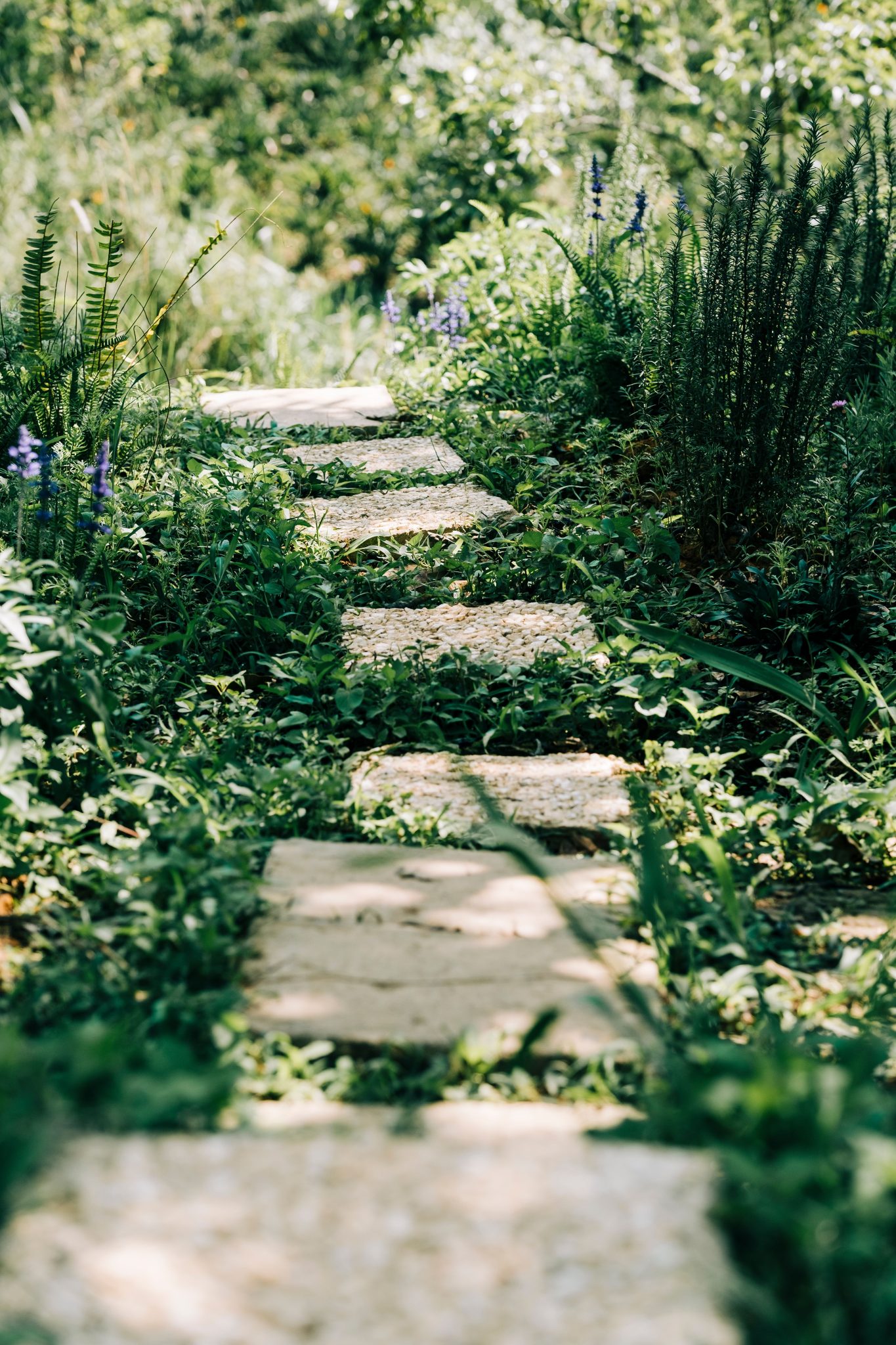
28. Textured Stepping Stone Path Through Abundant Foliage
The textured surface of the stepping stones is the key practical detail in this lush garden path. In a setting with such dense foliage, the ground is likely to be damp, and the stones can easily become slick with moisture or algae. The pebble-dash texture on these pavers provides crucial grip and slip resistance, making the path safer to walk on, especially in shade or after rain. A smooth-surfaced stone in this exact setting could be a significant safety hazard. This is a great example of choosing a material for both its look and its performance.
|
📋 Copy HEX 🔗 Share |
⭐ The One Thing
A path bordered this densely with plants requires a commitment to pruning. The foliage will constantly be trying to reclaim the walkway. To keep the path clear and accessible, you will need to trim back the encroaching leaves and stems every few weeks during the growing season. If you’re a low-maintenance gardener, this might not be the style for you. You could achieve a similar feel with less work by widening the path by another 6-8 inches on each side to give the plants more room.
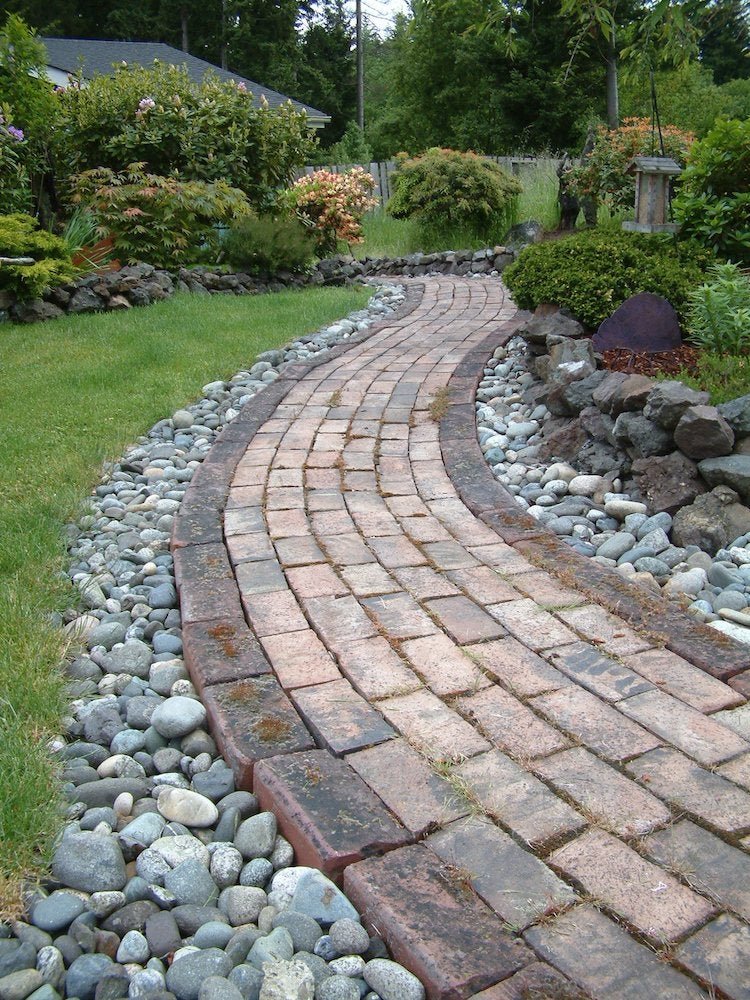
29. Curving Red Brick Walkway with River Rock Borders
This walkway is a masterclass in combining contrasting shapes and textures to create a harmonious look. The bricks are rectangular, man-made, and laid in a repeating pattern. The river rocks are rounded, natural, and randomly placed. This contrast is what creates the visual interest. The warm, reddish-brown of the brick also contrasts beautifully with the cool gray of the stones and the vibrant green of the lawn. It’s a compositionally balanced and aesthetically pleasing design.
|
📋 Copy HEX 🔗 Share |
🔥 Trending Context
The design formula here is simple and effective: 50% structured pathway + 30% organic border + 20% natural surroundings. The brick path provides a strong, defined core. The river rock border softens the transition from the hardscape of the path to the softscape of the lawn. The lush green lawn and trees form the final, natural frame. You could swap the materials—for example, a flagstone path with a mulch border—and as long as you maintain that 50/30/20 ratio, the balanced visual effect will remain.
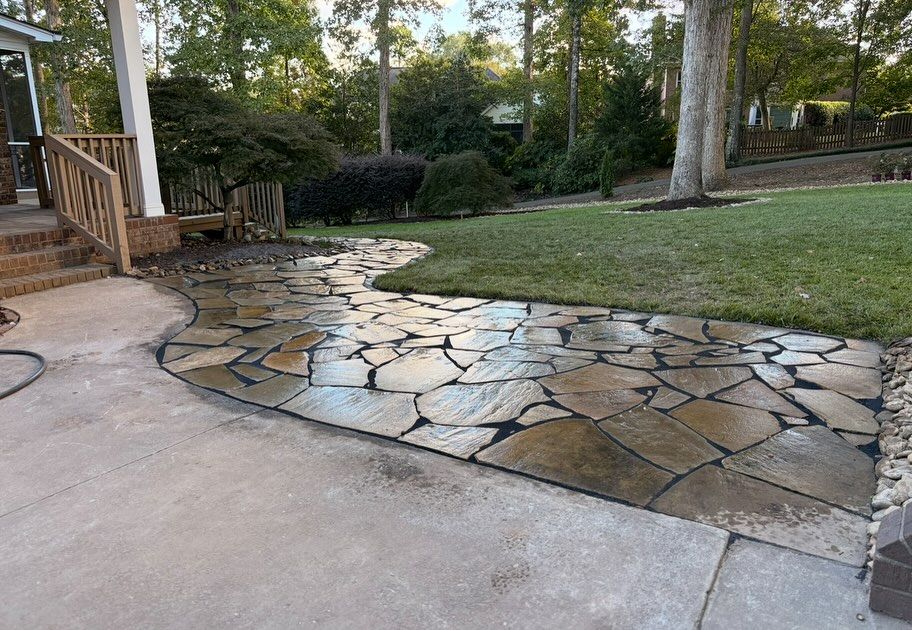
30. Curved Flagstone Walkway with Dark Contrasting Grout
The dark grout is, without a doubt, the element that makes this walkway stand out. Instead of trying to hide the gaps between the flagstones, the dark gray grout boldly outlines each irregular stone, turning the gaps into a key part of the design. This technique transforms a simple flagstone path into a graphic, almost mosaic-like feature. It adds a touch of modern definition to a rustic material, making the entire installation feel more intentional and high-end.
|
📋 Copy HEX 🔗 Share |
🎯 What Makes It Work
We’re seeing a big move toward ‘high-contrast’ and ‘defined-edge’ hardscaping in 2026. For a long time, the trend was to make grout and joints blend in and disappear. Now, designers are embracing them as a design element. Using a dark polymeric sand or mortar with lighter-colored pavers, as seen here, is a popular way to tap into this trend. It adds a layer of graphic detail and sophistication that feels very current. This is a great way to update a traditional material like flagstone.
Your Perfect Path Starts With a Single Step
Now that you’re armed with 30 ideas for a stunning stepping stone walkway, the only thing left to do is start planning. Whether you’re drawn to rustic flagstone or clean modern pavers, the right path can completely change the character of your yard. Go ahead and check your Pinterest boards — you probably have the perfect spot picked out already.