You know that feeling when you scroll past a fall flower arrangement on Pinterest and it just stops you in your tracks? It looks so effortless, so perfectly autumnal. But then trying to recreate it feels… less than perfect. We get it. That’s why we’ve gone through hundreds of options to find what truly works for 2026. This isn’t just another generic list; it’s a curated collection of 28 specific, achievable fall floral ideas, from simple Trader Joe’s bouquets to lush wedding-worthy centerpieces.
And stay until the end — we break down the most common mistakes that can ruin these looks. 📌 Save this to Pinterest for later — you’ll want to revisit these ideas.
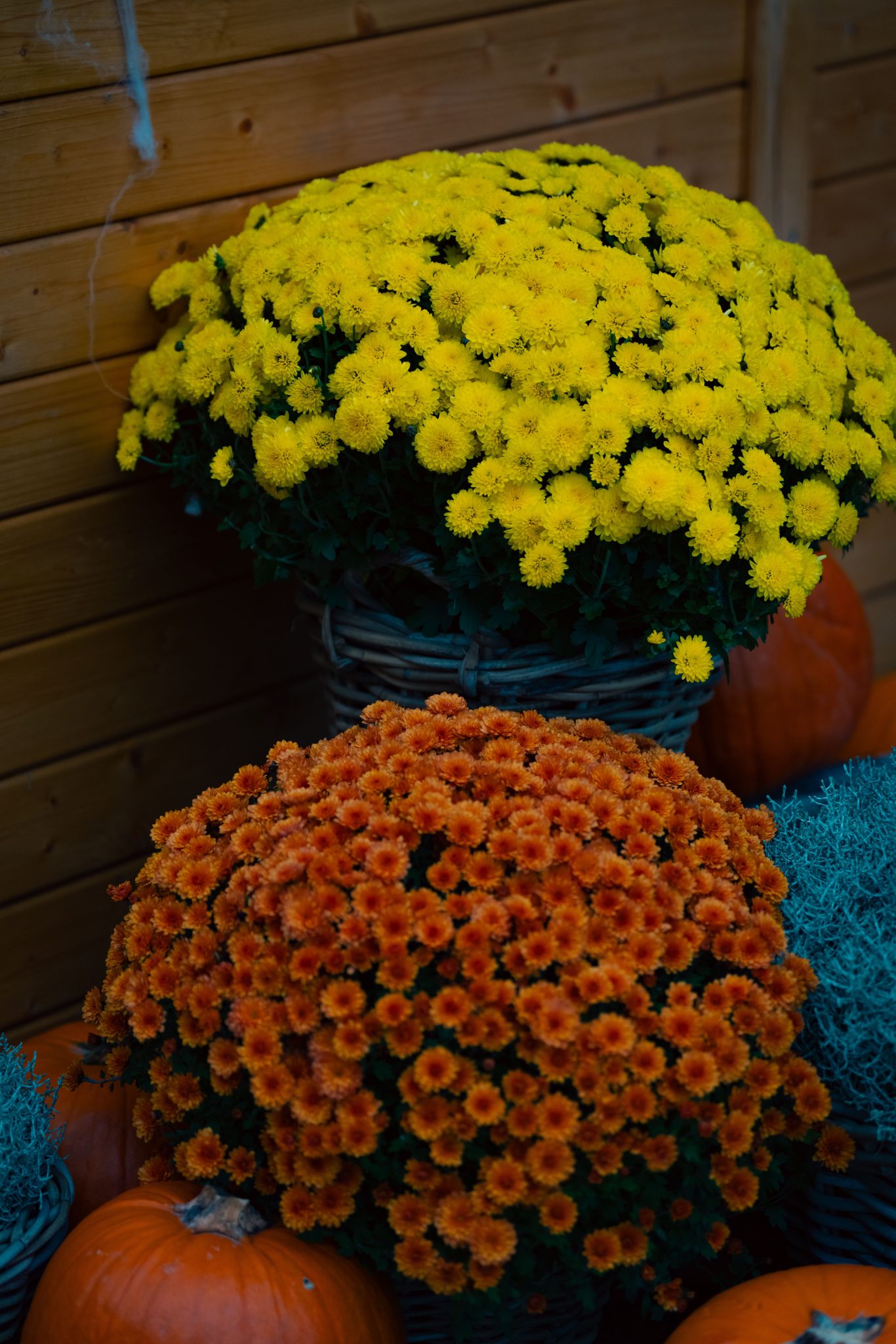
1. Frame an Entry with Layered Mums and Pumpkins
There’s a beautiful logic to this seemingly simple setup. It works because of repetition and variation in scale. The repetition of the chrysanthemum texture—one yellow, one orange—creates a cohesive look, while the different sizes of pumpkins scattered at the base add visual interest and prevent monotony. The natural textures of the woven baskets and the rustic wood paneling create a warm, tactile backdrop that makes the bright floral colors pop. It’s a classic for a reason: it hits all the right notes of harvest and home.
|
📋 Copy HEX 🔗 Share |
✅ Before You Start
Mums are hardy, but they are thirsty. For arrangements this dense, you’ll need to water them every other day, especially if they get any direct sun. Check the soil moisture by sticking a finger about an inch deep. The woven baskets look great, but they often lack drainage, which can lead to root rot. To prevent this, either keep the mums in their original plastic pots with drainage holes and place those inside the baskets, or drill a few small holes in the bottom of the baskets themselves before planting.
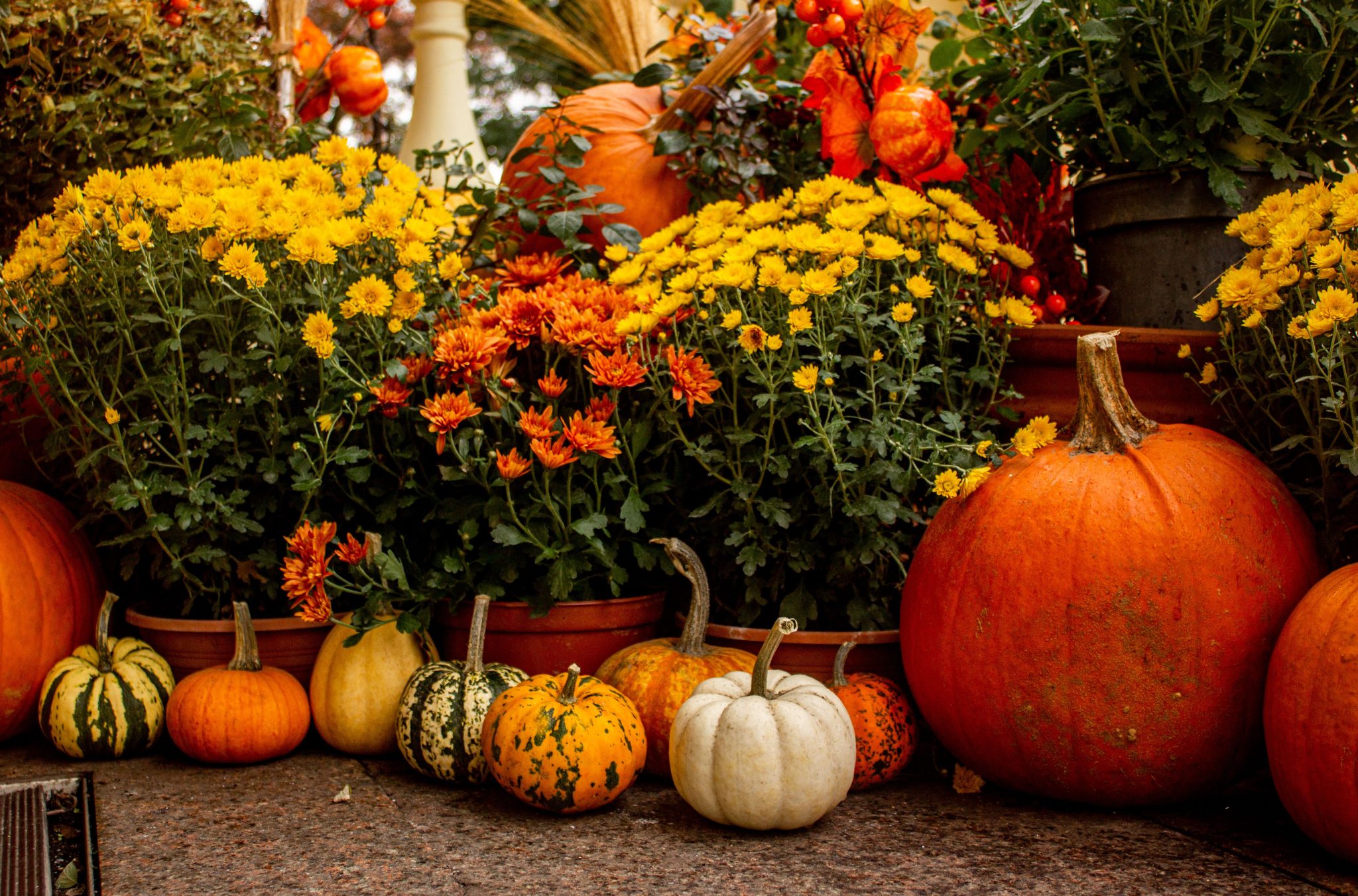
2. Create Abundance with a Layered Outdoor Mum Display
When arranging multiple potted plants, think in triangles. Place your largest pot (or a cluster of a few) as the highest point of the triangle, then arrange smaller pots cascading down and out from there. This creates a more dynamic and natural-looking display than just lining them up. For the pumpkins and gourds, nestle them right into the foliage and at the base of the pots. This technique, called “tucking,” makes the entire display feel like one cohesive, abundant unit rather than a collection of separate items.
|
📋 Copy HEX 🔗 Share |
💰 Budget Breakdown
This type of large, layered display is perfect for flanking a front door, accenting a porch corner, or creating a focal point along a walkway. It needs a footprint of at least 4-5 feet wide and about 2-3 feet deep to achieve this sense of abundance without looking cramped. It’s a more expansive version of Idea #1 and is best suited for a generous outdoor space. For smaller patios or balconies, consider scaling down to just one large mum and a handful of smaller gourds.
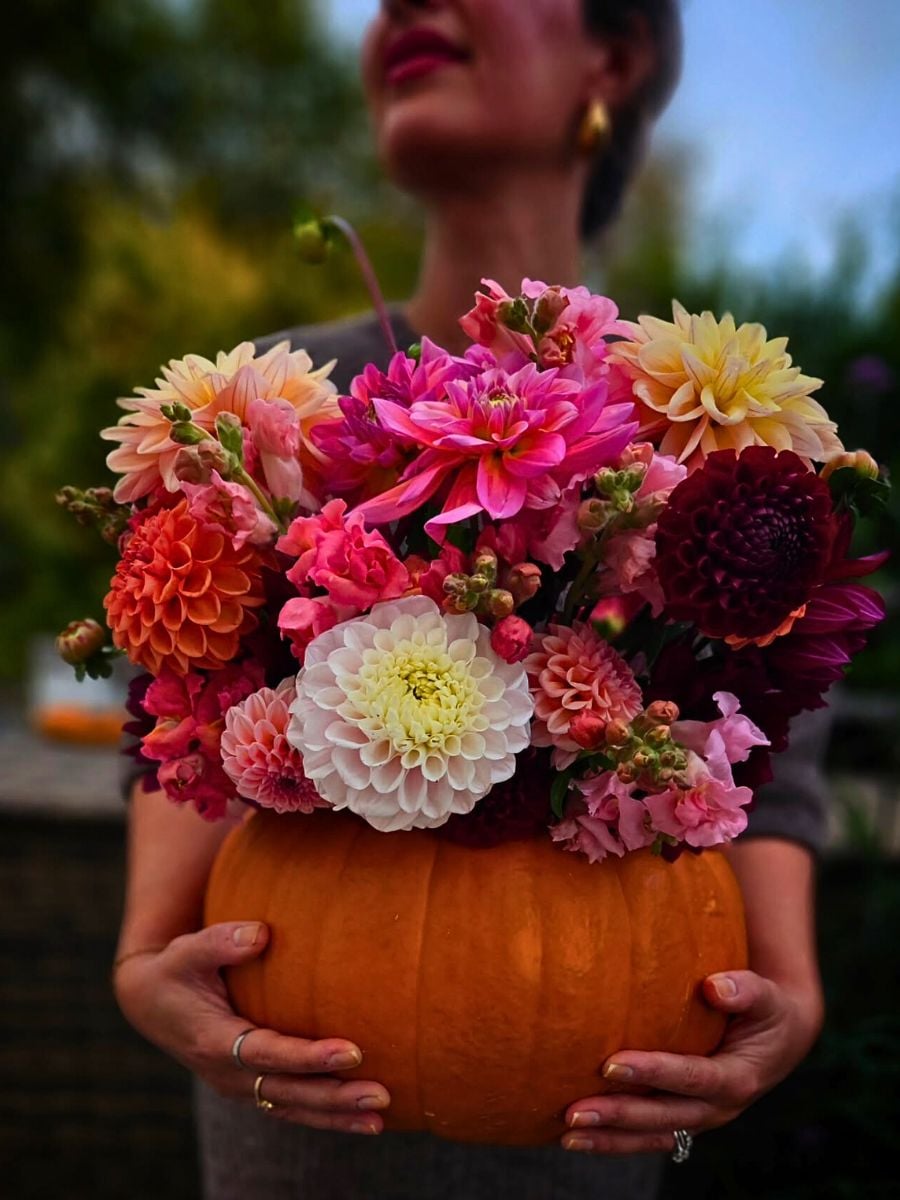
3. Arrange Fresh Fall Dahlias in a Real Pumpkin Vase
Making a pumpkin vase is easier than it looks and makes a huge impact. Here’s a quick guide:
- Prep the Pumpkin: Choose a pumpkin that sits flat. Cut a wide circle around the stem, just like carving a jack-o’-lantern.
- Hollow it Out: Scoop out all the seeds and fibrous strings until the inside is clean.
- Insert a Vessel: Place a glass jar or a small plastic container inside the pumpkin. This is the most important step! It holds the water and prevents the pumpkin from getting waterlogged and rotting quickly.
- Add Water & Flowers: Fill the container with water and your floral food, then arrange your beautiful dahlias and other fall stems.
This project takes about 20 minutes, and the main cost is the flowers themselves.
|
📋 Copy HEX 🔗 Share |
💡 Designer Tip
Let’s be honest: a real pumpkin vase has a short shelf life. You can expect your pumpkin to last about 5 to 7 days before it starts to soften and decay, especially indoors. To prolong its life, you can wipe the inside of the pumpkin with a bit of petroleum jelly or a bleach solution before putting the vase inside, which slows down microbial growth. Keep it in a cool spot away from direct sunlight. It’s a stunning, but temporary, showstopper.
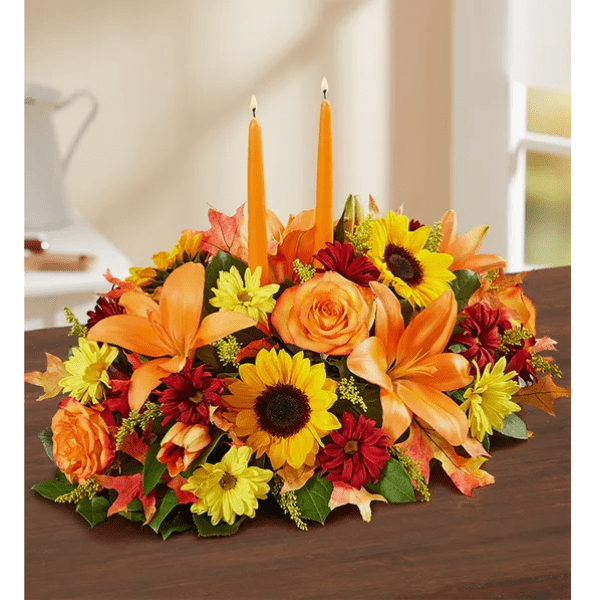
4. A Warm Centerpiece with Lilies, Sunflowers, and Taper Candles
The single element that elevates this entire arrangement is the pair of tall, lit taper candles rising from the center. Without them, it’s a lovely, full fall centerpiece. With them, it’s an event. The candles add height, a warm glow, and a sense of occasion. They draw the eye upward and then back down to the flowers, creating a dynamic energy. The flickering light catches the rich tones of the orange lilies and dark red mums, making the whole tablescape feel alive and incredibly inviting. It transforms the arrangement from decoration into an atmosphere.
|
📋 Copy HEX 🔗 Share |
📏 Scale Guide
You can get this warm, candlelit vibe for a fraction of the cost. Skip the florist and head to Trader Joe’s or a local grocery store. Here’s the breakdown:
- Sunflowers & mixed mums: $15-$20
- A bunch of fall-colored filler (like solidago or safflower): $5
- Taper candles & holders: $10 from a craft store or Target.
- Green floral foam block: $5
For around $35, you can create a centerpiece with the same cozy, abundant feel. The key is to pack the flowers tightly into the foam for a lush look.
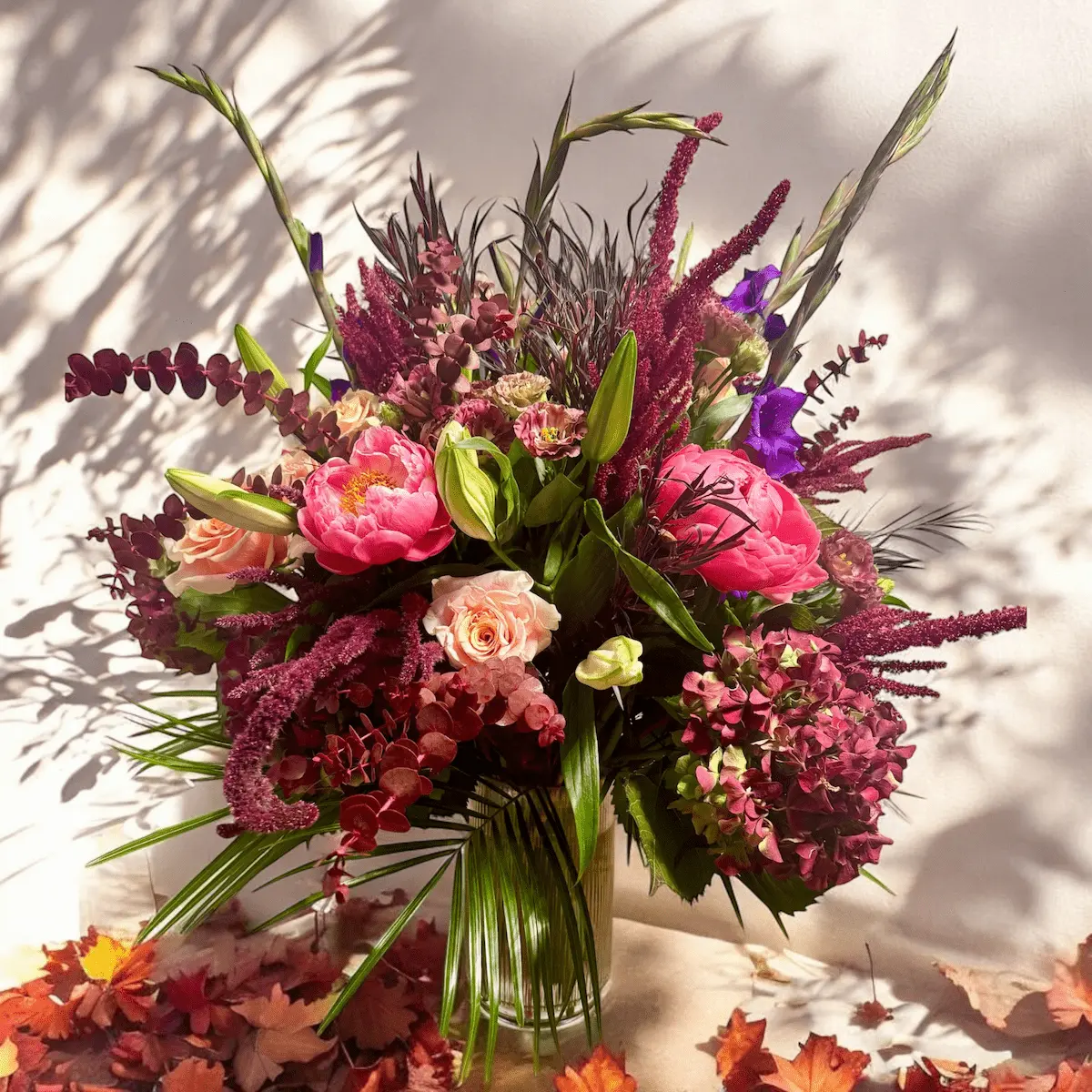
5. Lush Peonies and Roses in a Crimson and Pink Palette
This arrangement’s dramatic look comes from a smart color formula: 50% deep, moody reds (hydrangeas, amaranth) + 40% vibrant and soft pinks (peonies, roses) + 10% dark, contrasting greens. This creates a rich, layered effect that feels autumnal without using any orange or yellow. You could swap the peonies for dahlias or the hydrangeas for coxcomb, as long as you keep the color percentages similar. The key is the high-contrast pairing of deep crimson with bright, lively pink against a dark green base.
|
📋 Copy HEX 🔗 Share |
⭐ The One Thing
When working with top-heavy flowers like peonies and hydrangeas, creating a “grid” at the mouth of your vase is a game-changer. Use clear floral tape to create a checkerboard pattern across the opening of the glass vase. This gives you small sections to place your stems into, providing structure and support. It prevents the heavy blooms from all slumping to one side and helps you build a fuller, more rounded shape. It’s a simple trick that makes a huge difference in the final result.
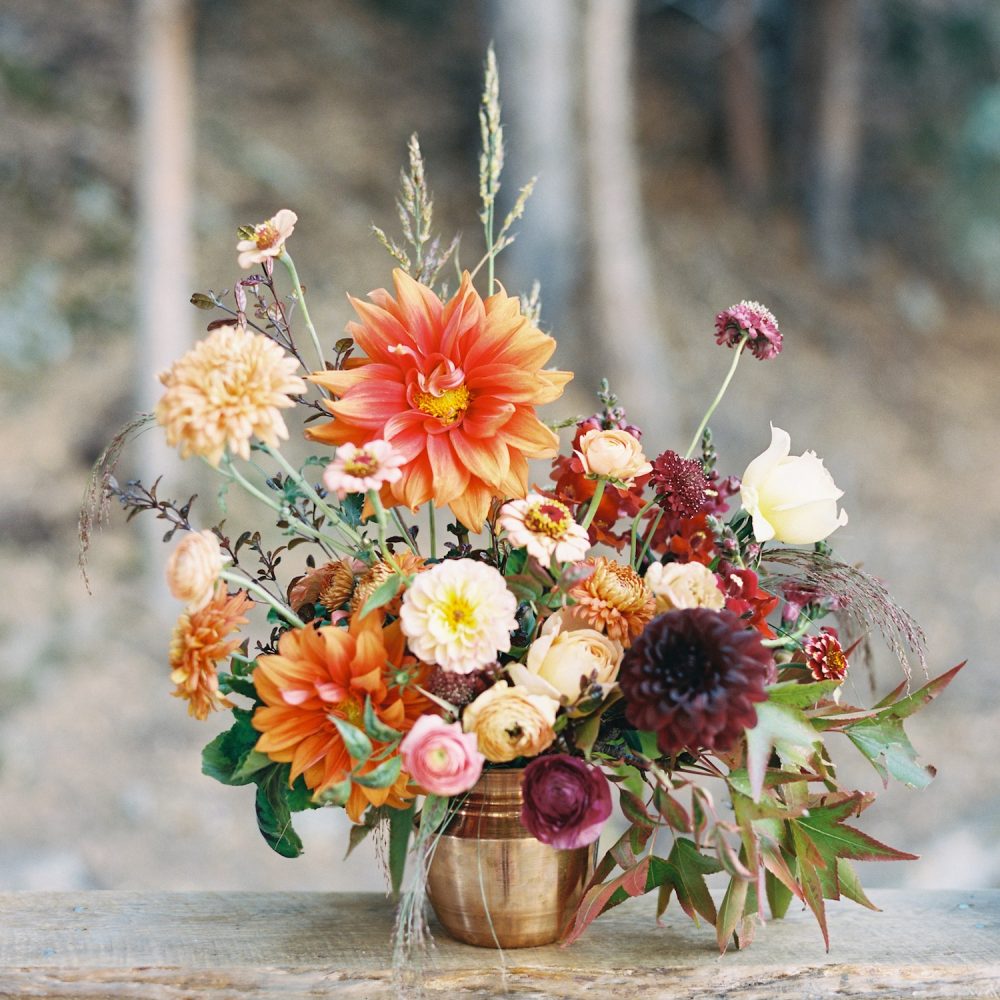
6. Textured Fall Dahlias in a Coppery Metal Vase
Texture is the secret hero of this arrangement. The success of this look isn’t just about the color, but the interplay of different surfaces. You have the velvety petals of the burgundy dahlia, the spikier form of the orange dahlia, the wispy, airy quality of the dried grasses, and the hammered, reflective surface of the copper-toned vase. This combination engages the eye and feels incredibly rich and layered. The distressed wood surface below adds yet another layer of texture, completing the rustic-yet-refined aesthetic.
|
📋 Copy HEX 🔗 Share |
🎯 What Makes It Work
We’re seeing a huge move away from perfectly smooth and polished decor, and this arrangement taps right into that trend. The focus on natural textures—dried grasses, hammered metal, distressed wood—speaks to a broader desire for authenticity and a connection to the natural world. This “perfectly imperfect” style, which embraces the textures of dried and preserved elements, has serious staying power because it feels more personal and less mass-produced than overly pristine floral designs. Compare this to the deep tones in Idea #28 for another take on rich, textured arrangements.
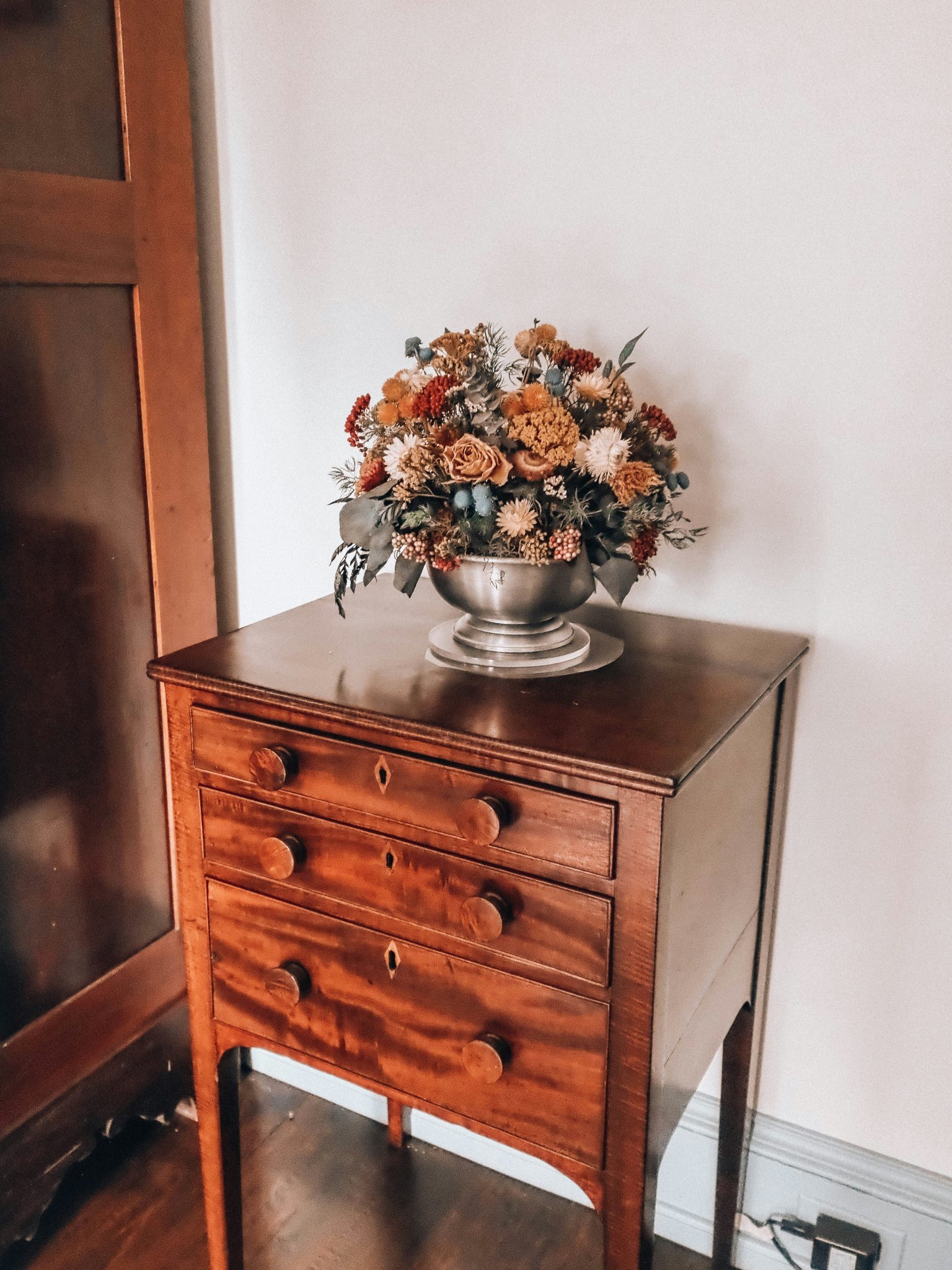
7. Muted Autumn Florals in a Vintage Silver Bowl
The silver-toned bowl is the anchor of this entire vignette. If you swapped it for a glass vase or a ceramic pot, the look would lose its vintage charm and sense of history. The polished, slightly formal shape of the footed bowl creates a beautiful tension with the rustic, muted tones of the dried and preserved florals. It’s this contrast—formal vessel, informal arrangement—that makes the design so compelling. It feels like a piece that has been curated over time, not just assembled for a season.
|
📋 Copy HEX 🔗 Share |
🔧 How-To Brief
This is an ideal arrangement for a smaller, dedicated space like a side table, an entryway console, or a dresser. The entire vignette—table and arrangement—is about 3 feet wide. Because of its contained size and muted palette, it won’t overwhelm a small room. However, it needs vertical space to breathe; placing it on a surface that is at least 30-36 inches high, like the wooden side table shown, allows it to be seen at eye level and prevents it from feeling squat or lost in the room’s composition.
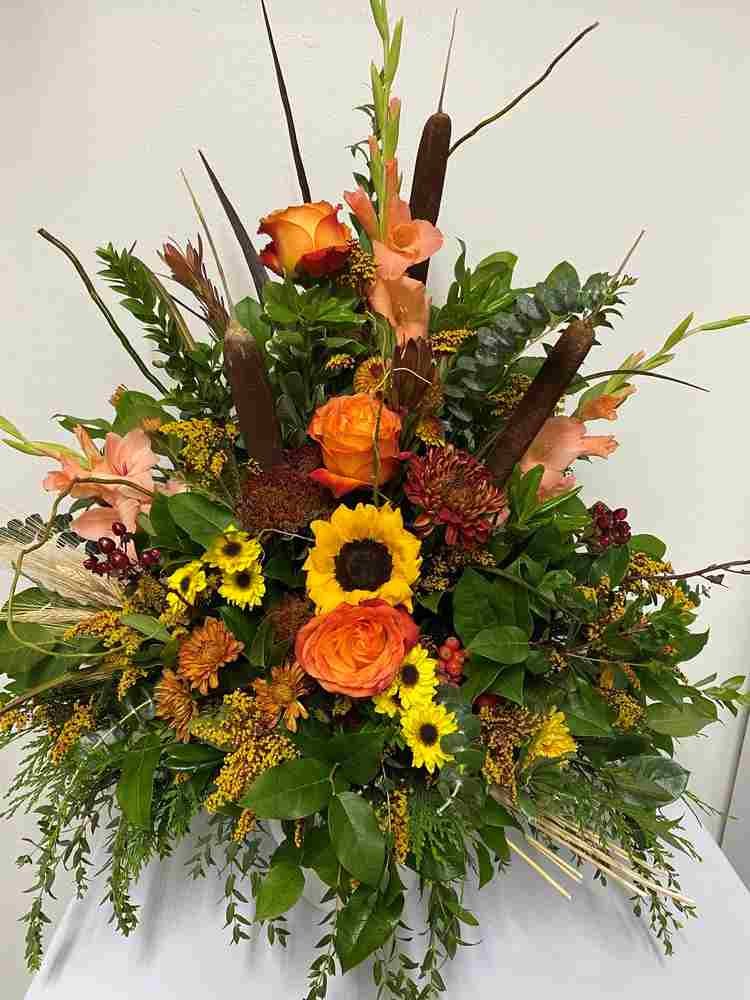
8. A Bountiful Arrangement of Sunflowers, Roses, and Cattails
To recreate this large, show-stopping arrangement from a florist, you’d be looking at a significant investment. Here’s a general estimate:
- Main Flowers: (Roses, Sunflowers, Gladioli) – $80 – $120
- Accent Elements: (Cattails, Berries, Wheat) – $30 – $45
- Foliage & Fillers: (Assorted Greens) – $25 – $40
- Vase & Labor: – $50 – $75
- TOTAL: $185 – $280
Budget alternative: Build this look over time. Start with grocery store sunflowers and roses, then add foraged cattails and dried grasses from a craft store to get 80% of the look for about 60% less.
|
📋 Copy HEX 🔗 Share |
🔥 Trending Context
An arrangement this large and dense requires a sturdy, heavy vase with a wide base. A lightweight or narrow-necked vase will not be able to support the weight and height of the gladioli and cattails, creating a serious tipping hazard. Also, be aware of pollen. Sunflowers and lilies (if you substitute) are notorious for dropping pollen that can stain tablecloths and clothing. You can gently remove the pollen-dusted anthers from the flowers with a tissue as soon as they open to minimize the mess.
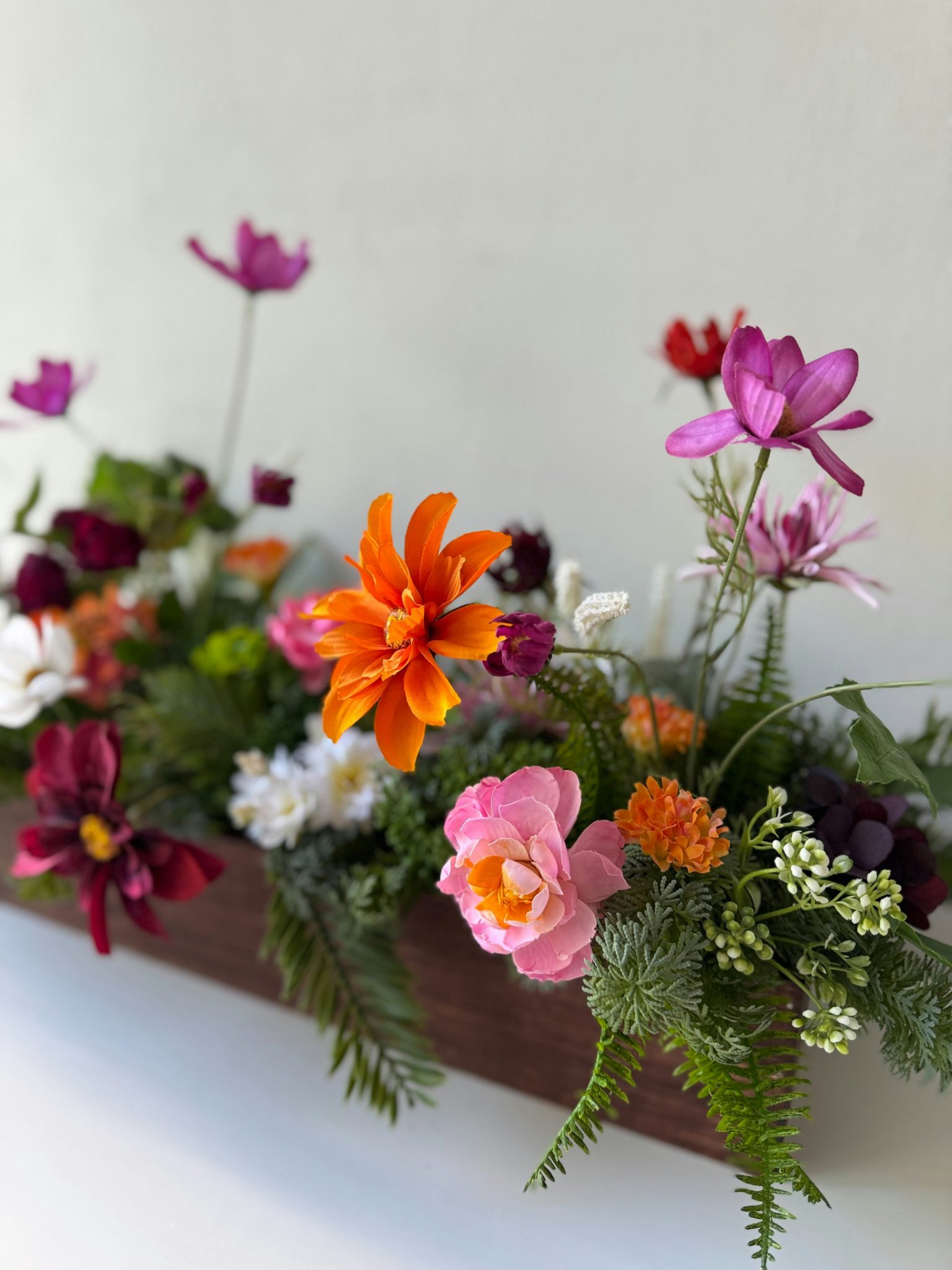
9. Vibrant Mixed Florals in a Dark Wood Planter Box
For a long, rectangular arrangement like this, don’t arrange it from the top down. Build it from the outside in. Start by establishing the shape and “spill” with your greenery, letting ferns and other foliage drape over the sides of the wooden planter. Then, add your largest “face” flowers (the main, most prominent blooms) at key points along the length of the box. Finally, fill in the gaps with your smaller flowers and textural elements like berry clusters. This method ensures a balanced, lush look from all angles.
|
📋 Copy HEX 🔗 Share |
💸 Get This Look For Less
This vibrant look is a play on complementary colors. The formula is approximately 40% warm colors (orange, red, yellow) + 40% cool colors (pinks, purples) + 20% lush, varied greens. The dark wood planter acts as a neutral anchor, grounding the explosion of color. The secret is that the warm and cool tones aren’t separated; they’re woven together, creating a sparkling, energetic effect. It’s a more playful approach than the moody palette in Idea #5, but uses a similar principle of balancing color groups.
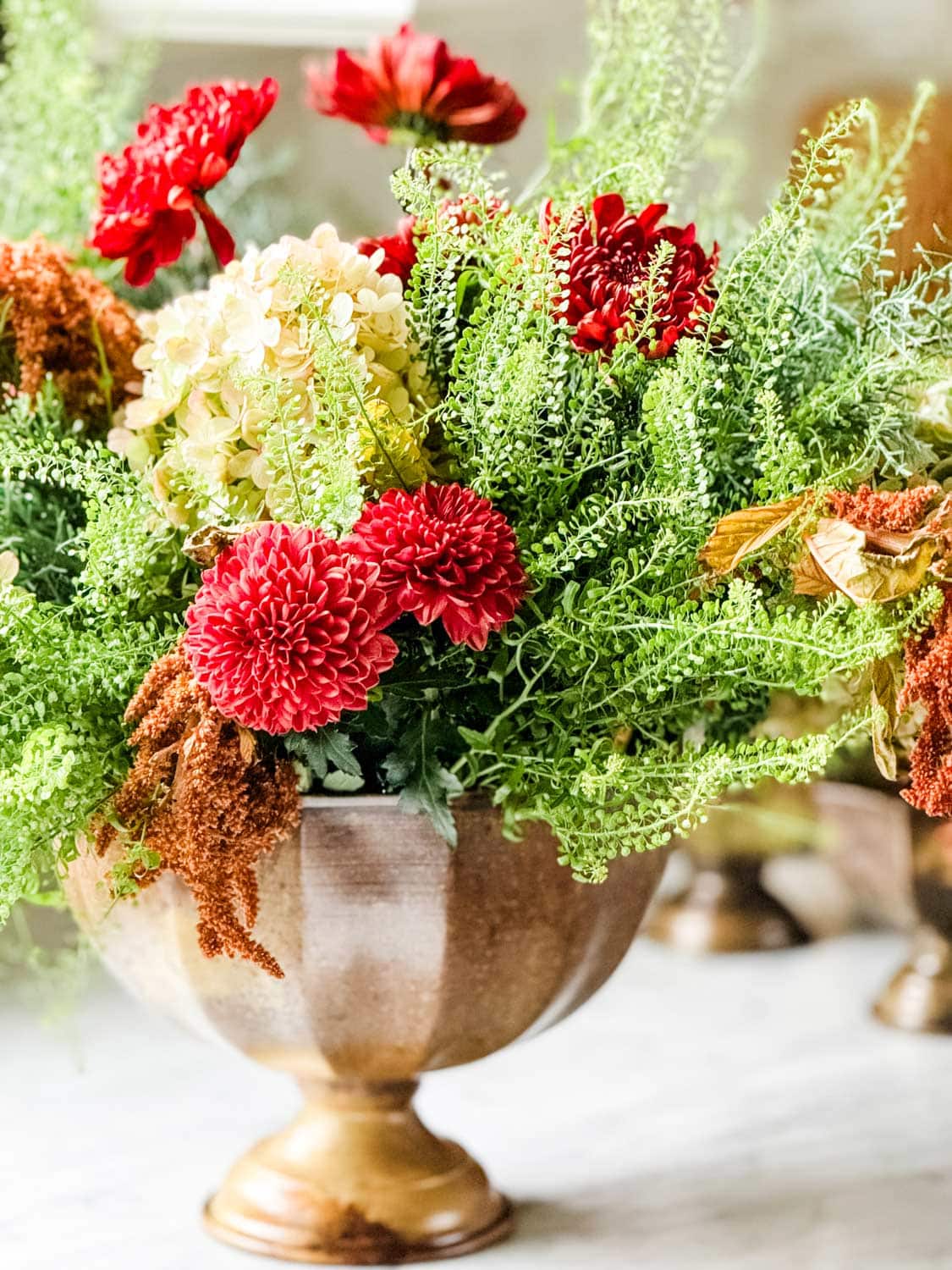
10. A Striking Centerpiece of Deep Red and Light Green
This arrangement is a masterclass in color theory, specifically using complementary colors. The deep, intense red of the dahlias or mums is placed directly against the fresh, light green of the hydrangeas. Red and green are opposites on the color wheel, and this opposition creates the highest possible contrast, making both colors appear more vibrant and intense. The feathery green foliage adds a textural layer, while the hints of rust provide a warm, autumnal bridge between the two dominant hues. The distressed gold bowl adds another layer of warmth that keeps the contrast from feeling jarring.
|
📋 Copy HEX 🔗 Share |
🧹 Maintenance Reality
While stunning, hydrangeas can be divas. They are incredibly thirsty and can wilt dramatically and suddenly if they run out of water. Make sure the vase is topped up with fresh water daily. If you see them starting to droop, you can try reviving them by completely submerging the entire flower head in a sink full of cool water for 20-30 minutes. This method, called “bathing,” allows the petals to rehydrate. It sounds crazy, but it often works like a charm.
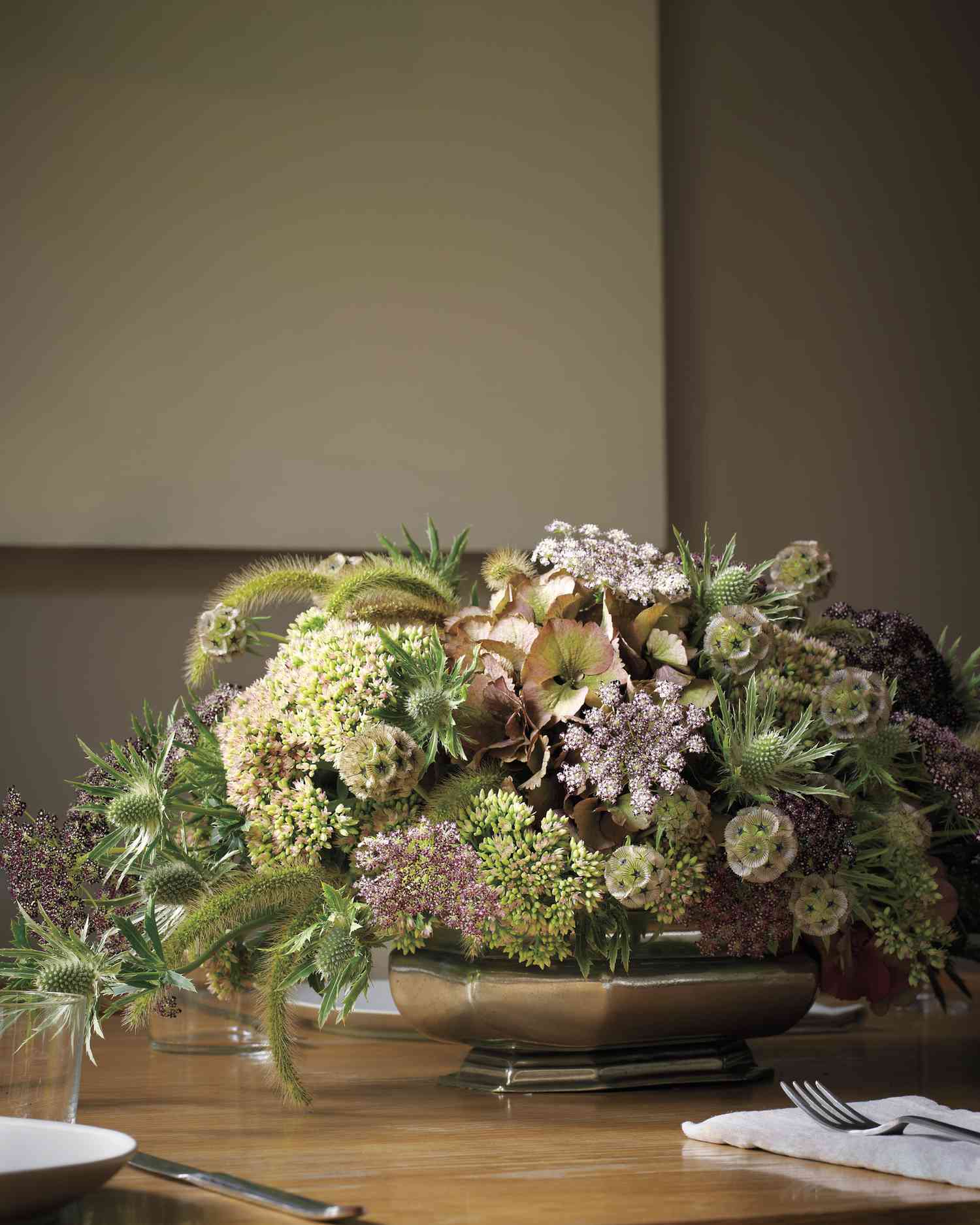
11. Earthy and Abundant Thistle Arrangement in a Metallic Bowl
The element that truly defines this arrangement is the spiky, architectural form of the green thistle-like plants (Eryngium). They provide a textural and structural counterpoint to everything else in the bowl. While the feathery grasses and small flower clusters offer softness, the thistles introduce a wild, almost sculptural quality. Removing them would leave a much softer, less dynamic arrangement. They are the backbone of this design, giving it a modern, edgy, and distinctly rustic character that feels gathered rather than formally arranged.
|
📋 Copy HEX 🔗 Share |
⚠️ Real Talk
An arrangement with this many components, especially with grasses and potential dried elements, can be prone to shedding. Every time the table is bumped or a breeze flows through, you might find small bits of foliage on your table. It’s a small price to pay for such a natural, organic look, but it’s a reality. A quick daily wipe-down of the table surface may be necessary. Also, be mindful that thistles, even when part of an arrangement, are genuinely prickly. Position it away from high-traffic edges where someone might accidentally brush against it.
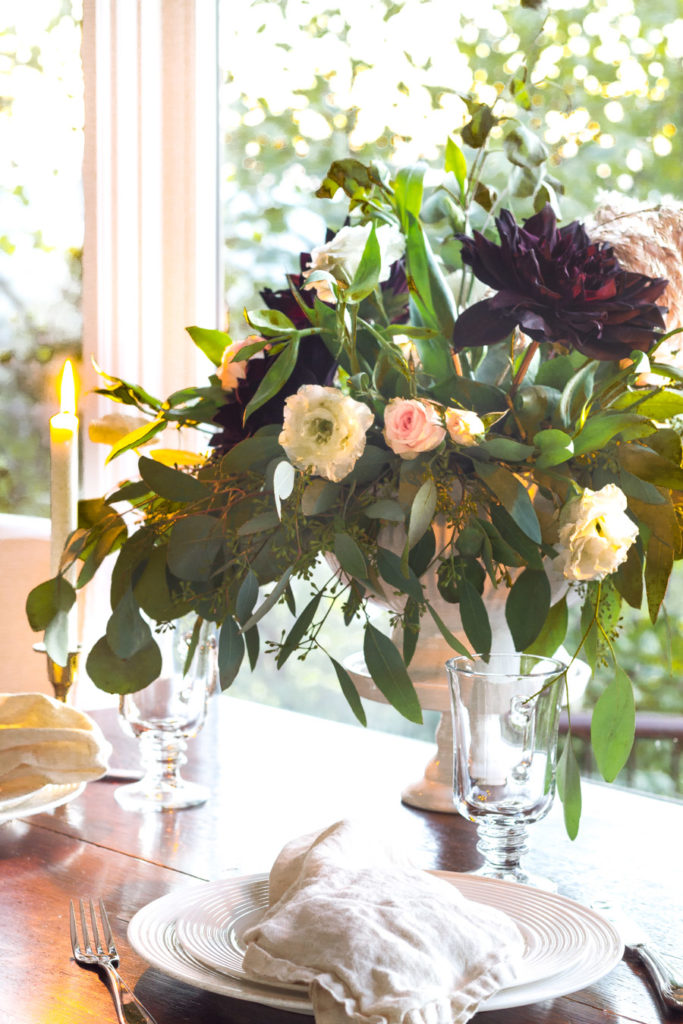
12. An Elegant Table with a Dark Floral and Eucalyptus Centerpiece
When creating a centerpiece for a dining table, scent is a critical, often-overlooked element. Eucalyptus is a perfect choice because its clean, crisp fragrance is refreshing and complements food aromas rather than competing with them. Avoid heavily perfumed flowers like some lilies or hyacinths, which can be overwhelming during a meal. The goal is a subtle, ambient scent that enhances the dining experience, not a full-on floral perfume. The mix of eucalyptus with less fragrant roses and other blooms strikes the perfect balance.
|
📋 Copy HEX 🔗 Share |
📐 Style Math
This style of large, contained centerpiece works beautifully on rectangular or oval dining tables that seat 6-8 people. The urn-style vase gives the arrangement height, making it a focal point without spreading out so wide that it crowds the place settings. For this look to feel balanced, your table should be at least 40 inches wide. On a narrower table, an arrangement this grand would feel overwhelming and leave little room for serving dishes. Compare its scale to the brighter, lower-profile centerpiece in Idea #4.
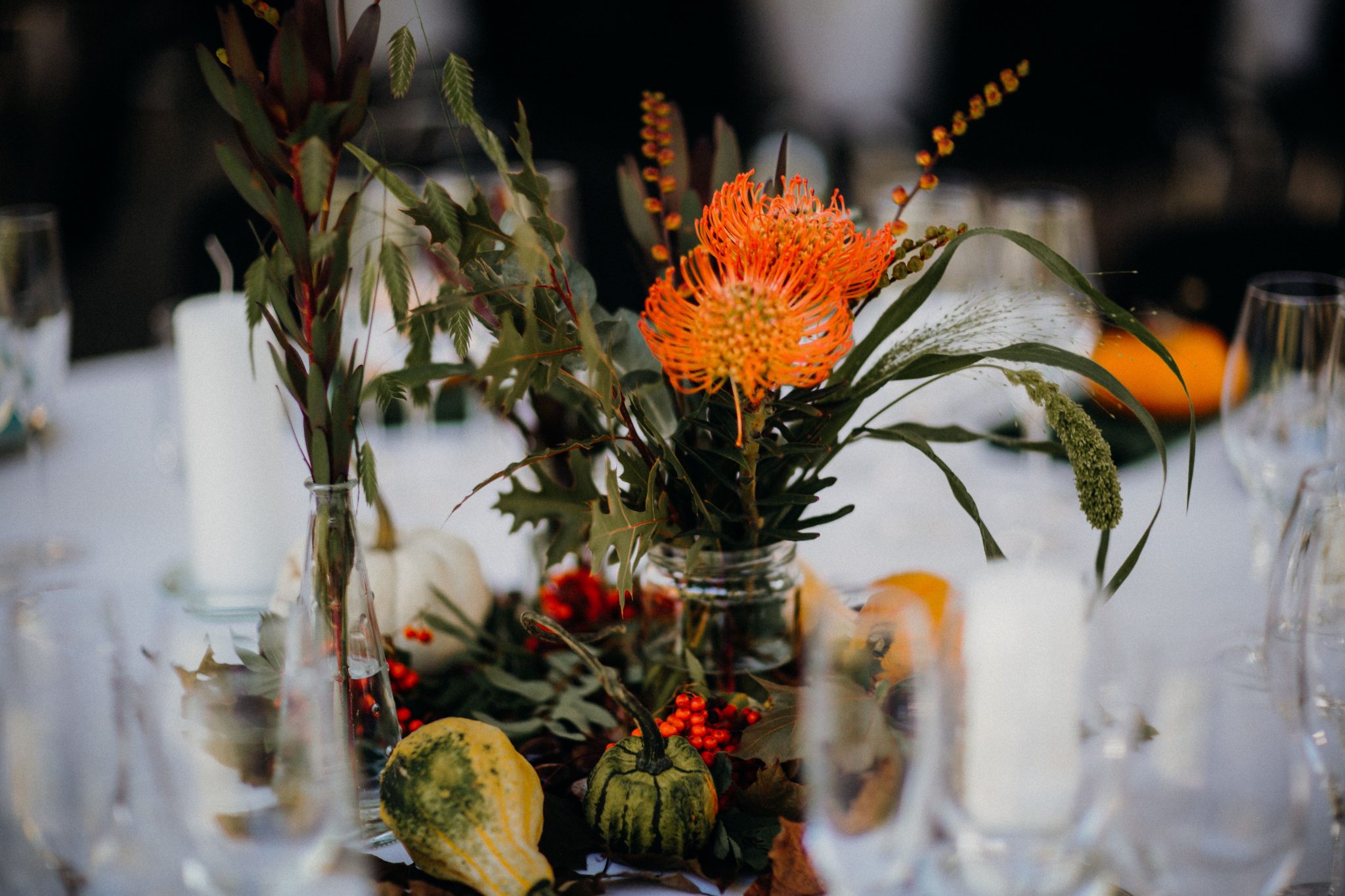
13. A Rustic Centerpiece with Orange Protea and Pillar Candles
The magic of this tablescape lies in its skillful blend of natural elements. It feels cohesive because it pulls from a tight, earthy color palette—deep green, bright orange, rich red, and clean white. The variety of textures is also key: the woody, sculptural protea, the waxy leaves, the plump berries, and the smooth glass and candles. By clustering these varied textures in a similar color family, the design achieves a look that is both rustic and sophisticated, abundant but not cluttered. The clear glass jars keep the focus squarely on the natural elements themselves.
|
📋 Copy HEX 🔗 Share |
✅ Before You Start
Before you commit to this tablescape, run through this quick checklist:
- Check Candle Safety: Are your pillar candles secure in their holders? Ensure they are placed away from any overhanging foliage that could pose a fire hazard.
- Measure Your Table: This sprawling, deconstructed style requires significant table space. Make sure you still have enough room for place settings without it feeling crowded.
- Source Your Protea: Proteas are specialty flowers. Check with your local florist in advance to make sure they can get them for you, as they aren’t typically available at a standard grocery store.
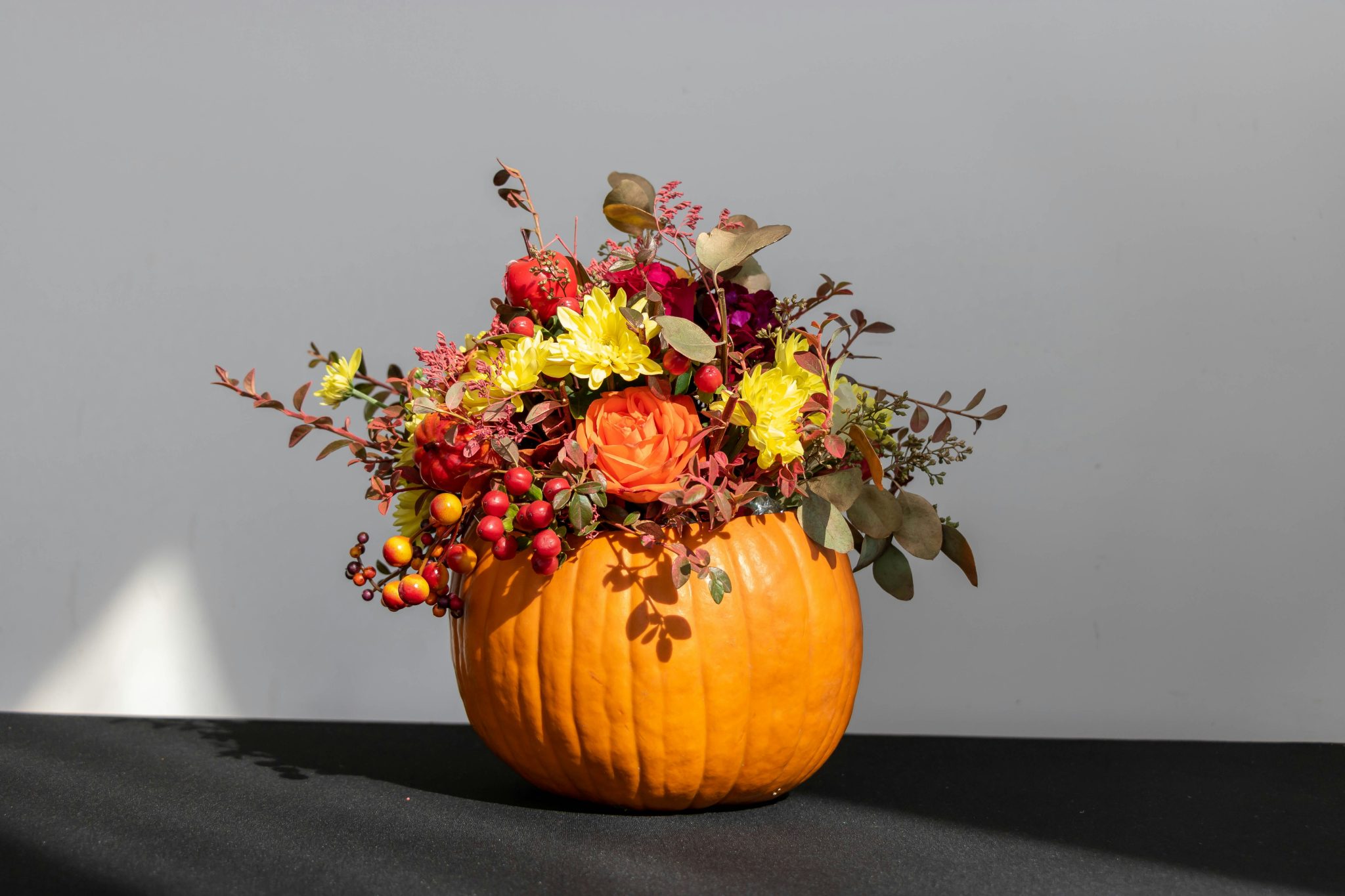
14. A Cheery Pumpkin-Shaped Vase with Chrysanthemums and Berries
Love the look but not the price of a fancy ceramic vase? Get this style for less by combining two budget-friendly finds. Look for a simple, round orange glass or ceramic vase from a thrift store or a craft store like Michaels—you can often find them for under $10. Then, buy a separate pumpkin “stem” (often sold as a decorative object or part of a faux pumpkin) and use a strong adhesive like E6000 to attach it to the lid or near the rim of the vase. You get the same whimsical, pumpkin-shaped silhouette for a fraction of the cost of a pre-made specialty item. It gives you the look of Idea #3 with more permanence.
|
📋 Copy HEX 🔗 Share |
💰 Budget Breakdown
A ceramic pumpkin vase is a fun, festive piece, but its novelty is also its limitation. This is a purely seasonal item that you will need to store for 10-11 months of the year. Before buying, be honest with yourself about whether you have the storage space for a relatively bulky, single-purpose decorative item. If you live in a small space, a more versatile vase in a fall color (like amber, deep red, or olive green) might be a more practical long-term investment that still gives you that autumnal feeling.
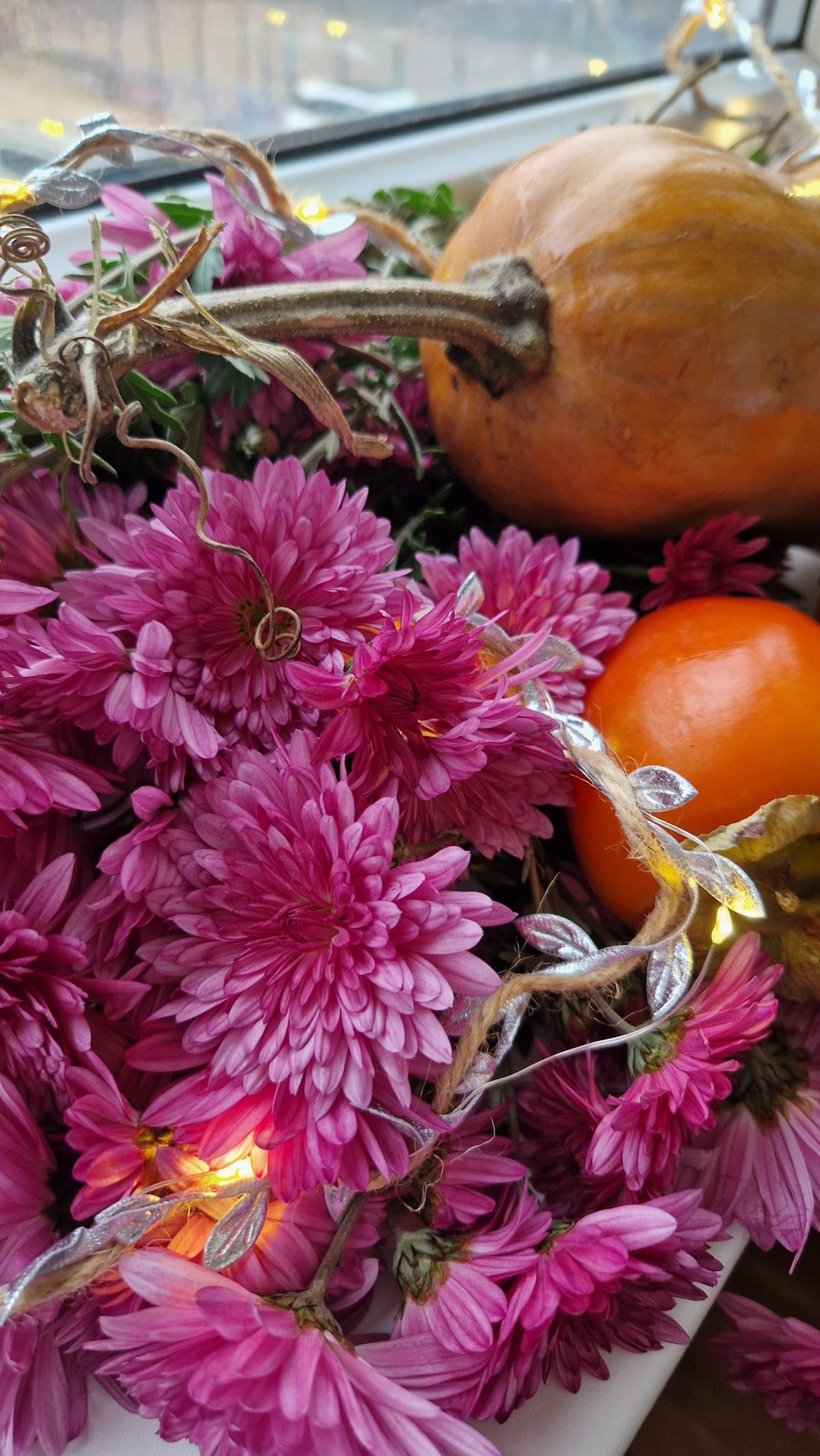
15. Vibrant Pink Mums Paired with Gourds and Twinkle Lights
The twinkle lights are what transform this from a standard fall arrangement into something magical. The combination of vivid pink chrysanthemums and orange gourds is already beautiful, but weaving in the soft glow of string lights adds an unexpected layer of coziness and festivity. It highlights the textures of the flower petals and dried tendrils, creating little pockets of light and shadow. This single addition takes the arrangement from daytime pretty to nighttime enchanting, extending its beauty after the sun goes down.
|
📋 Copy HEX 🔗 Share |
💡 Designer Tip
Adding lights to a floral arrangement is simple and creates an instant wow factor. Here’s how:
- Choose the Right Lights: Opt for a delicate, battery-operated string of micro LED lights on a thin wire (copper or silver). This type of wire is flexible and easy to hide.
- Hide the Battery Pack: Before you start weaving, tuck the battery pack deep into the center of the arrangement, behind the main flowers or foliage.
- Weave, Don’t Wrap: Gently weave the light string in and out of the flowers, gourds, and leaves. Don’t wrap it tightly around stems. The goal is a random, natural scatter of light.
- Adjust and Fluff: Step back and look for any dark spots. Adjust the wire to distribute the lights evenly throughout the display.
This quick addition takes less than 5 minutes and completely changes the mood.
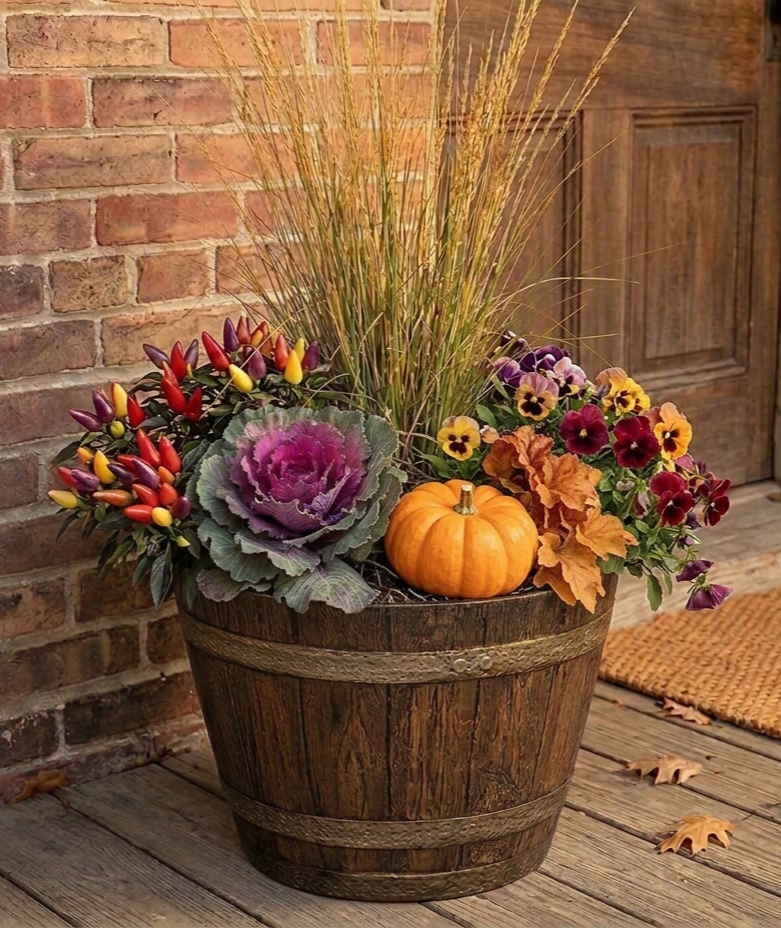
16. A Rustic Barrel Planter with Grasses, Peppers, and Cabbage
This arrangement is all about a “thriller, filler, spiller” design, but with a twist. The tall golden grasses are the “thriller,” providing height and movement. The ornamental cabbage, peppers, and pansies act as the “filler,” creating a full, mounded look with rich color and texture. The twist is that there isn’t a strong “spiller” cascading over the side; instead, the barrel itself contains the abundance. The rustic wood of the barrel provides a perfect textural contrast to the lush plants inside, creating a self-contained explosion of fall harvest style.
|
📋 Copy HEX 🔗 Share |
📏 Scale Guide
A mixed planter like this has varying water needs. The ornamental grasses are relatively drought-tolerant, while the pansies and peppers will require more consistent moisture to keep blooming and producing fruit. You’ll need to do spot-watering rather than just soaking the whole barrel. Check the soil near the base of each plant type every couple of days. Also, ornamental peppers are beautiful but are indeed peppers—be mindful if you have curious pets or small children who might be tempted to take a bite.
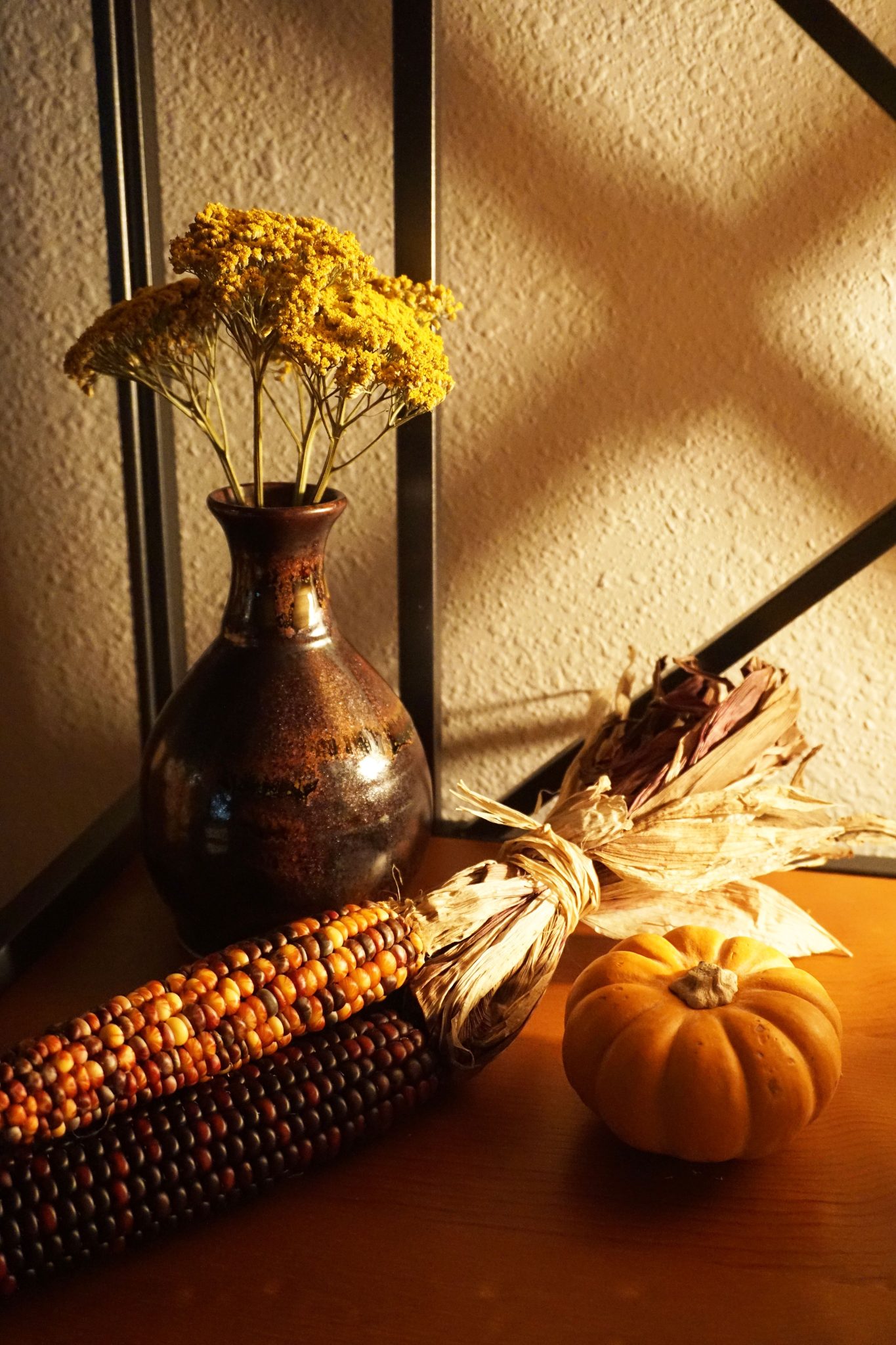
17. Simple Harvest Display with Dried Flowers and Indian Corn
The key to this display’s charm is the Indian corn. While the dried flowers and pumpkin are lovely fall staples, the two ears of corn with their multi-colored kernels introduce a rich, jeweled texture and a direct connection to the harvest season. They provide a beautiful, horizontal element that balances the verticality of the vase. Their natural, rustic pattern is more interesting than a simple solid color would be, making the entire vignette feel more authentic and less generic. It’s a small detail that does a lot of stylistic work.
|
📋 Copy HEX 🔗 Share |
⭐ The One Thing
This entire look can be sourced very inexpensively, especially if you focus on found and grocery-store items. You can often find interesting dried flowers or grasses in your own backyard or a local park. Indian corn and mini pumpkins are available at most grocery stores or farmers’ markets in the fall for just a few dollars. Pair them with a simple vase you already own or one from a thrift store. This warm, rustic look is achievable for under $20, proving that style doesn’t have to be expensive.
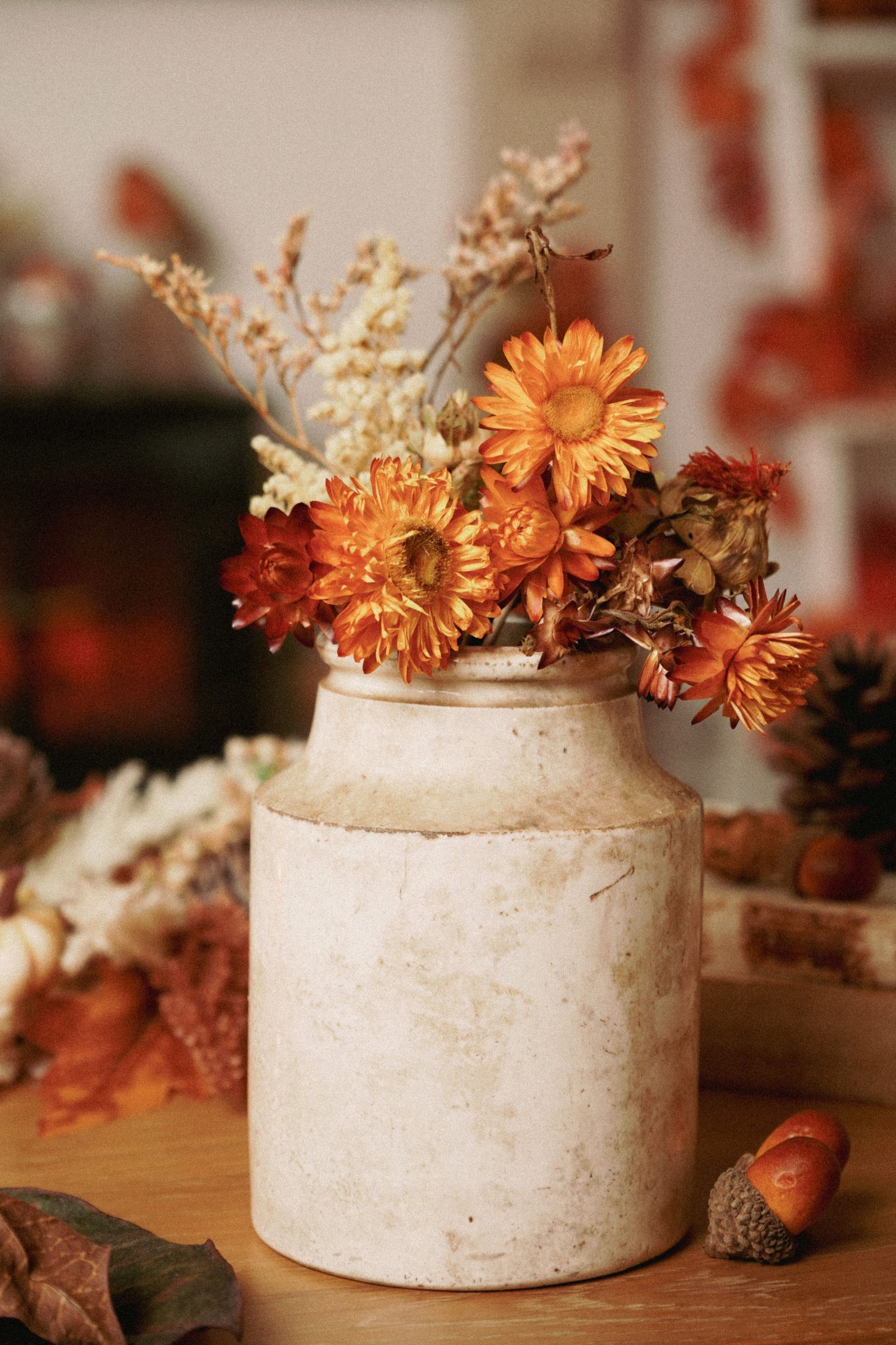
18. A Minimalist Rustic Vase with Dried Orange Florals
This arrangement works because of its simplicity and monochromatic color scheme. By sticking almost entirely to shades of orange, beige, and brown, the focus shifts from color to texture. You notice the difference between the structured, round flower heads and the wispy, delicate fillers. The rustic, slightly rough texture of the ceramic vase complements the natural, dried state of the flowers perfectly. It’s a quiet, contemplative take on fall decor that relies on subtlety rather than bright, loud colors. Compare its simplicity with the more abundant dried arrangement in Idea #24.
|
📋 Copy HEX 🔗 Share |
🎯 What Makes It Work
Dried arrangements are wonderfully low-maintenance, but they are not “no-maintenance.” Their biggest enemy is dust. To keep them looking fresh, you’ll need to dust them periodically. The best way to do this is with a hairdryer on its lowest, coolest setting, held at a distance. This will blow the dust off without damaging the fragile petals and stems. Also, keep them out of direct sunlight, which can cause their beautiful, muted colors to fade significantly over time.
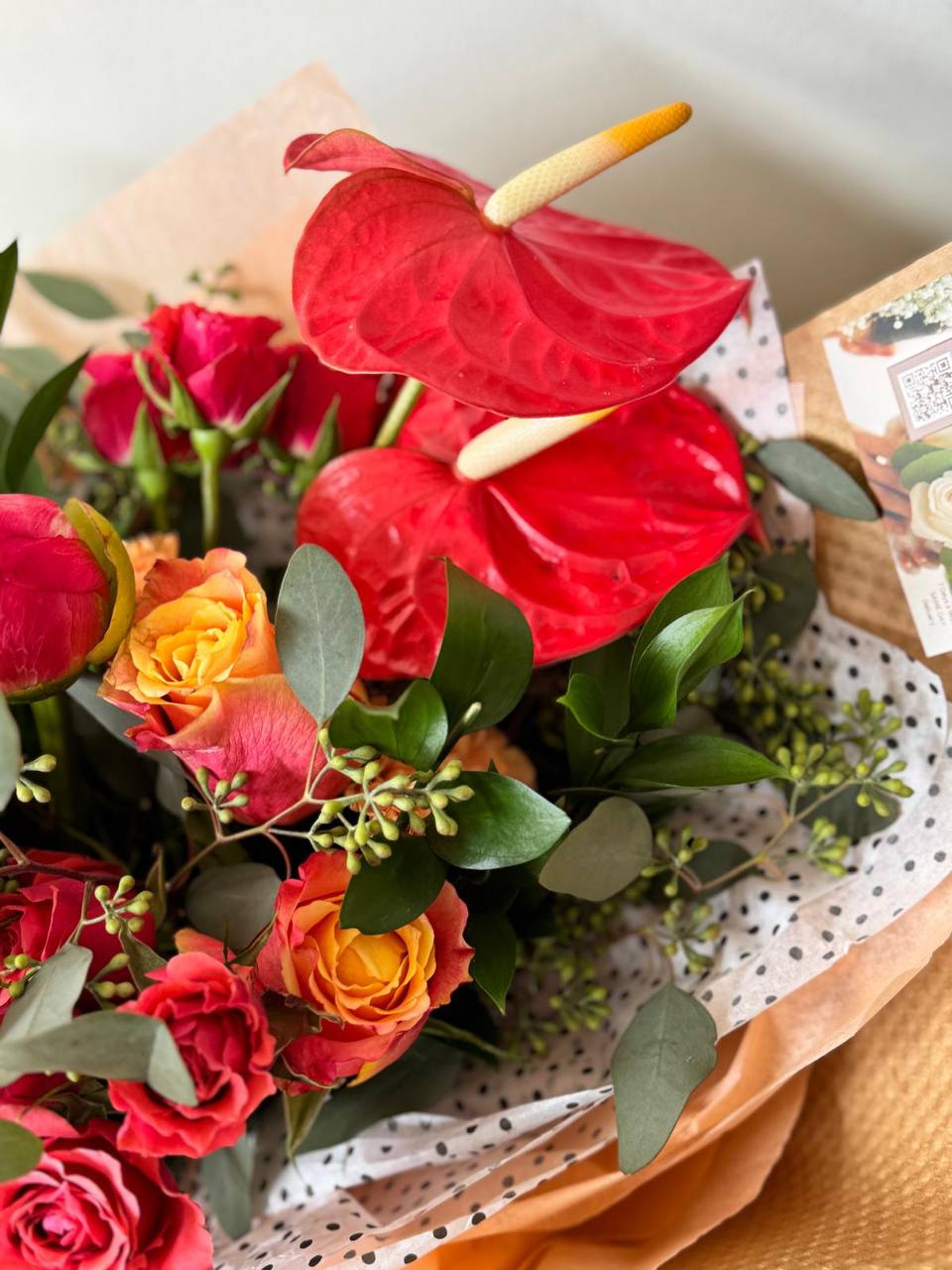
19. A Vibrant Bouquet of Red Anthuriums and Two-Tone Roses
The secret to making a bold arrangement like this feel cohesive is a technique called “color echoing.” Notice how the yellow-white spadix in the center of the red anthurium is echoed by the yellow centers of the orange-yellow roses. This small repetition of color creates a visual link between the two very different types of flowers, making the entire bouquet feel intentional and harmonious rather than like a random jumble of bright blooms. It guides the eye through the arrangement and ties everything together.
|
📋 Copy HEX 🔗 Share |
🔧 How-To Brief
This look is all about high-impact color. The formula is simple: 60% dominant, vibrant red (the anthuriums and red roses) + 30% secondary warm color (the orange-yellow roses) + 10% deep green foliage for contrast. The wrapping paper adds another layer of personality; the dotted pattern provides a playful, graphic element that keeps the arrangement from feeling too formal. You could swap the roses for tulips or the anthuriums for poppies and still get the same effect if you stick to this 60/30/10 ratio.
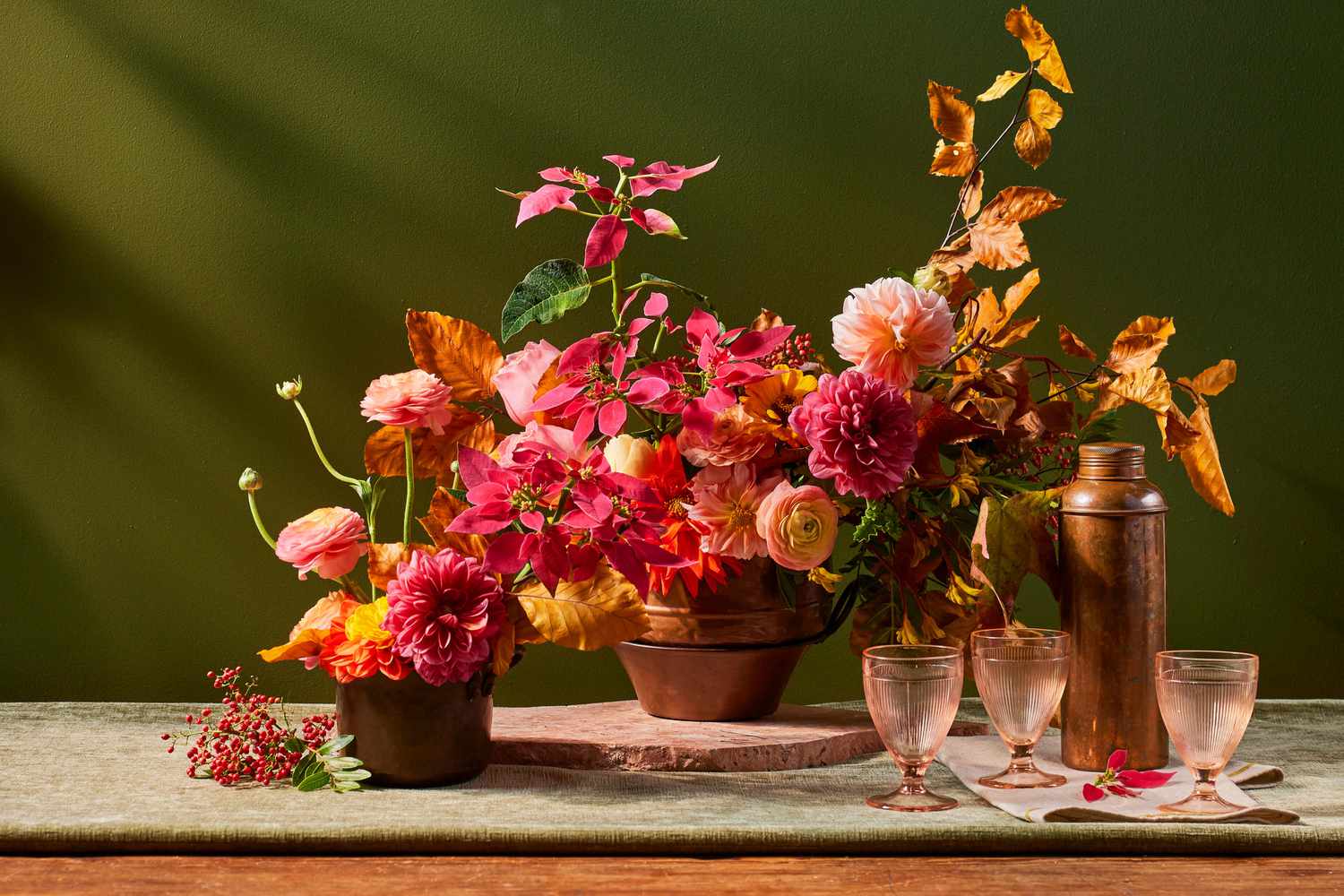
20. A Rich Floral Display with a Deep Olive Green Backdrop
The success of this scene is the daring and sophisticated color palette. The deep olive green wall provides a moody, dramatic backdrop that makes the warm tones of the floral arrangement—pinks, oranges, and reds—feel incredibly rich and vibrant. The copper bowl and shaker add a metallic warmth that bridges the gap between the cool wall and the hot-toned flowers. The light green textile softens the look and connects back to the wall color. It’s a confident mix of warm, cool, and metallic tones that feels layered and luxurious.
|
📋 Copy HEX 🔗 Share |
🔥 Trending Context
This look is bold, and it requires commitment. Before painting a wall deep olive green, consider these points:
- Lighting is Everything: A dark wall color like this needs good natural or artificial light to avoid feeling like a cave. It works best in a room with large windows or multiple light sources.
- Test Your Paint: Paint a large swatch on the wall and observe it at different times of day. Olive green can shift dramatically, looking warm and earthy in sunlight and much darker and cooler at night.
- Consider the Mood: This creates a cozy, enveloping, and dramatic mood. Is that the feeling you want for your space?
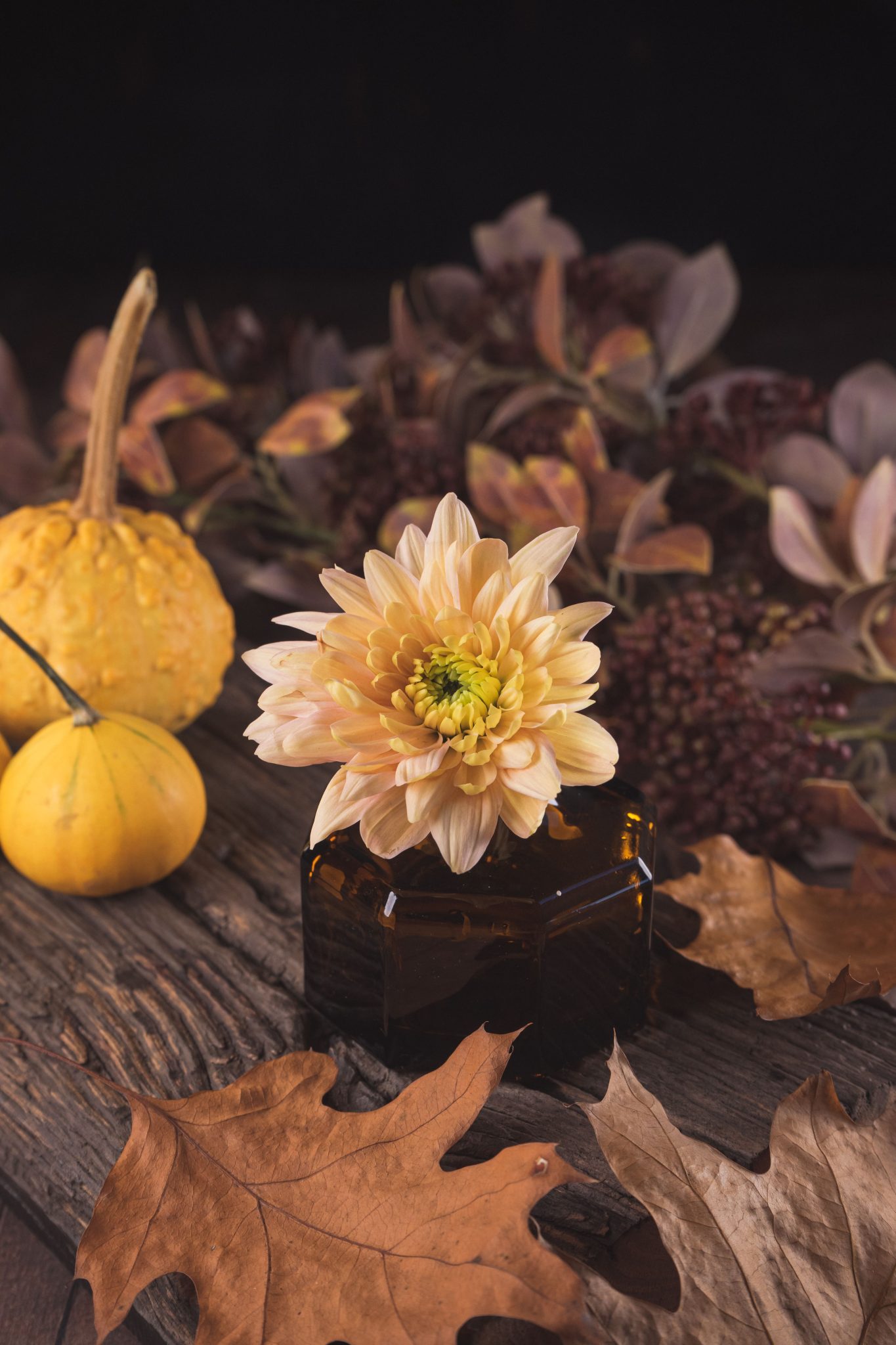
21. A Simple, Moody Display with a Single Mum and Gourds
The dark, hexagonal glass vase is the element that gives this simple arrangement its moody, slightly sophisticated edge. If the mum were in a clear or plain white vase, the look would be much more straightforward and rustic. The dark brown glass feels intentional and adds a touch of modern geometry. It elevates the single flower and two gourds from a simple harvest collection to a styled, thoughtful vignette. The way it catches the light while still obscuring the flower stem adds a layer of mystery and depth.
|
📋 Copy HEX 🔗 Share |
💸 Get This Look For Less
This minimalist approach is perfect for small surfaces where a large bouquet would be overwhelming. Think nightstands, small bathroom countertops, or a narrow shelf. The entire footprint of this display is less than one square foot. Its power comes from its carefully considered composition, not its size. It proves that you don’t need a massive budget or a huge amount of space to create a beautiful, impactful fall moment. This is the perfect solution for adding a touch of autumn to a small apartment or a single room.
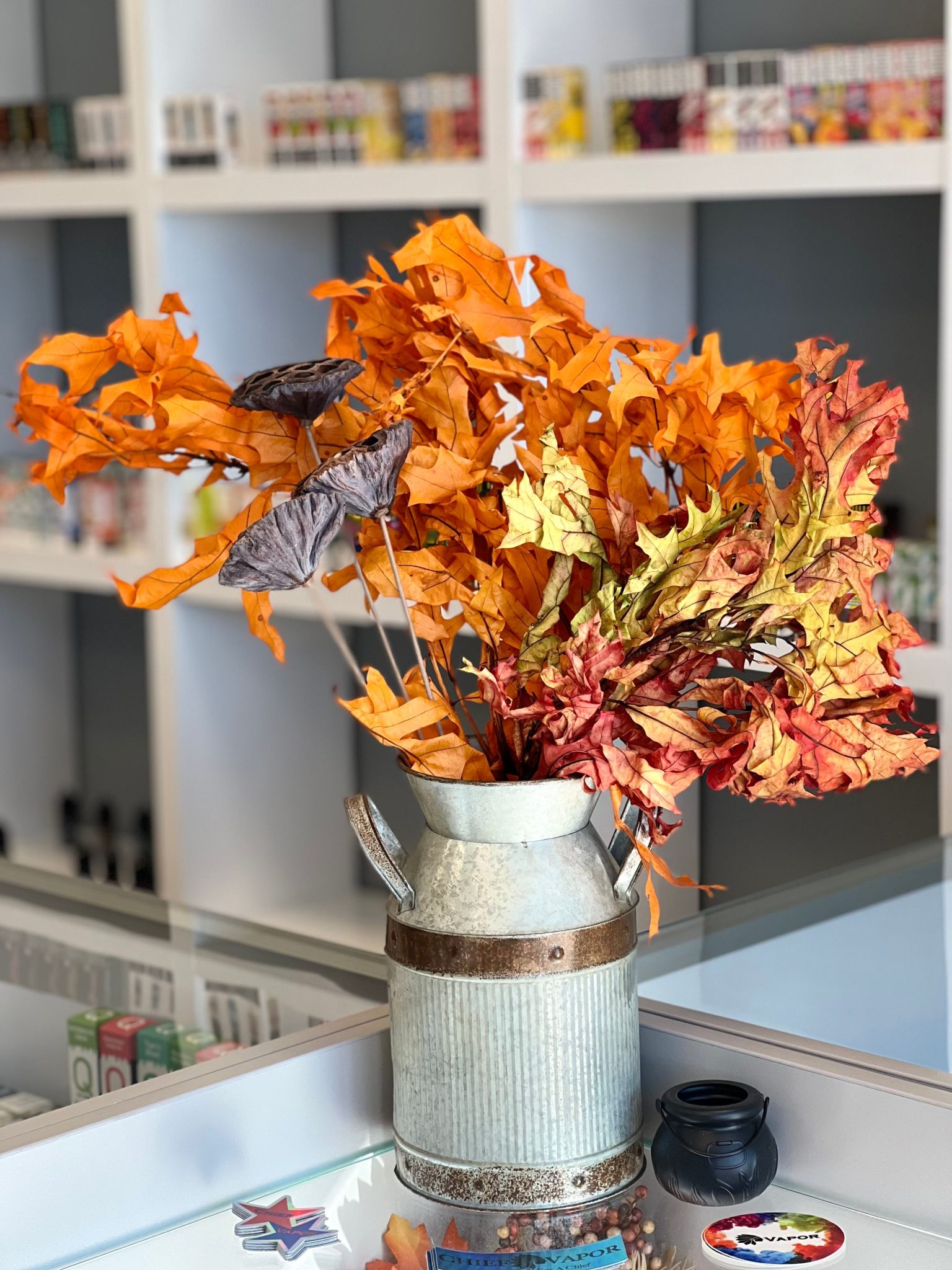
22. A Rustic Galvanized Jug with Faux Autumn Leaves
This entire look is a testament to the power of “Faux for Less.” Galvanized metal jugs like this are a staple at craft stores and home goods stores like Hobby Lobby or Target, often for under $25. High-quality artificial autumn leaves and dried elements like lotus pods are a one-time investment that you can reuse year after year. For the price of one large, fresh floral arrangement, you can create a permanent piece of fall decor that requires zero upkeep. It’s a smart, budget-friendly way to bring lasting autumnal color into your home.
|
📋 Copy HEX 🔗 Share |
🧹 Maintenance Reality
The beauty of an all-artificial arrangement is the near-zero maintenance. There’s no watering, no wilting, and no mess. However, like the dried arrangement in Idea #18, its main challenge is dust. Because these pieces are often stored for most of the year, they can accumulate a layer of dust in storage. Before you display it each fall, give it a good shake outside and then use a hairdryer on a cool, low setting to blow away any remaining particles from the leaves and pods. This will keep the colors vibrant and the textures distinct.
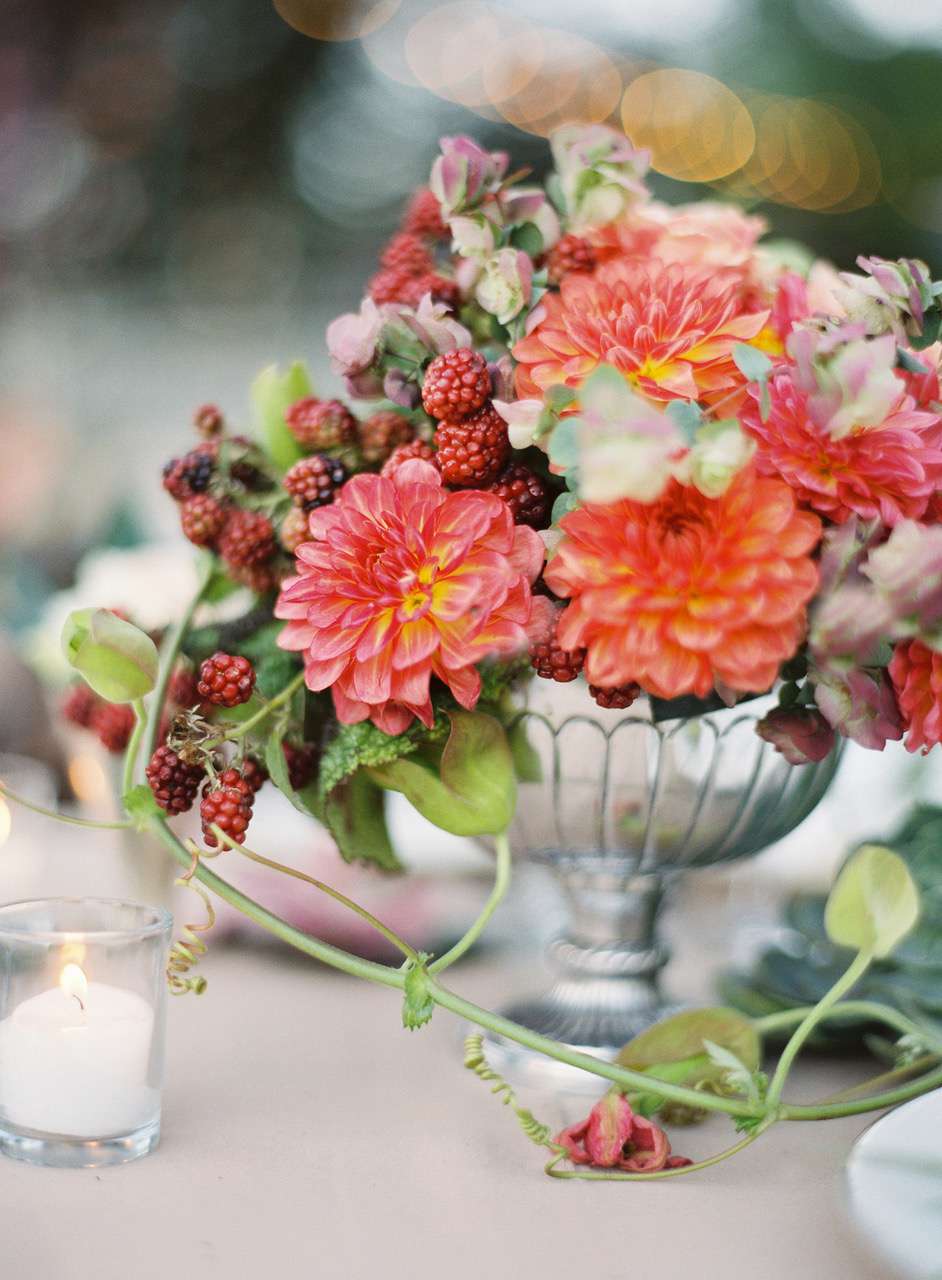
23. Lush Dahlias and Trailing Vines in a Silver Compote Vase
This arrangement feels so alive and organic because of the intentional use of movement. The trailing green vines are key; they break the formal boundary of the silver compote vase and connect the arrangement to the tabletop, preventing it from feeling like a static object. This creates a sense of graceful movement, as if the arrangement is naturally spilling out of its container. The mix of large, open-faced dahlias with tight clusters of dark red berries adds another layer of dynamic tension between big and small forms.
|
📋 Copy HEX 🔗 Share |
⚠️ Real Talk
To make your dahlias last as long as possible, you need to sear the stems. Dahlias have hollow, sappy stems, and simply cutting them and putting them in water can lead to an air lock, causing them to wilt quickly. Immediately after cutting the stem to your desired length, dip the bottom inch into boiling water for about 20-30 seconds. You’ll see the color of the stem change. This process seals the end, allowing the flower to drink water more effectively and dramatically extending its vase life.
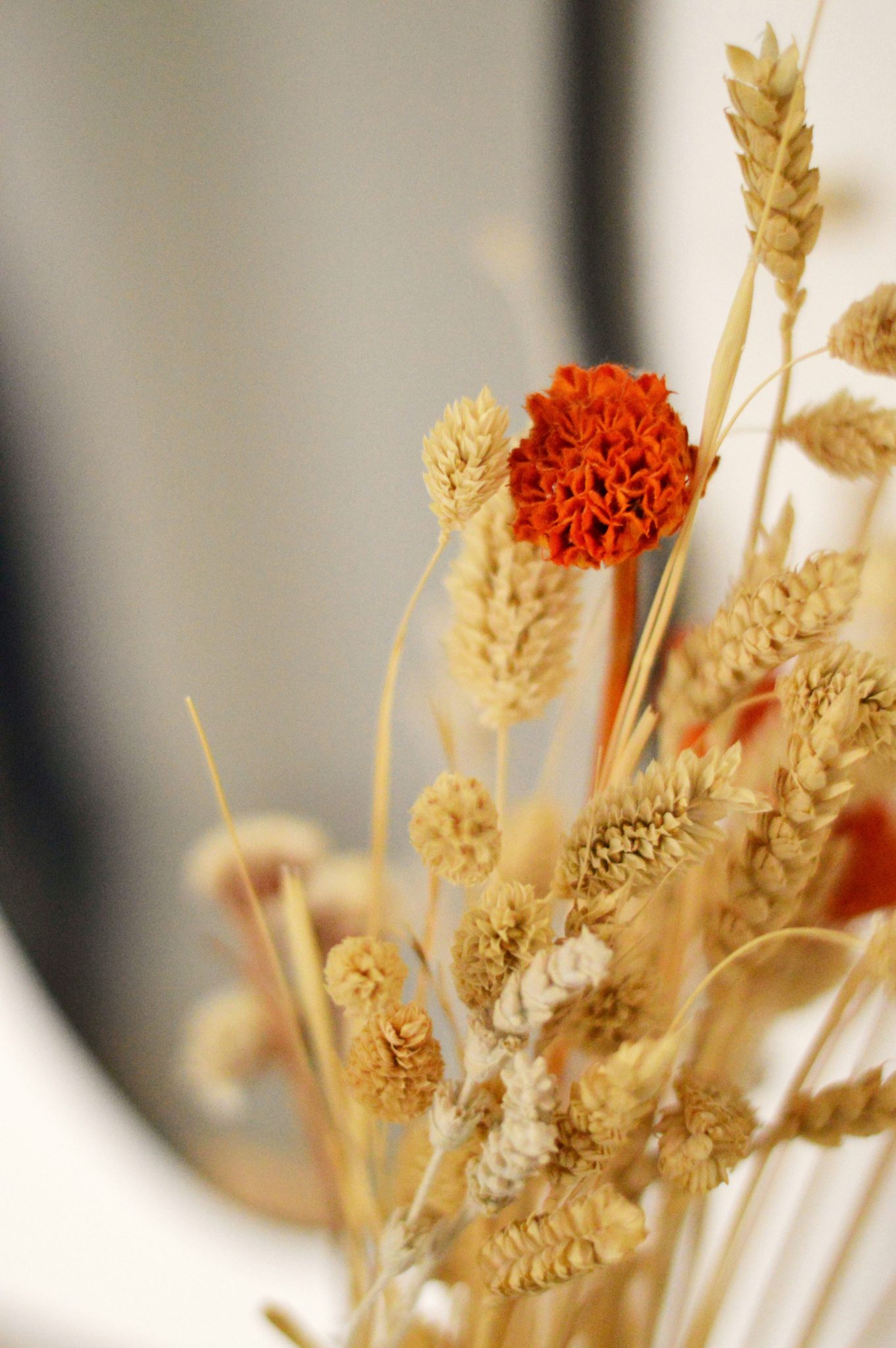
24. A Textural Close-Up of Dried Wheat and an Orange Flower
The single pop of color from the round, burnt-orange dried flower head is what makes this arrangement captivating. Without it, you would have a beautiful, but entirely neutral, collection of dried grasses and wheat. That one burst of vibrant orange creates a focal point and injects life and energy into the piece. It draws the eye in and provides a necessary contrast to the sea of beige and golden brown. It’s a perfect example of how even a small amount of strong color can have a huge impact on an otherwise monochromatic palette.
|
📋 Copy HEX 🔗 Share |
📐 Style Math
The beauty of this minimalist arrangement lies in its textural formula: 70% linear elements (the straight stalks of wheat) + 20% soft, fluffy elements (the grass heads) + 10% bold, structural color (the orange flower head). This creates a look that is balanced but visually interesting. You can adapt this formula with different elements—for example, swap the wheat for dried lavender and the orange flower for a dried protea—to create a completely different mood while still using the same successful design principles.
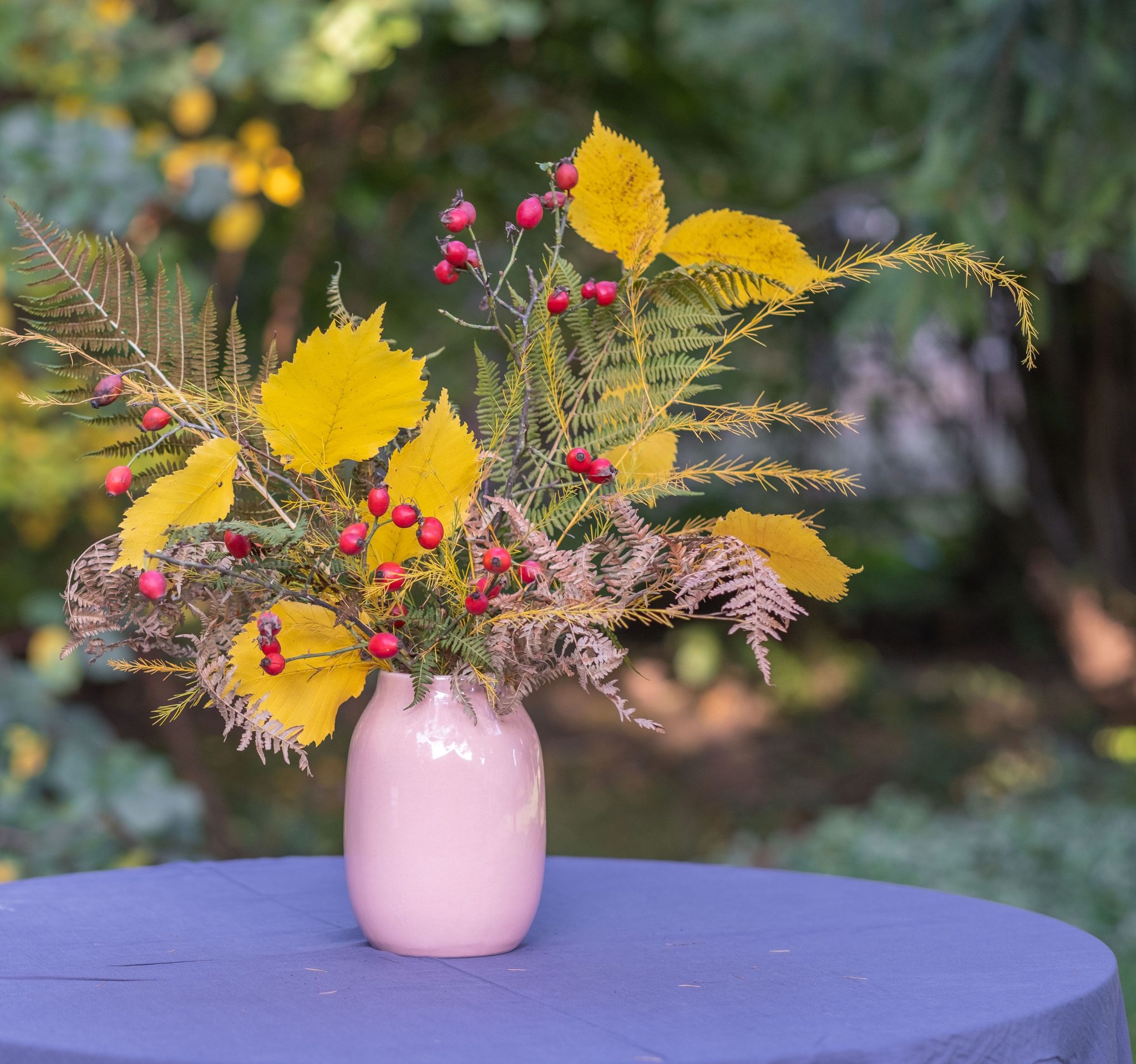
25. A Cheerful Bouquet of Rose Hips and Yellow Leaves
This small but mighty bouquet works because it’s a study in complementary colors. The bright, almost electric yellow of the leaves is set against the deep navy blue of the tablecloth, making the yellow appear even more luminous. The glossy light pink vase adds a soft, unexpected touch that bridges the gap between the hot yellow and the cool blue. Finally, the pops of bright red from the rose hips add a final layer of energy. It’s a sophisticated and playful color combination that feels both autumnal and unique.
|
📋 Copy HEX 🔗 Share |
✅ Before You Start
An arrangement made of foraged leaves and berries will have a much shorter vase life than one made of sturdy flowers. The yellow leaves will likely begin to curl and dry within 2-3 days, and the rose hips may start to shrivel. This isn’t a low-maintenance, long-lasting bouquet. Think of it as a temporary celebration of peak fall color. To get the most out of it, change the water daily and keep it out of direct sunlight. It’s a fleeting beauty, perfect for a weekend dinner party or a brief splash of color.
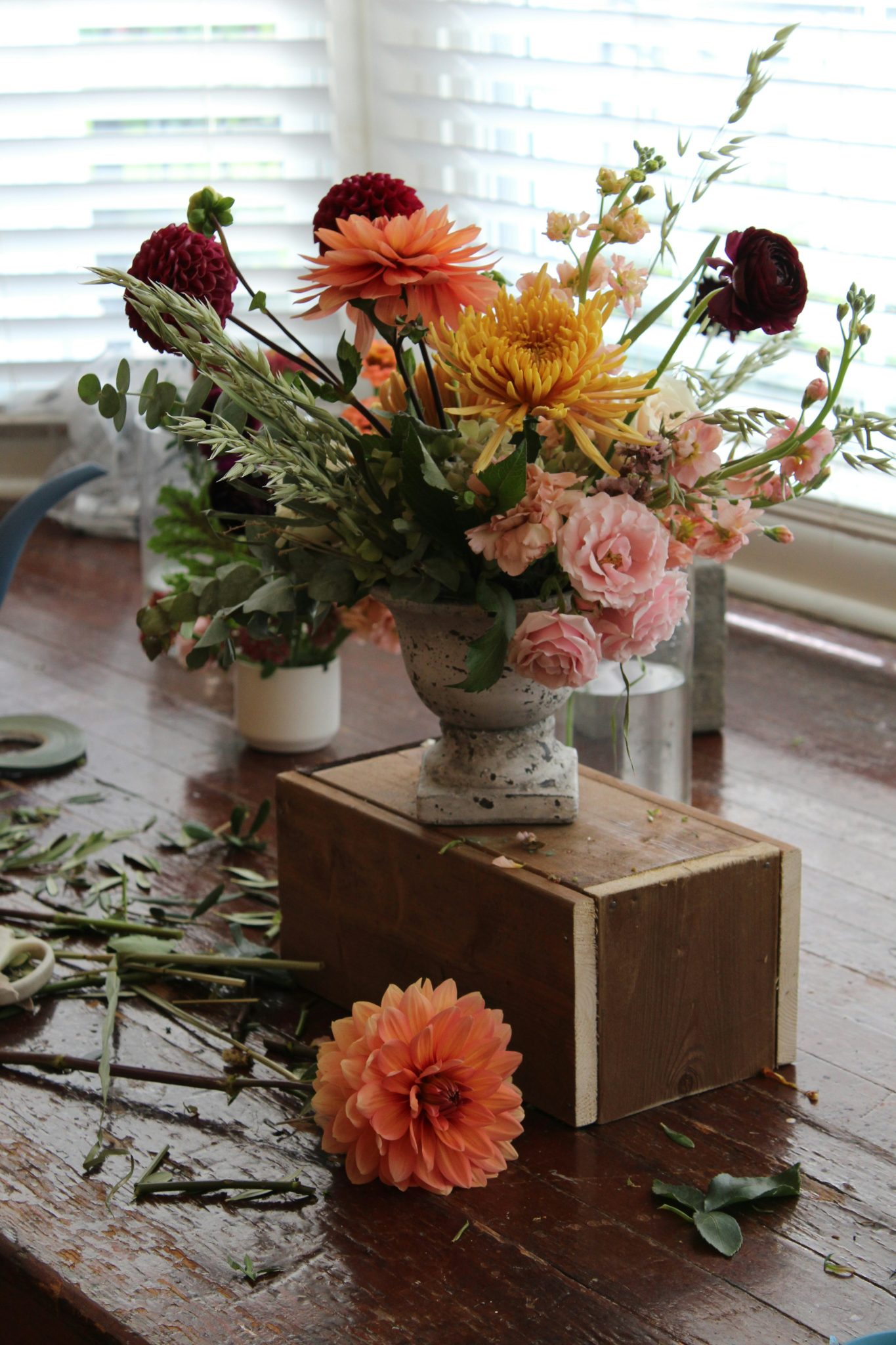
26. A Rustic, Deconstructed Arrangement in a Grey Urn
This “undone” or “in-process” look is a major trend in floral design, moving away from perfectly pristine arrangements. The scattered leaves and trimmings on the table tell a story of creativity and process. It feels authentic and personal, as if we’ve just caught the floral designer in the act. This style taps into our appreciation for the handmade and the perfectly imperfect. It suggests that beauty is not just in the final product, but in the joy of making it. The distressed urn and simple wooden box pedestal enhance this rustic, workshop-like vibe.
|
📋 Copy HEX 🔗 Share |
💰 Budget Breakdown
To create this layered, garden-gathered look, start with a base of mixed greenery in your vase, creating a loose, airy shape. Then, insert your largest flowers (like the dahlias) deep into the arrangement to create focal points and depth. Next, add your medium-sized flowers (like the ranunculus and roses) at varying heights. Finally, tuck in the wispy, textural elements like grasses last, allowing them to stick out and create movement. This “greens first, big flowers second, details last” method helps build that beautiful, organic structure.
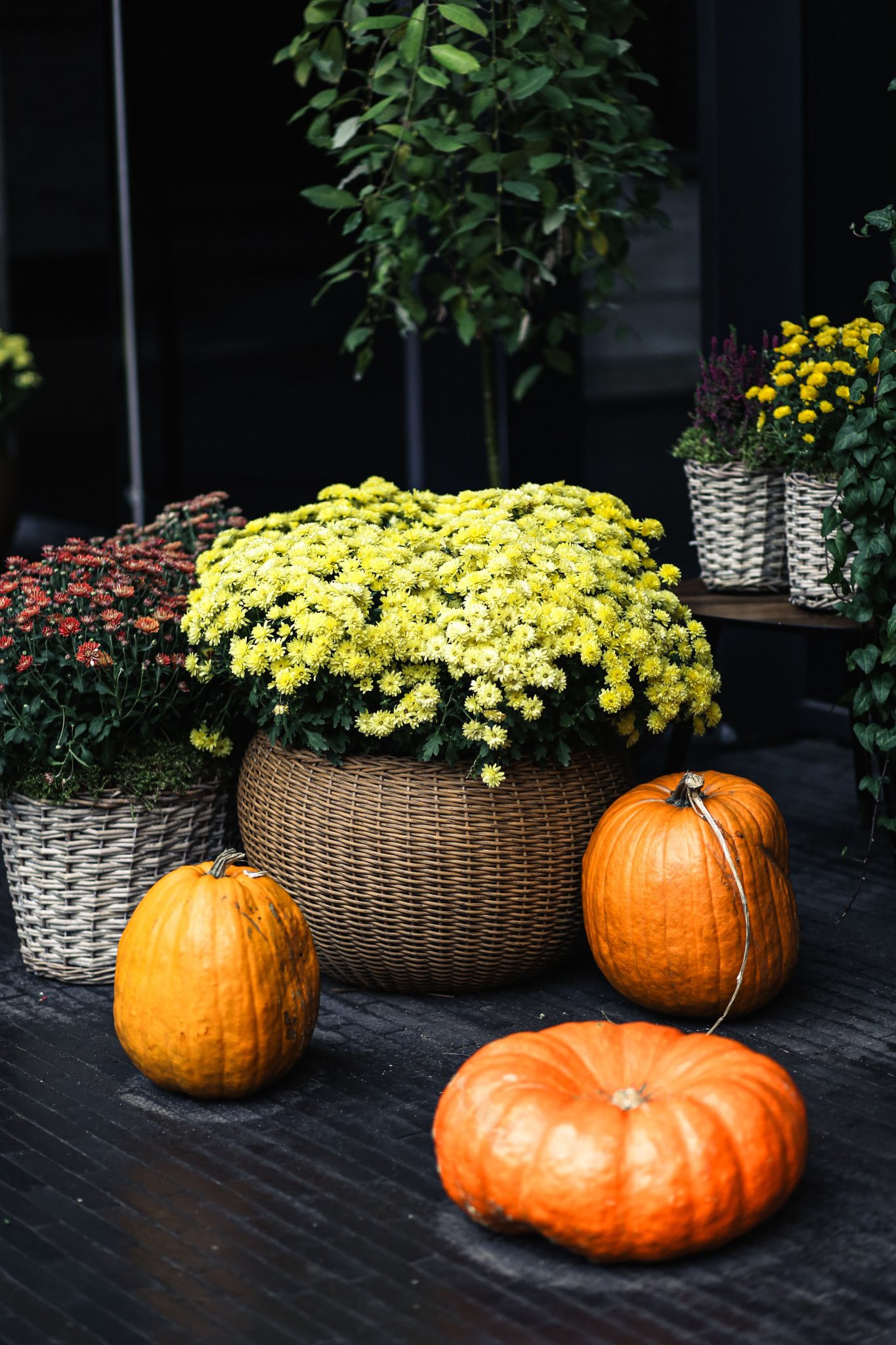
27. Vibrant Yellow and Red Mums in Woven Baskets
The power of this display comes from bold, complementary color blocking. The brilliant, sunny yellow of one set of chrysanthemums is placed next to the deep, rusty red of the other. This creates a high-contrast, high-energy visual that immediately catches the eye. The use of large, identical woven baskets for both colors creates a sense of rhythm and cohesion, while the orange pumpkins act as a bridge, tying the two color blocks together. It’s a simple but incredibly effective way to make a strong visual statement.
|
📋 Copy HEX 🔗 Share |
💡 Designer Tip
This is a large-scale display designed to make an impact from a distance. It’s ideal for a storefront, a wide front porch, or a large patio area. To get this look, you need a space that is at least 6-8 feet wide. The large woven baskets are likely 18-24 inches in diameter, and the pumpkins add more width. In a smaller space, this much volume would feel overwhelming. For a balcony or small entryway, try a scaled-down version with one basket of mums and one or two pumpkins, like a cross between this idea and Idea #1.
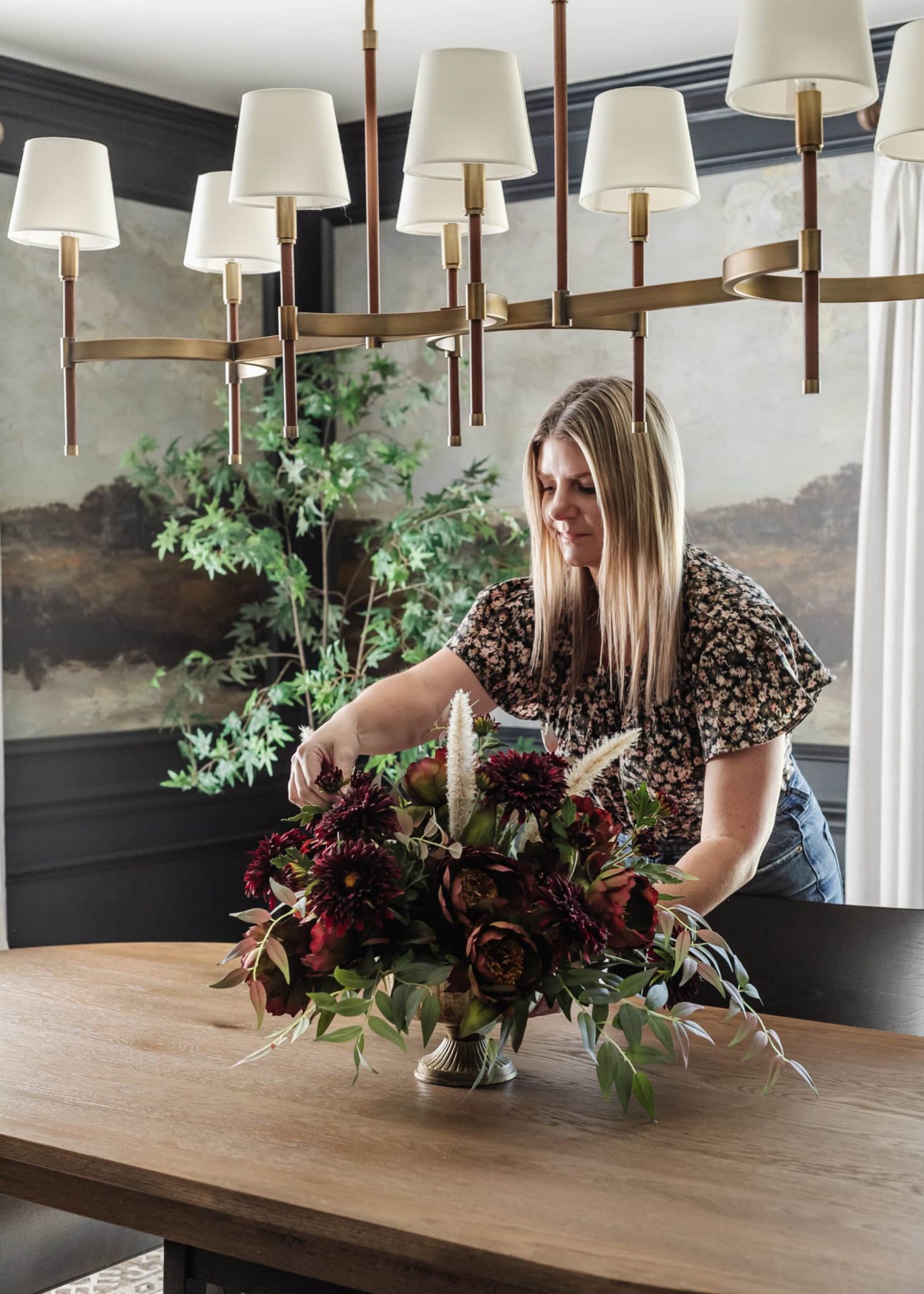
28. A Rich Centerpiece with Deep Red Peonies and Dahlias
The gold fluted metal vase is the critical element that brings a touch of glamour to this otherwise rustic and natural arrangement. The deep red peonies and dahlias paired with a wooden table could feel very traditional or farmhouse. However, the choice of a metallic, specifically gold-toned, vase adds a layer of sophistication and warmth. The fluted texture catches the light, creating a subtle shimmer that contrasts beautifully with the soft petals and rough wood grain. It elevates the entire tablescape, making it feel special and curated.
|
📋 Copy HEX 🔗 Share |
📏 Scale Guide
Peonies and dahlias are stunning, but they are also delicate and have a limited vase life, typically lasting 4-6 days. To maximize their beauty, you must re-cut the stems and change the water every single day. These flowers drink a lot of water and are sensitive to the bacteria that quickly builds up in a vase. Adding a packet of floral food is essential. This is a high-maintenance arrangement that requires daily attention to prevent wilting and keep it looking its best. If you neglect it for even a day or two, you will see a dramatic decline.
Your Autumn Story in Full Bloom
Now you have a whole harvest of ideas to play with, from tiny, rustic vignettes to show-stopping centerpieces. The best part is that you can mix and match these concepts to create something that feels right for your home and your style. Don’t be afraid to try a new color palette or an unexpected texture. Happy arranging, and be sure to share your beautiful creations with us on Pinterest!