You know that feeling when you scroll through endless tiny house photos, but can’t quite picture how they’d work in real life? We’ve been there. That’s why we dove deep, sorting through hundreds of designs to find the 31 most inspiring, practical, and beautiful tiny house interiors for 2026. These are the ones that balance big style with the reality of small-space living. And stay until the end — we break down the most common mistakes that can ruin these looks. (Just a heads-up: this post may contain affiliate links, which means we may earn a commission if you make a purchase.)
📌 Save this to Pinterest for later — you’ll want to revisit these ideas.
1. Embrace Serenity with a Bleached Wood and Light Gray Palette
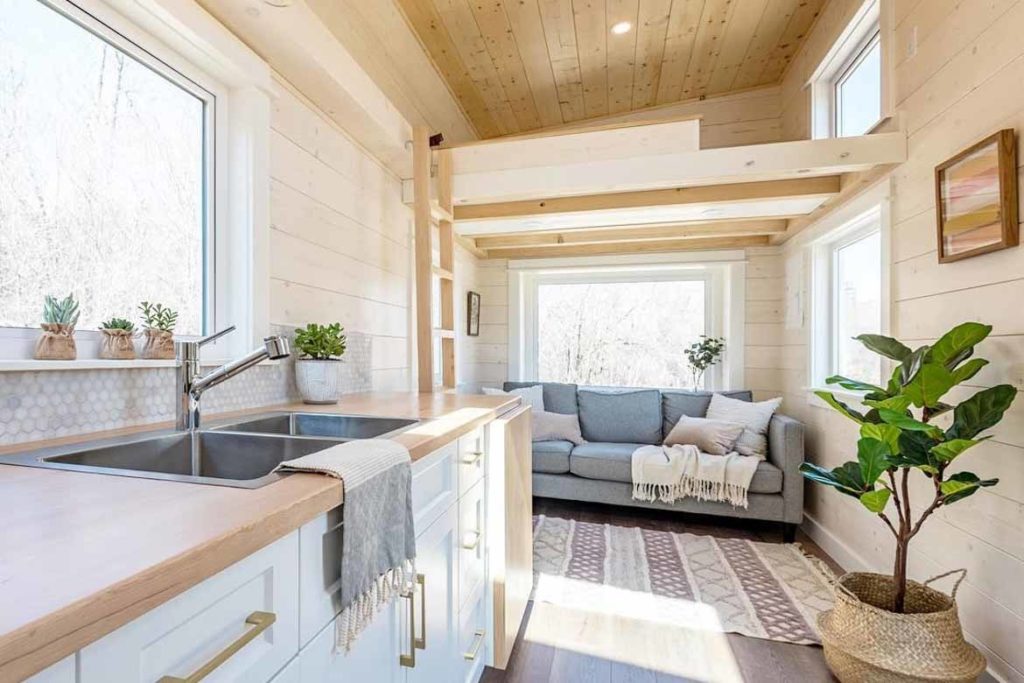
This design feels so open and airy because it nails a few key principles. The use of a single material—light, bleached wood—on both the walls and ceiling creates a seamless, uninterrupted visual line, making the space feel larger than it is. The continuity prevents your eye from stopping at the wall-ceiling joint. Layering shades of white, cream, and soft gray adds gentle depth without introducing jarring contrast, while the patterned rug grounds the seating area, giving it a clear purpose.
|
📋 Copy HEX 🔗 Share |
⭐ The One Thing
When working with a light wood interior, prevent it from looking flat by introducing varied textures. Notice the nubby fabric of the sofa, the soft weave of the throw pillows, and the low-pile pattern of the rug. For hardware and fixtures, opt for a warm metal like the brushed gold or brass seen here. This adds a touch of luxe and warmth, keeping the light and cool color palette from feeling sterile or clinical. A little gleam goes a long way.
2. Go Rustic with White Shiplap and Dark Wood Beams
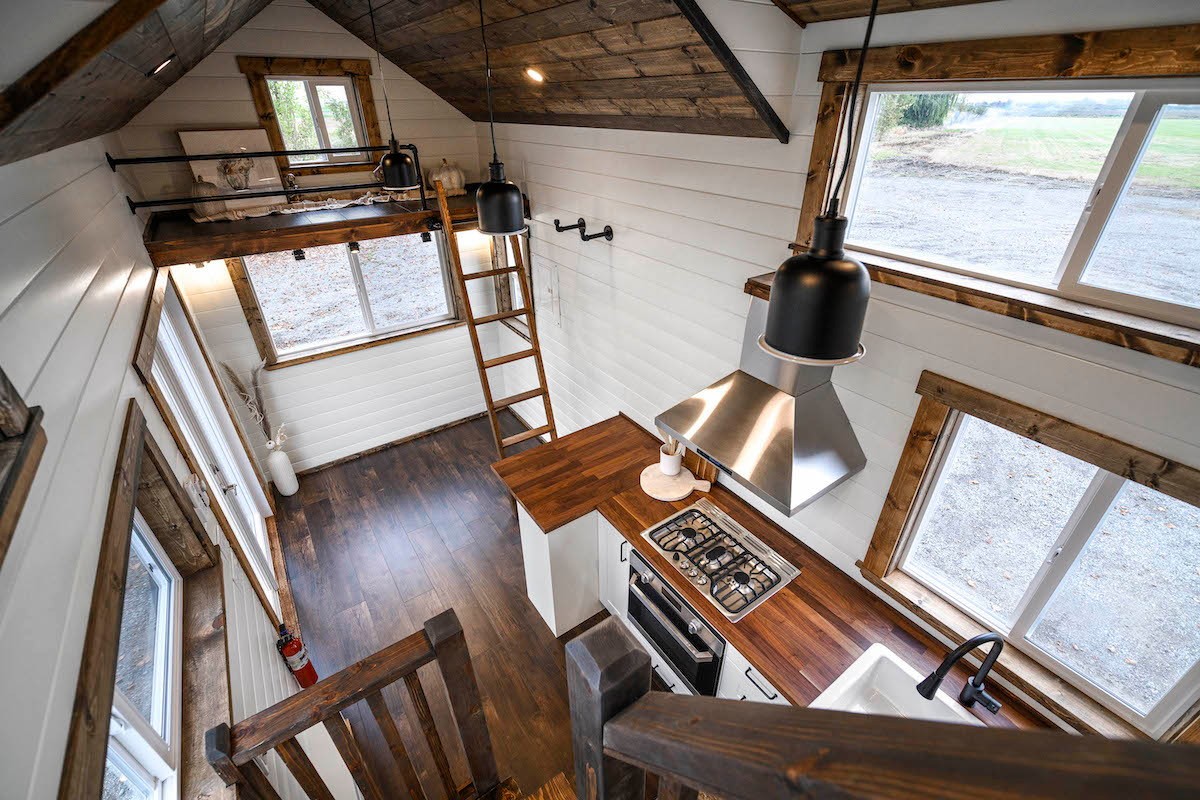
The visual balance here comes down to a simple formula: 70% bright white + 20% dark wood + 10% black metal. The high-contrast pairing of crisp white shiplap walls with dark-stained wood floors and ceiling beams is classic for a reason—it feels both rustic and clean. The black industrial pendants and window frames act as punctuation, adding a modern edge. You could swap the dark wood for a medium oak and the black metal for brass to shift the mood from rustic to a warmer, more mid-century vibe without losing the core balance.
|
📋 Copy HEX 🔗 Share |
📐 Style Math
A double-loft design is brilliant for maximizing space, but be honest about your accessibility needs. Ladders, even sturdy ones, aren’t for everyone—especially in the middle of the night. This layout works best for those who are fully mobile and don’t have pets or small children needing access to the lofts. Also, consider the weight distribution. Having two sleeping areas in the upper portion of a tiny house on wheels requires careful planning during the build to ensure the trailer is properly balanced for safe towing.
3. Create a Mansion Vibe on Wheels
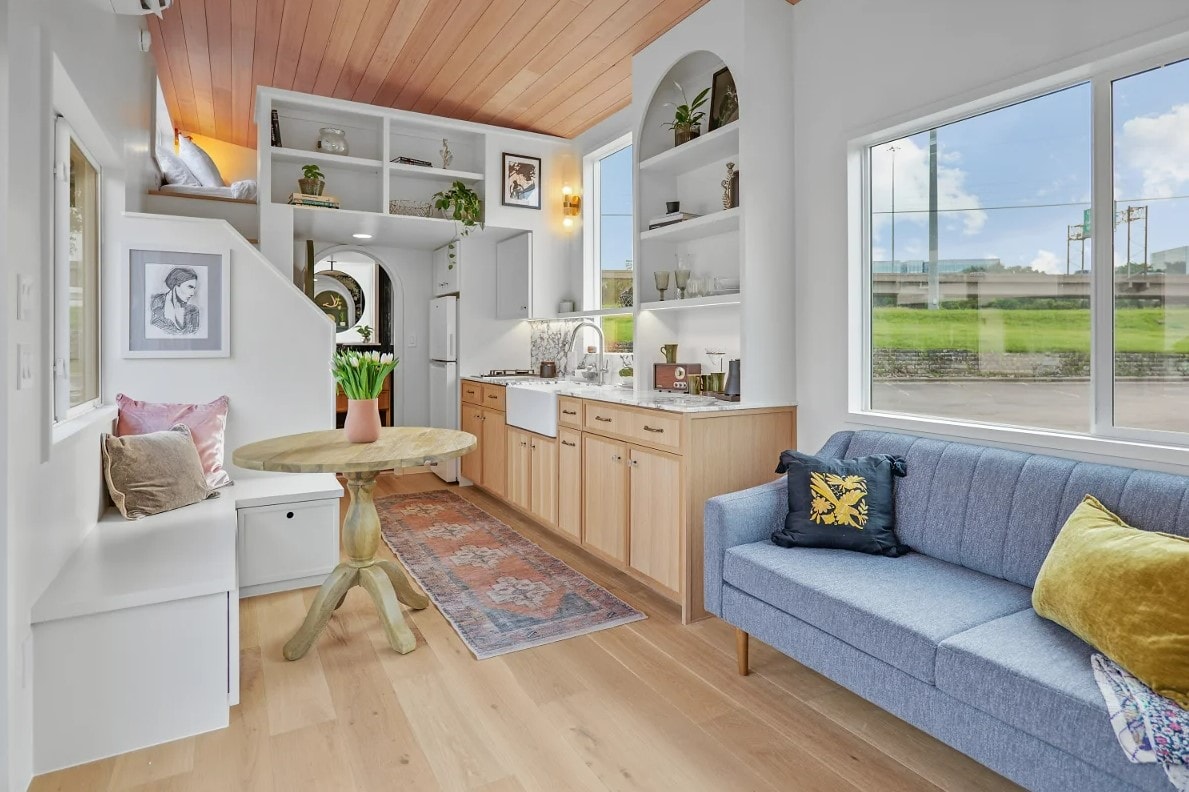
The single element that gives this space its luxurious, mansion-like feel is the commitment to a full-size living room set. Often in tiny homes, furniture is scaled down to an almost comical degree. By using a proper sofa and accent chairs, the space sends a clear message: this is a home for real living and comfortable lounging, not just a temporary cabin. It prioritizes comfort over saving a few extra square feet, which paradoxically makes the entire home feel grander and more substantial.
|
📋 Copy HEX 🔗 Share |
🔧 How-To Brief
You don’t need custom upholstery to get this look. A well-chosen IKEA sofa like the ‘Kivik’ or ‘Äpplaryd’ can provide the same substantial feel for under $1000. Scour Facebook Marketplace for secondhand armchairs—people are practically giving them away. A fresh reupholstering with a durable fabric might cost $200-400 per chair, giving you a custom look for a fraction of the price of new designer pieces. The goal is achieving the right scale and comfort, not the right brand name.
4. Inject Personality with Grey, Yellow, and Modern Lines
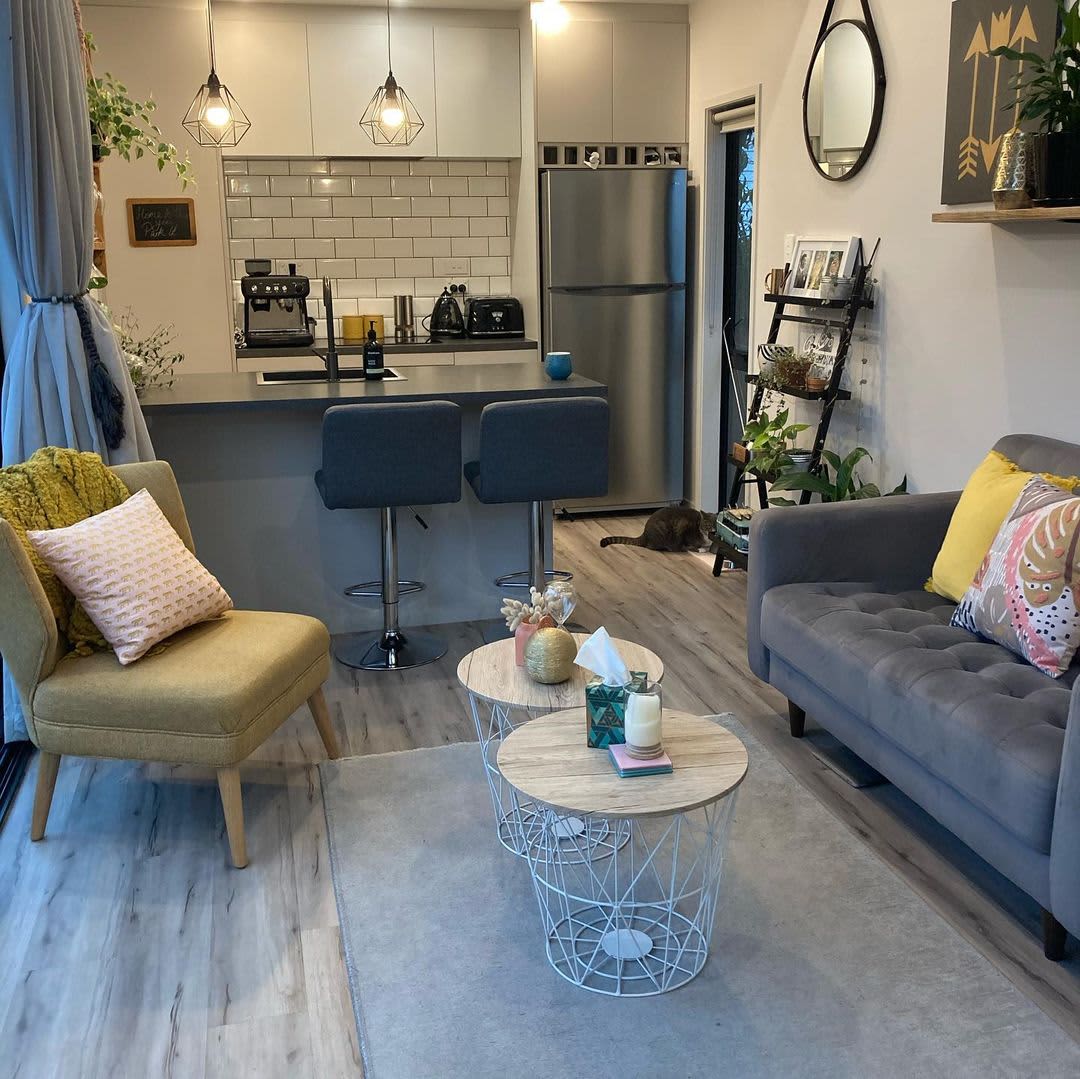
This space feels cohesive because it repeats colors and shapes effectively. The soft gray of the kitchen island is mirrored in the tufted sofa, creating a visual link between the kitchen and living zones. The pop of mustard yellow in the accent chair is a classic complementary color to the gray, adding energy without overwhelming the calm palette. Finally, the clean lines of the black pendant lights are echoed in the thin wireframes of the nested coffee tables, creating a subtle, modern rhythm.
|
📋 Copy HEX 🔗 Share |
💰 Budget Breakdown
Here’s a look at what it might cost to get this modern, cozy setup.
- Main Furniture (sofa, chair, stools): $1,800 – $3,500
- Lighting (pendants): $300 – $700
- Textiles (rug, pillows): $250 – $600
- Decor/Accessories (tables, decor): $400 – $800
- TOTAL: $2,750 – $5,600
- Budget alternative: With finds from Target, Wayfair, and IKEA, you could achieve a similar vibe for around $1,500 – $2,500.
5. Maximize Natural Light with White Shiplap and Greenery
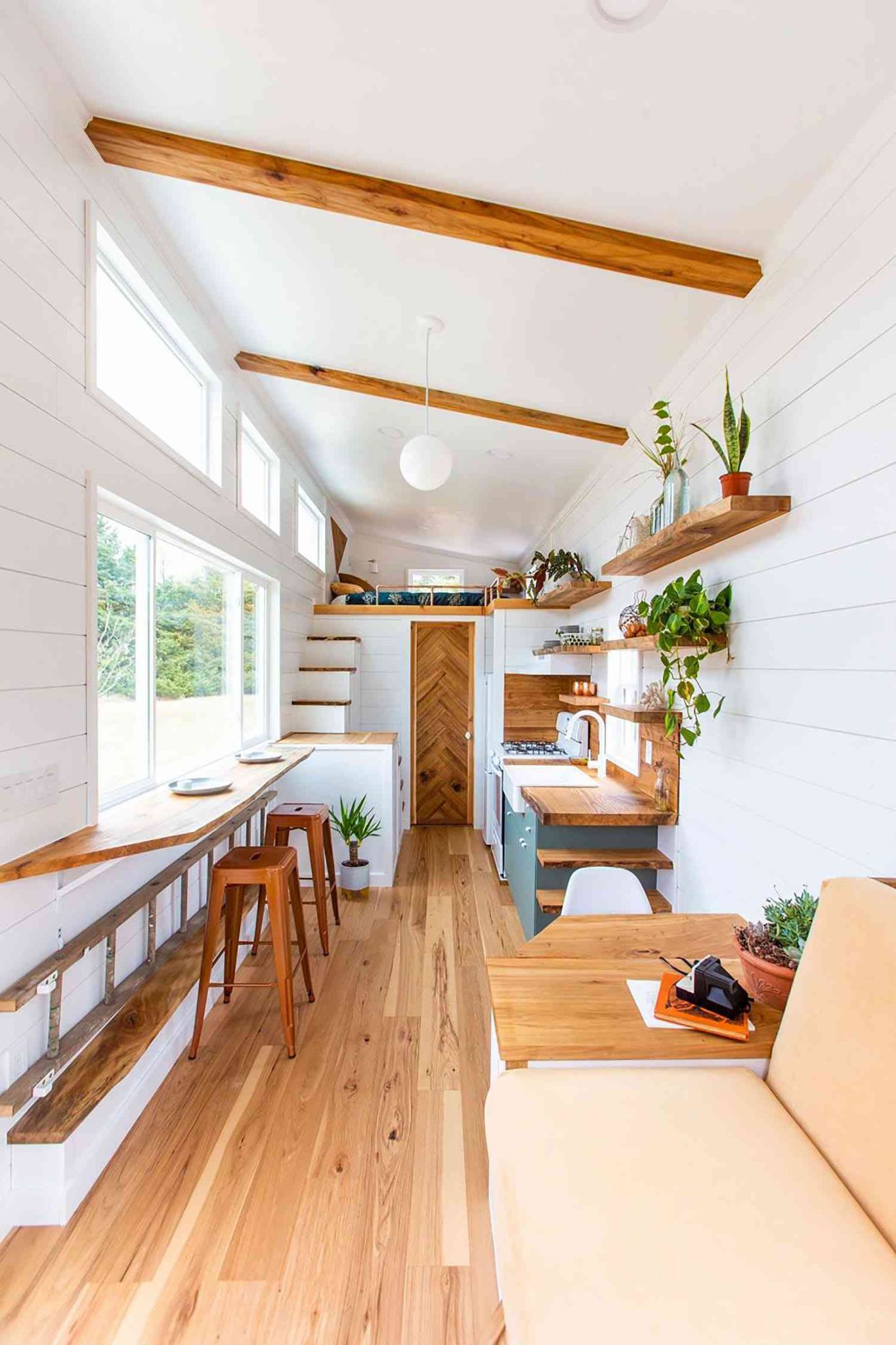
To make a space feel as bright as this one, think beyond just wall color. The key here is the reflective quality of the finishes. The white shiplap has a subtle satin or eggshell finish, which bounces light around more effectively than a flat matte paint. The light-toned wood floors and counters also have a slight sheen. When natural light pours in from those large windows, it hits these surfaces and scatters, illuminating every corner. This is much more effective than simply painting walls white. For a similar effect to the light and airy feel of Idea #1, focus on finish as much as color.
|
📋 Copy HEX 🔗 Share |
💡 Designer Tip
While the abundance of plants brings incredible life and freshness to the space, it also brings responsibility. In a compact tiny home, proper drainage for this many plants is non-negotiable to prevent water damage to your wood counters and floors. Be meticulous about using saucers or cachepots. Also, consider the humidity that many plants release into the air. In a small, sealed environment, this can contribute to moisture issues, so ensure you have excellent ventilation or a dehumidifier, especially during colder months.
6. Combine Farmhouse Style with Genius Storage Stairs
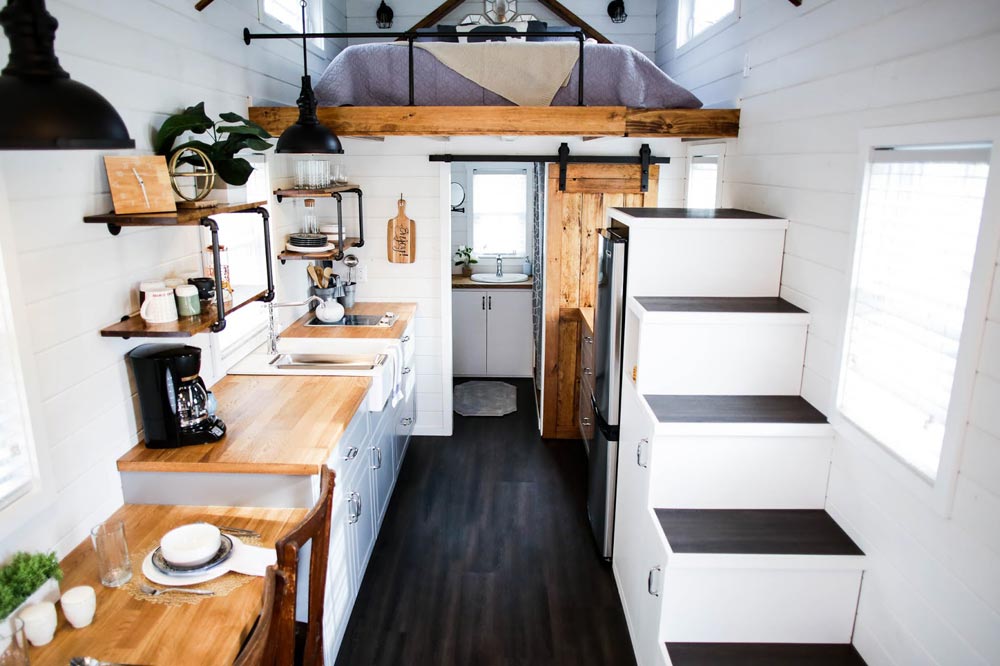
Recreating those industrial pipe shelves is a classic DIY project. Time: 3-4 hours. Cost: $80 – $150.
|
📋 Copy HEX 🔗 Share |
🔥 Trending Context
- Measure your space and decide on the shelf depth and height. Standard pipe diameter is 3/4-inch.
- Purchase black iron pipes and fittings: flanges (to attach to the wall), tees (for vertical supports), elbows (for corners), and caps (to finish ends).
- Clean the pipes with a degreaser to remove factory oil, then spray-paint with a matte black finish if desired.
- Assemble the pipe structure. It’s like building with LEGOs!
- Use a stud finder to locate wall studs. This is critical for support.
- Secure the flanges to the studs using heavy-duty screws. Add your wood shelf boards, and you’re done!
This layout, featuring a full storage staircase and a distinct kitchen/living area, is best suited for tiny homes on the longer side, typically 28 feet and up. The staircase alone requires a significant footprint (around 8-10 feet in length and 2-3 feet in width). A minimum ceiling height of 10 feet is also necessary to allow for comfortable headroom in the loft (at least 3.5 to 4 feet) and adequate clearance on the main floor below it.
7. Anchor Your Space with a Bold Black Sectional
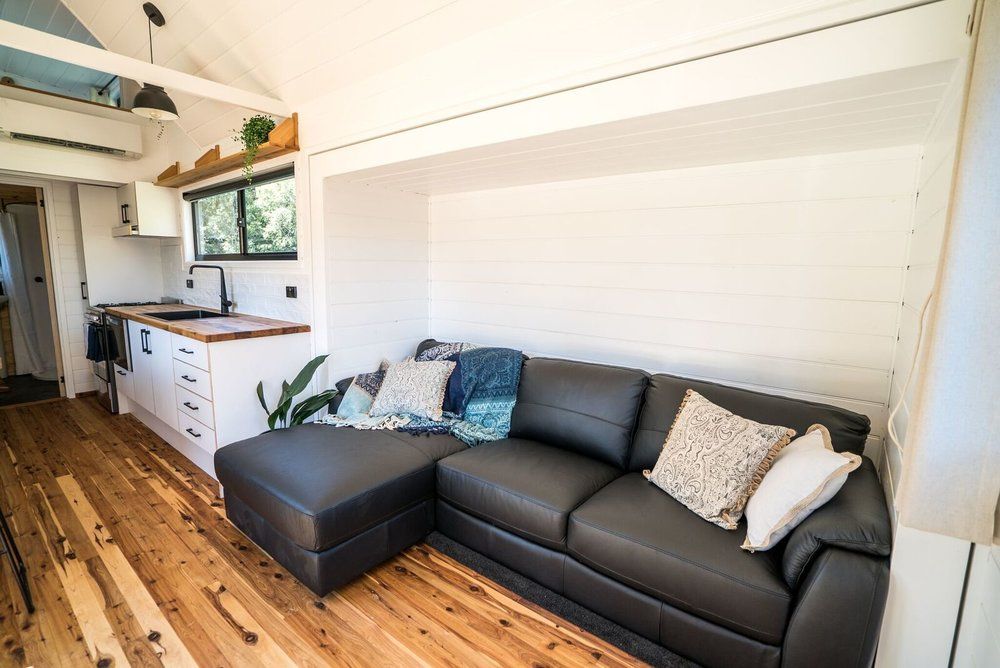
The black L-shaped sectional is the undeniable hero of this tiny home. In a small space dominated by white walls and light wood, this single piece of furniture provides a powerful visual anchor. It grounds the entire living area, preventing it from feeling like it might float away. Its dark color adds depth and sophistication, while its large size makes a bold statement: this home prioritizes comfort and lounging. Without it, the room would be just another pleasant but forgettable white box.
|
📋 Copy HEX 🔗 Share |
✅ Before You Start
This room’s compelling look is a balancing act: 60% high-contrast neutrals (the white shiplap walls and black sofa) + 30% warm wood tones (the floor and countertop) + 10% soft color accents (the blue and beige throws). The high contrast creates a modern, graphic base. The wood prevents the black and white from feeling too stark and cold. The pillows and throws are the final layer, adding softness and personality. You could easily swap the blue for sage green or terracotta to change the accent without disrupting the core formula.
8. Try a Moody Kitchen with Dark Cabinets and a Barn Door
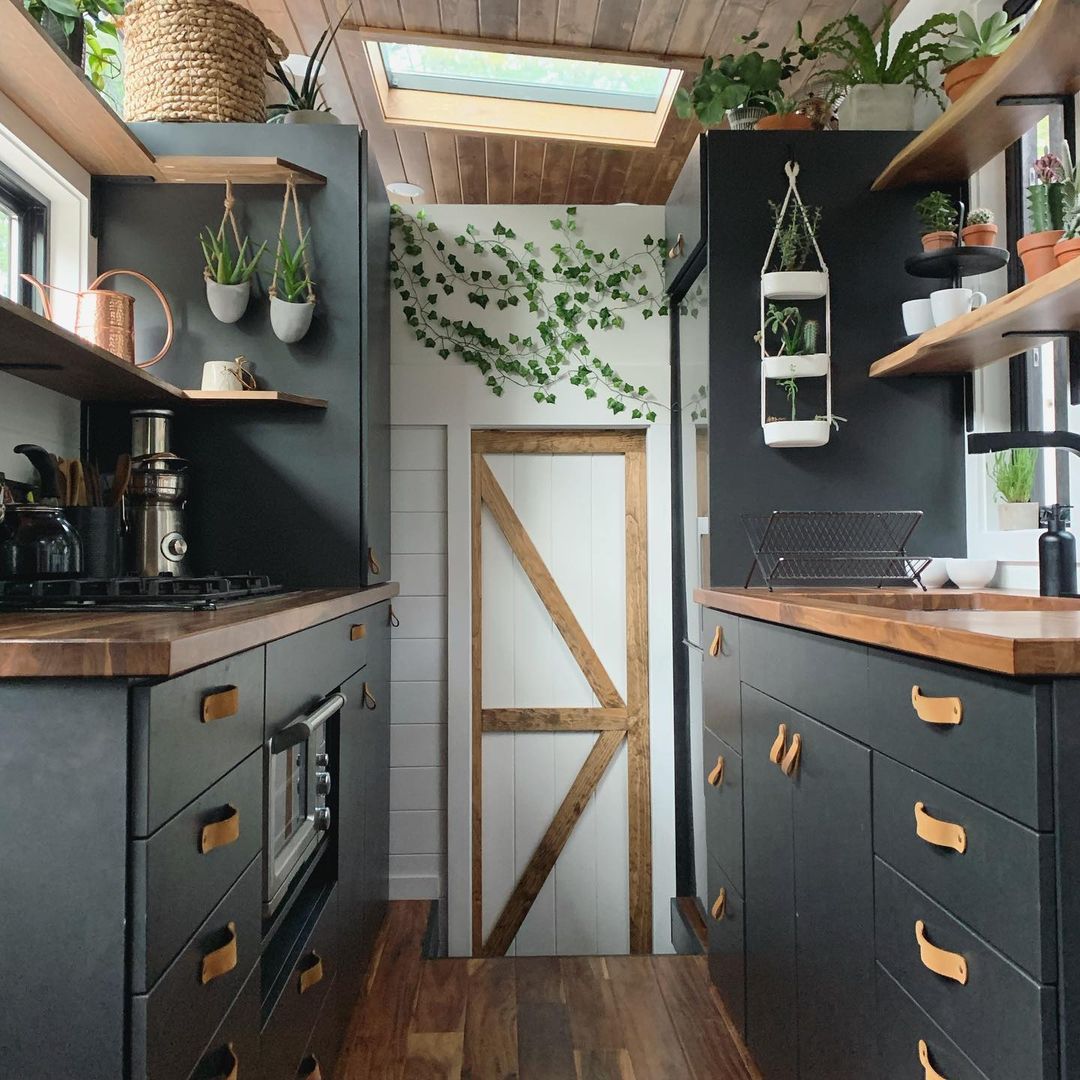
Dark kitchen cabinets are stunning, but they can make a small space feel even smaller if not balanced correctly. This design works because it’s flanked by bright white shiplap walls and has a skylight directly overhead. If your tiny house has fewer windows or lower ceilings, dark gray or black cabinets might feel heavy and oppressive. Be honest about your natural light situation. If it’s lacking, consider a lighter color on the upper cabinets or opt for open shelving to maintain a sense of openness.
|
📋 Copy HEX 🔗 Share |
🧹 Maintenance Reality
Before you commit to this beautiful, symmetrical kitchen design, grab a measuring tape and check these key things:
- Is your kitchen space wide enough to accommodate cabinets on both sides with a comfortable walkway (at least 36 inches) in between?
- Do you have a clear wall area for the barn door to slide open fully without hitting a window or light switch?
- Are there electrical outlets planned for small appliances on the countertops?
- Verify the height for floating shelves. Will they be reachable for daily use or just for decor?
9. Unlock Hidden Potential with Clever Staircase Storage
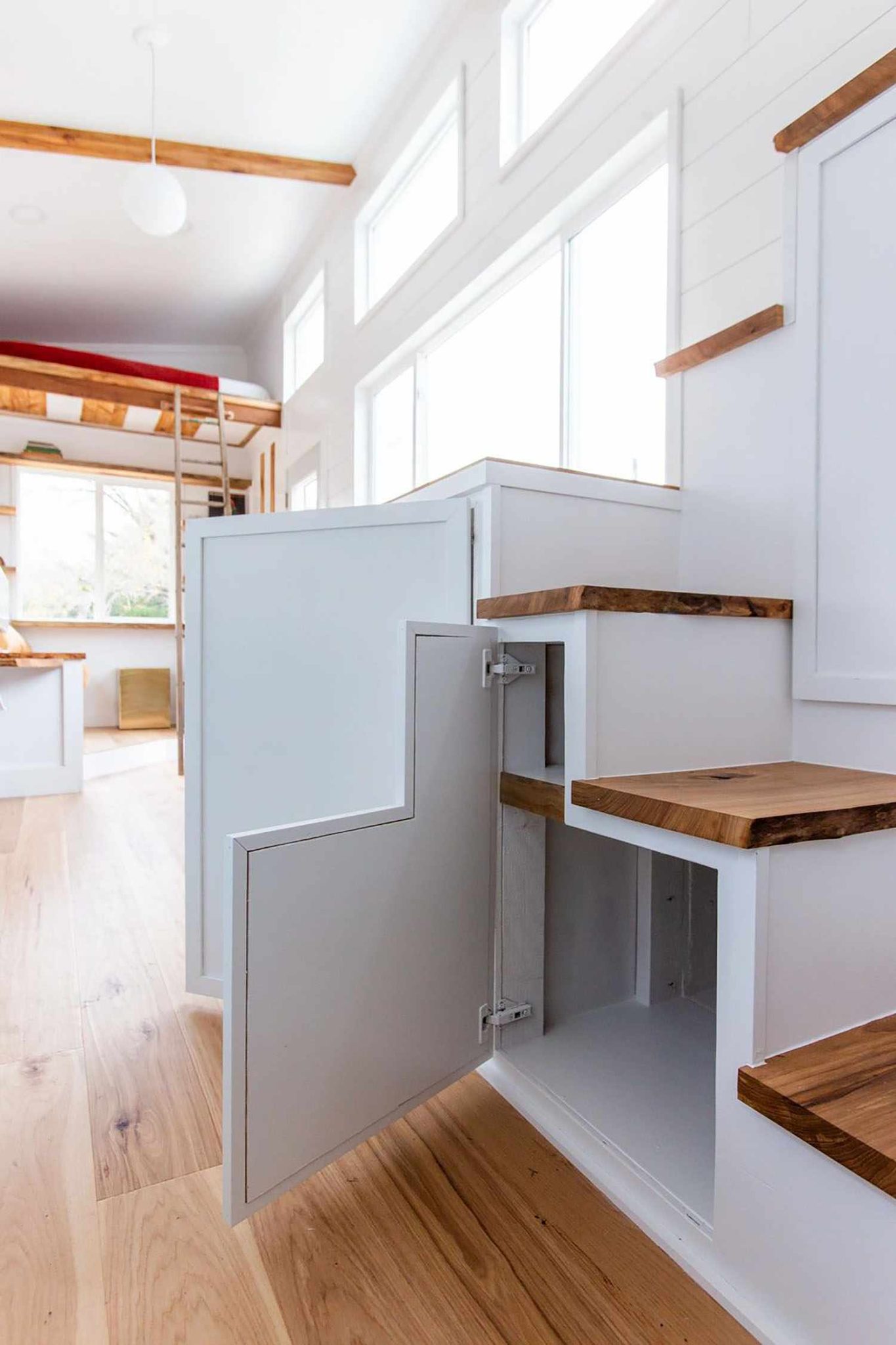
This design is a masterclass in functional minimalism. The staircase isn’t just a way to get to the loft; it’s a piece of multi-purpose furniture. The combination of drawers, cabinets, and open cubbies transforms it into a storage powerhouse. By painting the risers white to match the walls but leaving the treads as natural wood, the staircase feels visually lighter and less bulky. This blends the unit into the wall, a trick that makes it feel less like a massive block of wood and more like a built-in feature. It’s a clever use of camouflage, much like in the farmhouse storage stairs.
|
📋 Copy HEX 🔗 Share |
⚠️ Real Talk
When designing storage stairs, vary the compartment types for maximum utility. Don’t just make them all cabinets or all drawers. Include a few deep drawers for clothing, a taller cabinet for a vacuum or cleaning supplies, some open cubbies for books or baskets, and perhaps even a pull-out pantry for kitchen overflow. Think about what you actually need to store and design the compartments around those items, rather than using a generic one-size-fits-all approach. This customization is what makes built-ins so valuable.
10. Achieve a Rustic Modern Look with Floating Stairs
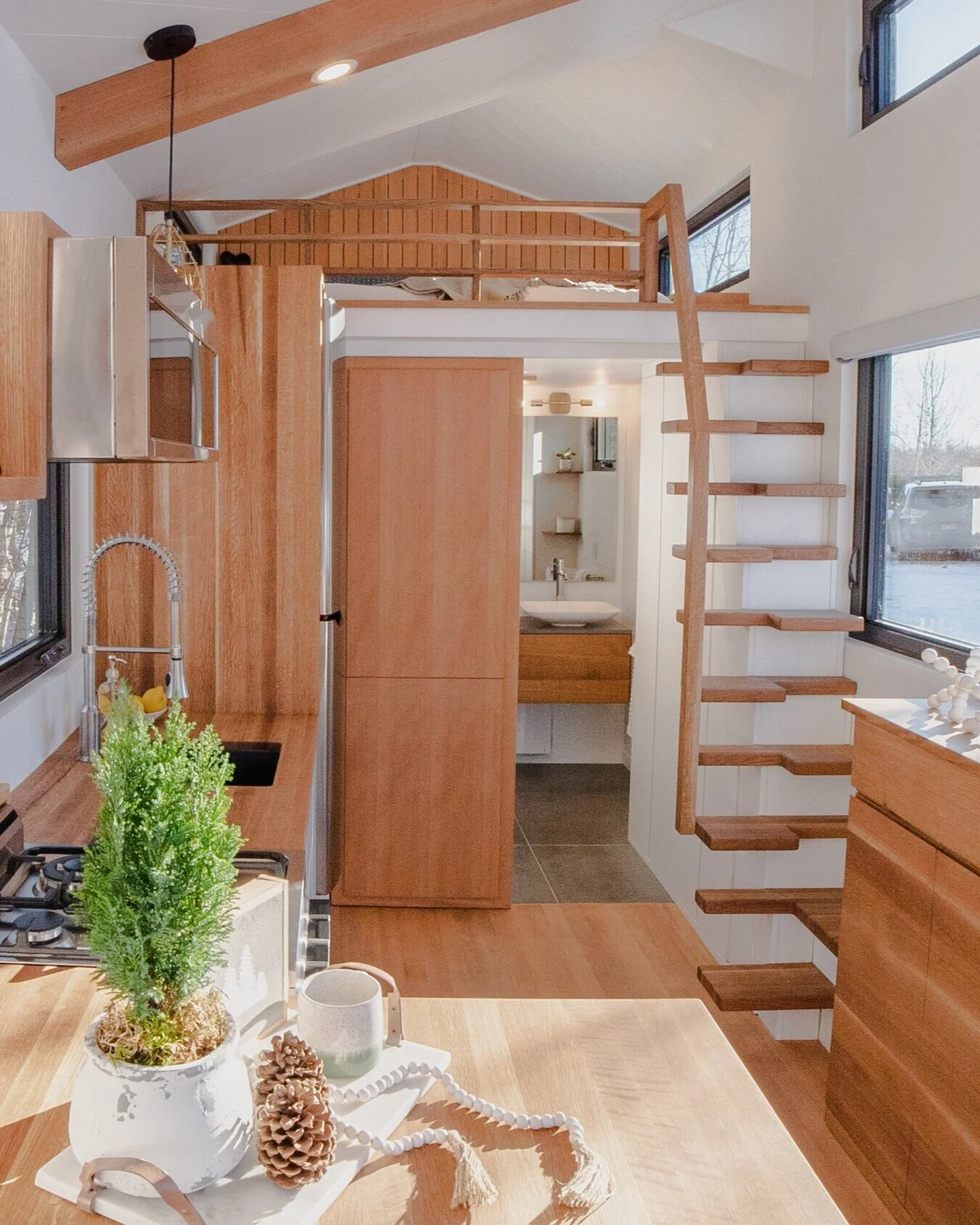
Floating stairs like these are a fantastic way to keep a space feeling open, but they require specific structural considerations. This design works best when the staircase can be mounted to a structurally reinforced wall. It’s not a feature to add as an afterthought. This style is ideal for tiny homes with a ceiling height of at least 10 feet to allow for a comfortable stair incline without taking up too much horizontal floor space. The lofted area itself would need to be at least 7 feet wide to feel proportionate.
|
📋 Copy HEX 🔗 Share |
💸 Get This Look For Less
The clean, minimalist look of light wood and white walls is beautiful, but it’s not the most forgiving of surfaces. The natural wood paneling, especially in a high-traffic area like a kitchen, will require regular sealing (every 1-2 years) to protect it from water spots and oil stains. White walls will show scuffs and marks easily, especially around the staggered staircase. Plan on doing paint touch-ups at least once a year to keep the space looking crisp and clean. A magic eraser will be your best friend!
11. Carve Out a Cozy Window Nook with Patchwork Textiles
Let’s build that simple floating shelf above the window. Time: 1 hour. Cost: $40 – $70.
|
📋 Copy HEX 🔗 Share |
🎯 What Makes It Work
- Purchase a piece of finished wood (like pine or oak) cut to your desired length and a set of minimalist metal brackets.
- Finish the wood with a light stain or clear polyurethane to match your aesthetic and protect it from a watering can mishaps.
- Use a stud finder to locate the studs in the wall above your window. This is crucial for ensuring the shelf can hold weight.
- Mark the locations for your brackets, making sure they are level.
- Drill pilot holes and then screw the brackets securely into the studs.
- Place your finished wood plank on top and secure it to the brackets from underneath. Now, style with your favorite plants and trinkets!
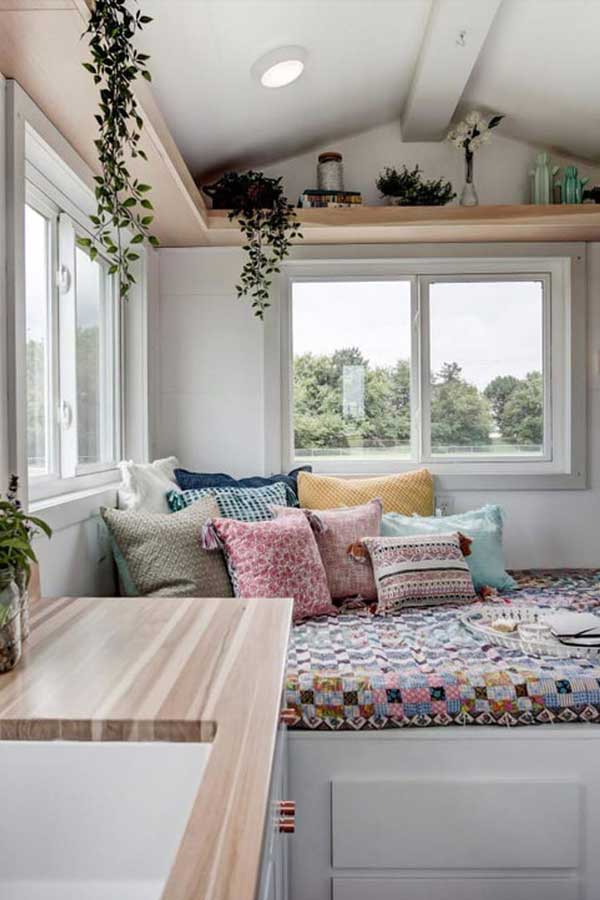
The single element that makes this nook so inviting is the colorful patchwork quilt. It’s the heart of the design. Remove it, and you have a perfectly nice bench and some pillows. But with it, the space gains a story, a sense of history, and a jolt of personality. The quilt’s mix of aqua, pink, and yellow provides the entire color palette for the nook, making it feel intentional and curated. It proves that one special textile can define a whole zone within a larger room.
12. Connect with Nature in a Plywood-Paneled Reading Nook
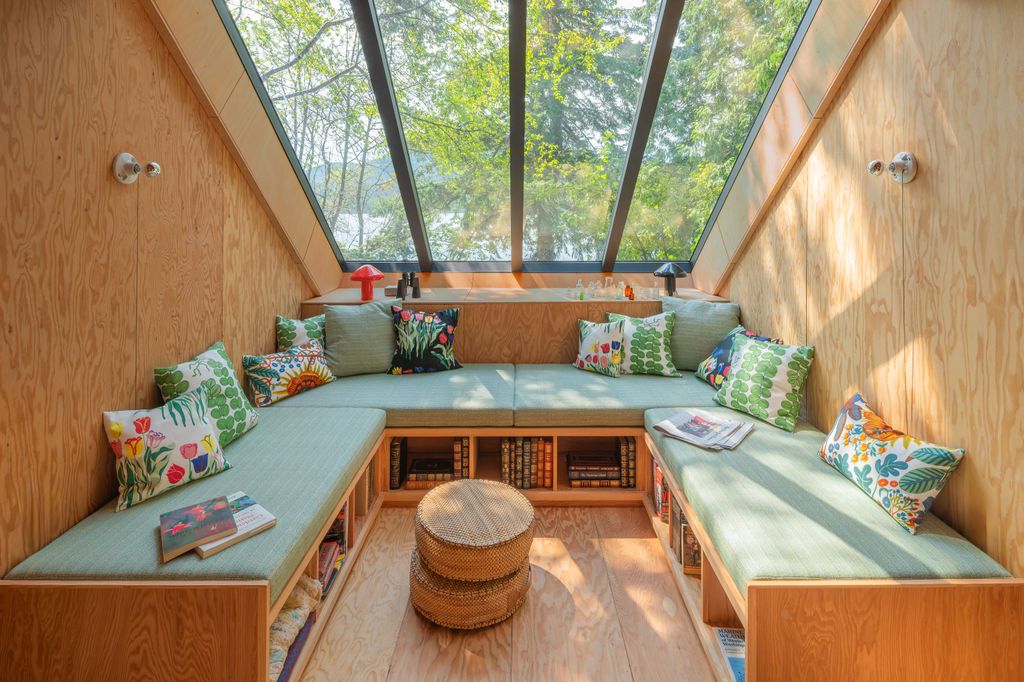
This nook is a triumph of ‘biophilic design’—the concept of connecting people and nature within our built environments. It works by creating a direct, almost immersive experience with the outside world. The massive triangular skylights don’t just let in light; they frame the sky and trees like living art. The use of a single, raw material (plywood) for walls and floors creates an organic, cocoon-like shell that feels warm and grounding, blurring the line between the indoor structure and the natural landscape visible just beyond the glass.
|
📋 Copy HEX 🔗 Share |
📏 Scale Guide
As our lives become more digital, there’s a growing movement in design towards creating analog, tactile spaces that encourage us to disconnect. This plywood-clad reading nook taps directly into that cultural shift. It’s a space designed for a single, focused activity: reading a physical book, enjoying a cup of tea, and looking at the view. The built-in bookshelves and simple cushions reinforce this purpose. It’s a deliberate rejection of the multi-tasking, screen-filled reality of modern life, and that’s why it feels so calming and desirable right now.
13. Define Your Living Area with a Sage Green Geometric Wall
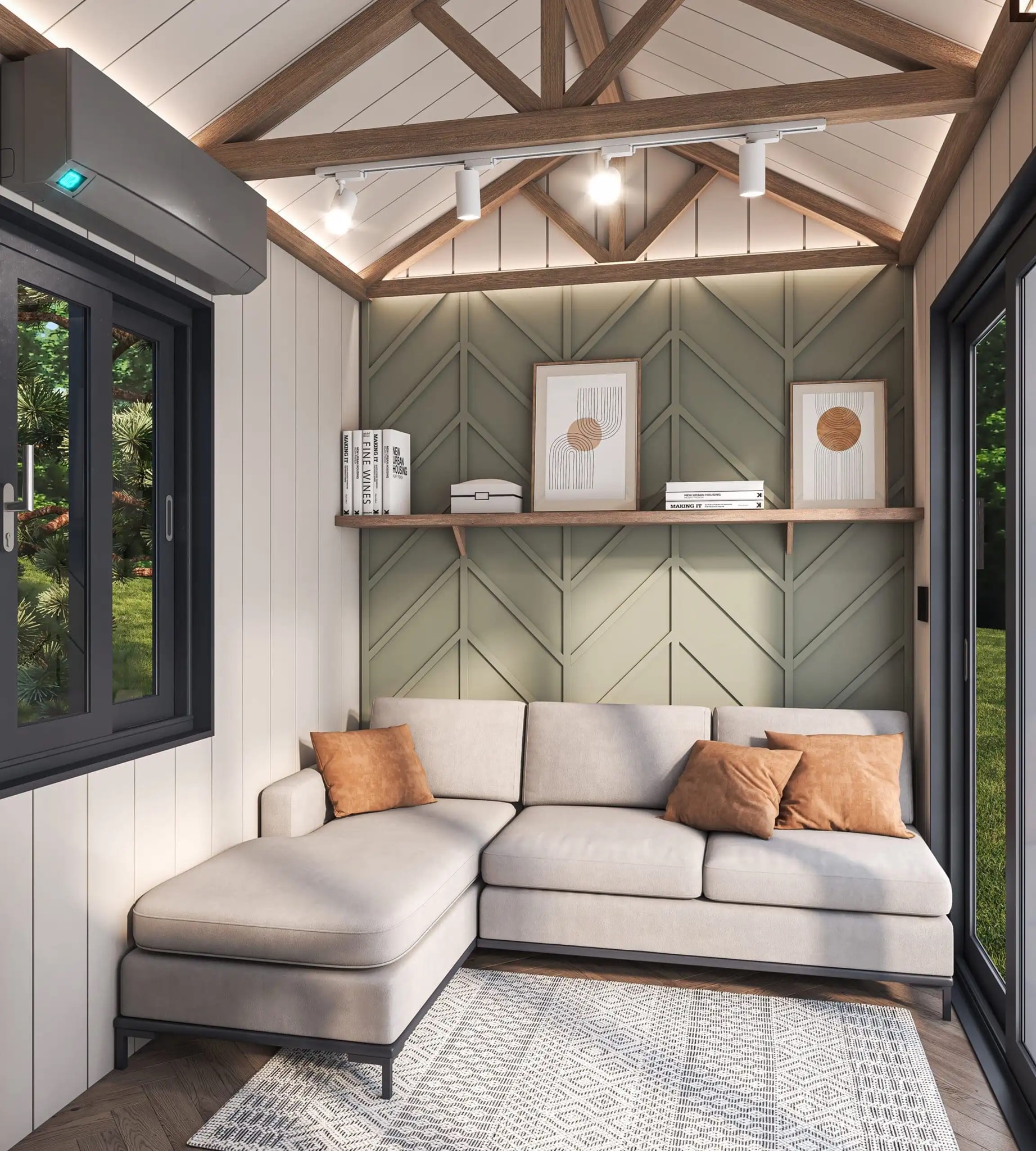
An accent wall doesn’t have to be just a flat coat of paint. Adding geometric trim or paneling like this before you paint is a pro move that adds architectural interest and makes the color feel more integrated. For a tiny house, use thin pieces of lattice or 1×2 boards to create your pattern. This keeps the wall from feeling too bulky. Plan your pattern with painter’s tape first to get the scale just right before you start nailing. The added dimension creates subtle shadows that make the wall far more dynamic than paint alone.
|
📋 Copy HEX 🔗 Share |
⭐ The One Thing
This living area’s sophisticated palette can be broken down into a simple ratio: 50% neutral foundation (the white shiplap walls and light sofa) + 30% natural textures (the dark wood beams and floating shelf) + 20% color statement (the sage green accent wall and tan pillows). This formula ensures the space feels grounded and mature. The green is the star, but it needs the warmth of the wood and the breathing room of the white to really shine. Compare this to the bolder, higher-contrast math of Idea #7.
14. Capture a Bohemian Spirit in a Curvy Airstream
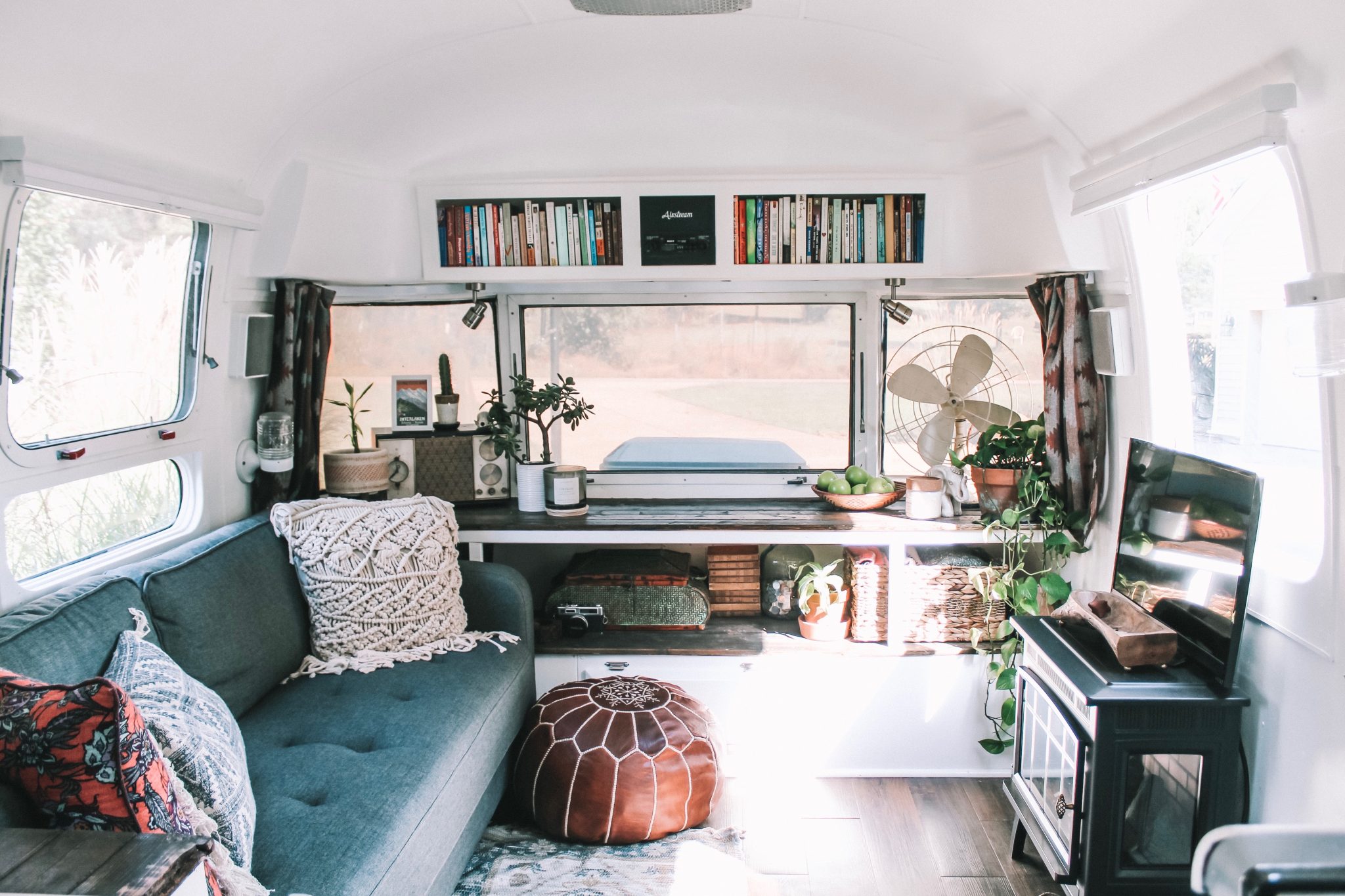
That eclectic, bohemian vibe is totally achievable on a budget. The key is in the mix of textures and personal items. Find a secondhand sofa on Facebook Marketplace for $100-$300 and drape it with a velvet or chenille throw from Target or HomeGoods. The leather pouf can be an affordable find on Amazon or Wayfair. The real magic, however, comes from the shelves. Raid a thrift store for quirky mugs, old books with interesting covers, and unique vases. Add a few trailing plants from a local nursery, and you’ve captured the essence of this look for less than $500.
|
📋 Copy HEX 🔗 Share |
📐 Style Math
Living in a curved space like an Airstream presents unique challenges. Standard, rectangular furniture will rarely sit flush against the walls, creating awkward gaps where dust and lost items accumulate. You either have to embrace these gaps, build custom furniture, or be very selective about finding pieces with smaller footprints. Also, hanging those shelves requires special hardware (like rivet nuts) and careful planning, as you can’t just find a stud like you would in a traditional wood-framed tiny house.
15. Frame the View with a Stunning Circular Window
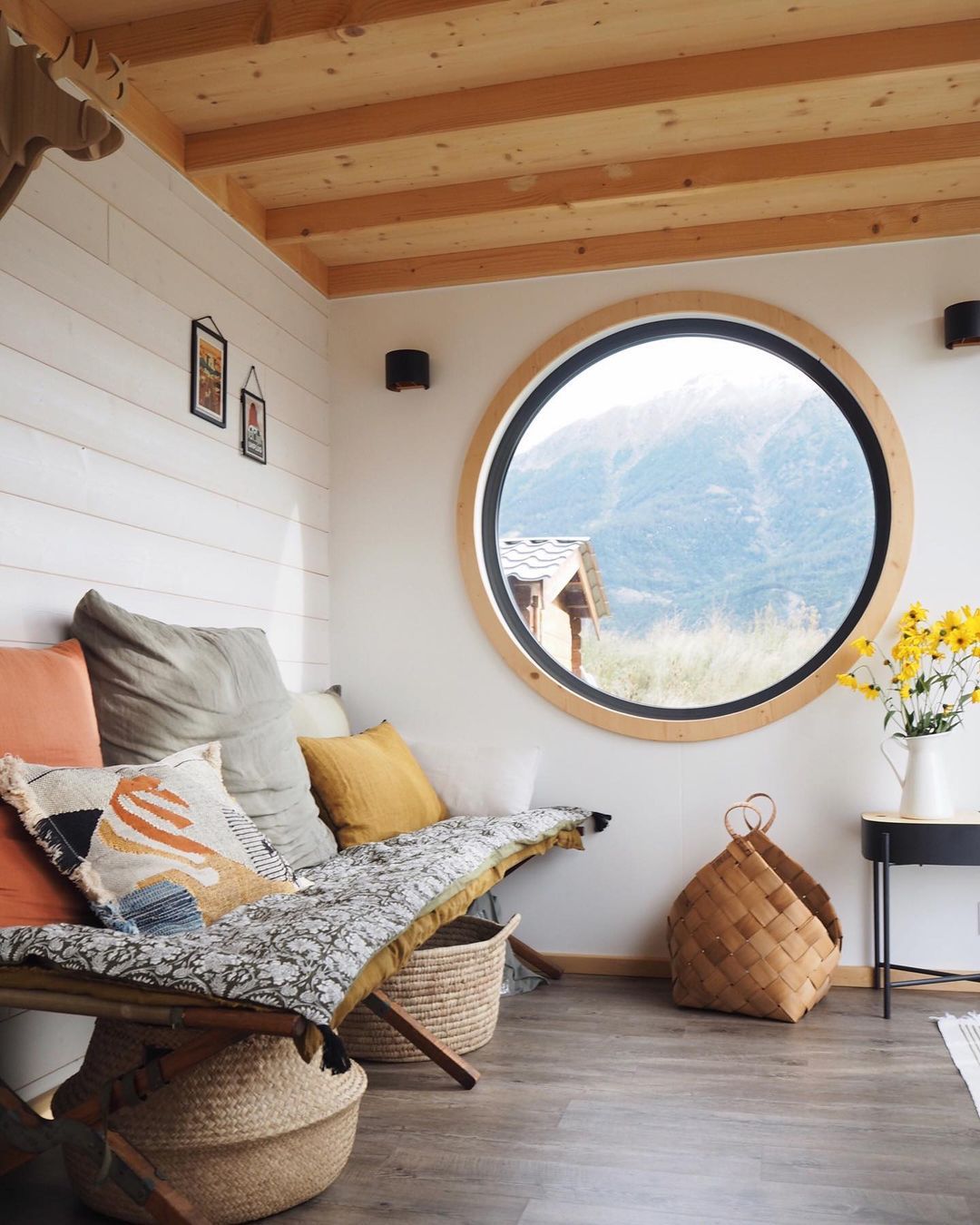
The circular window is, without a doubt, the soul of this room. It transforms a simple wall into a captivating focal point. If you replaced it with a standard rectangular window, the space would lose all of its magic. The round shape feels special, intentional, and a little bit whimsical. It acts like a camera lens, focusing your attention on the mountain view outside and turning the landscape into a piece of living art. This single architectural element elevates the entire design from basic to breathtaking.
|
📋 Copy HEX 🔗 Share |
🔧 How-To Brief
This space feels so calming because it perfectly balances warm and cool tones. The natural wood of the window frame, ceiling, and bench brings in warmth and a rustic feel. The white shiplap walls and the gray tones in the cushion and baskets provide a cool, clean backdrop. The pops of orange and yellow in the pillows add just enough energy to keep it from feeling bland. This mix of temperatures is what makes a neutral-dominant room feel sophisticated and complete, not just unfinished.
16. Blend Bathroom and Living Space with a View
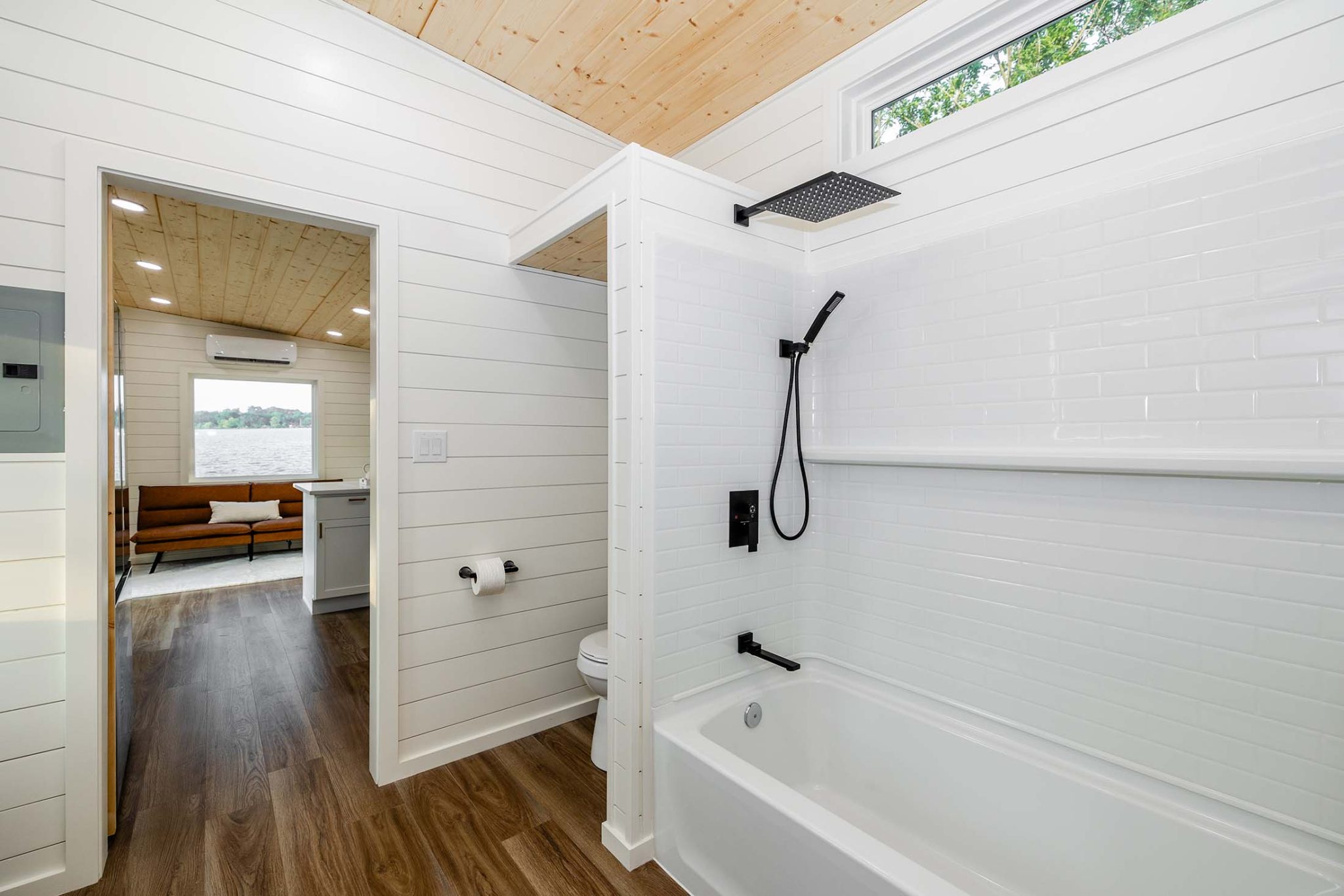
When designing a tiny house bathroom, a pocket door or a barn-style sliding door is almost always a better choice than a traditional swing door. A standard door that swings inward eats up valuable floor space inside the bathroom. A door that swings outward can obstruct a hallway or living area. A sliding door reclaims all that wasted space. In this design, leaving the door open creates a visual connection to the living area and the view beyond, making both spaces feel larger. This is a brilliant trick for enhancing the sense of openness throughout the home.
|
📋 Copy HEX 🔗 Share |
💰 Budget Breakdown
This type of open-concept bathroom layout works best in a linear tiny house plan, typically in homes 24 feet or longer. The bathroom itself doesn’t need to be huge—a 4-foot by 7-foot space is adequate for a tub, toilet, and small vanity. The key is the wide opening. A doorway of at least 32-36 inches is needed to create this seamless visual flow. A smaller, standard 24-inch bathroom door would make it feel like a separate, closed-off cubicle, defeating the purpose of the design. Compare with the more compact bathroom layouts in Idea #17 and Idea #18.
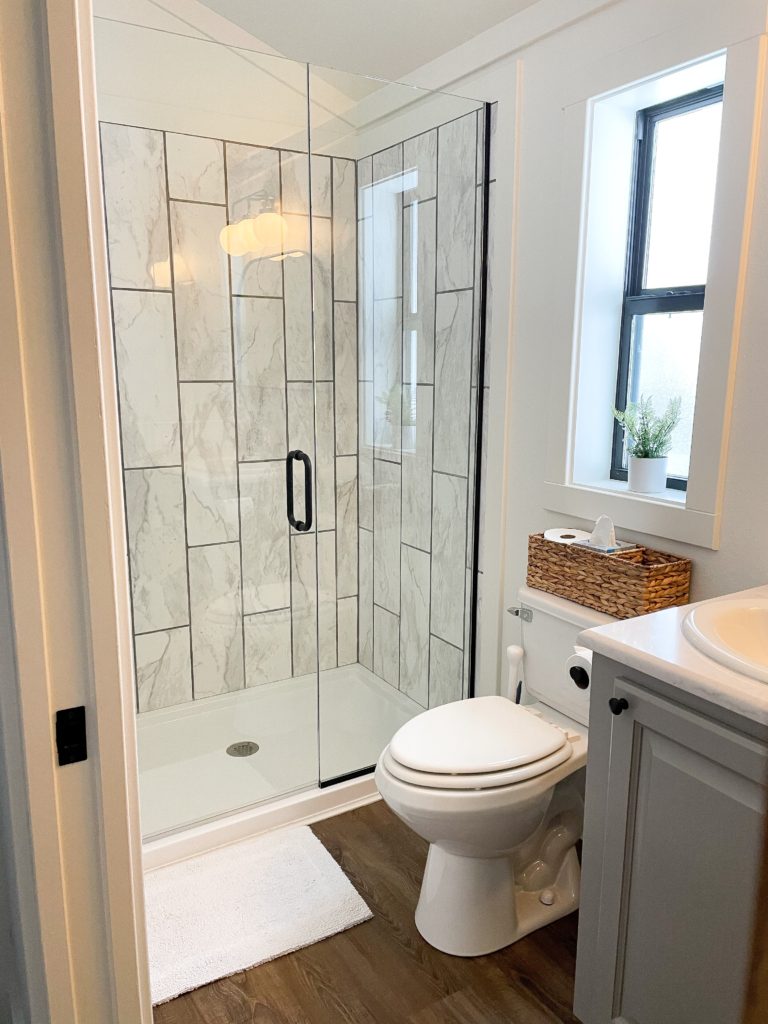
17. Keep a Small Bathroom Bright with Classic Subway Tile
A clean and practical bathroom like this is more accessible than you might think. Here’s a potential cost breakdown:
|
📋 Copy HEX 🔗 Share |
💡 Designer Tip
- Fixtures (toilet, vanity, faucet): $400 – $900
- Shower (base, glass enclosure, tile): $800 – $2,000
- Flooring (wood-look tile/LVP): $150 – $400
- Lighting & Mirror: $100 – $300
- TOTAL: $1,450 – $3,600
- Budget alternative: Opt for a shower curtain instead of glass, a pedestal sink instead of a vanity, and DIY the tile work to bring the total cost down to the $800 – $1,500 range.
a tiny bathroom renovation, tick off these essential checkpoints:
- Confirm the exact placement of your plumbing lines. Moving a toilet drain is a major job, so it’s best to design around its existing location if possible.
- Check the swing of the shower door. Will it collide with the vanity or toilet when it opens? Is there enough clearance?
- How will you ventilate the space? A high-quality exhaust fan is non-negotiable in a tiny bathroom to prevent mold and mildew.
- Measure, measure, measure. Ensure your chosen vanity and toilet will fit with enough code-required clearance on all sides.
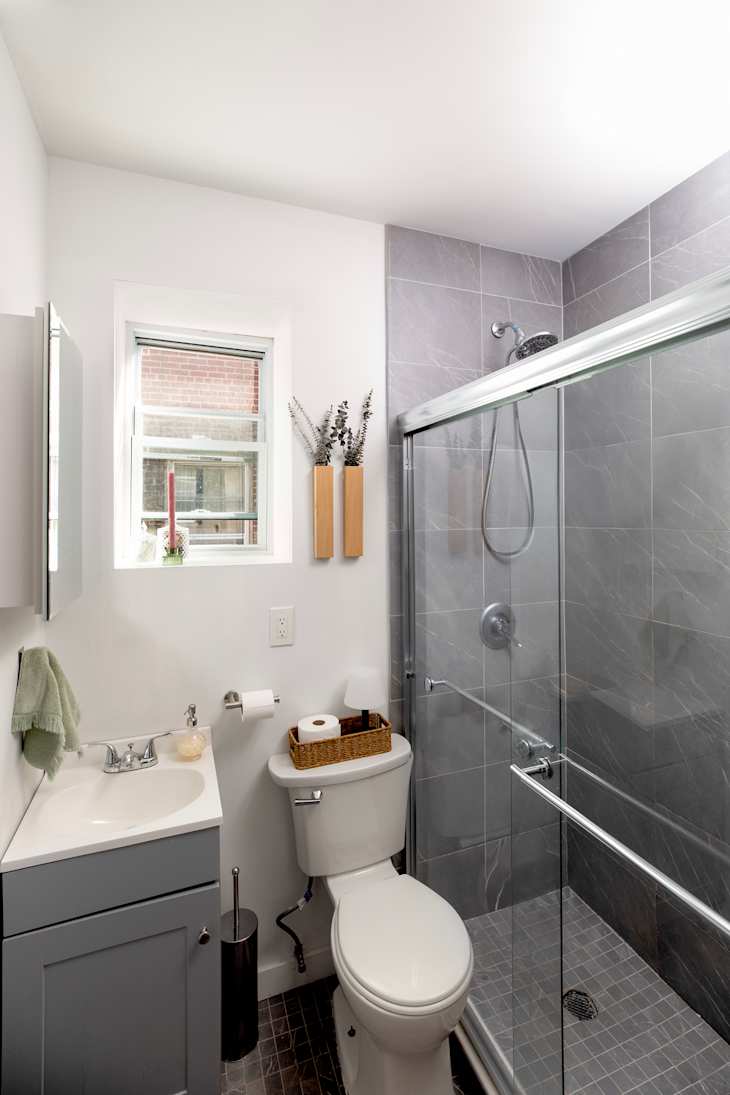
18. Utilize Every Inch with a Corner Vanity and Gray Tile
This bathroom design is a brilliant example of space optimization. Placing the small sink vanity in the corner utilizes what is often dead space, freeing up valuable floor area and making the room feel more navigable. Using the same large-format gray tiles on the shower walls and a matching smaller format on the shower floor creates a continuous, clean look that’s visually calming. The clear glass enclosure prevents the shower from chopping up the small room, allowing your eye to see all the way to the back wall.
|
📋 Copy HEX 🔗 Share |
🔥 Trending Context
While the large, gray tiles provide a sleek, modern look, be mindful of grout. With any tile, the grout lines are the most likely place for mildew and discoloration to appear. Using larger tiles means fewer grout lines, which is a big win for cleaning. However, it’s still crucial to seal the grout annually, especially inside the shower. For the glass shower door, a daily squeegee after each use is the secret to preventing hard water spots and soap scum buildup from ever taking hold.
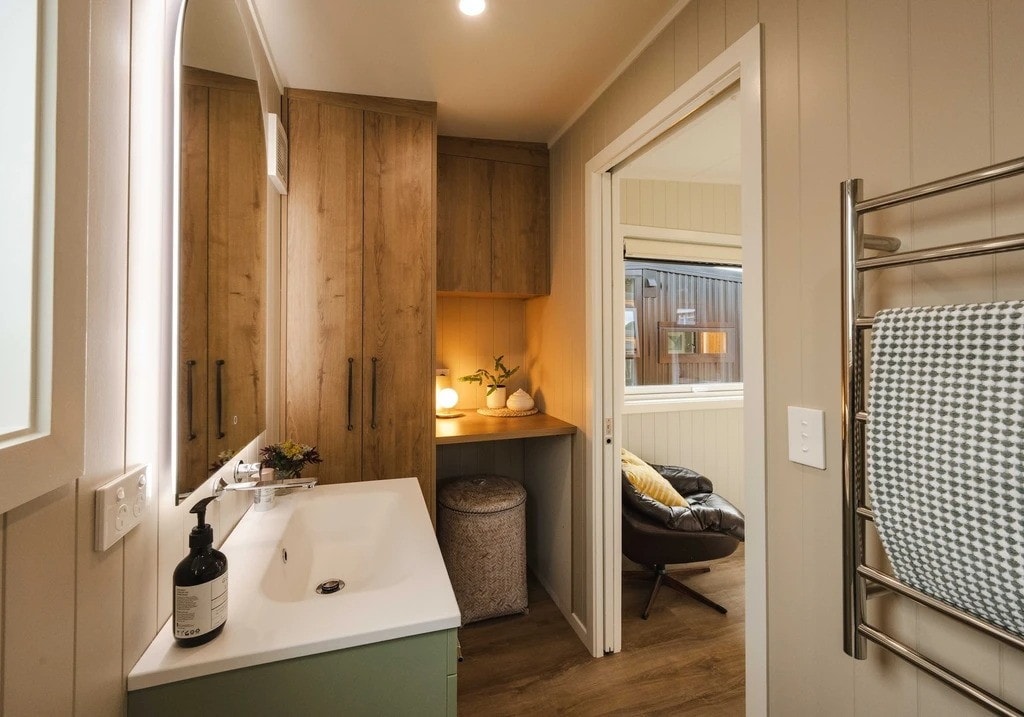
19. Warm Up a Bathroom with Wood Cabinetry and Sage Green
The inviting feel of this bathroom comes from a carefully balanced palette: 40% warm wood + 40% soft sage green + 20% crisp white and chrome. The wood provides a natural, organic warmth that feels grounding. The sage green is calming and adds a touch of color without being overpowering. The white sink and chrome fixtures bring in a clean, modern element that keeps the wood and green from feeling too rustic or dated. It’s a sophisticated, spa-like combination that feels both fresh and timeless.
|
📋 Copy HEX 🔗 Share |
✅ Before You Start
A backlit mirror is one of the best investments you can make in a small bathroom. It provides even, flattering light for tasks like makeup application and shaving, eliminating the shadows that a single overhead fixture can create. But beyond its functionality, it also serves as a design feature. The soft glow around the mirror makes it appear to float off the wall, adding a sense of depth and creating a high-end, hotel-like ambiance. It’s both task lighting and accent lighting in one sleek package.
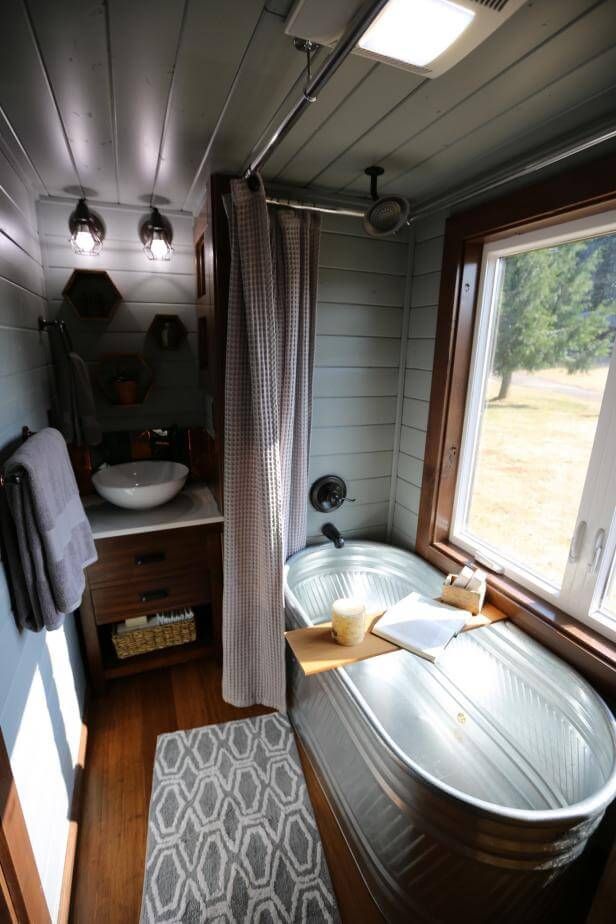
20. Add Rustic Charm with a Corrugated Metal Soaking Tub
You can create those cool hexagonal shelves yourself. Time: 2 hours. Cost: $30 – $50.
|
📋 Copy HEX 🔗 Share |
🧹 Maintenance Reality
- Get 1×4 pine boards. For each hexagon, you’ll need six pieces cut to the same length with a 30-degree bevel on each end.
- Arrange the six pieces into a hexagon shape on a flat surface. The angled cuts should fit together perfectly.
- Apply wood glue to the edges and press them together. Use painter’s tape to hold the shape tightly while the glue dries.
- For extra strength, you can add a few brad nails at each joint.
- Once dry, sand the hexagon smooth and apply your desired stain or paint.
- Hang on the wall using small nails or picture hangers.
A stock tank or corrugated metal tub looks amazing, but there are practicalities to consider. First, they aren’t insulated, meaning your bathwater will get cold much faster than in a standard acrylic or cast iron tub. Second, getting the plumbing right—especially an overflow drain—can be a custom job that requires some creative problem-solving. Finally, while they are deep, they are often shorter than standard tubs, so you’ll be sitting up more than lounging. It’s a look that prioritizes rustic style over spa-like comfort.
21. Embrace Minimalism with a White-on-White Loft Layout
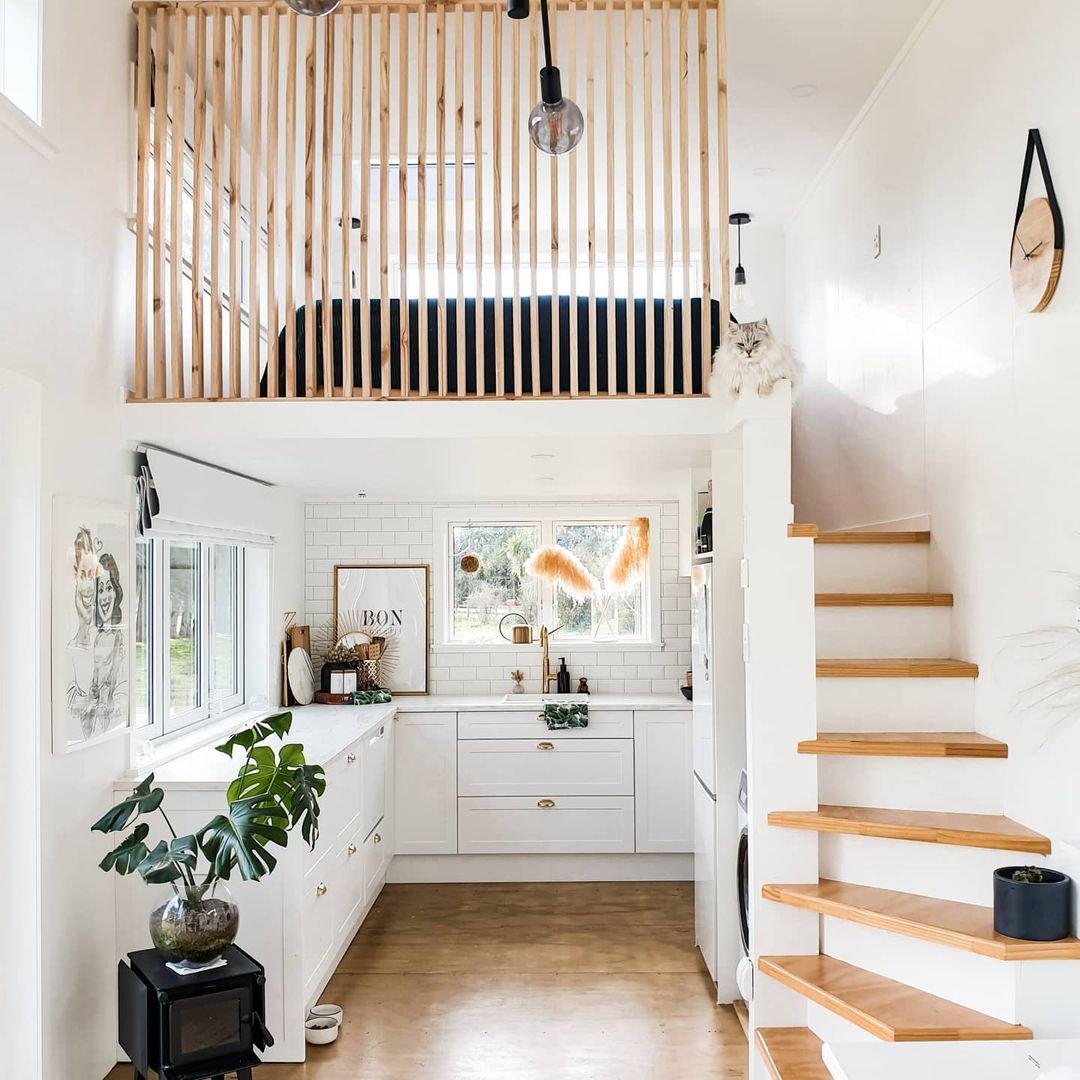
The single most important element making this minimalist design work is texture. If everything were just flat, matte white, the space would feel sterile and boring. Instead, the design incorporates the subtle, linear texture of the subway tiles, the rougher texture of the concrete-look floor, the soft sheen of the cabinets, and the natural grain of the wooden staircase and loft railing. This textural variety adds depth and warmth, creating a rich, layered look without using any loud colors. For another take on minimalism, check out the wood tones in Idea #22.
|
📋 Copy HEX 🔗 Share |
⚠️ Real Talk
To get this bright, minimalist look for less, focus on affordable materials. White subway tile is one of the most inexpensive tile options available—often just a few dollars per square foot. For the floor, consider a light-colored Luxury Vinyl Plank (LVP) instead of poured concrete. IKEA’s white ‘SEKTION’ cabinets are the gold standard for budget-friendly modern kitchens. The open wooden staircase might be a splurge, but you can achieve a similar feel with a simple ladder and by keeping the rest of the palette strictly disciplined.
22. Streamline Your Space with an Integrated Kitchen Counter
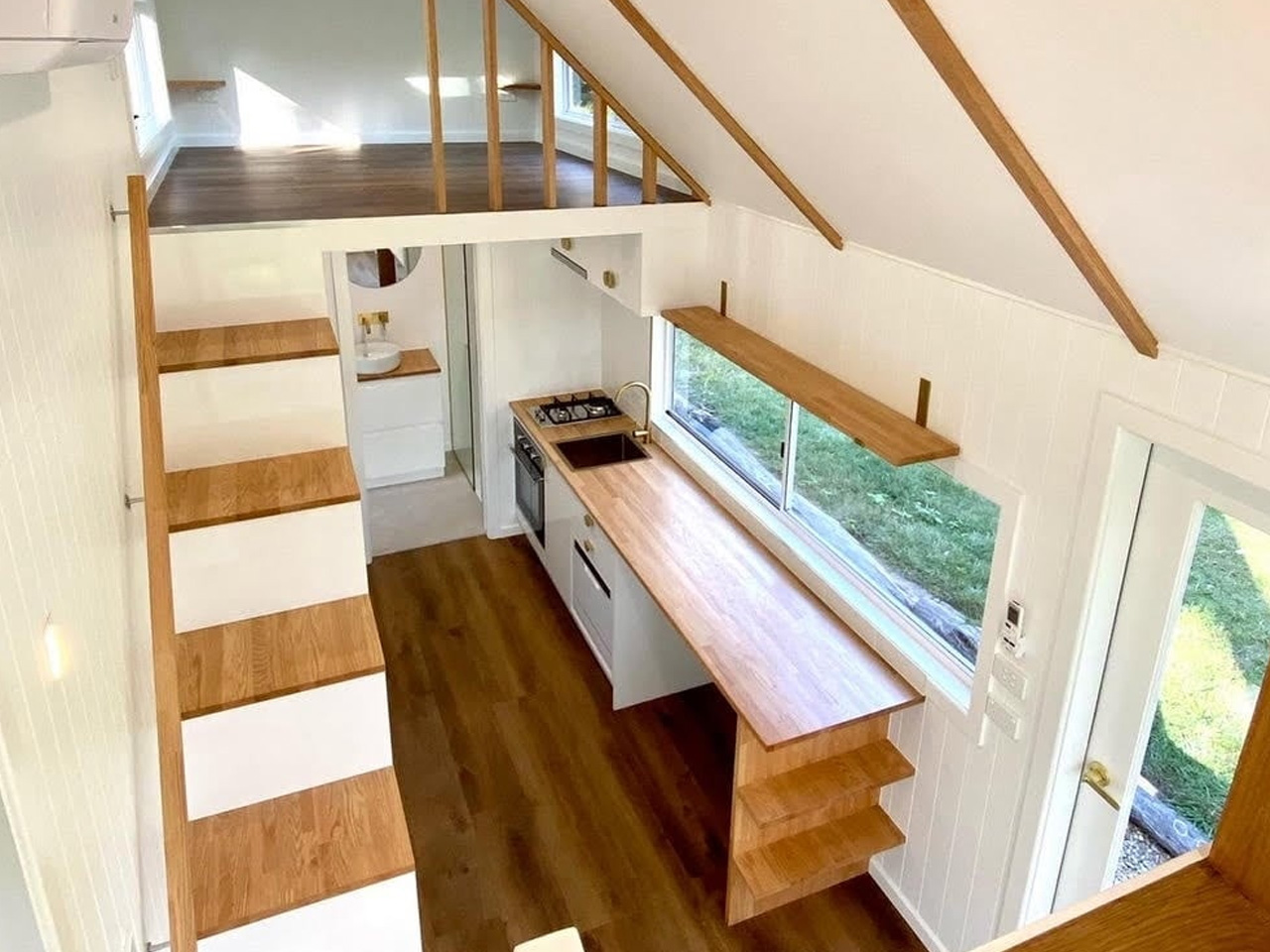
This hyper-efficient layout is perfect for the smallest of tiny homes, particularly those in the 16 to 22-foot range. The design consolidates the entire kitchen, staircase, and bathroom access into one ‘utility wall’, leaving the opposite wall completely open for living space. This requires a minimum ceiling height of 10.5 feet to accommodate the loft, the bathroom underneath (which needs about 6.5 feet of clearance), and the thickness of the floor structure itself. It’s a game of inches, but it’s incredibly effective.
|
📋 Copy HEX 🔗 Share |
💸 Get This Look For Less
What makes this design so successful is its strong, uninterrupted horizontal lines. The long wooden countertop extends from the kitchen prep zone all the way to the end of the room, flowing seamlessly into a small shelf by the window. This continuous line draws your eye down the length of the home, making it feel much longer and more spacious. The horizontal plank walls and the long, narrow window reinforce this effect. It’s a powerful visual trick for elongating a compact space.
23. Work in a Dining Bar Under a White Shiplap Loft
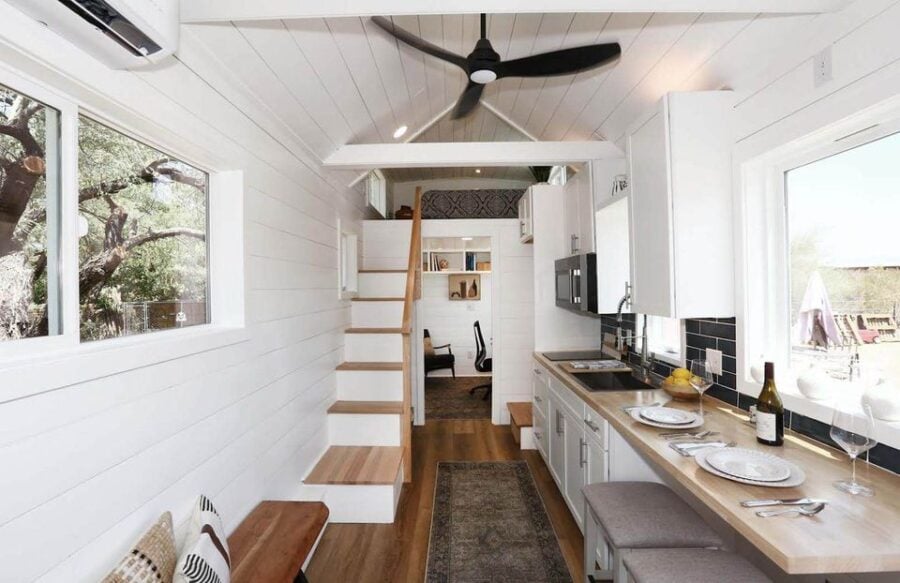
The dining bar is a direct response to the way we live now. Formal dining rooms are a relic of the past, especially in tiny living. This built-in bar provides a flexible spot for a quick breakfast, a comfortable place to work from home, or a casual spot for two people to share a meal. It’s multi-functional, space-saving, and informal. As our homes continue to blend work, life, and leisure, these kinds of integrated, adaptable spaces are becoming essential design elements, reflecting a more fluid and modern lifestyle.
|
📋 Copy HEX 🔗 Share |
🎯 What Makes It Work
When incorporating a dining bar, the height is everything. A standard counter-height bar is 36 inches tall and pairs with 24-inch stools. A bar-height surface is 40-42 inches tall and requires 30-inch stools. For a tiny house, counter-height is often the better choice. It feels more open, and the stools can often be tucked completely underneath. More importantly, it can double as extra kitchen prep space, which is always a premium. The black subway tile here cleverly defines the kitchen zone visually.
24. Create a Simple Dining Nook by a Large Window
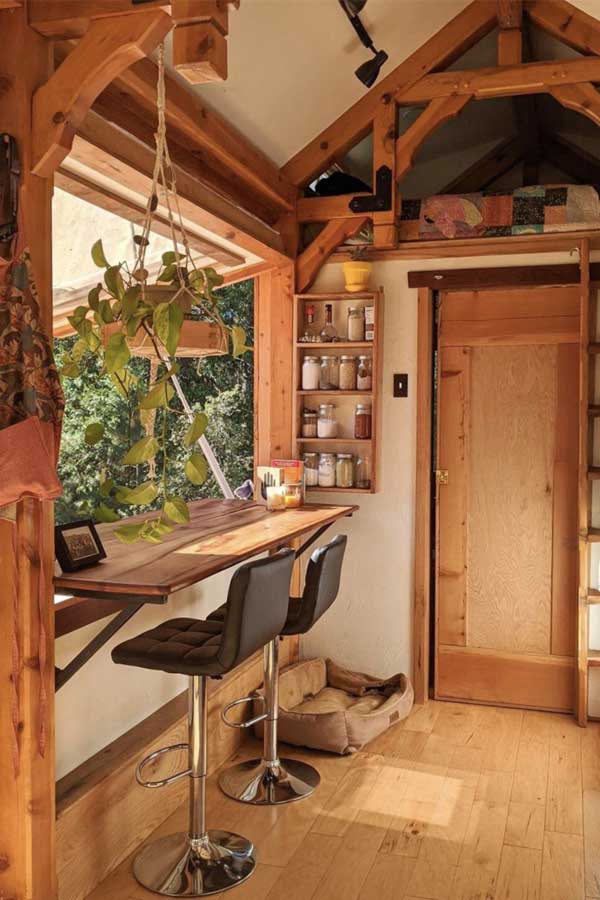
This cozy dining spot is incredibly easy to recreate on a shoestring budget. All you need is a simple wood plank from a hardware store like Home Depot (for about $30) and a set of sturdy wall brackets. Mount it directly to the wall studs under a window. For seating, check out stores like Target or Walmart for affordable bar stools—you can often find a pair for under $100. The hanging plant and spice rack are simple additions that add personality. You can build this entire functional and charming nook for less than $175.
|
📋 Copy HEX 🔗 Share |
📏 Scale Guide
While a window-facing bar is a lovely idea, think about the sun’s path before you install it. If this is a west-facing window, your evening meal will be accompanied by intense, direct sunlight and heat, which might not be so pleasant. Likewise, an east-facing window could be blinding during breakfast. Consider installing a discreet roller shade or light-filtering blind that you can pull down when the sun is at its most direct. Functionality has to come before the picture-perfect aesthetic.
25. Get Cozy with Knotty Pine Walls and Bold Red Accents
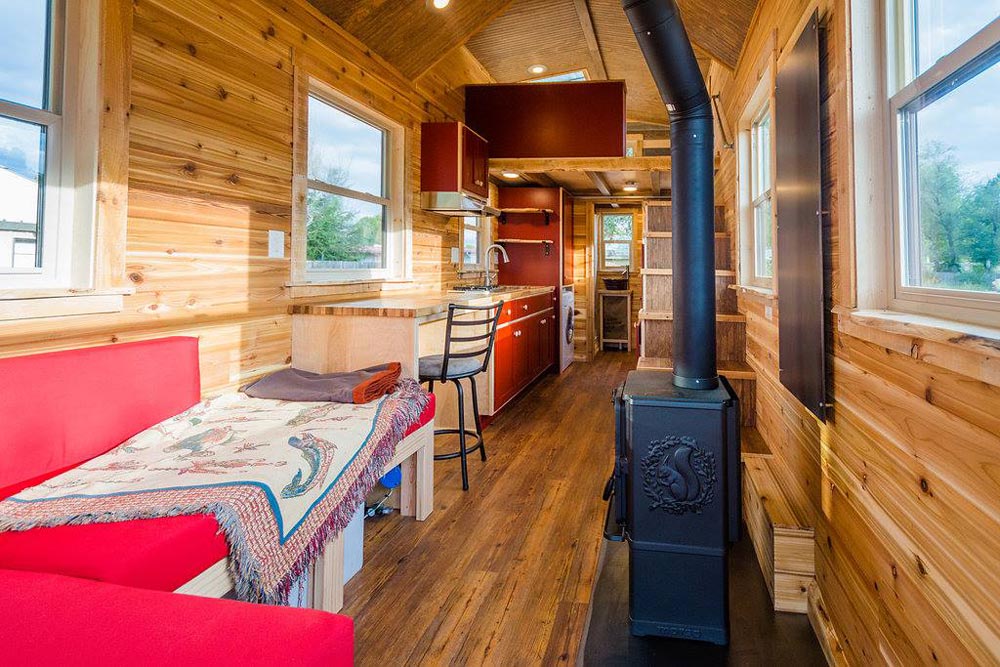
This is a bold, high-commitment look, and its formula is all about warmth and contrast. It breaks down to roughly 80% warm wood + 15% vibrant red + 5% black. The knotty pine walls and ceiling create an almost all-encompassing wooden cocoon, which could feel overwhelming. However, the unexpected, confident splash of bright red on the cabinetry and seating breaks up the monotony and injects a huge dose of playful energy. The black potbelly stove acts as a grounding focal point, its dark, heavy form anchoring the light wood and bright color.
|
📋 Copy HEX 🔗 Share |
⭐ The One Thing
Wood-heavy interiors, especially with knotty pine, can be prone to yellowing over time due to sun exposure. To mitigate this, it’s essential to use a high-quality, UV-protectant clear coat on all wood surfaces when you build. The potbelly stove requires annual maintenance, including cleaning the flue to prevent dangerous creosote buildup. Also, the wall and floor around the stove need to be properly fireproofed with non-combustible materials, which is a critical safety step that can’t be skipped.
26. Double Your Sleeping Space with Twin Pine-Clad Lofts
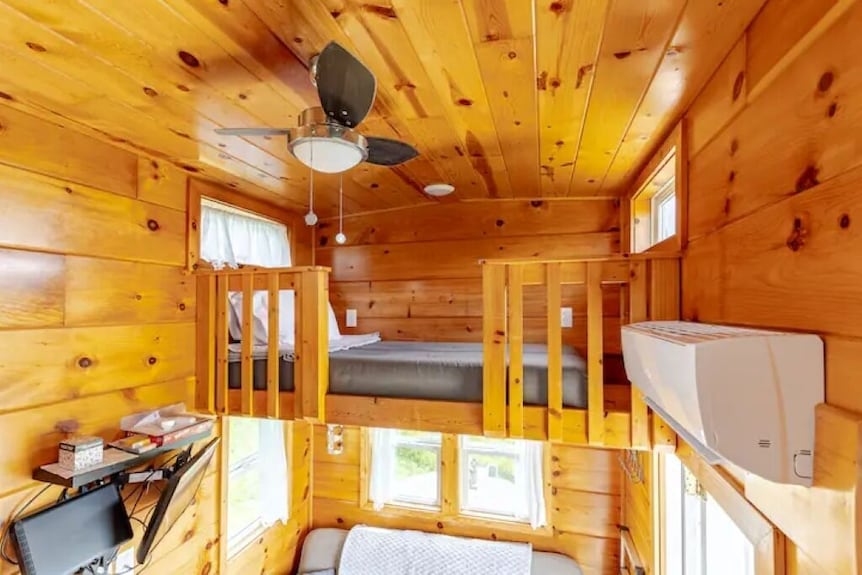
A dual-loft design like this is a hyper-efficient way to sleep up to four people, making it ideal for families or for those who want a guest space. This layout works best in a tiny house with a gambrel or barn-style roof, which provides more headroom on the sides compared to a standard gable roof. You’ll need a minimum interior width of 7.5 feet to fit two twin-sized beds in the lofts, and a total length of at least 24 feet to accommodate the lofts without making the main floor feel cramped.
|
📋 Copy HEX 🔗 Share |
📐 Style Math
Before you commit to a full wood-paneled interior, consider the following:
- How will you run your electrical wiring? Paneling can make it more complicated to install outlets and switches than with drywall. Plan your layout meticulously.
- Will the space have enough natural light? An all-wood interior absorbs more light than white walls. Ensure you have ample windows, or the space could feel like a dark cave.
- What is your tolerance for a rustic look? Knotty pine is a strong visual statement. Make sure you love its ‘cabin’ vibe before you cover every surface with it.
27. Go Glam with Pink Geometric Tiles and Gold Fixtures
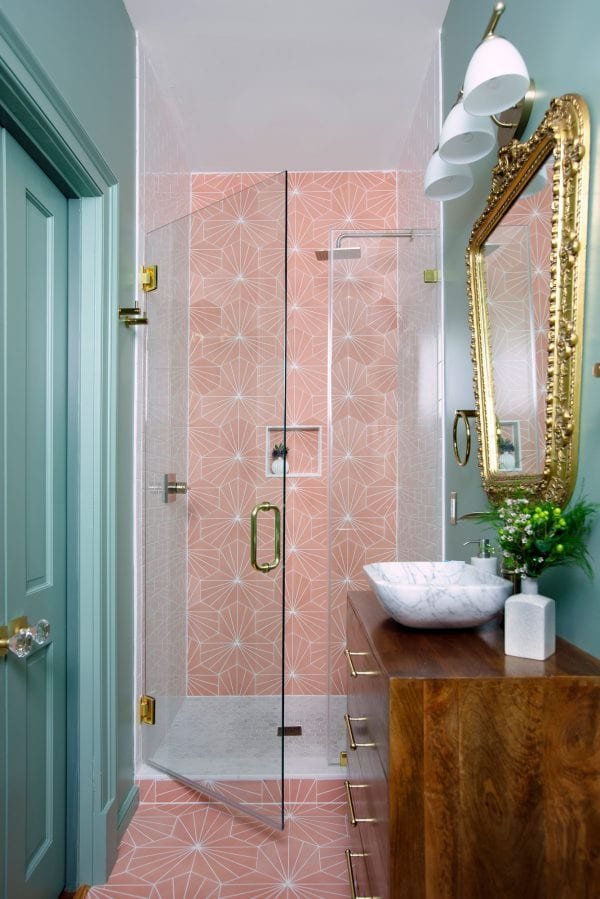
The pink geometric tile is the heart and soul of this bathroom. It’s a bold, confident choice that sets the entire tone. Without it, you’d have a nice but fairly standard bathroom with a wood vanity and gold mirror. With the tile, the room becomes a playful, cheeky, and utterly memorable jewel box. It proves that in a tiny space, you can afford to make one incredibly daring move. The pattern provides all the energy, allowing the other elements to play supporting roles. To see a more subdued but equally effective use of tile, look at Idea #18.
|
📋 Copy HEX 🔗 Share |
🔧 How-To Brief
This bathroom design feels so chic because it expertly balances three distinct styles: playful, elegant, and modern. The pink geometric tile is fun and contemporary. The ornate gold-framed mirror and marble vessel sink bring in a touch of classic, old-world elegance. The clean lines of the dark wood vanity and the simple glass shower enclosure provide a modern, grounding counterpoint. The tension and harmony between these competing styles are what create a sophisticated, designer-led look.
28. Combine Laundry and Bathroom in One Ultra-Functional Space
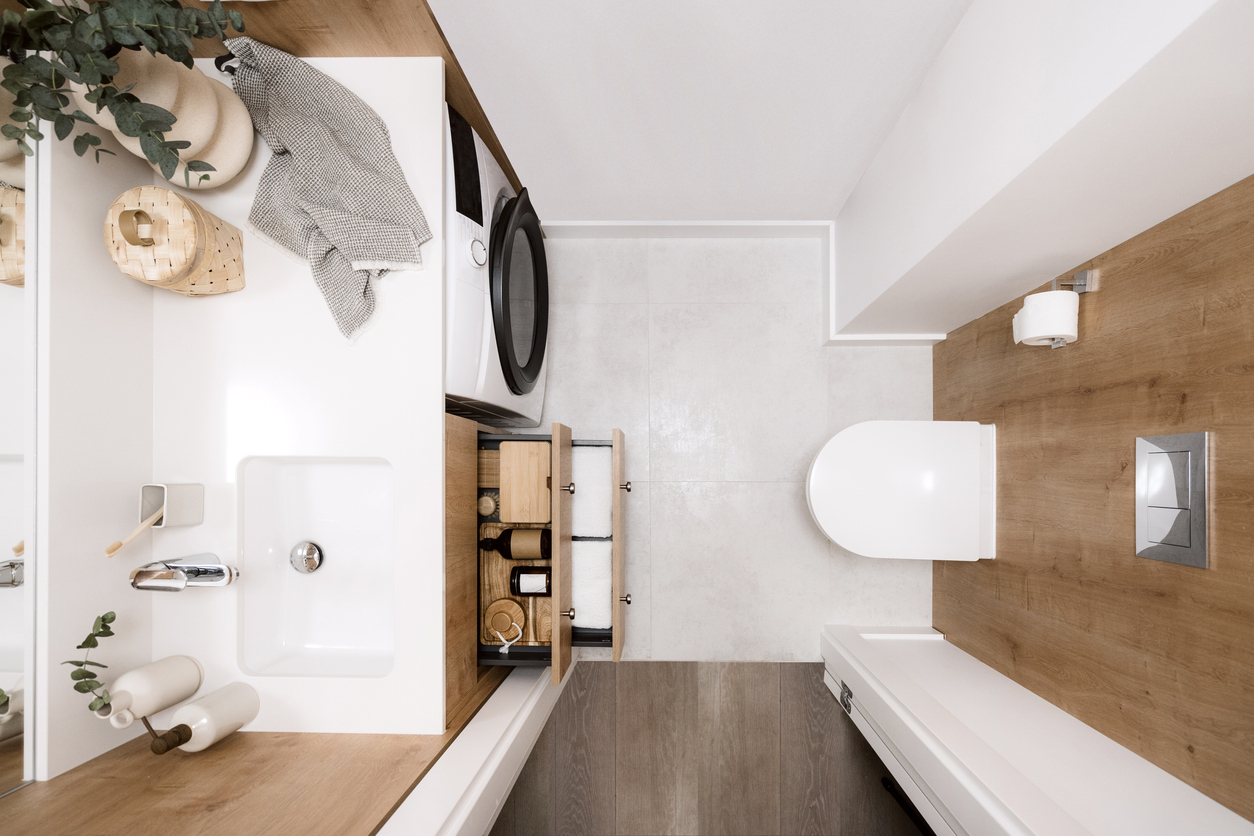
Let’s talk about installing that wall-mounted toilet, a true space-saver. Time: 4-6 hours (pro job recommended). Cost: $700 – $1,500.
|
📋 Copy HEX 🔗 Share |
💰 Budget Breakdown
- This requires a ‘carrier system’ that gets installed inside the wall. The wall needs to be at least 2×6 framing, not standard 2×4.
- The carrier holds the hidden tank and supports the weight of the toilet and a person.
- Plumbing lines (water supply and waste) are routed to the carrier inside the wall.
- Drywall is installed over the carrier, with small openings for the flush plate and the toilet mounting bolts.
- The toilet bowl is then mounted onto the bolts, appearing to ‘float’ off the floor.
- This makes the floor completely clear for easy cleaning—a huge win in a tiny bathroom!
When integrating a washing machine, choose a ventless combination washer-dryer. Traditional dryers require a large exterior vent, which can be difficult to place and can compromise the sealed thermal envelope of a tiny house. A ventless model uses a condensation-based system to dry clothes, requiring only a water hookup and a drain line. They take longer to dry a load, but the space savings and ease of installation are a massive advantage in a compact home.
29. Let the Light In with Floating Stairs and a Picture Window
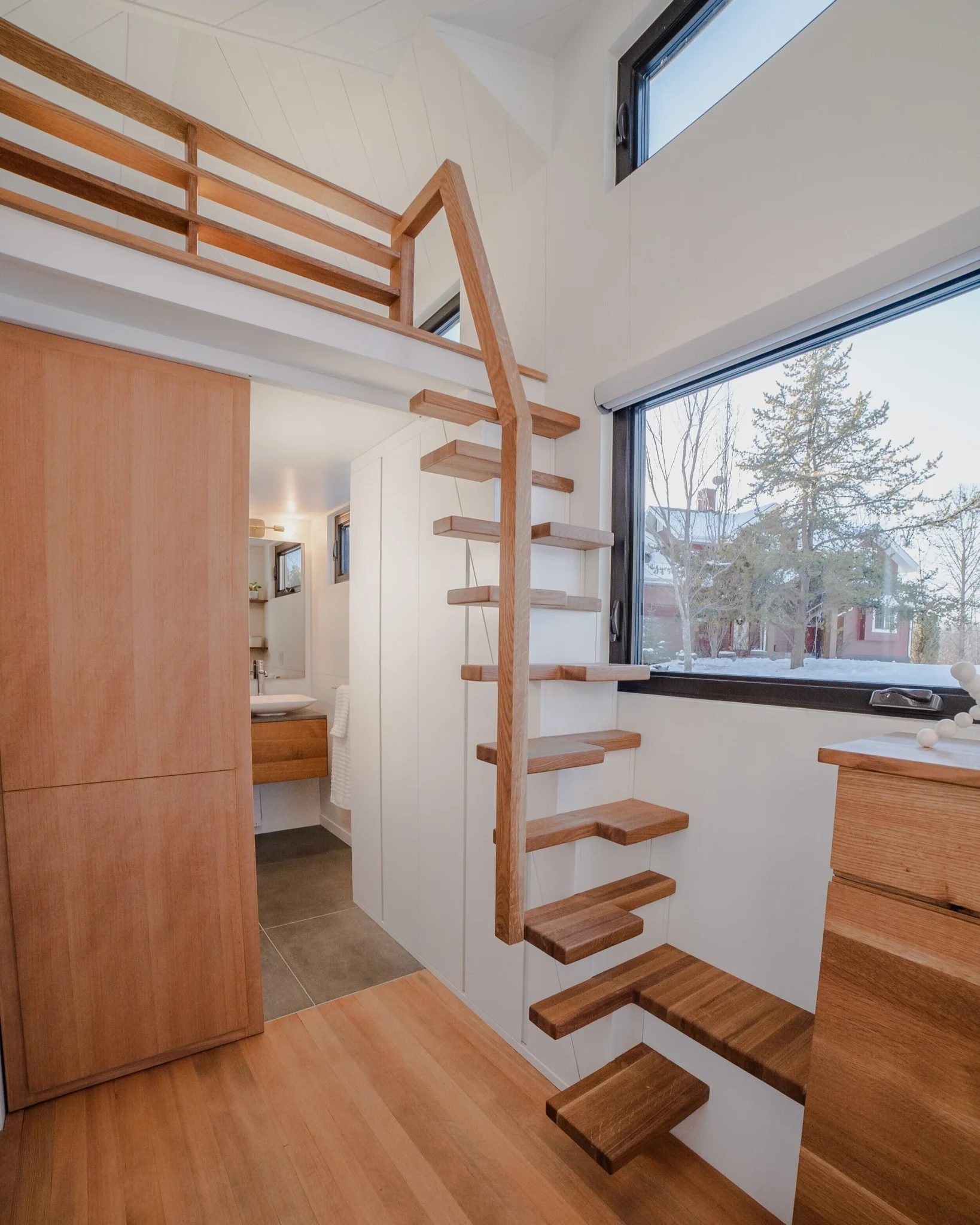
The brilliance of this design lies in its transparency. Both the floating staircase and the slatted loft railing are designed to obstruct the view and the light as little as possible. The ‘open’ risers of the stairs allow light from the large picture window to flow through, preventing the staircase from casting a heavy shadow on the space below. Similarly, the slatted railing provides safety for the loft without creating a solid visual barrier. Every element is chosen to prioritize light and openness, making the home feel connected to the outdoors.
|
📋 Copy HEX 🔗 Share |
💡 Designer Tip
A floating staircase can feel nerve-wracking for some people, especially those with a fear of heights or with small children. While structurally sound, the lack of traditional risers can be mentally unnerving. Also, be aware that these staircases often don’t comply with standard residential building codes in many areas, which require specific riser heights and tread depths. For a tiny house on wheels (often classified as an RV), codes can be more flexible, but it’s something to be aware of if you plan to park your home permanently.
30. Reach New Heights with a Dual Stair and Ladder System
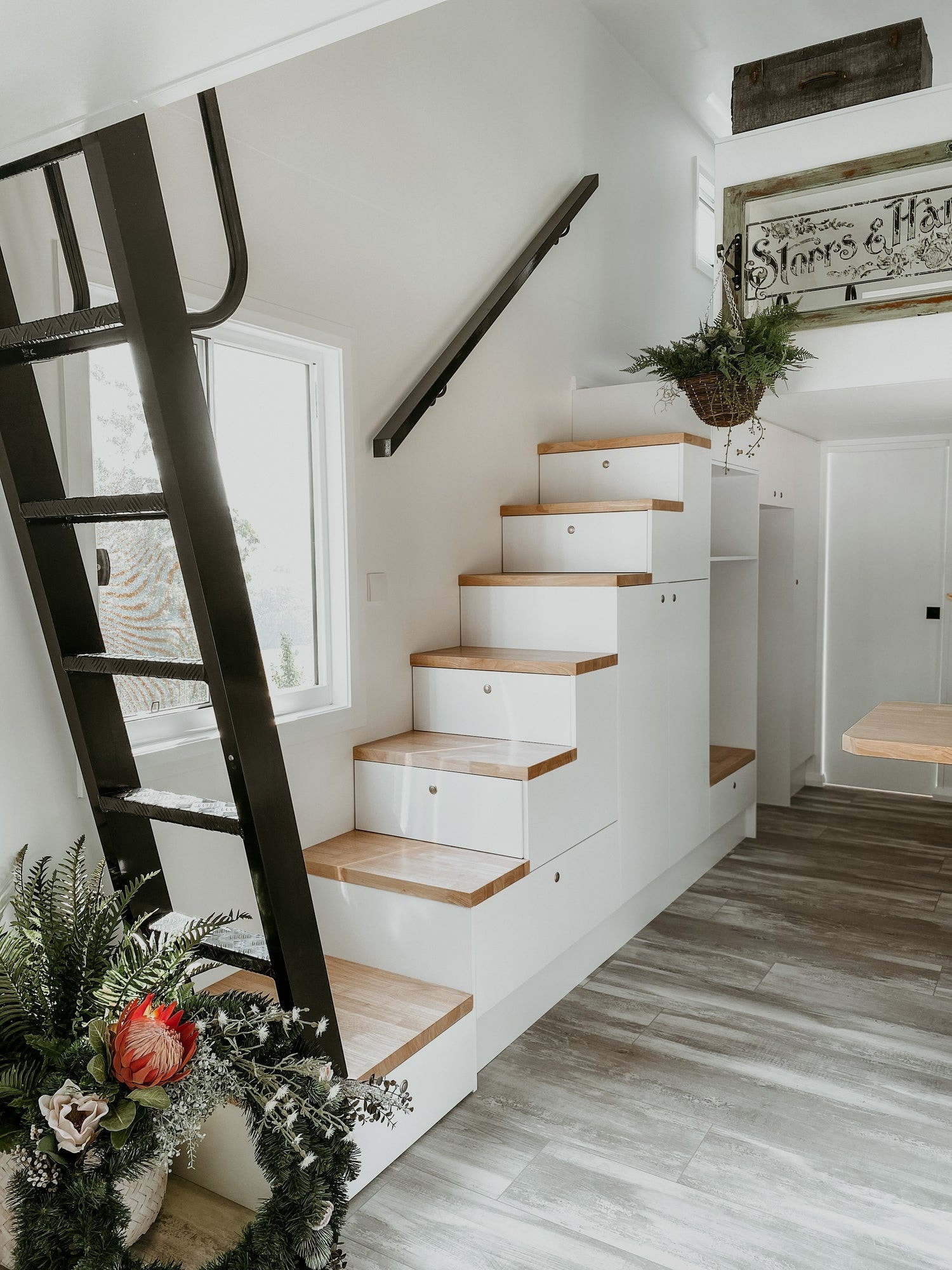
The clean, minimalist aesthetic here is achieved with a strict formula: 70% crisp white + 20% light wood + 10% black accents. The white walls and stair risers create a bright, gallery-like backdrop. The light wood on the flooring and stair treads adds warmth and a natural feel. The black metal of the loft ladder and handrail provides a sharp, graphic contrast that defines the shapes and adds a modern, industrial touch. This disciplined palette is what makes the space feel so calm, organized, and intentional.
|
📋 Copy HEX 🔗 Share |
🔥 Trending Context
You can get this hyper-functional, modern look without a fully custom build. The storage stairs can be constructed using pre-made cabinet boxes from IKEA or a big-box hardware store as the base, then topped with wood treads. The black metal loft ladder can be purchased from retailers like Amazon or specialty hardware sites for a few hundred dollars. The key is to commit to the simple color palette—it’s the discipline in color, not the expense of the materials, that creates this clean look.
31. Extend Your Living Space with a Welcoming Rustic Porch
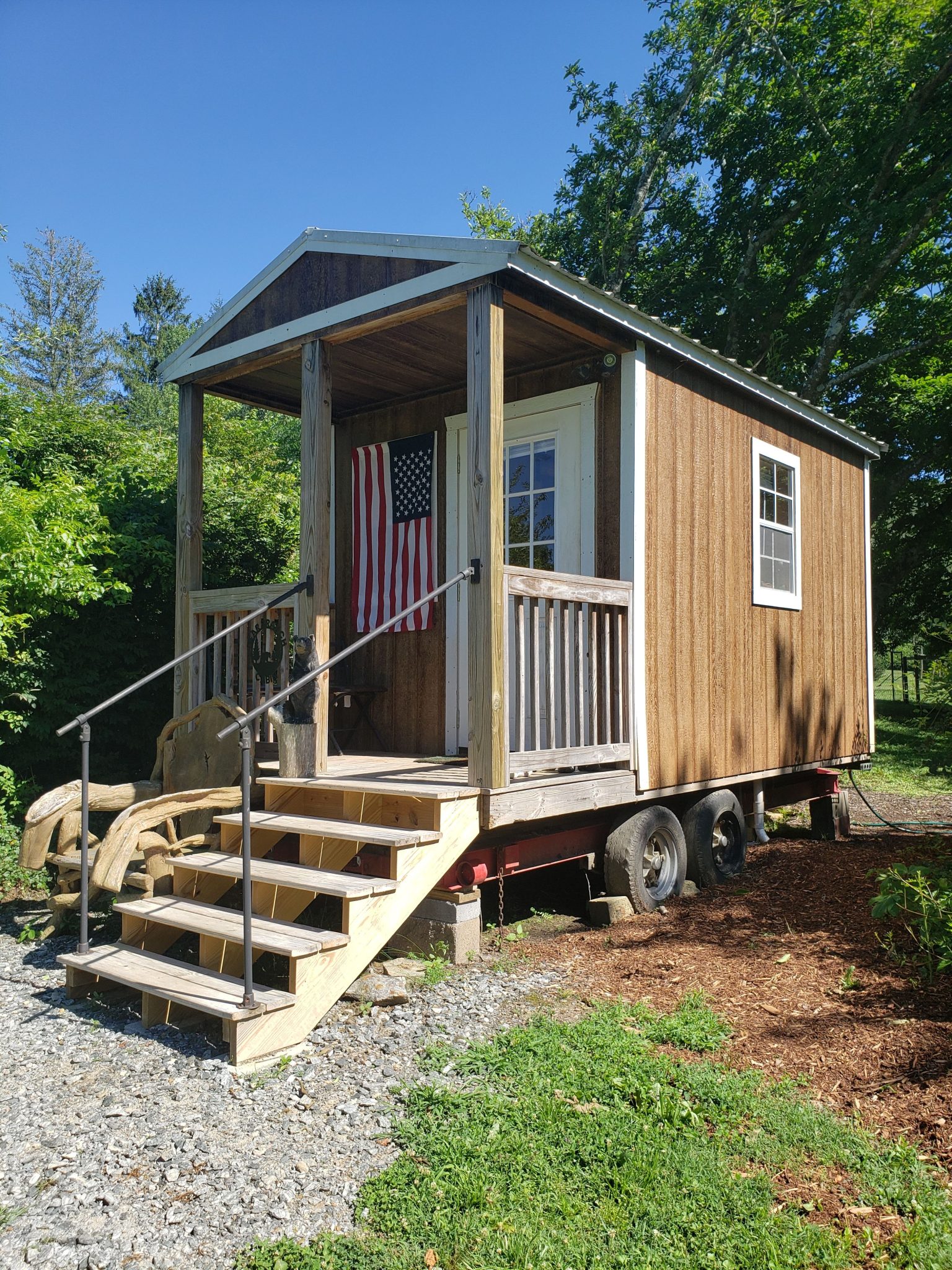
The single most important feature of this tiny house isn’t inside—it’s the covered porch. This small architectural addition dramatically changes the experience of the home. It creates a vital transition zone between the outdoors and the interior, a place to take off muddy boots or enjoy a morning coffee. It effectively doubles the ‘living area’ in good weather and makes the home feel more generous and welcoming. Without the porch, this would be a simple box on wheels; with it, it becomes a proper home with a sense of entry and place.
|
📋 Copy HEX 🔗 Share |
✅ Before You Start
As tiny living matures from a novelty into a mainstream housing option, we’re seeing a shift from minimalist, hyper-mobile designs towards features that prioritize comfort and a sense of permanence. A built-in porch is a perfect example of this trend. It suggests the home is meant to be lived in and enjoyed, not just moved from place to place. It taps into a deep-seated desire for a traditional ‘front porch’ culture, even on a tiny scale, signaling a move towards creating more settled and community-oriented tiny house lifestyles.
Your Tiny House Chapter Starts Now
Hopefully these ideas have sparked some serious inspiration for your own small-space journey. The best tiny homes tell a personal story, so pick the elements you love and make them your own. Don’t forget to save your favorites to your Pinterest board to keep the ideas flowing!