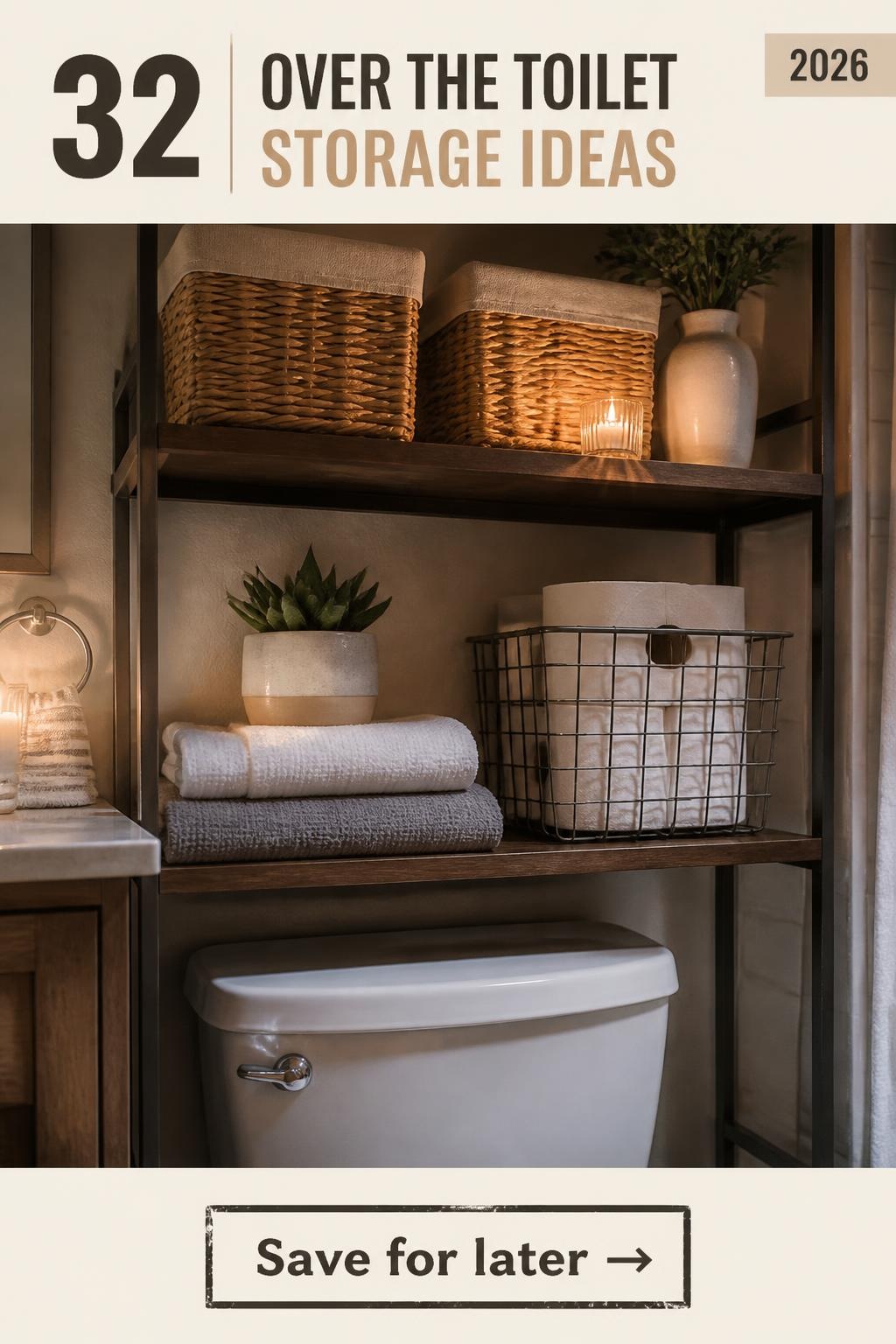
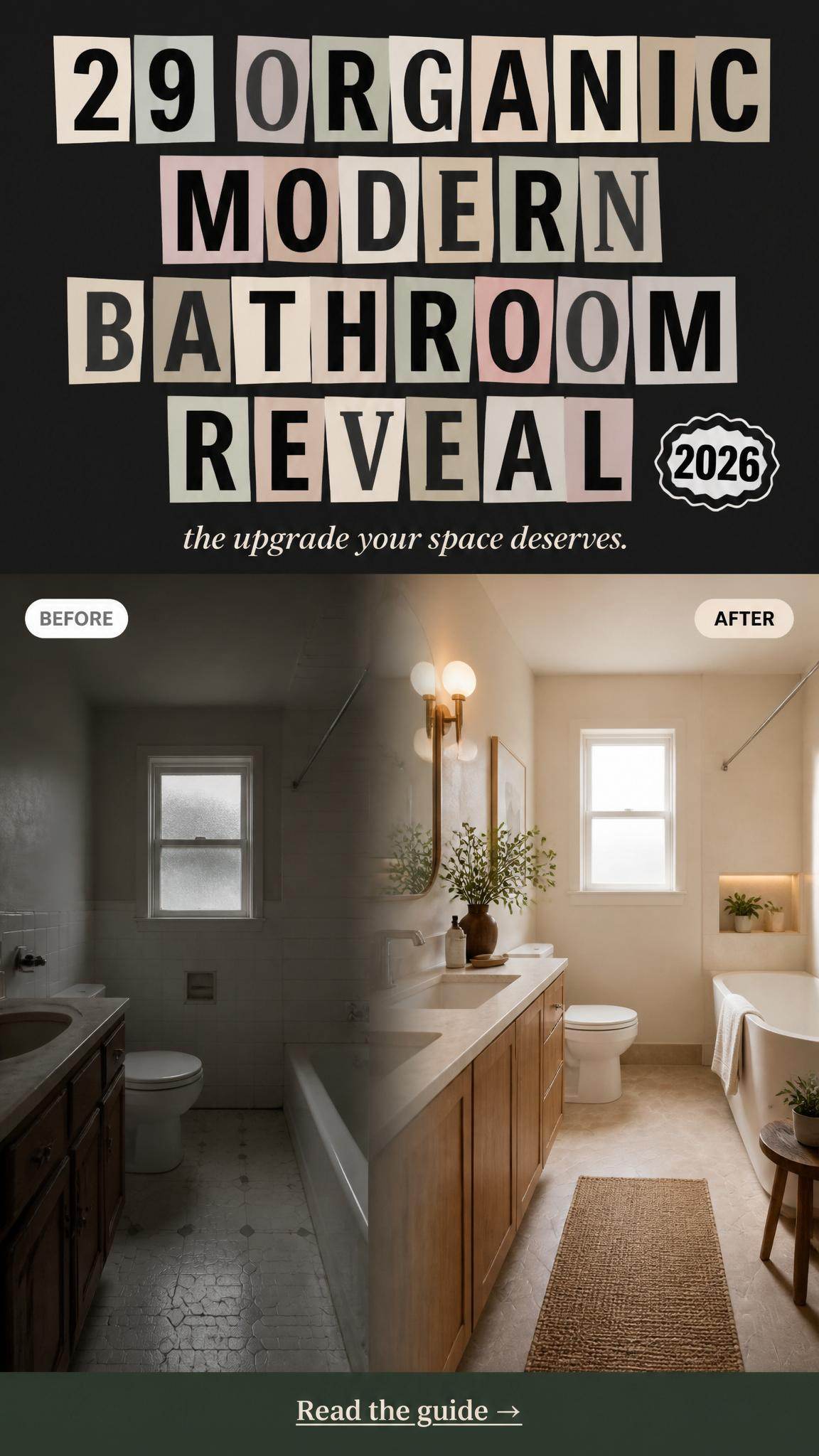
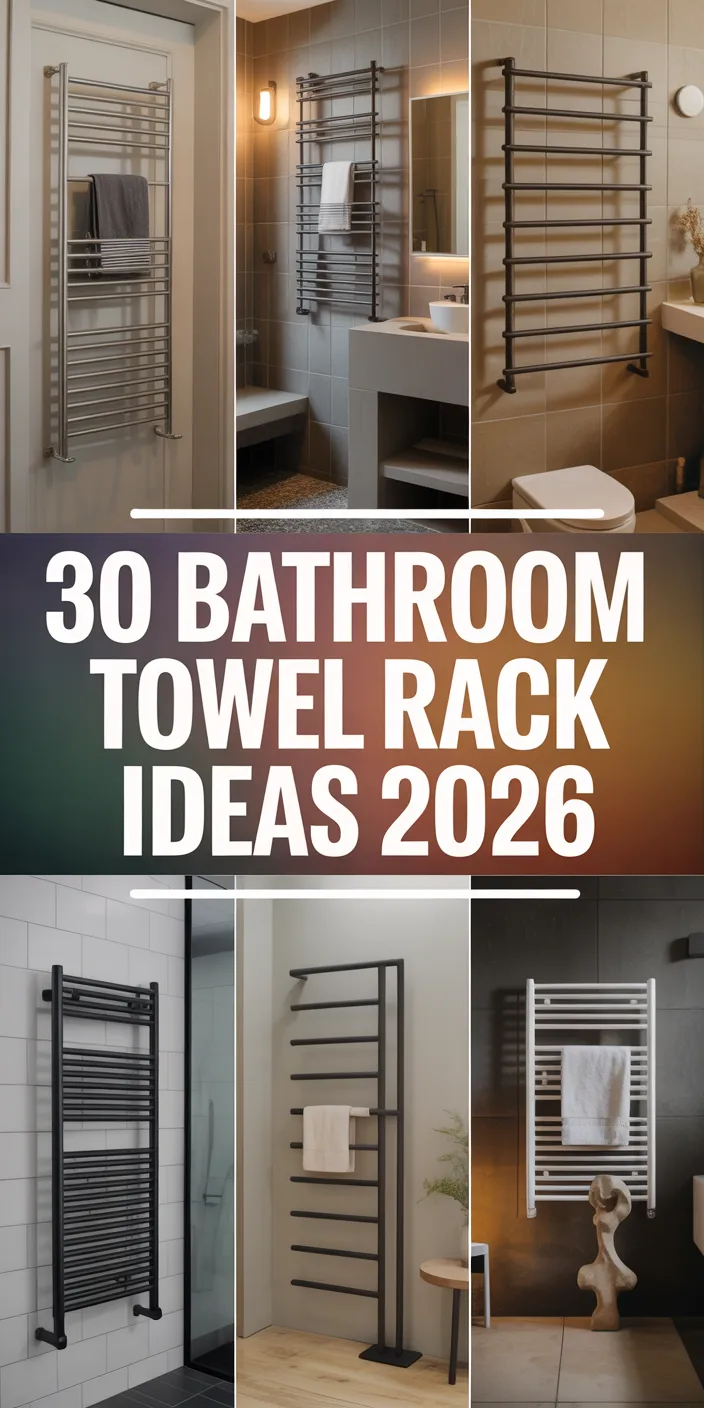
You’ve saved a hundred Pins, you’ve scrolled through countless photos, but your dream bathroom remodel still feels like a distant “someday.” What if “someday” could start today? We’ve done the heavy lifting, filtering through hundreds of designs to find what’s truly fresh, functional, and beautiful for 2026. This isn’t another generic gallery; it’s a curated collection of 31 specific, achievable ideas, from clever small-space solutions to luxurious master suites.
We’re diving deep into the real details—from the exact tile combinations to the perfect fixture finishes—that make a room click. In 2026, the biggest trend is creating a personal sanctuary, a space that blends spa-like calm with your own unique style. Ready to find the one? And stay until the end — we break down the most common mistakes that can ruin these looks. 📌 Save this to Pinterest for later — you’ll want to revisit these ideas.
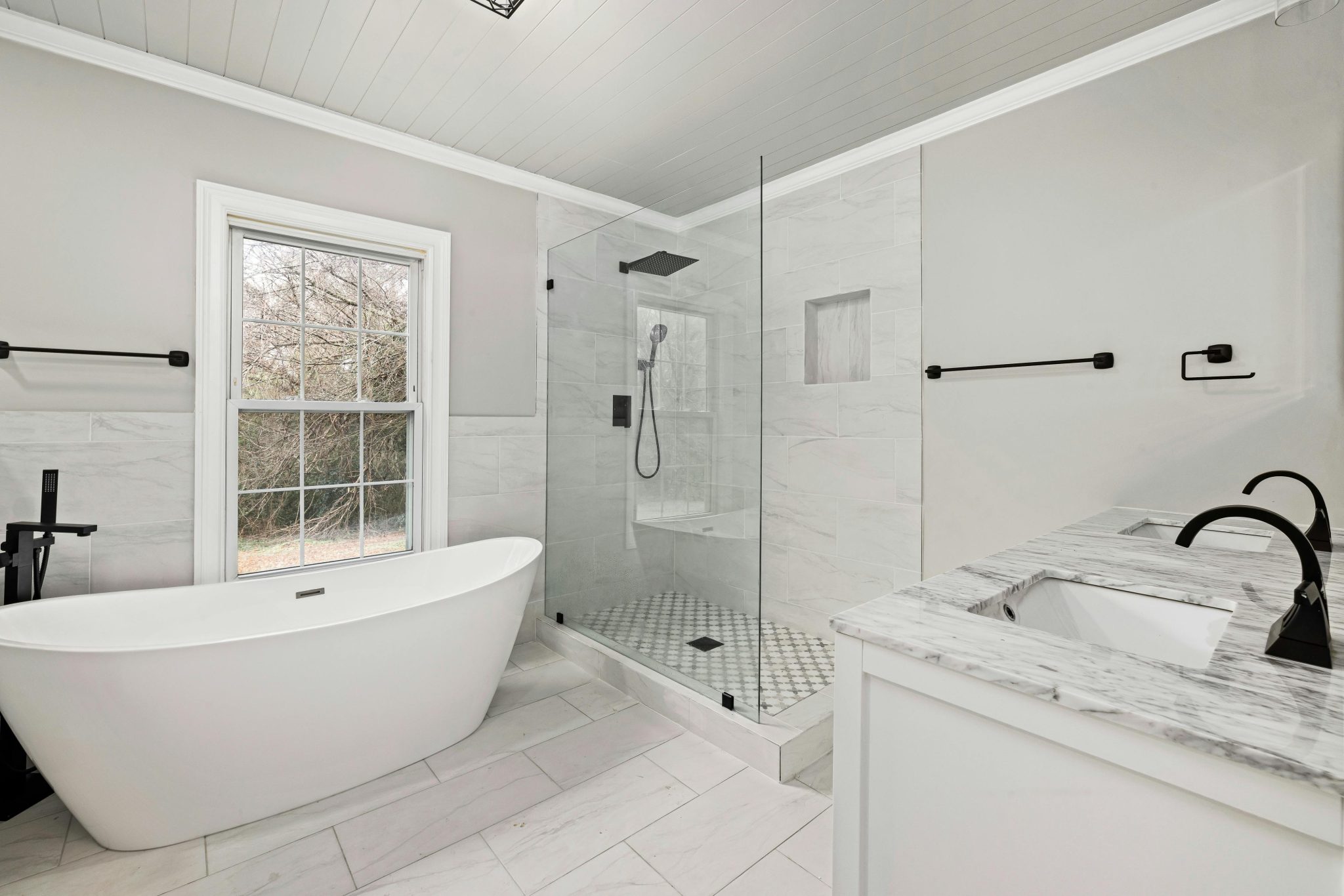
1. Modern Bathroom with Freestanding Tub and Marble Accents
What makes this space feel so crisp and cohesive is the power of repetition with restraint. The bold, matte black of the shower and window frames is picked up in the tub filler, creating a strong visual rhythm. The large-format marble tiles on the floor and walls establish a serene, continuous canvas, making the room feel larger and preventing the black accents from overwhelming the space. It’s a study in balanced contrast.
|
📋 Copy HEX 🔗 Share |
⭐ The One Thing
When placing a freestanding tub, leave a minimum of 6 inches of clearance on all sides that are against a wall. For the working side—where you get in and out—aim for at least 12-18 inches of clearance. This not only creates a more spacious feel but is also a practical necessity for cleaning behind and around the tub. Anything less feels cramped and is a nightmare to mop.
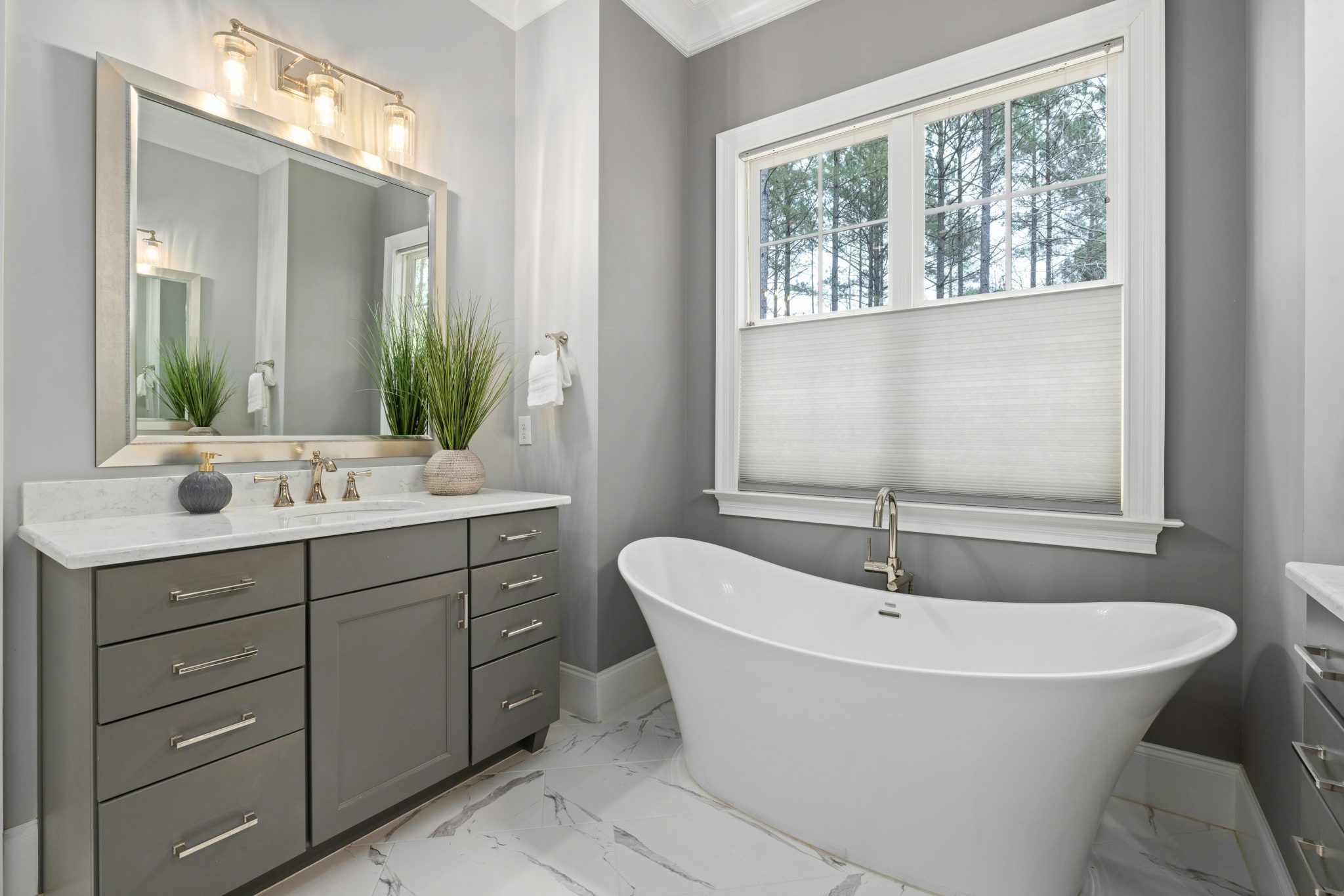
2. Serene Gray and White Bathroom with a Freestanding Tub
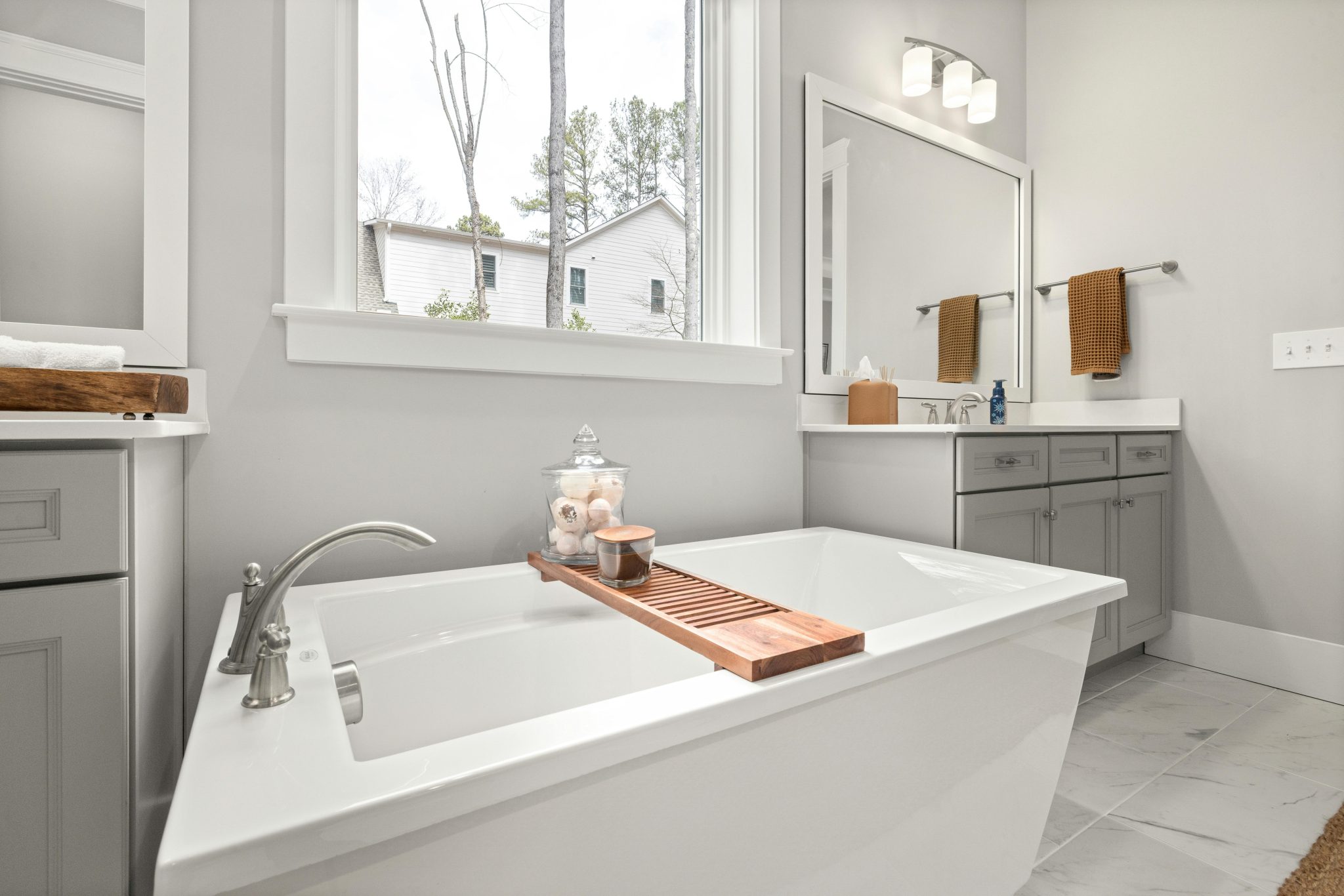
The formula for this tranquil space is simple and effective: 60% soft gray + 30% clean white + 10% metallic accents. The gray on the walls and vanity creates a calming, modern base. The white comes in through the tub, countertop, and floor tiles, adding brightness and preventing the gray from feeling gloomy. Finally, the brushed nickel/chrome fixtures provide just enough sparkle to keep it from feeling flat. You could easily swap the gray for a soft sage green or navy for a different mood while keeping the same balanced feel.
💰 Budget Breakdown
A freestanding tub looks incredible, but let’s be honest about the logistics. Cleaning the floor behind and underneath it is a genuine chore. If you have kids who love to splash, water will get everywhere. Also, they often lack the convenient ledge of a built-in tub for holding shampoos, soaps, and that essential glass of wine. Consider adding a small stool or bath caddy, like the one in Idea #14, for practicality.
3. Minimalist Bathroom with Textured Grey Walls and Black Accents
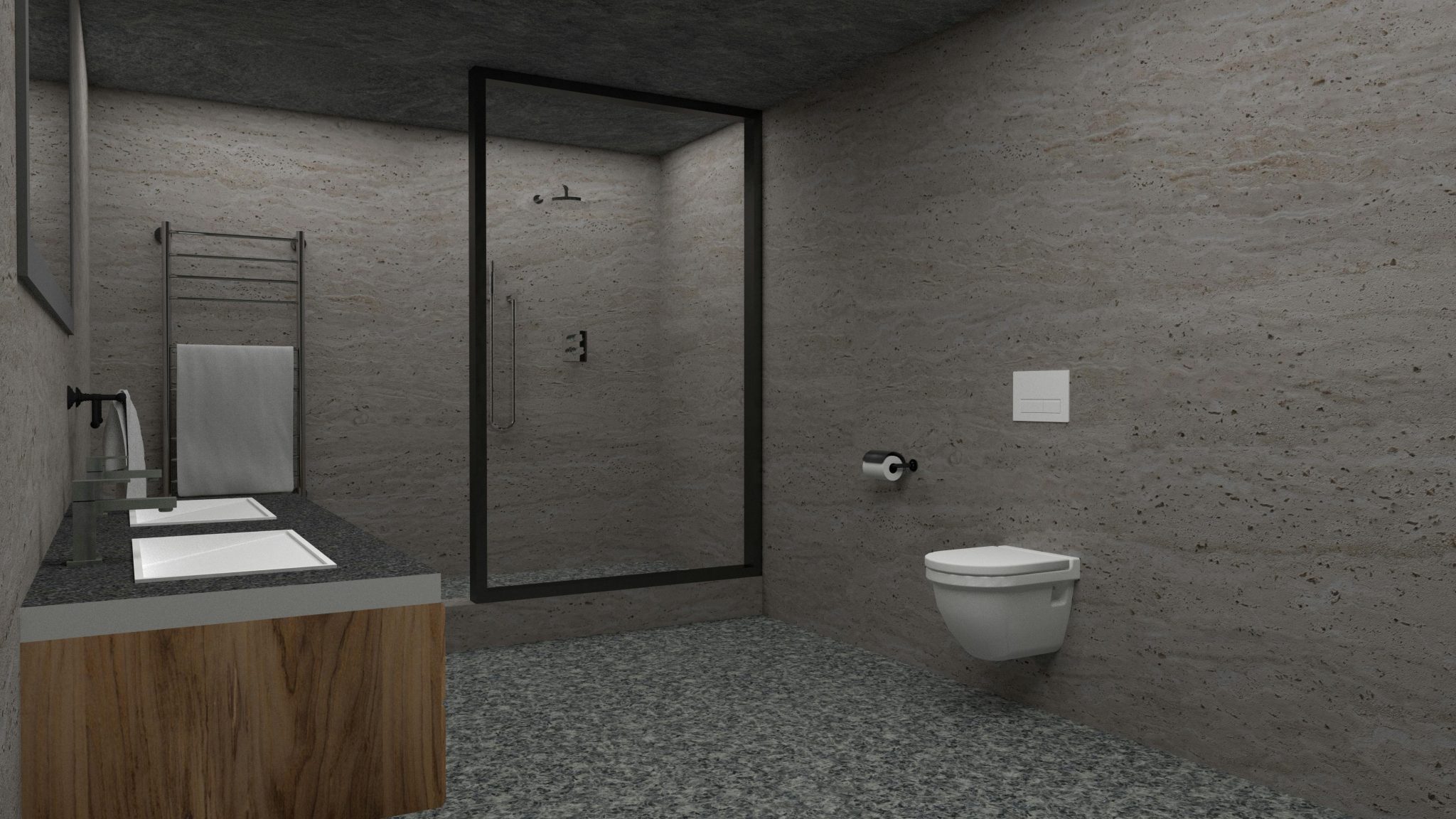
The single element that defines this bathroom is the textured grey walls. Without them, it would be a nice but fairly standard modern design. The texture adds depth, catches the light in interesting ways, and provides a tactile quality that elevates the room from sterile to sophisticated. It’s the component that gives the minimalist aesthetic a warmer, more organic, and industrial edge. Everything else—the black fixtures, the wood vanity—serves to complement this primary design choice.
|
📋 Copy HEX 🔗 Share |
💡 Designer Tip
Those beautifully textured walls require a bit more thought when it comes to upkeep. Unlike smooth, semi-gloss walls, they can trap dust and moisture, especially in a steamy bathroom environment. Cleaning requires a soft-bristle brush rather than just a sponge to get into the grooves. Be cautious about scuffs and scratches, as they can be much trickier to patch and paint than on a flat surface. An annual gentle cleaning is a must to keep it looking sharp.
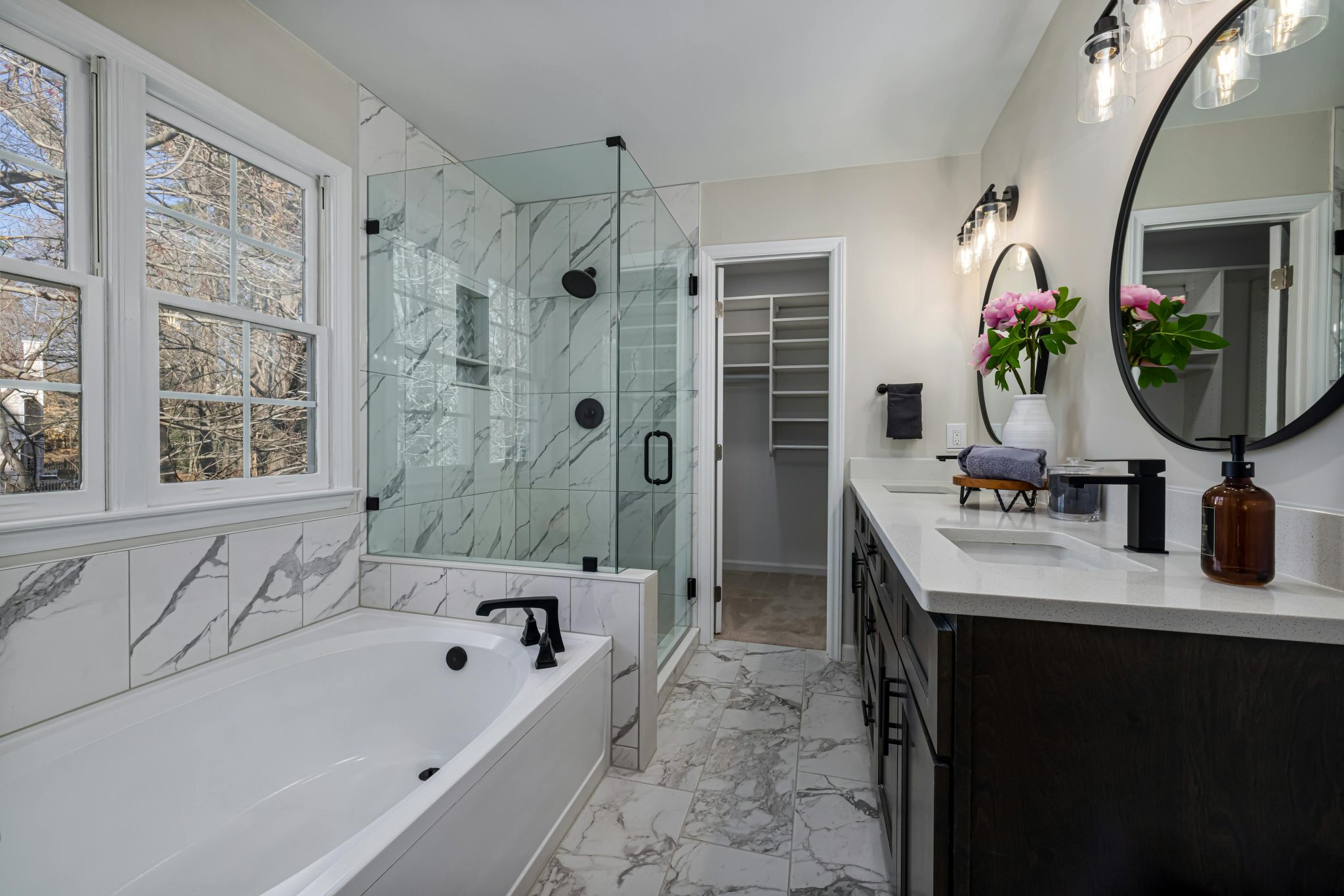
4. High-Contrast Bathroom with Marble Tile and a Dark Wood Vanity
- Main Furniture (Double Vanity): $1,800 – $4,000
- Lighting (Mirrors & Fixtures): $500 – $1,200
- Textiles (Towels): $100 – $300
- Decor/Accessories (Faucets, Hardware): $600 – $1,500
- Wall/Floor Treatment (Marble-look Tile & Installation): $4,000 – $9,000
- TOTAL: $7,000 – $16,000
- Budget Alternative: Use a stock vanity from a big-box store, luxury vinyl tile (LVT) instead of porcelain, and choose more affordable mirrors and fixtures. This can bring the total down to the $3,500 – $7,000 range.
✅ Before You Start
When using large format tiles like these, the single most important factor is ensuring your subfloor is perfectly level. Any imperfections will be magnified by large tiles, leading to lippage (uneven edges) and potential cracking down the line. Invest in self-leveling underlayment before you start tiling. It’s a step that seems fussy but will save you from a major headache and an unprofessional-looking finish.
5. Warm Modern Bathroom with Frosted Grid Shower and Wood-Look Cabinetry
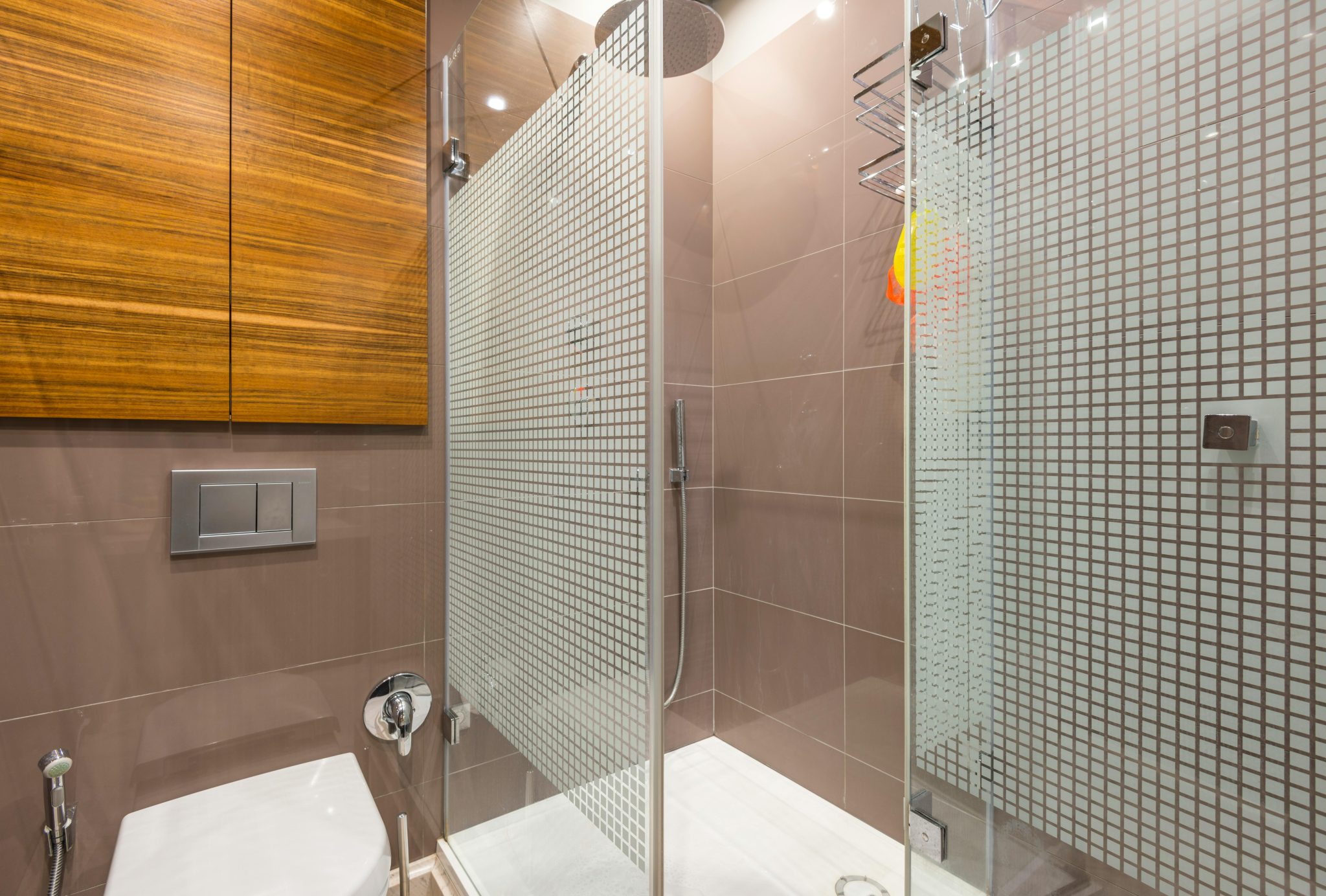
This design succeeds by balancing sleek, glossy surfaces with warm, natural textures. The glossy taupe tiles provide a clean, reflective backdrop that enhances the light. The frosted grid pattern on the shower door adds a layer of geometric interest without feeling too busy, echoing the lines of the tiles. Crucially, the warm, horizontal-grain wood-look cabinetry injects a dose of organic warmth, preventing the space from feeling cold or clinical. The chrome fixtures act as the finishing touch, linking all the elements together.
|
📋 Copy HEX 🔗 Share |
🔧 How-To Brief
This look is exceptionally well-suited for bathrooms between 40 and 70 square feet. The wall-mounted toilet and vanity create an uninterrupted floor plane, which is a classic trick to make a small room feel larger. The large-format glossy tiles also help by reflecting light. The grid shower door provides a sense of separation without visually closing off the shower area entirely, maintaining an open feel that’s perfect for a typical guest or small master bath.
6. Warm Neutral Bathroom with Dark Wood Vanity and Mixed Tile Accents
It’s all about that vertical mosaic tile accent wall. Take it away, and you have a perfectly pleasant, warm, modern bathroom. But with it, you have a dynamic focal point that draws the eye upward and adds a ton of personality. The vertical orientation is a clever choice, making the ceiling feel higher. The mix of black, gray, and white in the mosaic smartly ties together the dark vanity, light countertops, and chrome fixtures into one confident statement.
7. Modern Minimal Bathroom with Contrasting Tile and a Wood Vanity
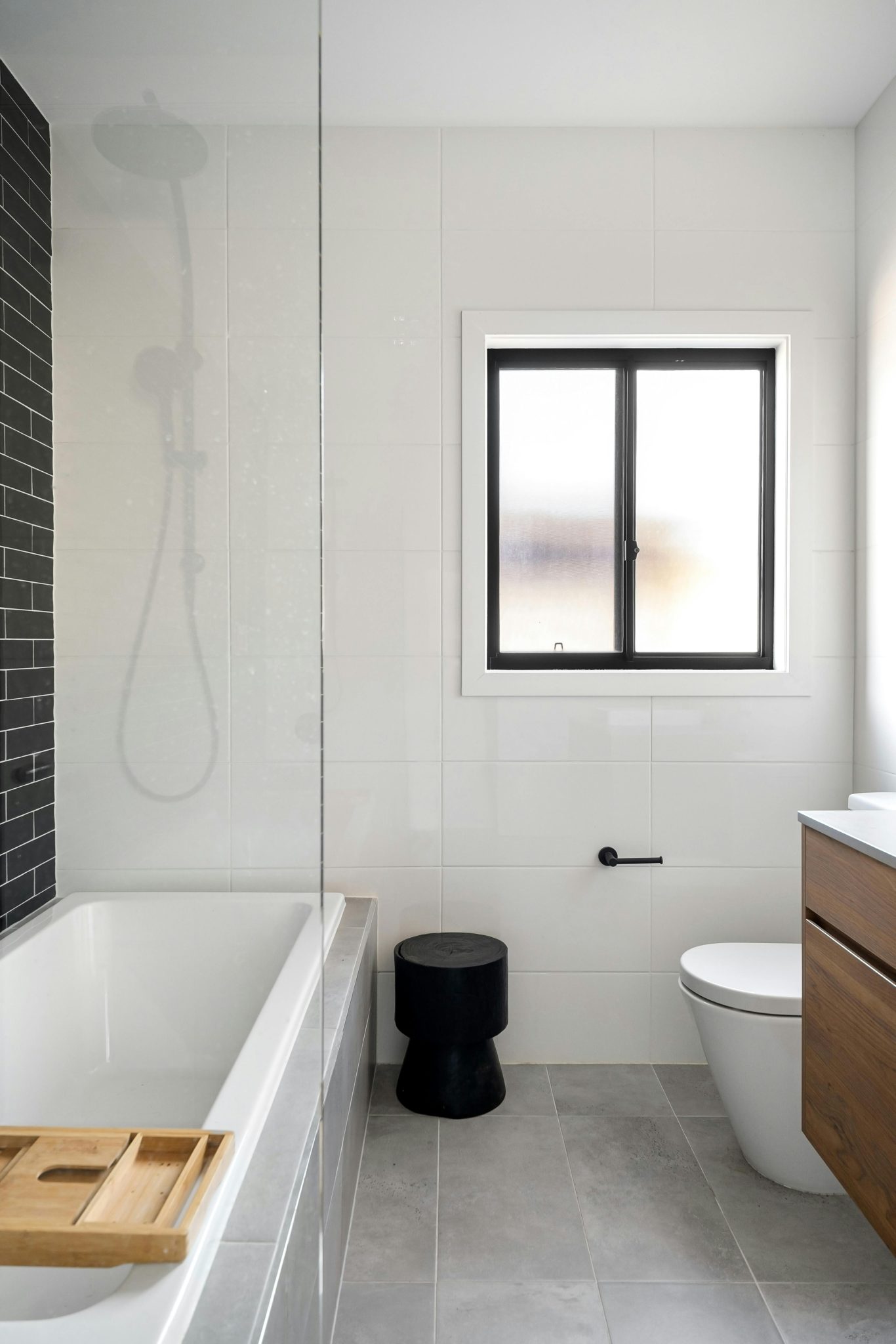
This room’s compelling formula is about balancing stark coolness with natural warmth. It’s roughly 50% cool minimalism (white wall tiles, light gray floor, glass partition) + 30% dramatic contrast (the dark gray subway tile shower wall) + 20% organic warmth (the wooden vanity and black-framed window). This careful ratio ensures the room feels clean and modern without being sterile. The wood is essential; without it, the look could easily become too cold.
|
📋 Copy HEX 🔗 Share |
⚠️ Real Talk
You don’t need a custom vanity to get this vibe. An IKEA GODMORGON vanity with a wood-effect front ($250-$400) can create a very similar floating look. For the tile, you can find basic white and gray subway tiles at big-box stores for under $5 per square foot. The key is spending a bit more on the fixtures, like a quality matte black faucet, to sell the high-end feel. You could replicate this entire look for under $2,000 with savvy shopping.
8. Modern Bathroom with Striking Textures and a Dark Ceiling
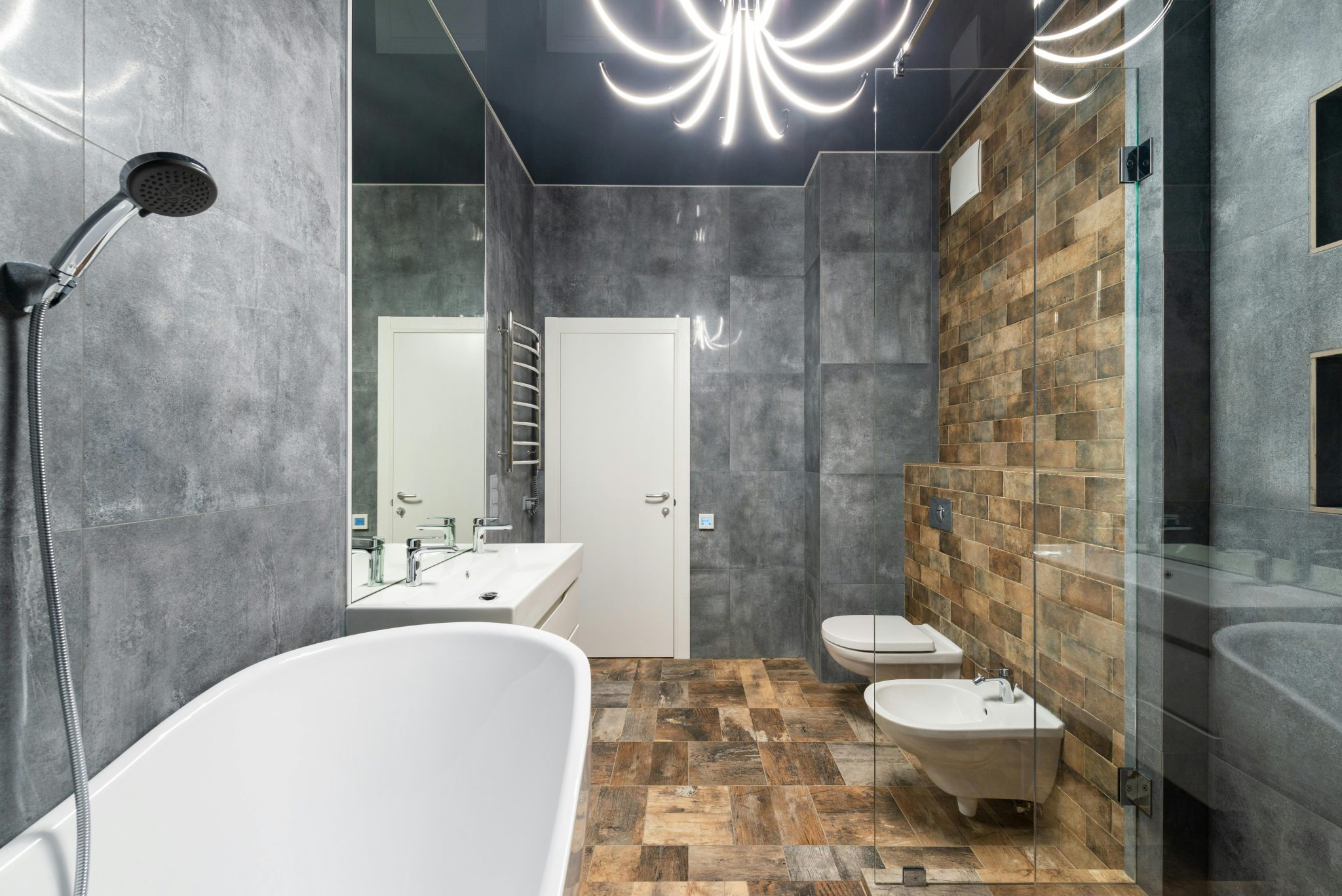
This bathroom is a masterclass in texture mixing. The design courageously pairs three distinct surfaces: rough, dark gray tiles; warm, brick-patterned tiles; and sleek, white ceramic. It works because the colors are kept within a tight, sophisticated palette and the shapes are simple and clean (a freestanding tub, a linear floating vanity). The dark, reflective ceiling is a bold move that contains the space and adds an unexpected layer of drama, making the whole room feel intentional and curated.
🎯 What Makes It Work
A dark ceiling is a dramatic, show-stopping choice, but be warned: it can make a room with low ceilings (under 8 feet) feel oppressive. This look requires good ceiling height (ideally 9 feet or more) and excellent lighting. The spidery fixture here is not just for looks; it’s essential for spreading light around the room and preventing the dark ceiling from creating a cave-like atmosphere. Also, any imperfections in the ceiling drywall will be magnified by a dark, reflective paint finish.
9. Spacious Marble Bathroom with a Light Wood Double Vanity
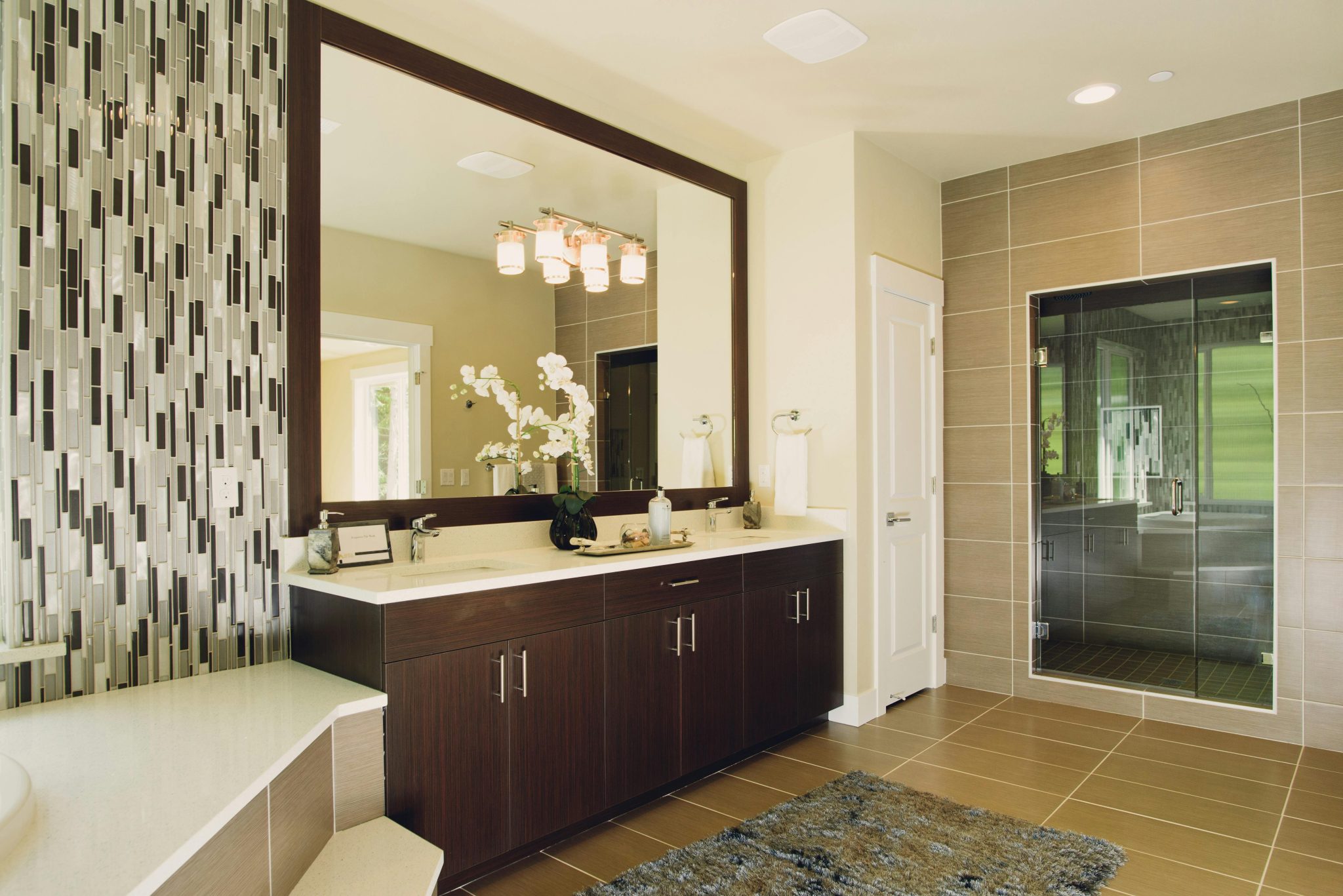
When combining two different marble tiles, like the grey and white seen here, the secret is to choose stones that share a similar veining *pattern* or *scale*, even if the base colors differ. Here, both tiles have soft, linear veins rather than dramatic, blotchy patterns. This creates a relationship between the two, making the transition feel harmonious rather than chaotic. Also, using the lighter tile on the floor is a classic technique to ground the space and keep it from feeling top-heavy.
|
📋 Copy HEX 🔗 Share |
💸 Get This Look For Less
An expansive layout with a freestanding tub, double vanity, and separate glass shower requires significant square footage. This design works best in a master bathroom that is at least 120 square feet, and ideally closer to 150 sq ft (e.g., a 10′ x 15′ room). Anything smaller would feel cramped, and the freestanding tub, in particular, would lose its intended impact as a sculptural centerpiece. For smaller spaces, consider the integrated tub/shower layout in Idea #4.
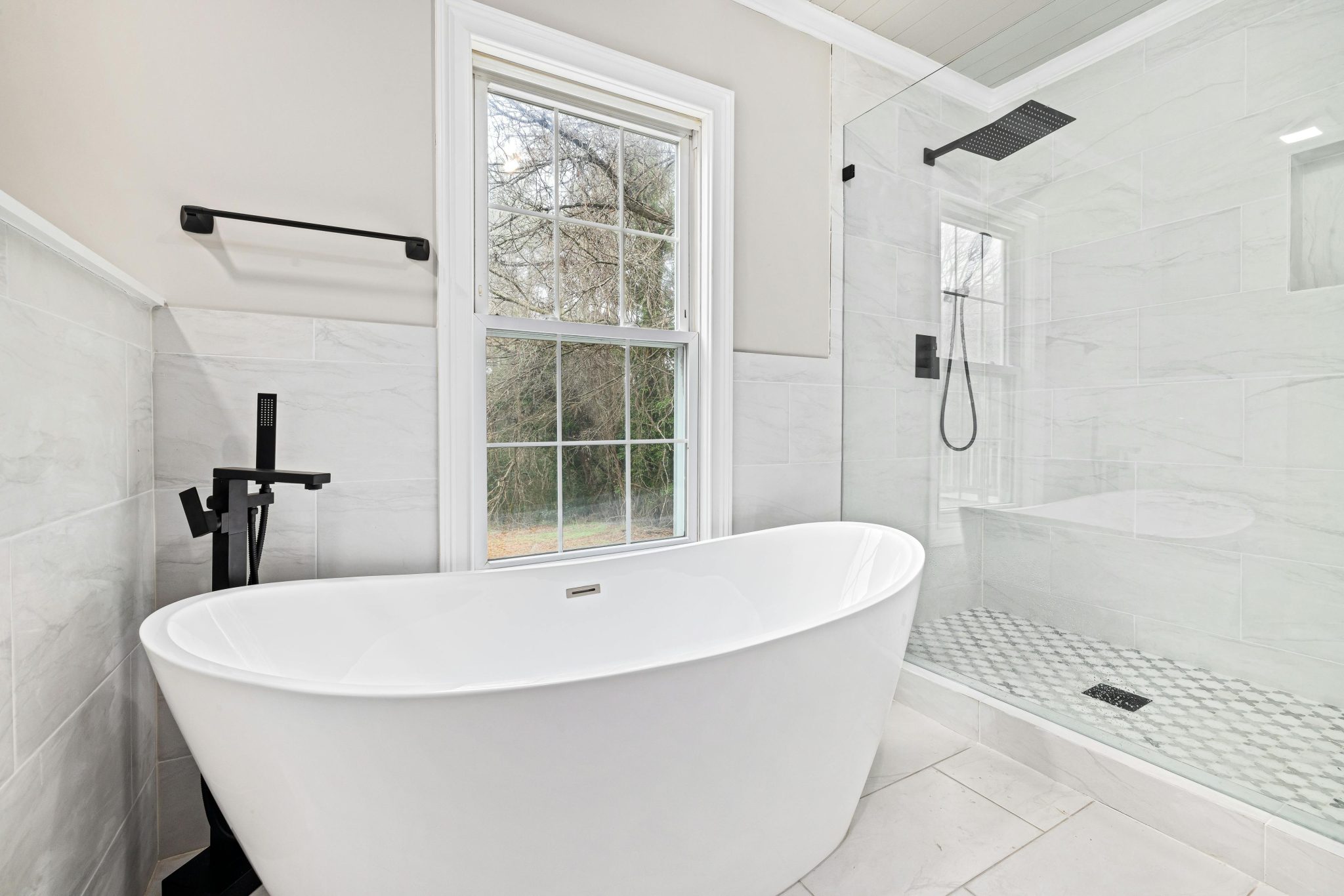
10. Bright Walk-In Shower with Marble-Look Tile and Black Fixtures
The matte black fixtures are the crucial element here. In a sea of white and light gray, they provide a necessary focal point and a graphic punch. If you swapped them for chrome, the look would still be clean and bright, but it would lose its contemporary edge and visual contrast. The black grounds the design, connects with the dark gray mosaic on the floor, and transforms the bathroom from simply ‘nice’ to ‘designer-curated’.
🔥 Trending Context
How-To: Install a Floor-Mounted Tub Filler
- Time Estimate: 3-5 hours (plus plumbing prep). Cost: $300 – $1,000+ for the fixture.
- Before tiling, your plumber must run the hot and cold water lines to the exact location where the tub filler will stand.
- A mounting block or brass drop-ear elbow must be securely fastened to the subfloor to anchor the fixture.
- Once the finished floor is installed, the base plate of the filler is mounted and sealed with silicone to prevent water intrusion.
- The body of the faucet is then attached to the base, and the water supply lines are connected.
- Turn on the water and meticulously check for any leaks at all connection points before calling the job done.
11. Luxurious Minimalist Bathroom with Wall-to-Wall Marble
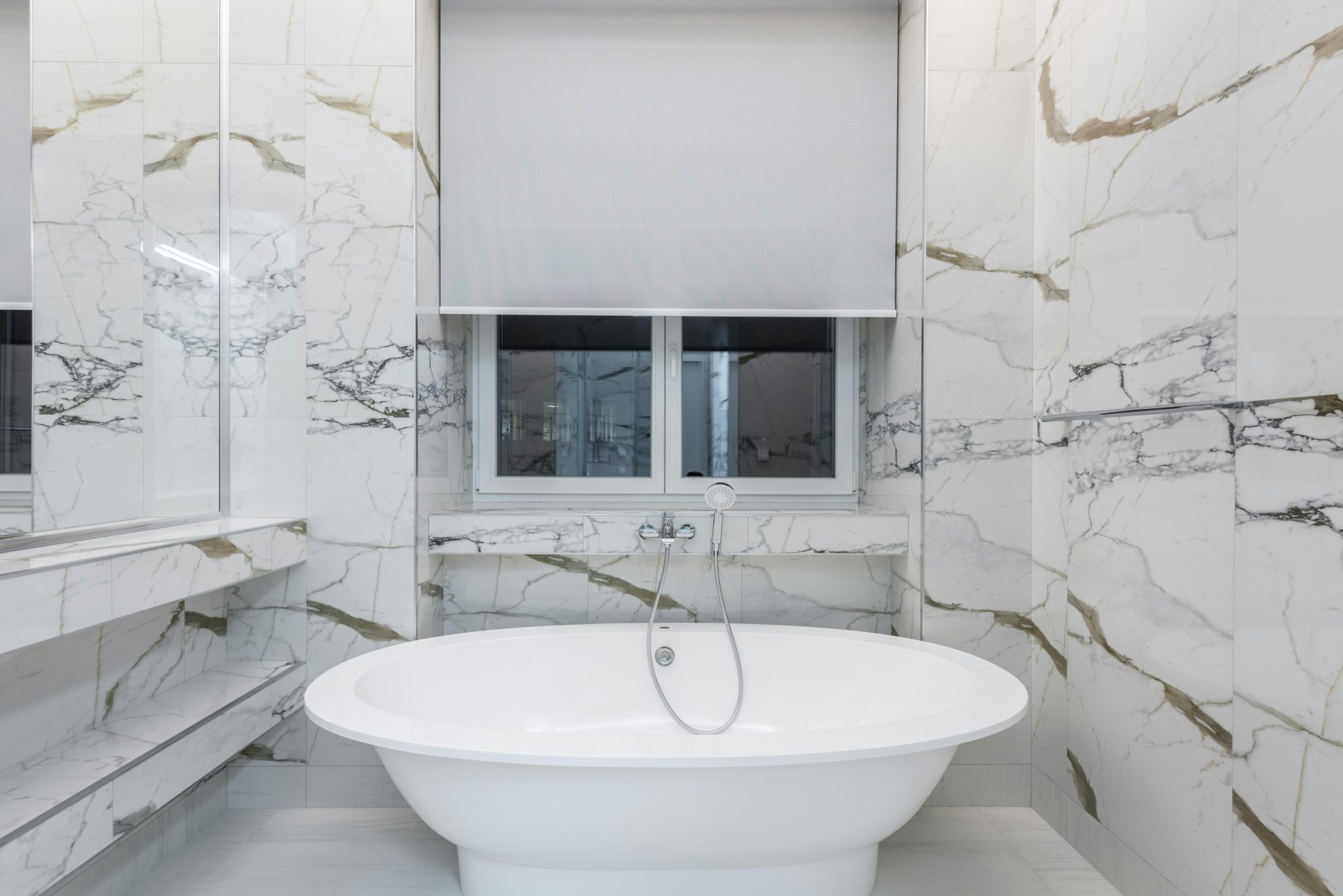
While stunning, a full marble bathroom requires commitment. Marble is a natural, porous stone, meaning it can etch or stain. Acidic substances like lemon juice or certain cleaners can dull the finish instantly. Sealing the marble upon installation and then again every 6-12 months is non-negotiable. For cleaning, use only pH-neutral, stone-safe cleaners. The trade-off for this maintenance is a one-of-a-kind, natural beauty that simply can’t be replicated by porcelain. The gold/brown veining here is particularly susceptible to showing rust stains if not properly sealed.
|
📋 Copy HEX 🔗 Share |
📏 Scale Guide
The success of this design lies in its bold commitment to a single material. By wrapping the walls and floor in the same large-format marble tile, the lines and corners of the room begin to blur, creating an expansive, seamless, and truly immersive feeling. The choice of a sleek, simple freestanding tub and minimal chrome fixtures is key; they complement the marble without competing with its natural drama, allowing the beauty of the stone to be the undisputed star of the show.
12. Bold Black, White, and Gold Bathroom with Geometric Floor Tiles
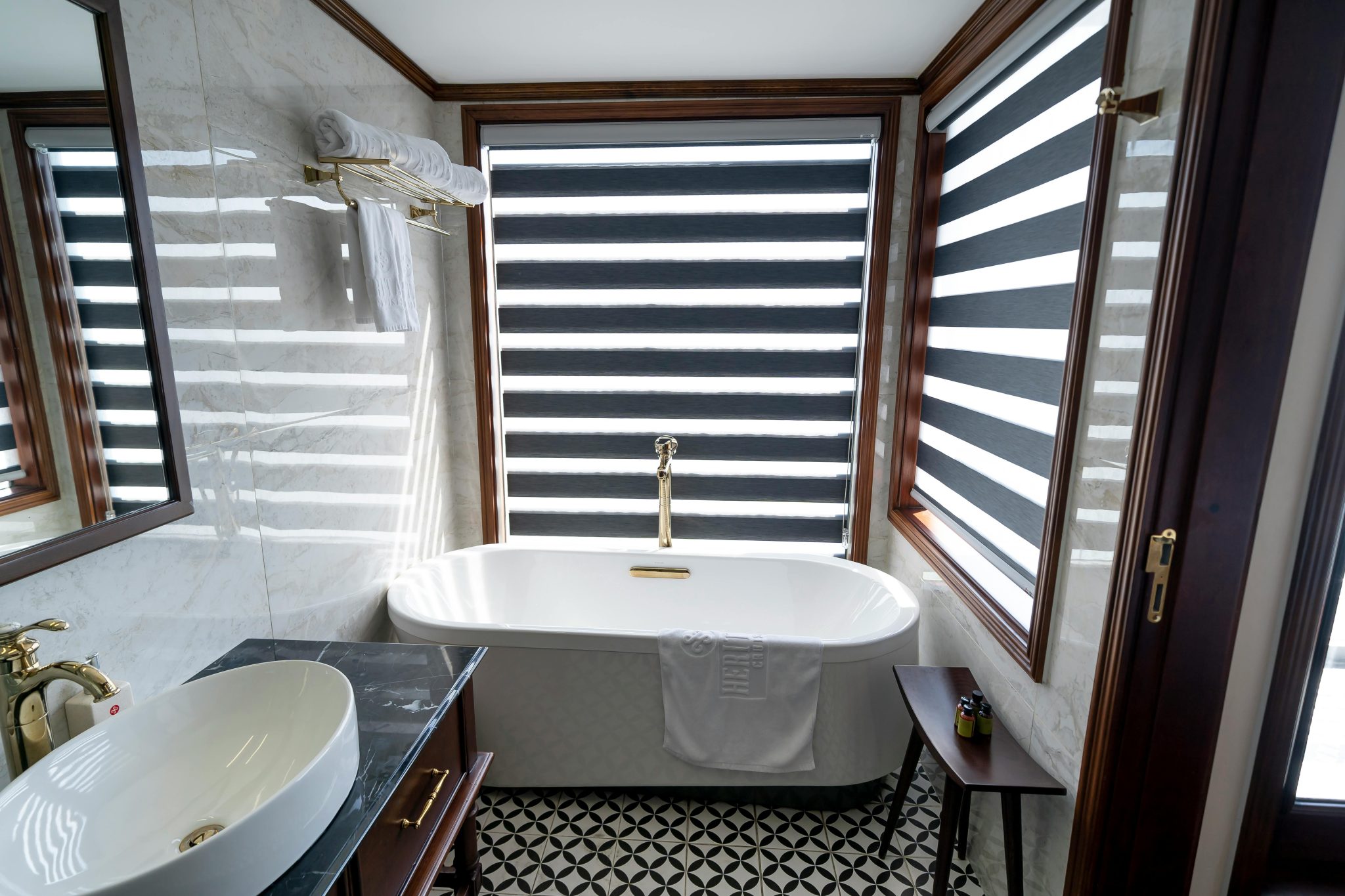
- Main Furniture (Freestanding Tub): $1,500 – $3,500
- Lighting (Not shown, estimate): $300 – $800
- Textiles (Window Blinds): $200 – $500
- Decor/Accessories (Gold Faucet & Drain): $700 – $2,000
- Wall/Floor Treatment (Tile & Installation): $3,000 – $7,000
- TOTAL: $5,700 – $13,800
- Budget Alternative: Use a standard built-in tub, find a similar geometric tile from an online retailer like Wayfair, and choose gold-finish fixtures (not solid brass) to capture the look for closer to $2,500 – $5,000.
📐 Style Math
When you have a bold, graphic floor tile like this, it becomes the main event. Fight the urge to add more pattern elsewhere. The marble-look wall tile works because its pattern is organic and subtle, providing a quiet backdrop rather than competing for attention. The rule is simple: one star of the show. Everything else should be in a supporting role. The dark wood trim acts as a frame, containing the energy of the floor.
13. Modern Gray Bathroom With Textured Wave Wall Tiles
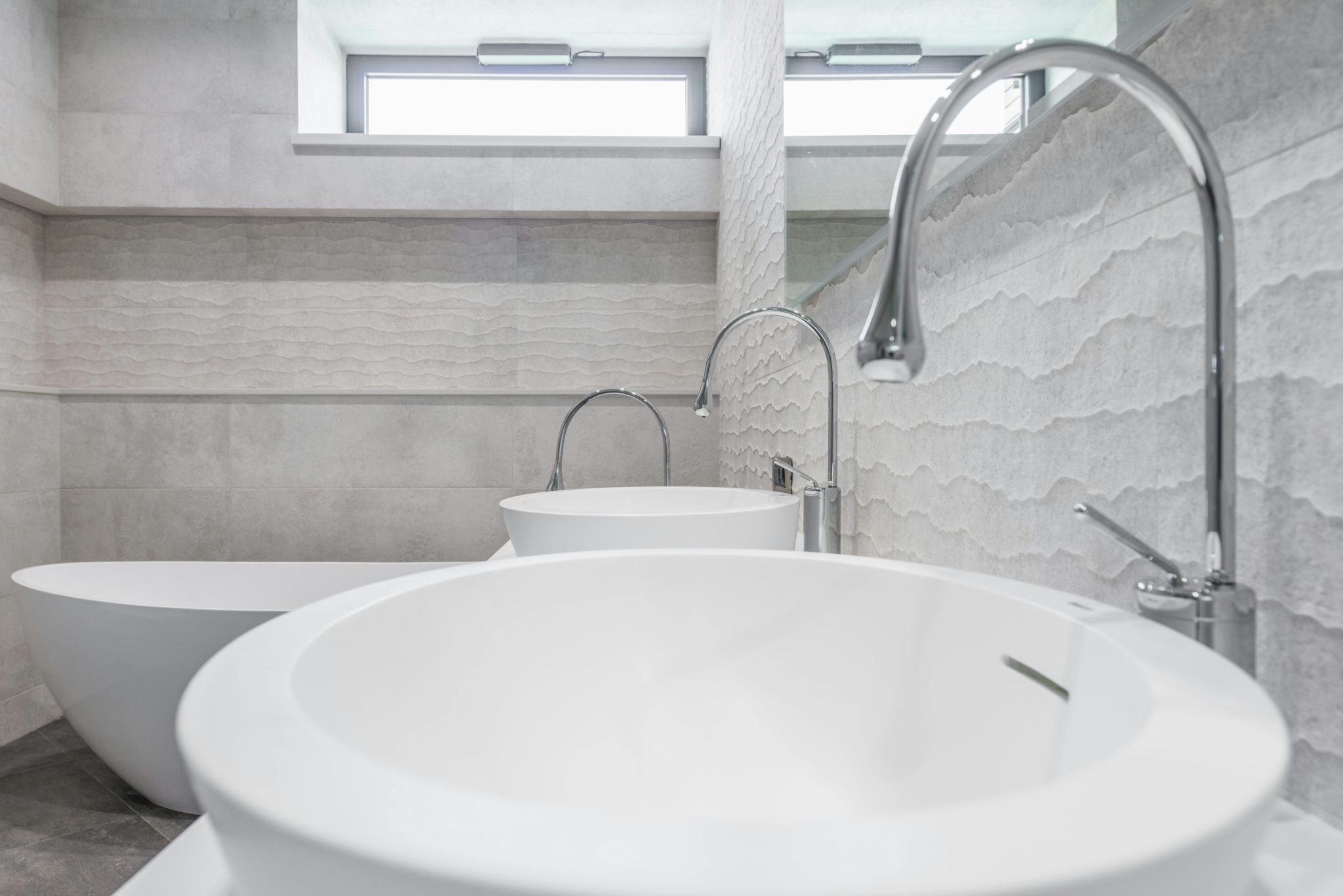
This design is a fantastic example of tone-on-tone texturing. It sticks to a very tight palette of light gray and white but creates immense visual interest by varying the surfaces. The smooth subway tiles, the three-dimensional wavy tiles, and the glossy ceramic sinks all reflect light differently. This creates depth and a sophisticated, tactile quality without needing to resort to multiple colors. The sleek chrome faucets act as sharp, metallic exclamation points in the serene, tonal landscape.
|
📋 Copy HEX 🔗 Share |
⭐ The One Thing
Textured tiles look amazing, but be strategic about where you put them. Placing them in a shower’s “splash zone” can lead to soap scum and mineral deposit buildup in the crevices, making them difficult to clean. Here, they are used as a backsplash behind the sink, which is a much lower-maintenance application. If you want to use them in a shower, reserve them for a wall that doesn’t get directly sprayed with water day after day.
14. Neutral Modern Bathroom with a Freestanding Tub and Wood Caddy
You can achieve this clean, serene look on a strict budget. Find a simple freestanding tub from an online supplier for under $1,000. The gray shaker vanity is a classic style available at Home Depot or Lowe’s for $400-$700. The real savings come from the floor; search for “marble look vinyl sheet flooring,” which can give you this effect for a fraction of the cost and labor of tile. A wooden bath caddy can be found on Amazon or Etsy for $30-$60, adding that perfect spa-like touch.
💰 Budget Breakdown
- Confirm your floor joists can support the weight of a full freestanding tub (water is heavy!).
- Measure your door frames and hallways. Can you physically get the tub into the bathroom?
- Decide on your plumbing location *before* you buy the tub. A floor-mounted filler (expensive) vs. a wall-mounted one (less expensive) will change your entire layout and budget.
- Check local building codes regarding the distance required between the tub and any electrical outlets.
15. Modern Industrial Bathroom with Geometric Copper Pendant Lights
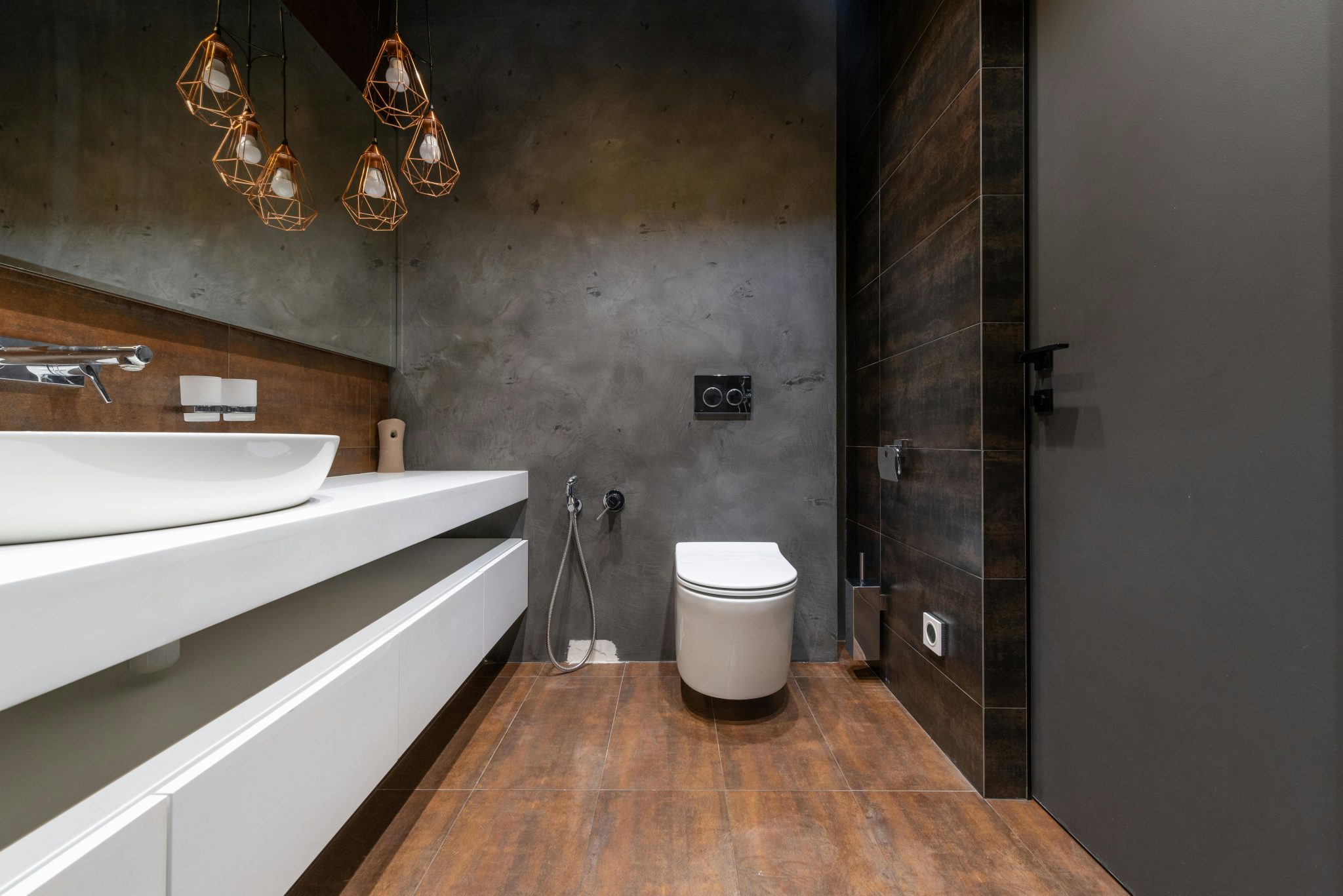
The copper geometric pendant lights are, without a doubt, the element that makes this bathroom sing. Against the dark, raw, and moody backdrop of concrete-finish and dark brown tiles, they provide a critical pop of warmth, shine, and intricate detail. They are functional sculptures. Without them, the room would be handsome but could feel heavy and somber. The lights lift the design, provide a clear focal point, and introduce a touch of sophisticated glamour to the industrial aesthetic.
|
📋 Copy HEX 🔗 Share |
💡 Designer Tip
When hanging pendant lights over a vanity, there are two key measurements. First, the bottom of the shade should be at least 72-80 inches above the finished floor to ensure no one hits their head. Second, they should be positioned just off-center to the sink, slightly towards the user, so the light illuminates your face for tasks like makeup application, rather than creating a silhouette by backlighting your head. They should also be several inches clear of the mirror’s edge.
16. Neutral Tiled Built-In Tub with Adjacent Glass Shower
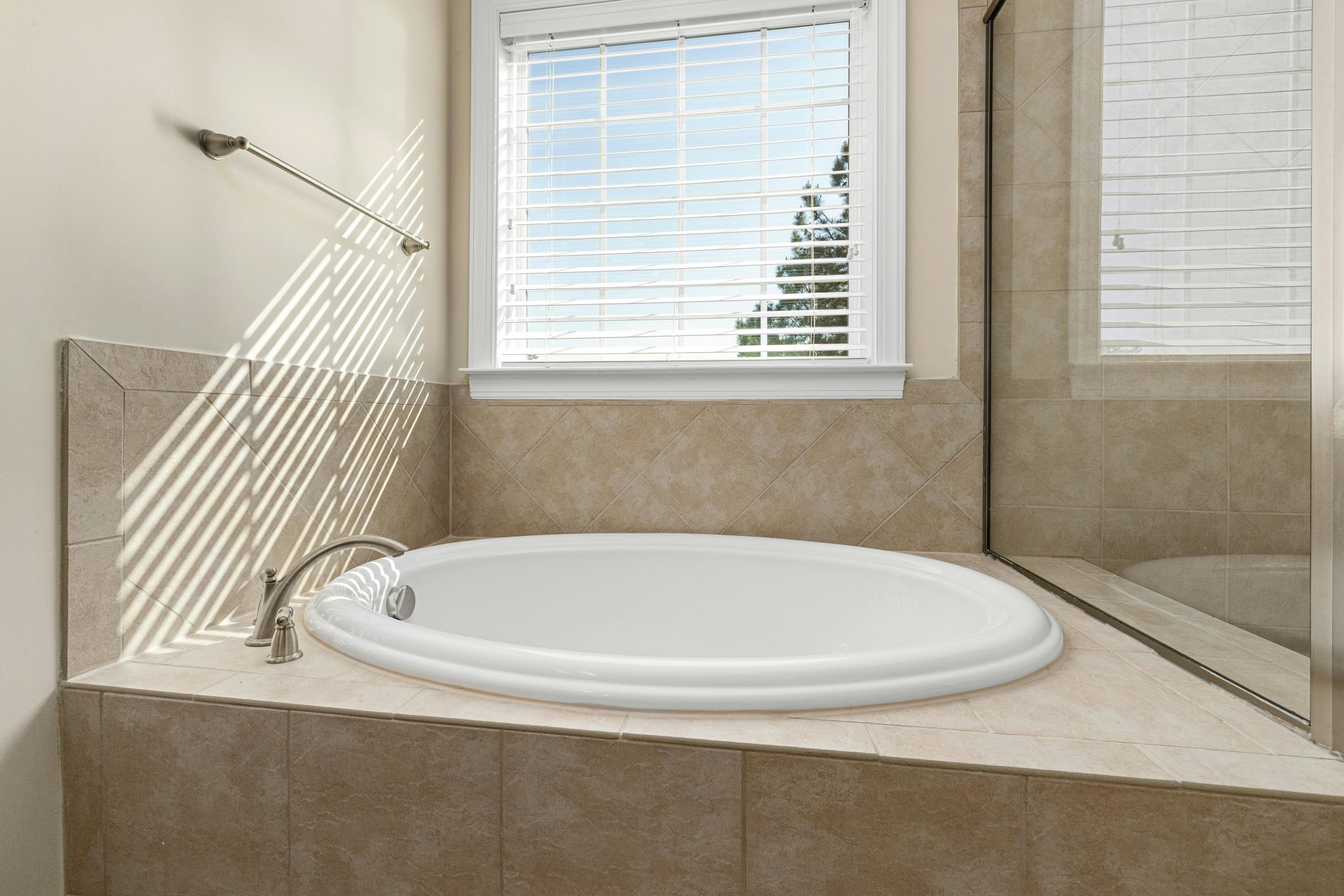
This design’s success lies in its seamless integration and quiet texture. By using the same family of light beige tiles for the tub surround, wall, and likely the shower, the whole area reads as one continuous, custom-built feature. The diamond-patterned accent tile adds just enough visual interest without overwhelming the small space. The clear glass shower door is crucial, as it prevents the corner from feeling visually blocked off, maintaining the room’s open and bright feel.
✅ Before You Start
This look follows a classic 80/20 rule. About 80% of the tiled surface is a simple, neutral field tile (the light beige rectangles). This creates a calm and expansive base. The remaining 20% is dedicated to an accent tile (the diamond pattern) in a coordinating color. This formula provides a custom, designed look without the cost or visual clutter of using expensive tiles everywhere. You can apply this ratio with any tile style to achieve a similar balanced effect.
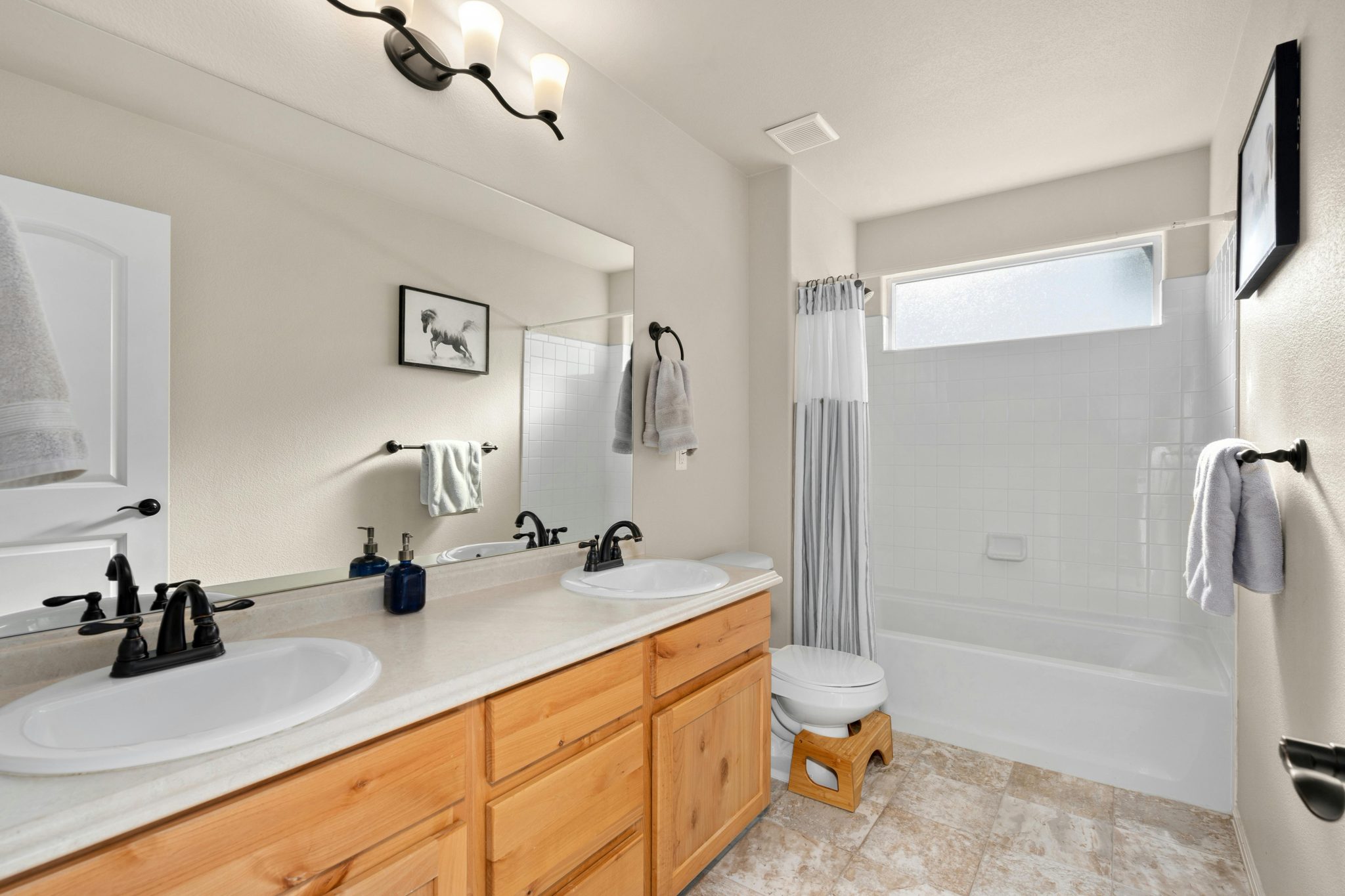
17. Warm Minimalist Bathroom with a Natural Wood Vanity
This is a perfect example of a high-impact, low-budget remodel. A gallon of quality beige paint (like Sherwin-Williams’ Accessible Beige) is about $70. The real star, the natural wood vanity, can be a DIY project using an unfinished cabinet from a hardware store for under $300. Simple white subway tile is one of the most affordable options available, often under $3/sq ft. The matte black faucets and hardware are what sell the “2026” look; you can find great options on Amazon or at big box stores for around $100-$200 per set.
|
📋 Copy HEX 🔗 Share |
🔧 How-To Brief
How-To: Get a Natural Unfinished Wood Look
- Time Estimate: 2-4 hours. Cost: $50-$80 for supplies.
- Start with an unfinished wood vanity. Sand all surfaces with 180-grit sandpaper, then finish with 220-grit for a smooth touch. Always sand in the direction of the wood grain.
- Wipe away all dust with a tack cloth or a cloth lightly dampened with mineral spirits.
- Apply a clear, matte-finish, water-based polyurethane. A water-based product will not yellow the wood over time like oil-based products can. Use a high-quality synthetic brush.
- Apply at least three coats, lightly sanding with 320-grit sandpaper between each coat for a durable, waterproof finish perfect for a bathroom.
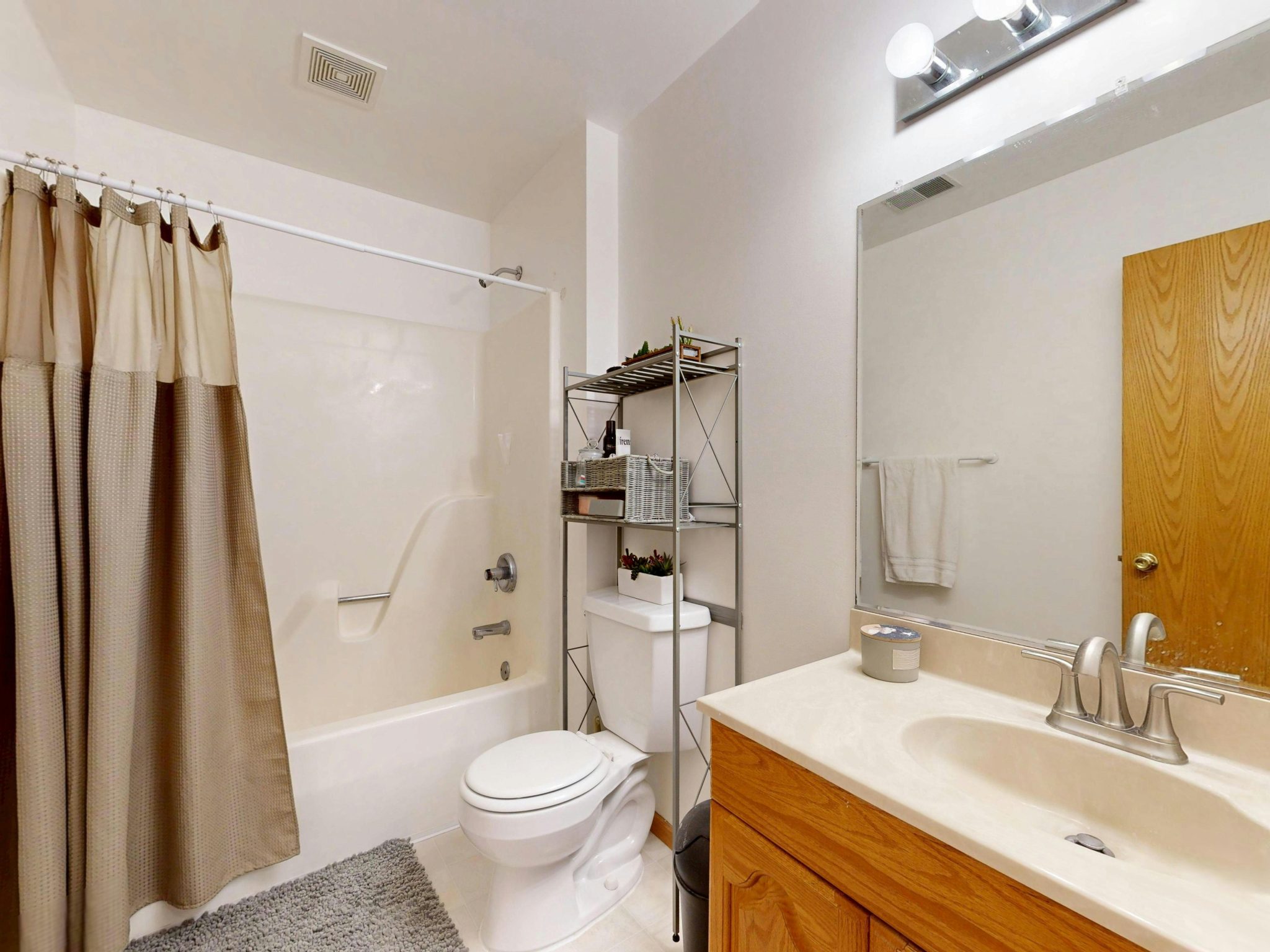
18. Compact Bathroom with Marble-Effect Wall Paneling
While marble-effect wall panels offer a seamless and grout-free solution, they can sometimes look less authentic than high-quality porcelain tile. The repetition in the printed pattern can be a giveaway, and the overall effect can feel a bit dated depending on the quality of the panel. This is a very practical choice, especially for a remodel where you want to cover old tile without demolition, but it may not have the same long-term luxe appeal or return on investment as real tile.
🧹 Maintenance Reality
The all-in-one bathroom, where a washing machine is integrated into the space, is a huge trend in Europe and is gaining traction in the US for small homes, apartments, and ADUs (Accessory Dwelling Units). It’s a hyper-functional approach born from the necessity of maximizing every square inch. While not a conventional ‘master bath’ look, it represents a major shift toward practical, space-saving design in 2026, especially as housing footprints get smaller.
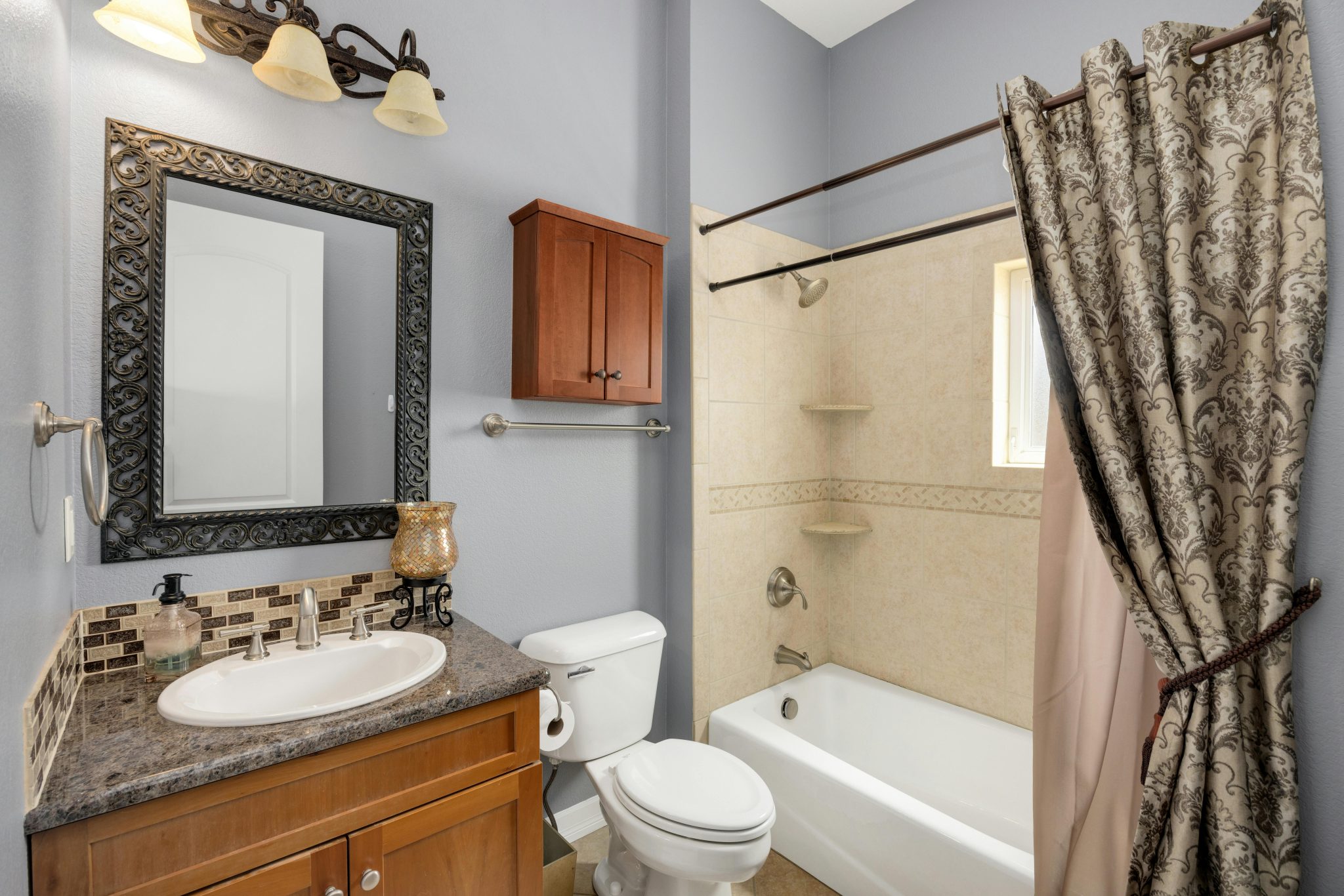
19. Functional Small Bathroom with an Oak Vanity and Chrome Accents
This entire look is a masterclass in budget-friendly design. The key is using standard, in-stock items creatively. The oak vanity and integrated sink top are a classic combo from any home improvement store (under $300). The over-the-toilet shelving unit ($50-$100 from Target or Walmart) is a space-saving hero. The real trick to making it feel cohesive is the consistent use of chrome across the faucet, light fixture, and shelving unit, which ties everything together. Wicker baskets add texture and hide clutter for cheap.
|
📋 Copy HEX 🔗 Share |
⚠️ Real Talk
This layout is perfect for the classic small full bath, typically around 35-45 square feet (e.g., a 5′ x 8′ room). The use of a vanity under 24 inches wide, a standard tub/shower combo, and an over-the-toilet storage solution is the most efficient use of space possible. For an even tinier powder room (half bath), you could use a narrower vanity and ditch the shelving unit to prevent the room from feeling crowded. See Idea #24 for another excellent small-space layout.
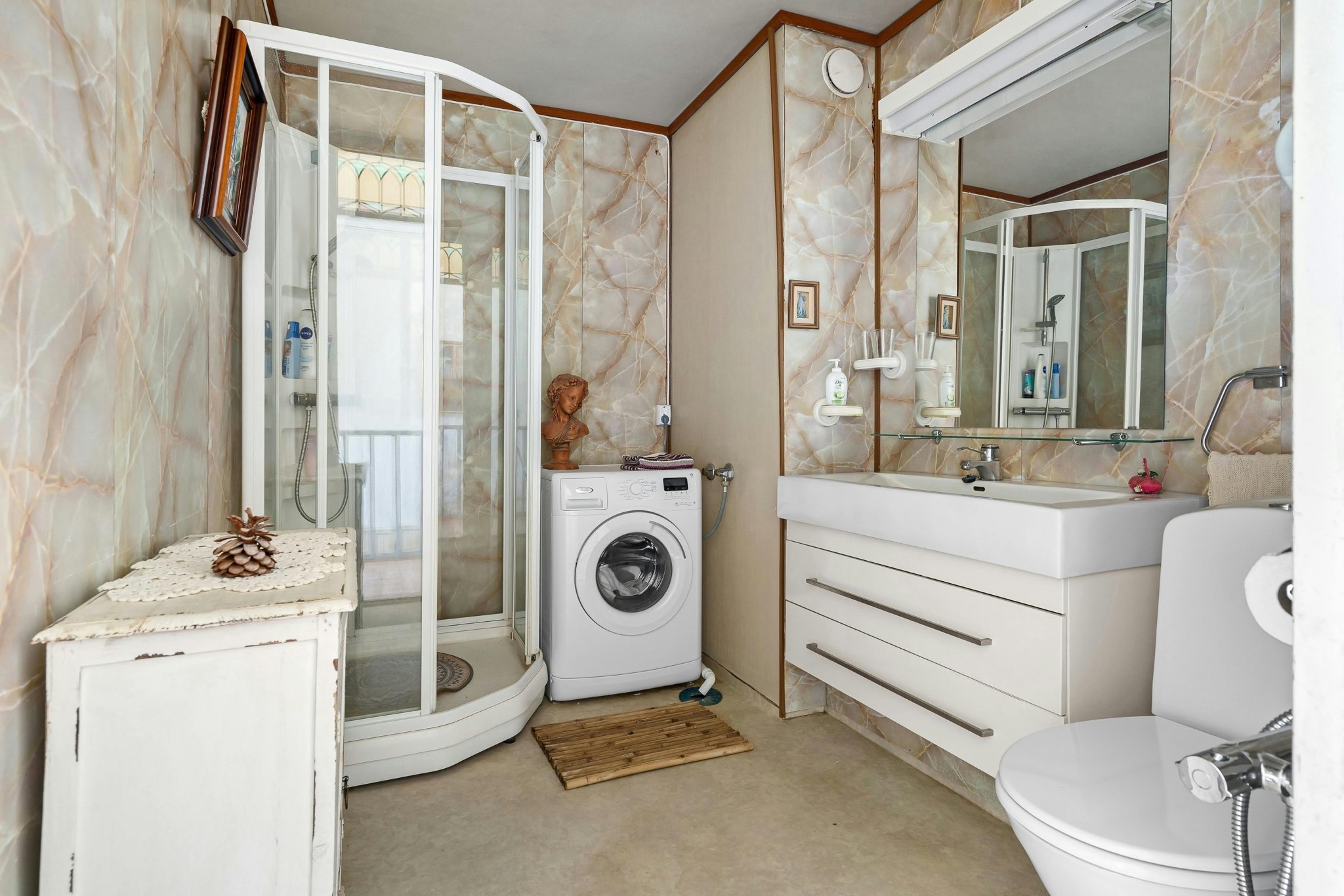
20. Traditional Bathroom with a Dark Wood Vanity and Beige Tile
A common mistake when using beige is letting it become bland. The secret here is the careful inclusion of contrast and pattern. The dark wood vanity provides a necessary deep anchor point for the room’s color palette. The ornate mirror frame and the shower curtain’s pattern add layers of detail and personality. When decorating with a neutral like beige, always ask: Where is my dark tone? Where is my pattern? Where is my texture? Missing one of these can leave the room feeling flat.
🎯 What Makes It Work
The visual recipe for this traditional comfort is about layering earthy tones: 50% light neutral (beige tile and a warm off-white on the non-tiled walls) + 30% dark anchor (the dark wood vanity and mirror) + 10% mid-tone accent (the light grey walls) + 10% pattern and texture (the shower curtain and mosaic tile band). This balance ensures the room feels classic and cozy, not dated or boring. It’s a formula that has worked for decades for a reason.
21. Modern Double Vanity with a Stacked Stone Accent Wall
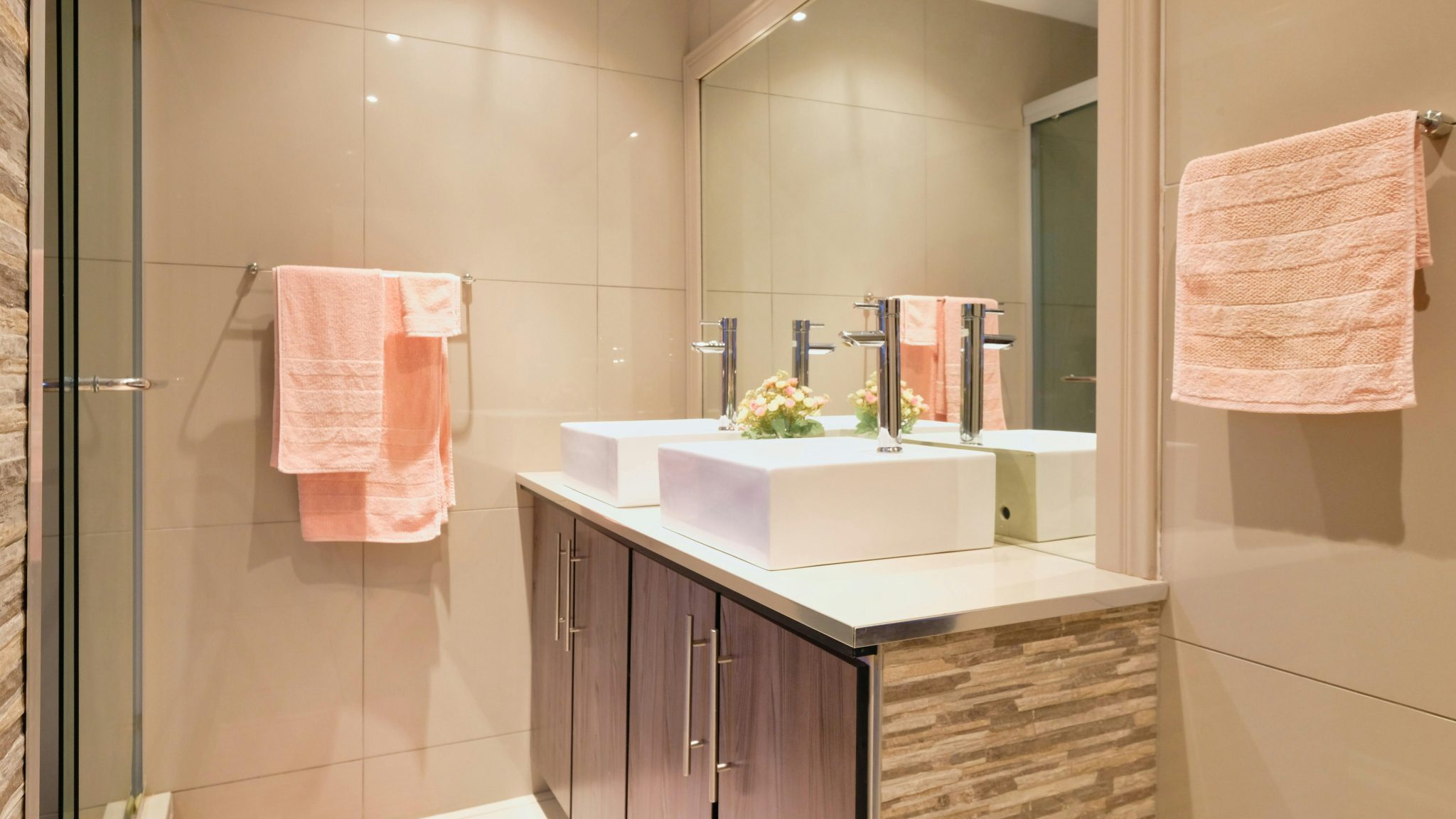
This space feels luxurious because it perfectly balances sleek and rustic textures. The glossy, large-format beige tiles and smooth white vessel sinks are clean and contemporary. The light wood grain of the vanity adds organic warmth. But the magic happens with the stacked stone accent. It provides a rough, tactile, and earthy element that contrasts beautifully with the polished surfaces. This juxtaposition of textures is what gives the room its high-design, custom-built character.
|
📋 Copy HEX 🔗 Share |
💸 Get This Look For Less
Stacked stone looks incredible, but be aware that it’s a dust collector. The uneven surfaces and tiny ledges are magnets for dust and, in a bathroom, hairspray residue. It’s not a surface you can quickly wipe down. Plan on a monthly vacuuming with a brush attachment to keep it looking clean. Also, it’s not the best choice for a backsplash directly behind a sink, as toothpaste splatters can be very difficult to clean out of the crevices.
22. Traditional Bathroom with Wide-Striped Walls and Wood-Look Tile
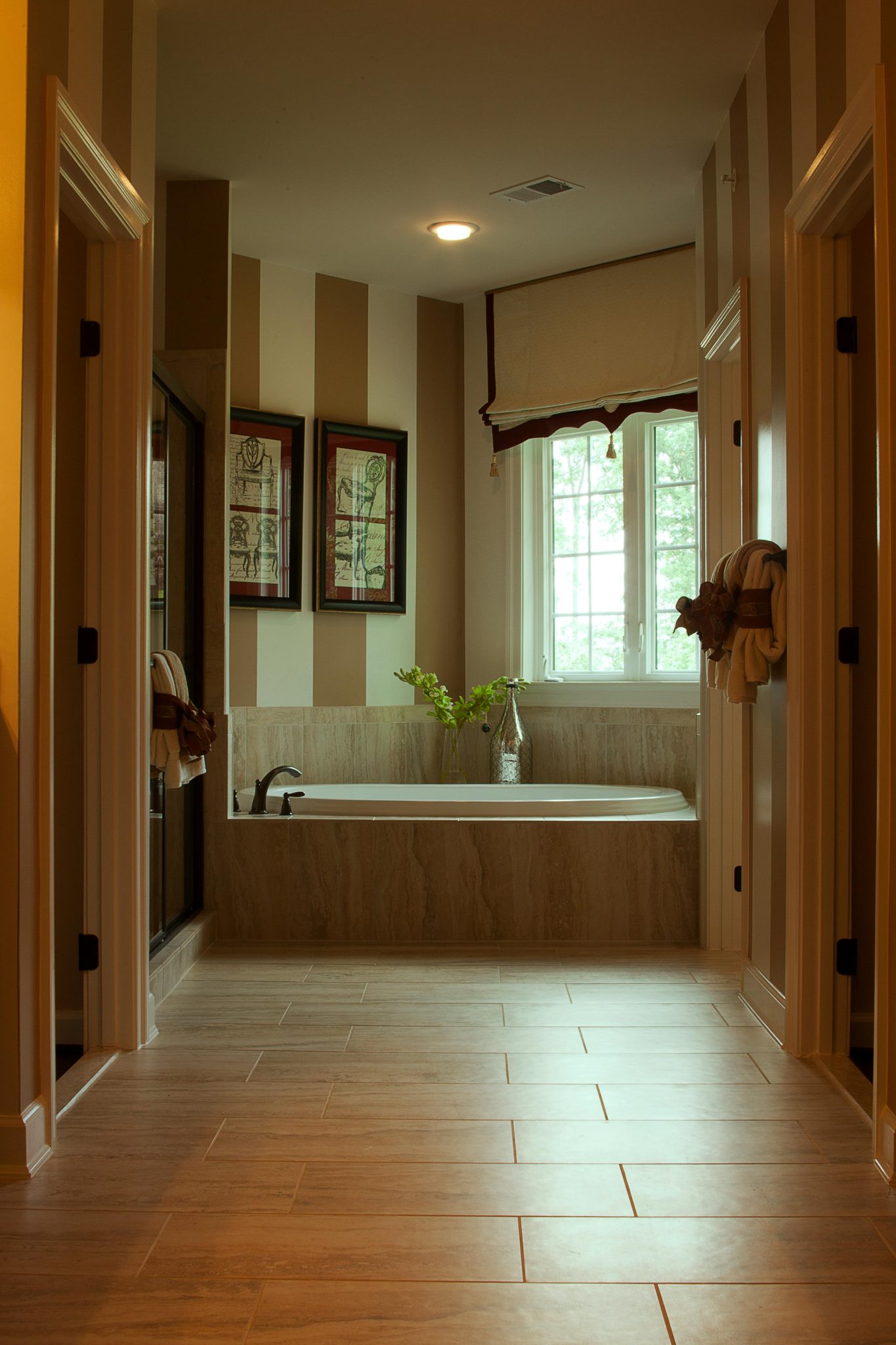
The single element holding this entire look together is the wide, tone-on-tone striped wallpaper. It’s a bold choice that establishes a cozy, traditional, and slightly formal rhythm. The vertical stripes are a classic design trick to make a room feel taller. Without the wallpaper, the combination of a built-in tub, wood-look floor, and simple blinds would be fine, but it wouldn’t have this distinct, charming personality. The stripes are the heart of the design.
🔥 Trending Context
How-To: Paint Perfect Vertical Stripes
- Time Estimate: 4-6 hours (plus drying time). Cost: $100 for paint and supplies.
- Paint the entire wall with the lighter stripe color (the off-white) and let it dry completely for 24 hours. This is your base.
- Use a level and a pencil to mark your vertical lines. For 12-inch stripes, measure 12 inches from a corner, make a mark, and use the level to draw a faint line from ceiling to floor.
- Apply high-quality painter’s tape (like FrogTape) *just outside* the lines for the stripes you will be painting in the darker color.
- Press the tape down firmly. Paint a little of the base color over the edge of the tape to seal it and prevent bleeding. Let it dry.
- Paint your darker stripe color (the beige) between the tape. Remove the tape while the second coat is still slightly wet, pulling it away at a 45-degree angle for the crispest line.
23. Compact and Elegant Bathroom with Gold Fixtures
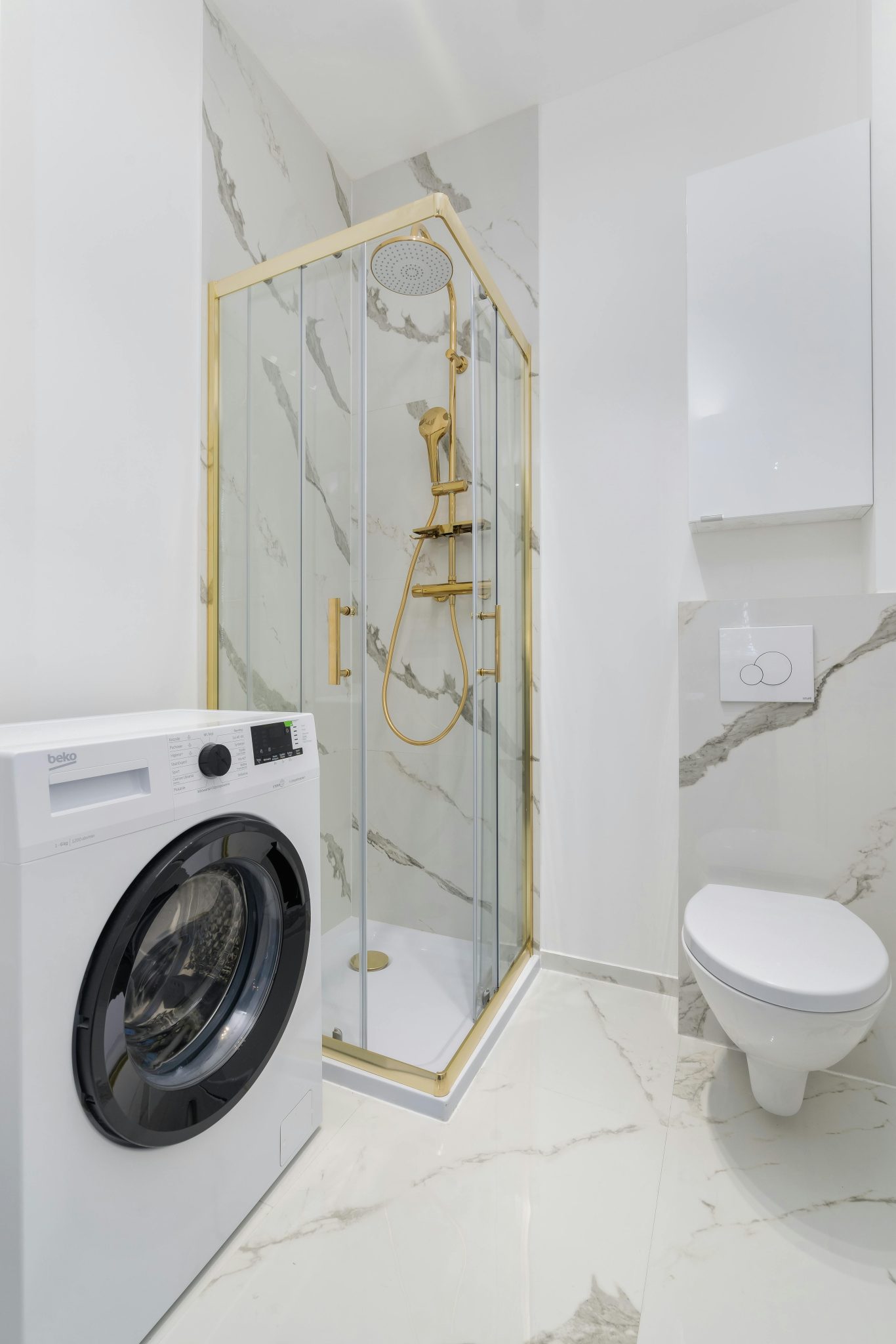
This tiny bathroom feels luxurious because of its disciplined and high-contrast material palette. The design sticks to just white and gold, with the gray veining of the marble as a subtle mediator. Using the same marble-look tile on the floor and halfway up the wall creates a continuous, unbroken line that makes the space feel more expansive. The wall-mounted toilet is a critical space-saver, opening up valuable floor area. The gold fixtures act like jewelry, adding a touch of glamour that elevates the entire room.
|
📋 Copy HEX 🔗 Share |
📏 Scale Guide
This is a brilliant execution for a very small full bathroom, likely in the 30-40 square foot range. The corner shower is the most space-efficient shower design possible. The inclusion of a washing machine makes it highly functional for an apartment or small home. For this to work, you need a minimum width of about 5 feet to accommodate the toilet and washing machine side-by-side with proper clearance. This layout proves that you don’t need a large footprint to have a stylish and functional bathroom.
24. Bright Minimalist Bathroom with Light Wood and a Round Mirror
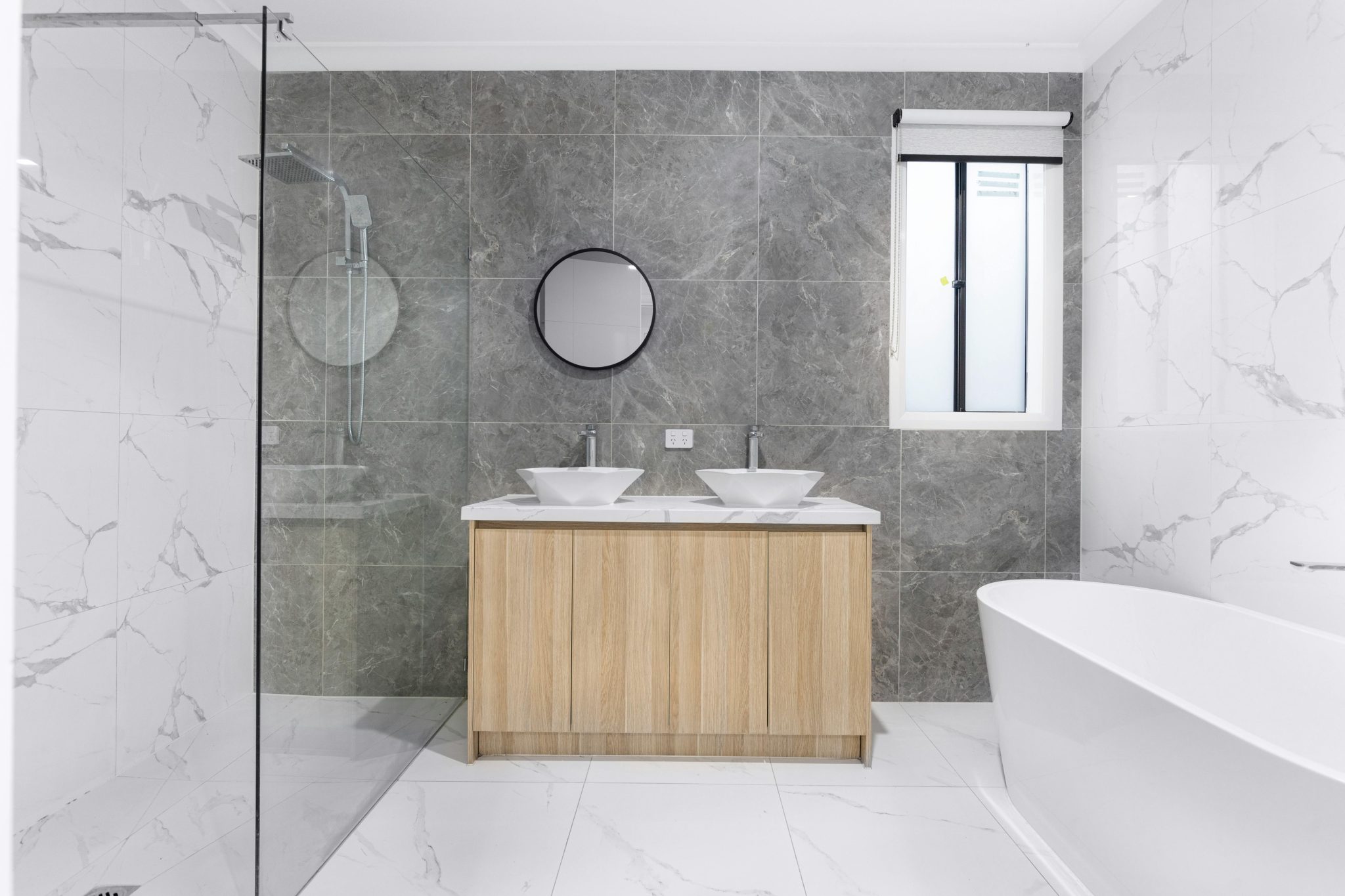
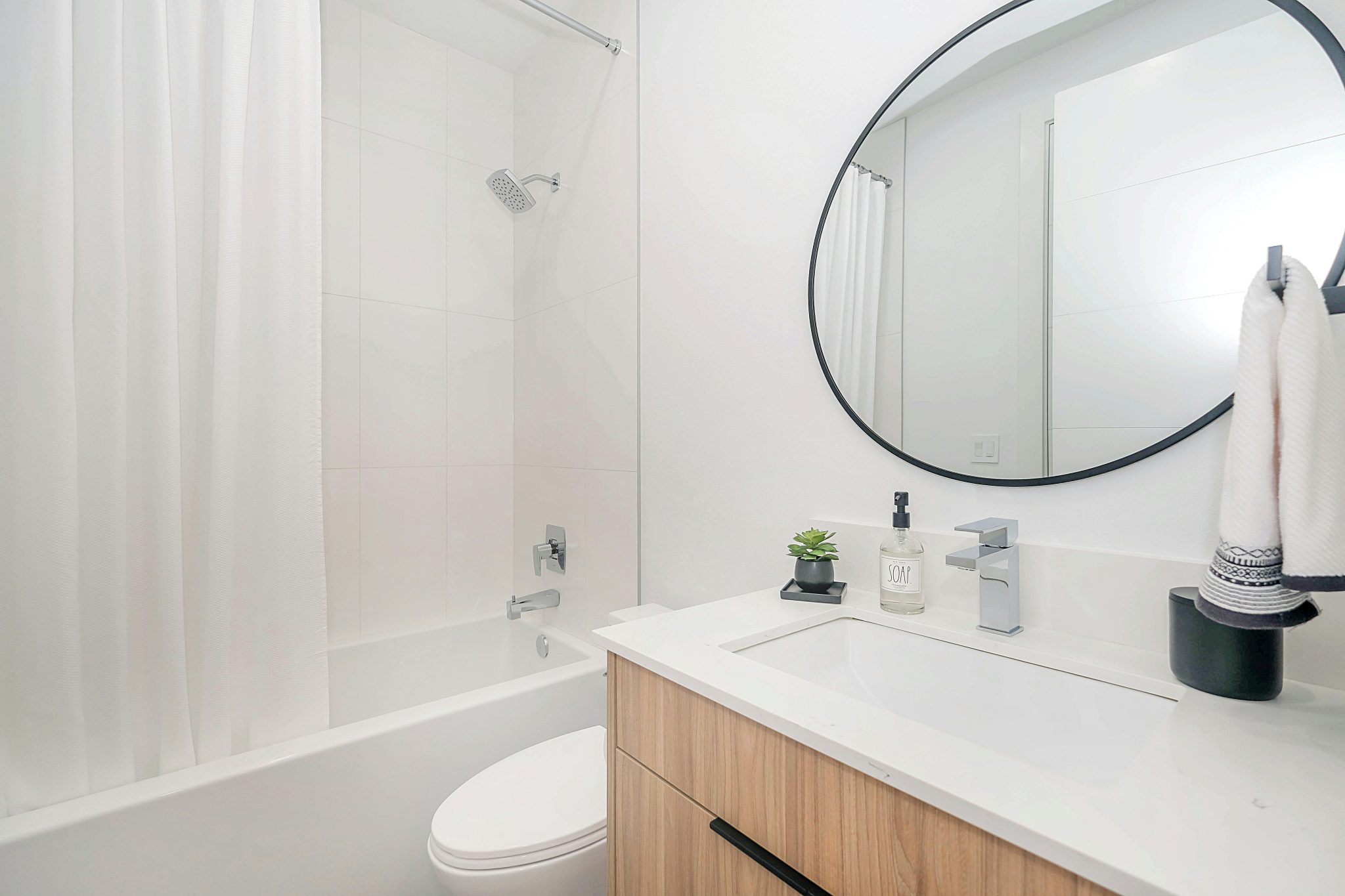
The single element that gives this bathroom its friendly, modern personality is the large, round, black-framed mirror. In a room dominated by straight lines and right angles—the rectangular tiles, the linear vanity—the mirror’s circular shape provides a necessary moment of softness and contrast. It breaks up the geometry and serves as the undeniable focal point, pulling the whole look together. Swapping it for a rectangular mirror would make the space feel much more generic and less designed.
📐 Style Math
In a small bathroom, a large mirror is your best friend. Don’t be afraid to go big! A mirror that extends nearly the full width of the vanity, as seen here, will dramatically enhance the sense of space and light. It works by reflecting the room back on itself, creating an illusion of depth. A tiny mirror over a vanity, a common mistake, can actually make a small room feel even smaller and more cluttered.
25. Serene Soaking Tub with an Iridescent Blue and Green Tile Wall
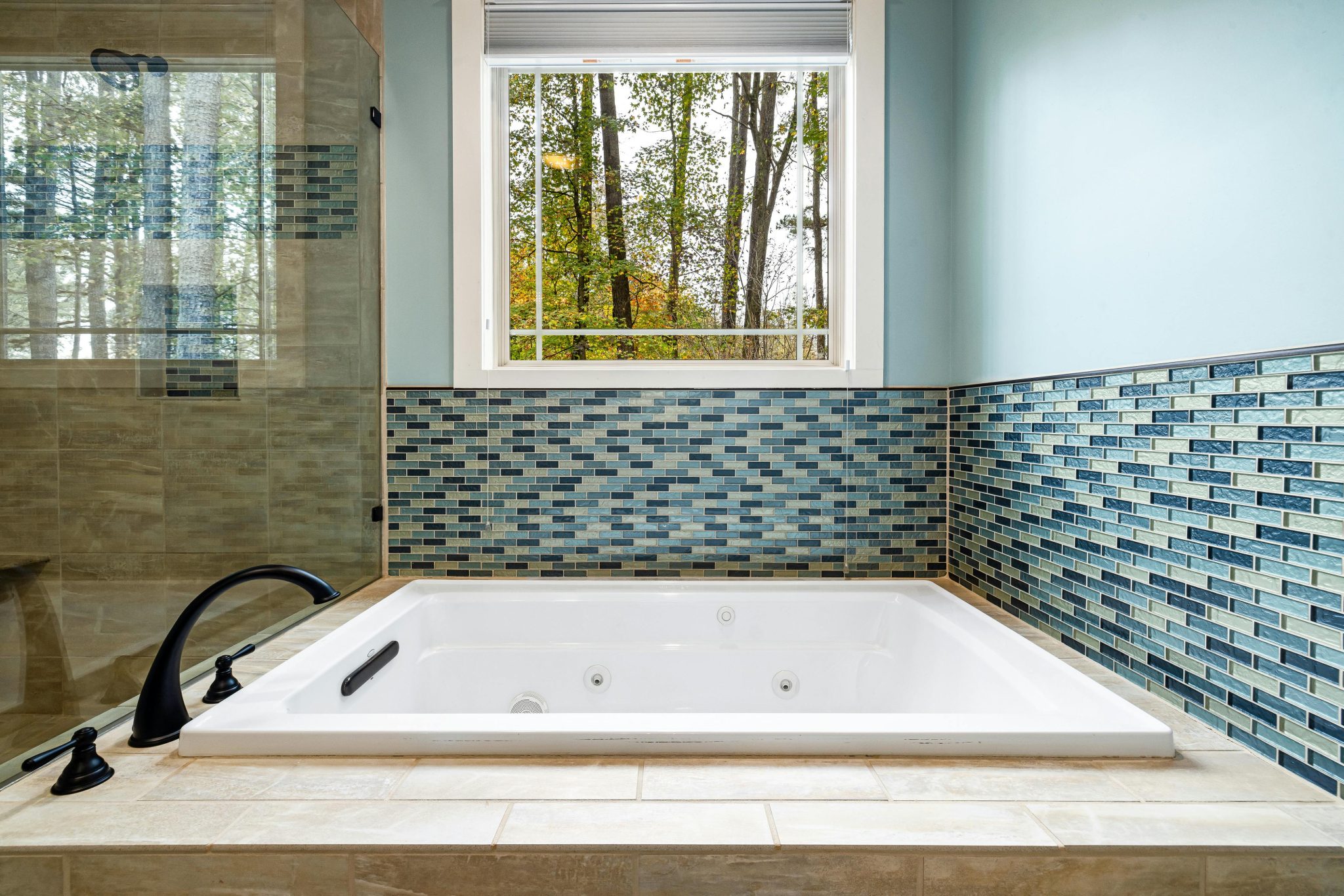
This design is successful because it creates a powerful mood by connecting to nature. The iridescent blue and green subway tiles evoke the feeling of water and foliage, which is beautifully reinforced by the view of the trees outside the window. The choice of neutral beige for all the surrounding tiles was wise; it provides a calm, earthy base that allows the colorful accent wall to be the hero without overwhelming the senses. The matte black fixtures add a modern, grounding touch.
|
📋 Copy HEX 🔗 Share |
⭐ The One Thing
Iridescent and glass tiles are stunning, but they are often more expensive and require a more skilled installer than standard ceramic or porcelain. The thin-set mortar color can sometimes show through transparent or translucent tiles, so a white mortar is usually required. They can also be more prone to scratching. This is a look to splurge on for a focal wall, but it might not be the most practical or budget-friendly choice for tiling an entire bathroom. Compare with the more subtle accent in Idea #26.
26. Contemporary Bathroom with a Freestanding Soaker and Glass Shower
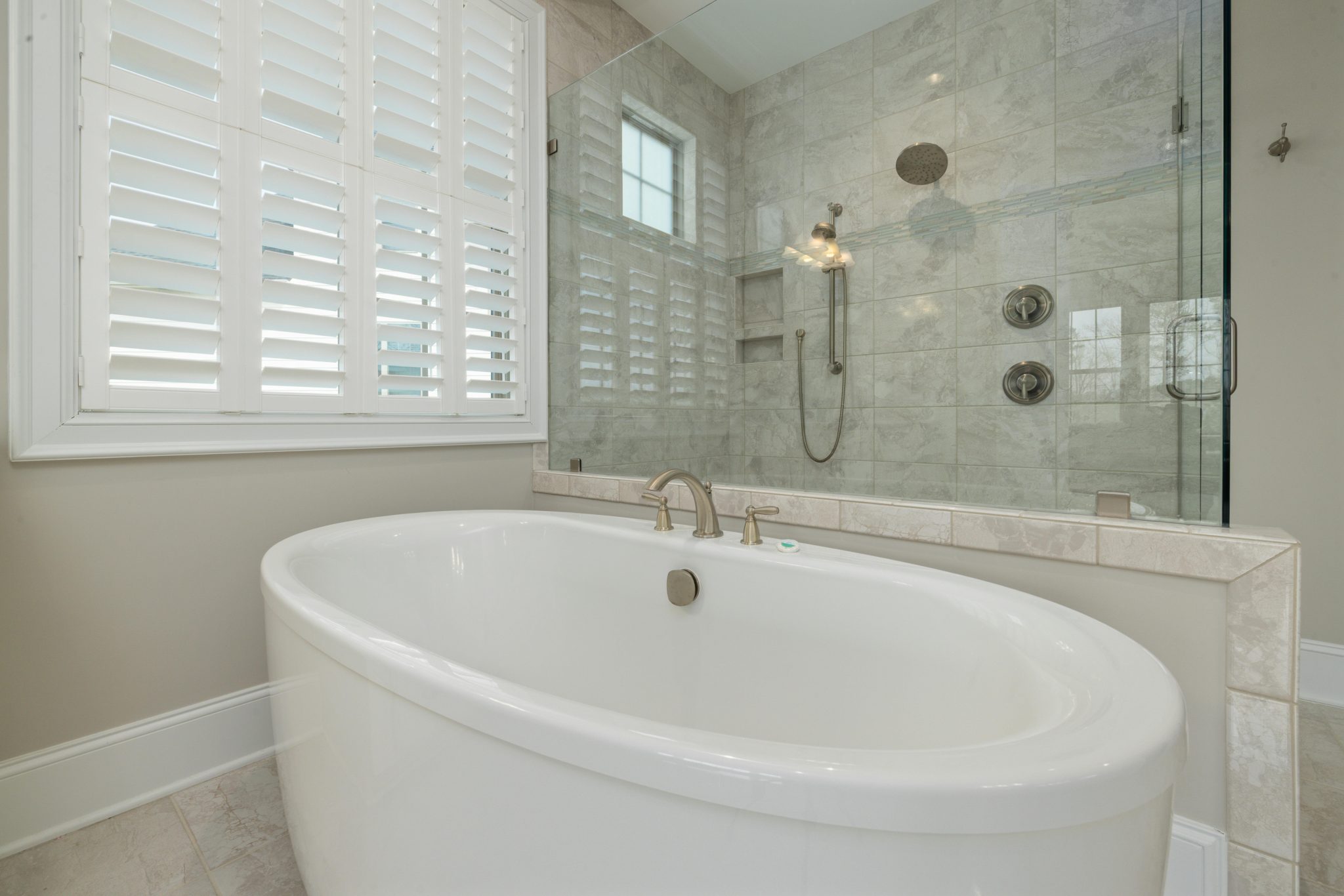
The visual recipe here is a clean and simple formula: 70% Neutral Base + 20% Glass + 10% Accent. The neutral base is the combination of the white tub, shutters, and light gray wall tiles. The glass of the shower enclosure adds a sleek, modern layer without taking up visual space. The crucial 10% accent is the thin band of linear blue mosaic tile and the brushed nickel fixtures. This small touch of color and metallic finish is just enough to give the otherwise simple design a custom, polished feel.
💰 Budget Breakdown
The “wet room” concept, where the shower and tub are placed together in a glass-enclosed space, is a huge trend. This isn’t a full wet room, but it borrows from that idea by placing the tub right next to the shower. This layout is gaining popularity because it’s practical—it contains all the splashing in one zone—and it creates a luxurious, spa-like feeling. It’s a great way to fit both a separate tub and shower into a medium-sized bathroom.
27. Modern Bathroom with a Backlit Mirror and Wall-Mounted Faucet
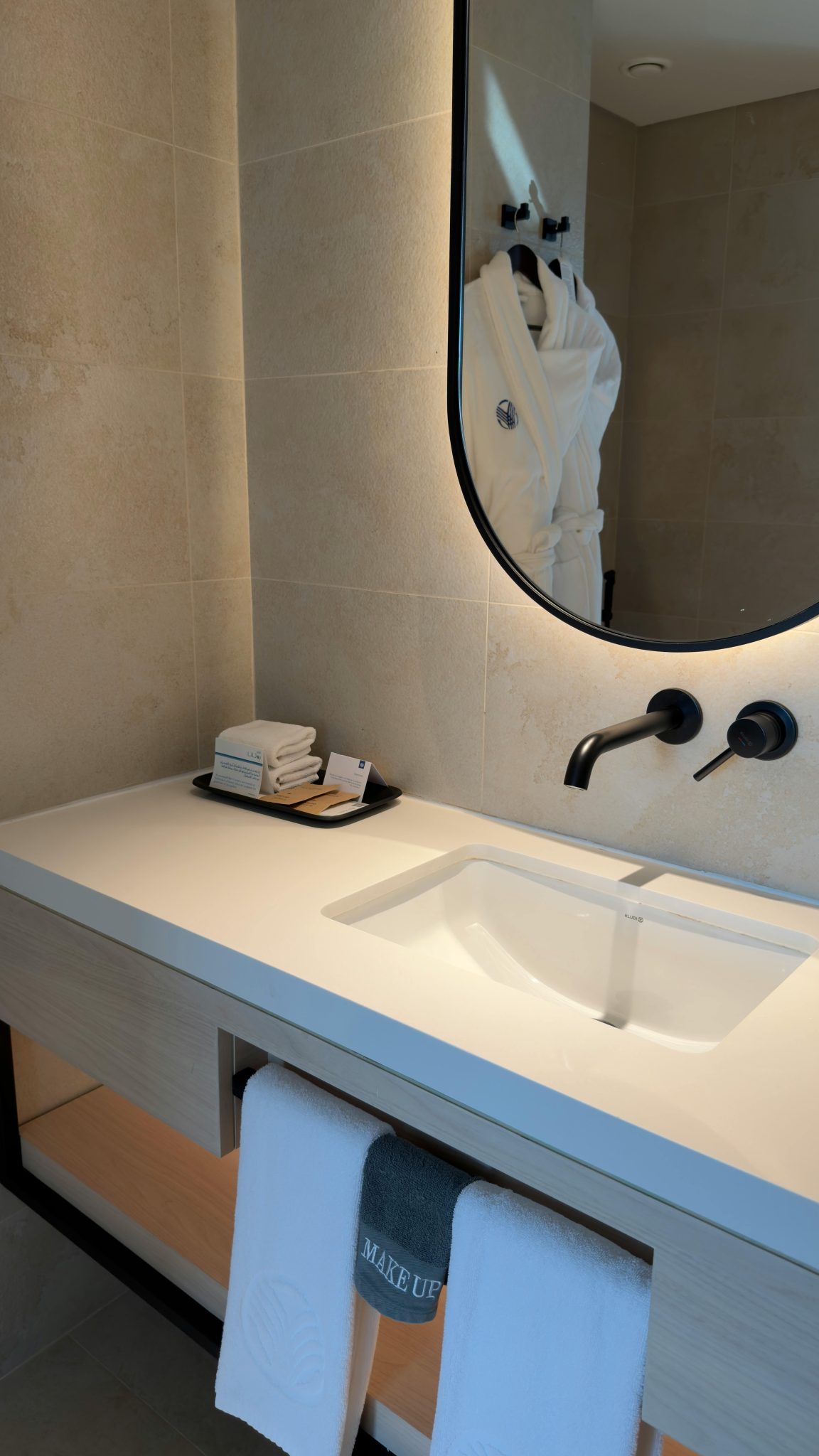
The backlit oval mirror is the undeniable centerpiece of this bathroom. It’s not just a mirror; it’s a light fixture. The soft glow it casts on the tiled wall creates an immediate sense of ambiance and luxury, eliminating the need for traditional vanity sconces. It provides even, flattering light for your face and highlights the texture of the beige tiles. This single choice elevates the entire design from simple and functional to chic and atmospheric.
|
📋 Copy HEX 🔗 Share |
💡 Designer Tip
How-To: Plan for a Wall-Mounted Faucet
- Time Estimate: Requires plumber & contractor. Plan weeks ahead. Cost: $300-$800+ for the fixture, plus plumbing labor.
- This is not a simple swap. It requires opening the wall to install the faucet’s valve and run plumbing lines to the precise height.
- You must know the exact height of your vanity, countertop, and sink *before* the wall is closed up. The standard is to place the faucet spout 2-3 inches above the sink rim.
- The wall must be thick enough (standard 2×4 framing is fine) to house the valve body.
- Ensure you have an access panel or plan for how to service the valve in the future without demolishing your tile.
28. Modern Walk-In Shower with Wood-Look and Textured Tiles
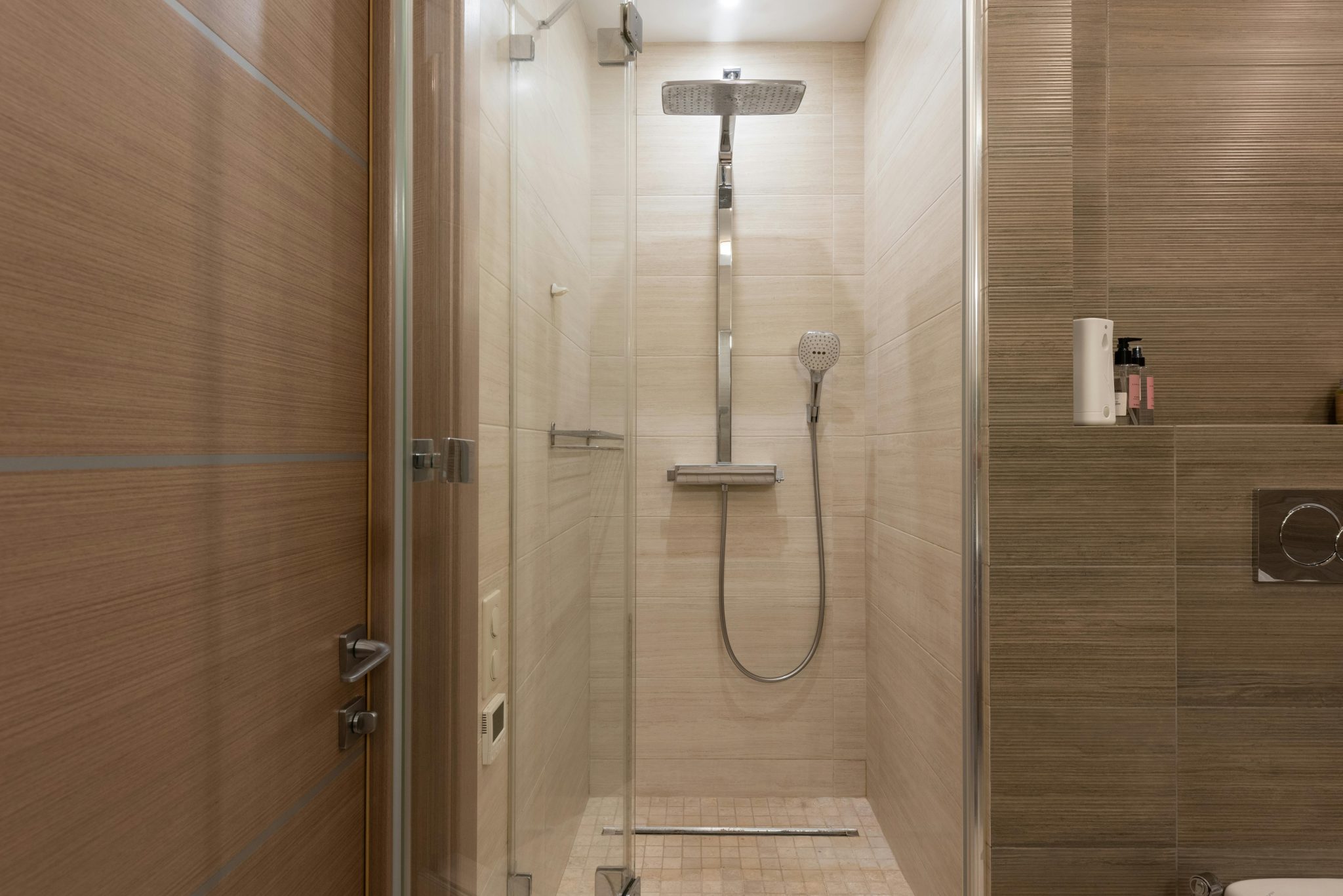
When mixing multiple tiles in a shower, always use the busiest or most textured tile as an accent, not as the main event. Here, the dark textured tile and the small square floor tile are used in smaller quantities, while the calmer, wood-look tile covers the largest surface area. This creates focal points without causing visual chaos. Also, keeping all the tiles in a similar warm, neutral color family (beiges and browns) is the key to making the mix feel cohesive and intentional.
✅ Before You Start
Glass shower doors are a commitment to squeegeeing. To prevent hard water spots and soap scum from building up and etching the glass, you must squeegee the doors after every single shower. It takes 30 seconds, but it has to become a habit. For a deeper clean, a simple solution of white vinegar and water works wonders. If this level of upkeep sounds daunting, consider a frosted glass door or a simple shower curtain instead.
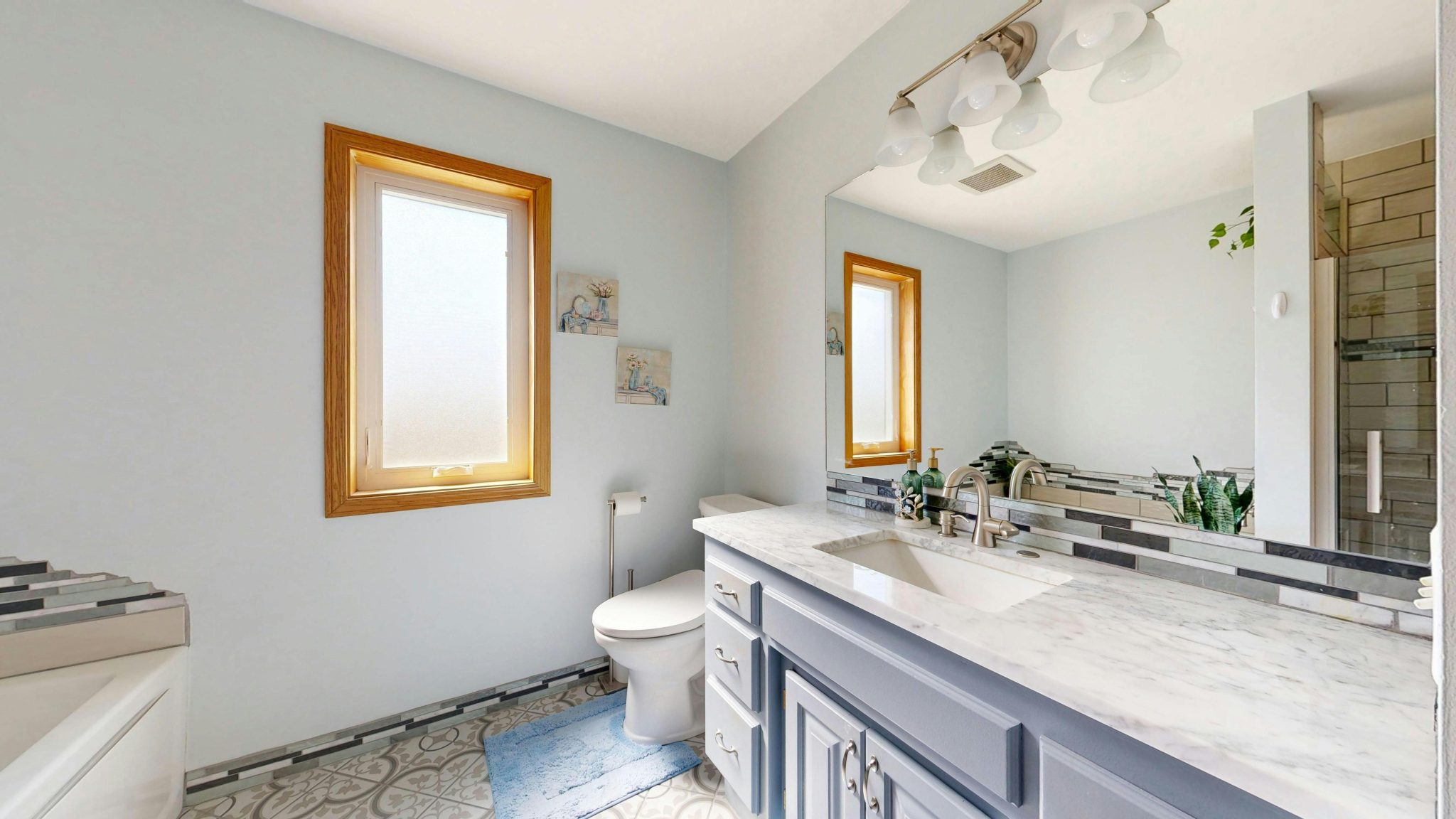
29. Light Blue Bathroom with a Marble Countertop and Patterned Floor
- Main Furniture (Vanity): $600 – $1,500
- Lighting (Not shown, estimate): $200 – $500
- Decor/Accessories (Faucet, Hardware): $200 – $400
- Wall/Floor Treatment (Paint, Floor Tile, Mosaic): $800 – $2,500
- Countertop (Marble remnant): $400 – $900
- TOTAL: $2,200 – $5,800
- Budget Alternative: For a small vanity, ask a stone yard for an off-cut or remnant piece of marble to save 50% or more on the countertop. Use paint for the ‘accent wall’ feel instead of expensive tile.
|
📋 Copy HEX 🔗 Share |
🔧 How-To Brief
This bathroom feels so fresh and put-together because of its smart use of repetition and scale. The light blue color of the walls is repeated on the vanity, creating a unified and calming effect. The gray from the floor tiles is picked up in the mosaic accent band and the veining of the marble countertop. This connects the top and bottom of the room. The floor tile’s pattern is large scale, which prevents the small room from feeling too busy, while the mosaic tile is tiny, providing a delicate, jewelry-like detail.
30. Elegant Green Vanity with Arched Gold Mirrors and Marble Accents
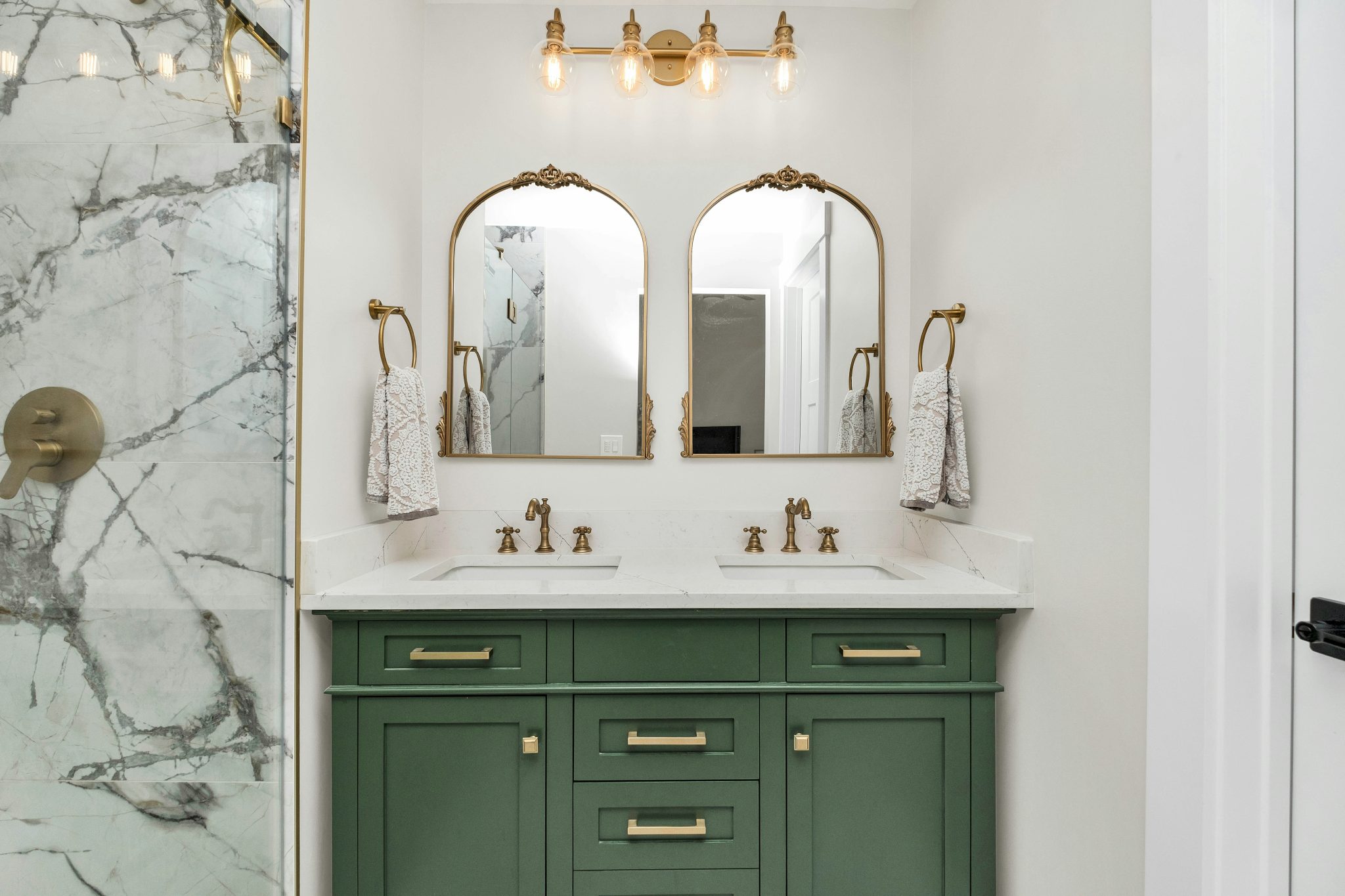
The bold, forest green vanity is the heart and soul of this design. It’s a confident color choice that injects life and personality into the bathroom, preventing the classic combination of marble and brass from feeling too predictable. It serves as a rich, colorful anchor for the entire space. Everything else—the gold mirrors, the white marble, the simple floor—is chosen to support and celebrate the vanity. Take it away, and the room loses its central story. This looks offers a more colorful take on the vanity in Idea #4.
🧹 Maintenance Reality
When using arched mirrors, the top of the arch should ideally align with other horizontal lines in the room, like the top of the window frame or the top of the shower door. This creates a subtle sense of order and cohesion. If there are no other clear horizontal lines, aim for the top of the mirror to be around 75-80 inches from the floor. This ensures they are at a comfortable height for most users and feel balanced in the space.
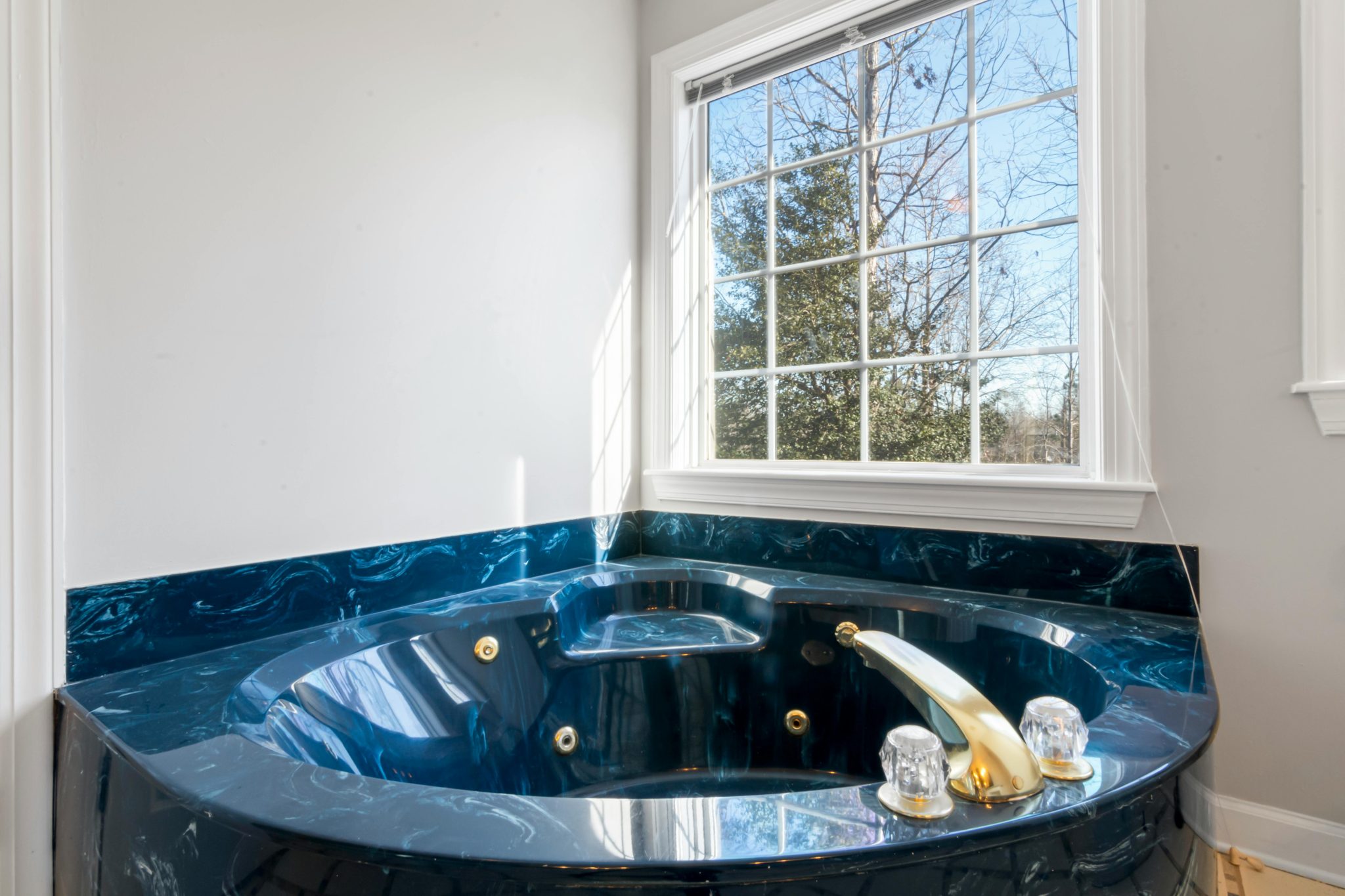
31. Deep Blue Corner Jacuzzi Tub with Gold-Toned Fixtures
While sleek, white freestanding tubs have dominated Pinterest for years, we’re seeing a quiet resurgence of interest in more colorful, maximalist styles from the 80s and 90s. This deep blue tub is a perfect example. In 2026, designers are looking for ways to bring bold color and personality back into the bathroom. This isn’t about replicating the past, but about reinterpreting it with modern finishes, like pairing this throwback tub style with contemporary light gray walls for a fresh, unexpected look.
|
📋 Copy HEX 🔗 Share |
⚠️ Real Talk
A large, corner jacuzzi tub takes up a significant amount of floor space, typically a 5’x5′ footprint, making it unsuitable for smaller bathrooms. Also, be aware of the maintenance. The jets and internal plumbing need to be cleaned regularly with a specialized jacuzzi cleaner to prevent bacteria buildup. The acrylic finish, especially in a dark color, can be prone to showing scratches. This is a commitment to a very specific, high-maintenance style.
Your New Favorite Room Awaits
Feeling inspired? The perfect bathroom is more than just a functional space—it’s your personal retreat. The journey from a ‘before’ photo to an ‘after’ you love starts with a single idea that feels right. Pick the one that speaks to you, start your planning, and trust your taste. You’ve got this.
Happy remodeling! 📌 Pin this guide so you can find it again when you’re ready to start.
Photo credits: Max Vakhtbovych, Lisa Anna, Quang Nguyen Vinh, hi room, Curtis Adams, dumitru B, Deeana Arts 🇵🇷, Mateusz Pielech, Peter Vang, Misbaa eri, Pușcaș Adryan, Arshad Khan, Alexander F Ungerer / Pexels, Zac Gudakov / Unsplash
Photo credits: Max Vakhtbovych, Lisa Anna, Quang Nguyen Vinh, hi room, Curtis Adams, dumitru B, Deeana Arts 🇵🇷, Mateusz Pielech, Peter Vang, Misbaa eri, Pușcaș Adryan, Arshad Khan, Alexander F Ungerer / Pexels, Zac Gudakov / Unsplash