You know that feeling? You’ve scrolled through a thousand “Small Room Makeover Ideas 2026” pins, and your saves folder is overflowing, but you still have no idea where to actually start. It’s easy to get lost in a sea of pretty pictures. After filtering through hundreds of options from affordable finds at IKEA and Target to unique pieces on Facebook Marketplace, we’ve narrowed it down to the 29 ideas that truly work for compact spaces. Inside, you’ll find inspiration for every style, from modern minimalist to cozy and eclectic. In 2026, the best design is all about smart, multi-functional pieces and clever storage that feels intentional, not cramped. And stay until the end — we break down the most common mistakes that can ruin these looks. 📌 Pin this guide for later — your future self will thank you when it’s time to actually do this.
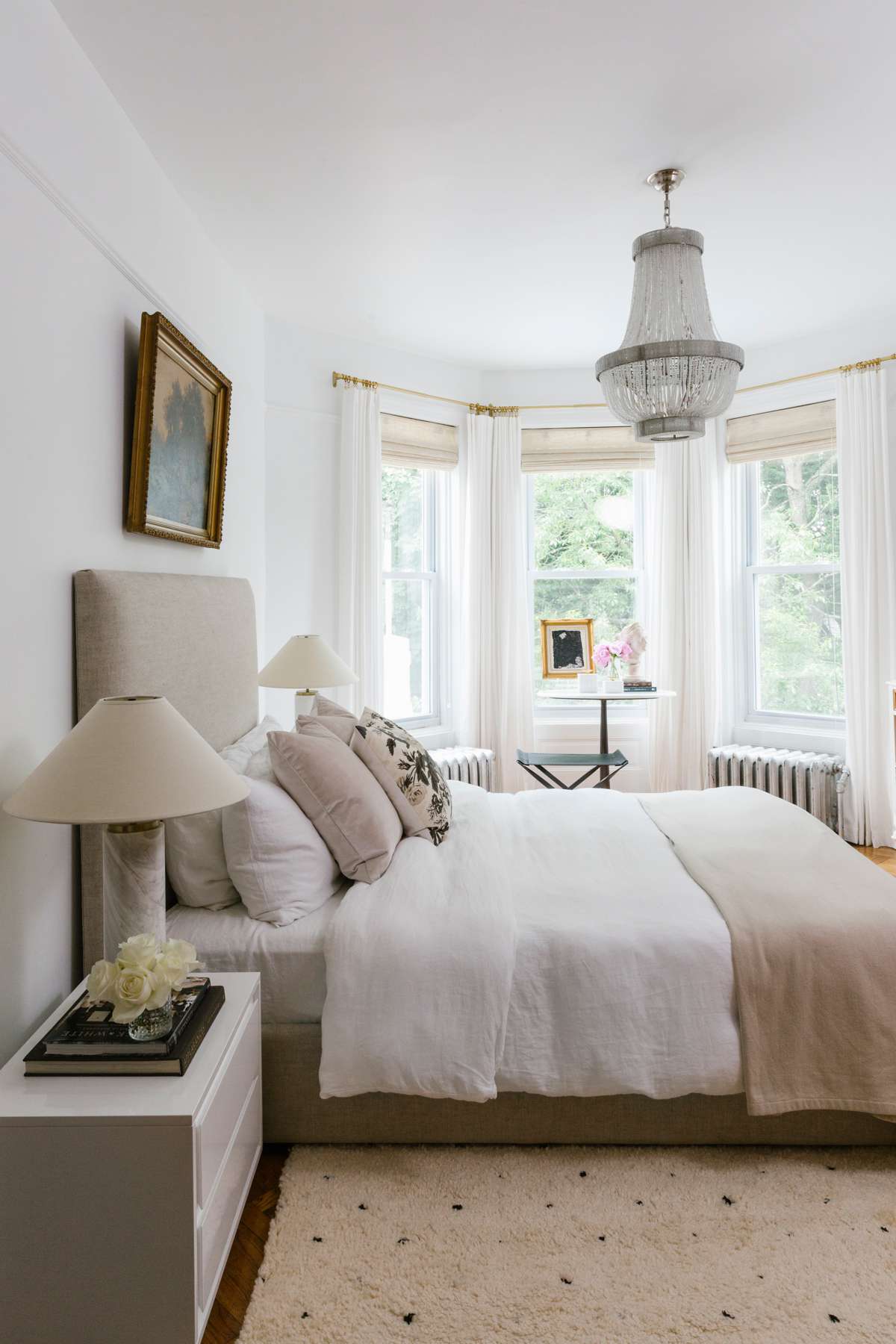
1. Create a Serene Escape with a Bay Window and Ornate Chandelier
Creating a five-star hotel vibe doesn’t require a massive budget, just smart choices. This look is all about layering soft textures and adding one statement piece that does all the heavy lifting. The combination of the plush rug, upholstered headboard, and flowing sheer curtains creates a cocoon of comfort. The final touch? A bit of metallic glam in the chandelier and art frames to catch the light and add a hint of luxury without feeling stuffy or overdone. It’s a classic formula that feels both timeless and totally fresh.
|
📋 Copy HEX 🔗 Share |
📐 Style Math
Total: $2,150 – $4,800
- Main Furniture (Bed, Nightstand): $1,200 – $2,500
- Lighting (Chandelier, Lamps): $400 – $1,000
- Textiles (Rug, Curtains, Bedding): $350 – $800
- Decor (Artwork): $200 – $500
- Budget alternative: Recreate this look for around $1,200 by finding a similar chandelier on Facebook Marketplace, using IKEA’s linen-blend curtains, and thrifting gold frames for your own art prints.
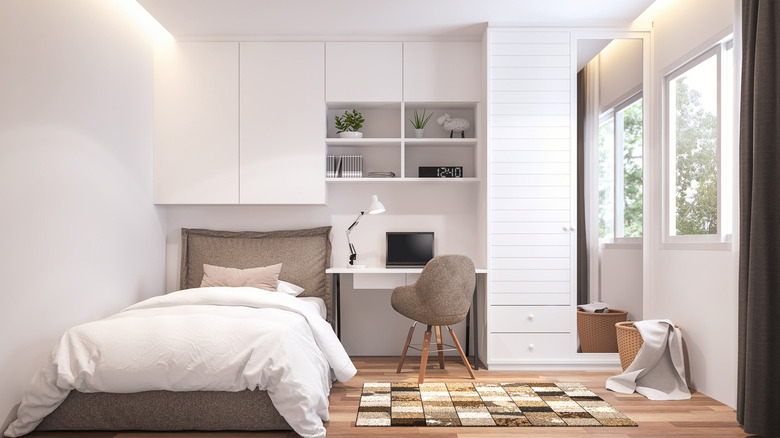
2. Integrate a Workspace with Modern White and Wood Cabinetry
This setup is perfect for rooms ranging from 90 to 150 square feet. The key is verticality. By taking the storage and desk all the way up the wall, you free up valuable floor space, making the room feel larger than it is. This concept works best with ceiling heights of at least 8 feet to avoid feeling cramped. For a smaller footprint, under 90 square feet, consider a floating desk instead of a full cabinet unit to maintain a sense of openness. This is a brilliant solution for studio apartments or a teen’s bedroom where one room has to do it all.
|
📋 Copy HEX 🔗 Share |
📏 Scale Guide
Integrating a full wall of cabinetry is a fantastic storage solution, but it’s not a simple weekend project. This level of built-in requires precise measurements and professional installation to look seamless, which adds to the cost and complexity. Also, consider your future needs. While the integrated desk is perfect for right now, it’s a permanent fixture. If you ever want to rearrange the room completely, you’ll be working around this large, immovable element. It’s a commitment!
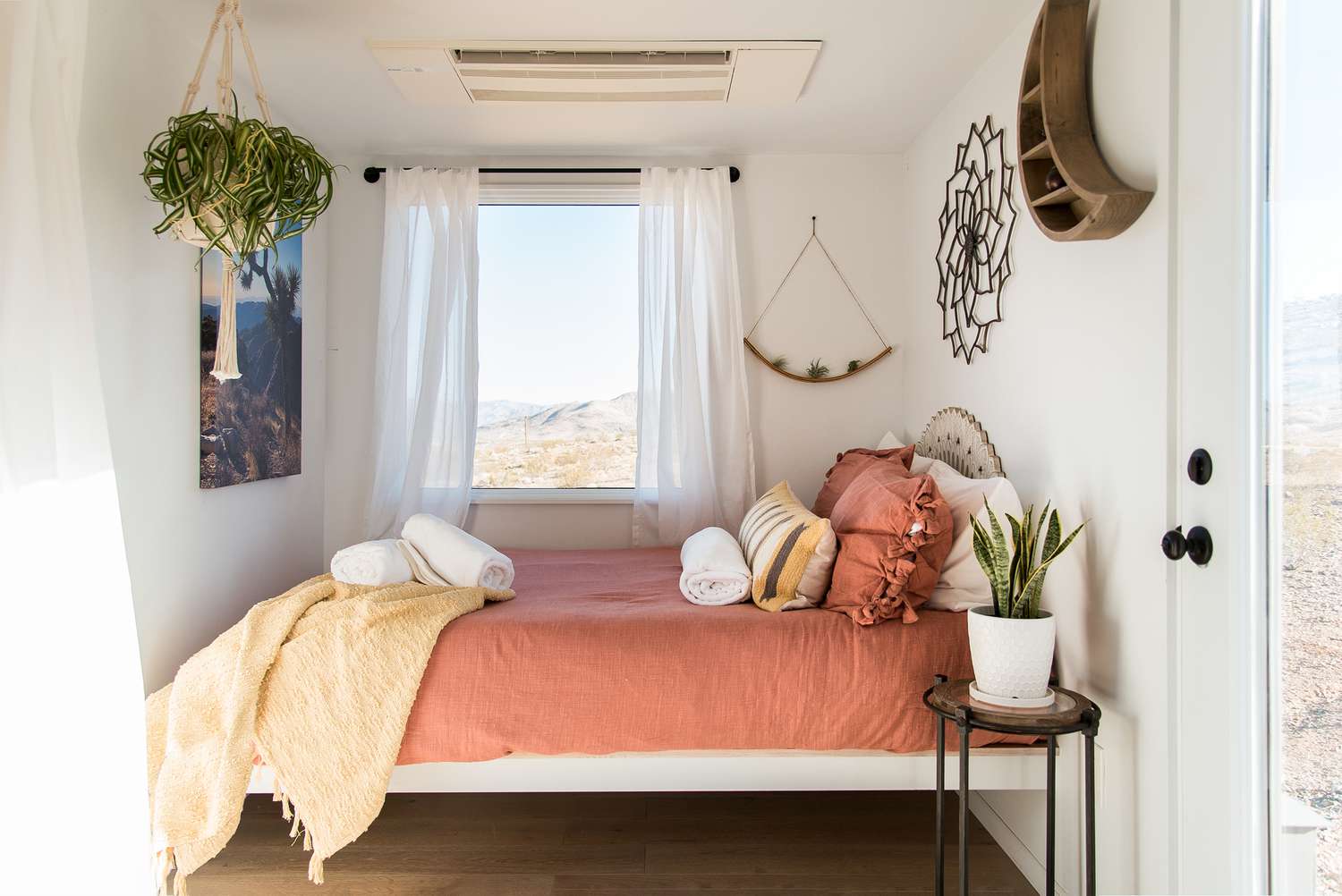
3. Embrace Desert Vibes with Apricot Bedding and Natural Accents
The magic here is in the color ratio. Think of it as 60% neutral base (the white walls and sheer curtains), 30% primary accent color (that gorgeous apricot bedding), and 10% secondary accents (the yellow throw, dark wood, and pops of green). This formula keeps the room feeling calm and airy, not overwhelmed by color. You could easily swap the apricot for a dusty rose or sage green and achieve the same balanced, nature-inspired feel. The black geometric art provides a crucial graphic counterpoint to all the softness.
|
📋 Copy HEX 🔗 Share |
🎯 What Makes It Work
You don’t need a high-end budget to get this breezy, sun-baked look. Start with a basic white duvet cover from Target or Walmart ($30-$50). The key is the color—find an apricot or terracotta-colored sheet set and a yellow throw from a store like HomeGoods or even Amazon for under $60 total. For decor, scour thrift stores for wooden frames and print your own nature-inspired art. The macrame plant hanger is a classic DIY project you can make for less than $10 with some cord from a craft store.
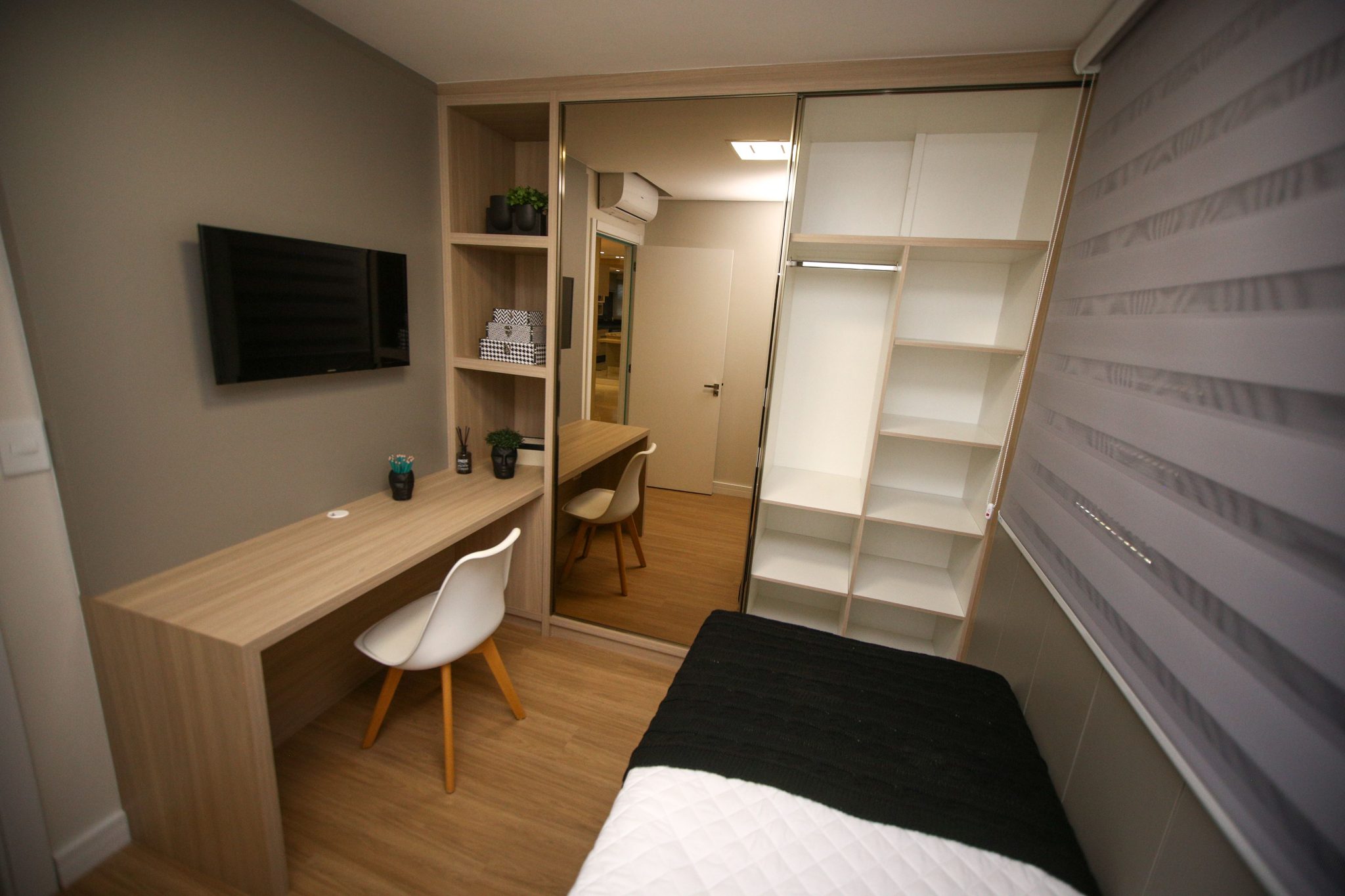
4. Maximize a Compact Room with a Wall-Mounted Desk and Mirrored Closets
The single most impactful element in this room is the mirrored closet doors. In a small space, large mirrors are a classic trick for a reason: they bounce light around and create a powerful illusion of depth, effectively doubling the visual size of the room. Here, they do double duty by also concealing storage, which keeps the space from feeling cluttered. If you removed the mirrors, the room would instantly feel smaller, darker, and far more cramped. It’s the lynchpin that makes the entire functional layout work. Compare this to the layout in Idea #23, which uses a different strategy for a similar challenge.
|
📋 Copy HEX 🔗 Share |
⚠️ Real Talk
When installing a long, wall-mounted desk like this, mount it slightly higher than standard desk height—around 30-31 inches from the floor instead of the usual 29. This subtle change does two things: it creates a more open, airy feeling underneath, making the floor space seem larger, and it allows for a wider variety of chair styles, including slightly taller drafting-style chairs, which can be more ergonomic for long periods of work. Ensure it’s supported by brackets drilled into studs every 16-24 inches to prevent sagging.
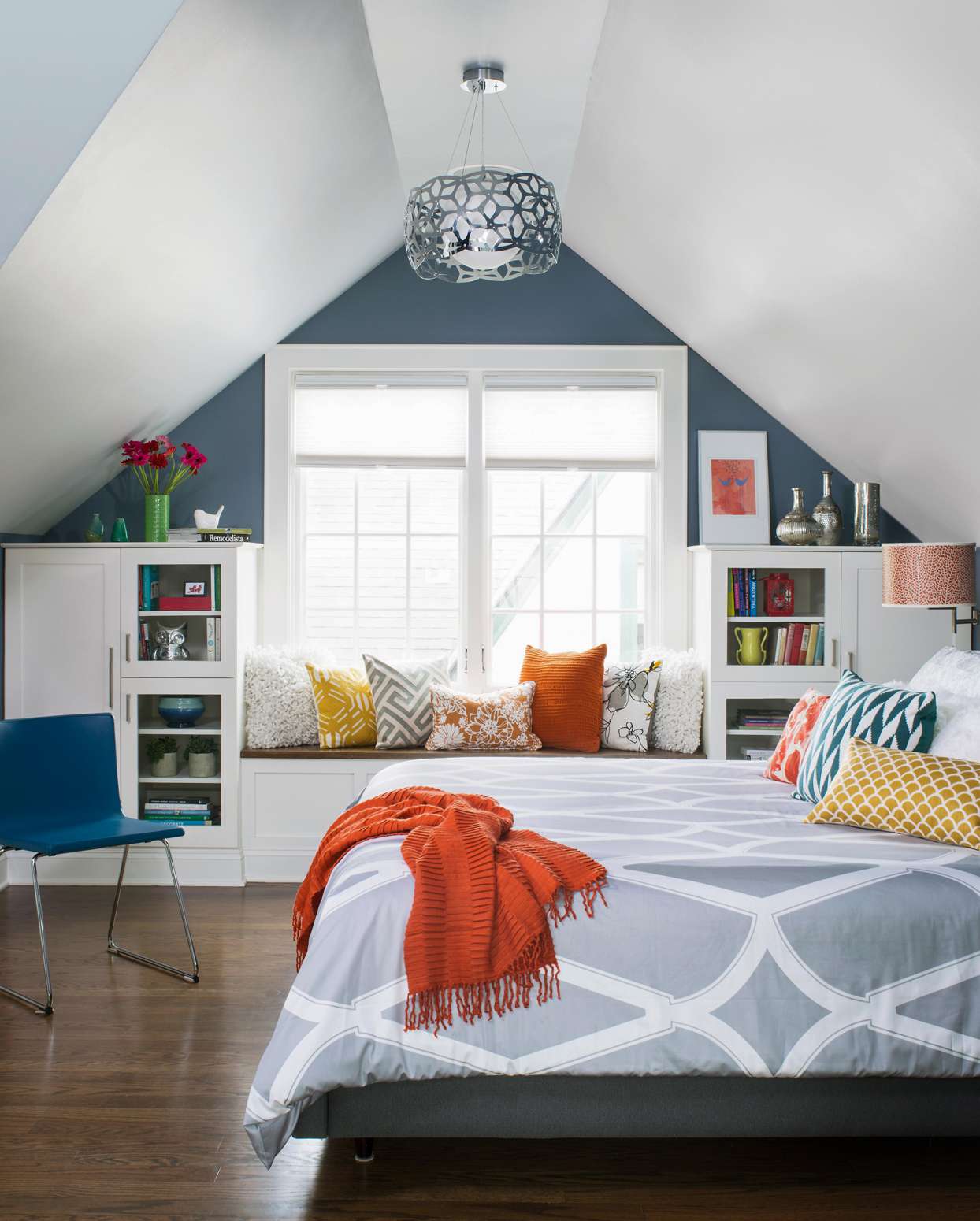
5. Carve Out a Cozy Nook with a Deep Blue Accent Wall in an Attic
This attic room masterfully uses color and architecture to its advantage. The sloped ceilings could feel awkward, but by painting the back wall a deep, enveloping blue, the designer created a deliberate focal point and a sense of depth. This turns the window into a destination—a cozy seat to read in. The vibrant pops of orange and yellow against the blue are a perfect example of using complementary colors to create energy and visual excitement. It feels playful and intentional, not like a forgotten space. For another take on a colorful accent wall, check out Idea #10.
|
📋 Copy HEX 🔗 Share |
🧹 Maintenance Reality
Want to recreate that charming window seat? Here’s a quick guide.
- Time: 4-6 hours. Cost: $150-$300.
- Measure your nook carefully. Purchase two pre-assembled, unfinished stock cabinets from a home improvement store that fit the width.
- Secure the cabinets to the wall by drilling through the back panel into wall studs.
- Cut a piece of 3/4-inch plywood or MDF to an inch wider and deeper than the top of the cabinets. Sand the edges smooth.
- Paint the cabinets and top piece to match your trim. Once dry, secure the top with screws from inside the cabinets.
- Order a custom-cut piece of 3-inch foam and cover it with your fabric of choice for a no-sew cushion.
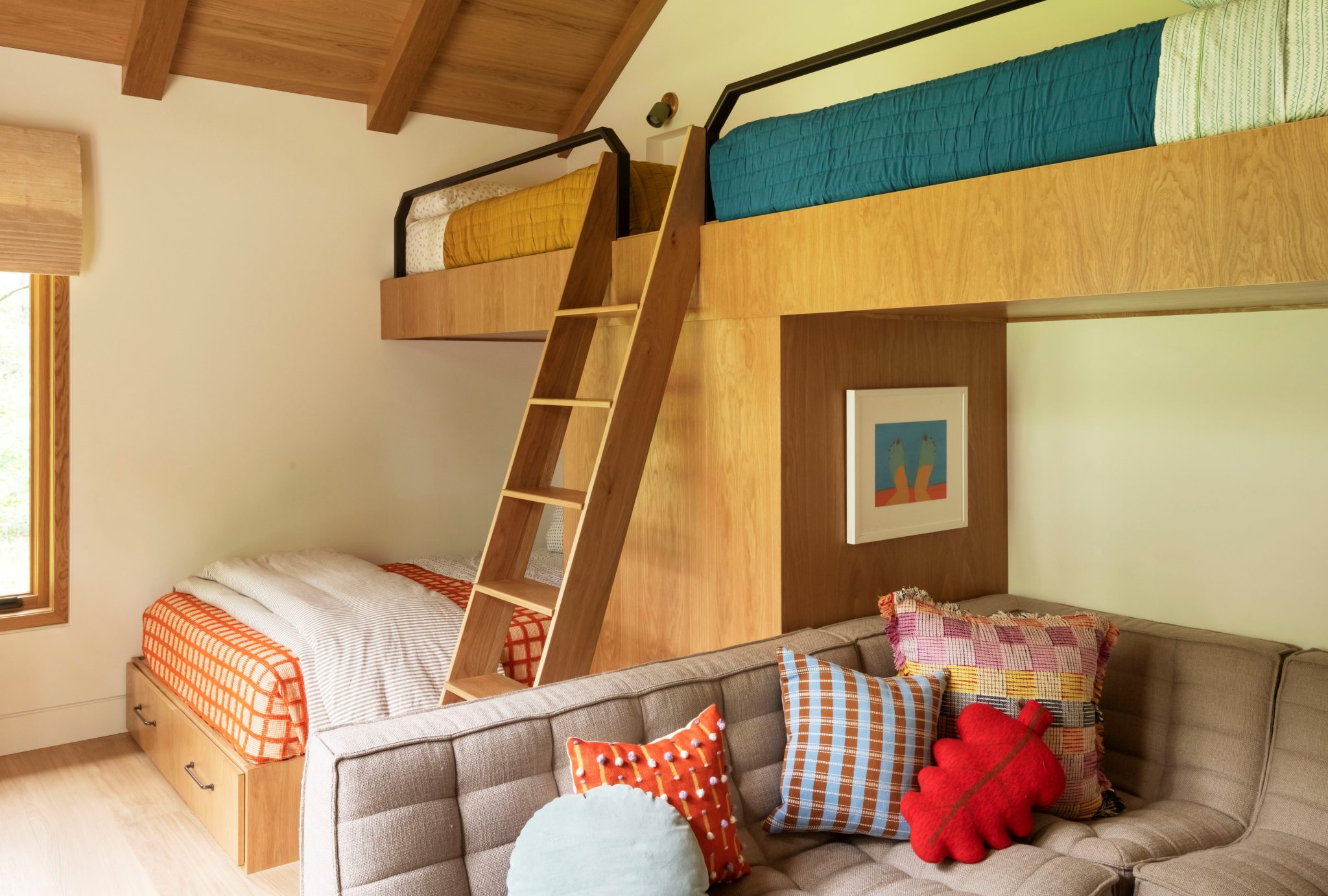
6. Stack Modern Bunk Beds for a Playful, Functional Layout
Forget the clunky bunk beds of the past. This style of sleek, architectural bunk is trending right now because it’s incredibly space-efficient without sacrificing style. With the rise of multi-generational living and families staying in smaller urban homes for longer, solutions that are both kid-friendly and design-forward are in high demand. The warm wood and clean lines have a Scandinavian feel that appeals to adult aesthetics, while the fun, multi-level layout is pure kid heaven. It’s a look with staying power because it solves a real, practical problem beautifully.
|
📋 Copy HEX 🔗 Share |
💸 Get This Look For Less
A floating or wall-mounted bunk bed looks incredibly cool and airy, but safety is non-negotiable. This isn’t the place to cut corners. It must be anchored directly into wall studs—multiple studs—with heavy-duty lag bolts. If you have metal studs or aren’t 100% confident in your abilities, hire a professional. Also, think about the long-term: while tucking a sofa underneath is a clever use of space (similar to the daybed in Idea #9), it might not be practical as kids grow into teens who want more traditional hangout space.
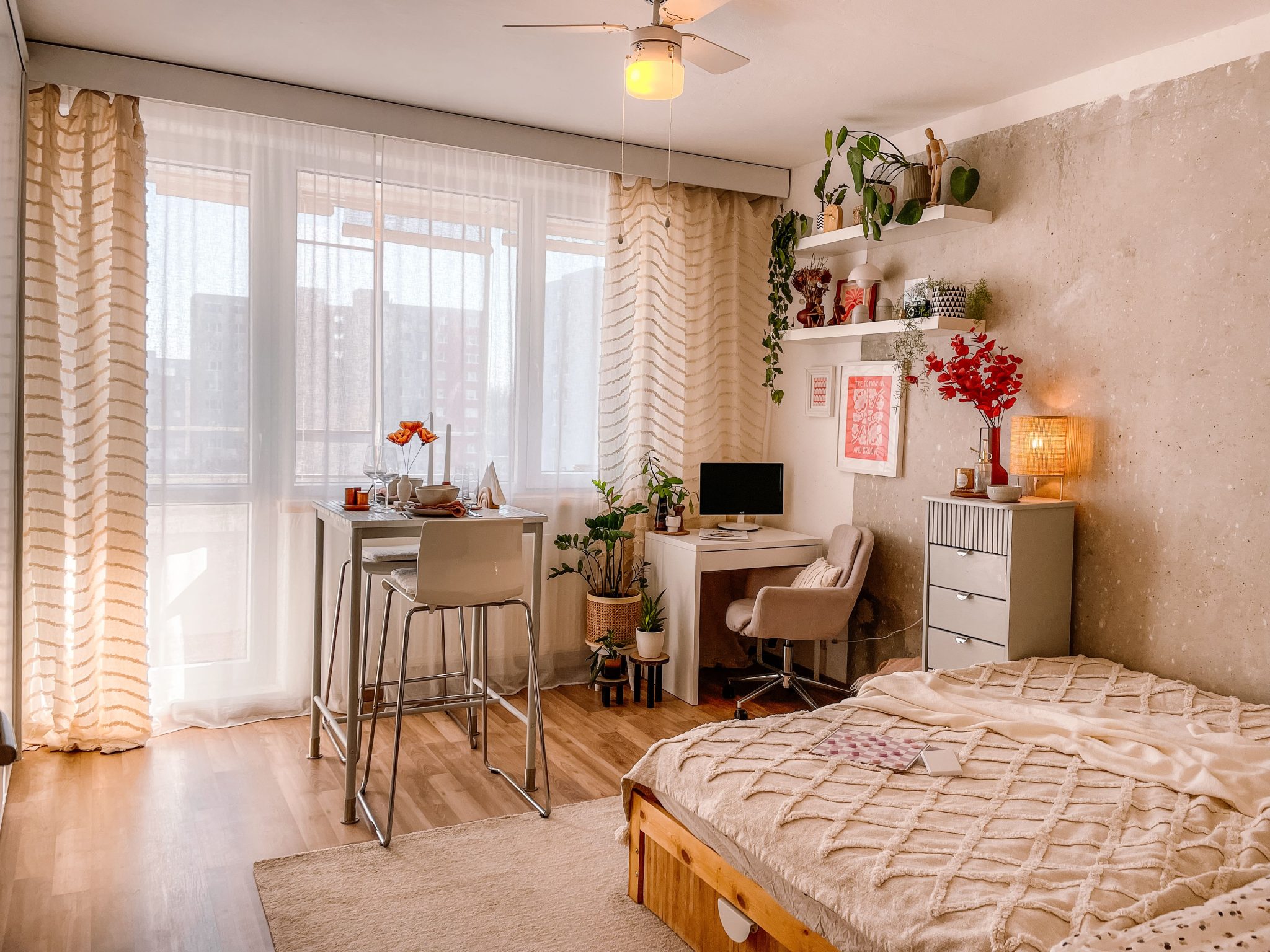
7. Unify a Multi-Zone Studio with Textured Walls and Natural Tones
The single element holding this entire multi-functional room together is the textured wall finish. It provides a consistent, unifying backdrop for the sleeping, working, and dining zones. Without this cohesive texture, the different areas could feel disjointed and chaotic. The subtle, plaster-like effect adds warmth and a sense of permanence that plain paint just can’t match. It elevates the entire space, making a collection of functional items feel like a single, thoughtfully designed home. It proves that wall treatment is just as important as furniture.
|
📋 Copy HEX 🔗 Share |
⭐ The One Thing
This all-in-one room concept is ideal for a studio apartment or a small rectangular room between 200 and 350 square feet. The key to success is creating distinct ‘zones’ without using physical walls. This room requires a clear long wall to accommodate the bed and desk side-by-side. To pull this off, you need a minimum width of about 10 feet to allow for circulation. Any smaller and you’ll want to consider a loft bed to free up the floor space for the living and working areas entirely.
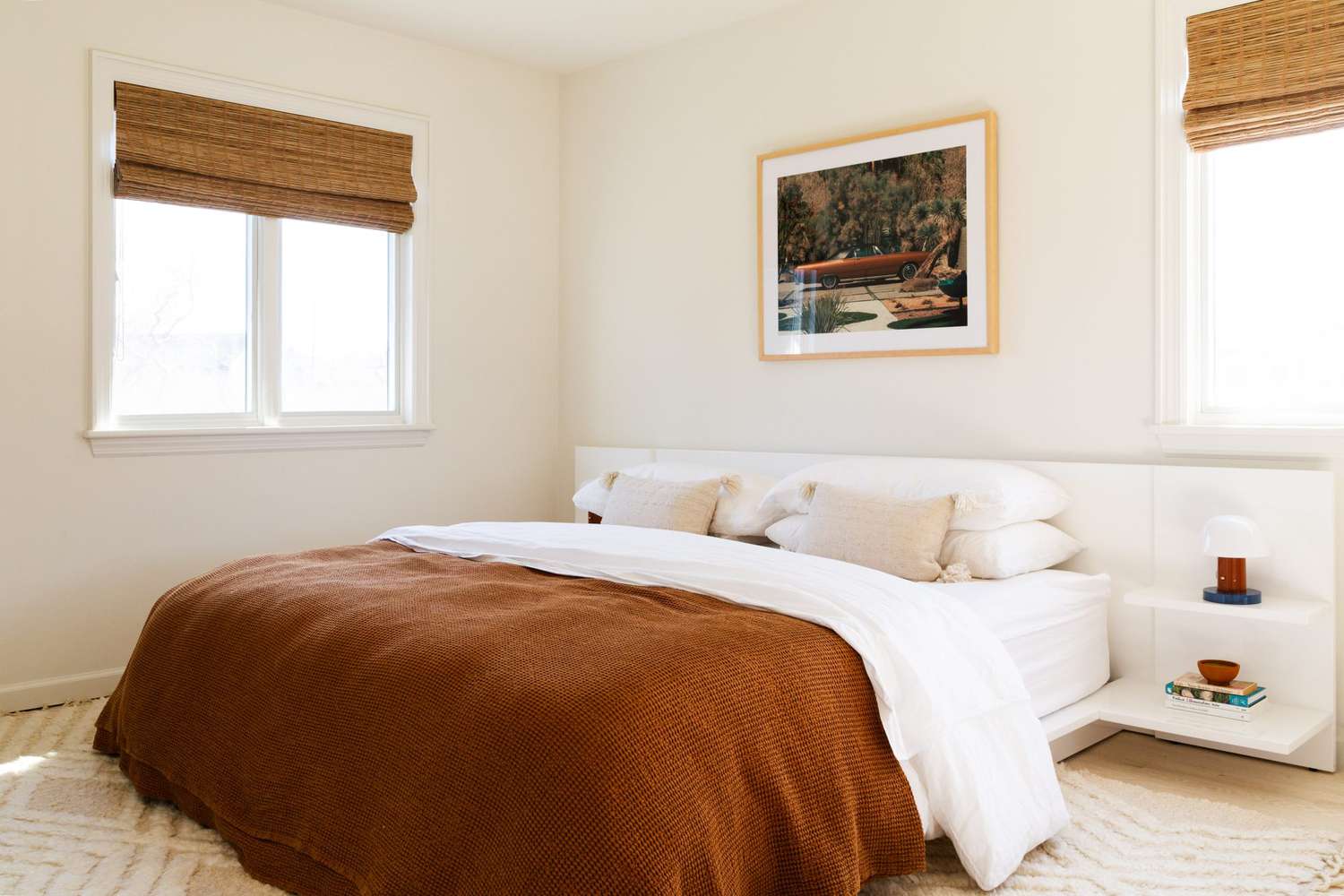
8. Embrace Warmth with a Rust-Colored Blanket and an Integrated Bedside Shelf
This room is a masterclass in warm minimalism. The formula is simple: 70% warm neutrals (the cream walls and white bedding), 20% natural wood tones (the woven blinds), and 10% a single, bold accent color (that rich rust orange). The knitted texture of the blanket adds crucial dimension and keeps the minimal space from feeling flat. You could easily swap the rust for a deep olive green or navy blue to achieve a different but equally sophisticated mood. The key is the saturation and texture of that 10% accent. For a similar palette, see Idea #14.
|
📋 Copy HEX 🔗 Share |
🔧 How-To Brief
Woven wood blinds bring incredible texture and warmth to a room, but they can be dust magnets. To keep them looking fresh, you’ll need to dust them weekly with a feather duster or the brush attachment of your vacuum. For a deeper clean a few times a year, wipe each slat with a microfiber cloth slightly dampened with water. Be careful not to oversaturate the wood, as it can cause warping or discoloration over time. If that sounds like too much work, you can get a similar look with faux-wood blinds, which are more durable and easier to wipe clean.
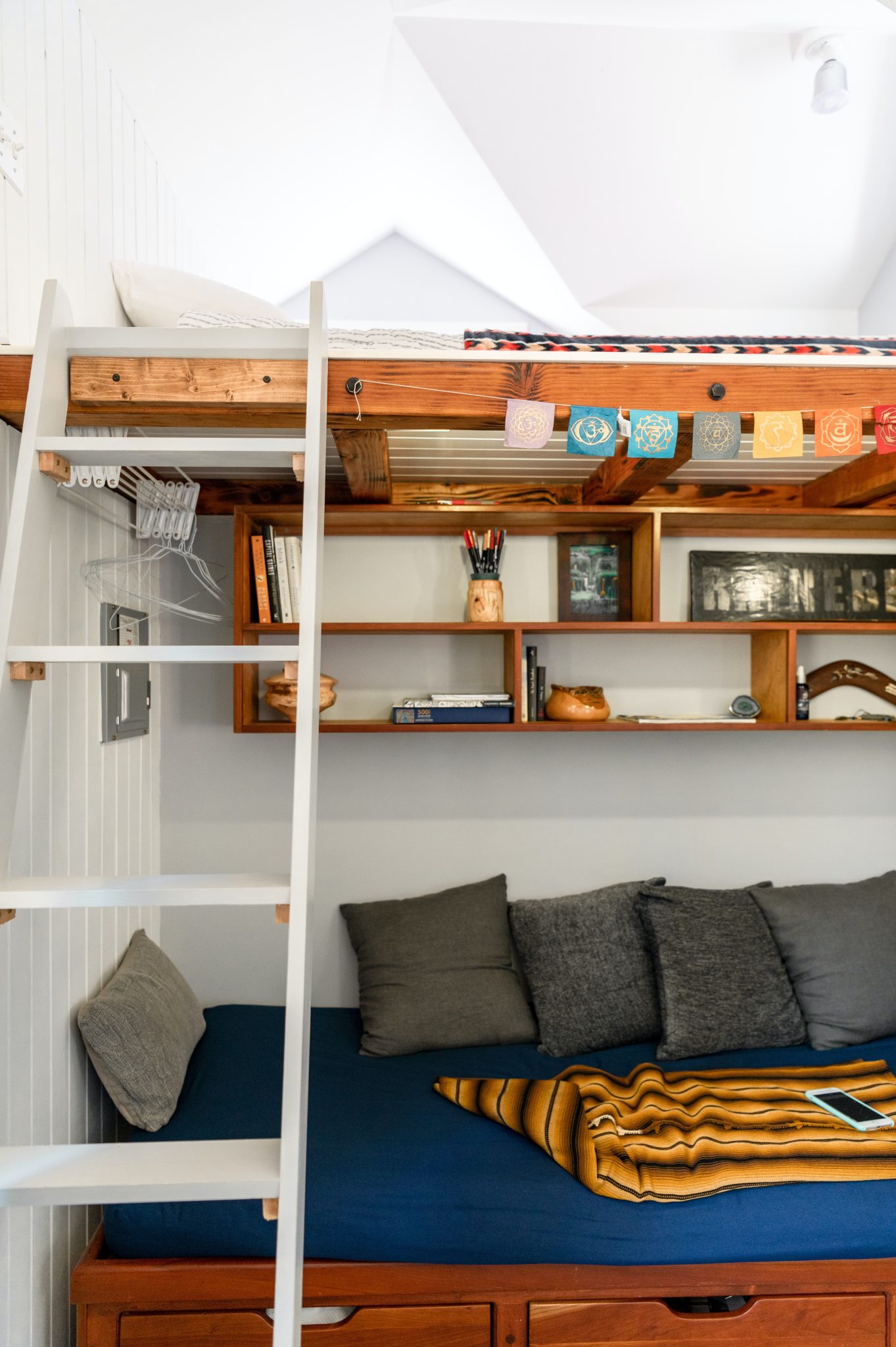
9. Build a Cozy Loft Nook with Custom Wooden Storage
When designing a loft space like this, lighting is critical. Instead of relying on a single overhead light, plan for task lighting in each zone. Install a flexible, wall-mounted reading light in the upper loft bunk. Underneath, use an LED light strip tucked behind the front edge of the loft structure to illuminate the daybed area. This creates a cozy, inviting glow without harsh shadows and makes both spaces far more functional for reading or relaxing. It’s a small detail that makes a custom-built piece feel truly high-end. This is a more vertical take on the bunk bed concept in Idea #6.
|
📋 Copy HEX 🔗 Share |
💰 Budget Breakdown
A full custom built-in like this can cost thousands. To get this look for less, use IKEA’s IVAR system. You can configure the untreated pine shelving units to fit your space, creating the ‘built-in’ look around a simple loft bed frame. Below, use a simple daybed frame or even just a mattress on the floor. Paint the IVAR system to match your walls for a seamless effect. The total cost could be as low as $600-$900, giving you the same functionality and a similar aesthetic for a fraction of the price of custom carpentry.
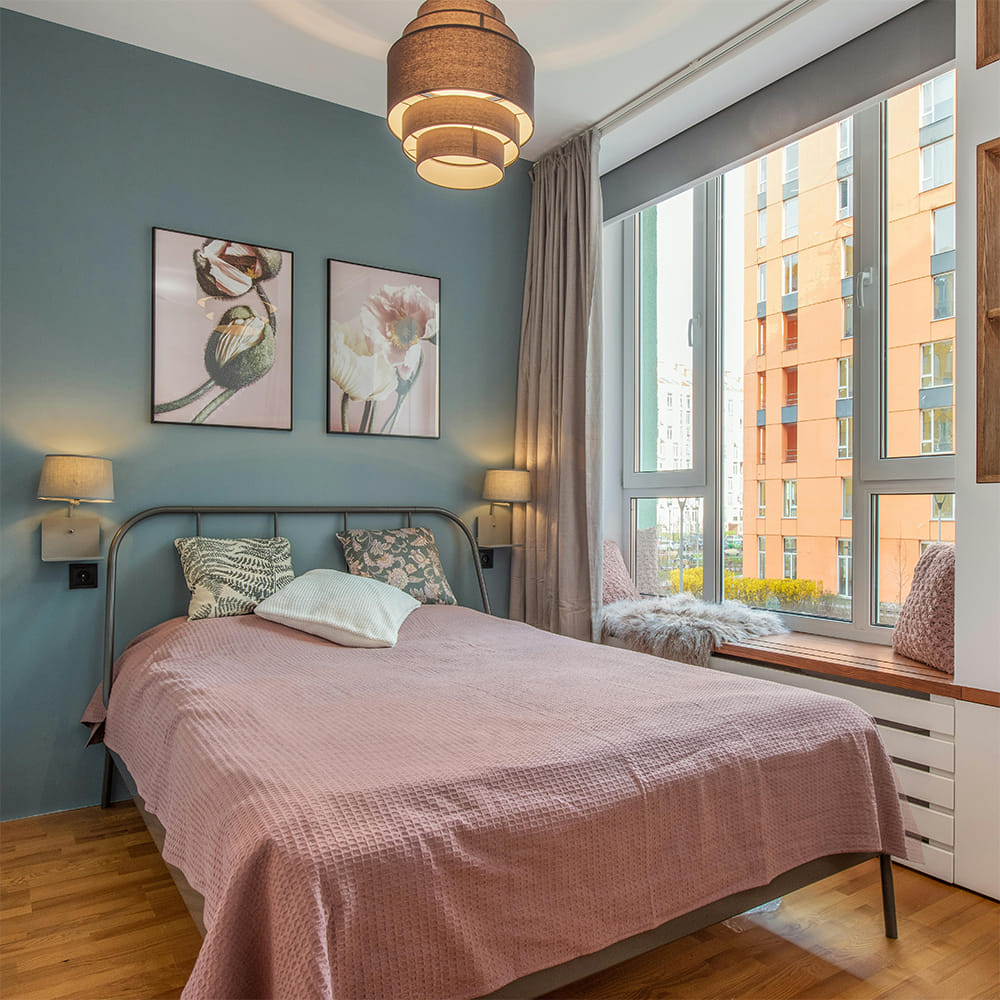
10. Soften a Room with a Teal Accent Wall and a Built-in Window Seat
This room successfully balances color, texture, and function. The muted teal accent wall isn’t just for color; it creates a visual anchor for the bed, making the room feel grounded. The softness is carried through in the pink waffle-knit bedspread and the sheer curtains, preventing the teal from feeling too cold. Finally, the window seat is a brilliant two-for-one: it provides extra seating and hidden storage, maximizing every square inch of a small footprint. The repetition of natural wood tones in the seat and light fixture ties it all together.
|
📋 Copy HEX 🔗 Share |
💡 Designer Tip
Before you commit to a built-in window seat, check these items off your list:
- Measure the window height: Is the bottom of your window low enough to create a seat at a comfortable height (around 18 inches)? If not, a built-in might look awkward.
- Check for obstructions: Are there any heating vents or electrical outlets on the wall underneath the window? These will need to be moved, adding cost and complexity.
- Assess your light: A window seat can slightly reduce the amount of light entering the room. Make sure you have enough natural light to spare.
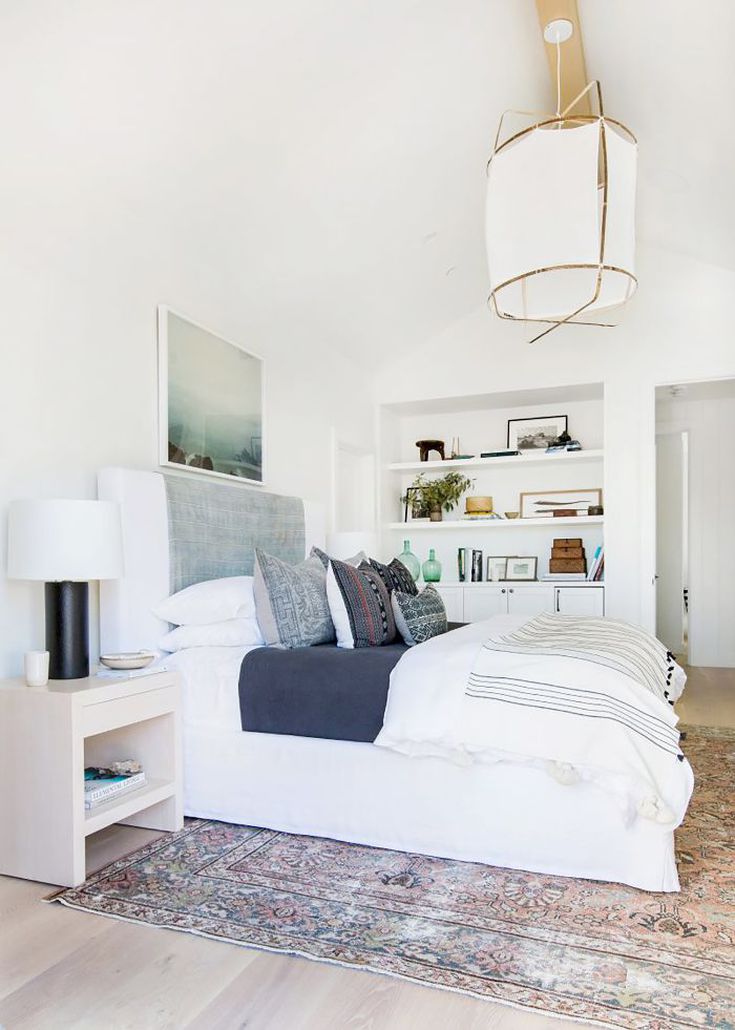
11. Create an Airy Retreat with Recessed Shelving and a Vintage Rug
The element that truly elevates this bedroom is the recessed wall shelving. It’s a game-changer in a small room, especially one with sloped ceilings like this. By building the storage *into* the wall instead of placing a bulky bookcase *against* it, the design preserves precious floor space and maintains a clean, uncluttered sightline. It adds immense character and a custom, high-end feel while serving a very practical purpose. Without it, the room would be just another small white bedroom. Compare this to the light and airy feel of the vaulted ceiling in Idea #28.
|
📋 Copy HEX 🔗 Share |
🔥 Trending Context
While recessed shelving is a stunning and space-saving feature, it’s not a simple DIY project. Cutting into your walls requires an understanding of what’s behind them—namely, plumbing, electrical wiring, and structural supports. Unless you’re very experienced with home renovation, this is a job for a professional carpenter or contractor. It can be a dusty, disruptive process, and the cost will be significantly higher than simply buying a freestanding bookshelf. It’s a fantastic upgrade, but be prepared for the investment in time and money.
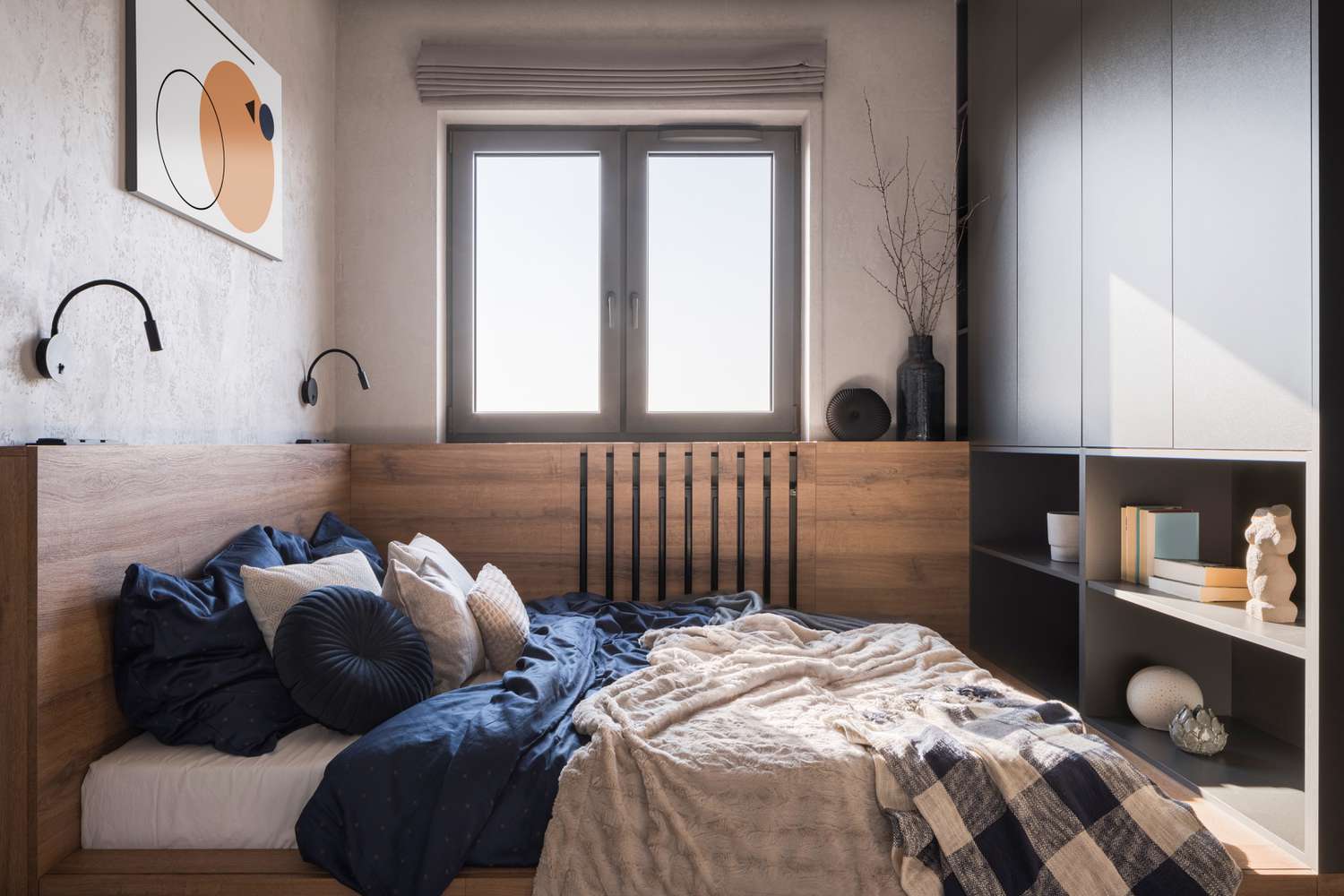
12. Mix Warm Wood and Cool Grays for a Modern, Serene Bedroom
The genius of this room lies in its mastery of temperature mixing. The formula is approximately 50% cool tones (the textured light grey wall, dark grey built-ins, and navy bedding) and 50% warm tones (the light wood platform bed and cream textiles). This balance is what creates the serene yet cozy feeling. The dark grey shelving provides necessary depth and contrast, while the wood brings in a natural, organic element that keeps the greys from feeling sterile. It’s a sophisticated palette that feels both modern and timeless.
|
📋 Copy HEX 🔗 Share |
✅ Before You Start
Textured wall finishes, like the beautiful light grey one here, add incredible depth but can be tricky to maintain. Unlike a simple painted wall, you can’t just wipe away scuffs and smudges easily without potentially damaging the texture. Cleaning often requires a soft brush or dabbing gently with a damp cloth. Repainting is also more complex. If you have active kids or pets, or if the wall is in a high-traffic area, you might consider a high-quality scrubbable paint in a matte finish to get a similar soft look with much easier maintenance.
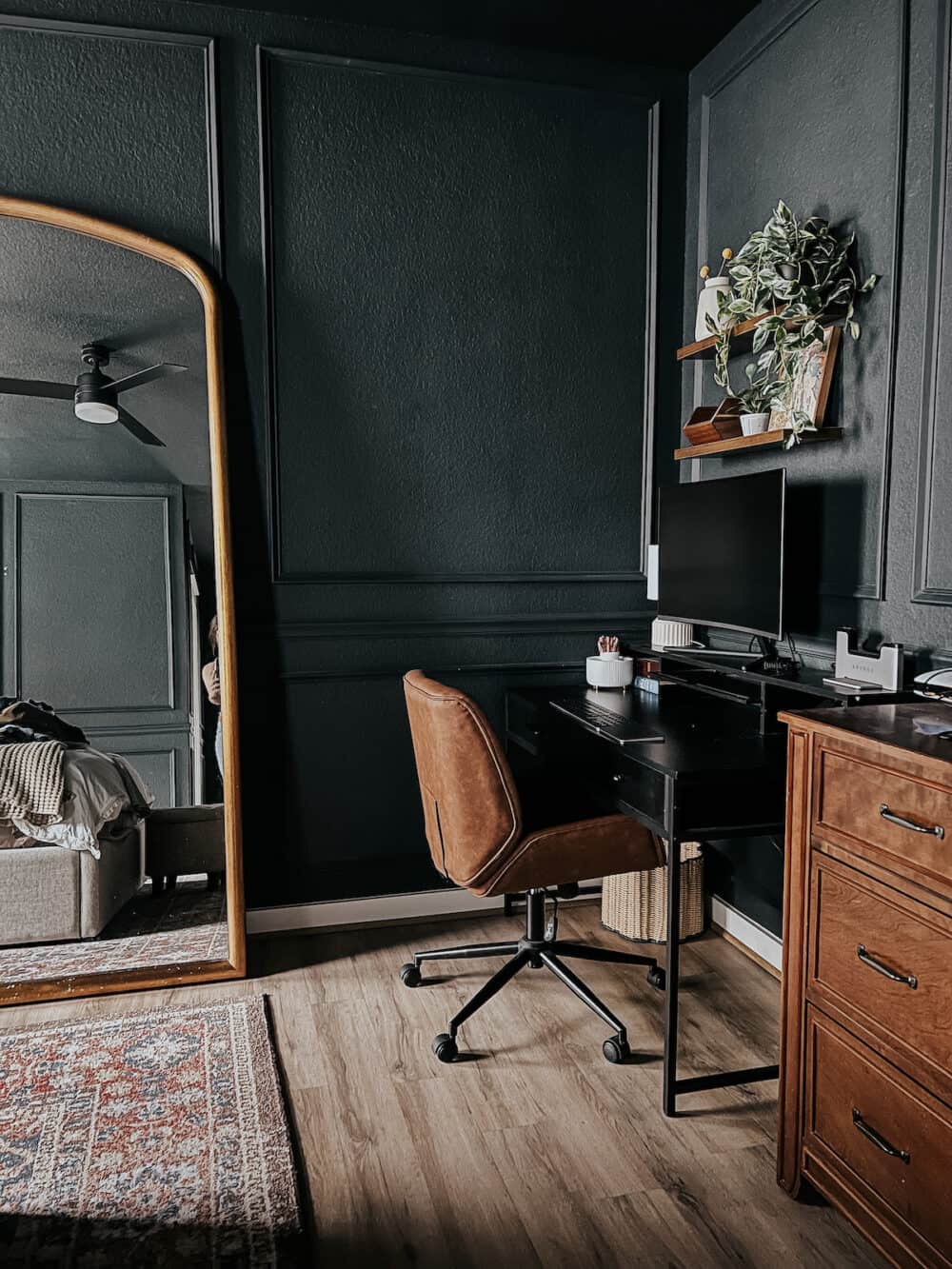
13. Define a Home Office Nook with a Dark Board and Batten Wall
A dark accent wall can give a small corner major personality. Here’s a quick guide to installing a board and batten wall:
- Time: 1-2 days. Cost: $100-$250.
- Start by painting your entire wall the final dark color. It’s much easier than cutting in around the boards later.
- Install the top horizontal and baseboard pieces first, ensuring they’re perfectly level. Use a brad nailer and construction adhesive.
- Measure the distance between your top and bottom boards and cut your vertical battens (1×3 or 1×4 MDF boards work well) to size.
- Calculate your spacing. For a small wall, 16-20 inches apart usually looks best. Mark the placement for each vertical batten.
- Attach the vertical battens using adhesive and a brad nailer.
- Fill all nail holes with wood filler, sand smooth, and then do a final coat of paint on the boards for a seamless look.
|
📋 Copy HEX 🔗 Share |
📐 Style Math
Before you commit to this dark and moody office nook, run through this checklist:
- Check your lighting: Does this corner get any natural light? If not, you’ll need to add dedicated task lighting (like a desk lamp and a picture light over the shelf) to prevent it from feeling like a cave.
- Consider the room’s flow: Will the desk and chair obstruct a major walkway? Make sure you have at least 30 inches of clearance for comfortable movement.
- Test your paint color: Dark colors can look very different depending on the light. Paint a large swatch on the wall and observe it at different times of day before you commit to the entire wall.
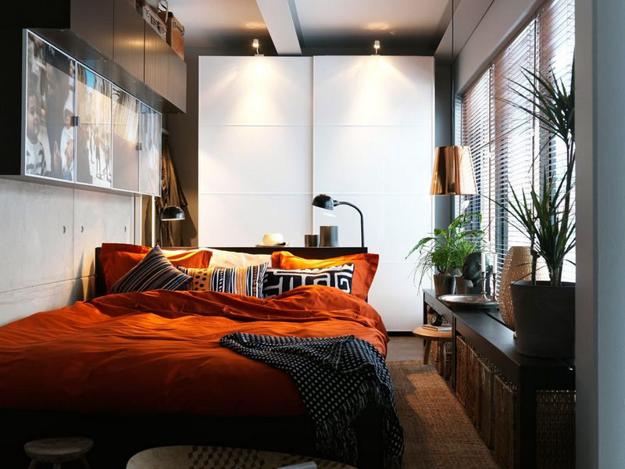
14. Use Terracotta Bedding and Built-in Storage in a Narrow Room
In a narrow bedroom, every inch counts. Building storage *around* the bed is a classic designer move to maximize space. By using dark-colored cabinetry, you create a sense of depth, almost as if the bed is nestled into a cozy alcove. To prevent the dark color from overwhelming the space, make sure the rest of the walls and the ceiling are a bright, light-reflecting white. The recessed lighting under the cabinets is not just a bonus; it’s essential for keeping the sleeping area from feeling dark and cavernous.
|
📋 Copy HEX 🔗 Share |
📏 Scale Guide
This room feels cozy rather than cramped thanks to a clever play on depth and texture. The dark, built-in storage recedes visually, creating a nook that makes the bed feel intentionally placed. The warm terracotta duvet then pulls the eye forward, creating a layered effect. The abundance of plants along the window ledge adds life and another layer of texture, blurring the lines between inside and out. It’s a smart combination of functional design and natural elements that makes the narrow layout feel like a purposeful and inviting choice. The earthy palette is similar to Idea #8, but with a more modern execution.
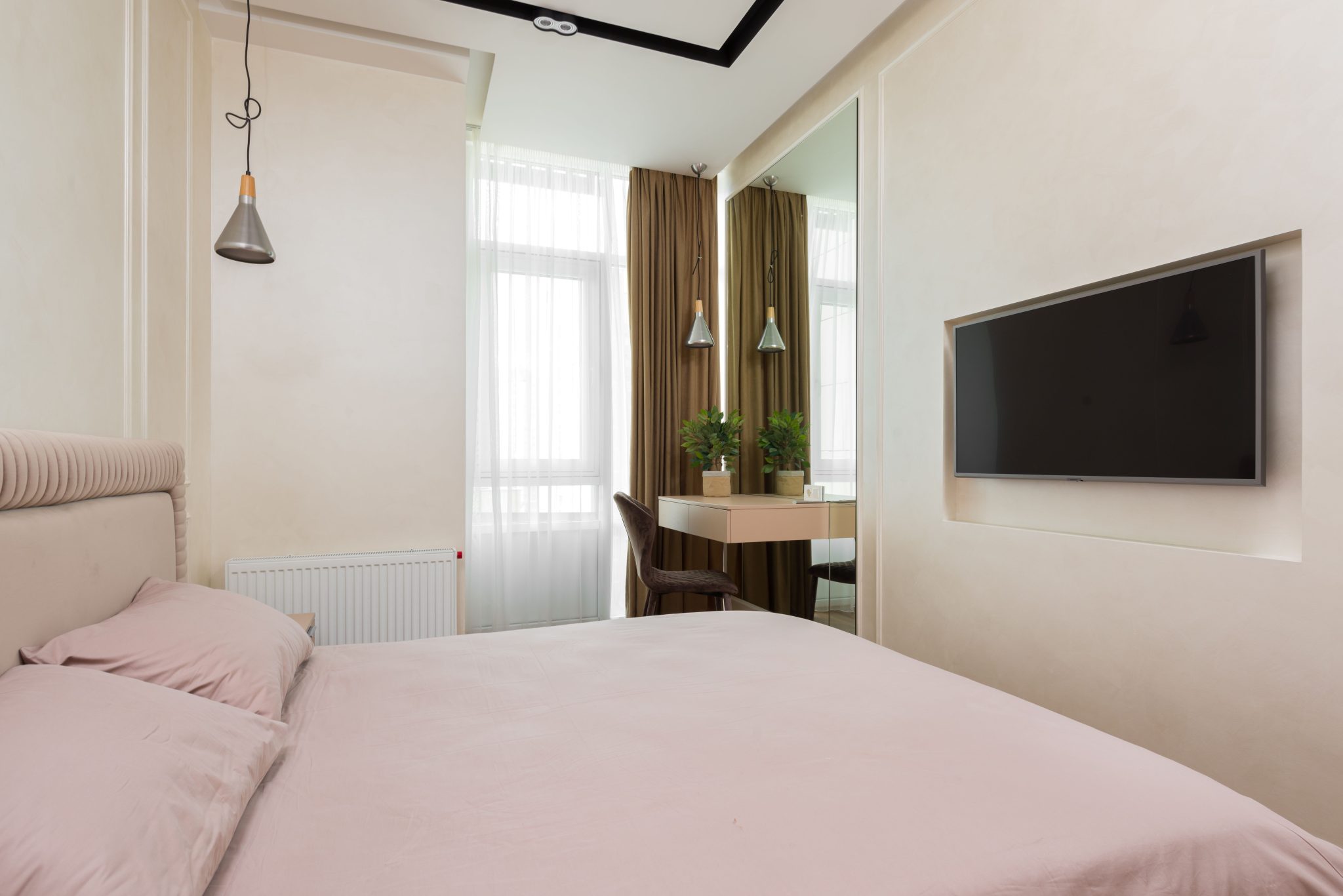
15. Combine a TV and Vanity Area for a Smart, Functional Wall
This dual-purpose TV and vanity wall is a brilliant solution for a bedroom that’s at least 10 feet wide. You need enough space to accommodate the floating vanity (typically 16-20 inches deep) while still leaving a comfortable walkway (a minimum of 36 inches) in front of it. The key is the full-length mirror behind the vanity; it visually doubles the space and bounces light from the pendants, making the entire wall feel like an intentional feature rather than a compromise. This idea is best for master bedrooms or larger guest rooms where a dedicated primping space is a priority.
|
📋 Copy HEX 🔗 Share |
🎯 What Makes It Work
While a floating vanity looks incredibly chic and space-saving, it requires proper installation. The wall it’s mounted on needs to have adequate blocking (horizontal wood supports between the studs) to hold the weight of the vanity, especially if you plan to store heavy items in it. If your wall isn’t already prepared for this, a contractor will need to open the drywall to add support, which increases the cost. Also, pendant lights in front of a mirror can create glare, so be sure to choose bulbs with a warm, diffused light and install a dimmer switch.
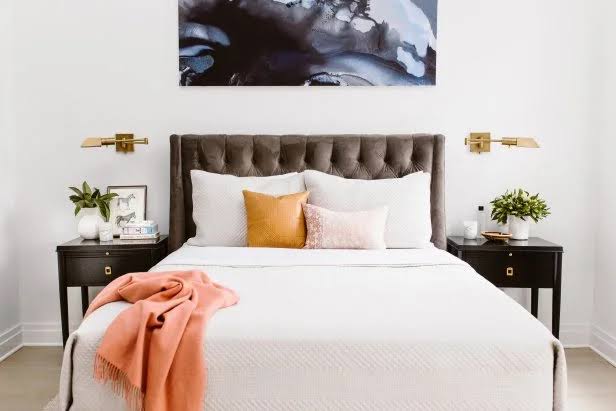
16. Design a Cozy and Compact Bedroom Space
The idea of the “cloffice” (closet office) and hyper-functional bedrooms has been gaining huge traction, and this cozy setup shows why. As more people work from home or live in smaller urban spaces, every square foot must serve a purpose. The trend for 2026 is less about stark minimalism and more about ‘cozy functionalism’. This means layering soft textiles, using warm lighting, and incorporating personal touches to make even the smallest, most hard-working rooms feel like a personal sanctuary, not just a place to sleep. It’s about making home a comfortable, livable haven.
|
📋 Copy HEX 🔗 Share |
⚠️ Real Talk
When you have a small bedroom, think vertically. Instead of a wide dresser, opt for a tallboy that uses vertical space. Instead of sprawling shelves, use wall-mounted floating shelves to draw the eye upward. Even the headboard can work harder; choose one with a built-in ledge for essentials like a phone or a book. This frees up floor space, making the room feel more open and less cluttered. The goal is to lift everything off the floor as much as possible, creating an illusion of spaciousness below.
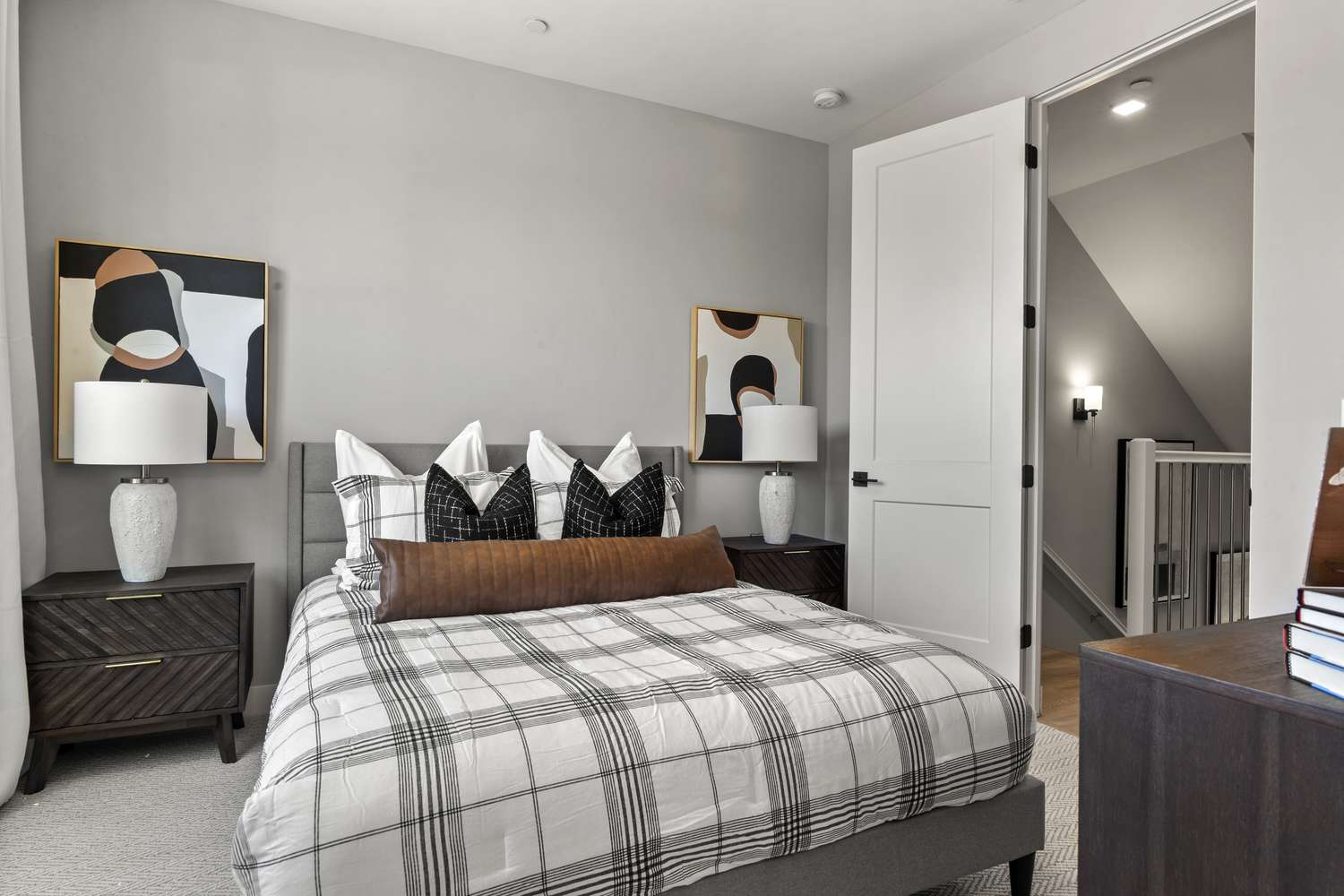
17. Go for Grown-Up Plaid with Abstract Art and Wood Nightstands
This look is a perfect equation for a sophisticated, modern bedroom. It breaks down like this: 50% soft neutrals (the grey upholstered bed and light grey walls), 30% bold pattern (the black and white plaid bedding), 15% warm texture (the dark wood nightstands), and 5% rich color (the brown leather bolster pillow). This formula ensures the room feels balanced—the pattern adds interest without being overwhelming, and the wood and leather prevent the grayscale palette from feeling cold.
|
📋 Copy HEX 🔗 Share |
🧹 Maintenance Reality
The success of this design lies in its use of contrast and repetition. The strong graphic contrast of the black and white plaid is balanced by the soft, solid gray of the headboard. The warmth of the dark wood nightstands is repeated in the brown leather of the bolster pillow, creating a pleasing visual rhythm. Finally, the abstract art provides a touch of organic looseness, preventing the symmetrical layout from feeling too rigid. It’s a design that is both ordered and full of personality.
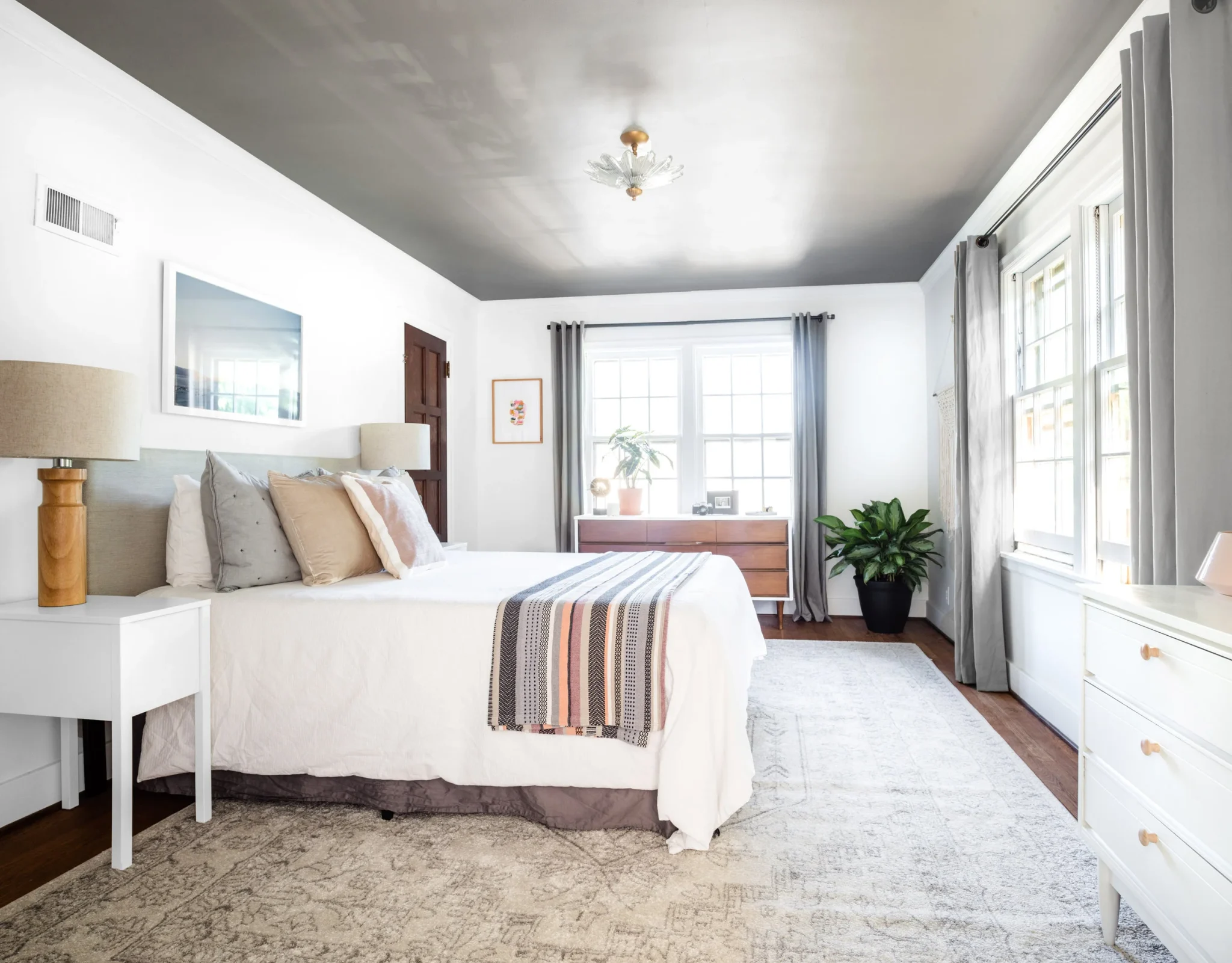
18. Create Drama with a Dark Gray Ceiling and White Walls
The single most daring and effective choice in this bedroom is the dark gray ceiling. It’s a move that defies the old rule that dark colors make a room feel smaller. Here, it does the opposite. By creating a stark contrast with the crisp white walls, it actually draws the eye upward, giving the impression of more height and architectural interest. It adds a dramatic, cozy, and sophisticated element that completely transforms the space from a simple white box into something with real personality. If the ceiling were white, the room would be pleasant, but forgettable.
|
📋 Copy HEX 🔗 Share |
💸 Get This Look For Less
If you’re going to paint your ceiling a dark color, use a completely flat or matte paint finish. Any sheen, even eggshell, will show every tiny imperfection on the ceiling surface and create distracting reflections from your light sources. A matte finish absorbs light, creating a rich, velvety look that makes the color feel deep and intentional. It’s the secret to getting that high-end, designer look and avoiding a cheap, shiny effect. Also, carry the gray down to the curtain rods and curtains to create a cohesive frame for the windows.
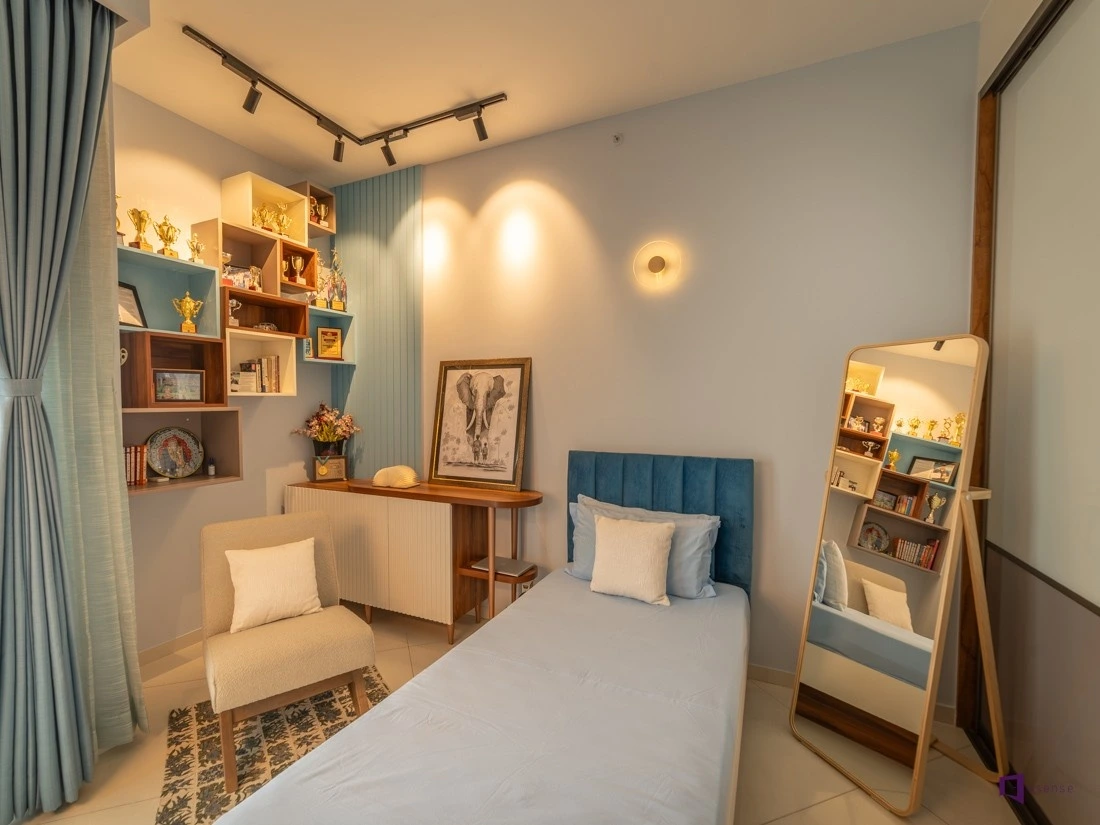
19. Showcase a Collection with a Monochromatic Blue Scheme
You can create this personal and polished look on a tight budget. The key is committing to a single color. A gallon of light blue paint is around $40-$60. Find matching bedding and curtains from a budget-friendly store like Walmart or Amazon. The real savings come from the decor. The trophy display is all about showcasing *your* achievements or collections. For the shelving, IKEA’s LACK or MOSSLANDA shelves are inexpensive and effective. The full-length mirror can be a simple, unframed one from Target for under $50, which you can lean against the wall for a casual look.
|
📋 Copy HEX 🔗 Share |
⭐ The One Thing
Here’s how to create that asymmetrical trophy display:
- Time: 2 hours. Cost: $50-$150.
- Gather your items. You need a mix of heights and shapes for visual interest.
- Use painter’s tape on the wall to create a rough outline of your desired shelf layout. This lets you visualize the balance before drilling.
- For a floating look, use individual floating shelves of varying lengths (e.g., 12″, 24″, 36″). Stagger them vertically and horizontally.
- Install the shelves using wall anchors appropriate for your wall type (drywall, plaster). Use a level for each shelf.
- Arrange your trophies or collectibles, placing taller items on higher shelves and smaller ones in groups. Don’t overcrowd them.
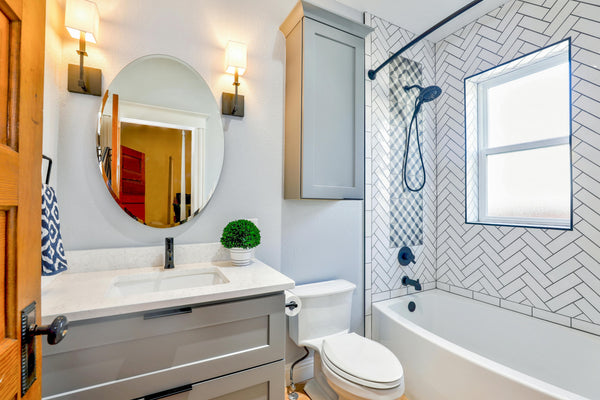
20. Design a Compact Bathroom with Herringbone Tile and Black Fixtures
This small bathroom feels chic and spacious because of a few clever design tricks. First, the continuous herringbone tile pattern in the shower draws the eye upward, creating a sense of height. Second, the light grey vanity and walls maintain a bright, airy feel, while the matte black fixtures add a bold, graphic contrast that feels modern and intentional. Finally, the large, simple mirror reflects light and the tile pattern, amplifying the sense of space. It’s a perfect balance of pattern, color, and reflection.
|
📋 Copy HEX 🔗 Share |
🔧 How-To Brief
Matte black fixtures are stunning, but they are notorious for showing water spots and fingerprints, especially in areas with hard water. To keep them looking their best, you’ll need to wipe them down with a soft, dry microfiber cloth after each use. Avoid harsh, abrasive cleaners, which can scratch or strip the finish. For a deeper clean, a simple solution of water and white vinegar works well. If you love the look but not the upkeep, consider fixtures in a brushed gunmetal or graphite finish, which offer a similar vibe with more forgiving maintenance.
21. Use Stark Black Window Frames for a High-Contrast Minimalist Look
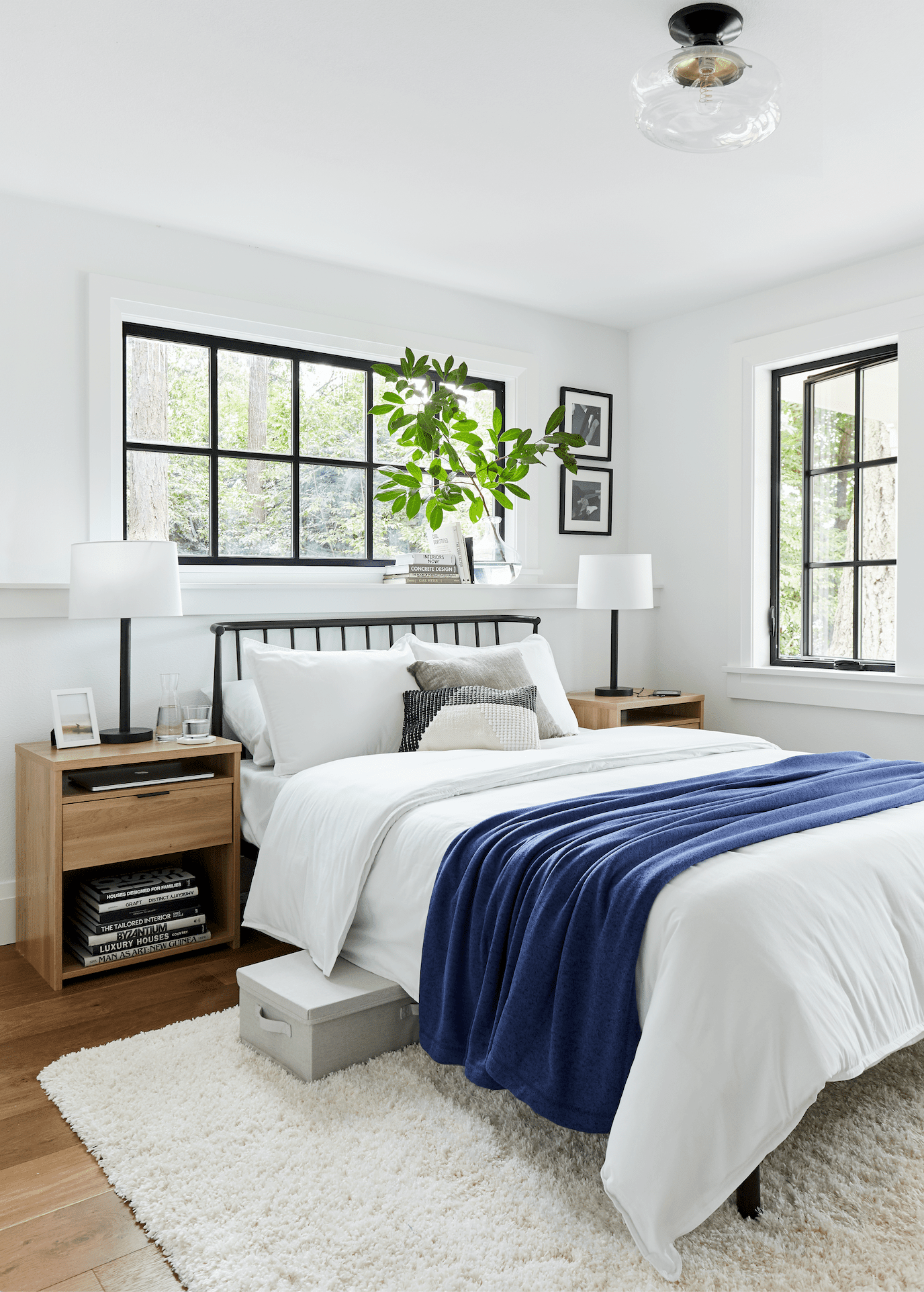
The black-framed grid windows are, without a doubt, the defining feature of this room. They act as a living piece of art, perfectly framing the view outside while providing a strong, graphic counterpoint to the soft white walls and bedding. They anchor the entire design. If you replaced them with standard white windows, the room’s high-impact, modern edge would completely disappear, leaving a much more generic and less memorable space. They prove that architectural details can be the most powerful decor of all, similar to the white shiplap in Idea #25.
|
📋 Copy HEX 🔗 Share |
💰 Budget Breakdown
Black-framed windows have been a major trend for the last few years, and they show no signs of fading in 2026. Why? They offer the best of both worlds. They have a timeless, industrial-loft appeal that works with modern, traditional, and farmhouse styles. At the same time, they provide the sharp, graphic look that resonates with minimalist trends seen all over Pinterest and Instagram. This versatility and ability to act as a bold neutral is why they have such strong staying power; they are a classic in the making.
22. Hide a Home Office Inside a Custom Wardrobe
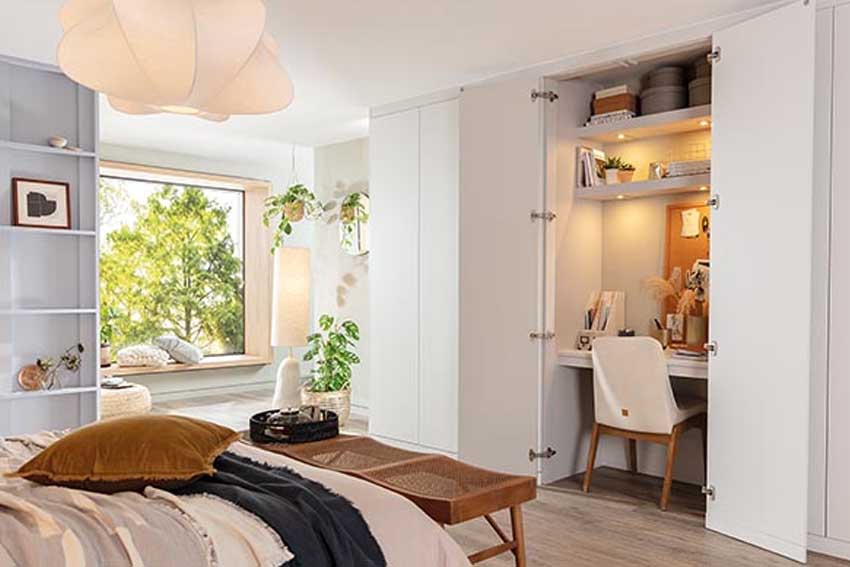
When creating a hidden ‘cloffice’ (closet office), lighting is everything. It’s not enough to rely on the room’s main light. You must integrate lighting directly into the unit. Place a slim LED strip light along the underside of the shelf directly above your work surface. This provides clear, direct task lighting that makes the space usable and prevents eye strain. Add a second puck light or LED strip on the inside of the top cabinet to illuminate the upper shelves, making it a functional and inviting space to work in, not a dark afterthought.
|
📋 Copy HEX 🔗 Share |
💡 Designer Tip
A fully custom built-in wardrobe like this is a dream, but it comes with a hefty price tag. You can achieve a very similar ‘office-in-a-wardrobe’ for a fraction of the cost using the IKEA PAX system. Choose a PAX frame (or two side-by-side for a wider desk), then use PAX shelves and a KOMPLEMENT pull-out tray or a simple cut-to-size laminate board as your desk surface. You can leave the doors off one section or choose doors that match your style. The total cost could be between $400 and $800, providing an incredibly functional and stylish semi-custom solution.
23. Organize a Neutral Bedroom with Integrated and Wall-Mounted Storage
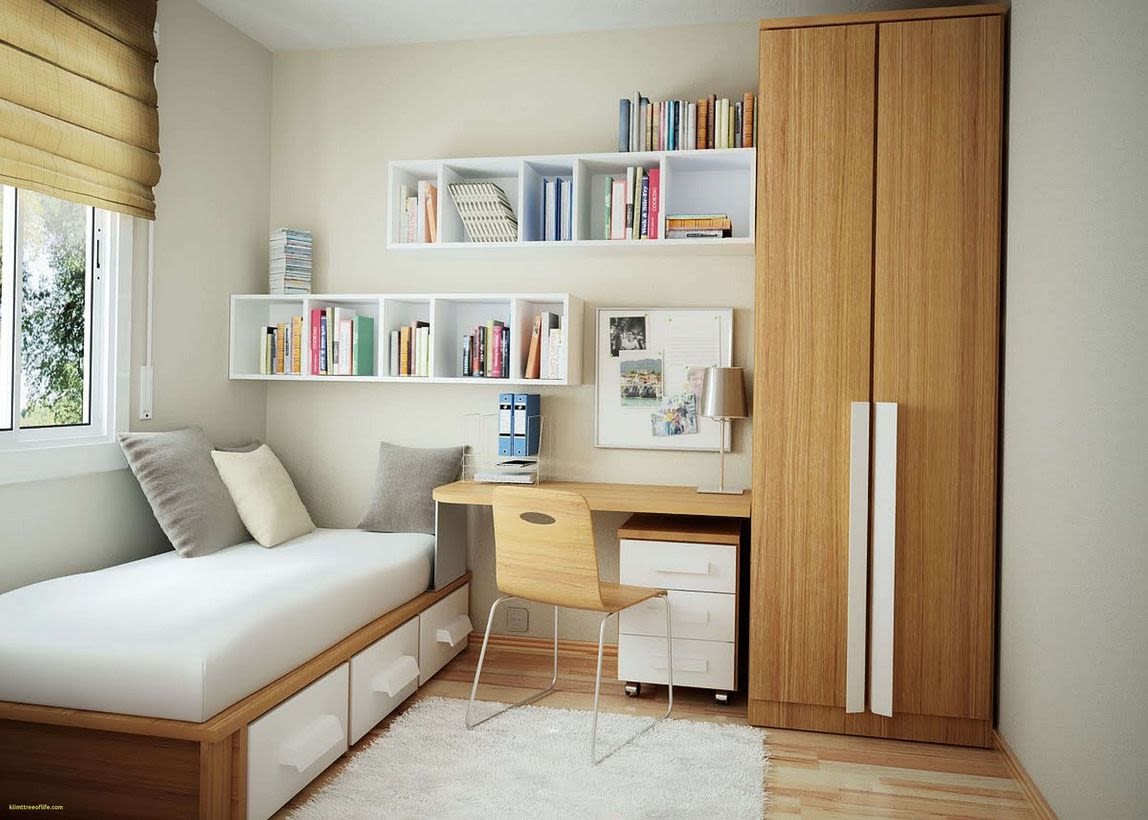
Achieving this level of calm organization is surprisingly affordable if you shop smart. The key is choosing furniture that does double duty. This look leverages clean lines and a tight color palette to feel serene and uncluttered. The major investment is in the furniture pieces that combine functions, saving space and money in the long run. By sticking to a strict palette of white and light wood, even budget-friendly items look cohesive and high-end.
|
📋 Copy HEX 🔗 Share |
🔥 Trending Context
Total: $950 – $2,200
- Main Furniture (Bed w/ storage, Desk, Wardrobe): $700 – $1,500
- Shelving (Wall-mounted cubbies): $80 – $200
- Textiles (Rug, Blind): $120 – $350
- Decor (Lamp): $50 – $150
- Budget alternative: Get this entire look for under $600 using an IKEA MALM bed with storage, a MICKE desk, and EKET wall cubes. This is a very similar layout to Idea #4, showing how a few different choices in finish can change the vibe.
24. Create a Cozy Vibe with a Black Dresser and Woven Textures
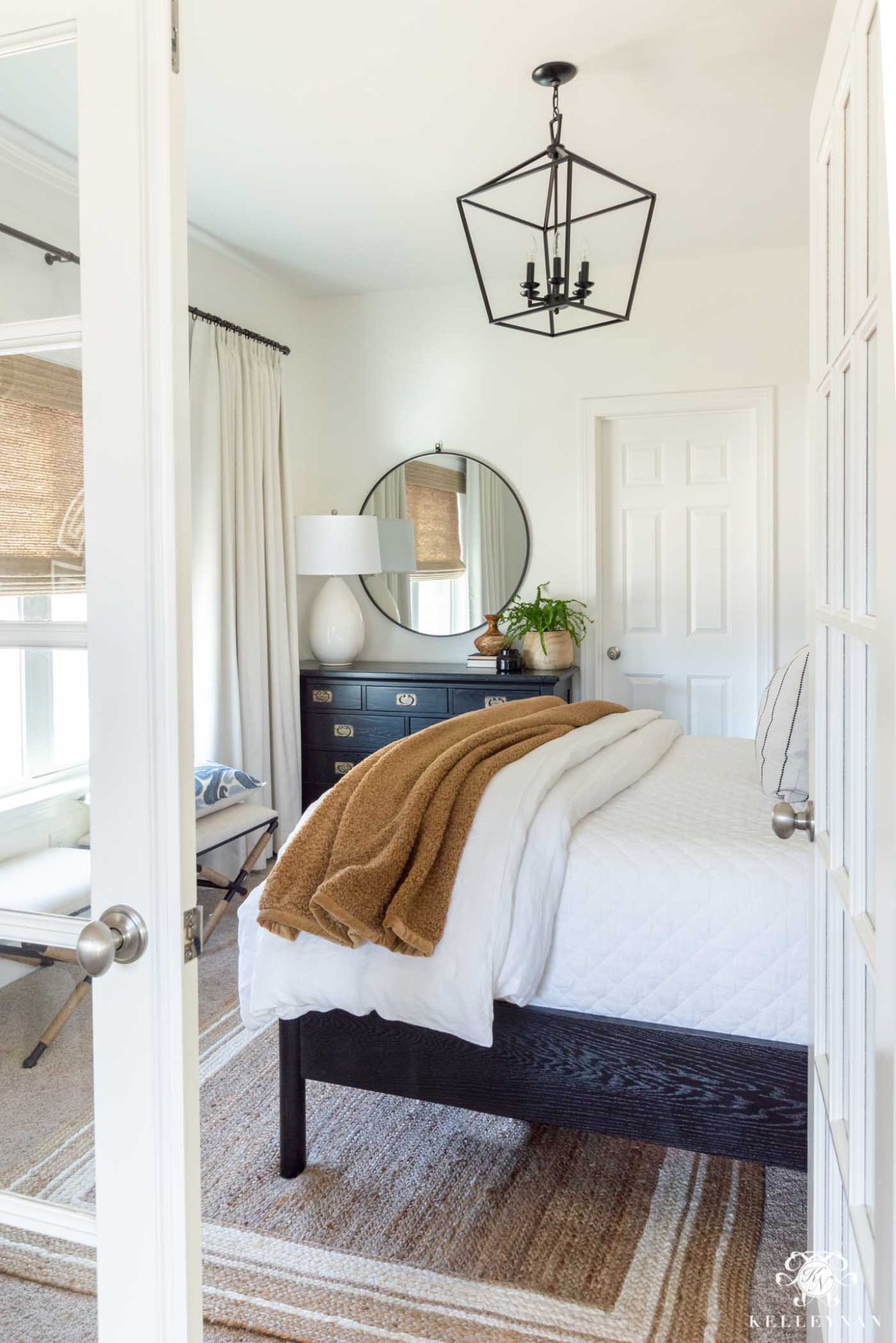
This room’s cozy-modern aesthetic comes from a well-balanced style equation: 40% crisp white (bedding, walls), 30% bold black (dresser, bed frame, chandelier), 20% warm textures (jute rug, woven blinds), and 10% rich color (the brown throw). The black elements provide a strong, graphic foundation, while the woven textures prevent the high contrast from feeling harsh. The pop of brown adds just enough warmth and softness to make the space feel inviting and livable. It’s a grounded, earthy, and sophisticated mix.
|
📋 Copy HEX 🔗 Share |
✅ Before You Start
If you take away the striped jute area rug, the entire room loses its soul. The rug is the element that bridges the gap between the cool, crisp white bedding and the dark, heavy furniture. It introduces a necessary layer of natural texture and warmth, grounding the space and making it feel approachable. Without it, the contrast between the black furniture and white walls would be too stark, and the room would feel colder and less cohesive. It’s the single piece that ties all the other elements together into a single, unified story.
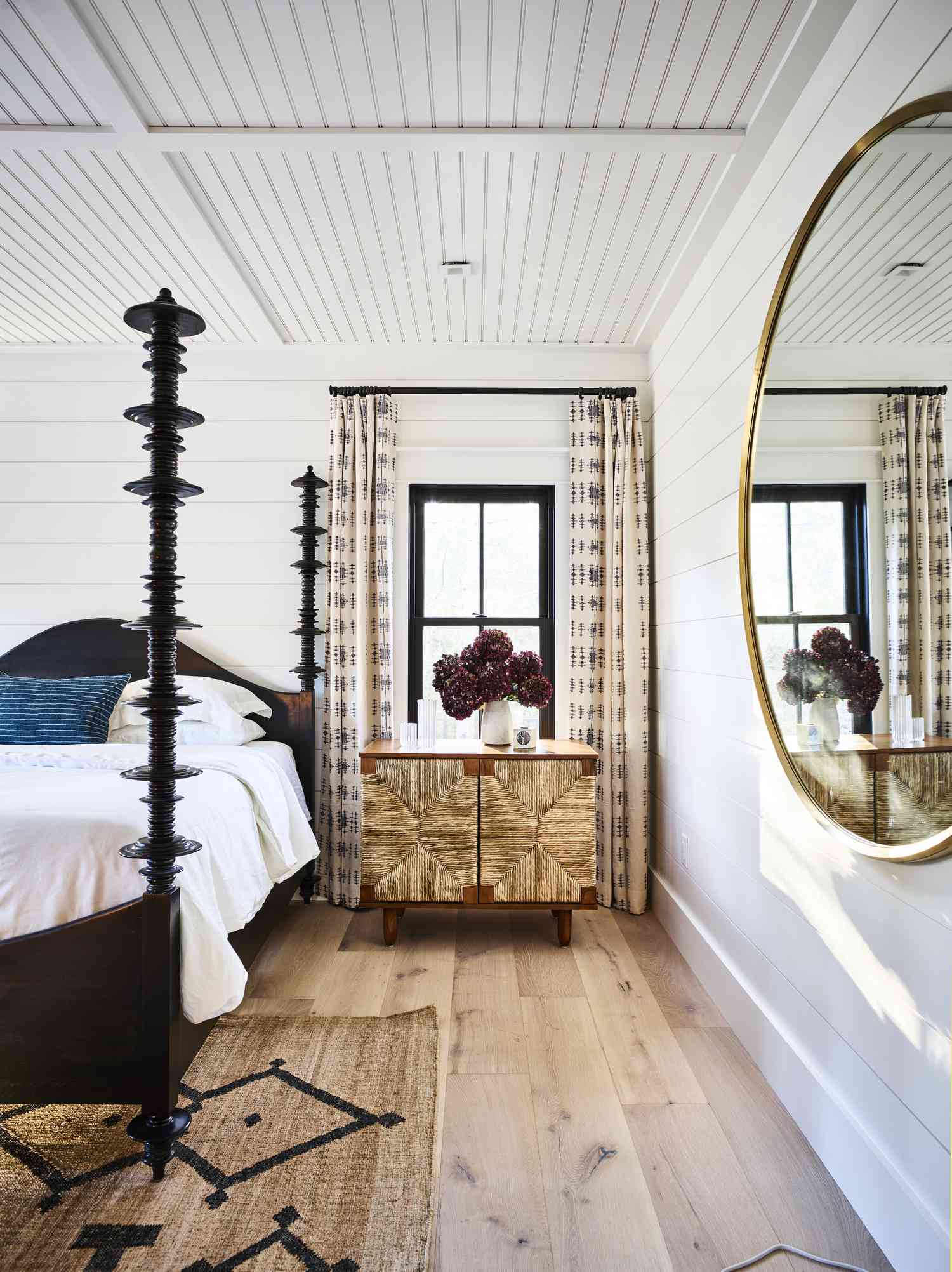
25. Embrace Coastal Style with White Shiplap and a Four-Poster Bed
This bedroom feels so bright and calm because of the masterful use of texture-on-texture. The horizontal lines of the white shiplap walls and the vertical lines of the beadboard ceiling create a subtle grid that makes the room feel structured and serene. The dark wood of the four-poster bed and the organic pattern of the woven cabinet provide a necessary contrast in both color and form, preventing the all-white backdrop from feeling flat. The gold mirror then adds a touch of glam and bounces light, completing the sophisticated coastal look. It’s a much more textured approach than the flat white walls in Idea #21.
|
📋 Copy HEX 🔗 Share |
📐 Style Math
Shiplap walls are a beautiful way to add character, but those charming horizontal grooves are perfect little shelves for dust. To keep them looking crisp and white, you’ll need to run a duster or the brush attachment of your vacuum along the grooves at least once a month. For scuffs and smudges, a magic eraser or a cloth with a mild soap solution usually works well. The biggest challenge is repainting; you’ll need a brush to carefully cut into every single groove, which can be a time-consuming project. It’s not high maintenance, but it requires more attention than a simple flat wall.
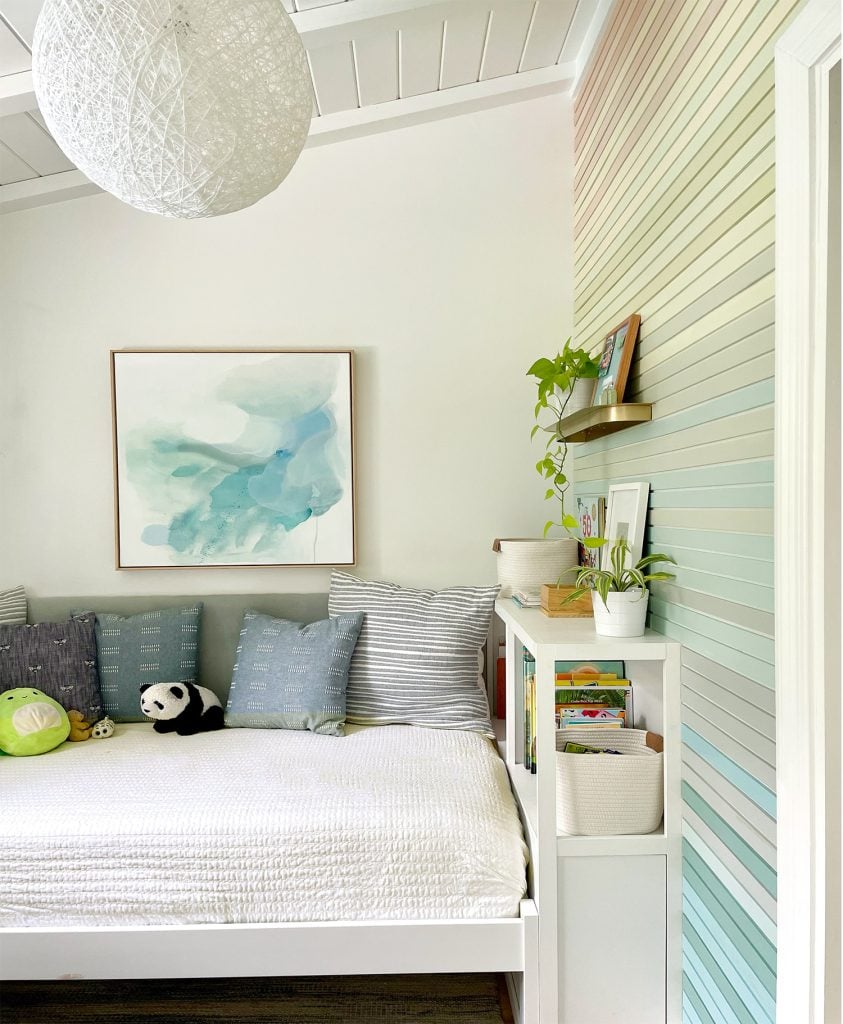
26. Design a Reading Nook with a Daybed and Ombre Slat Wall
The star of this show is undoubtedly the ombre pastel slat wall. It’s a completely custom, artistic feature that transforms a simple corner into a magical destination. It provides color, pattern, and texture all in one go. The gentle gradation of color is soothing, while the vertical lines draw the eye upward, making the small nook feel taller. It elevates the simple daybed from just a piece of furniture to the centerpiece of a unique and imaginative design. Without it, the space would be pleasant, but this feature makes it truly special.
|
📋 Copy HEX 🔗 Share |
📏 Scale Guide
Want to create that stunning ombre slat wall effect? Here’s the plan.
- Time: 6-8 hours. Cost: $150-$300.
- Choose 4-5 paint colors in the same family that transition nicely (e.g., pale yellow, mint, sage, sky blue).
- Purchase 1×2 pine or poplar boards. Cut them to the desired height of your accent wall. You’ll need enough to cover the width with a half-inch gap between each.
- Divide your boards into 4-5 groups and paint each group one of your chosen colors. Let them dry completely.
- Starting from one end, attach the slats to the wall using a brad nailer and construction adhesive. Use a spacer (like another 1×2 board turned on its side) to ensure even gaps.
- Arrange the colors in a gradual ombre effect as you install them across the wall for that smooth, seamless transition.
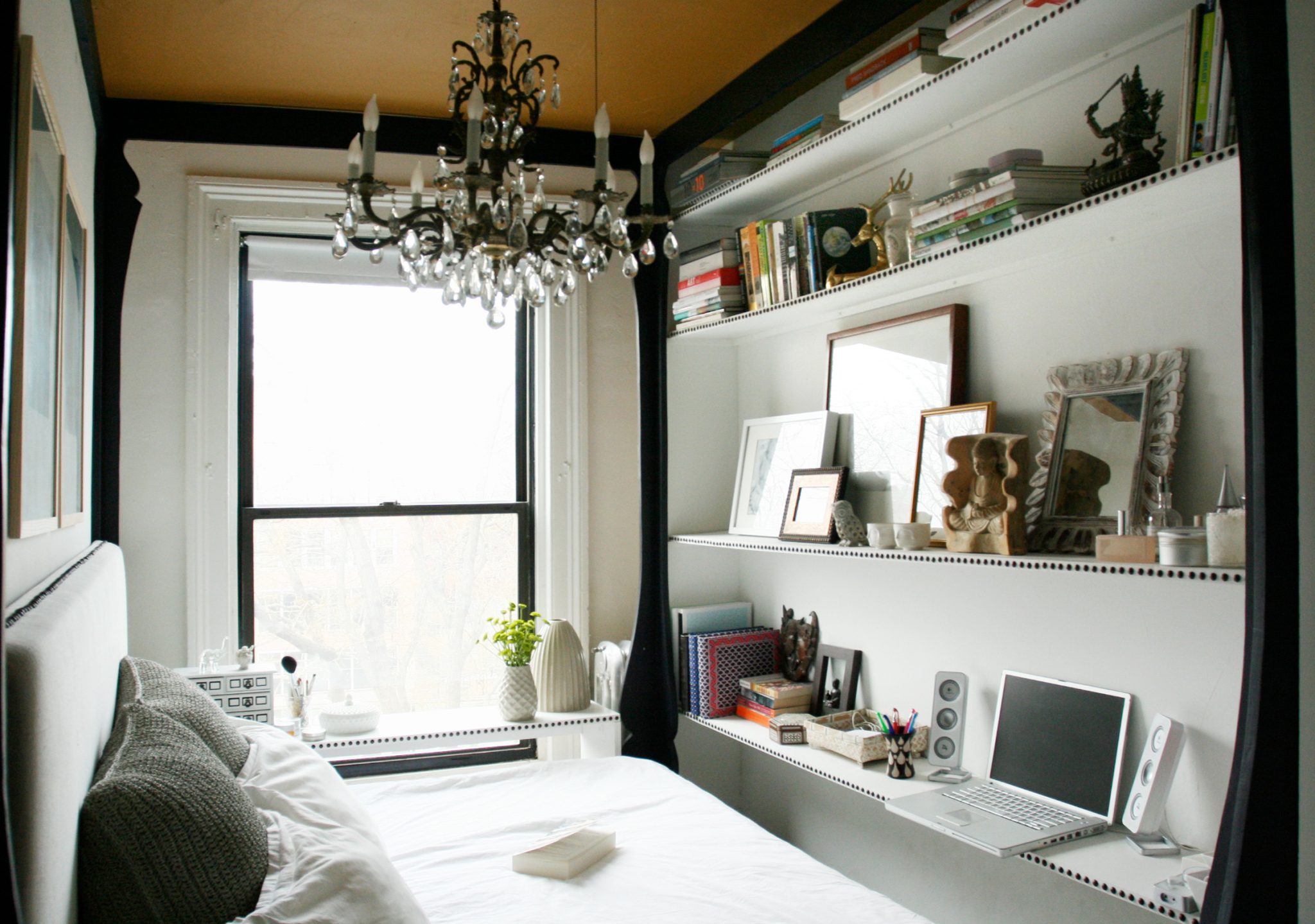
27. Mix Eclectic Styles with a Crystal Chandelier and Built-In Workspace
A bold ceiling color is a fantastic way to add personality, but a saturated mustard yellow like this isn’t for the faint of heart. It will dramatically change the way light behaves in the room. White walls will take on a warm, golden cast, and it can make it tricky to choose other colors for textiles and art. Before you commit, buy a sample pot and paint a large poster board. Move it around the room at different times of day to see how the color feels and how it affects the light before you take the plunge and paint the whole ceiling.
|
📋 Copy HEX 🔗 Share |
🎯 What Makes It Work
This room shouldn’t work, but it does, thanks to a confident and consistent use of contrast. The ornate, glamorous crystal chandelier is a direct contrast to the simple, functional built-in shelves. The bold, warm mustard yellow ceiling contrasts sharply with the clean white walls and graphic black trim. This high-contrast approach creates a dynamic tension that makes the room feel energetic and full of personality. It’s a lesson in not being afraid to mix styles, as long as you do it with conviction.
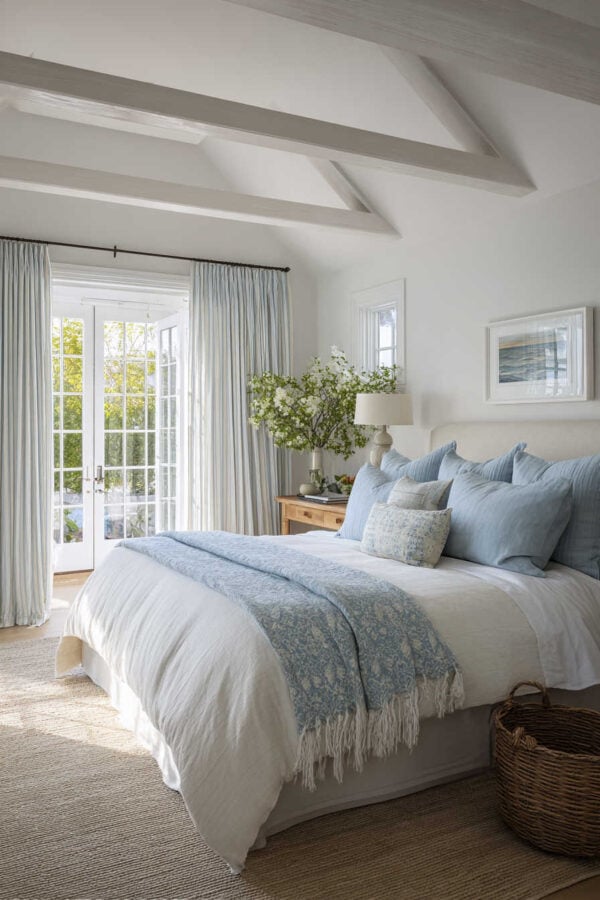
28. Get an Airy Coastal Feel with Vaulted Ceilings and Blue Accents
When you have beautiful architectural features like vaulted ceilings and exposed beams, keep the rest of the decor simple to let them shine. Notice how the walls, trim, and ceiling are all painted the same shade of white. This unifies the space and makes it feel even larger and more expansive. Using a different color on the walls would have visually broken up the height and distracted from the stunning beams. By keeping the color palette quiet, the architecture becomes the main event. For a different take on interesting ceilings, compare this to the sloped roof in Idea #11.
|
📋 Copy HEX 🔗 Share |
⚠️ Real Talk
This light and airy approach works best in rooms with high or vaulted ceilings (9 feet or more). The exposed beams and monochrome white paint need vertical space to feel grand and not cluttered. This idea is perfectly suited for attic conversions, top-floor bedrooms, or additions where ceiling height can be maximized. In a room with a standard 8-foot ceiling, painting everything white is still a great strategy for small spaces, but you might skip adding decorative beams, which could make the ceiling feel lower.
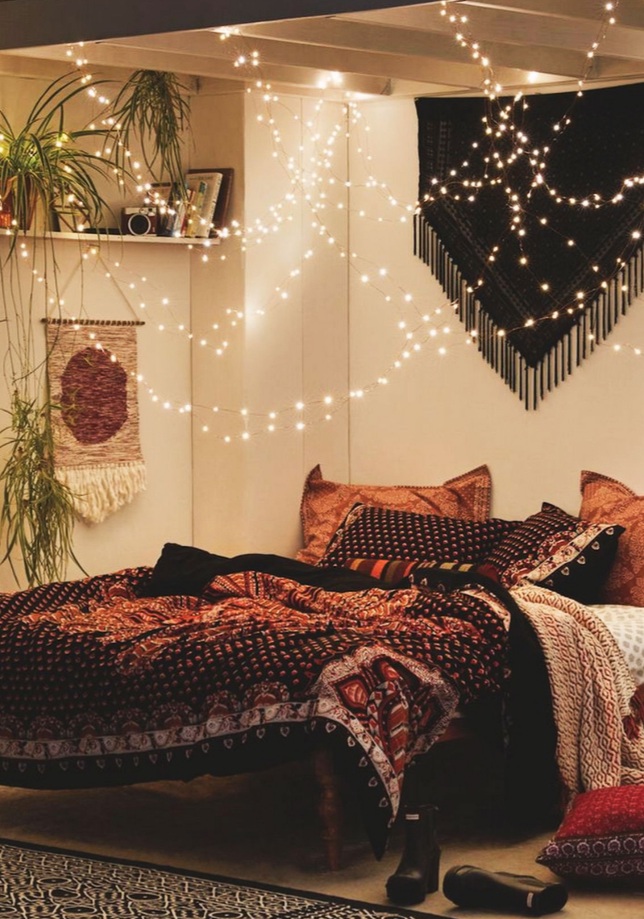
29. Achieve a Bohemian Vibe with String Lights and Patterned Bedding
This cozy, bohemian look is one of the most budget-friendly styles to create. The key ingredient—string lights—can be found for under $20 on Amazon or at Target. The next crucial element is the bedding; look for a duvet cover with a bold, global-inspired pattern from a store like Urban Outfitters, World Market, or even secondhand on Poshmark. The wall hangings are perfect items to find at a thrift store, on Facebook Marketplace, or to DIY with some yarn and a stick. Add a few real or faux plants, and you’ve created a whole mood for less than $100.
|
📋 Copy HEX 🔗 Share |
🧹 Maintenance Reality
Before you dive into this dreamy, glowing look, a quick checklist is in order:
- Check your outlets: Where will you plug in the string lights? Plan the draping route so it starts and ends near a power source without creating a tripping hazard.
- Choose the right lights: Opt for LED fairy lights. They consume less energy and, most importantly, they stay cool to the touch, making them much safer to drape over fabric and against walls than older incandescent bulbs.
- Secure them safely: Don’t use nails or staples that could puncture the wire’s insulation. Use clear, removable adhesive hooks or clips designed for hanging lights.
Your Small Space Story Starts Now
You’ve seen the inspiration, now it’s time to stop scrolling and start creating. Even the smallest change can make a huge impact in a compact room, turning it from an awkward space into your favorite spot in the house. What will your first step be? Tag us in your Pinterest-inspired makeovers—we can’t wait to see what you do!