Walk-in pantries have become one of the most coveted features in American homes, and heading into 2026, the demand shows no signs of slowing down. Whether you’re planning a kitchen remodel or just dreaming about better storage solutions on Pinterest, a well-designed pantry can transform how you organize groceries, appliances, and everyday essentials. From compact corner layouts to expansive walk-ins with windows and integrated fridges, there’s a design approach for every home size and style. This guide explores inspiring walk-in pantry ideas that blend functionality with beautiful design, helping you create a space that works as hard as it looks good.
1. Classic Layout with Window
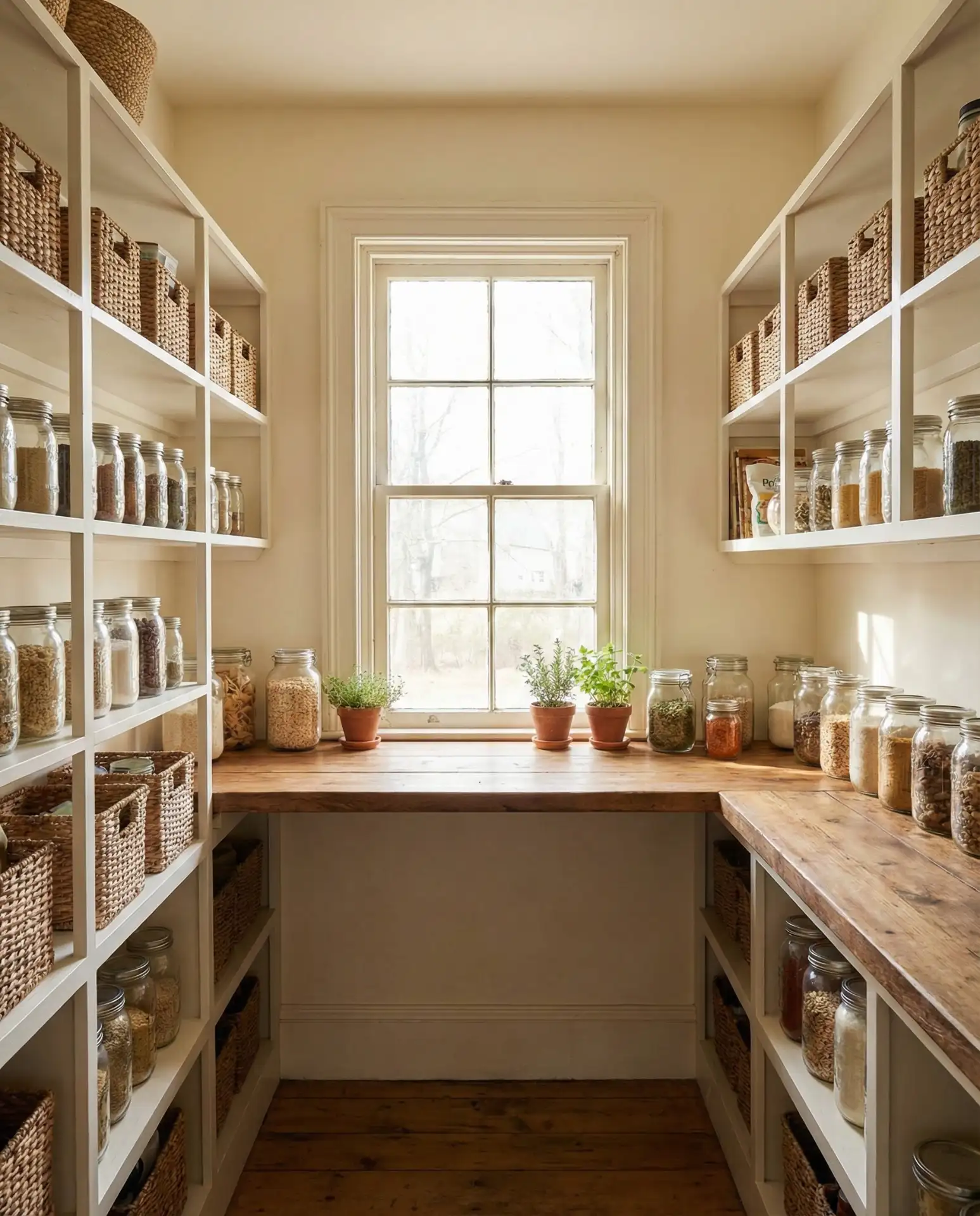
A walk in pantry layout with window brings natural light into what’s often a dark storage space, making it feel more like an extension of your kitchen than a closet. The window placement allows you to check inventory at a glance without flipping on lights, and it adds ventilation that helps keep dry goods fresh. Position layout shelves on either side of the window to maximize wall space while maintaining that airy, open feel that makes the room inviting rather than utilitarian. 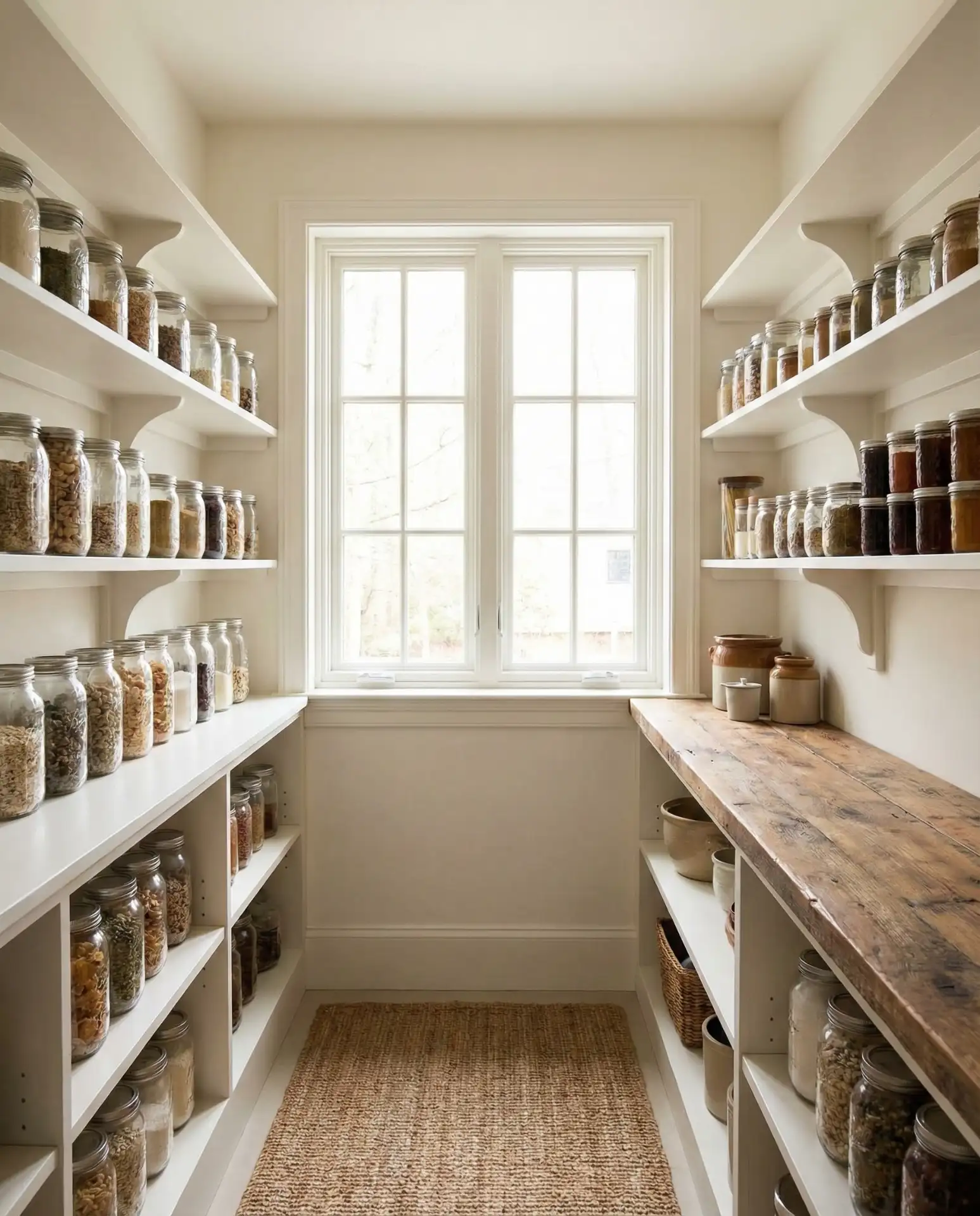
This works particularly well in suburban homes where the pantry backs onto an exterior wall. The natural light reduces energy costs during daytime hours, and homeowners often place a small potted herb or succulent on the windowsill to add life to the space. Just make sure the window has UV-filtering treatments to protect packaged foods from sun damage, especially if you store oils or spices near the glass.
2. Narrow Galley-Style Pantry
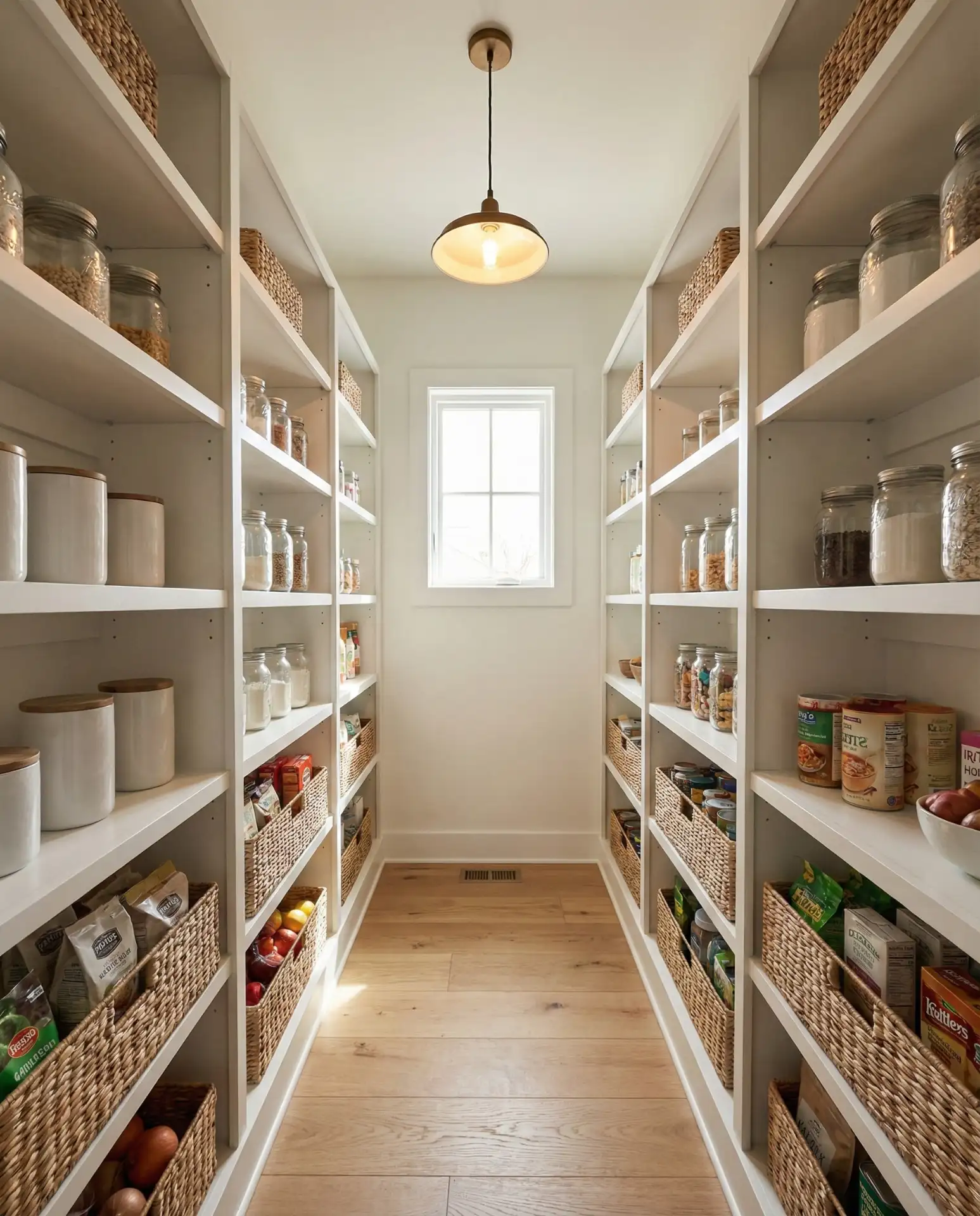
A narrow walk-in pantry maximizes every inch when you’re working with limited square footage, typically ranging from 4 to 6 feet wide. Floor-to-ceiling layout shelves on both sides create a galley configuration that keeps everything visible and within arm’s reach. This design is ideal for small kitchen renovations where you can’t expand outward but can borrow depth from an adjacent hallway or unused closet space. 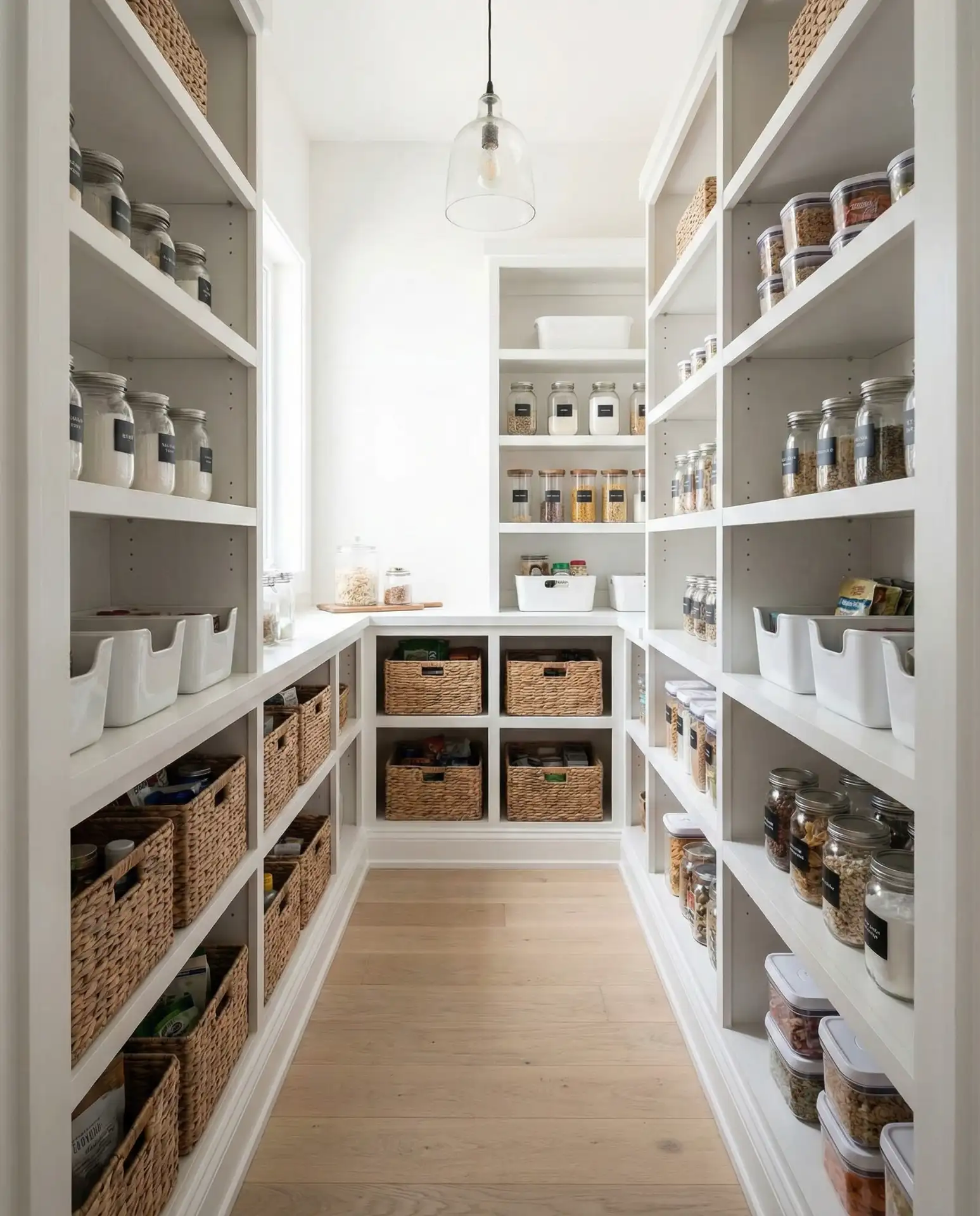
In cities like Boston or Philadelphia where older homes have quirky floor plans, narrow pantries often get carved out of former butler’s pantries or under-stair spaces. The key mistake people make is installing shelves that are too deep—stick to 12 to 14 inches so items don’t get lost in the back. Add LED strip lighting under each shelf to compensate for the lack of natural light in these typically interior spaces.
3. Layout with Fridge Integration
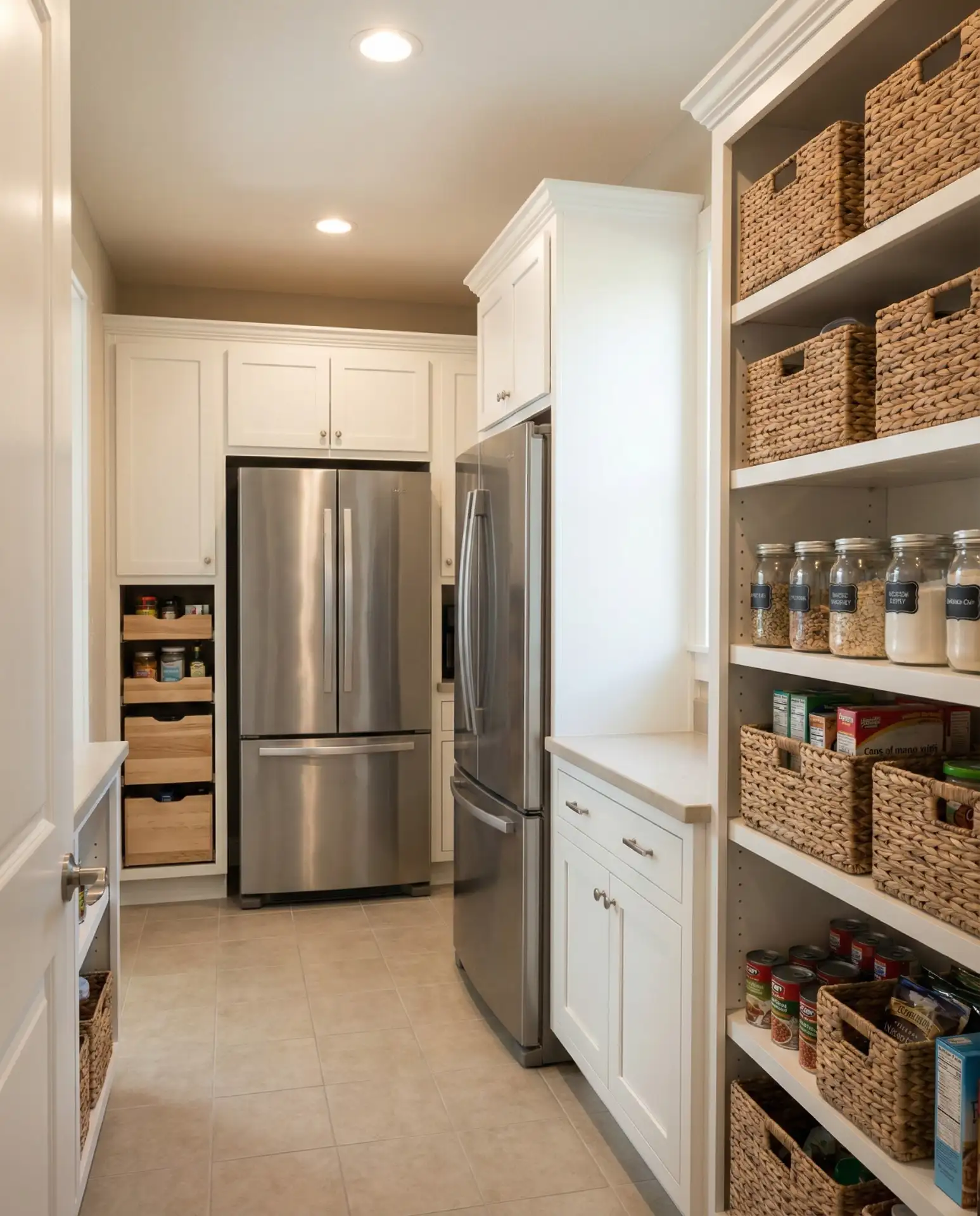
Incorporating a fridge directly into your walk in pantry layout with fridge creates a dedicated food zone that keeps your main kitchen counters clutter-free. This setup works beautifully in open-concept homes where you want appliances tucked away from the social cooking area. Position the refrigerator on one end wall with shelving wrapping around, so cold and dry storage live in the same convenient location. 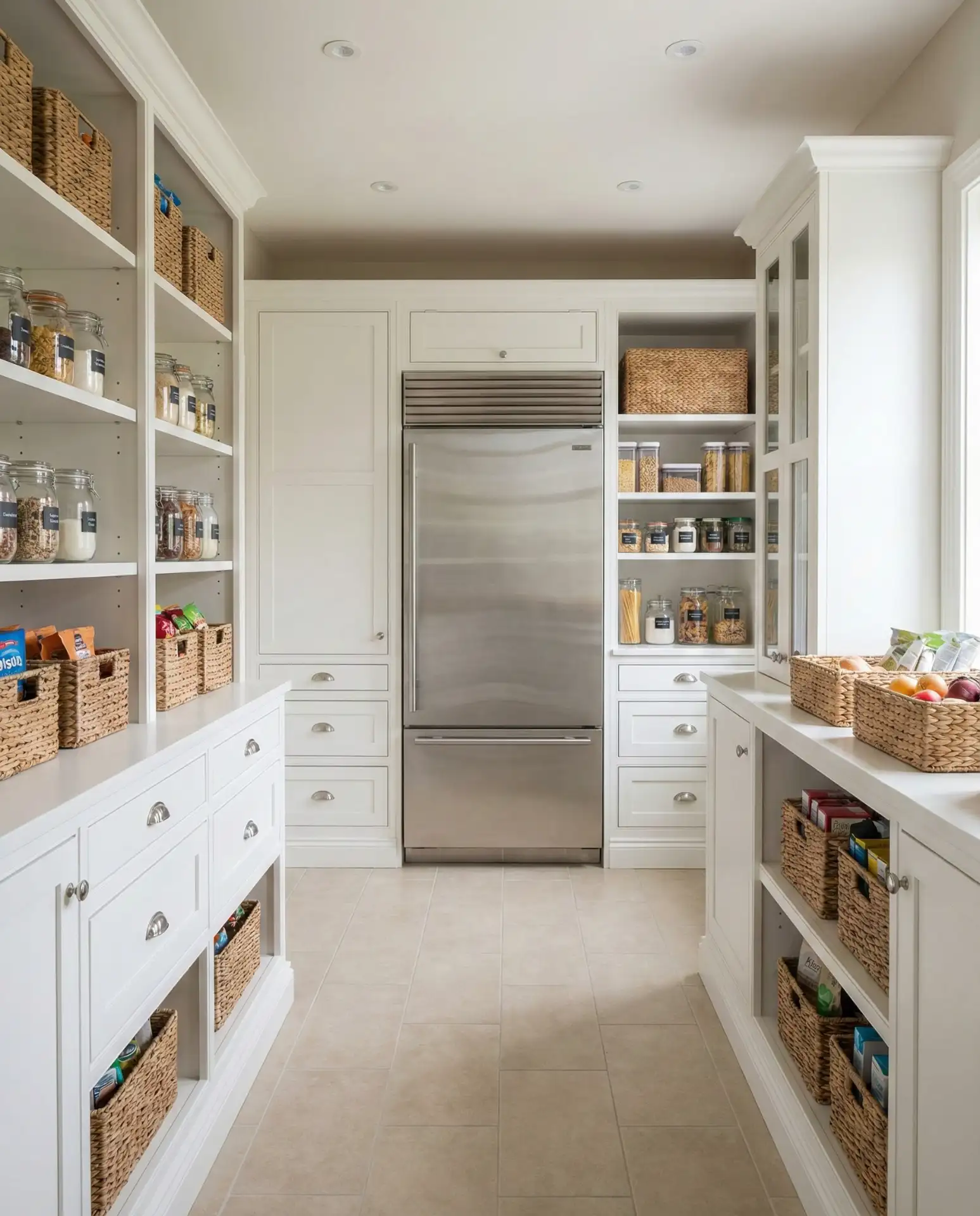
Where it works best: In households with multiple people grazing throughout the day, having a secondary fridge in the pantry means fewer traffic jams at the main refrigerator. It’s also perfect for bulk shoppers who need extra cold storage for meal prep or Costco hauls. Make sure your electrical plan includes a dedicated 20-amp circuit for the fridge to avoid tripping breakers, especially if you’re adding this feature during a remodel.
4. Corner Pantry Solution
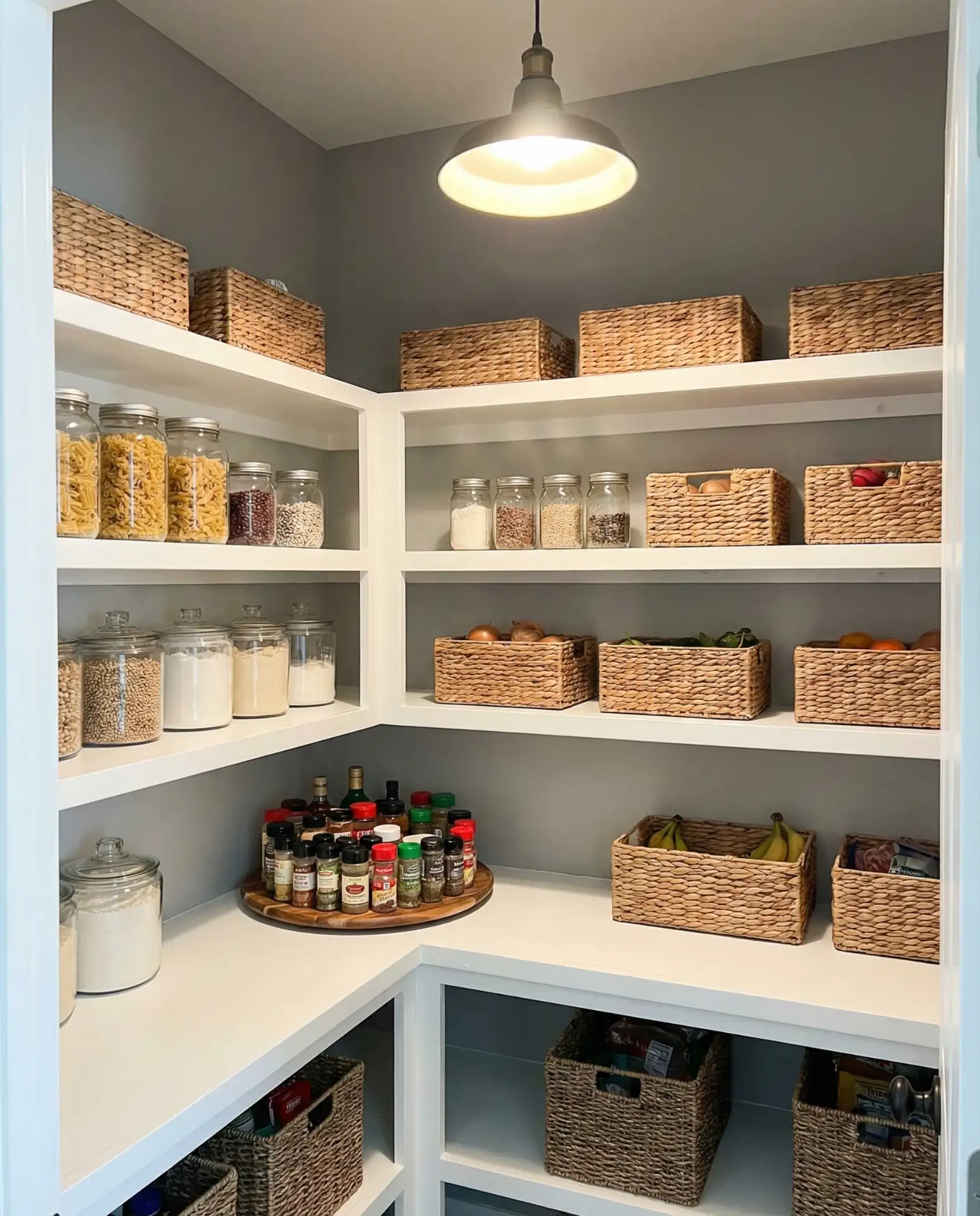
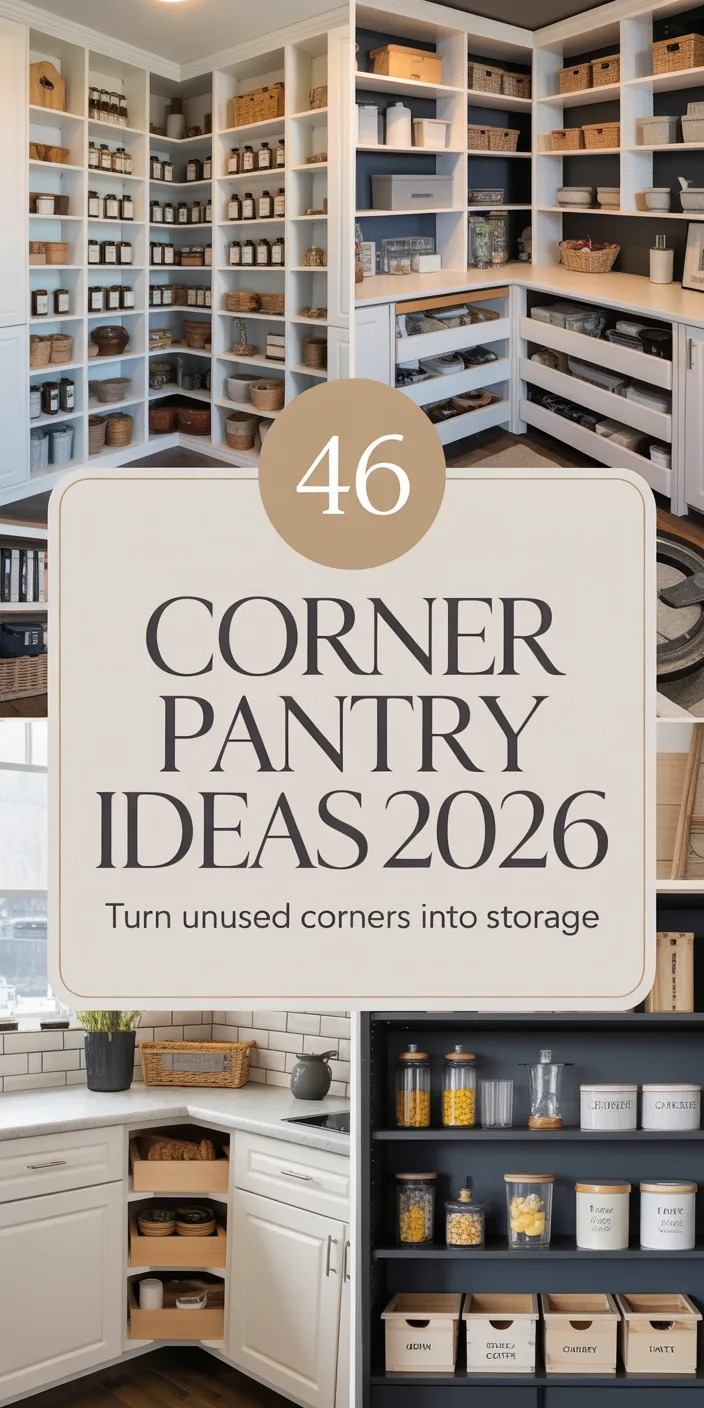
A corner pantry design makes brilliant use of awkward angles, transforming dead space into highly functional layout storage. L-shaped shelving wraps around the walls, while lazy Susans or pull-out corner units ensure nothing gets lost in deep pockets. This configuration fits beautifully in small corner spots between the kitchen and dining area, especially in ranch-style homes with generous floor plans but inefficient layouts. 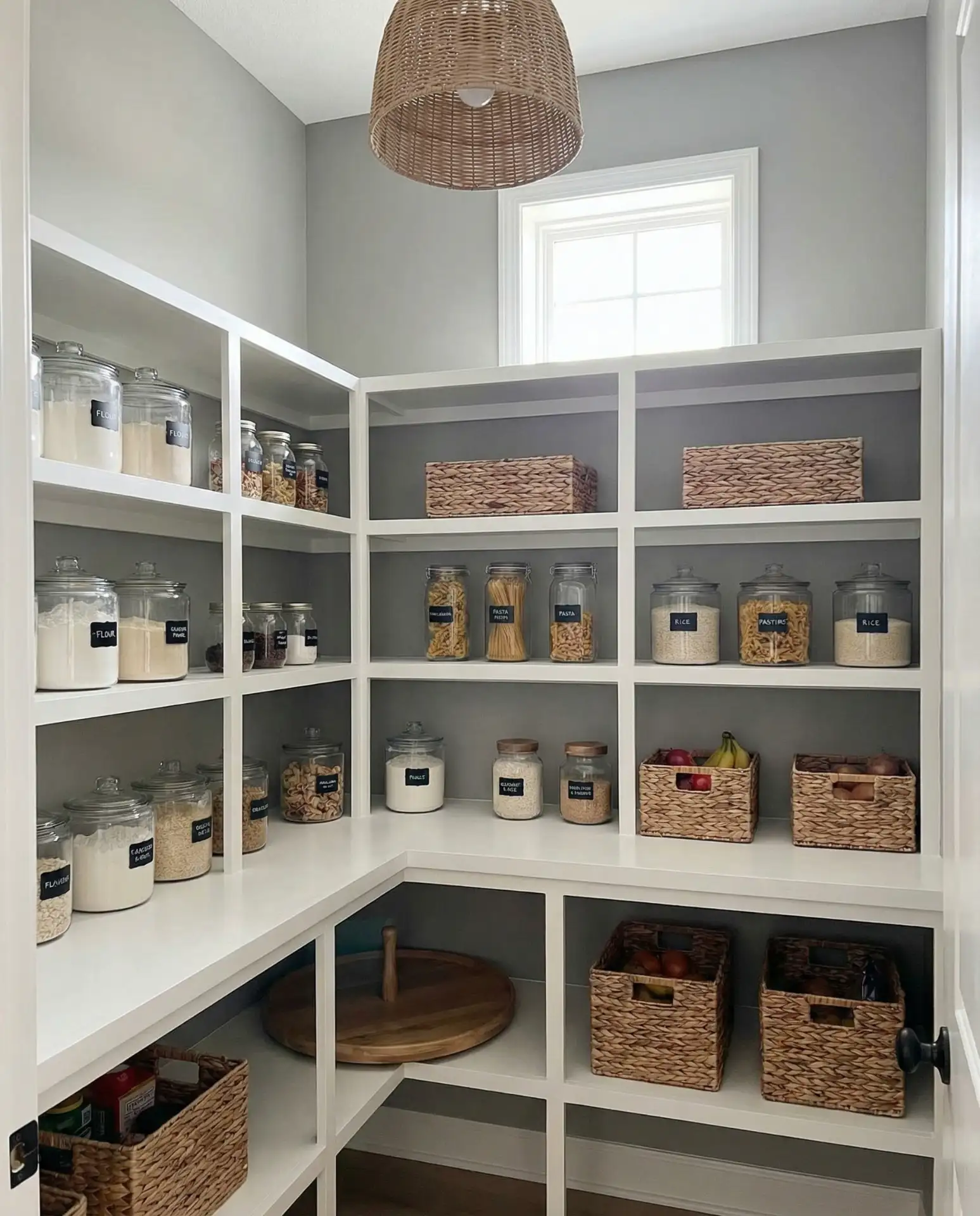
Practical insight: Install adjustable shelving on at least one wall so you can reconfigure heights as your storage needs change—baby formula jars need different spacing than cereal boxes. Corner pantries often feel cramped if you don’t plan the entry carefully; a 32-inch door is minimum, but 36 inches makes a noticeable difference in usability. Consider a pocket door if the adjacent wall space allows it, saving valuable floor area for shelving.
5. DIY Budget-Friendly Build
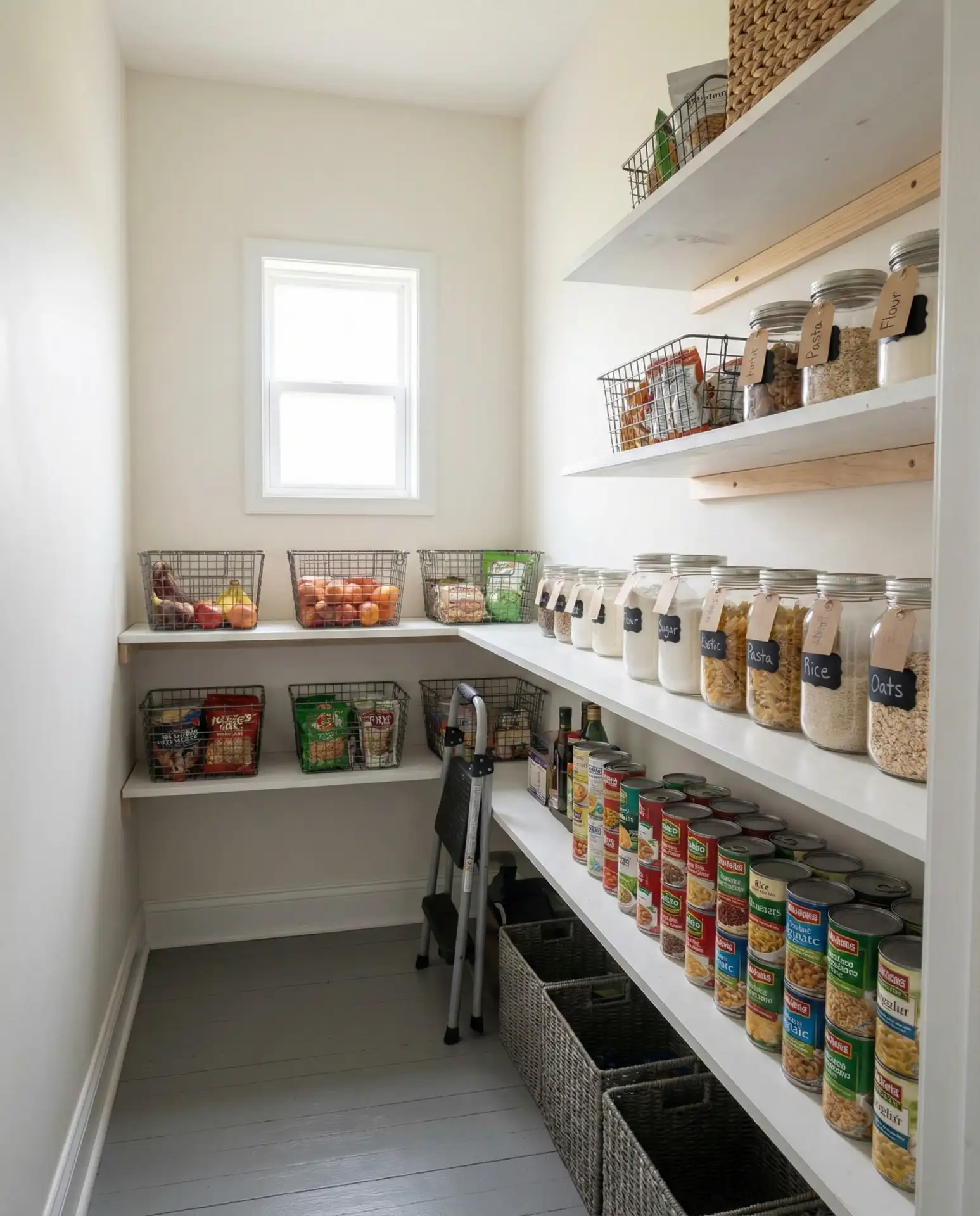
A diy walk-in pantry project can cost under $500 if you’re willing to put in weekend labor, using basic materials like melamine boards, brackets, and paint. The key is working with standard lumber dimensions to minimize cuts and waste. Simple open shelving beats expensive custom cabinetry when you’re on a tight budget, and you can always add doors or decorative elements later as finances allow. 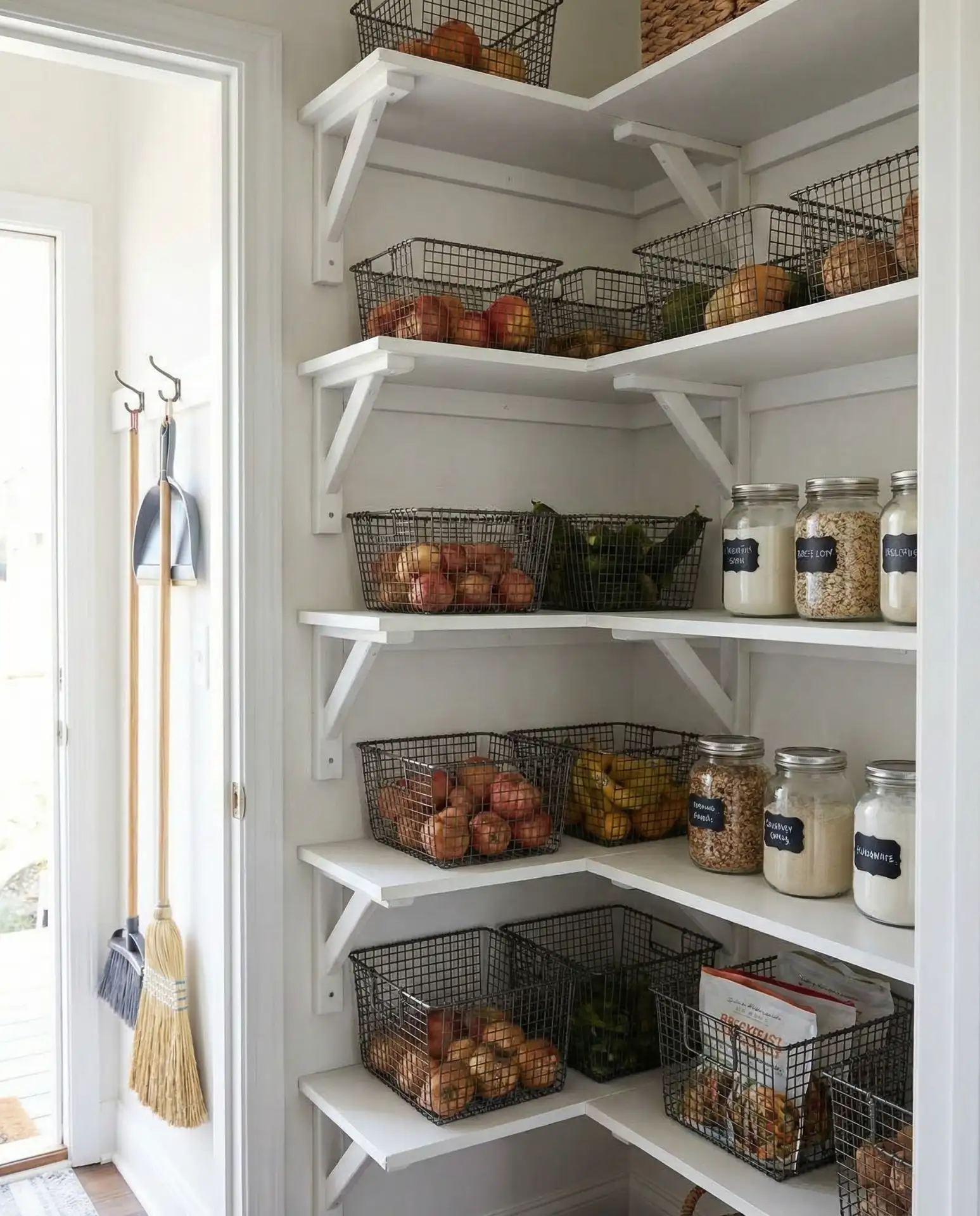
Budget angle: Home Depot and Lowe’s run quarterly sales on closet organization systems that can be repurposed for pantries—watch for 30-40% discounts around Memorial Day and Labor Day. Many homeowners skip the contractor entirely and handle installation themselves using YouTube tutorials and basic power tools. The biggest cost saver is choosing painted MDF over solid wood; it looks identical once installed and costs about 60% less per linear foot.
6. Modern Minimalist Aesthetic
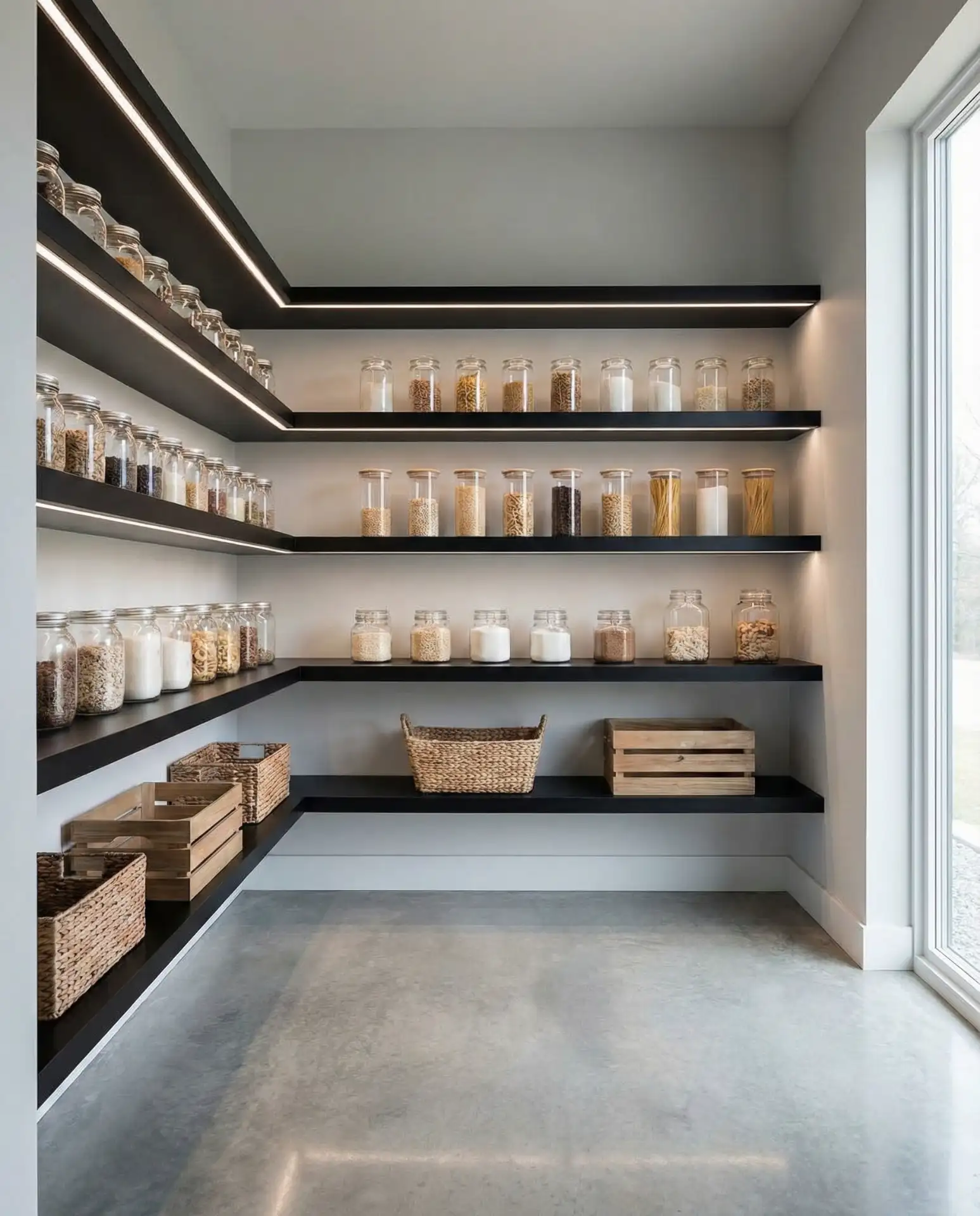
A modern minimalist pantry strips away visual clutter, using clean lines and a restrained color palette to create calm amid the chaos of meal planning. Handleless cabinetry in matte finishes, floating shelves, and uniform glass or acrylic containers turn functional storage into a design statement. This approach pairs beautifully with simple Scandinavian or Japanese-inspired kitchens where less truly becomes more. 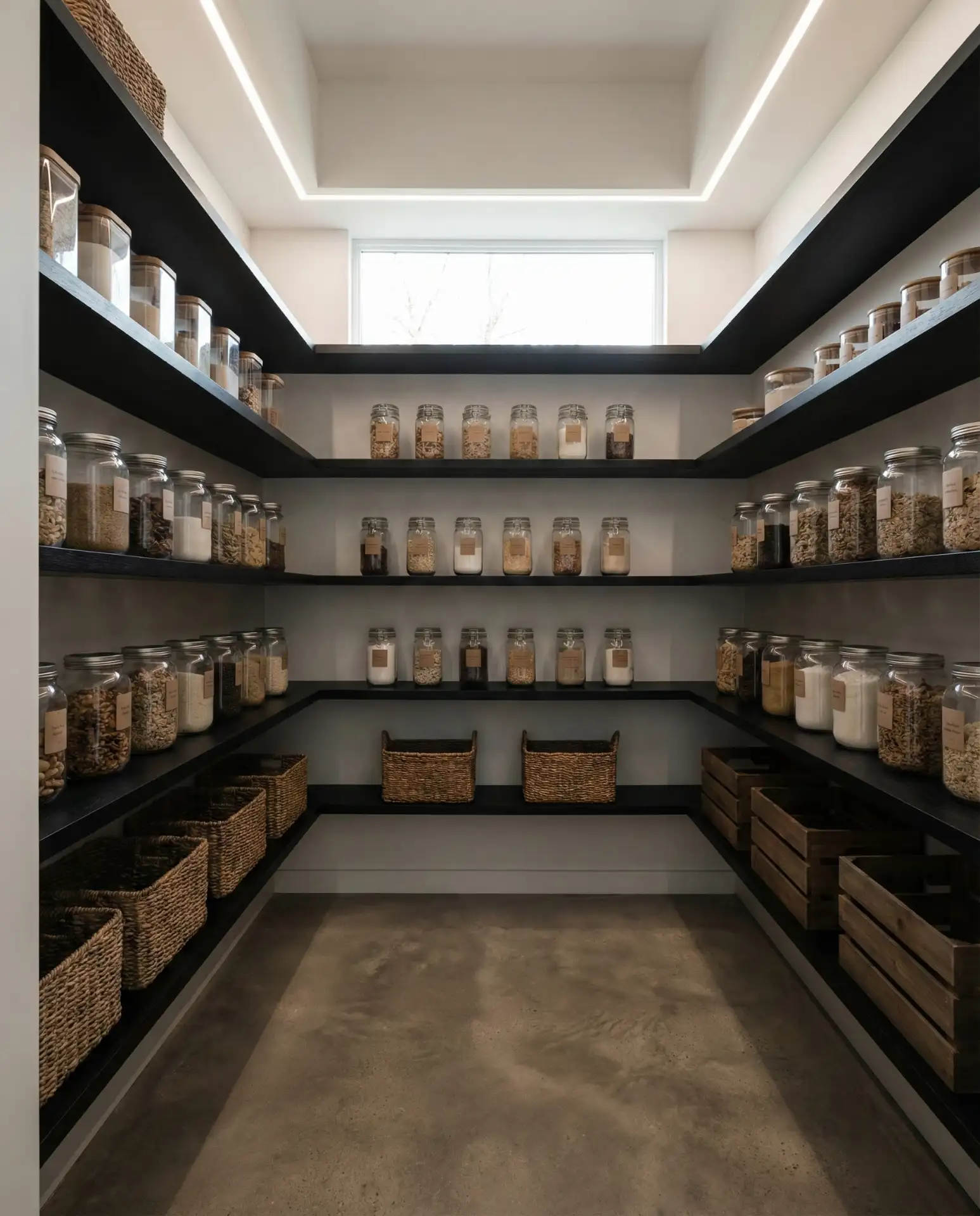
Expert-style commentary: Designers recommend limiting your container types to two or three styles maximum—mixing dozens of different jars creates the exact visual noise you’re trying to avoid. The minimalist pantry works best for disciplined organizers who can commit to regular decluttering and actually transfer items out of retail packaging. It’s less forgiving of impulse purchases and half-used products, so be honest about your habits before committing to this aesthetic.
7. Coastal-Inspired Storage
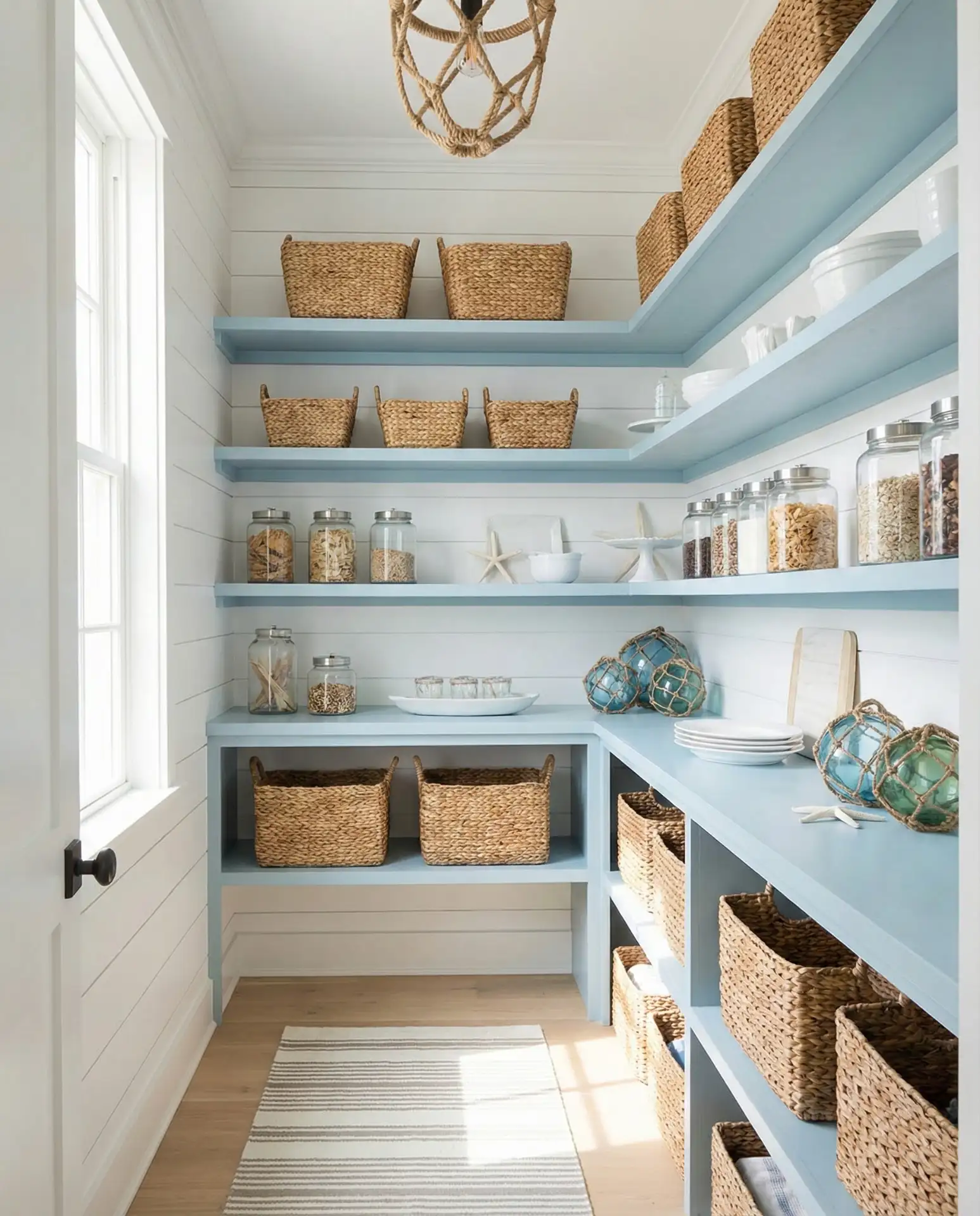
A coastal pantry brings beachy vibes inland through soft blues, natural textures, and plenty of white layout shelves. Woven seagrass baskets replace plastic bins, while rope handles and whitewashed wood evoke boardwalk charm. This style resonates with Pinterest users searching for relaxed, vacation-home energy that makes everyday tasks feel a little more like a getaway, even in landlocked suburbs. 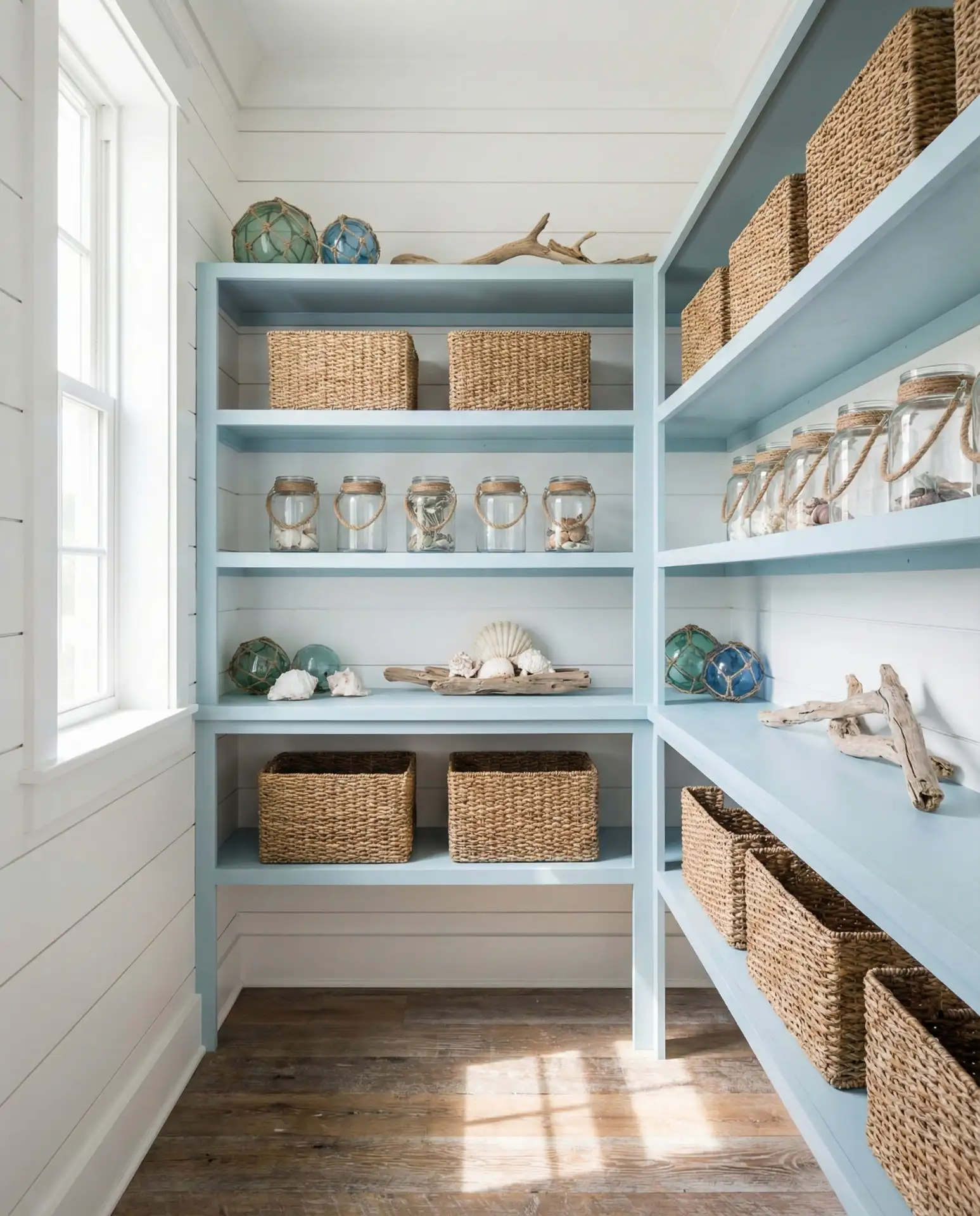
American lifestyle context: This design is predictably popular in actual coastal markets like Charleston, San Diego, and Cape Cod, but it’s equally beloved in Arizona and Texas where homeowners crave the cooling psychological effect of ocean-inspired palettes. The natural materials also align with the growing preference for sustainable, non-plastic storage solutions. Avoid the temptation to go overboard with nautical decor—a few well-chosen elements create the mood without veering into theme-park territory.
8. Large Family-Scale Pantry
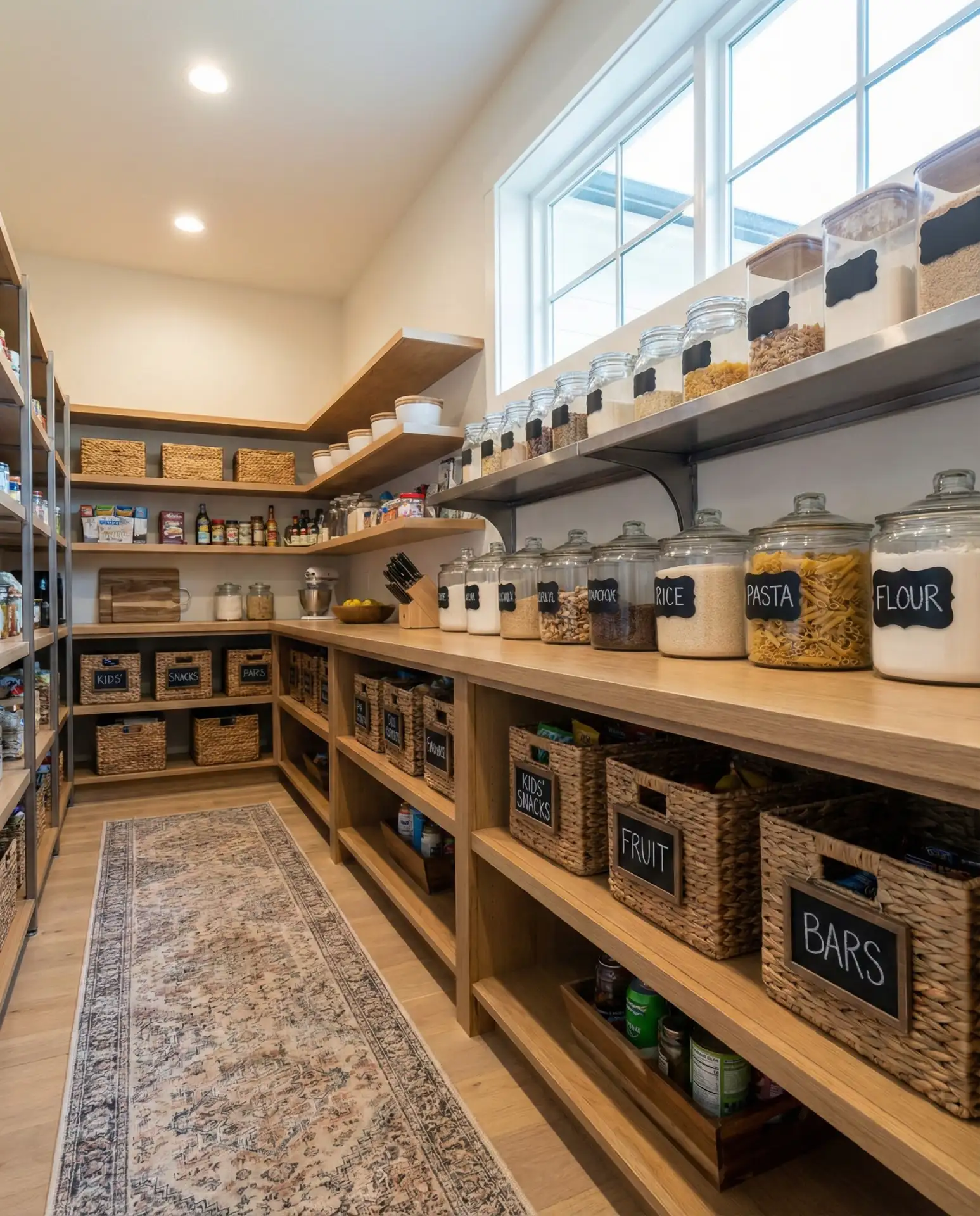
A large walk-in pantry designed for families with kids needs durable, easy-to-clean surfaces and zones for everyone’s favorites. Lower shelves hold snacks and lunch supplies that children can grab independently, while upper shelves store bulk ingredients and special occasion items. Layout storage bins should be clearly labeled with both words and pictures for pre-readers, making cleanup a shared responsibility rather than a parental burden. 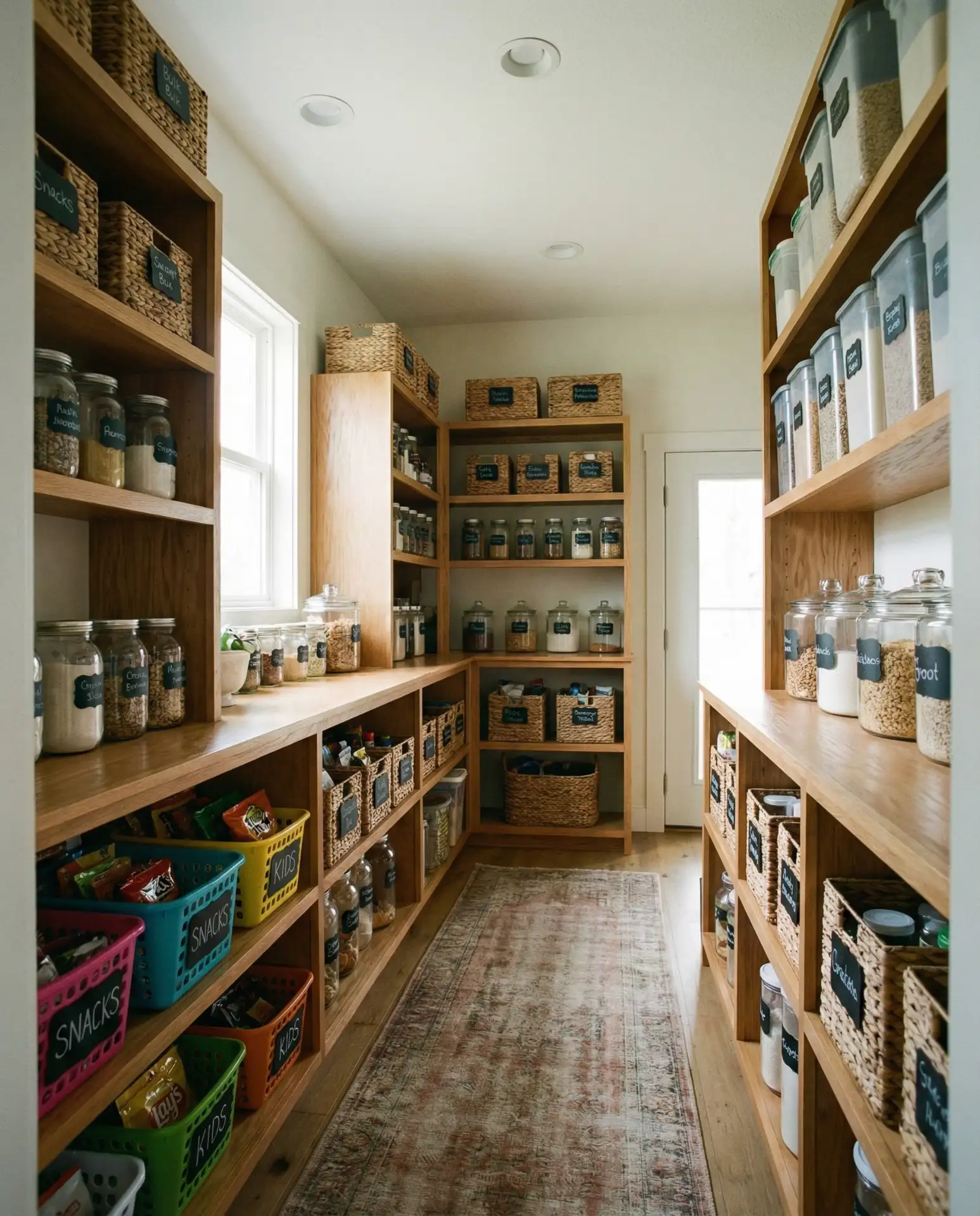
Real homeowner behavior: Families who meal prep on Sundays often dedicate one entire shelving unit to pre-portioned containers for the week ahead, treating the pantry like a personal mini-mart. The most successful large pantries include a small countertop or fold-down surface for packing lunches or sorting groceries, eliminating the need to haul everything to the kitchen island. Parents repeatedly mention that transparent storage containers reduce the “I can’t find it” complaints by about 80%.
9. Tiny Space Maximization
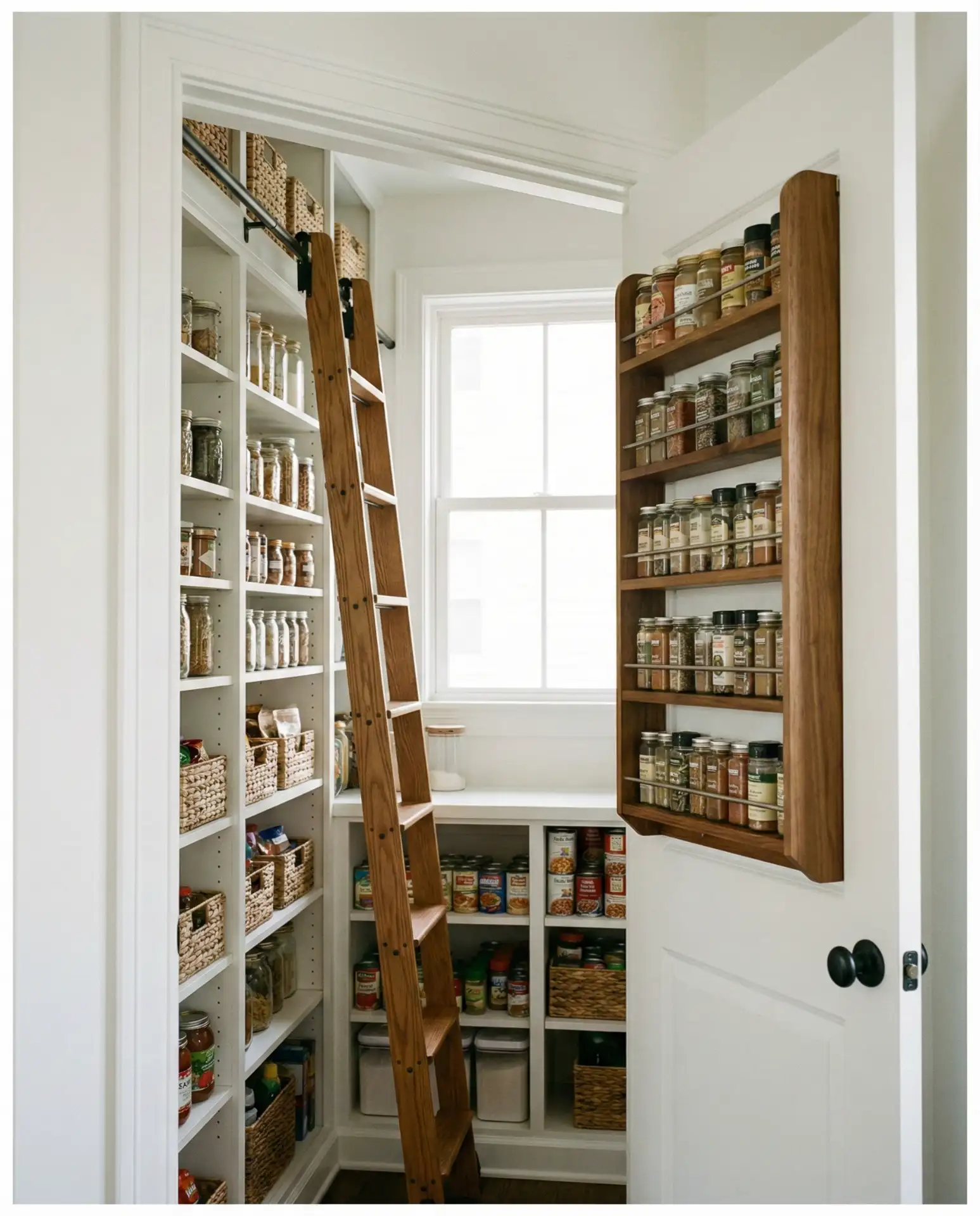
A tiny walk-in pantry—sometimes just 4 by 5 feet—proves that smart design beats square footage every time. Vertical shelving extends all the way to the ceiling with a rolling library ladder or sturdy step stool for access. Door-mounted racks capture valuable real estate on the back of the entry, holding spices, oils, and other lightweight items that would otherwise consume precious shelf depth. 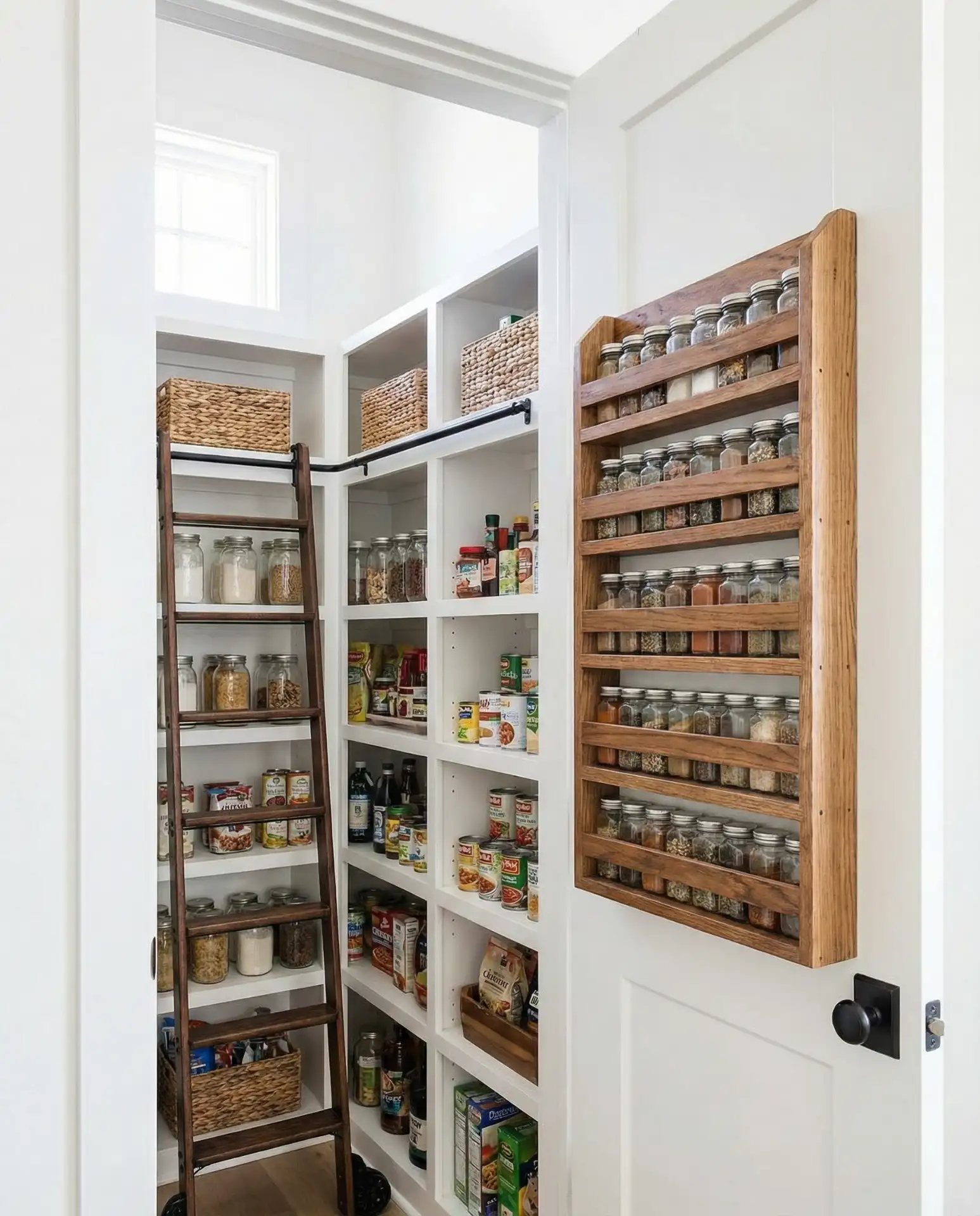
Common mistakes: The biggest error in tiny pantries is installing shelves that are too deep—anything over 10 inches means items disappear into the back abyss. Homeowners also forget about vertical clearance and install shelves at fixed heights, wasting space above short items like spice jars. Instead, use adjustable track systems that let you reconfigure as needs change, and group items by height to avoid empty air gaps between shelves.
10. Countertop Work Station
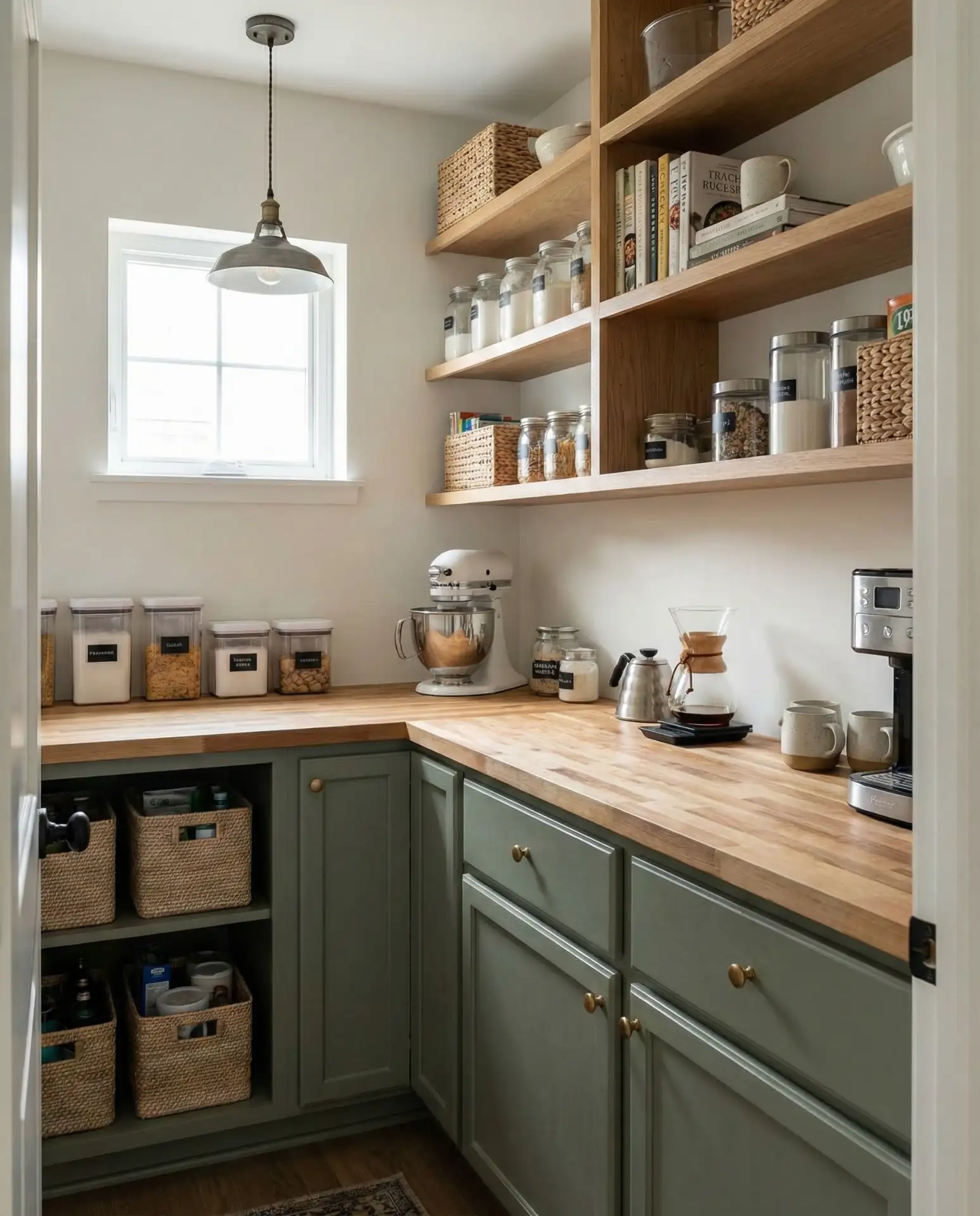
A walk-in pantry with layout counter tops becomes a functional prep zone, not just storage. Install a butcher block or quartz surface at standard counter height (36 inches) for unpacking groceries, assembling lunch boxes, or housing small appliances like coffee makers and stand mixers. This keeps your main kitchen counters free for actual cooking while giving you a dedicated space for the messy work of meal planning. 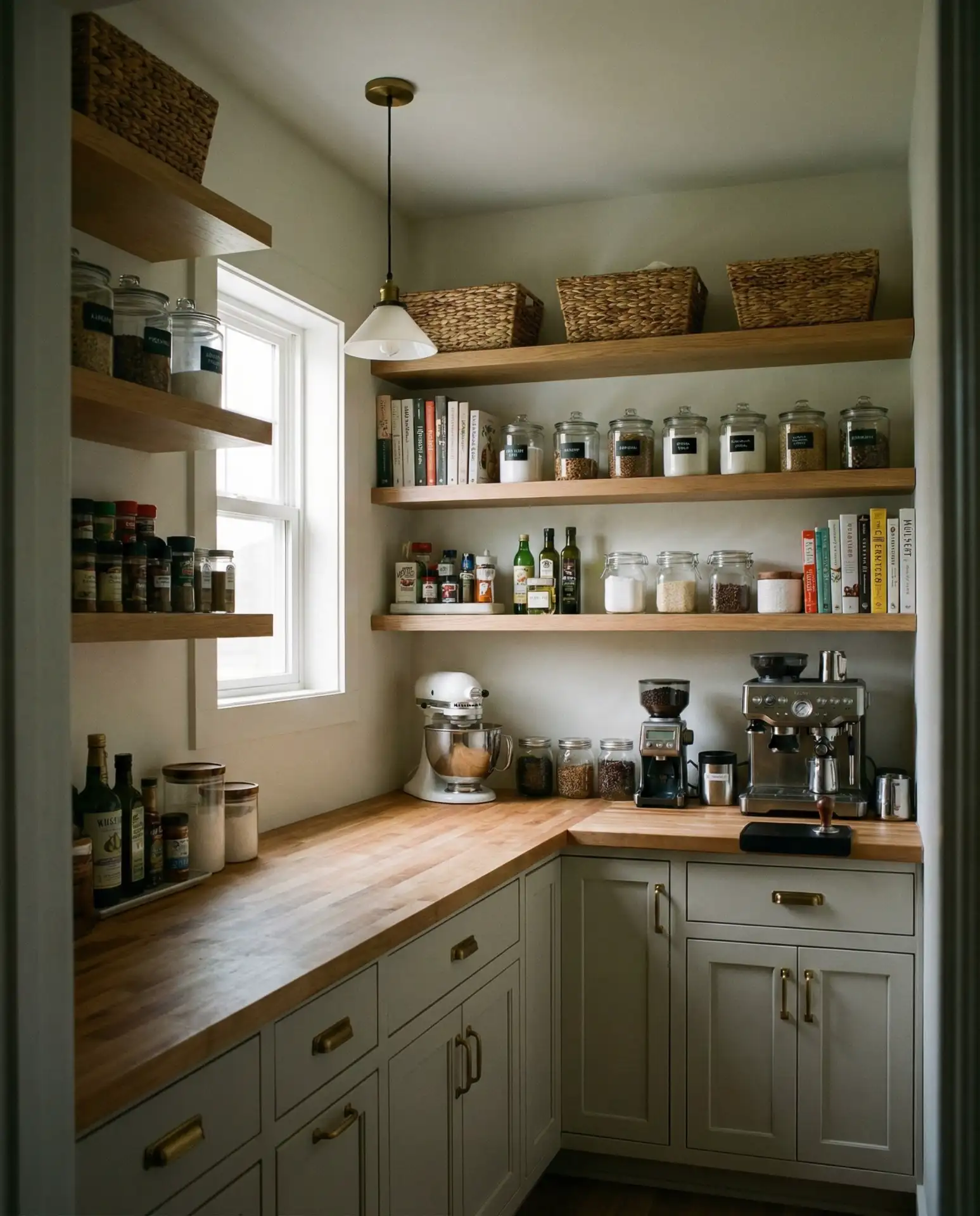
Micro anecdote: A Portland family converted their pantry counter into a dedicated baking station, storing flour, sugar, and mixing bowls within arm’s reach of their KitchenAid mixer. They report that having everything in one spot cut their cookie-baking prep time in half and eliminated the need to haul heavy ingredients across the kitchen. The counter also doubles as a landing zone for grocery bags, making unloading the car a one-trip operation.
11. Shaped for Efficiency
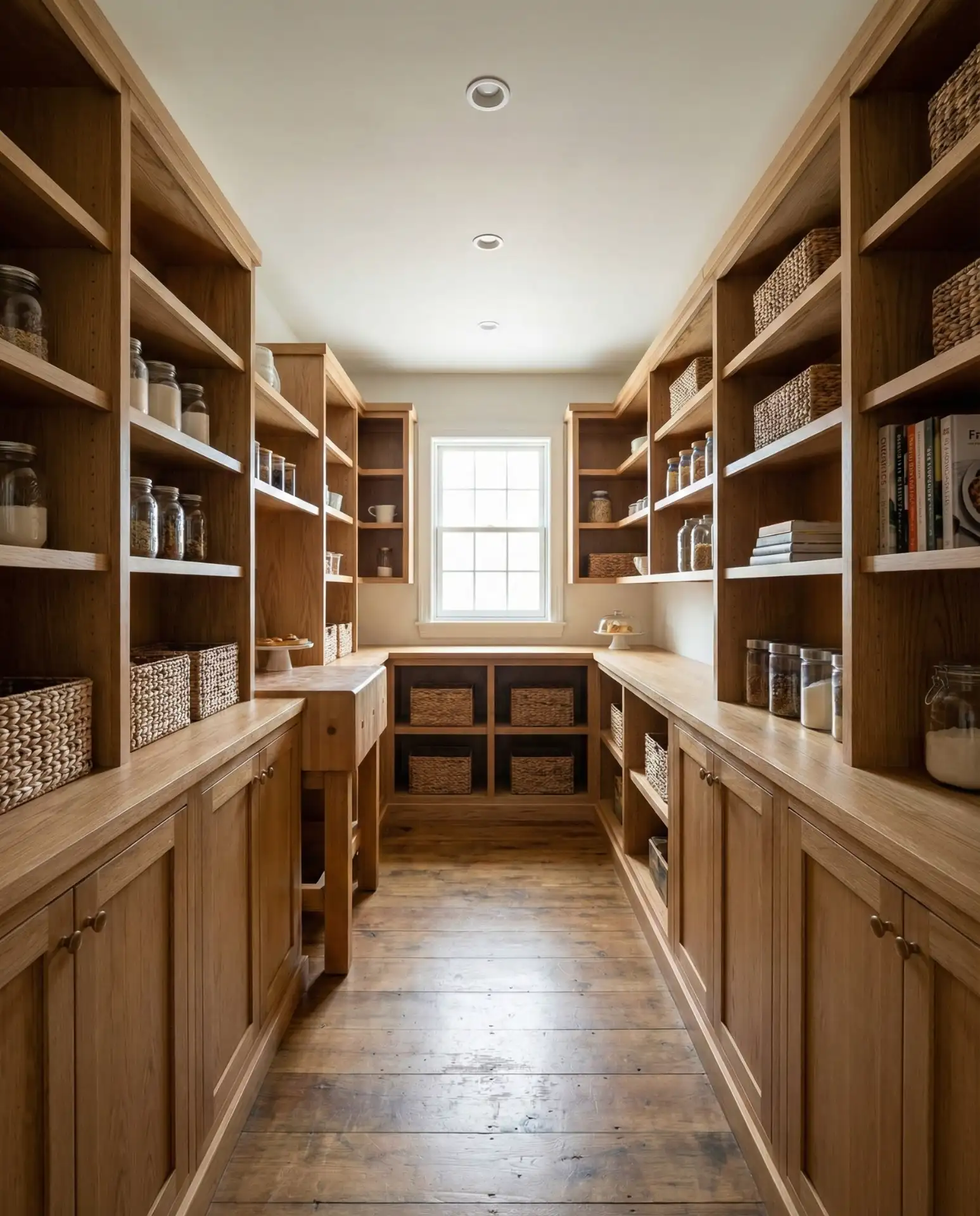
A shaped pantry layout—whether U-shaped, L-shaped, or galley-style—should match your traffic patterns and the items you store most frequently. U-shaped configurations provide maximum storage but require at least 6 feet of width to avoid feeling cramped. The layout size determines which shape works best: narrow spaces favor galley designs, while square footage allows for more creative arrangements with center islands or peninsula storage. 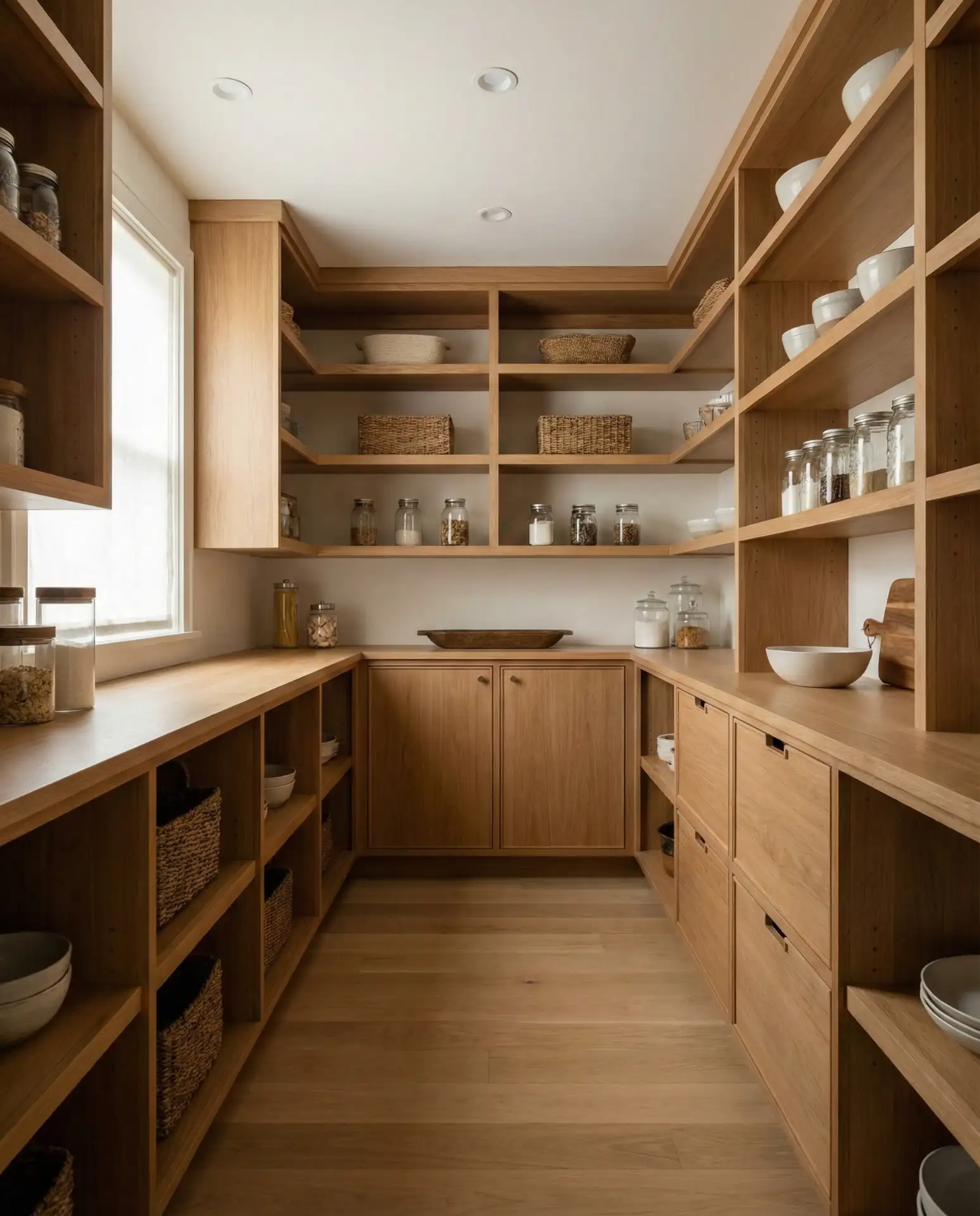
Where it works best: U-shaped pantries excel in corner locations where you have access to three contiguous walls, common in newer construction homes with thoughtful floor plans. L-shaped designs work better in retrofits where you’re converting an existing closet or small bedroom. The key is maintaining a minimum 42-inch aisle width for comfortable movement—go narrower and you’ll constantly bruise your elbows on opposite shelves.
12. House Plans Integration
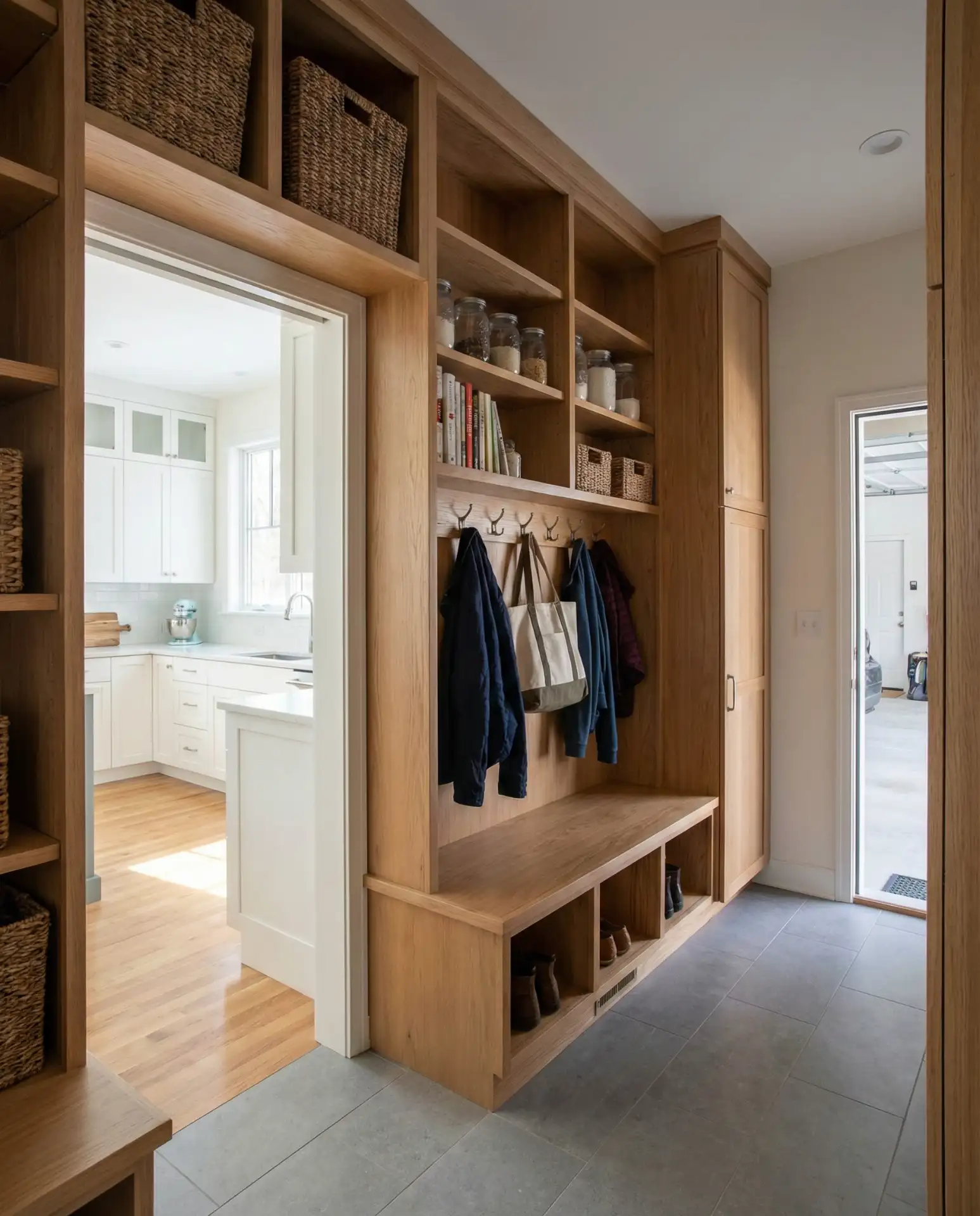
Building a walk-in pantry into new layout house plans from the start allows for electrical, lighting, and ventilation that retrofits can’t easily match. Position the pantry between the kitchen and garage for easy grocery unloading, or place it adjacent to the mudroom to create a “drop zone” for family members to grab snacks without tracking through the main living areas. Smart floor plans account for pantry access from multiple entry points, making it a hub rather than a dead-end closet. 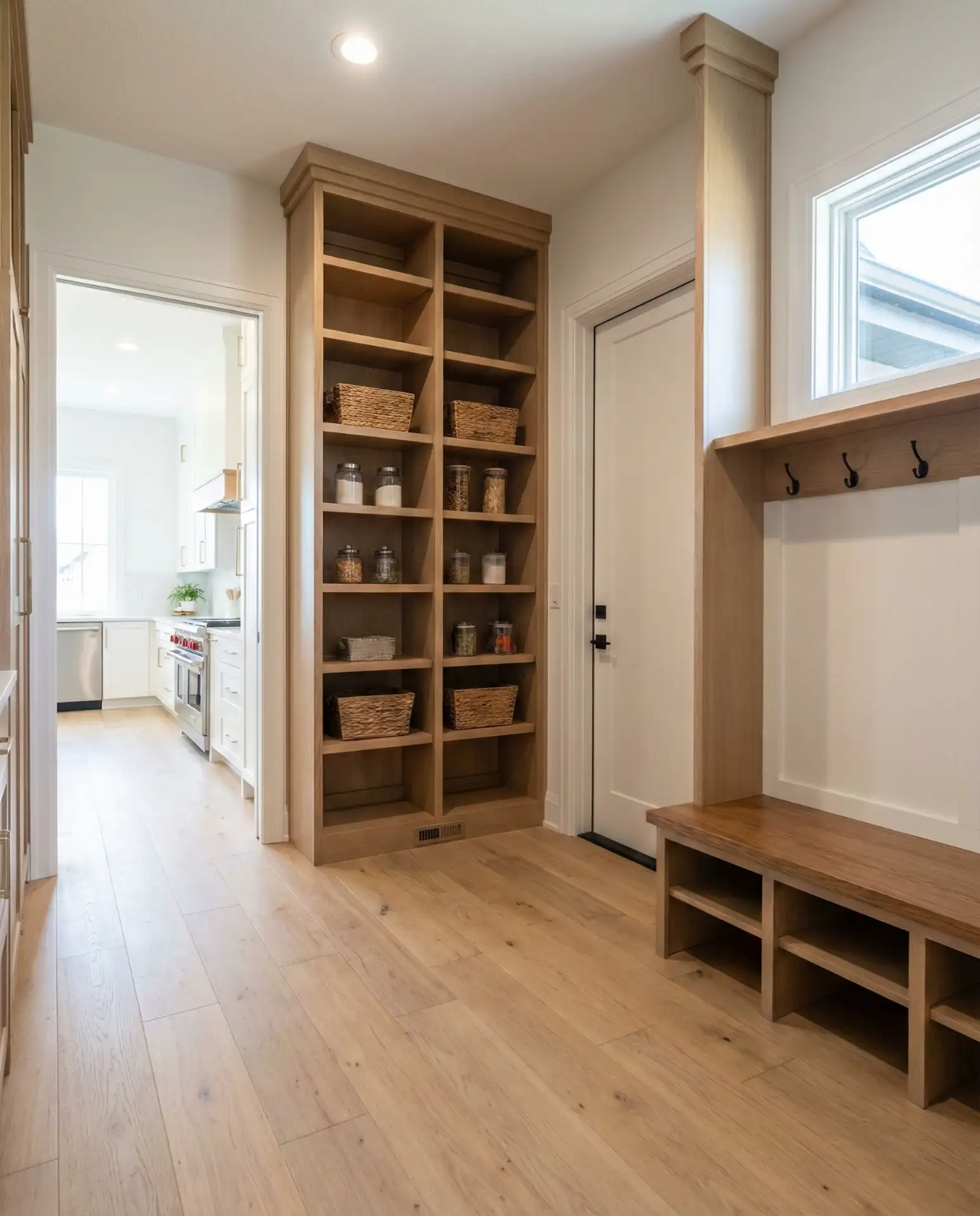
Regional context: Texas and Florida builders now include walk-in pantries as standard in most homes over 2,000 square feet, responding to buyer demand for storage in markets where basements are rare. In the Northeast, where older homes dominate, pantries get retrofitted into former servants’ quarters or underutilized dining rooms. Including the pantry in initial house plans also means you can properly size the electrical panel for future appliances and ensure adequate HVAC coverage.
13. Freezer Storage Integration
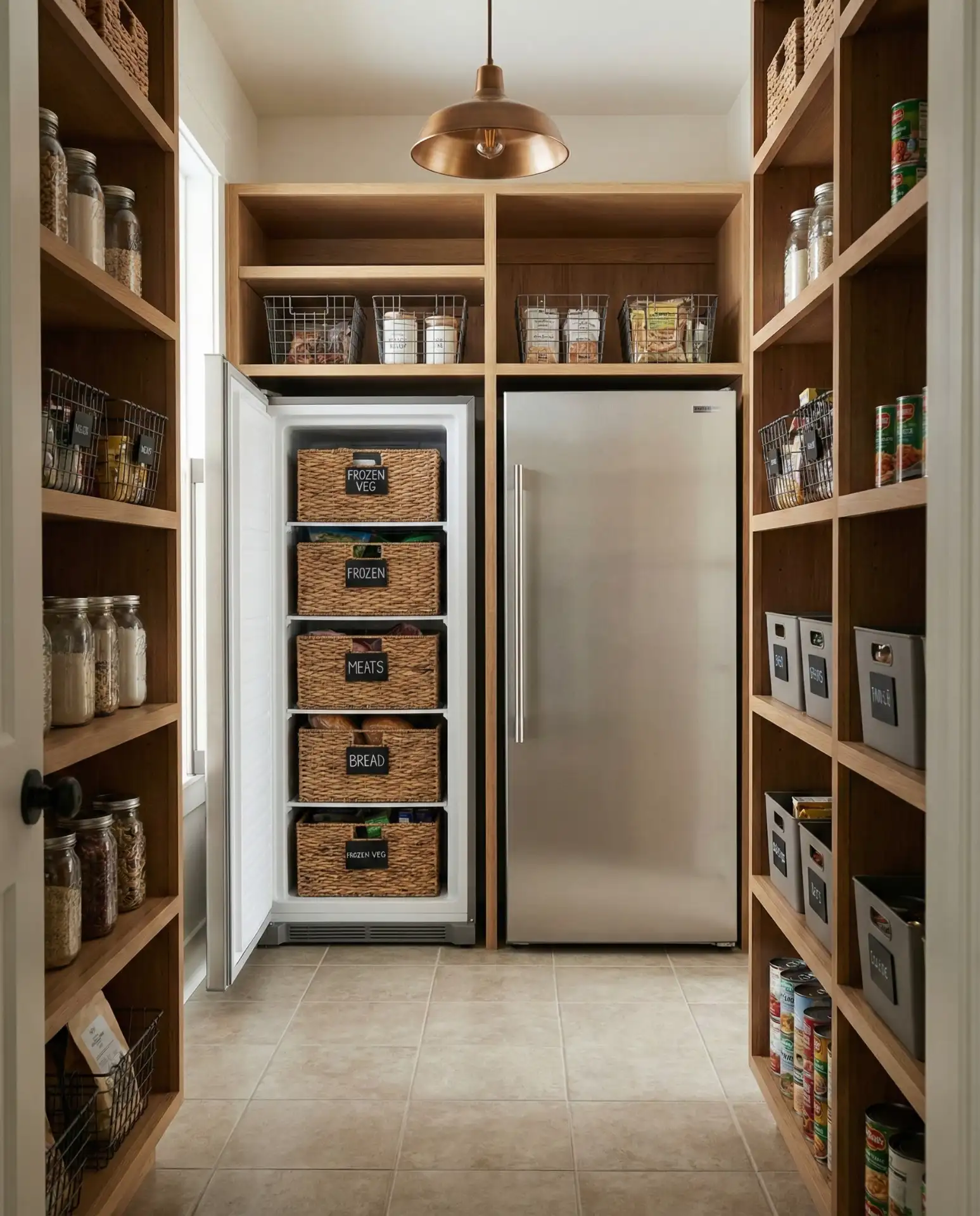
A layout with freezer turns your pantry into a complete food storage command center, particularly valuable for households that meal prep or buy in bulk. Upright freezers fit more naturally into pantry aesthetics than chest freezers, and positioning them on the same wall as your refrigerator simplifies electrical runs. This setup is especially practical in large suburban homes where a secondary freezer eliminates weekly grocery trips. 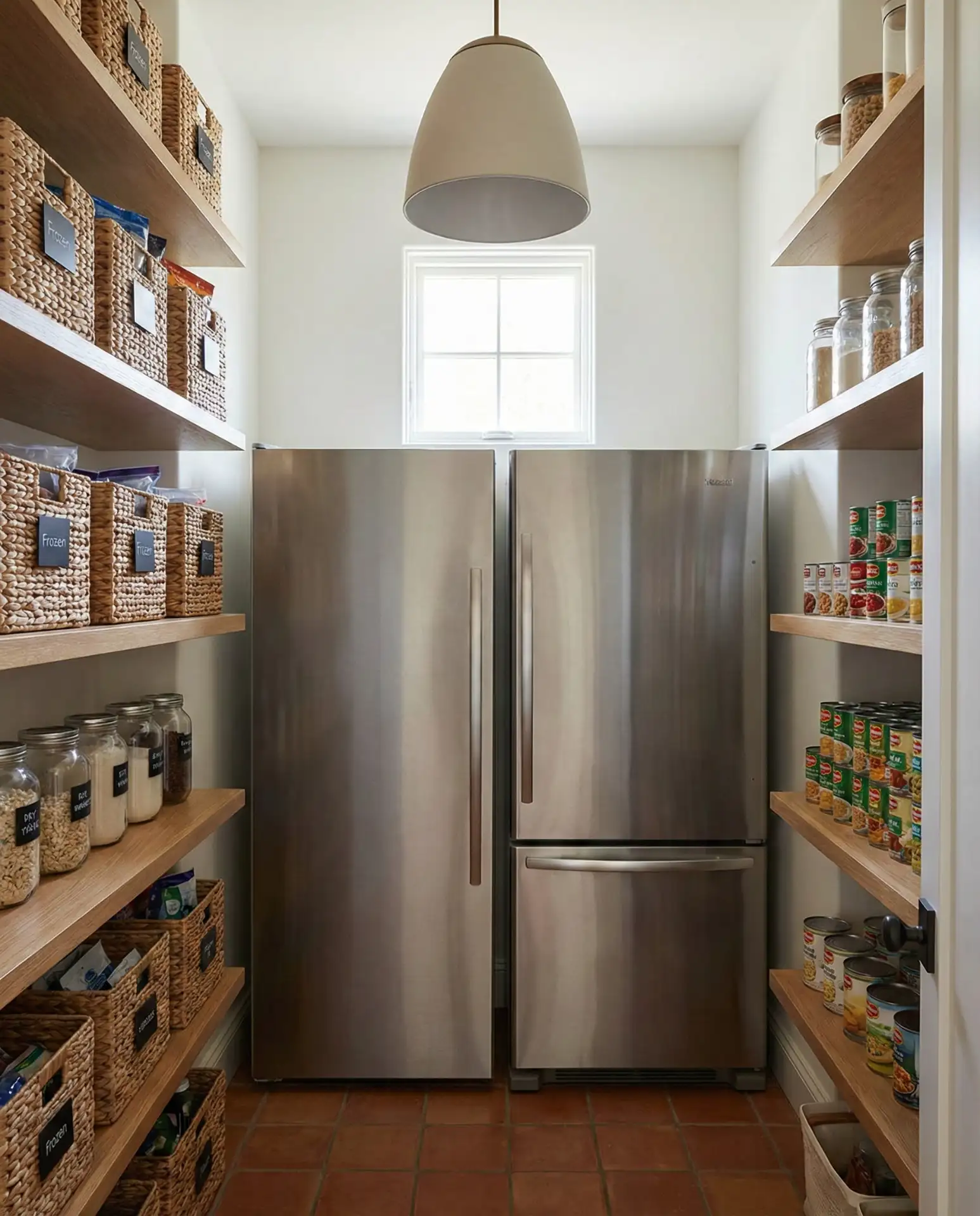
Practical insight: Upright freezers cost more initially but save space and make inventory management far easier than chest models—you’re not excavating through layers to find last month’s lasagna. Energy efficiency has improved dramatically in recent years; an Energy Star model adds only $3-5 monthly to your electric bill. Place a small basket or bin nearby for reusable ice packs and frozen gel packs so they’re handy for lunch boxes and coolers.
14. IKEA System Hack
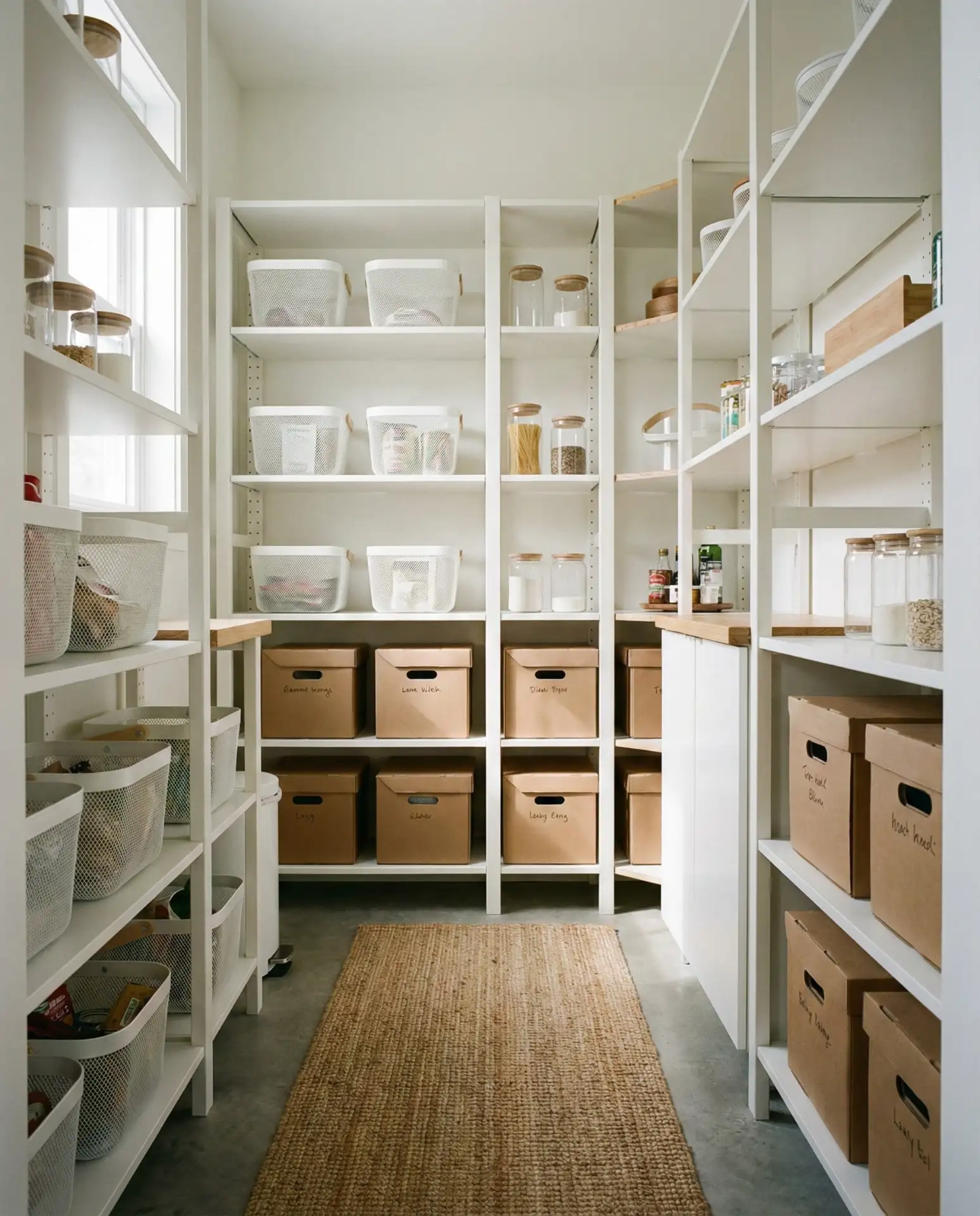
An Ikea pantry built around modular systems like ALGOT or BOAXEL delivers custom-pantry looks at flat-pack prices, typically running $400-800 for a complete installation. The Scandinavian aesthetic leans minimalist and clean, with white or light wood tones that brighten even windowless spaces. The track-based systems allow infinite adjustability—move shelves, drawers, and baskets as your storage needs evolve without drilling new holes or calling a contractor. 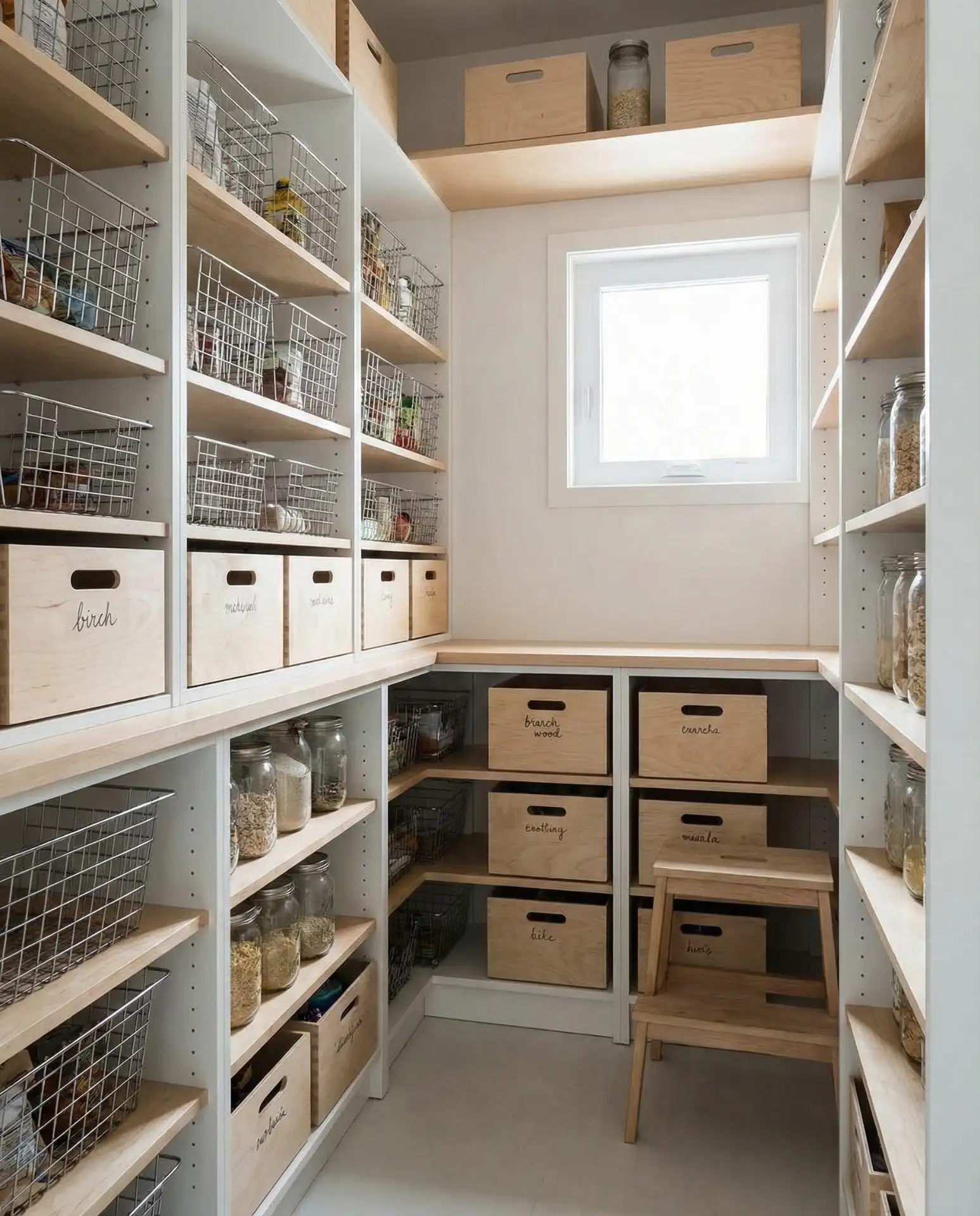
Budget angle: The IKEA approach costs roughly 40-60% less than comparable custom closet companies like California Closets or Closet Factory, with quality that’s more than adequate for pantry use. The main trade-off is installation time—budget a full Saturday for assembly and mounting, especially if you’re working alone. Pro tip: Buy extra clips and brackets beyond what the package includes; they’re cheap insurance and you’ll inevitably want to add one more shelf six months down the road.
15. Small Kitchen Adaptation
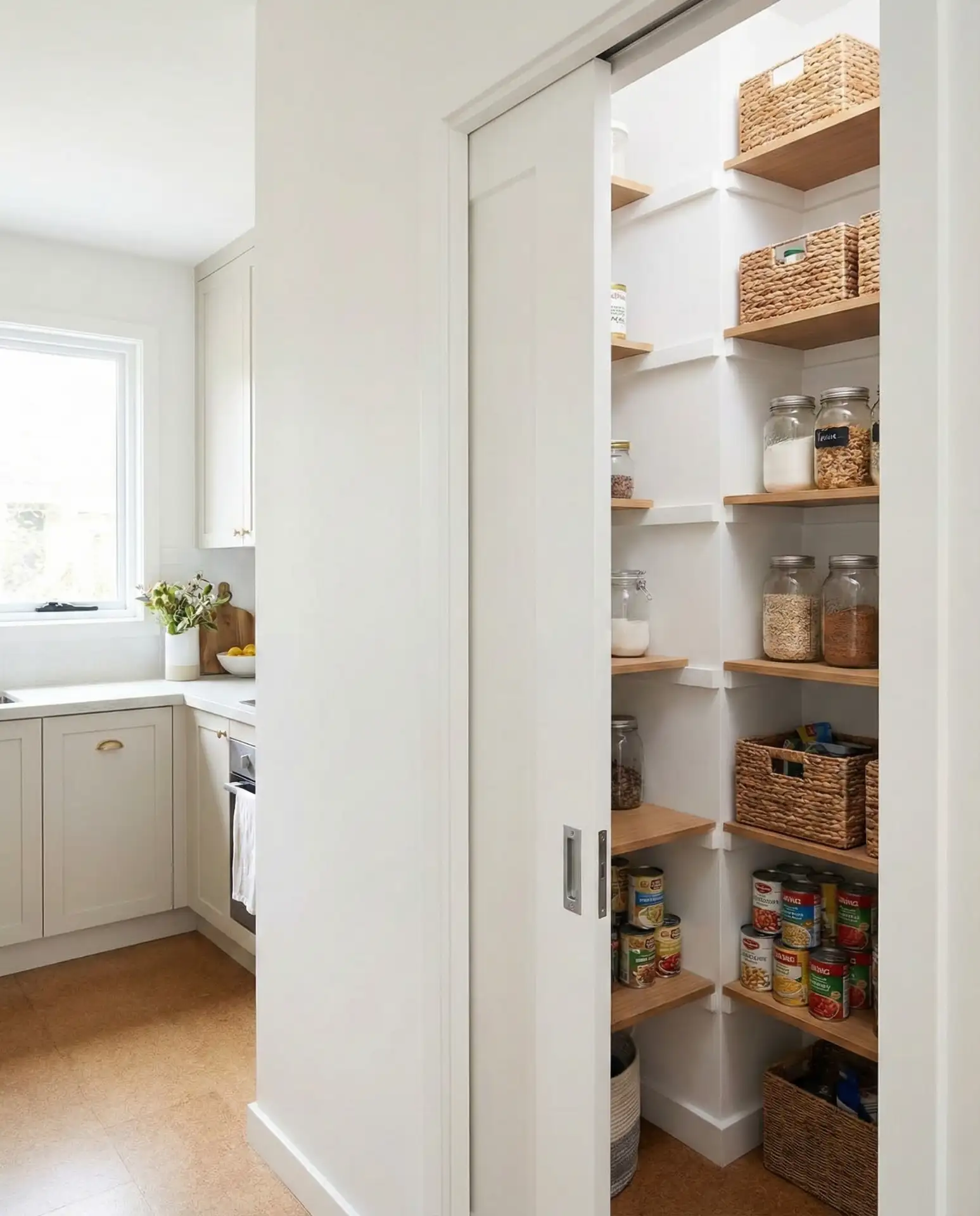
Creating a walk-in pantry for a layout small kitchen often means sacrificing a nearby coat closet, linen closet, or section of hallway—but the trade-off in kitchen function is almost always worth it. Even a modest 4-by-4-foot pantry removes enough clutter from a tight kitchen to make cooking significantly more pleasant. The key is choosing this investment early in a renovation so you can adjust door swings, electrical, and flooring cohesively. 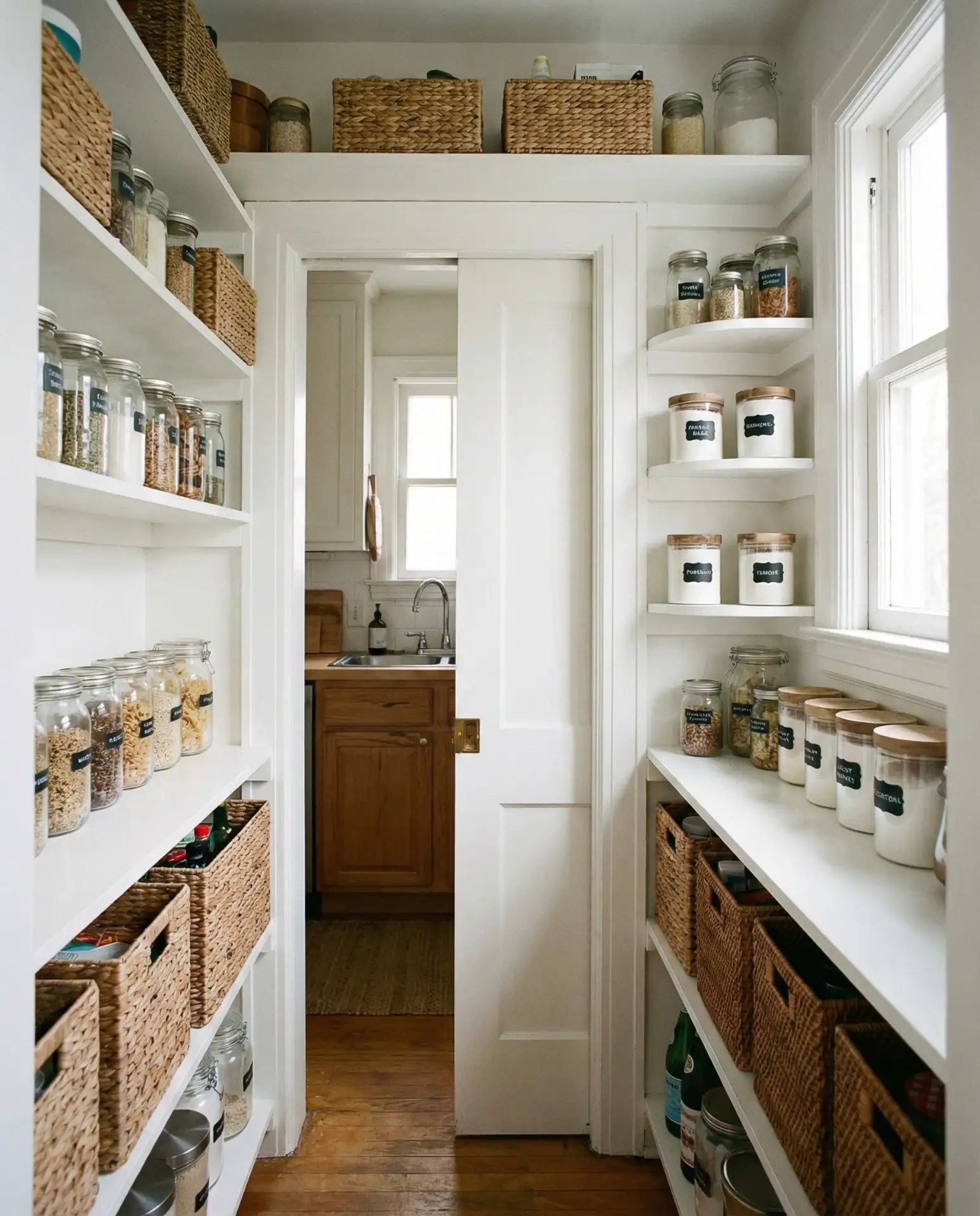
Common mistakes: Homeowners converting a coat closet to a pantry often forget that coats need to go somewhere else—make sure you have an alternative solution before demo day. Another frequent error is assuming any closet will work; pantries need at least 24 inches of clear depth after the door swing to be genuinely functional. If you’re truly space-constrained, a well-designed reach-in pantry with pull-out shelves might serve you better than a cramped walk-in that requires contortionist skills.
16. Windowless Bright Design
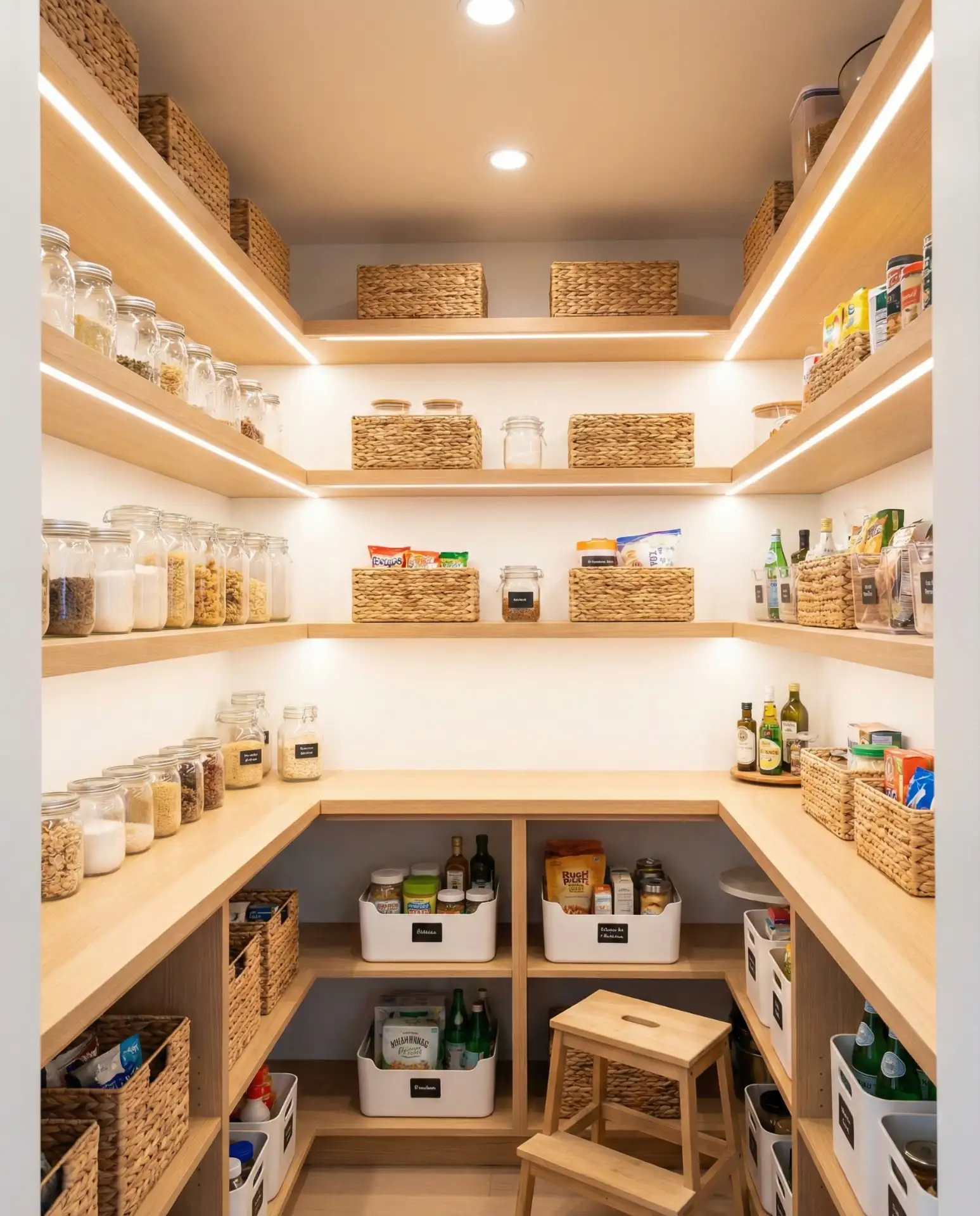
Most walk-in pantries lack natural light, making intentional lighting design critical for a space that feels inviting rather than dungeon-like. Layer your lighting with ceiling fixtures for overall illumination, LED strips under each shelf for task lighting, and possibly a statement pendant if ceiling height allows. Pair strong lighting with simple white or light-colored paint to maximize reflection and create the illusion of a window-lit space. 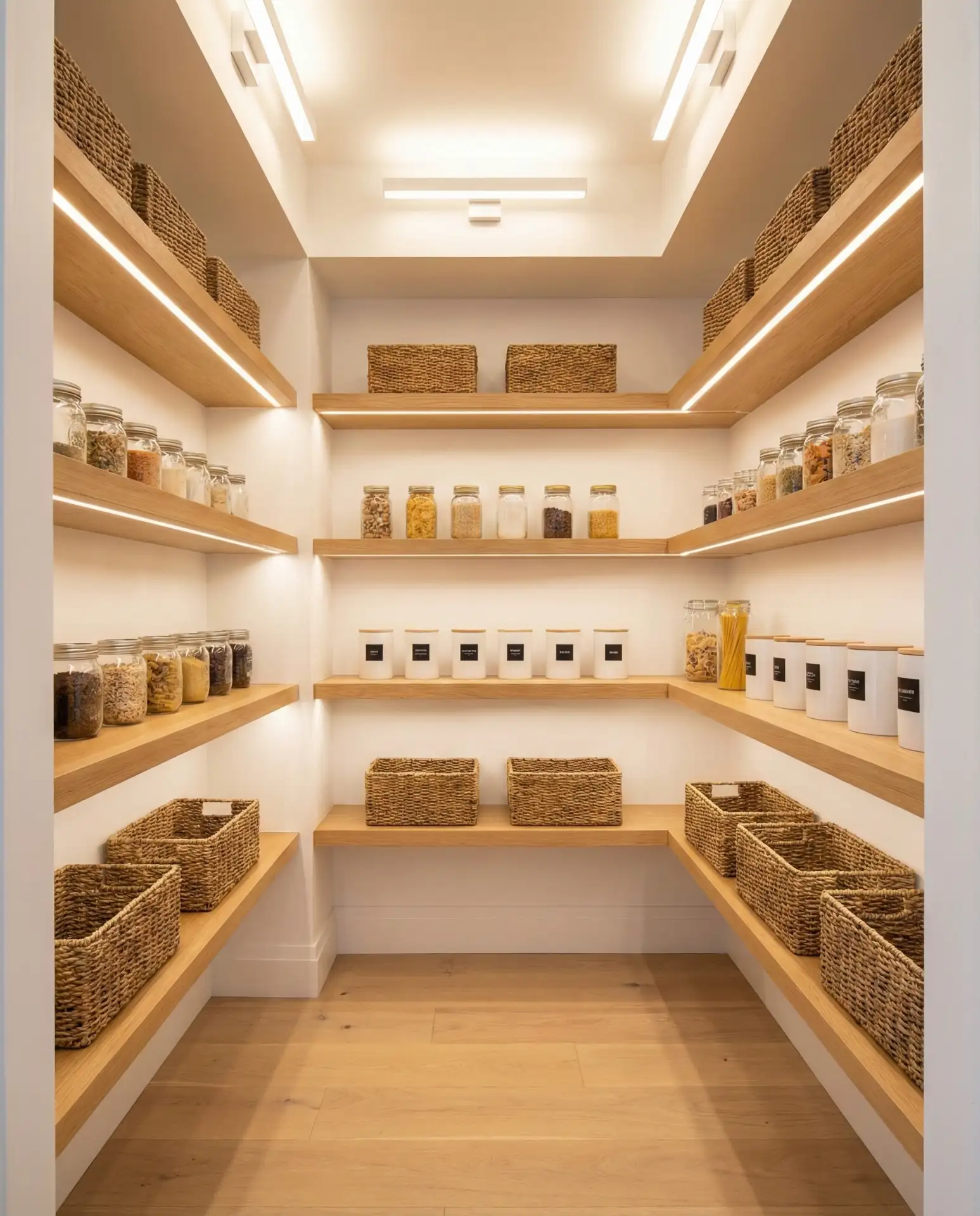
Expert commentary: Lighting designers recommend a minimum of 50 foot-candles (500 lumens) for pantry tasks like reading labels and finding items quickly. Motion-sensor switches are game-changers for pantries—you enter with arms full of groceries and the lights automatically come on, then shut off to save energy when you leave. Color temperature matters too; choose 3000-4000K bulbs for a neutral white that renders food colors accurately without the clinical harshness of daylight bulbs.
17. Multipurpose Hybrid Space
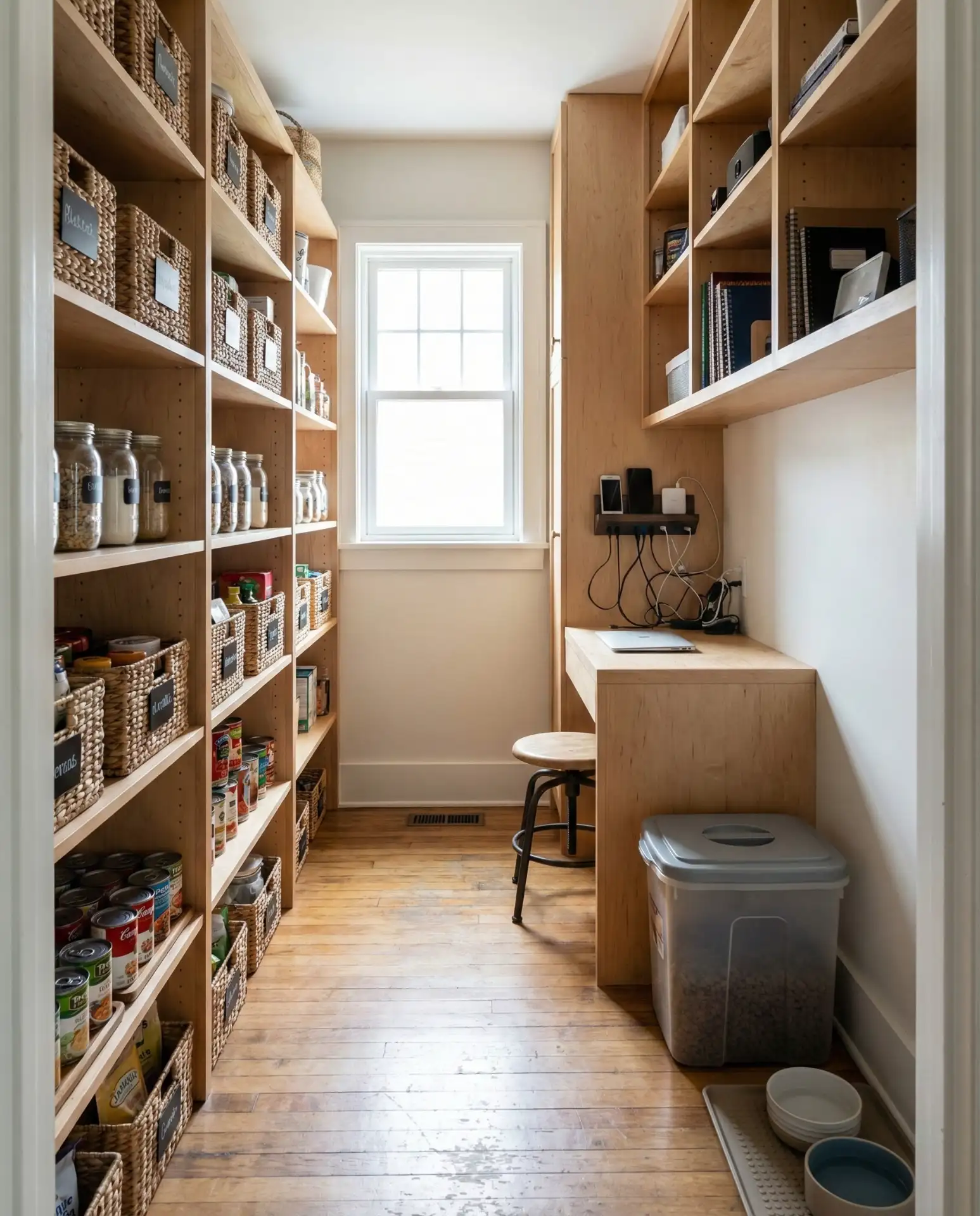
A hybrid pantry combines food layout storage with other household functions—maybe a charging station for devices, a gift-wrap supply zone, or a pet food station with built-in bowls. This approach makes sense in large pantries where you have excess space, or in homes where storage is at such a premium that every room pulls double duty. The key is clear zoning so food storage doesn’t get contaminated by non-food items like cleaning supplies or pet accessories. 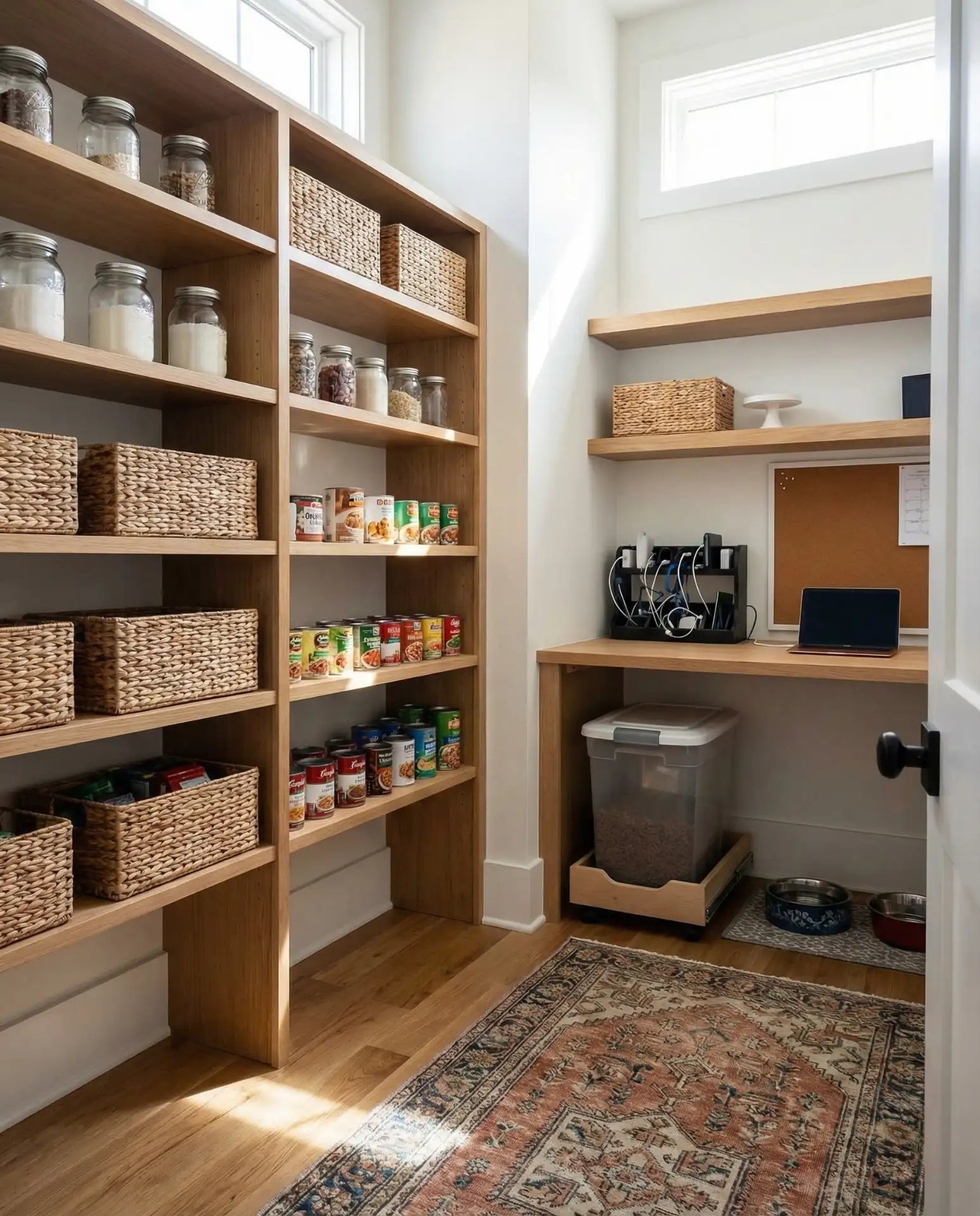
Real homeowner behavior: Families with pets increasingly dedicate a lower pantry section to dog or cat supplies, keeping kibble in sealed containers and storing leashes, medications, and grooming supplies in labeled baskets. The proximity to the kitchen makes feeding routines more efficient, and the closed door keeps curious pets out when you’re not around. Some homeowners add a small sink for filling water bowls or rinsing food dishes, though this requires plumbing access and proper drainage.
18. Open Shelving Showcase
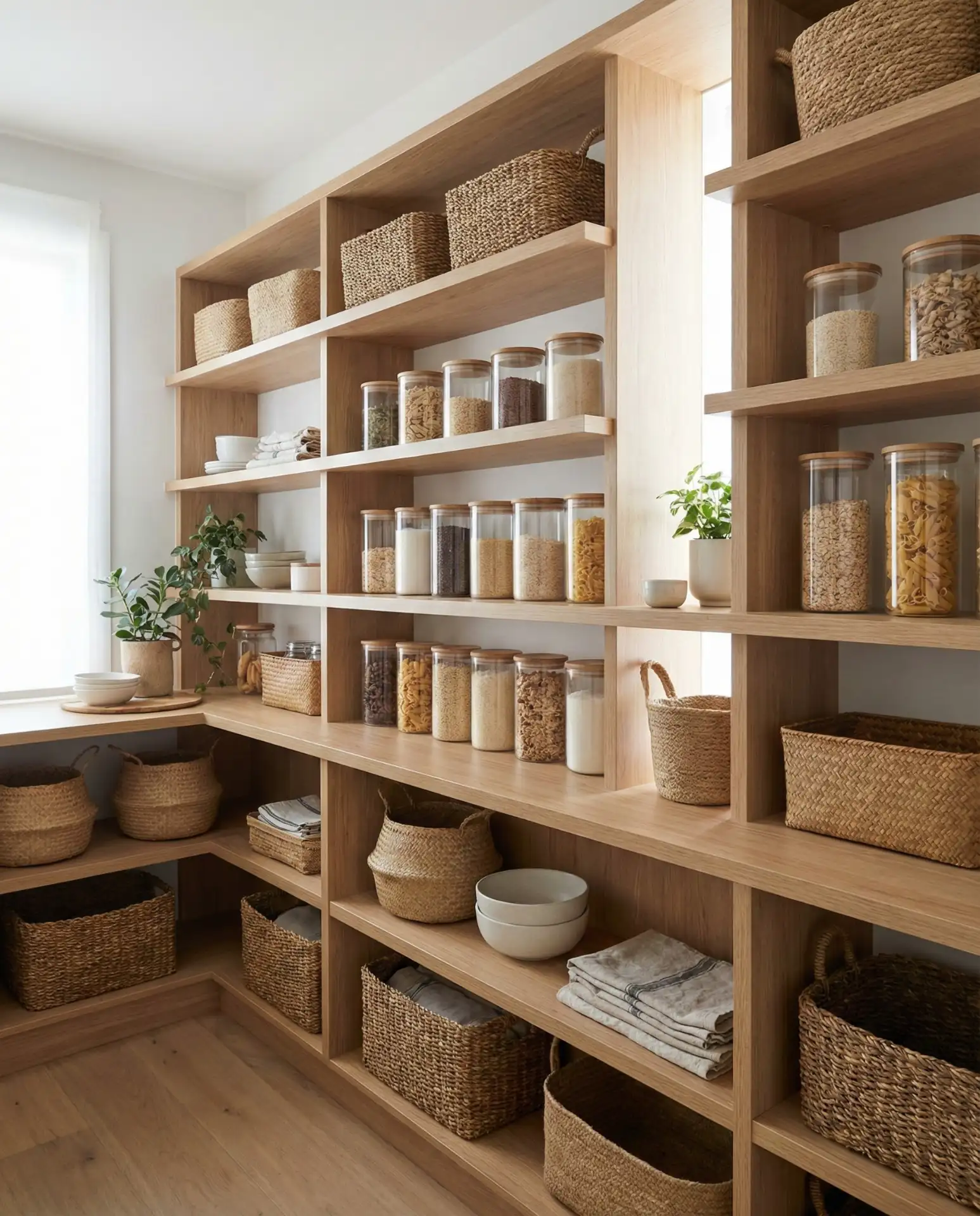
Open layout shelves without doors create an Instagram-worthy pantry that celebrates beautiful packaging and encourages organization through visibility. This modern approach works best when you commit to decanting staples into uniform containers and maintaining a cohesive color story with labels and baskets. The aesthetic reward is high, but so is the maintenance demand—dust accumulates on exposed shelves, and every item is constantly on display. 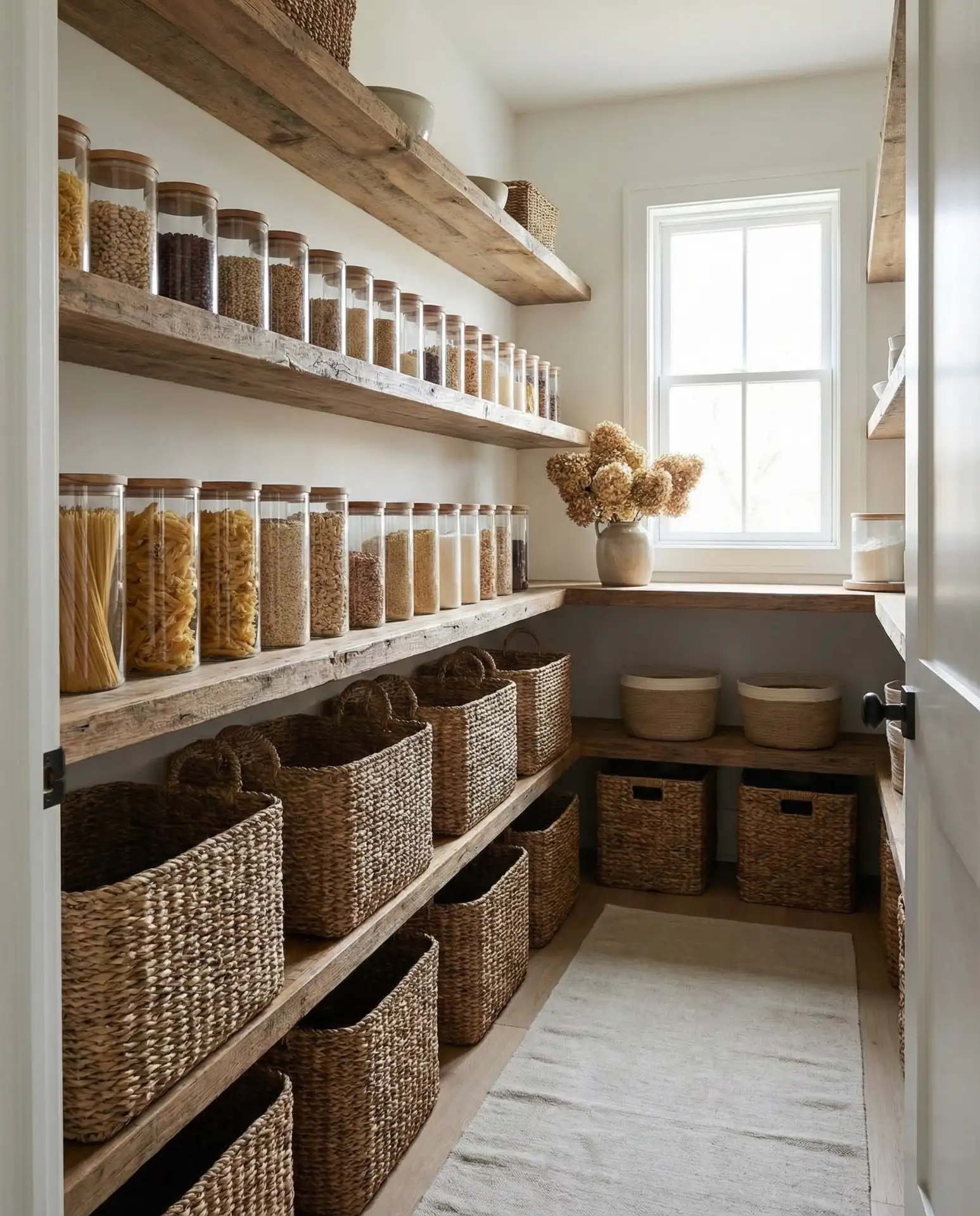
Micro anecdote: A Nashville designer keeps her pantry camera-ready by dedicating 30 minutes every Sunday to “pantry reset”—wiping shelves, rotating stock, and transferring new purchases into matching containers. She admits it’s extra work but says the visual calm makes cooking more enjoyable throughout the week. Her advice: start with open shelving only if you genuinely enjoy organizing as a hobby, not because Pinterest made you feel like you should.
19. Farmhouse Country Style
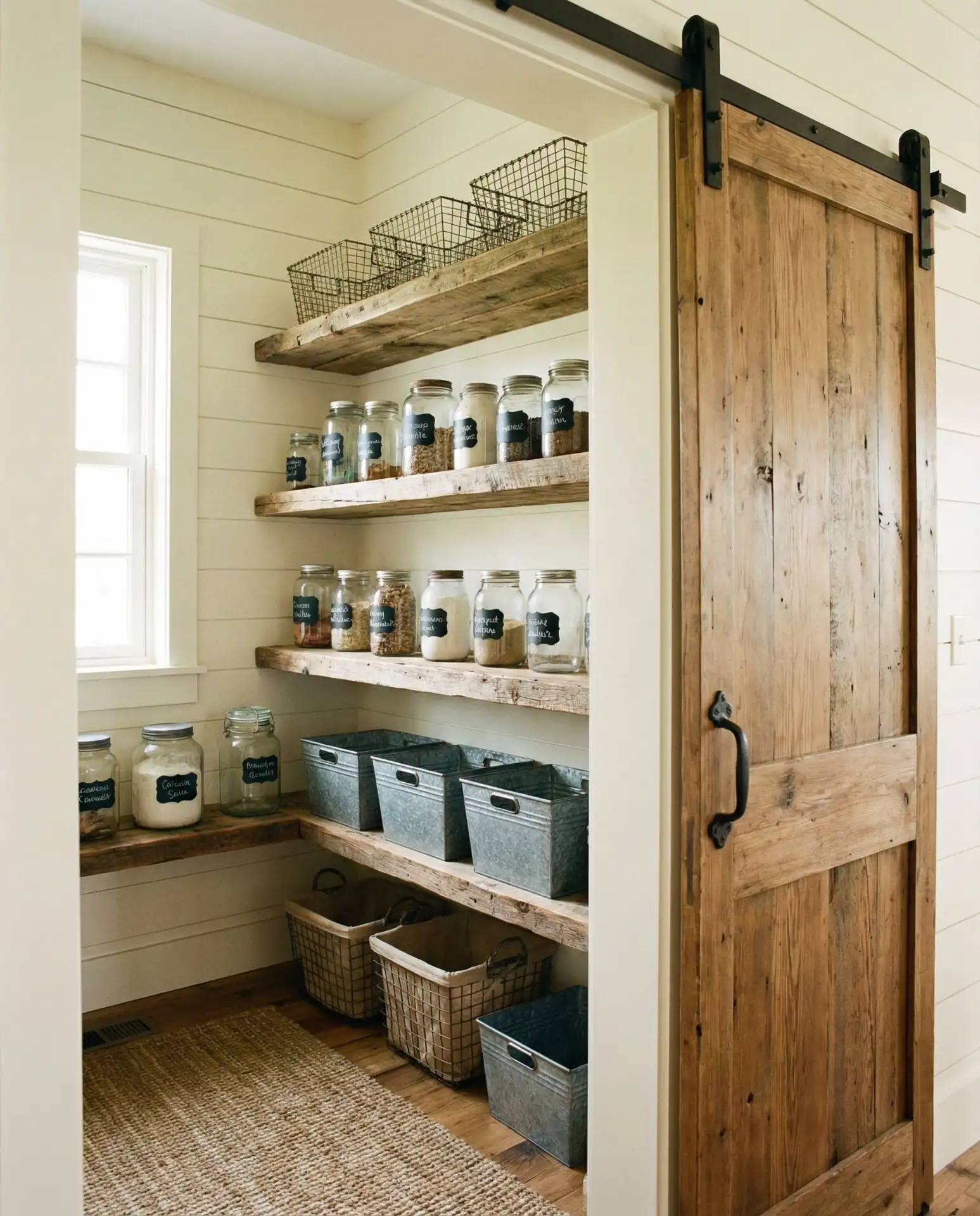
A farmhouse pantry embraces rustic charm through reclaimed wood shelves, barn door entries, and vintage-inspired hardware. Wire baskets, galvanized metal bins, and handwritten chalkboard labels create a collected-over-time aesthetic that feels warm and personal. This style pairs naturally with diy projects since imperfections and variations in materials actually enhance the authentic, lived-in quality that farmhouse design celebrates. 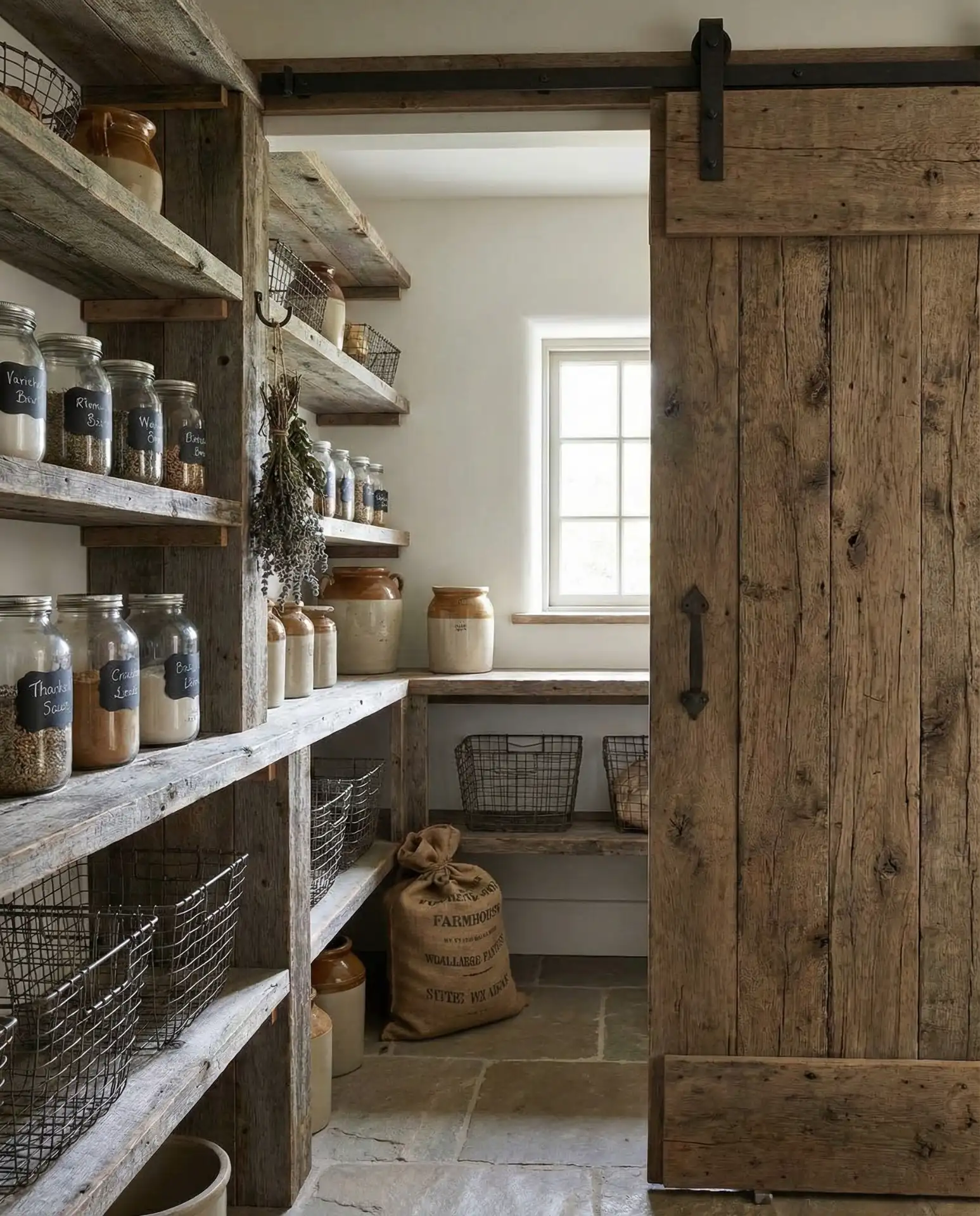
American lifestyle: The farmhouse aesthetic resonates across rural and suburban markets, but it’s particularly strong in the South and Midwest where it connects to regional heritage and agricultural roots. Even in cities, transplants from smaller towns gravitate toward this style because it evokes memories of grandparents’ kitchens and simpler times. The key to avoiding kitschy overload is restraint—choose two or three farmhouse elements and let them shine rather than filling every surface with distressed signs and mason jars.
20. Professional Chef-Style
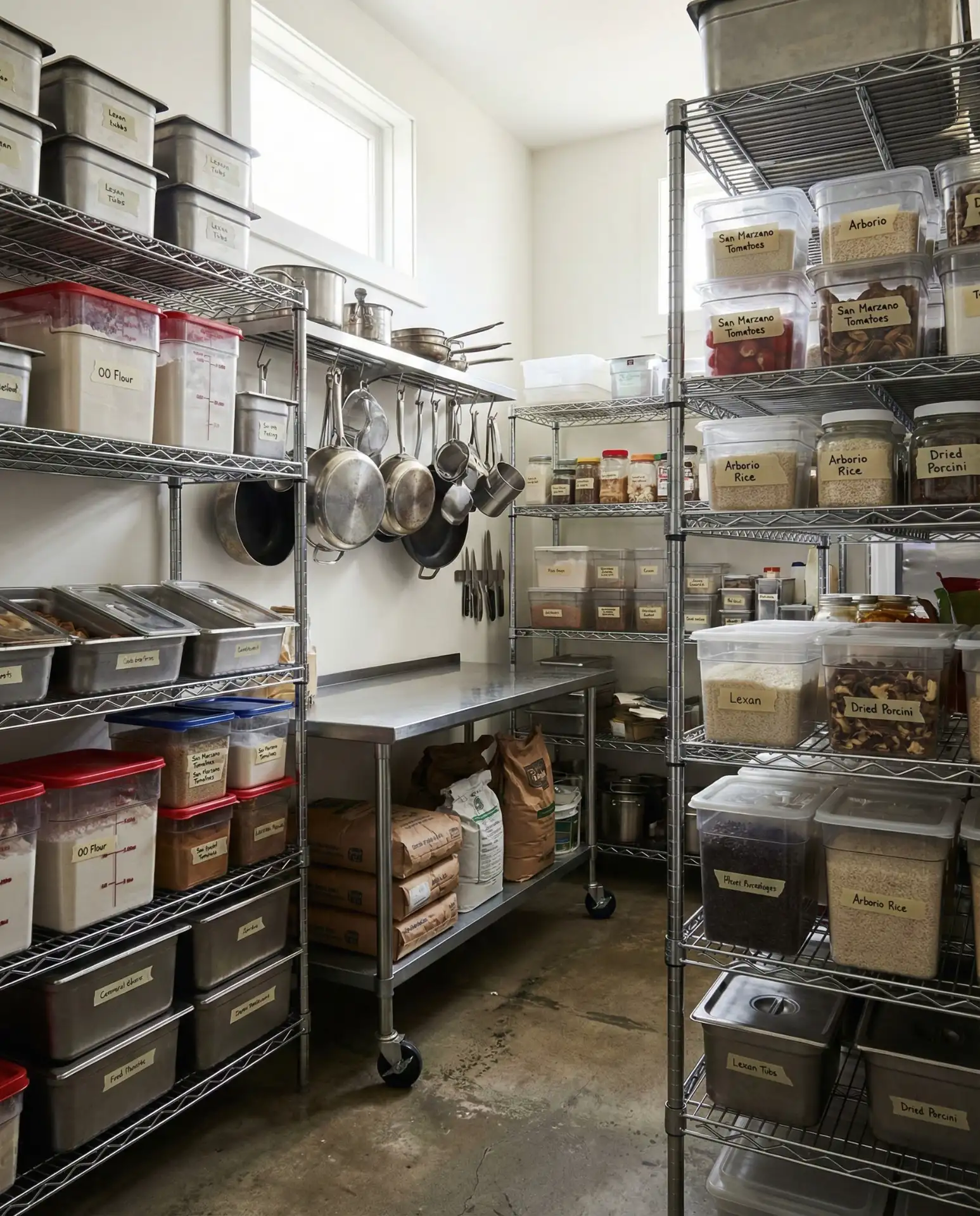
A chef-inspired pantry prioritizes function over aesthetics with commercial-grade wire shelving, restaurant-style ingredient storage, and zones organized by cooking task rather than package type. This layout storage approach groups baking supplies together, international ingredients by cuisine, and frequently-used items at eye level following professional kitchen logic. The result looks less styled but works extraordinarily efficiently for people who cook seriously and often. 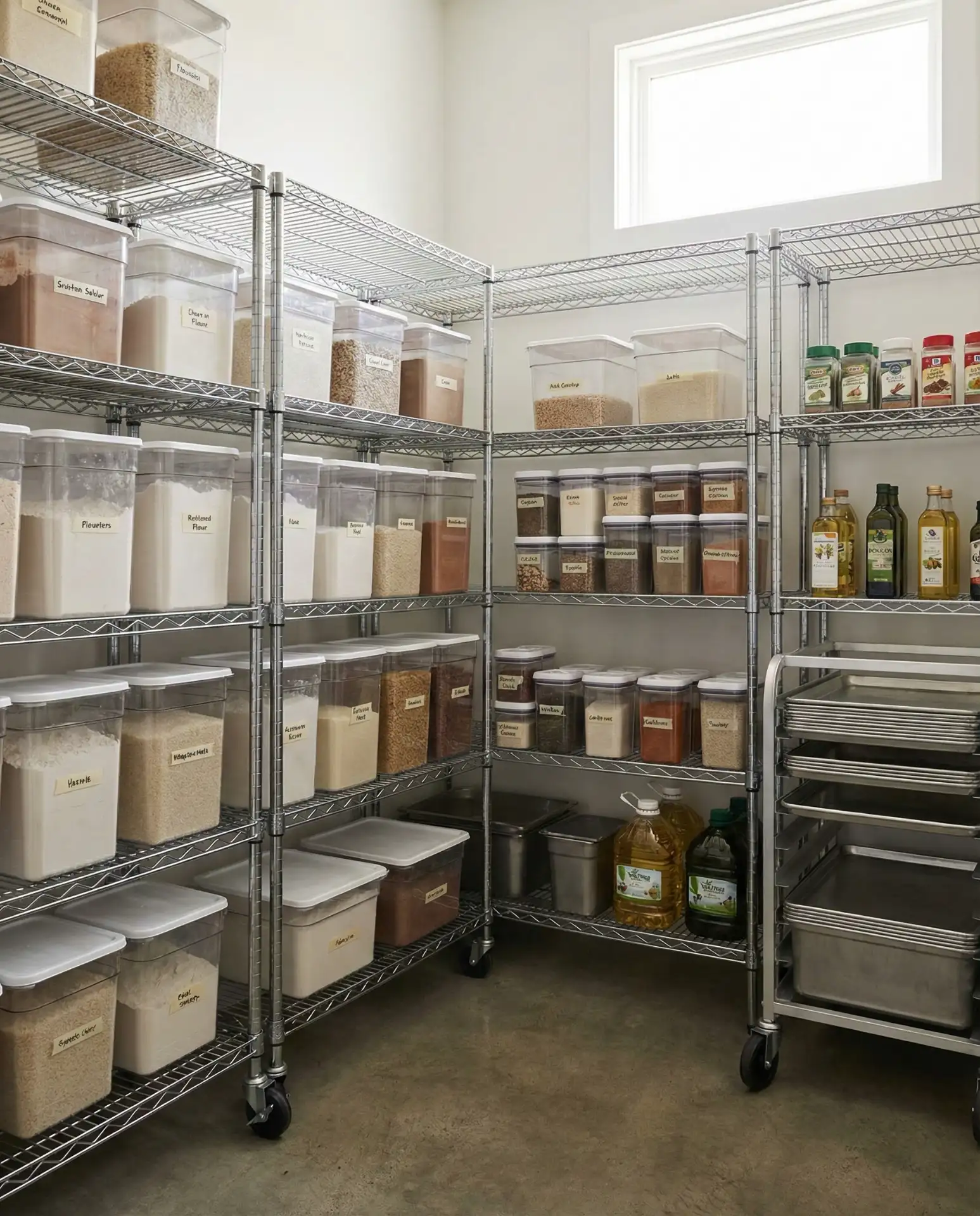
Where it works best: Serious home cooks and food bloggers who maintain extensive spice collections and specialty ingredients benefit most from this approach. The wire shelving (often from restaurant supply stores) costs less than custom wood shelving and allows better air circulation, reducing mustiness in humid climates. This style embraces visible inventory—you want to see exactly how much rice or flour remains at a glance, just like checking the walk-in cooler during a restaurant shift.
21. Luxury Custom Build
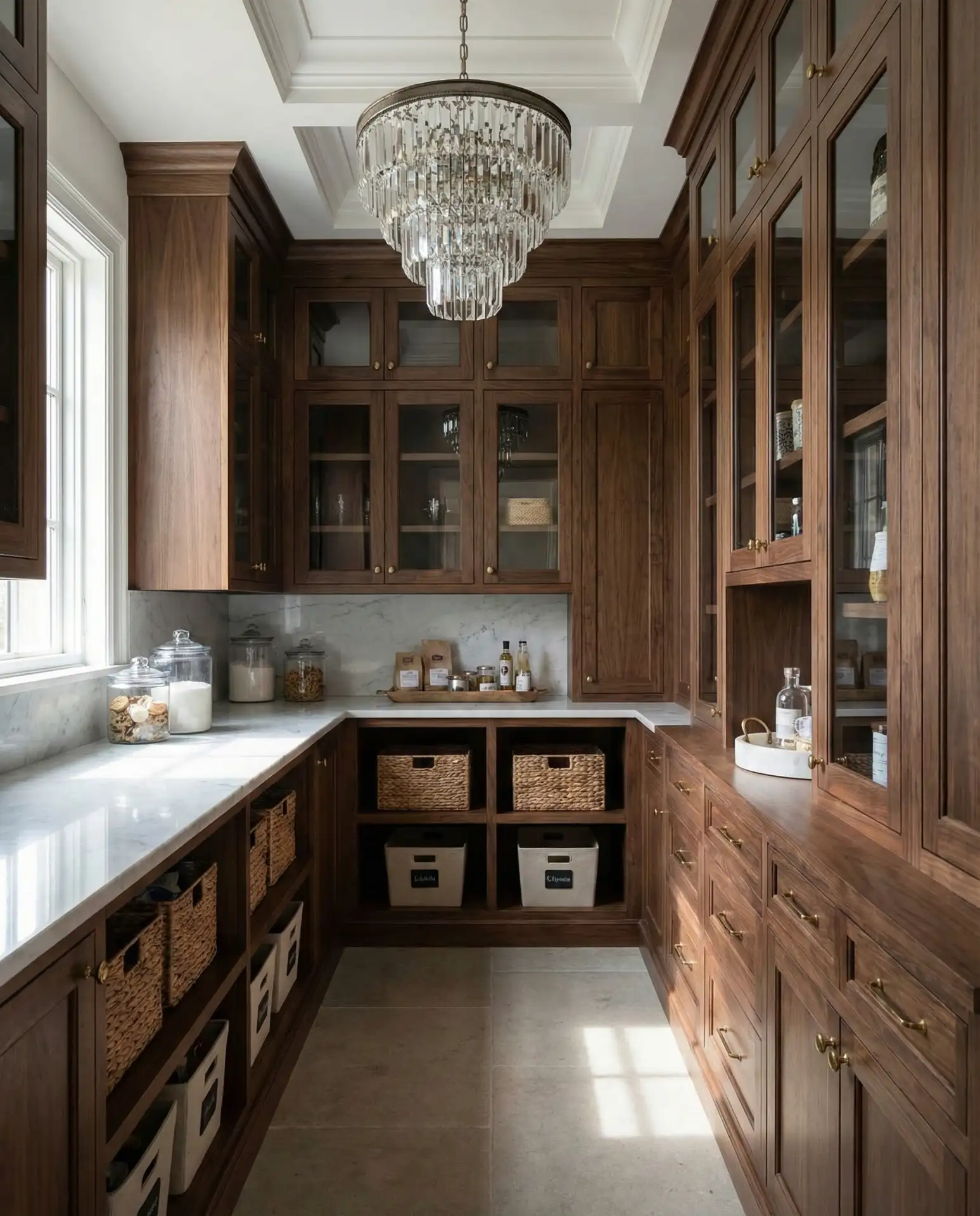
A luxury walk-in pantry incorporates premium materials like custom hardwood cabinetry, stone counter tops, and integrated lighting systems controlled by smartphone apps. Glass-front upper cabinets showcase beautiful dishware and specialty ingredients, while soft-close drawers and pull-out shelves make every item accessible without bending or stretching. This investment typically runs $8,000-$20,000+ depending on finishes, but it transforms a utilitarian storage space into a jewel box that adds genuine resale value. 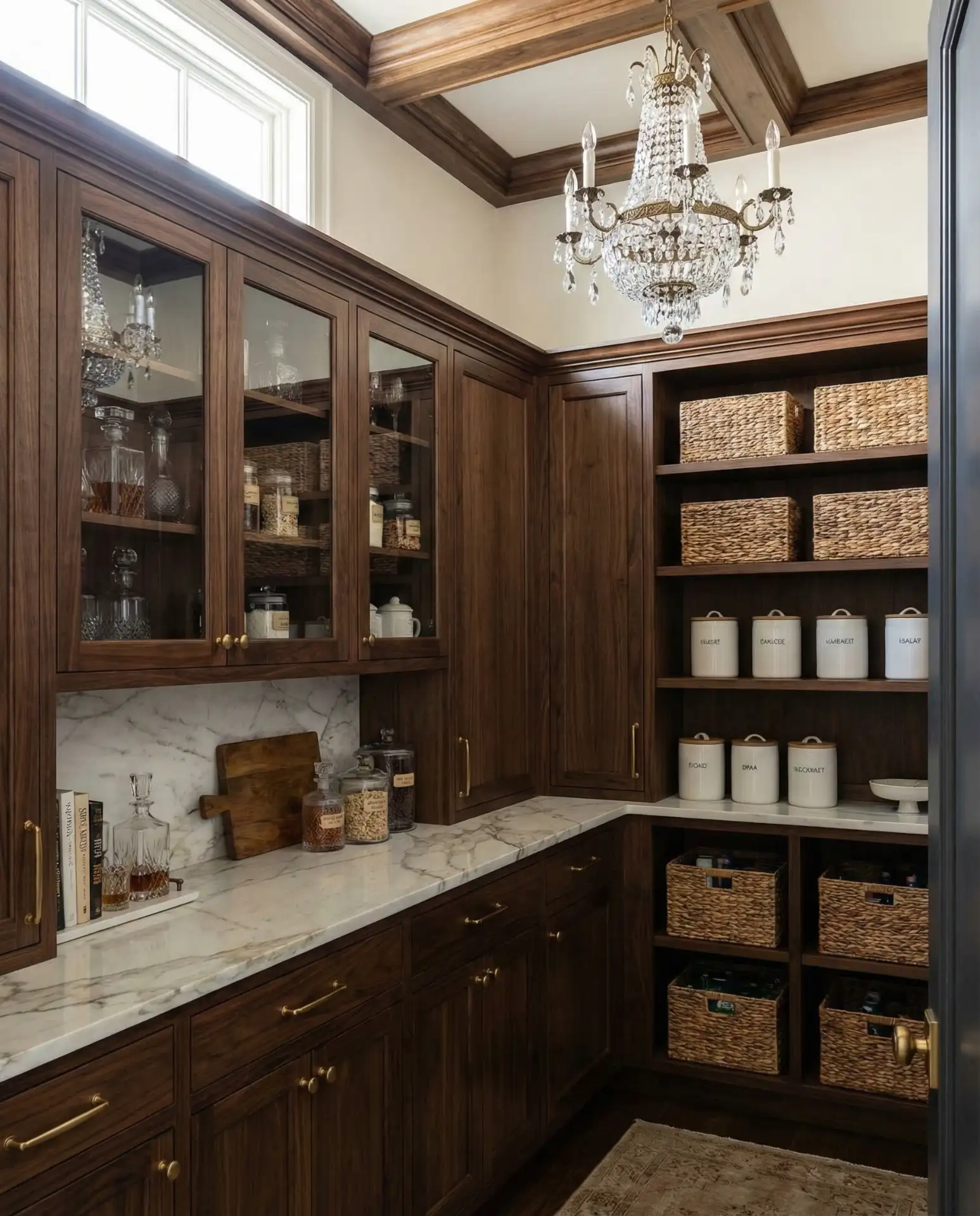
Budget perspective: High-end pantries hold their value better than many kitchen renovations because they address a pain point (storage) that every homeowner understands. If you’re planning to sell within five years, focus upgrades on excellent lighting and quality cabinetry hardware over ultra-premium countertop materials. The ROI is strongest in markets where homes over $500K routinely include walk-in pantries—buyers expect them and will ding offers if the pantry is missing or poorly executed.
22. Zero-Waste Organization
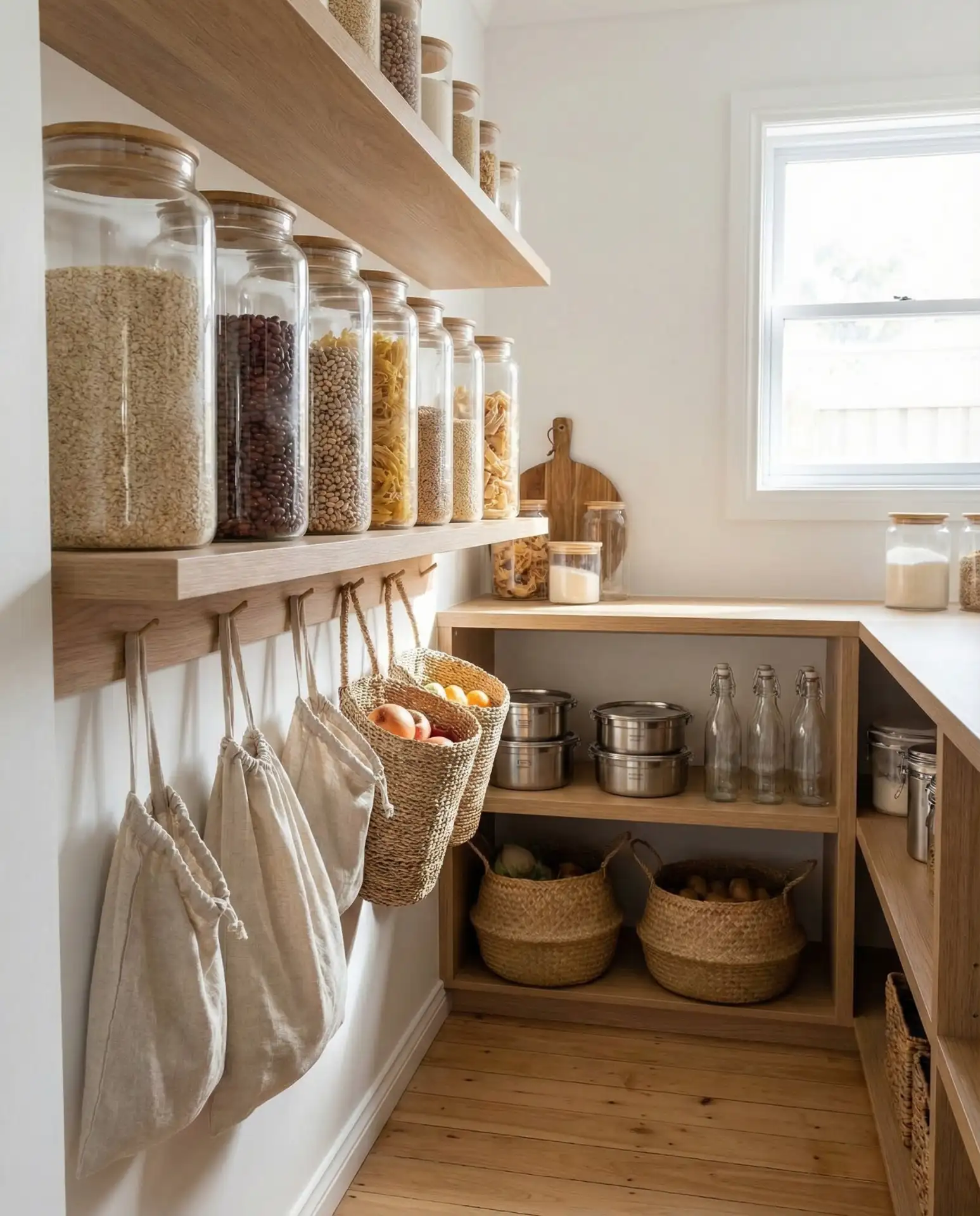
A zero-waste pantry emphasizes bulk storage, reusable containers, and eliminating single-use packaging wherever possible. Simple glass jars, stainless steel canisters, and cloth produce bags replace disposable packaging, while a dedicated section stores reusable shopping bags and containers for bulk store runs. This minimalist approach aligns with growing environmental consciousness and often saves money long-term by encouraging bulk purchasing of staples.
Practical insight: Transitioning to zero-waste pantry organization happens gradually—start by decanting the five items you use most frequently, then expand as you finish products in original packaging. Many bulk stores now allow customers to bring their own containers and tare them at the register, making it easier to buy exactly what you need without excess packaging. The initial investment in quality glass storage runs $50-150, but those containers last decades compared to disposable packaging that constantly needs replacement.
23. Tech-Integrated Smart Pantry
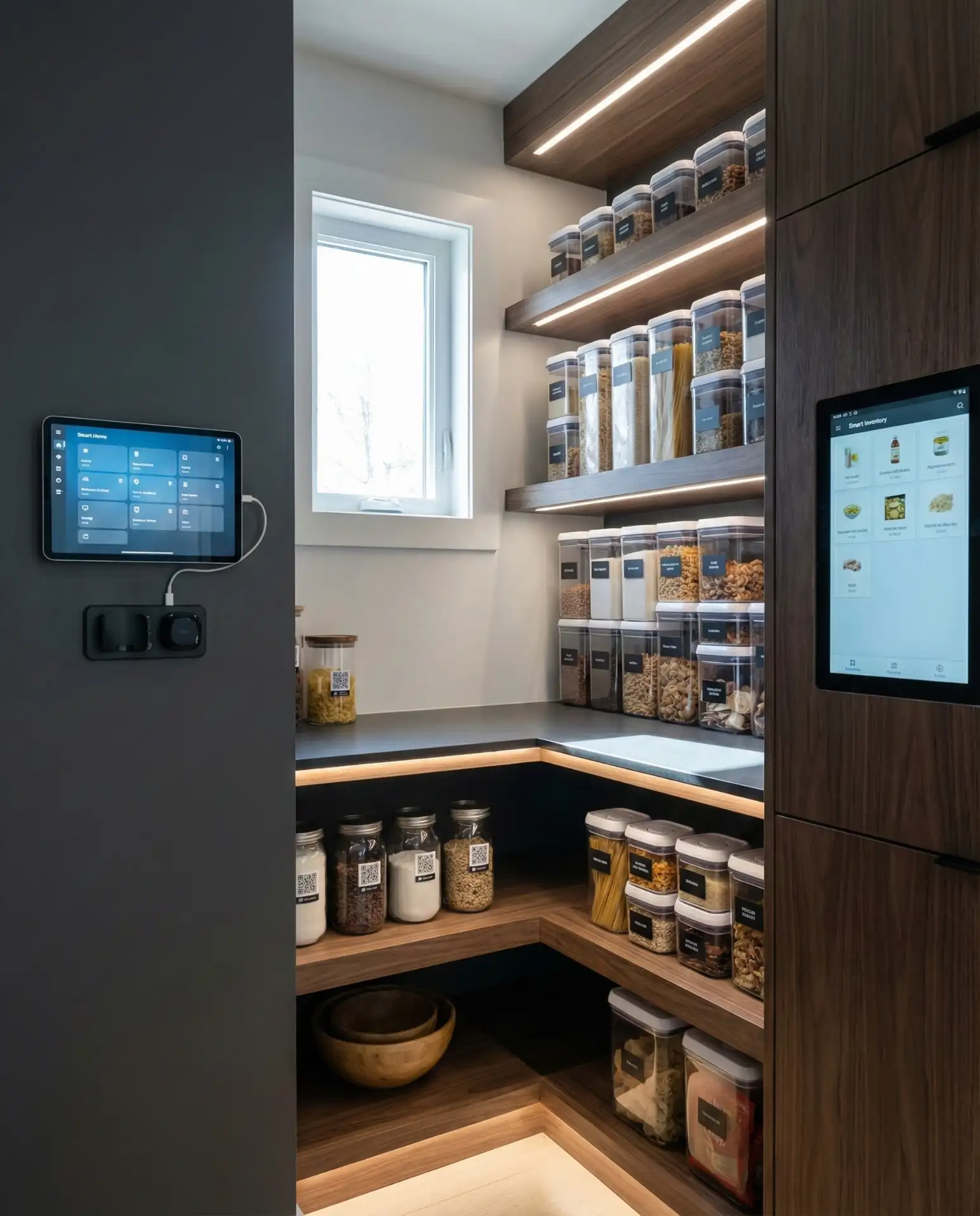
A smart pantry integrates technology through inventory management apps, smart lighting systems, and even cameras that let you check contents remotely while grocery shopping. Motion-activated LED strips illuminate shelves as you approach, while voice-controlled assistants can add items to shopping lists hands-free. This modern approach appeals to tech-forward families who want to eliminate the “did we already buy peanut butter?” question forever. 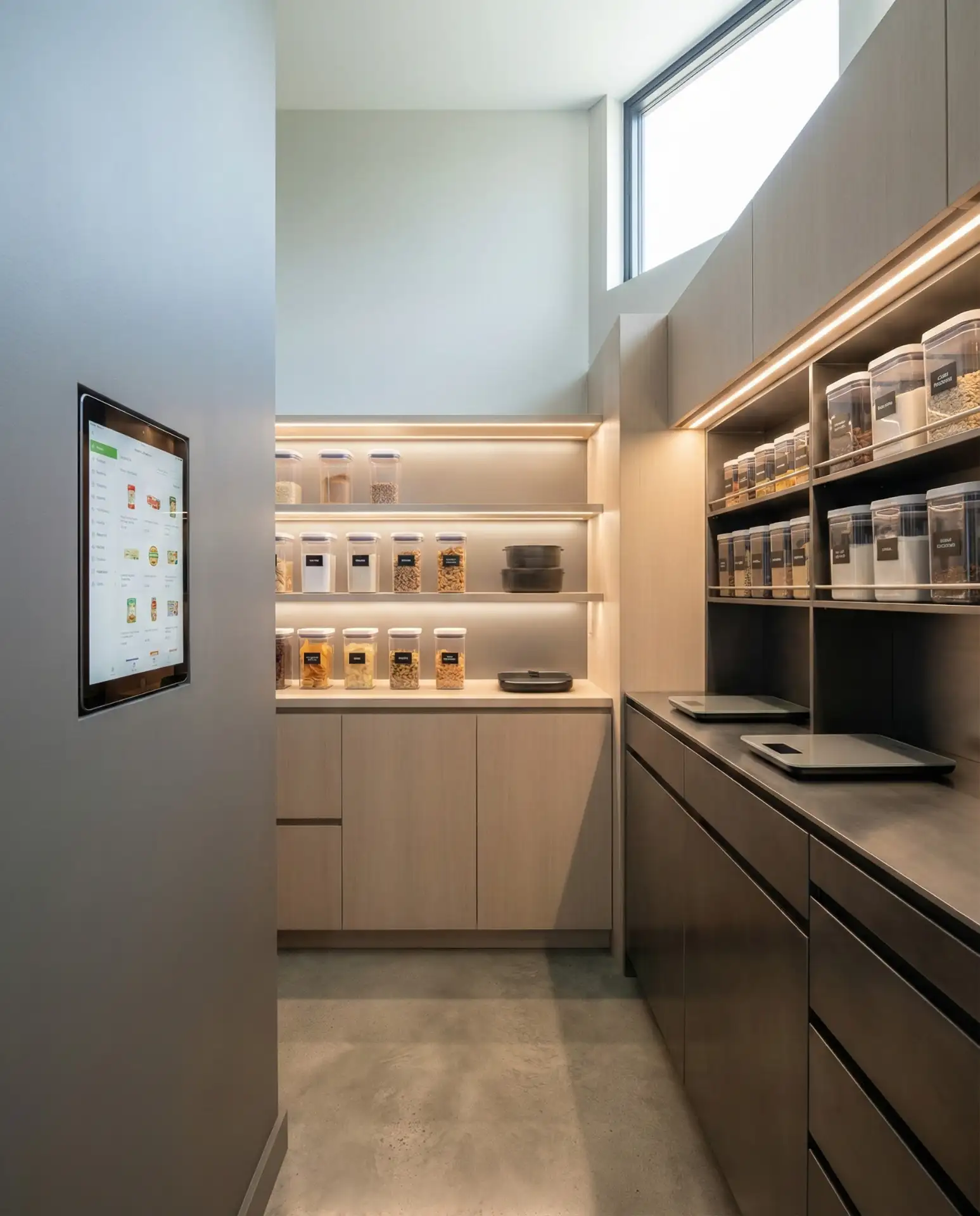
Expert-style commentary: The most practical smart pantry additions are often the simplest—motion-sensor lighting costs under $30 and eliminates fumbling for switches with full grocery bags. Dedicated pantry inventory apps like Pantry Check or NoWaste help track expiration dates and reduce food waste, though adoption requires consistent scanning and updating. The remote pantry camera is polarizing; some users swear it prevents overbuying, while others call it overkill for a space you can physically check in 30 seconds.
Conclusion
A walk-in pantry transforms how you interact with your kitchen daily, whether you’re working with 40 square feet or 200. The ideas here prove that smart design matters more than sheer size, and that your pantry can reflect your personal style while solving practical storage challenges. What features are you most excited to incorporate into your own pantry design? Share your plans and questions in the comments—we’d love to hear how you’re making these ideas your own.