Your TV console might be the most underestimated surface in your entire home. It holds the screen everyone gathers around, yet it’s often treated as an afterthought—a place to stash remotes, stack dusty DVDs, and let clutter collect. But in 2026, that’s changing fast. Americans are searching Pinterest in record numbers for TV console styling ideas that feel curated, personal, and genuinely beautiful. Whether you live in a coastal cottage, a modern urban apartment, or a cozy farmhouse outside Nashville, there’s a version of this trend that belongs in your space. In this guide, you’ll find distinct approaches—from floating shelves to organic modern textures—to help you turn your console into one of the most intentional spots in your home.
1. Organic Modern Console with Wood and Sculptural Objects
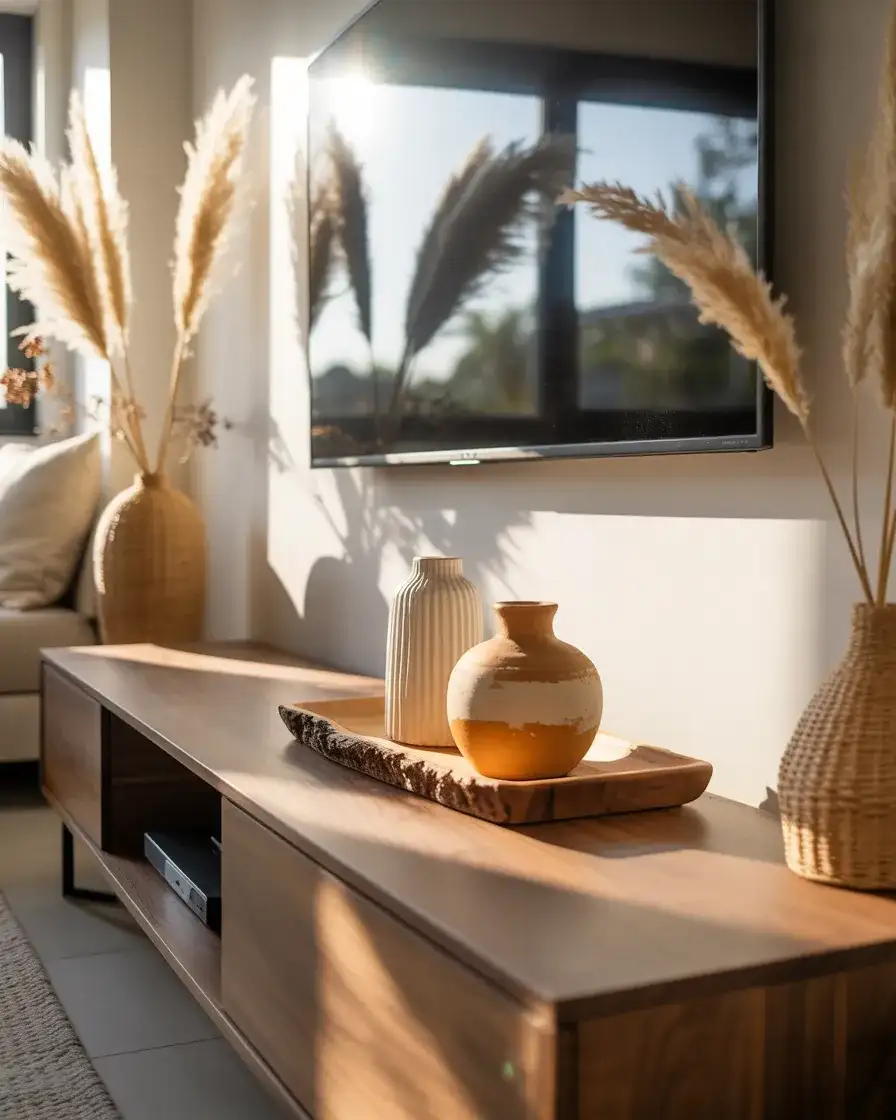
The organic modern approach is having a serious moment in American living rooms right now, and it translates beautifully to TV console styling. Think raw-edge wood trays, hand-thrown ceramic vessels, and dried pampas grass arranged with intentional asymmetry. The idea is to layer natural textures against a clean backdrop—a low media console in warm walnut or white oak sets the perfect stage. This look works especially well if your living room leans neutral, because the organic elements do all the visual heavy lifting without competing with the TV itself.
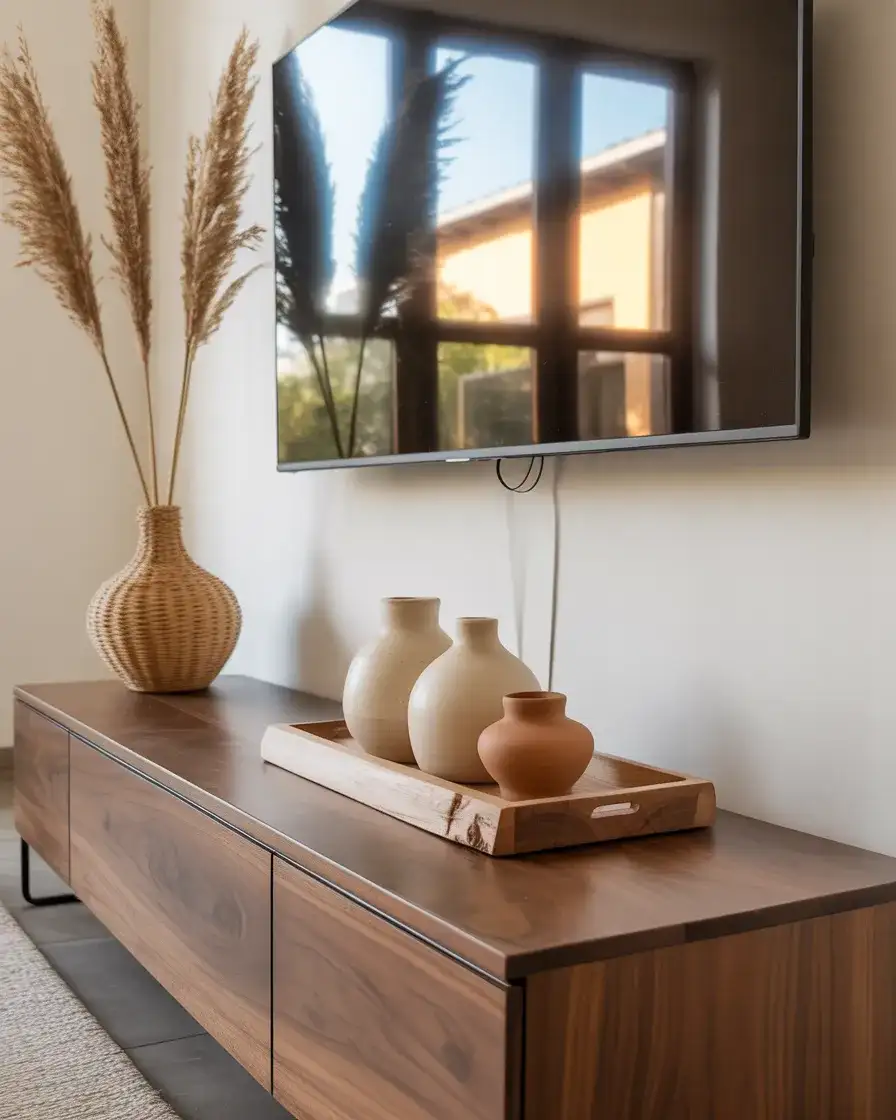
One of the most common mistakes people make with organic modern styling is overdoing it—cramming too many “natural” objects until the whole thing looks like a craft store exploded. The key is restraint: choose three to five pieces that genuinely speak to each other in color and scale, leave some breathing room between them, and let the console’s surface show. A single large vessel reads as confident and intentional; seven small ones read as chaos. Start with your tallest piece, anchor it to one side, and build outward from there.
2. Floating Console for an Airy, Space-Saving Look
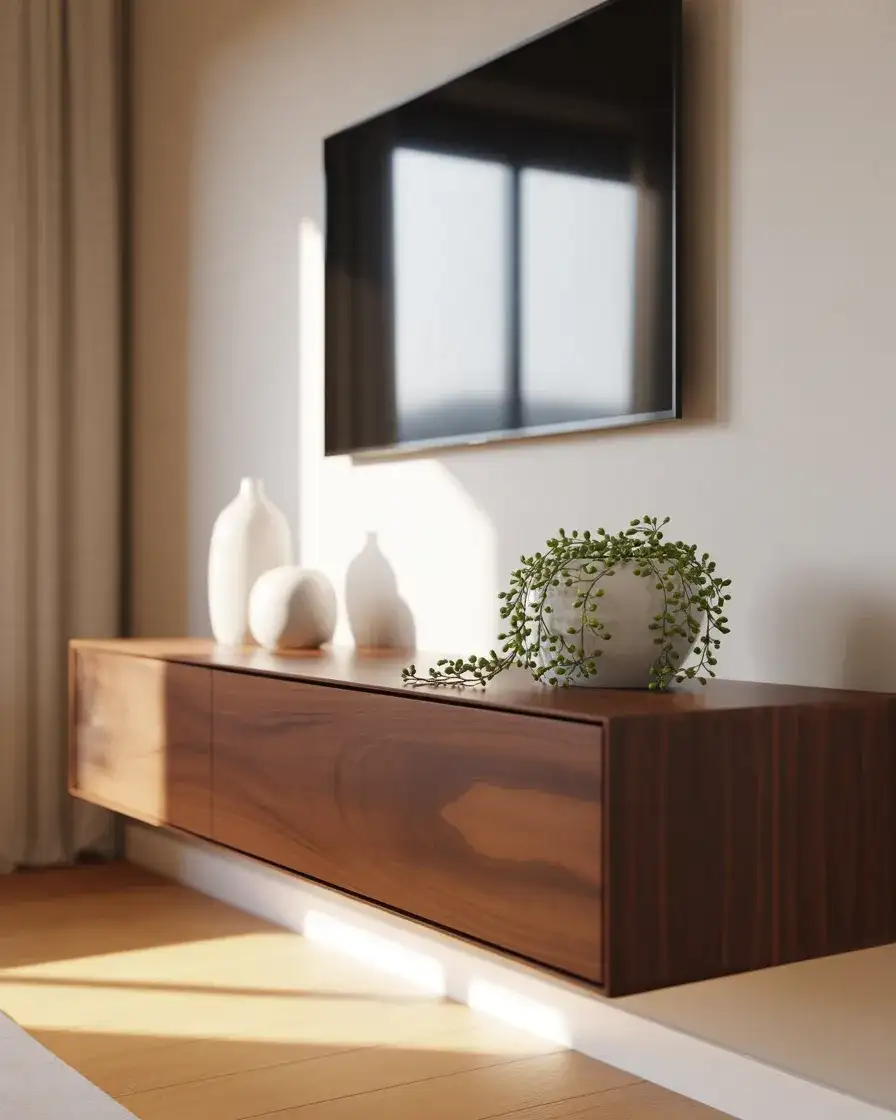
A floating TV console is one of those design moves that sounds expensive but is actually surprisingly accessible—and the visual payoff is enormous. By mounting a shelf or media unit directly to the wall, you free up the floor beneath it, which makes any room feel larger and more intentional. This works brilliantly in bedroom TV setups and smaller living rooms alike, where every visual inch of floor space counts. Pair a floating console with hidden cable management, and you’ve got a setup that looks like something out of a design magazine without the magazine-sized budget.
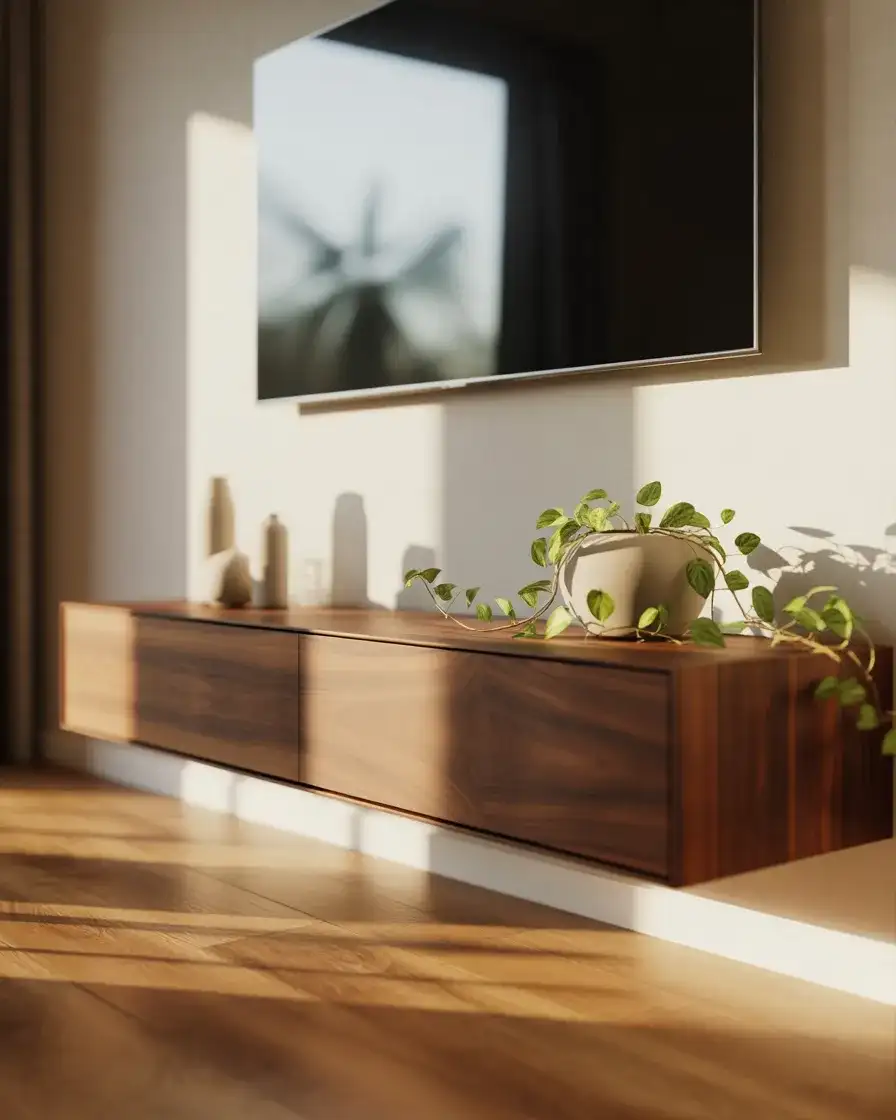
In terms of budget, a basic floating console from IKEA’s BESTÅ or LACK line can run as little as $80–$150 installed, while a solid hardwood custom version will push $600 and beyond. The sweet spot for most homeowners tends to be a mid-range option around $200–$400 — think CB2, Article, or West Elm during a sale. What you spend on the furniture, you can save by DIYing the installation with a stud finder, a level, and a free Sunday afternoon.
3. Black Console with Matte Accents for a Bold Statement
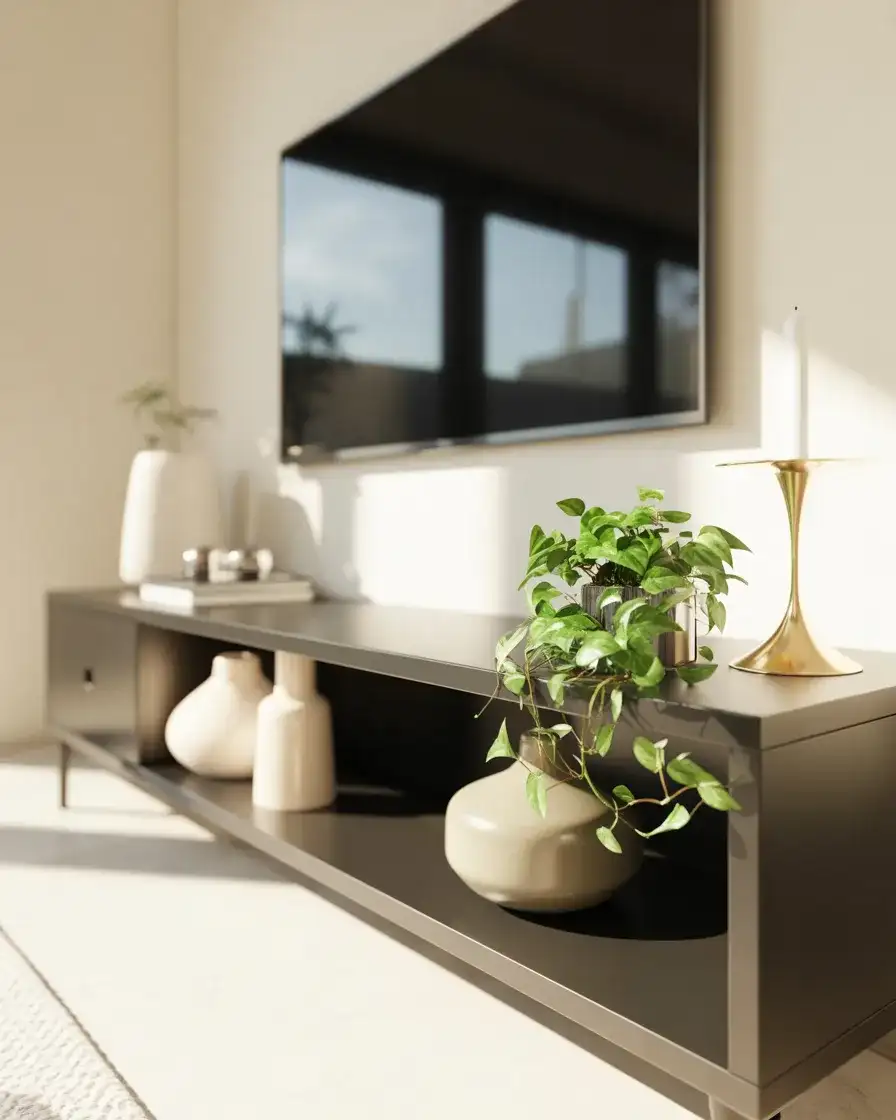
A black TV console is one of the most underused power moves in home decor. While most people default to light wood or white, a matte black console grounds a room with authority and drama—especially in modern interiors with high contrast palettes. The secret to making it work without feeling oppressive is balance: style the console with lighter objects like white ceramic vases, brass candleholders, or pale linen books to keep things from going too dark. Against a cream or warm white wall, the contrast is genuinely striking.
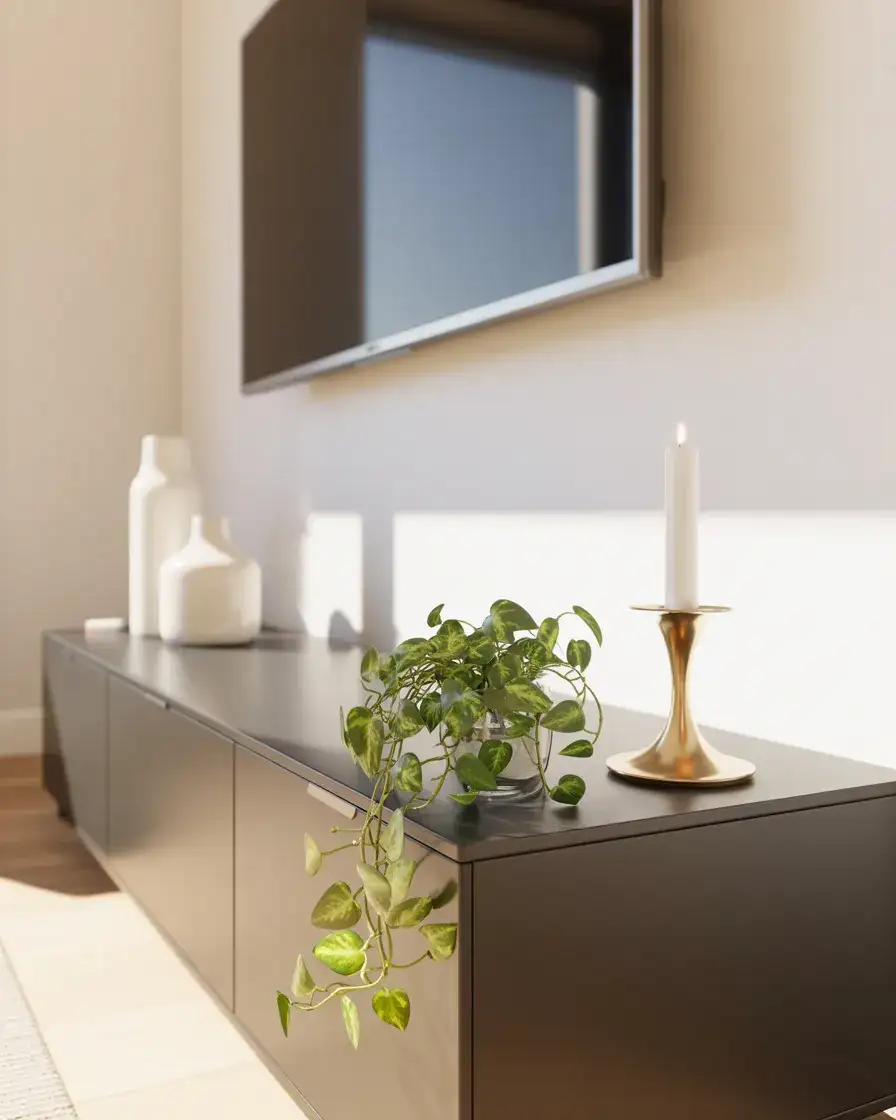
Interior designer Sarah Ellison, who has styled hundreds of living rooms across the Pacific Northwest, often tells clients to think of a black console the way they think of a little black dress—it’s versatile, it makes everything around it look better, and it never really goes out of style. The key, she notes, is to mix finishes: matte black furniture paired with brushed brass or aged bronze hardware creates warmth and depth that keeps the space from feeling flat or harsh.
4. Coastal Console Styling with Rattan, Linen, and Blue Tones
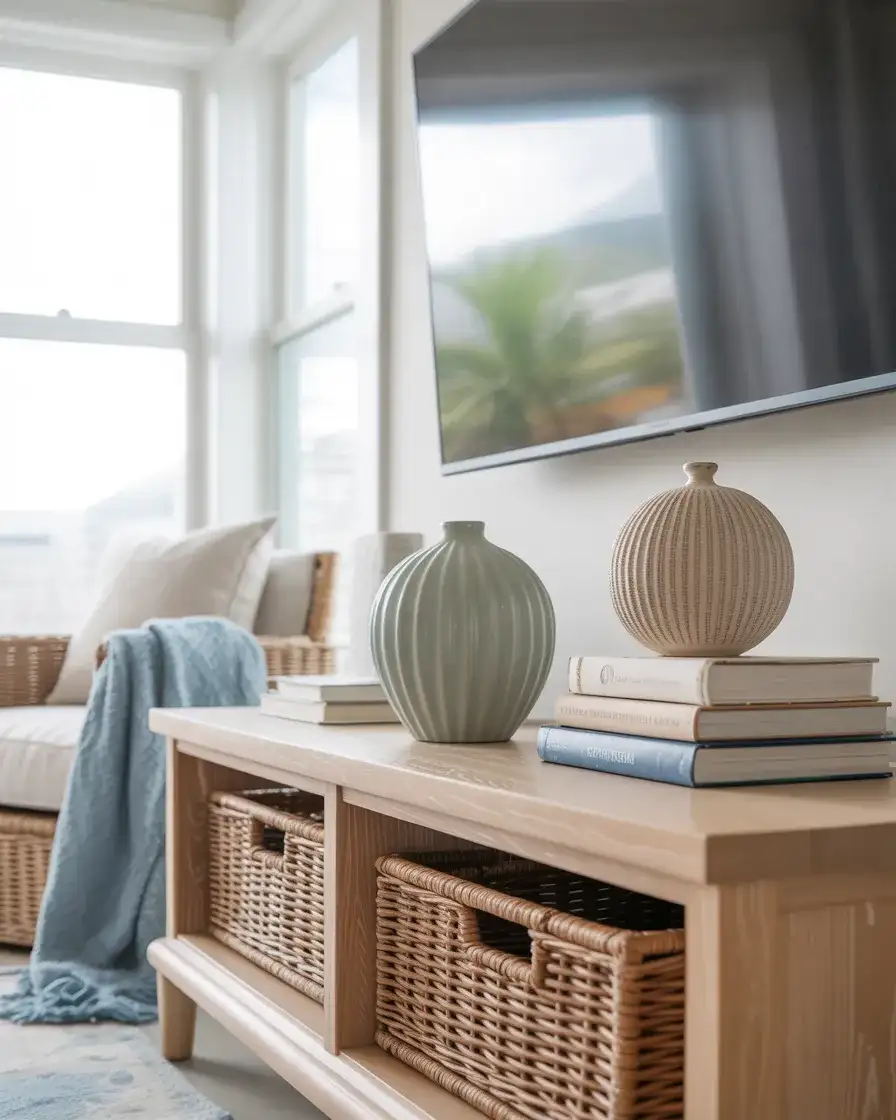
The coastal aesthetic has moved far beyond seashell arrangements and driftwood signs—today’s coastal console styling is sophisticated, layered, and genuinely livable. Think natural rattan baskets used as media storage, linen-covered books stacked horizontally, a ceramic vessel in soft seafoam or indigo, and maybe a single sculptural piece of bleached coral or a smooth river stone. White or light oak console furniture fits naturally into this scheme, reinforcing the breezy, sun-washed quality that makes coastal spaces so appealing to Americans living far from any actual coast.
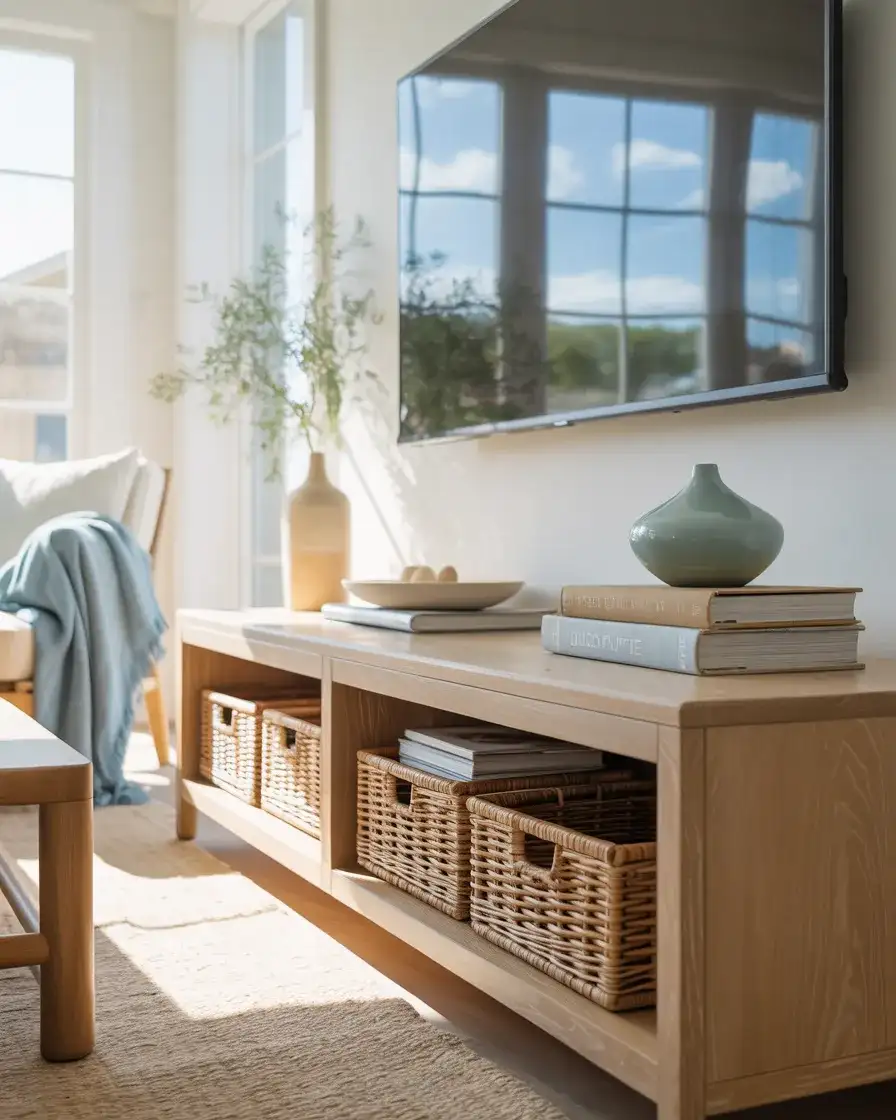
This aesthetic tends to work best in homes that get plenty of natural light—think Southern California ranch houses, Florida bungalows, or airy New England cottages with white-painted walls and big windows. But even if you’re landlocked in Ohio or Kansas, you can capture the feeling with a few key choices: keep your wall color soft and light, choose natural fiber textiles over synthetics, and let your console breathe with plenty of open space between objects.
5. Farmhouse Console with Shiplap and Vintage Finds
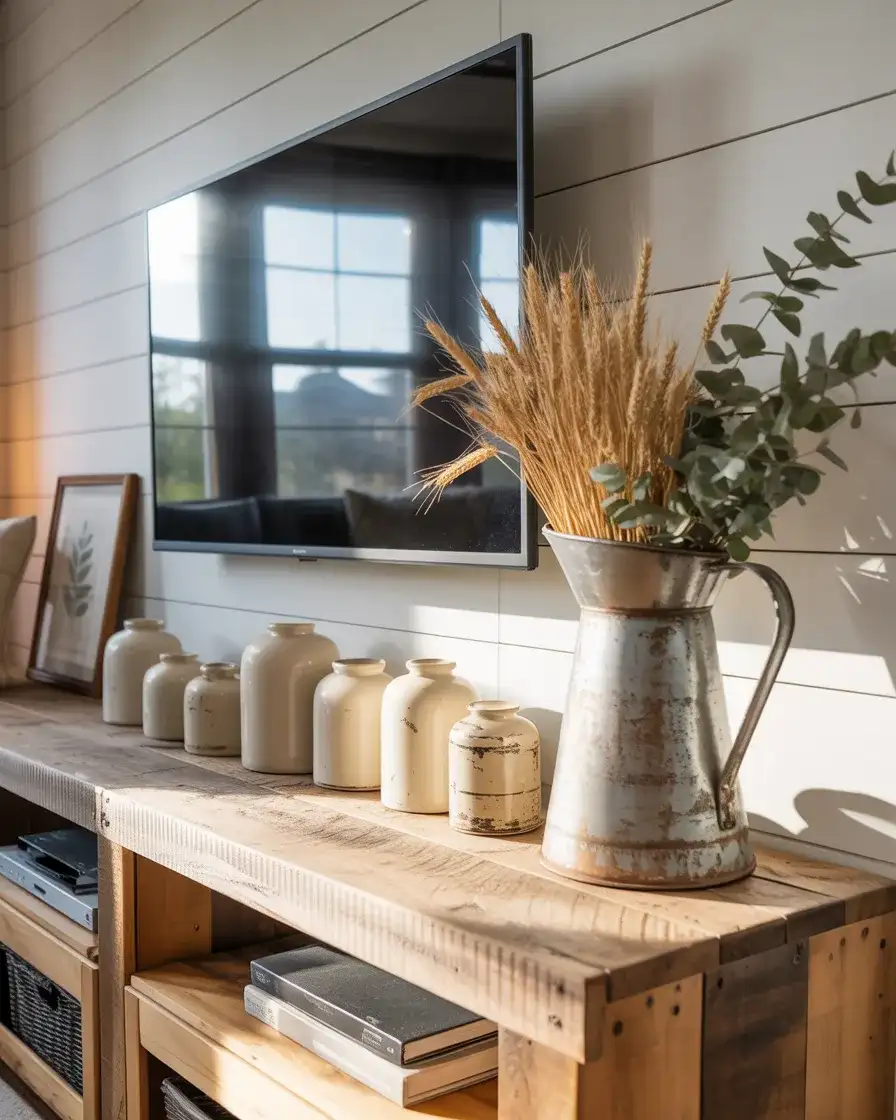
The farmhouse living room has been a Pinterest obsession for years, and in 2026 it’s evolving into something warmer and more personal than the all-white, shiplap-everywhere look of a few years ago. Today’s farmhouse console setup celebrates imperfection: a reclaimed wood console with visible knots and grain variation, mismatched ceramic crocks in creamy whites and warm taupes, an old ironstone pitcher repurposed as a vase, and perhaps a framed vintage botanical print leaning casually against the wall. It’s collected, not curated—and that distinction matters enormously.
Sarah M., a homeowner in rural Tennessee, shared that her best farmhouse console finds came entirely from estate sales and antique malls—she spent less than $40 total on the styling objects and used an old dresser her grandmother left her as the actual media unit. “People walk in and think I spent a fortune,” she said. That’s the real magic of the farmhouse approach: it rewards patience and thrift shopping in a way that more trend-driven styles simply don’t.
6. Open Shelves Below the TV for Stylish and Functional Storage
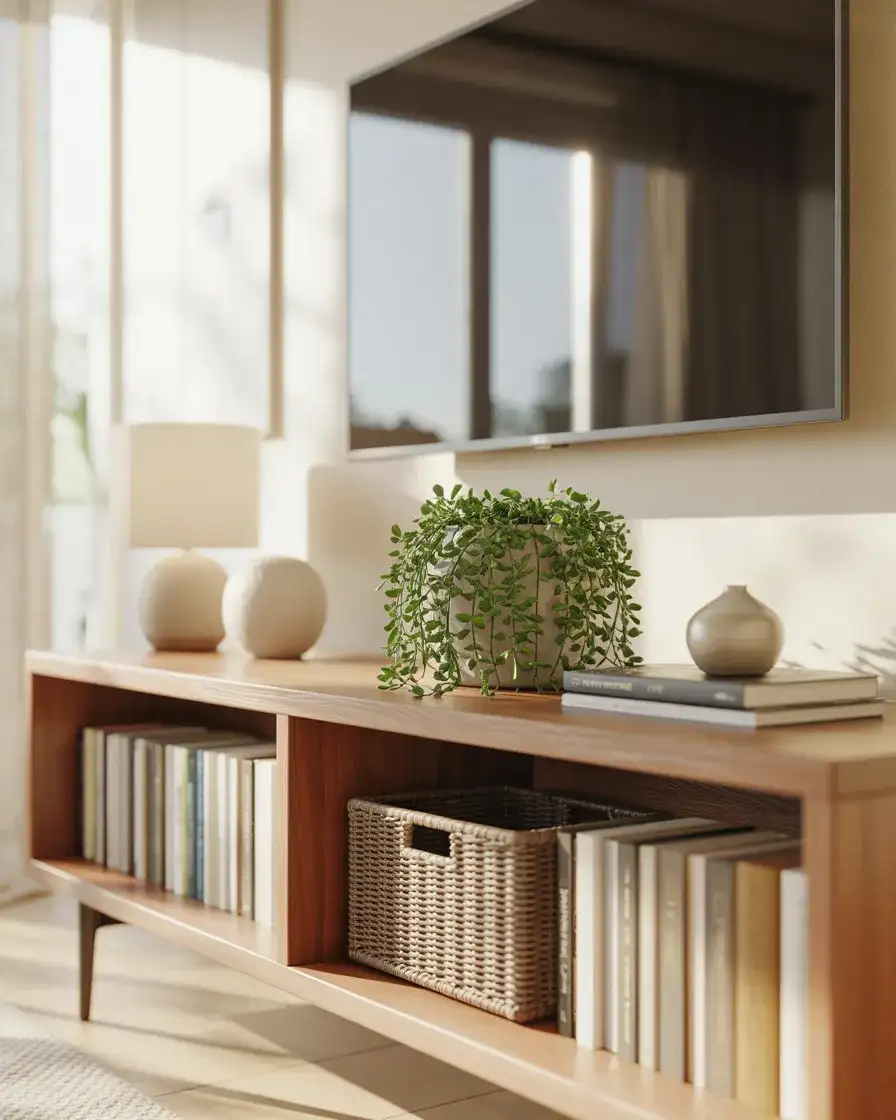
Open shelves built into or paired with a TV console are one of the most searched configurations on Pinterest, and it’s easy to see why—they offer display space, storage, and visual texture all at once. The key to making open shelving look intentional rather than chaotic is the rule of thirds: divide your shelves visually into thirds and style each third with a mix of heights, textures, and functions. In a living room, this might mean books on one-third, a basket for remotes and cords in another, and a sculptural object or trailing plant in the third.
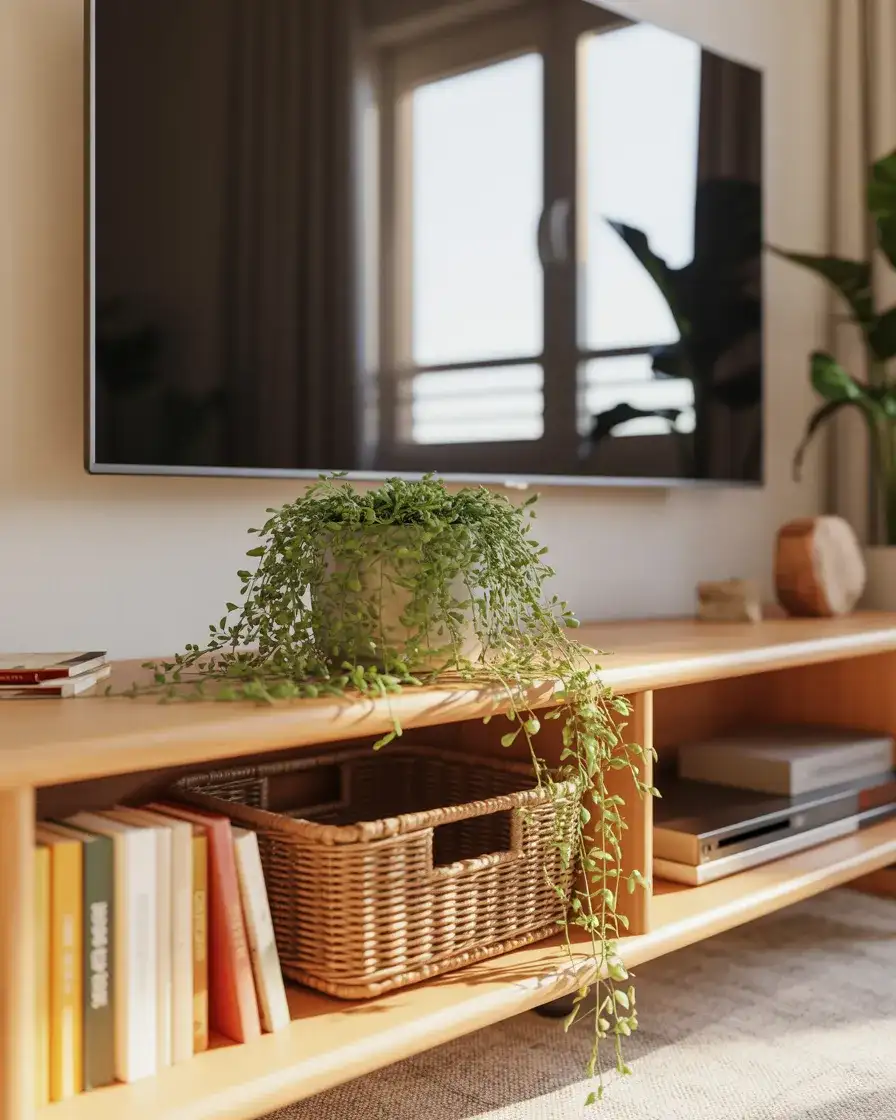
The most common mistake with open shelf TV consoles is letting them become a dumping ground for items that don’t belong—gaming controllers, takeout menus, mail. Style them deliberately, and then commit to a weekly five-minute reset to keep them looking sharp. A few designated baskets with lids can be absolute lifesavers here, hiding the functional clutter while still contributing to the overall aesthetic of the arrangement.
7. Boho Console with Layered Textiles and Eclectic Objects
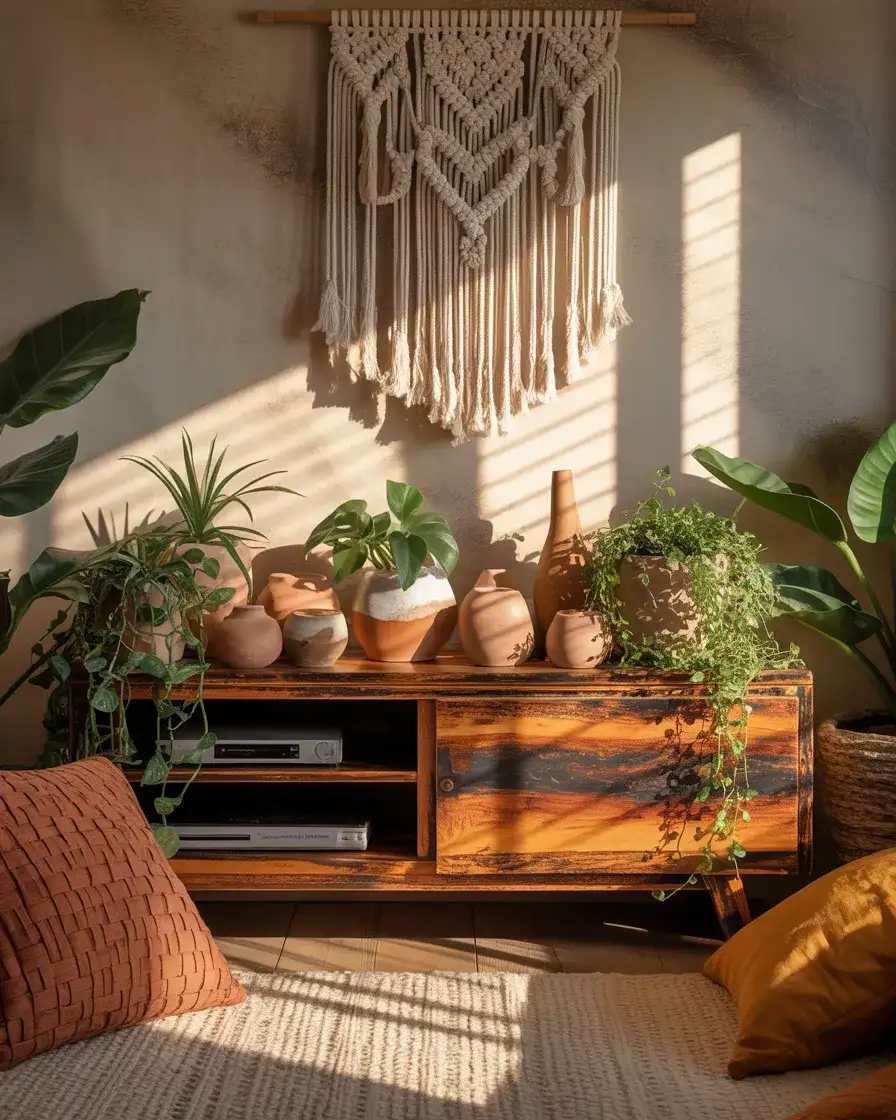
The boho TV console is all about abundance, warmth, and that feeling of a space lived in by a genuinely interesting person. Macramé wall hangings, layered rugs, found objects from travels, vintage textiles folded into baskets—this approach celebrates the idea that more is more, as long as the “more” is meaningful. A vintage console in warm brown or distressed wood anchors the look, while eclectic styling layered on top creates that signature boho richness. The TV itself can feel jarring in this setting, so consider styling around it with flanking plants or hanging textiles to soften the technology.
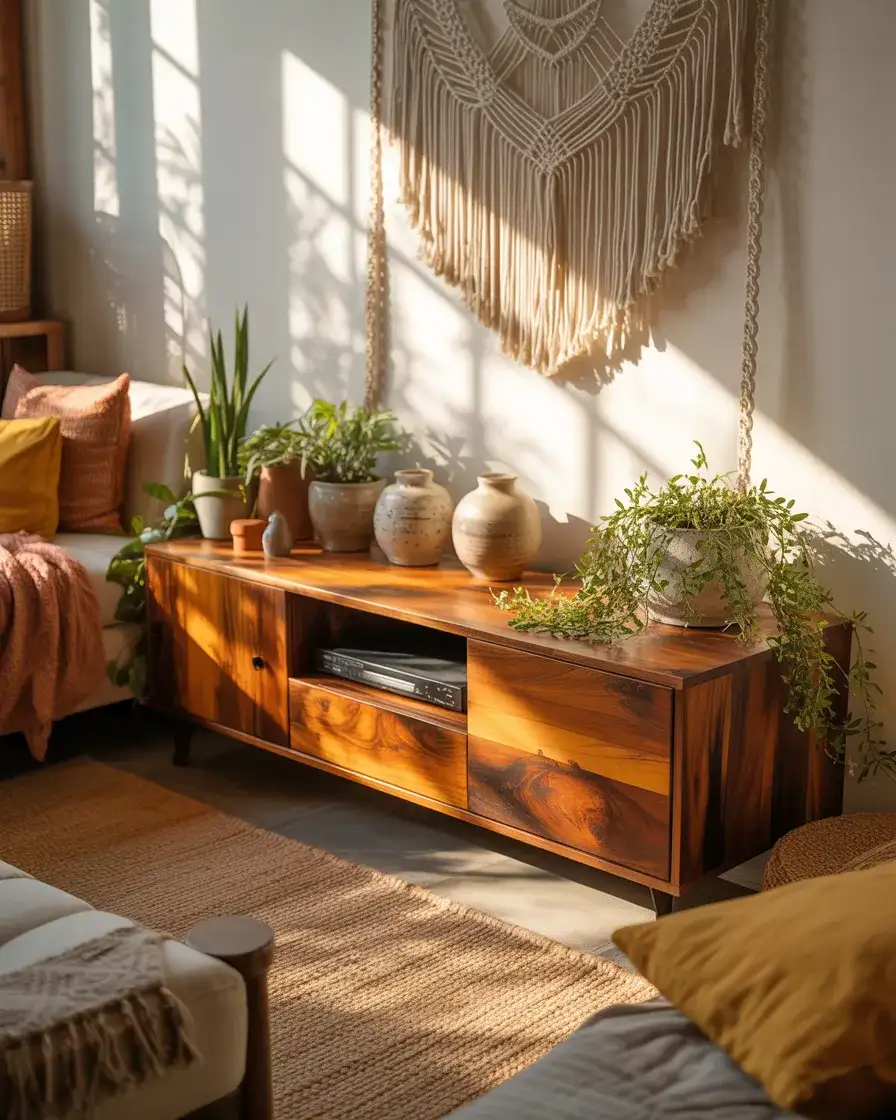
Where this look works best is in spaces with high ceilings, warm paint colors, and plenty of natural light—think a craftsman bungalow in Austin, a converted loft in Denver, or a Spanish colonial in Los Angeles. In tight or low-ceilinged spaces, the boho abundance can feel overwhelming, so consider editing the arrangement down to its most essential elements while keeping the spirit of the look alive through texture and warmth rather than sheer volume of objects.
8. Low Console for a Japanese-Inspired Minimalist Living Room
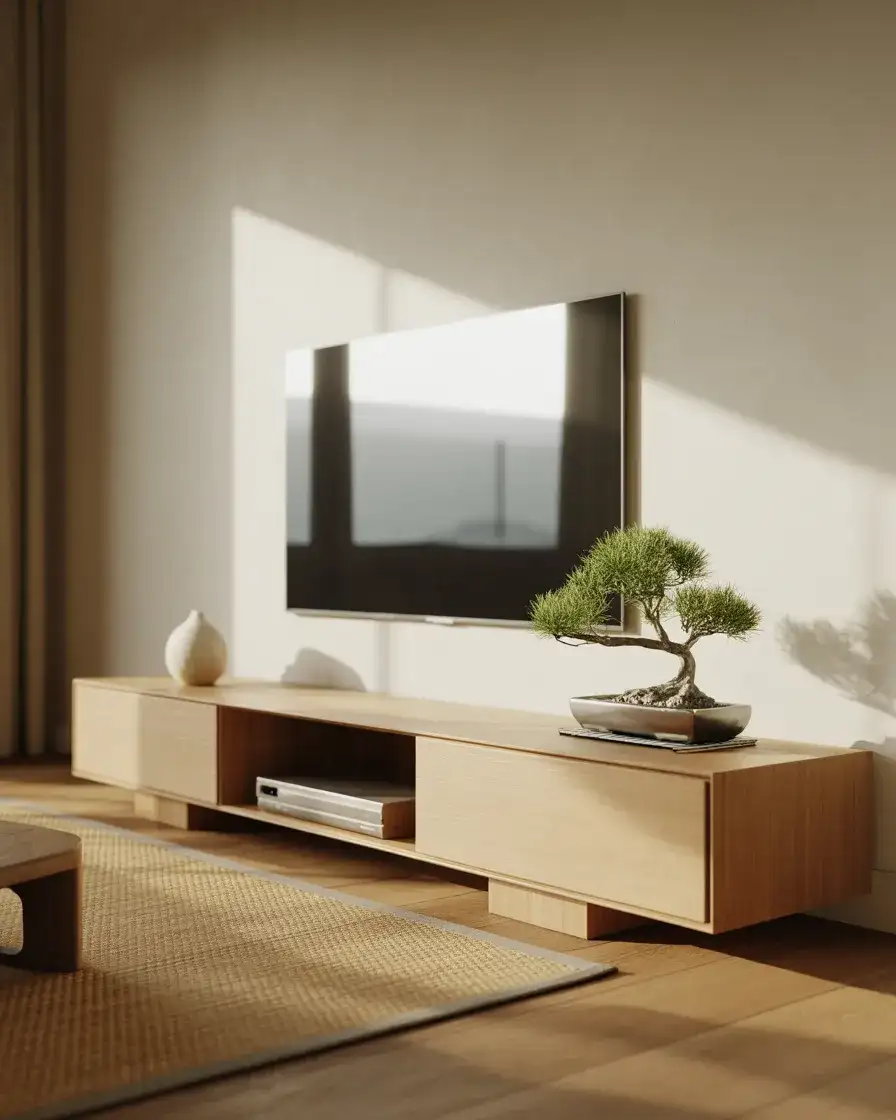
A low TV console—sometimes called a chōdai or simply a floor-level media unit—brings a distinctly calming, grounded quality to a living room. This approach, inspired by Japanese interiors and Scandinavian minimalism, emphasizes the horizontal line and keeps the visual weight of the room close to the floor, making spaces feel more serene and spacious. Pair a simple, low-slung console in light oak or pale maple with a single ceramic object, a small bonsai or succulent, and absolutely nothing else on the surface. The TV floats above the emptiness, and the whole arrangement breathes.
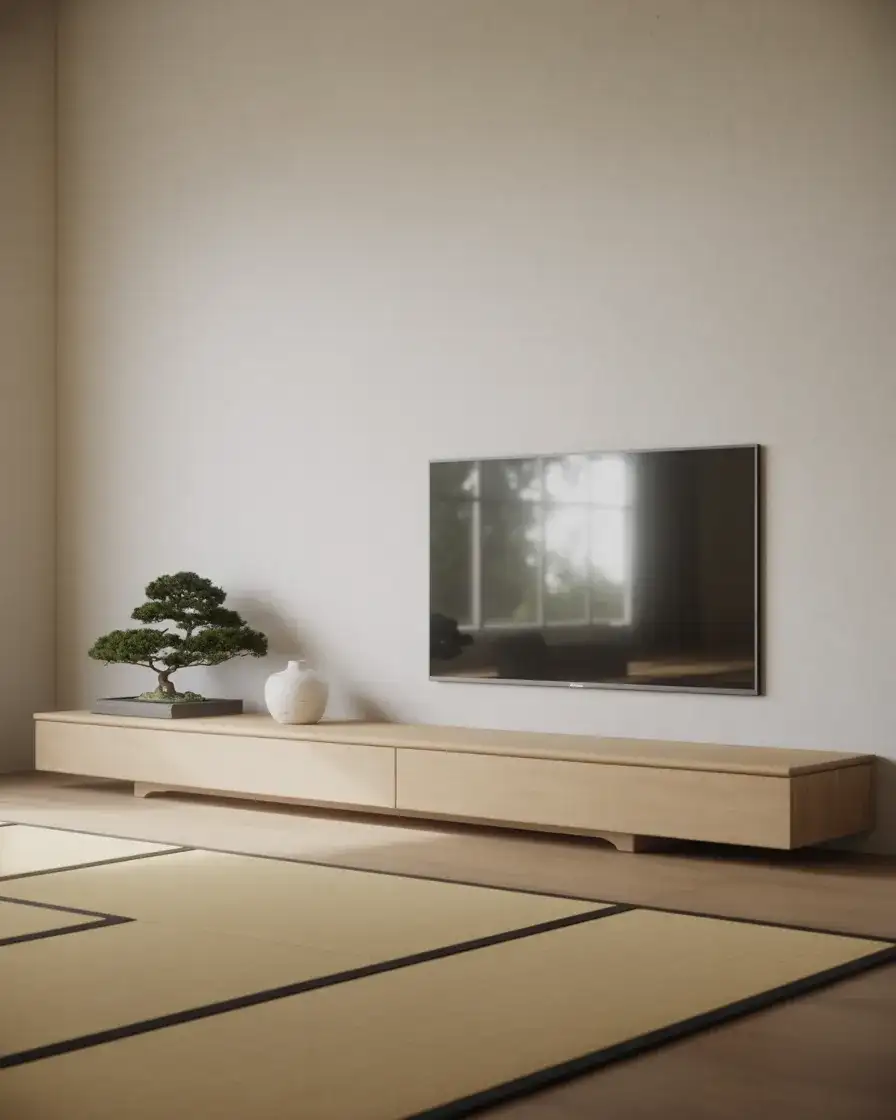
A practical consideration: low consoles look stunning but can be uncomfortable for people who prefer not to bend down to access media players or game consoles. If you have kids who use gaming systems regularly, consider a version with a small open cubby at the lower section so controllers and discs are accessible without kneeling. Balance the Zen aesthetic with the reality of how your family actually uses the space—the best-looking room is still the one people want to live in.
9. Christmas Console Styling with Greenery, Candles, and Warm Light
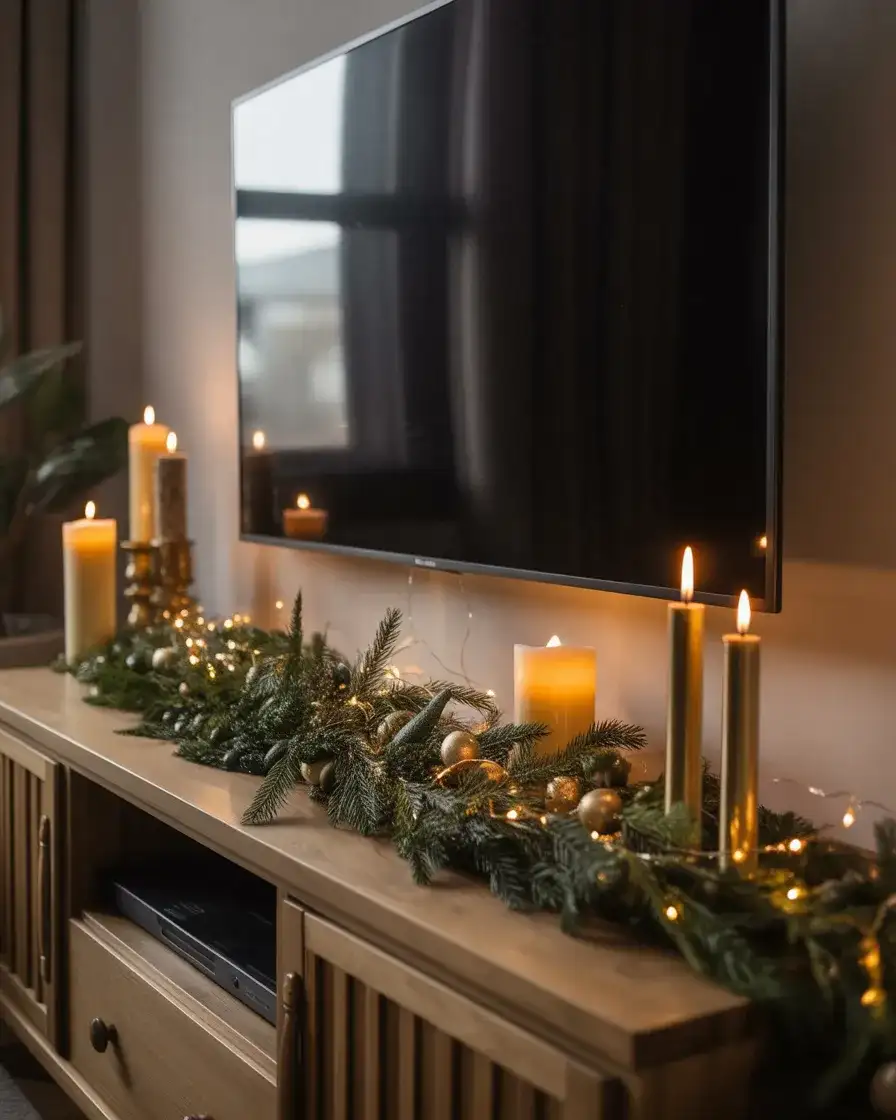
Dressing your TV console for the holidays is one of the most searched seasonal topics on Pinterest every November, and the results can be genuinely magical. The trick to Christmas console styling that feels elegant rather than kitschy is to anchor everything with real or high-quality faux greenery—a garland of fresh pine, eucalyptus, or magnolia leaves creates an aromatic, living quality that no ornament can replicate. Layer in warm white string lights, pillar candles of varying heights, and a few statement pieces in brass or matte black. Keep the color palette tight: deep green, warm ivory, and aged gold are timeless.
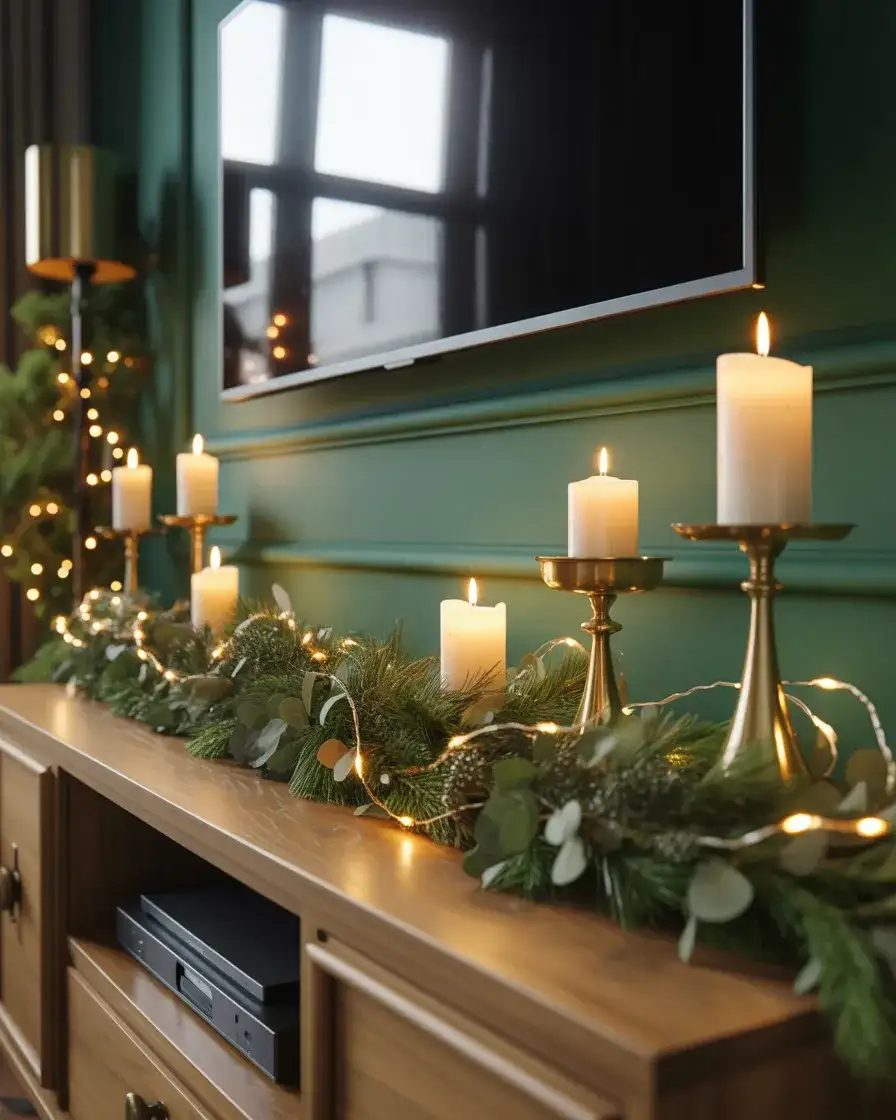
Real greenery is always the more beautiful choice, but it does require commitment—fresh pine garlands need to be misted daily to stay looking their best and should be kept away from heat vents. A hybrid approach works well for busy households: use real eucalyptus branches (which dry beautifully and keep for weeks) alongside quality faux pine, so you get the living scent and texture without the daily upkeep of a fully fresh arrangement.
10. Halloween Console Vignette with Moody, Atmospheric Styling
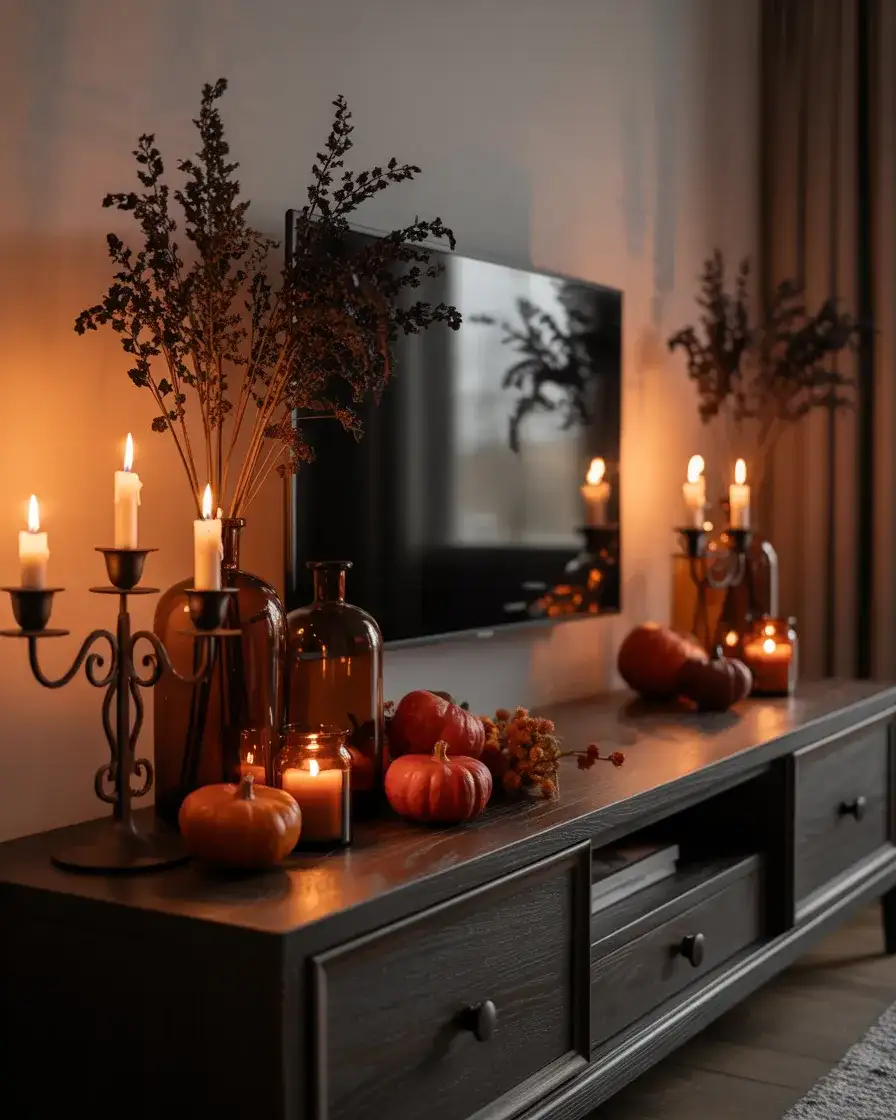
Halloween console styling has grown up considerably—today’s Pinterest-savvy homeowners are reaching past the plastic skeletons and paper bats toward something far more atmospheric and design-forward. A dark, moody console vignette with black candelabras, dried black botanicals, amber apothecary bottles, and a scattering of real gourds in deep oxblood and deep orange creates a genuinely unsettling beauty. Pair this with a black or very dark console to deepen the effect, and let a cluster of pillar candles do most of the illumination work. The effect is dramatic, seasonal, and surprisingly sophisticated.
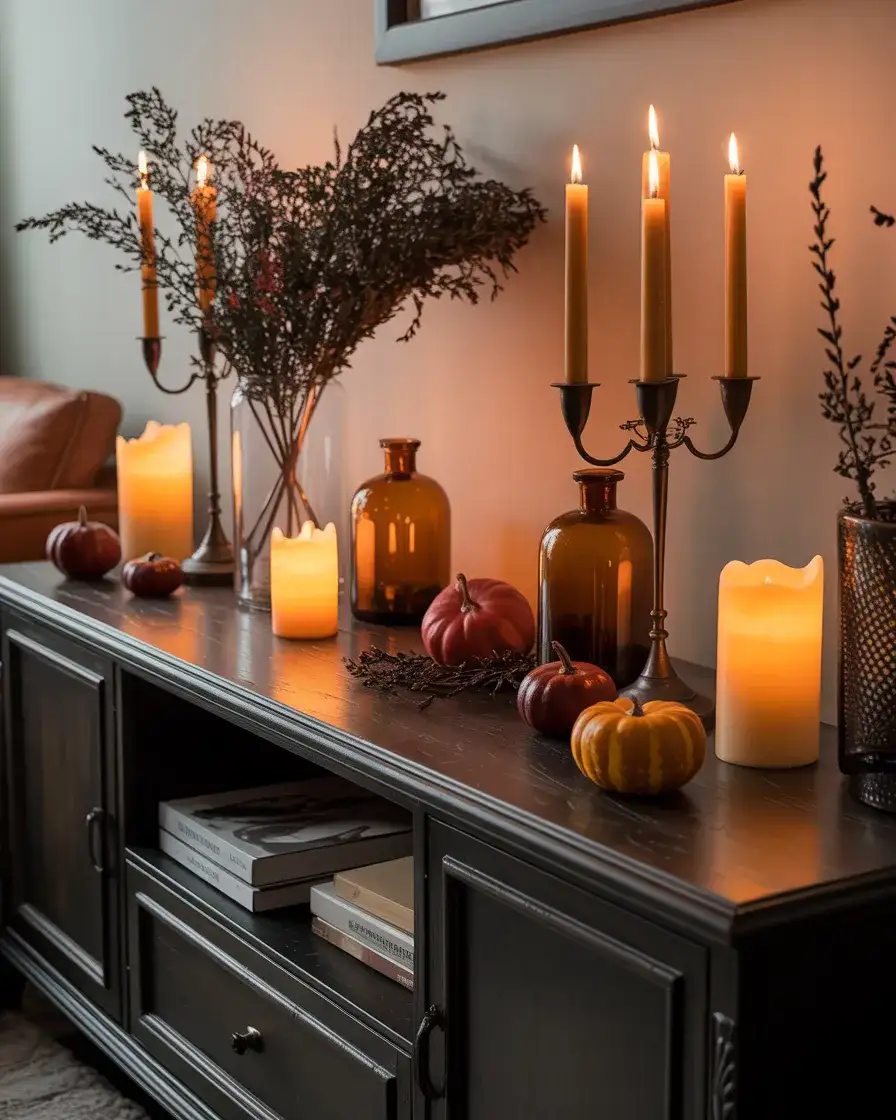
The best Halloween console styling finds the balance between theatrically spooky and genuinely chic—and that line is easier to find than you’d think. Commit to a two- or three-color palette (black, deep orange, and aged brass work beautifully together) and refuse to deviate from it. Everything that doesn’t fit the palette goes back in the box. This discipline is what separates a stunning seasonal vignette from a chaotic one—the restraint is actually the whole trick.
11. White Console with Picture Frames and Gallery Wall Energy
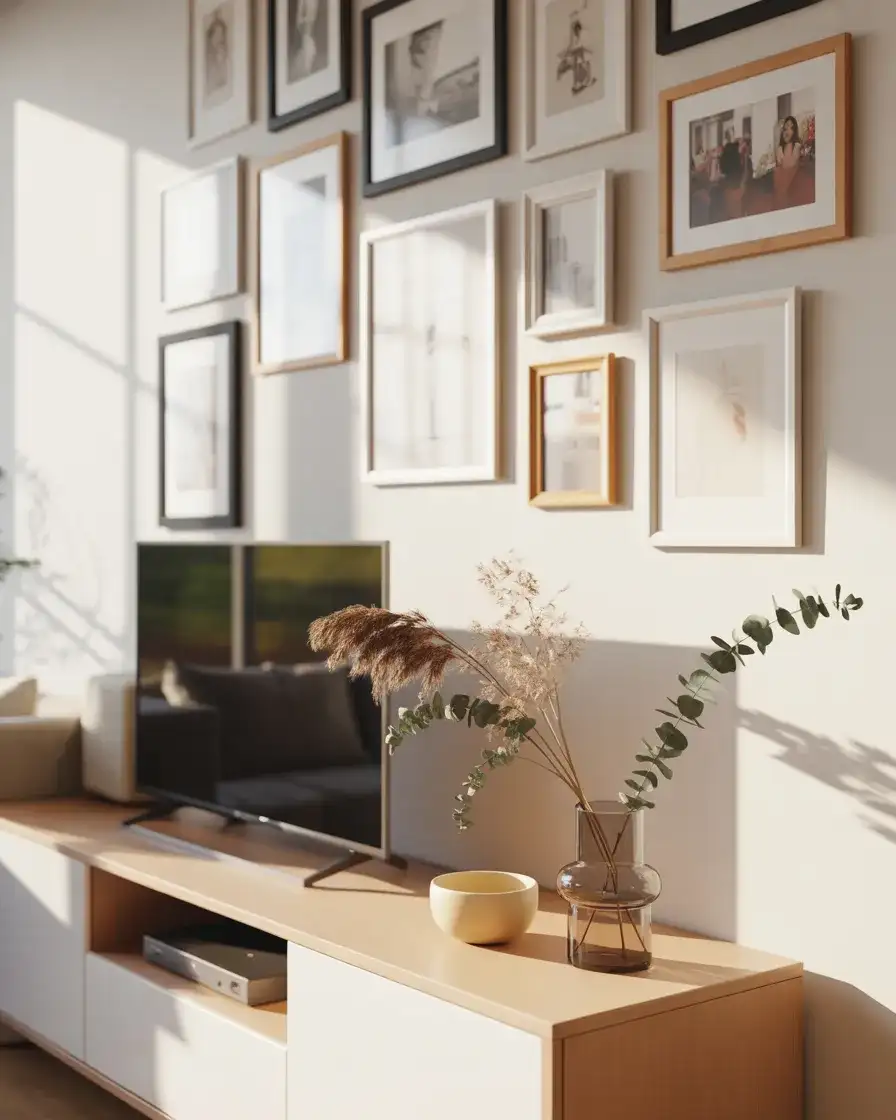
A white console is the ultimate blank canvas—it works in virtually any room, alongside virtually any palette, and it makes everything you place on it pop with clarity. The most compelling way to style a white console in 2026 is to lean into picture frames: lean a mix of different-sized frames casually against the wall above the console, layered at different depths, mixing black-and-white photography with abstract art and maybe a single personal family photo. The layering creates depth without permanent commitment—you can rearrange on a whim, which is part of what makes this approach so popular with renters and frequent redecorators.
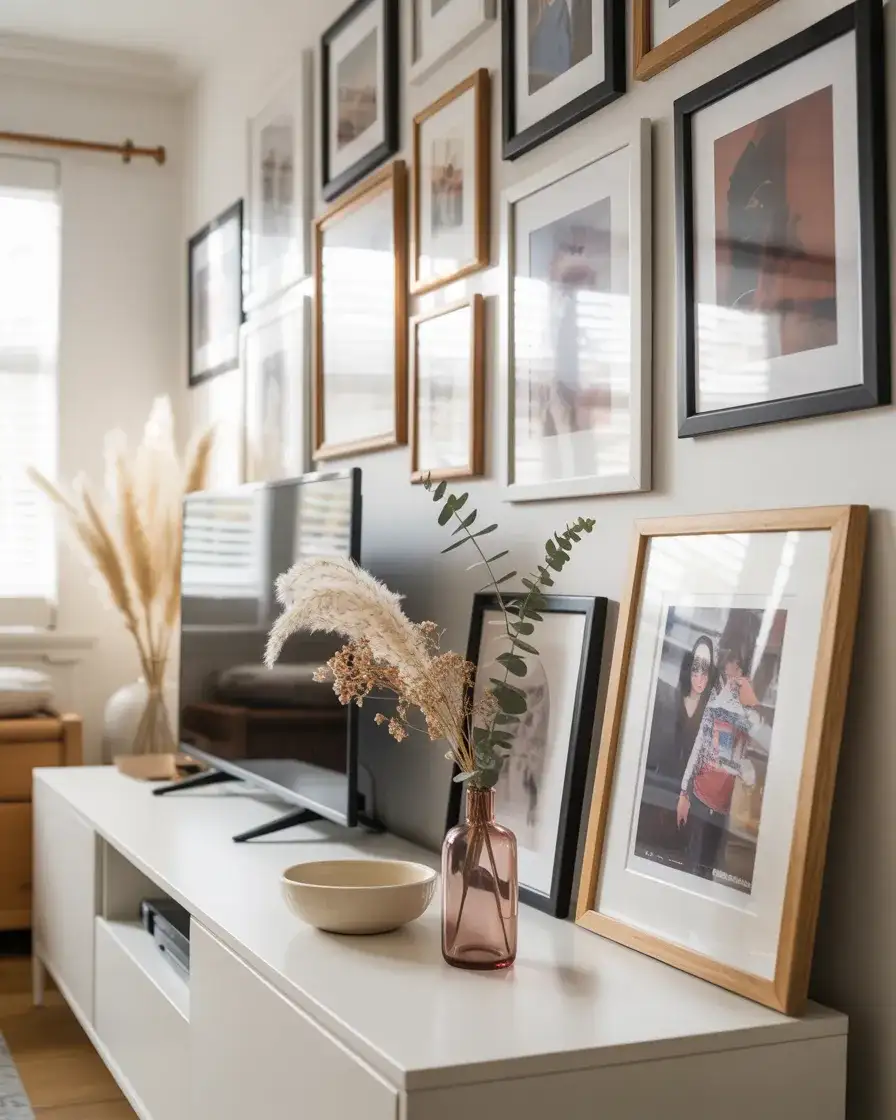
The leaning frame approach has one important practical note: if you have curious toddlers or pets, frames leaning against a wall without being secured can topple. A simple solution is museum putty or small adhesive strips applied to the back of the frames—invisible, renter-friendly, and strong enough to keep even larger frames safely in place without drilling a single hole.
12. Long, Low Console Spanning the Full Wall for Maximum Impact
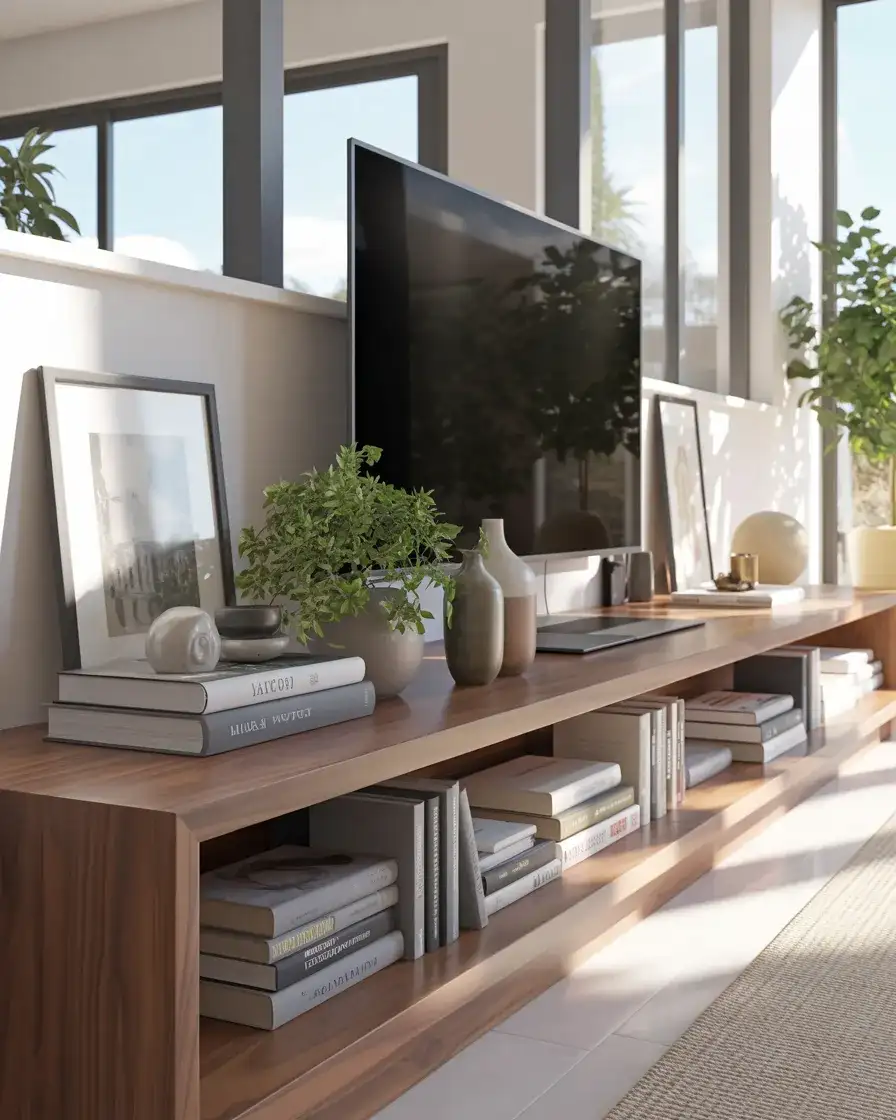
If your living room has the wall space, a long console that spans nearly the full width of the room is one of the most architecturally satisfying moves in home design. It creates a sense of intentionality and scale that smaller consoles simply can’t achieve—suddenly the whole wall becomes a cohesive composition rather than a random arrangement of furniture. This works particularly well in open floor plans where the living area doesn’t have defined architectural boundaries, because the long console creates a strong horizontal anchor that visually organizes the entire space.
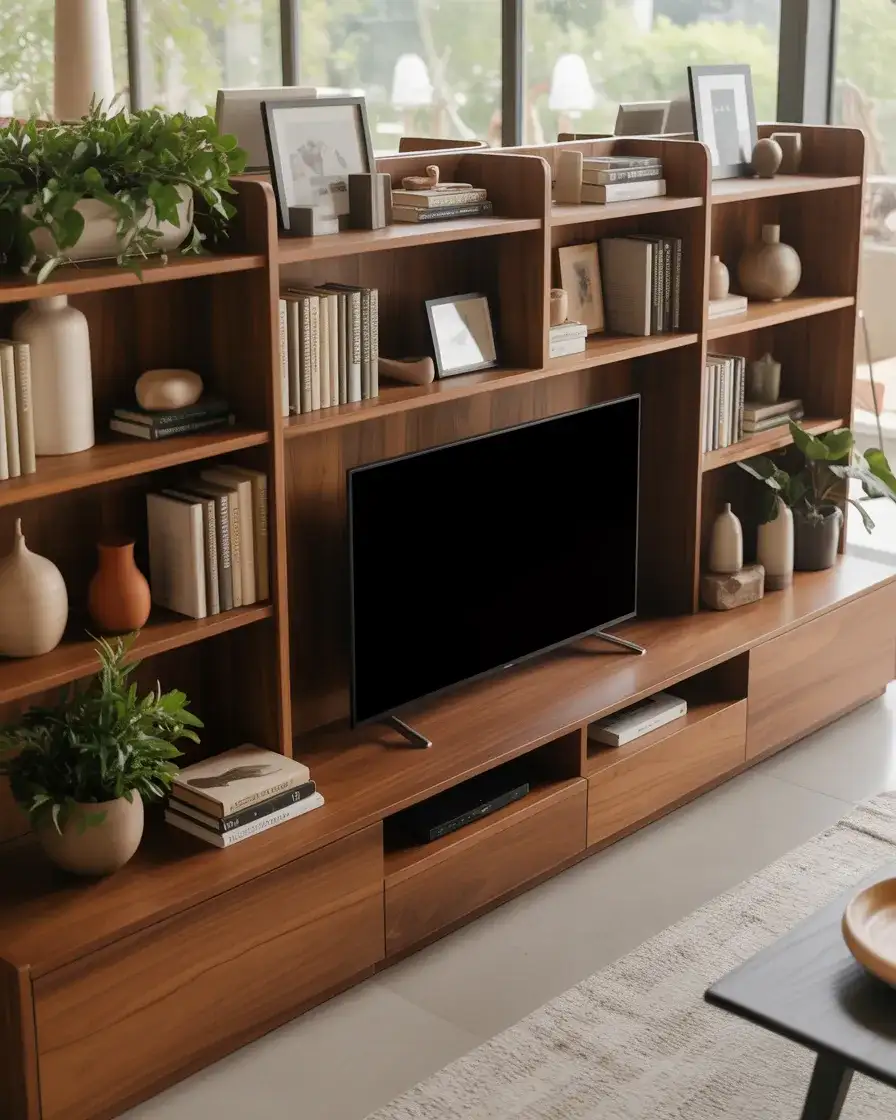
Styling a long console well requires thinking in zones rather than treating the whole surface as one area. Divide it mentally into three or five sections (odd numbers always work better visually) and style each zone as its own small vignette, then step back and make sure the zones talk to each other through repeated colors or materials. This zone approach keeps the surface from looking either sparse or chaotic—it creates rhythm, and rhythm is what separates beautiful from random.
13. Aesthetic Console Styling with Candles, Arches, and Sculptural Decor
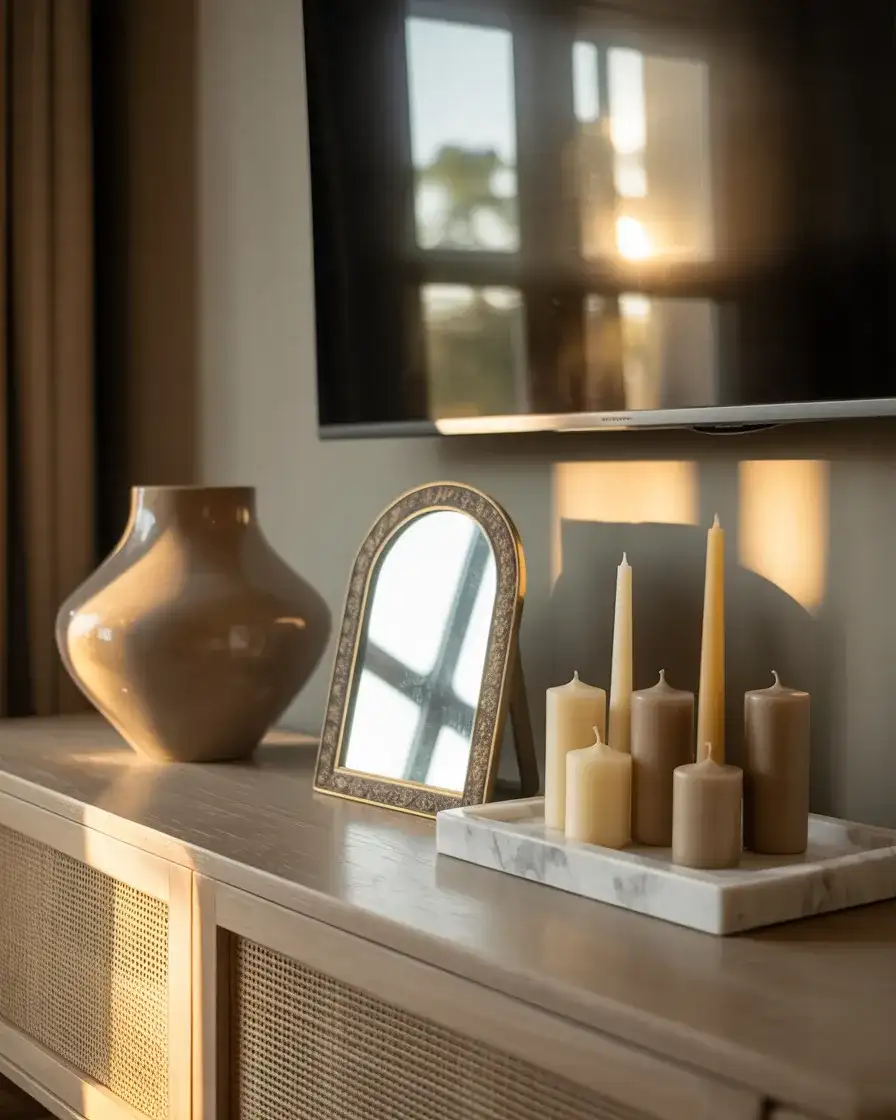
The word “aesthetic” has become shorthand on Pinterest for a very specific kind of curated, intentional, sensory-rich interior styling—and applied to TV consoles, it’s producing some genuinely stunning results. An arch mirror or arch-shaped decorative panel flanking the TV immediately elevates the entire arrangement, as does a cluster of taper candles in varying heights grouped on a marble or stone tray. Add a single large-scale sculptural object—a curved ceramic vase, an abstract brass piece, or a raw stone—and you have a console that looks like it was styled by a professional. This is the kind of look that stops the Pinterest scroll.
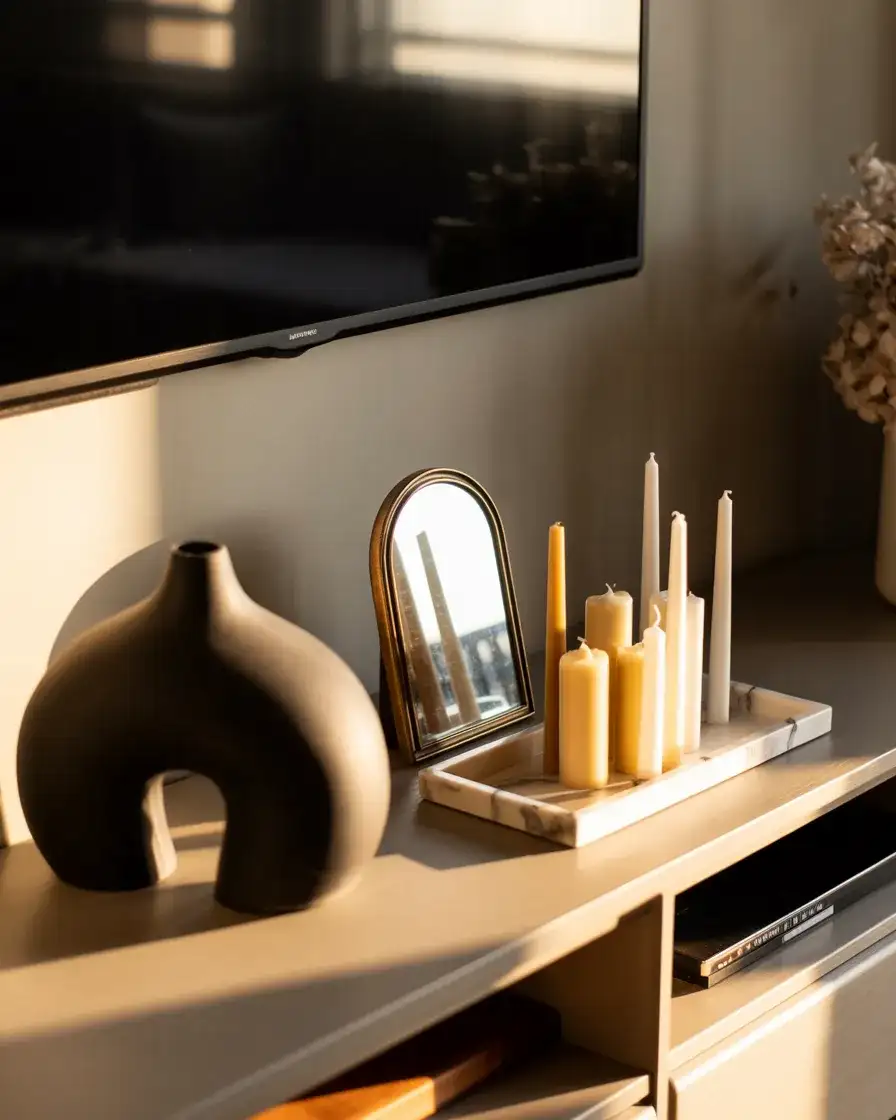
The arch motif deserves a special mention here because it’s proven remarkably durable as a trend—and with good reason. Arches introduce a soft, almost classical quality that humanizes modern interiors and references architectural history without being heavy-handed about it. A small tabletop arch mirror costs as little as $25–$40 at HomeGoods or Target, making it one of the best-value styling moves you can make in your living room this year.
14. Bedroom TV Console with Nightstand-Adjacent Styling
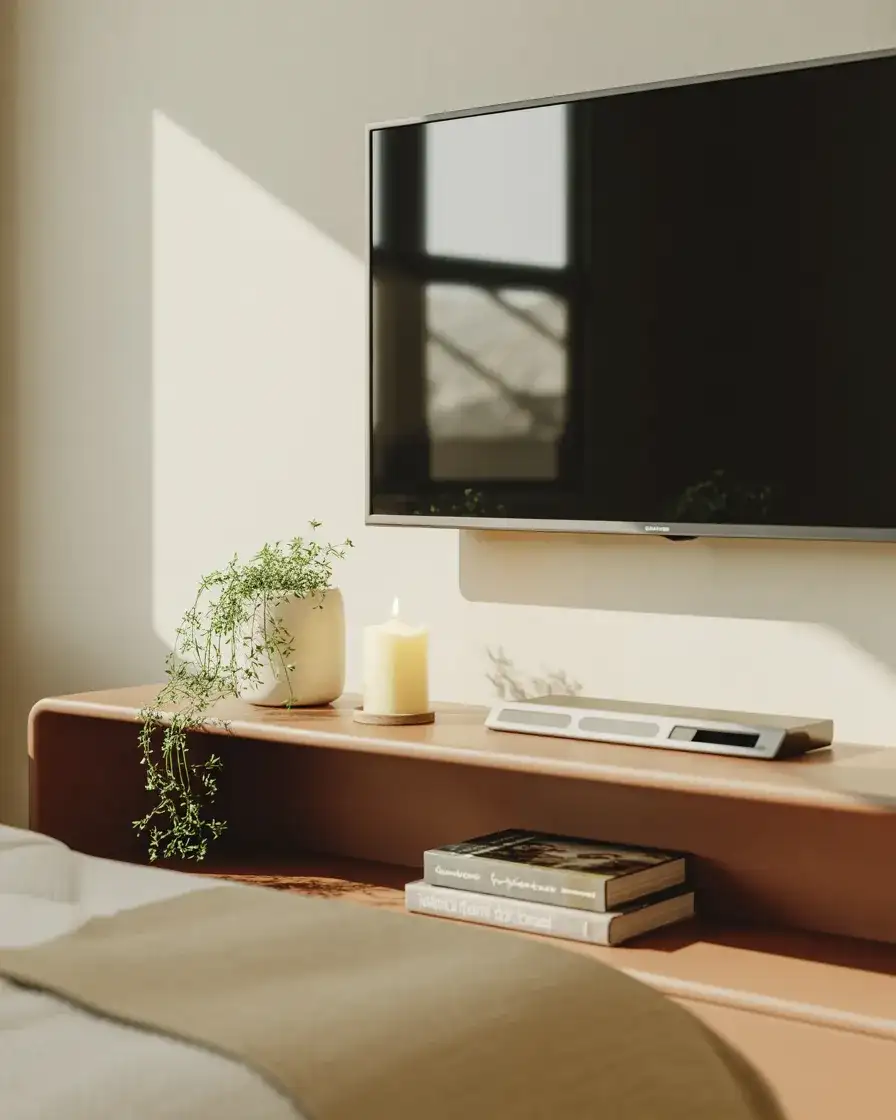
The bedroom TV console presents a unique styling challenge—it needs to live happily in a space that’s primarily designed for rest, so it must be calm, uncluttered, and harmonious with the softer, more intimate energy of a sleeping room. A low, narrow console in a warm wood tone or soft white works beautifully here, styled with just a few serene objects: a single candle, a small trailing plant, and a stack of books with their pages facing outward. This simple approach lets the console serve its functional purpose without disrupting the mood of the room or drawing the eye away from the bed.
Sleep researchers and interior psychologists both point out that visual complexity in the bedroom—too many objects, too much stimulation—can make it harder to wind down at the end of the day. Applying this to your TV console means actively resisting the urge to use it as storage overflow. Commit to keeping the bedroom console styling dramatically simpler than your living room console, even if that means it looks almost empty. In this context, emptiness is a feature, not a bug.
15. Large Console Styled for a Grand Living Room with High Ceilings
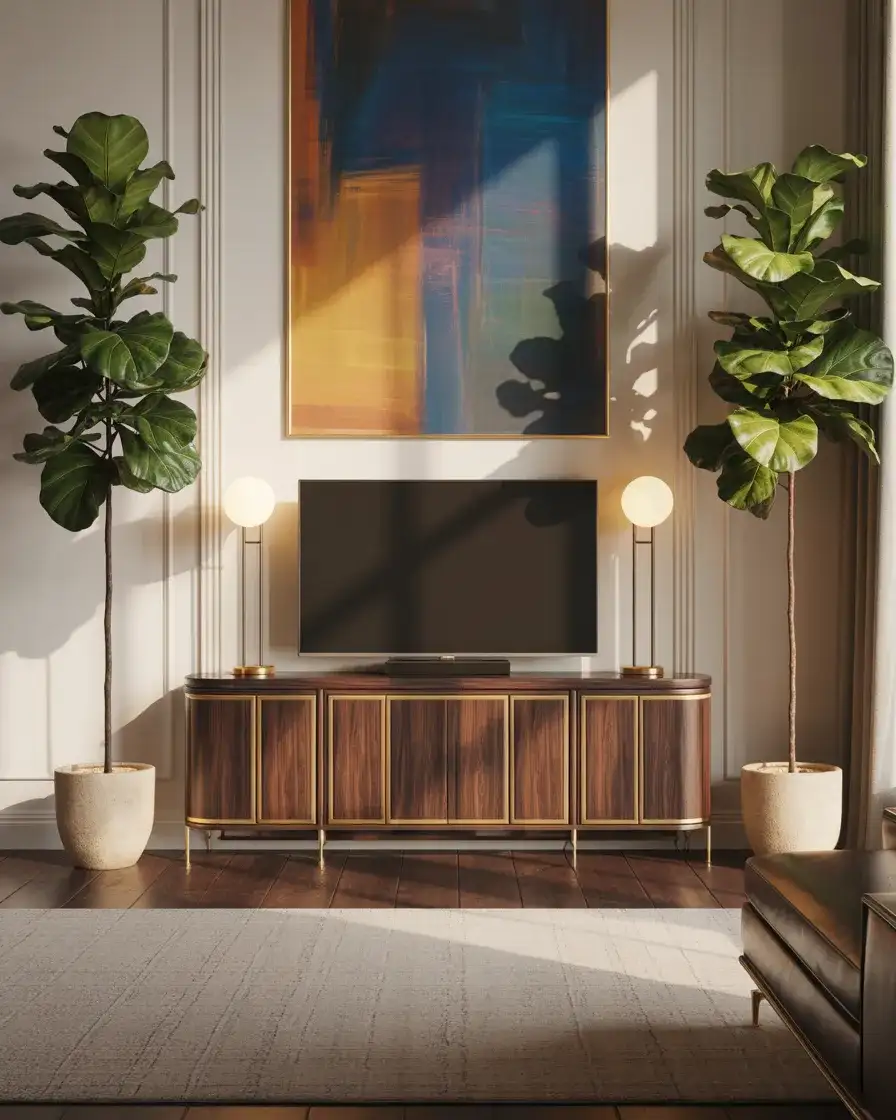
A large console in a grand living room with high ceilings is a gift—you finally have the scale to make truly dramatic styling choices without the arrangement looking forced or overdone. This is the scenario where tall floor-to-ceiling ideas come into play: a pair of tall sculptural plants flanking the TV, an oversized piece of art mounted or leaned above the console, and a statement console in a rich material like lacquered ebony or aged brass-inlaid wood. Everything should be generous in proportion—small objects will look lost and timid in a large-scale space, and timidity is the enemy of a well-styled room.
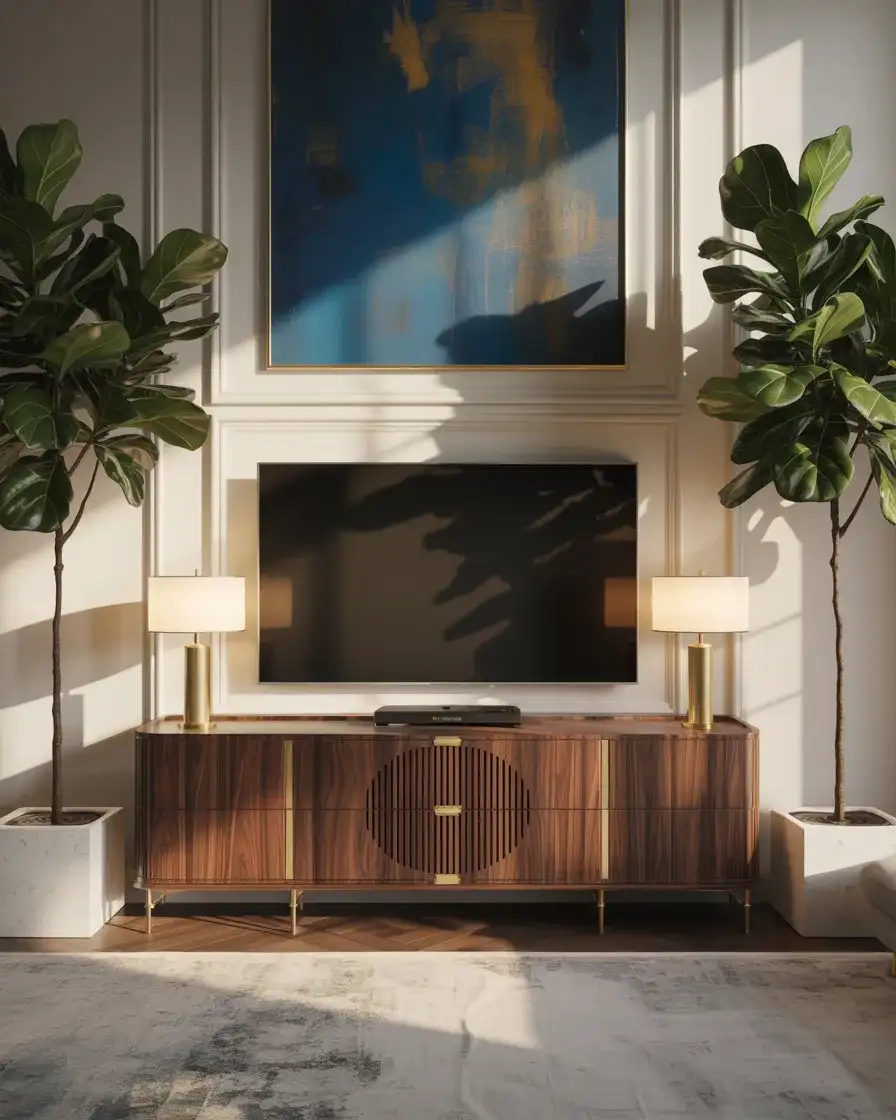
When styling for genuine scale, a useful rule of thumb from interior designers is to choose one truly oversized anchor piece—something that feels almost too big—and build the rest of the arrangement around it. This might be an enormous ceramic vessel that’s two feet tall, a statement lamp with a dramatic shade, or a single wide panel of art that fills most of the wall behind the TV. That single large-scale commitment prevents the arrangement from feeling like a collection of medium-sized items competing with each other for attention.
16. Under-TV Console Built-In for a Custom, Architectural Look
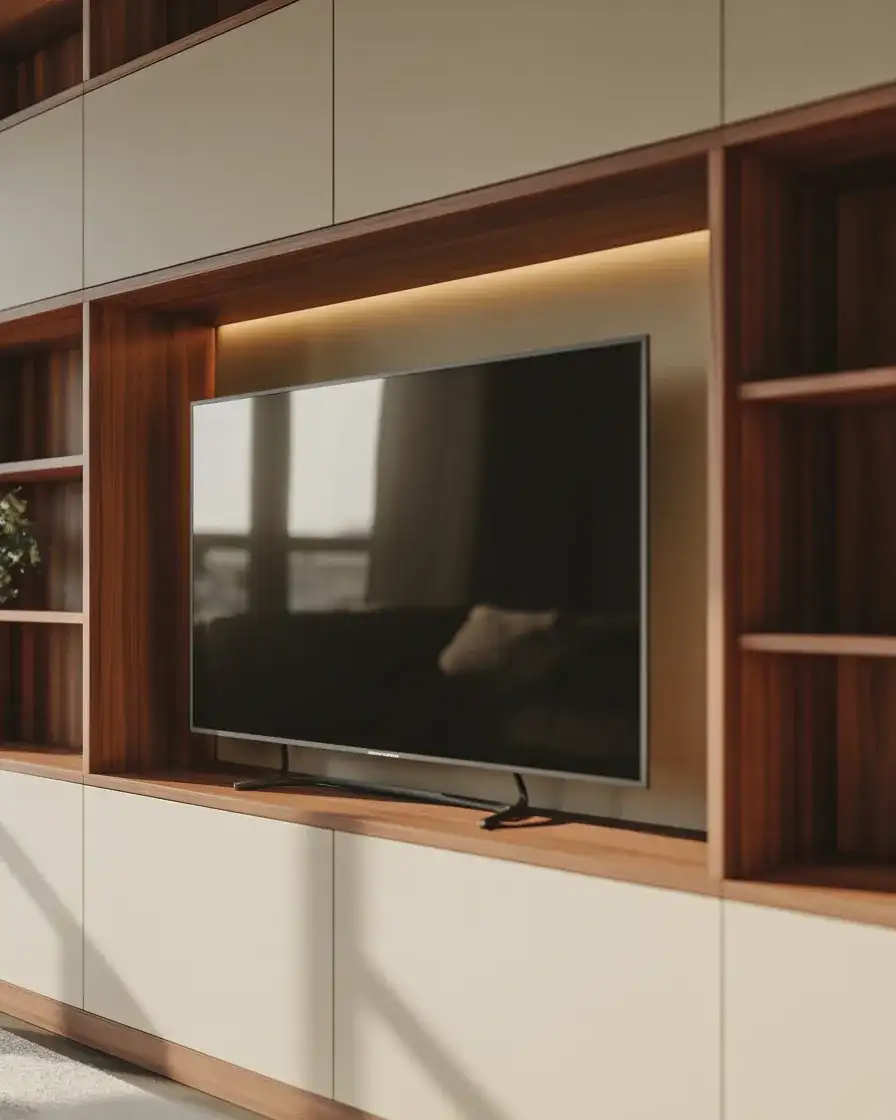
The space under the TV is often the most neglected zone in the entire living room, but when it’s treated as a design opportunity rather than an afterthought, it can transform the whole wall into something that looks genuinely custom-built. A built-in or built-in-look console—achieved either through actual millwork or cleverly configured modular units—creates a seamless, architectural quality that makes the TV feel like an intentional part of the room rather than an appliance that was plopped down somewhere. Pair the modern built-in aesthetic with integrated lighting, and you’ve got a feature wall that will make guests ask who your architect is.
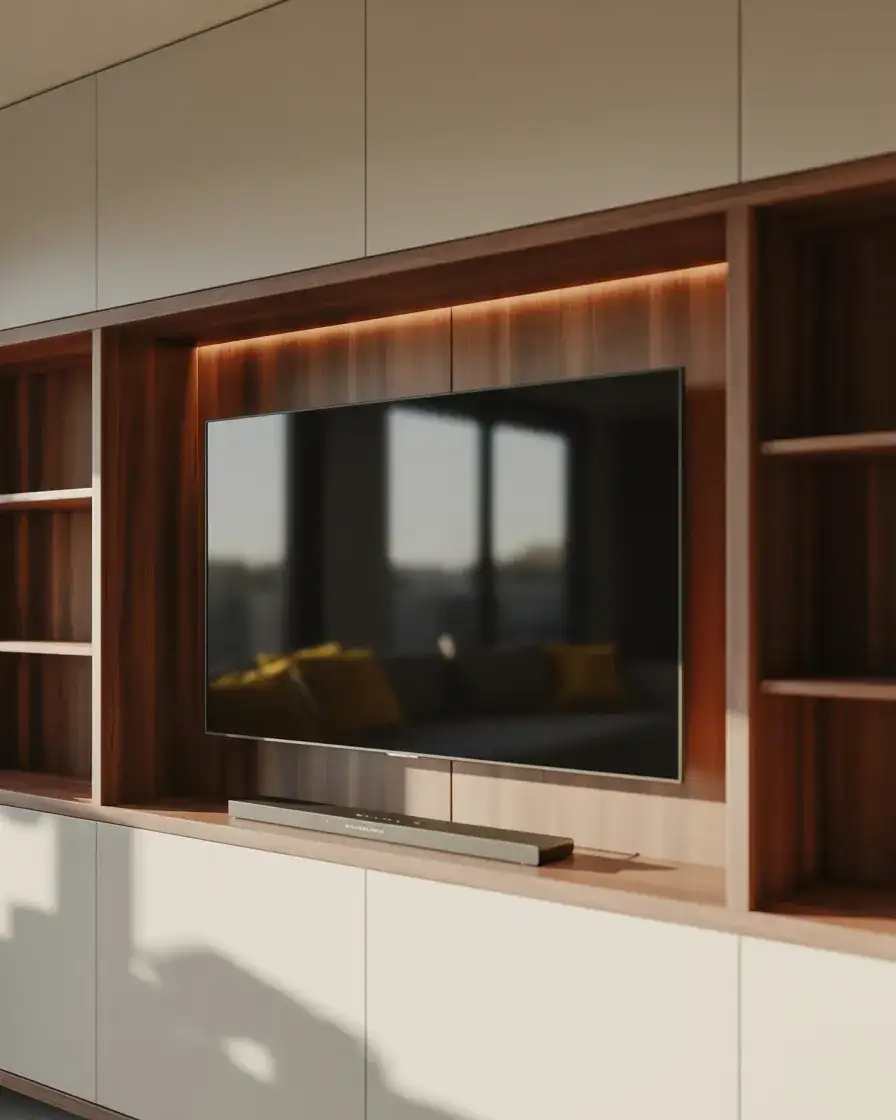
The good news for homeowners who love the built-in look but don’t have the budget for custom millwork: IKEA’s KALLAX and BESTÅ systems, combined with some DIY trim work, flat-front cabinet doors, and a coat of paint that matches the wall, can create a genuinely convincing built-in effect for a fraction of the custom cost. This approach—sometimes called an “IKEA hack”—has been documented on countless home blogs and YouTube channels, with many homeowners reporting a final cost of $500–$1,500 versus the $5,000–$15,000 a real built-in might cost.
17. Vintage Console with Mid-Century Modern Styling
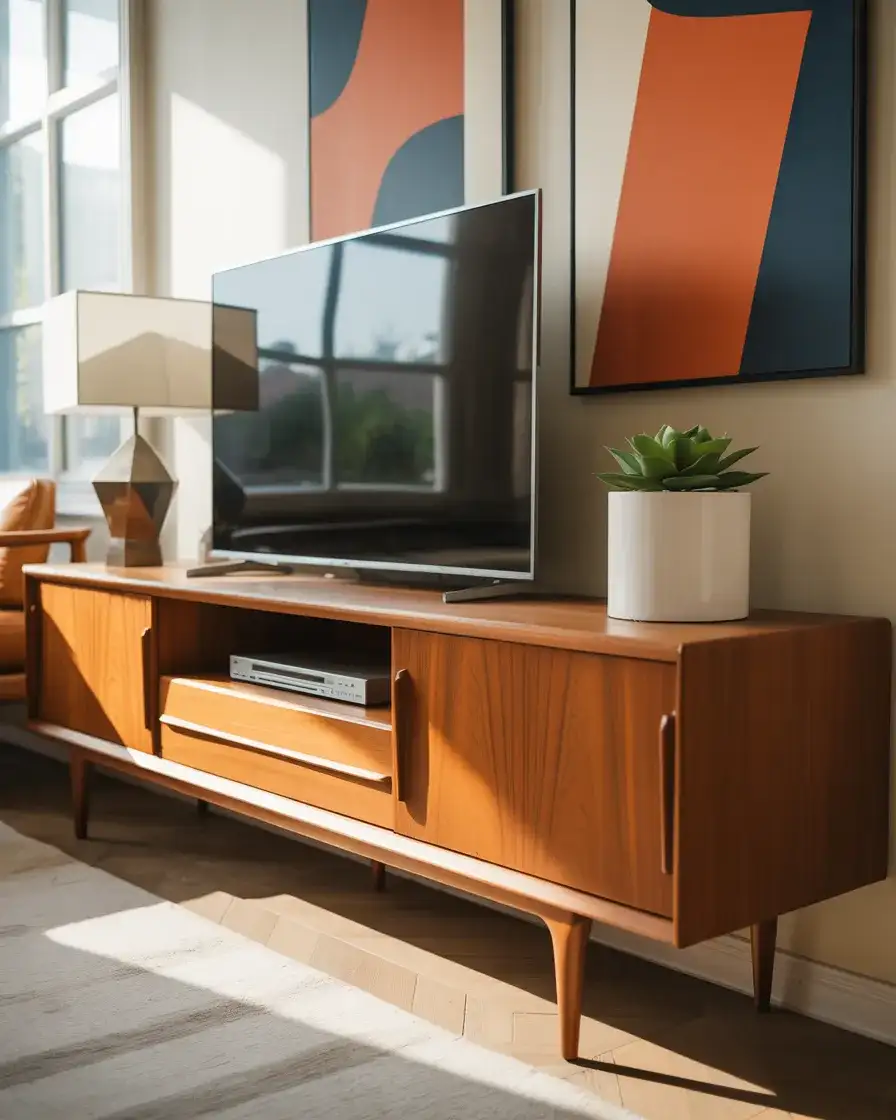
A vintage mid-century modern console—think tapered legs, clean horizontal lines, and teak or walnut veneer—is arguably the most enduringly stylish piece of furniture you can put in a living room. The beauty of genuine MCM consoles is that they were designed as credenzas or sideboards and repurpose perfectly as TV consoles with a little cable management. Style one with a pair of geometric ceramic table lamps, a small succulent arrangement, and a single piece of bold graphic art above, and you’ve created a living room vignette that looks like it belongs in a design publication from any decade.
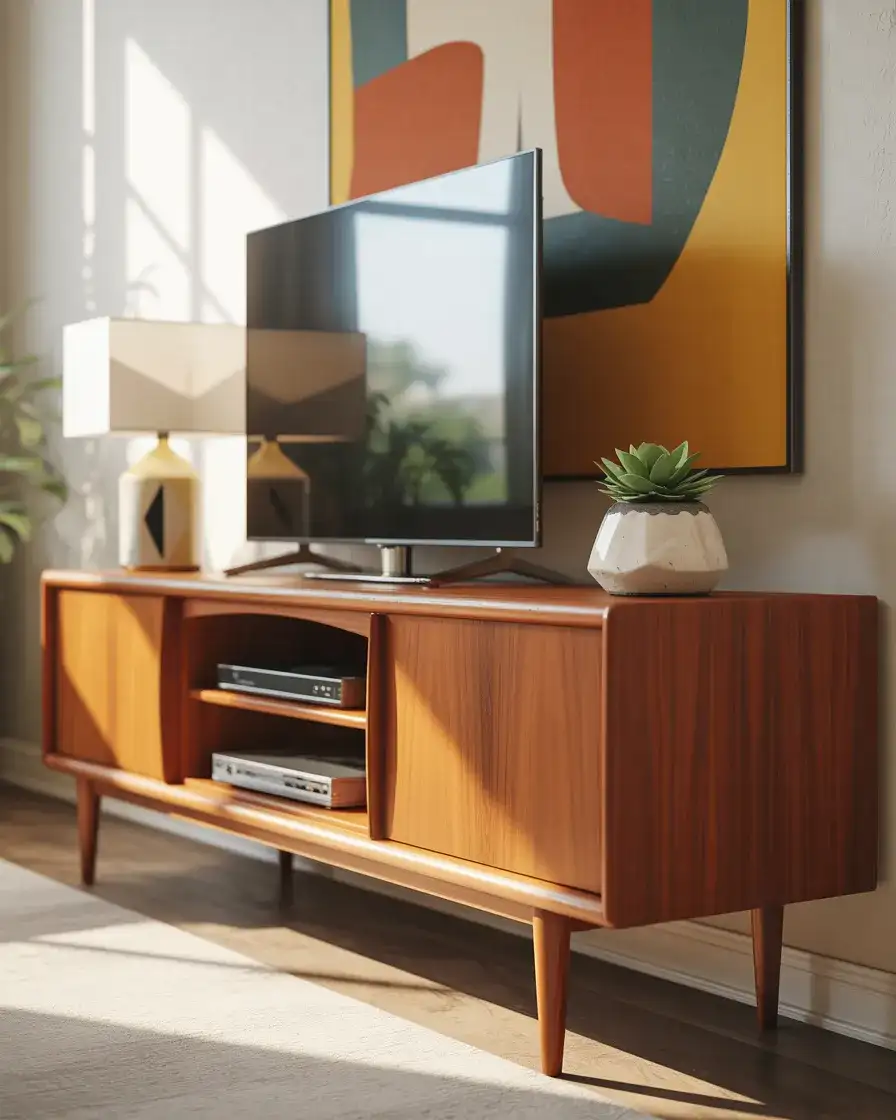
The hunt for a genuine vintage MCM credenza is one of the great pleasures of this approach—and one that Americans are increasingly enjoying. Facebook Marketplace, Craigslist, and estate sales in mid-century neighborhoods (look in suburbs built between the 1950s and 1970s) yield these pieces regularly, often at prices between $150 and $500. A good piece with solid bones can be refinished for another $100 in supplies, leaving you with a genuinely beautiful, one-of-a-kind console that mass-market furniture simply cannot replicate.
18. Modern Open Shelving Unit as a Full Entertainment Wall
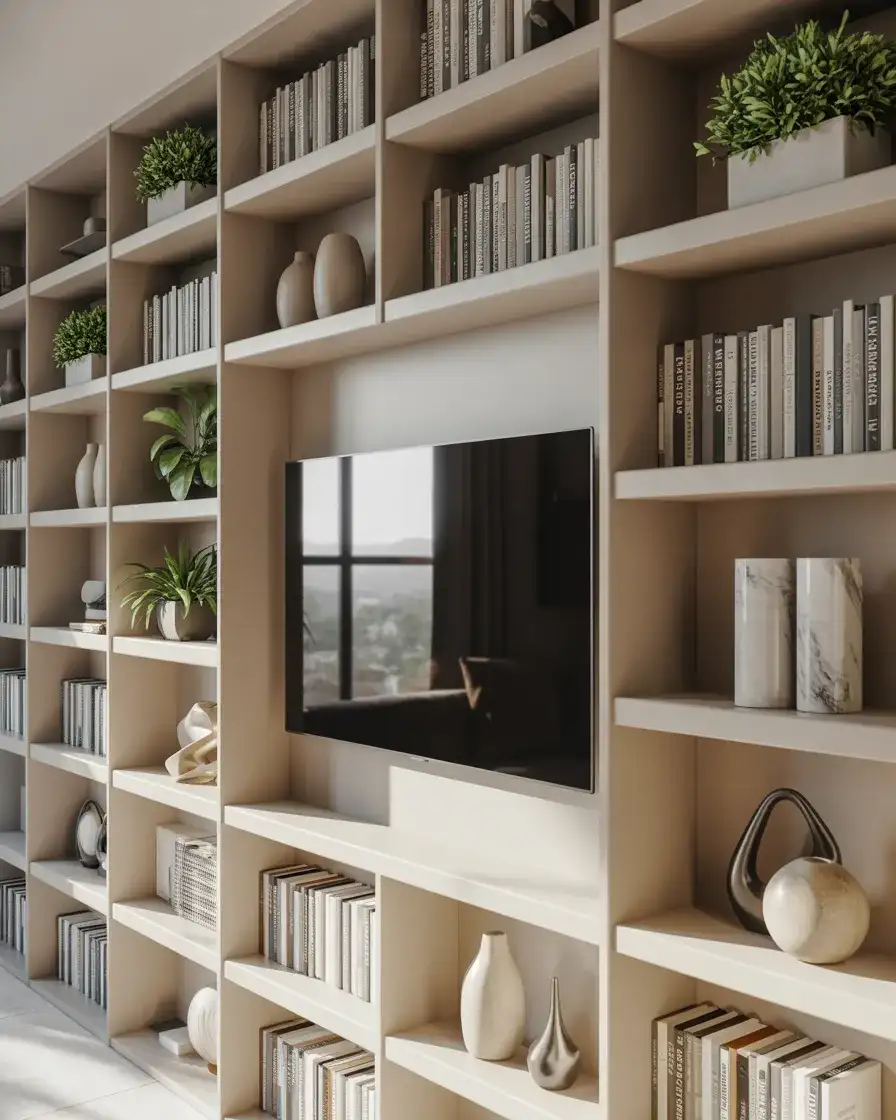
Taking the open shelves concept to its fullest expression, a full entertainment wall unit with modern open shelving creates a room-defining moment that combines storage, display, and architecture in one bold move. The TV is integrated into the shelving system at eye level, surrounded by a carefully curated mix of books, art objects, plants, and baskets. The key to making this look intentional rather than overwhelming is to leave at least 30% of the shelf space completely empty—that negative space is what allows the eye to rest and the arrangement to breathe. Without it, even the most beautiful collection of objects starts to feel like a storage problem.
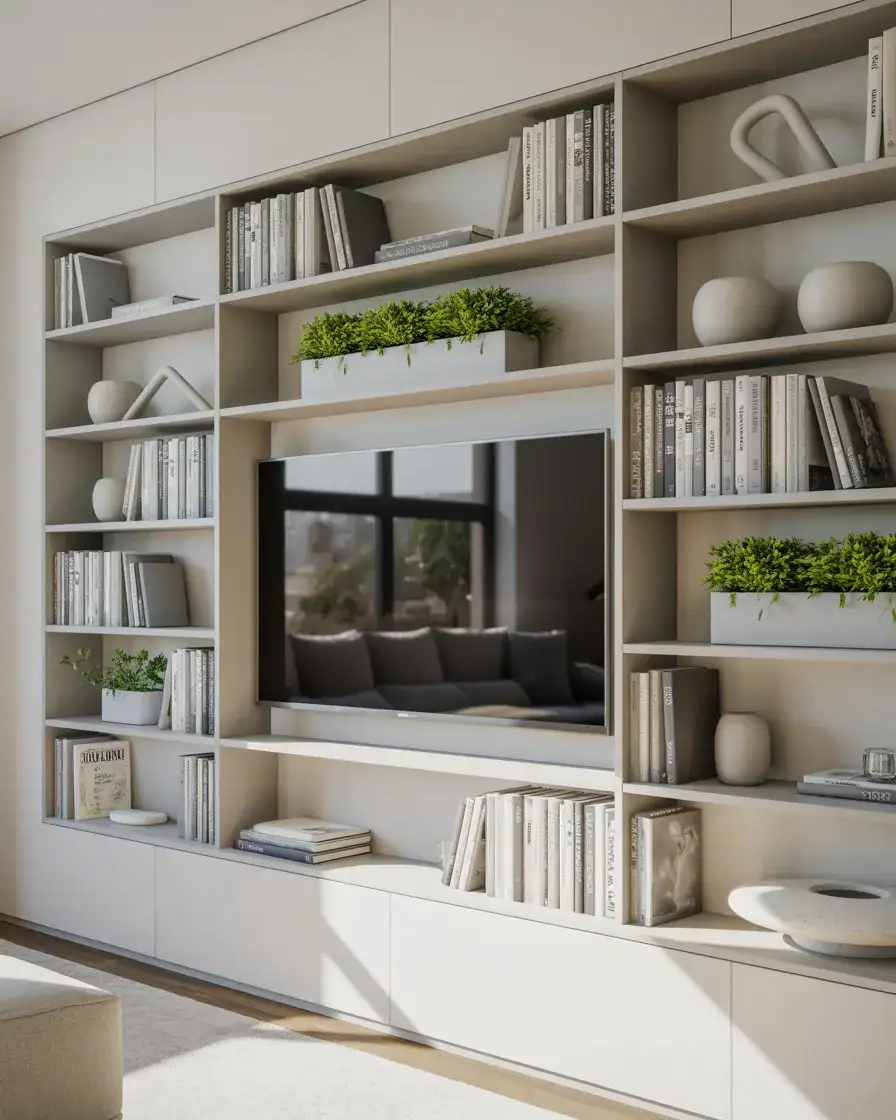
One thing real homeowners who’ve made this choice consistently report: cable management is absolutely critical with open shelving entertainment walls, and it’s worth doing properly before you style anything. With an open unit, every visible cord becomes a styling liability. Invest in cable raceways, in-wall cord concealers, or a wireless HDMI kit before you place your first decorative object—you’ll thank yourself every time you look at the finished result.
19. Simple White Console with Minimal Greenery for Clean, Calming Vibes
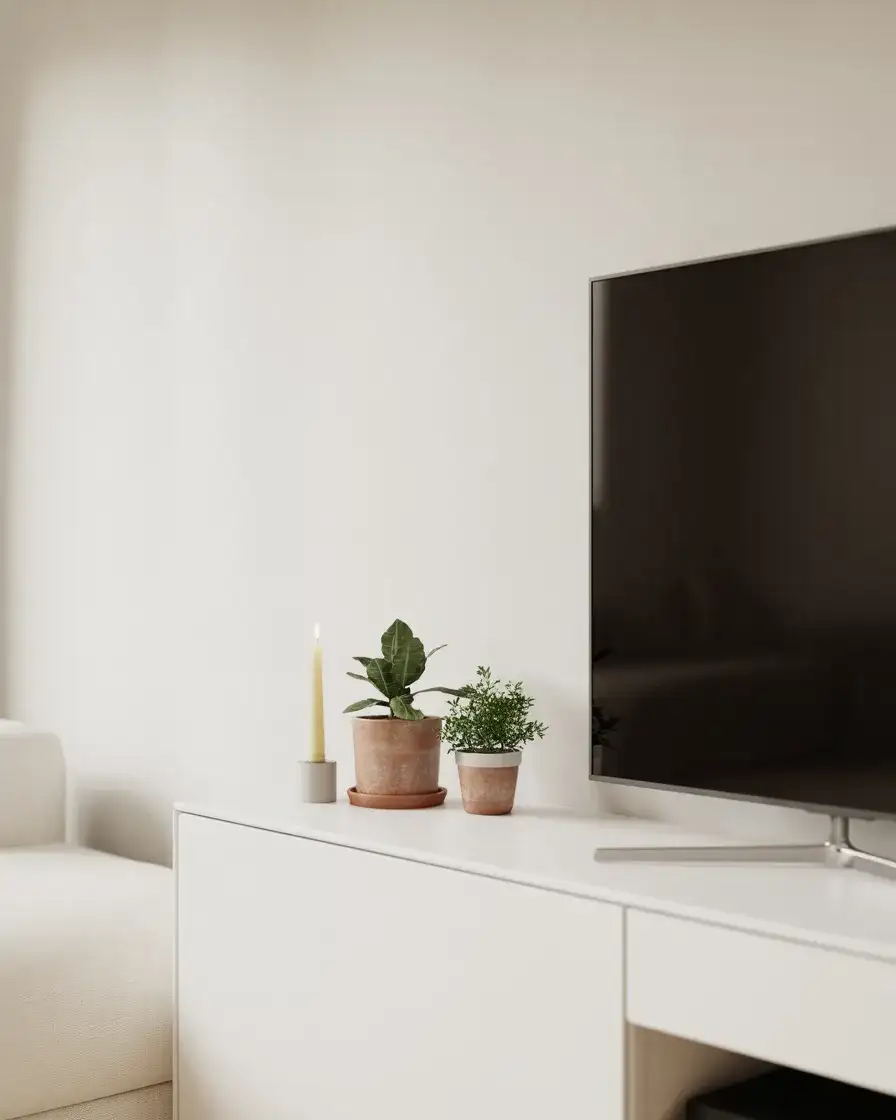
Sometimes the most powerful statement is a quiet one. A simple white console with just two or three small plants and nothing else is the kind of setup that photographs beautifully on Pinterest precisely because of its restraint. This approach works in any room but feels particularly right in spaces that are trying to cultivate a calm, spa-like energy—the kind of room you walk into and immediately feel your shoulders drop. The plants add life and color without visual noise; white keeps the surface receding into the background; and the TV, when turned off, becomes a large dark mirror that doesn’t compete with the careful simplicity of the arrangement.
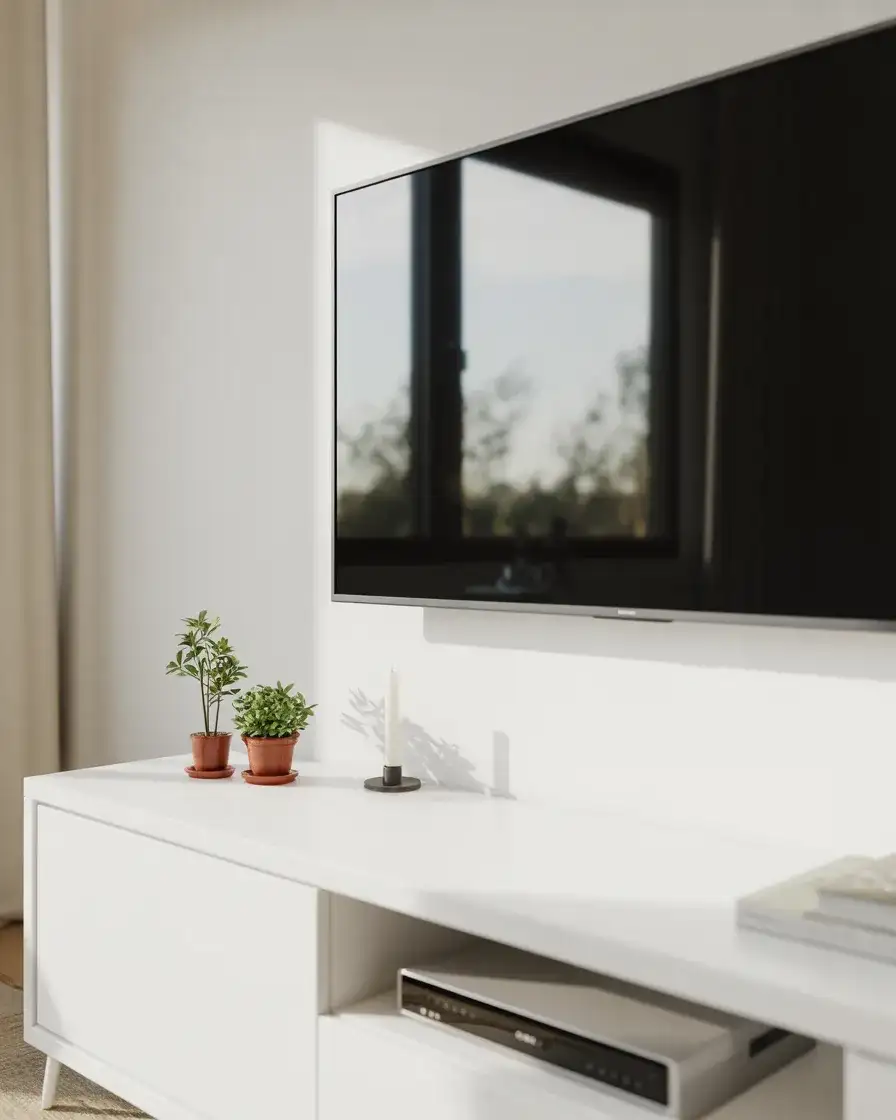
For anyone new to plant styling, the TV console is actually an ideal starting point because it sits at a height where you can really see and appreciate smaller plants up close. Snake plants, pothos, and ZZ plants all tolerate the lower light conditions common near TV walls, require minimal watering, and look genuinely beautiful in simple ceramic or terracotta pots. If you’re chronically unlucky with plants, a high-quality faux succulent from a brand like Nearly Natural costs $15–$30 and is genuinely hard to distinguish from the real thing at console height.
20. Ideas for Living Rooms with Low Ceilings and Dark Walls
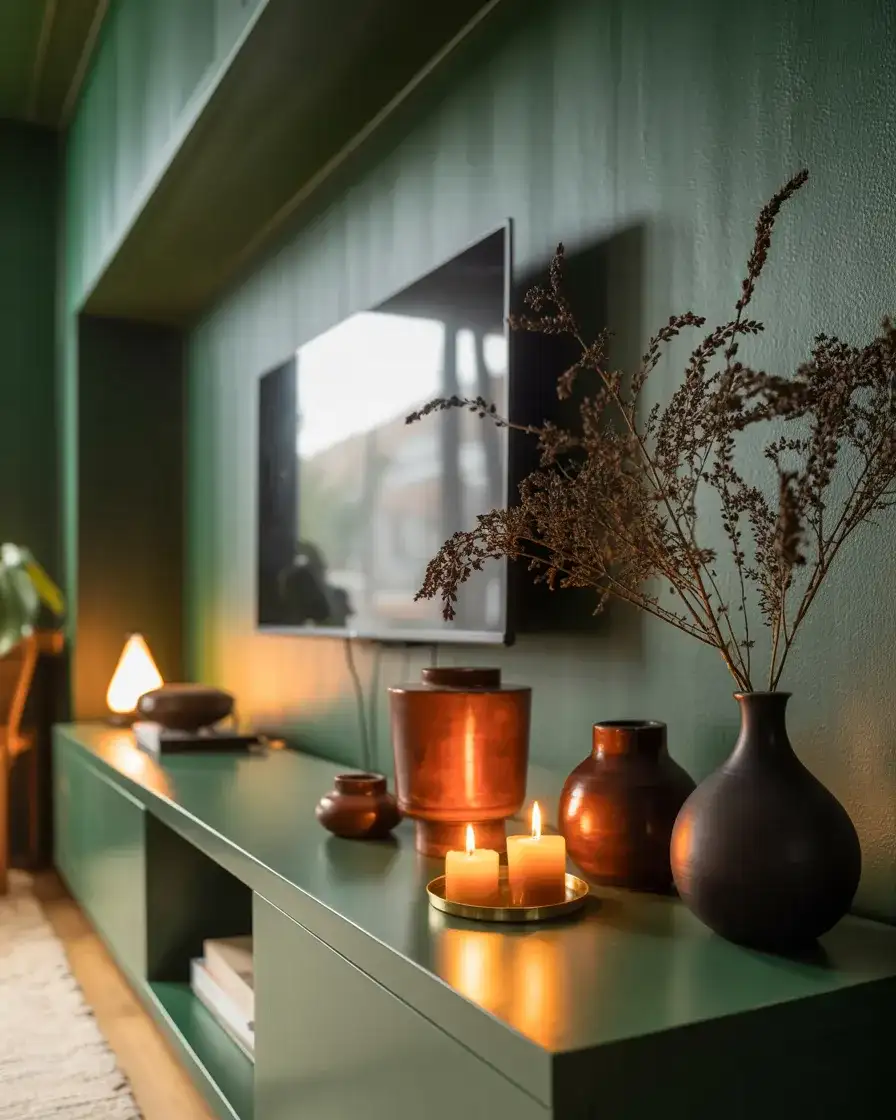
Rooms with low ceilings and dark walls present a genuinely exciting challenge for TV console styling—the usual rules get flipped, and the results, when you lean into the constraints, can be spectacular. Some of the coziest, most characterful living rooms are the ones that embrace rather than fight against low ceilings and dramatic paint. Here, a low, horizontal console emphasizes the room’s cozy proportions rather than apologizing for them. Style it with warm amber candlelight, rich terracotta ceramics, and deeply colored botanicals in black vases—everything that thrives in low light and deep shadow becomes an asset rather than a limitation.
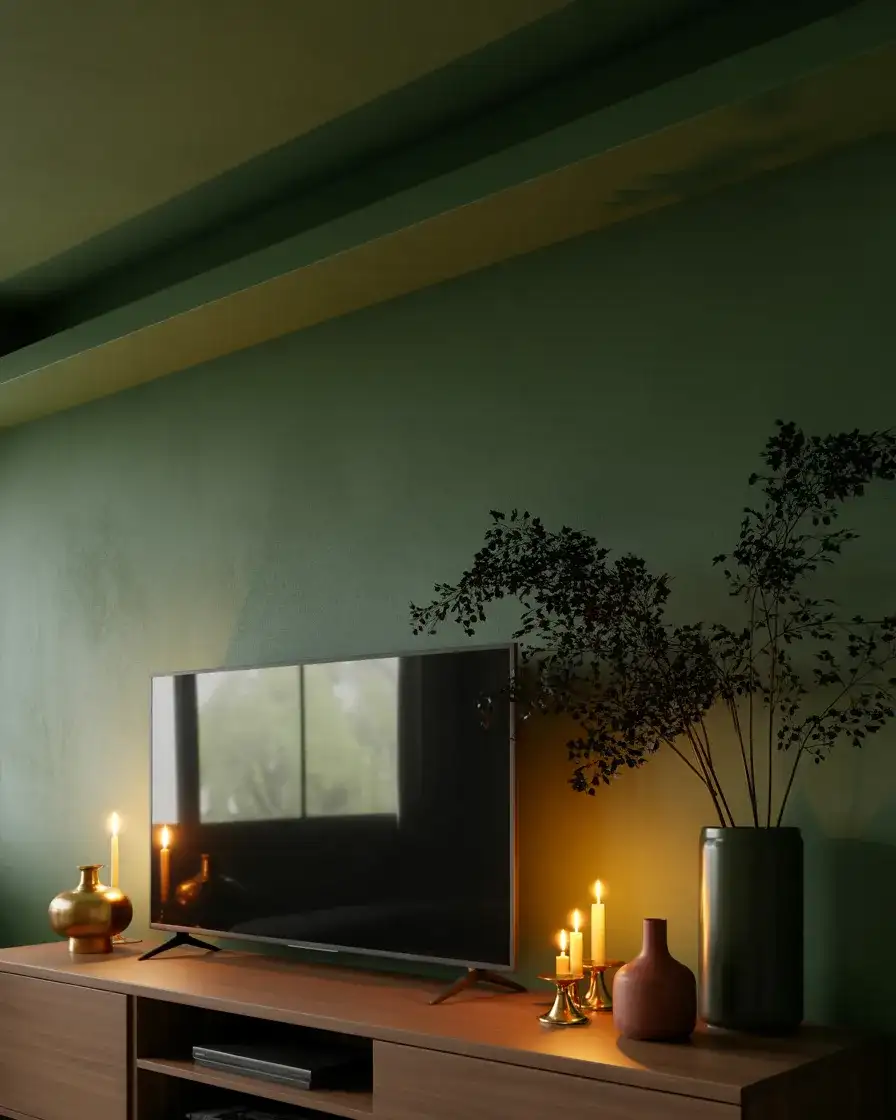
Dark walls and low ceilings feel intimidating to many American homeowners raised on the gospel of “white makes things feel bigger”—but there’s a counter-tradition of dramatic, intimate interiors that’s gained enormous momentum on Pinterest and in design publications. The secret is lighting: dark rooms need warm, layered light sources at multiple heights to avoid feeling gloomy. A mix of table lamps, floor lamps, and candlelight on and around the console creates the kind of enveloping warmth that no amount of white paint can replicate.
21. Wood Accent Console with Textured Wall and Warm Lighting
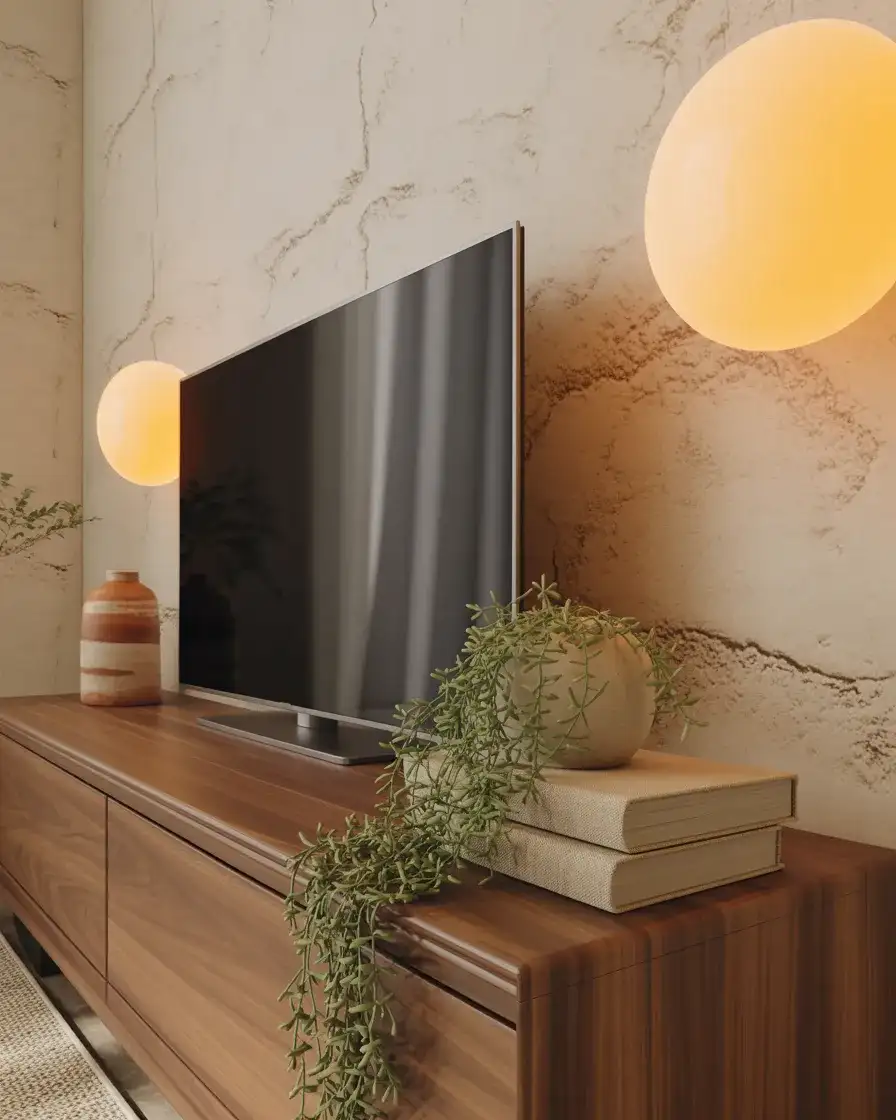
There’s something deeply satisfying about a TV console where the wood grain of the furniture echoes the texture of the wall behind it—whether that’s shiplap, limewash plaster, travertine tile, or a paneled wood accent wall. This conversation between materials creates a layered, rich interior that feels genuinely considered. A warm walnut or white oak console against a limewash or clay-painted wall with warm sconce lighting flanking the TV is one of the most searched and saved console configurations on Pinterest right now—and it works equally well in farmhouse, organic modern, and transitional interiors.
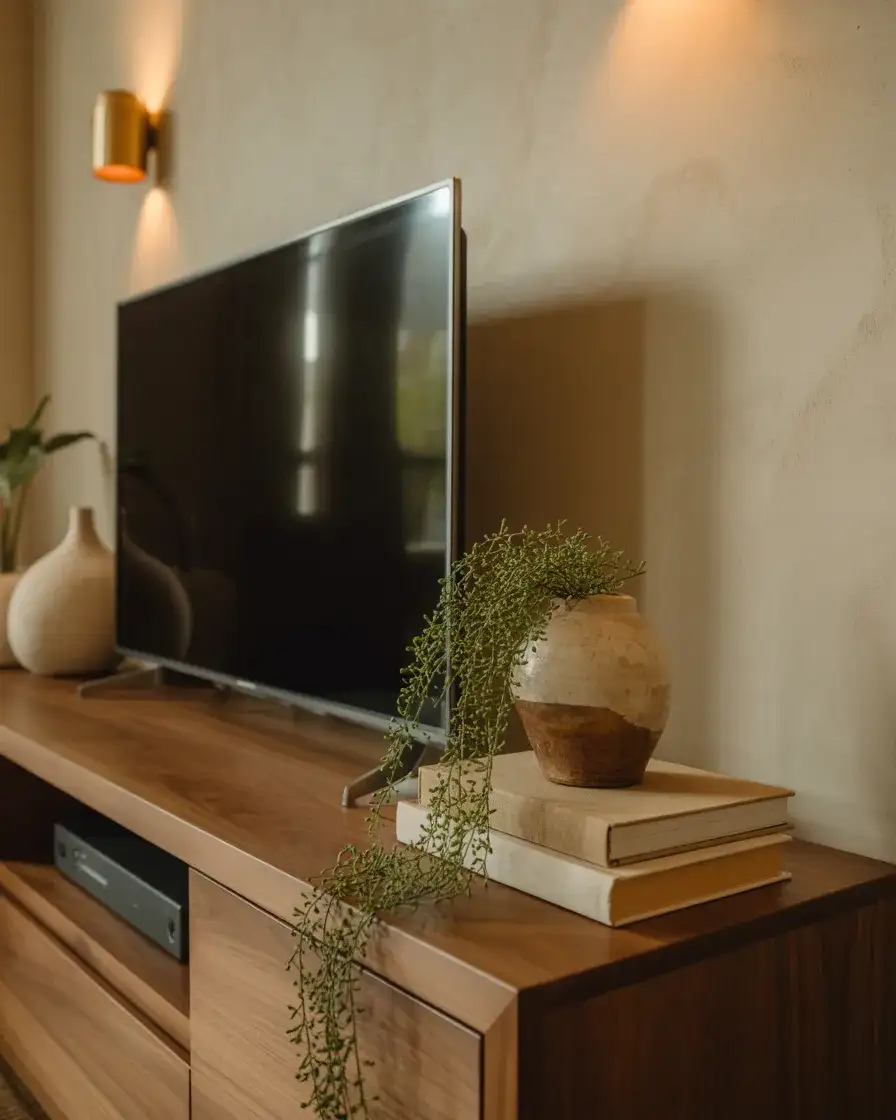
The wall sconce flanking-the-TV trend is worth discussing separately because it solves one of home technology’s longest-running aesthetic problems: the TV, when mounted on a flat white wall with no surrounding visual context, looks like exactly what it is—a piece of electronics that doesn’t particularly care about being beautiful. Flanking sconces—even inexpensive hardwired or plug-in versions—frame the TV as if it were a piece of art, creating a symmetry and warmth that completely changes the energy of the arrangement.
22. Seasonal Refresh Strategy: One Console, Four Different Looks
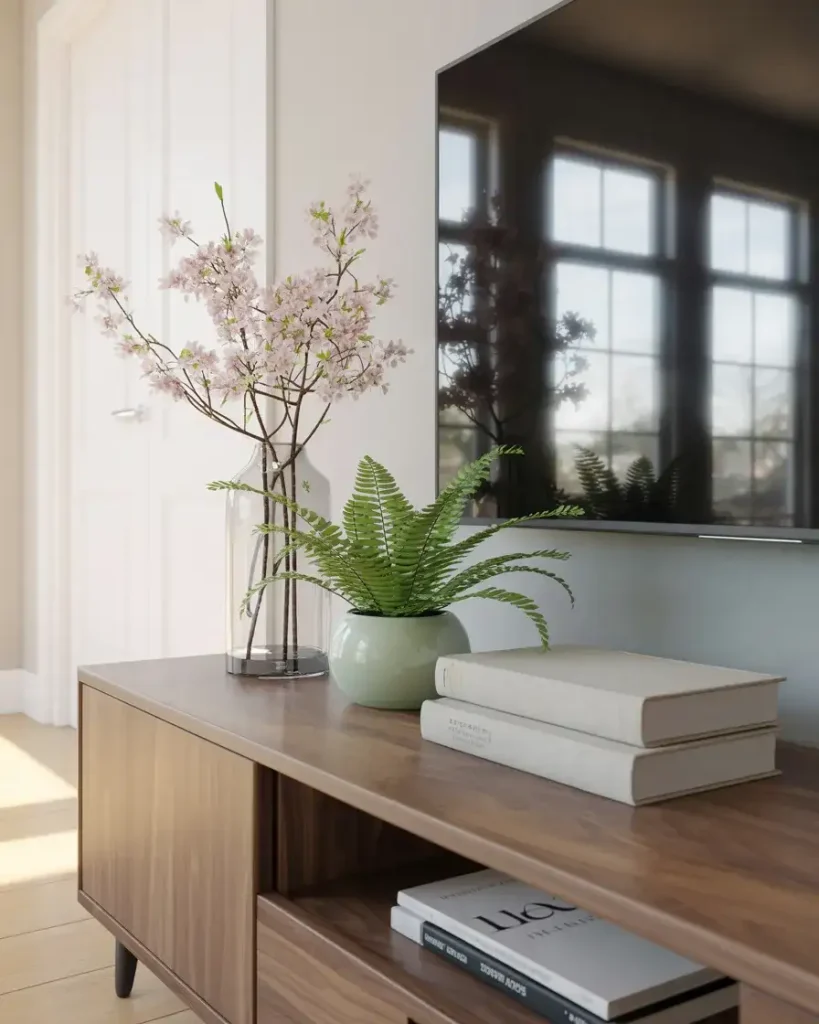
One of the most practical and Pinterest-worthy approaches to TV console decorating is treating your console as a seasonal canvas—a space that changes with the rhythms of the year rather than staying fixed. The console itself stays constant (a neutral medium-toned wood console works for all seasons), while a core collection of swap-ready decor objects transforms it from a fresh spring arrangement with blossom stems and soft green accents to a coastal summer setup with rattan and sandy textures to a warm autumn vignette to a Christmas greenery display. The investment is spread across four small capsule collections rather than one big seasonal splurge.
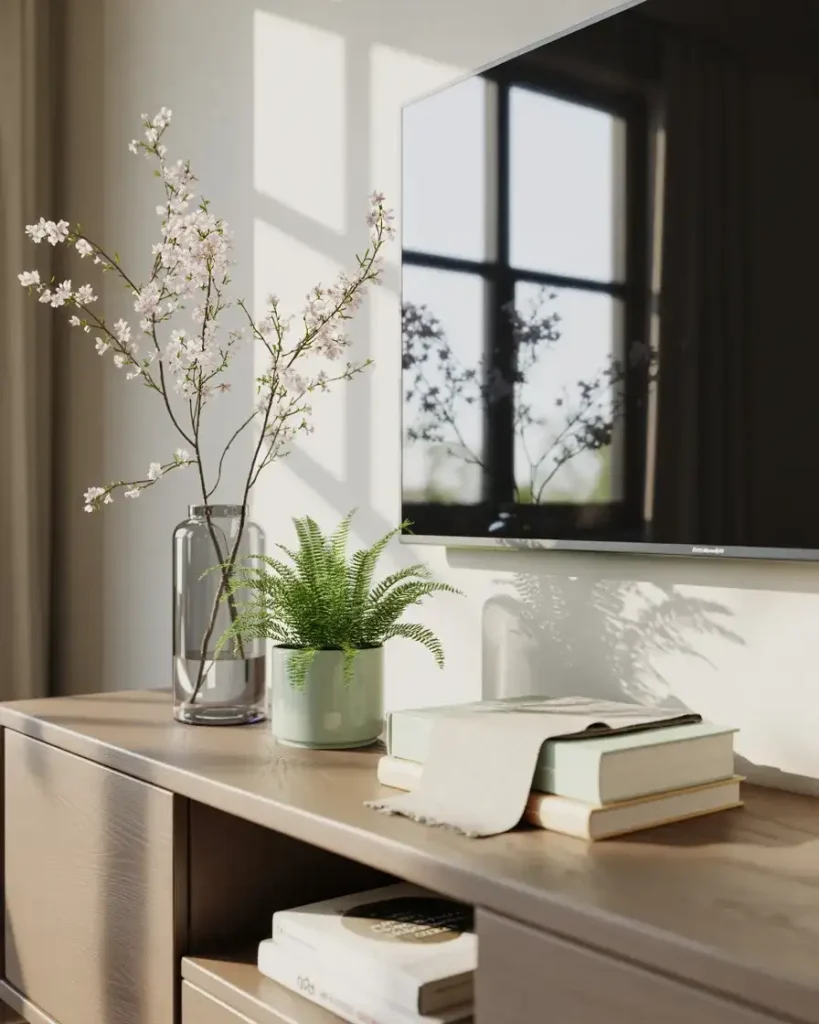
The most efficient way to execute the seasonal swap strategy is to invest in a few high-quality neutral base items—one beautiful tall vase, one quality tray, and one set of candle holders—and then buy inexpensive seasonal filler items that change out each quarter. Dried botanicals are particularly brilliant for this because they can be sourced cheaply at craft stores, look genuinely gorgeous, and last the entire season without any care. Budget $20–$40 per seasonal capsule, and you can keep your console feeling perpetually fresh without a significant ongoing investment.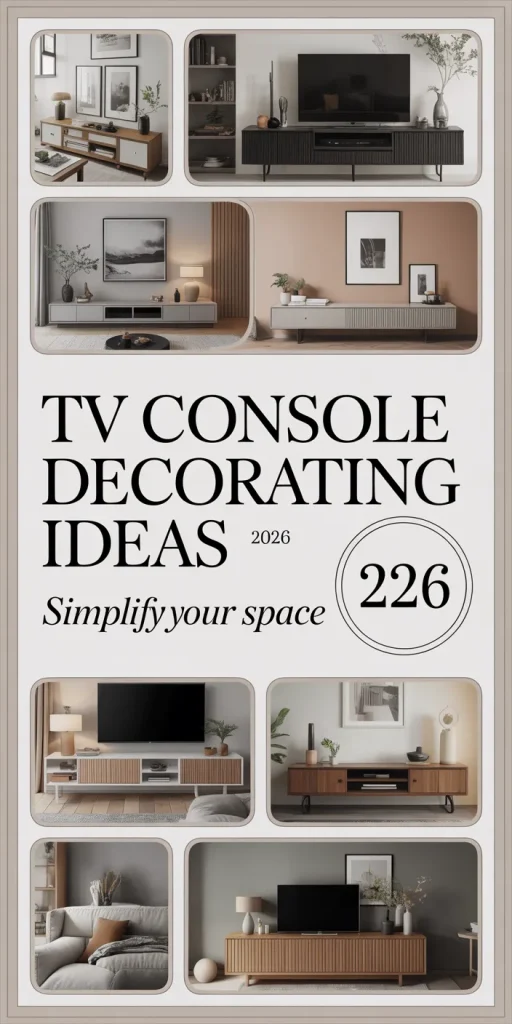
Conclusion
Whether you’re drawn to the clean serenity of a Japanese-inspired low console, the rich layering of a boho arrangement, or the bold drama of a matte black setup with sculptural accents, the most important thing is that your TV console reflects how you actually live—and what genuinely makes you happy to look at every day. We’d love to hear which of these ideas resonated most with you: are you ready to go all-in on an organic modern vignette, or does a seasonal swap strategy feel more your speed? Drop your thoughts in the comments below, share your own console styling photos, and let’s keep the conversation going.