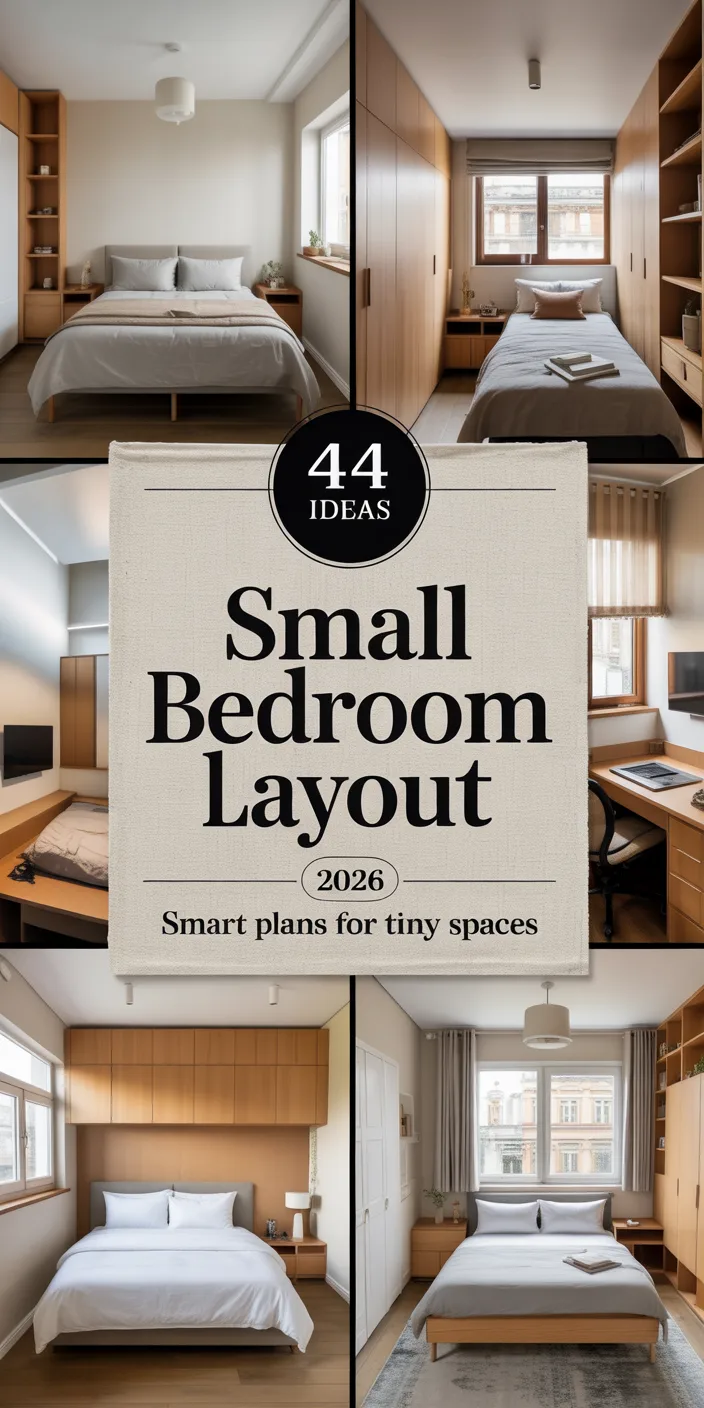
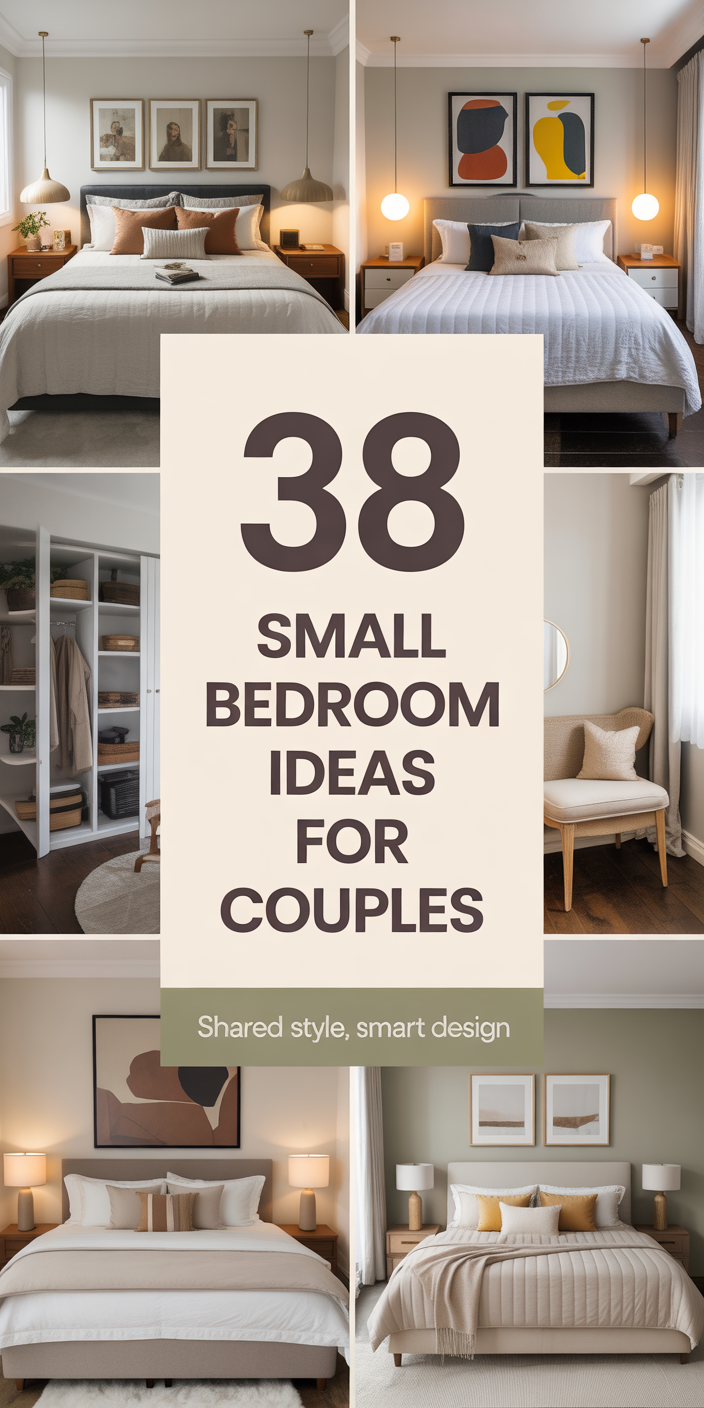
Small bedrooms are having a serious moment right now—and not in a “making the best of it” kind of way. In 2026, designers and real homeowners alike are leaning into compact spaces as a design challenge worth embracing, not just surviving. If you’ve been scrolling Pinterest for bedroom inspo lately, you already know: the most pinned rooms aren’t the sprawling, magazine-perfect suites. They’re the clever, cozy, personality-packed tiny bedrooms that feel lived-in and loved. Whether you’re furnishing a studio apartment in Brooklyn, a rental in Austin, or a child’s room in a suburban ranch house, this roundup has ideas that are genuinely useful, visually inspiring, and built for real American homes.
1. The Cozy Nook Bed with Built-In Shelving

There’s something undeniably appealing about a bed that feels like it belongs exactly where it is—not just pushed against a wall, but actually cozy and intentional. Built-in shelving flanking a low platform bed transforms even the tiniest room into something that feels curated rather than cramped. This approach works especially well in cozy aesthetic spaces where every inch needs to earn its keep. The shelves hold books, plants, and bedside essentials without stealing floor space from a room that can’t afford to give any up.

This setup is particularly smart in older homes where closets are small and square footage is at a premium. Many homeowners in cities like Chicago or Portland have discovered that replacing a traditional nightstand-and-headboard combo with a fully integrated shelving unit can add the equivalent of a small linen closet’s worth of storage—without a single renovation permit. The built-in look also anchors the room visually, making a narrow space feel like it was designed that way on purpose.
2. Minimalist White Room with Statement Lighting

A minimalist bedroom doesn’t have to feel cold or hospital-like—it just needs one carefully chosen element that does all the talking. In a tiny space, a sculptural pendant light or an arched floor lamp becomes the room’s focal point, pulling the eye upward and making the ceiling feel higher than it is. This aesthetic works particularly well when the walls, bedding, and furniture all stay in the same tonal family of whites, creams, and soft grays. The restraint is the whole point.

Interior designers often point to lighting as the single most underestimated tool in small-space decorating. A single statement fixture—whether it’s a hand-blown glass globe or a woven rattan dome—costs less than a new dresser and delivers more visual impact than almost any furniture swap. For renters who can’t change their walls, swapping out a builder-grade ceiling fixture for something intentional is one of the easiest, most reversible upgrades available.
3. IKEA Small Bedroom Hack with KALLAX Storage

The IKEA universe was practically built for people with small bedrooms, and in 2026 the hacks just keep getting more creative. Using an IKEA KALLAX unit as a room divider and storage wall is one of those ideas that sounds obvious until you see it done well—and then you can’t unsee it. In IKEA small spaces, a floor-to-ceiling KALLAX arrangement can replace a wardrobe, a bookcase, and a media console all at once, keeping the floor completely open for other furniture or simply breathing room.

The real beauty of this approach—beyond the sub-$200 price point—is that it’s completely modular. You can rearrange, add inserts, or take the whole thing apart when you move. One Brooklyn renter documented her KALLAX bedroom build on Instagram and noted that the entire setup, including fabric bins and doors, came in under $180. That’s a functional storage wall for less than most people spend on a single accent chair.
4. Cozy Couples Bedroom with Warm Earth Tones

Designing a small bedroom for two people is a completely different puzzle than designing for one, and getting it right means thinking about symmetry, shared storage, and—most importantly—atmosphere. A couple’s cozy room benefits enormously from warm earth tones: terracotta, warm taupe, mushroom, and deep rust create a sense of intimacy without making the space feel smaller. Cozy, relaxing lighting from matching bedside sconces keeps the symmetry intact while freeing up the nightstands from lamp clutter.

Where this works best: apartments and condos where the bedroom is the primary retreat space—places where couples actually spend time reading, watching shows, and unwinding rather than just sleeping. When the bedroom has to function as a living space too, warmth of color and quality of lighting become critical. Sconces also free up nightstand surface area, which in a small room is valuable real estate that’s better used for a glass of water and a good book.
5. Under-Bed Storage with Queen Bed Frame

Fitting a queen bed into a tiny bedroom is one of the most common dilemmas in American apartment living, and the solution almost always lives underneath it. A bed frame with built-in drawers—or even one raised high enough to accommodate rolling bins—can store a surprising amount: off-season clothing, extra linens, luggage, and anything else that would otherwise crowd a small closet. This kind of storage thinking is especially important when the room has no walk-in closet and the only alternative is a bulky wardrobe.

One common mistake people make with under-bed storage is buying bins that are just slightly too tall to roll out easily, which means the storage never actually gets used. Before investing in a storage bed or buying bins, measure the clearance precisely. Beds with hydraulic lift frames give the most accessible storage but cost more upfront—typically $400–$800 — while simple drawer frames start around $200 and are easier to find in standard retail stores like IKEA or Wayfair.
6. Pink Dreamy Bedroom for a Cozy Aesthetic Space

Not every small bedroom needs to feel neutral and restrained—and the pink bedroom trend that’s been simmering on Pinterest for the last few years has officially matured into something sophisticated in 2026. We’re not talking bubblegum or nursery blush anymore. The palette now skews toward dusty rose, antique mauve, and warm terracotta pinks that layer beautifully against warm wood tones and aged brass hardware. For a cozy aesthetic that leans romantic, a pink bedroom is almost hard to get wrong as long as you stay within one tonal family.

A designer working with clients in Nashville recently noted that dusty pink is one of the few colors that reads as warm in natural light and still feels calming under artificial light at night—which makes it ideal for bedrooms used at all hours. The trick is to avoid going all-pink on every surface. One painted wall or a pink upholstered headboard paired with neutral bedding gives you the warmth and personality without overwhelming a small room.
7. Children’s Small Bedroom with Smart Layout

Designing a children’s bedroom in a small space is one of the most genuinely creative challenges in home design—you need sleep space, play space, study space, and storage all within a room that might be 100 square feet or less. The best layout approaches for kids’ rooms use vertical space aggressively: loft beds with desks underneath, wall-mounted bookshelves at reachable heights, and pegboards for backpacks and art supplies. The goal is a room that grows with the child and doesn’t need a full overhaul every two years.

American families in smaller homes—particularly in the Northeast and West Coast, where space is expensive—have increasingly turned to furniture that “does double duty” in kids’ rooms. Loft beds from IKEA’s KURA or MYDAL lines are a popular starting point, but the real magic happens when parents customize with fabric canopies, clip-on lights, and under-bed reading nooks. These additions cost almost nothing but make the room feel like a special place a child actually wants to spend time in.
8. Bunk Bed Room for Siblings Sharing a Tiny Space

The bunk bed has had a full design renaissance, and it’s no longer just a utilitarian solution for camp cabins and college dorms. In 2026, bunk beds for kids’ rooms are showing up in beautifully finished wood, with built-in ladders, individual reading lights, and even small shelves at each sleeping level. For siblings sharing a cozy, simple bedroom, a well-designed bunk frees up the entire floor area for play, a shared desk, or a comfy reading corner—which genuinely changes how usable the room feels day-to-day.

One practical insight worth knowing before purchasing: the height of the bunk matters more than most parents realize. Standard ceilings in American homes run 8 feet, which technically accommodates most bunk beds—but the upper bunk can feel cramped for older kids if the mattress-to-ceiling clearance is less than 30–36 inches. Measure before you buy, and look for “low-profile bunk bed” options if you’re working with standard 8-foot ceilings and an older child who needs to sit up comfortably.
9. Extremely Small Bedroom with Murphy Bed Solution

When the bedroom is extremely small—think 80 square feet or less, or a studio where the “bedroom” is simply an alcove—a Murphy bed stops being a novelty and becomes the most sensible furniture decision in the room. Modern Murphy beds are nothing like the awkward fold-down contraptions of decades past. Today’s versions integrate seamlessly with surrounding cabinetry, often hiding a full wardrobe on one side and a desk or shelving unit on the other, making the entire wall a multi-functional system that transforms the room from day to night.

Murphy bed systems have become significantly more accessible in recent years. IKEA’s PLATSA system can be adapted by crafty DIYers into a Murphy-style setup, and companies like Wayfair and Resource Furniture now offer complete systems ranging from around $800 to several thousand dollars. The investment pays off quickly in cities where an extra functional room—even a small one—can justify a higher rent or resale value. For renters, some landlords will even allow the installation if it doesn’t require drilling into structural walls.
10. Long Narrow Bedroom with Floating Furniture

A long, narrow bedroom is one of the trickiest layouts to work with—it can feel like a hallway no matter what you do, unless you approach the furniture arrangement with real intention. The single best move in a long narrow room is floating the bed sideways against one long wall rather than centering it at the far end, which immediately widens the visual proportion of the space. Pair this with a layout that keeps both long walls relatively clear and uses low furniture throughout, and the room starts to breathe.

Real homeowners dealing with this layout often make the same mistake: they push all the furniture to the walls and leave a long empty channel down the middle, which emphasizes the tunnel-like quality of the room. A better approach is to create two loose zones—a sleeping zone and a small sitting or dressing area at the opposite end—using a low bench or a small armchair to anchor the second zone. A rug in each zone helps define them without adding visual noise.
11. Cozy Elegant Small Bedroom with Velvet Accents

There’s a version of small-bedroom design that isn’t about restraint at all—it’s about richness, texture, and a kind of quiet luxury that you find in boutique hotels and well-traveled homes. A cozy, elegant bedroom uses velvet in a restrained but impactful way: an upholstered headboard in deep forest green, a single velvet throw pillow in wine, or a tufted bench at the foot of the bed. These touches feel very cozy without cluttering a small space, because the texture does all the work that accessories might otherwise do in a larger room.

The mistake most people make when going for “elegant” in a small space is over-accessorizing—putting out too many small decorative items in an attempt to make the room look finished. In a tiny room, restraint is elegance. Choose one or two statement materials (velvet, marble, or brass), keep the rest neutral, and let the quality of what you’ve chosen speak for itself. A single well-framed piece of art on one wall does more for the room than a gallery wall that crowds every surface.
12. Small Bedroom Wardrobe Wall Without a Closet

Older apartments and homes built before the mid-20th century often have one glaring problem: no closet, or one that’s laughably small. The solution that’s been gaining traction—especially among renters in cities—is turning an entire wall into a wardrobe using freestanding systems that look intentional rather than improvised. A row of matching open wardrobes from IKEA’s PAX system, fitted with matching doors and a simple pelmet above, can look custom-built for a fraction of the cost and move with you when your lease ends.

This is one of the most popular DIY bedroom upgrades in the American renter community right now, and for good reason: an IKEA PAX wall with doors typically runs $600–$1,200 depending on configuration, compared to $3,000–$8,000 for custom built-ins. The mirrored door option does double duty by reflecting light and making the room feel larger—a particularly useful trick in bedrooms that get limited natural light or face a wall or alley.
13. Super Small Bedroom Decor with Vertical Art and Mirrors

When floor space is basically nonexistent, decorating goes vertical. A super small bedroom—the kind you’d find in a converted Victorian rowhouse or a micro-unit apartment—needs its walls to do double, triple, or even quadruple duty. Tall, vertical artwork draws the eye upward and makes low ceilings feel higher. A large leaning mirror on the floor reflects the window and doubles the apparent depth of the room. Thoughtful decor at this scale isn’t about minimalism so much as it’s about maximum impact from a carefully edited set of choices.

Mirrors deserve special mention as possibly the highest-ROI item in small-space decorating. An arched full-length mirror leaning against a wall costs $50–$200, takes up no floor space on its own, and genuinely changes the perceived size and light level of a room. Interior designers working in small New York and San Francisco apartments recommend placing the mirror directly across from the room’s best light source—usually a window—to maximize the light-bouncing effect throughout the day.
14. Extra Storage Bedroom with Ottoman Bench and Floating Shelves

In a tiny bedroom, extra storage often has to come from sources that don’t look like storage at all. An upholstered storage ottoman at the foot of the bed is one of those quietly brilliant solutions: it provides seating, a surface for folding laundry, and a hidden compartment for extra blankets or out-of-season items—all in one piece that looks deliberately styled. Pair it with floating shelves on an empty wall, and you’ve added significant storage capacity without a single piece of bulky furniture touching the floor.

American homeowners, particularly in the South and Midwest, where homes are slightly larger but bedrooms can still be modest, have embraced the storage ottoman as a living room staple for years—but it translates perfectly to the bedroom. One thing to watch: choose an ottoman with a firm, flat top if you plan to use it as a seating surface, not just for storage. Soft-top versions are comfortable but sink in the middle over time, which makes them frustrating to actually sit on.
15. Bloxburg-Inspired Bedroom Aesthetic in Real Life

If you have a teenager, you’ve probably heard of Bloxburg—the Roblox game where players design and decorate their dream homes. What’s fascinating is how directly its aesthetic has started to influence real-world bedroom design among Gen Z and younger millennials. The look: clean white walls, soft pastel accents, fairy lights, aesthetic shelf arrangements, and an overall sense of a room that looks both curated and completely personal. Translating this aesthetic into a real tiny bedroom is surprisingly achievable and budget-friendly.

The Bloxburg aesthetic’s real-world appeal lies in how affordable it is to execute. Most of the key elements—LED strip lights, matching white furniture, small aesthetic objects like mini lamps and tiny plant pots—are available at Target, Amazon, and IKEA for very little money. A teen can credibly transform a small bedroom for $100–$200 in accessories, which explains why this look dominates “bedroom makeover” content on TikTok and YouTube among the under-25 crowd across the country.
16. Cozy Simple Bedroom with Neutral Textiles

Sometimes the most impactful small bedroom design is the simplest: a bed made well, layered neutral textiles, and nothing extraneous. The cozy, simple approach leans on texture over color—chunky knit throws, linen duvet covers, waffle-weave pillowcases, and a jute rug underfoot. It’s a look that’s incredibly easy to maintain, adapts to any room size, and never goes out of style. For anyone who finds traditional decorating advice overwhelming, this is the approach that removes the pressure entirely and lets comfort lead the way.

A micro anecdote worth sharing: a designer friend once pointed out that the most common reason clients’ bedrooms feel “unfinished” isn’t missing furniture—it’s missing texture. A room with smooth walls, smooth bedding, and a flat rug has no visual warmth regardless of the color palette. Adding just one chunky or woven element—a throw, a basket, or a woven headboard—immediately makes the space feel more inhabited and comfortable. It’s a $30–$60 change that makes a $3,000 difference visually.
17. Dark Cozy Walls for a Dramatic Small Bedroom

One of the most counterintuitive but genuinely effective techniques for a tiny bedroom: paint the walls dark. Deep navy, charcoal, hunter green, or near-black shades can make a small room feel intentionally cocooned rather than uncomfortably small—provided the rest of the room is kept light and the bedding stays bright. The result is deeply cozy and surprisingly sophisticated. This approach has roots in traditional British interior design but has become a mainstream choice in American homes over the last few years, particularly among renters who can negotiate one “feature wall” with their landlords.

The expert consensus on dark walls in small rooms: commit fully or don’t do it at all. Half-measures—like painting just one wall dark while leaving the rest white—often emphasize the smallness rather than transcending it. When all four walls go dark and you keep the trim, ceiling, and bedding light, the room’s boundaries effectively disappear. It’s one of those design moves that photographs beautifully for a reason: it creates depth and atmosphere that genuinely change how the space feels to occupy.
18. Tiny Bedroom Decor with Plants and Natural Materials

Bringing the outside in has always been good design advice, but in a small bedroom it carries extra weight—greenery and natural materials make a space feel alive and expansive in a way that manufactured décor rarely does. A trailing pothos on a floating shelf, a small fiddle-leaf in the corner, and a rattan side table can shift the entire decor register of a room from “sparse” to “intentionally natural.” The key is choosing plants that genuinely thrive in bedroom light conditions—low-light-tolerant varieties like snake plants, ZZ plants, and pothos work well in rooms without strong southern exposure.

Where this works best: north-facing bedrooms that don’t get a lot of direct sun but benefit enormously from the organic shapes and green tones that plants bring. If your bedroom gets very little light, lean into the natural materials side of this idea—rattan, jute, raw linen, unfinished wood—and use artificial plants or dried botanicals strategically. Dried pampas grass and eucalyptus bundles have become staples in the American home décor market for exactly this reason: they look natural, last indefinitely, and need zero care.
19. Small Bedroom for Couples with Smart Dual-Zone Lighting

One of the most overlooked pain points in a couple’s bedroom is lighting that doesn’t work for both people simultaneously. One person reads at 11pm while the other sleeps; one wakes early and needs light to get dressed while the other doesn’t. Individual wall-mounted sconces on dimmers—one on each side of the bed—solve this elegantly and are especially critical in a small room where a central overhead fixture provides harsh, non-directional light. This kind of intentional, cozy, relaxing lighting setup is a small investment with an outsized impact on daily quality of life.

Smart bulbs have made this even more accessible and practical: Philips Hue or IKEA TRÅDFRI bulbs in bedside sconces can be individually controlled from a phone, set to warm dim schedules that start winding down 30 minutes before sleep time, and turned off without either person getting out of bed. A two-sconce setup with smart bulbs costs around $80–$150 total—far less than a new piece of furniture and arguably more impactful on the room’s daily functionality.
20. Aesthetic Small Bedroom with Gallery Wall and Soft Textiles

A gallery wall in a tiny bedroom can go one of two ways: beautifully personal or visually chaotic. The difference almost always comes down to curation and restraint. For a small space with an aesthetic orientation, the gallery wall works best when it stays within a tight color palette—all black frames, all natural wood, or all white—and mixes print scales intentionally. Pair it with soft, layered pink or neutral textiles in the bedding, and the room reads like a carefully considered, personal space rather than a random collection of things accumulated over time.

One useful real homeowner behavior pattern: before committing nail holes to the wall, use paper templates (trace the frames onto kraft paper, cut out, and tape to the wall) to audition the arrangement. This is a well-known tip in the design world, but it’s underused in practice—most people just wing it and end up with holes in the wrong places. Templates take 15 minutes and save hours of frustration, especially in a small room where every inch of wall is doing something important.
21. Minimalist Small Bedroom with Japandi-Inspired Design

Japandi—the fusion of Japanese minimalism and Scandinavian warmth—might be the single most well-suited aesthetic for tiny bedrooms in 2026. It’s minimalist but never cold, stripped back but never sparse. A Japandi bedroom in a small space features a low platform bed in natural wood, a single textured linen duvet, one or two carefully chosen objects on a floating shelf, and walls in warm off-white or very pale clay. Every element is intentional; nothing is there by default. The result is a room that feels remarkably cozy despite having almost nothing in it.

The Japandi approach is quietly perfect for the American millennial and Gen Z homeowner who is overwhelmed by clutter and tired of rooms that feel like they’re performing rather than functioning. It’s one of the few design styles where doing less is genuinely doing more—and where a tight budget can actually produce a better result, because the aesthetic rewards quality of individual pieces over quantity. One beautiful $80 ceramic lamp beside a $250 platform bed from IKEA reads better in a Japandi room than $1,500 worth of mismatched accessories.
22. Small Bedroom with Smart Decor Layout for Maximum Space

When all else is said and done, the single biggest factor in how a small bedroom feels is layout—where the furniture sits in relation to the door, the window, and the walls. Getting the decor right matters less if the traffic flow forces you to squeeze around a dresser every morning or if the bed blocks the only window. The golden rules: position the bed to face the door but not directly in line with it; keep the path from door to closet and door to bathroom completely clear; and resist the urge to fill every corner with furniture just because there’s technically room for it.

Empty floor space is not wasted space in a small bedroom—it’s the most valuable square footage you have. A tiny bedroom with an open floor feels larger, calmer, and more functional than one that’s fully furnished. The best design move you can make in a small bedroom is to take one piece of furniture out rather than add another one in. This is the piece of advice that feels counterintuitive but consistently proves true when homeowners try it: less furniture, more room, better experience every single day.
Conclusion
Whether you’re working with 80 square feet or 180, the best tiny bedroom ideas share one thing in common: they treat limitations as invitations to think more creatively rather than just more efficiently. Small spaces reward intention, and even a single well-chosen change—better lighting, a smarter storage solution, or a bolder color on the walls—can completely transform how a room feels to live in. Which of these ideas are you planning to try first? Drop your thoughts, questions, and before-and-after stories in the comments below—we’d love to see what you create.