Staircases are no longer just functional connectors between floors—they’ve become statement pieces that define the character of a home. As we move through 2026, American homeowners are increasingly turning to Pinterest for fresh inspiration, searching for designs that blend beauty with purpose. Whether you’re building a new home, renovating a dated entryway, or simply dreaming of what’s possible, this year’s staircase trends offer something for every style and budget. From sleek modern lines to warm wooden textures, the possibilities are as diverse as the homes they enhance. Let’s explore inspiring staircase design ideas that are capturing attention right now.
1. Floating Wooden Treads with Glass Railings
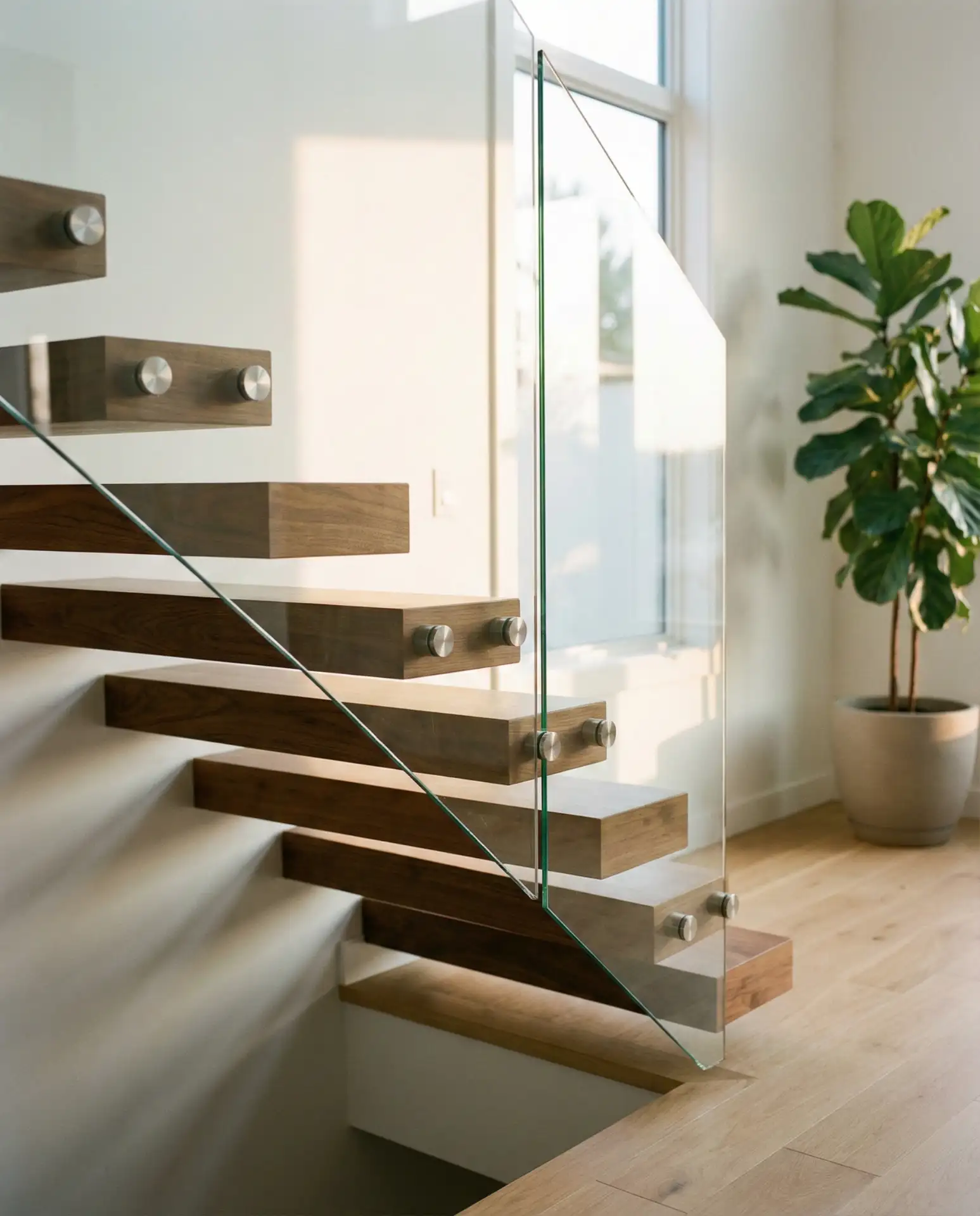
This design combines the warmth of wooden treads with the transparency of glass, creating an airy feel that’s perfect for modern homes. The floating effect is achieved by mounting each step to a hidden steel structure within the wall, eliminating the need for visible supports. It’s particularly effective in duplex layouts where you want light to flow freely between levels. The natural grain of wood adds texture without overwhelming smaller spaces, while the glass panels maintain sightlines throughout the room.
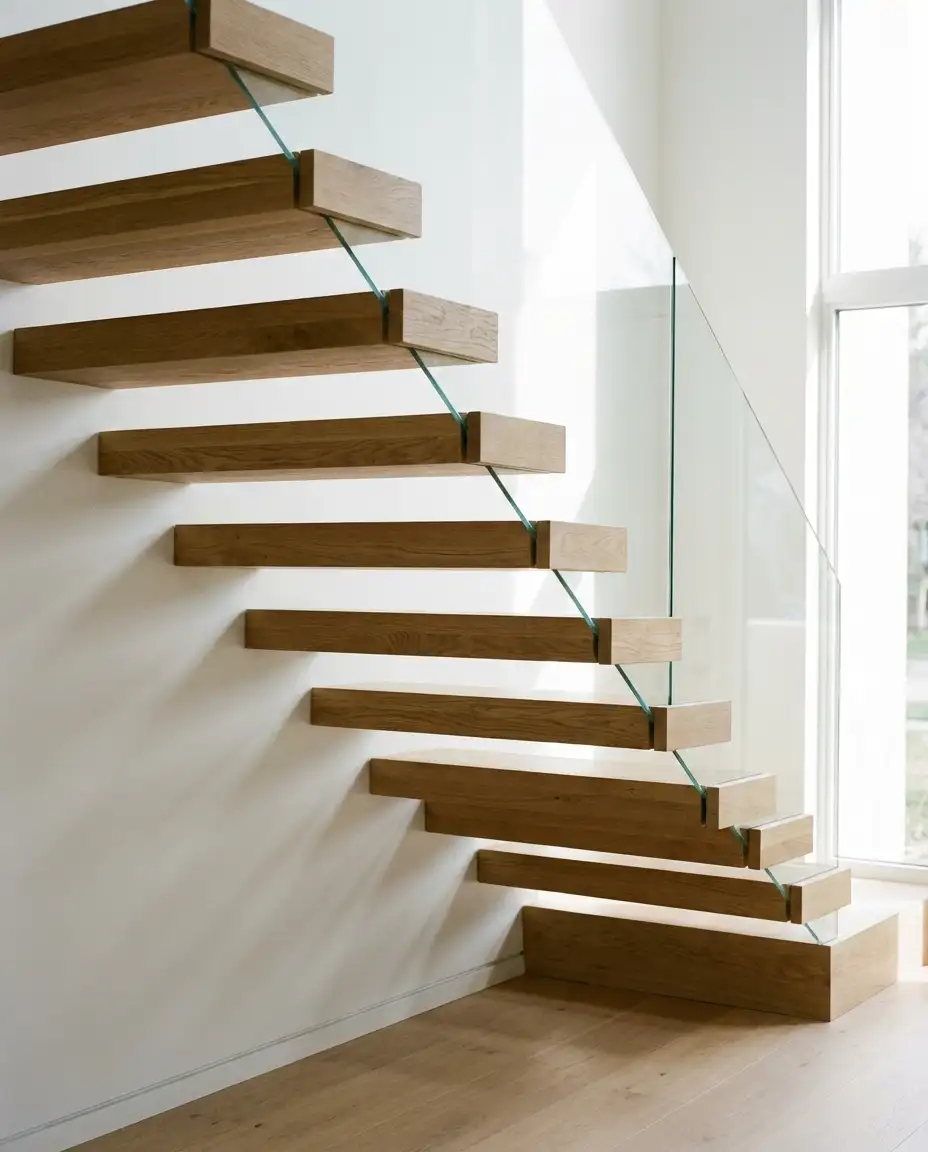
This works best in open-concept homes where the staircase becomes a sculptural element rather than a divider. Many American homeowners in coastal regions favor this design because it doesn’t block precious natural light. The installation does require professional expertise and a solid structural wall, so budget accordingly—expect to invest between $15,000 and $30,000 depending on wood choice and railing complexity. Regular maintenance involves simply cleaning the glass and occasionally treating the wood to preserve its finish.
2. Industrial Steel and Concrete Combination
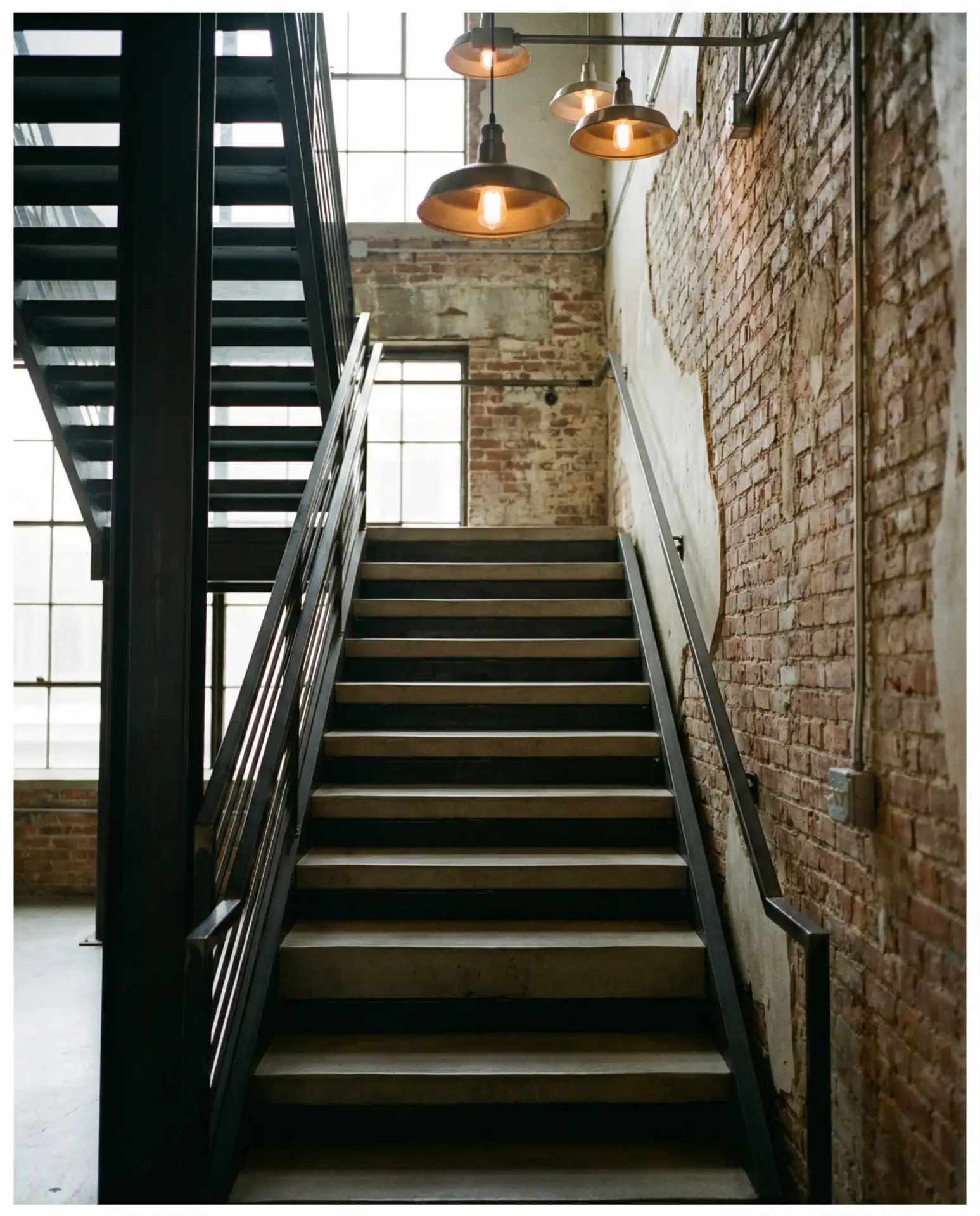
Raw industrial aesthetics meet refined craftsmanship in this bold approach that pairs steel stringers with polished concrete treads. The metal framework provides strength while maintaining a slender profile, and the concrete adds durability that improves with age. This style suits loft conversions, urban townhomes, and anyone drawn to the honest beauty of exposed materials. The cool tones of steel and concrete create a neutral backdrop that lets you experiment with colorful artwork or vibrant furniture.
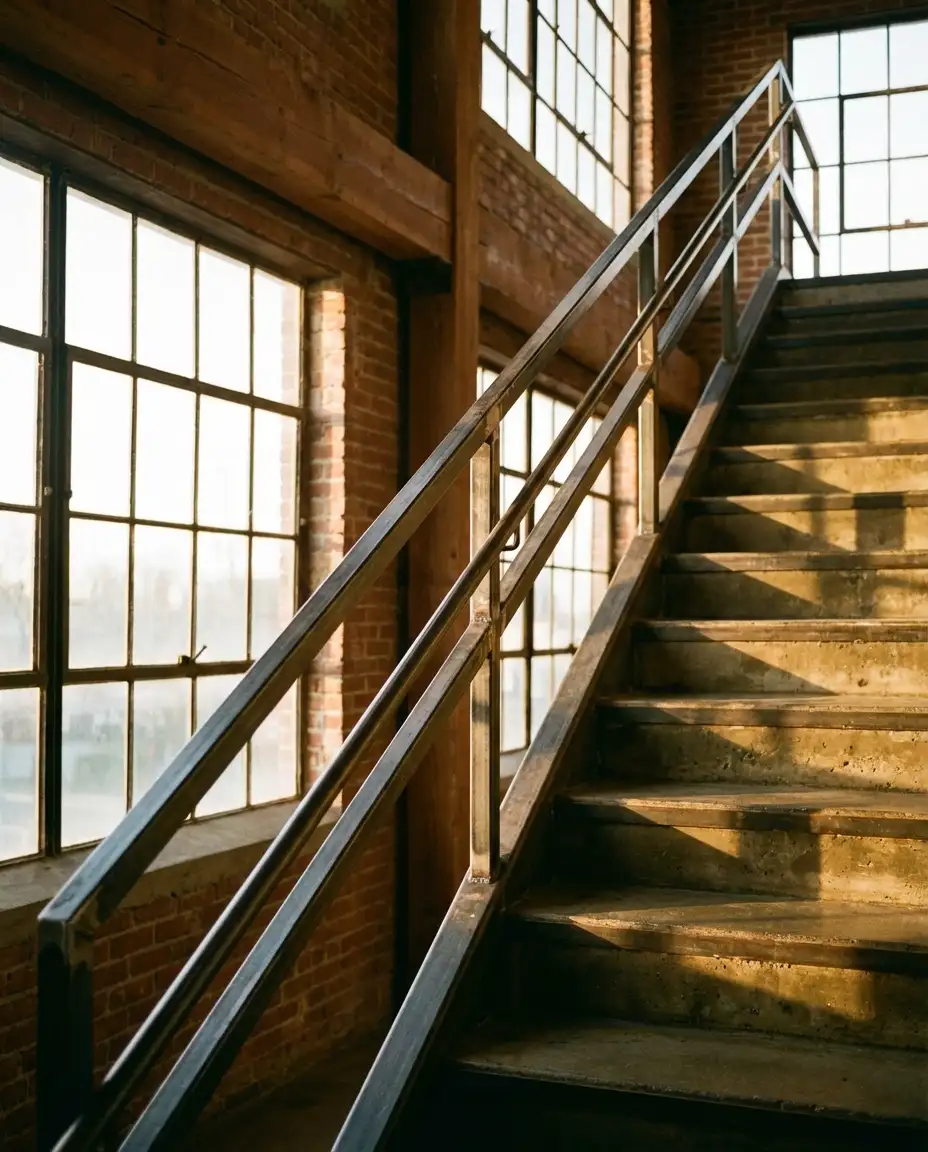
A designer friend in Brooklyn recently completed a project like this and noted that clients appreciate how low-maintenance these materials are—no refinishing, no carpet replacement, just occasional cleaning. The aesthetic appeals especially to younger homeowners in revitalized urban neighborhoods who want their homes to feel authentic rather than overly polished. One common mistake is choosing concrete that’s too smooth, which can be slippery; opt for a slightly textured finish or add subtle grooves for traction, especially if you have kids or pets.
3. Curved Elegance with Wooden Handrails
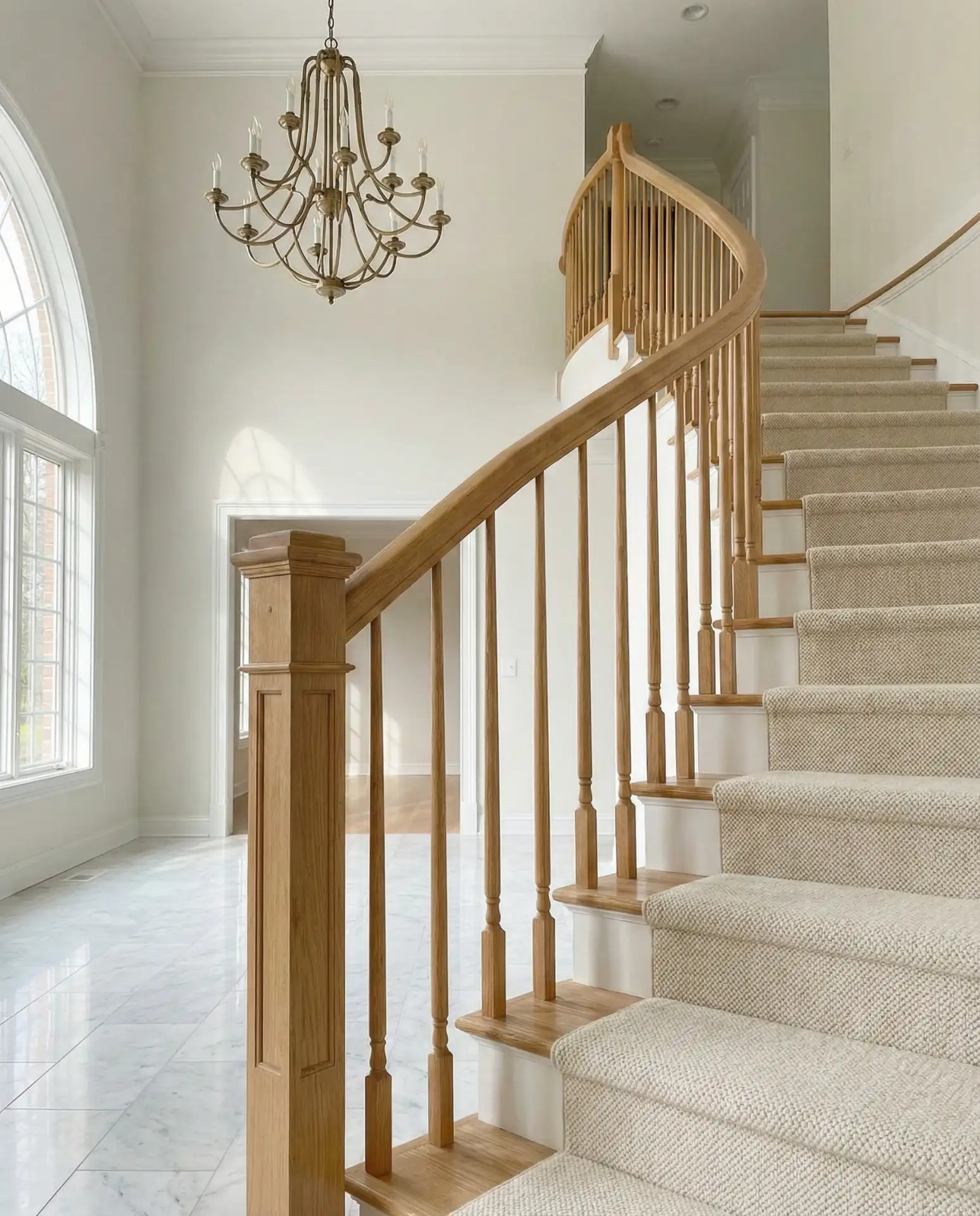
Nothing matches the timeless grace of a curved staircase that sweeps upward with fluid motion. The gentle arc softens the architecture and creates a natural focal point in entryways or grand living spaces. Luxury homes often feature these designs, but scaled-down versions work beautifully in more modest settings too. The wooden handrail follows the curve seamlessly, offering both visual continuity and a comfortable grip. Paired with painted risers or carpeted treads, this design bridges traditional and contemporary sensibilities.
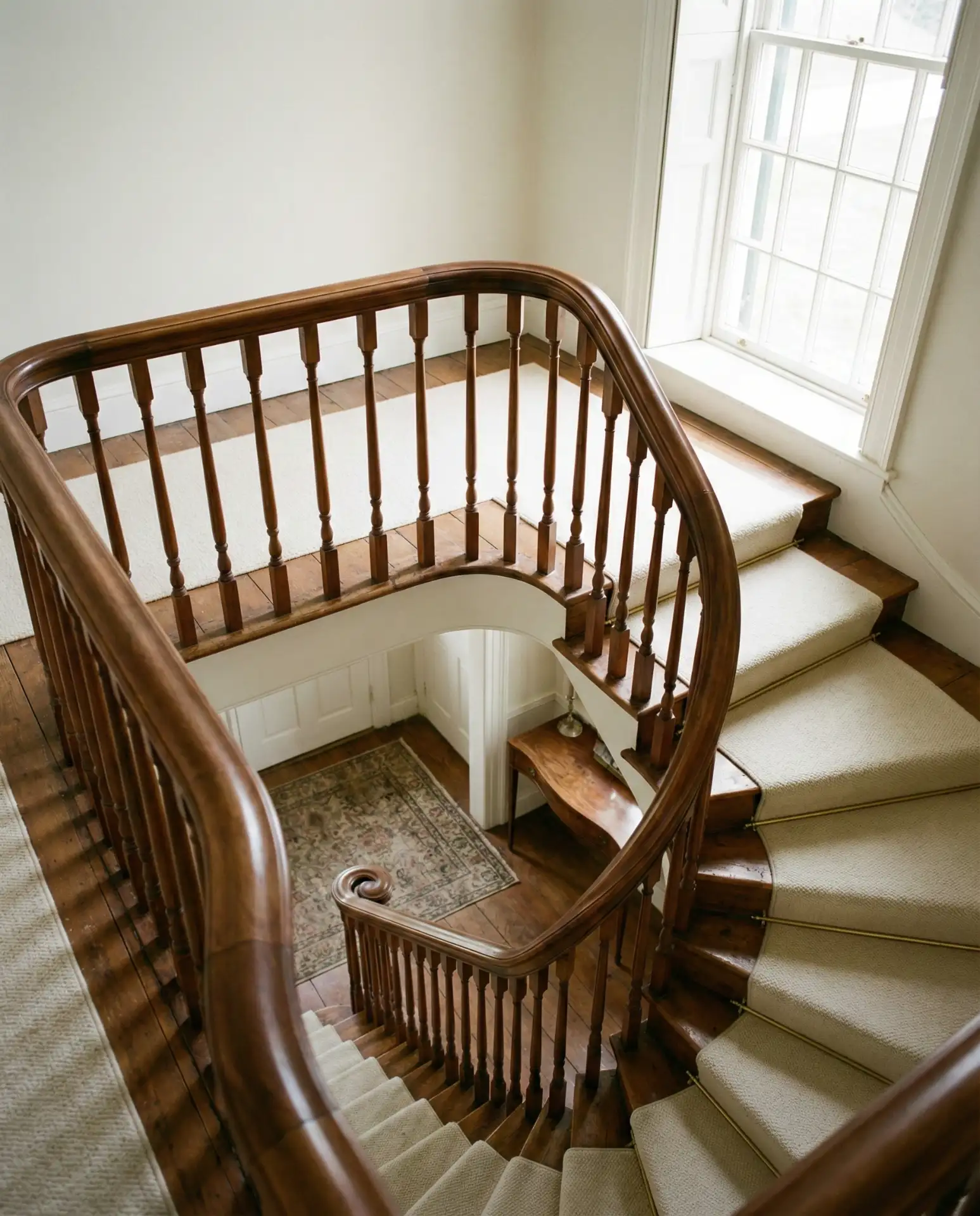
This design works best in homes with adequate square footage—typically 2,500 square feet or more—where the staircase can occupy its own dedicated space without crowding circulation paths. Southern states with historic architecture see these frequently in renovations that honor original layouts. The curve does add complexity to construction, which translates to higher costs, usually starting around $20,000 for a quality installation. However, the investment pays dividends in resale value and daily enjoyment of your home’s most-used pathway.
4. Minimalist Open Riser Design
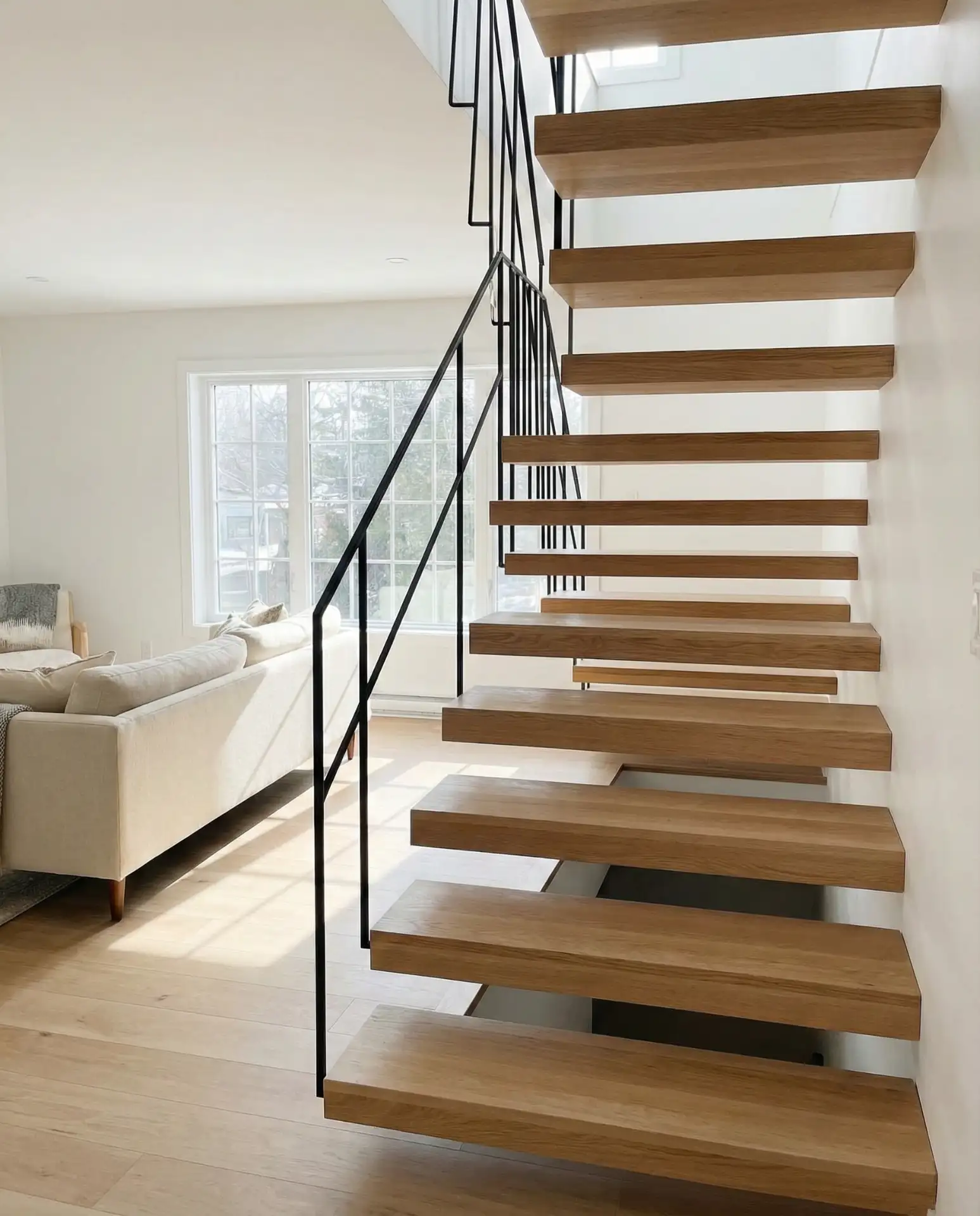
Open risers eliminate the vertical panels between steps, creating visual lightness that’s essential in modern minimalist homes. This approach allows light to pass through and maintains an unobstructed view across the space. Interior designers favor this for its ability to make compact homes feel more expansive. The shape can be straight or L-configuration depending on your layout, and materials range from painted wood to natural oak. It’s a smart choice when you want the staircase to disappear rather than dominate.
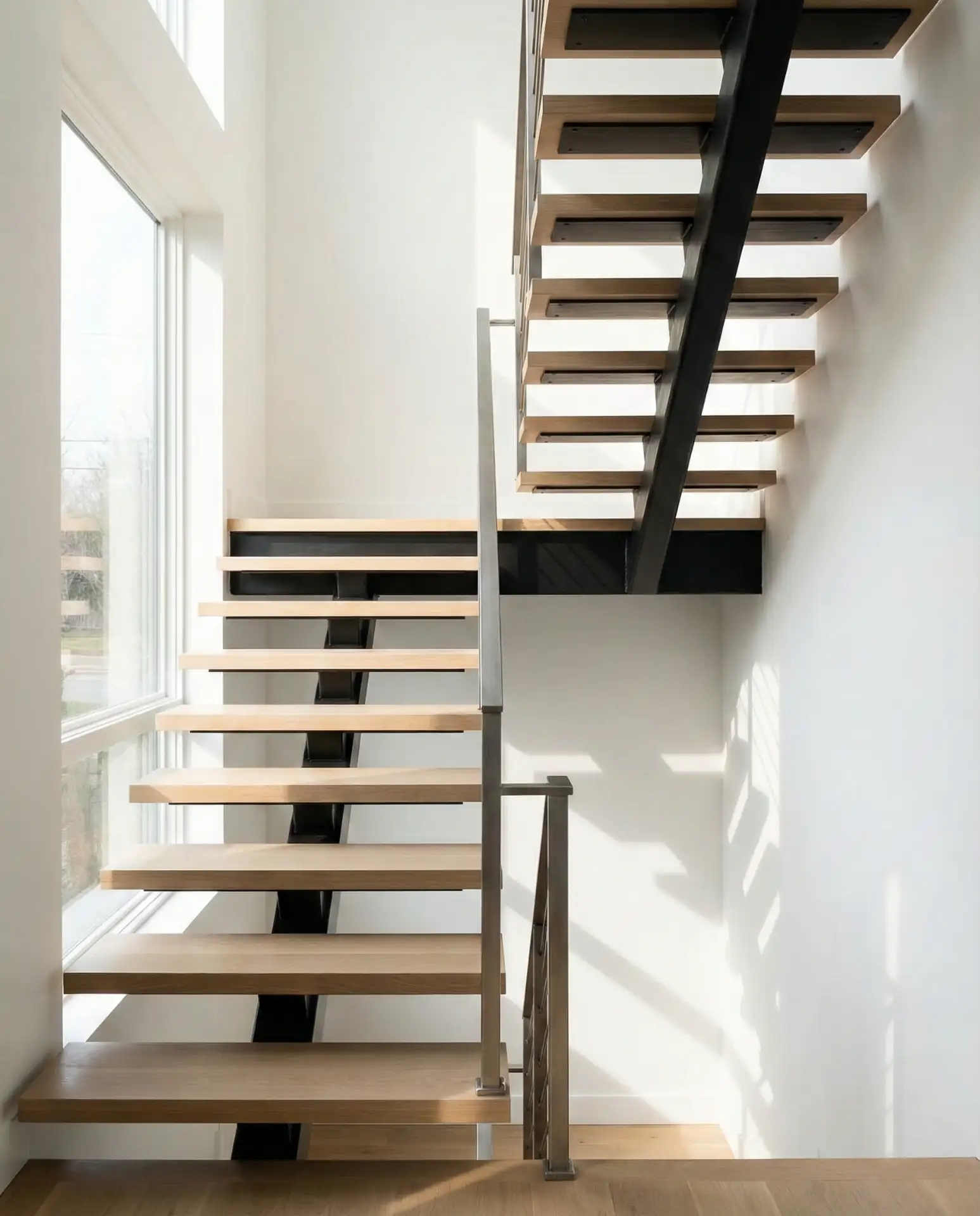
Real homeowners love how this design keeps sightlines open—you can watch kids playing downstairs while cooking upstairs, or maintain conversation flow during gatherings. That said, households with very young children sometimes add temporary plexiglass panels for safety, which can be removed as kids grow. The gaps between treads typically measure 4 to 6 inches, enough to prevent accidents while preserving the open aesthetic. Maintenance is simpler than closed staircases since dust can’t accumulate in hidden corners.
5. Grand Spiral Statement Piece
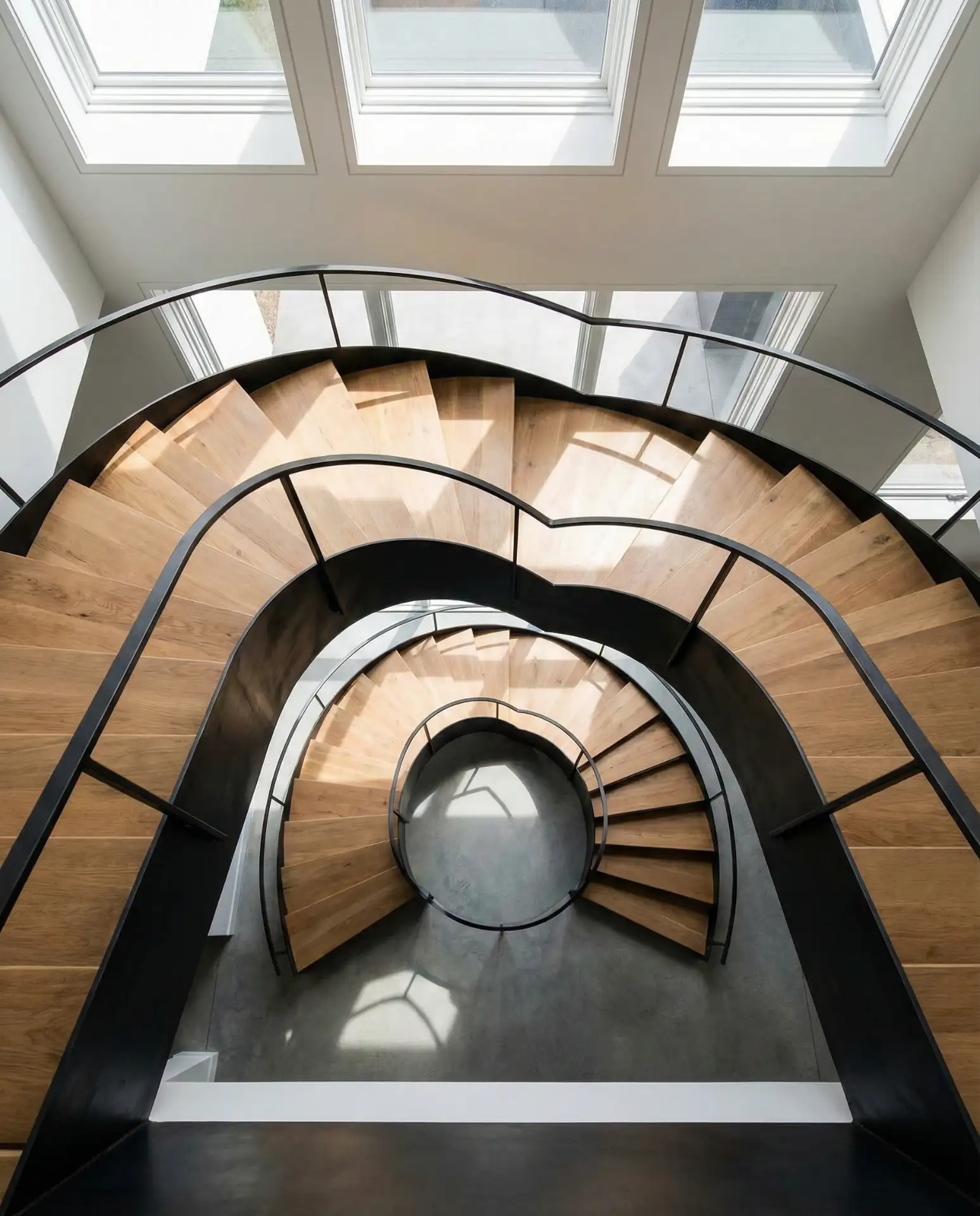
A spiral staircase commands attention like few other architectural elements can. The continuous round form creates dramatic impact while occupying surprisingly little floor space—ideal for luxury homes where every square foot is intentionally designed. Metal construction provides structural integrity, and choices range from powder-coated steel to wrought iron with decorative details. The helical geometry becomes a sculptural centerpiece that guests inevitably photograph and admire.
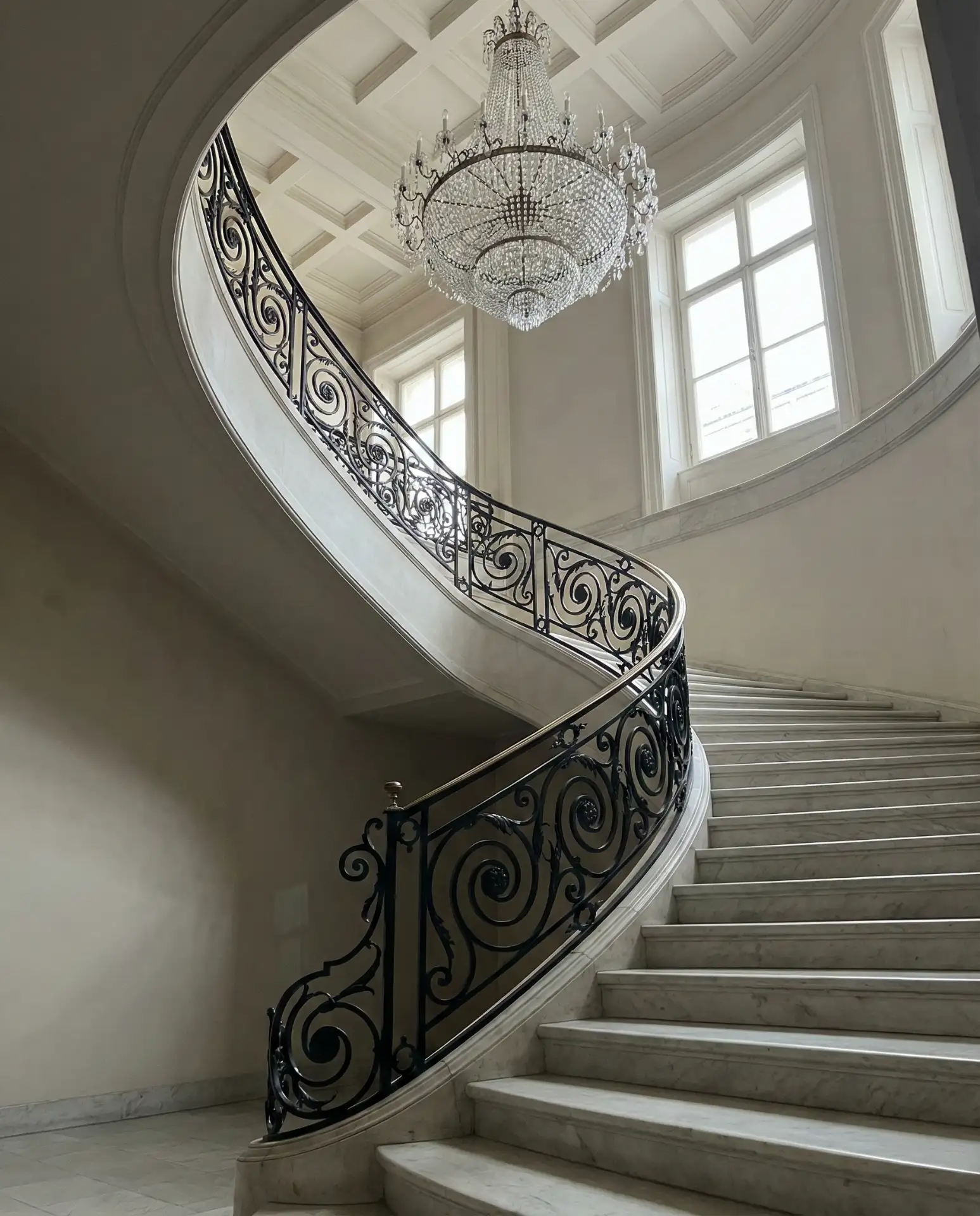
In Texas and Florida, where many new luxury builds feature soaring ceilings, spiral staircases solve the challenge of connecting floors without sacrificing drama. The continuous handrail requires skilled metalworking to achieve smooth bends, and installation typically demands crane access or assembly on-site. Practical insight: if you’re considering this design, ensure your local building code allows the tread dimensions—some jurisdictions have minimum width requirements at the narrow inner edge. Budget between $25,000 and $60,000 depending on materials and custom details.
6. Sleek Glass and Chrome Modernity
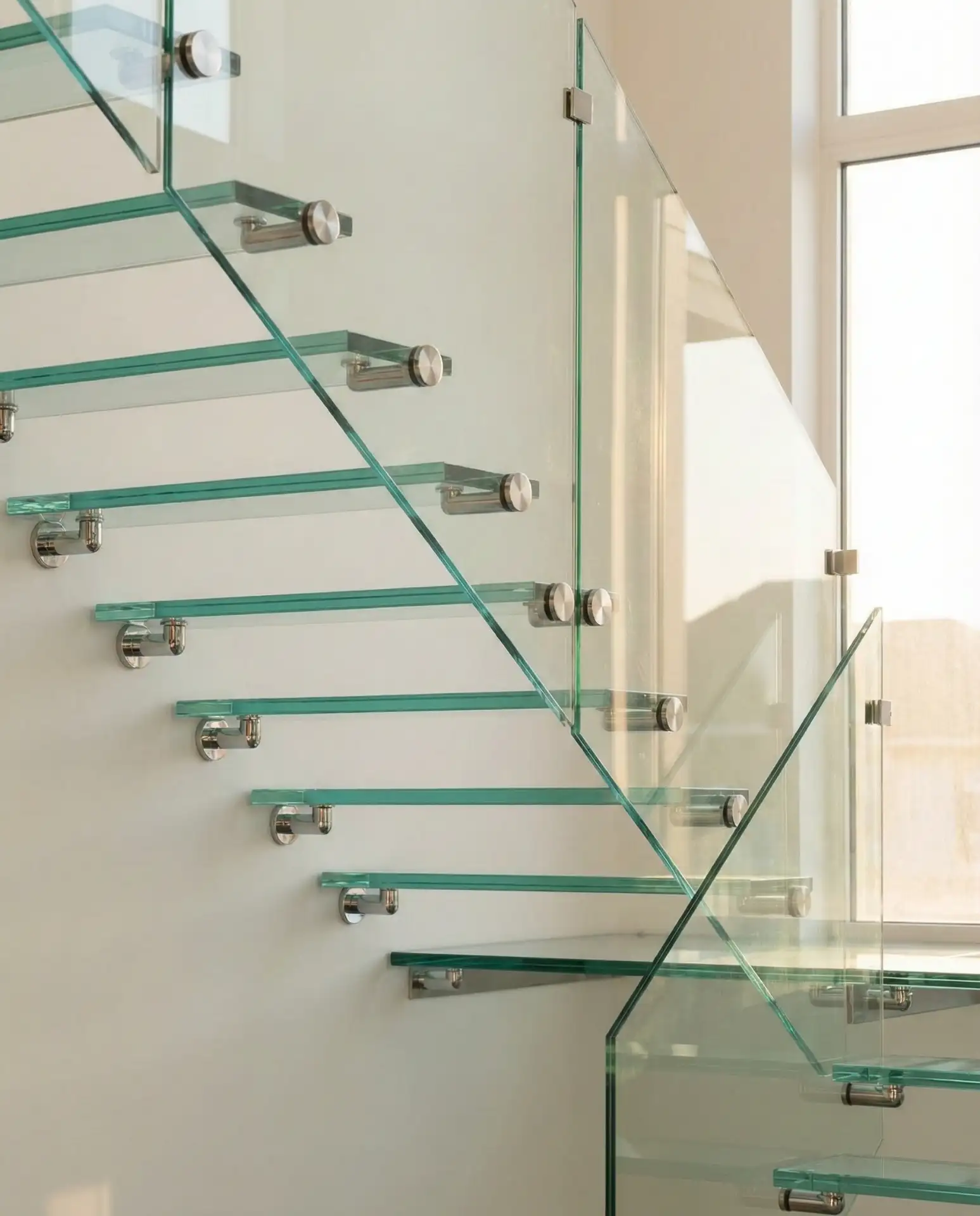
When transparency and light are priorities, glass treads with chrome or stainless steel supports deliver unmatched brilliance. This ultra-modern approach works beautifully in contemporary homes with abundant natural light and minimal ornamentation. The reflective surfaces amplify brightness, making even modest spaces feel larger and more open. Structural glass is engineered to be remarkably strong—often exceeding traditional wood in load capacity—so safety isn’t compromised despite the delicate appearance.
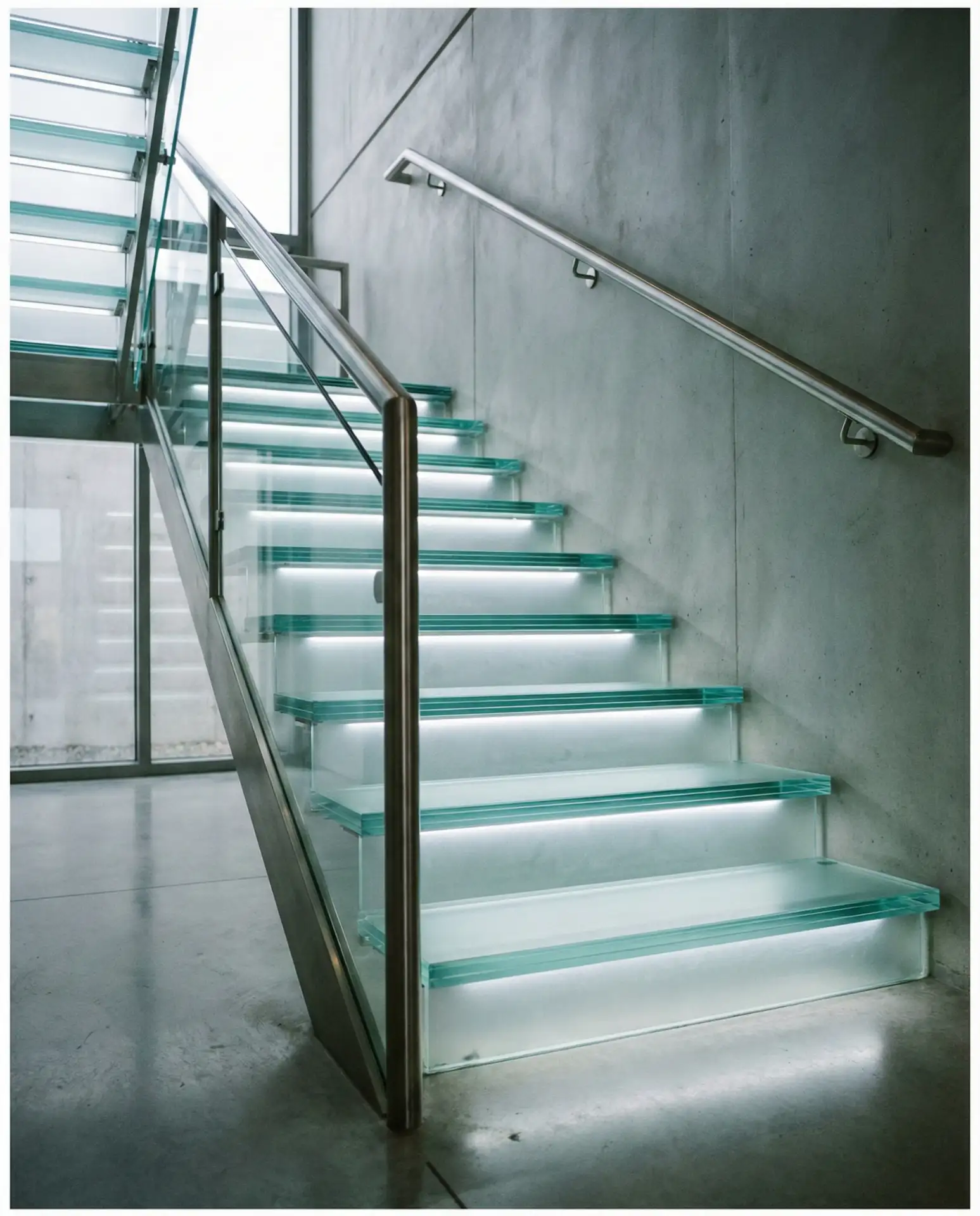
A common mistake with glass staircases is neglecting to specify non-slip surfaces. Many manufacturers now offer treads with subtle frosting or etched patterns that provide traction without sacrificing the clean aesthetic. You’ll want to keep glass cleaner handy, as fingerprints and smudges are more visible than on wood or metal. Despite this maintenance consideration, the design remains popular in urban condos and modern suburban homes where homeowners prioritize cutting-edge style and don’t mind a bit of extra upkeep.
7. Rustic Reclaimed Wood Character
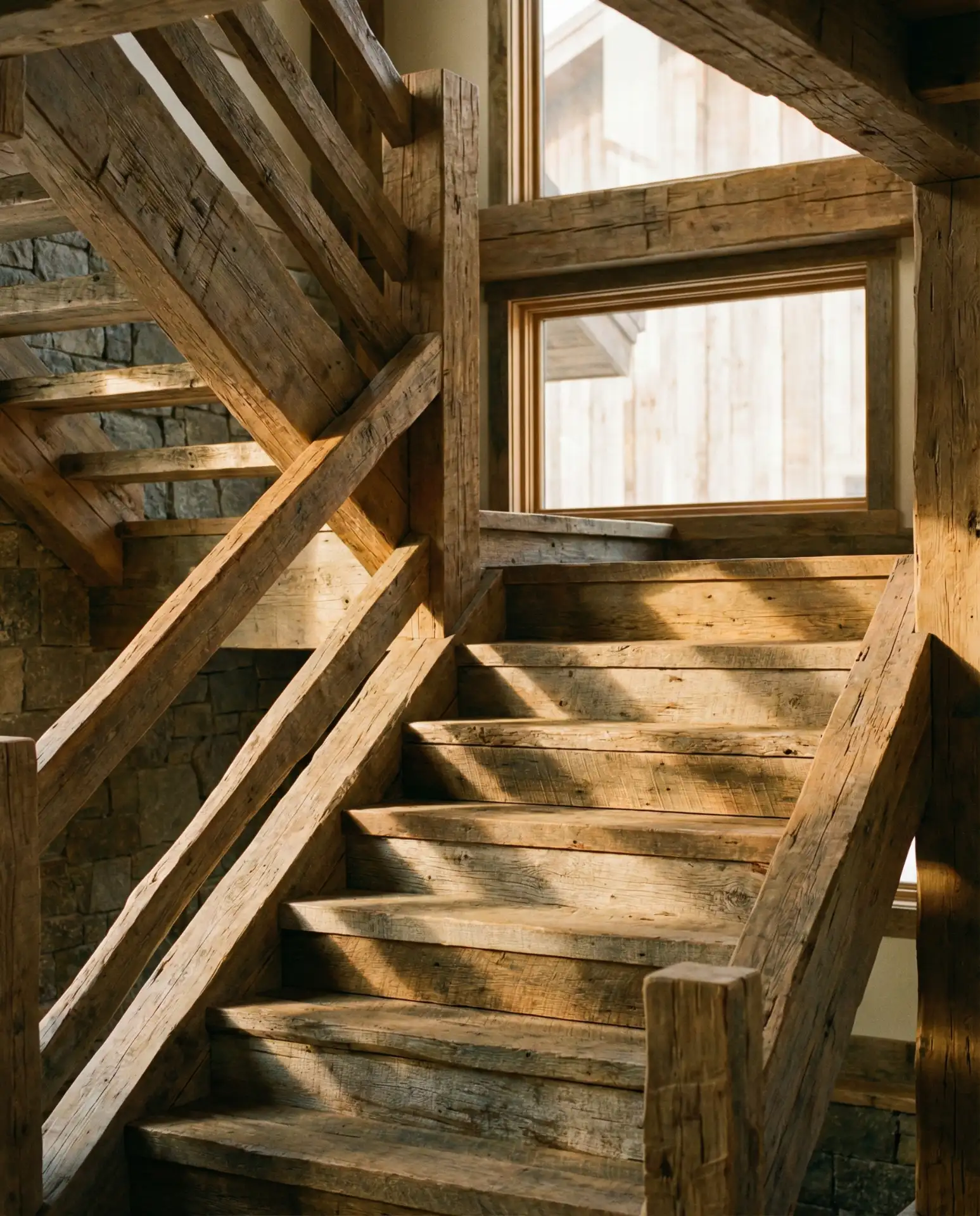
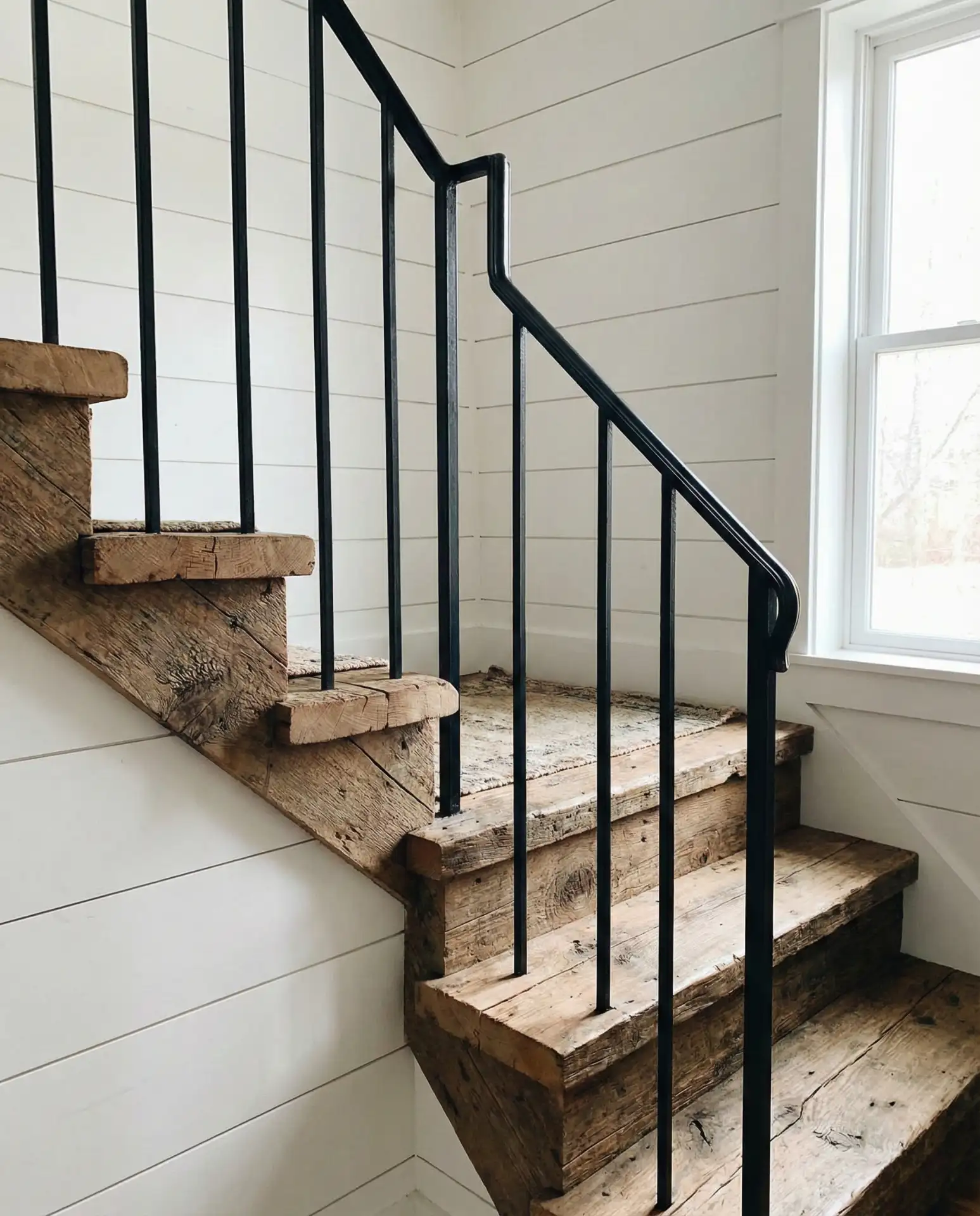
Reclaimed wooden planks bring history and warmth into your home, with each board telling its own story through weathered grain and subtle imperfections. This design fits farmhouse, mountain, and transitional interior styles where authenticity matters more than polished perfection. The varied tones and textures create visual interest without requiring decorative additions, and the sturdy construction ensures longevity. Pairing reclaimed treads with simple metal railings balances rustic charm with contemporary structure.
Where it works best: rural properties, renovated barns, and suburban homes seeking a connection to traditional craftsmanship. Many reclaimed wood suppliers can source materials from specific regions or eras, adding a personal narrative to your staircase. The wood has already weathered decades or even centuries, so it’s inherently stable and less prone to warping than new lumber. Costs vary widely—$8,000 to $25,000—depending on wood rarity and whether you’re salvaging materials yourself or purchasing through specialty dealers.
8. Bold Black Steel Framework
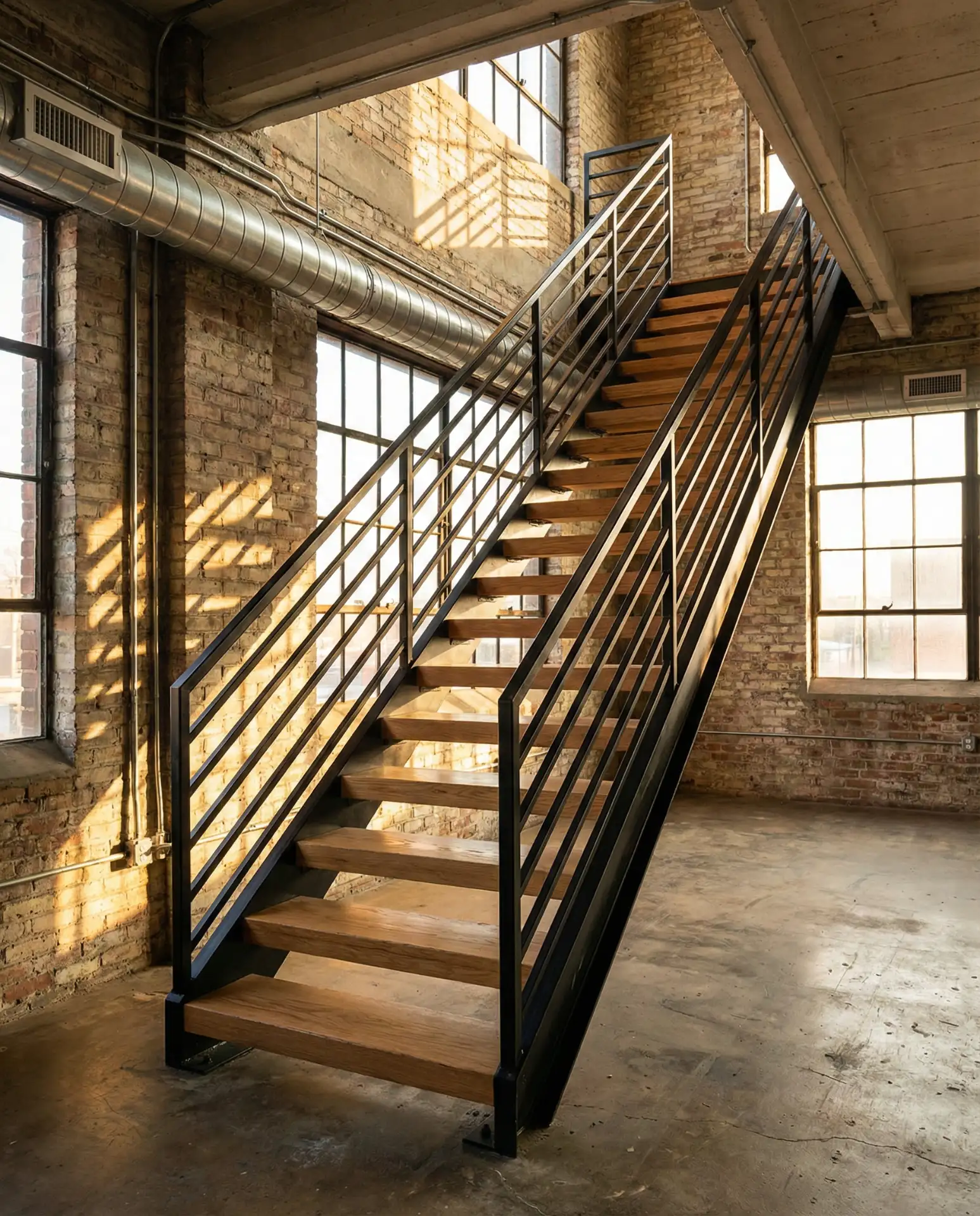
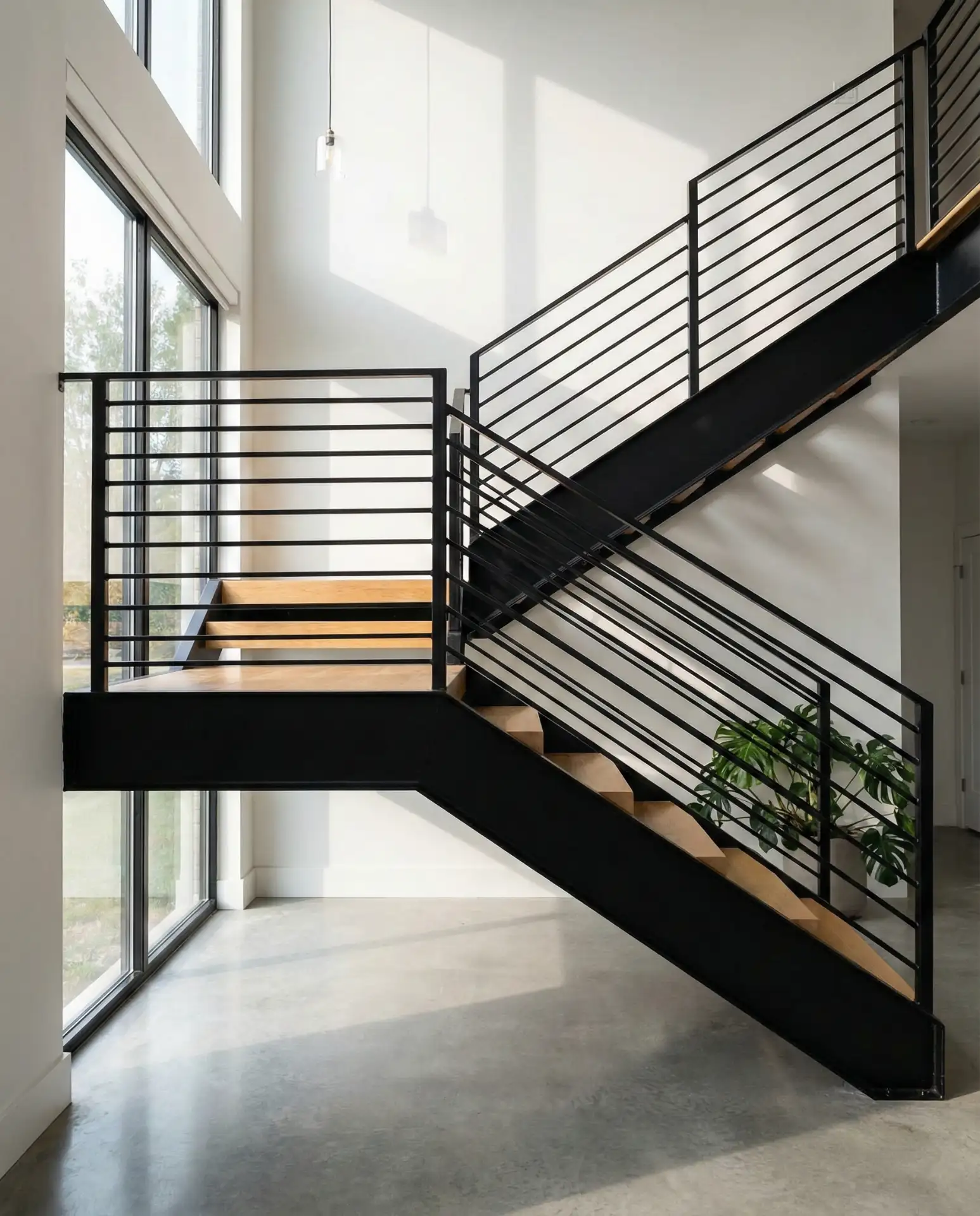
Matte black steel delivers graphic punch that anchors modern and industrial interiors with confidence. The dark framework provides striking contrast against light walls and floors, functioning almost like three-dimensional line art. This approach pairs beautifully with wooden treads to soften the industrial edge, or with concrete for a more committed utilitarian aesthetic. The powder-coated finish resists scratches and fingerprints better than bare metal, maintaining its crisp appearance with minimal effort.
Many American homeowners initially worry that black metal will feel heavy or oppressive, but in practice, the slender profiles and open designs actually enhance lightness rather than diminishing it. A real estate agent in Denver mentioned that homes with black steel staircases photograph exceptionally well and attract design-conscious buyers who recognize quality. The material is practical too—steel won’t rot, warp, or require refinishing like wood, making it a smart long-term investment despite higher upfront costs typically ranging from $12,000 to $28,000.
9. Granite Steps for Timeless Durability
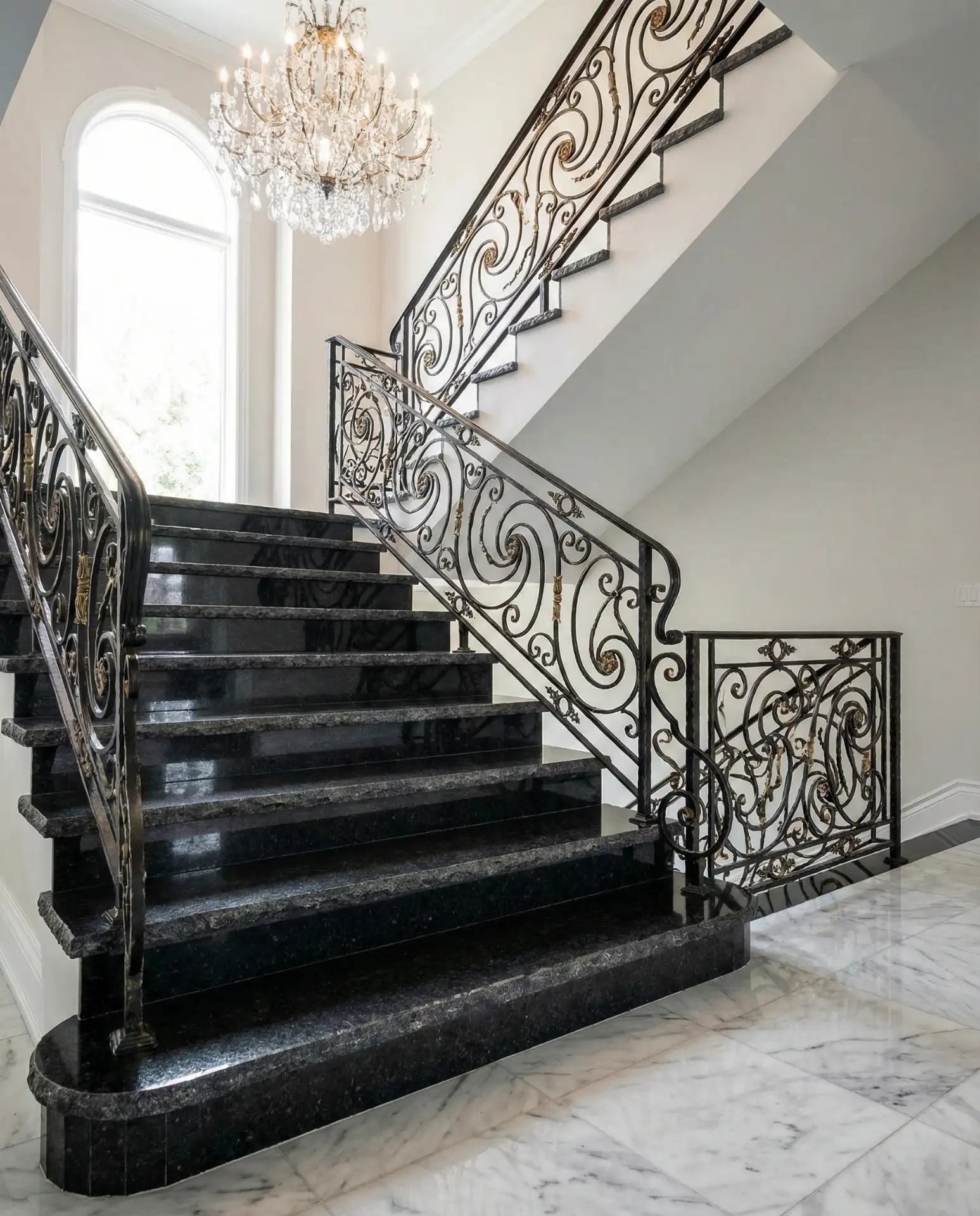
Polished granite treads offer unmatched longevity and a luxury feel that improves rather than deteriorates over time. The natural stone comes in countless colors and patterns, from classic gray and black to warmer browns and even dramatic blues. This material suits both luxury classic homes with traditional detailing and contemporary spaces where the stone’s inherent beauty becomes a minimalist statement. The cool, smooth surface is easy to clean and naturally resistant to staining, scratching, and moisture.
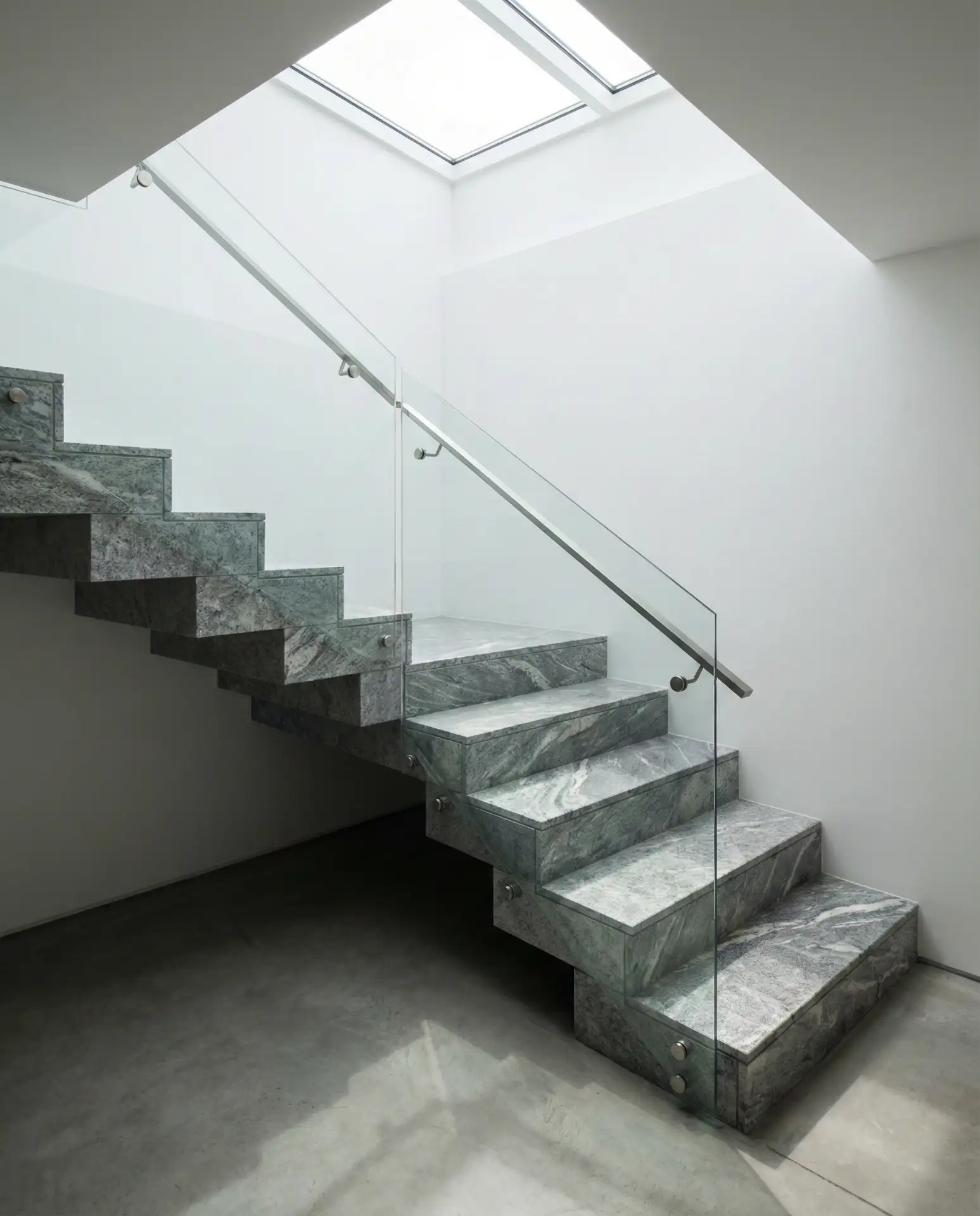
Expert stonemasons note that granite’s density makes it ideal for high-traffic areas—it simply won’t show wear patterns even after decades of use. The weight does require robust structural support, so this isn’t typically a retrofit option for older homes without engineering assessment. Installation is labor-intensive, with each tread precision-cut and professionally set, leading to costs between $15,000 and $40,000 depending on stone selection and staircase size. The investment makes sense for homeowners planning to stay long-term or those building high-end properties where material quality signals overall home value.
10. Outdoor Concrete and Stone Fusion
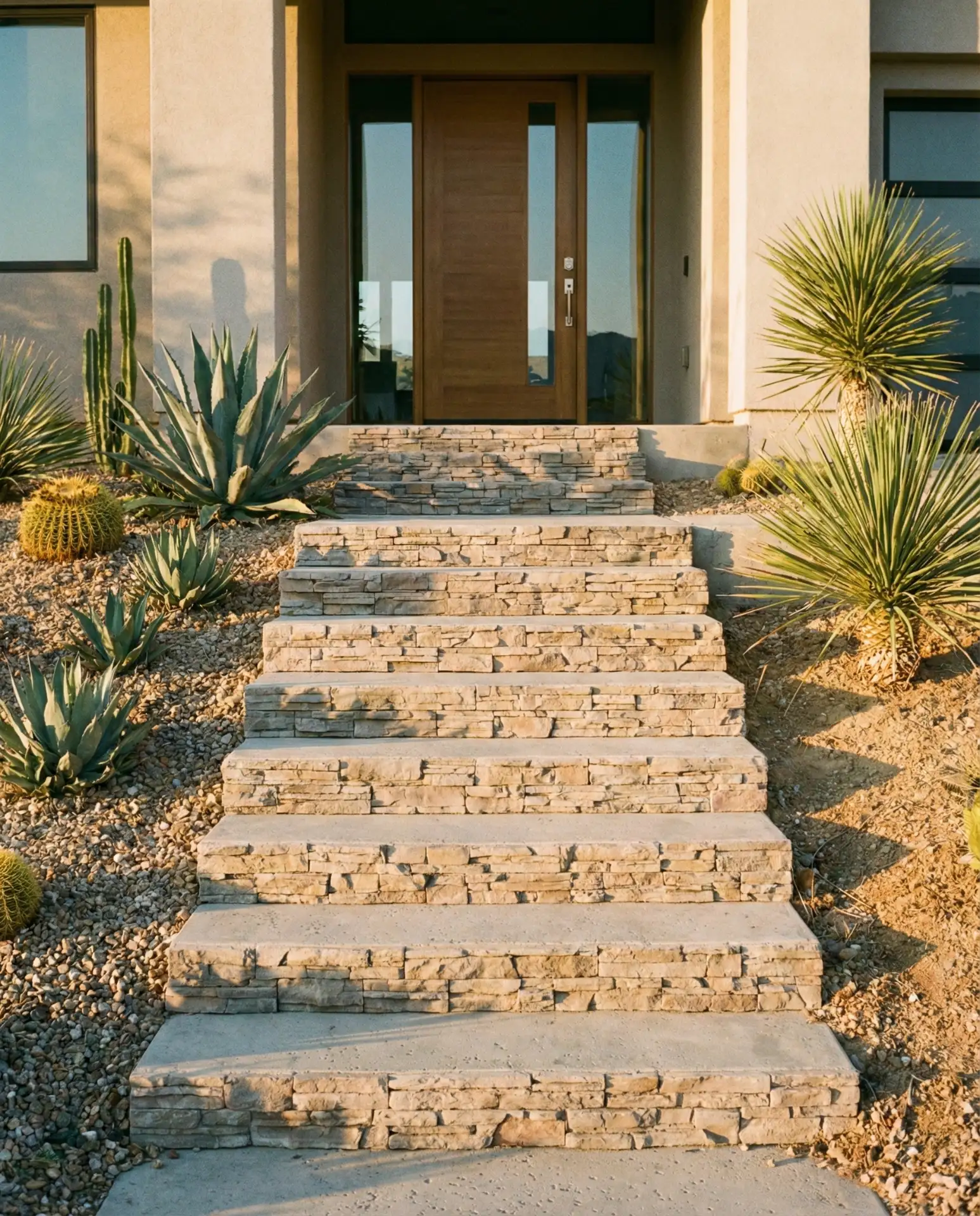
When your home design extends to outdoor living spaces, the staircase becomes a bridge between architecture and landscape. Poured concrete treads with natural stone veneer combine durability with organic beauty, standing up to weather while complementing gardens and terraces. This approach works for exterior entries, deck connections, and hillside properties where grade changes require thoughtful solutions. The materials age gracefully, developing patina that enhances rather than diminishes their appeal.
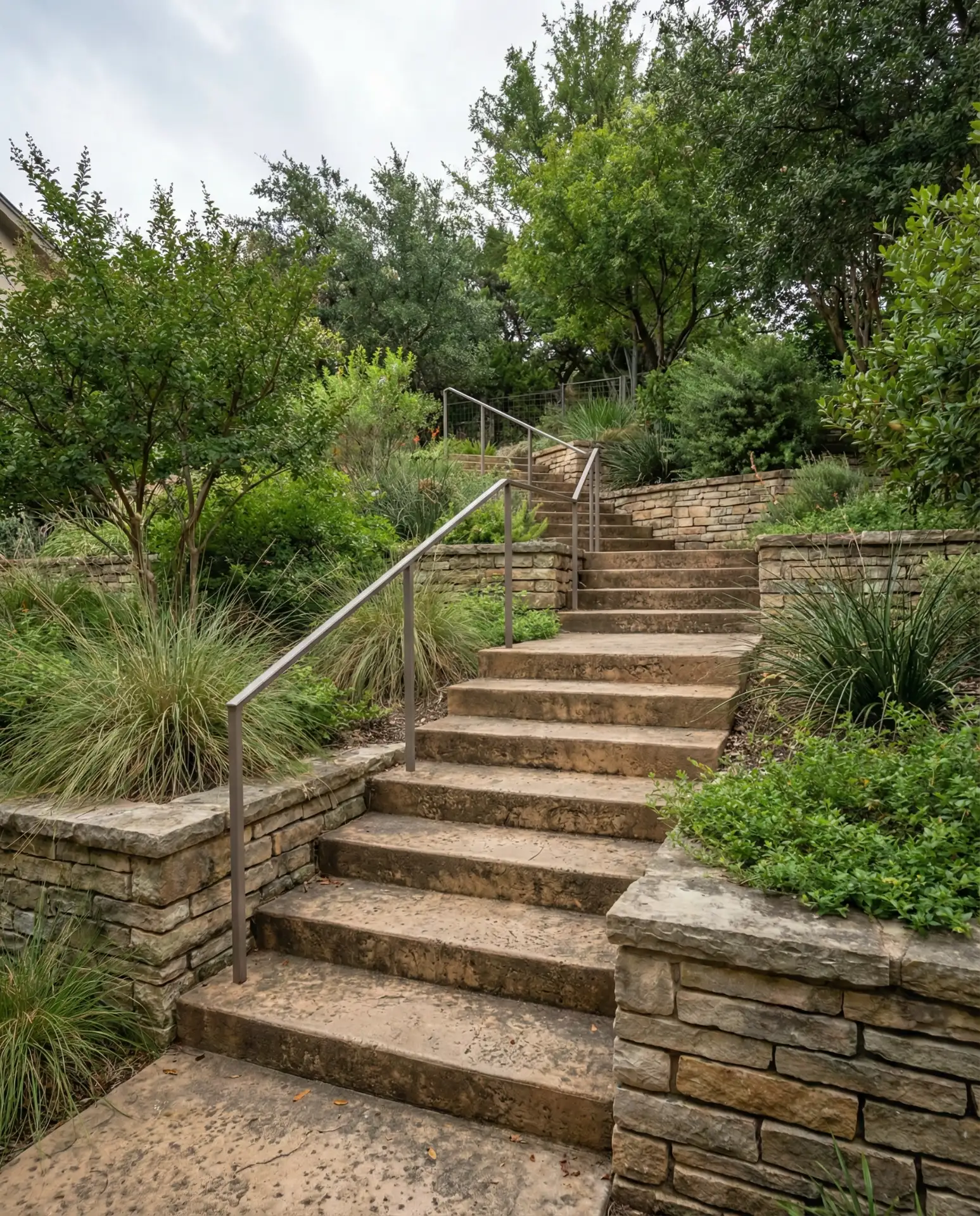
In regions with freeze-thaw cycles like the Northeast and Midwest, proper drainage and reinforcement prevent cracking and heaving. Many contractors now integrate radiant heating beneath outdoor concrete stairs to prevent ice buildup, adding safety without compromising aesthetics. The stone veneer can match your home’s foundation or retaining walls, creating visual cohesion throughout the property. Budget considerations start around $8,000 for basic installations and can reach $25,000 for complex multi-level designs with integrated lighting and premium stone selections.
11. Compact Space-Saving Design
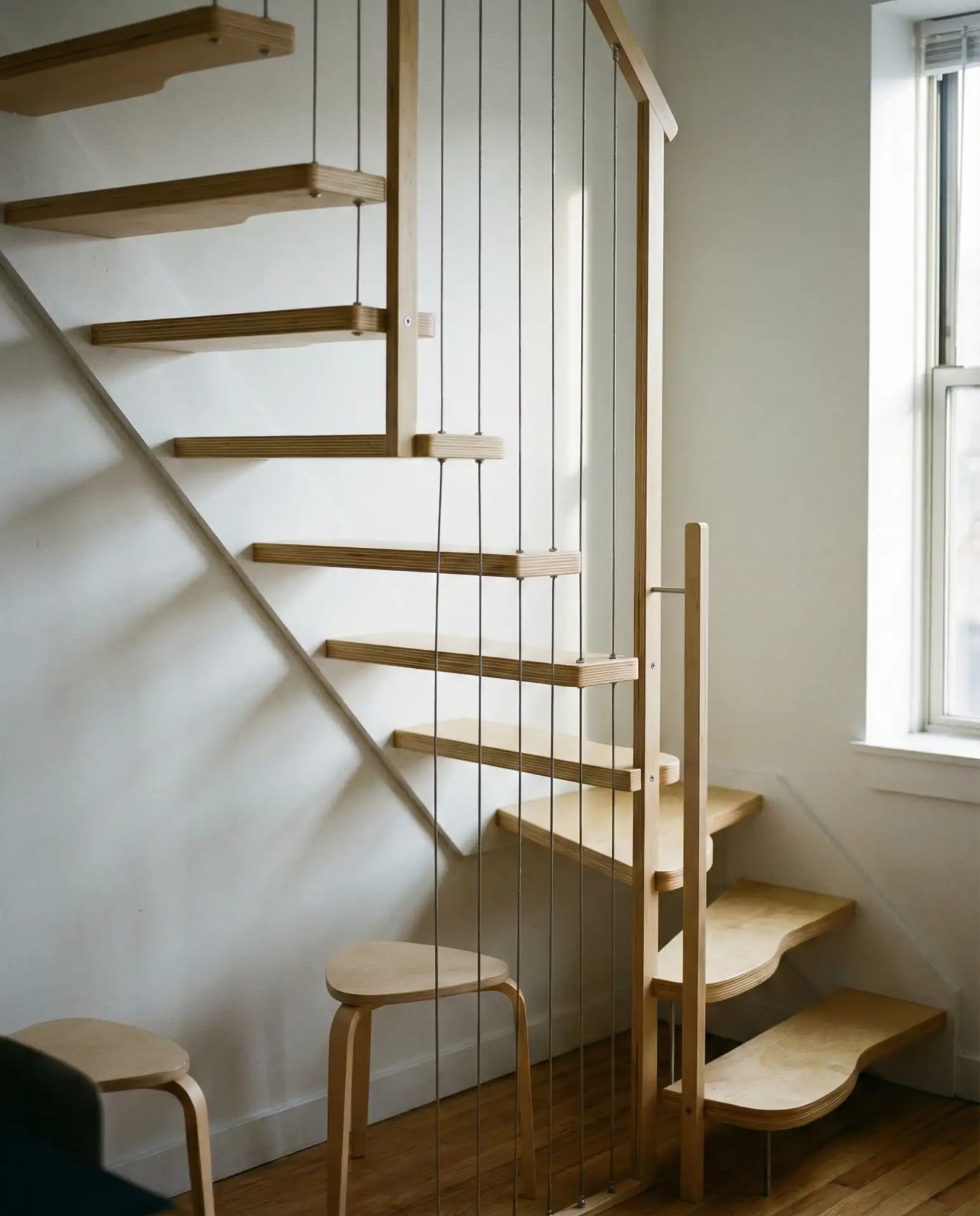
Not every home has room for sweeping staircases, and that’s where clever space-saving designs shine. Alternating tread stairs, also called paddle stairs, cut the required run by nearly half while remaining code-compliant in many areas. These work particularly well in duplex apartments, tiny homes, and loft conversions where vertical circulation must fit into tight footprints. The shape is distinctive—each step has a narrow and wide end, and you naturally step with alternate feet, creating an efficient climbing rhythm.
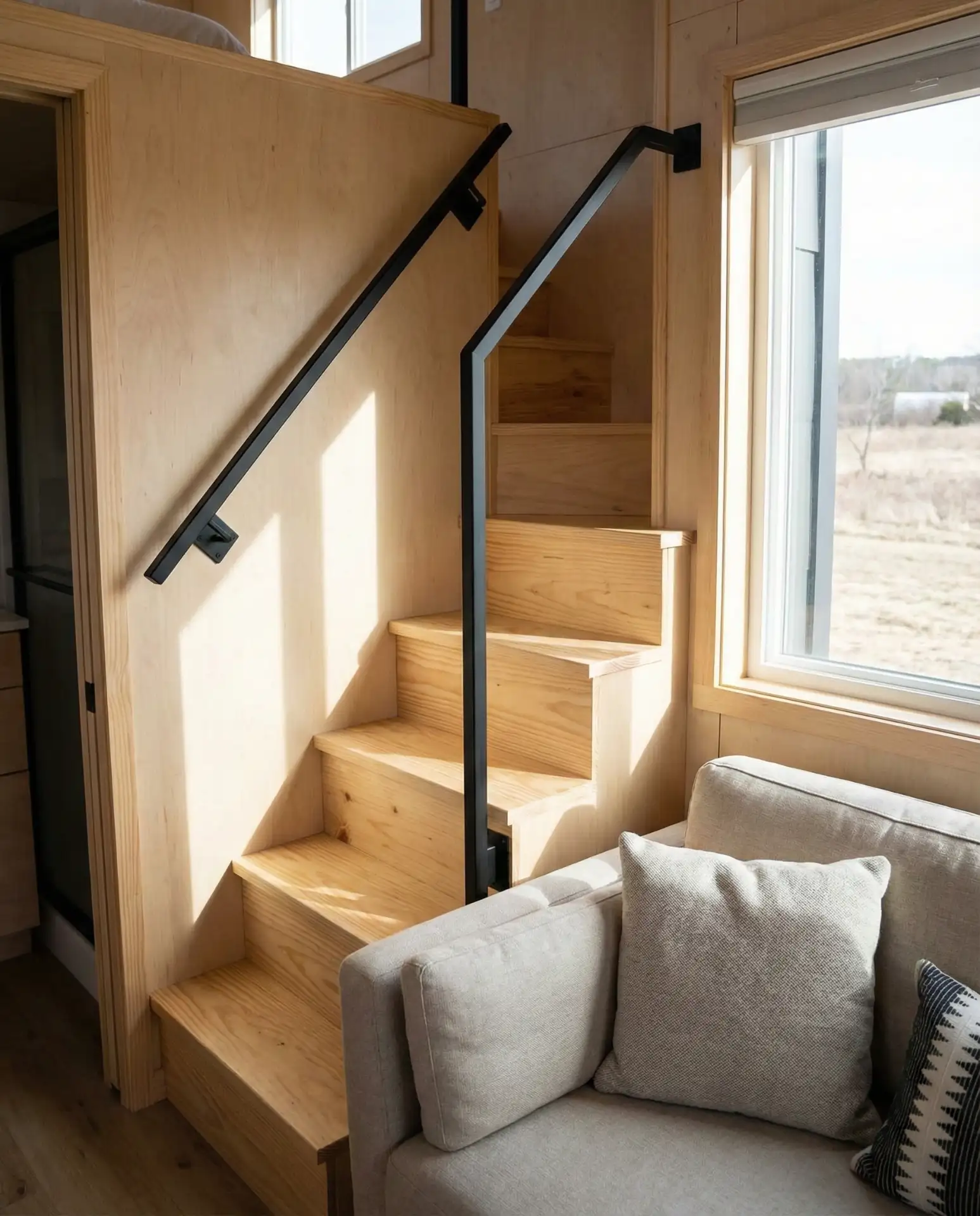
I once visited a converted garage apartment in Portland where a space-saving staircase allowed the owners to maintain an open kitchen and living area without sacrificing bedroom space above. The design felt innovative rather than compromised, proving that limitations can inspire creativity. These stairs do require a brief adjustment period for users, but most people adapt within a few days. Building codes vary by locality, so verify requirements with your municipality before committing to this solution—some areas restrict their use to secondary staircases or private residences only.
12. Office-Ready Professional Style
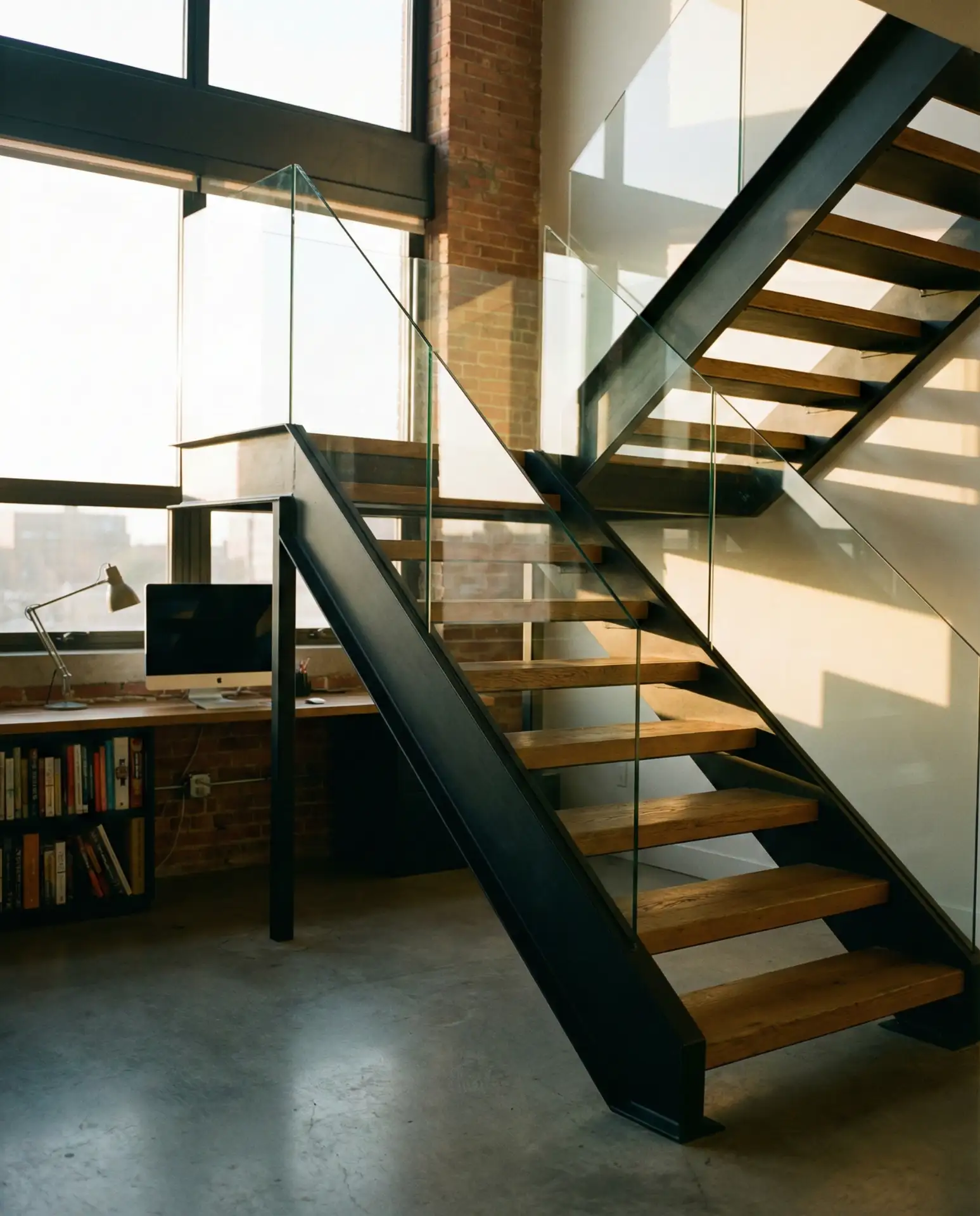
Commercial-grade staircases in home office settings need to balance professional appearance with residential comfort. Clean lines, durable materials like steel and laminate, and understated colors create an environment that supports focus and productivity. For multi-story home offices or converted workspace buildings, the staircase becomes part of the professional impression you make on clients or colleagues visiting your space. Contemporary styling works best here—nothing too trendy or overly residential that might undermine your business credibility.
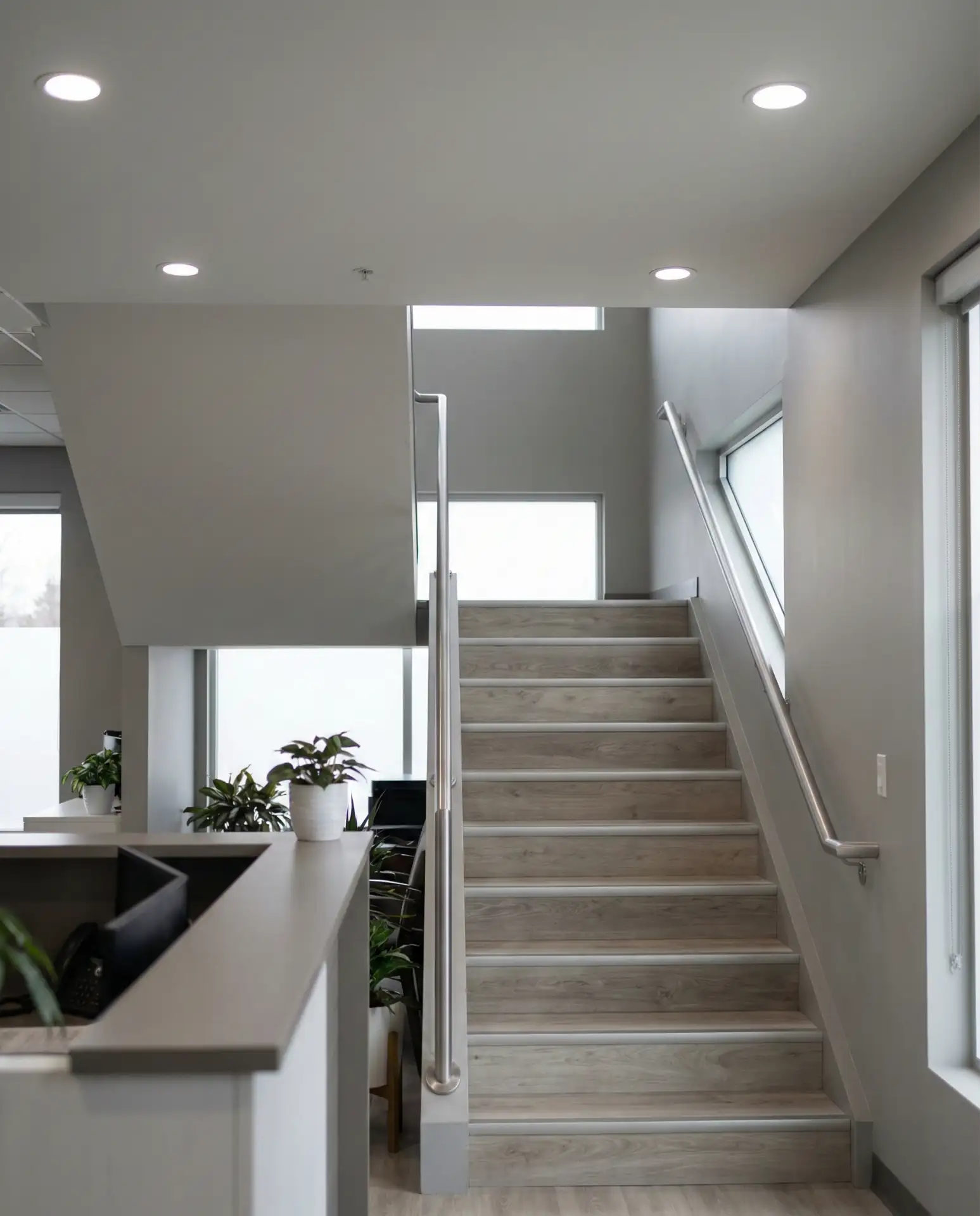
Real estate developers converting historic buildings into live-work spaces often specify commercial-grade staircases that meet accessibility standards while feeling appropriate for residential use. The materials need to withstand heavier traffic than typical home stairs, so investing in quality construction pays off in reduced maintenance and longer lifespan. Costs align with commercial construction rates—$15,000 to $35,000 depending on span and specifications—but you’re essentially buying a component that won’t need replacement for the building’s lifetime.
13. Classic Luxury with Carpeted Treads
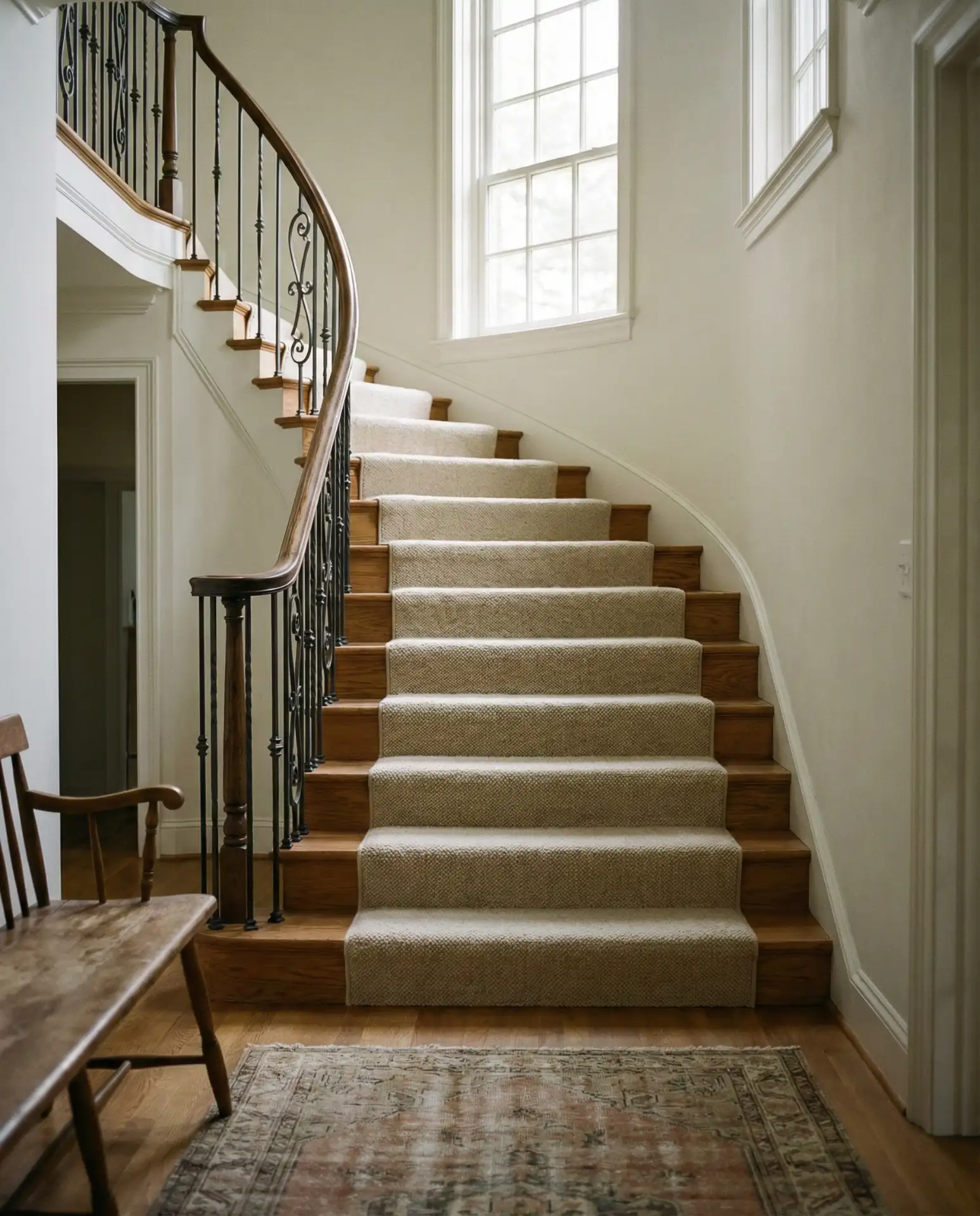
Plush carpet runners down the center of wooden stairs remain a hallmark of luxury classic design. The soft textile adds acoustic dampening, safety through improved traction, and a layer of comfort underfoot. Traditional patterns like Persian motifs or solid rich colors complement formal interiors, while more subtle textures suit transitional spaces. Exposed wood on either side of the runner showcases the quality of the underlying construction and creates visual interest through material contrast.
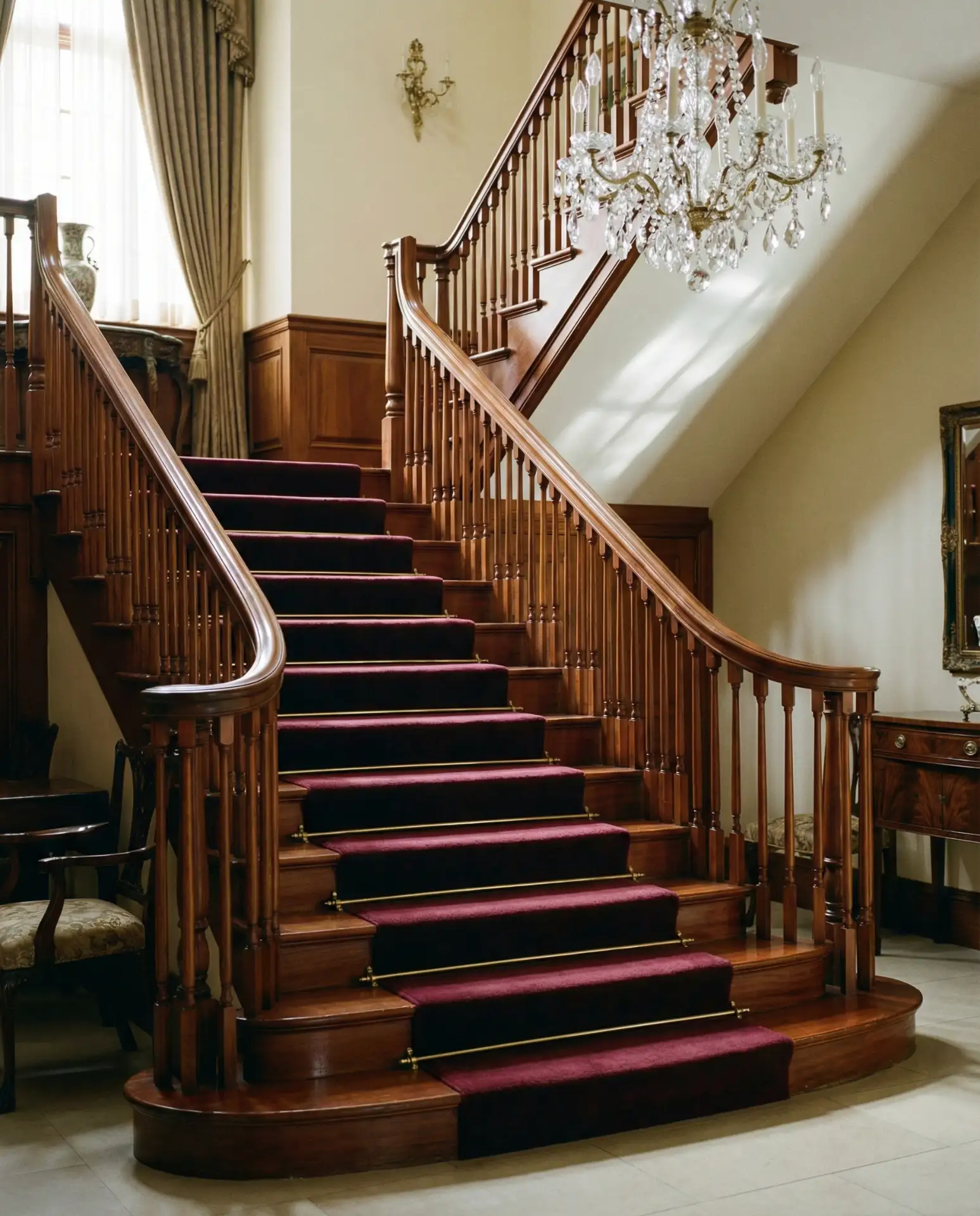
Budget-wise, carpet installation is relatively affordable compared to other staircase finishes, typically adding $1,500 to $4,000 depending on fiber quality and runner width. The real consideration is maintenance—carpeted stairs need regular vacuuming and occasional professional cleaning to maintain their appearance. Homes with pets or high traffic should choose durable, stain-resistant fibers like nylon or treated wool. Many homeowners find the trade-off worthwhile for the warmth and quiet that carpet provides, especially in two-story homes where footsteps from above would otherwise echo through living spaces.
14. Internal Architectural Drama
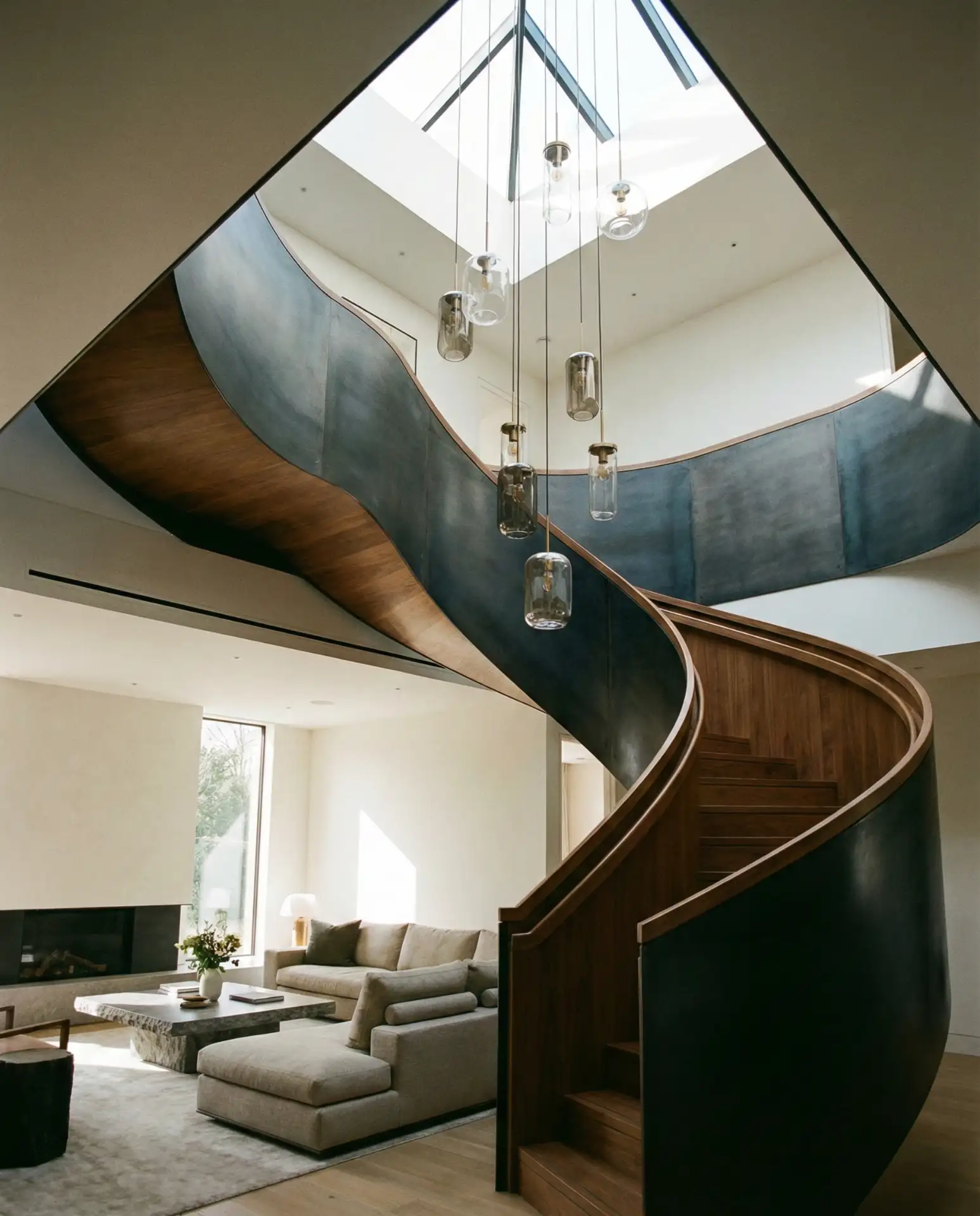
When the staircase occupies a central location within the home’s internal layout, it can serve as a dramatic architectural anchor that organizes surrounding spaces. Double-height voids, sculptural forms, and strategic lighting transform what could be purely functional into an experience. This approach suits modern luxury homes where spatial drama and visual interest justify the dedicated square footage. Materials can range from steel and glass for contemporary impact to wooden curves for organic warmth.
A common mistake is treating the staircase as pure sculpture without considering daily function—make sure landings are adequate, handrails are comfortable, and sight lines allow you to see where you’re stepping. The most successful dramatic staircases balance artistic vision with practical usability. An architect in Miami told me these centerpiece stairs often become the first thing people photograph when entering a home, effectively serving as an Instagram-worthy focal point that expresses the homeowner’s commitment to design excellence.
15. Minecraft-Inspired Geometric Creativity
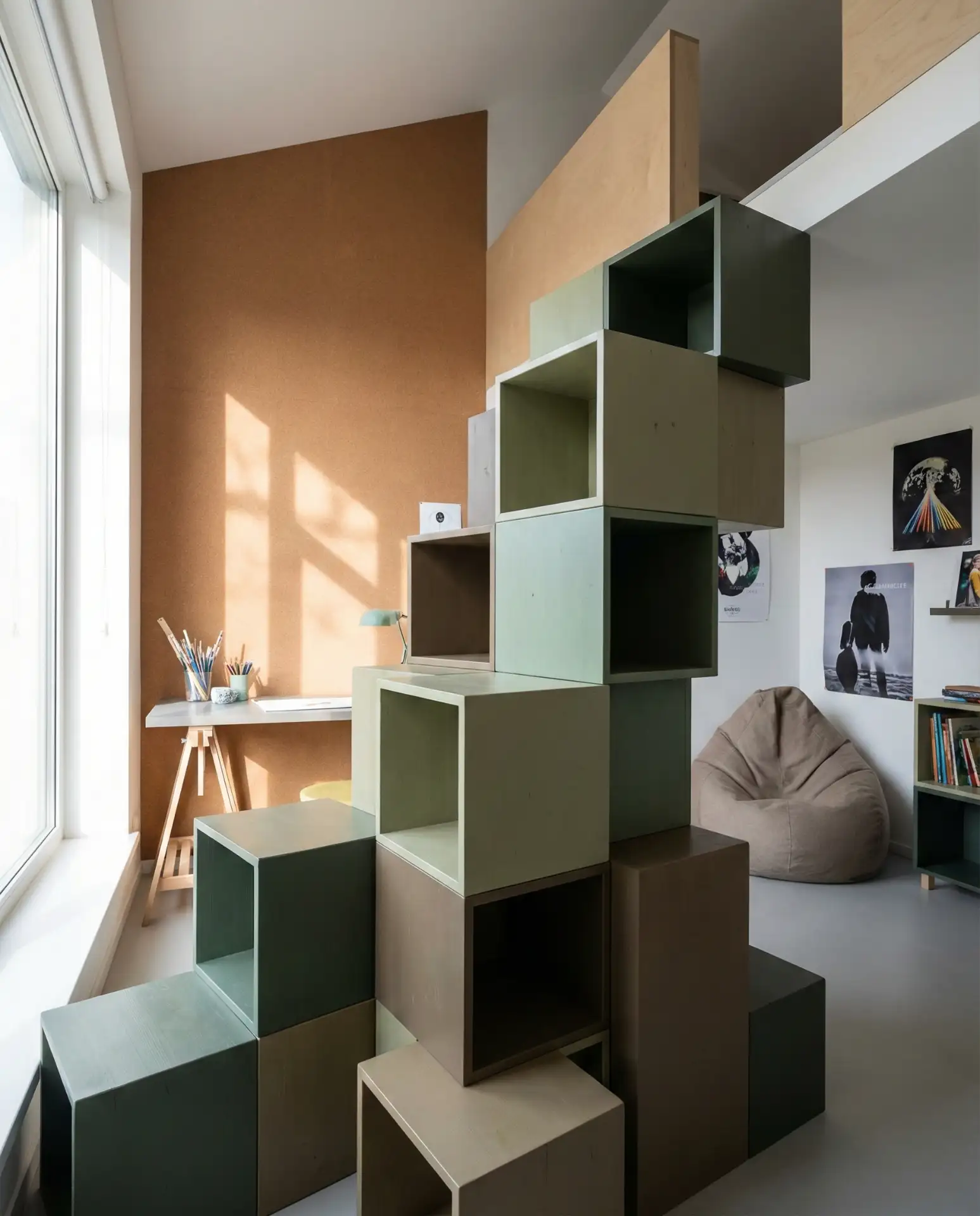
The blocky, pixelated aesthetic popularized by Minecraft translates surprisingly well into real-world staircase design, especially in children’s spaces, game rooms, or playfully creative homes. Bright colors, clear geometric shapes, and stepped forms reference the digital world while remaining structurally sound. This playful approach resonates with younger homeowners who grew up with the game and want their living spaces to reflect their interests. The ideas here extend beyond literal recreation—it’s about embracing bold geometry and color without irony.
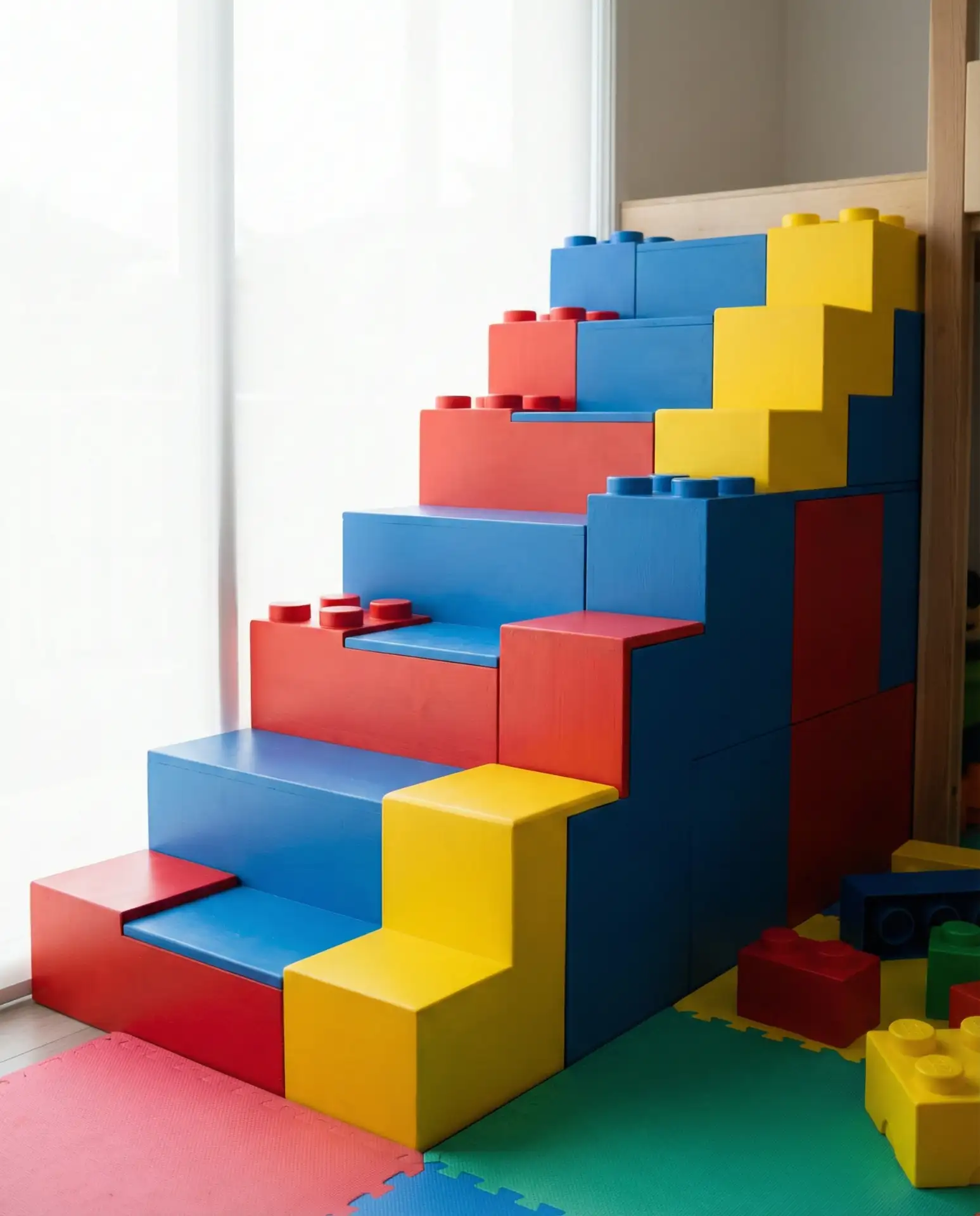
Where it works best: bonus rooms, finished basements, and dedicated kid zones where whimsy is encouraged rather than restrained. Parents appreciate that these designs can grow with children—what starts as a literal game reference becomes abstract geometric art as kids mature. Construction typically uses painted plywood or MDF to achieve the clean-edged blocks, keeping costs reasonable at $5,000 to $12,000. The key is commitment: half-hearted geometric references fall flat, while fully realized concepts become conversation pieces that bring genuine joy to daily life.
16. Circular Central Showcase
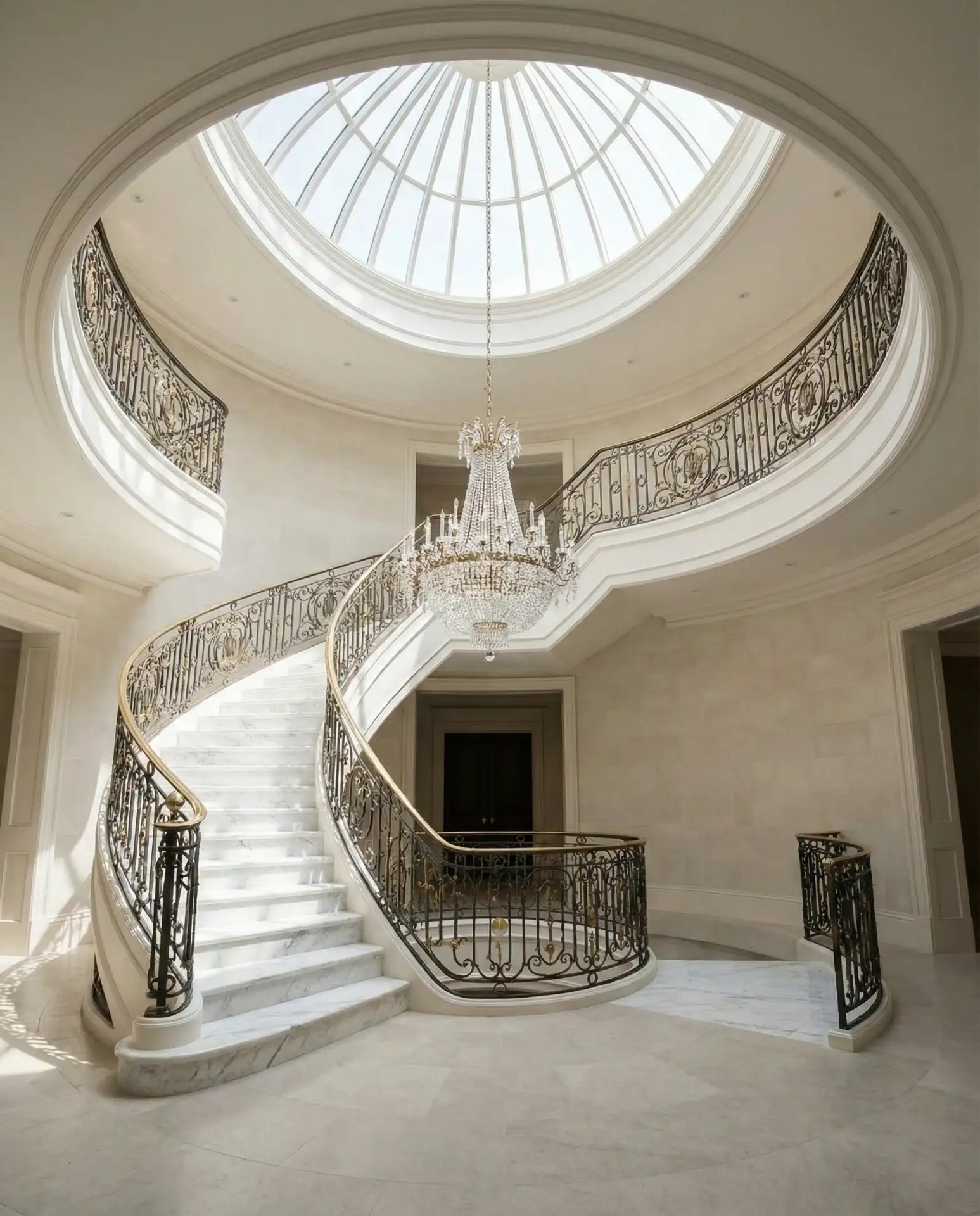
A circular staircase positioned at the heart of your home creates a 360-degree architectural moment. Unlike spiral stairs that wind tightly upward, circular staircases have a wider radius and gentler curve, making them more comfortable for everyday use while still providing dramatic visual impact. This luxury design works in homes with ample square footage and serves as a sculptural centerpiece visible from multiple rooms. The round form invites movement and encourages exploration of the vertical dimension.
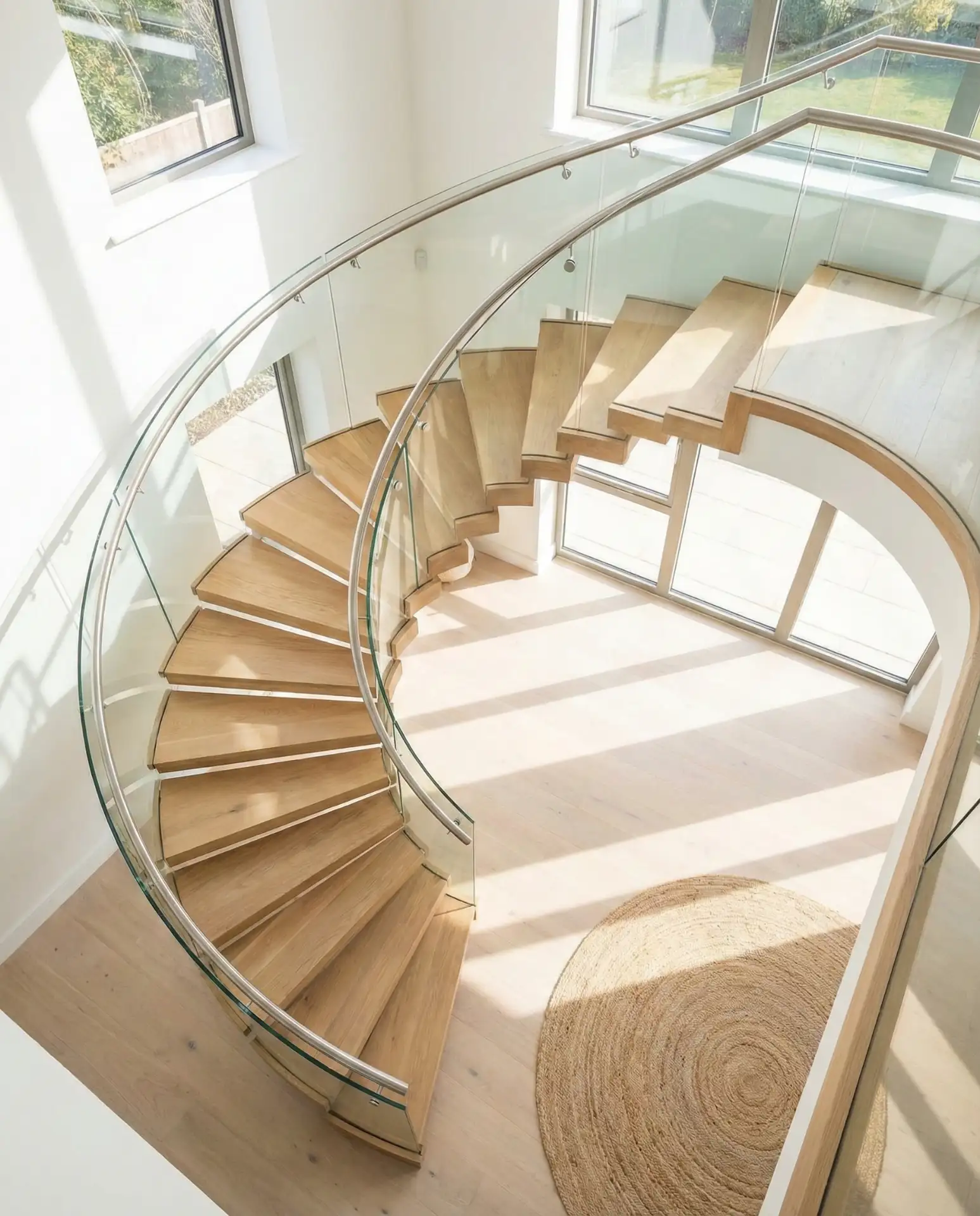
Real homeowners with circular staircases often describe them as the organizing principle of their entire home—rooms radiate outward from this central axis, creating intuitive navigation and elegant symmetry. The design does require structural columns or walls to support the outer curve, which means it works best when planned during initial construction rather than added later. Professional architects can integrate support seamlessly into the overall design. Expect investment levels similar to other high-end custom staircases, typically $30,000 to $70,000 depending on materials and finishing details.
17. MS Steel Modern Minimalism
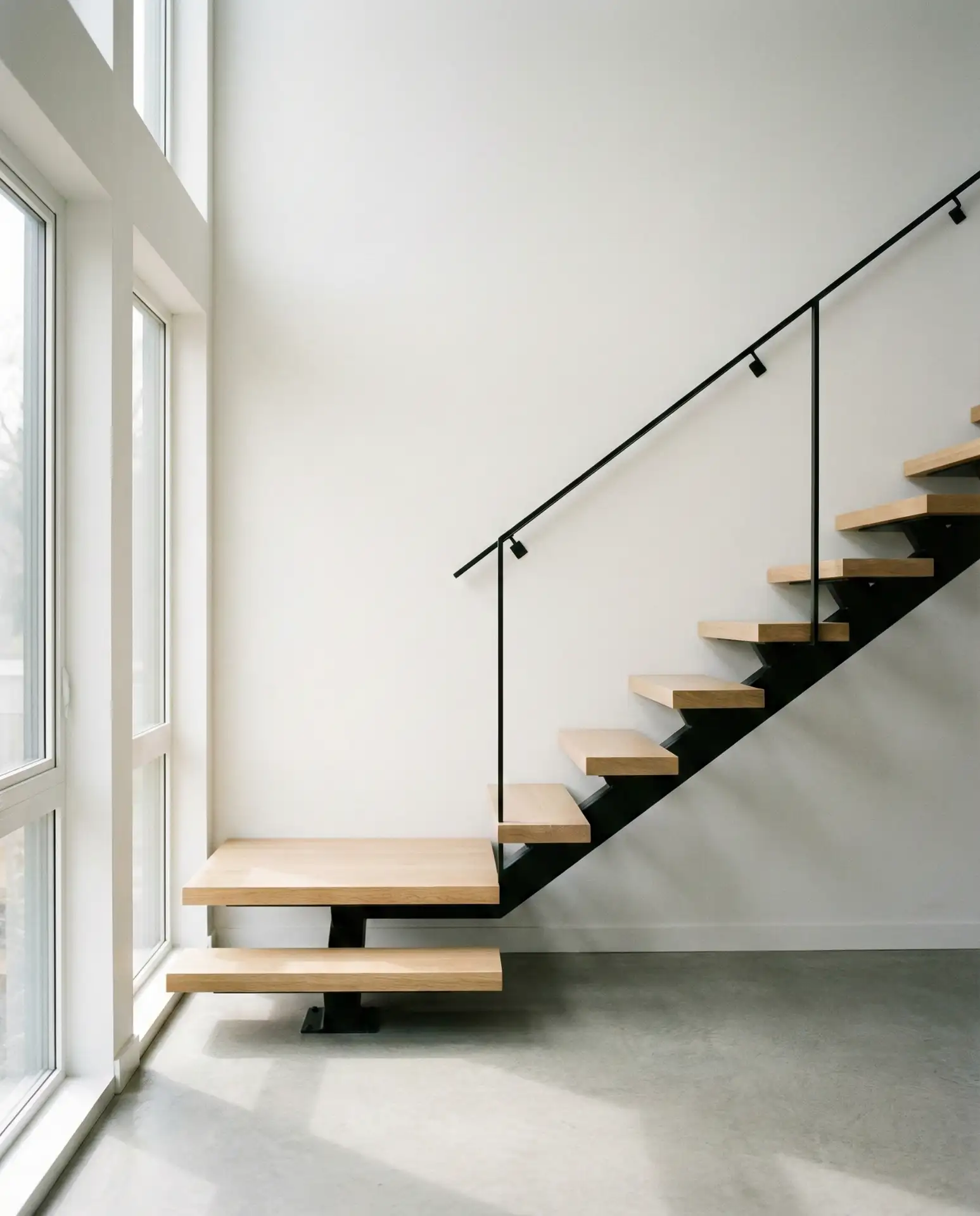
Mild steel (MS) construction offers excellent value without compromising on the clean, minimal aesthetic that defines modern residential design. The material can be welded into precise geometric forms, powder-coated for durability, and combined with various tread materials to suit your preference. This approach sits at the intersection of affordability and sophistication—you achieve the metal look of high-end staircases at a more accessible price point. The slender profiles don’t overwhelm smaller spaces, making MS steel ideal for urban homes and contemporary renovations.
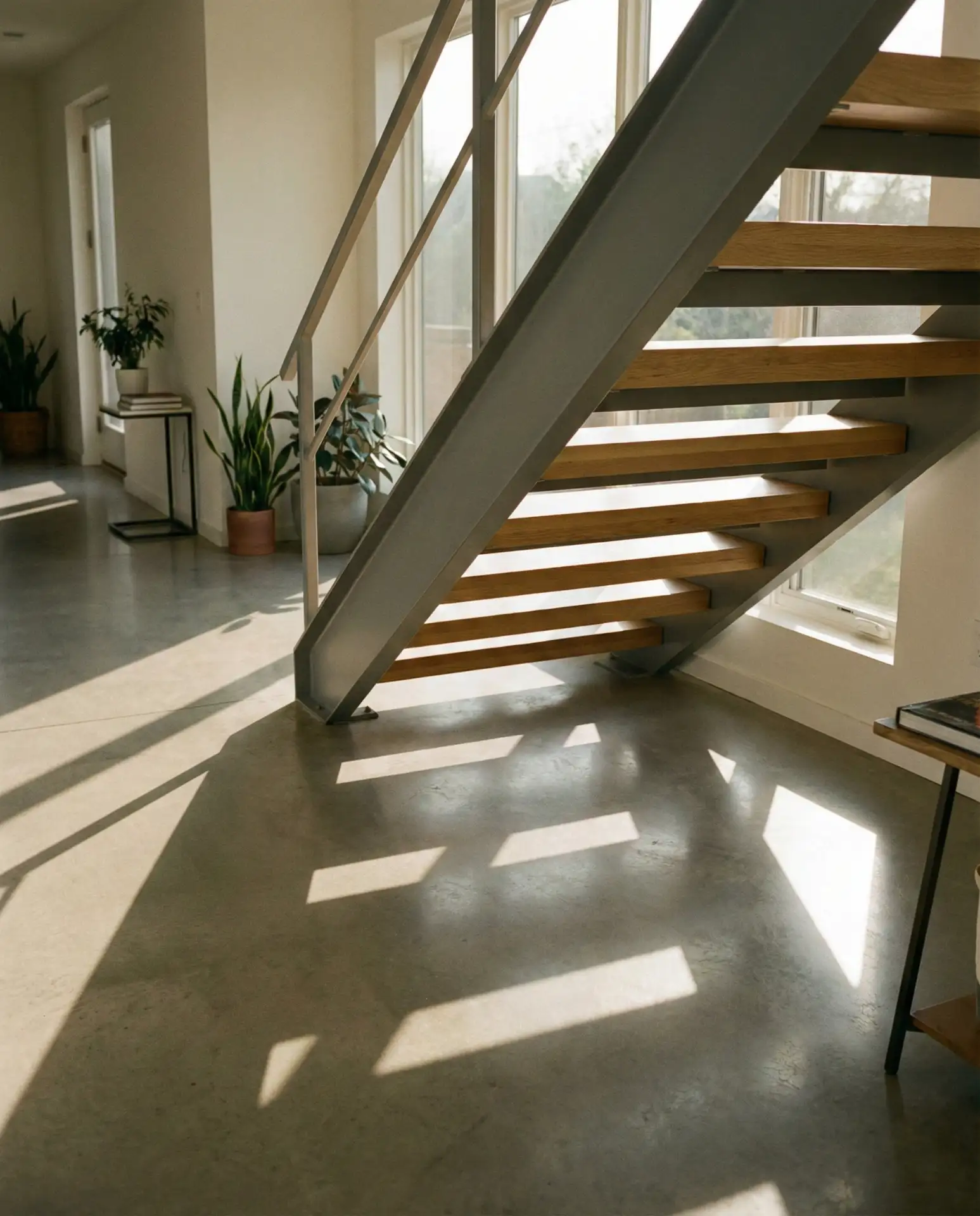
A fabricator in Chicago explained that mild steel’s workability allows for custom dimensions without the premium costs associated with stainless steel or exotic metals. The material does require proper finishing to prevent rust, but modern powder coating provides decades of protection with minimal maintenance. Many homeowners appreciate that MS steel staircases can be locally fabricated, supporting regional craftspeople while reducing shipping costs and lead times. Total investment typically ranges from $8,000 to $18,000, making this one of the most cost-effective ways to achieve contemporary metal aesthetics.
18. Under-Stair Storage Integration
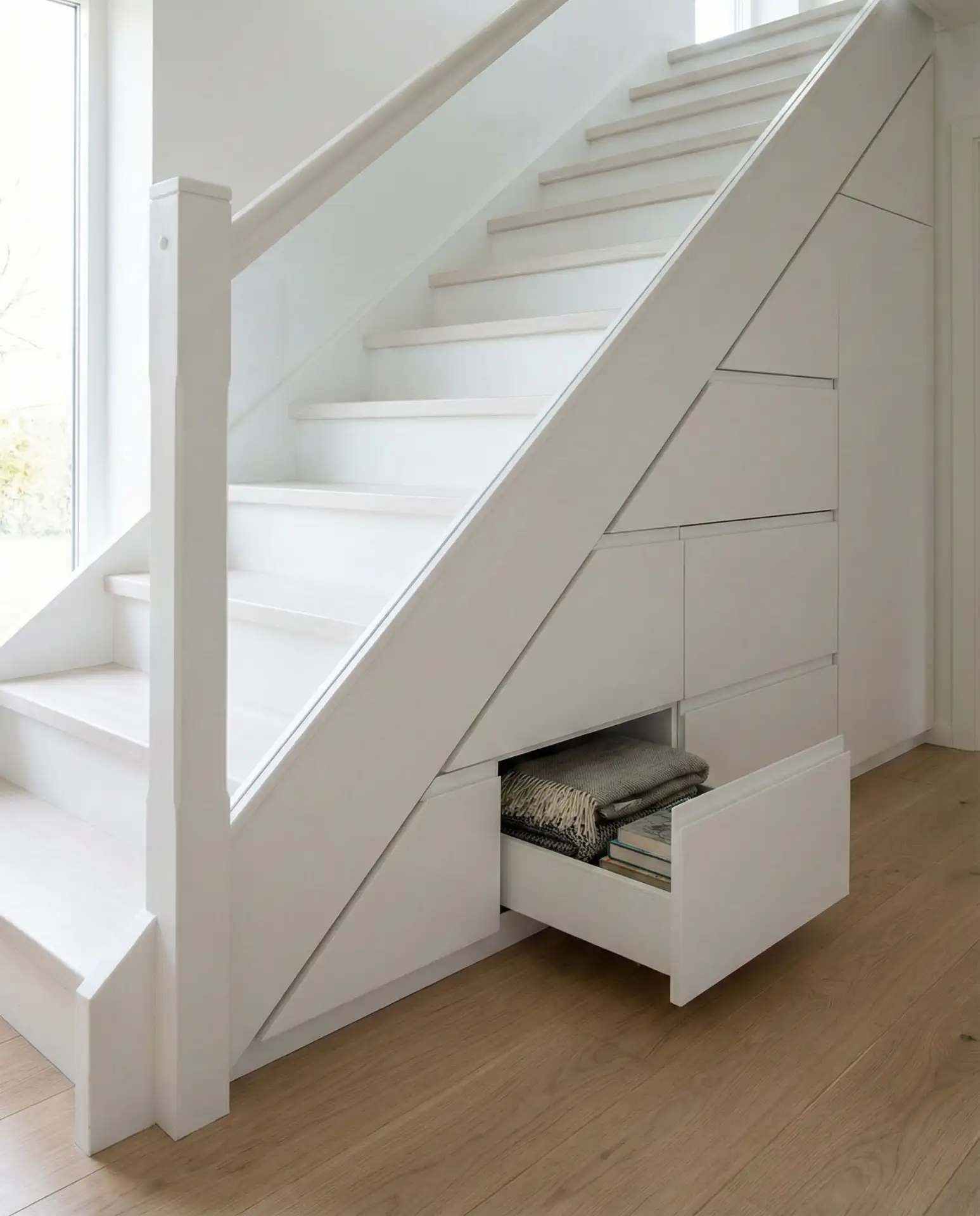
The triangular void under staircases represents valuable square footage that’s too often wasted. Smart integration transforms this space into practical storage—pull-out drawers that follow the ascending slope, built-in bookshelves, coat closets, or even compact home offices. This solution matters especially in smaller homes where every inch counts. The ideas here aren’t just about hiding clutter; thoughtful design makes the storage feature architecturally intentional rather than an afterthought.
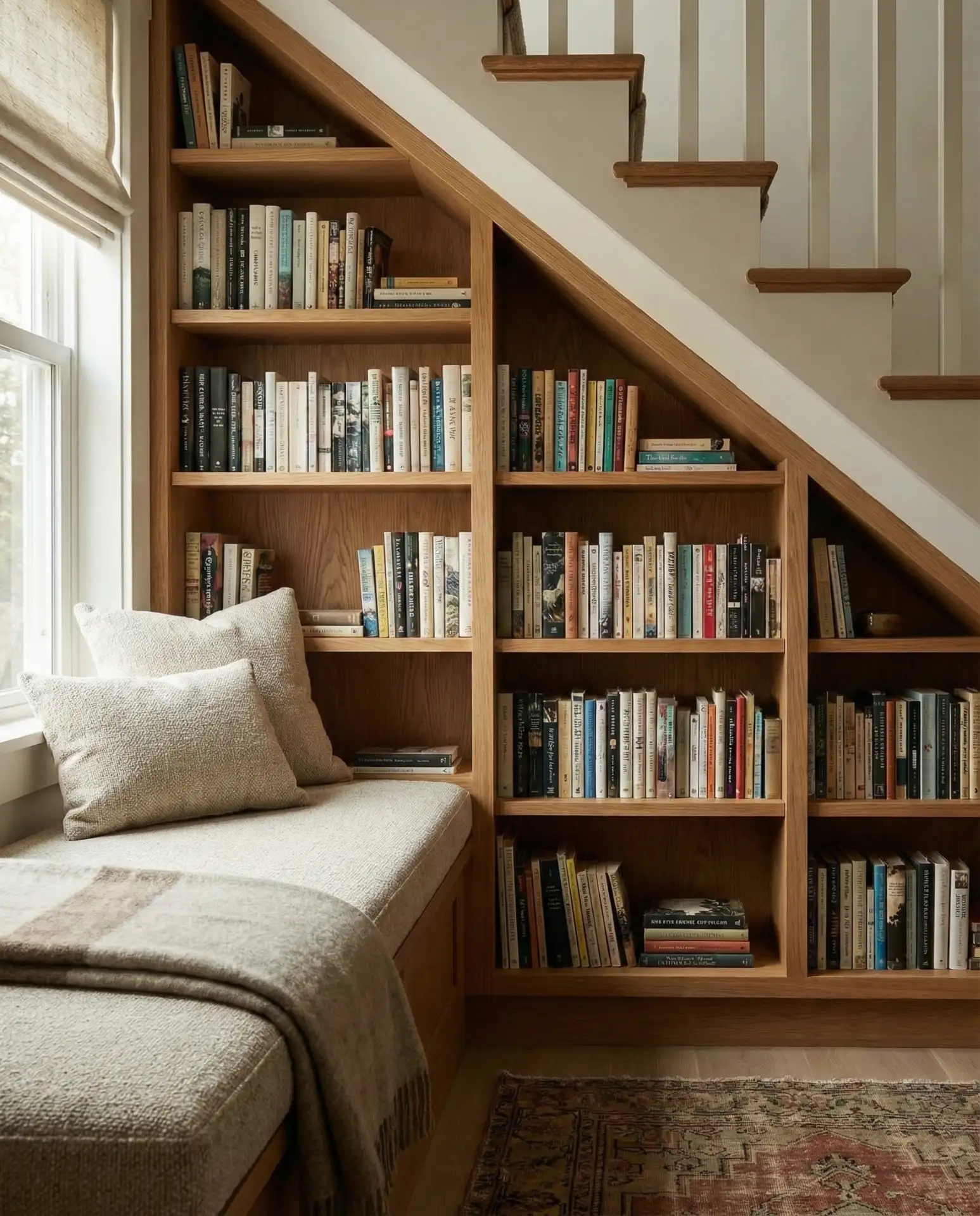
Common mistakes include making the storage too shallow or difficult to access—plan for at least 18 inches of depth where possible, and use full-extension drawer slides so you can actually reach items at the back. Homeowners in cities like San Francisco and New York, where space comes at a premium, frequently invest in custom under-stair solutions during renovations. A good contractor can retrofit storage beneath existing stairs for $2,000 to $8,000 depending on complexity and finish quality. The payoff comes daily when you have a logical place for shoes, seasonal items, or household tools that would otherwise clutter living areas.
19. Mixed Material Contemporary
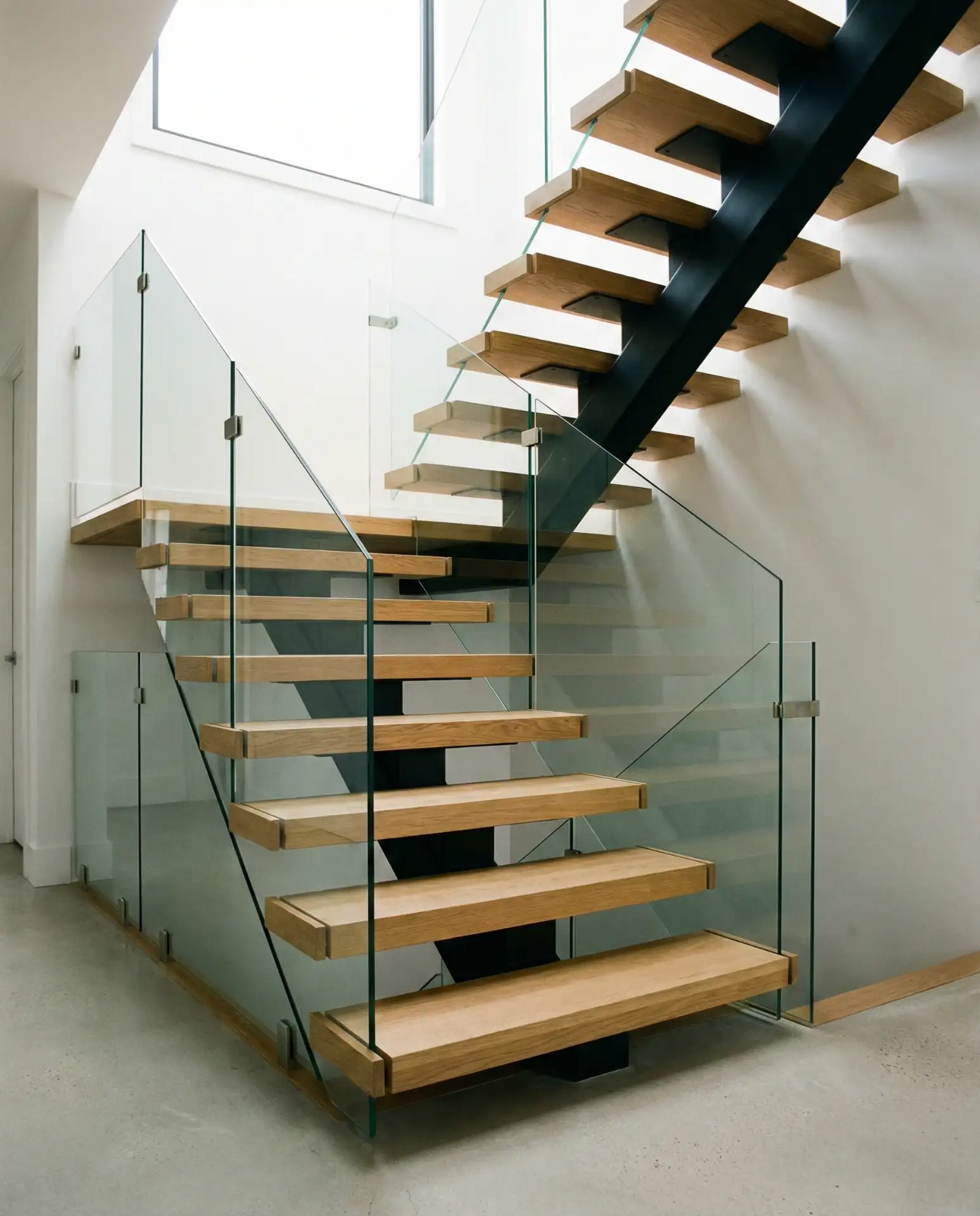
The most compelling contemporary staircases often combine multiple materials to create visual richness and textural contrast. Think wooden treads with steel stringers, concrete risers with glass panels, or stone steps with cable railings. Each material brings distinct qualities—wood offers warmth, metal provides structural clarity, glass maintains transparency—and their combination results in designs more interesting than any single material could achieve. This approach lets you customize the balance between industrial and organic, traditional and modern.
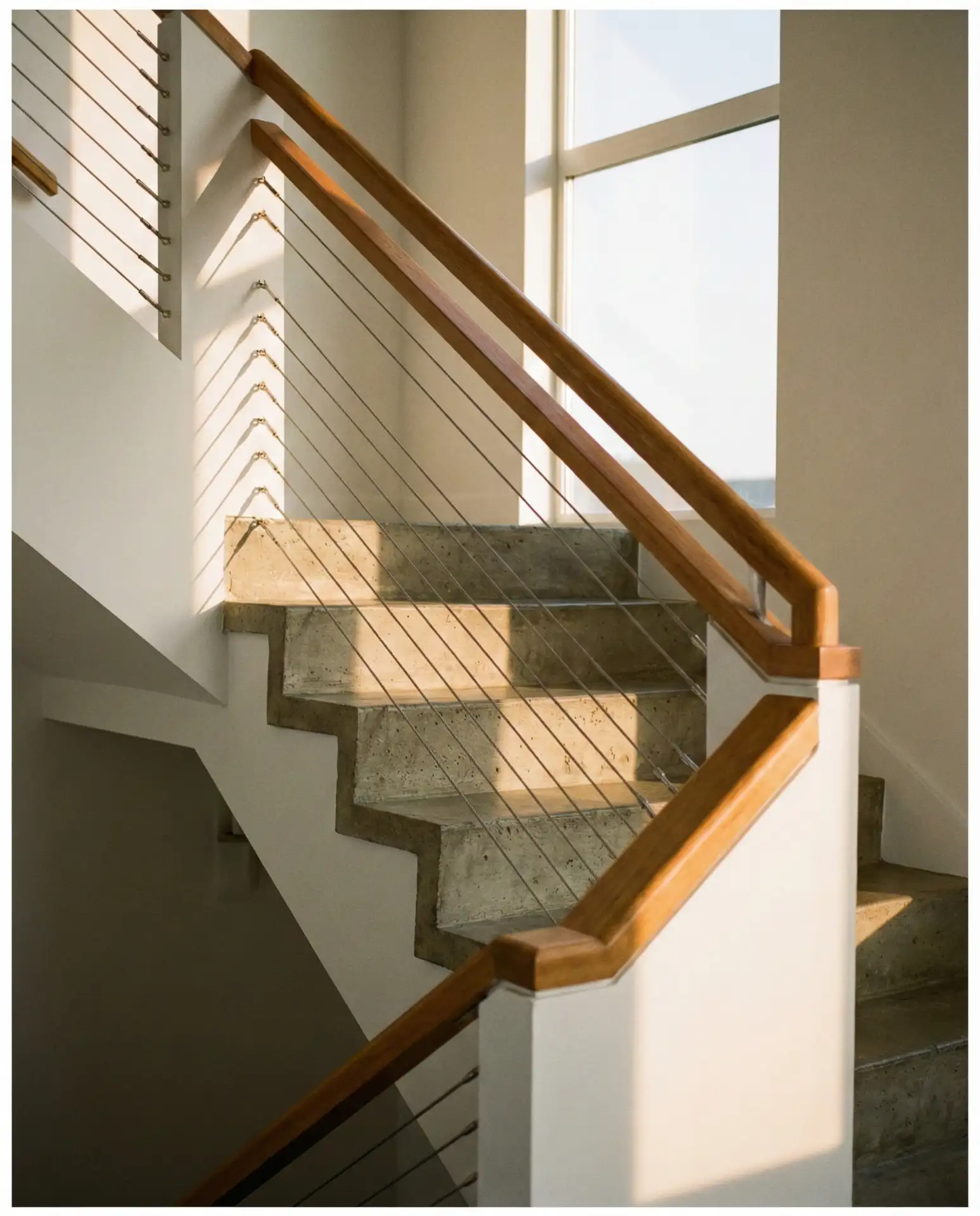
An interior designer I know recommends this approach when clients feel torn between competing aesthetics—mixing materials lets you honor multiple preferences within one cohesive design. The key is maintaining consistency in scale and proportion so the different materials feel intentionally composed rather than randomly assembled. Costs reflect the combined material expenses and specialized labor for working with each, typically falling between $15,000 and $35,000. The investment delivers a custom look that truly reflects your personal style rather than off-the-shelf uniformity.
20. Traditional Painted Elegance
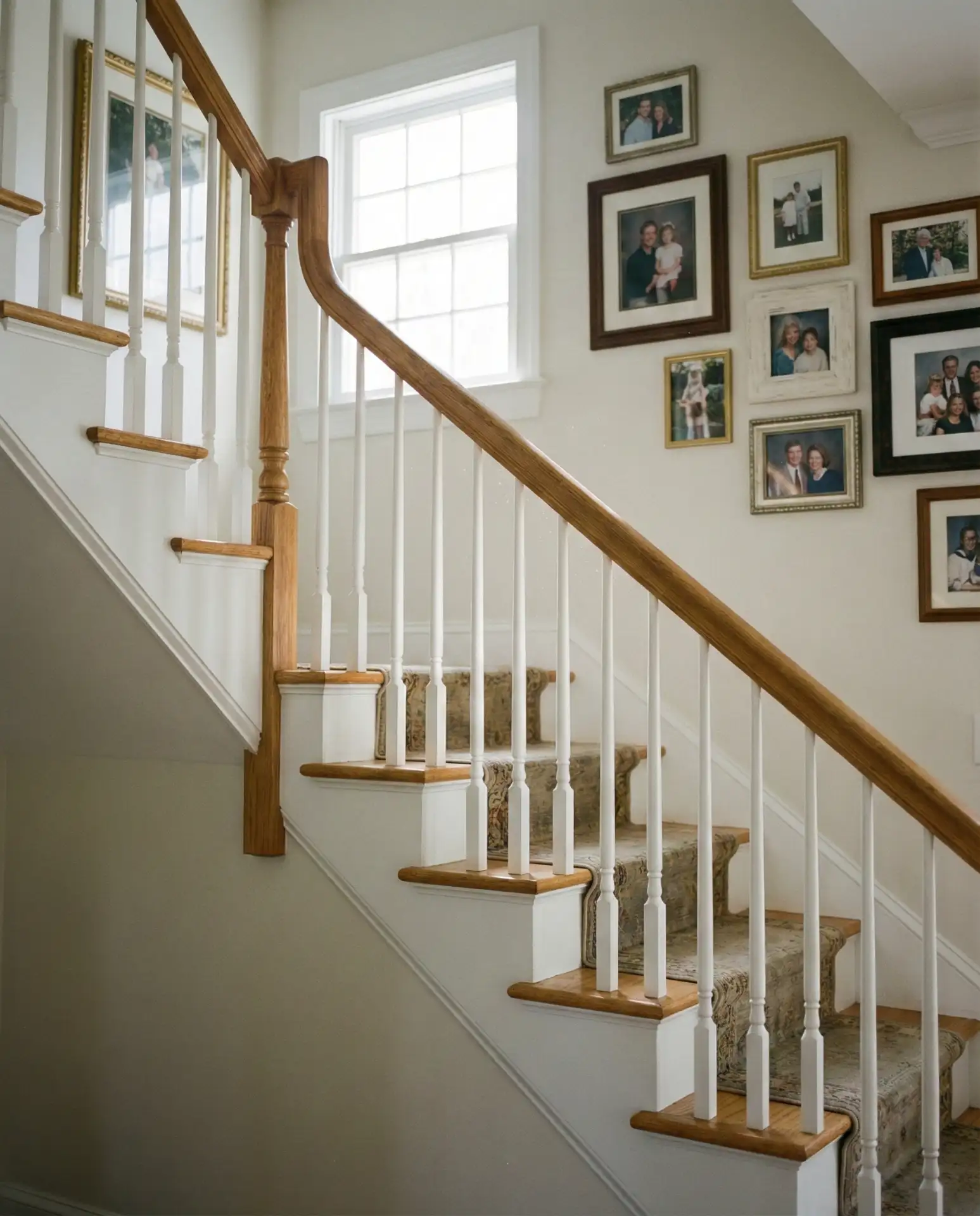
Classic painted staircases—typically white or cream risers with natural wooden treads—offer timeless beauty that suits a wide range of interior styles. The painted portions brighten the space and provide a clean backdrop for decorative elements like stair runners, family photos on adjacent walls, or seasonal garland during holidays. Natural wood on the treads adds warmth and shows off quality materials while the paint keeps maintenance simple and costs reasonable. This combination works in colonial, craftsman, and transitional homes across America.
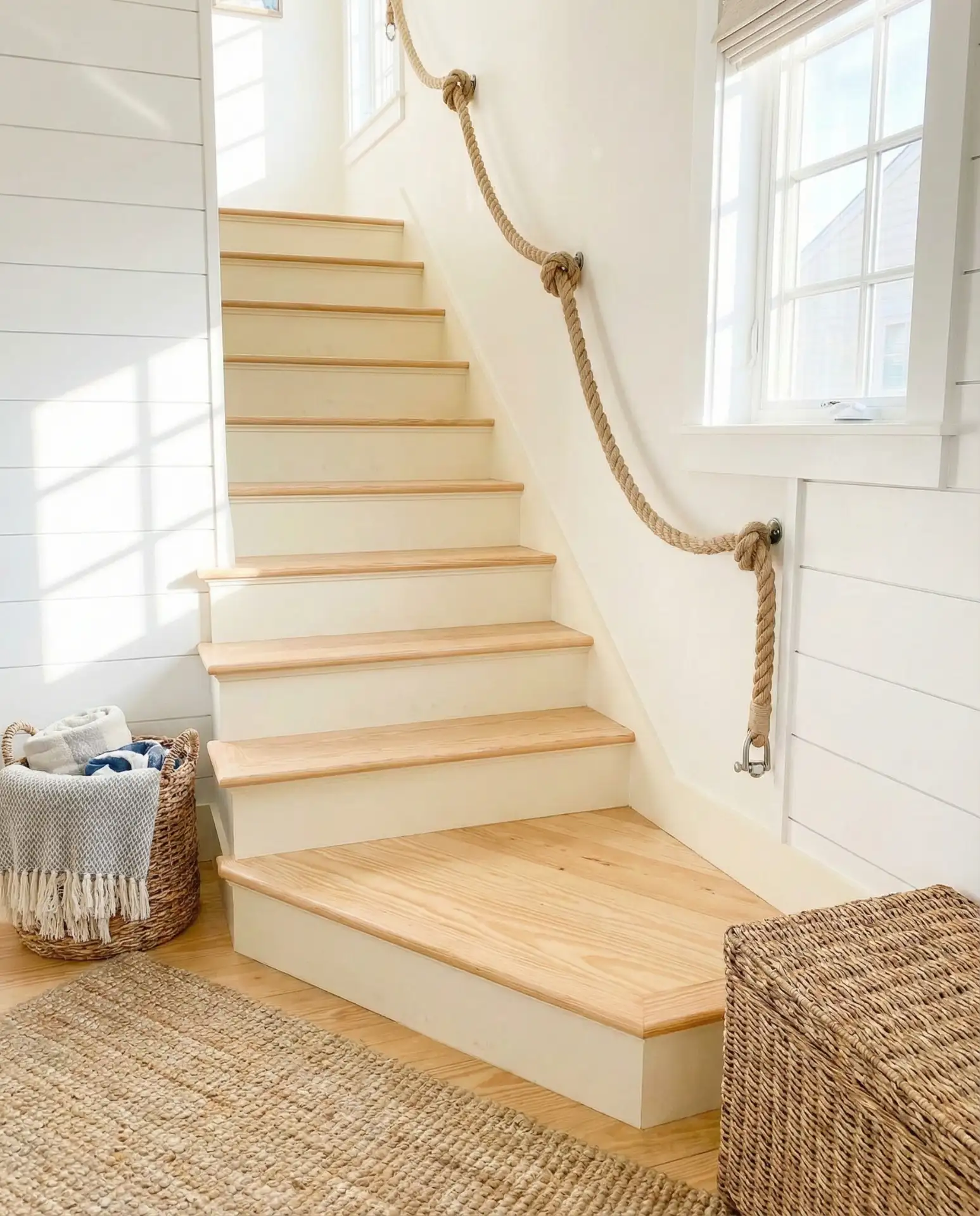
Real homeowner behavior shows that painted staircases remain popular because they’re relatively easy to update—a fresh coat of paint and new runner can completely transform the look for just a few hundred dollars and a weekend’s work. This makes the design appealing for people who like to refresh their homes periodically without major renovation expense. The wood treads will eventually need refinishing, but that’s typically a once-every-decade task rather than an ongoing maintenance burden. Total initial costs range from $6,000 to $15,000 depending on whether you’re refinishing existing stairs or building new.
21. Floating LED-Lit Modern Feature
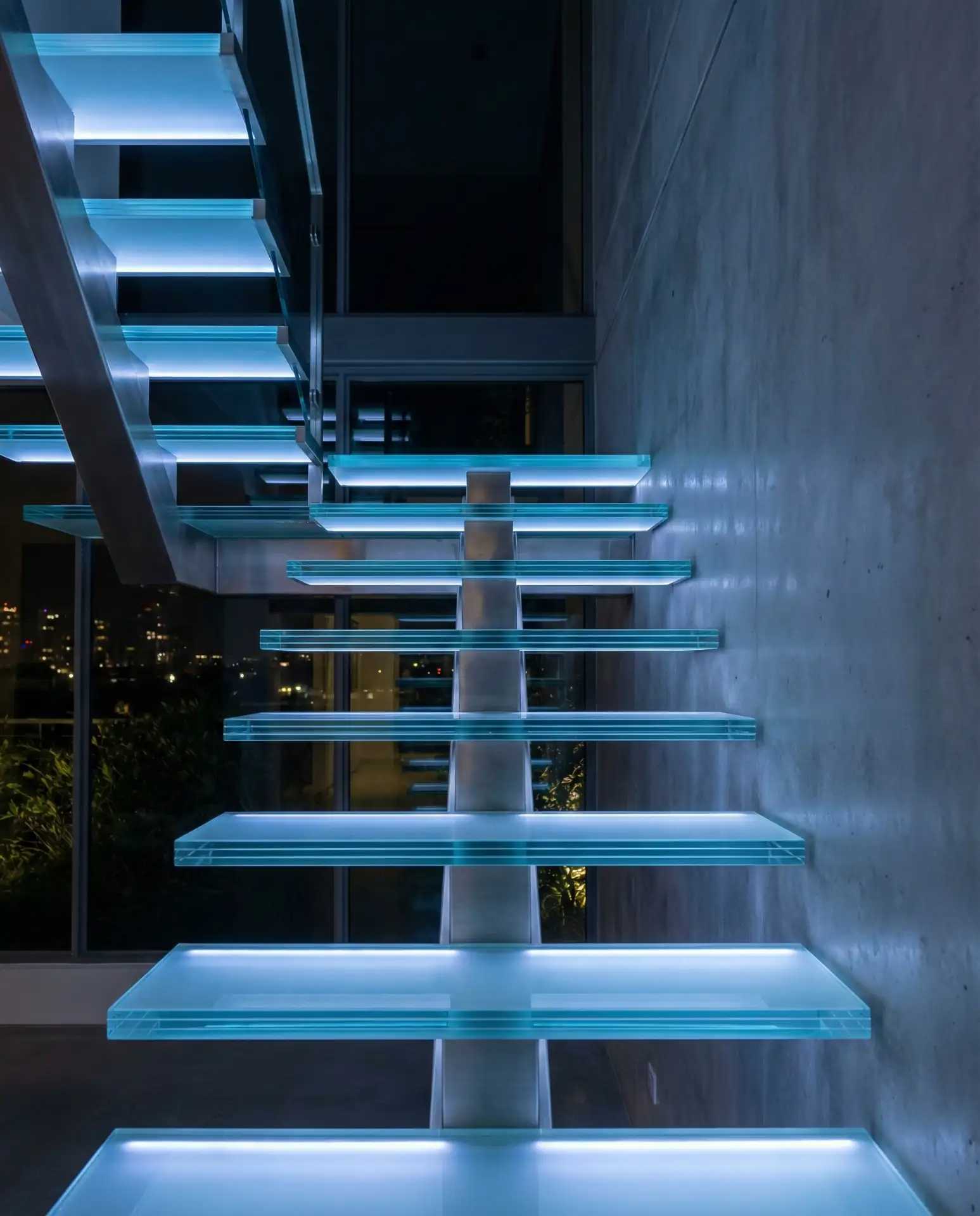
Integrating LED strip lighting beneath floating treads creates a dramatic after-dark effect while serving the practical purpose of illuminating the stairs for safe nighttime navigation. The gentle glow highlights the architectural lines of modern designs and can be dimmed or color-adjusted to suit your mood or occasion. This works beautifully with both wooden and glass treads, and the low voltage LEDs are energy-efficient and long-lasting. The floating appearance is enhanced by the light, making the stairs seem to levitate even more convincingly.
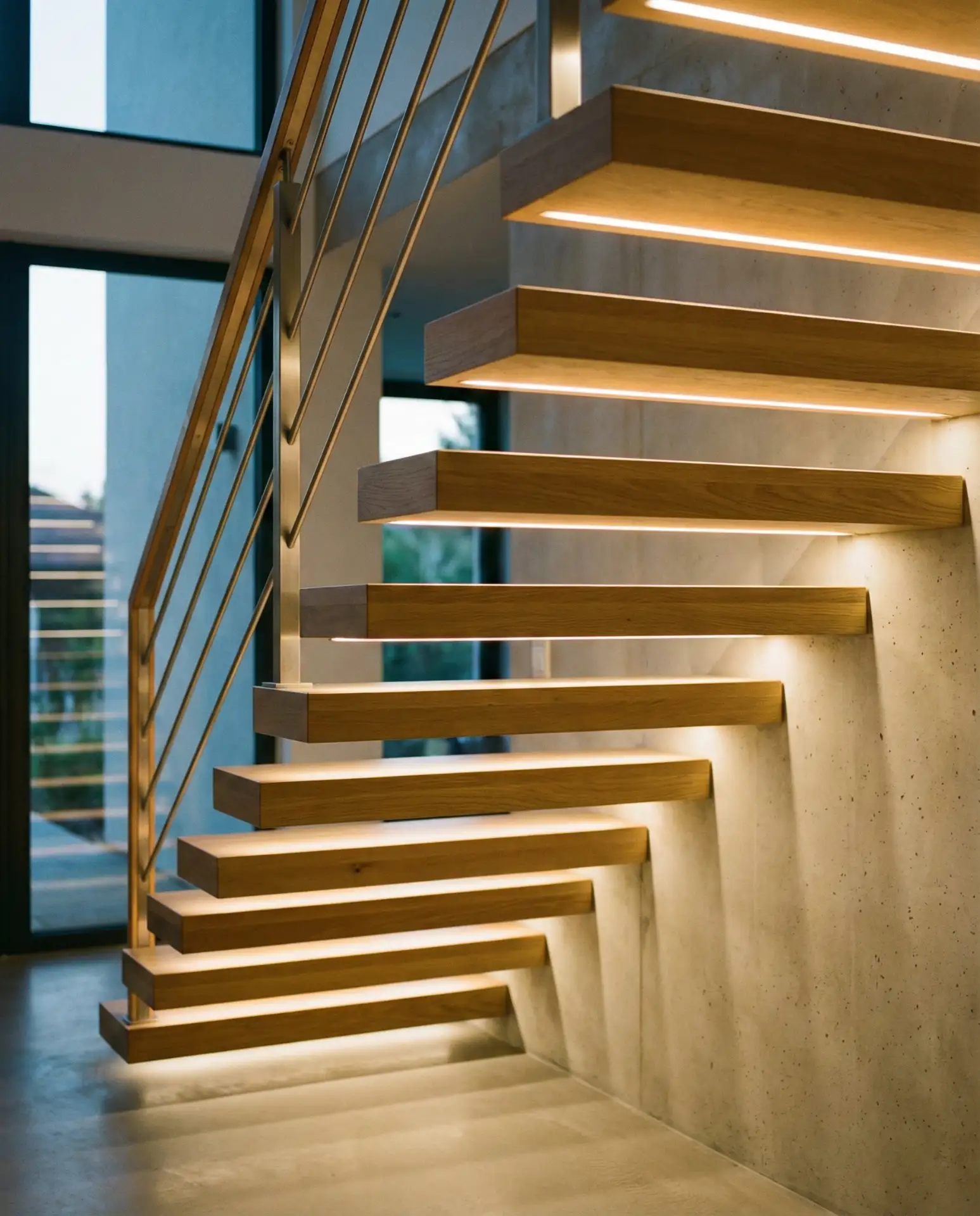
Practical insight: LED systems have become remarkably affordable and easy to install, with quality strip lighting kits available for under $200 plus basic electrical work. Smart home integration allows you to control the lights via app or voice command, and motion sensors can trigger the lights automatically when someone approaches. Many homeowners find this feature transforms their staircase from utilitarian to experiential. The electrical work adds roughly $500 to $1,500 to overall installation costs, but the visual impact far exceeds the modest investment, especially for design-focused households who entertain regularly.
22. Natural Live-Edge Wood Statement
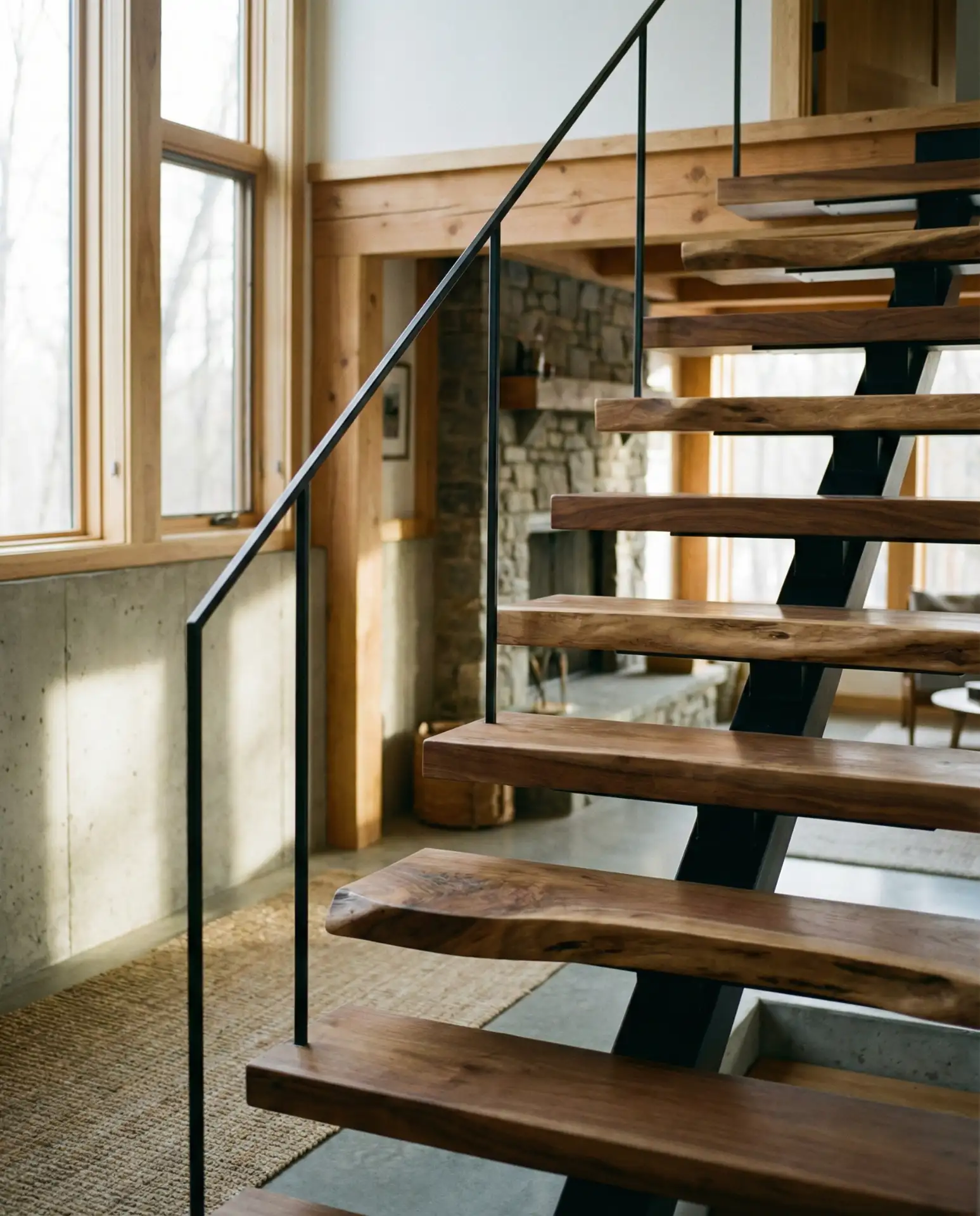
Live-edge wooden treads preserve the natural contour of the tree, bringing organic, one-of-a-kind beauty into your home. Each step becomes a slice of natural history, with bark edges, burls, and grain patterns that can never be replicated. This design suits mountain homes, contemporary rustic interiors, and anyone who values craftsmanship and connection to nature. The irregular edges soften the geometry of the staircase structure, creating visual interest that makes you want to slow down and appreciate the materiality. Pairing these organic treads with clean steel or glass railings prevents the look from becoming overly rustic.
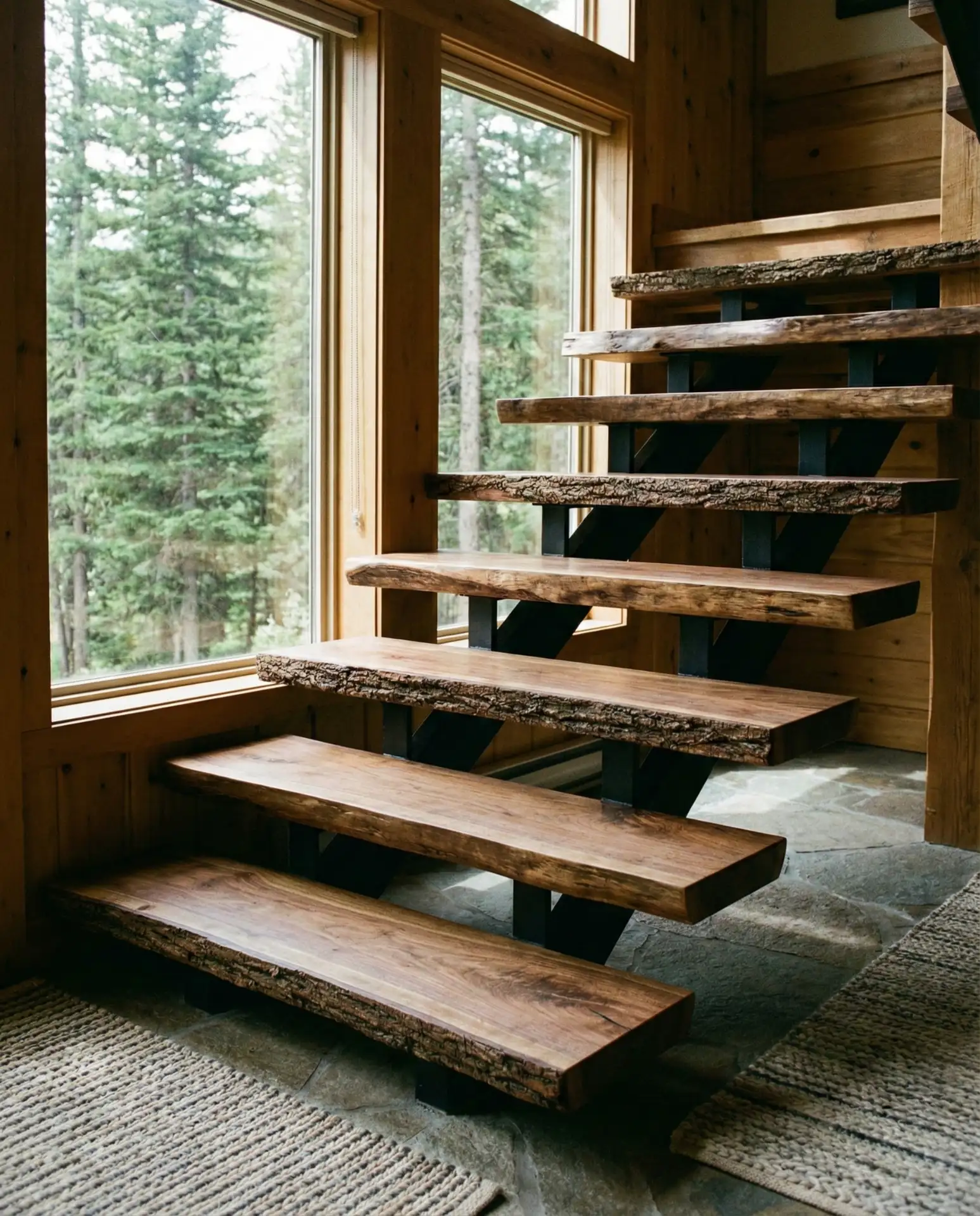
Where it works best: homes where nature is central to the design concept and where homeowners appreciate that imperfection is part of the beauty. Sourcing quality live-edge slabs requires working with specialty lumber suppliers or sawmills, and the wood needs proper drying and stabilization before installation to prevent cracking or warping. Costs vary dramatically based on wood species and slab size—$12,000 to $40,000 is typical—but you’re investing in truly unique features that become conversation pieces and focal points. These stairs tell a story about valuing natural materials and supporting traditional woodworking skills in an increasingly mass-produced world.
Conclusion
Your home’s staircase is more than a way to get from one floor to another—it’s an opportunity to express your style, enhance daily living, and add lasting value to your property. Whether you’re drawn to the clean lines of modern steel, the warmth of natural wood, or the drama of sculptural curves, there’s a design approach that fits your vision and budget. We’d love to hear which ideas resonated with you most, or if you have your own staircase project in the works. Share your thoughts and experiences in the comments below—your insights might inspire another reader’s next home improvement journey.