Rock landscaping has become one of the most searched home design topics on Pinterest heading into 2026, and it’s easy to see why. American homeowners are drawn to the low-maintenance beauty, water-wise benefits, and timeless aesthetic that stone and rock elements bring to outdoor spaces. Whether you’re working with a compact front yard or a sprawling backyard, rocks offer endless possibilities for creating stunning, functional landscapes that hold up through every season. From sleek river stones to dramatic boulders, the right rock choices can transform your property into a personal retreat. In this guide, you’ll discover twenty-three inspiring ideas that blend practicality with visual appeal, perfectly suited for today’s busy lifestyles.
1. Simple Gravel Pathways with Native Plantings
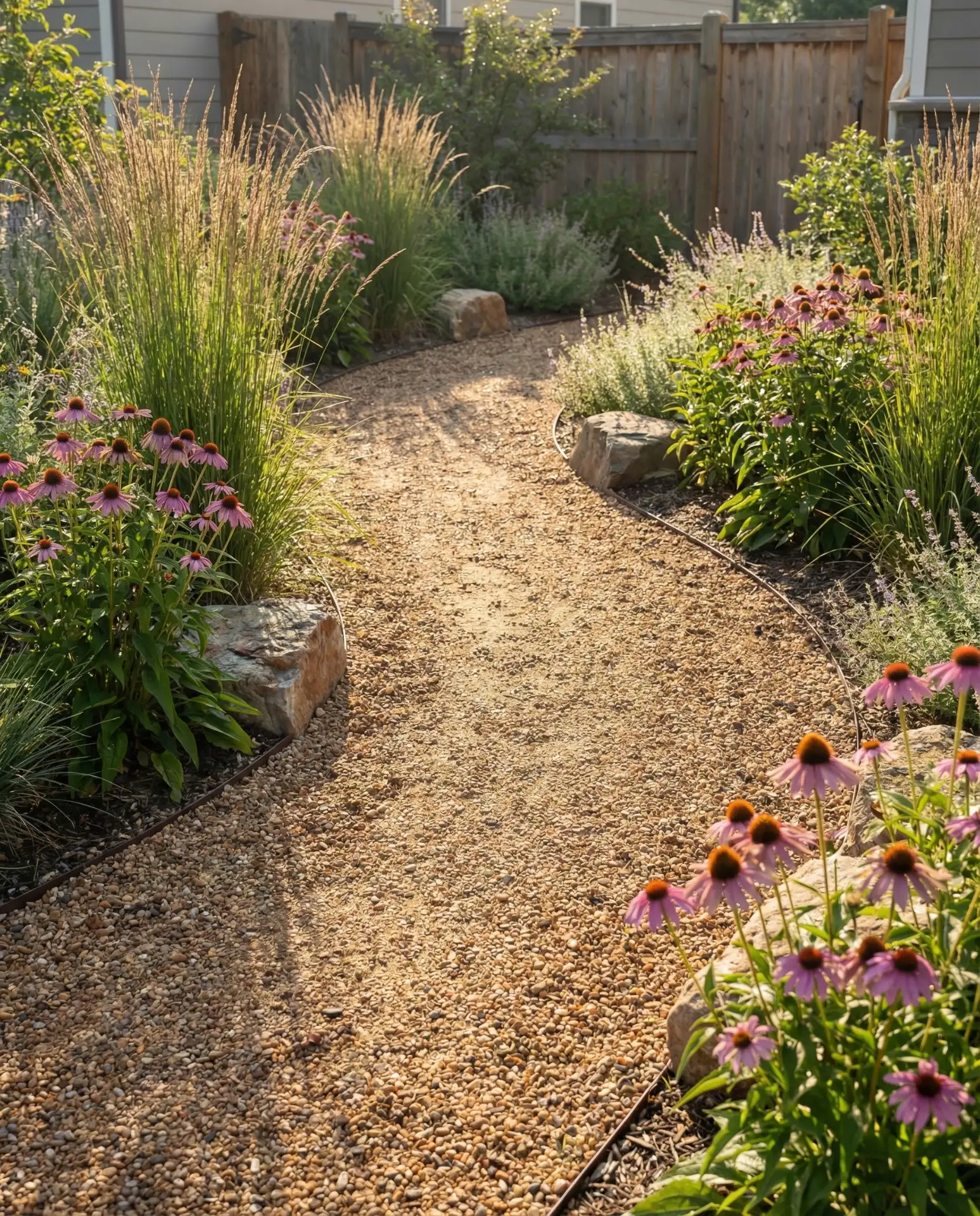
A simple gravel pathway edged with native grasses and wildflowers creates an effortless transition through your garden. This approach works beautifully in front yard settings where you want to guide visitors toward your entrance without overwhelming the space. The crunch of gravel underfoot adds sensory appeal, while the natural plantings soften the hardscape and invite pollinators. It’s a design that feels intentional yet relaxed, perfect for homes with a casual, organic aesthetic.
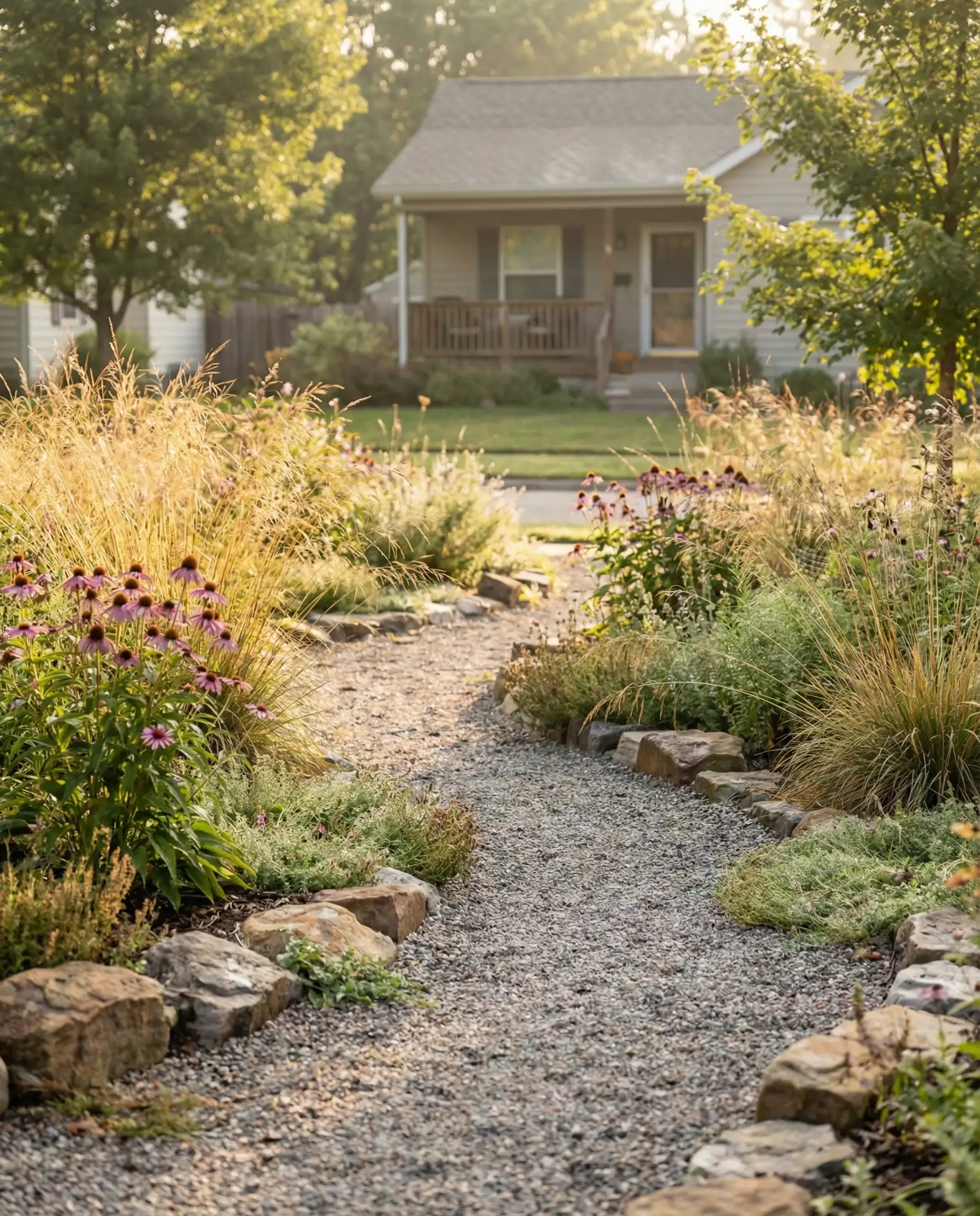
This design thrives in regions with hot summers, where traditional lawns struggle and water conservation is a priority. Homeowners in the Southwest and parts of California have embraced gravel pathways as a sustainable alternative that still feels lush and welcoming. The key is choosing the right gravel size—pea gravel is comfortable to walk on, while slightly larger grades add more texture and stability. Edging is essential to keep the stones contained and maintain clean lines over time.
2. River Rock Dry Creek Bed for Drainage
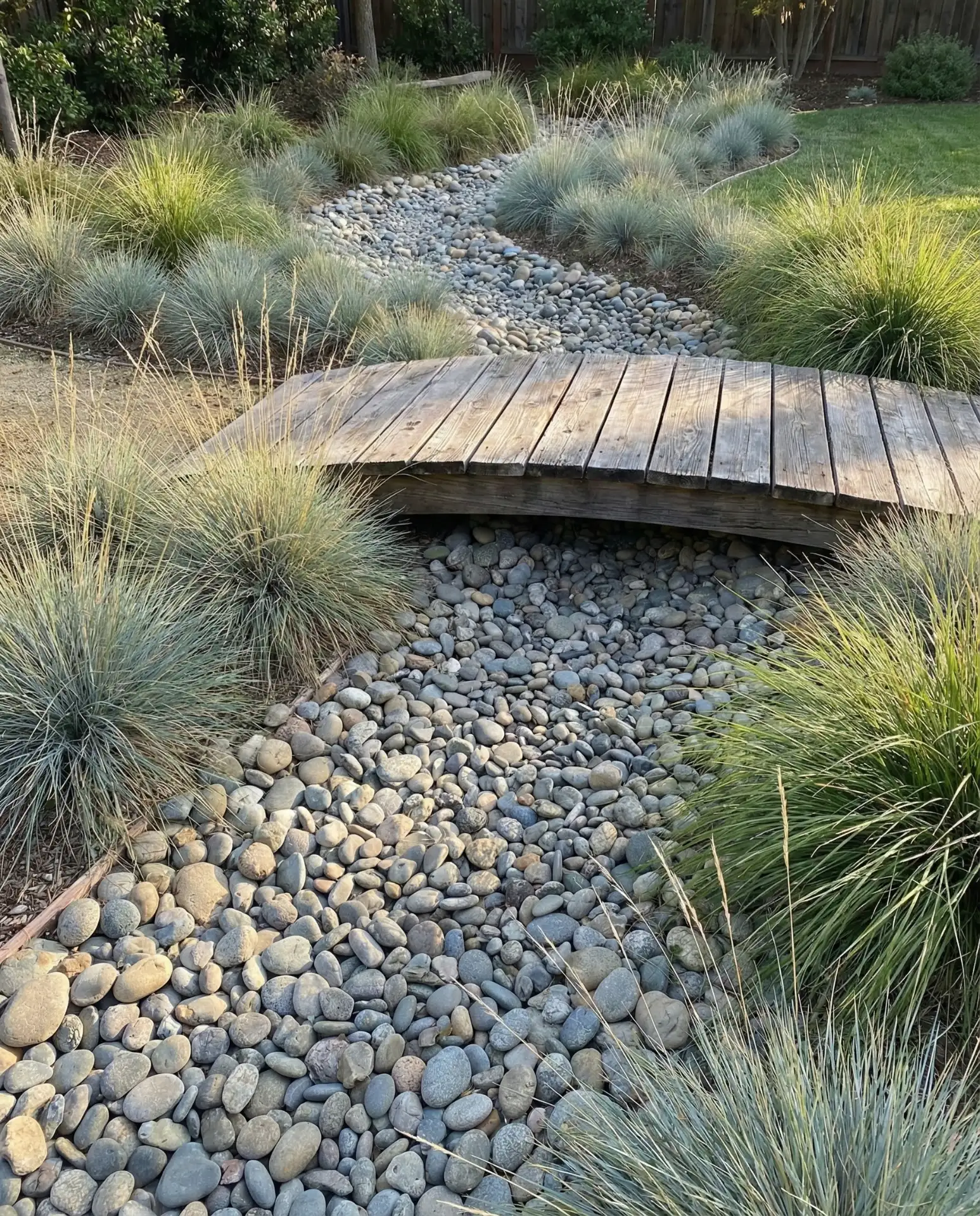
A meandering dry creek bed made from river rocks solves drainage problems while adding a sculptural element to your landscape. This technique mimics natural waterways, channeling rainwater away from foundations and preventing erosion in sloped yards. The smooth, rounded stones in varying sizes create visual interest and movement, even when the bed is dry. It’s a practical solution that doubles as a striking focal point, especially when flanked by ornamental grasses or flowering shrubs.
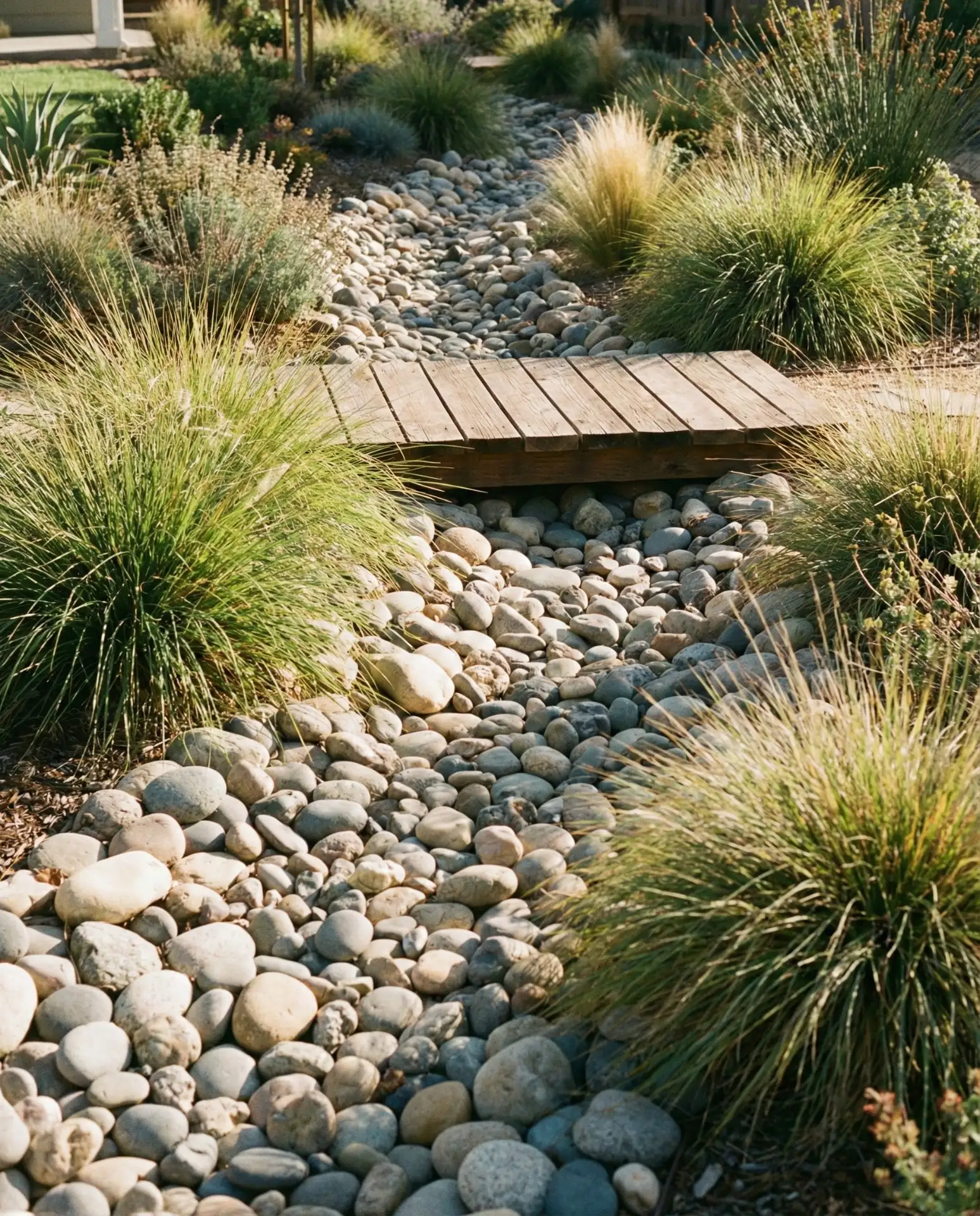
In the Pacific Northwest and Northeast, where heavy rainfall is common, dry creek beds have become a go-to feature for managing stormwater runoff. Real homeowners often start by observing where water naturally flows during a storm, then designing the creek bed to follow and enhance that path. The beauty is in the layering—larger rocks anchor the edges, while smaller river stones fill the center, creating a realistic streambed effect that looks intentional year-round.
3. White Rock Ground Cover with Sculptural Accents
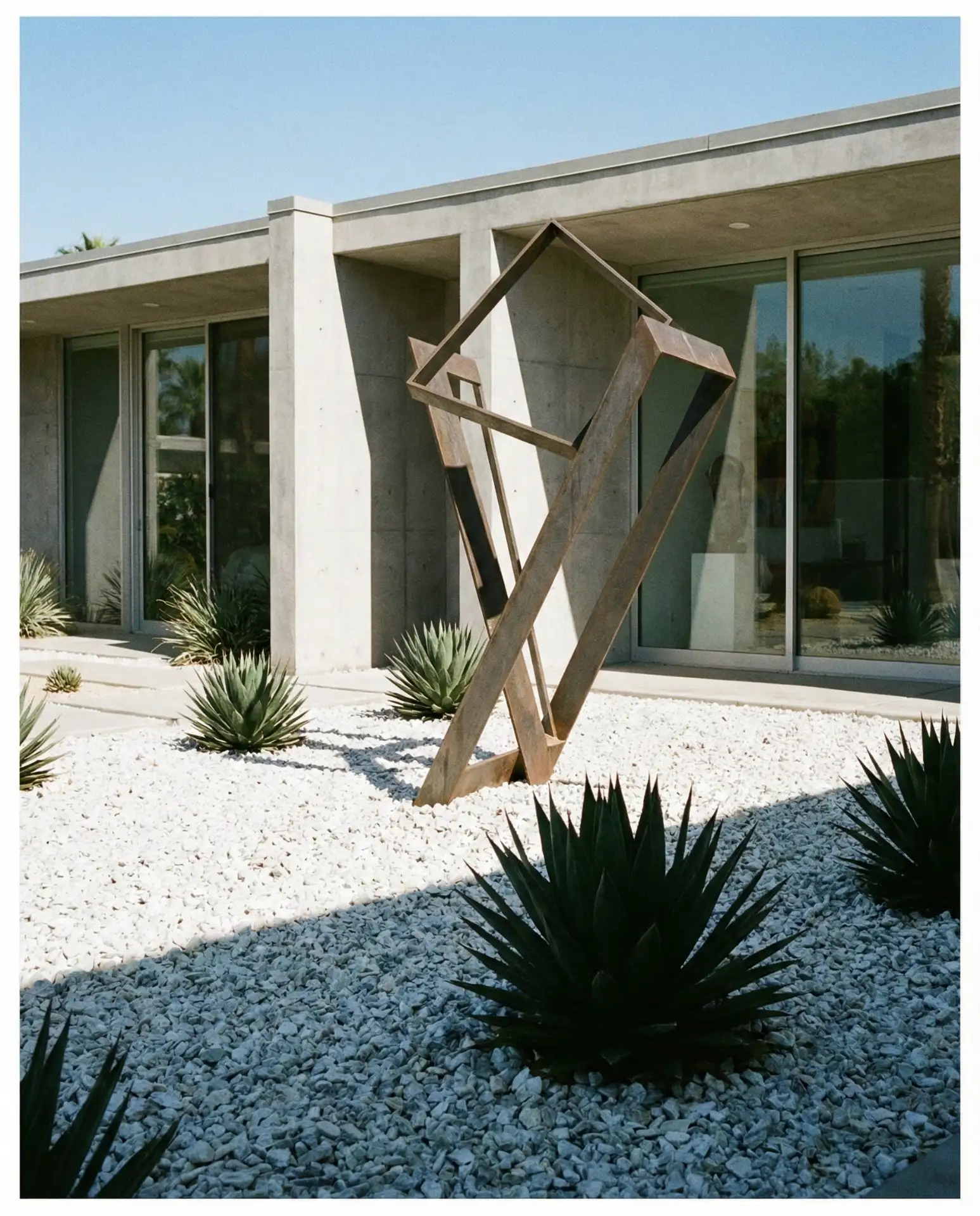
Bright white marble chips or limestone gravel provide a clean, contemporary ground cover that reflects light and makes spaces feel larger. This approach works exceptionally well in modern front yard designs where minimalism and bold contrast are desired. Pair the white stones with dark architectural plants like agaves, yuccas, or black mondo grass for dramatic effect. The reflective quality also helps brighten shaded areas and creates a striking backdrop for outdoor sculptures or statement planters.
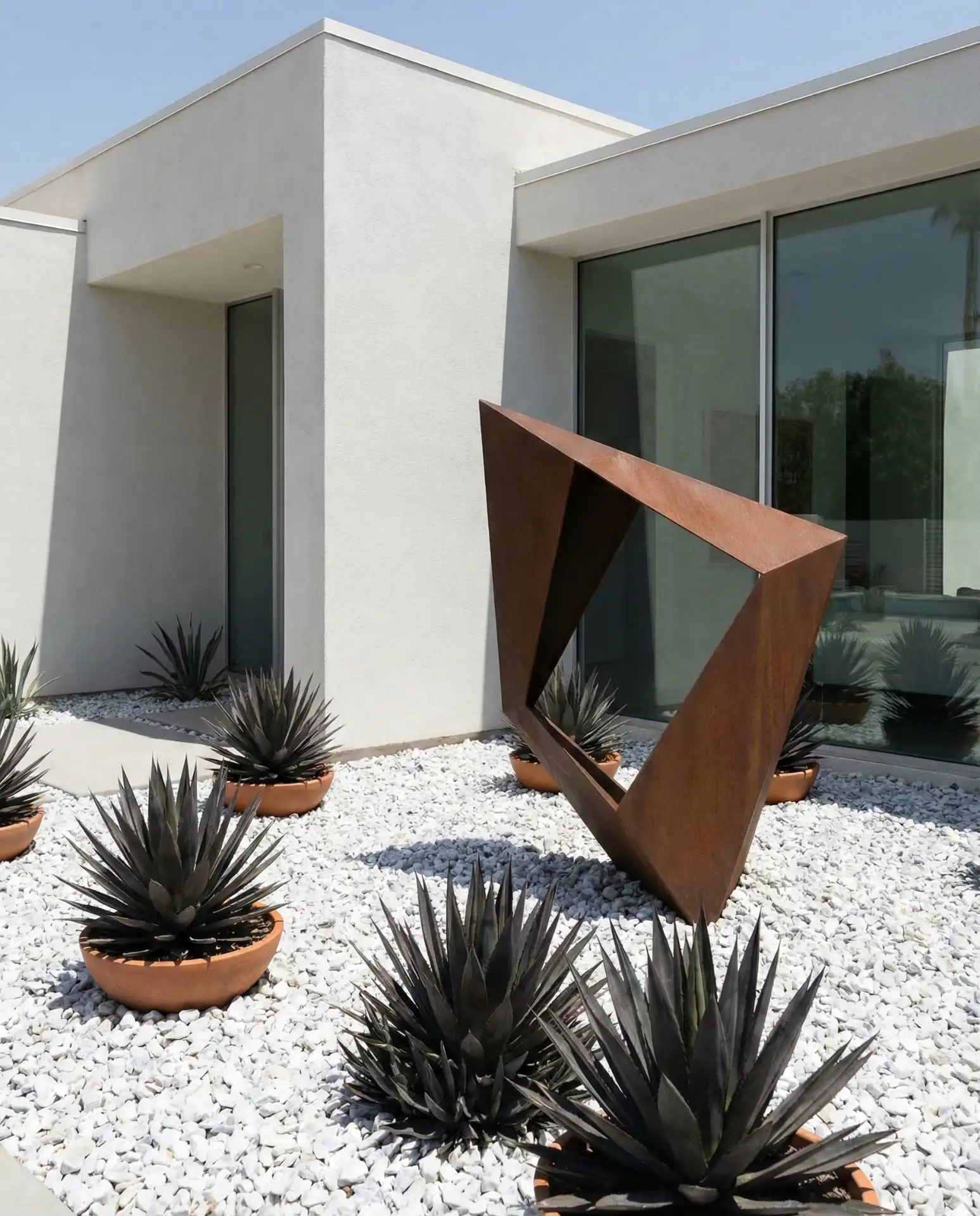
One common mistake with white rock is choosing the wrong size—too small, and it gets muddy easily; too large, and it feels commercial rather than residential. Aim for three-quarter-inch to one-inch stones for the best balance of coverage and elegance. Also, be prepared for occasional raking to keep the surface looking fresh, as leaves and debris stand out starkly against the bright backdrop. Despite the upkeep, the visual impact is worth it for design-forward homeowners.
4. Mulch and Stone Border Combination
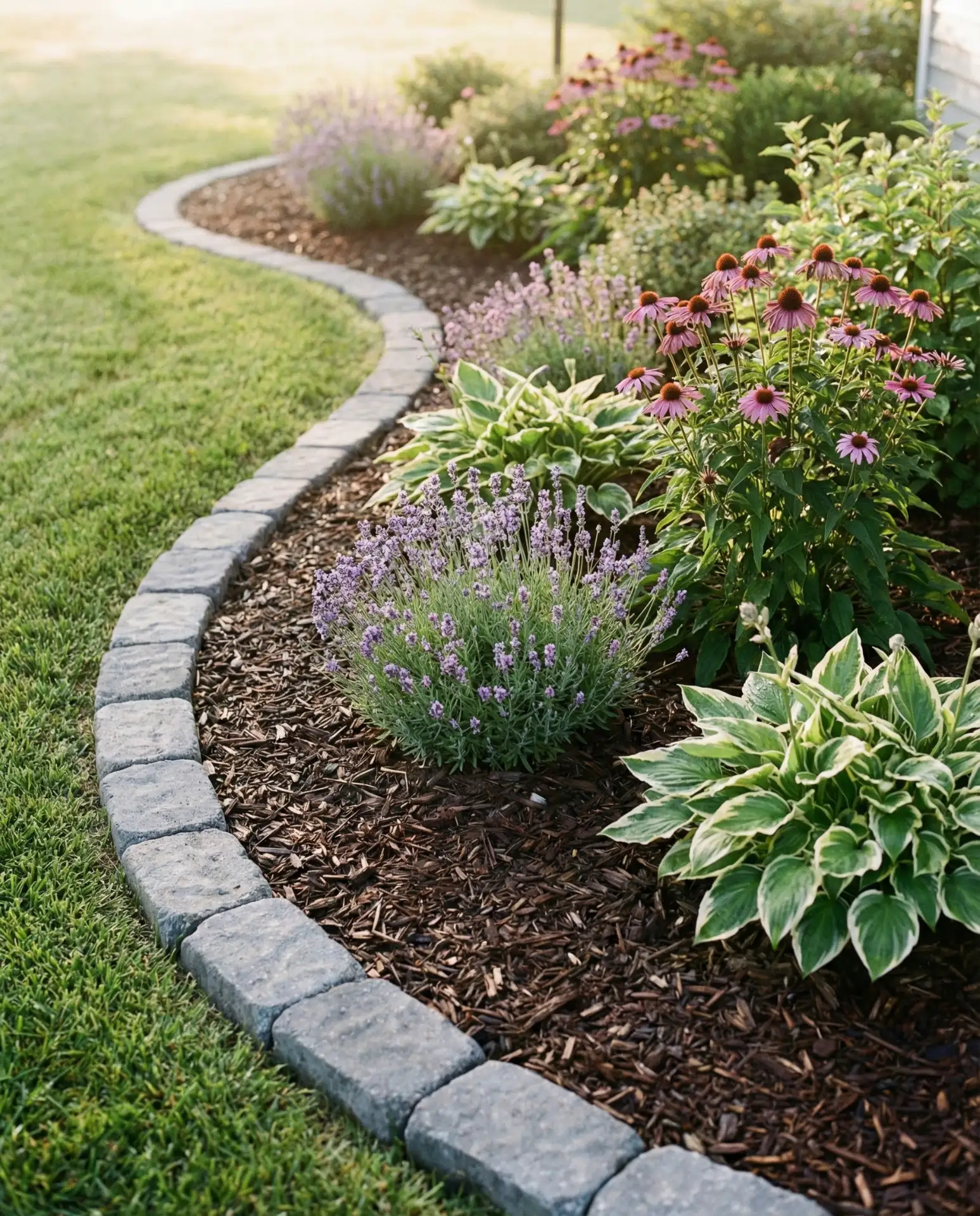
Combining organic mulch with stone borders creates defined planting beds that are both functional and attractive. The mulch nourishes the soil and retains moisture around your plants, while the stone edging provides a permanent, maintenance-free boundary that keeps materials separated. This layered approach works beautifully in traditional garden settings where you want the warmth of wood chips paired with the structure of rock. It’s a classic technique that never goes out of style.
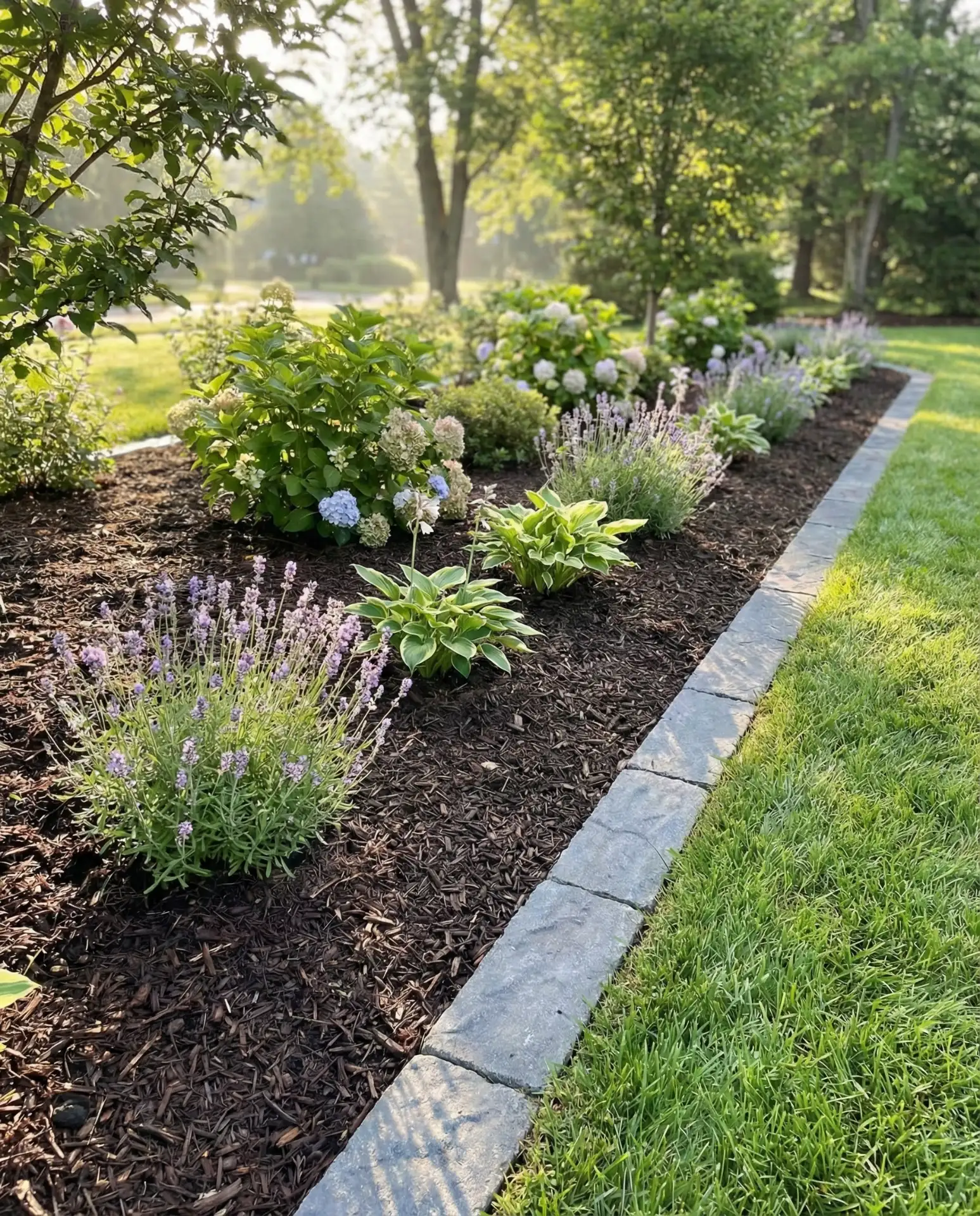
This combination thrives in regions with distinct seasons, where mulch helps insulate plant roots during winter and keeps them cool in summer. Midwestern and East Coast gardeners rely on this setup for its year-round functionality. The stone border also prevents grass from creeping into beds and makes mowing easier by creating a clean mow strip. Choose natural fieldstone or rounded river rock for a softer look, or angular cut stone for a more formal appearance.
5. Large Boulder Statement Pieces
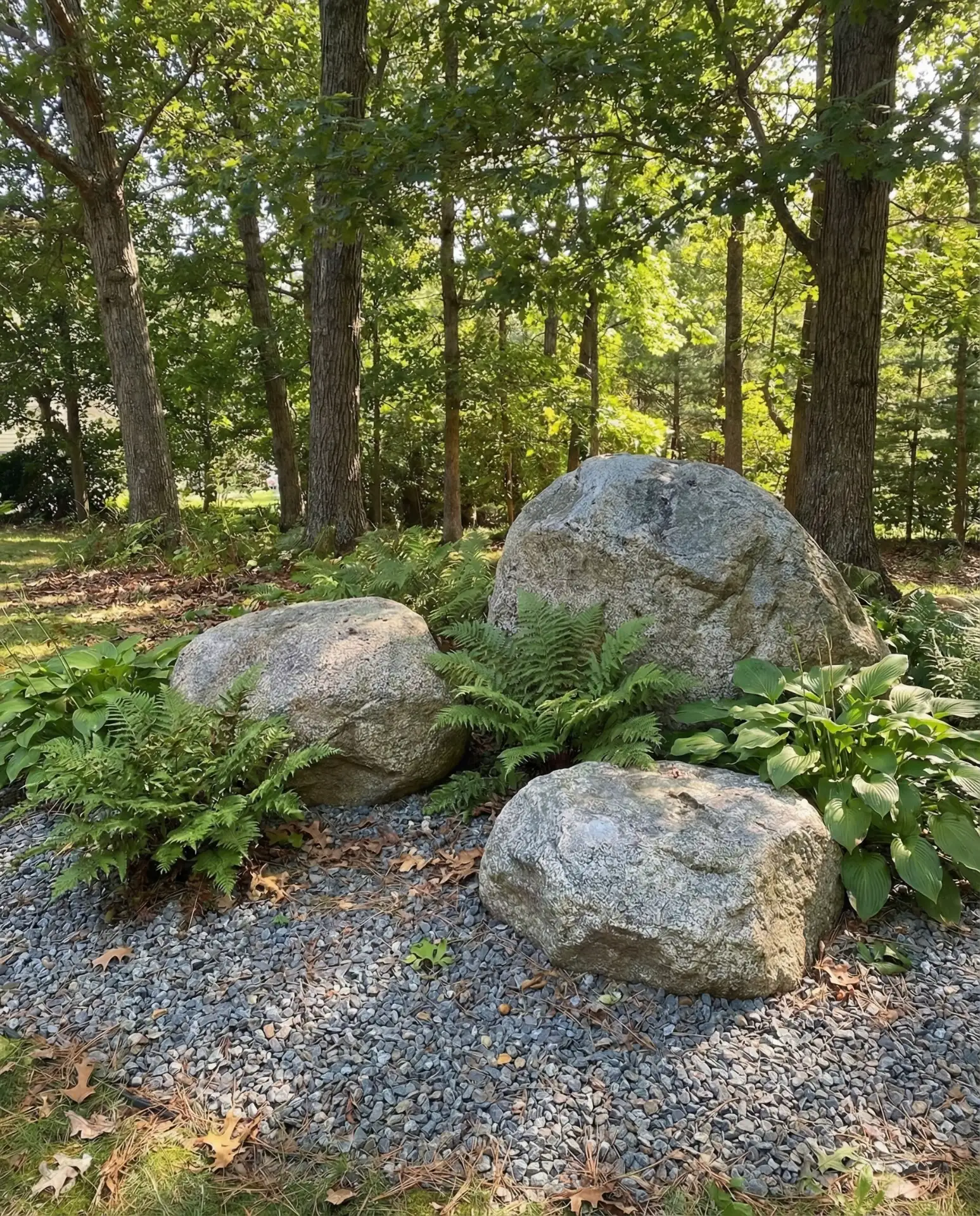
Large boulder placements serve as natural sculptures that anchor your landscape design and provide instant maturity to new properties. These massive stones work particularly well in backyard settings where you want to create focal points or define outdoor rooms. Position them strategically to suggest natural rock outcroppings, or use them to retain soil on slopes. The scale and permanence of boulders add gravitas that smaller rocks simply can’t match.
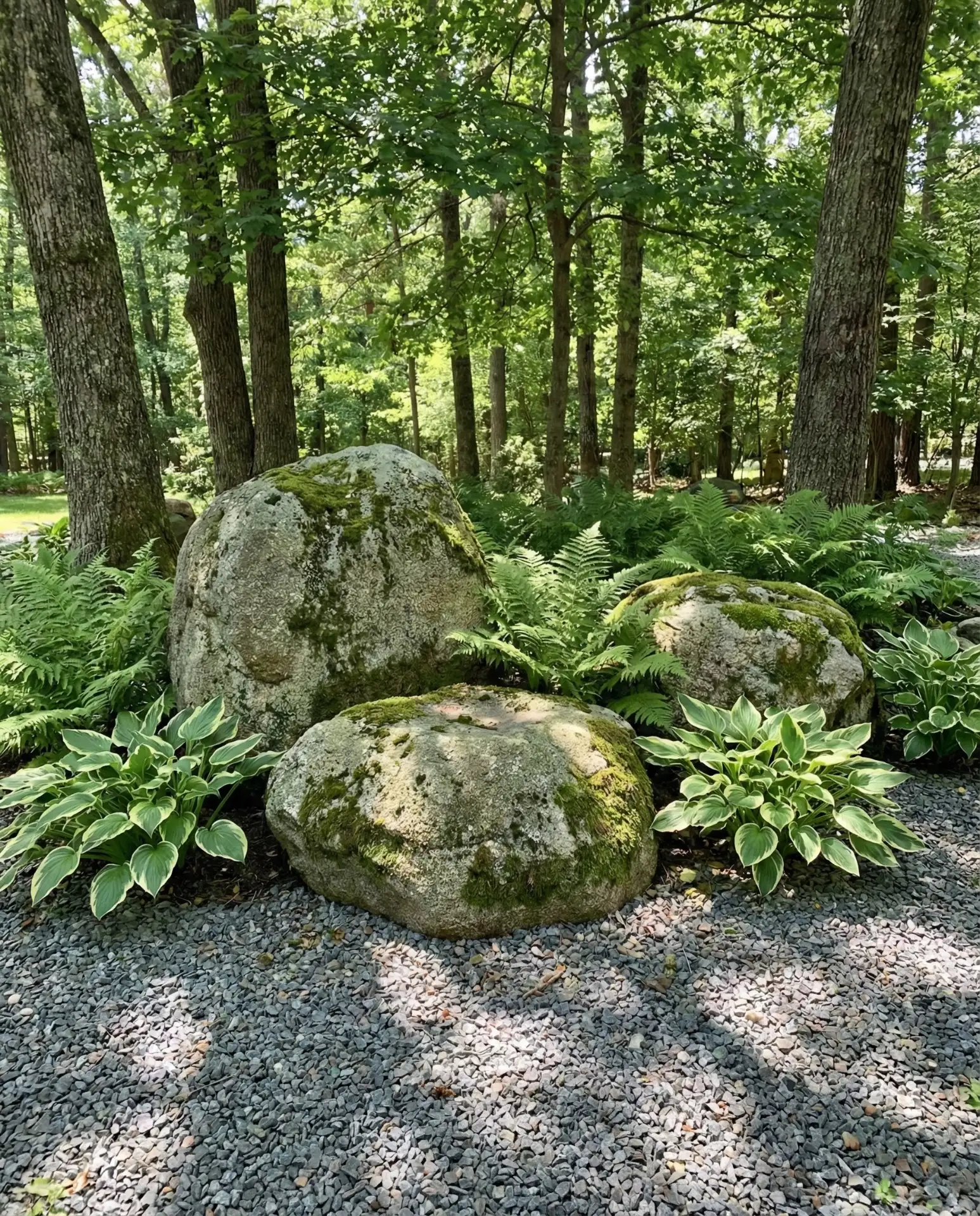
Budget-wise, boulders represent a significant investment upfront—both in material cost and delivery, since you’ll need specialized equipment to move and place them. However, they’re essentially permanent features that require zero maintenance and add substantial value to your property. Many homeowners report that a well-placed boulder becomes a conversation piece and a favorite spot for kids to climb or adults to perch while enjoying the garden.
6. Black Lava Rock Modern Garden
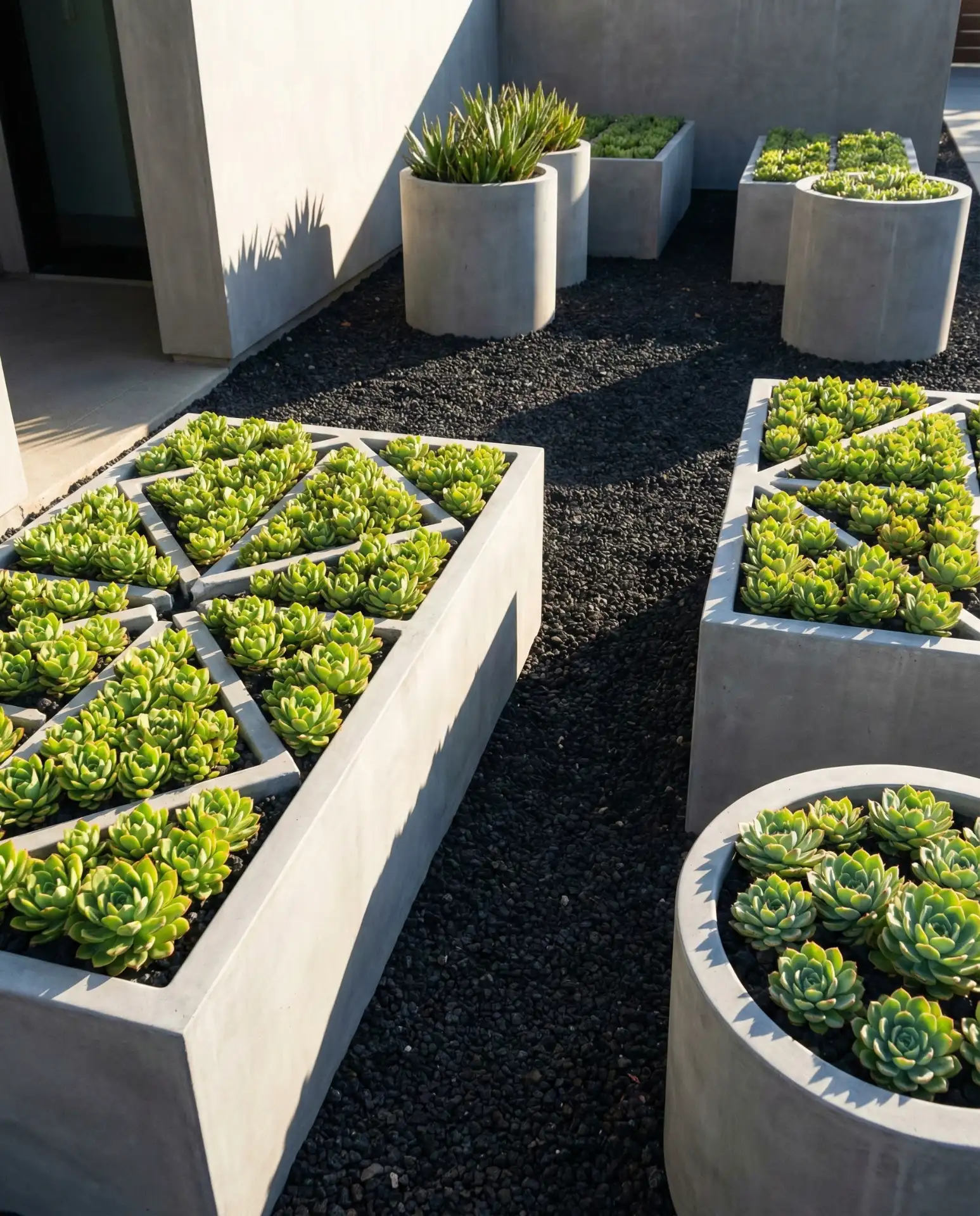
Dramatic black lava rock creates a bold, contemporary ground cover that pairs beautifully with modern architecture and xeriscaping. The porous volcanic stone is lightweight, making it easier to spread than denser rocks, and its dark color provides stunning contrast against bright green succulents or silver-leafed plants. This material excels in outdoor spaces where you want a high-impact, low-maintenance solution. The rough texture adds depth and visual interest that flat surfaces can’t achieve.
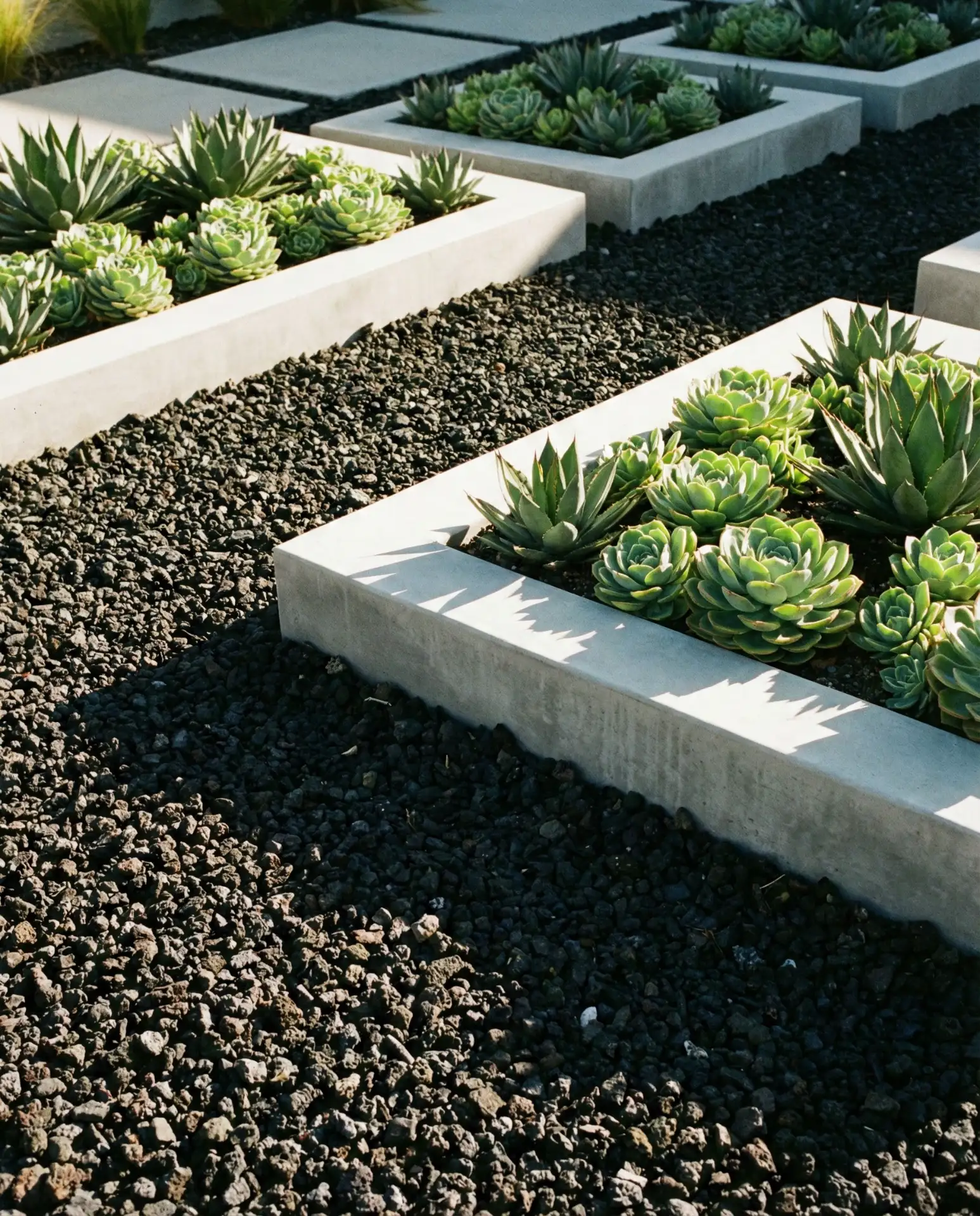
Where it works best: Desert climates and regions with intense sun, where the dark stone absorbs heat and can actually help certain heat-loving plants thrive. In cooler climates, be mindful that black lava rock may retain too much heat near foundations. The stone is also excellent for areas prone to wind erosion, as its rough surface interlocks naturally and stays put better than smooth river rock during storms.
7. DIY River Rock Mosaic Patio

A DIY river rock mosaic transforms an ordinary patio into a work of art using stones you can install yourself. This technique involves setting smooth river rocks on edge in sand or mortar to create intricate patterns—spirals, waves, or geometric designs. It’s labor-intensive but incredibly rewarding, and the materials are surprisingly affordable. This approach brings Old World craftsmanship to American backyards, creating surfaces that are as functional as they are beautiful.
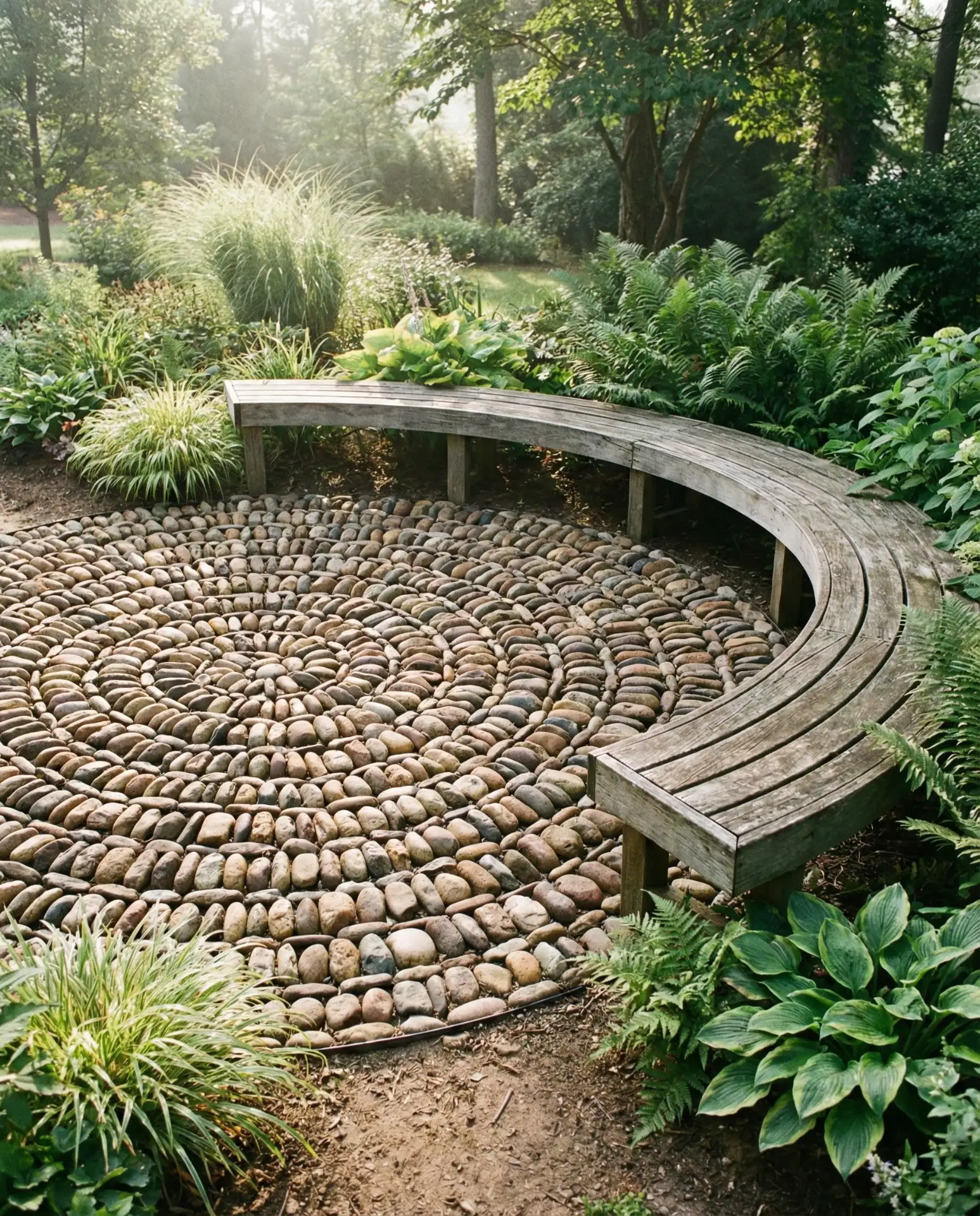
A friend who tackled this project last summer described it as meditative—sorting stones by color and size, then fitting them together like a puzzle. She completed a six-foot-diameter circle over three weekends, working in the cool morning hours. The key is proper base preparation: a compacted gravel foundation topped with a sand bed ensures the stones won’t shift over time. While it takes patience, the result is a one-of-a-kind feature that adds character and value.
8. Large River Rock Perimeter Beds
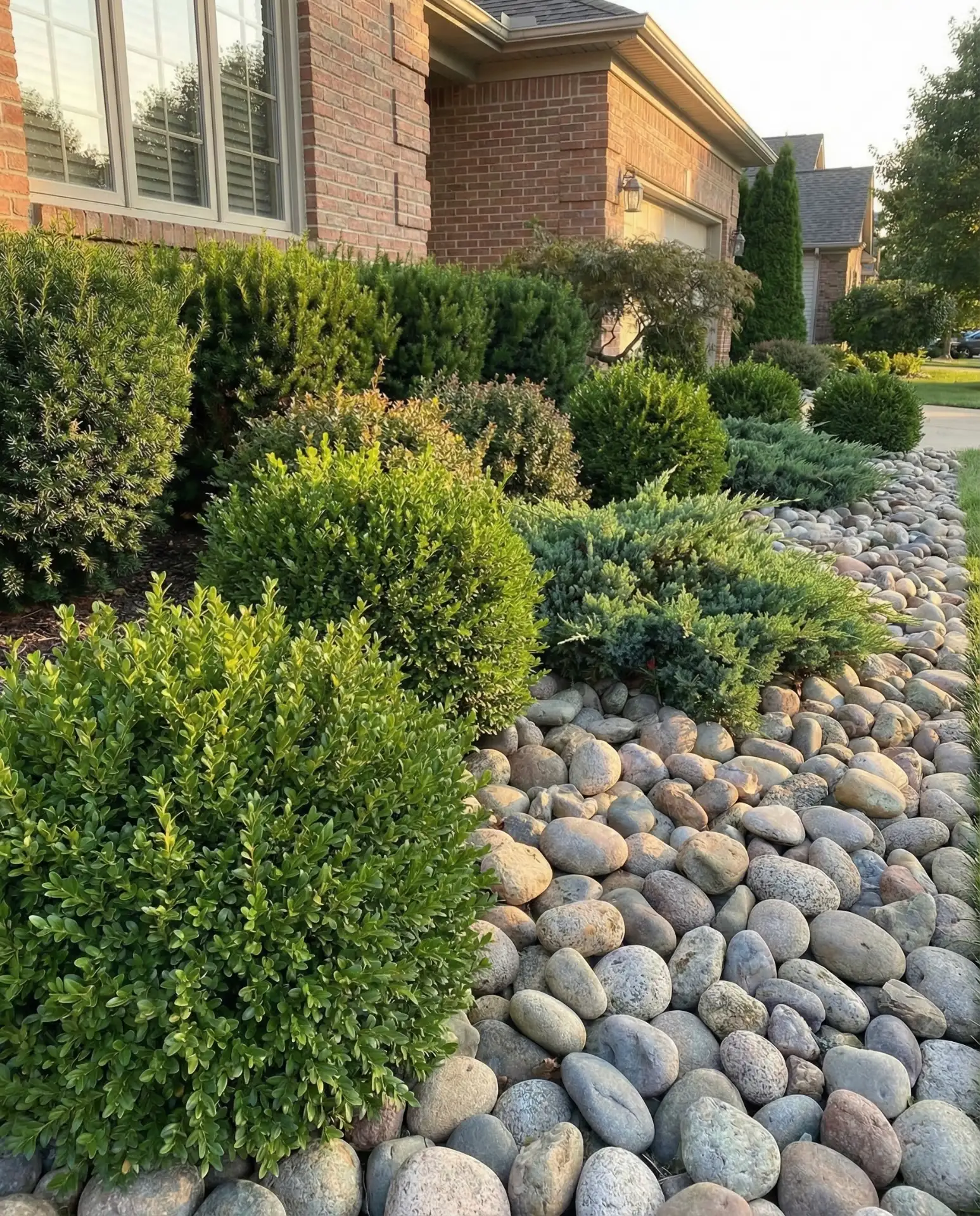
Large river rocks in three- to eight-inch sizes make impressive perimeter beds that define property boundaries and reduce lawn maintenance. These substantial stones create natural-looking borders that hold up against foot traffic and weather while providing excellent drainage. They’re perfect for transitioning from lawn to foundation plantings or separating different zones in your yard. The rounded shapes feel organic and established, as if they’ve been part of the landscape for decades.
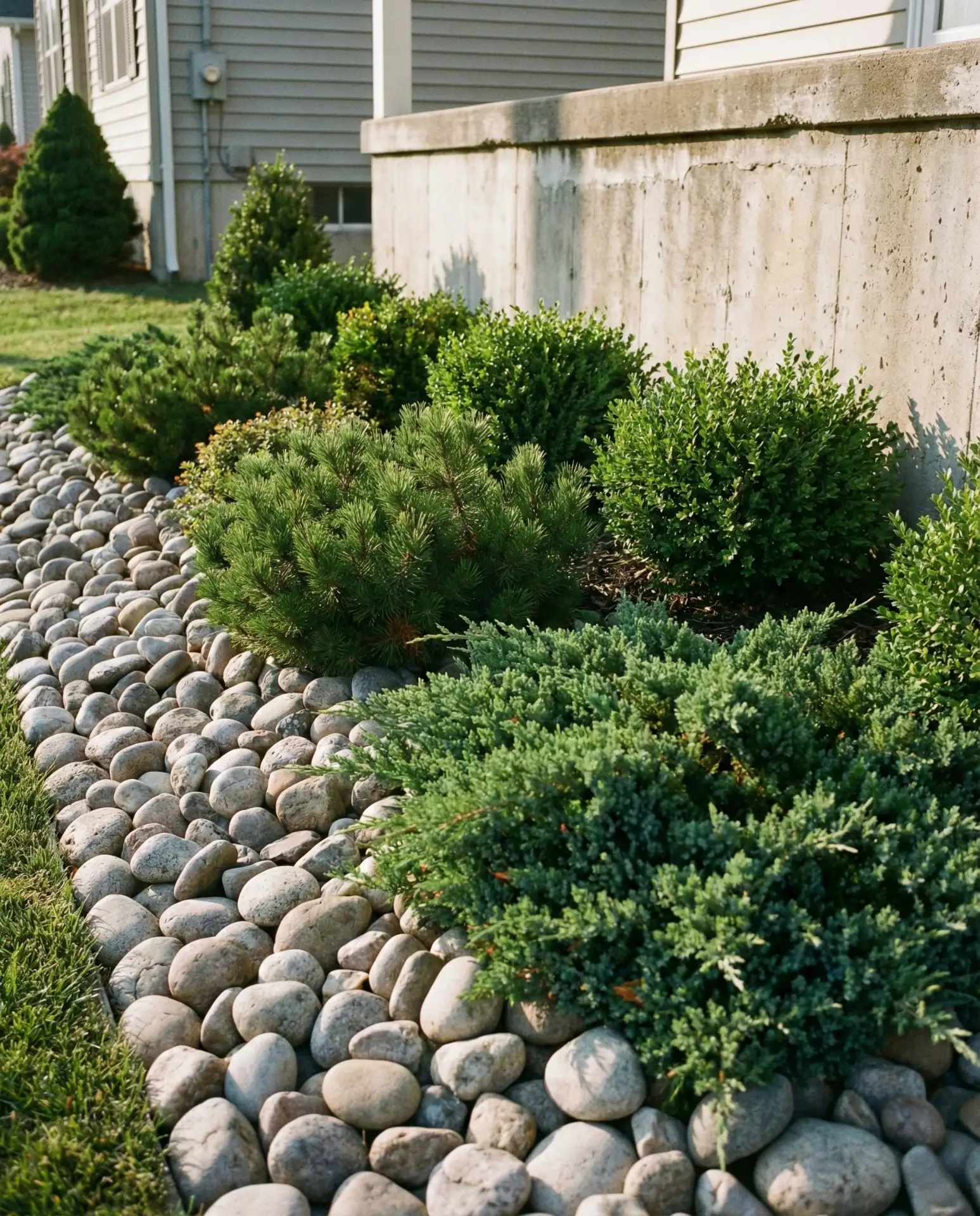
Expert landscapers recommend installing landscape fabric beneath large river rock beds to suppress weeds while allowing water to drain. This simple step dramatically reduces maintenance over the years. The size of these rocks means fewer pieces per square foot, so installation goes faster than working with smaller materials. They also stay in place during heavy rains, unlike pea gravel that can wash away, making them ideal for sloped yards or areas near downspouts.
9. White and Black Contrast Design
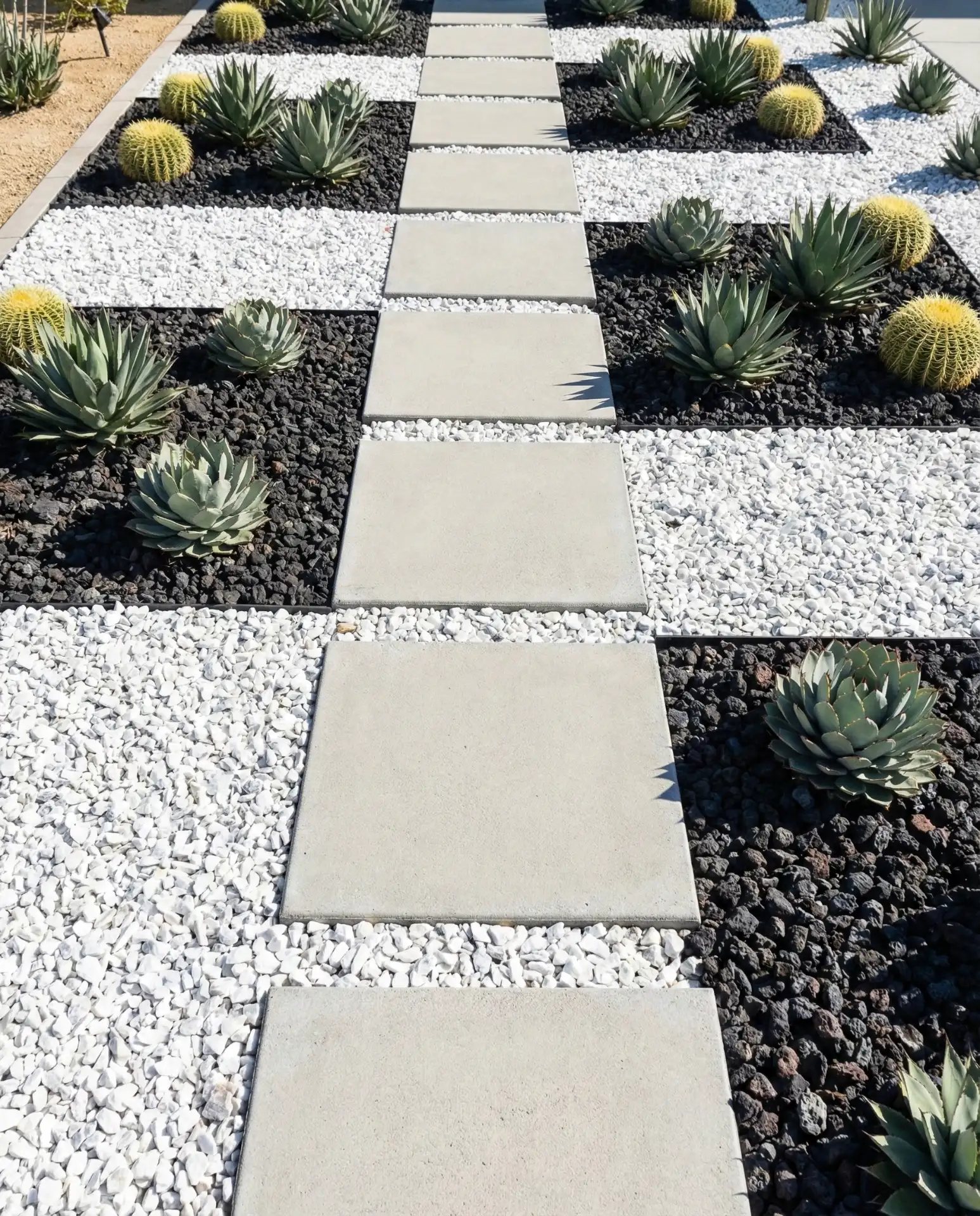
Pairing white and black stone in distinct zones creates a graphic, modern landscape with powerful visual impact. Use white marble chips in planting beds and black lava rock along pathways, or create striped patterns for a truly contemporary look. This high-contrast approach draws the eye and makes architectural features pop. It’s particularly effective around mid-century modern homes or new construction with clean lines and minimal ornamentation.
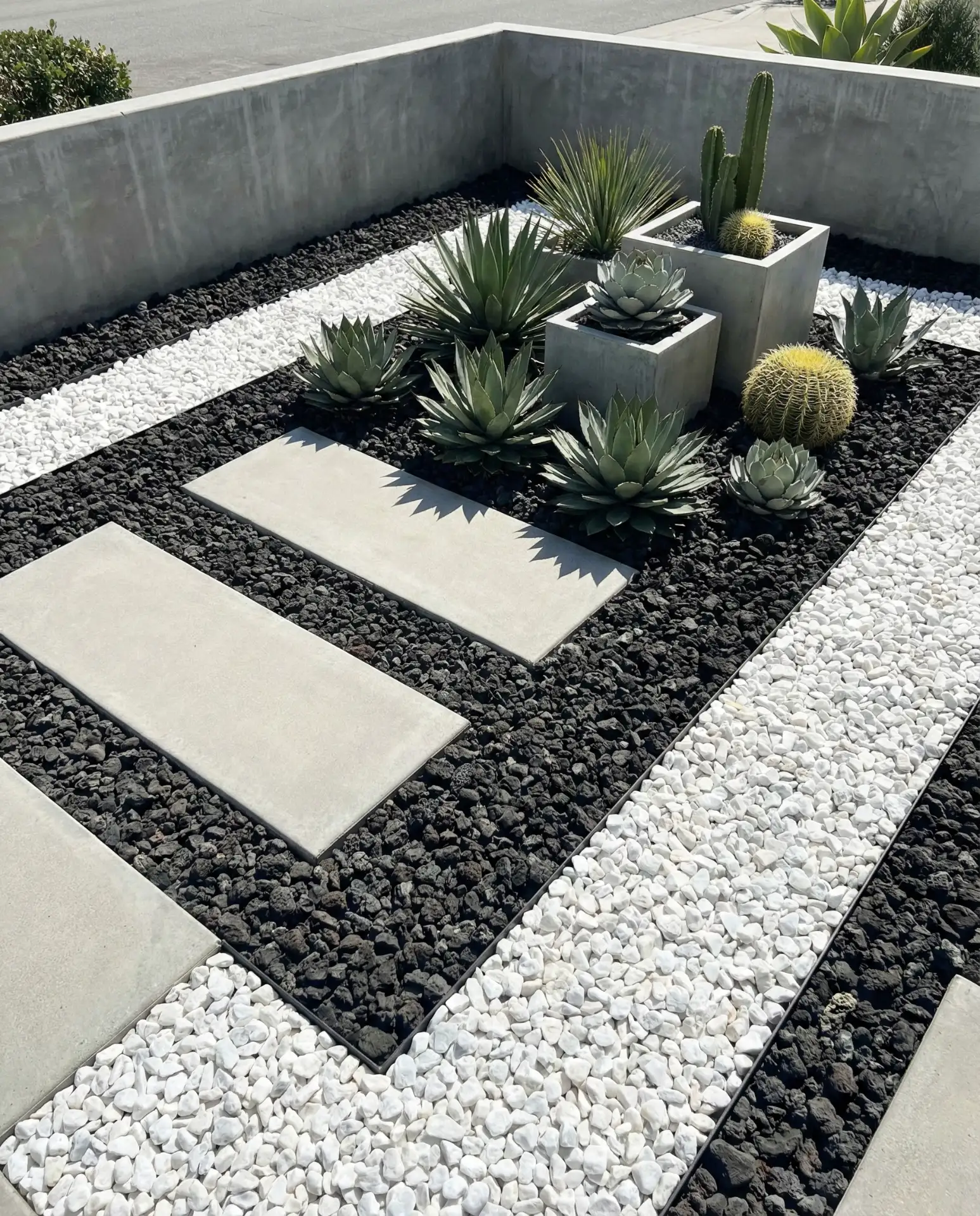
This design works best where you can maintain clear boundaries between the two stone colors—mixing them accidentally creates a messy, salt-and-pepper effect that loses the graphic punch. Use metal or plastic edging to keep zones separated. Maintenance involves occasional refreshing of the top layer, as wind and rain can cause some color migration over time. Despite this, the dramatic effect makes it worth the effort for homeowners seeking a signature look.
10. Red Lava Rock Southwestern Garden
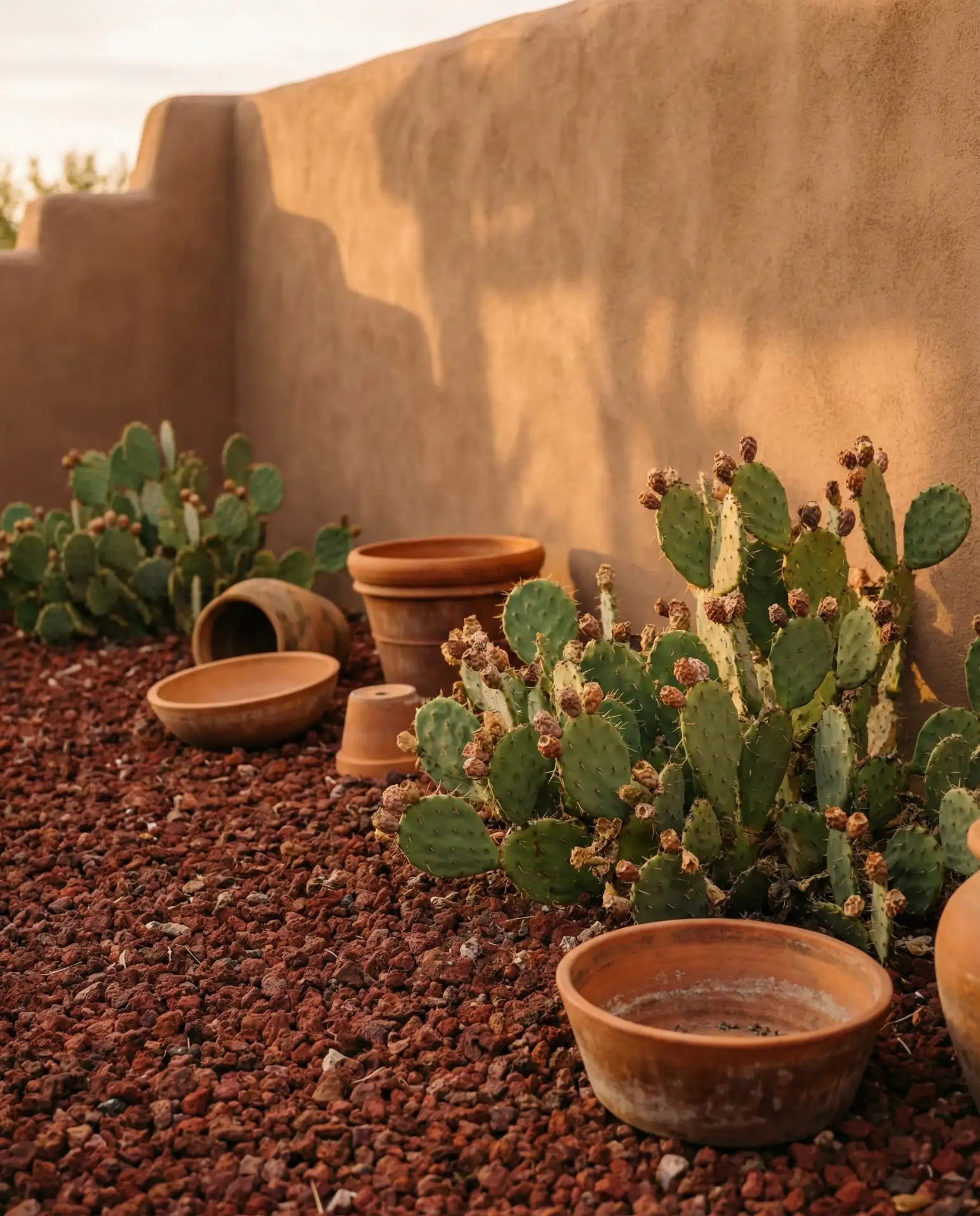
Earthy red lava rock brings warmth and Southwestern character to landscapes, echoing the colors of desert sunsets and canyon walls. This porous volcanic stone works beautifully with native desert plants like prickly pear, ocotillo, and desert marigold. The red hues intensify in the golden hour, creating a landscape that feels connected to the surrounding terrain. It’s an authentic choice for homes in Arizona, New Mexico, and Southern California seeking to embrace regional aesthetics.
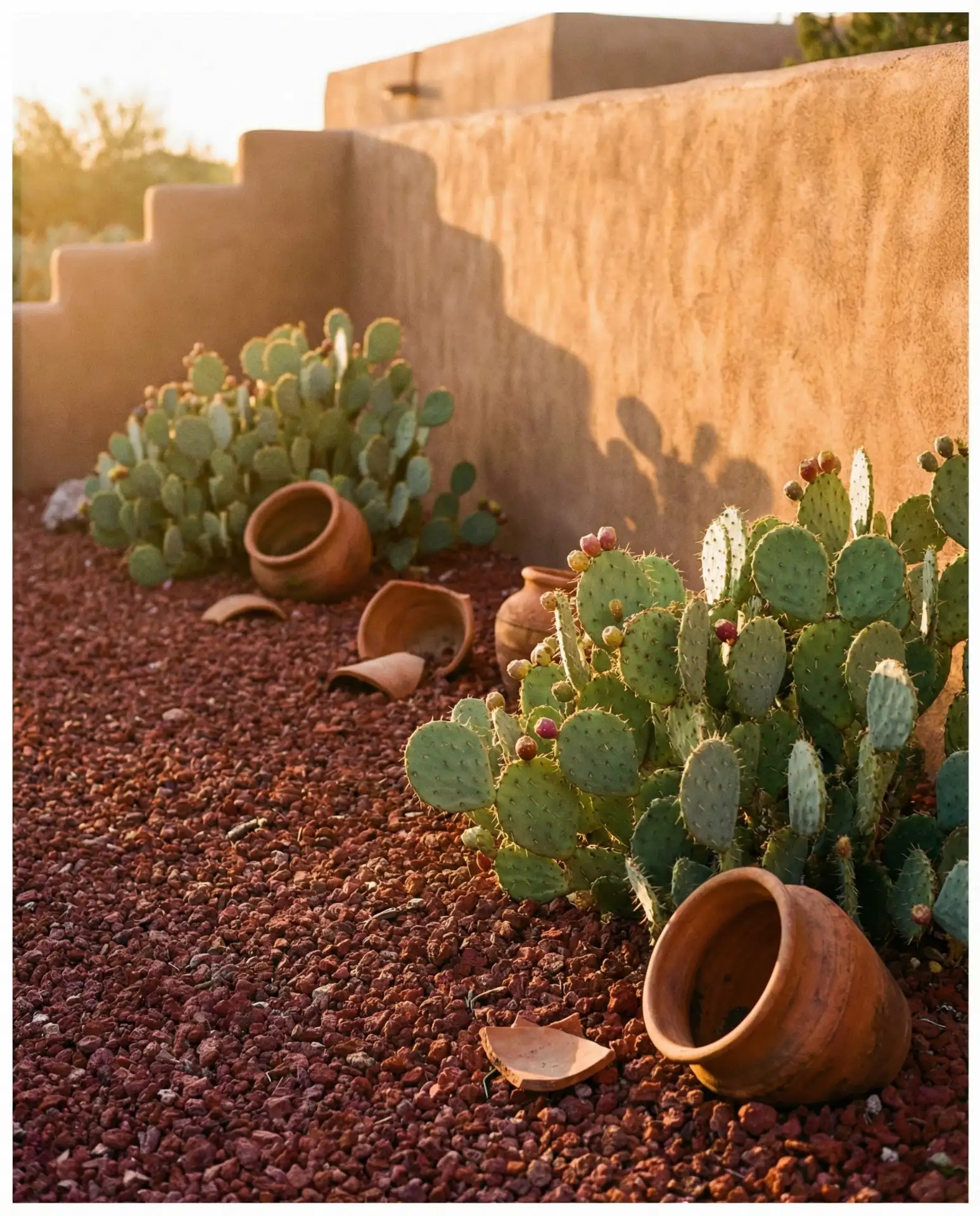
Real homeowners in desert regions appreciate red lava rock for its ability to reflect the natural landscape while requiring virtually no water or maintenance. The stone’s iron content gives it that distinctive rusty-red color, and unlike dyed mulches, the color won’t fade or wash away with irrigation. It pairs exceptionally well with warm-toned stucco and complements earth-toned exterior palettes. Just be aware that, like all lava rock, it can be sharp-edged when fresh—not ideal for areas where kids or pets play barefoot.
11. Boulder and Juniper Alpine Scene
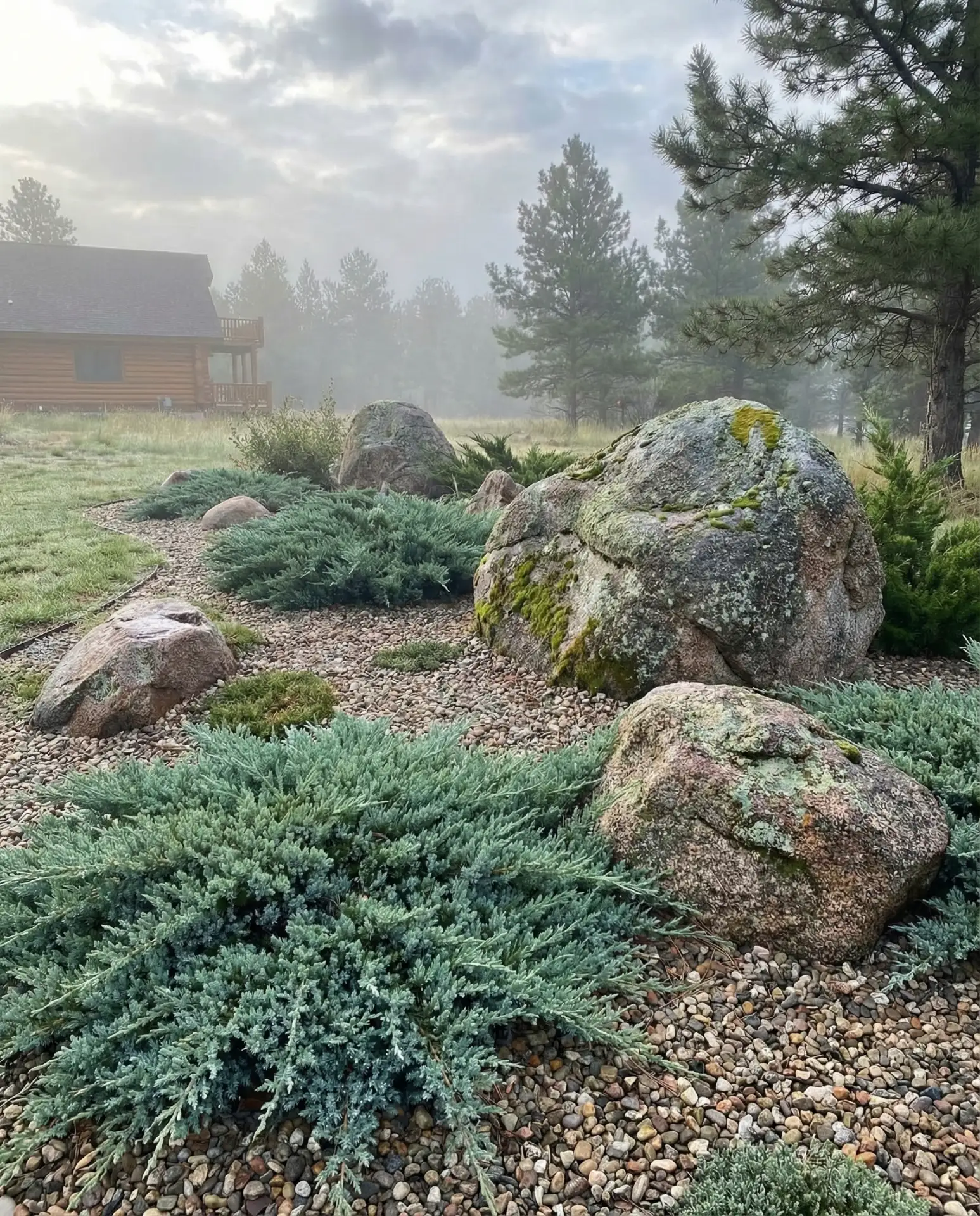
Arranging moss-covered boulder groupings with low-growing junipers recreates an alpine meadow aesthetic in your own yard. This naturalistic style mimics mountain landscapes, with rocks positioned to look as if they’ve weathered into place over centuries. The evergreen texture of spreading junipers softens the stone while providing year-round color. It’s a design that feels timeless and peaceful, perfect for homes in mountain communities or anywhere you want to evoke that high-elevation serenity.
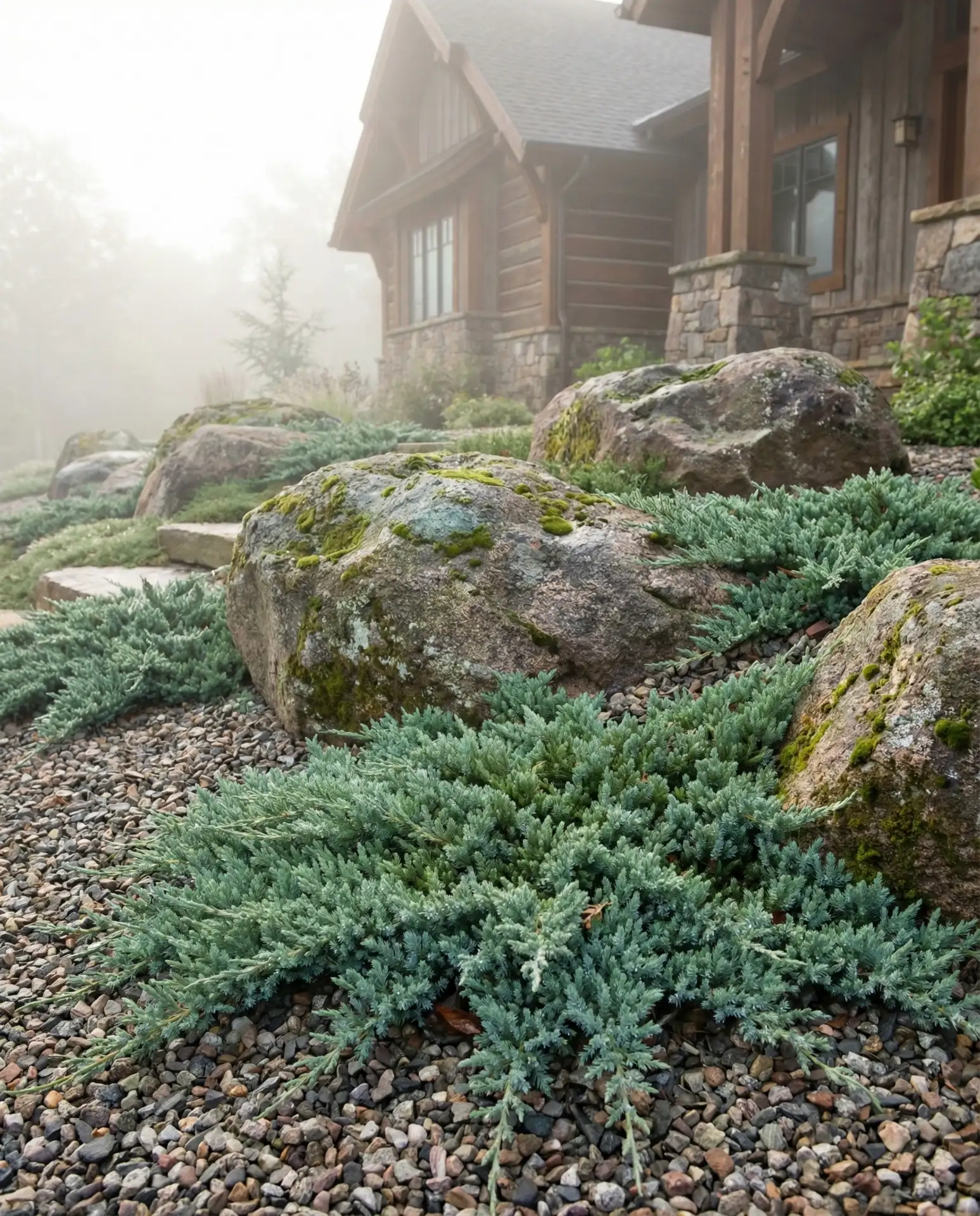
This style thrives in cooler climates where mosses naturally establish on stone surfaces, adding authentic weathered character. Colorado, Montana, and Pacific Northwest gardeners find this approach particularly successful. The trick is burying boulders partially—about one-third below grade—so they appear to emerge naturally from the earth rather than sitting on top like decorations. This technique instantly makes new installations look established and adds to the alpine illusion.
12. Front Lawn Replacement with Field Stone
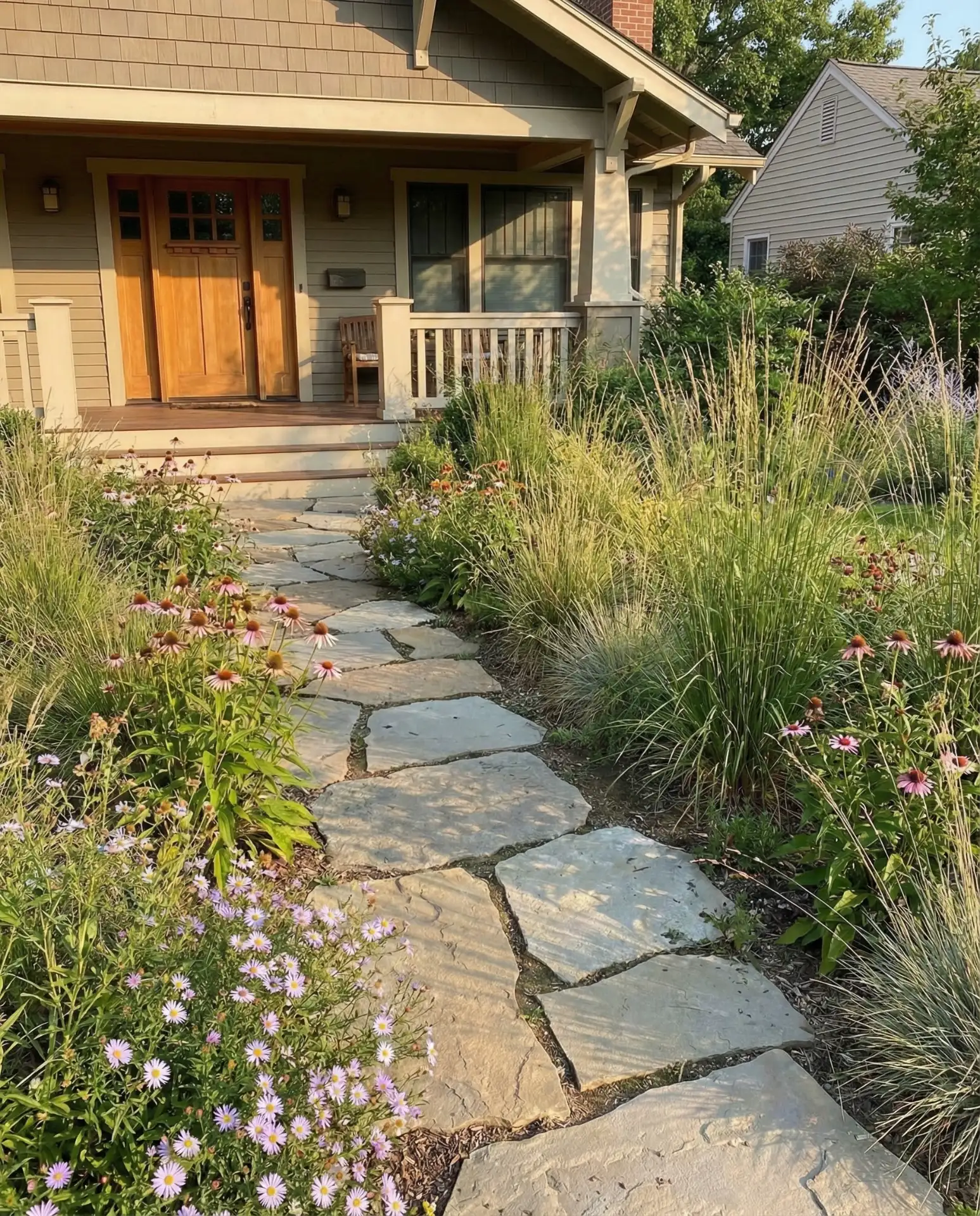
Replacing traditional front lawn turf with a combination of field stone pathways and drought-tolerant plantings eliminates mowing while creating curb appeal. Irregular fieldstones set in gravel or planted groundcover provide walking surfaces that feel organic and relaxed. This approach has gained popularity as Americans seek alternatives to water-hungry grass, especially in regions facing drought. The result is a living landscape that changes with the seasons but never needs a sprinkler system.
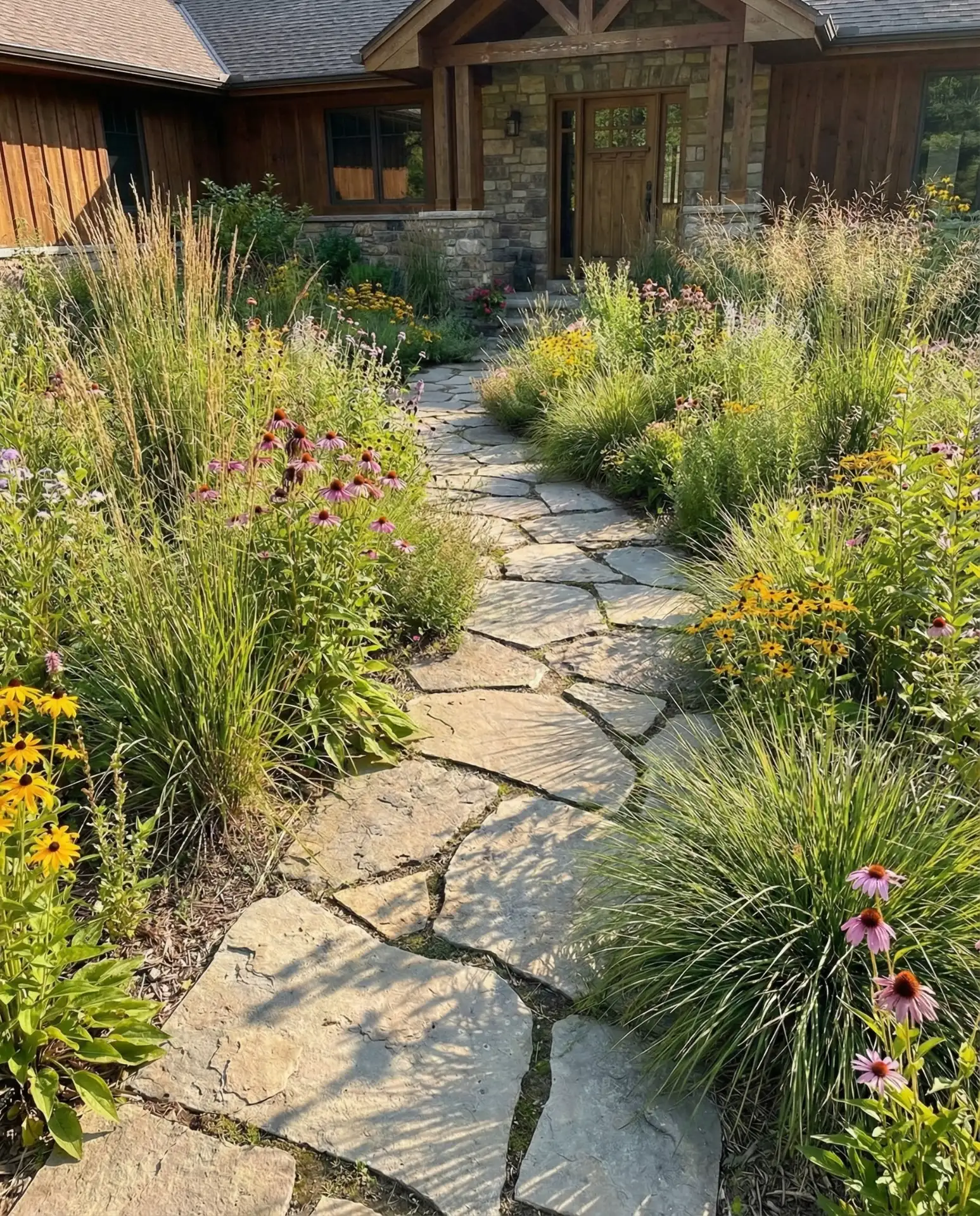
Where it works best: California, Nevada, and parts of Texas where lawn restrictions are increasingly common and water costs make traditional turf unsustainable. Municipal rebate programs often help offset the installation costs, making this transformation surprisingly affordable. Homeowners report that after an initial adjustment period, they prefer the varied textures and colors of a meadow-style yard over the monotony of mowed grass. Neighbors often follow suit once they see the results.
13. Front of House Curved Rock Gardens
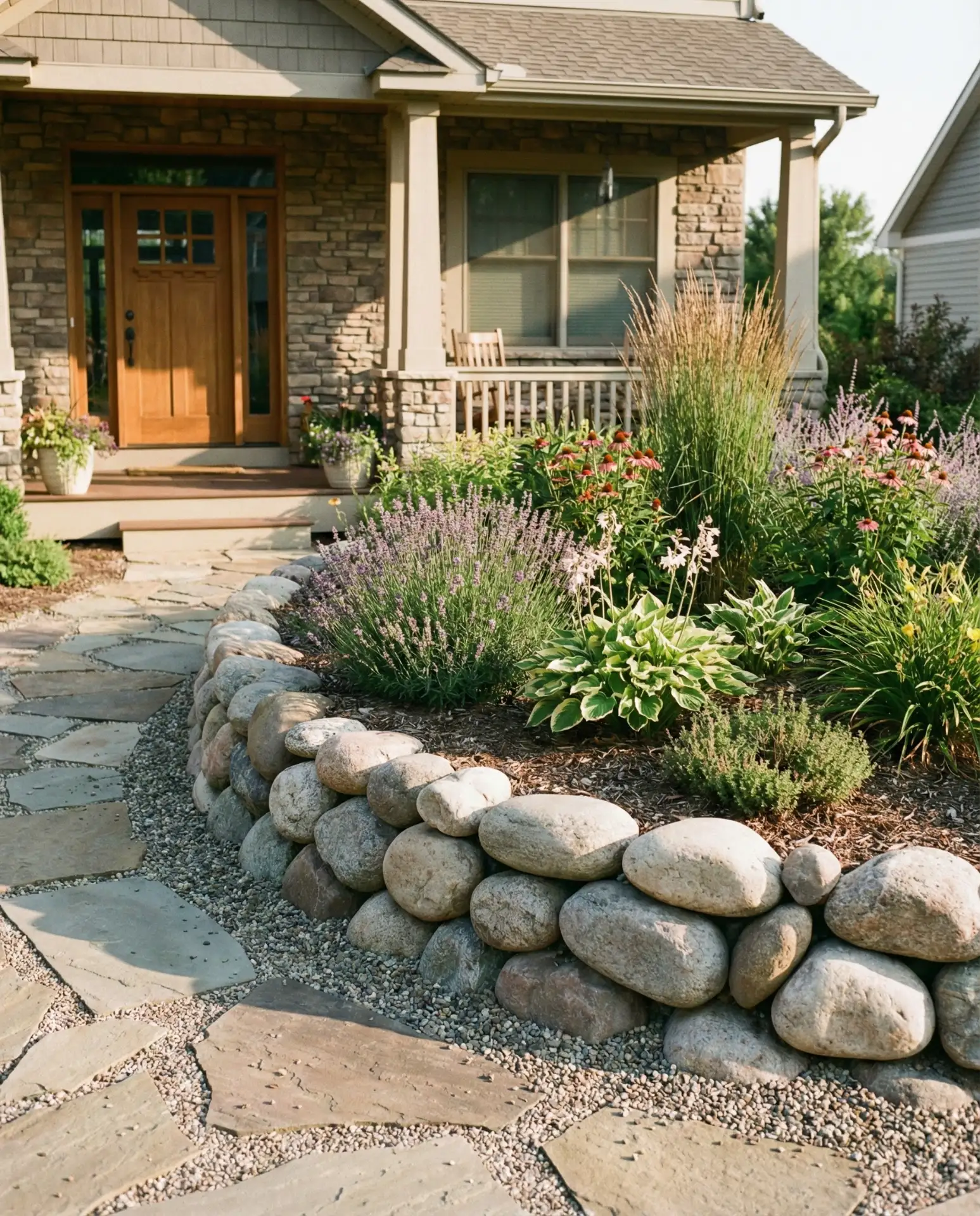
Flowing, curved rock garden beds at the front of house create welcoming entries that soften architectural lines and add dimension. Use a mix of stone sizes to build gentle berms and swales that guide visitors toward your entrance. These organic shapes feel more inviting than rigid straight edges and work beautifully with both traditional and contemporary homes. Layer heights with rocks, soil, and plantings to create depth that makes even modest front yards feel lush and established.
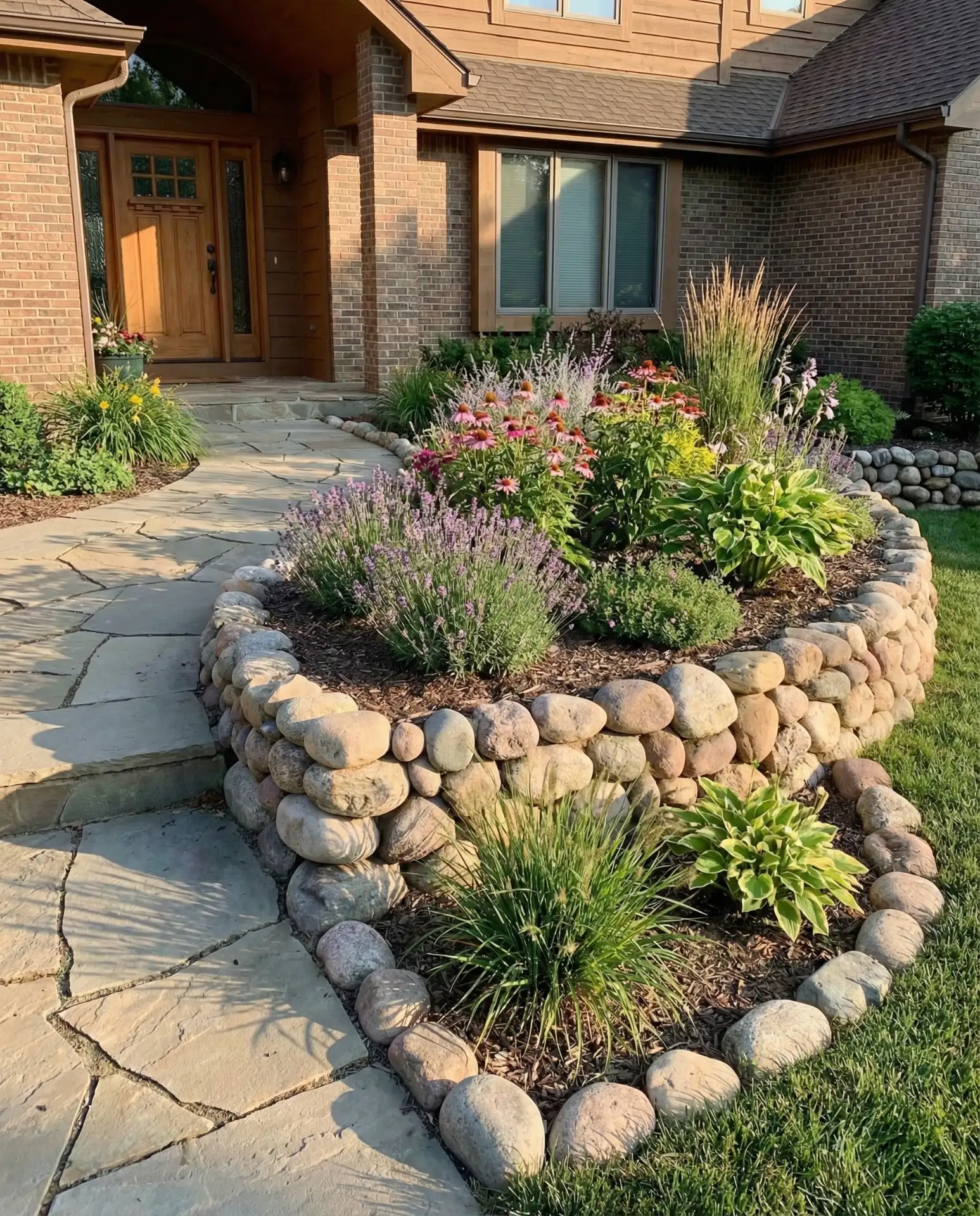
An expert landscaper once explained that curved beds work psychologically—they draw the eye along their length and create a sense of journey, even in small spaces. The technique also allows you to maximize planting area without the beds feeling cramped or overwhelming. When installing, use a garden hose to lay out curves before committing to edging, adjusting until the flow feels natural. Avoid S-curves that are too tight; gentle, sweeping arcs are more elegant and easier to maintain.
14. Front Yard White Rock Minimalism
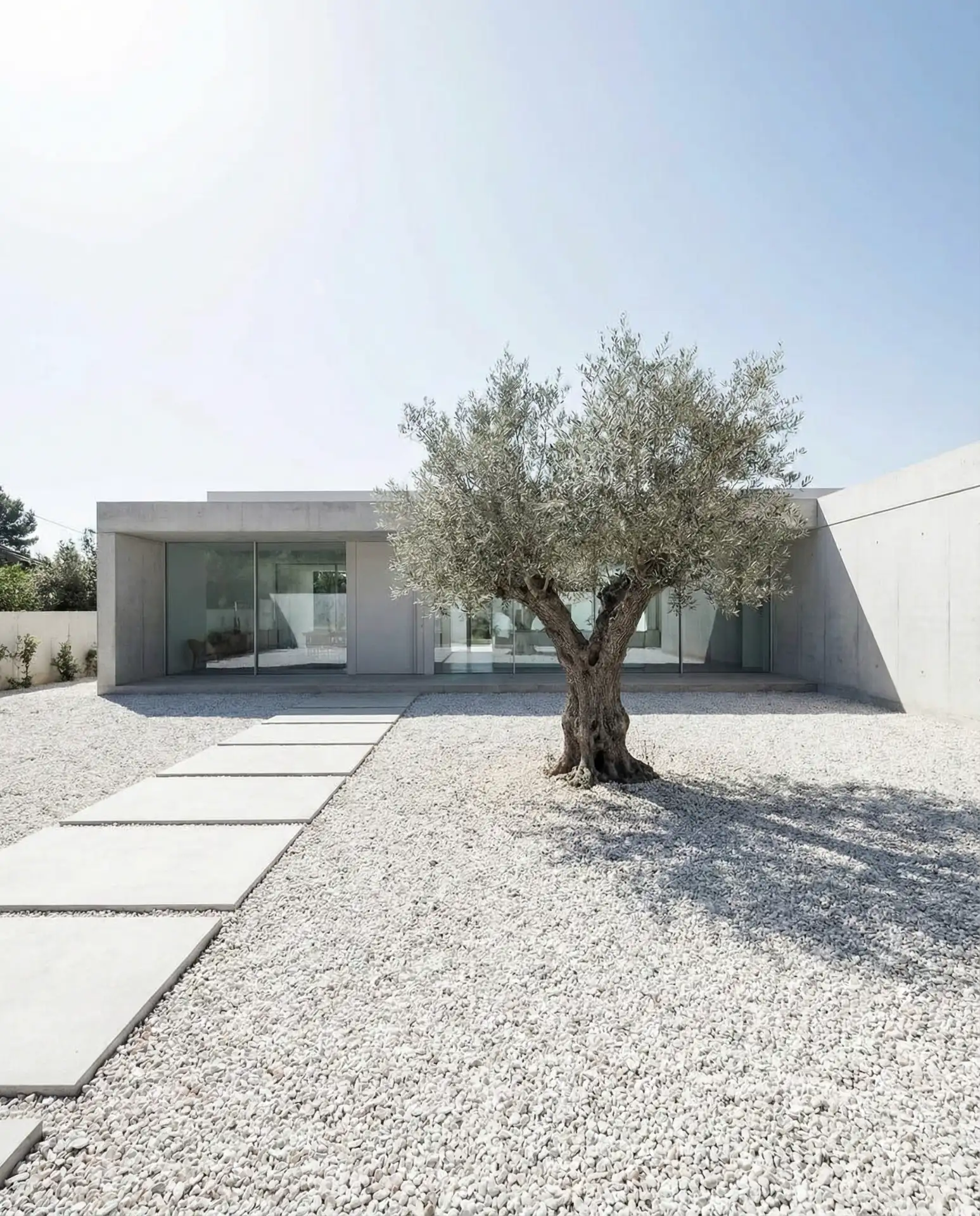
A front yard white rock installation with carefully curated architectural plants creates an ultra-modern, gallery-like presentation. Bright white gravel covers the ground plane while a few statement specimens—perhaps a sculptural agave, a multi-trunk olive tree, or a cluster of ornamental grasses—provide focal points. This restrained approach makes a powerful first impression and works especially well with contemporary homes featuring clean lines and neutral palettes. Less truly becomes more in this design philosophy.
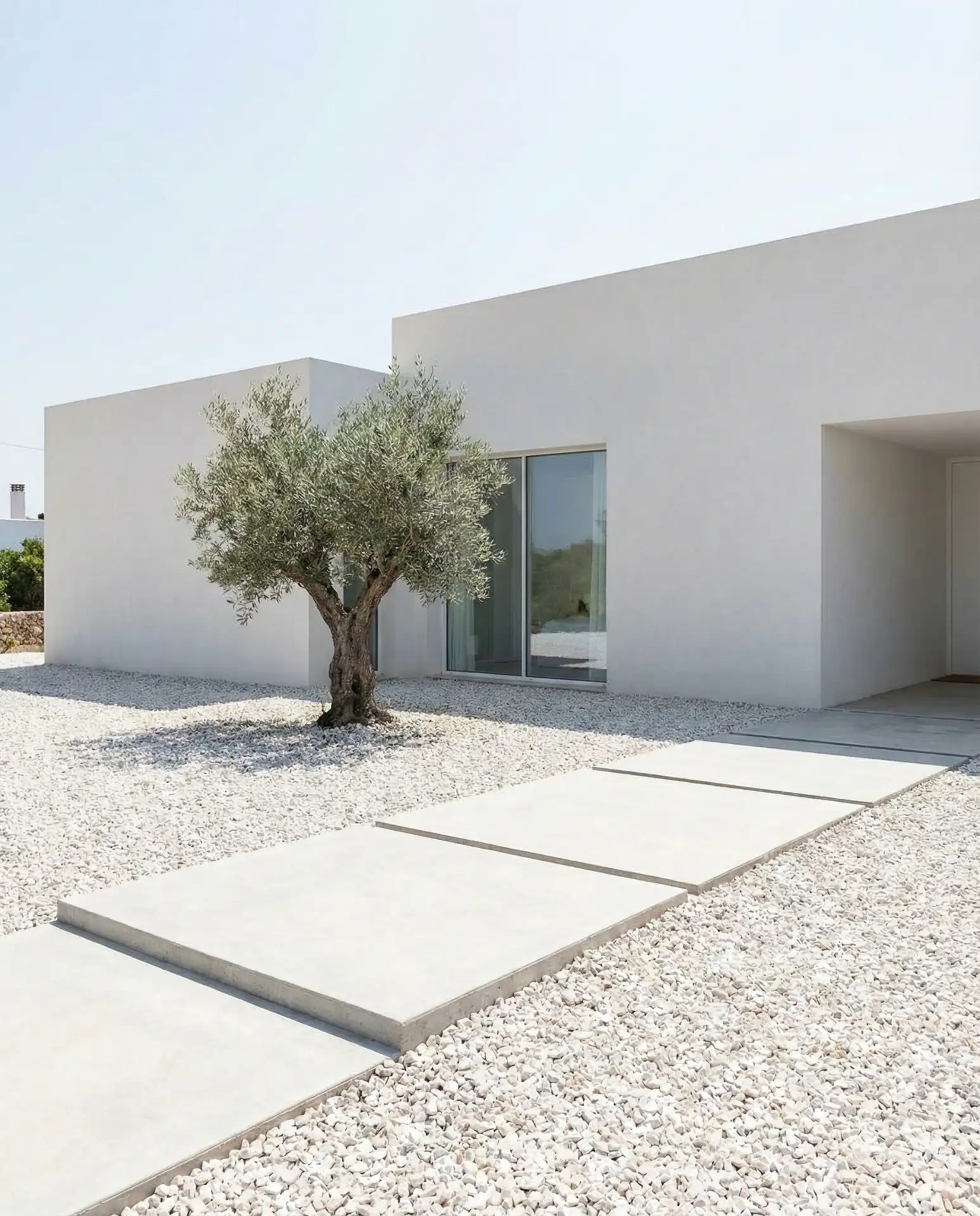
Common mistakes include adding too many elements or choosing plants that don’t have strong enough architectural form to hold their own against the stark backdrop. When working with white rock at this scale, each plant becomes sculpture—it needs to earn its place through compelling shape or texture. Another pitfall is neglecting weed control; weeds are glaringly obvious against white stone, so a high-quality landscape fabric installation beneath the rock is essential for long-term success.
15. House Foundation Drainage with Stone
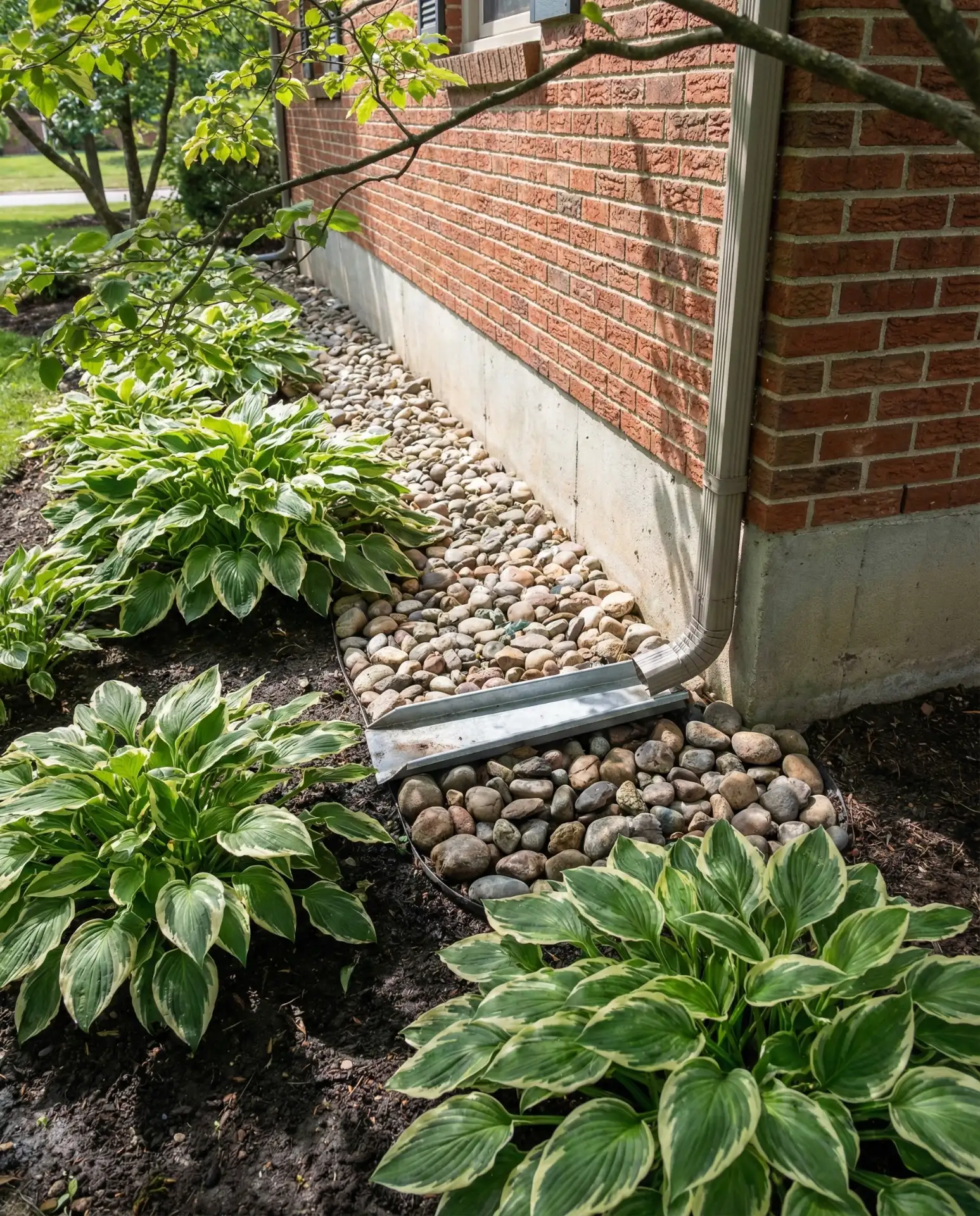
Strategic rock placement around your house foundation prevents water damage while creating attractive perimeter beds. A layer of drainage rock against the foundation allows water to percolate down rather than pooling, protecting your basement or crawlspace. Top this functional layer with decorative stone and moisture-tolerant plantings for a polished look. It’s invisible infrastructure that happens to look beautiful, solving practical problems without sacrificing aesthetics.
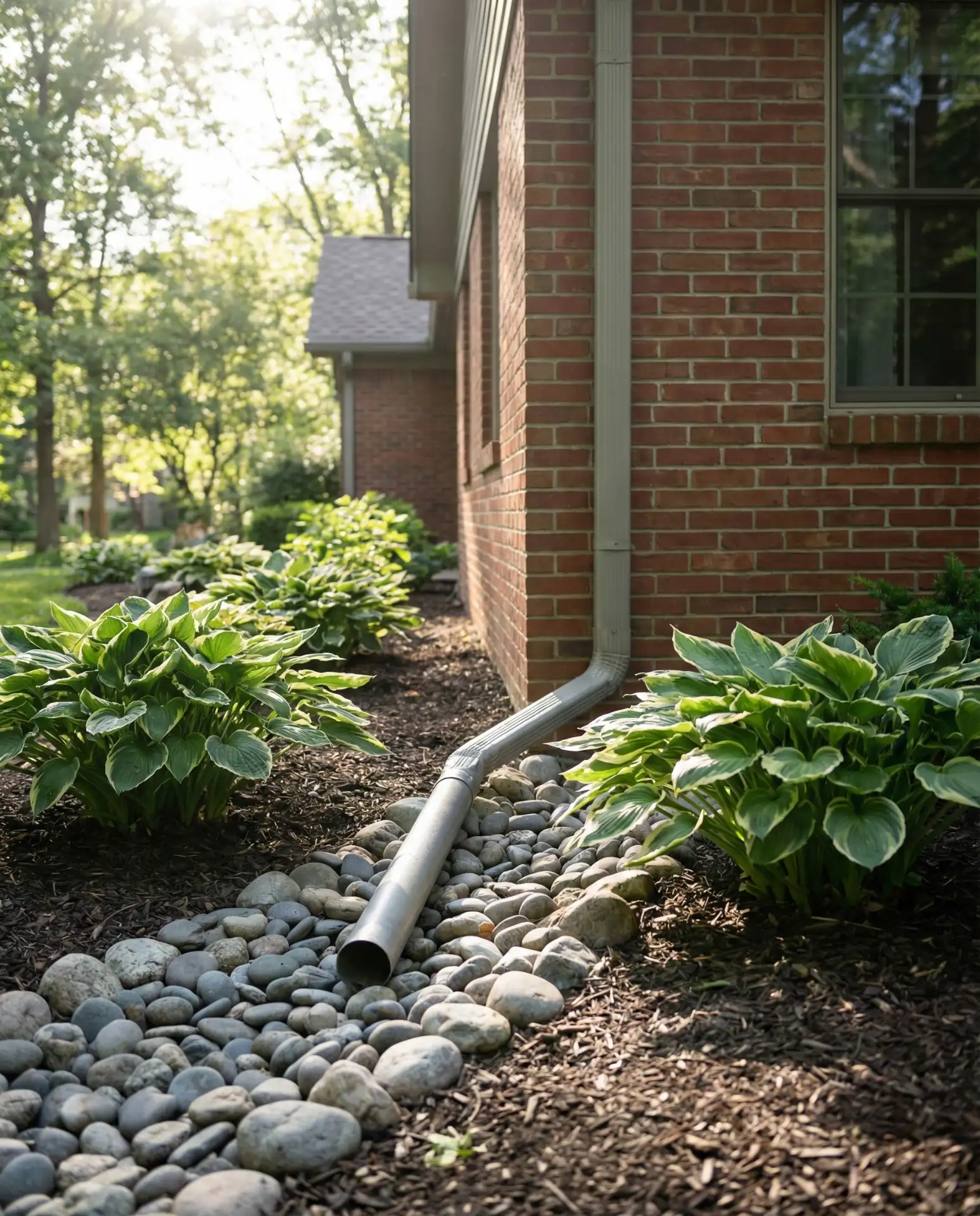
In the Midwest and Northeast, where basement flooding is a real concern, this type of installation can save thousands in water damage repairs. The rock layer should extend at least six inches from the foundation and slope gently away from the house. Combine this with properly directed downspouts and you’ve created a comprehensive moisture management system. Real homeowners who’ve added this feature often report that their basements stay noticeably drier after heavy rains.
16. Flat Stone Patio with Wide Joints

Flat flagstone or slate pavers with wide joints filled with pea gravel or groundcover create patios that blend seamlessly into the landscape. The generous spacing between stones keeps the design casual and allows for drainage, while the level surfaces provide stable spots for furniture. This style suits homes with rustic or cottage aesthetics, and the natural variation in stone color adds organic beauty. It’s a timeless approach that ages gracefully as plants fill in and stones weather.
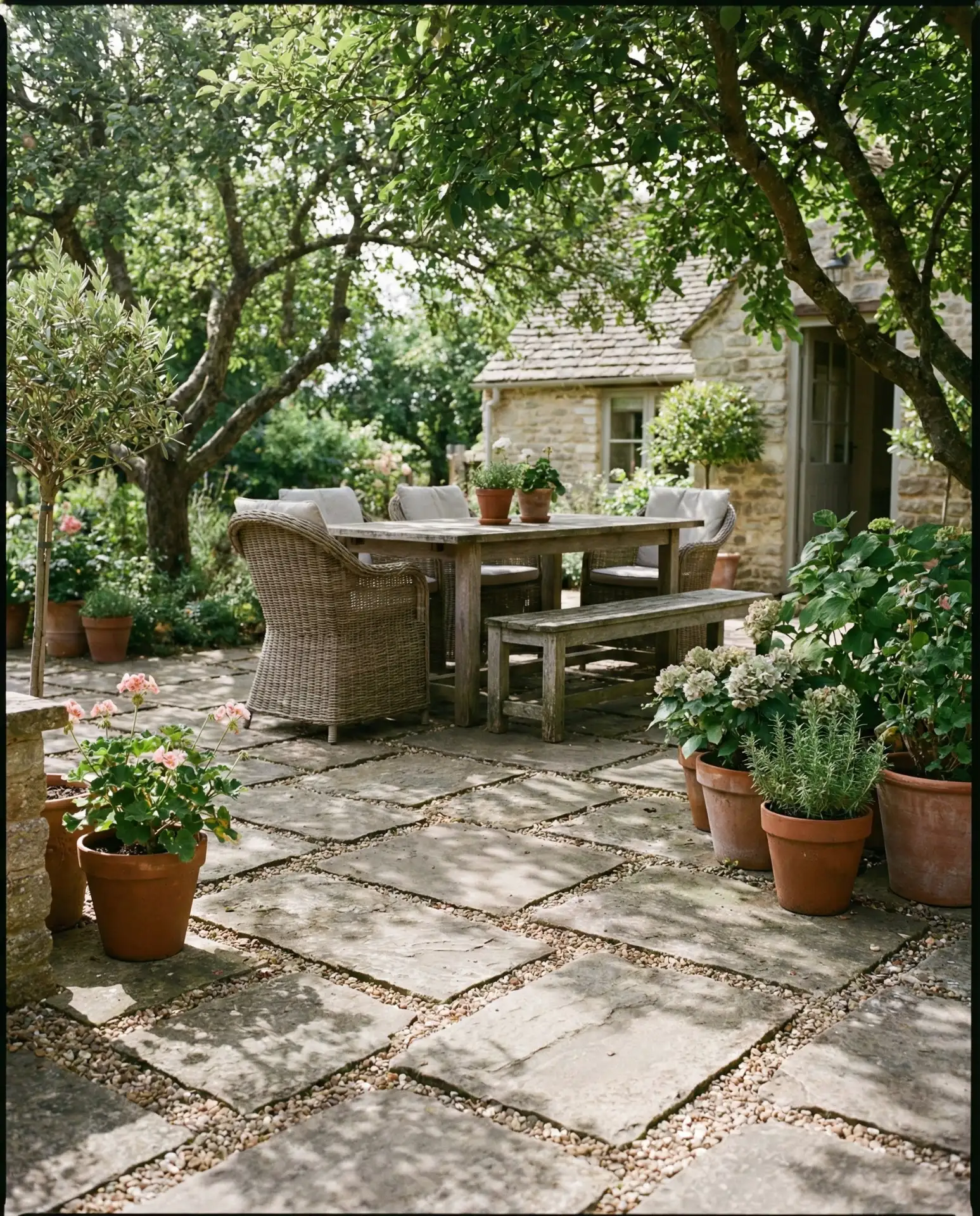
From a budget perspective, this installation method is more affordable than tight-jointed stonework requiring mortar or precision cutting. You’re essentially working with the natural shapes of the stone, which reduces labor costs and material waste. The wide joints also mean you can use less stone overall while still covering significant ground area. Over time, moss or creeping thyme can be encouraged to grow in the joints, adding another layer of texture and softening the hardscape even further.
17. Side Yard Utility Screen with Stacked Stone
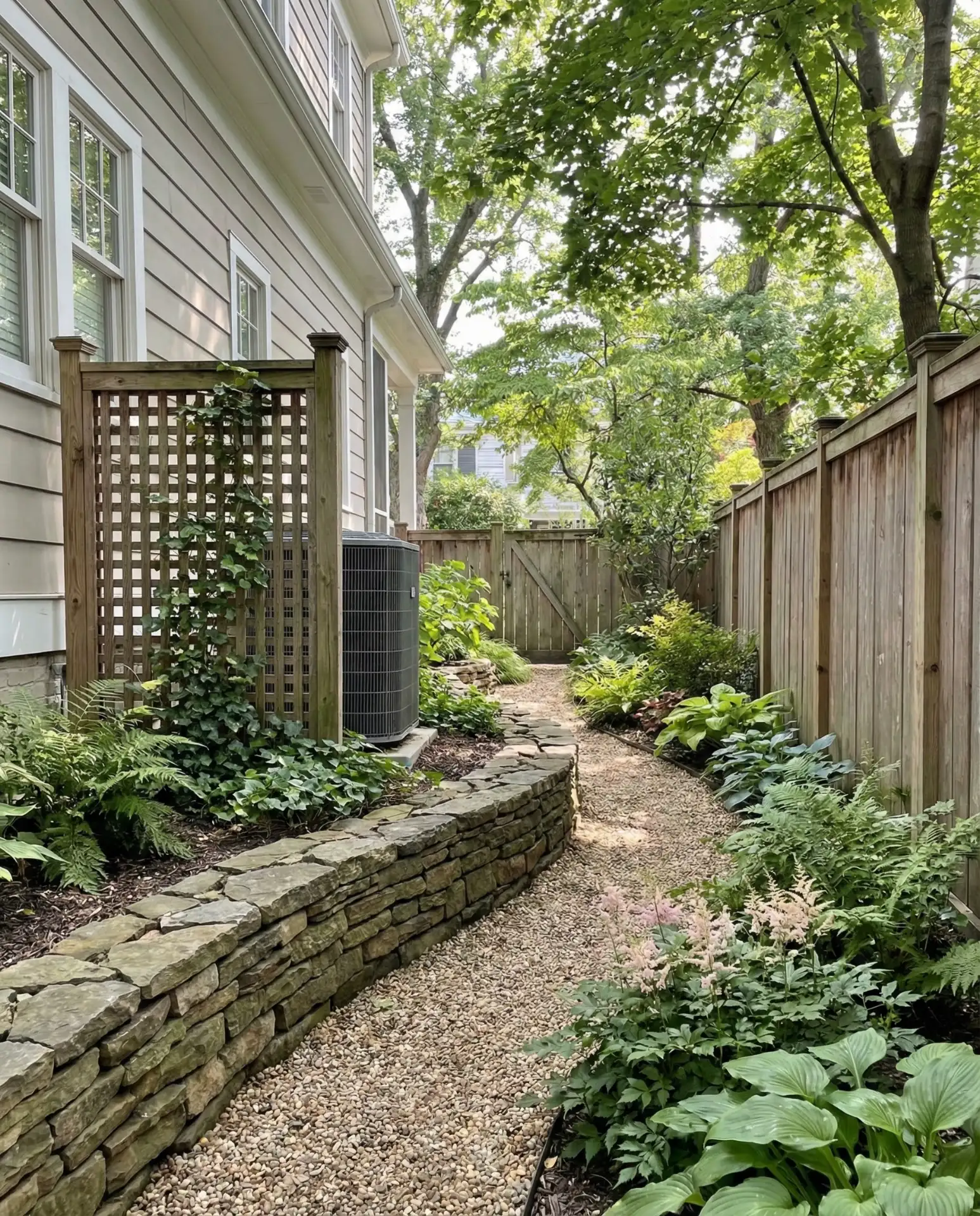
Transform a neglected side yard into a functional, attractive space using stacked stone walls to screen utilities or create privacy. These narrow passages between houses often become dumping grounds, but with thoughtful rock work, they can become charming garden corridors. Stack flat stones dry (without mortar) for a rustic look, or mortared for a more formal finish. Add shade-tolerant ferns and hostas in the protected microclimate these walls create.
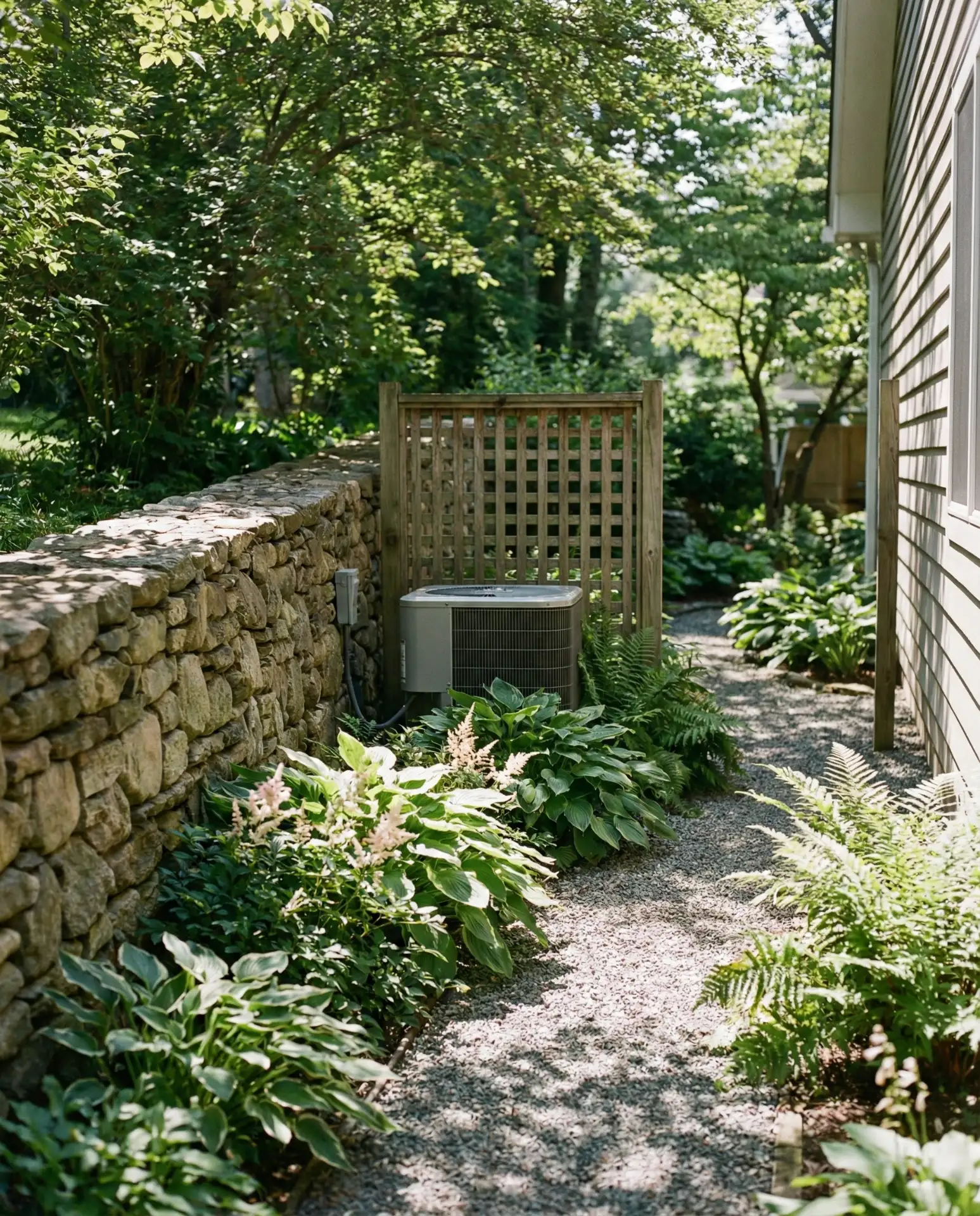
Side yards work best with this treatment because the walls add structure to otherwise awkward spaces and help with drainage by retaining soil on one side. Many homeowners use these areas to hide garbage bins, HVAC units, or pool equipment—the stone screening adds just enough visual barrier without blocking airflow. The walls also provide vertical planting opportunities for vines or espalier, maximizing every inch of the typically underutilized strip of property.
18. Bull Creek Boulders in Woodland Settings
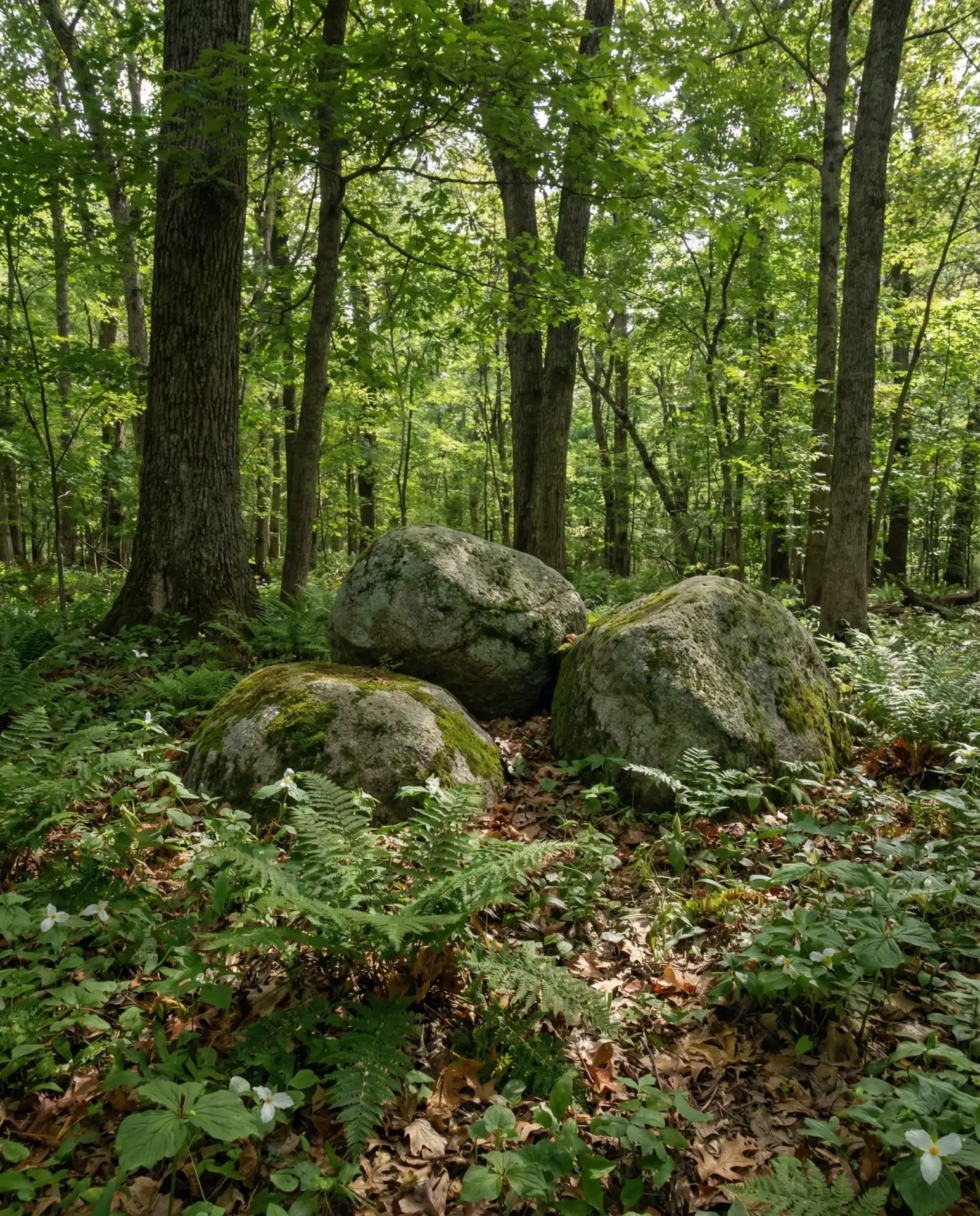
Large rounded bull boulders nestled among existing trees create naturalistic woodland scenes that require minimal maintenance. These massive stones, often sourced from creek beds, have weathered surfaces and organic shapes that look as if they’ve always been part of the landscape. Position them in groupings of three or five, partially buried, to mimic natural geology. Add native ferns, trilliums, or Solomon’s seal in the spaces between for an authentic forest floor aesthetic.
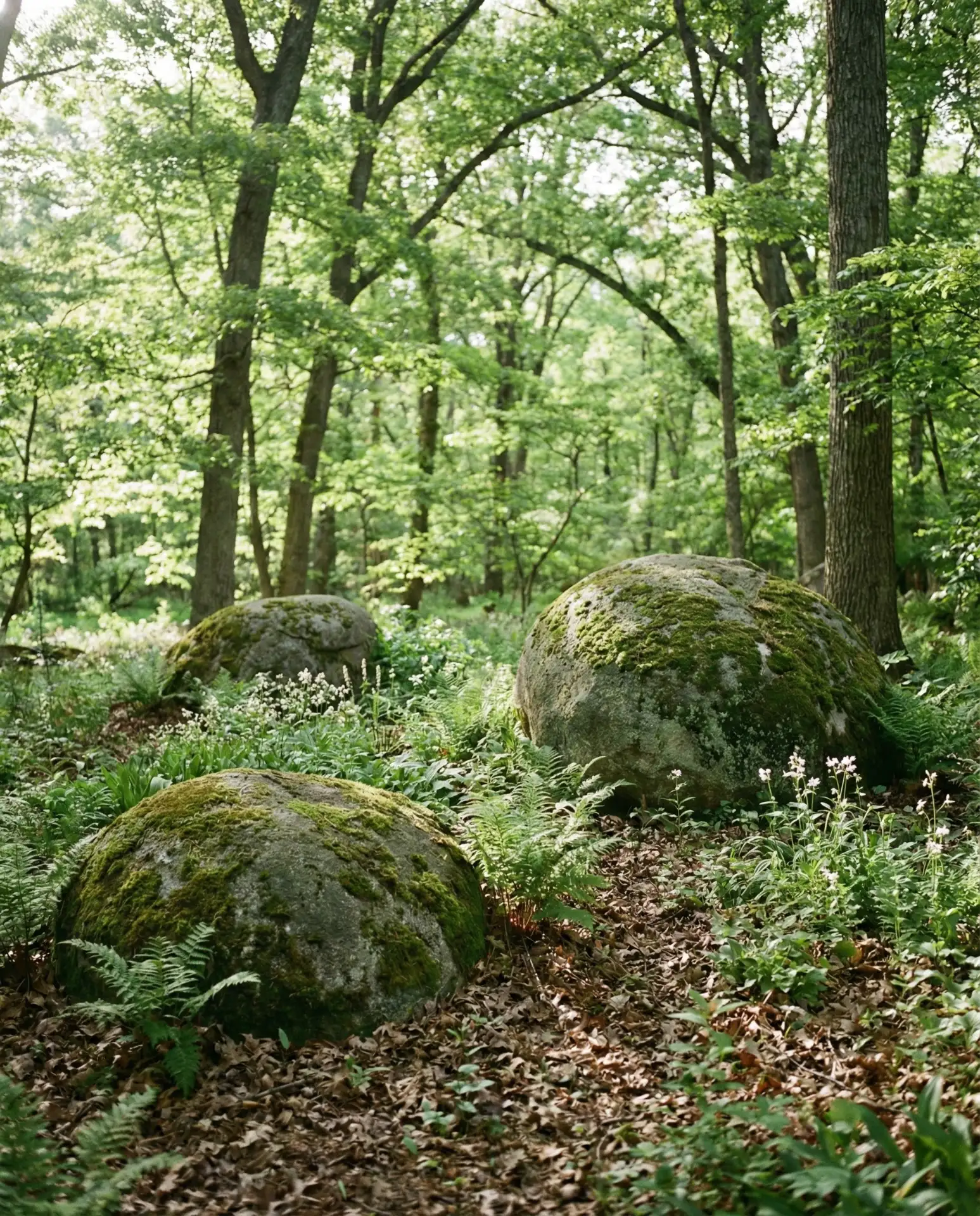
A homeowner in Virginia shared that adding boulders to her existing wooded lot created instant focal points and gave structure to what had been a shapeless tangle of undergrowth. The key was working with the land’s contours—placing stones where they’d naturally accumulate if moved by ancient glaciers or floods. This technique is particularly effective on properties with mature trees, where traditional landscaping is difficult due to roots and shade.
19. Front Entry Formal Stone Steps
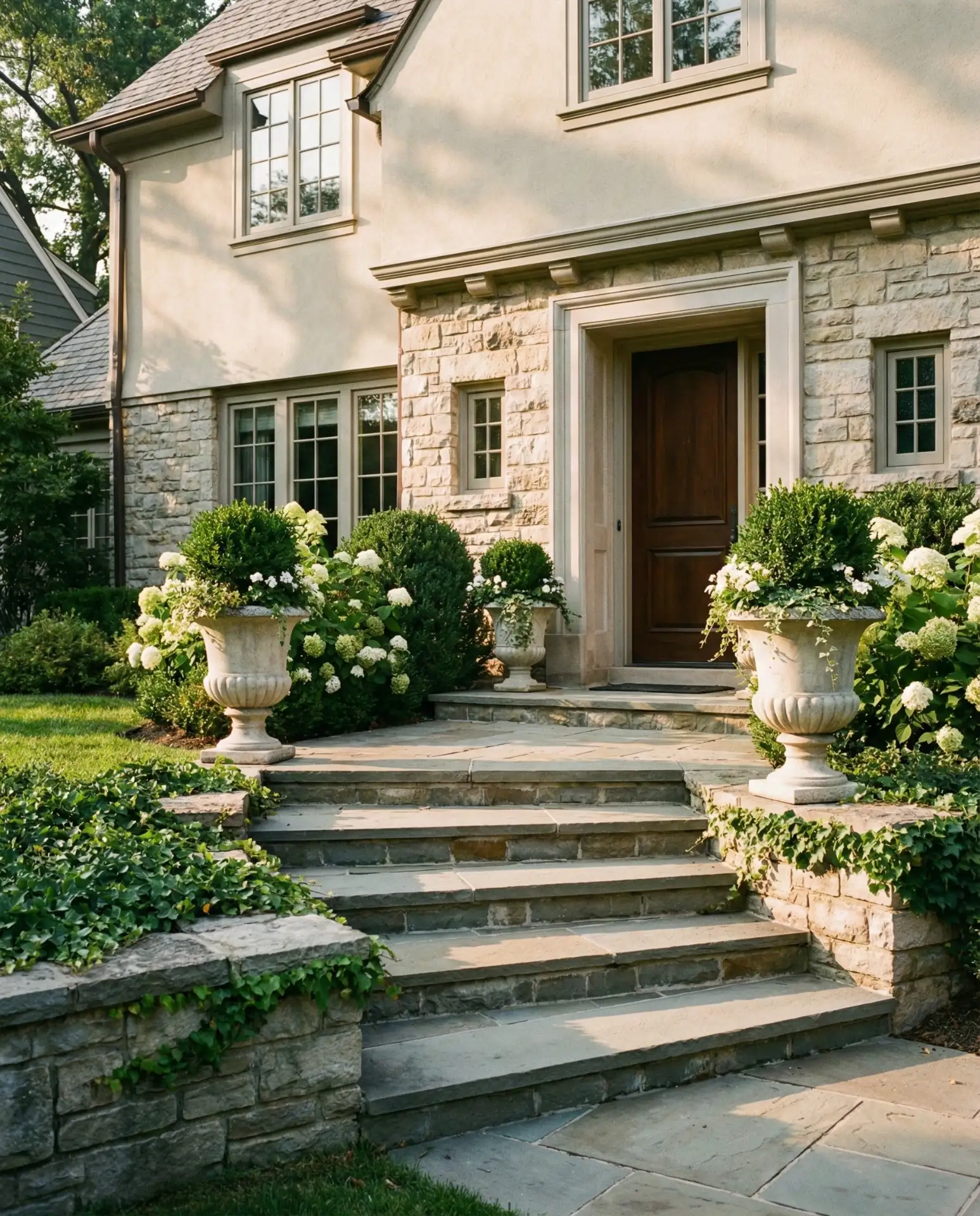
Front entry stairs constructed from thick stone slabs make a dignified, lasting impression that elevates your home’s curb appeal. These substantial treads, whether granite, bluestone, or limestone, convey permanence and craftsmanship. Flanking the steps with low stone walls or planted urns creates a formal approach that suits traditional or classical architecture. The cool, solid feel of natural stone underfoot is unmatched by concrete or composite materials.
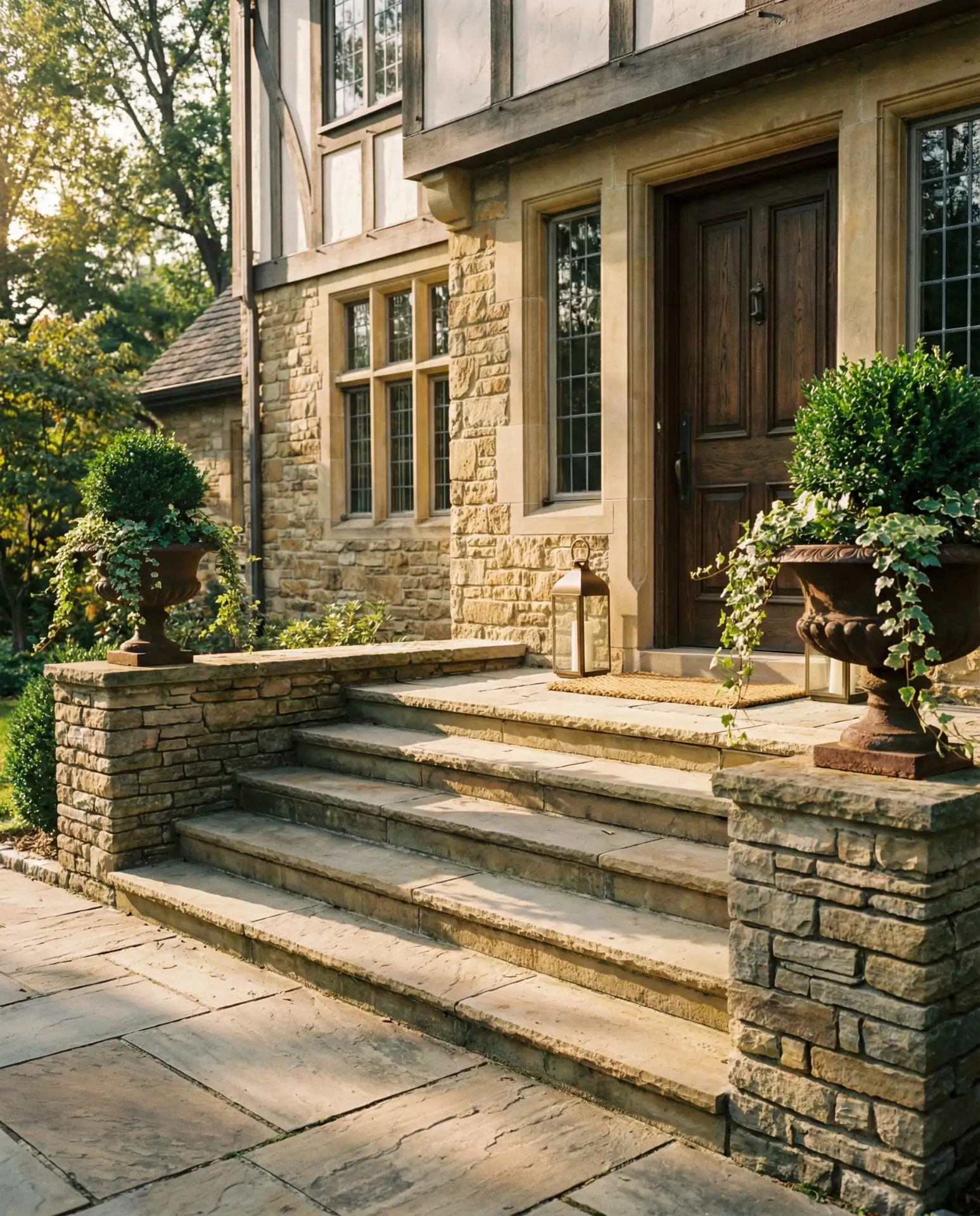
Expert stonemasons recommend choosing stone with a natural cleft or thermal finish for steps—polished surfaces become dangerously slippery when wet or icy. Tread depth should be at least twelve inches for comfortable ascent, and risers should maintain consistent height throughout the run. While the material cost is higher than poured concrete, stone steps never need resurfacing and actually increase in character as they age, making them a worthwhile investment for homes you plan to keep long-term.
20. Outdoor Fire Pit with River Rock Surround
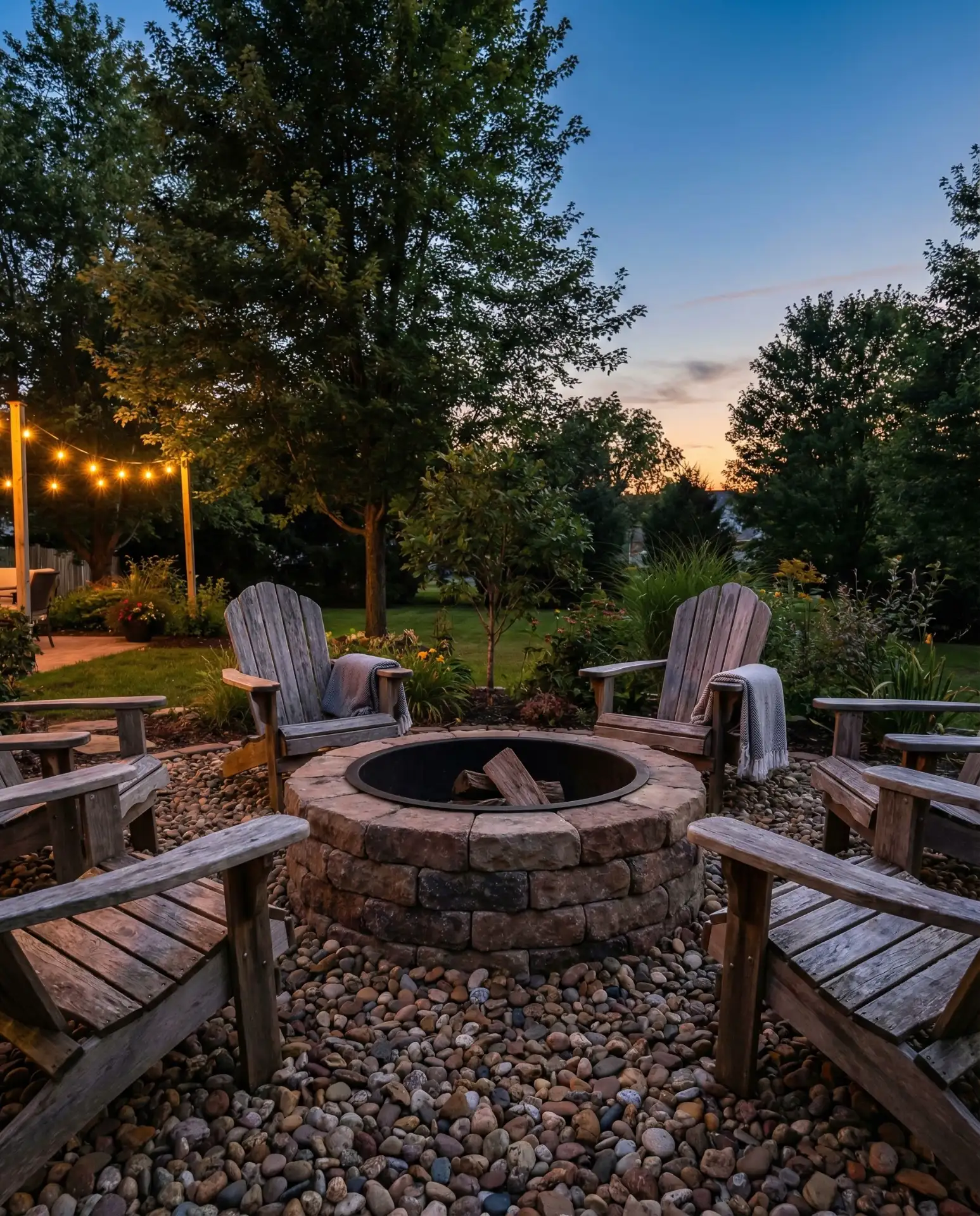
An outdoor fire pit surrounded by smooth river rock creates a natural gathering spot that feels like a mountain campsite. The river stones radiate out from the fire ring, defining the seating area while providing safe, heat-resistant ground cover. This design encourages conversation and s’mores, bringing family and friends together in a setting that feels both rustic and refined. The stones also prevent grass or mulch from being scorched by stray embers.
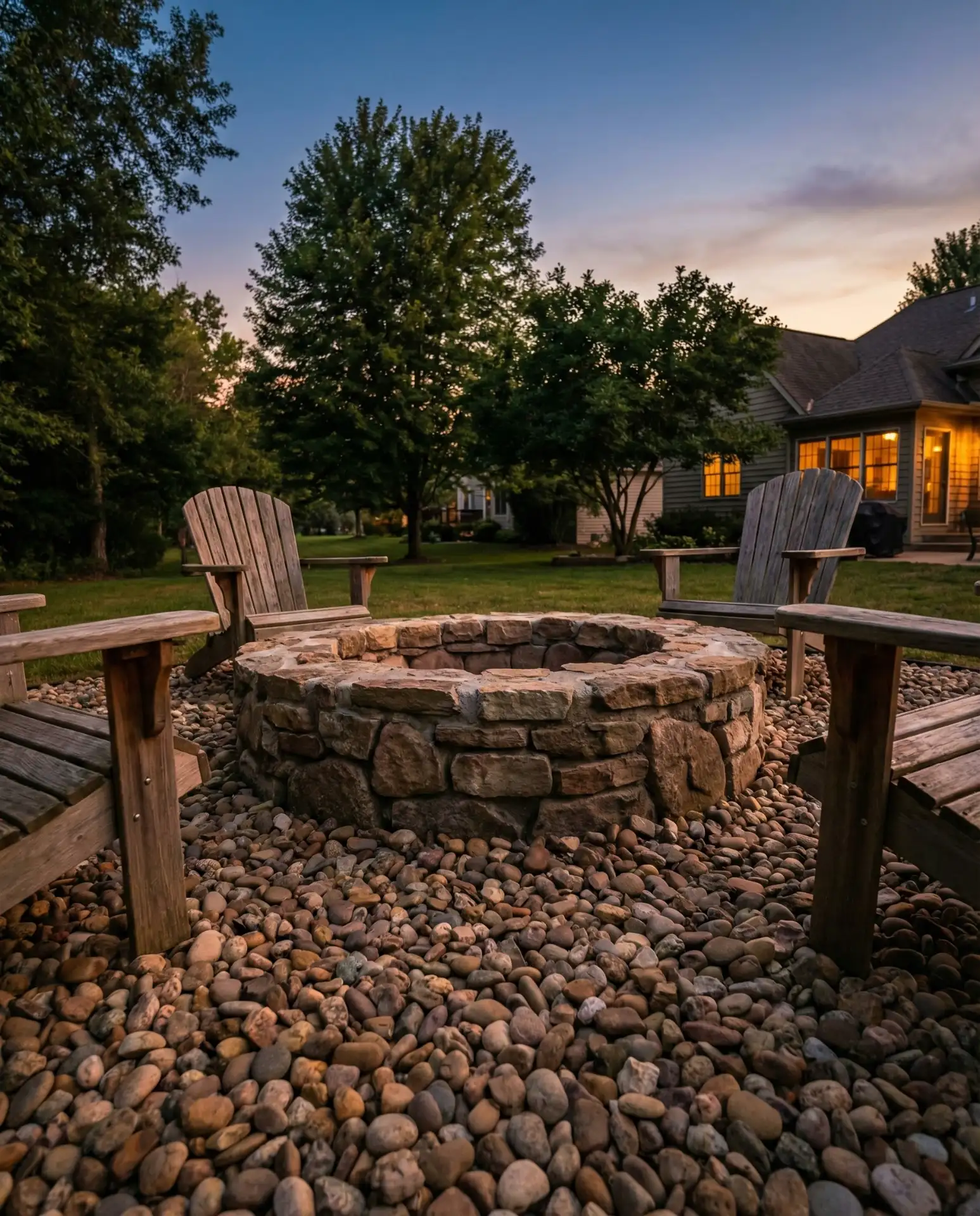
Real homeowners report that fire pits become the most-used feature in their yards, drawing people outside from spring through fall and even on mild winter evenings. The river rock surround should extend at least six to eight feet from the fire ring for safety and to accommodate seating. Choose rocks in warm tones—tans, golds, russets—that complement firelight and create a cohesive color story. Also consider adding landscape lighting around the perimeter to illuminate the space when the fire’s not lit.
21. Large Area Decomposed Granite Courtyards

For large area courtyard installations, decomposed granite offers an affordable, permeable alternative to concrete or pavers. This finely crushed stone compacts into a firm surface that’s comfortable to walk on while allowing water to percolate through. The warm, natural tones range from gold to terracotta, depending on the source quarry, and the material develops a beautiful patina over time. It’s ideal for Spanish Colonial, Mediterranean, or contemporary homes seeking organic ground planes.
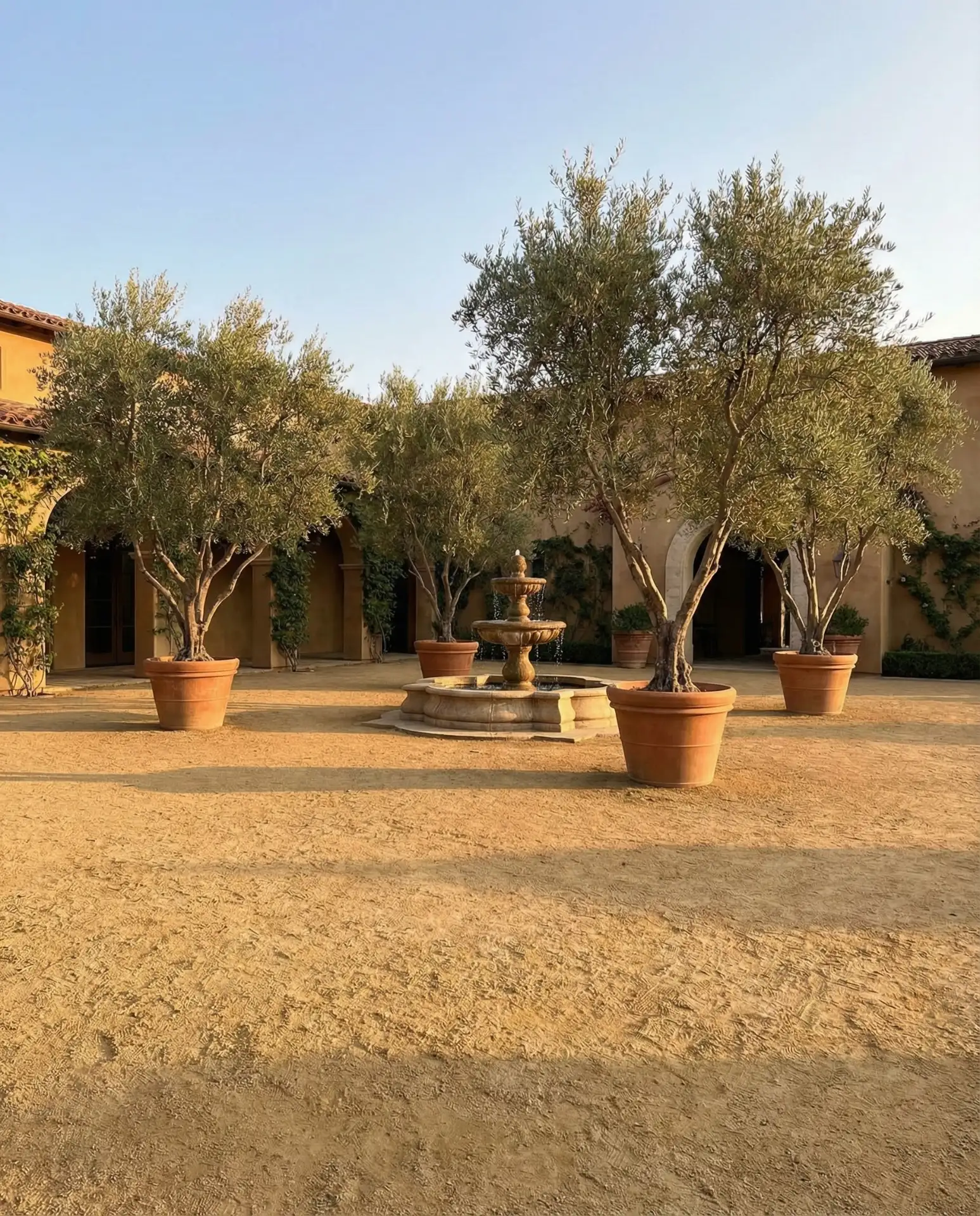
In California, Texas, and Arizona, where large outdoor living areas are common, decomposed granite has become the go-to material for affordability and aesthetics. The installation cost runs roughly a quarter of what pavers would require for the same area. The surface does need occasional regrading and top-dressing—typically every few years—but this maintenance is straightforward and inexpensive. Adding stabilizers during installation helps the surface hold together longer, especially in high-traffic zones.
22. Red Accent Stone Color Blocking
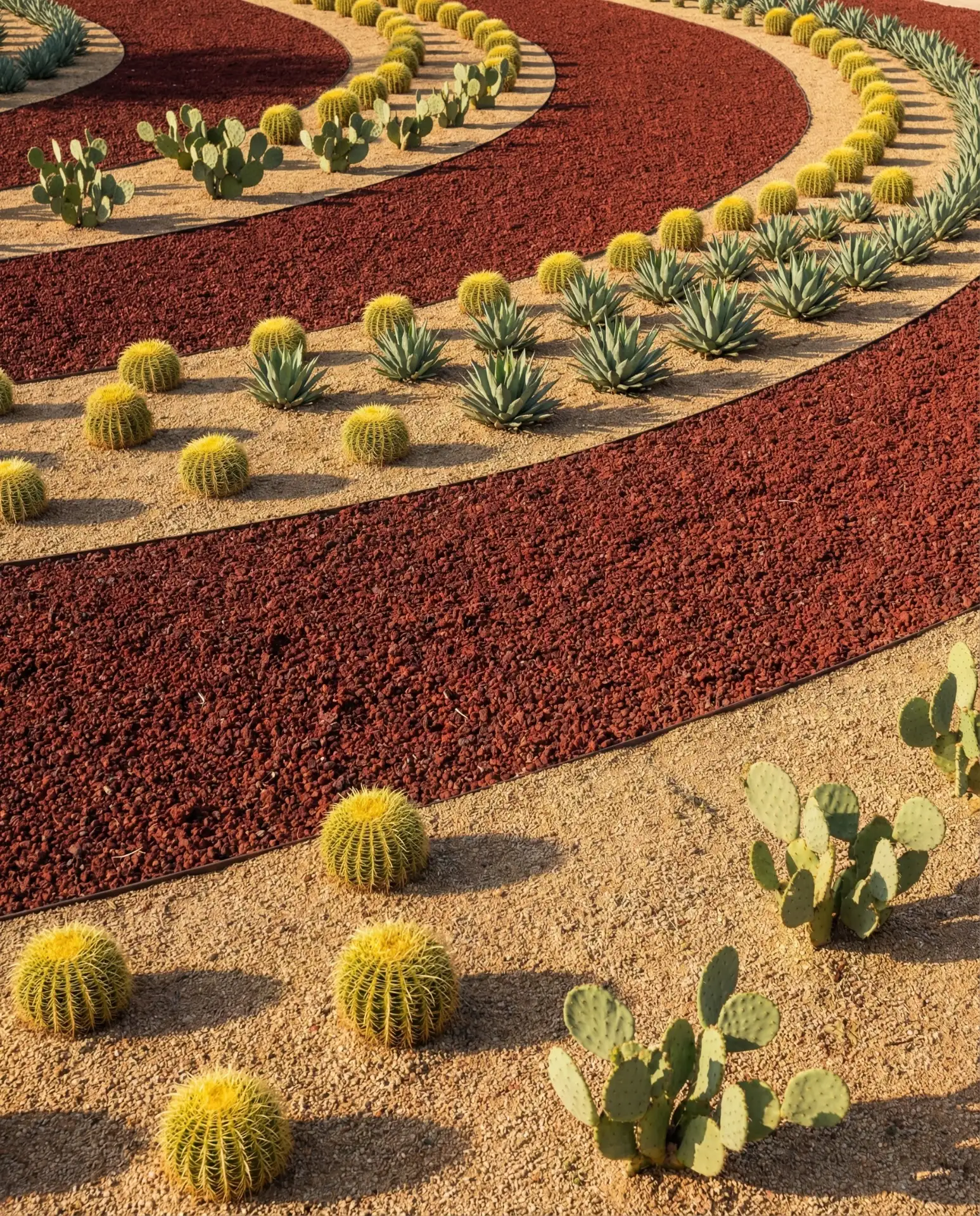
Using red stone strategically as accent bands or borders adds visual warmth and creates dynamic color blocking in otherwise neutral landscapes. Pair red lava rock or brick chips with gray river stone or white limestone for striking contrast that draws attention to specific garden zones. This technique works beautifully to highlight specimen trees, frame water features, or create rhythm along pathways. The warm tones feel particularly at home in Southwest and Mediterranean-inspired designs.
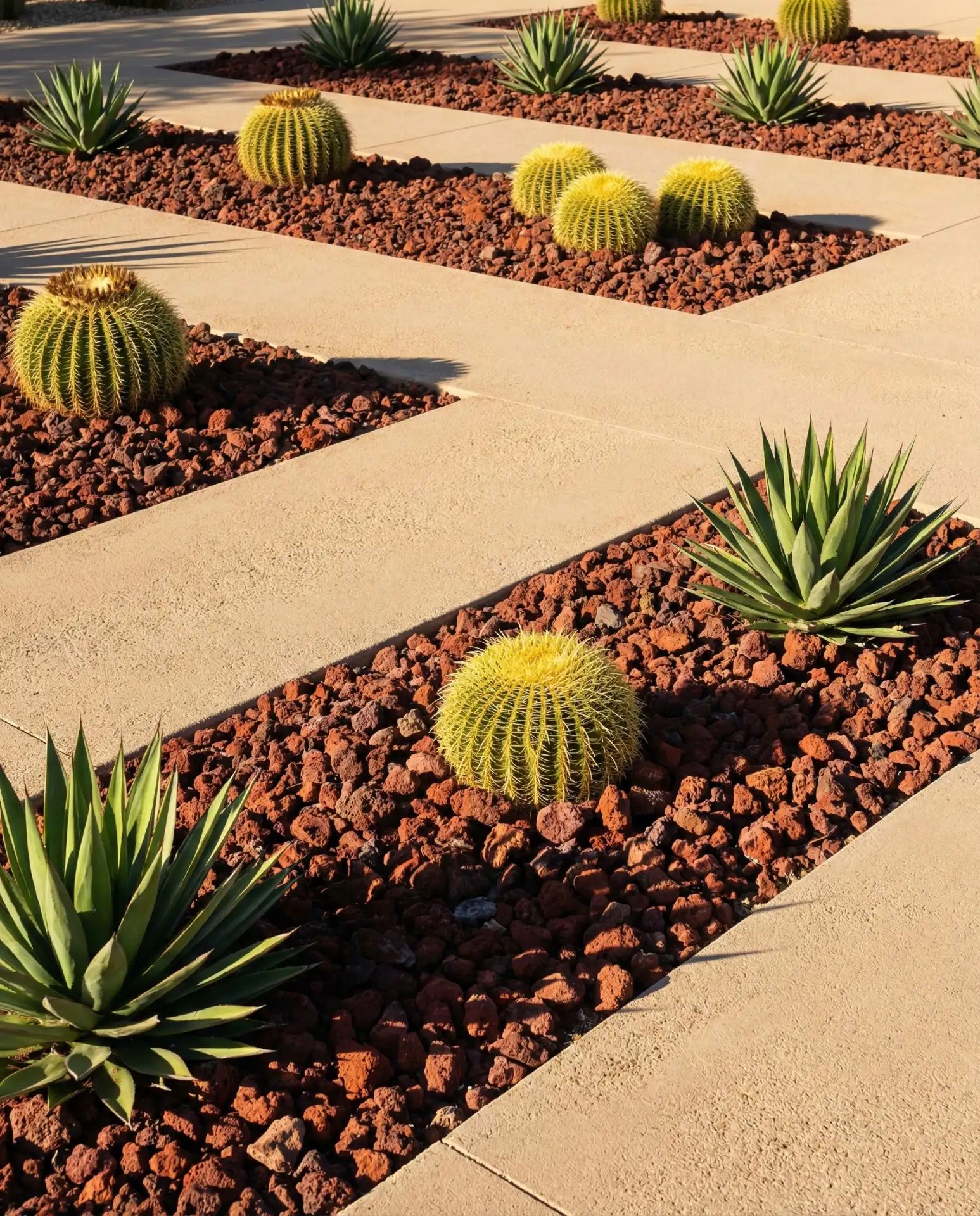
This approach requires careful planning to avoid overwhelming the space—red stone should typically make up no more than twenty to thirty percent of your total rock coverage. Use it where you want to draw the eye or create visual punctuation. The color intensity of red rock can fade slightly over time with UV exposure, so expect a gentler, more weathered tone after a few seasons. Many homeowners actually prefer this mellowed appearance as it integrates more naturally with surrounding plantings.
23. Backyard Meditation Garden with Gravel and Boulders
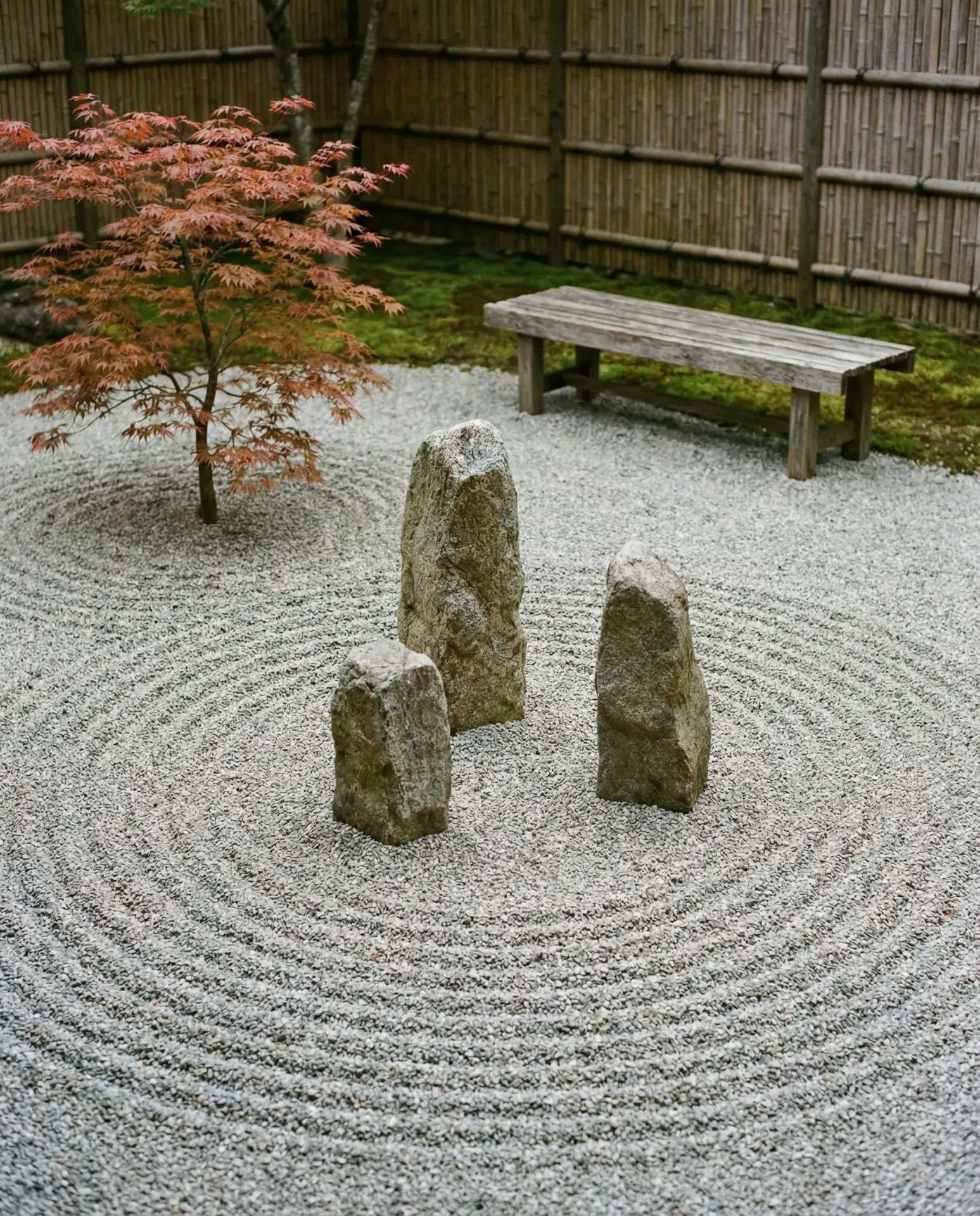
A serene backyard meditation space built around carefully placed boulders and raked gravel brings Japanese-inspired tranquility to American yards. The minimalist composition—perhaps three substantial stones representing mountains, surrounded by fine gravel raked in flowing patterns—creates a contemplative focal point. Add a simple wooden bench, minimal plantings like dwarf pines or ornamental grasses, and bamboo accents. The act of maintaining the raked patterns becomes part of the meditative practice itself.
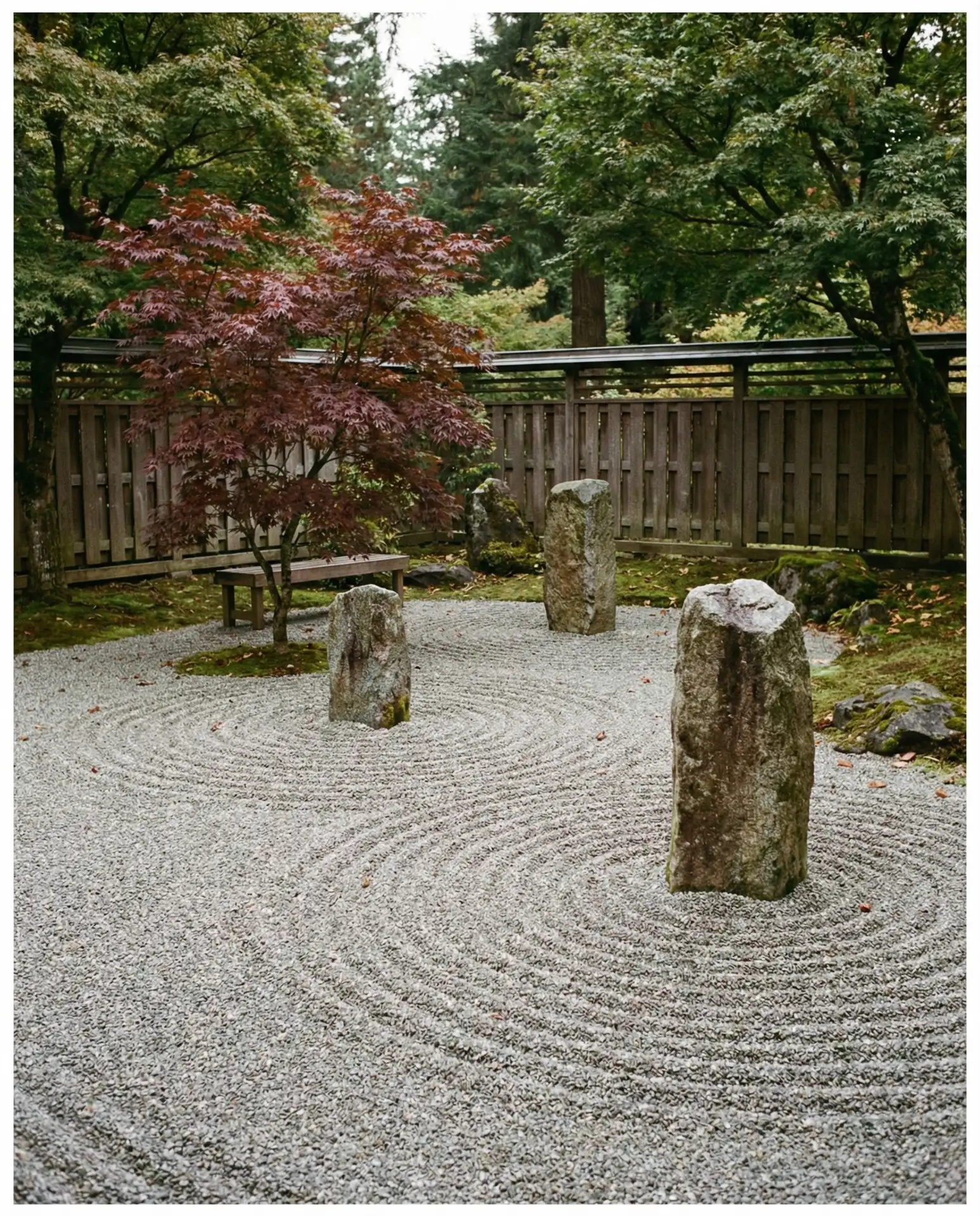
Where it works best: Quiet corners of suburban or urban yards where you crave a retreat from daily stress. These gardens work in any climate but are particularly popular in the Pacific Northwest, where the aesthetic feels naturally aligned with the region’s landscape. The gravel should be pea-sized or smaller for effective raking, and the space requires regular maintenance to keep patterns crisp and weeds at bay. Many practitioners find this maintenance meditative rather than burdensome—a few minutes of mindful raking becomes a daily ritual that calms the mind.
Conclusion
These twenty-three rock landscaping ideas offer something for every style, climate, and budget. Whether you’re drawn to the clean lines of modern minimalism or the organic flow of naturalistic gardens, stone provides the foundation for landscapes that are both beautiful and enduring. Don’t be afraid to start small—even a single well-placed boulder or a simple gravel pathway can transform your outdoor space. Share your own rock landscaping projects in the comments below, and let us know which of these ideas you’re planning to try. We’d love to hear how you’re bringing stone to life in your corner of the country.