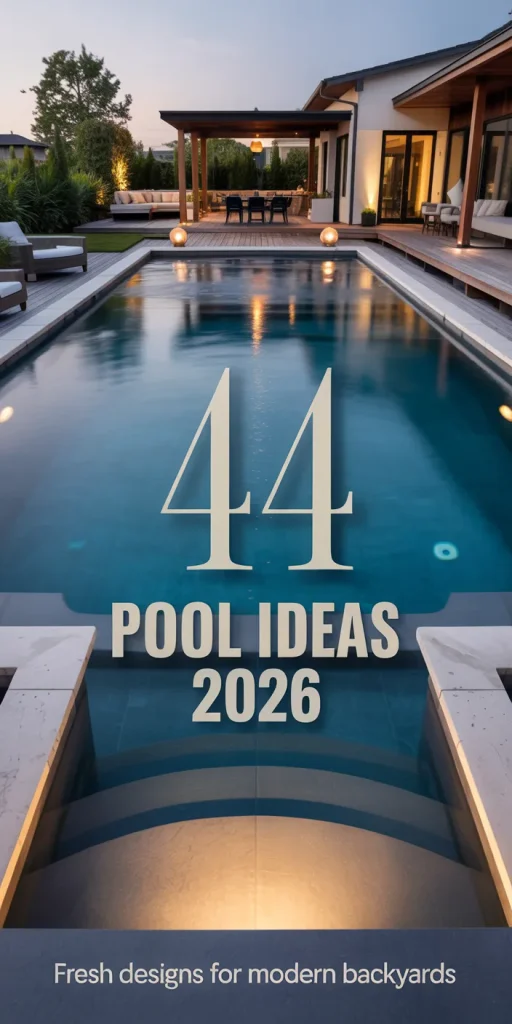
Swimming pools are no longer just a luxury reserved for sprawling estates—they’ve become one of the most sought-after backyard upgrades across America in 2026. Whether you’re scrolling through Pinterest for inspiration or planning your first pool project, homeowners are discovering creative ways to bring water features into spaces of all sizes and budgets. From compact plunge pools tucked into urban backyards to stylish stock tank conversions on rural properties, the options have never been more diverse. This guide walks you through fresh pool ideas that blend beauty, function, and smart design—no matter your yard size, climate, or starting point.
1. Elevated Stock Tank Pool with Deck Surround
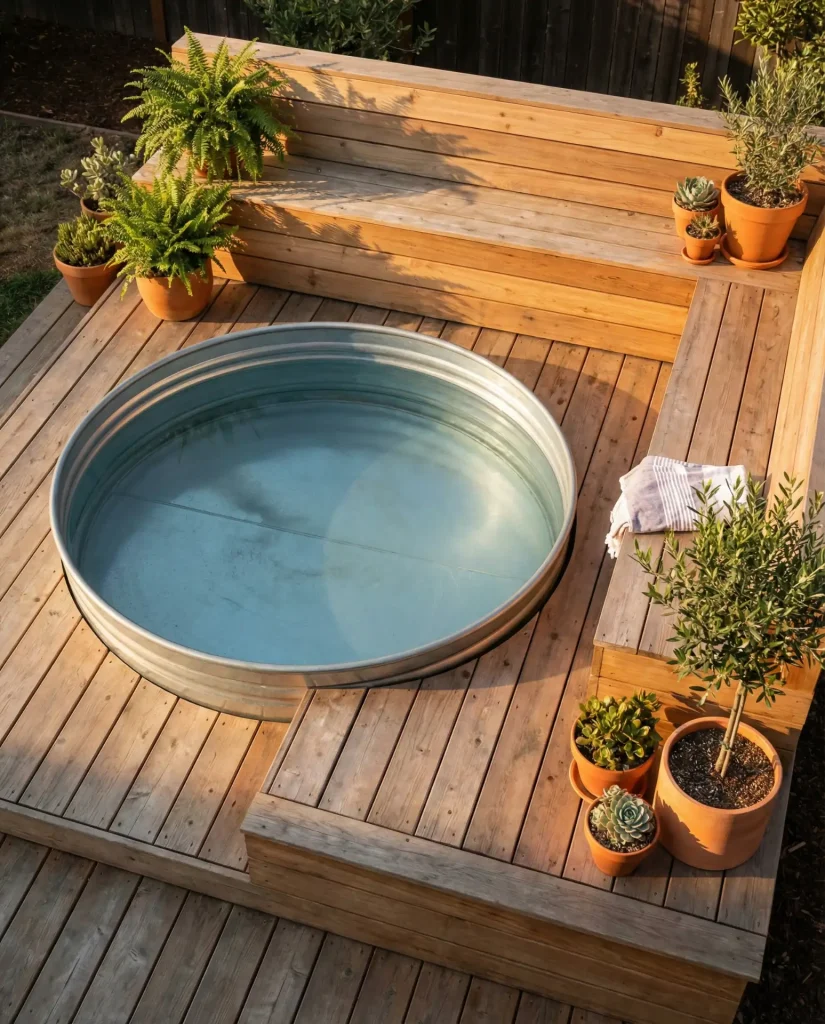
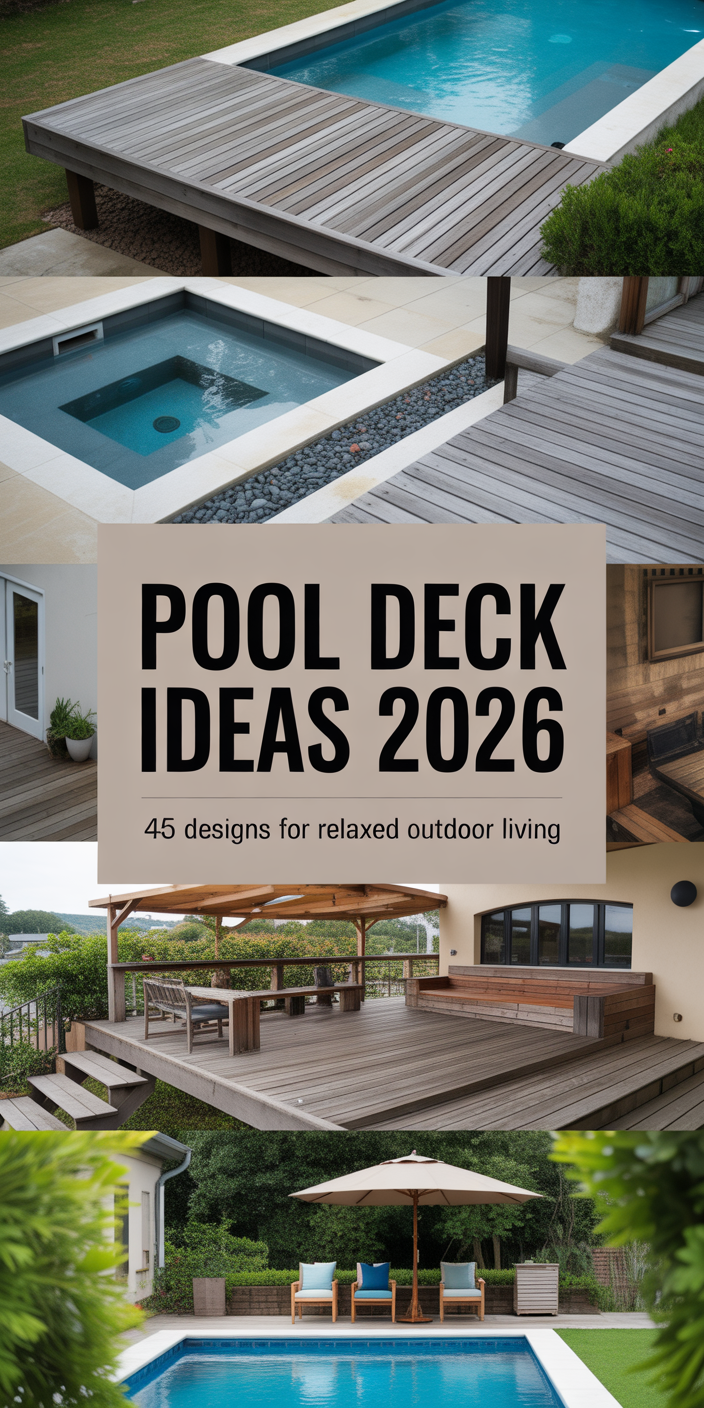
A stock tank pool elevated on a custom wooden deck transforms a simple galvanized tub into a stunning focal point for your backyard. This approach works especially well on sloped terrain where you can build the deck into the hillside, creating a multi-level outdoor living area. The raw metal exterior pairs beautifully with natural wood tones, and the elevated position improves water circulation while making entry and exit more comfortable. Adding built-in bench seating around the perimeter turns the space into a social hub perfect for summer evenings.
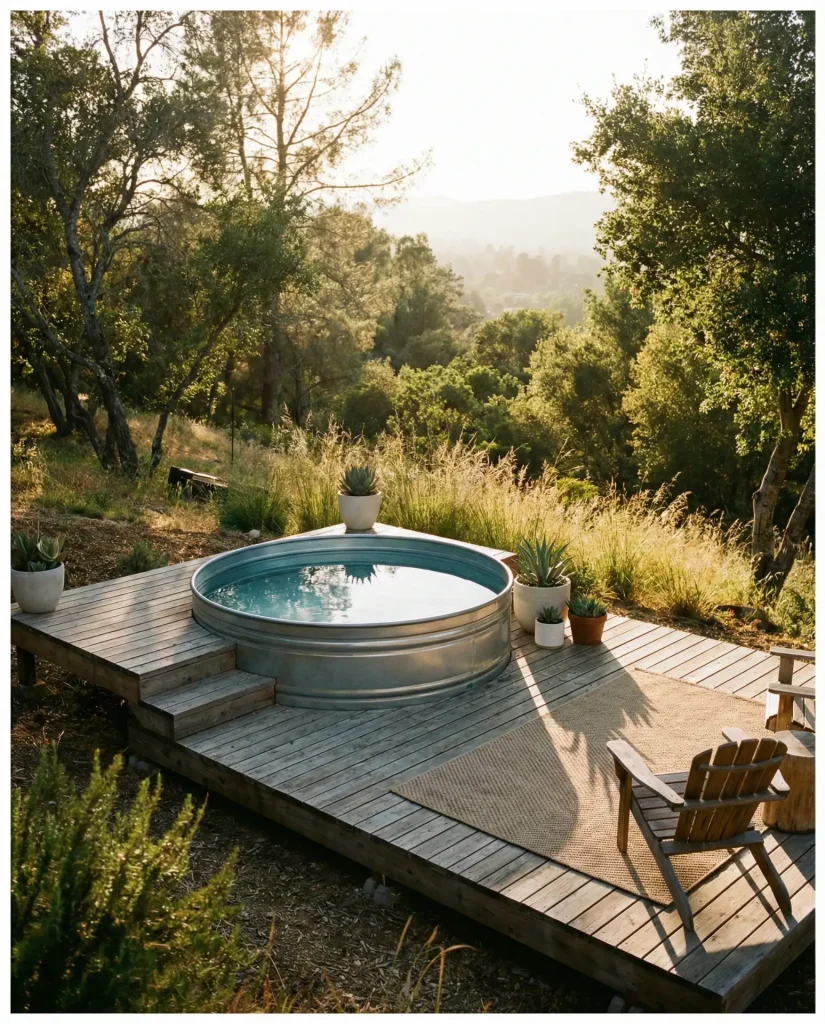
Where it works best: Properties with natural slopes in the Southwest and Mountain West regions benefit most from this design, as the elevation helps with drainage and the metal construction withstands temperature extremes. The deck can incorporate storage underneath for pool maintenance supplies, and many homeowners add outdoor shower fixtures directly to the structure. Budget-conscious DIYers appreciate that stock tanks cost a fraction of traditional pools while delivering that coveted backyard oasis feel.
2. Sleek Fiberglass Lap Pool for Narrow Yards
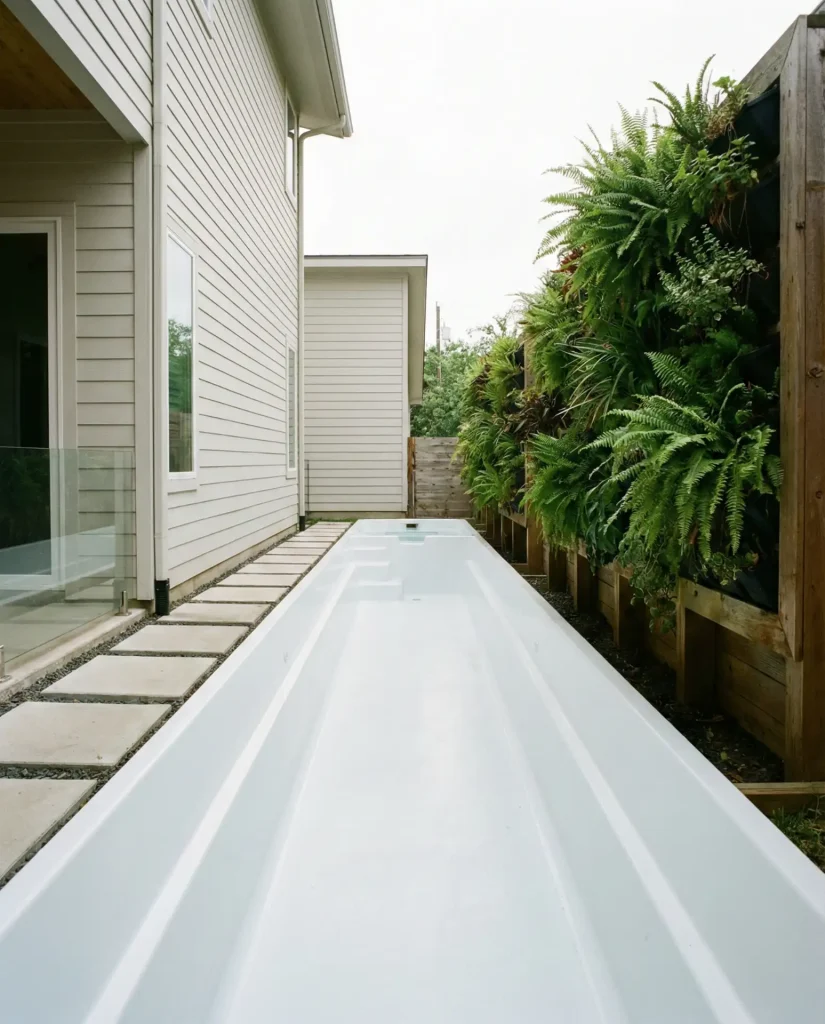
When your lot is long but narrow, a fiberglass lap pool makes perfect sense for maximizing swimming potential without overwhelming the space. These pre-molded shells install quickly—often in just a few days—and their smooth, non-porous surface resists algae better than concrete alternatives. Modern fiberglass designs come in sleek rectangles that hug property lines, leaving room for walkways and landscaping on both sides. The length provides genuine exercise value, while the slim profile keeps maintenance costs and chemical use refreshingly low.
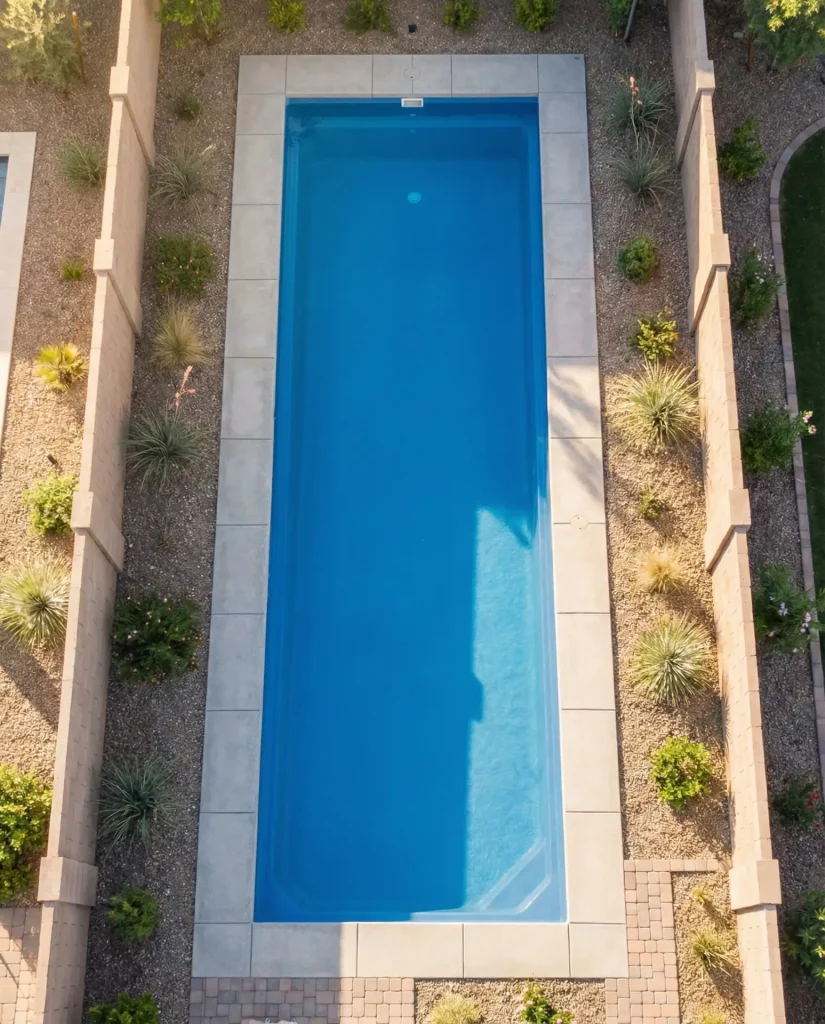
A common mistake is choosing a pool that’s too wide for the available space, creating cramped walkways that feel claustrophobic and complicate maintenance access. Experienced installers recommend leaving at least four feet on each side for comfortable movement and equipment placement. Fiberglass also heats faster than concrete, which means lower energy bills in cooler climates and extended swimming seasons across the Mid-Atlantic and Pacific Northwest regions.
3. Multi-Level Inground Pool with Sunken Lounge
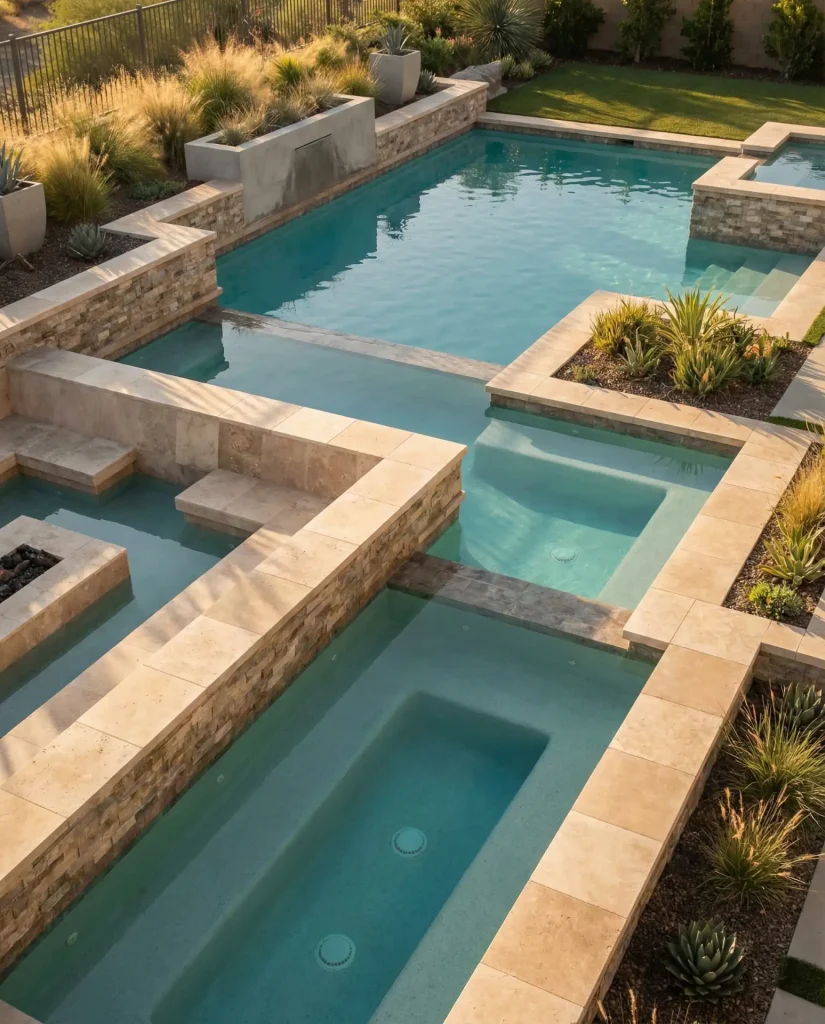
Modern inground pools are embracing architectural complexity with sunken lounge areas that create distinct zones within a single water feature. This design typically features a shallow shelf or baja step at one end, transitioning to a deeper swimming zone, then descending into a conversation pit with built-in benches submerged under six to twelve inches of water. The multi-level approach adds visual interest while serving different activities—kids play in the shallows, swimmers lap the middle, and adults relax in the sunken lounge with drinks in hand.
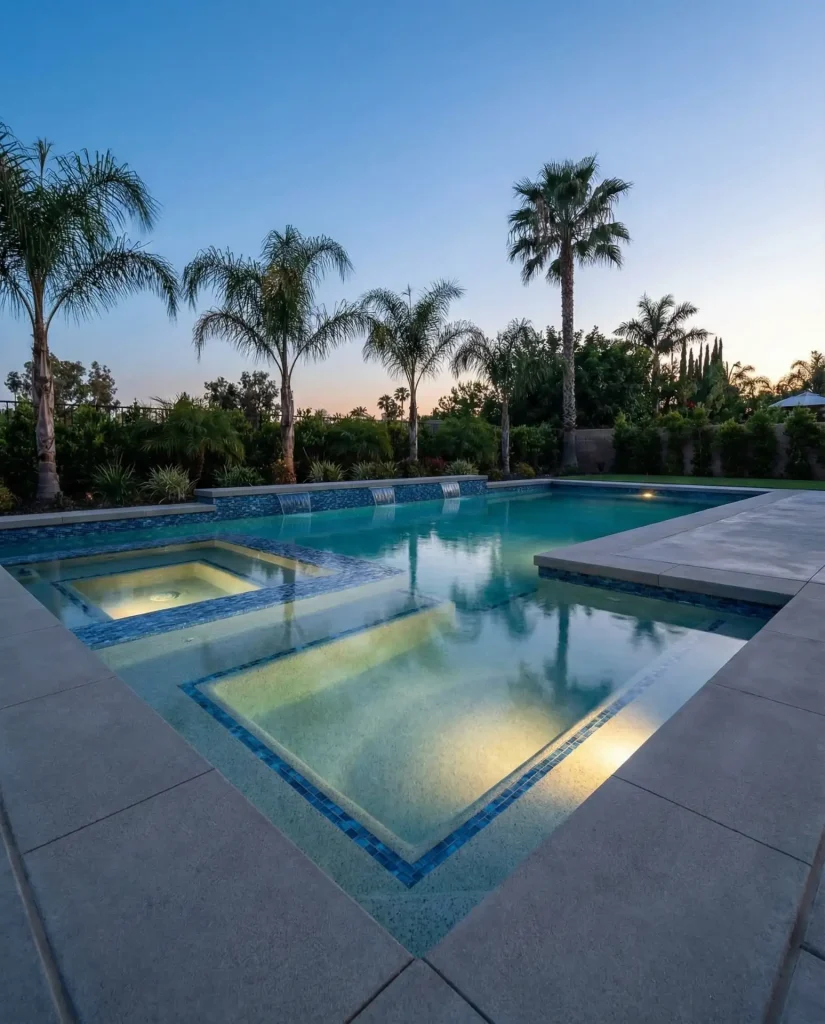
Budget insight: While the excavation and forming work for multiple levels adds roughly 15-20% to base construction costs, homeowners report that the added functionality justifies the investment—especially in warm-climate states like Arizona, Texas, and Florida, where pools see year-round use. The sunken lounge eliminates the need for separate spa construction, consolidating your water feature investment into one stunning centerpiece that handles both active swimming and relaxed socializing.
4. Natural Swimming Pond with Regeneration Zone
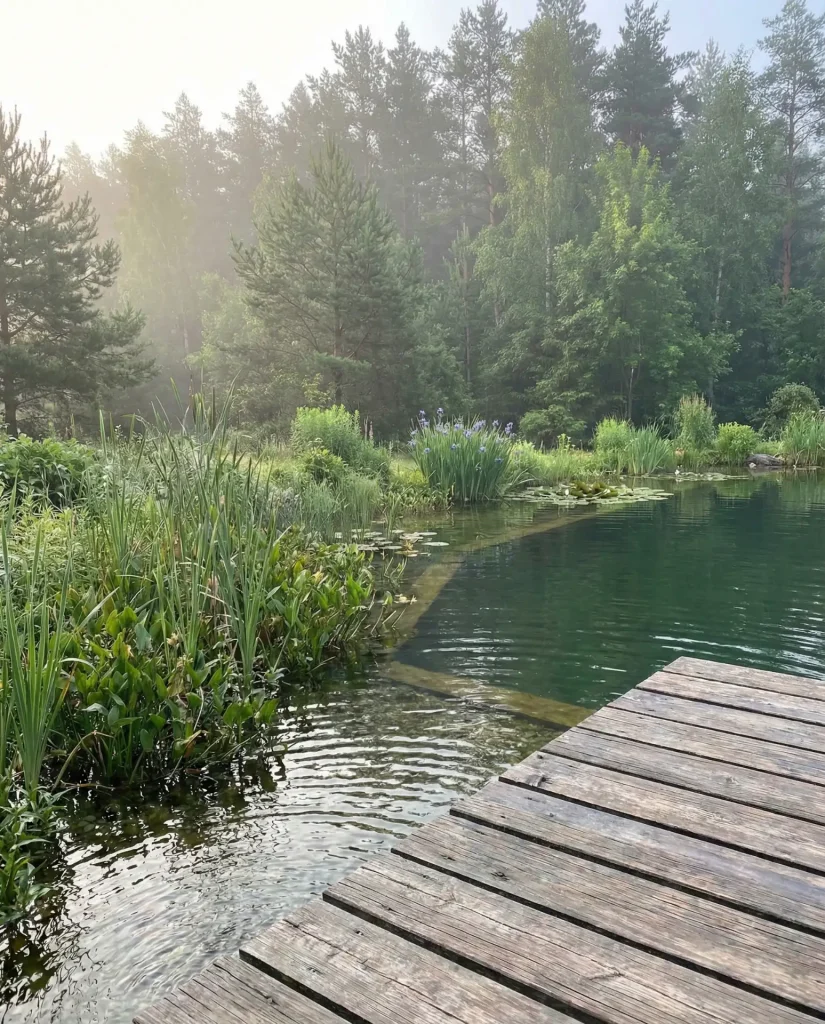
A natural swimming pond uses biological filtration instead of chlorine, creating an ecosystem where aquatic plants clean the water in a designated regeneration zone. Roughly half the pond’s surface area is planted with water-filtering vegetation like rushes, water lilies, and submerged oxygenators, while the other half remains clear for swimming. The result looks like a pristine mountain lake right in your backyard, complete with dragonflies, frogs, and the occasional visiting bird. The organic aesthetic appeals to homeowners seeking chemical-free swimming and wildlife-friendly landscaping.
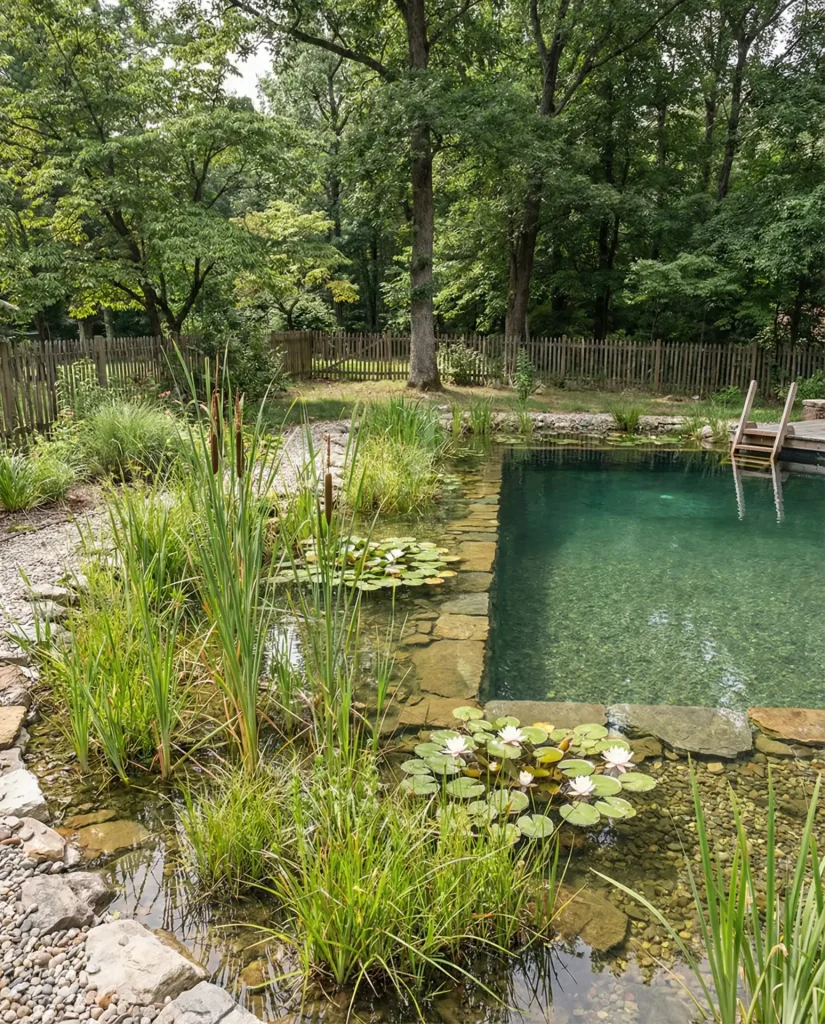
My neighbor installed one of these three years ago in rural Vermont, and she swears she’ll never go back to traditional pools—the water feels silky, there’s zero chemical smell, and maintenance involves seasonal plant trimming rather than constant pH balancing. The system works beautifully in temperate and cooler regions where native aquatic plants thrive, though warmer Southern climates require more careful plant selection to prevent algae blooms during intense summer heat.
5. Compact Plunge Pool with Integrated Spa Jets
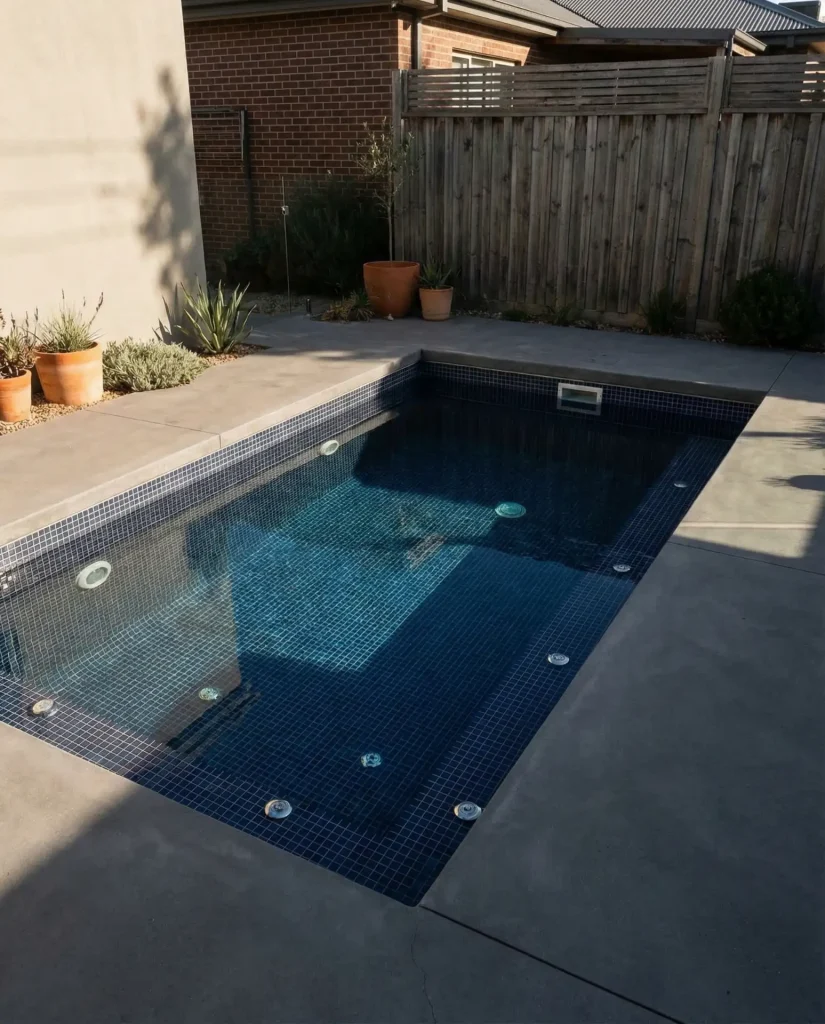
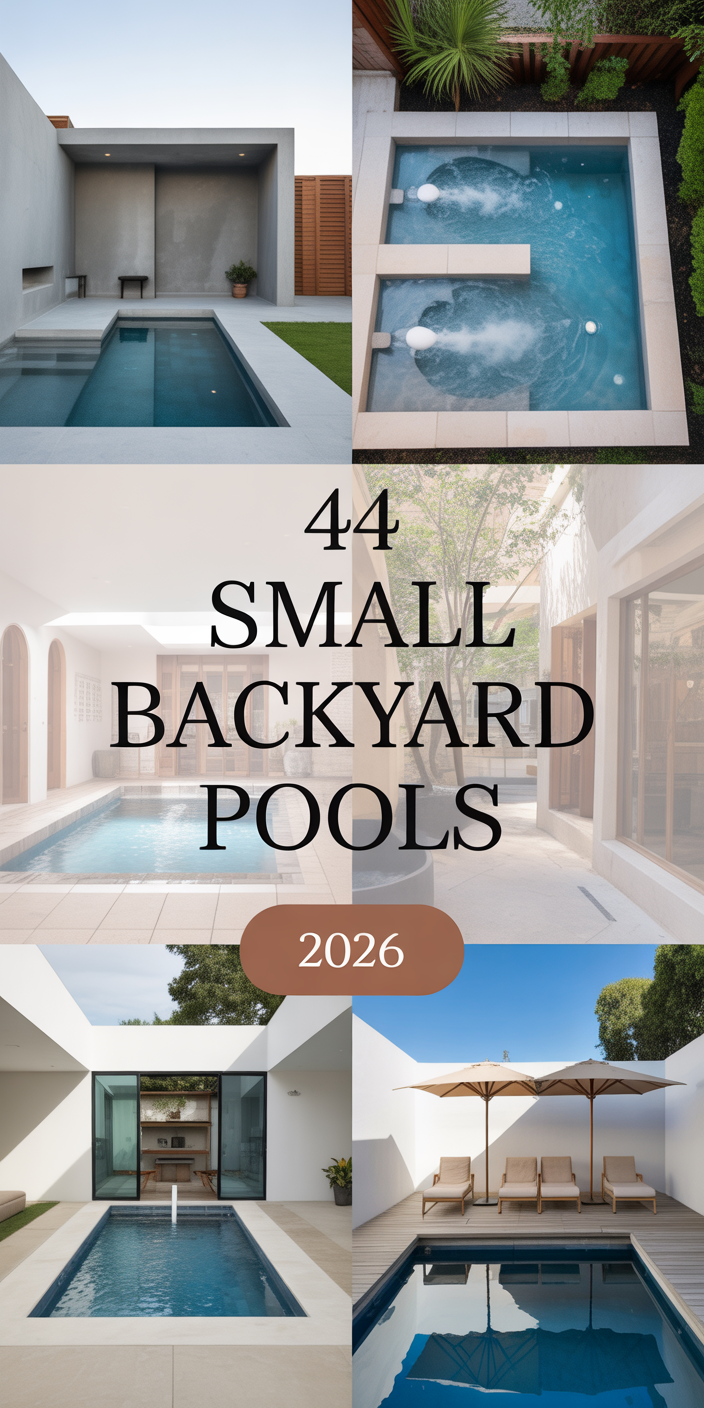
The plunge pool trend continues to dominate small backyard transformations, especially when enhanced with built-in spa jets that deliver hydrotherapy benefits. These pools typically measure 8 to 12 feet in length and drop to depths of 5 to 7 feet, creating a space for refreshing dips, aquatic exercise, and muscle recovery after workouts. Adding jet systems turns the compact footprint into a dual-purpose feature that functions as both cooling relief on hot days and a therapeutic soak during cooler evenings.
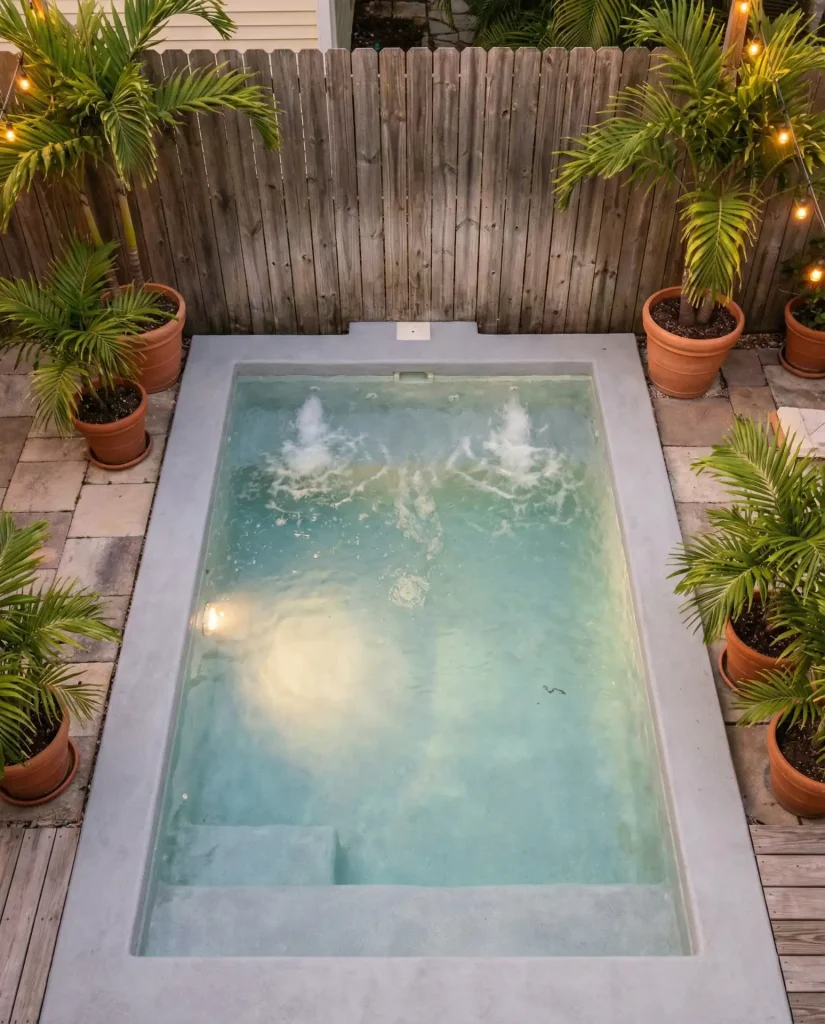
Real homeowner behavior shows that plunge pools see more consistent daily use than larger pools because they’re less intimidating to maintain and quick to heat. Urban properties in cities like Seattle, Portland, and Denver have embraced this format, where lot sizes often max out around 5,000 square feet and every square foot counts. The integrated jets eliminate the need for a separate hot tub purchase, saving both space and the $8,000-$15,000 that standalone spas typically cost.
6. Rustic Cowboy Pool with Gravel Surround
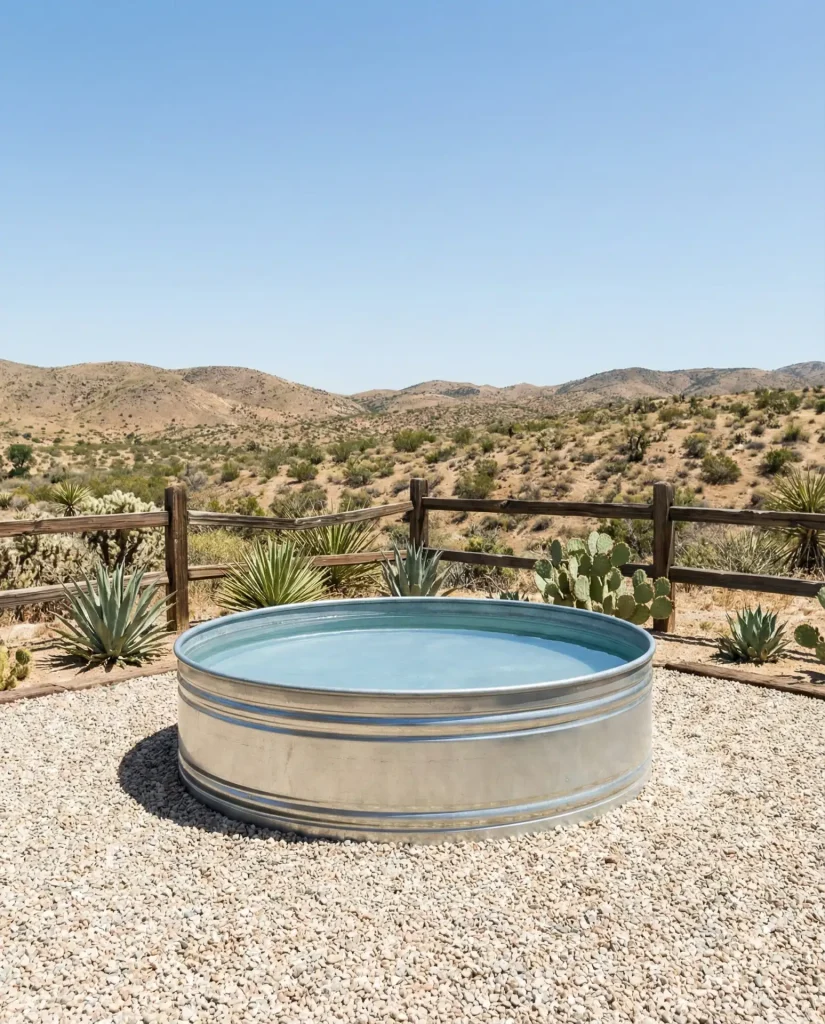
The cowboy pool aesthetic leans into rugged simplicity with galvanized stock tanks or simple rectangular concrete pools surrounded by decomposed granite or pea gravel instead of traditional decking. This low-maintenance approach originated on working ranches where function trumped formality, and it’s now trending among homeowners who want that authentic Western vibe. The permeable gravel surface drains beautifully, prevents muddy poolside messes, and costs a fraction of stamped concrete or pavers while delivering genuine ranch-style charm.
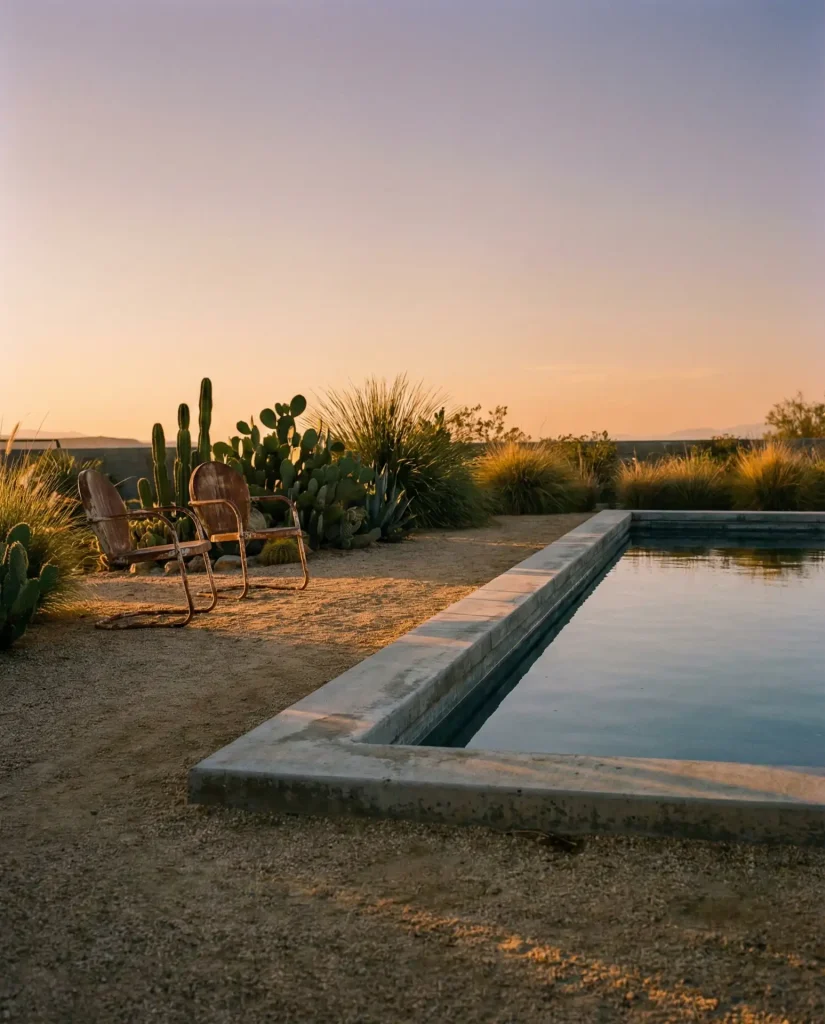
Expert designers note that gravel surrounds work exceptionally well in arid climates—think Texas Hill Country, New Mexico, and parts of Southern California—where traditional lawns struggle and water conservation matters. The natural drainage prevents standing water that attracts mosquitoes, and the loose material stays cooler underfoot than solid pavement during peak summer heat. Material costs typically run $2-4 per square foot compared to $15-30 for quality pavers, making this an accessible choice for budget-conscious projects.
7. Glass-Tiled Kidney-Shaped Pool with Vintage Flair
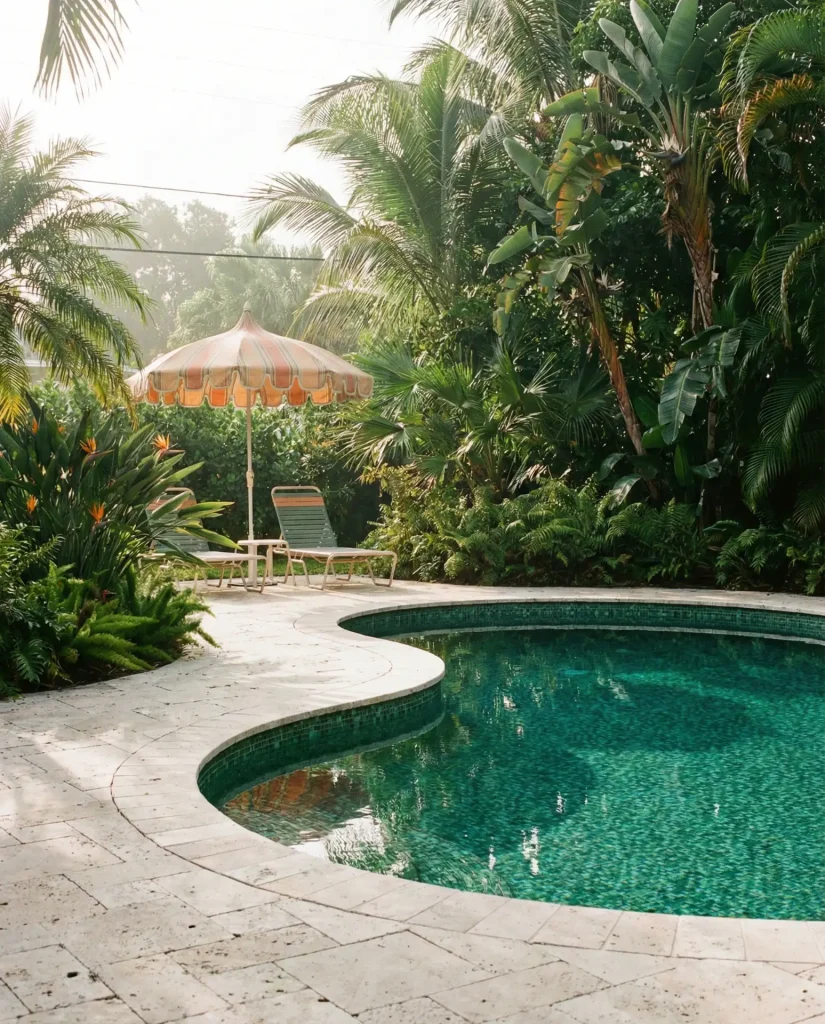
The iconic kidney-shaped pool design is experiencing a revival as homeowners rediscover mid-century modern aesthetics, and contemporary updates include shimmering glass tile finishes in jewel tones. This organic curve fits naturally into landscape contours, creating a softer visual than rigid rectangles while providing distinct shallow and deep end zones. Modern glass tiles—available in colors from aqua to deep emerald—catch sunlight beautifully and resist staining better than traditional plaster, adding a layer of luxury that honors the classic form with updated materials.
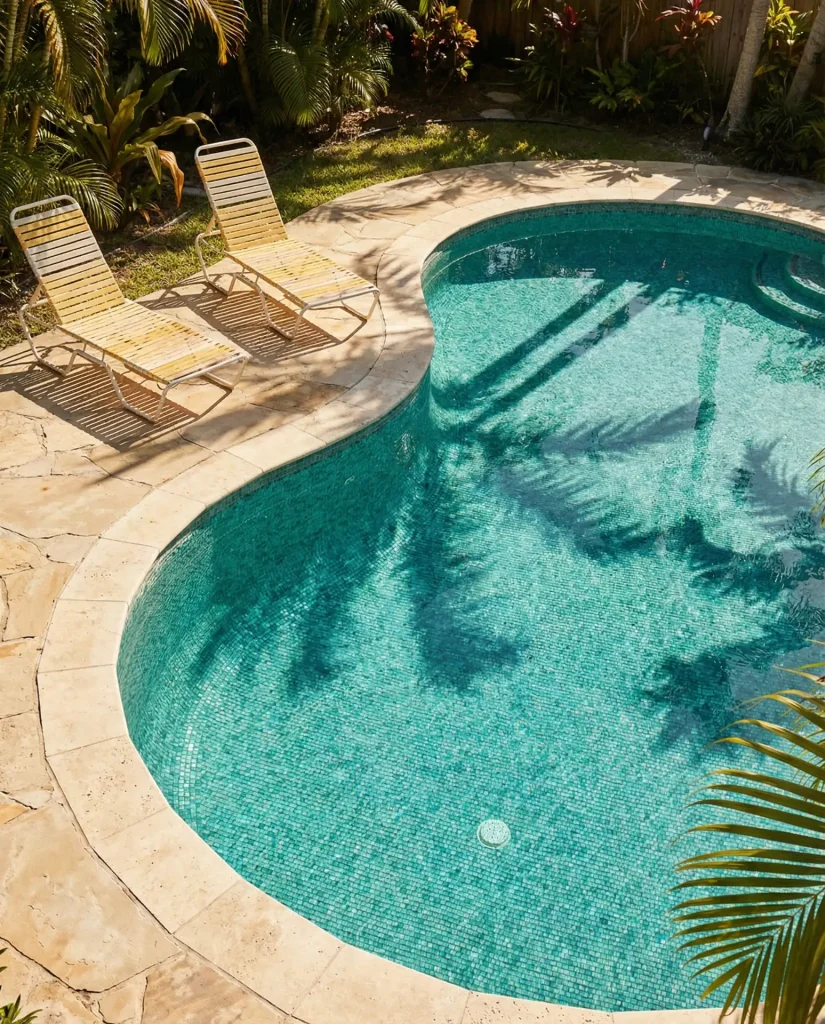
Where it works best: Suburban properties built in the 1950s-70s often feature this pool shape as original installations, and restoration projects now focus on refinishing with premium materials rather than filling them in. Glass tile installation adds $8-15 per square foot to resurfacing costs, but the investment pays dividends in both durability and visual impact—expect the finish to last 15-20 years compared to 7-10 for standard plaster. The curved design also reduces sharp corners where debris accumulates, simplifying cleaning routines.
8. Semi-Inground Pool on Sloped Terrain
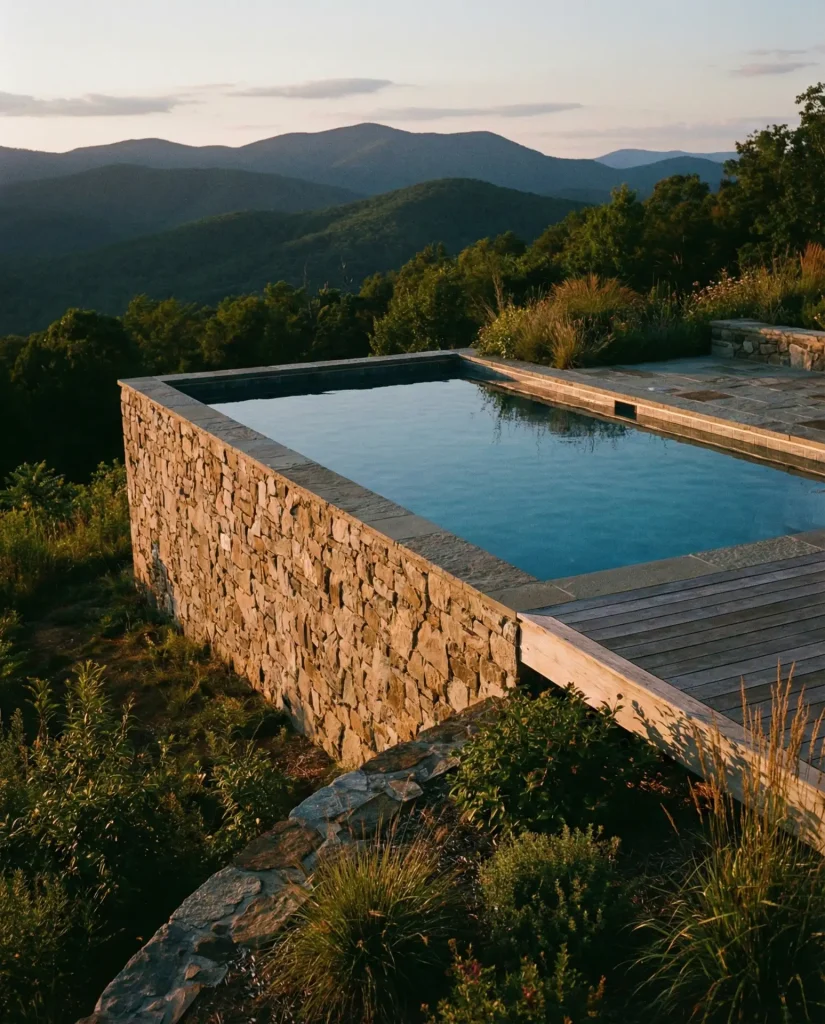
A semi-inground pool gets partially buried into a hillside, creating an inground look on the downhill side while the uphill portion sits above grade with structural walls. This approach dramatically reduces excavation costs on sloped properties while delivering the aesthetic appeal of a fully buried pool from the viewing side. The exposed wall on the uphill side can be finished with stone veneer, stucco, or horizontal wood slats to blend with your home’s architecture, and the built-in retaining wall function eliminates separate hardscaping expenses.
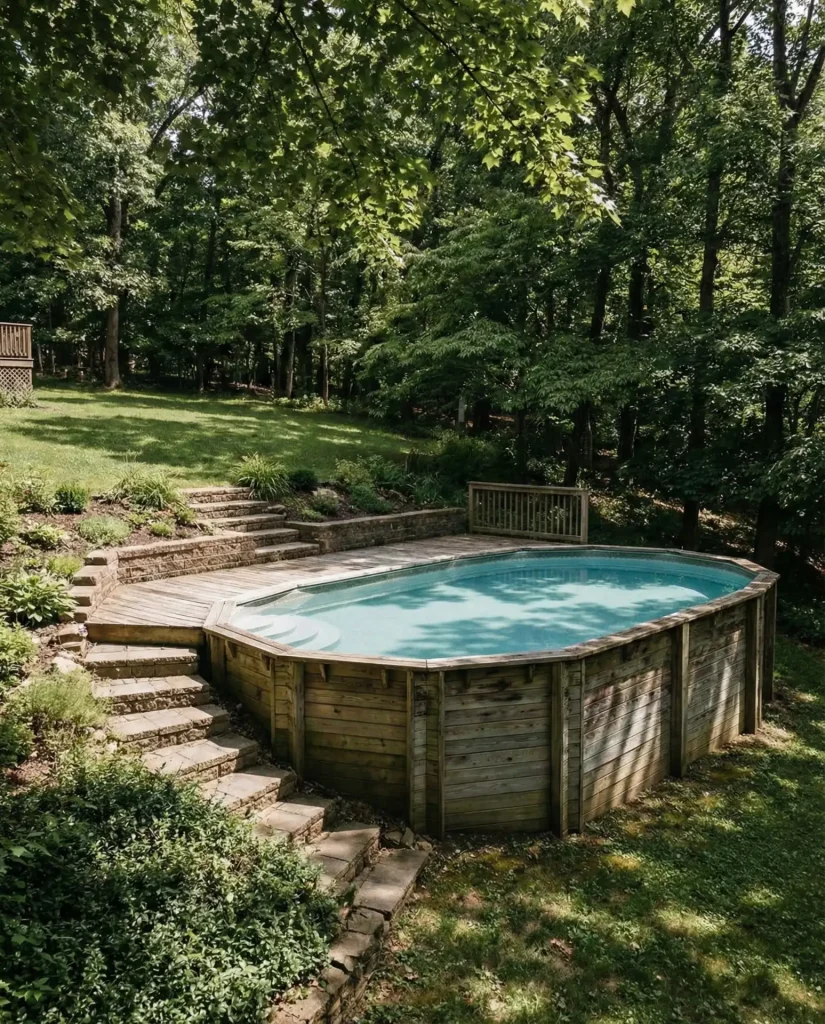
Practical insight: Building codes in many jurisdictions treat semi-inground pools differently than fully buried installations, sometimes allowing faster permitting since they’re technically modified above-ground structures. This hybrid design works particularly well in hilly regions like the Appalachian corridor, Pacific Coast ranges, and Rocky Mountain foothills, where flat buildable space comes at a premium. The reduced excavation can save $10,000-$25,000 compared to full in-ground installation on challenging terrain.
9. Indoor Endless Pool for Year-Round Training
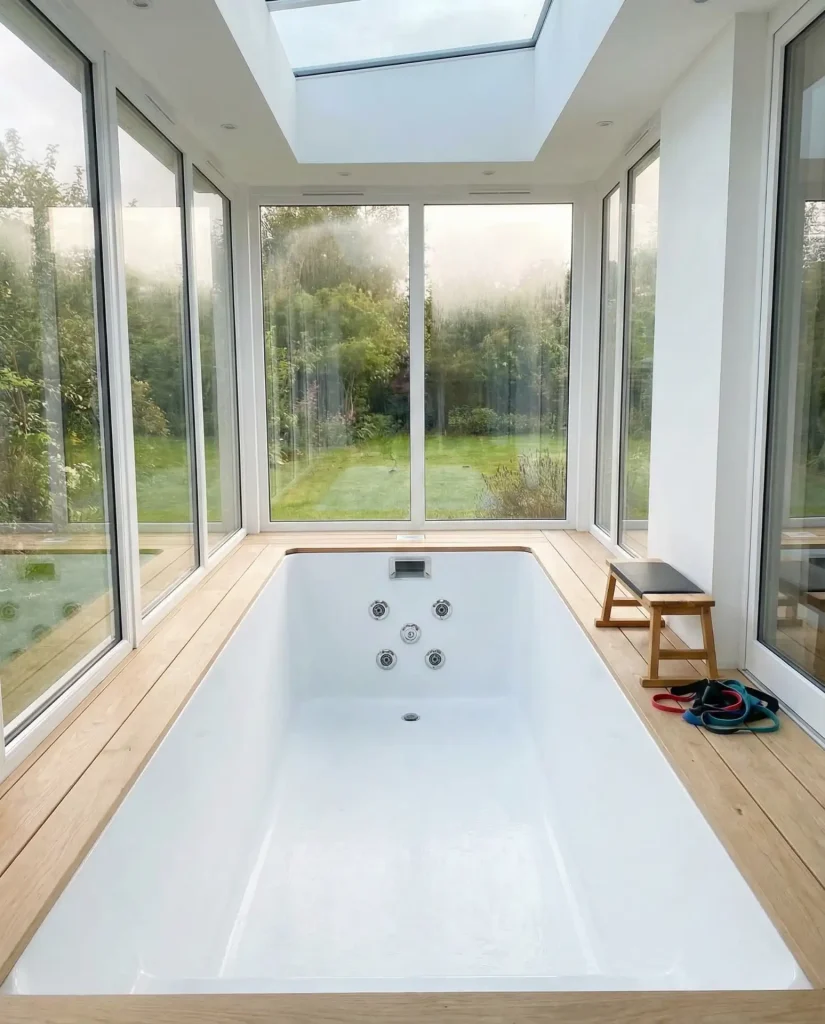
An indoor endless pool with current generators fits into surprisingly compact spaces—often repurposing a spare bedroom, basement area, or attached sunroom—while providing serious swimming training potential regardless of weather. The adjustable current lets users swim continuously in place, getting a full workout in a pool that might measure just 8 by 15 feet. Climate control, privacy, and zero seasonal downtime make these attractive to serious swimmers, physical therapy patients, and fitness enthusiasts who won’t let winter interrupt their routines.
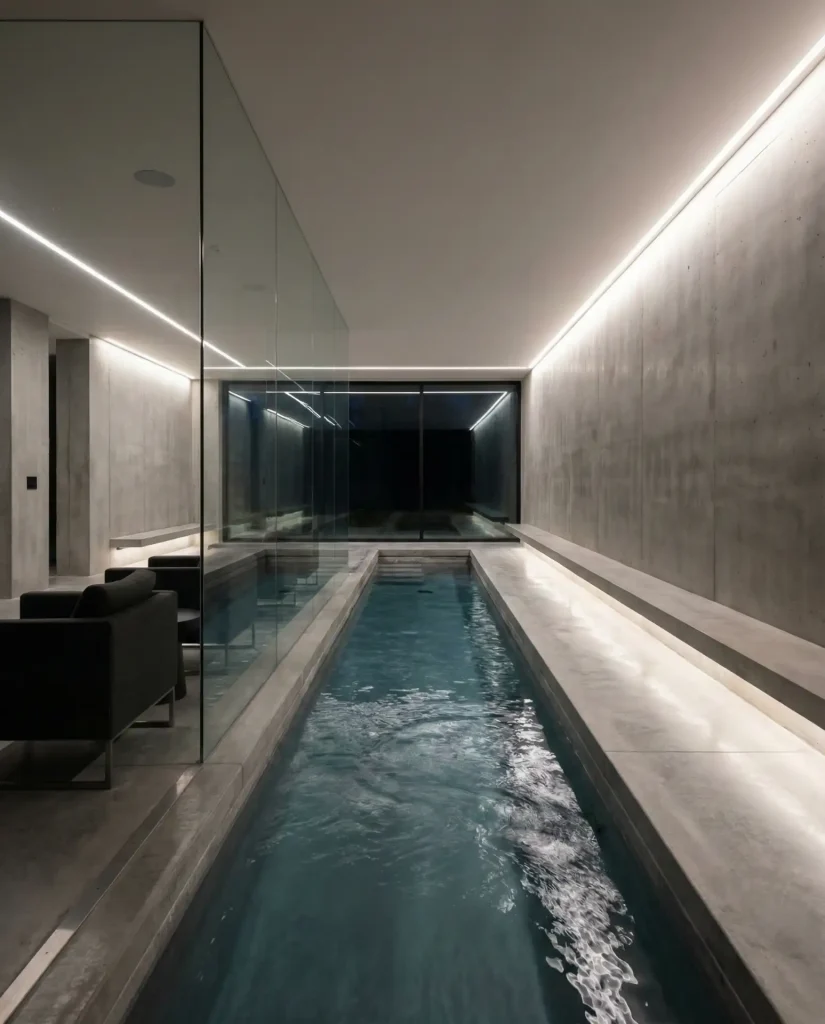
American lifestyle connection: The rise of home gyms during recent years created demand for residential aquatic fitness options, and endless pools answer that need without requiring a full-sized indoor natatorium. Northern states like Minnesota, Wisconsin, and Maine see particularly strong interest since outdoor pool seasons last just 3-4 months. Installation requires proper ventilation to manage humidity—budget an additional $3,000-$8,000 for dehumidification systems that prevent moisture damage to the surrounding structure.
10. Sleek Intex Frame Pool with Custom Deck
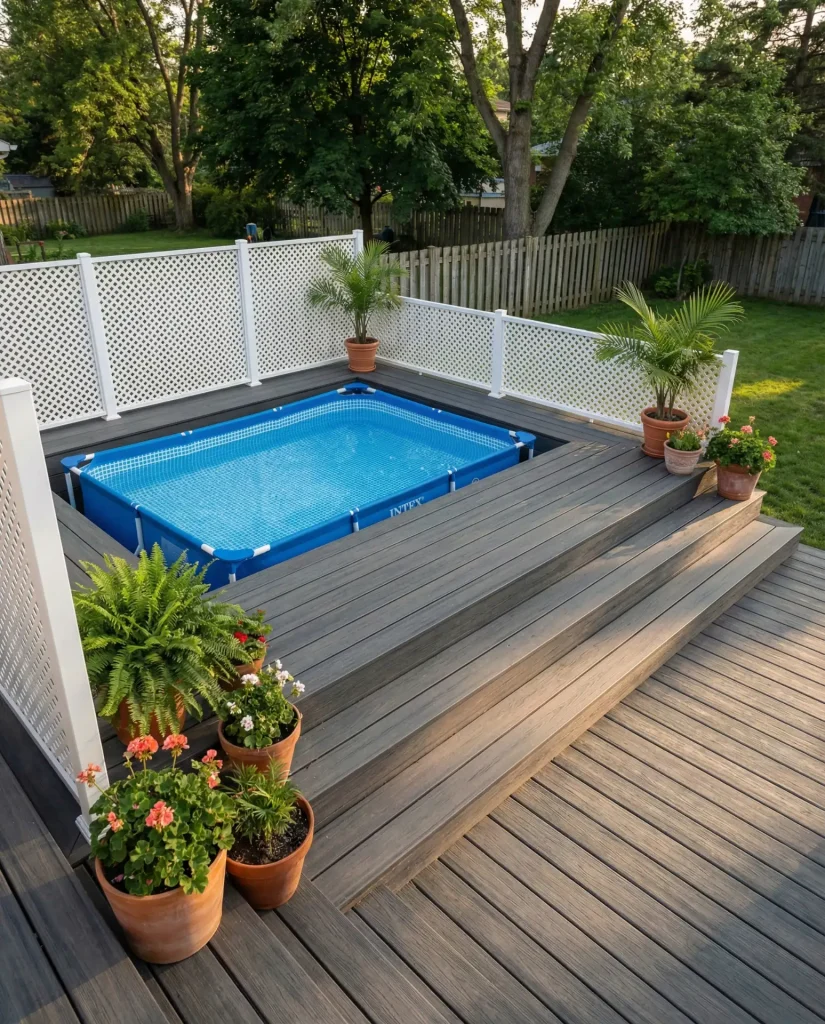
An Intex frame pool—typically considered a temporary summer solution—becomes a permanent landscape feature when surrounded by a thoughtfully designed wooden deck with built-in stairs and privacy screening. These affordable vinyl pools cost $400-$1,500 depending on size, and investing another $2,000-$5,000 in decking transforms the look from “inflatable toy” to “backyard retreat.” The key is treating the frame pool as the water feature within a larger hardscape project, incorporating planters, shade structures, and seating areas that draw attention to the complete environment rather than the pool itself.
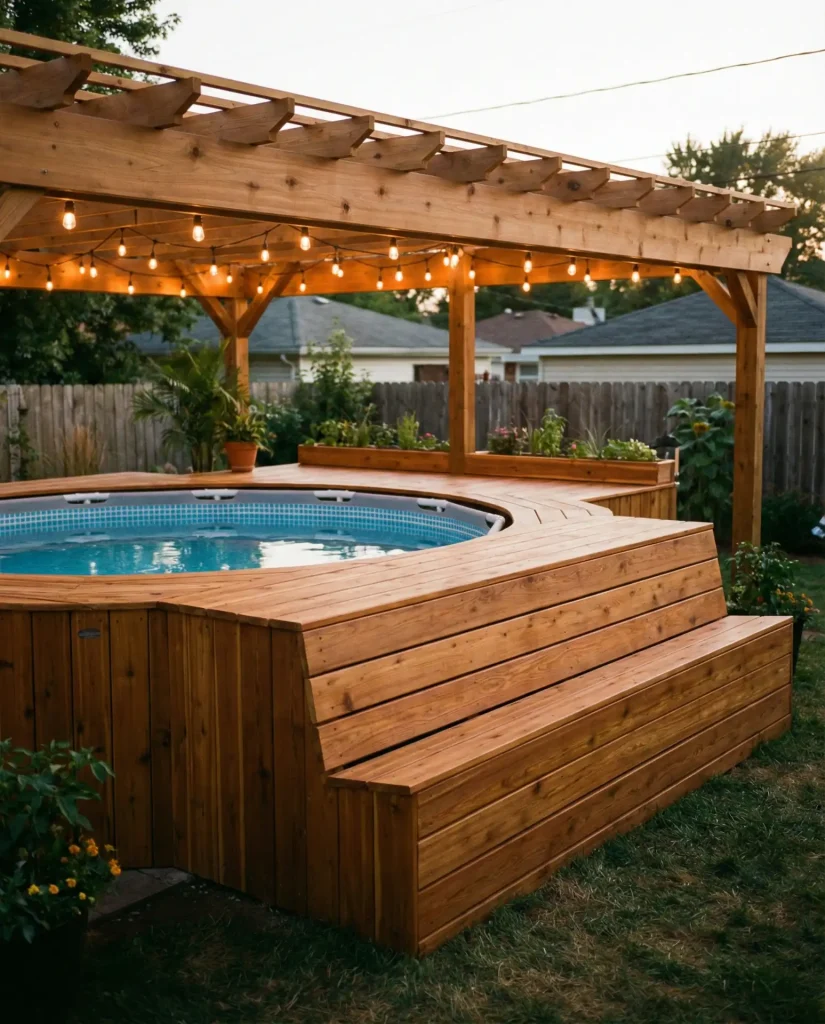
Common mistake: Many DIYers build decks that sit too high relative to the pool rim, creating an awkward step-down that’s dangerous and uninviting. Professional installers recommend positioning the deck surface just 2-3 inches below the pool’s top rail, making entry and exit feel natural while maintaining safety. This budget-friendly approach particularly appeals to renters and homeowners who aren’t ready to commit to permanent installation but still want that polished backyard aesthetic for entertaining.
11. Tiny Cocktail Pool with Water Feature Wall
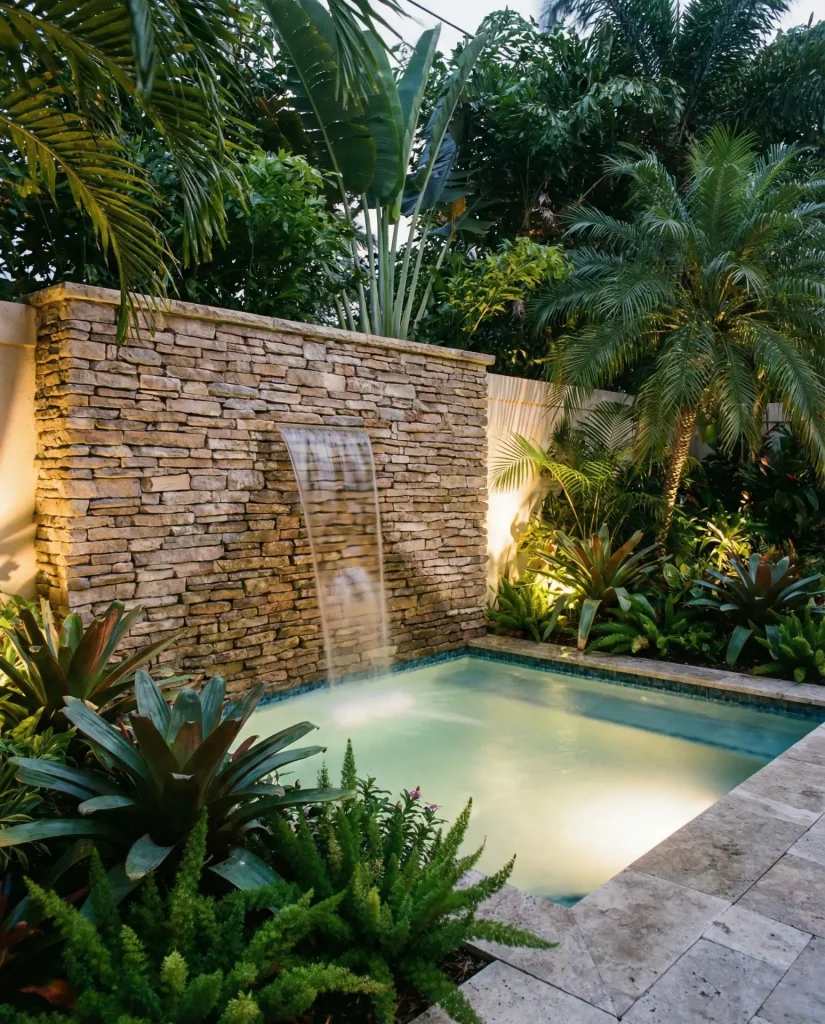
A tiny cocktail pool maximizes impact in minimal square footage by incorporating a vertical water feature wall that creates soothing sound while adding architectural interest. These pools typically measure 10 by 10 feet or smaller, with depths of 4 to 5 feet—perfect for cooling off but not designed for swimming laps. The attached fountain wall, clad in stacked stone, tile, or metal panels, becomes a sculptural focal point that makes the compact pool feel like a designer water garden rather than a scaled-down swimming hole.
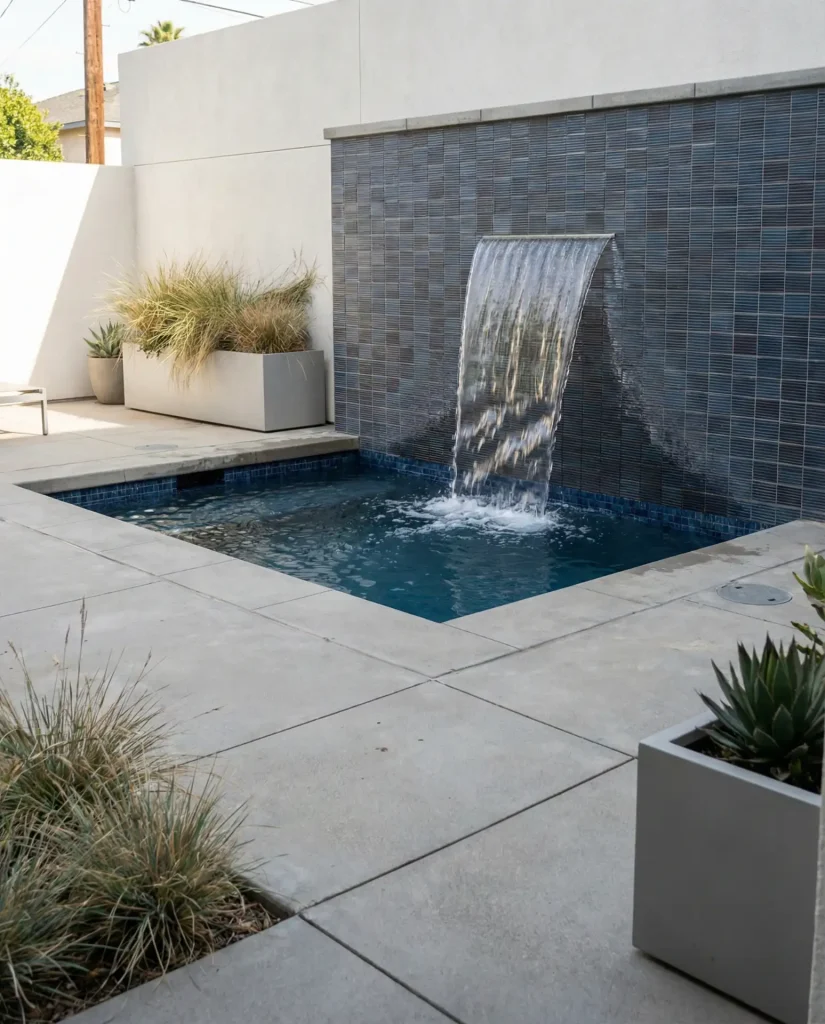
Where it works best: Dense urban lots in cities like San Francisco, Boston, and Chicago—where outdoor space is precious—benefit enormously from cocktail pools that deliver maximum relaxation in 100-200 square feet. The fountain feature masks neighborhood noise, creating an acoustic buffer that enhances the feeling of private retreat. Many homeowners add built-in bench seating along one or two walls, turning the pool into an outdoor living room where you can cool your feet while entertaining guests.
12. Ground-Level Stock Tank with River Rock Beach Entry
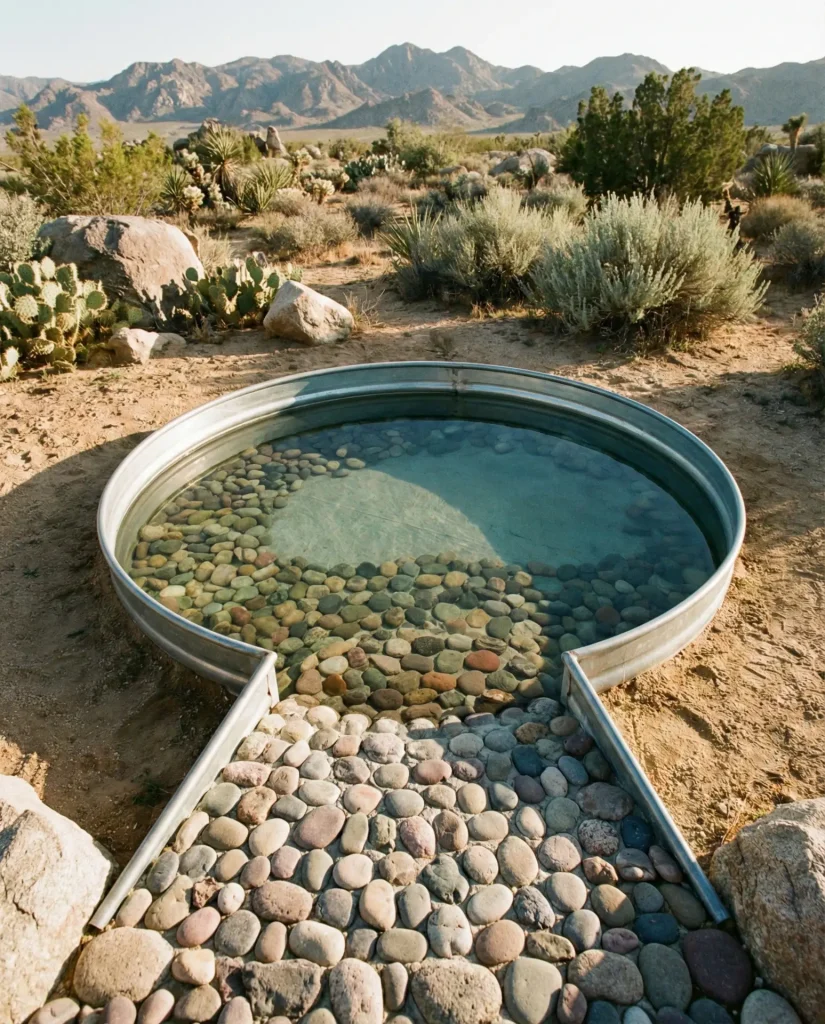
Setting a stock tank pool at ground level and creating a gradual river rock beach entry on one side delivers a naturalistic vibe while solving the accessibility challenge these tall tubs typically present. By excavating 18-24 inches and backfilling one side with graduated stones, you create a gentle walk-in approach that’s safer and more inviting than climbing a ladder. The rock transition blends the industrial tank into organic landscaping, and the permeable stone area provides excellent drainage while functioning as a dry sunbathing zone when you’re not in the water.
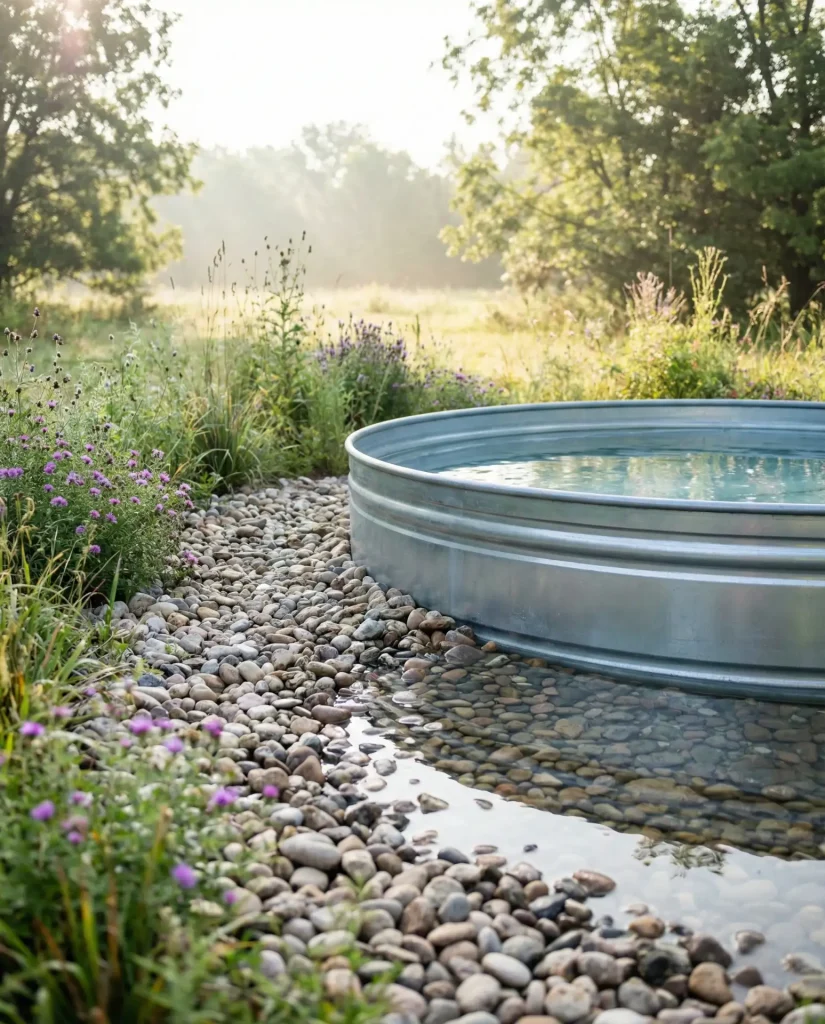
Budget angle: The excavation work adds roughly $500-$1,200 to the project depending on soil conditions and machine access, while river rock runs $40-$80 per ton—figure 2-3 tons for a typical installation. This brings total investment to around $2,500-$4,000 including the tank itself, still dramatically less expensive than the $25,000+ starting point for most inground pools. The ground-level position also improves winter maintenance since you can easily cover the tank with a tarp secured to the surrounding grade.
13. Modern Small Inground Pool with Sunken Fire Pit
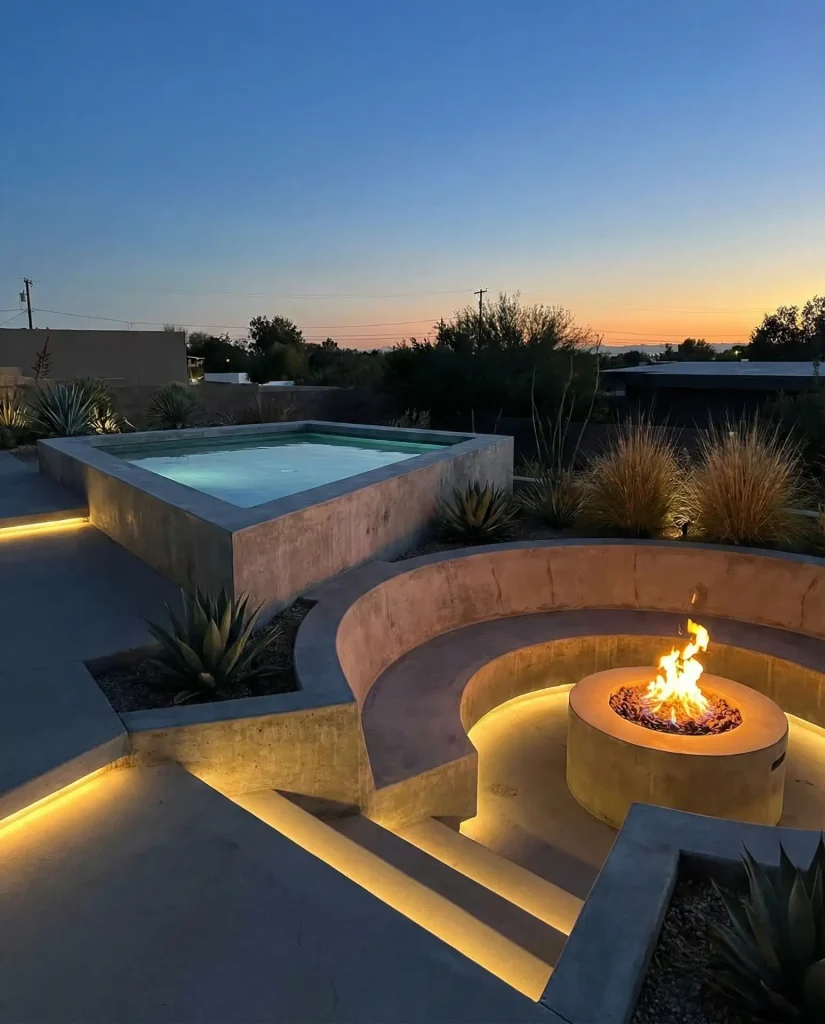
A small inground pool paired with an adjacent sunken fire pit creates a stunning year-round outdoor living complex that maximizes a modest backyard footprint. The pool might measure 12 by 20 feet, while the fire pit sits 18-24 inches below deck level, surrounded by built-in stone or concrete seating. This dual-feature approach extends the useful season—the pool dominates summer months, while the fire pit becomes the gathering spot for spring, fall, and winter evenings. The sunken design for the fire feature creates intimate conversation zones and blocks wind, making flames more stable and heat more effective.
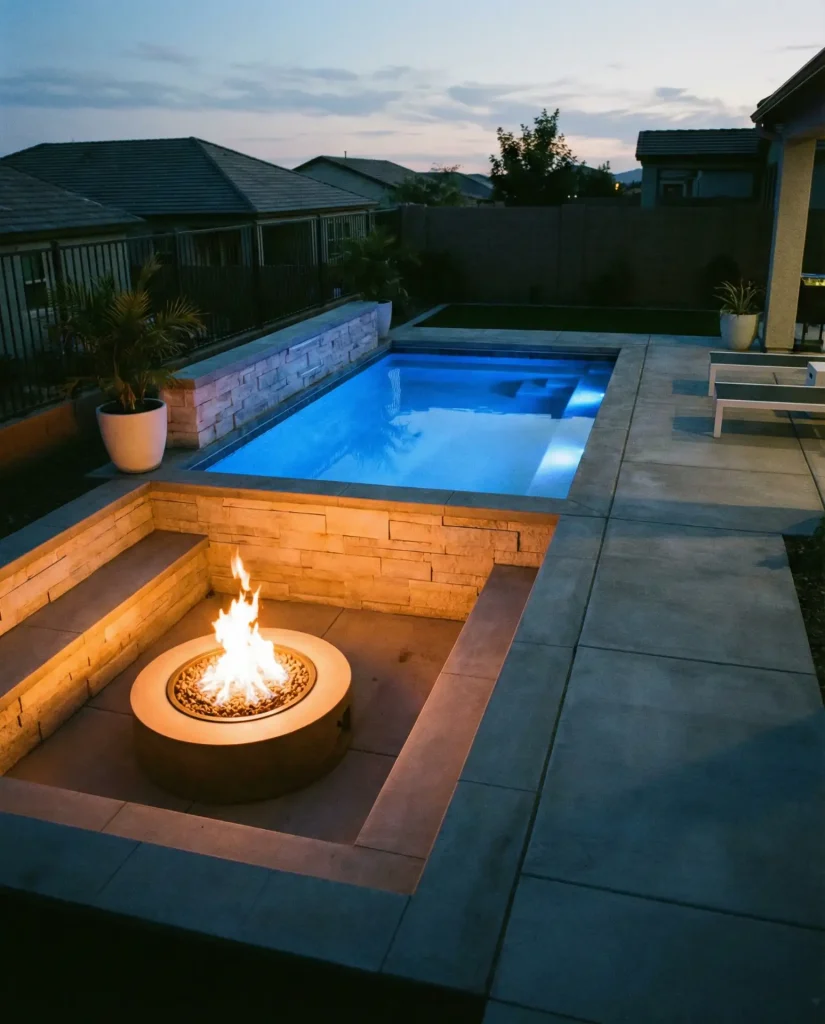
Expert commentary: Landscape architects recommend positioning the fire pit at least 12 feet from the pool edge to prevent ash and embers from blowing into the water while keeping the features visually connected through continuous paving or deck material. The combined excavation for both elements can actually reduce per-square-foot costs since equipment is already on-site and soil removal happens simultaneously. Expect to invest $35,000-$60,000 total for this dual installation, which sounds substantial until you compare it to the $50,000-$80,000 cost of a larger single pool.
14. Elegant Above-Ground Pool with Composite Deck Wrap
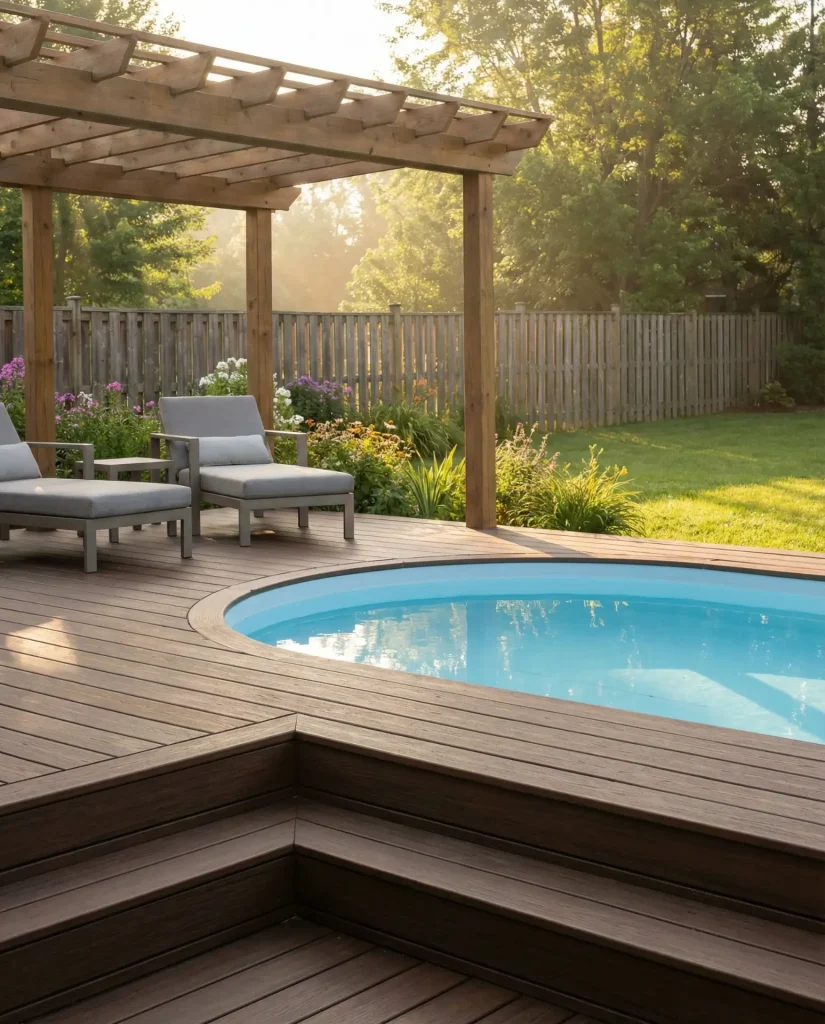
A nice above-ground pool fully wrapped in composite decking breaks the stereotype of cheap temporary installations by creating a permanent-looking feature with all the cost benefits of above-grade construction. Quality composite materials in wood-tone finishes disguise the pool’s metal walls completely, while multi-level deck platforms create lounging areas, plant zones, and entrance stairs that turn the structure into a complete outdoor room. The composite surface stays cooler than traditional wood, resists splinters and rot, and requires virtually zero maintenance beyond occasional cleaning.
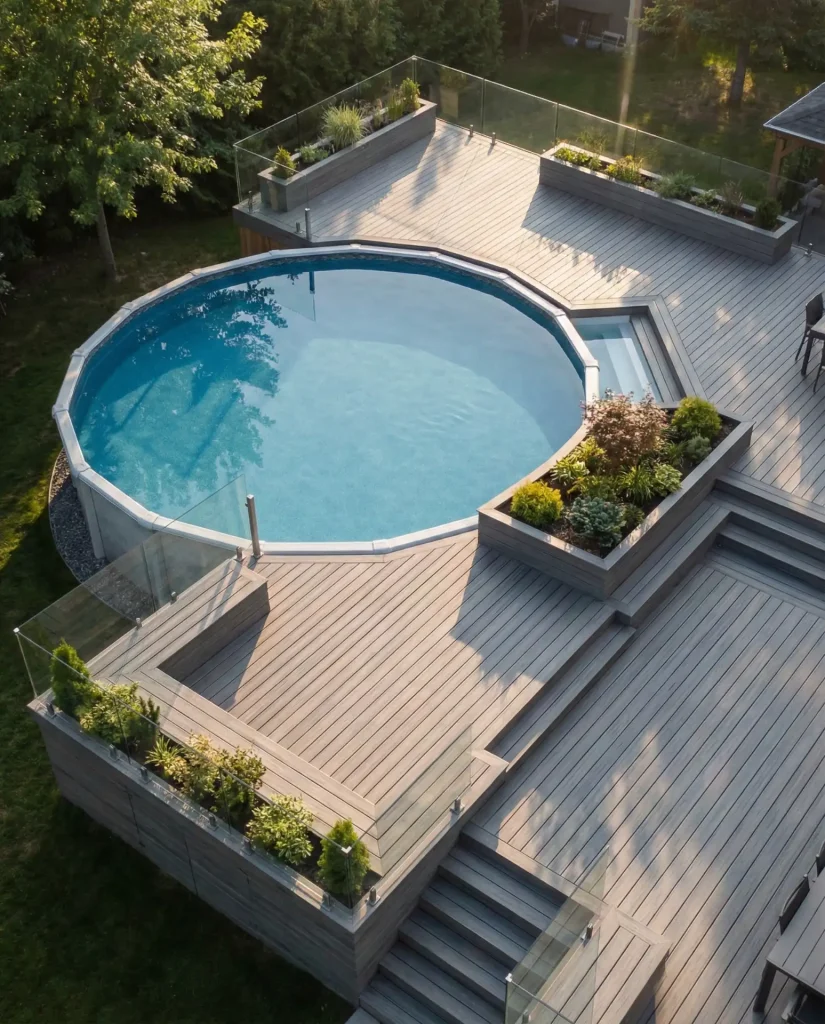
Real homeowner behavior indicates that above-ground pools with quality decking see comparable use rates to in-ground installations while maintaining significant resale advantages—should you move, you can disassemble the pool and potentially take it with you or leave it as a premium amenity that’s fully removable for the next owner. Composite decking costs $25-45 per square foot installed, so wrapping a 24-foot round pool might run $8,000-$15,000, bringing total investment to $12,000-$20,000 compared to $30,000-$50,000 for a basic inground alternative.
15. Minimalist Concrete Plunge Pool with Infinity Edge
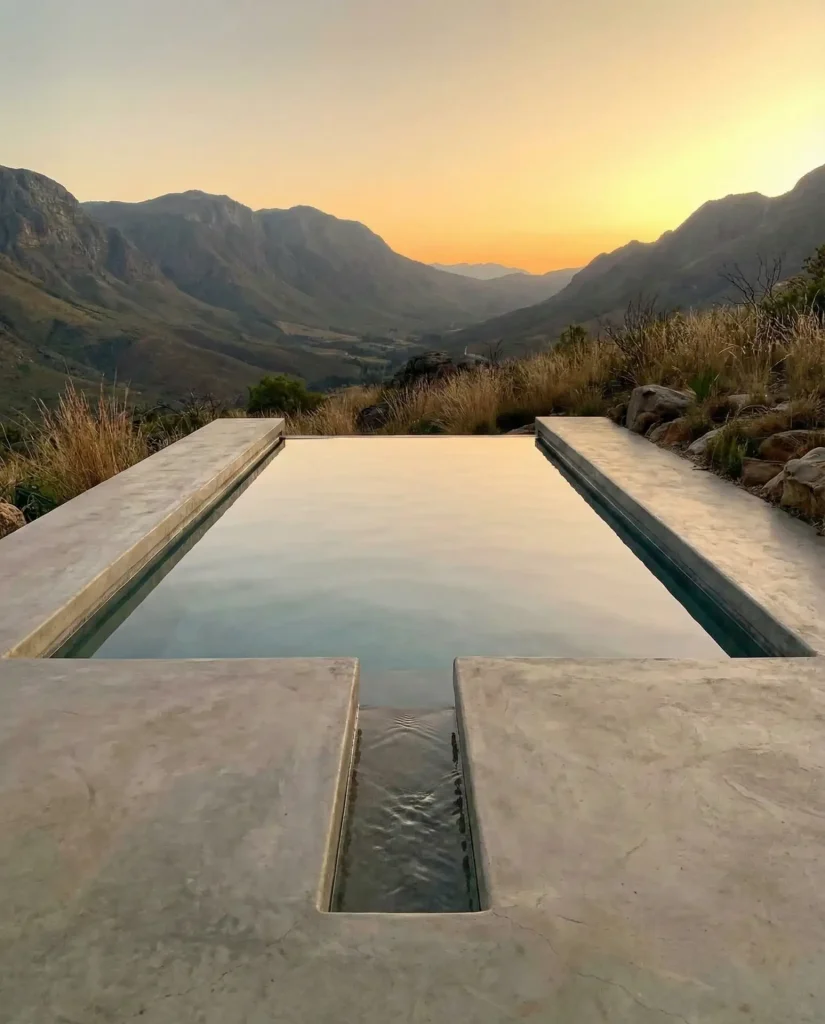
A plunge pool with an infinity edge makes dramatic use of limited space by creating the illusion that water extends into the surrounding landscape or skyline. This works especially well on properties with views—hillside lots overlooking valleys, urban rooftops facing cityscapes, or coastal properties with ocean horizons. The pool itself might measure just 8 by 12 feet, but the vanishing edge transforms it into a stunning visual element that punches well above its compact dimensions. The catch basin and recirculation system hide below or behind the viewing side, maintaining clean sightlines.
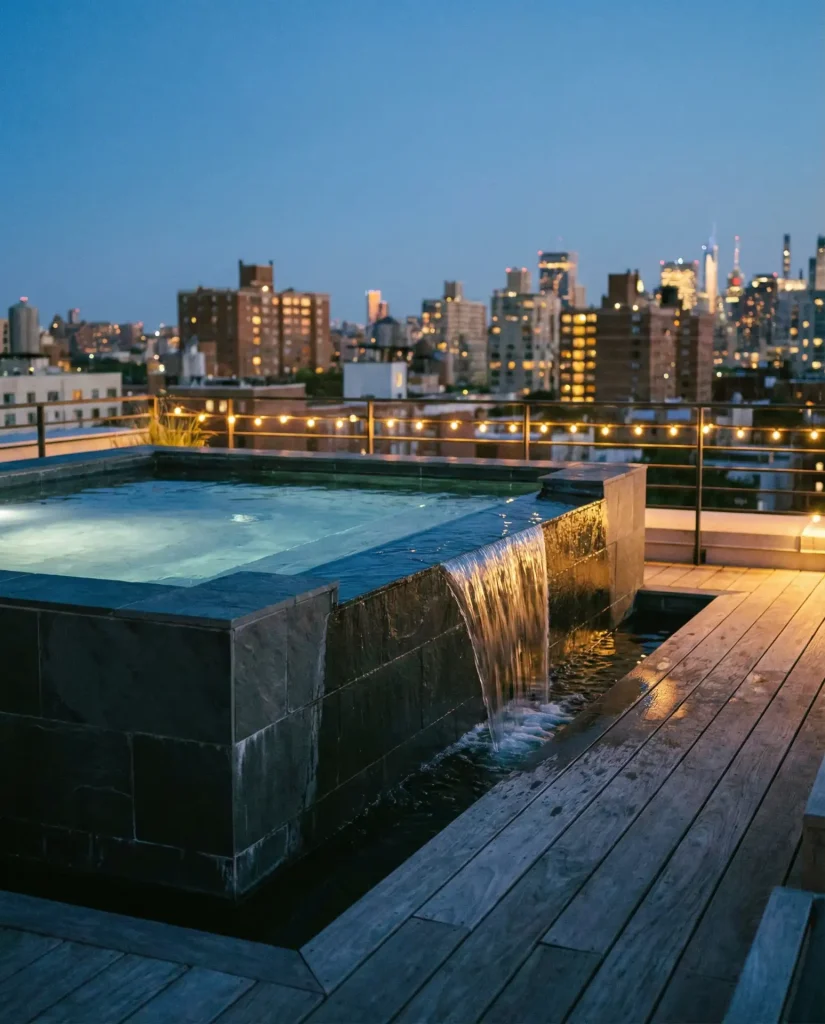
Practical insight: The infinity edge feature adds approximately $5,000-$12,000 to pool construction depending on the complexity of the catch system and pump requirements. However, the architectural impact—especially for properties with premium views—often increases home value by multiples of that investment. The system works best on sites with at least modest elevation changes; completely flat lots require artificial berms or raised deck levels to achieve the effect convincingly.
16. Charming Duck Pond Pool with Natural Filtration
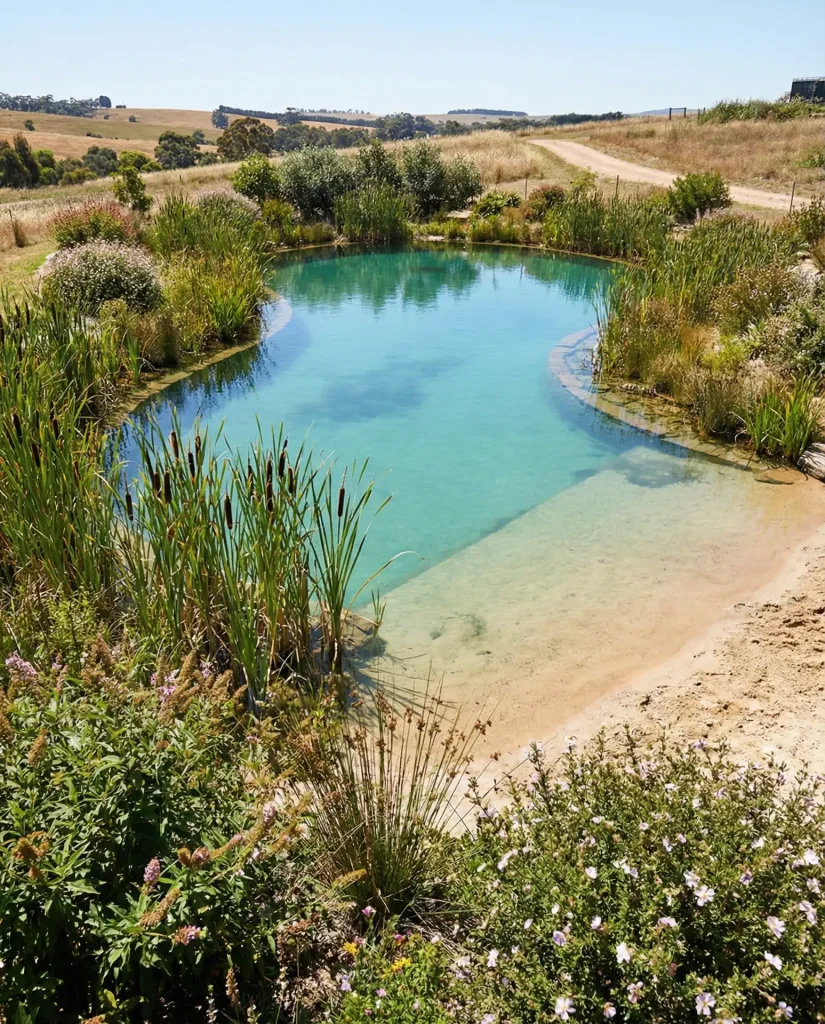
A duck pond-style pool with natural filtration creates a backyard ecosystem that serves both human swimmers and visiting waterfowl through careful design that balances recreation and wildlife habitat. The concept typically includes a swimming zone with a gentle beach entry, separated by submerged barriers from planted edges where ducks, frogs, and beneficial insects can thrive. Biological filtration through gravel beds and aquatic plants keeps water clean without harsh chemicals that would harm wildlife, while the naturalistic shape with irregular edges mimics ponds found in nature.
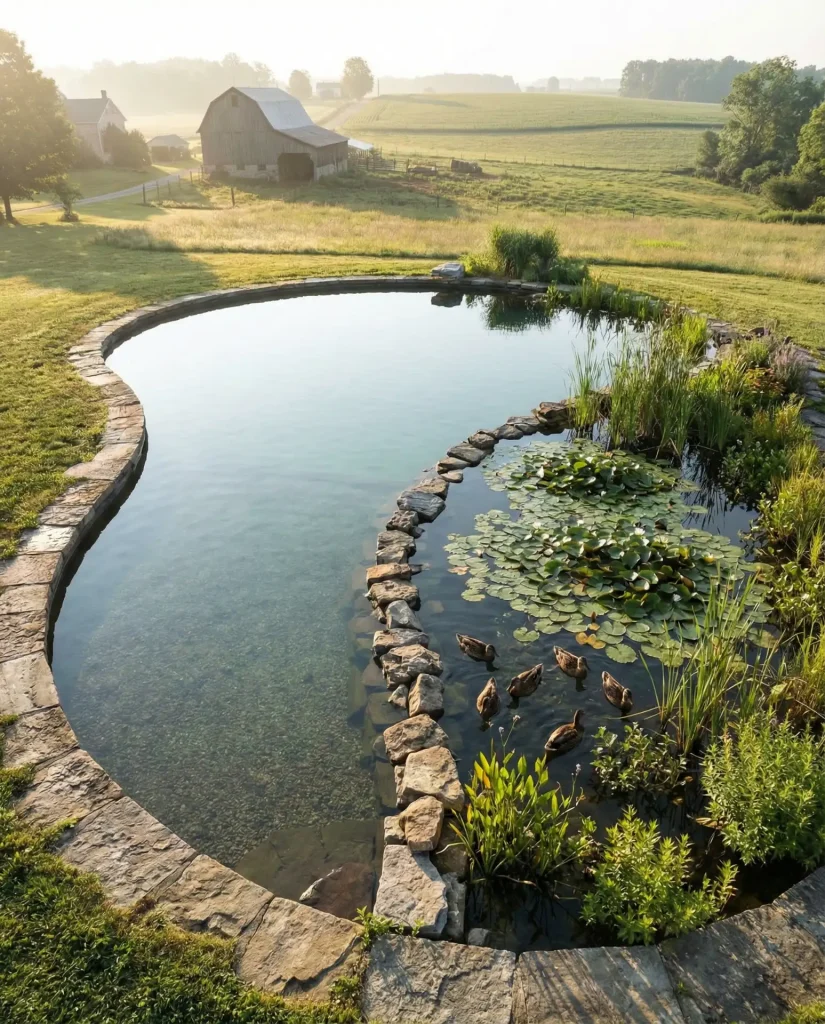
American lifestyle connection: Rural and suburban homeowners increasingly seek outdoor spaces that support local wildlife while providing family recreation, and duck pond pools answer both needs in a single water feature. Properties with acreage in states like Virginia, Pennsylvania, and Washington see particular success with this approach since visiting waterfowl are already part of the landscape. The design requires larger overall footprints—typically 800-1,200 square feet minimum—to accommodate both zones effectively, but ongoing maintenance costs drop significantly without chemical treatments.
17. Sophisticated Sunken Above-Ground Pool with Retaining Wall
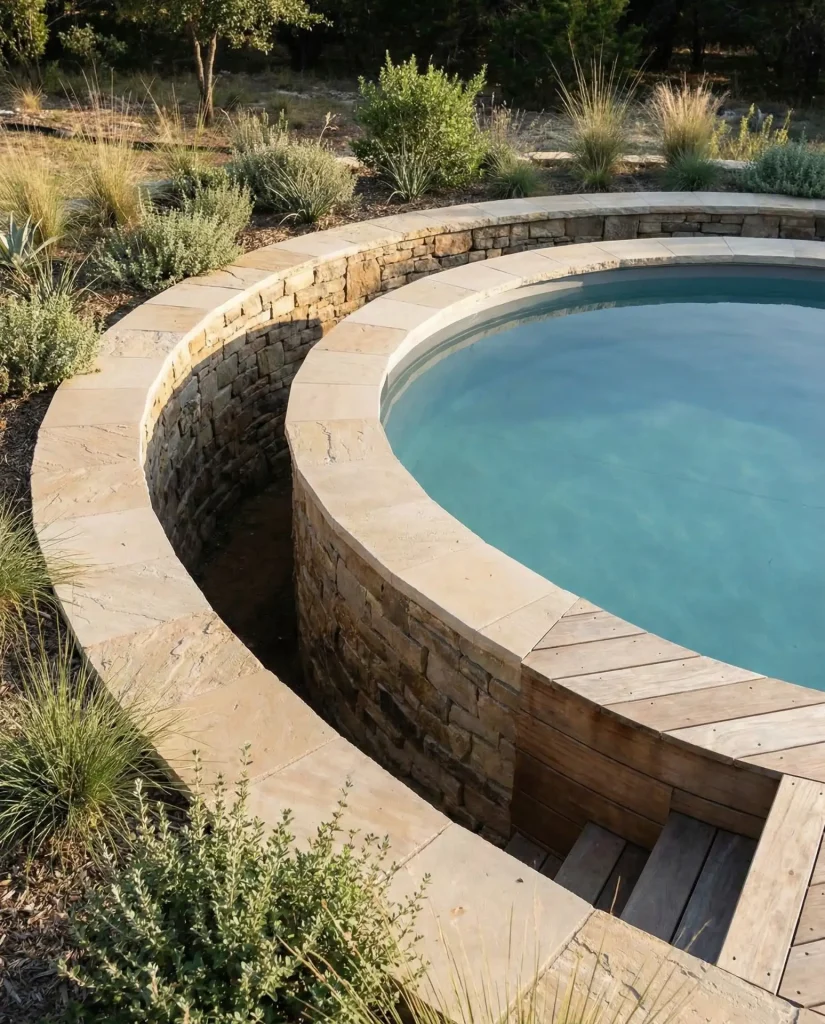
A sunken above-ground pool installation involves excavating 2-3 feet into level ground and building a retaining wall around the perimeter, then setting the pool so its rim sits just above the new grade. This hybrid approach delivers some in-ground aesthetics while maintaining the structural simplicity and cost benefits of above-ground construction. The retaining wall, finished in stone, block, or timber, creates built-in seating and planting opportunities, while the reduced height makes entry and exit safer and more accessible for all ages.
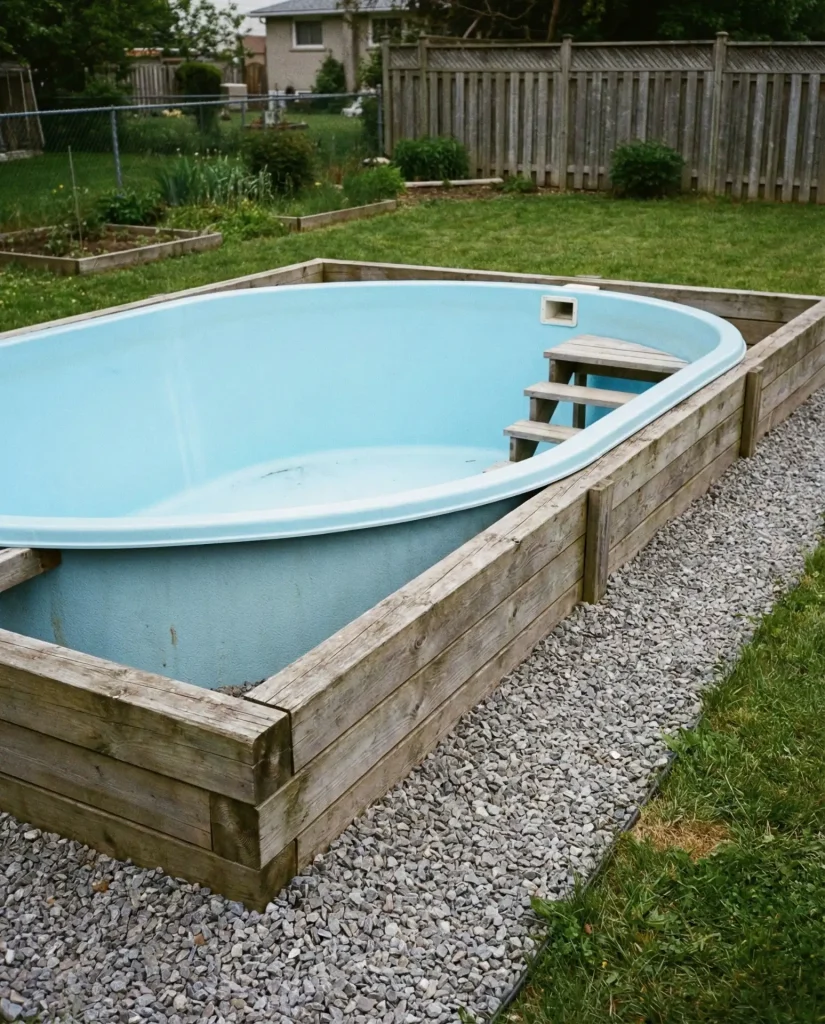
Common mistake: Failing to account for proper drainage around the retaining wall can lead to water pooling against the pool’s exterior walls, potentially causing rust or structural damage over time. Experienced installers always include perforated drain pipe at the base of the excavation connected to daylight drainage or a dry well. The partial burial approach works particularly well in regions with high water tables or rocky soil where full excavation proves difficult or expensive—the compromise delivers much of the visual benefit at a fraction of the cost and hassle.
18. Bloxburg-Inspired Modern Pool with Geometric Landscaping
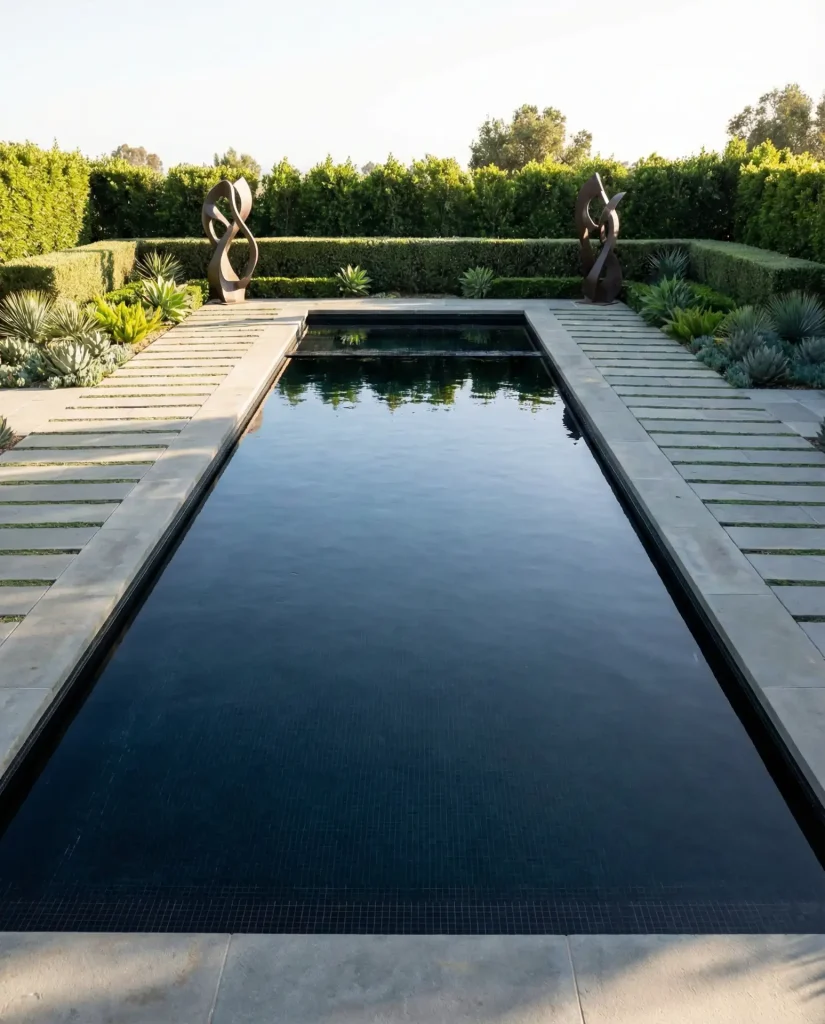
Gaming aesthetics from platforms like Bloxburg are influencing real-world pool design with ultra-modern rectangular forms, sharp angles, and geometric hardscaping that looks almost architectural. These pools feature clean lines, monochromatic color schemes, and symmetrical landscaping with boxwood hedges, ornamental grasses in linear rows, and precisely placed accent plants. The gaming-to-reality translation works because it emphasizes form over fuss—simple shapes, quality materials, and careful proportions create high-impact spaces without excessive decoration.
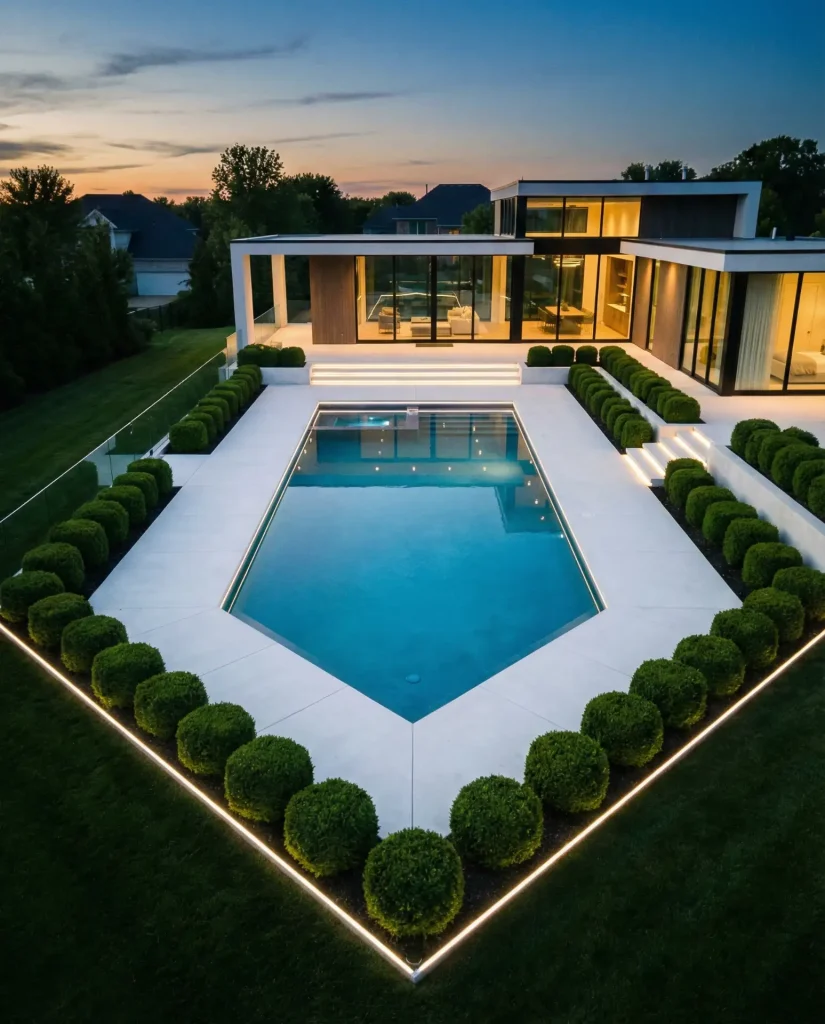
Where it works best: Contemporary homes built in the last 15 years, particularly in master-planned communities across Arizona, Nevada, and Southern California, pair naturally with this aesthetic since the architectural language already speaks to modern minimalism. Younger homeowners who grew up with design-focused games appreciate the translation of virtual concepts into physical spaces, and the simplified maintenance requirements align with busy lifestyles—geometric landscaping is easier to maintain than flowing, naturalistic gardens.
19. DIY Container Pool with Upcycled Materials
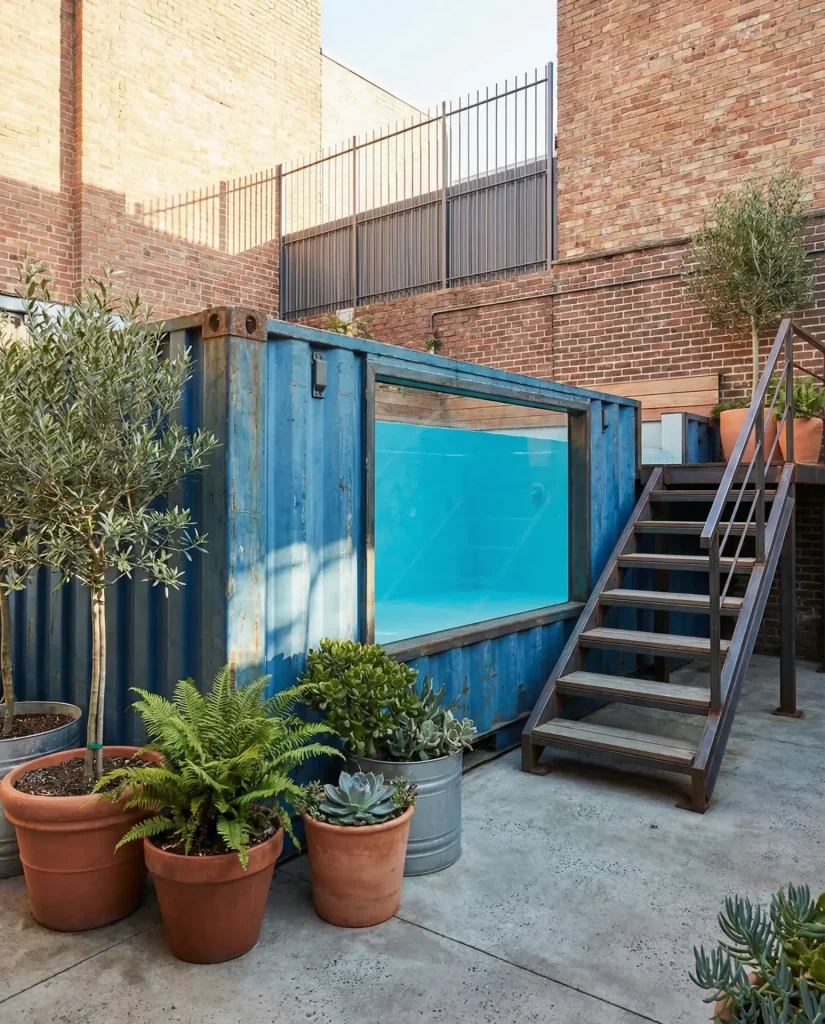
A DIY shipping container pool repurposes a 20-foot steel box into a sleek modern swimming pool through cutting, sealing, and finishing work that dedicated homeowners can tackle over several weekends. The containers provide prefabricated steel walls that just need waterproofing and liner installation, while the industrial aesthetic appeals to modern design sensibilities. Costs typically run $10,000-$20,000 including the container, cutting/welding, liner, filtration system, and basic deck installation—roughly half the price of traditional inground construction for a similar-sized pool.
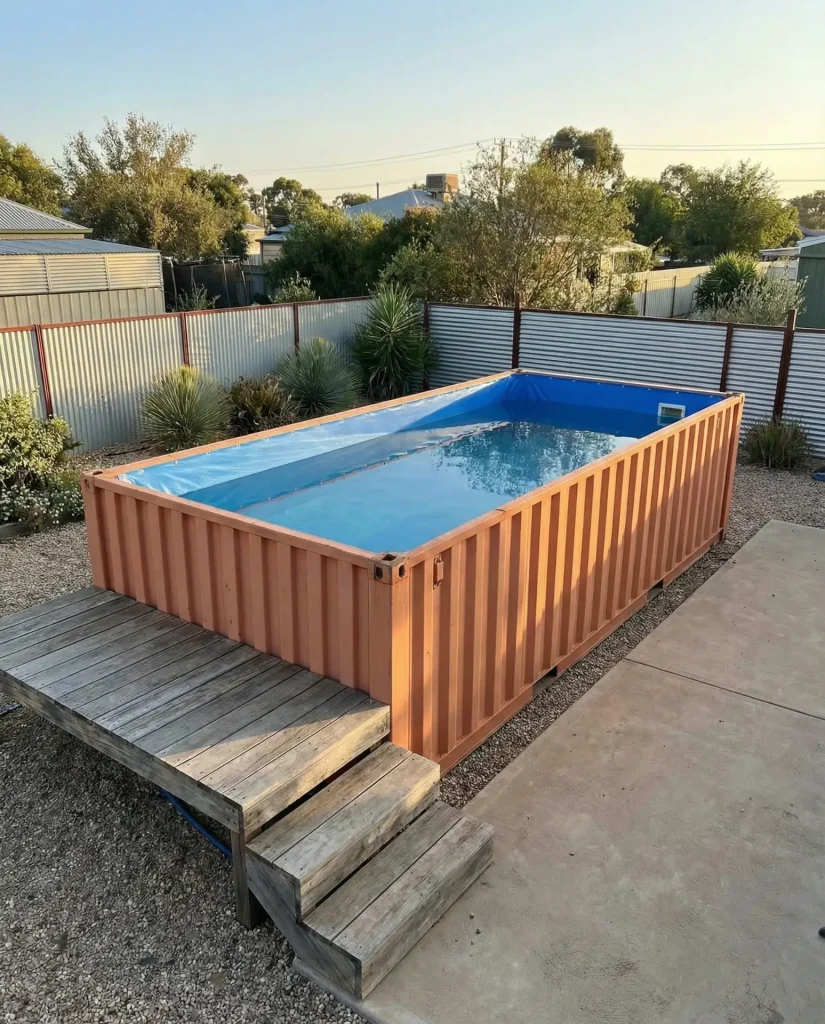
Budget perspective: While the container itself costs $2,000-$4,000, additional expenses for professional cutting and welding run $3,000-$6,000 unless you have metalworking skills. The rectangular 8-foot-wide dimension limits layouts but works well for lap swimming, and the standard 20-foot length provides adequate exercise space. Permitting varies wildly by jurisdiction—some areas treat these as temporary structures, while others require full pool permits, so research local codes before purchasing materials.
20. Sims 4-Style Colorful Pool with Creative Tiling
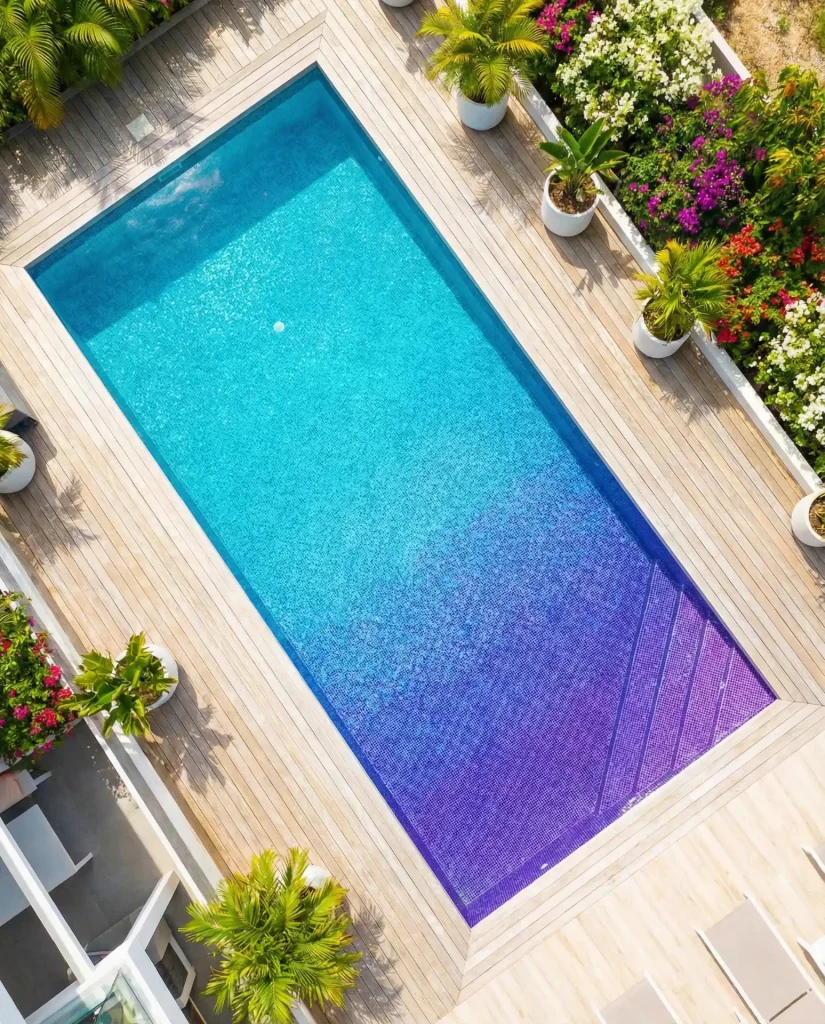
Bold tile patterns inspired by Sims 4 design freedom are making their way into real pools through creative use of colored glass mosaics, geometric patterns, and unexpected color combinations. Instead of standard blue interiors, these pools feature gradient transitions from turquoise to purple, checkered patterns in contrasting tones, or mosaic murals along pool floors and walls. The playful approach celebrates personal expression over traditional pool aesthetics, creating one-of-a-kind water features that function as both recreation and art installations.
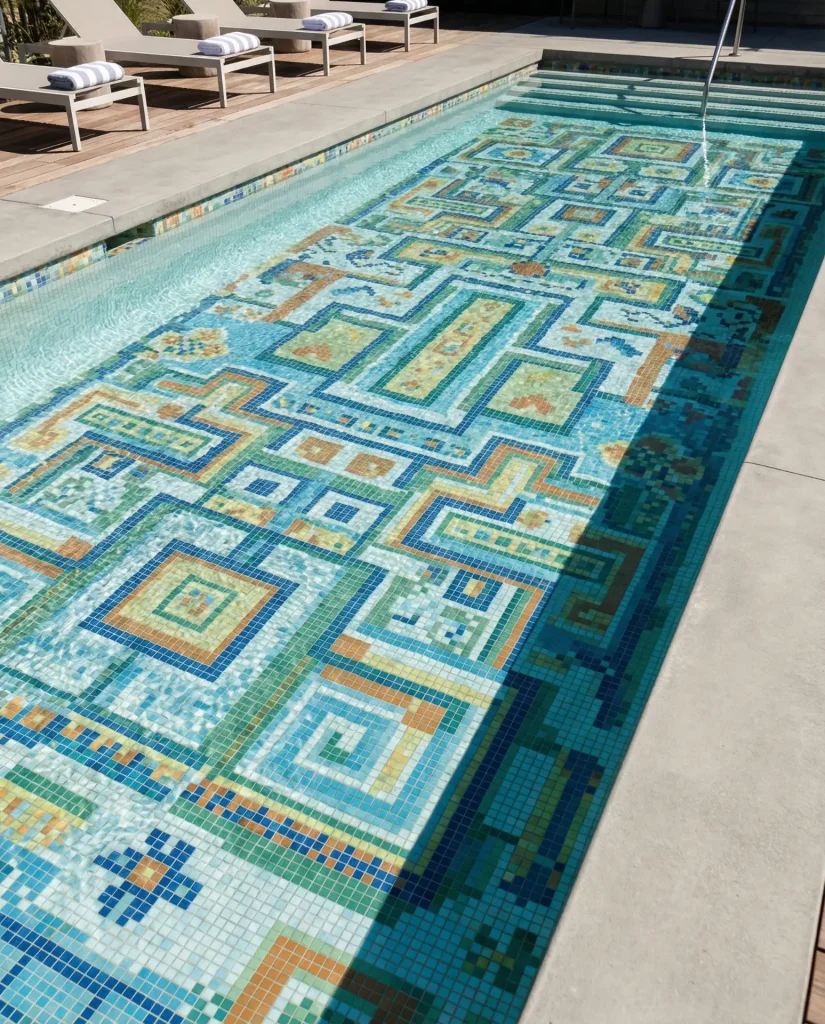
My friend’s teenager designed their pool renovation using a Sims-inspired palette of mint green and coral tiles, and while the parents were skeptical during planning, the finished product became the neighborhood showpiece—it photographs beautifully and reflects the family’s creative personality. Custom tile work adds $15-$30 per square foot depending on pattern complexity, but the investment creates a truly unique feature that stands apart from cookie-cutter blue pools. This approach resonates particularly with younger homeowners who view pools as lifestyle statements rather than generic amenities.
21. Minecraft-Inspired Blocky Pool with Modular Design
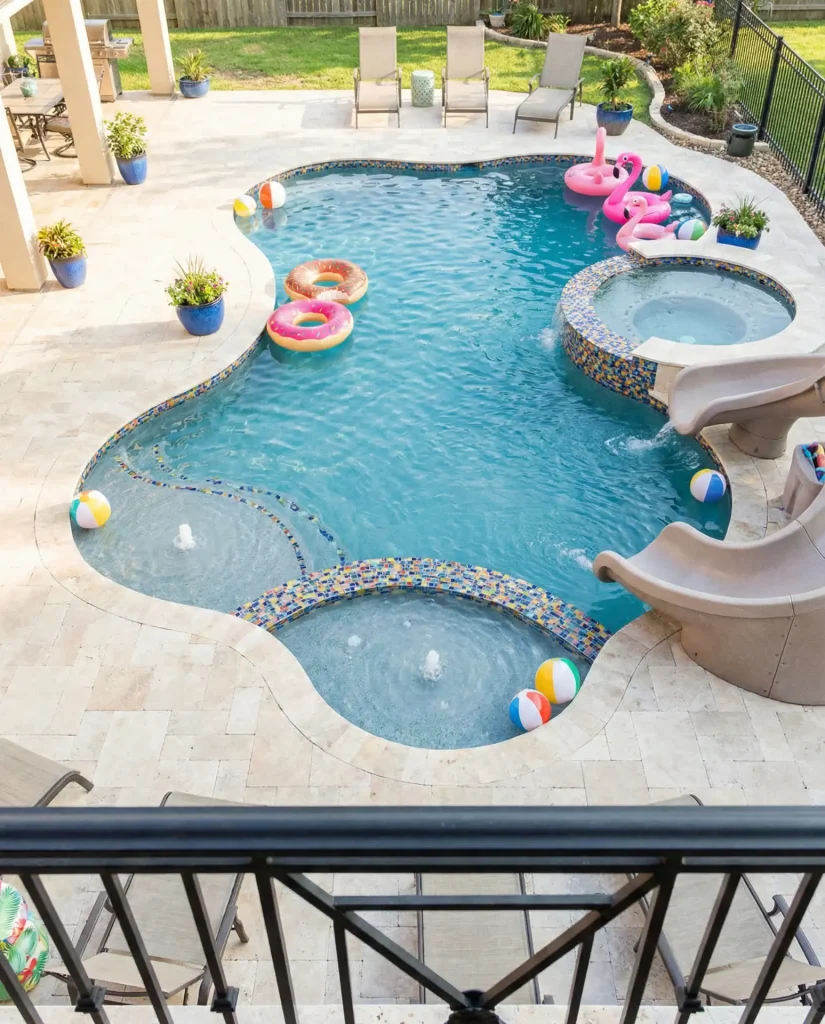
A Minecraft-inspired pool embraces intentionally blocky, stepped geometry with modular sections that create distinct zones through elevation changes and angular transitions. This design might feature a shallow play area as one “block,” stepping down to a lounging platform, then dropping to a deeper swimming section—all connected by squared-off edges and right angles. The pixelated aesthetic translates surprisingly well to real construction using concrete and tile, and the modular nature allows phased building where budget constraints exist.
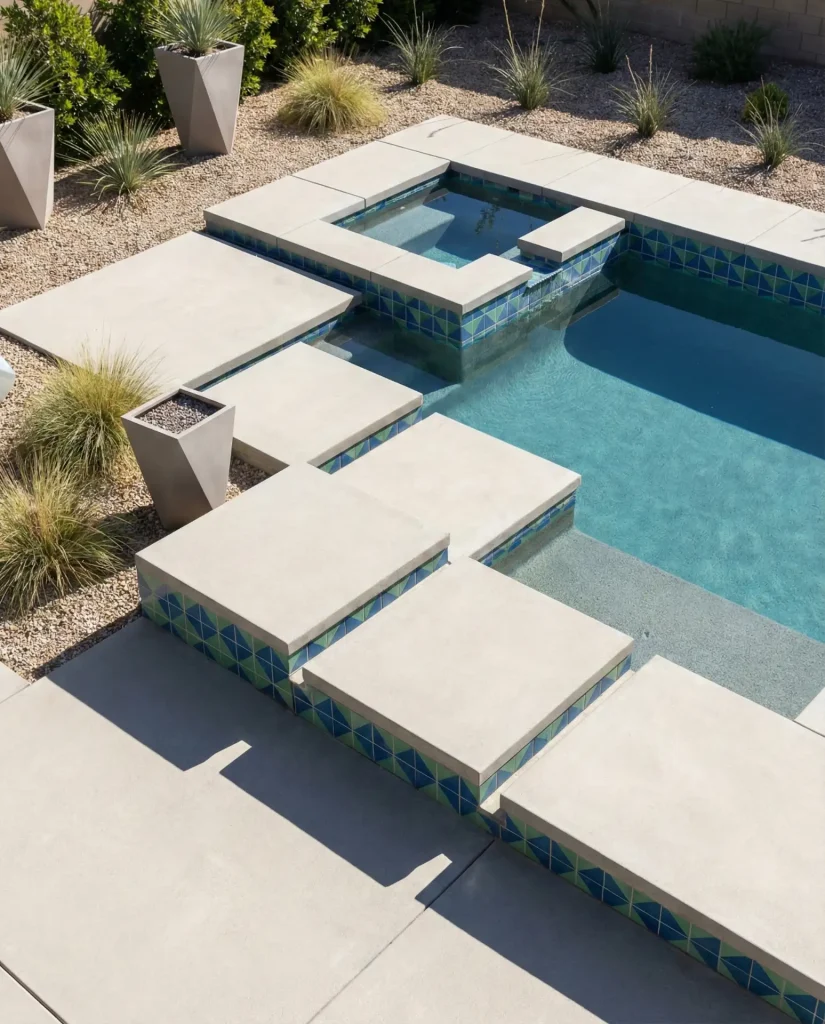
Expert commentary: While traditional pool design emphasizes smooth curves and flowing transitions, the blocky approach actually simplifies construction since every angle is 90 degrees—formwork becomes straightforward, and tile installation follows predictable patterns. This can reduce labor costs by 10-15% compared to complex curved designs. Families with school-age children particularly appreciate the gaming reference, and the distinct depth zones provide clear visual boundaries that help with supervision and safety management during pool parties.
22. Toca Boca-Inspired Whimsical Backyard Pool
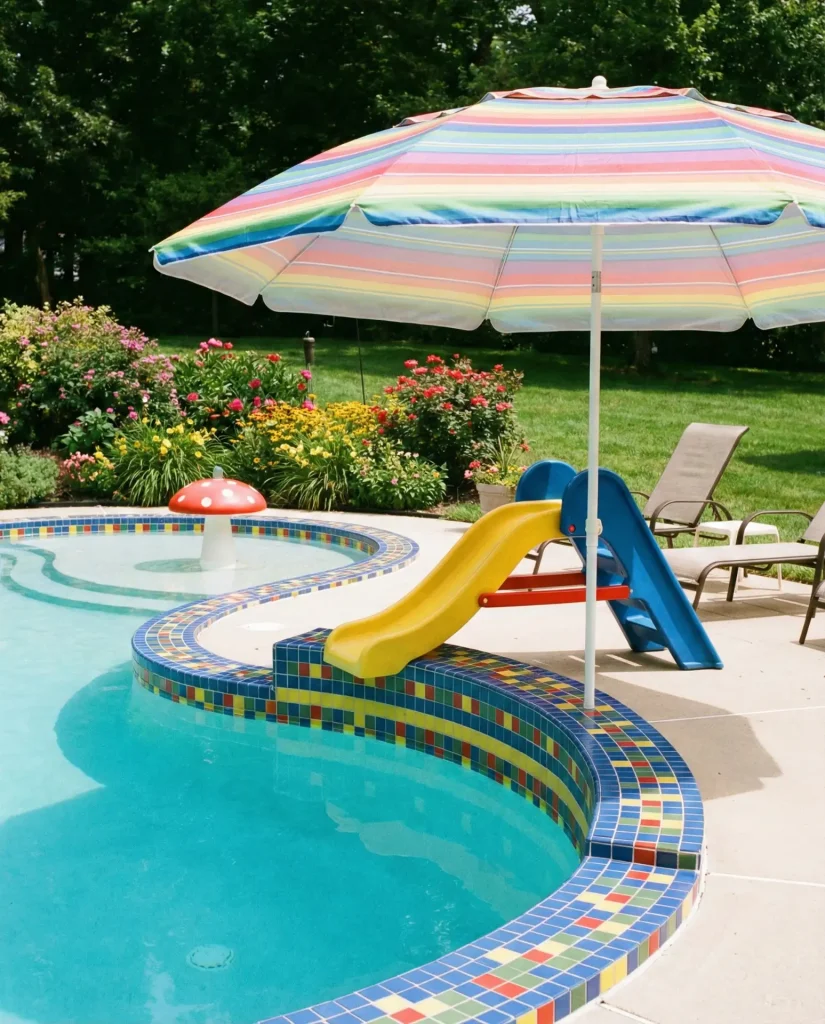
Taking cues from Toca Boca’s playful design language, a whimsical backyard pool incorporates rounded edges, cheerful colors, and imaginative accessories that create a space specifically designed for family fun. This might include a kidney or free-form shape with integrated splash features, colorful pool floats stored in custom holders, rainbow-hued tile accents, and surrounding play areas with water toys and games. The design prioritizes joy and accessibility, making the pool environment welcoming for children while remaining stylish enough for adult enjoyment.
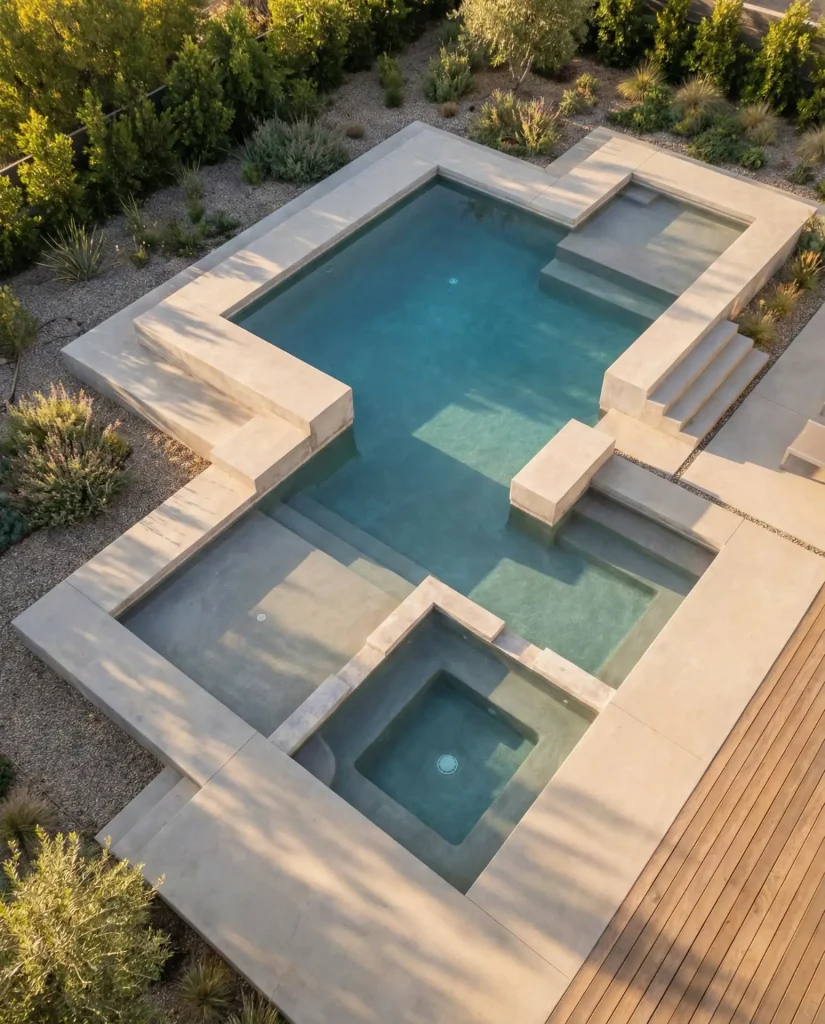
Real homeowner behavior shows that pools designed with children in mind maintain their appeal as kids age—the playful aesthetic evolves into retro charm, and the integrated features that served toddlers become conversation pieces for teenagers entertaining friends. Suburban families in growing communities across Texas, North Carolina, and Georgia gravitate toward this approach because it maximizes the pool’s useful lifespan across different family stages. Budget considerations remain reasonable since the design focuses on smart layout and thoughtful details rather than expensive exotic materials.
Conclusion
From rustic stock tanks to architectural infinity edges, 2026’s pool landscape offers solutions for every property size, budget, and aesthetic preference. Whether you’re drawn to natural swimming ponds that support local wildlife, compact plunge pools perfect for urban lots, or bold gaming-inspired designs that make your backyard truly unique, the right approach exists for your space. Share which ideas resonate with your vision in the comments below—we’d love to hear about your pool plans and help you think through the possibilities.