Pool fences have evolved far beyond basic safety barriers—they’ve become key design elements that define your outdoor space. In 2026, American homeowners are seeking fencing solutions that blend security with style, whether they’re updating a suburban backyard or enhancing a coastal retreat. From sleek glass panels to rustic timber slats, the right pool fence can elevate your landscape while keeping loved ones safe. This guide presents inspiring ideas that balance aesthetics, durability, and compliance with local safety codes, helping you create a poolside environment that feels both welcoming and secure.
1. Frameless Glass Pool Fence with Polished Spigots
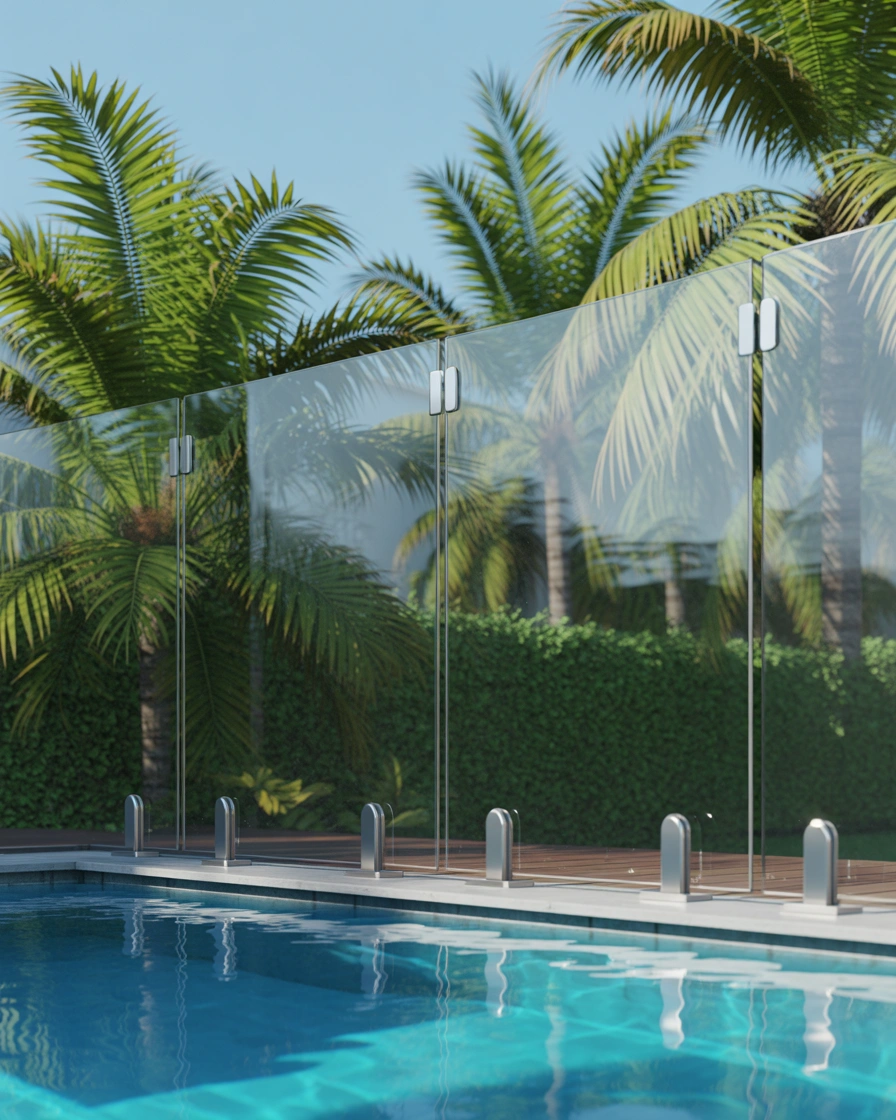
A frameless glass pool fence delivers uninterrupted sightlines across your yard, making smaller properties feel more expansive. Thick tempered panels anchor into the deck with stainless-steel spigots, creating a floating effect that highlights your pool rather than hiding it. This aesthetic choice works beautifully in contemporary settings where clean lines and minimal hardware define the outdoor space, letting landscape features and water take center stage. 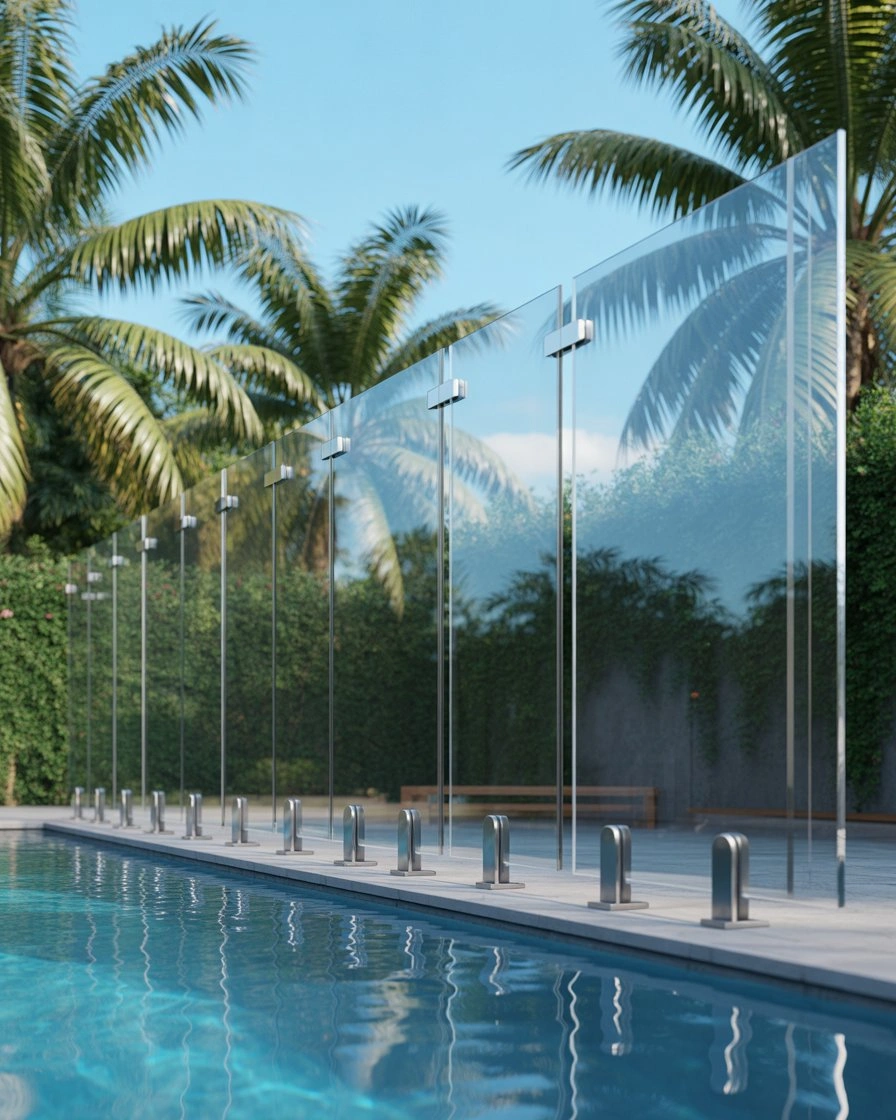
Expect to invest between $200 and $300 per linear foot for professional installation, including tempered safety glass and corrosion-resistant hardware. Coastal regions demand marine-grade spigots to withstand salt air, while inland yards can use standard stainless finishes. Regular cleaning with a squeegee and mild detergent keeps glass panels crystal clear, preventing mineral buildup that can dull transparency over time.
2. Black Aluminum Slat Fence with Horizontal Lines
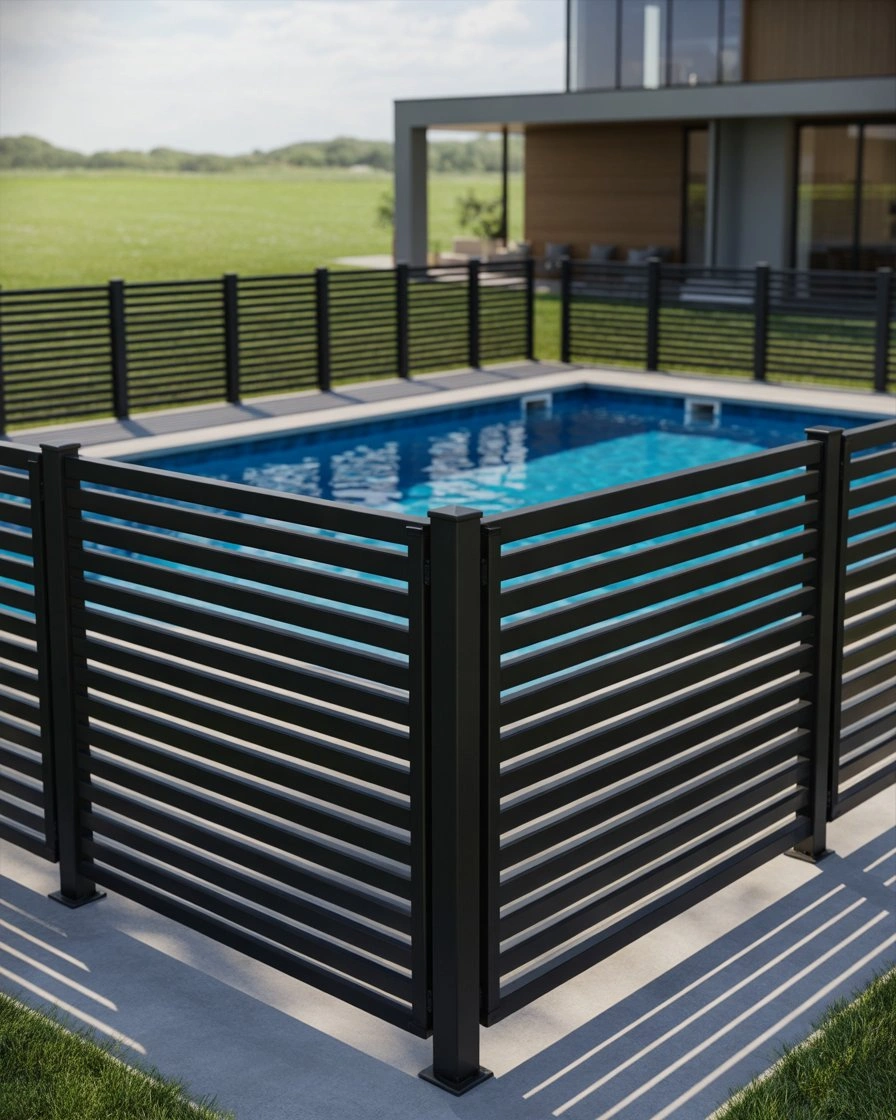
Horizontal black aluminum slats create bold contrast against greenery and water, framing your pool area with modern architectural flair. The powder-coated finish resists rust and fading, making it ideal for humid climates where wrought iron would deteriorate. Slat spacing typically ranges from two to four inches, providing visibility while maintaining a sense of enclosure that defines the swim zone without feeling oppressive. 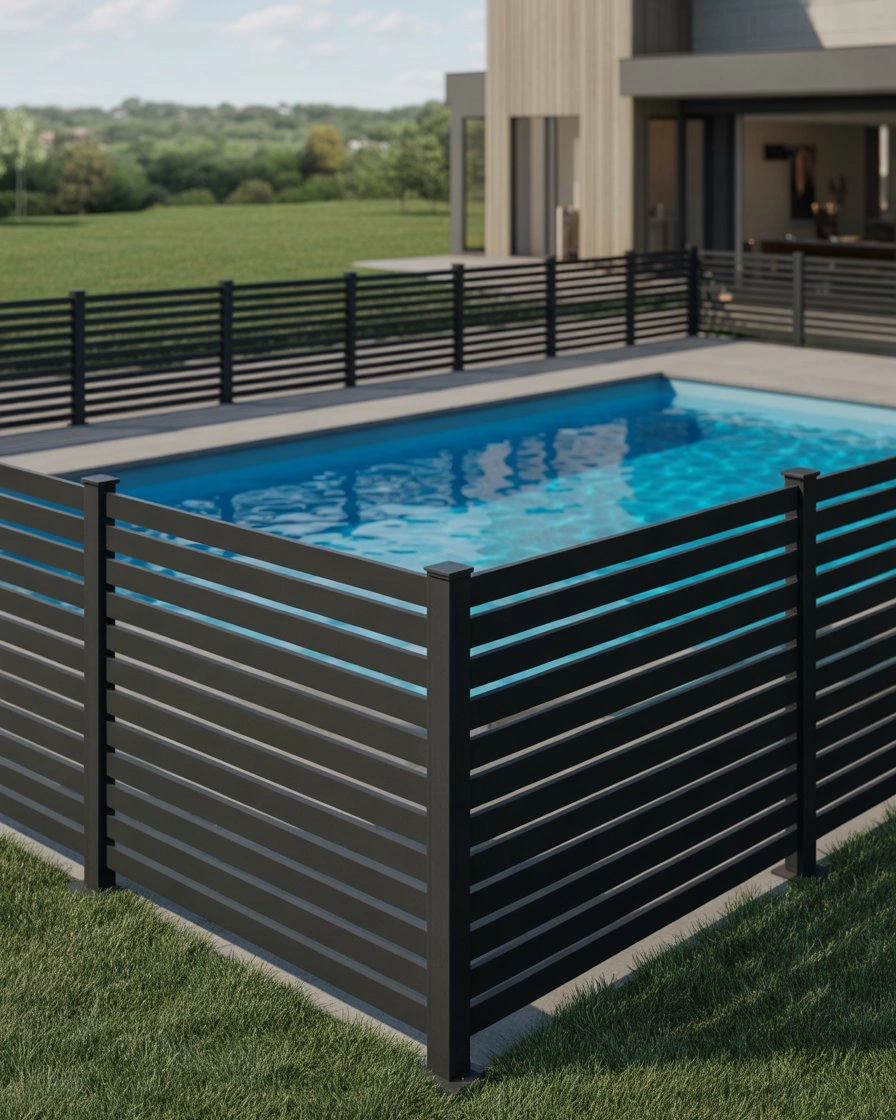
It’s particularly effective in homes with bold contemporary or midcentury design cues, where horizontal lines can be found mirroring a room’s roofline and deck boards. Aluminum needs very little maintenance—just an occasional rinse with a garden hose to wash away pollen and dust. Steer clear of pressure washers that can harm the powder coating and leave bare metal that will rust; this shortens the life of your fence considerably.
3. Curved Timber Batten Screen with Natural Finish
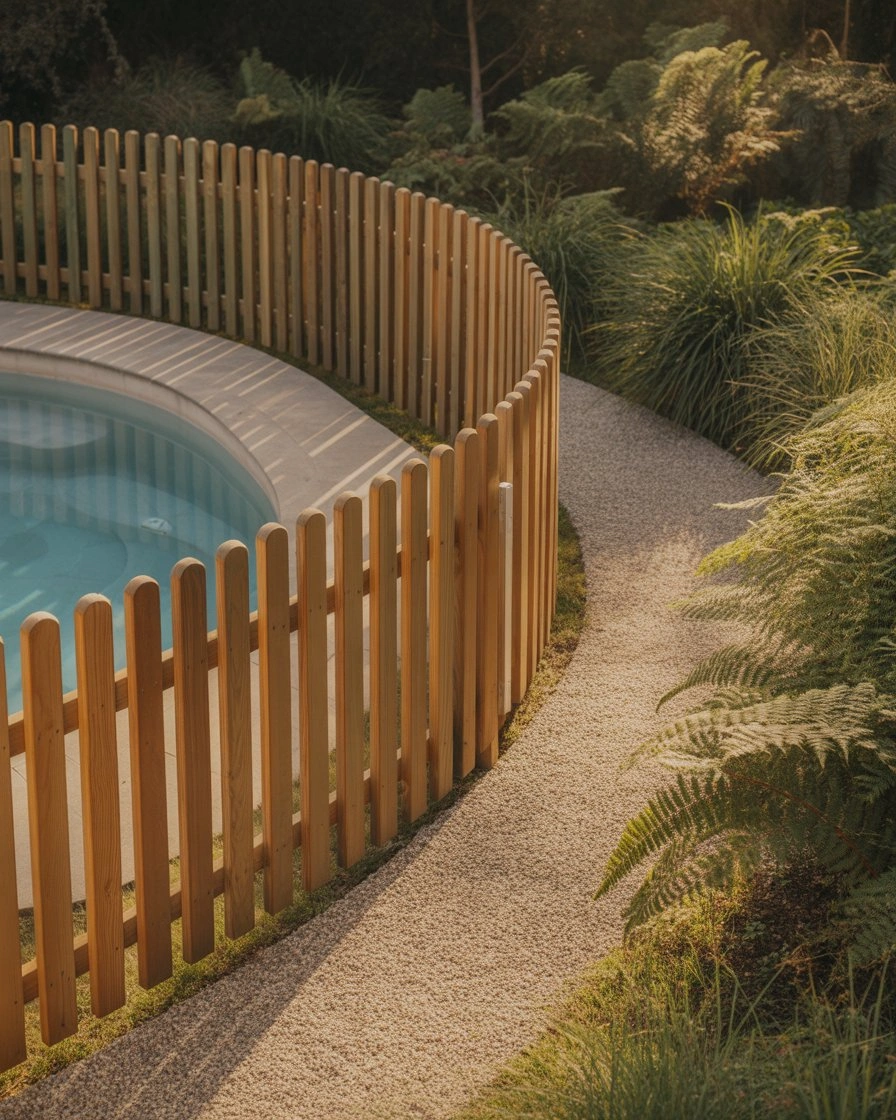
A curved timber batten fence softens the pool perimeter with organic lines that guide the eye around your yard’s contours. Vertical battens in sustainably sourced hardwood or composite materials provide partial privacy while allowing breezes to circulate, preventing the stagnant air common with solid barriers. The gentle arc complements kidney-shaped or freeform pools, creating a cohesive flow between hardscape and planted areas. 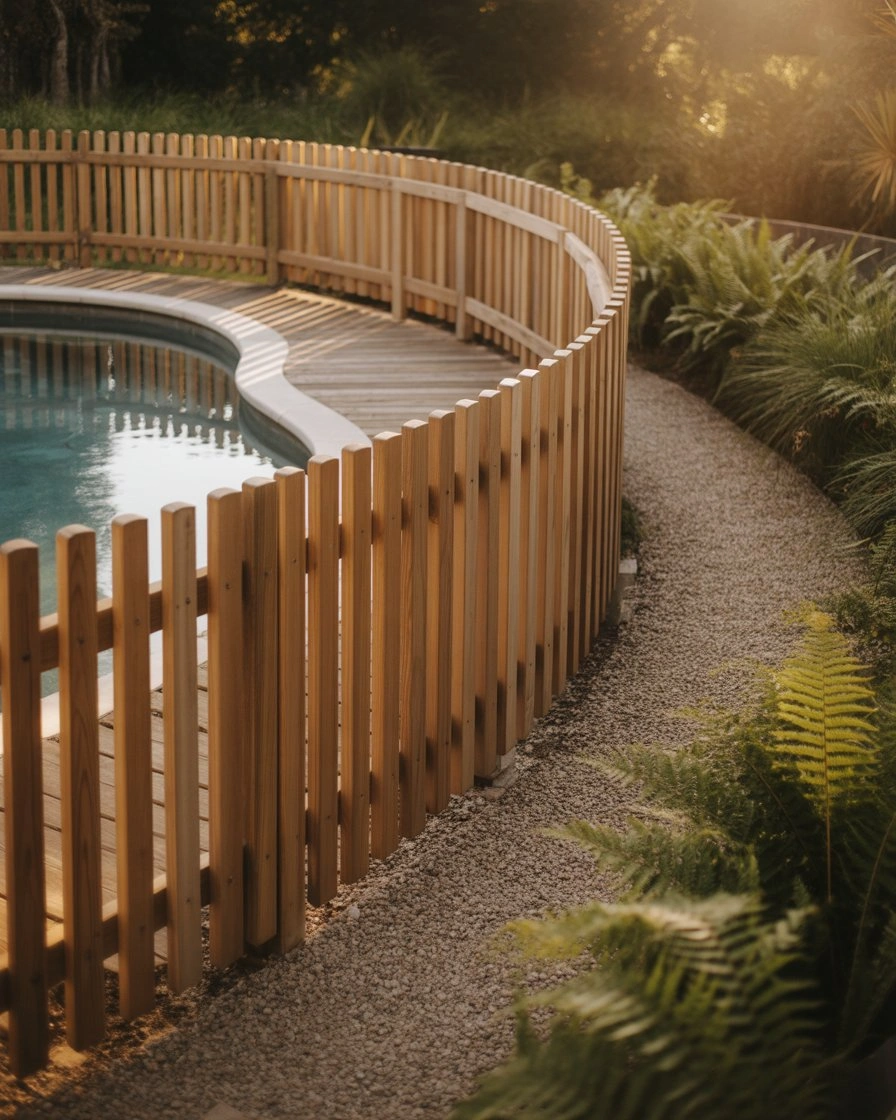
My neighbor put in a curved cedar screen last spring, and she found that her backyard felt more private immediately without the closed-in sense of a wooden fence. Every eighteen months, she treated the wood with a UV-resistant penetrating oil to seal it and keep the honey tones even while preventing moisture damage. The soft curve also diminished wind that whips across the pool deck, making evening swims more enjoyable in windy months.
4. White Picket Pool Fence with Gate Hardware
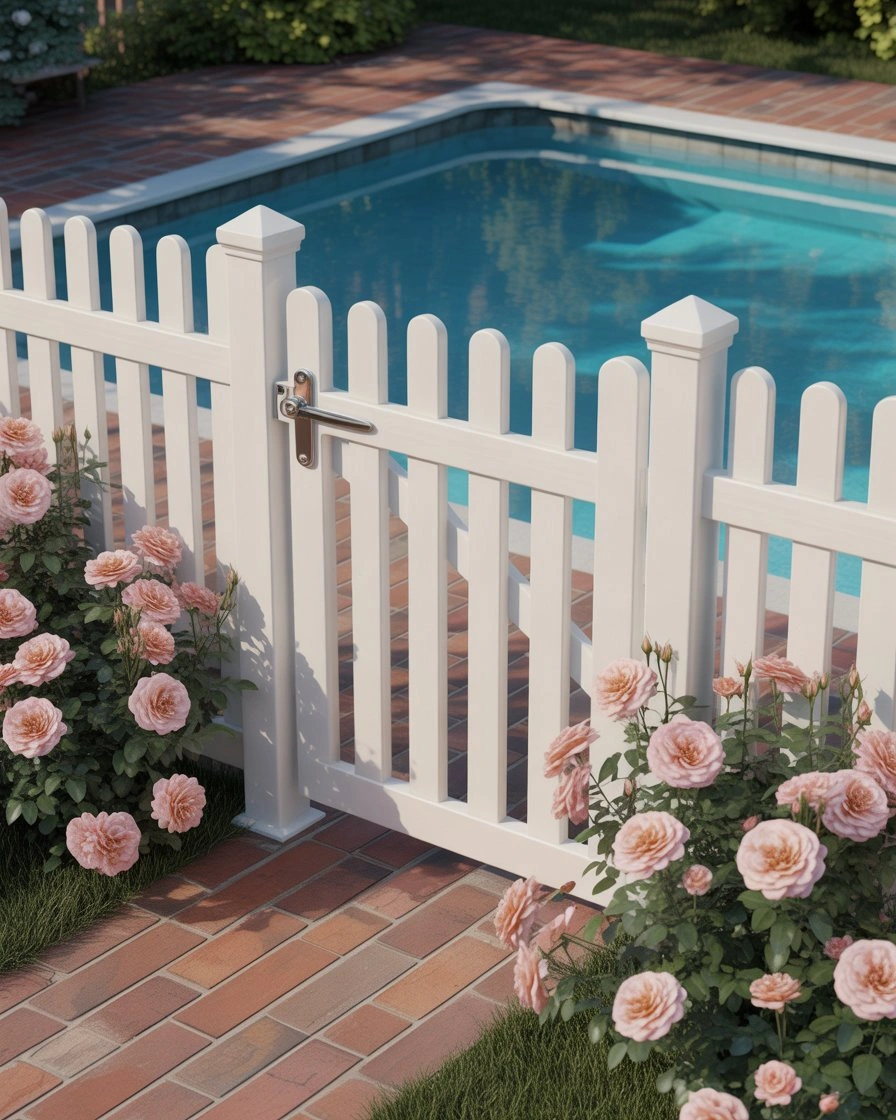
A timeless picket design enhances a variety of architectural styles, such as craftsman or cottage, and creates the perfect outdoor oasis when surrounded by charming flowers or vines. The classic sloped peaks are up to safety code and remind one of coastal New England or the Southern plantation look. Vinyl or PVC pickets break the repaint cycle of wood and keep their crisp, bright colors year-round in any weather, without chalking or flaking under the sun. 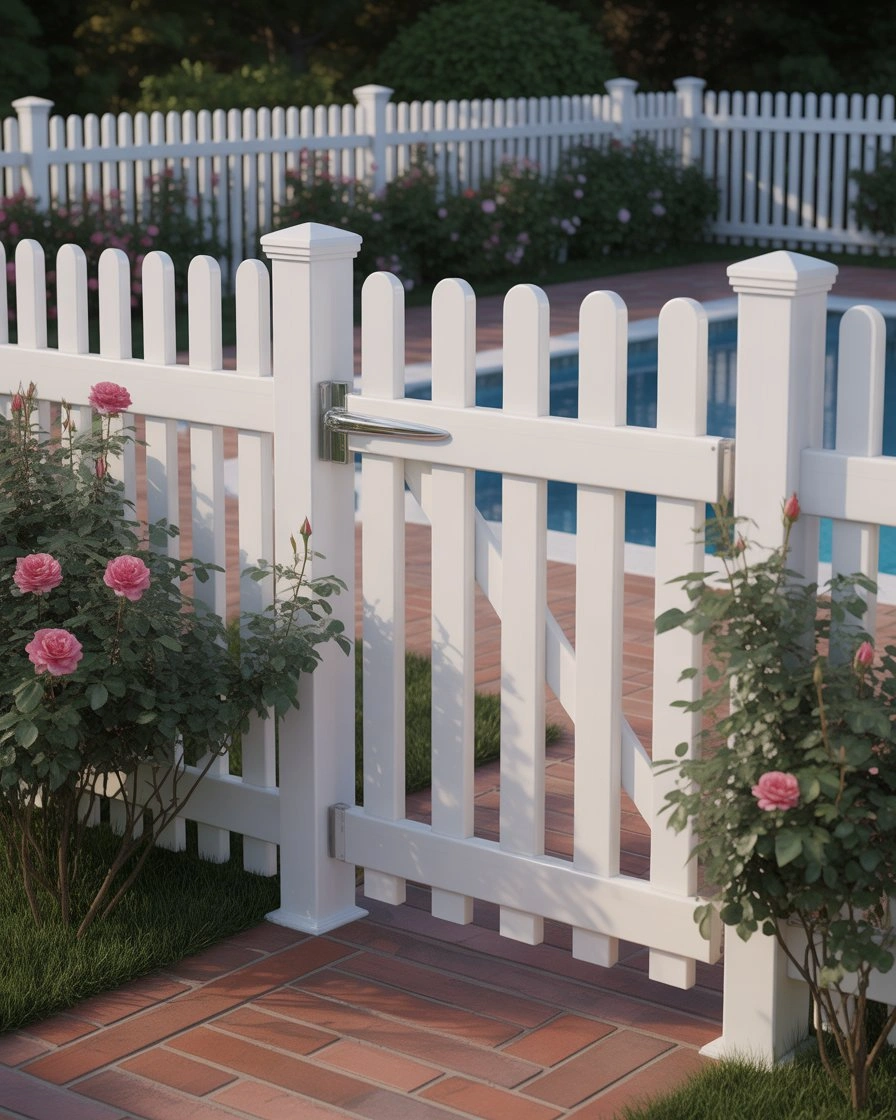
Expert designers recommend spacing pickets no more than four inches apart to prevent small children from squeezing through, meeting most municipal codes for pool barriers. Self-closing hinges and magnetic latches on gates add essential safety layers, automatically securing the entry point when adults forget. Budget around $50 to $80 per linear foot for vinyl picket fencing, including professional installation and compliant gate hardware.
5. Mesh Safety Fence with Removable Panels
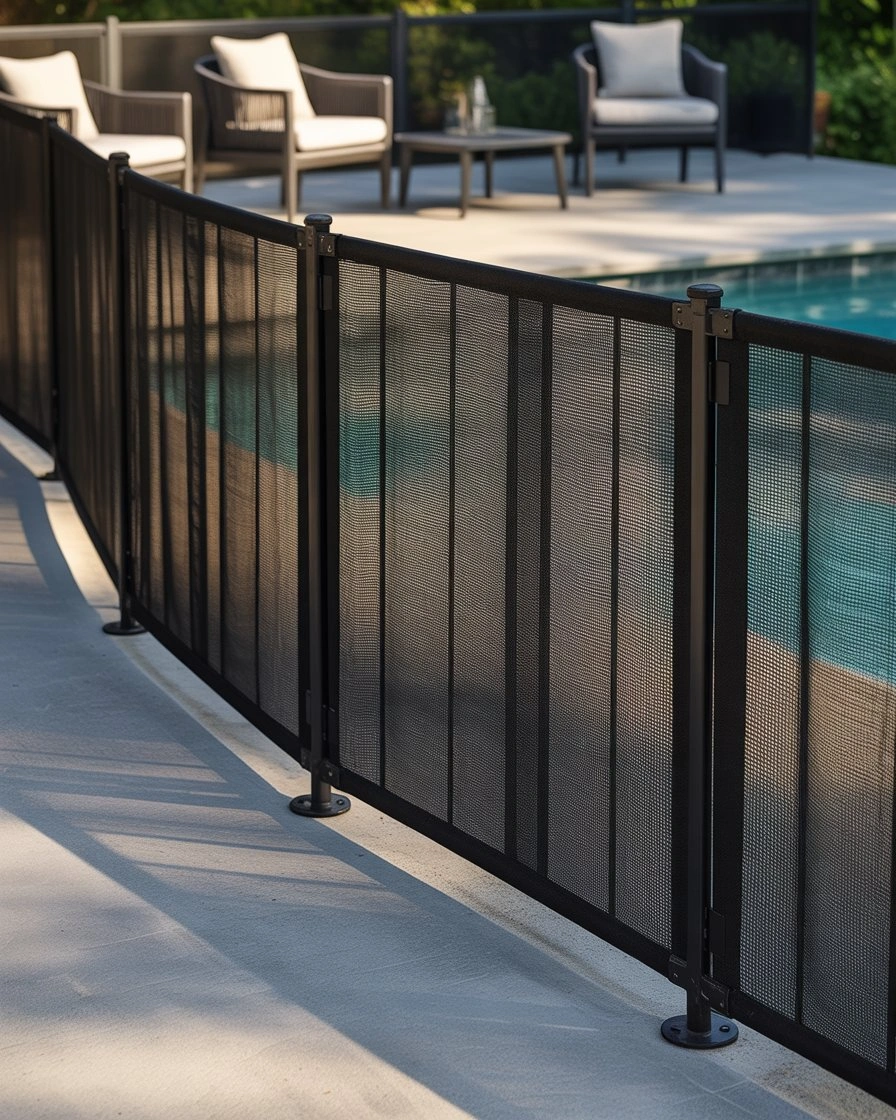
Removable mesh fencing offers flexibility for homeowners who want seasonal protection without permanent visual barriers. Durable polyester fabric stretches between aluminum poles that insert into deck sleeves, creating a taut barrier that withstands tugs and pushes from curious toddlers. The temporary nature appeals to families with young children who plan to reclaim unobstructed pool views once kids are older and swim-savvy. 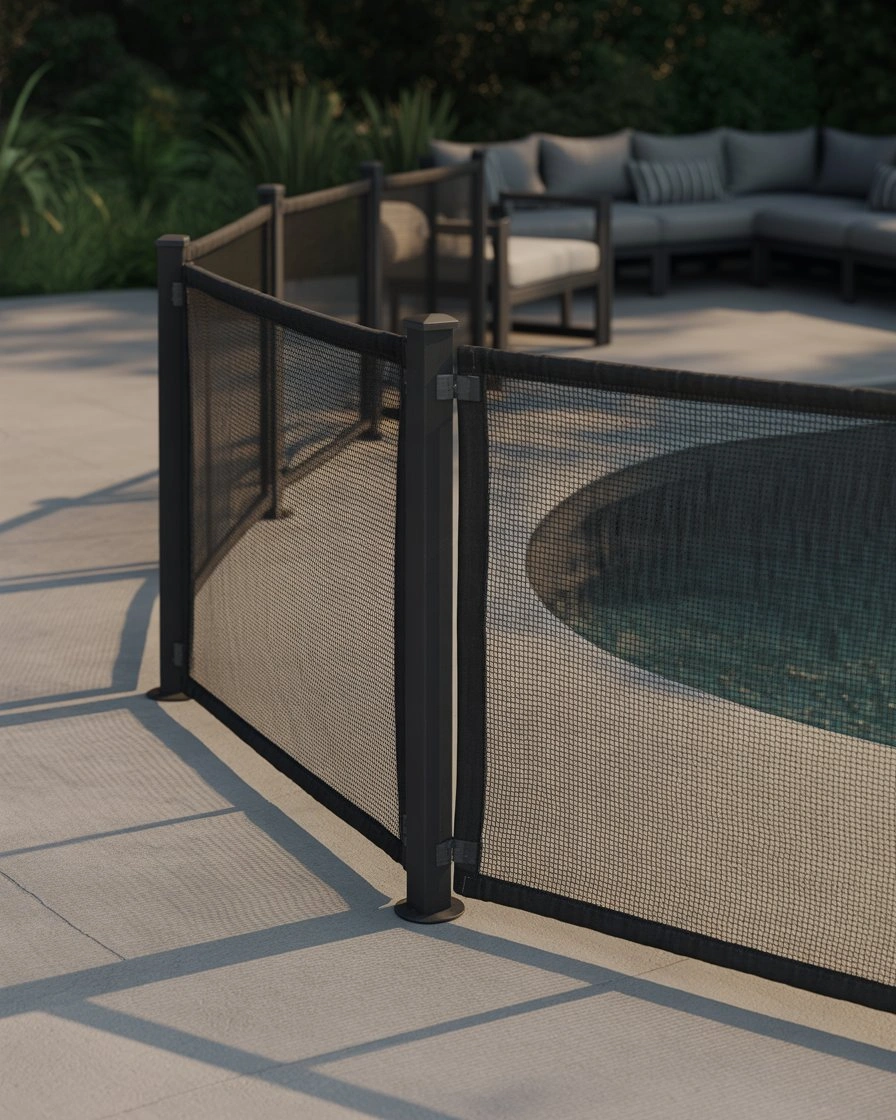
— Coastal properties and locales with a hurricane threat benefit from the WirbelDischMeTi mesh system that can be disassembled and stored before a storm to prevent wind damage to permanent structures. Installation typically requires a weekend for DIY-inclined homeowners, and professional setups run $15 to $25 per linear foot. For adult pool parties, most families take sections out of the fence and put them back in after a party but before bed for a night’s worth of child safety. ||/#ID27||||#ID26|| 6•_Ground-Level_Glass_with_LED_Strip_Lighting
6. Ground-Level Glass with LED Strip Lighting
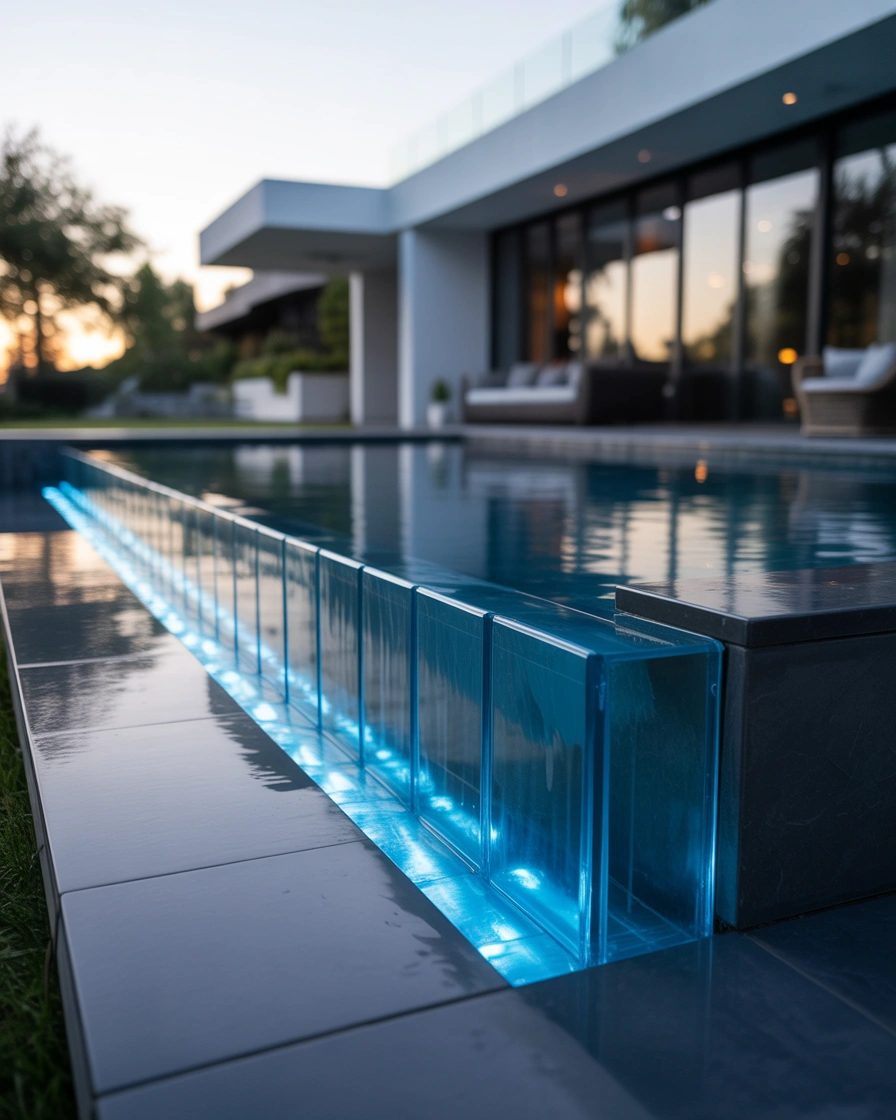
By incorporating the clear glass deck panels, which are wholly flush to the surface of the deck area, a flat transition from lawn to pool is produced, with the effect accentuated by LED strip lighting subtly illuminating it during hours of darkness. This at-grade approach works well with infinity-edge pools or properties with stunning views, as any above-grade fencing would obstruct sightlines. The lighting is great for evening get-togethers and acts as a soft safety beacon when the pool space is closed. 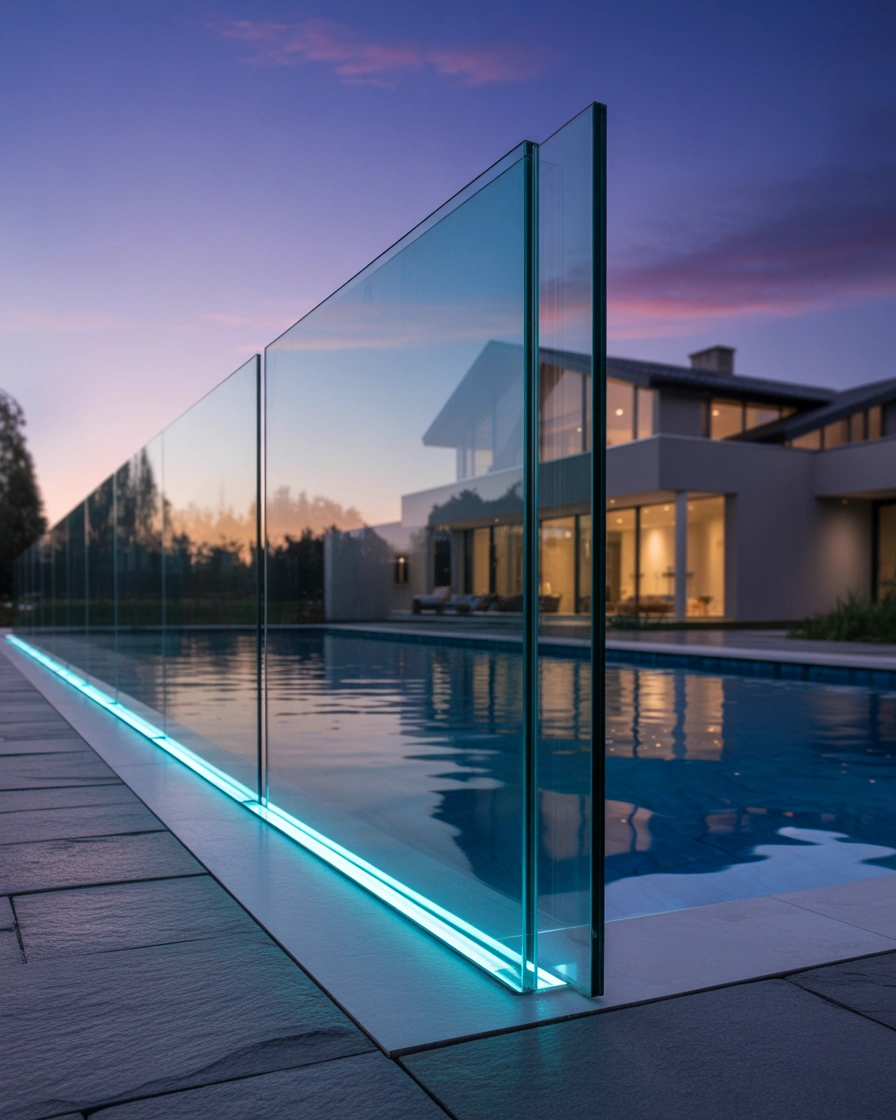
This design is perfect for hillside properties where the pool takes in views of valleys or city skylines, maximizing the ROI on premium real estate vista points. LED systems are waterproof and will generally last fifty thousand hours, operating on low-voltage transformers, which keeps electric costs to a minimum. It’s another for diurnal slumbers for morning parties or to warm amber when you just want a calm bath in the evening.
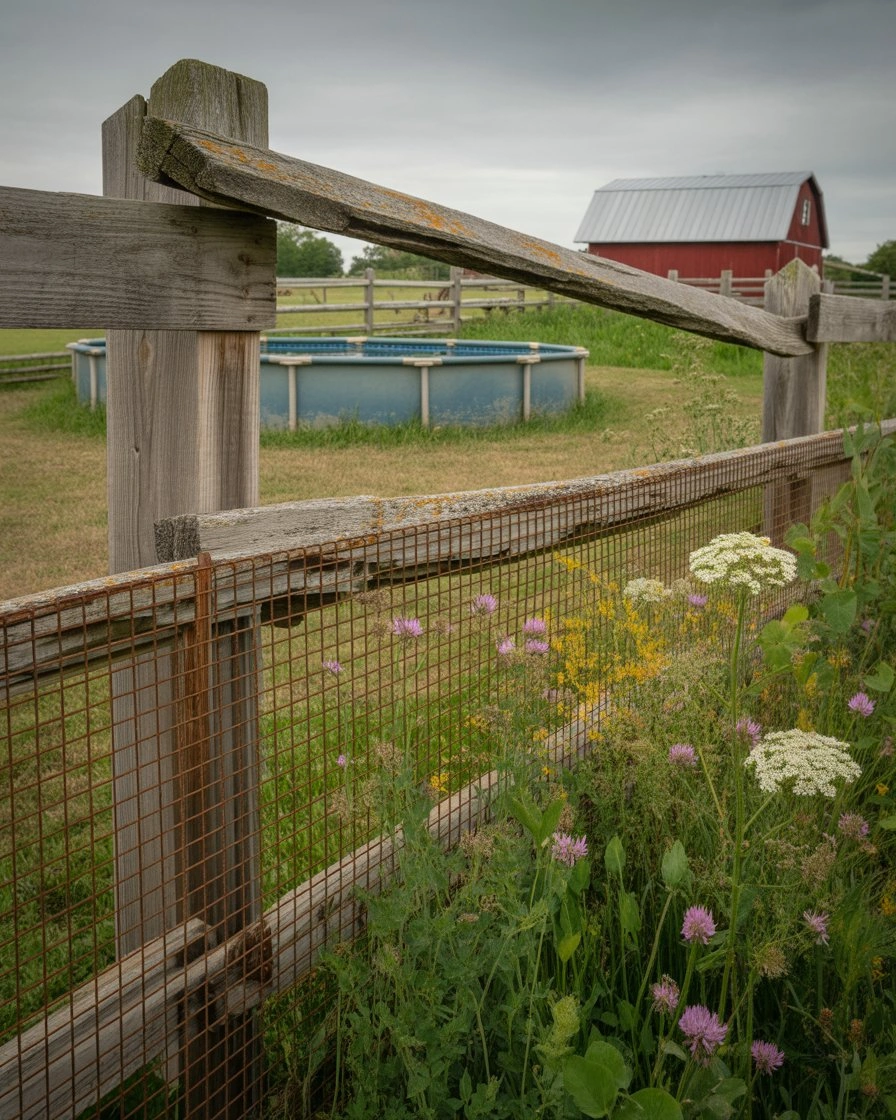
Safe choice A distinctive take on classic ranch fencing that would make an impression when used alongside even the hoofbeats and huffing of angry Daddy horse at pasture’s breaking point: “Dad gum it, I said no trespassing’!” The rough-sawn cedar or locust posts keep an uninitiated country look, and the mesh prevents young ones from sliding through those rails. “That combination is much cheaper than a solid wood panel and allowed us to put the investment toward other landscaping. 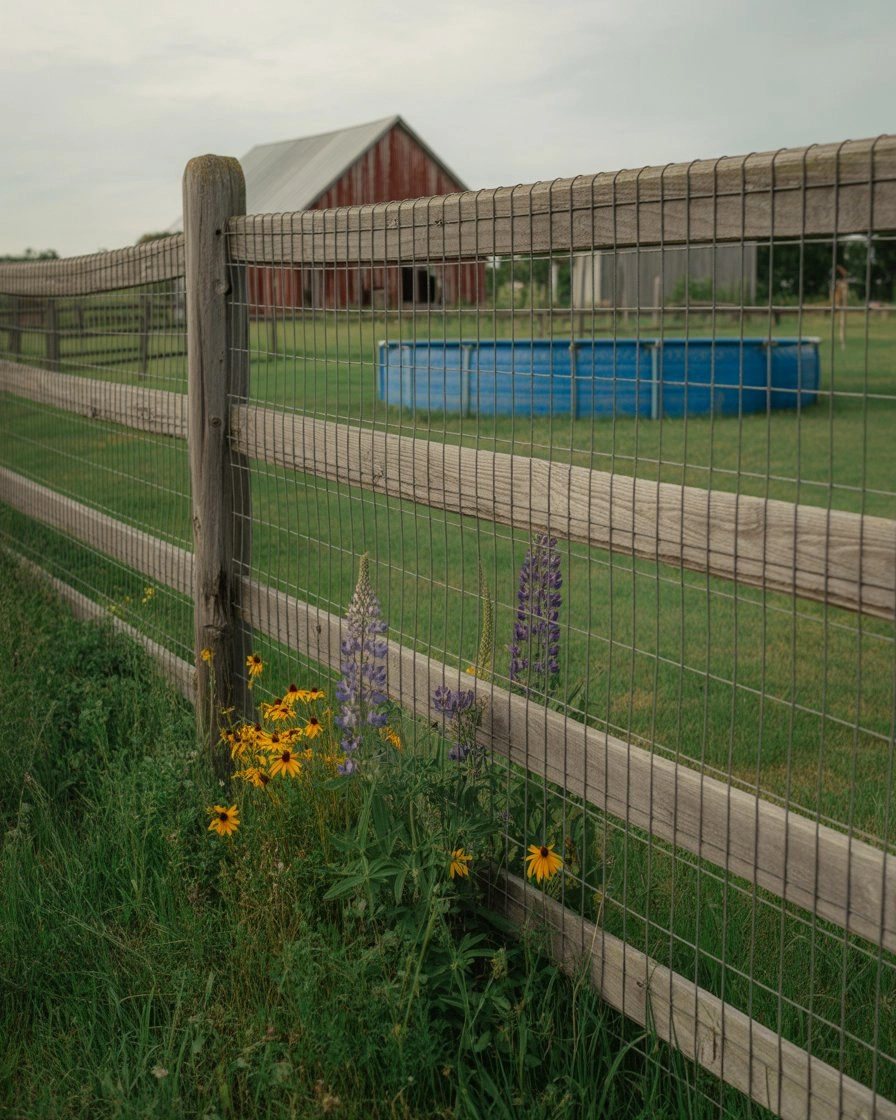
Common Mistakes: Using chicken wire in place of welded mesh—poultry netting sags and breaks under pressure, which will not pass safety inspections. Try four-inch welded wire with 11-gauge thickness, and staple it on the inside of the rails so there is no danger (or temptation) of hanging or hauling yourself over sharp edges into the pool. Preserve the post with a ground-contact preservative; replacement is required in fifteen to twenty years.
8. Wrought Iron with Decorative Scrollwork
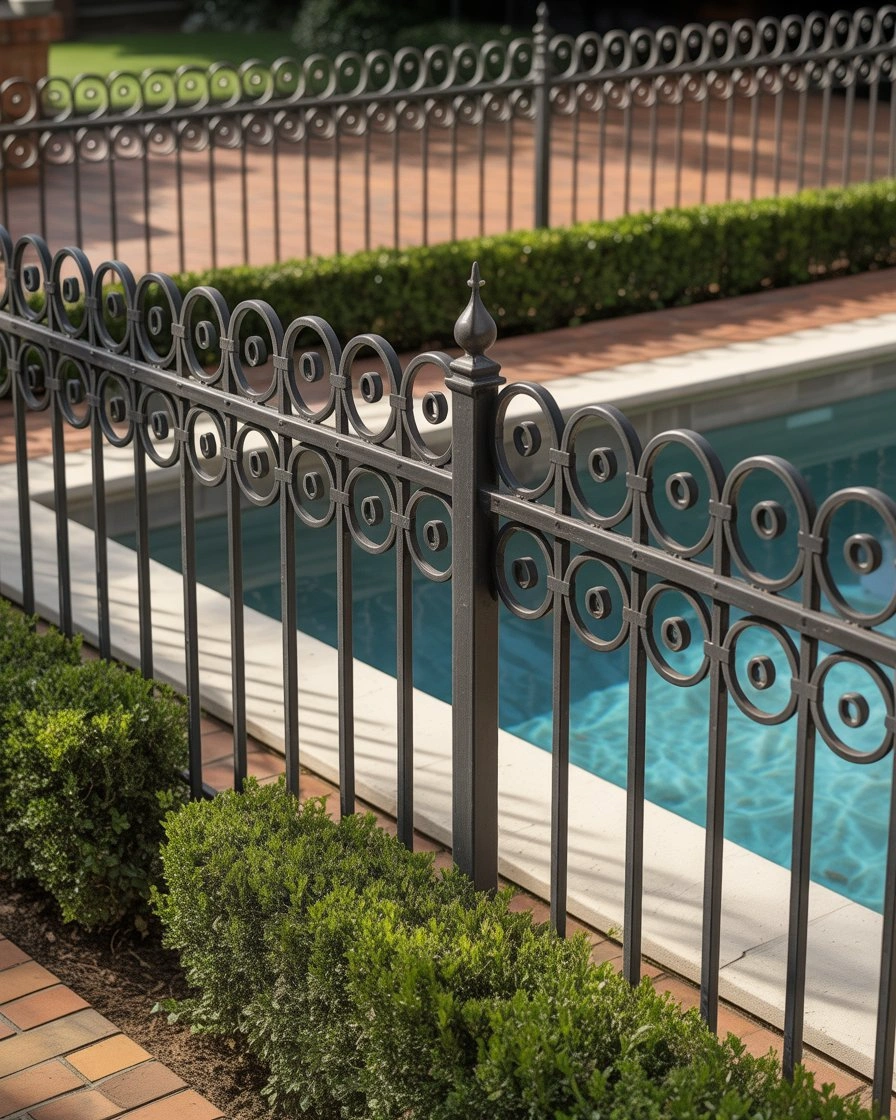
* \\n\n\\n\nOrnamental Wrought Iron Symmetrical vintage-inspired iron fencing creates a charming double-along entrance that’s on ceramic wheels. Ruggedly built of heavy-gauge steel, it will stand up to years of use. Whether you dry indoors or out (in fair weather), this laundry rack is durable and sturdy; it’s also a handsome addition. Lanterns, iron-accented planters, and other decorative ideas can be found to help integrate the look, running these elements throughout the yard. 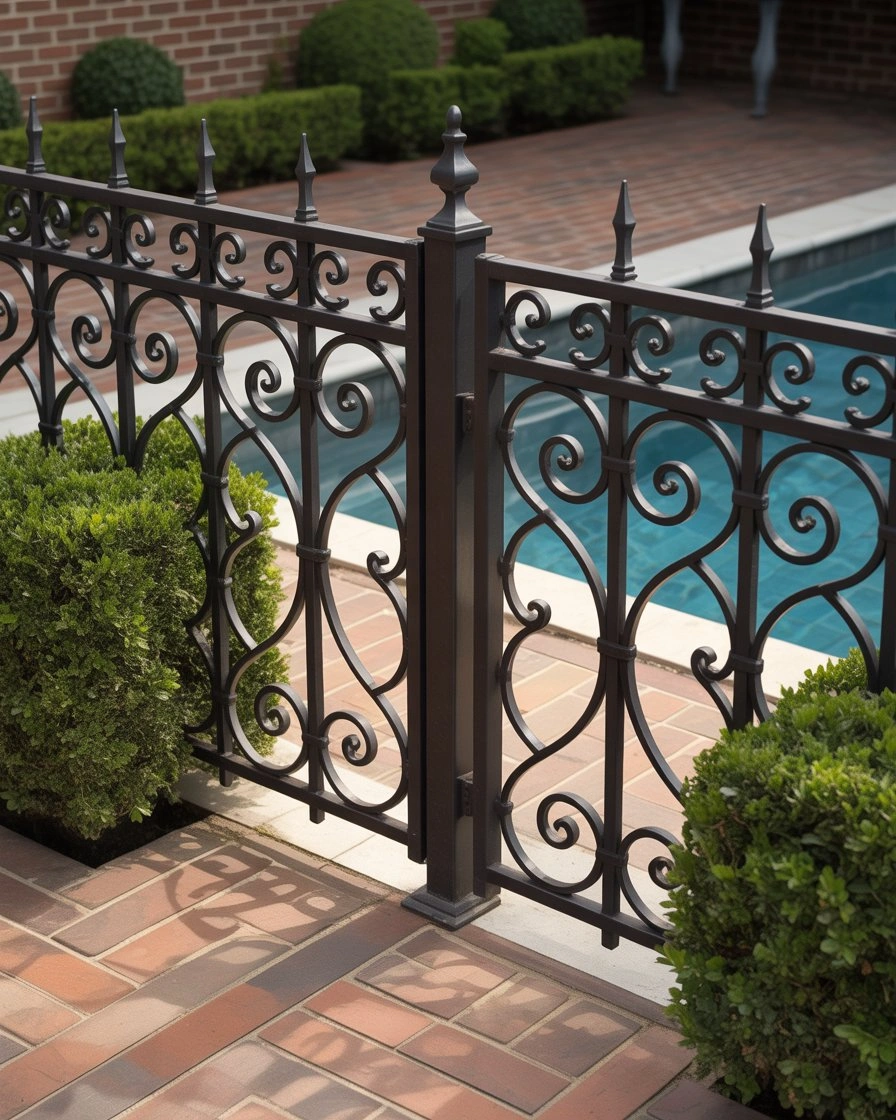
Southern states and the Southwest prefer this look for Spanish Colonial or Mediterranean-style homes, where ironwork mirrors architectural details on windows and balconies. Inspect welds for rust spots each year, and sand and touch up any affected areas before the corrosion spreads. Professional installation is $100-$150 per linear foot, and custom scrollwork patterns increase prices for unique designs.
9. Composite Horizontal Panels in Driftwood Gray
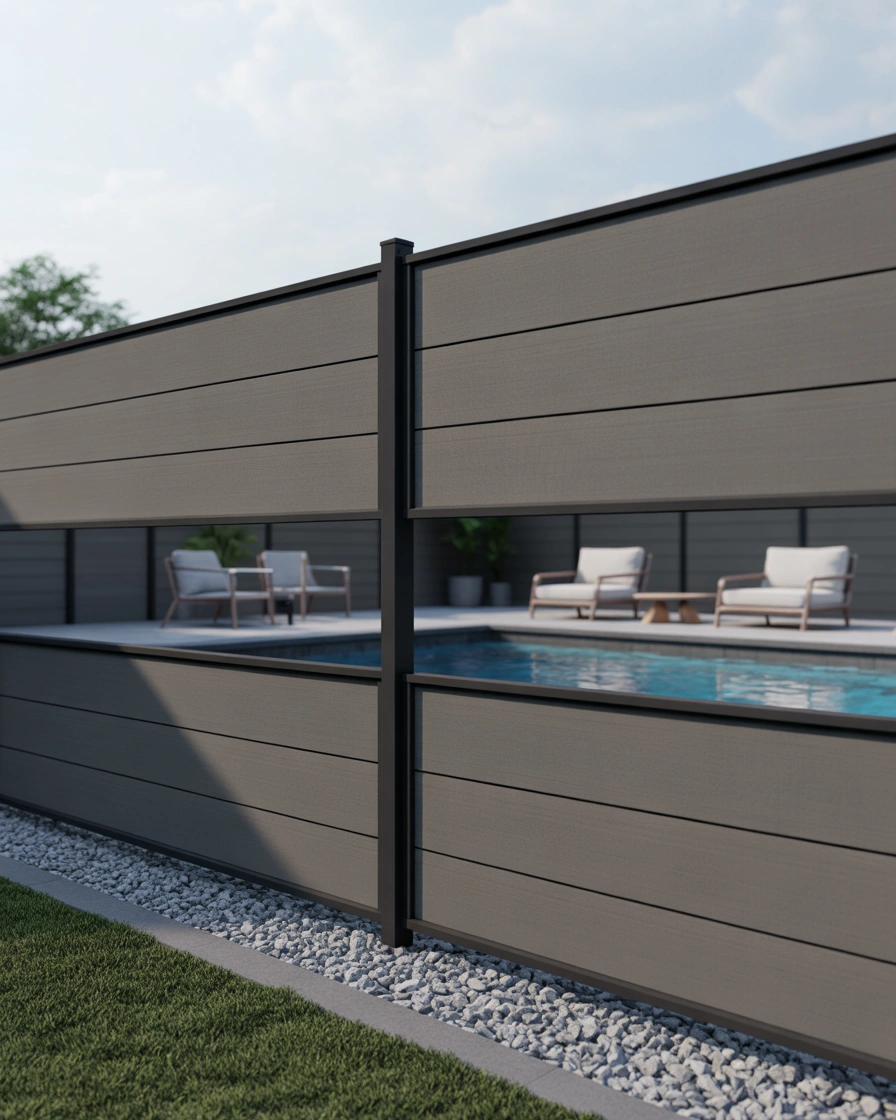
Composite wooden panels in weathered gray tones mimic reclaimed timber without the maintenance demands of natural wood. The horizontal orientation elongates smaller yards visually, while the neutral color palette complements any pool finish or landscaping scheme. Engineered to resist moisture, insects, and UV degradation, composite fencing delivers decades of service with only occasional washing to maintain its appearance. 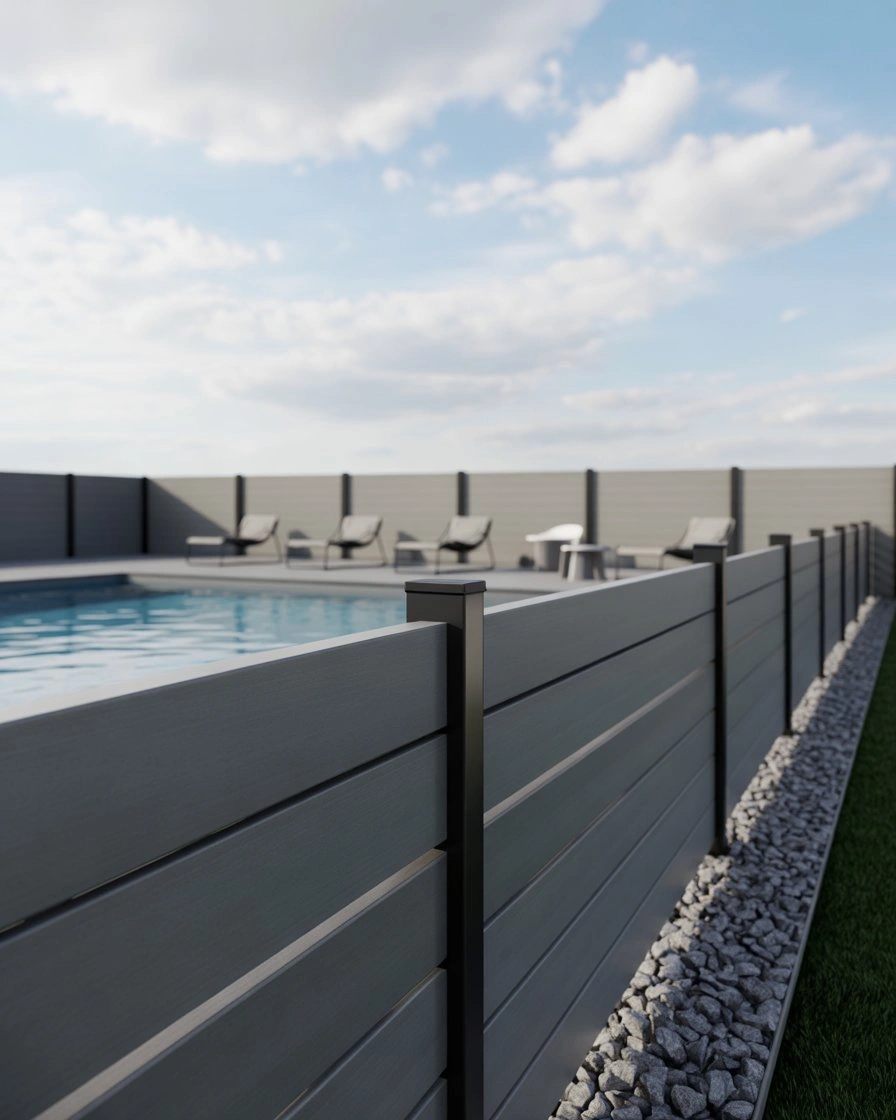
Where it works best: coastal properties where salt air speeds up the wood rot process, or desert climates where extreme temperature changes cause natural timber to crack. Composite materials remain stable whether installed under the ground or in contact with water and resist oxidation and decay when used outside your home. Homeowners love that they never have to stain or seal the fence; now more time is spent at the pool, not maintaining a barrier.
10. Living Hedge with Transparent Lower Barrier
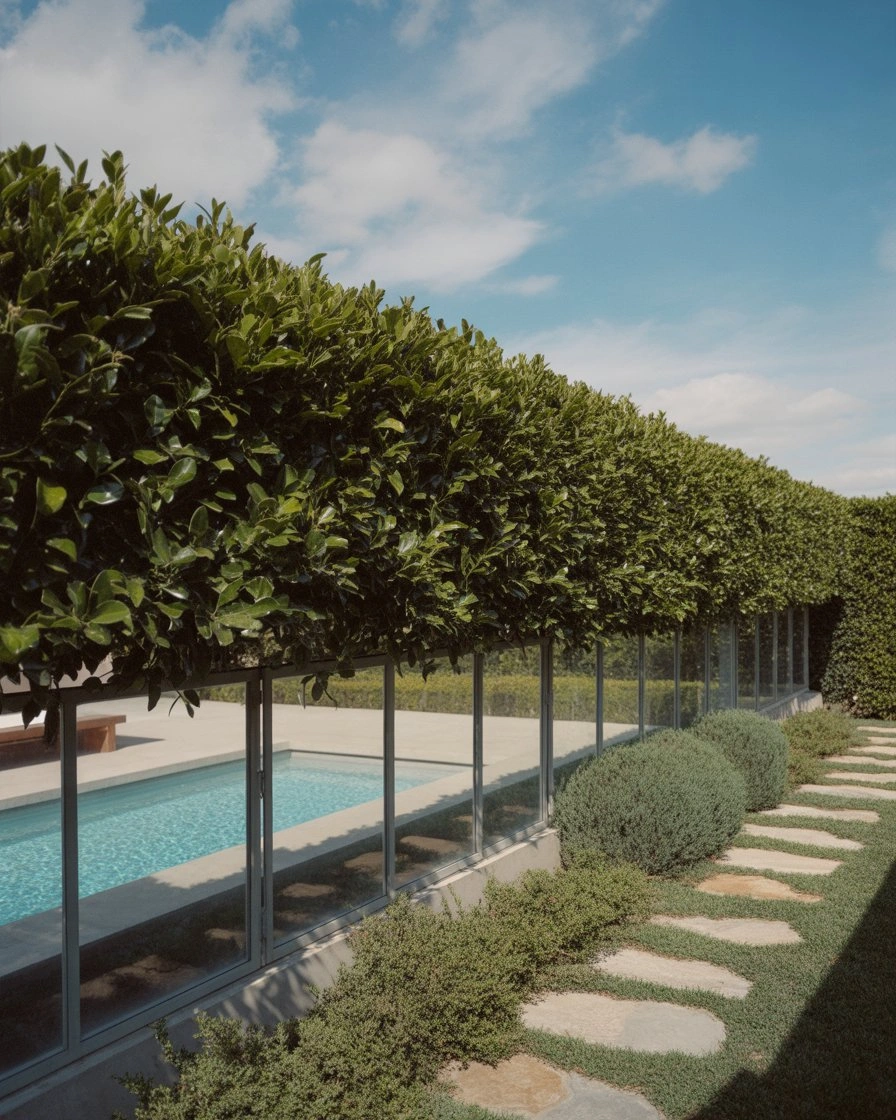
A low transparent fence plus a high evergreen hedge provides layered security and privacy; the green wall blocks pool noise as well as provides wind protection. Fast-growing varieties like arborvitae or privet spread like wildfire, and you can have bushes that grow up to six feet tall in just three seasons if you fertilize right. The landscaping around it becomes part of the safety system, with the glass or mesh barrier doing duty as code compliance while plants soften the hardscape.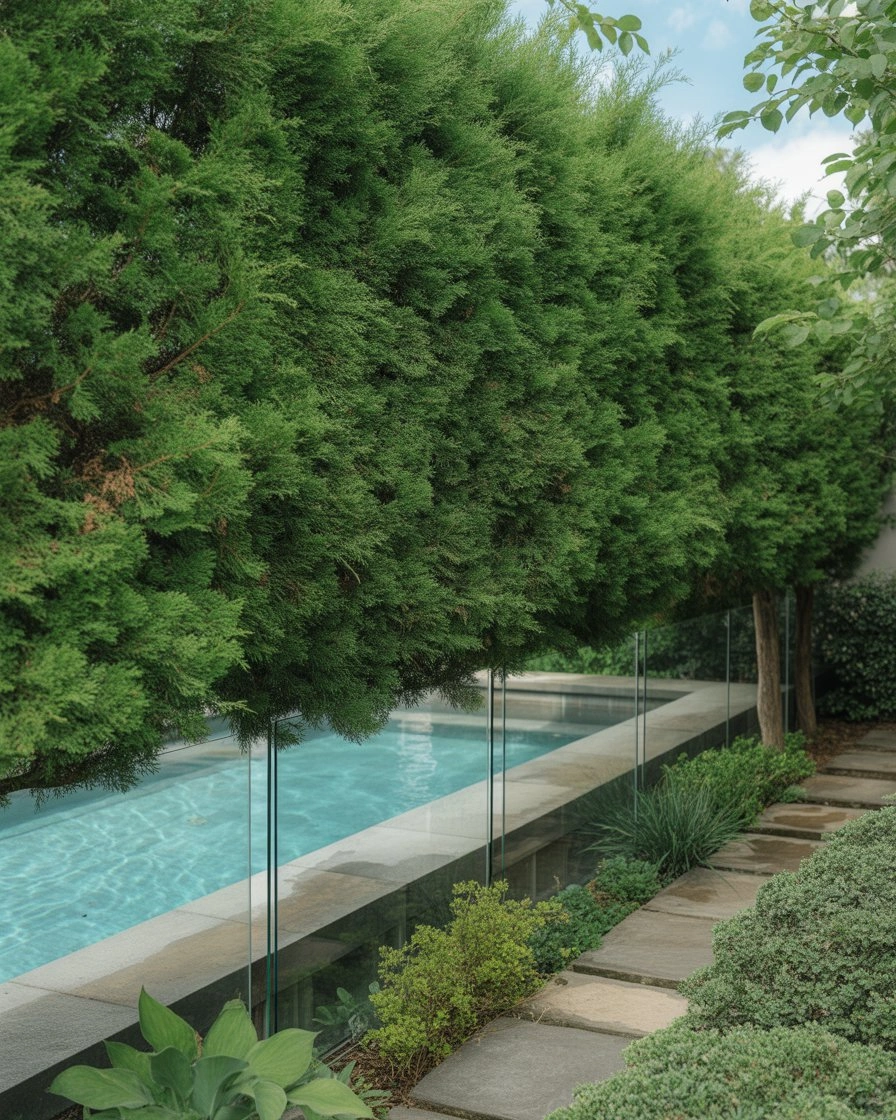
A friend had this two-tier system installed when her homeowners association vetoed solid fencing, which required transparent barriers to maintain sightlines in the neighborhood. Over two summers, the hedge filled in and, at 2 feet high, was already screening off the pool so it couldn’t be seen from the street, and the knee-high glass created a barrier to keep her young kids out of it unattended. Her maintenance load since then has been reduced to annual hedge trimming and occasional cleaning of the glass—much easier than repainting wooden fences.
11. Retaining Wall Fence with Integrated Seating
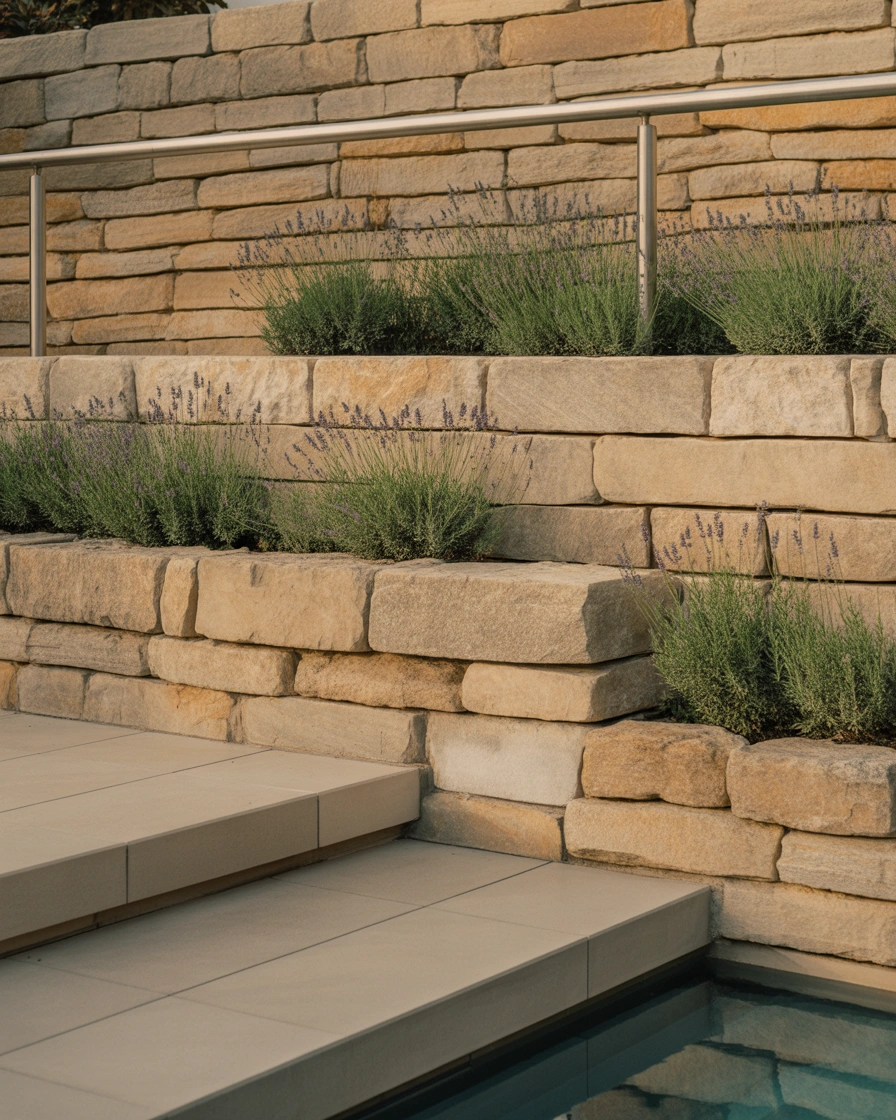
For sloped sites, a retaining wall that serves as a pool fence addresses grade changes while incorporating casual seating and/or planter space. Stacked stone or poured concrete walls with top-sitting decorative iron rails or cable systems easily satisfy the height requirement for a firm, attractive obstruction that will not budge. This method is particularly useful in the case of aboveground pools that need an accompanying deck cut out around them but do not require an unbroken wall to hold back earth for safety purposes. 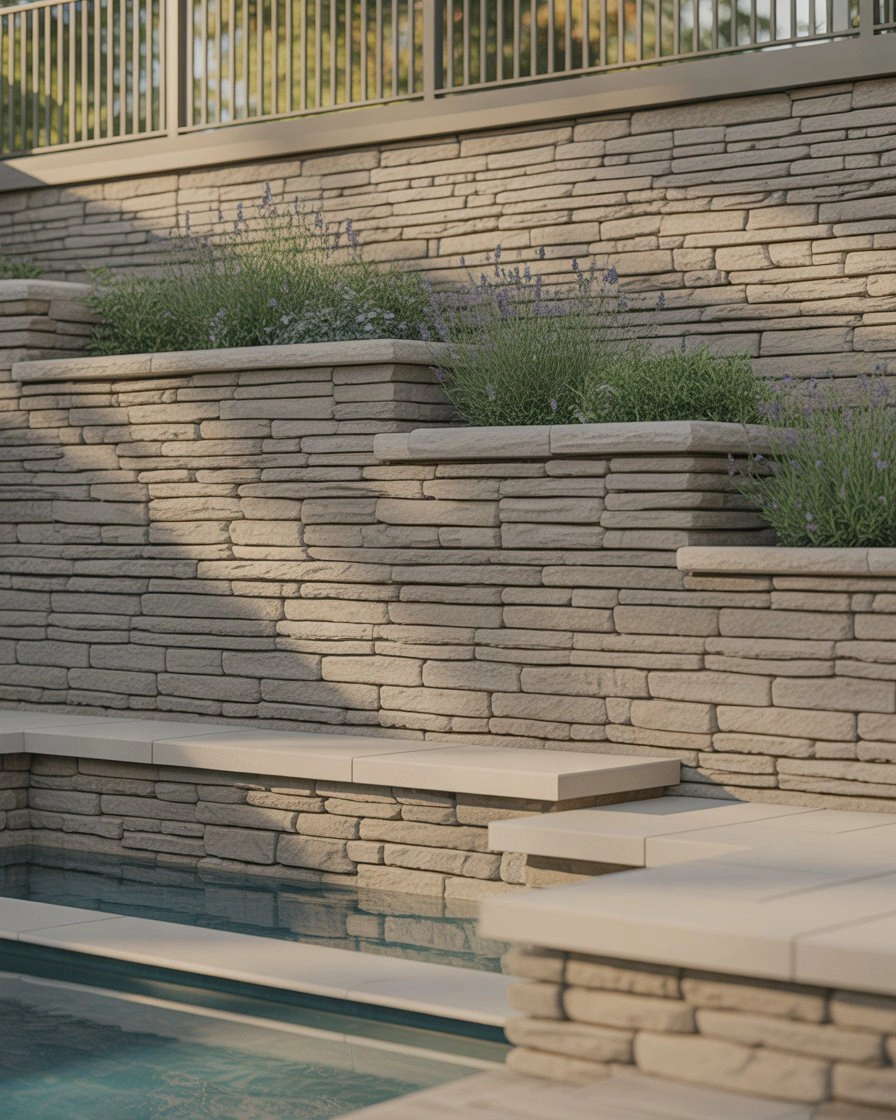
Real homeowner behavior shows that integrated seating gets used far more than separate patio furniture, becoming the default gathering spot for parents supervising children in the water. Coping stones with rounded edges increase comfort and safety, preventing scrapes when kids climb on the wall. Budget for professional engineering to ensure proper drainage and structural support—retaining walls over four feet typically require permits and calculations to prevent failure during heavy rains.
12. Perforated Metal Panels in Bronze Finish
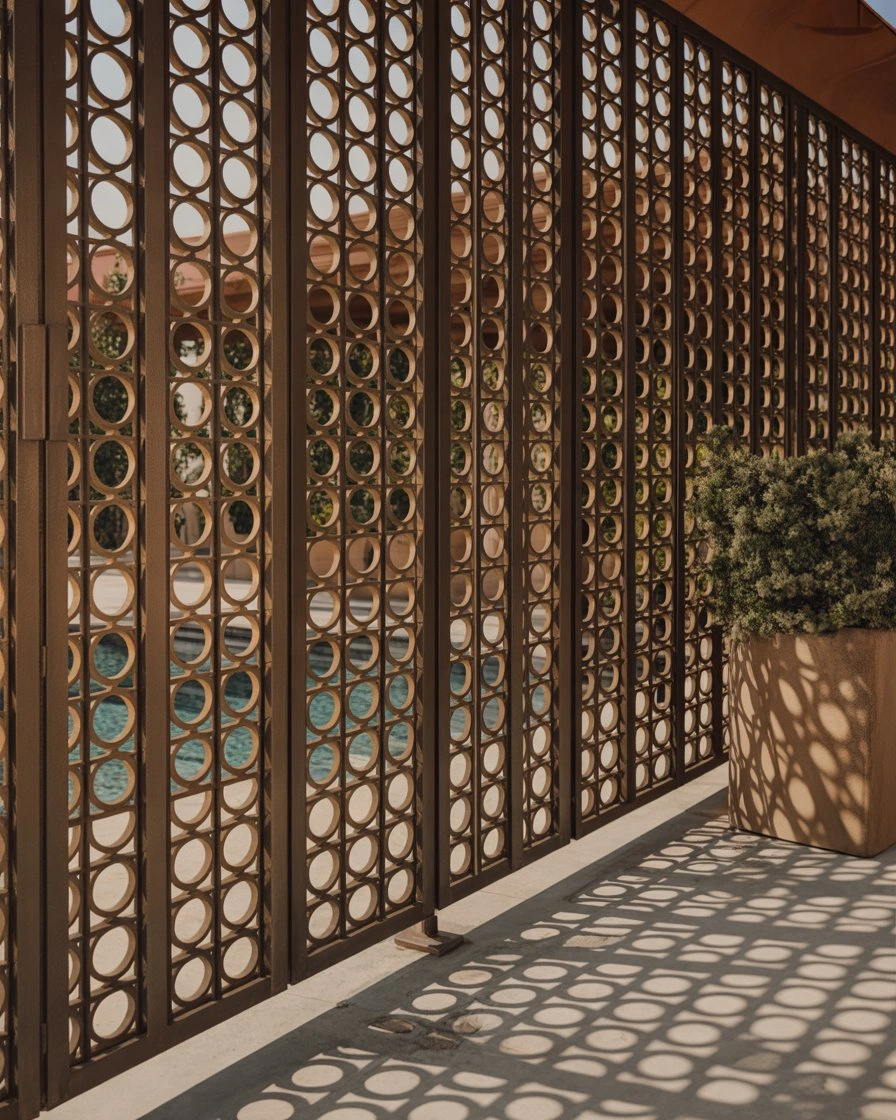
Laser-cut perforated metal introduces artistic patterns to the pool perimeter, with custom designs ranging from geometric grids to organic motifs inspired by nature. The bronze powder coat adds warmth and depth that complements desert landscaping or Mediterranean color schemes. These panels filter light in dynamic ways throughout the day, casting intricate shadows that animate the deck and water surface as the sun travels across the sky. 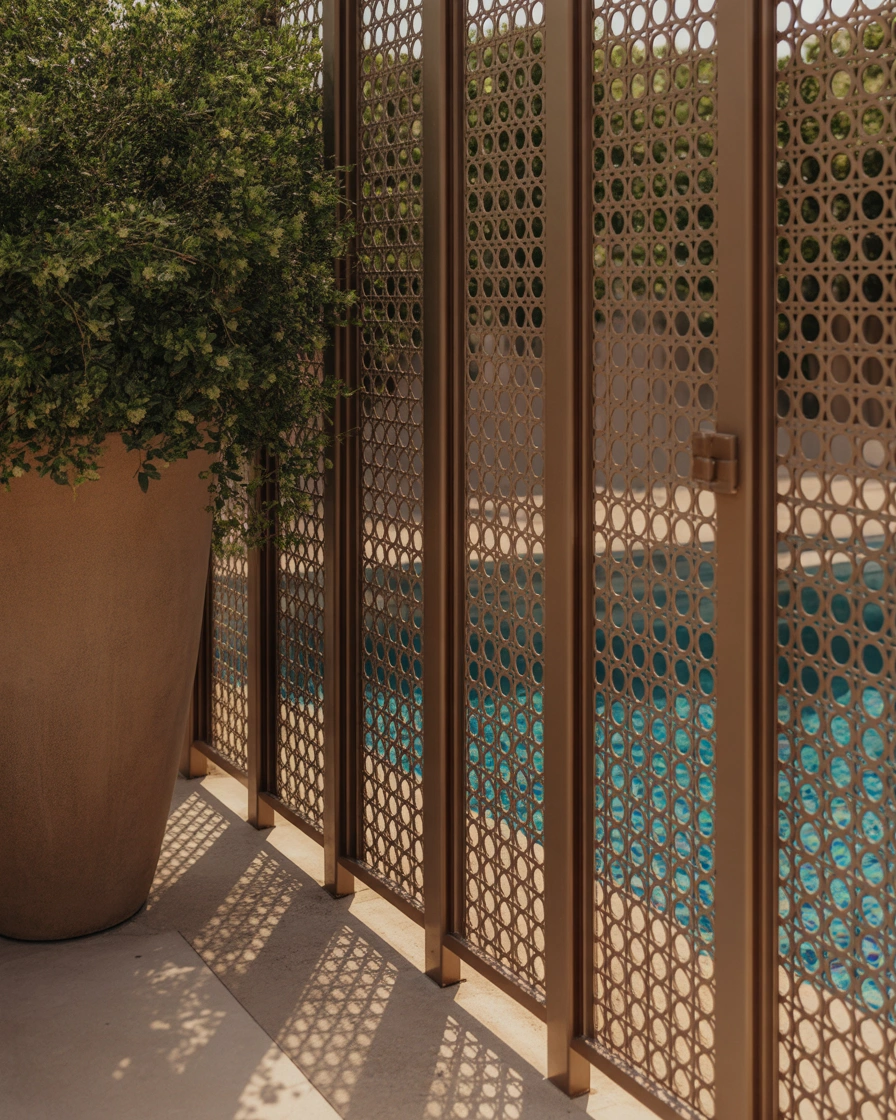
Expect to pay $150 to $250 per linear foot for custom perforated panels, with simpler patterns at the lower end and intricate laser work commanding higher prices. The perforations allow airflow that reduces wind load, preventing the fence from acting as a sail during storms. Arizona and New Mexico yards favor this style for its heat resistance and low maintenance, requiring only occasional rinsing to remove dust accumulation.
13. Bamboo Screen with Stainless Cable Backing
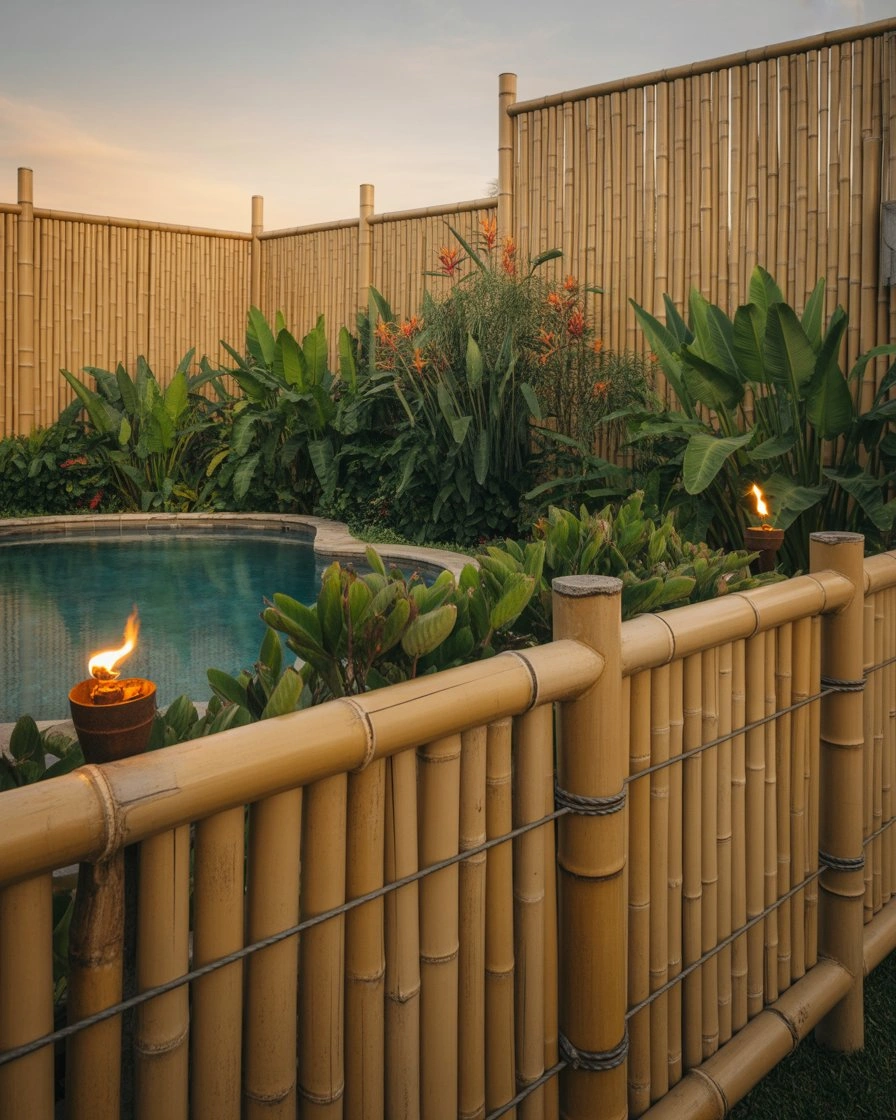
Natural bamboo panels lashed to stainless cable create a tropical resort atmosphere, transporting you mentally to Bali or Hawaii every time you step outside. The renewable material grows rapidly and offers excellent privacy while maintaining an organic texture that softens modern architecture. Cable supports ensure structural integrity even as bamboo weathers to silvery gray over time, providing backup strength that extends the screen’s functional lifespan beyond the canes themselves. 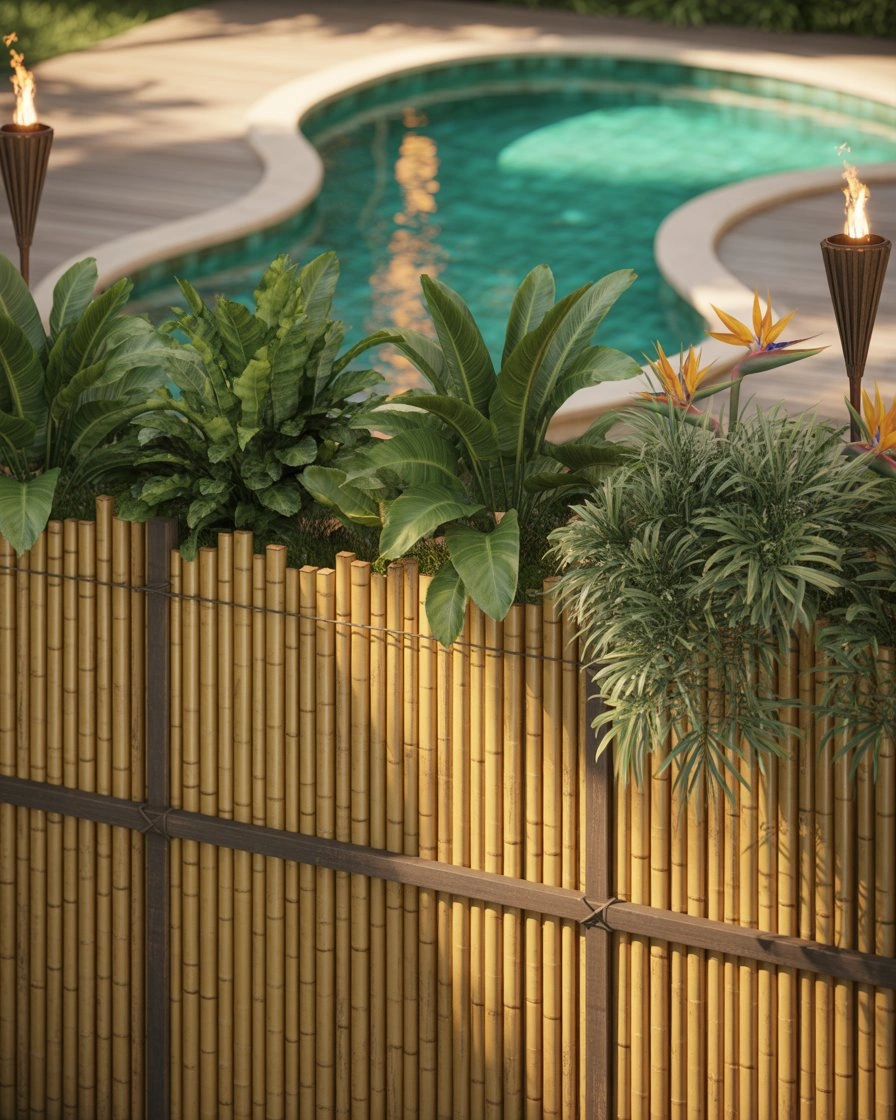
This style finds the most favor in wet regions where bamboo does not split as readily as its Western counterparts, though seaside saltwater necessitates that the vessels be rinsed to prolong their lifespan. Homeowners love the low environmental impact versus vinyl or metal, matching outdoor decor with earth-friendly values. Replacement panels install conveniently when one of the sections wears down; add on instead of replacing an entire fence for reduced long-term cost.
14. Victorian-Style Iron with Spear Finials
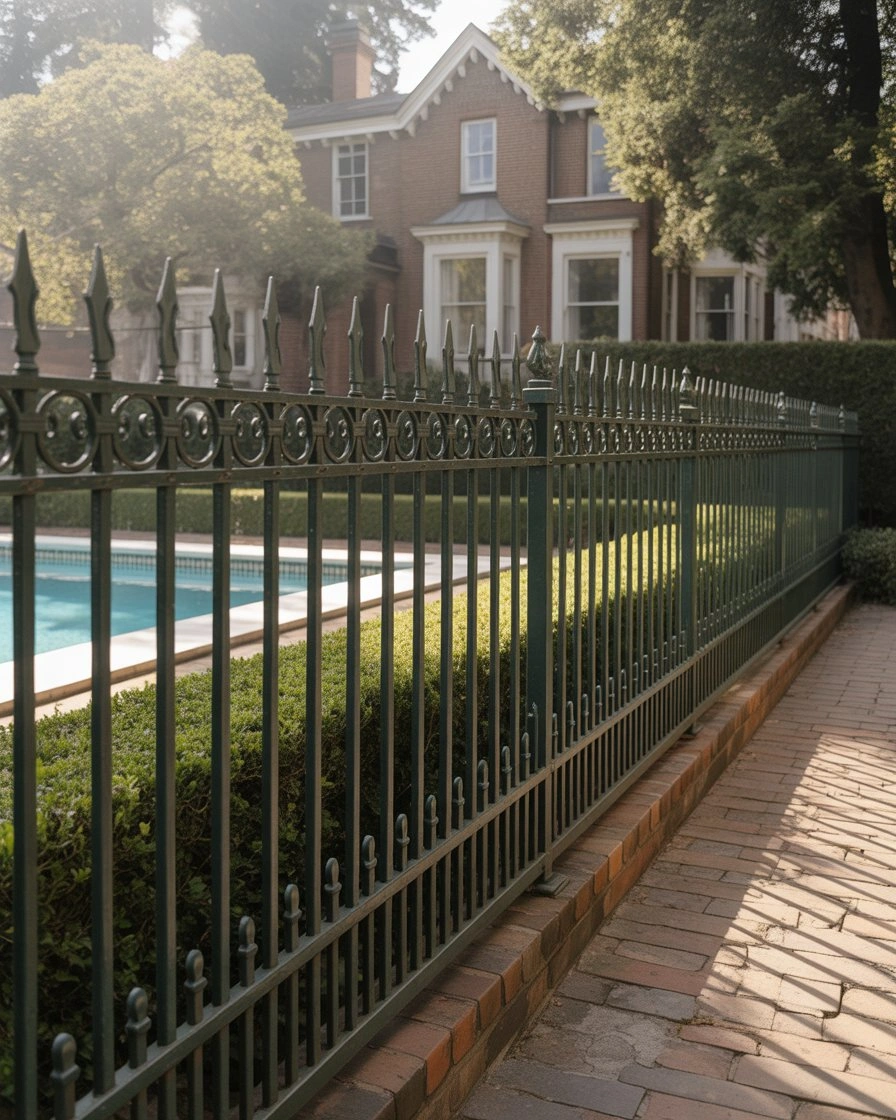
The sharpened tops and upright pickets found in Victorian gardens lend historic flavor to Queen Anne or Italianate homes without overwhelming other styles. The formal symmetry is suitable for rectangular pools and looks great with geometric plantings; they create a strong outdoor room and take the architectural language of the house out into the landscape. Precisely fabricated powder-coated graphite or forest green finishes ease the visual weight compared to black iron yet maintain period-appropriate style. 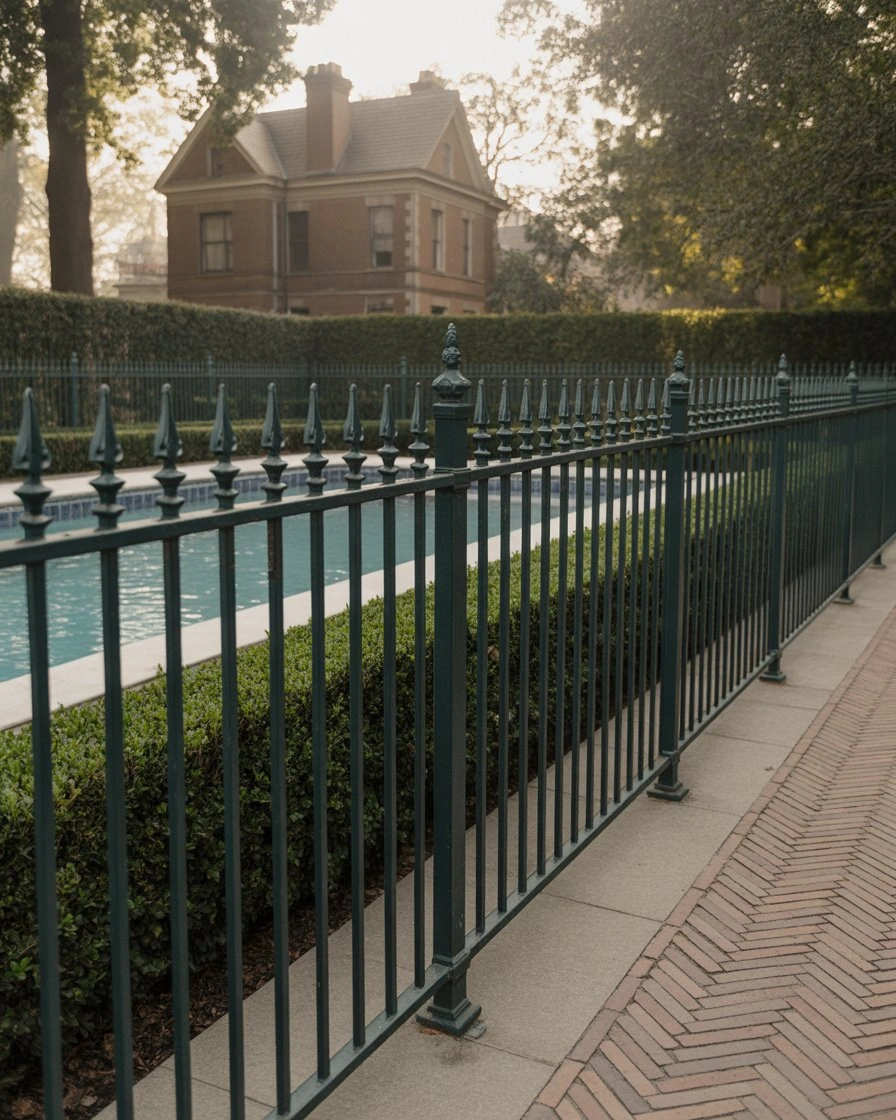
(*) A number of suggestions/comments state that “real” Victorian fencing was made out of wrought iron and forged by blacksmiths; however, reproductions in cast aluminum are about half the weight and half the cost. The lighter material is easier to install on decks that are not structurally reinforced (without adding thousands of dollars to the project). Annual touch-ups with rust-converting primer sustain the fence’s sleek coloration for decades, checking flaking and corrosion that marred original 19th-century ironwork.
15. Horizontal Cedar Slats with Wide Gaps
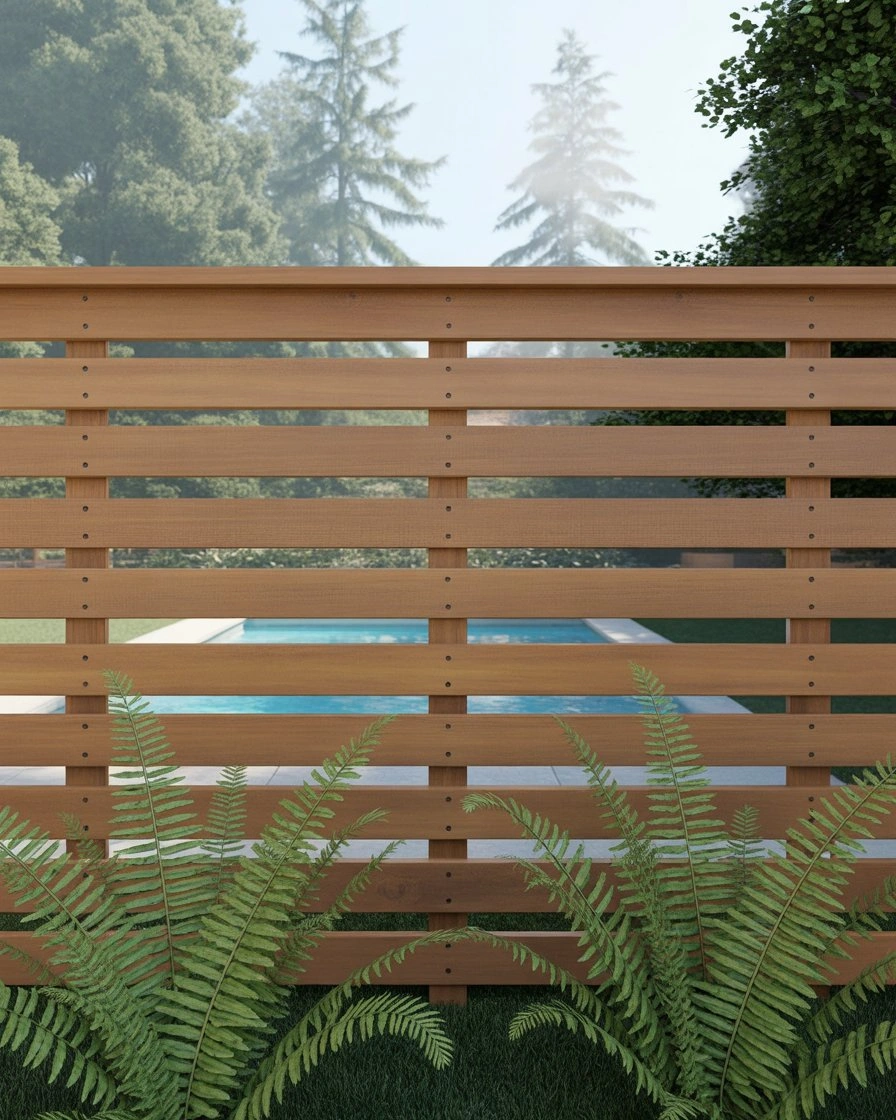
Western red cedar slats spaced four inches apart offer partial privacy and ventilation, aging to a silvery patina that harmonizes with natural surroundings. The horizontal grain emphasizes width in narrow yards, making compact spaces feel more generous. Pretty and functional, this design allows parents to see through gaps for child supervision while still defining the pool zone as distinct from lawn or patio areas. 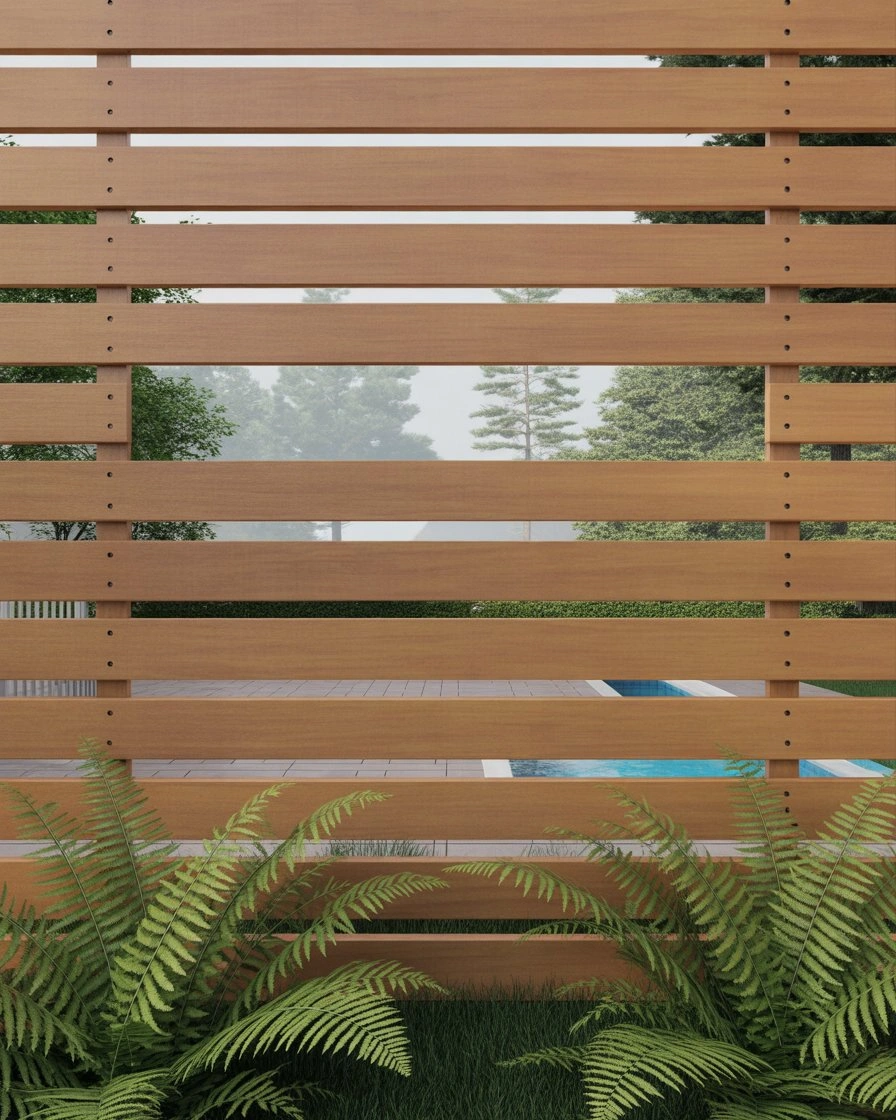
Pacific Northwest homeowners covet cedar for its rot resistance in moist climates, and the big electric gaps keep the fence from becoming a solid wall that traps moisture up next to the house. Practical sense: let cedar weather gracefully to silver-gray rather than battle the patina with sealers—stable in a year’s time, it turns out that sea gray protects the wood better and provides a more rewarding sensory experience than endless sanding and refinishing. Expect to spend $70 to $100 per linear foot for materials and installation.
16.- Stone Column Fence with Glass Infill
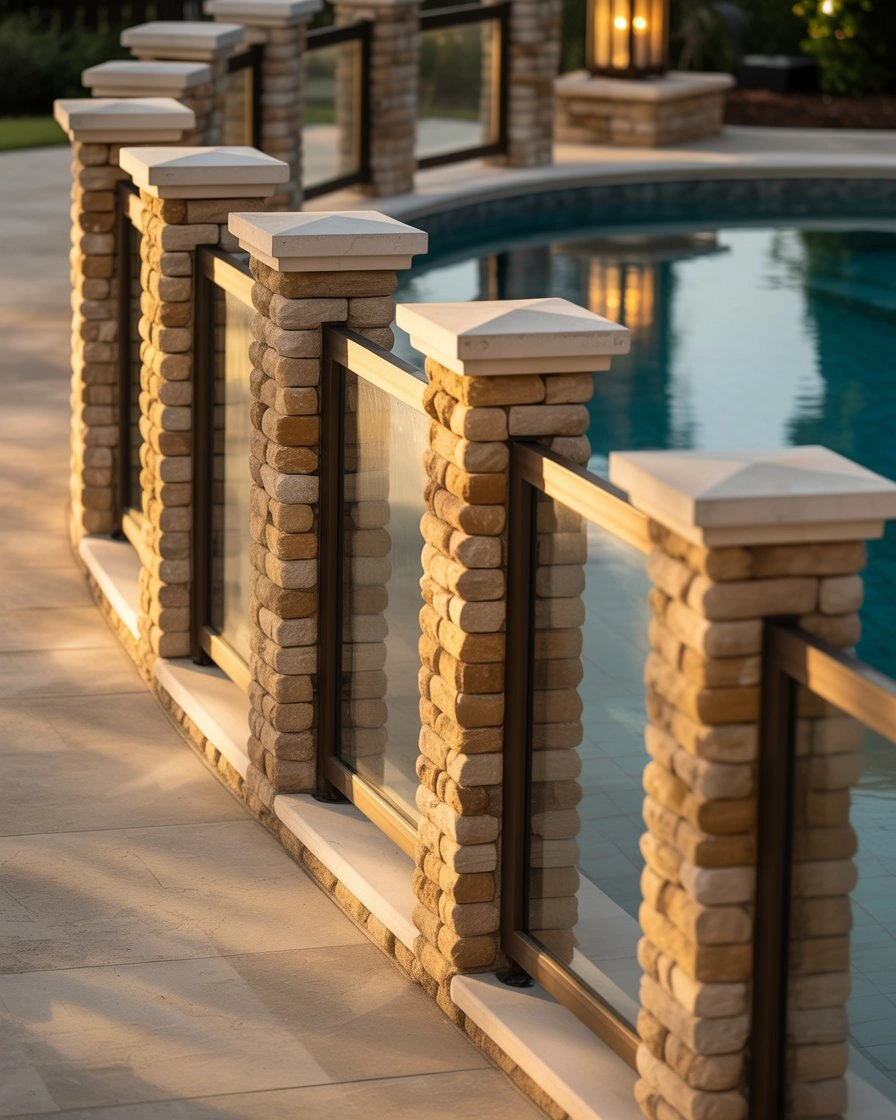
Large stone columns spaced at regular intervals with frameless glass infill, providing the heavier feel of masonry with visual freedom. The posts anchor the fence line and can serve as mounting locations for outdoor lighting or various hardware. This hybrid design works well with both Craftsman and Tuscan-style homes that might already have stone in their foundation or exterior veneer, making the material consistent throughout the property’s design elements. 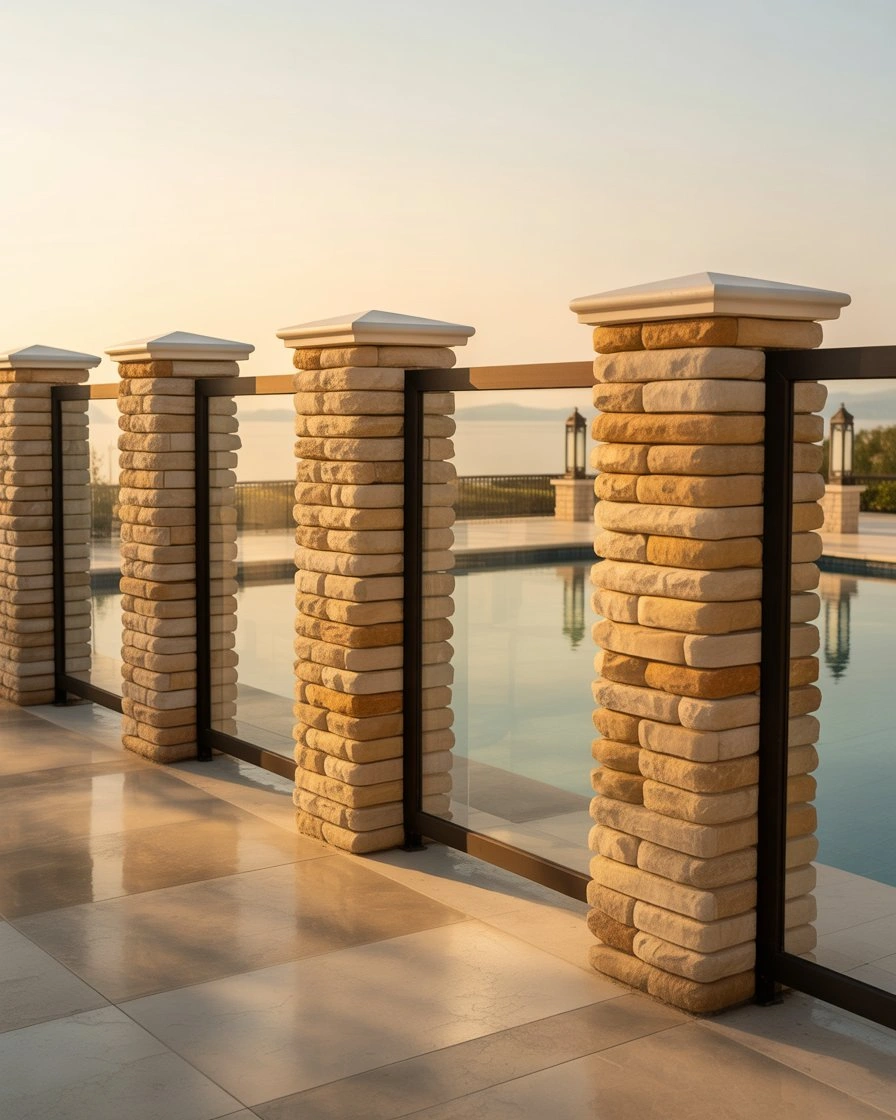
Another mistake would be to have pillars at long intervals so that one is forced to use very large pieces of glass, which become costly and difficult to replace in case of breakage. 6 to 8 ft centers is the ideal compromise between cost of materials and stability. Stone columns double as heat sinks that warm the pool area in colder months by soaking up the sun during the day and exuding warmth in nighttime dips when thermometers drop.
17. Galvanized Cattle Panel with Climbing Vines
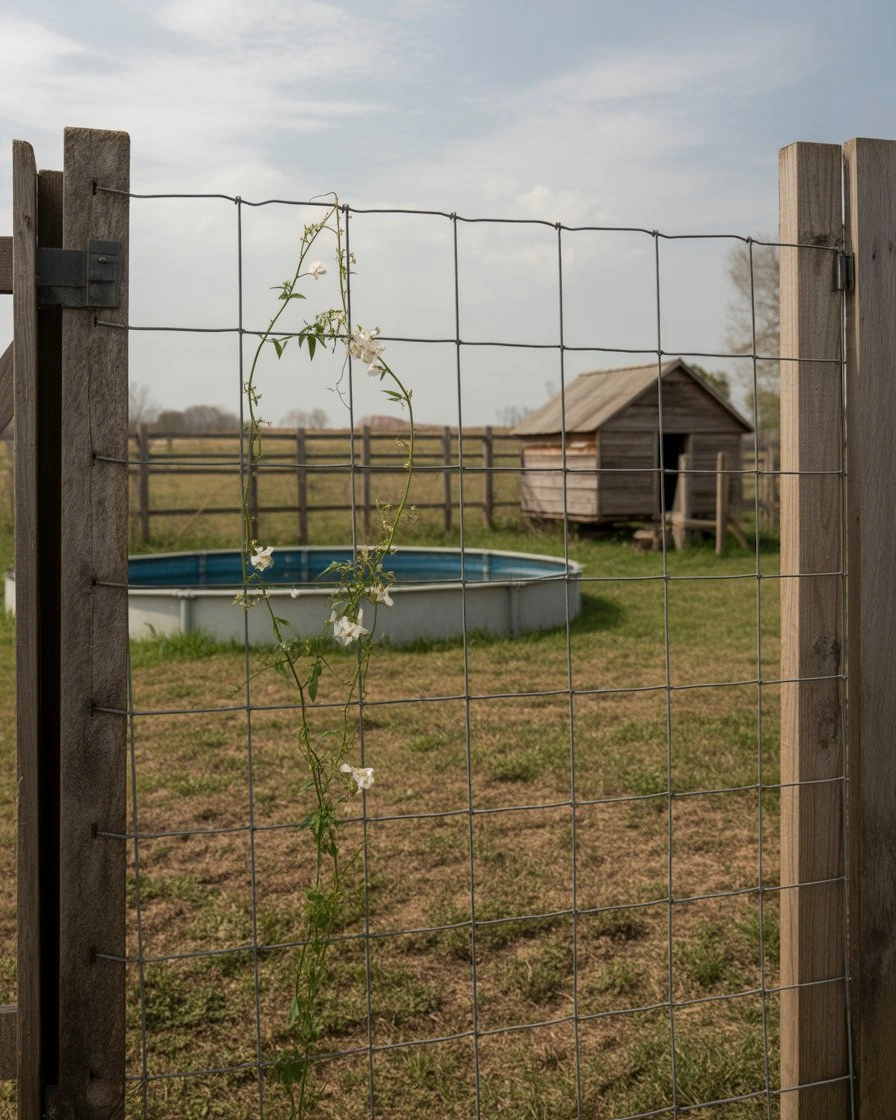
Urban Cowboy: Agricultural cattle panels reused as pool fencing provide a budget-friendly safety solution with instant rustic charm, especially when supported by rough timber posts. The four-by-four-inch welded wire grid can be trained with flowering vines—such as jasmine or passionflower—in a single growing season, turning a utilitarian barrier into a living wall. This strikes a chord with homeowners redoing farmhouses or going for modern homesteading looks in suburbia. 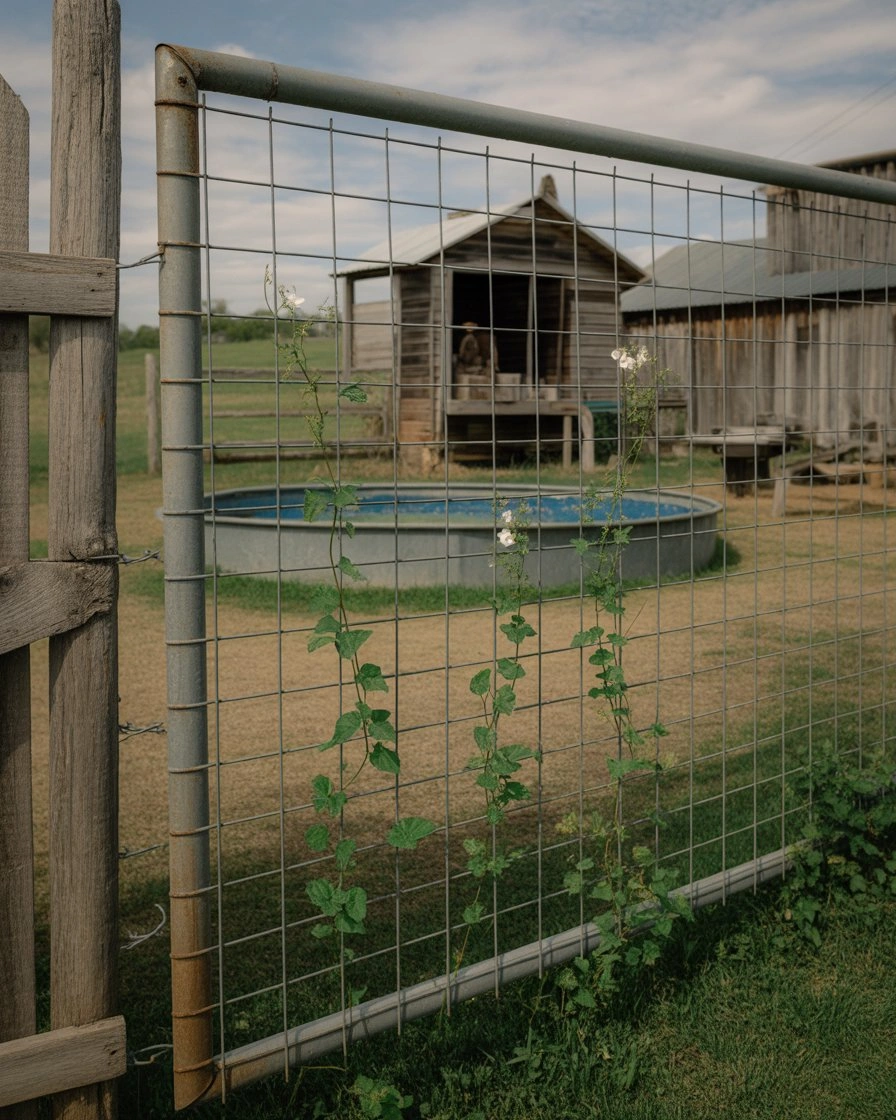
Regional context: Texas and Oklahoma yards commonly feature cattle panels, making them locally available and inexpensive at farm supply stores. A fifty-foot roll costs around $150, dramatically undercutting specialty pool fencing while meeting height and spacing requirements. The galvanized coating resists rust for years, and vines provide seasonal interest that changes with blooming cycles and autumn colors.
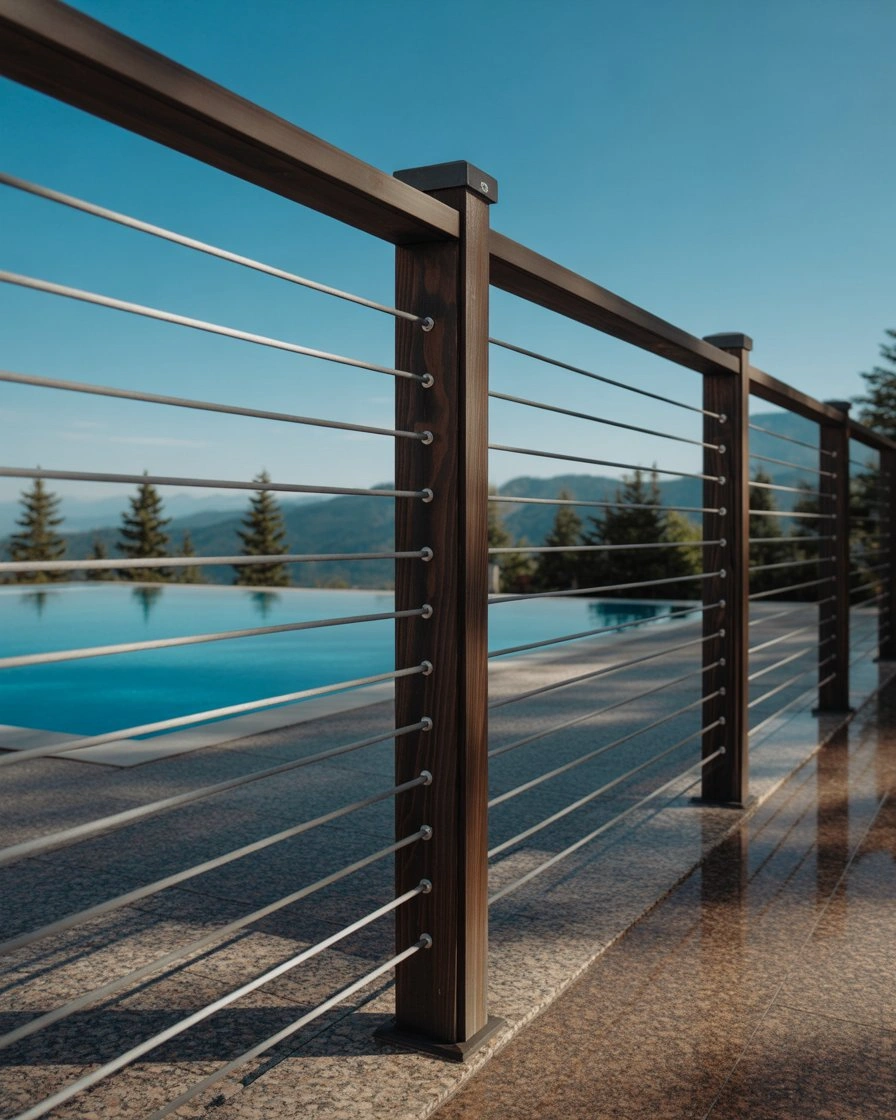
Marine-grade stainless cables tensioned between wood posts allow for a high level of visibility in beautiful, durable designs, particularly useful for watery or. The wires are tensioned so that they do not sag, keeping the lines three inches apart and in accordance with safety codes. This system looks great in modern mixed-material homes where the juxtaposition of warm wood and cooler metal echoes interior design elements. 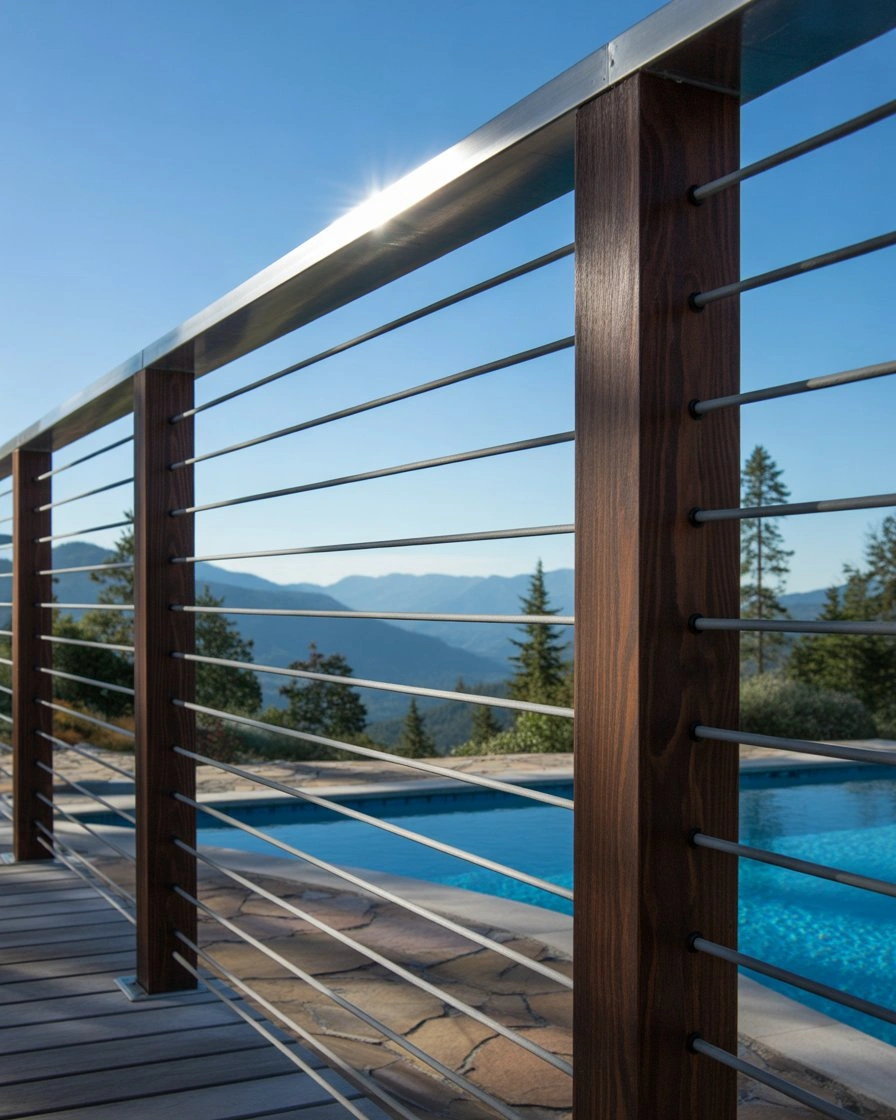
Plan for professional installation to be in the range of $120-$180 per linear foot because of the accuracy that’s needed for proper tensioning and post spacing. Homemade attempts usually have drooping cables or posts that tilt at an angle from lateral pressure and won’t pass the safety inspection unless corrected at great expense. Marine installations require the use of 316-grade stainless hardware to stand up to saltwater exposure, which can cause steel cables to rust through in as little as five years.
19. Modernist Concrete Block with Geometric Cutouts
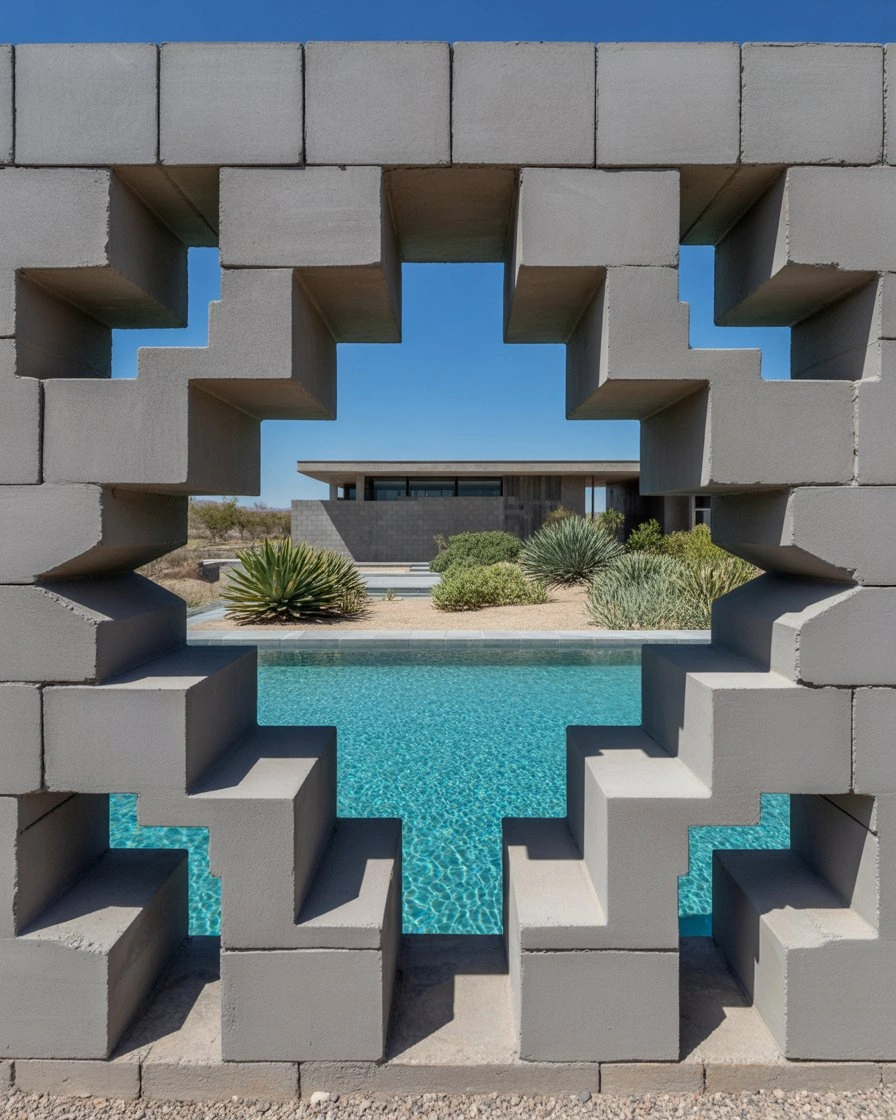
Decorative concrete blocks arranged in geometric patterns provide privacy with strategic ventilation, recalling mid-century breeze block walls popular in Palm Springs and Miami. The modular units install quickly and withstand hurricane-force winds better than most fencing materials, making them practical for storm-prone regions. Painting blocks in bold colors or leaving them raw concrete offers flexibility to match evolving design preferences without replacing the entire structure. 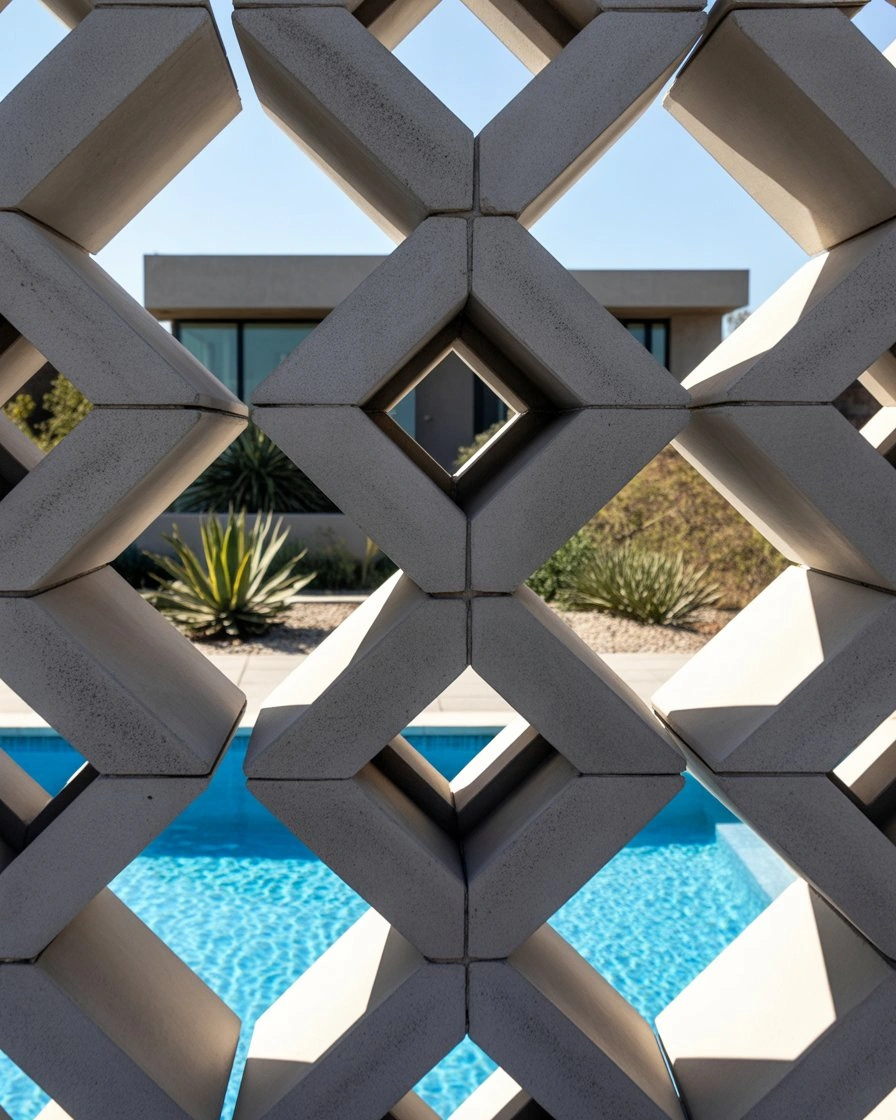
Where it works best: Florida and Southern California properties with strong modernist architecture, where the block patterns echo other design elements like perforated metal screens or graphic tile work. The thermal mass helps moderate temperature swings, keeping the pool area cooler during scorching afternoons by shading the deck while allowing breezes through the cutouts. Professional masons complete installations in days rather than weeks, minimizing disruption to pool use during construction.
20. Vertical Garden Wall with Transparent Base
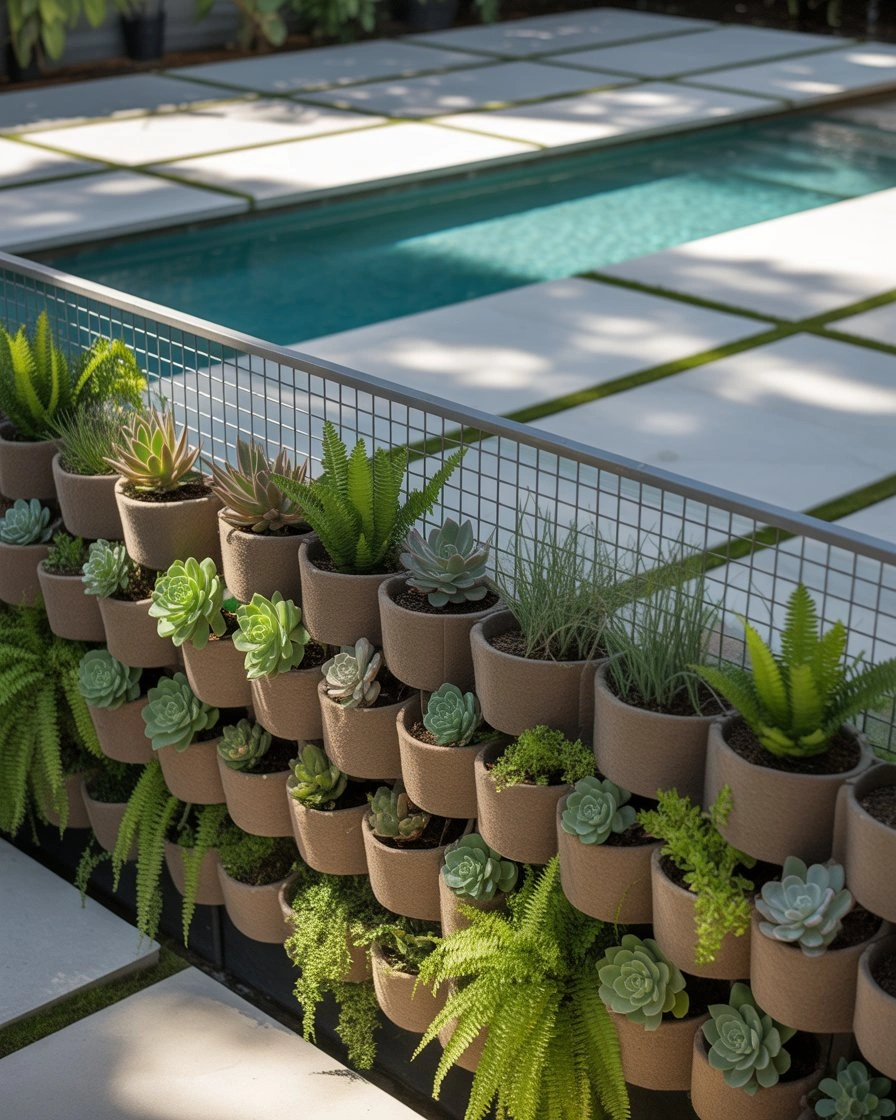
Combining a knee-high transparent barrier with a vertical garden system creates living art that doubles as a safety fence, with plants cascading from wall-mounted planters or felt pockets. The lower clear section meets visibility requirements, while the upper planted zone provides privacy and air purification. This biophilic approach appeals to urban homeowners seeking to maximize greenery in limited square footage, turning the fence itself into productive landscape space. 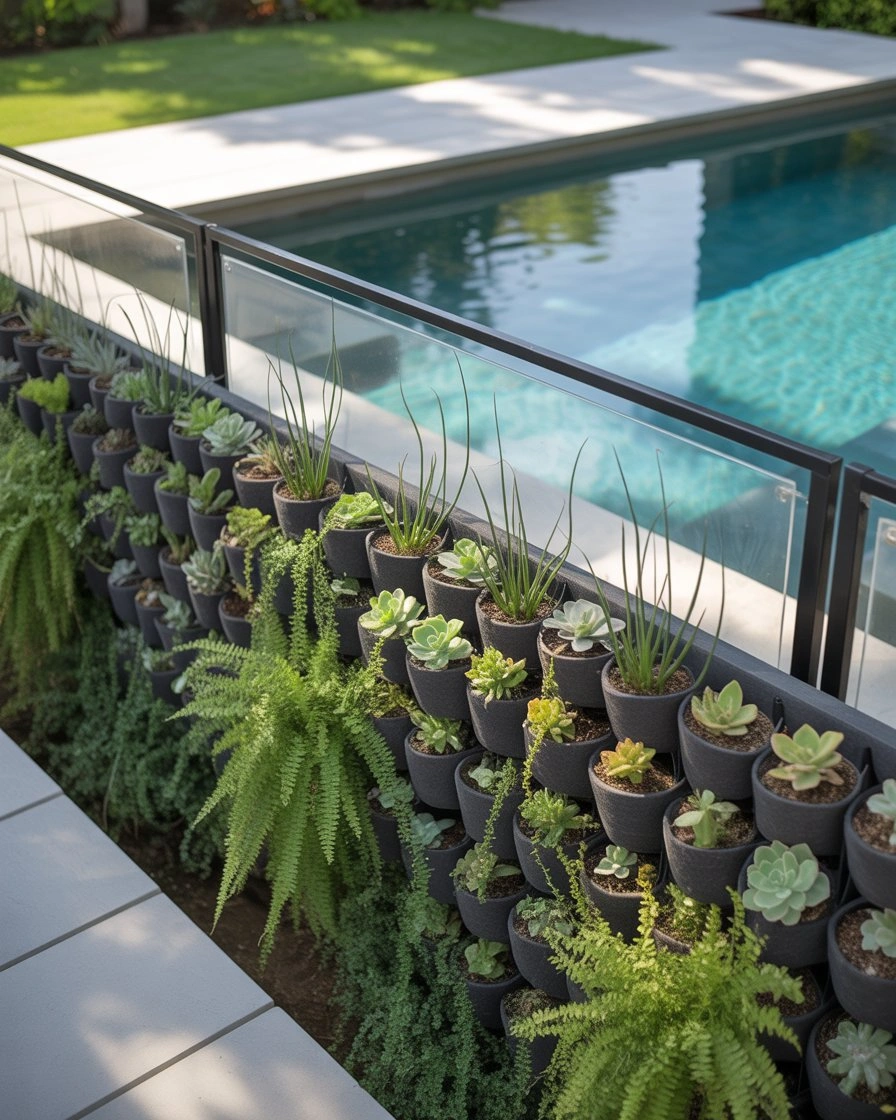
My sister put this system in her yard in Phoenix, and she said it dramatically cooled down her pool deck area, with the plants creating a microclimate that was several degrees below the surrounding temperature. In the top pockets, she grows herbs such as basil and mint, reaching outside to gather fresh ingredients for poolside cocktails. Drip irrigation takes over the watering chores, cycling on for fifteen minutes every morning to sustain desert-adapted life in the vertical garden.
21. Painted Steel Panel Fence in Navy Blue
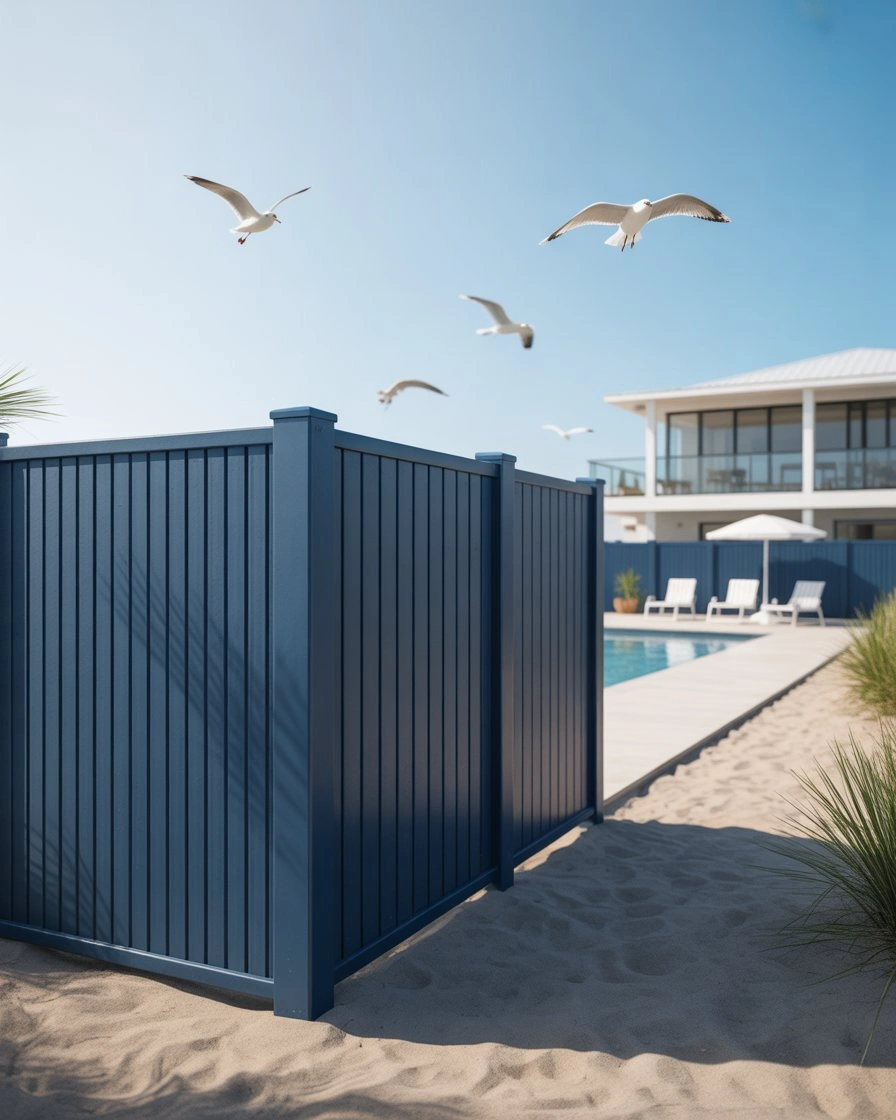
Bold & Blue Solid steel panels powder-coated in deep navy turn any pool into a shimmering oasis and provide the ultimate in privacy. Despite the sophistication of this color selection, it’s not as harsh as black can be and looks great in coastal-inspired palettes with whites, sandy tones, and weathered wood. Thick-walled steel stands up better to impacts and the elements than hollow aluminum, making the more expensive material pay off with longer-term durability. 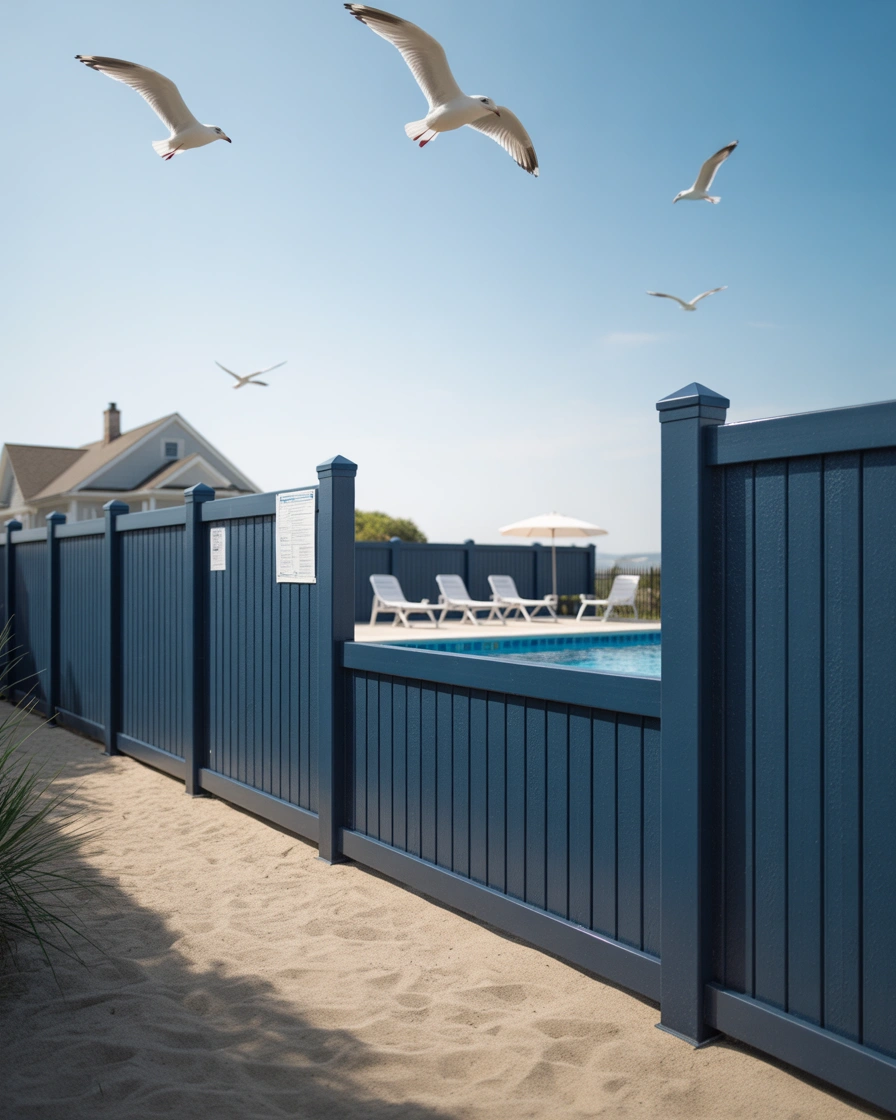
Real homeowners note that dark colors heat up considerably in direct sun, potentially causing minor burns on bare skin during peak summer hours. Position seating and traffic patterns to avoid direct contact with the fence during midday, or choose lighter shades if the fence faces southwest. Powder coating requires minimal maintenance—just annual cleaning with soap and water to remove salt or pollen buildup that can dull the finish.
22. Recycled Plastic Lumber Fence in Natural Tones
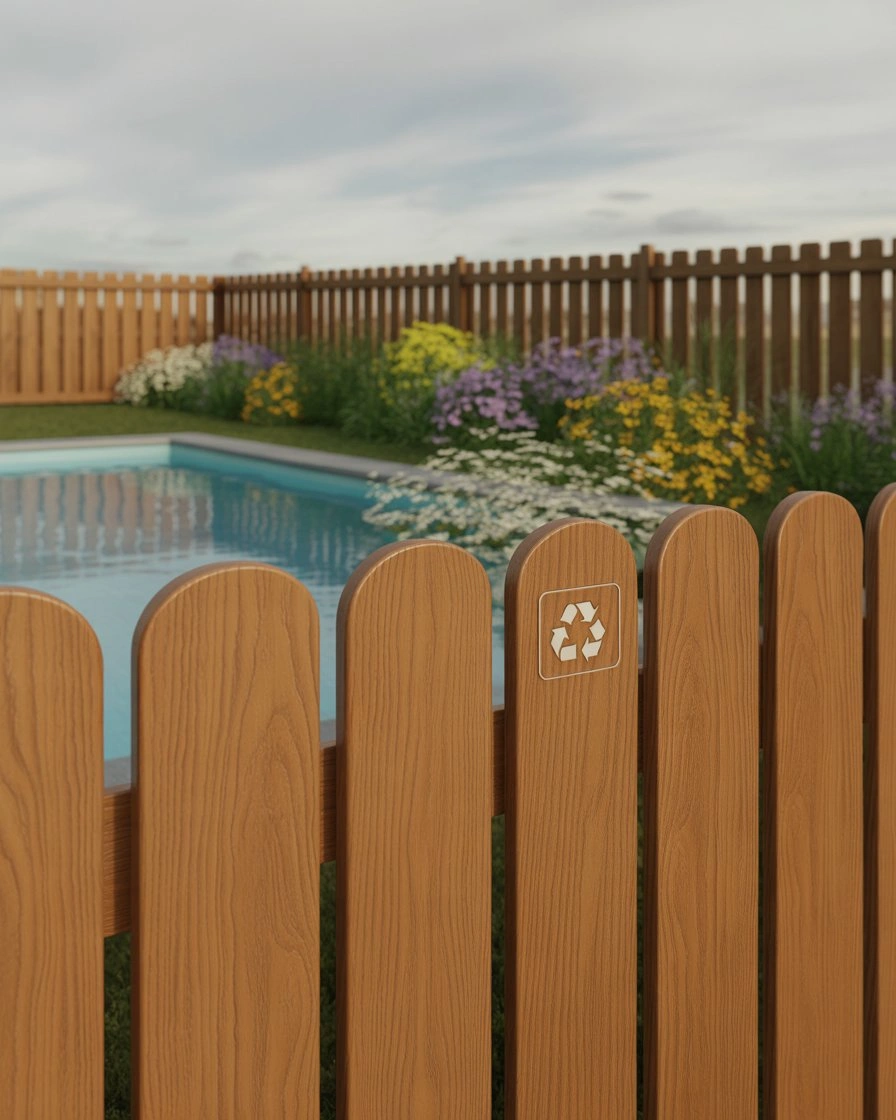
Recycled plastic lumber fence boards last decades and won’t rob the earth of its treeland to install. The stuff does not rot, splinter, or need painting and stays good-looking indefinitely with some basic cleaning. Available in oak, cedar, and walnut shades to complement classic outdoor scenes and promote eco-friendly construction standards that prevent single-use plastics from accruing in landfills. 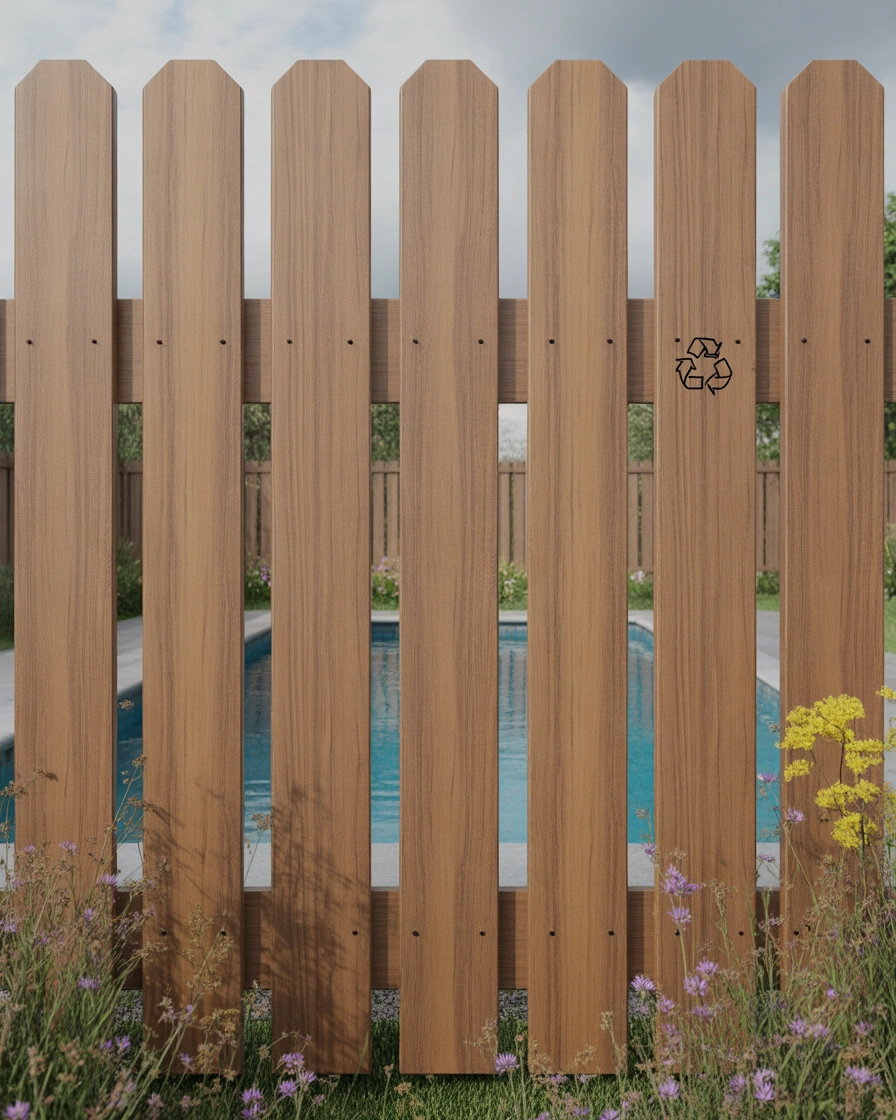
Guidance: Recycled plastic lumber is cooler than composites when the temperature is above 80 degrees, and it won’t feel as hot underfoot or when you lean back against it on a sun-soaked day. The material runs $60 to $90 per linear foot, outstripping vinyl but edging it out on price compared with premium wood. Currency has largely lost any value, and homeowner equity stakes have eroded in such a manner. Environmental values have very much entered into the decisions by homeowners, with many owners choosing recycled materials as their preference at almost, but perhaps not quite, the lowest cost option to do this.
23. Laser-Cut Aluminum with Botanical Motifs
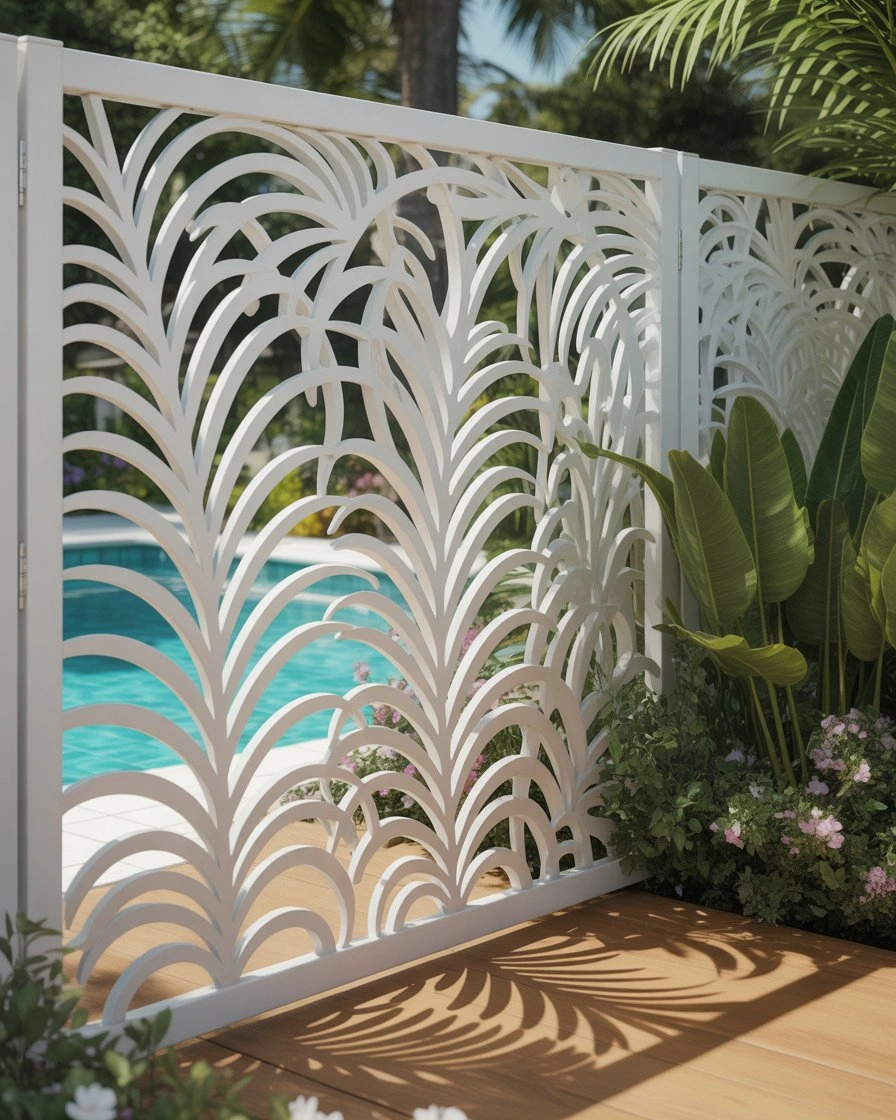
Custom laser-cut fencing panels feature fern, leaf, or flower patterns, adding artistic interest to the fencing. Installation is quick and easy with lightweight aluminum that is designed to last for years, providing an all-aluminum building that will never rust or fade with powder coat paint in any color you can imagine. These panels add visual interest where a straight run of pickets, ornate knots, and swirls between traditional solid fencing or as focal components in their own right makes all the difference in the world from an artistic—and safety—perspective! 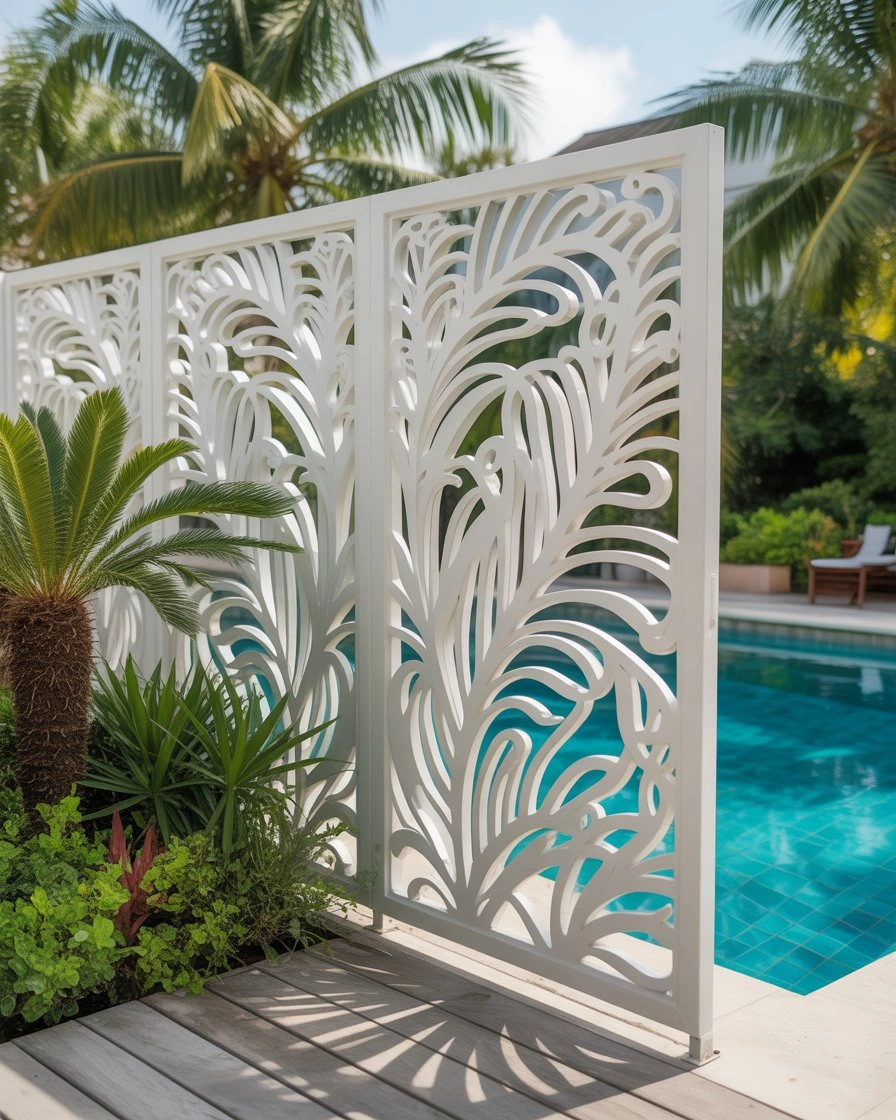
Expert Commentary [popup] recommends working with local metal artists to translate existing plant palettes into fence planters that reinforce site-specific themes that meld hardscape to flora. Budget $200 to $350 a panel, depending on design complexity and finish chosen; more straightforward patterns will be at the lower range. These are works of art that will serve as instant talking points during your next pool party, setting your backyard apart from what you see in the average suburbs but still compliant with safety regulations.
Conclusion
The enclosure for your pool helps establish the aesthetic of your entire outdoor area, and finding a balance between what is necessary, your personal sense of style, and practicality is important. Whether you’re looking for glass that reveals views, timber that unplugs with the landscape, or a grounding of metal and stone, there is a choice to suit your space and style—even if it’s less about its looks than what nature has dealt. Be sure to factor in local climate requirements, upkeep promises, and long-term viability before your immediate want for beauty. Share your favorite idea in the comments, or let us know about your own pool fence project—we’d love to hear what worked for your backyard.