Pantry doors are stepping into the spotlight in 2026 as homeowners across America reimagine these often-overlooked thresholds into design statements that blend function with style. Whether you’re scrolling Pinterest for farmhouse charm, sleek modern lines, or vintage character, the pantry door has become a canvas for creativity. From frosted glass that hints at what’s inside to bold painted finishes that anchor a kitchen’s aesthetic, these ideas reflect how we’re personalizing every corner of our homes. This guide walks you through inspiring pantry door concepts that marry smart storage solutions with the visual appeal your space deserves.
1. Hidden Pantry Door with Seamless Integration
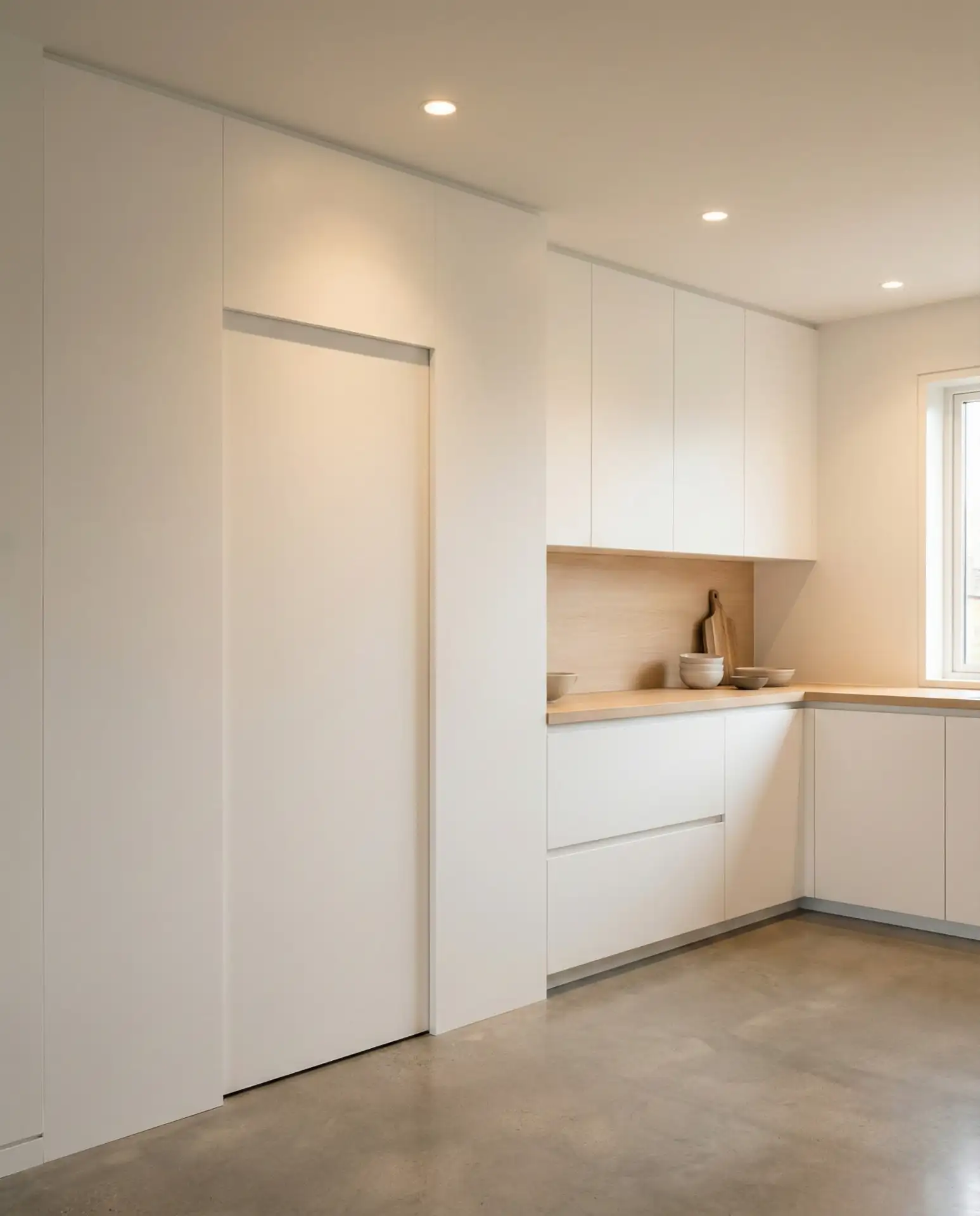
A hidden pantry door transforms your kitchen into a minimalist haven by disappearing into the wall or cabinetry. Popular in open-concept homes from California to New York, this design uses flush panels that match surrounding walls or cabinet fronts, creating an uninterrupted visual flow. The hardware recesses completely, and magnetic catches replace traditional knobs, making the entrance nearly invisible until you need it. 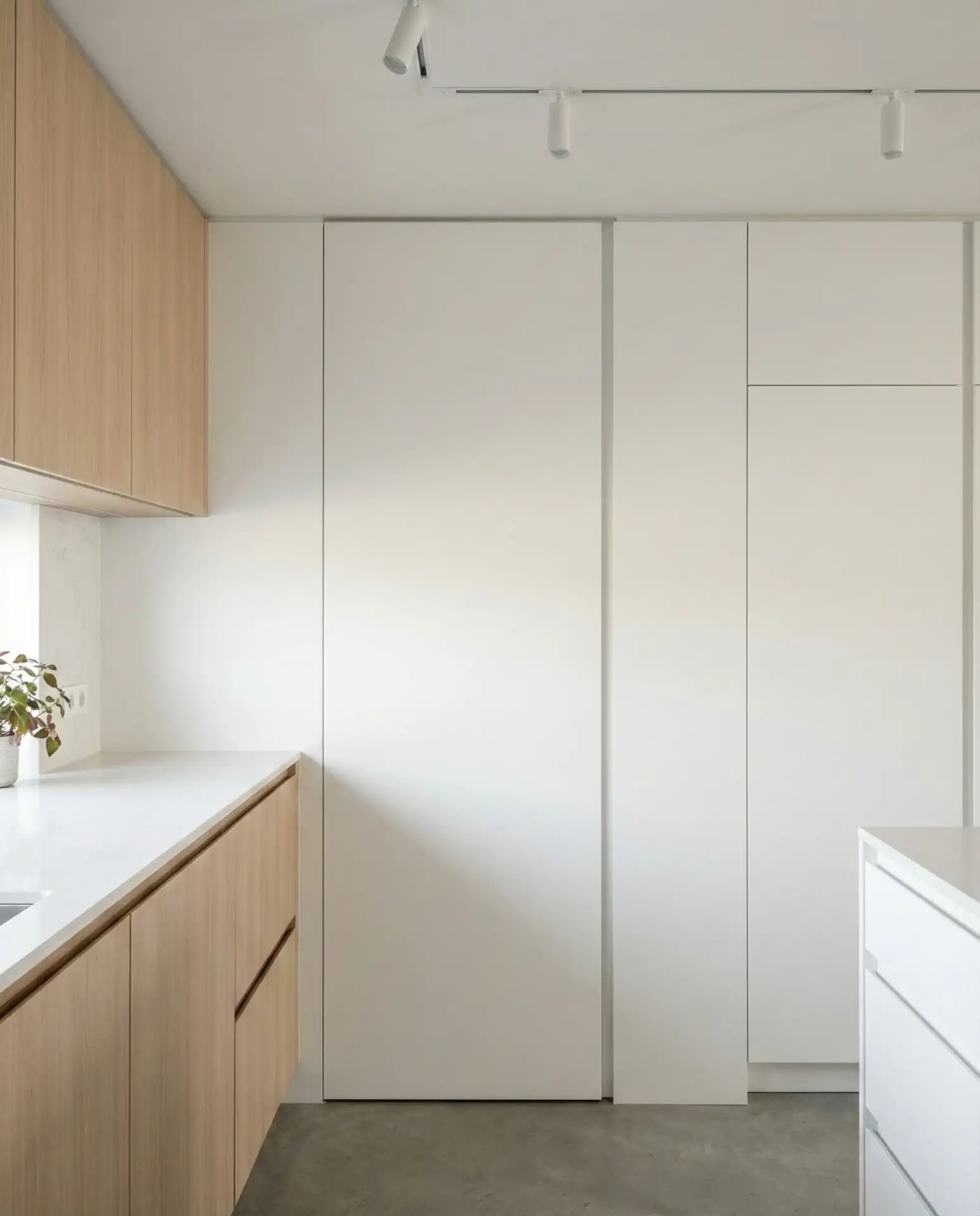
This approach works best in contemporary kitchens where you want the architecture to take a backseat to statement pieces like islands or backsplashes. A designer in Austin once told me that hidden doors add resale value because buyers perceive the space as larger and more cohesive. Keep in mind that touch-latch mechanisms can fail over time, so invest in quality hardware with a warranty to avoid frustration down the line.
2. Farmhouse Style Pantry Door with Rustic Hardware
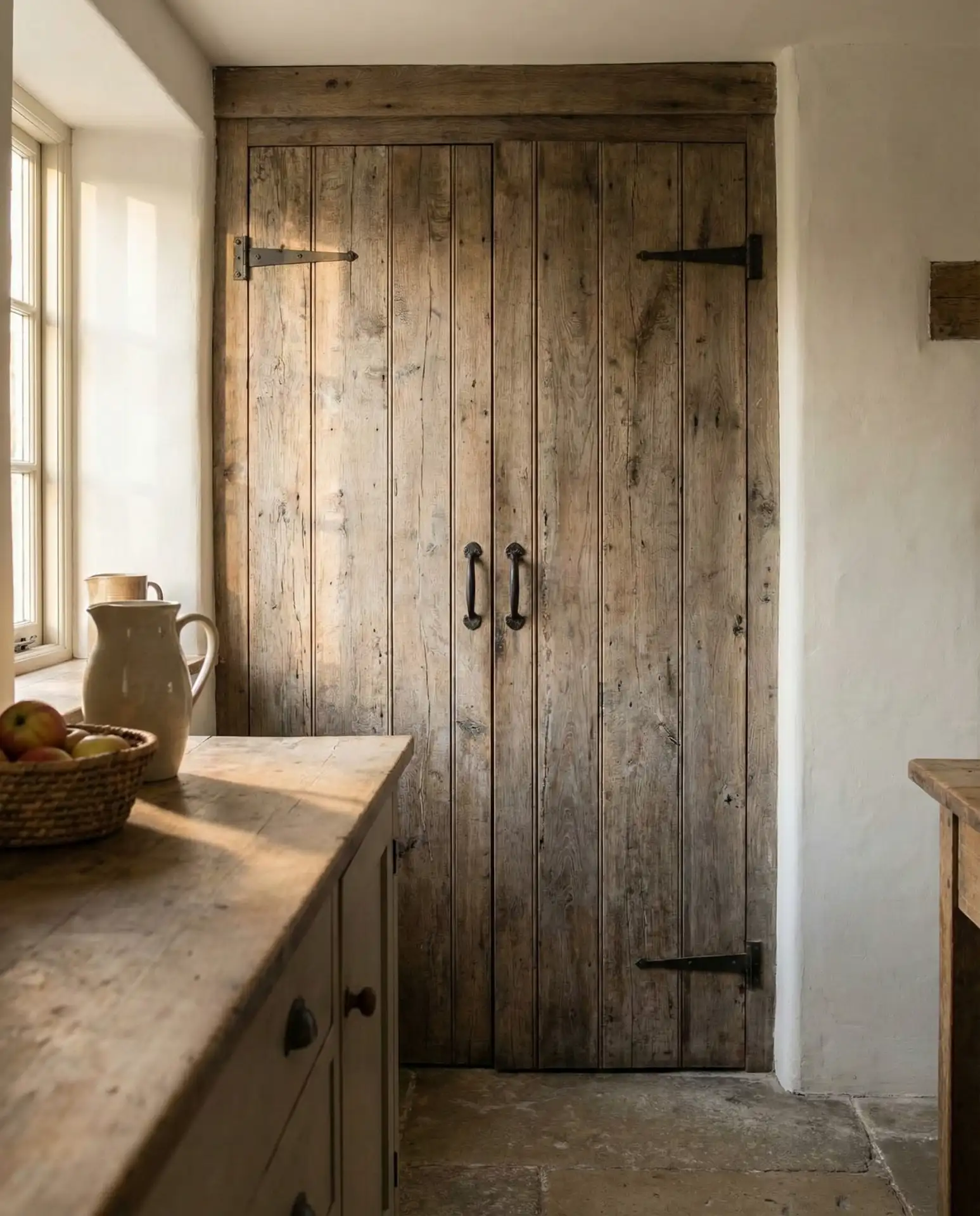
The farmhouse style pantry door brings warmth and nostalgia into modern American kitchens, especially across the Midwest and South. Featuring wood planks arranged vertically or in X-patterns, these doors often showcase distressed finishes in cream, sage, or natural oak. Black iron hardware and barn-door rollers complete the look, creating a focal point that honors traditional craft while serving today’s storage needs. 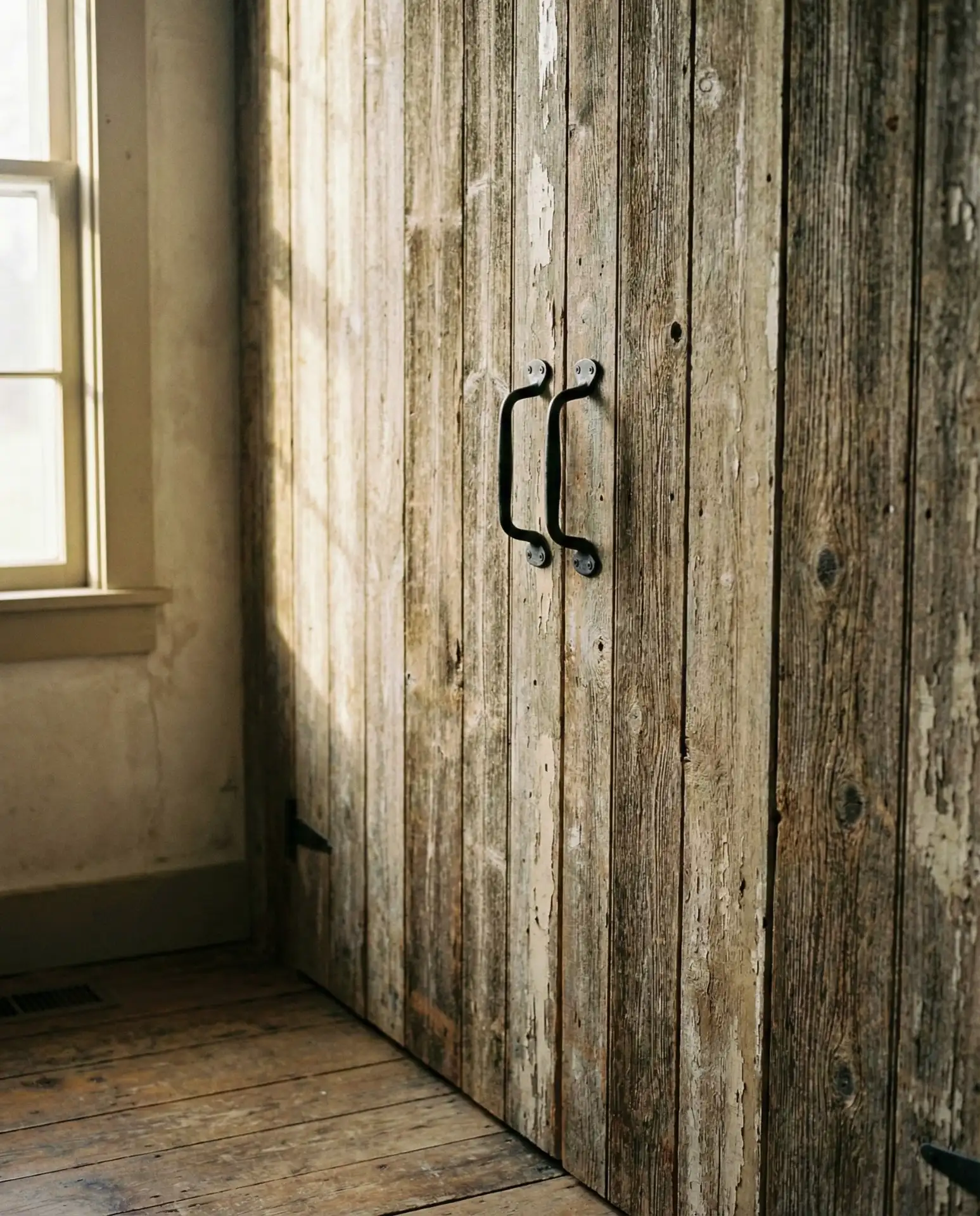
Americans love this style because it pairs effortlessly with shiplap walls, apron sinks, and open shelving. Where it works best is in homes built before 1970 that are undergoing kitchen refreshes, as the rustic elements tie new and old together. Budget-wise, reclaimed barn wood costs $8–$15 per square foot, while new pine with a distressed finish runs about $4–$7, making this a flexible option for different price points.
3. Black Framed Glass Panel Pantry Door
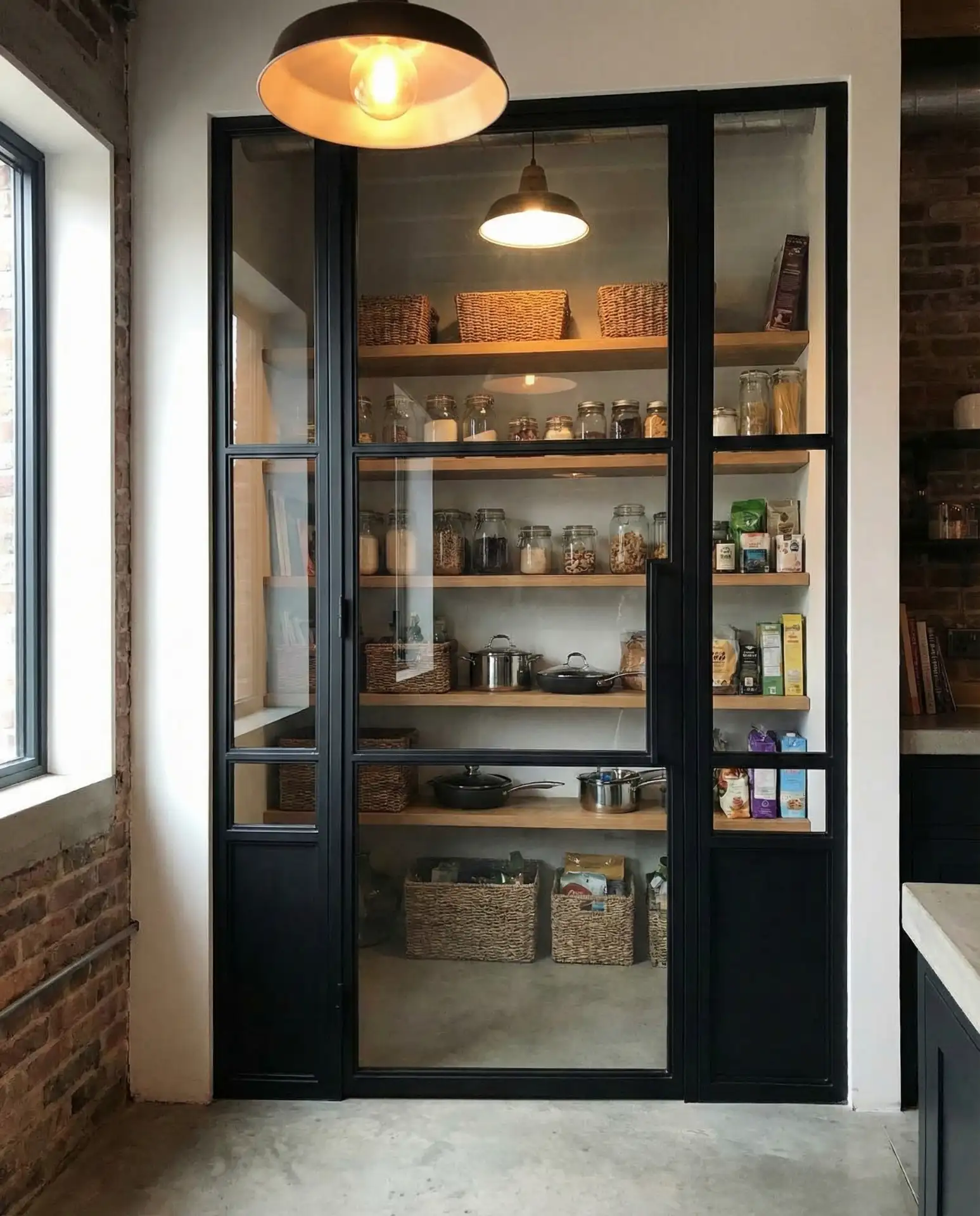
A black framed door with glass panels delivers industrial elegance that’s surged in popularity from Brooklyn lofts to Portland bungalows. The steel or aluminum frames create crisp geometry, while the transparent sections let you glimpse neatly organized shelves without opening the door. This design works beautifully in kitchens with white subway tile, concrete counters, or exposed brick, where contrast drives the aesthetic. 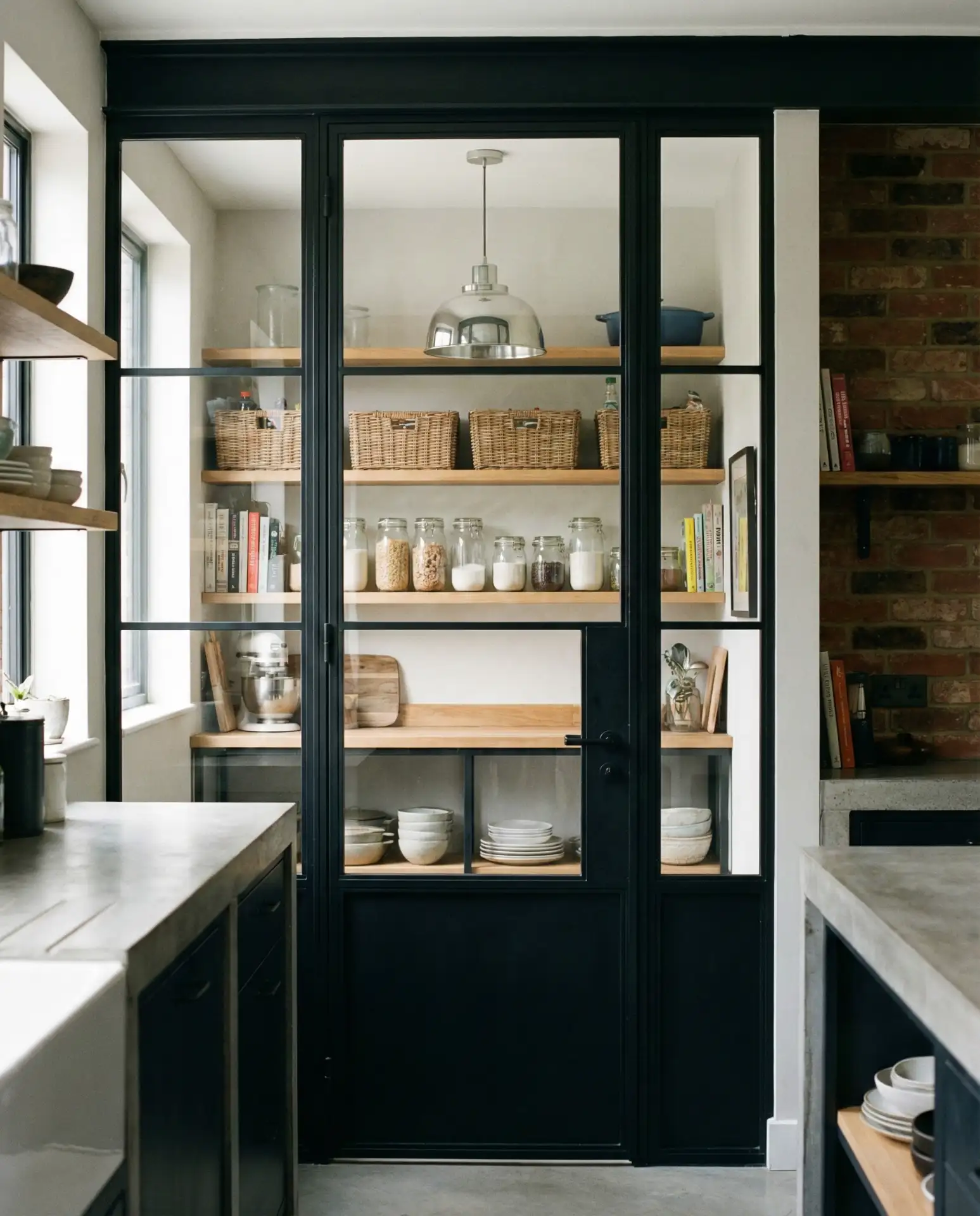
Real homeowners often pair these doors with interior pantry lighting to showcase glassware or colorful packaging as part of the décor. A common mistake is choosing thin frames that warp over time—look for at least 16-gauge steel and tempered glass to ensure longevity. This style also benefits from regular shelf tidying, since visibility demands organization or the look falls apart quickly.
4. Arched Pantry Door with Vintage Appeal
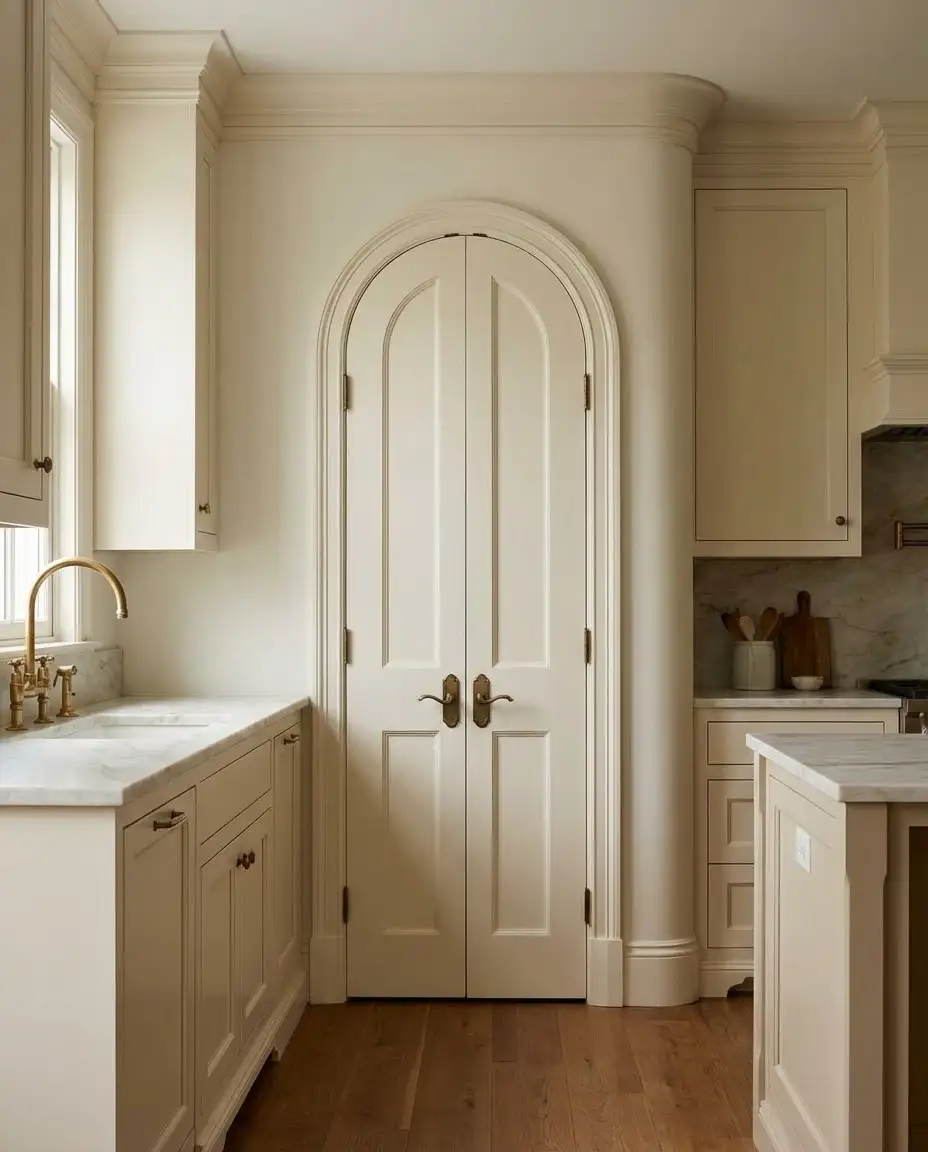
Arched pantry doors echo European architecture and have found a devoted following in renovated Victorians and Mediterranean-style homes across California and the Gulf Coast. The curved top softens the kitchen’s overall geometry, while vintage brass knobs and keyhole escutcheons add historic charm. These doors often feature raised panels or beadboard detailing that complements crown molding and wainscoting elsewhere in the home. 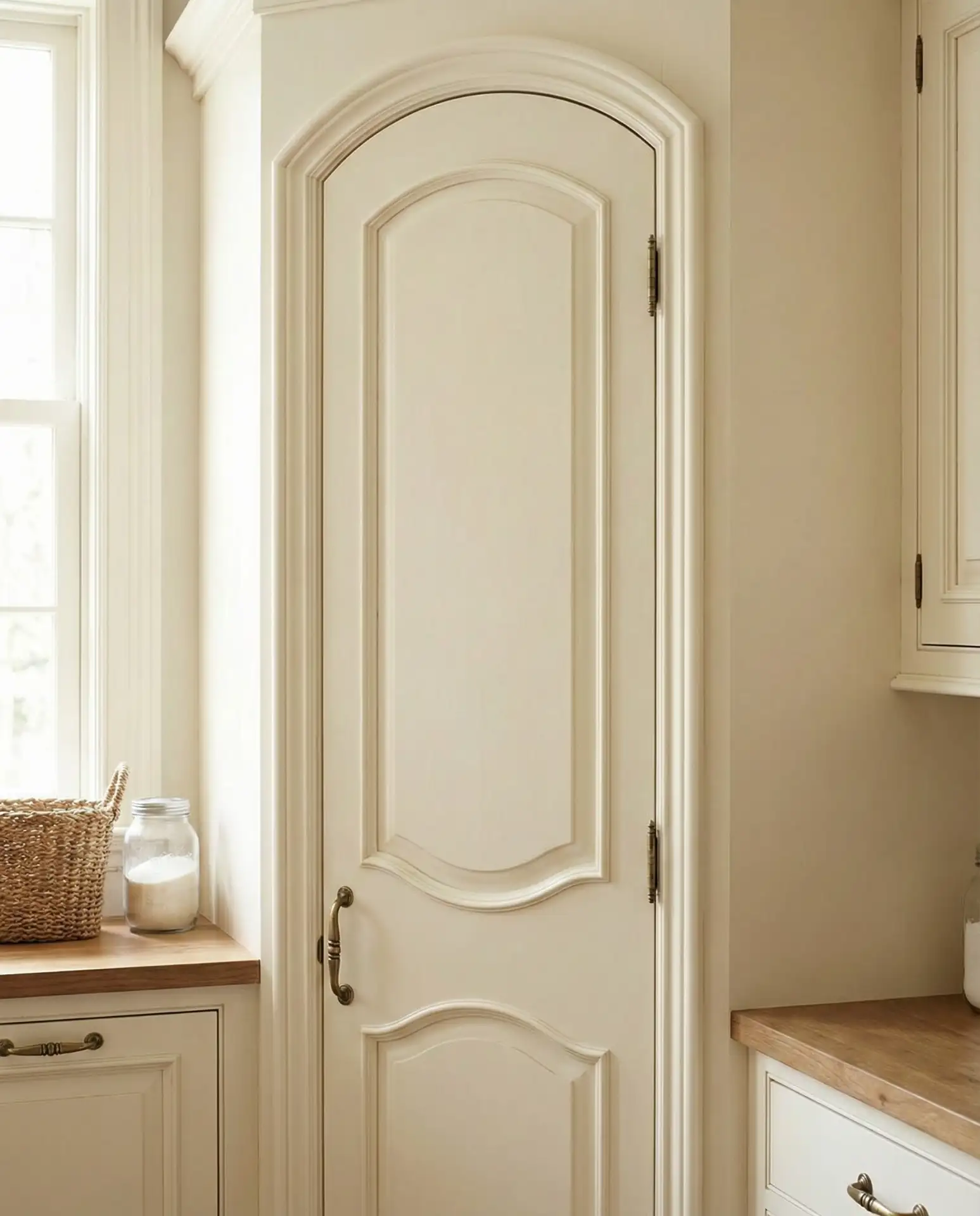
Practical insight: Custom arching typically adds $200–$400 to standard door costs, but prefabricated arched doors from suppliers like Simpson or Masonite bring that premium down to $100–$150. The payoff is architectural interest that photographs beautifully, which explains why these doors dominate Pinterest boards tagged “timeless kitchen.” They’re especially effective in galley kitchens where vertical space matters more than horizontal spread.
5. Swinging Saloon-Style Pantry Door
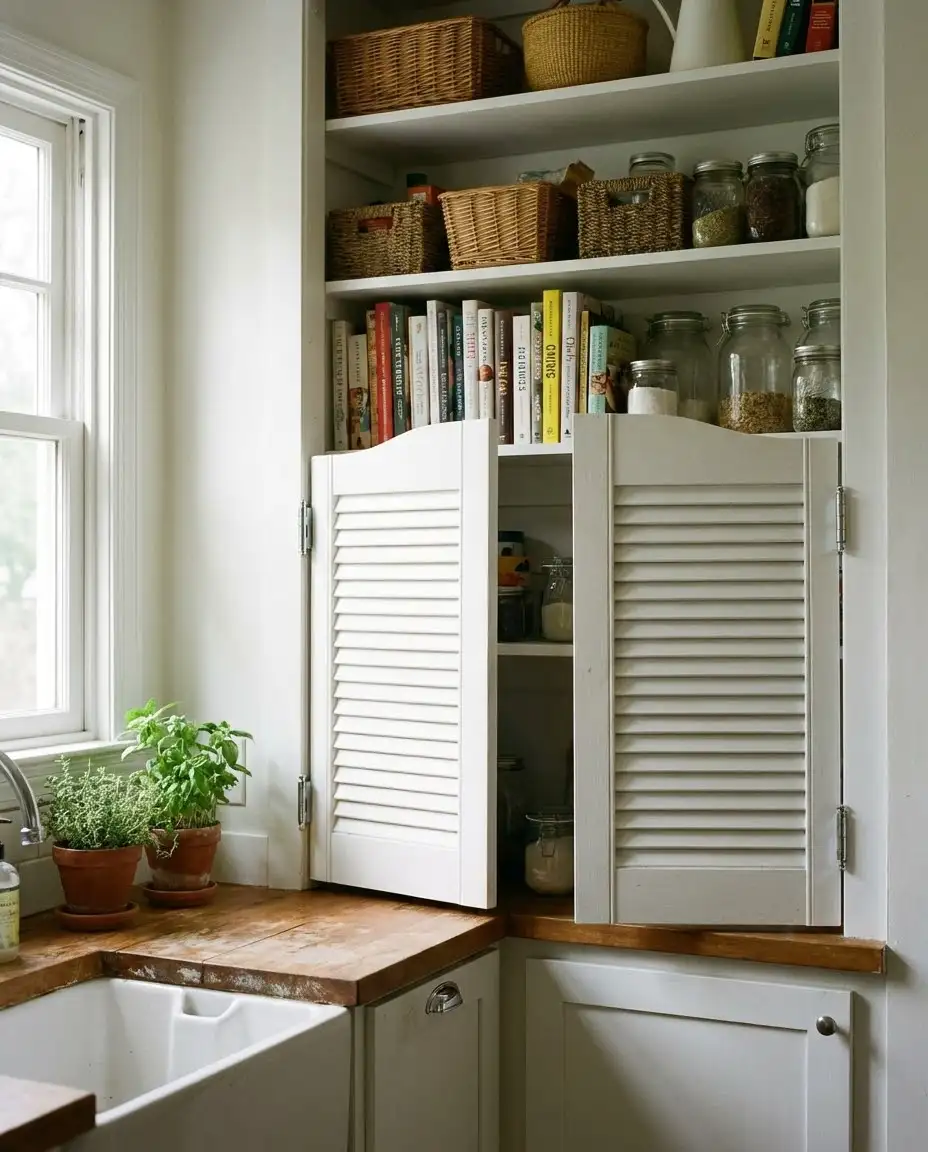
Swinging café doors offer a playful, functional solution for high-traffic kitchens where hands are often full. Mounted on dual-action hinges, these waist-high doors swing both ways and close automatically, making them ideal for families with kids or anyone who shuttles ingredients between pantry and stove. The design references Old West saloons but translates surprisingly well into contemporary spaces when finished in clean whites or grays.
A homeowner in Nashville shared that her saloon doors transformed pantry access during dinner prep, cutting trips in half because she could back through with armloads of groceries. Regional context matters here—Southern and Southwestern homes embrace this style more readily than Northeast Colonials, where it might feel out of place. Just ensure the swing radius doesn’t block adjacent drawers or appliances, a planning step many DIYers overlook.
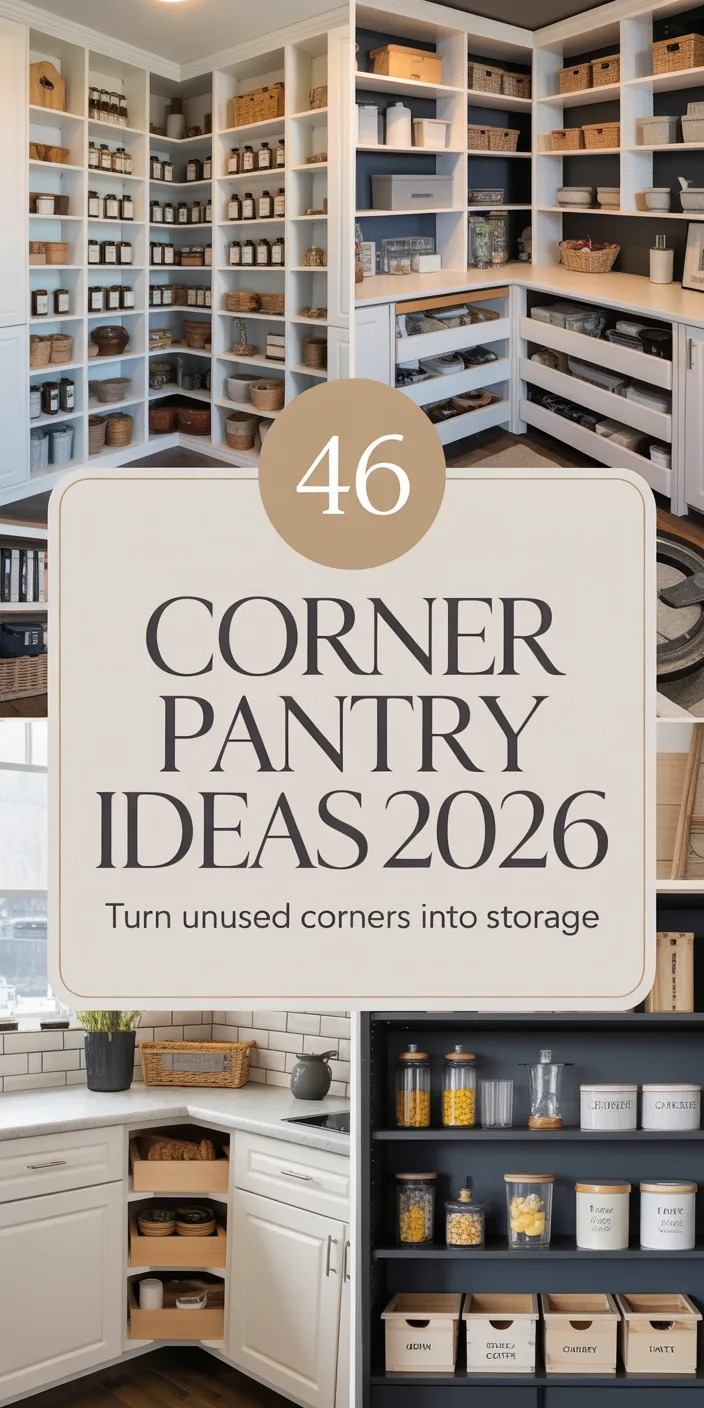
6. Corner Pantry Door with Space-Saving Design
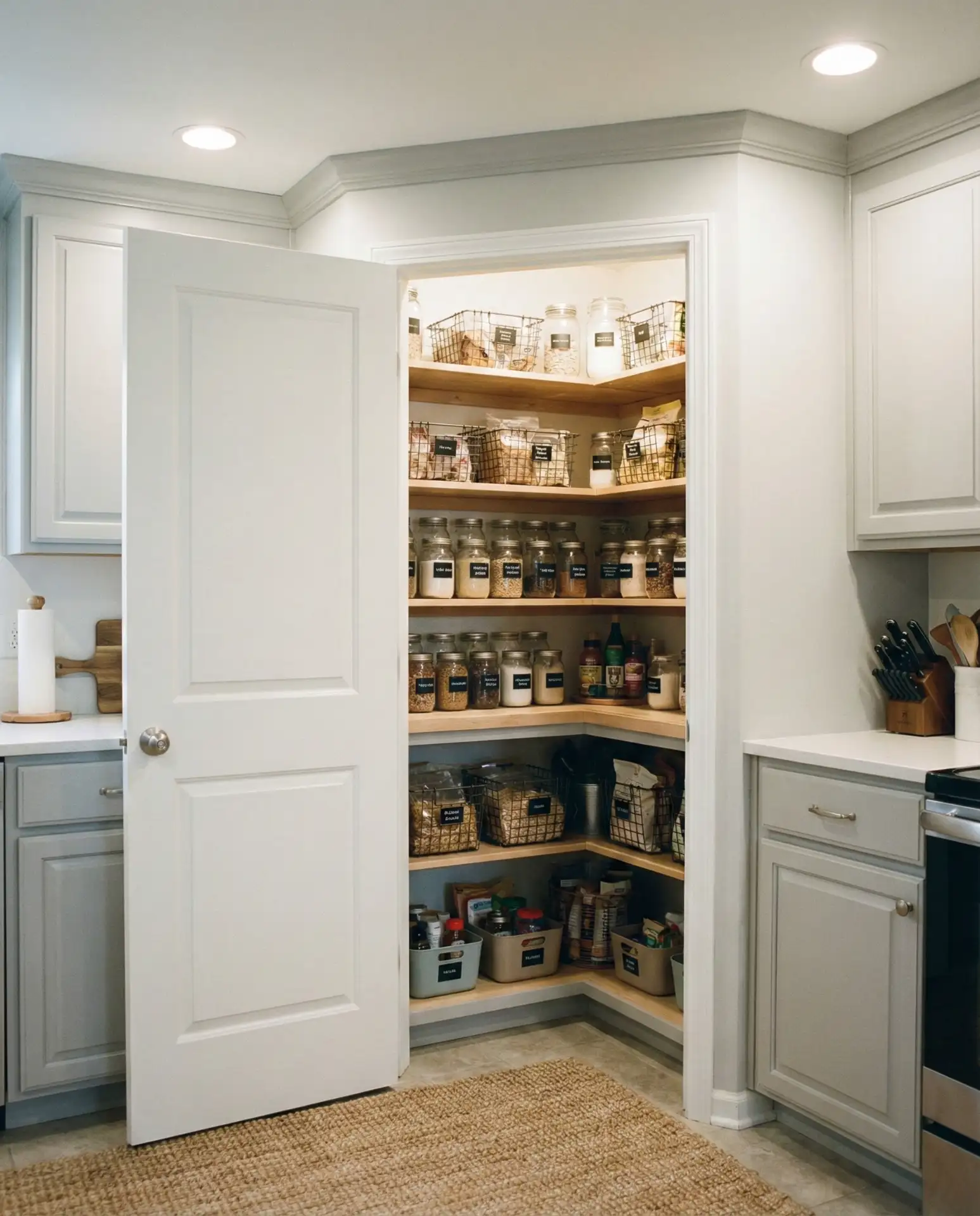
Utilizing dead corner space, these angled or bi-fold doors unlock storage potential in L-shaped kitchens common across suburban America. The door typically sits at a 45-degree angle, meeting two perpendicular walls, and opens to reveal deep shelving that maximizes every cubic foot. Storage solutions like lazy Susans or pull-out baskets inside complement the door’s efficient footprint, making this a favorite among organizational enthusiasts. 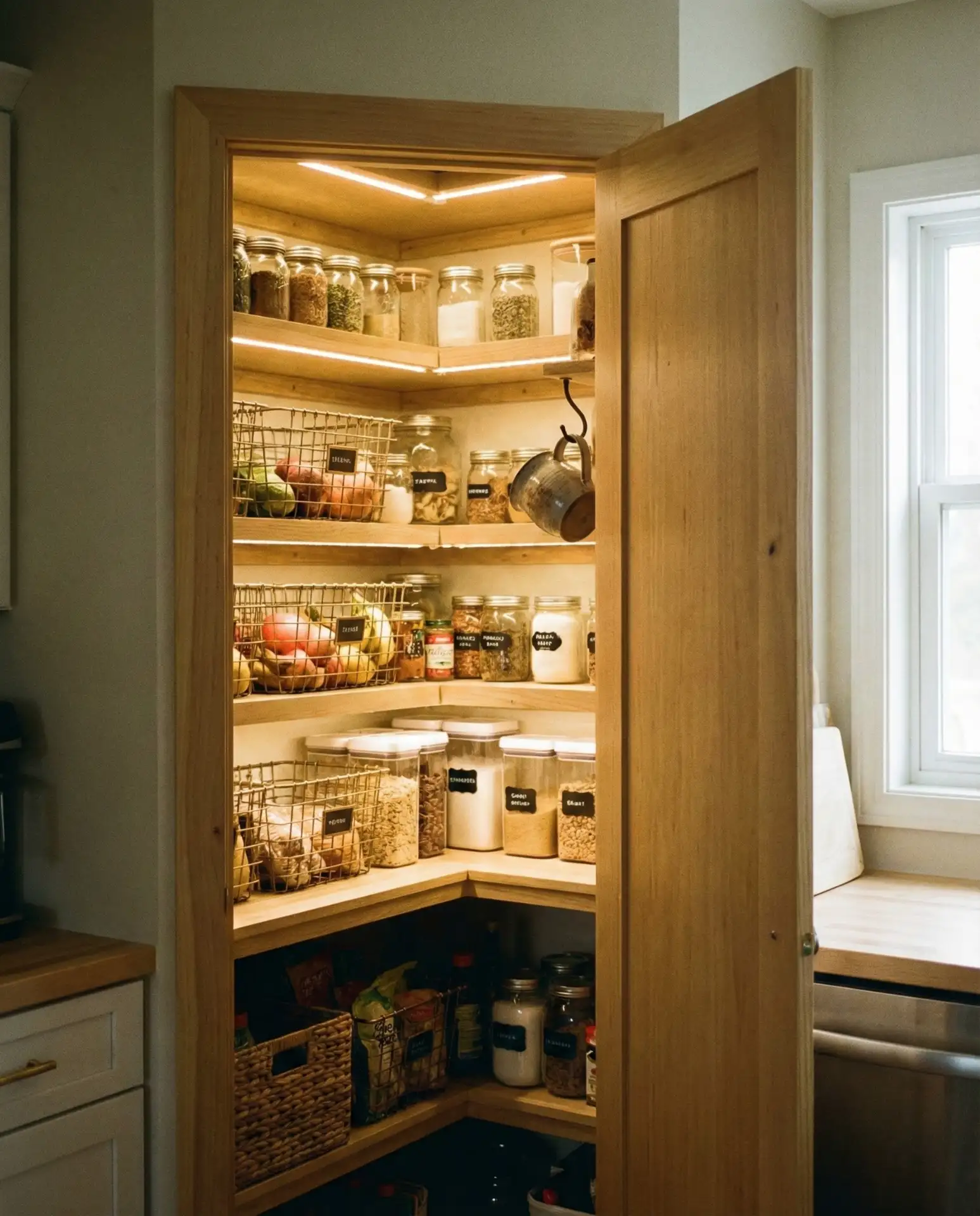
Expert commentary suggests corner pantries work best in kitchens under 150 square feet where every inch counts. They’re particularly popular in condos and starter homes throughout Denver and Seattle, where efficient use of limited space drives design choices. One pitfall to avoid is installing the door too close to adjacent cabinets, which restricts the opening angle and defeats the space-saving purpose—leave at least three inches of clearance on each side.
7. Rustic Reclaimed Wood Pantry Door
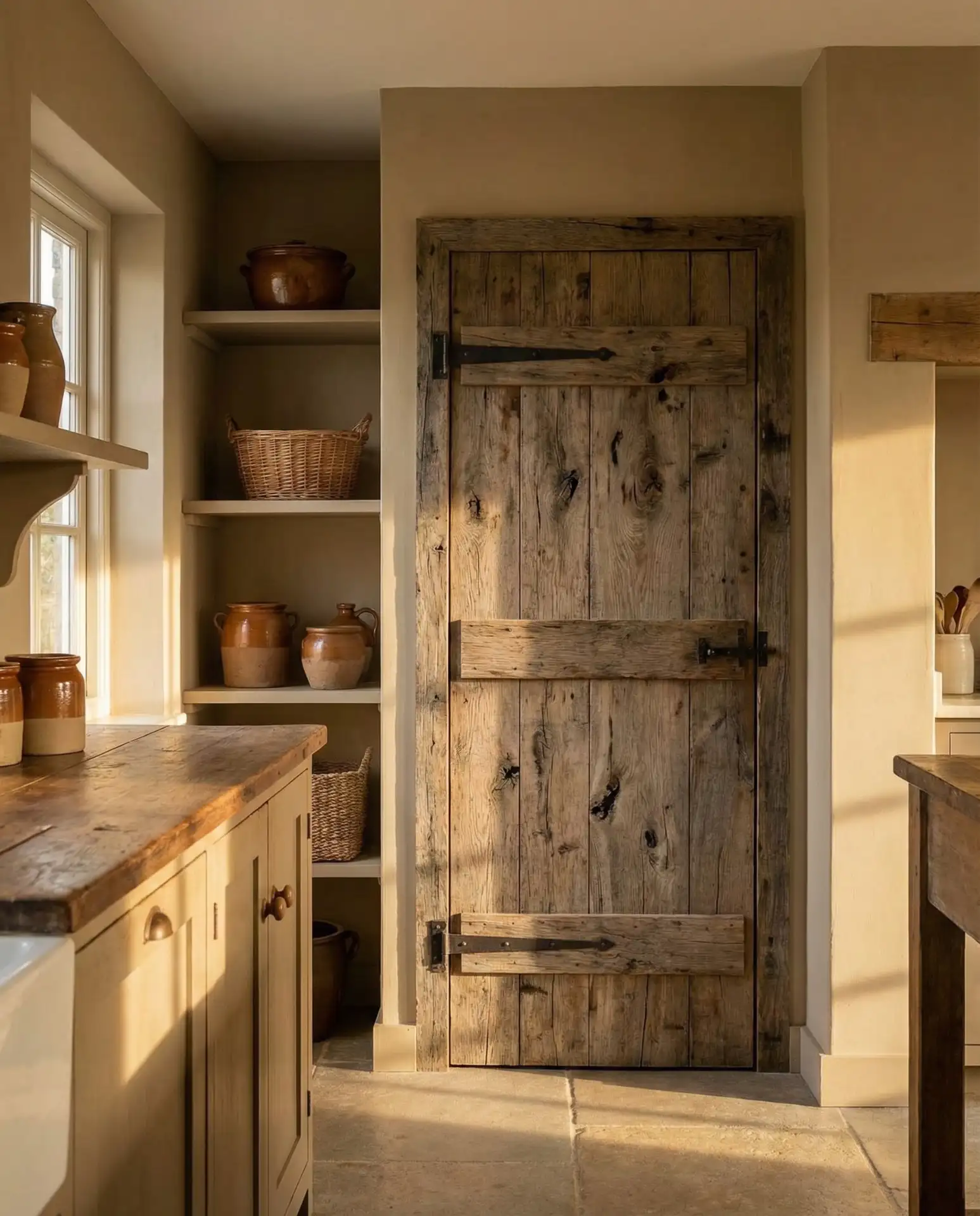
A rustic pantry door crafted from salvaged barn wood brings authenticity and environmental consciousness into the kitchen. Each plank carries unique weathering, nail holes, and color variation that tell a story of its former life, whether from a Tennessee tobacco barn or a Wisconsin dairy shed. The texture and patina pair naturally with soapstone counters, copper fixtures, and hand-thrown pottery, creating a layered, lived-in aesthetic that feels collected rather than purchased. 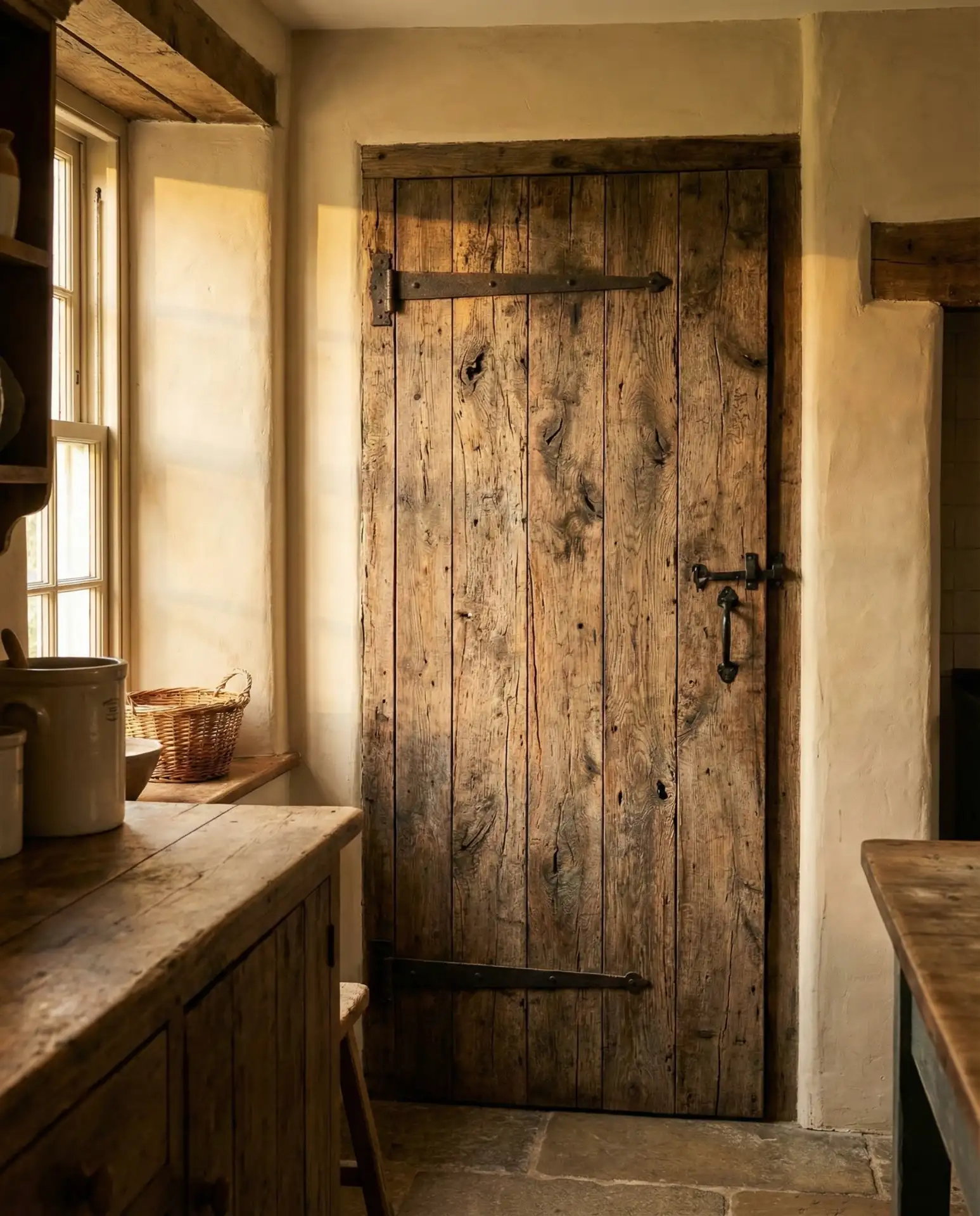
Americans seeking sustainable choices gravitate toward reclaimed materials, and architectural salvage yards from Atlanta to Portland report steady demand. Where this works best is in mountain homes, lake houses, and renovated farmhouses where the rustic narrative extends beyond the kitchen into the home’s overall character. Budget around $12–$18 per square foot for authenticated reclaimed wood with documentation, or $6–$10 for new wood treated to look aged, though the latter lacks the genuine history that makes these doors conversation pieces.
8. French Pantry Door with Divided Lights
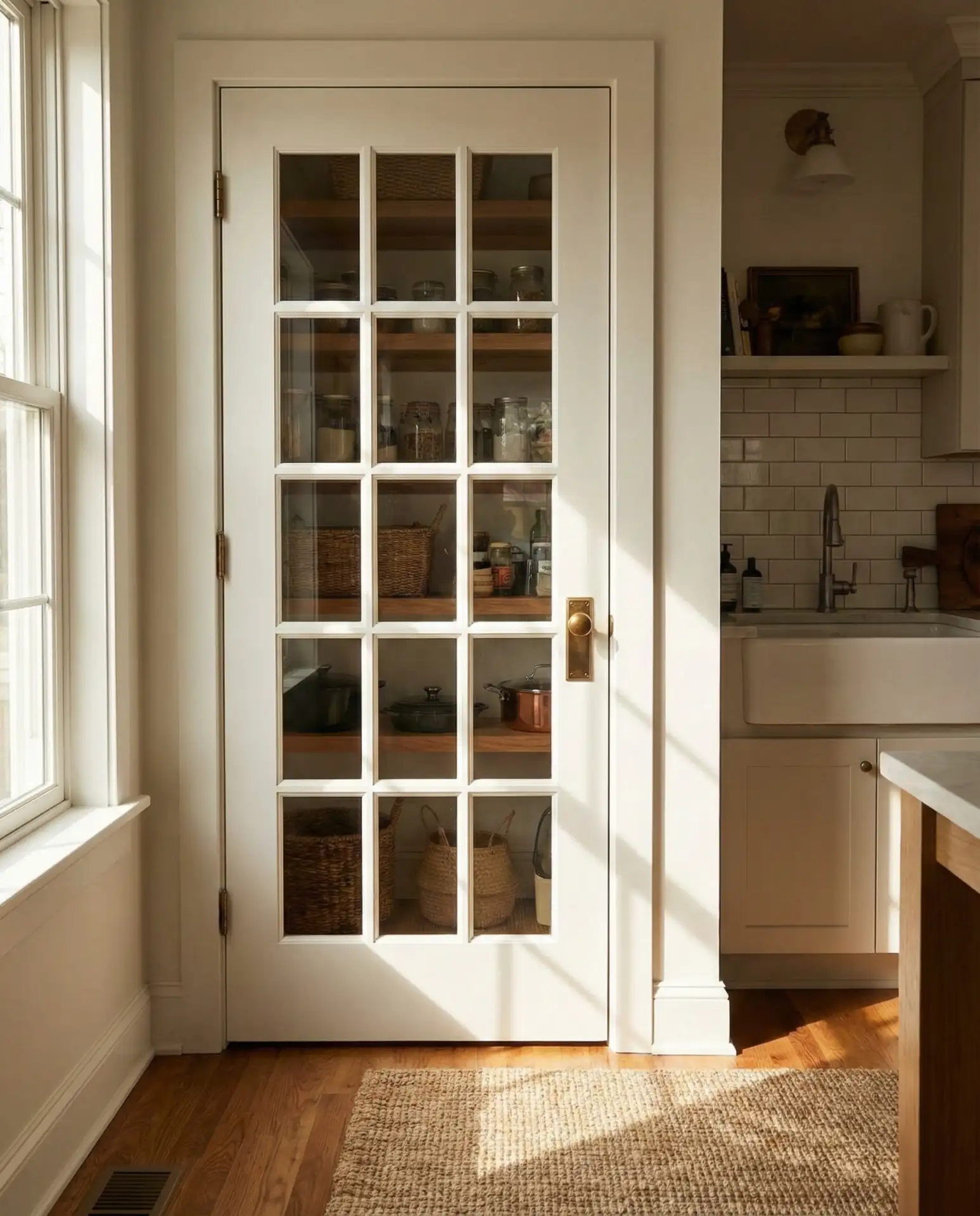
The French pantry door imports Parisian elegance through multiple glass panels divided by slim muntins, creating a grid that balances transparency with structure. Typically finished in soft white, pale gray, or natural wood tones, these doors allow light to flow between spaces while maintaining visual boundaries. They’re especially effective in galley kitchens or homes with limited natural light, where every photon of sunshine matters. 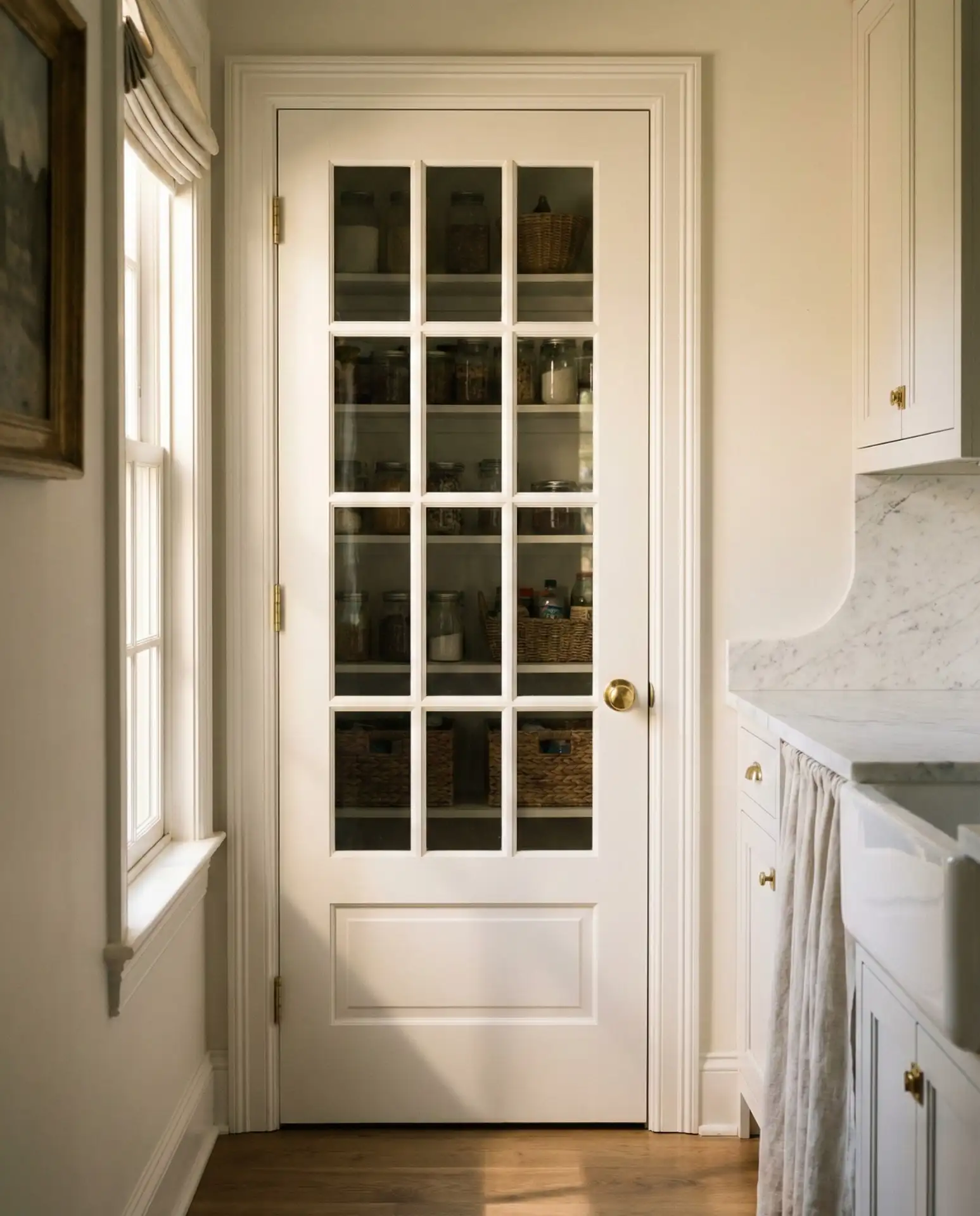
A micro anecdote: A friend in Charleston installed French pantry doors and discovered they made her 1920s bungalow kitchen feel twice as large by borrowing light from the adjacent dining room. Common mistakes include choosing fake muntins (glued-on grids) that cheapen the look—authentic divided lights with individual glass panes cost $150–$300 more but deliver architectural integrity that fake versions never match.
9. Frosted Glass Pantry Door for Privacy
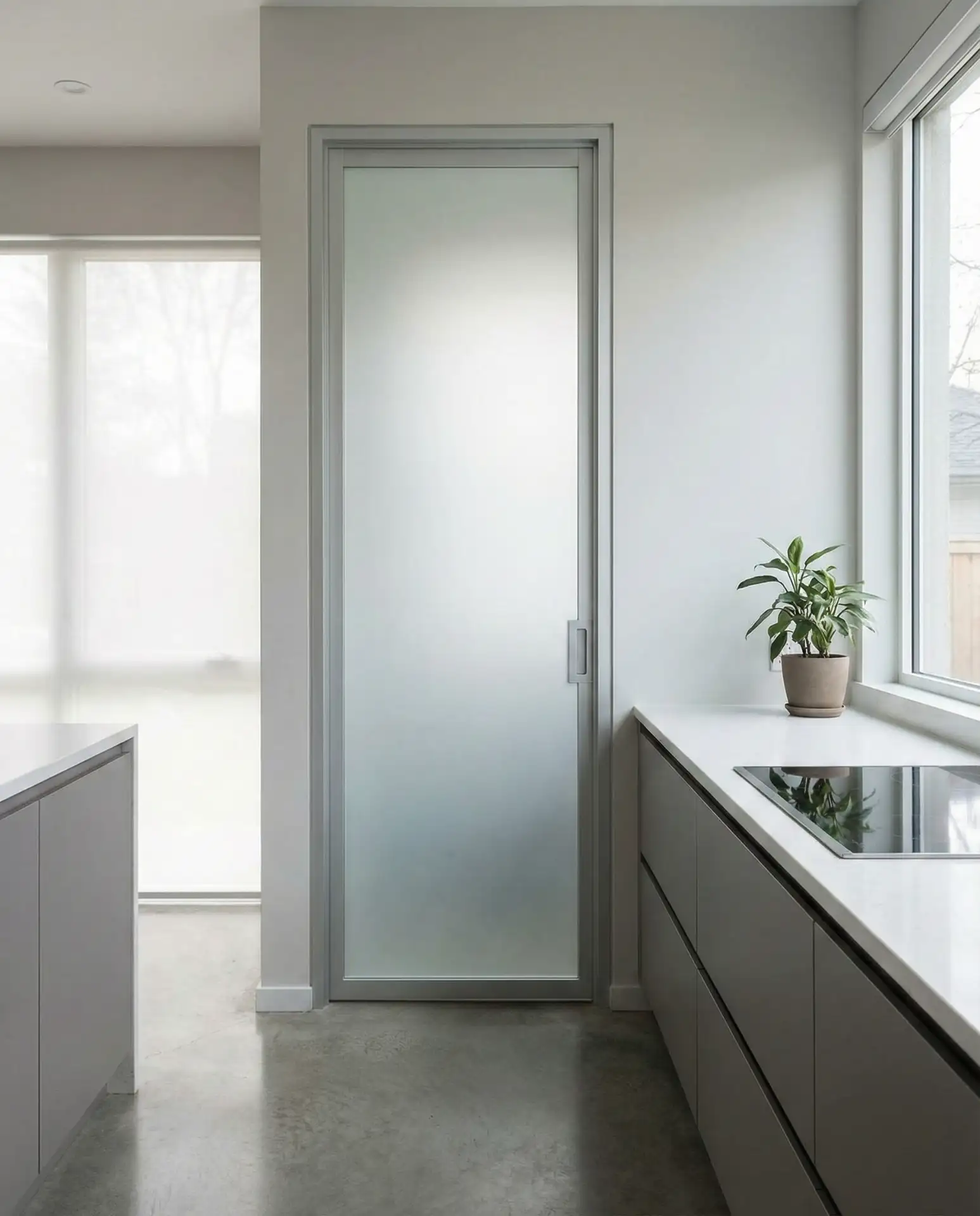
Frosted glass strikes a perfect balance between openness and discretion, allowing light transmission while obscuring the pantry’s contents from view. This design appeals to homeowners who want the airy feel of glass without the pressure to maintain Instagram-perfect shelves at all times. Available in full-panel or partial configurations, frosted glass complements both modern and transitional kitchens across the country. 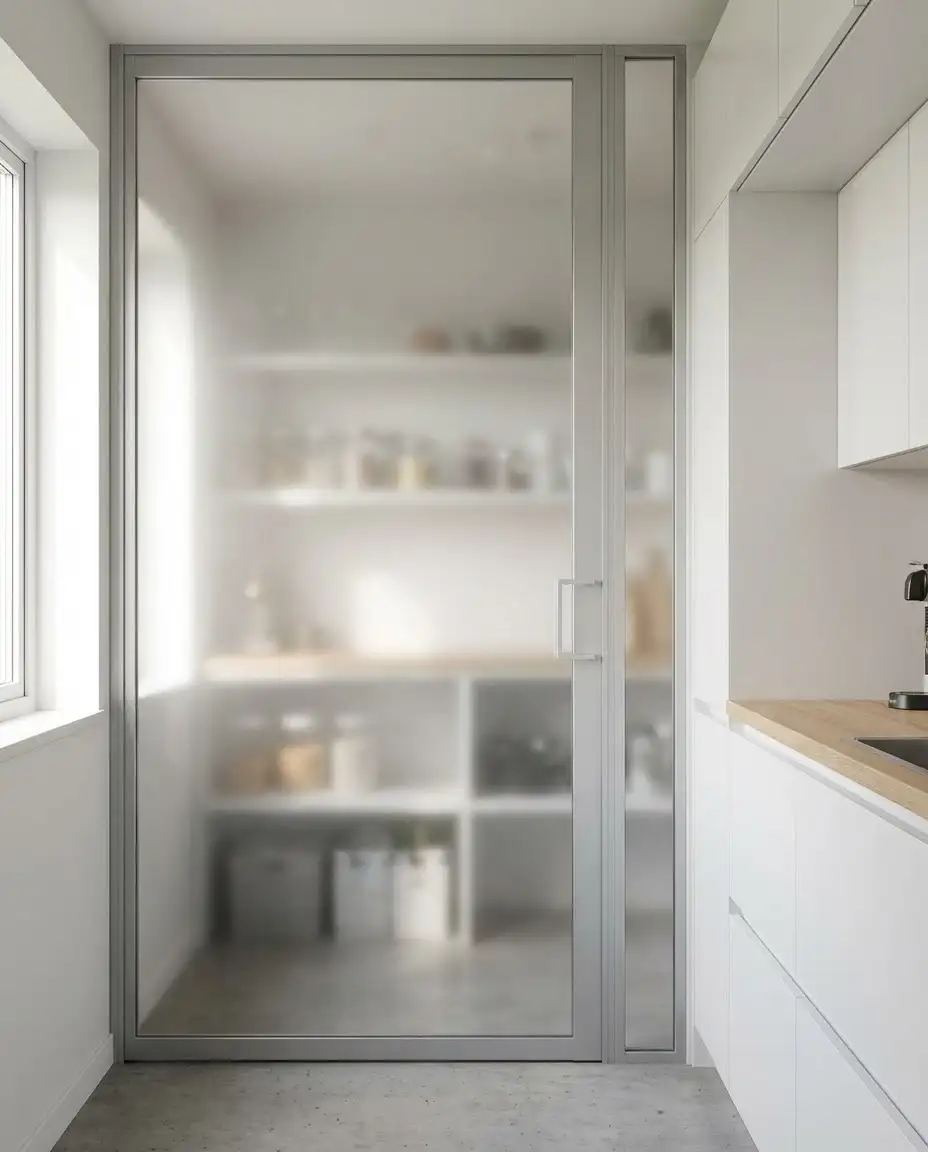
Real homeowner behavior shows that frosted glass doors reduce the anxiety around pantry organization—you still benefit from natural light flow, but guests at your kitchen island won’t scrutinize your cereal box collection. This option costs roughly the same as clear glass ($80–$200 depending on size and framing), making it a smart swap that enhances comfort without budget strain. It’s particularly popular in open-plan homes from Phoenix to Minneapolis where kitchens adjoin living areas.
10. Painted Pantry Door as Kitchen Accent
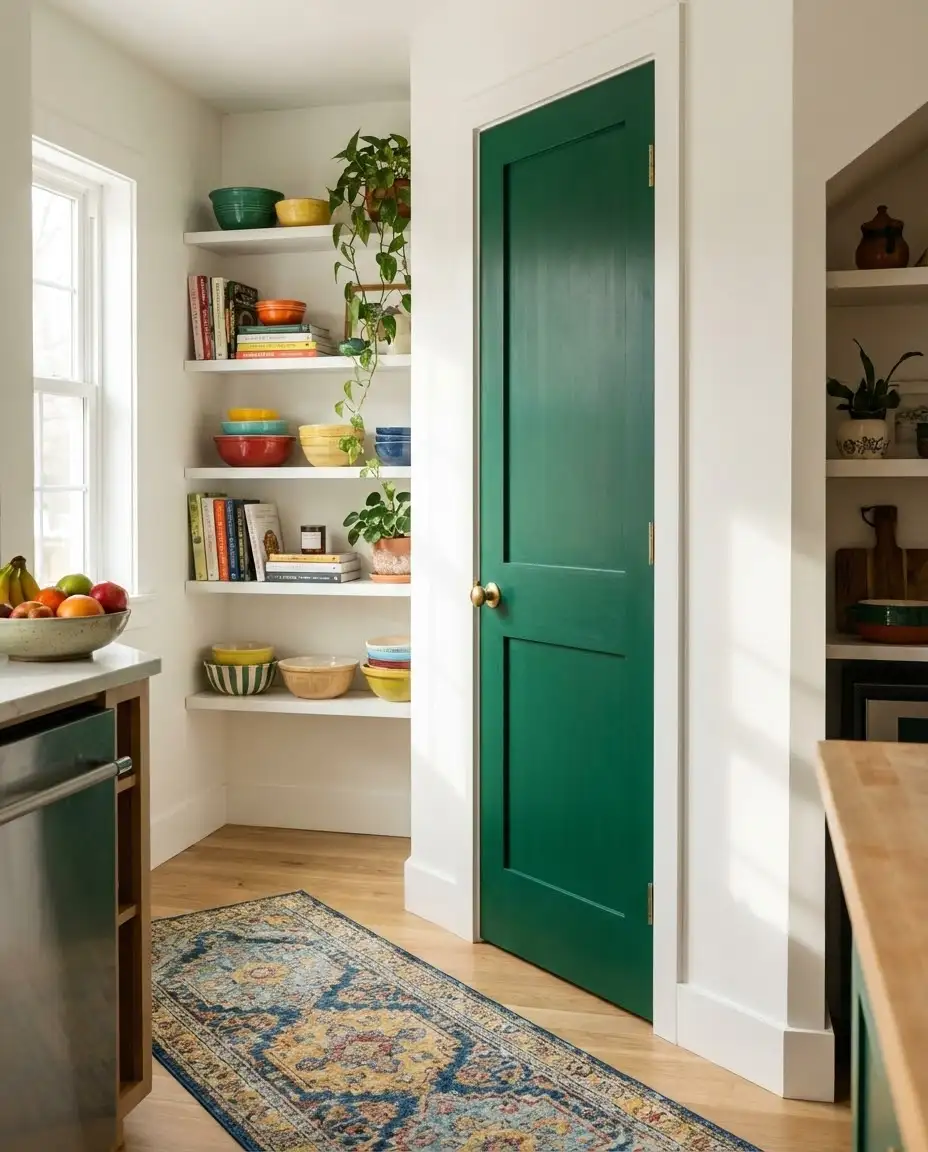
A boldly painted pantry door serves as an affordable accent piece that anchors the kitchen’s color story. From navy blues that echo coastal New England vibes to sage greens reflecting Pacific Northwest tranquility, color choice personalizes the space without the commitment or cost of painting every wall. This approach particularly resonates with renters and first-time homeowners experimenting with design before tackling larger projects. 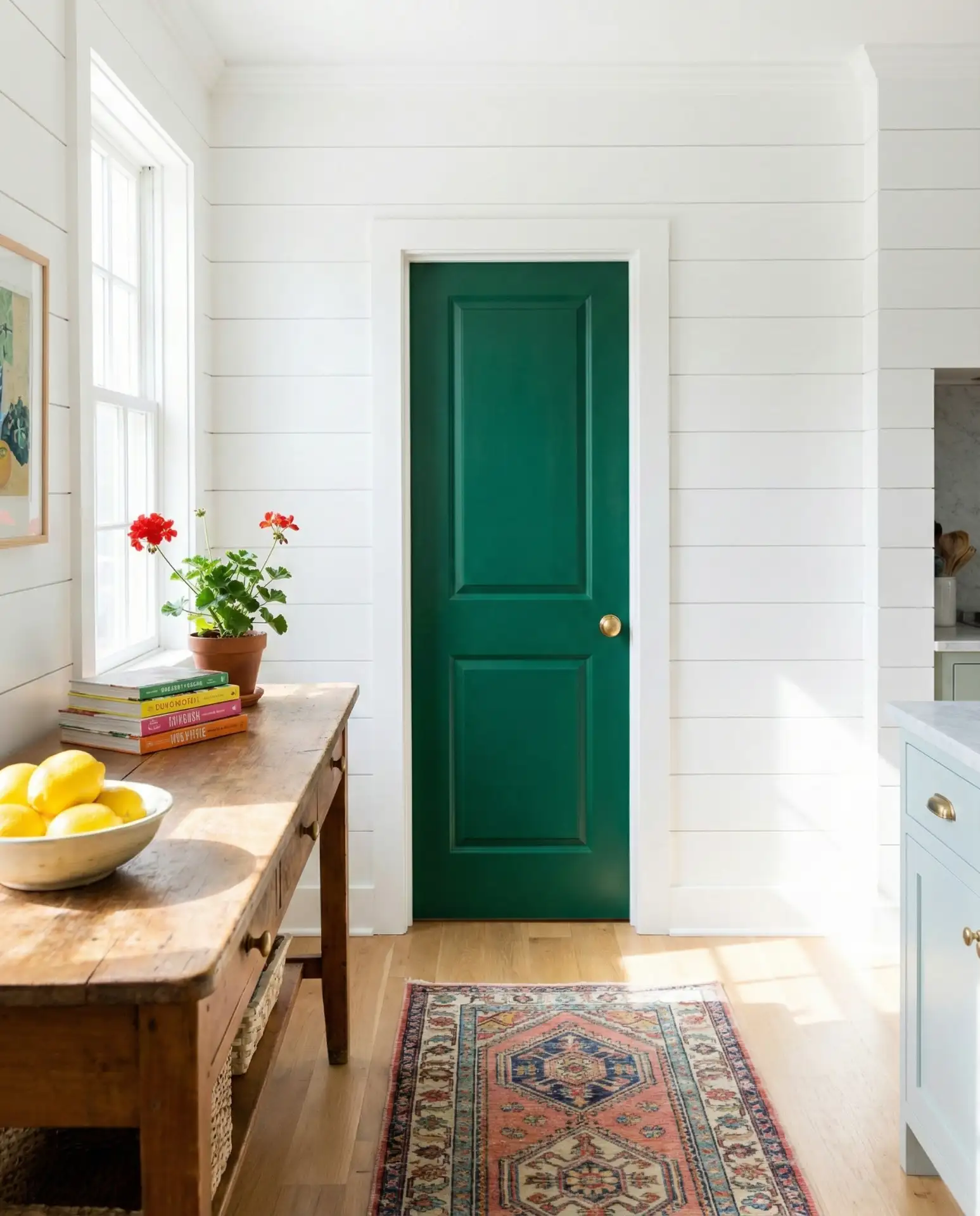
Budget insight: A gallon of quality paint costs $35–$60 and covers multiple coats on a standard door, making this one of the most cost-effective ways to refresh a kitchen. Americans from Austin to Boston are embracing color after years of gray minimalism, with Sherwin-Williams and Benjamin Moore reporting increased demand for saturated hues. Just remember to prime properly if painting over dark wood or previous finishes to avoid bleed-through that ruins the crisp look you’re after.
11. Pocket Pantry Door for Tight Spaces
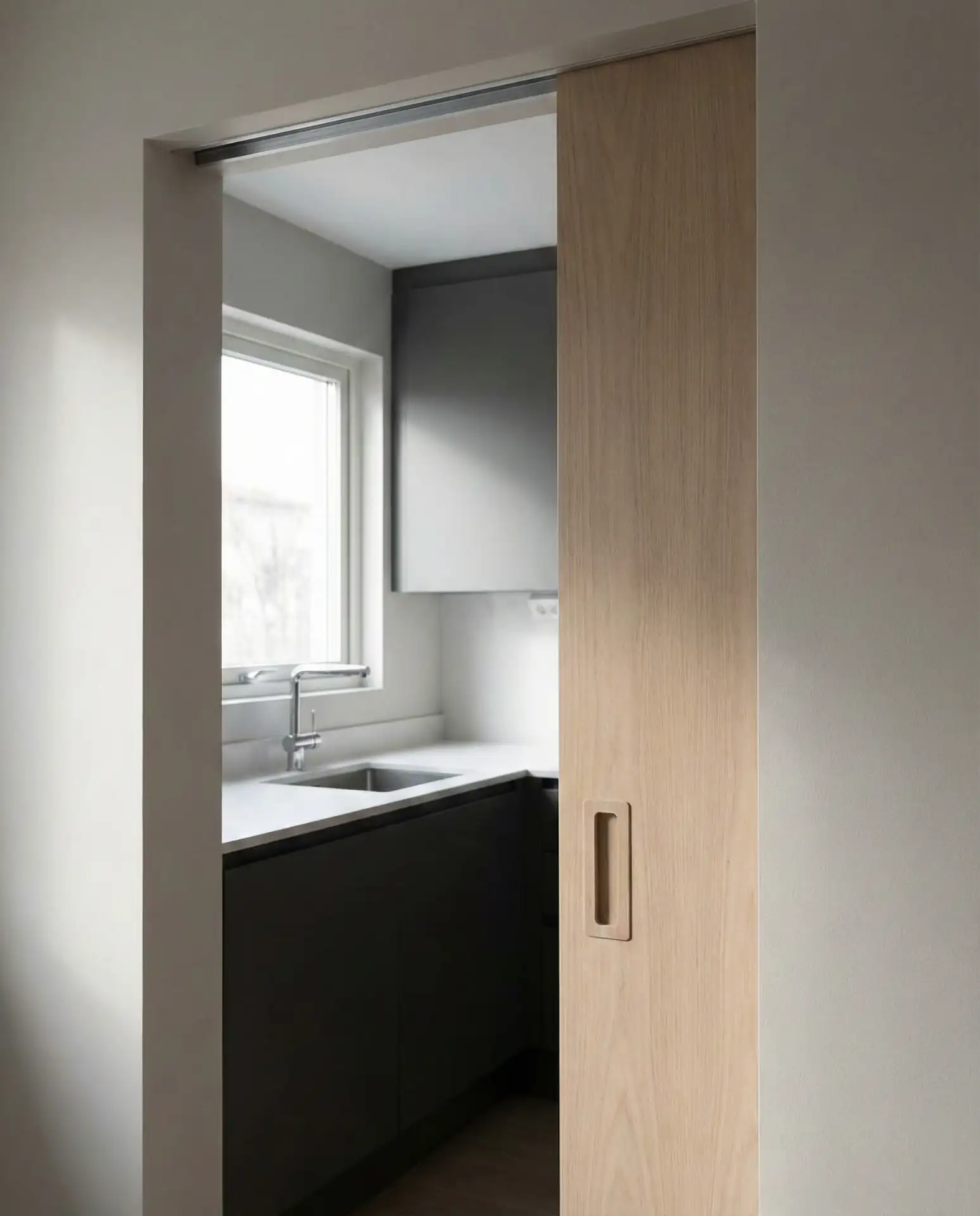
The pocket door slides into the wall cavity, disappearing completely when open and liberating floor space in compact kitchens. This solution thrives in urban apartments from Manhattan to San Francisco where every square foot commands premium value. The mechanism requires a pocket frame installed during construction or renovation, but the payoff is unobstructed access and a cleaner aesthetic than swinging doors allow. 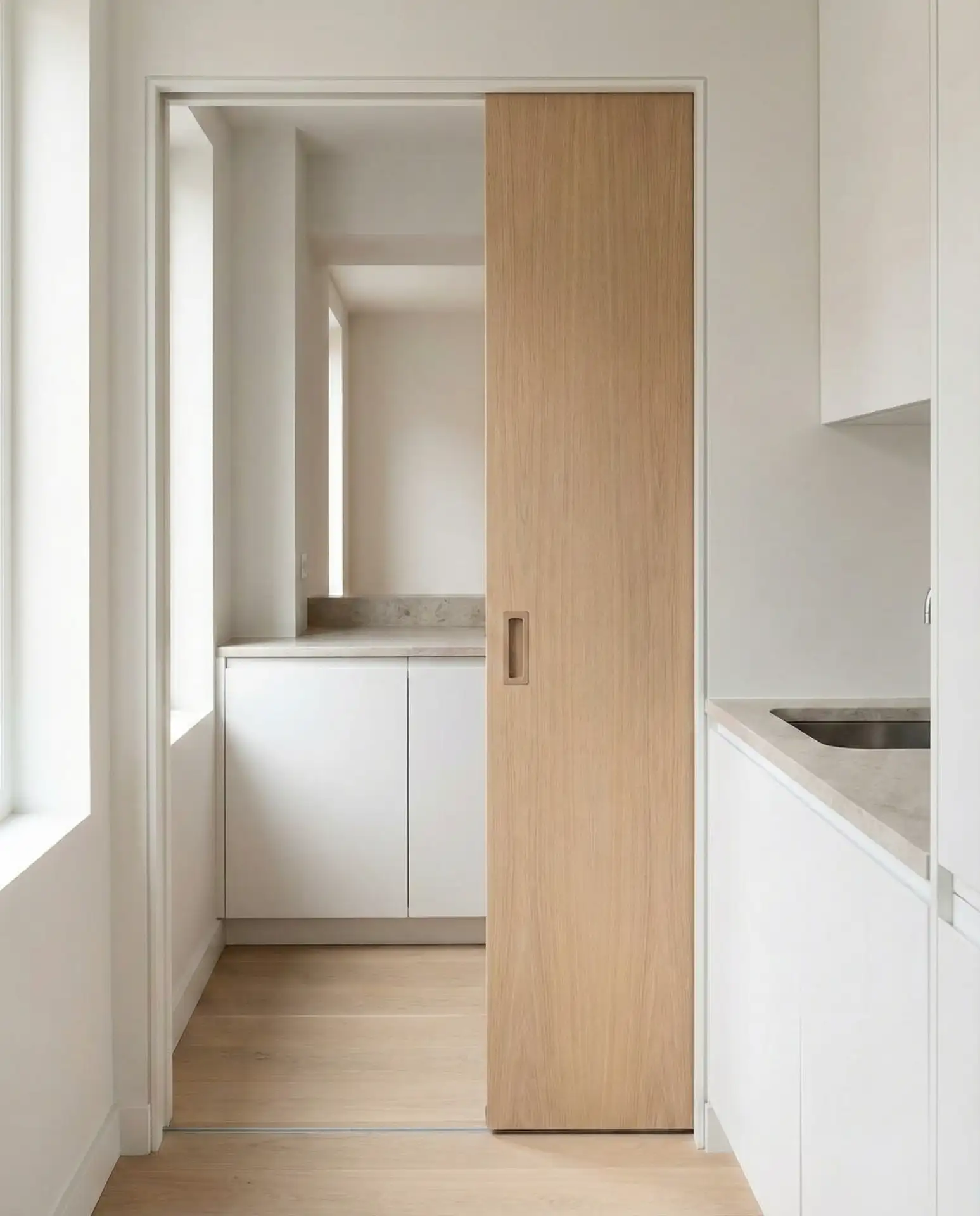
Where it works best is in galley kitchens or homes with narrow hallways leading to pantries, situations where a traditional door’s swing arc interferes with traffic flow or adjacent cabinetry. Installation runs $500–$1,200 including the frame kit and professional labor, but retrofitting into existing walls adds $300–$600 for wall modification. One caution: avoid routing electrical or plumbing through the pocket cavity during planning, as future access becomes complicated once the door is installed.
12. Pantry Door with Chalkboard Decor
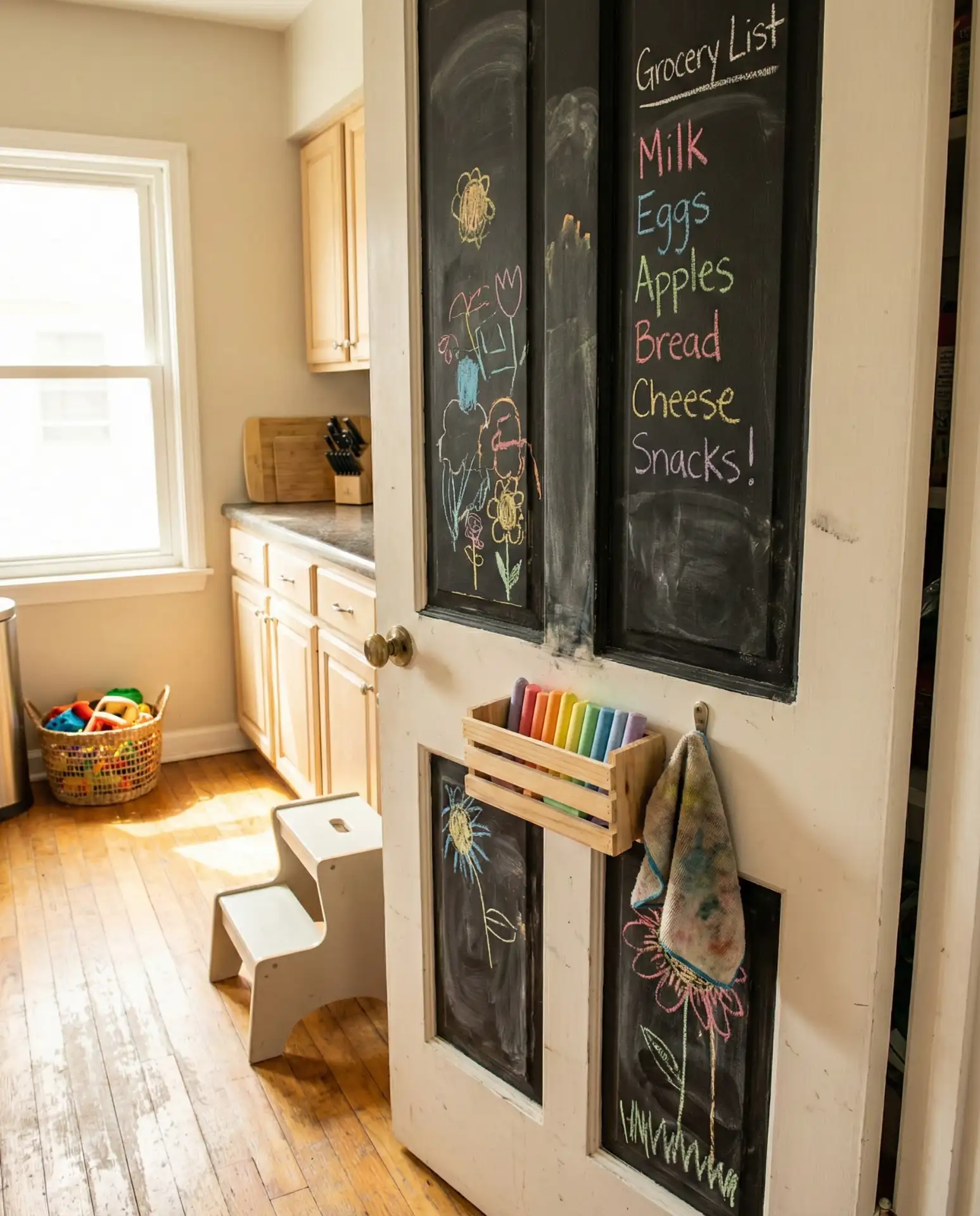
Coating your pantry door with chalkboard paint transforms it into functional decor that serves as a grocery list, meal planner, or canvas for kids’ artwork. This playful approach costs under $20 in materials and appeals to families who value flexibility and interaction in their kitchen design. The matte black finish also introduces graphic contrast against lighter cabinetry, creating visual interest that feels intentional rather than afterthought. 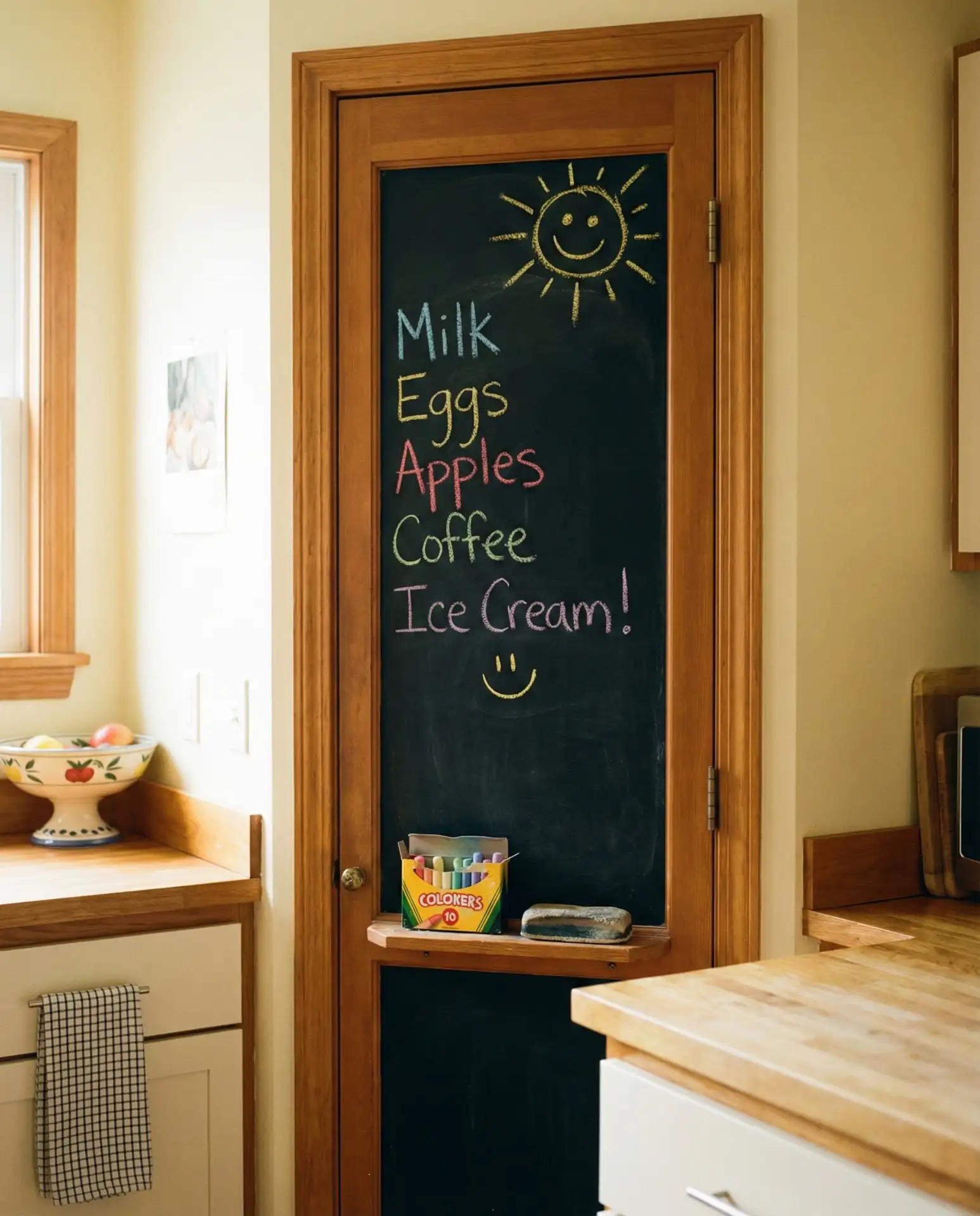
American lifestyle context: With meal planning apps and smart home tech everywhere, the tactile act of writing on a chalkboard offers a welcome analog break that many homeowners find grounding. A designer in Portland noted that her clients with young children particularly love this feature because it turns the pantry door into a creative outlet that evolves with the family. Seal the chalkboard surface with a clear topcoat to prevent dust buildup that can make cleaning tedious over time.
13. Vinyl Decals for Pantry Door Personality
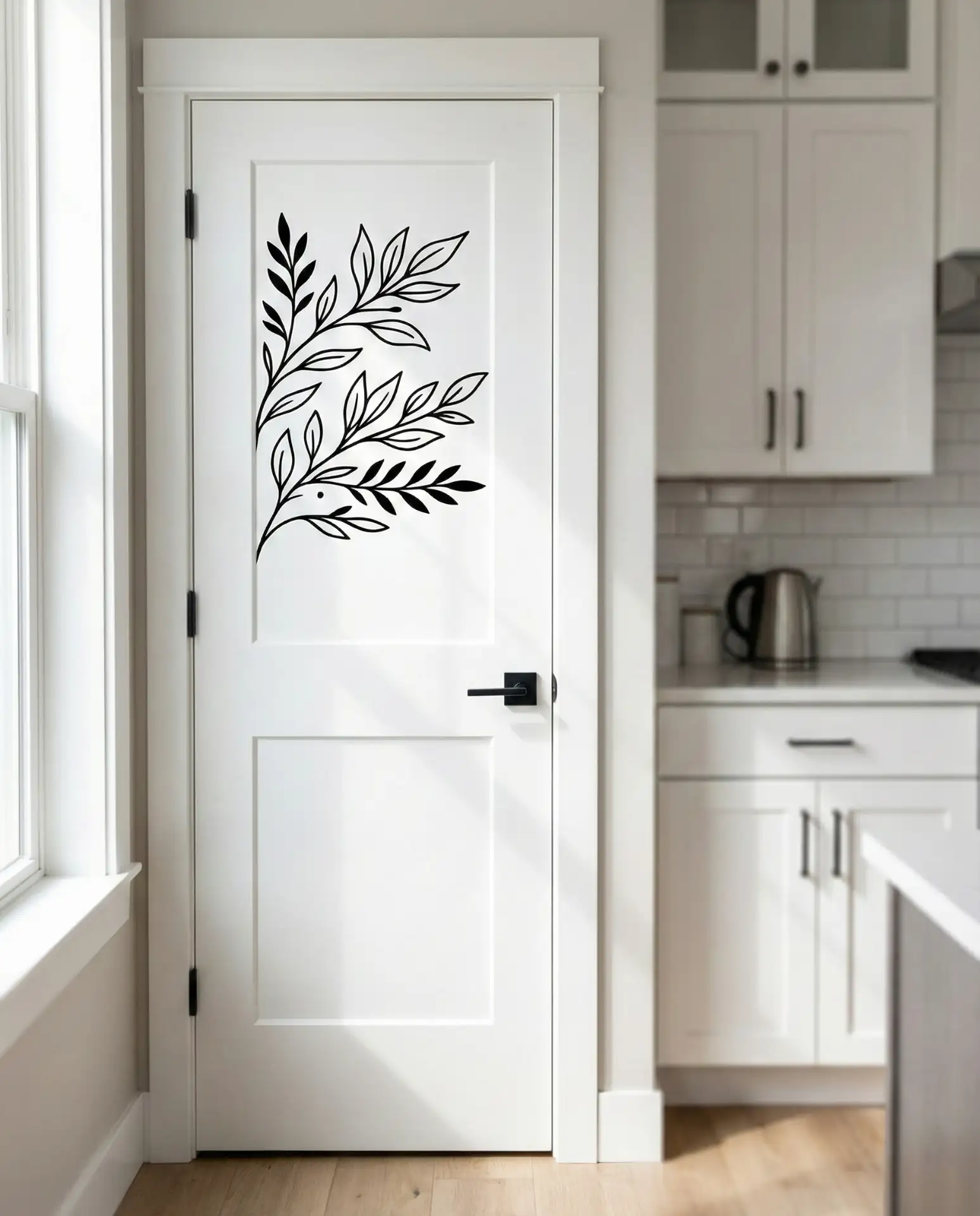
Removable vinyl decals offer commitment-free personalization, perfect for renters or indecisive decorators who want to refresh their kitchen seasonally. From botanical illustrations to witty food-related quotes, these adhesive graphics apply in minutes and remove without residue, making them ideal for experimenting with style. The range spans minimalist line art to bold typography, ensuring options for every aesthetic from boho to industrial. 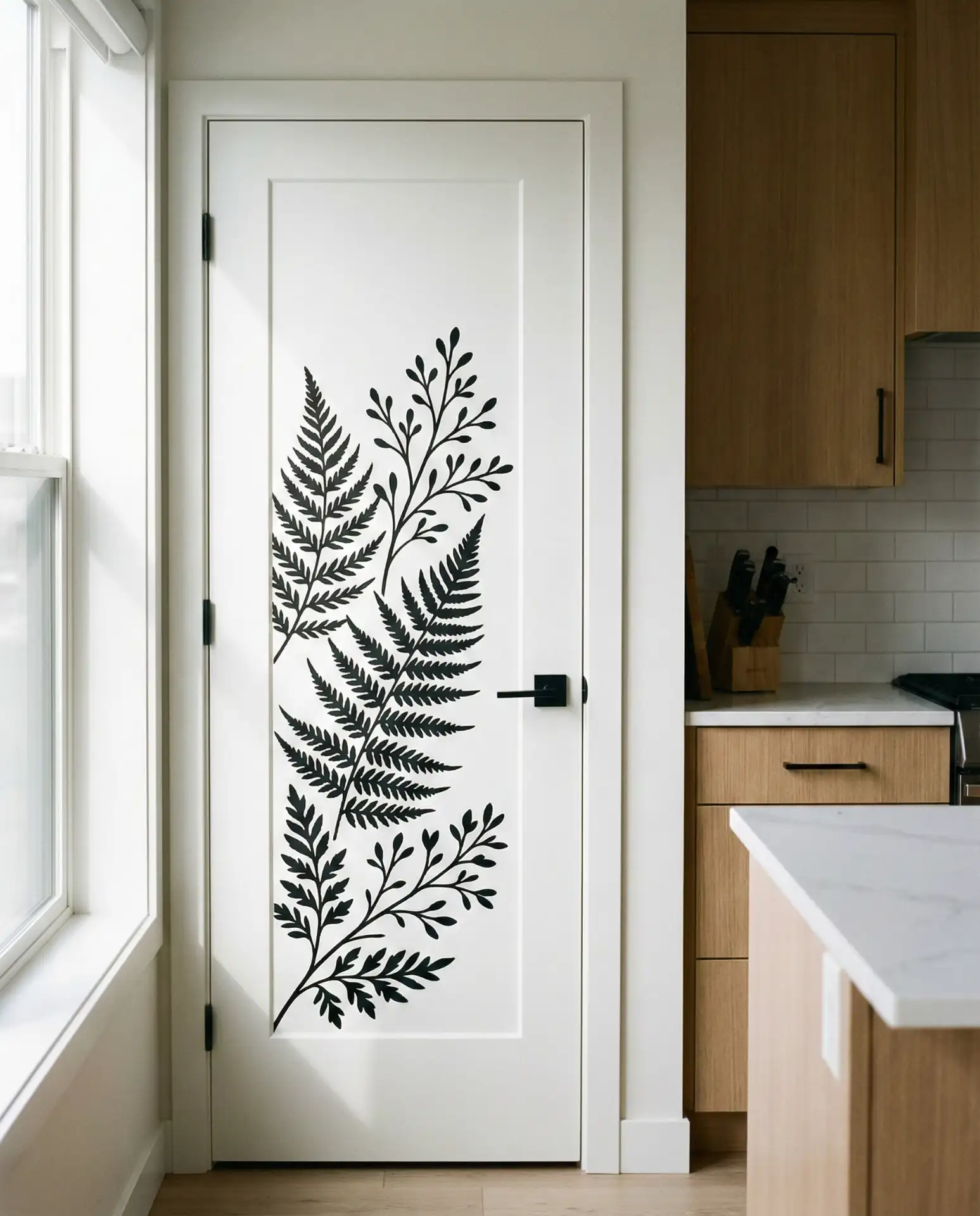
Practical insight: Quality decals from Etsy sellers or design shops cost $15–$50 and last two to five years with proper application. They’re especially popular among younger homeowners (ages 25–40) who view their spaces as evolving canvases rather than permanent installations. The key to success lies in cleaning the door thoroughly with rubbing alcohol before application and using a squeegee to eliminate air bubbles that cause premature peeling.
14. Stained Glass Pantry Door for Artistic Flair
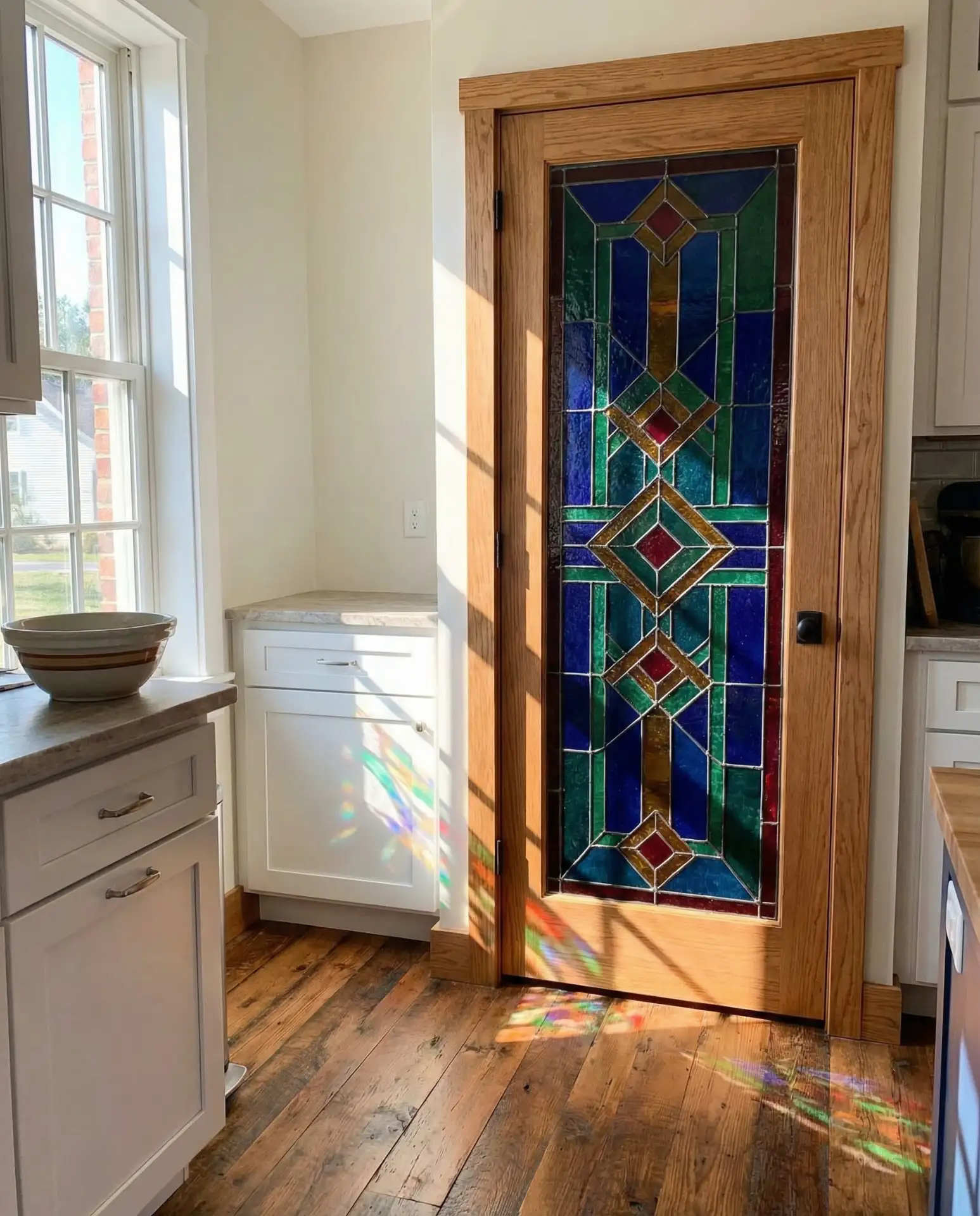
Stained glass pantry doors elevate kitchens into gallery-worthy spaces, with colored glass panels creating luminous focal points that shift with changing daylight. Once reserved for churches and Victorian mansions, contemporary stained glass embraces geometric patterns, prairie-style designs, and abstract compositions that suit modern sensibilities. These doors work especially well in homes with architectural character across the Midwest and Northeast where craftsmanship traditions run deep. 
A homeowner in Minneapolis commissioned a local glass artist to create a prairie-style pantry door inspired by Frank Lloyd Wright, turning a utilitarian element into the kitchen’s crown jewel. Custom stained glass runs $400–$2,000 depending on complexity and size, while vintage salvaged pieces from architectural salvage yards offer authentic character for $200–$800. Common mistakes include installing these doors in windowless pantries where the glass can’t catch light—they need natural or artificial backlighting to truly shine.
15. Bi-Fold Pantry Door for Wide Openings
Bi fold doors address the challenge of extra-wide pantry openings without consuming the floor space that double French doors demand. Two panels hinged together fold back compactly, typically requiring only 12–15 inches of clearance instead of the 36-inch arc a standard door needs. This configuration works brilliantly in walk-in pantries popular throughout suburban Texas and Arizona, where generous square footage allows for more expansive storage rooms. 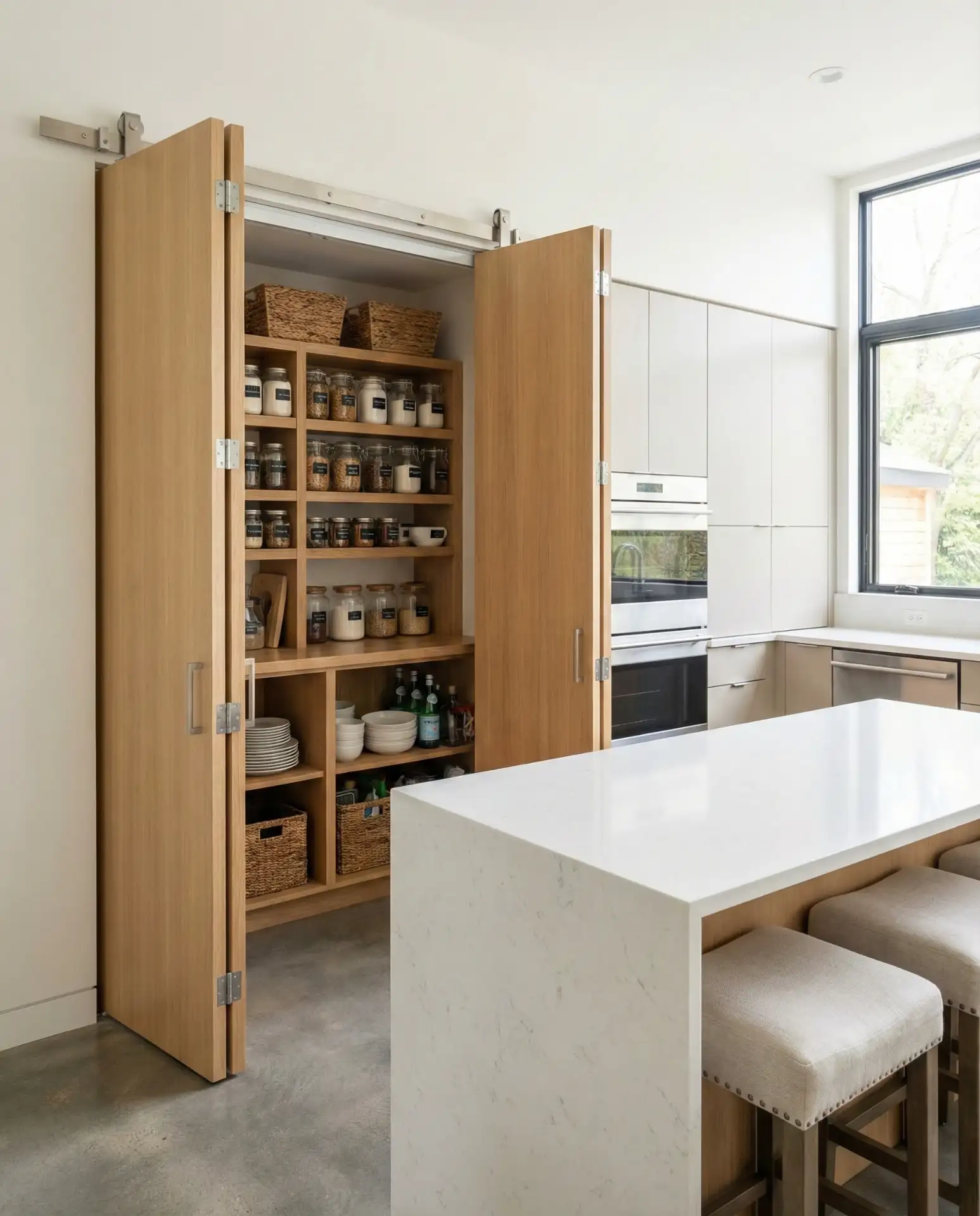
Expert commentary notes that bi-fold hardware quality varies dramatically—budget $150–$400 for smooth-operating systems from manufacturers like Johnson Hardware or Stanley that won’t bind or derail. These doors particularly suit households with mobility considerations, as the wider opening accommodates wheelchairs or walkers more readily than narrow single doors. Just ensure your pantry layout positions frequently accessed items within easy reach since you’ll need to fold the door fully to access the far corners.
16. Pantry Door with Built-In Spice Rack
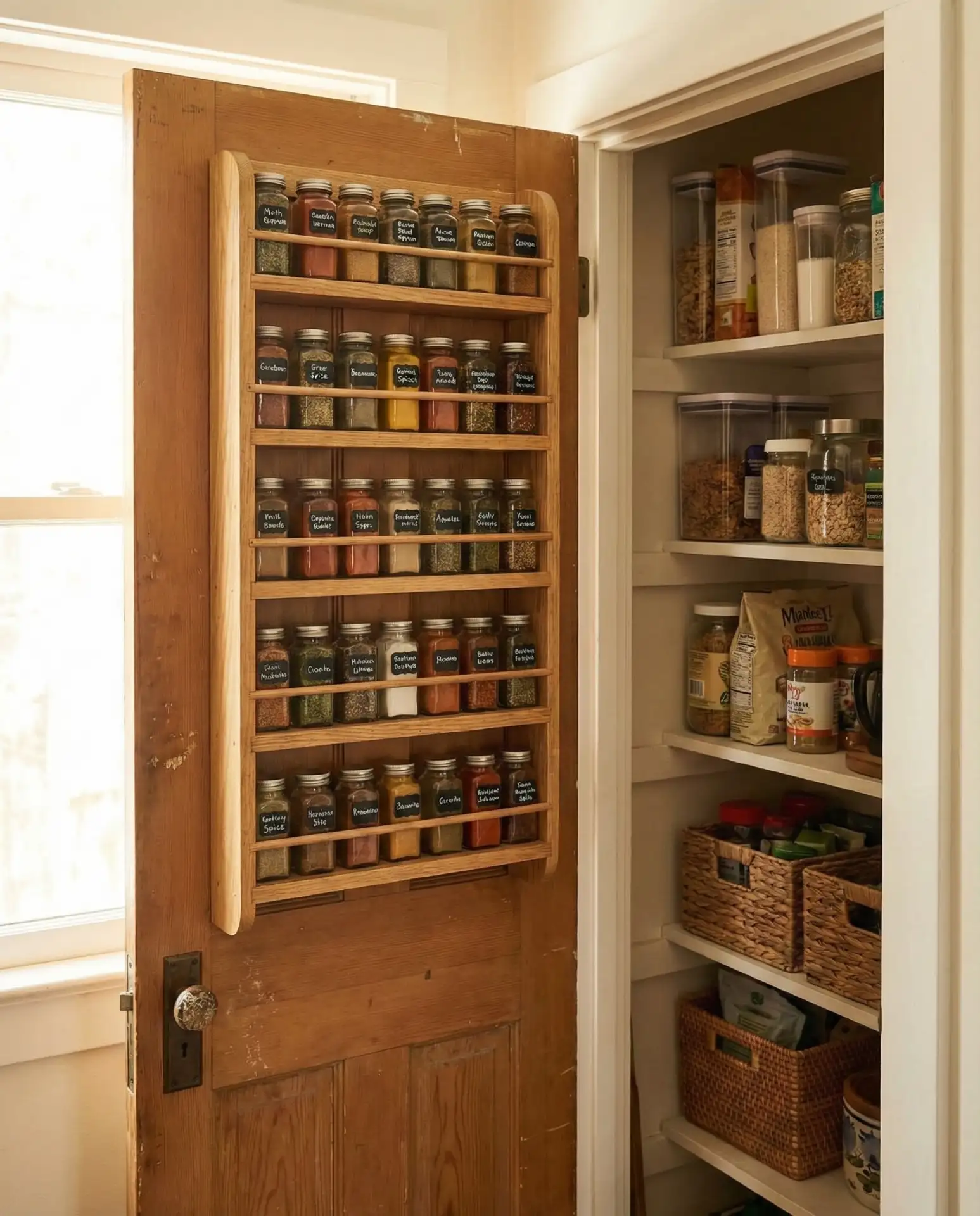
Mounting a spice rack directly to the pantry door’s interior transforms dead space into prime real estate for frequently used ingredients. Wire or wooden racks hold bottles at eye level, making it easy to spot that elusive cardamom or smoked paprika mid-recipe. This organizational strategy particularly appeals to home cooks across America who’ve embraced diverse cuisines and accumulated spice collections that overwhelm standard drawer inserts. 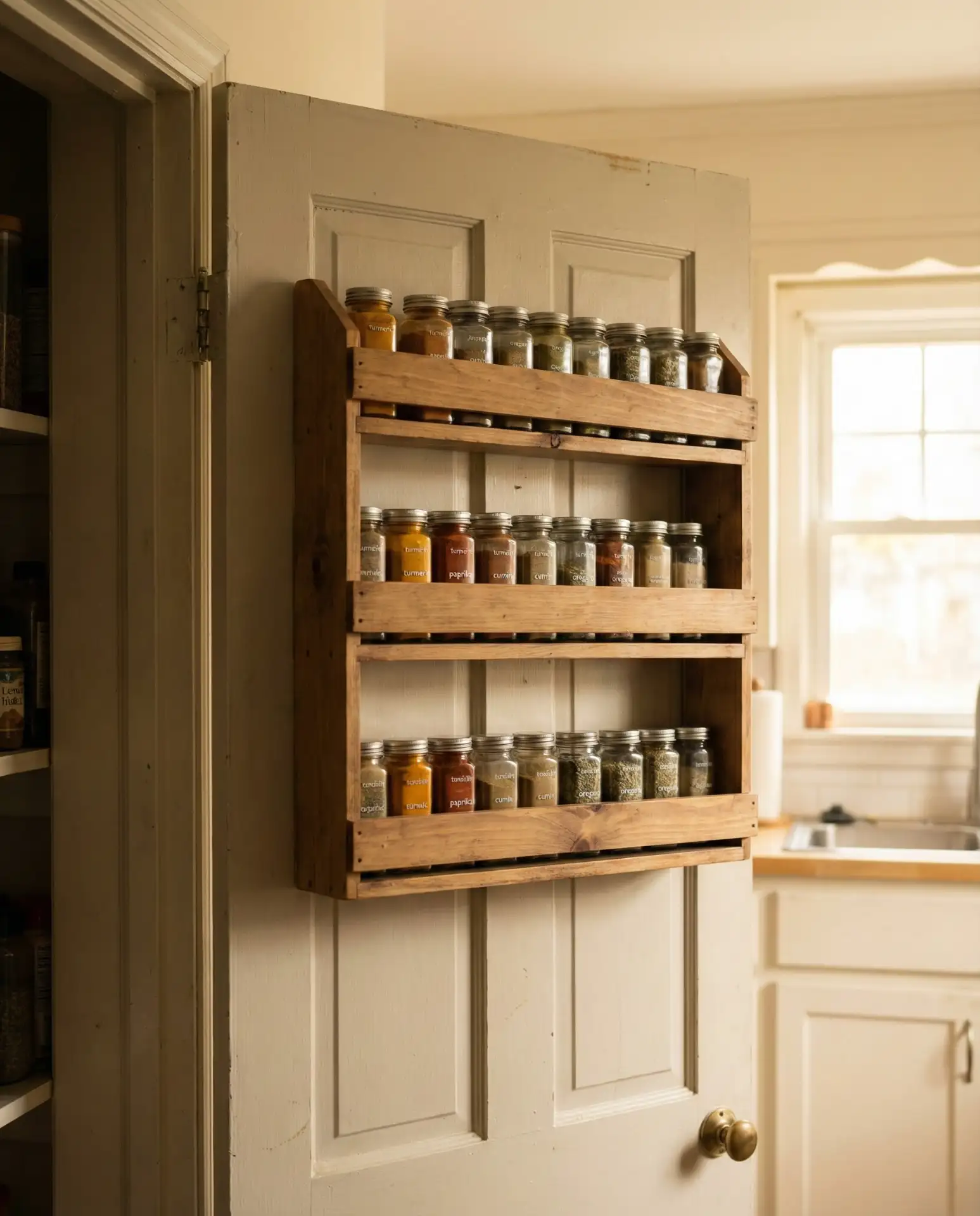
Real homeowner behavior shows that door-mounted racks reduce search time during cooking, with one Chicago resident reporting she cut recipe prep by ten minutes simply by making spices visible and accessible. Budget $30–$100 for quality racks that distribute weight properly—cheap versions sag or pull away from hollow-core doors. A critical mistake to avoid is overloading the door beyond its weight capacity, which stresses hinges and can cause alignment issues; limit spice racks to no more than 20 pounds total.
17. Murphy Pantry Door with Fold-Down Table
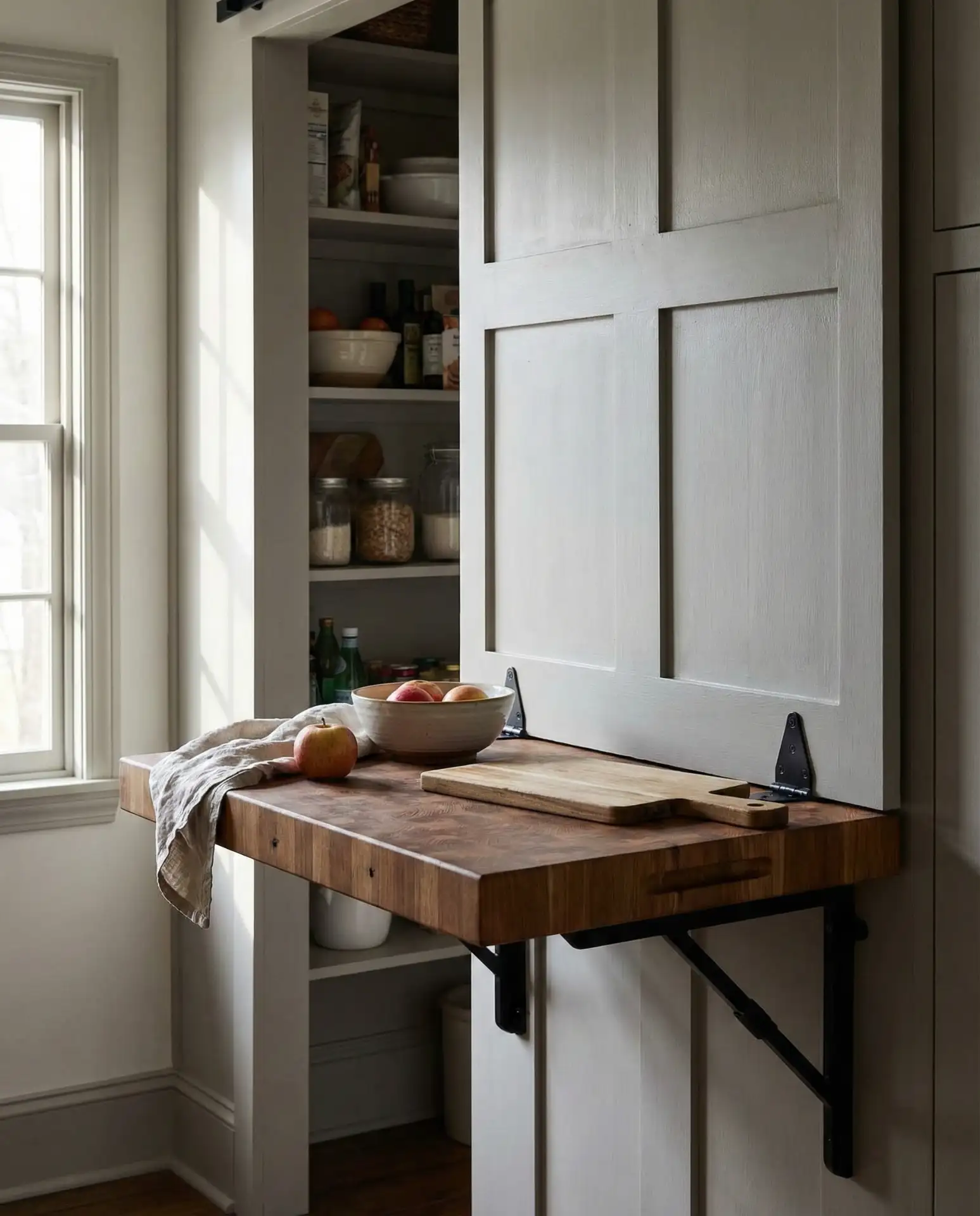
A Murphy-style mechanism integrates a fold-down table or prep surface into the pantry door itself, maximizing functionality in space-starved kitchens. When closed, it appears as a standard door; opened and latched, it provides a sturdy 18–24 inch counter for chopping, mixing, or laptop placement in kitchens doubling as home offices. This innovation reflects American ingenuity in adapting historic furniture concepts to contemporary needs. 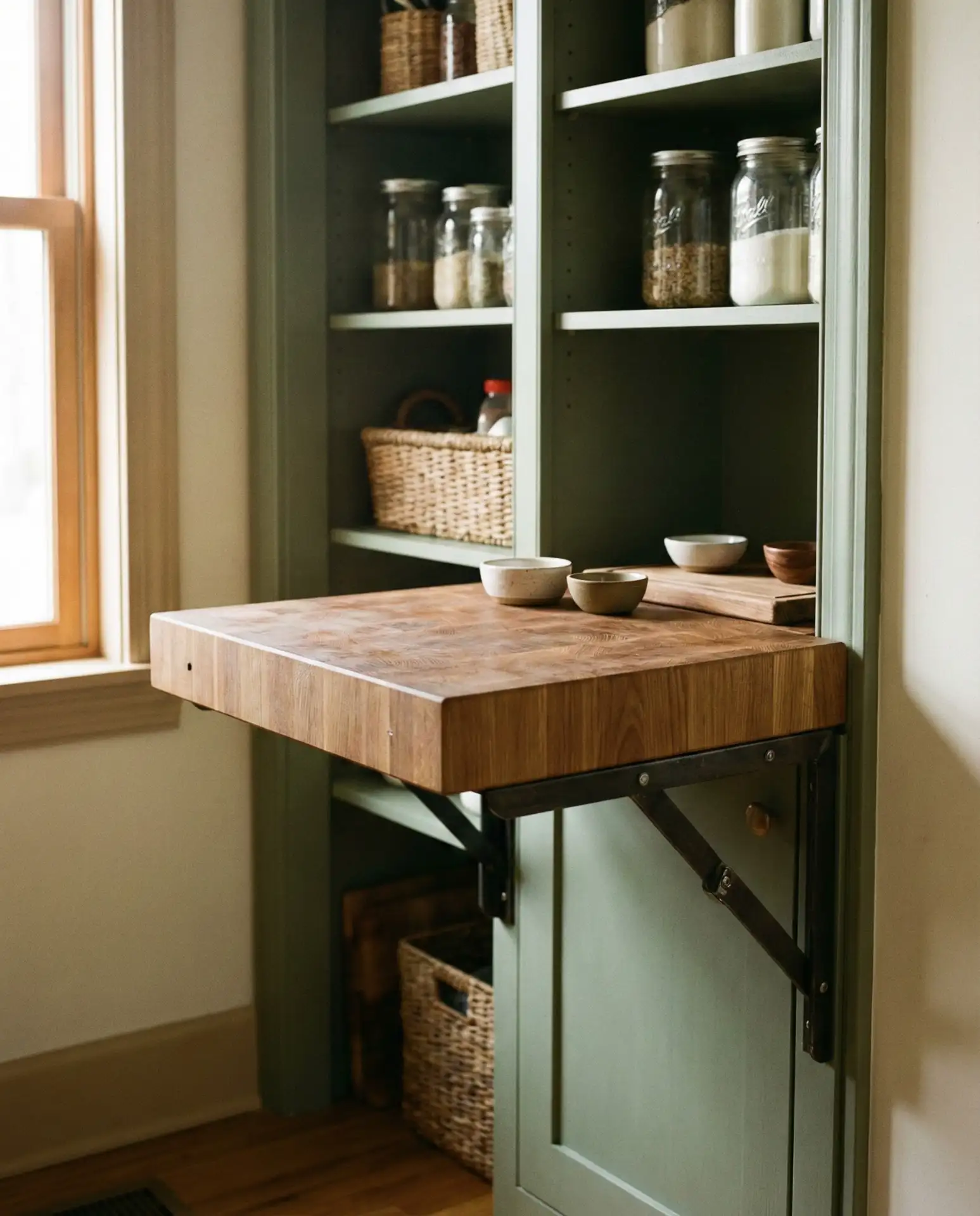
Where this works best is in studio apartments and tiny homes throughout expensive urban markets like Boston, Seattle, and San Diego where square footage commands premium pricing. Custom fabrication typically runs $400–$900, but the extra prep surface proves invaluable during holiday cooking or when multiple cooks share the kitchen. Ensure the supporting hardware can handle at least 50 pounds to safely accommodate cutting boards, mixers, and ingredients without deflection or failure.
18. White Oak Pantry Door for Natural Warmth

White oak brings organic beauty and durability through pronounced grain patterns and honey-gold tones that deepen with age. This hardwood choice suits kitchens embracing natural materials, from Scandi-inspired spaces in Minnesota to modern organic designs throughout California. The wood’s density resists warping and denting better than softer species, making it a practical investment that maintains its appearance through decades of daily use. 
Regional context: White oak thrives in kitchens across climates because it handles humidity fluctuations better than many alternatives, relevant everywhere from muggy Houston to dry Denver. Expect to pay $300–$700 for a solid white oak door depending on size and detailing, with quarter-sawn varieties commanding premiums for their distinctive ray fleck patterns. Many Americans appreciate that white oak is domestically harvested, reducing environmental impact compared to imported exotic woods.
19. Barn Door Style Pantry with Rolling Hardware
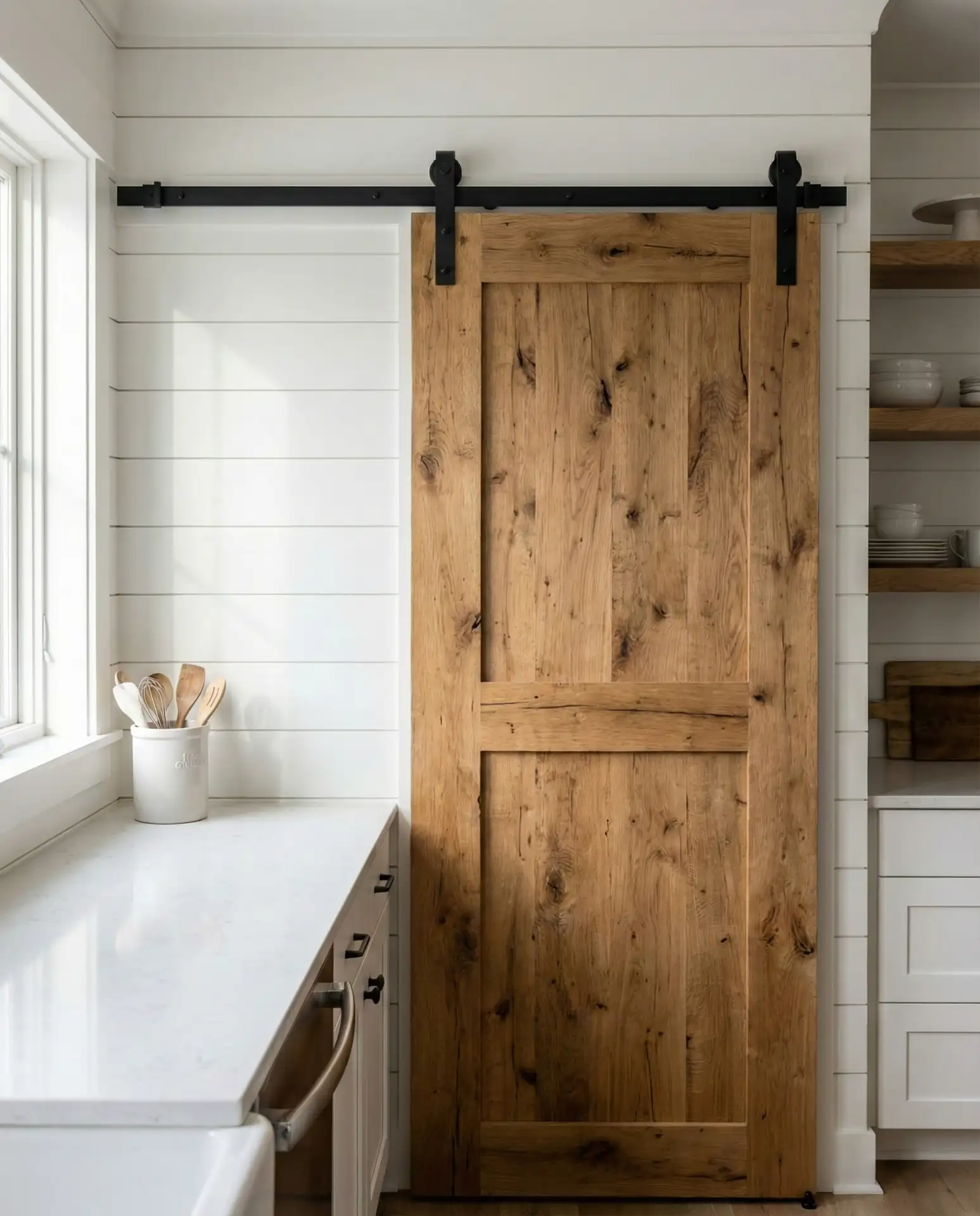
Rolling barn doors mounted on exposed tracks continue their reign in American kitchens, blending rustic charm with space-saving practicality. The sliding mechanism eliminates swing clearance requirements while the chunky wood construction and industrial hardware create visual impact. Available in finishes from weathered gray to glossy white, these doors adapt to diverse kitchen styles while maintaining their signature character. 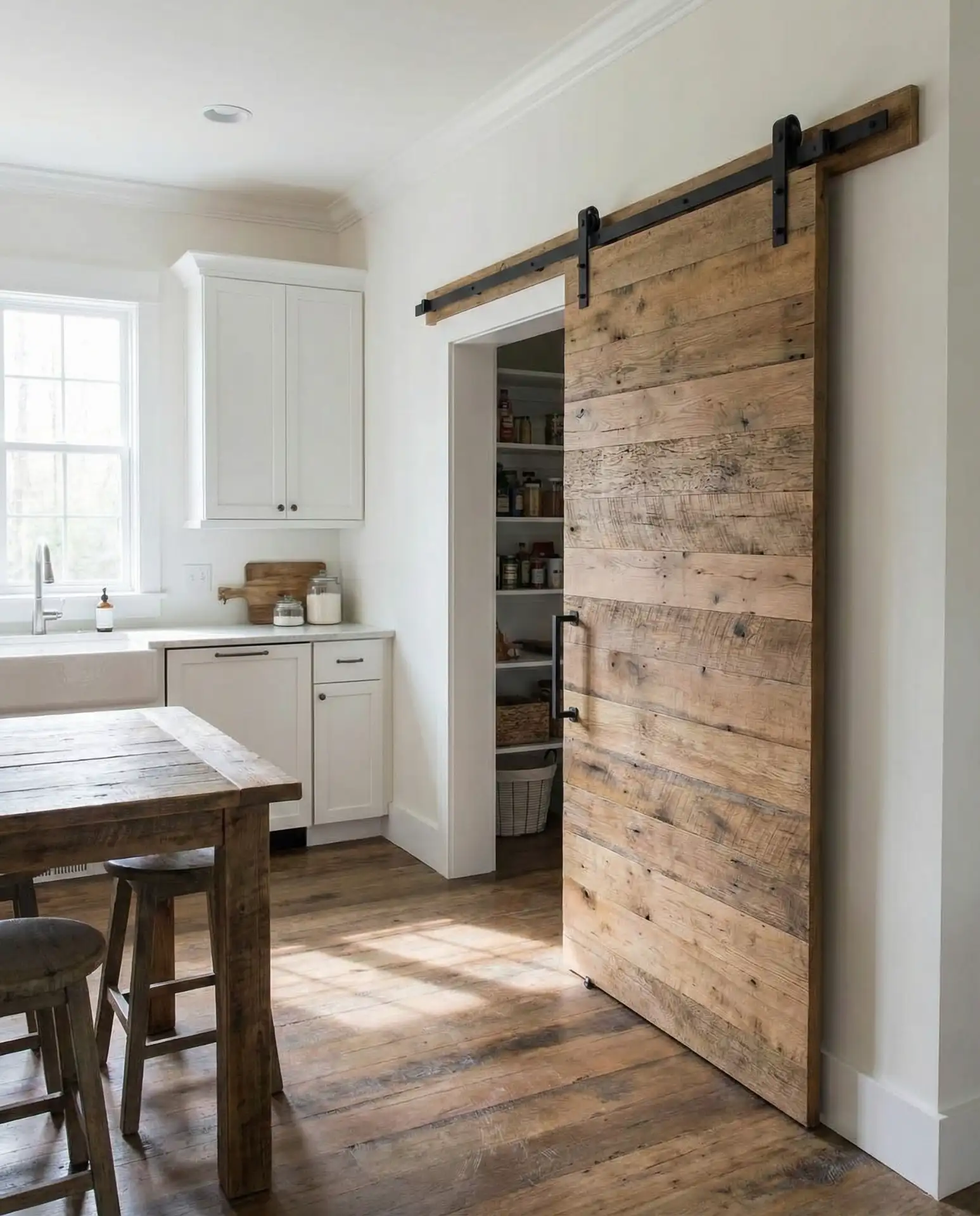
A common mistake many homeowners make is choosing hardware that’s too lightweight for the door weight, resulting in rough rolling or track jumping. Invest in systems rated for at least 1.5 times your door’s actual weight, typically $120–$300 for quality components from brands like Renin or National Hardware. These doors work best on walls with solid backing—drywall alone won’t support the weight and vibration, so plan for blocking between studs during installation to ensure longevity.
20. Minimalist Flat Panel Pantry Door
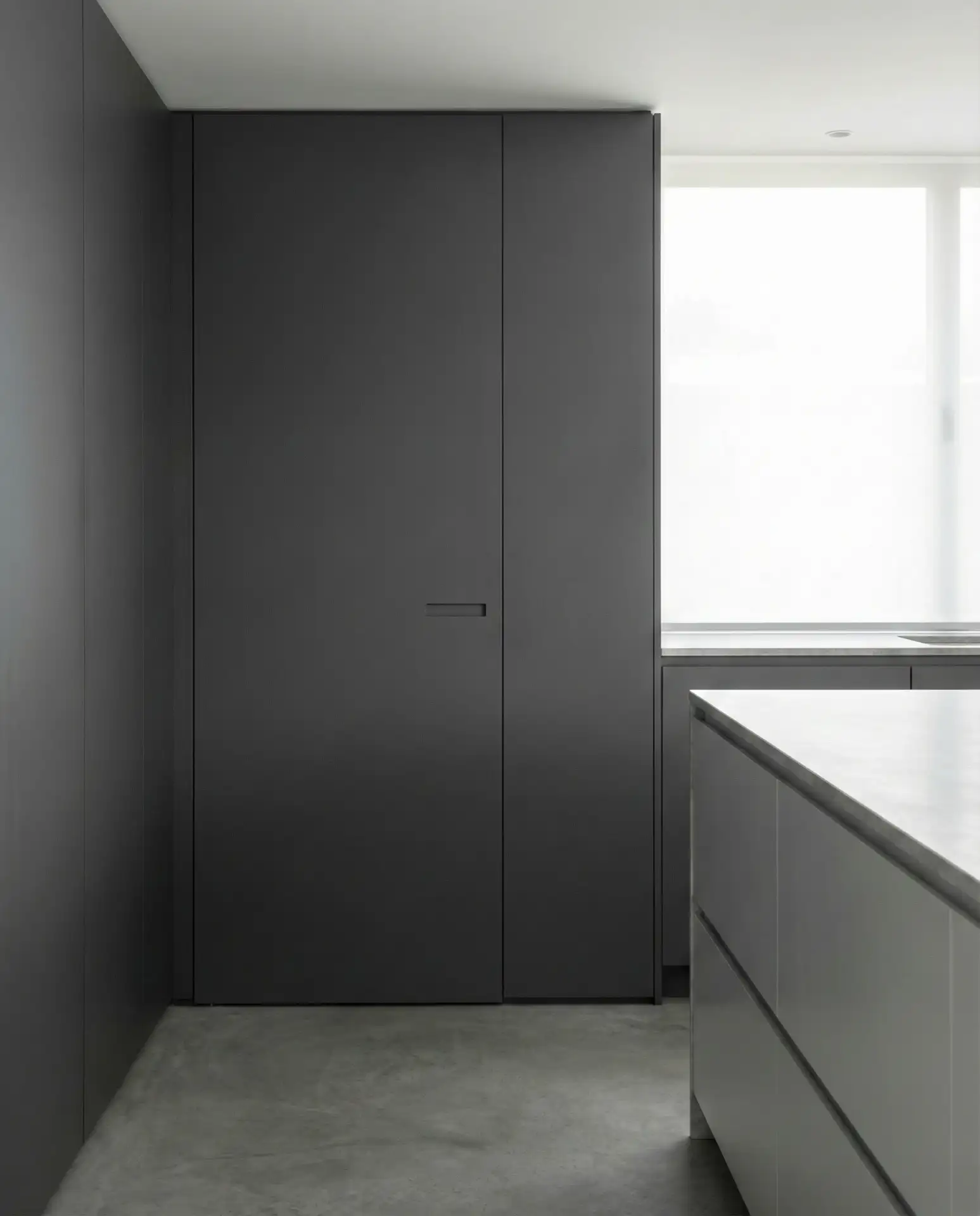
The flat panel door strips away ornamentation in favor of clean, uninterrupted surfaces that let surrounding design elements shine. Popular in modern and contemporary kitchens from Miami to Los Angeles, this design relies on proportion, quality hardware, and flawless finishing rather than decorative detail. The simplicity paradoxically demands precision—every imperfection shows, making professional installation worthwhile for achieving gallery-quality results. 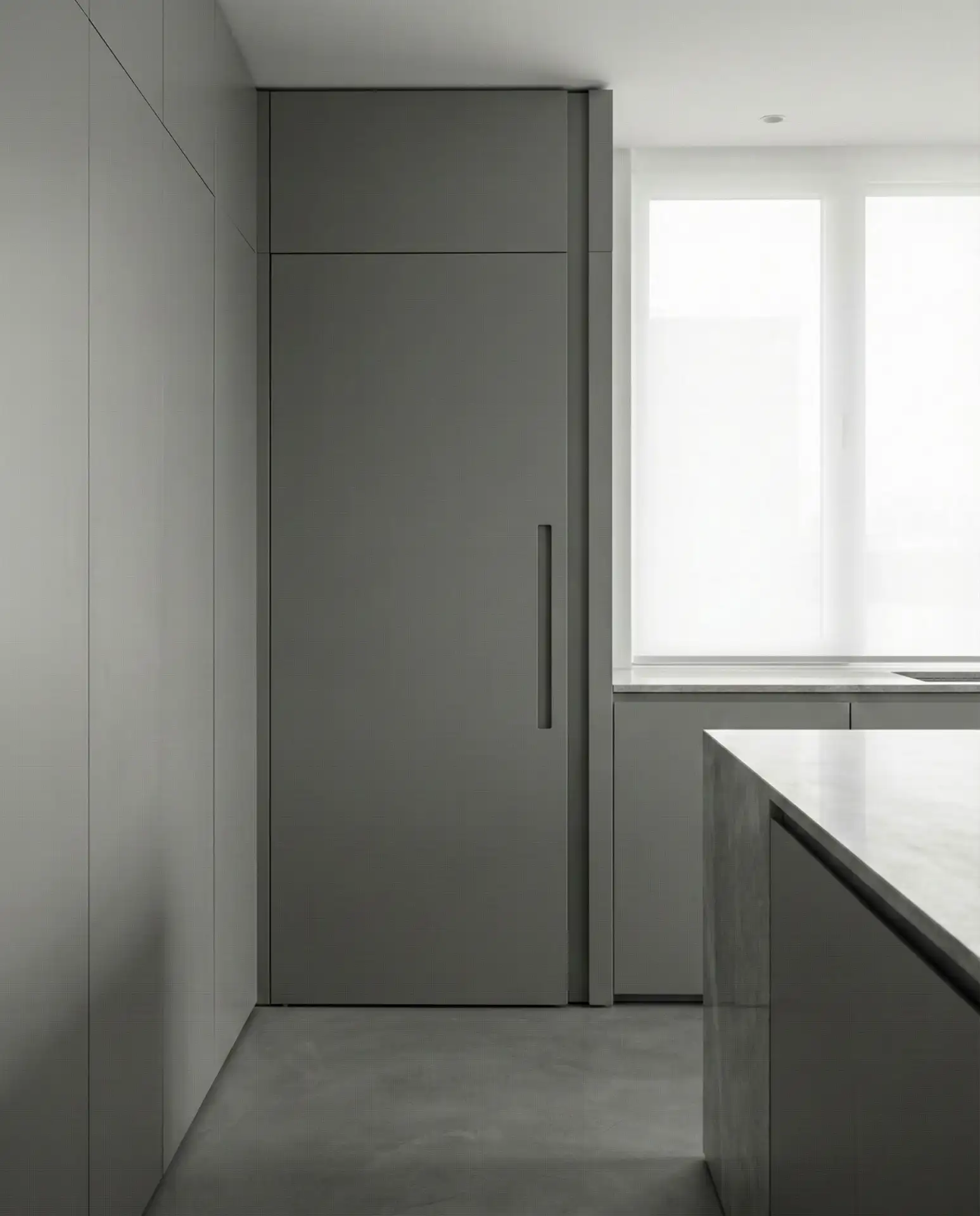
Budget angle: Flat panel doors in paint-grade MDF cost $75–$150, while premium options in walnut or rift-sawn oak run $400–$800, making this style accessible across price points. Americans drawn to minimalism appreciate how these doors recede visually, allowing statement lighting, colorful backsplashes, or architectural windows to command attention. The style particularly suits open-concept homes where visual continuity between spaces creates a sense of expanded square footage.
21. Vintage Screen Door Pantry Conversion
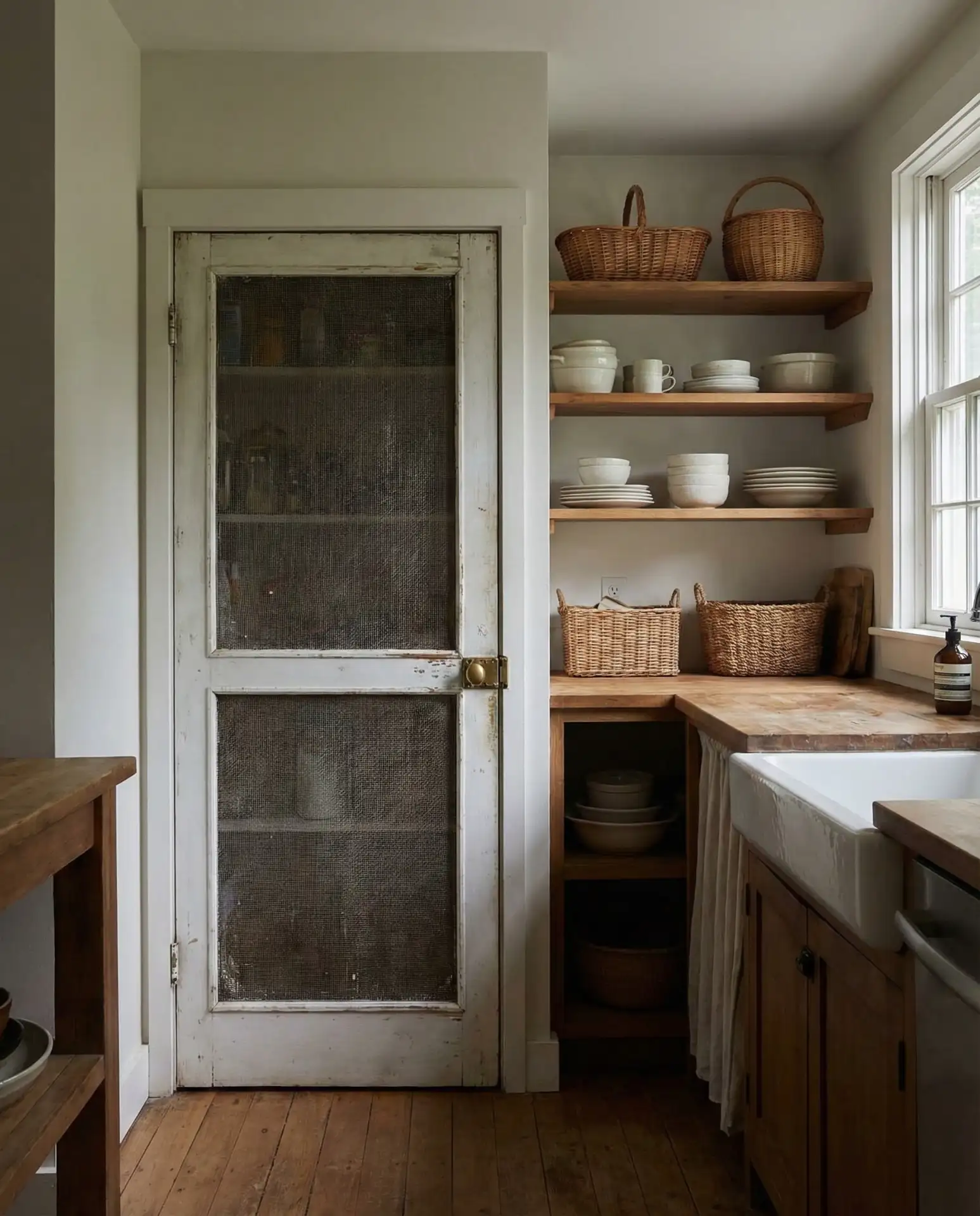
Repurposing an authentic vintage screen door as a pantry entrance injects nostalgic character while promoting air circulation in pantries housing fresh produce or baked goods. Architectural salvage finds from the 1920s–1950s bring original patina, decorative metalwork, and sturdy construction that modern reproductions rarely match. This approach resonates with DIY enthusiasts and sustainability-minded homeowners across the country who value objects with history. 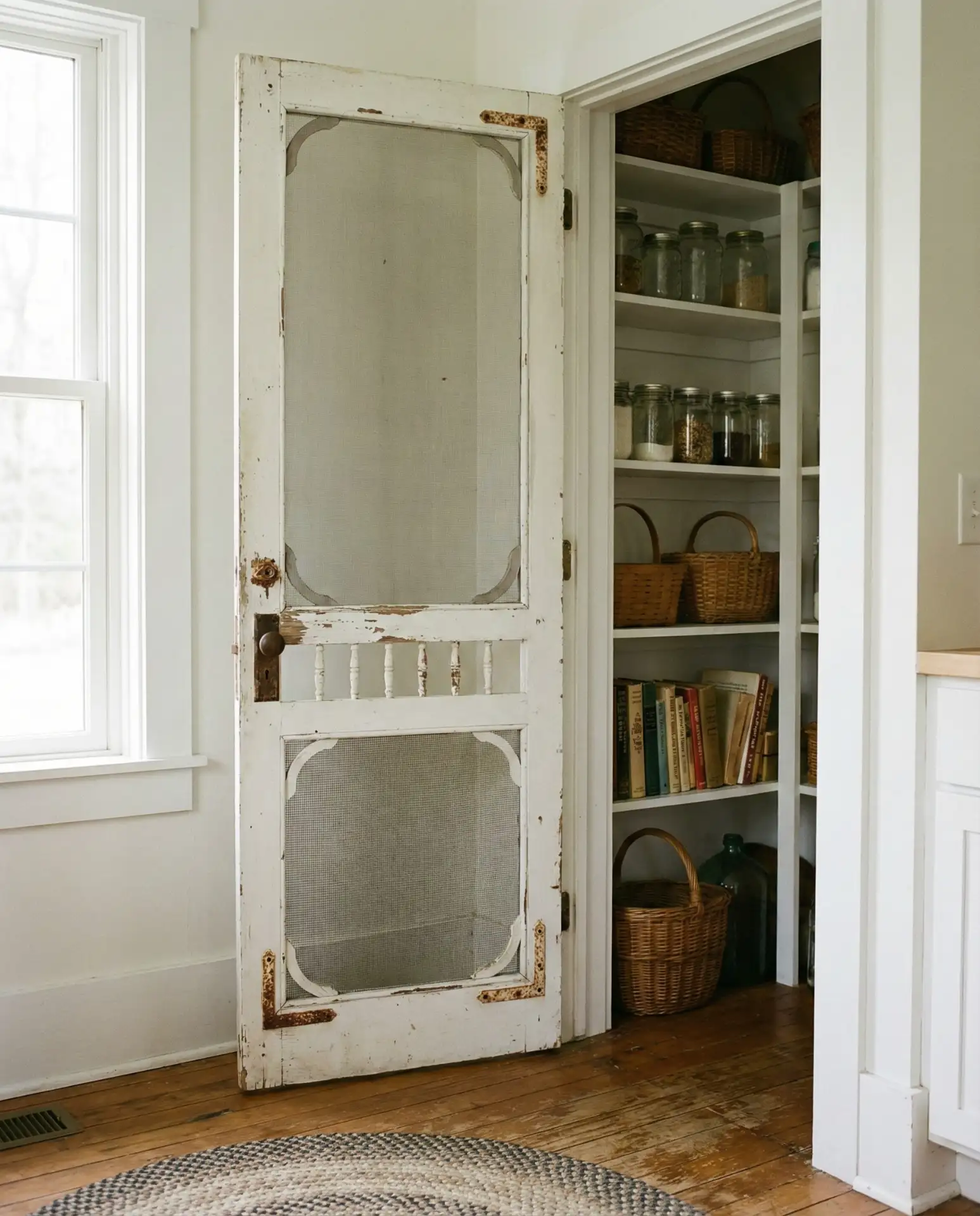
A couple in Vermont discovered a 1940s screen door at a salvage yard for $45, cleaned and reinforced the frame, and installed it as their pantry door—guests consistently cite it as their favorite kitchen feature. Where it works best is in homes with existing vintage elements like clawfoot sinks or subway tile, where the screen door extends rather than disrupts the aesthetic narrative. One caution: ensure the screening remains intact or replace it with new material, as torn mesh looks neglected rather than charming.
22. Two-Tone Painted Pantry Door Design
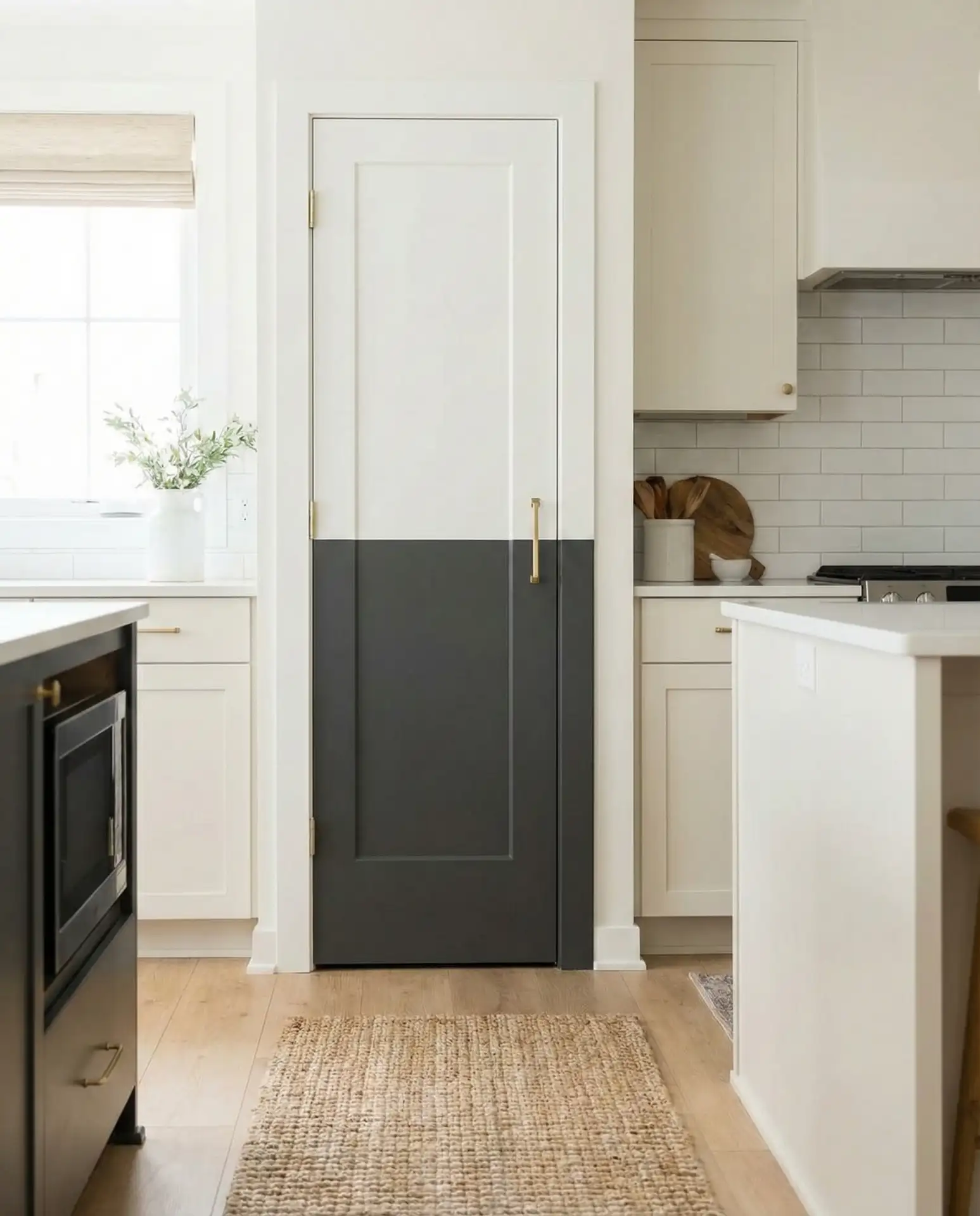
Dividing the painted pantry door horizontally or vertically with two complementary colors creates sophisticated visual interest without overwhelming the space. Popular combinations include white upper panels with navy lowers, or sage green paired with cream, reflecting color trends sweeping American homes in 2026. This technique works particularly well on paneled or Shaker-style doors where architectural detail provides natural dividing lines. 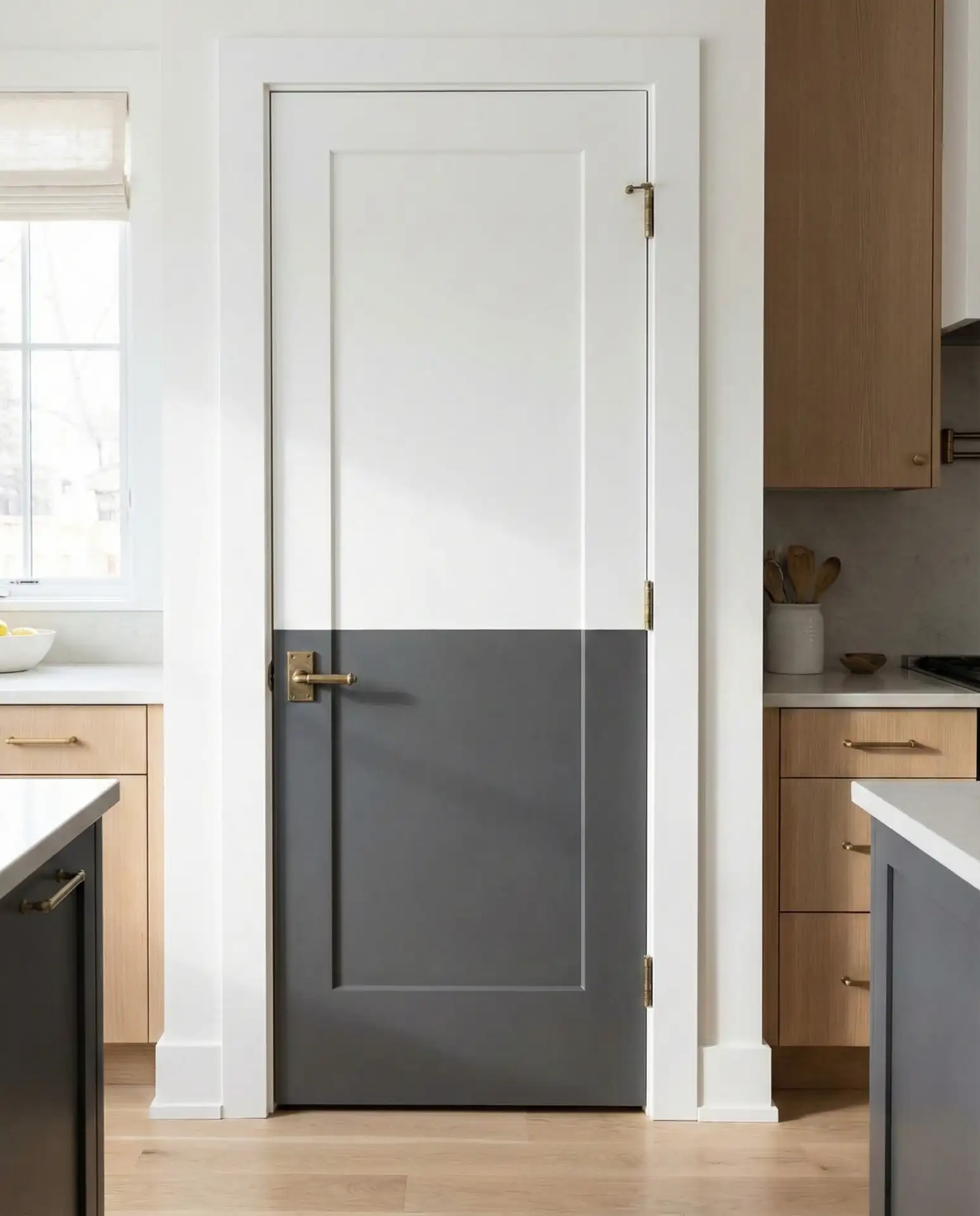
Practical insight reveals that two-tone doors help visually lower ceiling height in kitchens with 10+ foot ceilings, bringing scale back to human proportion. The technique requires quality painter’s tape and patience to achieve crisp lines—many homeowners find success with FrogTape’s Multi-Surface variety and a small foam roller to prevent bleed-under. This approach costs the same as single-color painting but delivers significantly more design impact, making it a favorite hack among budget-conscious renovators.
23. Industrial Metal Pantry Door with Rivet Details
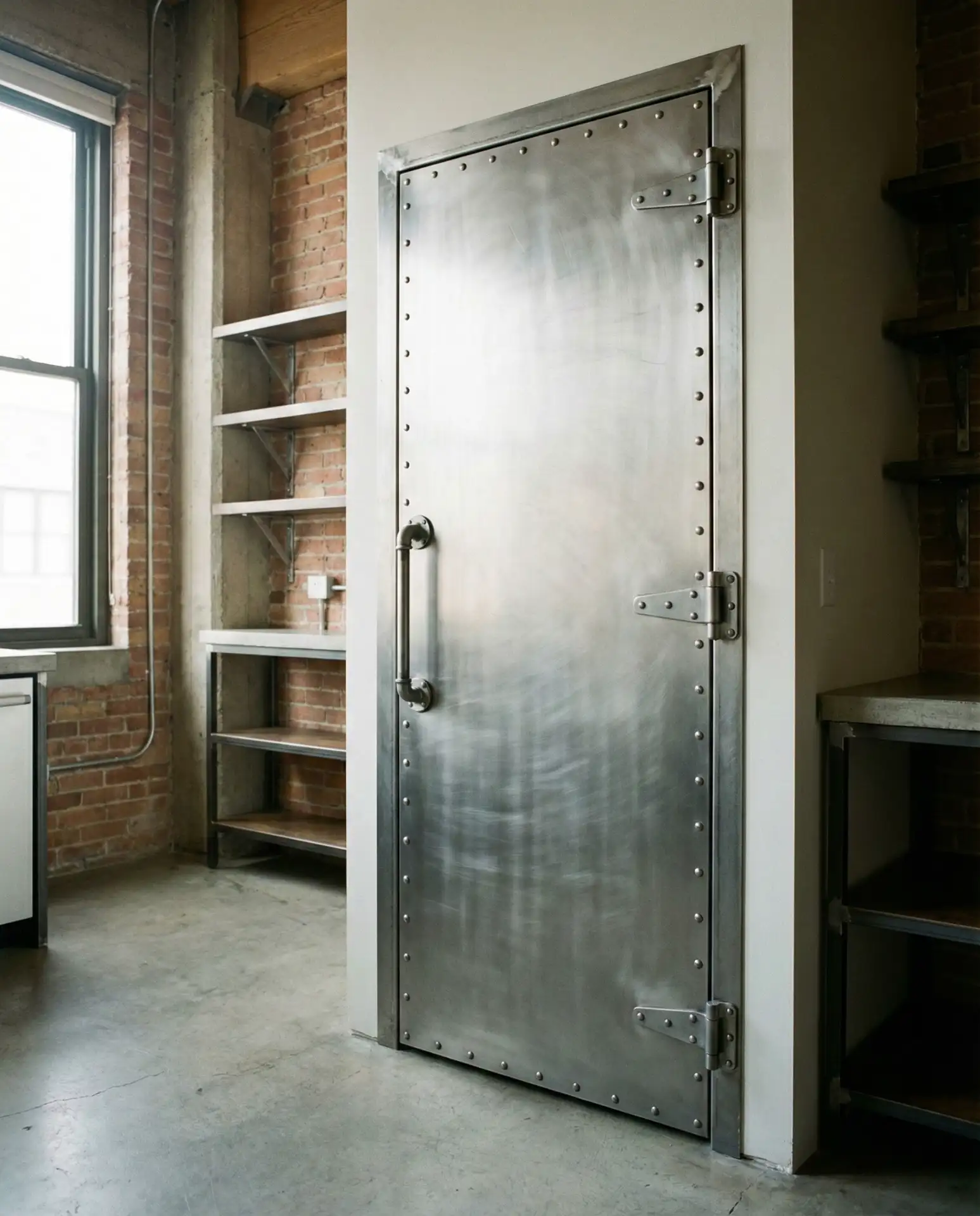
Steel or aluminum pantry doors with exposed rivets and raw metal finishes bring warehouse-chic into residential kitchens, particularly popular in converted lofts across cities like Chicago, Atlanta, and Brooklyn. The industrial aesthetic pairs naturally with concrete floors, Edison bulb lighting, and open shelving, creating cohesive environments that celebrate utilitarian beauty. These doors withstand heavy use and maintain their appearance with minimal maintenance beyond occasional cleaning. 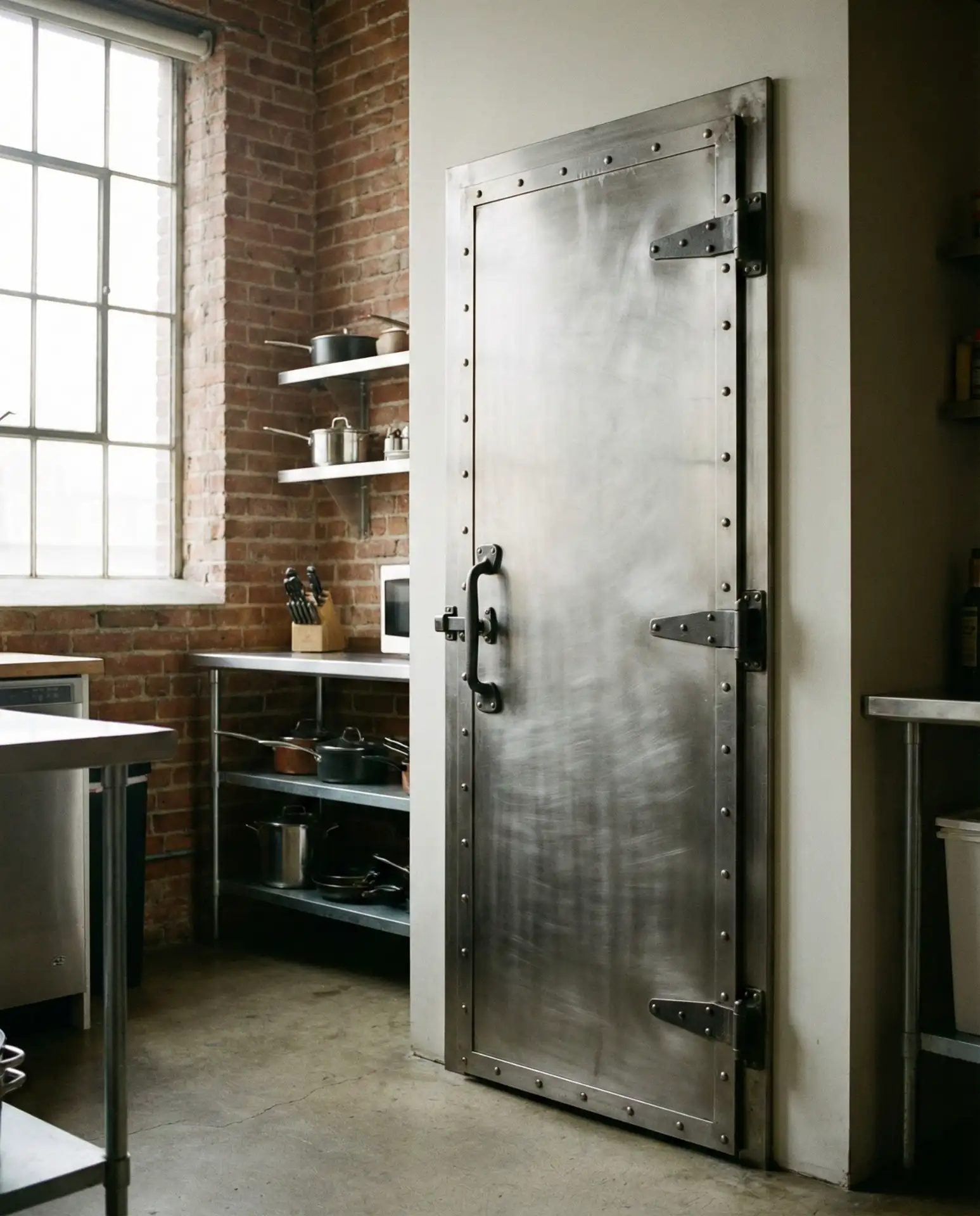
Expert commentary suggests these doors work best in open-concept spaces where their bold character can be appreciated from multiple angles rather than tucked into isolated corners. Custom metal fabrication runs $600–$1,500 depending on size and detailing, though salvaged industrial doors from decommissioned factories offer authentic character at $200–$500 through architectural salvage networks. The weight requires robust hinges—budget an additional $60–$120 for heavy-duty hardware that prevents sagging over time and maintains proper door alignment.
Conclusion
These pantry door ideas demonstrate how a functional necessity can become a defining design feature in your kitchen. Whether you’re drawn to the rustic warmth of reclaimed wood, the sleek lines of frosted glass, or the playful personality of chalkboard paint, there’s an approach that fits your style, budget, and space constraints. We’d love to hear which concept resonates with your vision—drop a comment below sharing your favorite or tell us about your own pantry door transformation.