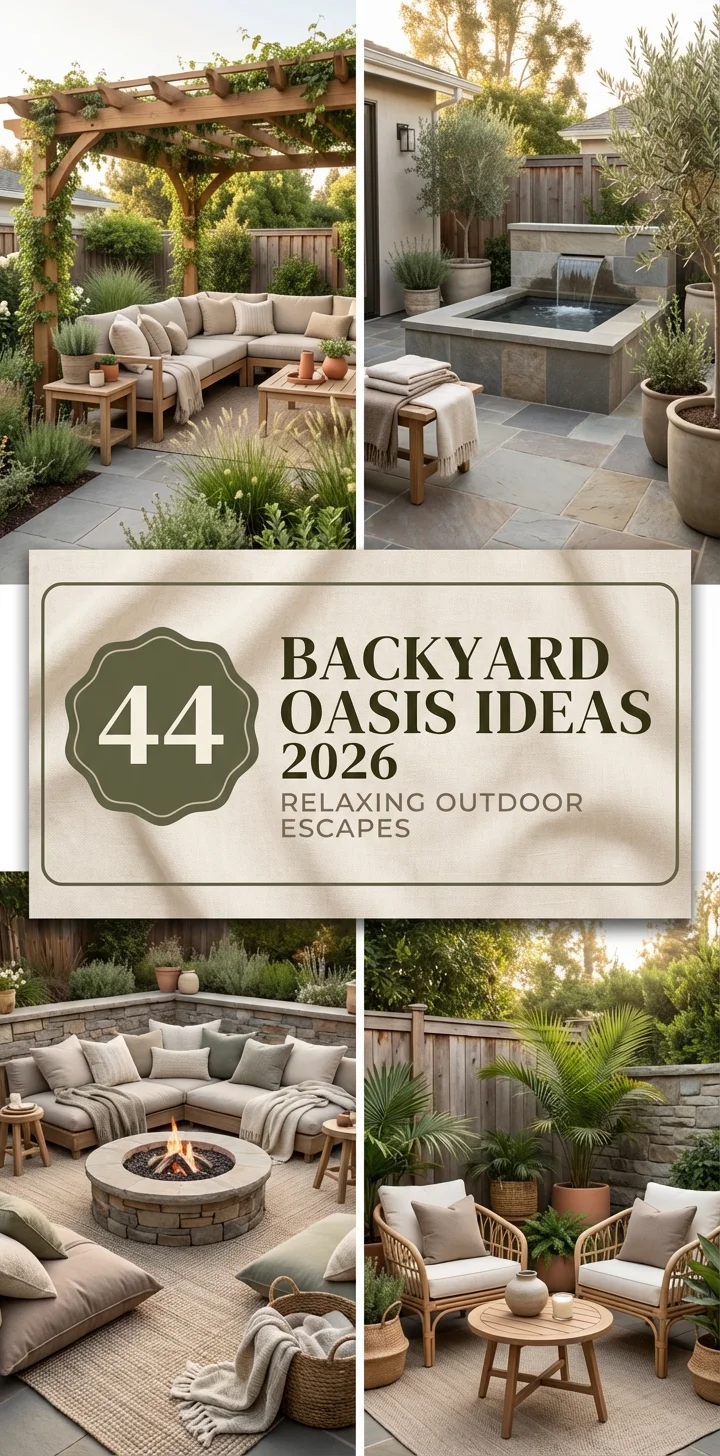
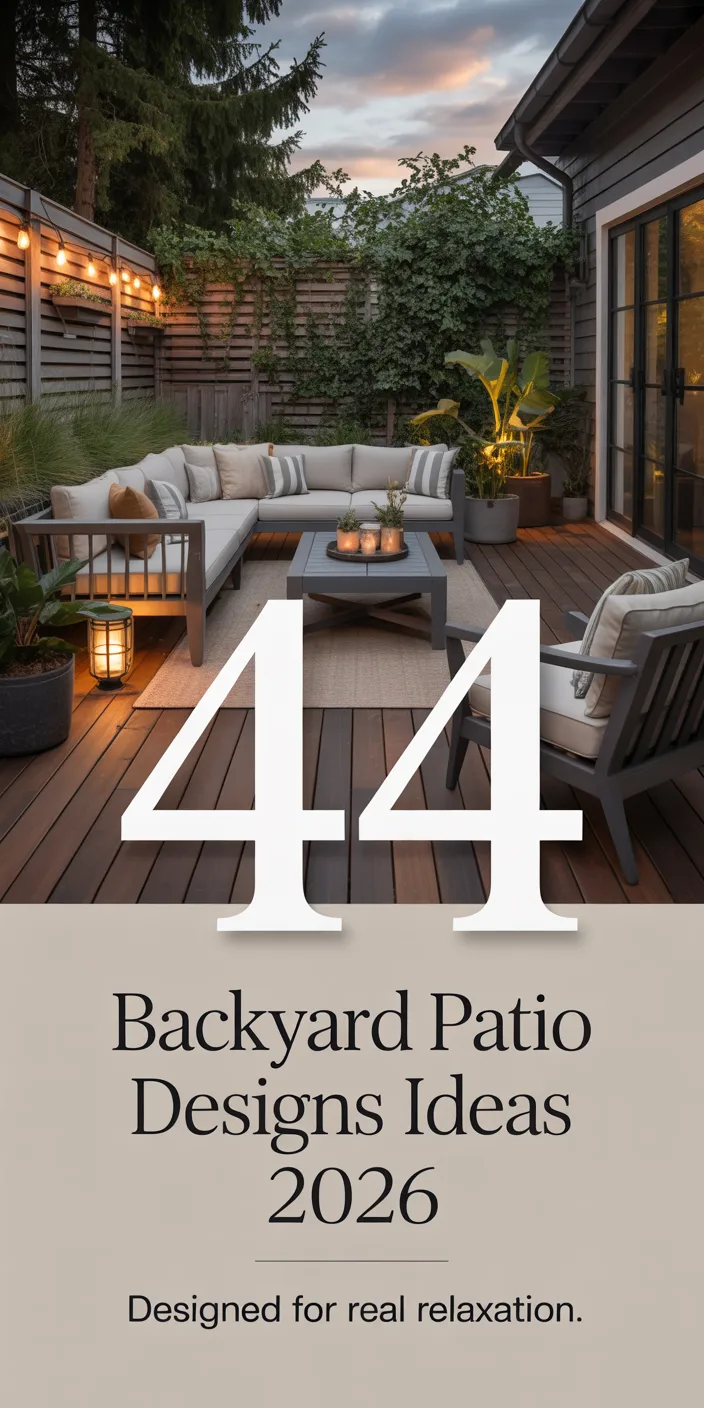
There’s a quiet shift happening in American backyards, balconies, and side yards—people are investing in their outdoor spaces like never before. Whether you have a sprawling suburban yard or a tiny apartment balcony, 2026 is the year to finally make that patio feel like a real room. Pinterest searches for outdoor living ideas have surged as homeowners crave beauty, function, and that unmistakable sense of escape just steps from their back door. In this article, you’ll find fresh, realistic patio ideas—ranging from budget-friendly DIY setups to dreamy Mediterranean escapes—all designed for real American homes and real budgets.
1. Cozy Fire Pit Patio for Small Spaces
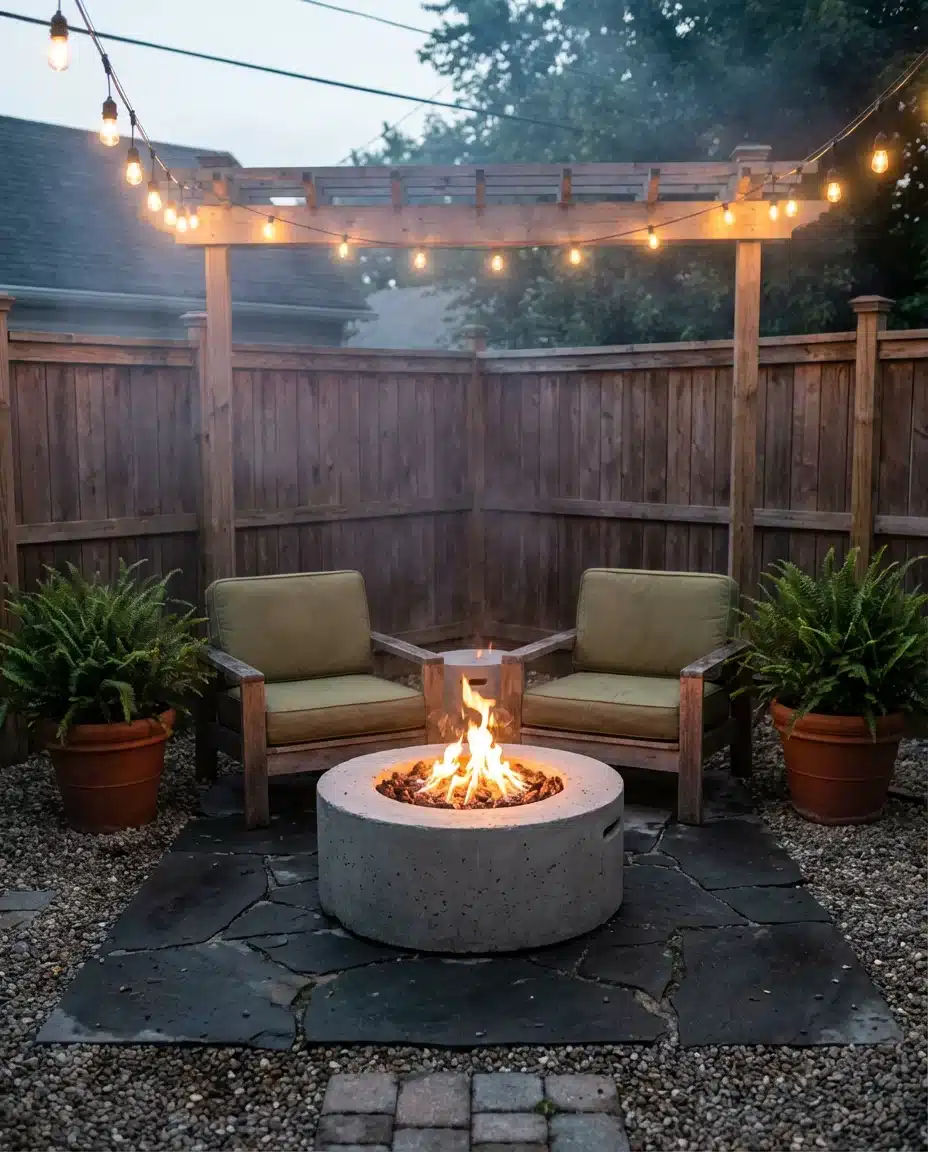
Not every great fire pit setup needs a massive yard. In fact, some of the coziest small spaces with fire pit ideas come from compact patios where furniture is arranged intimately and every inch pulls its weight. A round concrete fire pit centered on a modest stone pad—surrounded by two loveseat-style chairs and a low wooden coffee table—instantly transforms a tight outdoor area into a gathering spot. This works especially well in backyards that measure under 15 feet wide, where scale and proportion matter most.
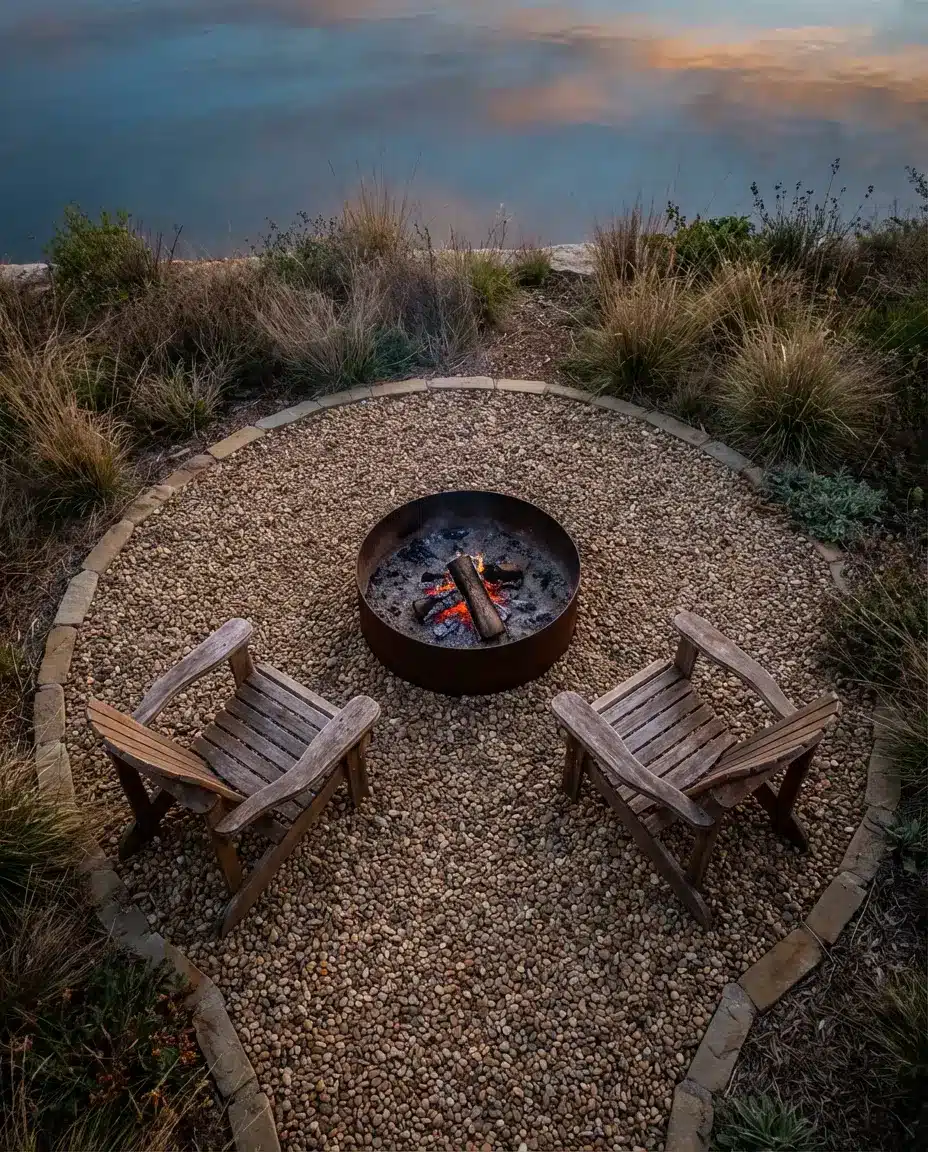
The real secret here is choosing a fire pit that matches the scale of your space. A 24-inch diameter bowl fire pit is ideal for small patios—it throws enough warmth to be felt across a six-foot seating circle without dominating the layout. Pair it with weather-resistant cushions in earthy terracotta or slate gray, and you’ve got a setup that looks editorial but costs surprisingly little. A bag of pea gravel around the base adds texture and helps with drainage, solving one of the most common complaints small-patio owners deal with after a rainstorm.
2. Budget Apartment Balcony Patio Refresh
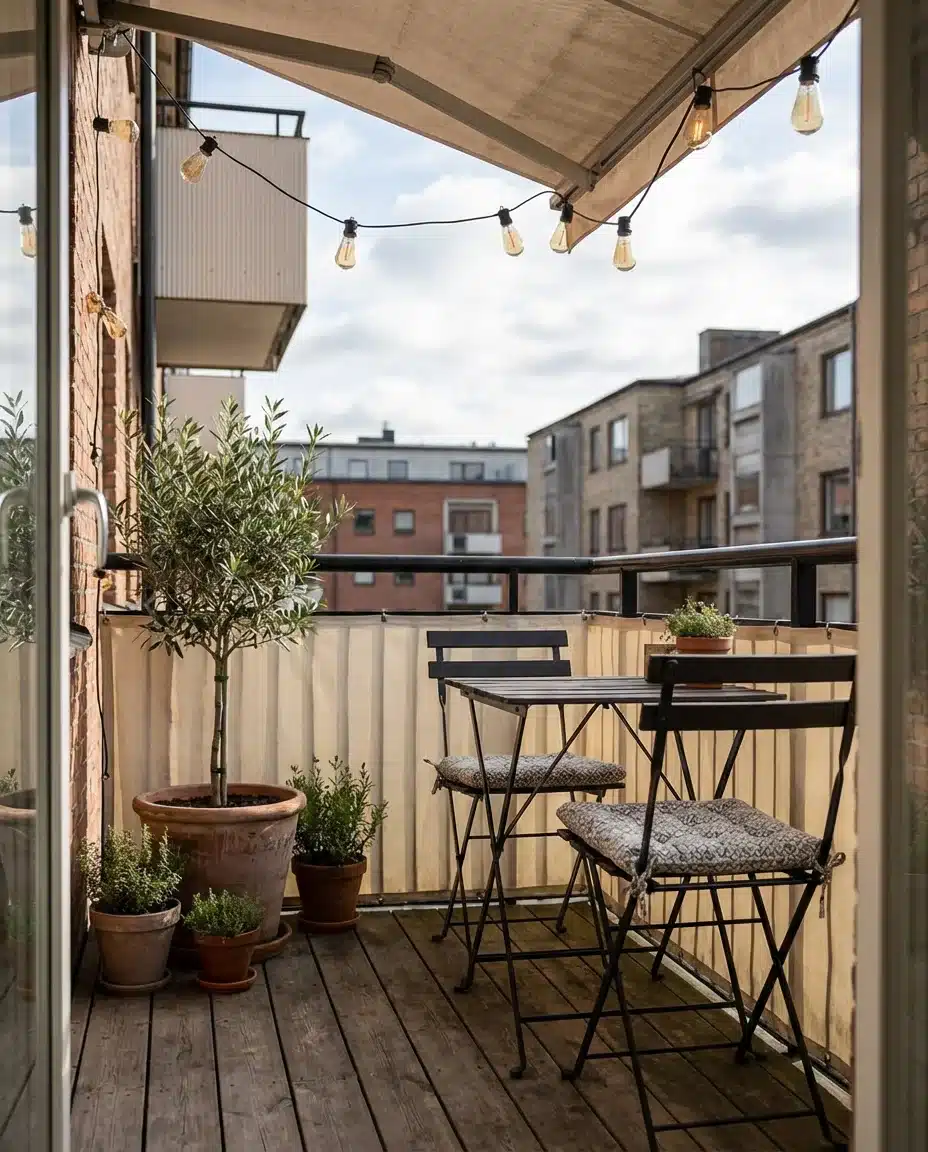
Living in an apartment doesn’t mean sacrificing outdoor style. A renter-friendly patio refresh can go a long way—think foldable bistro chairs, a slim bar-height table, and a string of warm Edison bulbs anchored with removable adhesive hooks. Keep everything cheap but intentional: a single potted olive tree in a terracotta planter does more design work than a dozen mismatched accessories. The goal is to make a 50-square-foot balcony feel like a Parisian café corner rather than a forgotten storage zone.
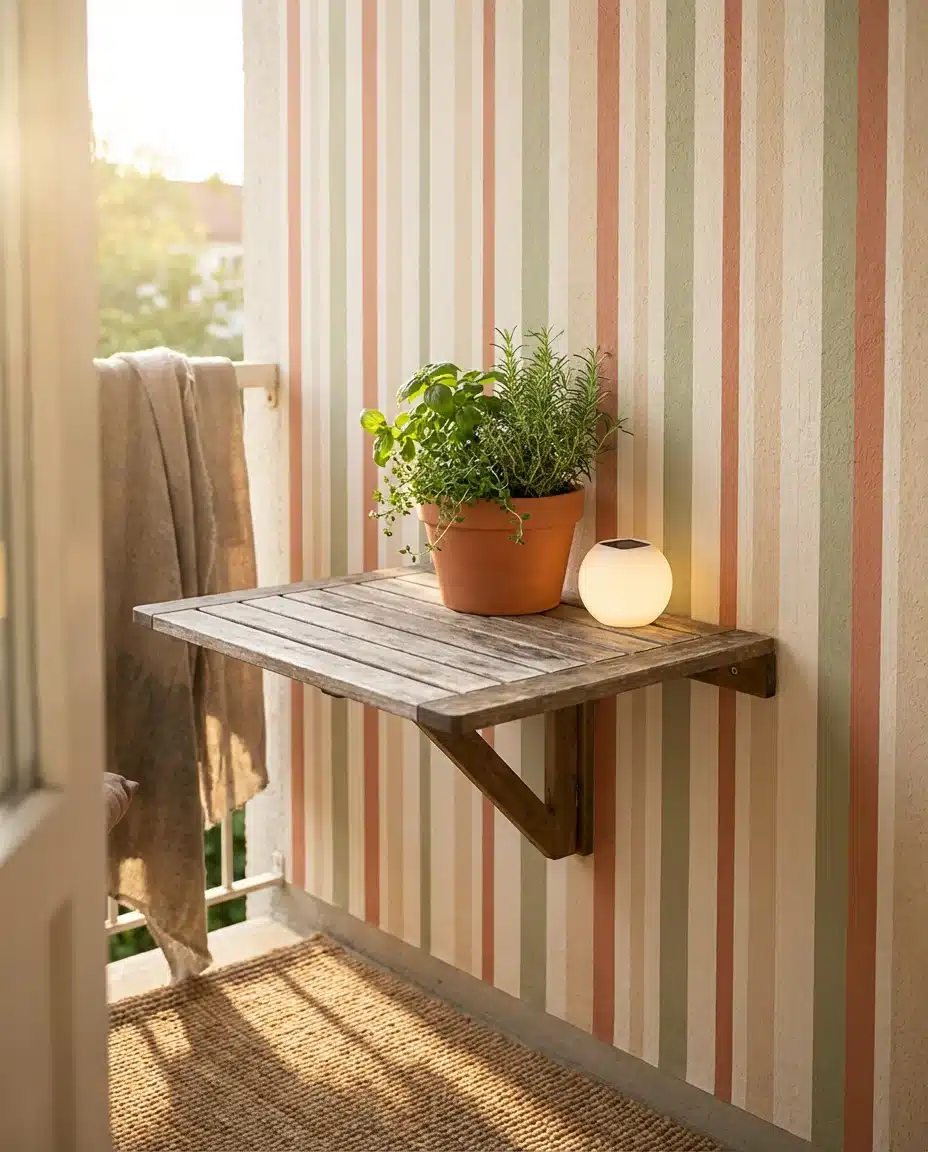
One thing renters often overlook: vertical space is your best friend. A wall-mounted folding table frees up floor area while still giving you a surface for your morning coffee. Outdoor-rated removable wallpaper or reed fencing panels can transform a plain concrete wall without violating lease terms. Keep your total spend under $200 by shopping end-of-season sales at Target or HomeGoods—you’ll be amazed how polished the result looks once everything comes together in a cohesive color palette.
3. Rustic Covered Patio With String Lights
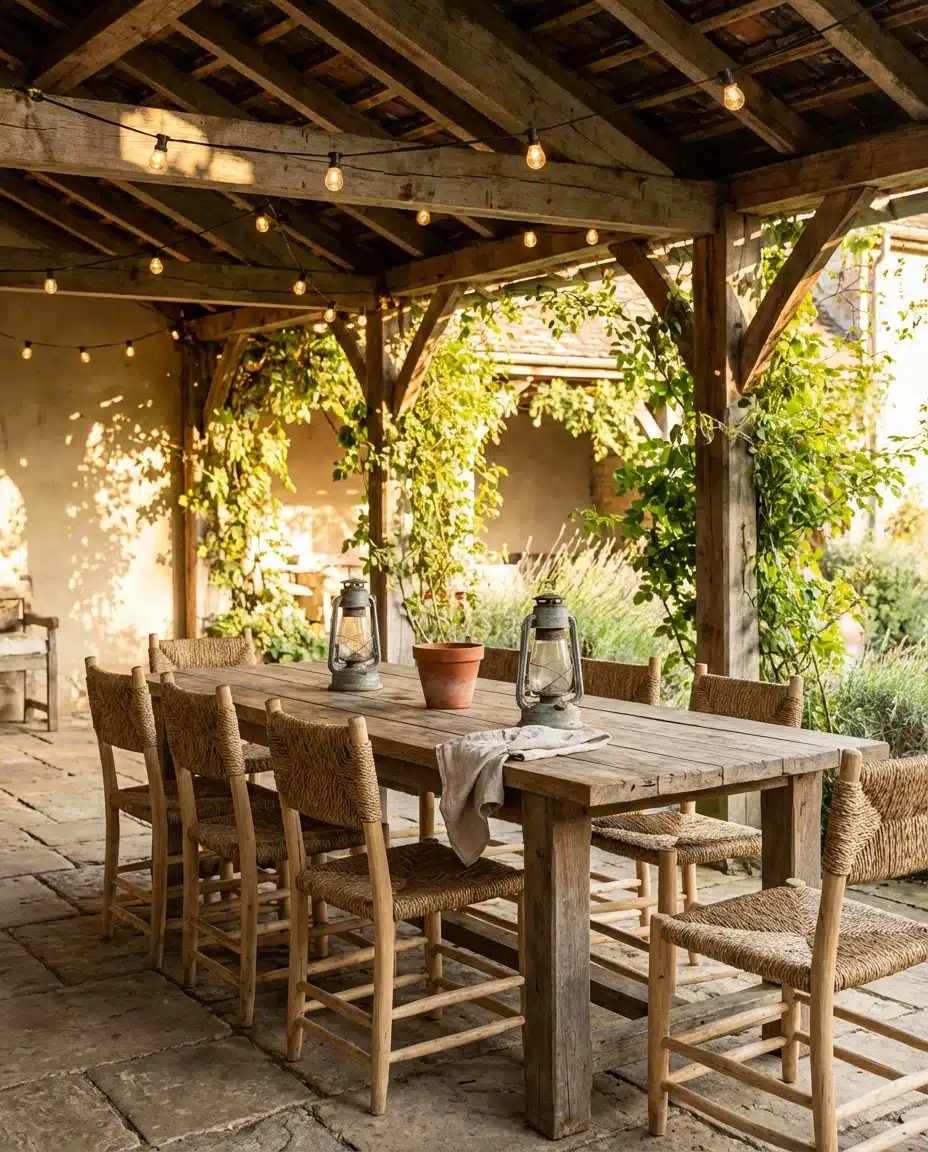
A covered patio with rustic character is one of the most Pinned aesthetics heading into 2026 — and honestly, it’s easy to understand why. Weathered wood beams, galvanized metal accents, and chunky woven textiles give the space that lived-in warmth that feels deliberately undecorated. String lights draped across exposed rafters do the heavy lifting at night, casting a golden glow that makes even a simple plank table feel like a dinner party venue. This look works on a wide range of homes, from Texas farmhouses to Midwest ranch styles.
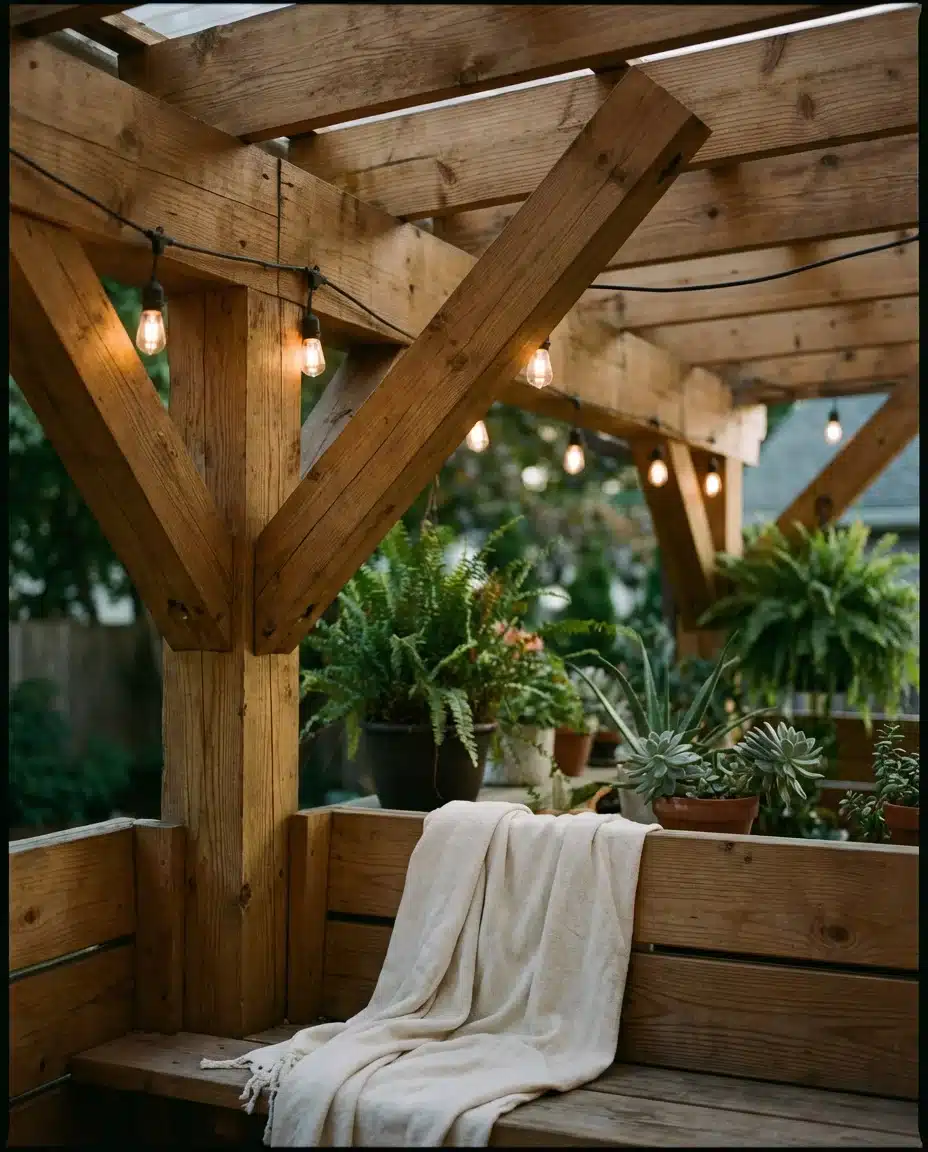
One common mistake with rustic covered patios is going too dark—staining all the wood espresso or charcoal and then wondering why the space feels cave-like. A lighter, honey-toned stain keeps the wood warm without absorbing all available light. Blend in one or two white or cream textiles—a cotton throw, seat cushion covers, maybe a simple outdoor rug—to balance the darkness of natural materials. The contrast is what makes the whole aesthetic feel elevated rather than just weathered.
4. Mediterranean Patio With Terra Cotta and Tile
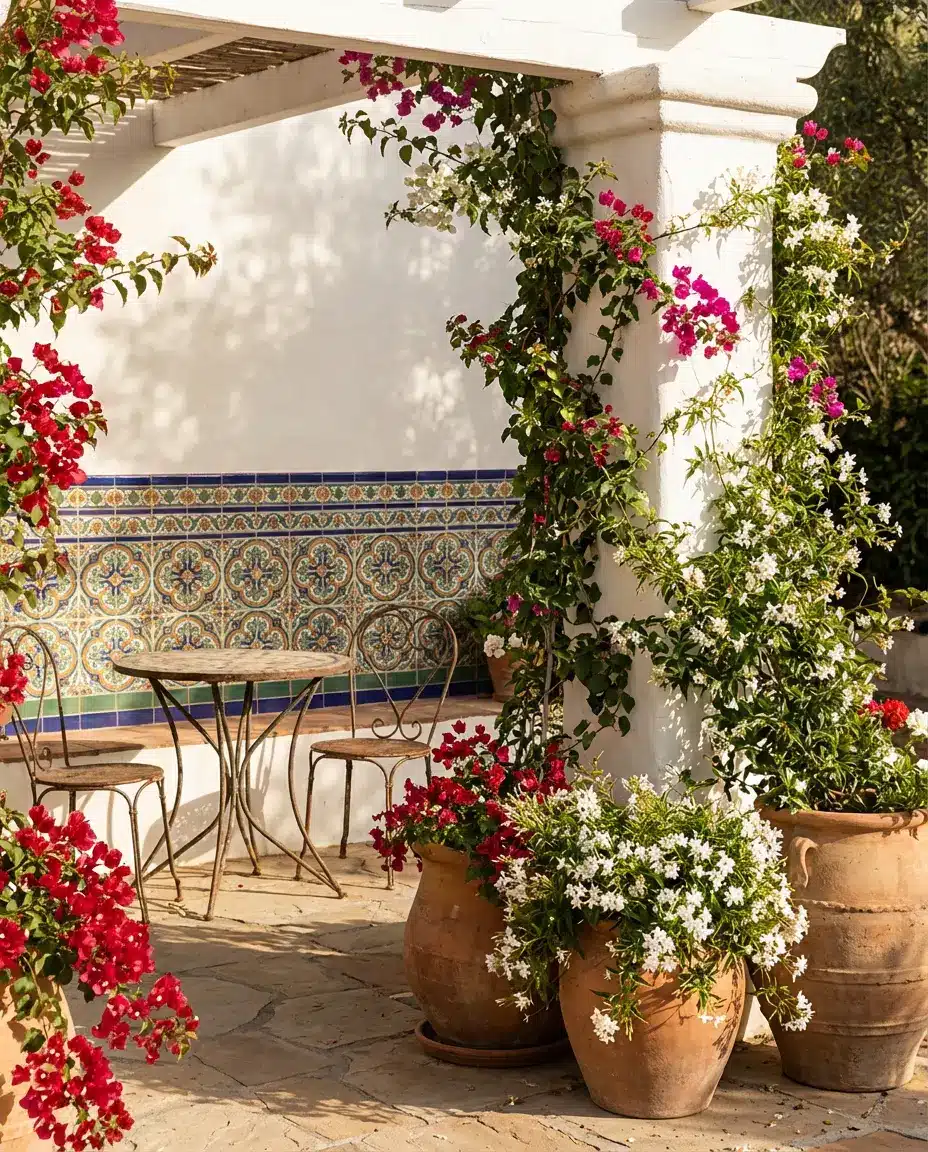
The Mediterranean patio trend isn’t going anywhere—in fact, it’s deepening into something richer and more personal in 2026. Think hand-painted Talavera tiles as an accent wall, terracotta pots in three sizes clustered near a wrought-iron bistro table, and a trailing bougainvillea or jasmine vine climbing a whitewashed pergola post. The palette is sun-bleached and earthy: warm whites, dusty blues, ochre, and terracotta. A Spanish-style influence shows up in the arched shapes, clay roof tiles used decoratively, and ornate tile insets on tabletops.
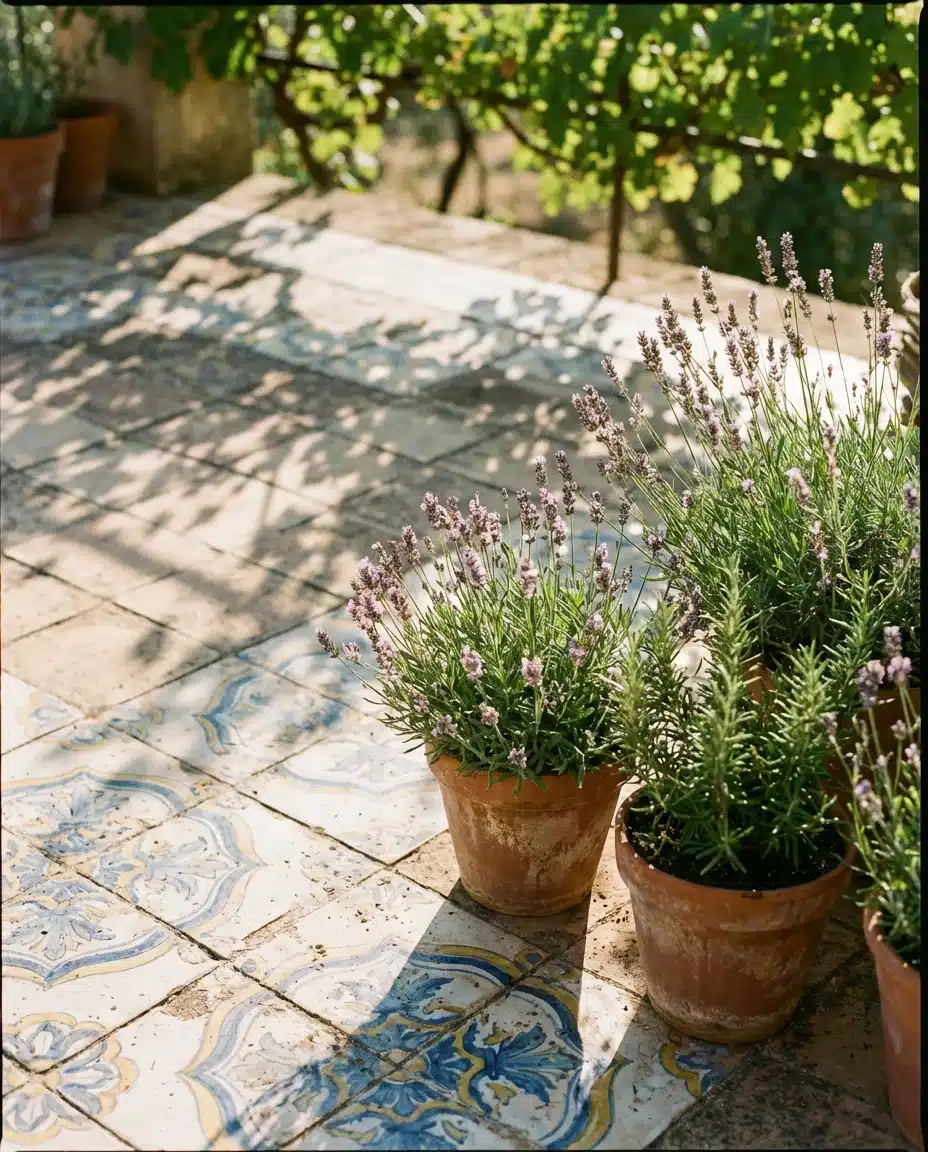
This aesthetic works best in warmer U.S. climates—Southern California, Arizona, Florida, and the Gulf Coast—where the look mirrors the actual environment rather than fighting it. But northern homeowners have been making it work too, by bringing in hardy plants like lavender, rosemary, and agave that carry the Mediterranean feel through cold snaps. The tile work is often the most budget-friendly entry point: a single hand-painted tile trivet on a plain outdoor table is enough to anchor the whole mood without committing to a full renovation.
5. Simple DIY Paver Patio on a Budget
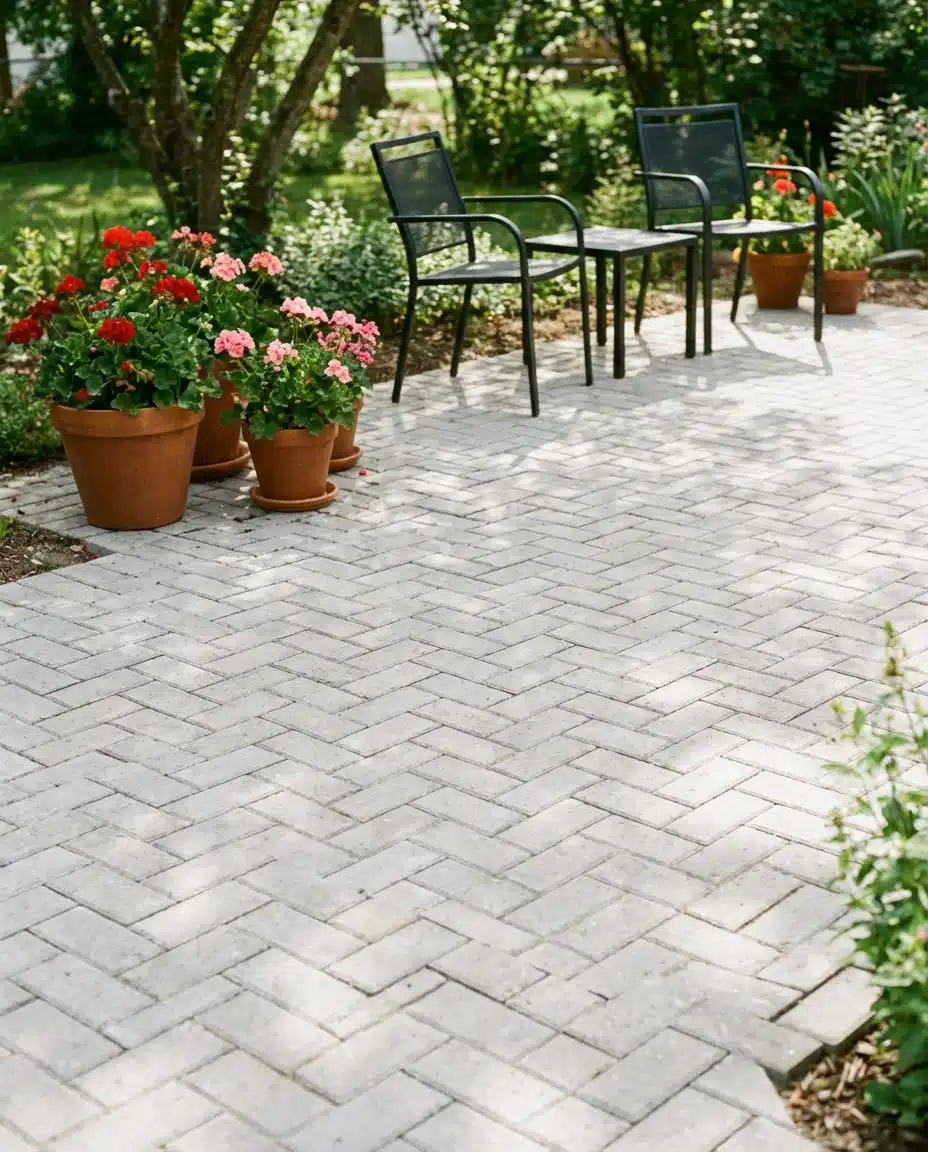
A DIY paver patio is one of the most rewarding weekend projects you can take on—especially when the end result looks like it was professionally installed. The process is genuinely achievable for most homeowners: excavate four inches of soil, lay a gravel base, add sand, and set your pavers in a running bond or herringbone pattern. At around $2–$4 per square foot for concrete pavers, a 10×12 patio runs roughly $300–$500 in materials. That’s a genuinely cheap outdoor upgrade with serious curb appeal. This approach suits simple, unfussy design lovers who want function over flash.
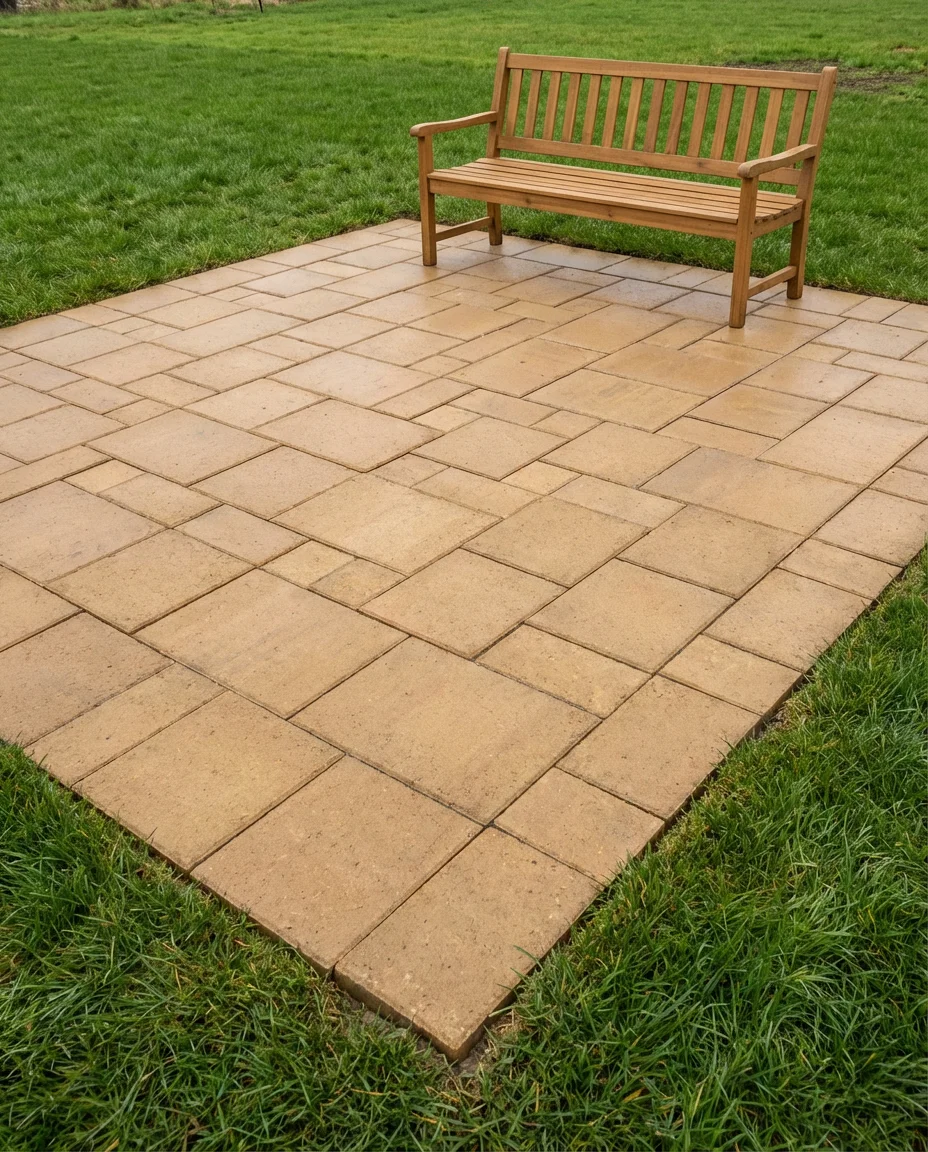
The biggest mistake first-time paver installers make is skipping the compaction step. Without a tamped gravel base, pavers shift and heave with freeze-thaw cycles—a frustration that undoes all your hard work by spring. Rent a plate compactor from Home Depot for about $70 a day—it’s genuinely worth it. Also, take your time leveling the sand layer. A two-by-four screed board pulled across evenly spaced pipe guides will give you a flat surface that locks everything into place and makes the finished patio look truly professional.
6. Modern Small Patio for Urban Backyards
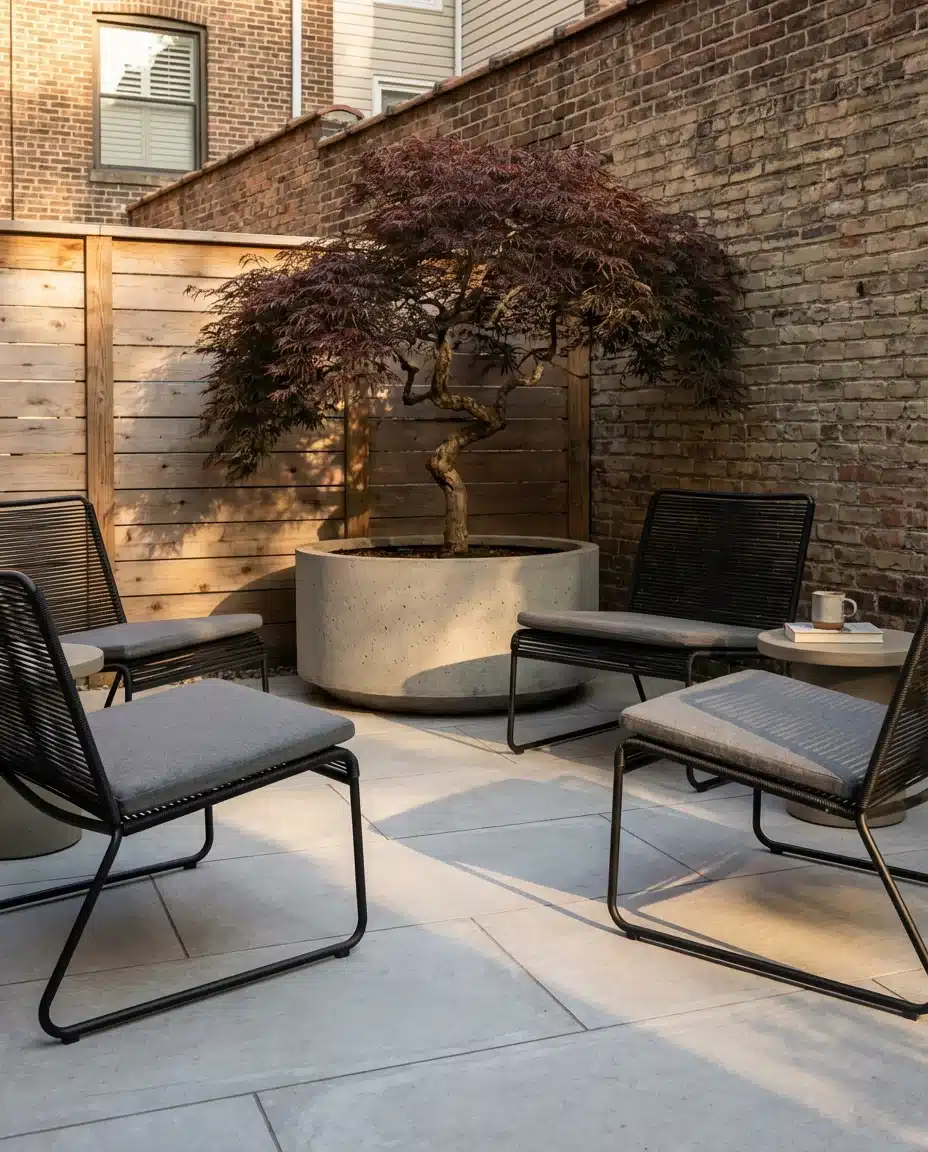
Small spaces and modern design are having a serious moment, and urban backyards are the canvas everyone’s working with. The formula is clean and consistent: porcelain or large-format concrete pavers in a light gray or warm greige, low-slung furniture with thin metal frames, and a single architectural plant—a Japanese maple or a sculptural succulent—as the focal point. Avoid busy patterns; in a small modern patio, every surface should earn its keep. What makes this look feel expensive is restraint—fewer pieces, better quality, and negative space used intentionally.
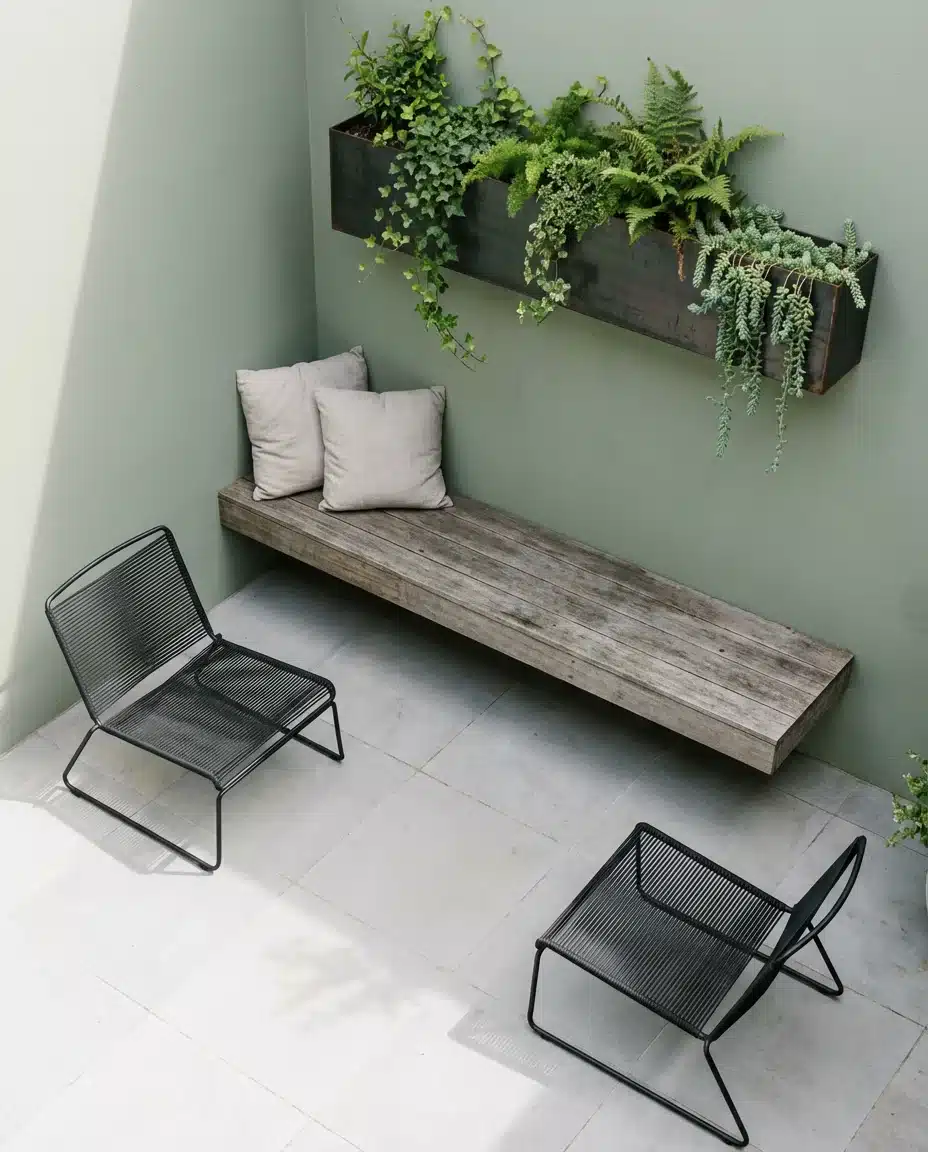
Interior designer Jessica Helgerson once noted that small outdoor spaces reward the same principles as small interiors: scale, proportion, and light. In a modern patio under 120 square feet, a floating bench built against one wall does triple duty—seating, storage, and visual boundary. Mount a simple steel planter box above it for vertical greenery without consuming floor space. This is the kind of setup that photographs beautifully and lives even better on a weekday evening with a glass of wine and a good book.
7. Outdoor Patio Kitchen for Entertaining
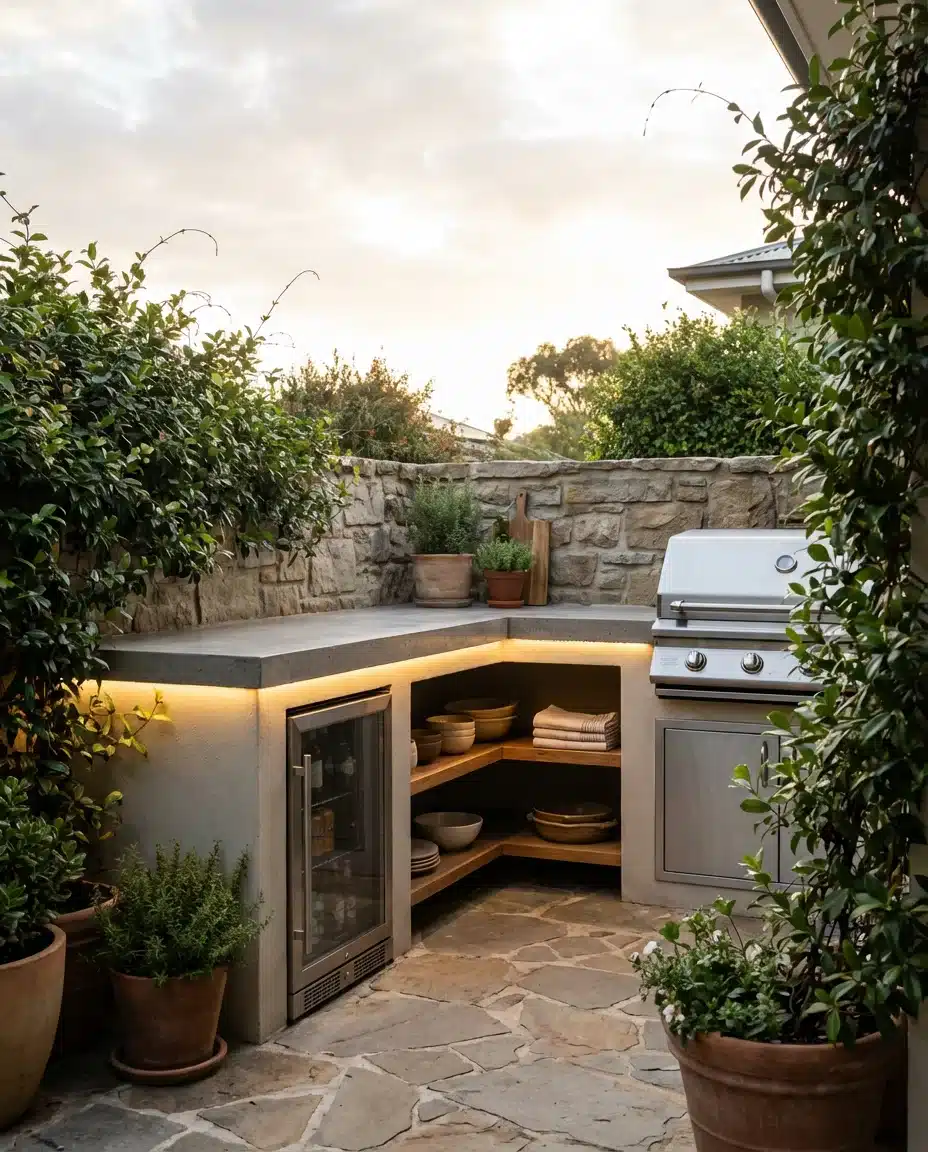
Building an outdoor kitchen used to feel like a luxury reserved for large suburban homes, but scaled-down versions are now completely within reach for average American homeowners. A compact L-shaped layout with a built-in grill, a 24-inch prep counter in poured concrete or weather-grade tile, a small under-counter fridge, and open shelving for tools and condiments is all you need. This kind of setup changes how you use your patio for good—weekend grilling becomes a social experience rather than the host disappearing into a separate room while guests wait outside. It works perfectly on large patios but can be adapted smartly to mid-size spaces as well.
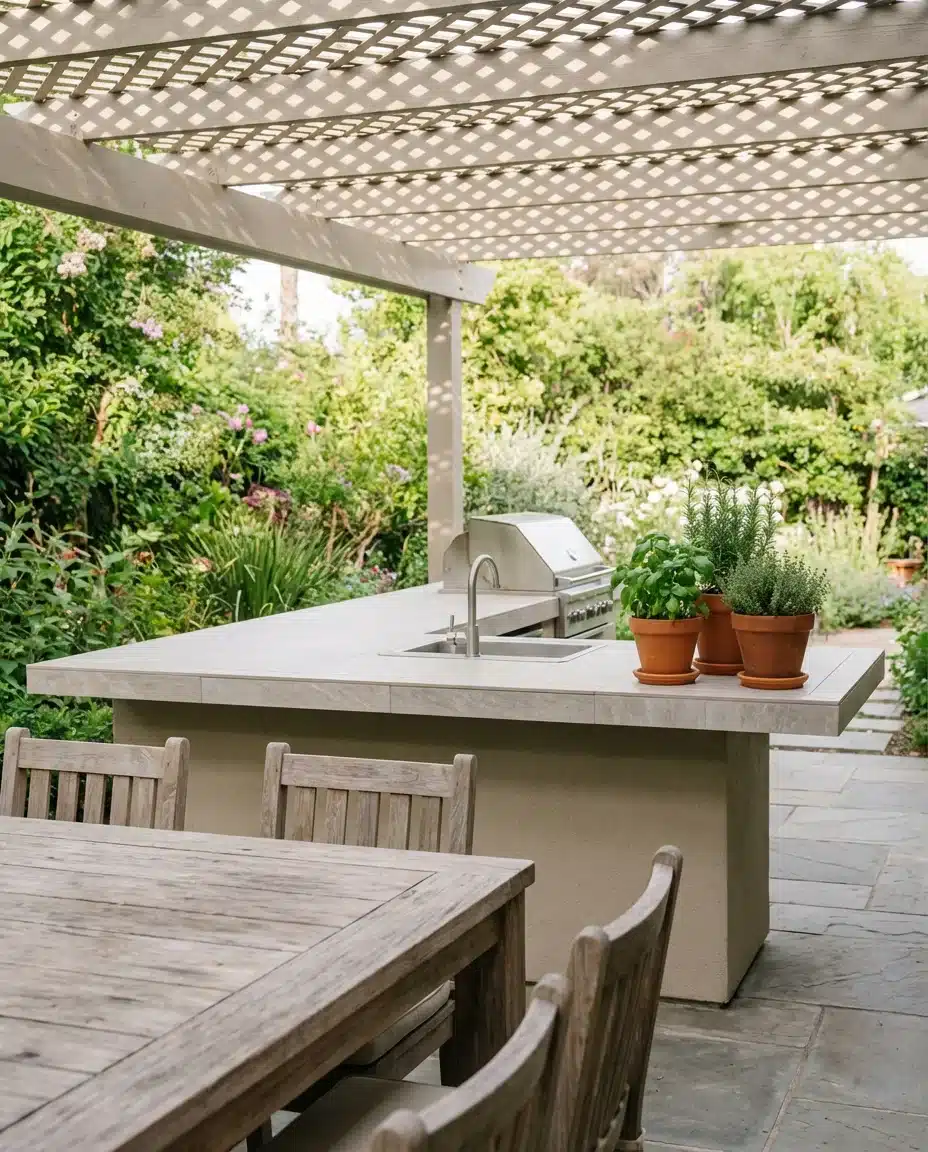
In the U.S. South and Southwest, the outdoor kitchen is practically a cultural institution—summer evenings in Texas or Georgia often revolve entirely around the backyard grill station. But even in northern states like Wisconsin or Michigan, homeowners are building three-season outdoor kitchens with pergola covers that make the space usable from April through October. The key investment worth making: a durable, all-weather countertop. Poured concrete or porcelain tile holds up beautifully; laminate and wood composites, despite initial appeal, tend to fail within two seasons.
8. Privacy Panel Patio Enclosure
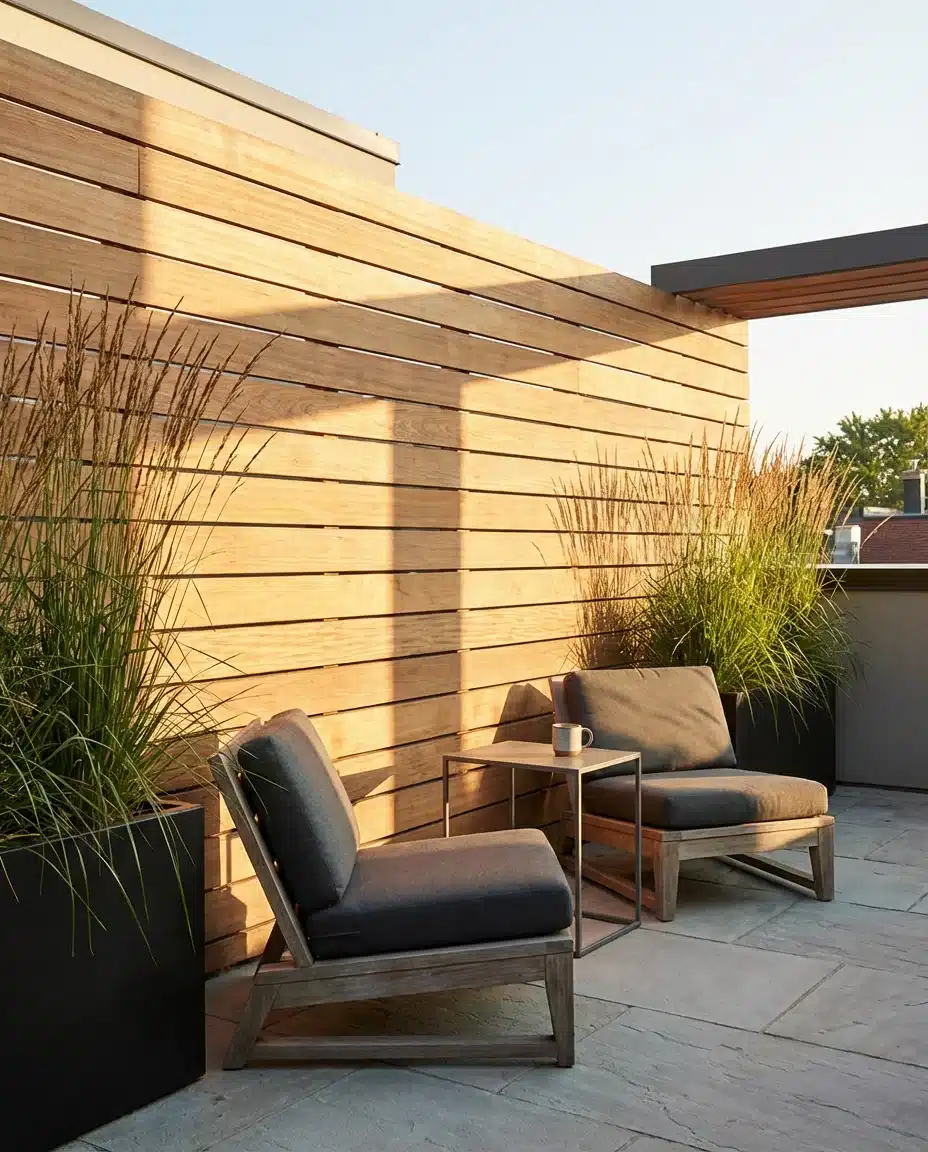
Privacy panels have become one of the most searched patio upgrades of recent years, and the 2026 options are better than ever. Slatted wood screens in cedar or teak, laser-cut metal panels in geometric patterns, and woven bamboo fencing all create that coveted sense of enclosure without fully blocking air or light. For renters or those on a tight budget, modular privacy panels on weighted bases are a brilliant solution—they require no installation, no drilling, no landlord approval, and can move with you when you leave.
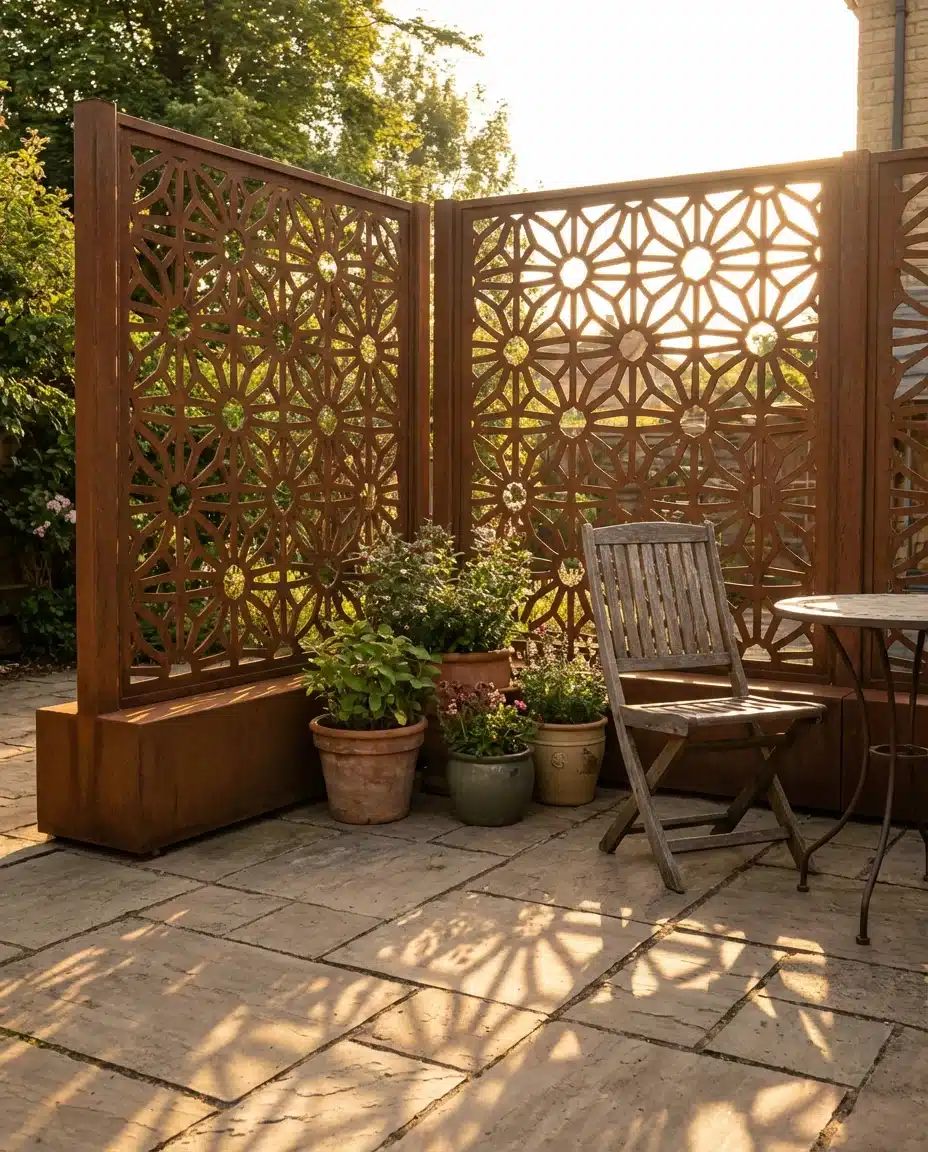
The placement of privacy panels is as important as the panels themselves. Positioning them to block the most-used sightlines—typically from a neighbor’s second story or a shared fence line—makes the biggest difference in how private the space actually feels. A homeowner in Denver shared that after installing cedar slat panels along one side of her 8×10 patio, she started eating breakfast outside every single morning. The sense of enclosure, she said, made the space feel like a room—which is exactly what great patio design should do.
9. Fireplace Patio as a Focal Point
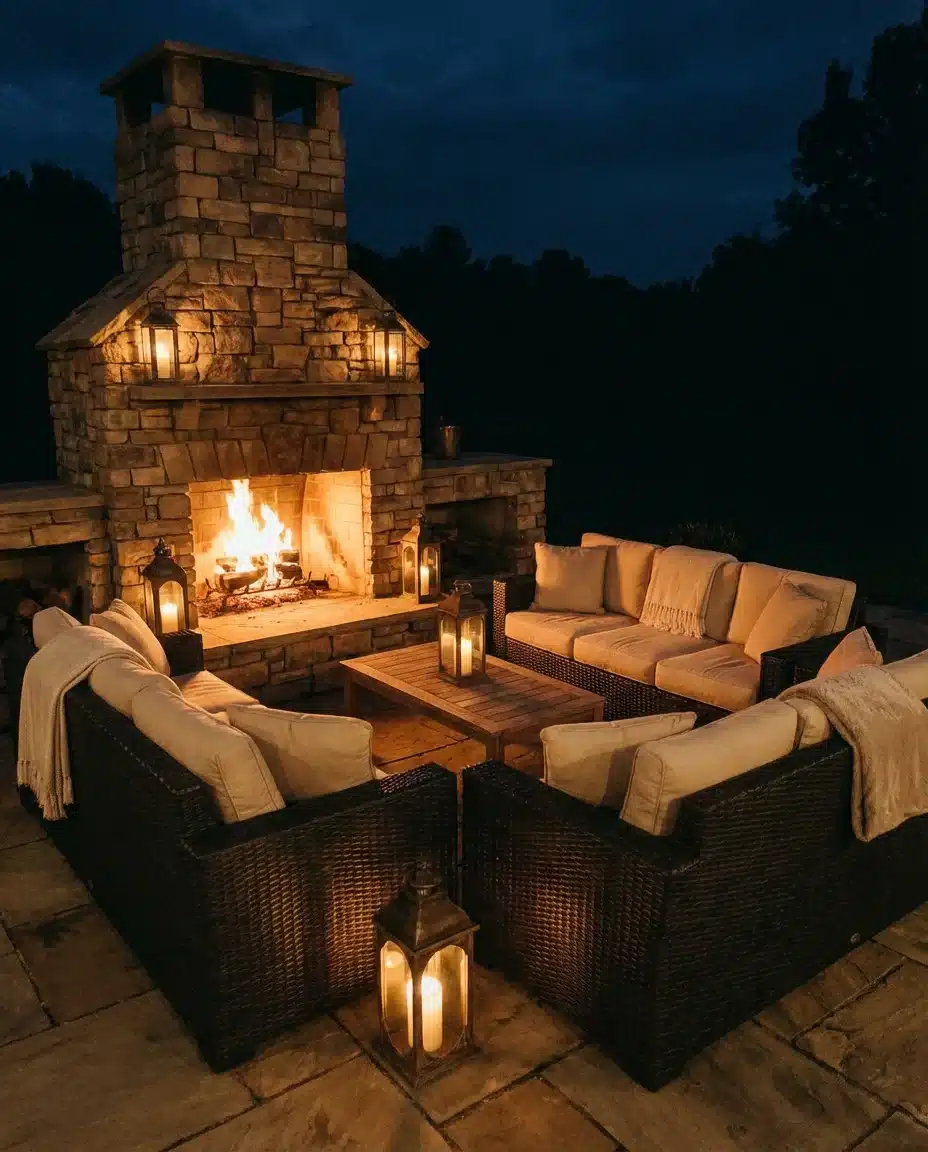
An outdoor fireplace does something a fire pit simply cannot: it gives your patio a wall, a focal point, and an architectural anchor all in one. Built-in outdoor fireplaces in stacked stone, brick, or painted stucco instantly elevate the formality and permanence of an outdoor space. Arrange seating in a U-shape facing the firebox, and you’ve created a room with a clear hierarchy—guests know where to look, where to sit, and what the experience is about. This is the move for homeowners ready to treat their patio as a true extension of their indoor living space.
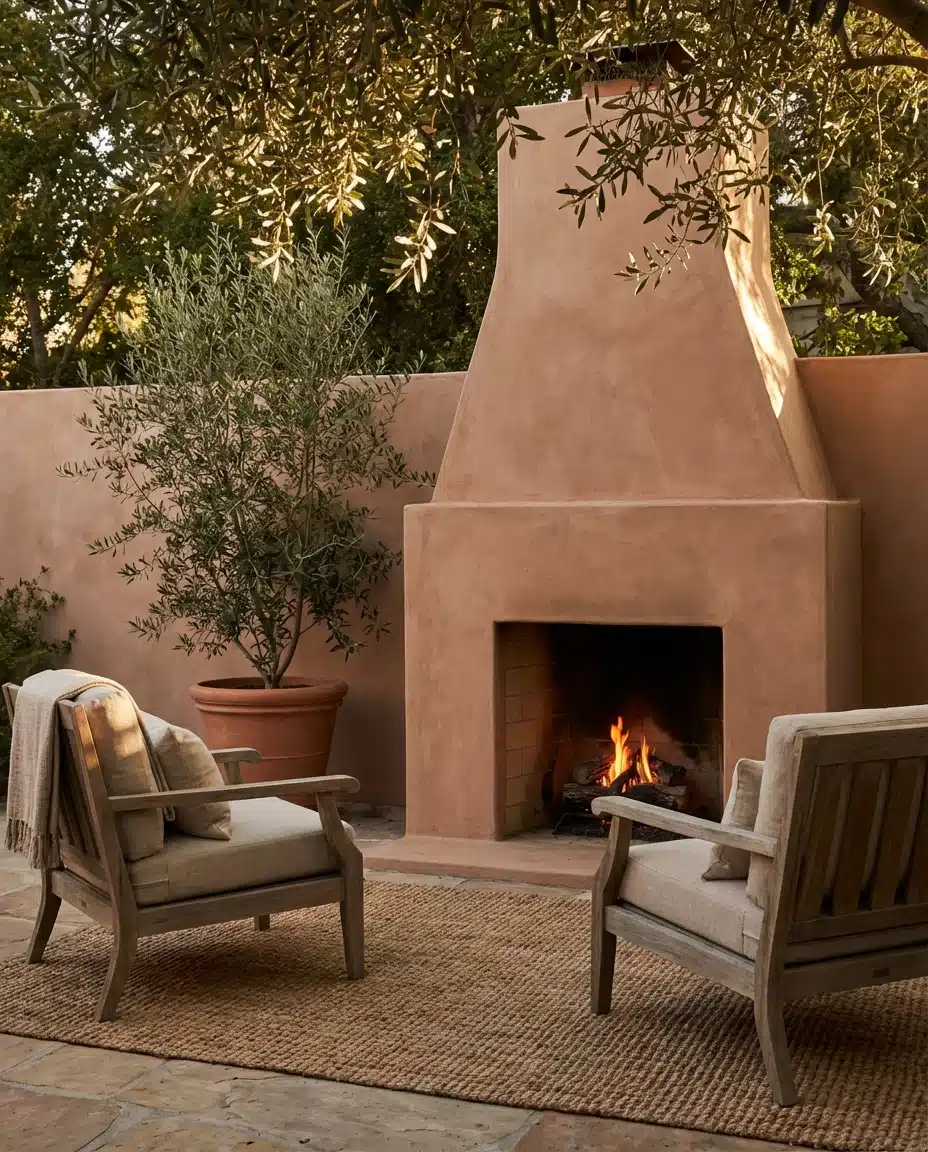
Budget is the honest part of this conversation. A professionally built outdoor masonry fireplace runs between $3,000 and $8,000 depending on materials and complexity. But prefab outdoor fireplace units—essentially a steel firebox surrounded by a dry-stacked stone or concrete veneer—can be DIY-installed for $800 to $1,500 and look remarkably similar from ten feet away. If a full fireplace feels like too much commitment, a tall freestanding ethanol fireplace offers a similar visual punch with zero installation and the ability to reposition it seasonally.
10. Tiny Balcony Patio With Vertical Garden
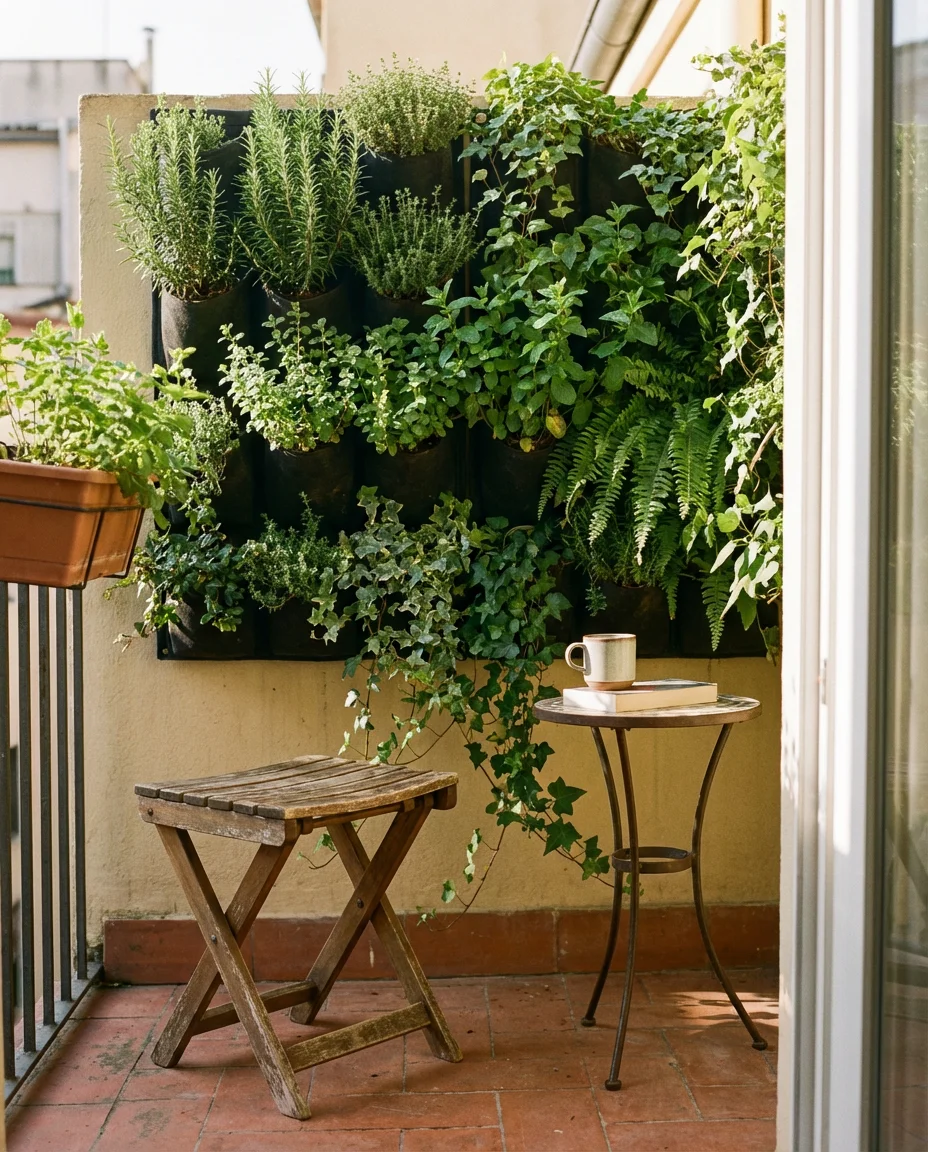
When your outdoor space is measured in square feet rather than yards, vertical gardening is the design strategy that changes everything. A wall-mounted pocket planter system—filled with herbs, trailing pothos, or small succulents—turns a bare apartment wall into a living texture backdrop that feels lush and intentional. Pair it with a foldable stool and a tiny bistro-style side table, and even a 30-square-foot balcony becomes a spot worth spending time in. The tiny patio challenge isn’t a limitation—it’s an editing exercise.
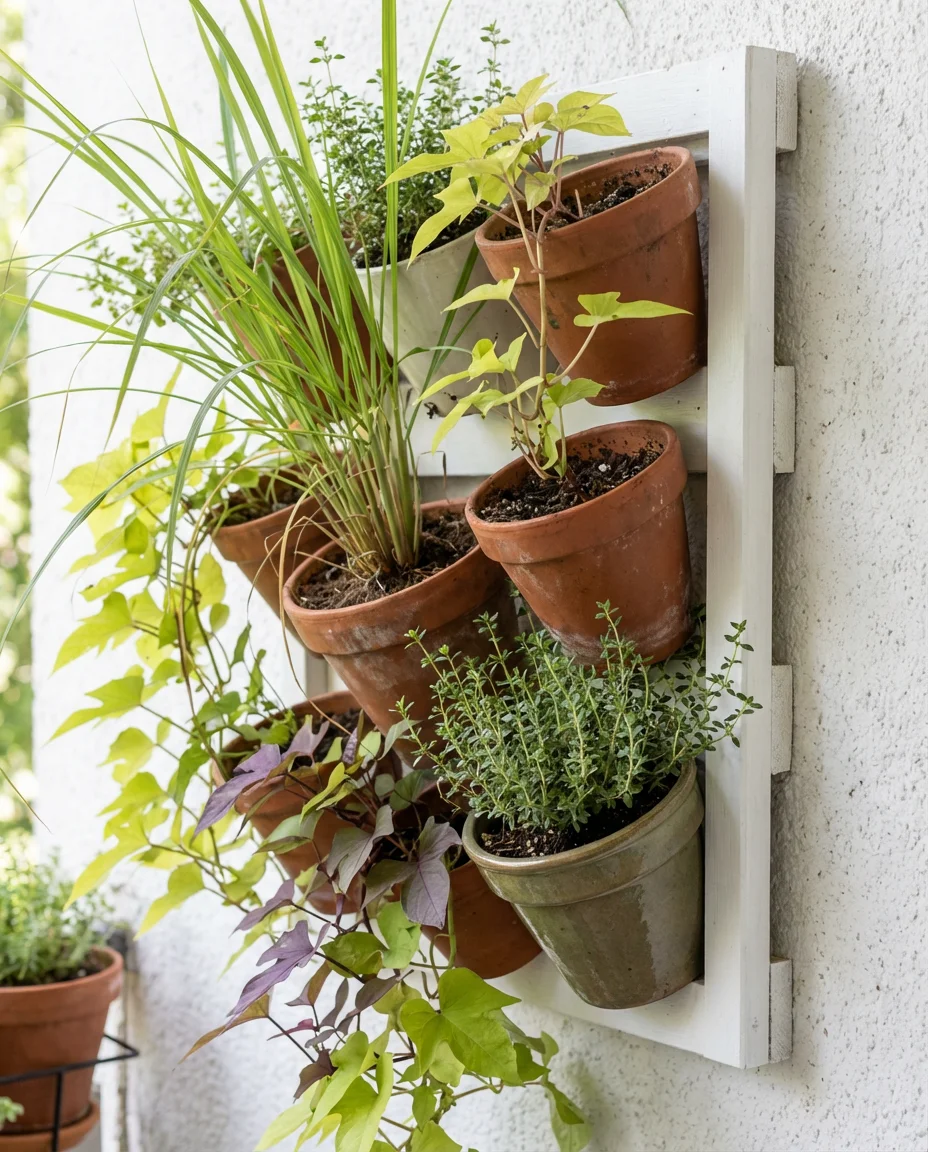
Vertical gardens work best when they’re planted with intention rather than filled randomly. Choose plants with different leaf textures and heights—something trailing like sweet potato vine, something upright like lemongrass, and something compact like thyme or mint. Not only does this create visual rhythm, but it also gives you a functional herb garden steps from your kitchen. In small-space gardening circles, this two-for-one approach—beauty plus utility—is often called the “tiny garden payoff,” and it’s exactly the kind of smart design that makes small patios feel complete.
11. Decorating a Patio With Outdoor Rugs and Textiles
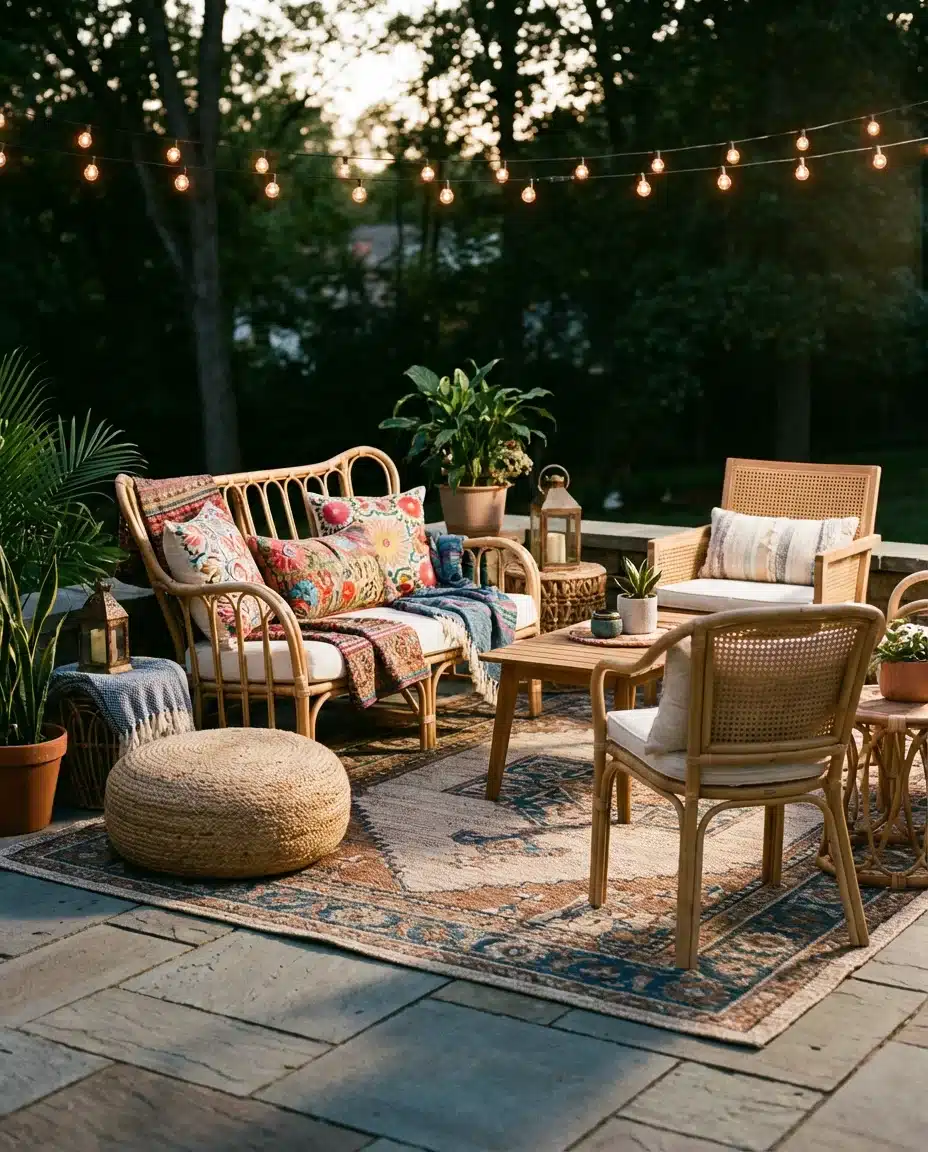
Decorating a patio is, at its core, about making hard surfaces feel livable—and nothing does that faster than layering in textiles. An outdoor rug defines the seating zone and anchors furniture the way a room’s foundation anchors a house. Layer in throw pillows in weather-resistant Sunbrella-style fabrics, a lightweight outdoor throw draped over the back of a chair, and a poufy floor cushion for extra seating. This approach works for every patio size and style, from cozy bohemian setups to crisp, minimal modern spaces.
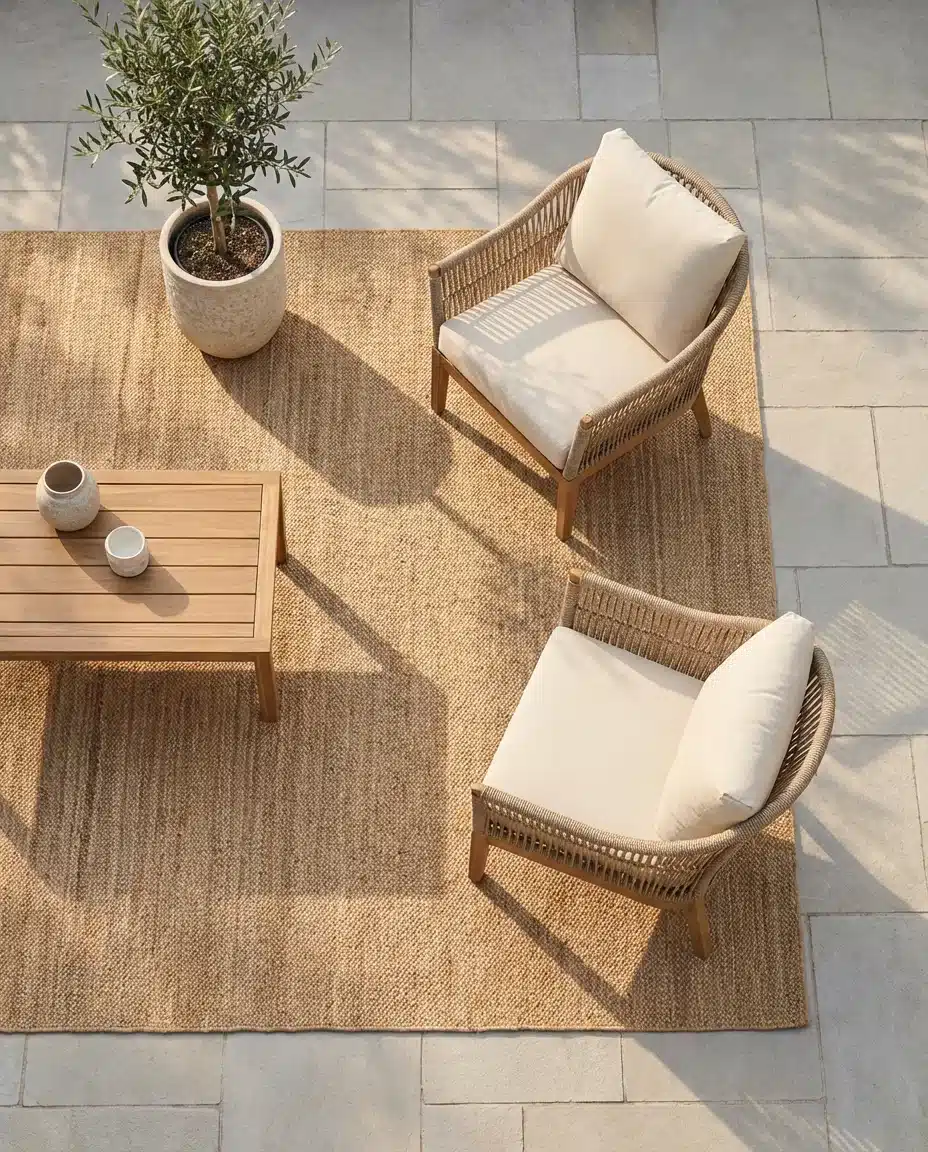
The most common decorating mistake on patios? Choosing a rug that’s too small. A rug that only fits under a coffee table—leaving chairs floating off the edge—makes the space feel disconnected and piecemeal. For a standard four-seat patio seating group, an 8×10 rug is the minimum that looks intentional. Go for polypropylene construction, which resists moisture, mildew, and UV fading—it’s the difference between a rug that looks great in its third season and one you’re replacing every spring.
12. Pool Patio With Lounging Zone
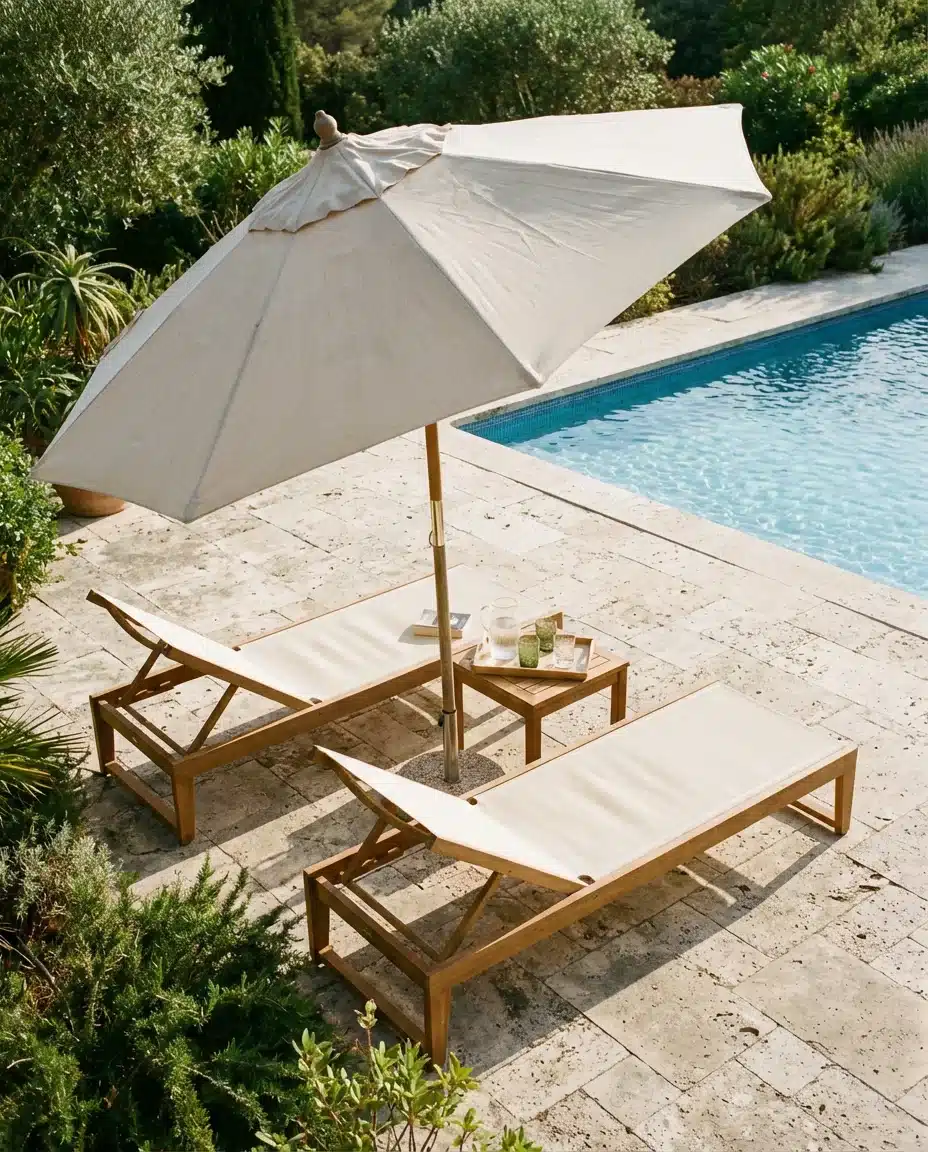
A pool patio done right is one of the great American outdoor achievements—a space that blurs the line between vacation resort and home. The lounging zone is the piece that most homeowners underinvest in: a pair of weatherproof chaise lounges, a low side table between them, and an umbrella that actually provides shade at a real angle (most don’t). Travertine or cool-to-the-touch porcelain pavers are the smart surface choice here because they don’t absorb heat the way dark concrete does—a detail that’s immediately obvious on a July afternoon in bare feet.
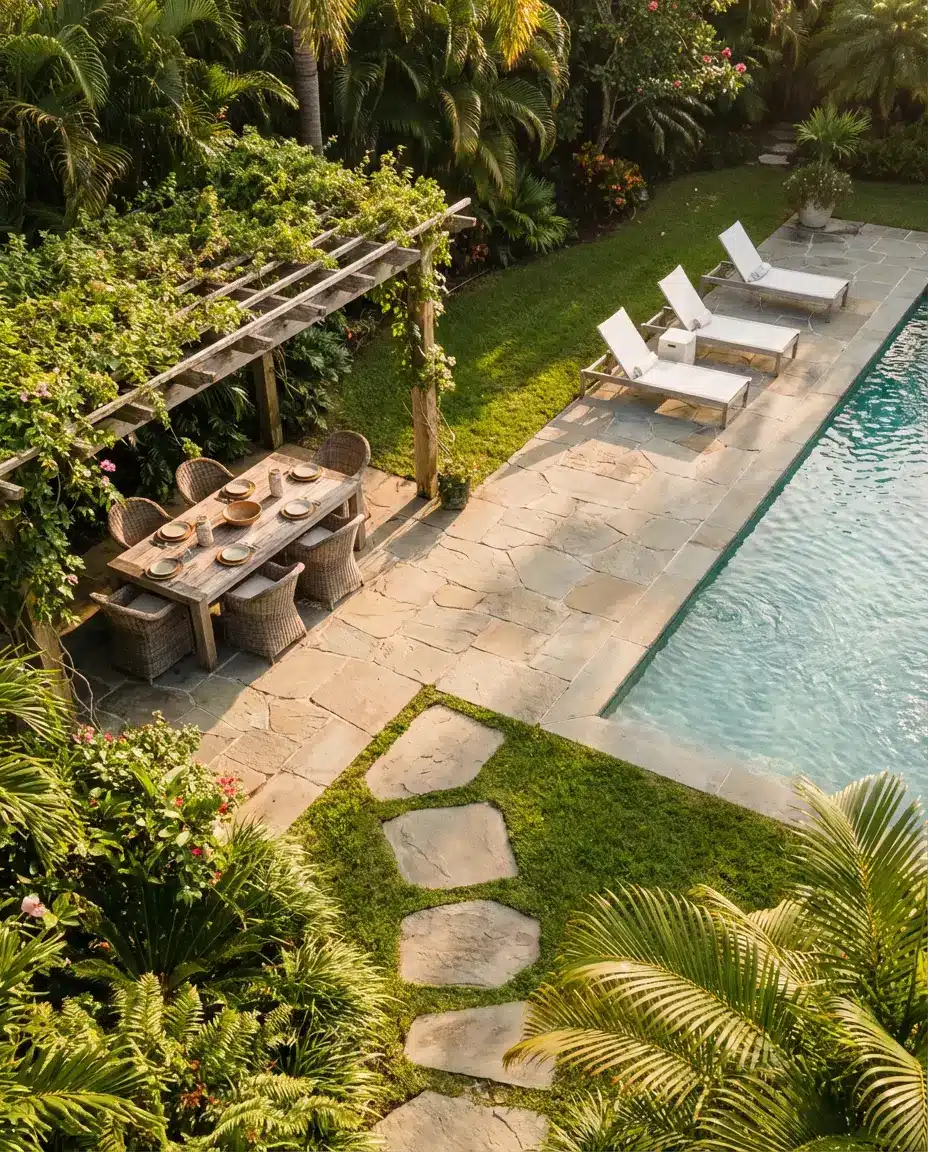
For families with pools in warm-weather states—Florida, California, Texas, and Nevada—the pool patio is genuinely the most-used room in the house from May through September. Zoning the space helps tremendously: a defined lounging area, a separate dining zone, and a narrow path of stepping stones leading to the pool edge keep the layout from feeling like furniture randomly placed around water. Add a single outdoor shower or rinse station near the pool gate, and you’ve solved the “wet floors in the house” problem that every pool-owning family knows too well.
13. Renter-Friendly Patio Makeover With No Permanent Changes
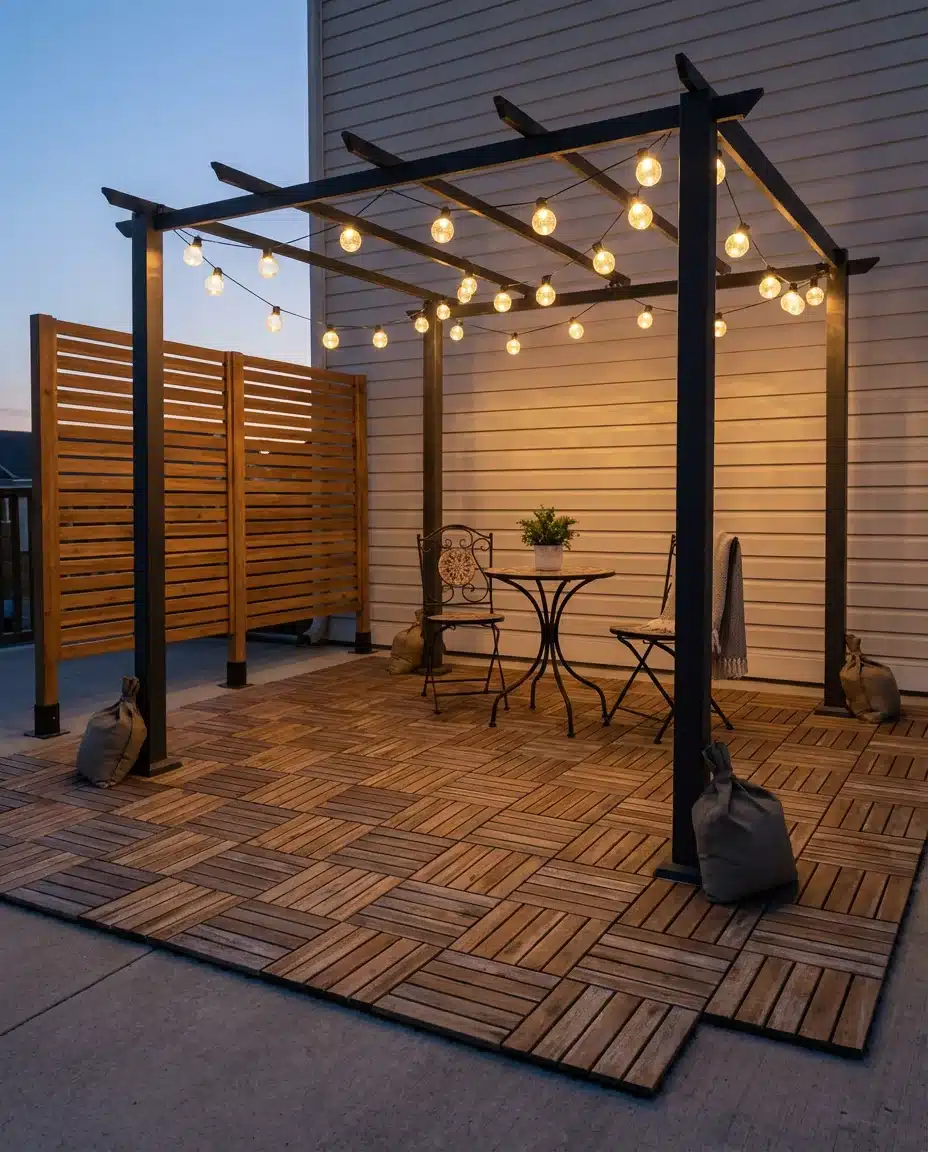
The renter-friendly outdoor makeover is its own design challenge—and an exciting one. Everything must be portable, temporary, and landlord-approved, yet the result should feel anything but provisional. Free-standing pergola kits that bolt to weighted bases, interlocking deck tiles laid directly over concrete, and privacy panels on rolling bases are the workhorse solutions of renter-friendly patios in 2026. None of these require drilling, cement, or permits, and all can be disassembled and moved when your lease ends. This approach suits apartment dwellers who refuse to sacrifice outdoor beauty just because they don’t own their space.
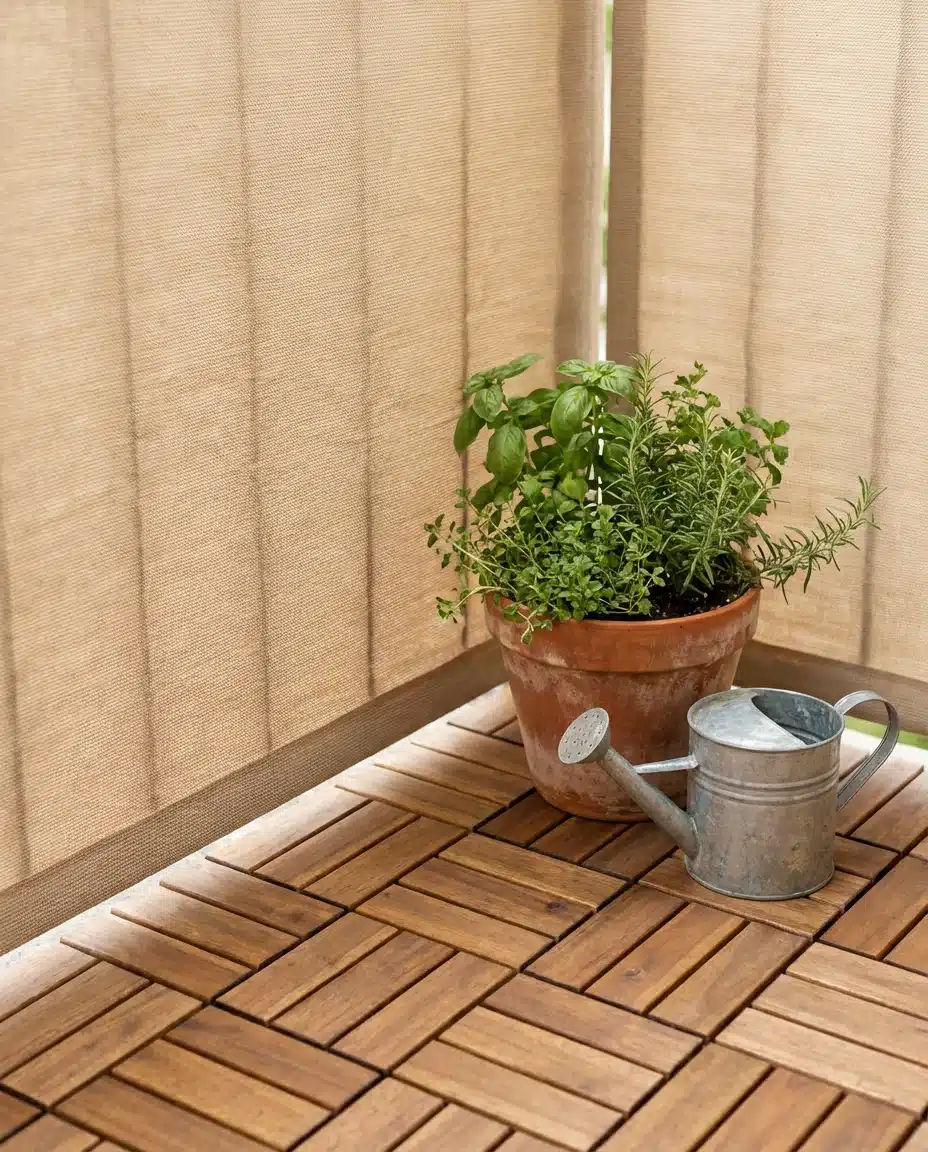
Real homeowner insight here: one renter in Brooklyn transformed her 7×9 concrete slab patio into a fully furnished outdoor room for under $400 using only portable elements—interlocking wood tiles from Costco, a small bistro set, a freestanding privacy screen, and solar-powered globe lights on a wire. She documented the process on her blog, and the post went viral because the before-and-after was so dramatic. The lesson: budget doesn’t determine outcome; intention does. A thoughtful $400 renter makeover will always look better than a careless $2,000 renovation.
14. Large Patio With Defined Zones
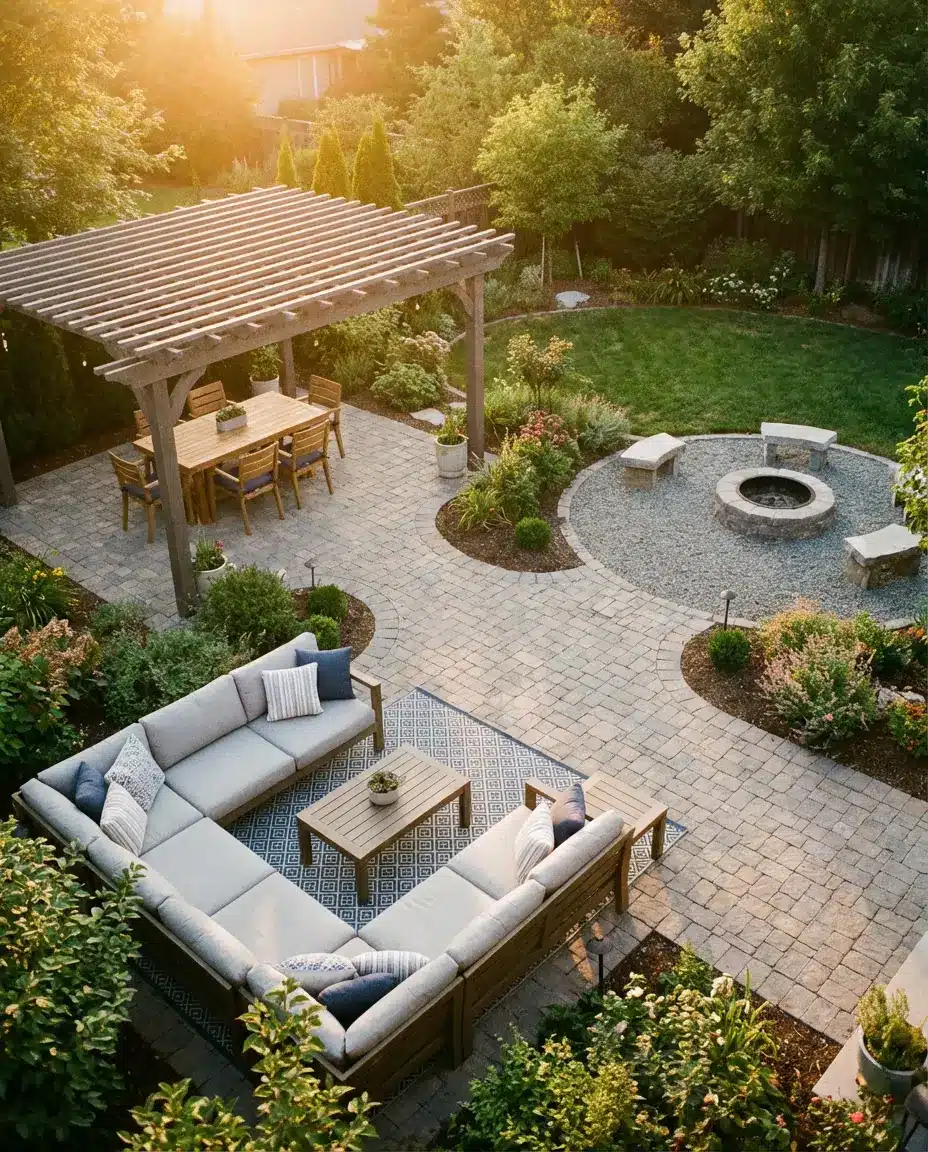
Having a large patio is a gift—but it comes with a design challenge most people don’t anticipate. Without intentional zoning, a big outdoor space can feel directionless and overwhelming, like a parking lot with furniture in it. The solution is treating the patio like a floor plan: a dining zone anchored by a table and pergola, a lounging zone with a sectional and coffee table, and a third zone—maybe a fire pit circle or an outdoor kitchen station—each clearly defined by rugs, pavers, or planting borders. This multi-zone approach is how luxury hotel patios maintain their sense of scale without feeling empty.
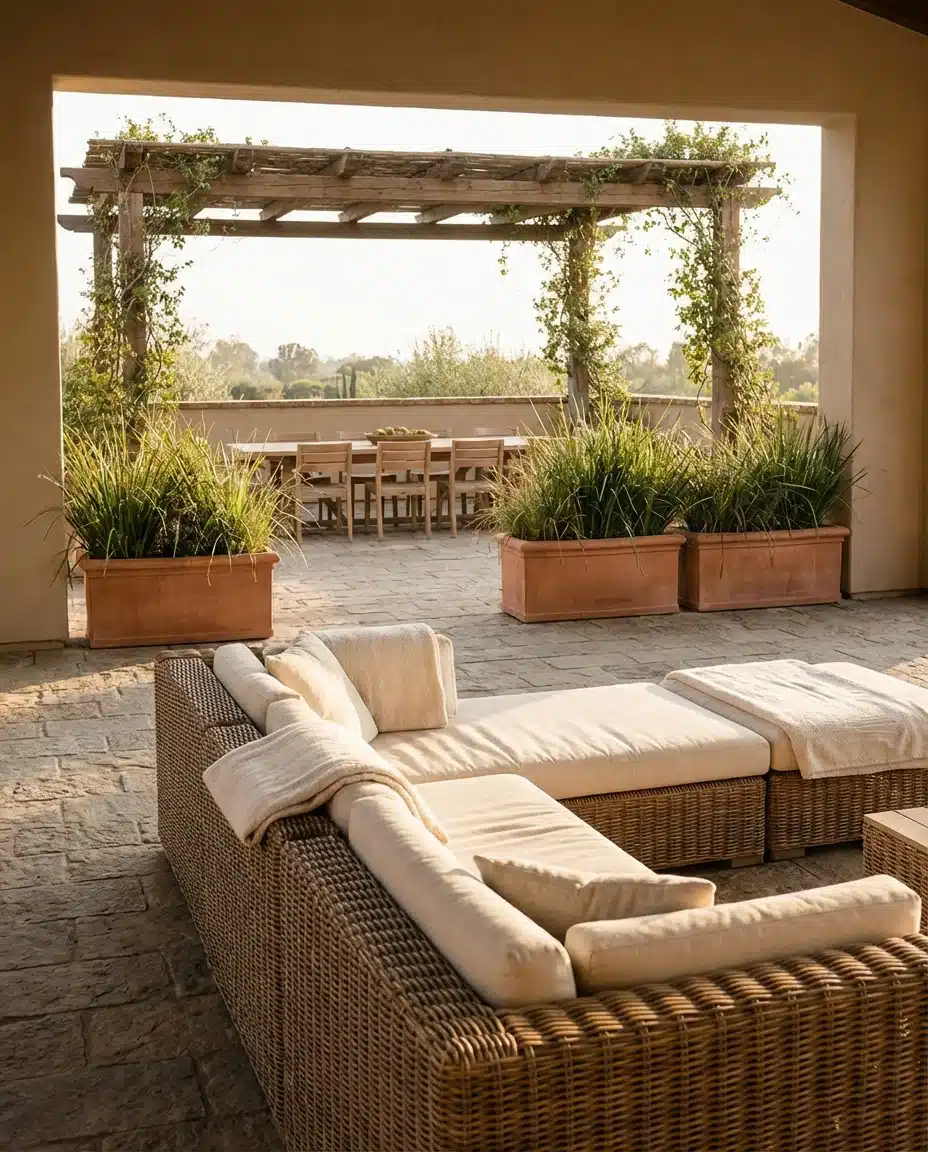
Landscape designers often recommend establishing a clear sightline axis first—the imaginary line from your back door to the primary focal point (a fireplace, a view, or a specimen tree). Once that axis is established, zones can be organized symmetrically or asymmetrically on either side. In neighborhoods where large lots are common—suburban Atlanta, outer Houston, the Midwest corridor—this kind of organized outdoor planning has become standard practice, and resale agents confirm it adds measurable value. A well-designed large patio, photographed at golden hour, is now one of the most compelling features in a real estate listing.
15. Cozy Covered Patio With Outdoor Curtains
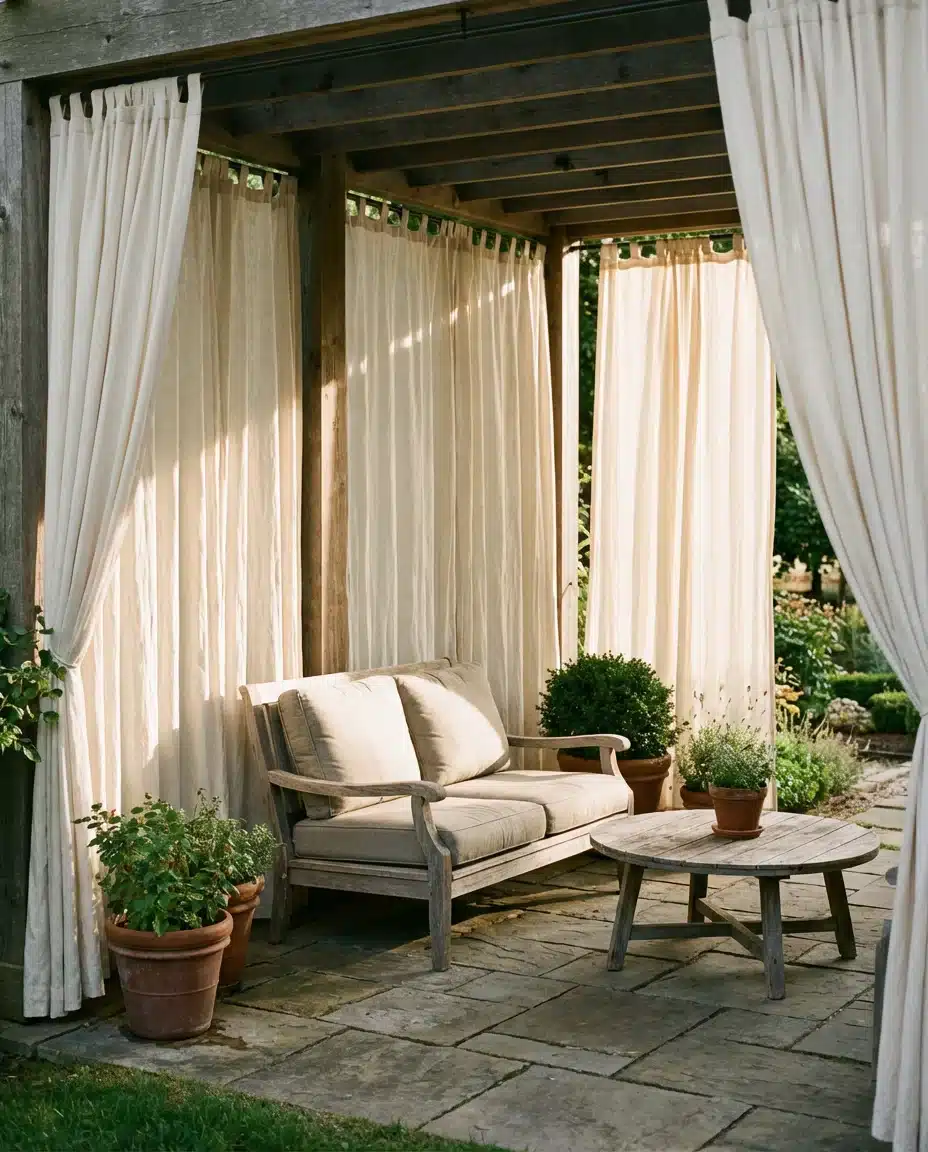
Few things make a covered patio feel as intimate and finished as outdoor curtains. Floor-length panels in weather-resistant linen or canvas, hung on tension rods between pergola posts, create instant walls of soft privacy without the permanence of a fence. The cozy effect is immediate: billowing fabric filters harsh sunlight, creates a sense of enclosure, and moves gently in the breeze in a way that’s almost cinematic. In off-white or warm cream, the curtains reflect light beautifully; in charcoal or navy, they create a moodier, more dramatic atmosphere at night.
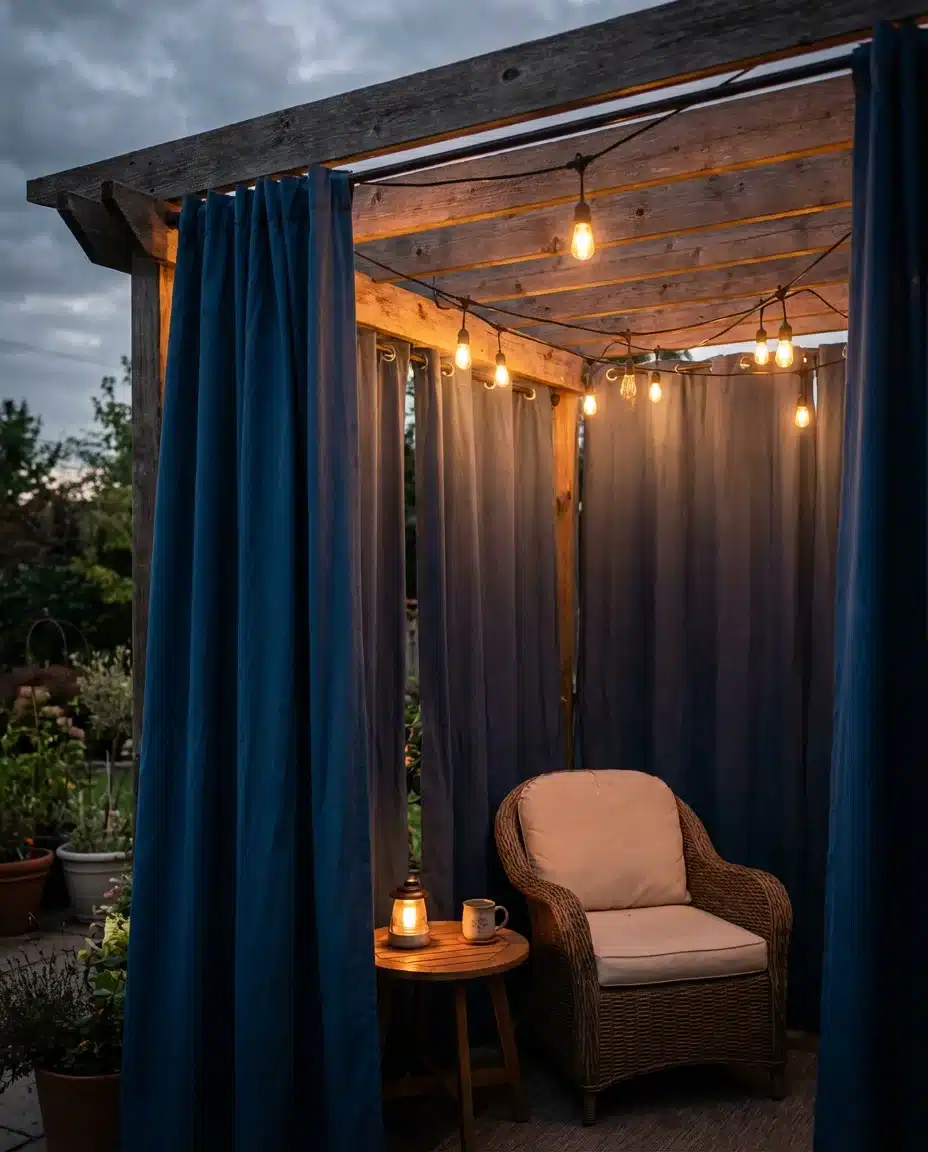
Where this idea works best: pergola-covered patios with at least two open sides, where the curtains serve both a decorative and functional purpose. Homes with covered patios that face west—dealing with brutal late-afternoon sun—find outdoor curtains to be genuinely practical, not just aesthetic. On closed-curtain days when the western glare peaks, the patio stays 10 to 15 degrees cooler, making it usable well into summer evenings. Choose grommeted panels rather than tab-top for smooth sliding operation, and always opt for curtains rated for outdoor UV exposure to prevent fading within a season.
16. Spanish-Style Patio With Arched Pergola
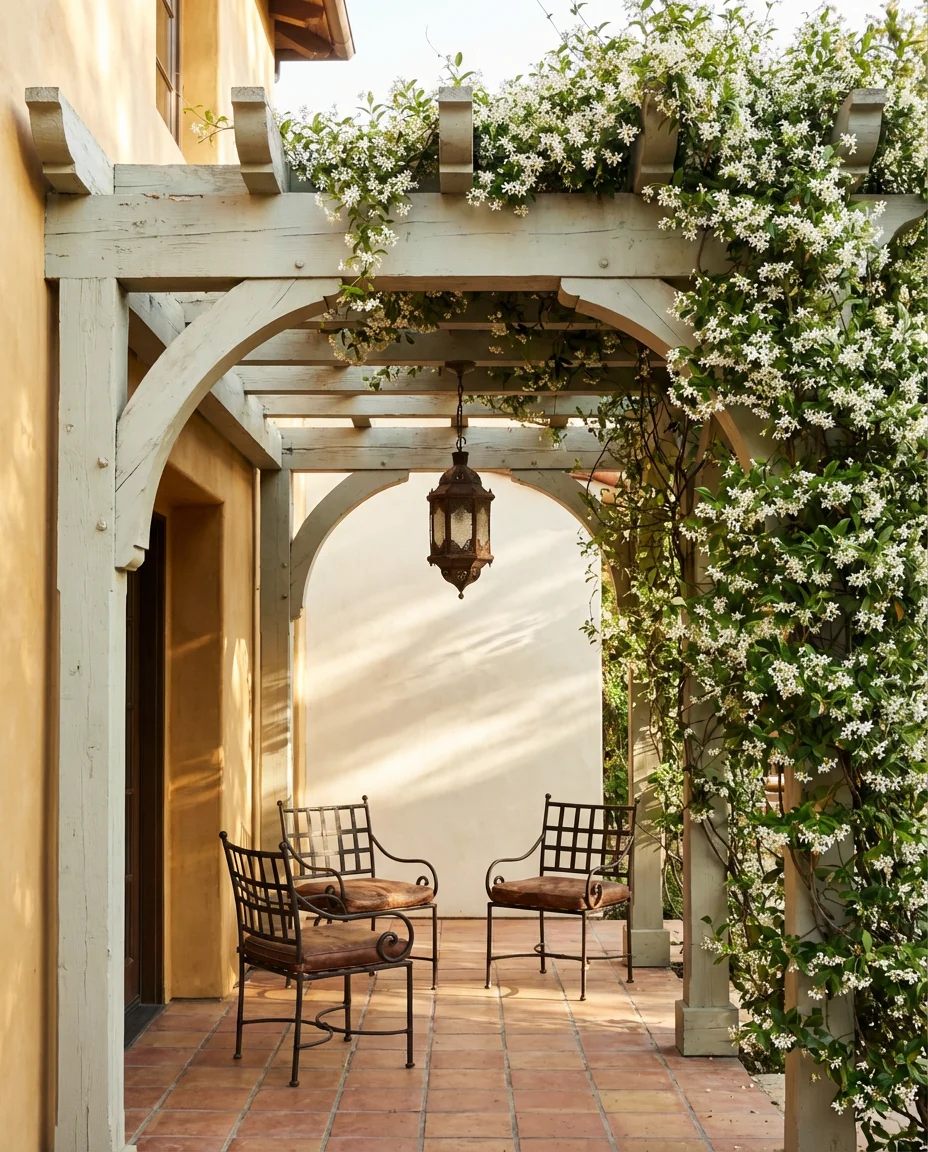
The Spanish-style patio draws from California Mission architecture, Old World haciendas, and the warm, sensory-rich outdoor living culture of Andalusia. An arched pergola in painted wood or iron, draped with climbing vines and fitted with a hanging lantern, is the centerpiece that makes the whole aesthetic cohere. Below it, a Saltillo tile or handmade terracotta floor, a central fountain or potted citrus tree, and wrought-iron furniture with leather or woven rush seating complete the scene. This is a Mediterranean-adjacent look with a distinctly American Southwest personality.

This style is especially fitting for homes in California, New Mexico, Texas, and Florida, where Spanish Colonial architecture is already part of the regional vocabulary. But it’s gained serious traction in unexpected places—homes in the Pacific Northwest and even New England have been embracing the warmth of Saltillo tile and painted plaster as an antidote to cool, gray climates. The arched pergola doesn’t require a custom fabricator; prefabricated versions are available through garden suppliers and can be assembled in a weekend, making this look more accessible than it appears.
17. Outdoor Patio Ideas for Small Spaces With Smart Furniture
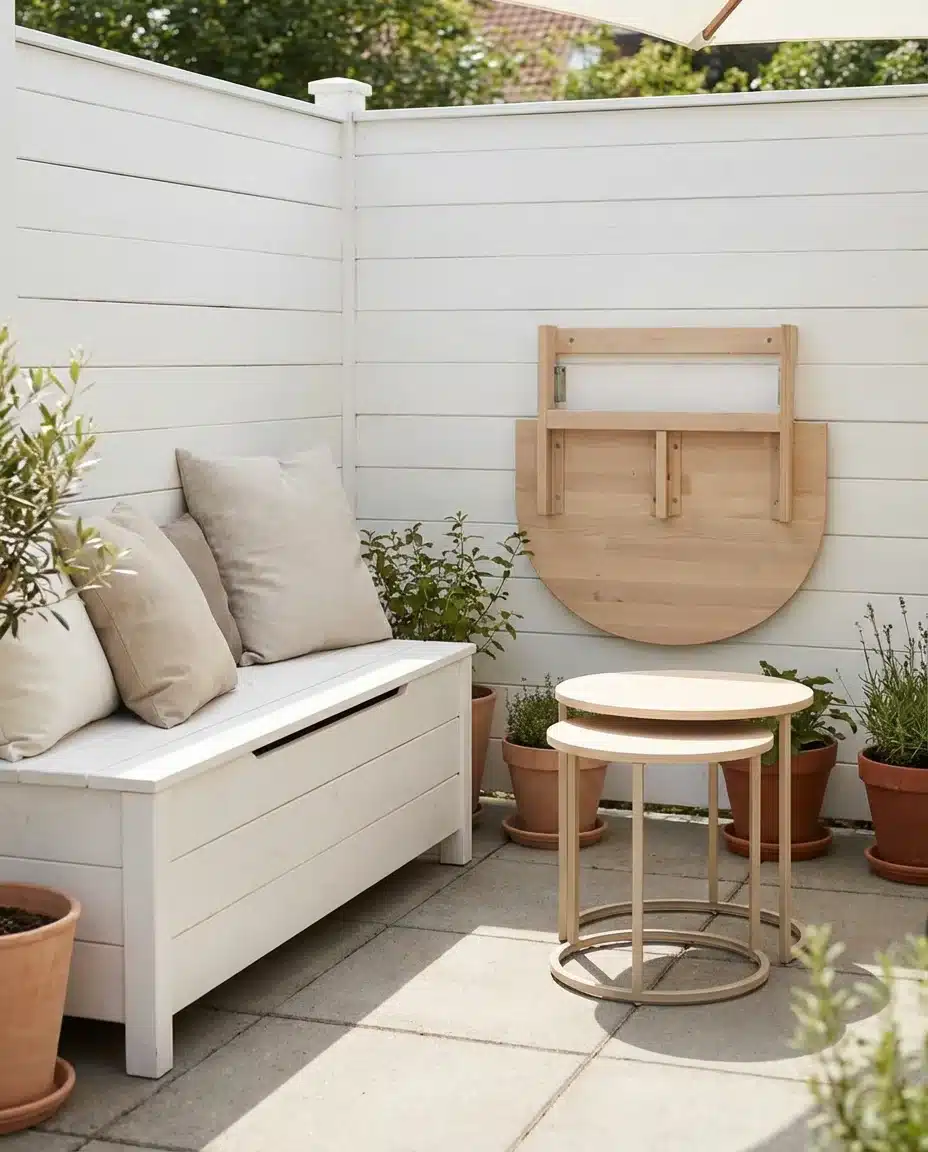
Outdoor patio ideas for small spaces live and die by furniture selection. In a space under 100 square feet, every piece must earn its keep—ideally by doing at least two jobs. A storage bench that doubles as extra seating, a nesting table set that tucks away when not in use, and a wall-mounted drop-leaf table that folds flat against a fence are the triple plays of small-space outdoor furniture. This isn’t about compromise—it’s about designing for the space you have rather than the space you wish you had. Simple, multi-functional furniture always looks cleaner and more intentional than a patio stuffed with full-size pieces.
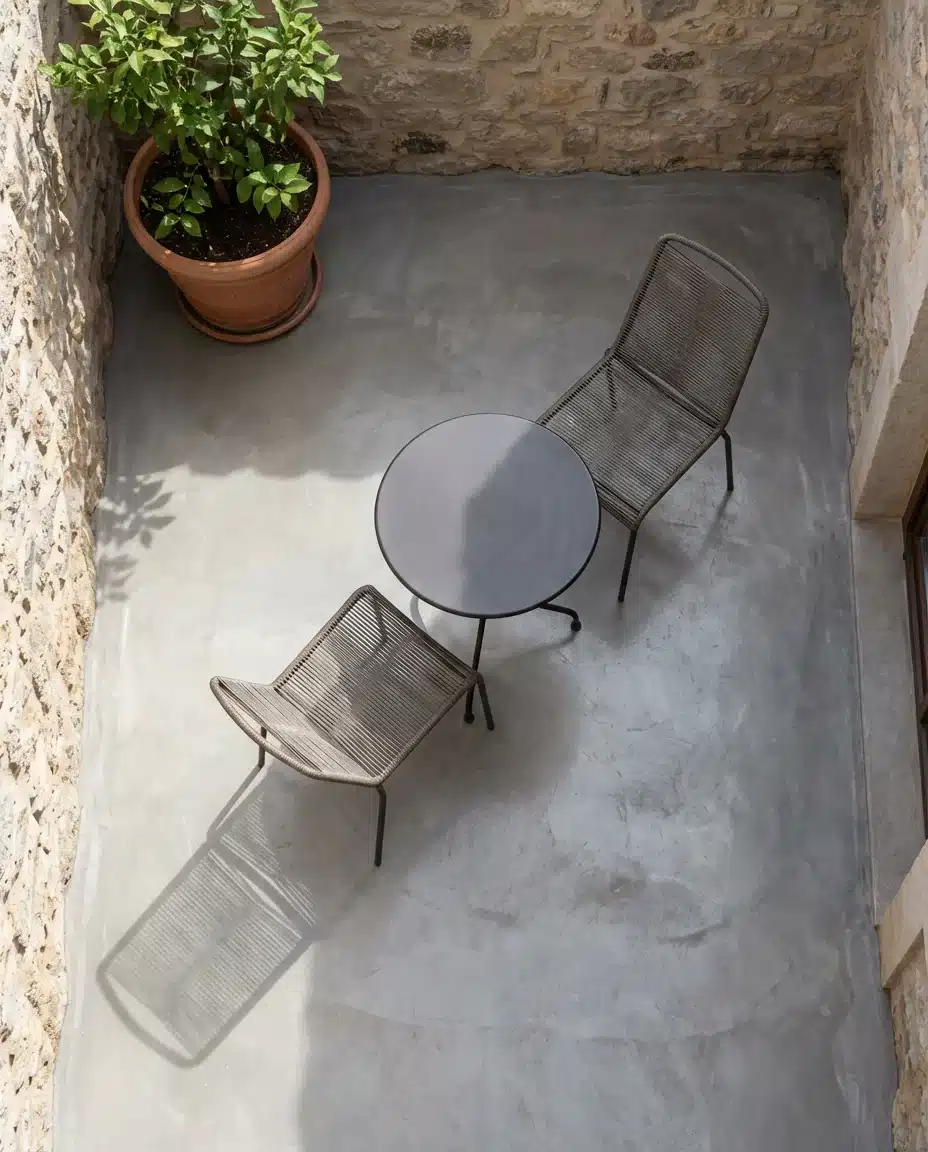
Smart furniture for small outdoor spaces should always be proportionally correct. A full-size dining set on a small patio looks like furniture borrowed from a larger home—because it was. Instead, look for cafe-scale tables (24 inches in diameter) and armless chairs with open frames that let the eye travel through rather than stopping at each piece. Brands like IKEA, Crate & Barrel Outdoor, and even Wayfair’s outdoor lines have dramatically improved their small-scale options in recent years, with pieces designed specifically for balconies and compact patios at prices most renters can manage.
18. A Budget Patio Makeover Under $500
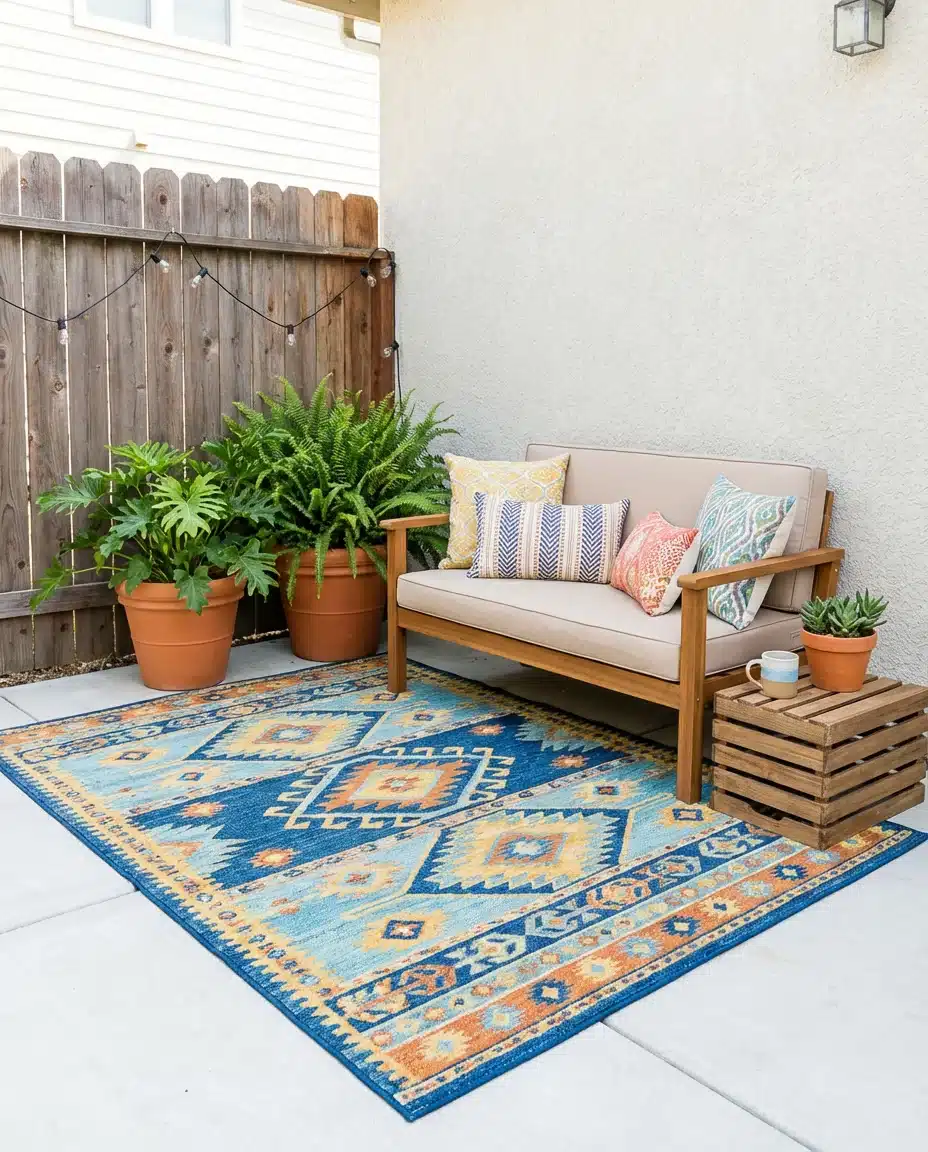
A budget patio transformation is one of the most satisfying home projects you can take on—partly because expectations are low and results are often spectacular. The framework: start with a clean slate (pressure wash the existing surface), define the space with a large outdoor rug, add one focal-point furniture piece—a loveseat or a small dining set—and finish with lighting and plants. All of this is achievable for under $500 if you shop smart. Cheap doesn’t have to mean plastic and flimsy; it means strategic, value-driven shopping across a few key categories.
Here’s a realistic breakdown that actually works: $120 for a 6×9 outdoor rug from Amazon or HomeGoods, $150 for a secondhand or off-season loveseat found on Facebook Marketplace, $60 for a string of globe lights, $50 for two terracotta pots and soil, and $30 for a packet of fast-growing seeds (morning glory, nasturtium, and sweet alyssum). That’s $410 — under budget with room for throw pillows. Americans spend an average of $3,200 on patio renovations, according to home improvement surveys, but the ROI on a $500 A DIY refresh is often indistinguishable from one that costs three times that amount.
19. Bloxburg-Inspired Patio Layout for Real Homes
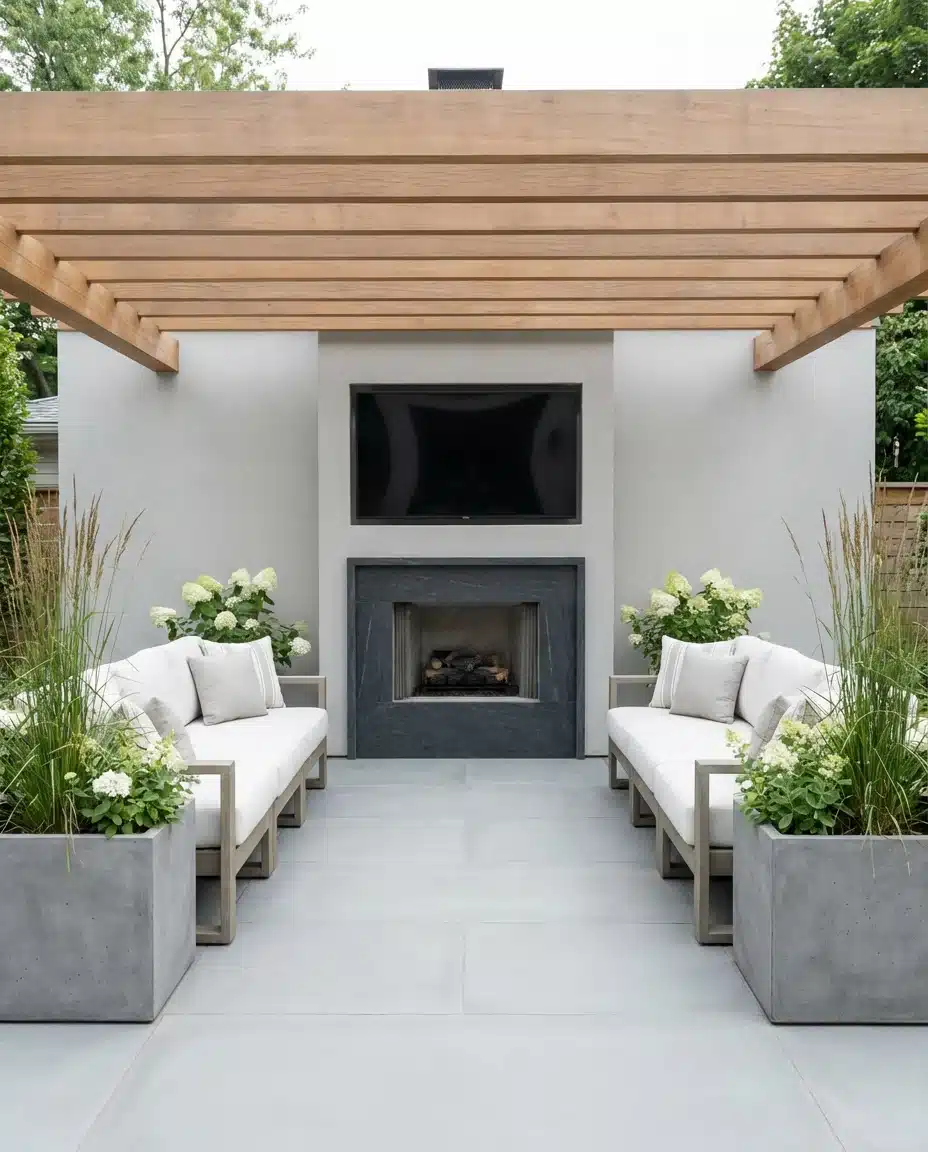
Bloxburg patio inspiration—drawn from the popular Roblox game—has created a fascinating design pipeline where younger American homeowners translate their digital dream spaces into real outdoor rooms. The aesthetic is clean and aspirational: symmetrical layouts, matching furniture sets, and a central outdoor sofa facing a fireplace or TV wall, with perfectly placed planters on either side. In real life, this translates beautifully to a simple, structured patio layout with a strong axis, balanced furniture placement, and a clear focal point. It’s interior design logic applied to outdoor space.
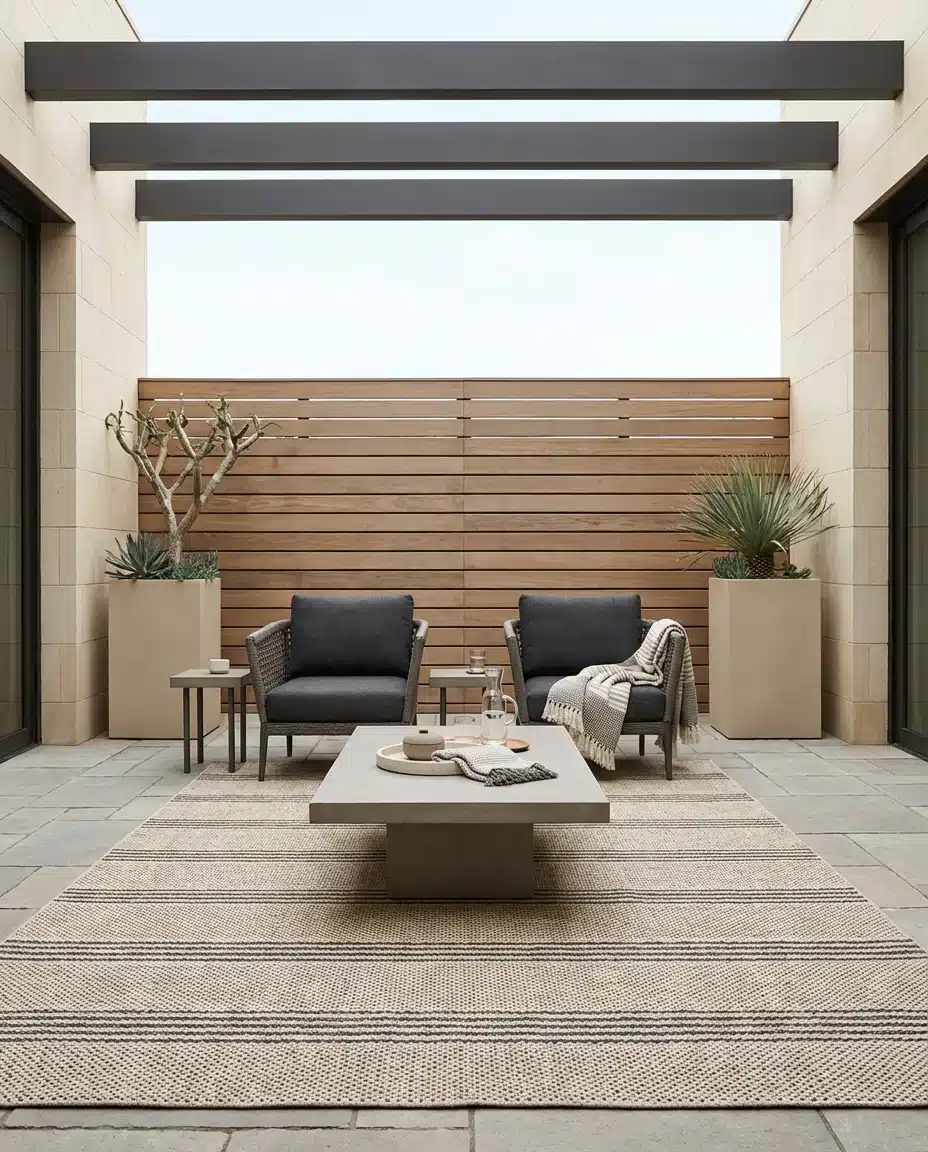
What’s interesting about the Bloxburg-to-real-life pipeline is how it’s introduced a new generation of homeowners—many in their mid-20s—to the language of intentional spatial design. They arrive at home improvement stores knowing exactly what they want: a symmetrical layout, a specific color palette (often white and gray or beige and black), and matching pieces rather than an eclectic mix. This preference for cohesion over individuality is reshaping the outdoor furniture market, and brands are responding with more curated, complete-look collections specifically targeting this customer.
20. Cozy Rustic Fire Pit Circle With Log Seating
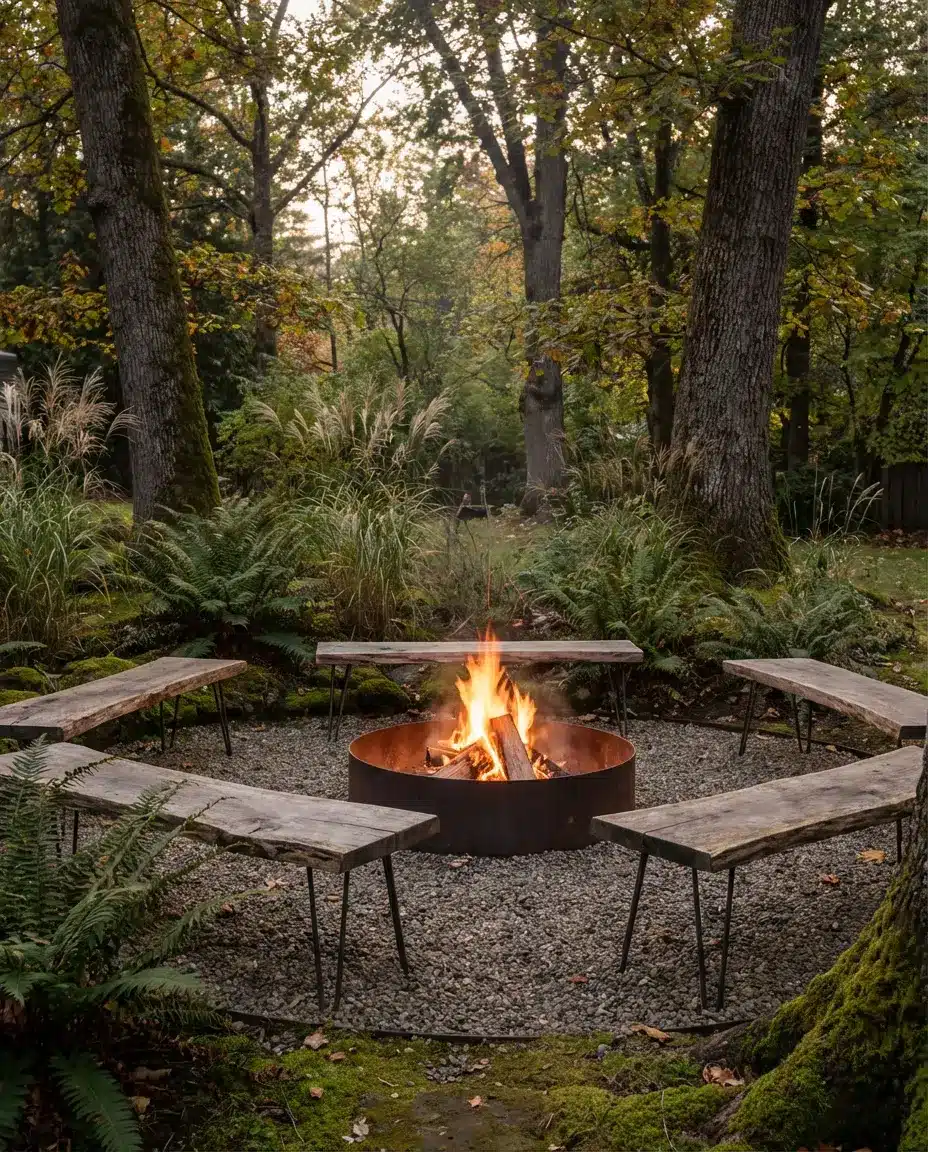
For those who love the rustic aesthetic taken to its most organic extreme, a fire pit circle with log seating and crushed gravel groundcover is as honest and beautiful as outdoor design gets. Thick-cut log slabs on low steel hairpin legs serve as benches; a steel ring fire pit sits centered on a gravel pad; and the perimeter is softened by native grasses, lavender, or wild ferns. This is an ideal setup for backyards with mature trees or a naturalistic landscape—it feels like the yard simply organized itself around the fire. The cozy atmosphere is unmatched at dusk.
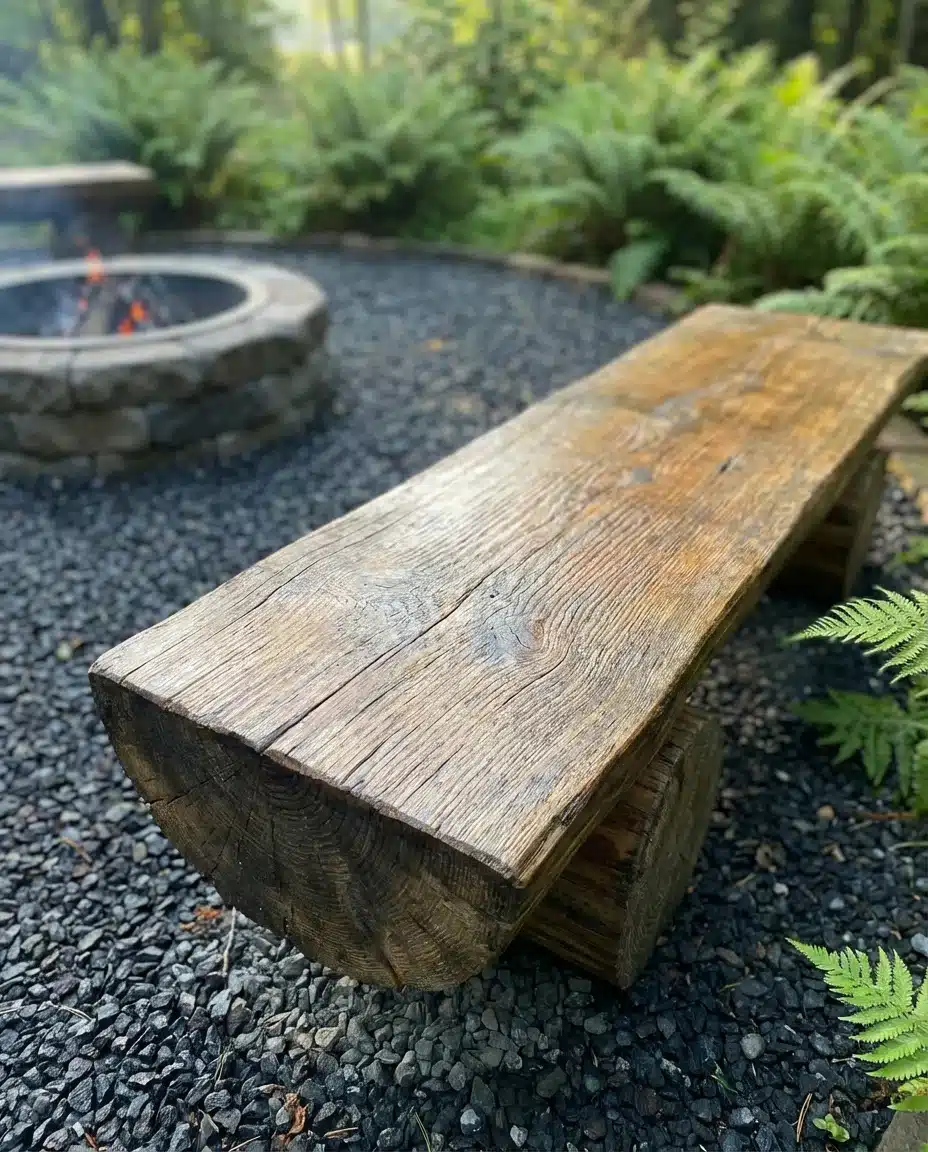
A landscape architect in Vermont described this approach as “the campfire principle applied to domestic space”—the idea that humans are hardwired to gather around fire in a circle, and that working with that instinct rather than against it always produces spaces people actually use. The practical beauty of log seating is its durability: a properly sealed live-edge slab on powder-coated legs will outlast most wicker or aluminum furniture with minimal maintenance. Sand the surface every few years and reapply an outdoor wood oil, and it looks better with age rather than worse.
21. Modern Covered Patio With Pergola and Outdoor Fan
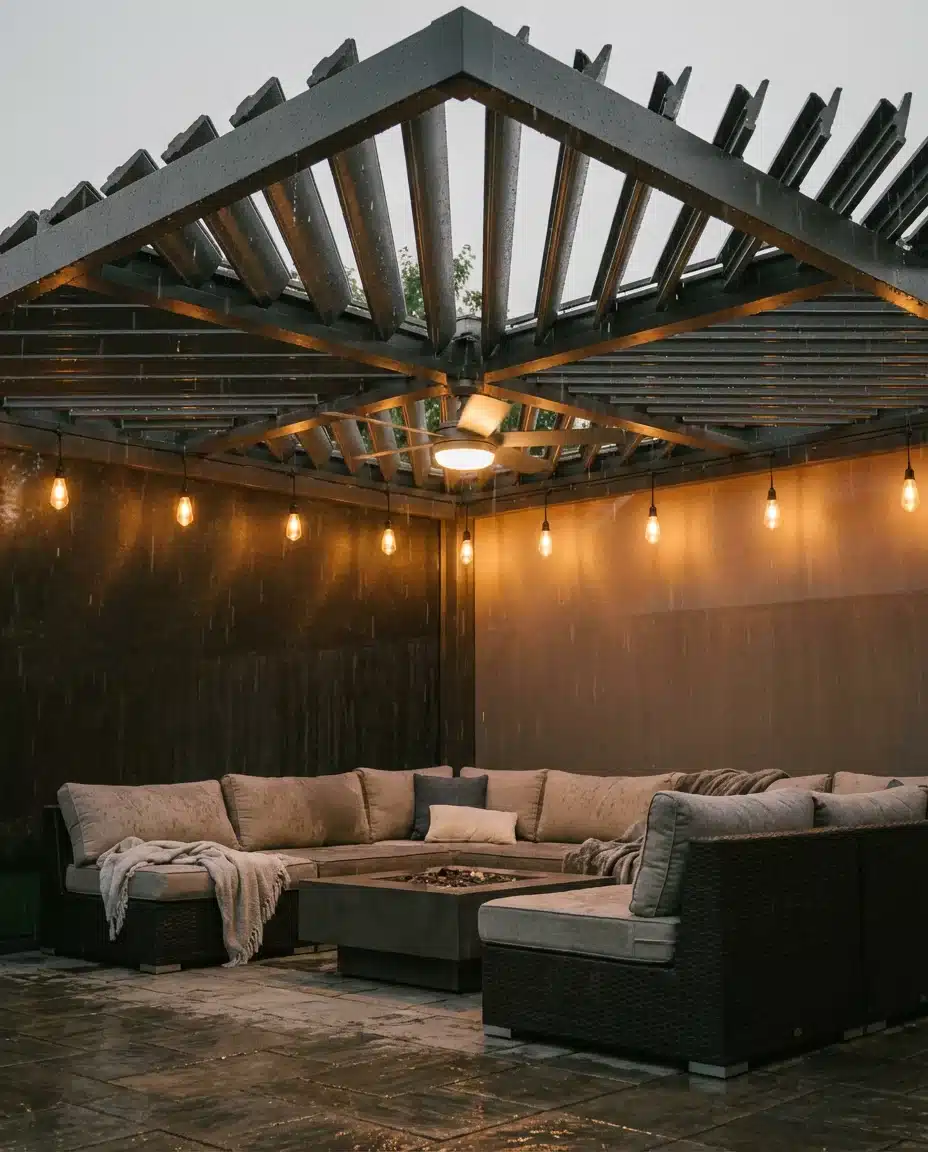
The modern covered patio has evolved well beyond a basic roof overhang. A freestanding aluminum or steel pergola with adjustable louvered panels, fitted with a flush-mount outdoor ceiling fan and Edison-bulb pendant lights, creates a genuinely all-conditions outdoor room. This is the setup for homeowners who want to use their patio on rainy May afternoons and steamy August evenings alike—the louvers control light and rain, the fan manages heat, and the lighting handles the transition from daylight to dusk. It’s a large-patio solution that reads as architecturally confident rather than tentative.
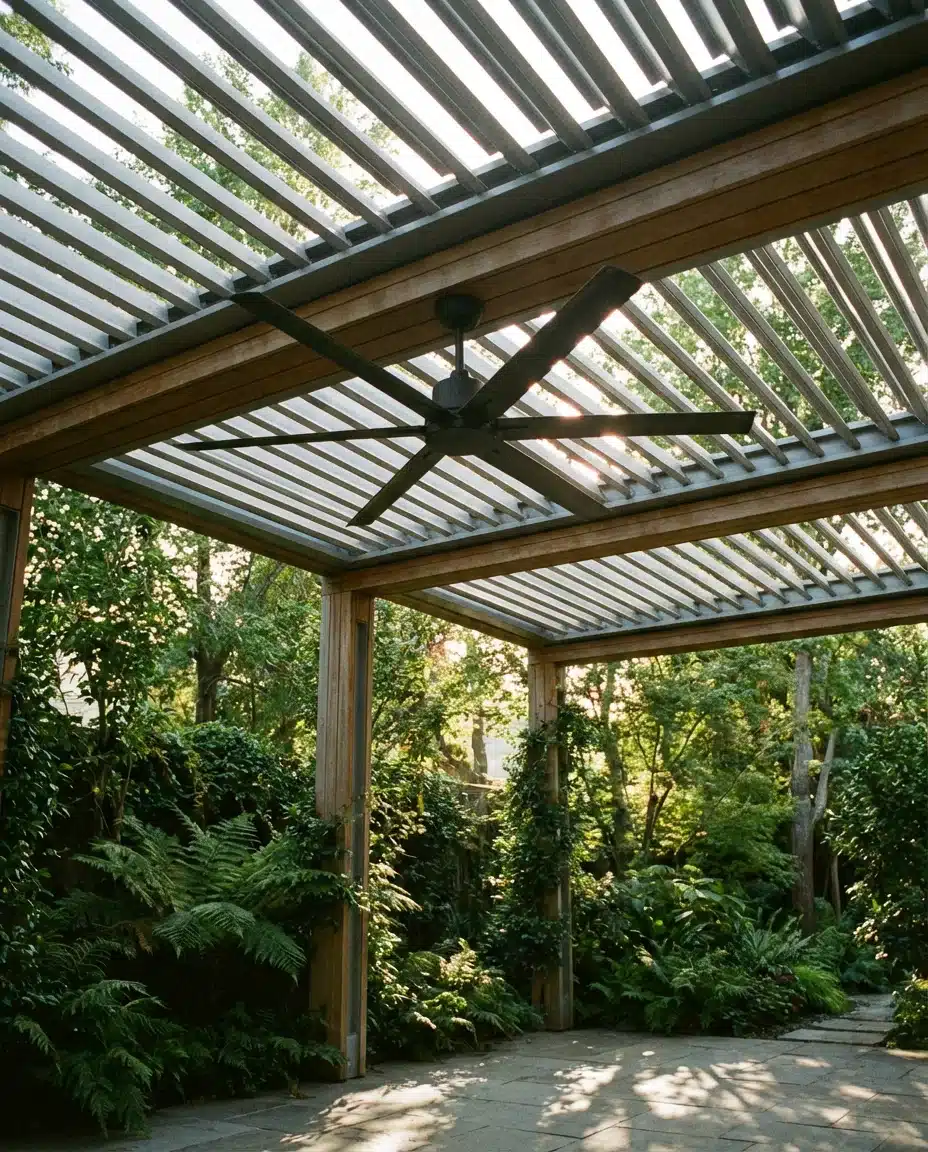
Outdoor ceiling fans are one of the most underutilized patio upgrades—surveys show fewer than 20% of covered patio owners have one installed despite the significant comfort improvement they provide. A quality outdoor-rated fan (look for UL-listed damp or wet location ratings) costs $150 to $400 and can drop the perceived temperature under a covered patio by 8 to 10 degrees through evaporative cooling. In humid climates like the American Southeast, this is the single upgrade that most dramatically extends patio usability through summer—more impactful, per dollar, than almost any other addition.
22. Simple Patio Decorating With Plants and Lanterns
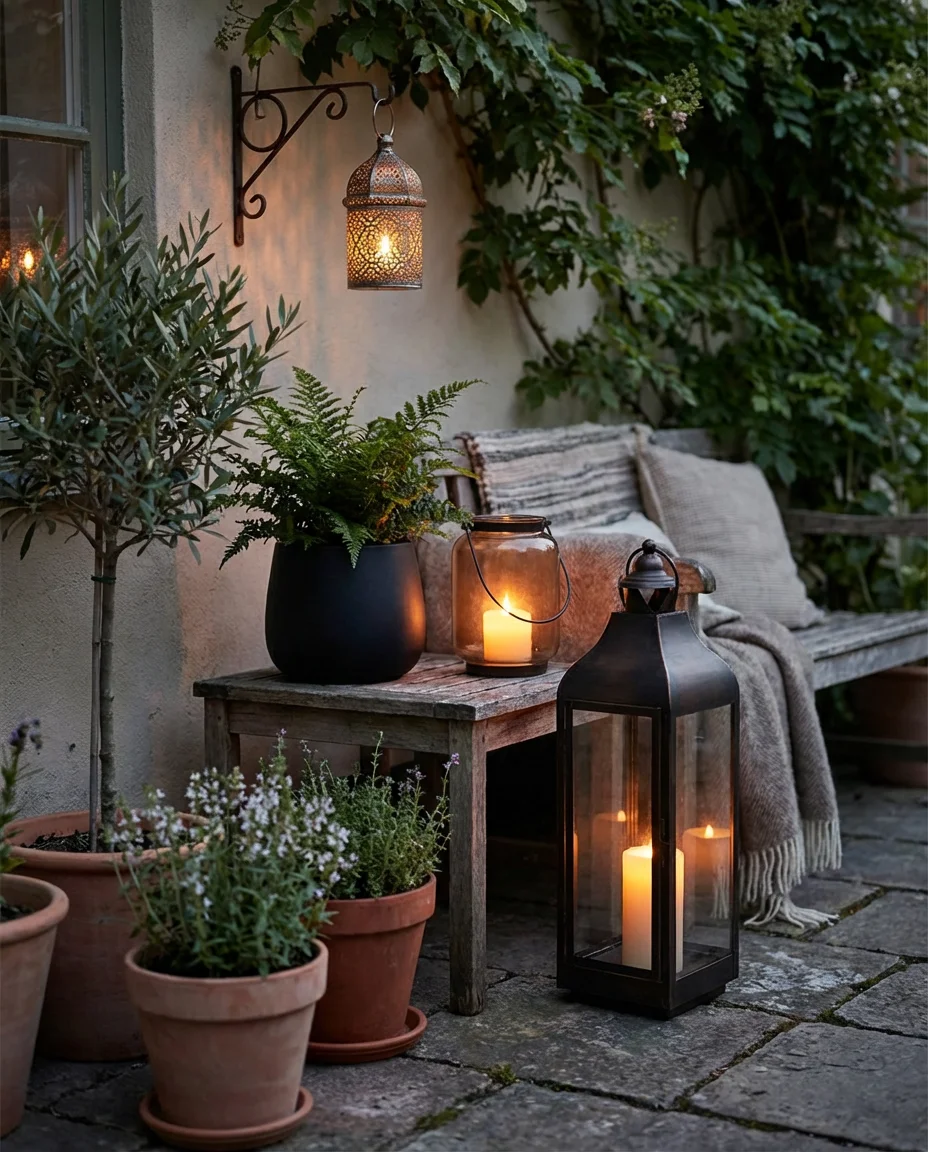
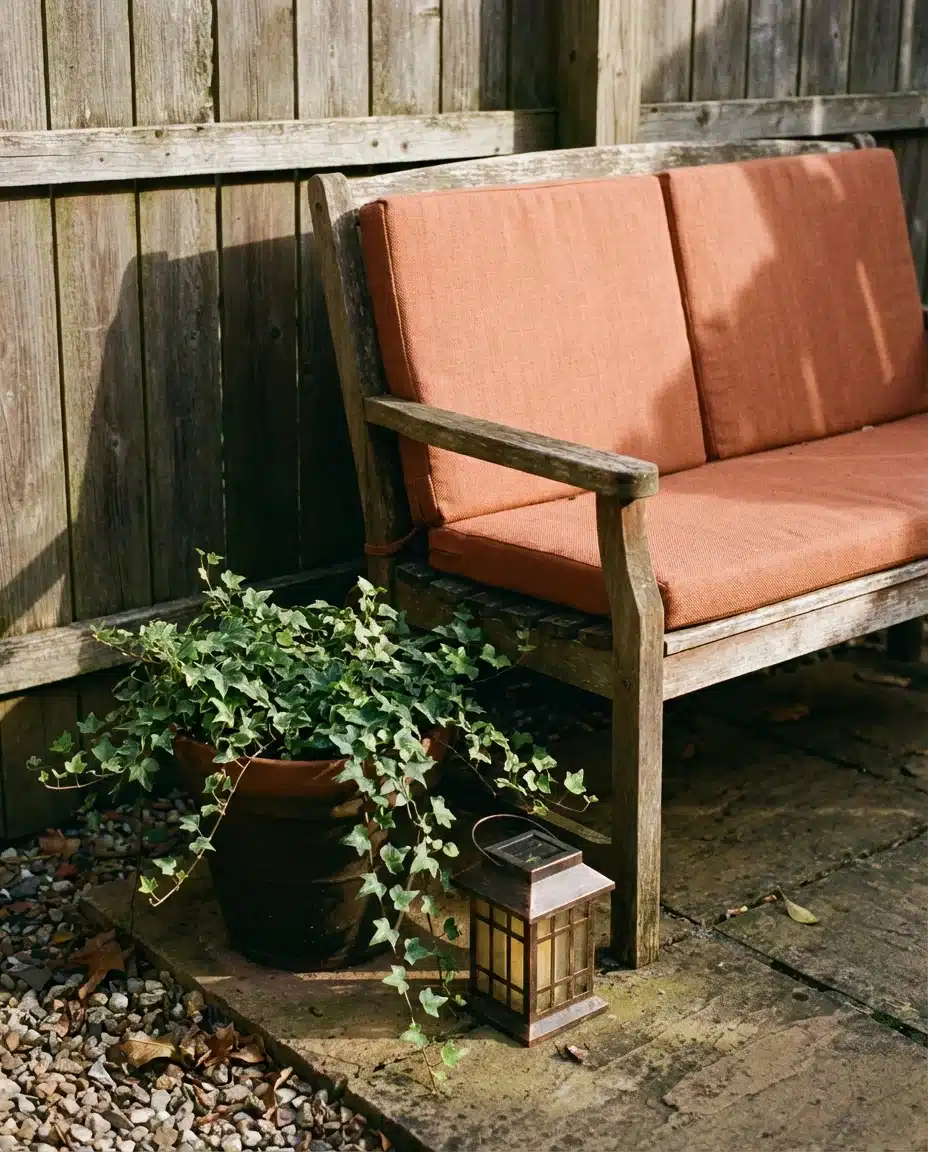
Sometimes the most effective decorating move is the most stripped-back one. A cluster of three lanterns in varying heights—floor lantern, table lantern, and hanging lantern—fills a patio corner with warm amber light and visual texture without requiring a single power outlet. Add a grouping of potted plants in complementary containers (terracotta, black matte ceramic, woven seagrass), and the arrangement does the work of a full furniture setup in a fraction of the footprint. This is the approach that works beautifully on small spaces, renters’ patios, and anyone who wants to start slow and build the space gradually over time.
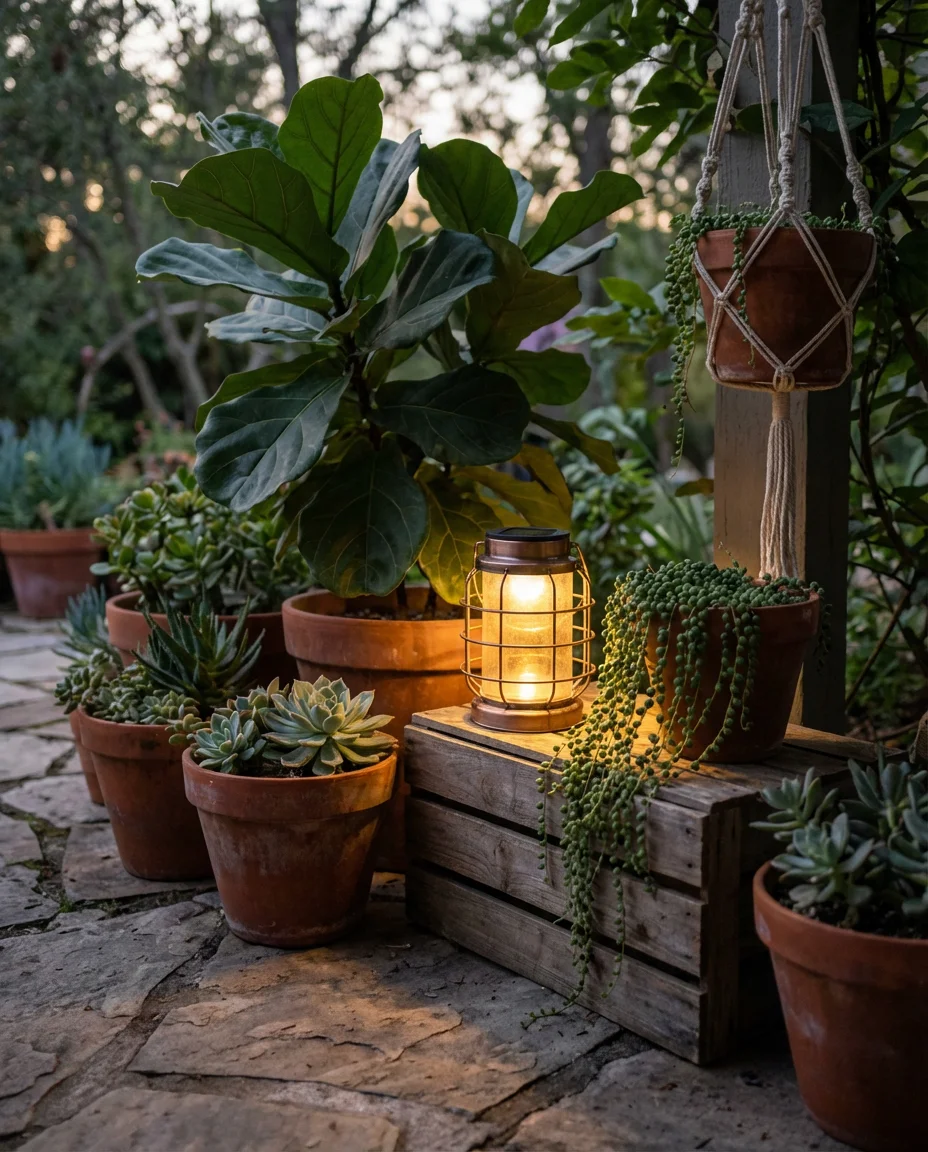
Plant and lantern styling is one of those areas where creative confidence matters more than budget. The best arrangements follow the same rule as floral design: odd numbers, varied heights, and something trailing. Three plants at three different heights—a tall fiddle-leaf fig in a large pot, a medium fern in a mid-size planter, and a trailing string of pearls in a small hanging basket—create a composition that looks designed rather than assembled. Tuck in two or three solar-powered lanterns among the pots, and the setup glows beautifully at night with zero electricity cost. It’s simple, cheap, and genuinely beautiful—the best kind of outdoor design.
Conclusion
These patio ideas are just the starting point—the best outdoor spaces always come from understanding how you personally want to live in them. Whether you’re drawn to the earthy warmth of a rustic fire pit circle or the clean lines of a modern covered pergola, your patio deserves to feel like a real room. Drop your favorite idea in the comments below, share what your current outdoor space looks like, and tell us what you’re planning to tackle this season. We’d love to see what you create.