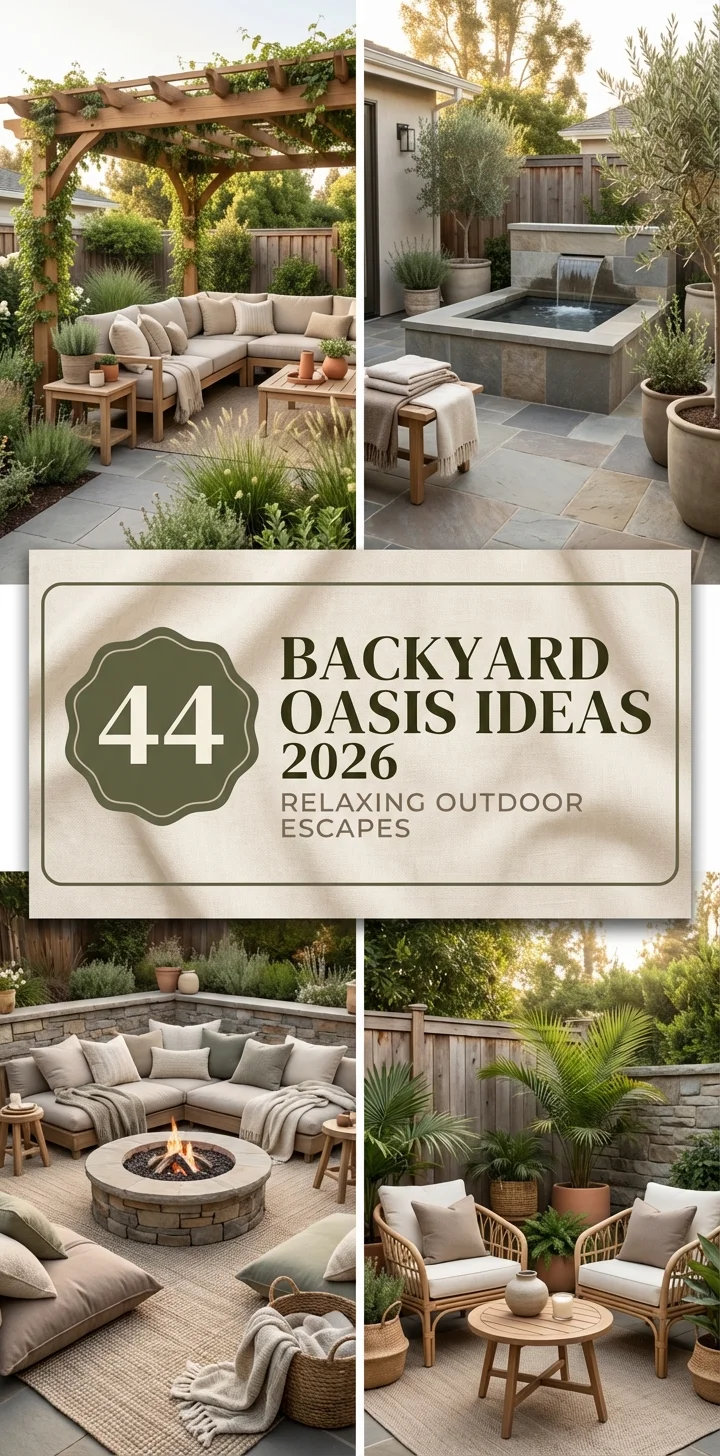
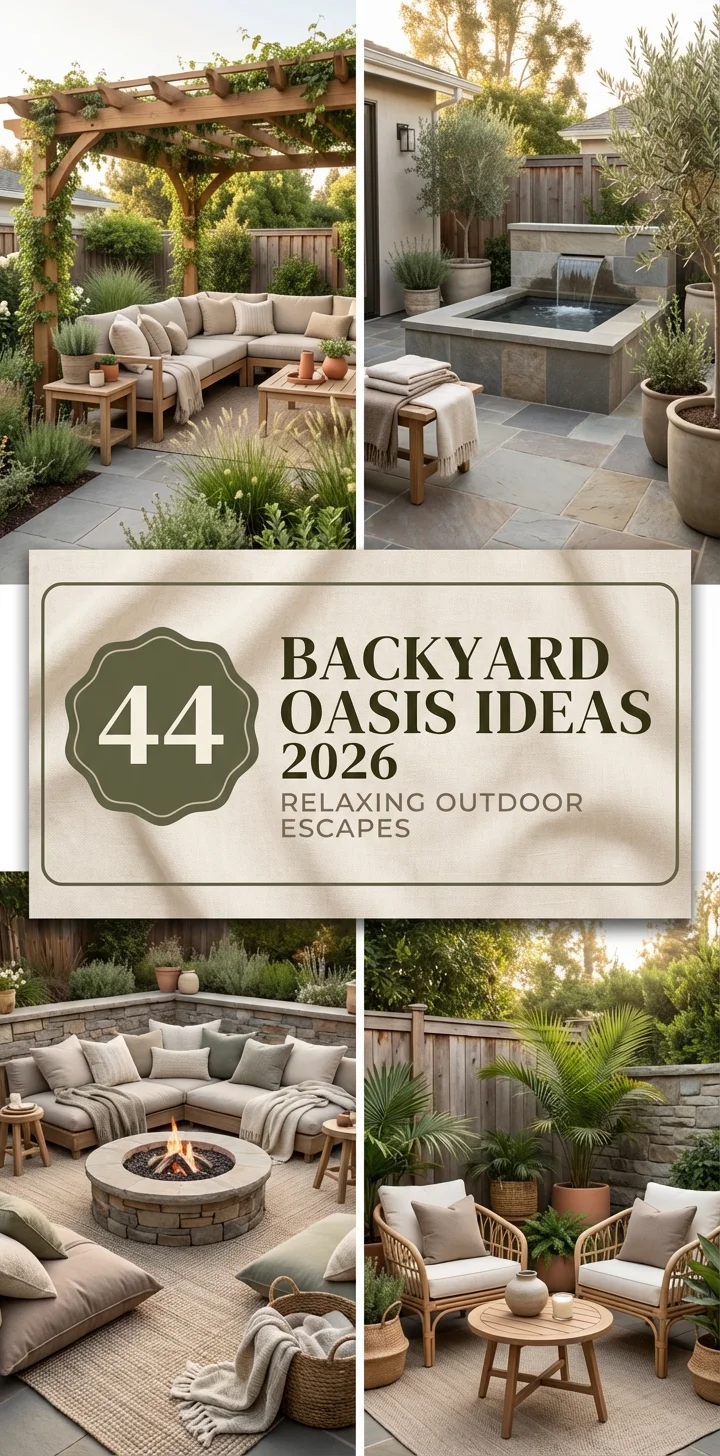
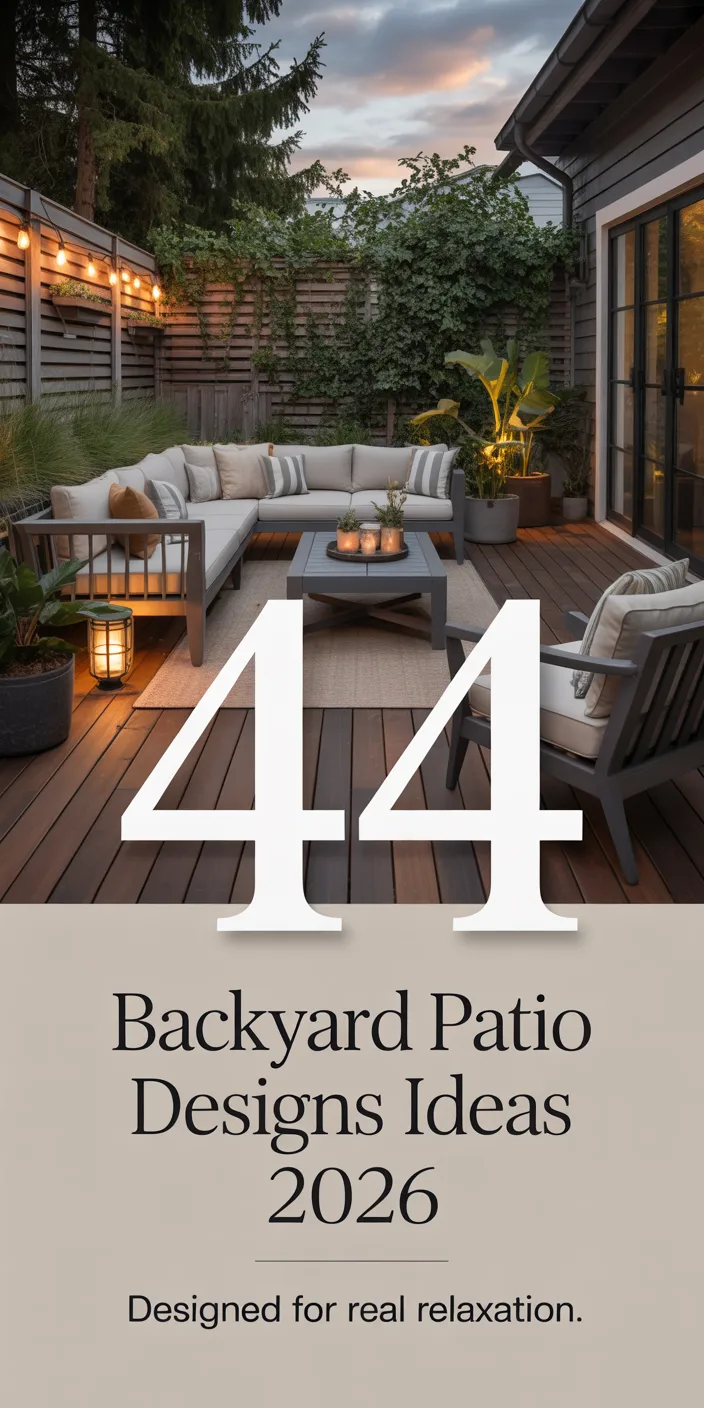
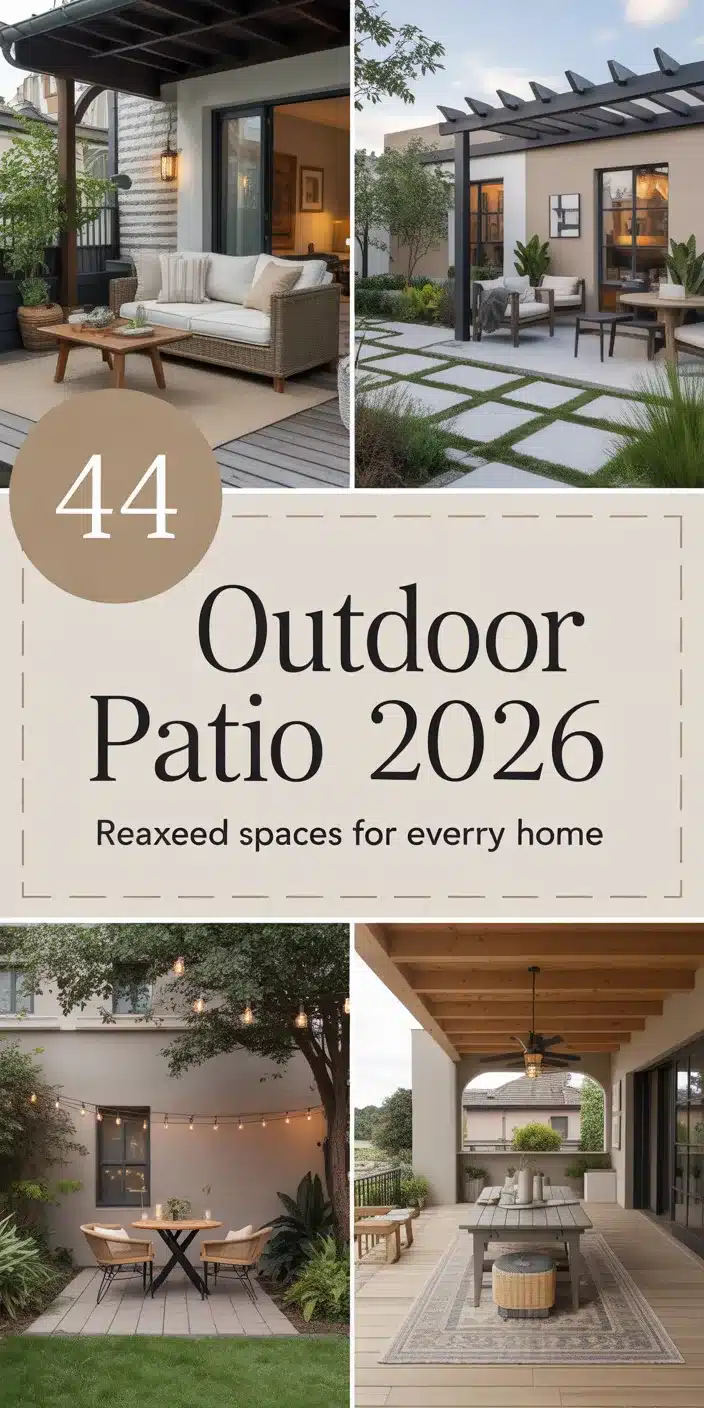
Outdoor dining is having a major moment in 2025, and as we head into 2026, American homeowners are rethinking their patios, porches, and backyards as true extensions of their living space. Pinterest searches for outdoor dining inspiration have surged as families seek stylish, functional ways to entertain and enjoy meals outside year-round. Whether you’re working with a compact city balcony or a sprawling suburban yard, this guide covers fresh ideas that blend design, comfort, and real-world practicality. From rustic charm to modern minimalism, you’ll find inspiration that fits your style and space.
1. Covered Patio Dining with String Lights
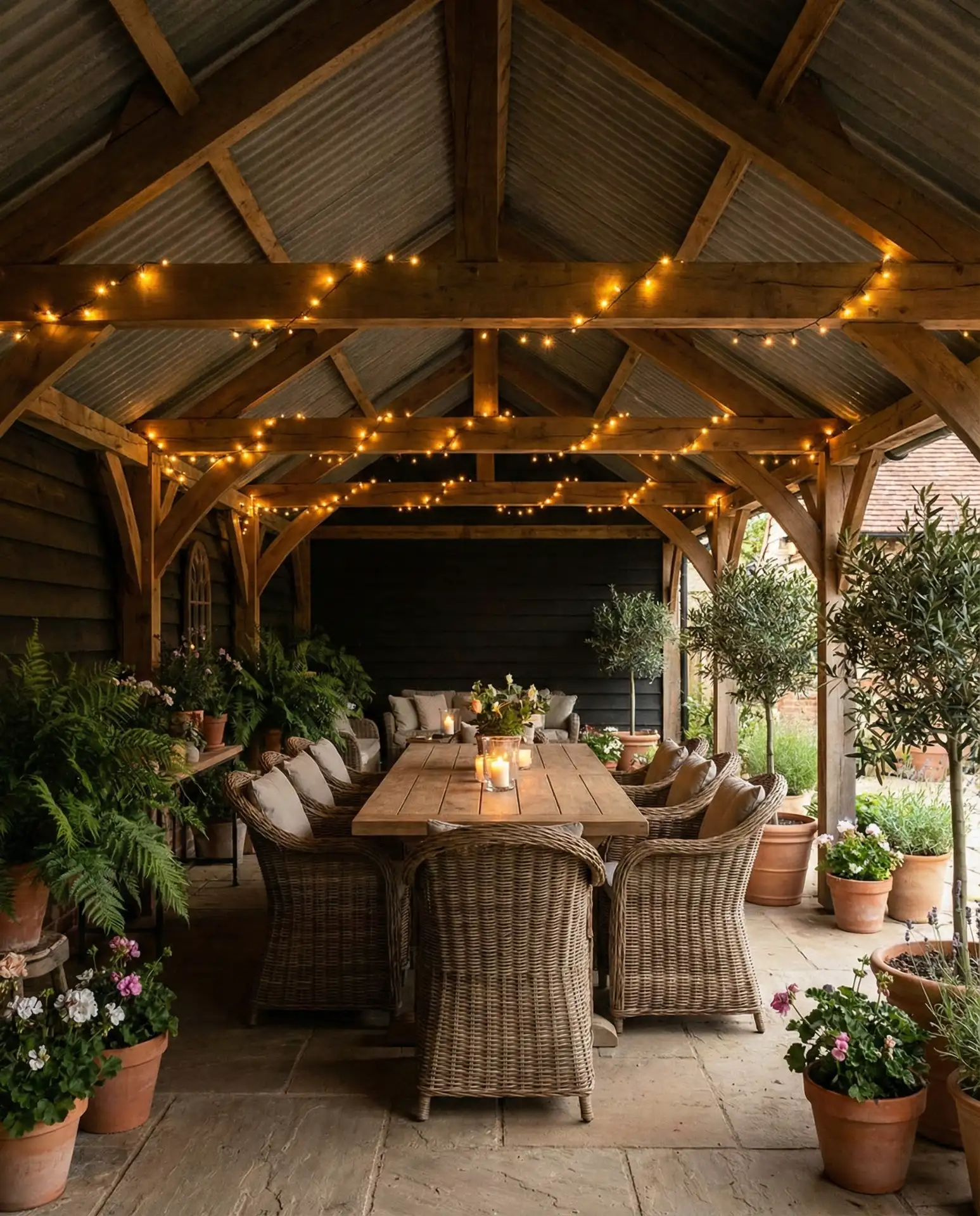
A covered patio transforms your outdoor space into a sheltered retreat where you can dine comfortably regardless of weather. By adding a solid roof or retractable canopy, you protect furniture and guests from sudden rain or harsh sun. This design works beautifully in regions with unpredictable climates, from the Pacific Northwest to the Southeast. String lights draped overhead create a warm, inviting glow that makes every meal feel special. 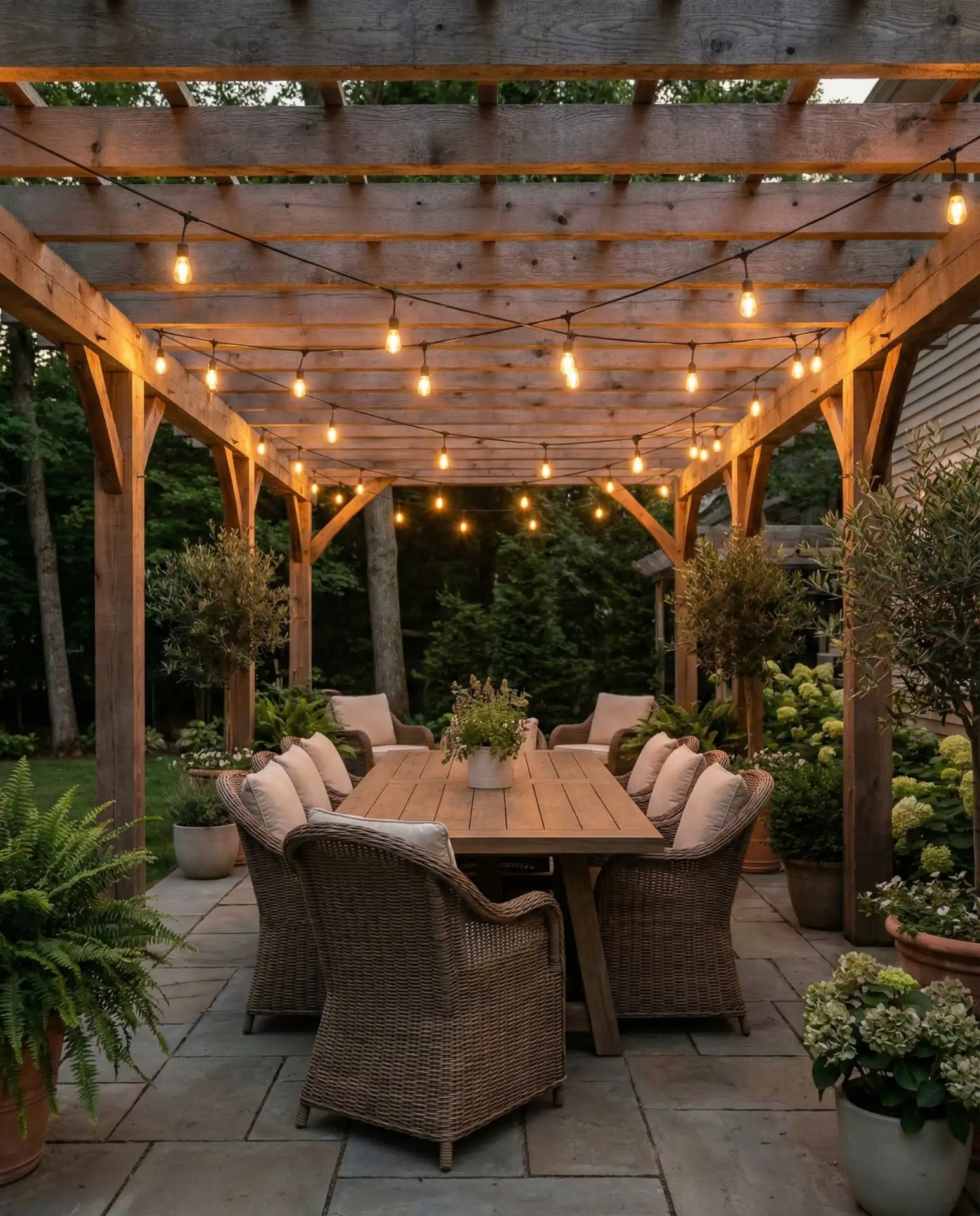
Many homeowners underestimate the value of a covered structure until the first summer thunderstorm hits. A solid roof or pergola with weatherproof fabric panels extends your outdoor season significantly. Consider adding ceiling fans for air circulation on humid days, and choose outdoor-rated light fixtures that can handle moisture. This setup is especially popular in Texas and Florida, where outdoor living is a year-round priority.
2. Rustic Farmhouse Table Under Oak Trees
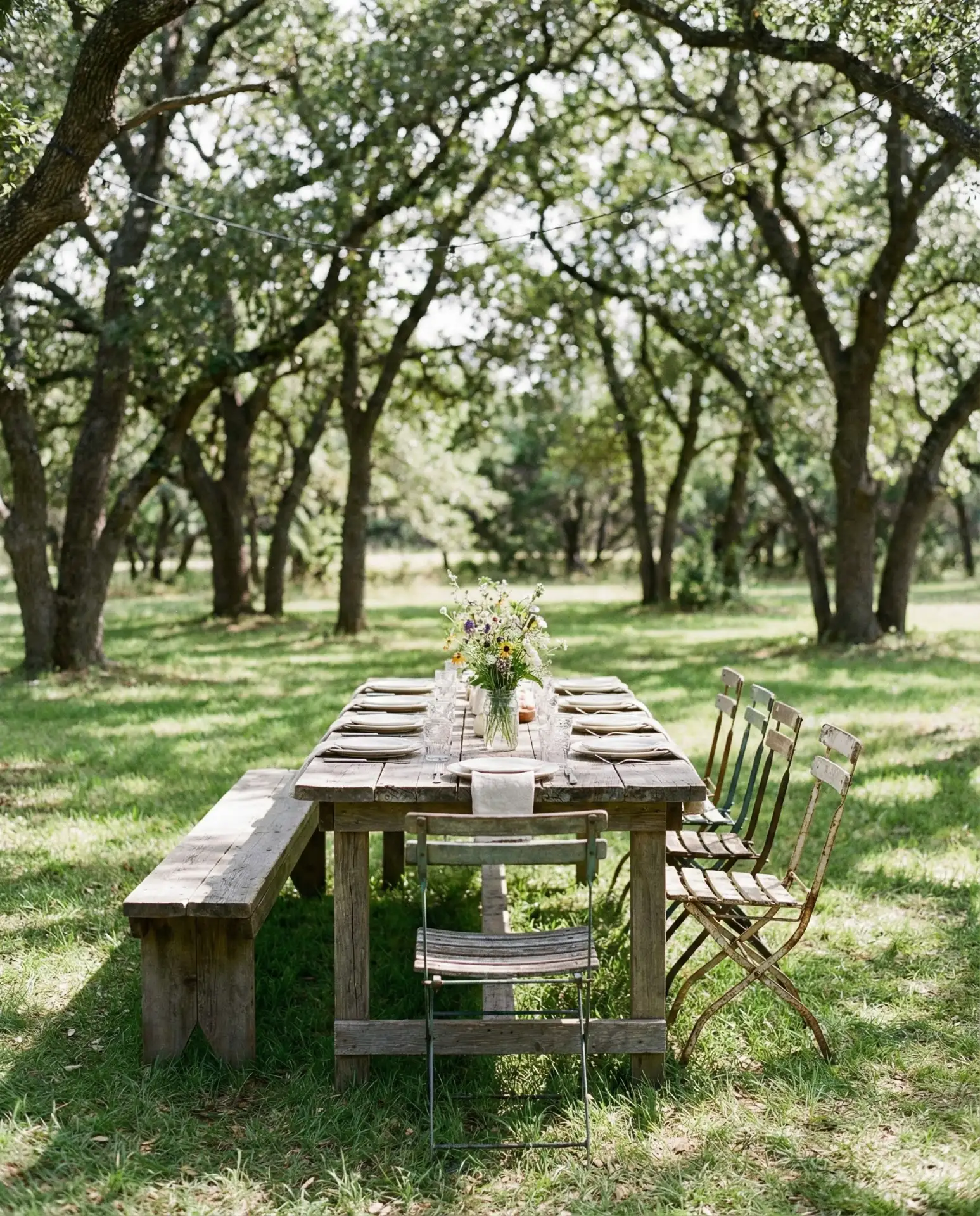
Nothing beats the charm of a rustic farmhouse table set beneath mature trees for natural shade and character. This approach celebrates imperfection—weathered wood, mismatched chairs, and simple table settings create an effortless, welcoming vibe. It’s ideal for homes with established landscaping, particularly in the South and Midwest where sprawling yards are common. The dappled sunlight filtering through leaves adds a magical quality to afternoon gatherings. 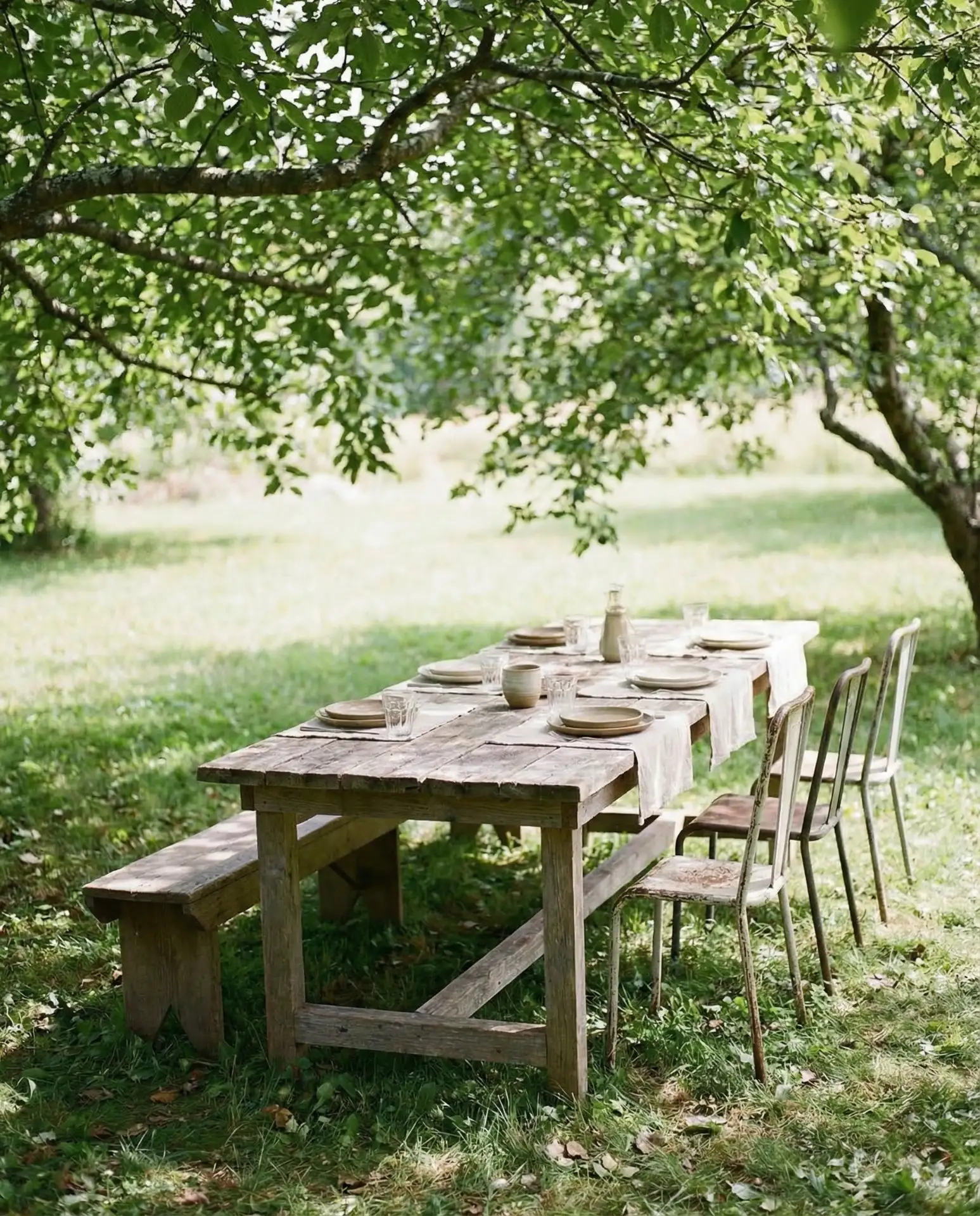
Where it works best: Properties with mature trees and at least 200 square feet of shaded lawn space. This setup requires minimal investment—often just a sturdy table and seating—but delivers maximum impact. Look for reclaimed barn wood or teak that can weather naturally without constant maintenance. Just remember to bring cushions inside during heavy rain to prevent mildew, a common oversight among new outdoor dining enthusiasts.
3. Modern Minimalist Concrete Platform
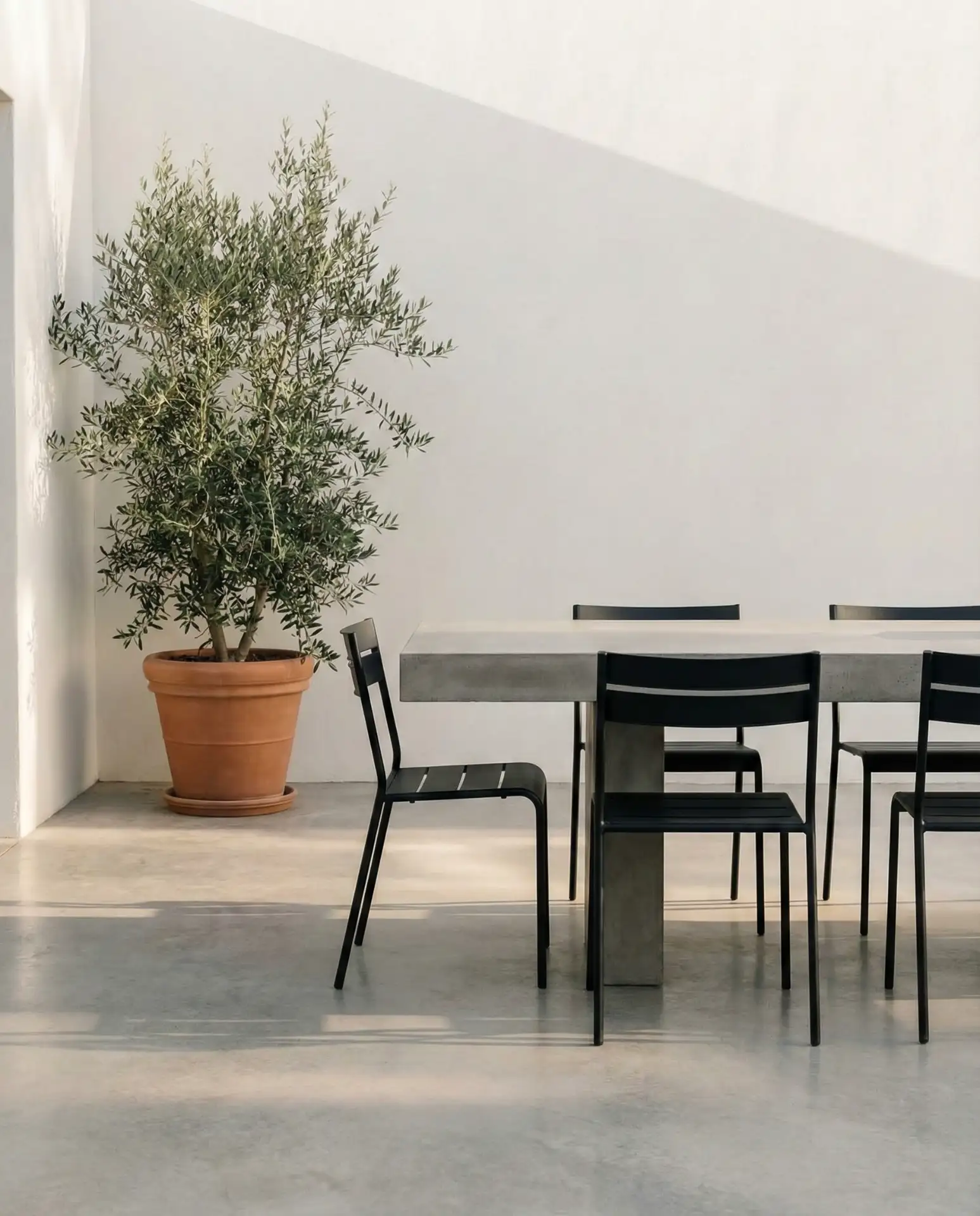
Sleek, geometric, and effortlessly cool, a modern concrete dining platform anchors your outdoor space with architectural confidence. This design strips away unnecessary ornament in favor of clean lines, neutral tones, and high-quality materials. It’s particularly popular in urban settings and contemporary homes where indoor-outdoor flow is prioritized. Pair with sculptural metal chairs and a simple wood or stone tabletop for maximum impact. 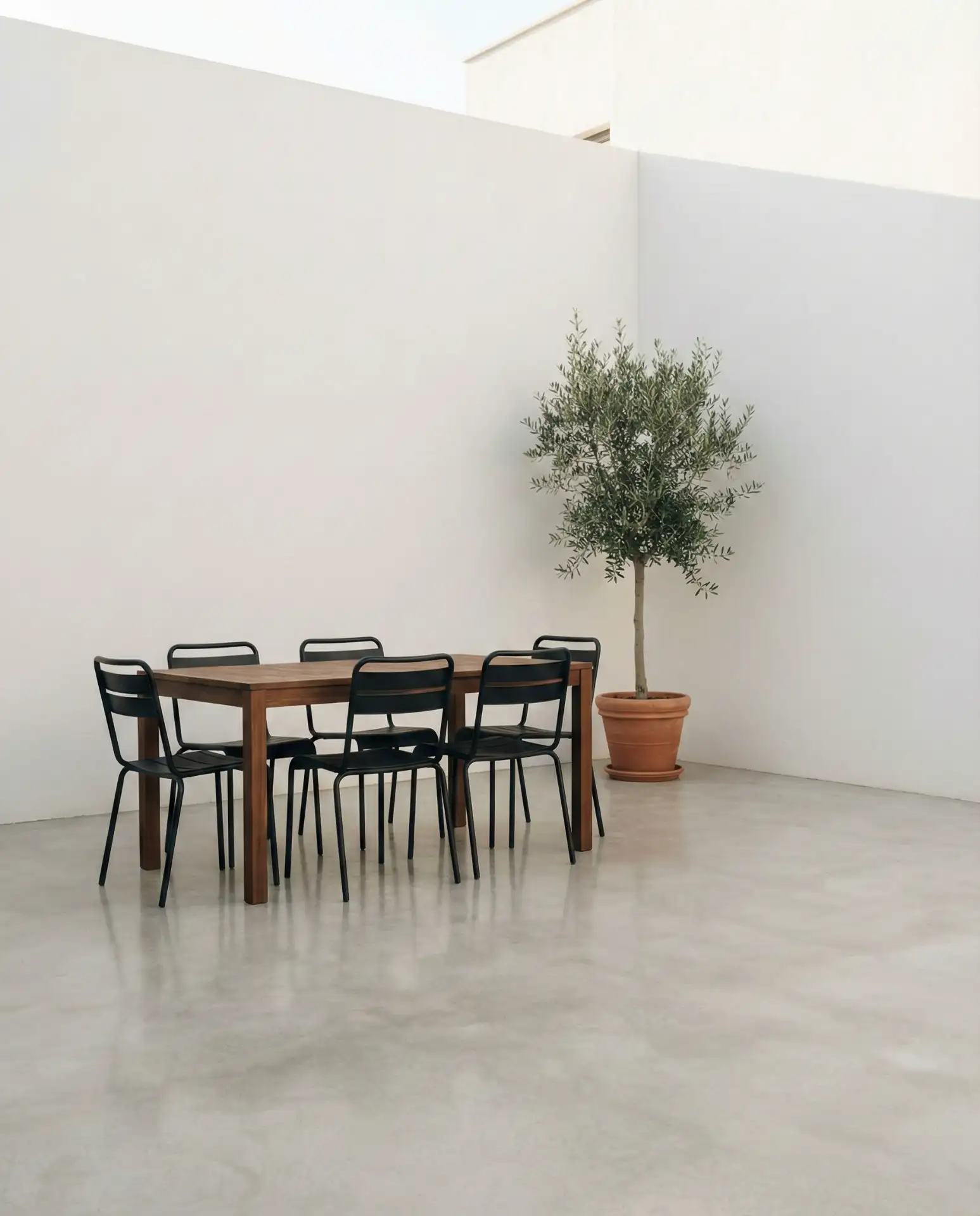
Budget-wise, poured concrete platforms start around $8–12 per square foot for basic finishes, with polished or stained options running higher. The upfront cost pays dividends in durability—concrete withstands freeze-thaw cycles better than pavers and requires virtually no maintenance beyond occasional sealing. It’s a smart long-term investment for homeowners who value simplicity and longevity over trendy materials that may need replacement.
4. Gravel Patio with Bistro Seating
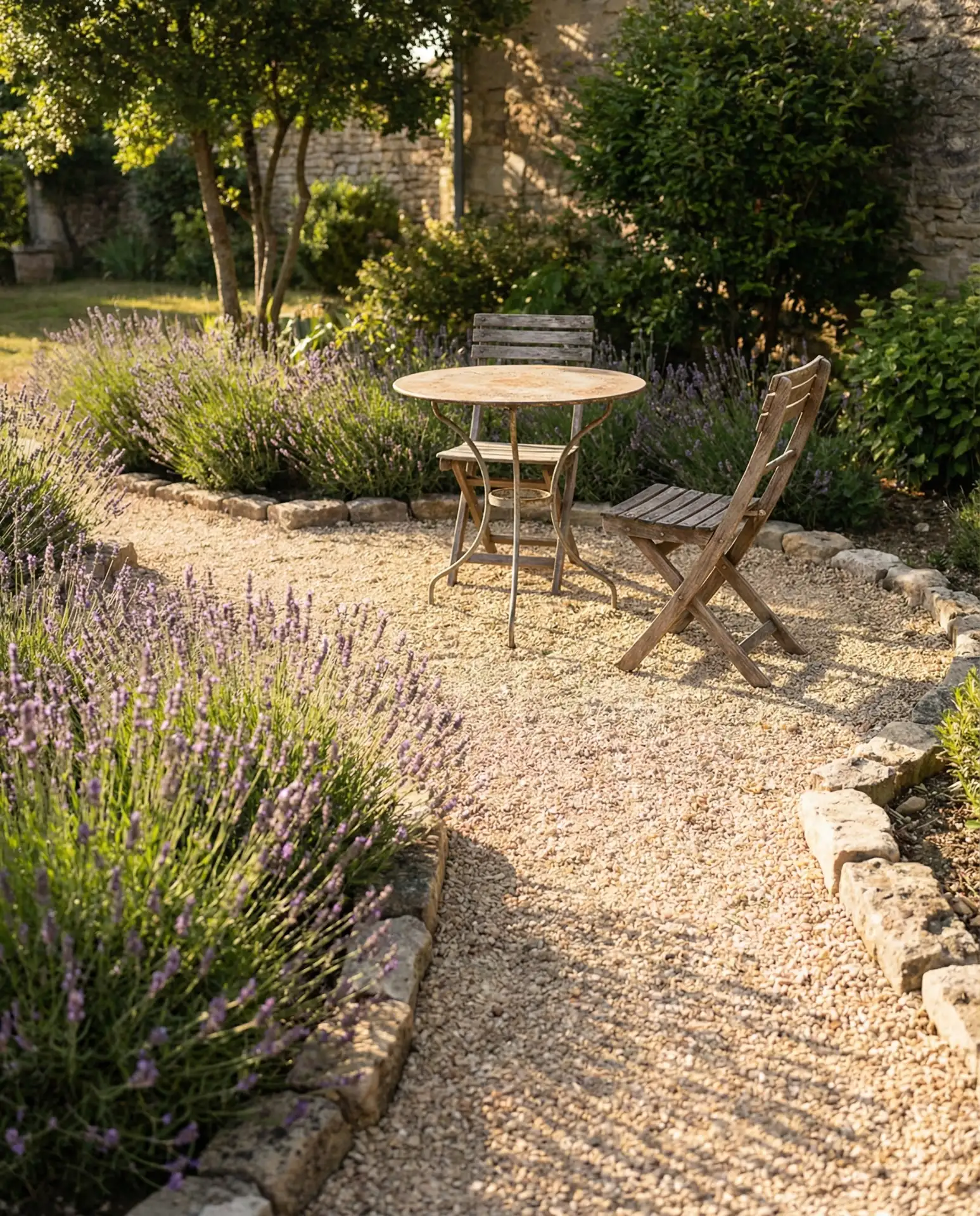
A gravel surface offers one of the most affordable and fastest ways to establish an outdoor dining zone. It drains beautifully, requires no special equipment to install, and has a casual European charm that feels effortlessly stylish. Pea gravel is especially popular for its smooth texture and gentle color palette. This approach suits cottage gardens, Mediterranean-inspired yards, and any space where formal hardscaping feels too rigid. 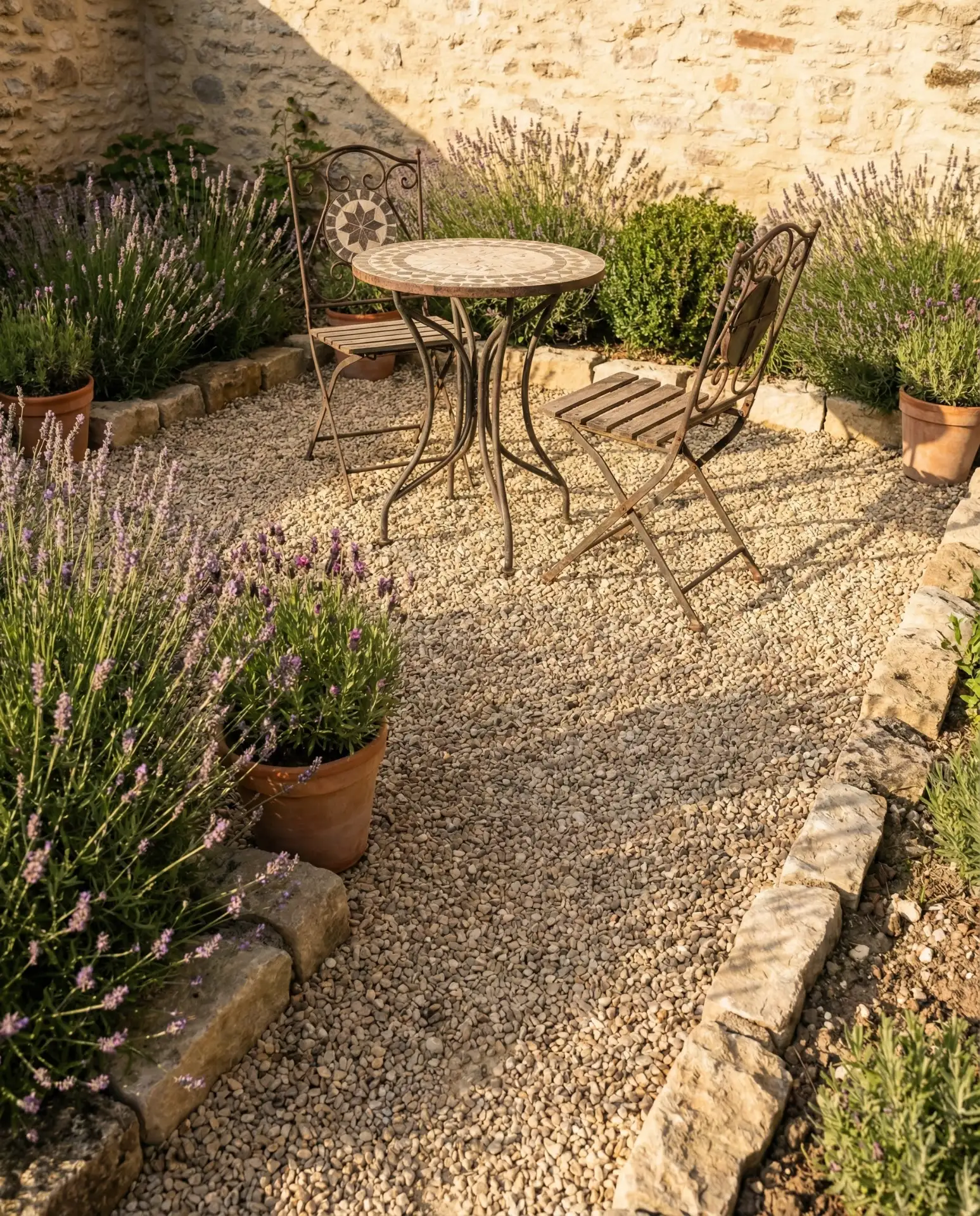
Real homeowner behavior: Many people skip the landscape fabric underneath and regret it within a year when weeds push through. Always lay weed barrier before spreading gravel, and edge with metal or stone to keep the material contained. Crushed pea gravel compacts nicely underfoot and won’t shift as much as larger stones. Expect to add a fresh layer every few years to maintain the look.
5. Restaurant-Style Booth Seating Outdoors
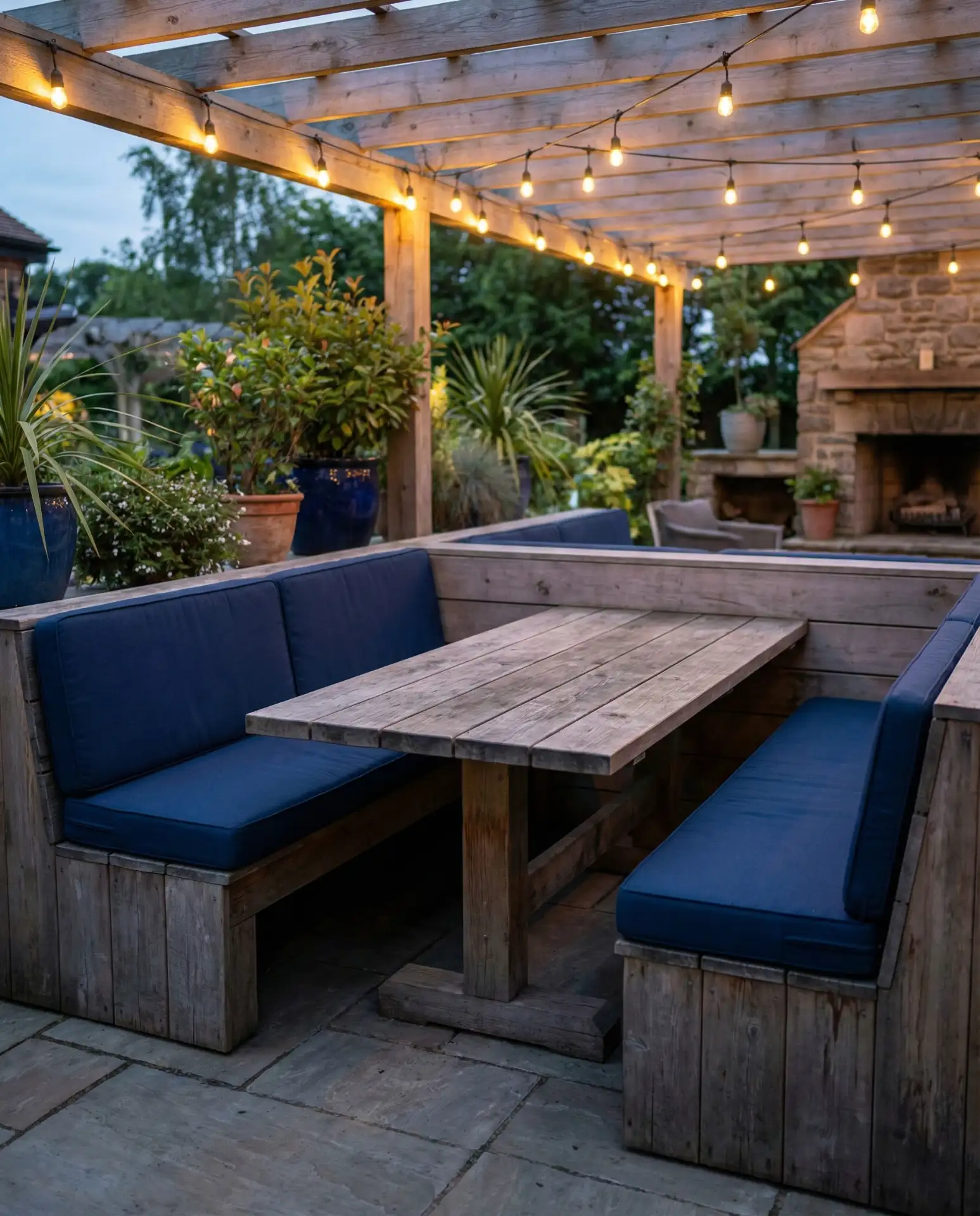
Bringing restaurant booth seating into your backyard creates an intimate, conversation-friendly dining experience. Built-in benches with cushioned backs maximize seating in compact areas while adding a custom, upscale feel. This design is particularly effective along fences or retaining walls where you can anchor the structure. It’s a creative solution for narrow side yards or small urban patios where traditional table-and-chair setups feel cramped. 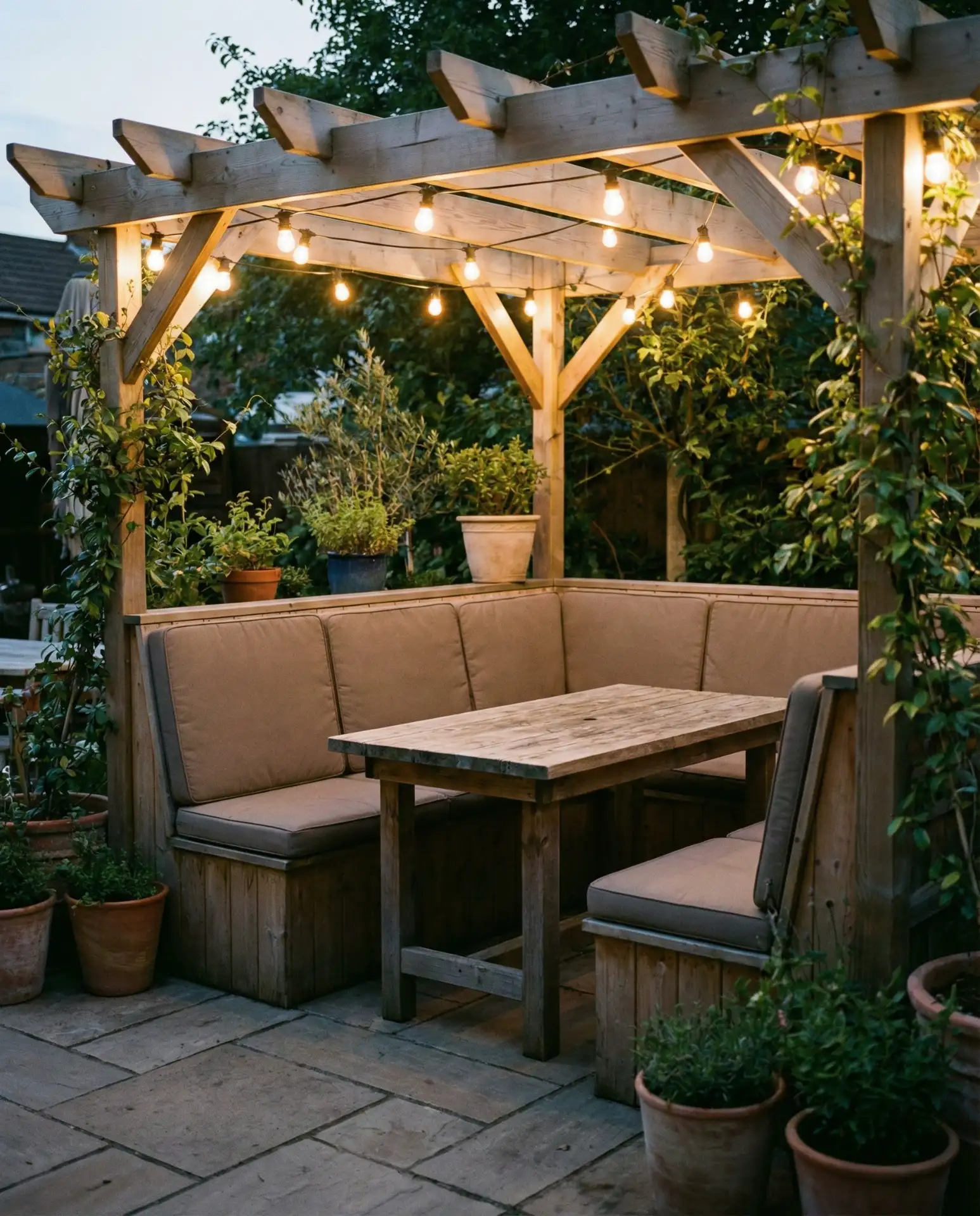
A common mistake is choosing indoor cushions for outdoor booths—they’ll mildew quickly in humidity. Invest in Sunbrella or similar solution-dyed acrylic fabrics that resist fading and moisture. Built-in seating also requires thoughtful planning around table height and legroom. Measure carefully before construction, as adjustments afterward are difficult. This setup shines in covered or semi-covered spaces where cushions receive some protection.
6. Back Porch Dining with Wicker Furniture
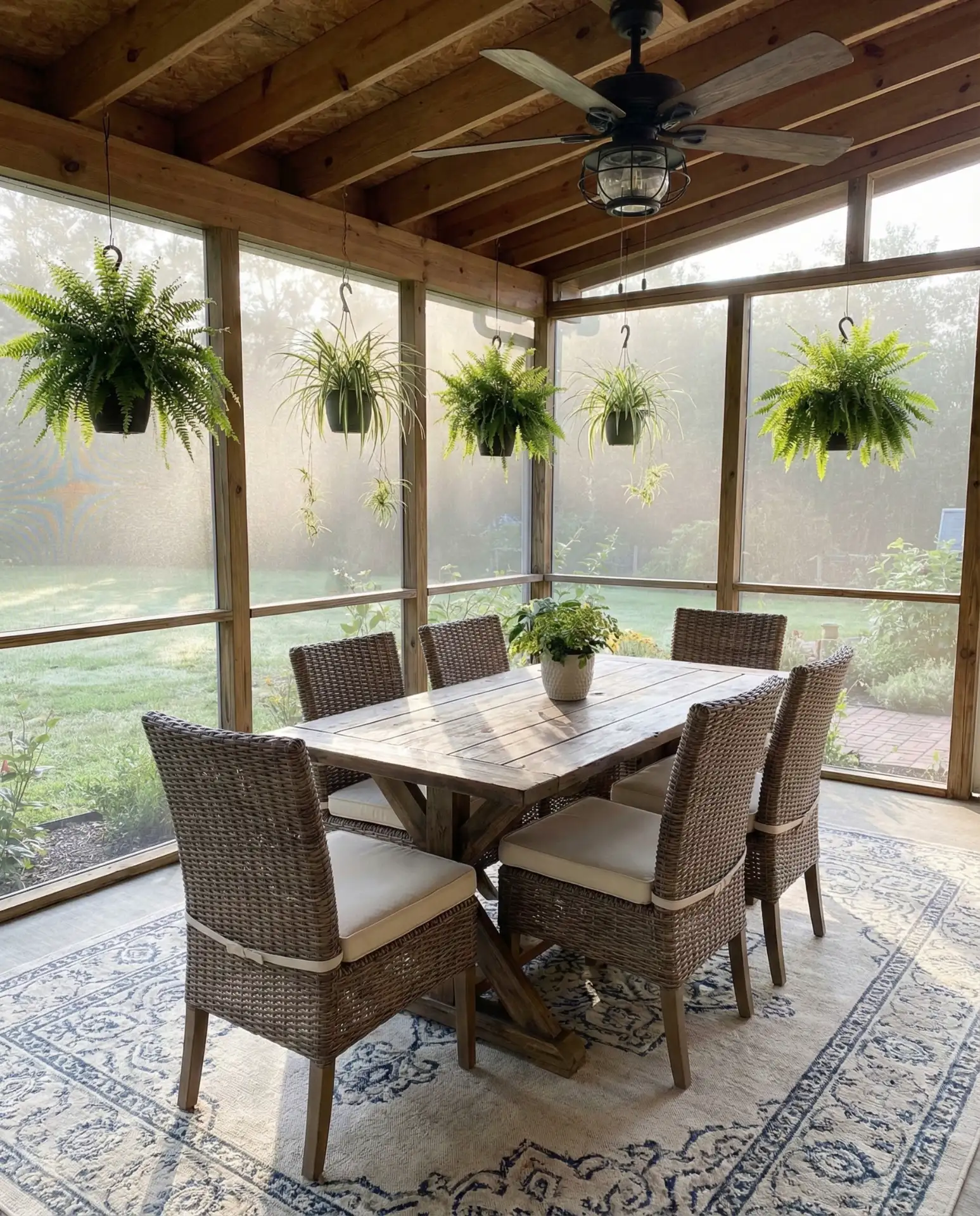
Your back porch might be the perfect spot for a dedicated dining area that feels like a natural extension of your home. Wicker or rattan furniture adds texture and warmth, creating a transitional style that bridges indoor comfort with outdoor ease. This setup works wonderfully on covered porches where furniture stays protected from direct sun and rain. Layer in outdoor rugs, lanterns, and potted plants to complete the look. 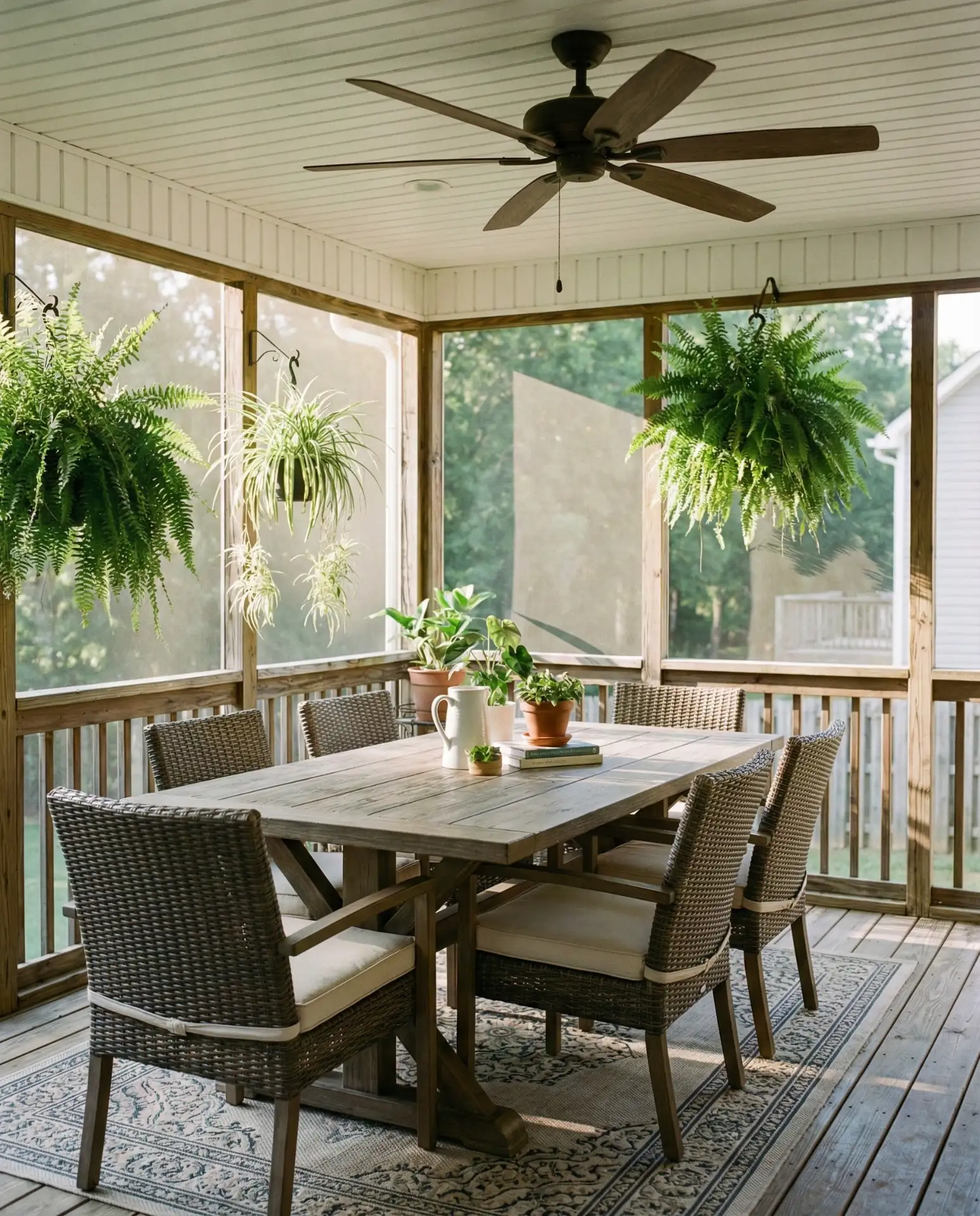
In the South, screened porches with dining setups are practically standard—they keep bugs at bay during warm months while maintaining airflow. If your porch isn’t screened, consider adding retractable screens or mosquito netting that can be drawn during cookouts. Wicker holds up surprisingly well when kept under cover, but avoid leaving it exposed to winter weather in northern climates where freezing temperatures can cause cracking.
7. Pergola Patio with Climbing Vines
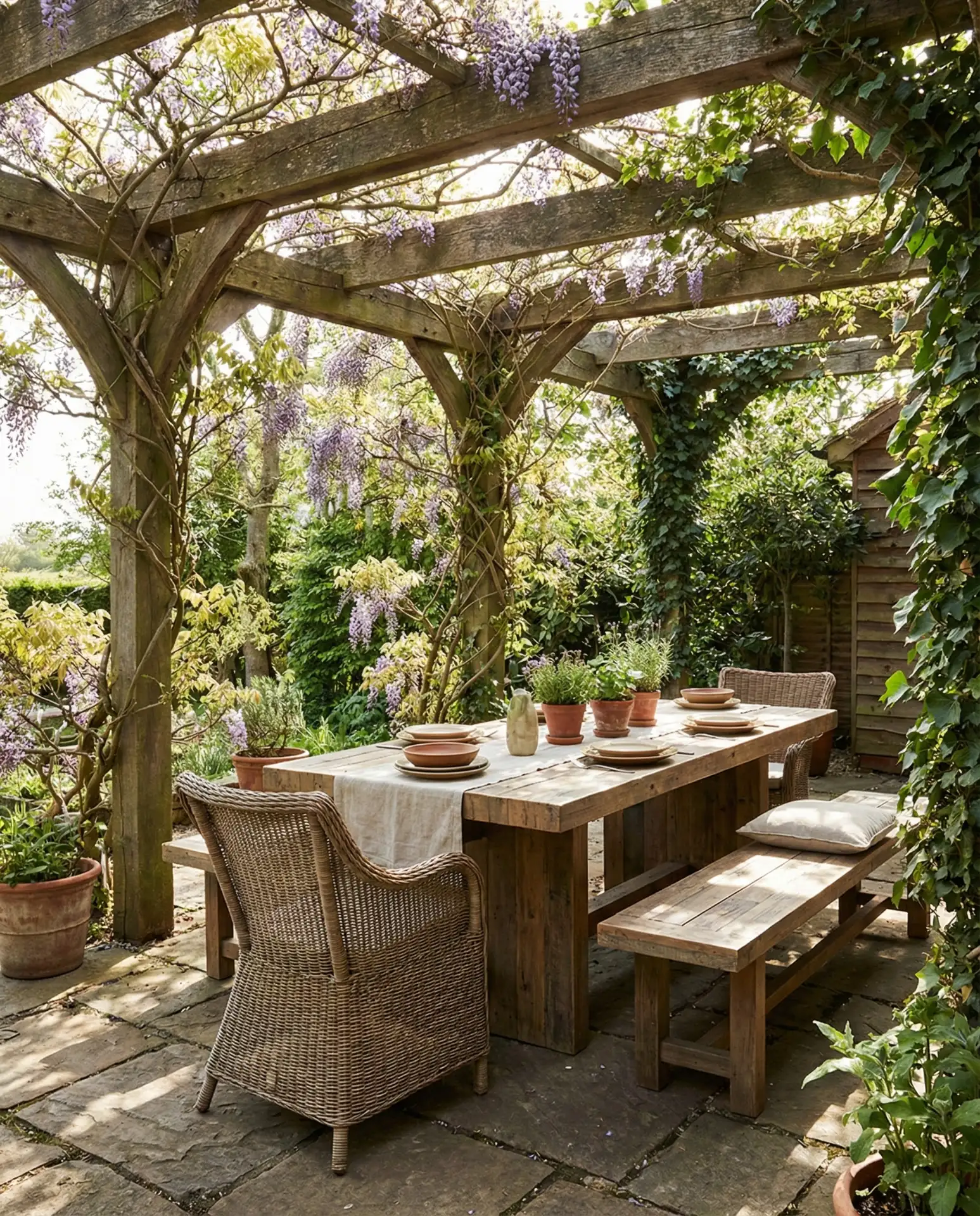
A pergola frames your dining area with architectural elegance while offering filtered shade and support for climbing plants. Pergola patio ideas range from rustic cedar structures to sleek powder-coated aluminum designs. Over time, wisteria, grapevines, or jasmine will weave through the slats, creating a living canopy that provides privacy and beauty. This approach is ideal for sunny yards where full shade isn’t necessary but some relief from direct sun is welcome. 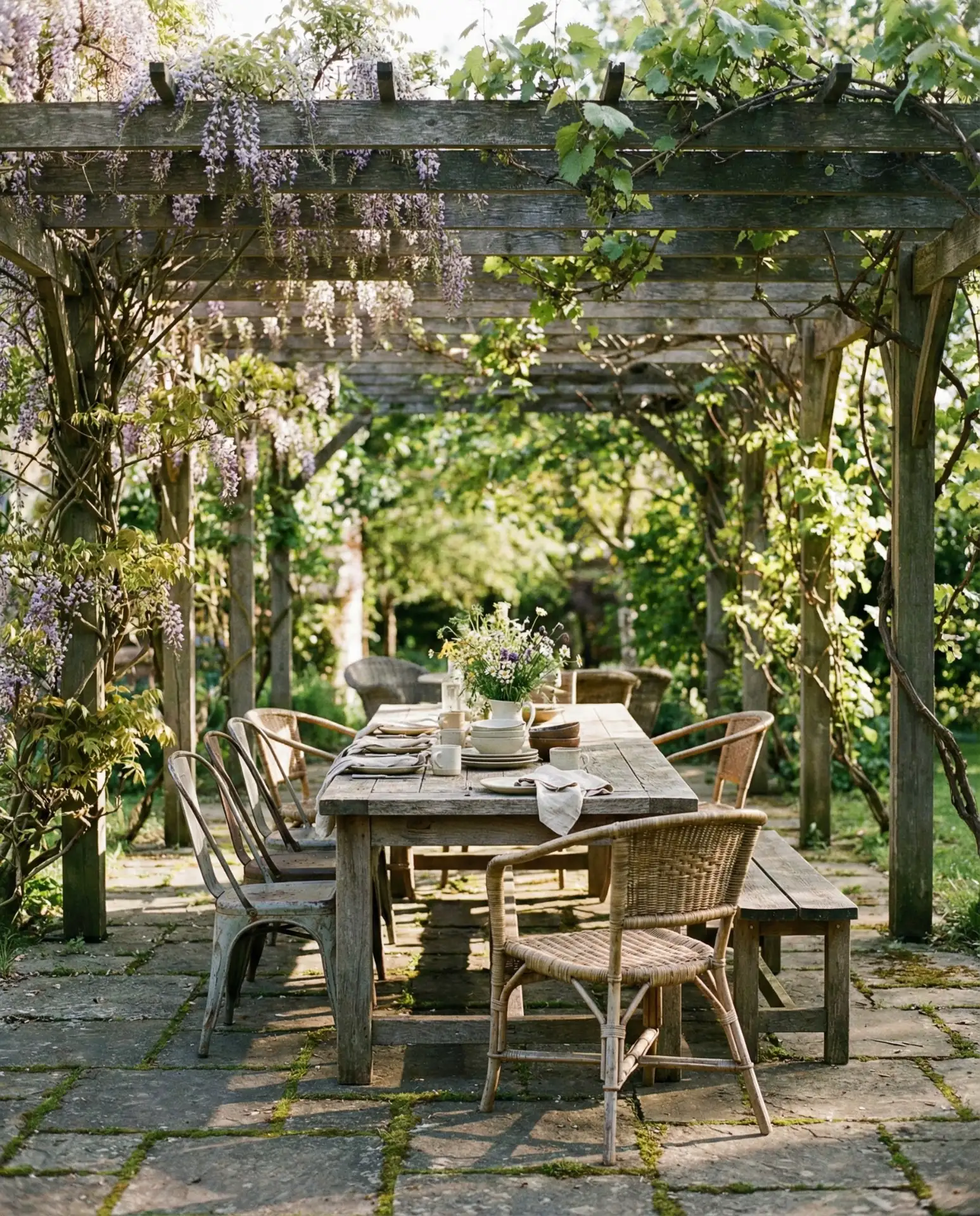
Practical insight: Choose deciduous vines for year-round versatility—they provide shade in summer and allow warming sunlight through in winter. Fast-growing varieties like clematis or climbing roses can cover a pergola within two growing seasons. If you prefer instant shade, consider installing a retractable canopy that slides along the pergola’s frame. Many homeowners combine both for maximum flexibility throughout the year.
8. Small Space Balcony Dining Nook
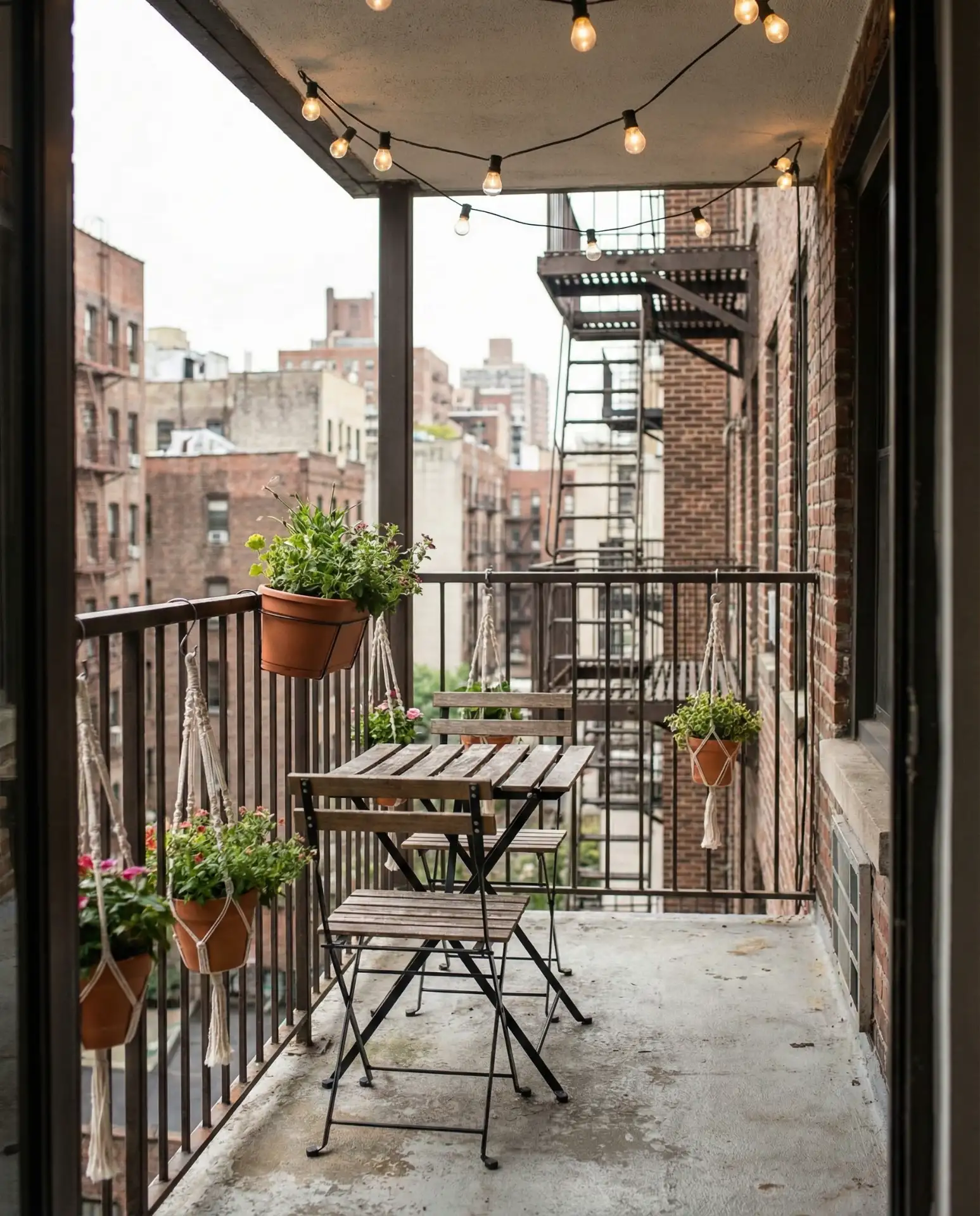
Limited square footage shouldn’t limit your outdoor dining dreams. Small space solutions focus on folding furniture, wall-mounted tables, and vertical gardens that maximize every inch. A narrow balcony can comfortably accommodate a bistro set or even a built-in bench with storage underneath. Design ideas for compact areas emphasize light colors, mirrors, and smart storage to prevent the space from feeling cluttered. 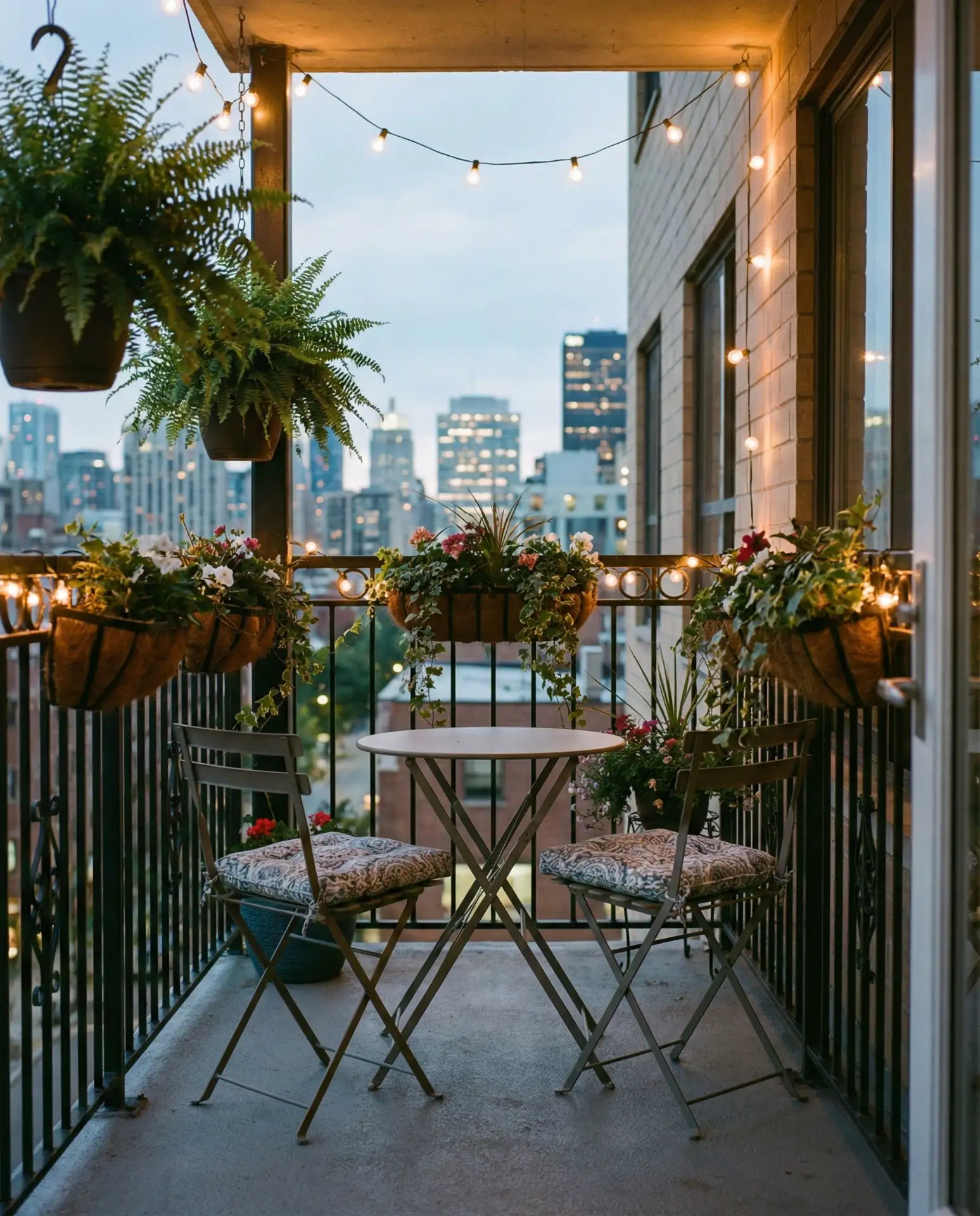
Where it works best: Urban apartments and condos where outdoor space is limited but highly valued. Look for furniture that serves multiple purposes—a storage bench that holds cushions, or a table that folds against the wall when not in use. Even a 4×6-foot balcony can host intimate dinners for two with thoughtful planning. Add weather-resistant cushions and a small outdoor rug to define the dining zone and make the space feel intentional.
9. Mediterranean Courtyard with Terracotta
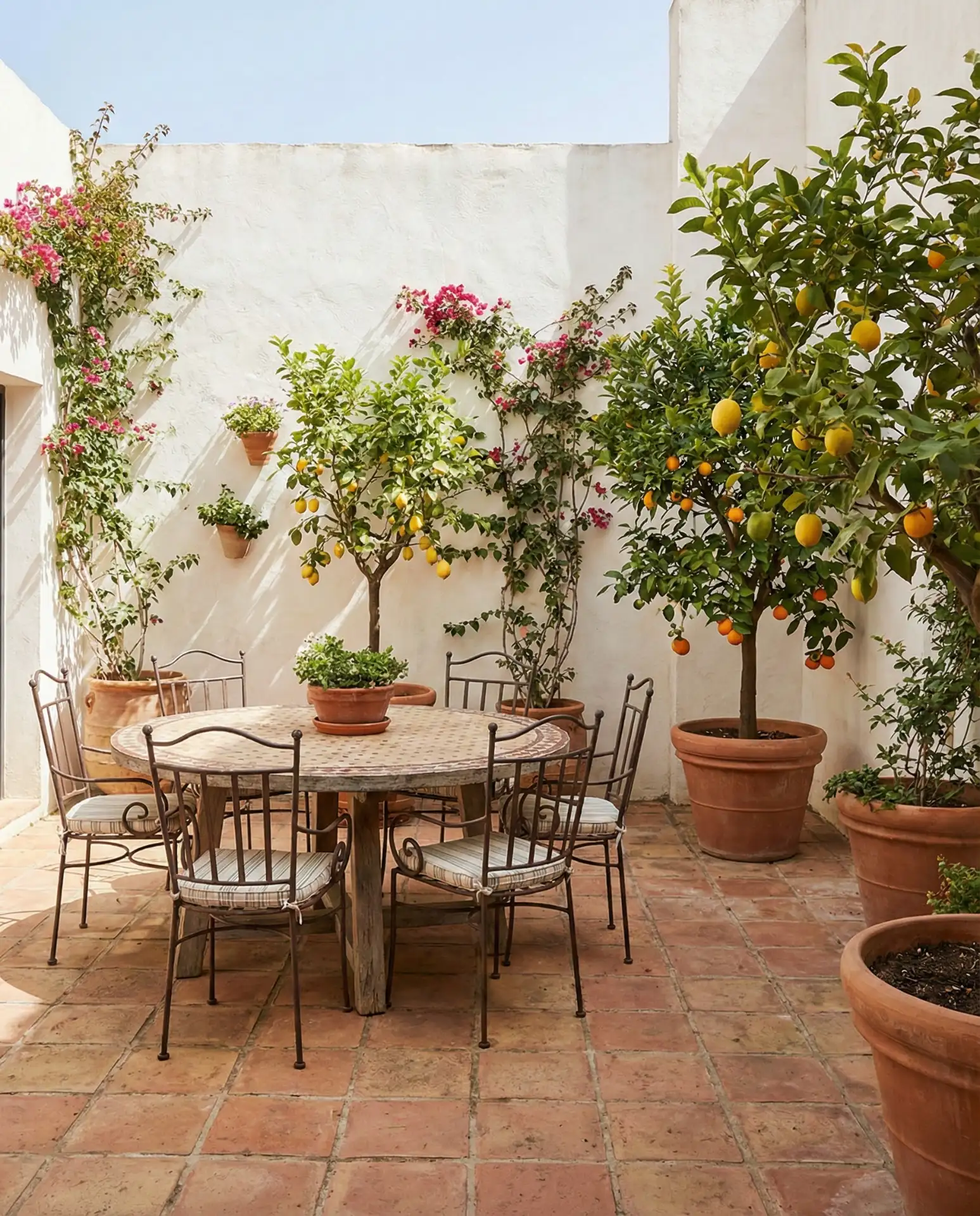
Drawing inspiration from Southern Europe, a Mediterranean dining courtyard centers around warm terracotta tiles, whitewashed walls, and abundant potted herbs. This style thrives in hot, dry climates—think Southern California, Arizona, or New Mexico—where intense sun and minimal rainfall mirror the region’s namesake. Arrange seating around a central table, add wrought iron accents, and plant lavender or rosemary for authentic sensory appeal. 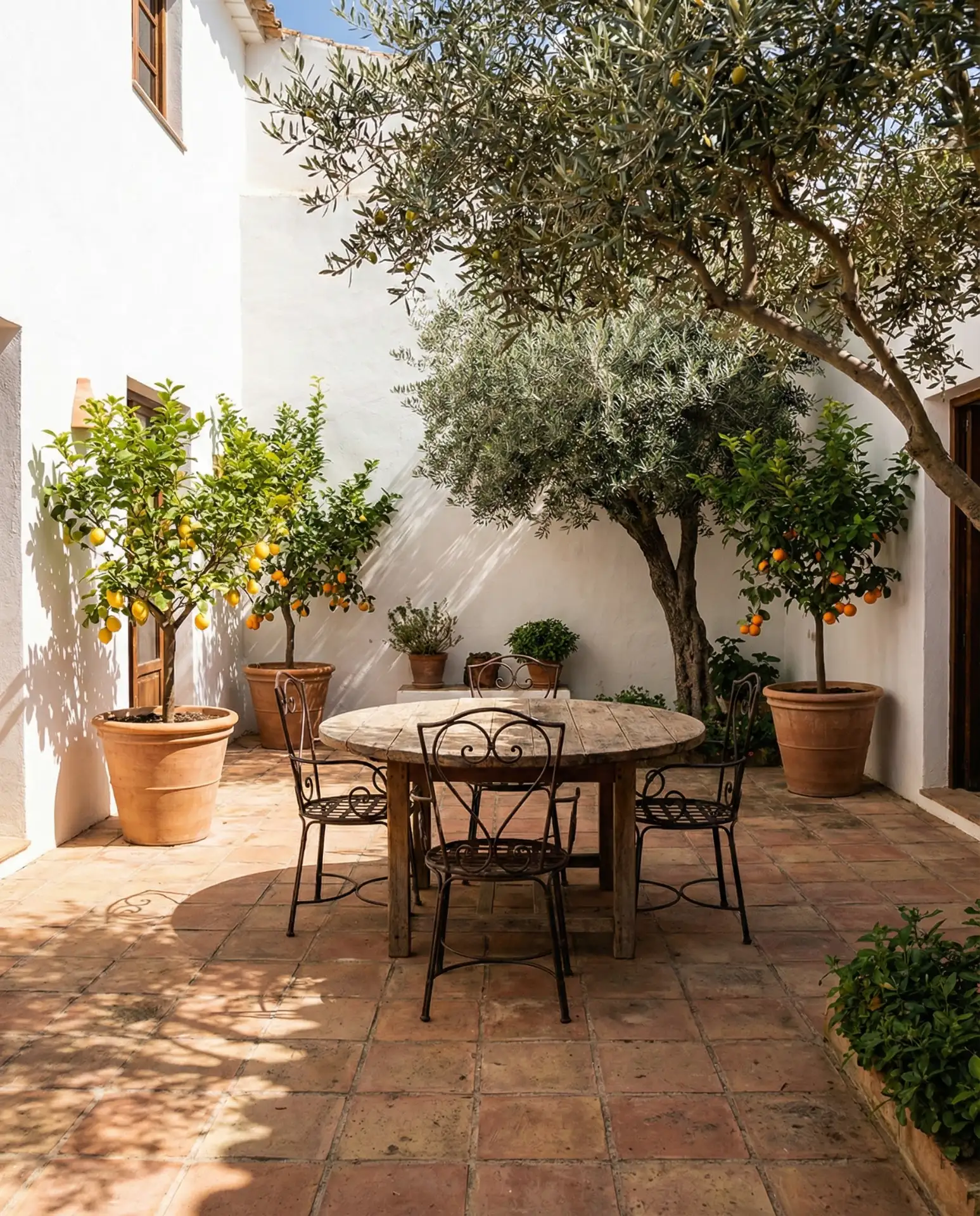
Expert-style commentary: Terracotta absorbs heat during the day and releases it slowly at night, creating comfortable evening temperatures. Unglazed tiles develop a beautiful patina over time but require sealing to prevent staining. If you’re working with an existing concrete patio, terracotta-look porcelain tiles offer a low-maintenance alternative that mimics the aesthetic without the upkeep. This style pairs beautifully with drought-tolerant landscaping, reducing water needs significantly.
10. Indoor-Outdoor Sliding Glass Wall Setup
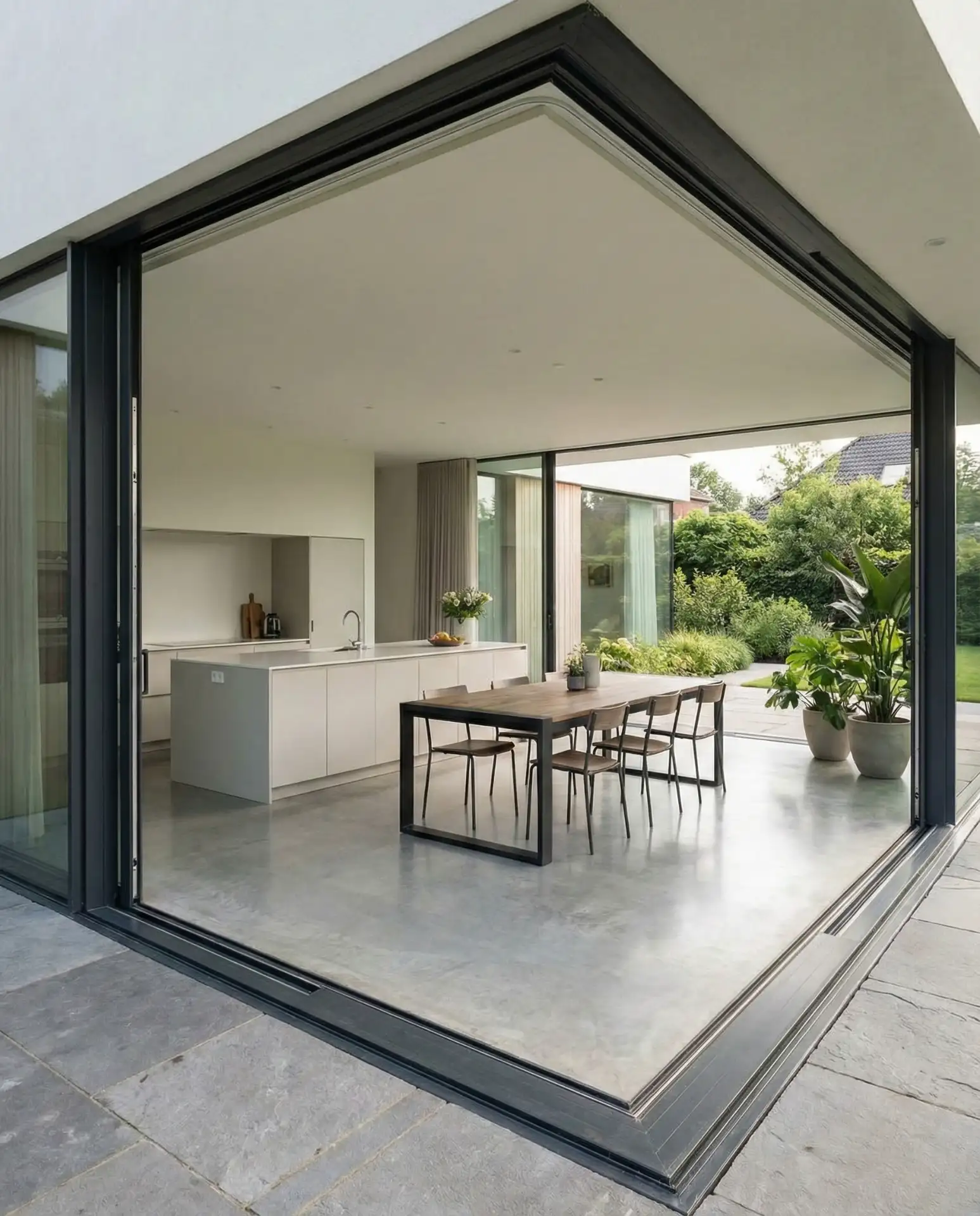
Erasing the boundary between inside and out, indoor-outdoor dining spaces use retractable glass walls or oversized sliding doors to create seamless flow. When open, your kitchen extends directly onto the patio, making entertaining effortless. This design is increasingly popular in mild climates and among homeowners investing in major renovations. Coordinate flooring materials across both zones to enhance the unified effect. 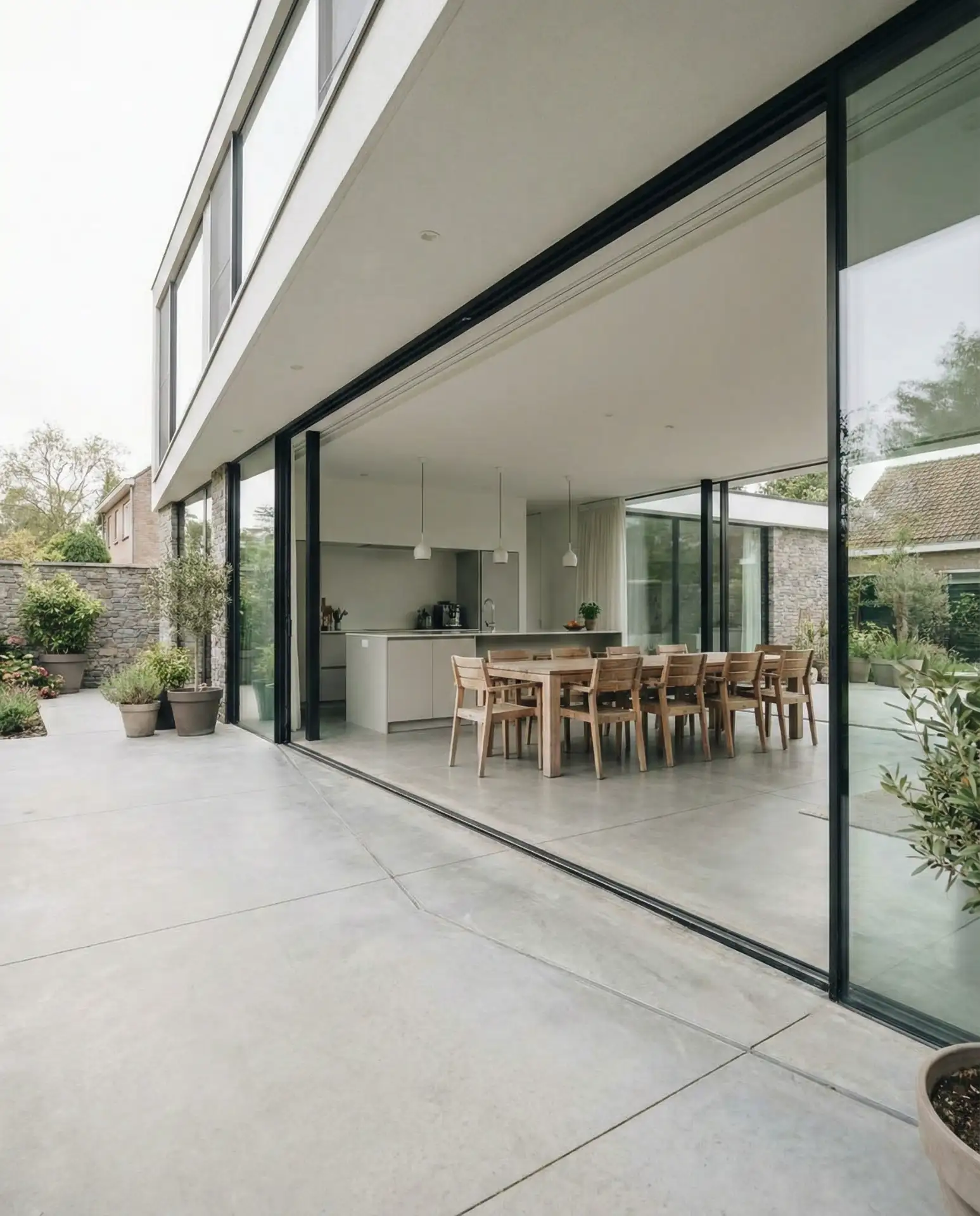
A micro anecdote: One homeowner in San Diego installed accordion-style glass doors and now hosts dinner parties where guests drift freely between kitchen and patio without noticing the transition. The key is consistent design language—matching countertop materials, similar lighting fixtures, and cohesive color schemes. While this approach requires significant investment, it dramatically increases livable square footage and home value in markets where outdoor living is prized.
11. Large Family Gathering Space with Fire Pit
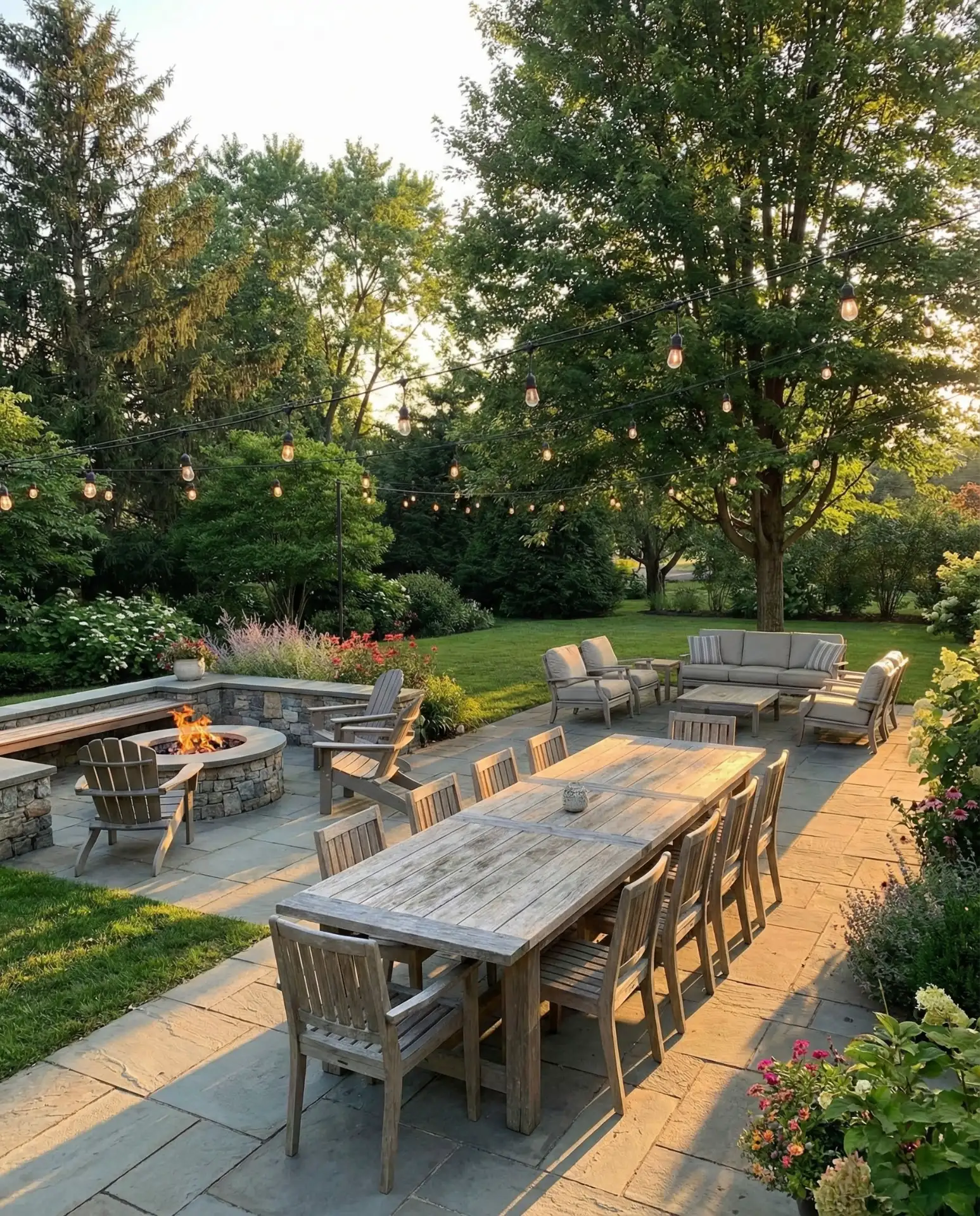
For families who love hosting, a large outdoor dining area with adjacent fire pit creates a multi-functional gathering hub. Position a generously sized table for meals, then add lounge seating around a fire feature for after-dinner conversations. This layout encourages people to linger outdoors well into the evening, especially during shoulder seasons when a fire’s warmth extends comfort. It’s particularly popular in mountain and lakeside properties where outdoor entertaining is central to lifestyle. 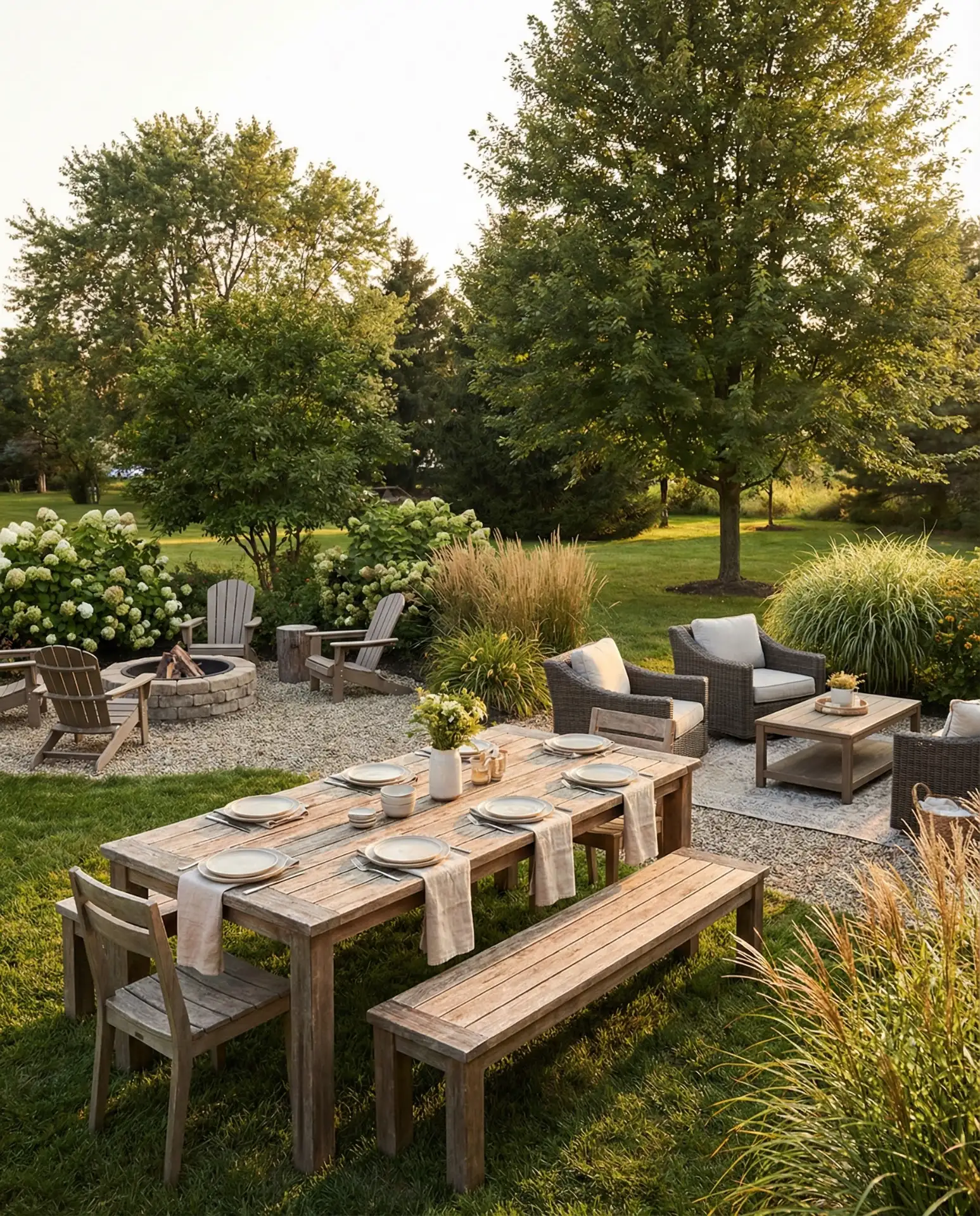
Real homeowner behavior: Most people position the fire pit too close to the dining table initially, then realize smoke drifts directly toward diners. Maintain at least 10-12 feet of separation, and consider prevailing wind patterns in your yard. Gas fire pits offer easier control and no ash cleanup, while wood-burning versions provide authentic ambiance. Either way, this combination creates a destination that justifies the investment in quality outdoor furniture and weather-resistant finishes.
12. Grill Station with Counter Dining
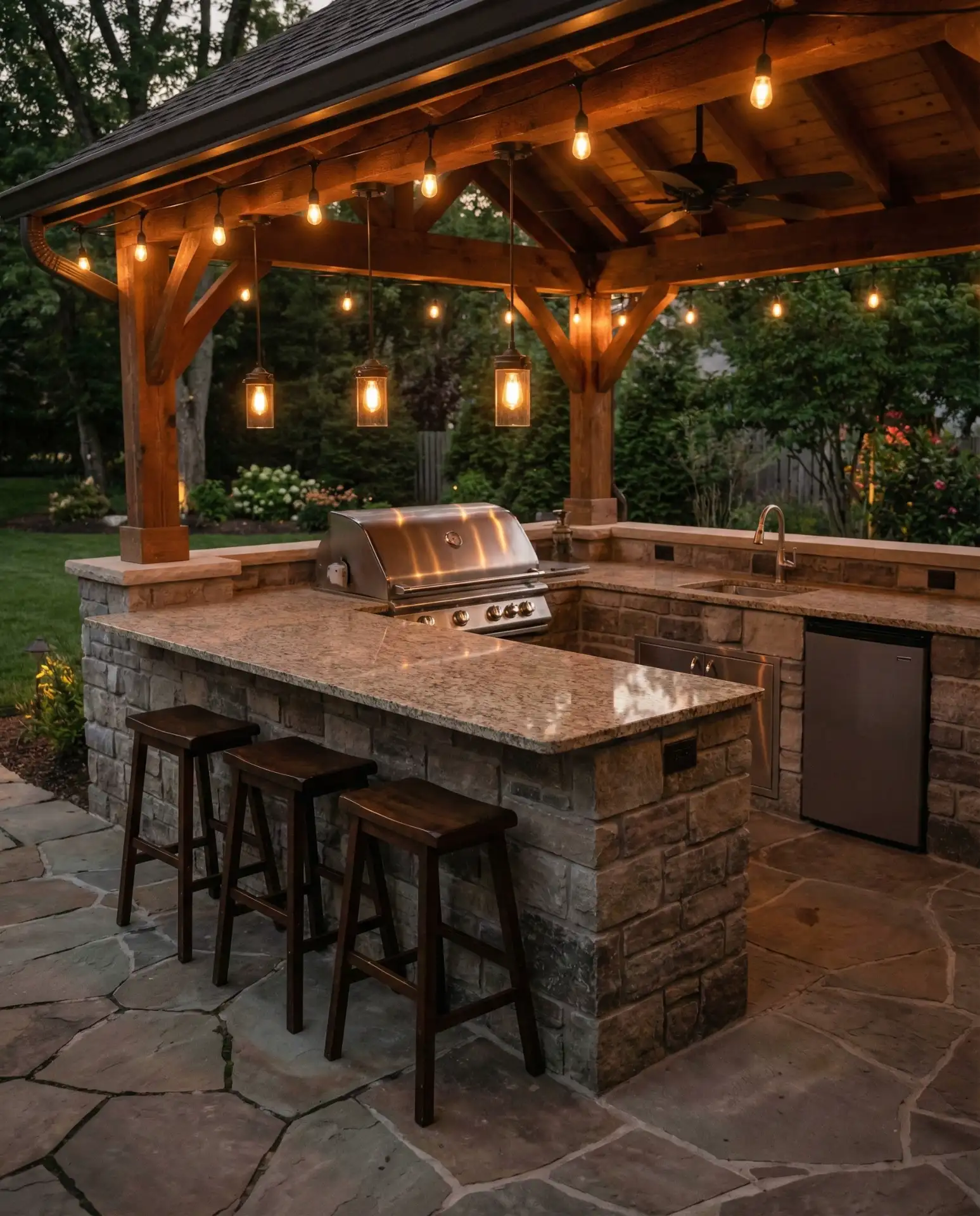
Combining cooking and dining in one zone, a grill station with counter-height seating keeps the chef engaged with guests throughout the meal. Built-in grills with stone or concrete surrounds provide prep space, storage, and casual seating all within arm’s reach. This setup is ideal for the backyard chef who wants restaurant-style efficiency and social interaction. Design with weather-resistant materials that can handle heat, smoke, and spills. 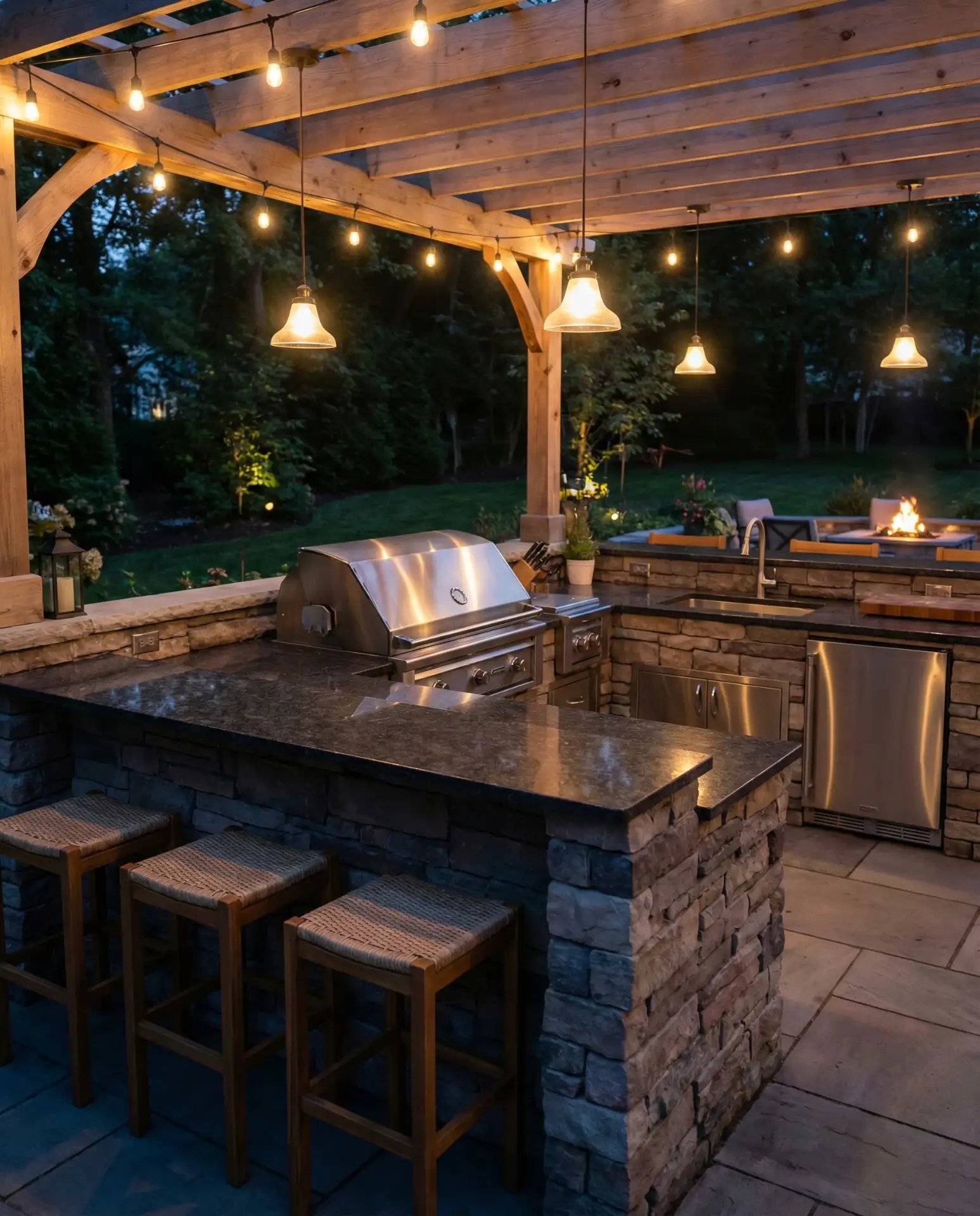
Budget angle: Basic grill islands start around $3,000 for prefab kits, while custom-built outdoor kitchens can run $15,000–30,000 depending on features. The sweet spot for most homeowners is a mid-range setup with built-in grill, side burner, and small refrigerator—this provides real functionality without the luxury price tag. Remember to factor in gas lines or electrical work, which can add $1,000–2,000 to the project cost.
13. Simple Picnic Table with Bench Seating
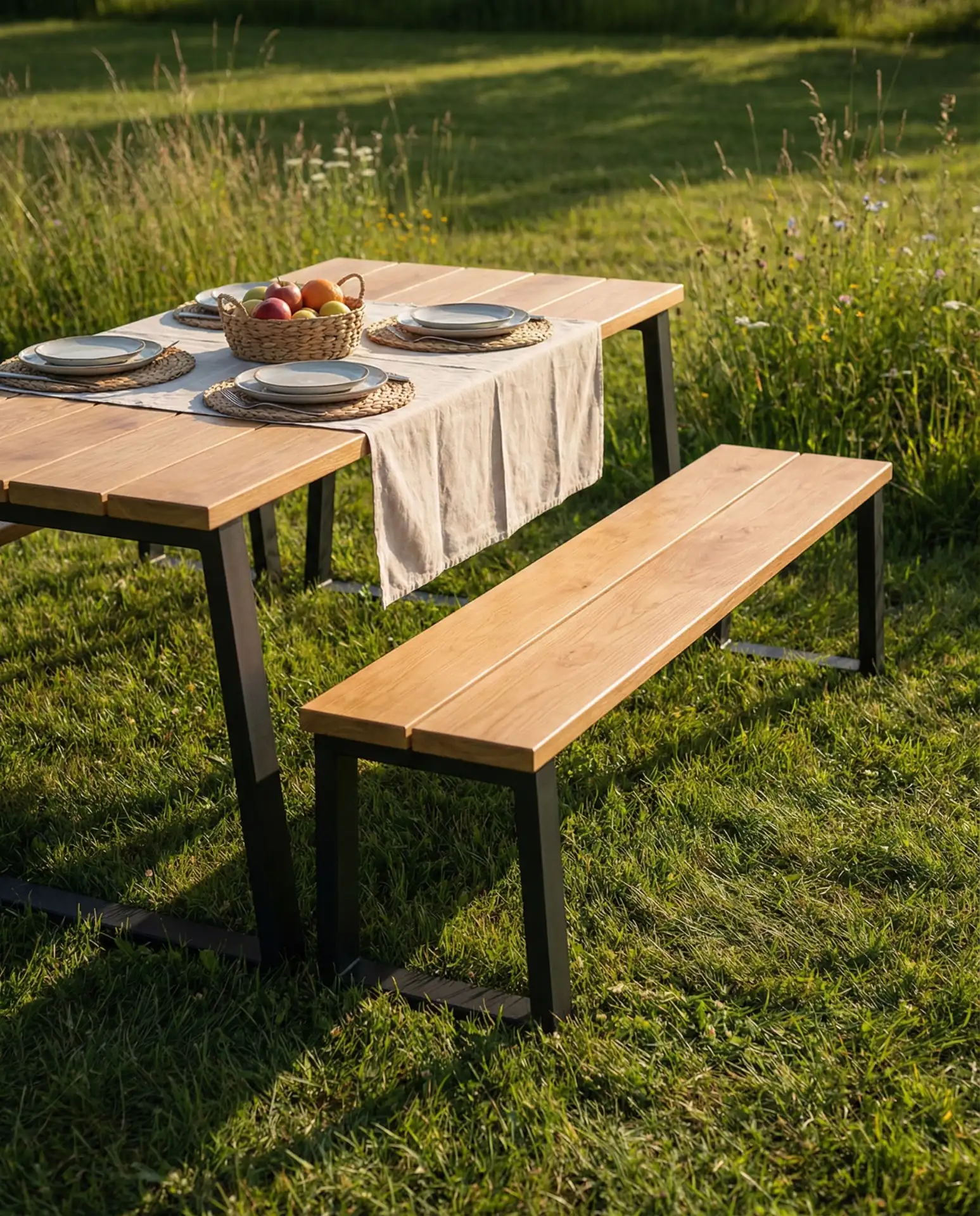
Sometimes the best solution is the simplest. A classic picnic table with attached benches offers no-fuss, family-friendly dining that accommodates crowds easily. Modern versions update the traditional design with stained or painted finishes, metal accents, and cleaner lines. This approach works beautifully in casual settings—lake houses, mountain cabins, or sprawling suburban yards where formality takes a back seat to function. 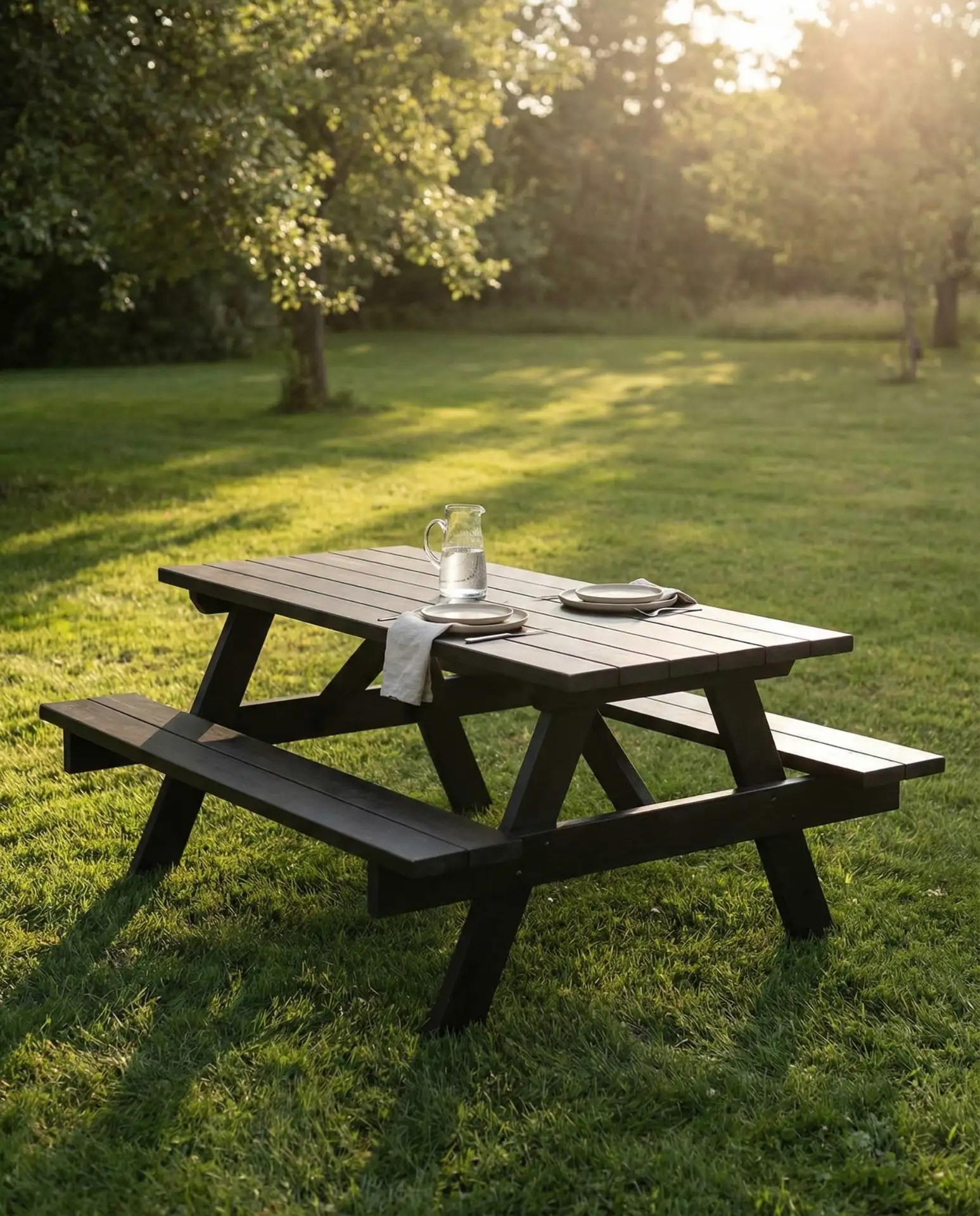
Practical insight: Cedar and redwood resist rot naturally and age gracefully without treatment, though regular sealing extends lifespan significantly. Pressure-treated pine offers the most budget-friendly option but requires annual maintenance. Position your picnic table on level ground or create a simple gravel base to prevent wobbling. This setup costs a fraction of formal dining sets and can be DIY-built in a weekend for maximum satisfaction.
14. Narrow Side Yard Dining Corridor
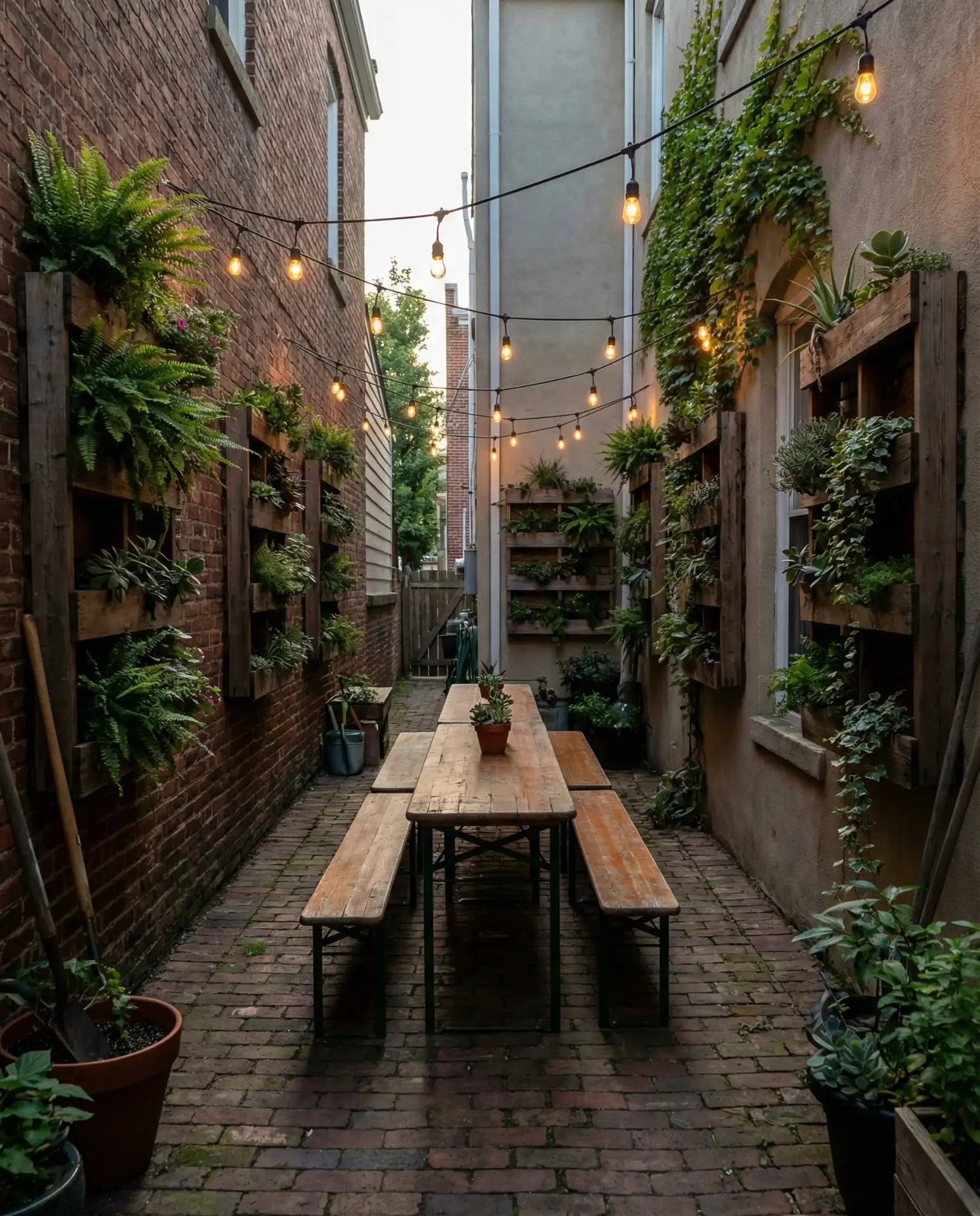
Don’t overlook that narrow side yard—it might be perfect for an intimate dining corridor. Long, lean tables paired with bench seating maximize the space while creating a unique, almost European courtyard feel. This approach works especially well in urban settings where yards are tight but vertical space allows for climbing plants and overhead lighting. Design ideas focus on making the most of limited width through strategic furniture choices and vertical greenery. 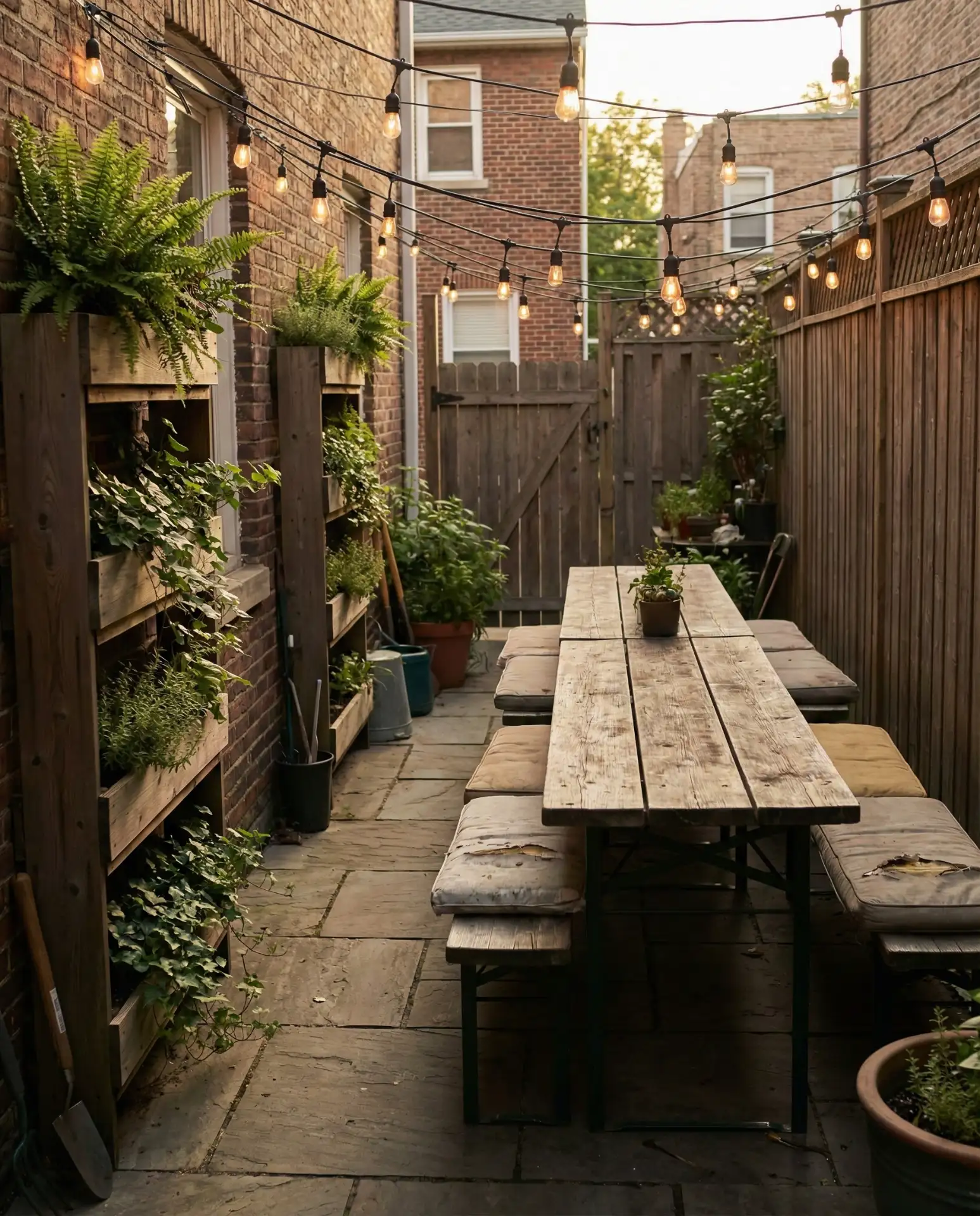
Where it works best: Spaces 6-8 feet wide that run along the side of the house or between buildings. Ground-level outdoor lighting along the path creates ambiance while improving safety. Wall-mounted planters and trellises add greenery without sacrificing floor space. This setup transforms an underutilized area into a conversation-starting dining experience that feels intentional and designed rather than squeezed in as an afterthought.
15. DIY Pallet Wood Dining Set
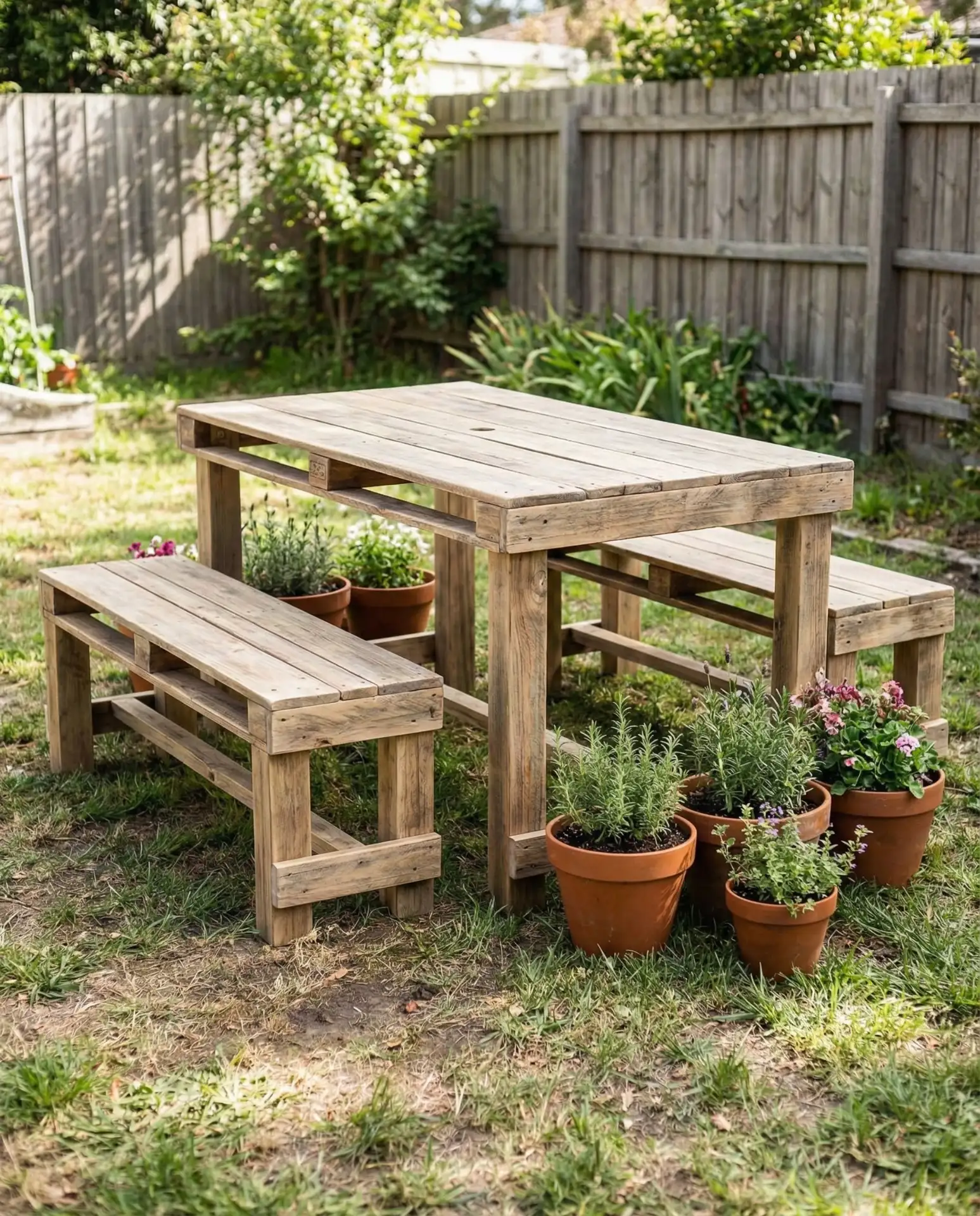
For the budget-conscious and creatively inclined, DIY pallet furniture offers an affordable path to custom outdoor dining. Reclaimed shipping pallets can be disassembled and rebuilt into tables, benches, and even planters with basic tools and weekend effort. Sand thoroughly, seal with outdoor finish, and customize with paint or stain to match your style. This approach embodies the maker movement and gives your space one-of-a-kind character. 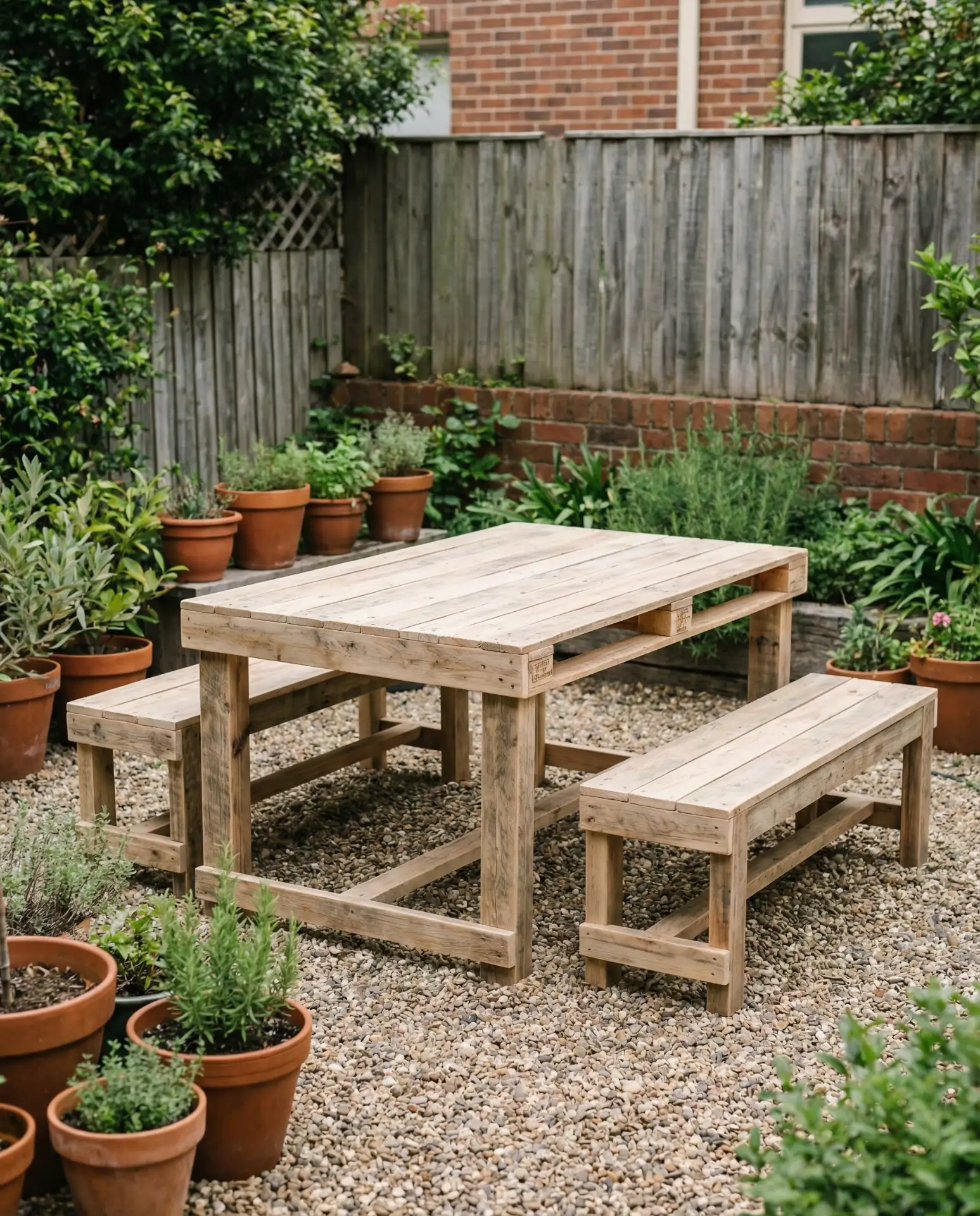
Common mistakes and how to avoid them: Many people skip heat-treating or properly sealing pallet wood, leading to splinters and rapid weathering. Always verify pallets are marked “HT” (heat-treated) rather than “MB” (methyl bromide), as the latter contains harmful chemicals. Sand every surface smooth, especially edges and tops where people will touch. Two coats of marine-grade sealant protect against moisture and UV damage. With proper prep, pallet furniture can last 5-7 years outdoors.
16. Decor-Forward Boho Dining Setup
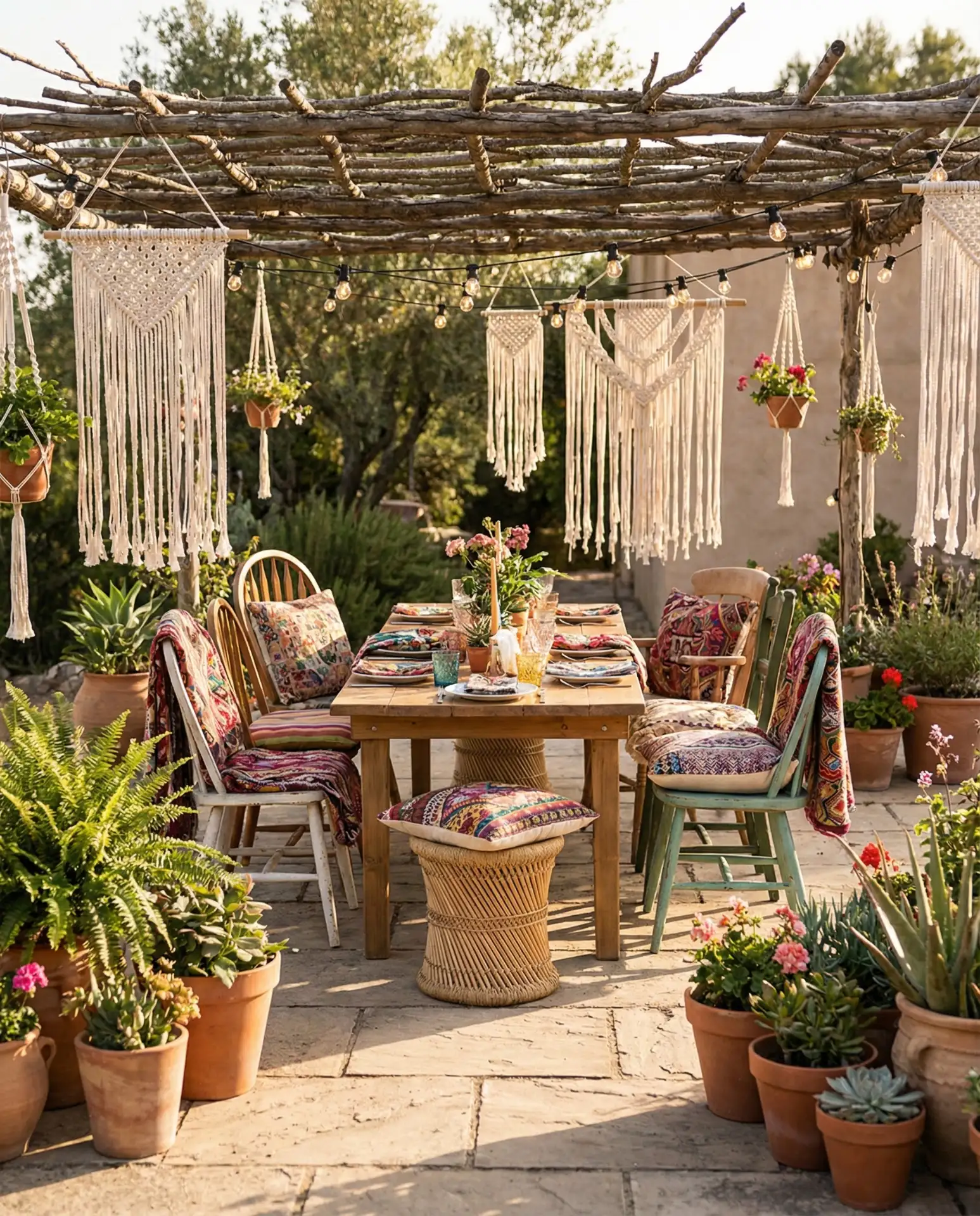
Layered textiles, macramé hangings, and eclectic mix-and-match seating define a decor-focused bohemian outdoor dining space. This style prioritizes comfort and visual interest over formality, incorporating poufs, floor cushions, and low tables for relaxed gatherings. Colorful patterns, natural fibers, and abundant plants create a welcoming, lived-in atmosphere. It’s perfect for free-spirited homeowners who love expressing personality through design. 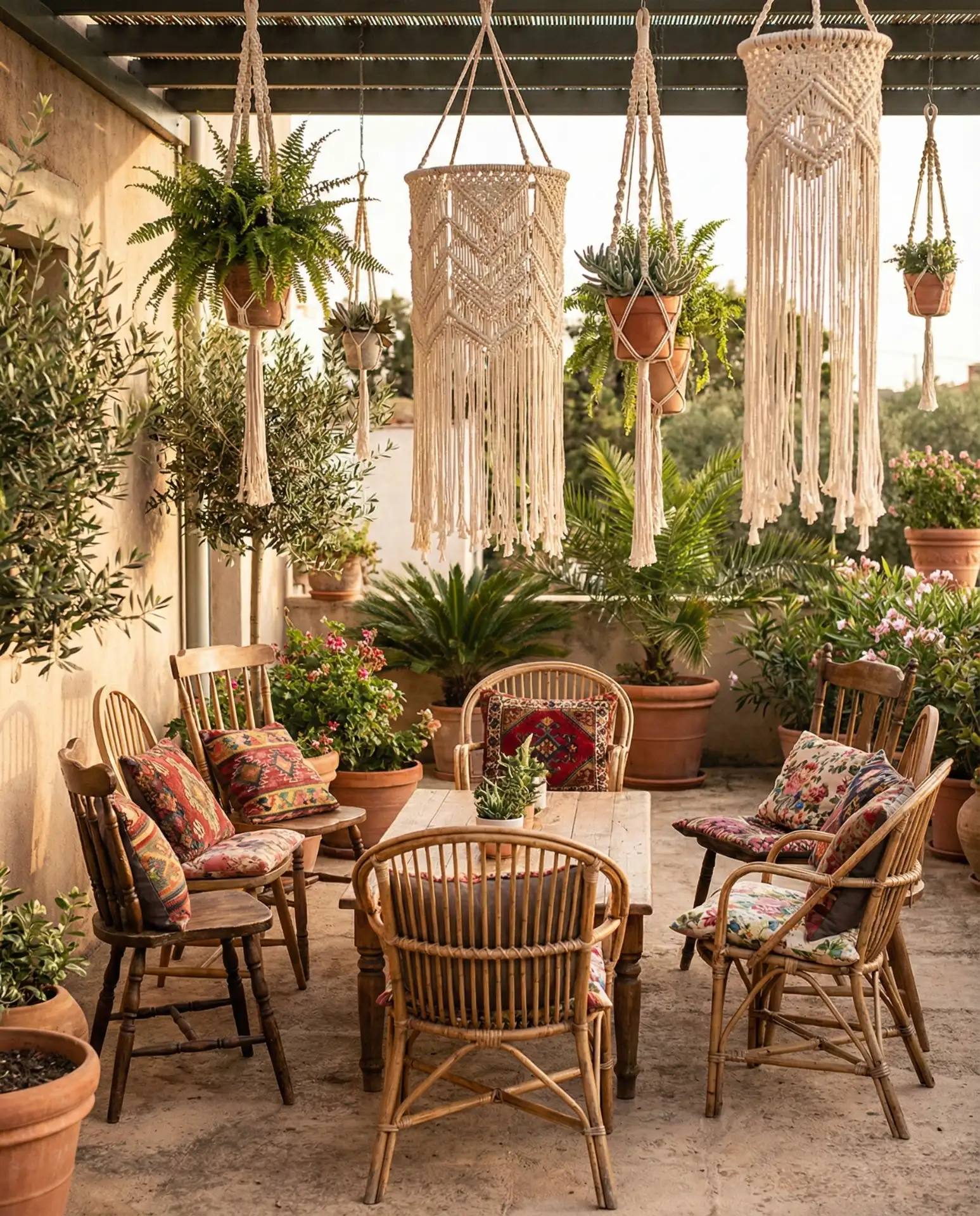
American lifestyle context: The boho-chic outdoor aesthetic has gained significant traction in California and the Southwest, where year-round outdoor living encourages investment in comfortable, stylish spaces. The key is balancing visual abundance with functional dining—ensure there’s still a stable surface for eating and that cushions are easily removable for cleaning. Outdoor-rated fabrics in bold prints resist fading while maintaining the eclectic vibe central to this look.
17. Semi-Enclosed Dining Pavilion
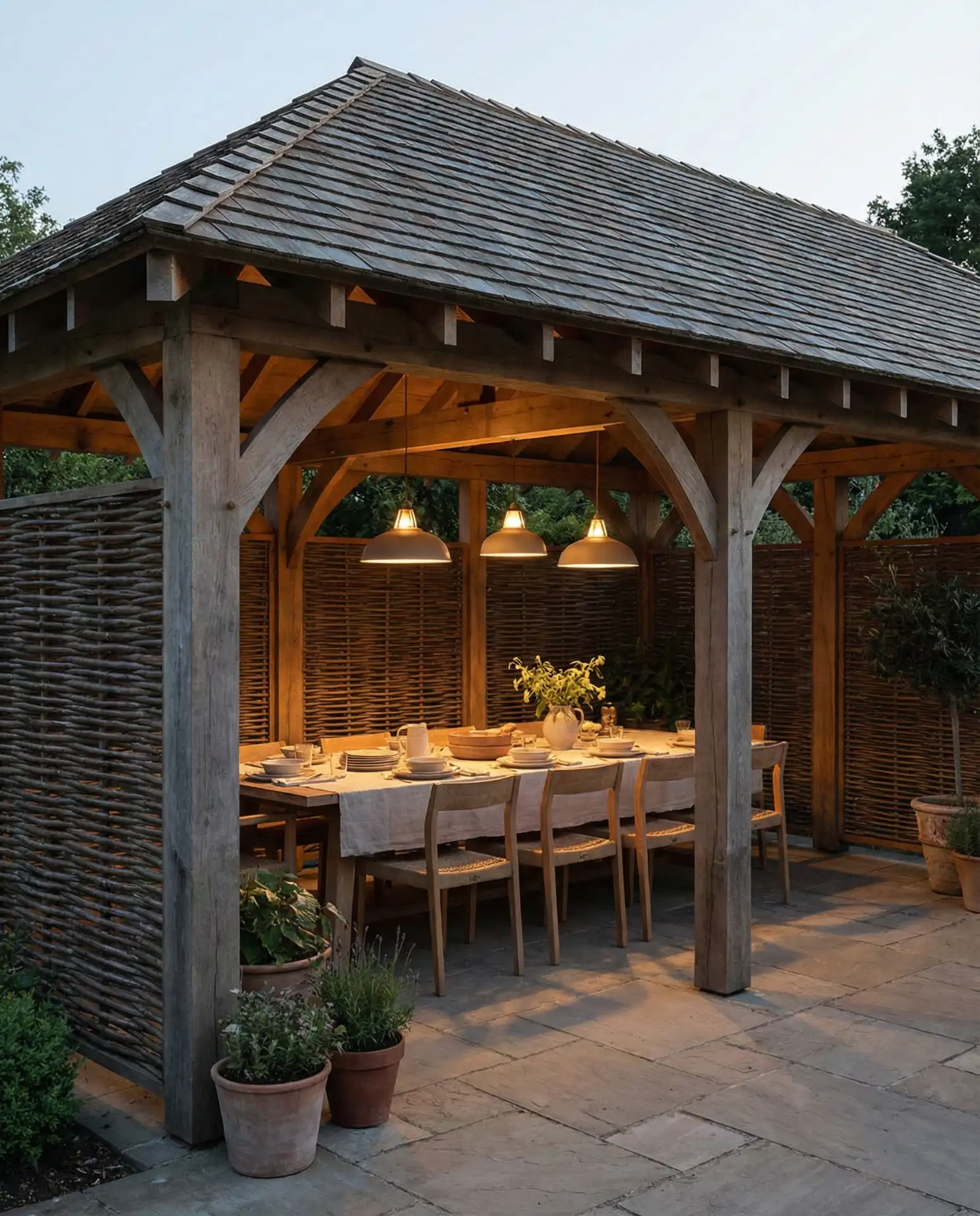
A semi-enclosed pavilion strikes the perfect balance between shelter and openness, offering protection from elements while maintaining connection to the landscape. Partial walls, half-height railings, or retractable screens define the space without closing it off completely. This design provides wind protection and privacy while preserving views and airflow. It’s an excellent solution for exposed lots or properties bordering neighbors where some screening is welcome. 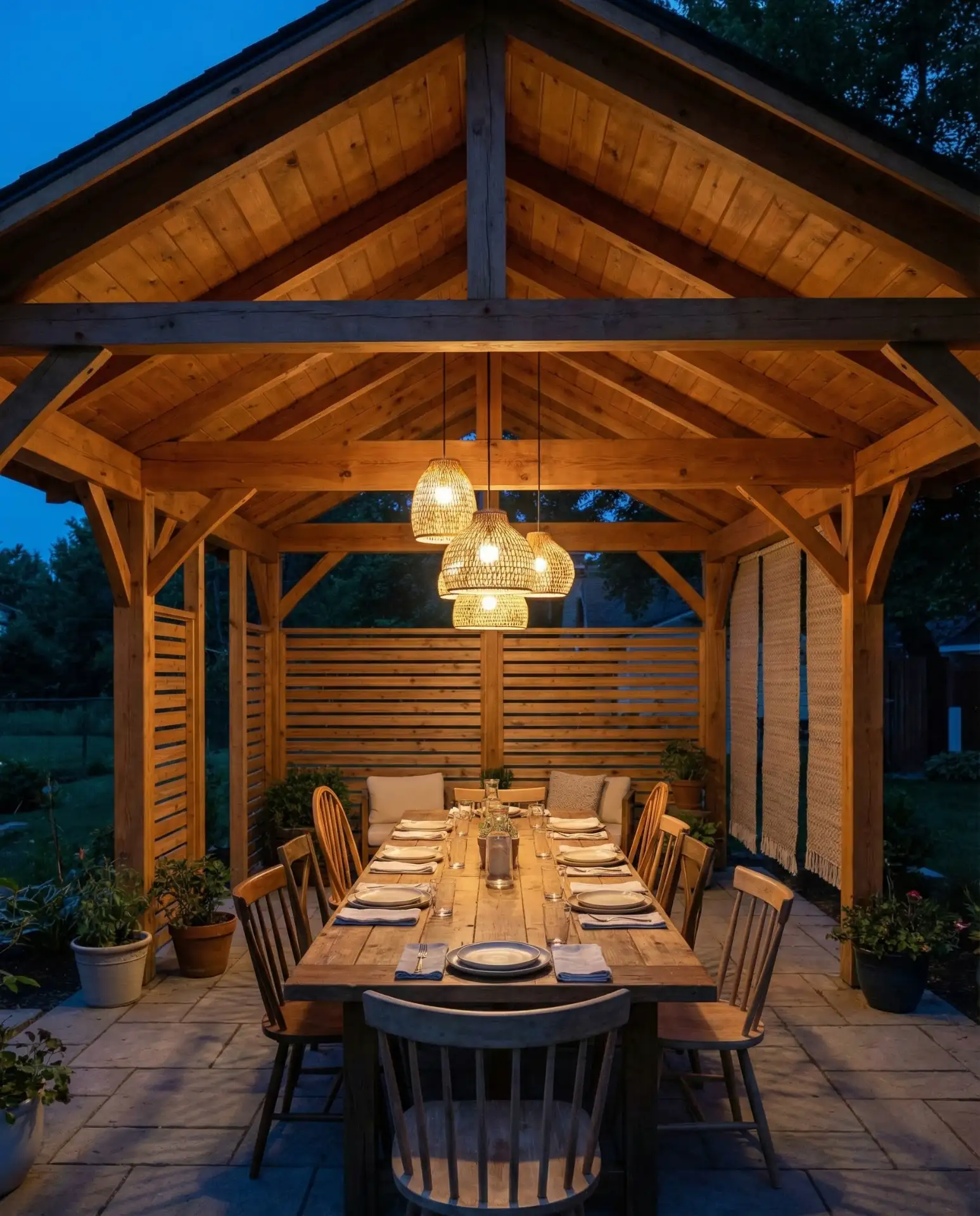
Micro anecdote: A couple in Colorado installed a three-sided pavilion to block prevailing winds while keeping mountain views open—now they comfortably dine outdoors well into October. The solid roof supports hanging lights and ceiling fans, while the open fourth side frames the landscape like a living painting. This configuration works beautifully on hilltops or anywhere wind is a factor but you don’t want to sacrifice the outdoor experience.
18. Minecraft-Inspired Pixelated Garden Dining
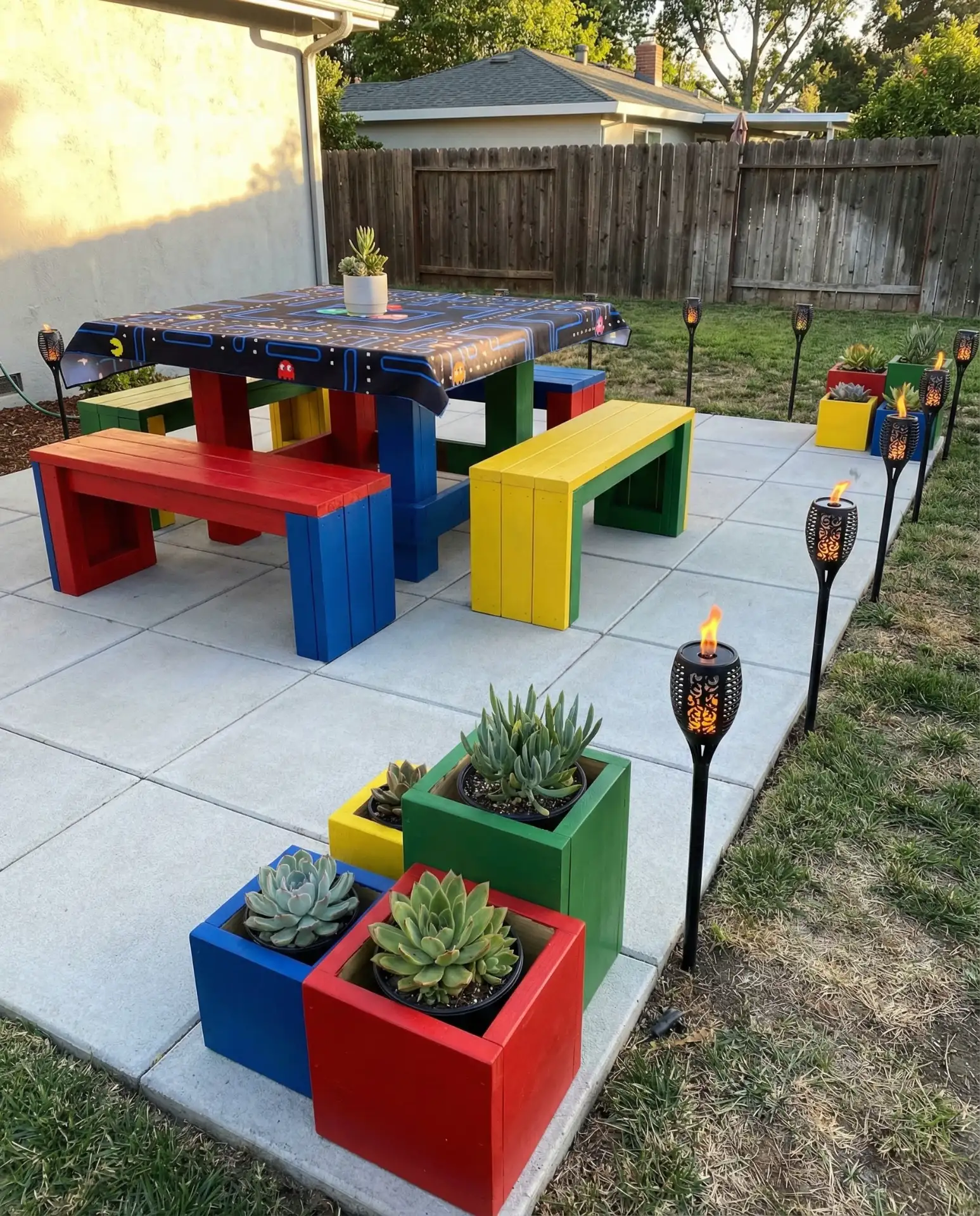
For families with gaming-enthusiast kids, a Minecraft-themed outdoor dining area brings beloved digital aesthetics into the real world. Think blocky wooden furniture, square planters arranged in grid patterns, and geometric pavers that mimic the game’s signature pixelated look. Primary colors, torch-style lighting, and creeper-green accents complete the playful theme. This approach transforms outdoor dining into an immersive experience that delights younger family members. 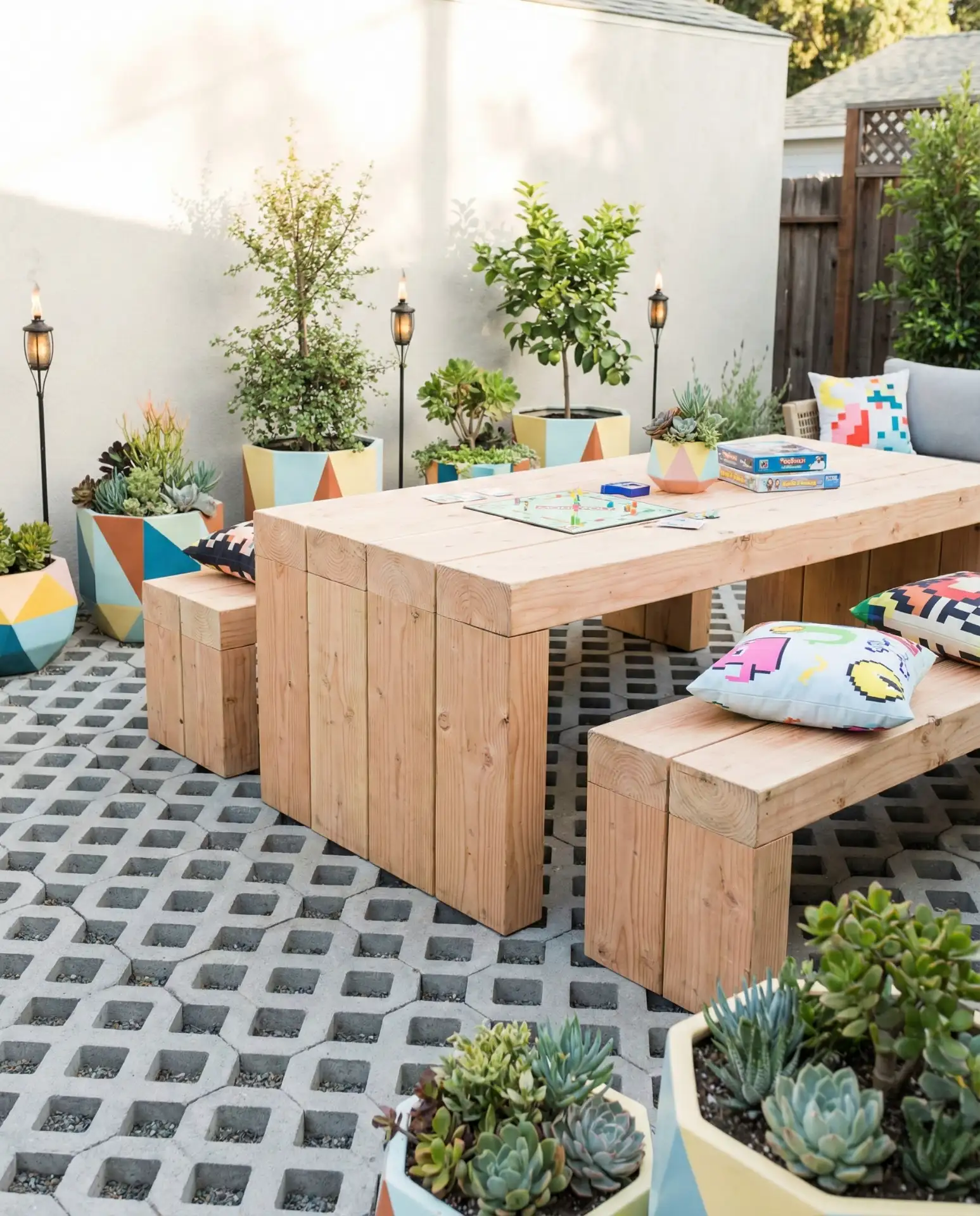
Real homeowner behavior: Parents often create these spaces as temporary setups for parties or summer breaks, but many find the blocky furniture surprisingly functional and leave it year-round. The key is using quality outdoor lumber—pressure-treated pine or cedar—cut into clean geometric shapes. Kids can help with design decisions, making this a family project that bridges screen time with outdoor appreciation. As tastes evolve, the simple geometric furniture adapts easily to other design styles.
19. Bloxburg-Style Modern Luxury Patio
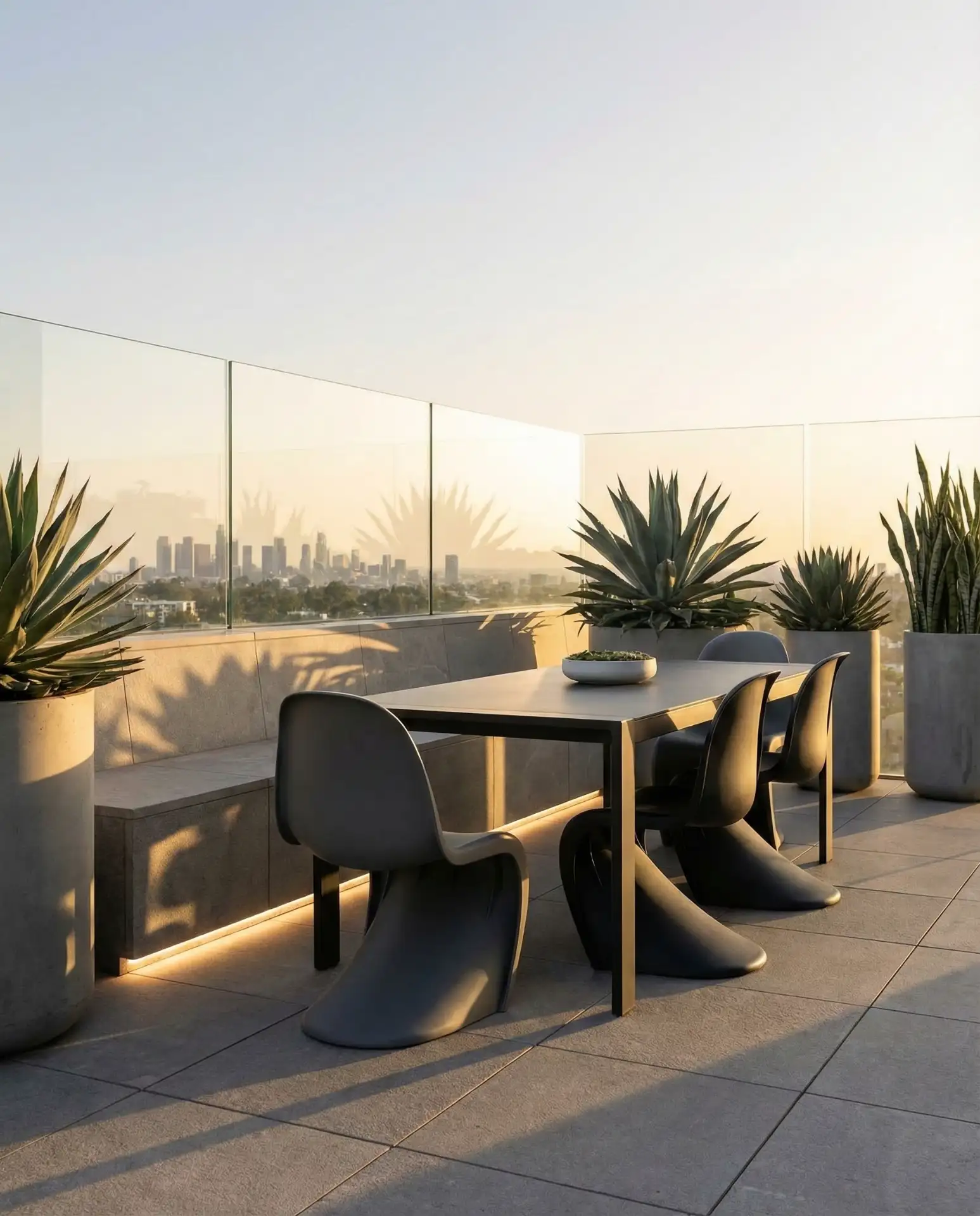
Taking inspiration from Bloxburg virtual builds, this modern luxury outdoor dining space emphasizes clean architectural lines, monochromatic color schemes, and high-end finishes. Think polished concrete, frameless glass panels, hidden lighting, and minimalist furniture in neutral tones. The aesthetic is aspirational and Instagram-ready, appealing to design-forward homeowners who want their outdoor space to reflect contemporary interior trends. 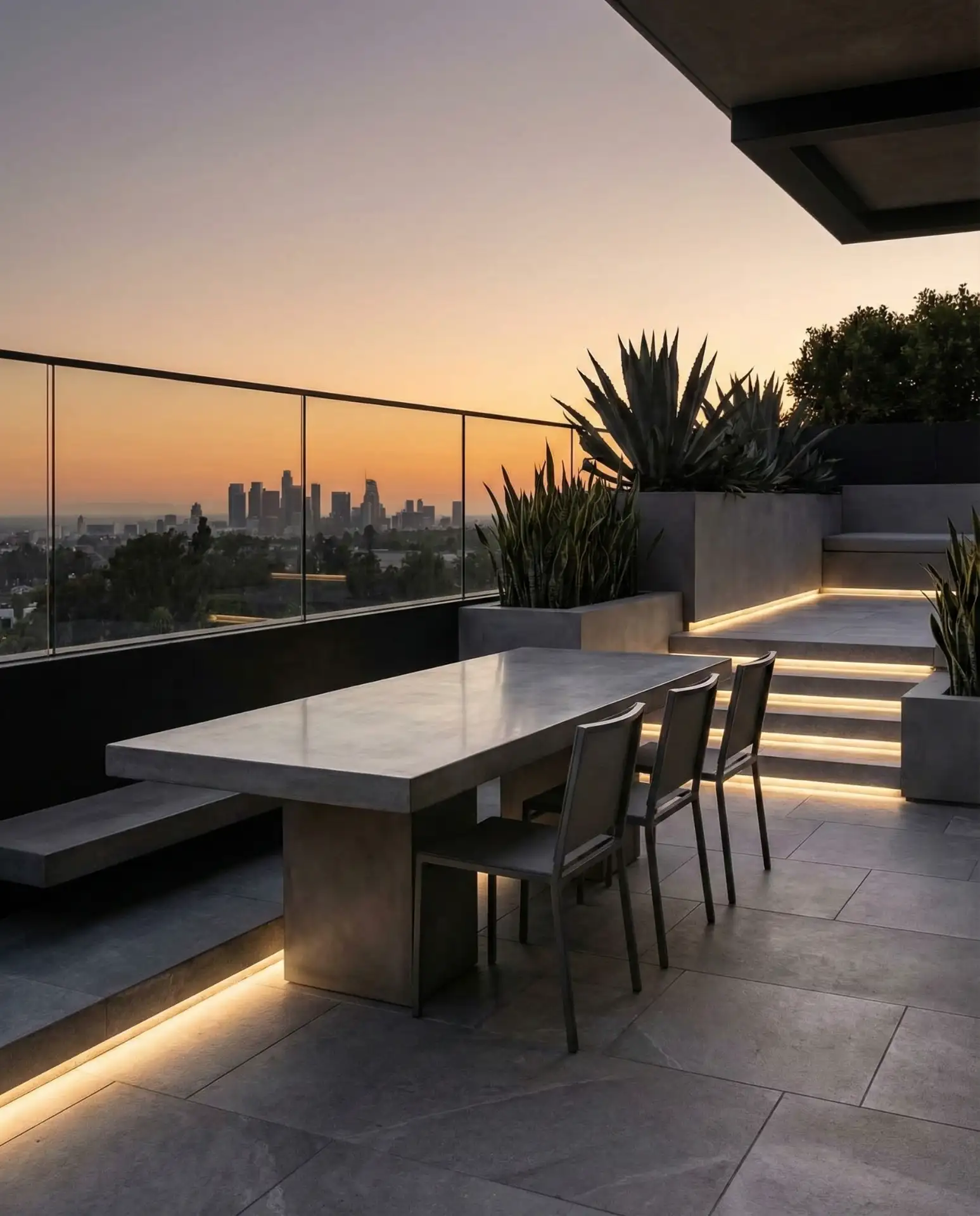
Budget angle: Achieving this polished look requires investment—expect $20,000–50,000 for professional installation including quality materials and integrated lighting systems. However, you can approximate the aesthetic on a smaller budget by focusing on one or two statement pieces: a designer dining set or custom concrete work. The key is restraint—fewer, higher-quality elements create more impact than cluttered spaces filled with lesser items.
20. Covered Ideas with Retractable Awning
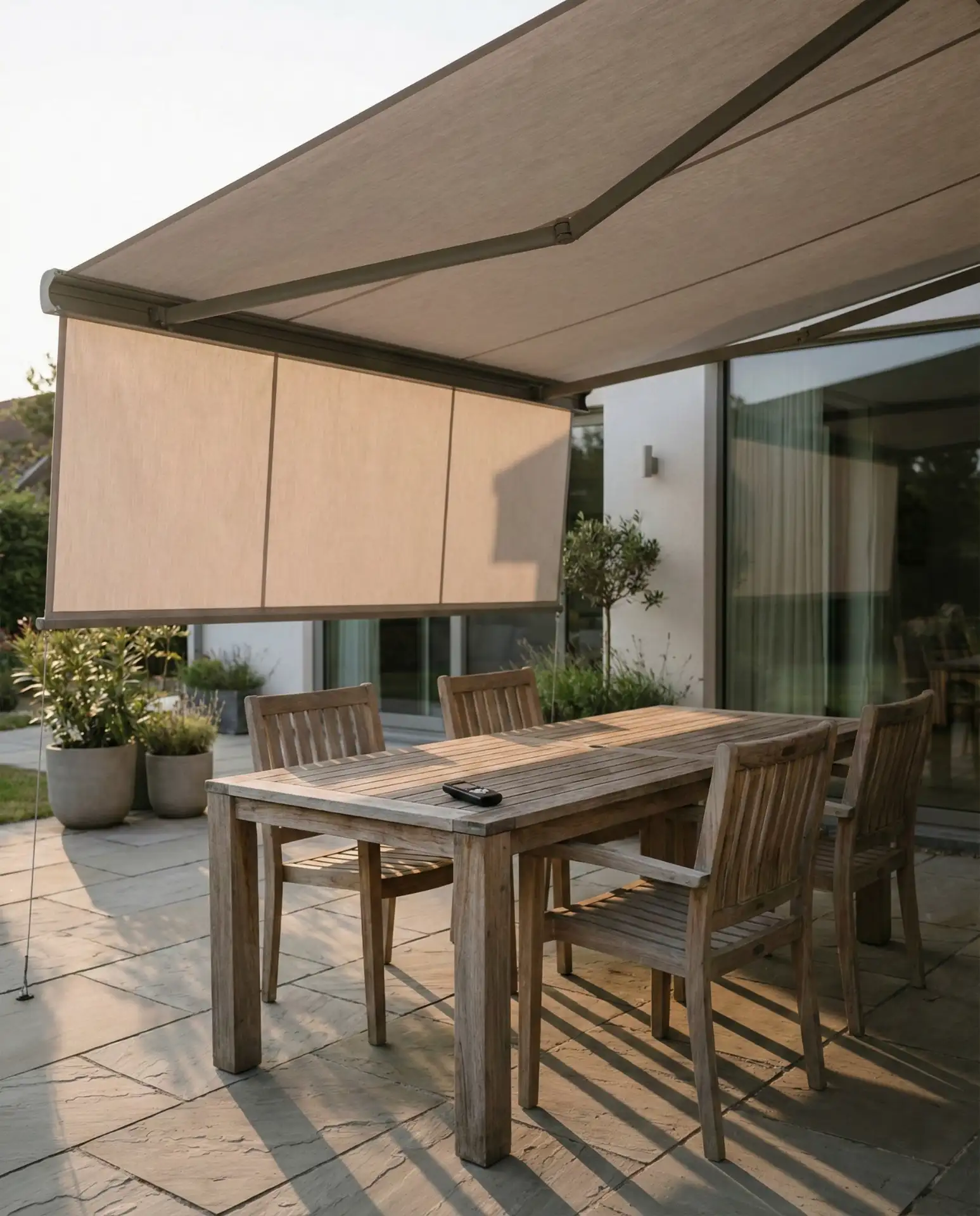
Motorized retractable awnings offer the ultimate flexibility for covered outdoor dining, extending on hot days and retracting to expose sunlight when desired. Modern systems include wind sensors that automatically retract during storms, protecting the fabric and mechanism. Ideas covered patios with awnings work beautifully in climates with variable weather, giving you control over sun exposure throughout the day. Choose solution-dyed acrylic fabrics that resist fading and mildew. 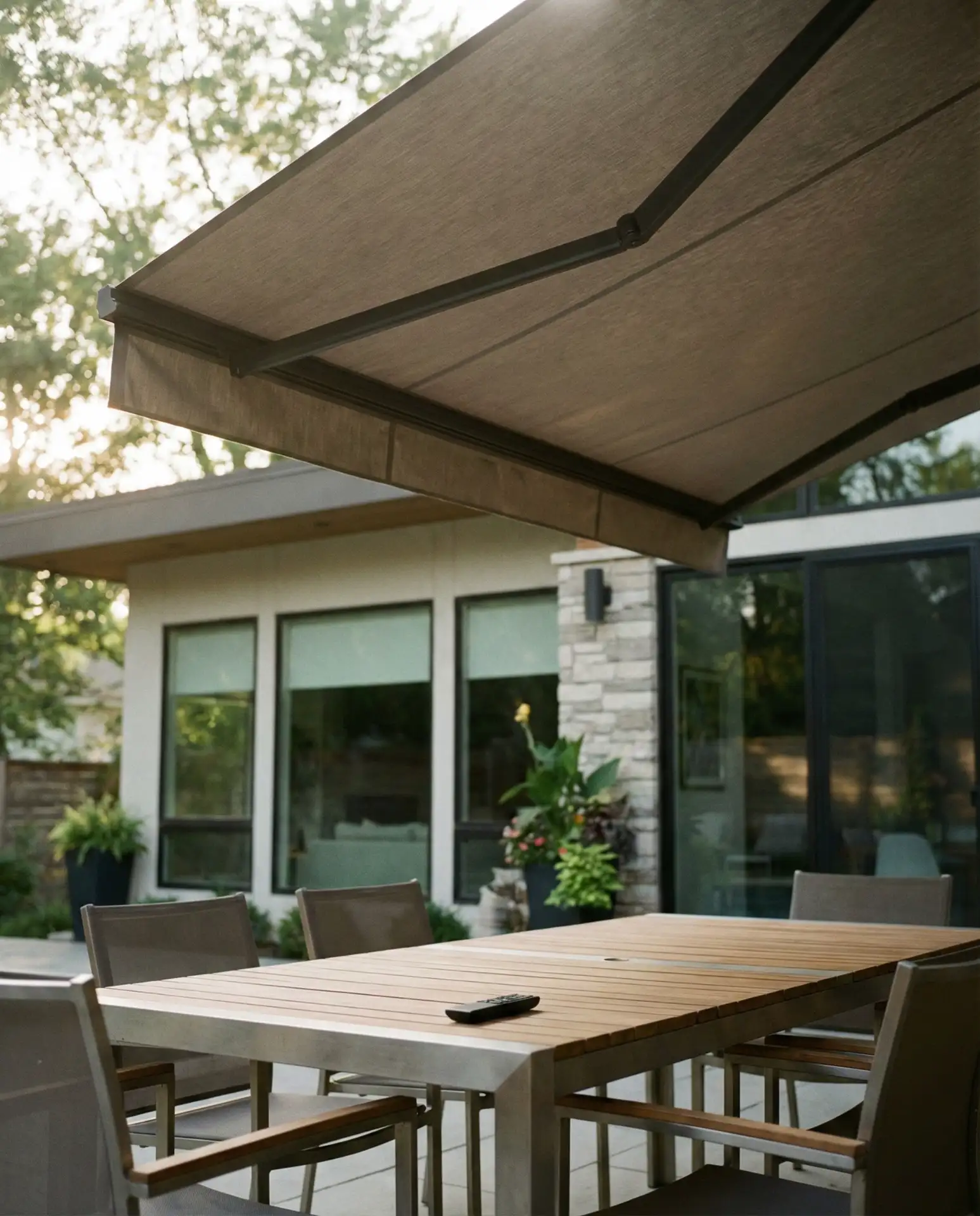
Expert-style commentary: Quality motorized awnings range from $2,000–6,000 depending on size and features, but they significantly increase your outdoor dining comfort and frequency of use. Manual crank versions cost about half as much but require physical effort to operate, which many homeowners find discouraging over time. Proper installation is critical—mounting to fascia alone often fails, so ensure brackets attach to structural beams. With correct setup, modern awnings last 10-15 years.
21. Ideas for Back Porch with Ceiling Fan
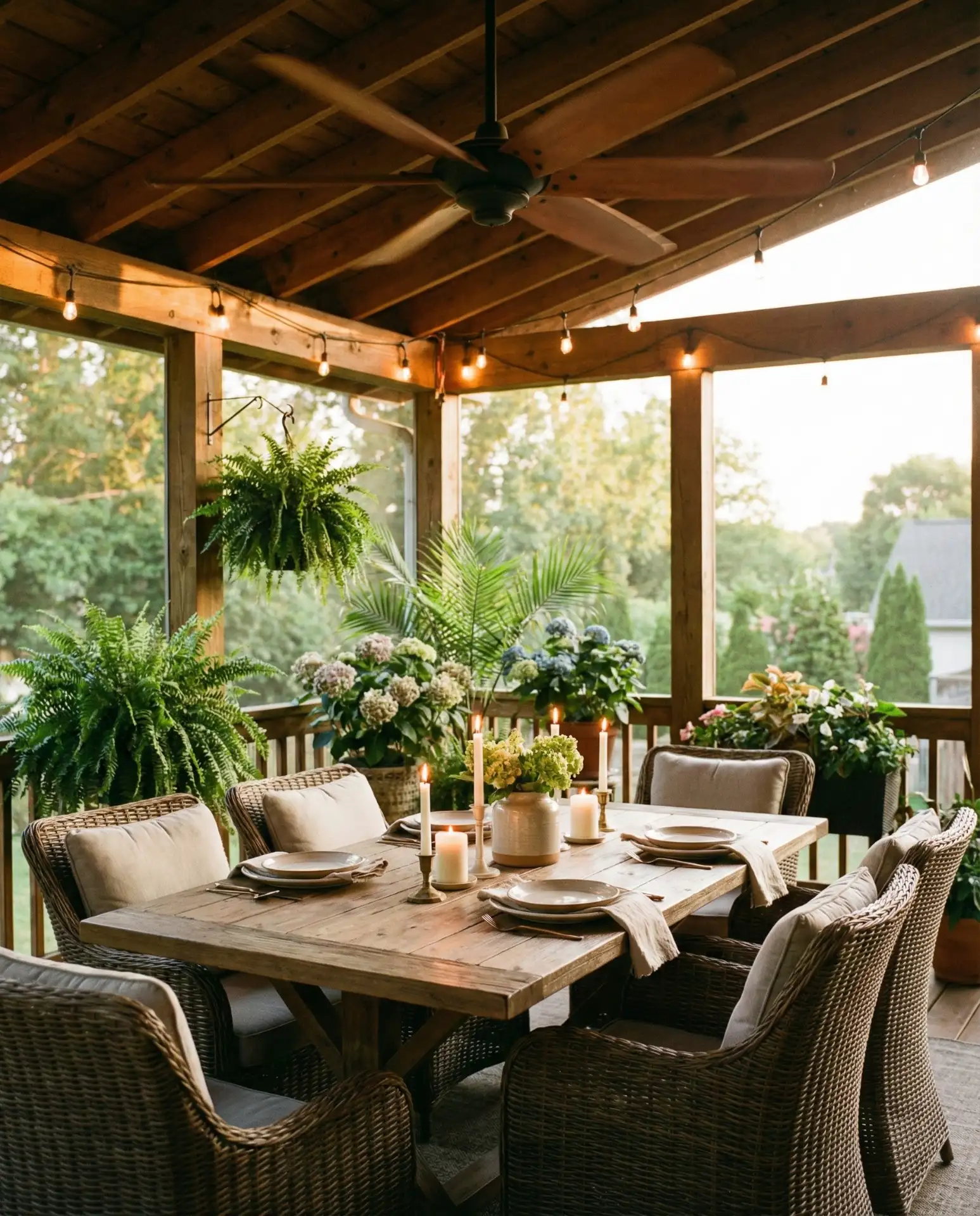
Among the best ideas for back porch dining is adding a ceiling fan for air circulation—it extends comfortable outdoor dining through hot, humid months. Damp-rated or wet-rated fans (depending on exposure) move air without the energy consumption of air conditioning. Combine with misting systems in extremely hot climates for even more cooling power. Patio fans now come in stylish designs that complement various aesthetics from farmhouse to contemporary. 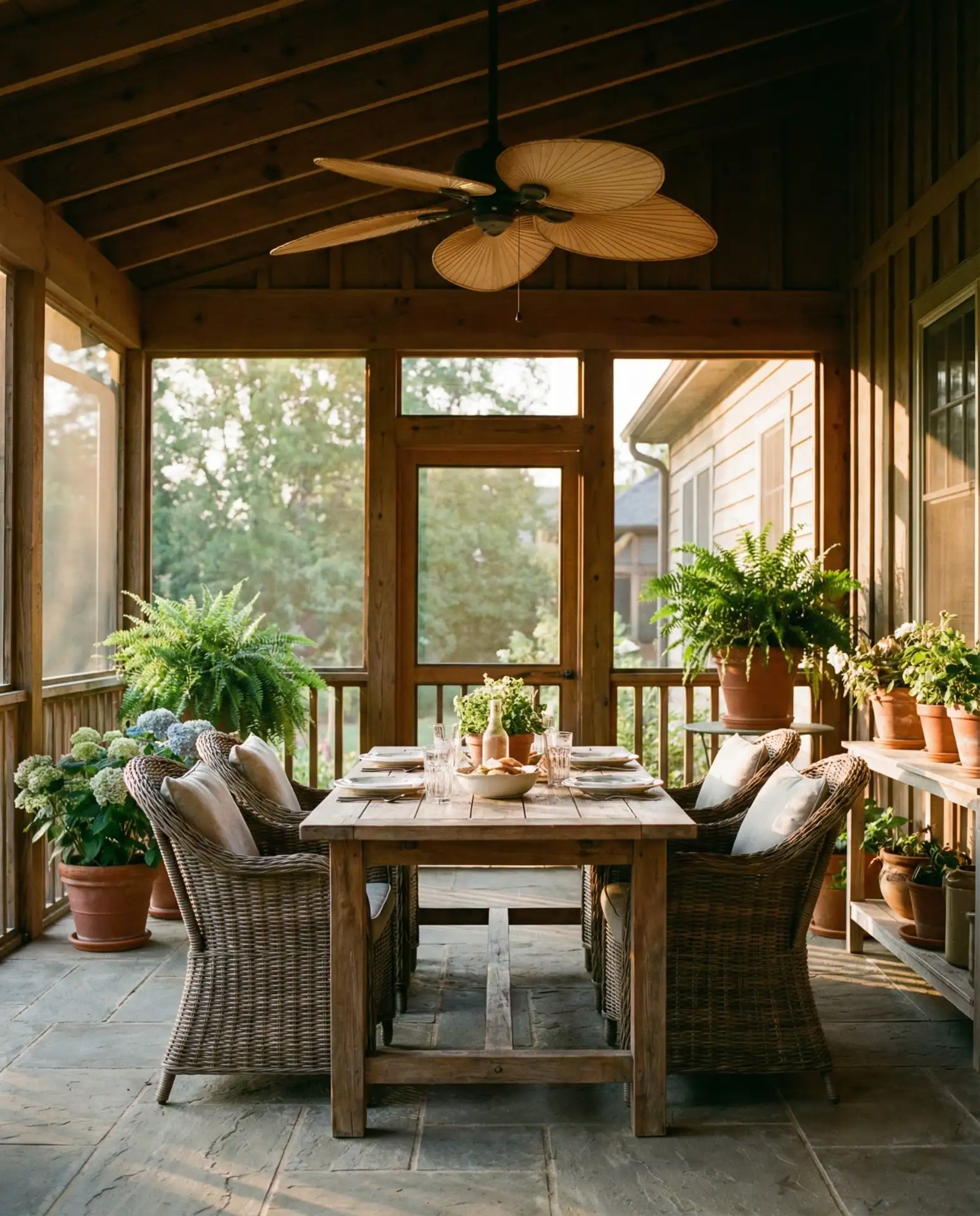
Practical insight: Install fans at least 7 feet above the floor and position them centrally over the dining table for maximum effect. In covered but open-air spaces, use damp-rated fans; for fully exposed areas, wet-rated versions are essential. The perceived cooling effect from air movement can make temperatures feel 5-10 degrees cooler, making summer evenings dramatically more pleasant. This simple upgrade often becomes the most-used feature of an outdoor dining space.
22. Patio Design with Integrated Planters
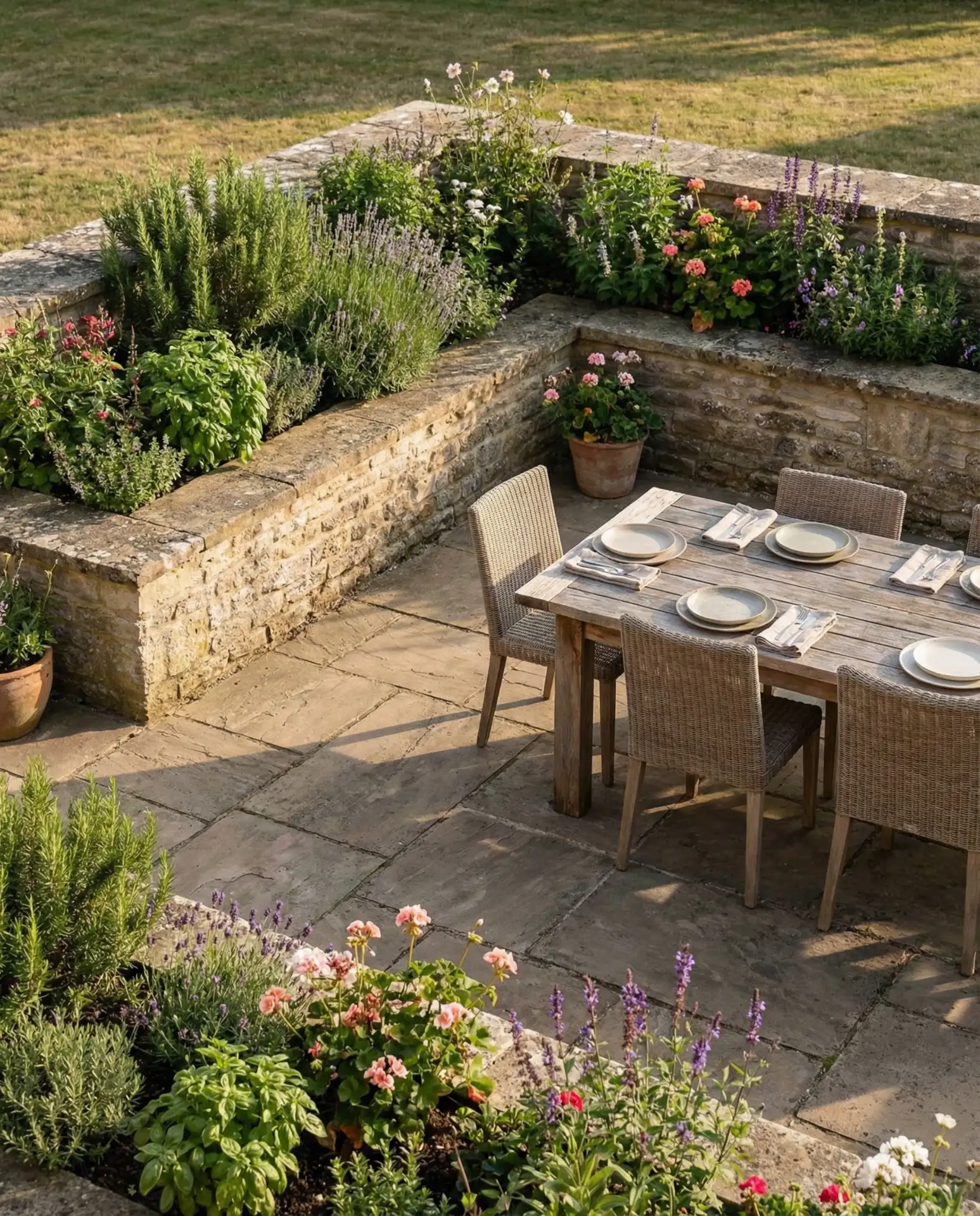
Built-in planters around your patio dining area create natural boundaries while softening hard surfaces with greenery. Design these planting beds at various heights for visual interest—some at ground level for shrubs and grasses, others raised to table height for herbs you can snip while cooking. This approach eliminates the need for portable pots that tip over and require constant watering. Integrate seating walls with planters for a custom, cohesive look. 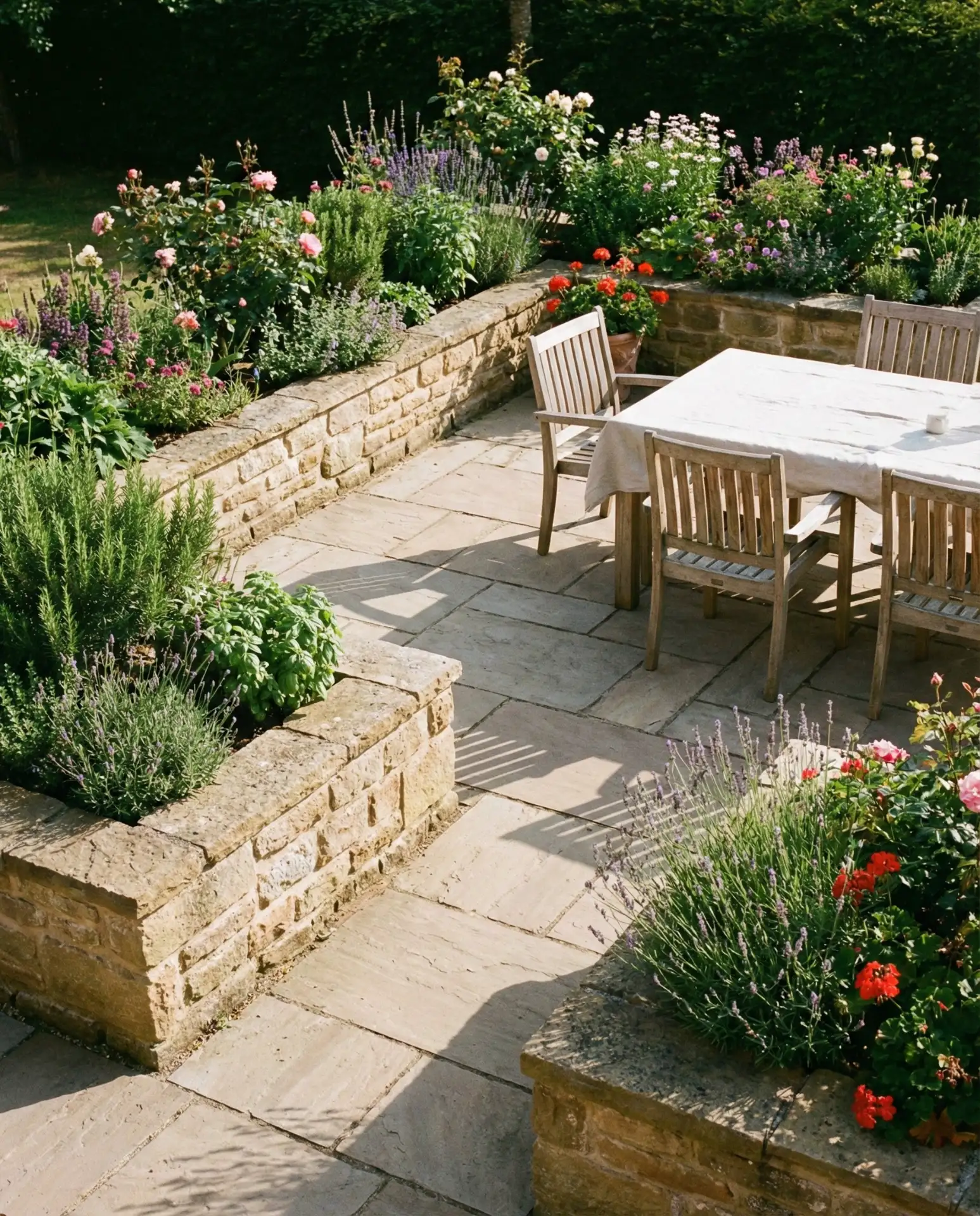
Where it works best: Properties undergoing new patio construction or major renovations where planters can be incorporated from the start. Built-in beds provide better root space and insulation than containers, meaning healthier plants with less maintenance. Include drainage outlets during construction to prevent water accumulation. The investment adds significantly to the finished look—landscaping integrated with hardscaping always appears more polished and intentional than furniture simply placed on a bare patio surface.
Conclusion
Your outdoor dining area deserves as much thought and care as any room inside your home—after all, it’s where memories are made over shared meals under open skies. Whether you’re drawn to rustic simplicity or modern sophistication, these ideas offer a starting point for creating a space that reflects your style and enhances your lifestyle. What’s your favorite outdoor dining setup? Share your thoughts and photos in the comments below—we’d love to see how you’re transforming your outdoor spaces for 2026!