Open floor plans have quietly become one of the most searched design topics on Pinterest—and for good reason. As more Americans work from home, host family gatherings, and look for ways to make smaller spaces feel larger, the connected living room and kitchen layout is having a serious moment. Whether you’re renovating a century-old bungalow or starting fresh in a new-build apartment, the right open floor plan can completely transform how a home feels and functions. In this article, we’re rounding up the freshest ideas for open floor plan living rooms and kitchens heading into 2026 — from cozy farmhouse styles to sleek mid-century modern setups—with practical tips for every budget and space size.
1. The Warm Neutral Anchor
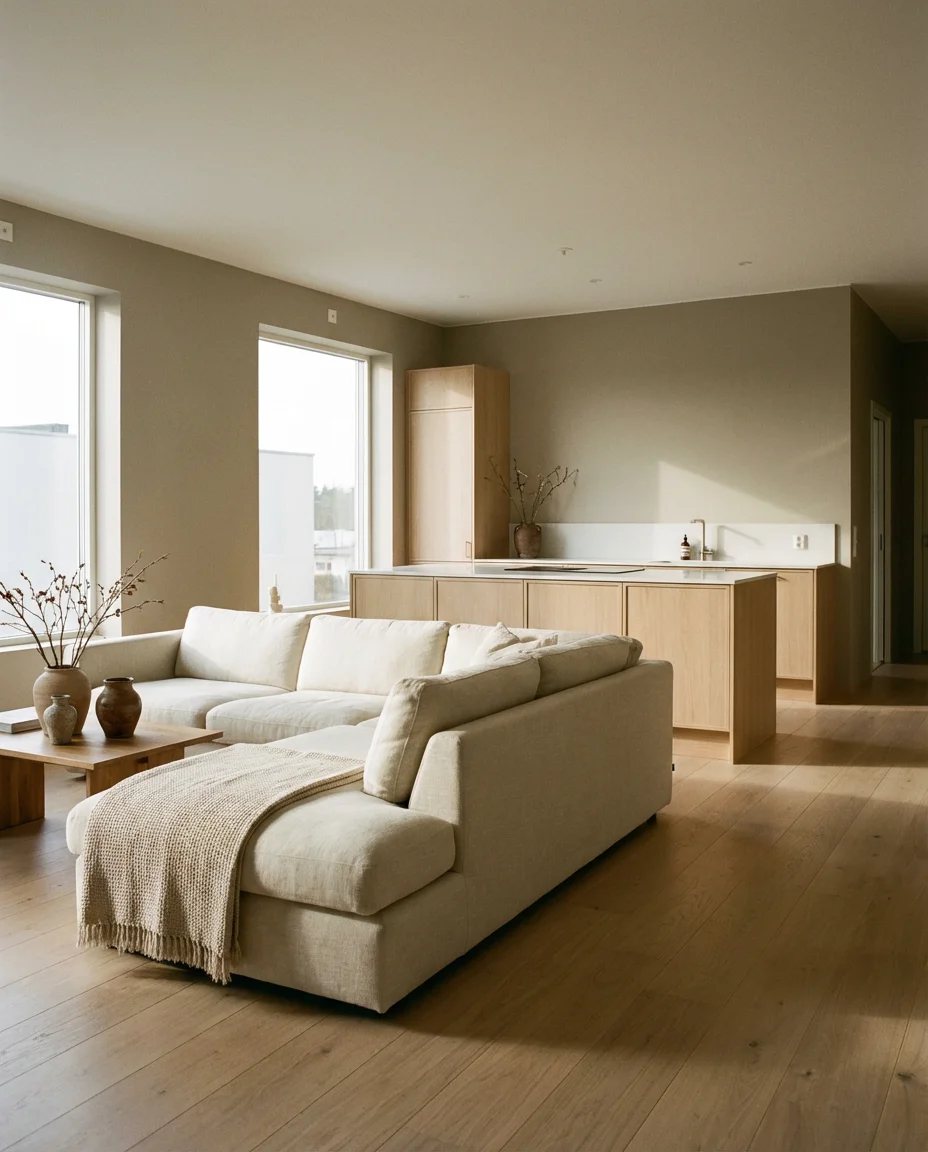
There’s something grounding about a palette that refuses to shout. This approach leans into paint wall colors like warm greige, creamy ivory, and soft clay to create visual continuity between the kitchen cabinetry and the living area beyond. It works especially well in small, modern interior design setups where keeping everything tonal prevents the eye from chopping up the room. The result is a space that reads as intentional and cohesive rather than unfinished.
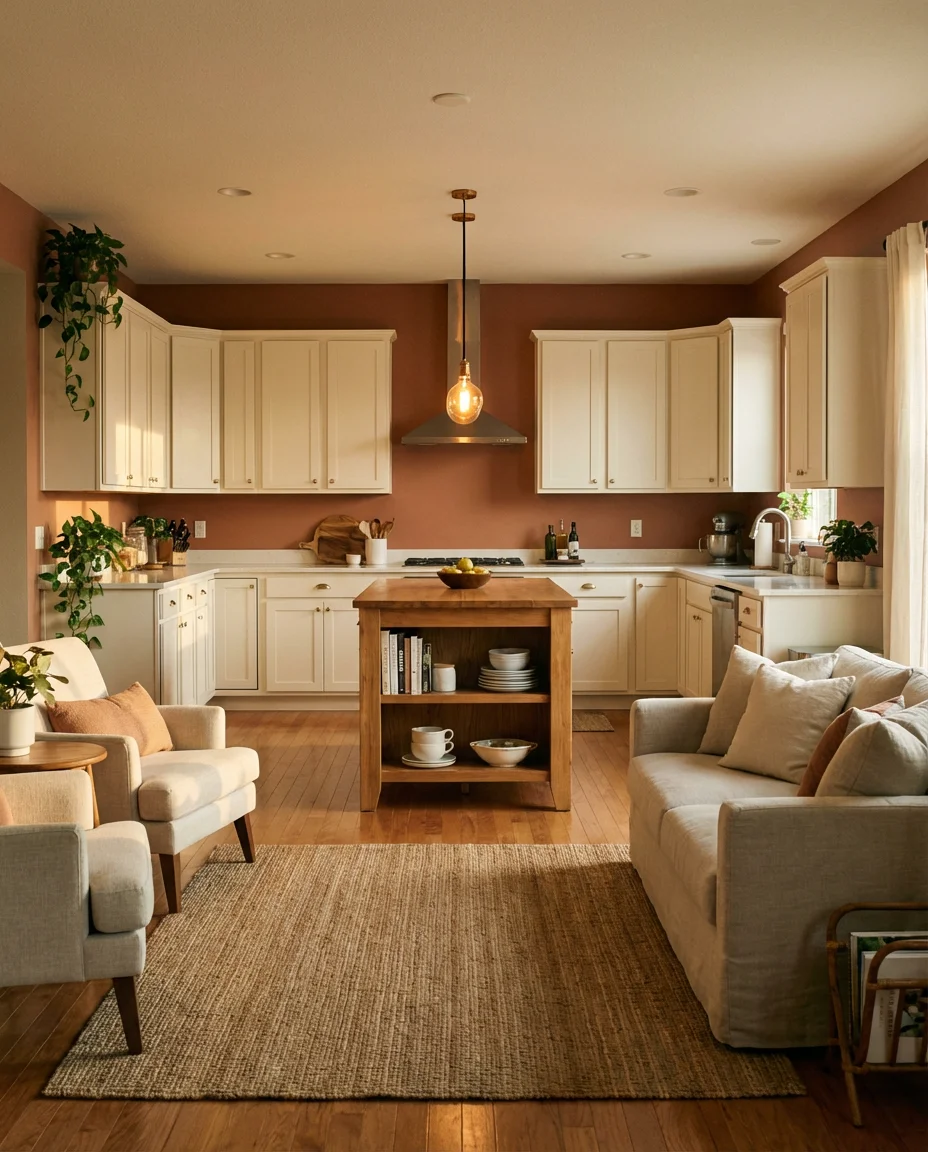
If you’re just starting a renovation and feel overwhelmed by choices, starting with a warm neutral base is one of the most forgiving decisions you can make. You can always layer in color through textiles and art later—but the bones of the space will always feel calm and complete. Interior designers consistently recommend this as a starting point for open-plan renovations because it lowers the visual noise without sacrificing personality.
2. The Kitchen Island That Does It All
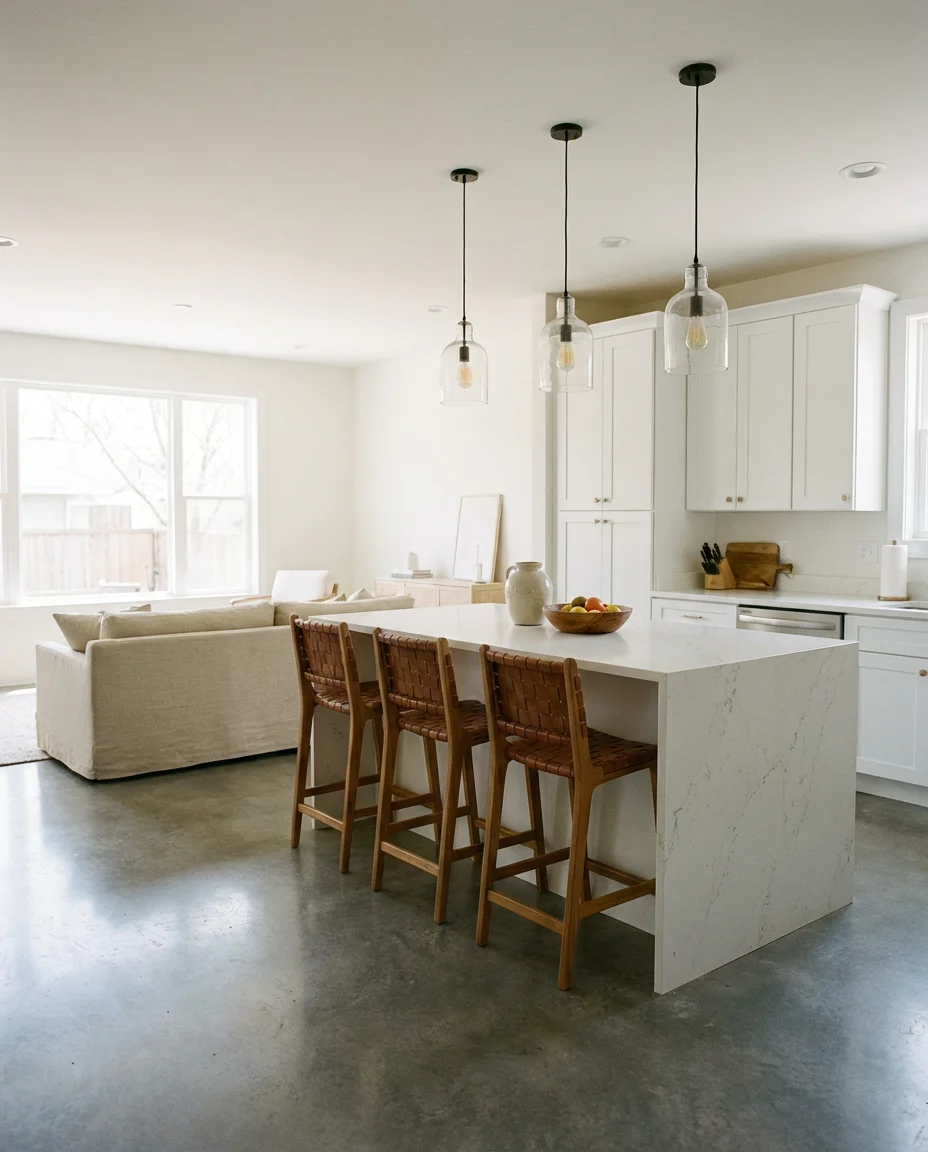
In a truly open floor plan, the kitchen island isn’t just a prep station—it’s the unofficial dividing line between cooking and living. When you’re working with a small apartment or any layout where square footage is precious, a well-placed island does double duty as a dining room table substitute, a breakfast bar, and a visual anchor for the whole space. Waterfall edges in quartz or butcher block are especially popular right now for this exact setup.
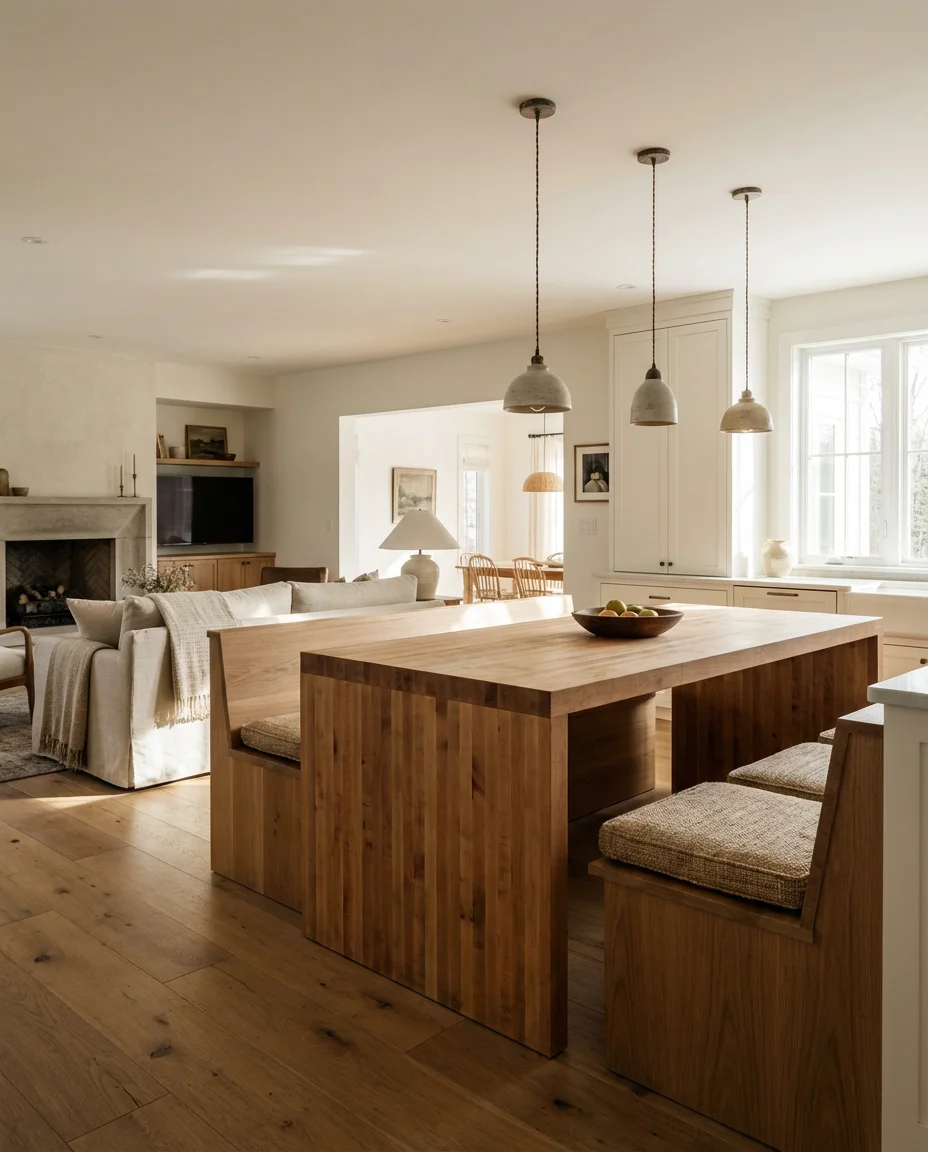
One common mistake homeowners make is sizing the island too large for the space. A rule of thumb designers swear by: leave at least 42 inches of clearance on all walkable sides. Going bigger might feel exciting in a showroom, but in reality it creates a cramped traffic flow that makes the whole open-plan concept feel counterproductive. When in doubt, size down and add a prep cart instead.
3. Tile and Hardwood Transitions That Actually Work
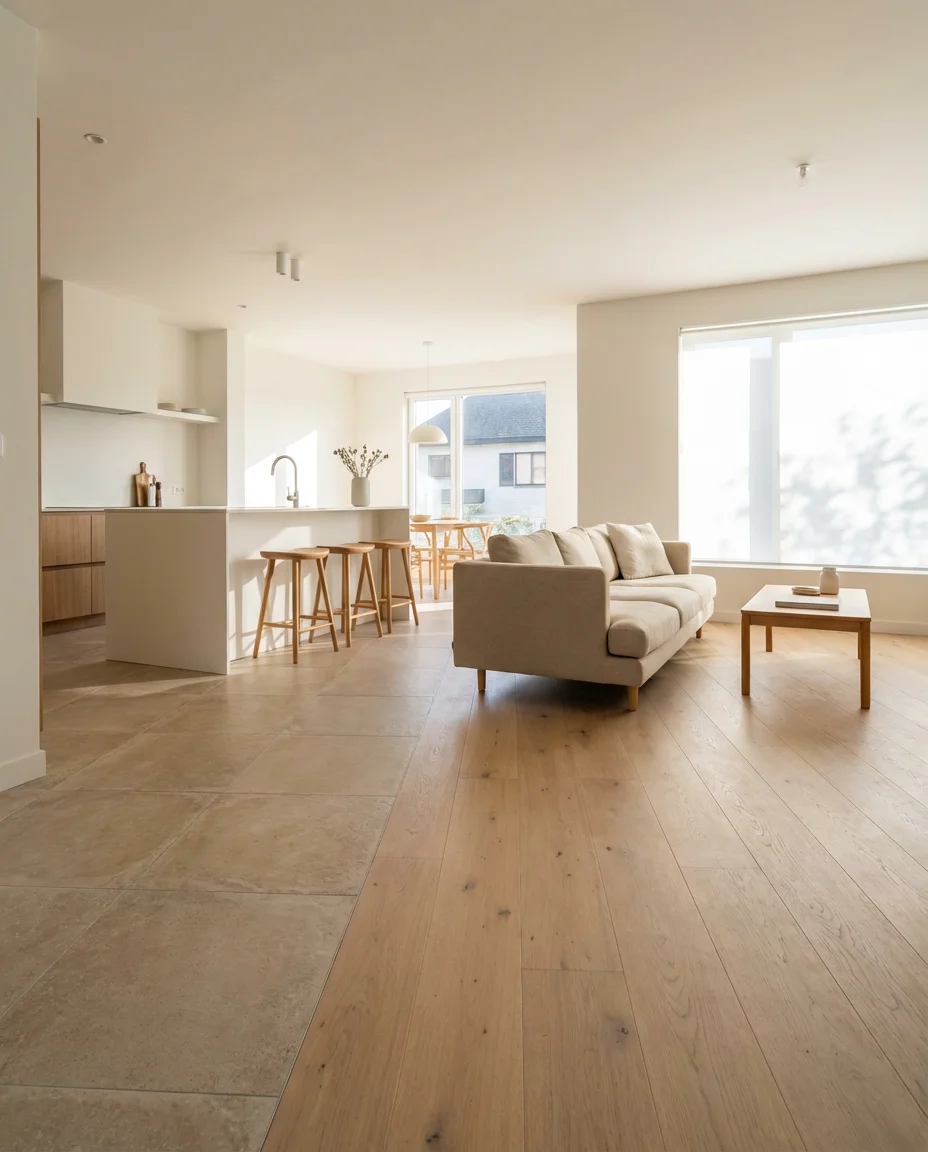
One of the most debated topics in open-plan design is what to do at the floor transition between the kitchen and living room. The good news: tile and hardwood can absolutely coexist beautifully when the tones are matched thoughtfully. A warm-toned porcelain tile that echoes the color of white oak floors creates a flow that feels deliberate, not patchwork. This is one of those decisions that quietly defines how polished—or disjointed—an entire floor plan feels.
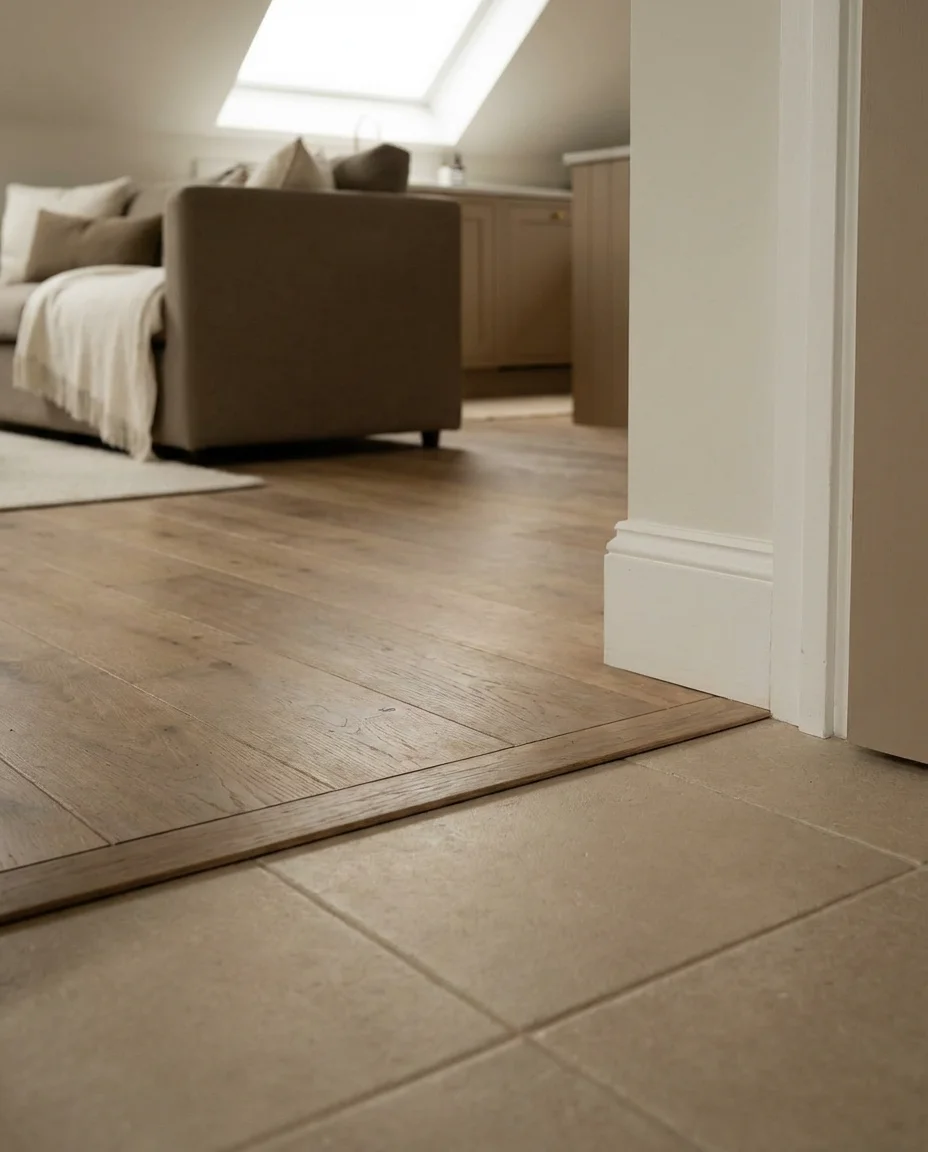
This works best in homes where the kitchen and living areas receive similar natural light, which helps both flooring materials read as a unified palette rather than two separate rooms awkwardly joined together. In north-facing rooms, opt for slightly warmer tile tones to compensate for the cooler ambient light—otherwise the tile can read as cold and disconnected from the wood beside it.
4. Dark Brown Cabinets With an Open Living Flow
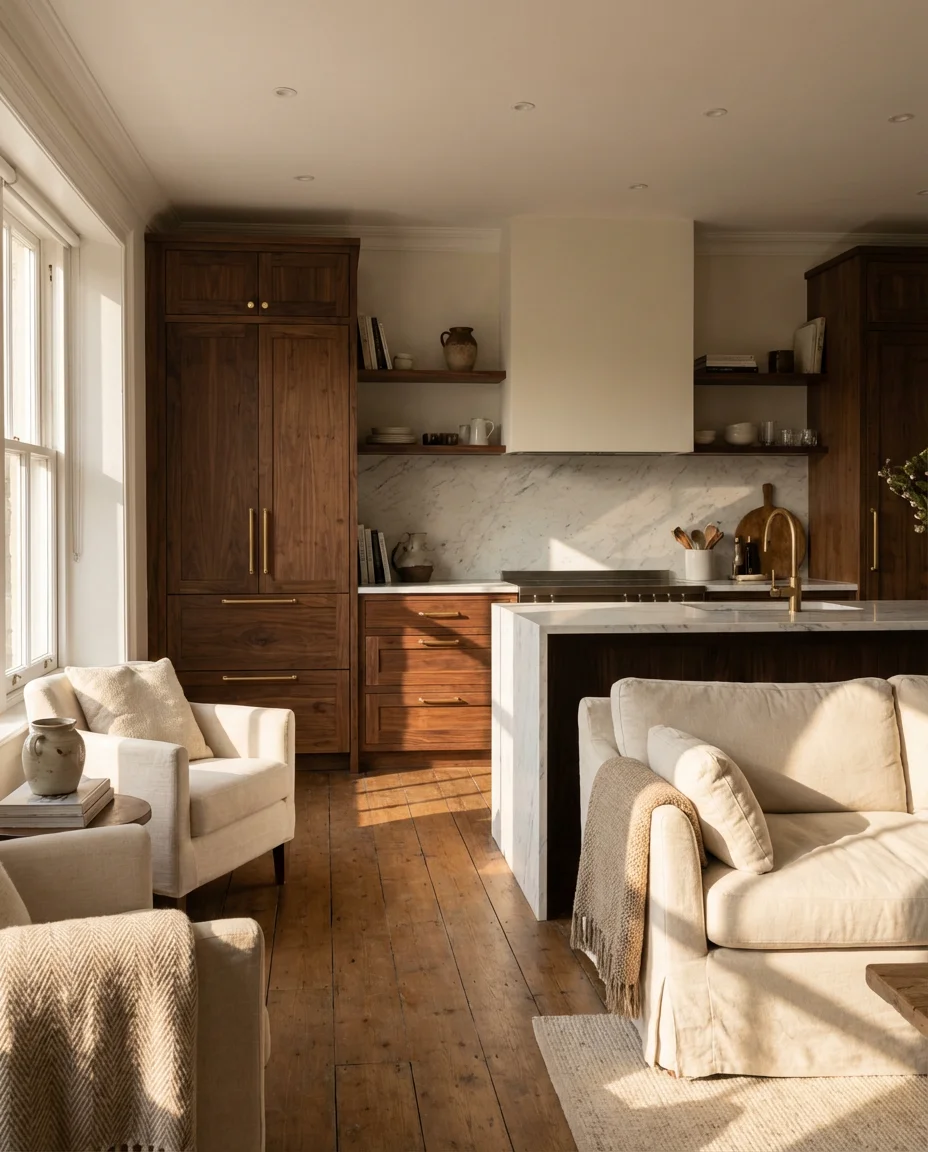
Bold cabinet choices used to feel risky in open-plan kitchens—the fear being that dark cabinetry would eat the light and make everything feel heavy. But dark brown cabinets are experiencing a genuine renaissance in 2026, especially when balanced against light-soaked living rooms with paint wall colors in soft white or warm linen. The contrast actually creates a beautiful anchor for the kitchen zone without blocking the visual openness of the space.
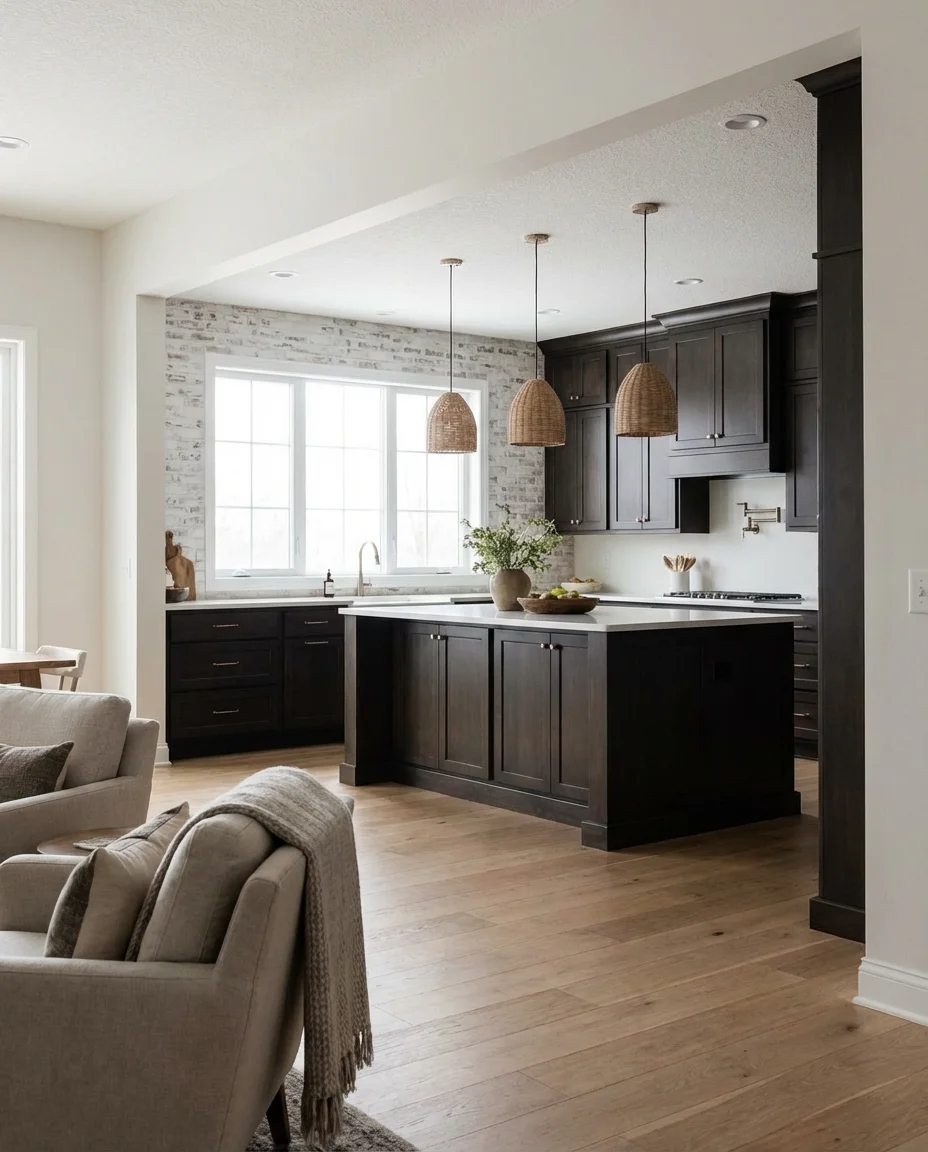
A homeowner in Austin who made this switch described it as “the most dramatic single change we ever made—the kitchen suddenly looked like it belonged in a magazine.” The key to making dark cabinets work in an open plan is maintaining light walls and floors everywhere else, letting the cabinetry function as intentional contrast rather than an accidental shadow.
5. Mid-Century Modern Open Plan With Retro Soul
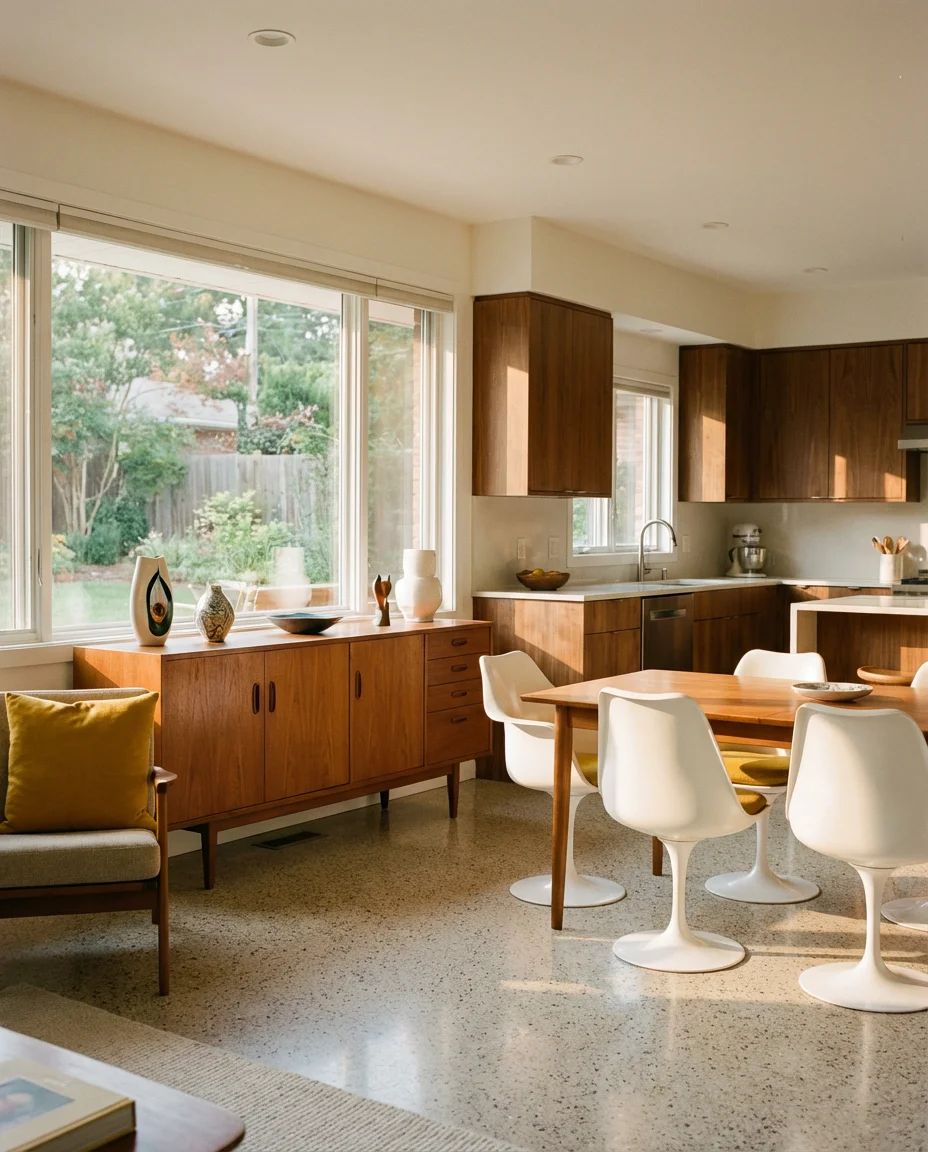
Few design styles translate as naturally into an open floor plan as mid-century modern. The architecture of the era was practically invented for the connected kitchen-living concept—low furniture, clean sightlines, and a seamless indoor-outdoor flow. Teak sideboards, tulip-base dining chairs, and walnut accents bring that era’s warmth into 2026 without feeling like a costume. The aesthetic is timeless precisely because it never tried too hard.
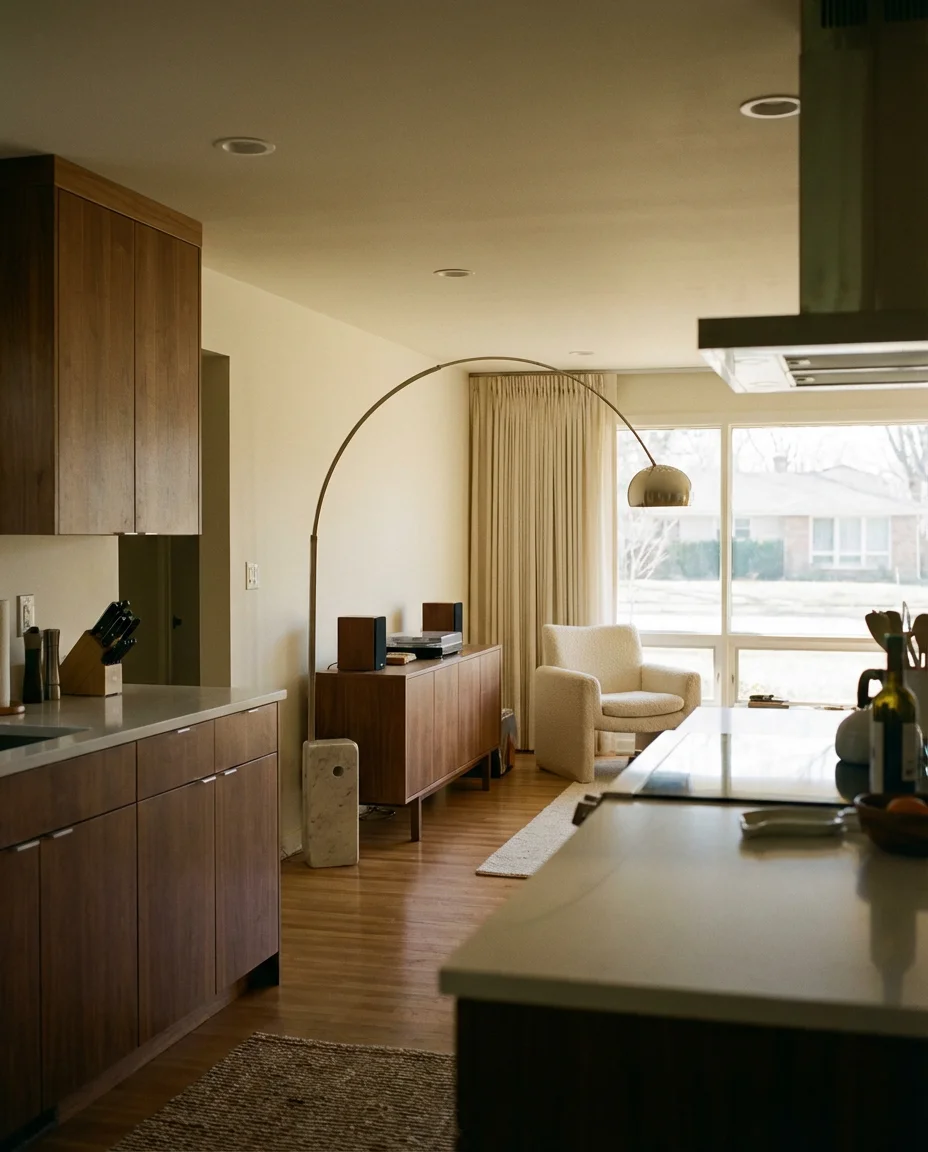
This style works best in ranch-style homes, split-levels, or any 1950s–1970s era construction where the bones already lean in this direction. If you’re working with a newer build, introducing MCM through lighting fixtures and furniture (rather than architecture) is the most budget-conscious approach—a good pendant light and a walnut dining table can shift a room’s entire personality for under $800.
6. Farmhouse Rustic Meets Modern Function
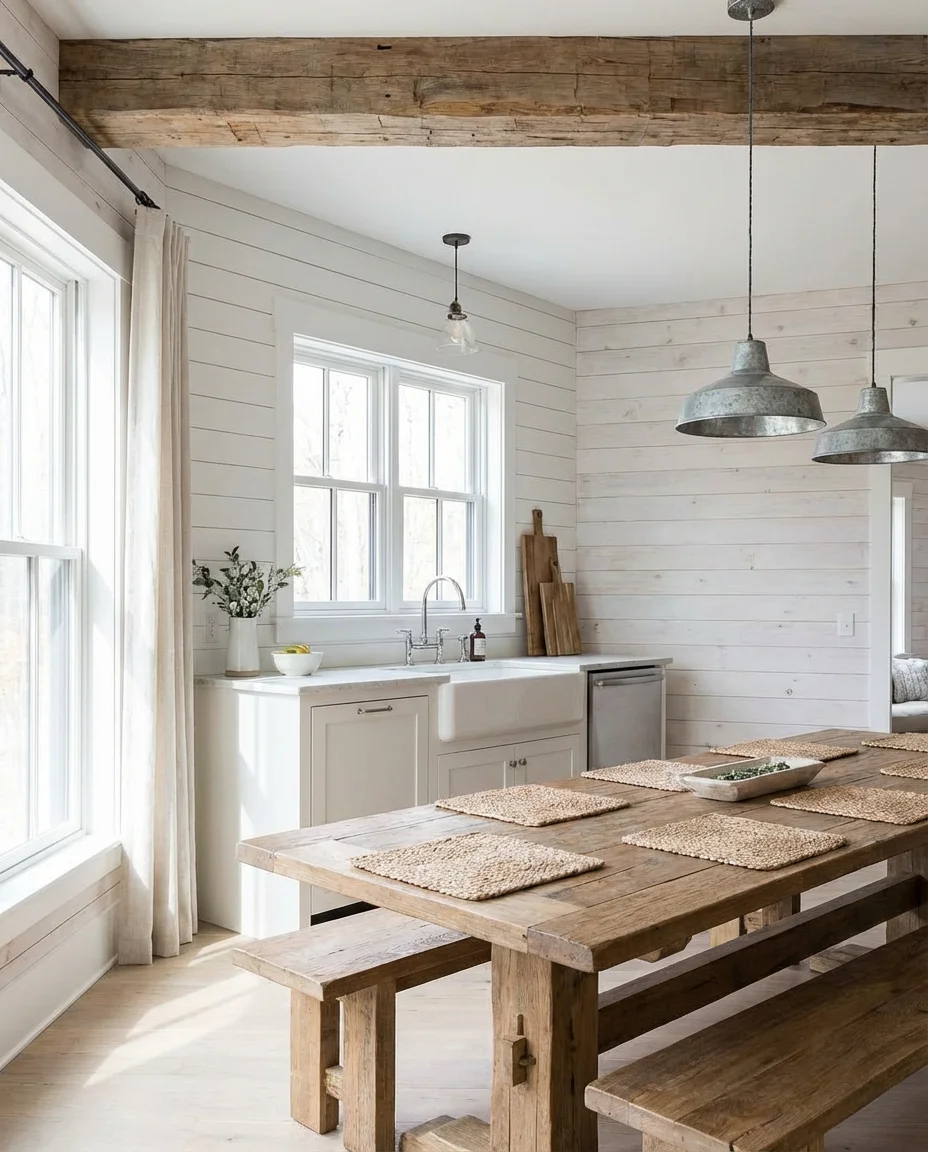
The farmhouse rustic open floor plan continues to dominate Pinterest boards—and the reason is simple: it feels like home. Shiplap walls, exposed wood beams, and apron-front sinks pair naturally with the openness of a combined kitchen-living layout. Farmhouse dining tables in chunky reclaimed oak serve as natural connectors between the two zones, giving the space a lived-in, organic quality that newer design trends sometimes lack.
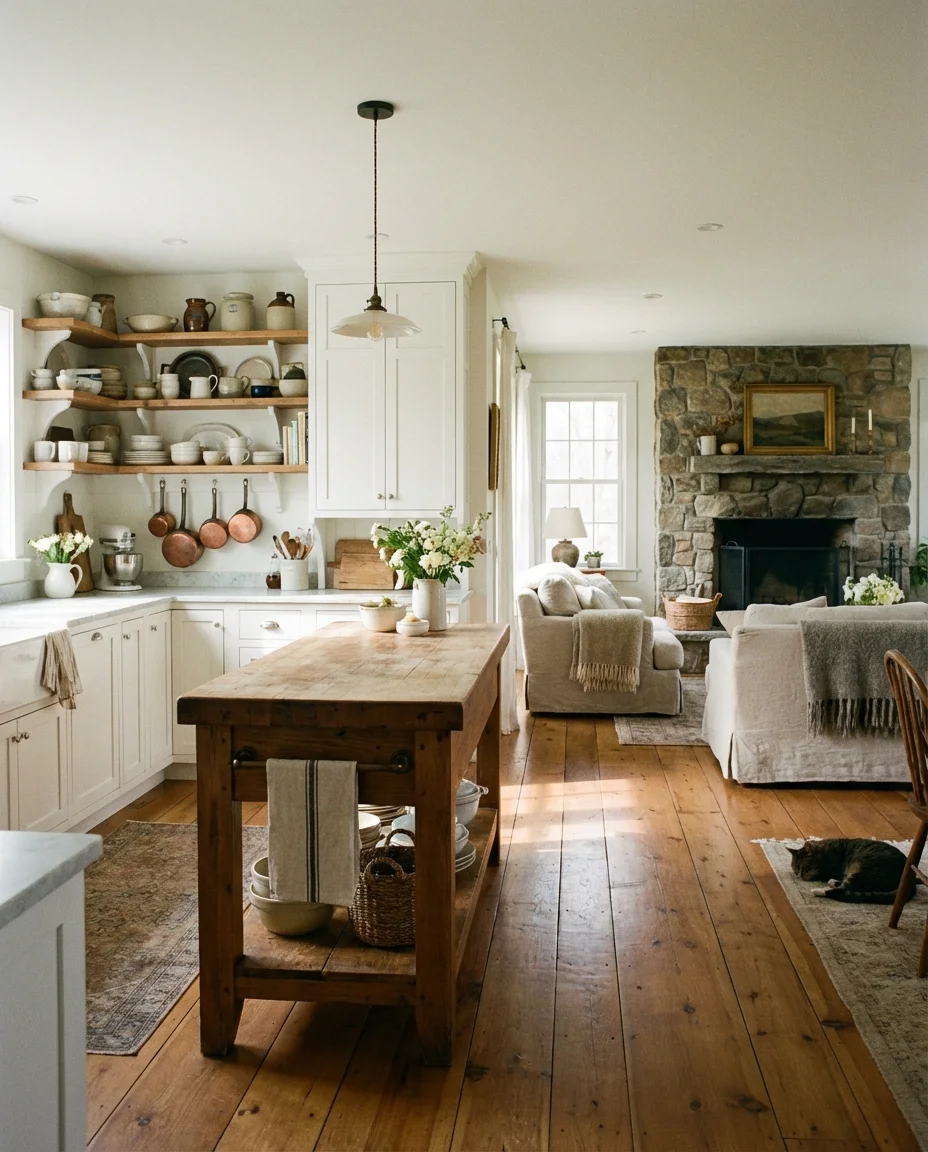
This approach is especially popular in the American Midwest and Southeast, where farmhouse architecture is part of the regional vernacular. It’s also one of the more budget-friendly open-plan styles—shiplap can be DIY’d, open shelving is cheaper than upper cabinets, and reclaimed wood dining tables are widely available at local salvage shops for a fraction of the retail price of similar pieces.
7. Cathedral Ceiling Drama in an Open Living Space
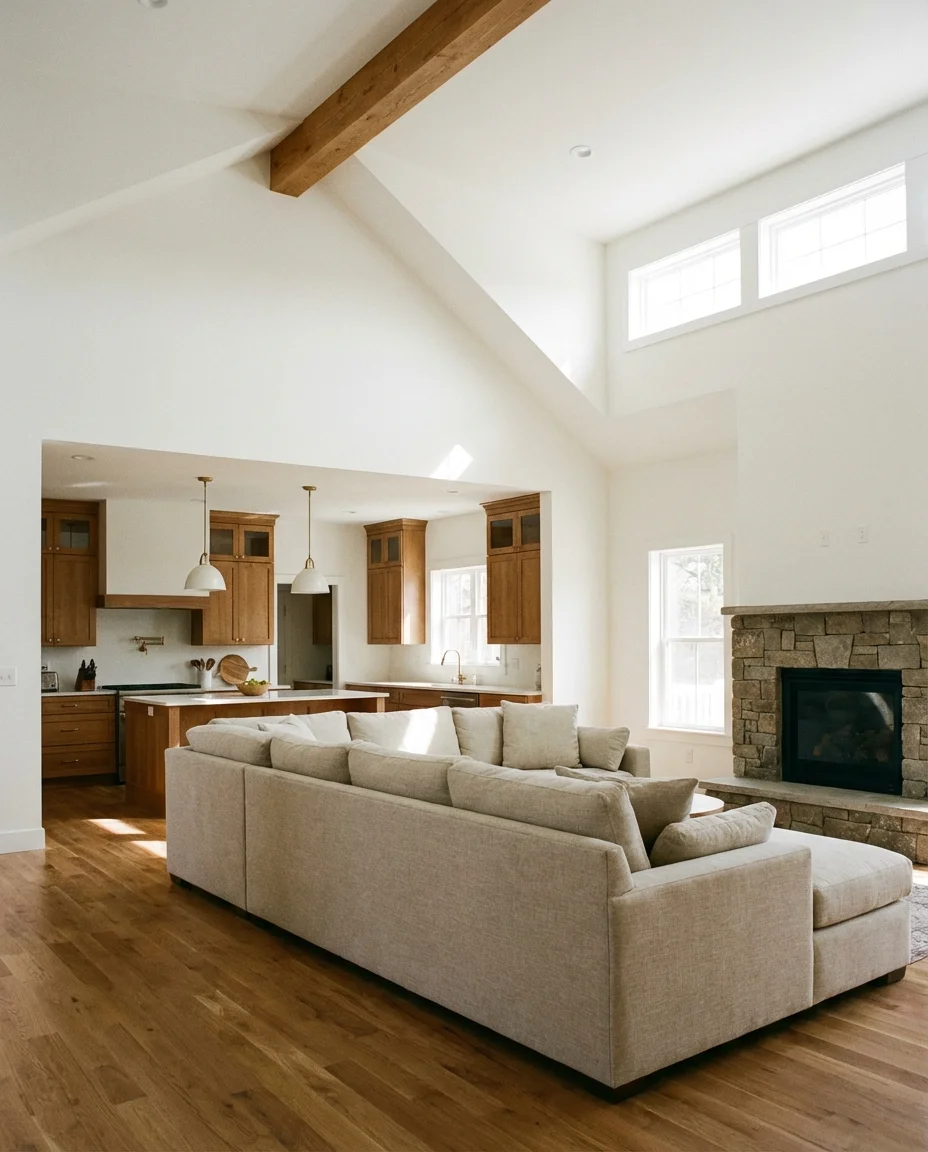
If there’s one architectural feature that transforms an open floor plan from nice to breathtaking, it’s a cathedral ceiling. The soaring vertical space adds drama without requiring a single additional square foot, and it makes the connection between the kitchen and living room feel genuinely monumental. Paint wall color ideas for these spaces often go in two directions: bold dark hues that make the height feel intentional or crisp whites that maximize the sense of openness and light.
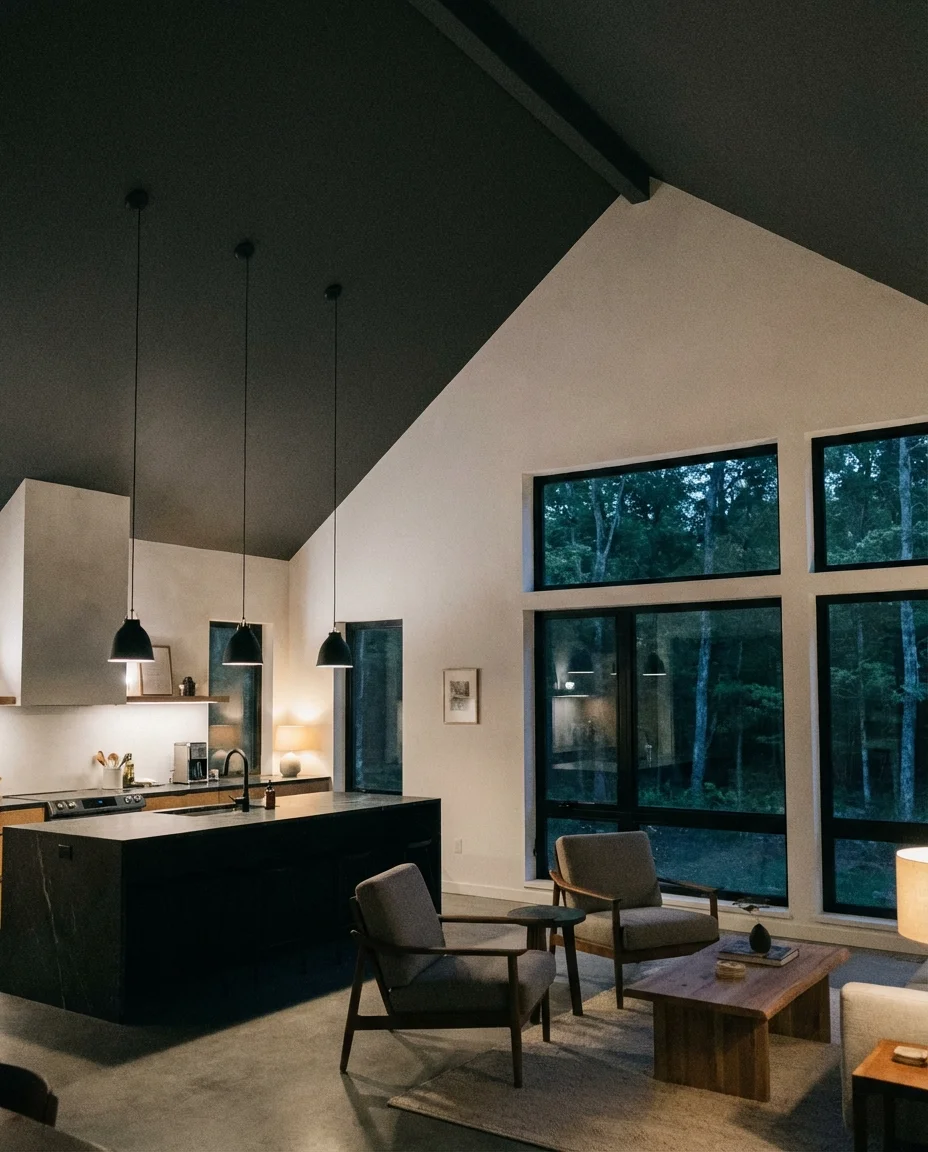
The mistake most people make with cathedral ceiling spaces is filling them with furniture that’s too small—low-slung sofas and petite coffee tables get visually swallowed by all that vertical real estate. Scale up your statement pieces and introduce tall potted plants or oversized artwork to fill the vertical zone without cluttering the floor. It sounds counterintuitive, but bigger furniture makes the room feel larger.
8. The Family-Friendly Open Plan That Actually Survives Kids
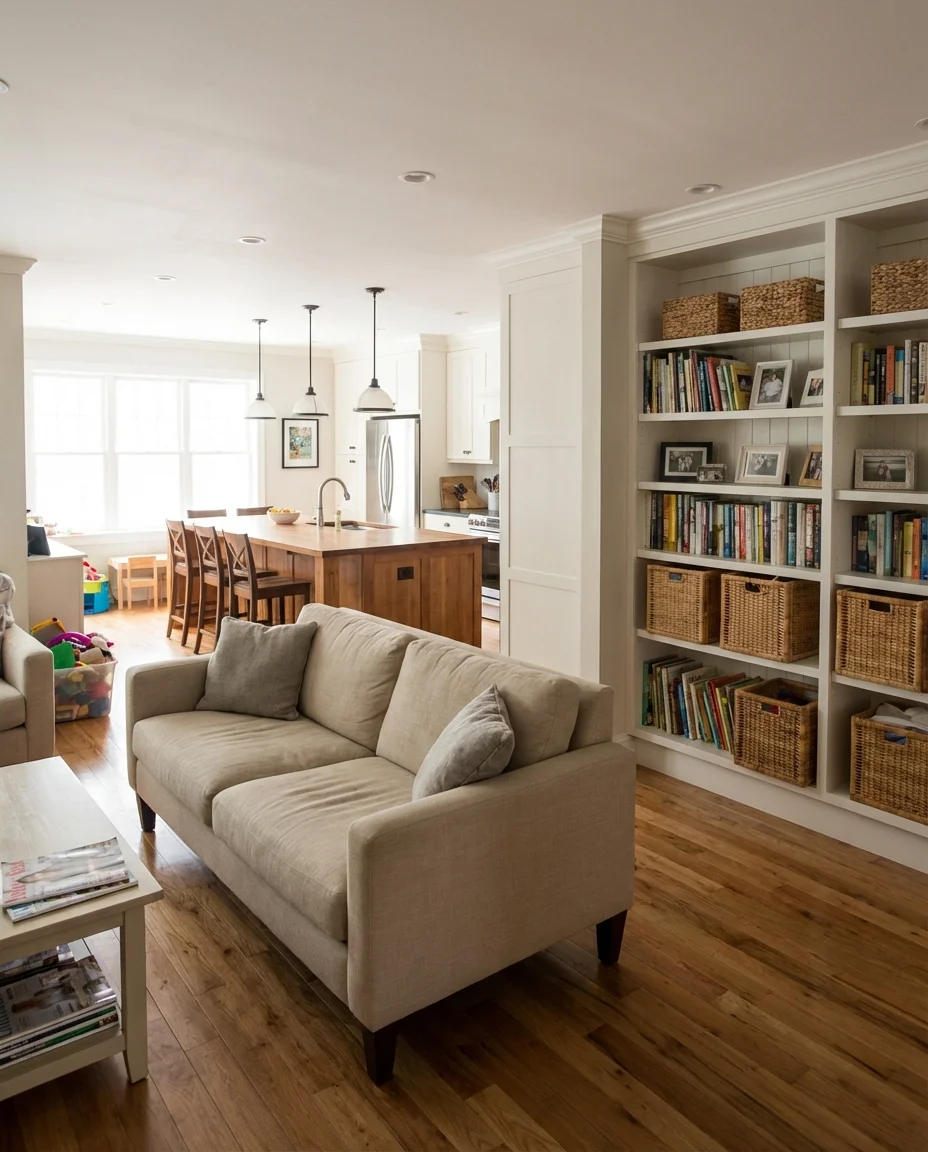
Let’s be real: family-friendly ideas for open floor plans look very different from the pristine magazine layouts that fill Pinterest. The best family-oriented open plans build in practical zones—a dedicated homework corner near the kitchen, washable slipcover sofas, and kitchen flooring that doesn’t show every crumb. The layout and furniture arrangement ideas that work best here prioritize sightlines from the stove to the living area so parents can keep an eye on kids while cooking.
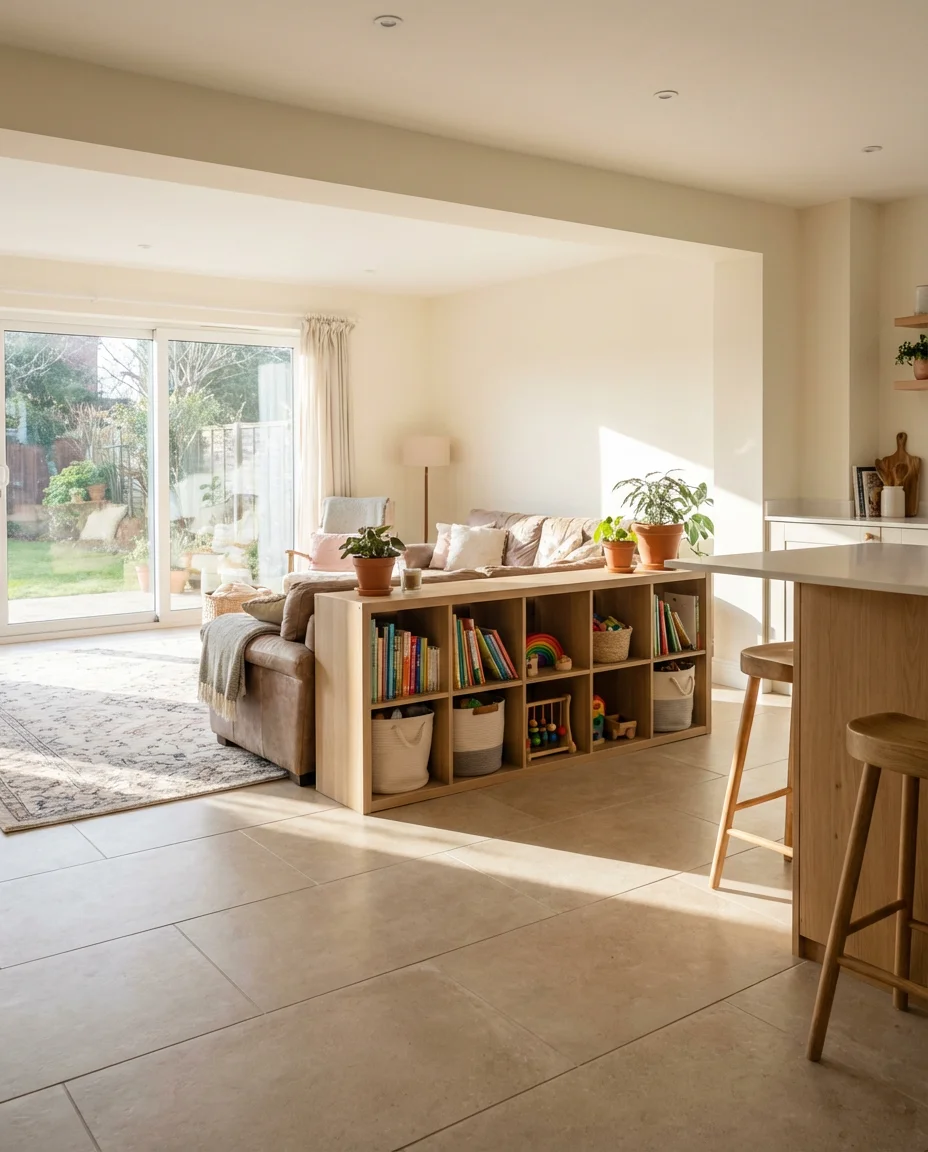
Real families who’ve lived in open floor plans for five or more years will tell you the same thing: the single best investment is a large area rug in a patterned or mid-tone color that hides inevitable stains while still looking intentional. Solid light rugs are beautiful in photos and a nightmare in practice. Go for a vintage-style or geometric pattern in warm tones—it photographs well and forgives everything.
9. Apartment-Scale Open Plans That Punch Above Their Weight
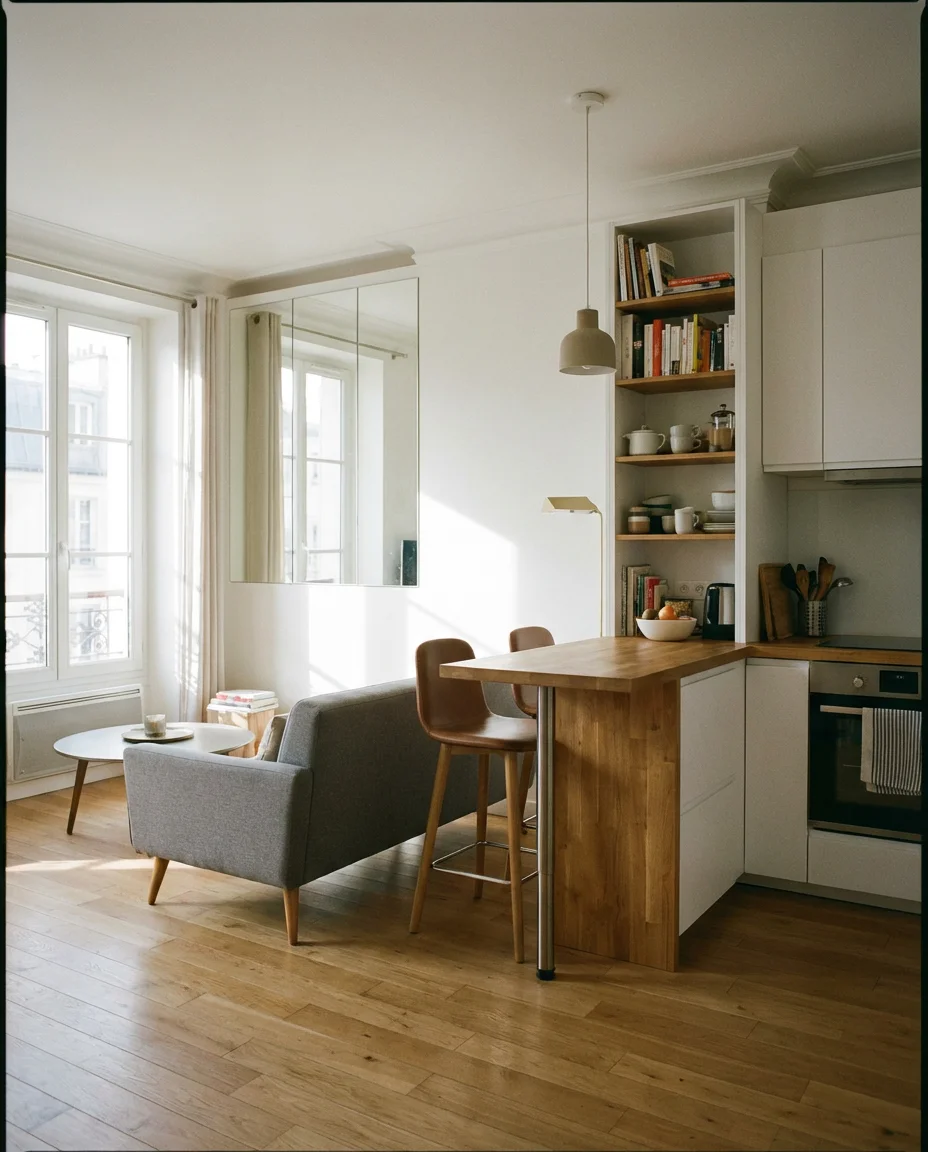
Not every open floor plan has the luxury of sprawling square footage. For city dwellers working with a compact apartment layout, the open plan isn’t a design choice—it’s the default. What separates a cluttered studio from a considered, beautiful living space often comes down to one thing: small interior design modern principles like vertical storage, mirrored surfaces, and furniture with exposed legs that keep the visual floor clear and airy.
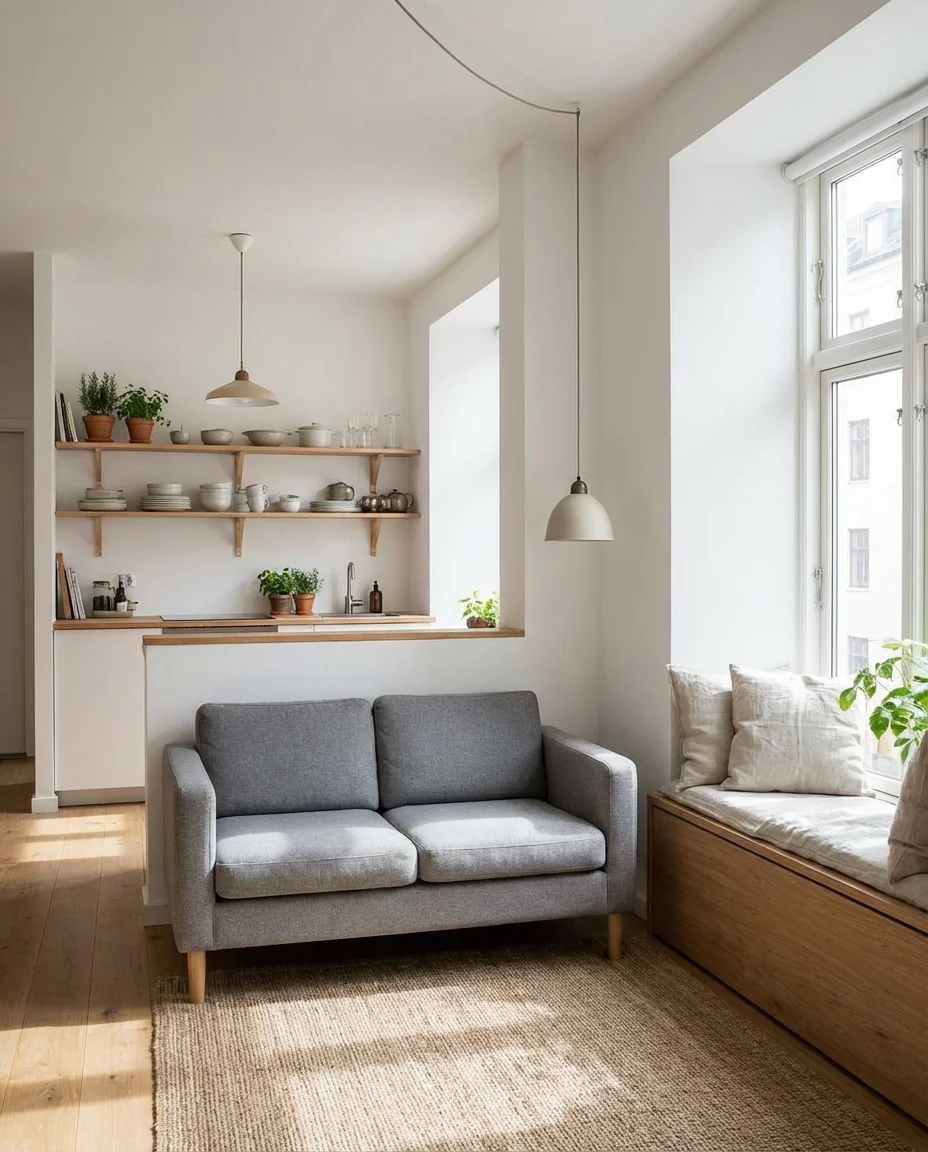
In dense urban markets like New York, Chicago, and San Francisco, apartment open plans have driven a surge in multifunctional furniture sales. Expandable dining tables, sofa beds with storage bases, and kitchen carts that double as islands are practical necessities here rather than novelty choices. The American apartment dweller has become one of the most creative space planners on the planet out of sheer necessity.
10. Stairs in the Middle—A Bold Layout Choice
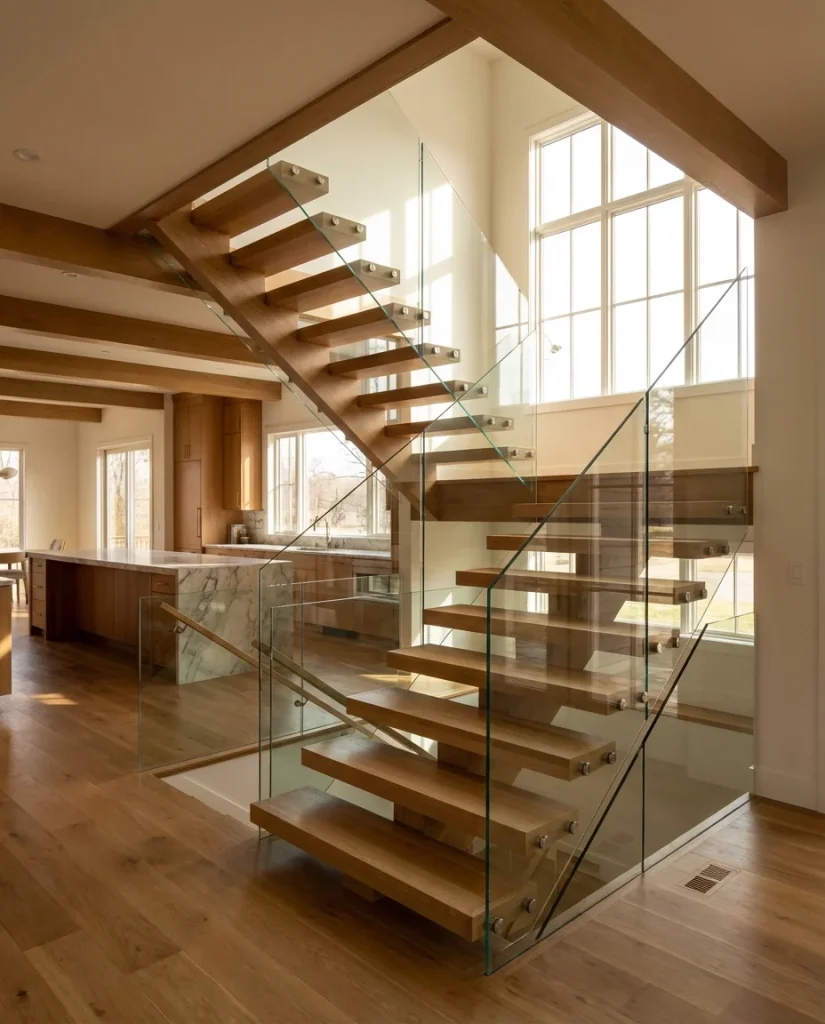
When stairs in the middle of an open floor plan are unavoidable—or intentionally designed—the challenge becomes making them feel like a feature rather than an obstacle. Floating treads, open risers, and steel or glass railings allow light and sightlines to pass through the staircase rather than being blocked by it. In a combined kitchen-living layout, stairs positioned centrally can actually create a natural zoning effect without needing solid walls.
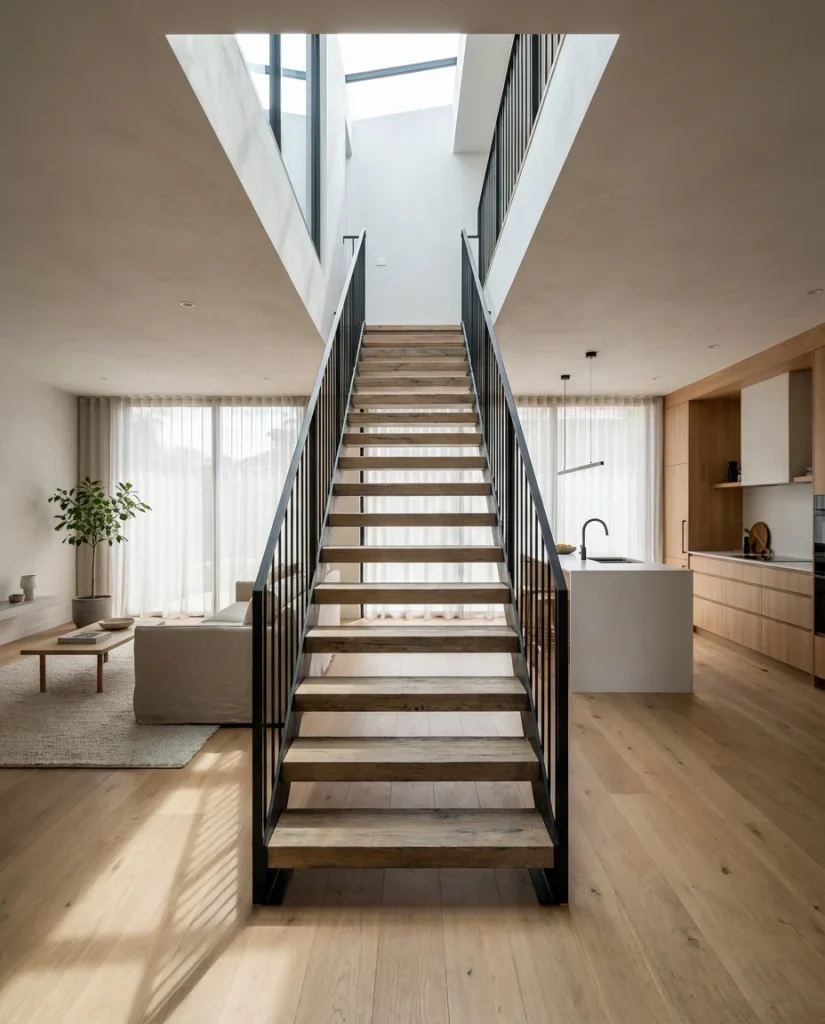
This layout tends to work best in two-story homes with a square or near-square floor plate, where the staircase lands naturally in the center without interrupting the kitchen work triangle or creating awkward traffic flow through the living zone. If you’re building from scratch, position the stair landing so it opens toward the living area—it creates a welcoming arrival moment every single time someone comes downstairs.
11. The Farmhouse Paint Wall Colors That Change Everything
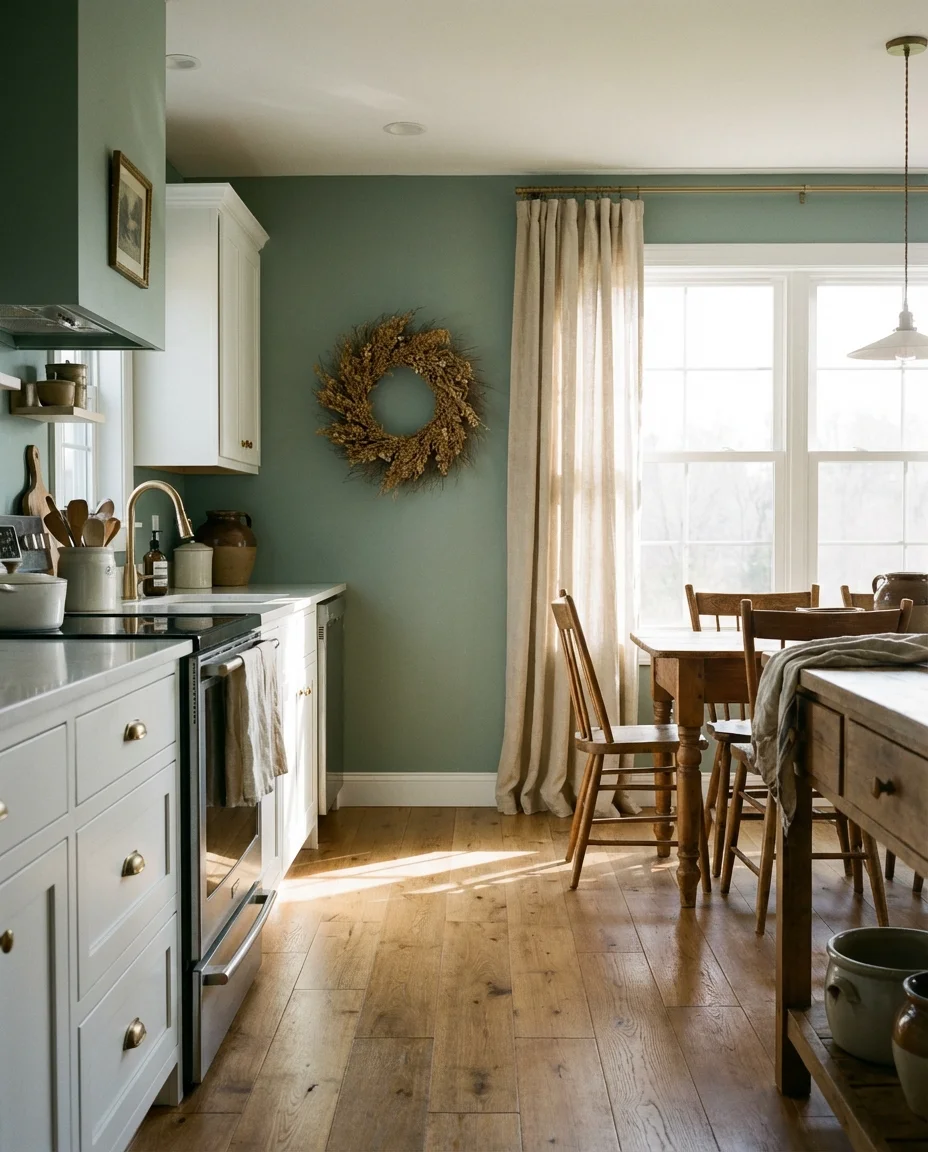
In an open floor plan, your wall color isn’t just a backdrop—it’s the connective tissue of the entire space. Paint wall colors farmhouse favorites for 2026 include dusty sage, warm white with a yellow undertone, and soft terracotta, all of which photograph beautifully and feel genuinely warm in person. These aren’t the stark farmhouse whites of the previous decade—the new approach adds just enough pigment to feel cozy rather than clinical, while maintaining the clean, fresh quality the farmhouse rustic look requires.
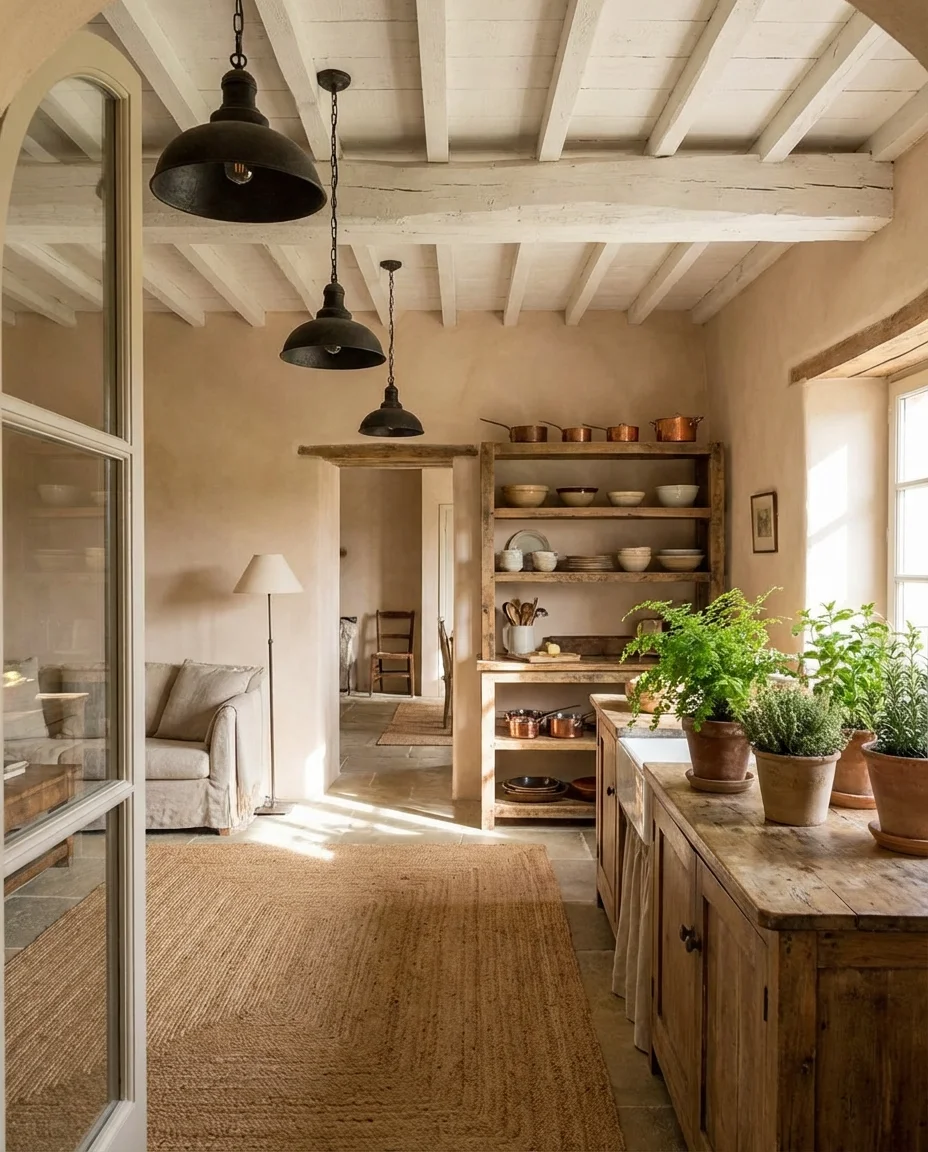
Before committing to any paint color in an open floor plan, test at least a 12-by-12-inch swatch on multiple walls and observe it at different times of day. Colors look dramatically different in morning versus evening light, and in open plans, a color that looks great in one corner can shift significantly as it wraps around to a wall with different light exposure. It’s a $10 investment that can save a $400 painting mistake.
12. Small Area Solutions for Big Style Impact
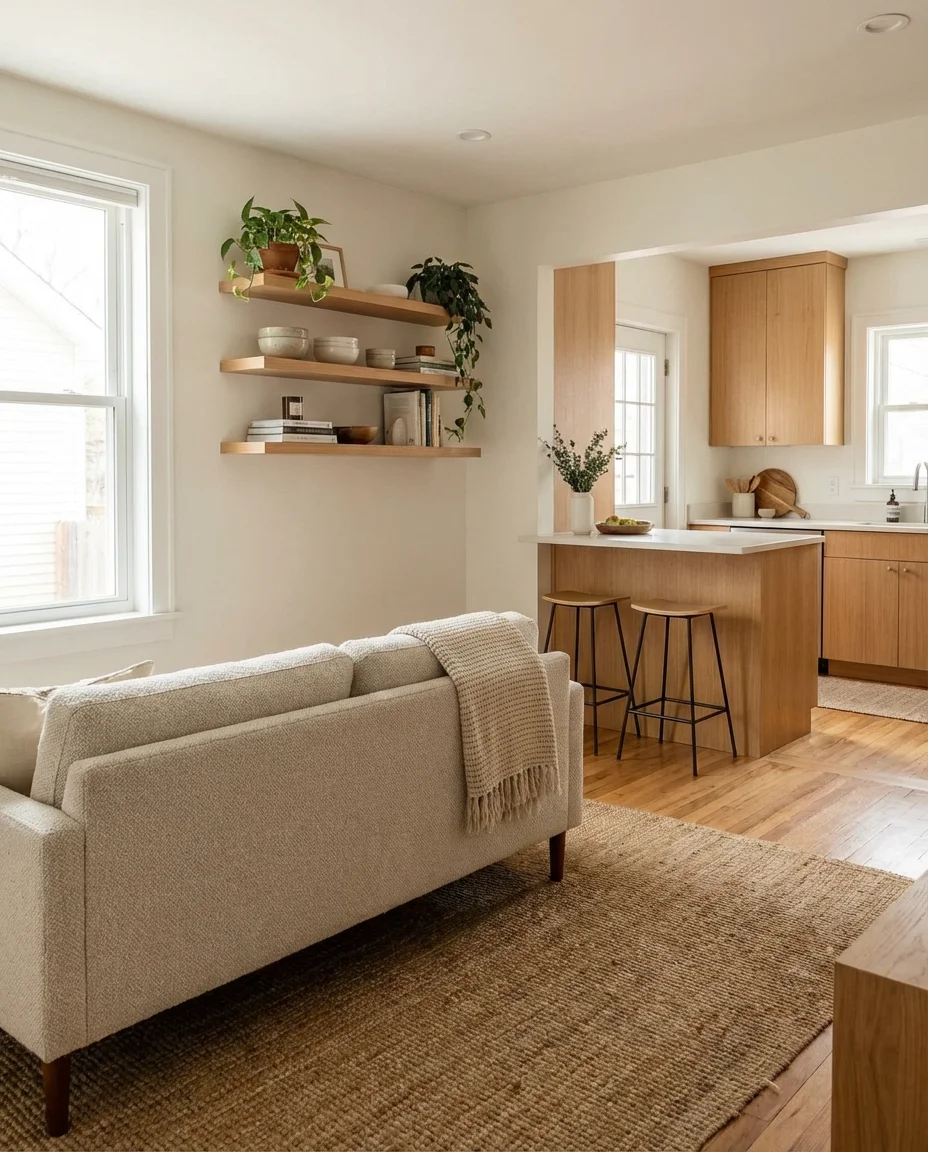
Working with a small area doesn’t mean sacrificing the open floor plan dream—it means being smarter about how space is defined and used. The most effective approach in tight open plans is what designers call “furniture as architecture”: using a sofa’s back as a room divider, a bookshelf as a kitchen-living boundary, or a counter-height console to mark transitions without walls. Combined with small interior design ideas like hidden storage and dual-purpose furniture, this creates plans that feel far larger than their square footage.
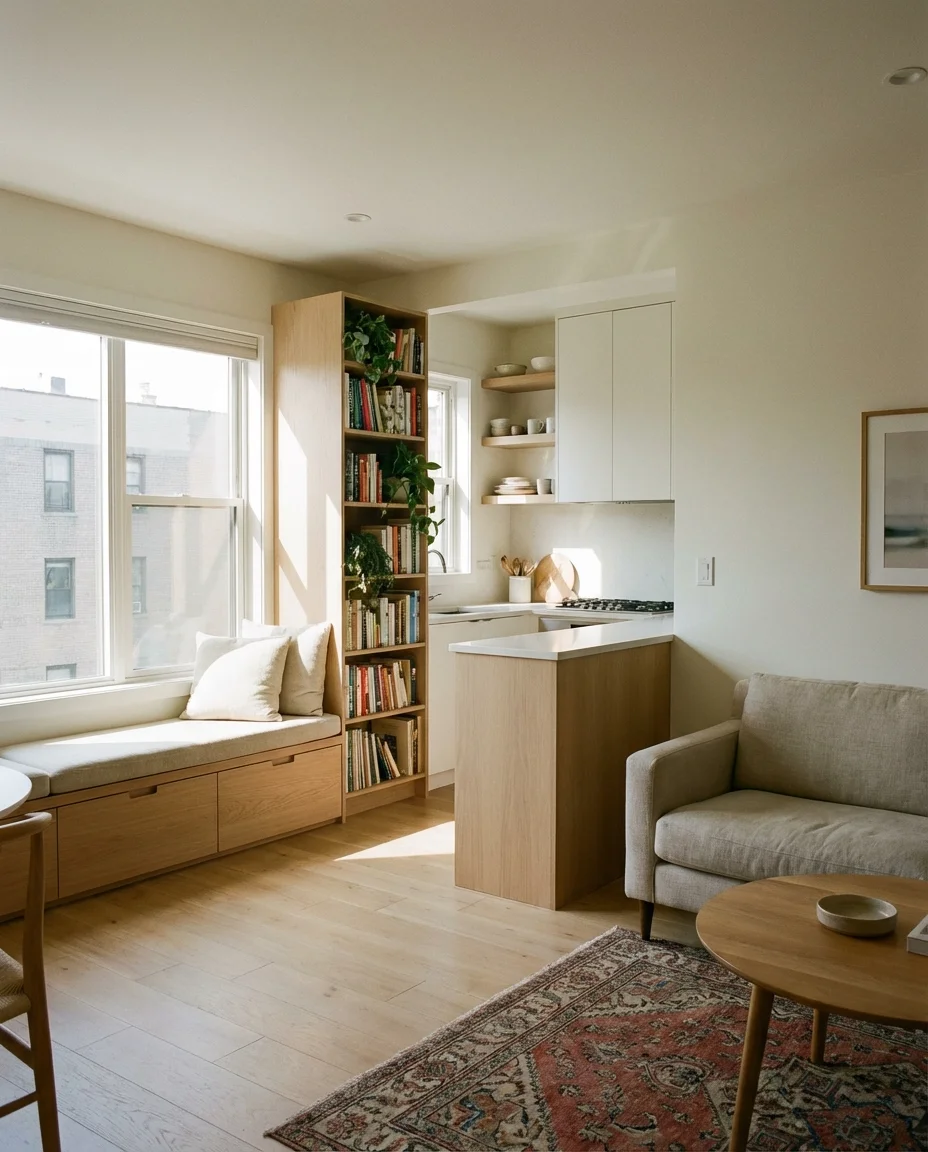
Expert tip from a San Francisco-based interior designer: “In a small open plan, your biggest enemy isn’t the lack of space—it’s the lack of defined zones. People walk in and can’t understand where to stand. Give each zone one clear anchor—a rug, a pendant, a paint treatment—and suddenly the brain maps the space comfortably.”
13. The Dining Room Plan That Earns Its Place
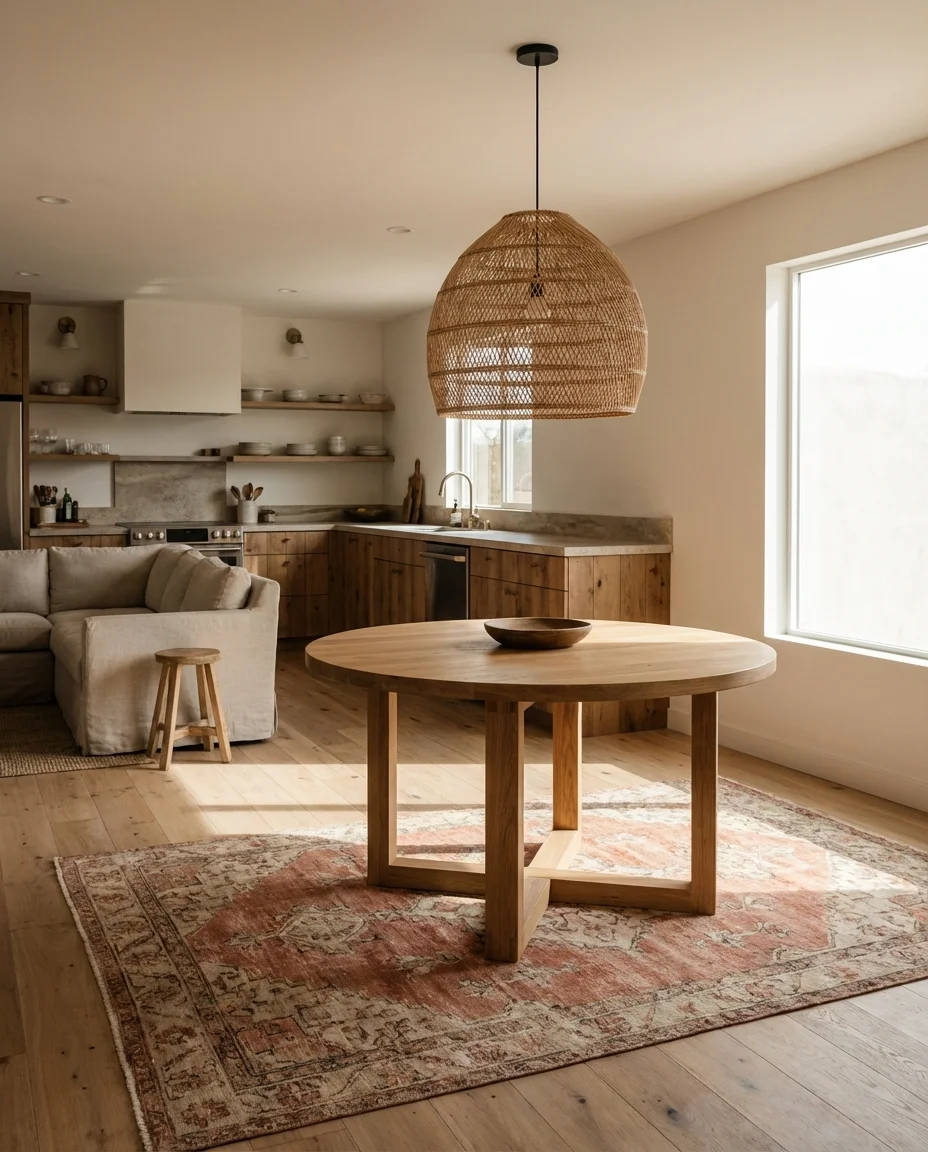
In a proper open floor plan, the dining room doesn’t get a dedicated room—it gets a carefully considered position within the larger shared space. The best dining room plans in open layouts create a visual moment that feels distinct from both the kitchen and the living area without relying on walls. A statement light fixture overhead, a defined rug underneath, and a table with intentional scale relative to the rest of the room do most of the heavy lifting here.
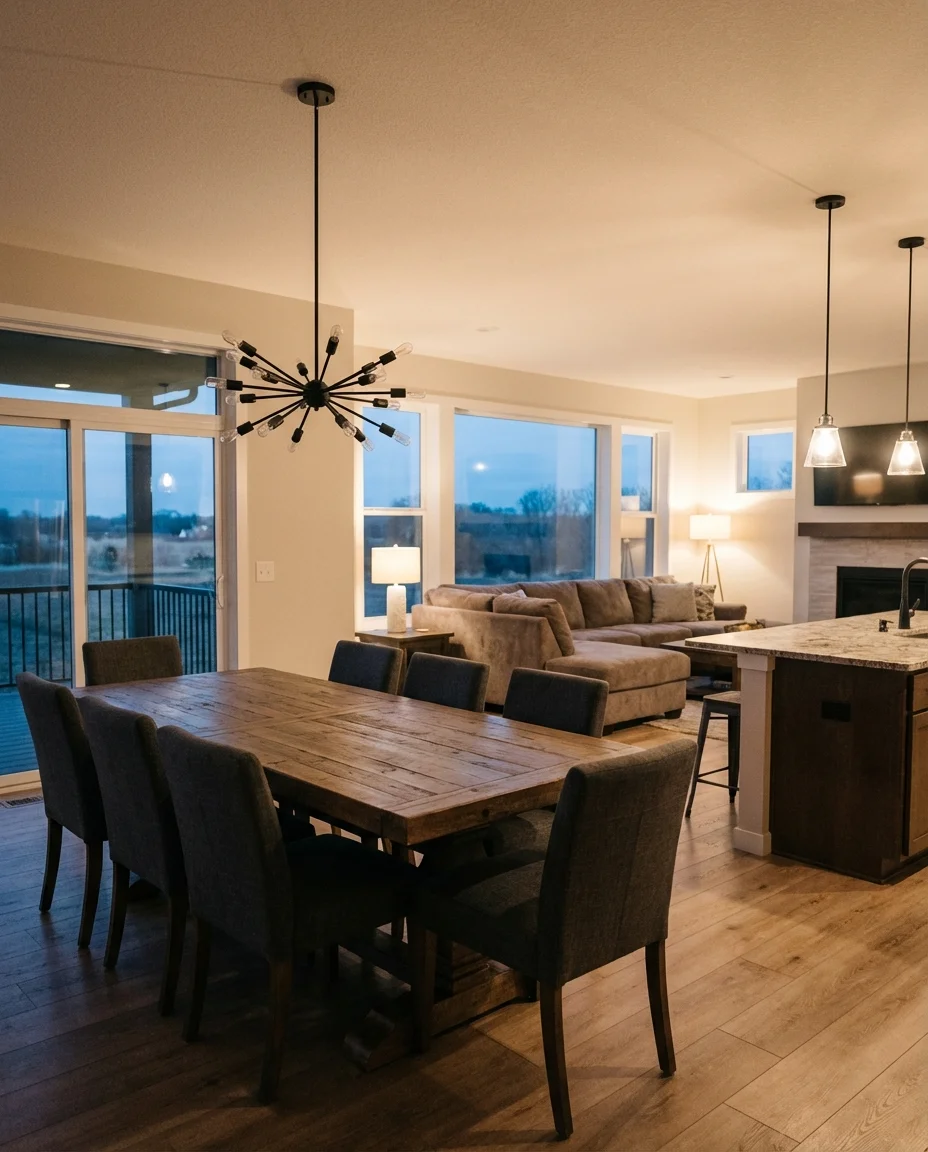
American families increasingly use the dining zone in open plans as a flex space—homework station by afternoon, dinner table by evening, and game table on weekends. Designing for this reality means choosing a table that’s easy to clear, chairs that stack or slide away easily, and lighting on a dimmer so the mood can shift from functional to intimate within seconds.
14. The TV Wall That Doesn’t Dominate the Kitchen
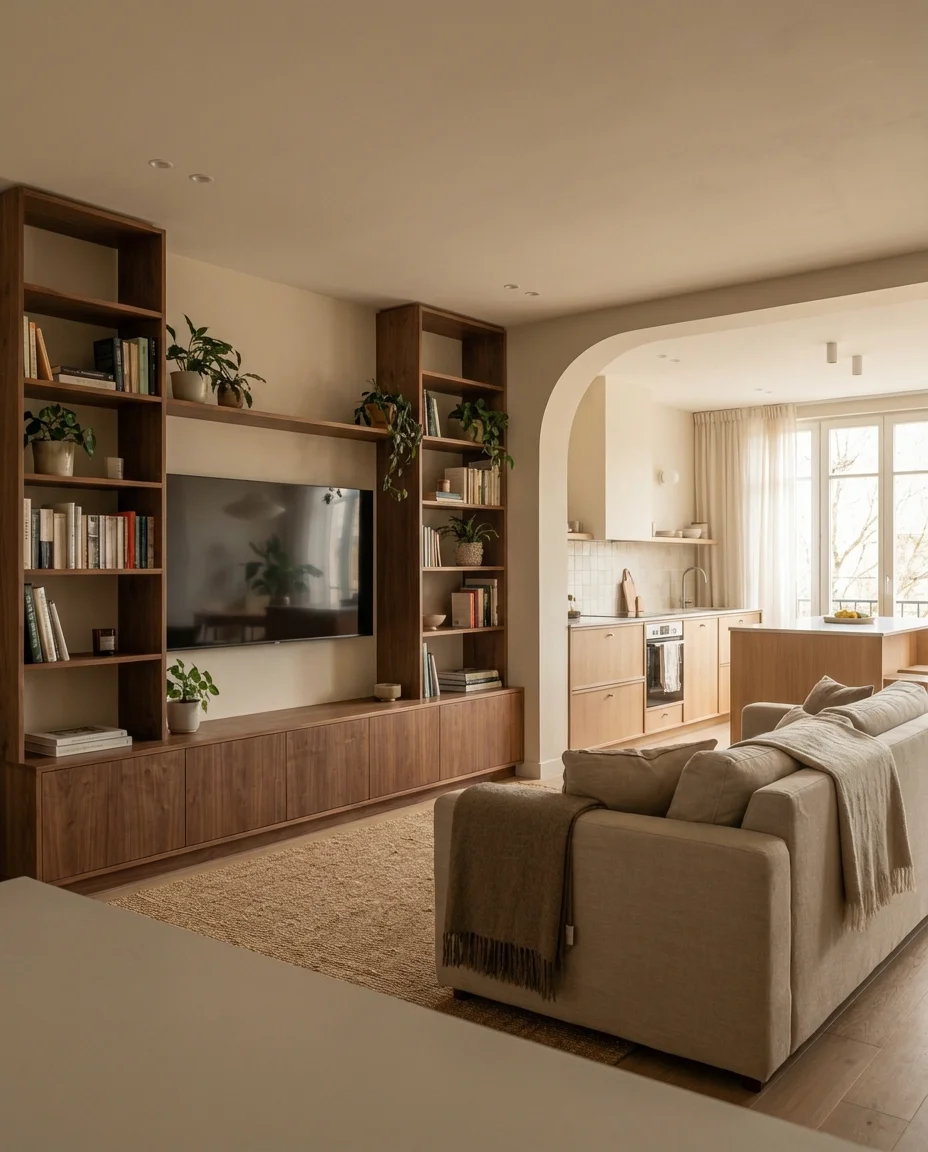
Few things can undermine the aesthetic of a beautiful open floor plan faster than a television that feels like it belongs in a sports bar. Positioning and framing matter enormously here. The best TV installations in open kitchen-living plans are recessed into gallery walls, flanked by built-in shelving, or mounted above a low credenza so they become part of a larger composition rather than the focal point the whole room points toward. A linen-blend frame cover or art mode display helps on the days you’re not watching.
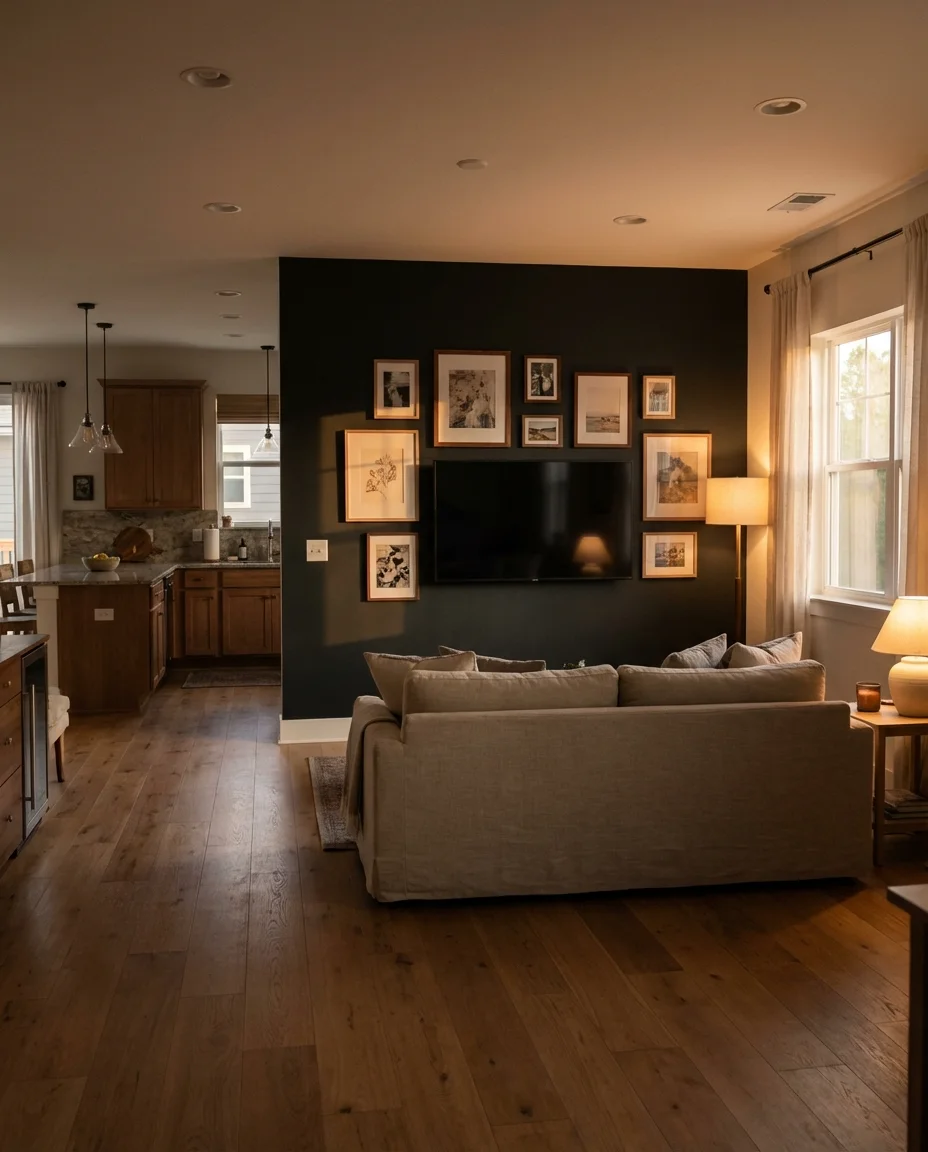
The cable management situation is something most homeowners don’t think about until the TV is already on the wall. In an open floor plan, messy cables are visible from the kitchen, the dining area, and the entryway simultaneously—there’s nowhere to hide them. Plan your conduit routing before drywall goes up, or budget for an in-wall cable management kit. It’s a $40 fix that makes a $2,000 TV installation look professional.
15. Small Cottage Charm in an Open Plan
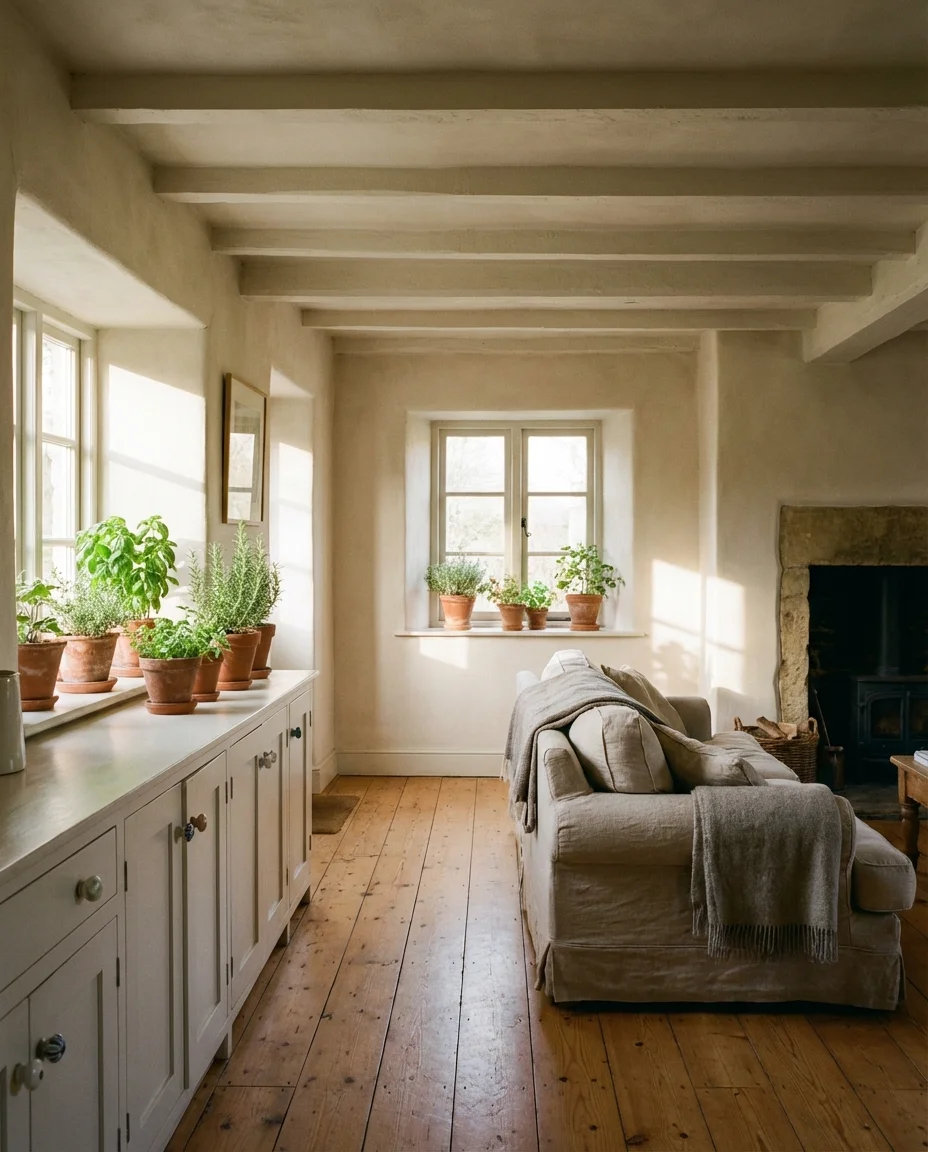
The small cottage’s open floor plan carries a specific quality that larger homes can rarely replicate: intimacy. Low ceilings, chunky trim work, and deep-silled windows wrap the connected kitchen-living space in a warmth that feels handmade and unhurried. In 2026, cottage-style open plans are being updated with cleaner, lighter interpretations—replacing the dark and heavy country aesthetic with bright whites, natural linens, and subtle vintage details that feel fresh rather than nostalgic.
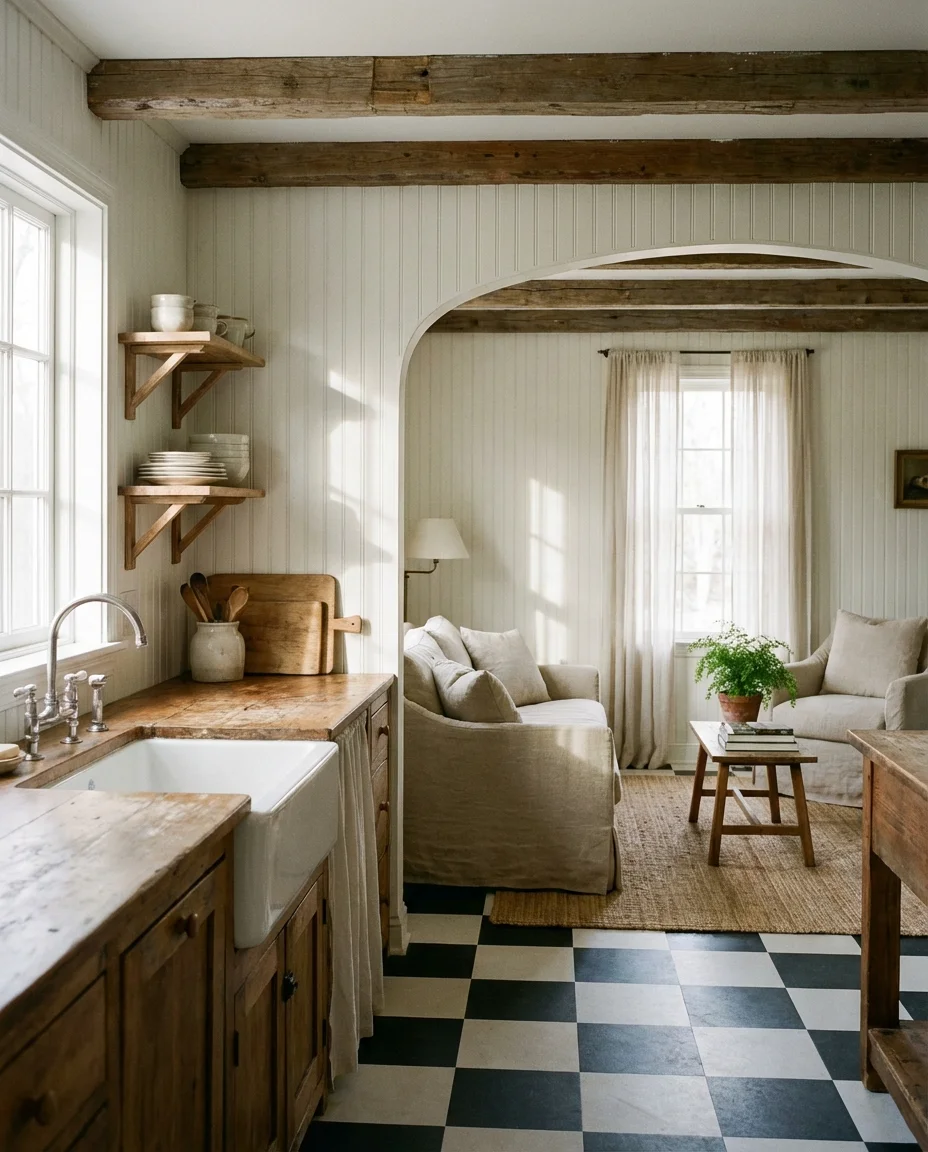
Cottages in the New England and Pacific Northwest markets have seen some of the most creative open-plan renovations of recent years—tiny footprints pushing designers and homeowners to be genuinely inventive. Pull-out pantry drawers, fold-down kitchen tables, and built-in banquette seating with storage underneath are cottage staples that the broader design world has recently rediscovered as universally practical solutions.
16. Small Interior Design: India-Inspired Warmth
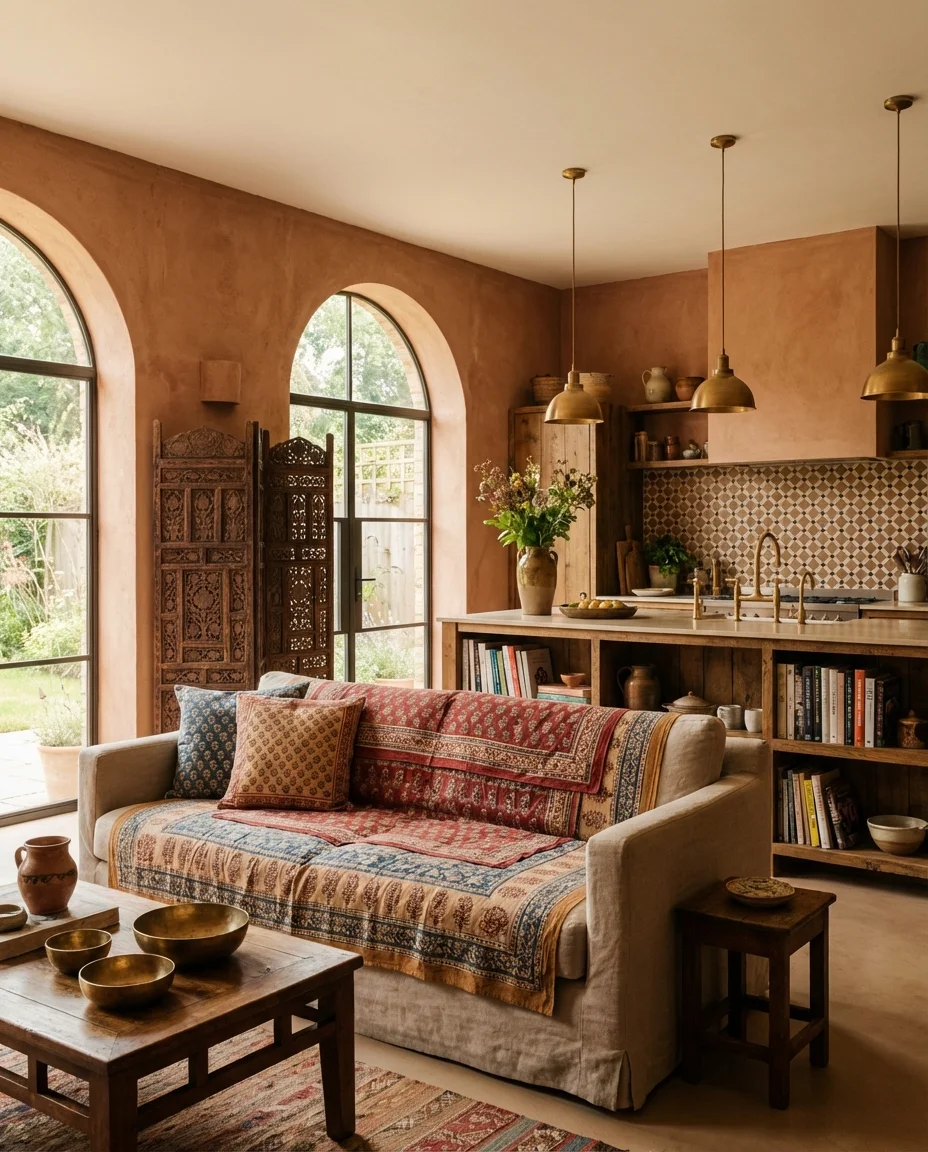
The global influence of small, interior design India-inspired spaces is making its way into American homes—and open floor plans are the perfect canvas for it. Layered textiles, warm terracotta and saffron accents, carved wood details, and intricate patterned tile in the kitchen add depth and personality to what could otherwise be a generic neutral open plan. The key is restraint: choose one or two culturally resonant anchor pieces and let the rest of the space breathe around them.
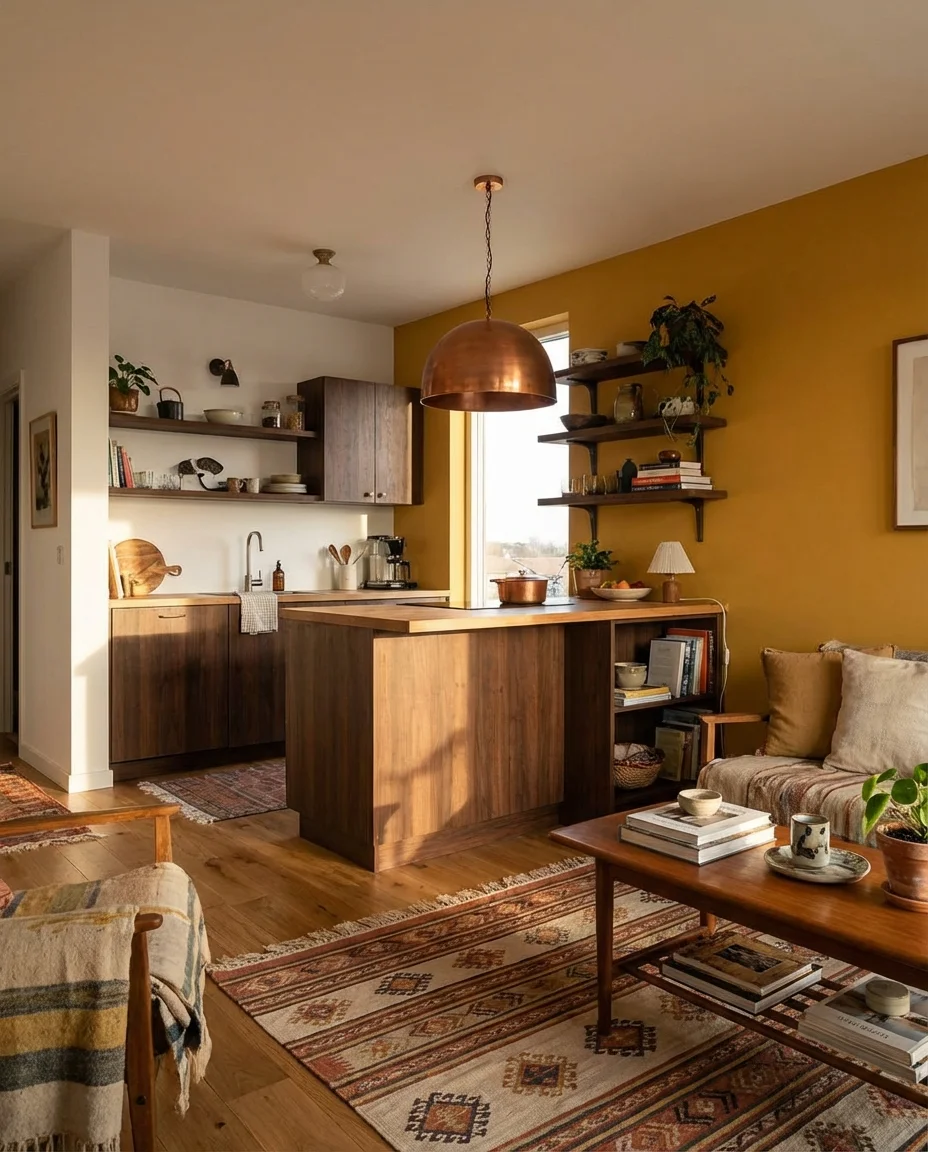
This approach resonates particularly with second-generation South Asian American homeowners who want spaces that reflect their heritage without feeling like a cultural performance. The trick is to blend the warmth of South Asian color philosophy—saturated but balanced—with the clean sightlines of modern American open-plan architecture. The result is something genuinely original and deeply personal.
17. Layout Furniture Arrangement Ideas for Awkward Open Plans
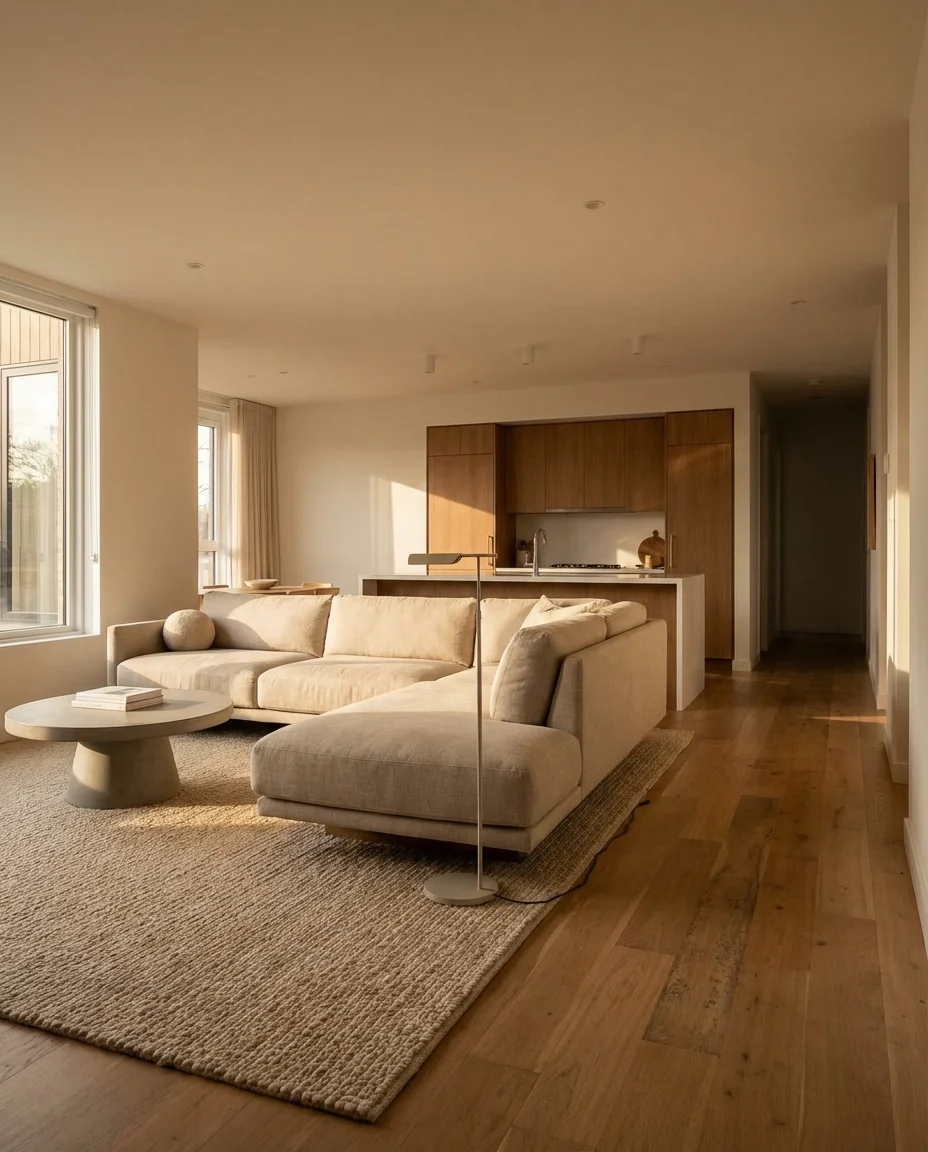
Not every open floor plan is a clean rectangle—and that’s where most people get stuck. L-shaped kitchens, offset living areas, and odd room proportions create real challenges for layout furniture arrangement ideas. The most effective solution is almost always to float the furniture away from walls, which feels counterintuitive but creates natural traffic pathways and keeps the scale of the space feeling intentional. A layout that respects traffic flow will always photograph better—and live better—than one that doesn’t.
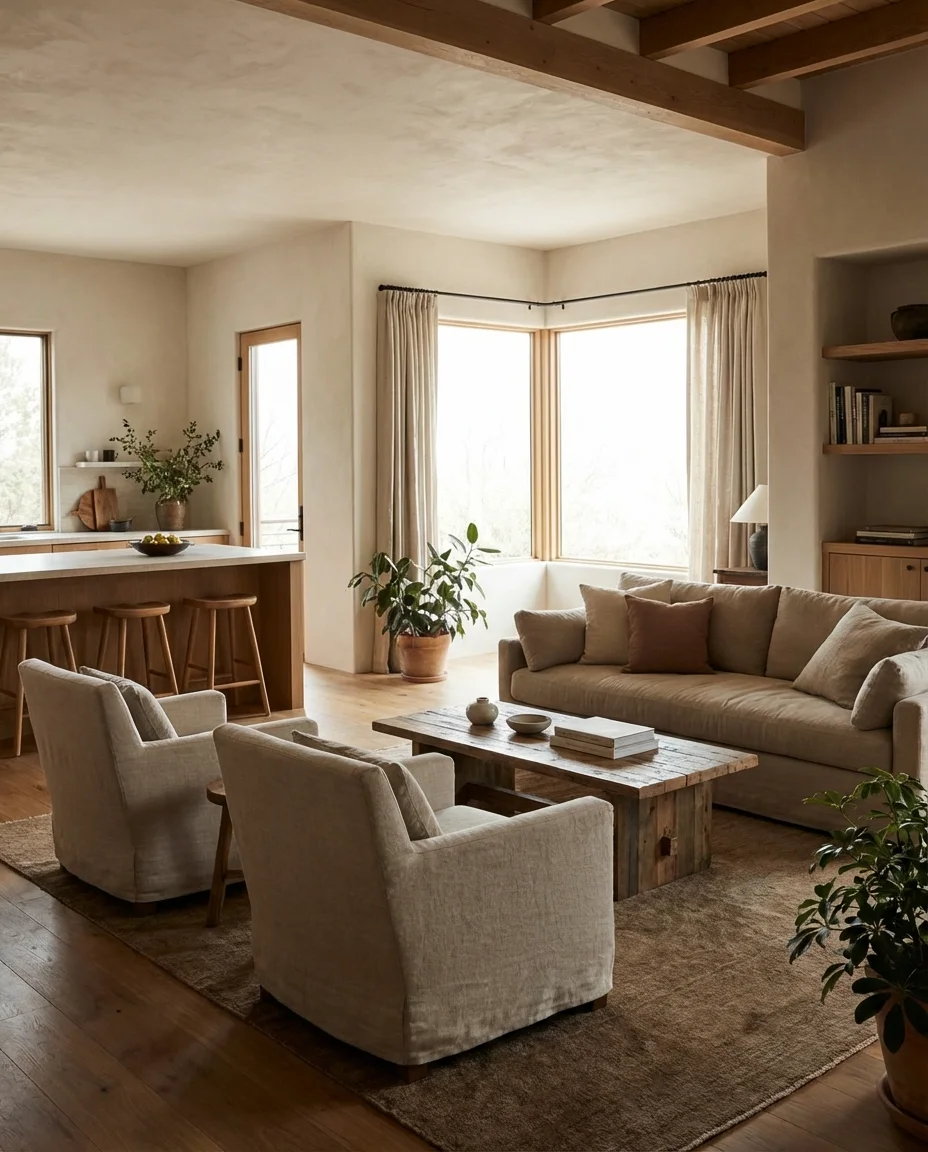
Try this before moving a single piece of furniture: walk through your space carrying a laundry basket. Wherever you have to angle your body, turn sideways, or pause—that’s a circulation problem. Great open floor plans allow two people to move through the space simultaneously without either person rerouting. This simple “laundry basket test” is a genuine pro designer trick worth trying at home.
18. The Aesthetic Open Plan for Visual Storytelling
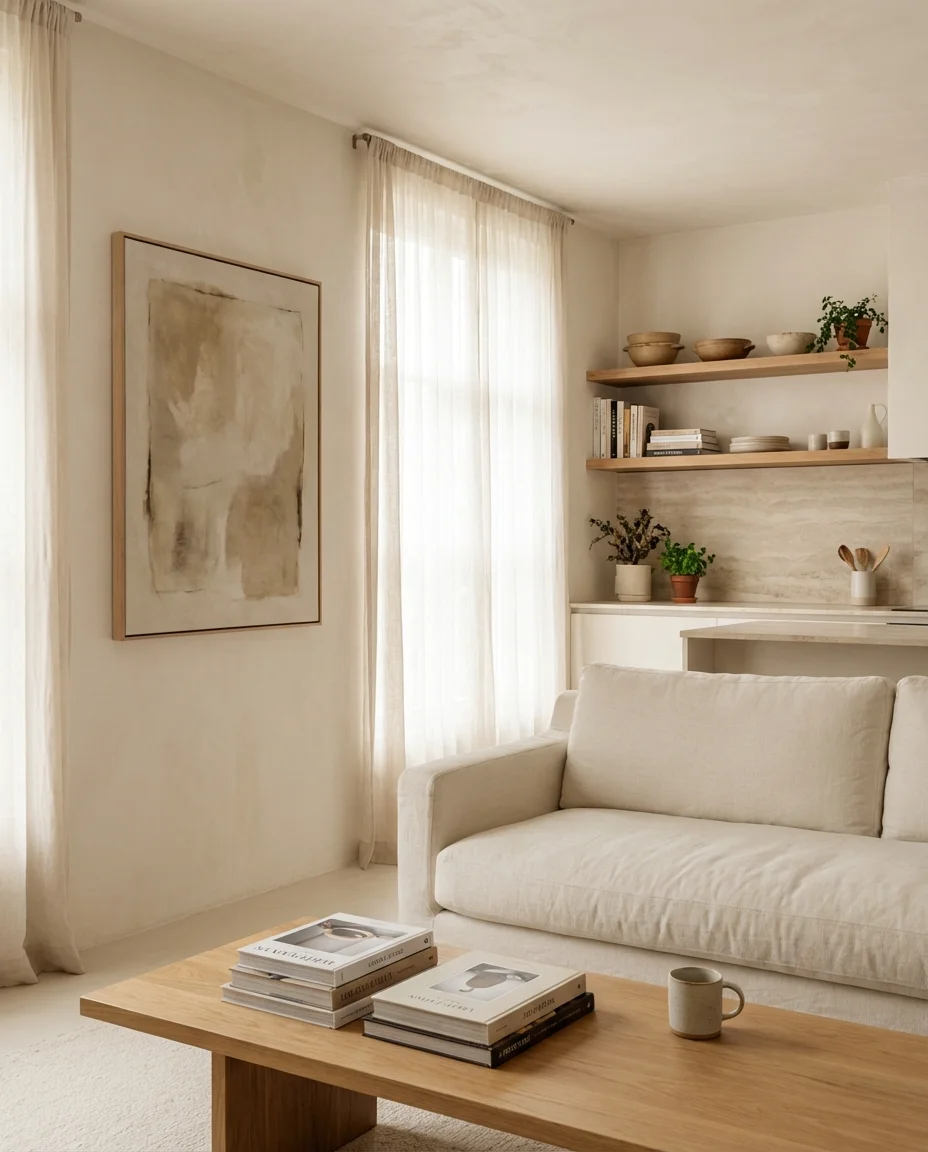
Some open floor plans exist not just to function but to inspire—and these spaces are genuinely designed with visual aesthetic as the primary goal. Curated vignettes on open shelving, deliberate art placement, and a considered book stack on the coffee table: these are the rooms that stop the Pinterest scroll. They draw from small interior design ideas to keep the space feeling intentional rather than staged, emphasizing quality over quantity in every object chosen for display.
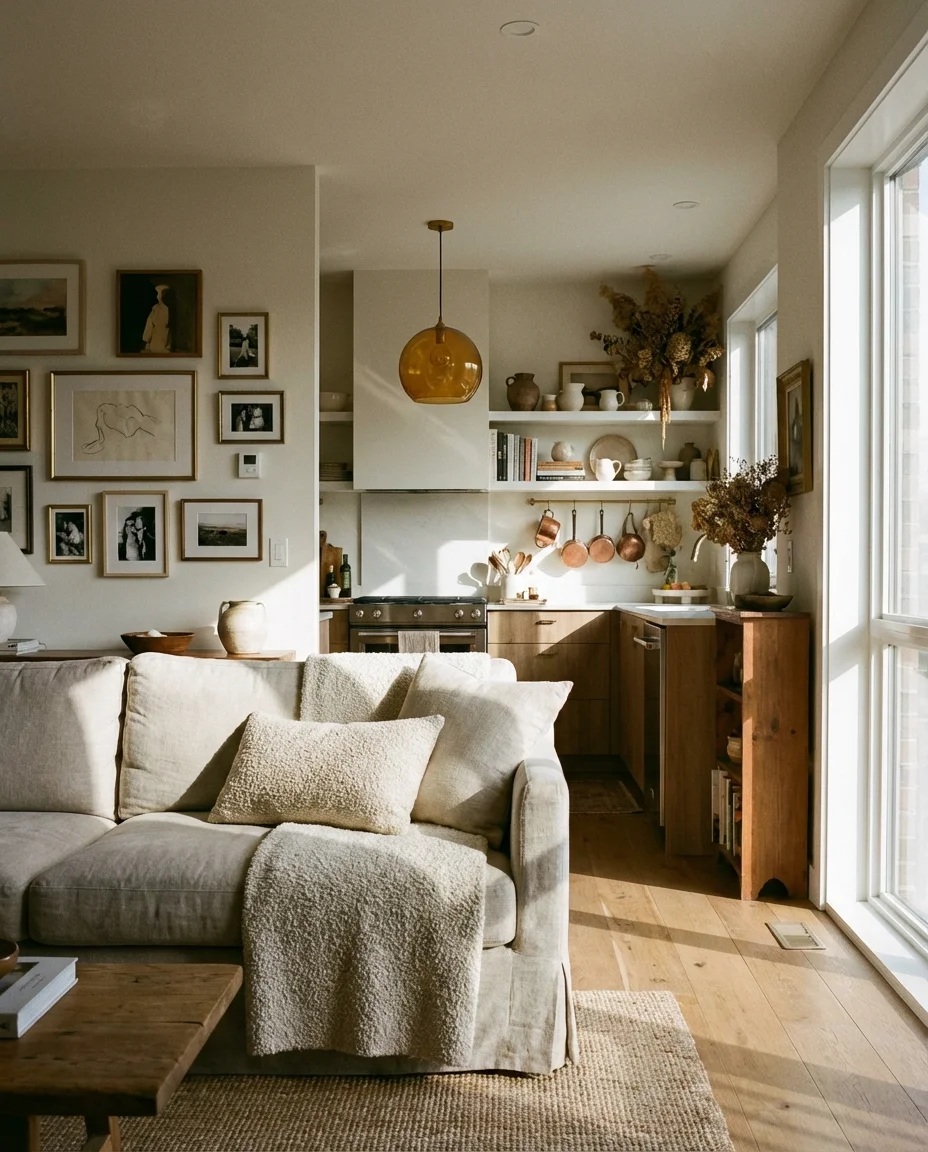
The rooms that perform best on Pinterest almost always have one thing in common: a clear focal point in every direction. When designing your open plan for visual impact, think about what someone sees from the front door, from the kitchen, and from the sofa—three different vantage points, each with its own intentional focal feature. It’s the difference between a room that was decorated and one that was designed.
19. The Design-Forward Kitchen That Elevates the Whole Plan
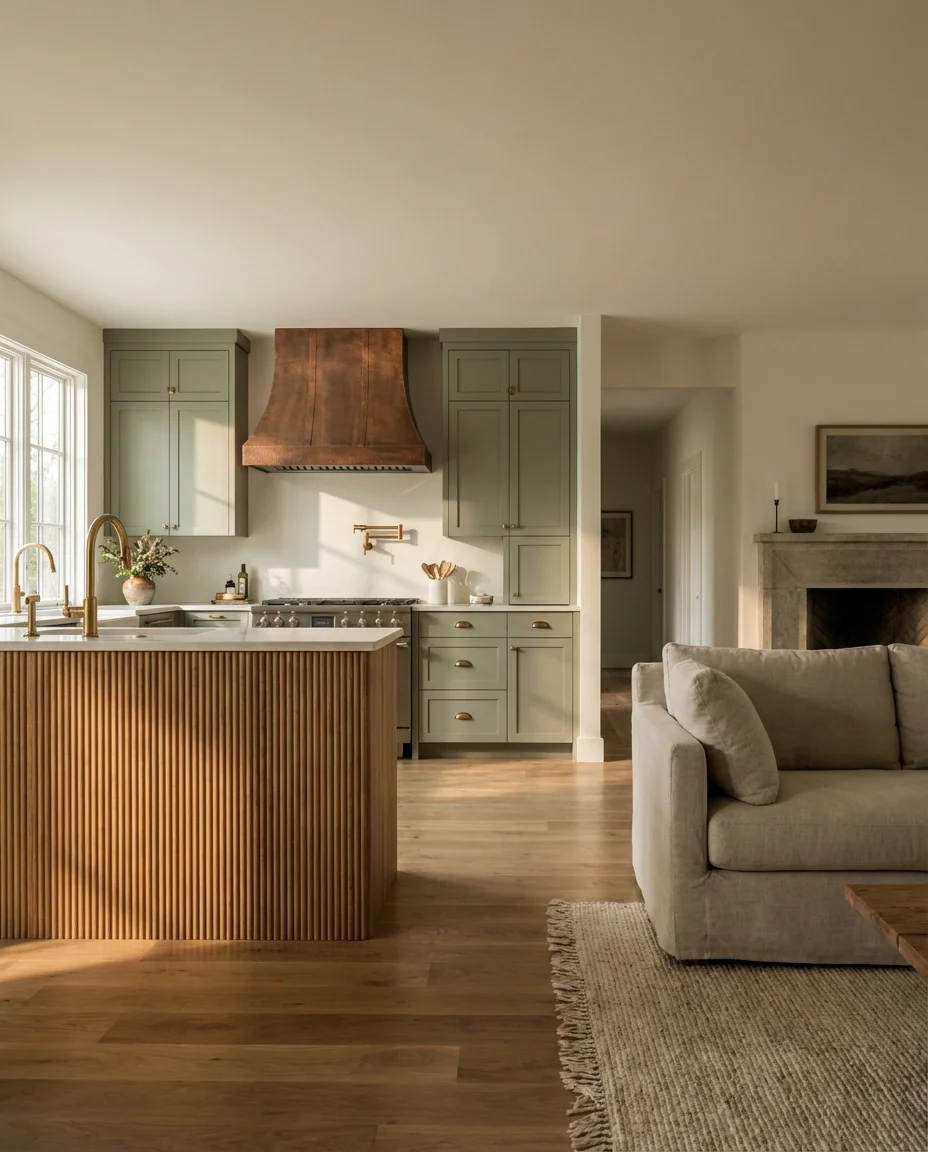
In an open floor plan, the kitchen isn’t background—it’s the main event. A thoughtfully designed kitchen with strong architectural character becomes the anchor for everything else in the shared space. Whether it’s a fluted island panel, an unexpected design choice in hardware, or a dramatic hood in hand-hammered copper, one bold decision in the kitchen gives the entire open layout a clear identity. Everything else in the room can be quieter because the kitchen is doing its job.
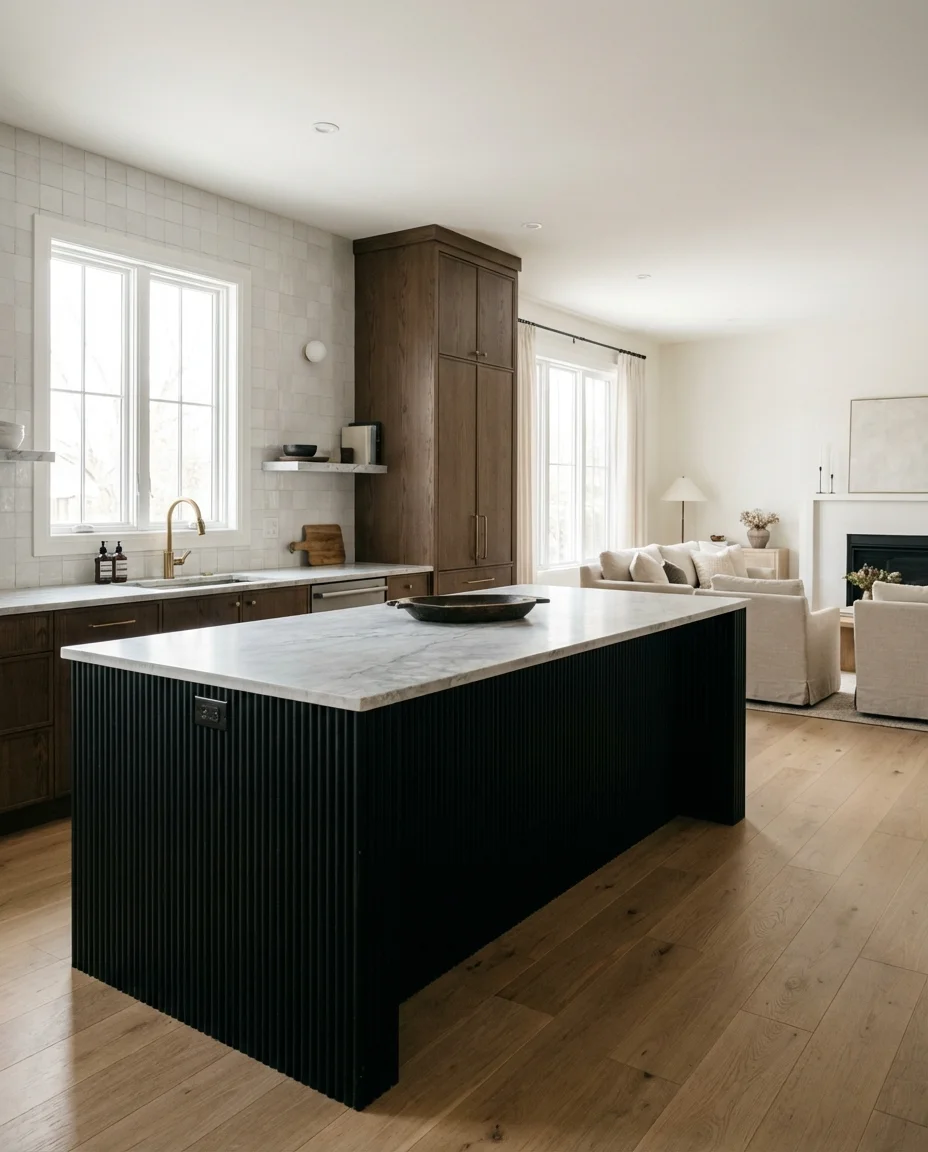
Budget angle: you don’t have to renovate the whole kitchen to introduce one design-forward moment. Replacing standard cabinet hardware with unlacquered brass, swapping a builder-grade pendant for a sculptural ceramic shade, or adding fluted glass panels to upper cabinets can completely shift the kitchen’s personality for under $300. In an open floor plan, where the kitchen is always on display, even a small upgrade reads large.
20. The Open Plan Designed Around Natural Light
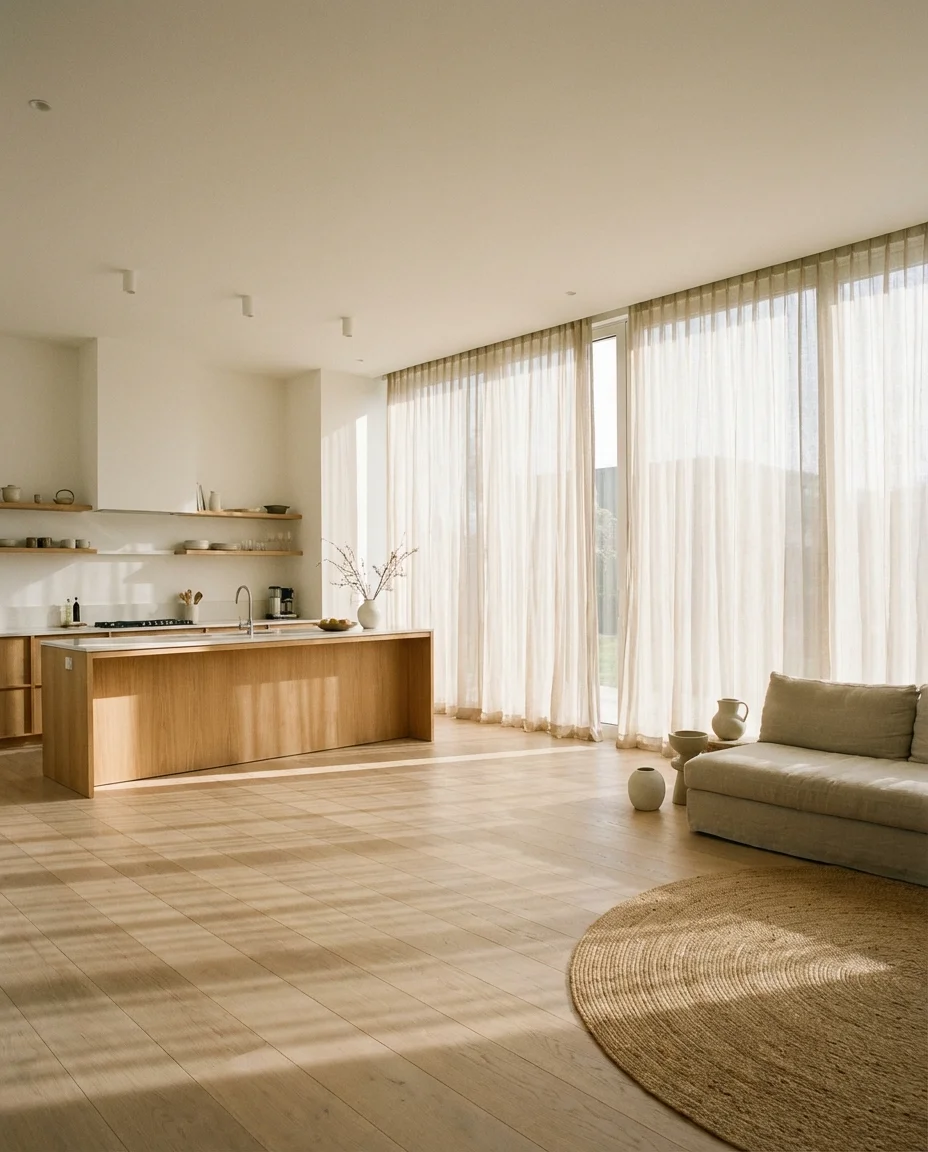
Natural light is the single most powerful and most underutilized design element in any home. In a combined kitchen-living space, orienting the layout to maximize sunlight exposure throughout the day creates an atmosphere that no amount of artificial lighting can replicate. Paint wall color ideas in these spaces often lean toward light-reflective whites and soft pastels that bounce daylight deeper into the floor plan, and small apartment dwellers especially benefit from prioritizing this strategy over almost any other.
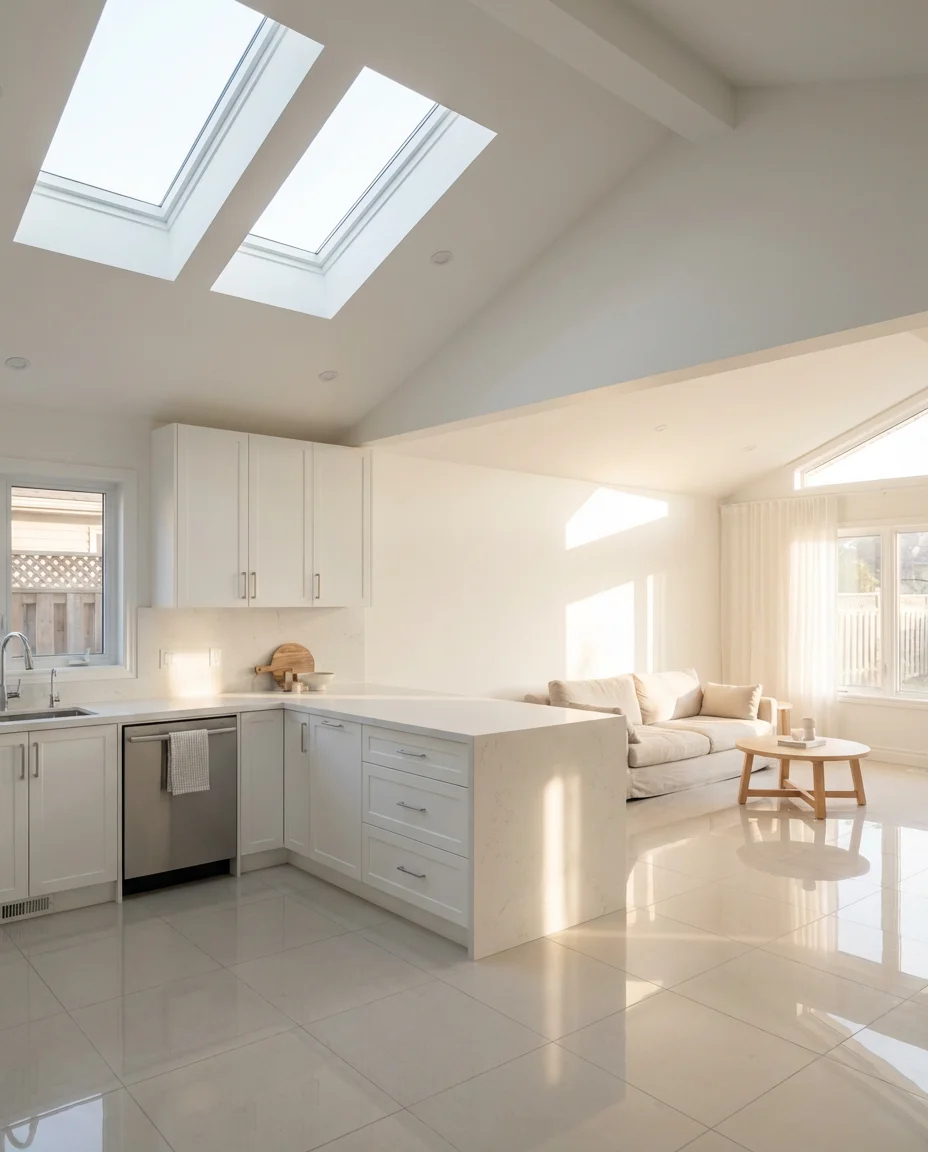
The most common mistake in open-plan light planning is treating all windows equally. South-facing windows deliver warm afternoon light; north-facing windows provide consistent, cool, shadow-free light ideal for kitchen tasks. Understanding your home’s orientation before choosing paint colors, countertop materials, and cabinetry finishes will save you from colors that look perfect in the showroom and flat at home.
21. Mixing Materials the Right Way
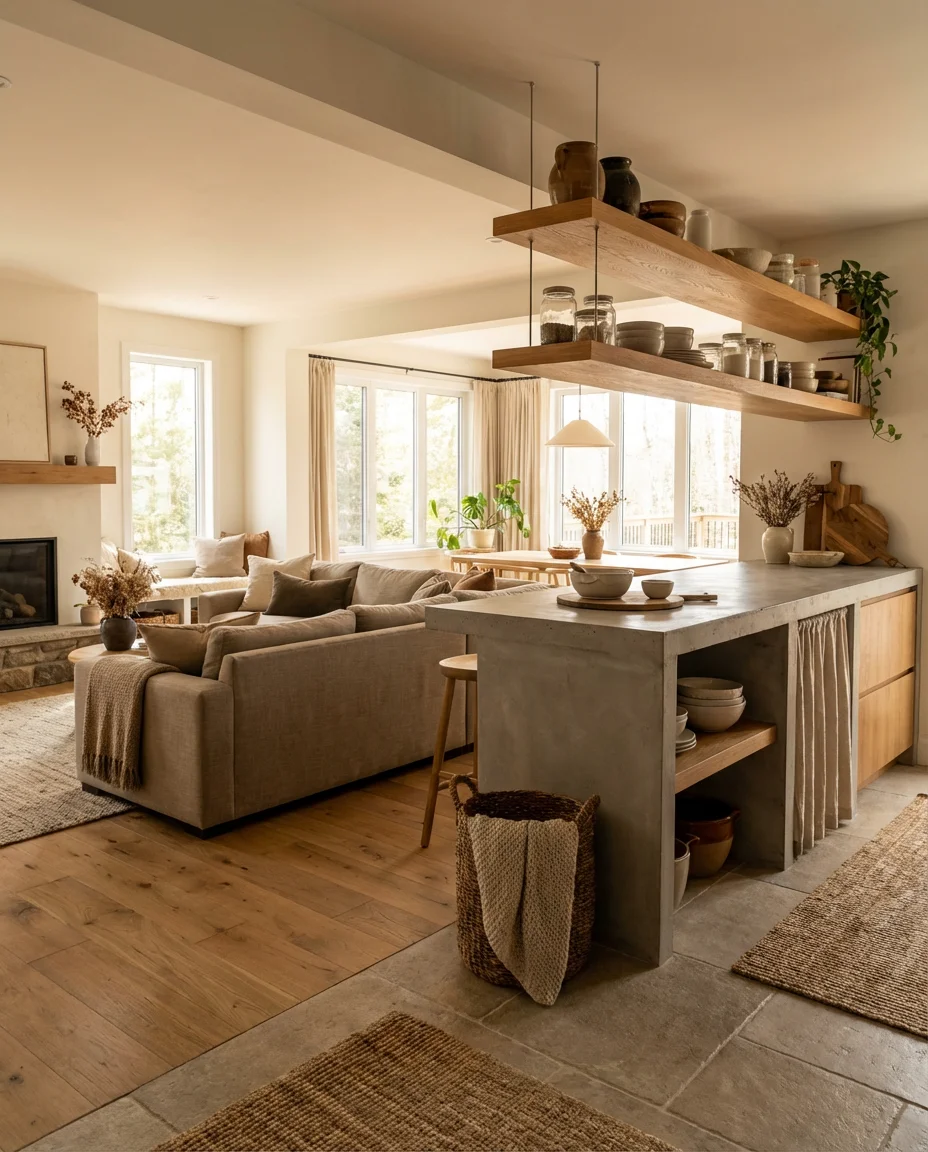
One of the most visually exciting opportunities in an open floor plan is the thoughtful mixing of materials across kitchen and living zones. Concrete, wood, stone, linen, and metal can all coexist beautifully when their tones belong to the same warm or cool family. The design principle at work here is consistency of temperature, not uniformity of material—and it’s what separates an expensive-looking open plan from one that feels randomly assembled despite a high budget. Tile and hardwood combinations exemplify this perfectly.
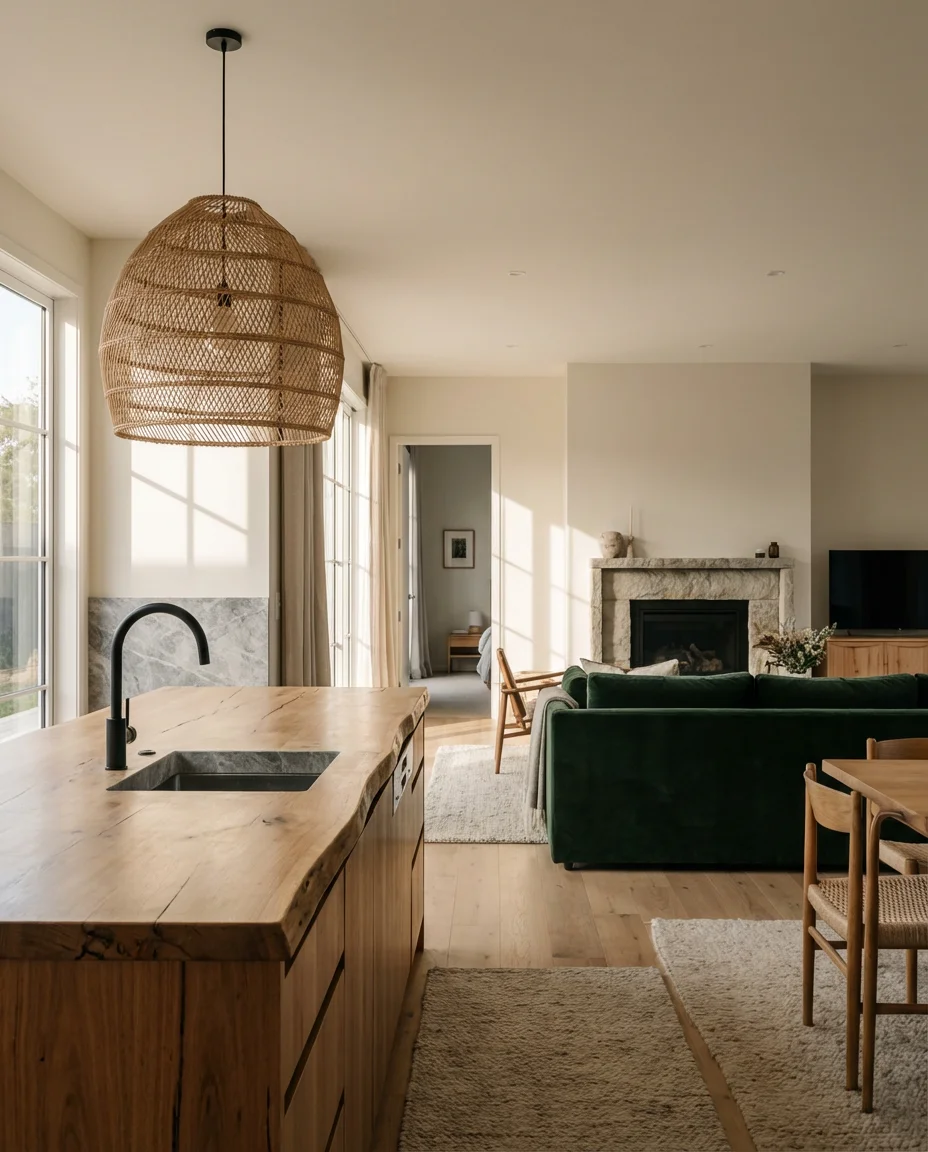
A practical rule when mixing materials: limit your palette to three primary materials and two accent materials in any single open-plan space. More than that and the eye has no place to rest. Under three, and the space can feel sterile. This five-material rule is something most accomplished interior designers use intuitively, even if they’ve never named it as a formal principle.
22. The Versatile Open Plan That Grows With You
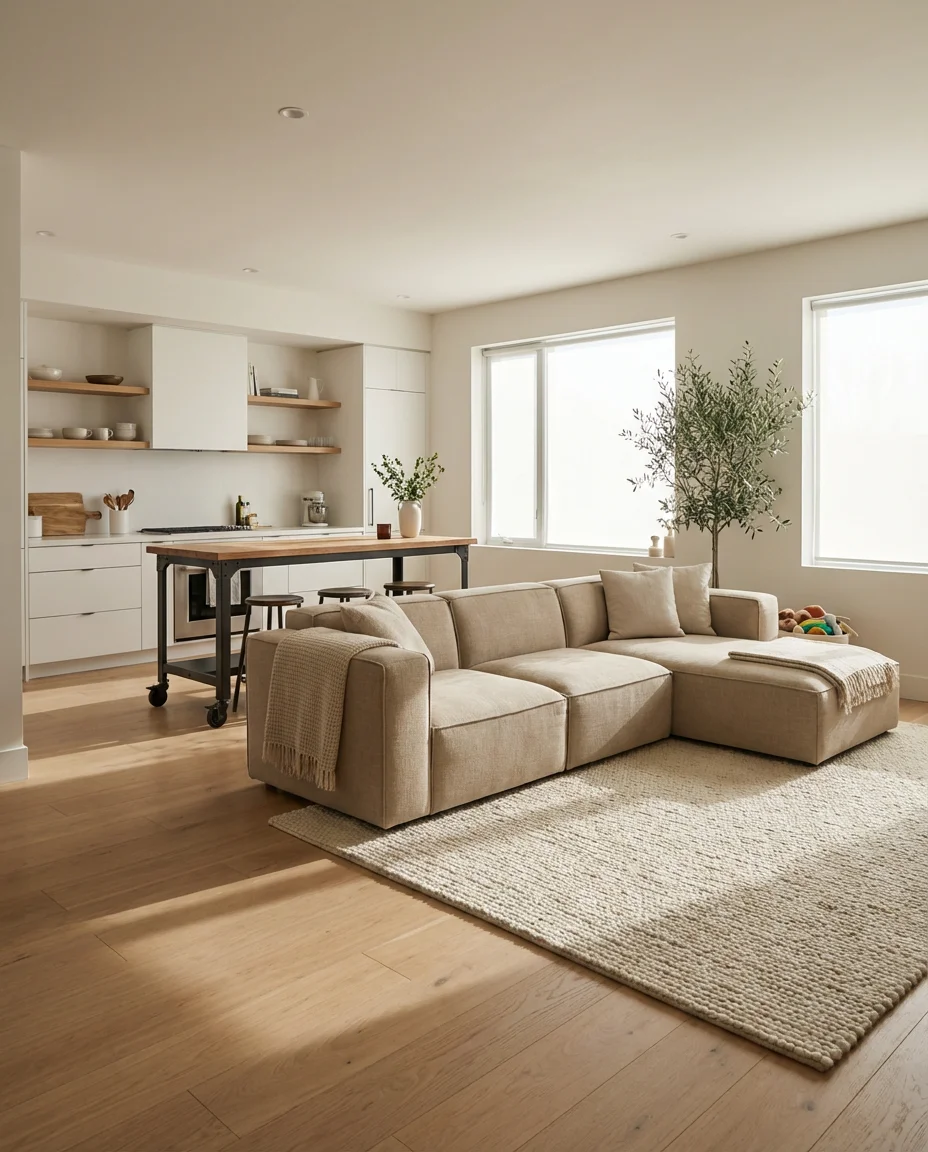
The best open floor plans aren’t designed for a single life stage—they’re designed to evolve. Young couples who entertain frequently need the space configured one way; the same couple five years later with a toddler needs it entirely differently. A well-thought-out open plan with layout furniture arrangement ideas built around flexibility—modular seating, movable kitchen islands, and clear zones that can be repurposed—is an investment that genuinely pays off across decades. The small-area version of this is even more impressive when it succeeds.
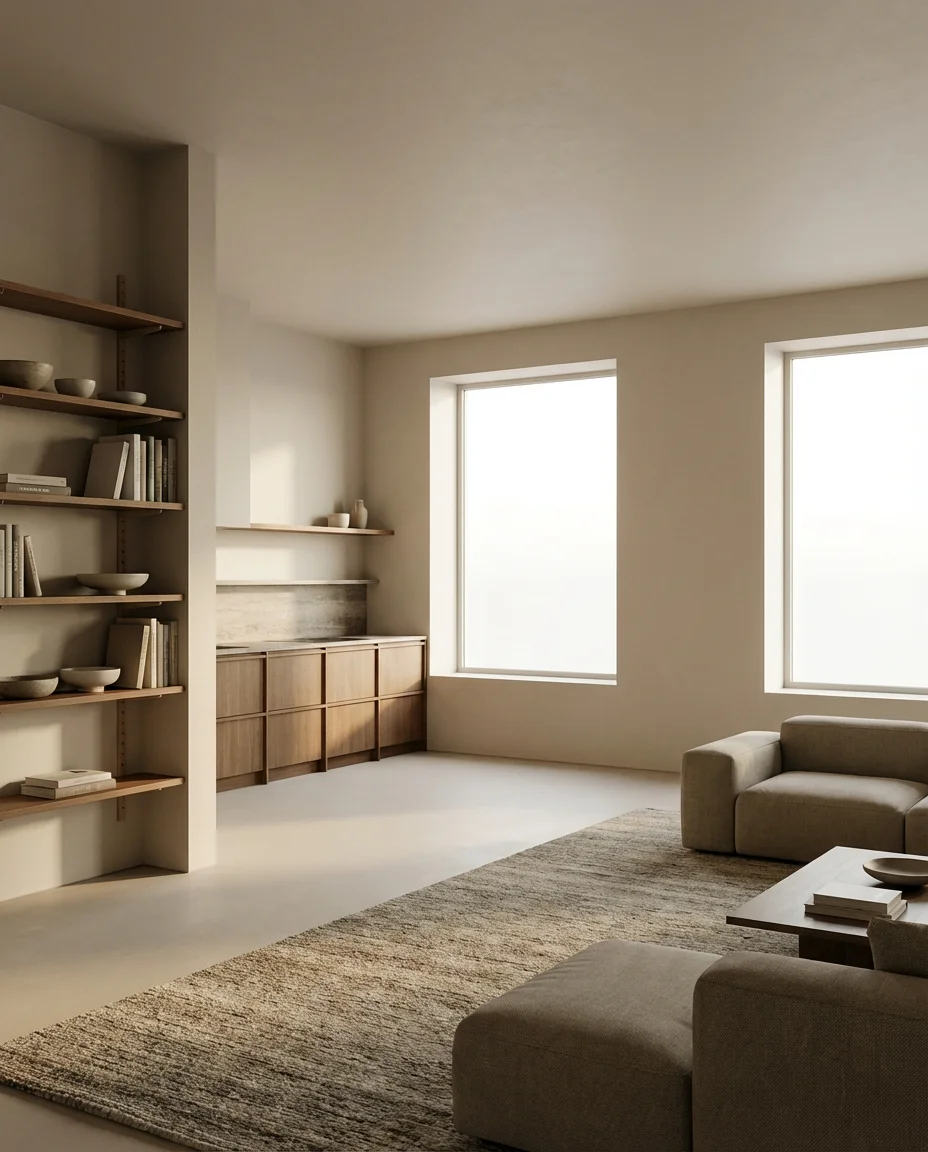
Real homeowners who’ve lived in open floor plans for twenty or more years consistently report the same insight: it’s not the style choices that hold up—it’s the quality of the bones. Solid flooring, good lighting infrastructure, and a kitchen that functions efficiently regardless of the furniture arrangement around it—these are the decisions that matter most in the long run. Trends come and go; a well-planned open floor plan outlasts all of them.
Conclusion
We hope these 22 open floor plan ideas sparked something for your own home—whether you’re deep in a renovation or just quietly dreaming on a Sunday afternoon. Every space has its own personality, and the best floor plan is always the one that fits your actual life, not a magazine spread. Drop your favorite idea in the comments below, share a photo of your own open floor plan progress, or ask a question—we’d love to see what you’re working on and hear what’s inspiring you most right now.