Oak kitchen cabinets are back—and in 2026, they’re being reimagined in ways that honor tradition while embracing modern design sensibilities. Once dismissed as outdated, oak is now celebrated for its warmth, durability, and the rich character it brings to American kitchens. Whether you’re drawn to honey-toned grains or crisp painted finishes, this year’s trends prove that oak can anchor everything from farmhouse charm to sleek contemporary spaces. Homeowners across the country are turning to Pinterest for inspiration, searching for ways to update, refresh, or fully commit to the timeless beauty of oak. Here are ideas that show just how versatile—and relevant—oak cabinets can be in 2026.
1. Honey Oak Cabinets with Warm Brass Hardware
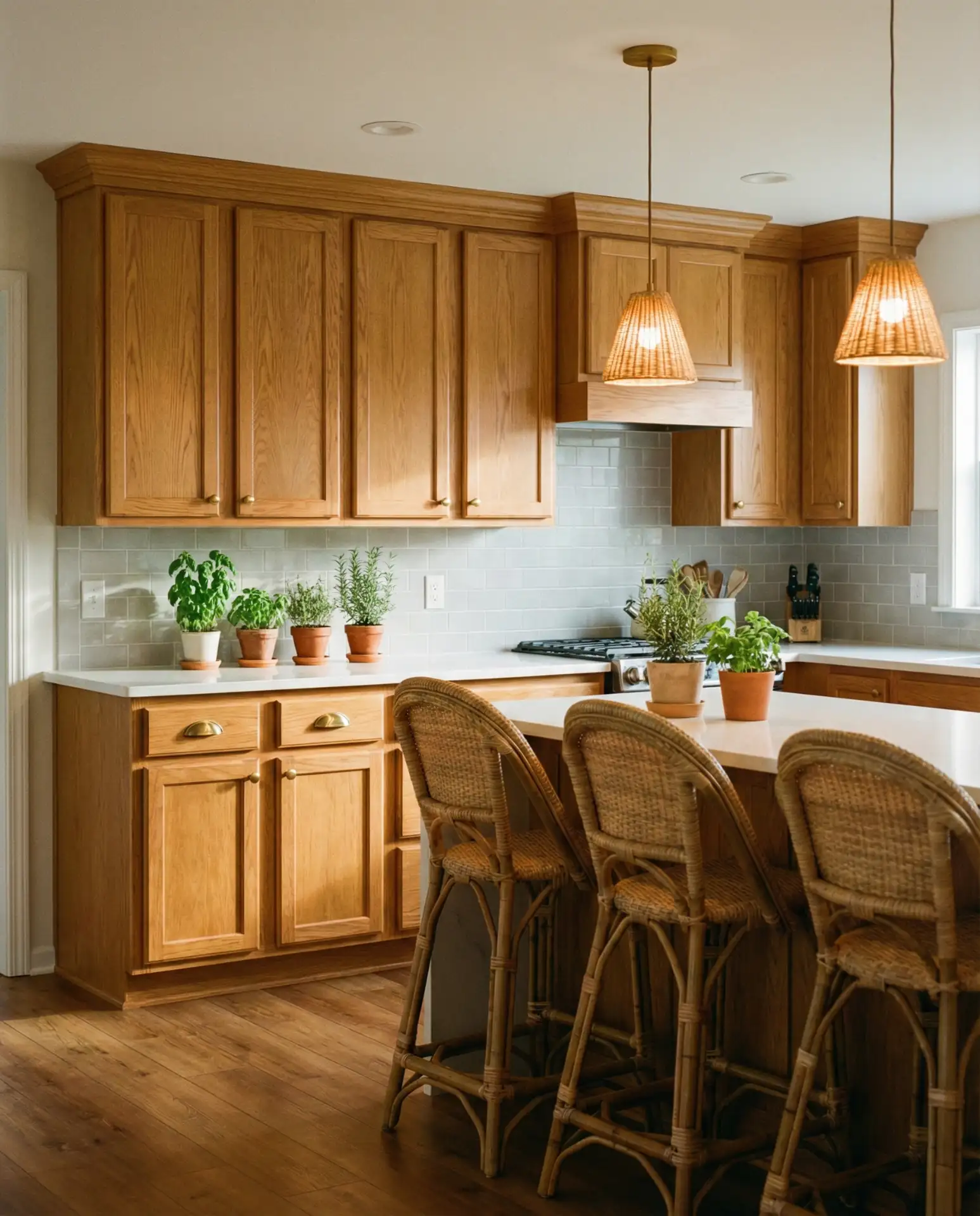
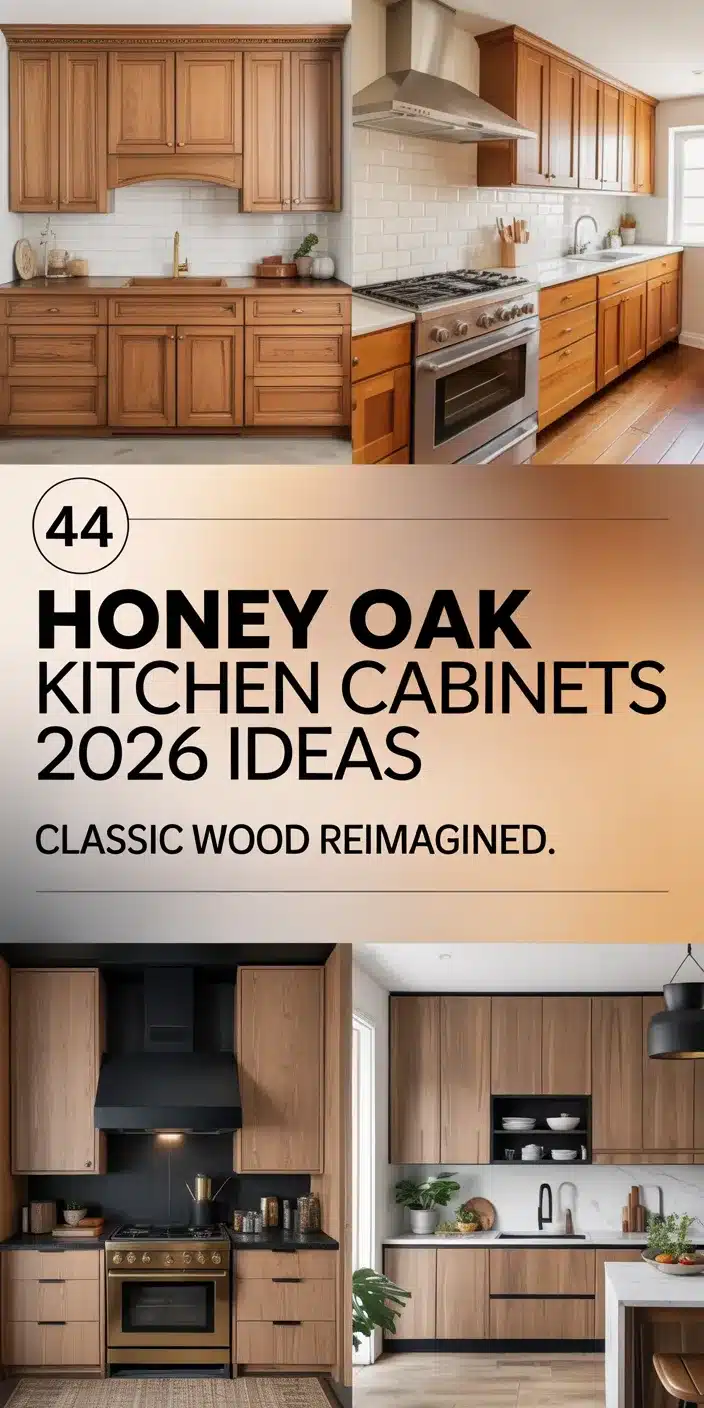
The honey tones in oak cabinetry are making a comeback, especially when paired with modern brass or gold hardware. This combination brings out the natural amber glow of the wood while adding a layer of sophistication. It works beautifully in kitchens that lean into warmth—think open shelving, terracotta accents, and woven textures. The golden undertones feel inviting rather than dated when styled with intention. This look thrives in spaces that balance rustic charm with clean lines.
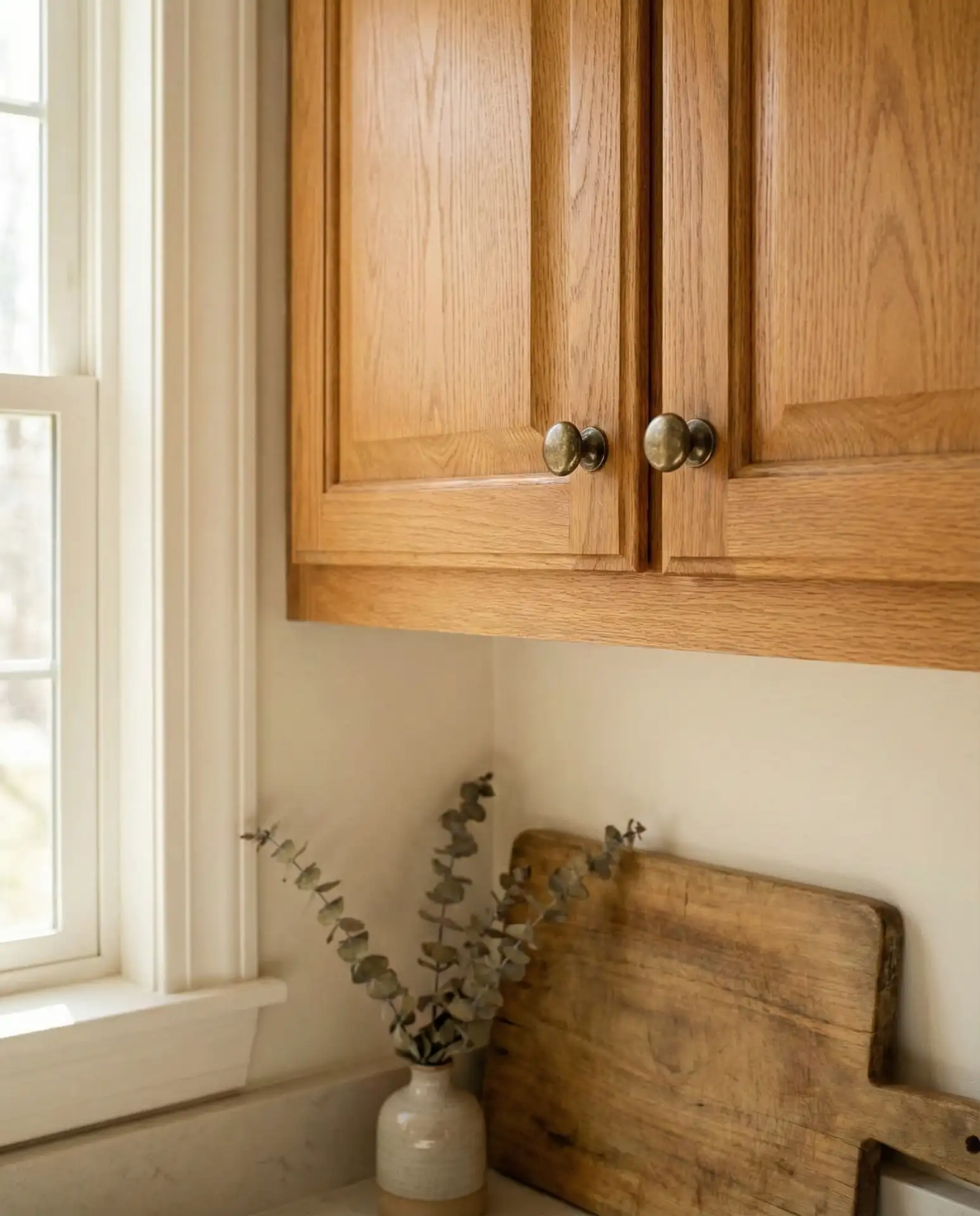
This approach works best in kitchens with plenty of natural light—south-facing windows or open floor plans help prevent the honey tones from feeling too heavy. Pair with neutral walls in cream or soft gray to let the wood shine. Avoid overcrowding the space with too many competing wood tones; instead, keep flooring and furniture lighter or in contrasting materials like metal or stone. The result is a kitchen that feels grounded, livable, and unmistakably current.
2. Painted White Oak with Visible Grain
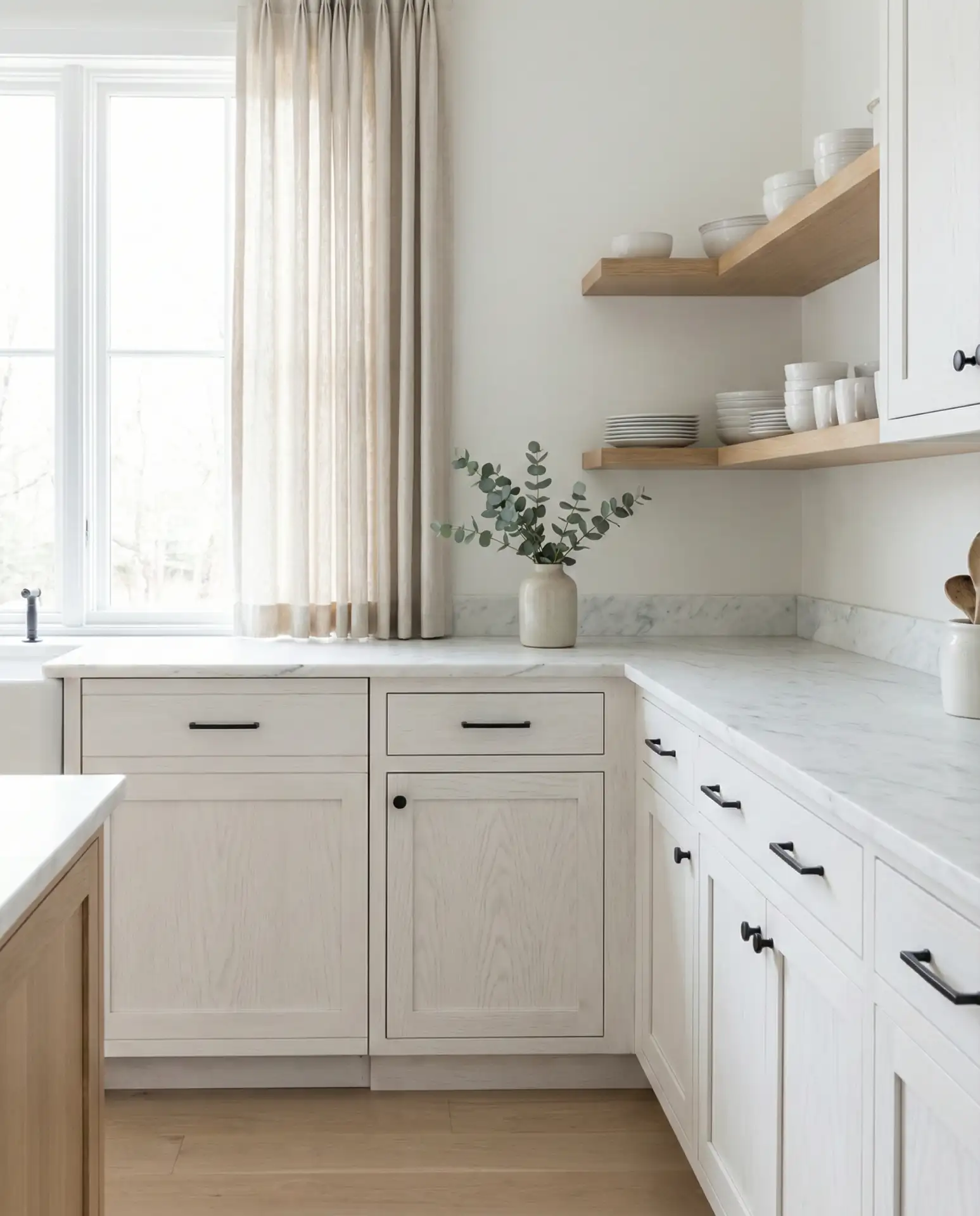
Instead of hiding the grain, many homeowners are choosing white or pale paint that lets oak’s texture show through. This technique—often called a whitewash or limewash finish—honors the wood’s character while giving the kitchen a lighter, airier feel. It’s especially popular in coastal and Scandinavian-inspired homes where natural materials are celebrated. The grain adds depth and prevents the space from feeling flat or sterile. It’s a modern take that respects the past.
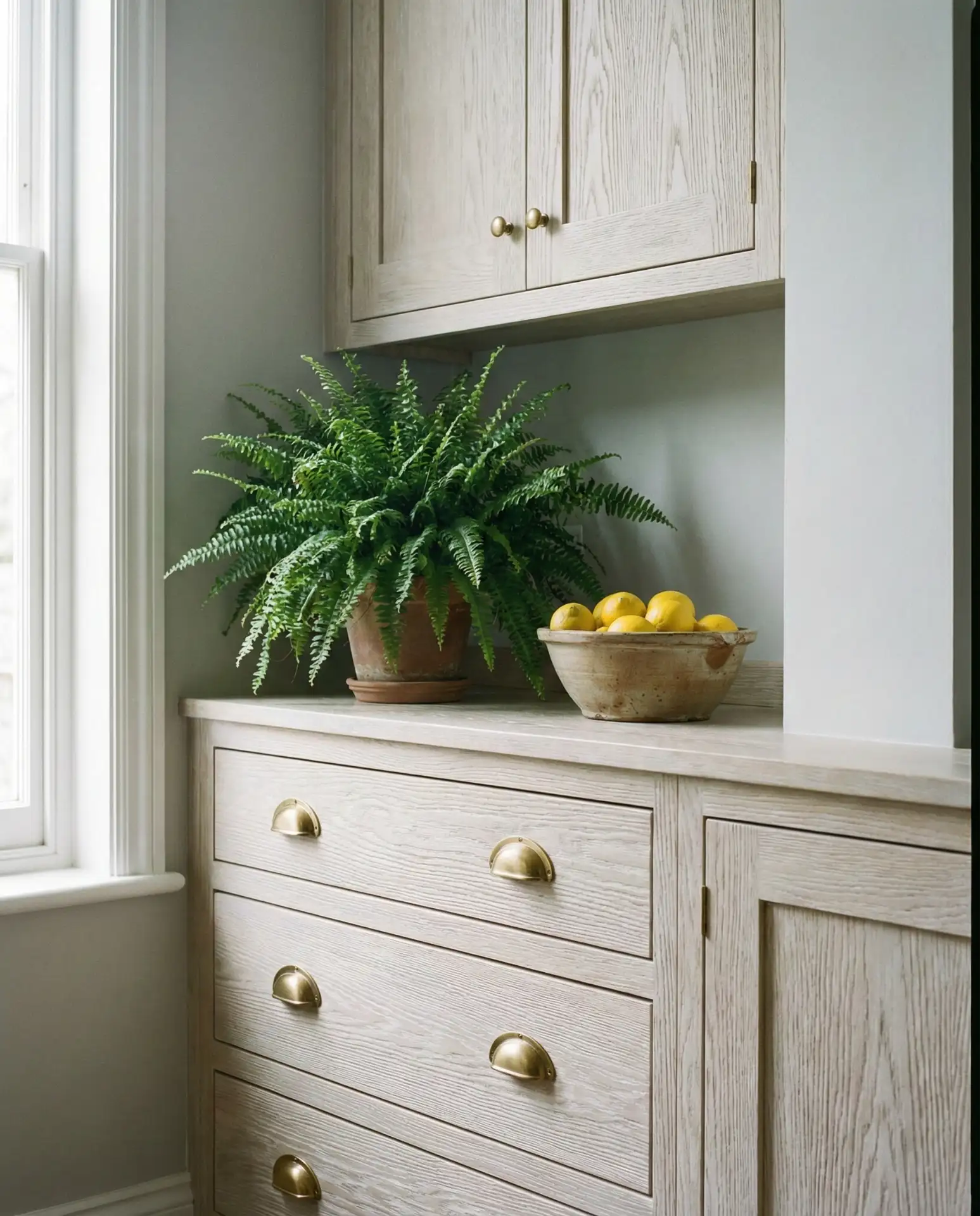
A designer once told me that painted oak with visible grain is like “wearing linen instead of polyester—it breathes.” That stuck with me. This finish adds soul to a kitchen without weighing it down. It pairs beautifully with soapstone, butcher block, or honed marble. And because the grain still shows, it doesn’t feel like you’re hiding the wood—you’re celebrating it in a quieter way.
3. Dark-Stained Oak for Moody Elegance
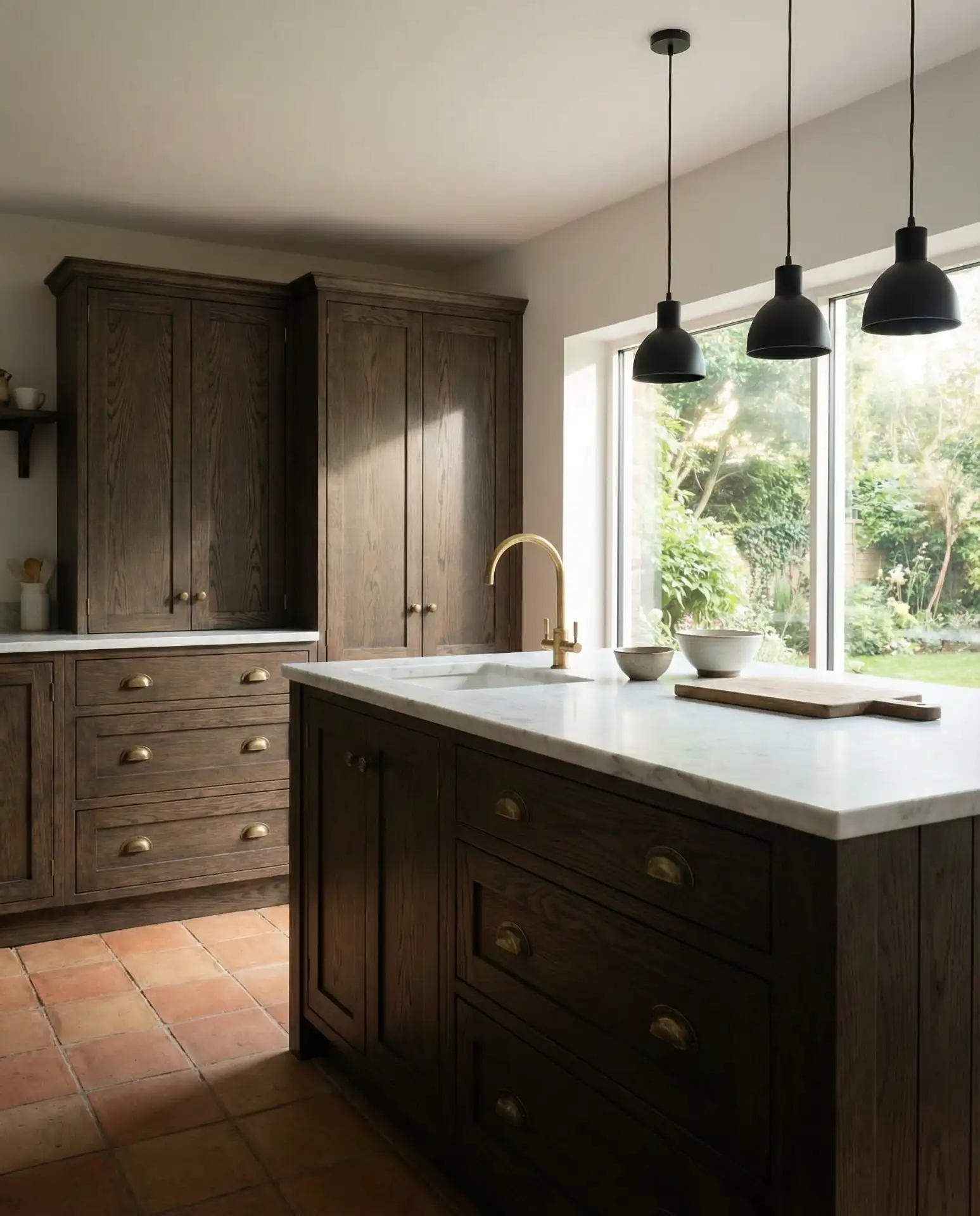
Rich, dark stains on oak cabinetry create a dramatic backdrop that’s perfect for moody, layered interiors. Think espresso, charcoal, or deep walnut tones that make the oak grain pop. This style works particularly well in urban lofts, historic homes, or kitchens with high ceilings and good lighting. Pair with brass or copper accents, marble countertops, and warm-toned backsplashes. The stained finish adds gravitas without feeling heavy, especially when balanced with lighter elements like white walls or open shelving.
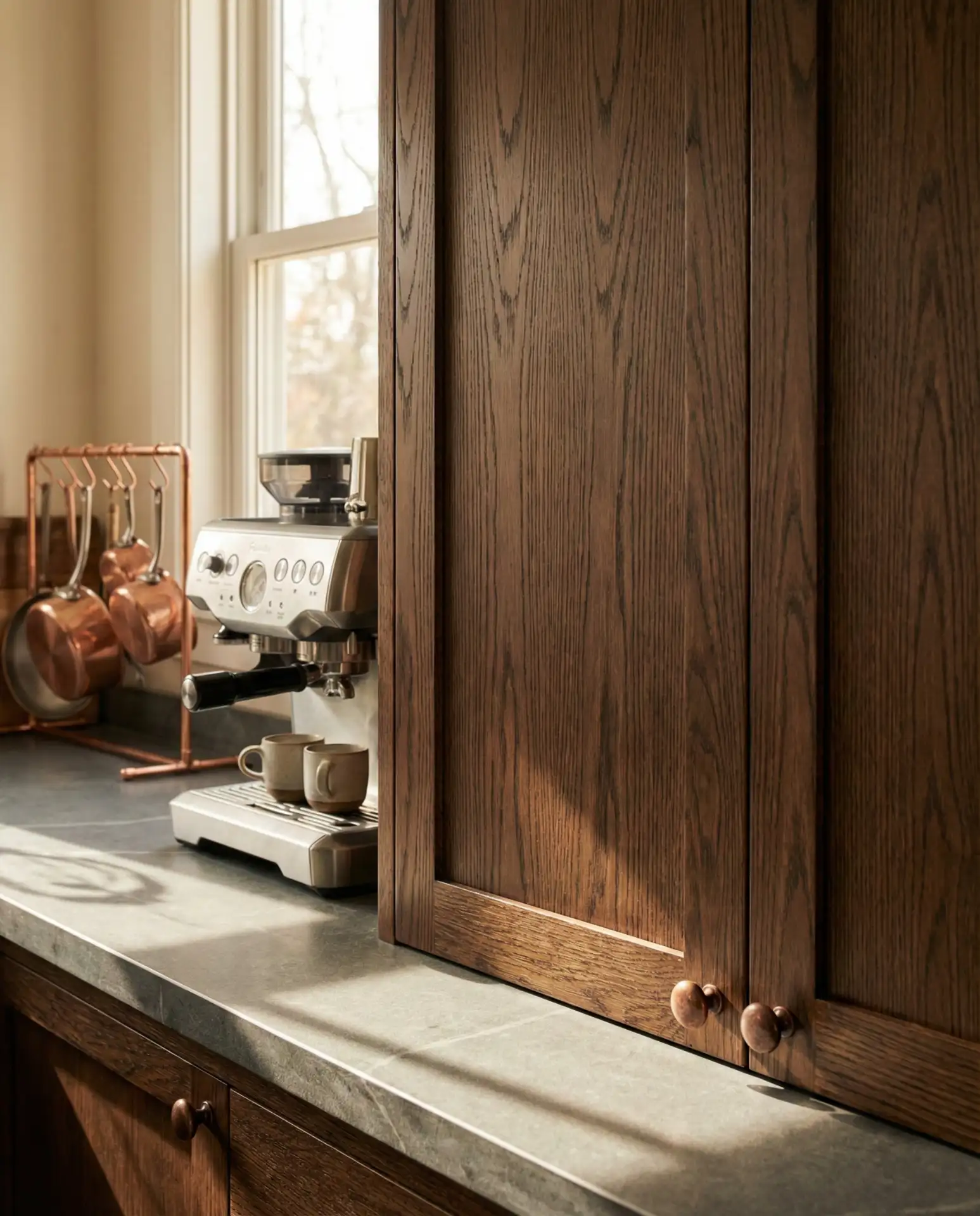
Budget-conscious homeowners love that dark stains can transform existing oak cabinets without replacement. A professional stain job typically costs $3,000–$6,000, which is a fraction of the price of new cabinetry. If you’re DIYing, test stains on a hidden area first—oak absorbs color unevenly, and you’ll want to see how it looks on your specific grain pattern. Use a pre-stain conditioner to help achieve a more uniform finish.
4. Quarter Sawn White Oak for Timeless Texture
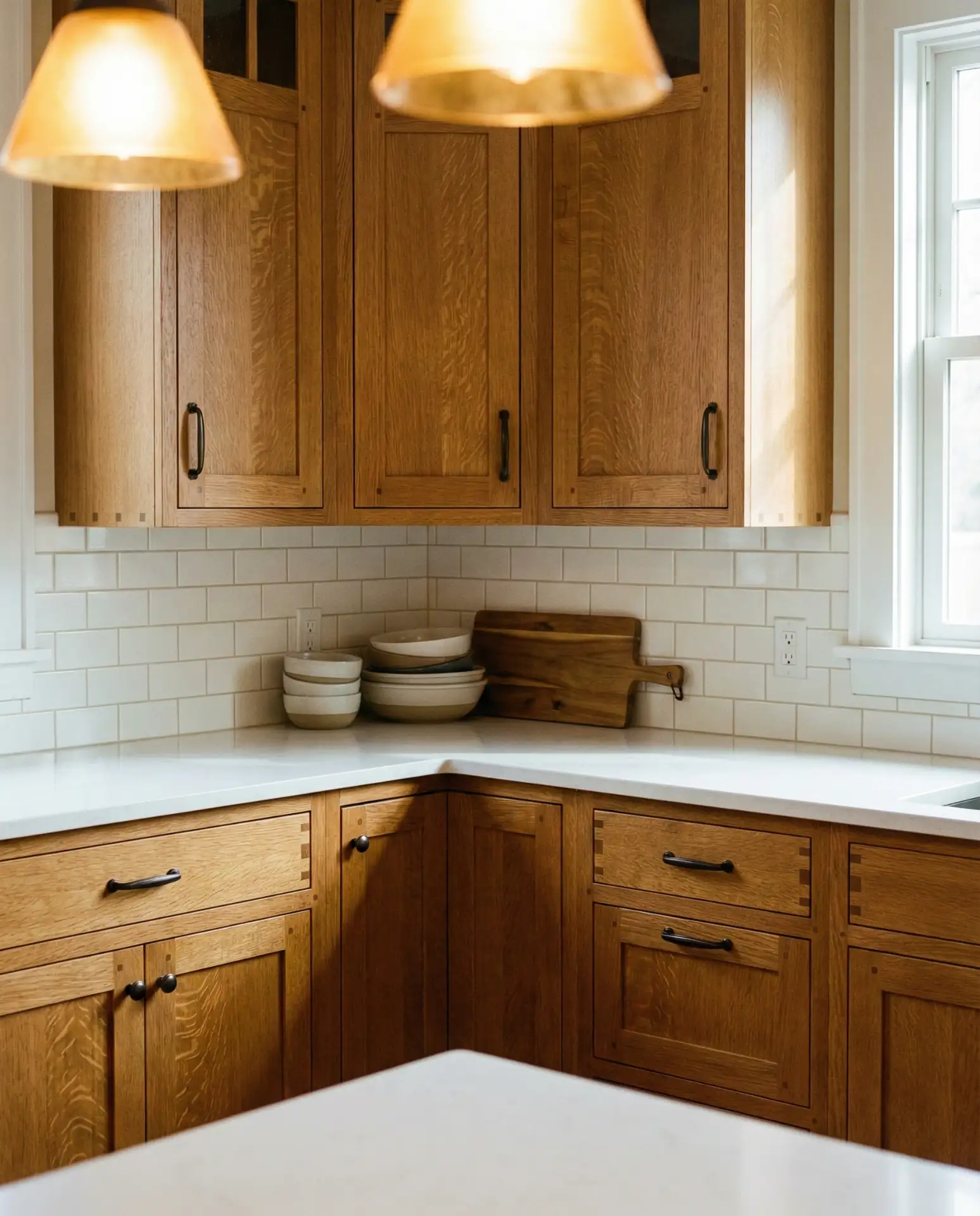
The distinctive ray fleck pattern of quarter-sawn white oak gives cabinets a refined, almost Art Deco quality. This milling method—cutting the log at a specific angle—reveals the medullary rays in the wood, creating a shimmering, linear grain. It’s a premium choice that signals craftsmanship and longevity. Historically used in Craftsman and Mission-style homes, it’s now being embraced in modern kitchens where texture and authenticity matter. The vertical grain also makes the wood more stable and resistant to warping.
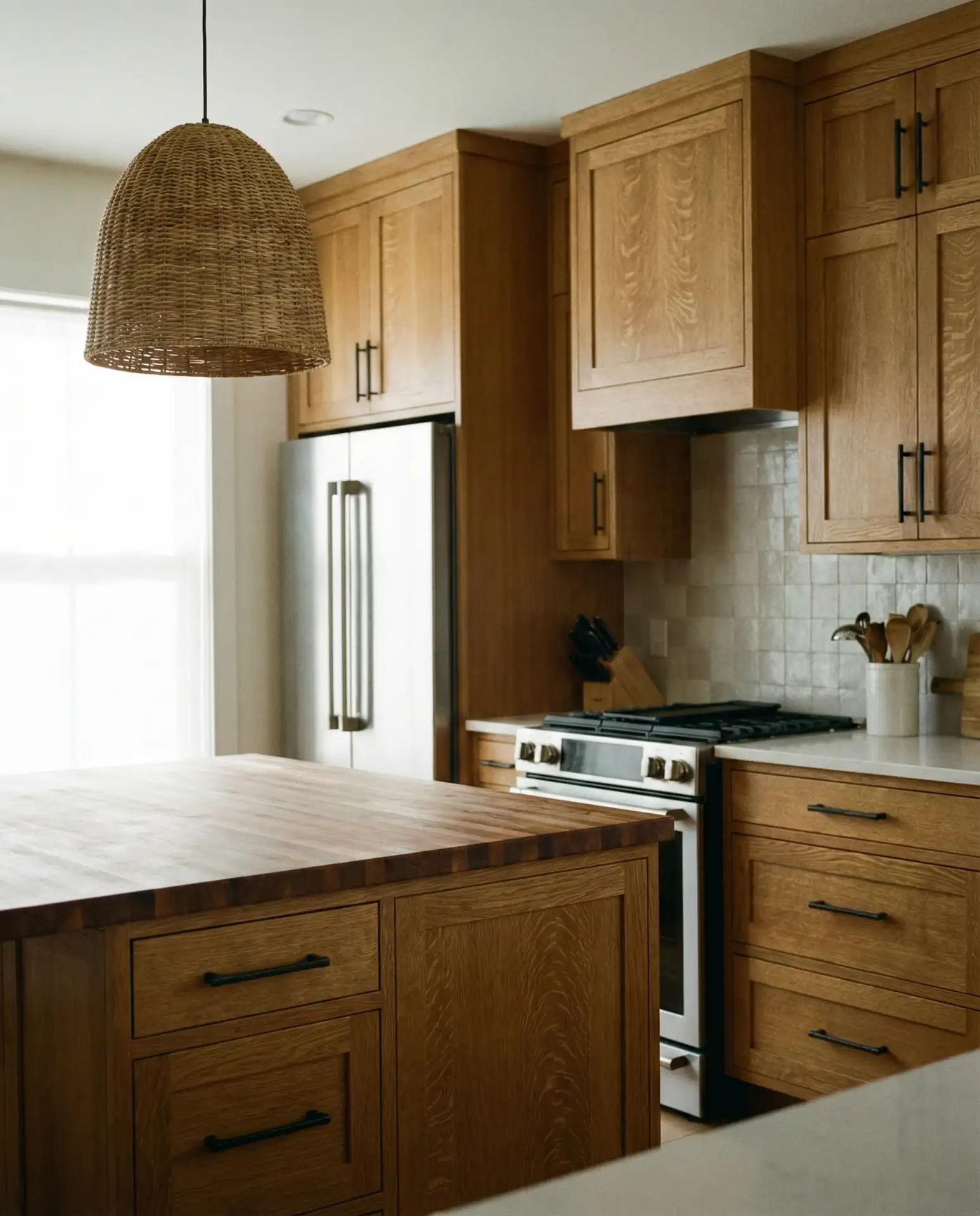
Quarter-sawn oak works best in kitchens where you want the cabinetry to be a focal point, not just a backdrop. It pairs beautifully with matte black fixtures, simple Shaker doors, and minimal hardware. The grain itself is the star, so avoid overly ornate styles or busy backsplashes. This is a great choice for homeowners in the Pacific Northwest, Midwest, or New England, where Craftsman architecture is part of the regional identity.
5. Light Oak with Sage Green Walls
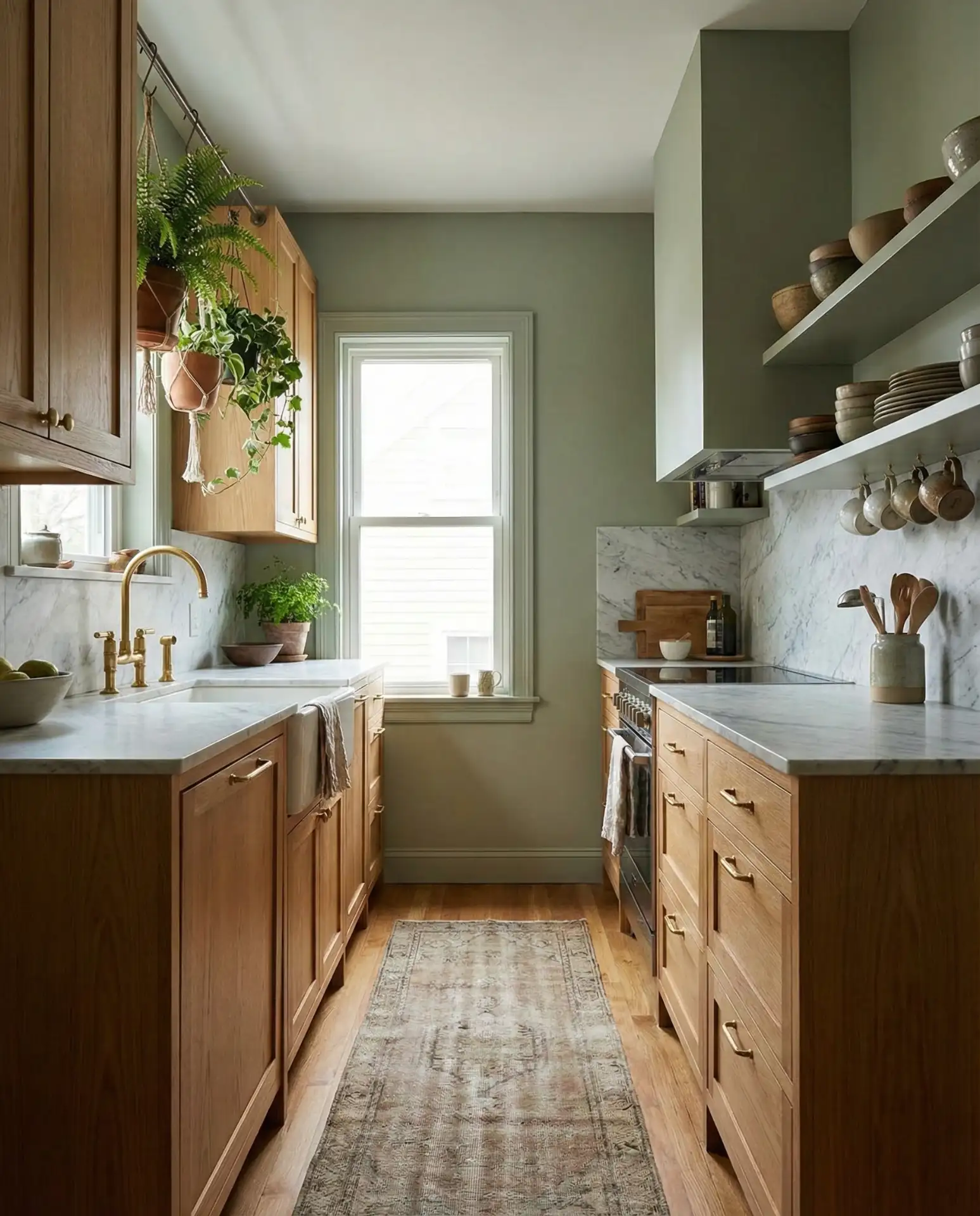
Soft light oak cabinets look stunning against wall color choices like sage, olive, or eucalyptus green. This pairing feels fresh, organic, and rooted in nature—perfect for kitchens that want to evoke calm and balance. The cool green tones offset the warmth of the oak without clashing, creating a space that feels both energizing and restful. Add in brass or wood accents, linen textiles, and plants to complete the look. It’s a trend that’s been gaining traction in the South and Southwest, where indoor-outdoor living is a priority.
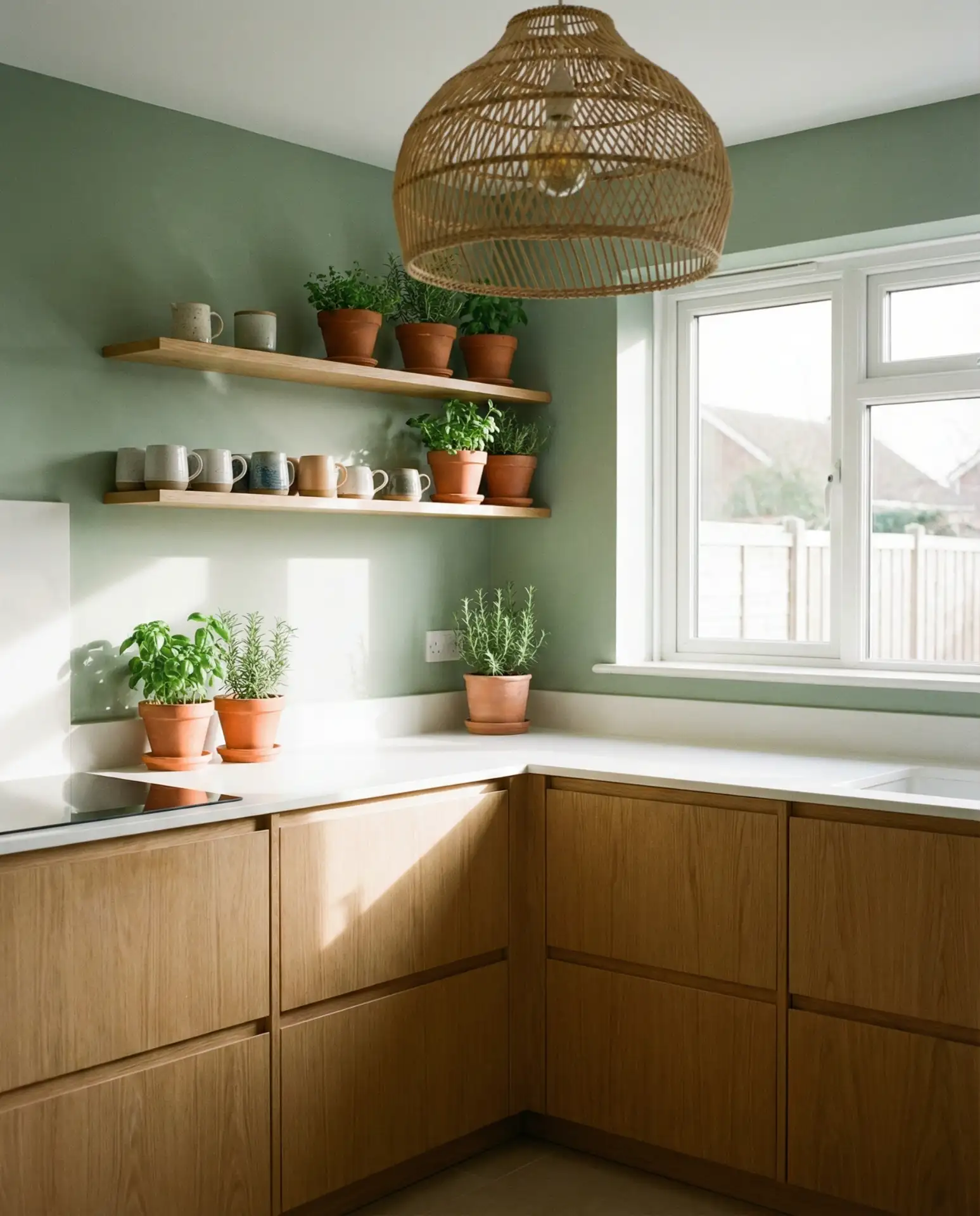
One common mistake is choosing a green that’s too bright or too blue—you want an earthy, muted tone that complements rather than competes with the oak. Test paint samples in different lighting conditions before committing. Also, avoid pairing this look with too many cool metals like chrome; stick with warm brass, copper, or matte black to maintain the cozy, grounded vibe.
6. Rift White Oak for Minimalist Interiors
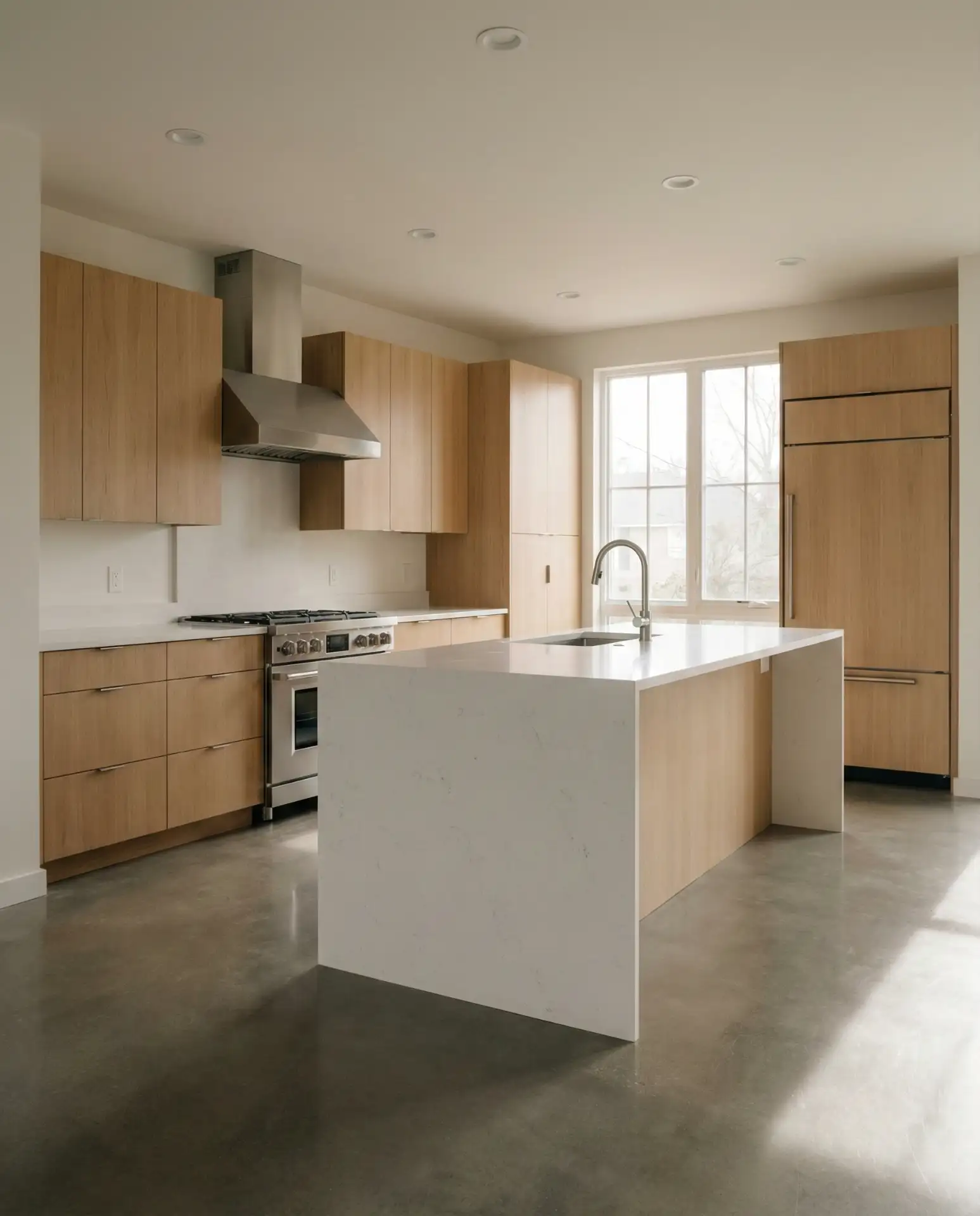
For those who love the look of oak but prefer a quieter grain, rift white oak is the answer. This milling technique produces a straight, even grain with minimal cathedral patterns—ideal for minimalist or Scandinavian-inspired kitchens. The result is clean, contemporary, and sophisticated. It works beautifully in modern spaces where restraint and simplicity are the guiding principles. Pair with handleless cabinets, integrated appliances, and monochromatic palettes for a seamless, high-end look.
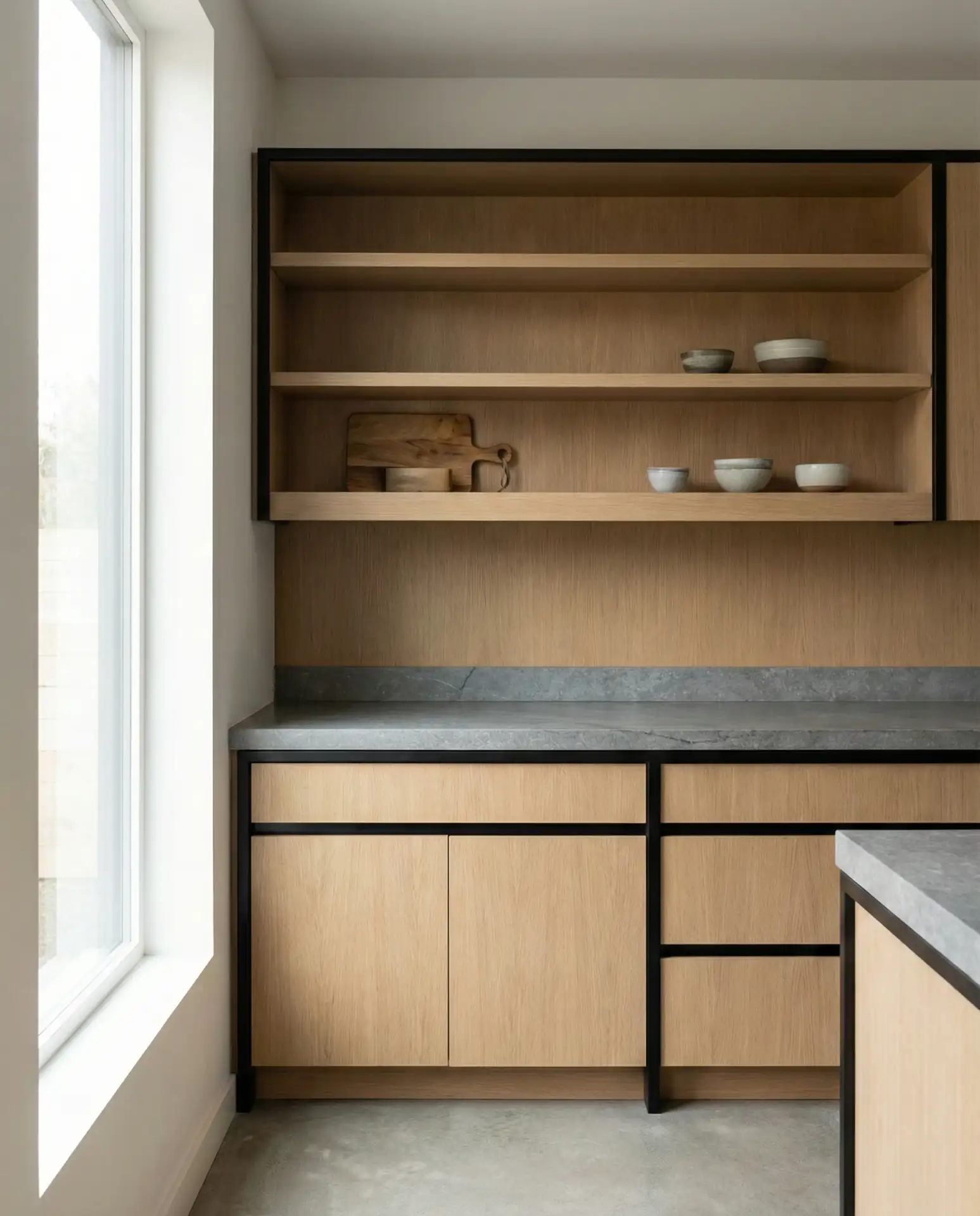
Rift-sawn oak is more expensive than plain-sawn, but the uniform grain is worth it if you’re aiming for a sleek, uninterrupted look. It’s a favorite among architects and designers working on high-end residential projects. The straight grain also makes it easier to match cabinet doors and panels, which is crucial in modern kitchens where continuity and precision matter.
7. Two-Tone Oak: Natural and White
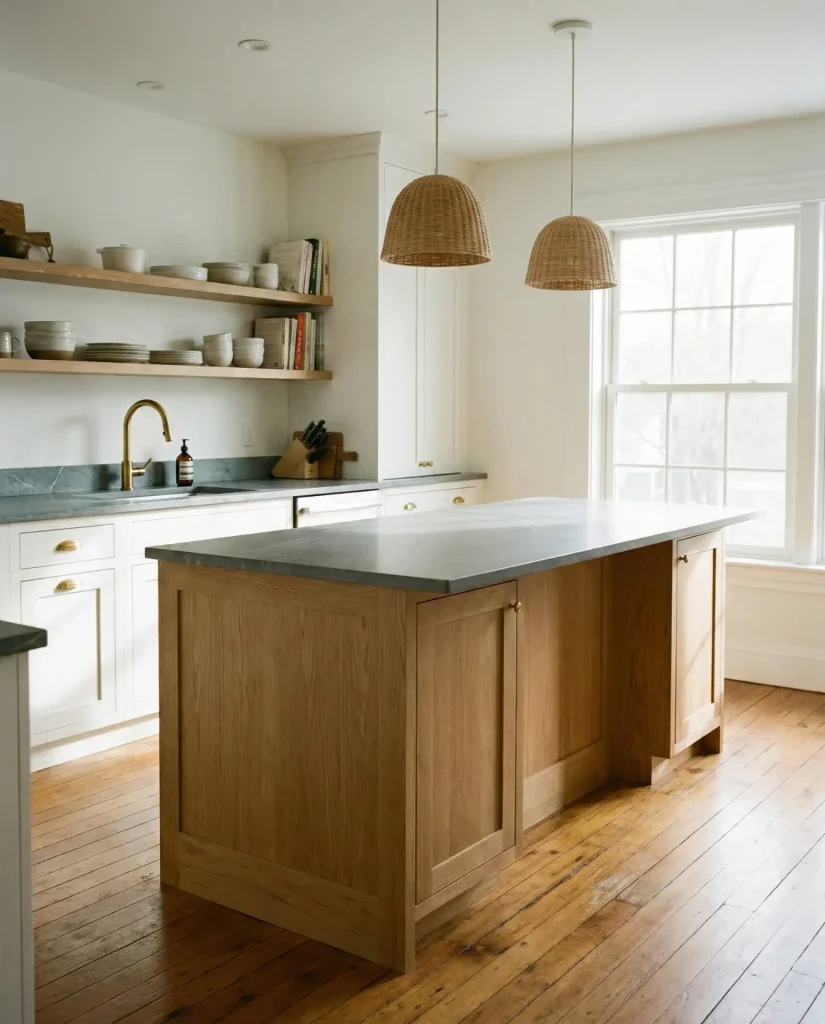
Mixing natural oak lowers with white painted uppers is a classic strategy that feels balanced and fresh. The natural oak grounds the space, while the white keeps it airy and open. This is especially effective in kitchens with lower ceilings or limited natural light. The contrast draws the eye and adds visual interest without overwhelming the room. It’s a practical choice, too—darker colors hide wear and tear better than all-white cabinets.
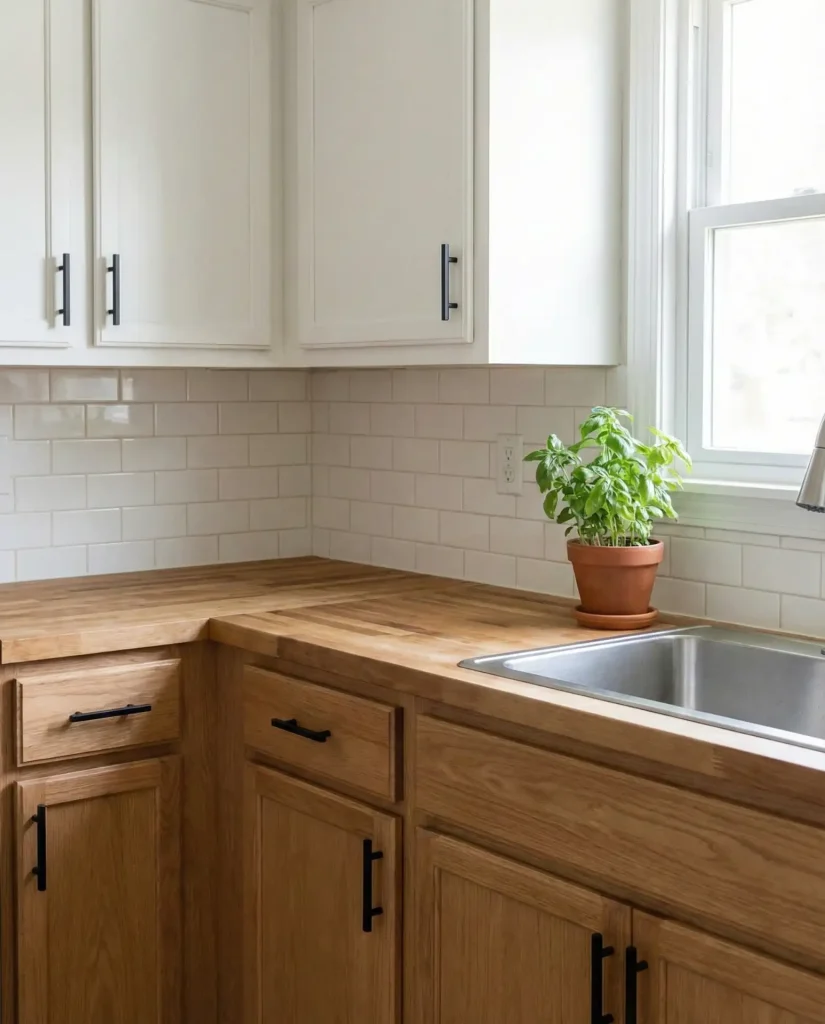
This layout is hugely popular in suburban American homes, particularly in the Midwest and Mid-Atlantic, where open-concept kitchens flow into dining and living areas. The two-tone approach helps define the kitchen zone without needing walls or dividers. It’s also forgiving—you can update the white cabinets with a fresh coat of paint down the line while keeping the oak as your anchor.
8. Rustic Oak with Reclaimed Wood Accents
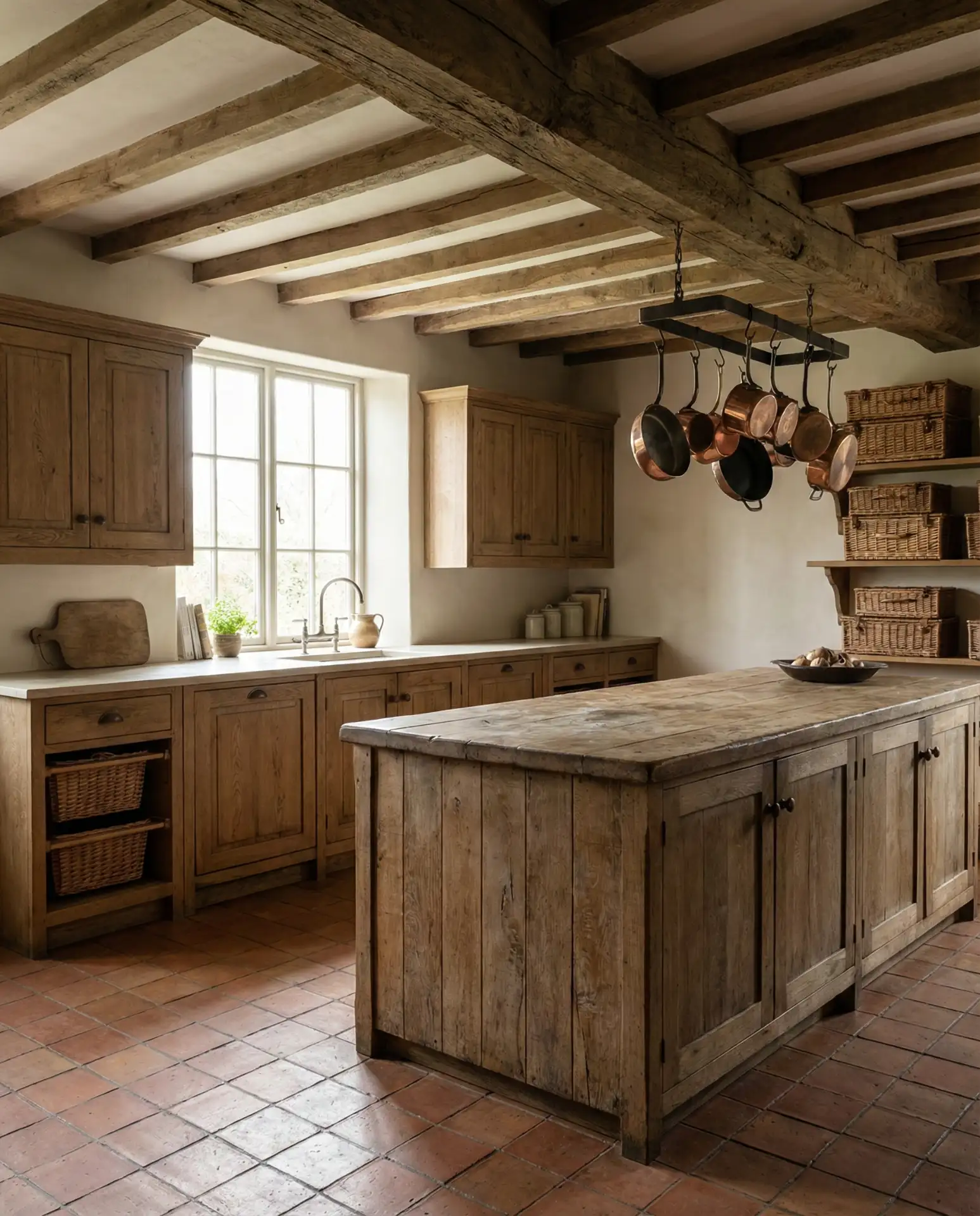
For a kitchen with soul and history, pair rustic oak cabinets with reclaimed wood beams, open shelving, or a salvaged wood island. The knots, grain variation, and natural imperfections in the oak add warmth and authenticity. This style thrives in farmhouse, mountain, or ranch-style homes where a connection to nature and heritage is important. Layer in wrought iron hardware, stone countertops, and vintage-inspired lighting to complete the look. It’s about celebrating imperfection and telling a story through materials.
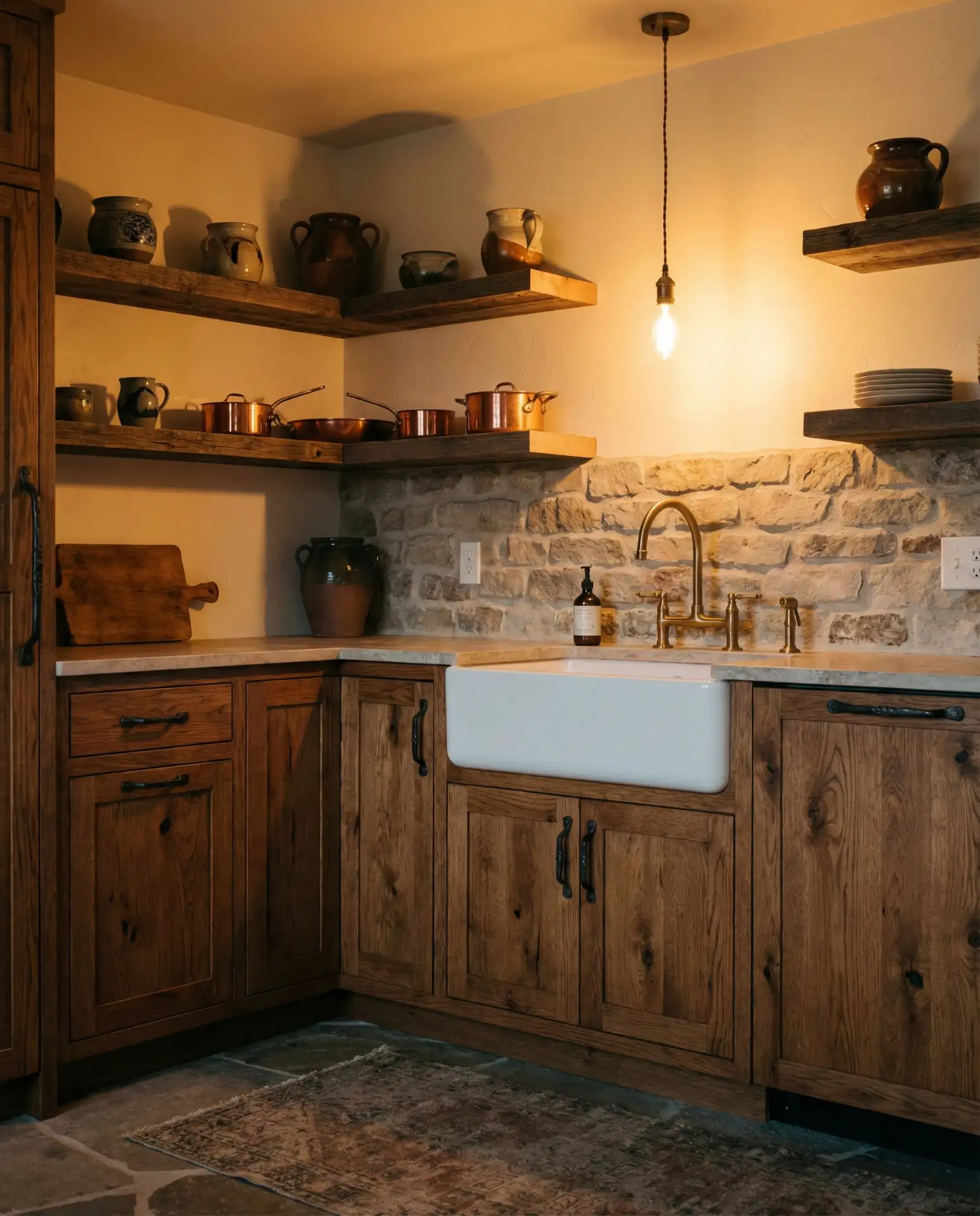
Real homeowners who go this route often source reclaimed wood from local barns, mills, or salvage yards, adding a regional or personal connection to the space. It’s not just about aesthetics—it’s about sustainability and storytelling. Just make sure the reclaimed wood is properly treated and sealed, especially if it’s going to be used for shelving or countertops where food prep happens.
9. Medium Oak with Black and White Contrast
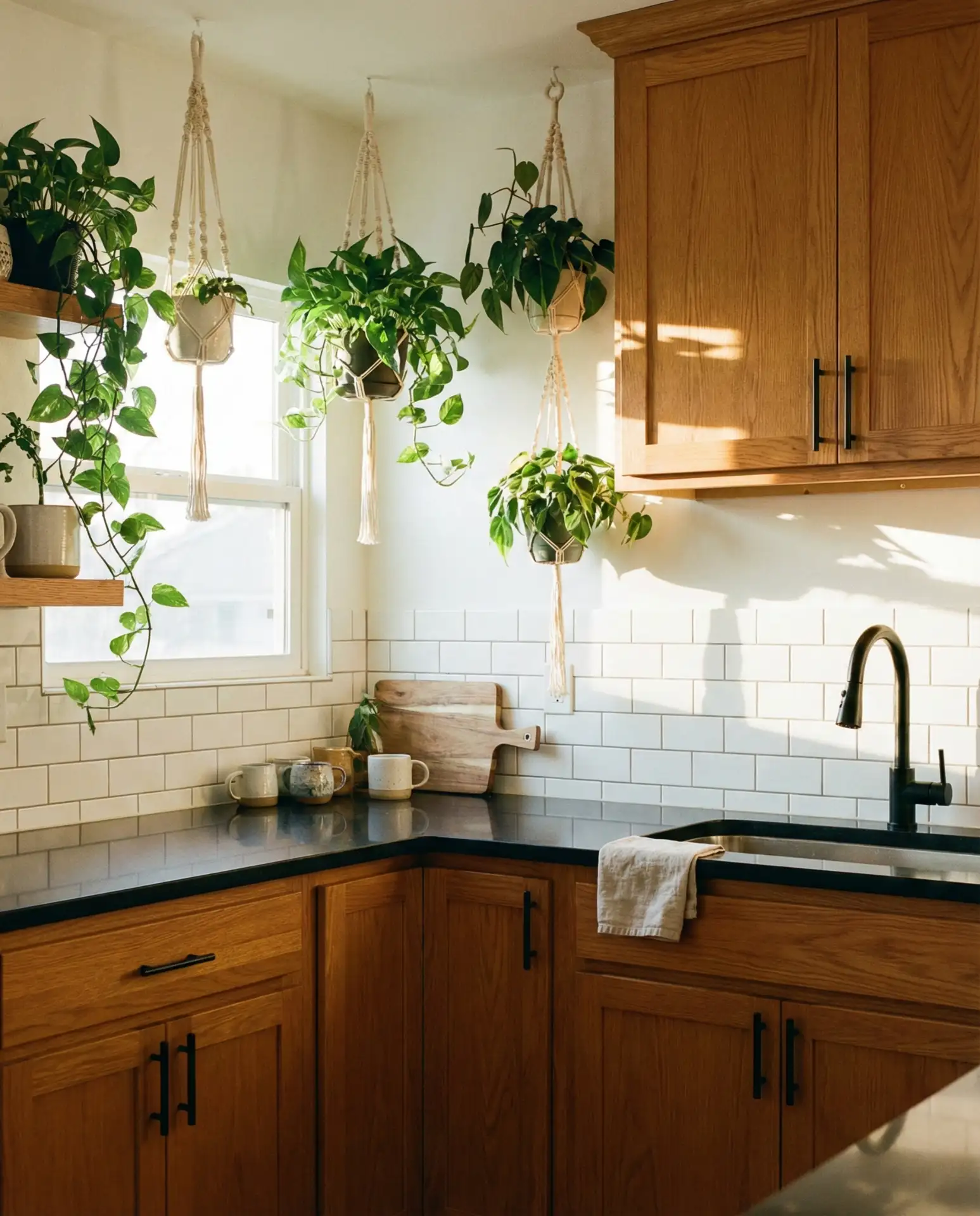
A medium oak tone—neither too light nor too dark—serves as a versatile foundation for a black and white color scheme. Think black countertops or backsplash tiles paired with white walls and subway tile. The oak adds warmth and keeps the space from feeling too stark or cold. This is a smart choice for homeowners who want a timeless kitchen that won’t feel dated in five years. Add pops of greenery, natural textiles, or wood cutting boards to soften the contrast.
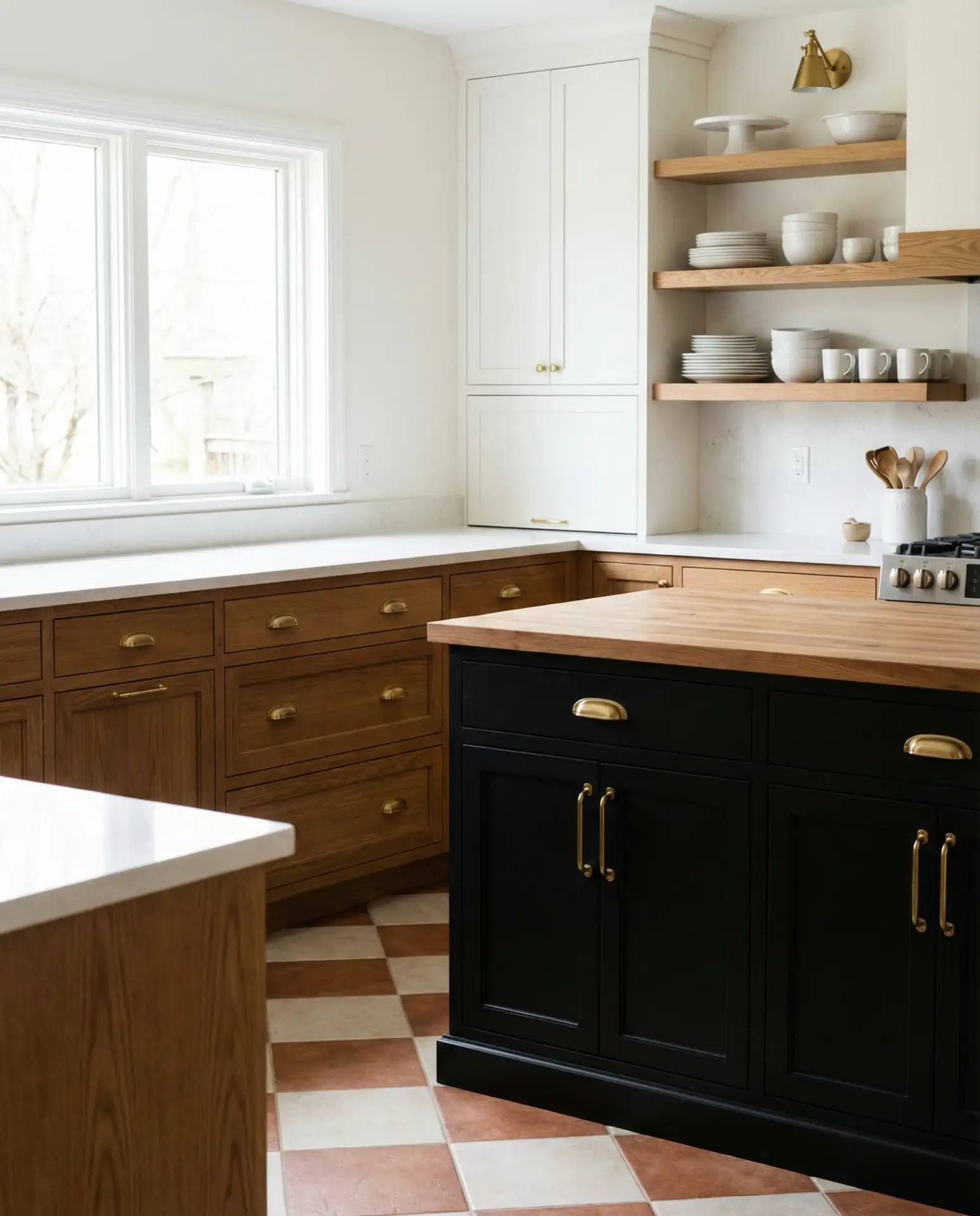
From a practical standpoint, medium oak is easier to maintain than very light or very dark finishes—it hides fingerprints, water spots, and daily wear better. It’s also easier to match if you need to add or replace a cabinet door down the line. This tone works across a wide range of home styles, from Transitional to Contemporary to Classic American.
10. Oak Cabinets with Terracotta and Orange Accents
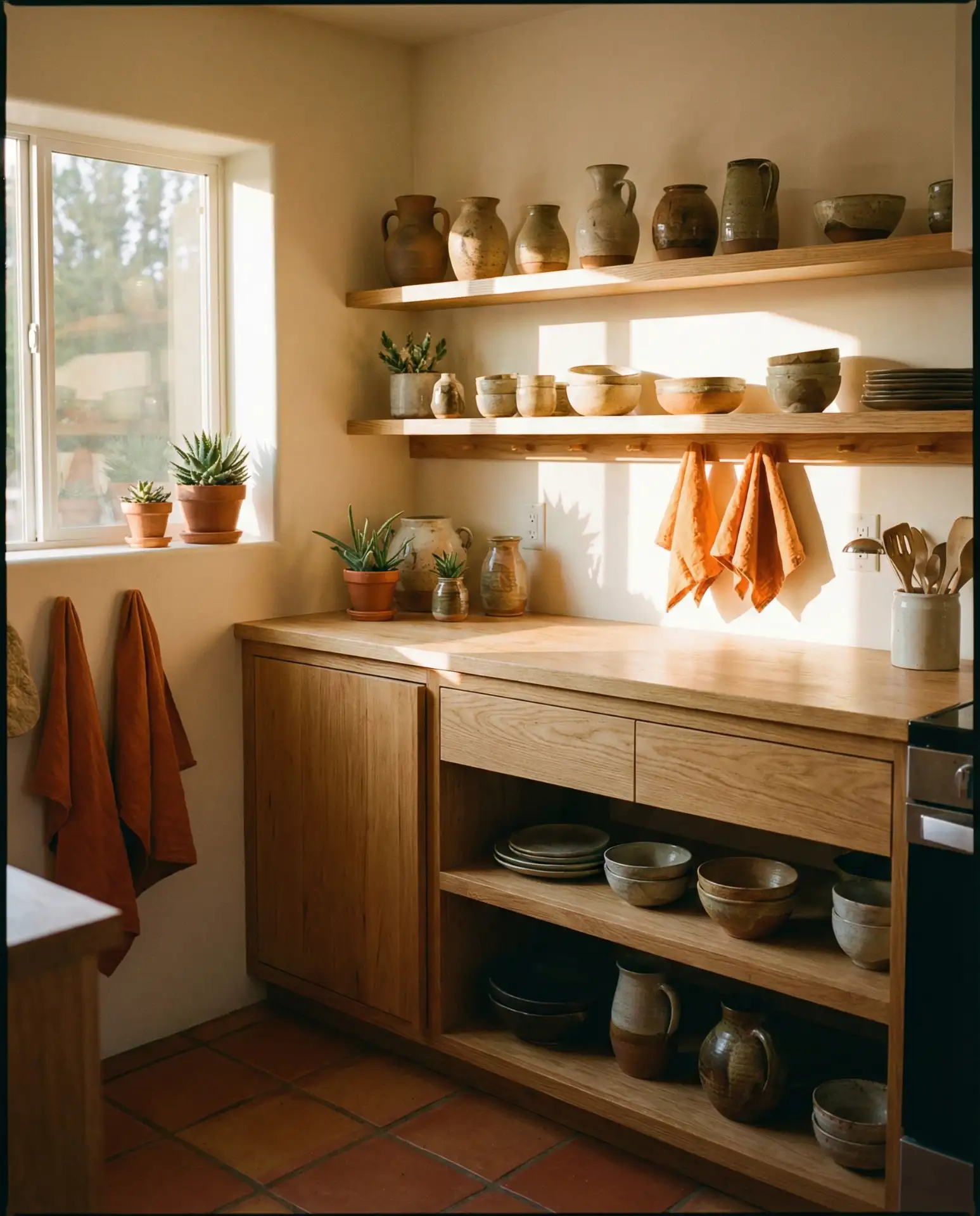
Warm orange and terracotta tones are having a moment, and they pair beautifully with the natural warmth of oak. Think terracotta backsplash tiles, burnt orange dish towels, or clay pots filled with herbs. This palette feels earthy, inviting, and a little bohemian—perfect for kitchens in desert climates or for homeowners who love a tactile, layered aesthetic. The oak provides a neutral backdrop that lets these warm hues shine without overwhelming the space.
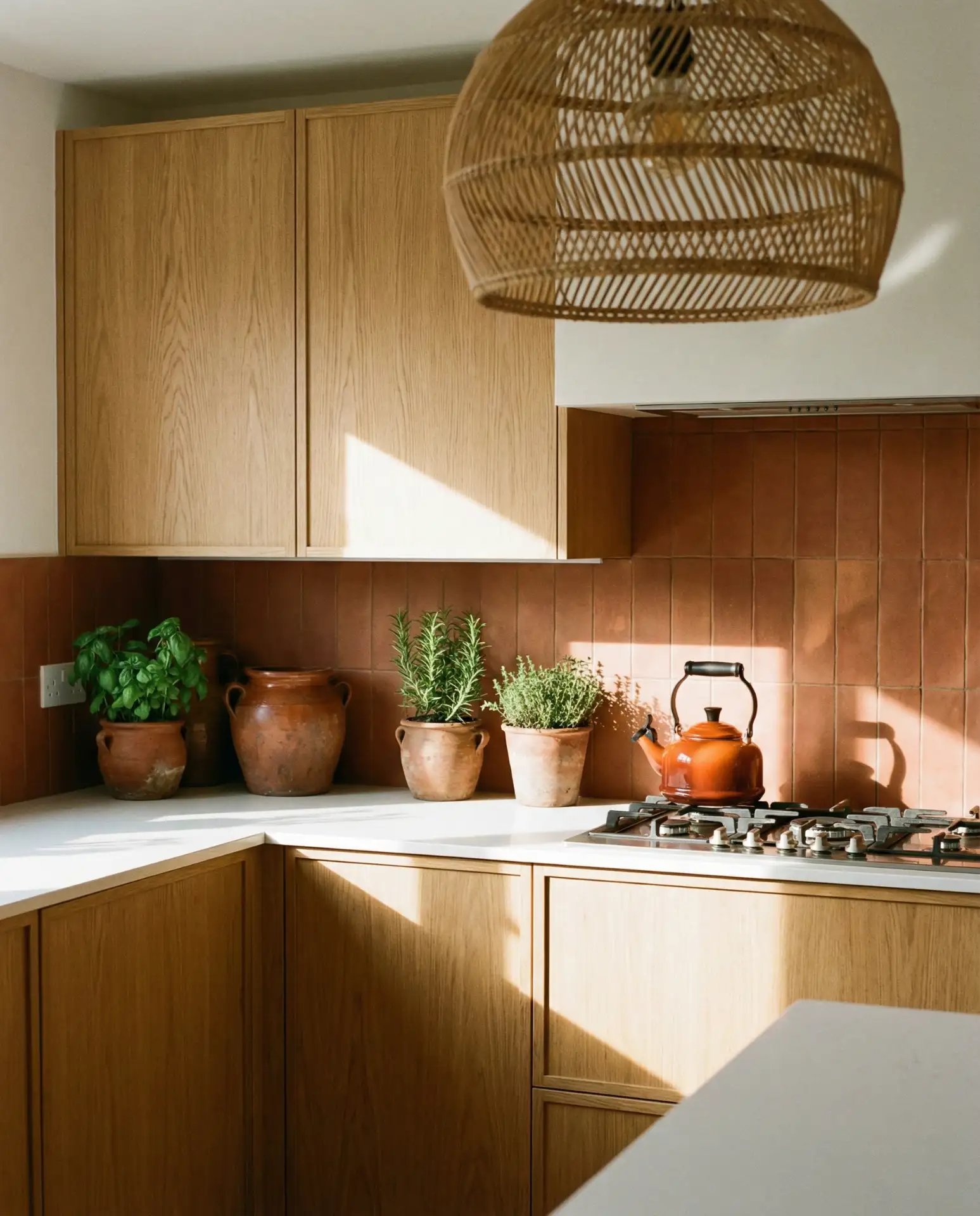
This color combination works best in kitchens with lots of natural light and neutral flooring. Avoid pairing it with cool grays or blues, which can clash with the warm tones. Instead, stick with creams, whites, and natural fibers. In the Southwest and Southern California, this palette feels right at home, echoing the landscape and local architecture.
11. Updating 90s Oak with New Hardware
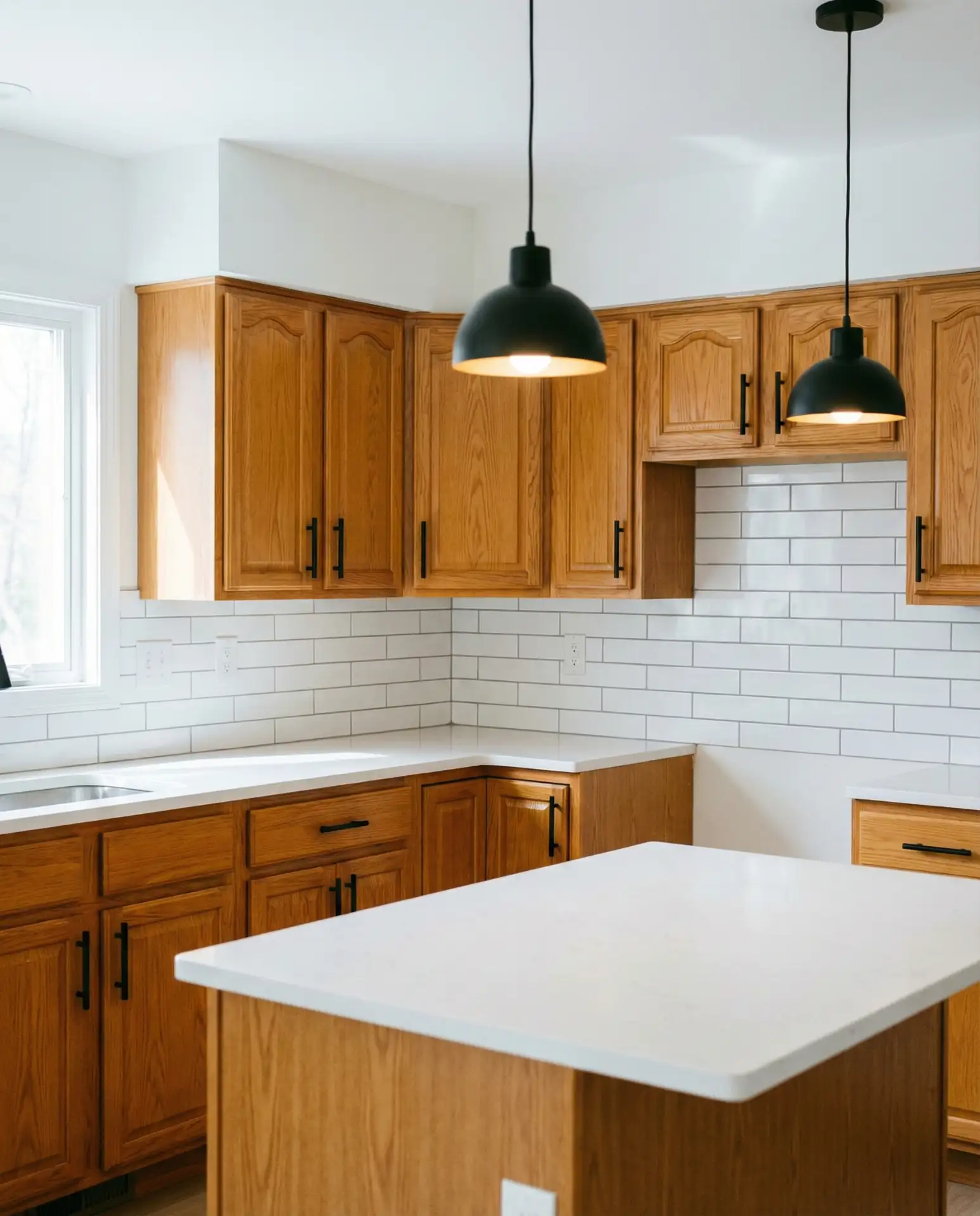
If you have original 90s oak cabinets with cathedral grain and brass pulls, you don’t need to rip them out—a simple update can bring them into the present. Swapping dated hardware for sleek black, brushed nickel, or leather pulls instantly modernizes the look. Add a fresh coat of paint to the walls, replace the backsplash, and update lighting fixtures. The bones are good; they just need a refresh. This approach saves thousands of dollars and reduces waste.
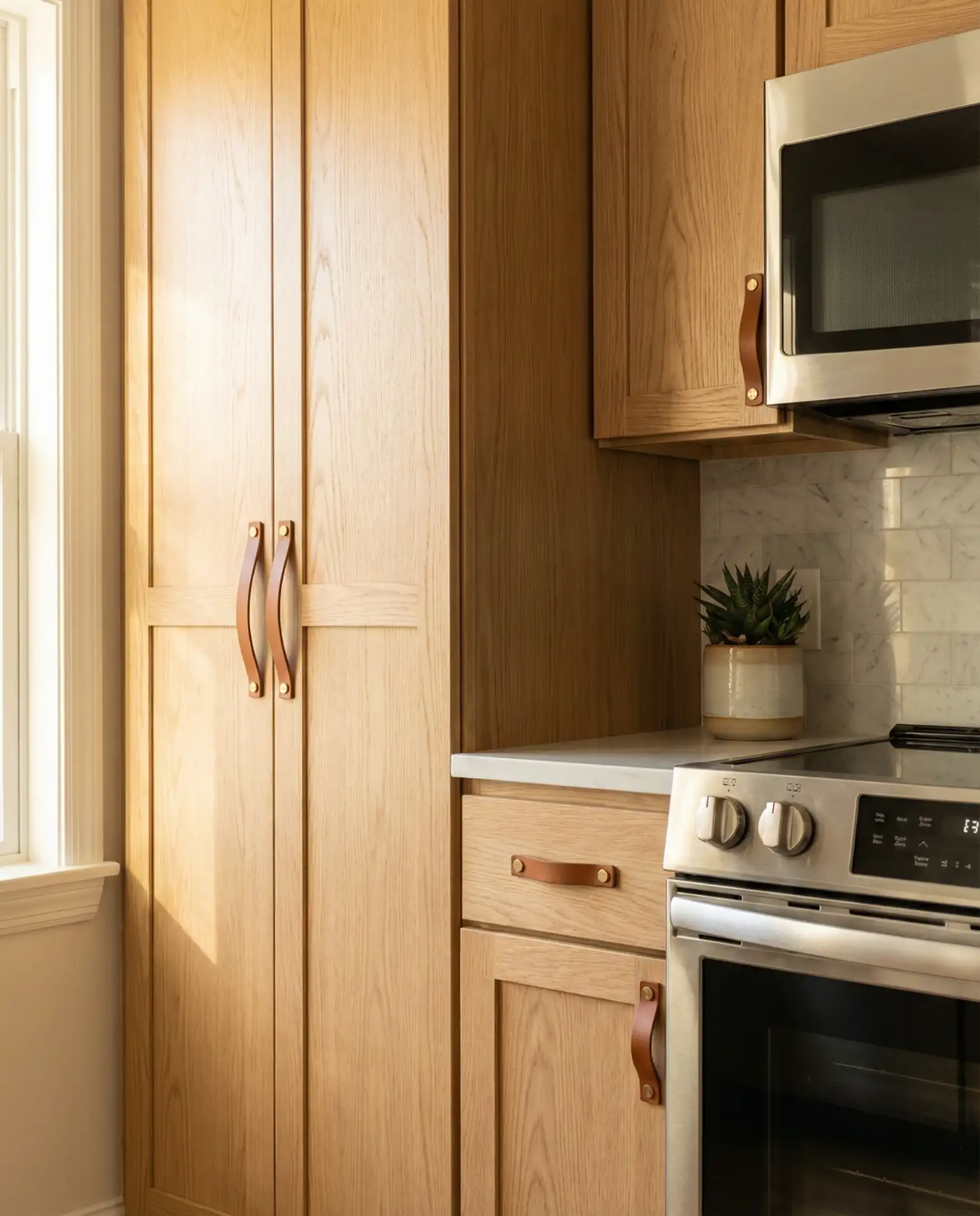
One homeowner I know kept her 1995 oak cabinets, painted the island navy, swapped the hardware to matte black, and replaced the laminate counters with butcher block. The transformation was stunning—and cost under $2,500. She said it felt like a new kitchen without the chaos of a full remodel. It’s proof that thoughtful updates can make a huge difference.
12. Oak Island with Painted Perimeter Cabinets
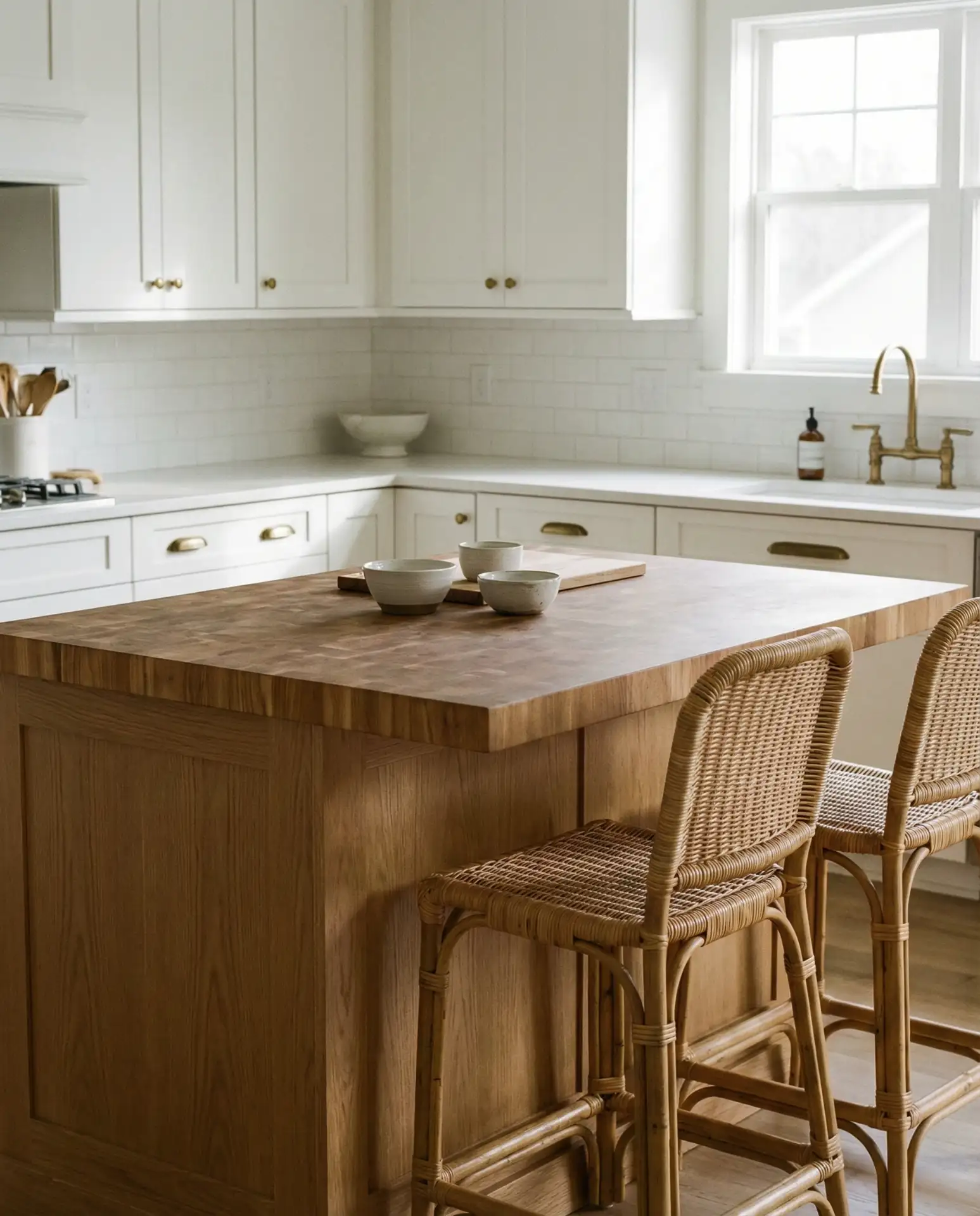
Featuring a natural oak island surrounded by painted perimeter cabinets is a smart way to highlight the wood without overwhelming the space. The island becomes the focal point, grounding the kitchen and adding warmth, while painted cabinets keep the overall feel light and open. Choose soft neutrals like greige, dove gray, or warm white for the perimeter. This layout works especially well in open-plan homes where the kitchen flows into the dining or living area.
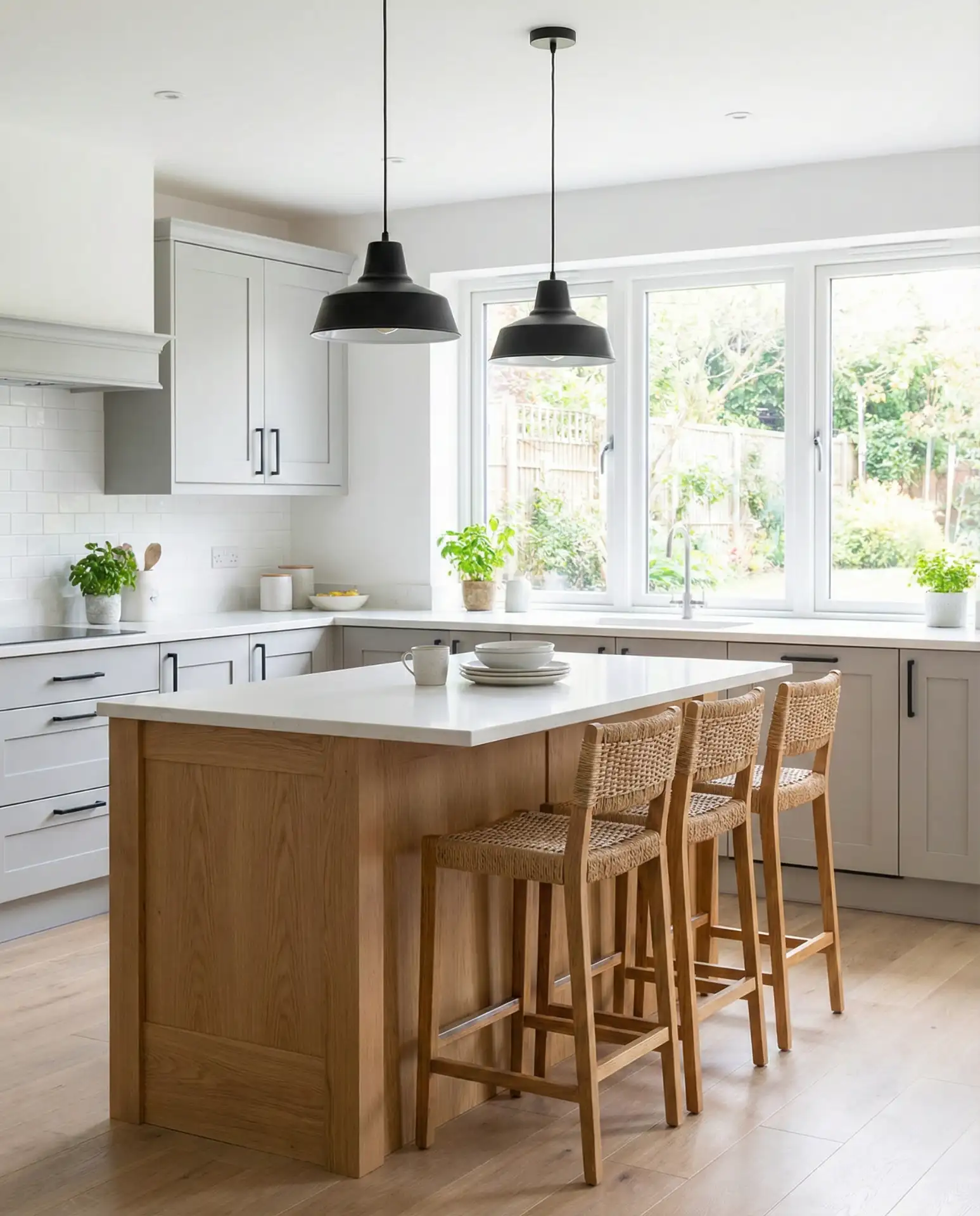
Designers often recommend this approach for clients who are hesitant to commit to all-wood kitchens but still want the warmth and texture of oak. It’s a compromise that delivers on both fronts. The island also gets the most use and wear, so having it in durable, easy-to-refinish oak is a practical choice. Plus, it’s easier to swap out paint colors later than to refinish an entire kitchen’s worth of wood.
13. Pale Oak with Marble Countertops
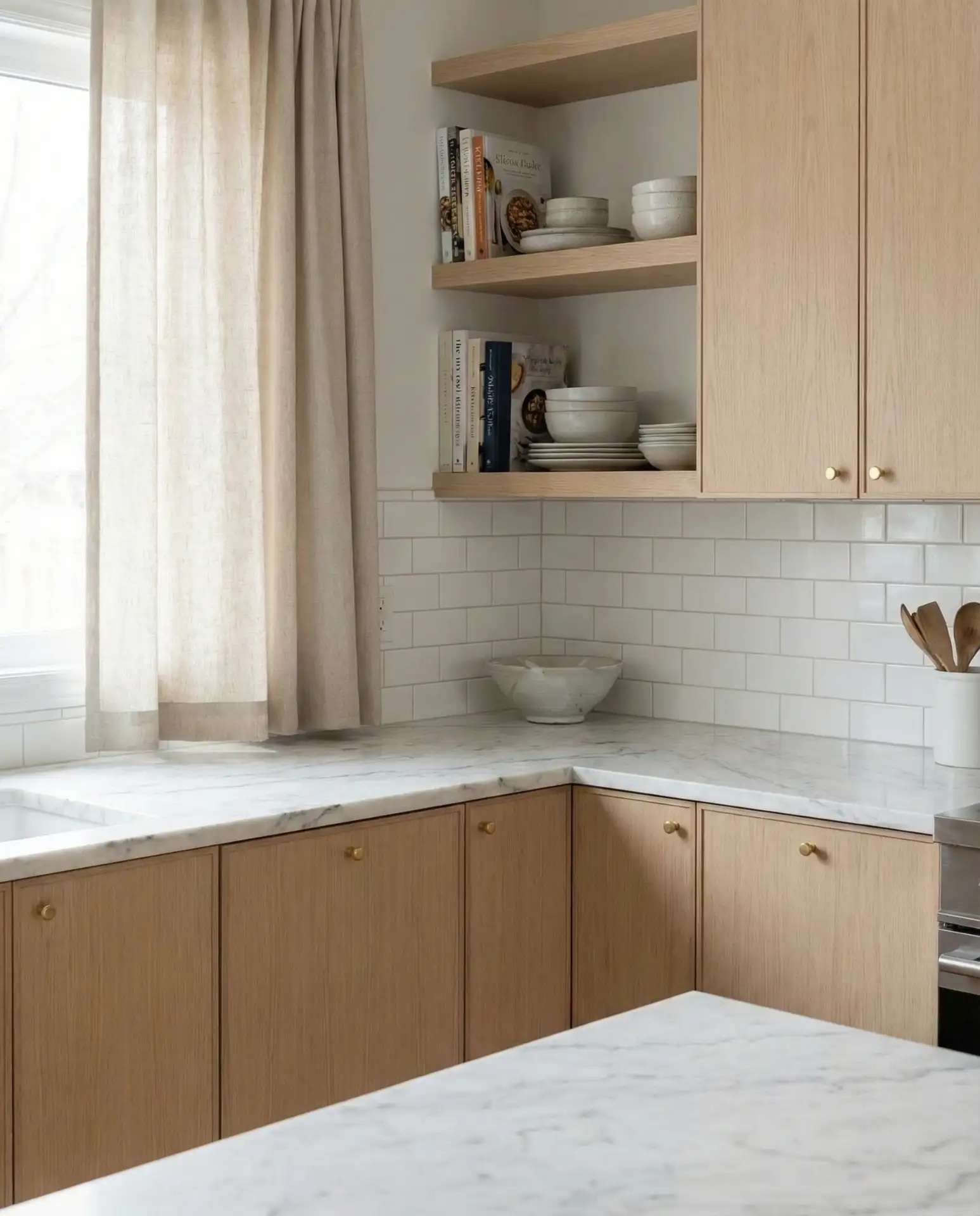
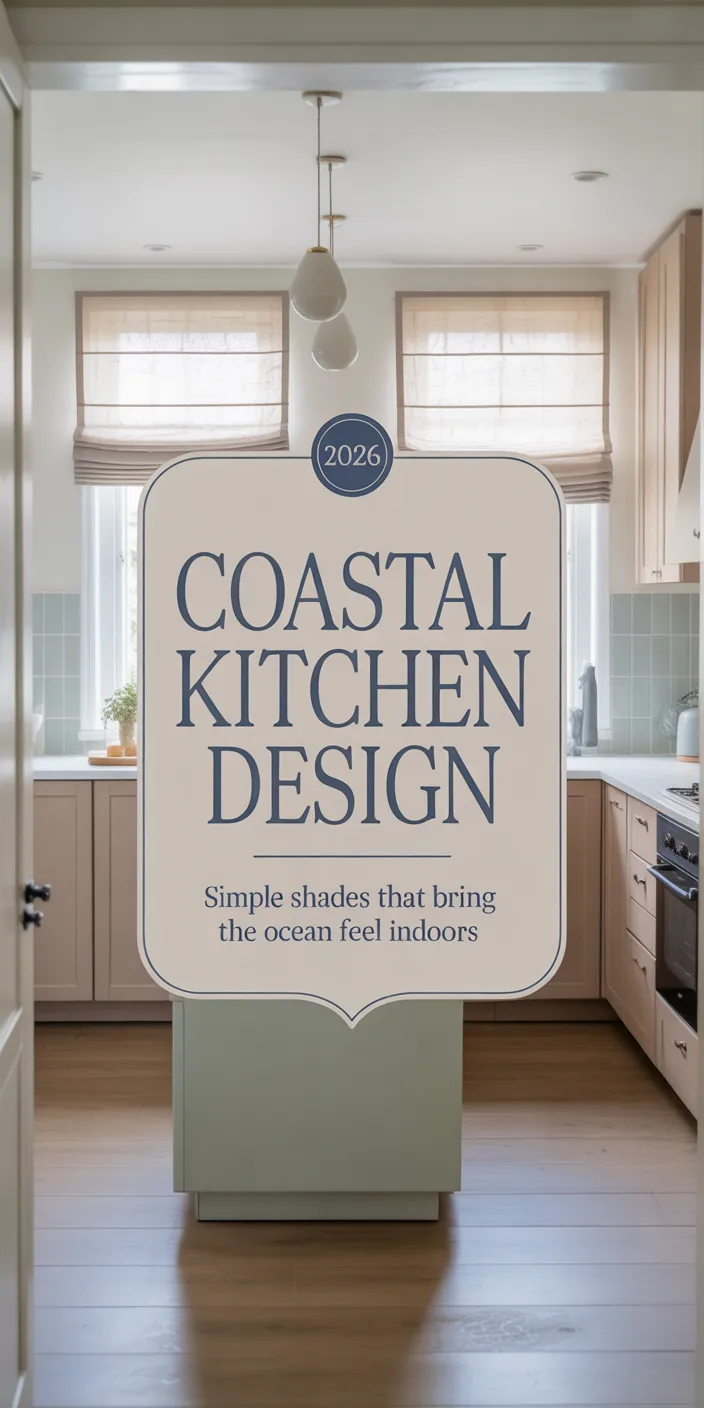
Soft, pale oak cabinets paired with classic white or gray marble countertops create a serene, elegant kitchen. The pale wood keeps the space from feeling too heavy, while the marble adds a touch of luxury and timelessness. This combination is popular in coastal New England homes, where a bright, breathable aesthetic is prized. Add simple brass or nickel hardware, white subway tile, and linen Roman shades to complete the look. It’s understated but refined.
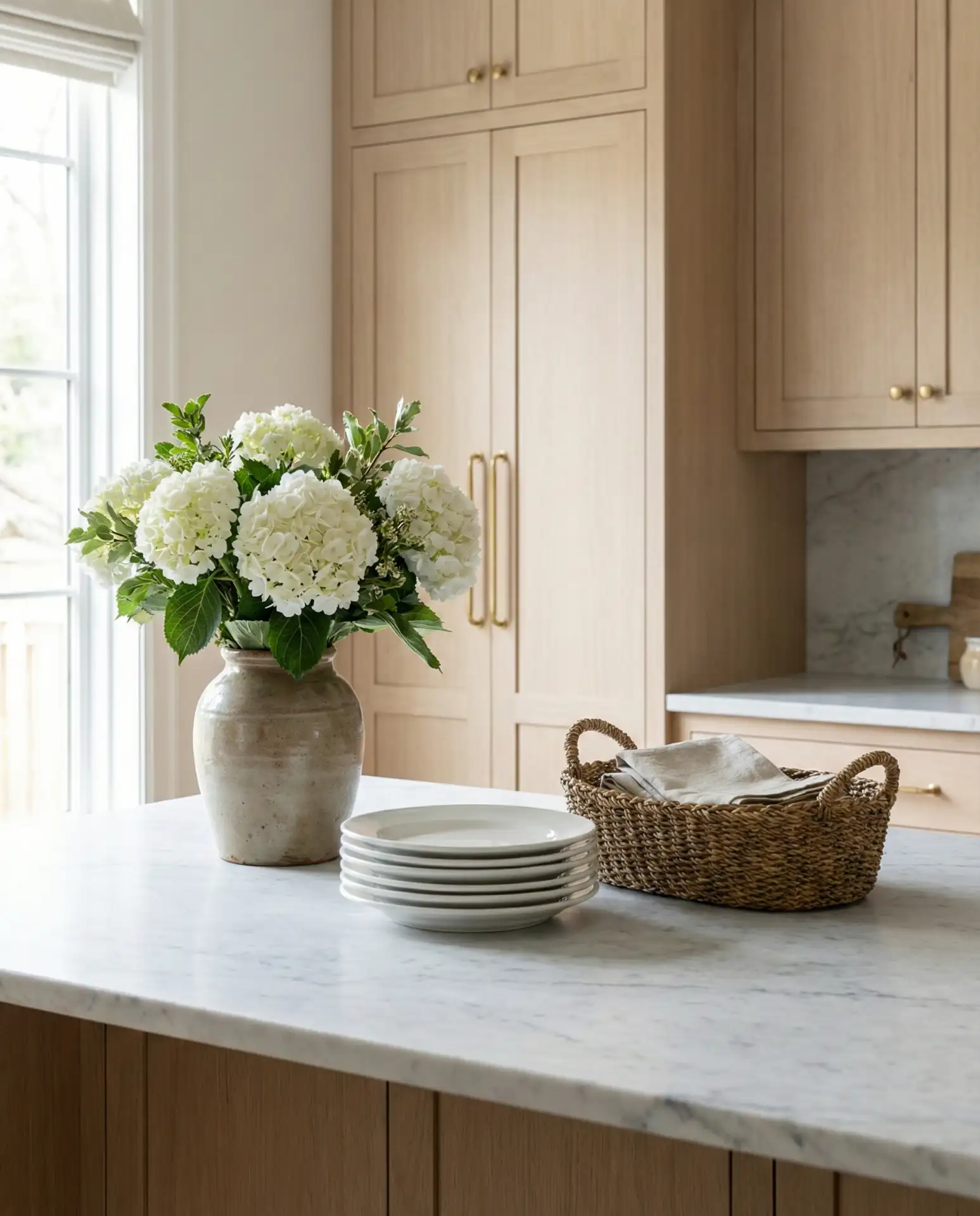
Marble does require maintenance—it etches and stains more easily than quartz or granite—but many homeowners love the patina it develops over time. If you’re worried about upkeep, consider honed marble instead of polished, which hides imperfections better. Pair it with pale oak that’s been sealed or oiled to protect against moisture and wear. The result is a kitchen that ages gracefully.
14. Oak Cabinets in a Galley Kitchen
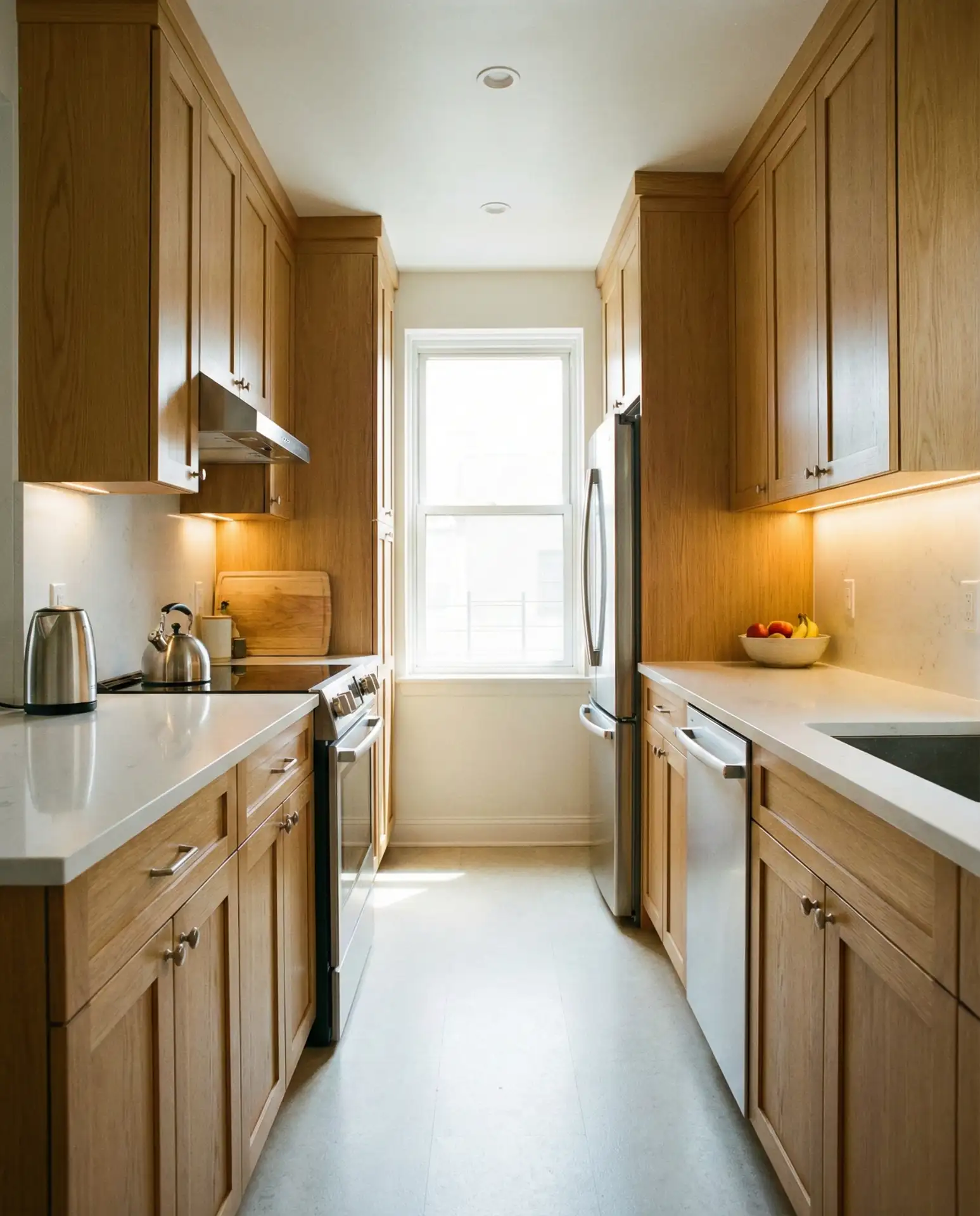
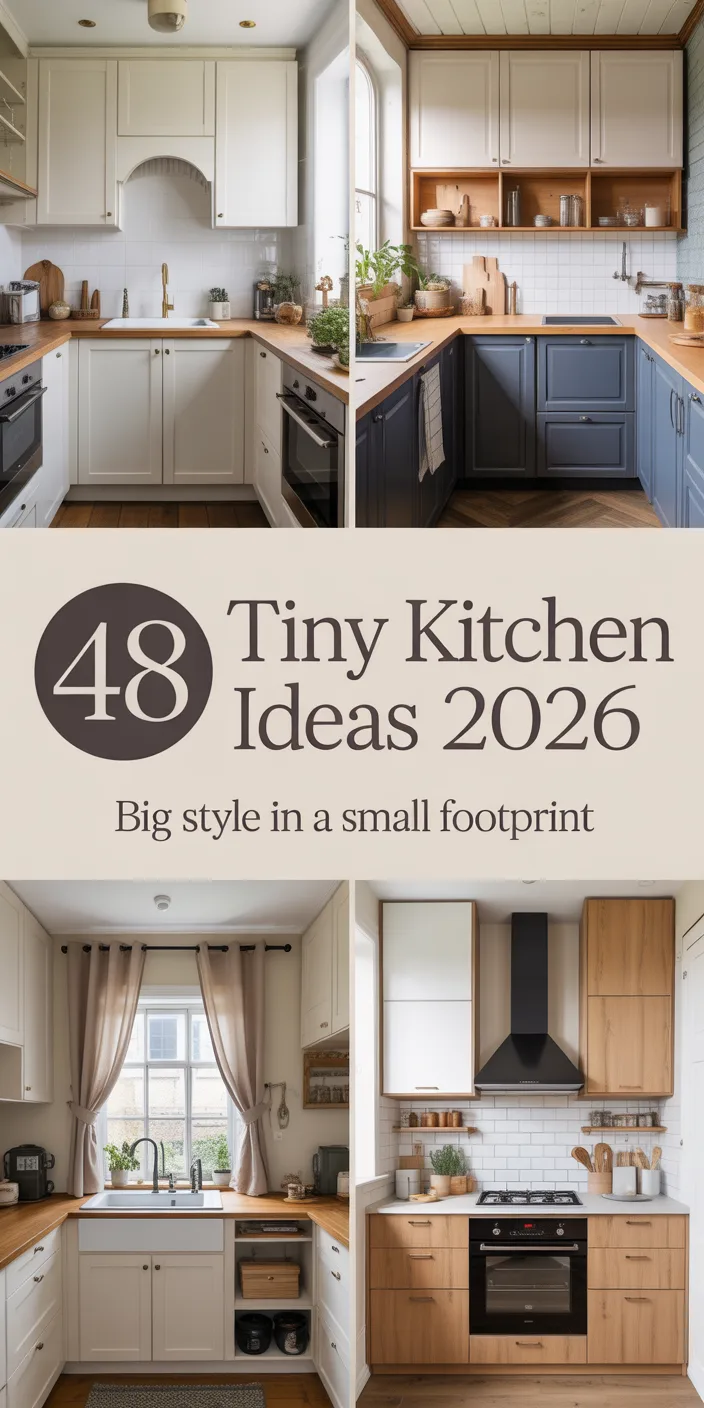
In narrow galley kitchens, light or natural oak cabinets can make the space feel less cramped. The warm wood adds character without closing in the walls. Stick to flat-panel or Shaker doors to keep the look streamlined, and consider open shelving on one side to break up the cabinetry. Use light-colored countertops and backsplashes to reflect light, and install under-cabinet lighting to brighten work surfaces. Oak’s natural grain adds visual interest in a space that might otherwise feel monotonous.
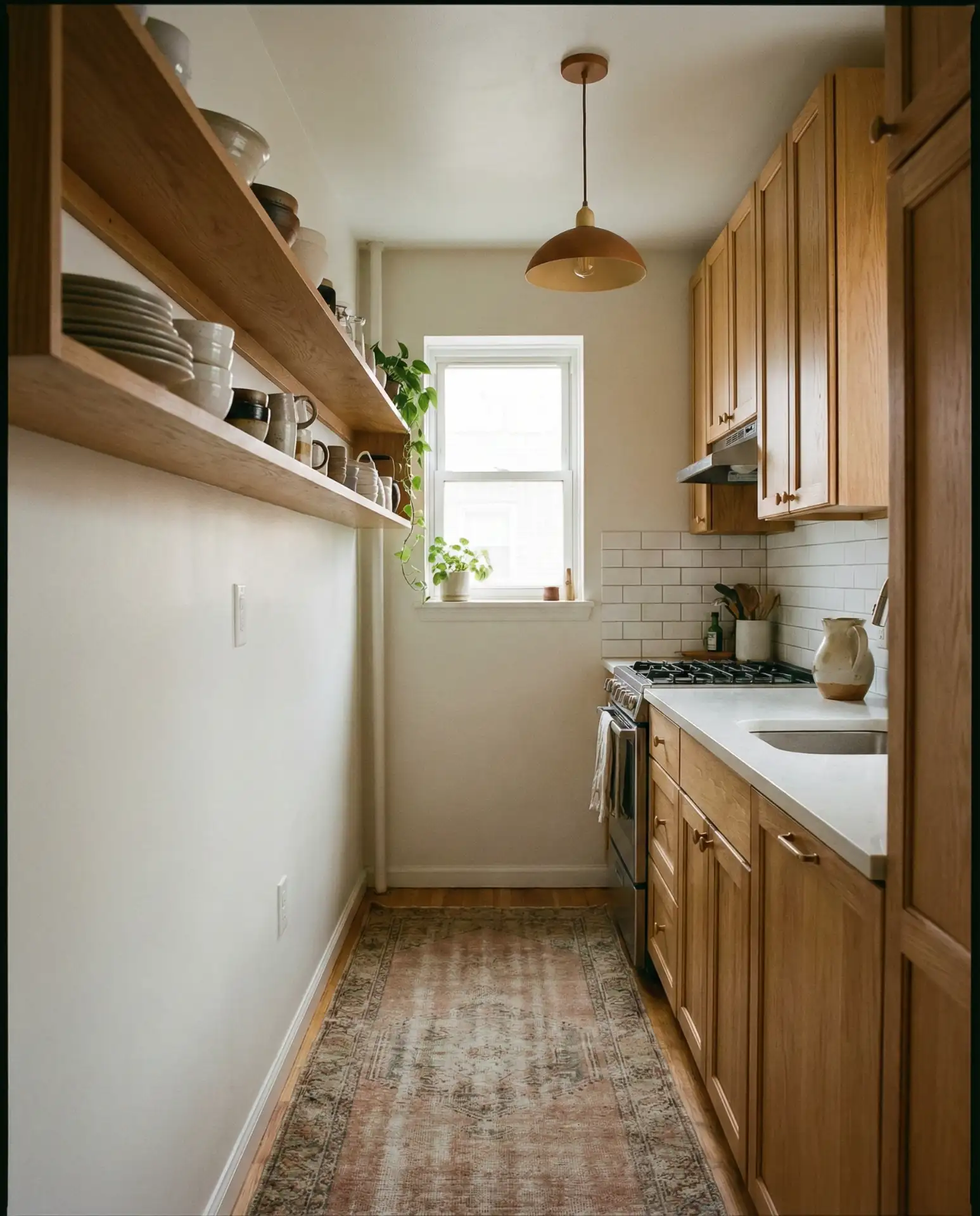
Galley kitchens are common in older homes, apartments, and urban rowhouses across the Northeast and Midwest. Oak cabinets in these spaces benefit from maximizing vertical storage—think cabinets that go all the way to the ceiling. This keeps clutter off the counters and makes the narrow layout feel more organized and intentional. Avoid dark stains, which can make a galley feel cave-like.
15. Golden Oak with Warm Neutrals
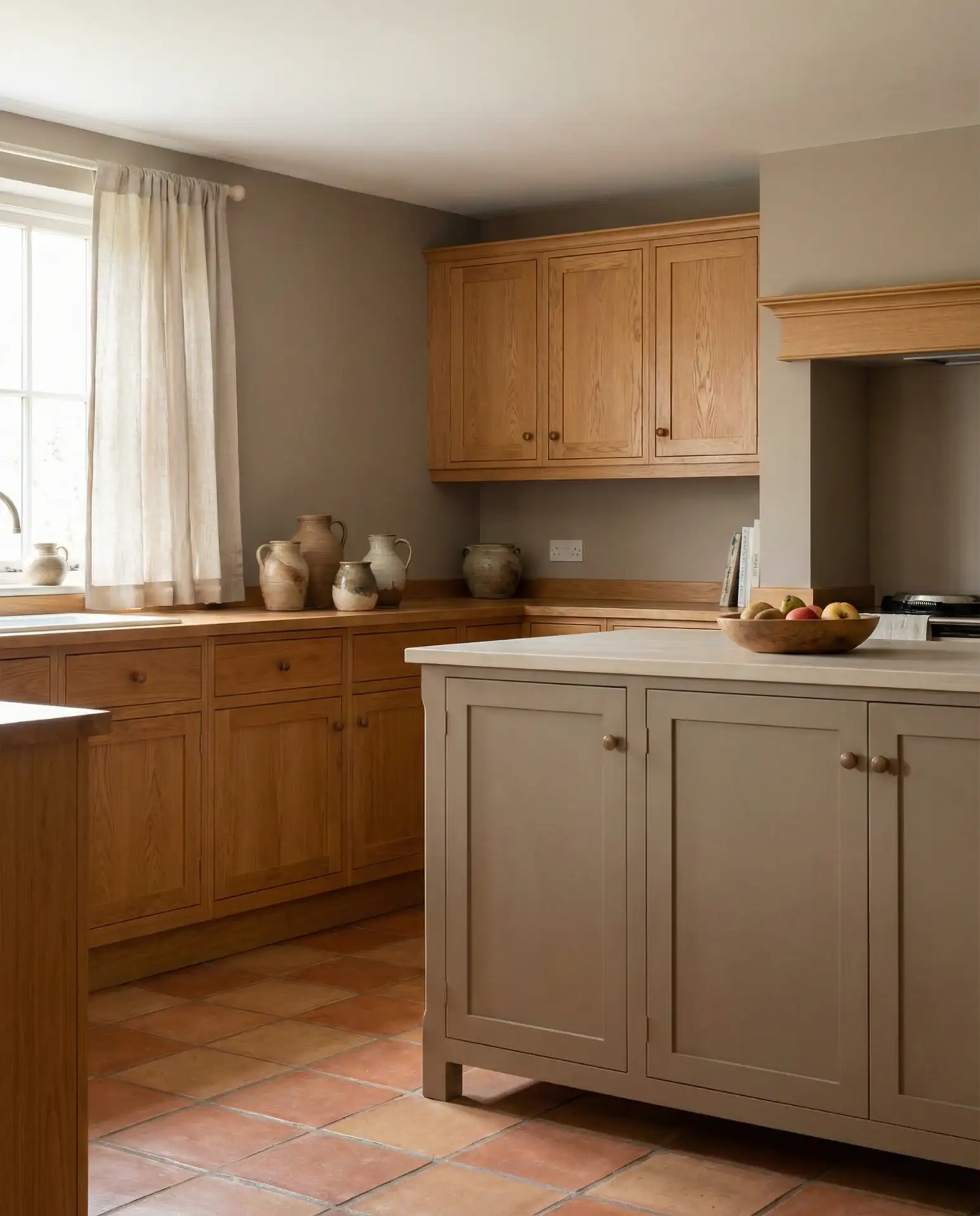
Embrace the golden undertones in oak by pairing them with warm neutrals like beige, taupe, or soft mushroom. This palette feels cozy and harmonious, perfect for kitchens where you want to create a sense of calm. Avoid cool grays or stark whites, which can clash with the warmth of the wood. Instead, layer in cream-colored walls, tan or terracotta tiles, and natural fiber rugs. The goal is to create a cohesive, enveloping warmth.
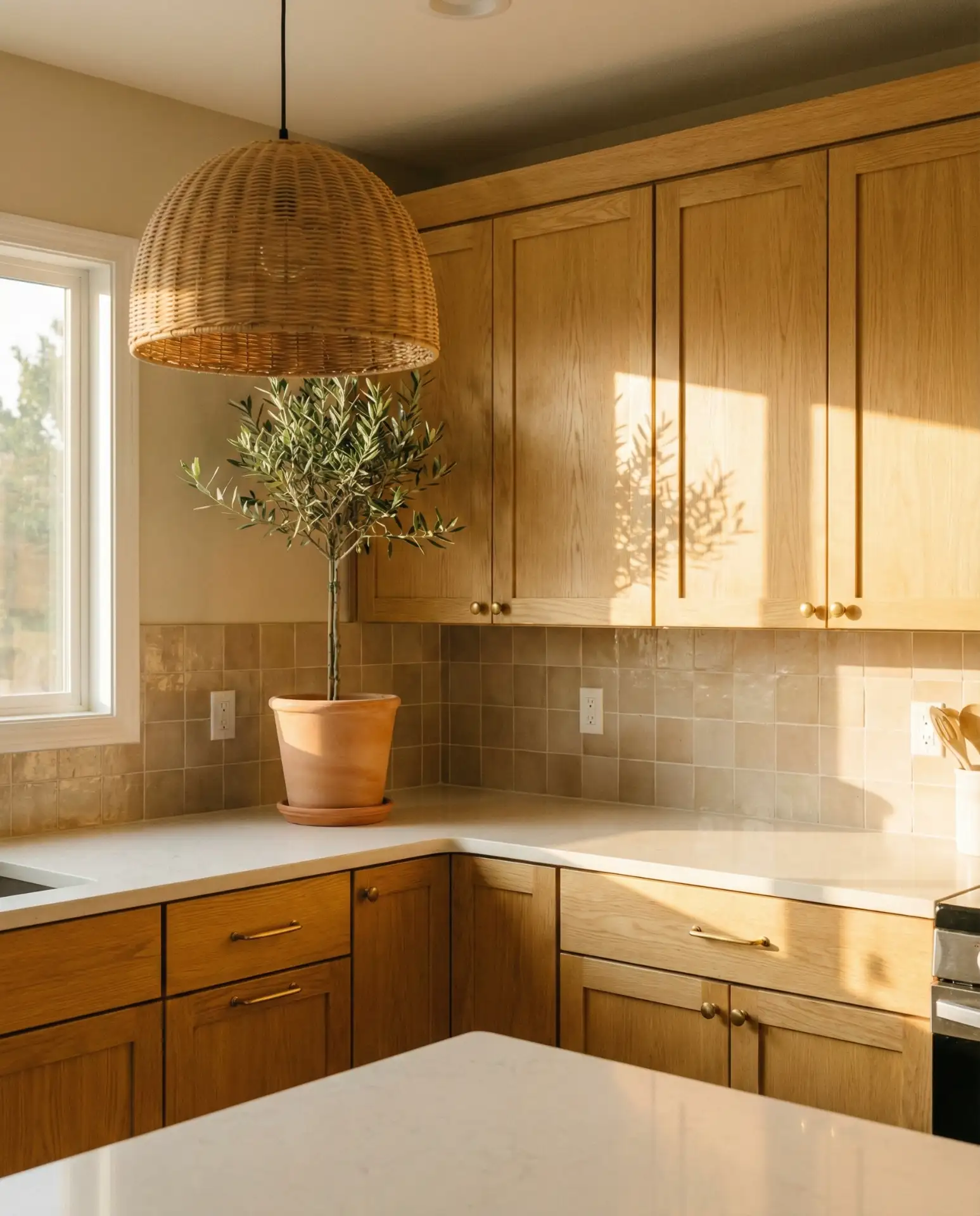
This color scheme is especially effective in homes with oak flooring, where you want the cabinetry to complement rather than compete. It’s also a great choice for homeowners who find all-white kitchens too sterile or cold. The warmth of golden oak paired with neutrals creates a space that feels lived-in and welcoming from day one.
16. Oak Cabinets with Open Shelving
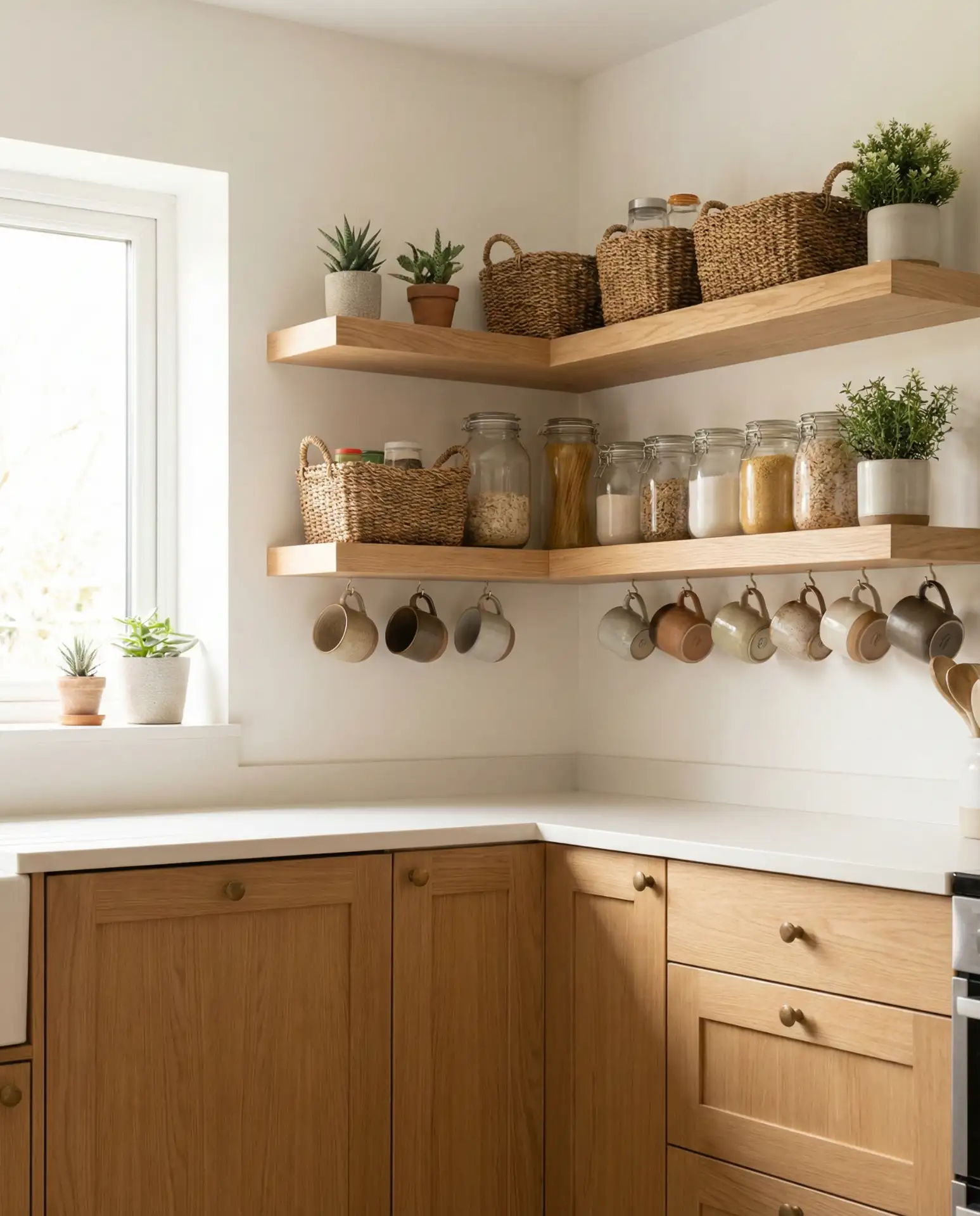
Mixing natural oak cabinets with open wood shelving creates a layered, textural look that feels both practical and stylish. Use the shelves to display everyday dishes, glassware, or cookbooks, adding personality and breaking up the solidity of closed cabinets. This approach works beautifully in farmhouse, Scandinavian, or eclectic kitchens. Make sure the shelving wood matches or complements the oak cabinetry to keep the look cohesive. Brass brackets or black iron supports can add an extra design detail.
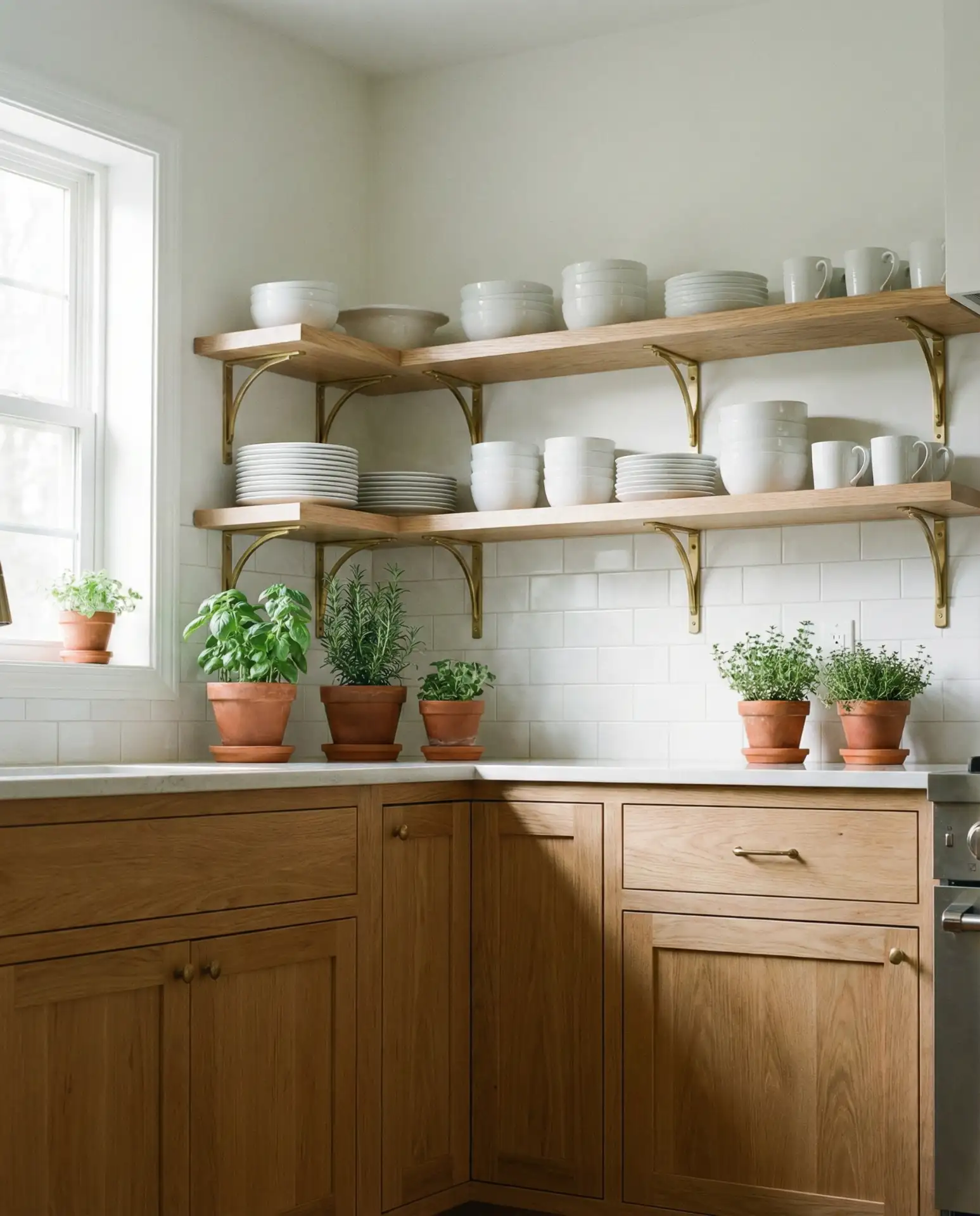
A common mistake is overloading open shelves, which can make the kitchen look cluttered. Stick to a curated selection of items you actually use, and leave some negative space. Grouping items by color or type—all white dishes, for example—keeps the shelves looking intentional. If dust is a concern, limit open shelving to areas away from the stove.
17. Oak Cabinets in a Small Kitchen
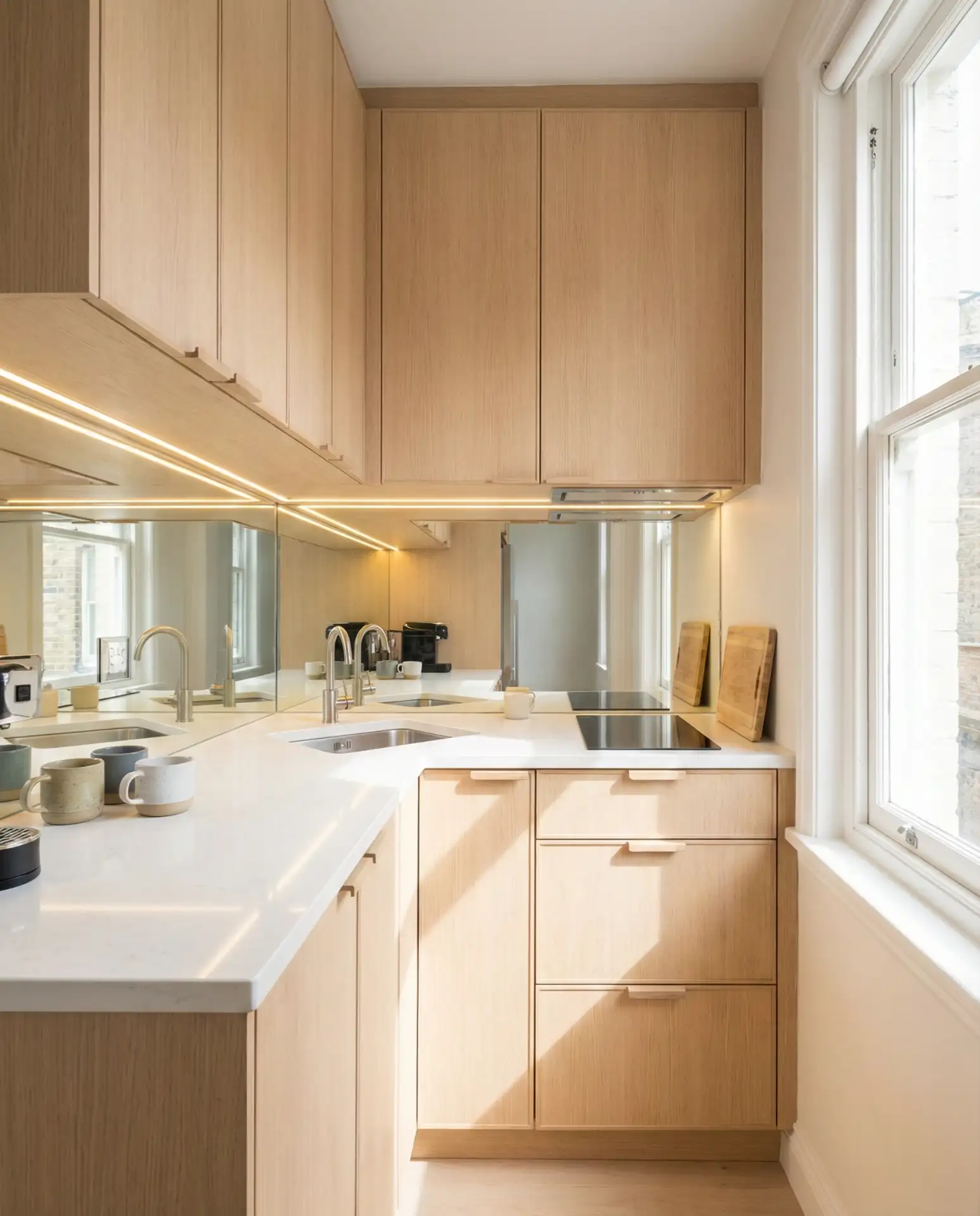
In compact kitchens, light or pale oak cabinets help the space feel larger and less boxed-in. Avoid heavy molding or ornate details, which can make a small kitchen feel busy. Instead, choose flat-panel or simple Shaker doors, and keep hardware minimal or handleless. Use mirrors, reflective backsplashes, or glass-front cabinet doors to bounce light around. Oak’s natural warmth prevents the space from feeling cold or clinical, even in a tight footprint.
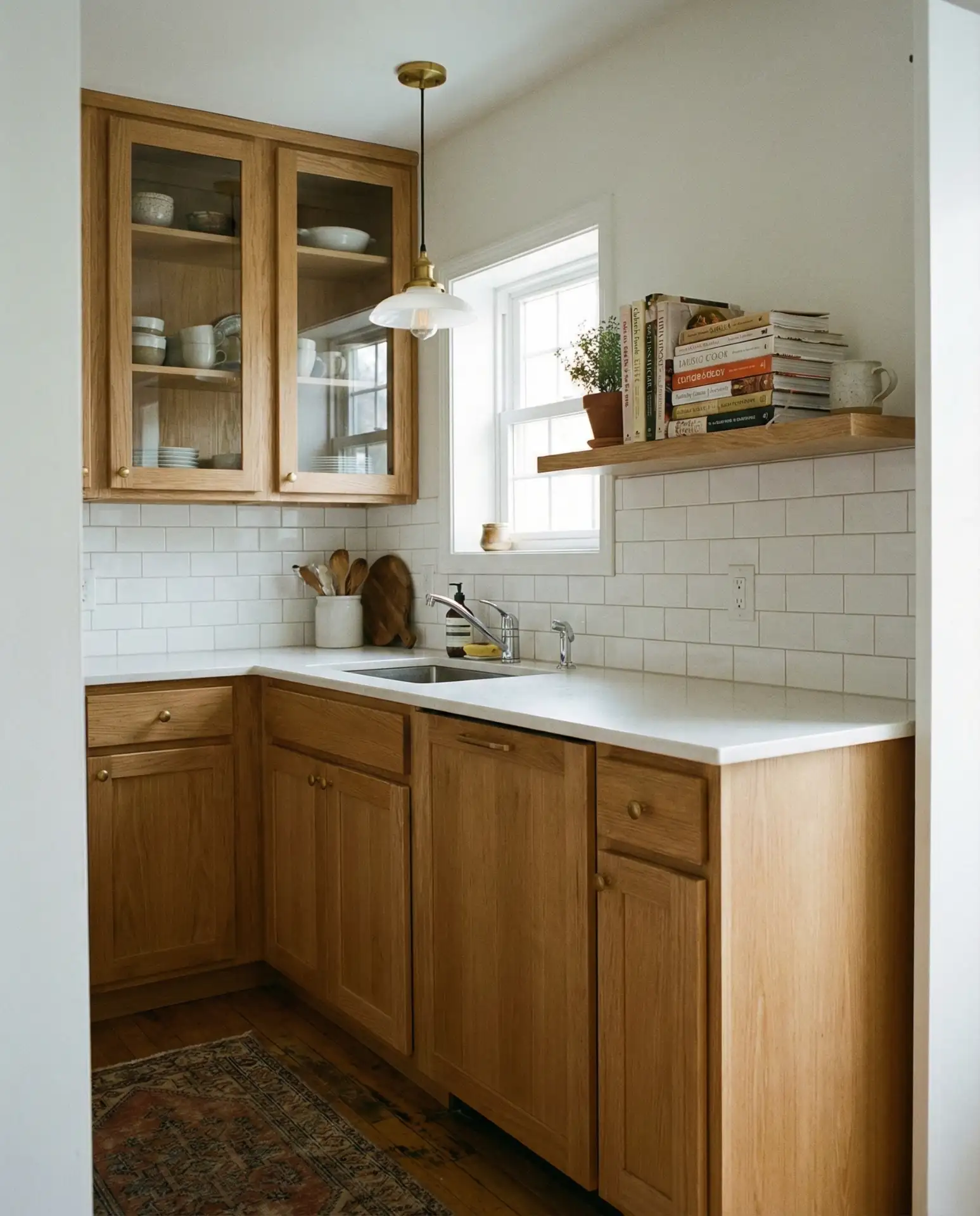
Small kitchens are common in urban apartments, condos, and older homes throughout cities like New York, Chicago, and San Francisco. Oak cabinets in these spaces benefit from vertical storage solutions and smart organization. Pull-out drawers, lazy Susans, and built-in dividers make the most of every inch. Light oak also pairs well with compact, European-style appliances, which are increasingly popular in city kitchens.
18. Red Oak vs. White Oak
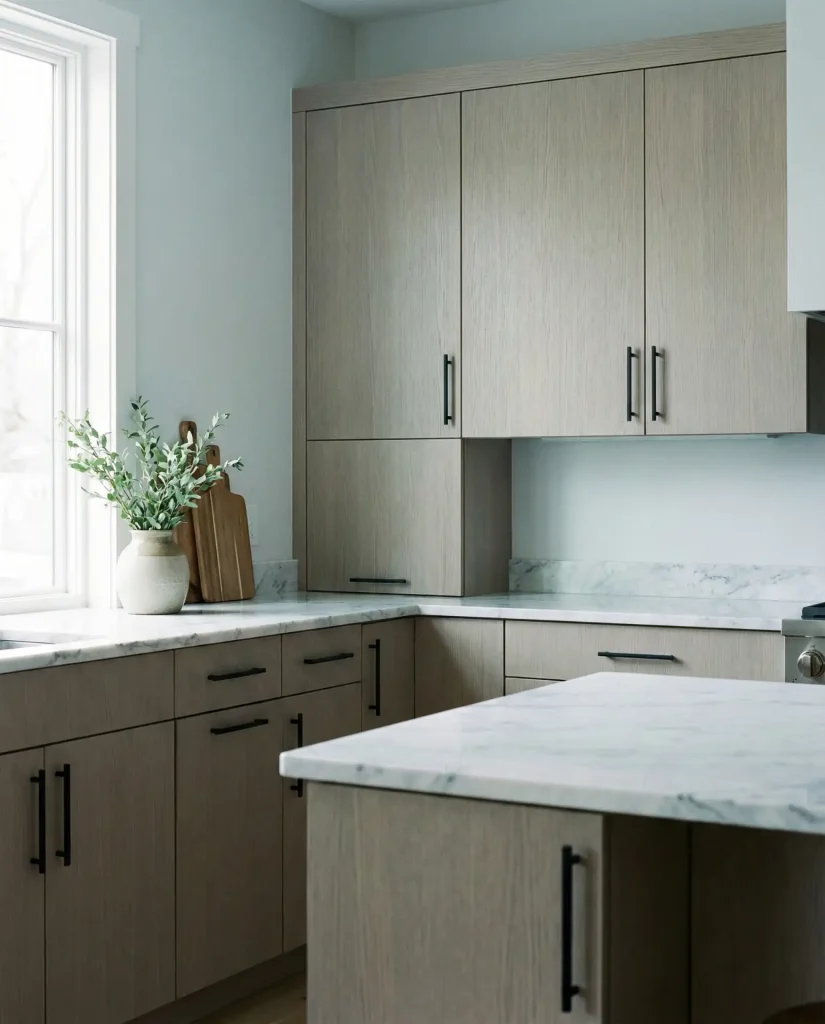
Red oak has a pinkish or reddish undertone and more prominent grain, while white oak is cooler and more neutral with a tighter grain. Both are durable and beautiful, but the choice depends on your aesthetic. Red oak feels warmer and more traditional, while white oak is often favored in modern and contemporary kitchens. If you’re staining, white oak tends to absorb stain more evenly, making it easier to achieve a consistent finish. Either way, both species age beautifully.
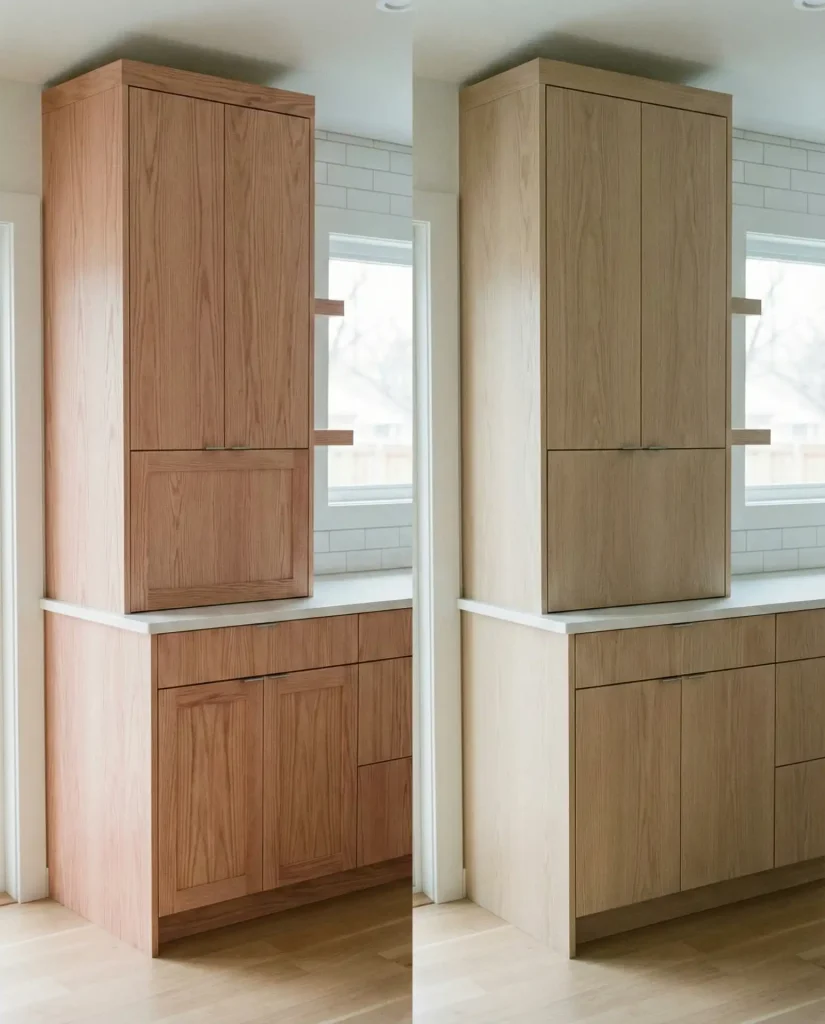
From a practical standpoint, white oak is slightly more water-resistant than red oak, which is why it’s often chosen for kitchen islands or areas prone to moisture. It’s also historically used in boat-building and barrel-making for this reason. Red oak, however, is more widely available in certain regions and can be less expensive. Knowing the difference helps you make an informed choice based on both aesthetics and function.
19. Oak Cabinets with Bold Backsplash
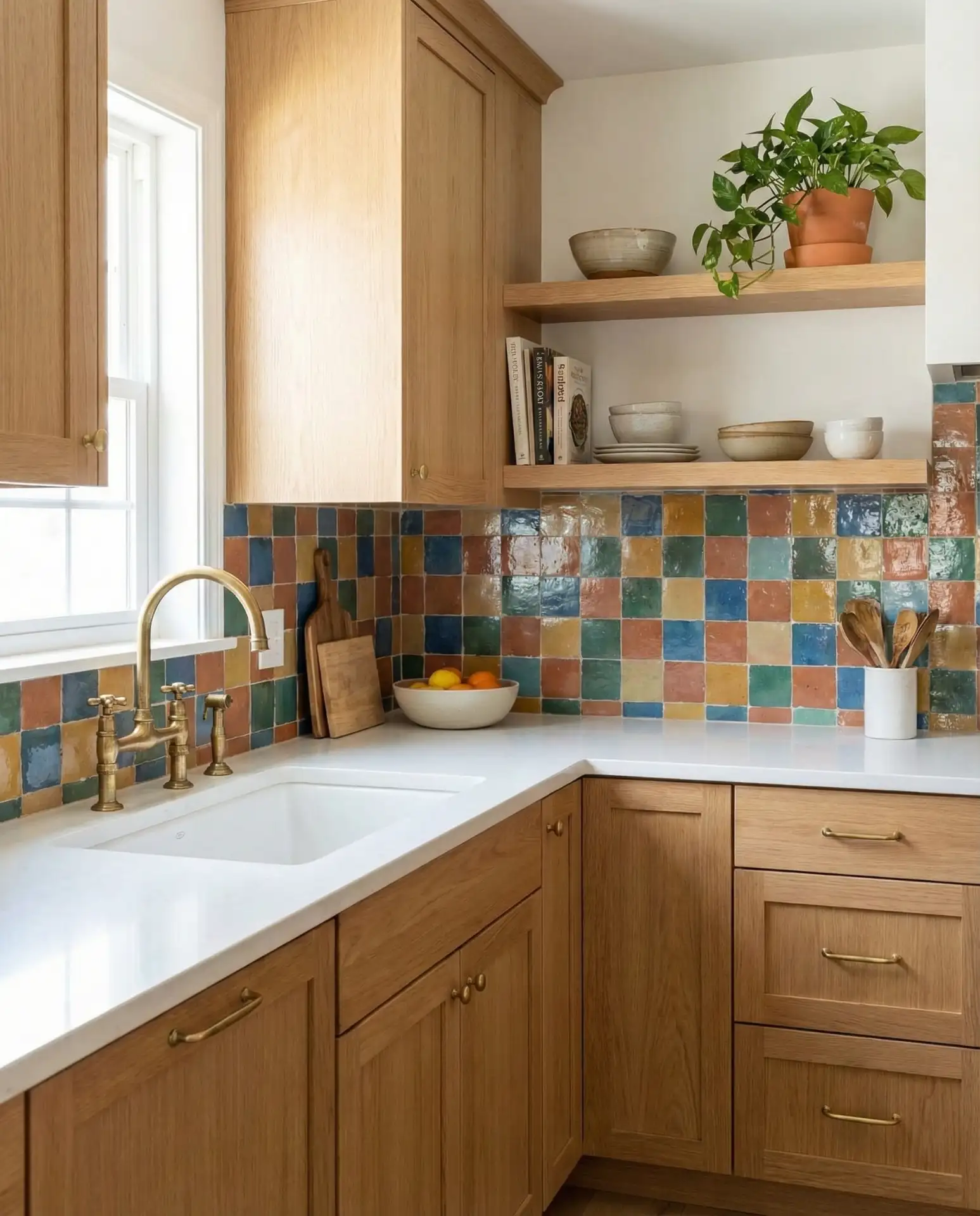
Let natural oak cabinets serve as a neutral backdrop for a bold, patterned backsplash. Think Moroccan-inspired zellige tiles, graphic cement tiles, or colorful handmade ceramics. The oak grounds the space and prevents the backsplash from feeling overwhelming. This is a great approach for homeowners who want personality and color but don’t want to commit to painting cabinets. Keep countertops and walls simple to let the backsplash be the star.
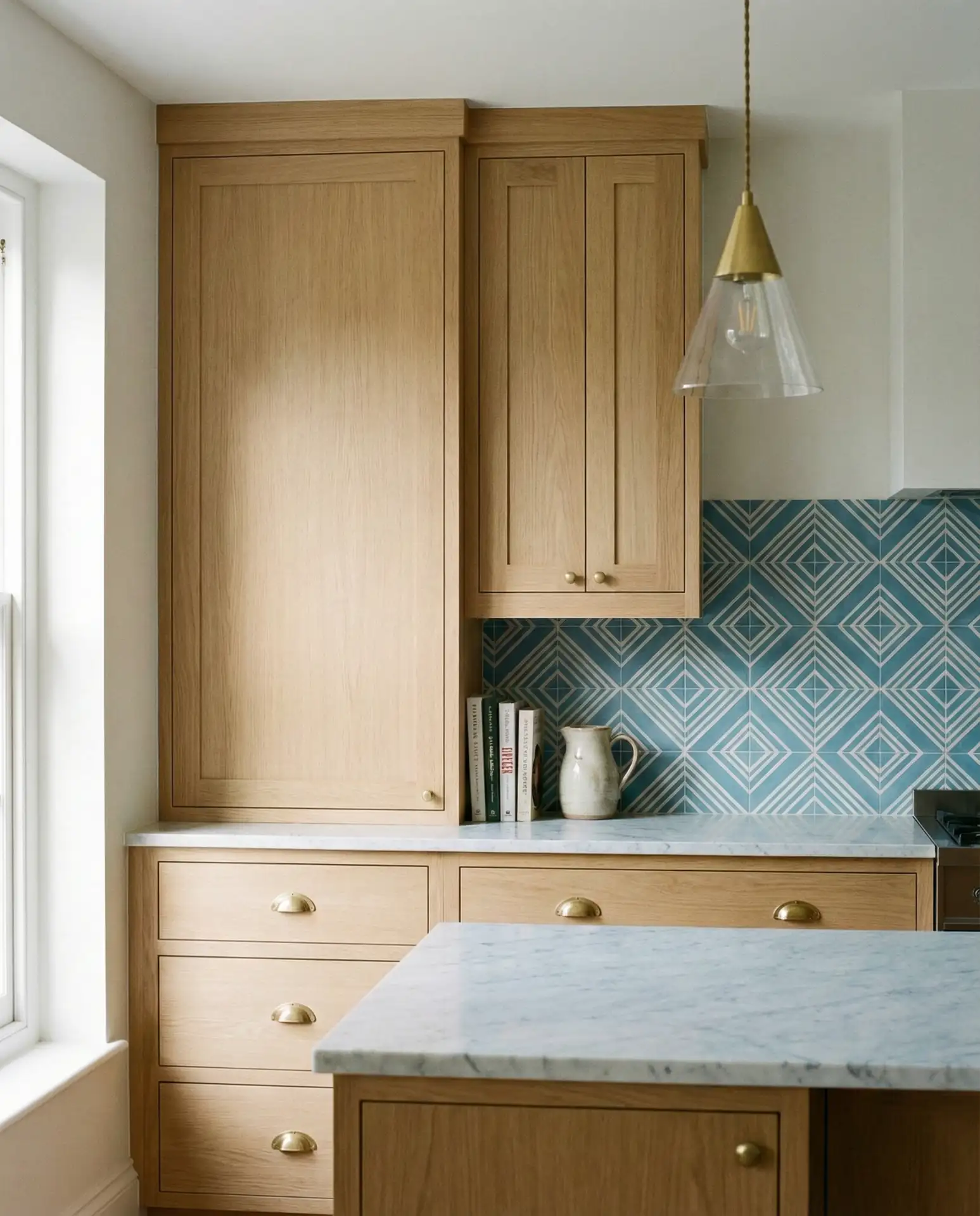
Budget-wise, a backsplash refresh is one of the most affordable ways to update a kitchen—typically $1,500–$4,000 depending on tile choice and square footage. It’s also a DIY-friendly project for homeowners who are handy and patient. Just make sure to seal the grout properly to protect it from stains, especially in high-use areas behind the stove or sink.
20. Oak Cabinets with Soapstone Counters
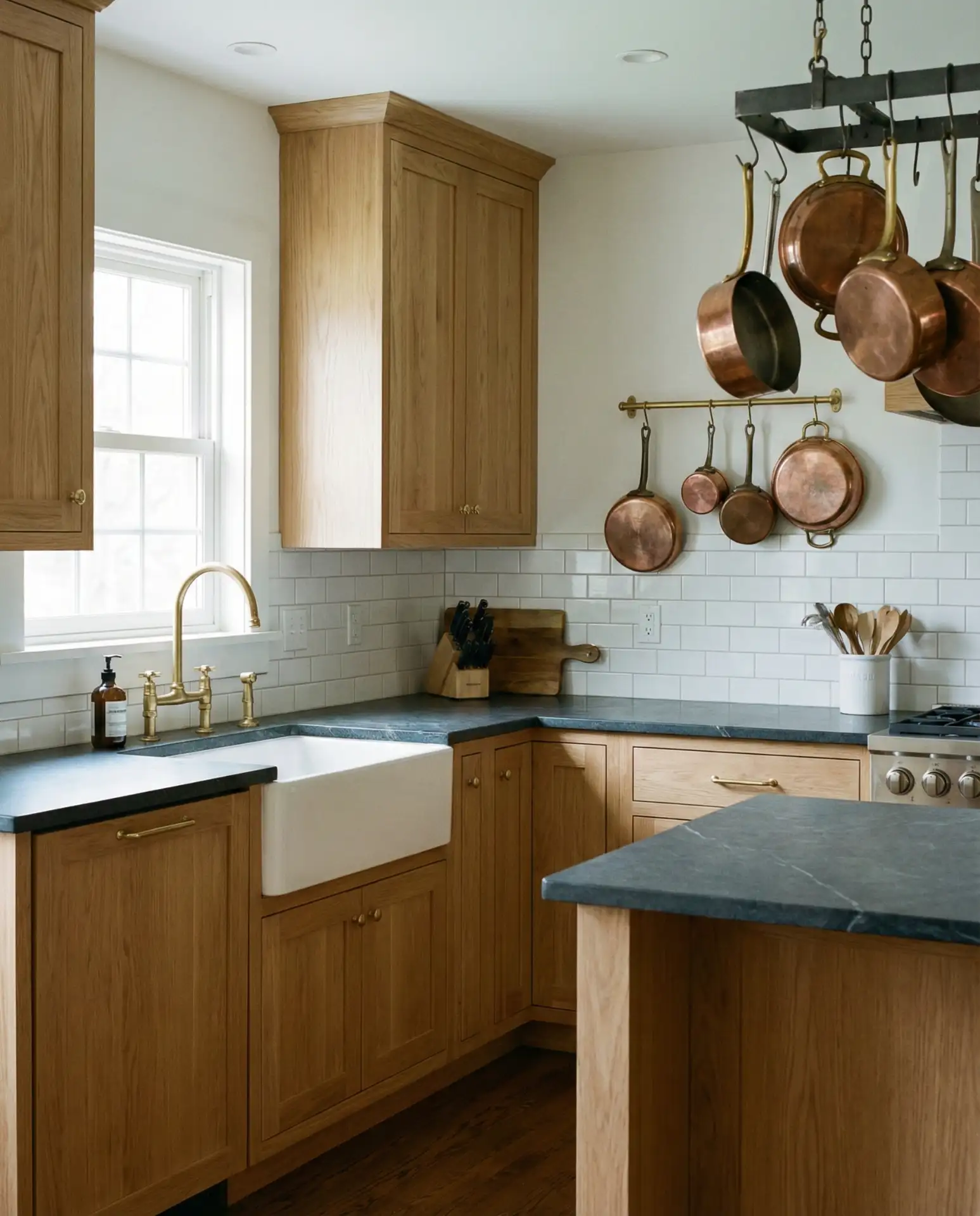
The deep, matte gray of soapstone countertops pairs beautifully with natural or light oak cabinets, creating a sophisticated, understated kitchen. Soapstone is heat-resistant, non-porous, and develops a soft patina over time—qualities that appeal to homeowners who value natural materials and low-maintenance surfaces. The contrast between the cool stone and warm wood is visually striking without being loud. Add brass or copper accents to tie the palette together.
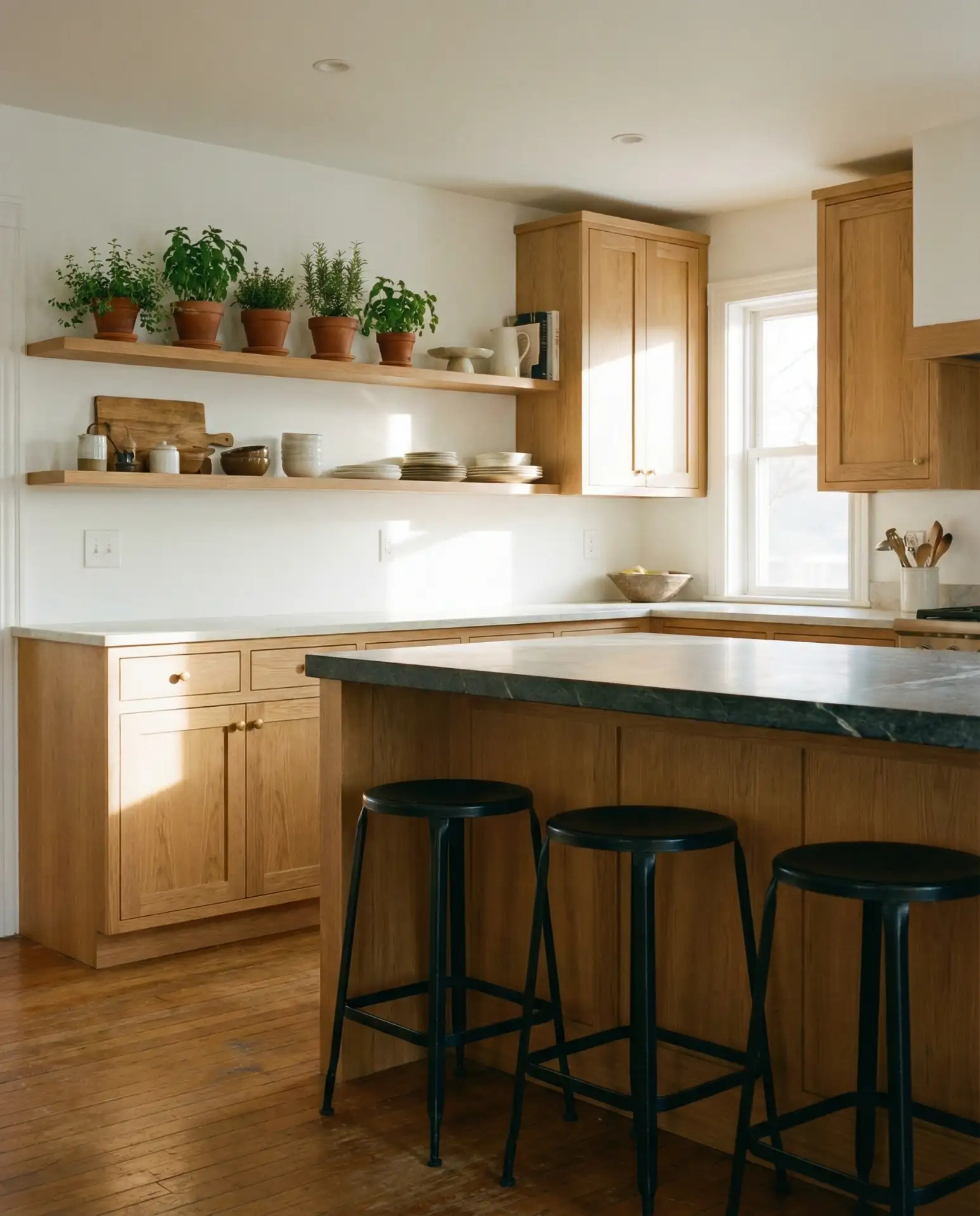
Soapstone does scratch and etch, but many people love the character it develops. It’s especially popular in New England and the Mid-Atlantic, where there’s a long tradition of using locally quarried stone. If you’re considering soapstone, know that it requires periodic oiling to maintain its dark color—without it, it fades to a lighter gray. Paired with oak, it creates a kitchen that feels timeless and rooted in place.
21. Oak Cabinets with Butcher Block Countertops
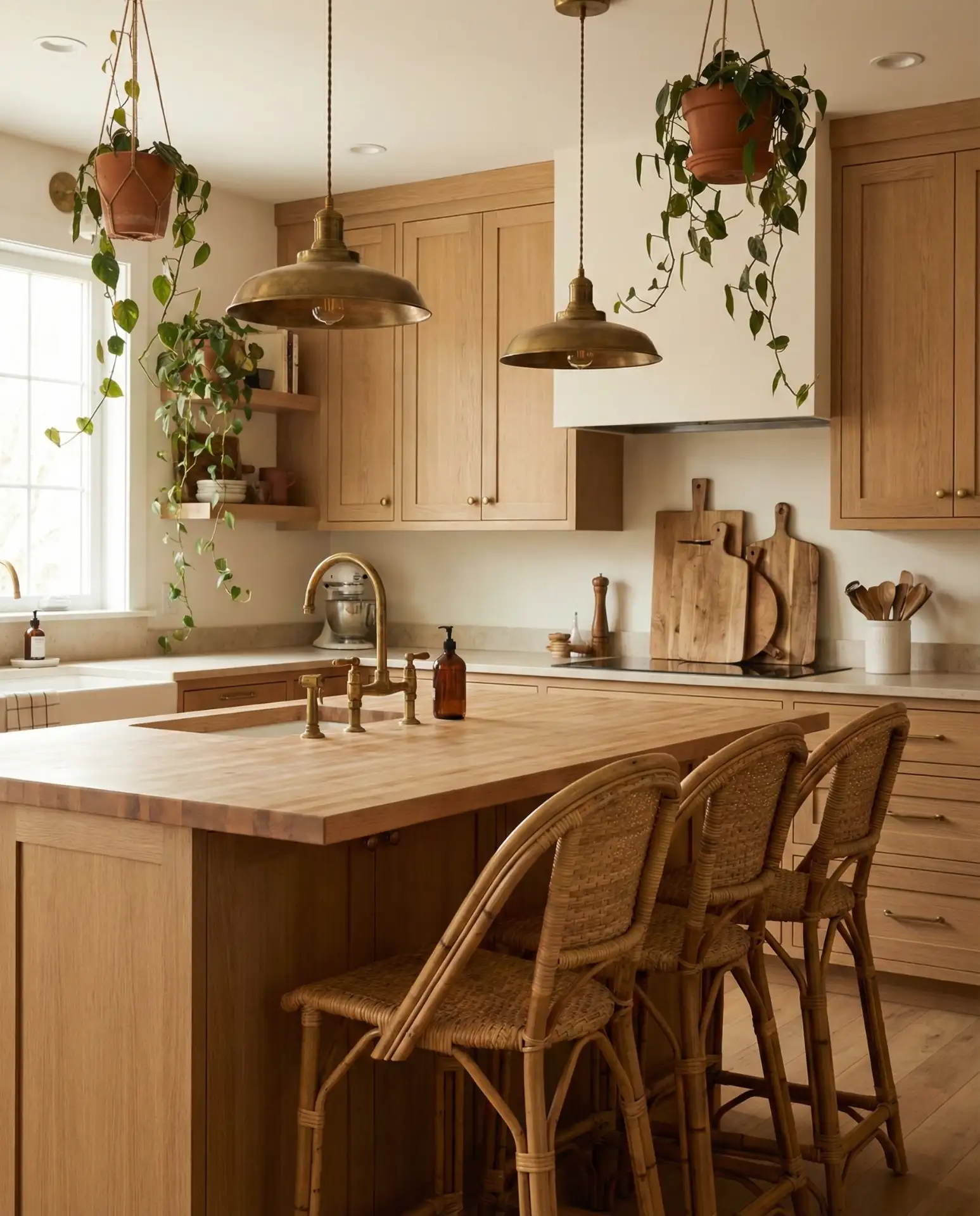
For an all-wood kitchen that feels warm and inviting, pair natural oak cabinets with butcher block countertops. The layered wood tones create depth and texture, and both materials age beautifully with use. Butcher block is also practical—it’s gentle on knives, can be sanded and refinished, and provides a warm, tactile surface for food prep. Use a medium oak cabinet tone to prevent the space from feeling too monochromatic, and vary the wood species if possible (oak cabinets with maple or walnut counters).
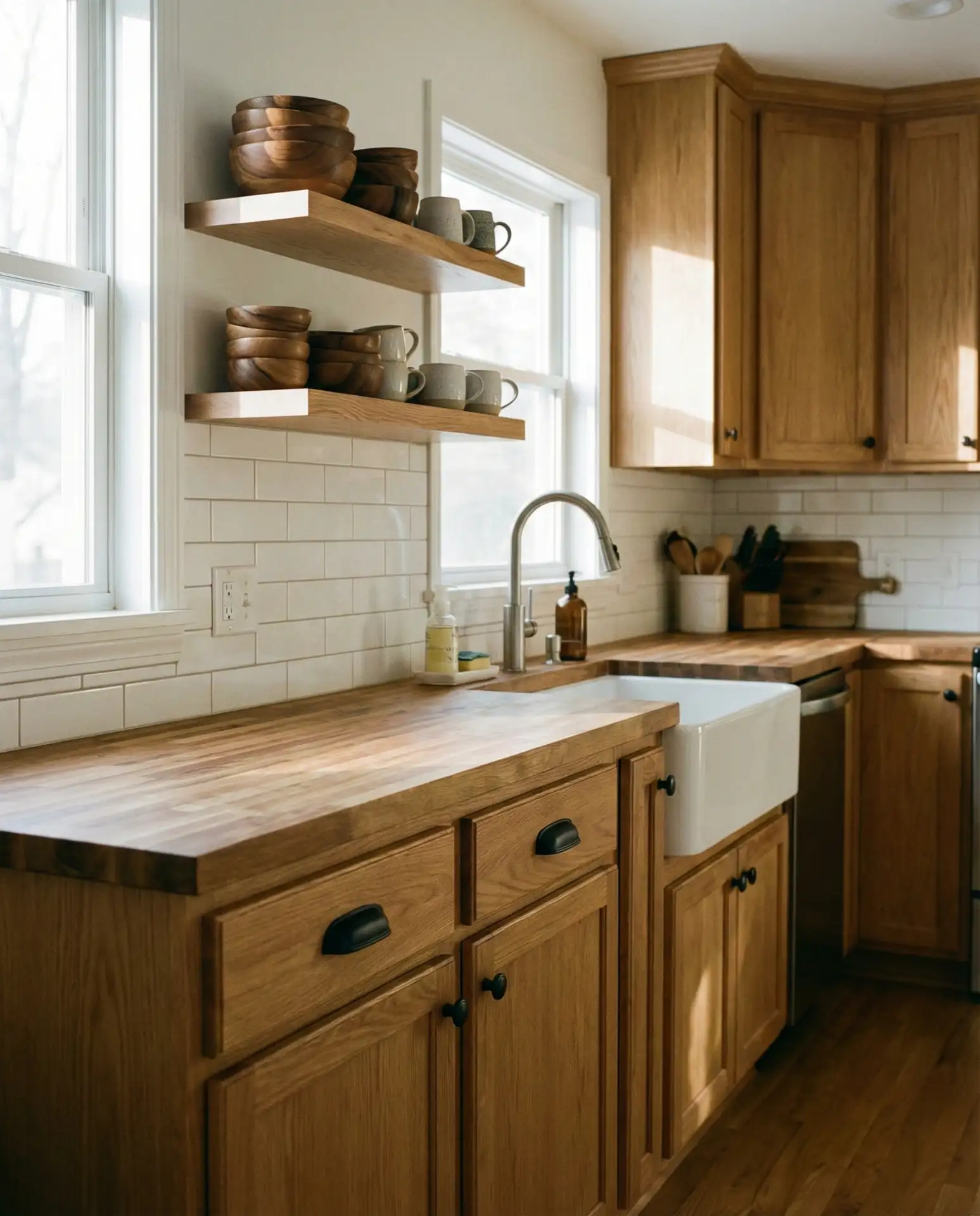
This combination is hugely popular among home cooks and people who spend a lot of time in the kitchen. Butcher block requires regular oiling and can stain or burn if not cared for, but many homeowners view this as part of the charm. It’s a forgiving surface that can be sanded down and re-oiled, making it a sustainable, long-term choice. Plus, it’s more affordable than stone—typically $40–$100 per square foot installed.
22. Oak Cabinets in a Makeover: Before and After
A kitchen makeover centered on oak cabinets can be transformative without requiring a full gut renovation. Start by cleaning and lightly sanding the cabinets, then decide whether to stain, paint, or simply refresh the existing finish. Update hardware, replace the backsplash, and paint the walls a fresh, modern color. Swap outdated lighting for contemporary fixtures, and consider replacing or refinishing countertops. The oak itself often has years of life left—it just needs a thoughtful refresh.
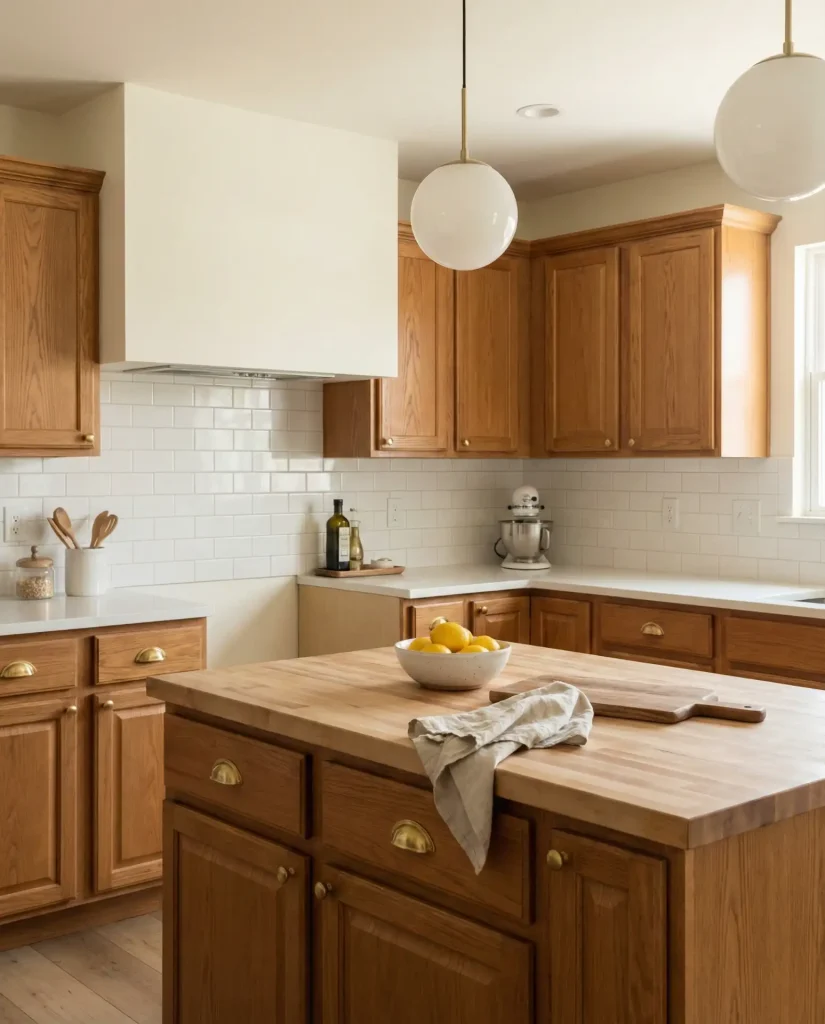
Real homeowners who’ve done oak cabinet makeovers often say the biggest impact came from the smallest changes—new hardware, fresh paint, and better lighting. One couple in Portland refinished their 1980s oak cabinets with a clear matte varnish, painted the island dark green, and added brass pulls. The total cost was under $3,000, and the kitchen looked completely new. It’s a reminder that oak cabinets are worth investing in, not ripping out.
Conclusion
Oak kitchen cabinets in 2026 prove that this classic material is anything but outdated. Whether you’re refreshing what you have, building new, or somewhere in between, there’s an oak cabinet approach that fits your style, budget, and home. From honey-toned warmth to crisp white paint, from rustic farmhouse to sleek modern, oak adapts and endures. We’d love to hear how you’re using oak in your own kitchen—share your thoughts, questions, or favorite ideas in the comments below.