Nursery Decor 2026: 44 Inspiring Ideas for Vintage, Boho and Neutral Baby Room Designs

Nursery decor in 2026 is all about creating spaces that feel personal, timeless, and full of warmth. American parents are moving away from overly themed rooms and leaning into designs that grow with their child while reflecting their own style. Pinterest has become the go-to source for visual inspiration, with searches for vintage, boho, and neutral nursery ideas surging as families seek rooms that feel curated rather than catalog-perfect. From floral accent walls to woodland creature motifs, today’s nurseries blend comfort, function, and beauty in ways that honor both nostalgia and modern sensibility. Whether you’re drawn to DIY projects or prefer carefully chosen antique pieces, this guide will walk you through fresh, inspiring ideas that capture the spirit of nursery design this year.
1. Vintage Linen Canopy with Embroidered Details
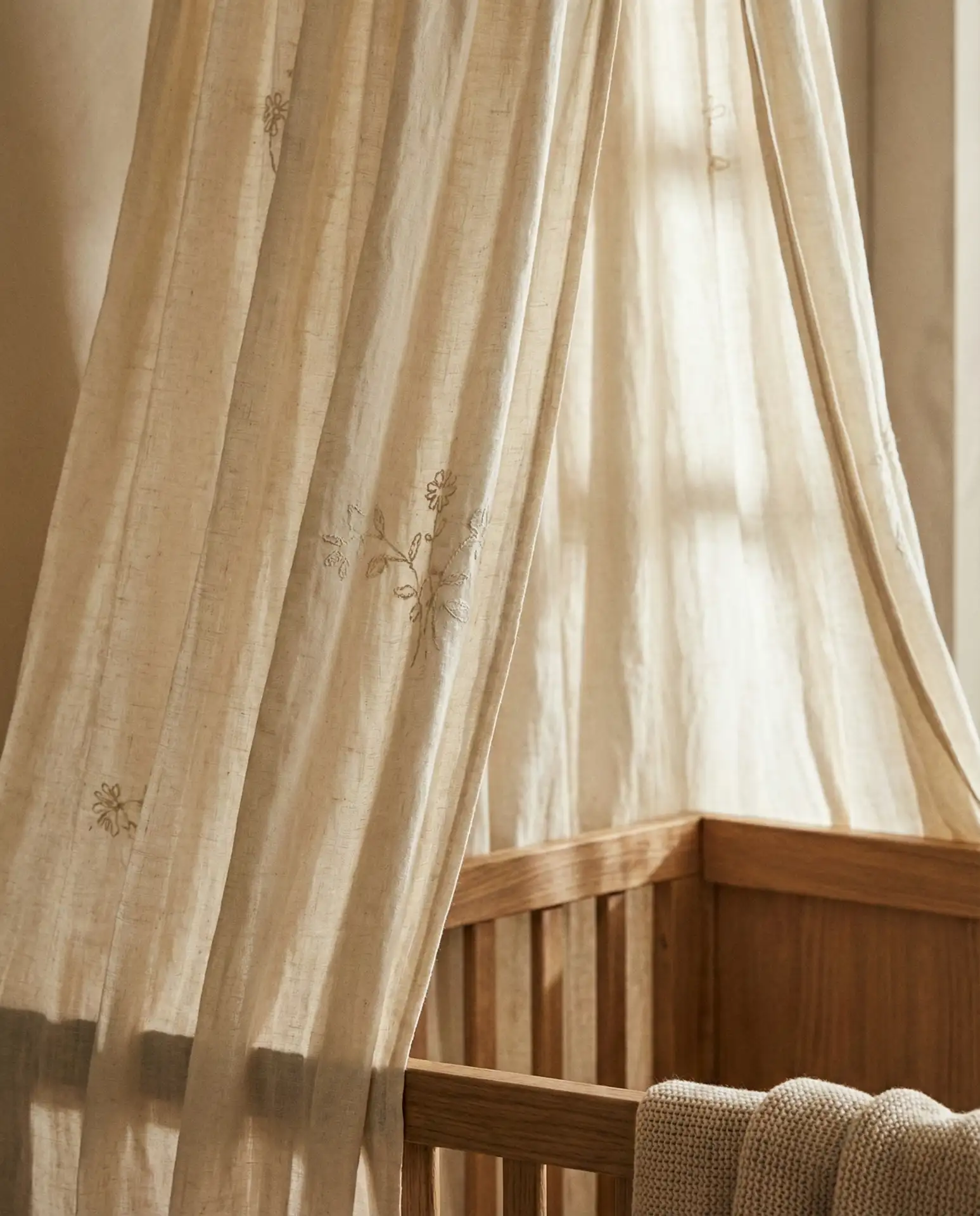
A vintage linen canopy draped over the crib instantly adds softness and old-world charm to any nursery. The fabric should feel lived-in, with delicate floral embroidery along the edges that hints at heirloom quality. This look works beautifully in rooms with hardwood floors and neutral walls, where the canopy becomes a focal point without overwhelming the space. Pair it with a simple wooden crib and a jute rug to let the textile shine.
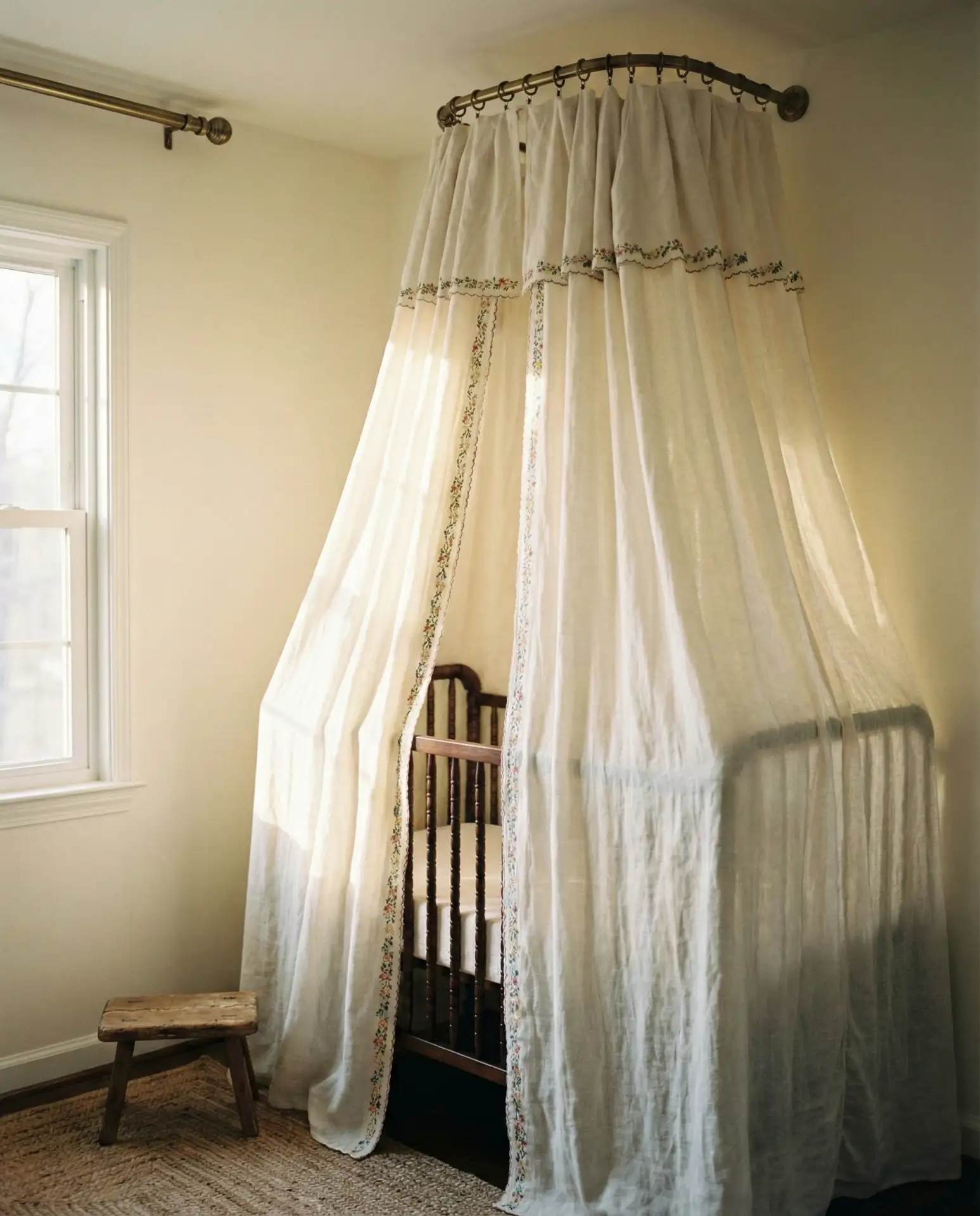
Canopies like these work best in nurseries with high ceilings, where the fabric can cascade gracefully without feeling cramped. They also add a layer of visual softness that’s especially welcome in smaller rooms where every design choice needs to multitask. Many parents appreciate how the canopy creates a cozy nook for reading or nursing, turning the crib area into a sanctuary within the larger room.
2. DIY Rope Shelf with Hanging Plant Display
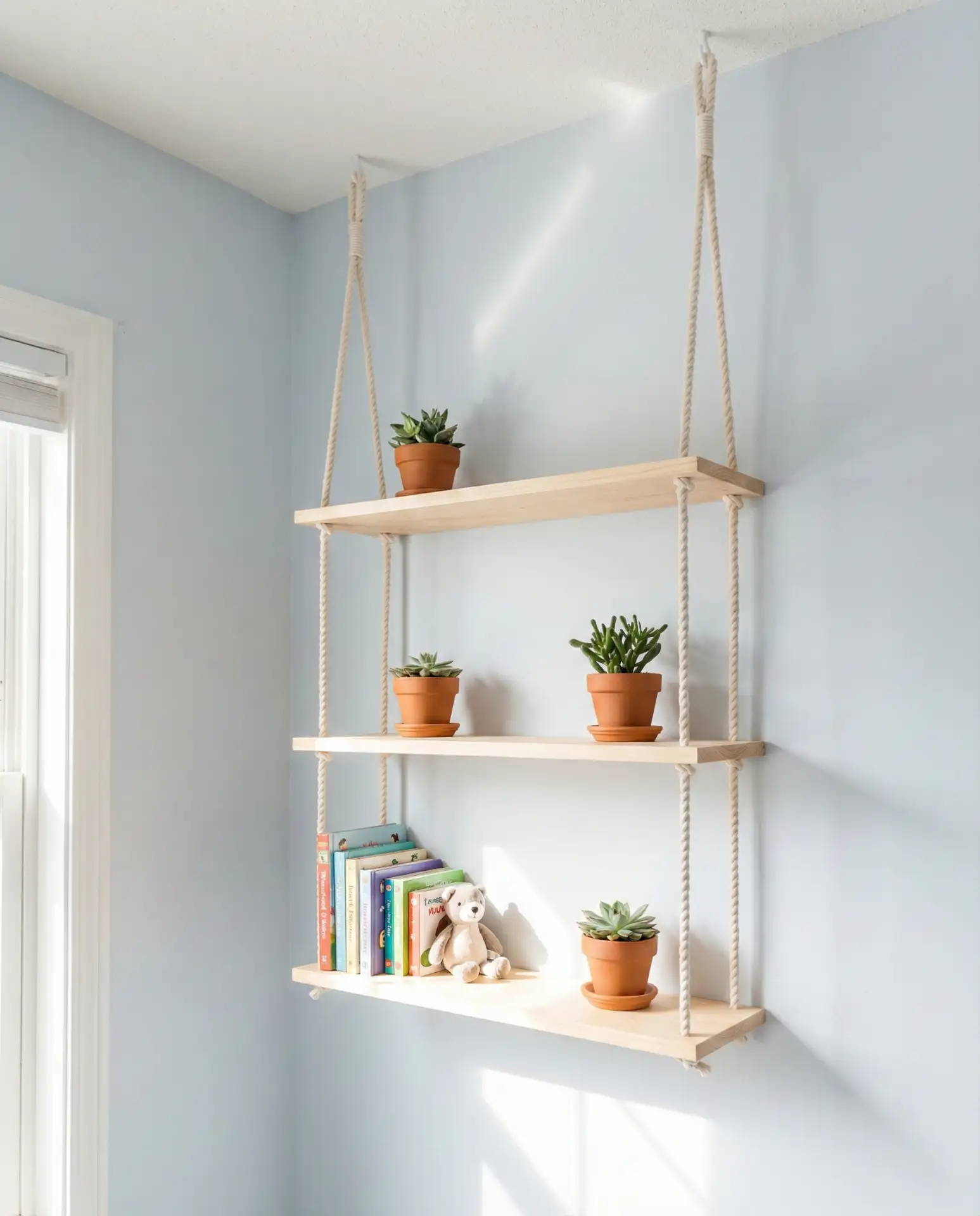
A DIY rope shelf suspended from ceiling hooks brings a playful, organic element to the nursery while offering practical storage. The design typically involves thick cotton rope threaded through wooden planks, creating a floating shelf that can hold books, small plants, or decorative objects. This project is budget-friendly and customizable, allowing you to choose wood tones and rope colors that match your existing decor. It pairs especially well with boho and woodland themes, where natural textures are celebrated.
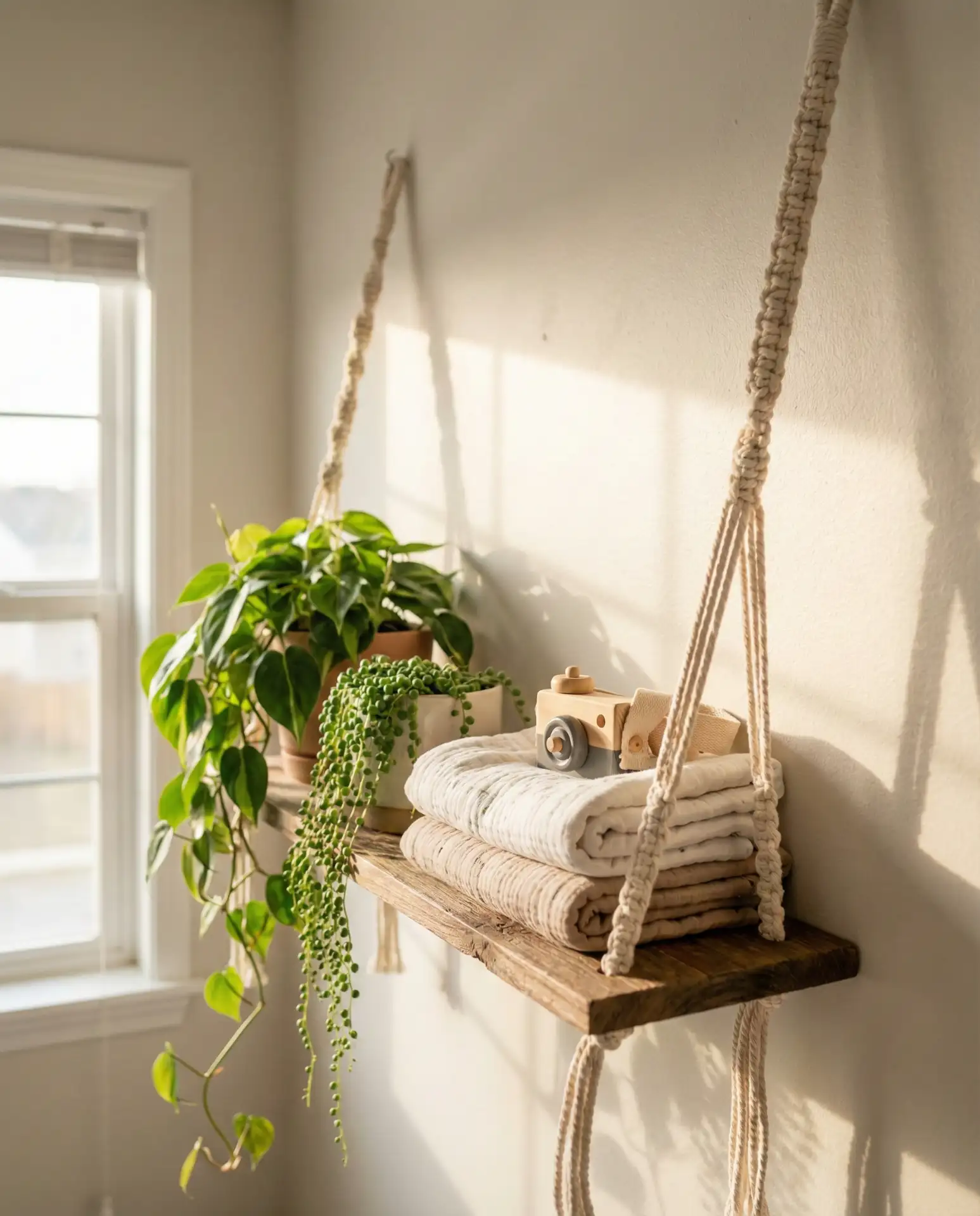
One common mistake is using rope that’s too thin, which can fray or fail to support heavier items safely. Opt for marine-grade cotton rope at least three-quarters of an inch in diameter, and make sure ceiling anchors are rated for the weight. Many DIY enthusiasts also recommend sealing the wood with a non-toxic finish to protect against moisture and daily wear.
3. Vintage Sports Pennant Wall Gallery
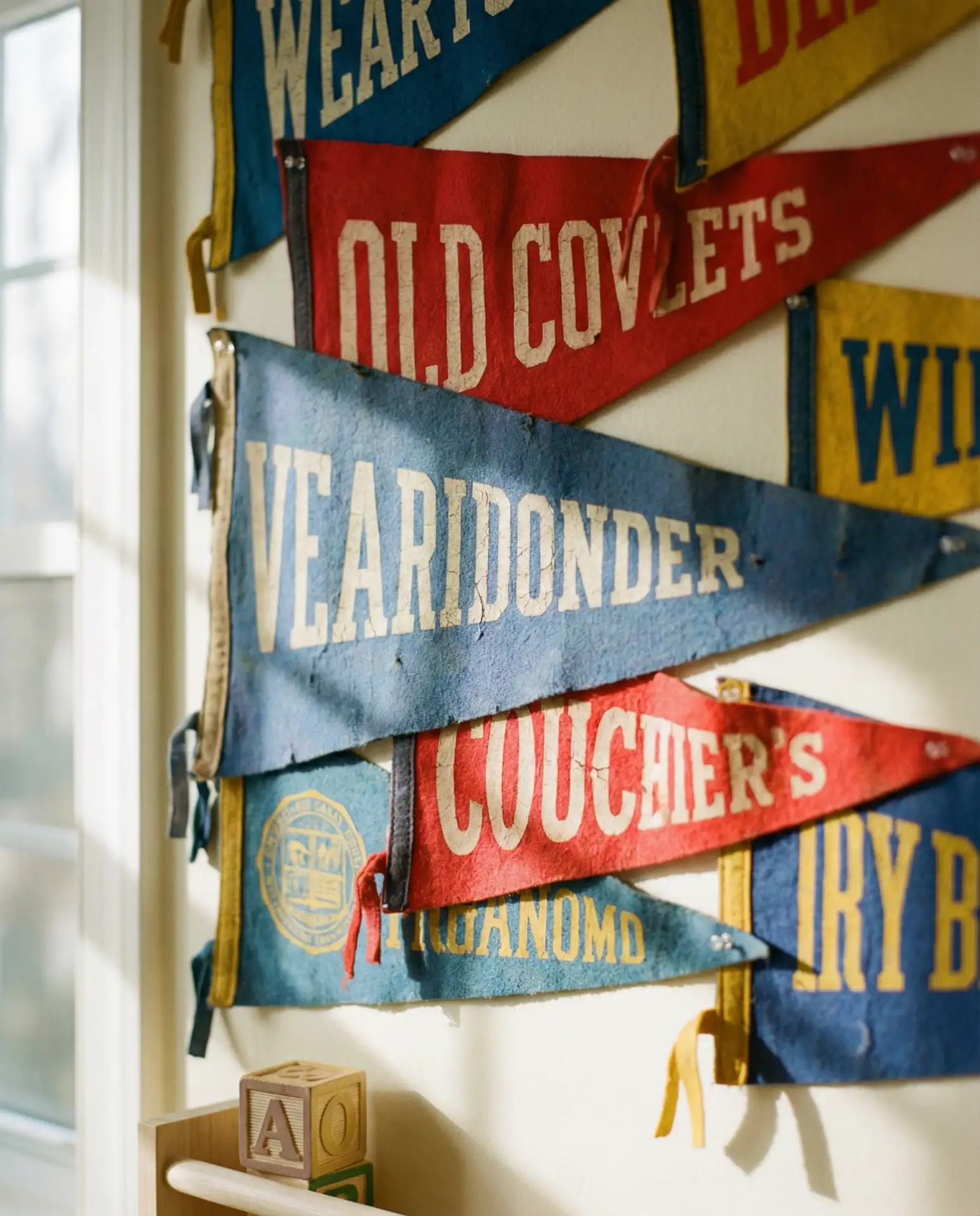
For families who love sports history, a wall of vintage sports pennants creates a nostalgic and colorful backdrop. These felt flags, often collected from flea markets or online resellers, showcase everything from college teams to minor league baseball clubs from decades past. The colors are usually faded just enough to feel authentic, and the graphics carry a mid-century charm that’s hard to replicate. Hang them in a loose grid or overlapping pattern to avoid a rigid, overly curated look.
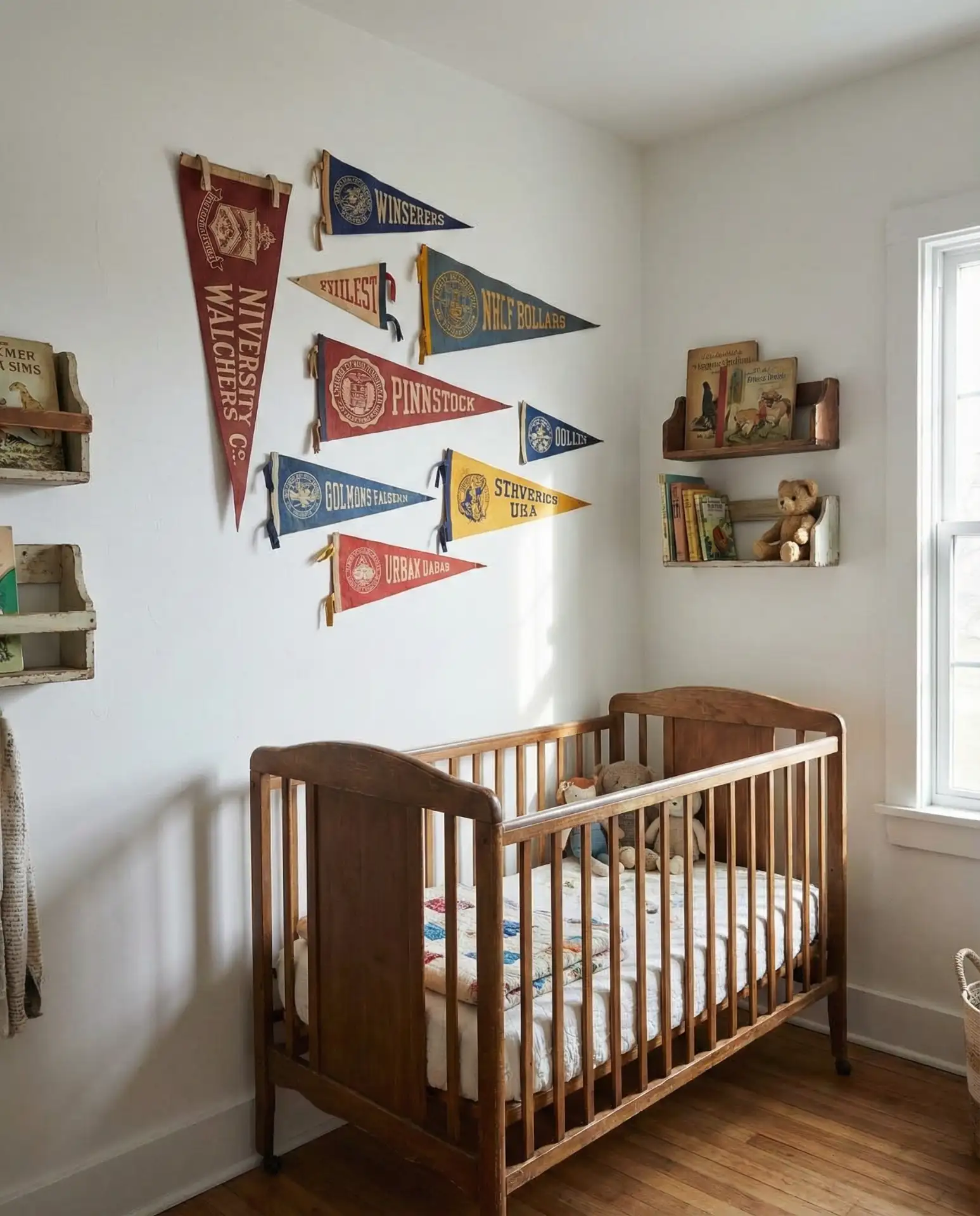
This approach works especially well in nurseries for boys or gender-neutral spaces where parents want to introduce personality without leaning into overly literal themes. In suburban homes across the Midwest and Northeast, this style has become a way to honor family heritage—many parents display pennants from their own alma maters or hometowns, creating a sense of legacy and belonging.
4. Crochet Mobile with Organic Cotton Shapes
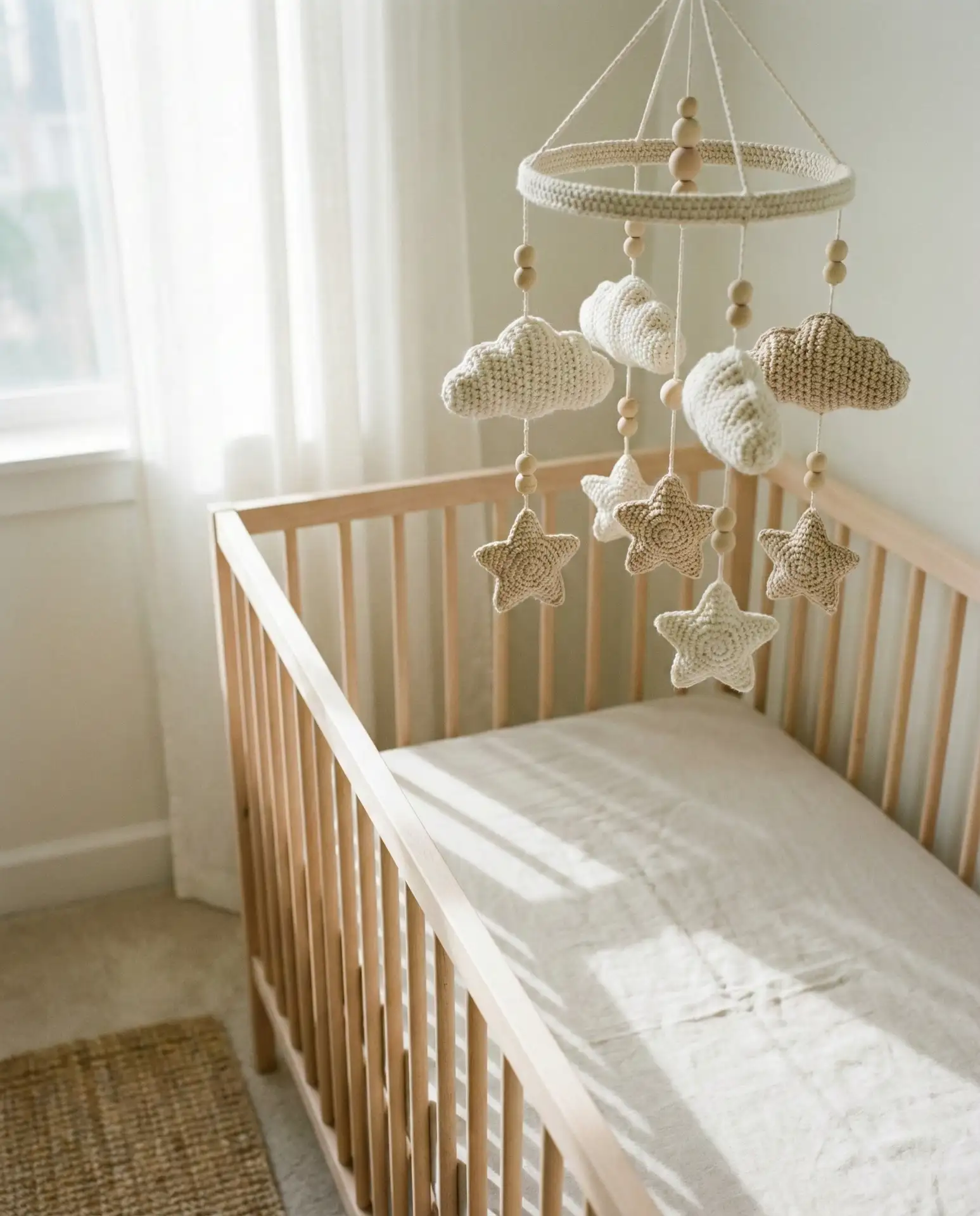
A handmade crochet mobile offers a soft, tactile alternative to plastic or wooden versions. These mobiles often feature simple shapes—clouds, moons, stars, or animals—stitched from organic cotton yarn in muted tones. The gentle movement and hand-stitched quality make them feel intimate and special, especially in neutral or boho nurseries. Many parents commission these from independent makers on Etsy or Instagram, supporting small businesses while getting a one-of-a-kind piece.
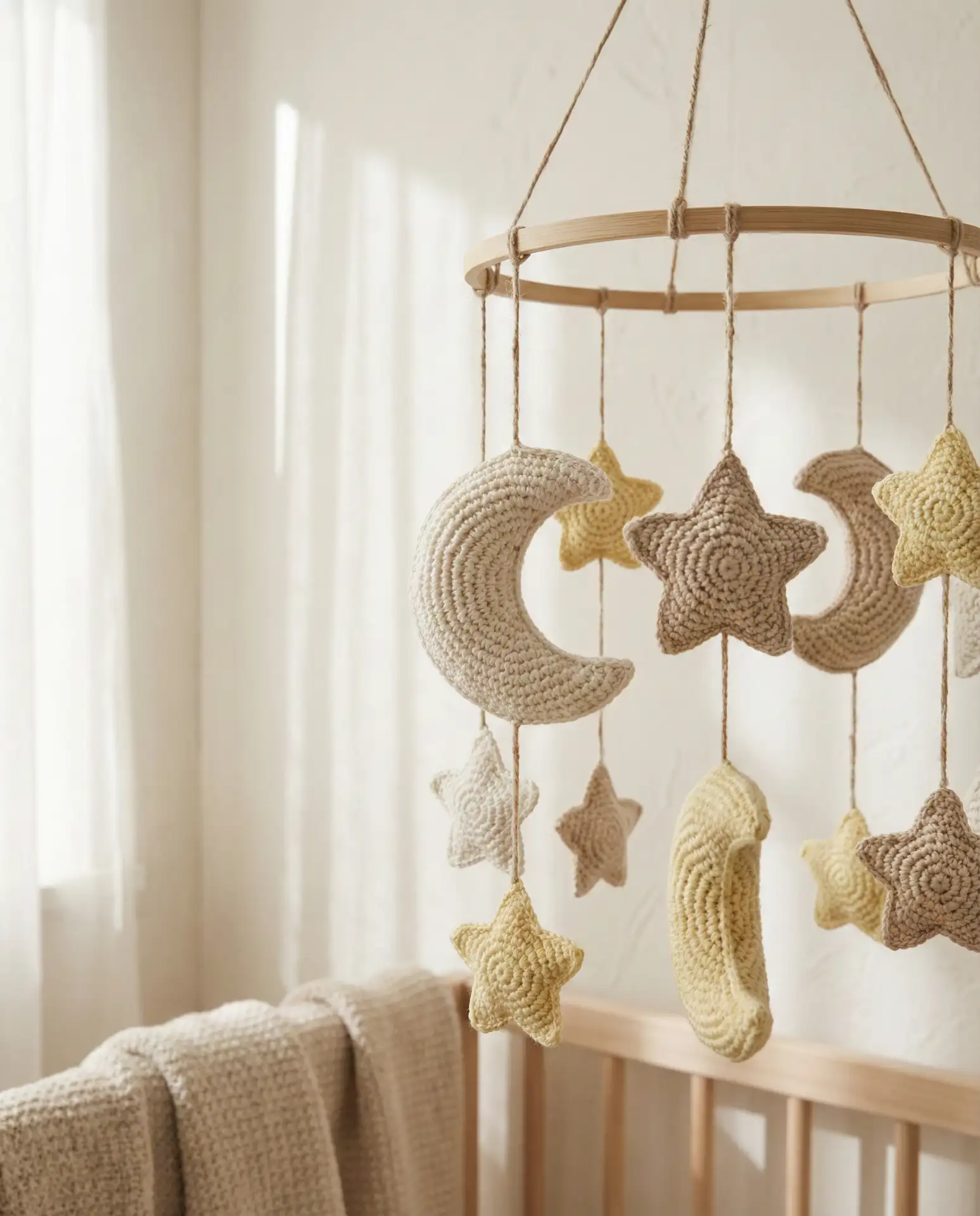
A designer I know in Portland mentioned that crochet mobiles have become her most requested item for nursery projects, largely because they feel personal and safe—parents love the idea of something soft hanging above their baby’s crib. They also photograph beautifully, which explains their popularity on Pinterest and Instagram feeds.
5. Antique Dresser Converted to Changing Station
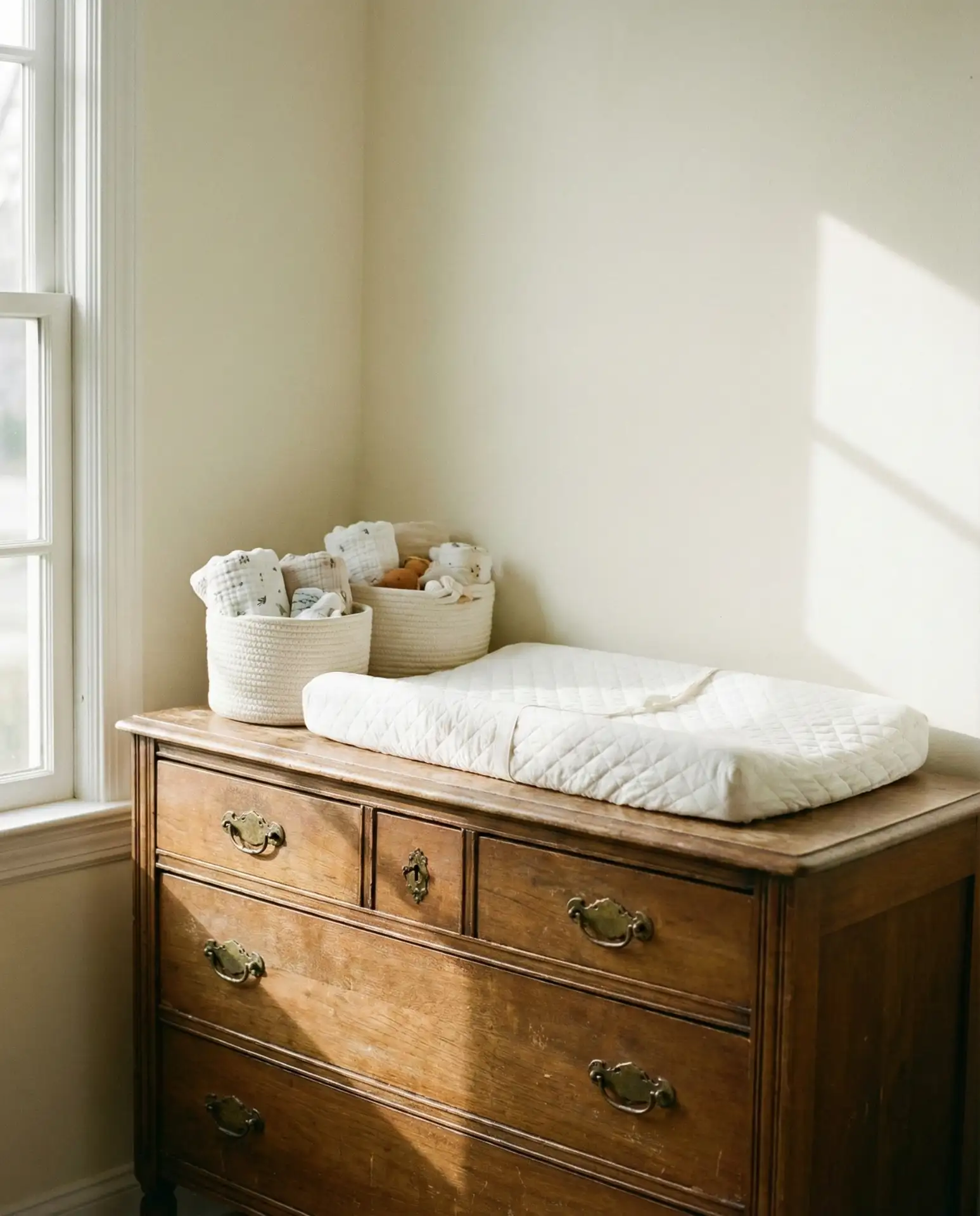
Repurposing an antique dresser as a changing station is both practical and stylish, offering storage and character in one piece. Look for dressers with solid wood construction and a height around 36 inches, which is comfortable for most parents. The top can be fitted with a changing pad and secured with a strap, while the drawers hold diapers, wipes, and clothing. This approach works beautifully in vintage nurseries where every piece tells a story.
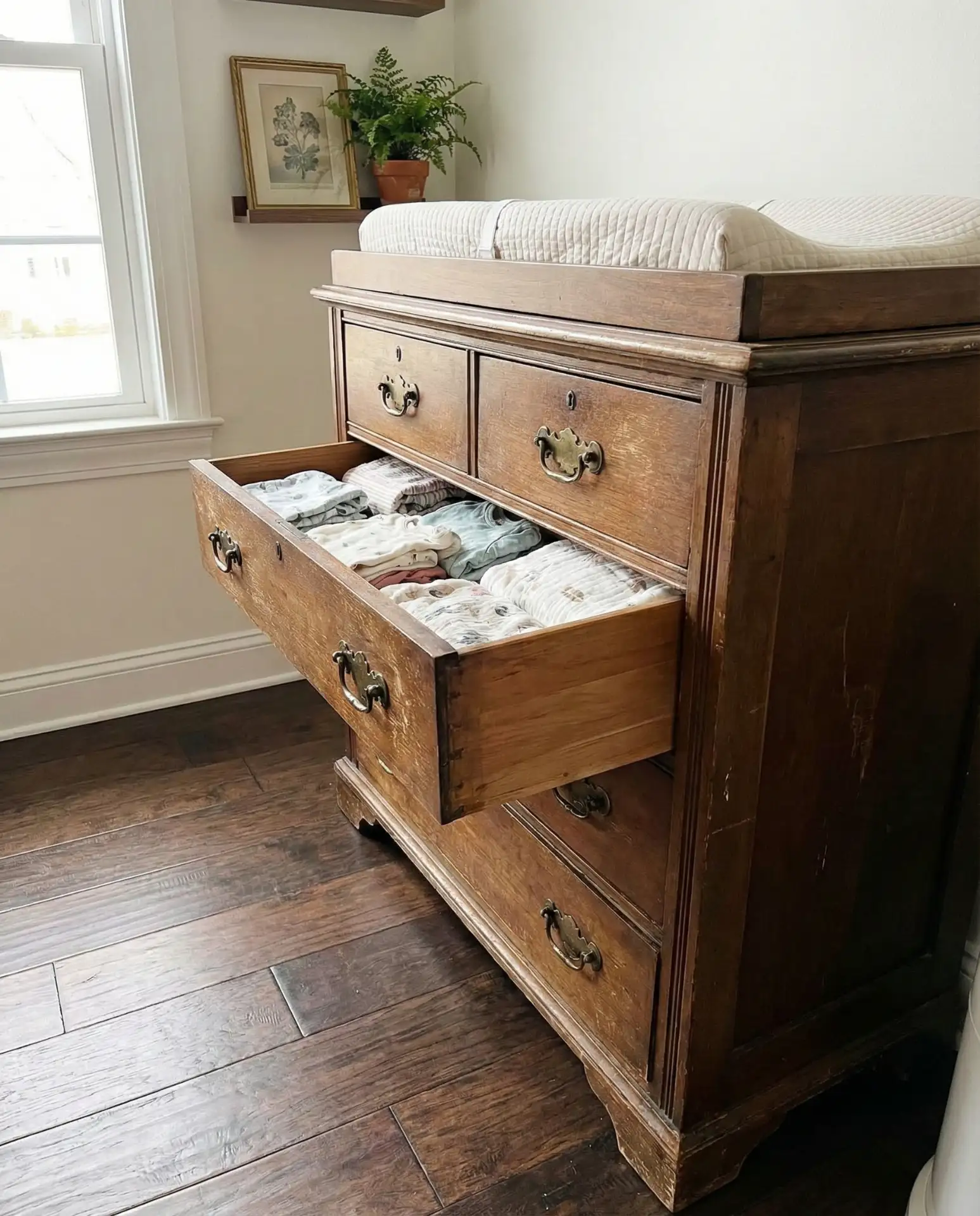
Budget-wise, sourcing an antique dresser can range from $150 at estate sales to upwards of $600 at curated vintage shops, but the investment often pays off in longevity and style. Unlike mass-produced changing tables, these pieces can transition seamlessly into a child’s room or another part of the home once diapering days are done.
6. Wildflower Meadow Mural in Watercolor Style
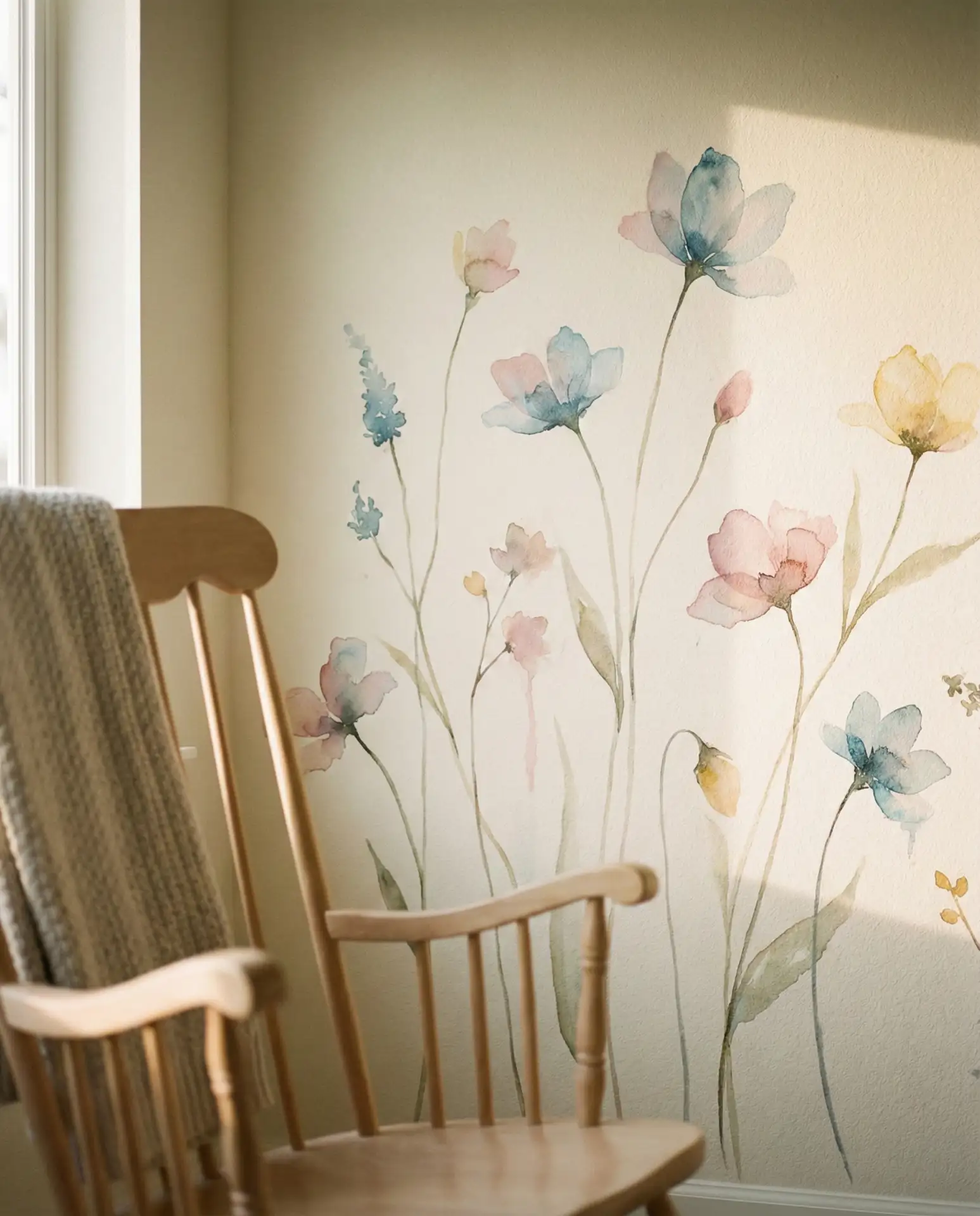
A wildflower mural painted in soft watercolor tones brings the outdoors inside without overwhelming a small space. These murals typically wrap around one or two walls, featuring delicate stems, blooms, and grasses in muted pinks, lavenders, and greens. The effect is airy and romantic, perfect for nurseries that lean into floral or boho aesthetics. Many parents hire local muralists or use large-scale wall decals designed to mimic hand-painted art.
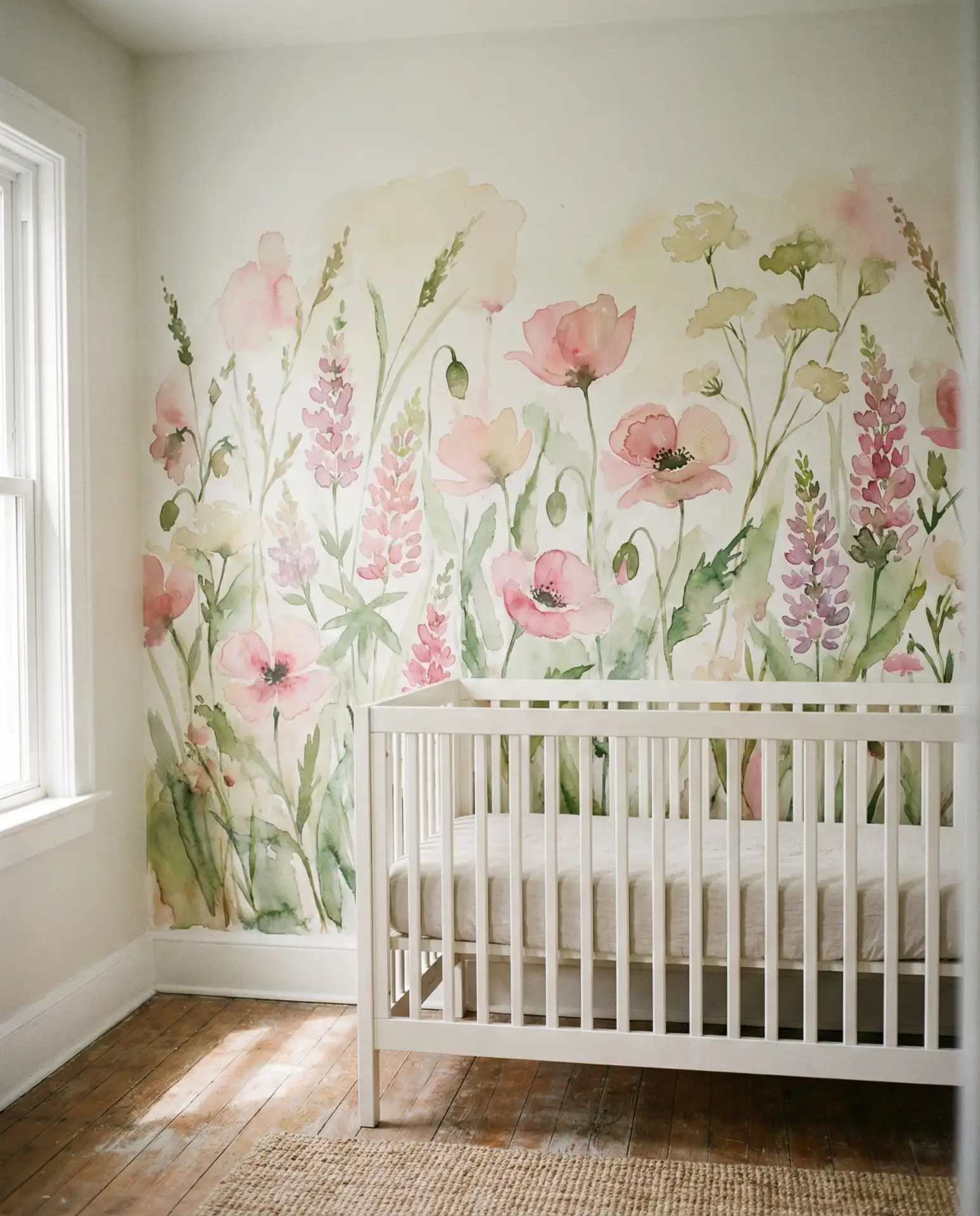
This style works best in nurseries with ample natural light, where the subtle colors can shift and glow throughout the day. In regions like the Pacific Northwest and New England, where wildflower fields are part of the landscape, these murals feel especially grounded in place. They’re also a great option for renters if you choose removable wallpaper instead of paint.
7. Church Pew Bench for Reading Corner
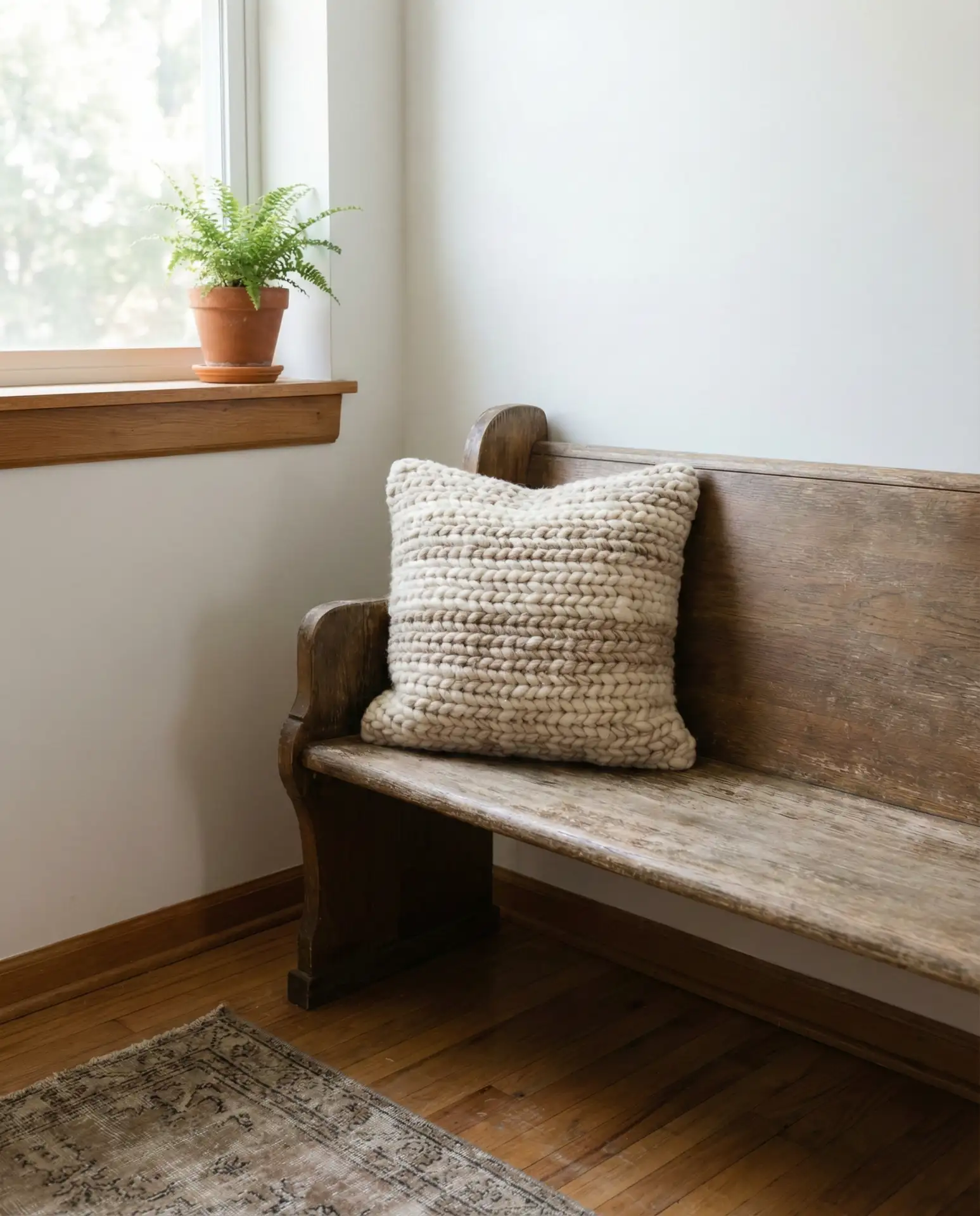
A reclaimed church pew brings unexpected gravitas and history to a nursery, serving as a sturdy bench for reading or resting. These pews, often found at architectural salvage yards, are built to last and come in rich wood tones that anchor a room. Add a few cushions in soft fabrics and a basket of books below, and you have a reading nook that feels sacred in its own way. This piece works especially well in nurseries with vintage or antique leanings.
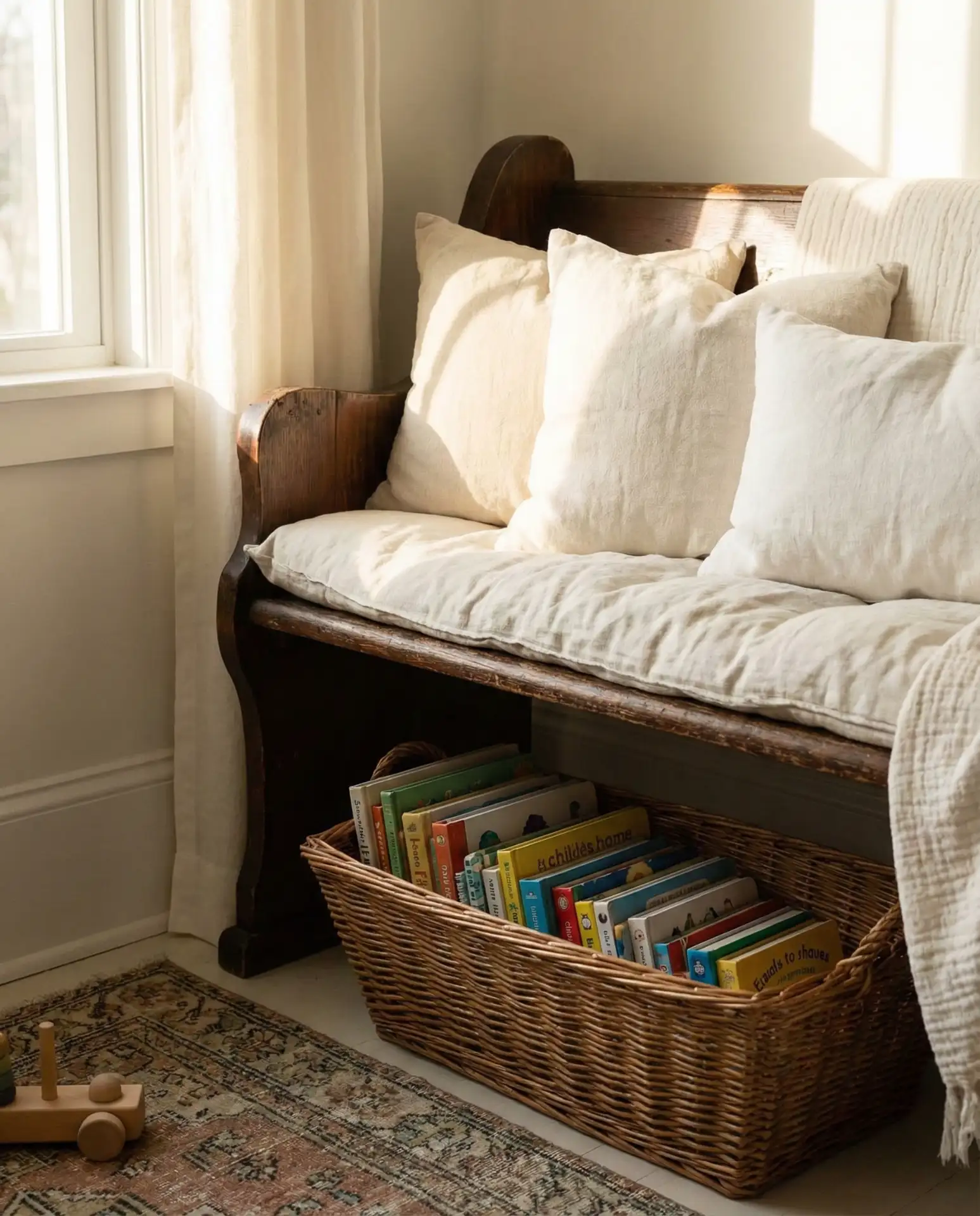
Real homeowners often mention how much they love the weight and solidity of these benches—they don’t tip or wobble like lighter furniture, which is reassuring with toddlers who climb. The patina and wear marks also add character that can’t be faked, making each pew feel like a true heirloom piece.
8. Neutral Linen Curtains with Tied-Back Detail
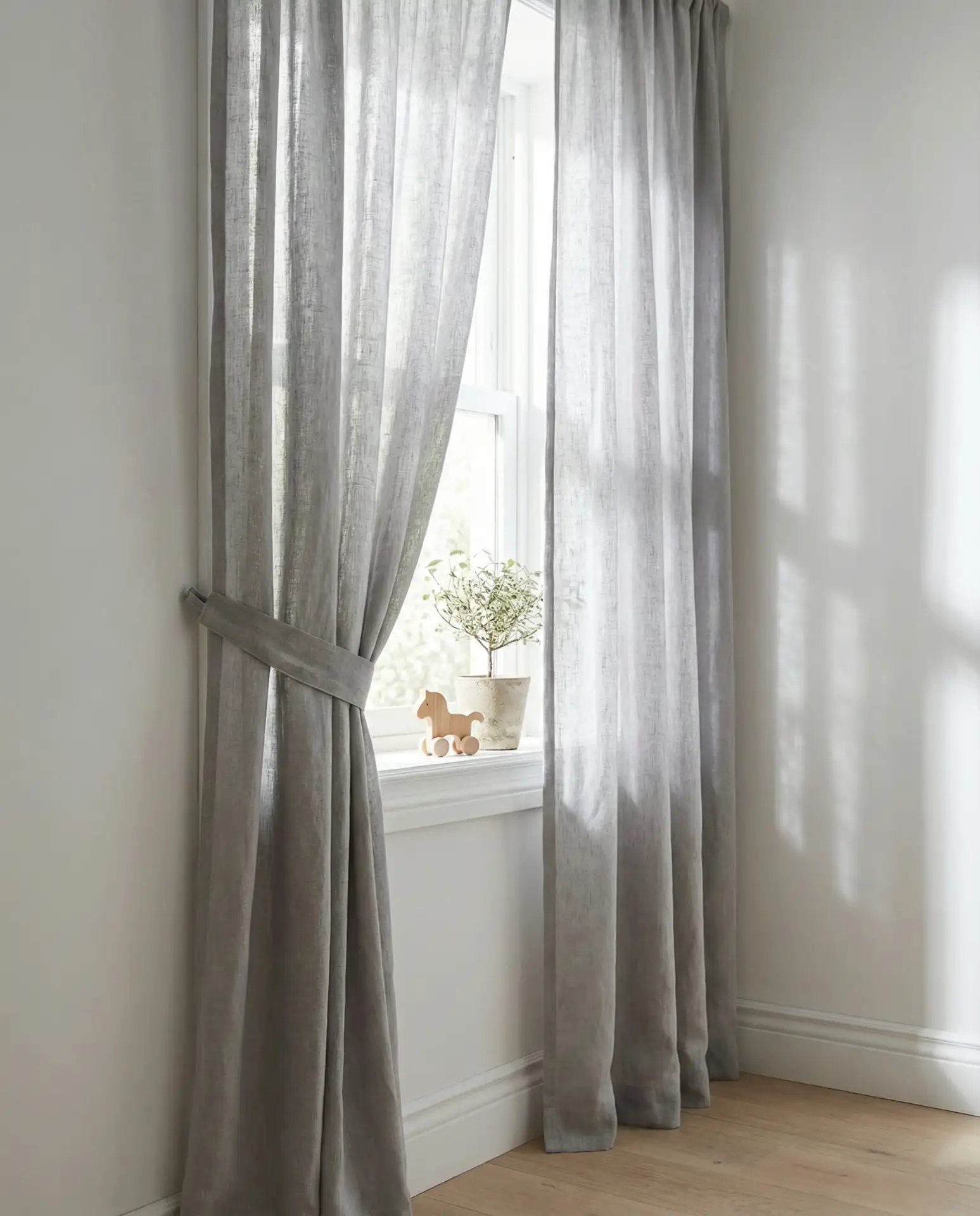
Floor-length neutral linen curtains soften the light and add a breezy, European feel to any nursery. The tied-back detail—a simple knot or fabric loop—keeps the look casual and approachable while allowing natural light to filter in during the day. Choose colors like oat, flax, or soft gray that will age beautifully and won’t compete with other design elements. These curtains work across nearly every style, from boho to vintage to modern minimalist.
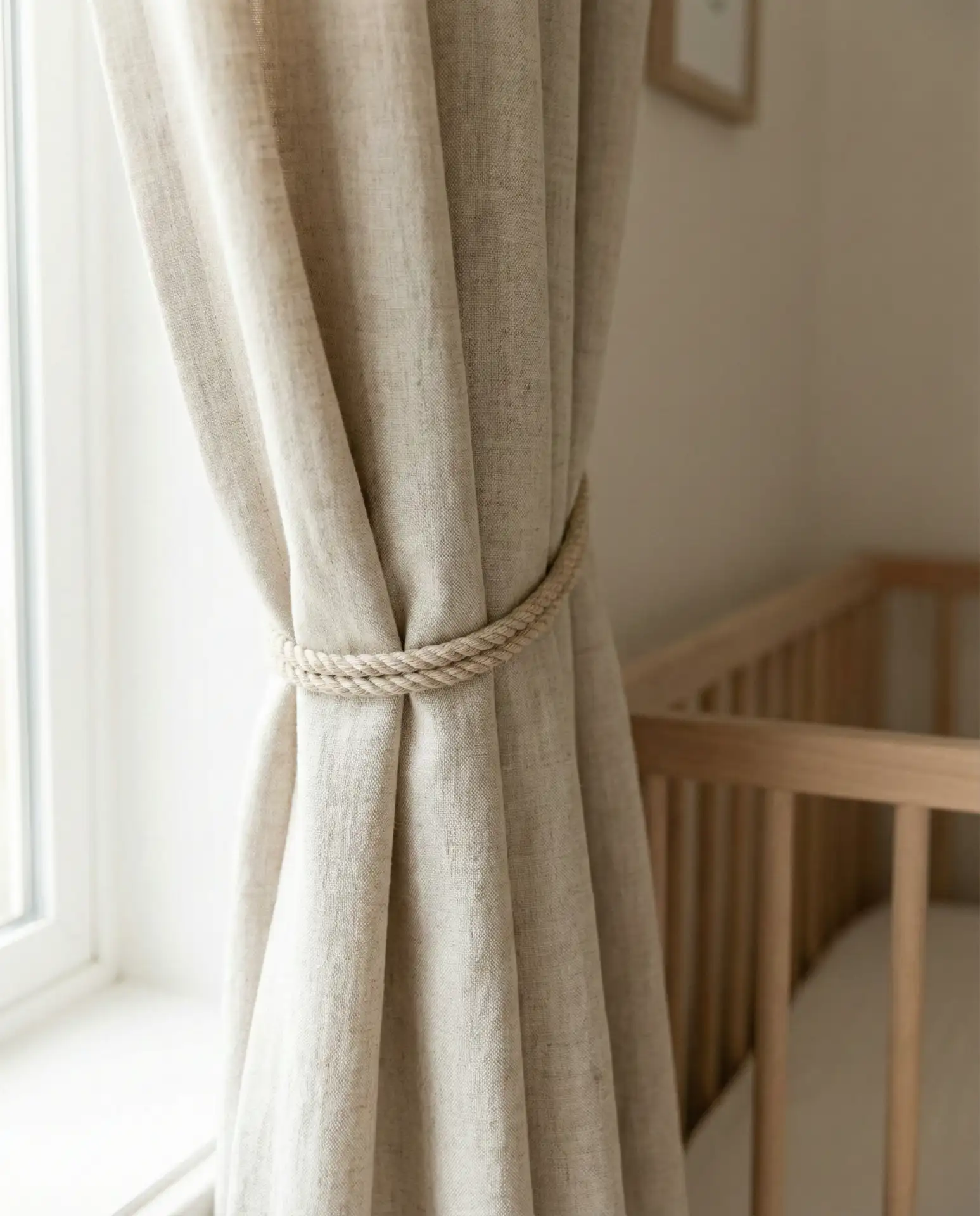
Linen curtains have become a staple in American homes over the past few years, especially in nurseries where parents want to avoid heavy, dark fabrics that can make a small room feel closed-in. They also offer a middle ground between blackout curtains for nighttime sleep and sheer panels that let in too much light during naps.
9. Safari Animal Silhouettes in Framed Art
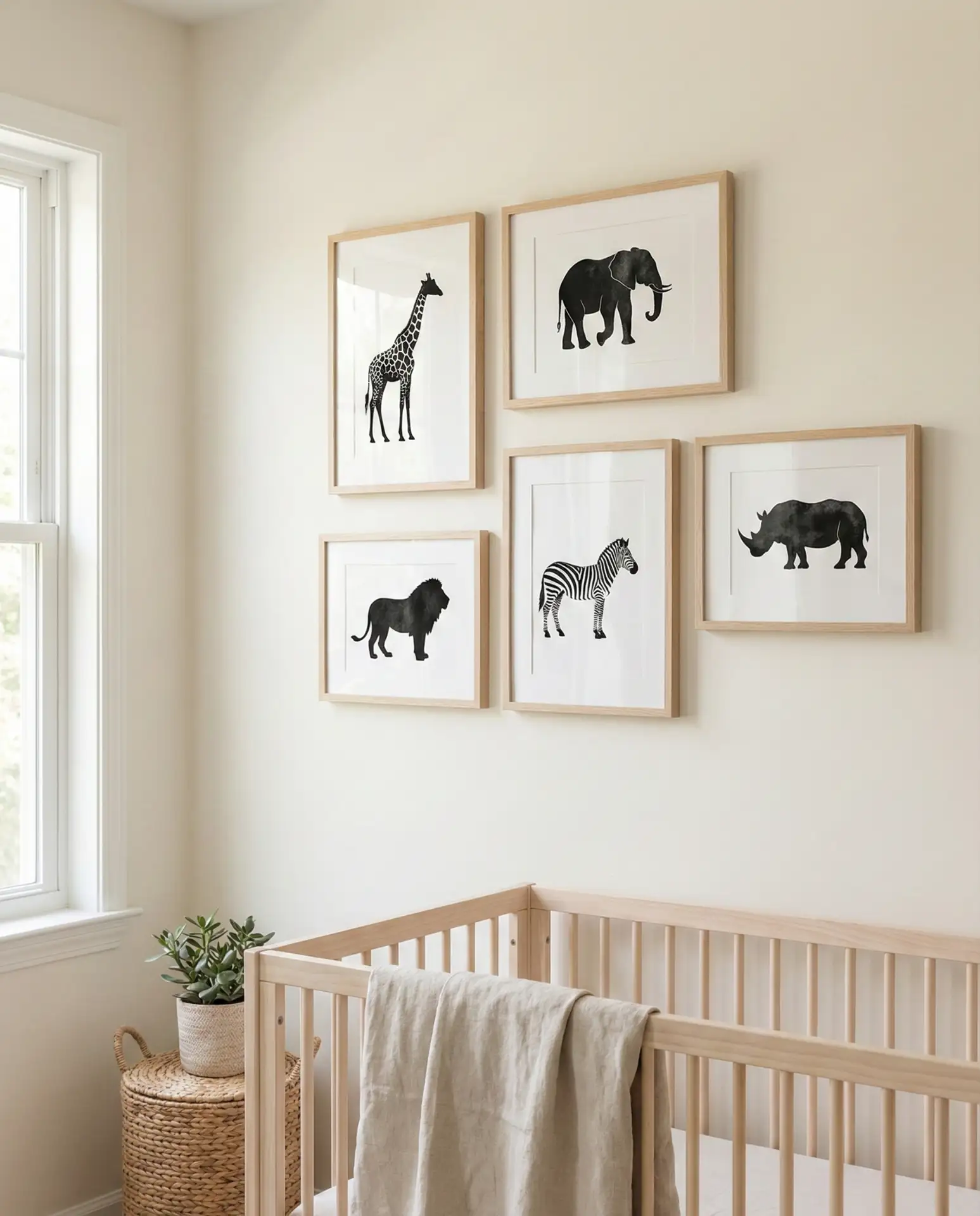
Simple safari animal silhouettes—elephants, giraffes, and zebras—printed in black ink on cream paper and set in wooden frames create a gallery wall with impact. The minimalist approach keeps the theme from feeling juvenile or overly literal, allowing the shapes to read as graphic art rather than nursery cliché. This works beautifully in neutral rooms where parents want a nod to wildlife without going full jungle or zoo theme.
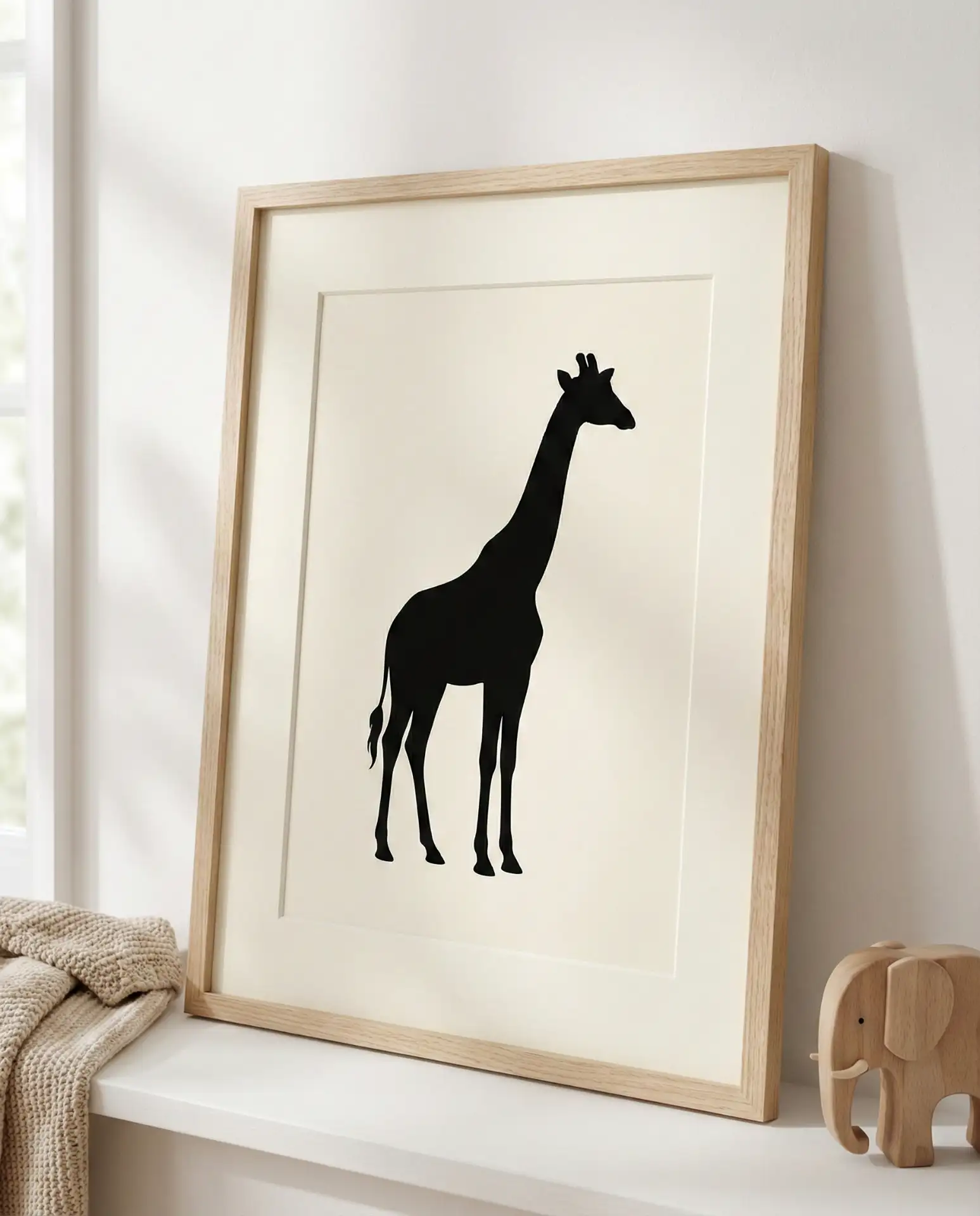
One expert tip: avoid mixing too many animal types. Stick to three or four species and repeat them in different sizes or poses to create visual rhythm. Overloading the wall with every creature from the savanna can quickly turn elegant into cluttered, so restraint is key here.
10. Ocean-Inspired Mobile with Driftwood and Shells
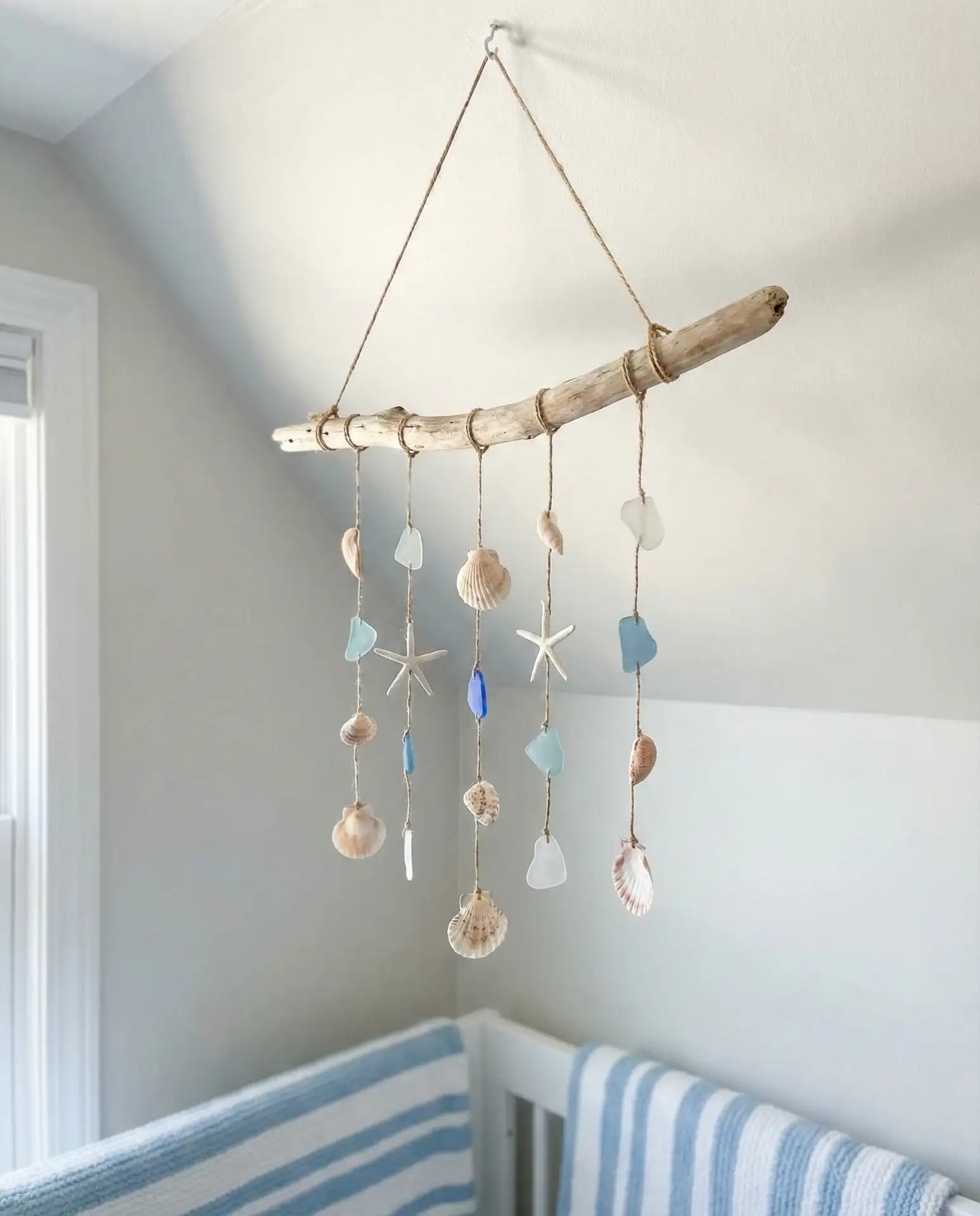
An ocean-inspired mobile crafted from driftwood, shells, and natural twine brings coastal calm to the nursery. The materials are lightweight and move gently with air currents, creating a soothing visual for babies. This style fits perfectly in homes near the coast or for families who want to evoke seaside memories. Pair it with soft blues, sandy beiges, and whites to complete the look without veering into nautical kitsch.
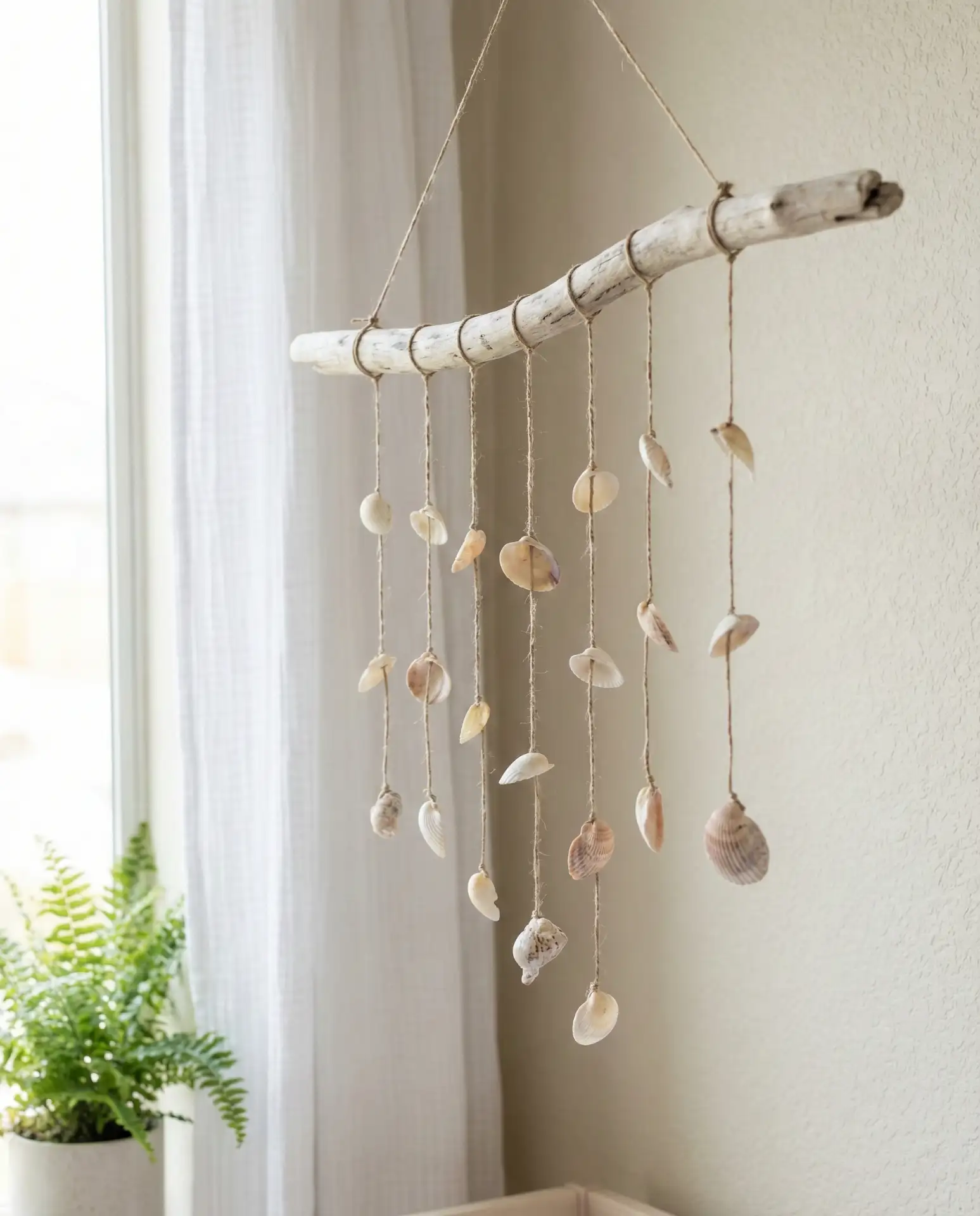
This mobile works best in nurseries with plenty of natural light, where the shells catch and reflect brightness. Coastal states like California, Florida, and the Carolinas have embraced this trend, with many parents beachcombing for materials to create their own versions. It’s a project that can be deeply personal and reminiscent of family beach trips.
11. Colorful Pom-Pom Garland Across the Ceiling
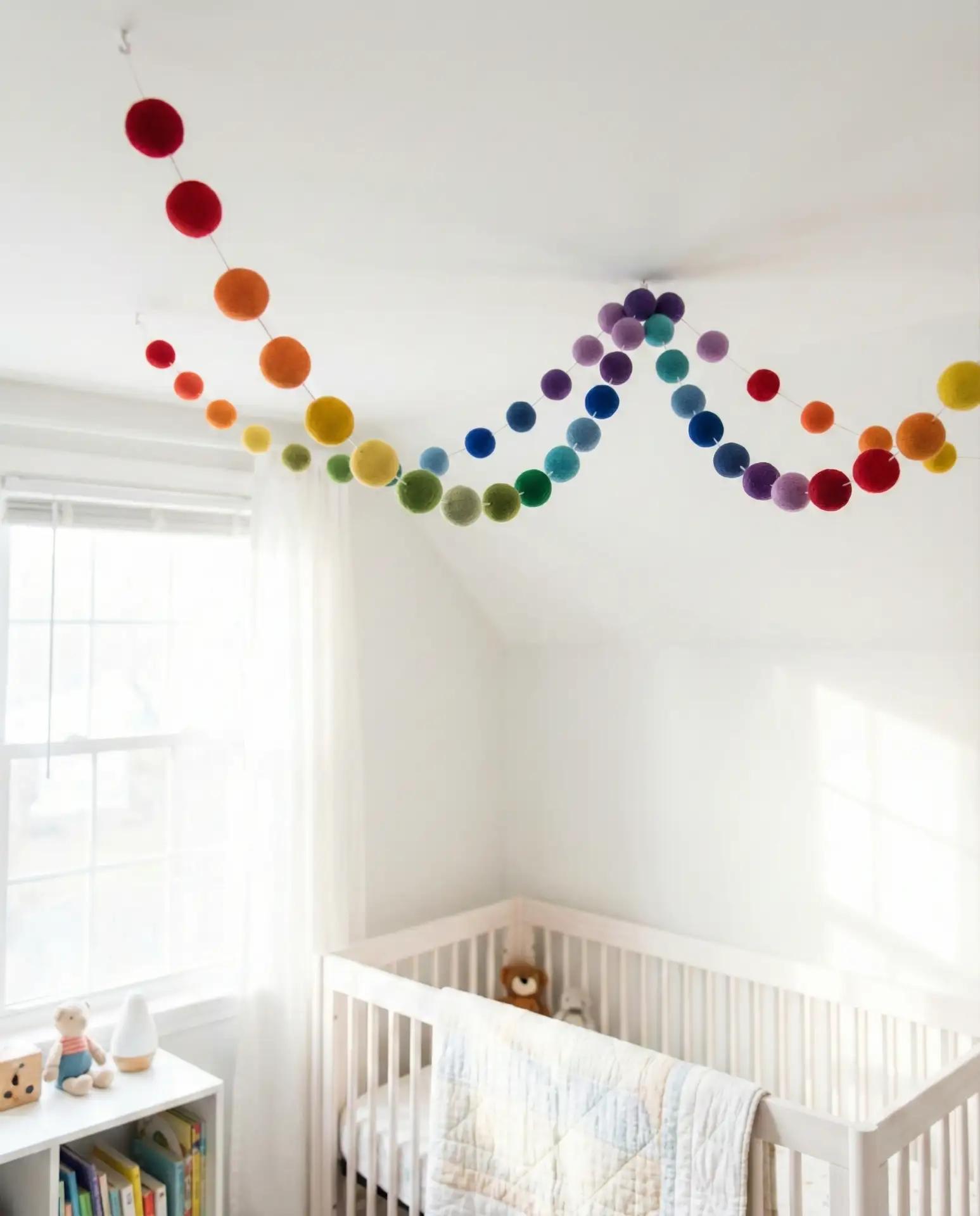
A handmade garland strung with colorful felt pom-poms adds instant cheer and texture to a nursery ceiling. The pom-poms can be in rainbow hues or a curated palette that matches your room’s scheme. This DIY project is simple, affordable, and safe, making it a favorite for first-time parents looking to personalize the space. Drape the garland in a gentle swag or run it corner to corner for a playful overhead accent.
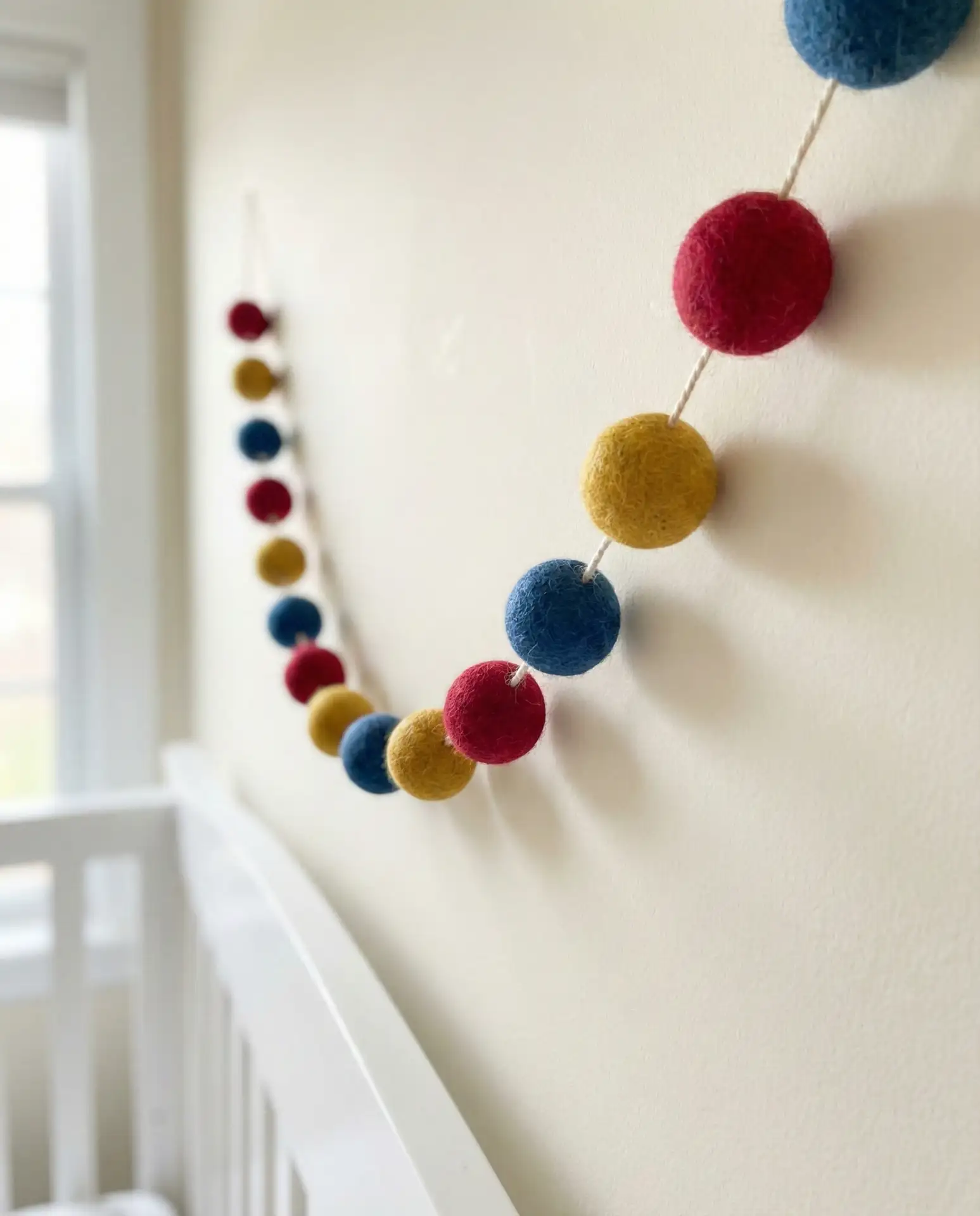
Avoid the mistake of hanging the garland too low—it should be well above adult head height to prevent accidental snagging or pulling. Many parents also secure garlands with removable adhesive hooks rather than nails, which keeps walls intact for future changes.
12. Swan-Shaped Wall Hook for Hanging Storage
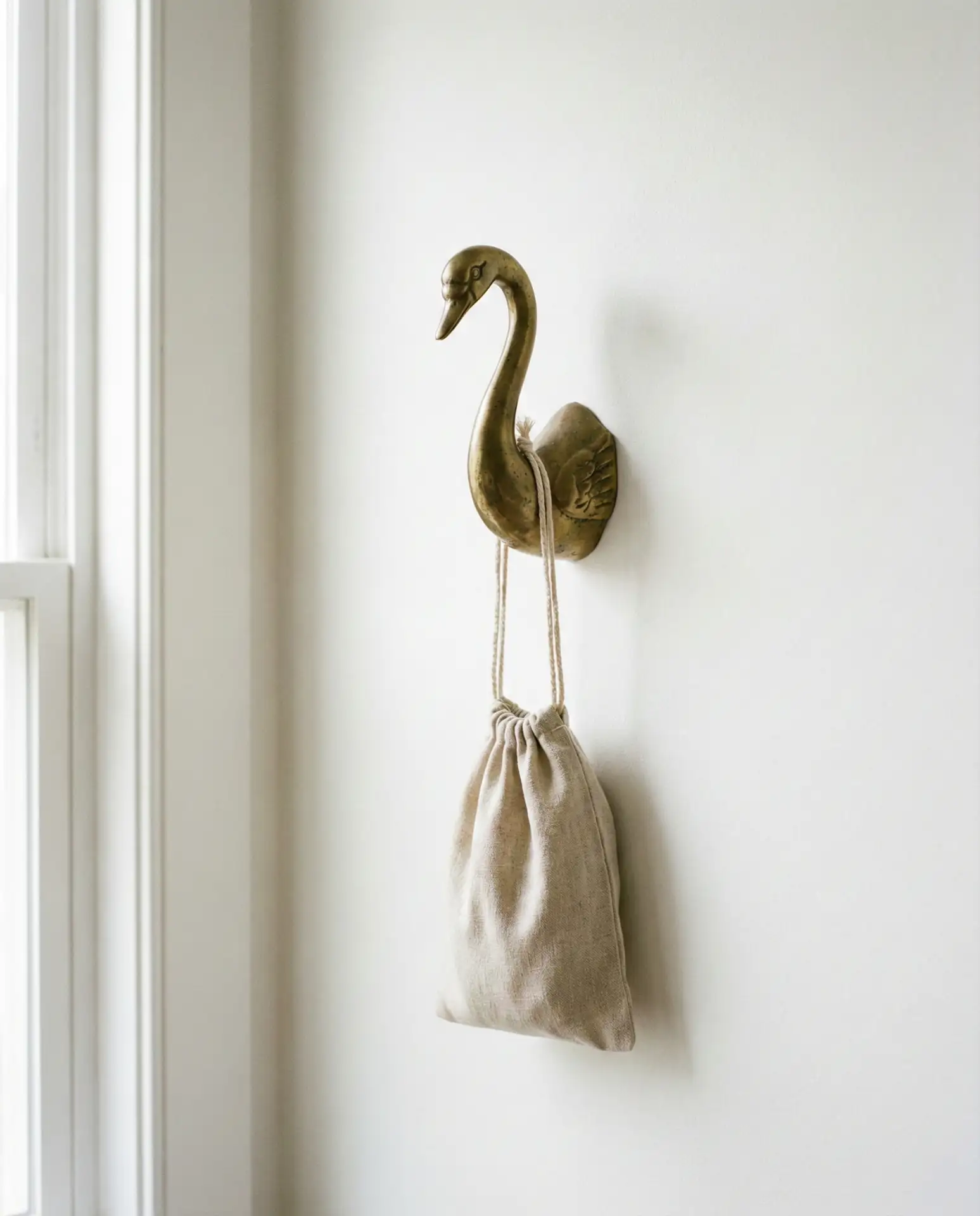
A swan-shaped wall hook in polished brass or matte white offers both function and whimsy in a nursery. These hooks can hold everything from tiny robes to fabric bags, and their elegant form makes them a decorative statement even when bare. The swan motif is gentle and sophisticated, appealing to parents who want a touch of vintage charm without leaning into overly precious themes.
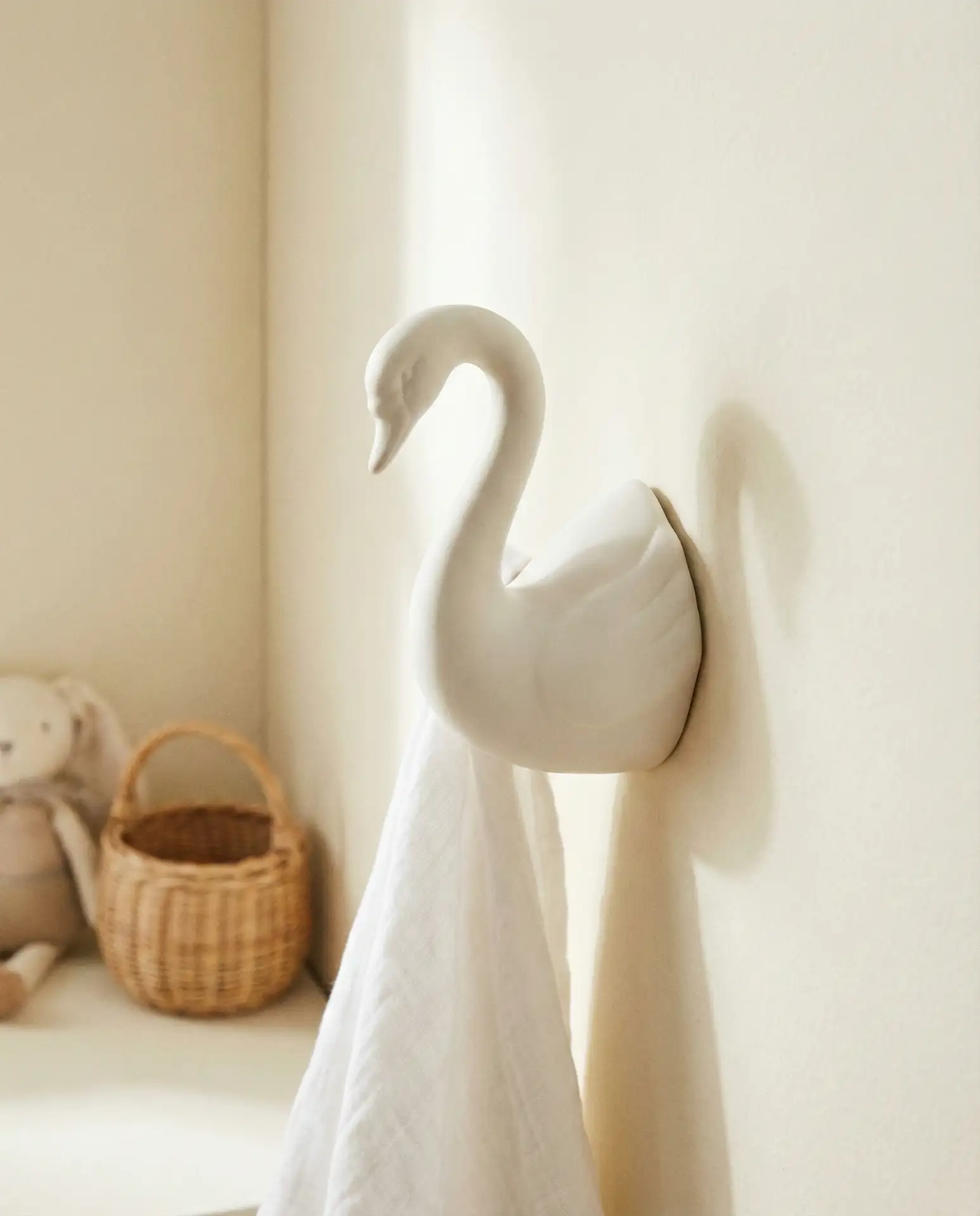
In practice, these hooks work best installed at adult height near the changing table or entryway, where parents can easily grab what they need. They’re also popular in nurseries with a floral or neutral aesthetic, where the swan’s graceful line complements softer design elements.
13. Farm Animal Plush Toy Display on Floating Shelf
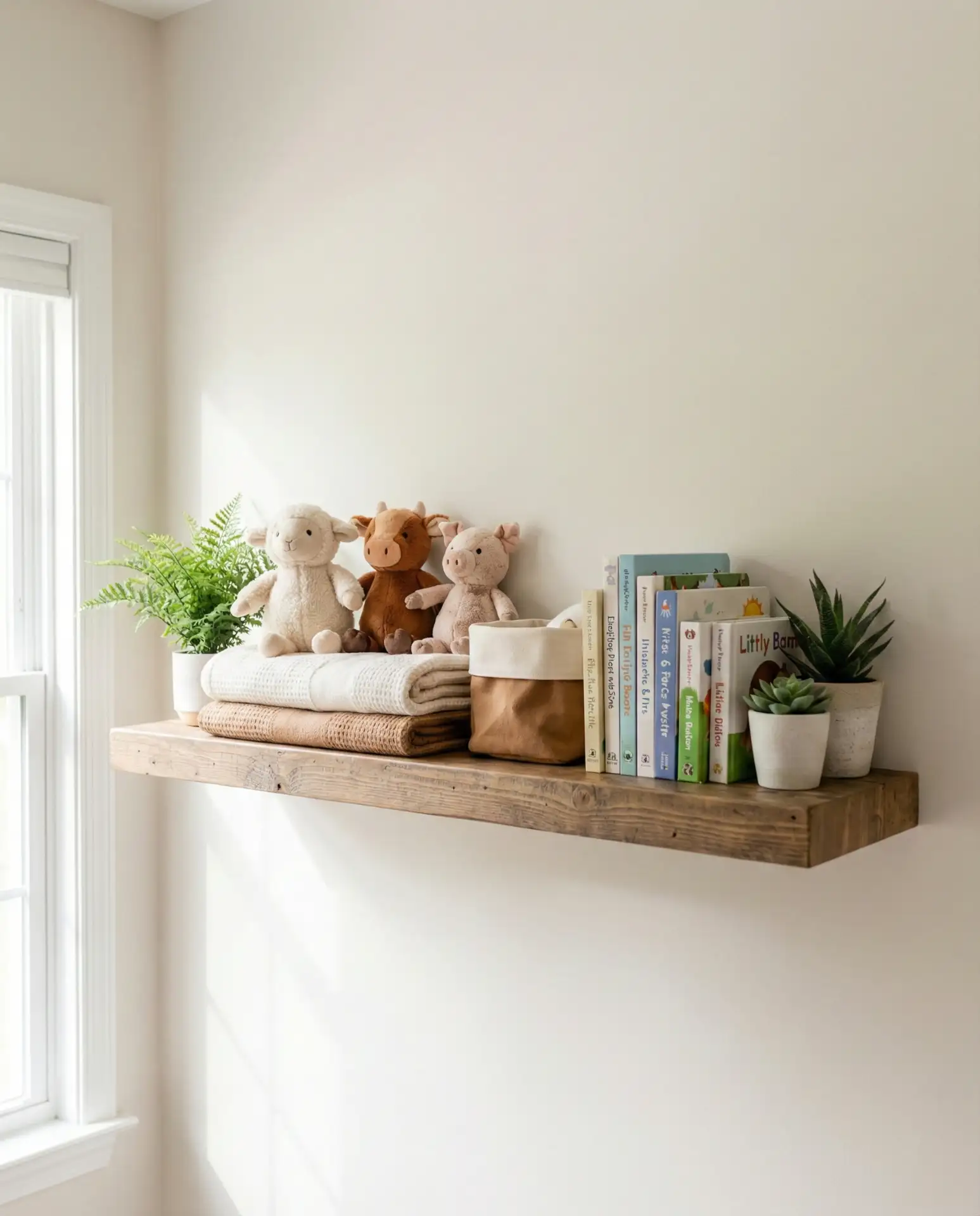
A floating shelf lined with farm animal plush toys—cows, pigs, chickens, and sheep—creates a charming display that doubles as decor and playthings. Choose toys in natural colors and soft fabrics that feel handmade or vintage-inspired. This setup works beautifully in woodland or neutral nurseries, where the animals can live alongside books and small potted plants. The shelf should be mounted low enough that toddlers can eventually reach their favorites.
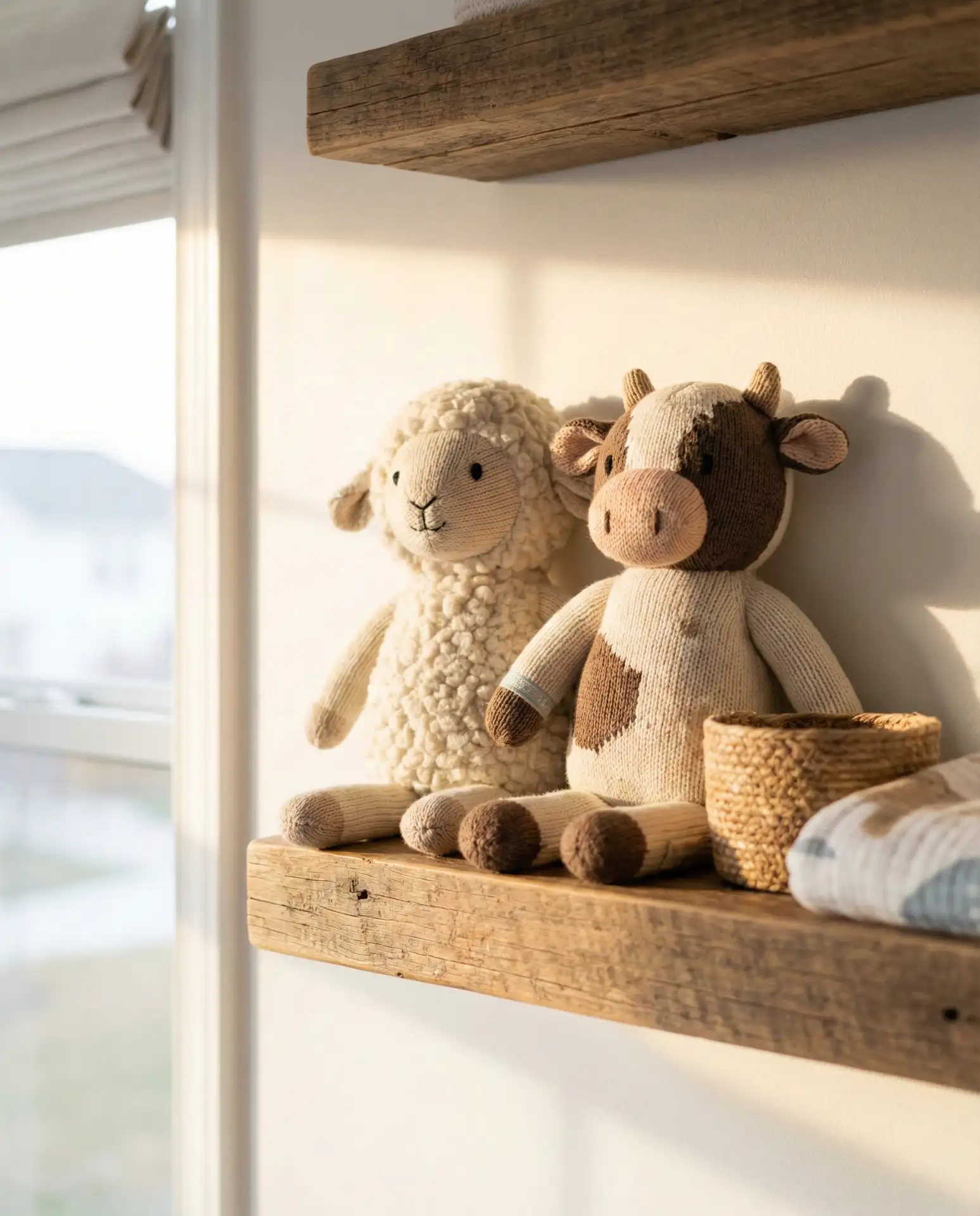
Parents in rural areas or those with family ties to farming often find this theme especially meaningful. It’s a way to introduce children to animals and agriculture in a soft, age-appropriate way. Plus, the plush toys can move from shelf to bed to playtime, making them versatile beyond their decorative role.
14. Hot Air Balloon Paper Lanterns Clustered Together
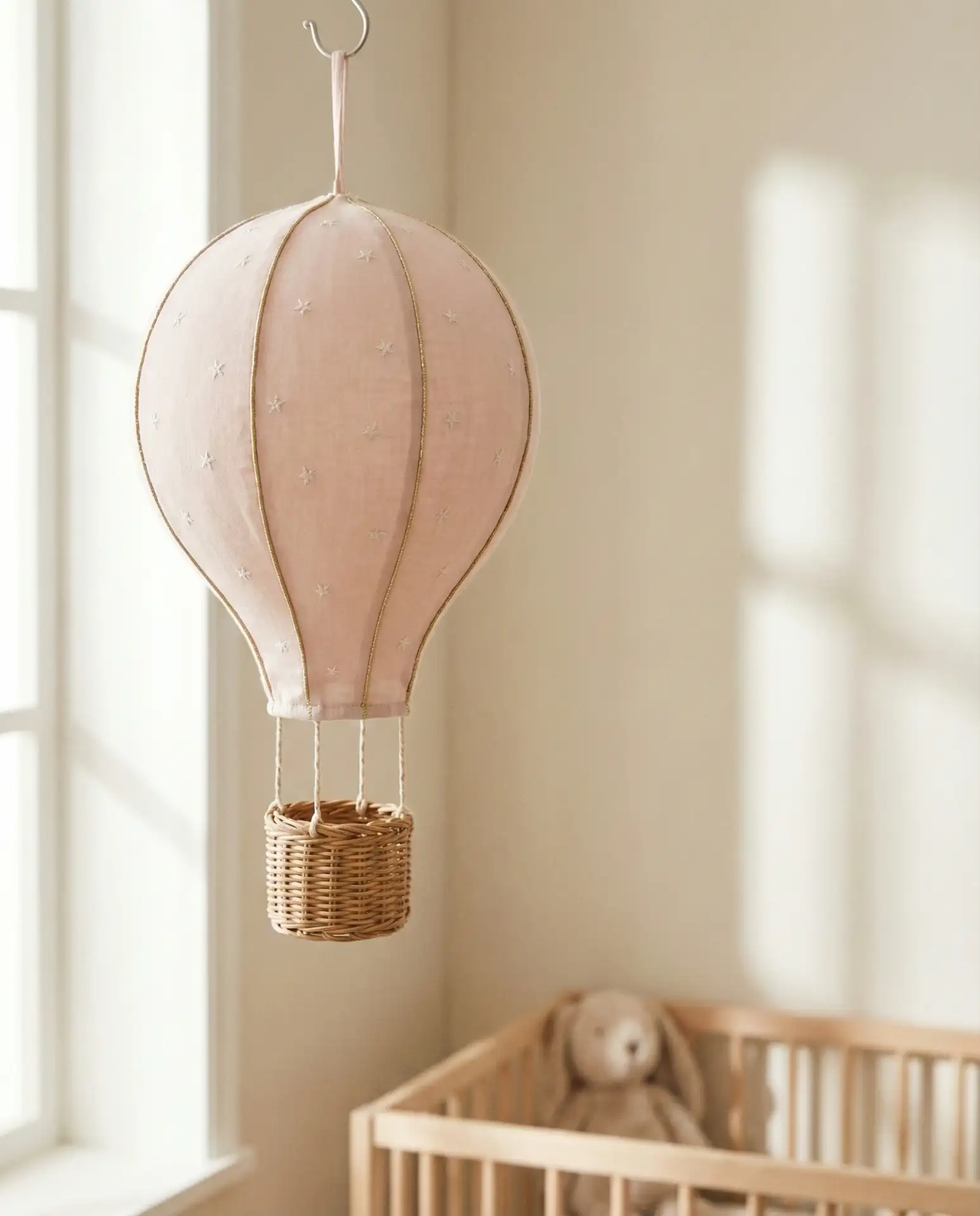
Paper lanterns designed to look like hot air balloons bring a sense of adventure and lightness to a nursery ceiling. These lanterns come in a range of sizes and colors, and when clustered at varying heights, they create a floating, dreamlike effect. The best versions include small baskets made from woven paper or fabric attached to the base. This idea fits perfectly in colorful or rainbow nurseries where imagination is the guiding principle.
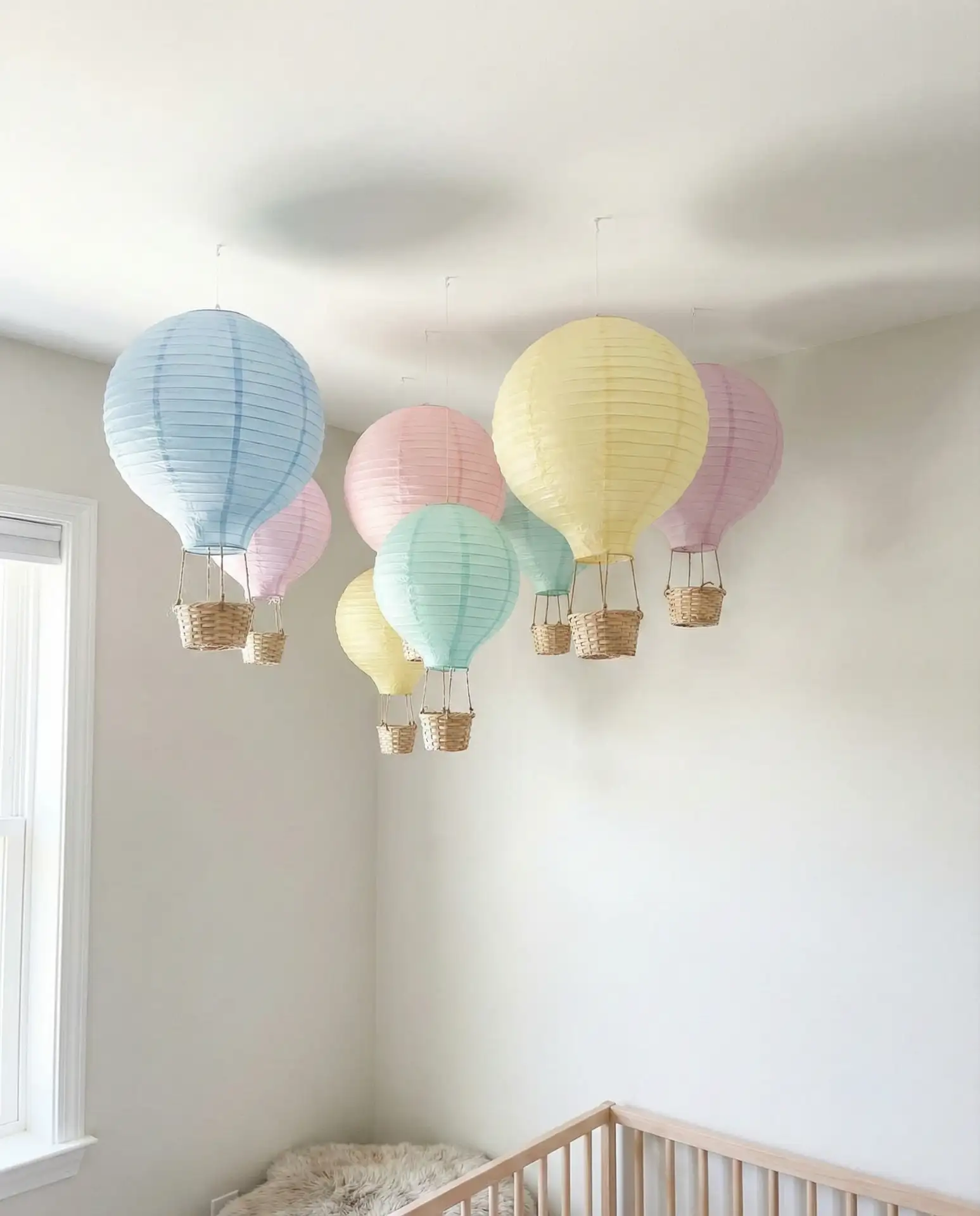
One designer shared that parents often underestimate how much visual interest these lanterns add—they photograph beautifully and become conversation pieces during nursery reveals. They’re also lightweight and easy to hang, making them ideal for renters who can’t modify ceilings permanently.
15. Winnie the Pooh Storybook Page Framed Art
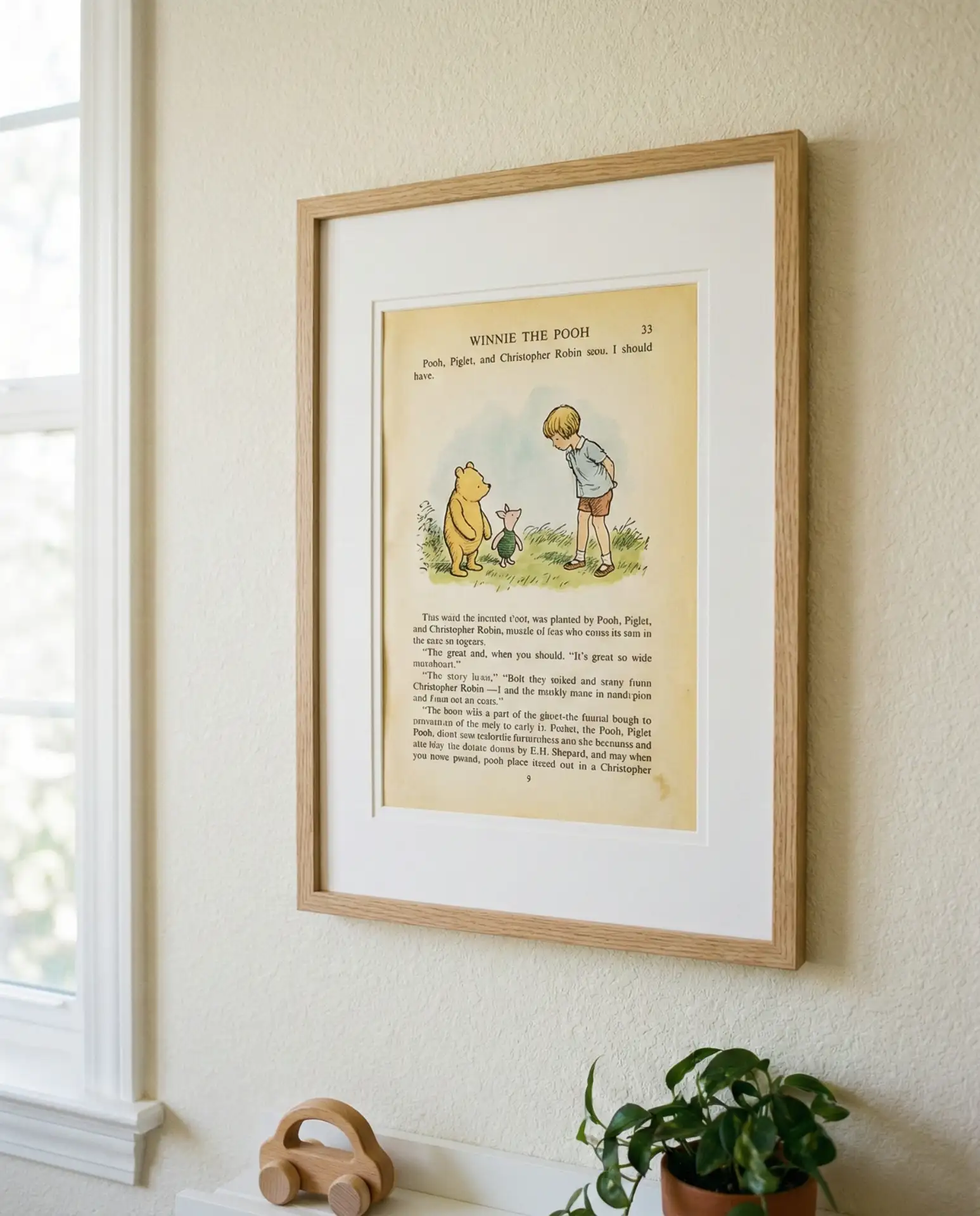
Framed pages from classic Winnie the Pooh storybooks offer a literary, nostalgic touch to nursery walls. The vintage illustrations by E.H. Shepard have a timeless quality that transcends trends, and when framed simply in wood or white, they feel elegant rather than overtly childish. This approach works beautifully in vintage or neutral nurseries where parents want to honor beloved stories from their own childhoods.
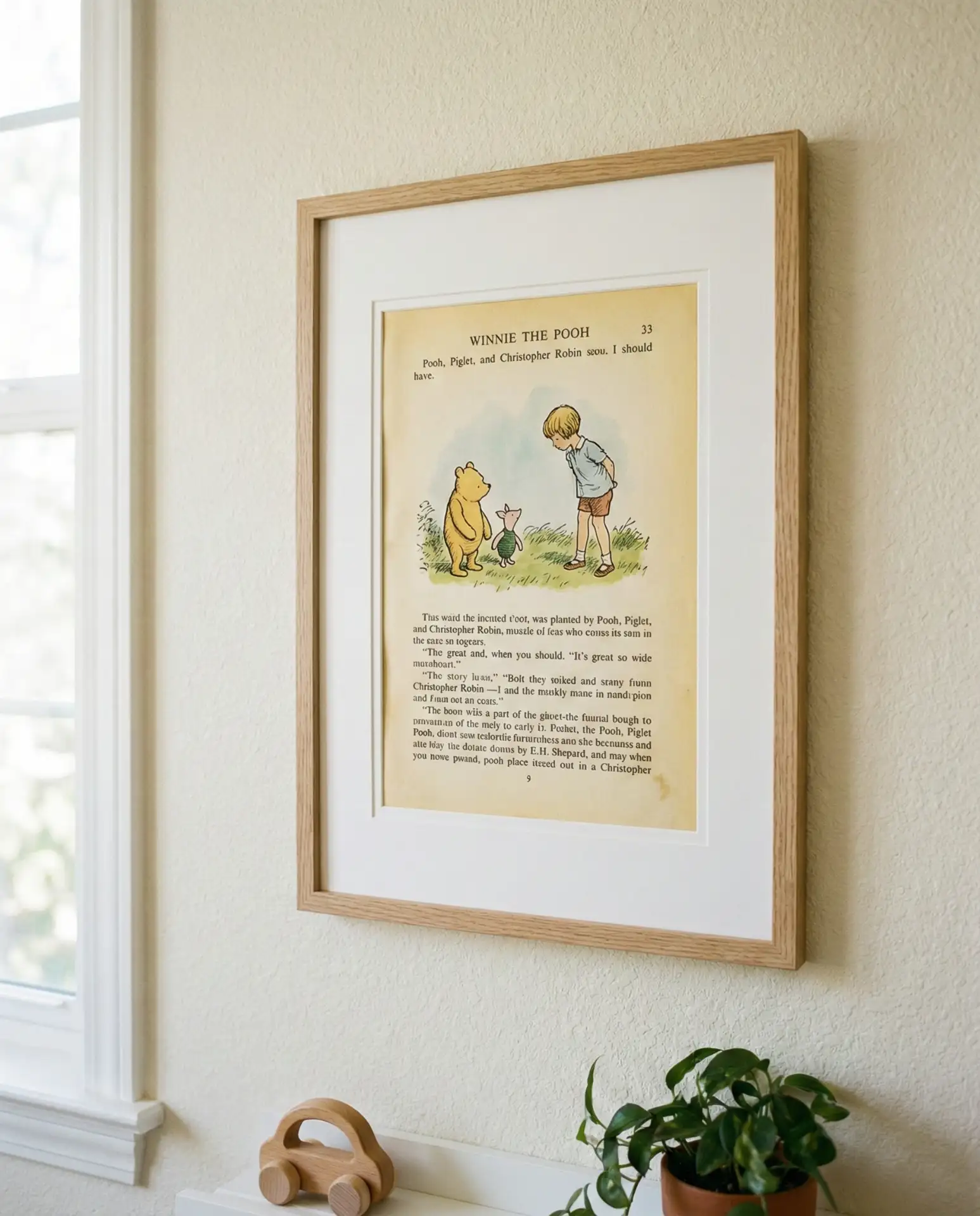
Budget tip: Look for affordable prints of public domain Pooh illustrations online, or scan pages from old books you already own. Framing costs can run $20-$50 per piece, but the result feels curated and personal. This is also a project that grandparents love to contribute to, sourcing vintage books from their own collections.
16. Rainbow Gradient Painted Accent Wall
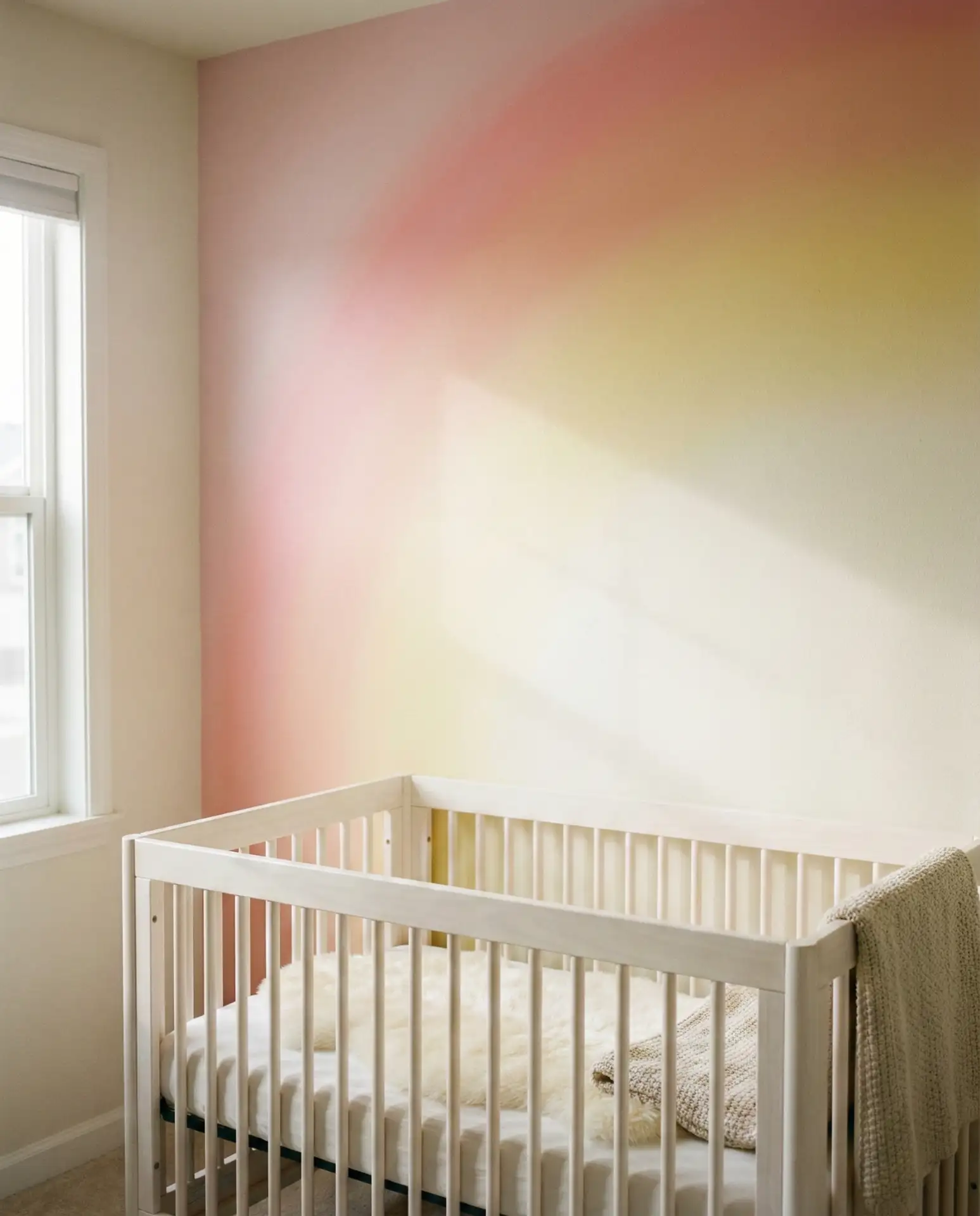
A rainbow gradient accent wall, painted in soft, blended tones from pink to peach to yellow, creates a dreamy backdrop that changes with the light. The key is using low-saturation colors and blending them seamlessly, avoiding harsh lines. This technique works especially well behind the crib, where it becomes a focal point without overwhelming the room. It pairs beautifully with neutral furniture and colorful accessories.
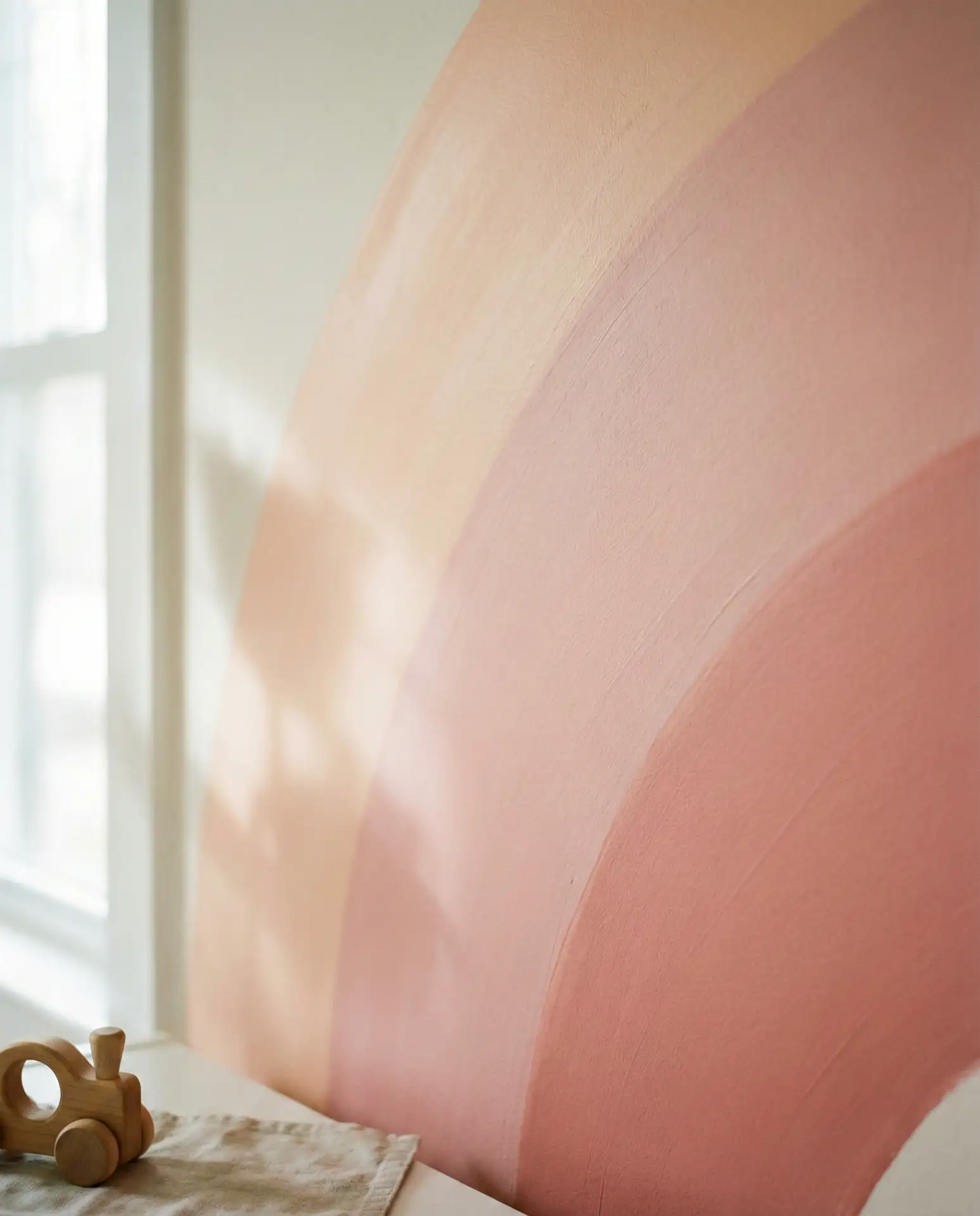
This paint technique has become especially popular in California and the Pacific Northwest, where light, airy interiors are the norm. Parents appreciate how the wall adds personality without committing to a single bold color. It’s also surprisingly forgiving—imperfect blending can add to the hand-painted, artisanal feel.
17. Teddy Bear Vintage Postcard Collection
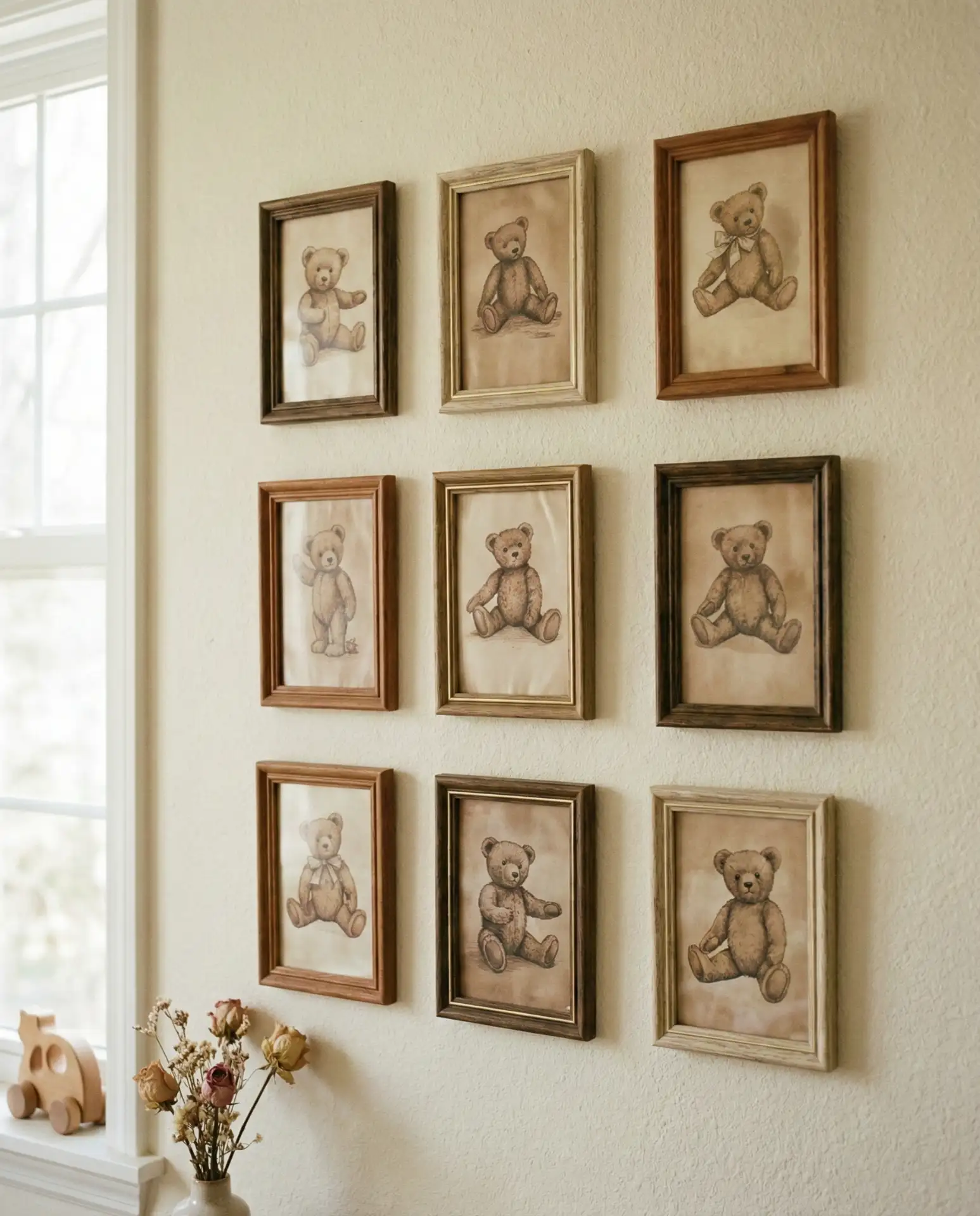
Collecting and framing vintage postcards featuring teddy bears creates a gallery wall with personality and history. These postcards, dating from the early to mid-20th century, often show bears in charming, whimsical scenes with hand-tinted colors and delicate details. Frame them identically in small matching frames and hang them in a grid for maximum impact. This idea fits perfectly in vintage or antique nurseries.
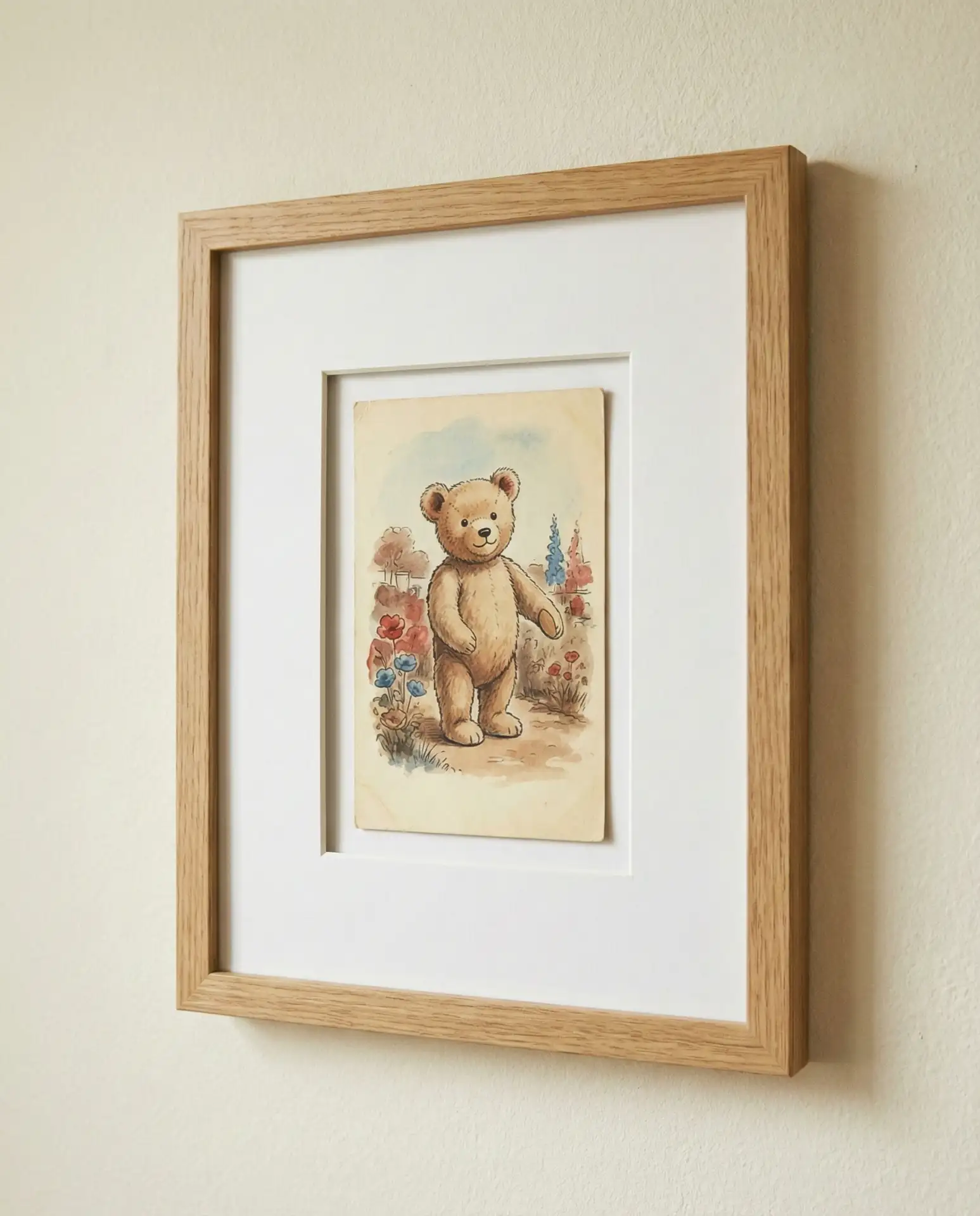
Real homeowners often share that hunting for these postcards at flea markets or online shops becomes a fun ongoing project during pregnancy. The postcards are affordable—usually $5-$15 each—and the collection can grow over time as children develop their own interests and memories.
18. Mushroom Motif Wallpaper with Forest Floor Detail
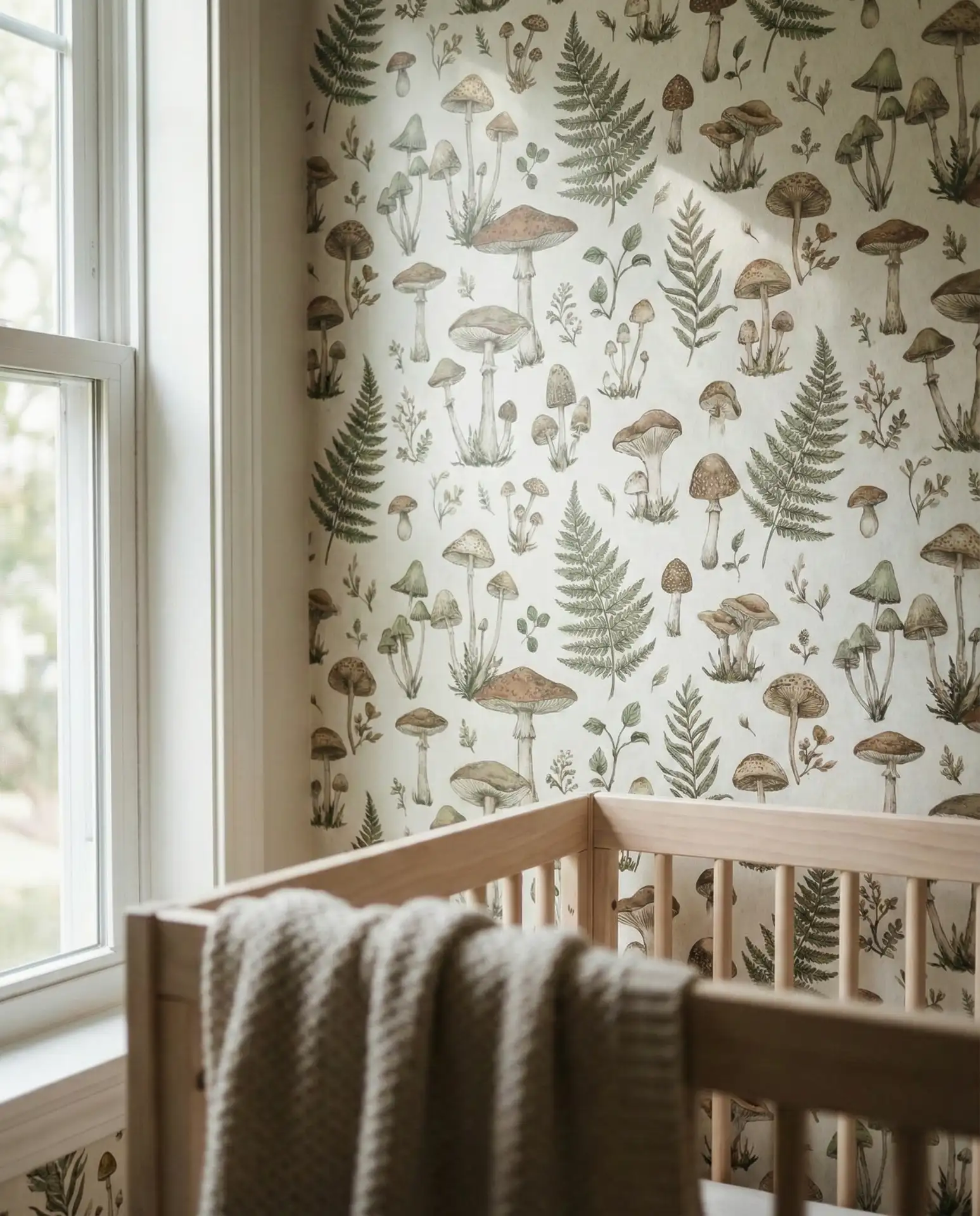
Wallpaper featuring mushrooms in a detailed, naturalistic style brings the magic of the forest indoors. Look for designs that include moss, small ferns, and varied mushroom species rendered in earthy tones. This works beautifully in woodland or boho nurseries, where the goal is to create a space that feels connected to nature. The wallpaper should cover one or two walls at most to avoid visual overload.
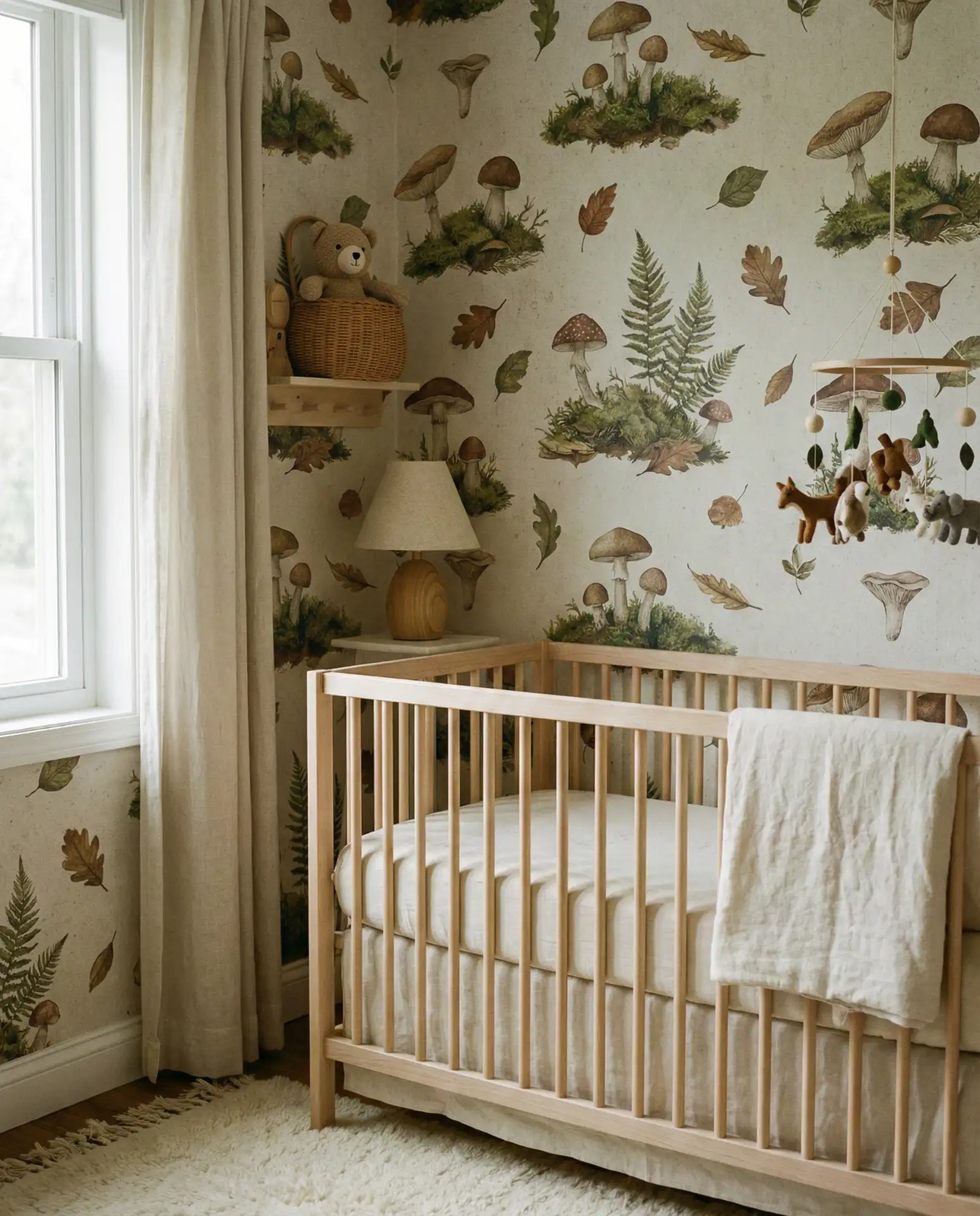
Mushroom themes have surged in popularity, especially in regions like Oregon, Washington, and upstate New York, where foraging culture is strong. Parents appreciate how the motif feels grounded and educational, introducing children to the natural world from infancy. Peel-and-stick versions also make this an accessible option for renters.
19. Boho Macramé Wall Hanging with Driftwood Bar
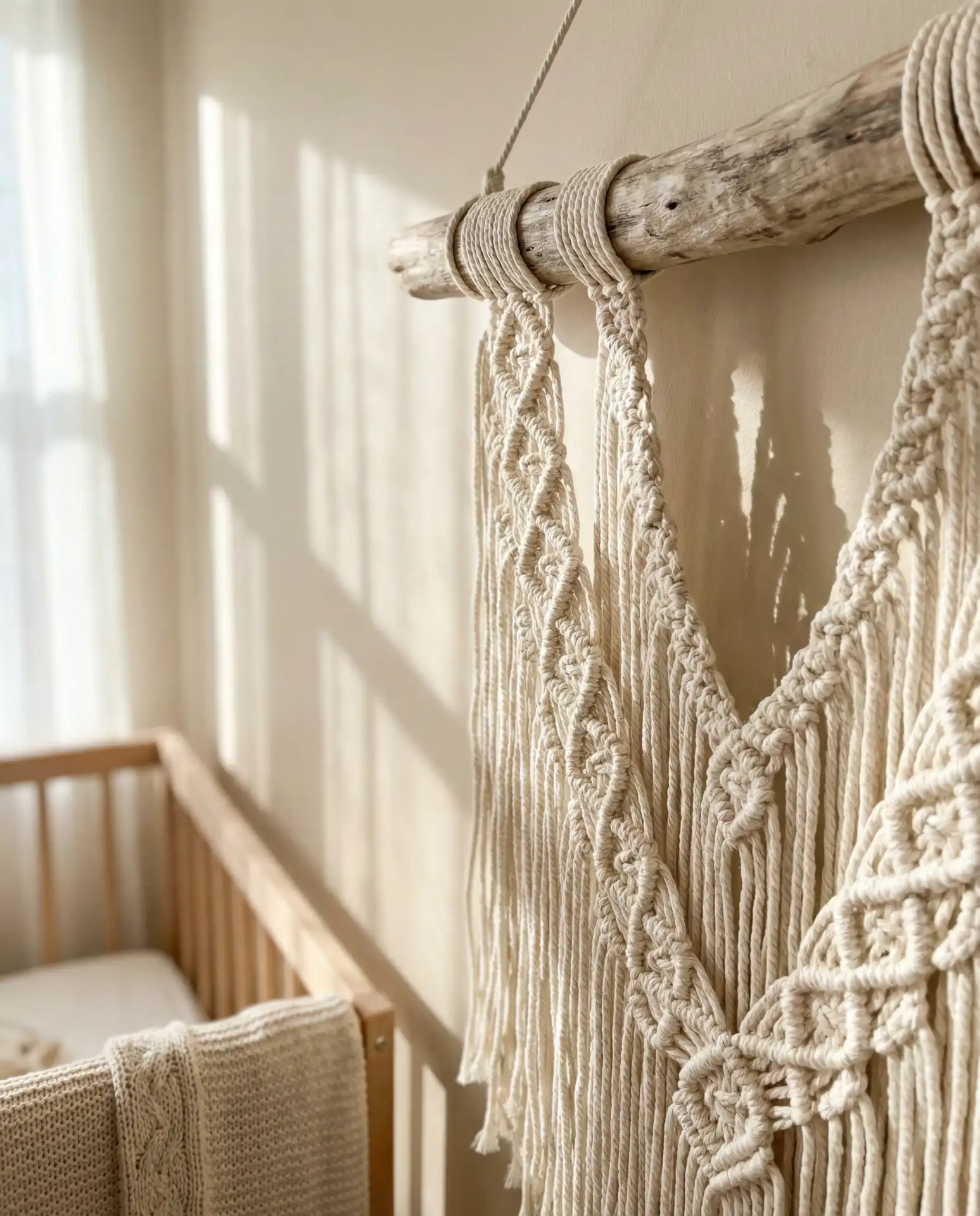
A large boho macramé wall hanging suspended from a driftwood bar adds texture and warmth to a nursery. These handmade pieces, often featuring intricate knots and fringe, work beautifully above the crib or on a blank wall that needs softness. Choose natural cotton cord in cream or ivory to keep the look cohesive with neutral palettes. This style has become a hallmark of modern bohemian nurseries.
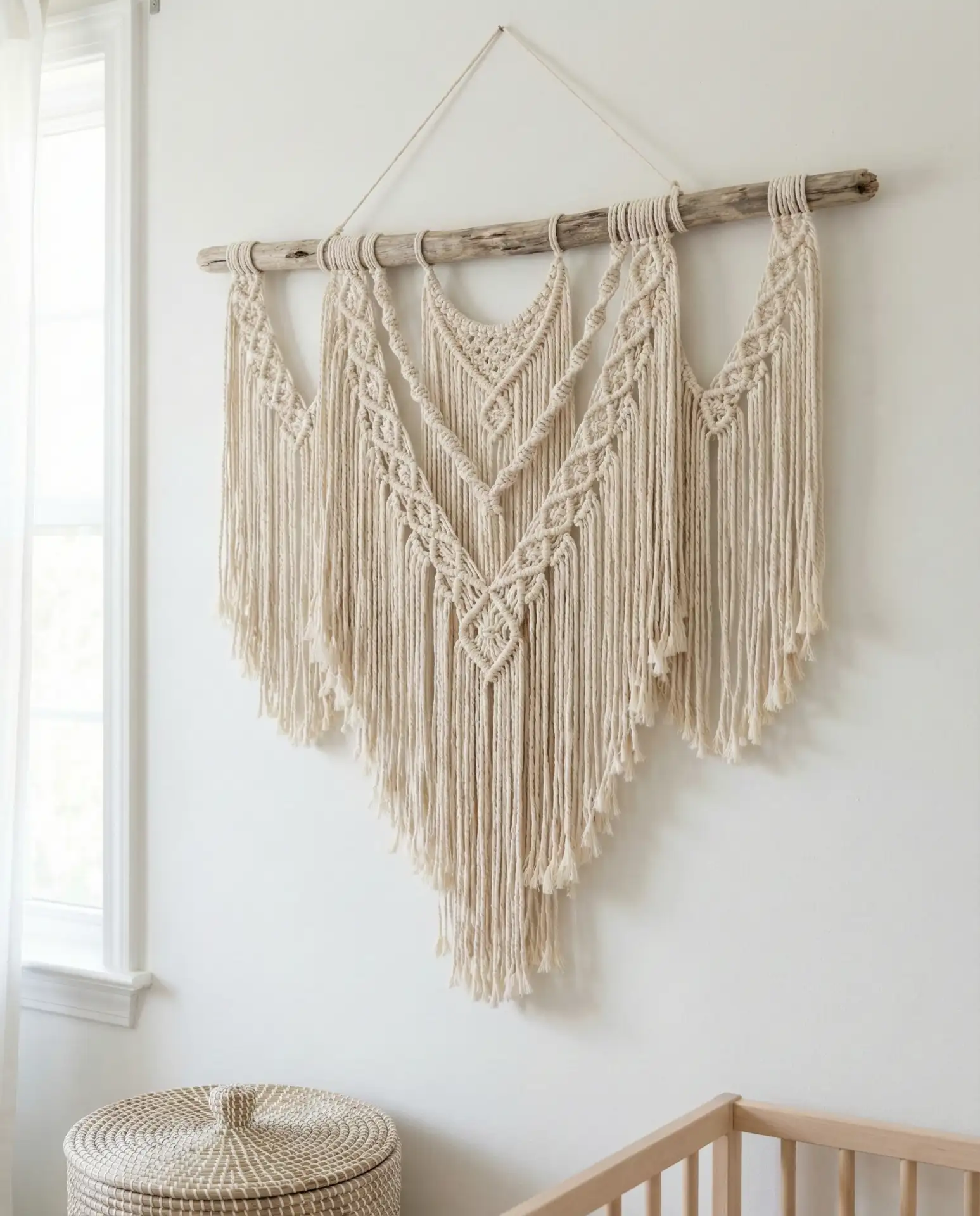
These pieces work best in nurseries with high ceilings, where the vertical length can be showcased without crowding other elements. Many parents commission custom macramé from artists on Etsy, specifying size and fringe length to suit their space. The investment typically ranges from $100 to $300, depending on complexity.
20. Western-Inspired Bandana Bunting Across Window
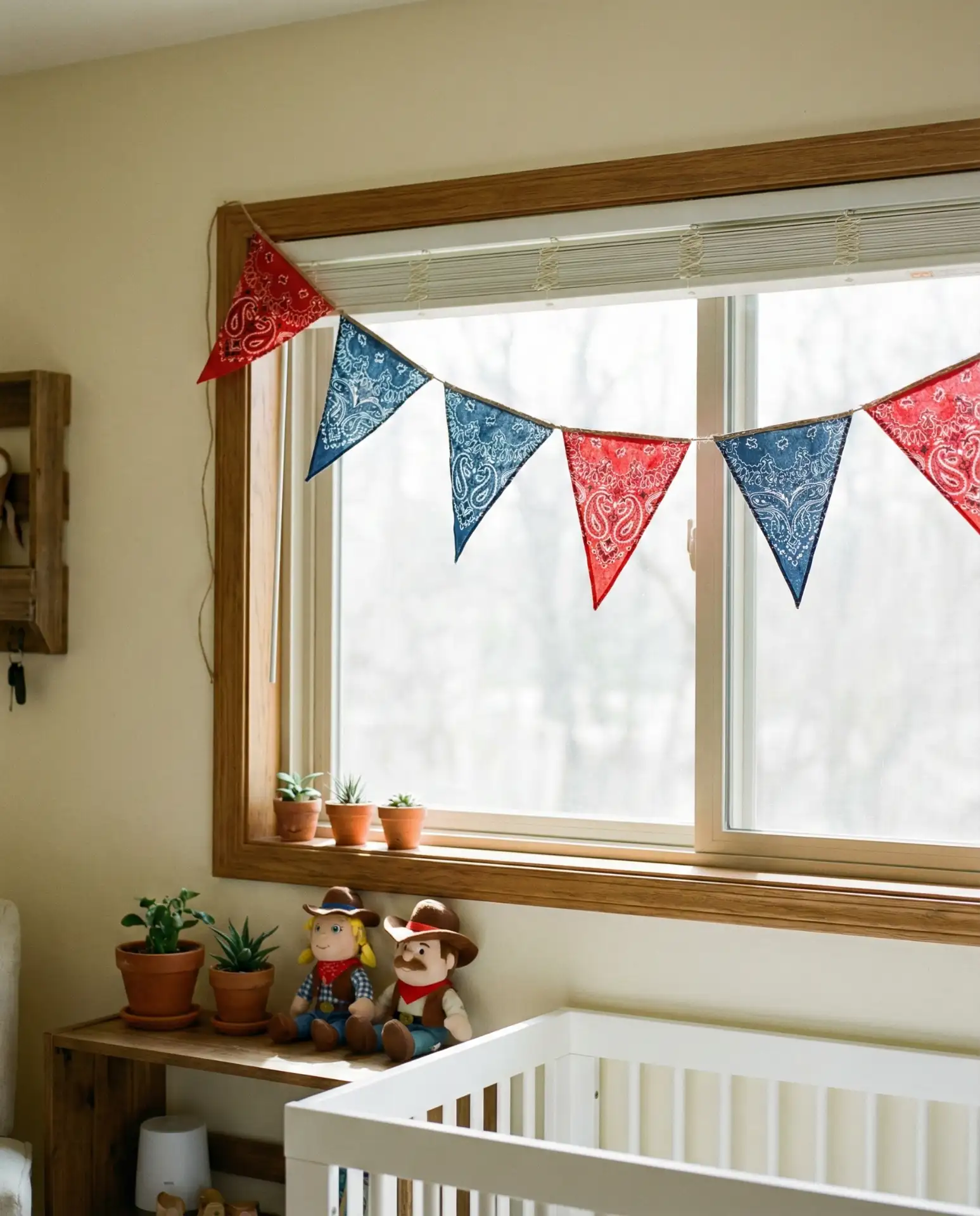
A bunting made from vintage western-style bandanas in red, blue, and tan tones brings playful Americana to a nursery. The bandanas can be folded into triangles and strung on twine or ribbon, creating a casual garland that works above windows, along shelves, or across one wall. This idea fits beautifully in nurseries with a vintage or farm aesthetic, especially in homes with ranch or western heritage.
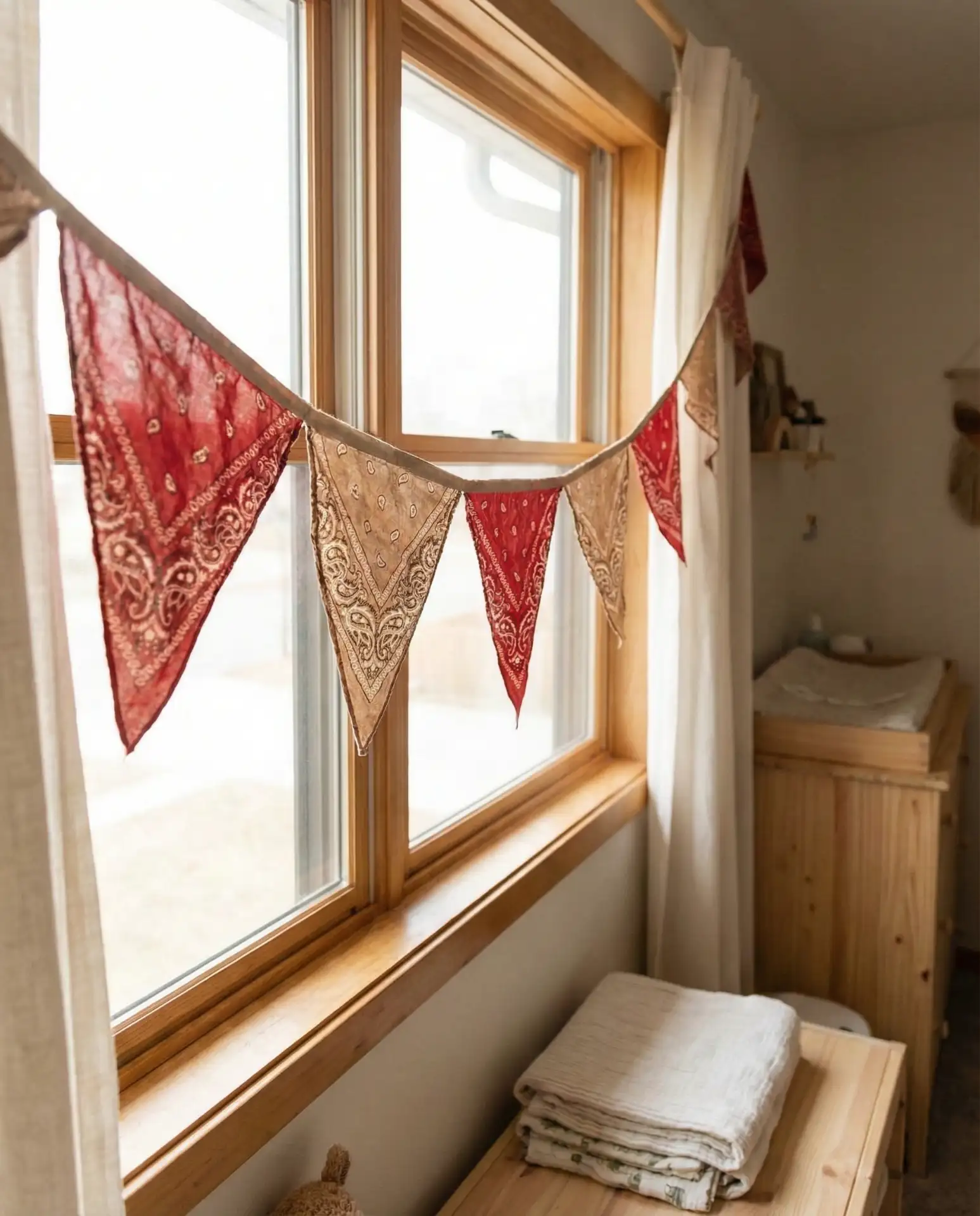
This is a common project in Texas, Montana, and the Southwest, where western motifs feel authentic and rooted in local culture. It’s also budget-friendly—bandanas cost just a few dollars each and can be reused for other projects or as burp cloths once the nursery phase is over.
21. Pink Painted Ceiling with White Trim Detail
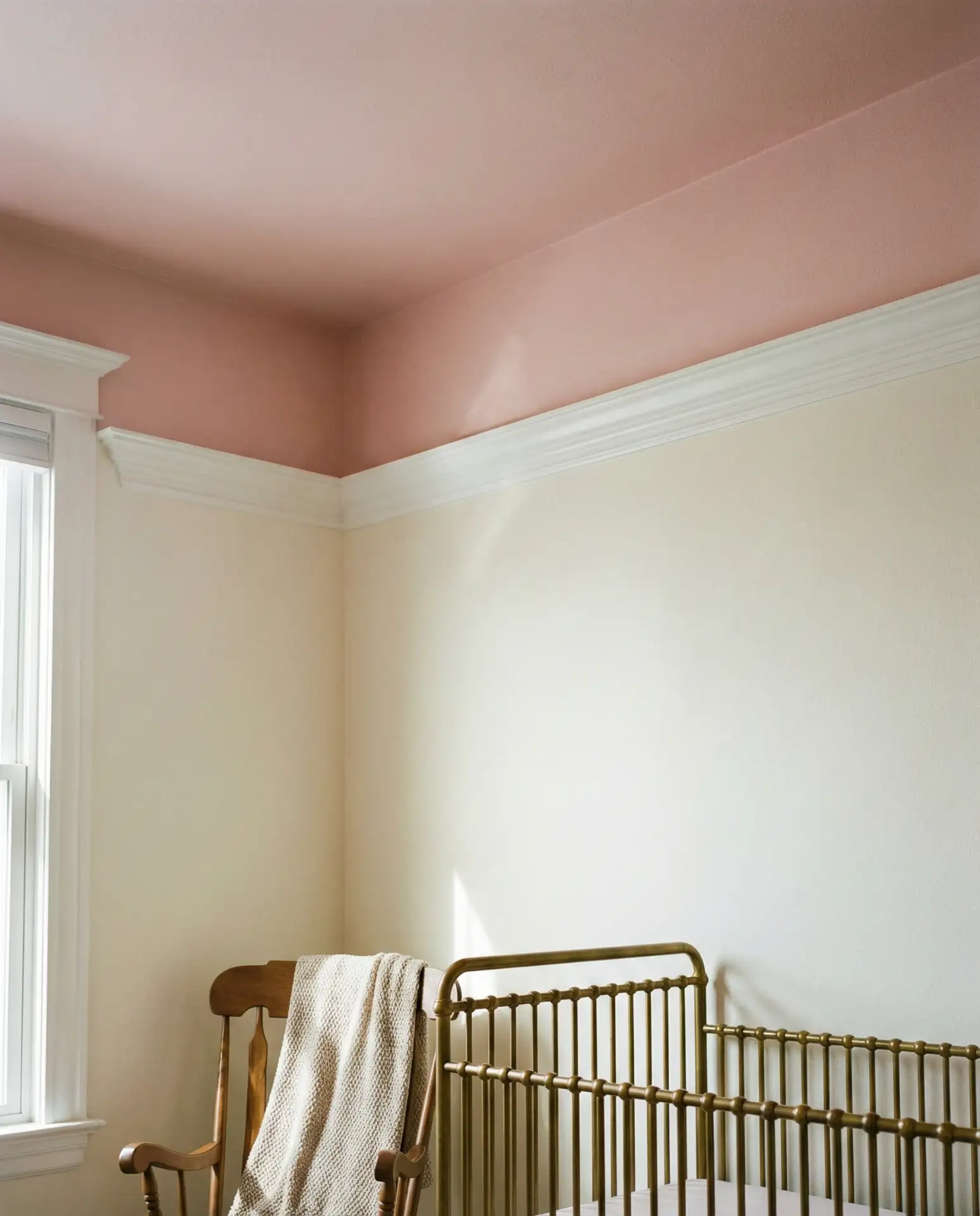
Painting the ceiling a soft blush pink while keeping walls white or cream creates an unexpected, cozy effect in a nursery. The color wraps the room in warmth without overwhelming, and the contrast with white crown molding or trim adds architectural interest. This approach works especially well in smaller nurseries, where a painted ceiling can make the space feel taller and more intentional. It pairs beautifully with vintage and neutral decor.
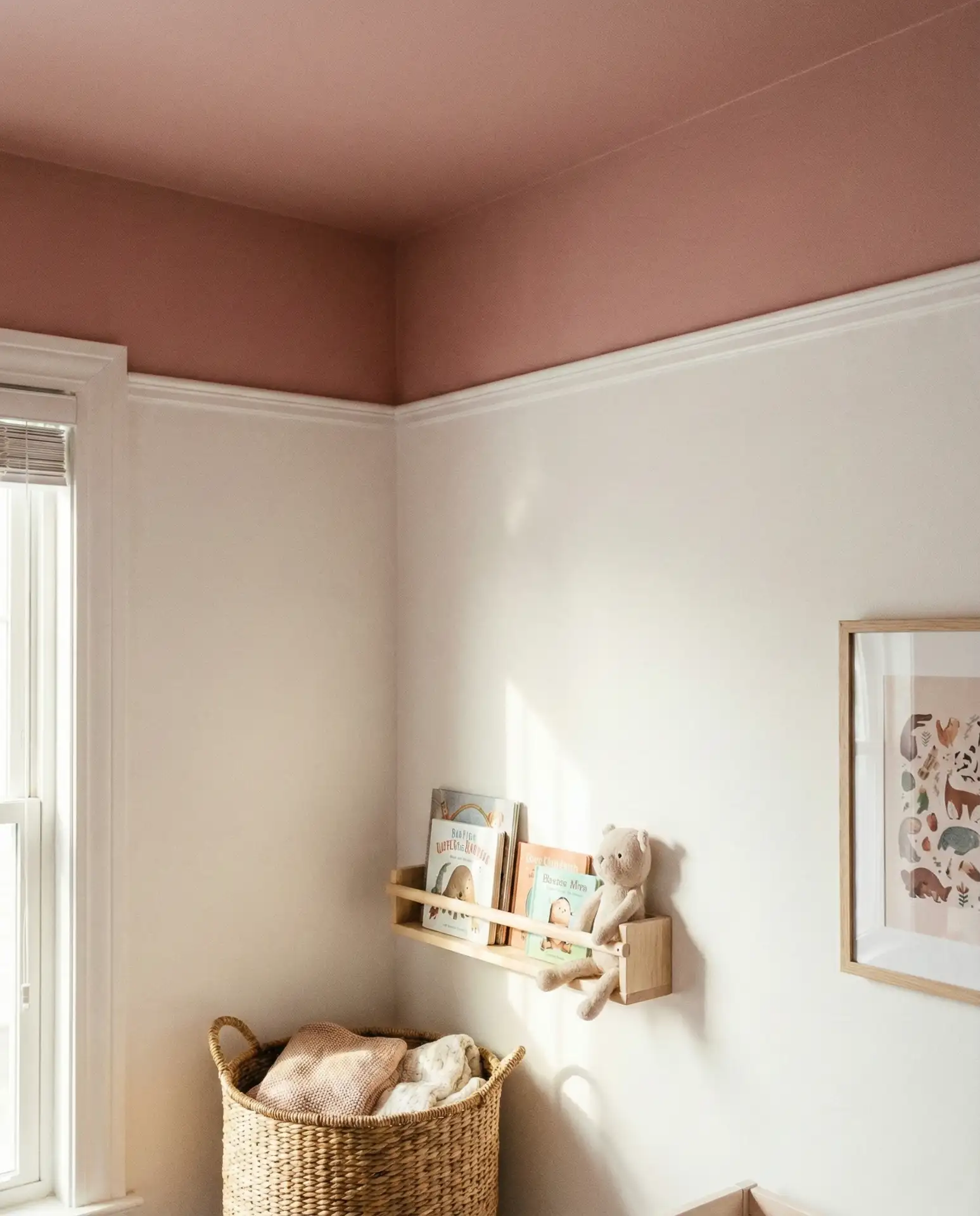
A common mistake is choosing a pink that’s too saturated, which can feel heavy overhead. Opt for shades with names like “ballet slipper” or “petal” rather than hot pink or fuchsia. The goal is to mimic the soft glow of early morning light, not to make a bold color statement.
22. Christian Cross Wall Art in Rustic Wood
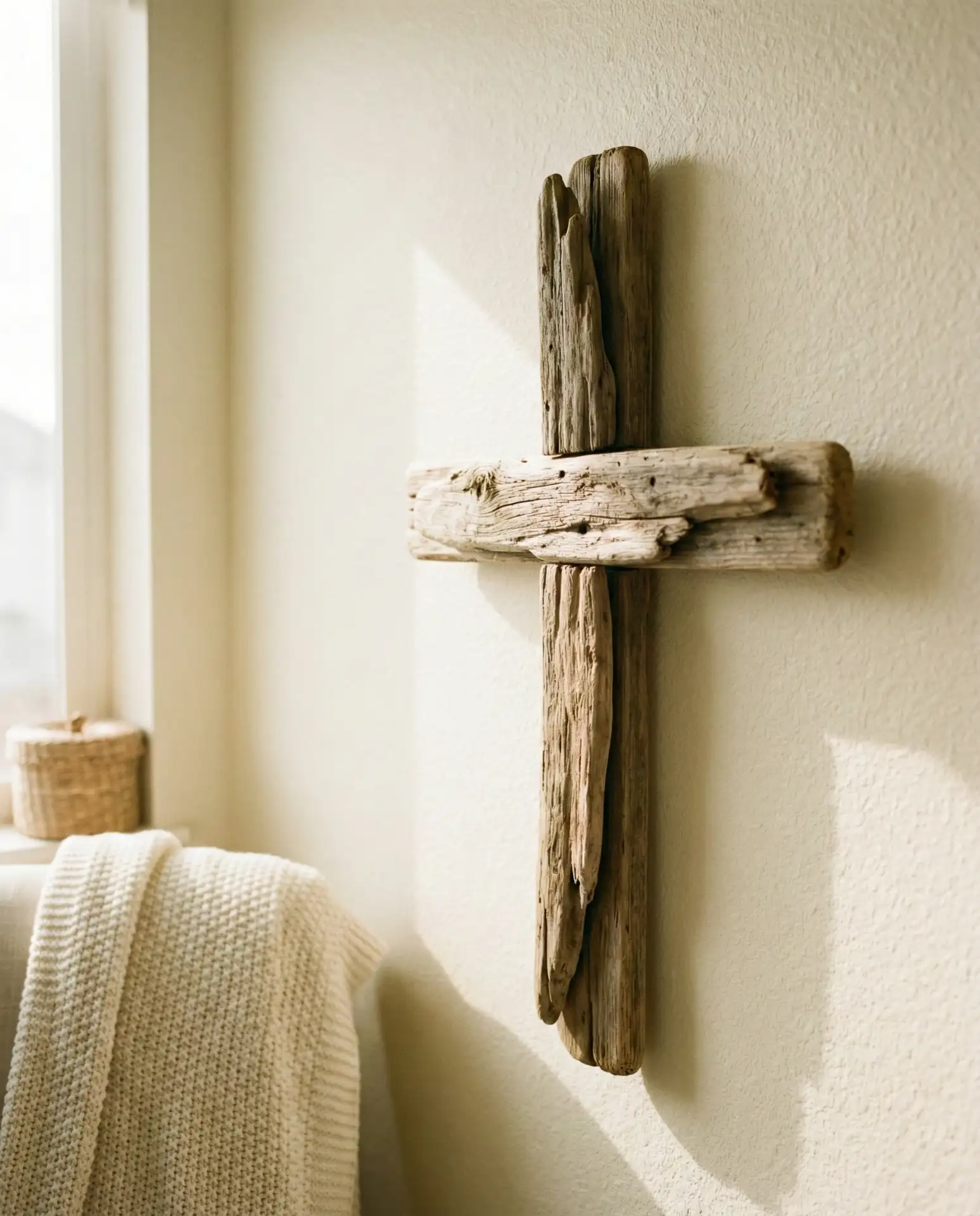
A handcrafted Christian cross made from rustic wood brings faith and warmth into a nursery in a way that feels personal rather than preachy. The wood can be reclaimed barn board or driftwood, with visible grain and natural imperfections that add character. This piece works beautifully above the crib or on a feature wall in vintage or farm-style nurseries where faith is woven into family life.
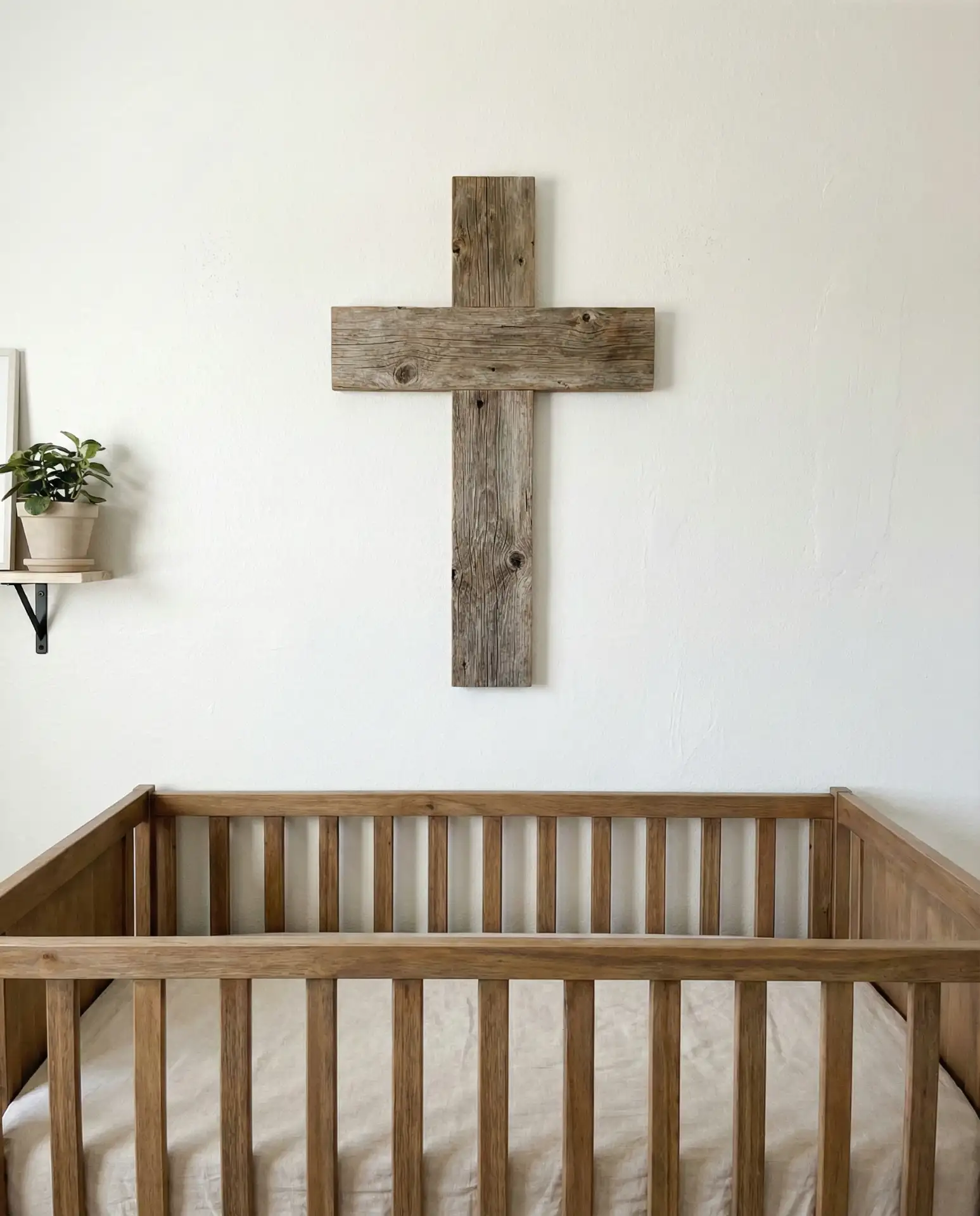
This type of decor is especially meaningful in Southern and Midwestern homes, where Christian faith is often central to family identity. Parents appreciate how the cross serves as both a decorative element and a daily reminder of their values. Many commission these from local woodworkers or craft them as DIY projects during nesting phases.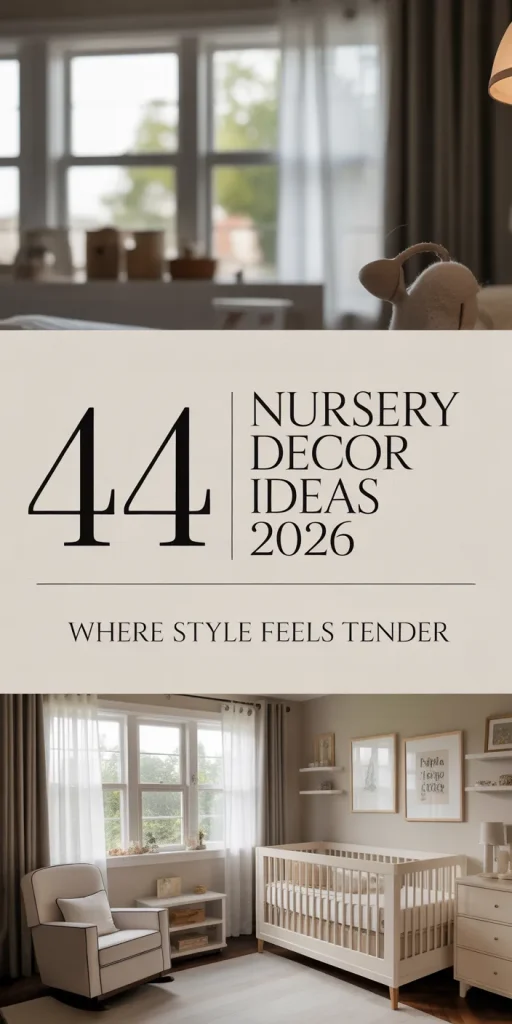
Conclusion
From vintage treasures to handmade touches, nursery decor in 2026 is about creating spaces that feel both intentional and lived-in. These 22 ideas offer a starting point for designing a room that honors your style, your child, and the values you want to weave into daily life. Share your favorite ideas or your own nursery projects in the comments—we’d love to see what inspires you.