If your bathroom Pinterest board is overflowing, you’re not alone. The modern farmhouse bathroom has quietly become one of the most-searched interior styles in America—and in 2026, it’s evolving in ways that feel fresher, bolder, and more personal than ever. Gone are the days of a single shiplap wall and a galvanized bucket. Today’s farmhouse bath blends raw organic textures with clean architectural lines, moody palettes with sunlit whites, and vintage charm with spa-worthy function. Whether you’re doing a full remodel or just refreshing a few details, this guide covers 22 inspired ideas to help you build a space that feels collected, calm, and completely you.
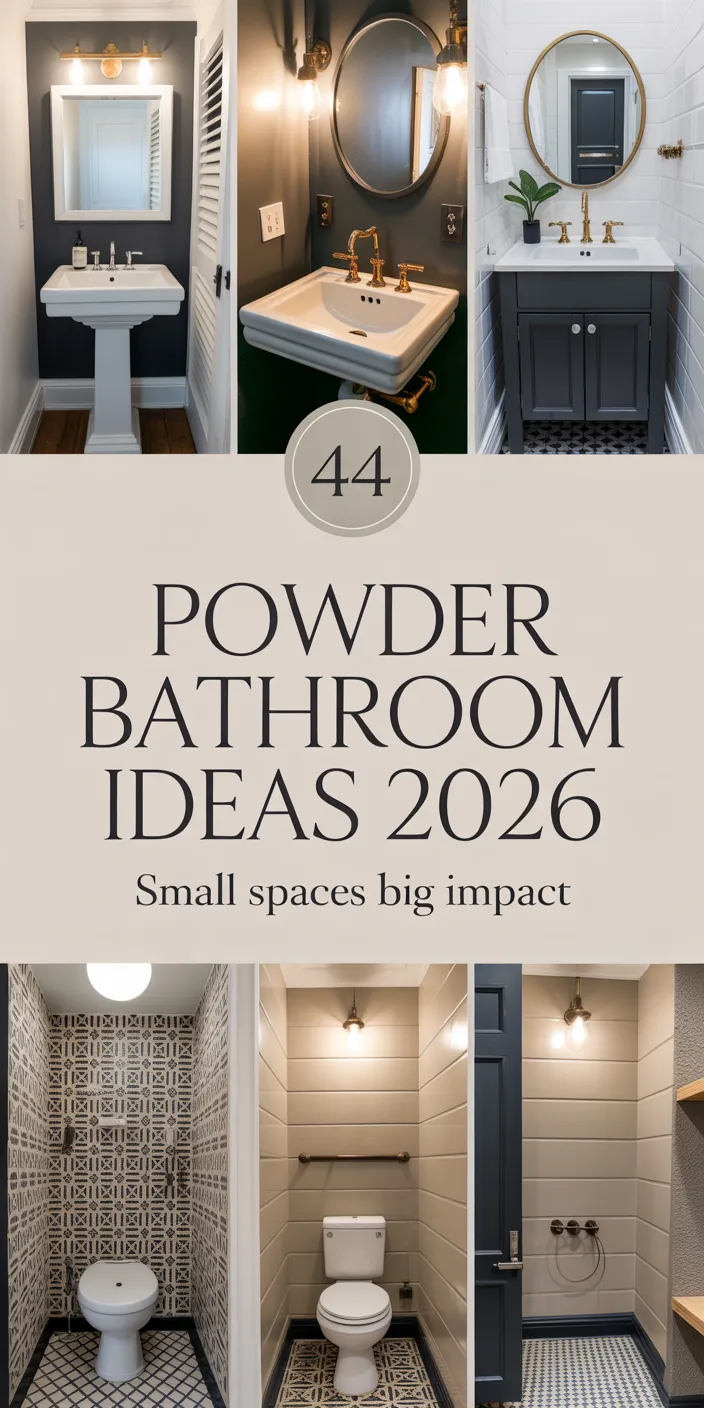
1. Shiplap Walls With a Warm White Palette
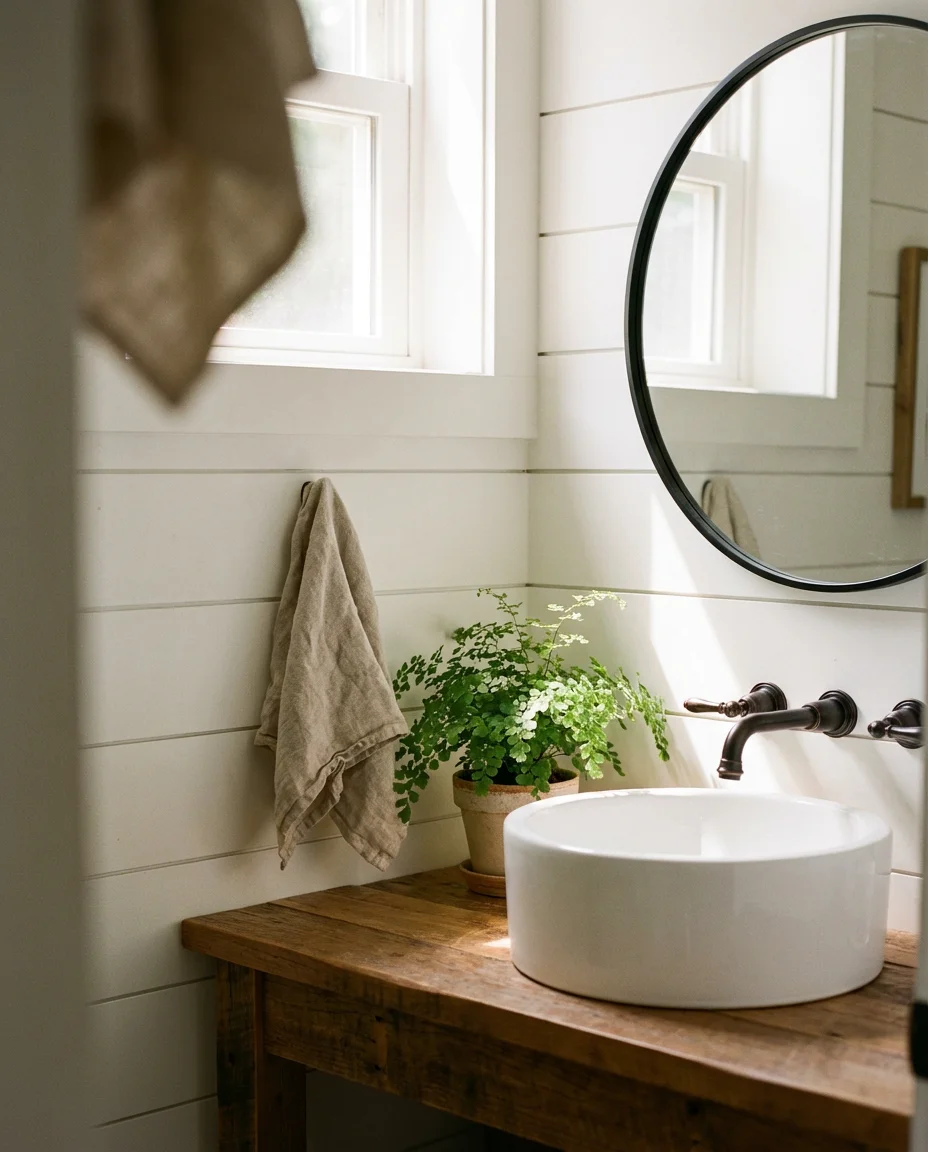
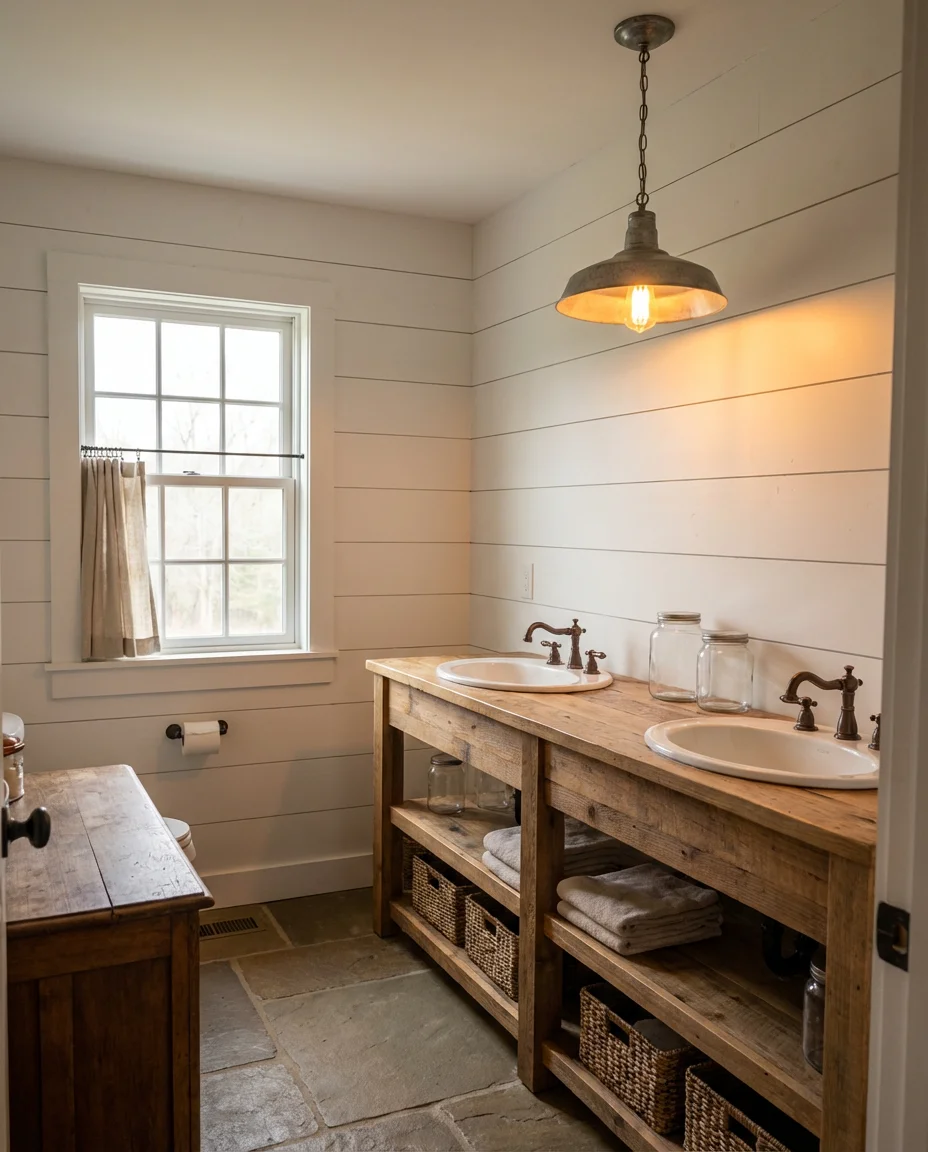
Few things say “modern farmhouse” quite like horizontal shiplap climbing the walls of a bathroom. But in 2026, the decor story around shiplap has matured—it’s no longer a lone statement piece but a quiet backdrop for layered design. Painting it in a warm white rather than a stark bright white makes the whole room feel like it breathes. Pair it with oil-rubbed bronze hardware and a ceramic vessel sink, and the look lands somewhere between a Southern farmhouse and a high-end boutique inn.
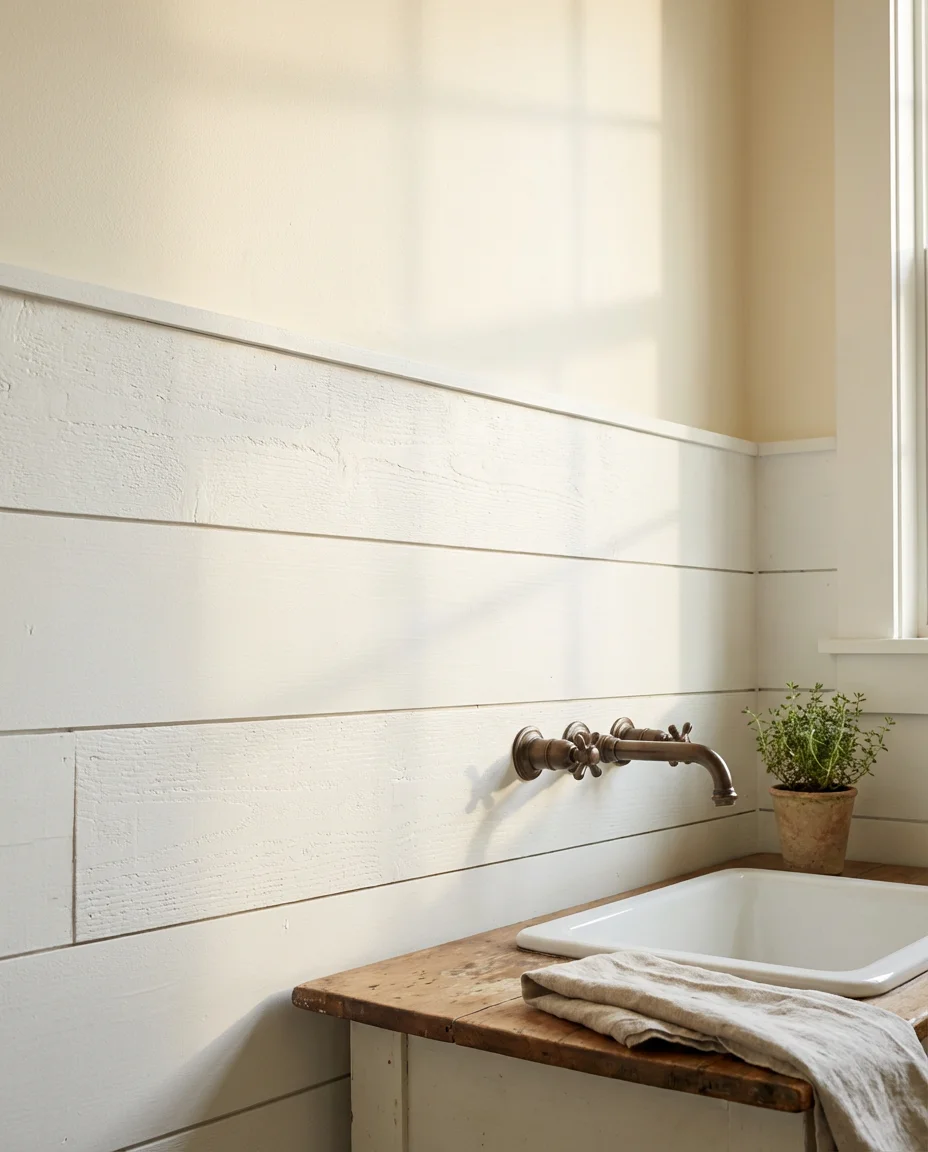
Where this works best: a guest bath or a powder room where the impact doesn’t need to compete with shower tile or vanity storage. A smaller room lets the shiplap texture read clearly without overwhelming the senses. Keep accessories minimal—a linen hand towel, a small potted fern, a matte black mirror frame—and you’ve got something that photographs beautifully and feels even better in person.
2. Freestanding Soaking Tub as a Focal Point
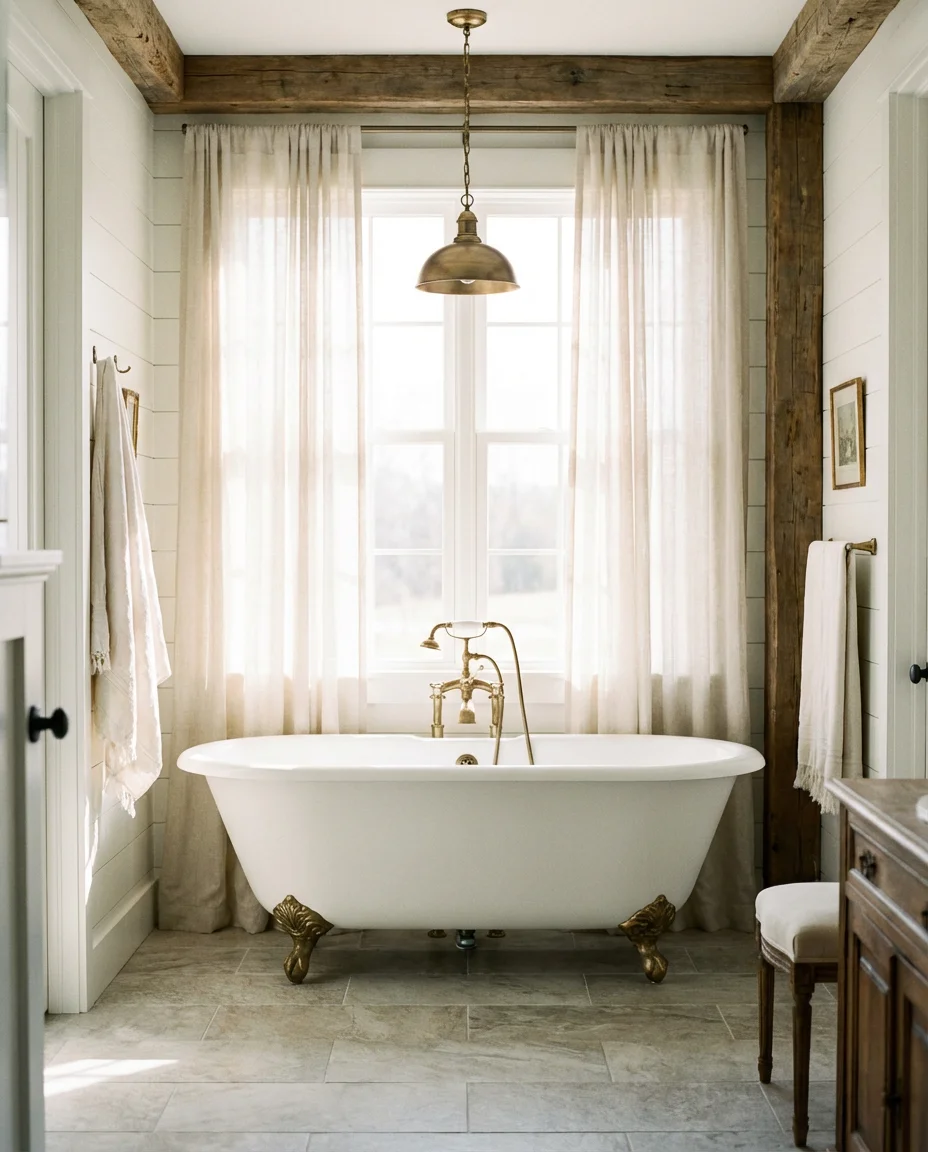
A freestanding soaking tub does something a built-in tub simply can’t—it turns the bath into a room with a reason to linger. For a master bath with farmhouse roots, the right tub is either an oval pedestal in matte white or a clawfoot silhouette with aged-brass feet. The key in the 2026 design is placement: pull it away from the wall and position it below a window or in front of a floor-to-ceiling tile backdrop. That single decision elevates a functional fixture into sculptural architecture.
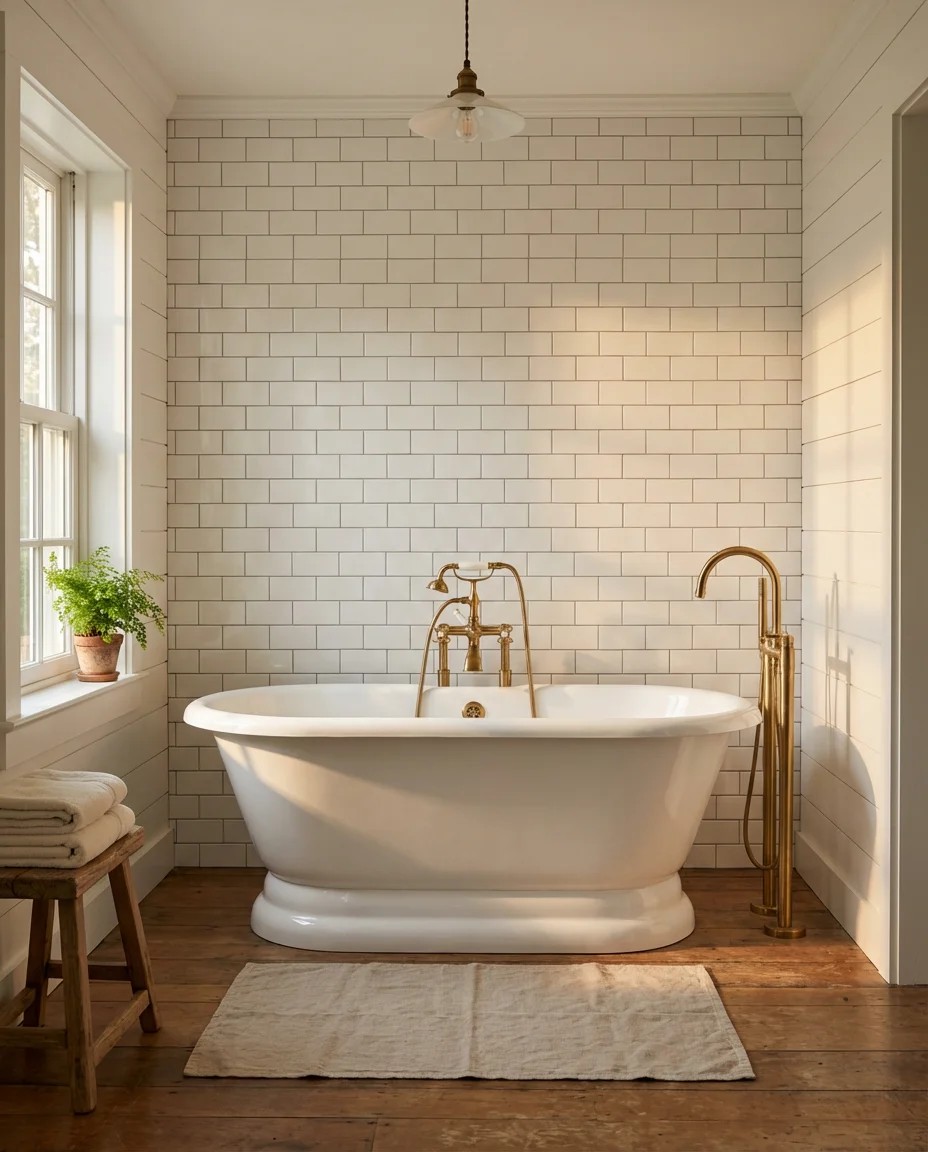
Budget note: freestanding tubs range from around $600 for a basic acrylic model to over $3,000 for cast iron. If you love the look but not the price, a well-chosen acrylic tub in a matte finish can look remarkably close to the real thing—especially when paired with unlacquered brass or oil-rubbed bronze faucetry that draws the eye upward and away from the material.
3. Moody Charcoal and Black Tile Combinations
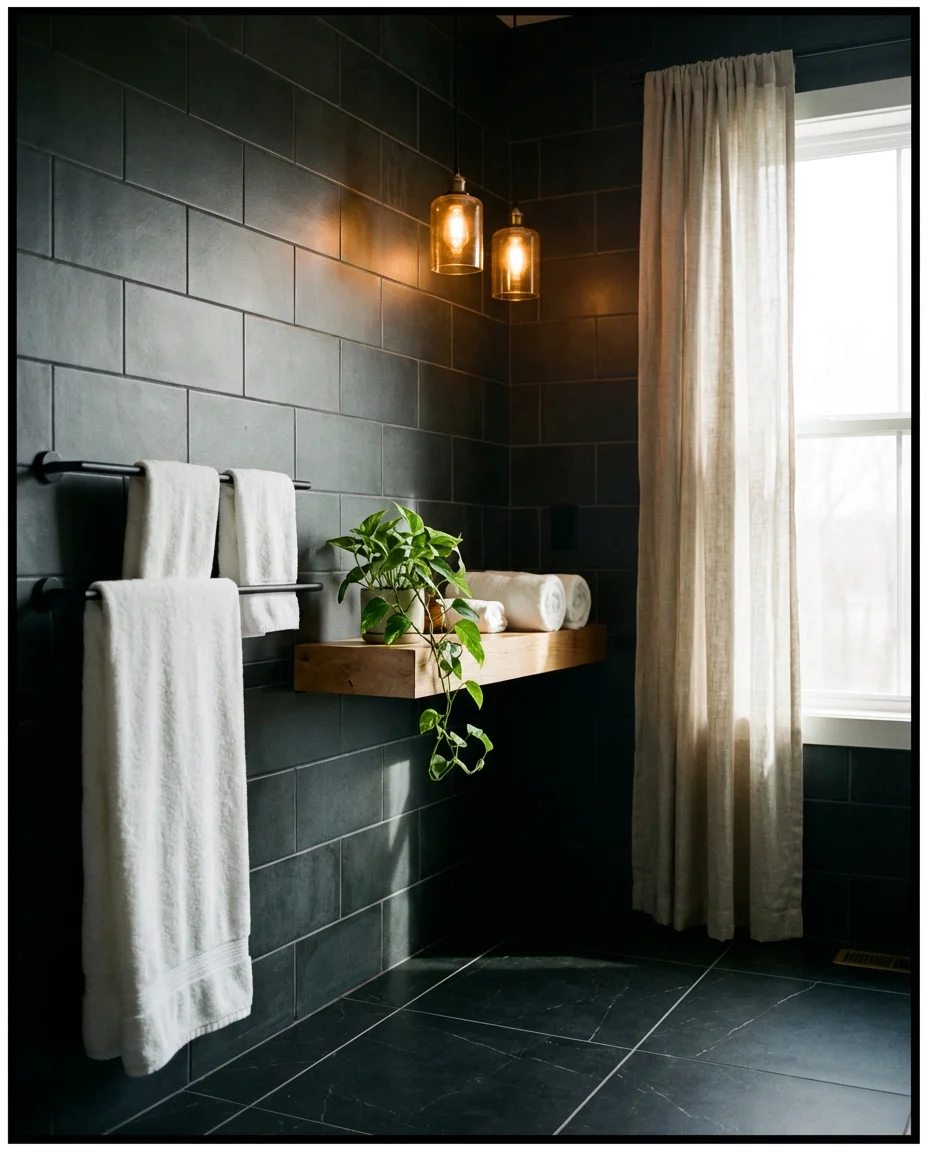
Not every farmhouse bathroom needs to be white and airy. The moody direction has fully arrived, and it suits the aesthetic surprisingly well. Think charcoal subway tile in a large-format staggered pattern or matte black floor tile with a soft veining detail. The trick is to keep the grout lines in a matching dark tone—light grout against dark tile creates a grid effect that can feel too busy. Pair the darker tiles with natural wood accents and warm-toned lighting to keep the space from feeling like a cave.
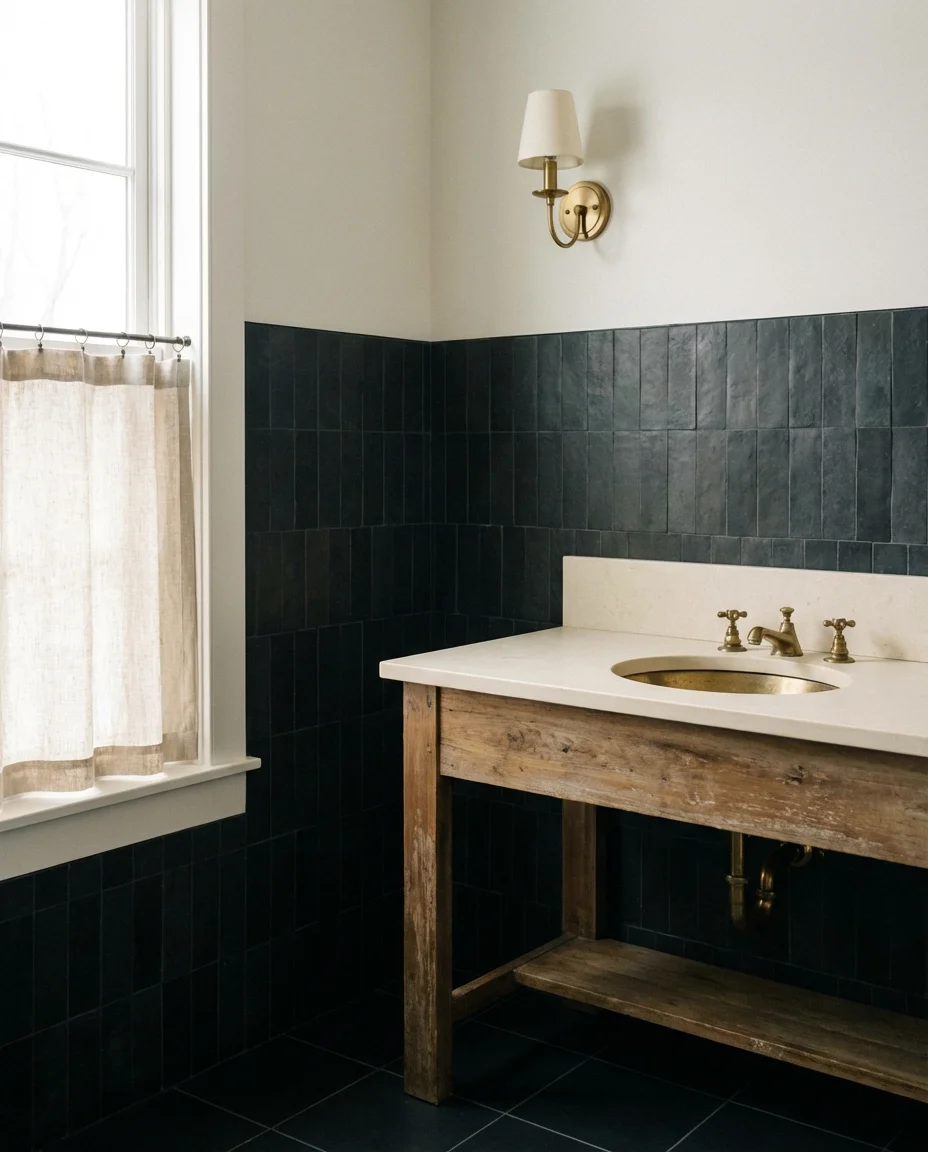
One mistake homeowners make is going dark on every surface at once—walls, floor, and vanity—without balancing it with reflective or lighter elements. A matte black floor looks incredible, but combine it with a similarly dark wall tile and a dark vanity, and the room collapses visually. Introduce a white or cream countertop, an unlacquered mirror, or a woven pendant to give the eye somewhere to rest.
4. Reclaimed Wood Vanity With Apron Sink
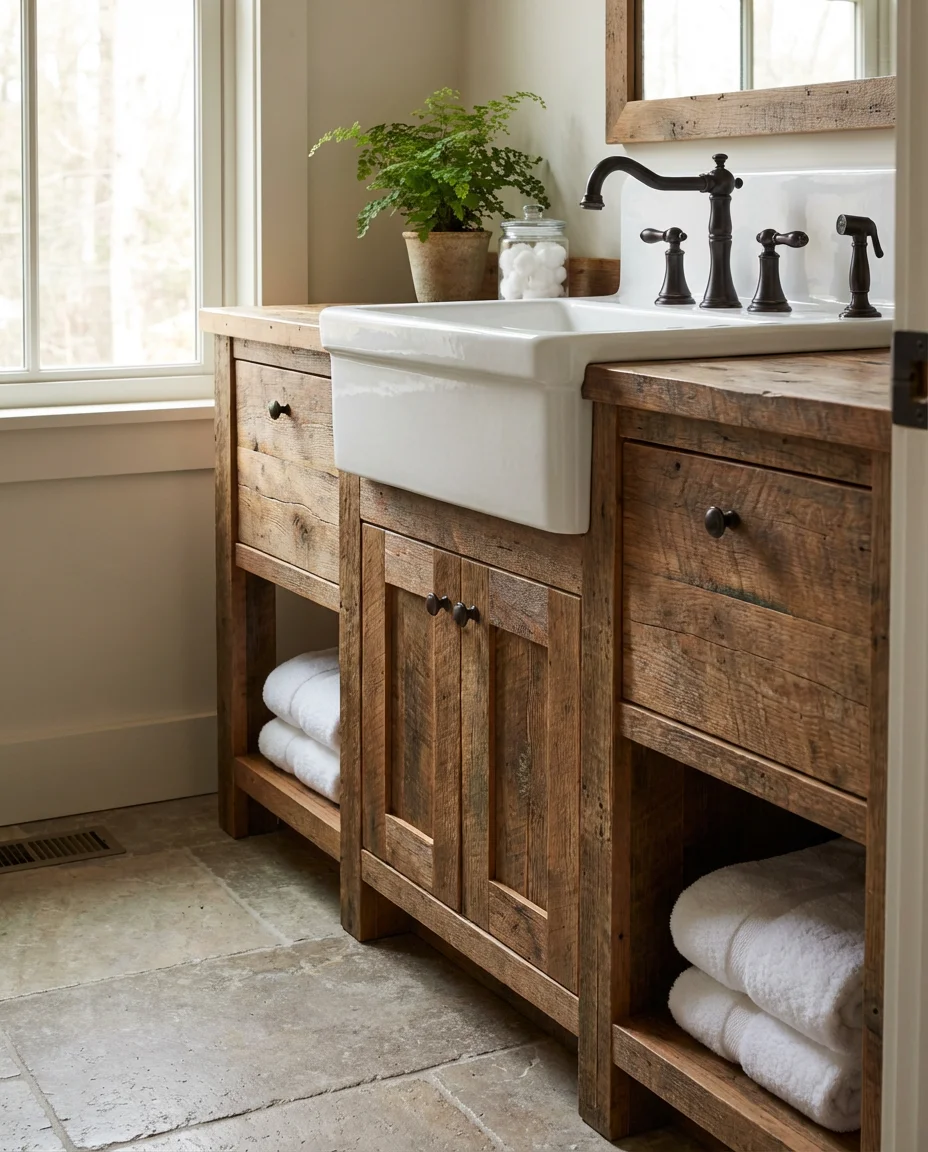
A reclaimed wood vanity is the piece that makes a farmhouse bathroom feel genuinely lived-in rather than staged. In 2026, the most-pinned versions combine a wide plank top—sealed but still showing its grain and character—with a white apron-front sink that echoes farmhouse kitchen sensibility. The storage below is typically open shelving or barn-door panels rather than standard cabinet doors. This openness feels intentional in a rustic space, not unfinished.
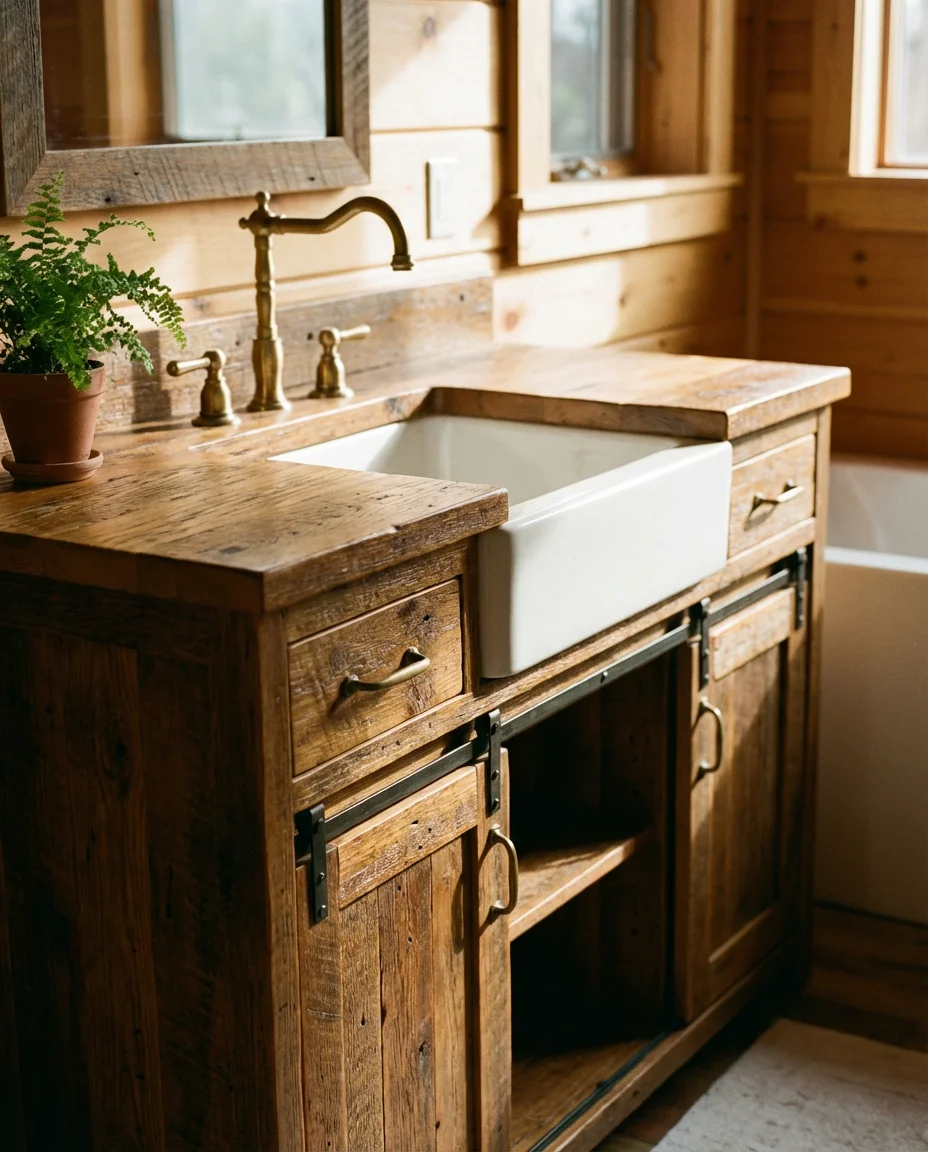
One homeowner in rural Tennessee shared that she sourced her vanity wood from a demolished barn on the property. The boards were dried, treated for moisture resistance, and finished with a hard-wax oil. Nearly two years in, it hasn’t warped or stained in any significant way. The takeaway: reclaimed wood can absolutely work in a bathroom—you just need proper sealing and good ventilation to keep it looking its best long-term.
5. Patterned Cement Tile Floors
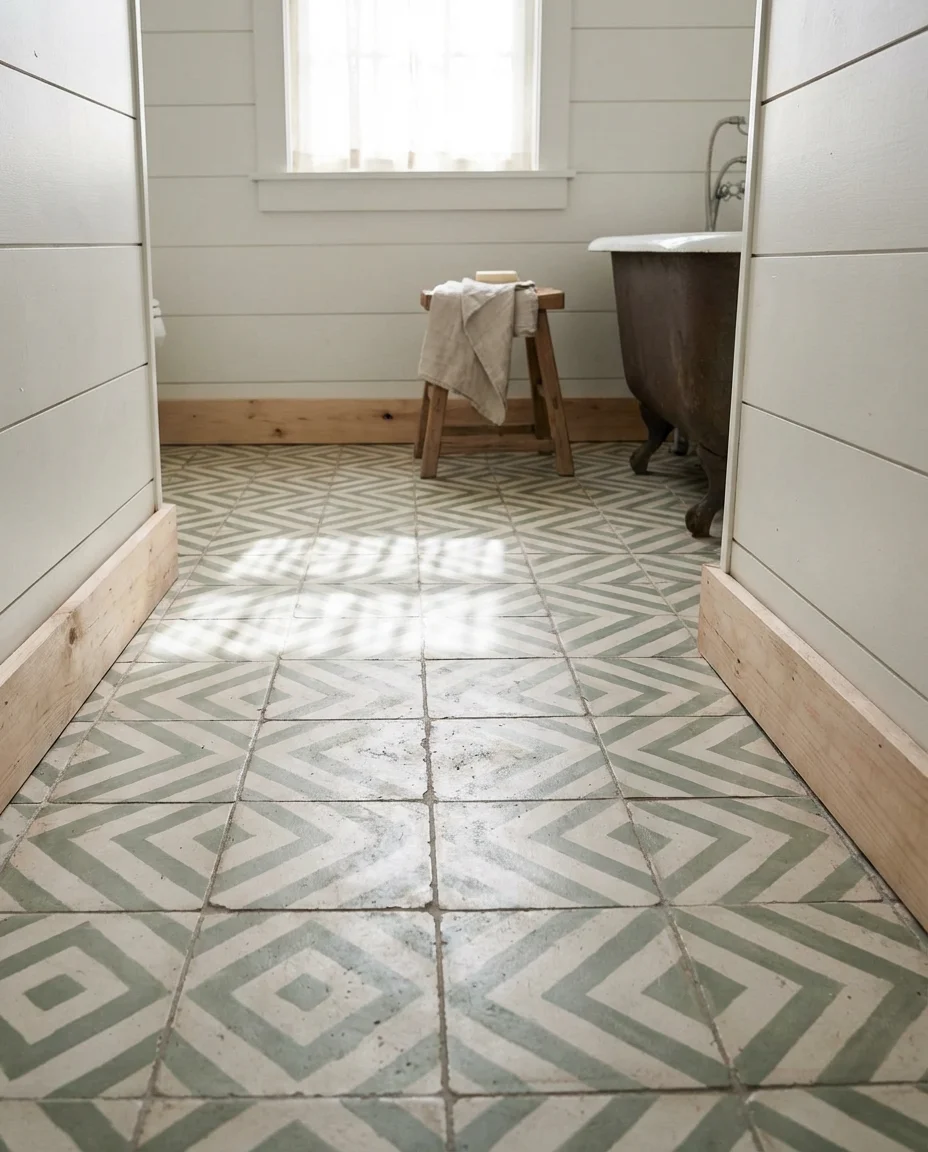
When you want your bathroom floor to do the talking, patterned cement tile is the answer. In a modern farmhouse context, the winning combinations lean toward muted geometrics—diamonds, crosses, or simple grid patterns in off-white, sage, or warm terracotta tones. The handmade variation in cement tile means no two tiles are identical, which gives the floor tile ideas a beautifully imperfect, artisan quality that fits the farmhouse aesthetic perfectly. Keep wall tiles simple and neutral so the floor remains the star.
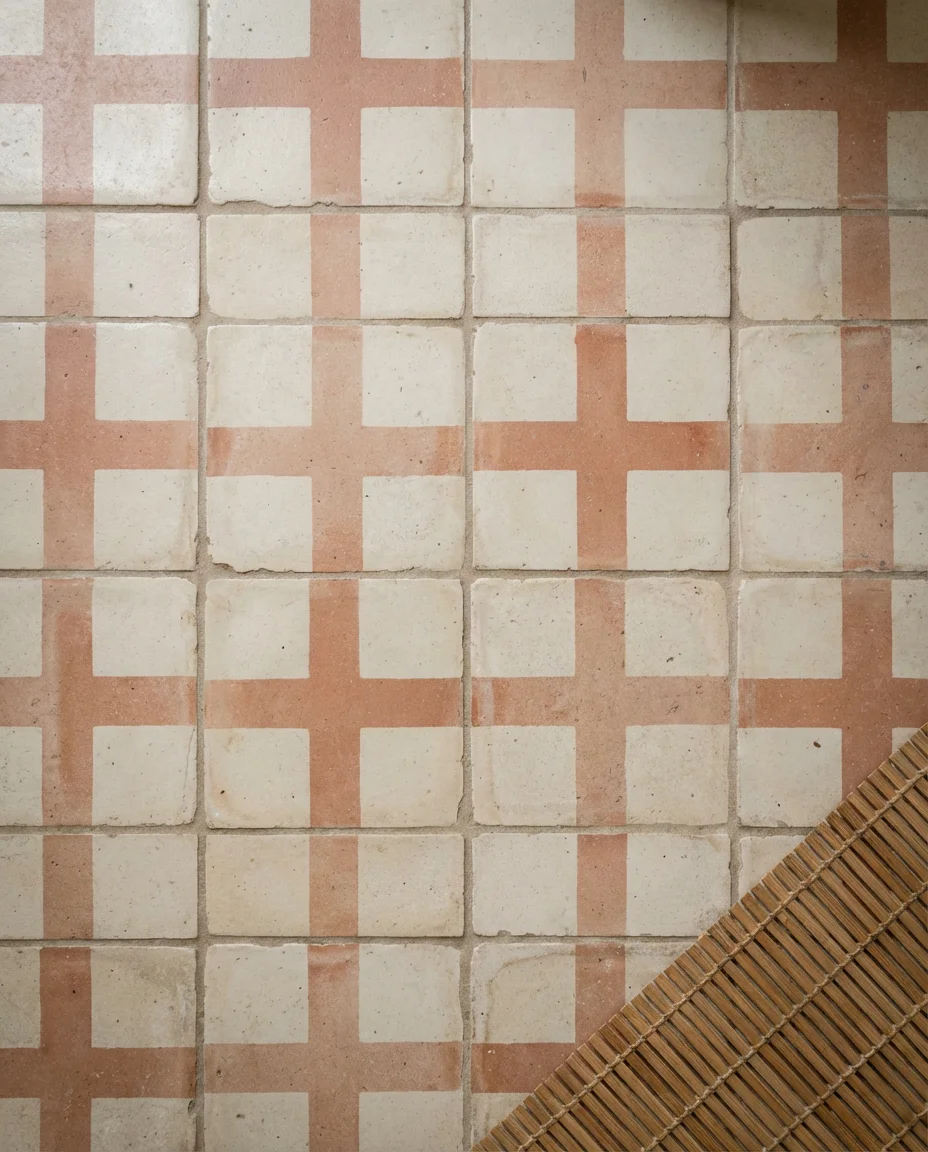
Cement tile requires sealing before and after grouting and again periodically depending on traffic and moisture. Skip the sealer, and you risk staining from the first wet towel that hits the floor. Reputable brands like Cement Tile Shop, Granada Tile, and Popham Design make it easy to find patterns that feel genuinely handcrafted—and yes, they ship across the US. Budget around $15–$30 per square foot installed, depending on complexity and region.
6. Board-and-Batten Wainscoting in Deep Sage Green
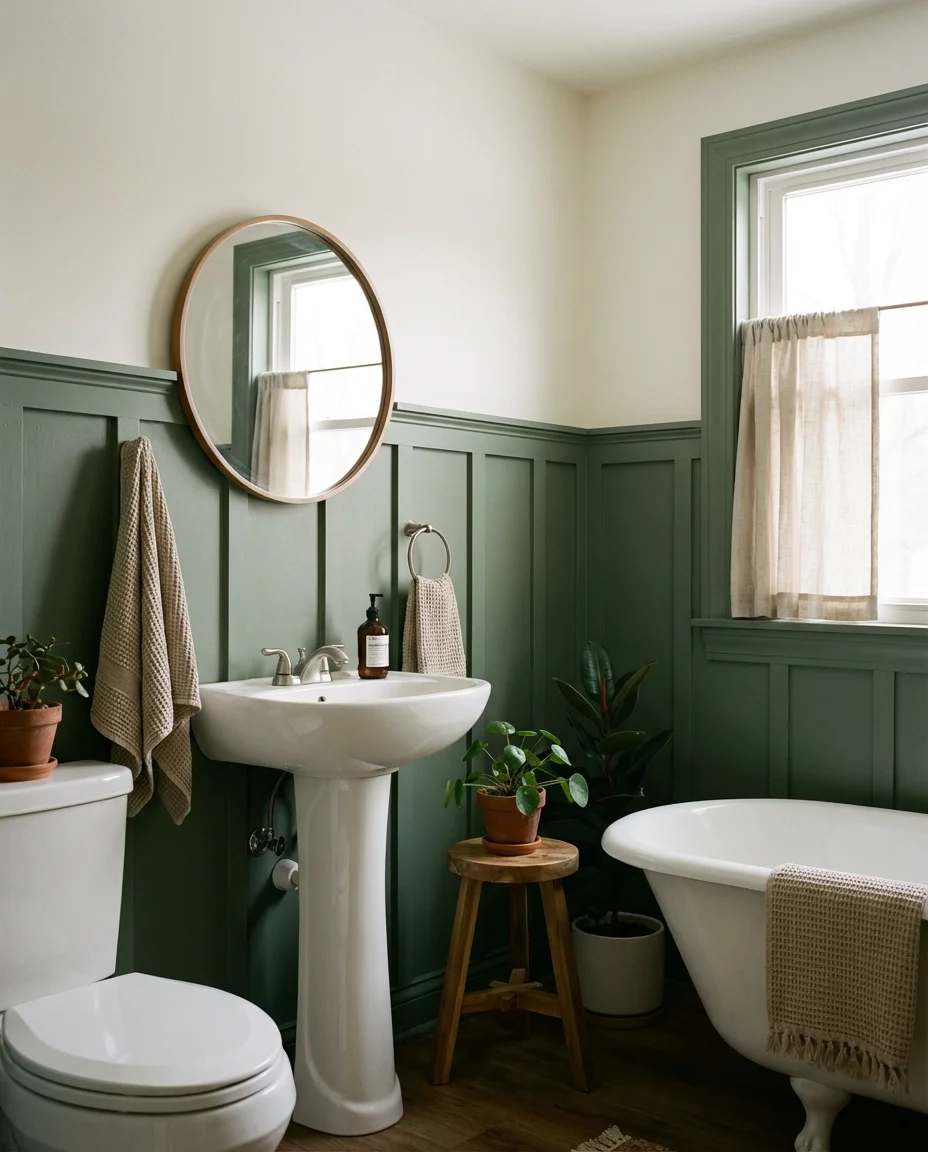
Board-and-batten wainscoting has been a farmhouse staple for decades, but painting it in a deep sage green in 2026 feels like a genuine refresh. The colors that work here are earthy and botanical rather than minty or pastel—think Benjamin Moore’s Rainy Afternoon or Sherwin-Williams’ Oyster Bay. Taken up to chair-rail height and paired with a warm white wall above, the effect is grounded and sophisticated. It works especially well in bathrooms where you want character but don’t want to commit to a full tile remodel.
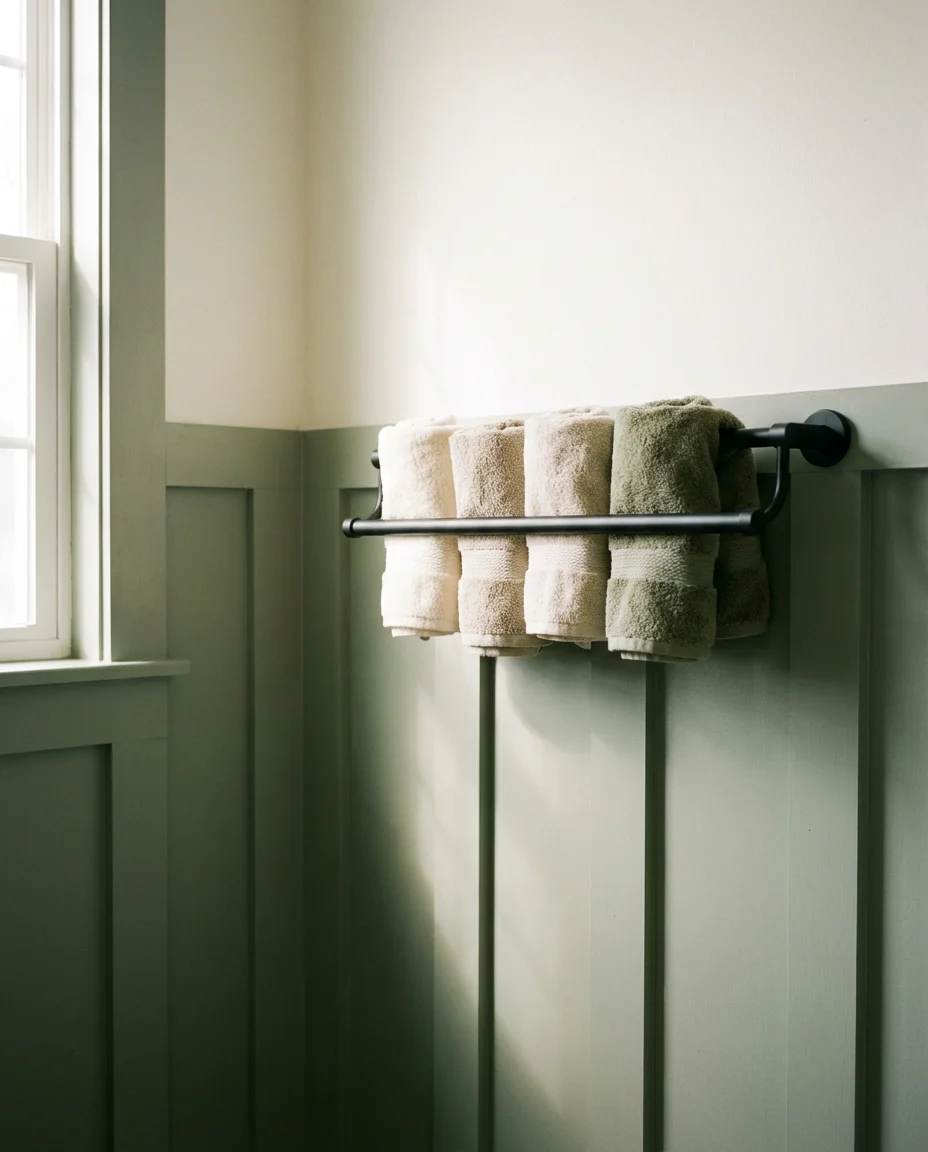
This is genuinely one of the most DIY-friendly bathroom upgrades out there. A weekend, basic carpentry skills, and about $200–$400 in materials can transform a flat-walled bathroom into something that looks custom-built. Homeowners in the Pacific Northwest have been especially drawn to the green-and-white combo, where it echoes the forested landscape just outside the window—but it reads beautifully in any region.
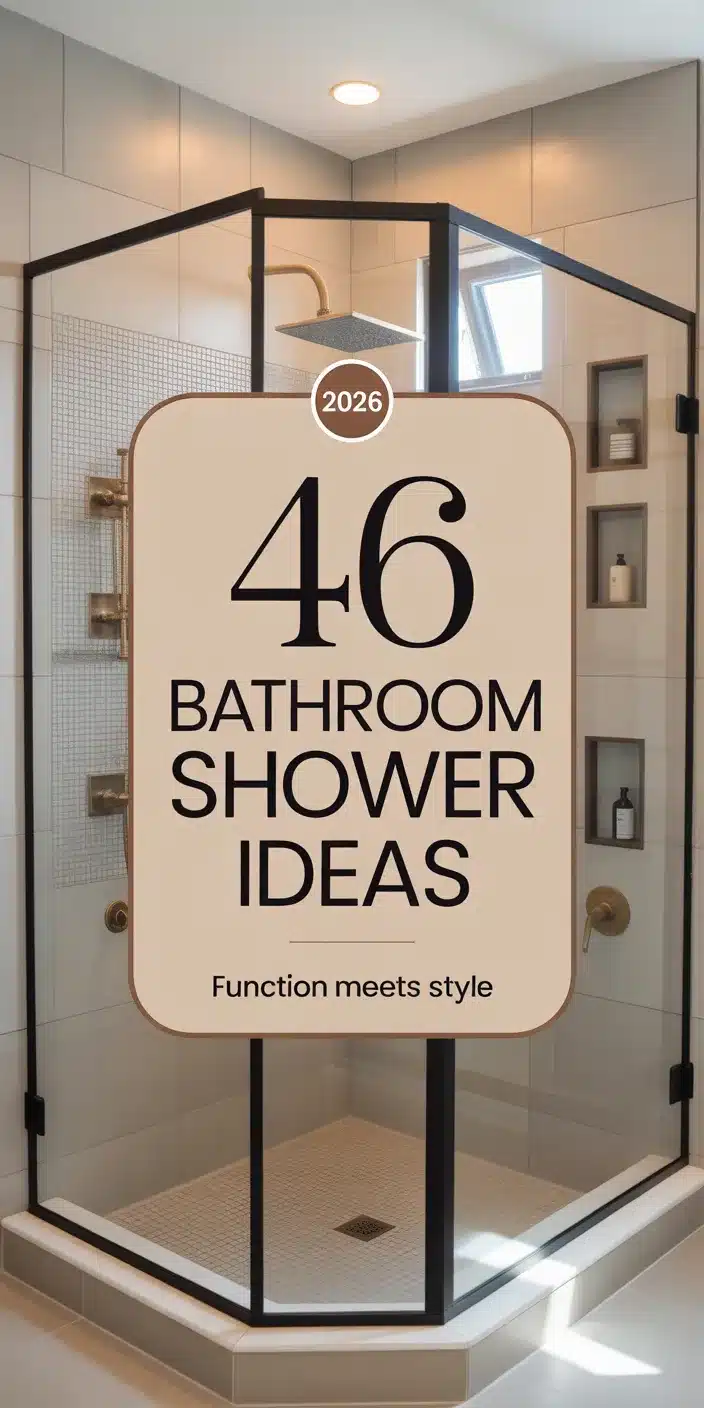
7. Open Shower With Frameless Glass and Pebble Floor
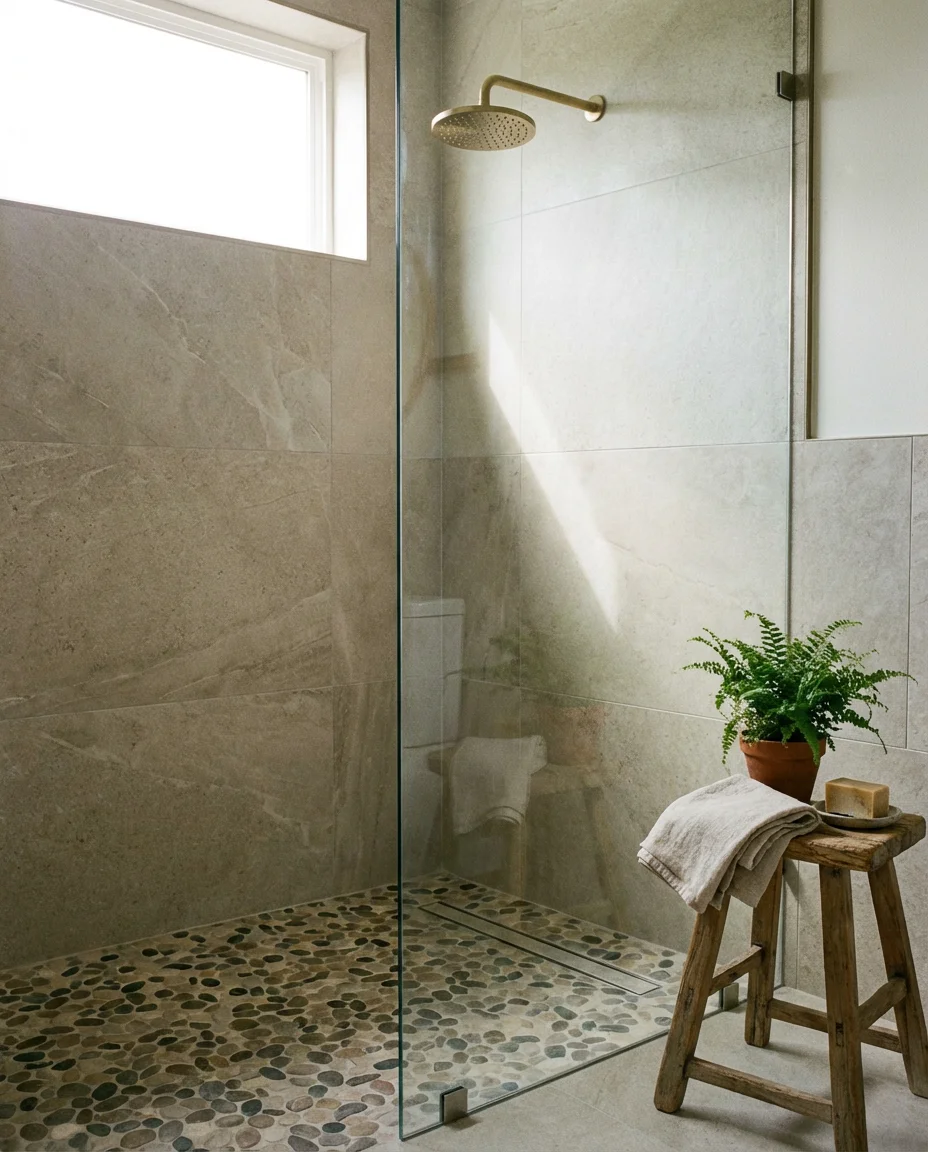
An open walk-in shower with frameless glass sides and a river pebble floor brings the organic spirit of farmhouse design into the most-used part of the bathroom. The pebble floor provides gentle texture underfoot and drains beautifully, and it ages gracefully—the stones develop a polished look over time. In a modern farmhouse context, surround the pebble floor with large-format stone-look porcelain on the walls to create contrast between the organic and the architectural.
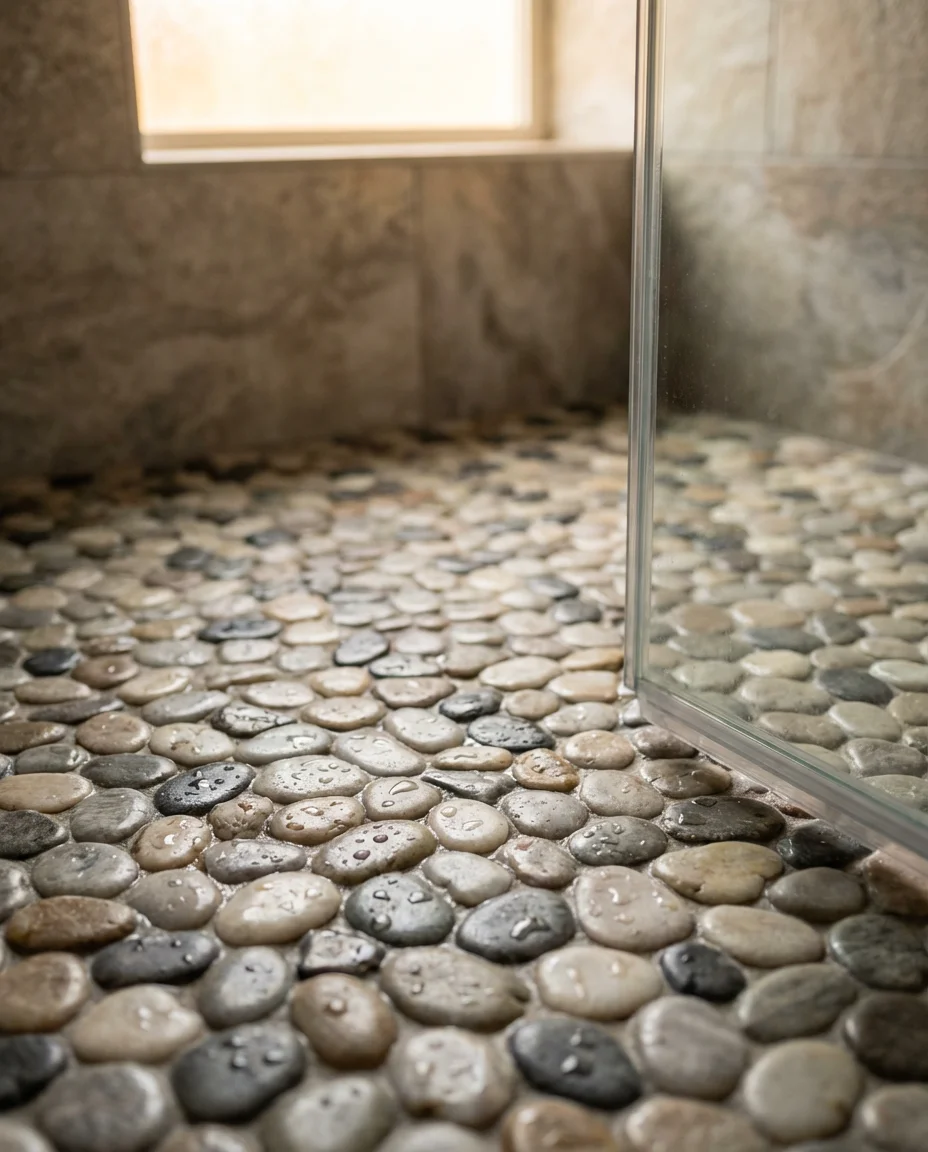
Interior designers consistently recommend investing in a good linear drain when you choose a pebble floor—it makes cleaning dramatically easier and allows water to flow toward a single edge rather than to a center point. The visual result is also cleaner. A frameless glass panel with a matte black minimalist frame pulls the farmhouse and modern aesthetics into alignment without either one losing its voice.
8. Vintage-Inspired Light Fixtures With Edison Bulbs
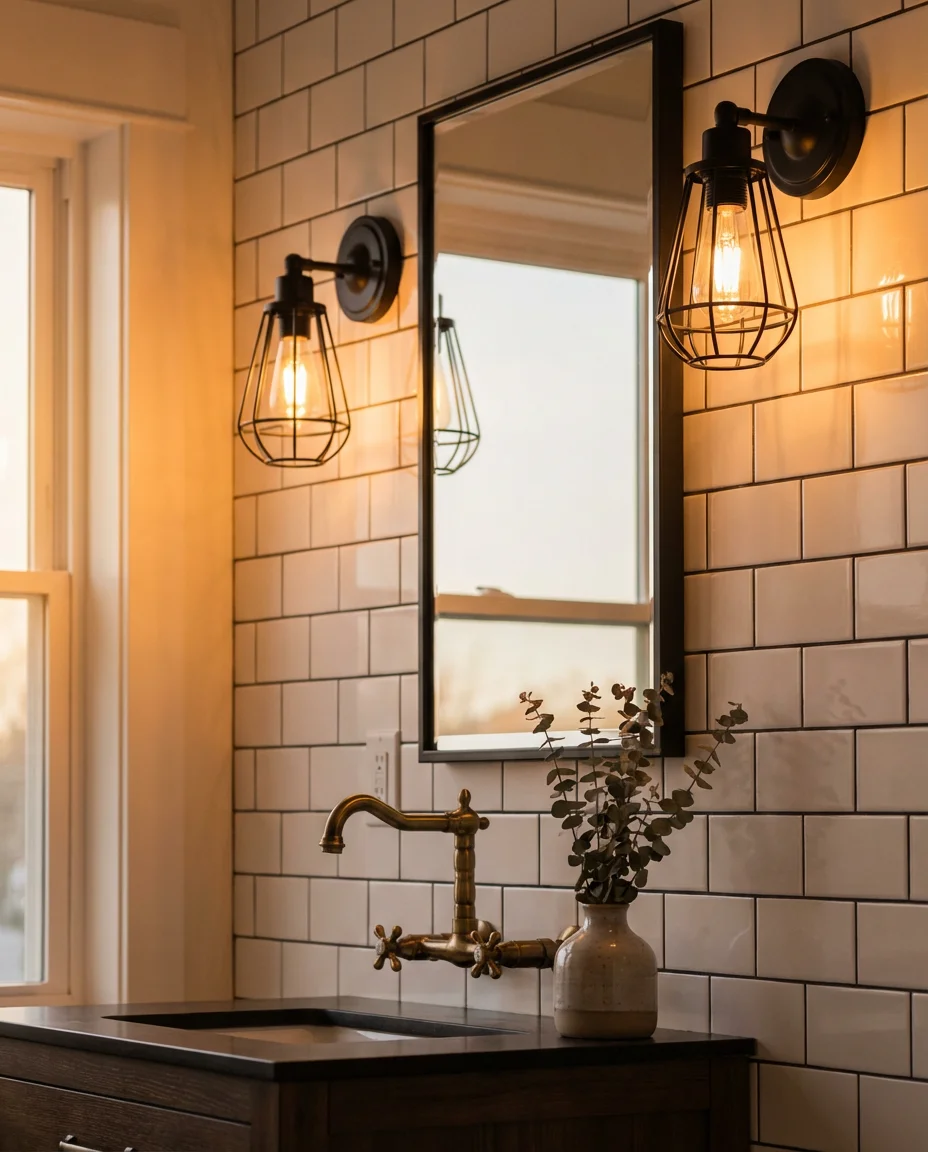
The right light fixtures can anchor a bathroom’s entire personality. For a modern farmhouse space, cage-style sconces flanking the mirror or an industrial pendant centered above a double vanity are reliable, timeless choices. Edison-style bulbs bring warmth and nostalgia without tipping into kitsch, especially when the fixture itself is clean-lined and matte black or aged brass. The lighting temperature matters too—aim for 2700–3000K to get that golden, flattering glow that makes morning routines feel gentler.
A common mistake: installing only one light source in the bathroom. Overhead-only lighting casts shadows directly onto the face, which is the opposite of flattering. The best approach pairs vanity sconces (at roughly eye level, on either side of the mirror) with a secondary overhead source. This combination—layered and intentional—is what separates a well-designed bathroom from one that just looks like someone picked out nice fixtures.
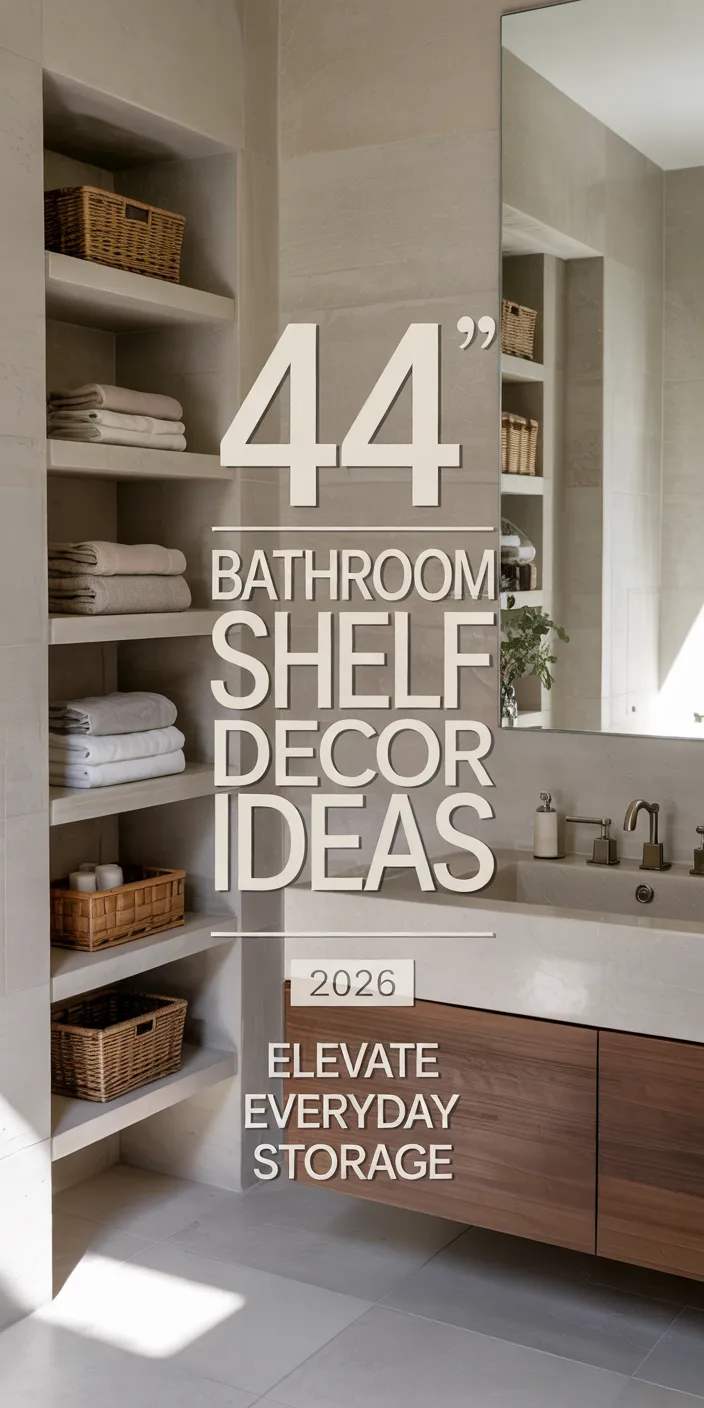
9. Warm Wood Floating Shelves for Open Storage
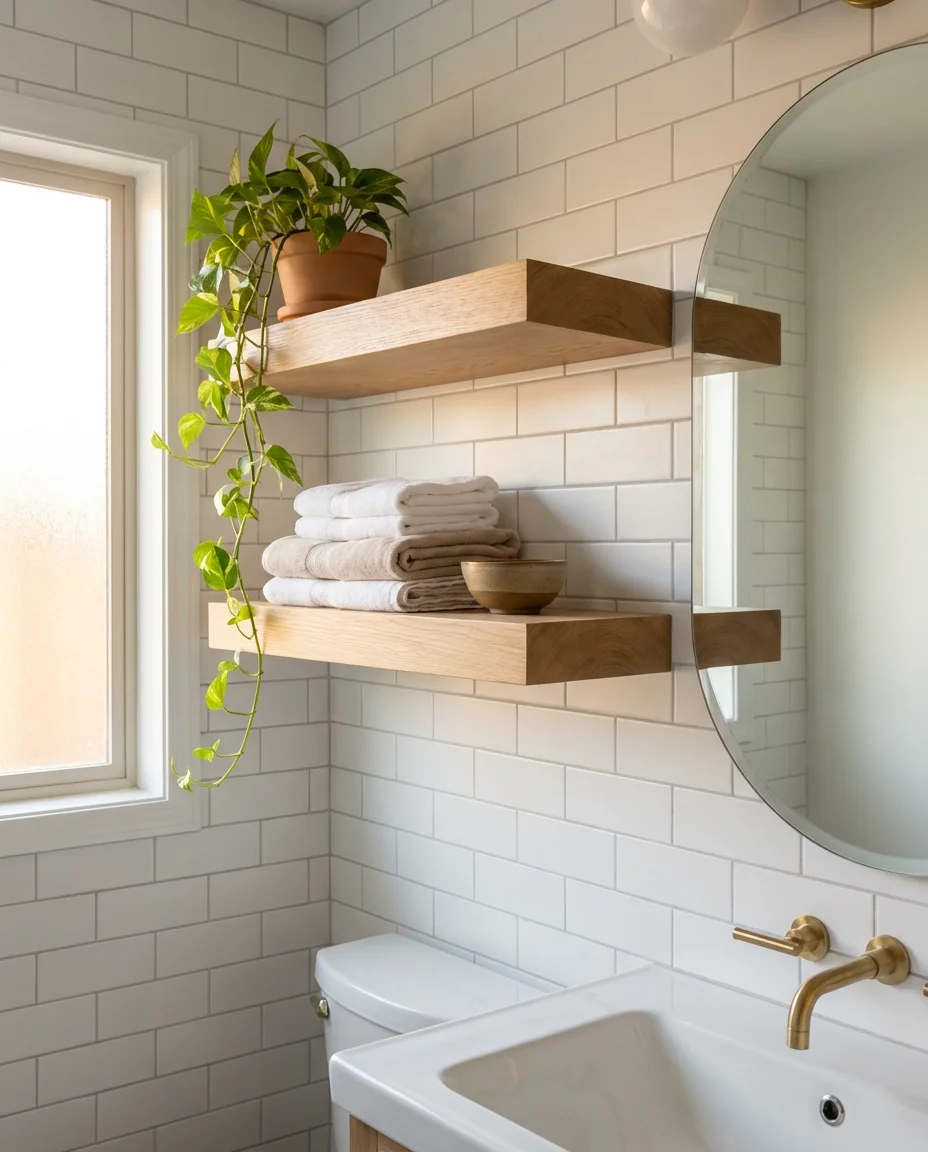
Open floating shelves in warm-toned wood—walnut, white oak, or even stained pine—are one of the most versatile decor ideas in a modern farmhouse bathroom. They give you a place to style folded towels, small plants, and ceramic vessels while keeping the room feeling open rather than closed off. The contrast of warm wood grain against white tile or shiplap walls creates visual warmth that is immediately Pinterest-worthy and, more importantly, genuinely livable.
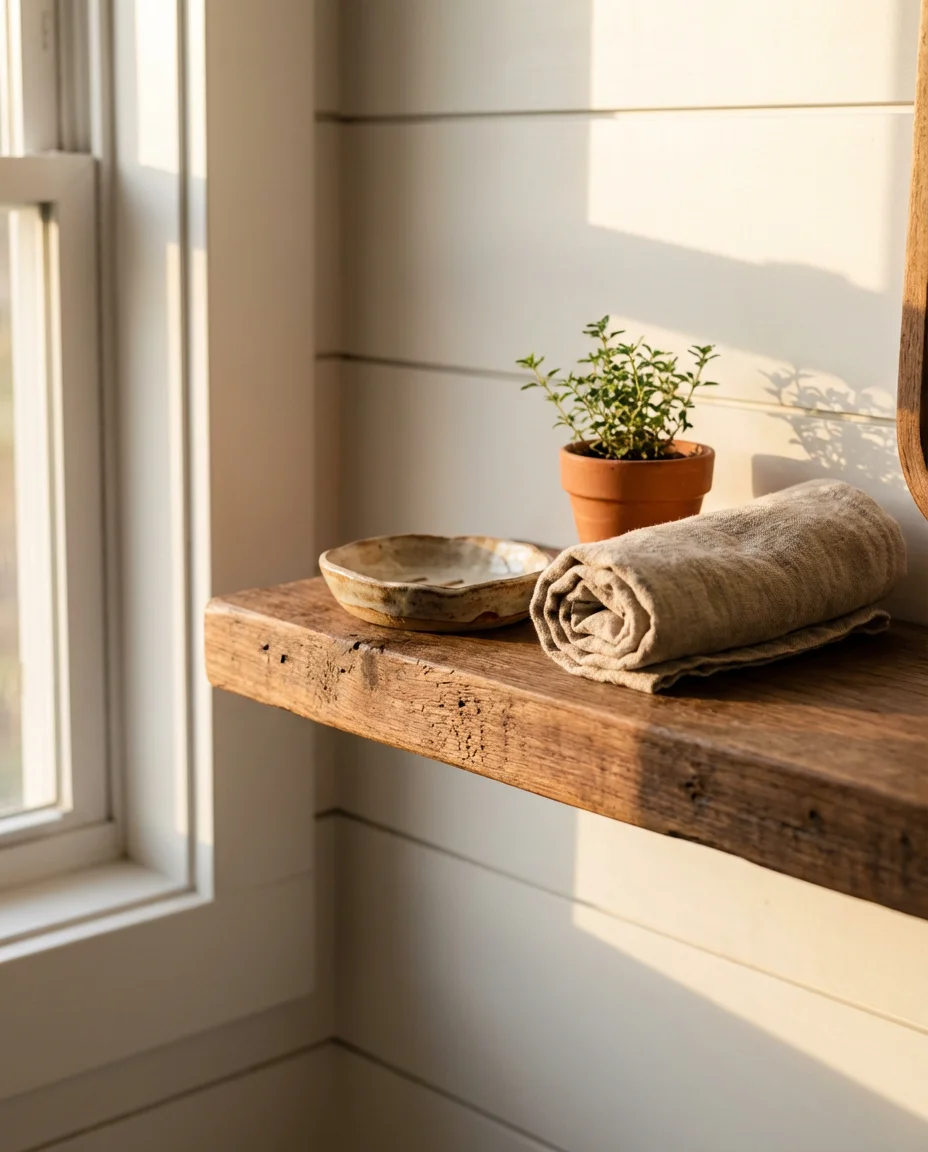
In bathrooms, floating shelves need to be properly sealed and mounted with moisture-resistant hardware. Solid wood shelves in white oak with a matte water-based polyurethane finish have become a go-to for designers and DIYers alike—they handle humidity well, and they’re easy to clean. Style them in odd numbers: three items on a shelf tend to look more intentional than two or four. A rolled linen towel, a small trailing plant, and a handmade ceramic soap dish are a combination that never fails.
10. Linen Shower Curtain With Ruffled or Raw Edge
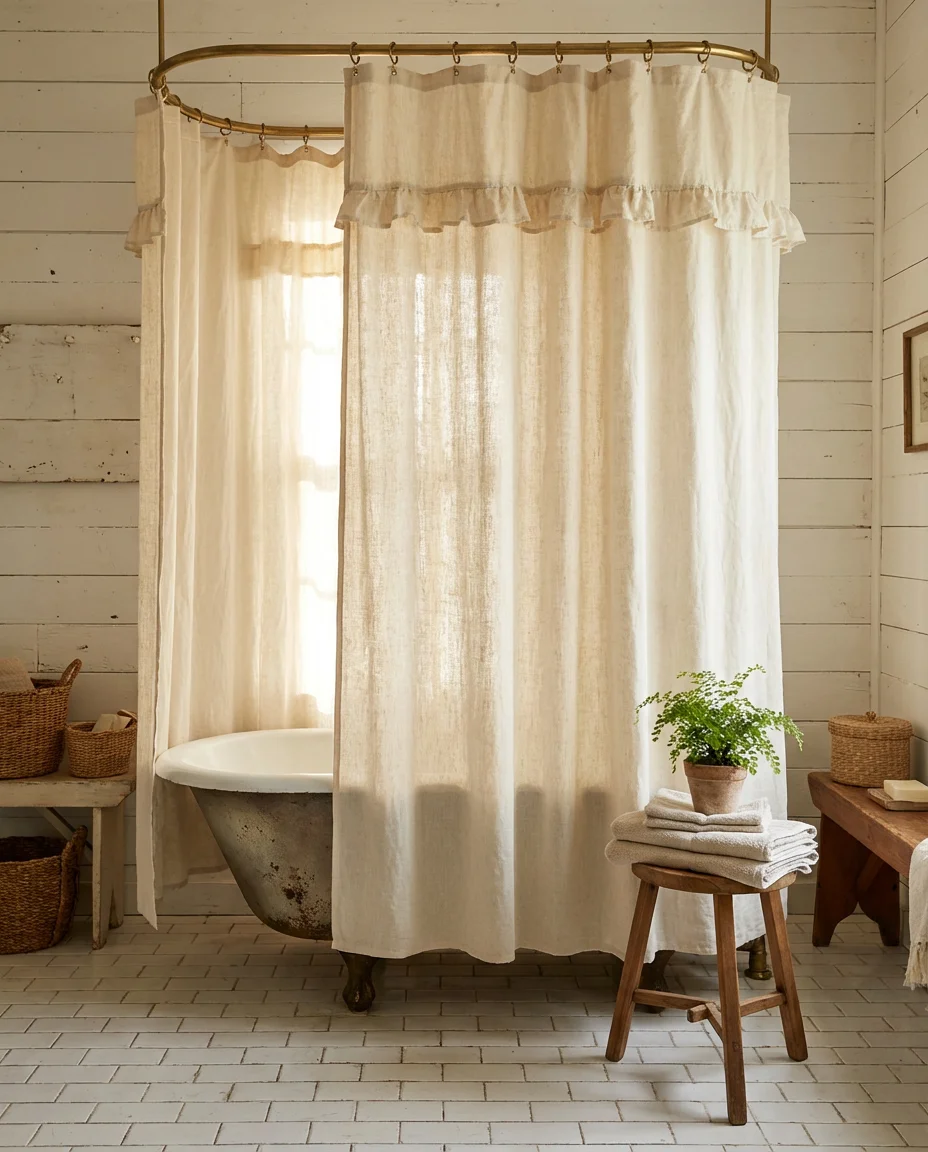
The shower curtain is one of the most underestimated elements in a farmhouse bathroom. A heavyweight natural linen curtain with a ruffled top hem or a slightly raw, frayed edge brings an effortless, artisan quality to the space. Shower curtain ideas in this direction pair especially well with a clawfoot tub, a wrap-around rod, and simple brass rings. The unpressed, slightly lived-in quality of linen is the point—it’s the opposite of a crisp hotel aesthetic, and that’s exactly what makes it feel farmhouse.
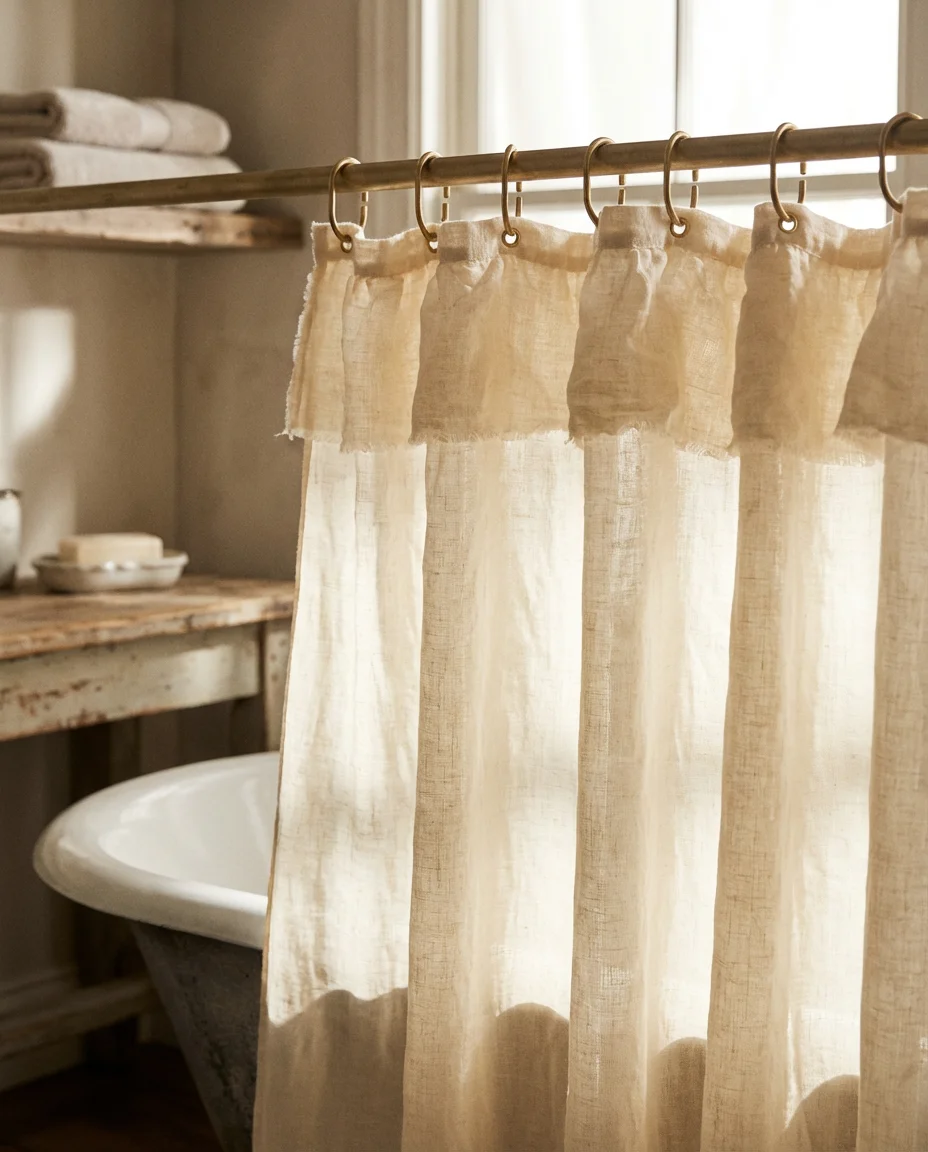
In the Midwest and South, where farmhouse style has strong cultural roots, linen curtains have become a real-people staple—not just a Pinterest fantasy. They’re available at price points from under $40 (IKEA’s linen-blend options) to $150+ for artisan-made pieces from shops like Rough Linen or Pom Pom at Home. The practical tip: always pair a linen curtain with a clear or white PEVA liner on the inside so the linen itself never gets soaked.
11. Arched Mirror Above a Double Vanity
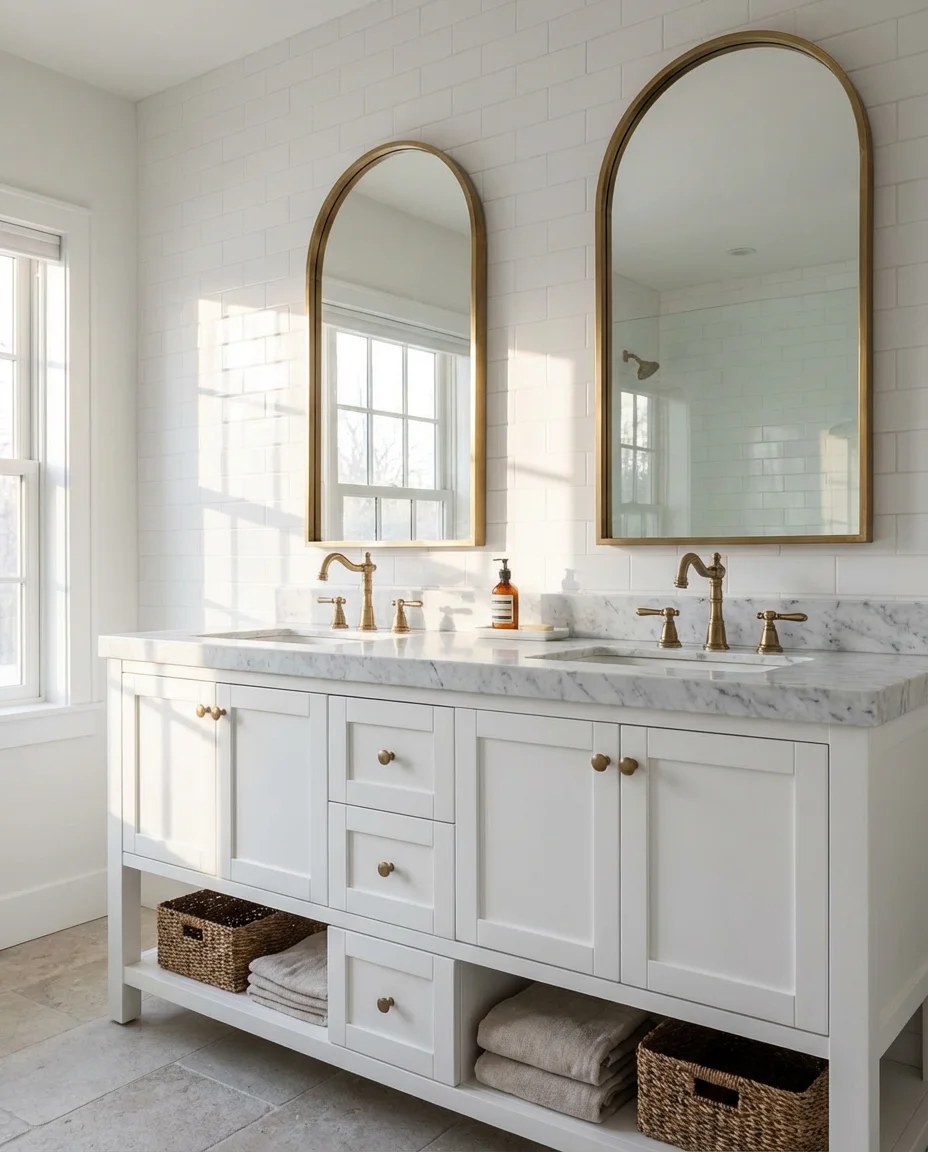
An arched mirror is one of those design decisions that immediately changes the energy of a room. Above a double vanity, two arched mirrors placed side by side create a beautifully symmetrical composition with just enough architectural softness to offset a straight-edged vanity below. In a modern farmhouse context, choose frames in unlacquered brass, aged bronze, or even natural wood—materials that develop patina and personality over time.
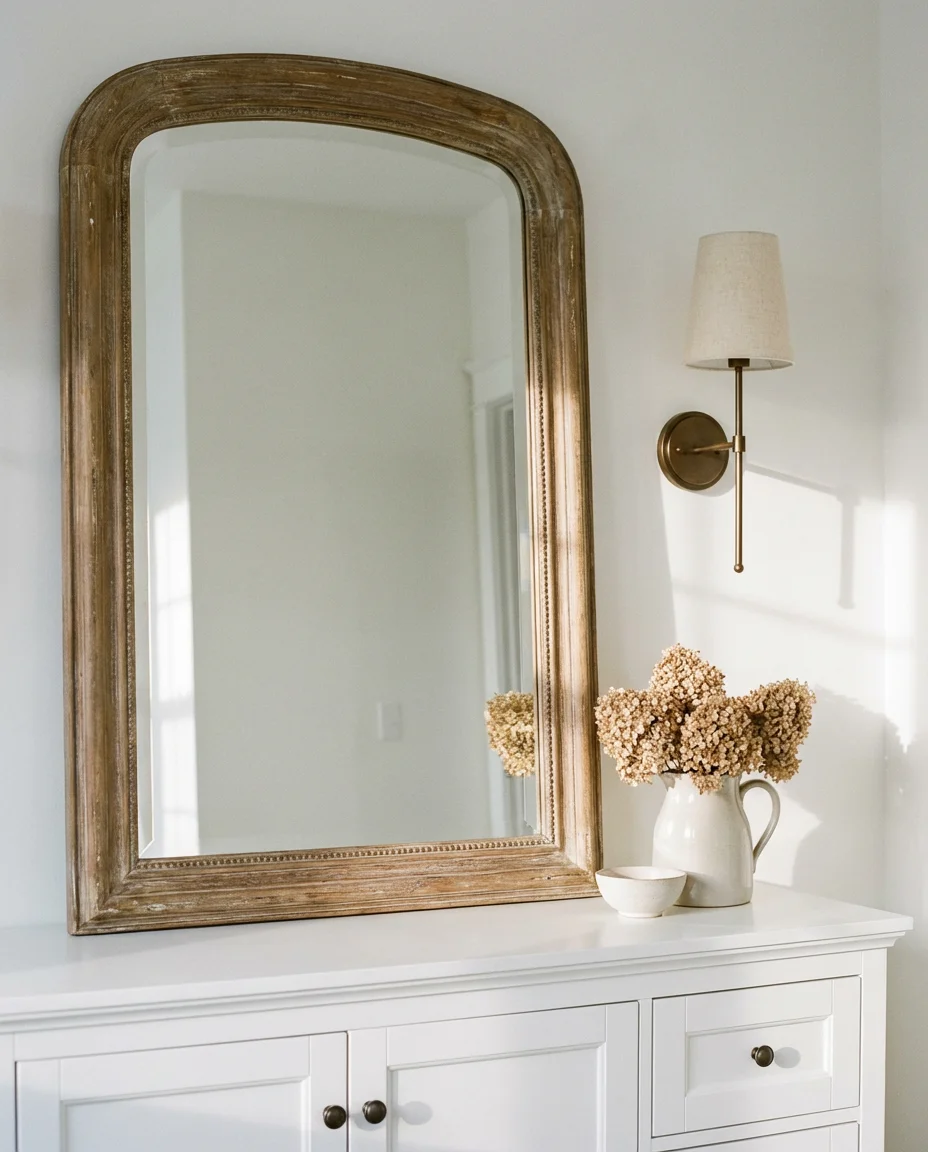
Sizing matters more than most people realize. A mirror that’s too small above a wide vanity looks like an afterthought. A good rule of thumb: the mirror’s width should be roughly two-thirds to the full width of the vanity, and the top of the arch should clear the upper edge of the sconces on either side. When it’s right, the composition feels intentional and cohesive—like the room was designed by someone who thought it all the way through.
12. Terracotta and Cream Tile for Warm-Toned Floors
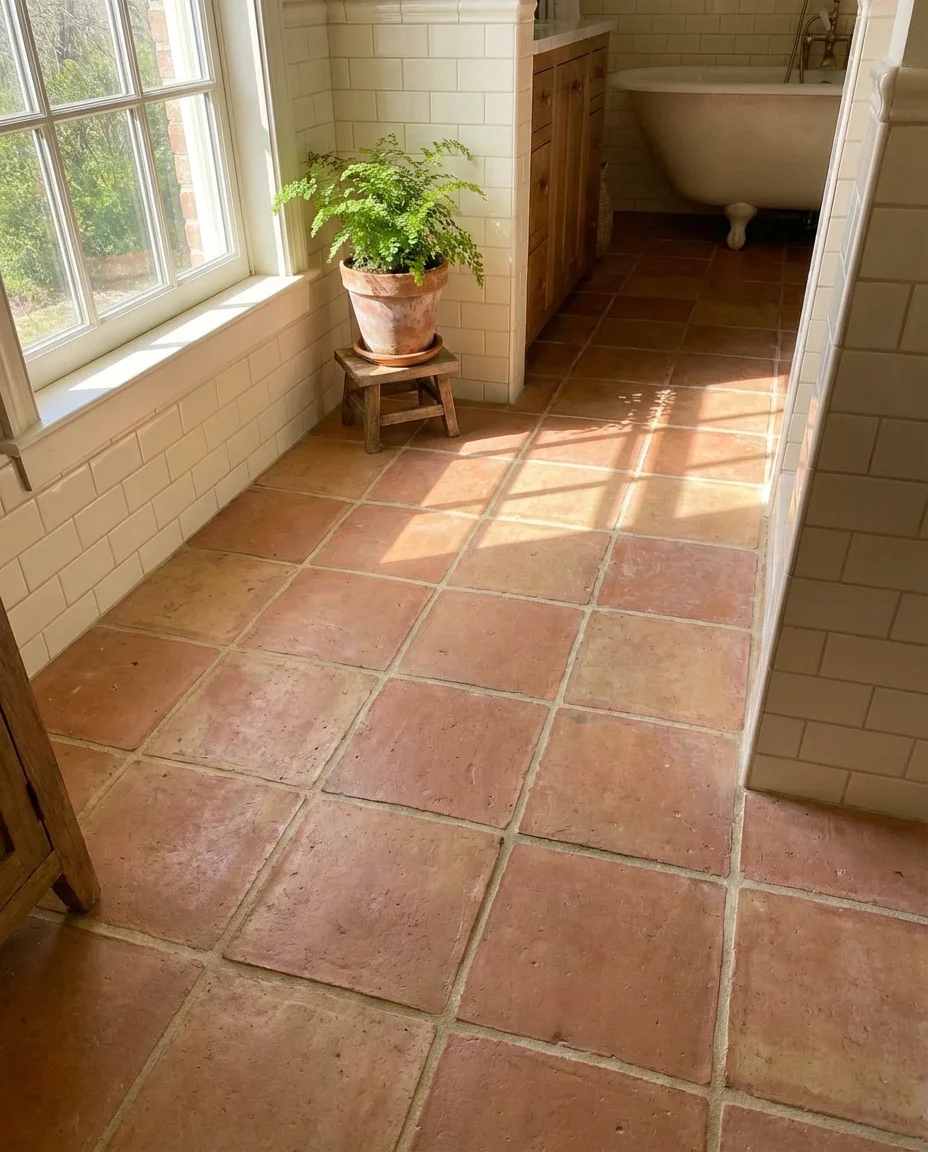
Terracotta tile has made a powerful comeback, and in a modern farmhouse bath, it’s one of the most grounding floor tile ideas available. Paired with cream or off-white wall tile, the warm-toned floor creates a sun-baked, Mediterranean-meets-American farmhouse feeling that feels anchored without being heavy. The key is in the finish: matte or slightly textured terracotta reads as rustic and handmade; polished terracotta tips toward mid-century modern. Either can work—choose based on the rest of your design.
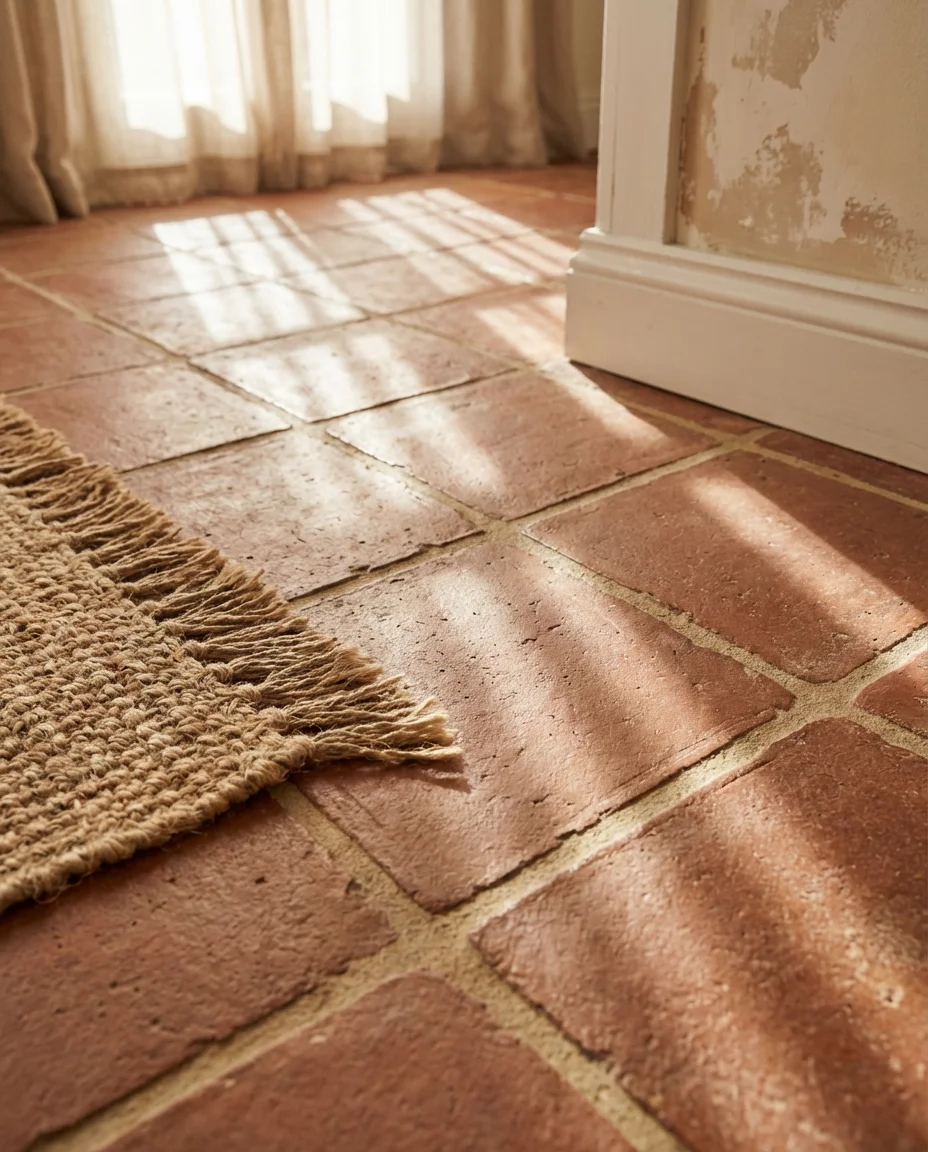
This works best in bathrooms with natural light—south- or east-facing windows amplify the warmth in terracotta tile in a way that feels genuinely beautiful rather than orange. In rooms with little natural light, go lighter on the terracotta tone (a buff or clay pink rather than deep rust) and compensate with warm-temperature artificial lighting. The goal is a glow, not an oven.
13. Dark Shiplap Accent Wall Behind the Tub
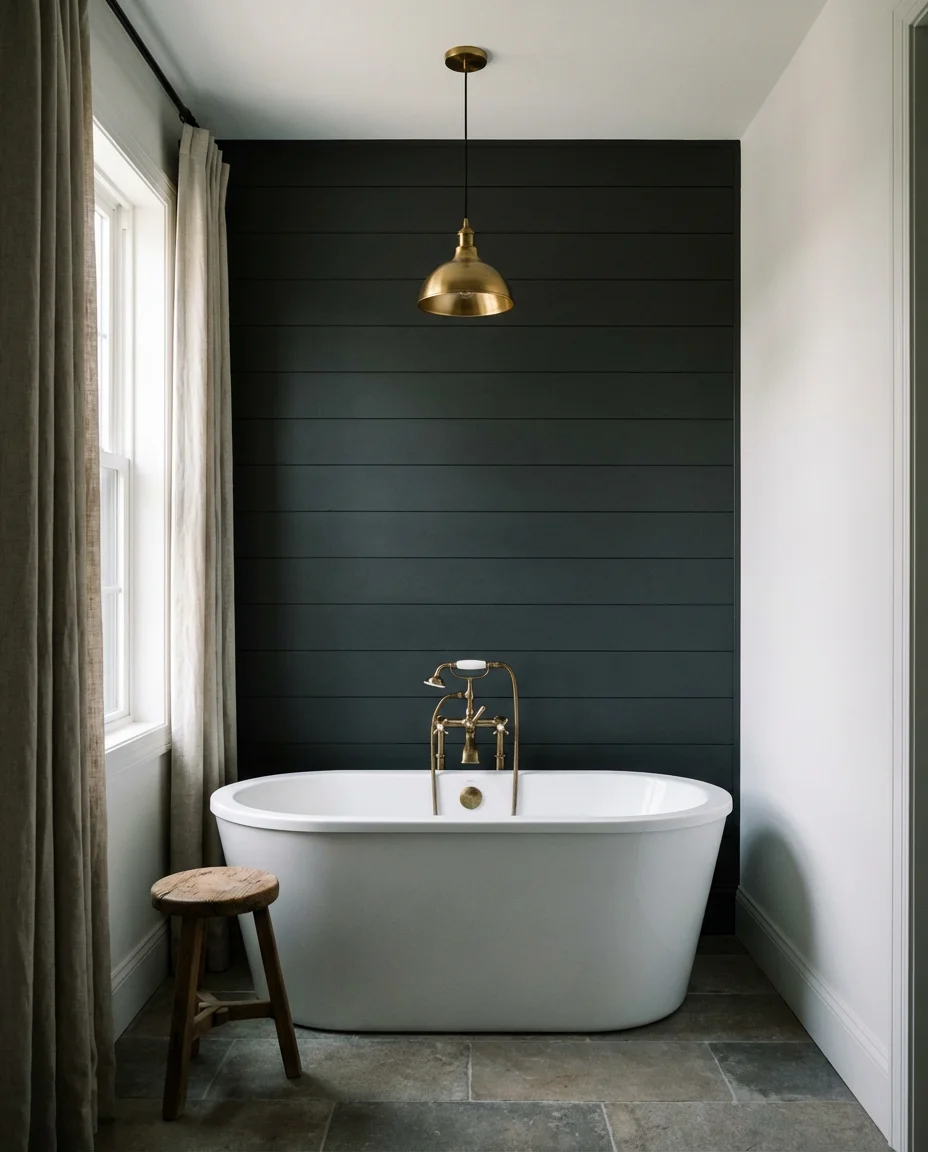
If you want the dark farmhouse look without committing every wall to a deep tone, painting the shiplap accent wall behind the freestanding tub in charcoal, navy, or forest green is a high-impact, lower-commitment solution. The contrast between a white tub and a dark textured wall behind it is incredibly dramatic and works in both large master baths and more compact spaces. This kind of statement decor reads beautifully in natural light and is often the very first thing a Pinterest user screenshots.
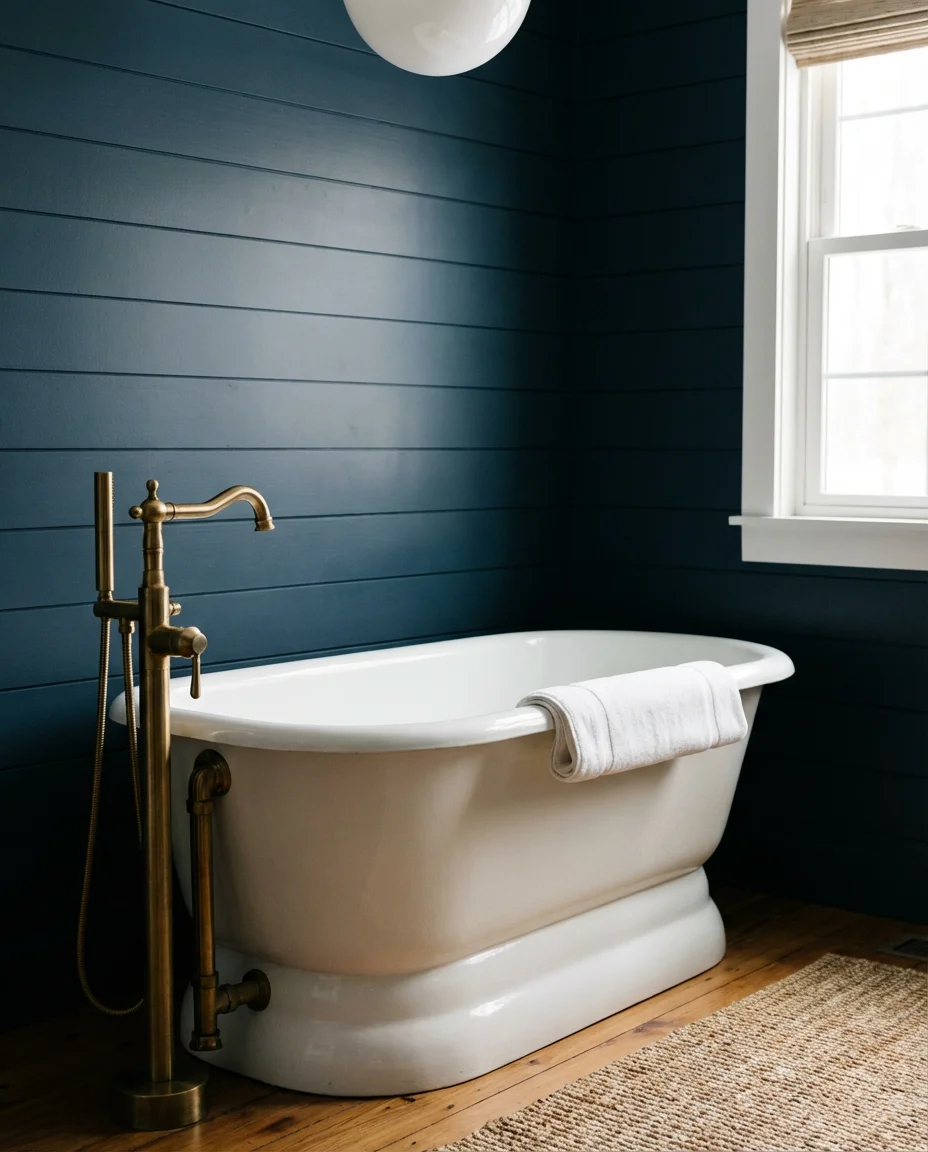
Interior designers often describe this move as “the power wall”—one surface that holds the visual weight of the room while everything else recedes. The supporting cast matters: white subway tile on adjacent walls, a simple unlacquered brass faucet on the tub, and a single pendant overhead in aged bronze. Keep it restrained, and the dark wall does all the work. Add too many competing elements and you lose the drama you were going for.
14. Botanical Wallpaper for a Layered, Living Feel
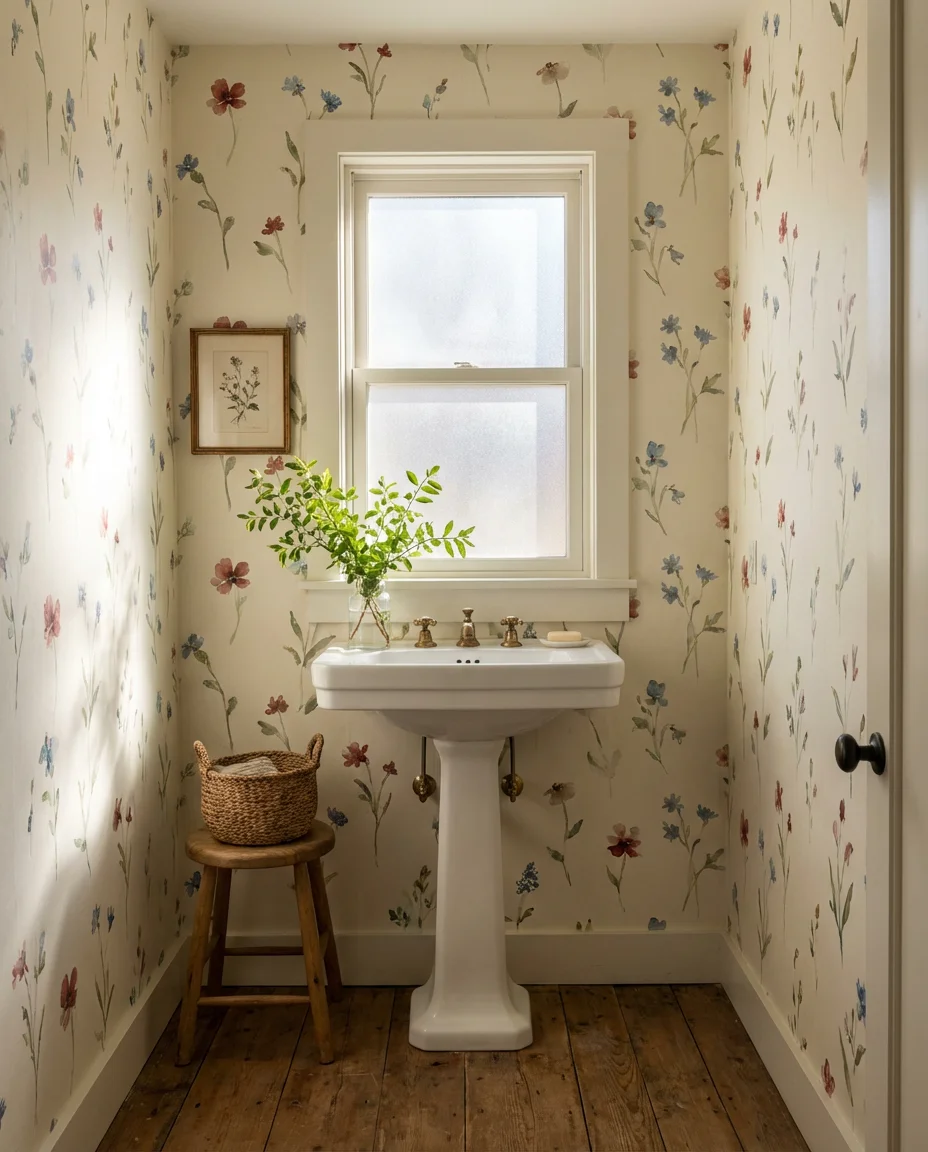
Farmhouse bathrooms have always had a soft spot for nature, and botanical wallpaper brings that outdoors-in feeling to the walls themselves. In 2026, the most compelling patterns are loose and illustrative—watercolor botanicals, pressed-fern motifs, or hand-drawn wildflower prints—rather than rigid traditional floral wallpapers. On a warm cream or linen background, these patterns feel like something you might find in a renovated farmhouse outside of Nashville or along the Hudson Valley.
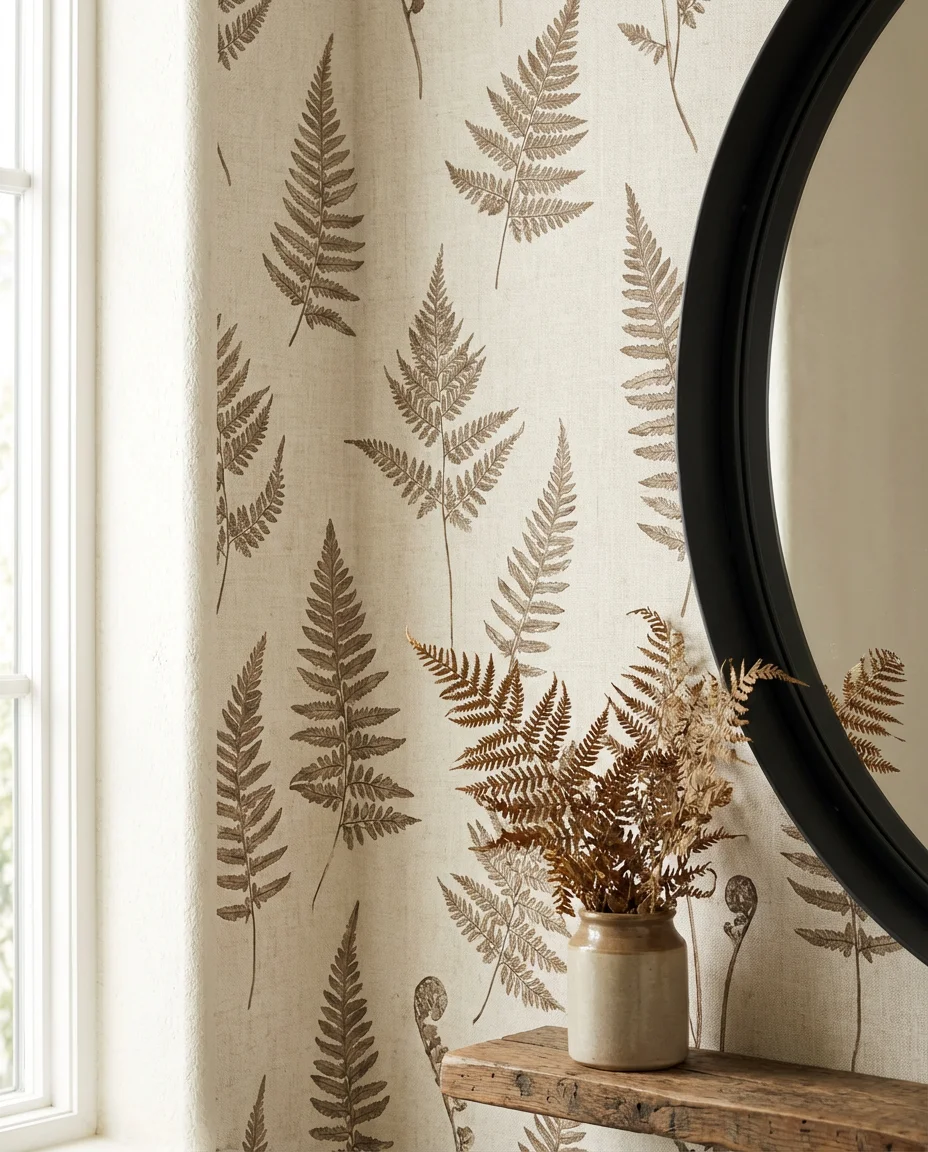
The biggest mistake people make with bathroom wallpaper is choosing a paper that isn’t rated for high-humidity environments. Always look for “scrubbable” or “Type II” wallcovering—these are designed to handle moisture and cleaning without peeling or fading. Brands like Hygge & West, Chasing Paper, and Rifle Paper Co. all offer beautiful botanical patterns in peel-and-stick or traditional paste options, and several are specifically suited to bathrooms.
15. Mixed Metal Hardware in Brass and Matte Black
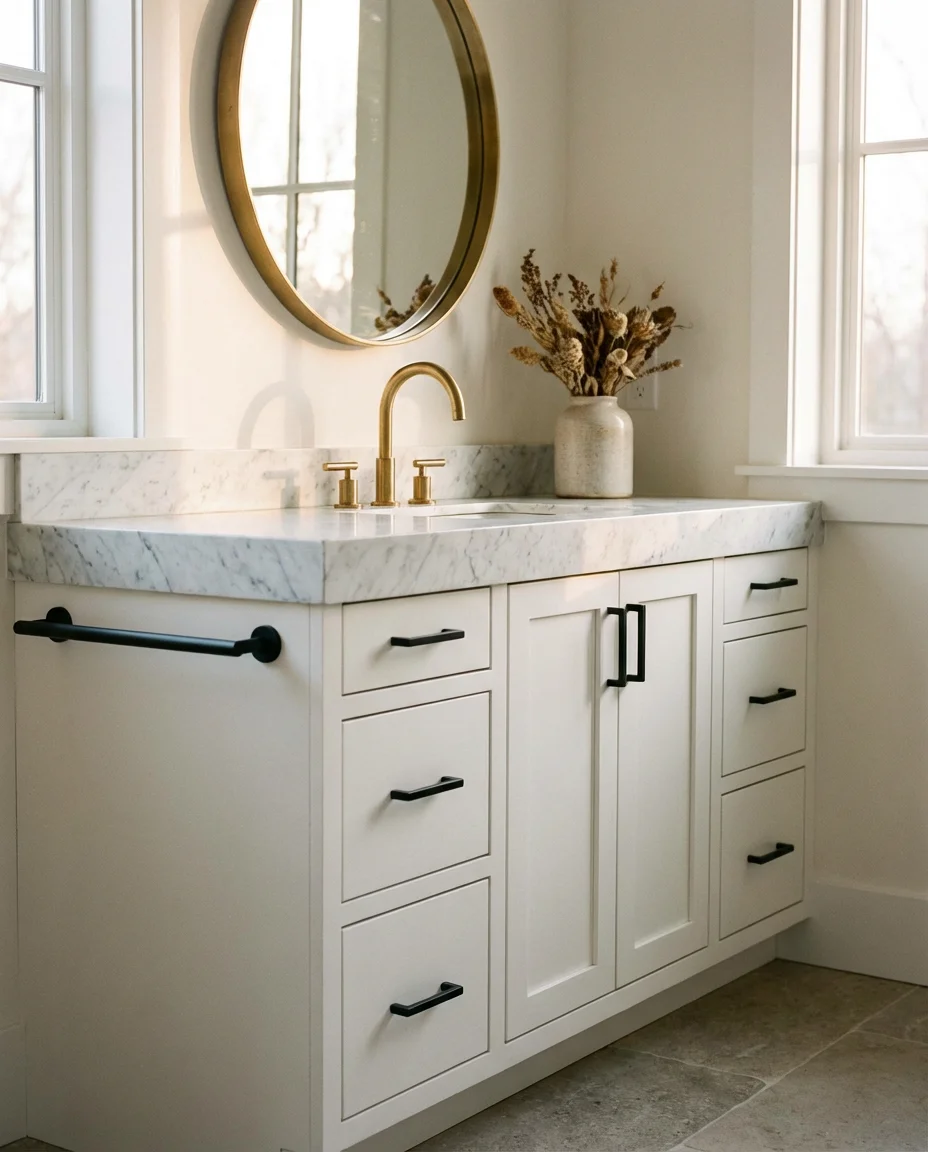
Mixing metals in a bathroom used to be considered a decorating mistake. In 2026, it’s considered good design. The combination of unlacquered brass and matte black is especially well-suited to the modern farmhouse aesthetic—the brass reads warm, handcrafted, and slightly imperfect, while the matte black provides a grounding, graphic edge. Apply this inspiration through light fixtures, towel bars, faucets, and drawer pulls without needing every piece to be the same finish.
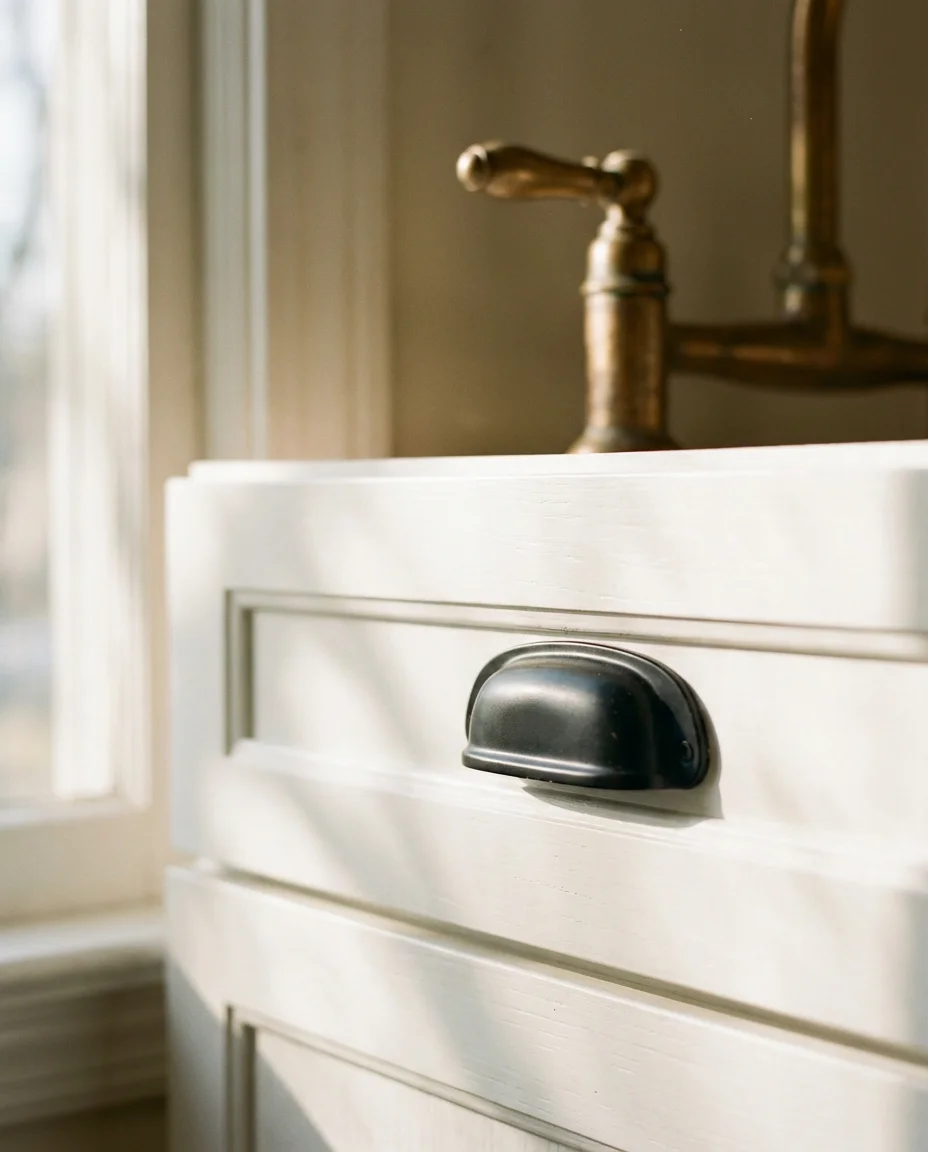
The unwritten rule of mixed metals: choose one dominant finish and let the other play a supporting role. If brass is the lead, use it for the faucet and mirror frame; let black appear in the light fixtures and drawer pulls. Keep a ratio of roughly 70/30 so the eye reads a cohesive palette rather than a jumble of finishes. This is one of those design rules that, once you see it applied well, you can’t unsee its logic.
16. Clawfoot Tub With a Modern Shower Conversion
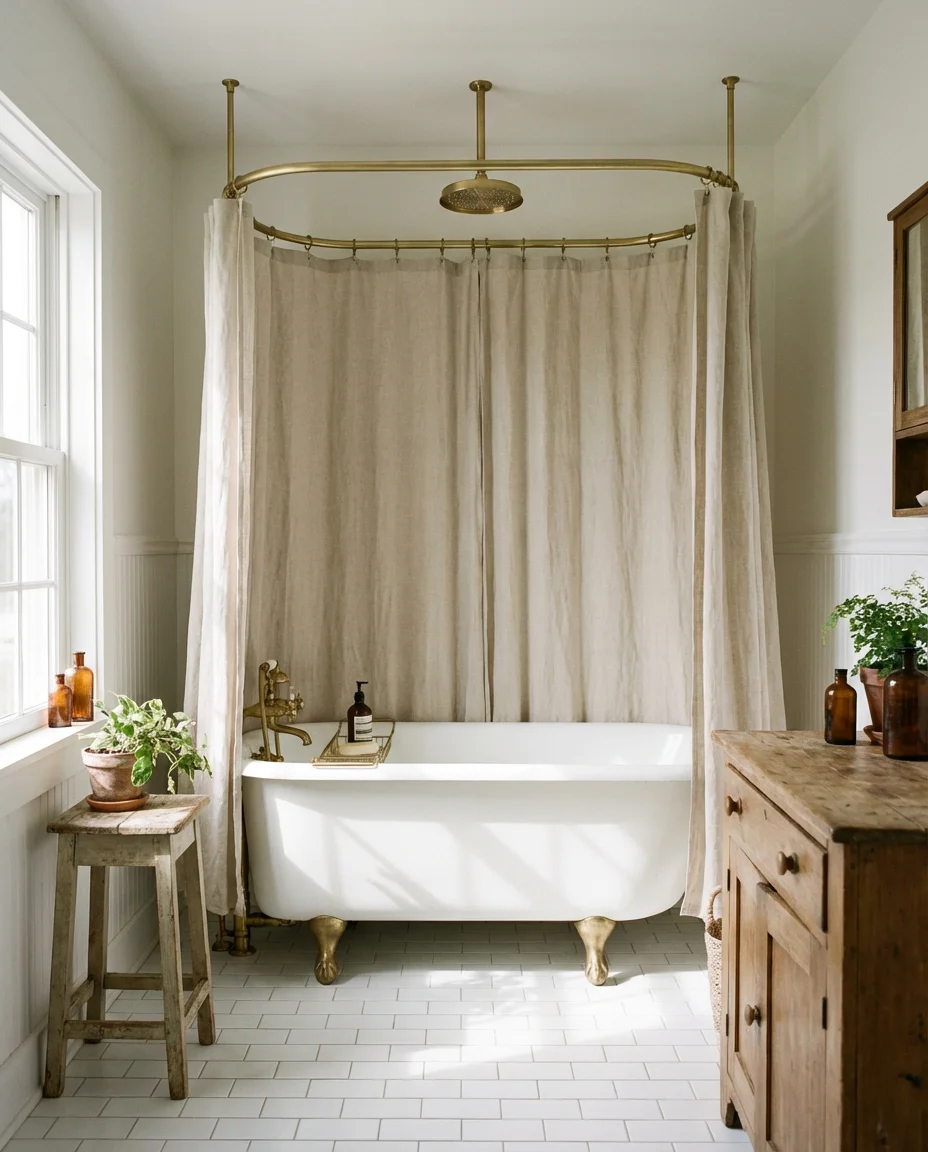
A clawfoot tub doesn’t have to be a purely decorative object. Converting it into a functional shower with an oval curtain rod and a ceiling-mount rain showerhead makes it the hardest-working piece in your bathroom. This approach suits a remodel beautifully because you’re not tearing out infrastructure—you’re adding to what’s already there. The clawfoot silhouette, the exposed plumbing, and the wraparound linen curtain: it’s a complete vignette that references farmhouse history while being entirely functional today.
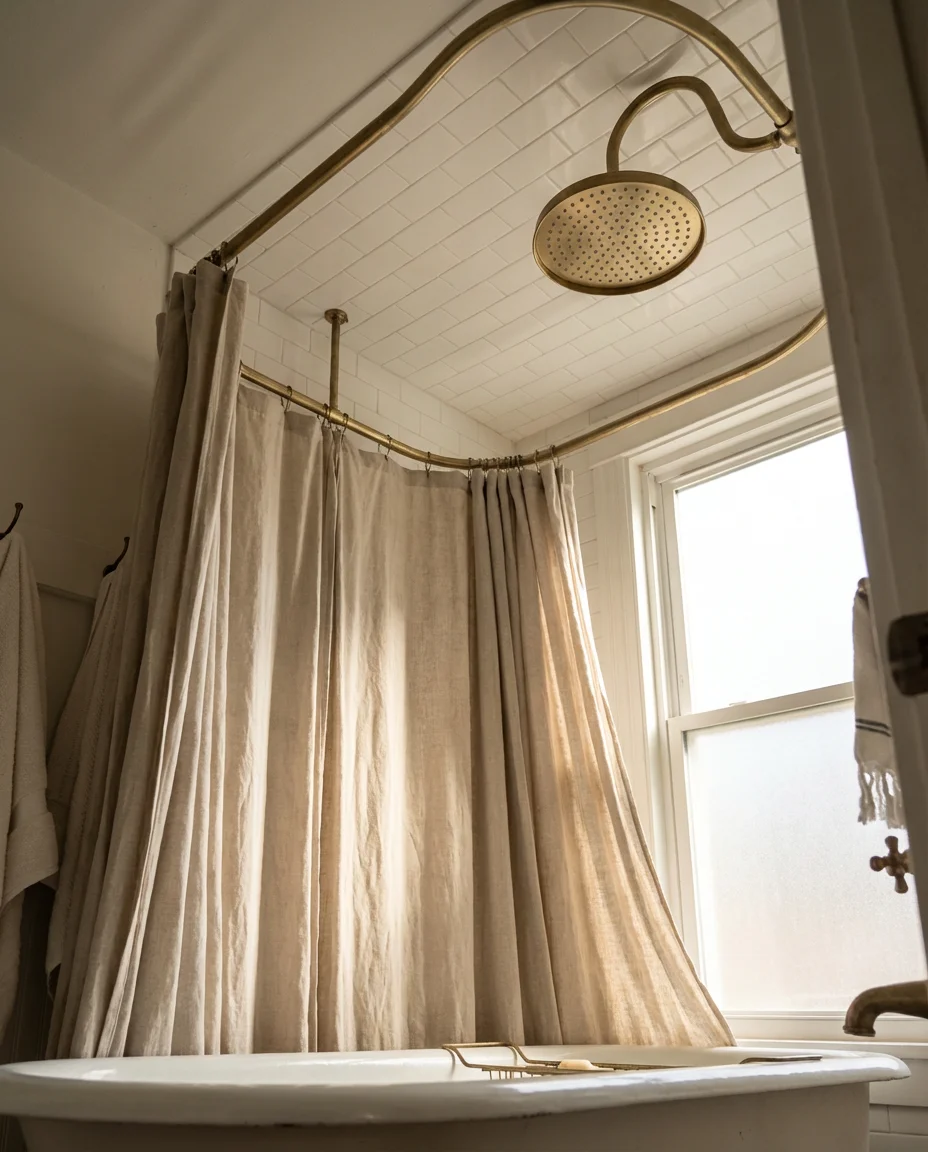
Real homeowners who’ve done this conversion consistently report the same thing: it takes longer than expected, but the result is more satisfying than a fully tiled shower. The key is a solid oval rod (avoid cheap, flexible ones) and a good-quality liner inside the curtain. Plumbers familiar with clawfoot conversions can usually complete the rough-in work in a day. Budget between $500 and $1,500 for the conversion hardware and plumbing, excluding the tub itself.
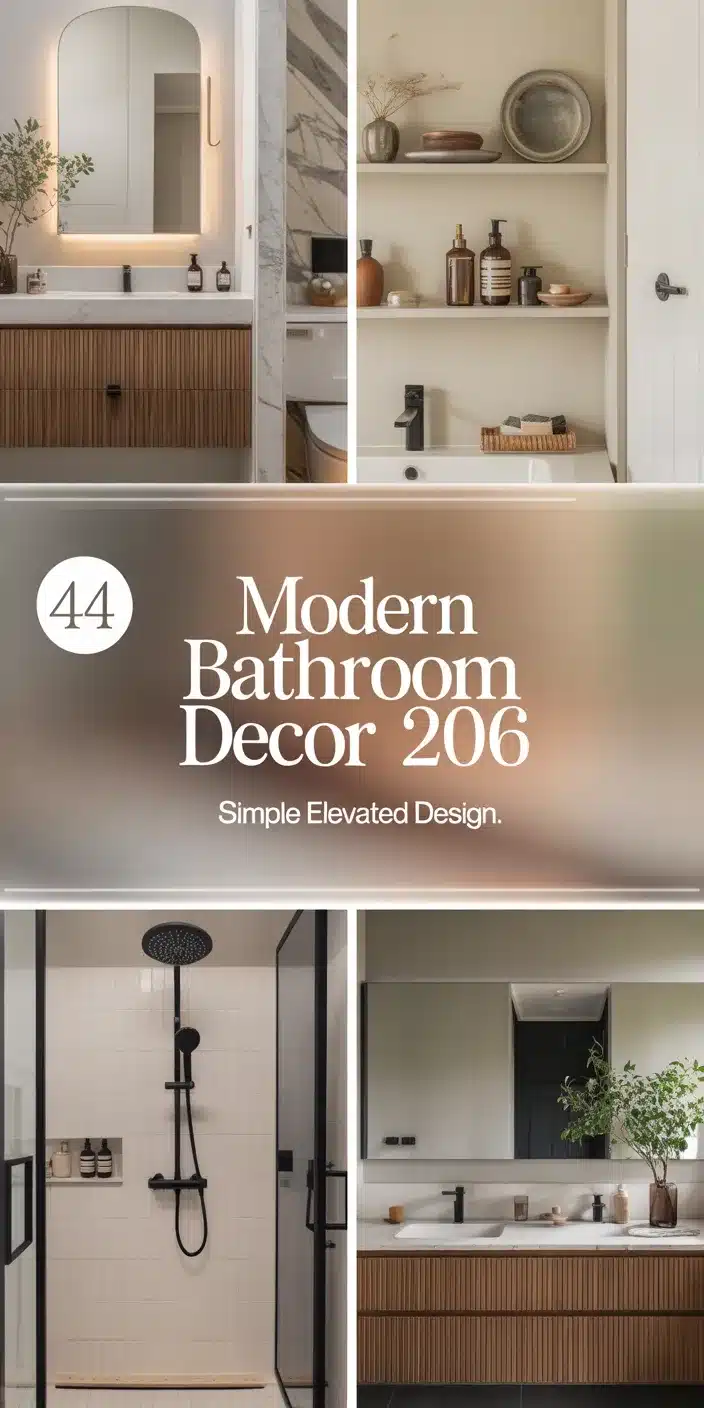
17. Stone Vessel Sink on a Floating Wood Vanity
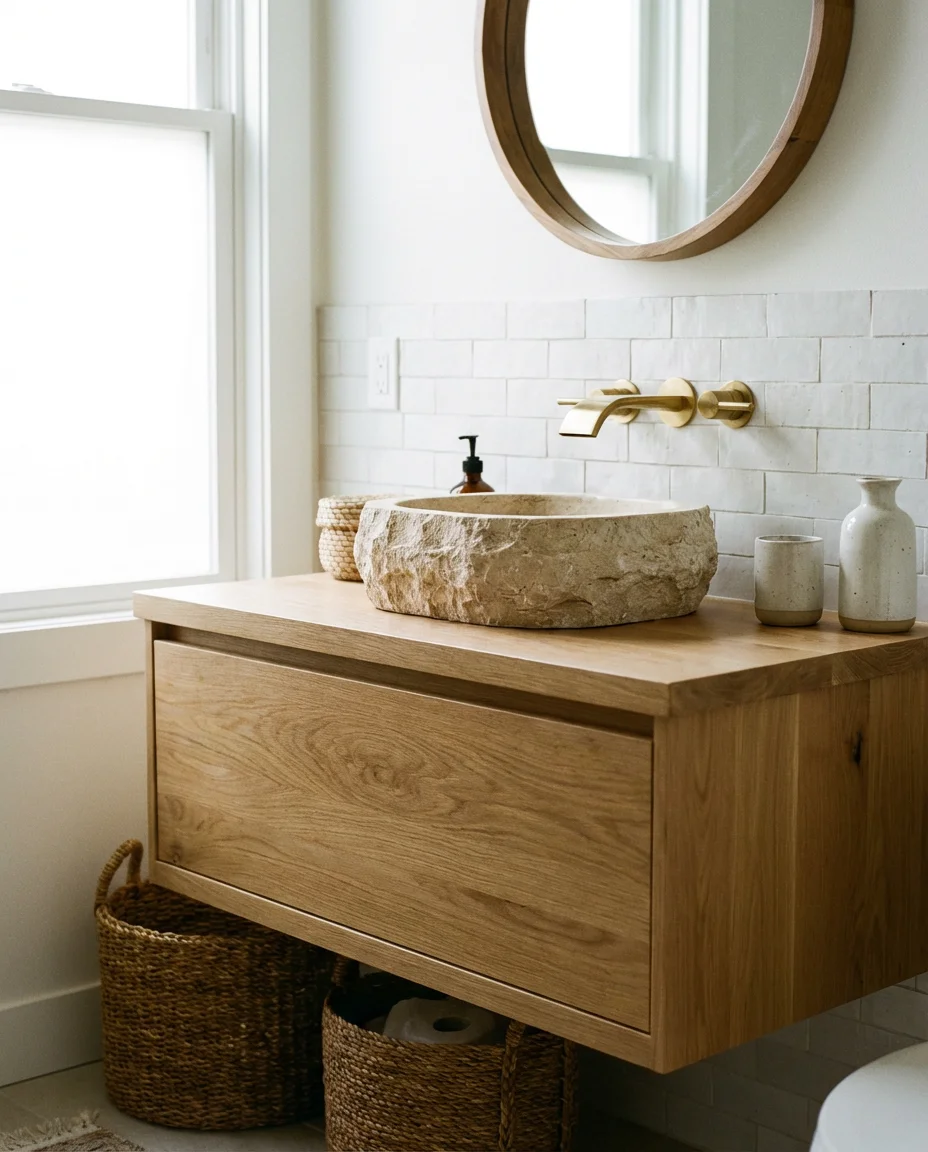
A stone vessel sink—carved from travertine, onyx, or honed marble—brings an organic materiality to a farmhouse bathroom that no ceramic or porcelain fixture can quite match. Mounted on a floating white oak or walnut vanity, the combination feels like a spa that wandered into a barn and decided to stay. The exposed grain of the wood, the natural variation in the stone, and the visible wall mounting all add up to a vanity situation that is simultaneously earthy and refined.
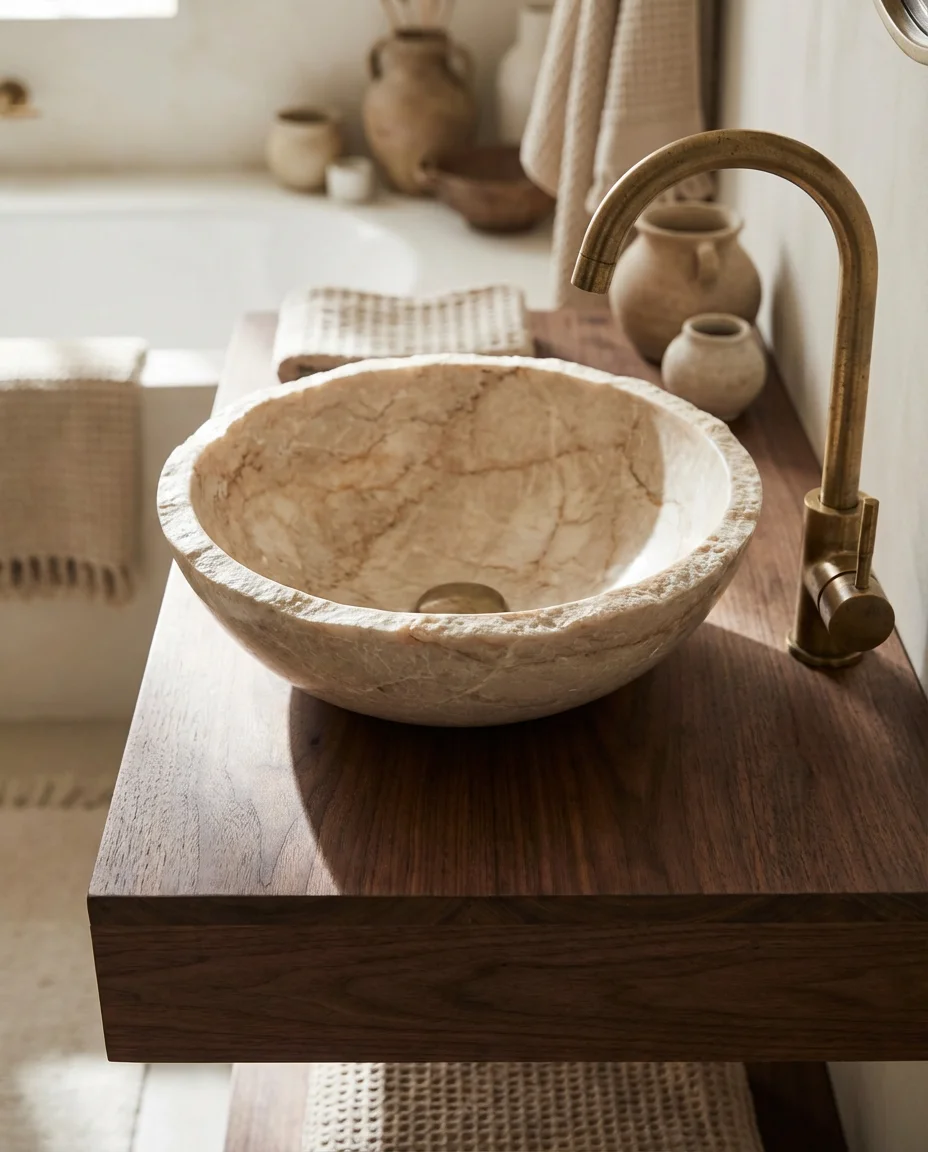
Stone vessel sinks need taller faucets—standard heights won’t clear the bowl’s rim. Look for vessel faucets in the 10–14 inch height range, and choose a waterfall or gooseneck style for the most aesthetically harmonious result. Practical note: stone sinks require sealing to prevent staining, particularly if you’re working with travertine or lighter marble tones. A quality stone sealer applied once a year keeps the surface looking pristine without altering the natural beauty of the material.
18. Sage Green and Warm White as a Signature Color Story
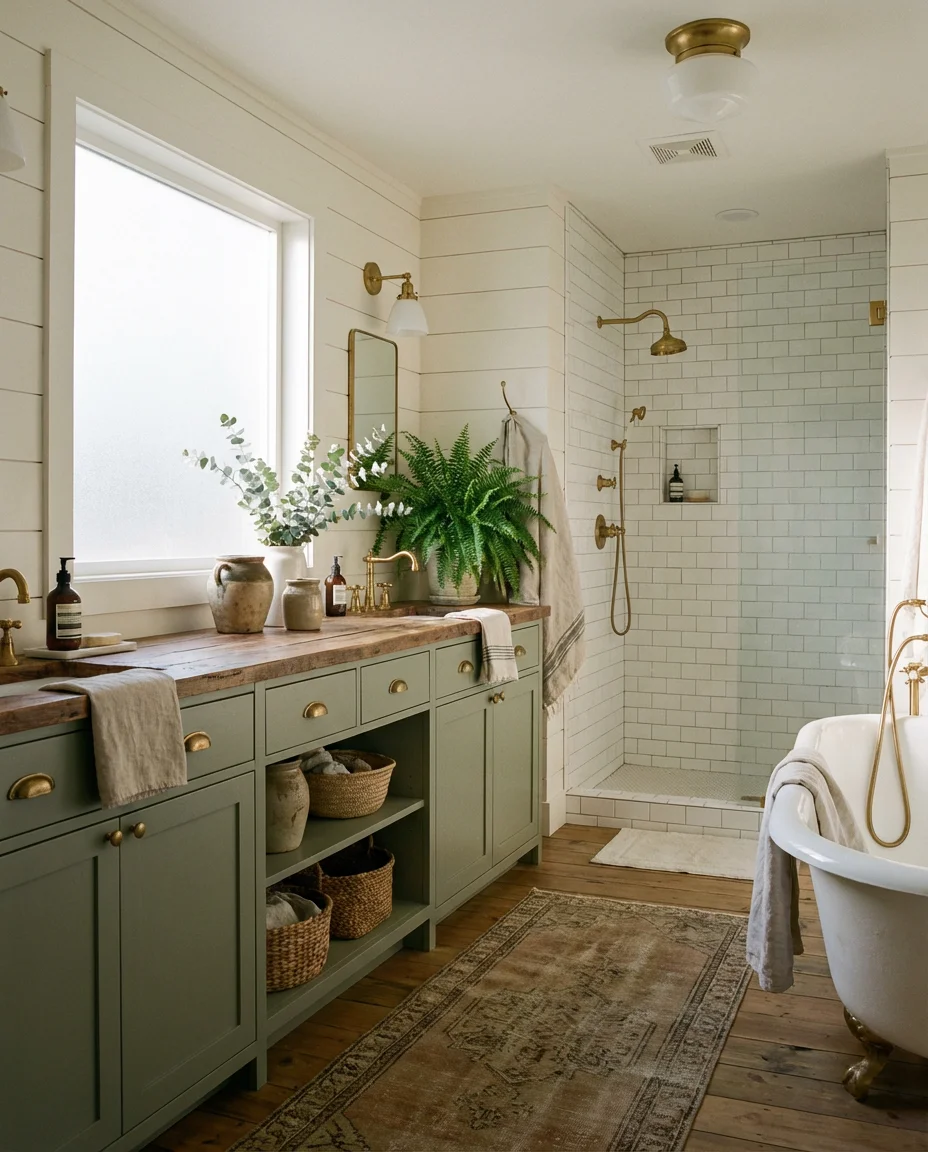
If you’re looking for a color combination that feels simultaneously timeless and very much of 2026, sage green and warm white is the answer. Applied to a farmhouse bathroom, this palette translates to sage subway tile or painted cabinetry against white shiplap walls—or the reverse, white tile with a sage vanity and matching wallpaper band. The beauty of this pairing is how naturally it accommodates both warm and cool light, making it universally flattering regardless of window exposure.
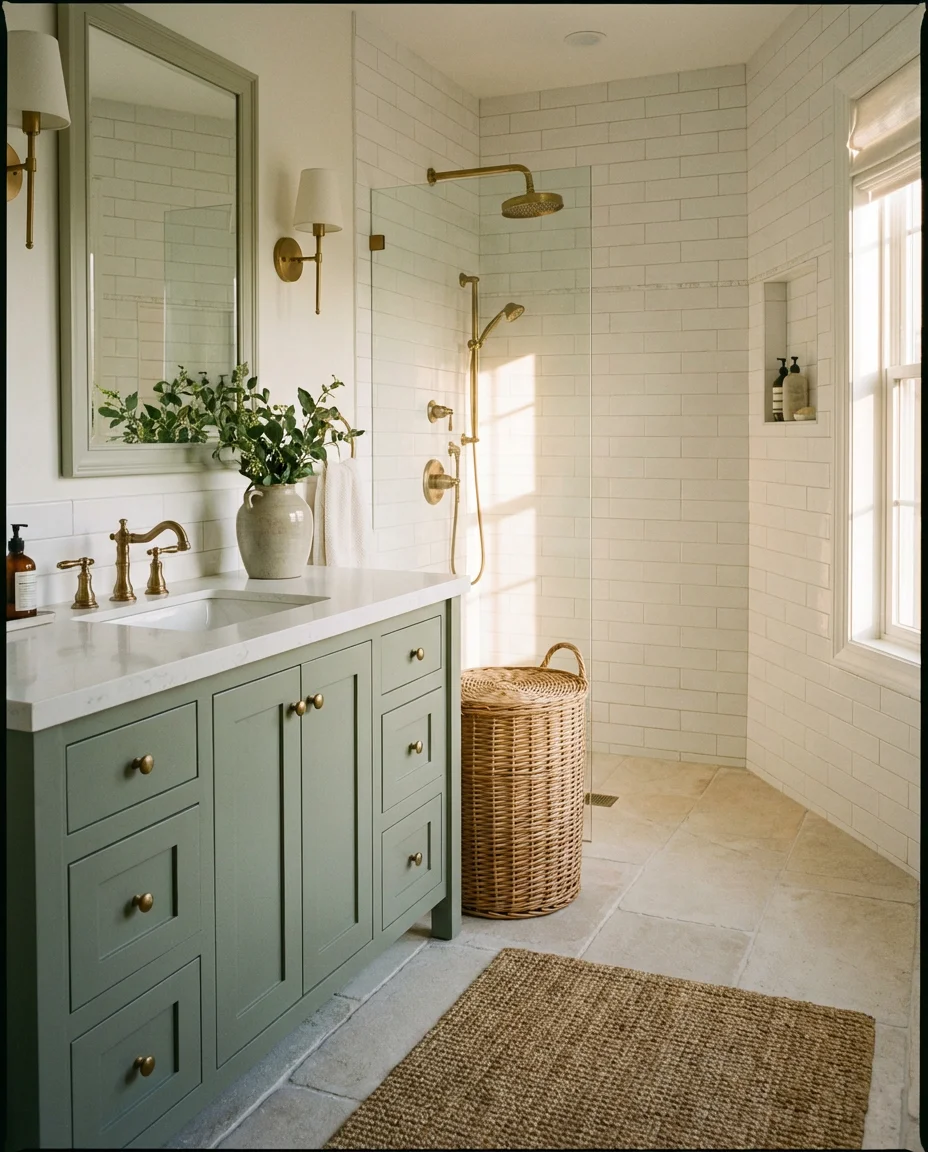
This palette is having a particularly strong moment in new construction homes across the Sun Belt—Texas, Georgia, Florida—where builders and buyers alike have gravitated toward the color’s association with calm, nature, and livability. Interior stylists note that sage green in the bathroom is especially effective when you add natural texture: a jute rug, wicker storage baskets, or a wooden stool near the tub. The organic materials keep the green from feeling flat and push the whole room into something that feels genuinely gathered.
19. Subway Tile Shower With a Herringbone Floor Insert
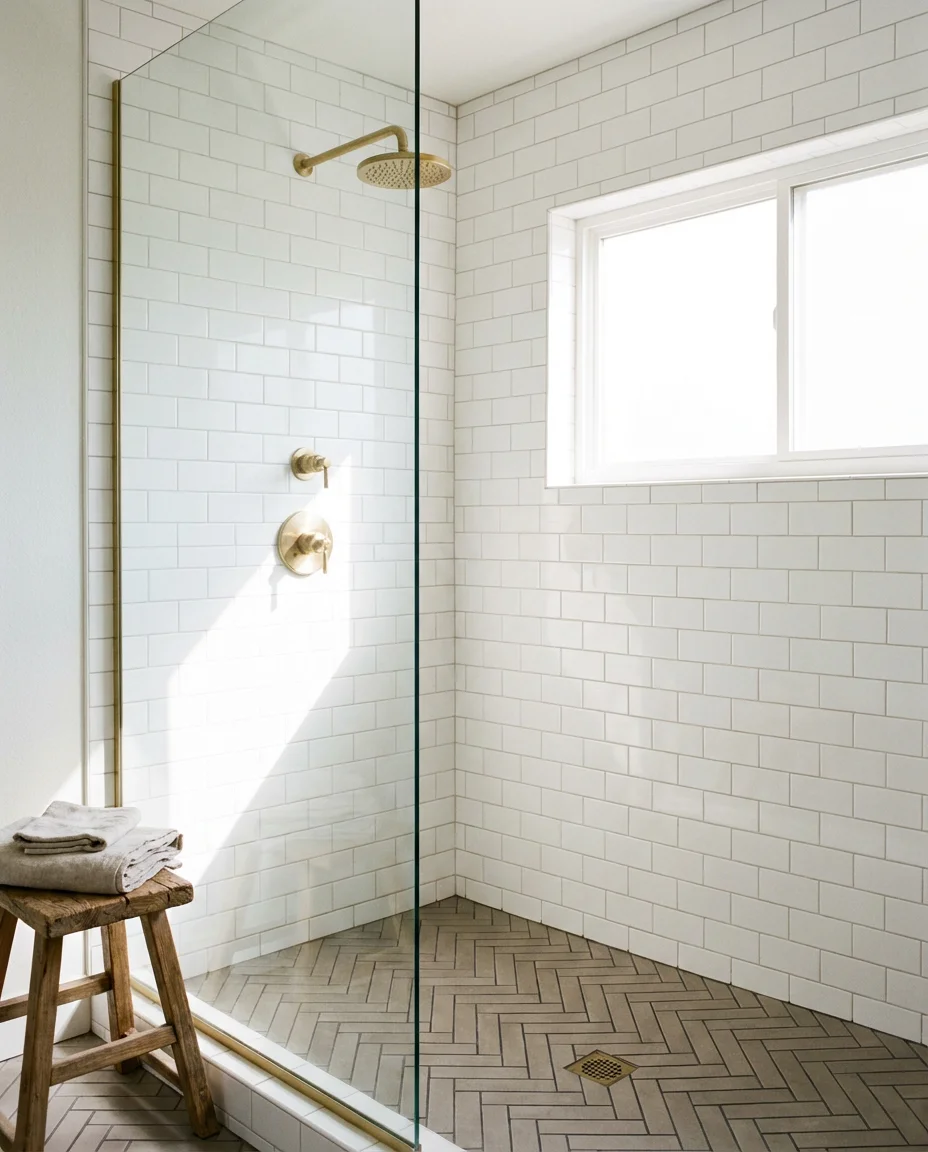
Classic white subway tile in a stacked or offset pattern remains the reliable backbone of farmhouse shower design. In 2026, the creative update is a herringbone insert at the shower floor—either in a contrasting tone (warm gray, terracotta, or sage) or the same white tile arranged at a 45-degree angle. The floor insert reads as a detail rather than a full pattern, adding visual interest without disrupting the clean simplicity of the wall tile. Tile ideas like this are exactly what elevate a competent remodel into a considered one.
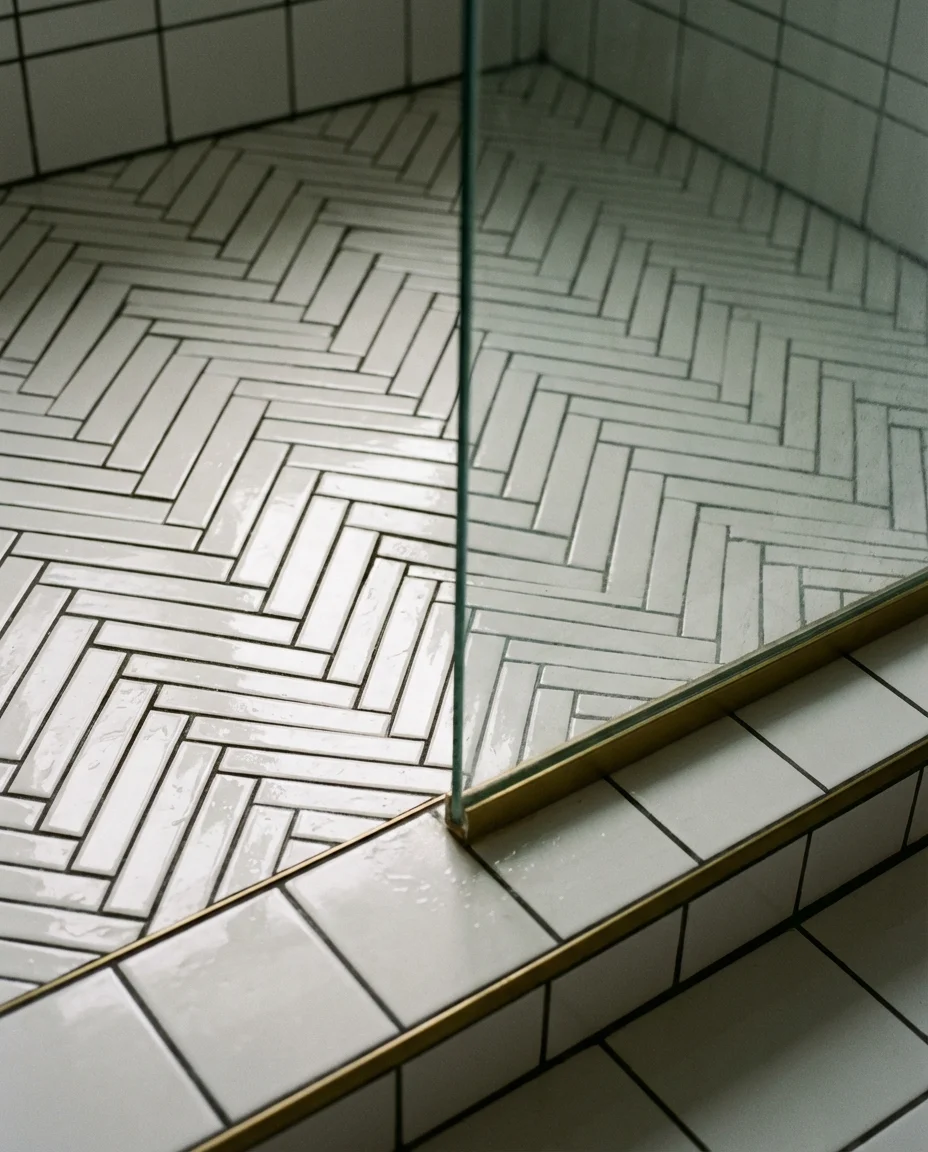
Tile work is one of those areas where the installation quality matters as much as the material selection. Herringbone patterns in particular are unforgiving of slightly misaligned cuts—an experienced tile setter is worth every dollar. On average, herringbone floor tile installation runs 15–25% more than straight-lay because of the additional cuts and time involved. Get at least three quotes, ask to see recent project photos, and don’t be swayed by the lowest number if the work history isn’t there to back it up.
20. Linen and Rattan Accessories for Texture Layering
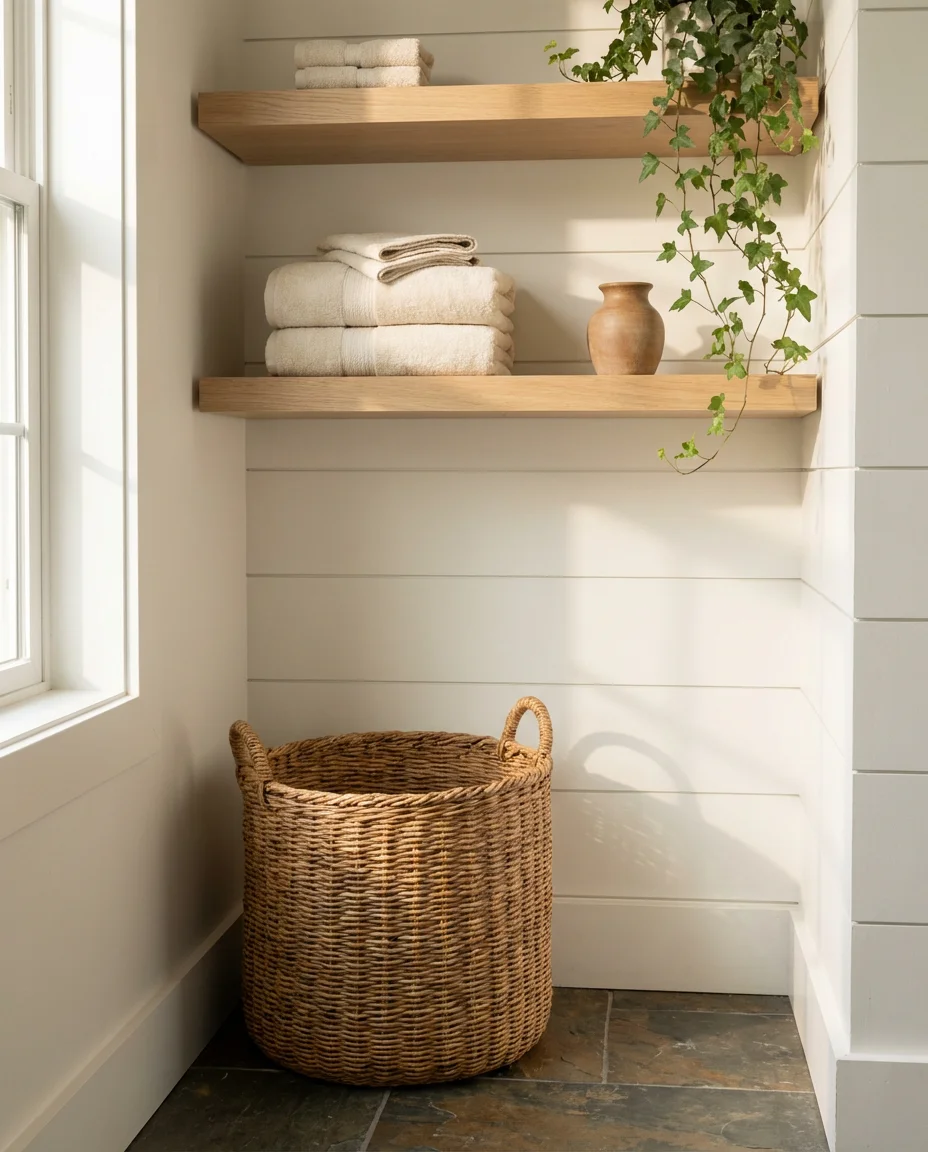
The accessories in a farmhouse bathroom carry a surprising amount of design weight. Swap out plastic and chrome bins for rattan baskets, woven storage boxes, and tightly folded linen towels stacked on open shelves. These decor ideas are inexpensive, endlessly adjustable, and instantly transform a sterile-feeling bathroom into something warm and personal. The layering principle—different materials in similar tones—is the same one that makes a well-designed living room feel cohesive. It works just as well in a 60-square-foot bathroom.
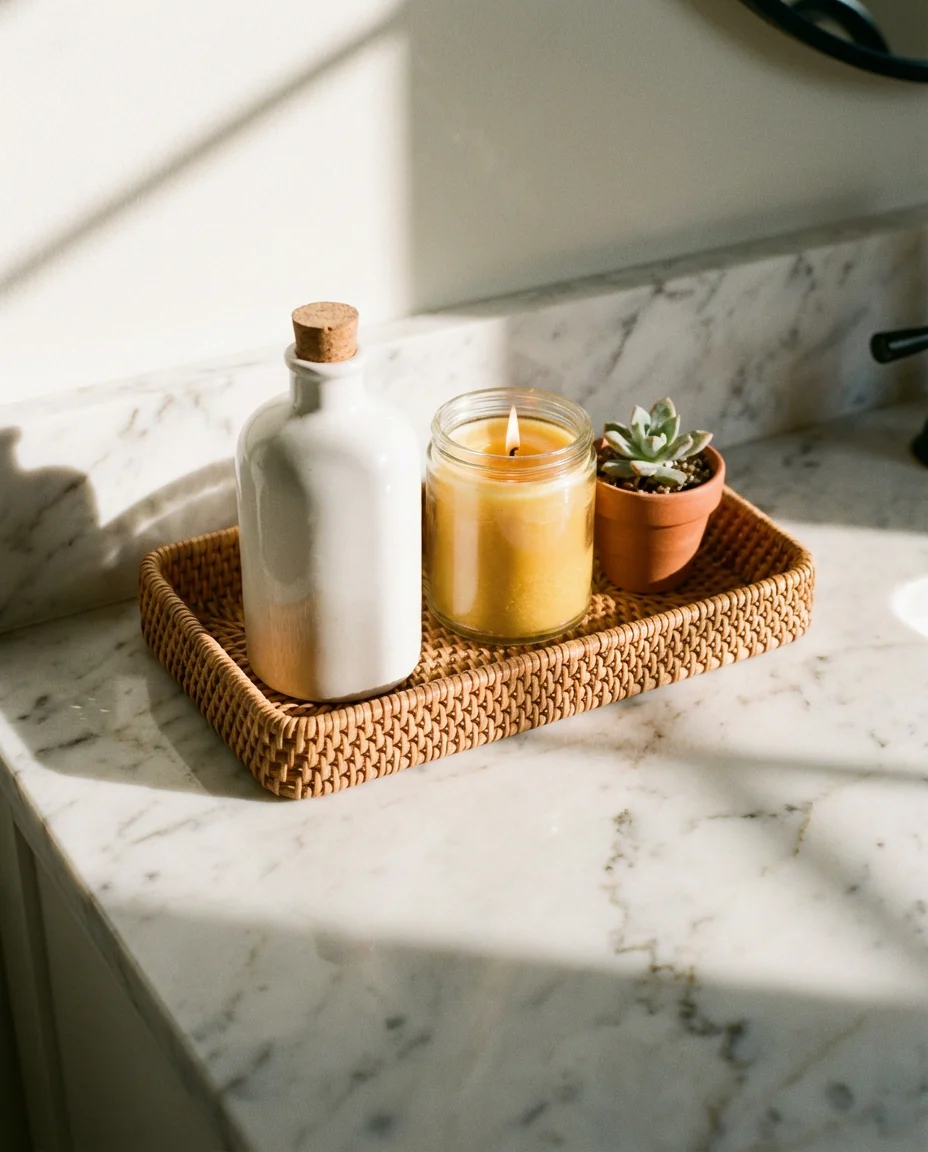
A small rattan tray on the vanity counter corrals daily-use items—lotion, a candle, a small plant—and keeps them from looking cluttered. Larger rattan baskets on the floor beside the tub hold extra towels or blankets and add height variation that makes the room feel curated. The combination of linen textures with a woven natural material is one of those farmhouse styling moves that photographs beautifully on Instagram and Pinterest and feels even better when you’re actually using the space.
21. Rainfall Shower With Vertical Subway Tile Stack
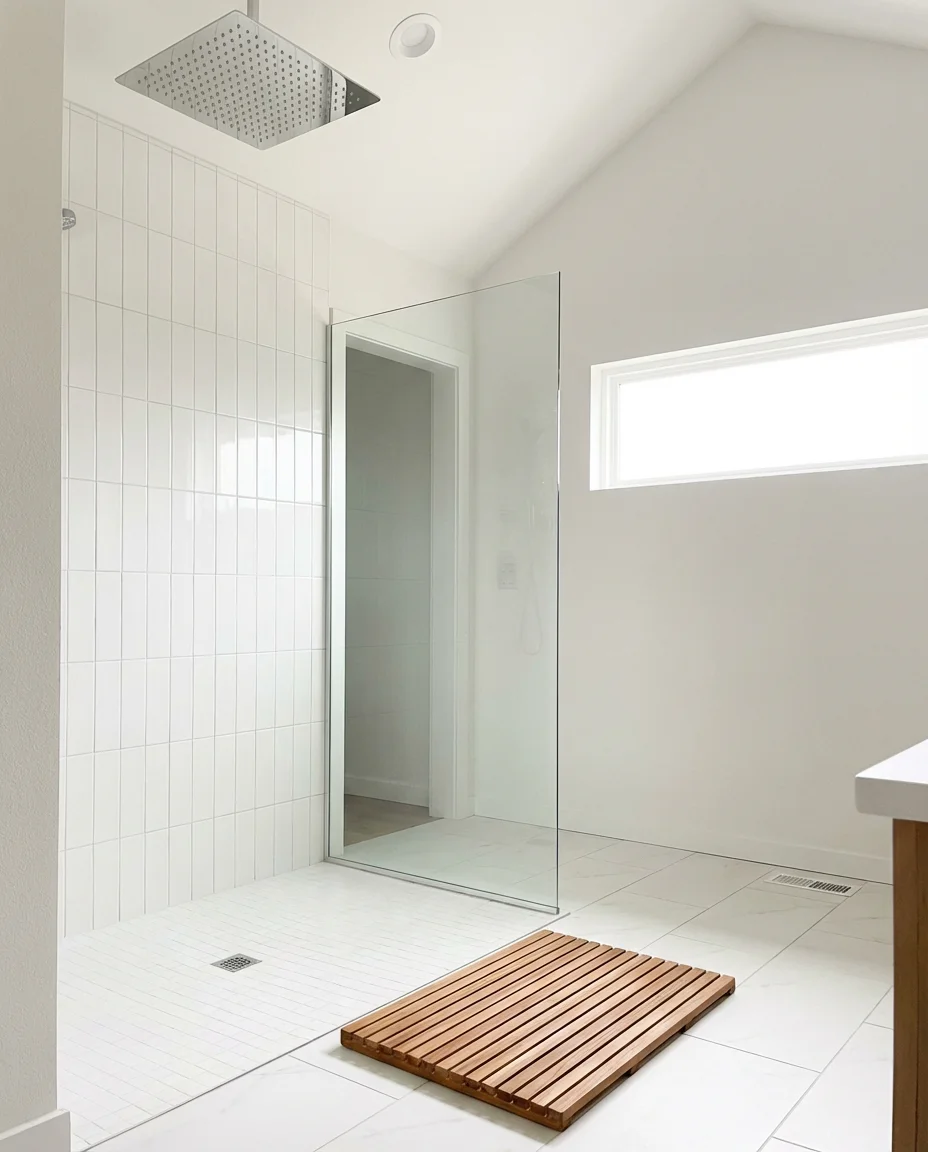
A ceiling-mounted rainfall showerhead combined with vertically stacked subway tile is one of the most quietly luxurious shower configurations in the modern farmhouse toolkit. The vertical tile stack draws the eye upward, making the ceiling feel higher and the master bath feel larger. The rainfall head itself—ideally 10–12 inches in diameter and ceiling-recessed rather than wall-mounted on an arm—completes the spa reference without requiring expensive stone or marble to back it up. White subway tile and a good rainfall head can do extraordinary things on a reasonable budget.
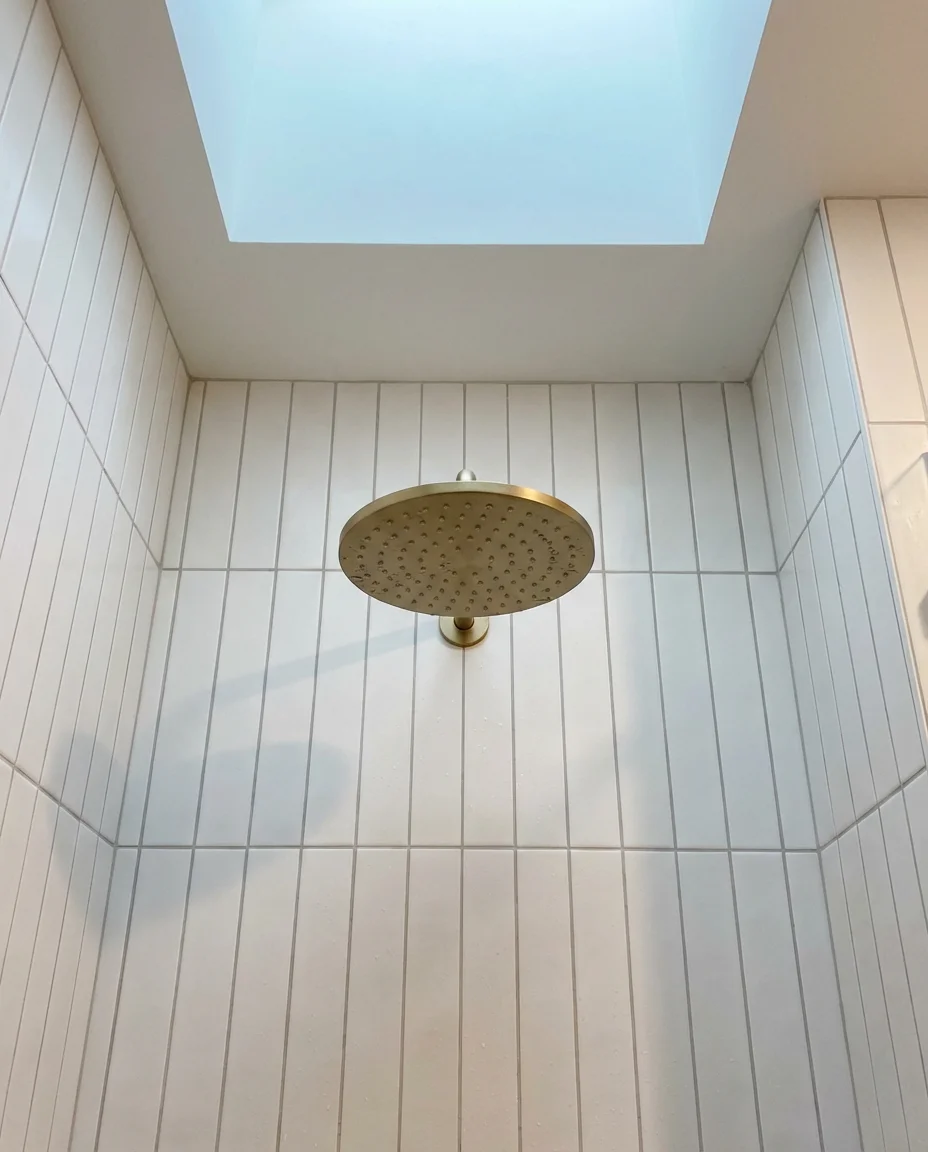
Installing a ceiling-recessed rainfall showerhead requires planning in advance—ideally at the rough-in stage of a remodel, before walls are closed. If you’re retrofitting, a surface-mounted ceiling arm is the more practical option and still delivers the same overhead rain experience. Pair the shower with a simple frameless glass panel (no door, just a fixed screen) and a teak shower mat for the complete picture. The teak mat is a practical detail that looks considered and keeps the organic farmhouse material story going all the way to the shower floor.
22. Warm Ambient Lighting With Dimmer Controls
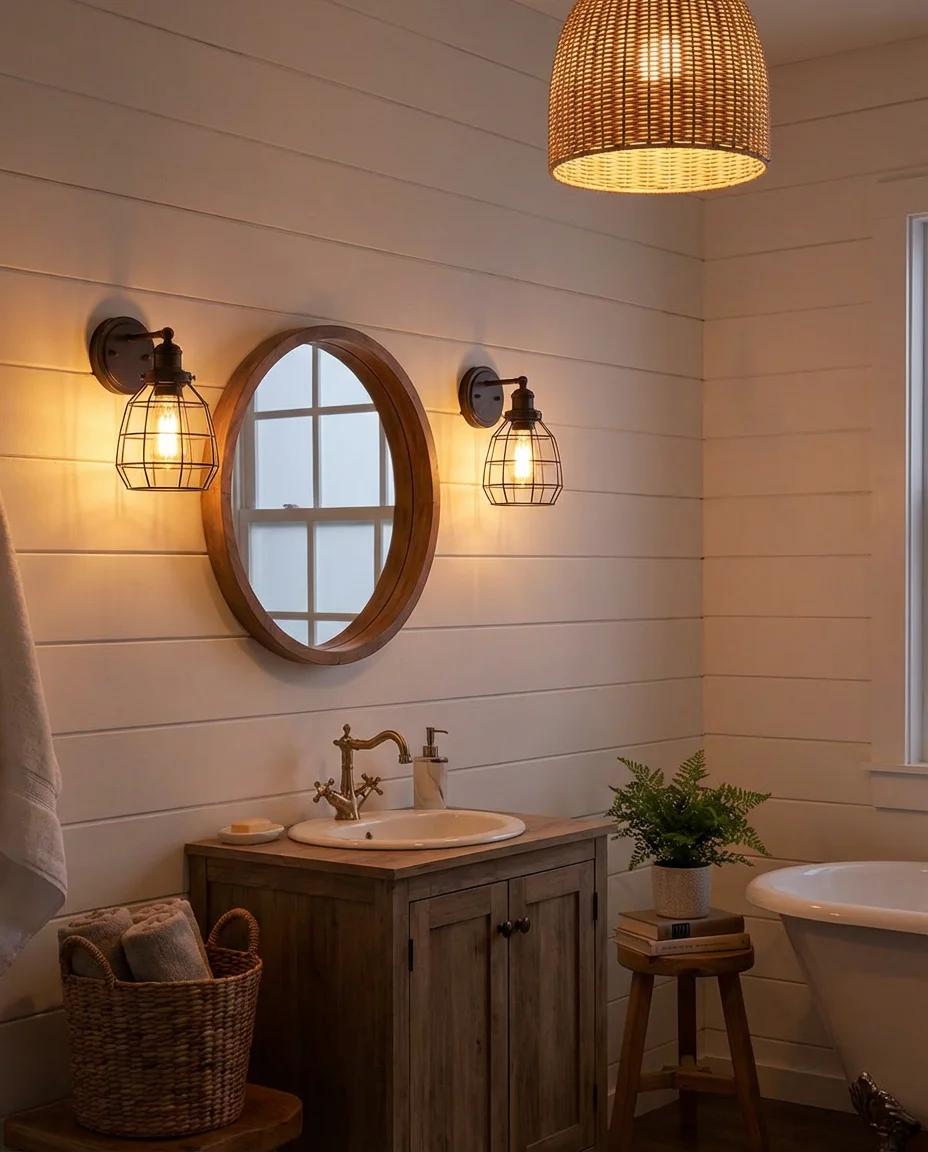
In a modern farmhouse bathroom, lighting is the difference between a space that looks good in photos and one that actually feels good to live in. Warm ambient lighting—especially when controlled by a dimmer—allows the bathroom to serve double duty: bright and functional in the morning, soft and restorative in the evening. Pair vintage-filament pendants or cage-style wall sconces with a separate overhead source on a separate dimmer switch for maximum flexibility. The rustic character of the fixtures grounds the farmhouse aesthetic while the dimming technology keeps it squarely modern.
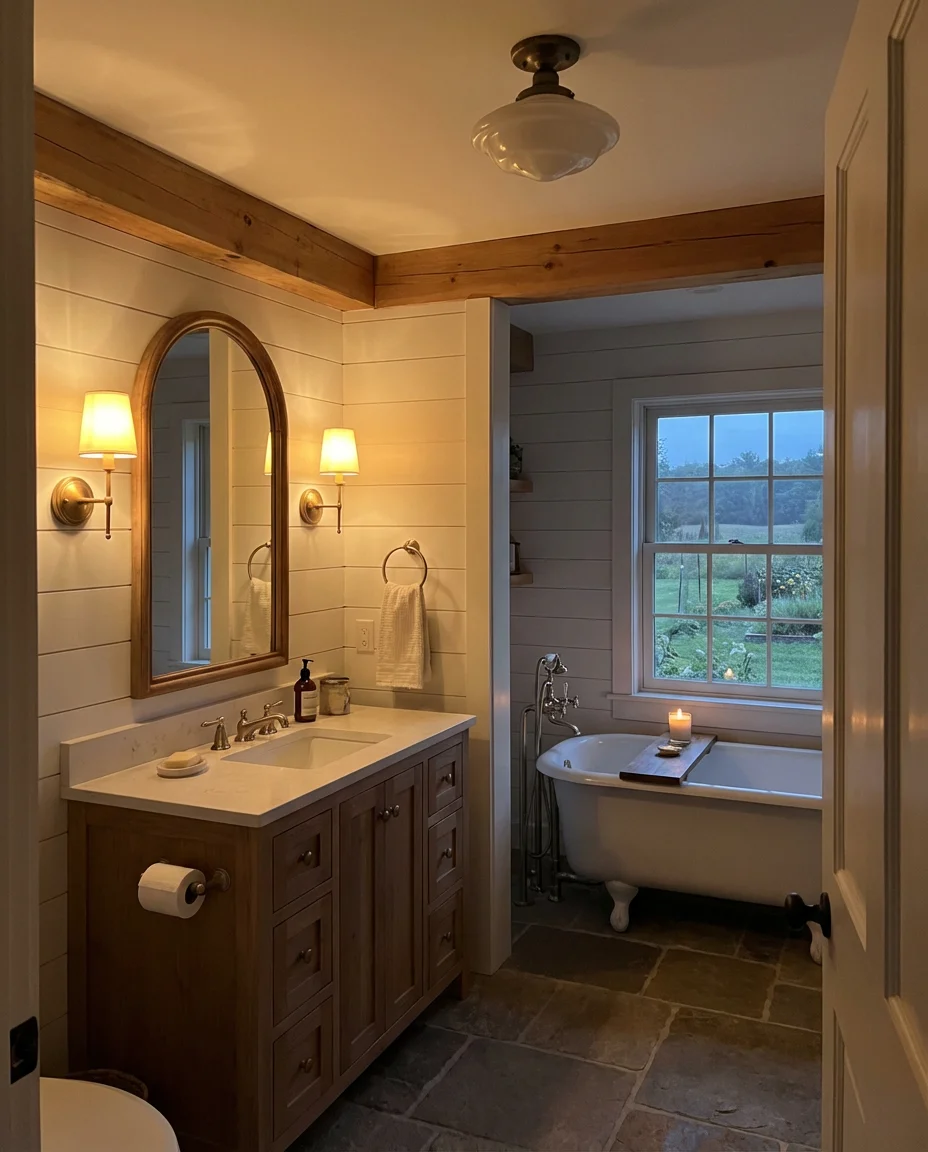
Smart dimmers compatible with LED bulbs have made this upgrade extremely accessible—Lutron’s Caséta line, for example, works with most home systems and doesn’t require any new wiring beyond swapping out the switch. Electricians typically charge one to two hours of labor to install a dimmer switch. The return on that small investment—the ability to run a candlelit bath at 10 PM in a room that felt clinical an hour ago—is one of the highest satisfaction-per-dollar upgrades in any bathroom renovation.
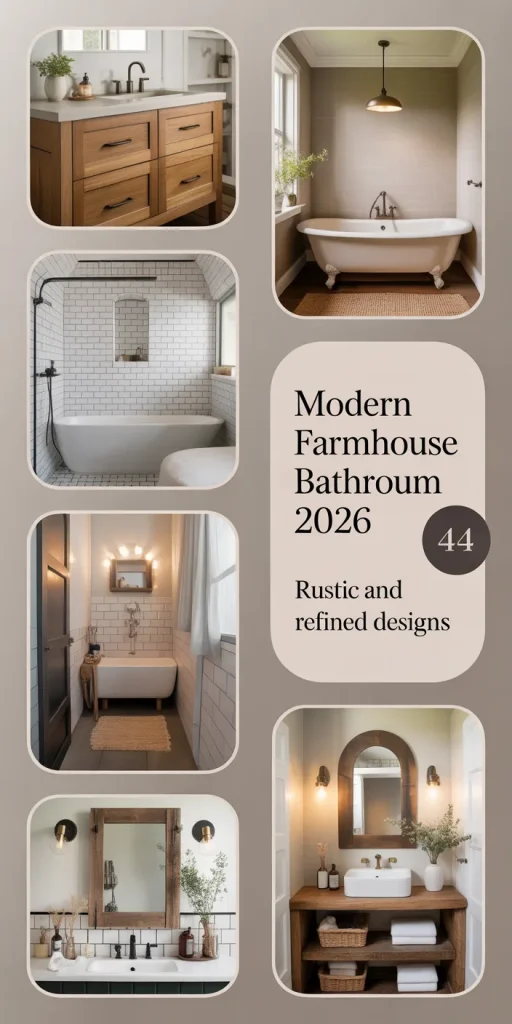 Conclusion
Modern farmhouse bathrooms in 2026 are anything but one-note—they’re spaces where organic textures meet architectural intention, where moody color and warm light coexist, and where every material tells a small story about the people who live there. Whether you’re taking on a full remodel or simply swapping out a few accessories, there’s something in these 22 ideas for every budget, every taste, and every stage of the process. We’d love to know which ideas are speaking to you most—drop your thoughts, questions, or photos of your own space in the comments below. What’s on your farmhouse bathroom wishlist for this year?