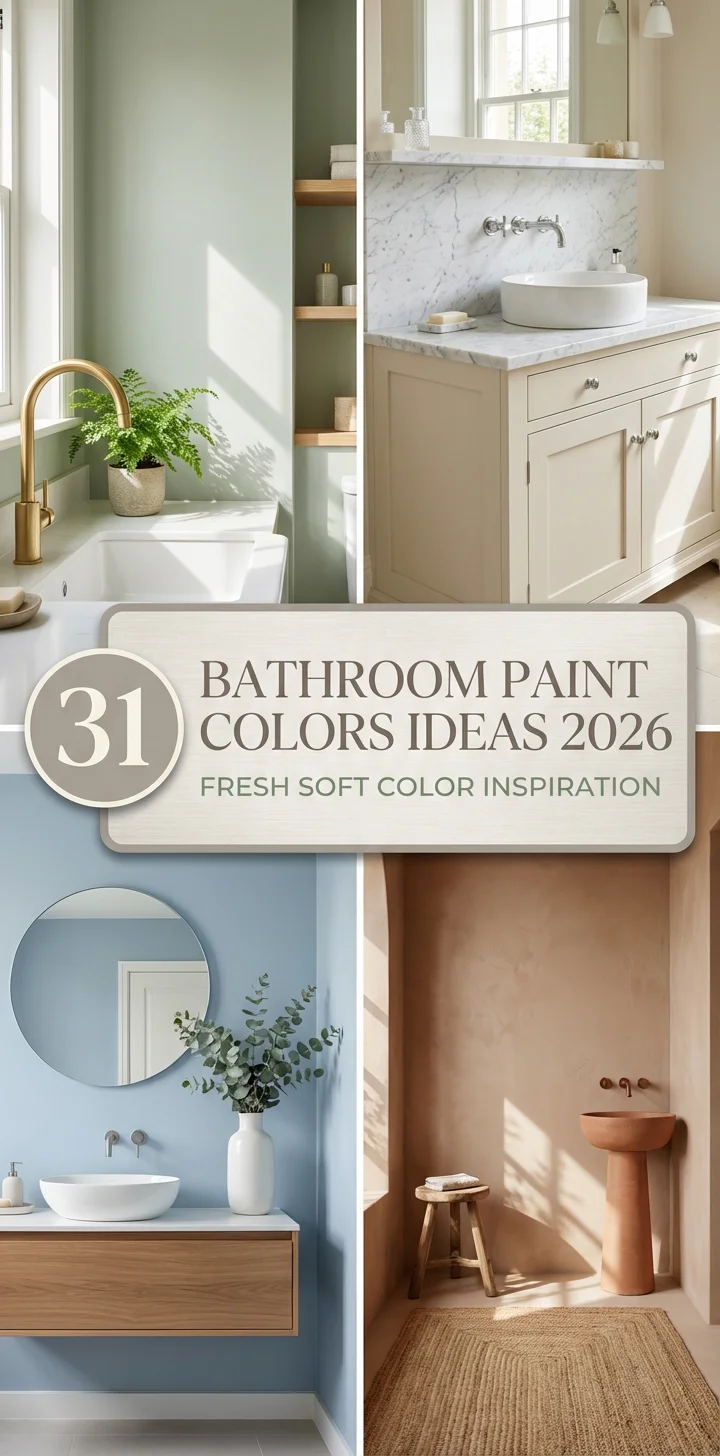
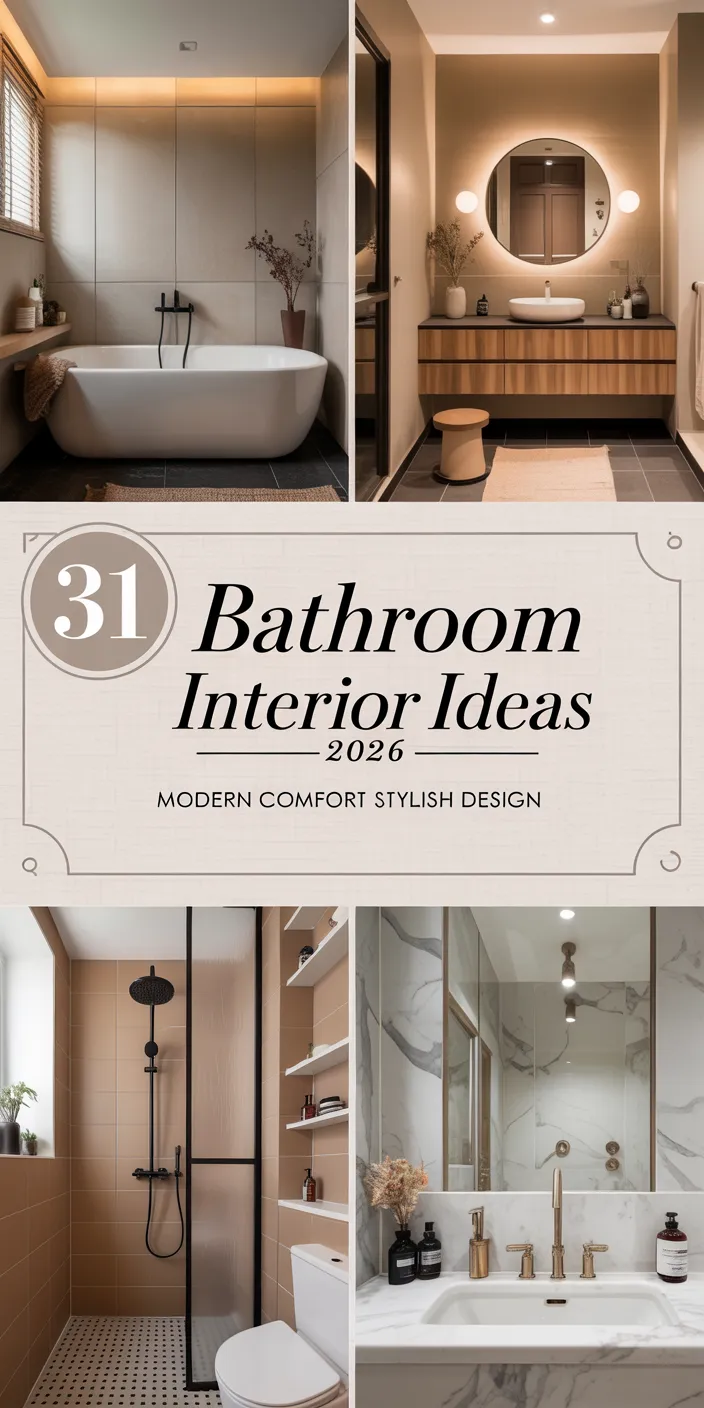
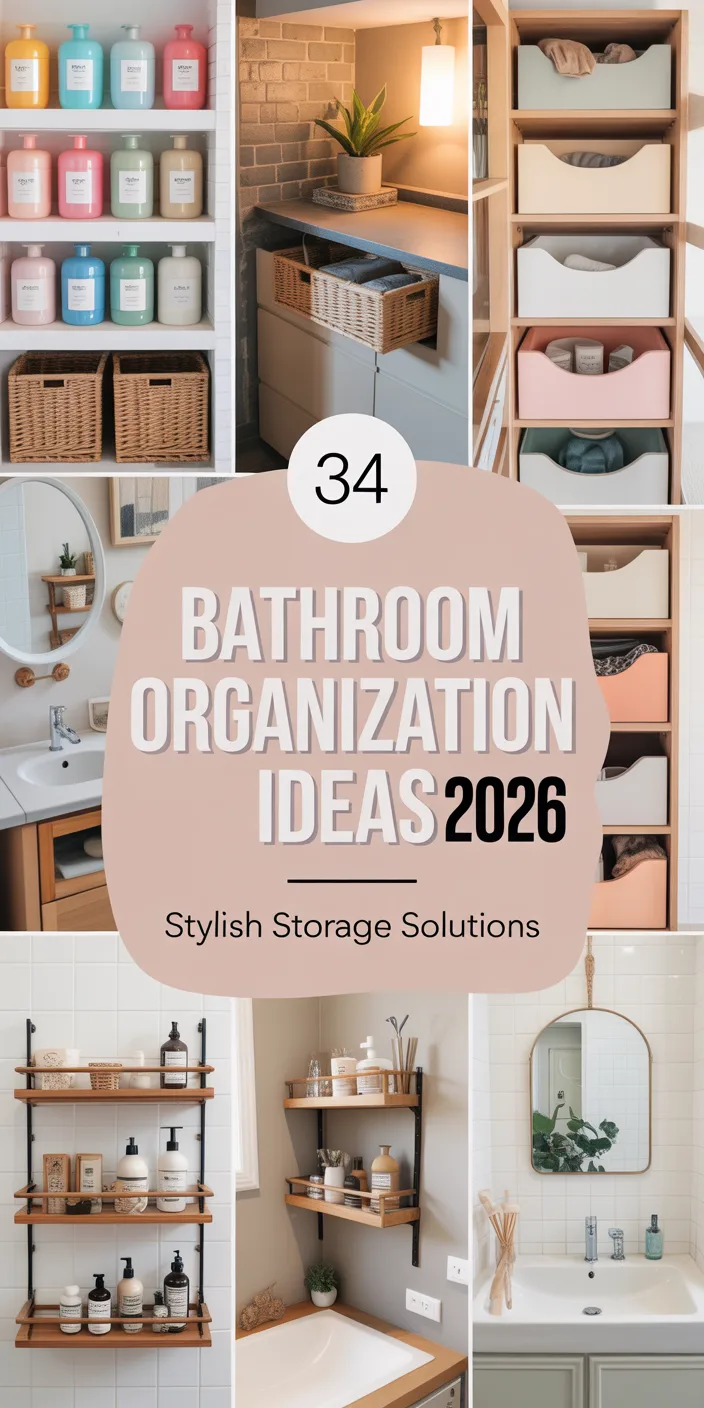
Bathroom design is having a serious moment, and 2026 is proving to be its most exciting year yet. Americans are turning to Pinterest in droves for ideas that balance beauty, function, and personal expression—whether they’re refreshing a tiny apartment bath or reimagining a sprawling master suite. From earthy, organic textures to bold retro-inspired palettes, this year’s trends pull from every corner of design history. In this guide, you’ll find fresh, Pinterest-ready ideas to help you create a bathroom that feels intentional, stylish, and unmistakably yours.
1. Organic Stone and Warm Wood Vanities
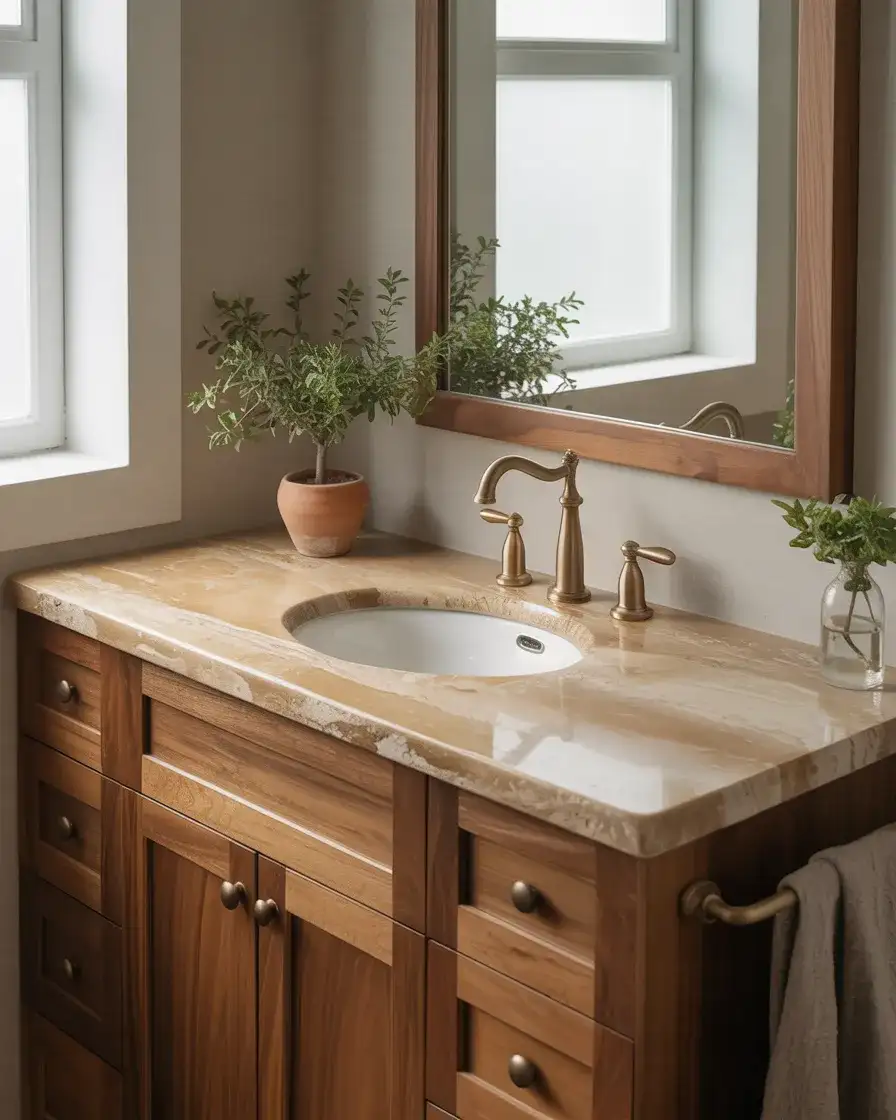
There’s something deeply grounding about a bathroom built around natural materials. Organic stone countertops—think honed travertine, limestone, or leathered granite—paired with warm walnut or white oak vanity cabinetry bring an earthy energy that feels like a spa retreat tucked inside a home. This look has become one of the most-pinned bathroom aesthetics for 2026, especially among homeowners leaning into the wellness movement. It works beautifully in both master bath settings and secondary baths that deserve a little elevation.
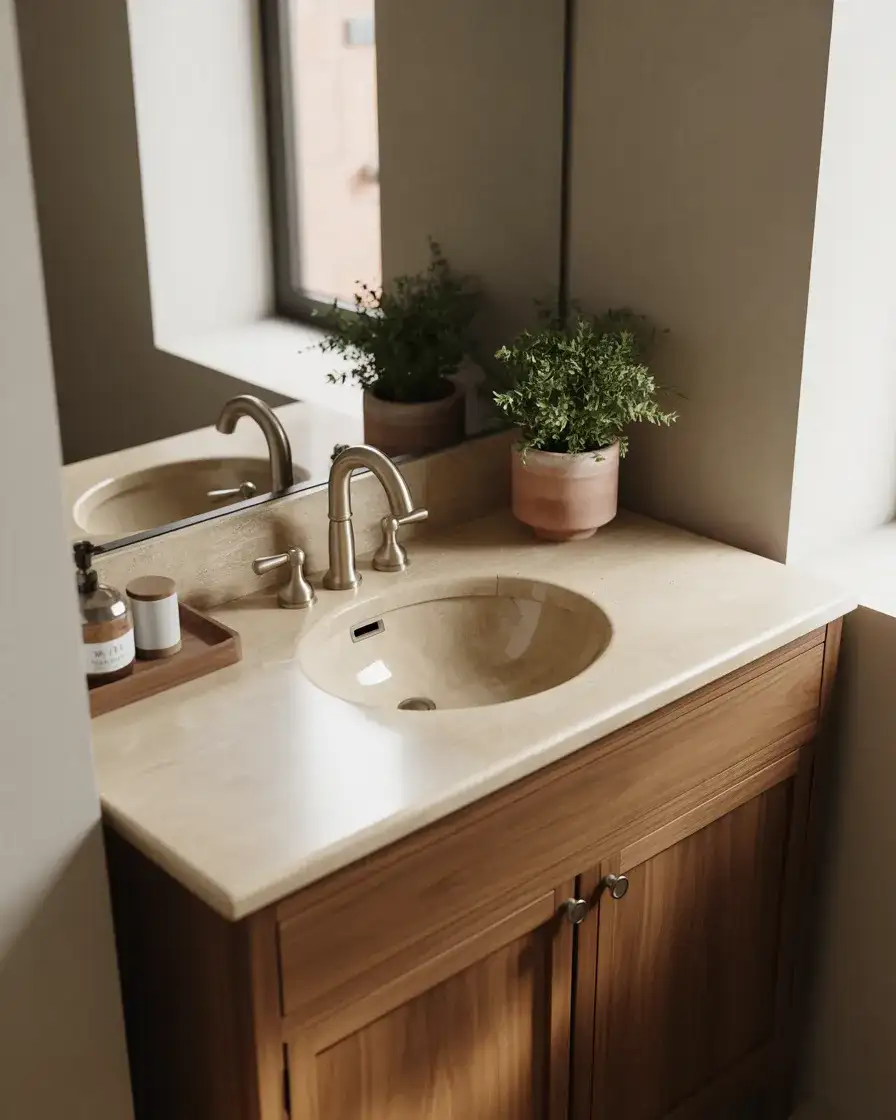
If you’re worried about budget, you don’t have to spring for solid stone—high-quality stone-look porcelain slabs can deliver the same visual richness for a fraction of the cost. Home improvement retailers like Floor & Decor and Lowe’s now stock remarkable options under $8 per square foot. The key is pairing them with genuinely warm wood tones, not orange-tinted stain finishes. When the materials feel honest, the whole space reads as intentional rather than trend-chasing.
2. Black and White Graphic Tile Floors
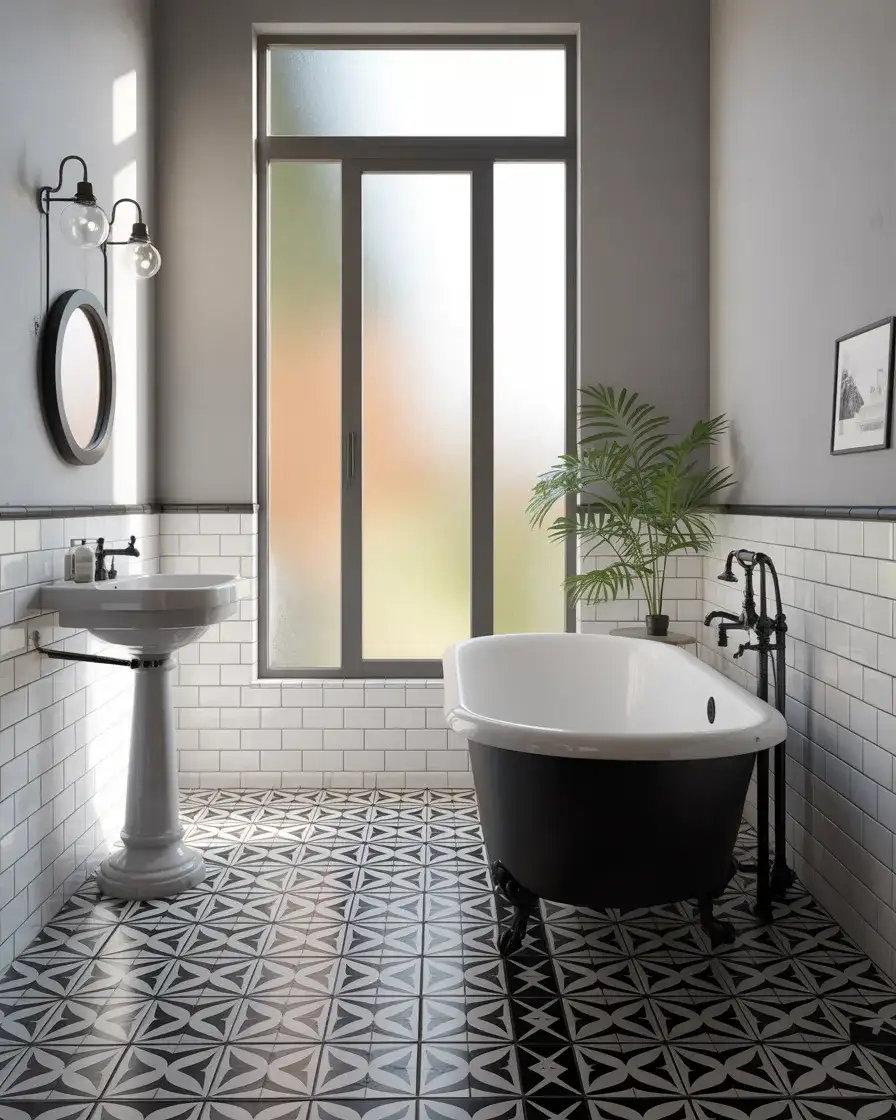
Few design choices are as timelessly satisfying as a black and white tile floor, and 2026 is seeing a major revival of graphic patterned versions—encaustic cement tiles, bold hexagons, and checkerboard arrangements that feel simultaneously vintage and thoroughly modern. These floors turn the ground plane into a design statement, anchoring the entire room without needing much else to compete. They suit a wide range of styles, from the crisp minimalism of a New York apartment to the relaxed charm of a coastal bungalow.
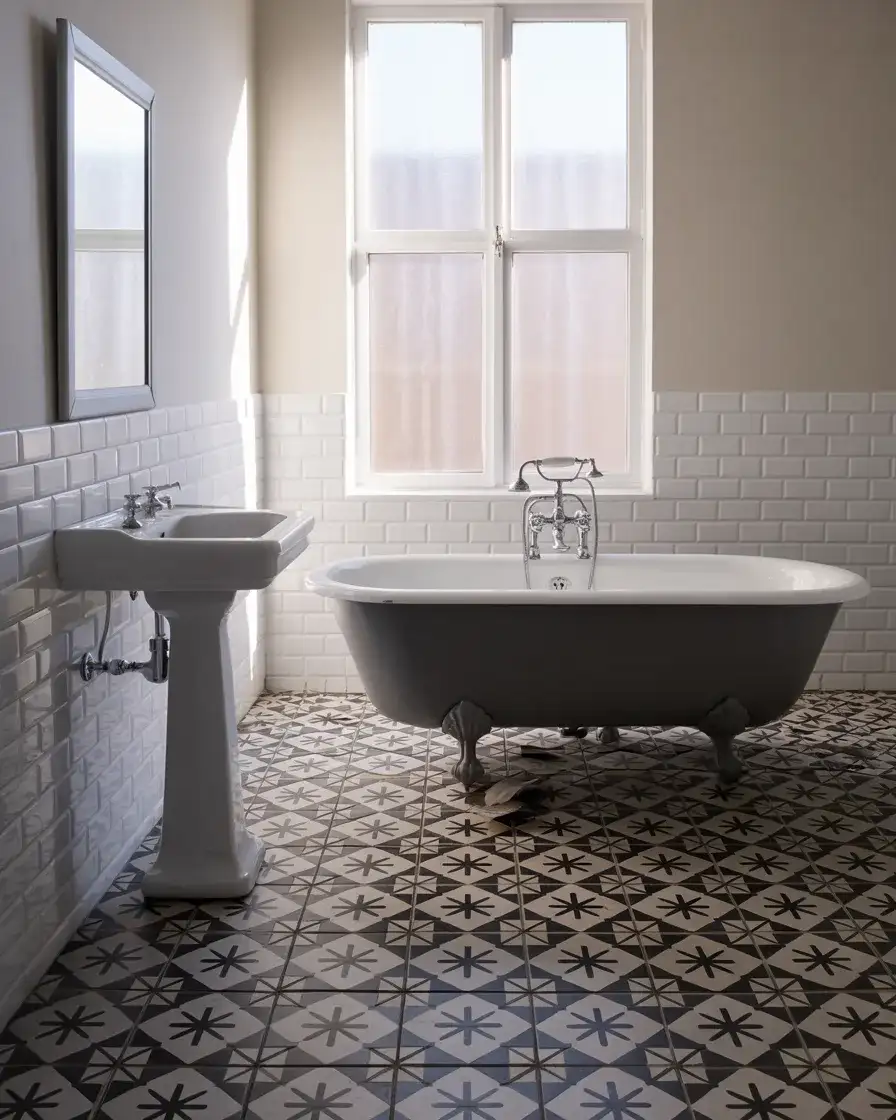
One common mistake homeowners make with graphic floors is pairing them with equally busy walls. Let the floor be the star—keep wall tile simple, like large-format white subway or smooth plaster, so the pattern can breathe. A designer trick is to extend the floor tile a few inches up the wall as a baseboard alternative, which visually raises the ceiling and gives the space a polished, custom-built feel that photographers love.
3. Mid-Century Modern Bathroom Revival
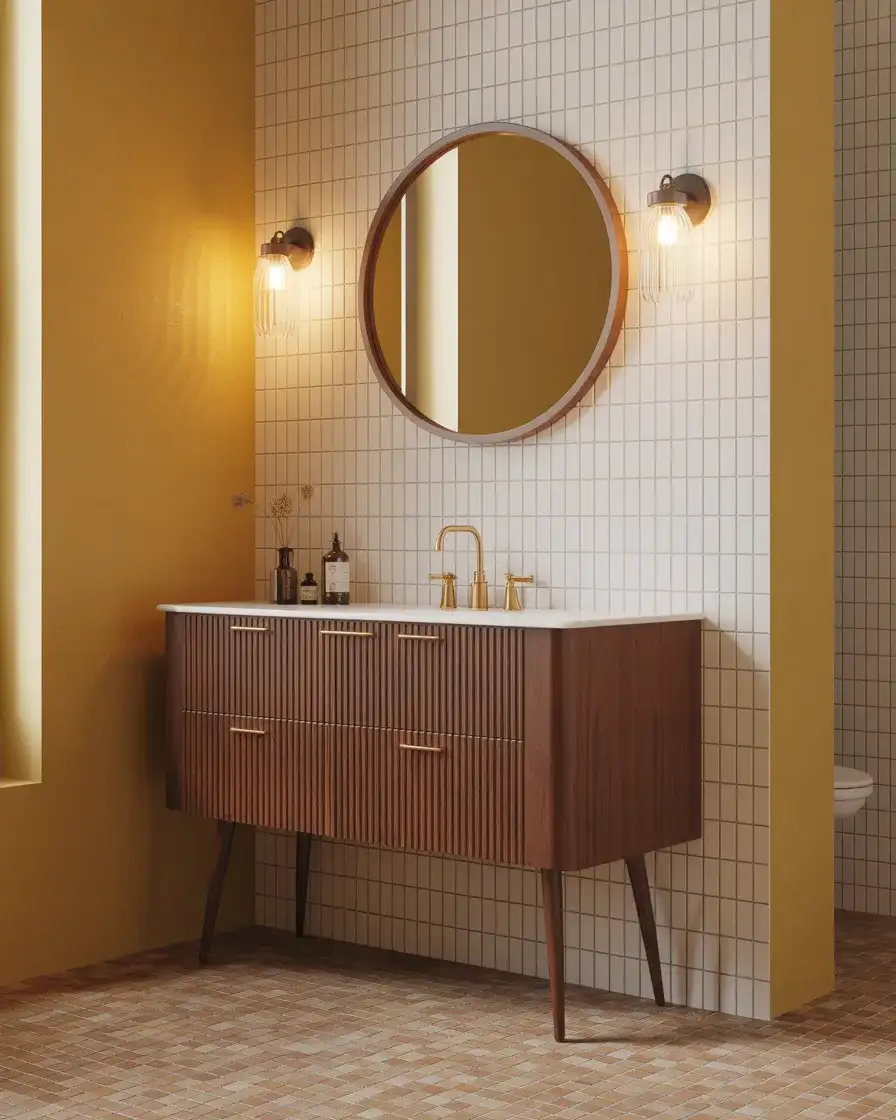
The mid-century aesthetic has never really left—it just keeps finding new expressions. In 2026, the retro mid-century bathroom gets a fresh coat of relevance with tapered-leg vanities, fluted glass sconces, warm amber and avocado color palettes, and fixtures with a distinctly 1960s silhouette. Think walnut-grain cabinetry paired with round wall mirrors and textured wallpaper in mustard or rust tones. This is the interior design direction that feels nostalgic without being kitschy—it’s sophisticated time travel.
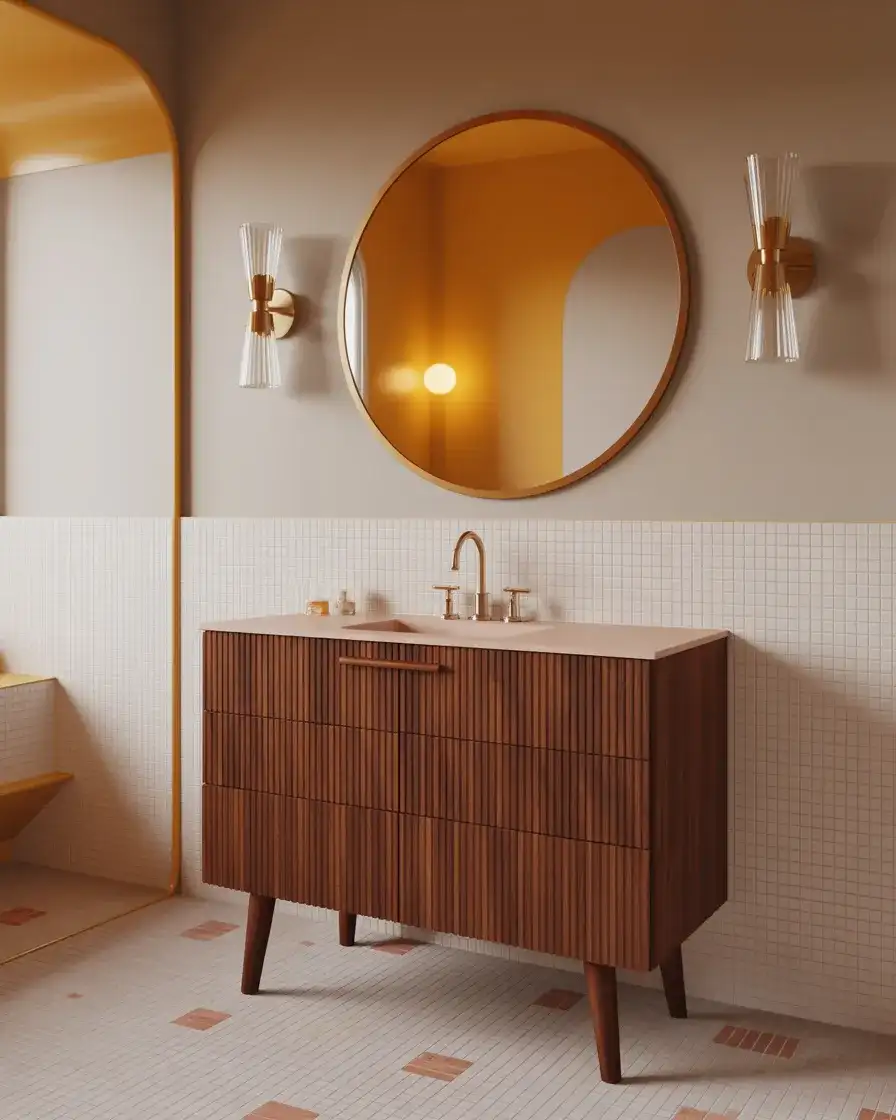
Interior designer Paloma Contreras has noted that the mid-century revival resonates with younger homeowners because it offers personality without maximalism—every element earns its place. For apartments with dated builder-grade finishes, swapping out a basic mirror for an oversized round one and adding a retro sconce can transform the room for under $300. It’s one of the highest-impact, lowest-cost transformations in the bathroom remodeling world right now.
4. Earthy Terracotta and Warm Beige Palettes
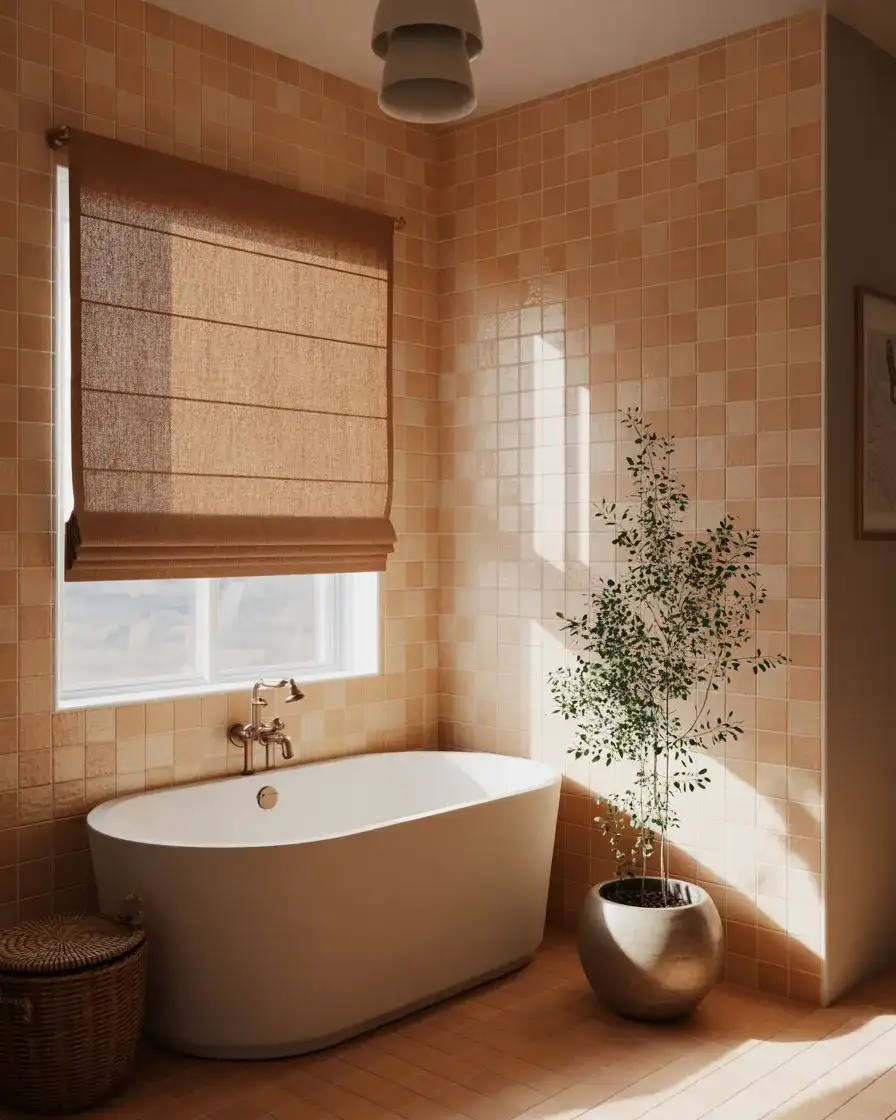
Stepping away from the cool grays and whites that dominated the last decade, earthy bathroom palettes in terracotta, warm sand, and dusty rose are defining 2026’s most-loved color interior design direction. These hues feel sun-warmed and grounded—like the walls of an adobe house or a Marrakech riad. They work especially well in bathrooms that get morning light, where the warm pigments glow rather than muddy. Whether you go all in with terracotta zellige tiles or simply introduce the color through towels and a painted ceiling, the effect is undeniably cozy.
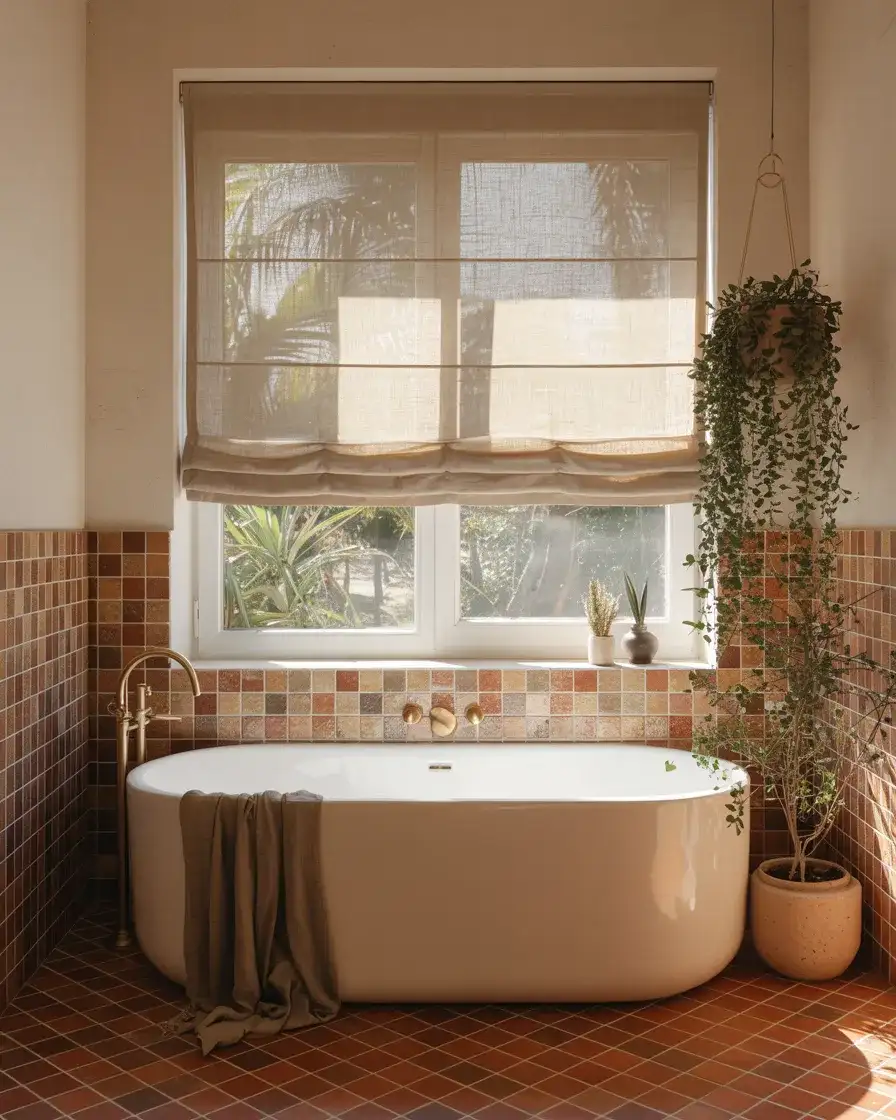
A real homeowner in Austin, Texas, recently shared her transformation online: she painted her builder-beige bathroom ceiling in Benjamin Moore’s “Warm Caramel” and immediately noticed how it changed the whole room’s mood—suddenly the standard white fixtures felt intentional rather than plain. It’s a reminder that color doesn’t always require a renovation. Sometimes a single painted surface, a terracotta pot, or a set of rust-toned towels is all it takes to turn a forgettable bathroom into a favorite room.
5. Moody All-Black Bathroom Statements
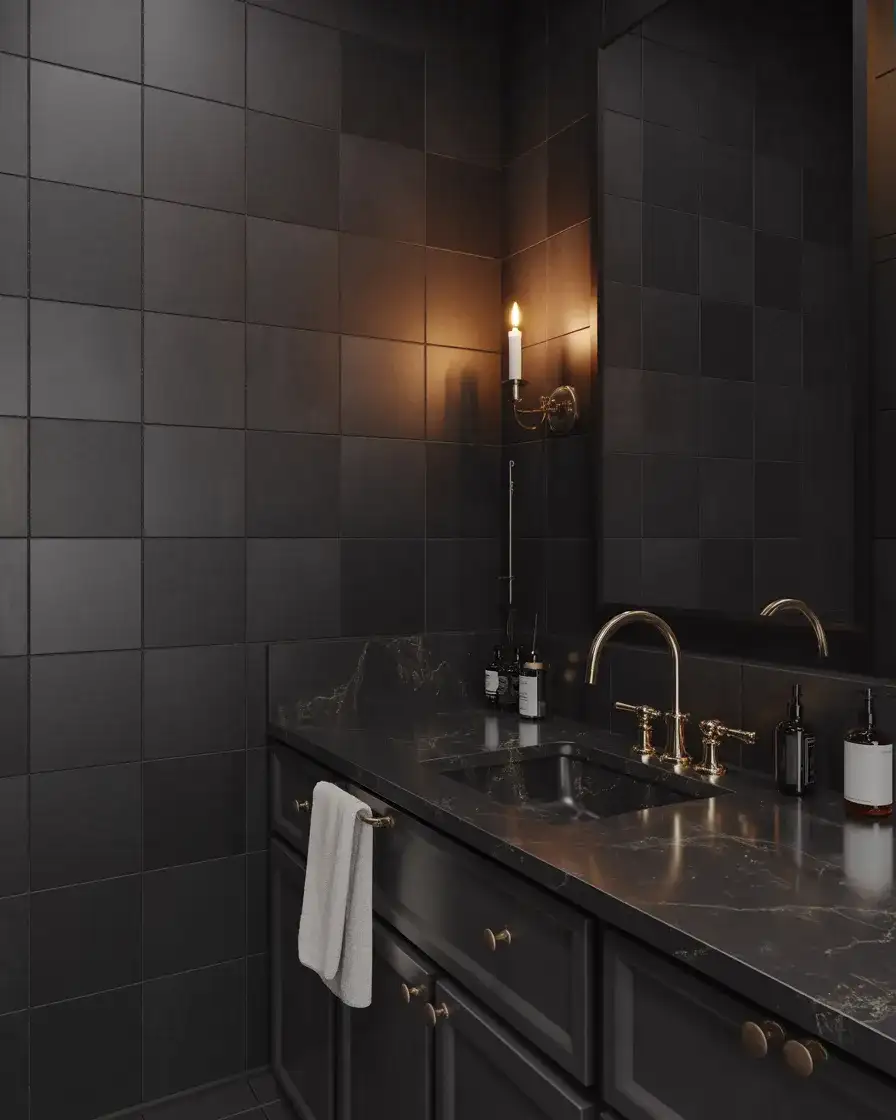
There is something undeniably daring about committing to a black bathroom—and when it’s done well, it’s stunning. In 2026, the all-black or near-black bathroom is no longer reserved for luxury hotels. Matte black tile, dark-veined marble, black-painted shiplap walls, and obsidian-toned plaster are showing up in homes across the country. Paired with warm brass or unlacquered bronze fixtures, the effect is dramatic but grounded. This look proves that luxury doesn’t require light tones—sometimes the darkest rooms feel the most indulgent.
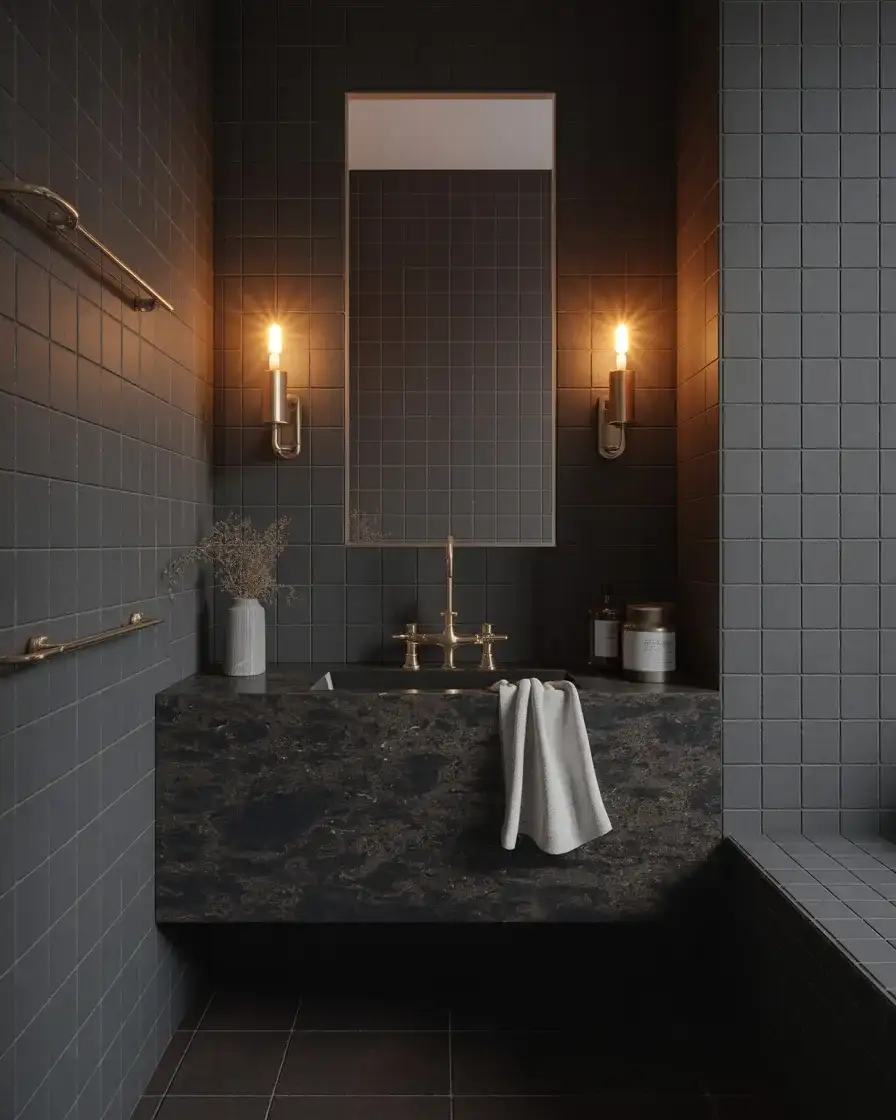
Where it works best: moody dark bathrooms perform beautifully in powder rooms and half-baths, where the small square footage actually amplifies the drama. Without a window, a dark powder room lit entirely by flattering warm-toned sconces becomes one of the most show-stopping rooms in a home—guests always comment on it first. If you’re nervous about resale value, know that black bathrooms consistently photograph well and trend heavily on real estate listing platforms.
6. Boho Bathroom with Woven and Layered Textures
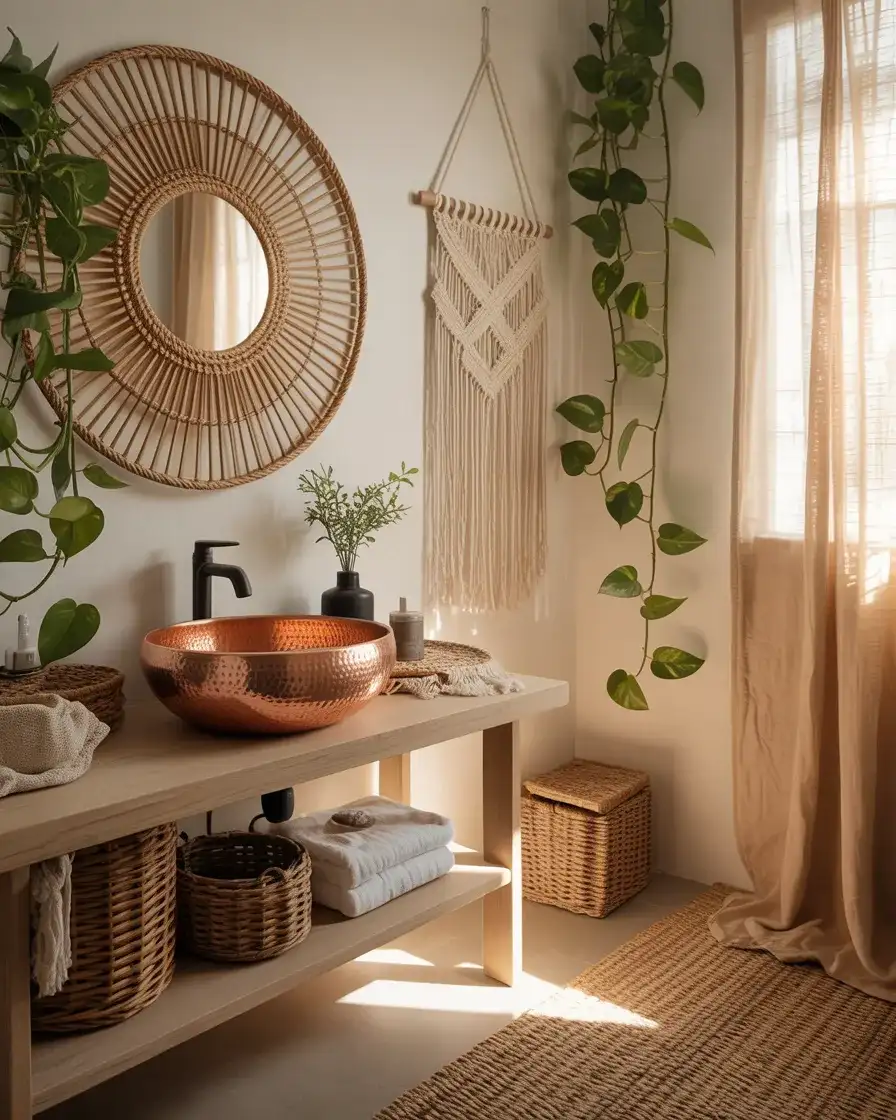
The boho bathroom isn’t just about macramé wall hangings anymore—in 2026, it’s evolved into a more refined, textural approach that feels collected and personal. We’re talking layers of woven rattan baskets, raw linen shower curtains, hammered copper sinks, handwoven bath mats, and a curated mix of ceramics and trailing plants. This aesthetic leans into imperfection and handcraft in the best way. Ideas and inspiration for this style often come from global travel—Moroccan souks, Balinese guesthouses, and Oaxacan markets—translated into livable American bathrooms.
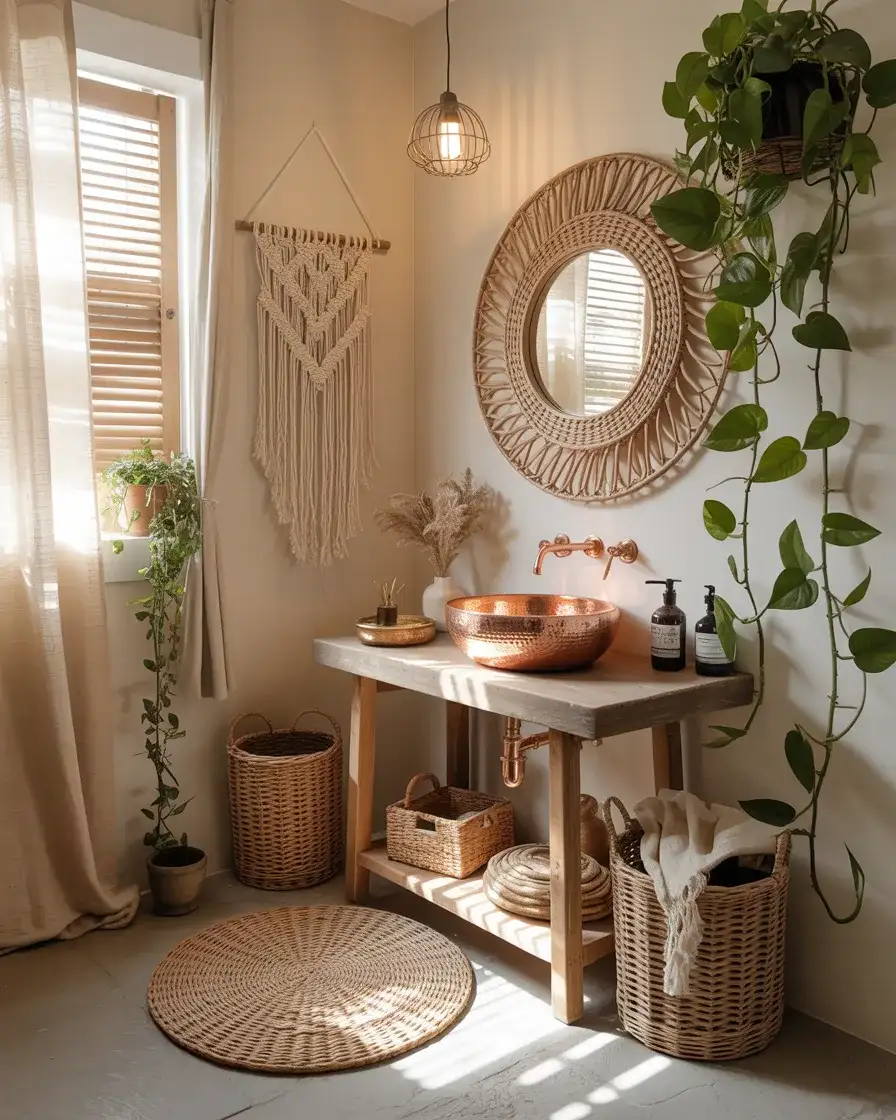
The boho style is particularly forgiving for renters and those working with older homes—you don’t need to renovate a single thing. Swap a plain shower curtain for a woven linen one ($40–$80 at Target or Anthropologie), hang a rattan mirror over an existing basic one, and layer in a chunky bath mat, and suddenly your dated rental bathroom has personality. It’s one of the most accessible transformation styles for people who can’t swing a full renovation but want a space that feels like them.
7. Small Bathroom Ideas That Feel Expansive
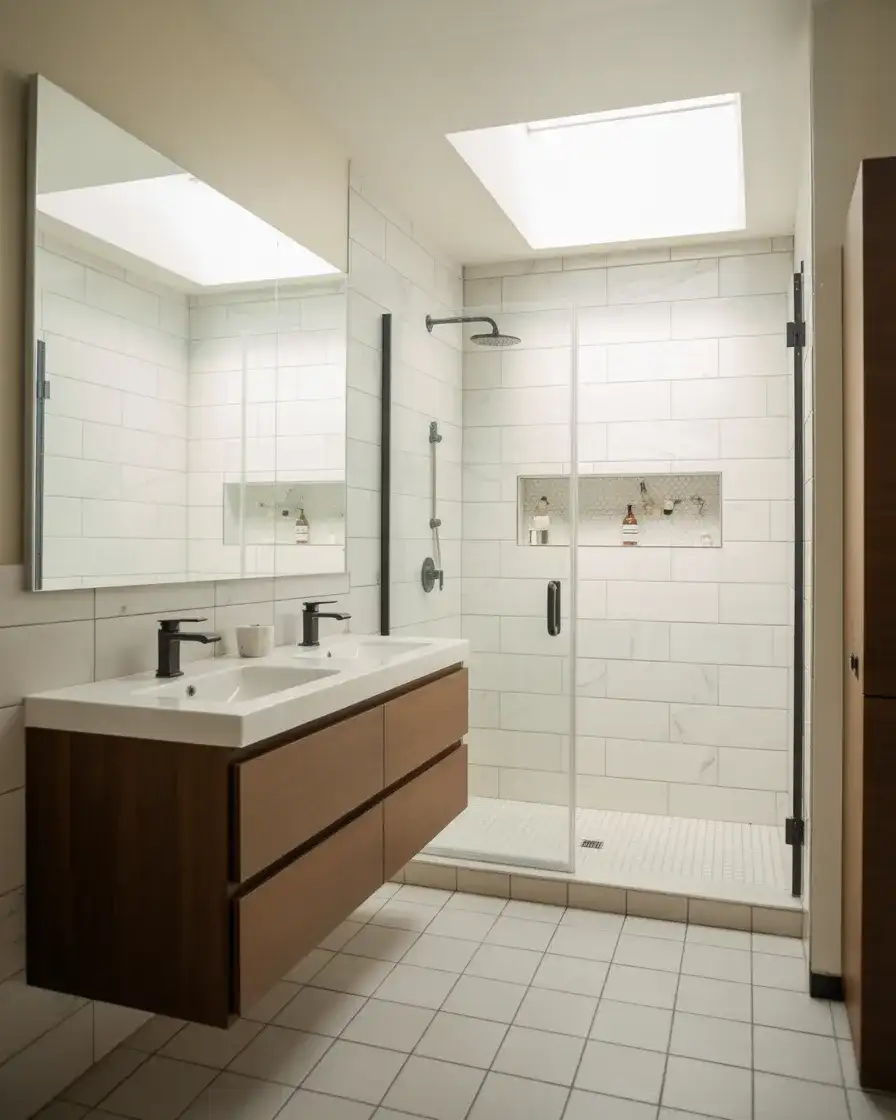
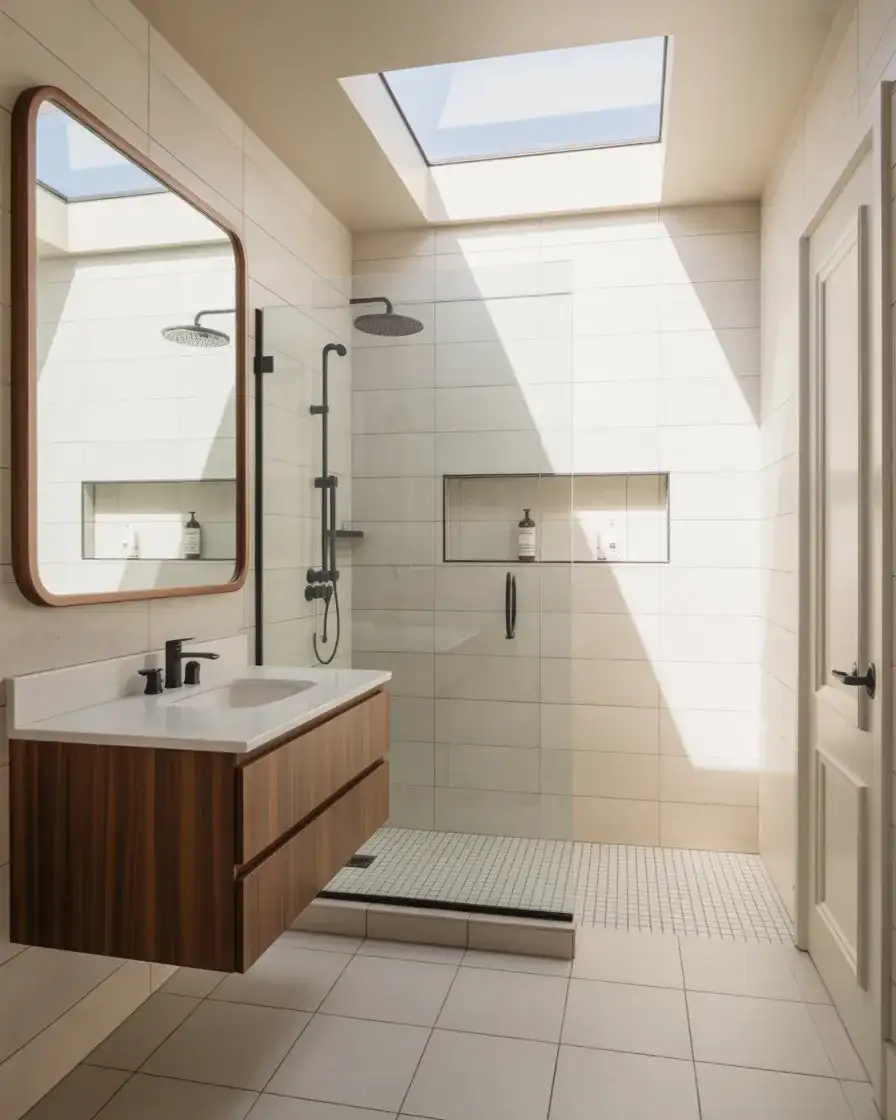
Designing for small spaces is one of the most searched bathroom categories on Pinterest, and for good reason—the majority of American homes have at least one bathroom under 50 square feet. The simple truth is that scale, storage, and light are everything in a tight bath. In 2026, designers are leaning into a few key moves: floating vanities to expose floor area, large-format floor tiles to minimize grout lines, frameless mirrors that span the full vanity width, and niche shelving cut directly into shower walls to eliminate caddies.
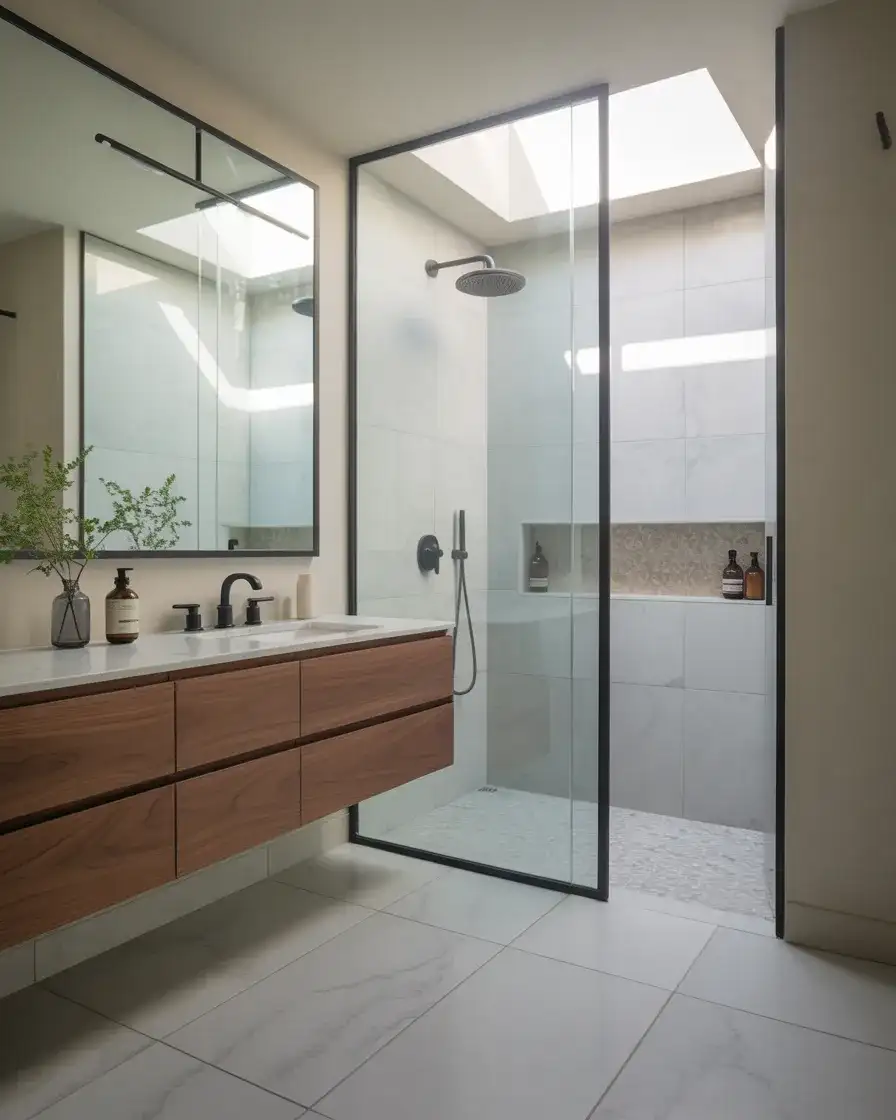
One of the most transformative small-bath tricks is running tile continuously from floor to wall without a visual break—it eliminates the horizontal line that signals “this is where the floor ends,” making the room feel taller and more unified. If you’re remodeling a small bathroom, this technique alone can make a 40-square-foot room feel closer to 60. Pair it with a pocket door instead of a swing door, and you’ve recovered valuable inches without touching the plumbing.
8. Farmhouse Bathroom with Shiplap and Apron Sinks
The farmhouse bathroom endures as one of America’s most beloved interior styles, and 2026’s version is more refined than ever. Shiplap walls in warm white or greige, apron-front fireclay sinks, open shelving made from reclaimed wood, and matte nickel or oil-rubbed bronze fixtures define the look. What’s changing this year is the color: farmhouse palettes are warming up, incorporating dusty sage, warm linen, and soft mushroom tones instead of stark white. It’s the rustic charm people love, but grown-up and more livable.
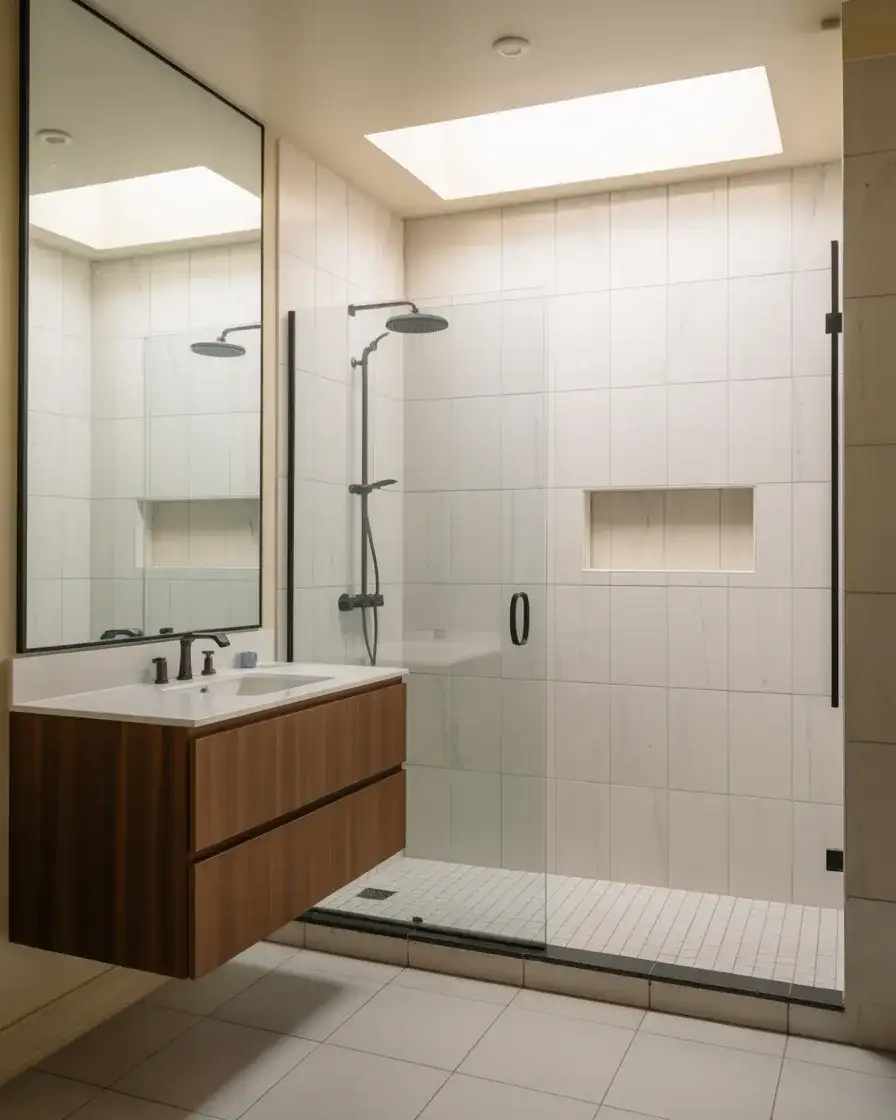
Farmhouse style is especially popular in suburban and rural American homes across the South and Midwest, where it feels like an authentic expression of regional identity rather than a trend import. Homeowners in states like Tennessee, Ohio, and Texas consistently report that this style holds resale value better than more avant-garde bathroom aesthetics—buyers connect with it emotionally. If you’re renovating with an eye toward eventual sale, it’s one of the safer investments you can make in a bathroom update.
9. Coastal Bathroom with Natural Light and Linen
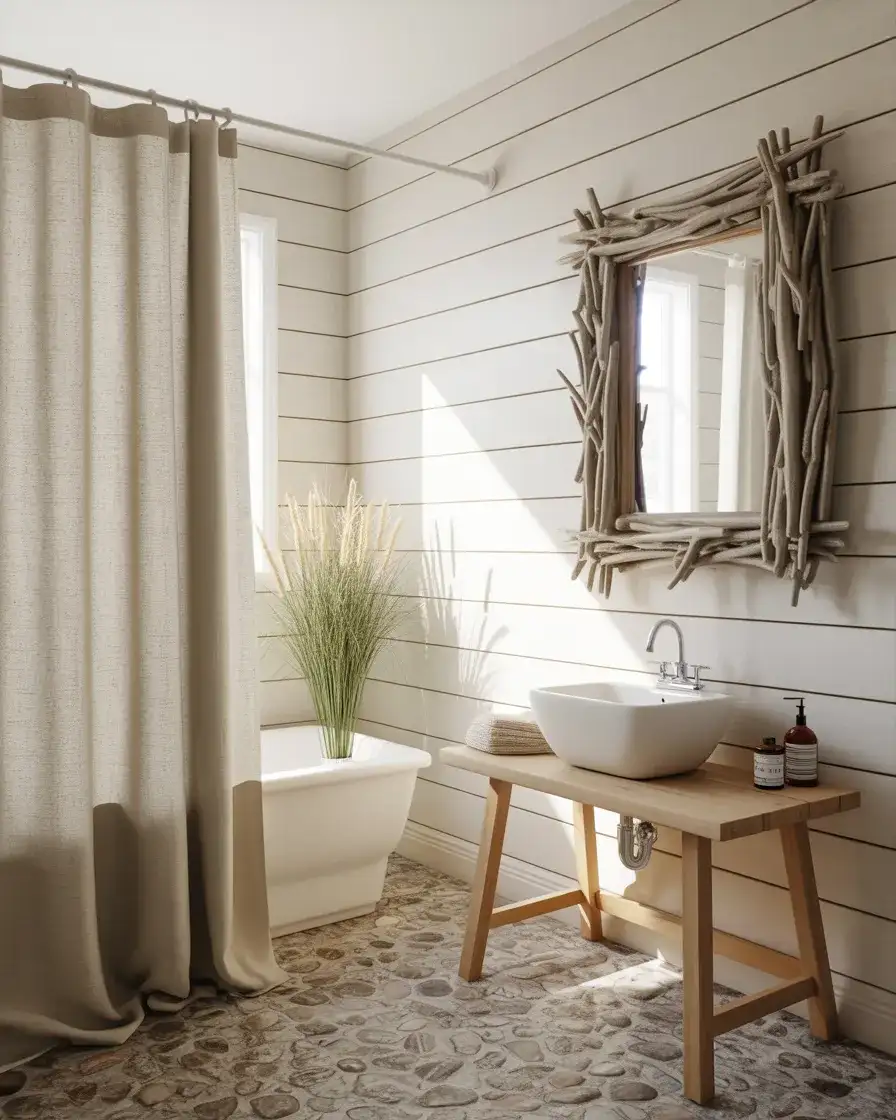
The coastal bathroom of 2026 has moved far beyond seashell soap dishes and navy stripes. Today’s version is quieter and more atmospheric—whitewashed plank walls, sandy pebble floor tiles, natural linen shower curtains, and the kind of bleached-out palette that makes you feel like you’re showering in a Nantucket cottage. This is inspiration rooted in simplicity: fewer accessories, more openness, and natural materials that age beautifully. Large windows, skylights, and glass blocks are all hallmarks of this look done right.
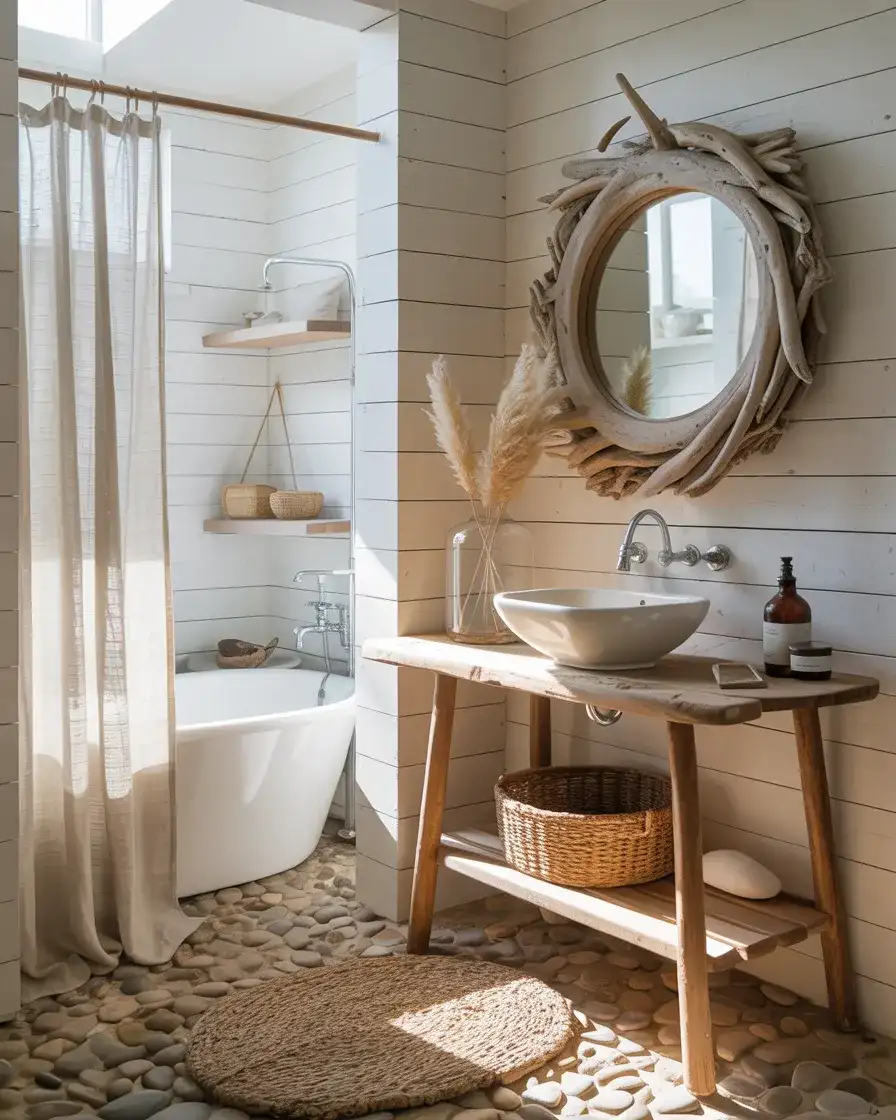
This style functions best in bathrooms with actual natural light—ideally a window that faces east or south. If your bathroom lacks natural windows, a tubular skylight kit (starting around $250) can channel daylight from the roofline into even interior baths. The result genuinely transforms the space. Coastal bathrooms also benefit from incorporating a teak or iroko shower stool, which ages beautifully in humid conditions and adds that barefoot-luxury resort quality that guests immediately notice.
10. Luxury Master Bath Spa Retreats
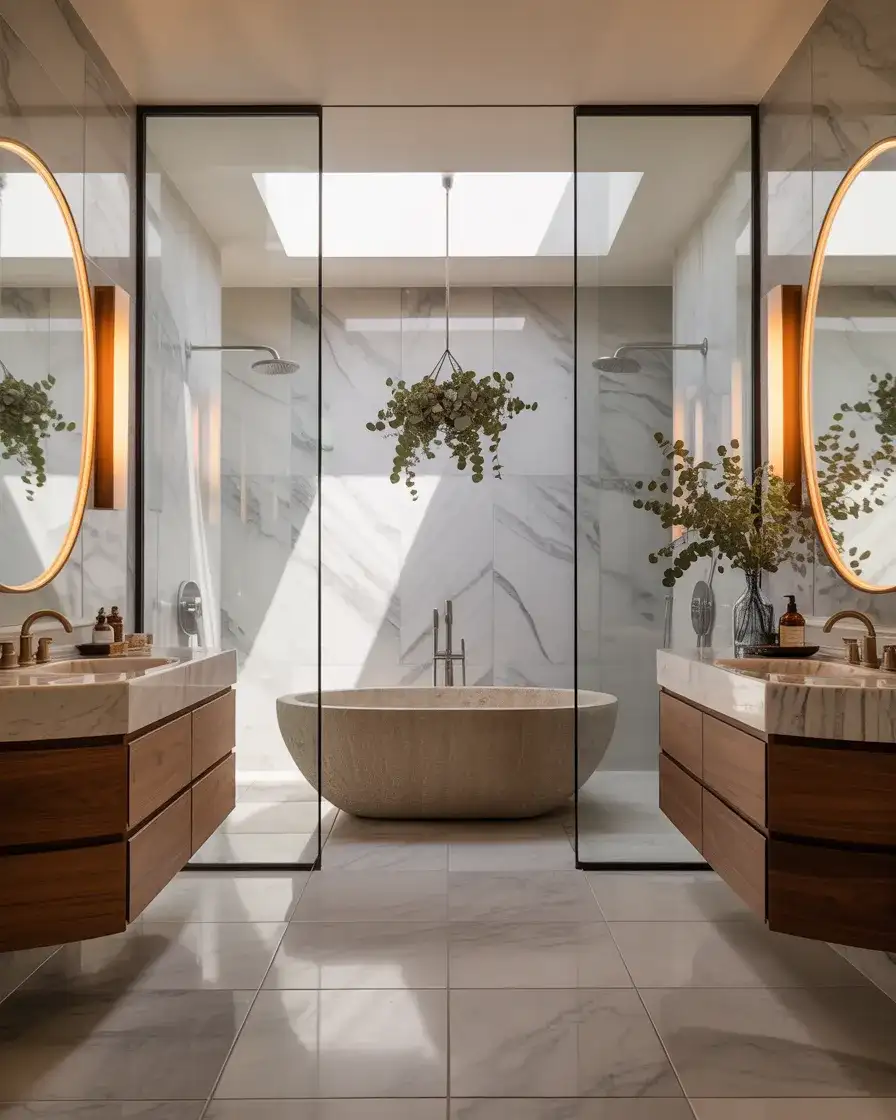
The ideas in the interior design master bath category are dominated by one overarching theme in 2026: the home spa. Americans are investing more in bathrooms as wellness sanctuaries, driven partly by the staying-home culture that accelerated over the past few years. A true luxury master bath today means heated floors underfoot, a freestanding soaking tub positioned to capture a garden or skyline view, a walk-in rain shower with multiple body sprays, double floating vanities with integrated lighting, and materials—stone, wood, and bronze—that feel irreplaceable rather than manufactured.
A designer working in the Pacific Northwest shared that her most requested element right now is a “towel warming drawer”—a slim, drawer-style warming unit that slides under the vanity and keeps towels at spa temperature. They run between $400 and $900 and require a simple electrical connection. “It’s the detail clients talk about most,” she noted. “It’s not about the cost—it’s the sensory experience of a warm towel after a shower that makes a bathroom feel genuinely luxurious rather than just expensive-looking.”
11. Vintage-Inspired Clawfoot Tub Bathrooms
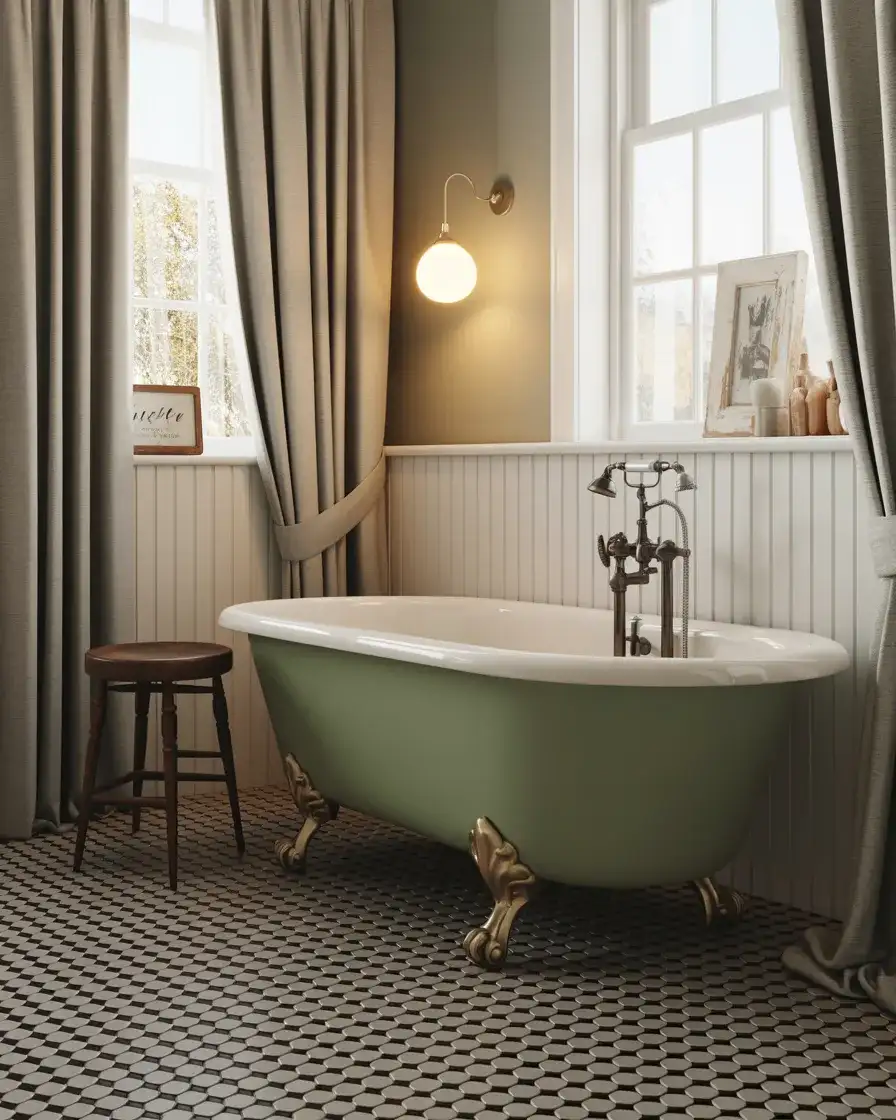
There are few bathroom fixtures more romantic than the vintage clawfoot tub, and 2026 has brought it back to center stage in a new way—painted in unexpected colors. Matte sage green, deep forest, inky navy, and even matte black clawfoot tubs are appearing alongside traditional white, bringing drama without sacrificing the Victorian elegance that defines the form. Paired with telephone-style faucets in polished nickel or unlacquered brass, these tubs feel simultaneously retro mid-century and freshly contemporary. They’re equally at home in a traditional Victorian and a converted loft.
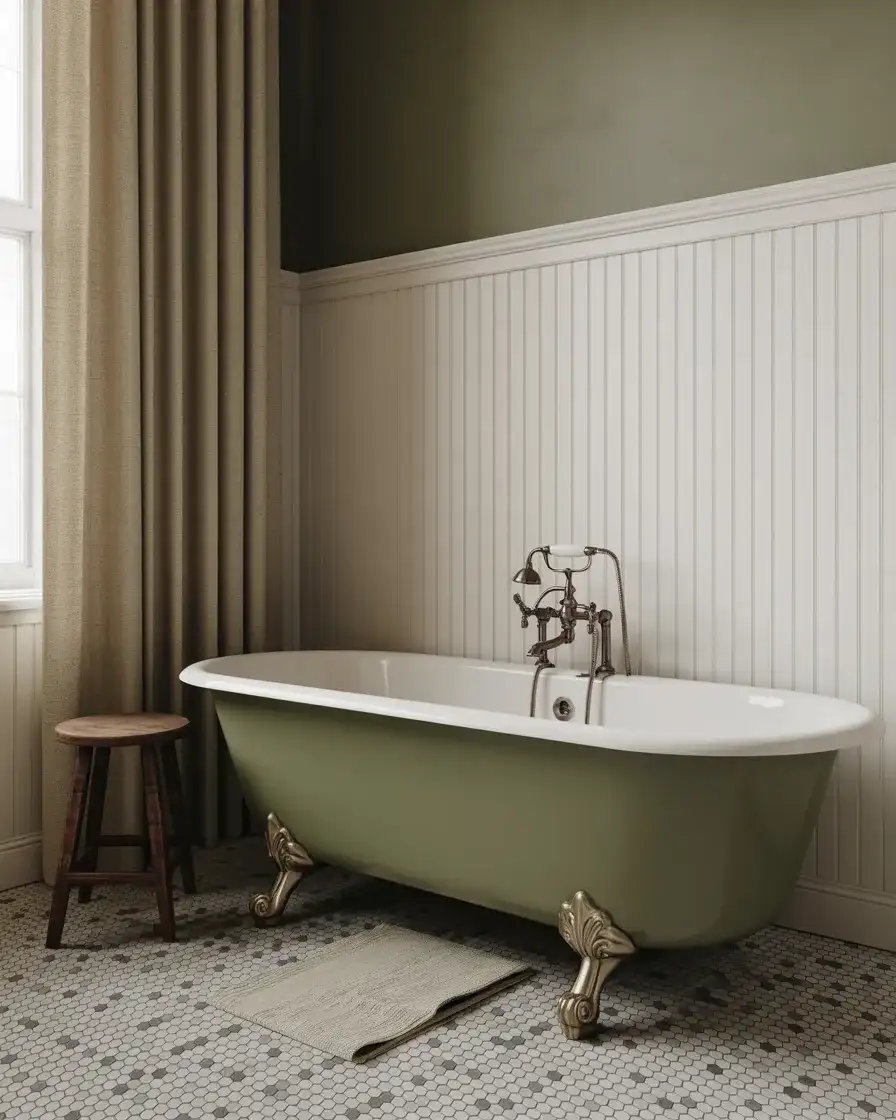
Clawfoot tubs are surprisingly accessible: original cast-iron tubs can be found at architectural salvage shops for $300–$800 and professionally refinished for another $400–$600, landing you a genuinely historic fixture for far less than a new reproduction. Salvage warehouses in cities like Chicago, Philadelphia, and Portland regularly stock beautiful examples. The weight is substantial—cast iron tubs can exceed 300 pounds—so structural assessment before installation is important, particularly in older homes with wooden subfloors.
12. Simple Minimalist Bathrooms Done Right
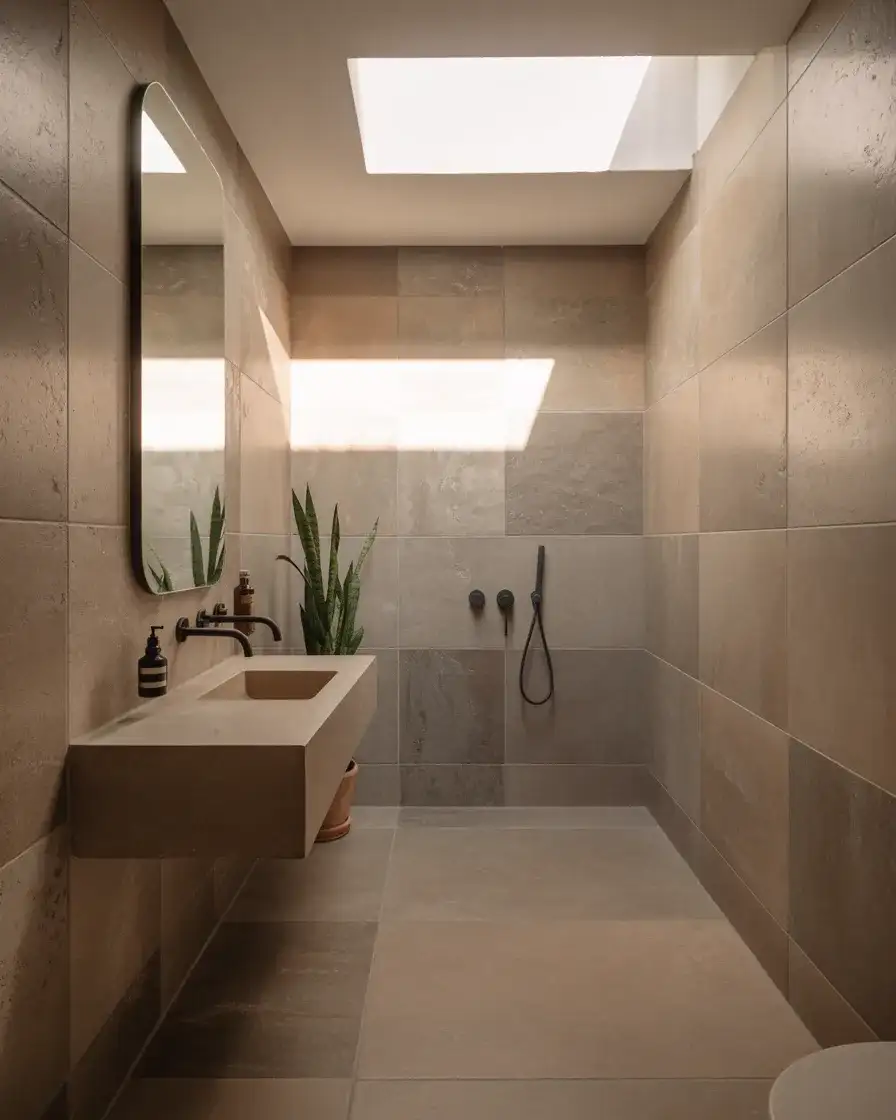
Simple doesn’t mean boring—in fact, the most effective minimalist bathrooms are some of the hardest to design well. In 2026, the trend is away from the cold, clinical minimalism of the 2010s and toward a warmer, more considered approach. Think single-material bathrooms: an entire room clad in one large-format stone tile, wall to floor to ceiling. Or a floating vanity with an integrated sink in a single poured concrete form. The ideas here aren’t about removing everything—they’re about choosing one beautiful thing and committing to it fully.
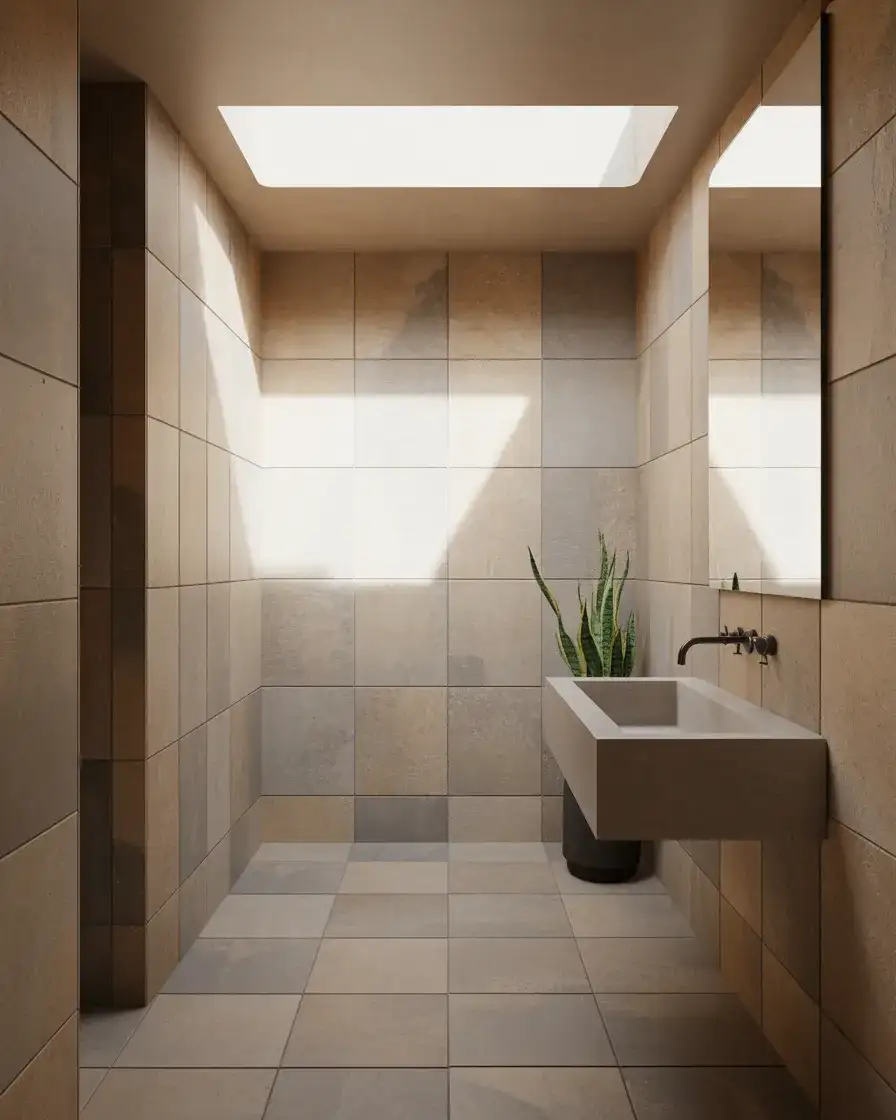
The biggest mistake in minimalist bathrooms is skimping on hidden storage. If there’s nowhere to put things, everyday clutter immediately destroys the aesthetic. The solution is to design storage into the architecture itself—recessed wall niches, a floor-to-ceiling flush-panel cabinet that blends into the wall, and a vanity with deep drawers rather than doors. “Minimalism works when organization is invisible,” as one bathroom remodel blogger put it. The room looks effortlessly empty because everything has a dedicated home out of sight.
13. Rustic Lodge-Style Bathrooms
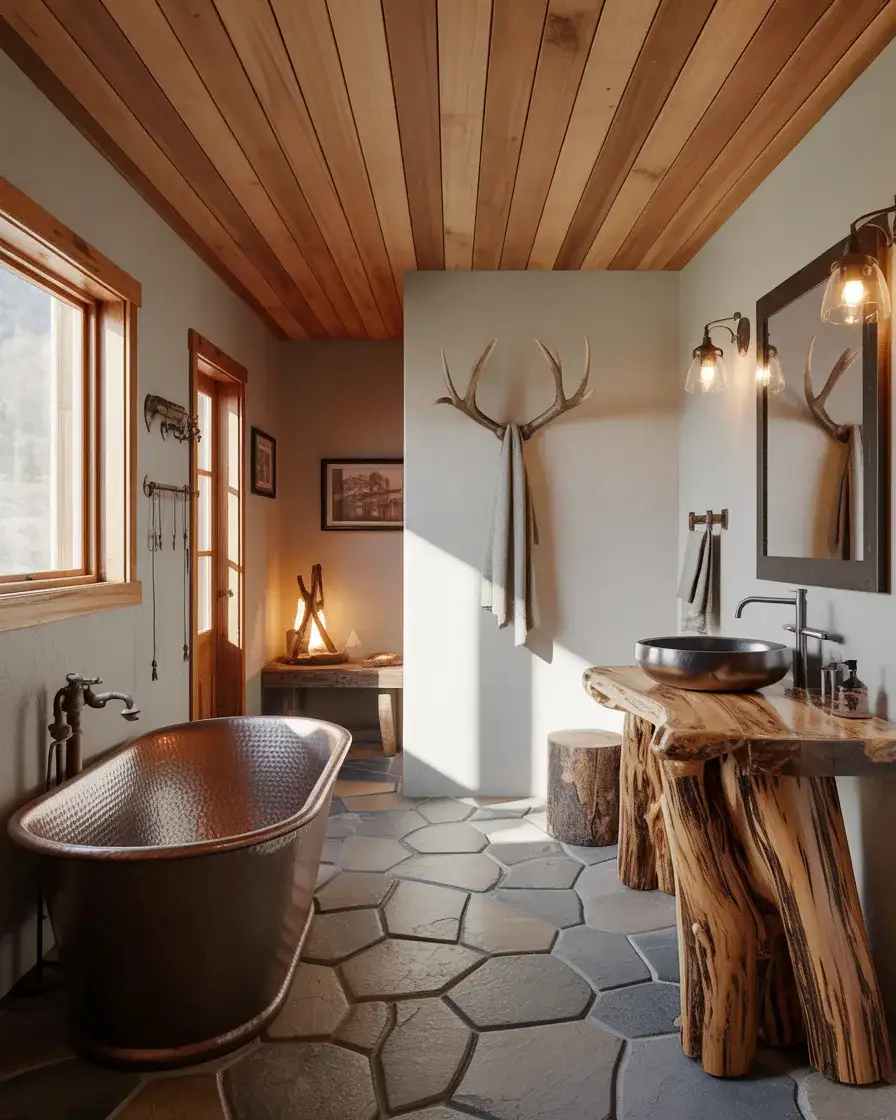
There’s a specific kind of American dream that lives in a rustic bathroom: cedar plank walls, a river-stone shower floor, a copper soaking tub set on rough slate, antler towel hooks, and a cast-iron wood stove tucked in the corner. This is the lodge bathroom—equal parts mountain retreat and deeply lived-in home. In 2026, this aesthetic is gaining traction well beyond the Rockies and Pacific Northwest. Earthy materials dominate: live-edge wood vanity tops, raw stone walls, hammered metal sinks, and fixtures in oil-rubbed or natural bronze finishes.
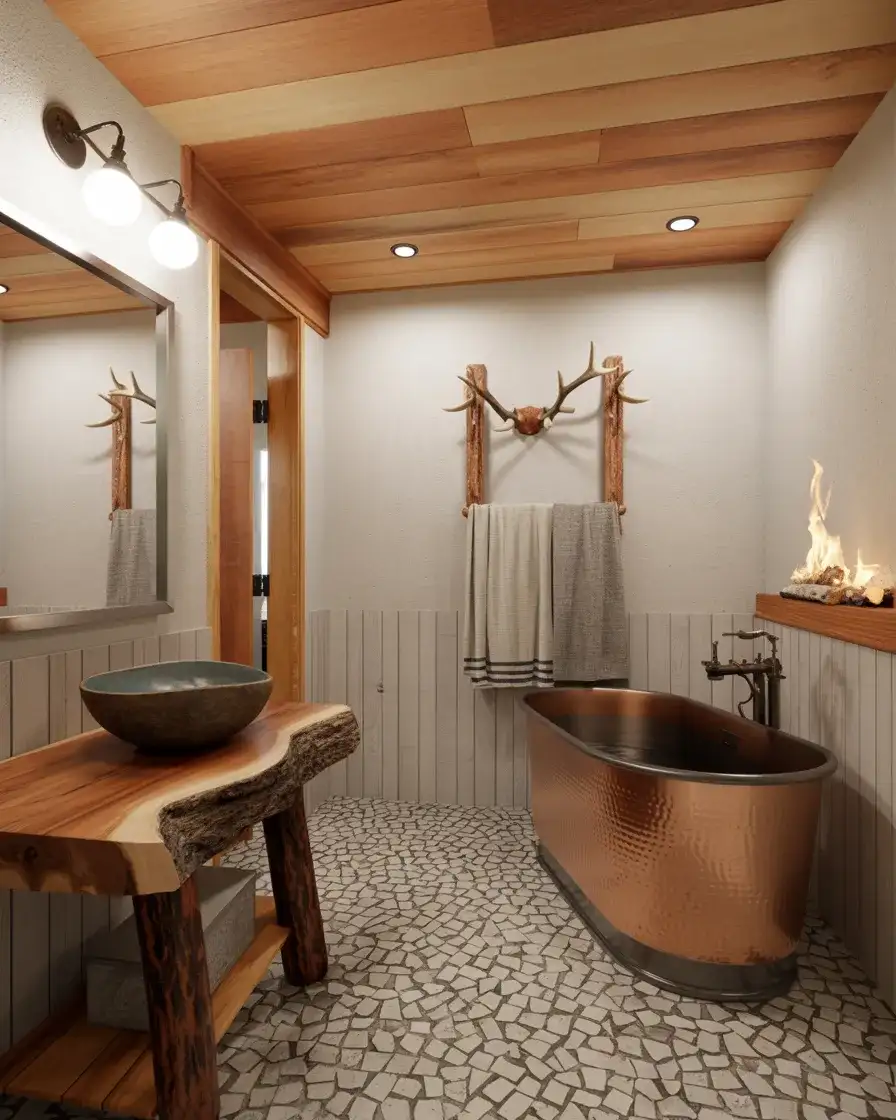
This style thrives in vacation properties and primary residences in areas with strong regional identity—Vermont, Montana, Idaho, the Smoky Mountains, and the Adirondacks. Vacation rental owners report that lodge-style bathrooms are consistently photographed and mentioned in guest reviews, often becoming a primary reason guests rebook. If you’re designing a short-term rental or an AirBnB, investing in even a partial rustic aesthetic—a stone accent wall, a copper fixture, cedar planking—has measurable ROI through positive reviews and premium nightly rates.
14. Dramatic Shower Curtain Moments
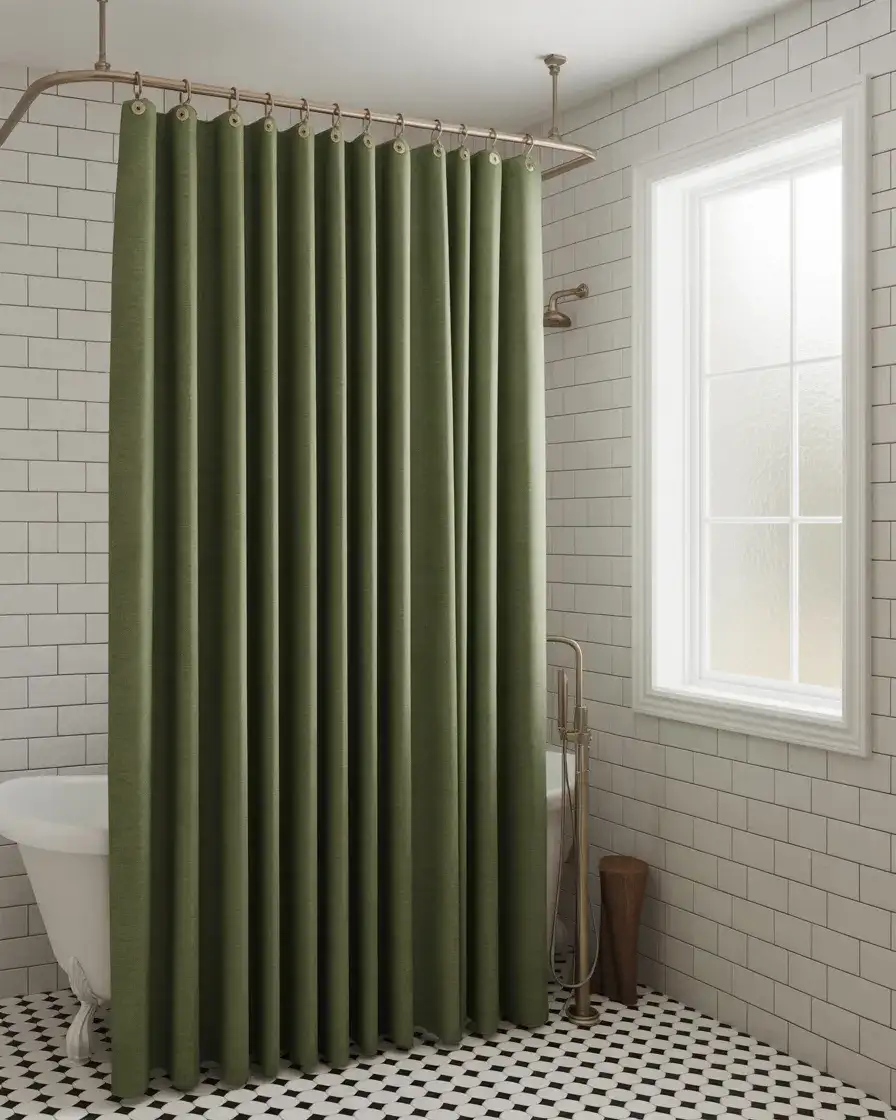
Shower curtains are one of the most underutilized design opportunities in American bathrooms, and 2026 is finally giving them their due. The ceiling-mounted curtain rod trend—where the rod is installed at true ceiling height rather than the standard 72 inches—transforms even a basic tub-shower into something that reads as intentional and dramatic. Fabrics are evolving too: heavyweight Belgian linen, textured cotton gauze, and breezy sheer voile layered over solid panels. Color-wise, inspiration is pulling from the runway: deep forest green, terracotta, inky indigo, and warm ecru.
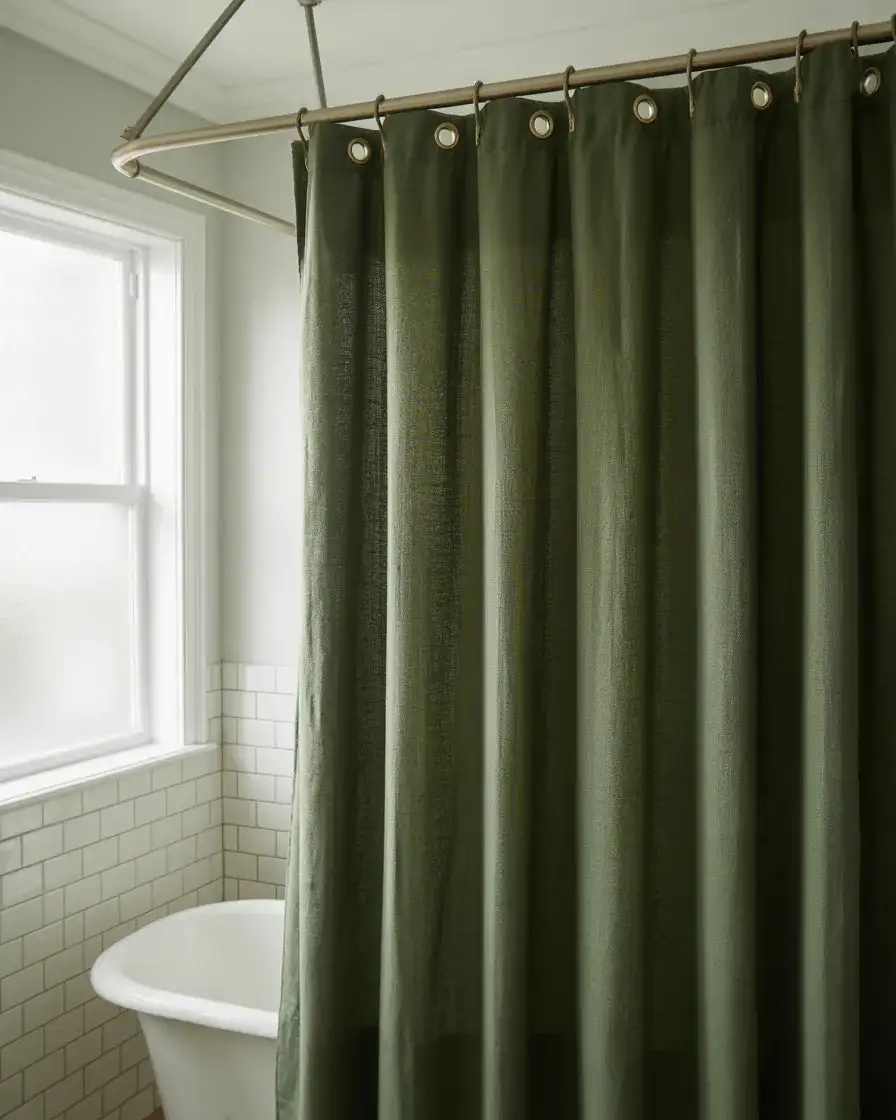
Ceiling-height shower curtains are one of the single cheapest high-impact changes you can make to a bathroom. A ceiling-mount rod kit runs about $50–$120, and extra curtain length (typically 84–96 inches) costs roughly the same as standard curtains. Total investment: under $200. The visual result is so disproportionate to the cost that it consistently ranks among the top bathroom upgrades on home improvement forums. It’s a change most people can execute in a single afternoon without a contractor.
15. Apartment Bathroom Upgrades Without Renovating
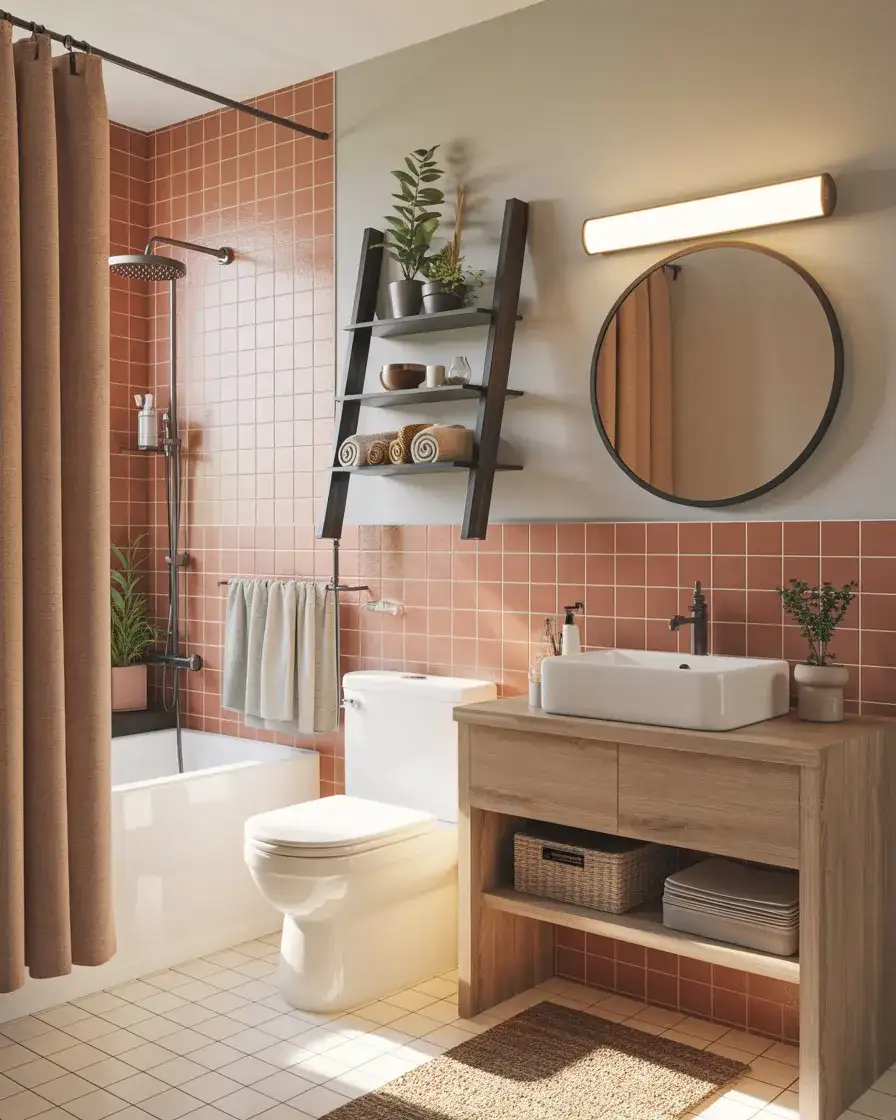
Life in an apartment means working with what you’ve got—typically a dated, landlord-beige bathroom with builder fixtures, fluorescent lighting, and zero personality. But 2026’s approach to renter-friendly bathroom upgrades has become surprisingly sophisticated. Peel-and-stick tiles that genuinely look like zellige or subway tile, removable wallpaper in every style from boho botanical to crisp black and white geometric, over-the-toilet ladder shelving, and swappable faucet handles are all in the toolkit now. The goal: make the space feel deeply personal without losing your security deposit.
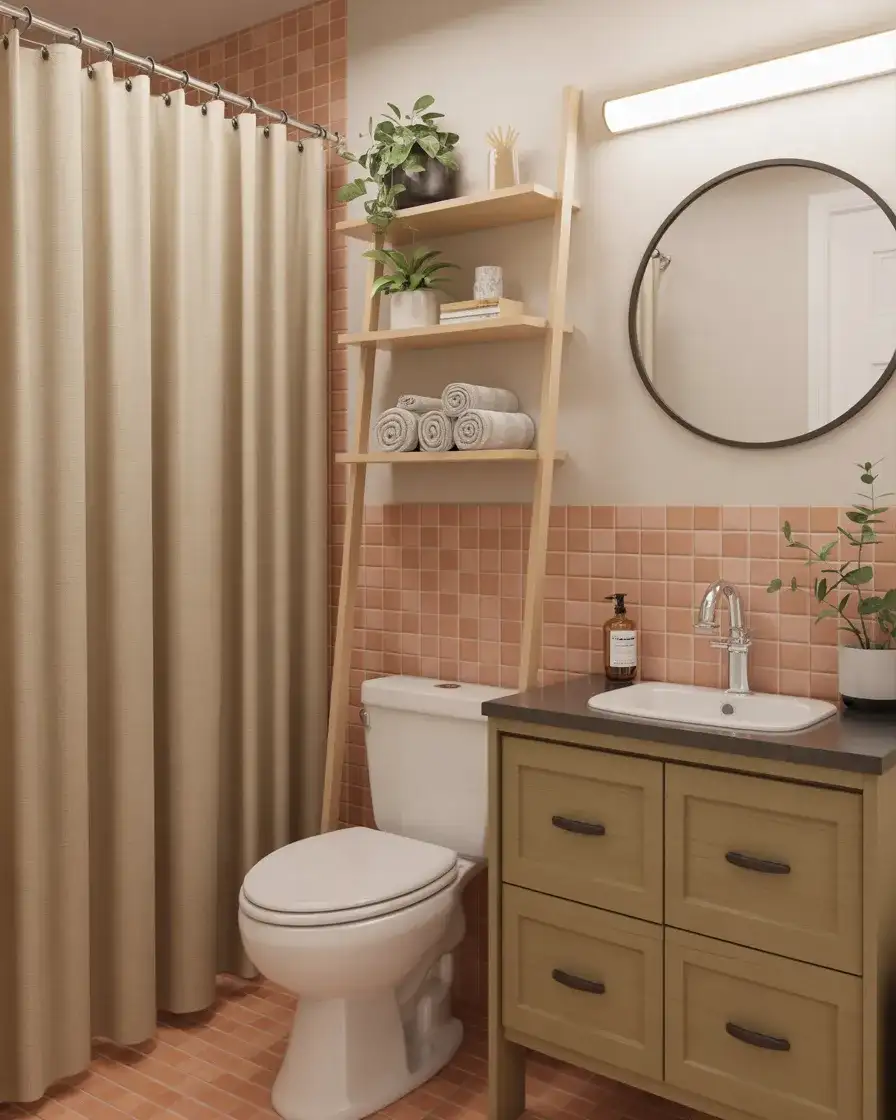
A content creator in New York City documented her $350 apartment bathroom transformation using only removable products—before-and-after photos showed a space that went from visually exhausting to genuinely charming. Her most impactful move was replacing the builder-grade light fixture (a simple plug-in swap) and adding a large framed mirror from a thrift store. “Most people don’t realize that lighting is 70% of how a room feels,” she wrote. “The tile didn’t change. The fixtures didn’t change. Just the light and the mirror—and it looks like a different room.”
16. Zellige and Handmade Tile Accents
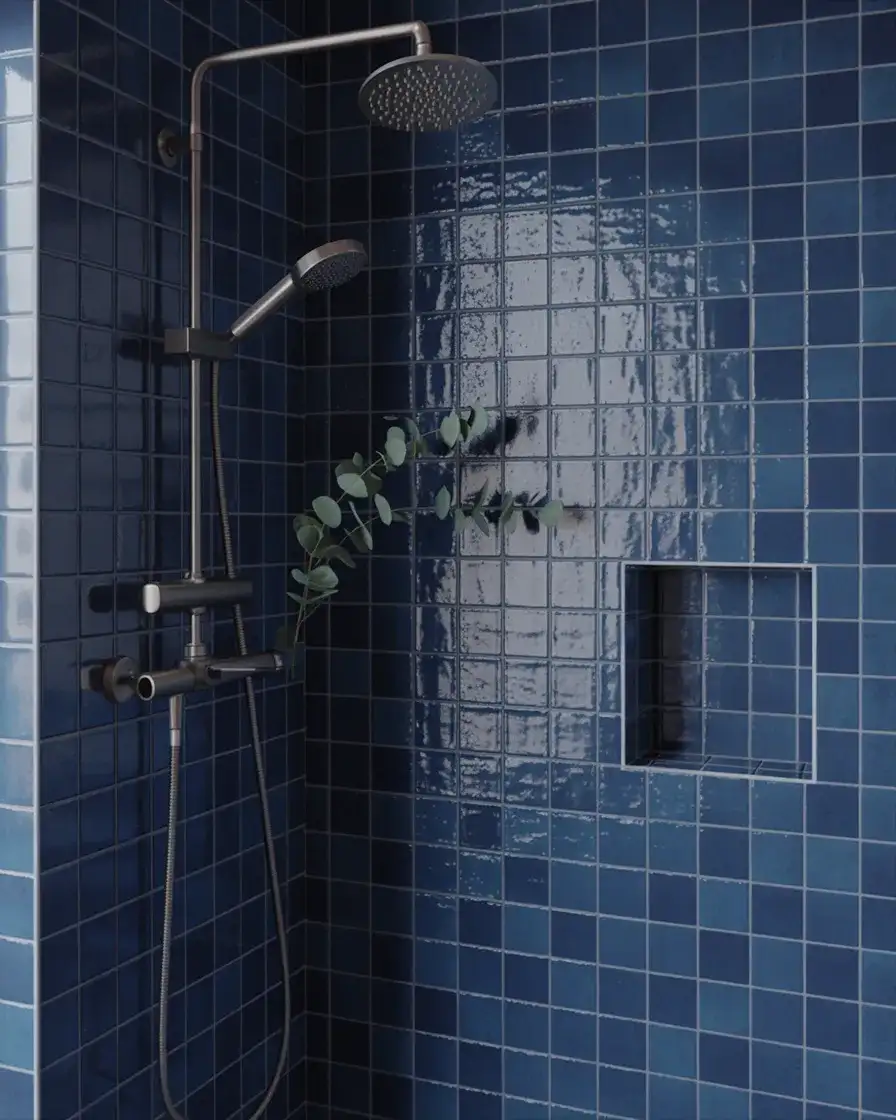
Zellige tile—the handmade Moroccan clay tile with its characteristic uneven glaze and dimensional surface—is among the defining bathroom materials of 2026. Its appeal lies in imperfection: each tile is slightly different in color depth and surface texture, which means a zellige wall shimmers and shifts in the light in a way that machine-made tile simply cannot replicate. Color interior design choices for zellige are expansive this year, from deep jewel tones like cobalt and emerald to softer coastal sea glass and warm terracotta. Even a single zellige accent niche transforms an otherwise plain shower.
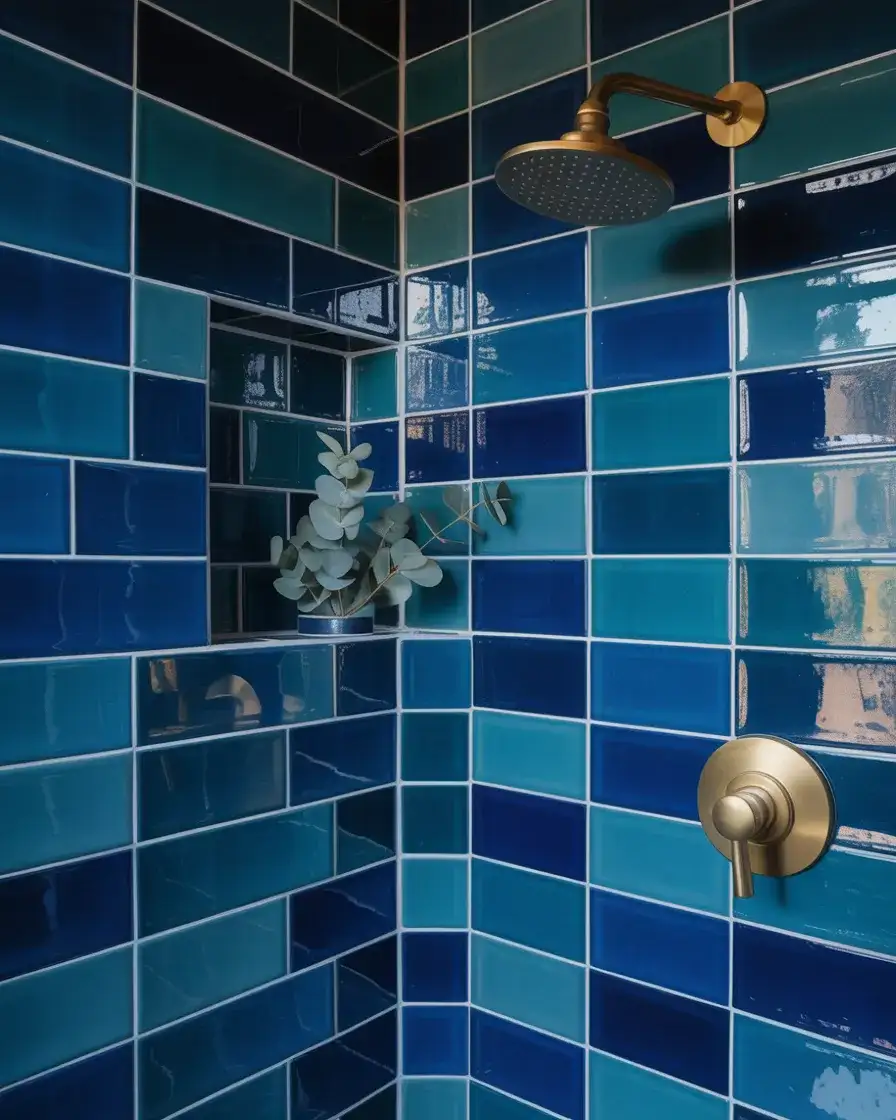
Zellige tile runs between $25 and $60 per square foot, which puts full-room coverage out of reach for many budgets—but that’s where the accent approach shines. Using zellige on a single shower niche, a backsplash behind the vanity, or a narrow strip between floor and wall gives all the visual richness at a fraction of the cost. Several American companies like Clé Tile and Fez Zellige now import directly, offering a broader range than was available even three years ago. Budget tip: purchasing tile in slightly mismatched lots (known as “seconds”) can cut costs by 30–40% while adding to the character.
17. Smart Toilet and Bidet Integration
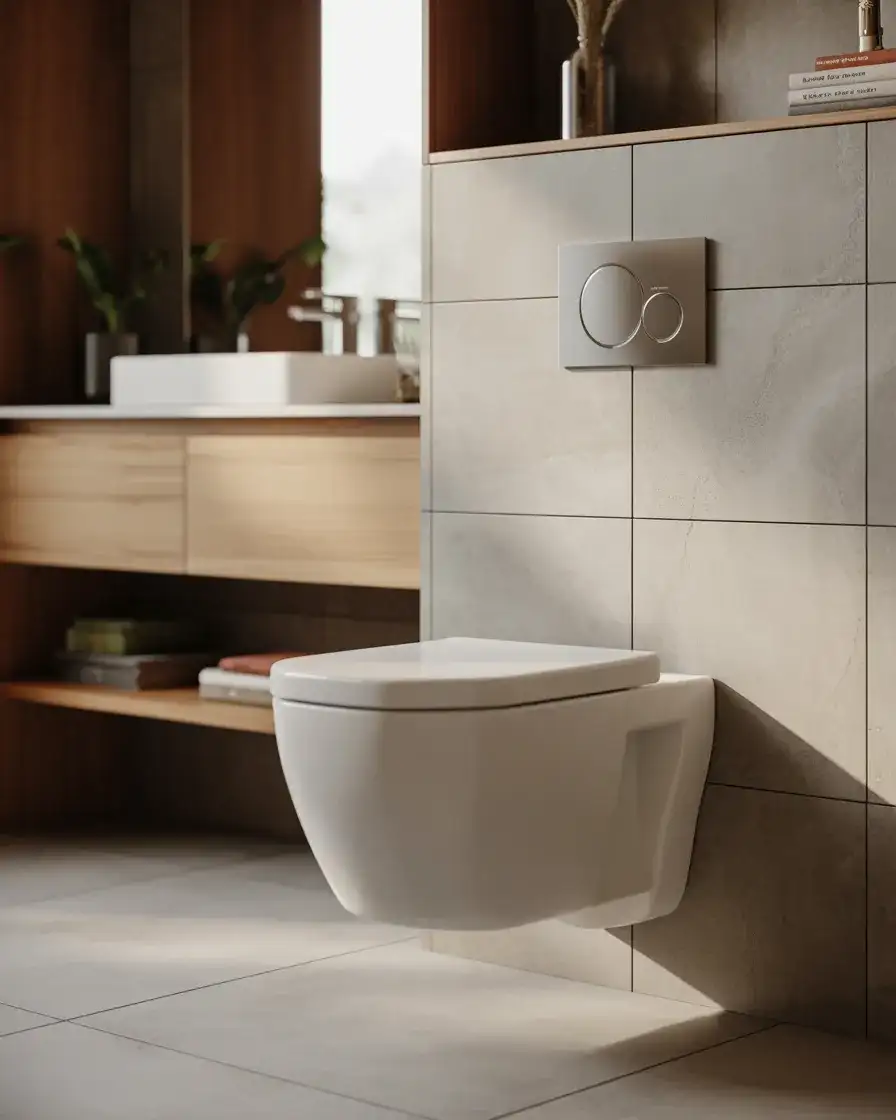
American bathroom culture is rapidly catching up with Japan and Europe when it comes to toilet technology, and 2026 marks a genuine tipping point. Ideas and inspiration for toilets in the high-design space now mean seamless, wall-hung toilets in matte white or biscuit that disappear into the room, paired with concealed in-wall cisterns and integrated bidet seats with heated functions. The key design challenge is making plumbing infrastructure invisible—a challenge that contemporary wall-mount systems have largely solved. The result is a bathroom that feels cleaner and more intentional, with floor space reclaimed and sightlines unobstructed.
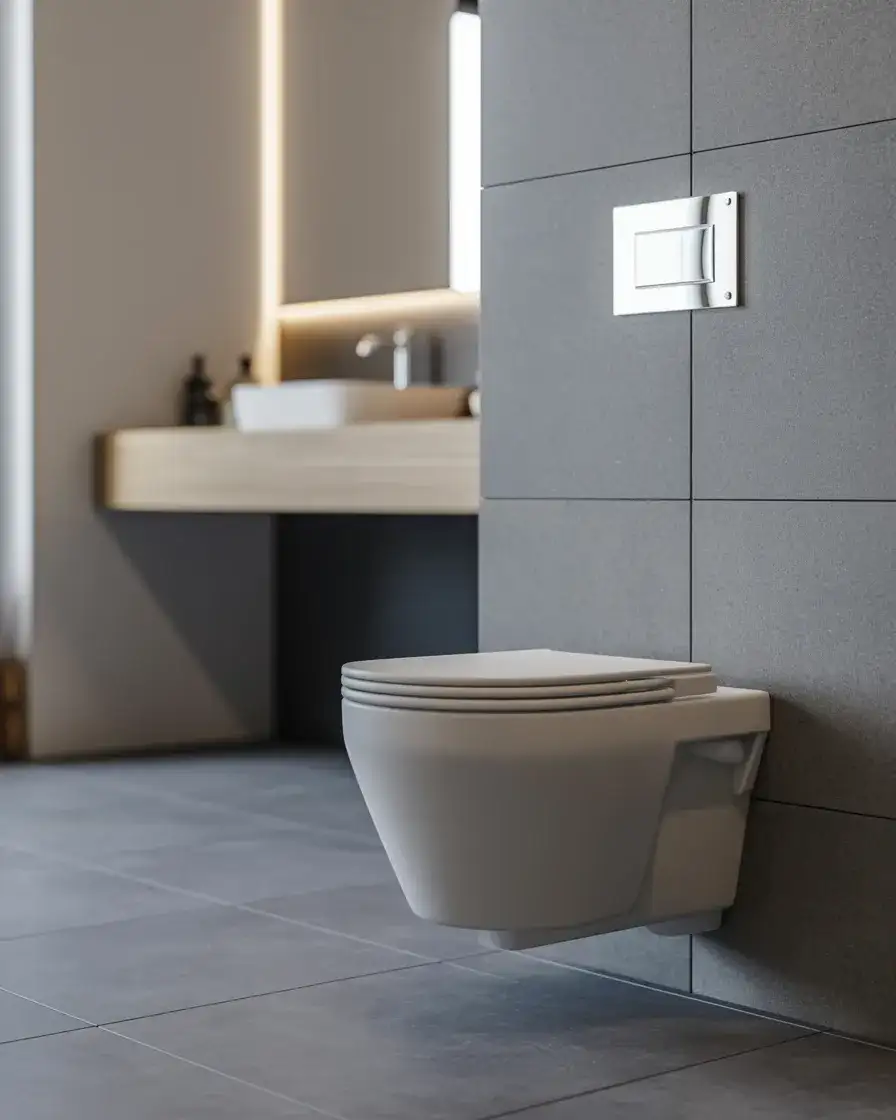
The bidet attachment category has genuinely democratized smart toilet technology—brands like Tushy, Bio Bidet, and Kohler now offer seat attachments that connect to standard toilets starting at $80. Fully integrated smart toilet suites run $1,500–$4,000, but starter attachments give the functional benefits immediately without remodeling. Sales data from Home Depot and Amazon show bidet attachment purchases have increased by more than 300% since 2020, suggesting this is a category that’s moved from novelty to necessity for a growing segment of American homeowners.
18. Double Vanity Ideas for Shared Bathrooms
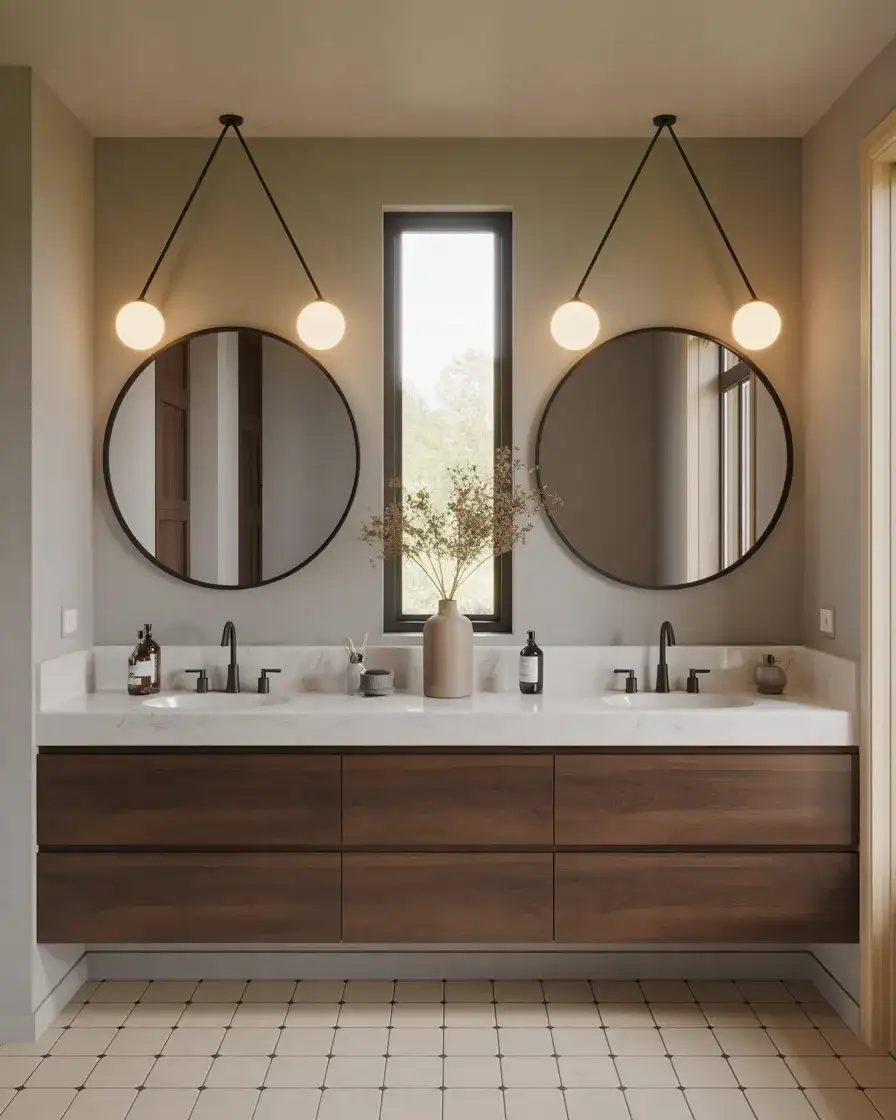
The double vanity has long been a priority in American master bath interior design ideas—but 2026’s approach is more considered than the standard matching-pair setup. Designers are now creating intentionally asymmetrical doubles: one taller counter height for a standing user and one standard height; mixed materials with stone on one side and wood on the other; or two freestanding pieces rather than one continuous cabinet run. These configurations feel personal rather than showroom-generic, and they solve real practical problems for couples with different organizational habits and height differences.
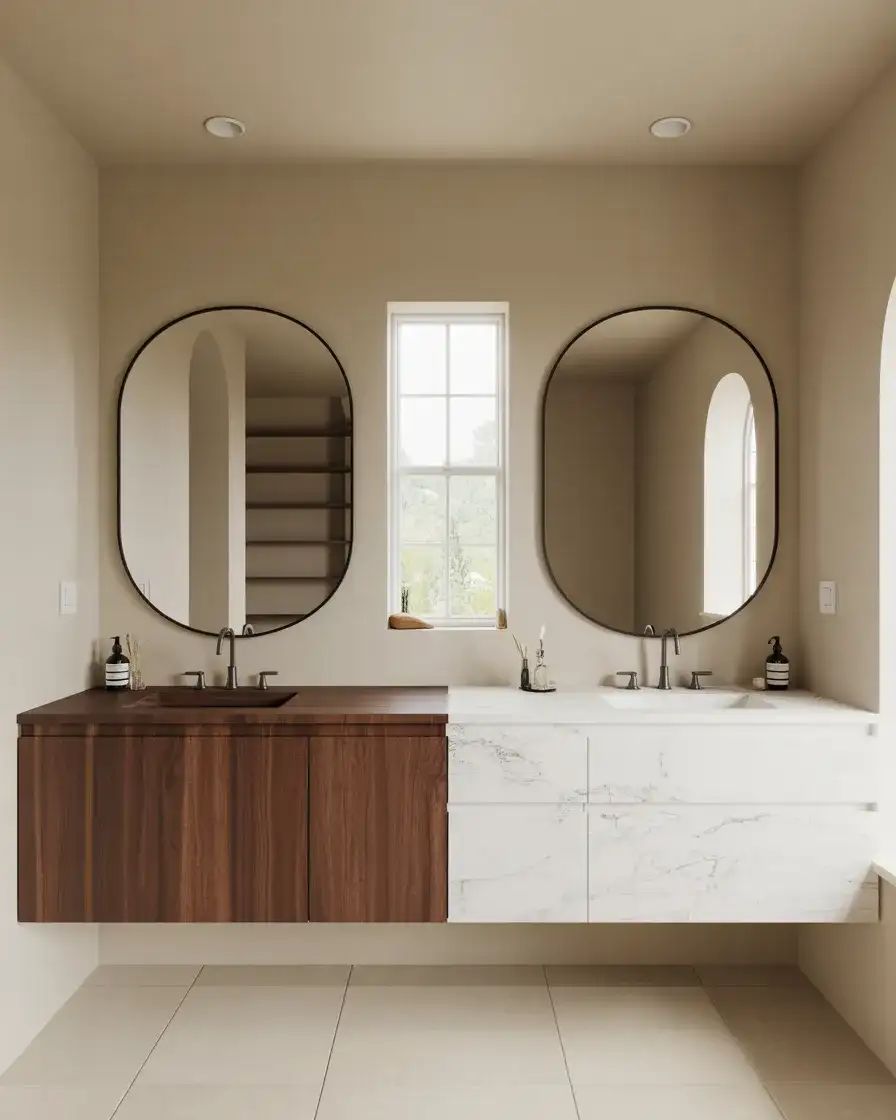
One thing couples often underestimate is outlet placement in a double vanity setup. Building code typically requires a GFCI outlet within 36 inches of each sink—but for true usability, an outlet on each side (or better, a pop-up outlet integrated into the countertop) eliminates the morning battle over who plugs in where. It’s a $100–$200 addition during rough-in that becomes invaluable in daily life. Ask your electrician to add it during the framing stage, not as an afterthought.
19. Sconce Lighting That Changes Everything
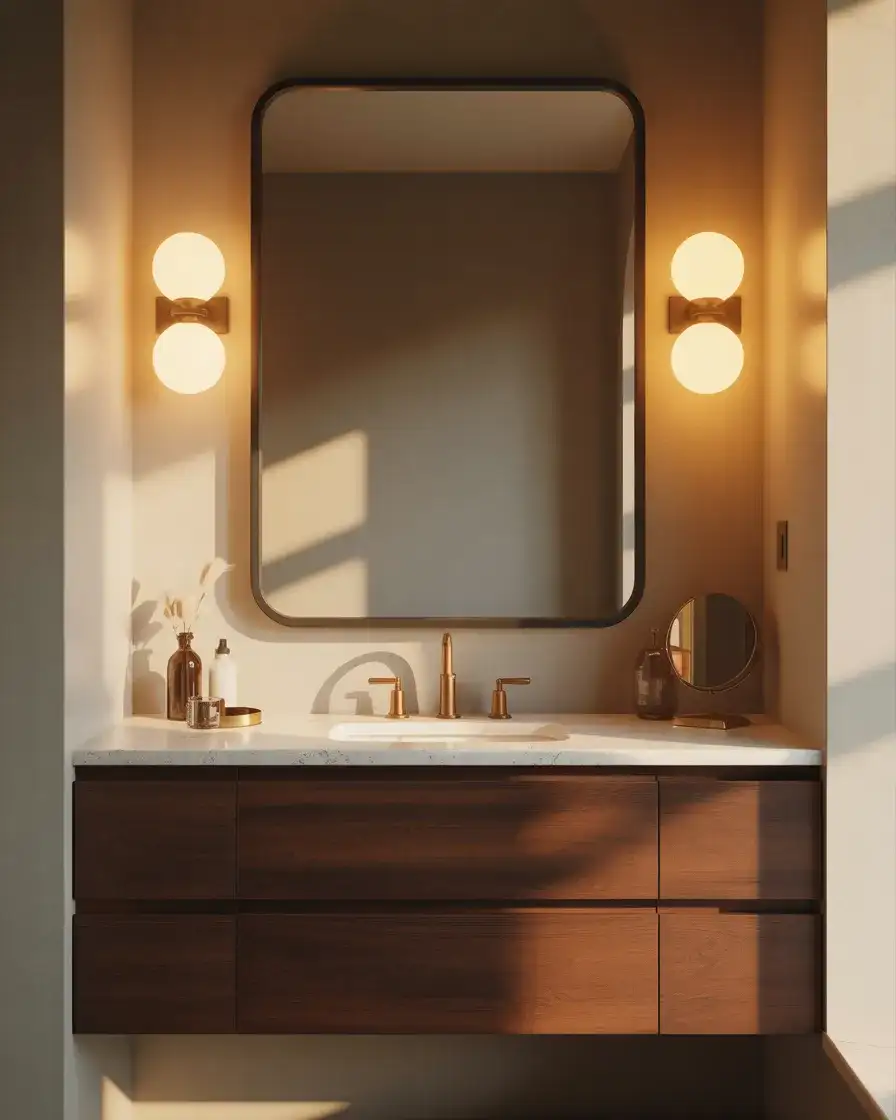
Lighting is arguably the most underinvested aspect of American bathroom design, and 2026 is seeing a major correction. The overhead recessed can is being dethroned—in its place, flanking vanity sconces are having a major moment across every style category, from midcentury fluted glass globes to organic alabaster shades and industrial cage-style fixtures. The key insight driving this shift is simple: overhead lighting casts unflattering shadows on faces, while side-mounted sconces at eye level provide even, flattering illumination. The bathroom is the room where you see yourself most critically—lighting should serve you.
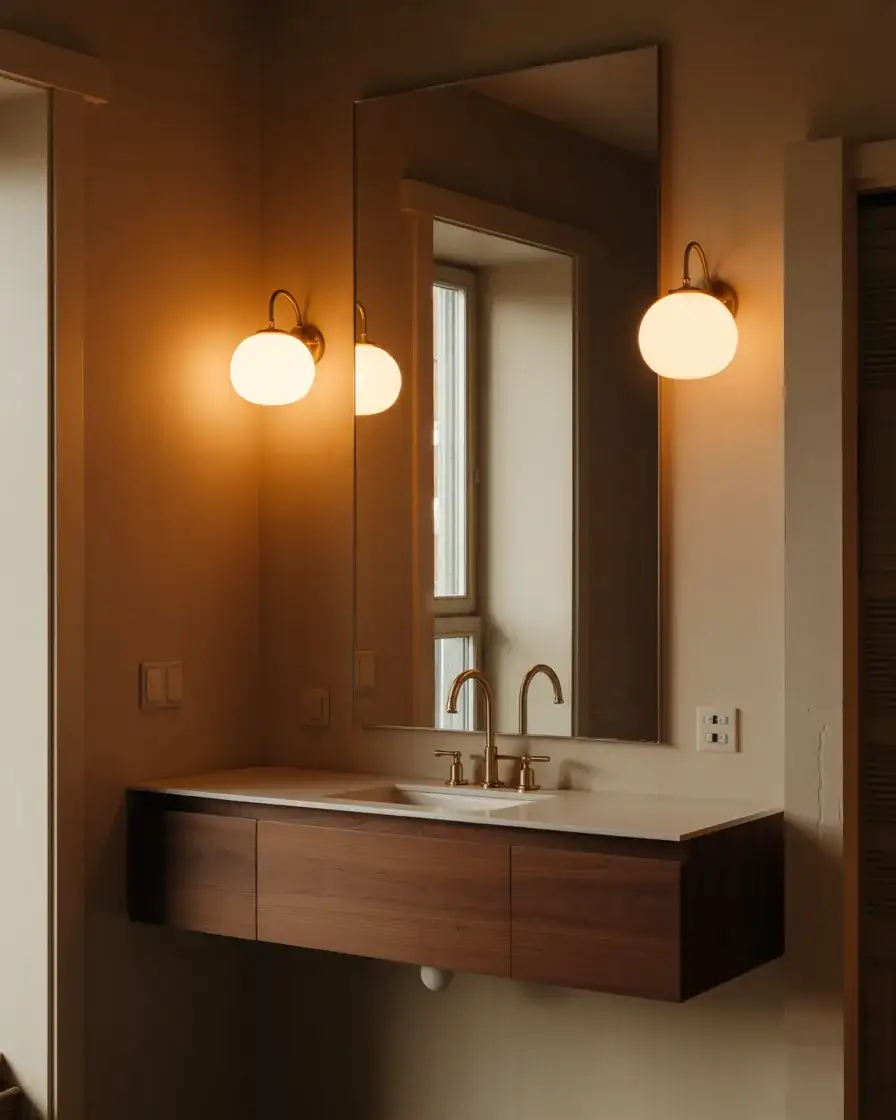
Swapping an overhead light for flanking sconces is one of the most impactful changes a homeowner can make—and it doesn’t require an electrician if you use hardwired sconces on an existing ceiling fixture circuit converted via a junction box. For renters or those wanting zero commitment, plug-in sconces (which run wire along the wall and plug into a standard outlet) are increasingly indistinguishable from hardwired versions. Brands like Schoolhouse Electric, Cedar & Moss, and Rejuvenation carry some of the most beautiful options at accessible price points.
20. Nature-Inspired Biophilic Bathroom Design
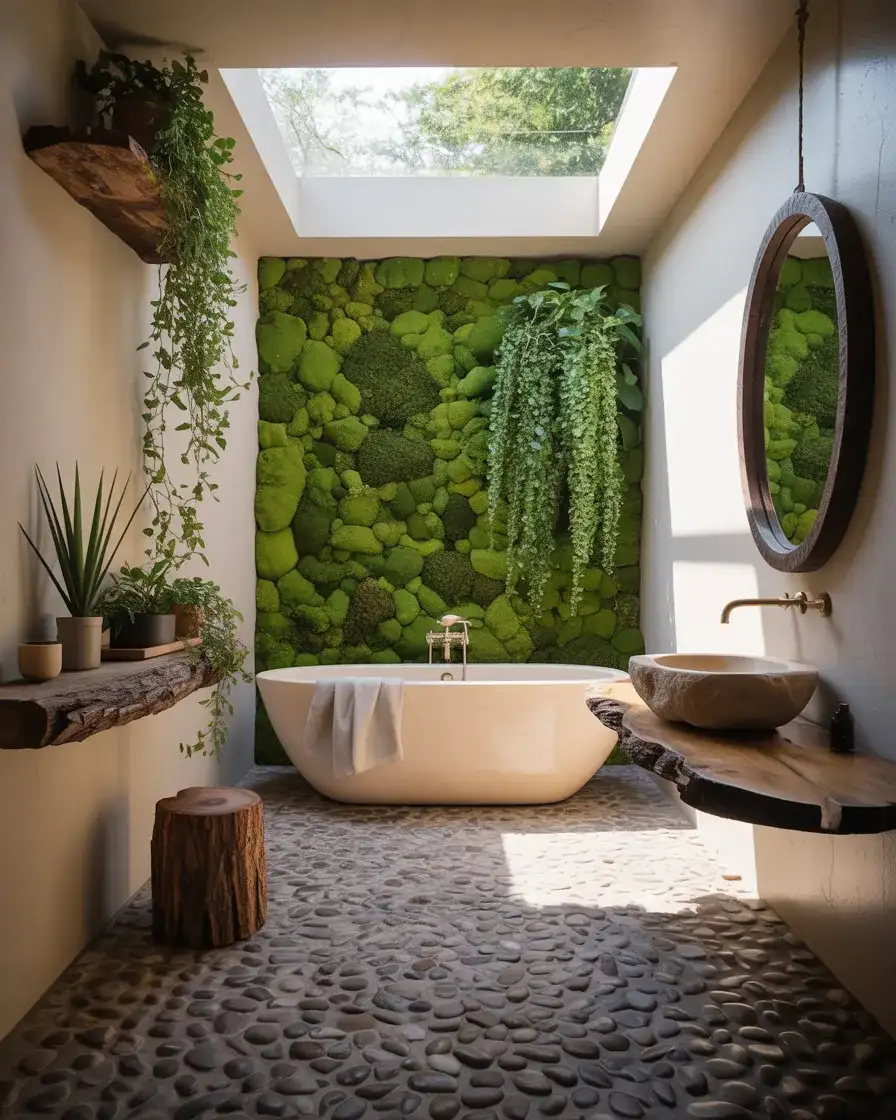
Biophilic design—the philosophy of incorporating natural elements directly into architecture to support well-being—has moved from trend to foundational principle in 2026 bathroom design. The organic bathroom at its best brings the outside in: live moss walls, stone basins with raw edges, branch-like wooden towel racks, indoor garden walls, and skylights framing views of trees. Even in urban environments, a single living plant shelf above the bathtub, a pebble floor that mimics a stream bed, or a textured plaster wall the color of damp earth creates a biophilic connection that measurably reduces stress and improves the bathing experience.
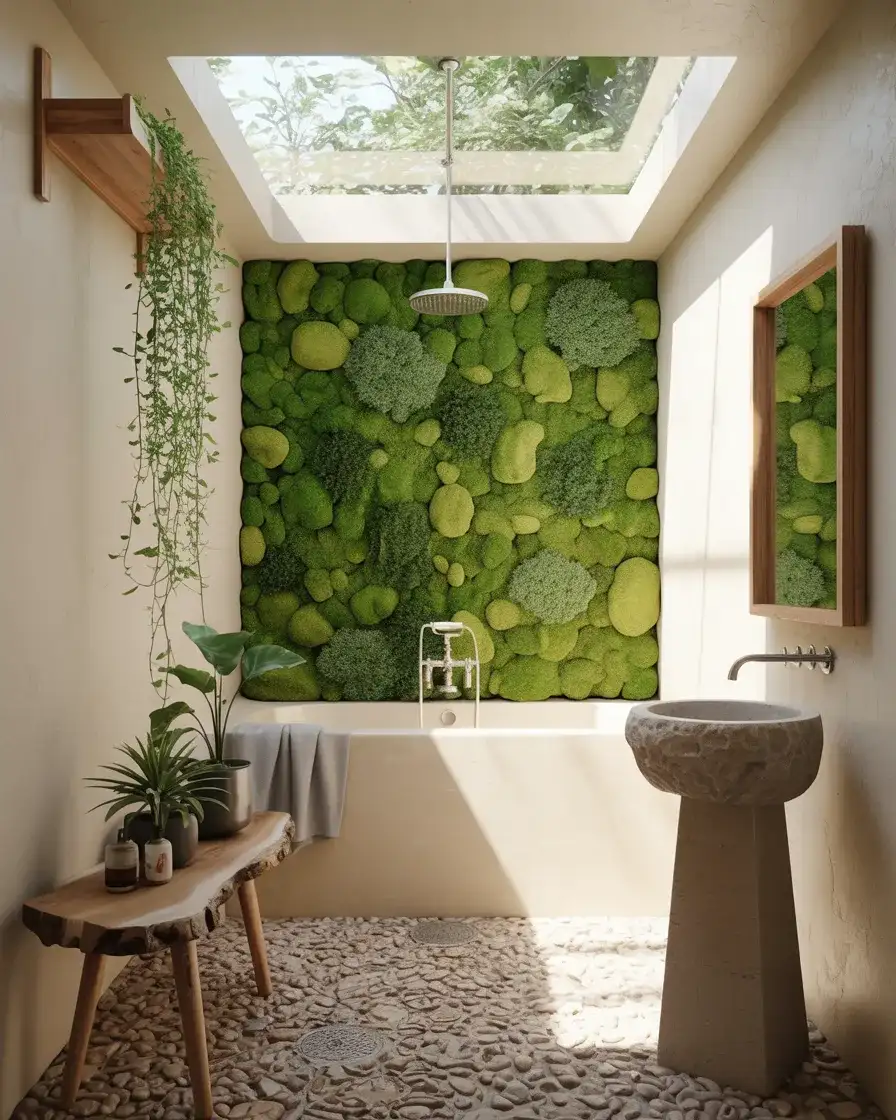
Research from the American Institute of Architects has found that bathrooms with natural elements—particularly plants, natural stone, and natural light—are among the highest-rated rooms in post-renovation homeowner satisfaction surveys. Humidity-loving plants like pothos, ferns, peace lilies, and orchids thrive in bathrooms without any special care. A single shelf with three well-chosen plants, combined with a stone or wood element, can shift a room’s feel from functional to restorative—no major renovation required.
21. Fluted and Ribbed Tile Texture Walls
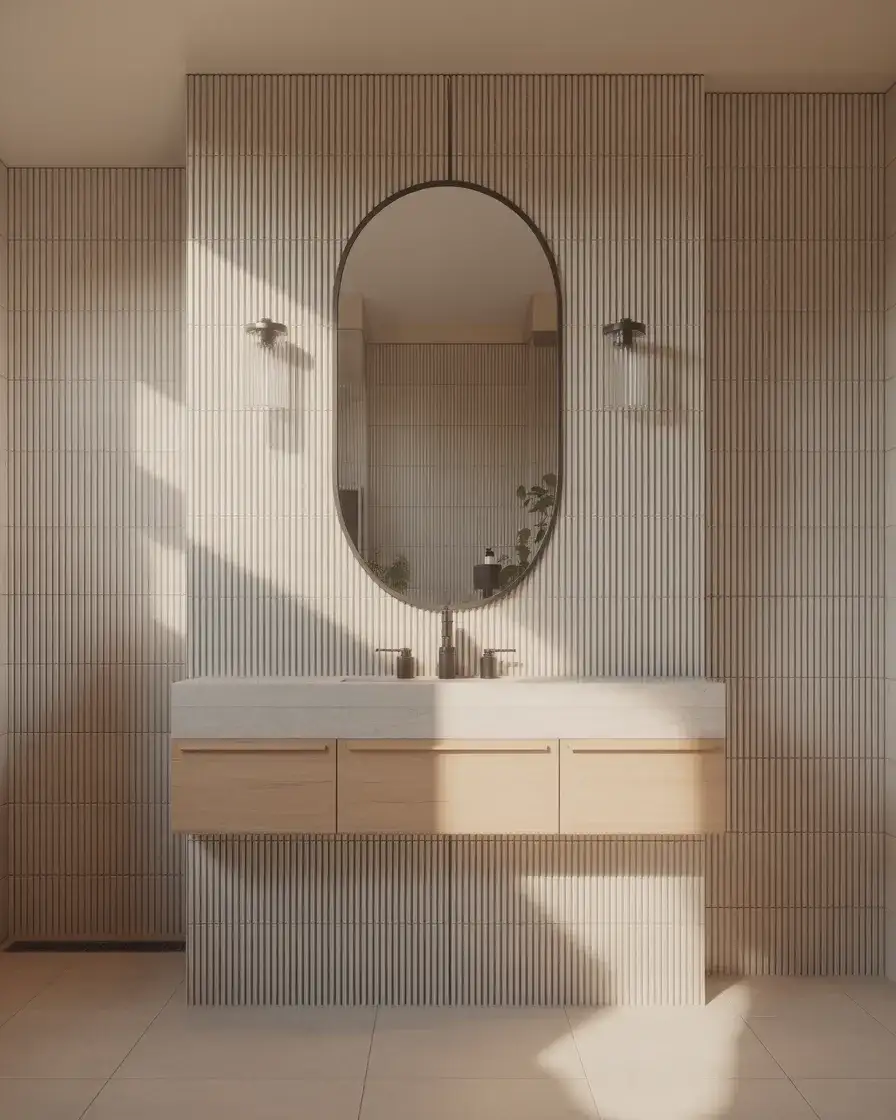
Texture has become one of the defining characteristics of 2026 bathroom design, and fluted or ribbed tile—with its parallel vertical channels—is leading the charge. It shows up on vanity backsplashes, shower accent walls, and increasingly on full-room applications in creamy white, warm greige, and sage green. The appeal is architectural: fluted tile catches light and shadow in a way that adds depth and dimensionality to flat surfaces without requiring busy patterns. It feels simultaneously mid-century in its rhythm and completely fresh in execution. Even a single fluted tile wall behind a floating vanity elevates the whole room.
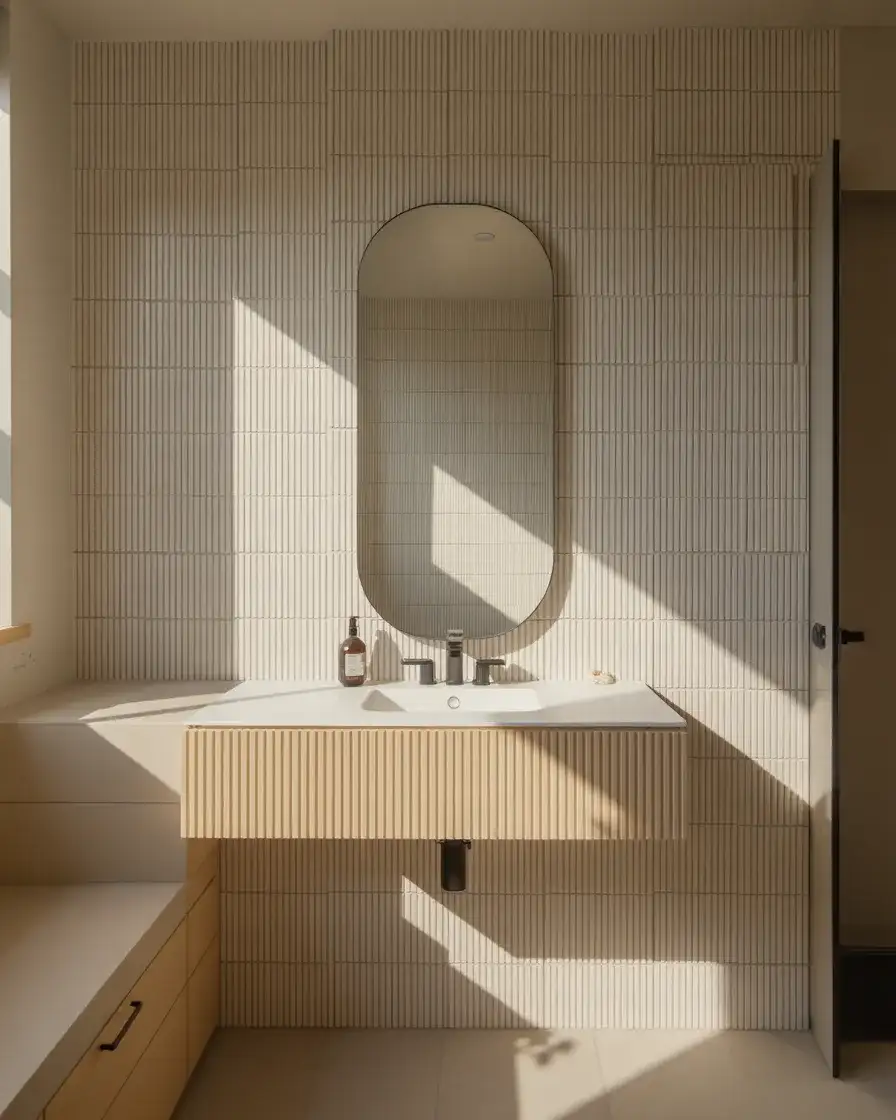
Fluted tile works in virtually every bathroom style—it reads as luxury in a spa master bath, as playfully retro in a mid-century powder room, and as quietly sophisticated in a minimalist apartment bath. It’s also a category where DIY-friendly options exist: some peel-and-stick versions are convincing enough for rental situations, and several tile manufacturers have introduced fluted designs in more accessible price tiers ($8–$18 per square foot) compared to the Italian imports that originally popularized the look. Grout color matters enormously—tone-on-tone grout keeps the focus on texture, while contrasting grout emphasizes the geometric rhythm.
22. Warm Earthy Palette Powder Rooms as Statement Spaces
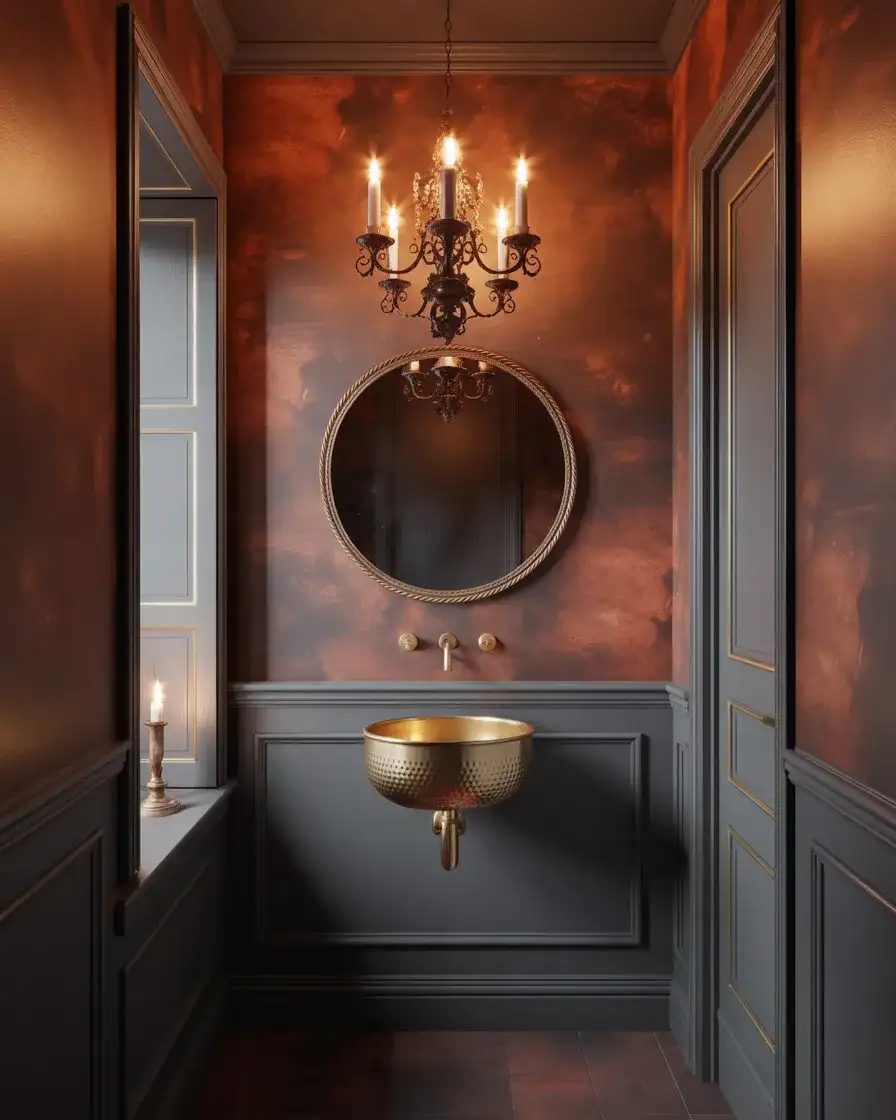
The powder room—that tiny, often-ignored half-bath—has quietly become one of the most exciting design canvases in the American home. Because it’s small and has no shower or tub to design around, it’s the one room where you can go bold without overwhelming your daily life. In 2026, the most memorable powder rooms are embracing colorful interior design moves that feel almost theatrical: deep terracotta venetian plaster, hand-painted botanical murals, vintage wallpaper in rich jewel tones, and a single extraordinary light fixture that stops guests in their tracks. These spaces borrow equally from rustic and maximalist traditions.
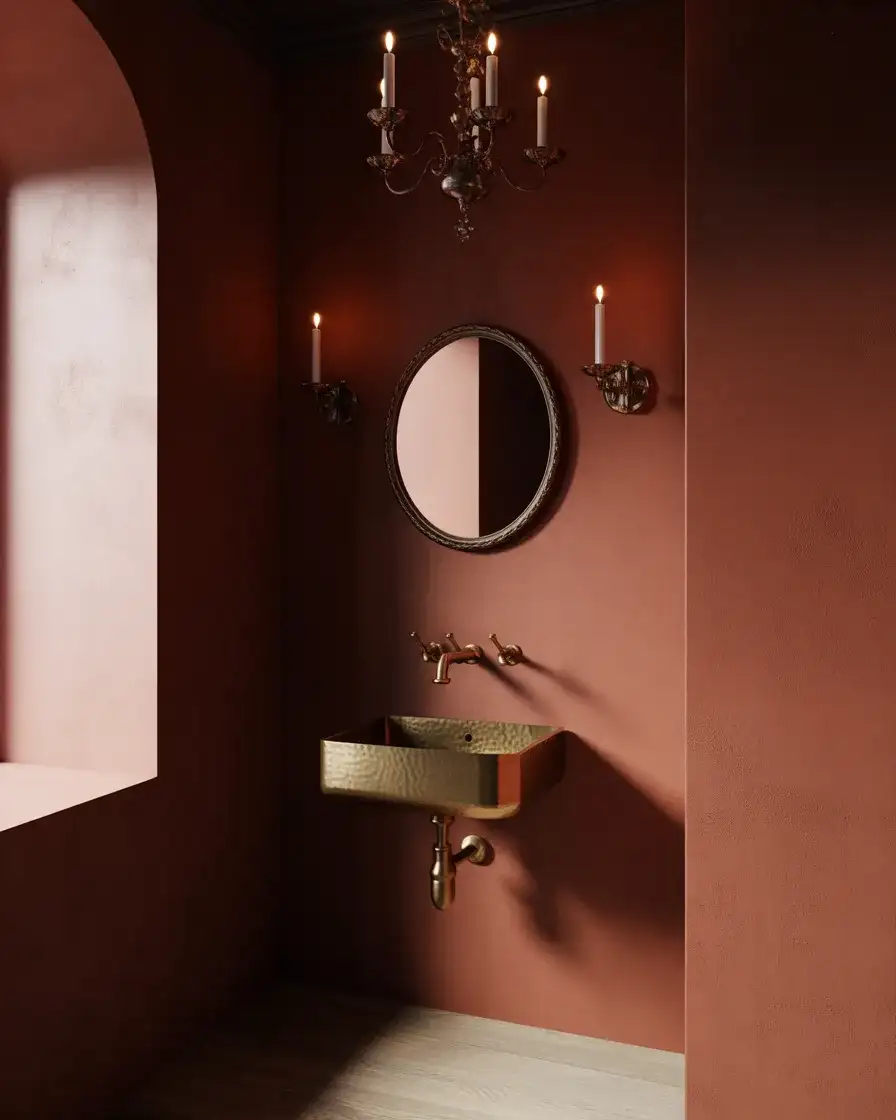
The powder room is where many interior designers recommend their clients take their biggest design risk—because it’s used in short bursts and experienced by guests, it can carry an emotion or story that a master bathroom, used daily, might not. One well-known decorator once said, “Make your powder room so beautiful that your guests linger.” That philosophy is driving a wave of renovations where homeowners who’ve played it safe everywhere else are finally letting themselves be bold in the one room where boldness costs the least and pays the most in memorable first impressions.
Conclusion
Whether you’re planning a full renovation or simply looking for a few weekend changes, there’s something here to spark your next bathroom transformation. The beauty of 2026’s bathroom design landscape is how genuinely varied it is—there’s no single “right” direction, just an invitation to create a space that feels like yours. Which of these ideas resonated most with your own bathroom vision? Have you tried any of them already? Drop your thoughts, questions, and photos in the comments—we’d love to hear where you’re taking your space next.