Minimalist living rooms have never felt more relevant—or more searched. As American homes get smaller and schedules get busier, more people are turning to Pinterest for proof that less really can mean more. The pared-back aesthetic that once felt cold or clinical has evolved into something genuinely livable: warm textures, intentional furniture, and spaces that actually breathe. Whether you’re starting fresh in a new apartment or slowly decluttering a family home, these ideas offer a real-world roadmap to a calmer, more beautiful living room in 2026.
1. Warm Neutral Walls with Linen Layers
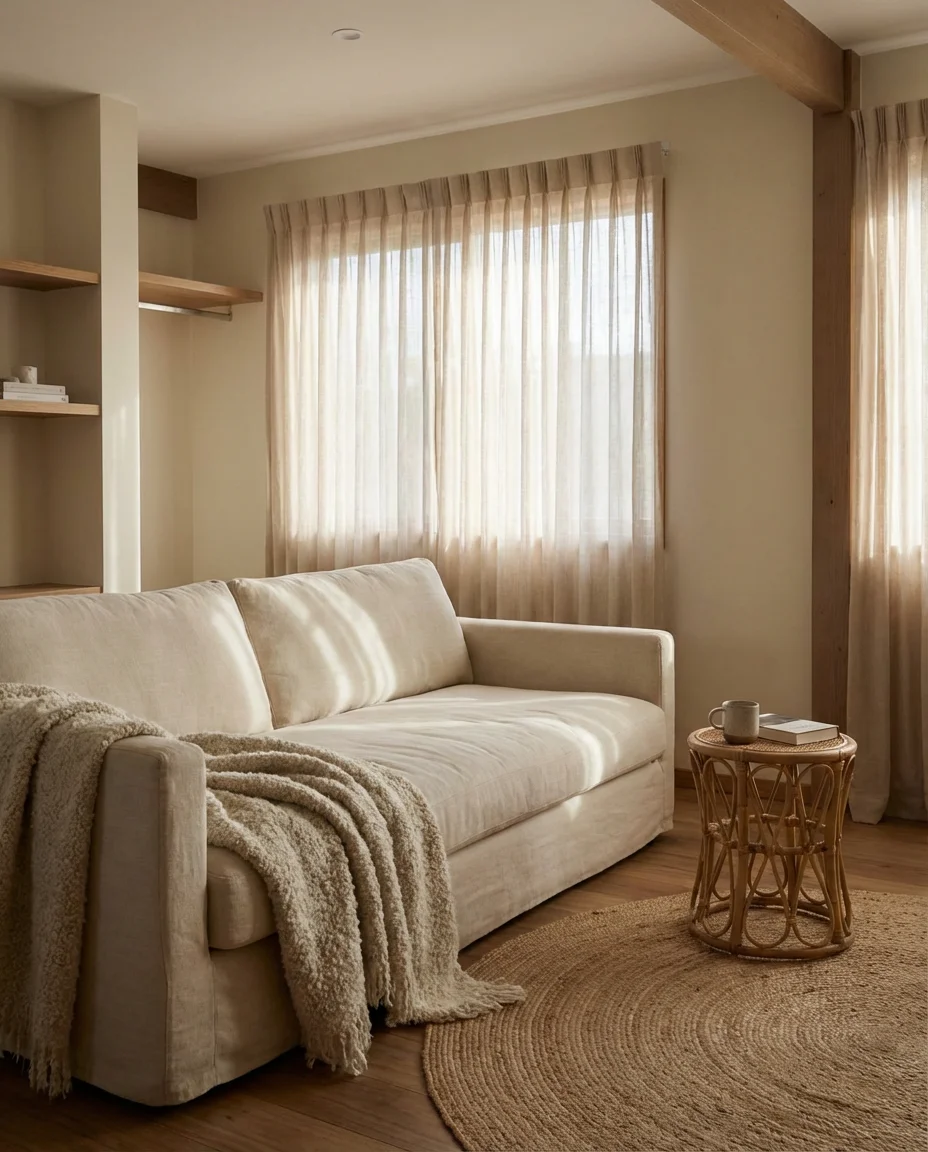
If there’s one direction minimalist interiors are moving this year, it’s warmth. Think creamy whites, soft taupes, and barely-there greiges layered with linen throw pillows, chunky woven blankets, and natural fiber rugs. This approach leans heavily into the modern neutral palette that dominates Pinterest boards right now—and for good reason. A cozy, neutral base lets you change out accents seasonally without ever repainting. It suits rentals just as well as owned homes and works in rooms of practically any size.
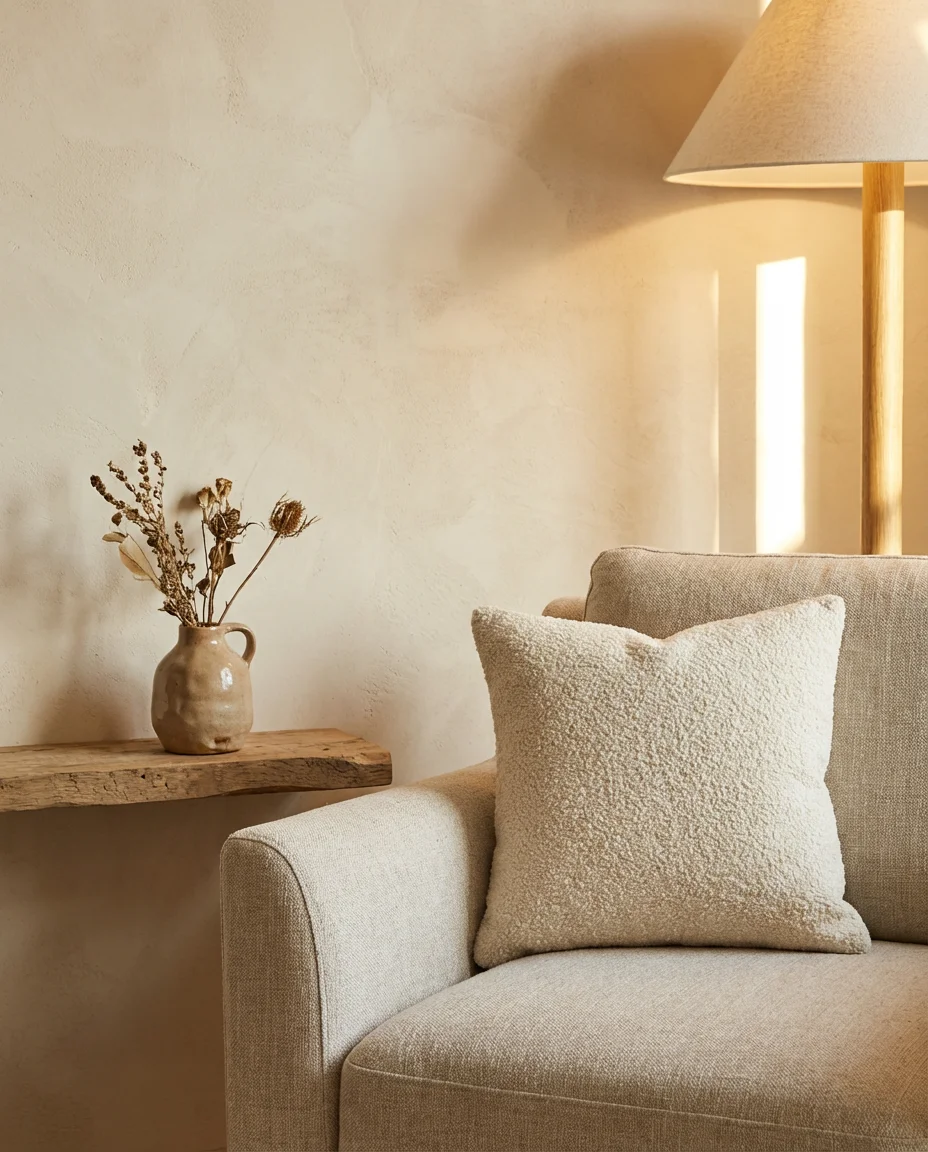
The secret to making this work is layering textures rather than colors. A single linen sofa becomes a whole mood when you add a boucle pillow, a rattan side table, and a jute rug underneath. Designers consistently point out that rooms painted in warm off-whites photograph better, feel larger, and age more gracefully than stark bright whites. If you’re nervous about committing to a wall color, start with Benjamin Moore’s White Dove or Sherwin-Williams Accessible Beige—both are perennial crowd-pleasers that pair beautifully with natural wood tones.
2. The Japandi Living Room
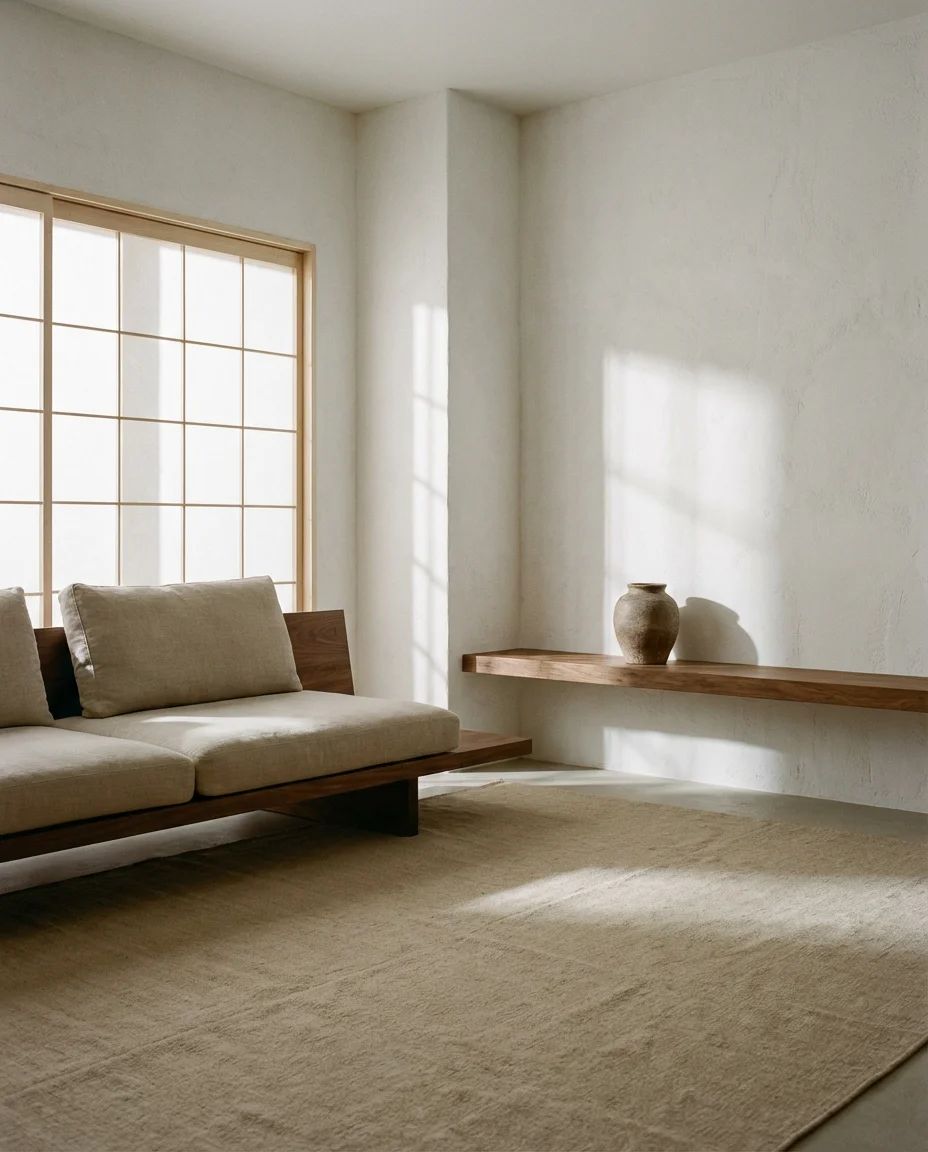
Japandi—the quiet marriage of Japanese wabi-sabi and Scandinavian hygge—has moved well beyond trend status. It’s now a full design philosophy built on the idea that every object in a room should earn its place. Low-profile furniture, raw wood finishes, muted ceramics, and a strict no-clutter policy define this look. The Scandinavian influence brings functionality and lightness; the Japanese side brings restraint and a deep respect for natural materials. Together, they create living rooms that feel meditative without feeling sterile.
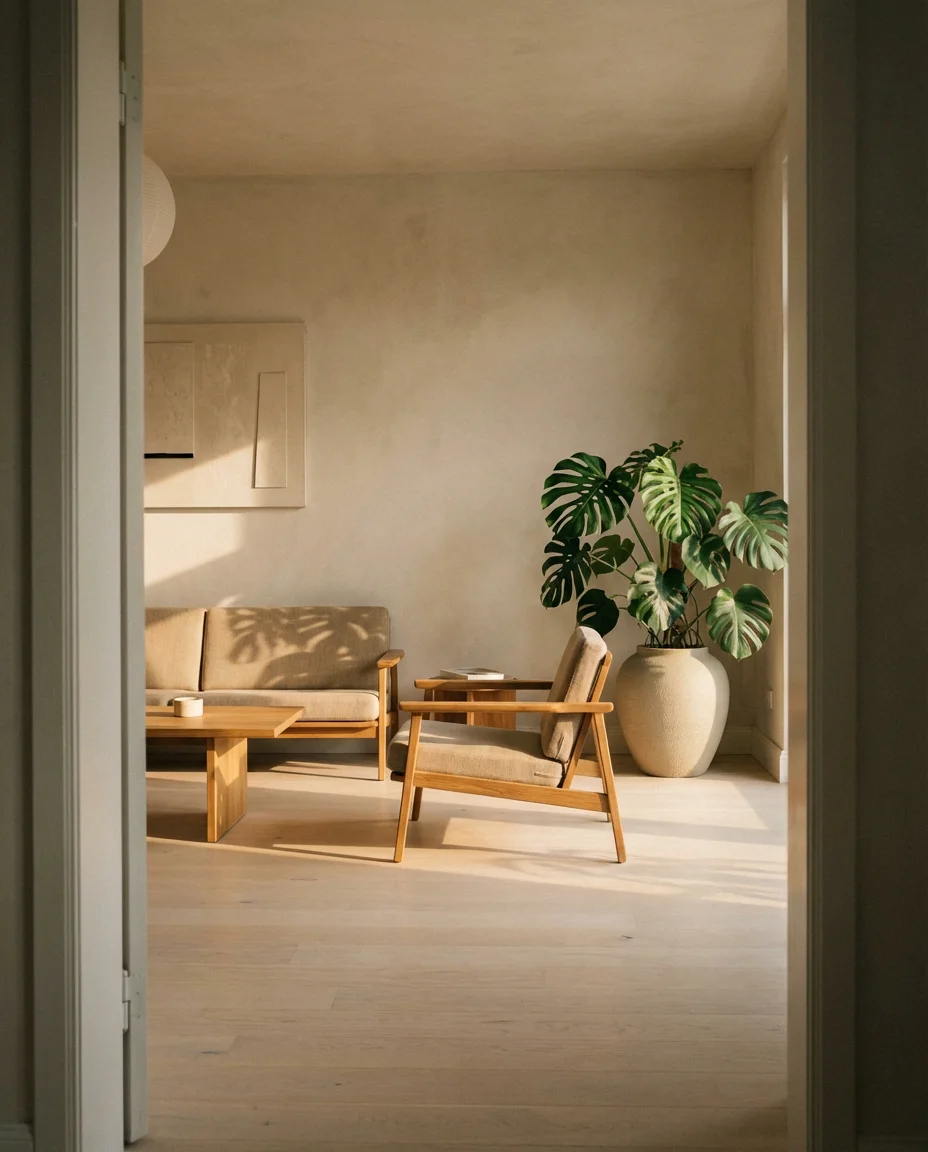
This aesthetic works best in spaces where you can control light—ideally rooms with east- or west-facing windows that catch golden-hour sun. The biggest mistake people make when attempting Japandi is over-accessorizing: one sculptural vase, one carefully chosen artwork, and one quality throw are genuinely enough. A homeowner in Portland shared that she removed two-thirds of her decor and immediately felt like her apartment had doubled in size. That kind of editing takes courage, but the results speak for themselves.
3. Earthy Tones and Organic Textures
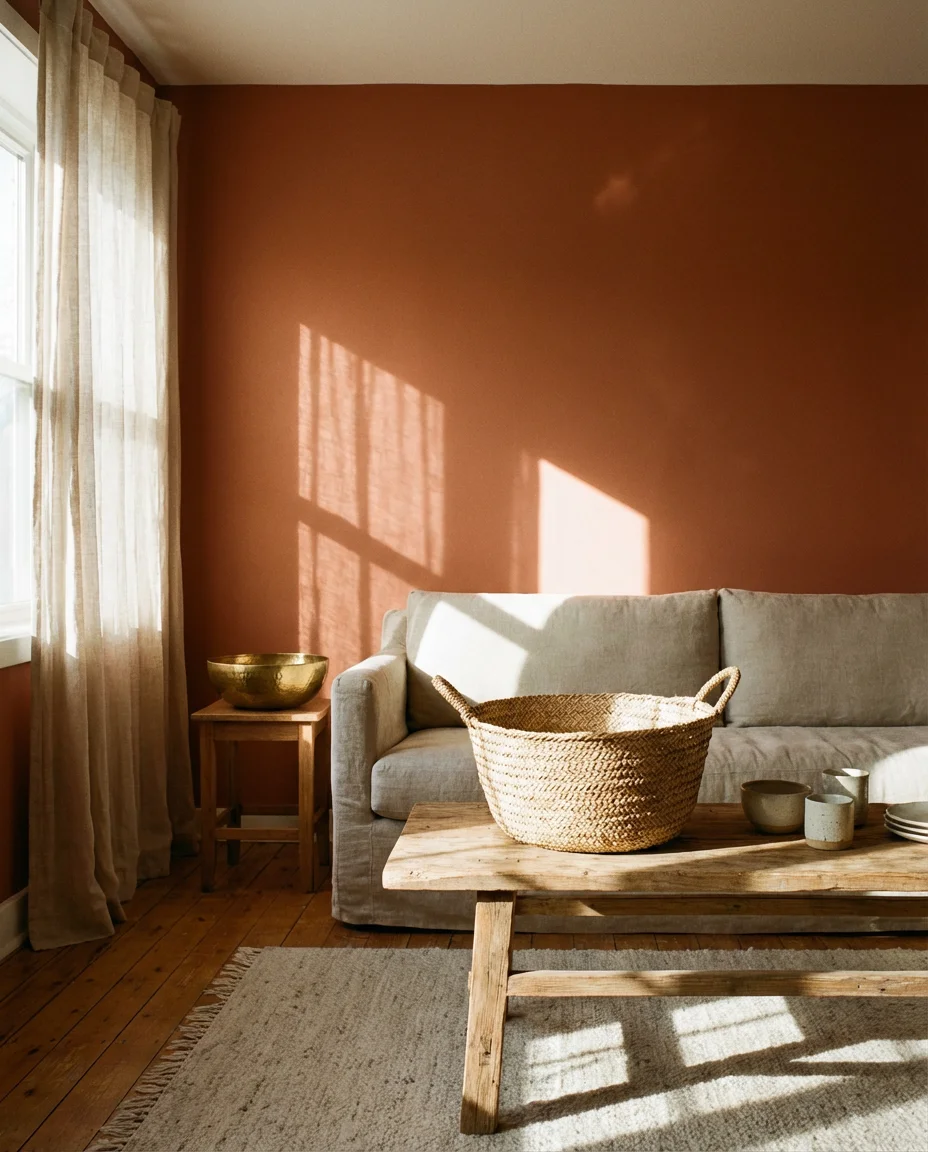
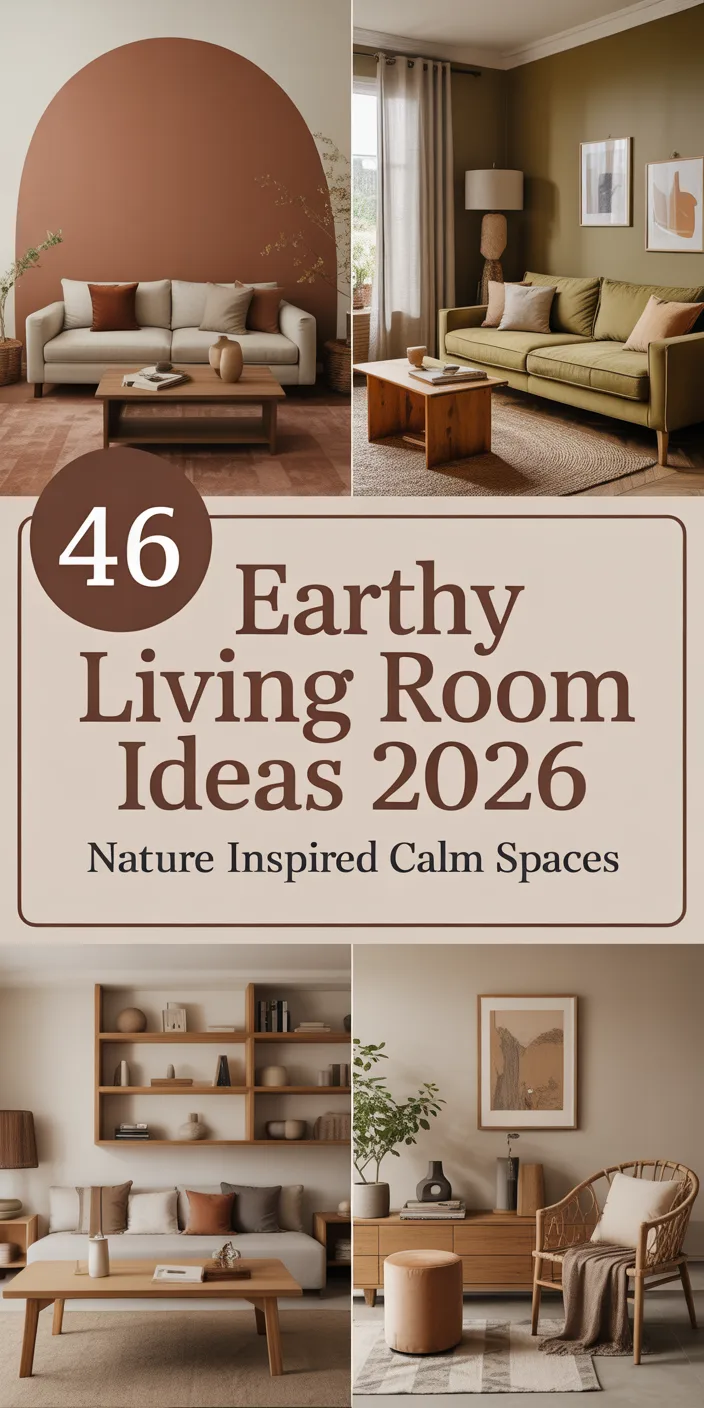
There’s a quiet revolution happening in American living rooms, and it smells faintly of cedar. Earthy palettes—terracotta, rust, warm browns, and sage green—are replacing the cool grey-and-white combos that ruled the 2010s. Paired with organic textures like raw linen, unfinished wood, hammered brass, and woven baskets, these tones create a living room that feels grounded and genuinely connected to the natural world. The effect is particularly powerful in contemporary homes where sleek architecture meets softer, more human-scaled details.
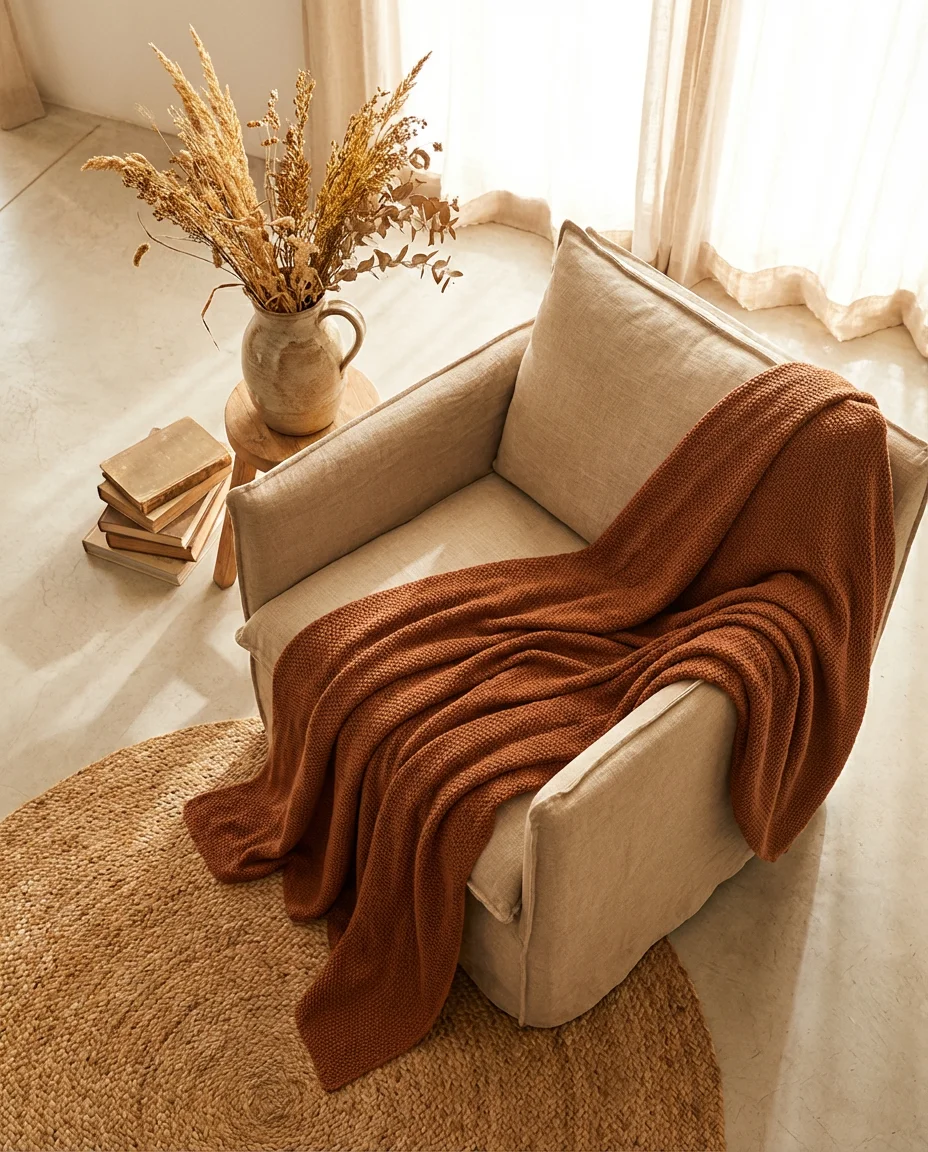
This palette is also wonderfully budget-friendly. Terracotta pots from a garden center, a $30 jute rug from IKEA, and a secondhand wooden coffee table can pull together a genuinely beautiful earthy living room without touching your savings. The key is keeping your furniture silhouettes simple so the textures do the talking. Avoid shiny metallics and synthetic fabrics here—they break the spell instantly and make the whole room feel like it’s trying too hard.
4. Dark and Moody Minimalism
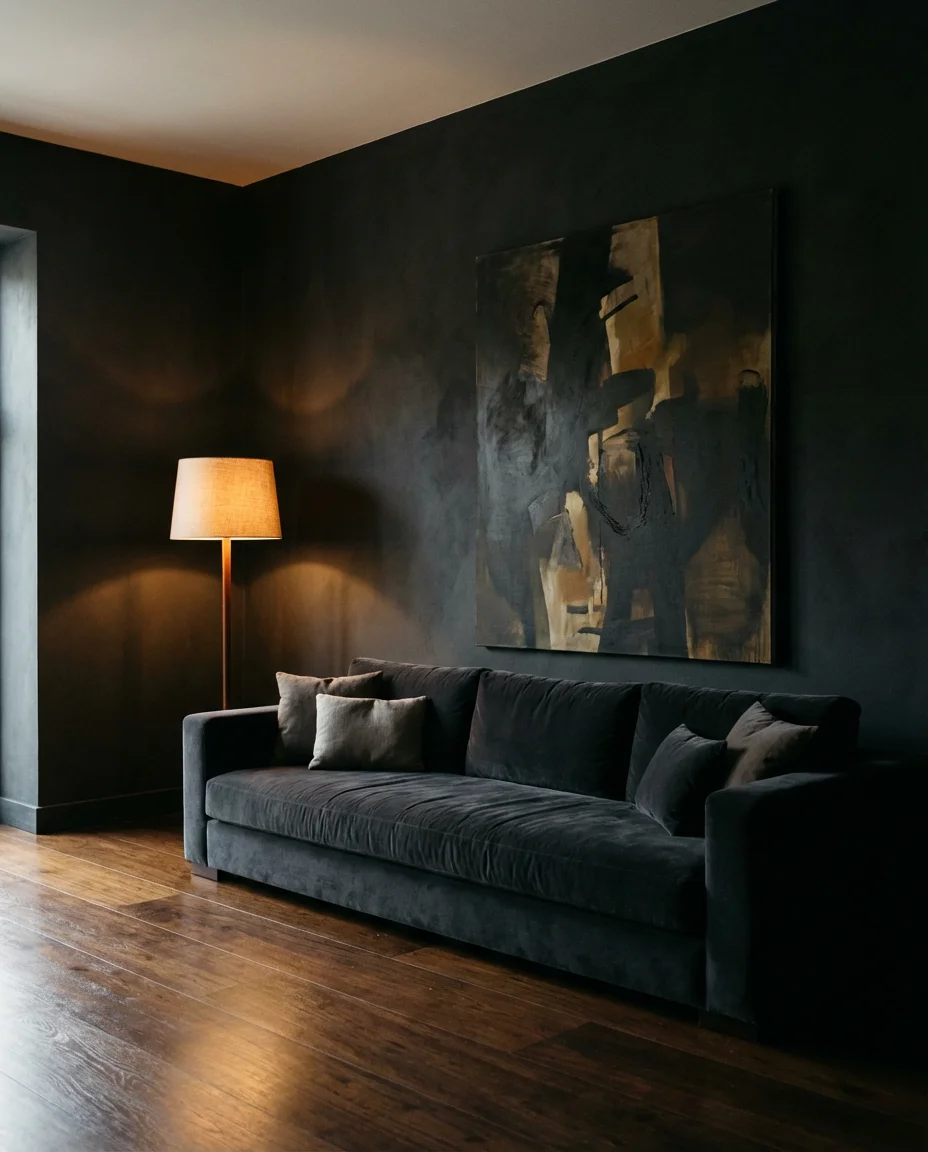
Minimalism doesn’t have to be light. The dark, moody living room is one of the boldest moves in interior design right now—and it’s surprisingly forgiving when done right. Deep charcoals, forest greens, inky navies, and even near-black walls create a cocooning effect that makes a room feel intentional and dramatic without a single extra piece of furniture. The fewer items in the space, the more each one commands attention—a sculptural lamp, a velvet sofa in a deep jewel tone, a single oversized artwork.
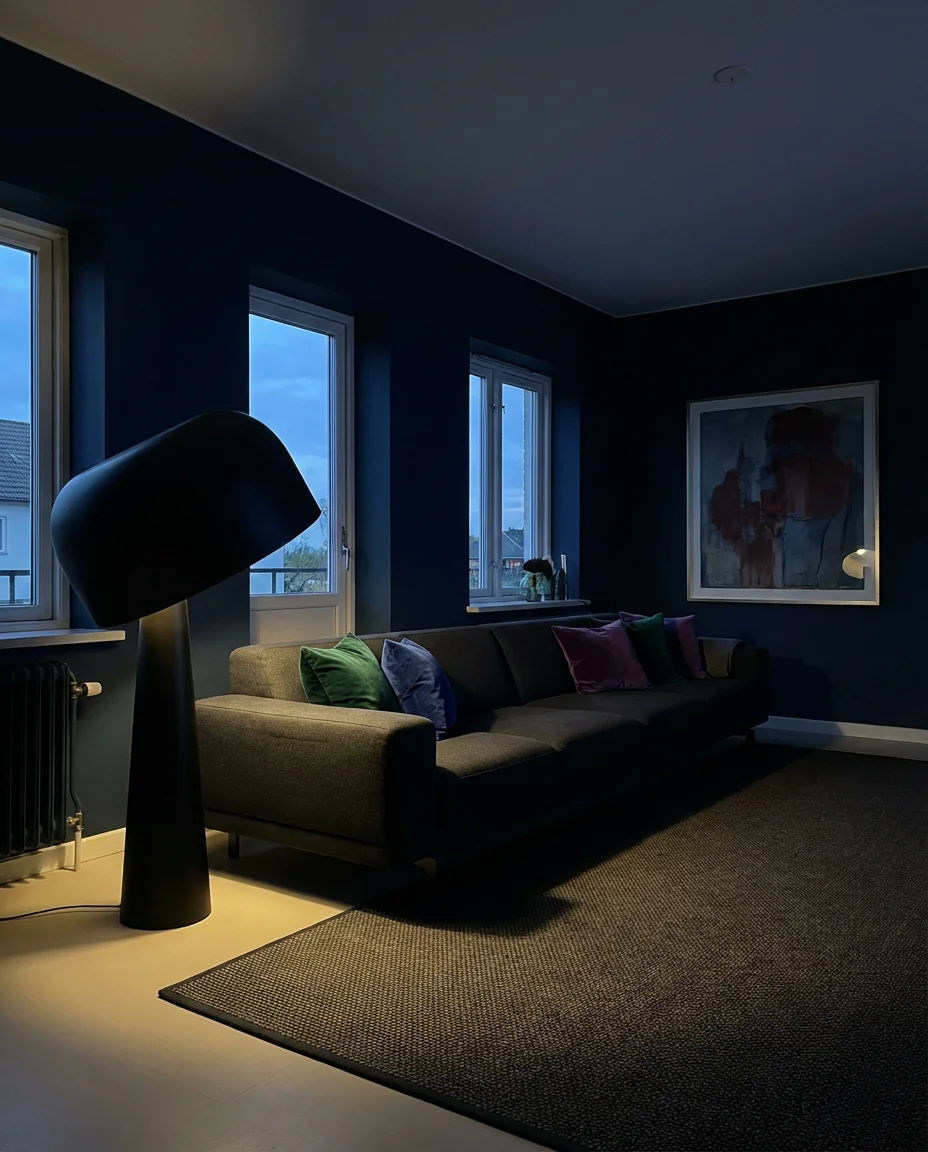
Dark rooms work best in homes where natural light isn’t the primary asset—a north-facing apartment, a cozy basement den, or a room where you want evening ambiance to take center stage. The common mistake is fighting the darkness with too many light-colored accessories, which creates visual chaos. Lean into it instead: dark walls, dark floors, dark furniture, and then let your lighting do the work. A few warm-toned Edison bulbs and a statement floor lamp will make the whole room glow like a candlelit restaurant.
5. White Minimalism with Sculptural Accents

The all-white living room remains a Pinterest staple for good reason—it’s the ultimate blank canvas. But in 2026, pure white minimalism is being elevated by the strategic placement of sculptural objects: an asymmetrical ceramic vase, an arched floor lamp, and a curved sofa with architectural presence. The design inspiration here comes from gallery spaces and boutique hotels, where negative space is treated as a design element in its own right rather than an empty area waiting to be filled. White walls amplify natural light and make even compact rooms feel open and airy.
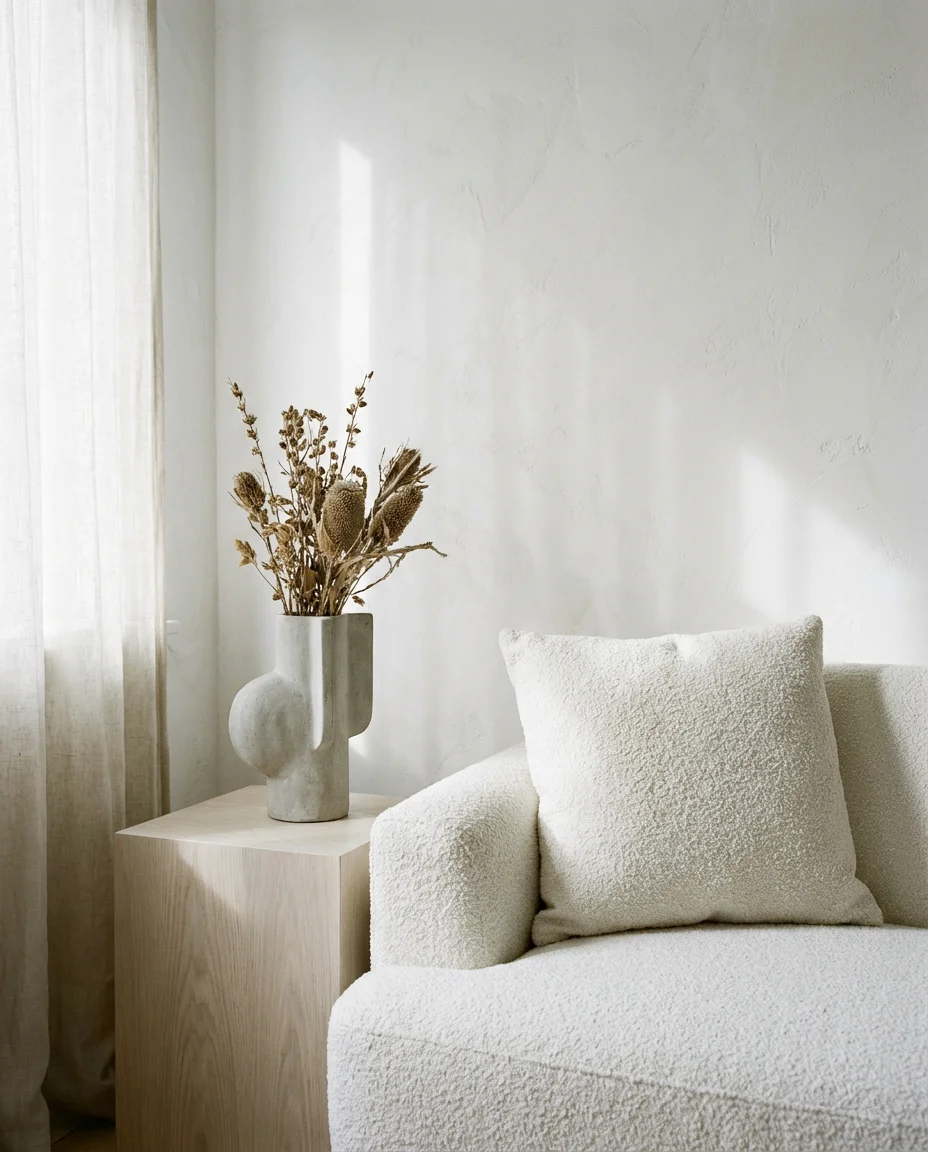
The practical challenge with all-white rooms is maintenance—and it’s a real one. Families with children or pets often abandon this look after the first muddy handprint. A smarter approach is to go white on walls and larger furniture pieces, then choose performance fabrics (Crypton and Sunbrella both make surprisingly chic options) for sofas and chairs. This way you get the visual openness of white minimalism without spending every weekend spot-cleaning. Slipcovers in washable white cotton are another great American-practical solution that interior designers quietly use all the time.
6. Bohemian Minimalism—Yes, It Exists

The phrase might sound contradictory, but cozy boho minimalism is one of the most popular living room aesthetics on Pinterest right now. It takes the best of both worlds: the warmth, texture, and personality of bohemian style, filtered through a minimalist lens that keeps things from tipping into clutter. Think one macramé wall hanging instead of twelve, a single kilim rug instead of layered rugs on every surface, and plants chosen for sculptural impact rather than sheer quantity. The palette stays earthy and warm, but the editing is ruthless.
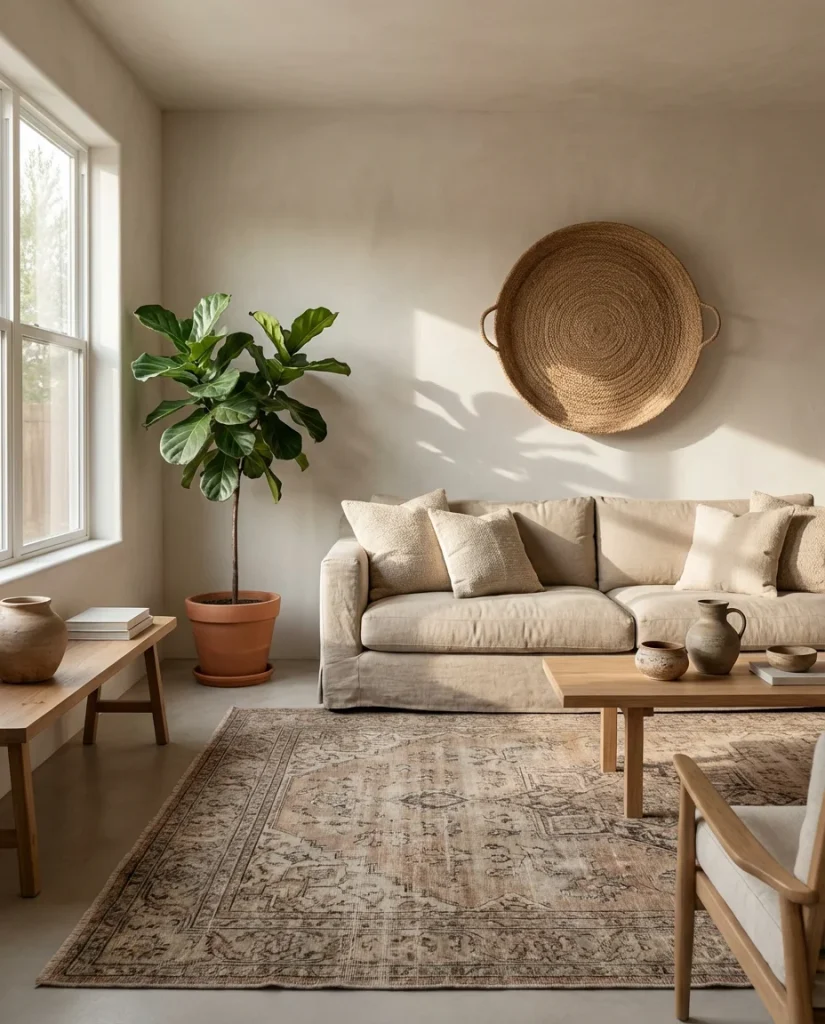
Where boho minimalism really shines is in rental apartments, where you can’t paint walls or install built-ins. A large vintage-style rug, a rattan chair, and a few trailing pothos plants can transform a generic beige box into something that feels genuinely personal and curated. The rule of thumb: for every decorative item you’re tempted to add, remove something already in the room first. Edit before you add, and you’ll maintain that breezy, intentional quality that makes this style so appealing to scroll past—and even better to actually live in.
7. The Modern TV Console Setup
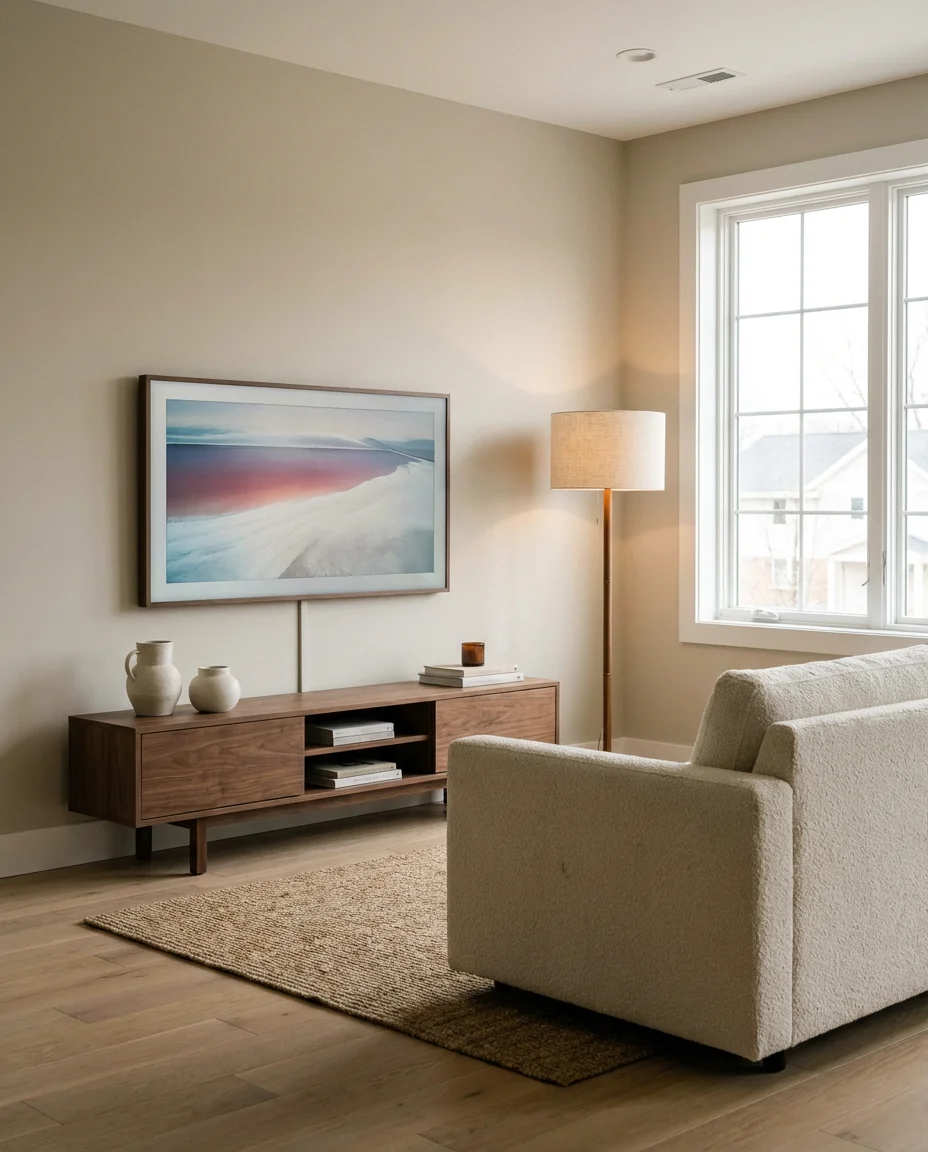
The television is the elephant in every minimalist living room. Most of us aren’t getting rid of it—so the real question is how to integrate a TV console modern enough to not destroy the aesthetic. Low-profile floating shelves, wall-mounted TVs with hidden cable management, and media consoles with closed storage are all strong options. The trend for 2026 leans toward consoles in warm walnut or white oak with minimal hardware—clean lines that reference mid-century furniture without being a pastiche of it.
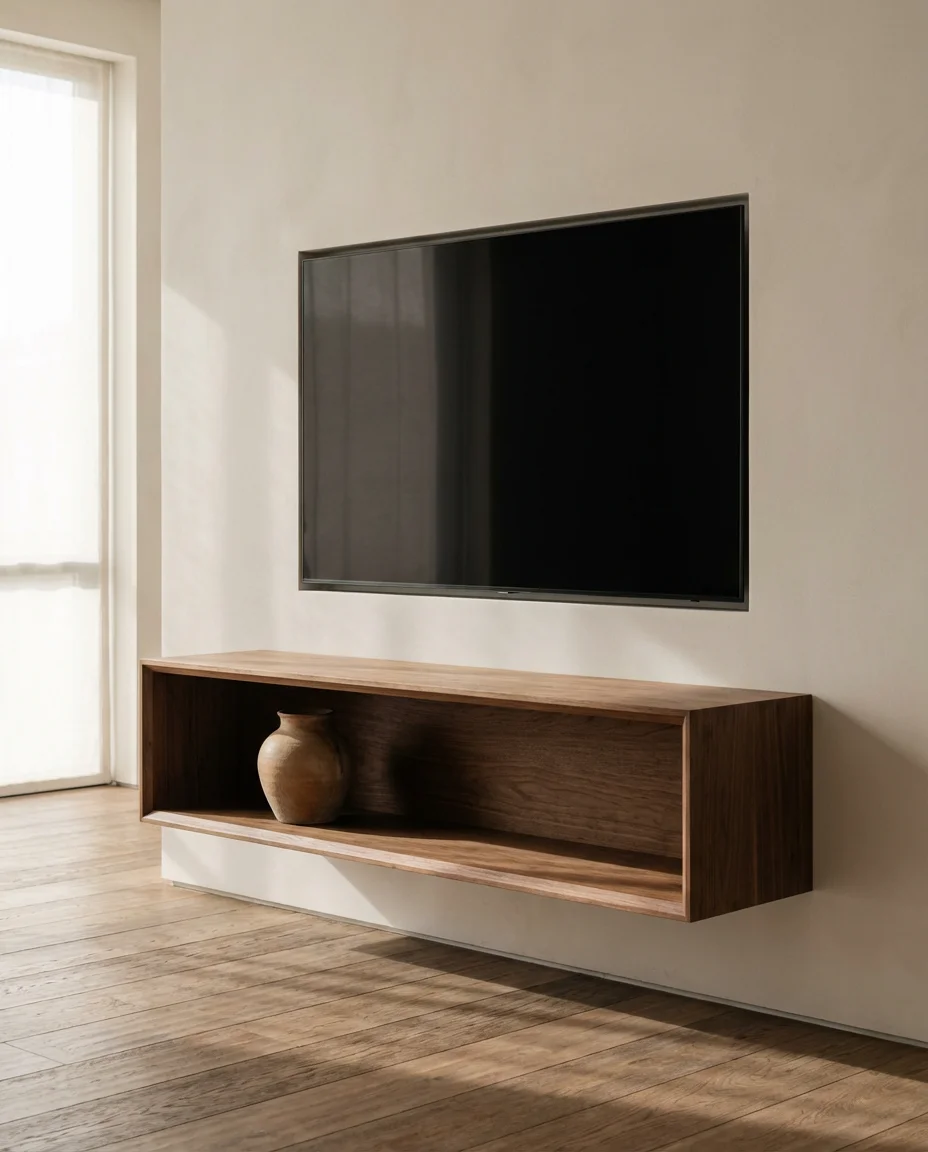
Cable management is genuinely the make-or-break factor in a minimalist media setup. Even the most beautiful floating console looks cluttered with a tangle of cords hanging below it. Raceways, in-wall cable kits, and simple velcro ties can solve this in an afternoon for under $50. One interior designer’s tip that gets surprisingly little attention: paint the wall behind your TV the same color as the TV bezel. It visually shrinks the screen and makes the whole wall composition feel much more intentional and calm.
8. Grey Tones Done Right
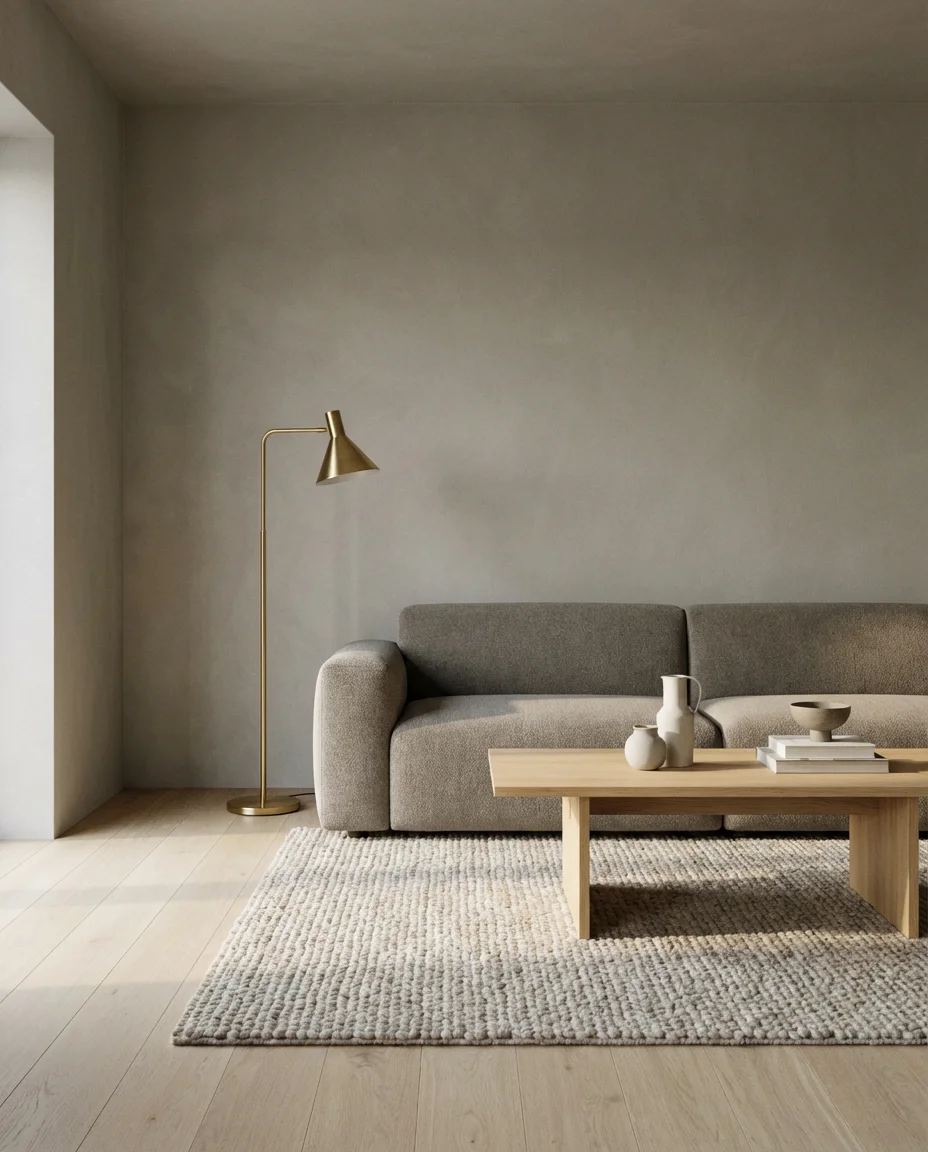
Grey got a bad reputation during the all-grey-everything era of the early 2010s, but it’s making a thoughtful comeback. The difference this time is warmth: greiges, blue-greys, and greens with grey undertones are replacing the cold, clinical grey-on-grey palette that felt like a dentist’s waiting room. In a minimalist living room, the right grey acts as a sophisticated neutral that plays beautifully with wood tones, brass accents, and both light and dark furniture. It’s especially effective in urban apartments where modern architecture calls for a more polished, edited palette.
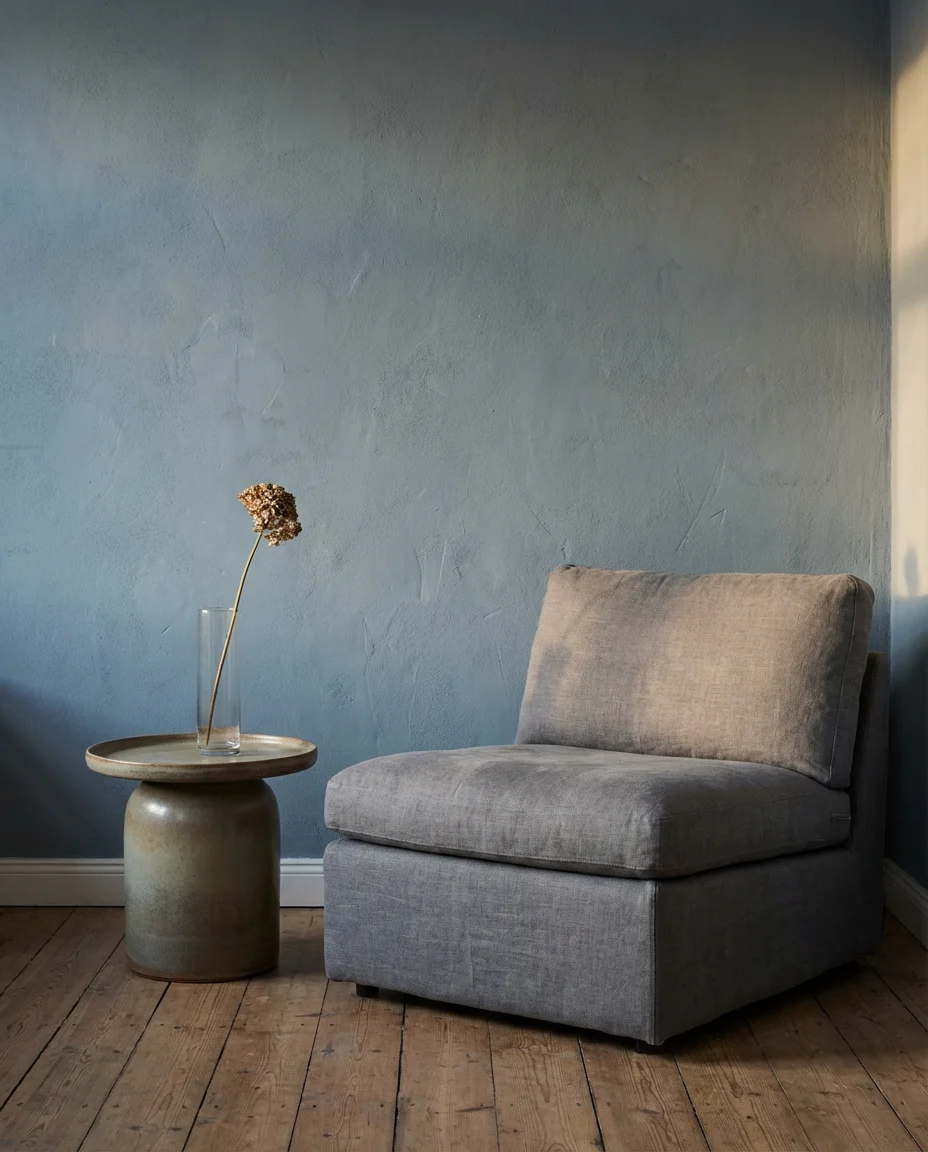
The mistake most people make with grey is choosing it under artificial light and then being surprised when it reads purple or green on the walls at home. Always test paint swatches in your actual space, in both natural daylight and evening lamplight, before committing. Farrow & Ball’s Purbeck Stone and Sherwin-Williams’ Repose Grey are two of the most reliable warm-grey options for American homes. Pair with natural oak floors and off-white linen for a room that feels calm, modern, and unmistakably 2026.
9. Minimalist Living Room for Small and Tiny Homes

For those living in small tiny homes, minimalism isn’t an aesthetic choice—it’s a survival strategy. The good news is that small living rooms are actually the best possible canvas for minimalist design. A tight edit of furniture forces you to choose only the pieces that genuinely earn their square footage: one sofa, one coffee table, one rug, done. The result is a room that feels spacious despite its actual dimensions. Neutral walls and light-colored floors amplify this effect, bouncing light around the room and making the ceiling feel higher than it is.
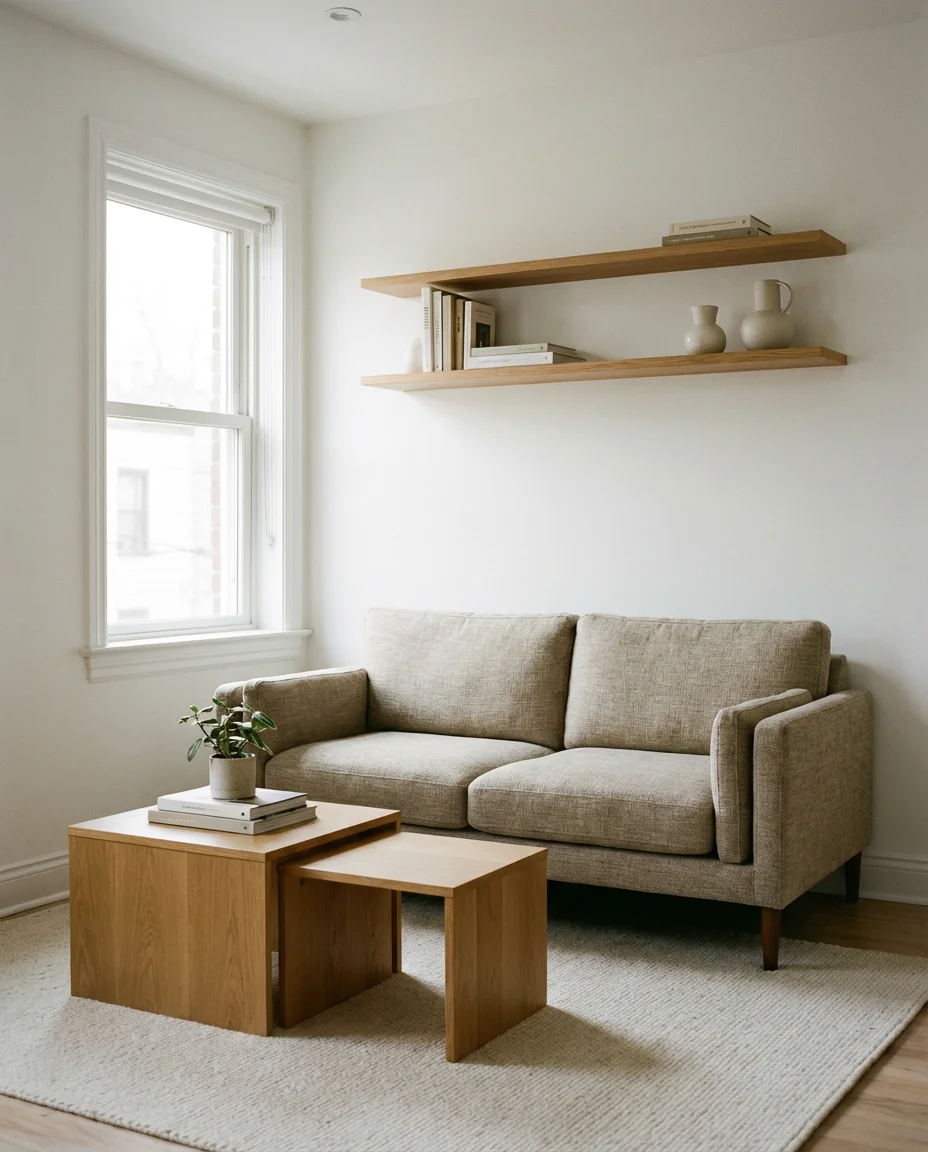
Multi-functional furniture is the real MVP of small minimalist living rooms. An ottoman that doubles as storage, a sofa with a pull-out bed, a nesting coffee table that can expand for guests—these pieces do the heavy lifting so you don’t have to cram in extra chairs or side tables. Avoid tall, heavy bookcases that eat up visual space and instead opt for floating shelves mounted high on the wall. They provide storage without blocking sightlines, keeping the room feeling open even when every inch is technically in use.
10. Mid-Century Modern Minimalism
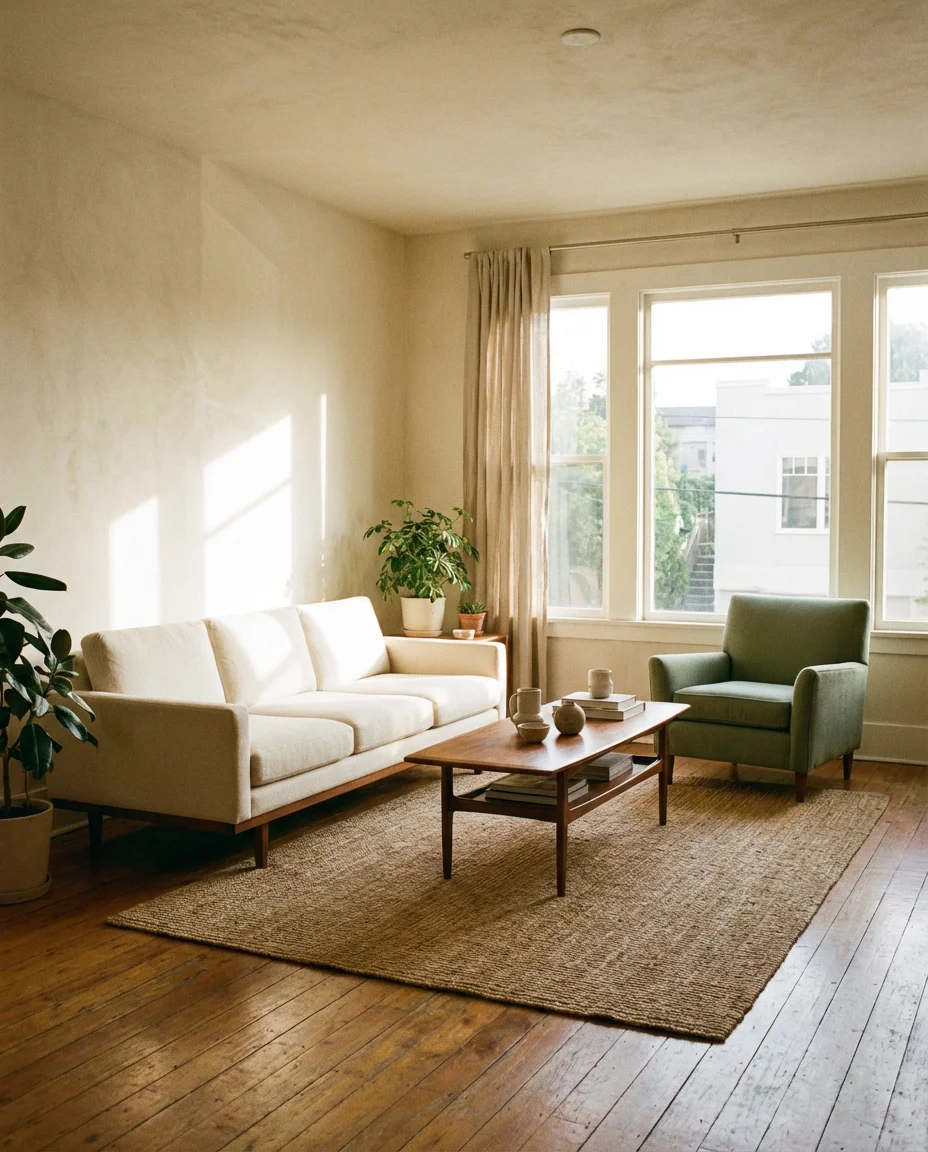
There’s a reason mid-century modern never fully goes away—its core principles map almost perfectly onto contemporary minimalist values. Clean lines, functional forms, an honest use of materials, and a rejection of unnecessary ornamentation. For 2026, the freshest take on this aesthetic updates the traditional teak-and-mustard palette with quieter, more contemporary colors: warm whites, muted sage, soft camel, and charcoal. The furniture silhouettes stay classic—tapered legs, low profiles, organic curves—but the overall effect feels current rather than nostalgic.
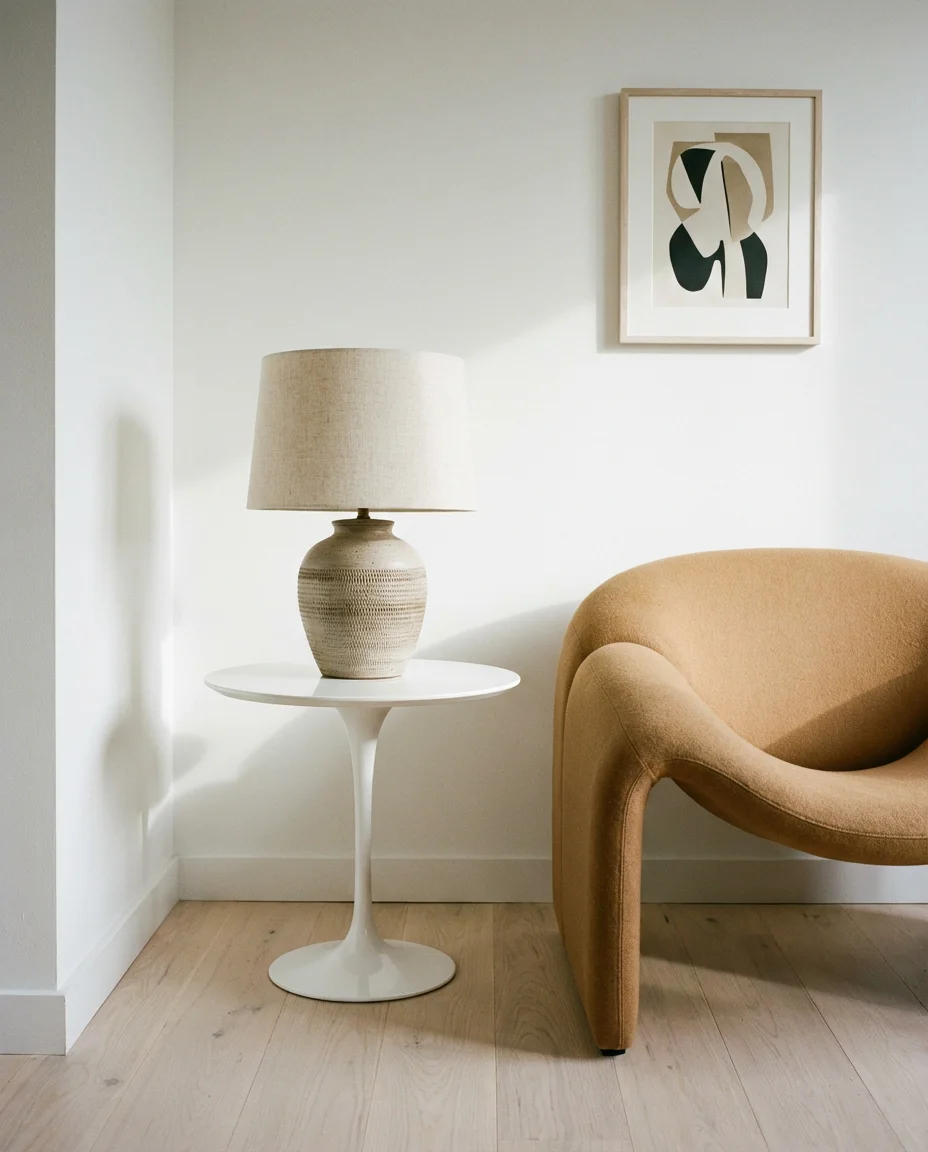
One of the most cost-effective ways to achieve this look is to invest in one or two genuine mid-century pieces—a Eames-style lounge chair, a classic tulip side table—and build the rest of the room around them affordably. West Elm, Article, and even IKEA’s STOCKHOLM range offer convincing mid-century minimalist pieces at accessible price points. The investment pieces become the anchors; everything else stays simple and recedes. This approach works for budgets from $500 to $50,000 — the proportions and the editing discipline matter far more than the price tags.
11. Cozy Minimalism—Warm Without the Clutter
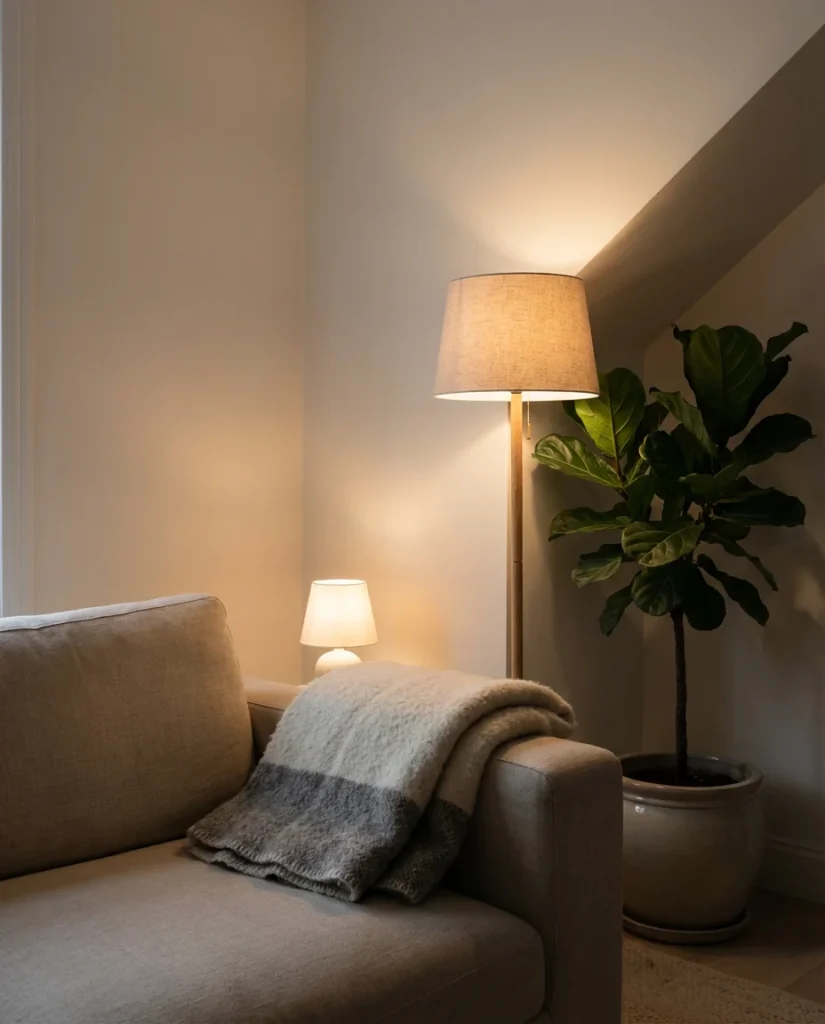
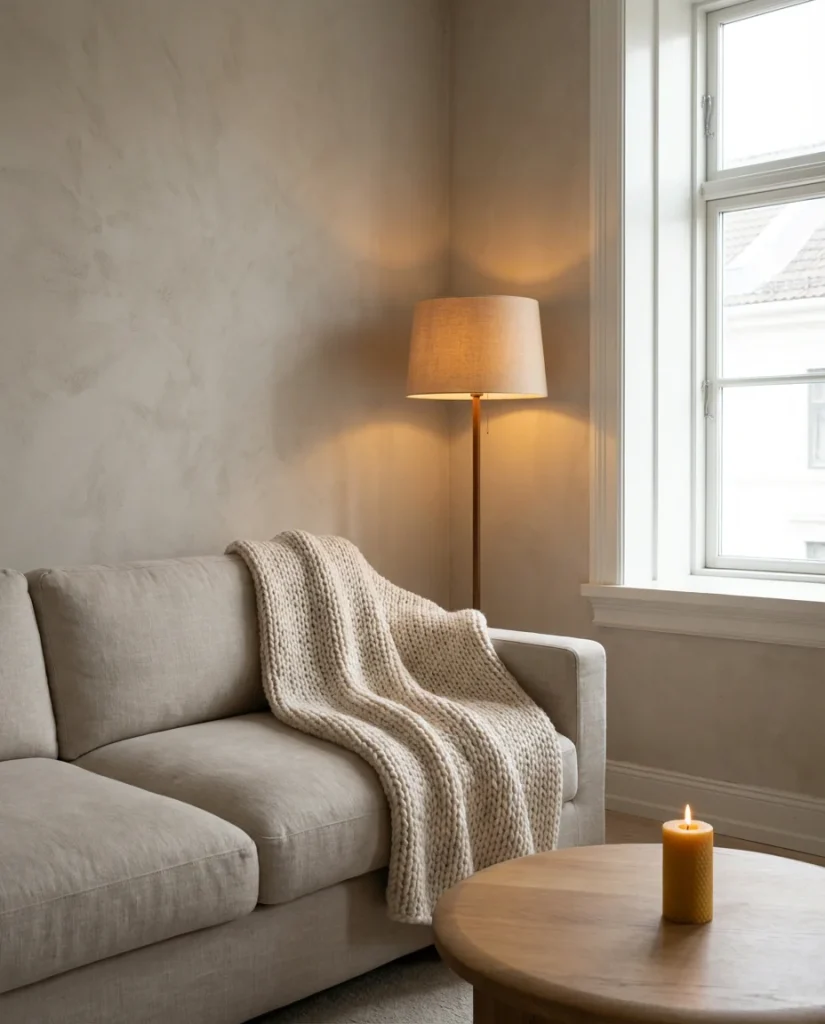
The biggest pushback against minimalism has always been that it feels cold. Cozy minimalism is the design community’s direct answer to that criticism. It keeps the clean lines and intentional restraint of classic minimalism but layers in genuine warmth through textiles, lighting, and natural materials. A chunky knit throw folded over one arm of a sofa. A beeswax candle on the coffee table. A single warm-toned floor lamp casting amber light across the room in the evening. These small additions don’t create clutter—they create atmosphere, which is something minimalism desperately needs.
Real homeowners who’ve committed to cozy minimalism report that the hardest part isn’t adding the right things—it’s resisting the urge to keep adding more once the room starts to feel good. There’s a sweet spot between sparse and warm, and you’ll know it when you hit it because the room will feel like it exhales. A useful litmus test: stand in the doorway and look at the room. If your eye travels calmly around the space without snagging on anything, you’ve found the balance. If it jumps around nervously, something needs to go.
12. Integrated Dining Area in a Minimalist Living Room
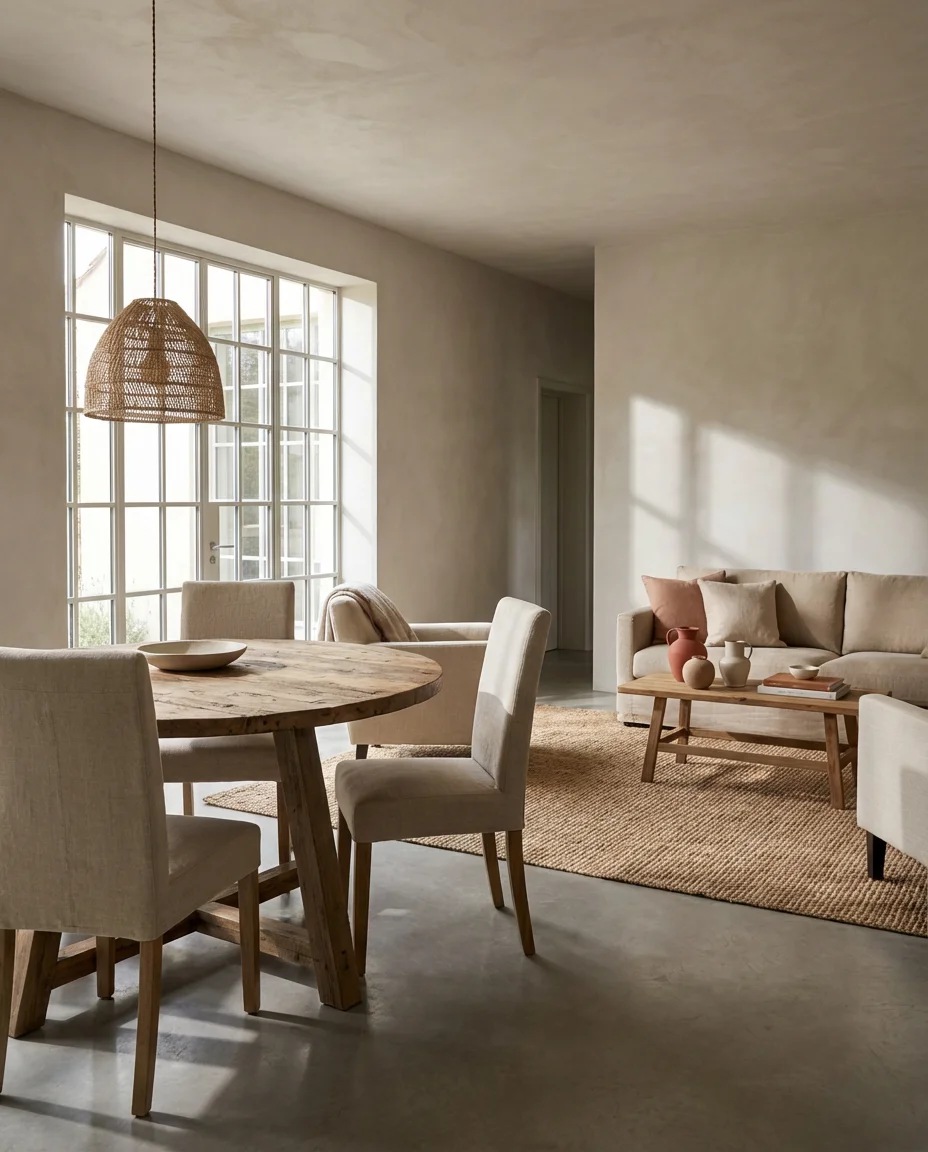
Open-plan living is the norm in most American apartments and newer homes, which means the dining area and living room often share one continuous space. In a minimalist home, this is an opportunity rather than a problem. A round dining table (which takes up less visual space than rectangular) placed near a window, paired with two or four chairs in a matching or complementary finish, creates a composed vignette that feels intentional. The key is keeping the two zones distinct—a rug under the living room seating and a bare floor or a smaller rug under the dining table.
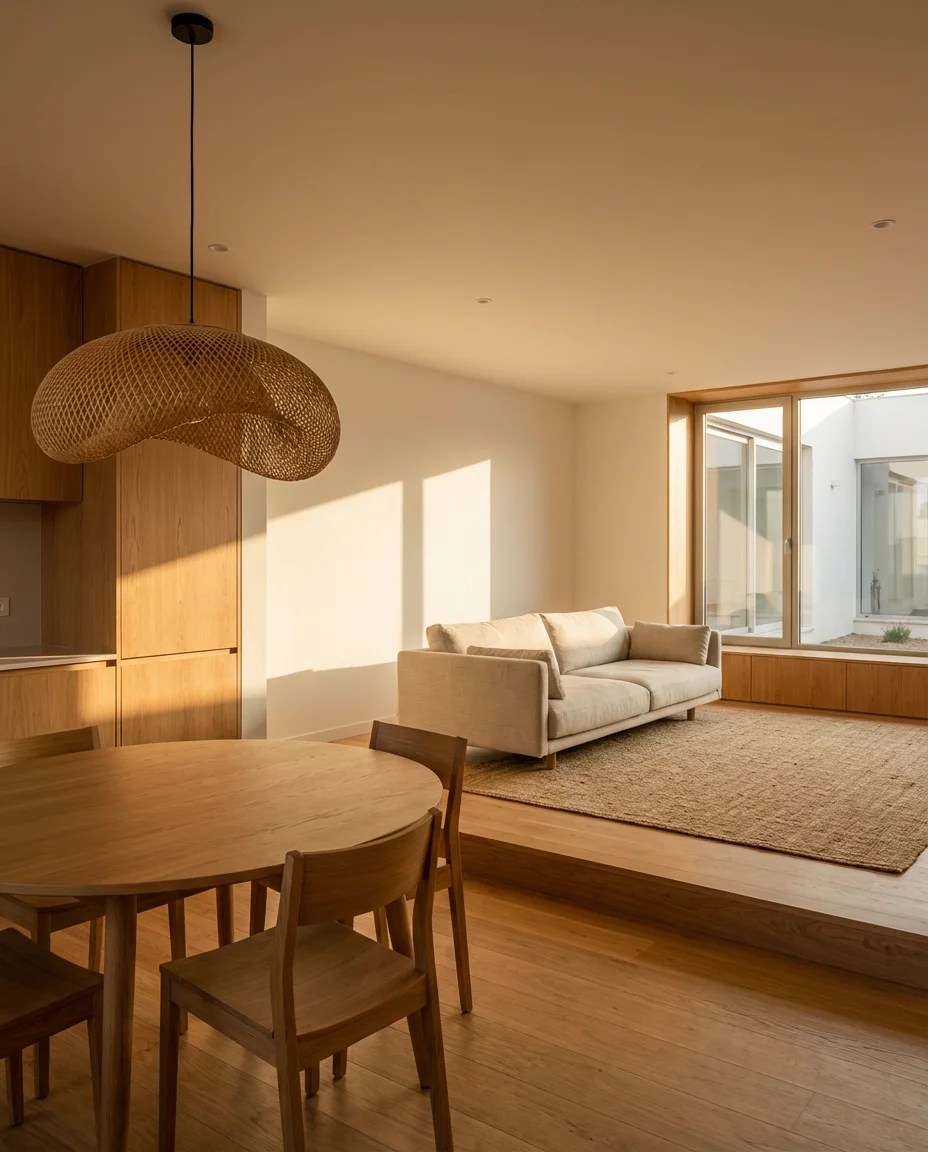
Where this arrangement goes wrong is when the dining and living furniture compete rather than converse. Choose a palette that unifies both zones—the same wood tone on the dining table legs and the coffee table, for instance, or a sofa color that picks up from the dining chair cushions. A pendant light over the dining table is one of the most powerful tools in an open-plan minimalist space: it defines the dining zone, adds drama, and does it with a single object. Sculptural concrete or rattan pendants are particularly popular for this purpose right now.
13. Luxury Minimalism—Designs Modern Luxury

True design’s modern luxury isn’t about filling a room with expensive things—it’s about filling it with fewer, better things. A single sofa in hand-stitched Italian leather. A marble coffee table with a waterfall edge. A cashmere throw in a color so perfect it looks painted. This version of minimalism is unapologetically aspirational, and it’s quietly taking over the upper end of the Pinterest inspiration feed. The absence of clutter becomes a signal of taste and restraint—perhaps the most sophisticated statement a living room can make in an era of visual noise.
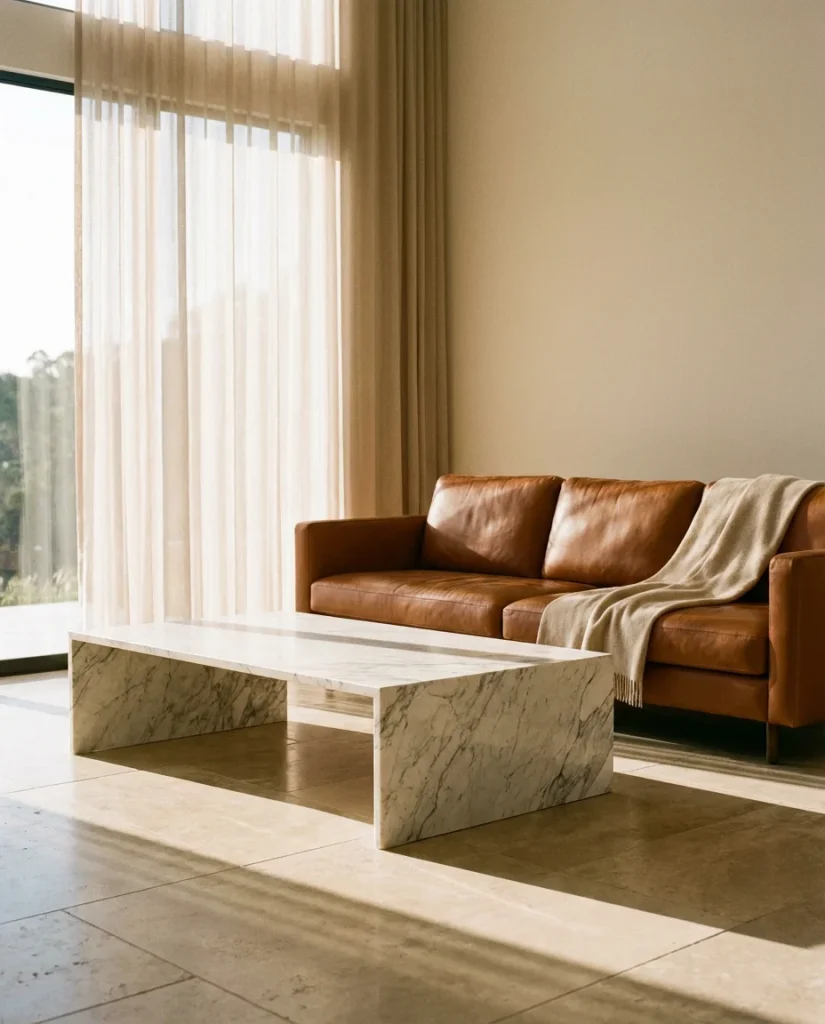
The expert consensus is that luxury minimalism lives or dies on material quality. You can fake a mid-century look with affordable furniture, but you cannot fake the quality of genuine stone, real wood, or fine fabric—they read differently in person and in photographs. If budget is a consideration, choose one genuinely luxurious anchor piece (a real marble side table, a quality wool rug) and keep everything else simple and inexpensive. The contrast actually works in your favor, making the investment piece look even more intentional and considered.
14. The Monochromatic Minimalist Room
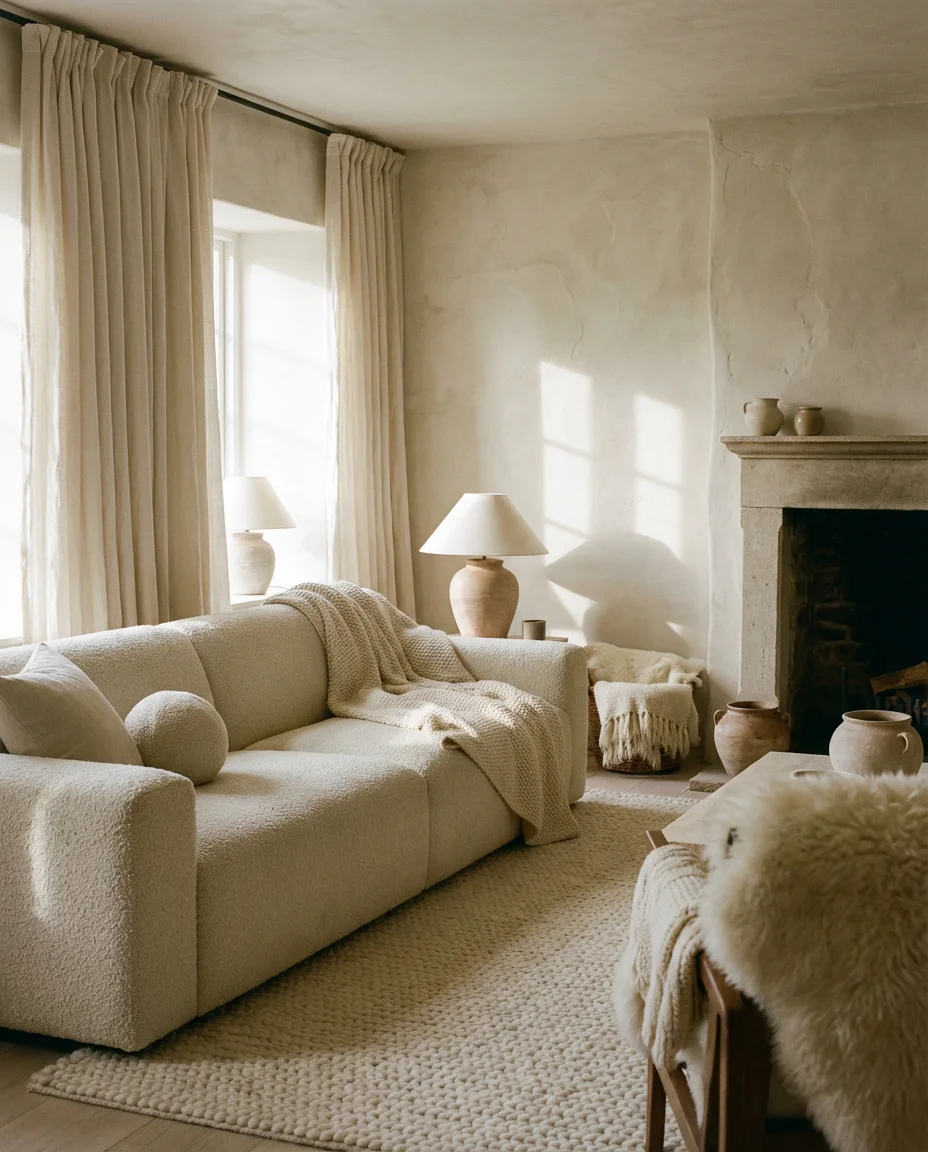
A single color, explored in all its tonal depth, is one of the most compelling moves in a minimalist living room. The monochromatic approach—walls, sofa, rug, and accents all pulled from the same color family—creates a visual calm that no amount of careful color coordination can replicate. It’s particularly effective with neutral tones like cream, warm white, and soft sand, but designers are increasingly applying this logic to bolder choices: all-sage, all-terracotta, or all-slate rooms that feel like walking into a mood board made real. The restraint of a single palette is its own kind of luxury.
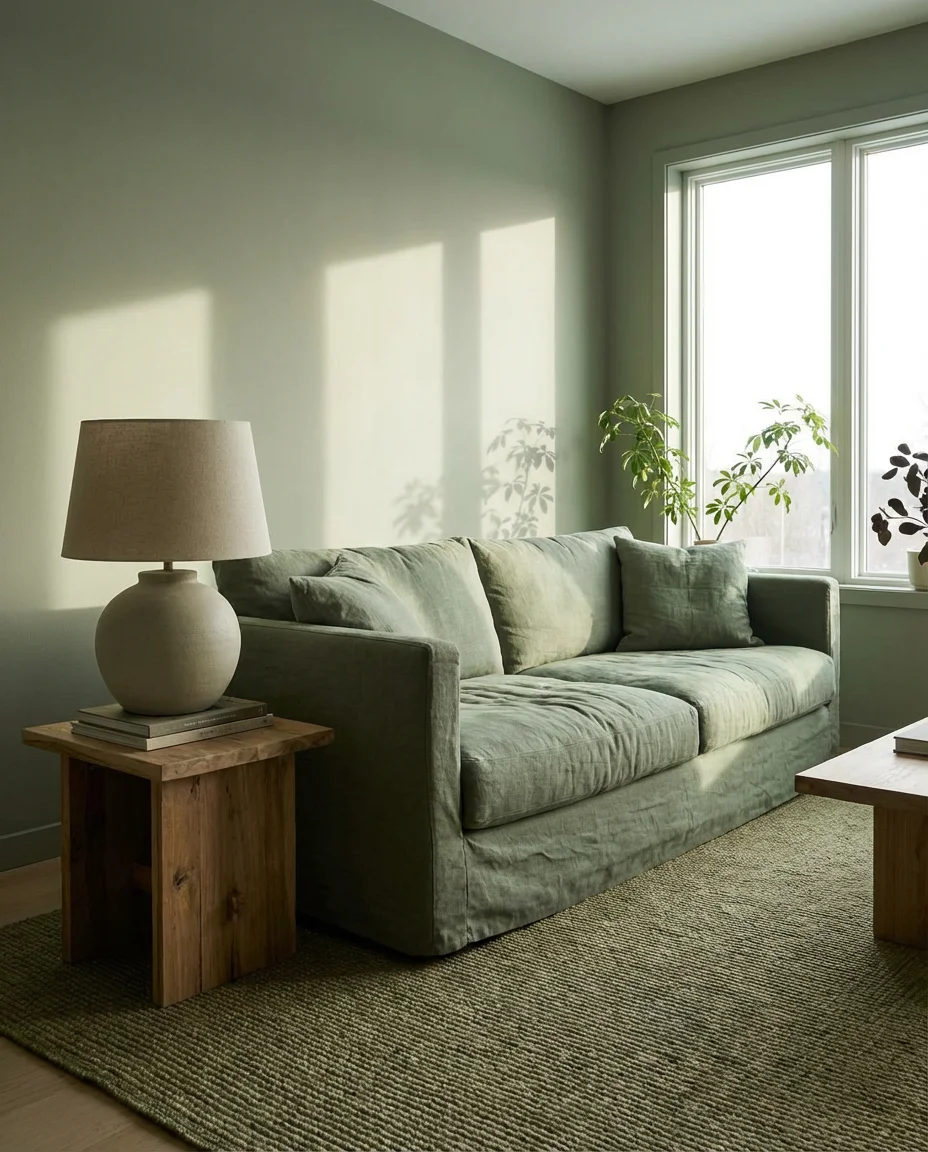
The trick to keeping a monochromatic room from feeling flat is variation in texture and material: smooth plaster next to rough linen, polished wood next to matte ceramics, shiny brass next to a wool rug. These contrasts create visual interest without introducing additional colors, which preserves the meditative, enveloping quality that makes monochromatic rooms so satisfying to be in. It’s one of those ideas that sounds constraining on paper and feels absolutely liberating in practice—a room that has made a decision and committed to it fully.
15. Colorful Minimalism—Bold Accents, Clean Bones
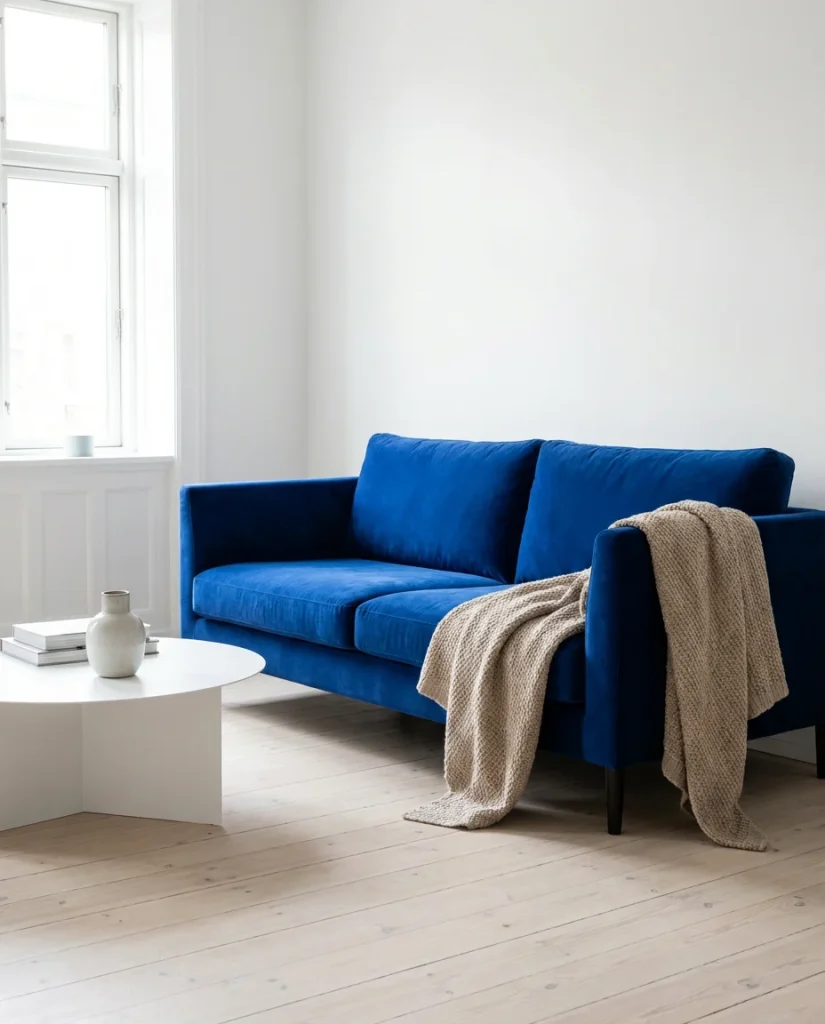
Minimalism and colorful interiors aren’t mutually exclusive—you just have to be very deliberate about where the color lands. The most effective approach is what designers call “clean bones, bold accents”: a room that is fundamentally quiet and structured, punctuated by one or two genuinely bold color moments. A cobalt blue sofa against white walls. A single mustard-yellow armchair in a grey room. A pair of emerald green velvet cushions on an otherwise neutral sectional. The color works because the room around it is so calm—it’s the difference between a painting and a wall covered in paintings.
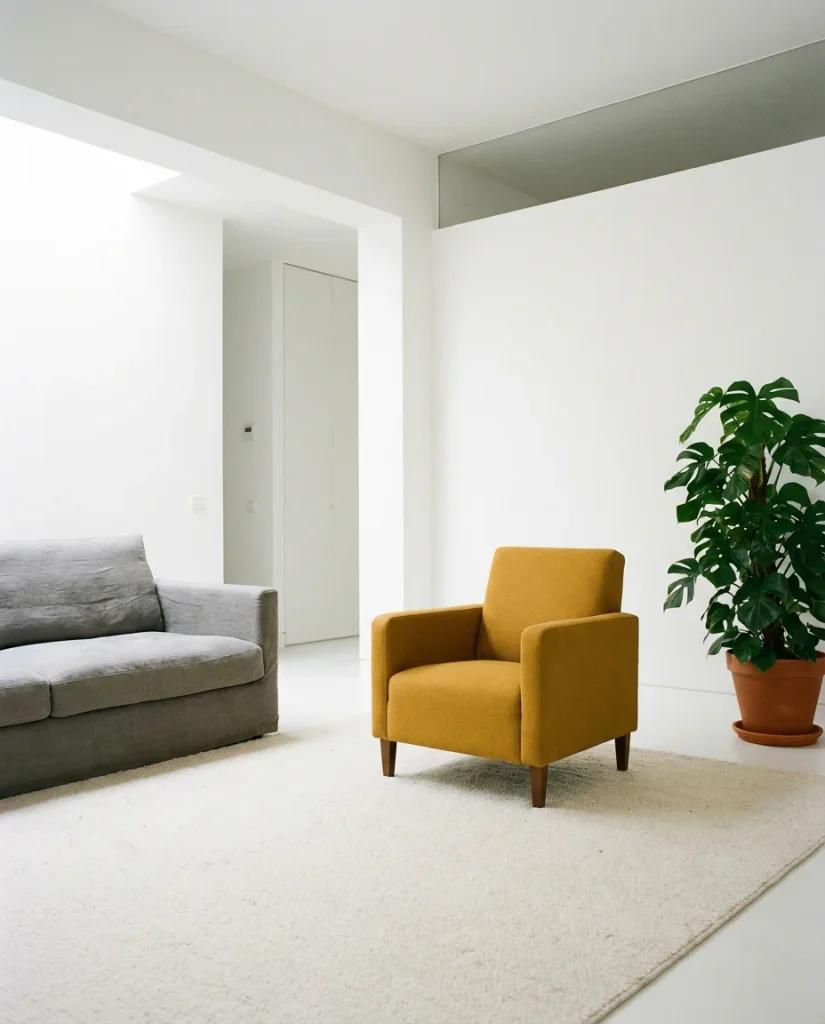
This approach is also remarkably practical for people who love color but are nervous about committing to it permanently. When the bold color lives in a piece of furniture or a few accessories rather than the walls, you can refresh the look without a painting weekend. A new set of cushions in a different accent color can entirely transform the mood of a minimalist room in about fifteen minutes flat. For renters especially, this is the most liberating approach to colorful minimalism—all the personality, none of the landlord drama.
16. Nature-Inspired Minimalism with Plants
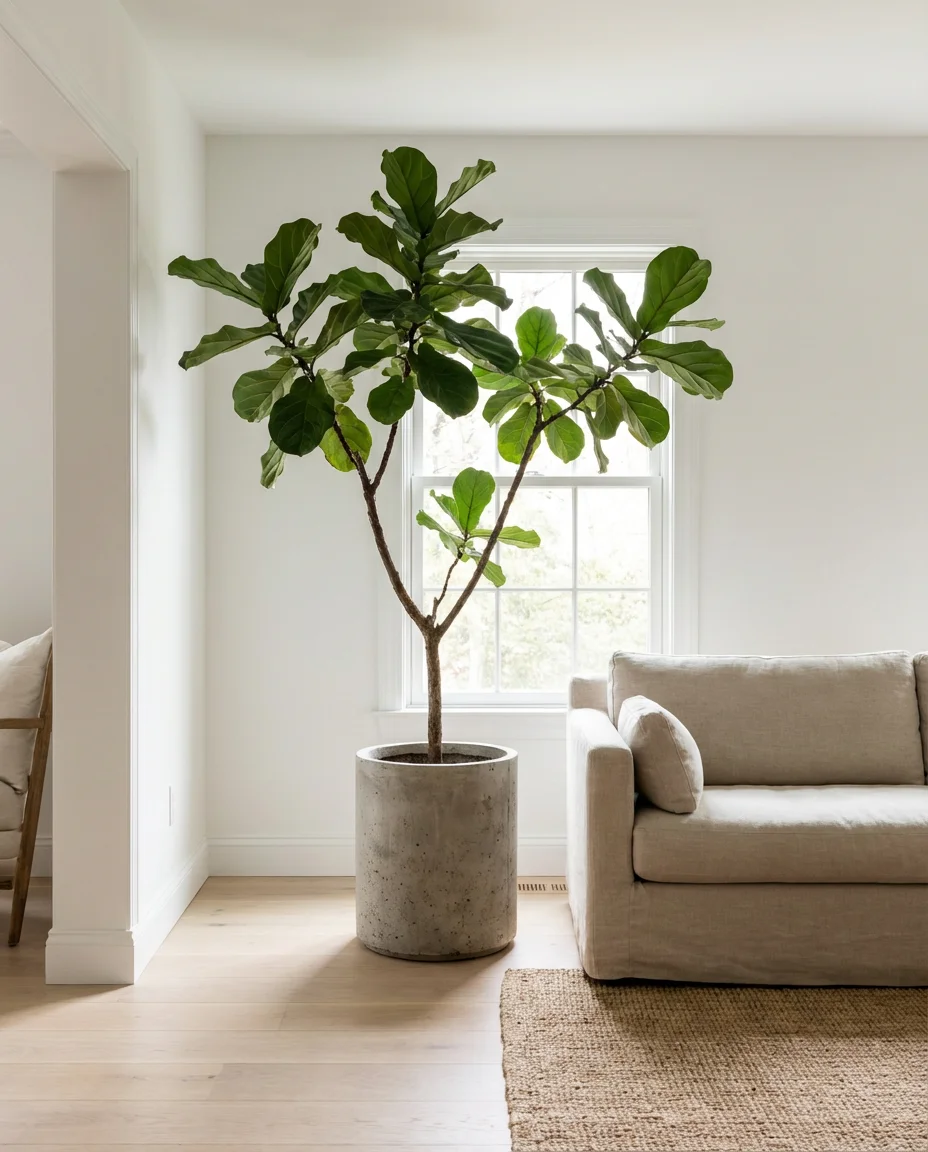
Bringing the outside in has been a cornerstone of minimalist design for decades, but in 2026 the approach is more curated than ever. Rather than filling every corner with plants, modern biophilic minimalism selects one or two large, sculptural specimens—a fiddle-leaf fig, an olive tree, or a tall monstera—and gives them genuine room to breathe. This connects directly to Japanese design philosophy, where a single perfect branch in a vase carries more weight than an entire garden crowded onto a windowsill. The plant becomes a design element, not just a living accessory.
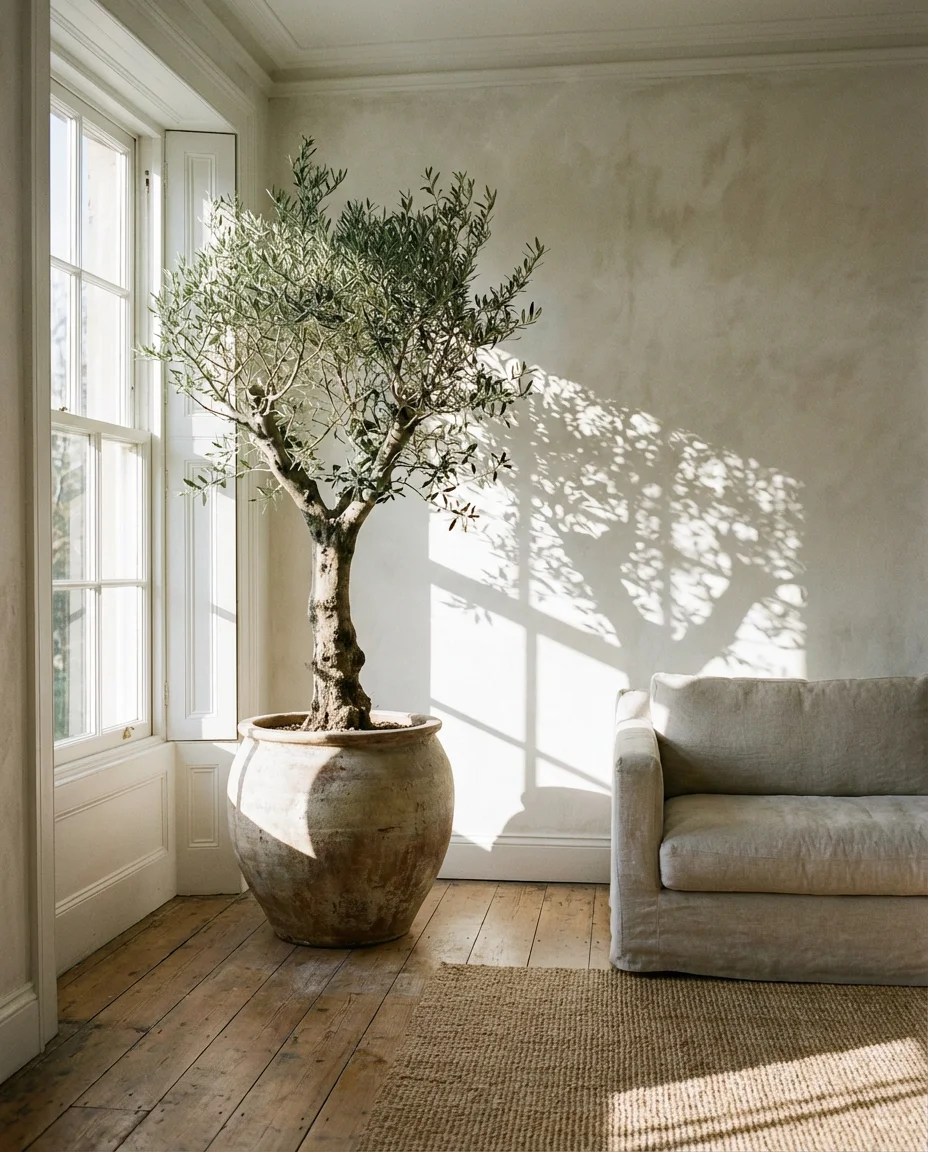
For Americans living in colder climates, the indoor plant moment also serves a genuine psychological function—a connection to green and growing things during the long months when outdoor nature feels remote. A large potted olive tree near a south-facing window can transform the entire atmosphere of a minimal living room from November through March. The pot matters too: a simple concrete planter or a handmade ceramic vessel is always more beautiful than a decorative plastic pot, and it reinforces the material honesty that minimalism values most.
17. The Floating Furniture Arrangement
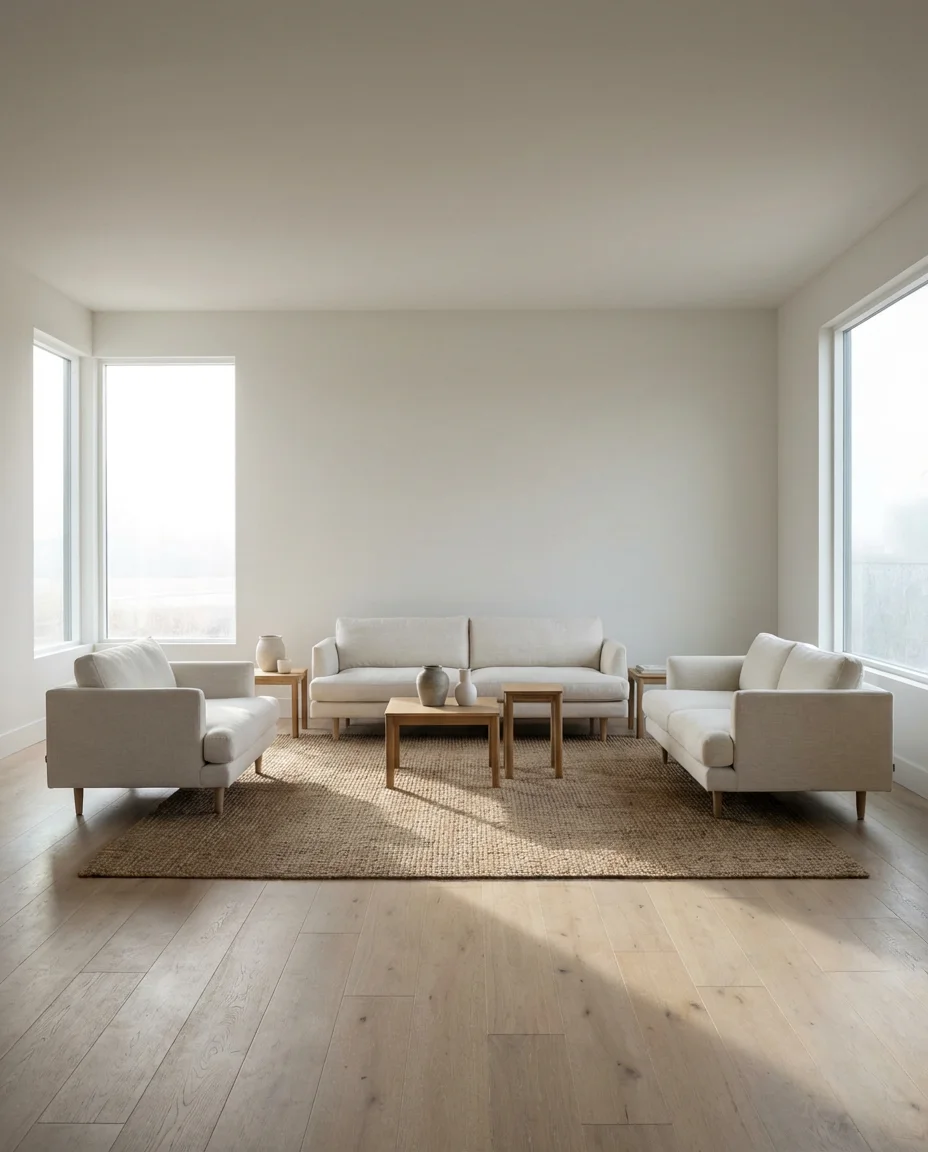
One of the most transformative moves in minimalist living room design has nothing to do with buying anything new—it’s simply pulling your furniture away from the walls. The “floating” arrangement, where sofas and chairs hover in the center of the room anchored by a rug, is one of those tricks that inspiration accounts on Pinterest demonstrate constantly and American homeowners underuse constantly. It creates a sense of intention and composition, makes a room feel larger (not smaller, as many people fear), and is particularly effective in the kind of long, rectangular living rooms found in most American homes and apartments.
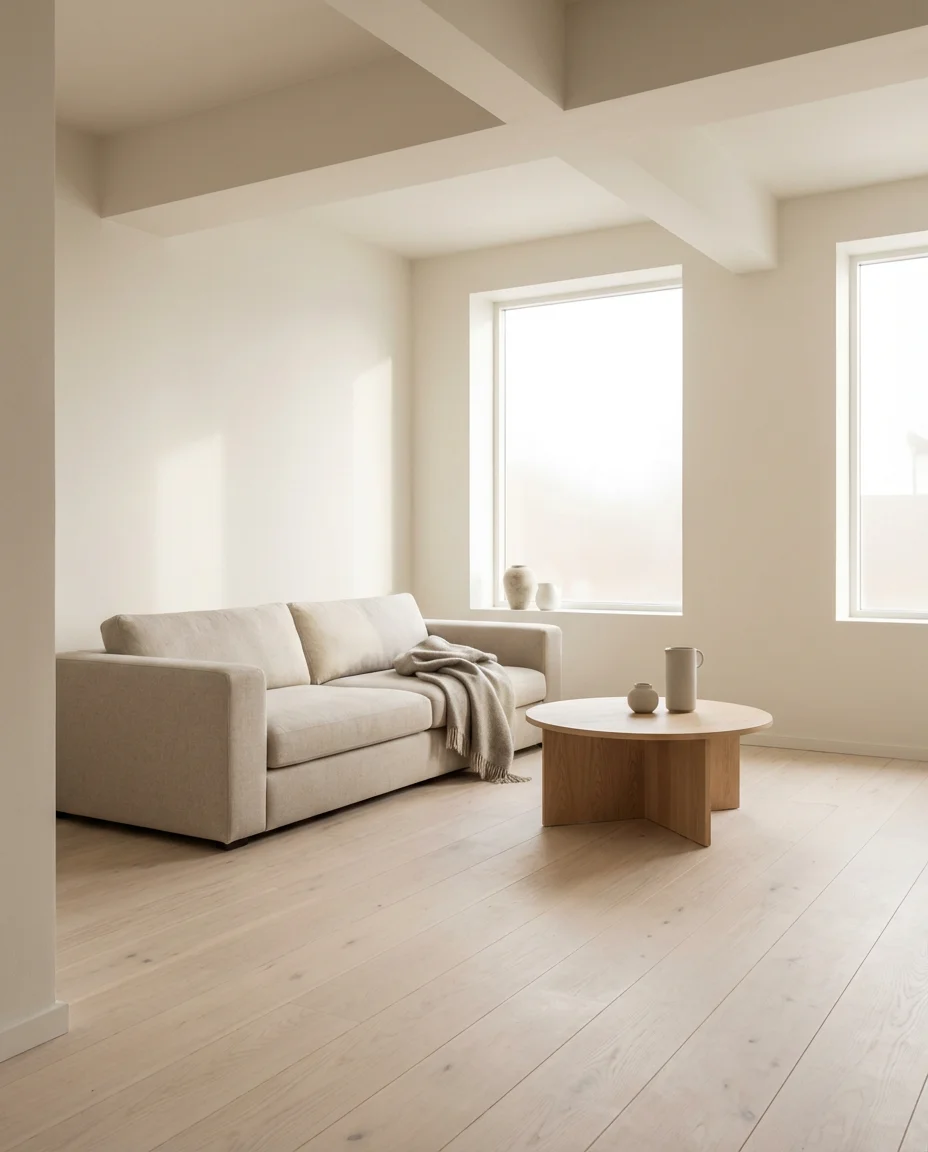
The most common mistake with floating arrangements is choosing a rug that’s too small. All the front legs of every seating piece should sit on the rug—ideally all four legs. A rug that’s too small makes the arrangement look timid and disconnected, like furniture that accidentally drifted away from the walls. A good rule: in a standard American living room (roughly 12×18 feet), a 9×12 rug is usually the minimum size that makes a floating arrangement look confident. Go bigger whenever the room allows.
18. Eclectic Minimalism—Curated, Not Collected
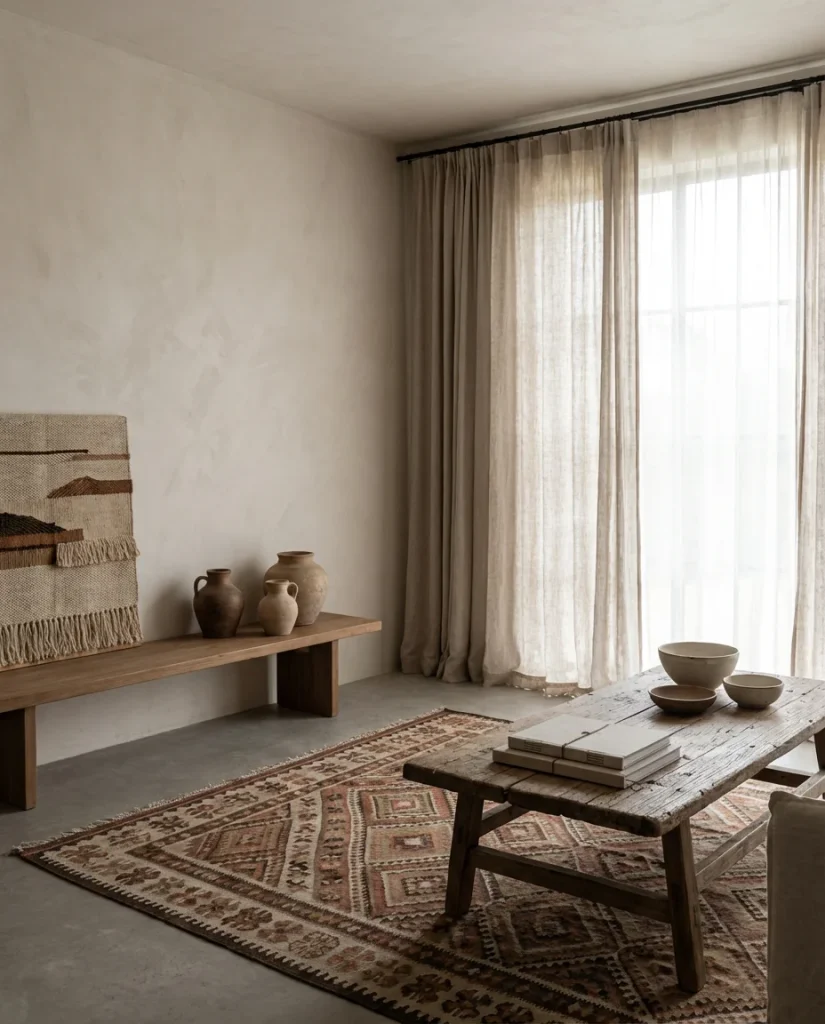
Eclectic minimalism is the advanced degree of this whole aesthetic—the ability to mix periods, origins, and styles while maintaining the visual calm that defines minimalist spaces. It requires both a strong design eye and the discipline to stop adding before the room tips into chaos. A Japanese screen next to a mid-century Danish chair next to a Moroccan ceramic lamp can feel completely coherent if the underlying palette and the spatial breathing room are consistent. The variety happens within a framework of restraint, which is what separates genuine eclecticism from random accumulation.
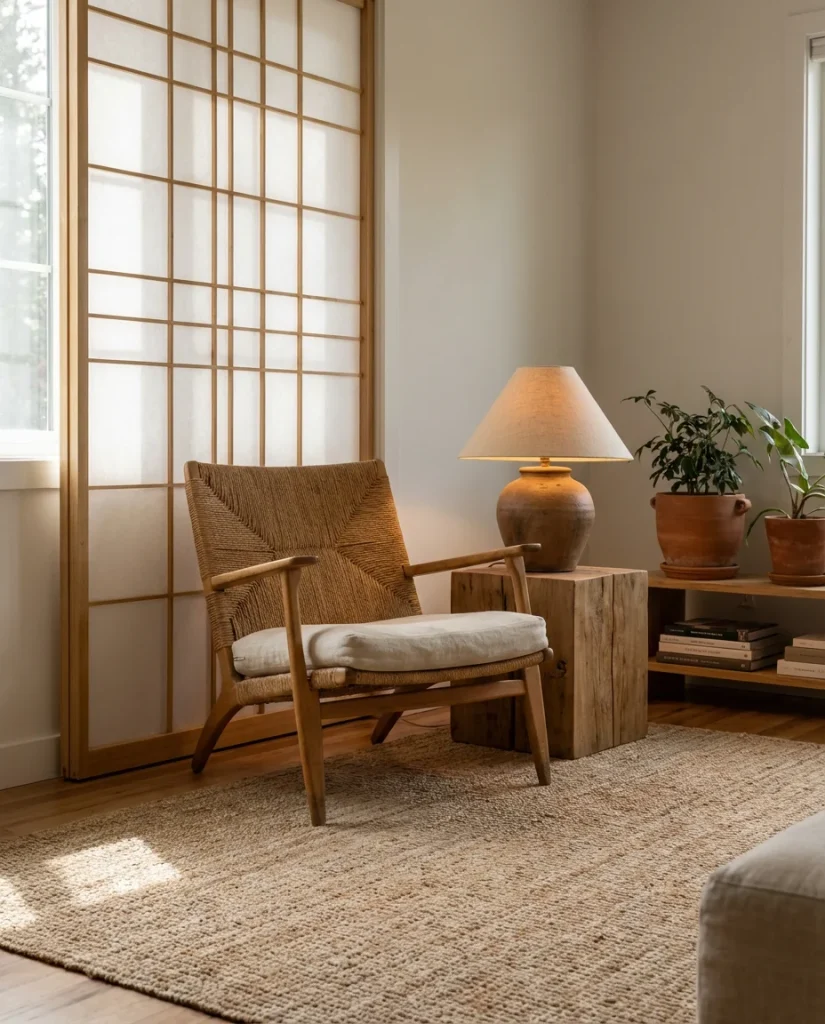
A practical framework for achieving this: limit yourself to no more than three visual “cultures” or periods in a single room, and always maintain a consistent material language (for example, all organic materials—wood, clay, linen—regardless of where the pieces come from). This creates cohesion without homogeneity. The rooms that feel the most personally rich and the most visually calm are almost always the result of years of careful editing: removing things that don’t belong rather than adding things that do.
19. The Scandinavian Minimalist Living Room
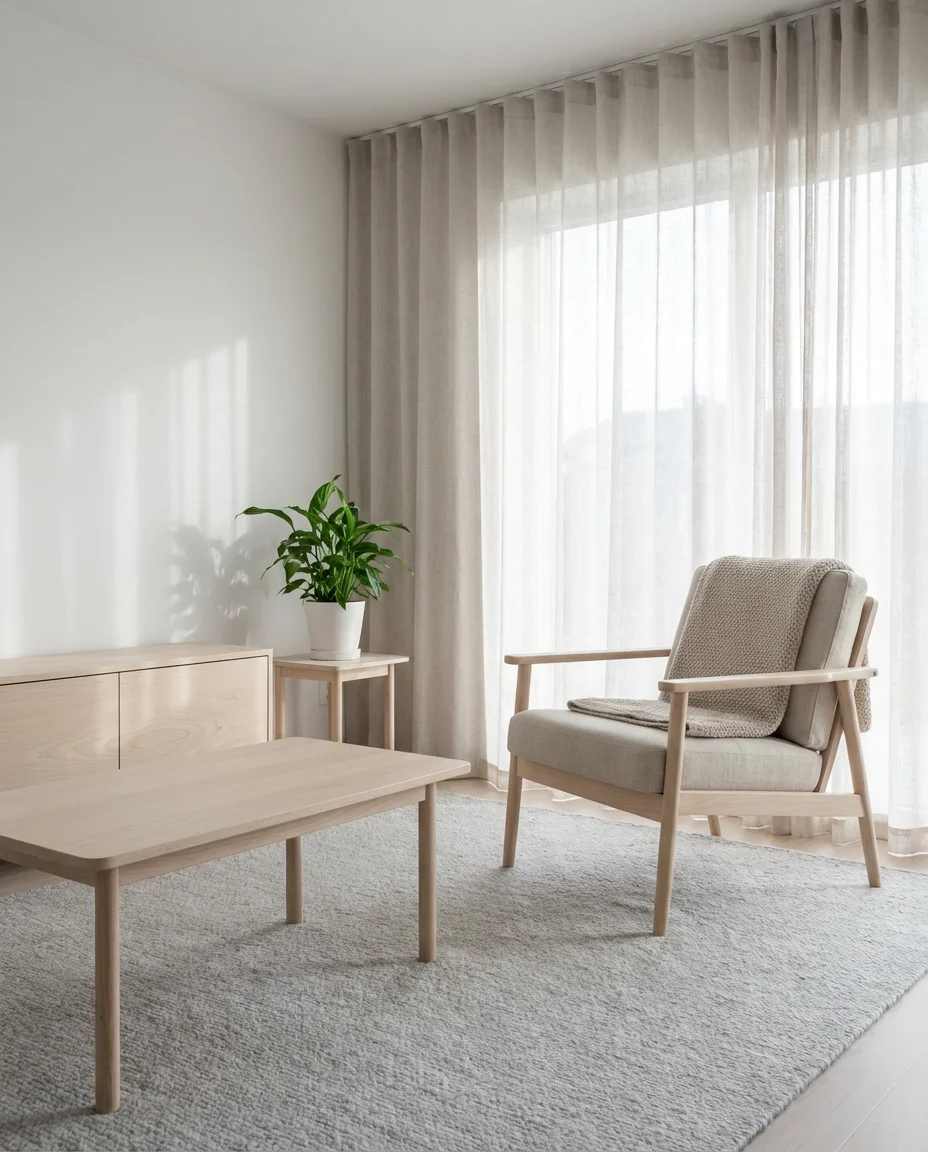
Scandinavian design remains one of the most widely pinned and genuinely livable minimalist aesthetics in the world—and it translates beautifully to American homes and lifestyles. The core principles are democratic: good design should be accessible, functional, and beautiful regardless of budget. Light birch wood, simple textiles in neutral tones, functional furniture without unnecessary decoration, and an emphasis on natural light even in the darkest months. For Americans in northern states who deal with long winters, the cozy Scandinavian approach to creating warmth indoors has a very direct and practical appeal.
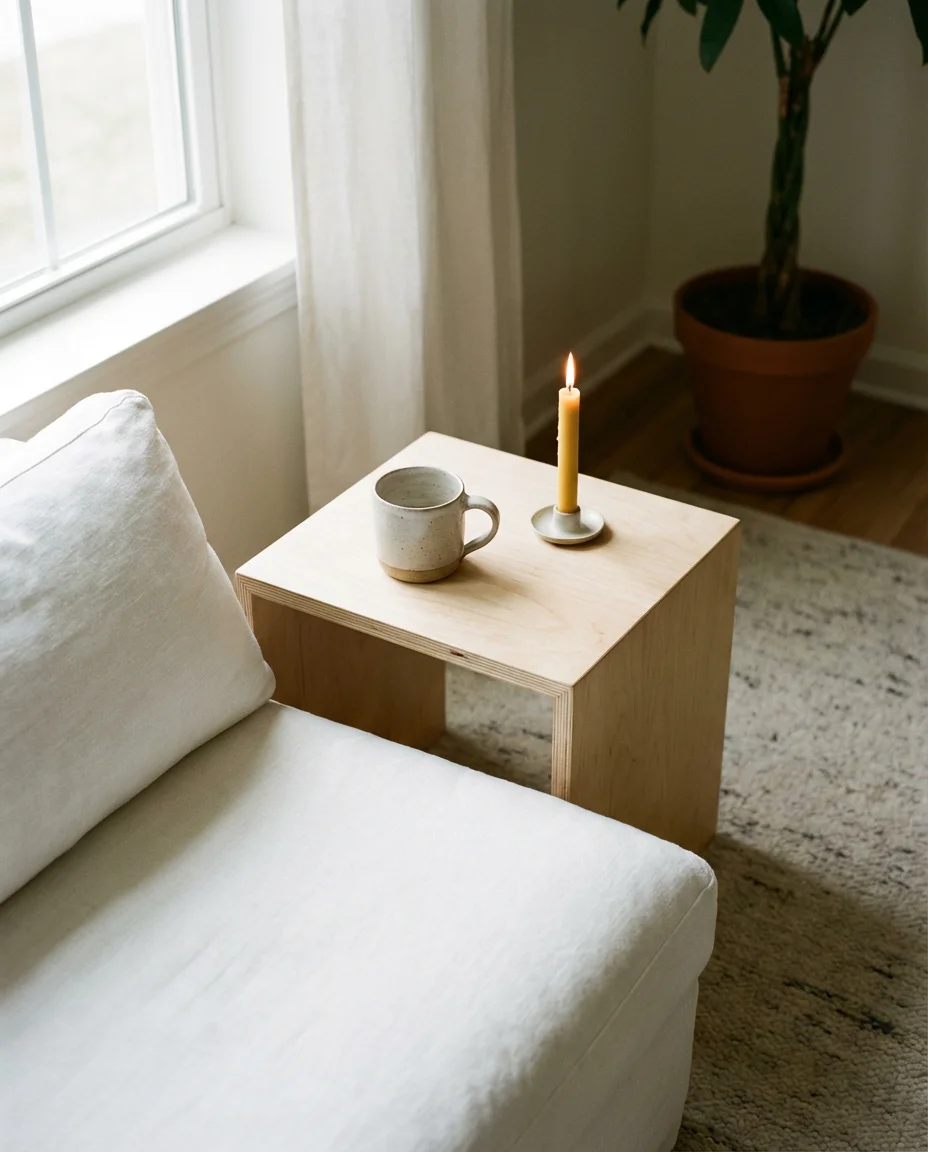
IKEA is the obvious starting point for Scandinavian minimalism in American homes, and there’s no shame in that—many of their pieces are genuinely well-designed and hold up admirably over time. The secret is mixing IKEA pieces with a few more considered items: a quality wool rug, handmade ceramics, or a secondhand piece of Scandinavian vintage furniture. This combination looks far more curated than an all-IKEA room while remaining very approachable on price. It’s exactly how most actual Scandinavian households are furnished—democratic design philosophy in action.
20. Minimalist Living Room with Fireplace as Focal Point
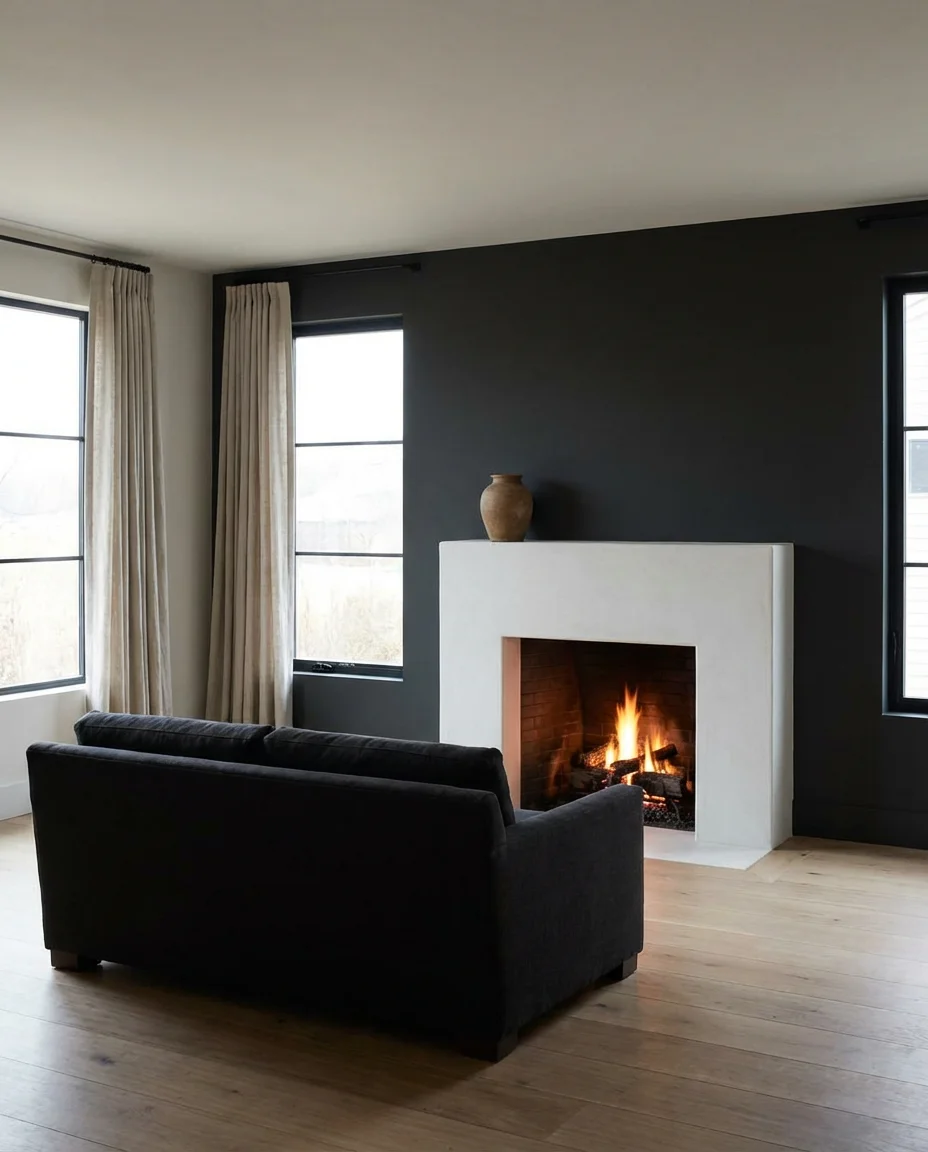
A fireplace is one of the most powerful focal points a minimalist living room can have—and one that requires the most discipline to honor correctly. The temptation to clutter the mantle with candles, frames, and decorative objects must be firmly resisted. In a truly minimalist space, a fireplace mantle should hold almost nothing: perhaps one object, perhaps nothing at all. Let the architectural element be the statement. The warmth and flicker of a fire provides all the sensory richness the room needs; everything else is just competition. This is where moody, atmospheric minimalism really finds its highest expression.
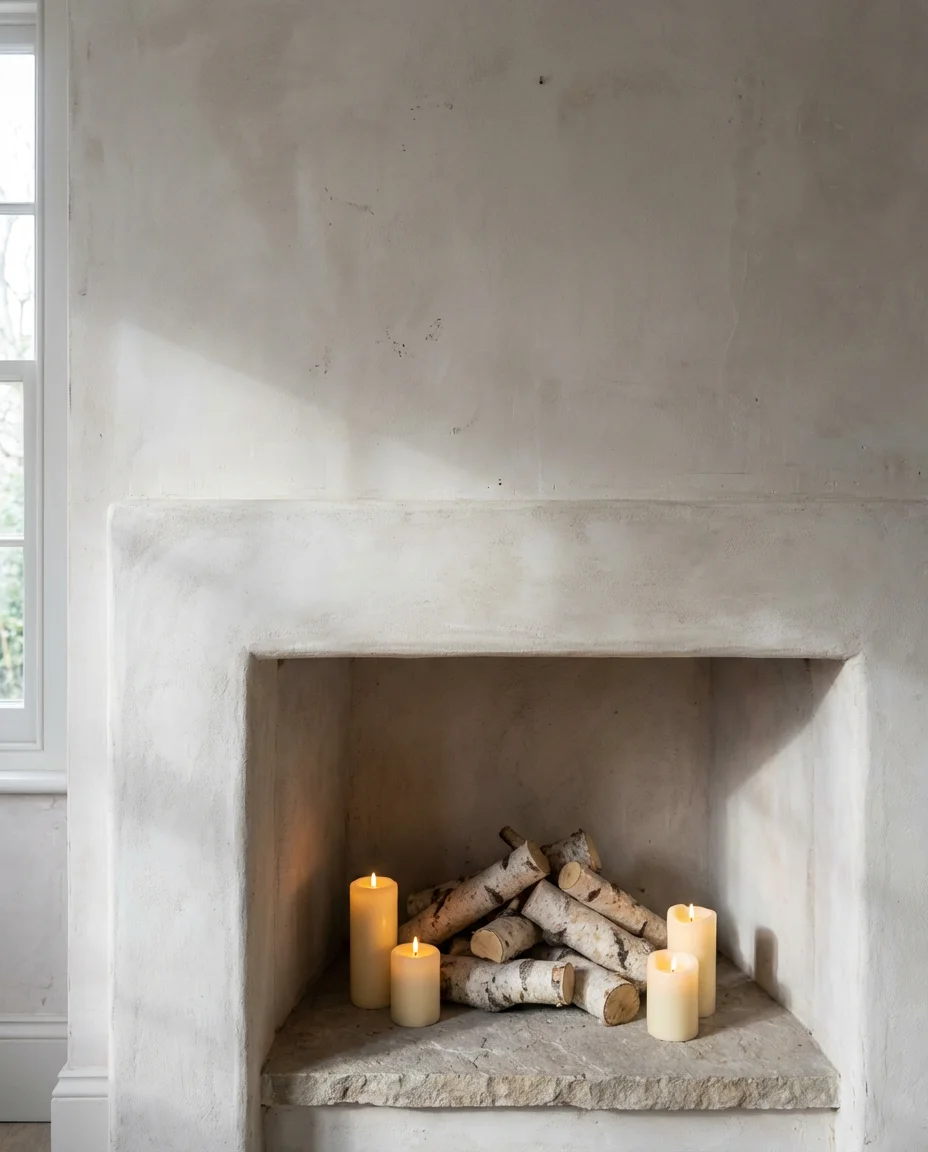
Americans living in older homes often have fireplaces that were originally functional but have since been decorative for decades. Even non-working fireplaces can be spectacular minimalist focal points when treated correctly: a clean coat of limewash or plaster on the surround, a single piece of firewood stacked artfully inside, or a collection of pillar candles at varying heights. The key is treating the fireplace opening as a piece of art—framed, curated, and worth building the rest of the seating arrangement around.
21. Minimalist Home Office Corner in the Living Room
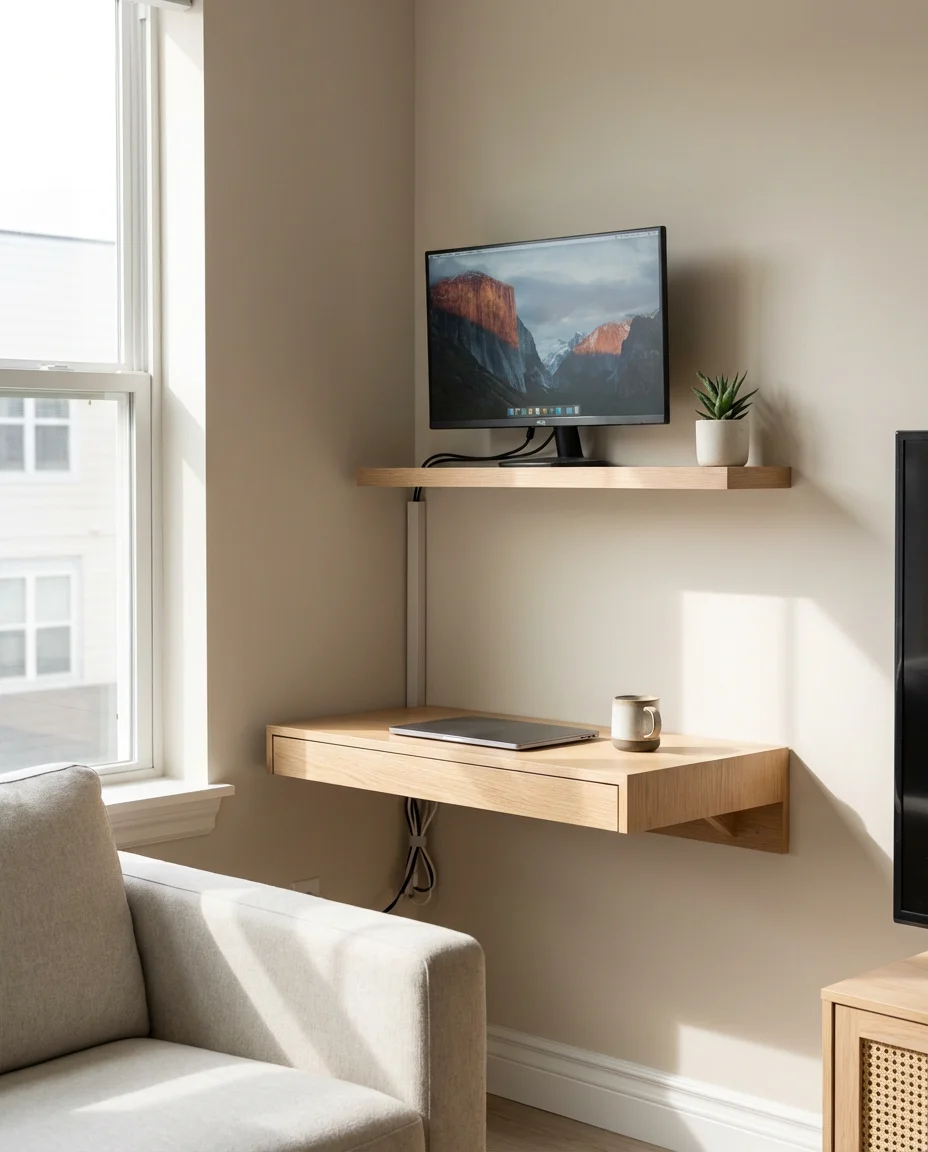
Remote and hybrid work has made the living room office corner a permanent fixture in millions of American homes. Doing it well in a minimalist space requires thinking about concealment as much as design. A slim wall-mounted desk that folds flat when not in use, a clean-lined floating shelf for a monitor, or a dedicated corner with a simple chair and a floating ledge desk—any of these can house a functional workspace without visually colonizing the living room. The goal is a setup that’s invisible when you’re off the clock and effortlessly functional when you’re on. Modern neutral tones help the work area blend into the broader room palette.

The non-negotiable in a minimalist living room office corner is cord management. A single exposed power strip or trailing cable can undermine an entire carefully curated room. Wireless charging pads, a laptop stand that hides cords, and a monitor arm that mounts to the wall (eliminating the need for a deep desk) are the tools that make this work. The most successful home office corners in minimalist homes are ones where, the moment the laptop closes, the space reads as a design element—not a workstation that’s been temporarily abandoned.
22. Texture-First Minimalism
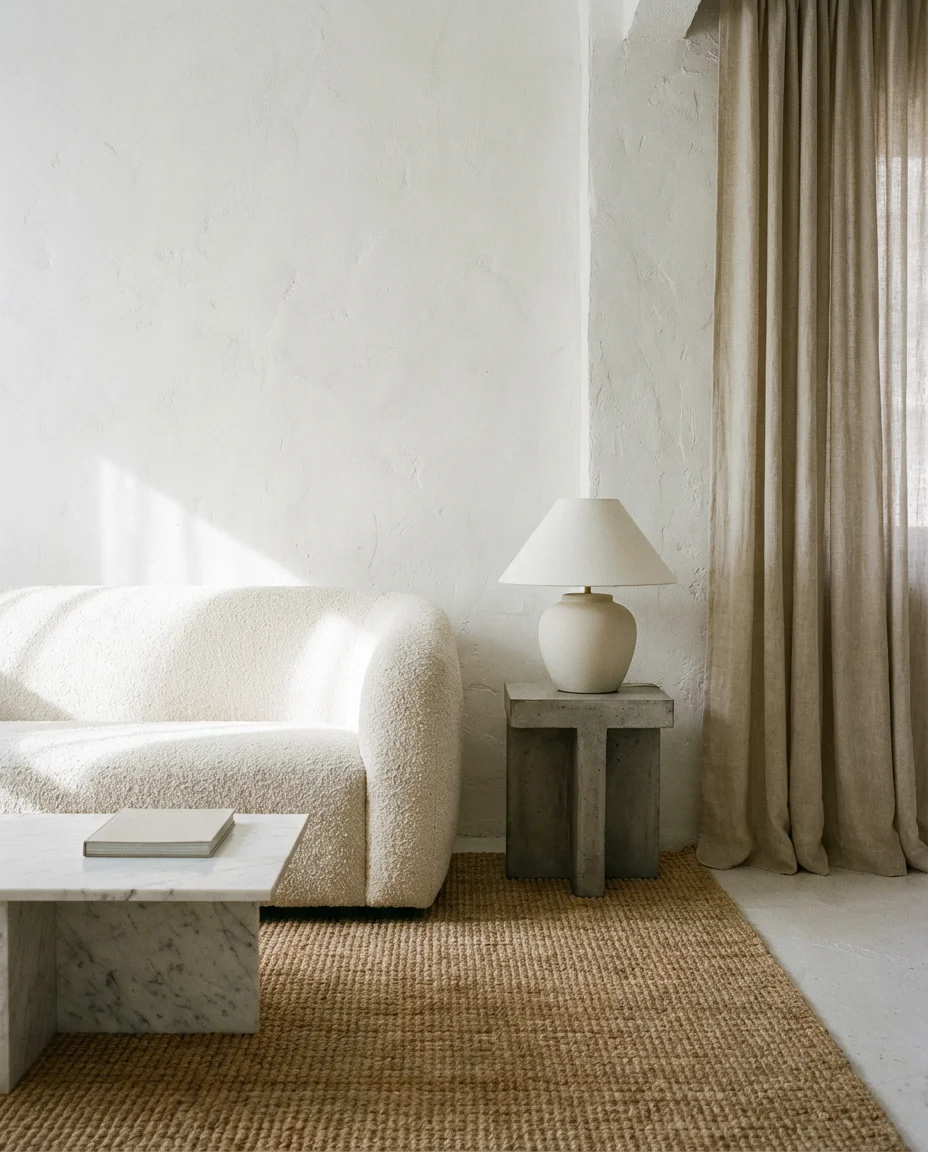
When you strip color and pattern from a room, texture becomes the primary design language—and it’s a rich one. Texture-first minimalism is the approach where a limited palette is brought to life entirely through tactile contrast: a smooth plaster wall next to a rough sisal rug, a sleek marble coffee table next to a fluffy bouclé sofa, and a matte ceramic lamp base next to a polished concrete floor. In white or near-white rooms especially, this approach is what prevents the space from feeling clinical or cold. The room looks serene from across the room and reveals new layers of richness the closer you get to it.
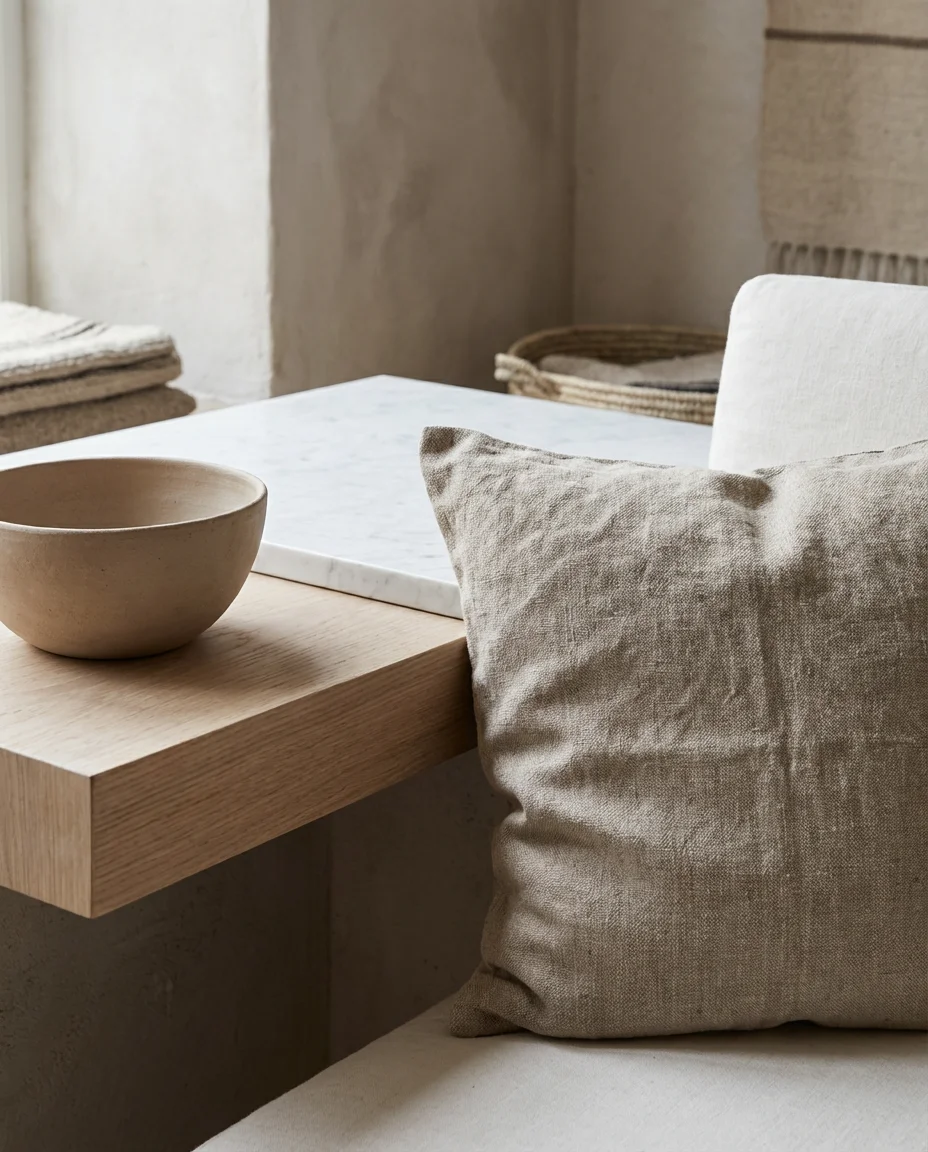
Texture-first rooms also photograph extraordinarily well in natural light, which is one reason this approach dominates high-end interior photography and aspirational social media accounts. The play of light and shadow across textured surfaces creates visual depth that color alone can’t achieve. For anyone building a minimalist room with Pinterest or Instagram in mind, investing in genuinely tactile materials—real wool, actual stone, handmade ceramics, woven linen—will pay dividends in both lived experience and photography. Imitation textures (printed fabric meant to look like linen, faux marble contact paper) simply don’t behave the same way in light.
23. The Curated Bookshelf in a Minimalist Room
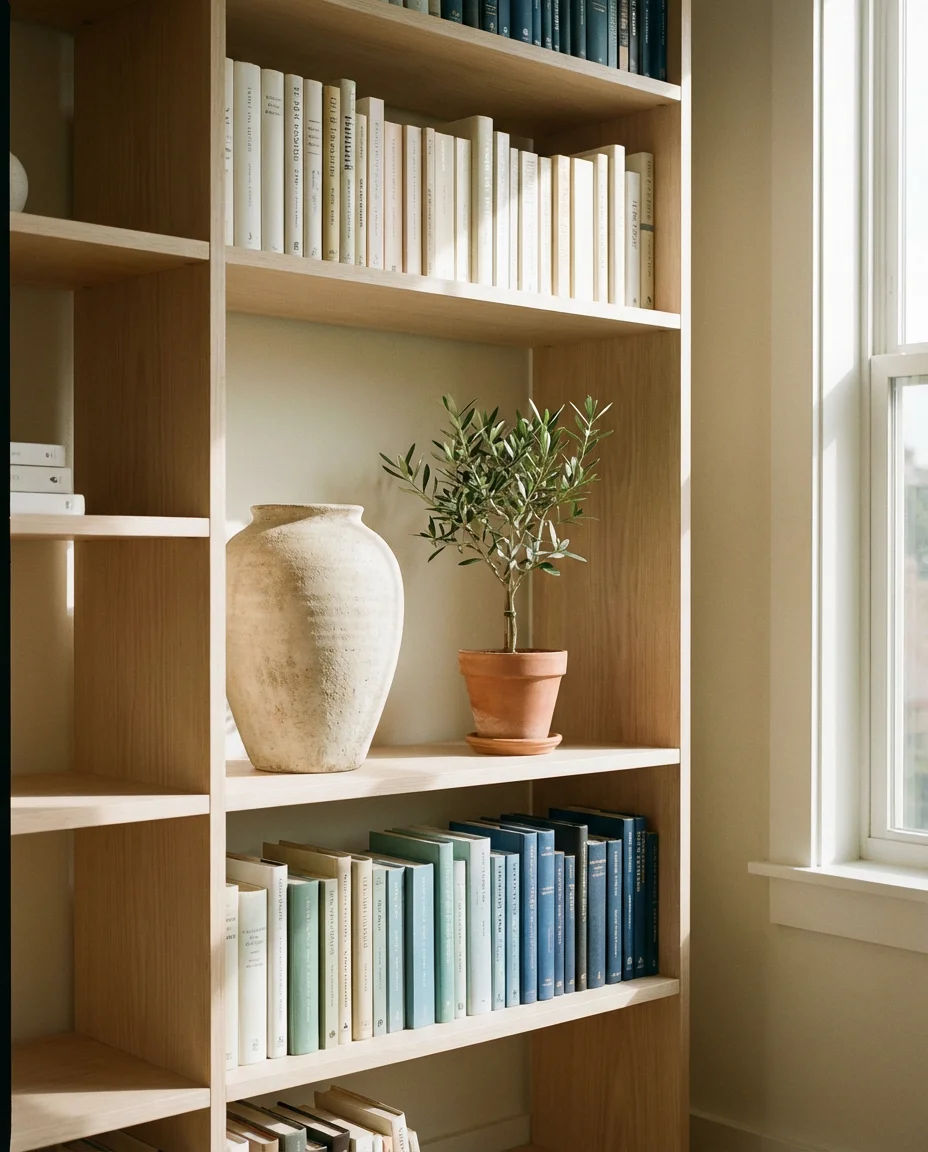
Books and minimalism have a complicated relationship. Books accumulate; they’re personal; they carry sentimental weight—and they can make a minimalist room feel either deeply human or completely chaotic depending entirely on how they’re organized. The curated bookshelf in a modern minimalist living room isn’t a storage solution; it’s a composed display. That means culling ruthlessly (keep only the books you’d genuinely reach for or display proudly), organizing by color or spine height for visual cohesion, and leaving breathing room on the shelves. Empty shelf space is not wasted space in minimalism—it’s part of the composition.
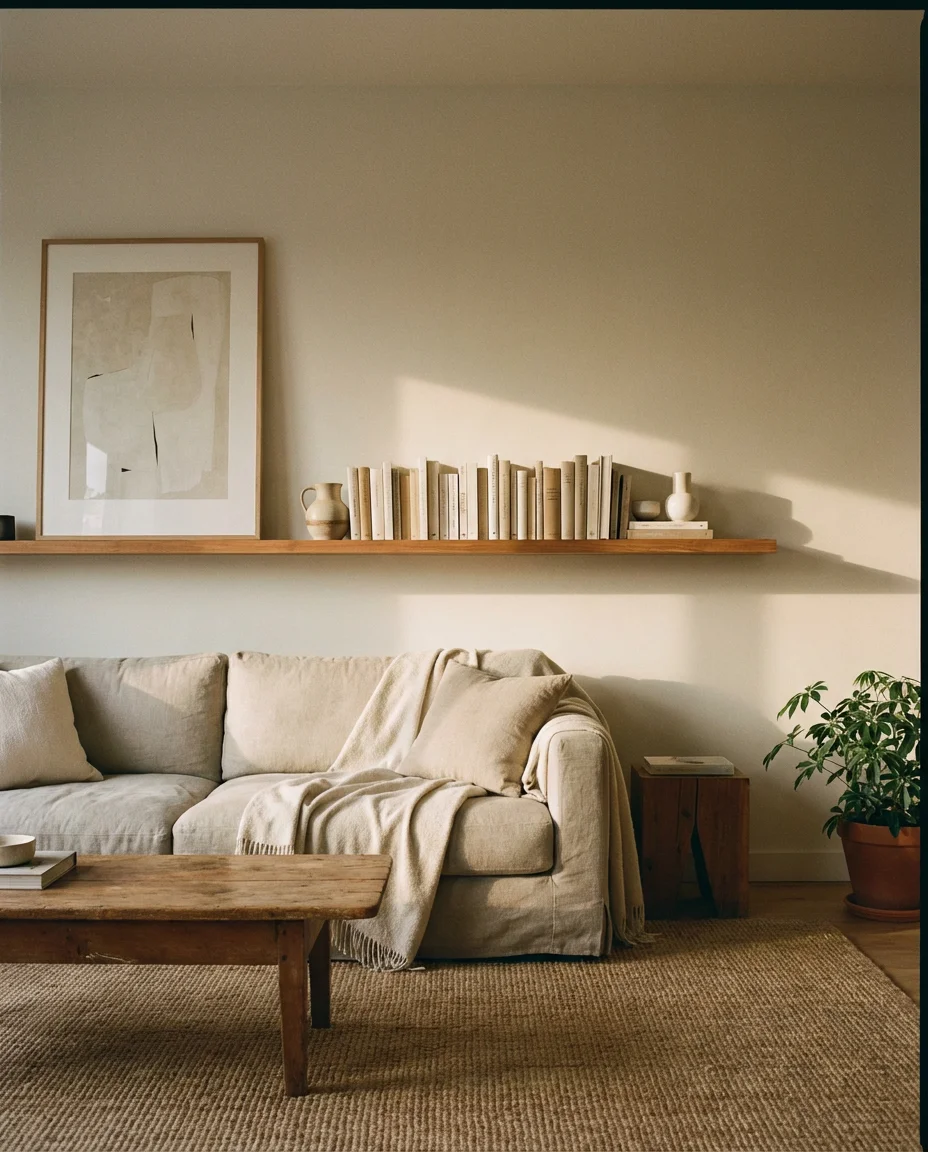
The best minimalist bookshelves mix books with a small number of objects—a ceramic piece, a small plant, a framed photo—at a ratio of roughly three to one in favor of books. This creates rhythm and interest without tipping into the overly styled look that reads as staged rather than lived-in. A Chicago homeowner described editing her bookshelves as “the most unexpectedly emotional decluttering project I’ve ever done—and the one that made the biggest visual difference in the whole room.” ” The books that stay should be the ones worth keeping. The shelf will be better for it, and so will you.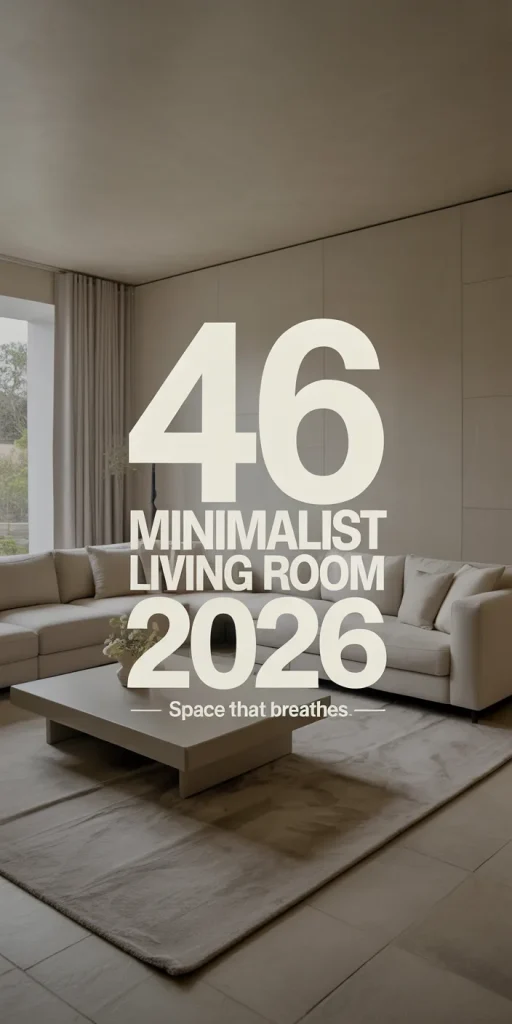
Conclusion
These ideas cover a huge range of styles, budgets, and living situations—because minimalism was never meant to be one-size-fits-all. It’s a philosophy you adapt to your own life, your own home, and your own definition of what “enough” looks like. Which of these directions speaks most to your space? Drop a comment below and share what you’re working on—whether you’re starting from scratch or slowly editing your way toward something calmer, we’d love to see what minimalism looks like in your living room this year.