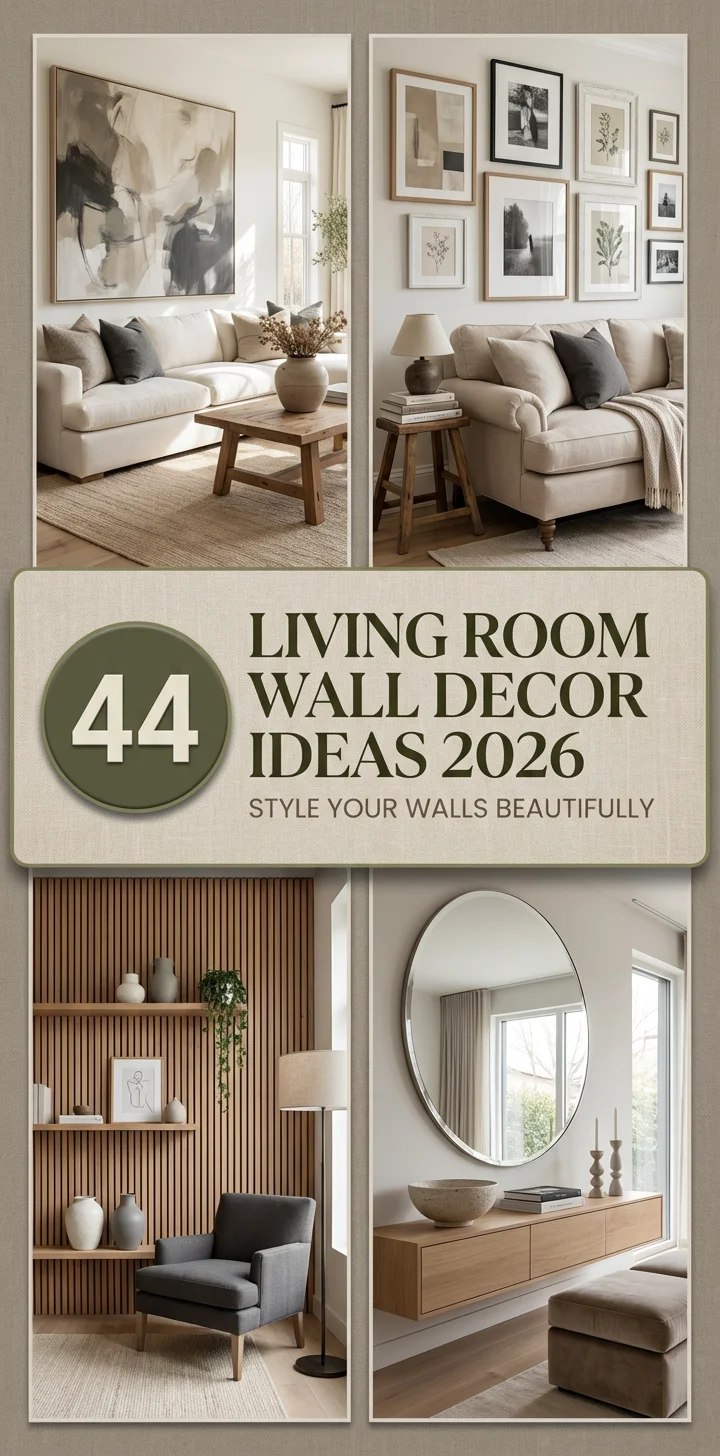
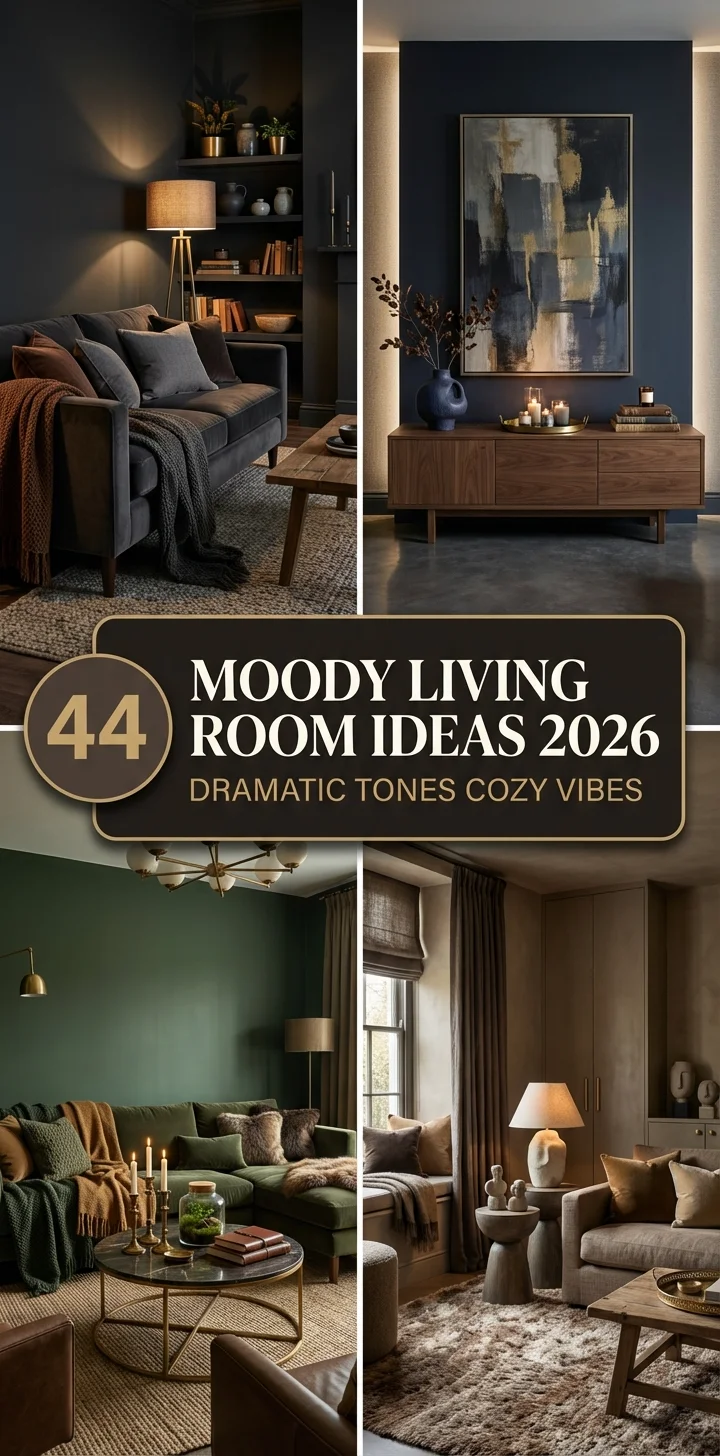
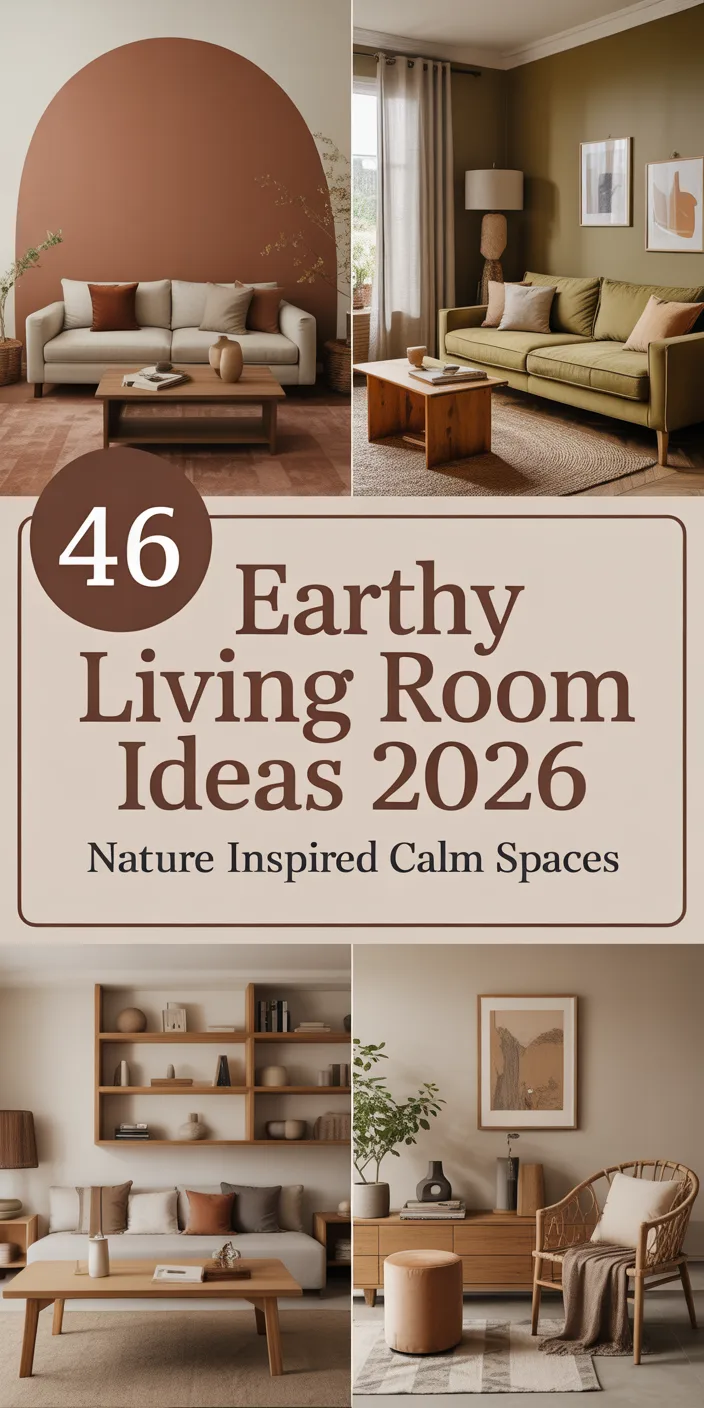
Mid-century modern style has been having a serious moment—and in 2026, it’s showing no signs of slowing down. Americans are turning to Pinterest in droves to figure out how to blend the warm, sculptural shapes of the 1950s and ’60s with today’s tastes for coziness, sustainability, and personality. Whether you’re starting fresh in a new apartment or finally committing to that sofa you’ve been eyeing for two years, the good news is that this aesthetic is more accessible and adaptable than ever. In this article, you’ll find inspiring ideas to help you build a mid-century modern living room that feels timeless, livable, and distinctly yours.
1. The Cozy Walnut and Warm White Foundation

A cozy mid-century modern living room often starts with one fundamental pairing: walnut wood and warm white walls. This combination creates a grounding palette that feels both retro and remarkably fresh. The deep, honeyed grain of walnut furniture—a credenza, a tapered-leg coffee table, a sleek bookshelf—reads immediately as mid-century without requiring a single piece of vintage sourcing. Layer in off-white or cream upholstery, and you’ve got a minimalist base that practically begs to be styled.
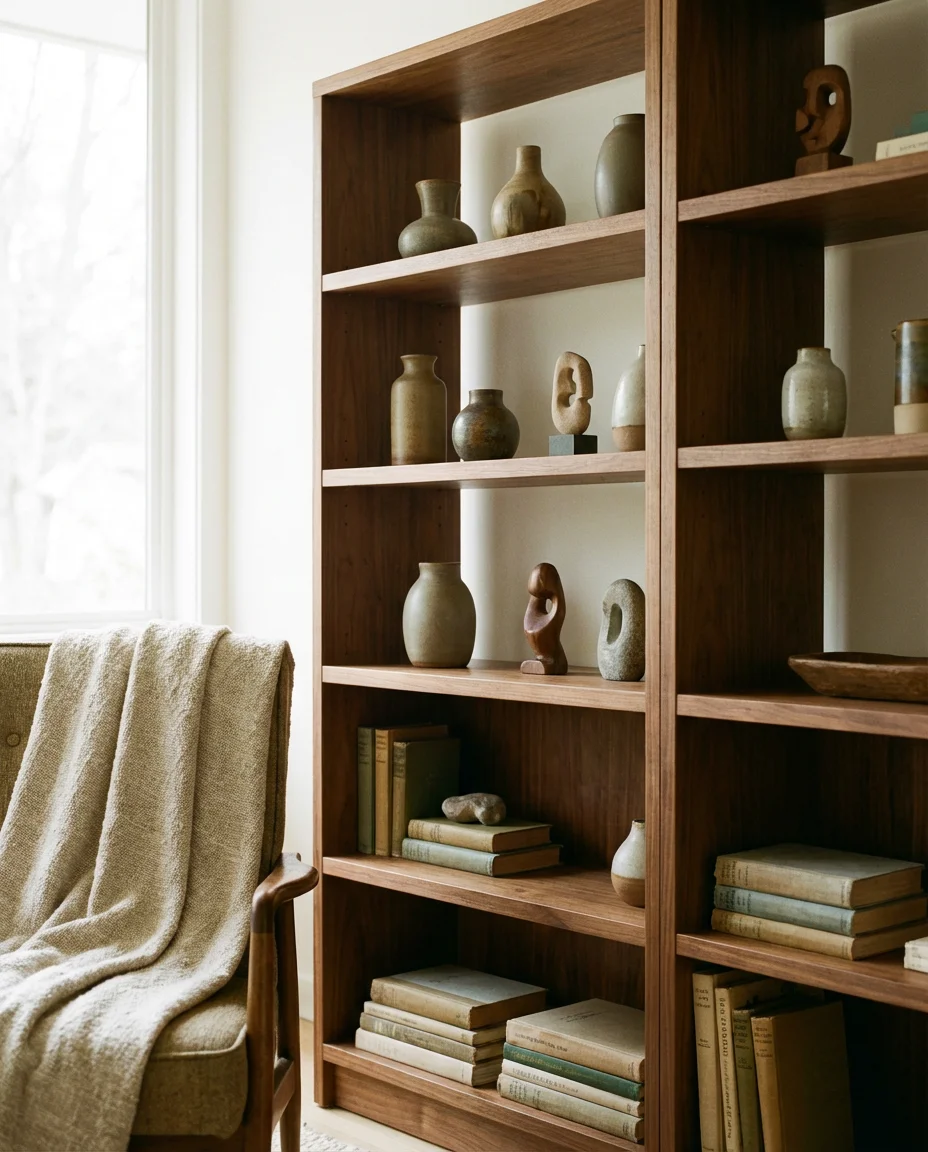
This foundation works especially well in apartments and smaller homes where you want the room to feel open but not cold. Designers often recommend starting with your largest furniture pieces in walnut-toned wood before introducing any accent colors—it gives you a clear canvas to build on. If budget is a concern, don’t overlook IKEA’s STOCKHOLM series or Article’s walnut-finish pieces, which deliver the look for a fraction of custom pricing. The warmth of the wood does the heavy lifting, so everything else feels intentional.
2. Statement Green Couch as the Room’s Anchor

If there’s one piece of furniture that defines mid-century modern in 2026, it’s the statement sofa—and green is having a defining year. Olive, forest, sage, and deep emerald all work beautifully in this aesthetic, each offering a different mood. A low-profile sofa with tapered wooden legs in a rich green velvet or bouclé fabric is the kind of piece that photographers show up for. It grounds the room with personality while referencing the earth-tone palettes that were so central to original mid-century design.
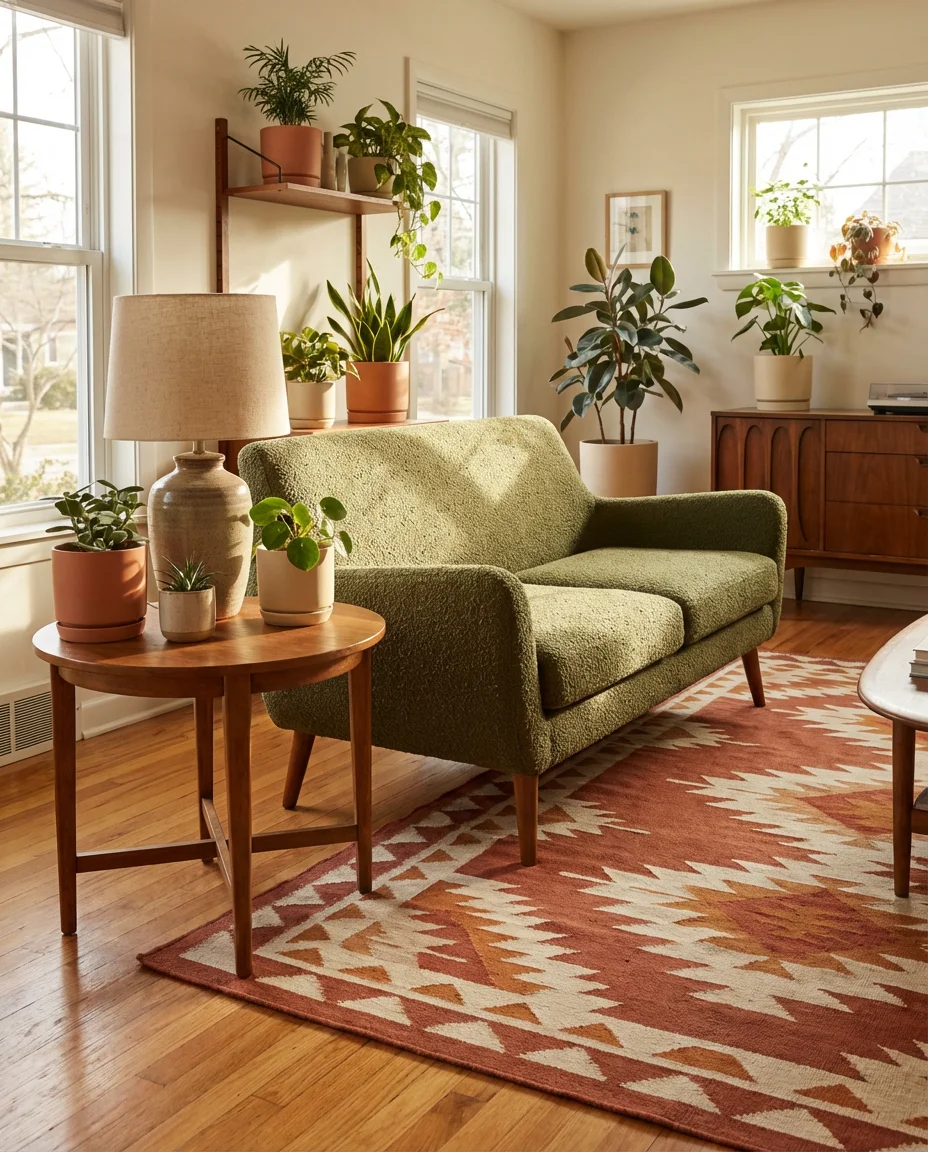
Interior designers frequently note that homeowners hesitate to commit to a bold sofa—and then regret waiting so long once they finally do. A green couch anchors the room visually and frees you to keep everything else relatively neutral: walnut wood, cream walls, and brass accents. The couch becomes the conversation starter your guests can’t stop mentioning. For buyers unsure about commitment, slipcover-friendly sofa frames are a smart middle ground—try the bold green fabric now and switch it up later without replacing the whole piece.
3. Retro Sunburst and Geometric Wall Art
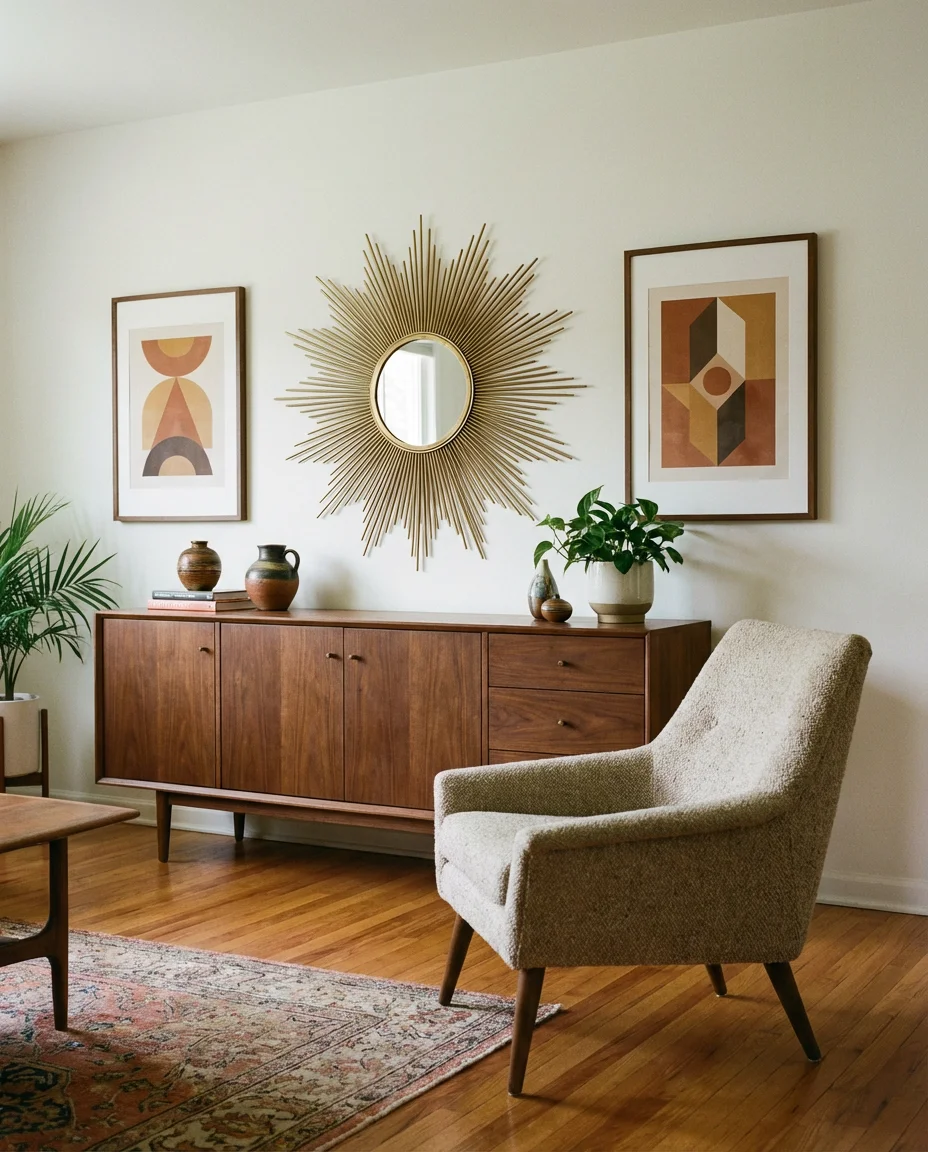
The walls in a retro mid-century modern living room deserve just as much attention as the furniture. Sunburst mirrors, atomic-era clocks, and geometric art prints are all making a major comeback in 2026 — and they punch well above their price point in terms of visual impact. A large brass sunburst mirror above a credenza or fireplace immediately signals the era without any explanation needed. These pieces work because they introduce rhythm and shape to a room that might otherwise feel too flat or symmetrical.
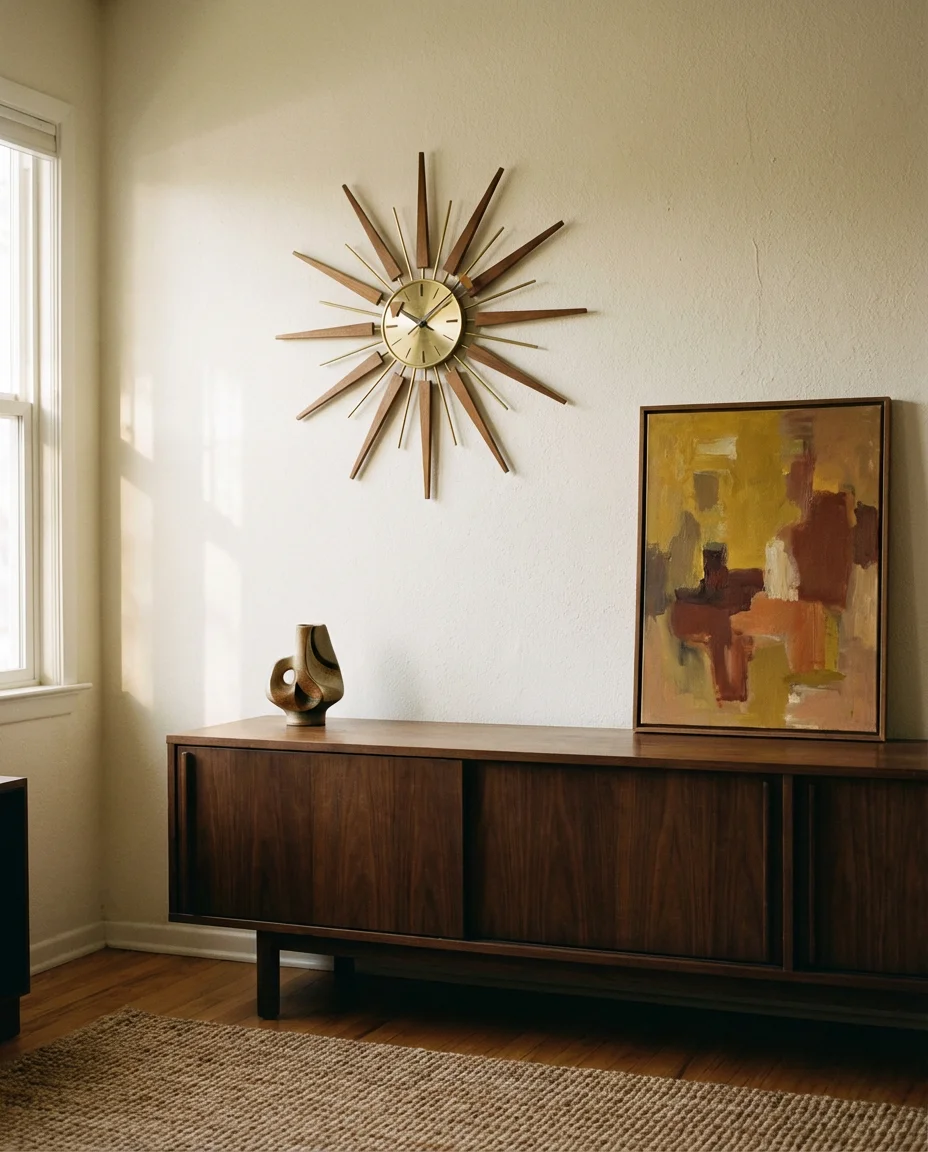
One mistake many people make is hanging wall art too high—it disconnects the piece from the furniture it’s meant to complement. As a general rule, the center of any framed piece or mirror should sit at approximately eye level, around 57 to 60 inches from the floor. This keeps the arrangement grounded and cohesive with the low-slung furniture that defines the mid-century style. When grouping multiple pieces, mock up your arrangement on the floor first before committing a single nail to the wall.
4. Moody Dark Walls with Warm Brass Accents
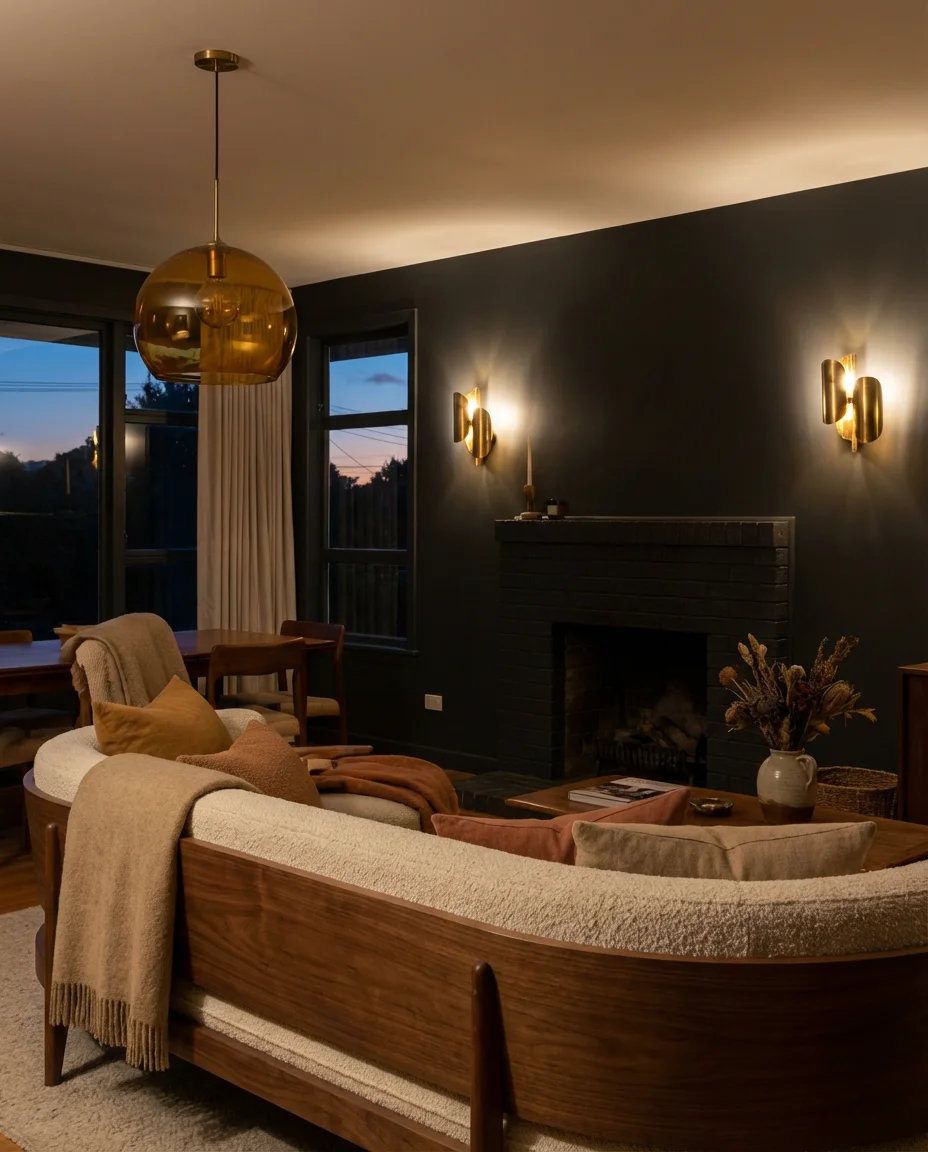
A moody living room doesn’t mean a depressing one—in fact, when done right, dark walls create some of the most sophisticated and enveloping spaces imaginable. Deep charcoal, forest green, navy, and even near-black browns are showing up in mid-century modern spaces in 2026, replacing the all-white walls that dominated Instagram for years. The key is pairing those dark tones with brass lighting, warm wood furniture, and layered textiles that bounce light around the room and prevent it from feeling heavy.

A homeowner in Portland, Oregon, renovated her 1962 ranch home by painting the living room walls in Benjamin Moore’s Wrought Iron and adding vintage brass sconces flanking the original brick fireplace. The result was so striking that her before-and-after reel went viral on Pinterest in under a week. Dark walls aren’t just about drama—they also hide scuffs, handprints, and everyday wear far better than their lighter counterparts, which is a quietly practical win for families with kids or pets.
5. The Japandi Living Room Meets Mid-Century Lines
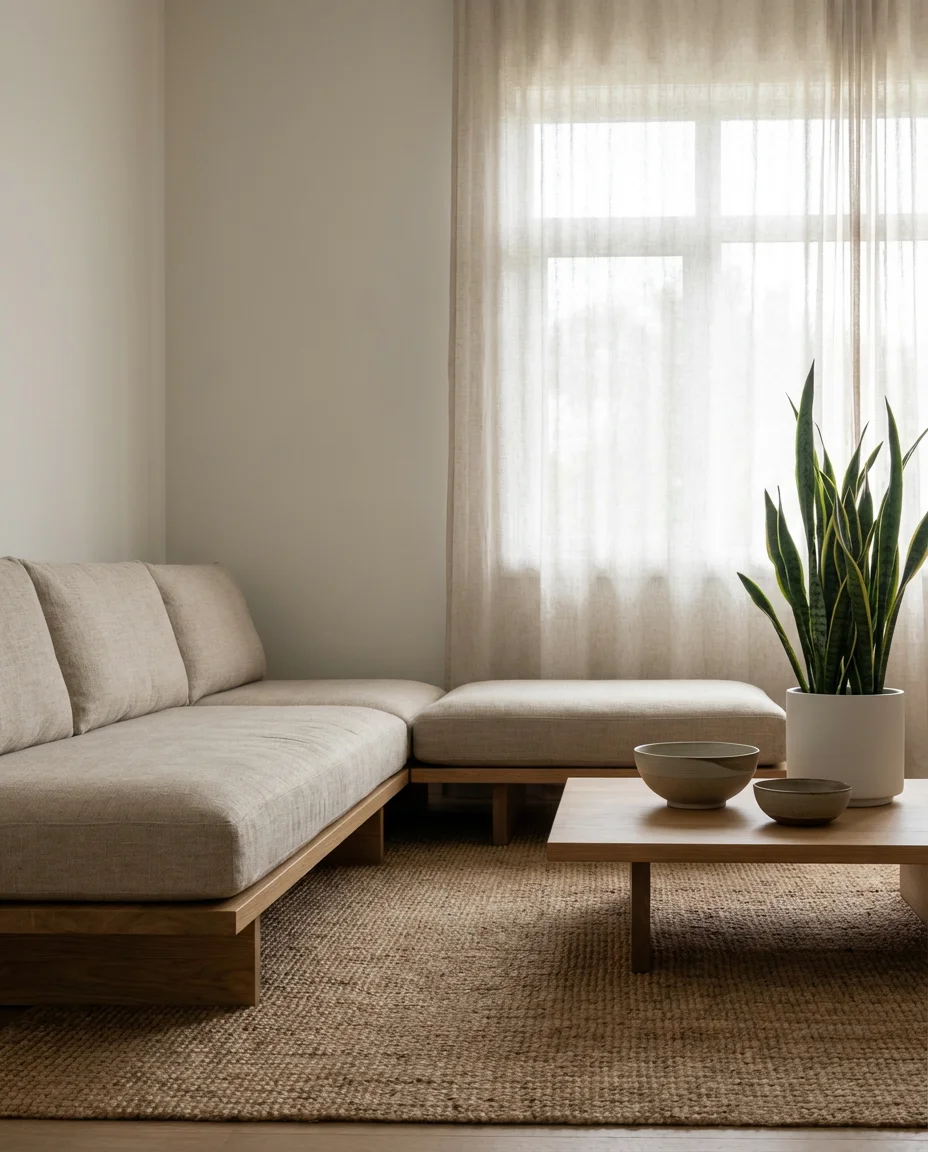
The Japandi trend—a fusion of Japanese minimalism and Scandinavian functionality—has found an unexpectedly natural home within mid-century modern design. Both share a reverence for natural materials, clean silhouettes, and the idea that furniture should be both beautiful and honestly useful. In a Japandi-inflected mid-century living room, you’ll see low furniture with exposed wooden legs, neutral linen upholstery, woven textures, and a restrained use of color—perhaps a single muted sage green or terracotta as the only true accent.

This pairing works best in spaces where calm is the priority—home offices that double as living rooms, studio apartments, or primary living spaces in smaller homes. The Scandinavian interior design influence keeps clutter in check, while the mid-century bones give the room warmth and personality that pure Japandi sometimes lacks. If you’re building this look on a budget, focus on one or two statement furniture pieces—a proper Eames-style lounge chair or a solid wood platform coffee table—and keep everything else simple and functional.
6. Layered Boho Rugs on Hardwood Floors
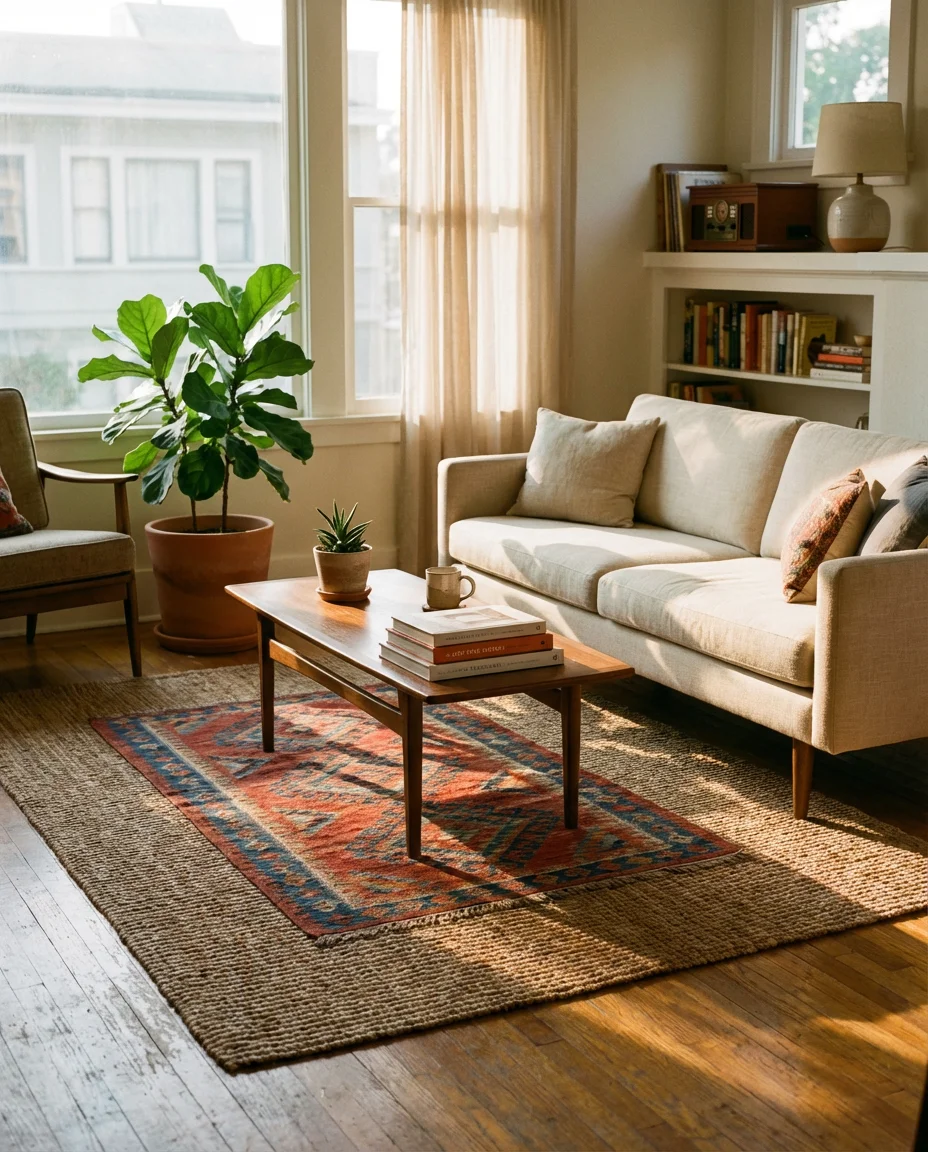
Hardwood floors are practically synonymous with mid-century modern homes—but bare wood can read cold if left without something to break it up. A well-chosen rug (or two, layered) brings warmth, texture, and a sense of defined space to an open living room. In 2026, the most compelling mid-century interiors are mixing geometric low-pile rugs with boho wool or kilim pieces layered on top, creating a lived-in, collected look that feels personal rather than catalog-perfect.
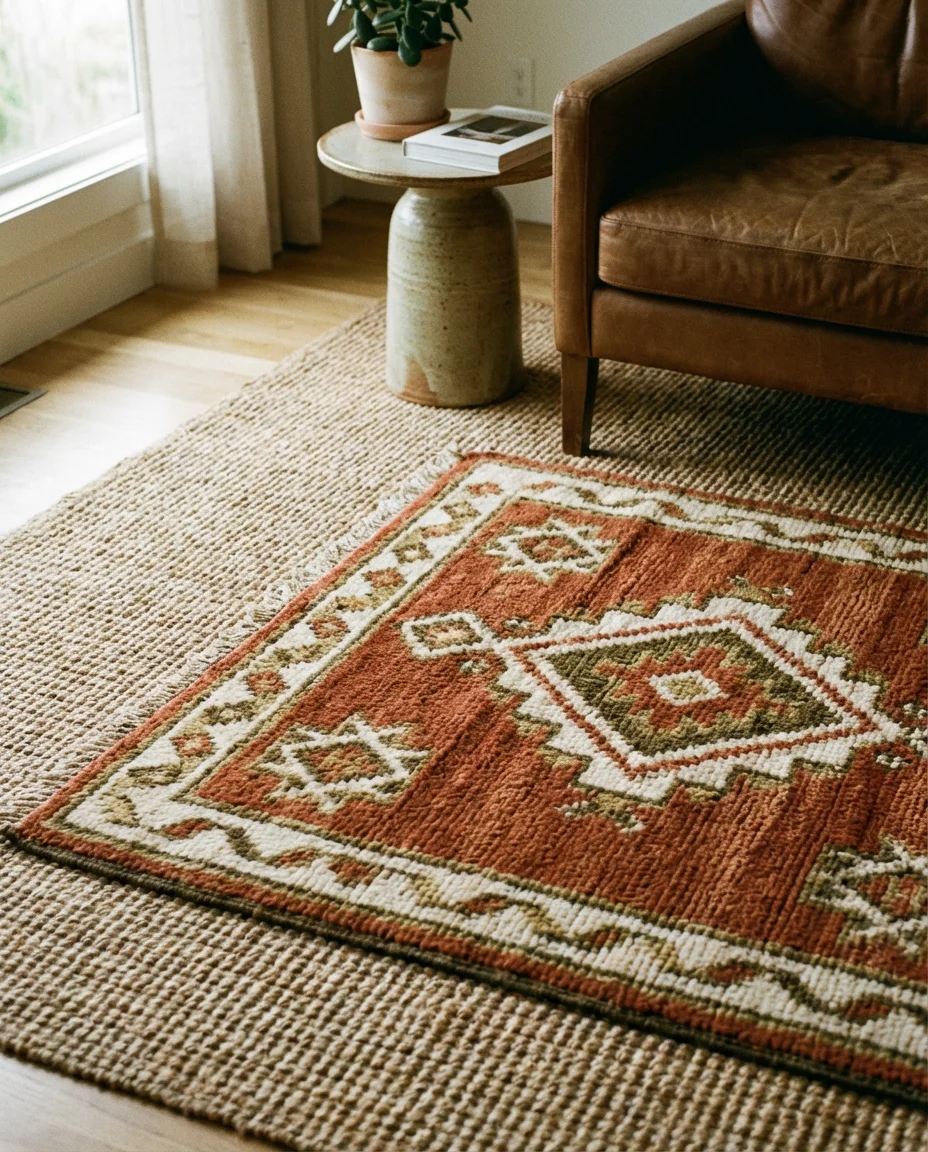
The layered rug trend has real practical roots in American homes—many people inherit mismatched rugs or want to protect older hardwood without committing to wall-to-wall carpeting. A large neutral jute or flatweave as the base layer gives you the square footage you need, while the smaller, more colorful piece on top does the decorative work. Sizing matters: your base rug should be large enough that at least the front legs of every major sofa and chair sit on it, anchoring the entire seating group together as a cohesive zone.
7. Colorful Boho Meets Mid-Century Shapes
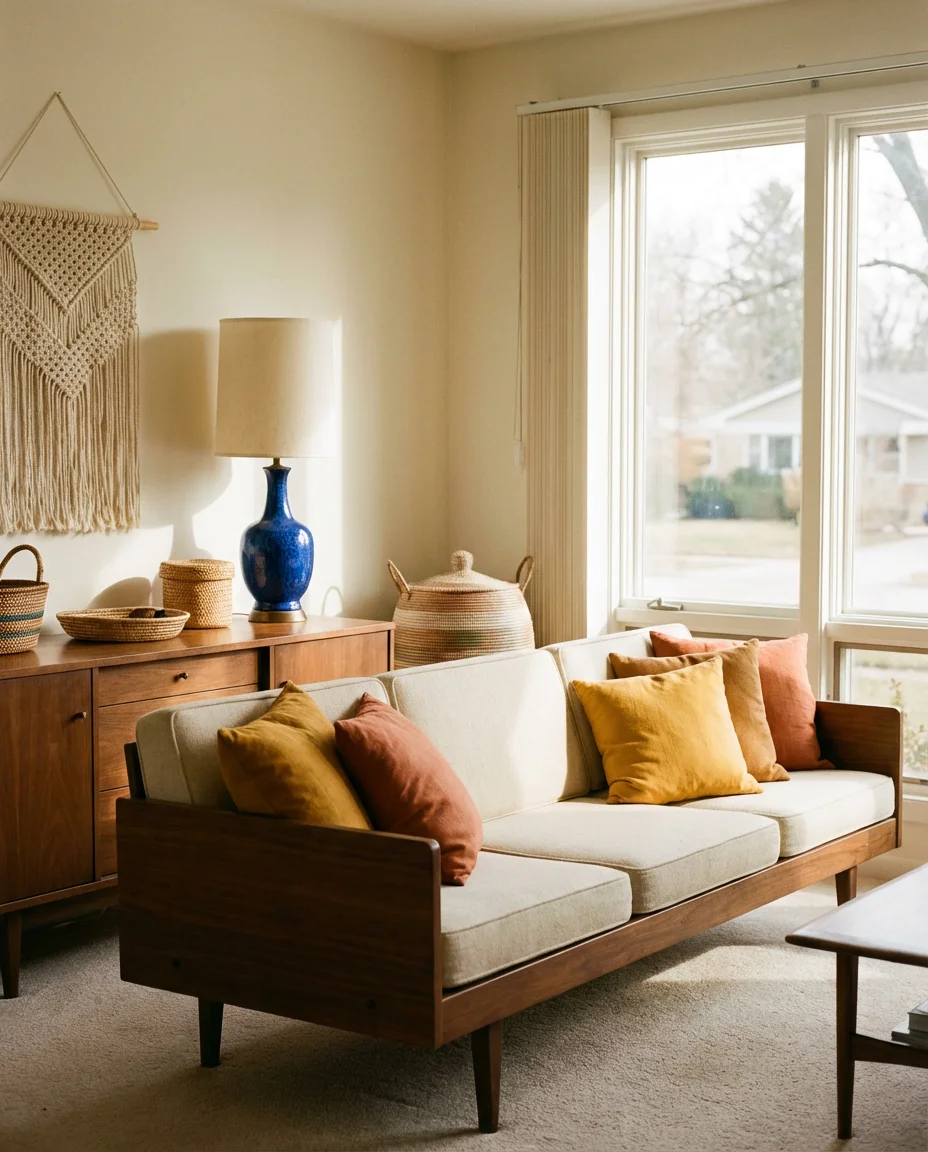
Not every mid-century living room needs to be restrained. The colorful boho interpretation of this style is one of the most joyful trends on Pinterest right now—think warm terracotta, ochre yellow, burnt orange, and cobalt blue layered across throw pillows, pottery, woven wall hangings, and a sculptural eclectic mix of vintage and new furniture. The key is letting the clean-lined mid-century furniture silhouettes serve as the discipline that prevents the room from tipping into chaos. The shapes are orderly; the colors and textures are free.
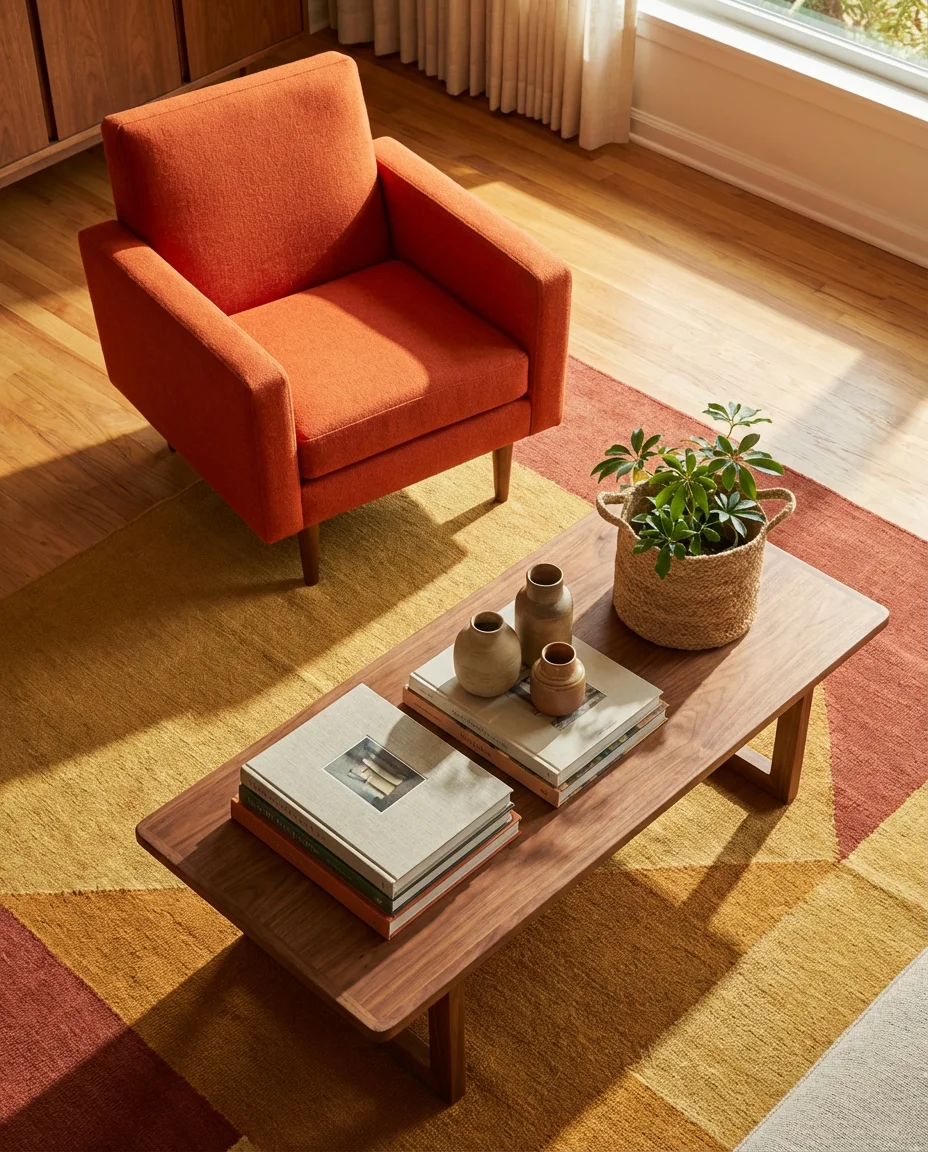
This aesthetic is particularly popular in cities with strong creative communities—Austin, Denver, Portland, and Asheville come up repeatedly in design roundups. Homeowners in these markets tend to mix freely sourced vintage finds with affordable big-box pieces, building rooms that feel genuinely curated over time. The best advice for getting started is to pick a three-color palette and commit to it across all your accent pieces, no matter how tempting the stray pillow or lamp might be. Cohesion in color is what separates a styled room from a cluttered one.
8. Mid-Century Fireplace as the Focal Point
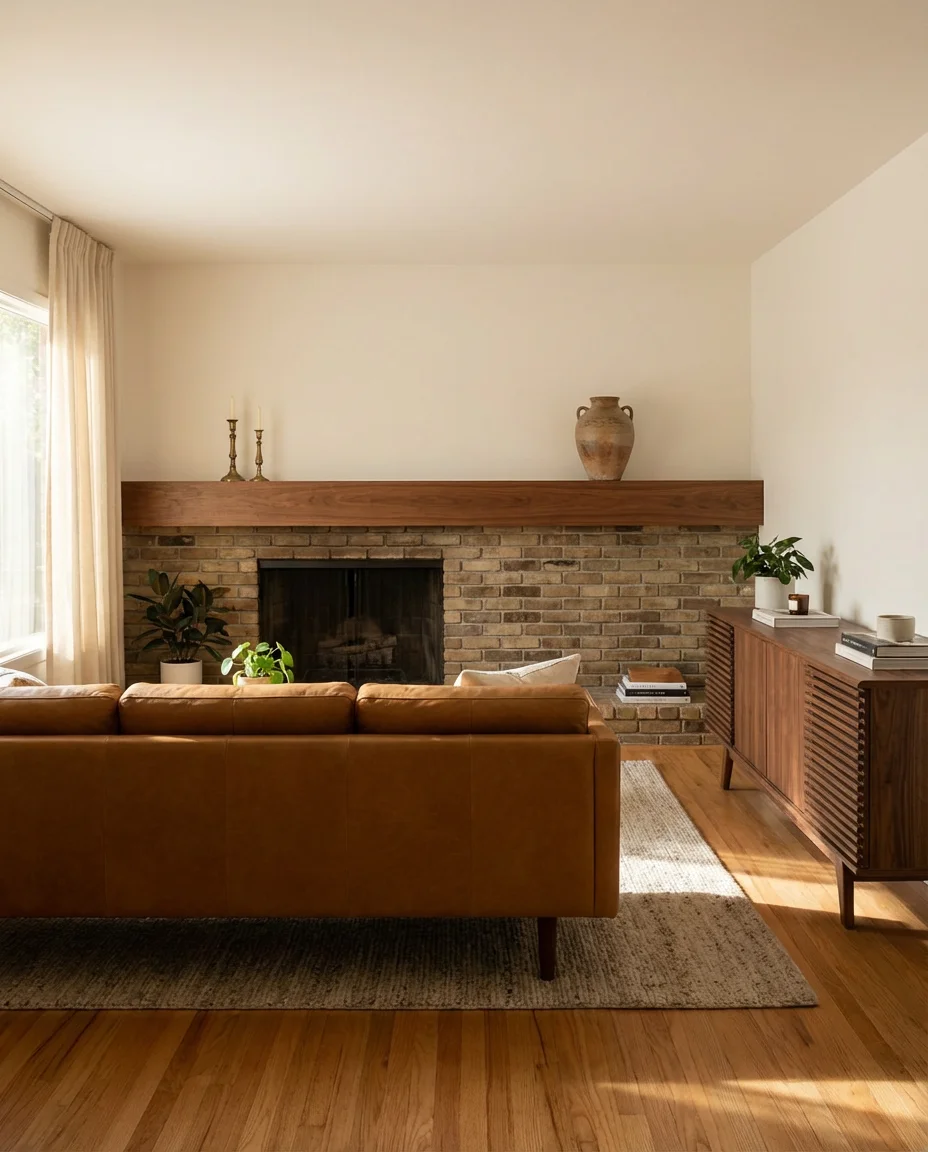
A fireplace in a mid-century modern living room is practically architectural gold. The original ranch homes, split-levels, and Case Study houses of the era were built around dramatic hearths—brick-surround, floating concrete slab, or stone-faced with a simple flush mantel. In 2026, homeowners are rediscovering these original fireplaces and stripping back decades of awkward updates to reveal the clean, geometric lines beneath. Even a gas insert with a simple tile surround can nail this look without touching the original structure.

Where this look works best is in homes built between 1950 and 1975 that still have their original masonry or brick fireplaces intact. Restoring rather than replacing is almost always the smarter design and financial choice—original brick, even painted, has a texture and patina that reproduction tile can rarely replicate. Style the mantel simply: a sunburst mirror or a single large piece of ceramic pottery, perhaps flanked by a pair of low candlesticks in brass. Resist the urge to crowd it. In mid-century design, negative space is part of the composition.
9. The 70s-Inspired Living Room Revival

The 70s are having a full-scale cultural comeback—and nowhere is that more visible than in living room design. Mushroom browns, burnt caramel, harvest gold, and avocado-adjacent greens are creeping back into palettes, while shag-adjacent textures, curved seating, and macramé wall hangings give rooms a distinctly vintage interior design retro quality that feels nostalgic but somehow completely of the moment. The trick is editing ruthlessly: you want the spirit of the ’70s, not a time capsule.
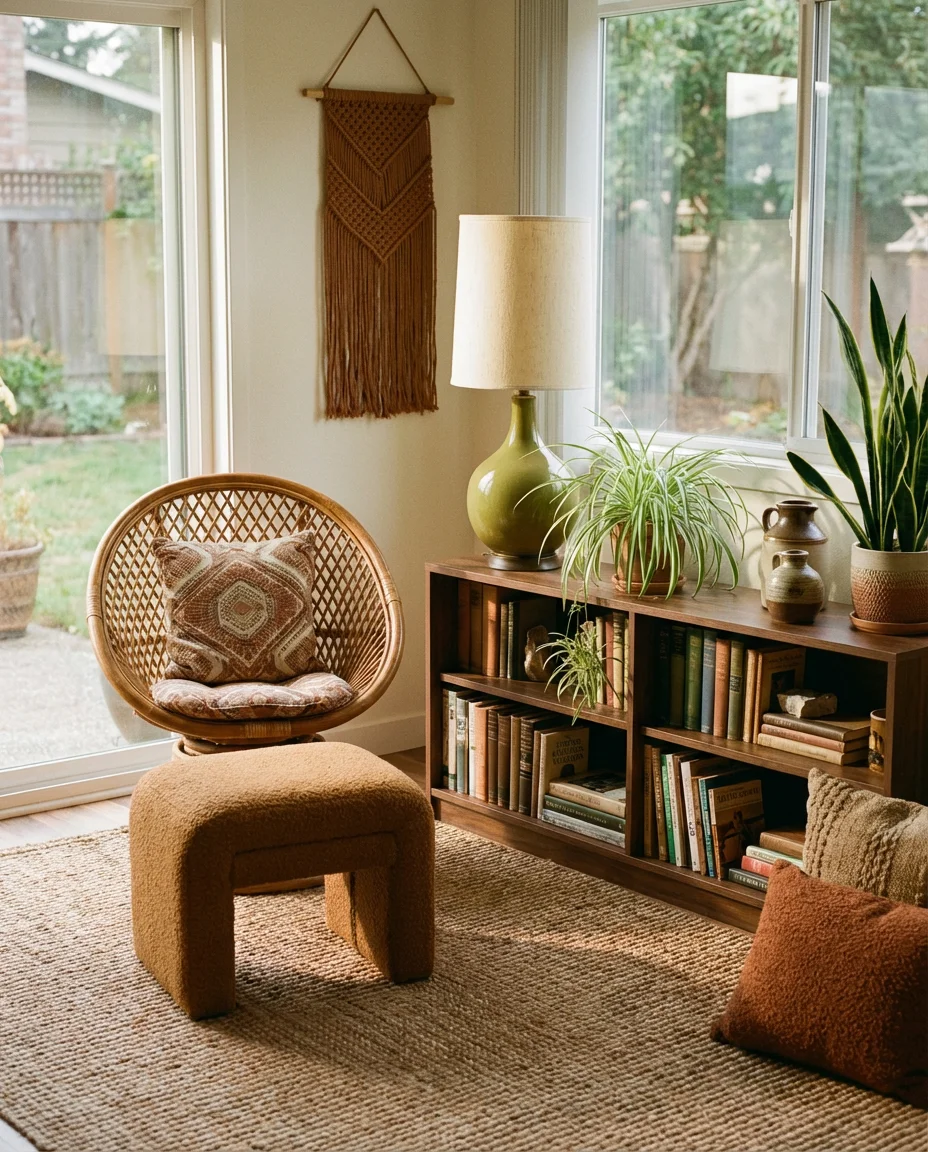
Real homeowners are sourcing these pieces creatively: Facebook Marketplace, Craigslist, and estate sales in suburban neighborhoods are goldmines for original 1970s furniture at a fraction of what reproduction pieces cost at retail. A set of teak dining chairs reupholstered in a warm caramel boucle, a vintage rattan side table, or an original lava lamp on a credenza can shift an entire room’s energy with surprisingly minimal investment. The goal isn’t accuracy—it’s mood. Pick the best parts of the era and leave the rest behind.
10. Vintage Finds Mixed with Contemporary Pieces
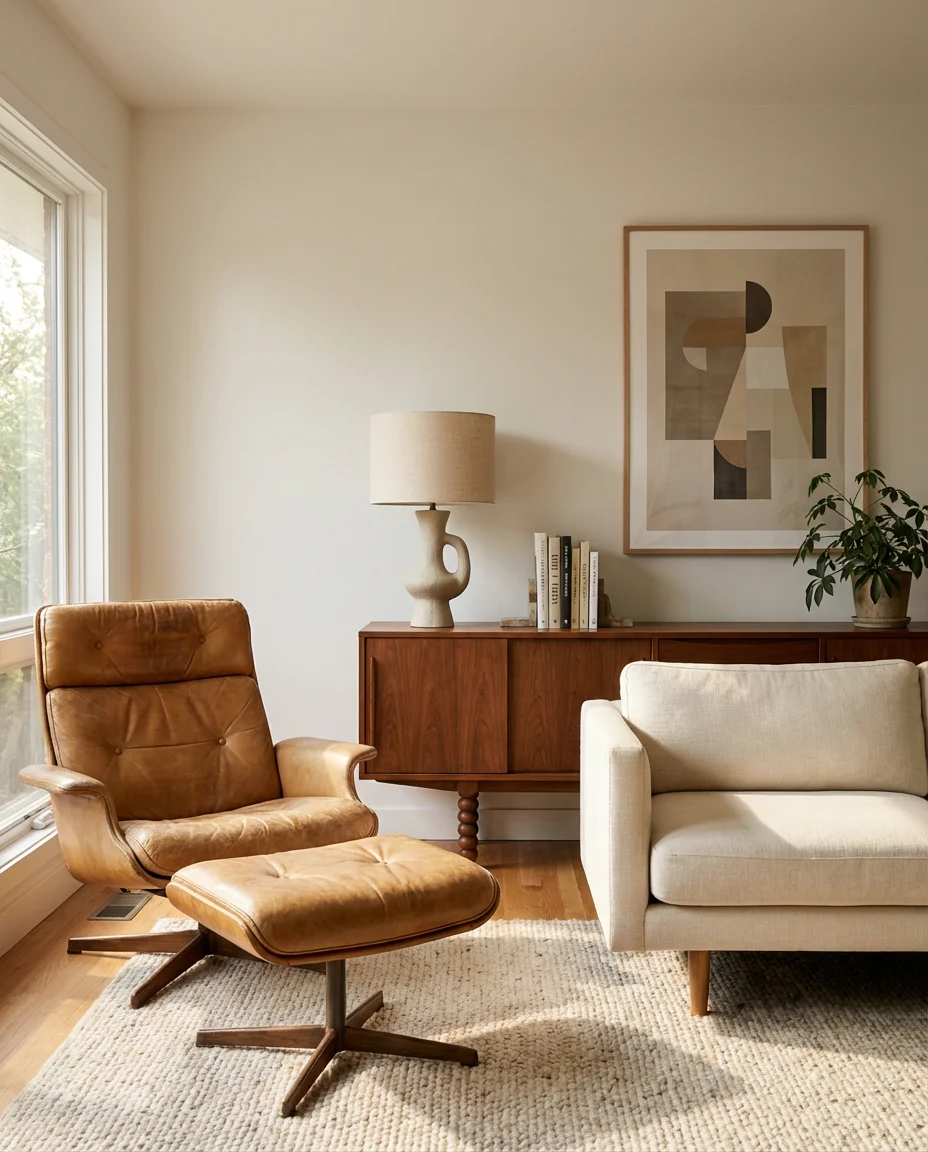
Some of the most compelling mid-century modern living rooms in 2026 aren’t built from a single era—they’re assembled over time by people who genuinely love vintage objects and know how to mix them with contemporary pieces without losing coherence. The magic usually happens when one truly great vintage anchor piece—an Eames lounge, a Knoll tulip table, or a restored Dunbar sofa—is surrounded by newer pieces that share its proportions and philosophy. The room feels collected, not like costumes.
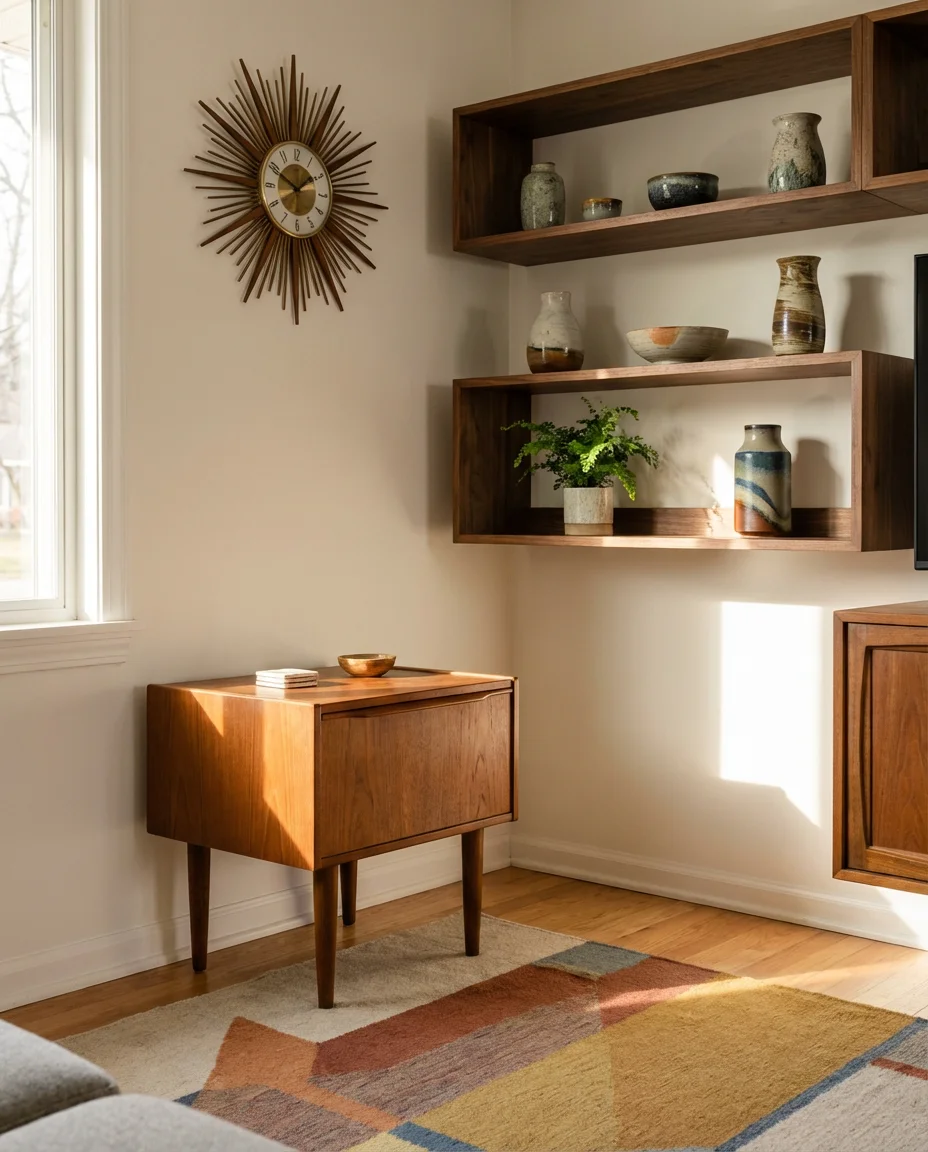
Interior stylists who work with this approach recommend starting with your vintage hero piece and letting it set the tone for everything that follows. Ask yourself: what does this object feel like? Playful? Serious? Warm? Then shop accordingly for your supporting cast. The most common mistake is buying too many vintage pieces at once before understanding how they interact with each other in your specific space. Start with one, live with it, and let the room speak back to you before adding the next layer.
11. Scandinavian-Inspired Neutral Palette
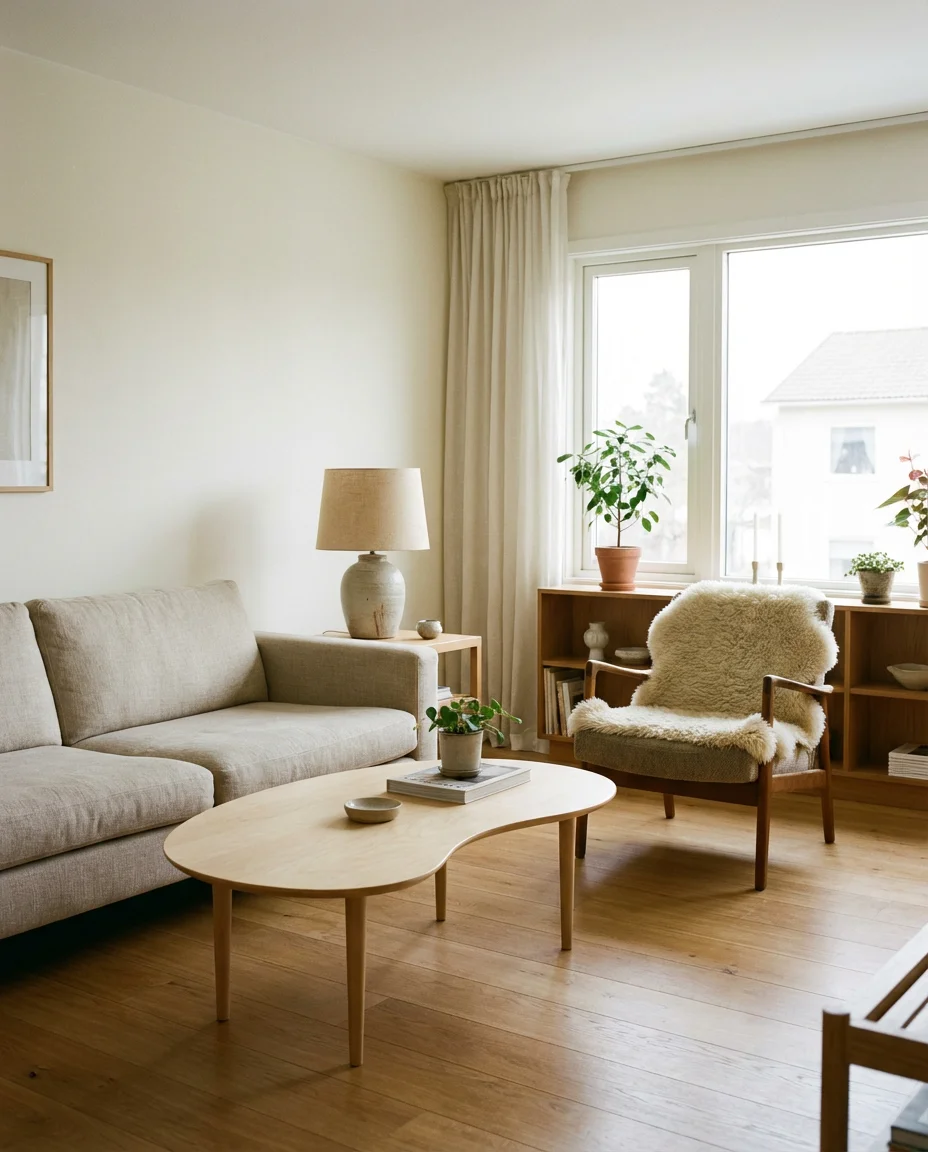
There’s an enduring overlap between Scandinavian interior design and the American mid-century modern tradition—both value functional beauty, natural materials, and rooms that feel calm enough to actually live in. In practice, a Scandi-influenced mid-century palette leans heavily on creamy whites, warm grays, oatmeal linens, and natural oak or birch rather than darker walnut. The result is lighter and airier than a more traditional mid-century interpretation, which makes it especially appealing for north-facing rooms or spaces with limited natural light.
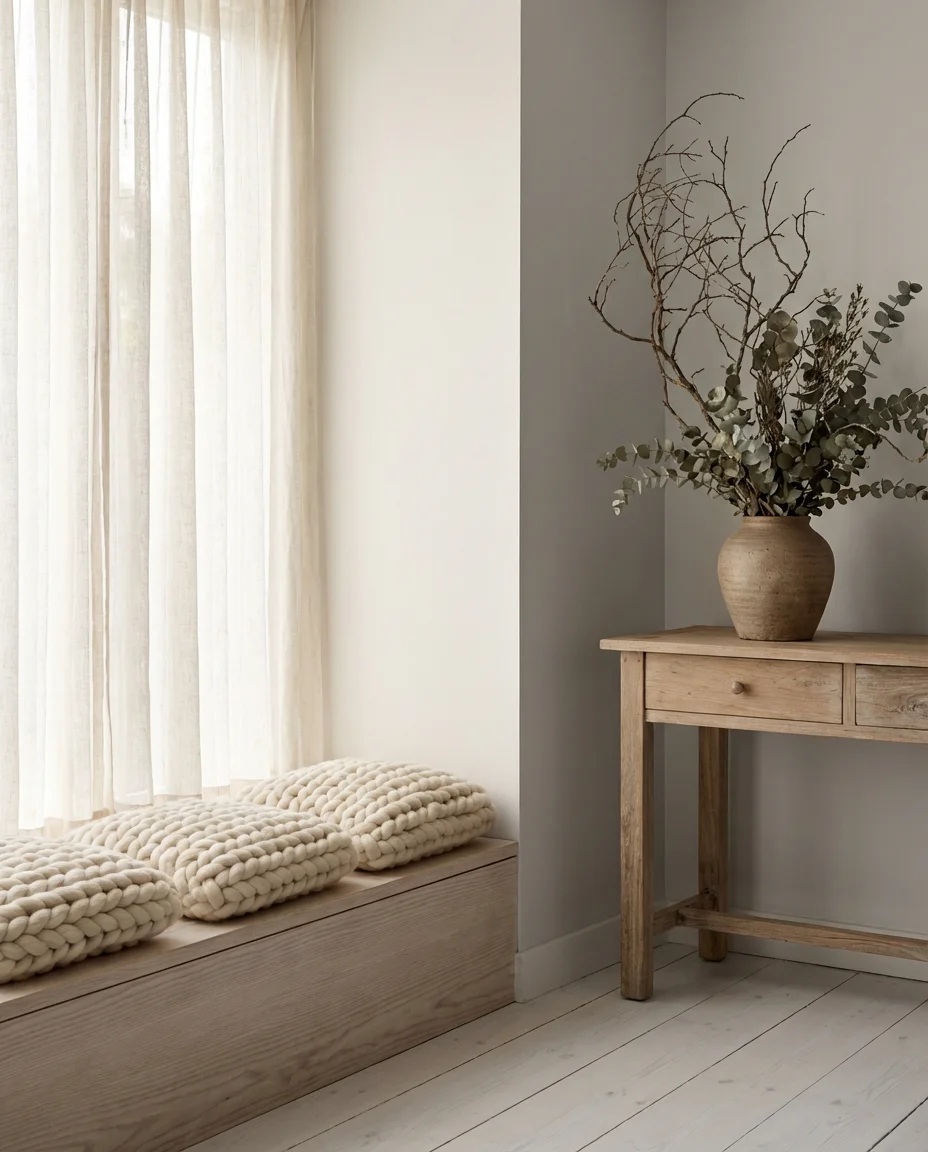
One genuinely practical advantage of a Scandinavian-leaning palette is how forgiving it is at different price points. Light wood furniture from IKEA reads surprisingly well alongside higher-end upholstered pieces—the color harmony does more work than the brand name does. The key is to add one or two tactile elements that prevent the room from reading sterile: a deeply textured wool throw, a hand-thrown ceramic lamp base, or a sheepskin draped over the arm of a chair all introduce the kind of warmth that softens a very neutral space without disrupting its calm.
12. Blue Accent Walls and Blue Velvet Chairs
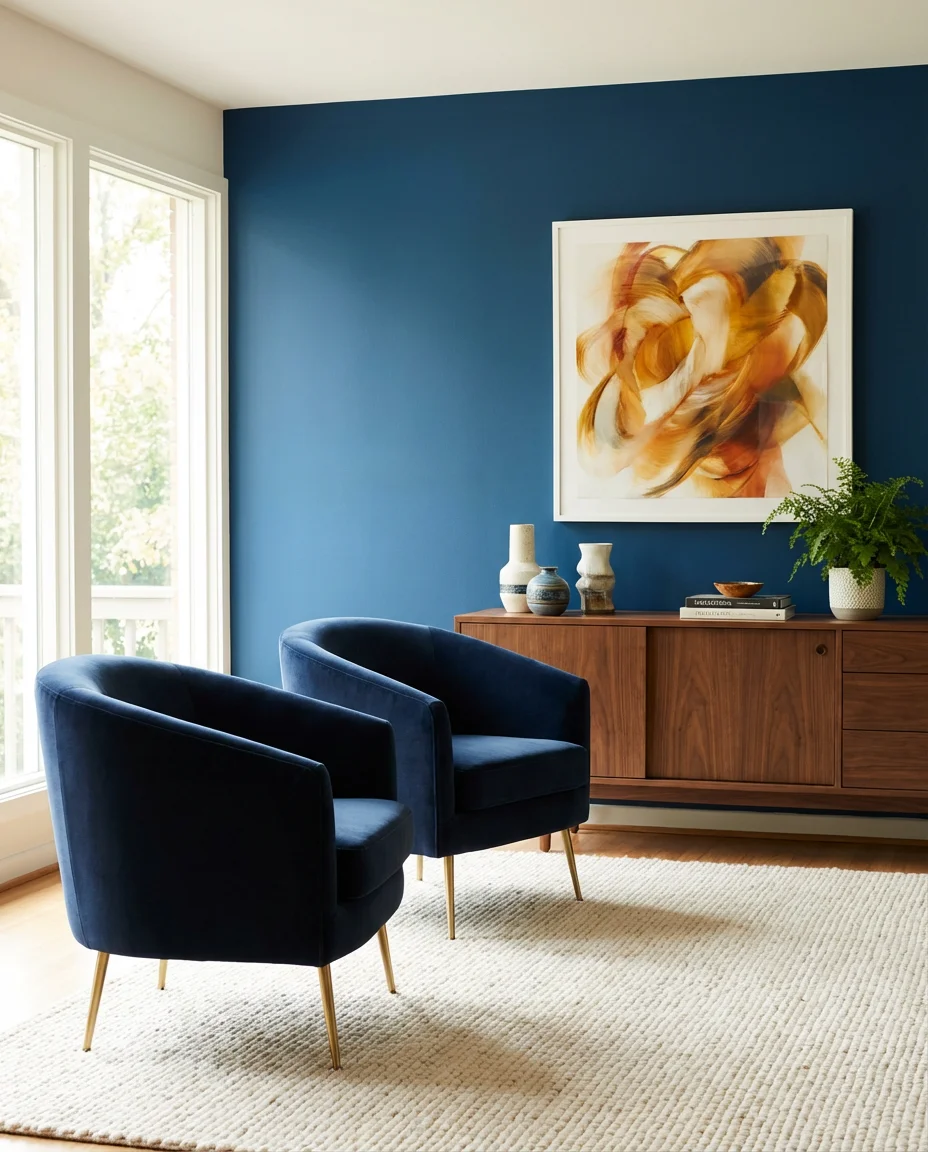
Blue is one of the most consistently popular mid-century modern accent colors—and in 2026, it’s showing up in deeper, richer tones that feel genuinely luxurious. Sapphire, teal, peacock, and dusty slate blues are all working in mid-century living rooms, either as a painted accent wall or as the color of a pair of velvet barrel chairs or a curved loveseat. When blue appears in both the architecture and the upholstery at the same time, the room achieves a rare kind of visual completeness that makes it look professionally designed.
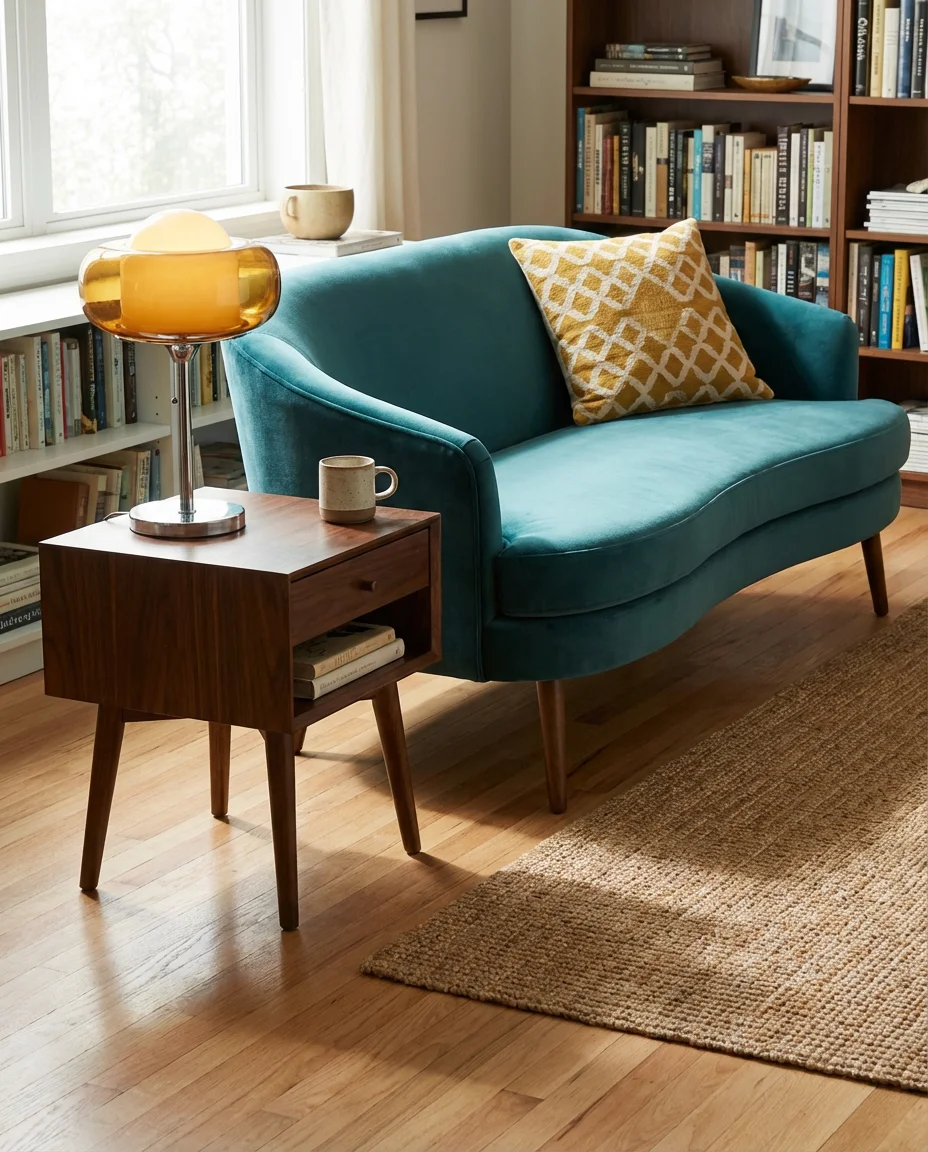
Blue is also one of the most universally beloved colors in American living rooms—surveys consistently place it among the top color choices for the spaces where families spend the most time. It reads as calm, trustworthy, and polished without the sometimes-cold edge of gray or the commitment required by bolder tones like red or orange. To keep blue from reading too corporate in a mid-century space, warm it up with amber or honey-toned wood, brass or gold metal accents, and at least one textile in a warm cream or natural linen.
13. Apartment-Friendly Mid-Century Layouts

Mid-century modern is arguably the most apartment-friendly design style there is. The furniture is scaled to be low and horizontal—it doesn’t eat visual height the way traditional or baroque styles can—and the overall philosophy is about using fewer, better pieces rather than filling every corner. In a compact city apartment, a well-chosen mid-century sofa, a small credenza doubling as an entertainment console, and a tapered-leg coffee table can define an entire living space without crowding it. The style rewards editing.

For apartment dwellers, multi-functional furniture with mid-century lines is worth every penny of the investment. A storage ottoman with tapered legs, a sofa with built-in side tables, or a nesting coffee table set gives you flexibility without sacrificing the aesthetic. The most important layout principle in a small mid-century living room is floating your furniture away from the walls—even just a few inches creates the illusion of more space and lets each piece be appreciated as an object in its own right, rather than something pushed into a corner.
14. Decor Details That Make the Difference
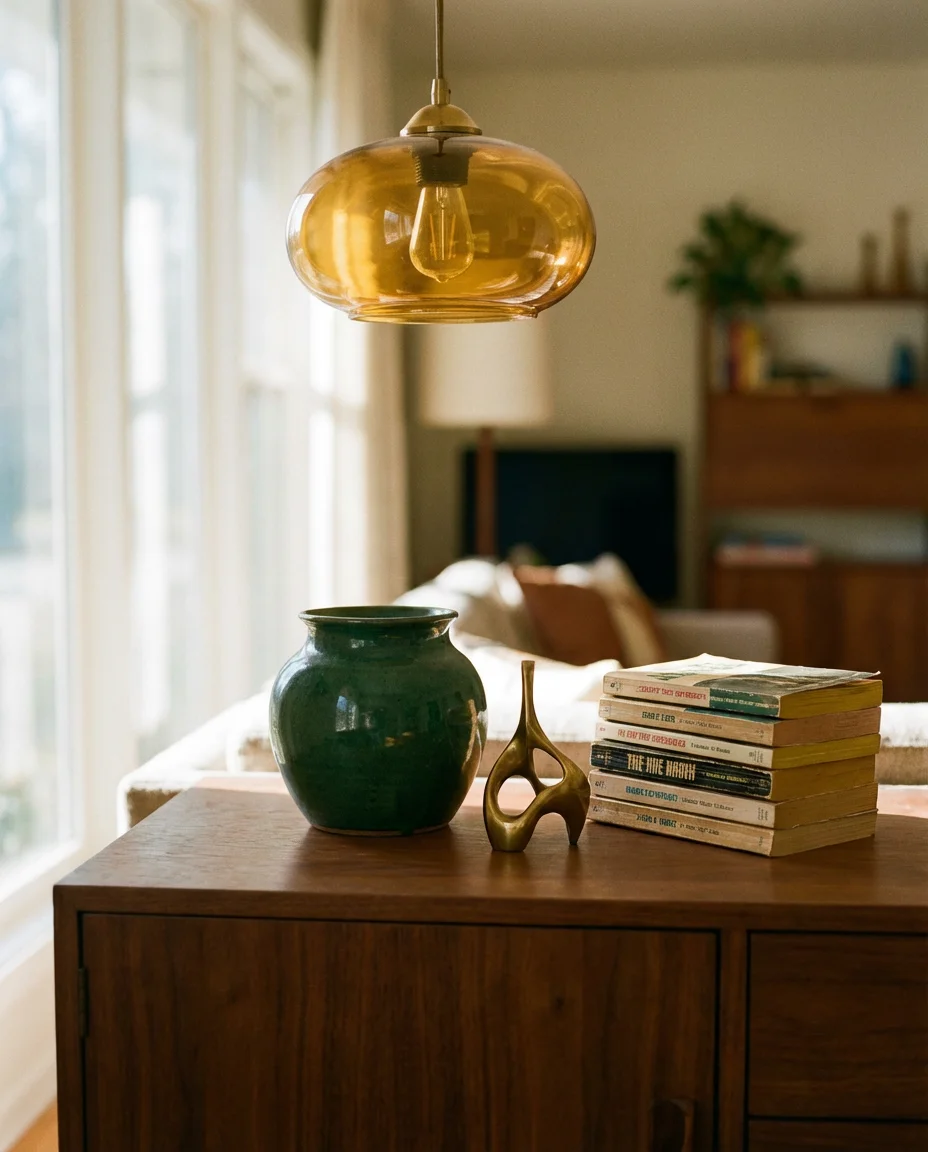
In any well-styled mid-century modern living room, the cozy decor and interior design details are often what you remember most after you leave. The ceramic vase is on the credenza. The amber glass pendant light above the reading chair. The vintage paperback novels were stacked just so on the coffee table. These finishing touches aren’t afterthoughts—they’re the novels that make the difference between a room that looks designed and one that looks purchased. In 2026, the most sought-after decorative objects lean toward handmade, textured, and one-of-a-kind.
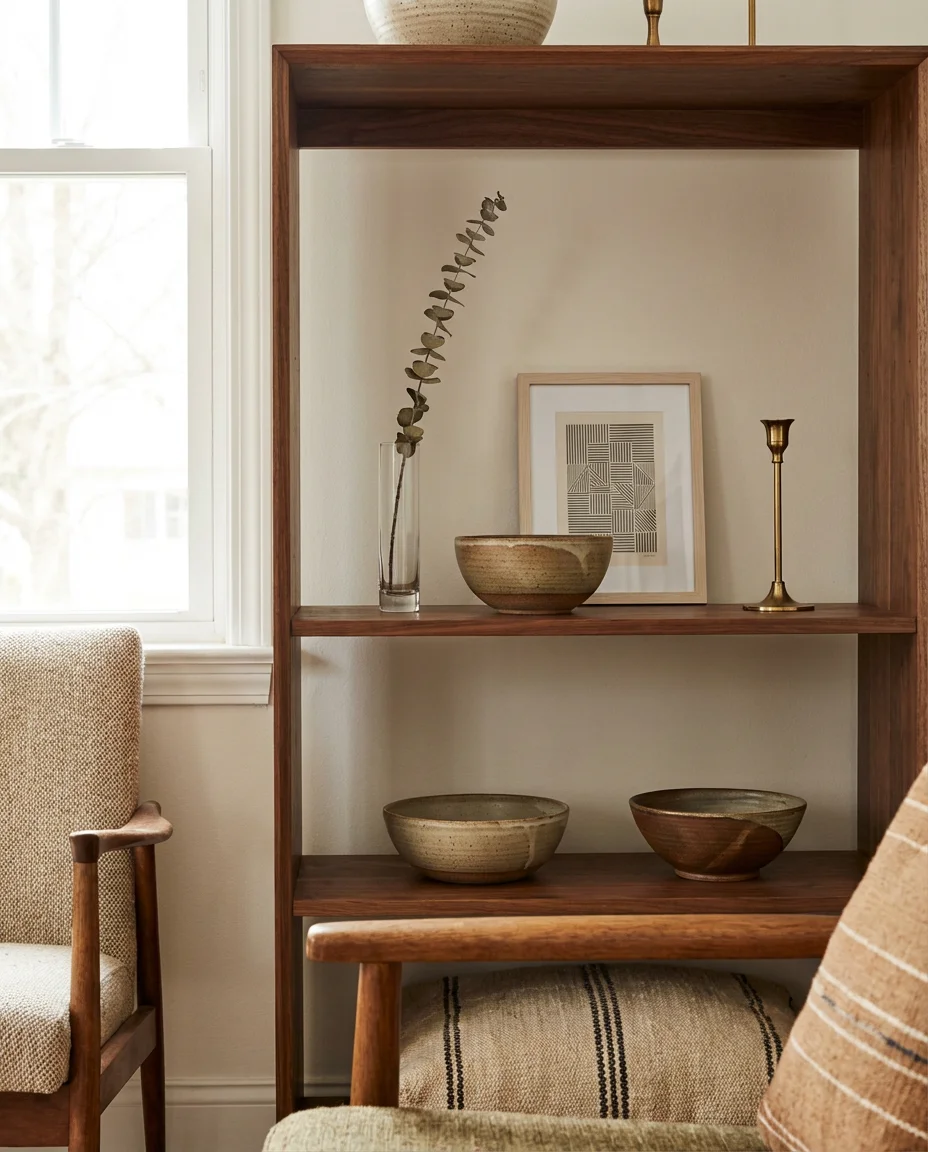
American homeowners who excel at this tend to be serial thrift store visitors—not out of necessity, but out of genuine appreciation for objects with history. A hand-thrown ceramic bowl found at a flea market, a small abstract painting from a local artist, or a beaded lamp from a church sale can elevate a room in a way that a hundred-dollar mass-market accessory never could. The rule of three is worth keeping in mind: odd numbers of objects grouped together read more naturally than even-numbered pairs, which tend to feel more formal and less relaxed.
15. Curtains That Frame the Room Just Right
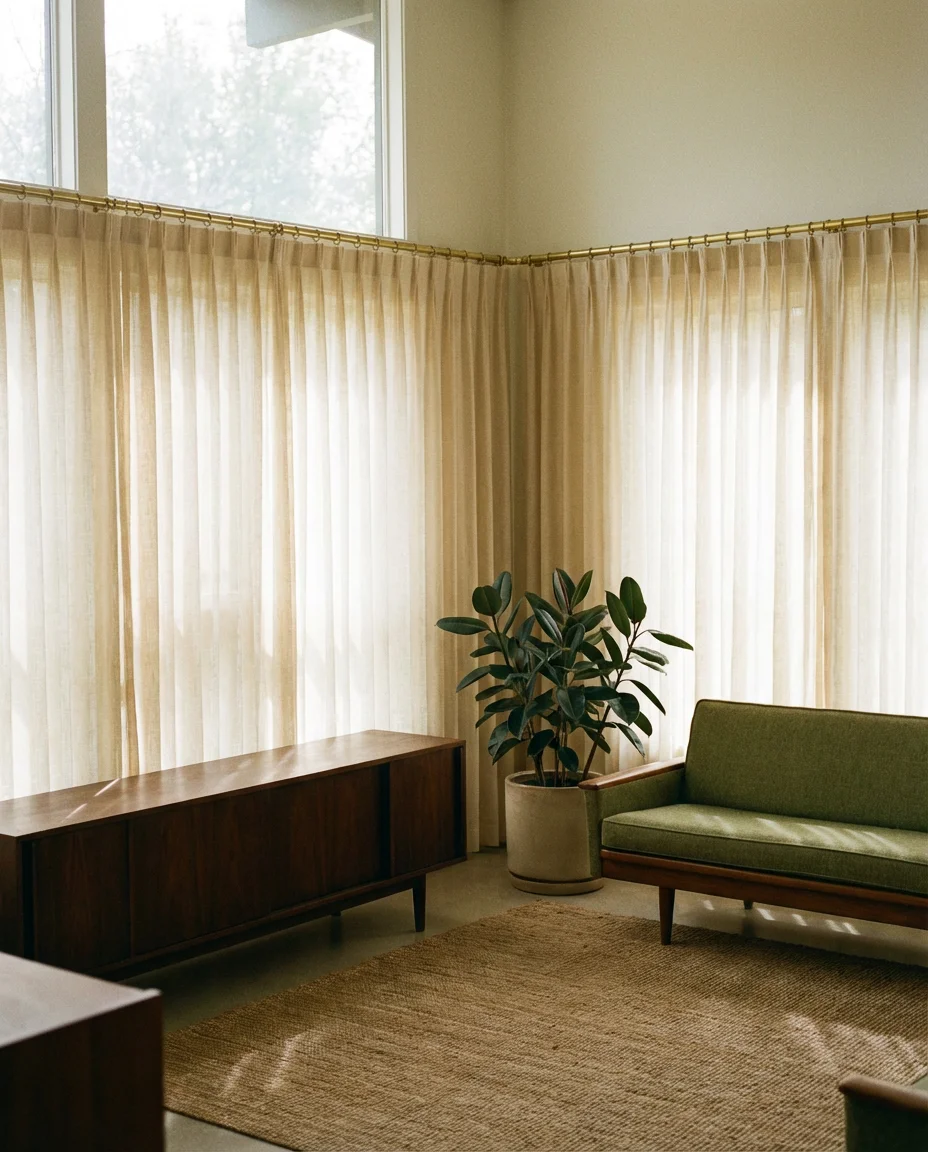
Curtains are one of the most underestimated tools in a mid-century—not modern—living room and also one of the most common areas where people make expensive mistakes. In this style, window treatments tend toward the simple and graphic: solid-color linen panels in warm neutrals or deep jewel tones, hung from ceiling to floor on slim matte black or brass rods. Floor-to-ceiling drapes make ceilings feel taller and windows feel grander, regardless of actual room proportions. For a room with colorful furniture and art, stick to solid panels; for a neutral room, a subtle geometric print can add welcome energy.
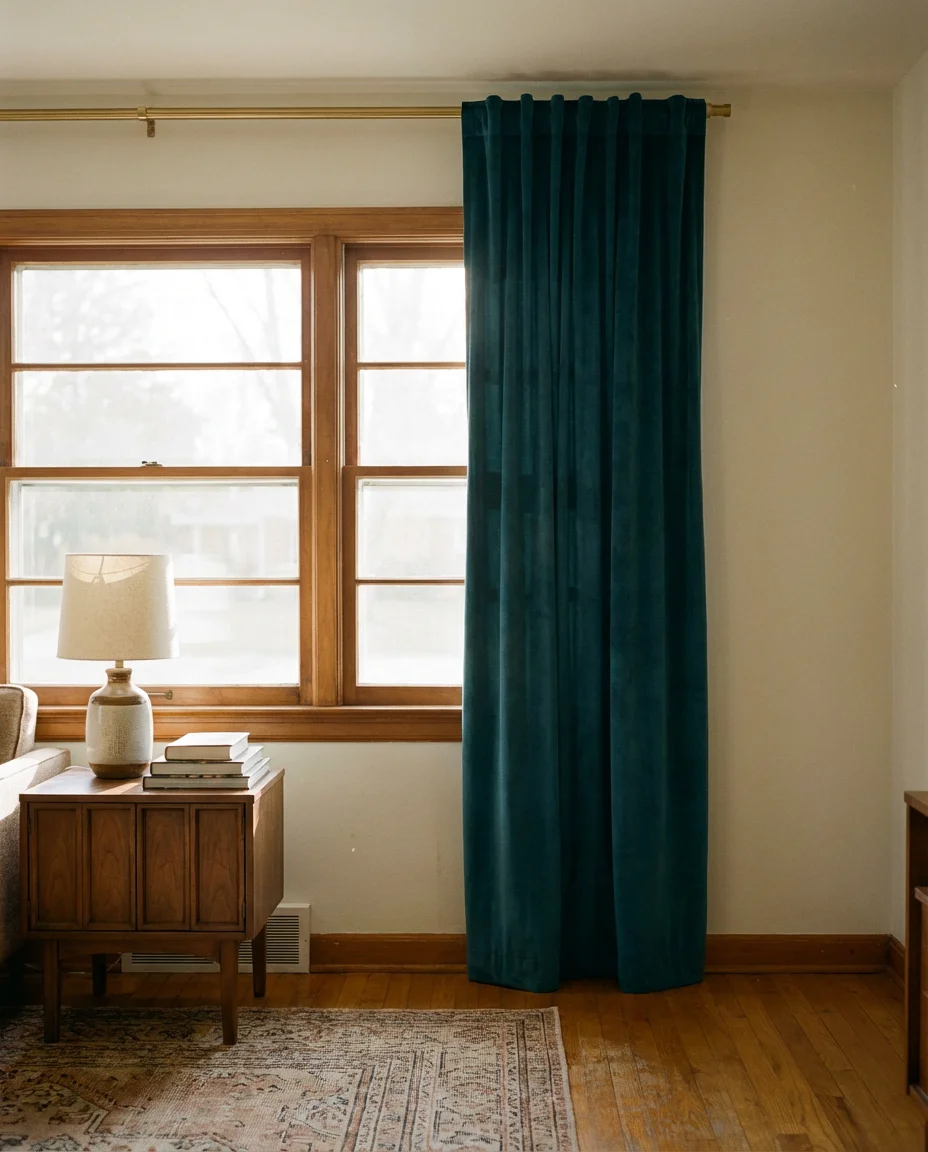
The most common curtain mistake in any style—but especially mid-century and modern—is hanging the rod too low and too narrow. Mount your curtain rod as close to the ceiling as possible and extend it at least six to twelve inches beyond the window frame on each side. This lets the panels hang clear of the glass when open, maximizing light and making the window appear significantly larger. Ready-made curtain panels in 96- or 108-inch lengths from brands like Pottery Barn, Threshold, or IKEA’s LISELOTT line can achieve this look without a custom price tag.
16. Earthy Green Plants and Indoor Botanicals
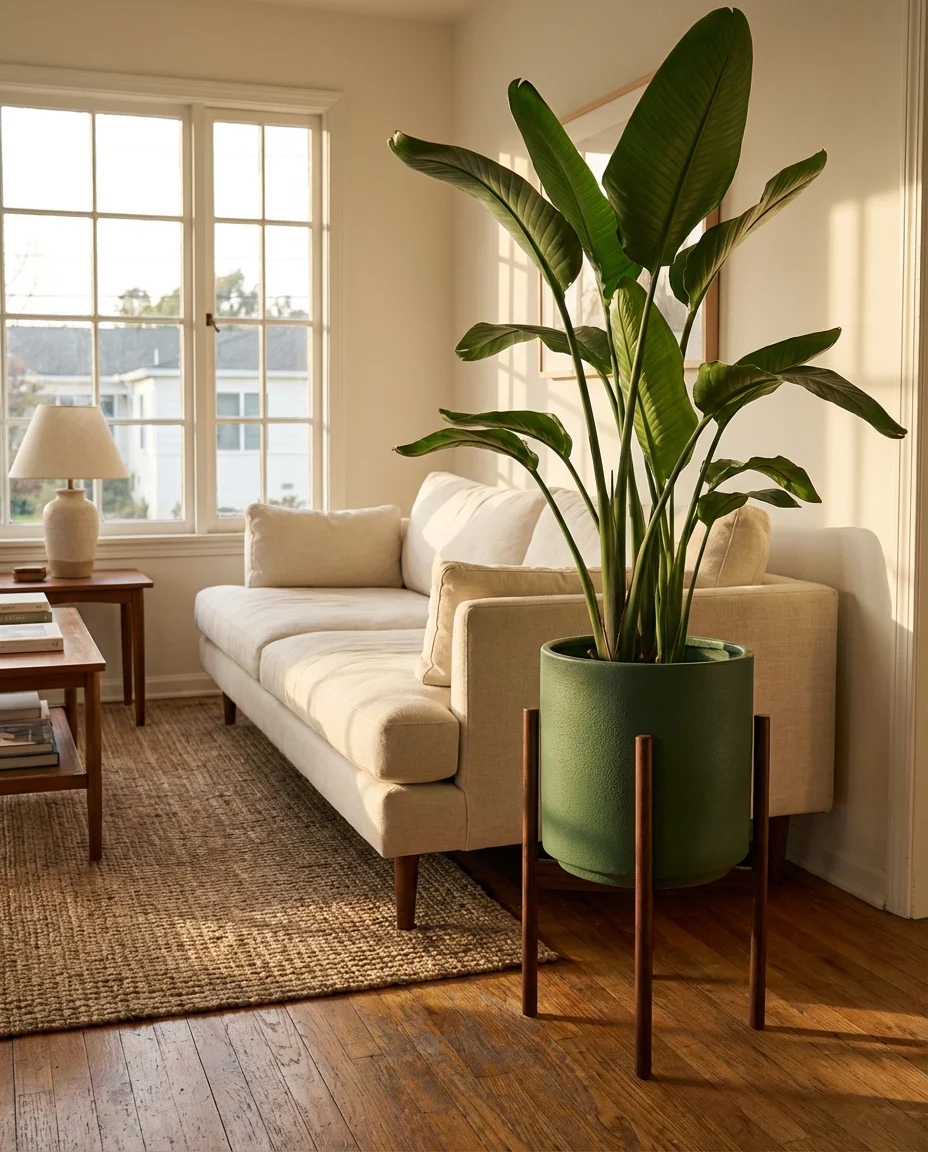
There’s a reason you almost never see a mid-century modern living room without at least one thriving plant. The style has always leaned into the connection between interior and exterior—the century floor-to-ceiling windows, the open plans, and the patios that blur the line between inside and out. In 2026, green plants are more central than ever to the mid-century plans and interior, with large statement specimens like fiddle-leaf figs, birds of paradise, and olive trees commanding real architectural presence alongside the furniture. Even a single large plant in a ceramic pot can transform a corner.
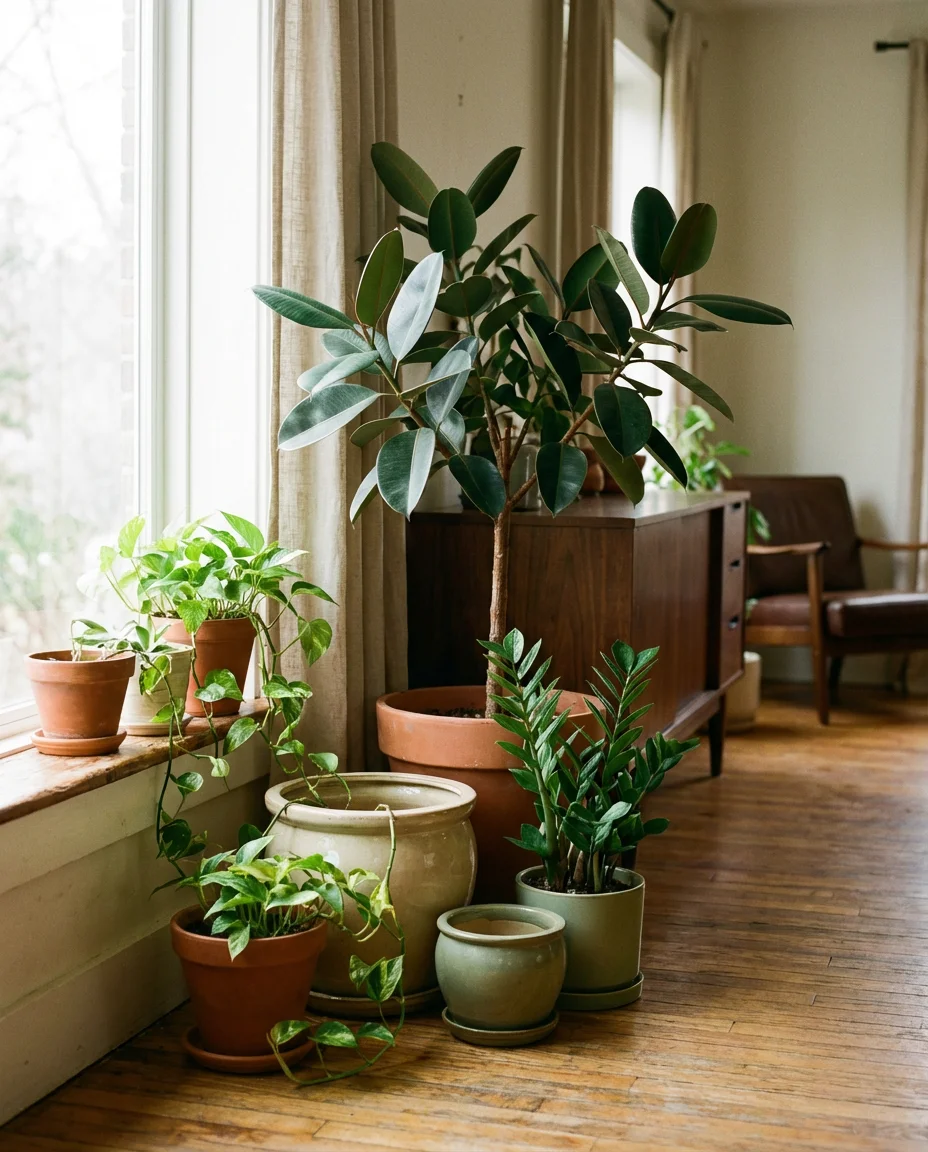
For those without a green thumb, the good news is that the most visually impactful mid-century plants are also some of the most forgiving. Rubber trees, snake plants, and ZZ plants tolerate low light and irregular watering while still achieving the sculptural presence the style demands. Plant stands are worth the investment: a tripod teak or walnut stand lifts the pot to furniture level and gives it the same visual weight as a side table or sculpture. The pot matters too—mid-century ceramic in warm earth tones or deep forest green is always the right call.
17. The TV Wall Done the Mid-Century—matte Way
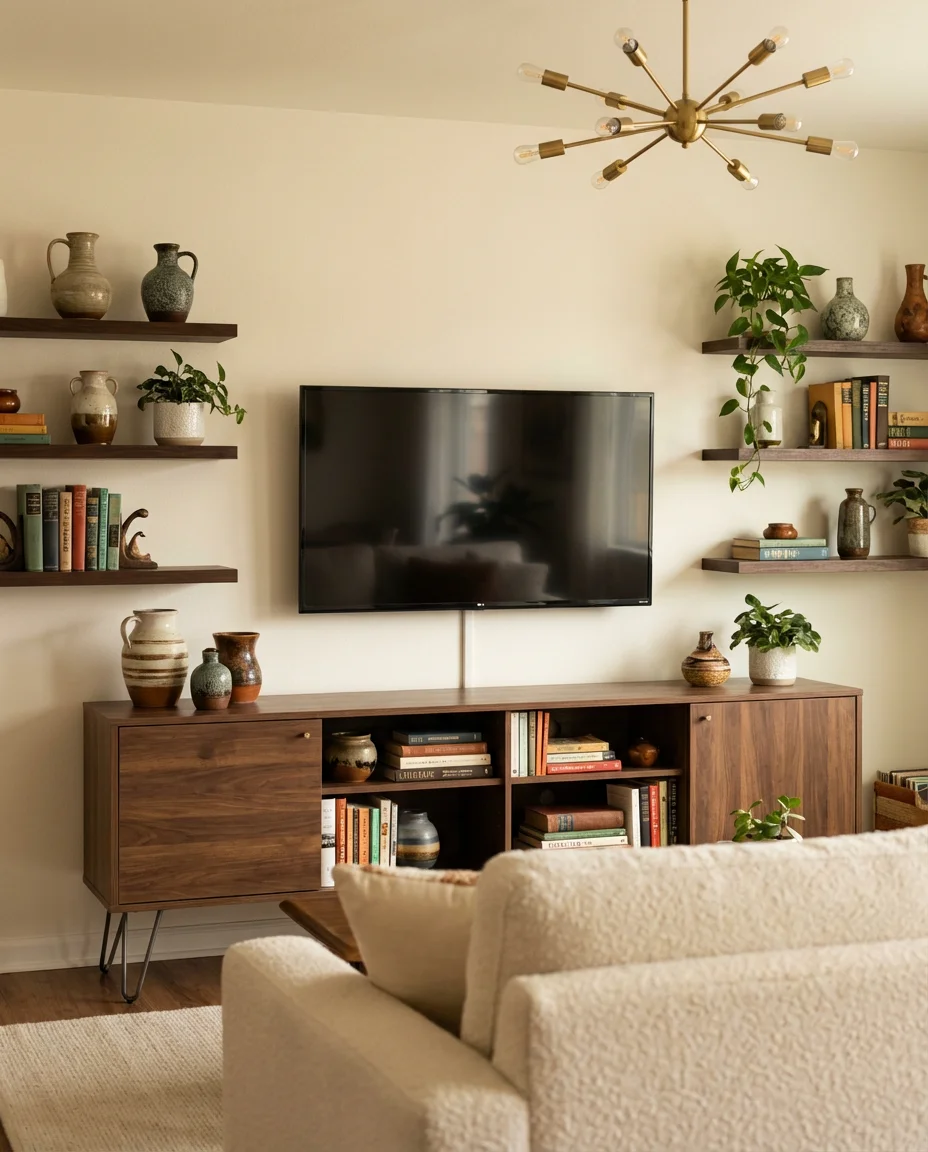
Integrating a TV into a mid-century-Century modern living room has long been one of the style’s biggest challenges—the flat black rectangle is a tough visual element to harmonize with warm wood and organic shapes. The most successful solutions in 2026 are framing the TV within a built-in or freestanding media console that gives it architectural context: a wall of floating walnut shelves, a vintage-style credenza with the TV centered above it, or a custom built-in niche flanked by open shelving. The goal is to make the TV feel like it belongs rather than like an intrusion.
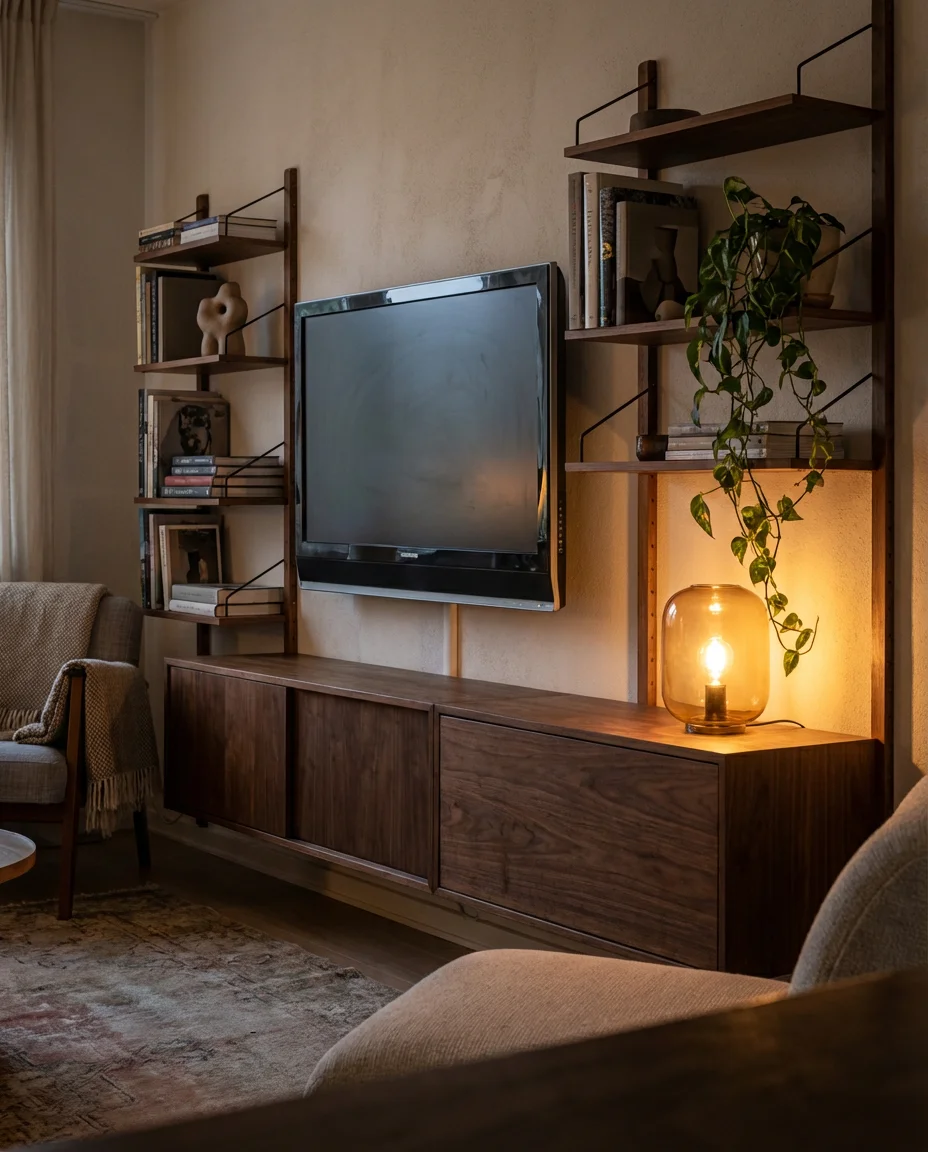
An expert-level trick many designers use is to flank the TV with framed art or objects of comparable scale so the screen reads as one element in a larger composition rather than the room’s singular focal point. Warm lighting—a pair of swing-arm sconces or a floor lamp positioned behind the sofa—also reduces the harshness of the TV’s presence by competing with its glow rather than letting it dominate a dark room. Some homeowners opt for a gallery-style wall of floating shelves that essentially camouflages the TV within a curated field of objects and books.
18. The Eclectic Mid-Century—also Gallery Wall
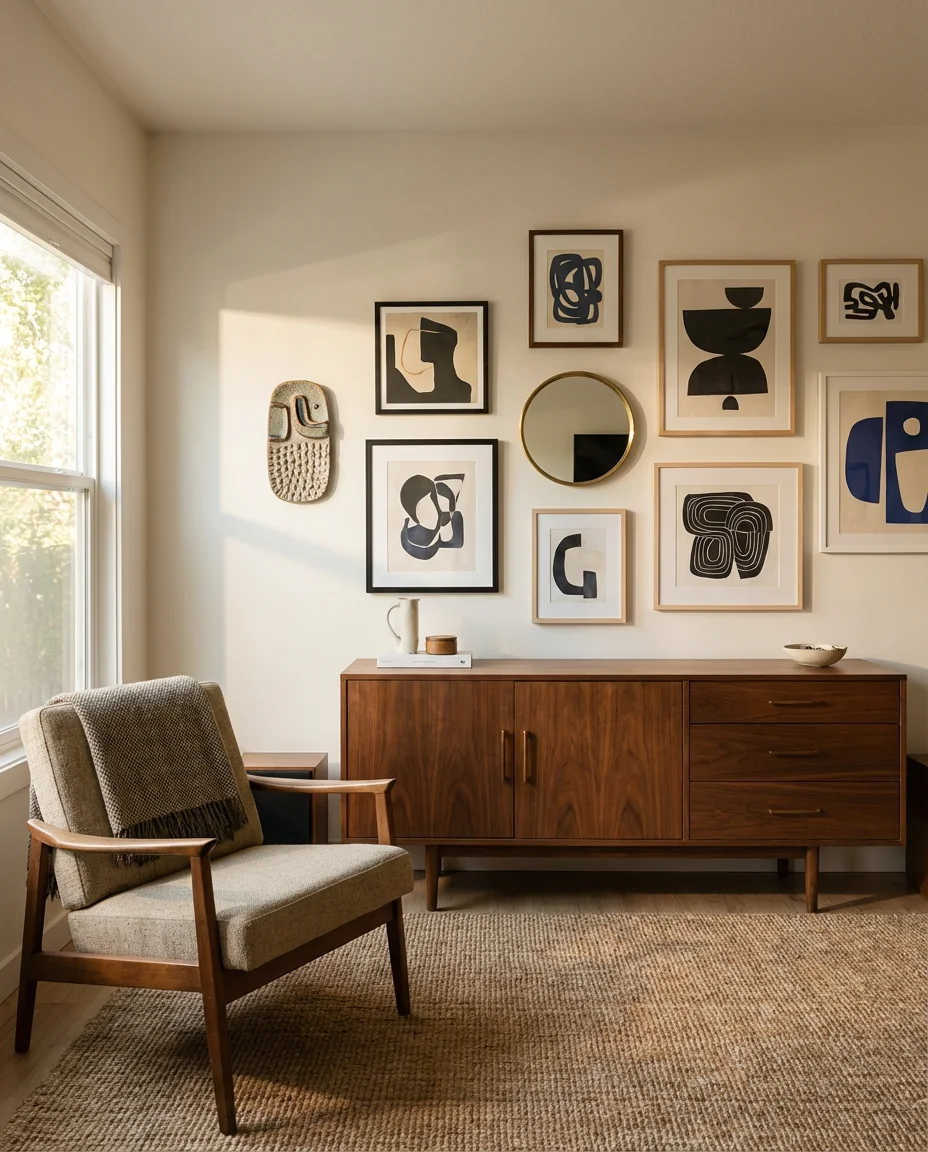
A gallery wall in a mid-century-Century modern space needs a slightly different approach than in other styles. Because the furniture is already doing significant decorative work with its shapes and materials, the wall arrangement needs to feel curated rather than maximalist. The most beautiful eclectic mid-century gallery walls mix a few framed abstract prints with a small mirror, perhaps a ceramic wall hanging, and one or two personal photographs—all in frames with similar metal finishes or a consistent warm wood tone that ties the arrangement together without making it feel like a museum.
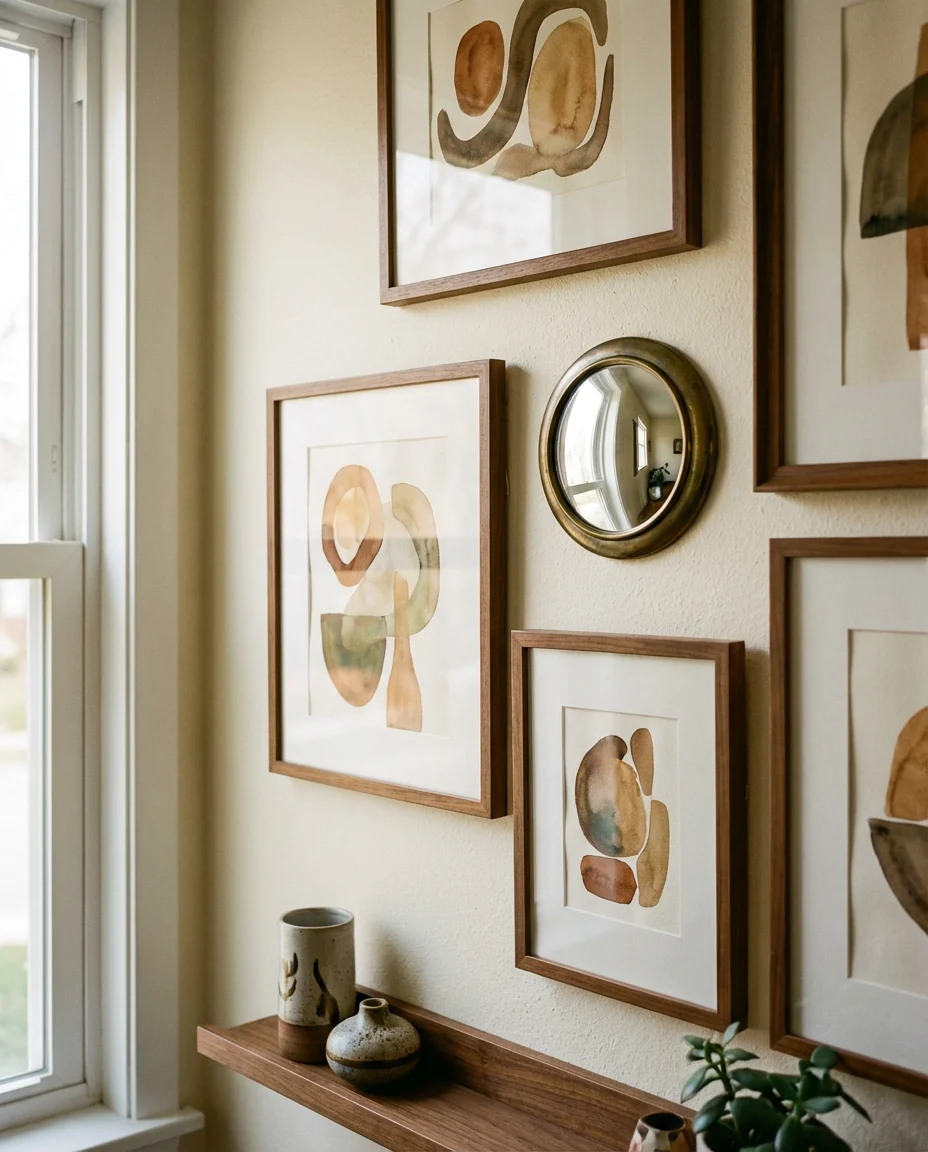
Layout is everything with gallery walls, and the most common mistake is starting with the hammer rather than with paper. Cut out paper templates the exact size of each frame, tape them to the wall, and live with the arrangement for a day or two before committing. This process sounds tedious—all but it’s the single most reliable way to avoid a wall full of unfillable holes. In a mid-century space, a horizontally oriented, century asymmetric arrangement—anchored by one large, anchored central piece—tends to complement the low-slung furniture beneath it better than a tight, symmetrical grid.
19. Minimalist Mid-Century—tends for Small Spaces

A minimalist approach to mid-century-Century modern is not a compromise—it’s a philosophy. The original Case Study homes were designed with economy and efficiency in mind, and many of the most celebrated spaces from that era were actually quite small. In 2026, homeowners in smaller homes and apartments are discovering that the mid-century—its toolkit—tapered-century legs that reveal the floor, low profiles that preserve sight lines, and built-in storage that eliminates the need for freestanding pieces—is almost perfectly calibrated for compact living.
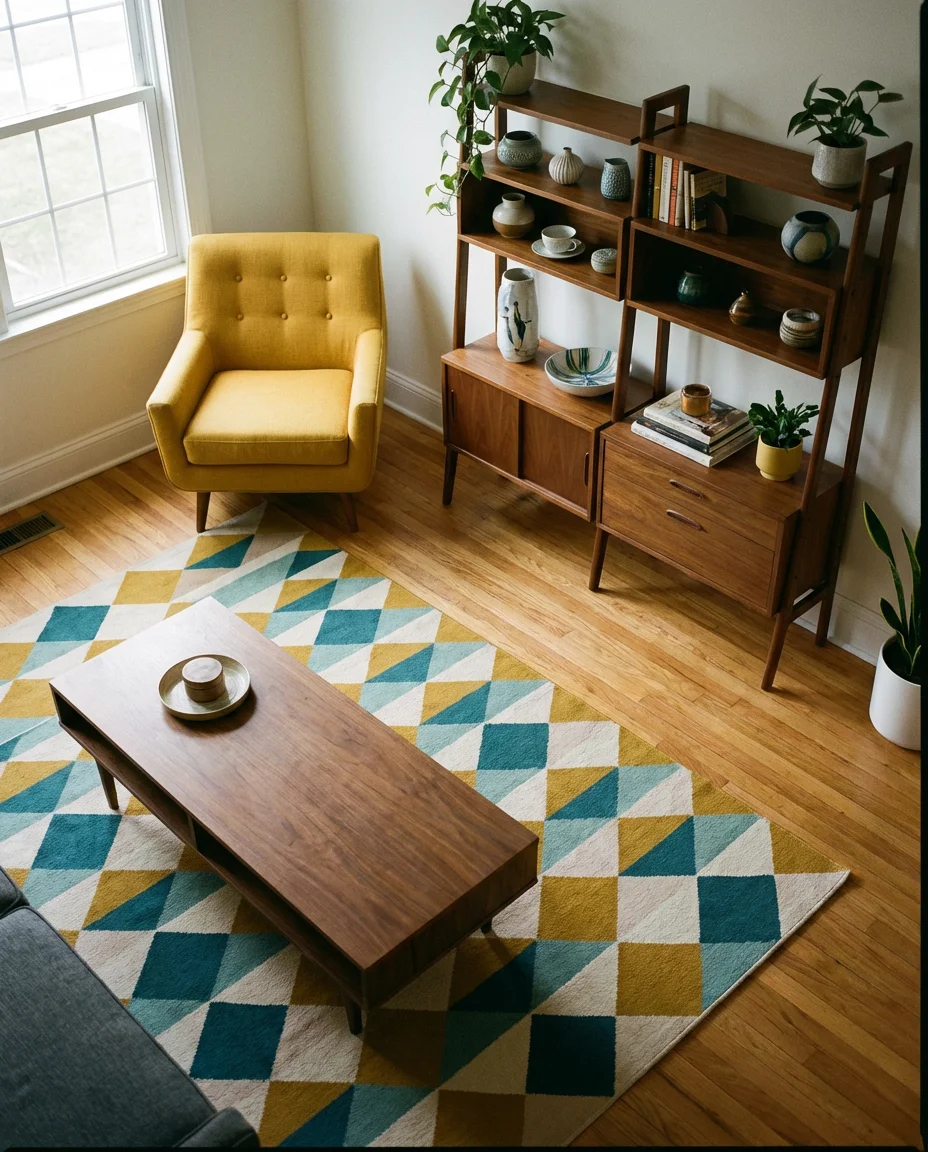
The discipline required by a truly minimalist mid-century room is actually liberating once you commit to it. Every piece earns its place, and the room gains a clarity that’s nearly impossible to achieve when you’re trying to cram in too much. Start by identifying the two or three pieces you truly love—the century ones that excite you every time you see them—and then build the room around those. Then resist every subsequent purchase until you’ve lived with what you have for at least a month. This patience-first approach reliably produces the most considered, coherent rooms.
20. Retro Lighting That Sets the Whole Mood
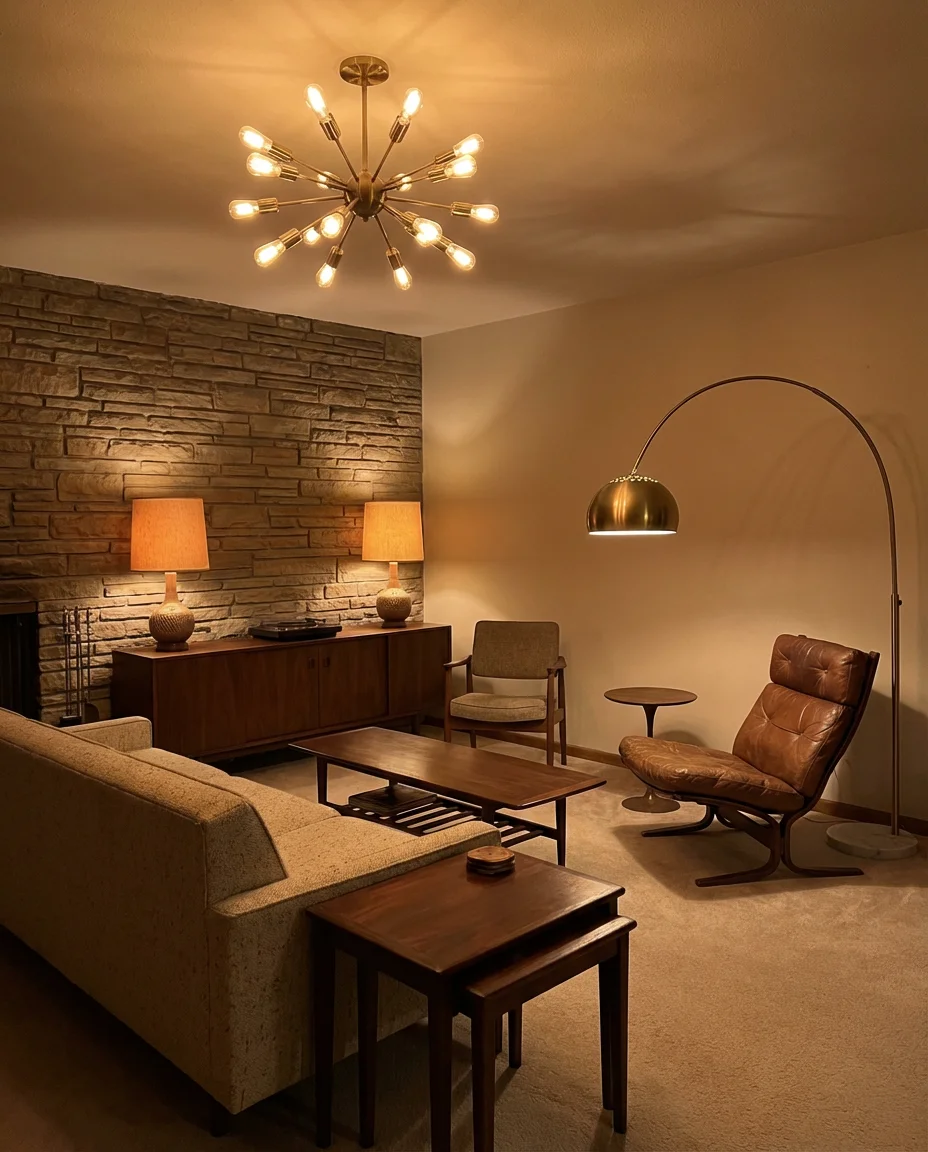
Lighting is the element that separates a visually compelling mid-century living room from one that merely has the right furniture. The ideas of mid-century retro interior design and ideas of vintage sensibility are design and nowhere more evident than in light fixtures—Sputnik chandeliers, Nelson bubble pendants, arc floor lamps, and brass wall sconces all speak directly to the era while functioning brilliantly in contemporary spaces. In 2026, these icons of mid-century—Sputnik lighting—are being mixed with more understated pieces—a simple mid-century linen drum shade, a slim pharmacy floor lamp—to create rooms that feel genuinely layered rather than theme-park precise.
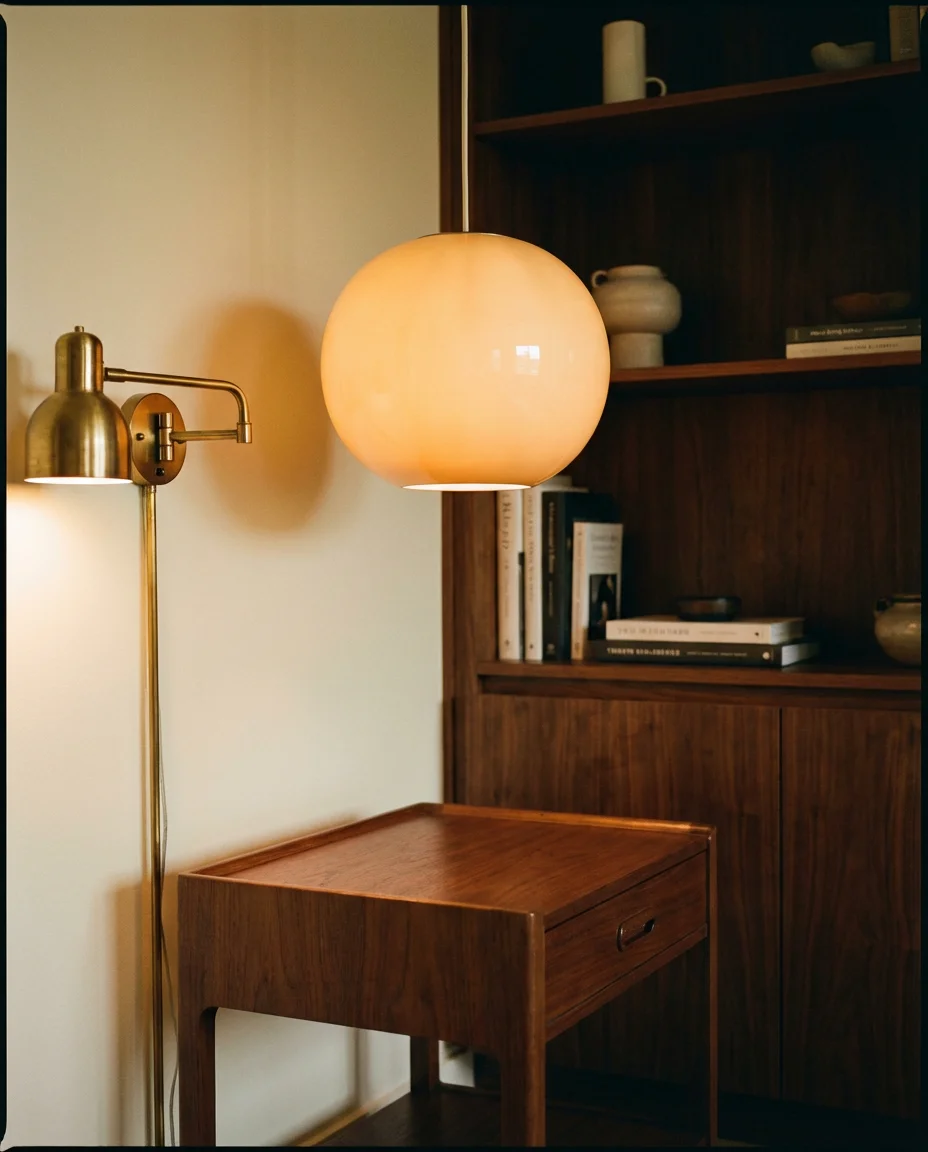
The practical principle most designers emphasize is lighting at multiple levels simultaneously: overhead, mid-height, and low. Relying exclusively on overhead lighting—the most common mistake in American living rooms—produces a flat, institutional quality that even the best furniture can’t overcome. Add a floor lamp beside the reading chair, a pair of table lamps on the credenza, and a dimmer on your overhead fixture if possible. This layered approach costs relatively little to implement but transforms the entire feeling of the room, particularly in the evening hours when it matters most.
21. Cozy Reading Nook with Mid-Century—produces Character
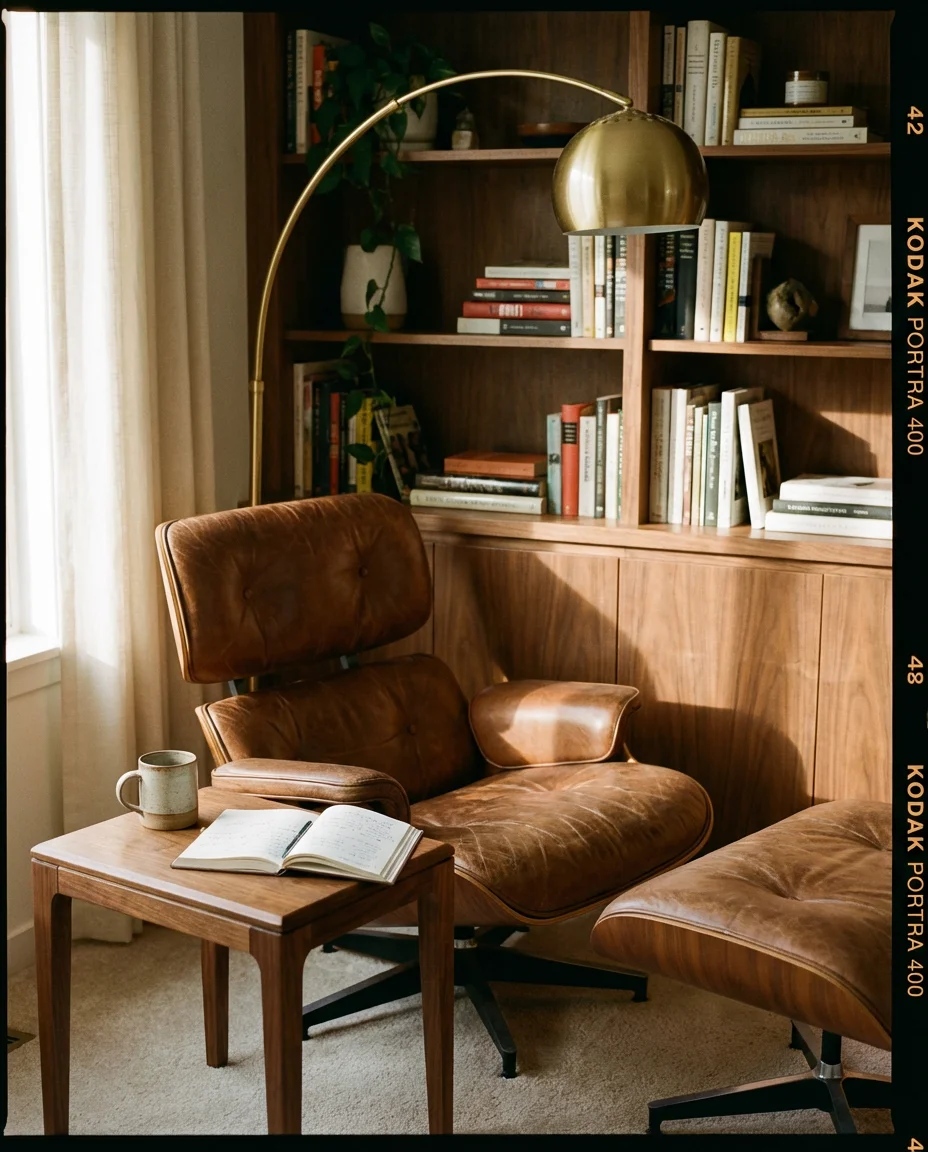
Creating a cozy reading nook within a mid-century-Century modern living room is one of the most satisfying design decisions you can make—and it’s a project that doesn’t require knocking down a single wall. A dedicated corner with a low-slung lounge chair in leather or bouclé, a tapered-leg side table, an arc floor lamp arching overhead, and a small bookshelf within reach is everything you need. This decor interior design cozy corner becomes the most used spot in the house almost immediately after it’s assembled, which is the best measure of any design decision.
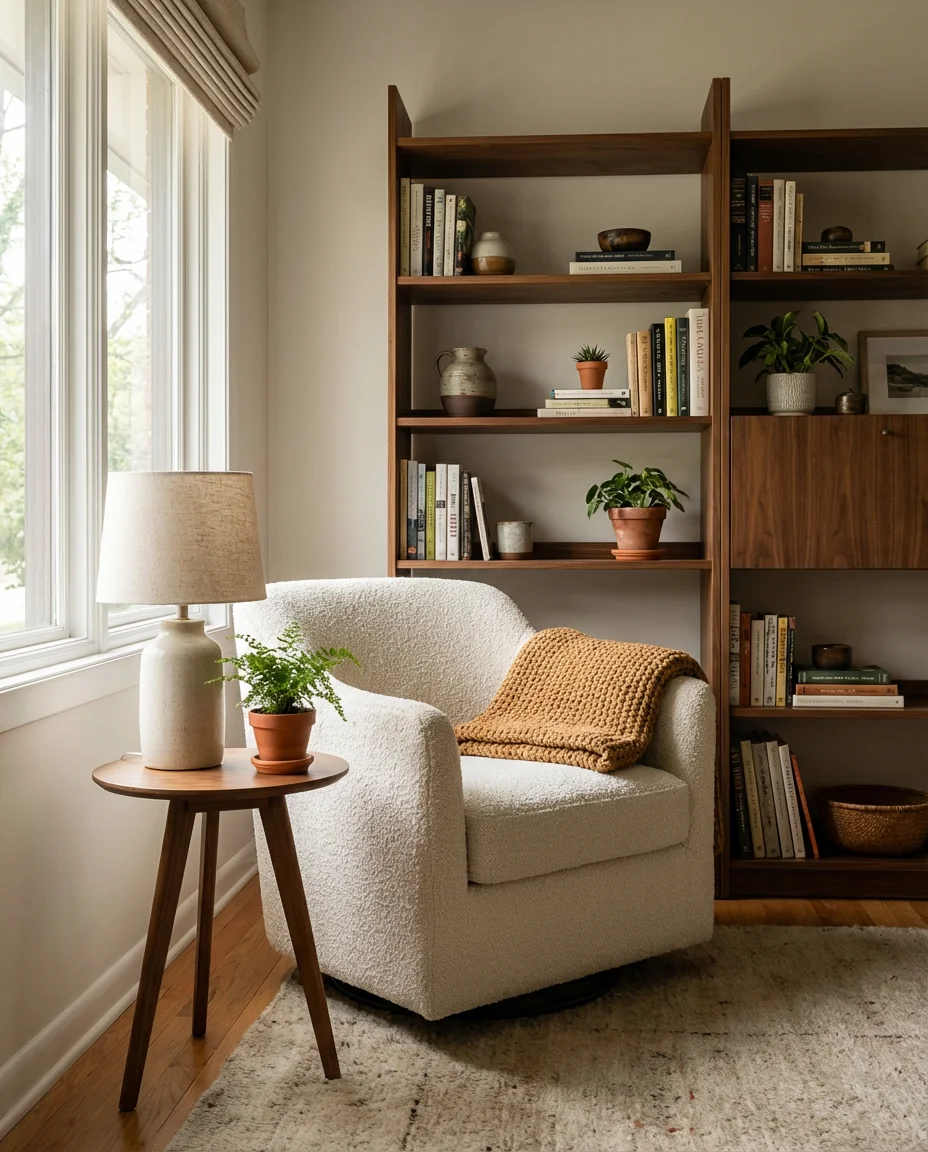
In American homes, the reading nook often doubles as the work-from-home corner, the morning coffee spot, and the after-dinner scrolling zone. Designing it with this real-world flexibility in mind makes it significantly more valuable than a pure display arrangement that works only in photographs. A side table with a small shelf underneath, a lamp with an adjustable arm, and a chair that reclines even slightly will all earn their keep in daily life. Add a small woven basket for throws and the occasional book pile, and you have a corner that genuinely improves quality of life.
22. Colorful Accent Pillows and Textile Layers

Textiles are where a mid-century—and modern—living room gets its warmth, and where many people either get it exactly right or veer off track entirely. In 2026, the most successful textile layering in this style mixes colorful geometric prints (inspired by Alexander Girard, Marimekko, and original 1960s fabric design) with solid-color wovens and a chunky knit or wool throw for texture contrast. The palette should stay cohesive—two and/or three colors maximum—while the patterns range from bold to subtle to keep the eye moving without overwhelming the room.
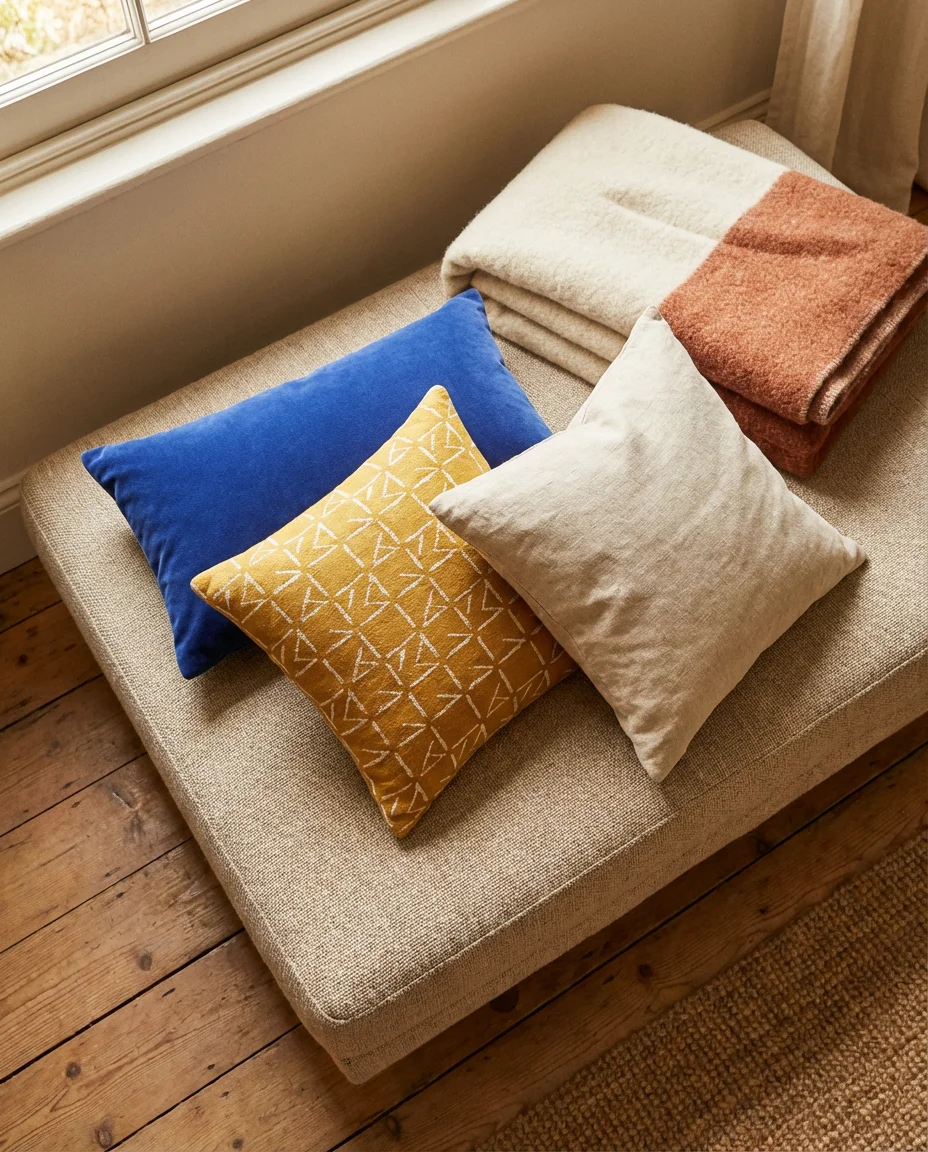
Swapping out throw pillows is the single most affordable way to refresh a living room seasonally, which makes investing in good pillow covers—rather than whole pillows—a genuinely smart long-term strategy. A set of quality inserts in standard sizes (18×18 and 20×20 are the workhorses) paired with rotating zipper-closure covers lets you change the room’s entire mood for under fifty dollars. In a mid-century space, avoid overstuffed, decorative-only pillows that look pristine but can’t be used—the mid-century style is about comfort as much as aesthetics, and the pillows should reflect that.
23. The Full Room Pulled Together—A—the Signature Mid-Century—A Look
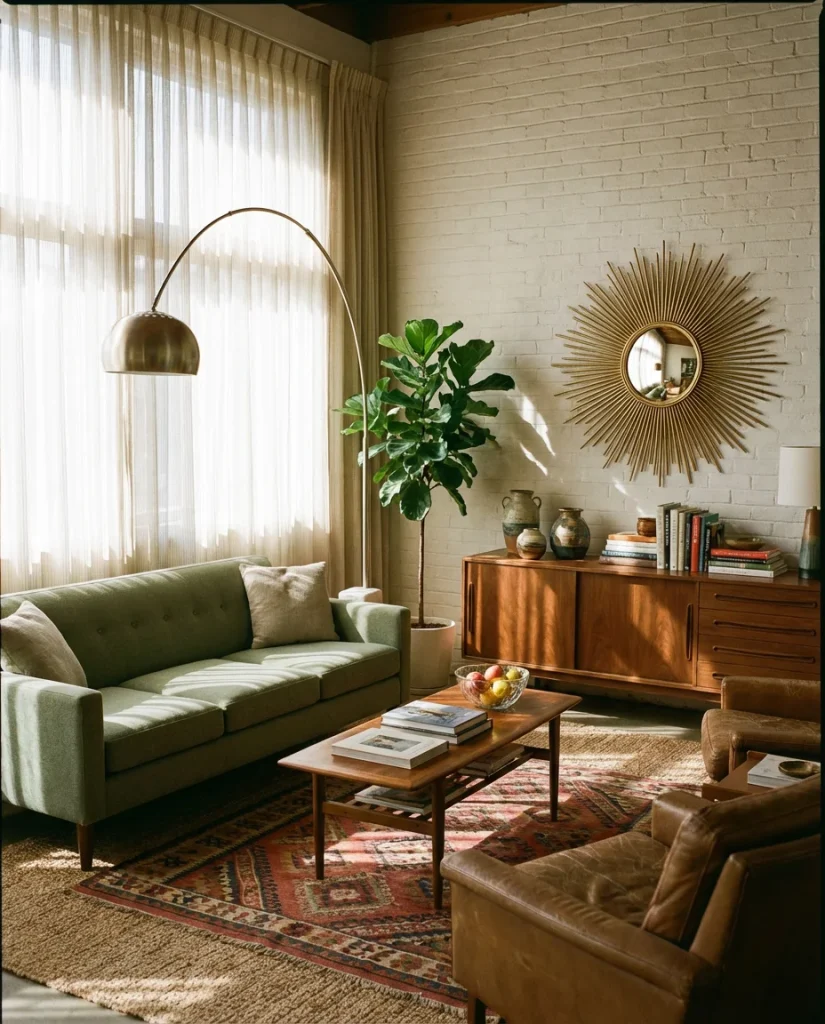
The most memorable mid-century modern living rooms in 2026 aren’t defined by any single element—they’re defined by how everything works together as a unified whole. It’s the moment when the walnut credenza, the sage green couch, the layered rugs, the brass lamp, the ceramic vases, and the sunburst mirror all occupy the same space and somehow feel inevitable—like the room could only ever have looked exactly this way. That quality of coherence isn’t luck; it comes from making decisions slowly and deliberately, with a clear sense of what the room is for and who it’s for.

The most practical piece of advice for achieving this whole-room coherence is to create a simple one-page mood board before buying anything—a digital or physical collection of images, material swatches, and color chips that represents the room you’re trying to build. Pin it somewhere visible and check every potential purchase against it. Does this lamp belong in that room? Does this rug serve the story? This simple filter eliminates most of the impulse purchases that end up diluting a room’s personality over time. Mid-century modern is a style that rewards patience and punishes clutter—treat it accordingly.
Conclusion
Mid-century modern living rooms have an extraordinary quality: they age beautifully, adapt gracefully to new owners and new lifestyles, and remain visually compelling no matter how many decades pass. Whether you’re fully committed to the style or just borrowing a few of its best ideas, the principles behind it—honest materials, functional beauty, rooms that are actually lived in—are ones worth holding onto. We’d love to know which of these ideas resonated most with you. Drop your favorites in the comments below, share what you’re currently working on in your own space, or tell us which direction you’re heading in 2026. Every great living room starts with a conversation.