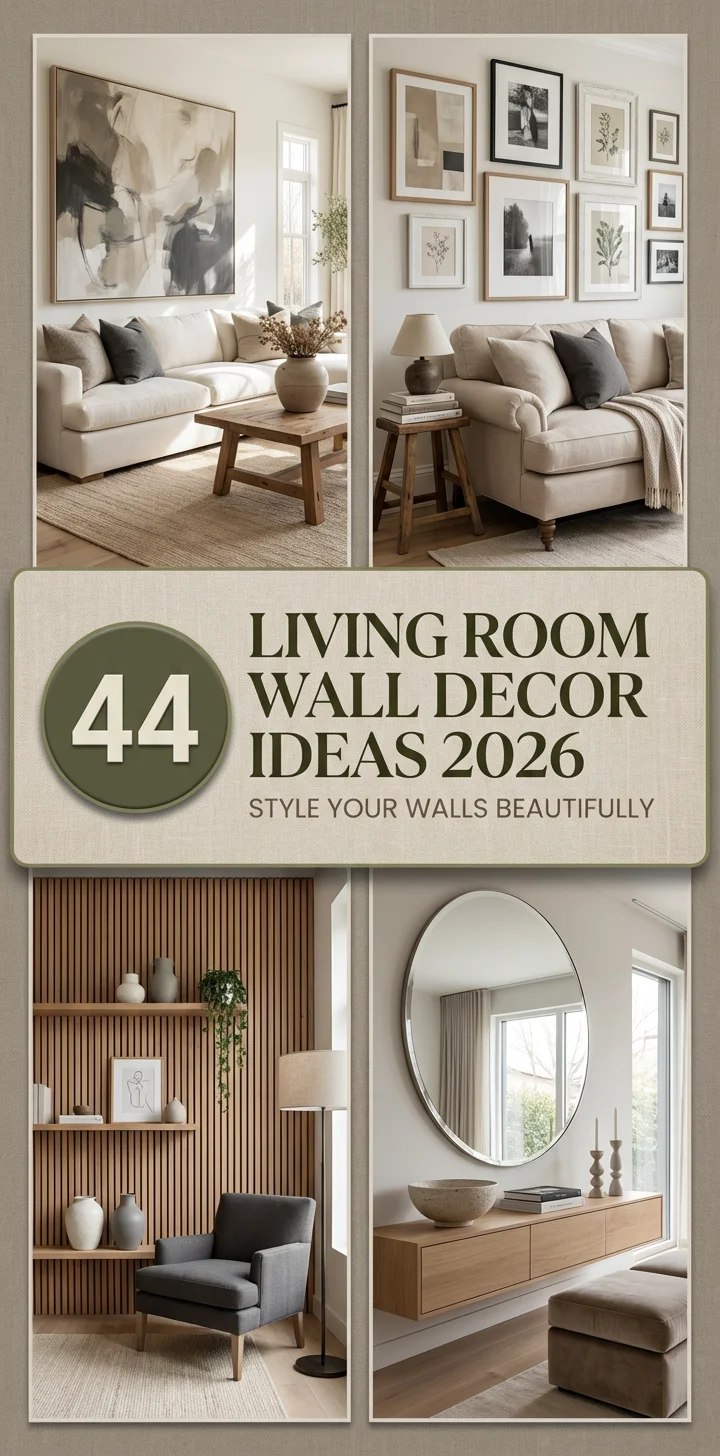
Living room shelves have evolved far beyond simple storage—they’re now powerful design statements that define the personality of a space. As we move through 2026, American homeowners are searching for shelving ideas that balance function with beauty, particularly on platforms like Pinterest, where visual inspiration drives decision-making. Whether you’re working around a fireplace, maximizing a small apartment, or creating a gallery-worthy display for books and treasures, the right shelving can transform your living room into a curated, livable work of art. This guide explores distinctive shelving concepts that reflect current trends while honoring timeless style, offering practical solutions for every aesthetic from coastal calm to modern minimalism.
1. Floating Shelves Flanking a Stone Fireplace
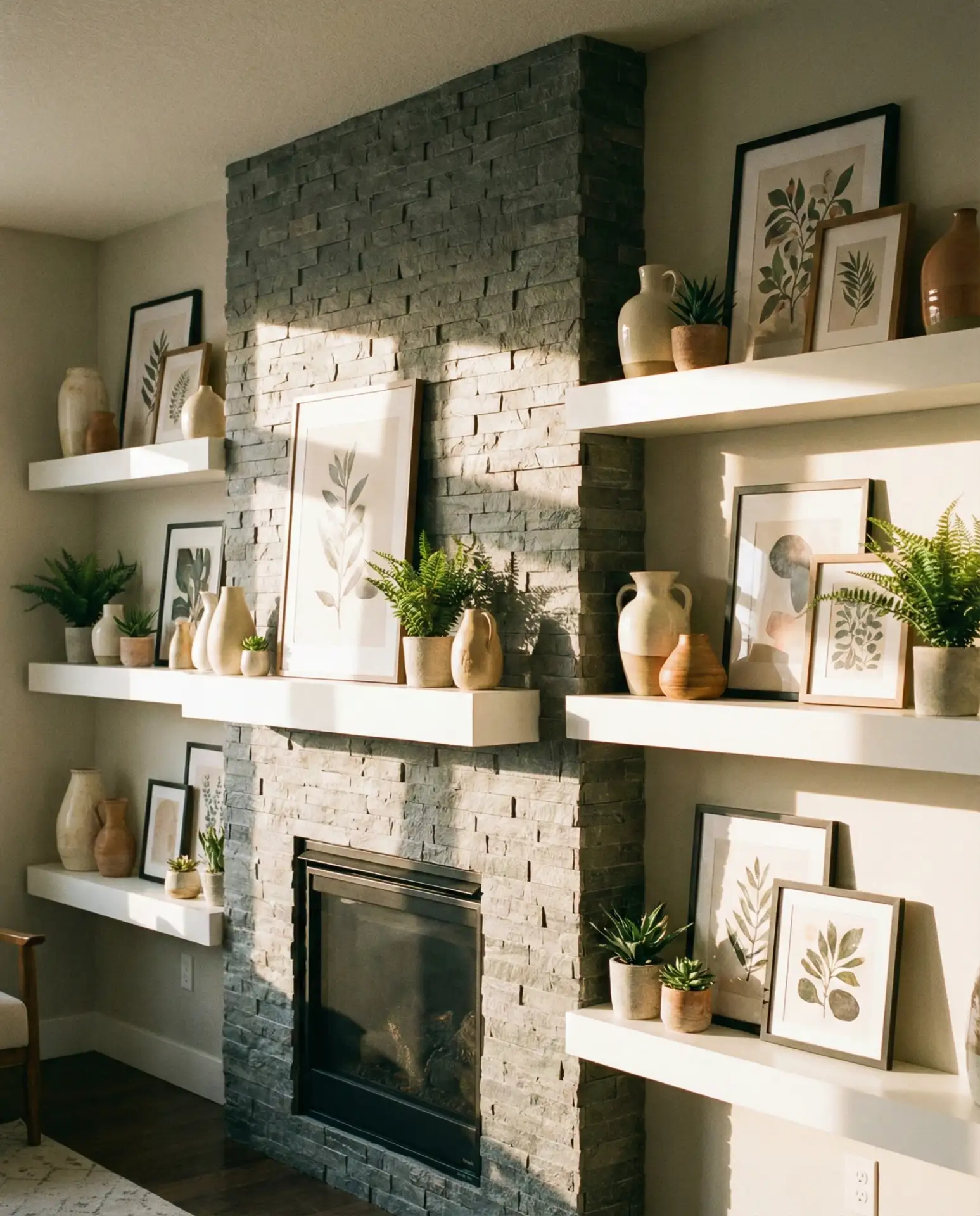
When you position wall shelves on either side of a fireplace, you create symmetry that grounds the entire room. This approach works beautifully in homes where the hearth is the focal point, allowing you to display ceramics, framed family photos, or small potted plants without competing with the fire’s warmth. The horizontal lines of floating shelves soften the vertical drama of brick or stone, creating visual balance that feels intentional rather than accidental.
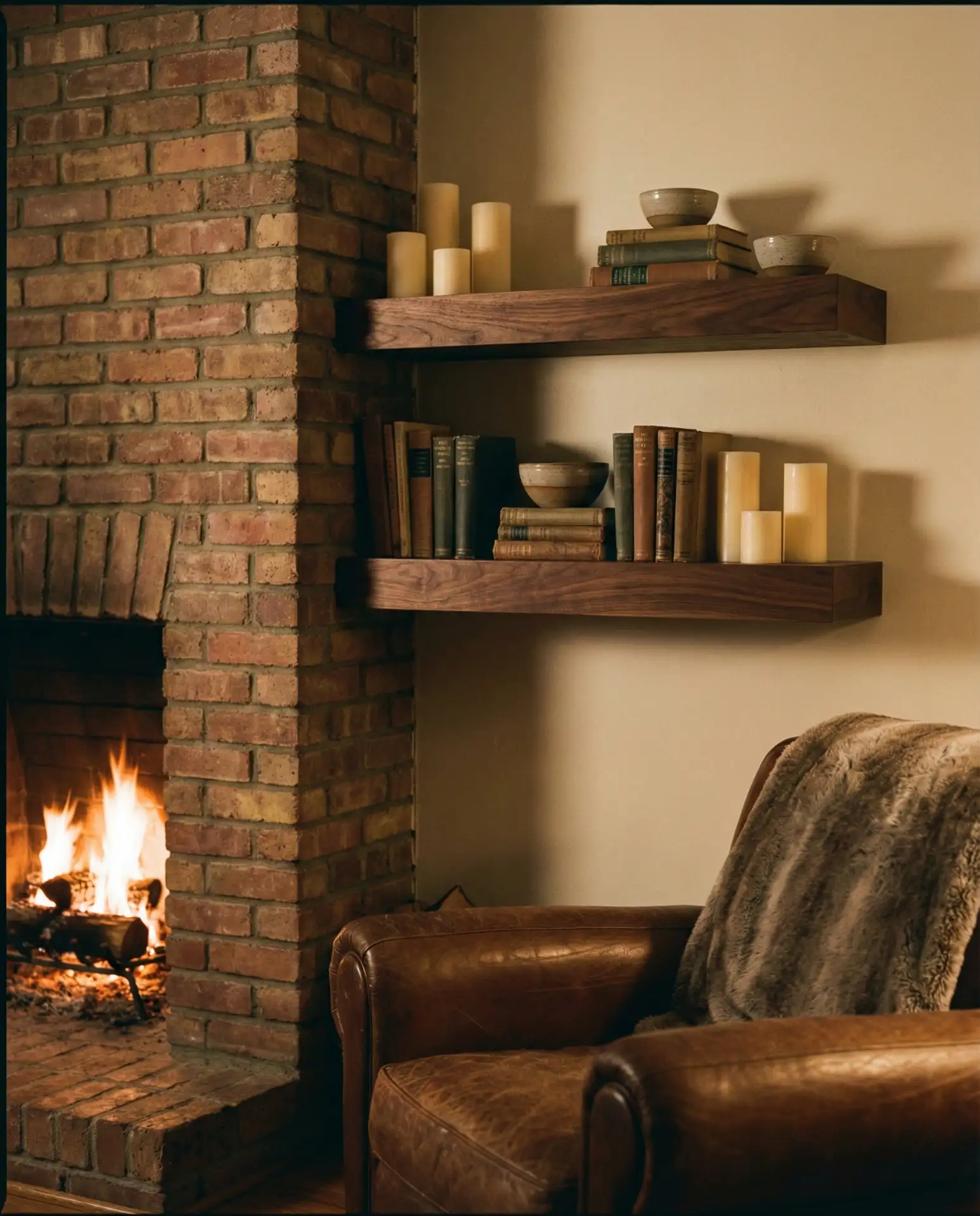
In Midwestern and New England homes where fireplaces remain central to winter living, this shelf arrangement solves a common design challenge: how to integrate storage without blocking heat flow or sightlines. Choose shelf depths between eight and twelve inches to accommodate objects without overwhelming the wall plane, and consider anchoring them with heavy-duty brackets rated for at least fifty pounds if you plan to display weighty collectibles or hardcover book collections.
2. Floor-to-Ceiling Built-Ins Around the TV
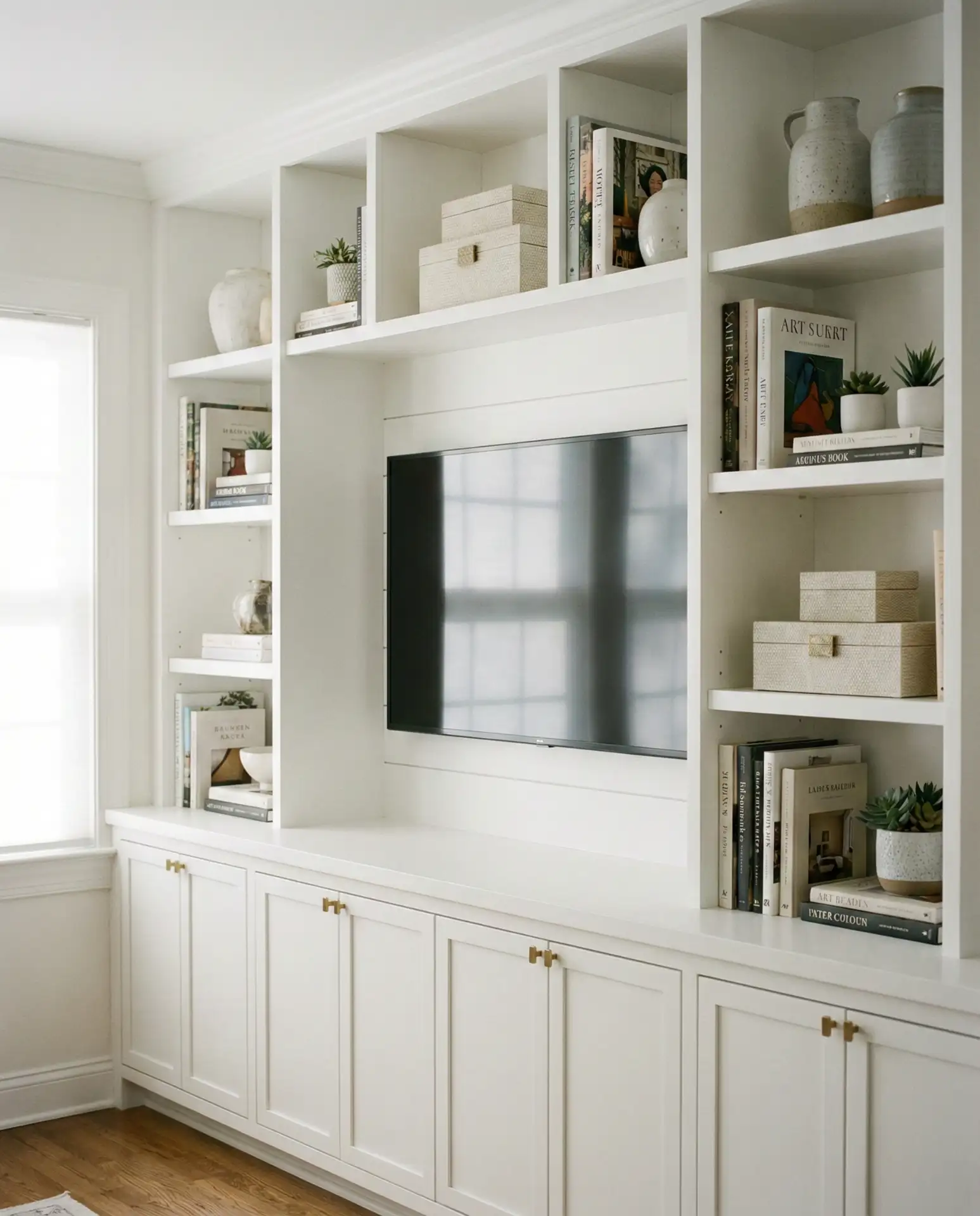
Surrounding your TV with custom built-in shelving transforms a black screen into an integrated design element rather than a visual interruption. This configuration is especially popular in modern homes where clean lines and concealed storage matter, allowing you to hide cables, media equipment, and everyday clutter behind cabinet doors while displaying curated objects on open shelves. The vertical emphasis draws the eye upward, making standard eight-foot ceilings feel taller and the room more spacious.
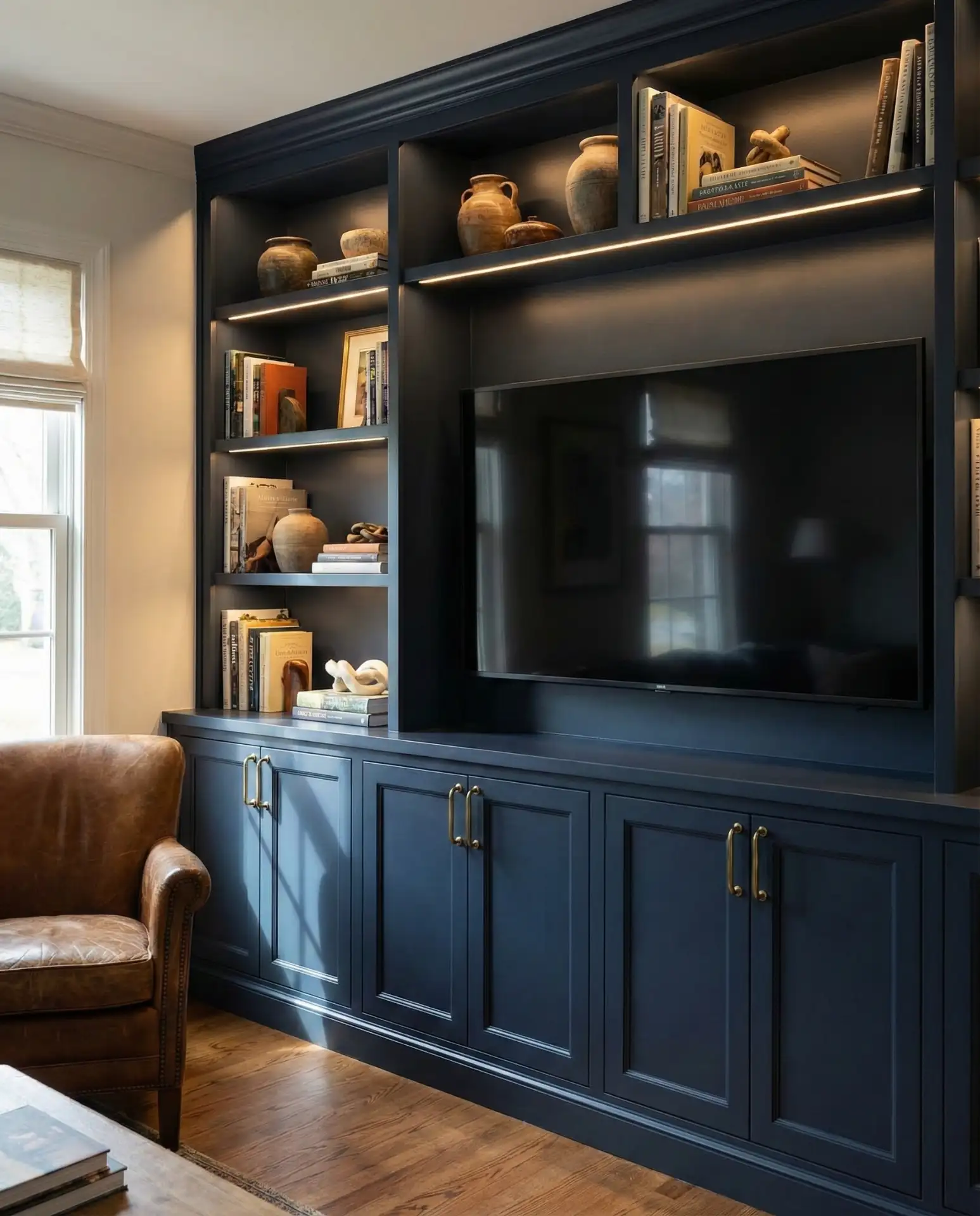
Budget-conscious homeowners often find that ready-made systems from IKEA or California Closets offer surprising customization at a fraction of true custom carpentry costs—typically between two thousand and five thousand dollars for a full wall treatment compared to eight thousand or more for bespoke millwork. The key is precise measurement and thoughtful planning before installation, as even an inch of miscalculation can throw off the entire composition.
3. Open Industrial Pipe Shelving
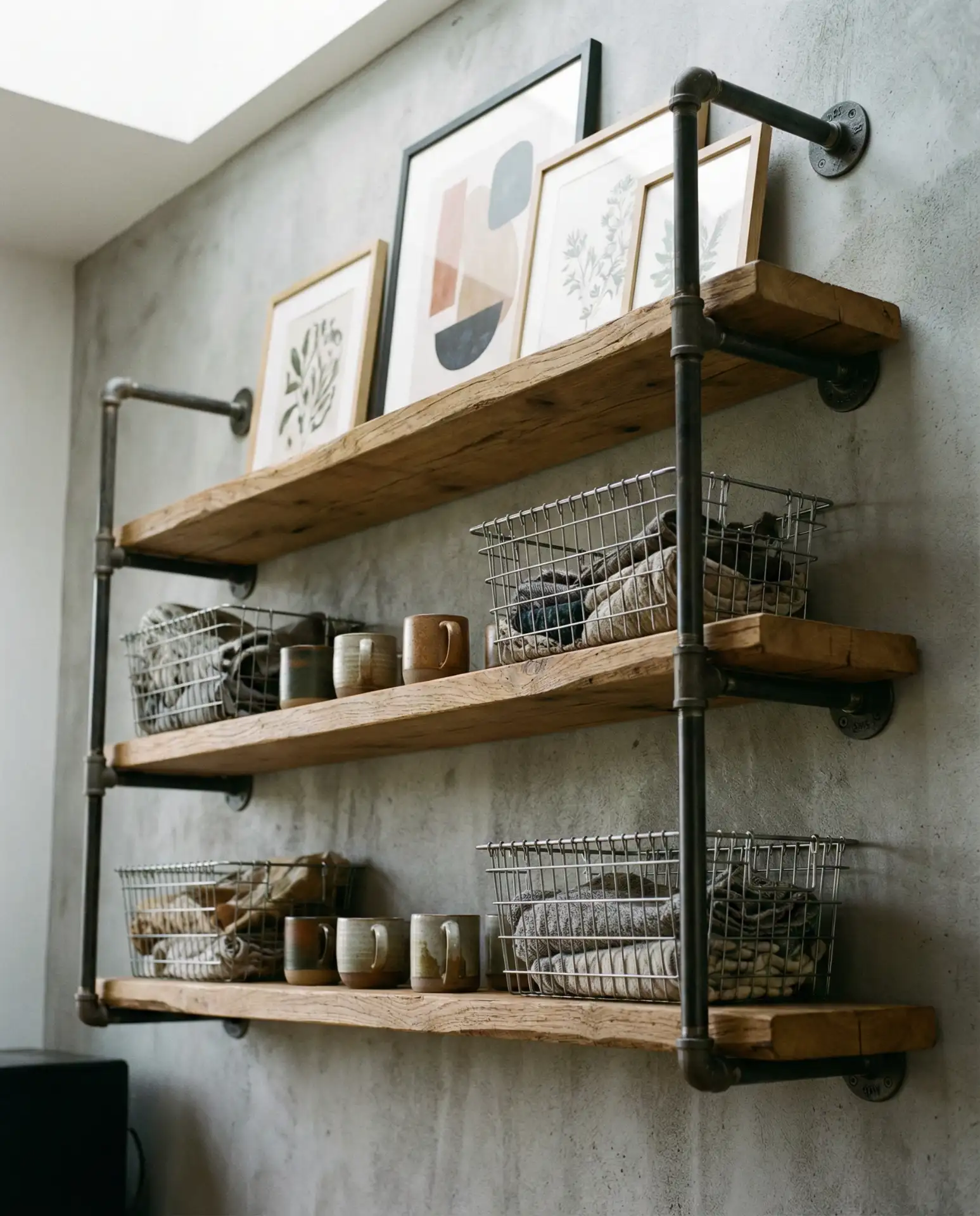
Black iron pipe shelving brings an urban edge to living rooms, combining rustic shelf decor with raw materiality that feels honest and unpretentious. This style thrives in loft apartments and converted warehouses common to cities like Brooklyn, Portland, and Austin, where exposed brick and concrete provide a fitting backdrop. The open framework allows air and light to circulate, preventing the heaviness that solid bookcases can introduce into smaller spaces.
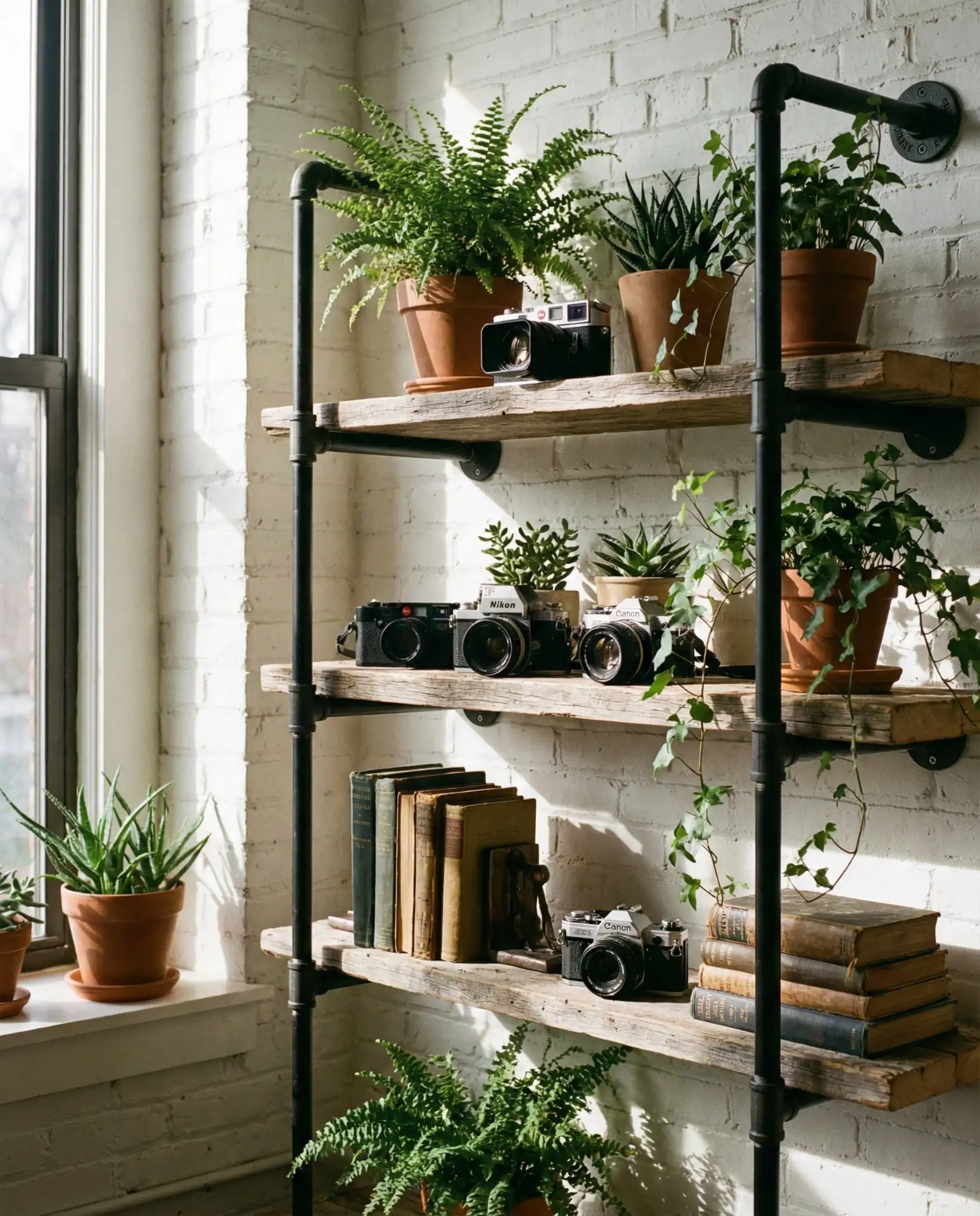
A common mistake is over-tightening pipe fittings during assembly, which can crack wood planks or strip threads. Hand-tighten connections, then give each joint just a quarter turn with a wrench. This approach ensures structural integrity without damaging materials, and it makes future adjustments or reconfigurations much simpler when your display needs change.
4. Minimalist White Ledges for Rotating Art
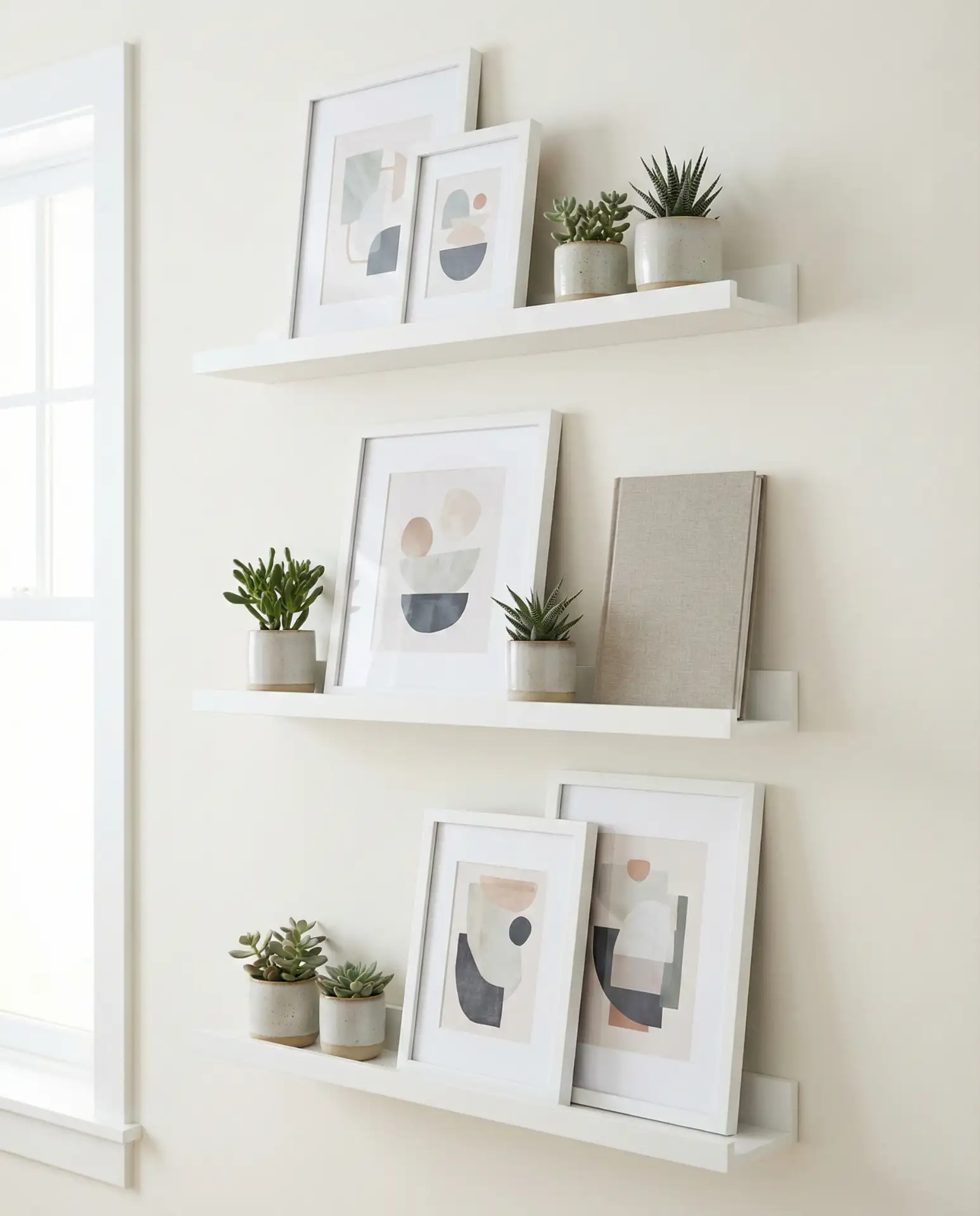
Shallow picture ledges offer a minimalist alternative to traditional shelving, perfect for homeowners who love changing their decor seasonally or displaying artwork without committing to nail holes. These ledges typically measure three to five inches deep, just enough to prop framed prints, small canvases, or photography books at slight angles. The simplicity of this approach aligns beautifully with Scandinavian design principles—functional, uncluttered, and quietly elegant.
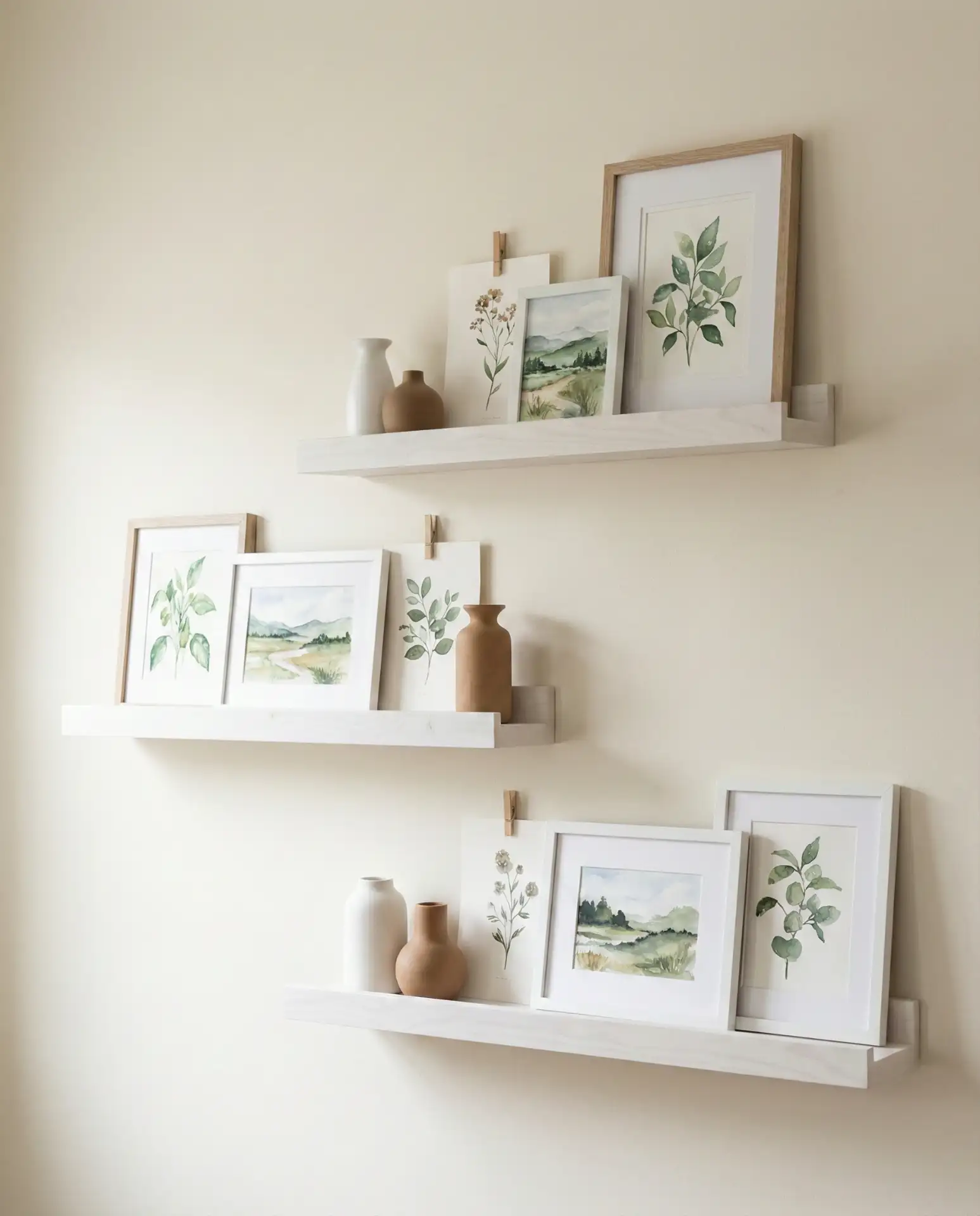
In my Brooklyn apartment, switching out ledge displays became a monthly ritual that kept the space feeling fresh without requiring new furniture or paint. The flexibility meant holiday decorations, seasonal photography, and rotating thrift-store finds all had their moment, creating a living room that evolved with the calendar and my mood.
5. Corner Ladder Shelves for Small Apartments
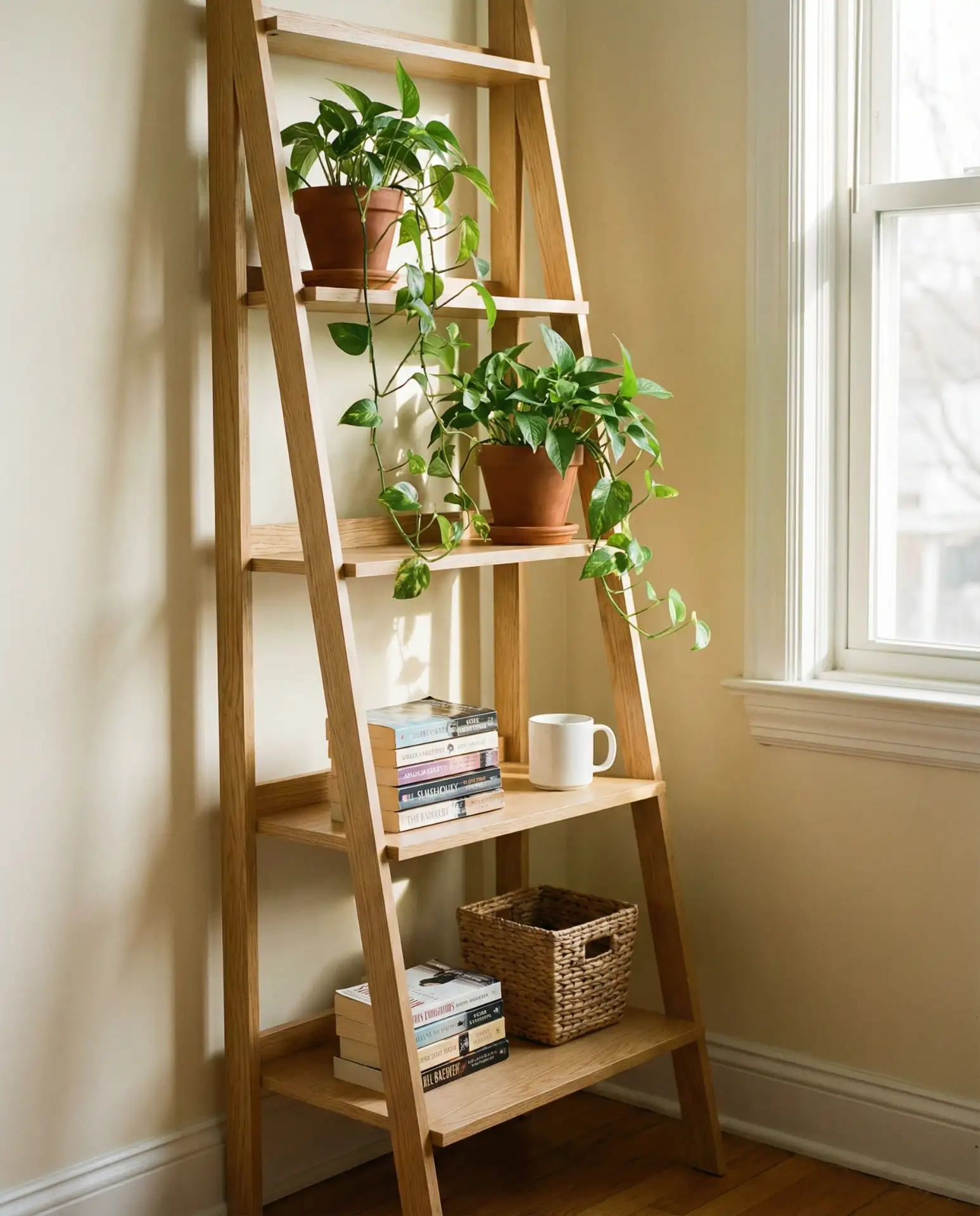
When floor space is limited in an apartment, corner ladder shelves maximize vertical real estate without the permanence of wall-mounted systems. These freestanding units lean against the wall at a gentle angle, creating tiered display surfaces that work beautifully for books, plants, and small decorative objects. The tapered profile takes up minimal footprint while delivering substantial storage, making them ideal for studio dwellers or anyone renting who can’t modify walls.
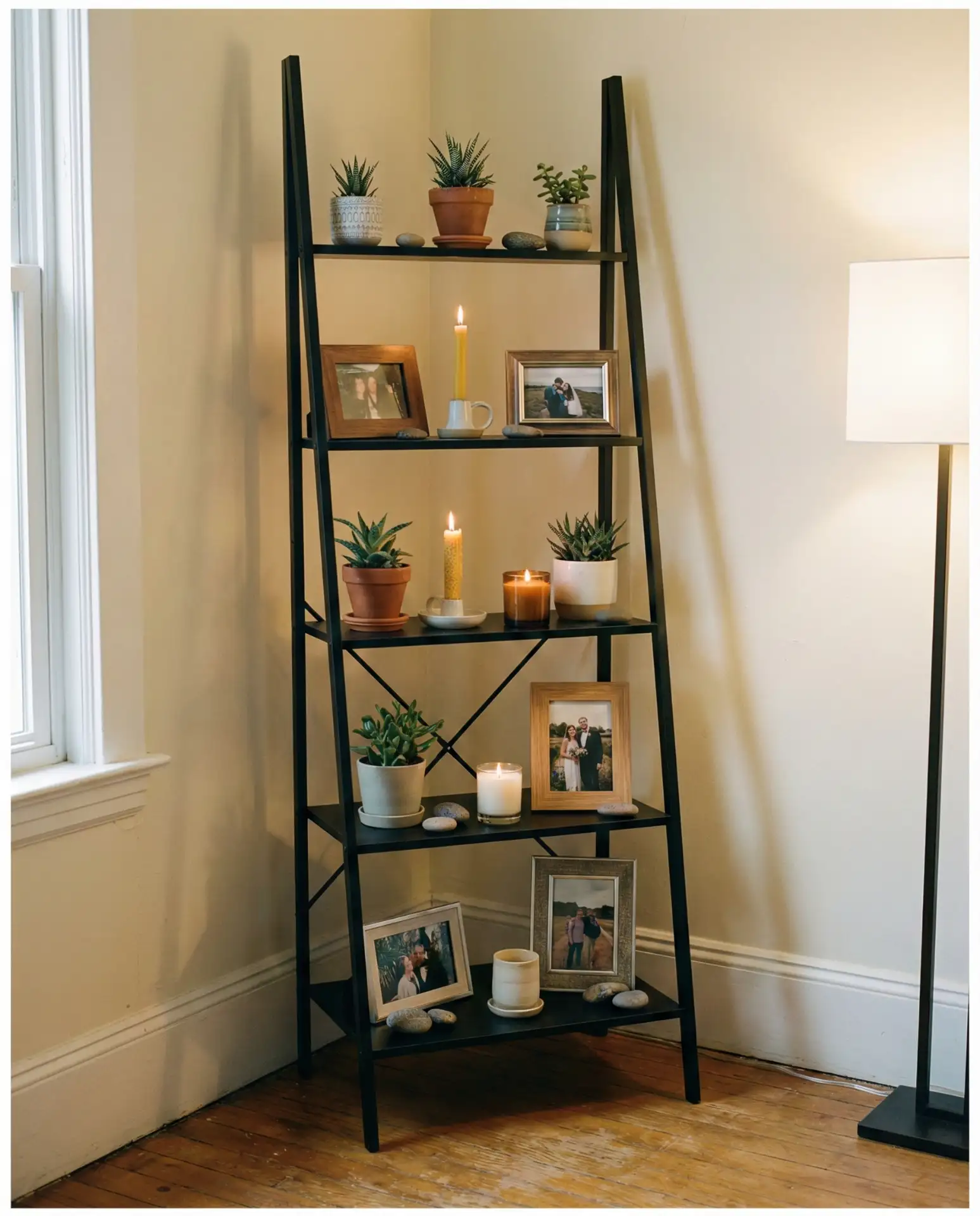
Ladder shelves work best in corners near windows where plants can access natural light or beside a sofa as an end table alternative. Avoid placing them in high-traffic areas where the angled structure might get bumped—they’re stable for display but less forgiving than anchored furniture when jostled by daily movement or curious pets.
6. Reclaimed Wood Shelves with Farmhouse Charm
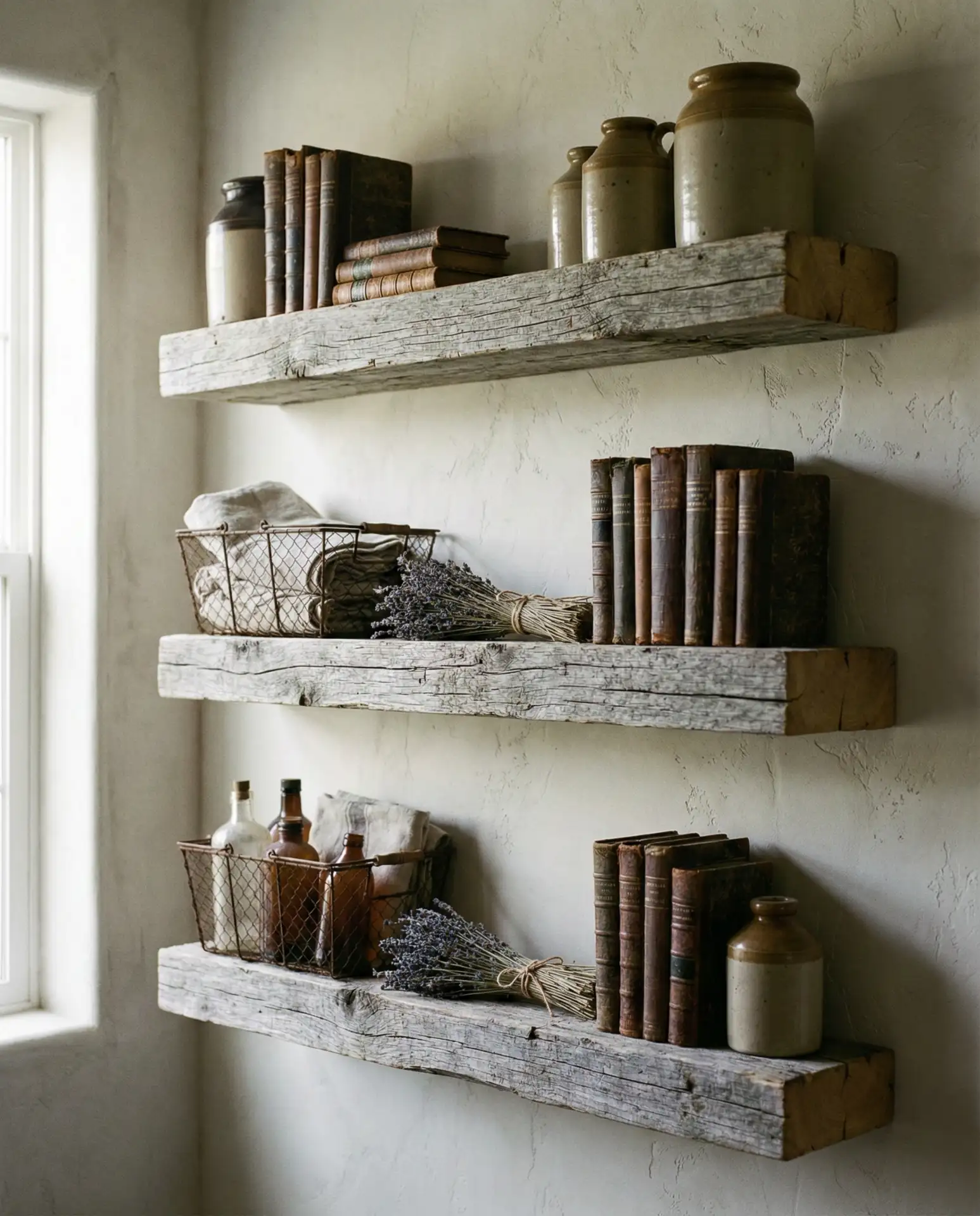
Thick planks of weathered barn wood bring farmhouse authenticity to living rooms, especially when paired with simple black metal brackets. The wood’s natural patina—complete with nail holes, saw marks, and color variations—tells a story that new lumber simply can’t match. This style resonates deeply in rural communities and suburbs across the South and Midwest, where agrarian heritage remains part of the cultural fabric.
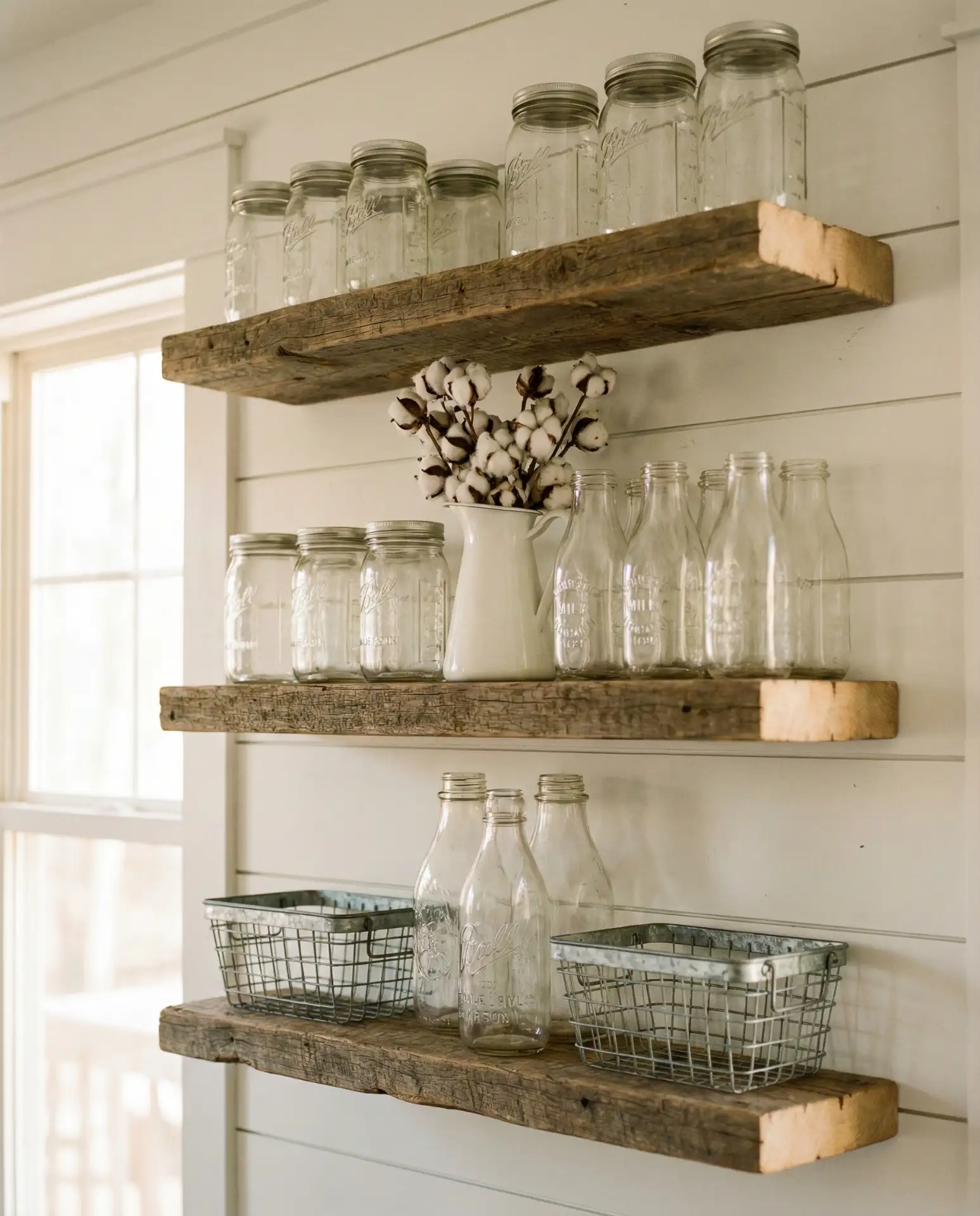
Authentic reclaimed wood from salvage yards typically costs between eight and fifteen dollars per linear foot, substantially more than new pine but less than premium hardwoods like walnut. For homeowners on tighter budgets, new wood can be distressed using wire brushes, vinegar-steel wool stains, and strategic dings with chains or hammers to achieve a similar aged appearance at a fraction of the cost.
7. Asymmetrical Geometric Wall Shelves
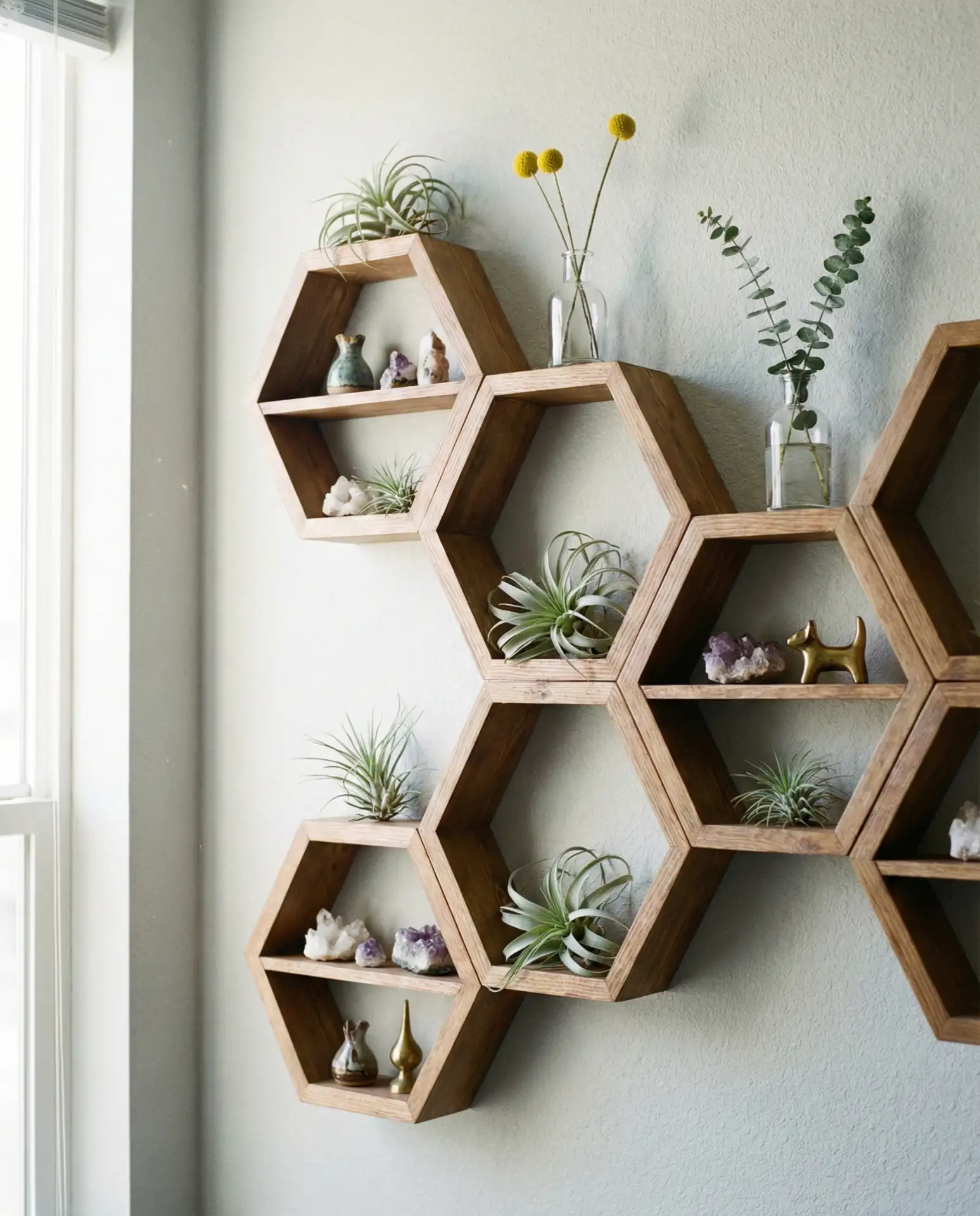
Breaking from traditional horizontal lines, geometric shelving in hexagons, triangles, or irregular polygons creates unique focal points that double as sculptural art. These modular units can be arranged in countless configurations, allowing you to build custom patterns that reflect your personal aesthetic. The approach feels especially at home in contemporary spaces where experimentation and individual expression matter more than following established rules.
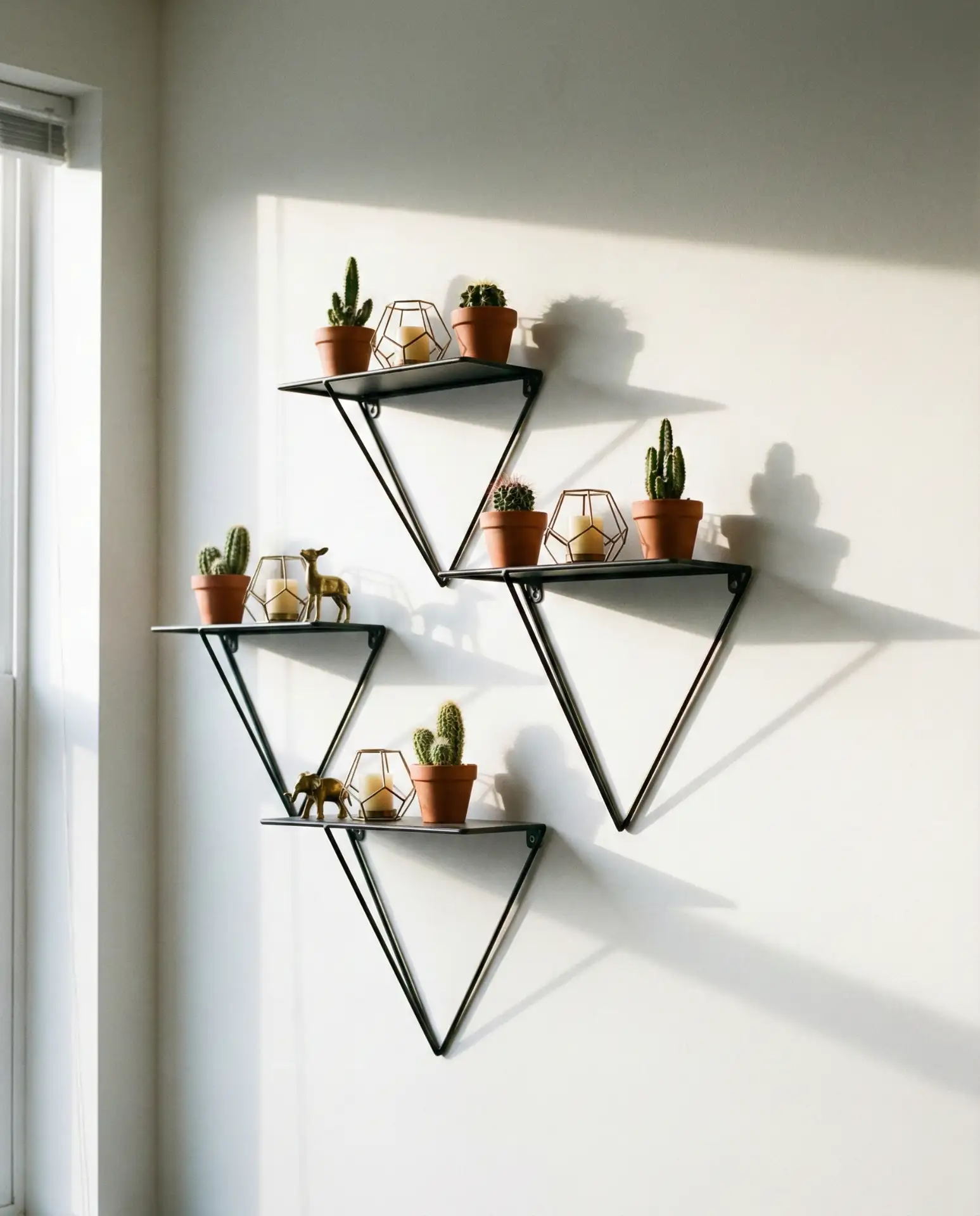
Many homeowners underestimate how permanent these installations feel once mounted, then struggle with layout regret. Before drilling a single hole, create paper templates of each shelf unit and tape them to the wall, living with the arrangement for several days. You’ll quickly discover whether the composition feels balanced or chaotic, saving yourself the frustration of patching and repainting.
8. Built-In Alcove Shelving for TV Display
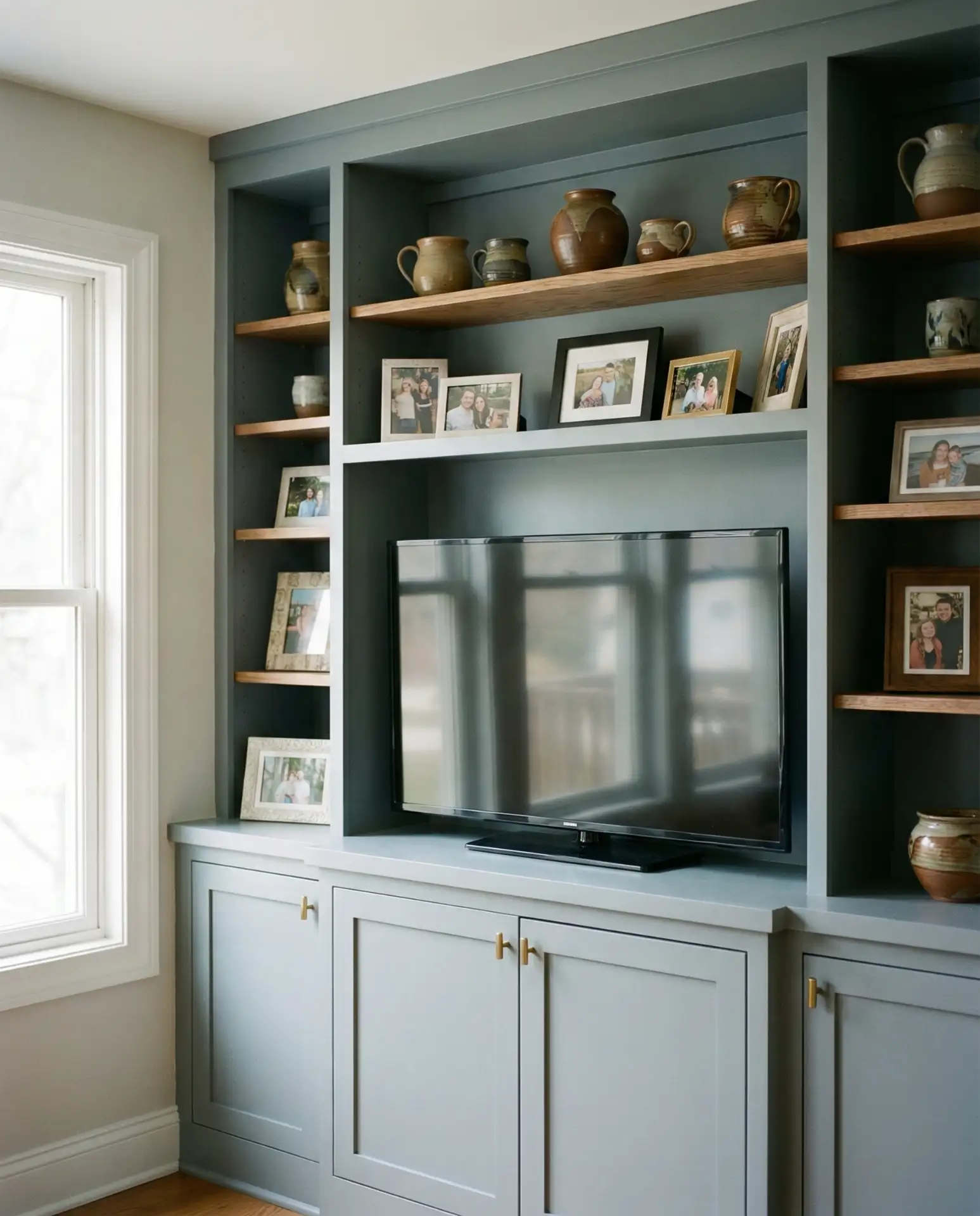
When your living room features a natural TV alcove, custom shelving that wraps the recess creates architectural depth while maximizing every inch of available space. This built-in approach works particularly well in older homes with chimney breasts or newer constructions where developers included media niches. Surrounding the screen with books, decorative objects, and closed storage makes the television feel integrated rather than imposed.
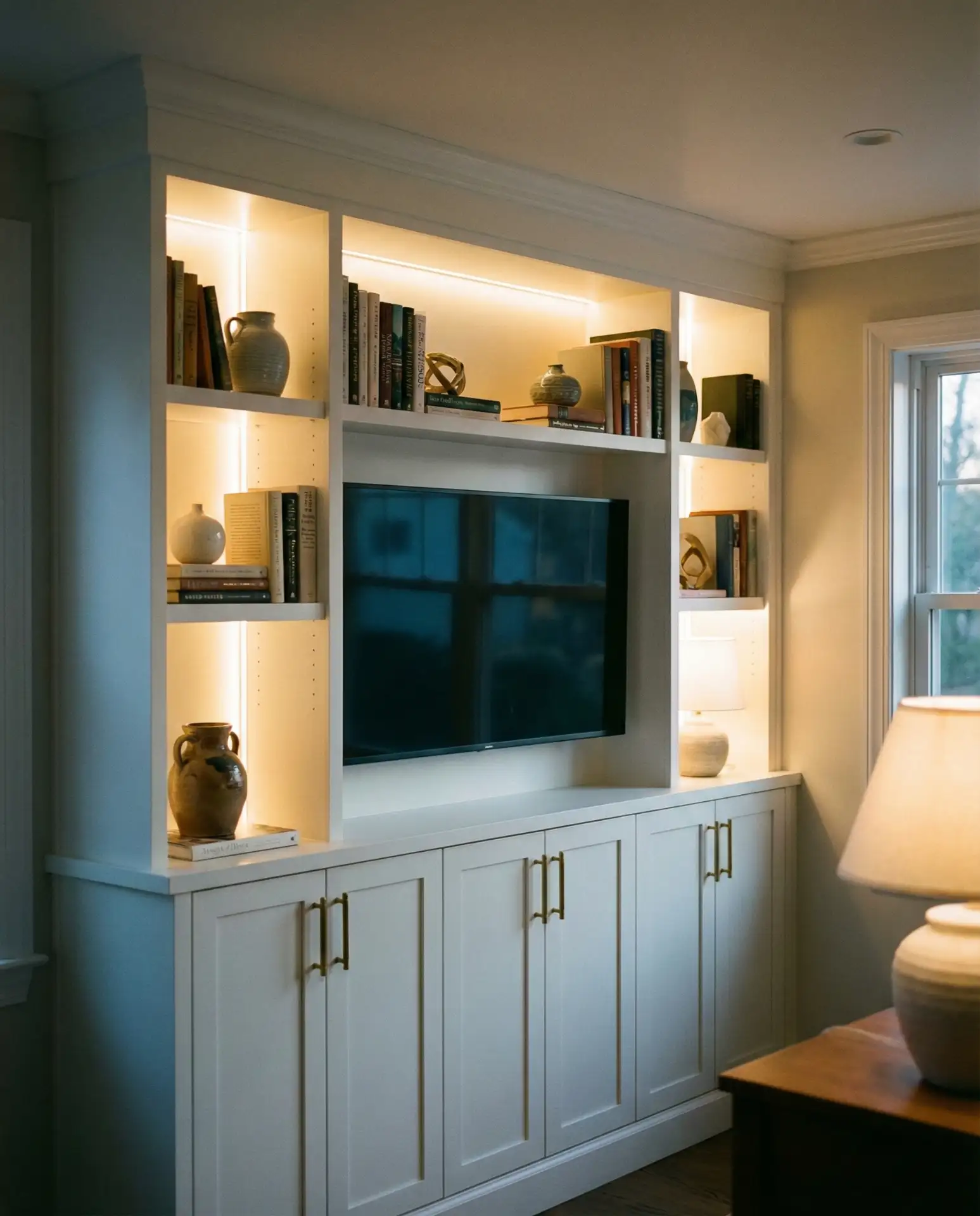
Real homeowners frequently mention that adding task lighting inside alcove shelving—small puck lights or LED strips—transforms the display from daytime-only to a feature that shines in evening hours. This simple electrical addition costs around one hundred fifty dollars for materials and basic installation but dramatically increases the visual impact when you’re actually using the living room after sunset.
9. Coastal Blue Shelves with Woven Baskets
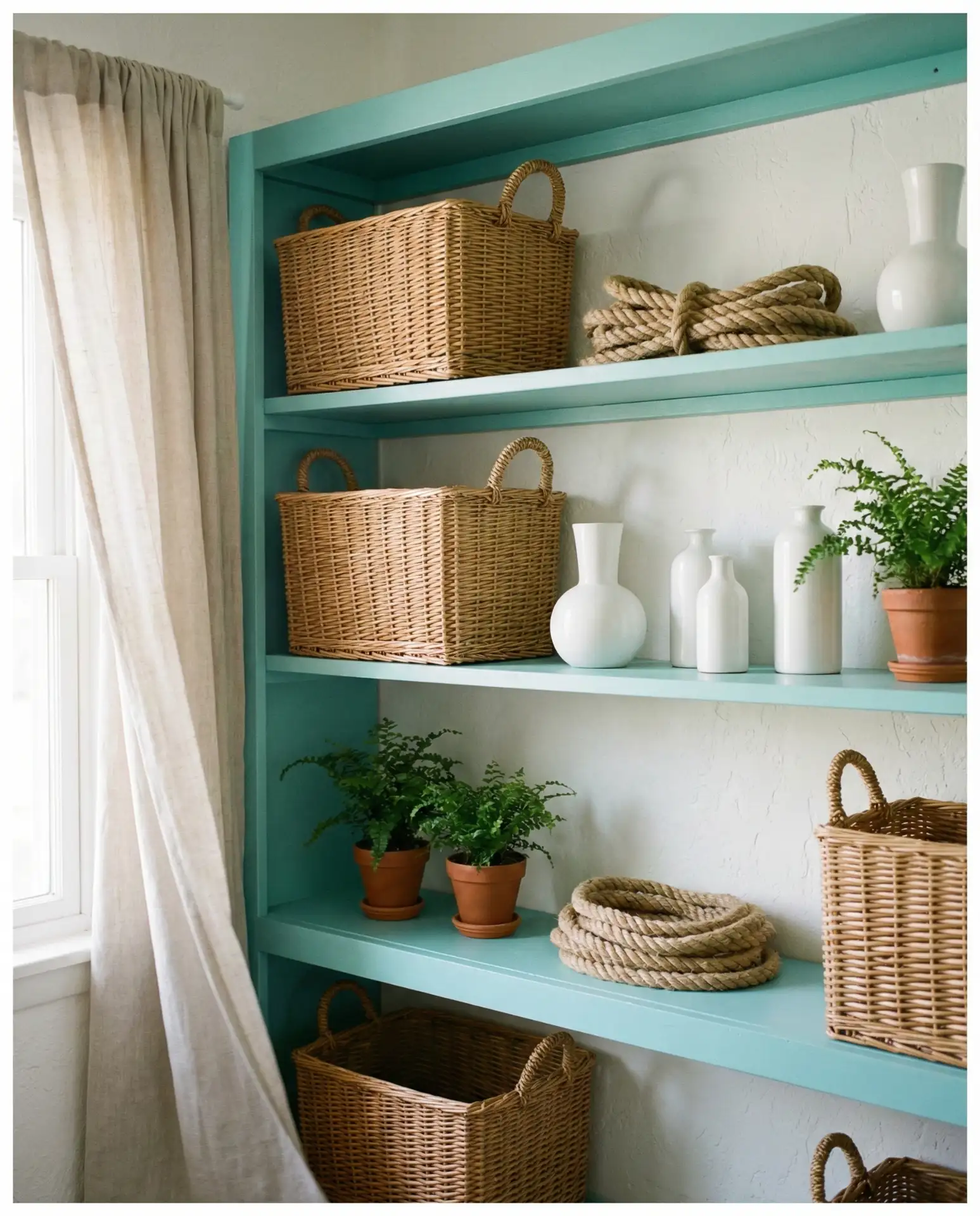
Painting open shelving in soft blues or aquas instantly evokes coastal living, especially when paired with natural fiber baskets for concealed storage. This combination balances the airiness of open shelving with the practicality of hiding remote controls, magazines, and toys. Beach house owners from the Carolinas to Southern California embrace this aesthetic because it feels effortlessly relaxed while maintaining visual order.
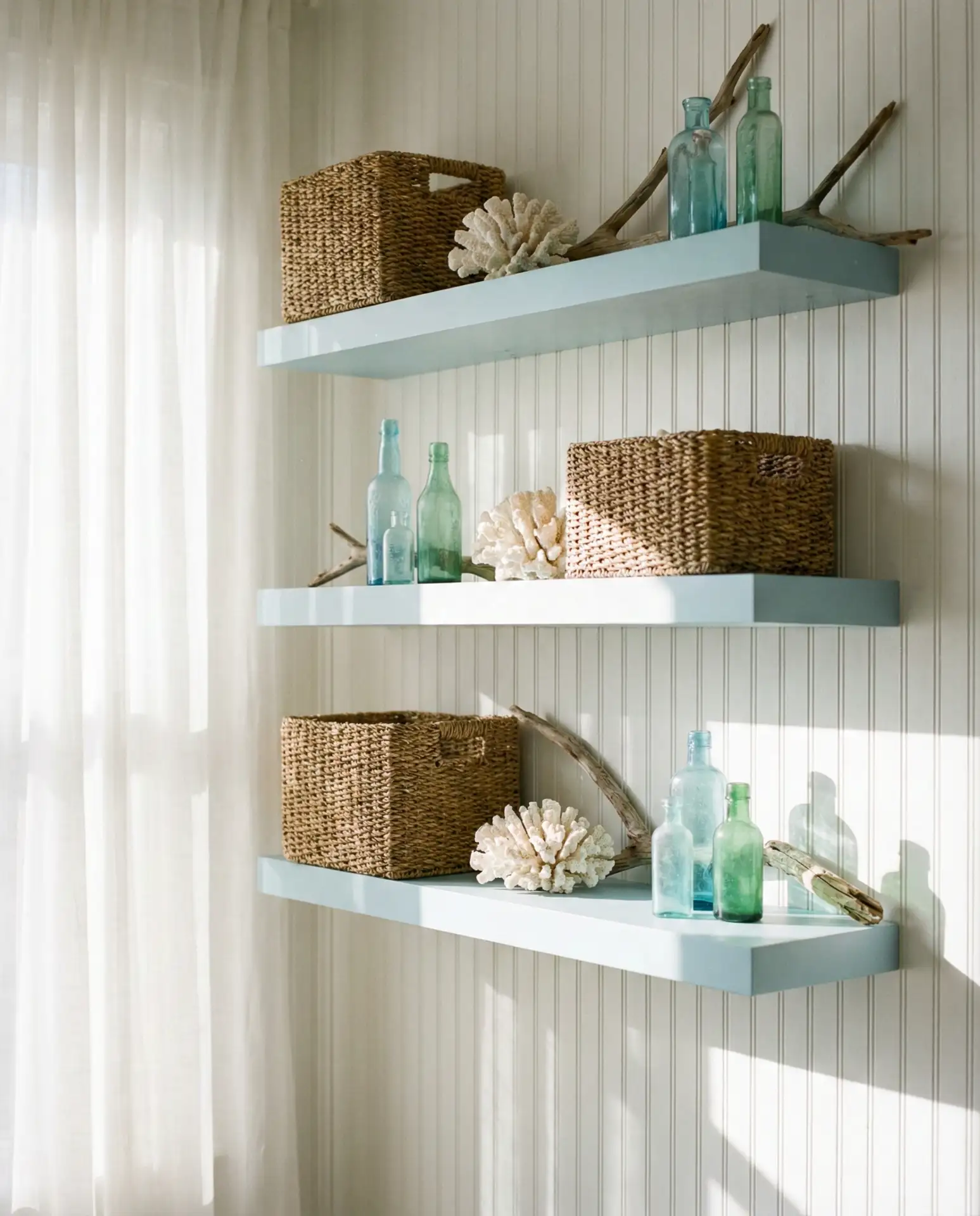
Choosing the right blue matters enormously—too bright feels juvenile, too dark reads formal. Test paint samples in your actual lighting conditions, observing how the color shifts from morning sun to evening lamplight. Shades like Benjamin Moore’s Palladian Blue or Sherwin-Williams’ Sea Salt tend to work across various light exposures, maintaining their coastal feel without tipping into baby nursery territory.
10. Mid-Century Teak Credenza with Upper Shelving
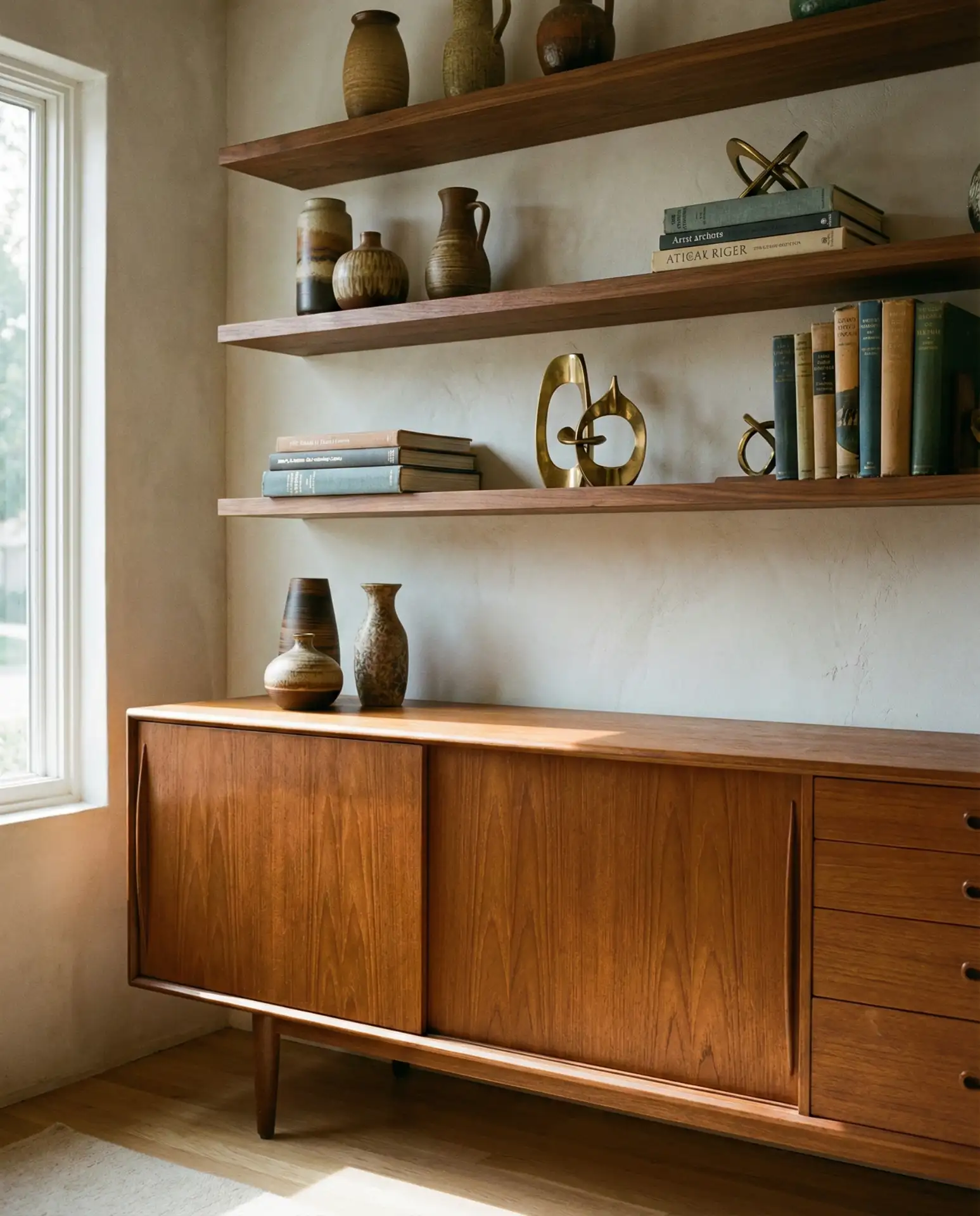
Combining a low mid-century credenza with floating shelves above creates balanced storage that honors the era’s emphasis on horizontal lines and natural materials. Teak’s warm honey tones bring organic richness to living rooms, while the clean-lined silhouette prevents visual clutter. This pairing works beautifully whether you’ve inherited authentic vintage pieces or invested in quality reproductions from companies like Article or West Elm.
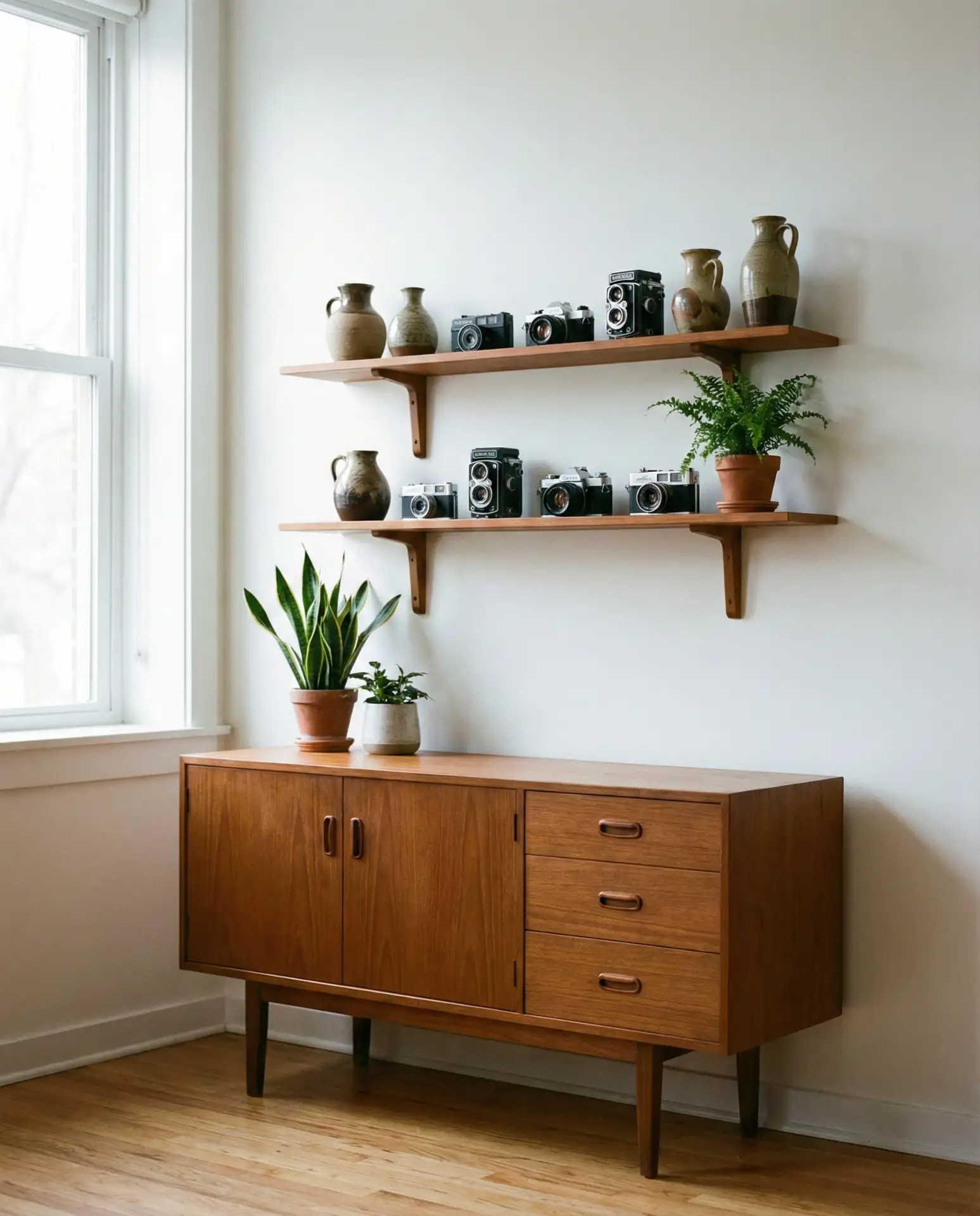
In cities like Palm Springs, Seattle, and Denver, where mid-century modern homes remain abundant, design experts consistently recommend keeping a visual gap of eighteen to twenty-four inches between the credenza top and the first floating shelf. This breathing room prevents the arrangement from feeling cramped while maintaining the proportional harmony that defines the style’s enduring appeal.
11. Glass Shelves for Light-Filled Spaces
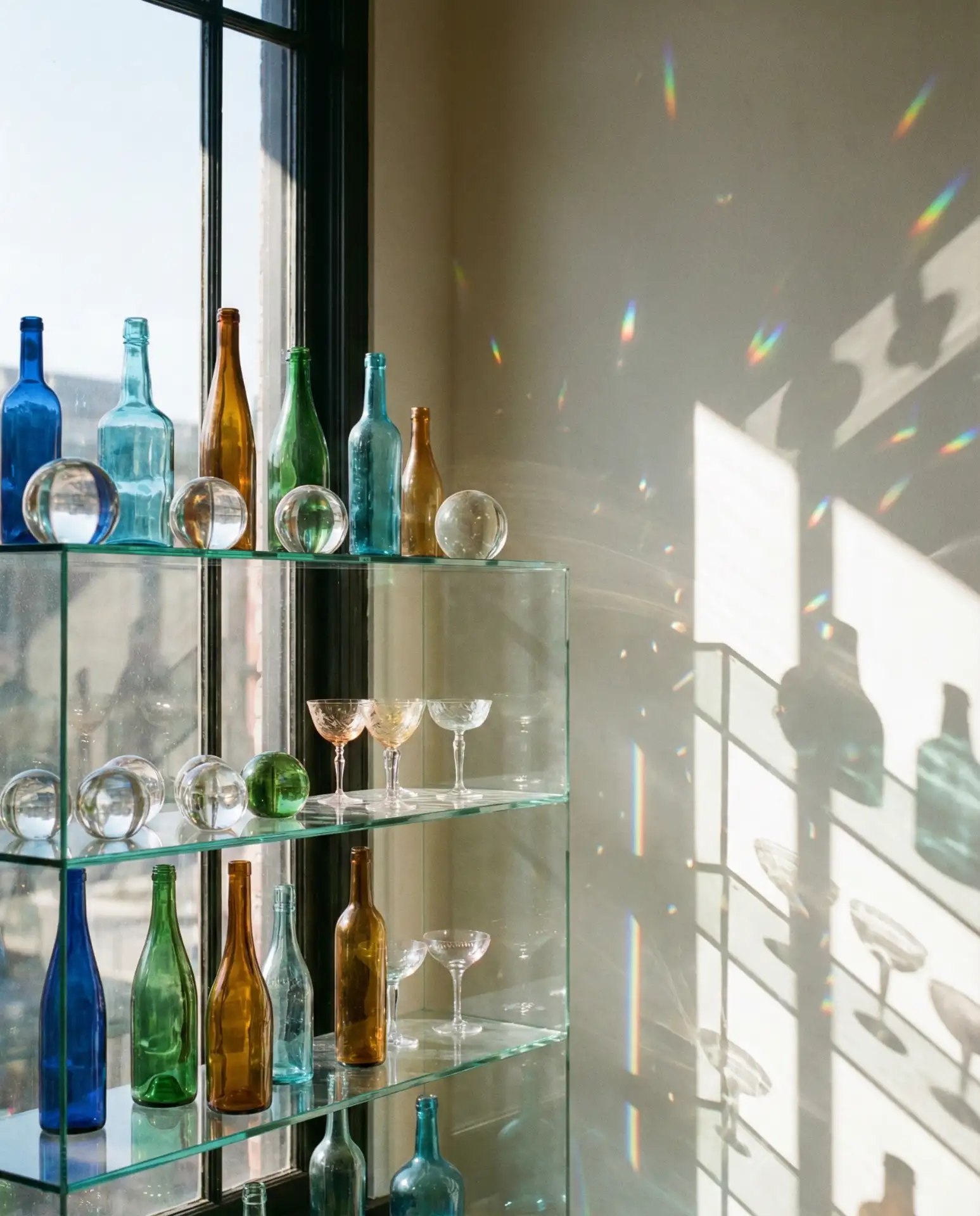
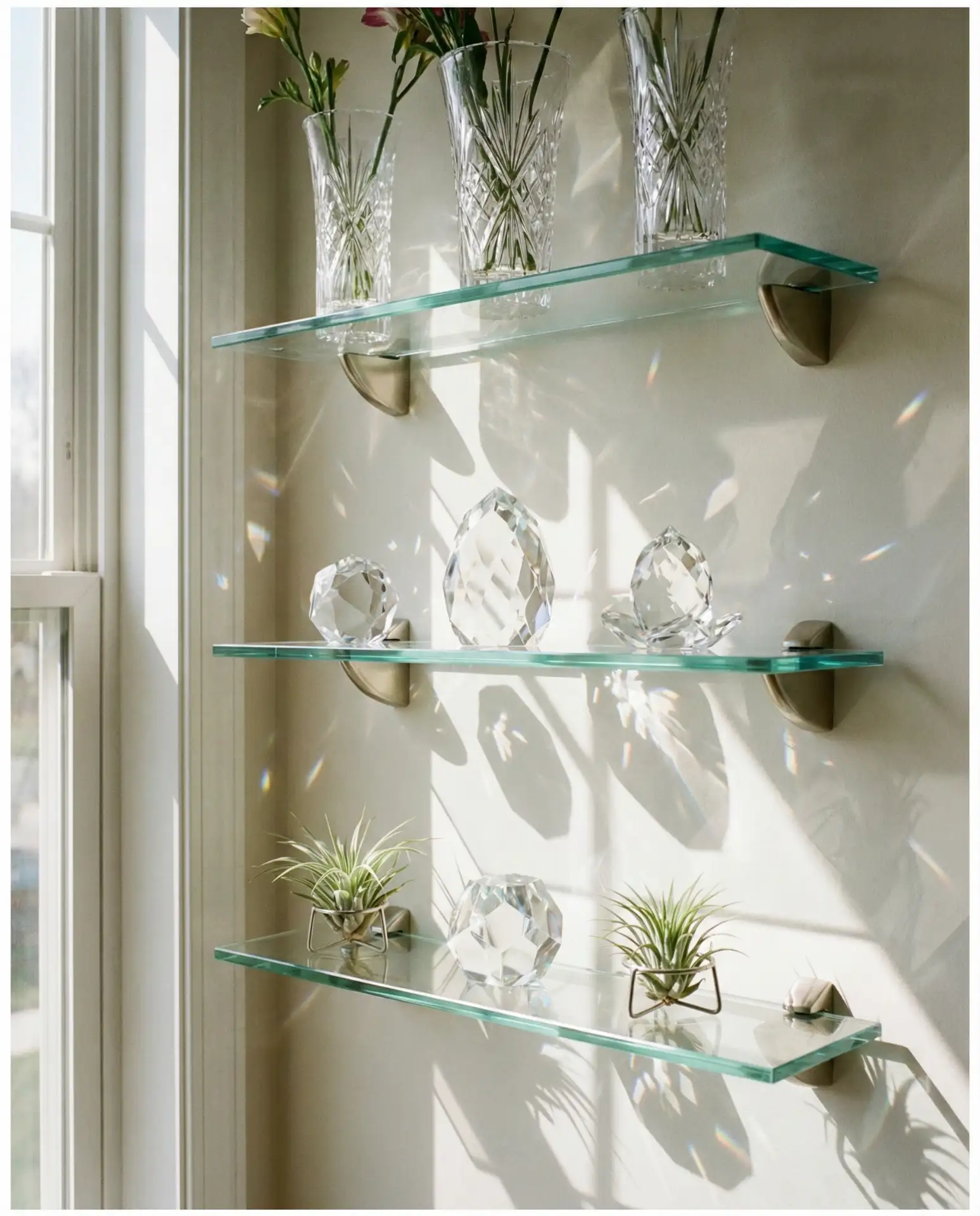
Tempered glass shelving virtually disappears in rooms with abundant natural light, allowing sunshine to penetrate deep into the space without the obstruction of solid materials. This choice works particularly well in living rooms with large window walls or corner windows where you want to maintain visual transparency. The reflective quality of glass also bounces light around the room, amplifying brightness in ways that wood or metal cannot.
A neighbor in my previous building installed glass shelves in her sun-drenched corner living room, transforming what could have been dark-feeling built-ins into a luminous display for her collection of vintage apothecary bottles. The effect on overcast days was especially striking—the shelves seemed to glow with captured light, keeping the room feeling open even when Pacific Northwest clouds settled in for weeks.
12. Staggered Box Shelves for Modern Visual Interest
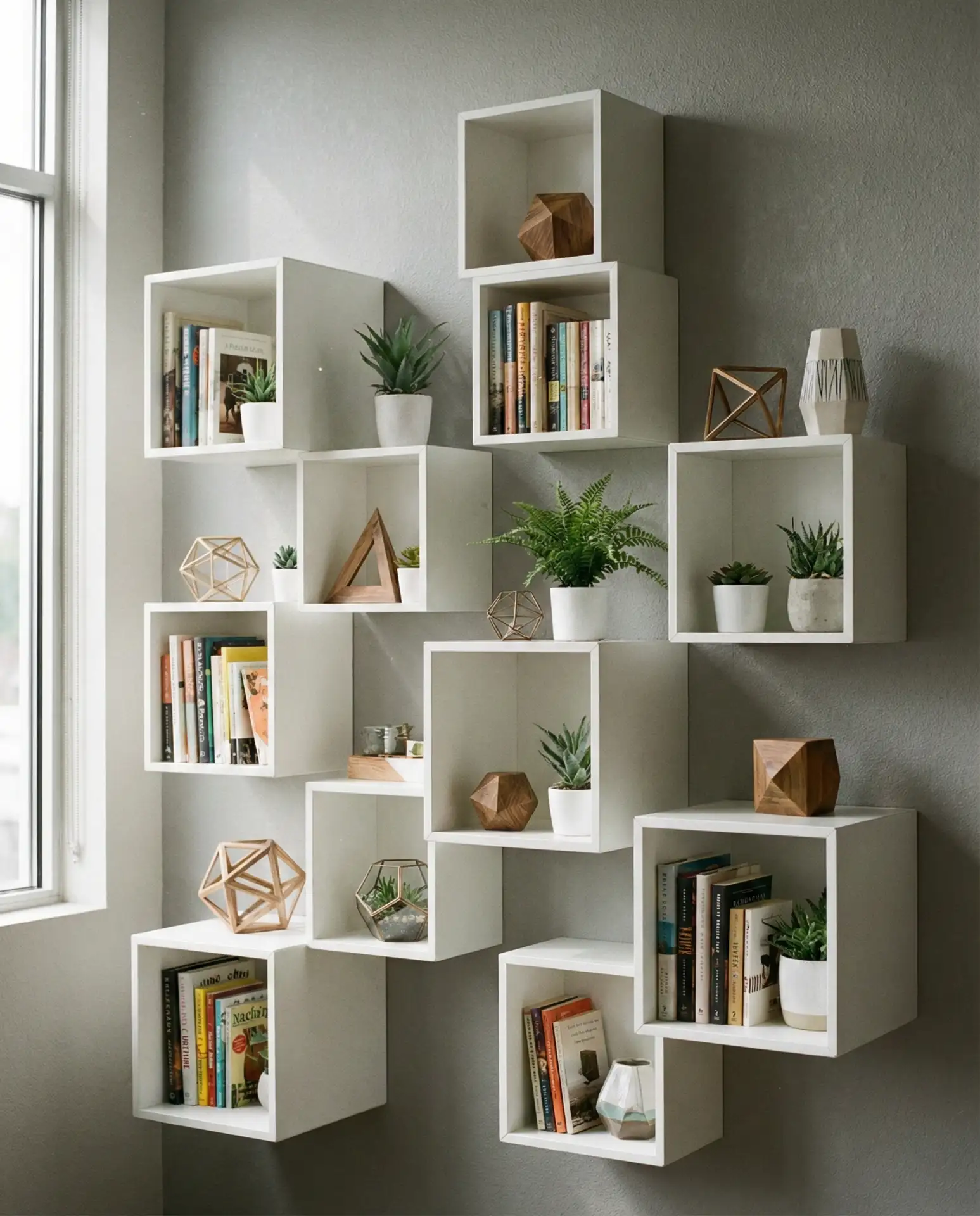
Cube shelving units installed at varied heights create dynamic wall compositions that break the monotony of straight horizontal lines. This modular approach lets you build custom arrangements that fit your specific wall dimensions and storage needs while maintaining the clean aesthetic of modern design. Each box becomes a small display vignette, encouraging thoughtful curation rather than haphazard stacking.
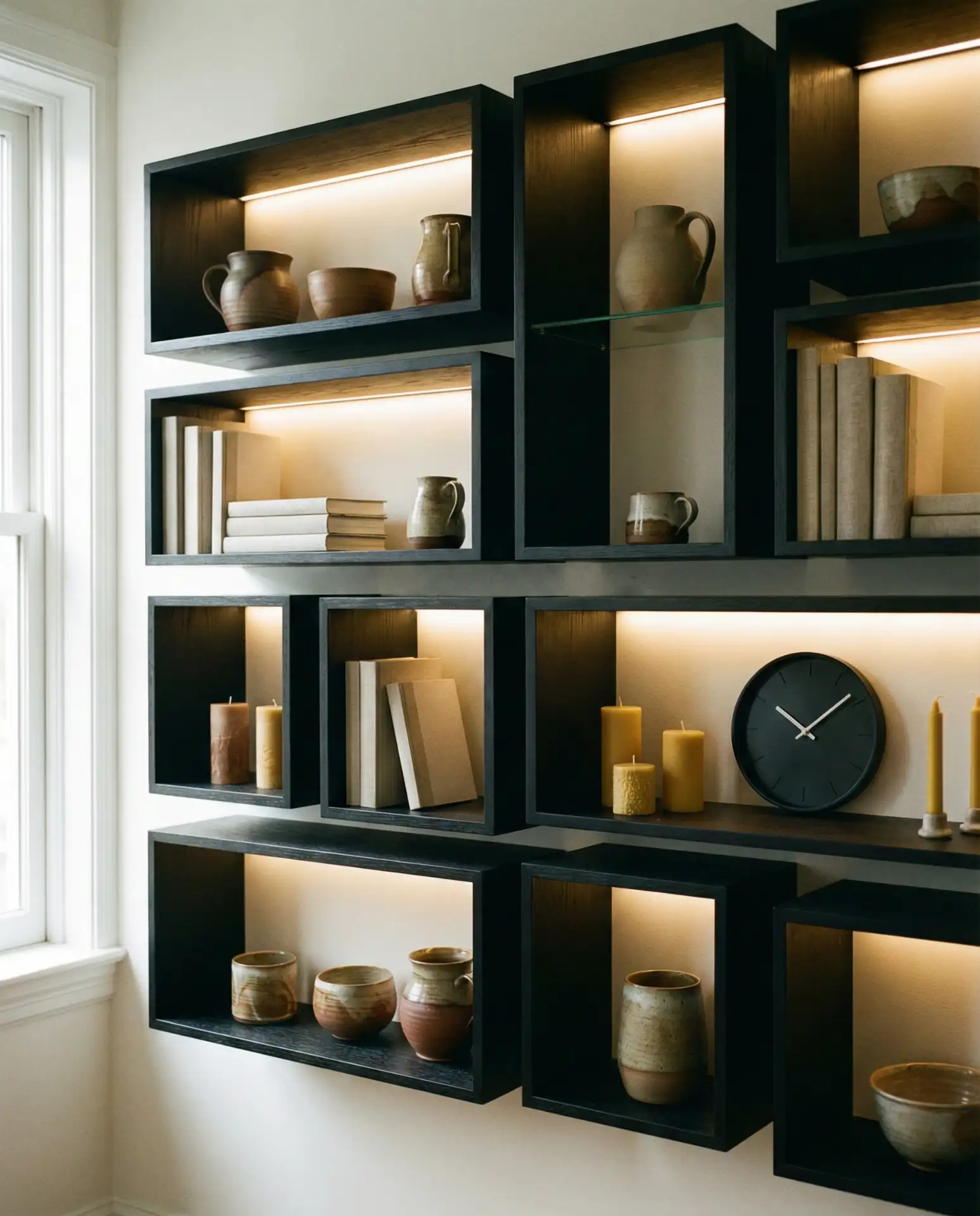
The flexibility of modular cube systems means you can start with four or five units and expand over time as budget allows, unlike built-in cabinetry that requires complete installation at once. This phased approach typically runs between three hundred and six hundred dollars for the initial purchase, with additional cubes costing fifty to one hundred dollars each as your collection grows or your spatial needs change.
13. Rustic Bracket Shelves Above the Sofa
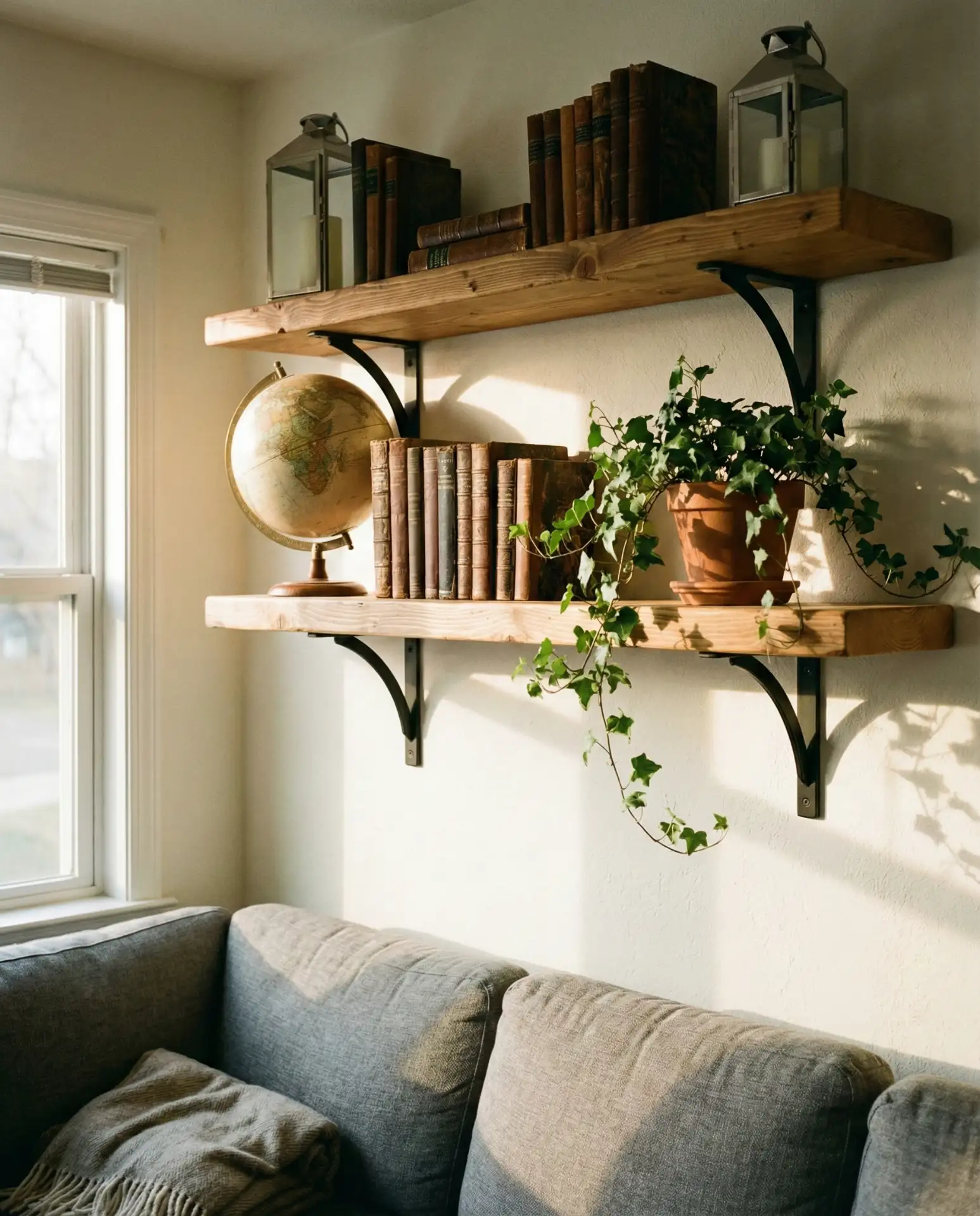
Positioning sturdy wooden shelves directly above your sofa creates a gallery-style backdrop that draws attention upward and makes the seating area feel anchored. Decorative iron or wooden brackets in rustic finishes add architectural detail while supporting shelves deep enough for books, framed photos, and trailing plants. This arrangement works especially well when your couch floats in the room rather than sitting against a windowed wall.
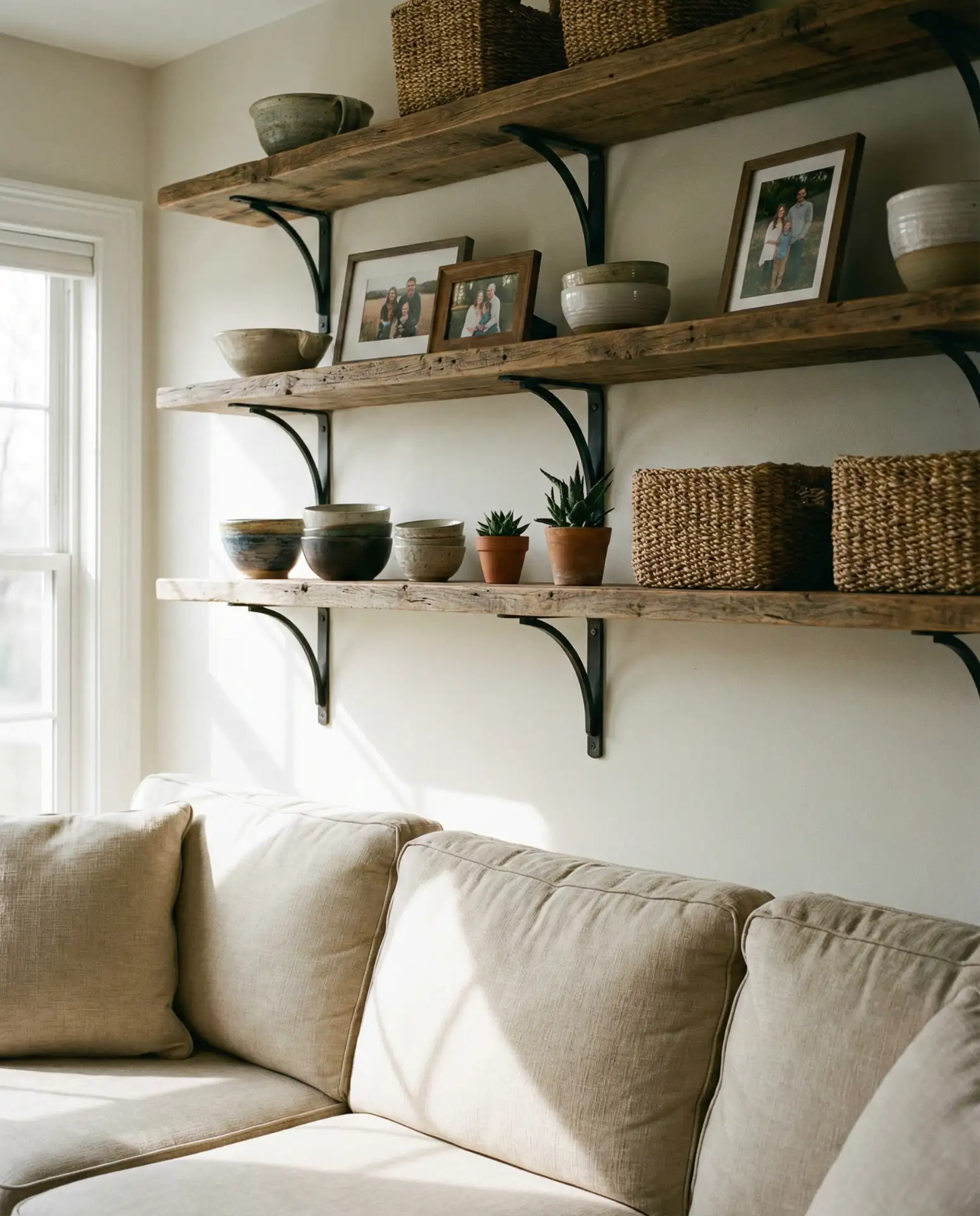
Maintain at least ten to twelve inches of clearance between the sofa back and the lowest shelf to prevent that claustrophobic feeling when someone leans back. Also consider earthquake safety in regions like California—secure items with museum putty and ensure brackets are anchored into wall studs, not just drywall, especially if you’re displaying anything breakable or heavy.
14. Western Ranch-Style Shelf with Leather Accents
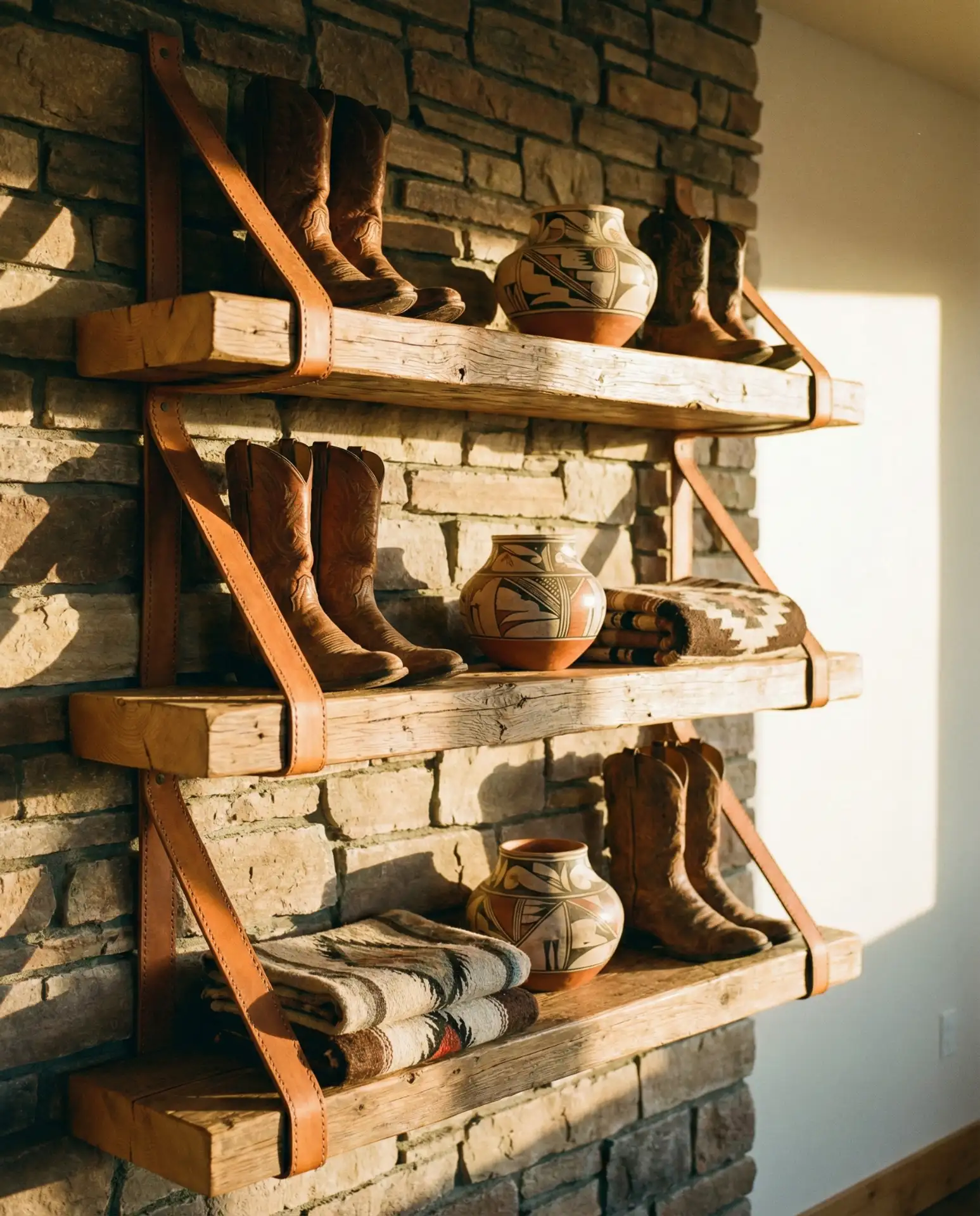
Heavy timber shelving with leather strap supports or rawhide accents brings authentic Western character to living rooms, particularly in mountain states and Southwest homes where the style feels rooted in regional history. The rugged materiality—weathered wood, hand-forged metal, natural hides—creates spaces that feel grounded and unpretentious. This aesthetic pairs beautifully with stone fireplaces, exposed beam ceilings, and the kind of comfortable, lived-in furniture that welcomes muddy boots.
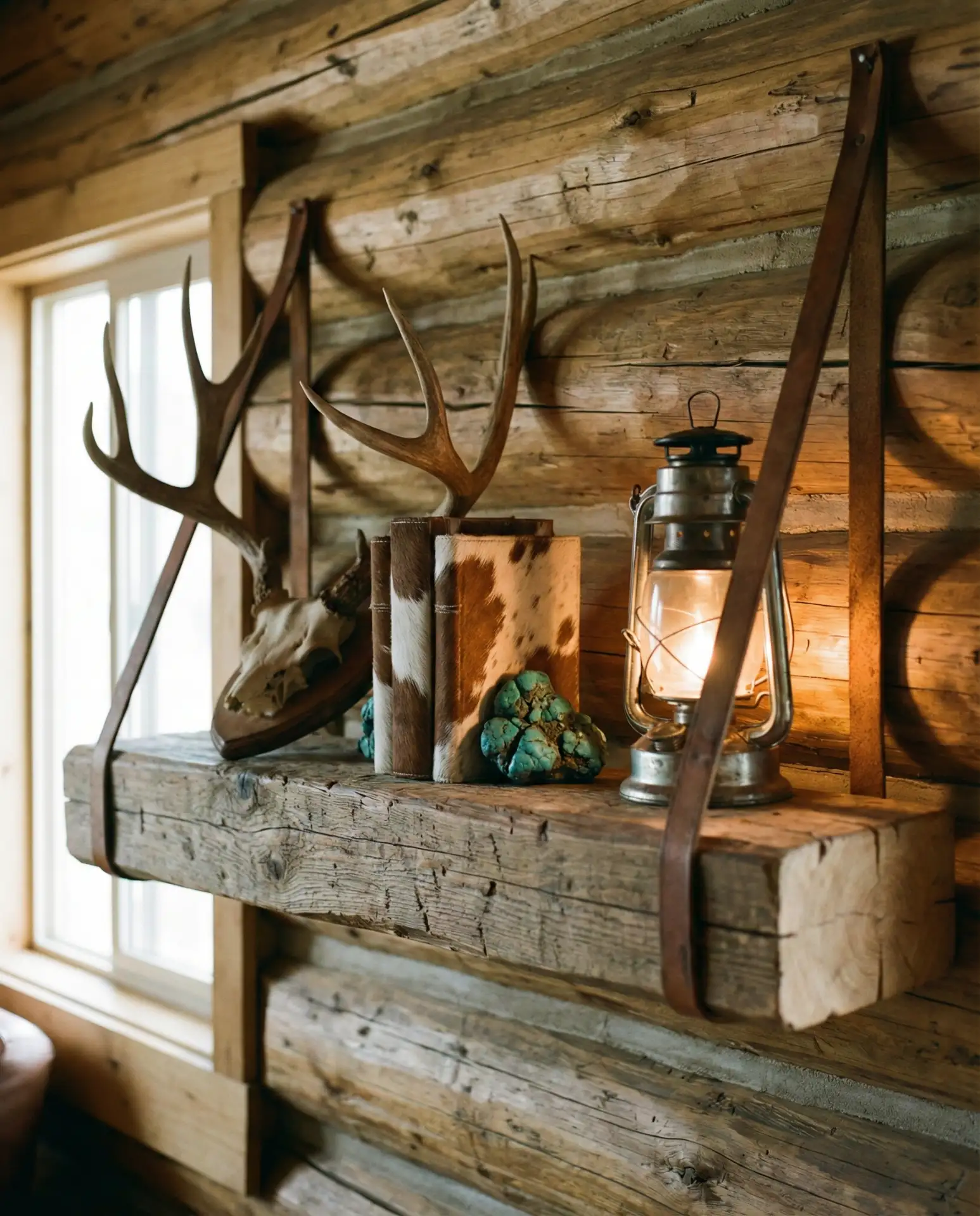
Designers working in this style consistently emphasize restraint—one or two thoughtful Western elements create atmosphere, while too many veer into theme park territory. Focus on authentic pieces with genuine patina rather than mass-produced “Western” decor, and let the materials speak for themselves without excessive ornamentation.
15. Modern Boho Macramé and Wood Shelves
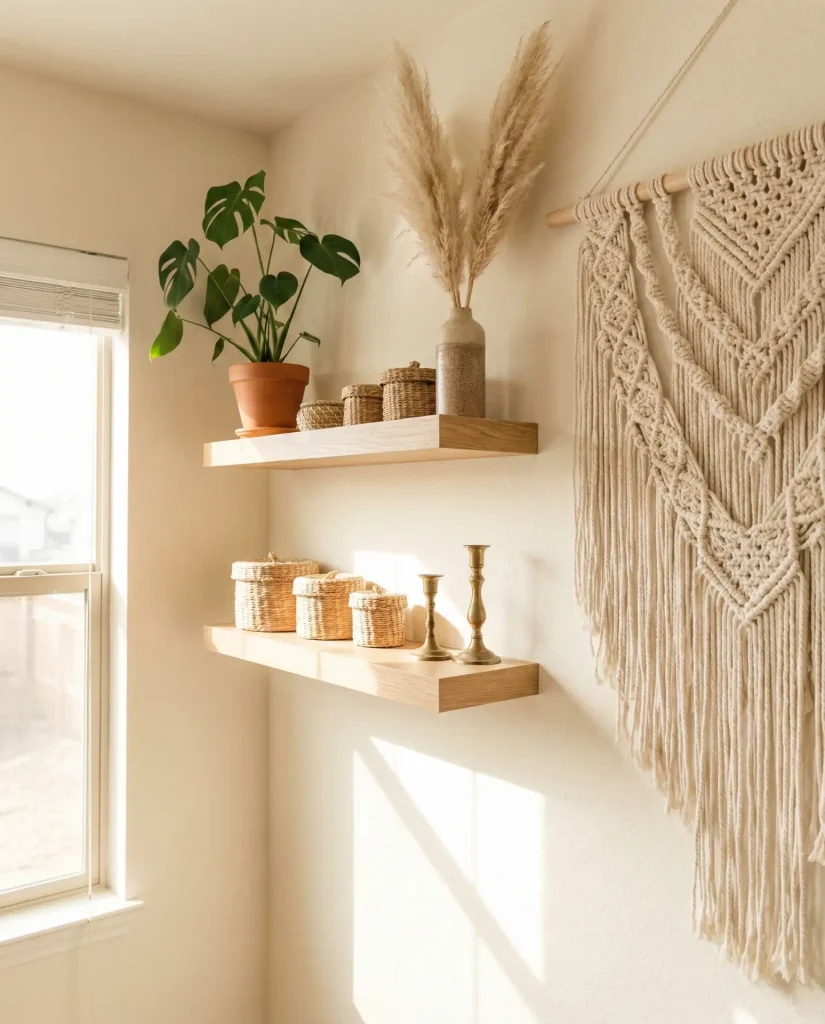
Blending modern boho sensibilities means combining natural wood shelving with macramé plant hangers, woven wall hangings, and globally inspired textiles. This eclectic approach celebrates texture and handcraft while maintaining enough restraint to feel current rather than dated. The style resonates with younger homeowners who value sustainability, artisan-made goods, and spaces that reflect travel experiences or multicultural influences.
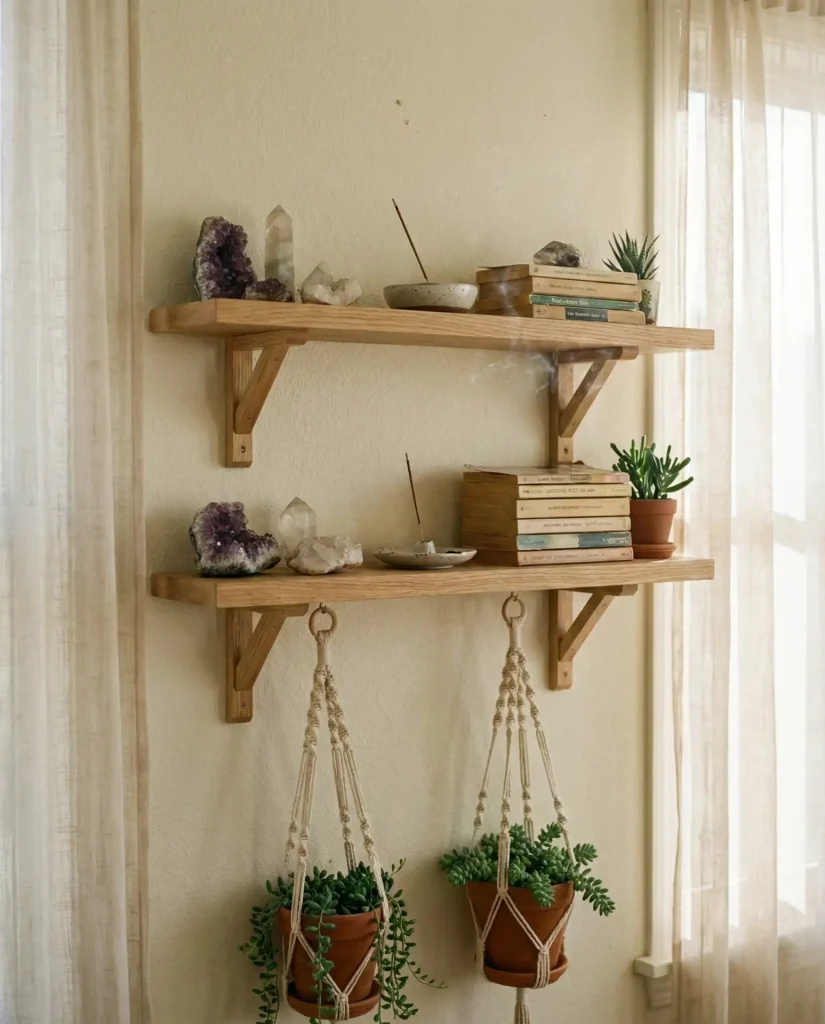
The most successful boho spaces layer carefully rather than randomly—start with neutral foundational elements, then add pops of pattern and color through smaller objects. This prevents the “Pinterest explosion” effect, where too many competing elements create visual chaos instead of the relaxed, collected-over-time vibe the style intends to convey.
16. Narrow Shelves Between Windows
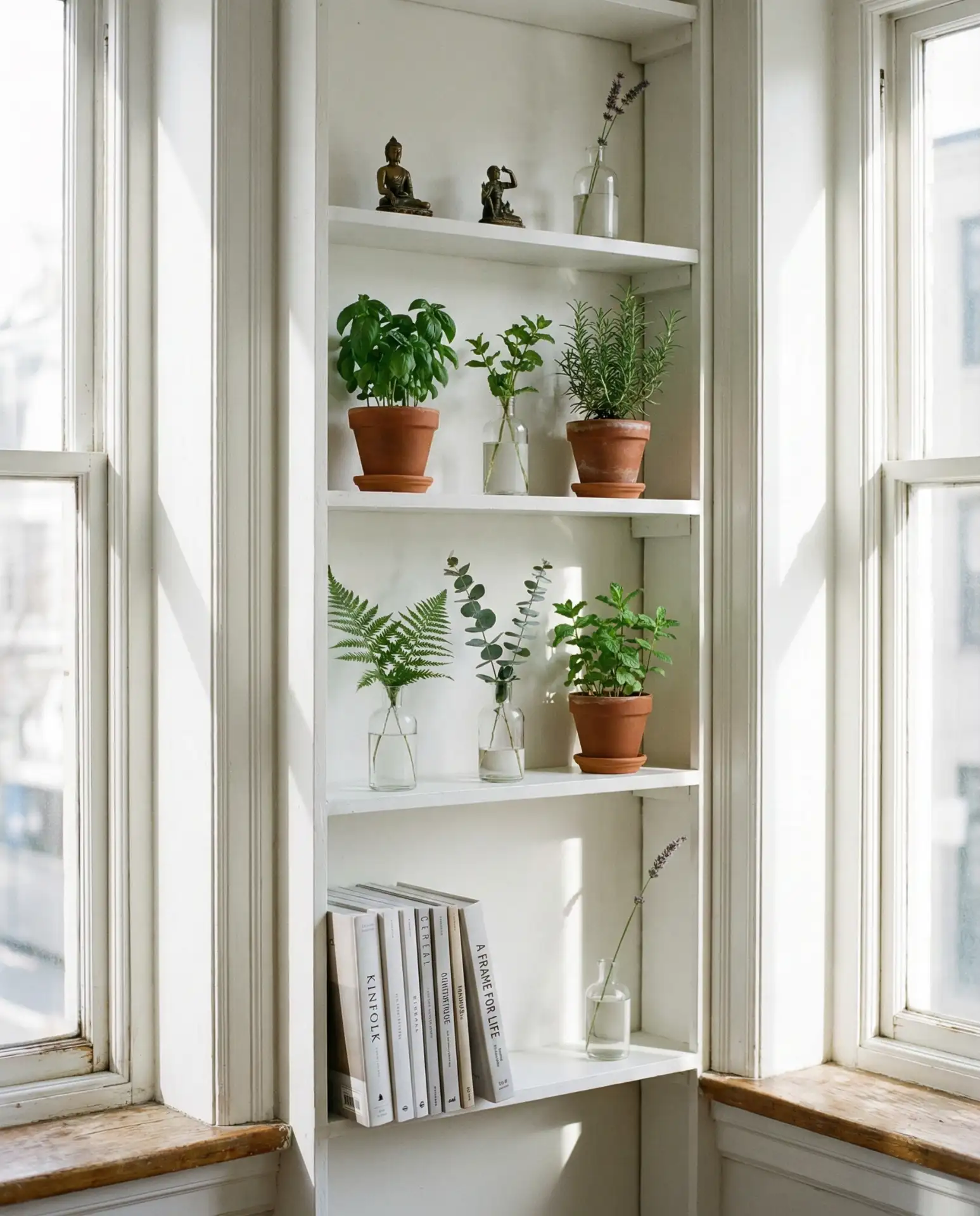
The often-wasted vertical space between two window frames offers perfect real estate for narrow floor-to-ceiling shelving. This slim profile—typically six to eight inches deep—provides display space without blocking natural light or interfering with window treatments. The installation transforms an awkward gap into intentional design while adding functional storage to rooms where every square foot matters.
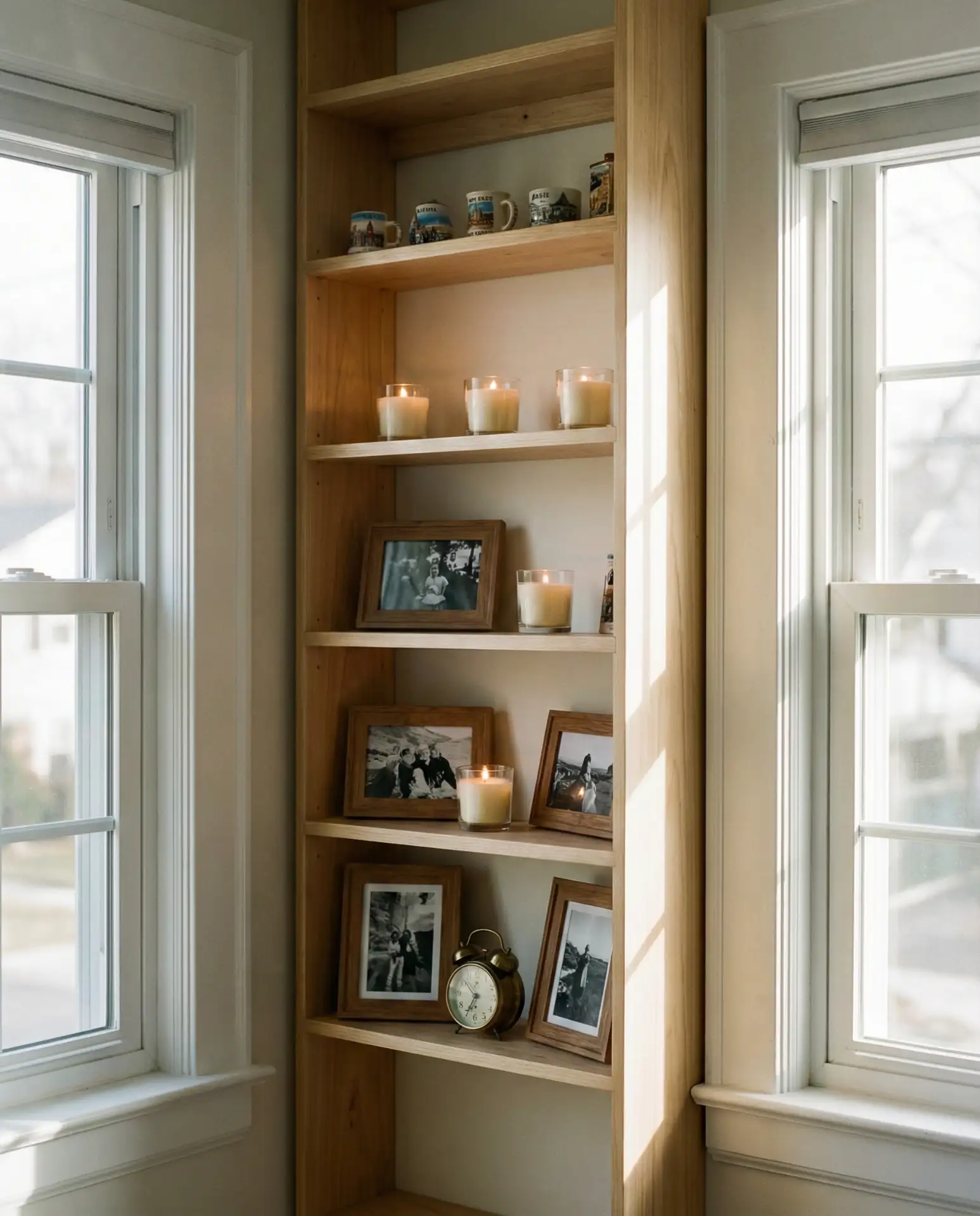
Where these shelves work best is in older homes with closely spaced windows—common in Victorian, Colonial, and Craftsman architecture—where builders prioritized natural light over wall space. The narrow format limits what you can display, so think vertically: stack books spine-out, use tall slender vases, or arrange small objects in vertical compositions rather than trying to crowd each shelf horizontally.
17. Symmetrical Bookshelves Framing a Couch
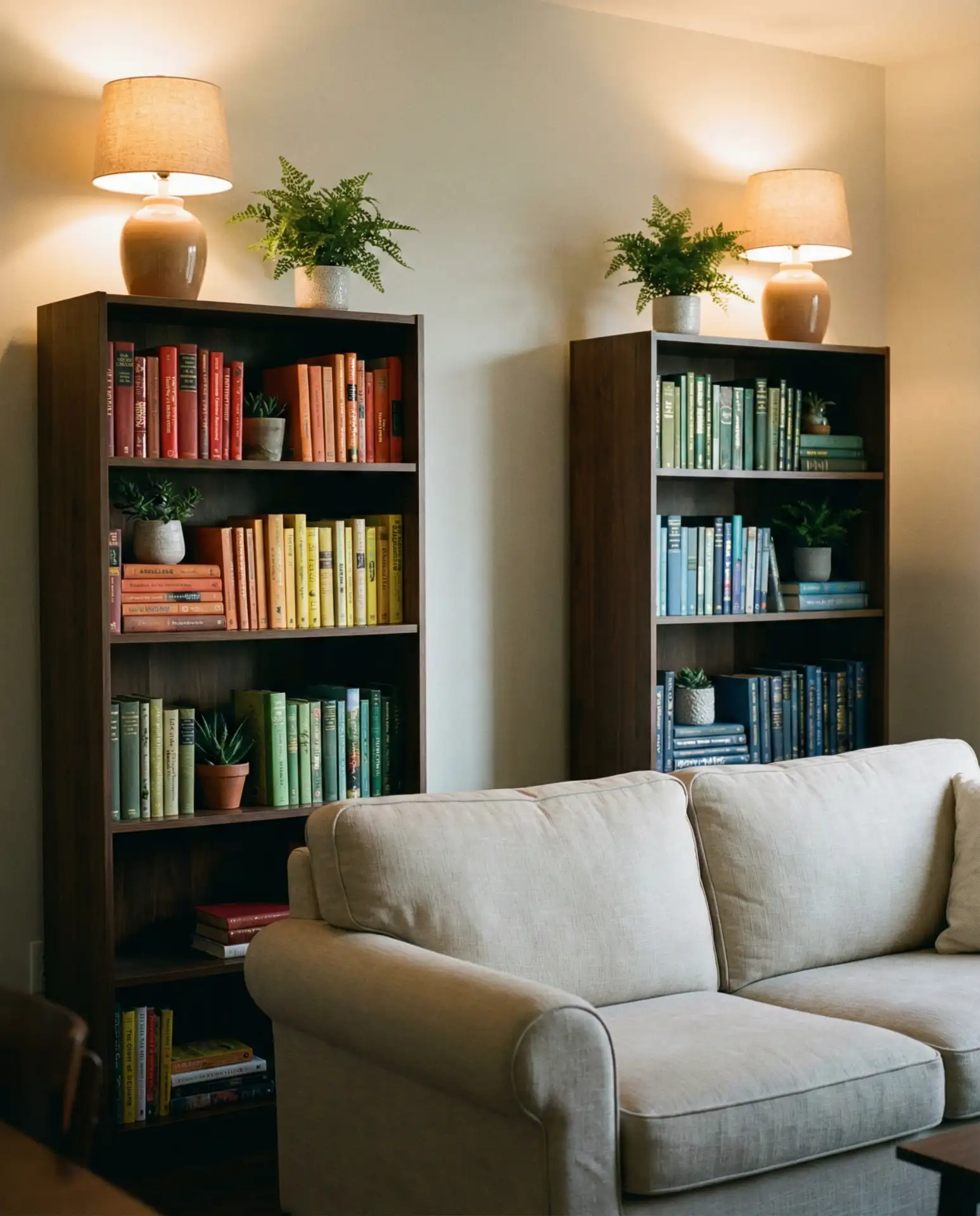
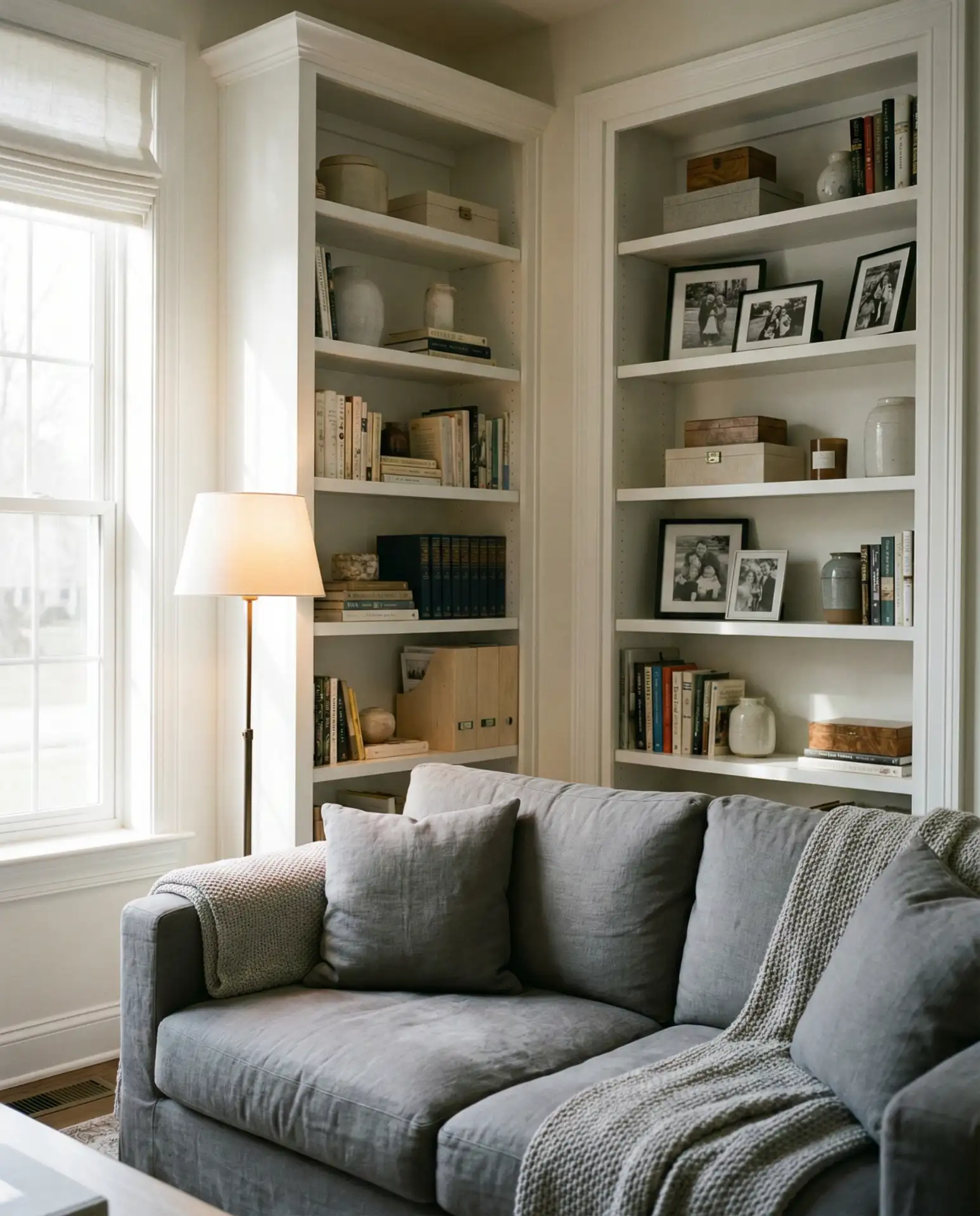
Creating matching wall-standing shelves on either side of your couch establishes formal symmetry that brings order to open-plan living spaces. This balanced approach works particularly well for book lovers who want dedicated library space without sacrificing seating comfort. The twin towers of storage also help define the seating zone in great rooms where living and dining areas flow together without clear boundaries.
Real book collectors quickly learn that organizing by color creates Instagram-worthy photos but makes finding specific titles nearly impossible. Instead, group books by topic, author, or size, then add decorative objects in complementary colors to break up the spines. This functional approach still photographs beautifully while actually serving your reading habits.
18. Cantilever Shelves for a Floating Effect
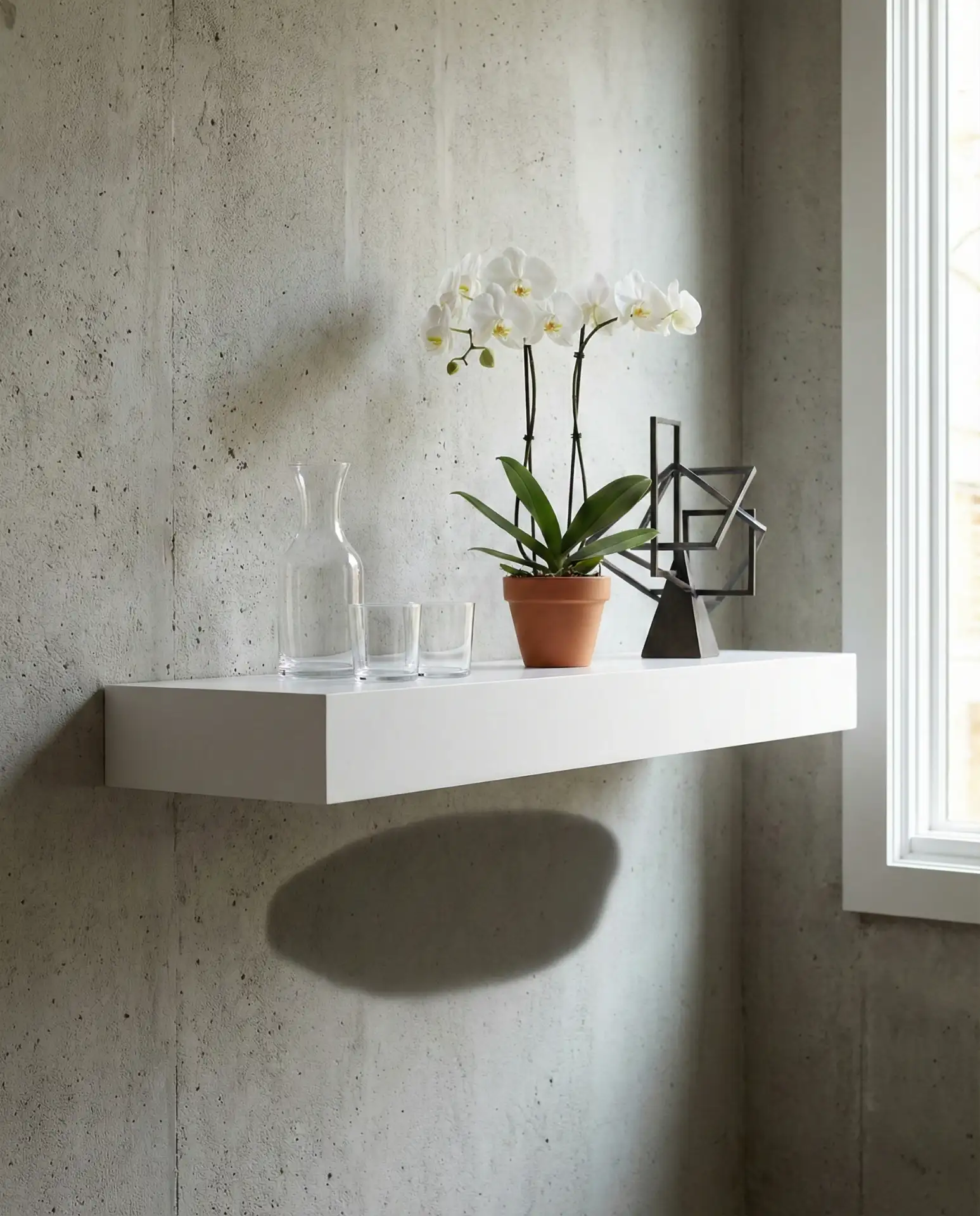
True cantilever shelving—where thick planks extend from the wall with no visible support underneath—creates dramatic visual lightness that defies expectations. This engineering feat requires robust hidden brackets anchored deep into wall studs, but the result is shelf surfaces that appear to float effortlessly. The contemporary aesthetic works beautifully in modern homes where architectural surprise and clean lines define the design language.
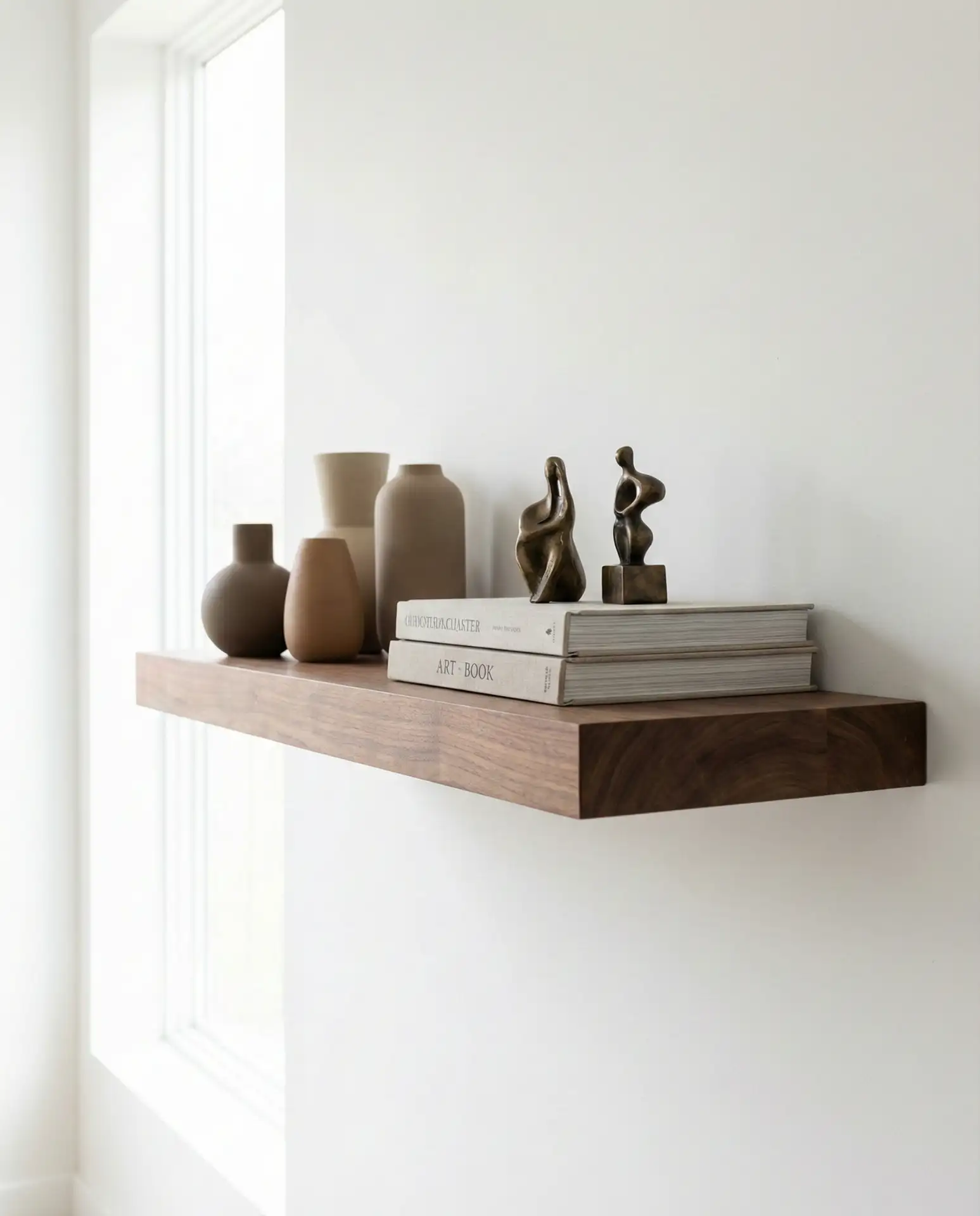
One persistent mistake is overloading cantilever shelves beyond their rated weight capacity. Even with professional installation into solid studs, these shelves have limits—typically around forty to sixty pounds depending on length and material. Display lighter decorative objects rather than heavy book collections, and consult a structural engineer if you’re planning shelves longer than forty-eight inches.
19. Open Kitchen-Style Shelves for Display
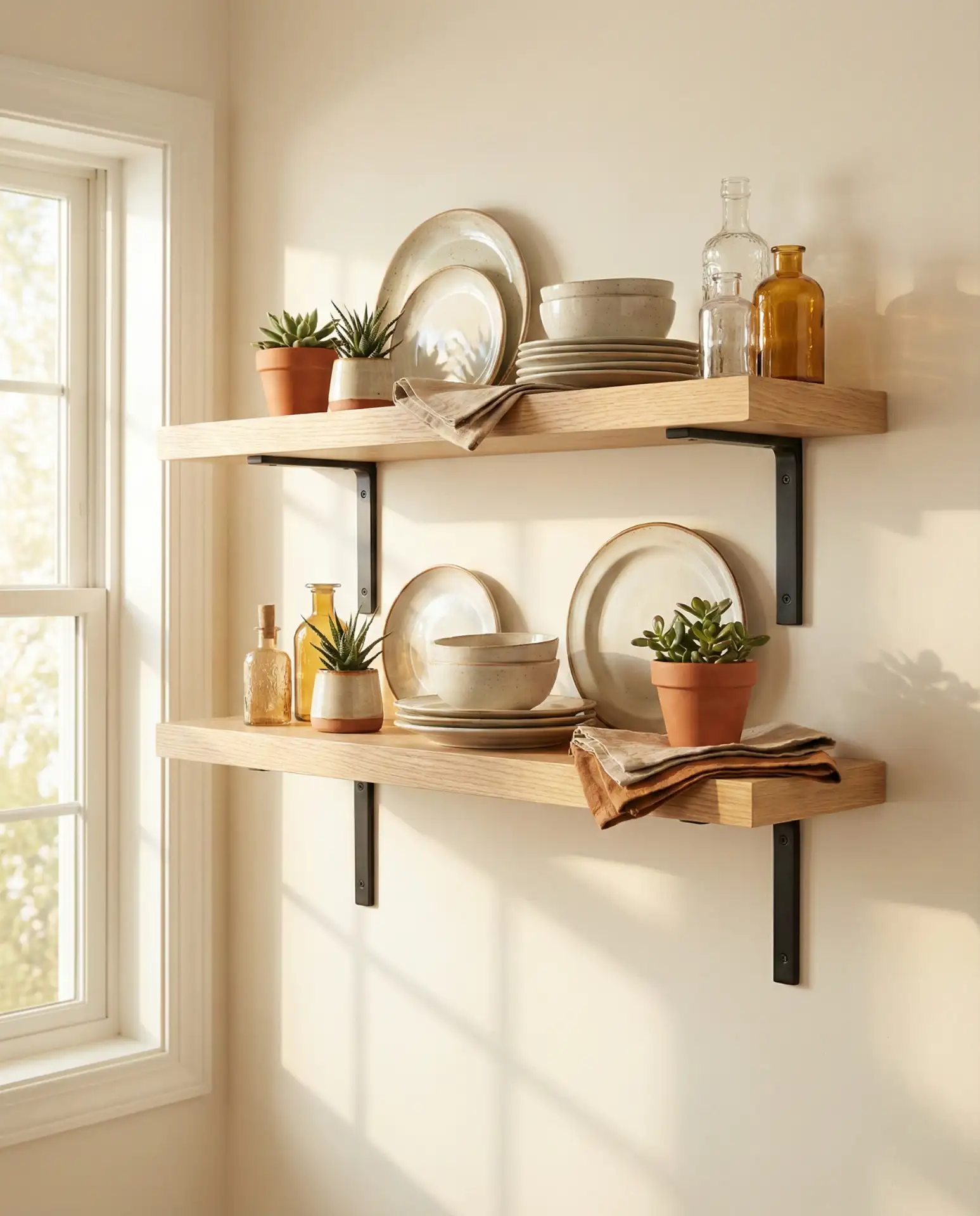
Borrowing from kitchen design trends, open shelving in living rooms invites the same curated display approach—treating everyday objects as decoration while keeping them accessible. This style works particularly well in apartment living, where space flows between kitchen and living areas without hard divisions. Simple wooden planks on metal brackets create informal storage that feels warm and approachable rather than precious or formal.
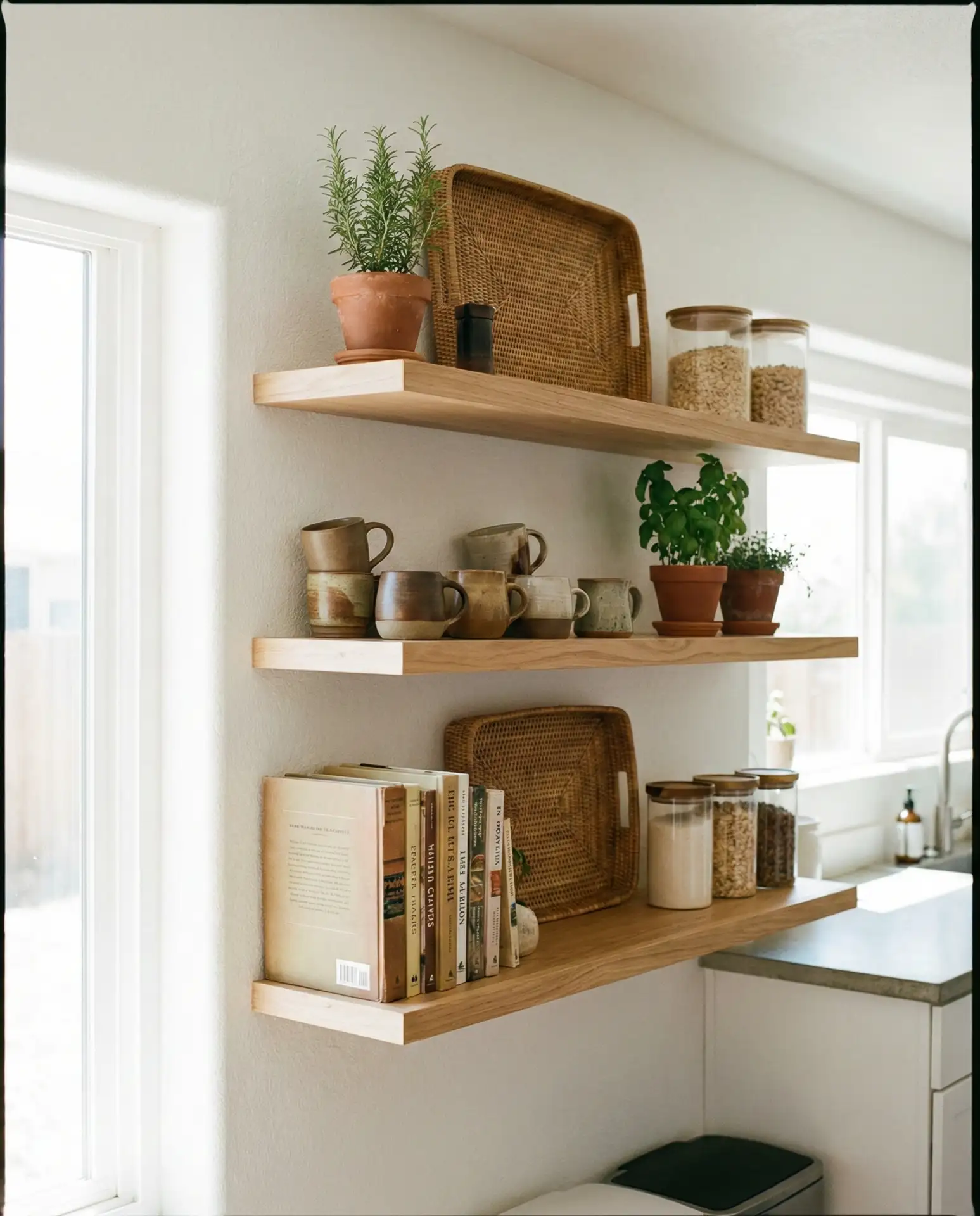
Designers frequently note that open shelving demands more curation discipline than closed cabinets—everything visible becomes part of the design statement. Rotate items seasonally, edit ruthlessly, and resist the temptation to fill every inch. The negative space between objects matters as much as the objects themselves in creating visual breathing room.
20. Dark Moody Shelves for Drama
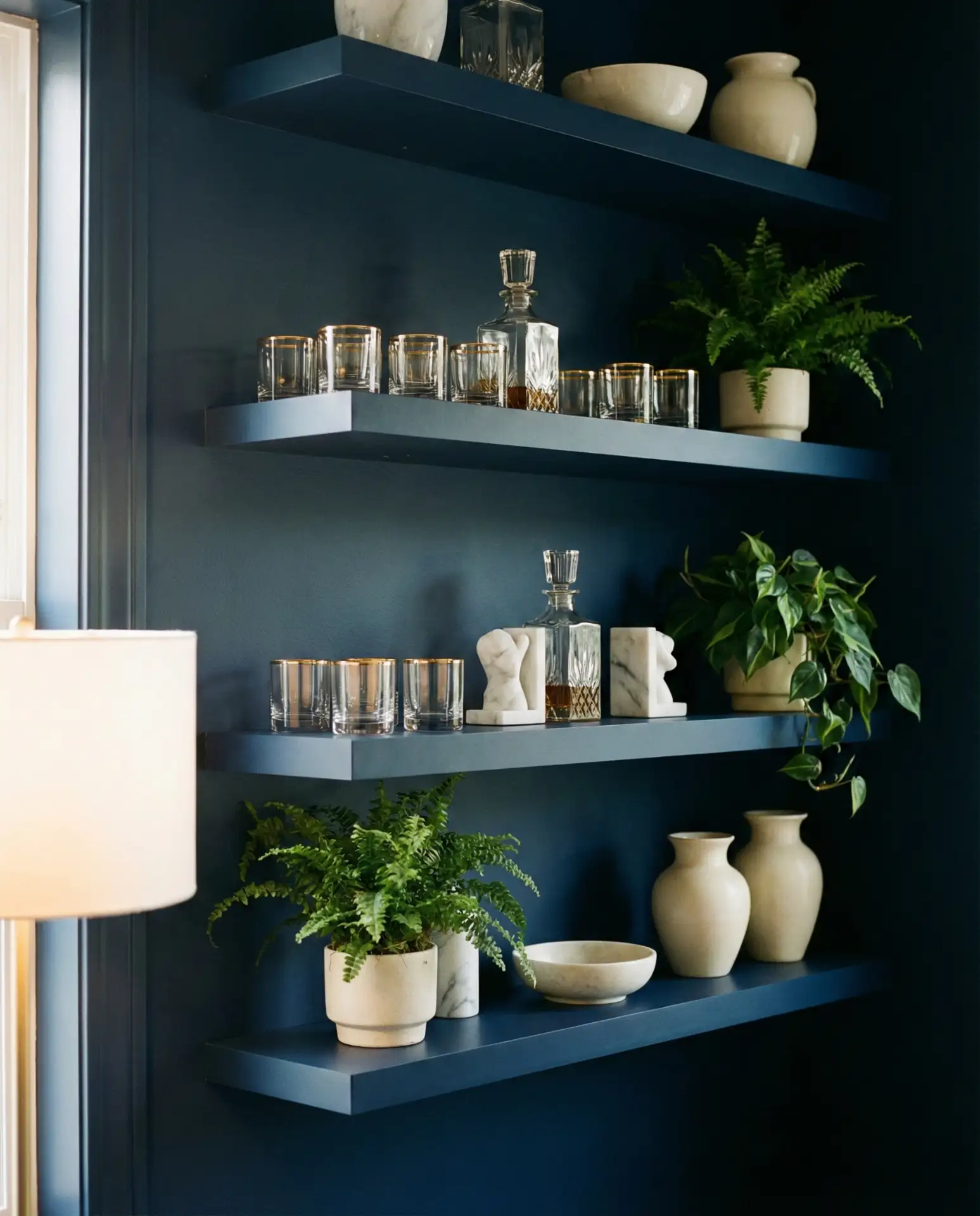
Painting both the shelving and the wall behind in deep charcoal, navy, or forest green creates an enveloping, library-like atmosphere that makes displayed objects pop against the dark background. This bold choice suits living rooms with good natural light where the darkness won’t feel oppressive, and it pairs beautifully with brass or gold accents that catch the light. The modern drama appeals to homeowners willing to move beyond safe neutrals toward more distinctive, confident spaces.
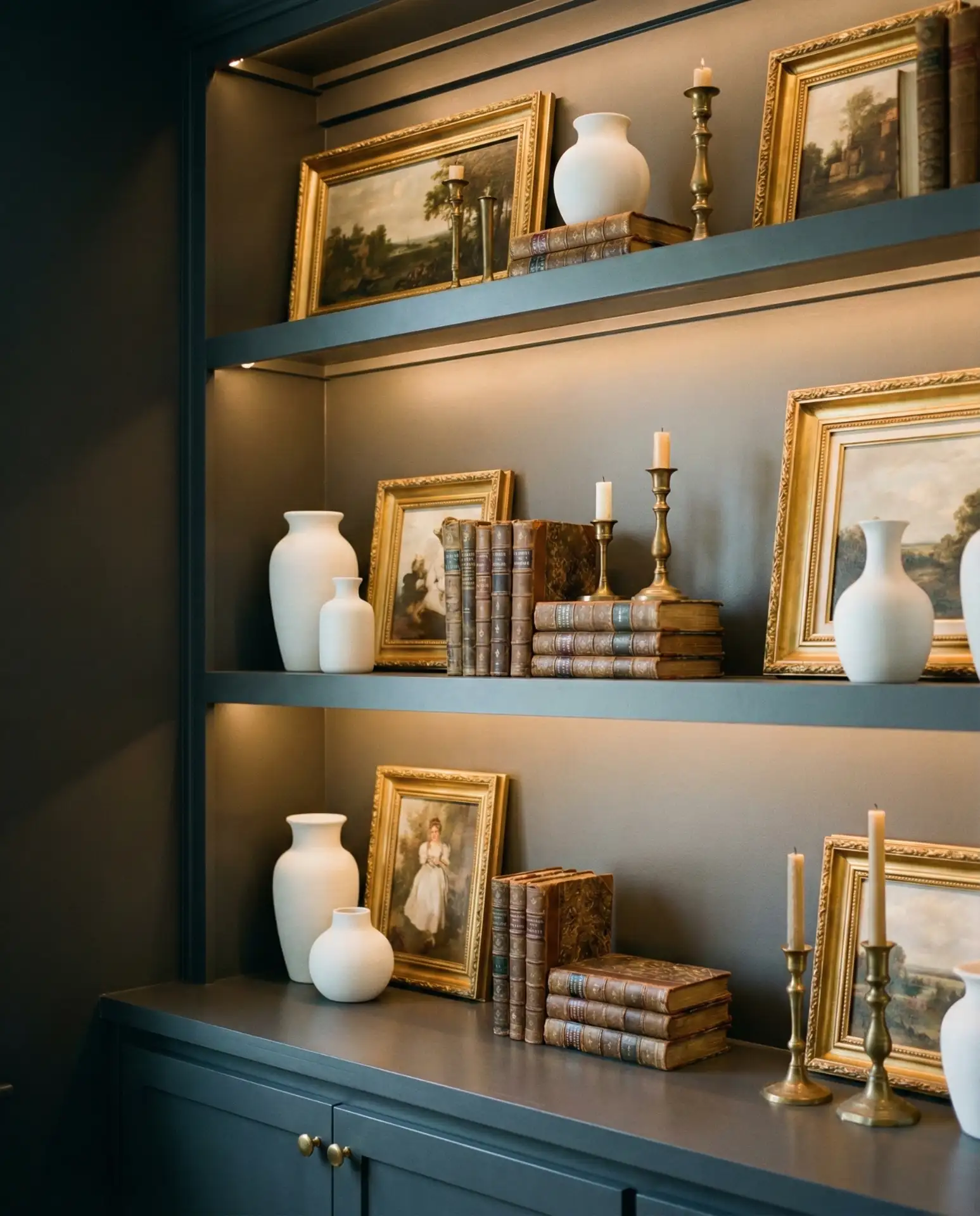
A colleague who painted her entire built-in bookcase black mentioned the transformation took three coats to achieve truly opaque coverage over existing white paint. Budget extra time and primer for this project—dark colors are unforgiving, and any light patches will show. Consider semi-gloss or satin finishes rather than flat paint to bounce light around and prevent the depth from feeling like a void.
21. Slim Vertical Shelves for Small Objects
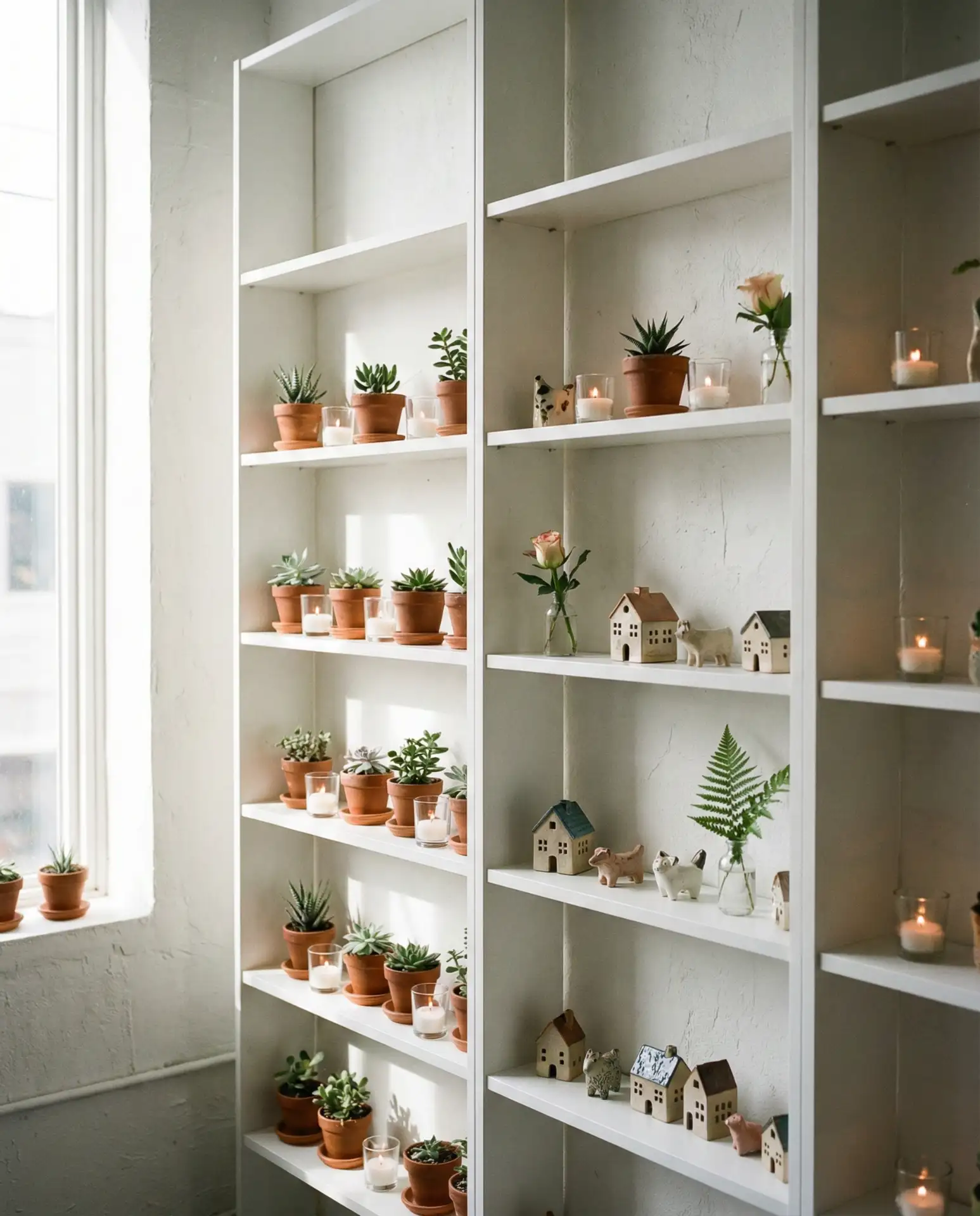
Ultra-narrow shelving—just three to four inches deep—provides perfect perches for collectibles, small plants, and decorative objects without consuming valuable floor space. These slim strips work beautifully in hallways, beside doorframes, or on any wall where conventional shelving would protrude awkwardly. The vertical emphasis draws the eye upward, making rooms feel taller while creating opportunities for thoughtful vignettes at different eye levels.
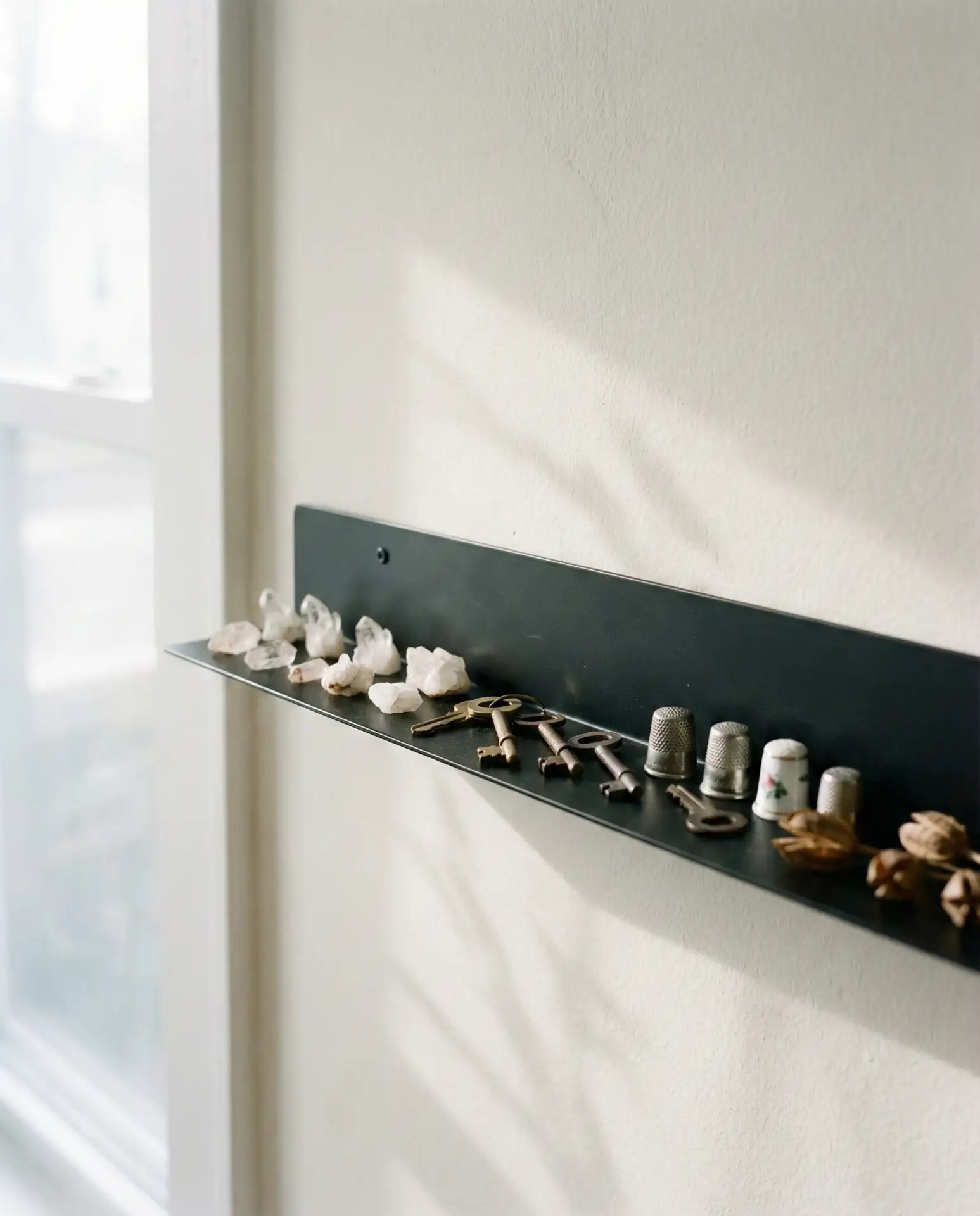
These shelves work best as accent pieces rather than primary storage—think of them as three-dimensional frames for objects you truly love. They’re ideal for displaying inherited china teacups, travel souvenirs, or handmade pottery from local artisans, giving these small treasures the focused attention they deserve rather than losing them among larger items on deeper shelves.
22. Integrated Desk and Shelf Combo
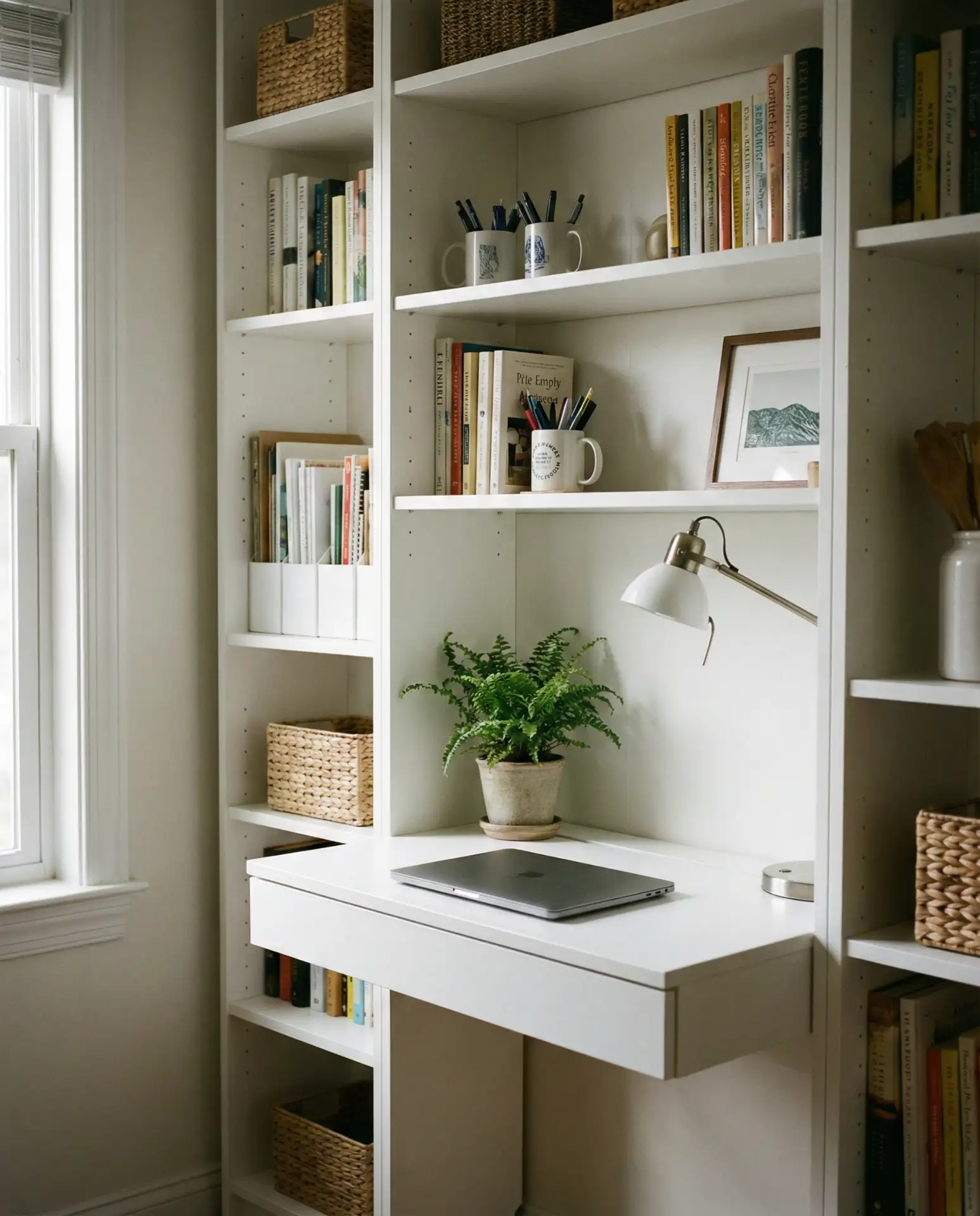
Combining a floating desk surface with surrounding shelving creates a compact home office zone within the living room—essential in the remote work era, where dedicated home offices remain luxuries for many. This integration keeps work materials organized and accessible while maintaining visual continuity with the room’s overall design. When you close the laptop, the desk becomes just another display surface rather than screaming “workspace” in your relaxation zone.
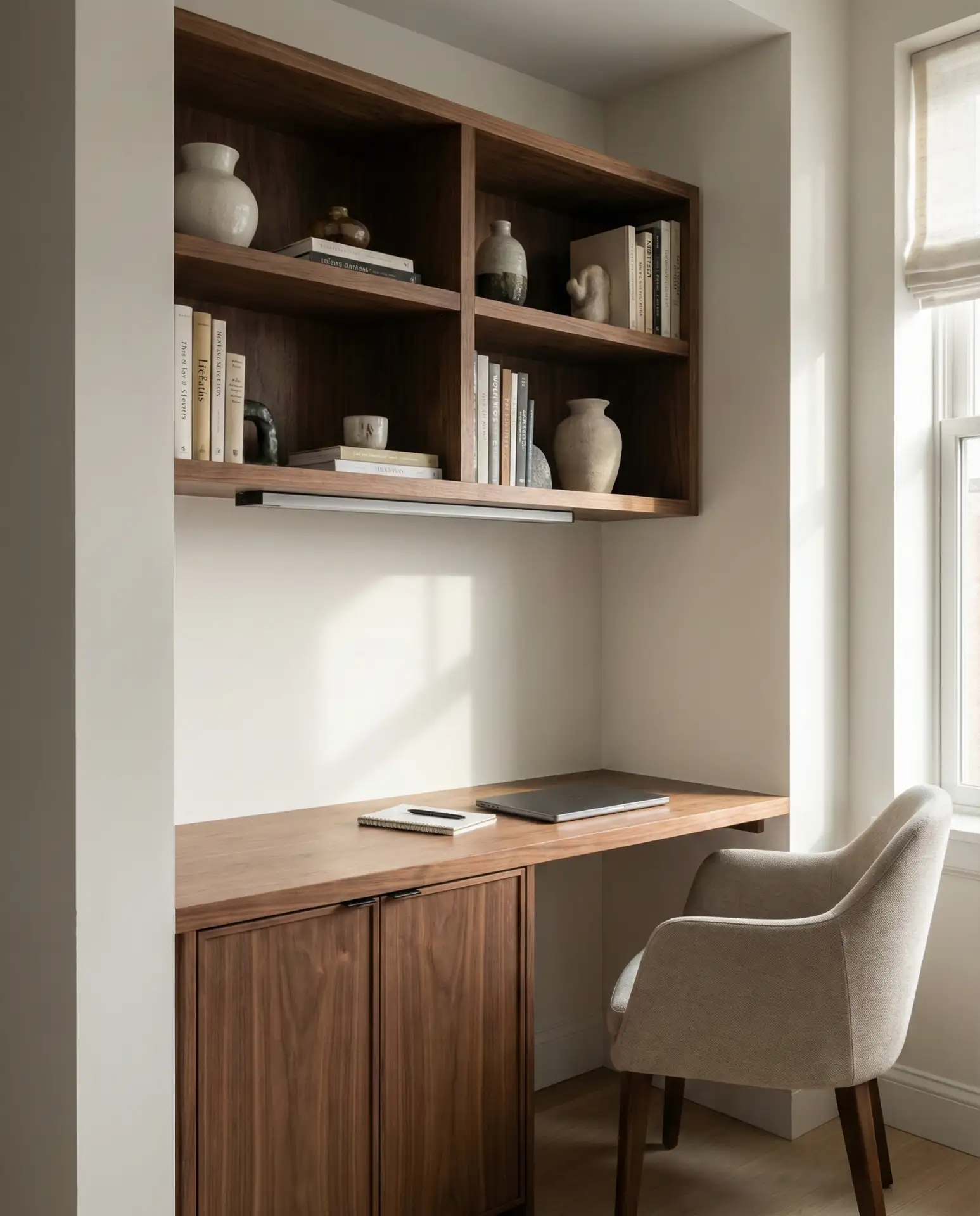
In Portland’s compact apartments and San Francisco’s high-density neighborhoods, where space commands premium prices, furniture that serves multiple purposes isn’t just clever—it’s essential. The desk-shelf combo typically requires just twenty-four to thirty-six inches of wall width, delivering workspace and storage in less floor area than a traditional desk and separate bookcase would consume separately.
Conclusion
These twenty-two approaches to living room shelving reflect how Americans are rethinking vertical space in 2026—prioritizing flexibility, personality, and practical beauty over generic solutions. Whether you’re drawn to the raw honesty of industrial pipes, the refined calm of Scandinavian minimalism, or the collected warmth of coastal textures, the right shelving transforms walls from blank barriers into active participants in your daily life. Share your favorite ideas or your own shelving solutions in the comments below—we’d love to hear how you’re making your living room walls work harder and look better.