If there’s one thing dominating home design searches right now, it’s the accent wall—and in 2026, it’s gotten a serious upgrade. Americans are scrolling Pinterest by the millions looking for fresh ways to transform a single wall into the focal point of their entire living space, whether that means a moody dark green limewash finish or a sleek wood-paneled backdrop behind the TV. This article rounds up the most inspiring living room accent wall ideas for 2026, covering everything from bold paint choices to peel-and-stick wallpaper, farmhouse shiplap to mid-century modern paneling. Whatever your style, your budget, or your square footage, there’s something here that’ll make you want to pick up a paintbrush—or at least call your contractor.
1. Limewash Accent Wall in Warm Terracotta
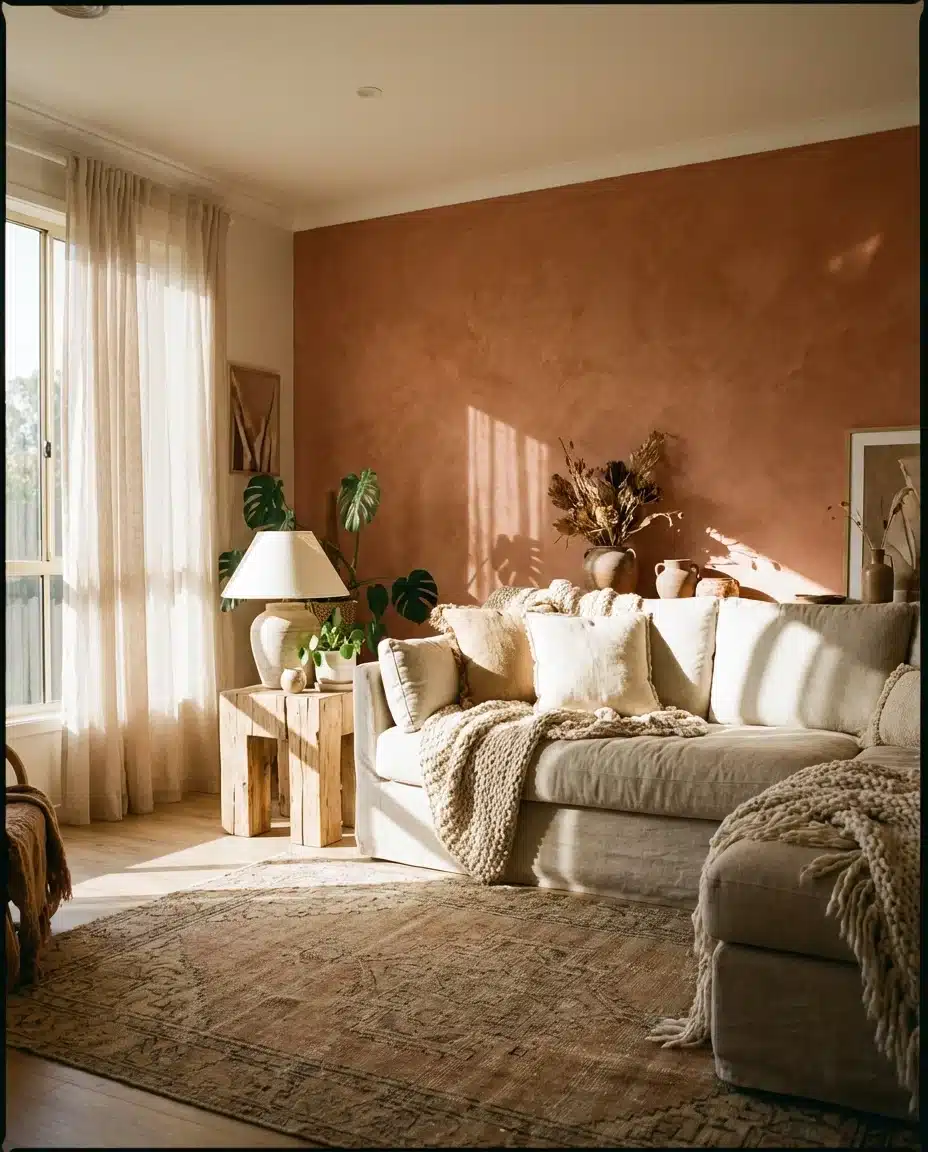
The limewash trend has officially moved from boutique hotels into everyday American homes, and it looks stunning on a single living room wall. This technique creates soft, layered depth—never flat, never predictable—and the warm terracotta palette feels grounded yet modern. It pairs beautifully with linen couch upholstery and natural wood furniture, making the wall feel like it has genuine character rather than just a coat of paint. It’s the kind of wall that people walk into a room and immediately say, “What is that?” I love it.”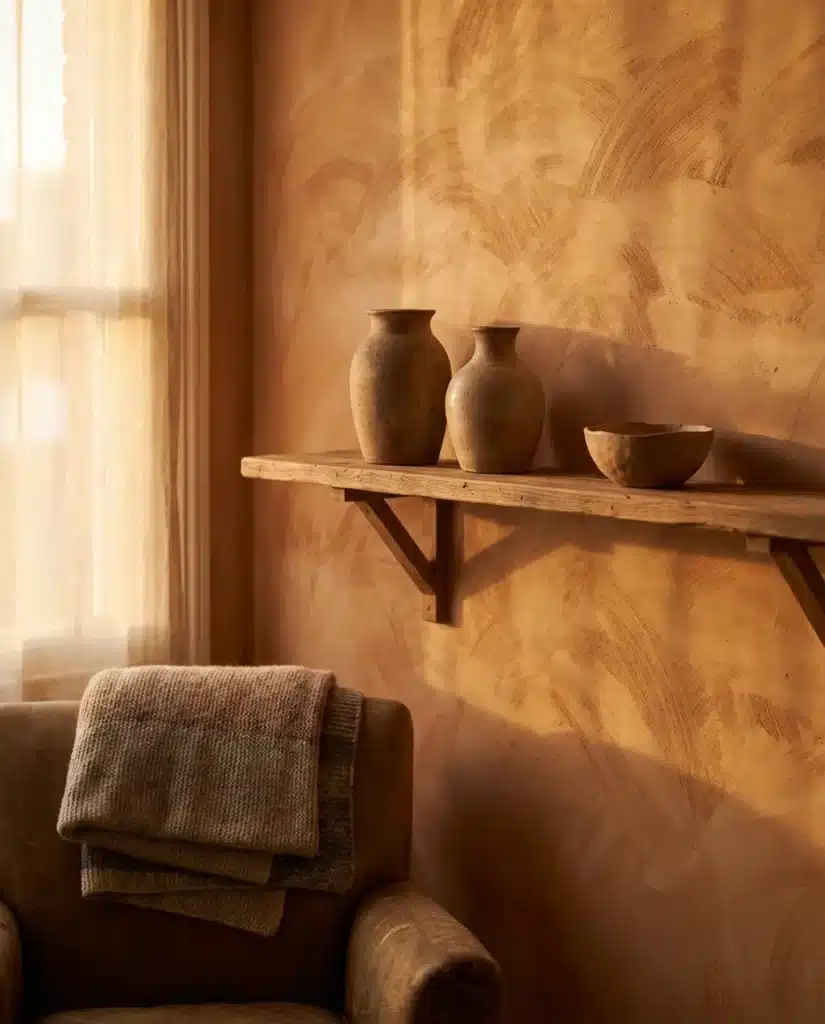
Limewash paint is surprisingly accessible for a DIY weekend project—most major retailers like Benjamin Moore and Portola Paints carry ready-to-use versions for under $80 a gallon, which is more than enough for one wall. Budget-conscious decorators love that the imperfect application actually works in their favor: every stroke adds to the effect rather than exposing a mistake. You really can’t mess it up, and that’s part of what makes it so popular with first-time renovators who want drama without the risk.
2. Dark Green Velvet-Feel Painted Wall
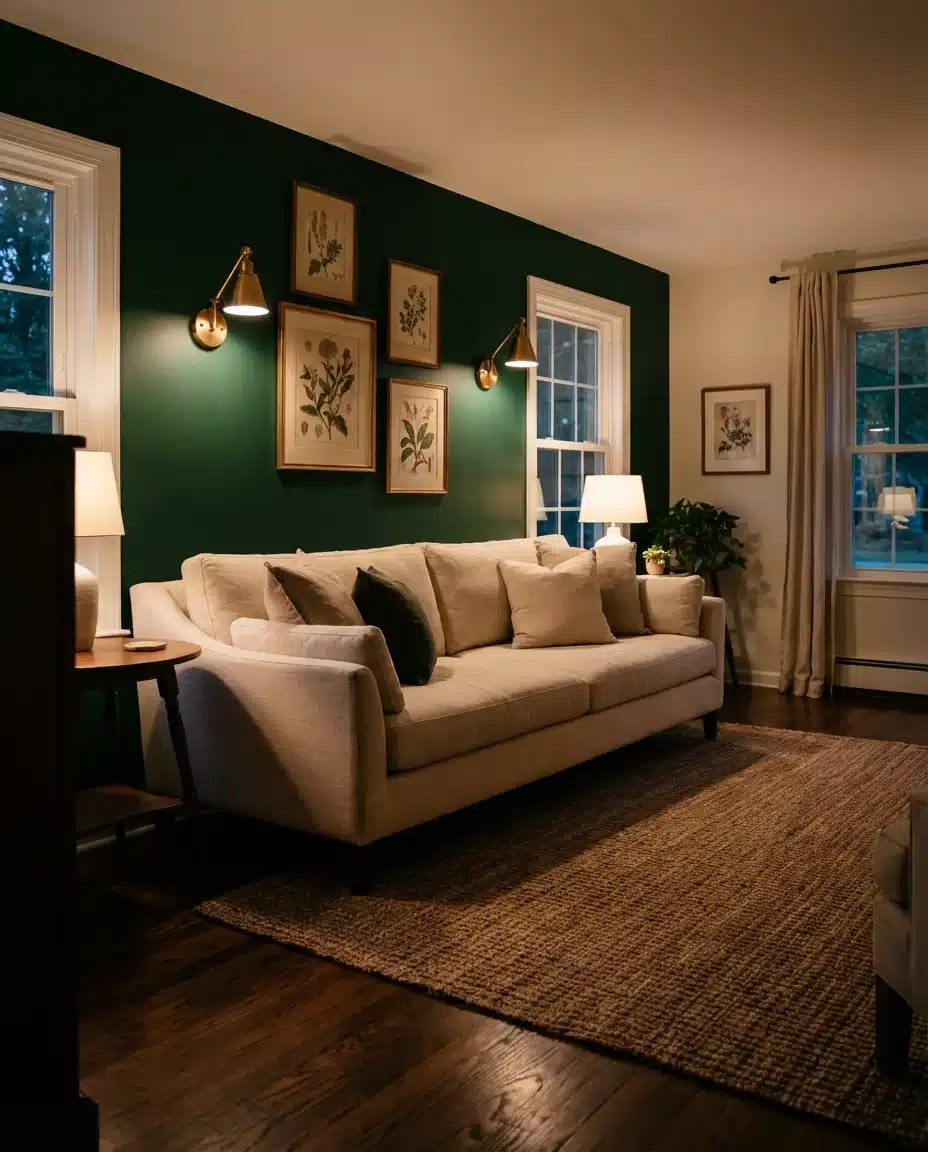
Deep, moody dark green has been climbing the charts of interior color ideas for a couple of years now, and in 2026 it’s fully arrived. Think hunter green, forest, and bottle green—rich tones that give a living room instant sophistication without feeling cold. When applied to a single accent wall, this color creates an almost gallery-like atmosphere, especially when paired with brass fixtures, warm lighting, and natural textures like rattan or jute. It photographs beautifully, which is a big reason it keeps going viral on Pinterest boards.
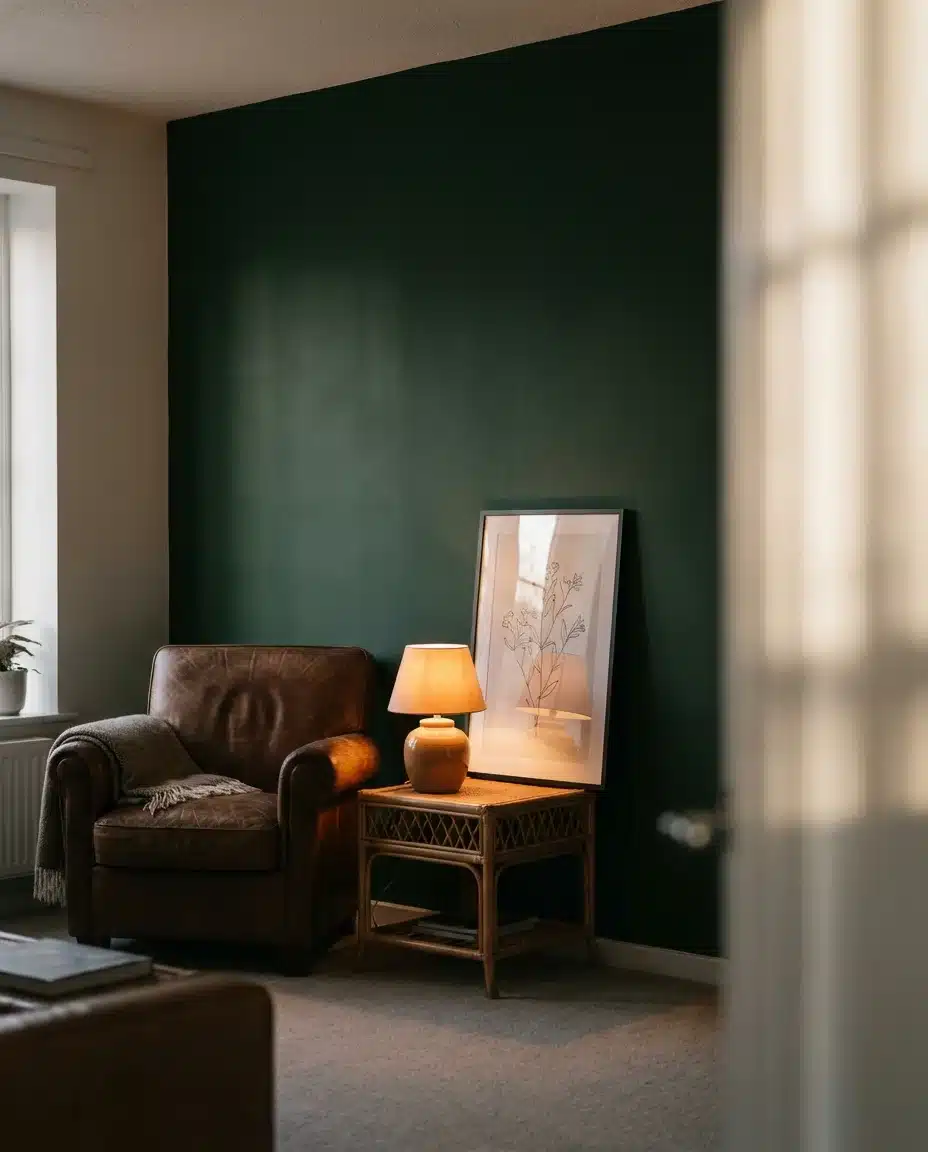
Design experts consistently point to dark green as a color that actually makes small rooms feel larger rather than smaller—counterintuitive but true. The depth of the hue draws the eye in and creates the illusion of receding space. If you’re hesitant, test with a large peel-and-stick swatch first. Most homeowners who do end up going bolder than they initially planned, because seeing the color in context removes the fear entirely. Trust the swatch, then go one shade darker.
3. Wood Paneling Behind the TV
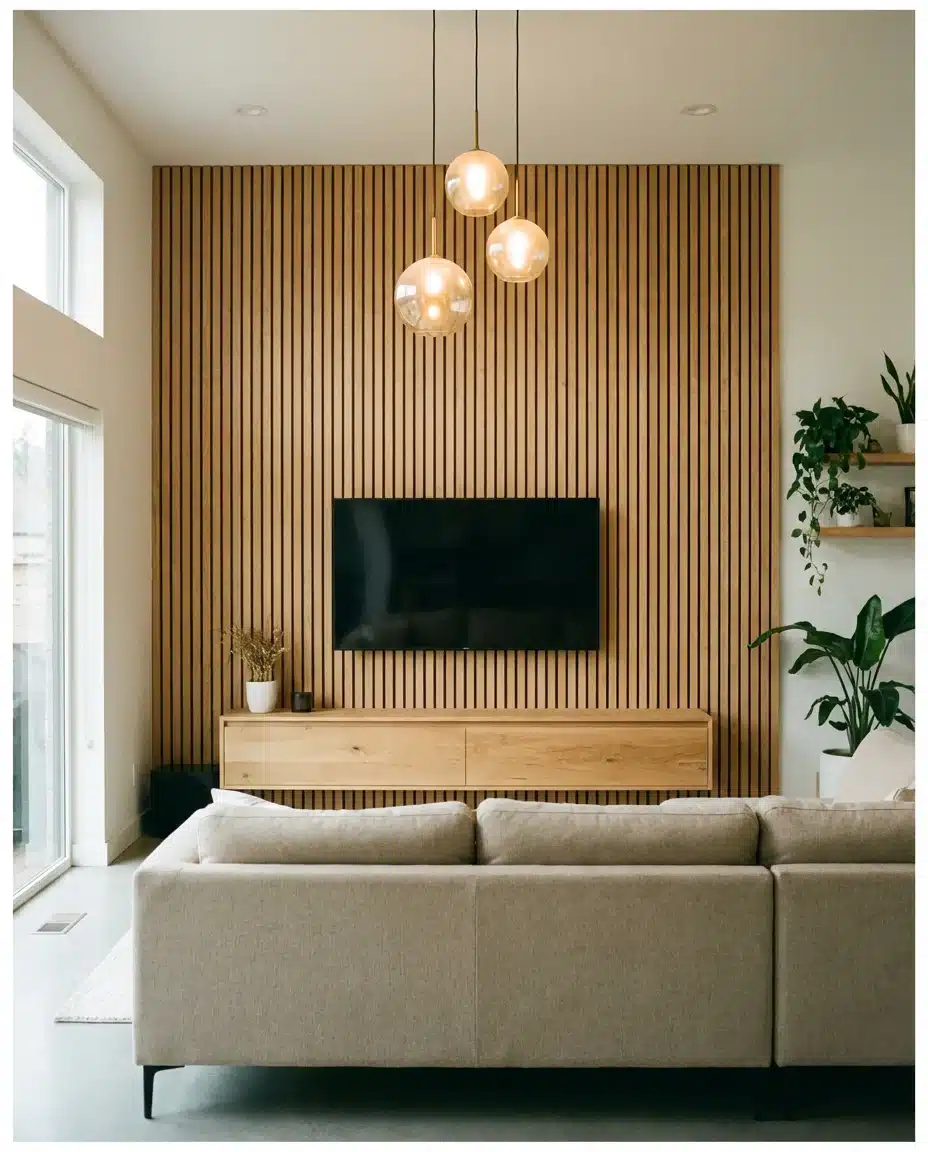
Wood paneling has completely shed its 1970s basement stigma and come back as one of the most requested features in living rooms across the country. Specifically, slim vertical slat panels or wide horizontal boards installed behind the TV create a built-in, architectural look that elevates the entire wall. Whether you go with natural oak, walnut stain, or a painted finish, the texture and dimension a paneled wall adds is hard to replicate with any other material. It turns the TV wall from an afterthought into the room’s most intentional design moment.
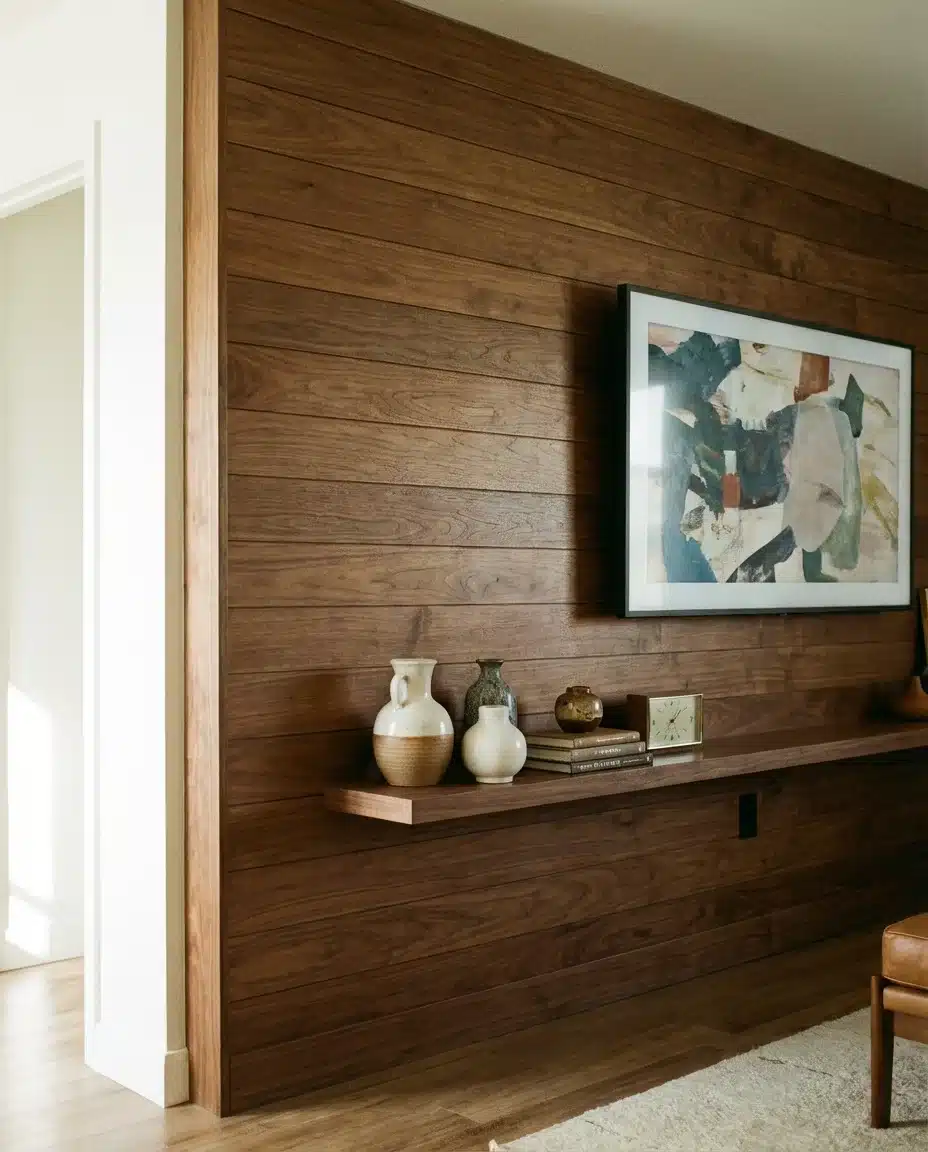
This look works best in open-concept living rooms where the TV wall is visible from the kitchen or dining area—the paneling anchors the space and gives the great room a clear focal point. Homeowners in new construction builds especially love this treatment because it adds the architectural character that freshly built homes often lack. A local carpenter can typically install a basic slat panel wall for $800–$1,500, and pre-made panel kits from places like Home Depot start around $200 for a DIY option.
4. Black Accent Wall With Gallery Art
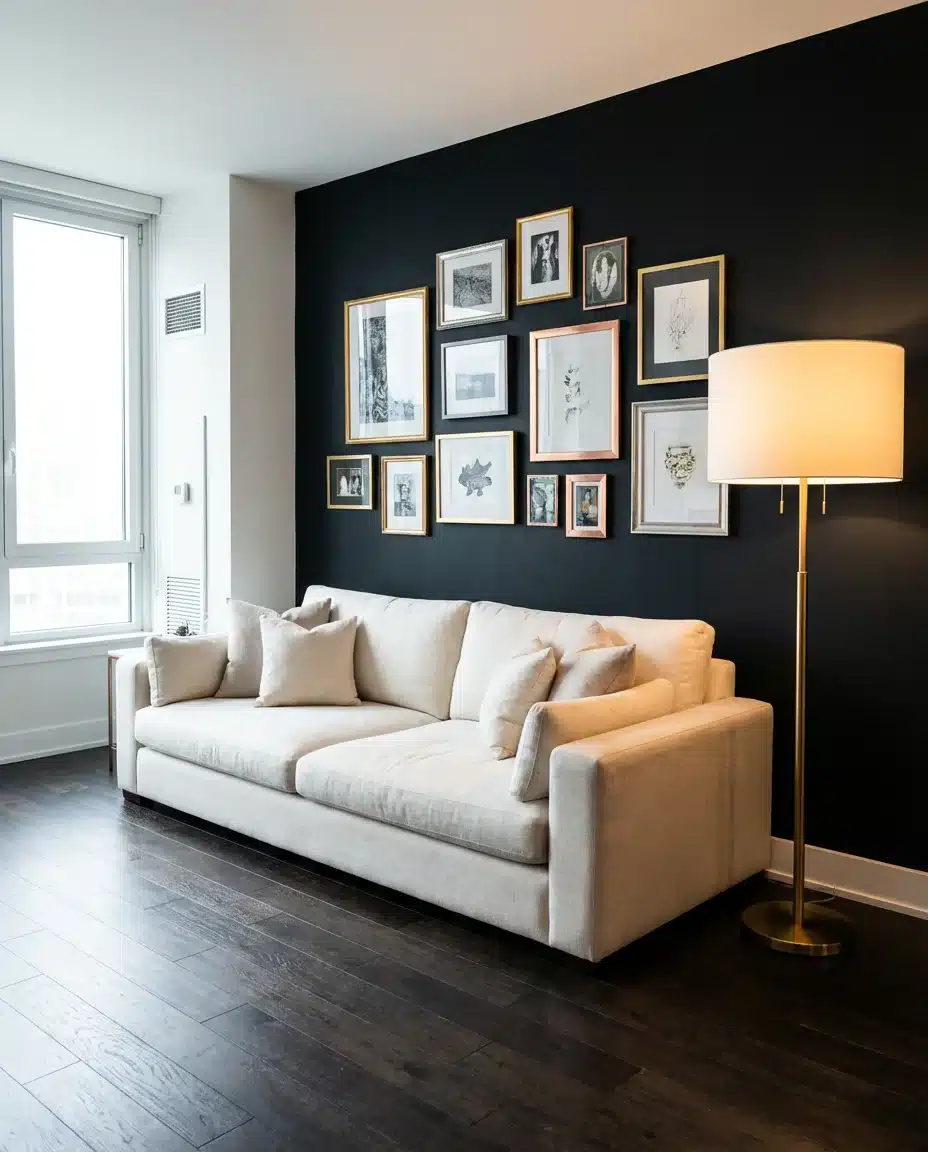
A black accent wall is one of those color choices that feels scary until it’s done—and then you wonder why you waited so long. Matte black in particular creates a backdrop so commanding that everything in front of it looks more intentional, more curated, and more expensive. It’s the interior designer’s version of a black turtleneck: timeless, versatile, and always chic. Gallery walls of mixed-frame art really shine against black, especially when you mix metal frames with light-colored prints that contrast beautifully against the dark wall.
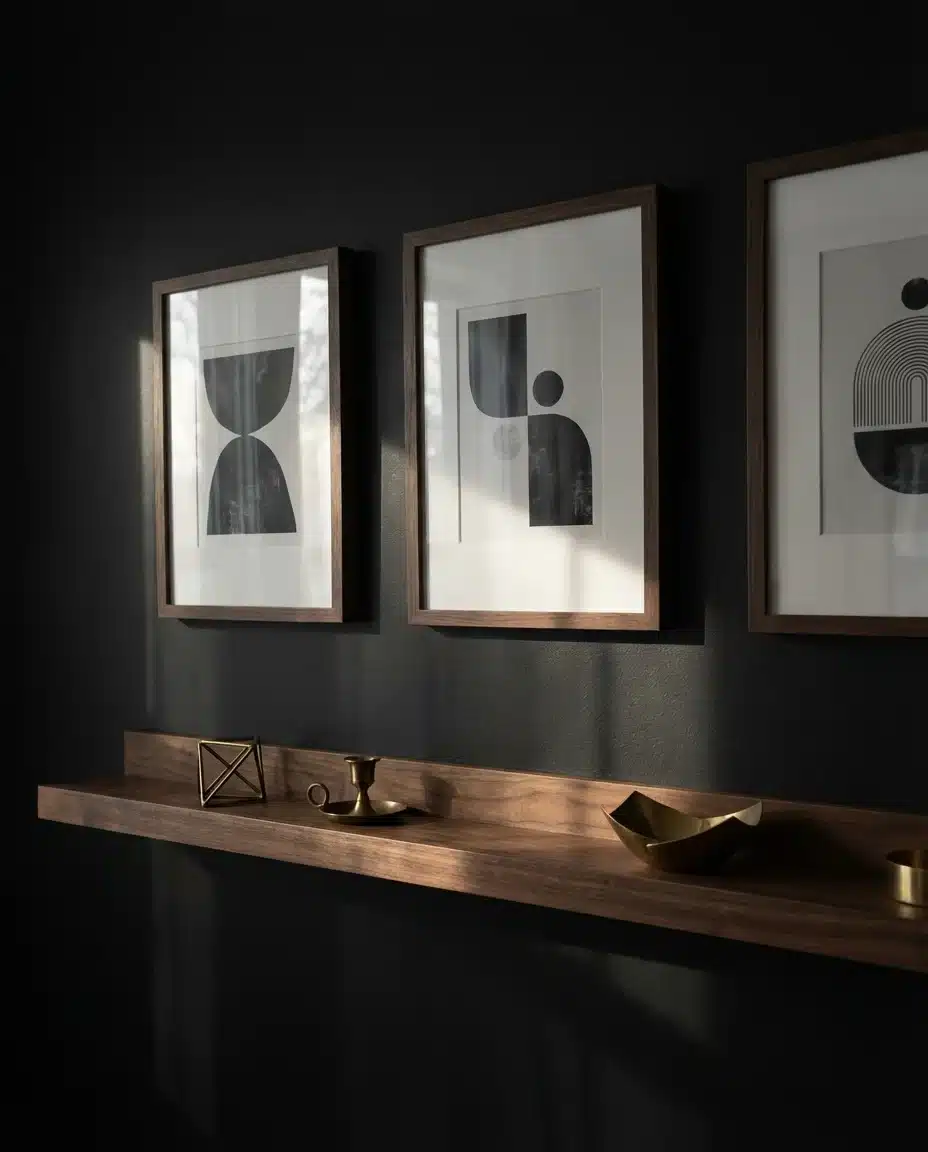
One mistake people make with black accent walls is choosing the wrong finish. Flat or matte is almost always the right call—eggshell and satin can create uneven light reflection that makes the wall look blotchy in certain lighting conditions. Also, don’t skip primer. A proper primer coat (specifically a dark-tinted one) saves you two to three additional paint coats and makes the final result dramatically more even. Your painter—or YouTube—will tell you the same thing.
5. Shiplap Fireplace Wall in White
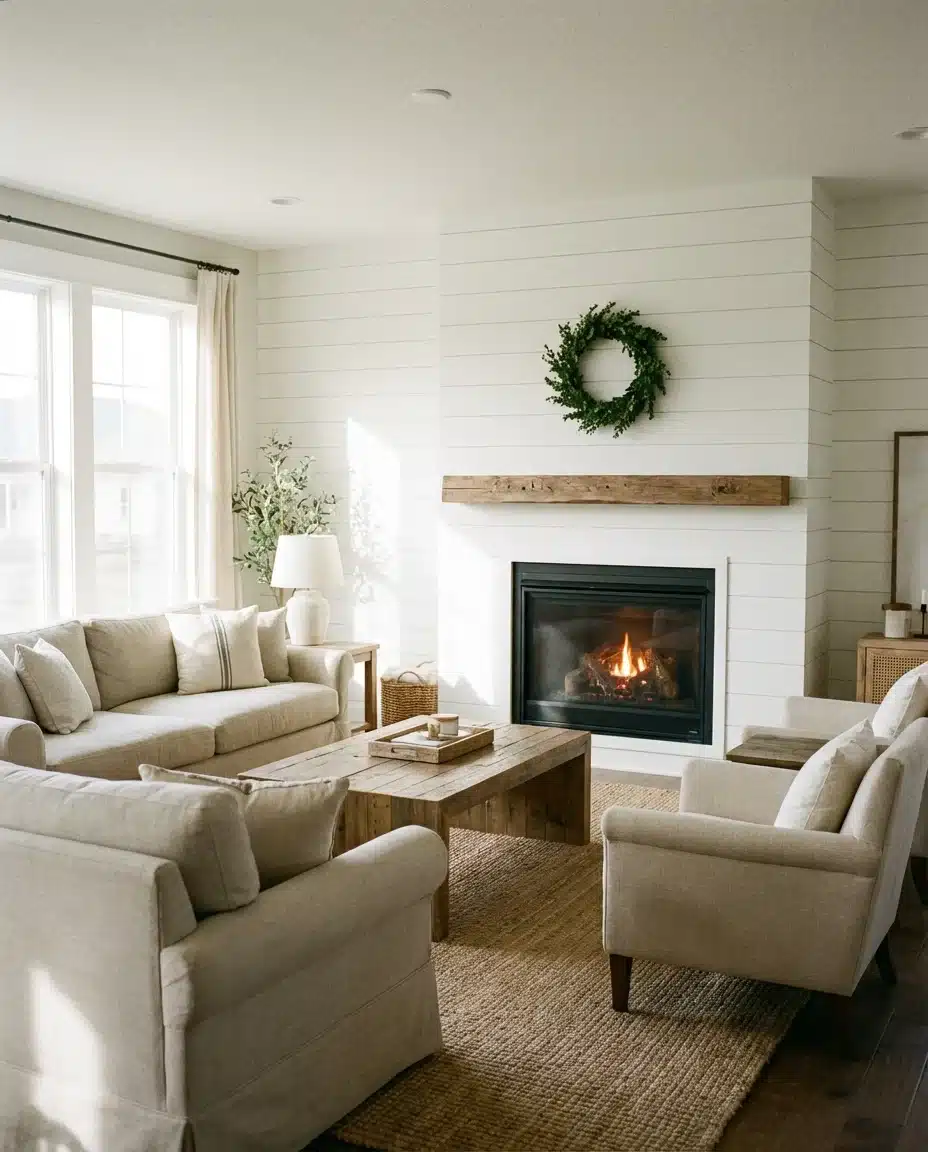
Few things say “American living room” quite like a white shiplap wall framing a fireplace. This combination has been a Pinterest mainstay for years because it hits so many design goals at once: warmth, texture, brightness, and that relaxed, lived-in feel that farmhouse style does so well. The horizontal lines of shiplap draw the eye outward, making narrow rooms feel wider, and the clean white reflects light in a way that keeps the space feeling airy even when the fireplace is roaring. It’s one of those looks that feels both timeless and completely current.
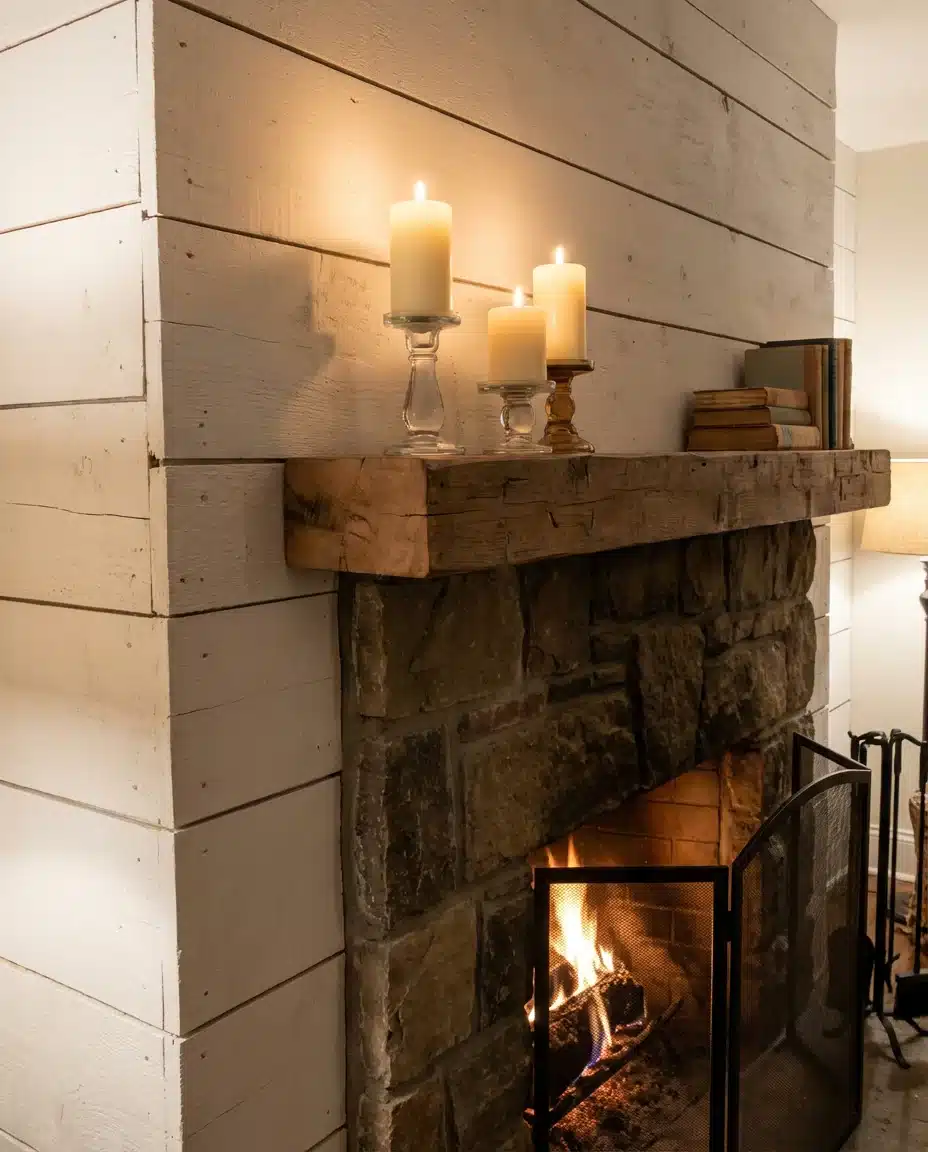
This combination resonates especially strongly in the South and Midwest, where the farmhouse aesthetic has deep roots in actual residential architecture. Homeowners in Nashville, Boise, and Columbus have been installing shiplap fireplace walls at a remarkable clip over the past few years—sometimes as a full DIY project using pre-primed MDF shiplap boards from the lumber yard. Sarah, a homeowner in Knoxville, finished her entire fireplace wall in a weekend for under $300 and said it was the single best upgrade she made to her home before selling it.
6. Blue Accent Wall With Mid-Century Vibes
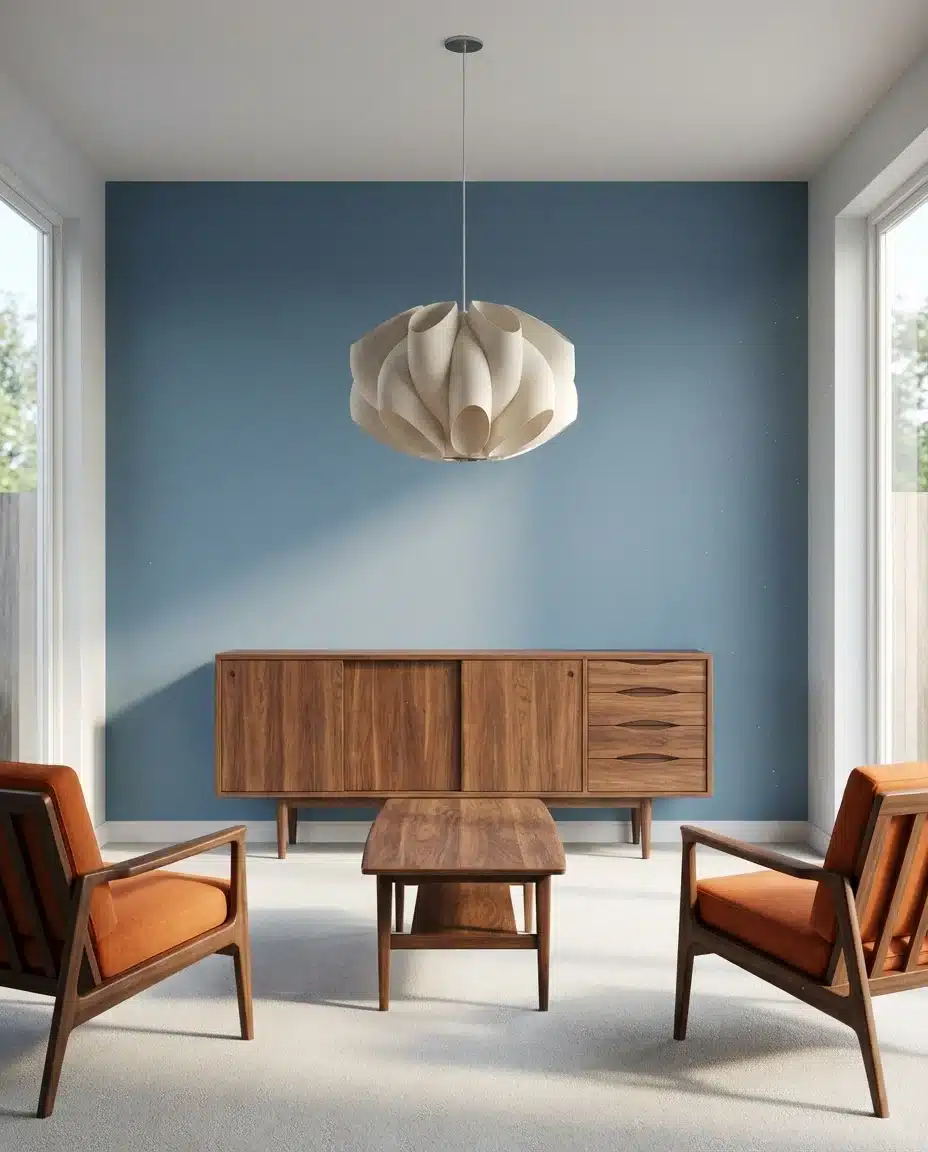
A blue accent wall in a mid-century modern living room is a pairing that just works—the cool, saturated hue of a slate or dusty blue perfectly complements the warm walnut tones and tapered legs that define the style. Think of the wall as the canvas that lets those iconic silhouettes pop. Whether you’re going for a full deep navy or a lighter muted blue, the key is choosing a tone with grey or green undertones rather than bright royal blue, which tends to read as too juvenile in a grown-up living room. This is a color that photographs like a dream.
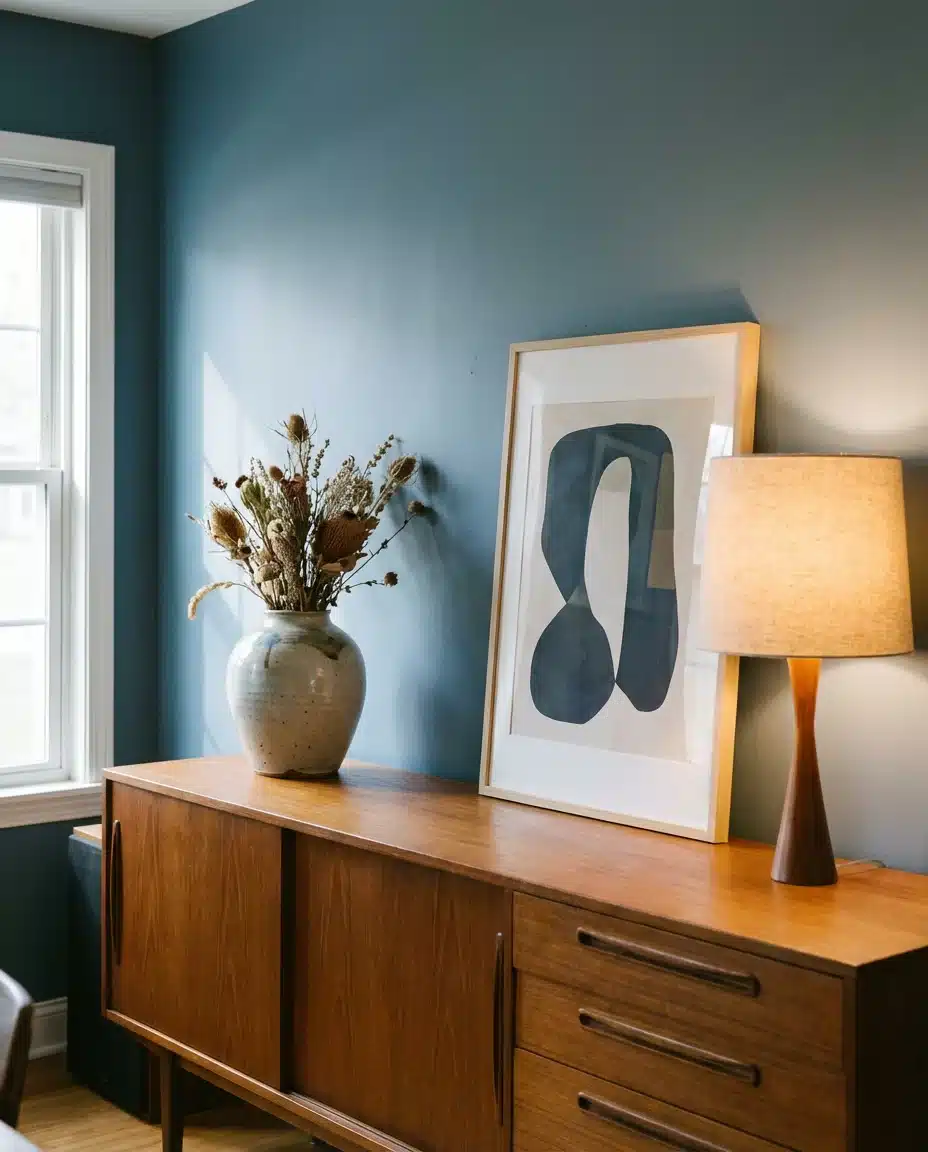
Interior designers who specialize in mid-century restorations—particularly in cities like Los Angeles, Palm Springs, and Chicago—almost unanimously recommend blue as the go-to accent color for the style. It nods to the era’s optimism and love of bold color without feeling costume-like. If you’re working with an original 1950s or 1960s home, a single blue accent wall can restore the period atmosphere without a full renovation. Pair it with a mustard or terracotta throw for a color story that feels both vintage and very much 2026.
7. TV and Fireplace Wall With Built-In Shelving
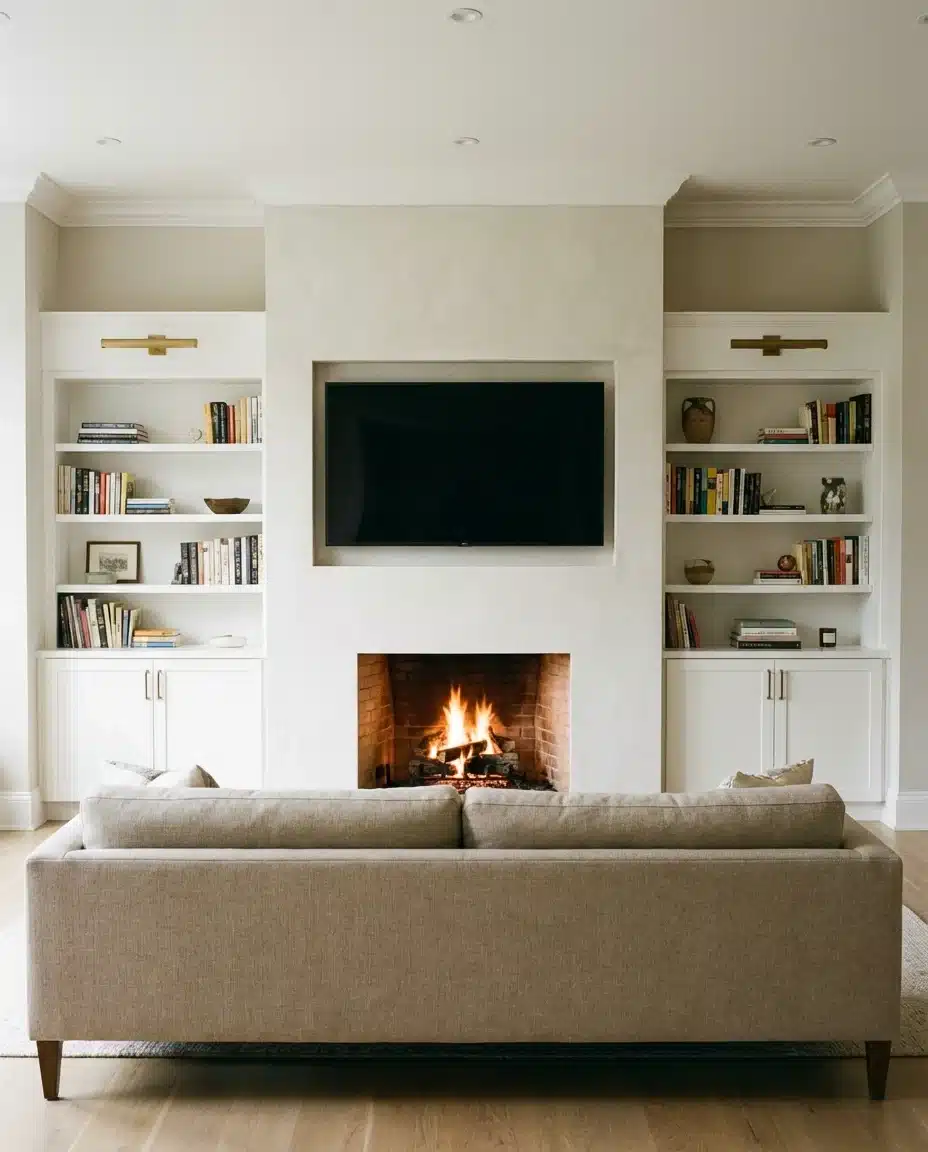
Combining the TV and fireplace on one wall with flanking built-in shelves is one of the most functionally satisfying accent wall designs you can do in a living room. It solves the eternal debate of where to put the TV relative to the fire, and the built-ins on either side add both storage and visual weight that makes the whole wall feel intentional and custom. Paint the entire wall—shelves, fireplace surround, and all—in a single matte color for a cohesive, architectural result that looks far more expensive than it actually is.
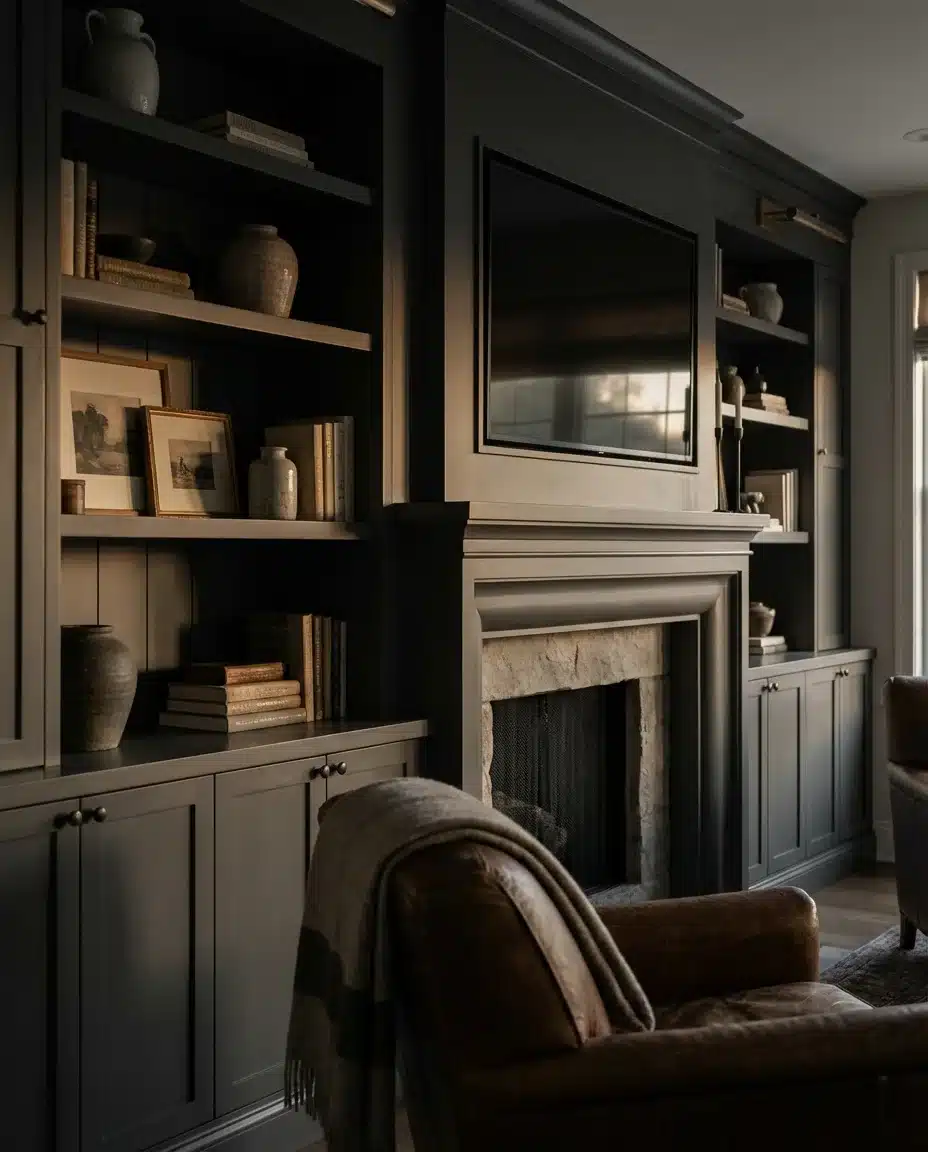
This layout works best in rooms that are at least 14 feet wide, giving you enough visual breathing room so the wall doesn’t feel cramped. In American living rooms that are wider than they are deep—a common layout in ranch-style homes—this treatment essentially creates a brand-new architectural feature that feels like it was always meant to be there. Contractors typically charge $3,000–$6,000 for custom built-ins, but IKEA Billy bookcase hacks flanking a painted fireplace wall can achieve a remarkably similar effect for a fraction of the cost.
8. Peel and Stick Wallpaper for Renters
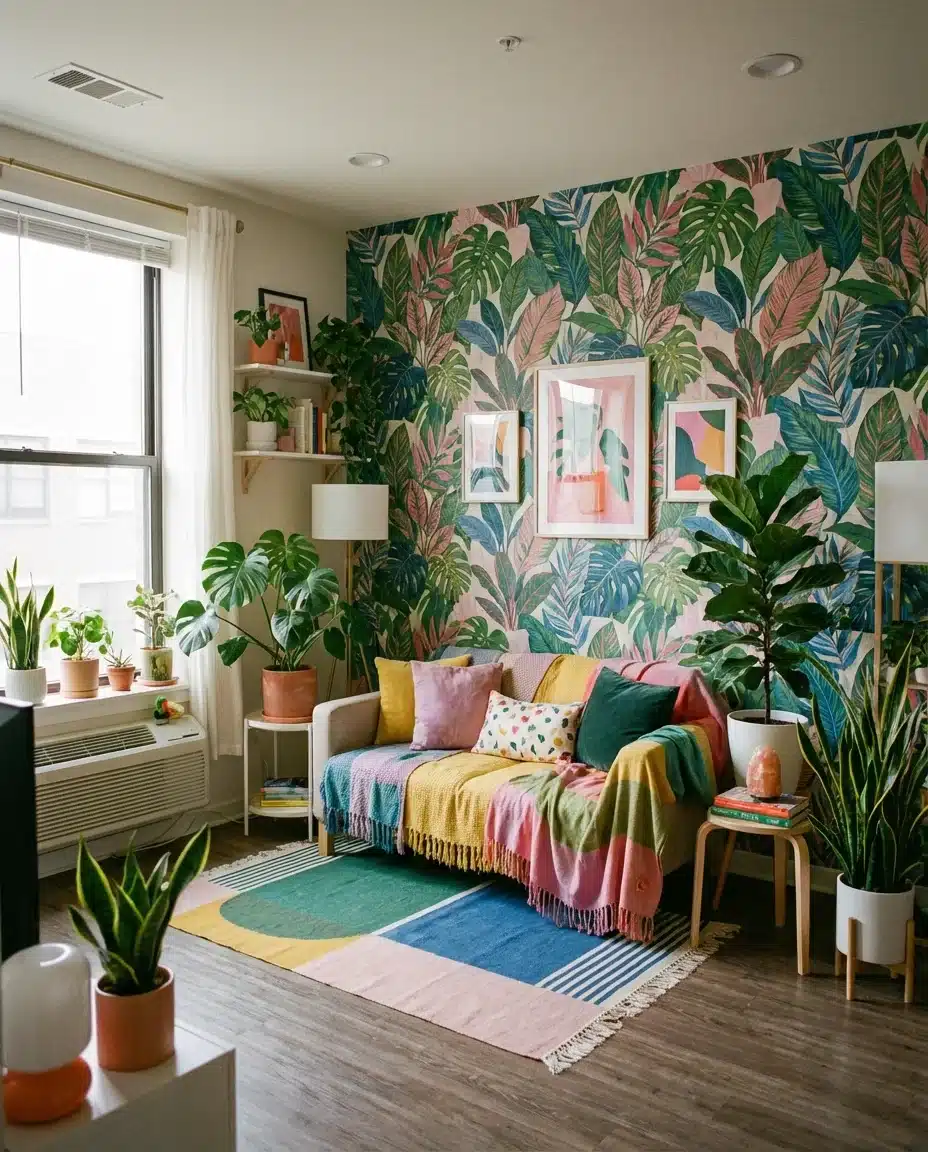
For the millions of Americans renting apartments, peel-and-stick wallpaper ideas have become a genuine game-changer. The category has exploded in quality over the past few years—patterns once reserved for traditional wallpaper are now available in removable, renter-friendly formats that go up in a few hours and come down without damaging the wall. From graphic botanical prints to faux grasscloth textures and abstract geometric patterns, there’s a decor option for every aesthetic. A single accent wall in a living room can completely change the energy of a space for under $100.
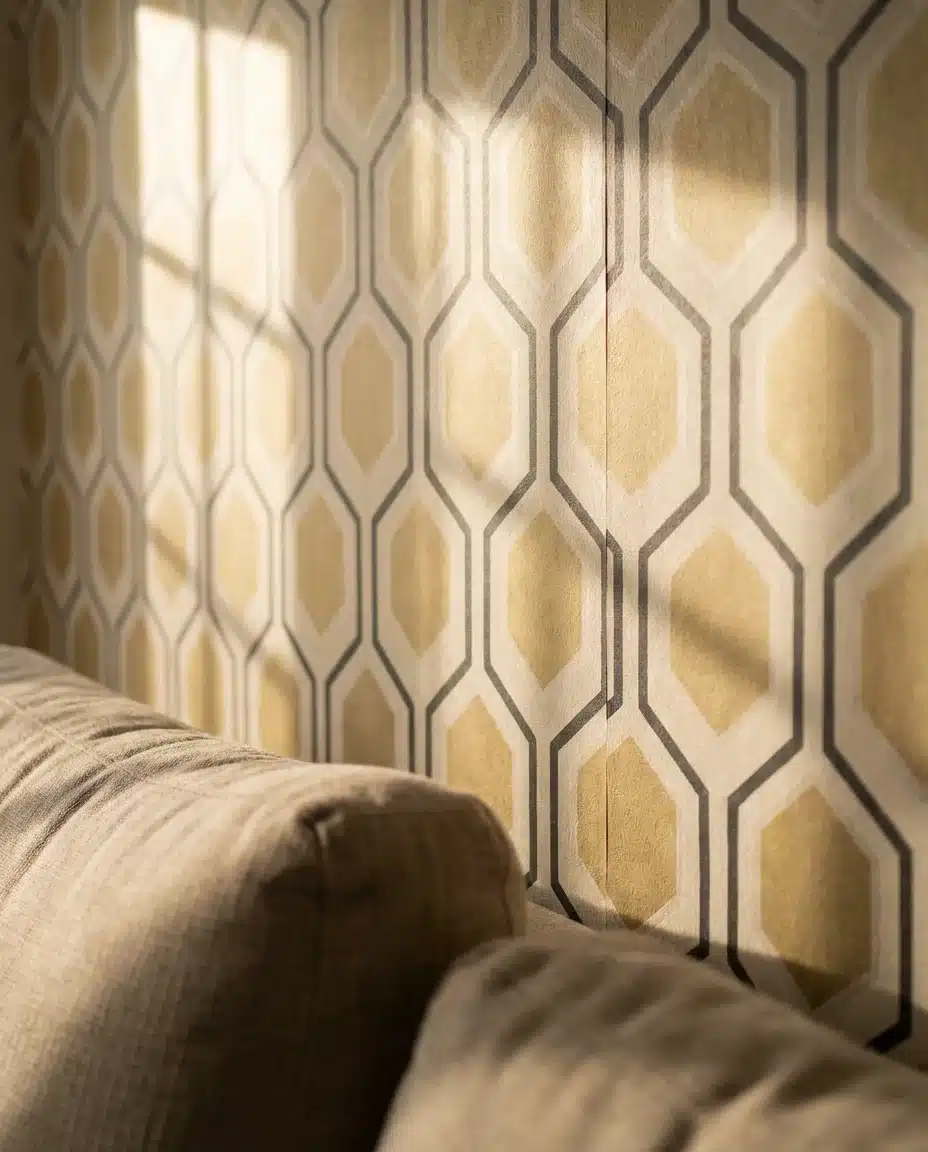
The common mistake with peel-and-stick wallpaper is rushing the installation. Bubbles and misaligned patterns are almost entirely caused by not taking the time to smooth each strip slowly from top to bottom with a squeegee. Also, let the wall breathe after you clean it—apply wallpaper to a freshly wiped wall and you’ll have adhesion problems. Give it 24 hours after cleaning, work in a room that’s not too hot or humid, and you’ll get a result that genuinely looks like professional wallpaper installation. No landlord necessary.
9. Dark Blue Moody Living Room Wall
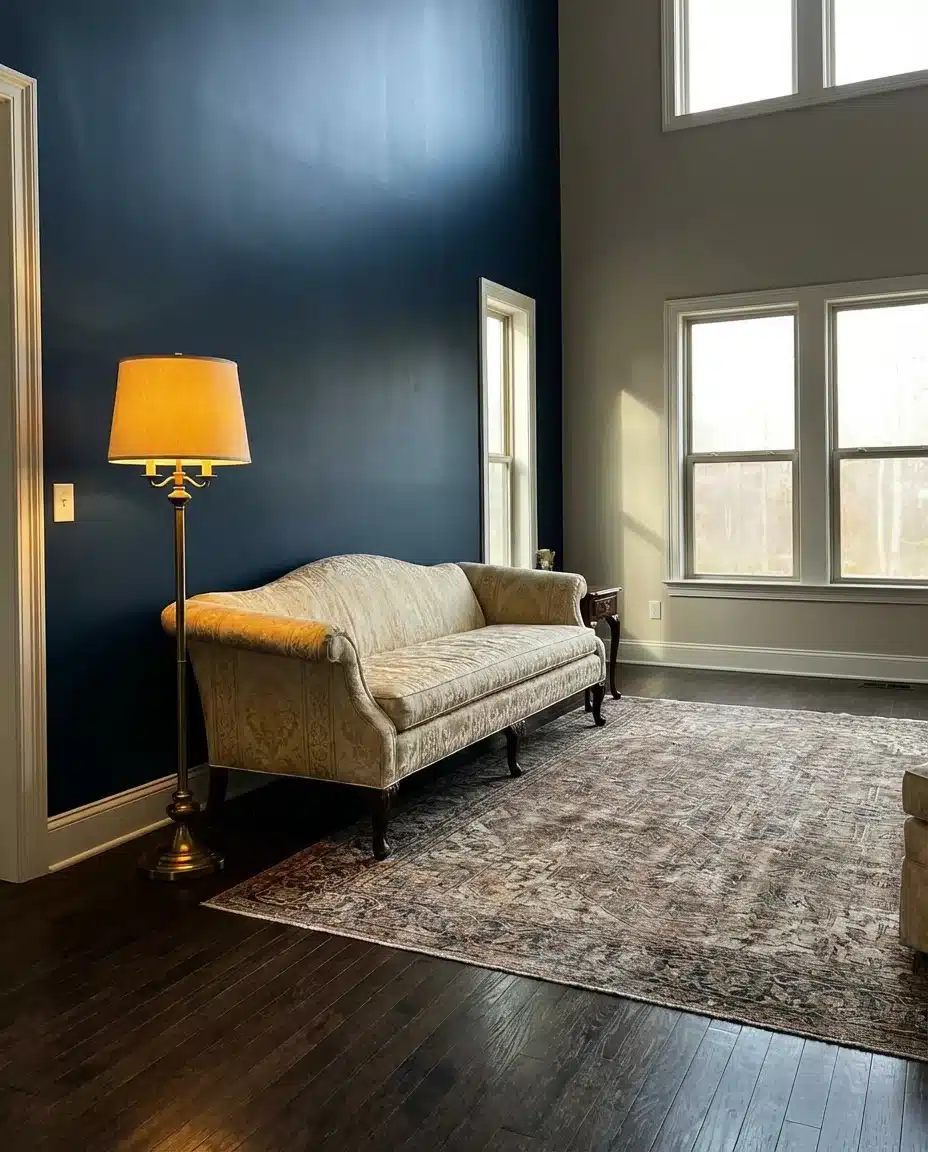
Dark blue is the new neutral, and designers have been saying it for two years—but in 2026 it’s finally landed in mainstream American living rooms in a big way. Deep navy, ink blue, and indigo accent walls create an immersive, almost cocooning atmosphere that makes a living room feel like the most sophisticated place in the house. These shades work exceptionally well in rooms with high ceilings and minimal natural light, where a light color would feel wan and unfinished rather than bright. The dark wall leans into the room’s moodiness instead of fighting it.
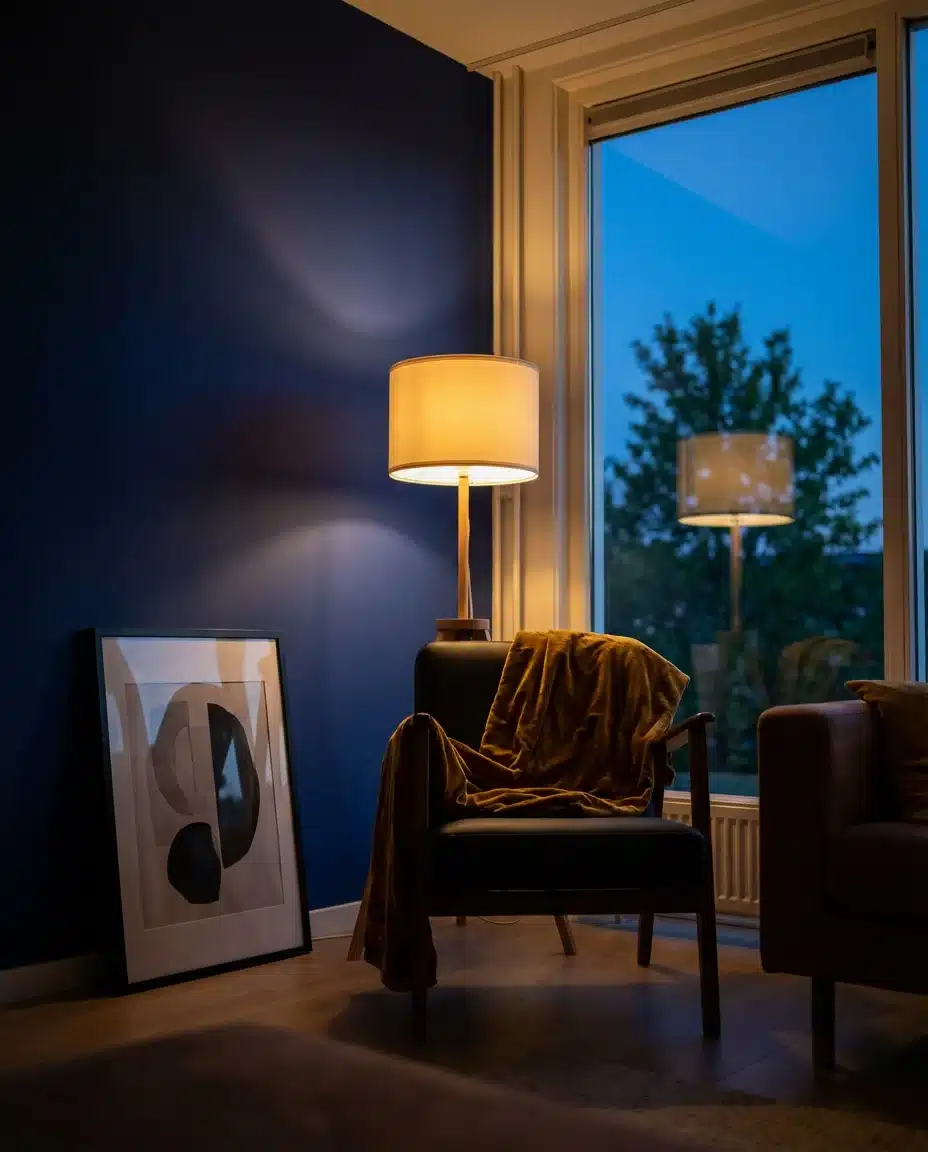
Dark blue reads differently depending on your light sources, and that’s part of the magic. In daylight it feels deep and rich; under warm incandescent bulbs at night it takes on an almost velvet quality. Homeowners who’ve made the switch often describe it as the room finally feeling “finished”—like it has a personality. The one regional caveat: in very hot climates like Phoenix or Miami, dark walls can psychologically make a room feel warmer than it is, which is something to weigh alongside your HVAC situation before committing.
10. House Painting Ideas With Greige and Warm White
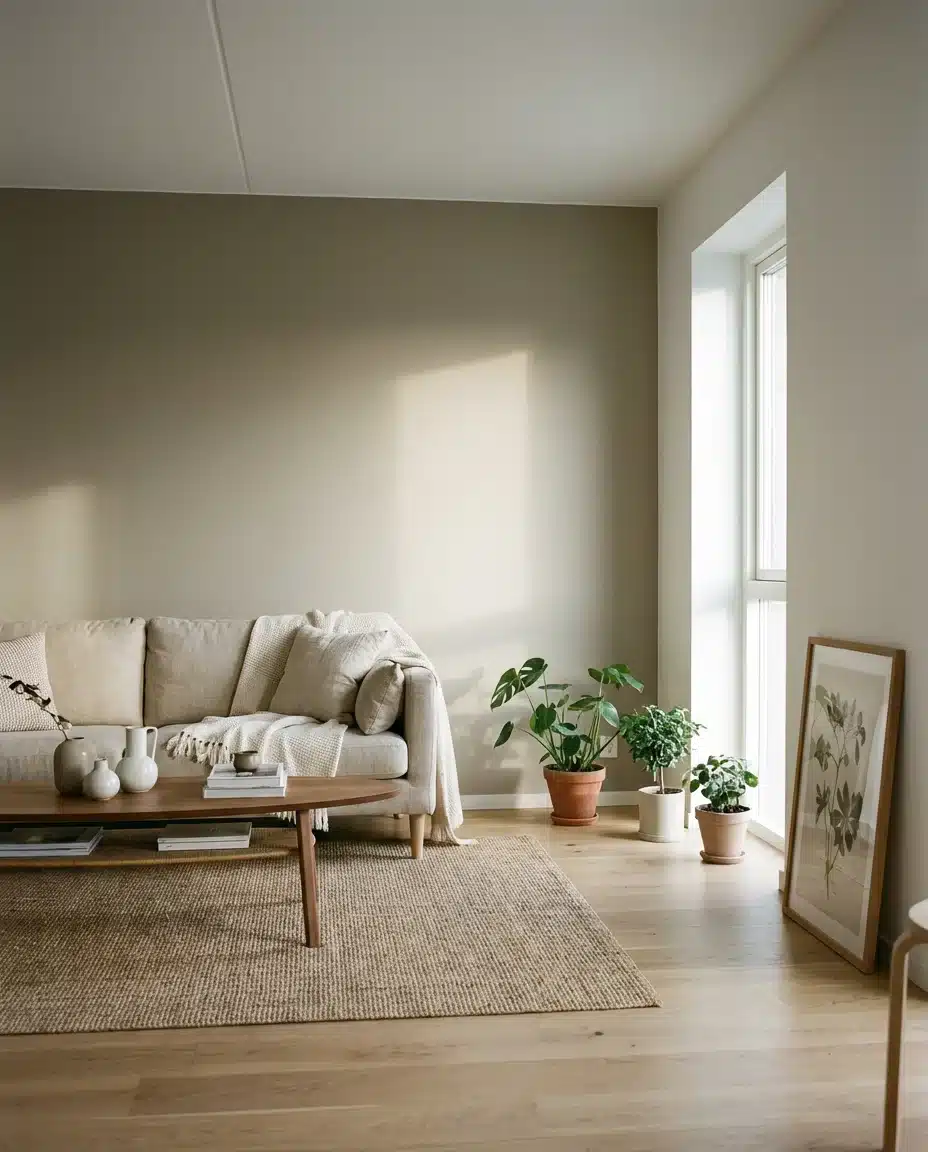
Not every accent wall needs to be dramatic. Some of the most effective house painting ideas for interior colors are the ones that create subtle contrast—a warm greige on the accent wall against bright white on the surrounding three walls, for example, gives a room definition without any one element competing for attention. This approach is particularly popular with homeowners who are staging a home for sale or who simply prefer a livable, long-term palette that doesn’t trend in and out. The result is a room that feels polished, grown-up, and endlessly adaptable.
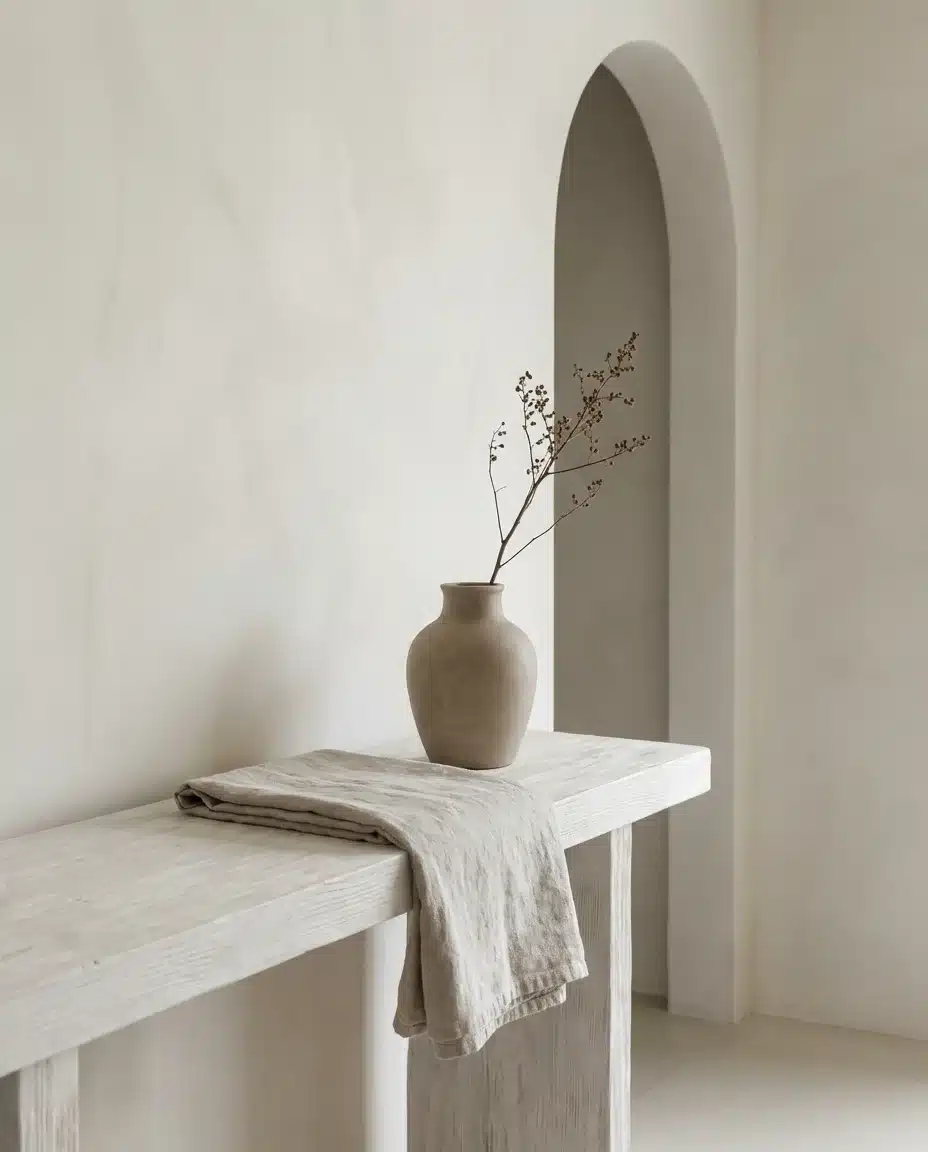
This is a look that works best in rooms facing north or east, where the light is cooler and you need warm undertones in the paint to counteract any blue or grey cast in the natural light. Benjamin Moore’s Pale Oak, Sherwin-Williams’ Accessible Beige, and Farrow & Ball’s Elephant’s Breath are three go-to picks that interior designers recommend over and over for exactly this use case. Ask your paint store to mix a large sample—at least a 12×12 swatch—before committing. The color will look entirely different on your wall than on the chip card.
11. Modern Living Room With Concrete-Effect Wall
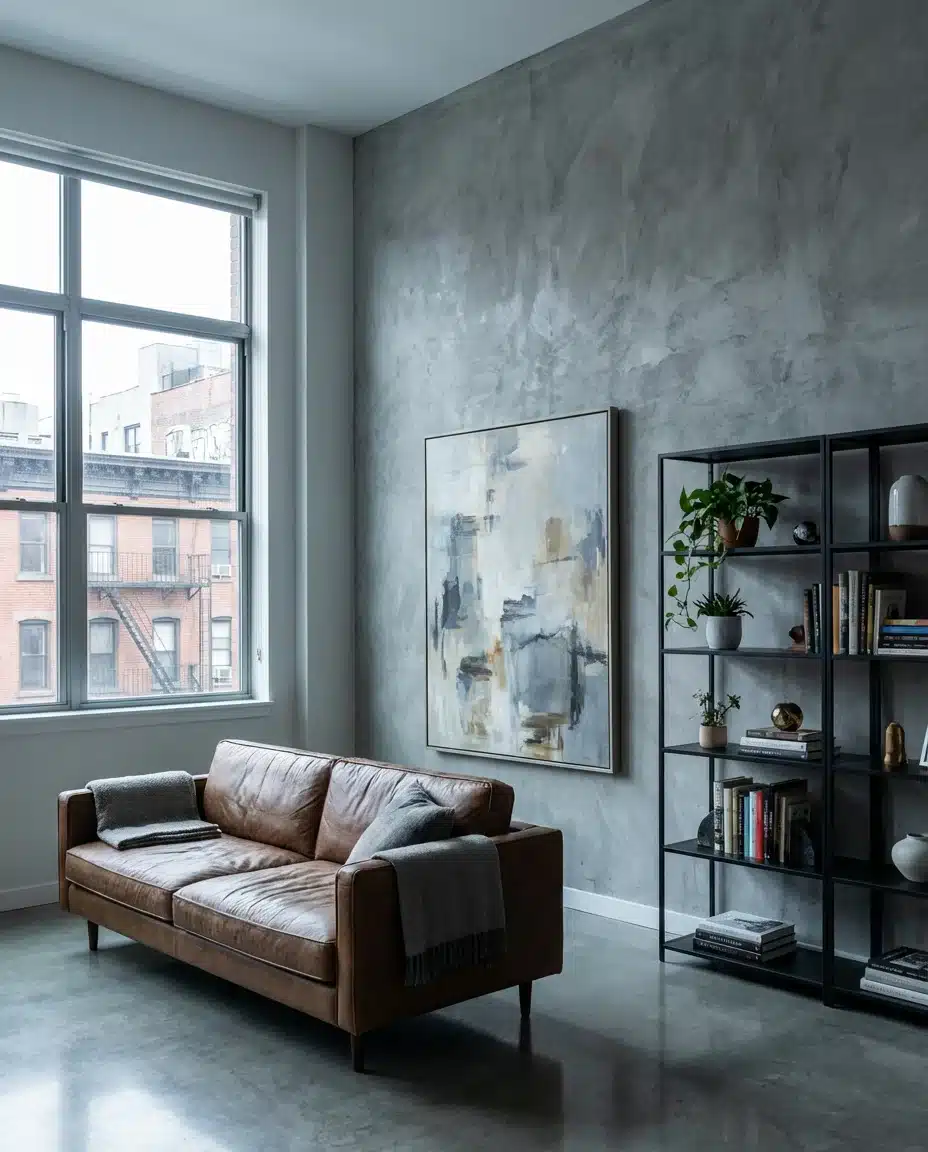
For anyone drawn to an urban, industrial-leaning aesthetic, a modern concrete-effect accent wall delivers serious visual impact without the structural commitment of actual concrete. Specialty paints, plaster finishes, and even wallpaper can convincingly replicate the cool grey texture of poured concrete, and when paired with black steel furniture, leather upholstery, and oversized art, the result is a living room that feels straight out of a New York loft or a converted Los Angeles warehouse. This is a strong color and texture choice for open-plan spaces where architecture needs to do some heavy lifting.
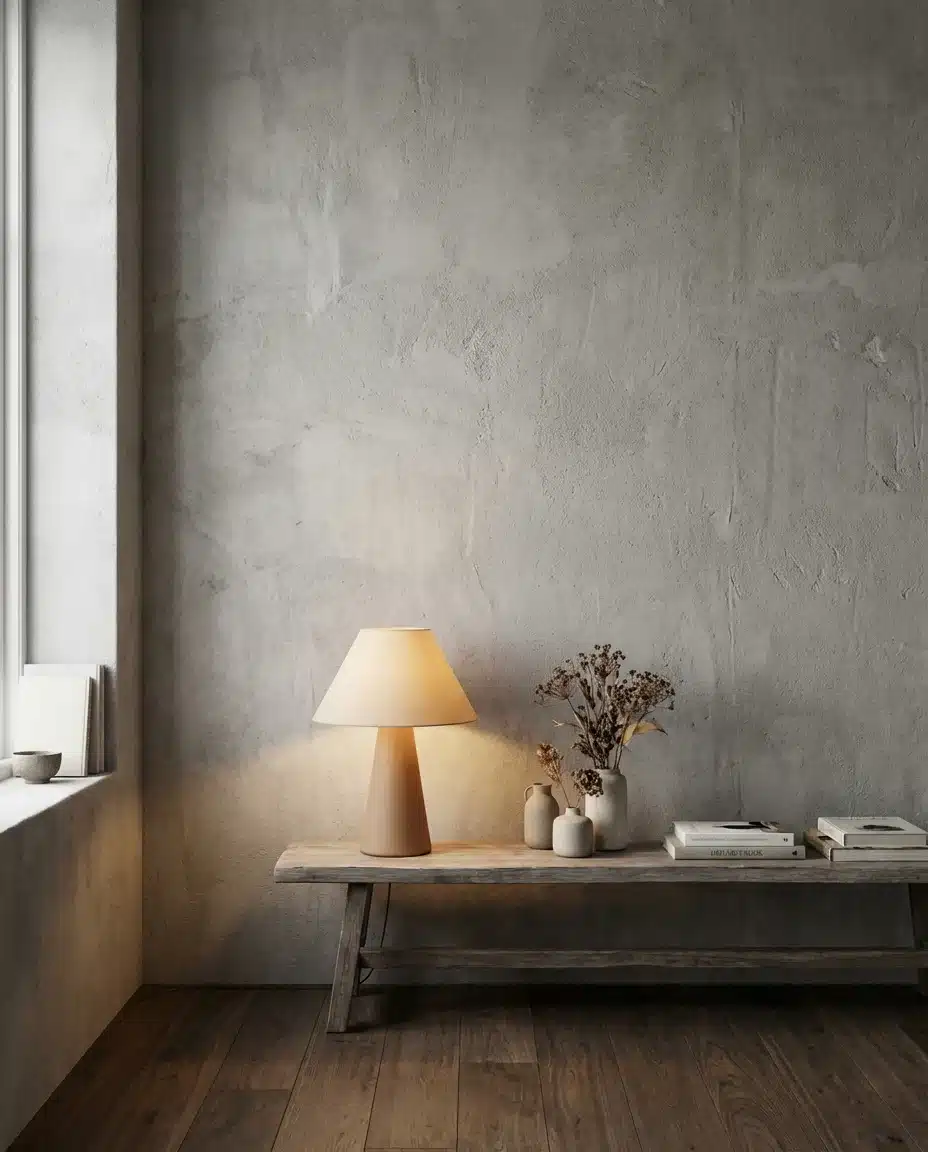
A real homeowner in Denver who renovated a mid-century townhouse used a Venetian plaster technique in warm grey tones on her main living room wall—the project took two days, and she did it herself following a YouTube tutorial. She noted that the wall became the first thing every single guest commented on. The lesson here is that texture, even faux texture, creates a physical presence in a room that flat paint simply can’t replicate. If you’re committed to the look, the learning curve is worth it.
12. Farmhouse Shiplap With Dark Moody Paint
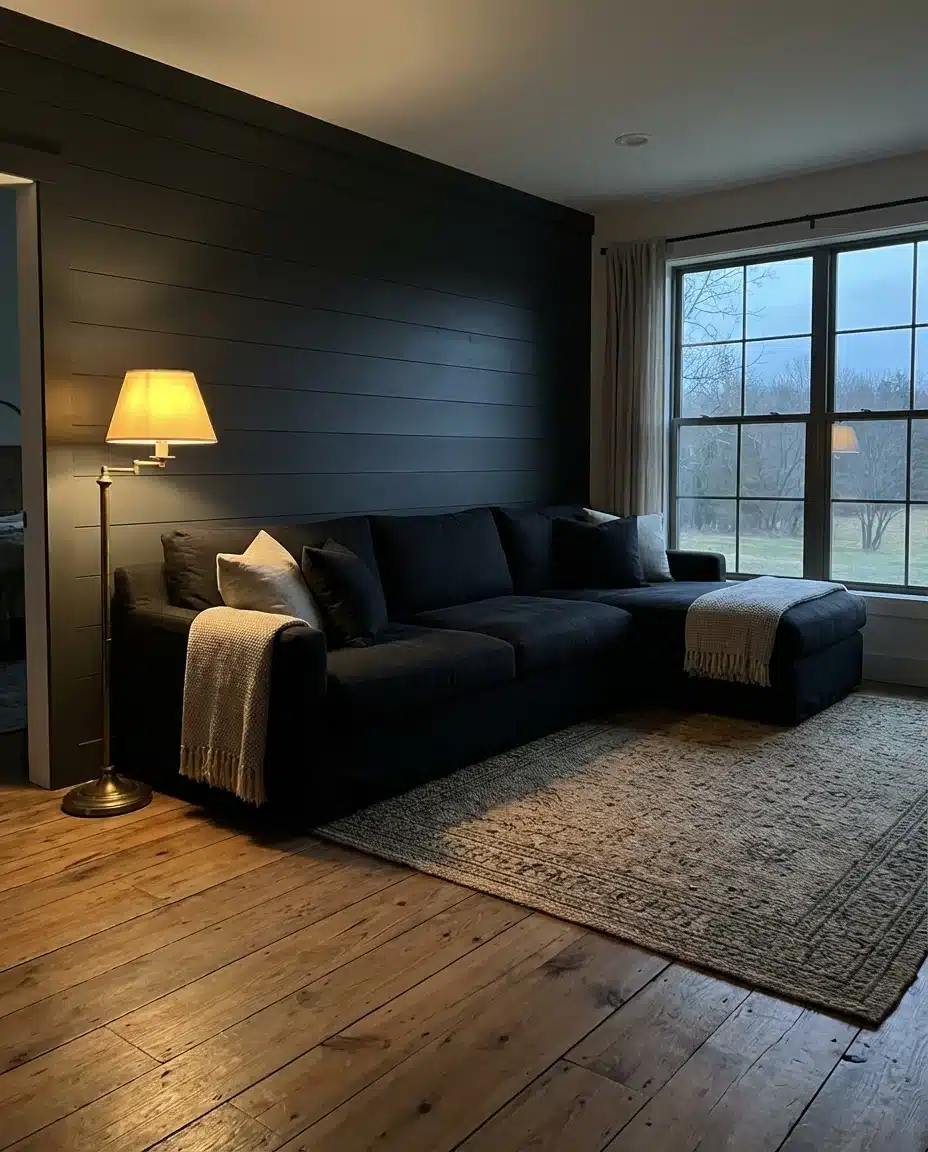
This is the evolution of the classic white farmhouse shiplap wall—and it’s arguably more interesting. Painting shiplap in a deep, moody hue like charcoal, black, or dark navy takes a rustic material and gives it an unexpectedly sophisticated twist. The contrast of the rustic plank texture against a dark, serious color creates tension in the best possible way. It suggests a home that’s been thoughtfully layered over time rather than decorated all at once. A black couch or charcoal sectional in front of this wall creates a dramatic, almost theatrical vignette that people cannot stop photographing.
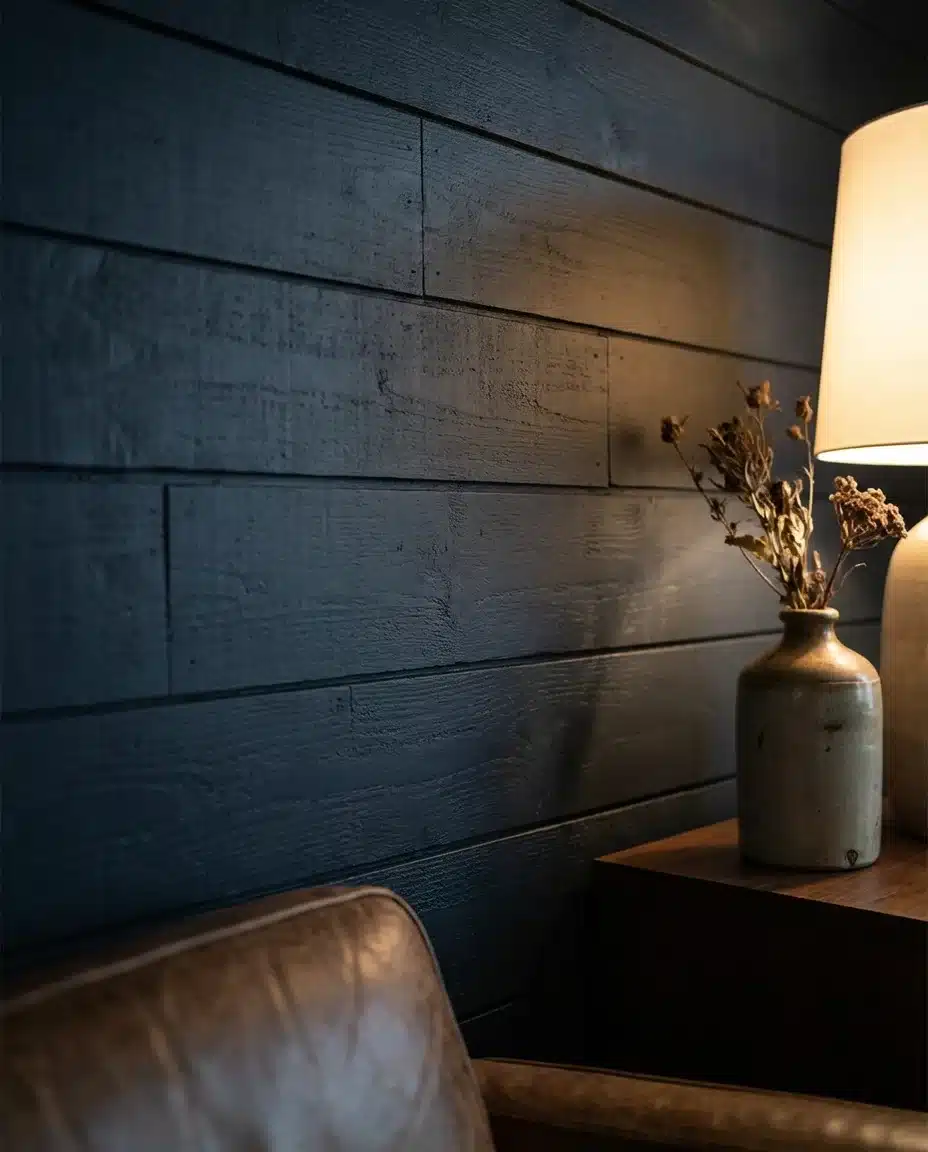
This combination thrives in farmhouses and craftsman bungalows throughout the Pacific Northwest, Tennessee, and the Carolinas, where the architectural vocabulary already includes natural wood and textured surfaces. It’s also a fantastic solution for new builds that feel too slick or generic—adding real wood texture with a bold paint color instantly gives the home a sense of history and intentionality. Where it works less well: rooms with very low ceilings, where the dark color can feel oppressive rather than enveloping. Eight-foot ceilings are workable; seven-foot is too tight for this treatment.
13. Color Blocking With Two Complementary Tones
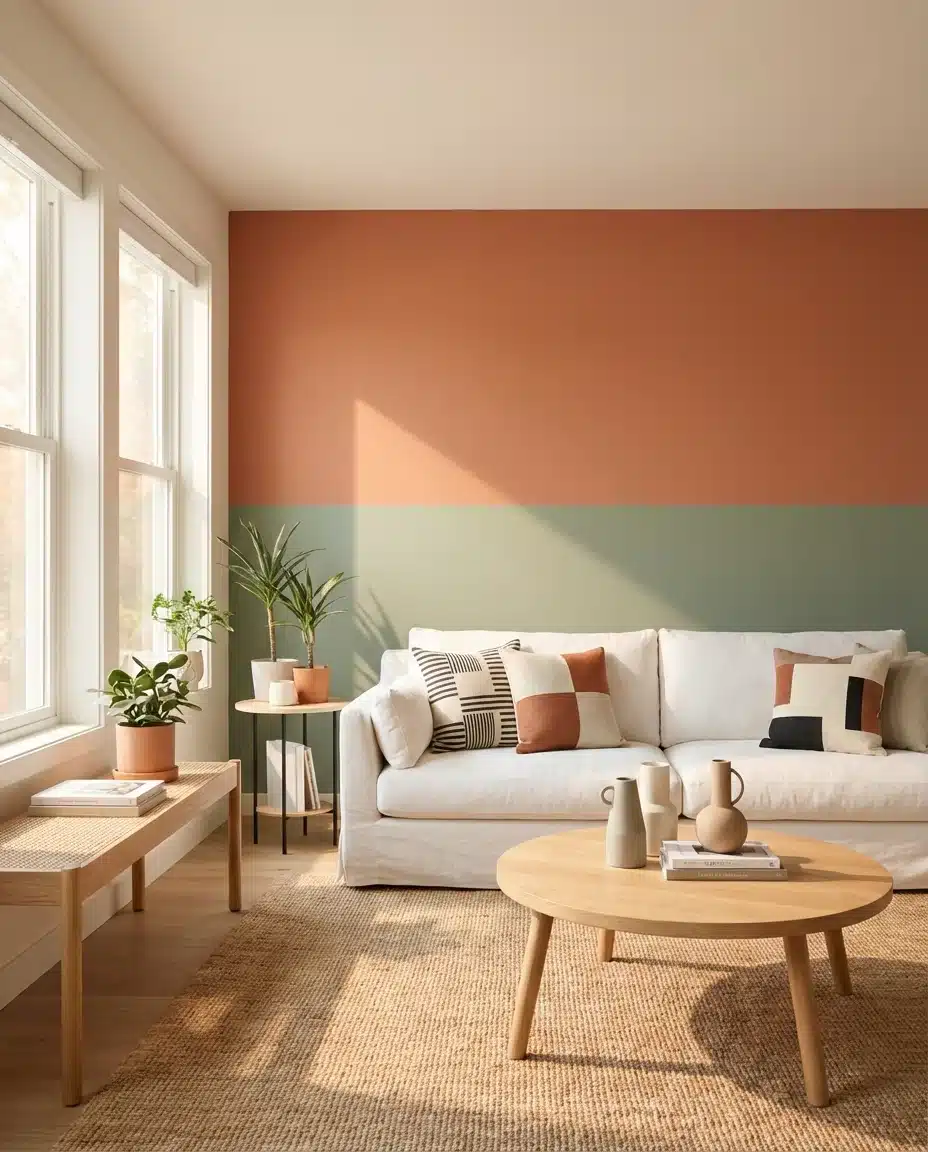
Color ideas in 2026 are moving beyond single-tone accent walls into something more painterly: color blocking, where two or three complementary shades are divided on a single wall to create a graphic, almost architectural effect. A terracotta upper half divided by a crisp horizontal line from a warm sage lower half, for example, creates a wall that feels designed rather than just painted. This technique is especially effective in rooms with a couch positioned directly in front of the accent wall, where the horizontal division lines up visually with the furniture to reinforce the geometric composition.
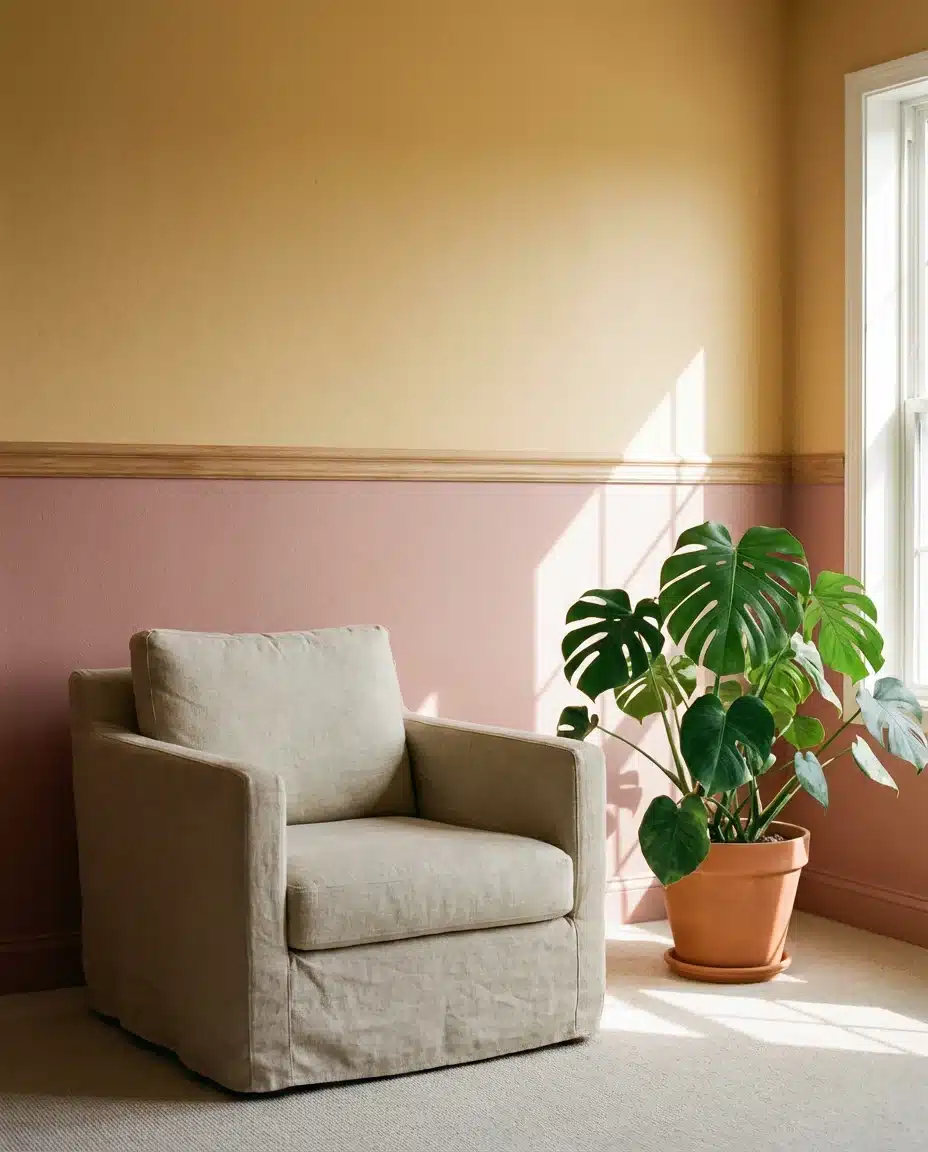
This is a genuinely budget-friendly accent wall approach—you’re only buying two colors of paint (usually about two quarts of each for a standard wall), and the only special tools required are painter’s tape and a level. The design looks intentional and sophisticated, but the actual execution is accessible to any first-time painter. The key is choosing colors in the same tonal family—both warm, both muted, or both with similar saturation levels—so the contrast feels curated rather than accidental. Same-family colors that differ in value always work better than colors from opposite ends of the wheel.
14. Green Accent Wall With Tropical Wallpaper
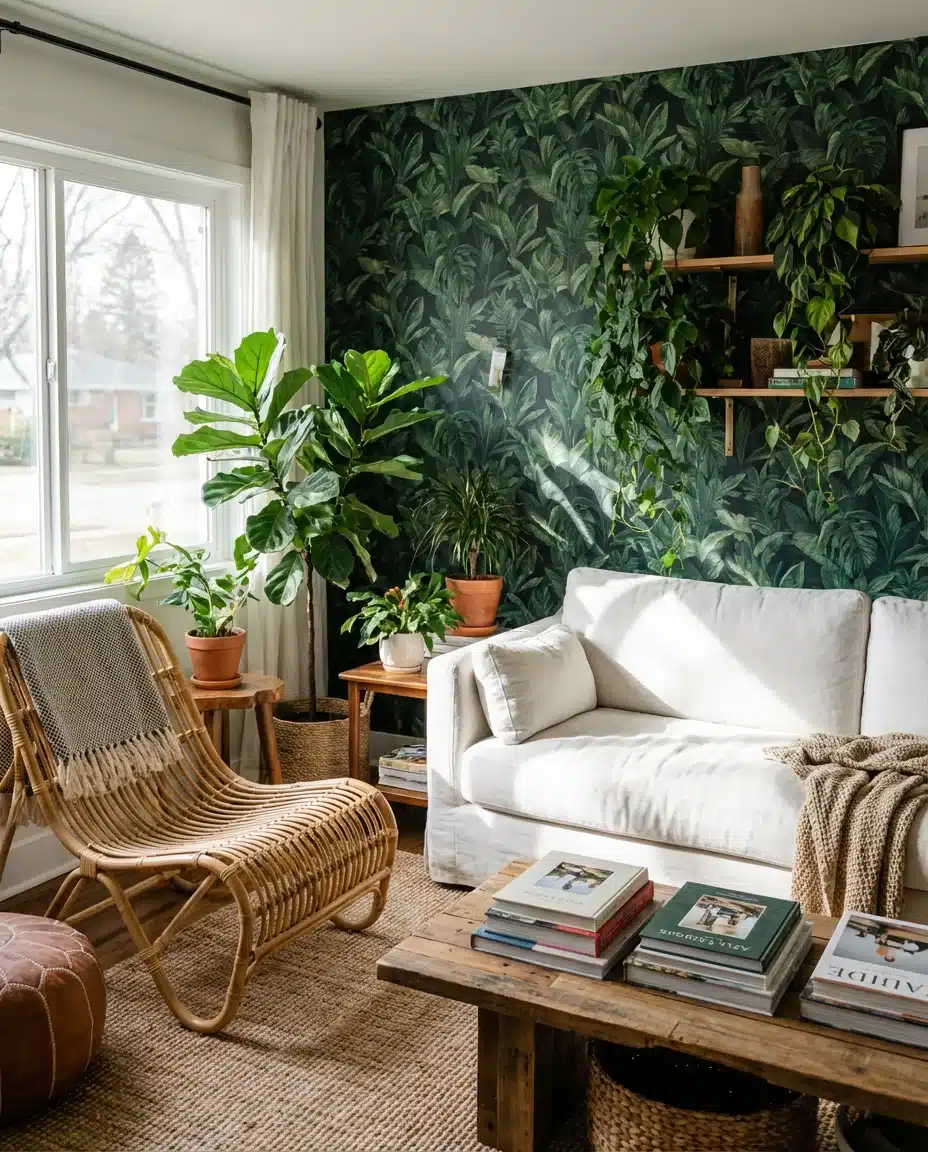
A green accent wall taken into bold, tropical territory feels fresh and maximalist in a way that purely painted walls can’t quite achieve. Wallpaper featuring oversized tropical leaves, birds of paradise, or lush jungle foliage in a rich green palette creates a living room accent wall that functions almost like a living mural. It’s a natural extension of the biophilic design movement—the idea that surrounding ourselves with imagery of nature reduces stress and creates a sense of well-being—filtered through a very aesthetically driven, Instagram-ready lens. Decor alongside it should stay restrained to let the wall breathe.
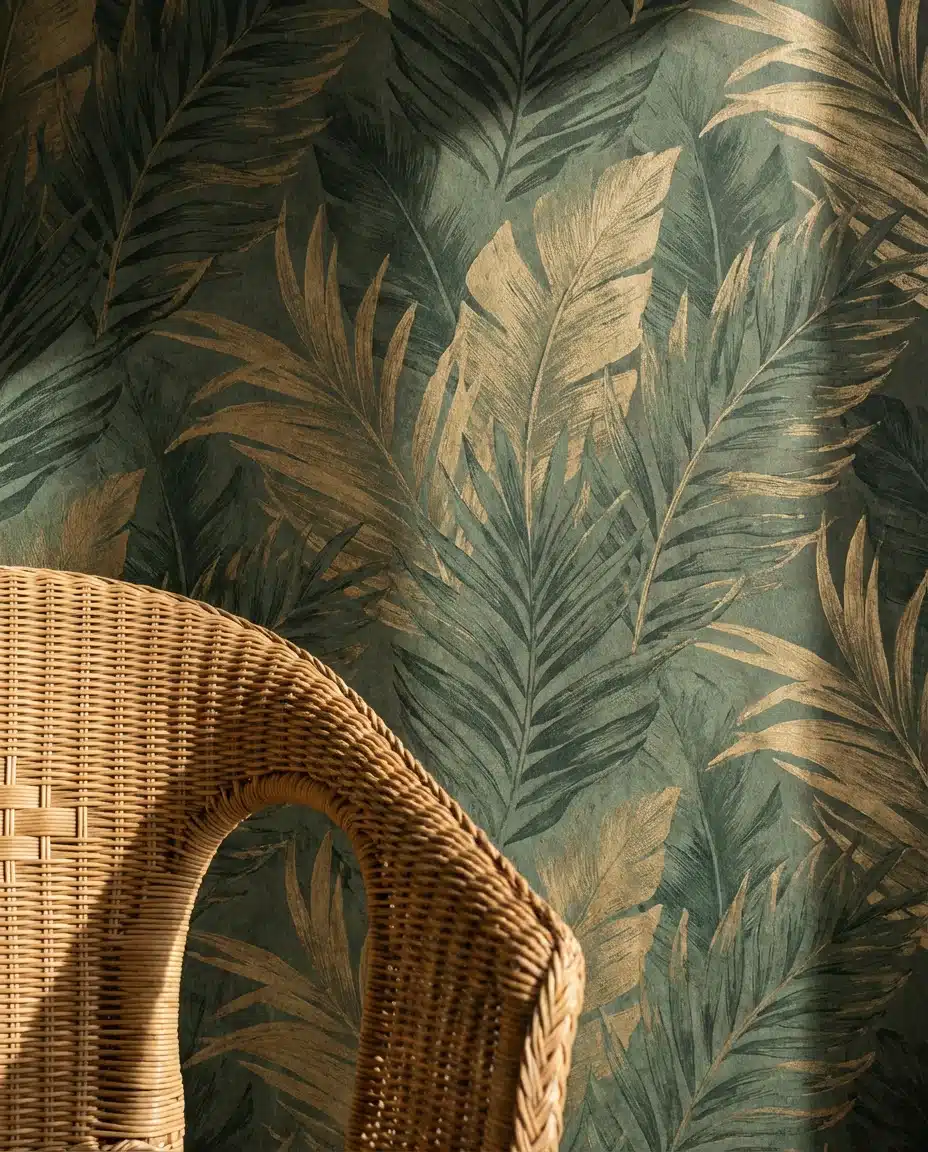
This accent wall treatment genuinely works in almost any size room—in a small living room it creates a sense of depth and escape; in a large open-plan space it defines a seating area without any physical partition. Homes in Florida, Hawaii, and coastal California have been embracing this look for years, but it’s now spreading inland as homeowners across the country seek to bring nature’s energy inside during long winters. Pair the wall with natural fiber rugs and wooden or rattan furniture to maintain the organic, earthy feel the pattern demands.
15. Dark Accent Wall With Floating Shelves and LED Lighting
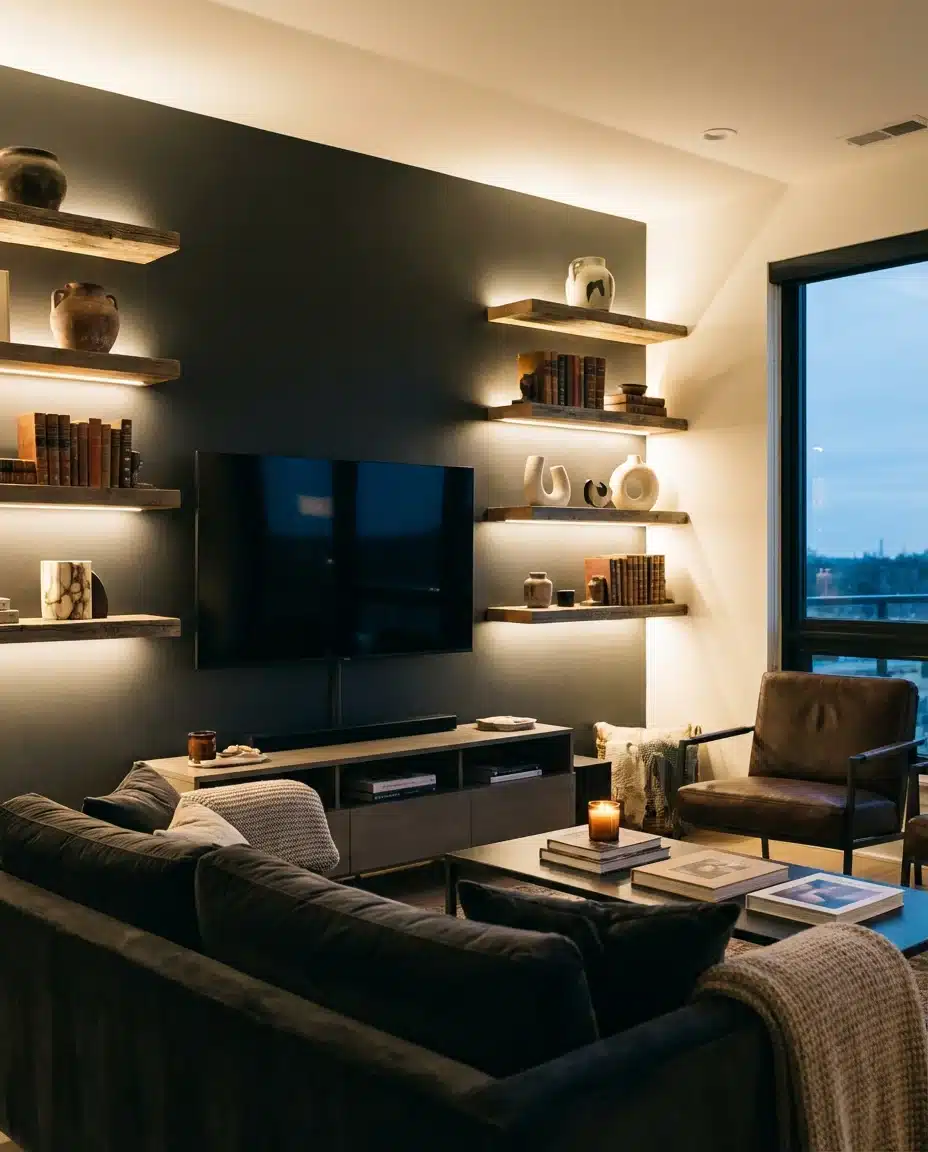
A dark accent wall is twice as dramatic—and twice as functional—when you add floating shelves with integrated LED strip lighting beneath them. The backlit glow against a near-black or deep charcoal wall creates a layered, ambient lighting effect that turns a living room into something that genuinely looks designed. This setup also solves the display problem: you have somewhere to put books, ceramics, candles, and plants in a way that makes them look like intentional curation rather than just stuff on a shelf. The TV mounts cleanly on the dark wall, cables hidden, and becomes part of the composition.
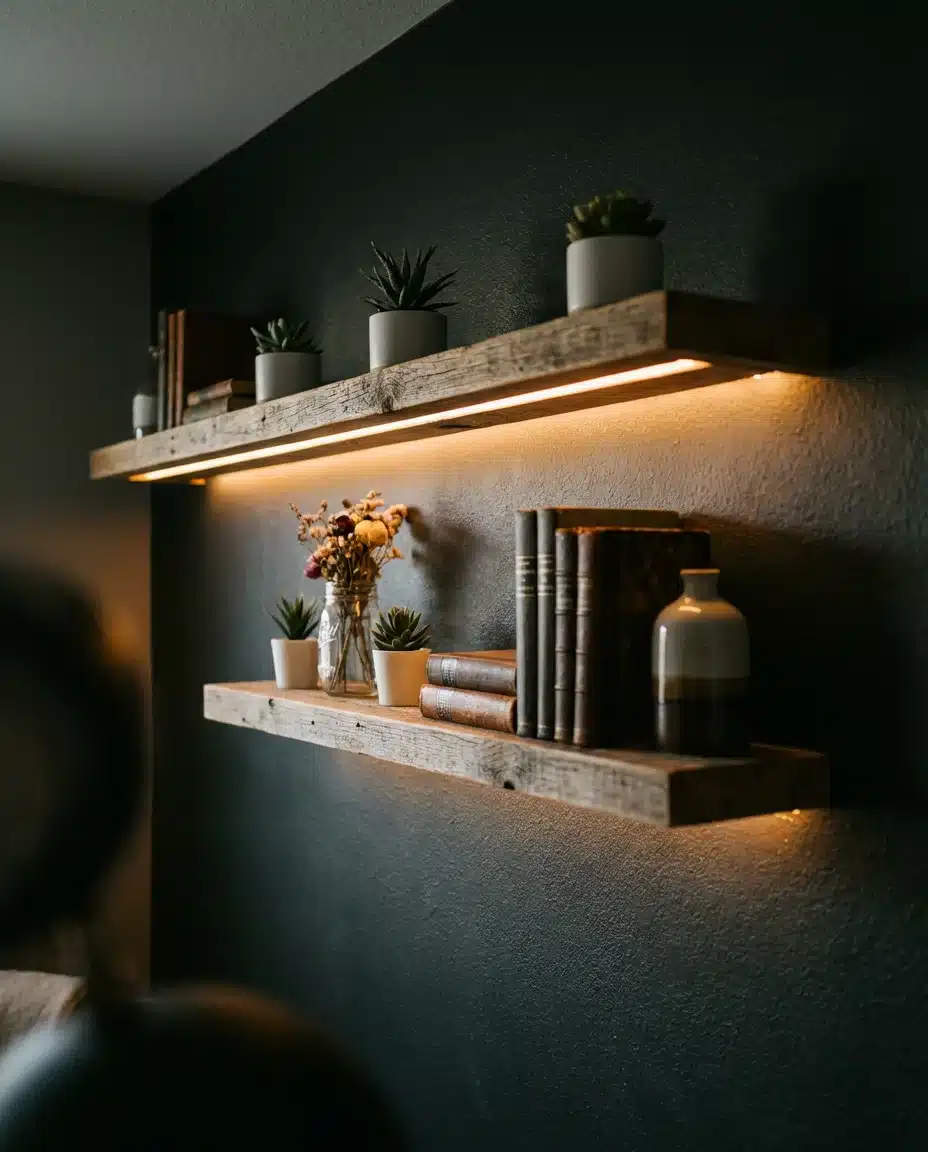
LED strip lighting under floating shelves is one of the most cost-effective upgrades you can make in a living room—the strips themselves run $15–$40 and the installation is a straightforward DIY project requiring nothing more than an adhesive backing and a power outlet or USB connection. The visual return on that minimal investment is genuinely outsized, particularly in a room used primarily in the evenings. The warm-white LED spectrum (2700K–3000K) is almost always the right choice; avoid cool white, which drains warmth and makes dark walls look greenish rather than enveloping.
16. Limewash in Sage Green for a Calm Retreat
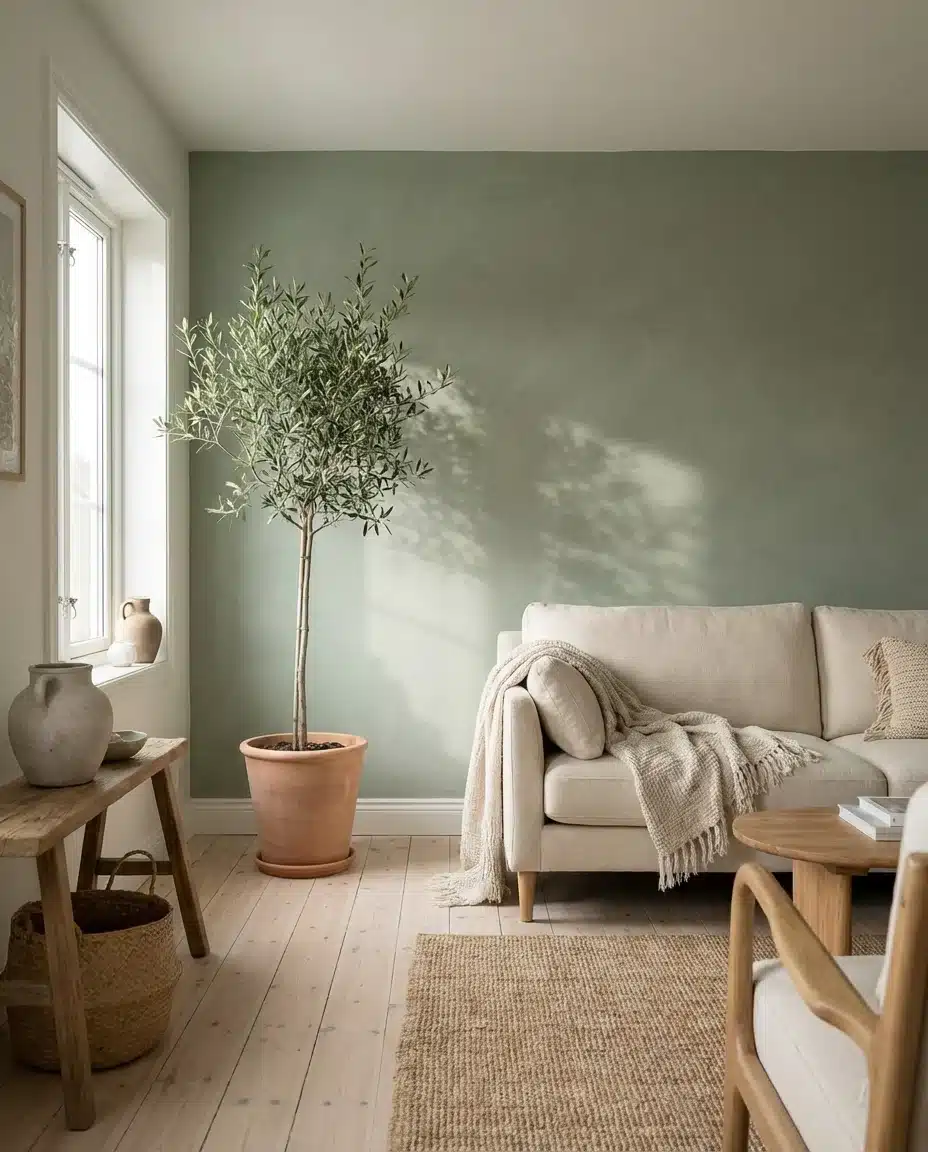
Where terracotta limewash is warm and earthy, sage green limewash is cooling and meditative—a wall that asks you to slow down the moment you walk into the room. The muted, organic quality of the finish adds an almost mineral depth to the green tones, making the wall look less like a paint color and more like a natural material. This is the accent wall for people who want a connection to the outdoors without resorting to literal botanical imagery. Pair it with off-white upholstery, wood floors, and green textiles to create a living room that feels like a genuinely restorative space.
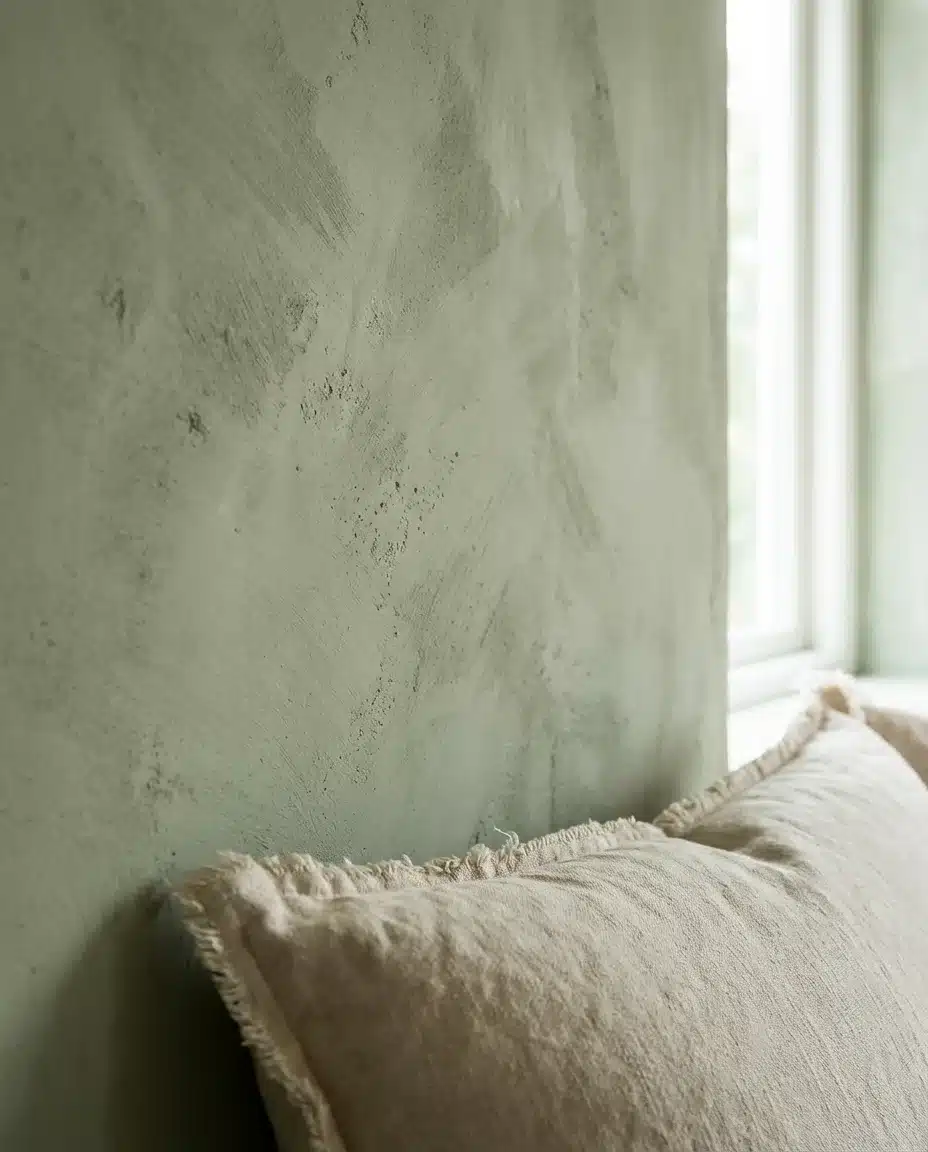
Wellness-oriented homeowners—a demographic that’s grown dramatically since the early pandemic years—are drawn to this finish for its literal connection to ancient building materials. Traditional limewash is made from slaked limestone and has been used on walls for thousands of years. There’s something psychologically meaningful about that continuity, beyond just the visual appeal. Multiple studies on color psychology support the restorative effect of muted green environments on stress levels and heart rate. Whether or not you subscribe to color therapy, a sage limewash living room simply feels better to be in. That’s hard to argue with.
17. Ideas With TV: Minimalist Slat Panel Media Wall
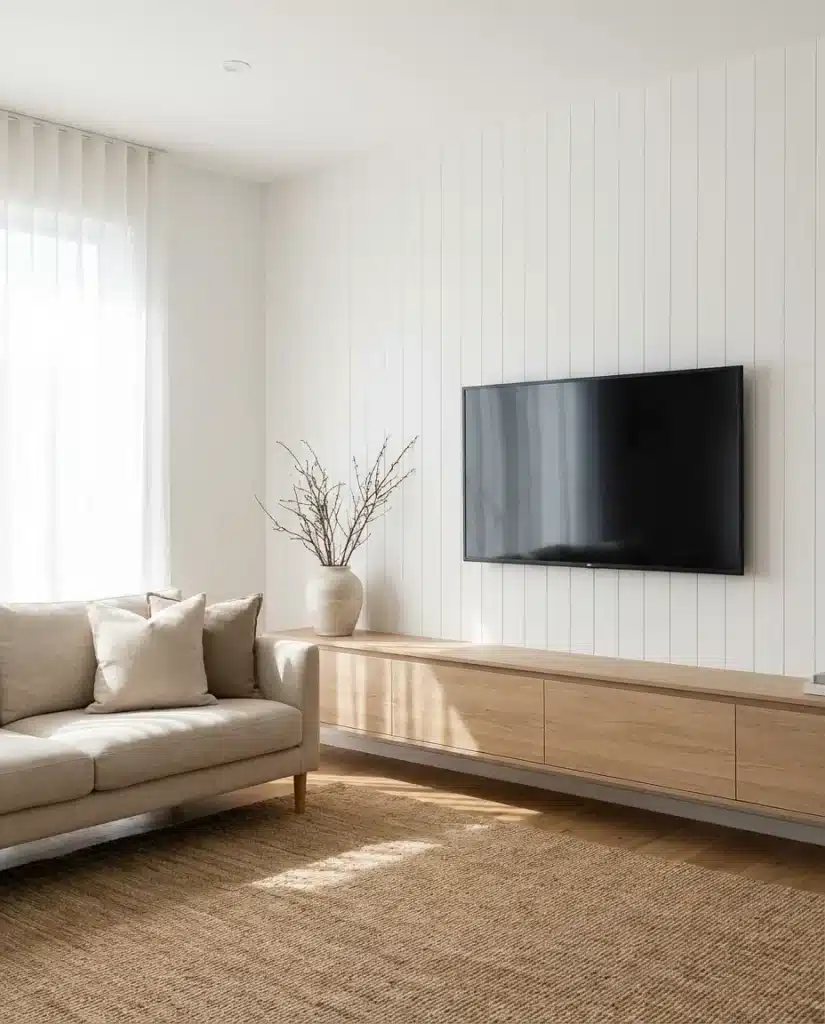
The minimalist slat panel media wall is one of the top-performing ideas with TV on Pinterest right now, and it’s easy to see why. Clean vertical or horizontal slats in natural wood tones or painted white create an architectural backdrop for the television that elevates the whole wall without overwhelming it. Unlike a gallery wall or wallpaper, the slat panel keeps the eye moving and creates a rhythm that works beautifully with the rectangular geometry of a flat screen. It’s modern, restrained, and suits everything from Scandinavian-inspired minimalism to contemporary transitional living rooms.
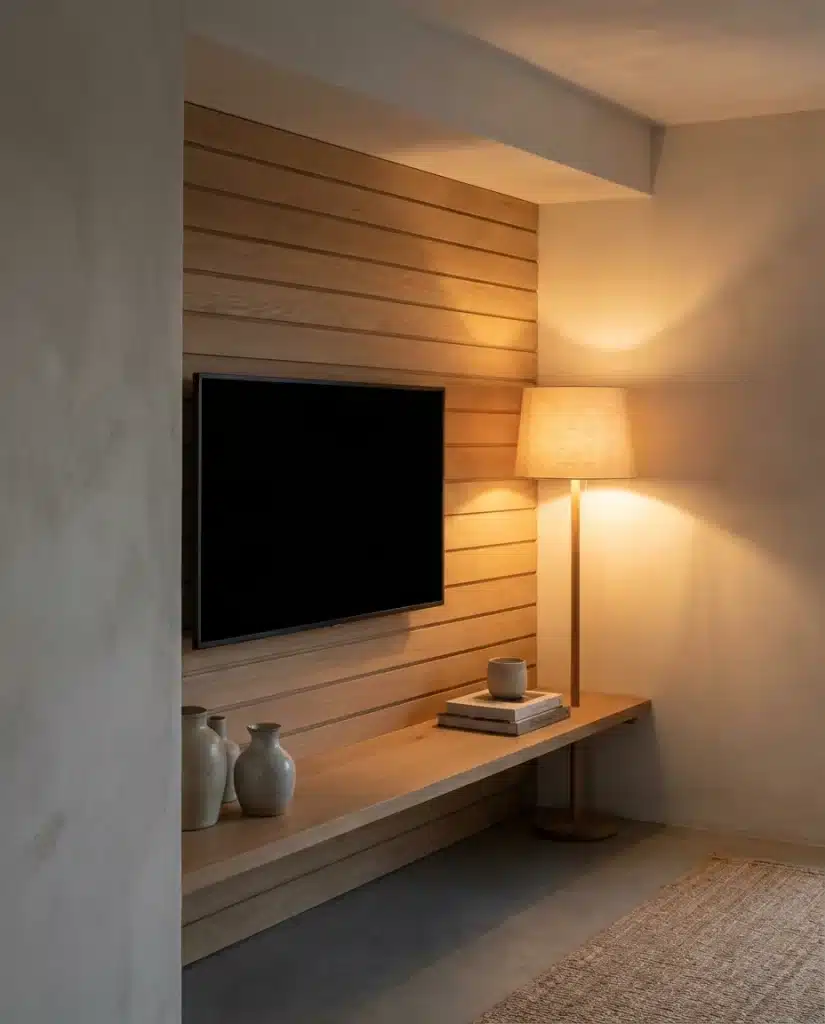
Pre-made 3D wall panel kits have made this look surprisingly accessible in the past couple of years. Brands like Stikwood, Plyboo, and various Amazon sellers offer peel-and-stick or nail-up slat panels starting at around $40–$70 per square foot, and a typical TV wall can be covered for $300–$600 in materials. Most homeowners report the installation taking a single afternoon with a level, a nail gun, and a miter saw. The result looks like a contractor job, and that’s exactly the point—it’s the kind of upgrade that adds perceived value to a home well beyond its actual cost.
18. Black Shiplap With Industrial Accents
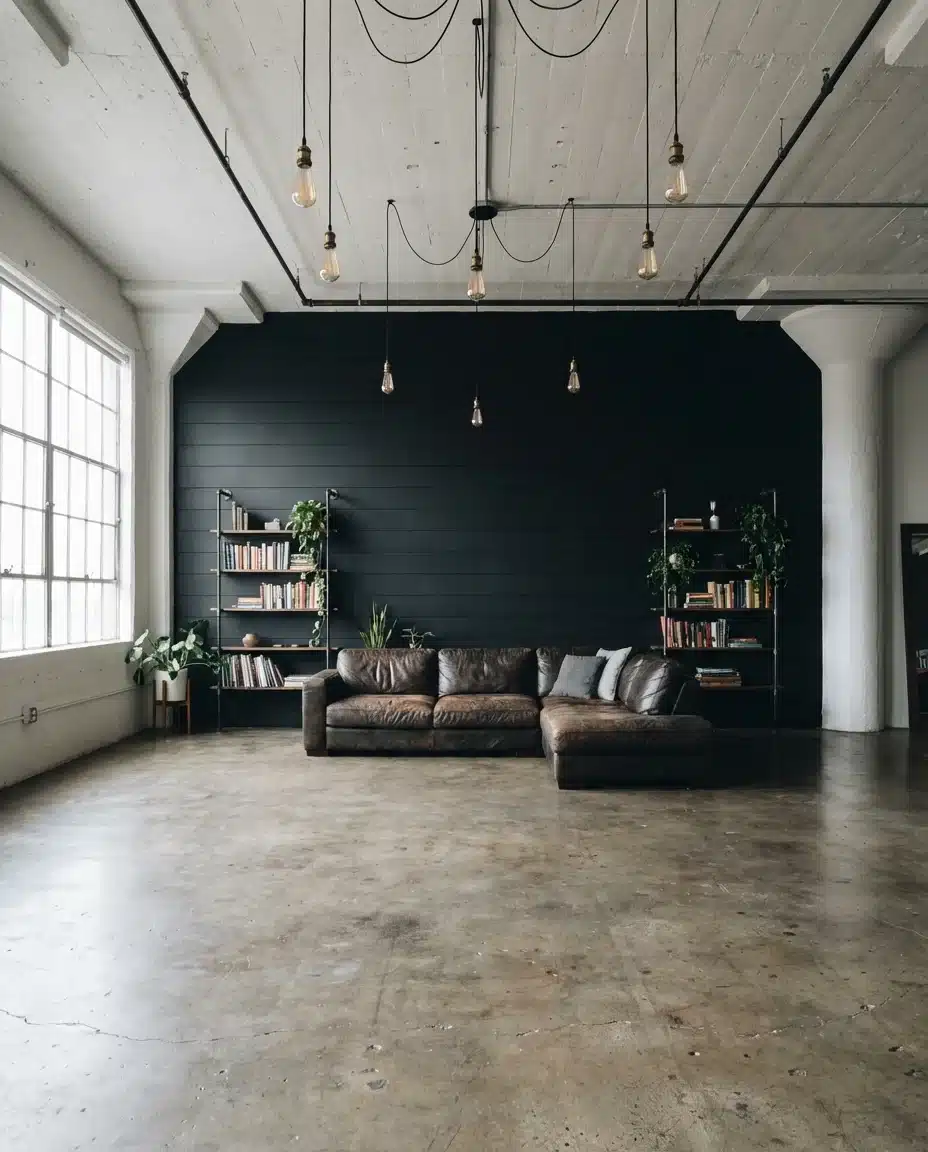
Black-painted shiplap is one of those crossover looks that sits comfortably at the intersection of farmhouse and industrial—it takes the inherently rustic, textured quality of lapboard and steers it somewhere far edgier. Against black shiplap, raw steel pipe shelving, matte black hardware, and concrete-look accessories feel completely at home. It’s a wall that rewards design confidence and works especially well in urban lofts and converted spaces that want to honor their industrial bones while still feeling warm and residential. Natural wood accents and leather furniture are the perfect counterpoints.
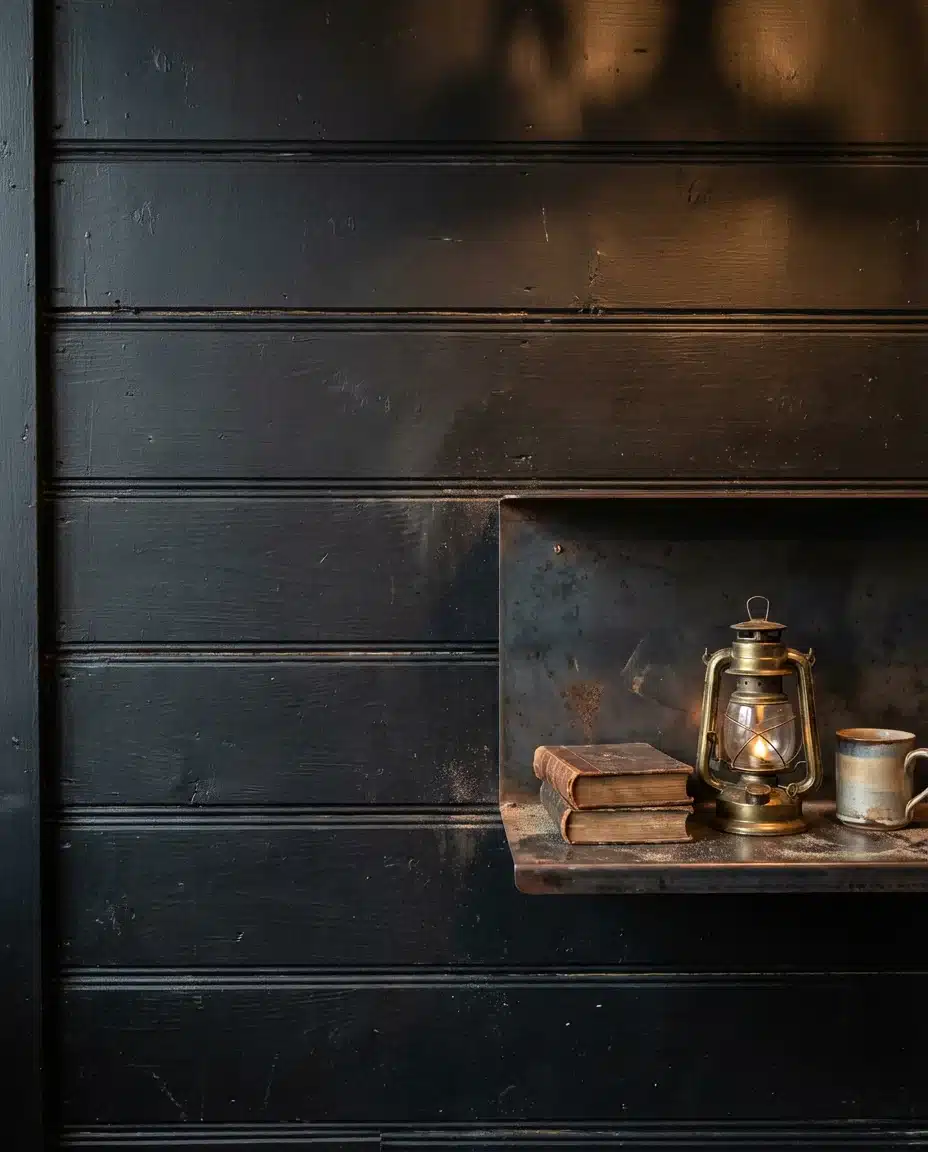
This accent wall is particularly well-suited to Chicago greystones, Brooklyn brownstones, and older urban homes in cities like Pittsburgh and Detroit, where the architecture already has a bones-heavy, utilitarian quality that rewards bold interior choices rather than being softened with traditional finishes. In suburban homes, this treatment can feel out of place unless the rest of the room follows the same direction with commitment. The golden rule: don’t introduce industrial elements piecemeal. Commit fully to the palette—black, steel, raw wood, concrete—or the wall will look like an unfinished thought.
19. Warm Wood Paneling With Fireplace and Couch
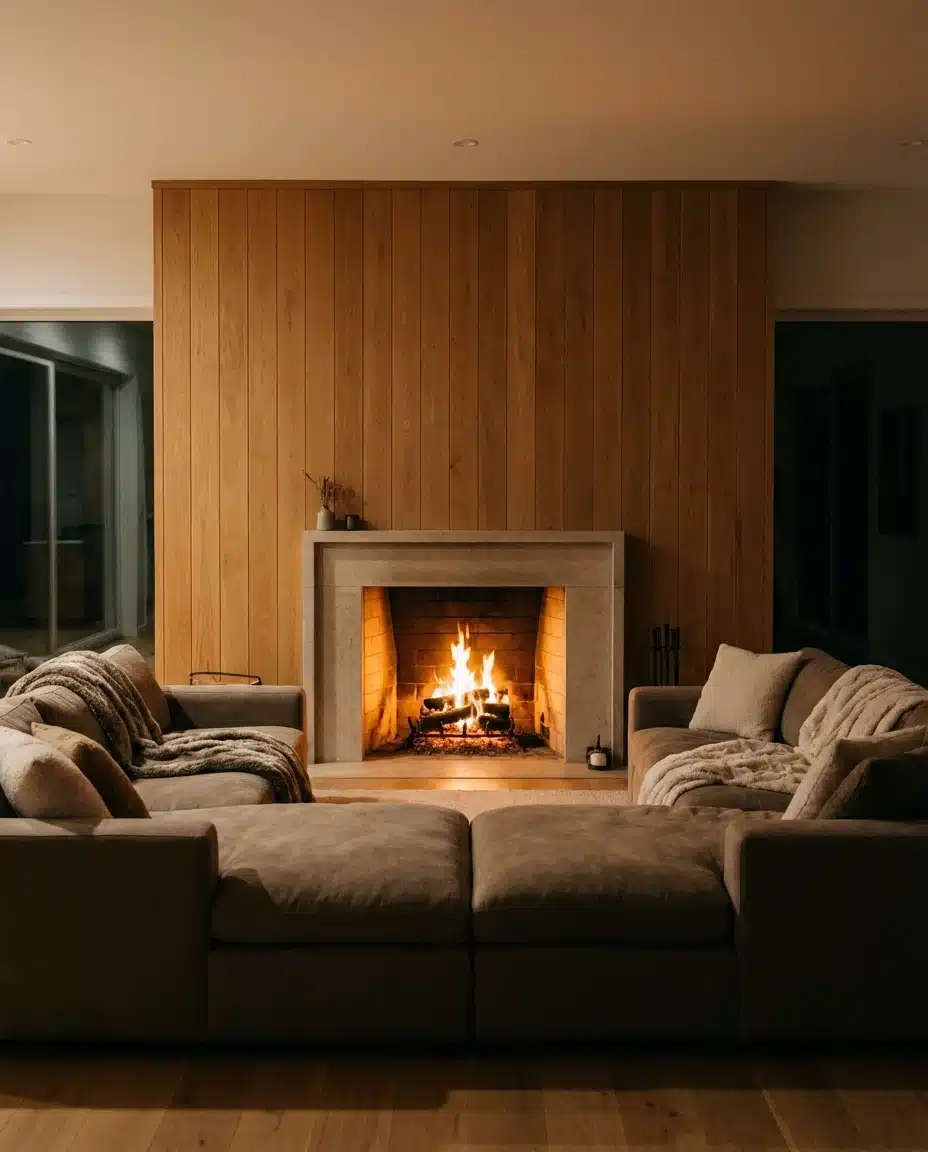
Framing a fireplace with full-height warm wood paneling and arranging a couch to face it creates one of the most seductive living room compositions in residential design. This is the room people daydream about when they picture a cozy evening at home—the fire, the warmth of the wood grain, the deep sofa. Natural oak, ash, or cedar paneling brings an organic richness that no paint color can quite replicate, and when it wraps an entire fireplace wall from floor to ceiling, the effect is fully immersive. It suggests craftsmanship, permanence, and intention—things that feel increasingly rare and precious in the design landscape of 2026.
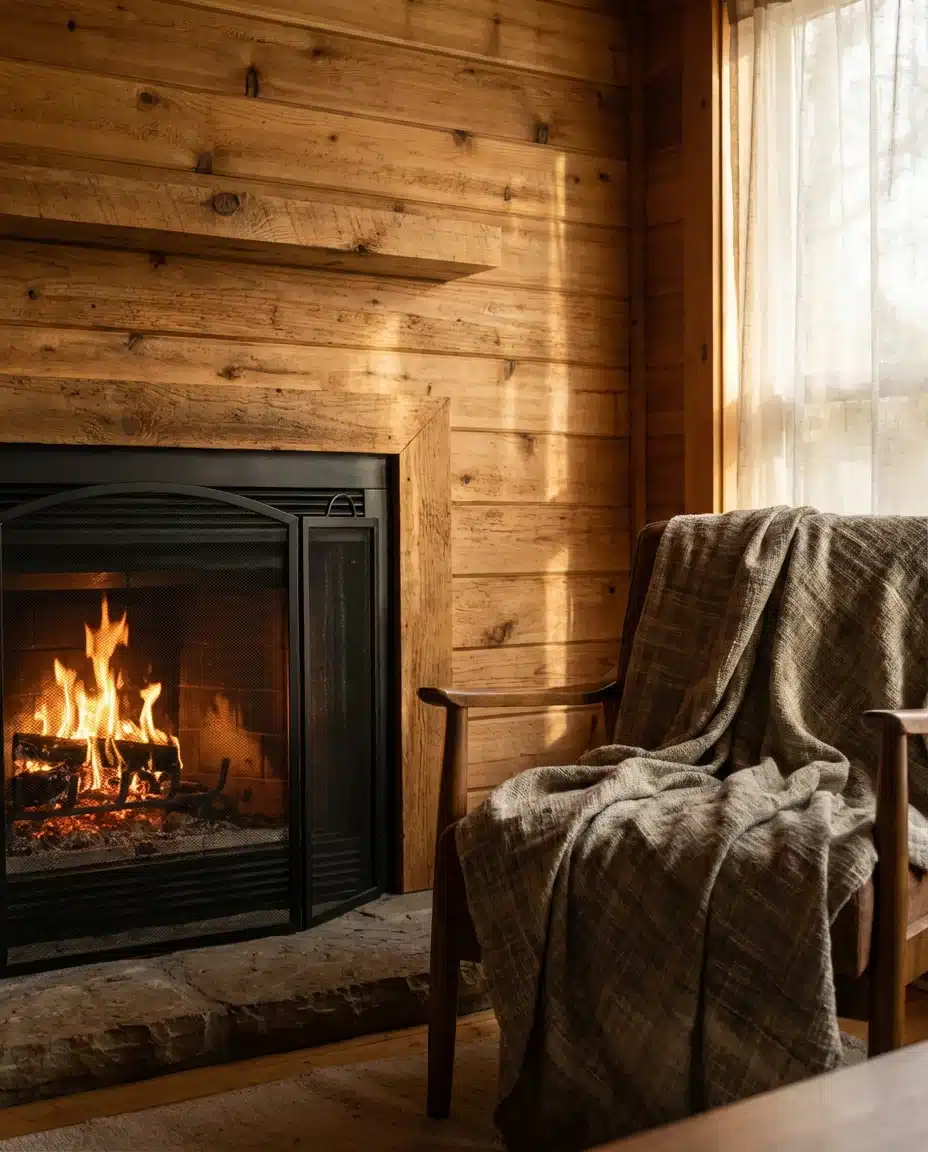
This is a look that works beautifully in mountain homes, lakehouse retreats, and craftsman-style properties across Colorado, Vermont, and the Pacific Northwest. But it’s increasingly showing up in suburban family rooms across the country—people who want their home to feel like a destination, a respite, rather than just a house. For real estate purposes, a full wood-paneled fireplace wall can significantly increase perceived home value, particularly in markets where buyers prioritize character over square footage. It’s an investment that pays back in both daily enjoyment and eventual resale.
20. Ideas Paint: Terracotta and Rust for Warm Drama
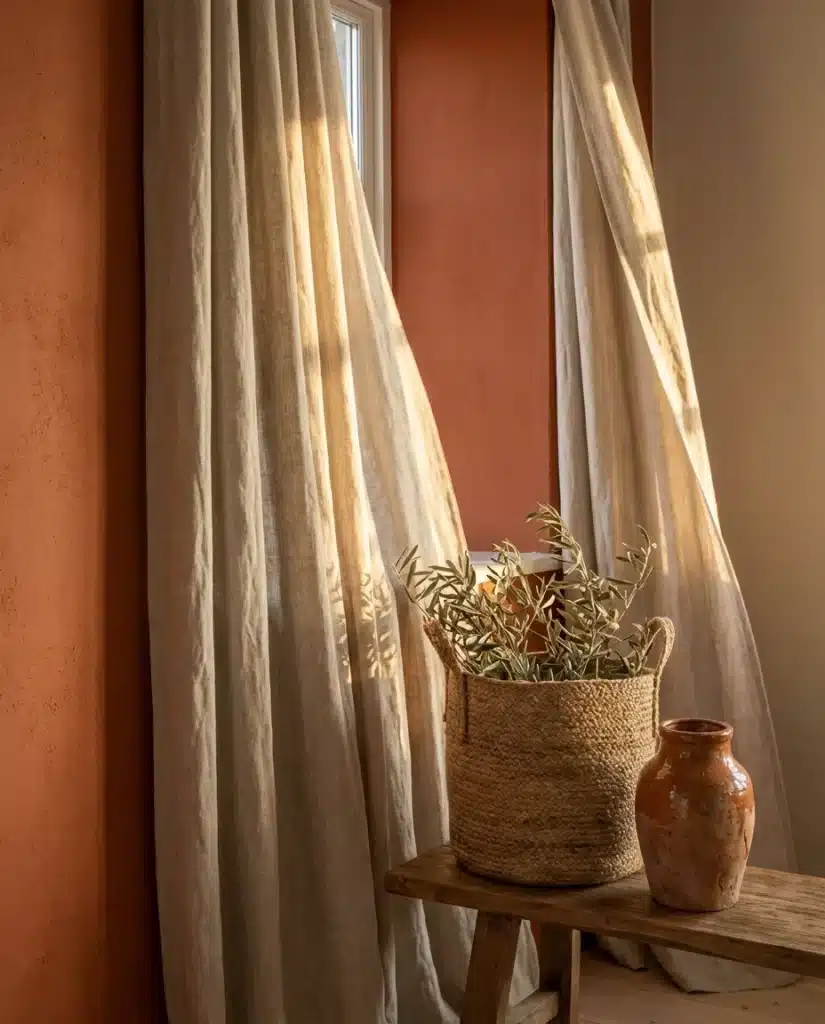
If you’re looking for paint options that feel genuinely current in 2026 without being cold or trendy, terracotta and rust tones are your answer. These earthy, warm reds have deep roots in Southwestern, Mediterranean, and global vernacular architecture—they’re not invented trends but inherited colors with emotional resonance. On an accent wall, they create immediate warmth and a sunset-like glow that flatters literally every skin tone that enters the room. They pair beautifully with dark green plants, natural fibers, and aged brass, creating a color story that feels collected and personal rather than catalog-designed.
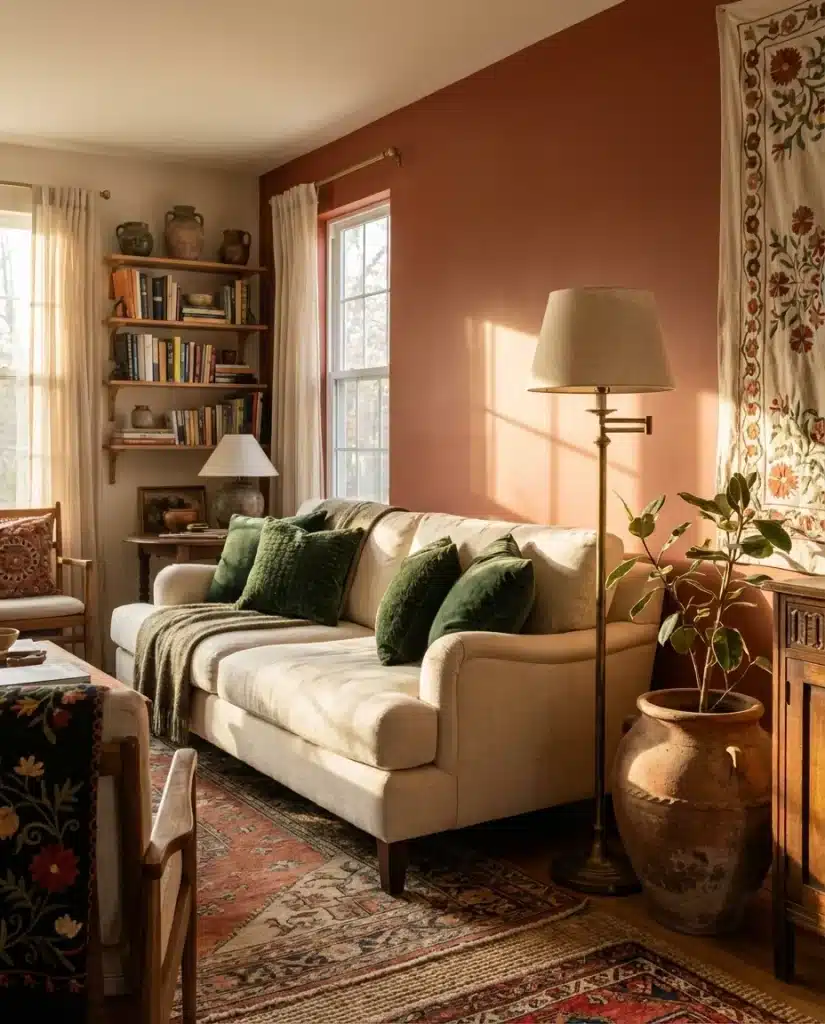
American homeowners—particularly those in the Southwest and those influenced by Anthropologie-aesthetic sensibilities—have been gravitating toward this palette for years, but 2026 has brought it firmly into mainstream design conversations. It’s also one of the friendliest colors to live with long-term: unlike moody darks that can feel oppressive in the wrong light or cool blues that fight warm artificial lighting, terracotta and rust genuinely improve in most lighting conditions. Morning light makes them glow; evening lamplight makes them smolder. It’s a color that works hard for you around the clock.
21. Dark Green Limewash With Velvet Furnishings
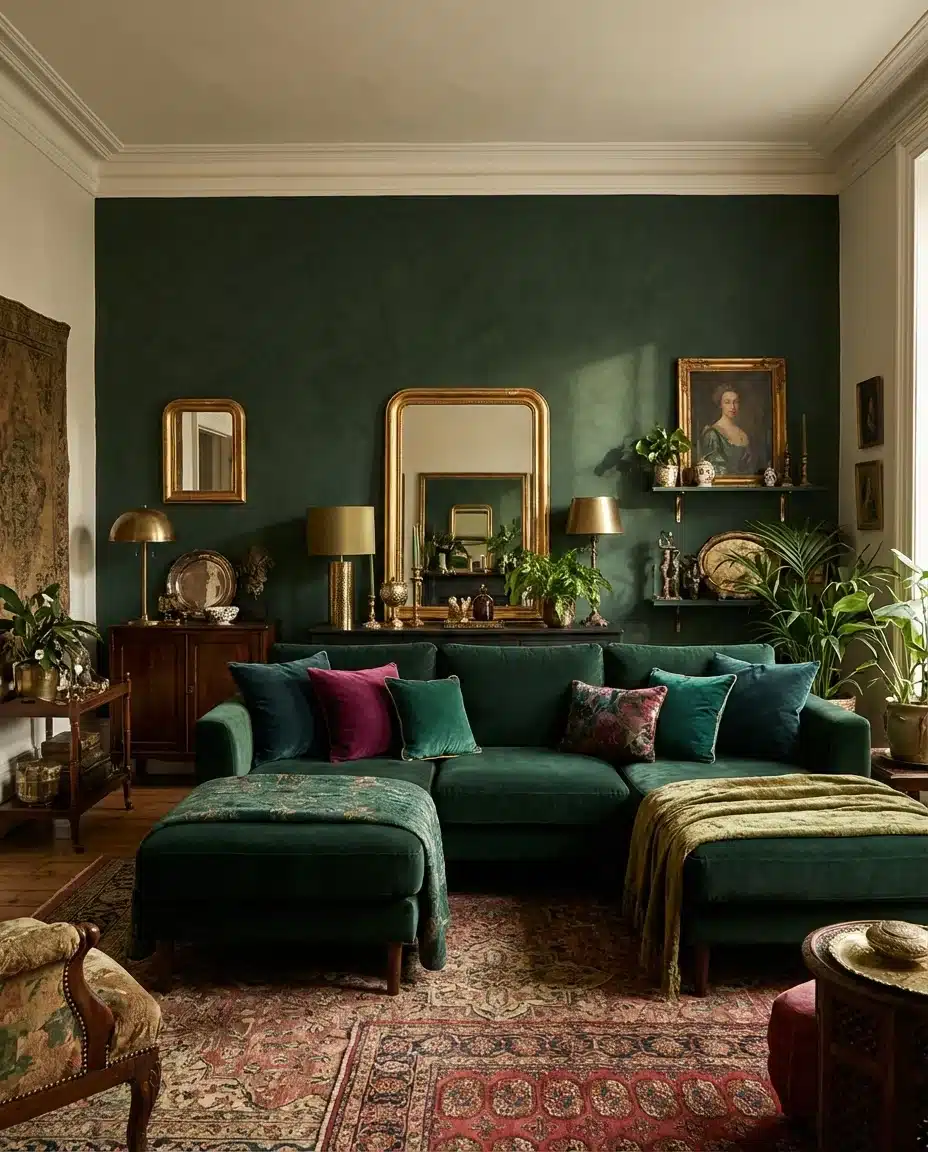
This combination—dark green limewash texture meeting plush velvet upholstery—represents the highest expression of living room maximalism in 2026. The mineral, organic quality of limewash in a deep forest or bottle green makes it the perfect partner for luxurious textiles: velvet sofas, silk cushions, and velvet curtains. The textural richness of both materials creates a layered, multi-sensory experience in the room—something to look at, something to touch, a room that feels genuinely opulent without being precious or untouchable. It photographs in extraordinarily rich ways, which is a large part of why this pairing keeps dominating Pinterest saves.
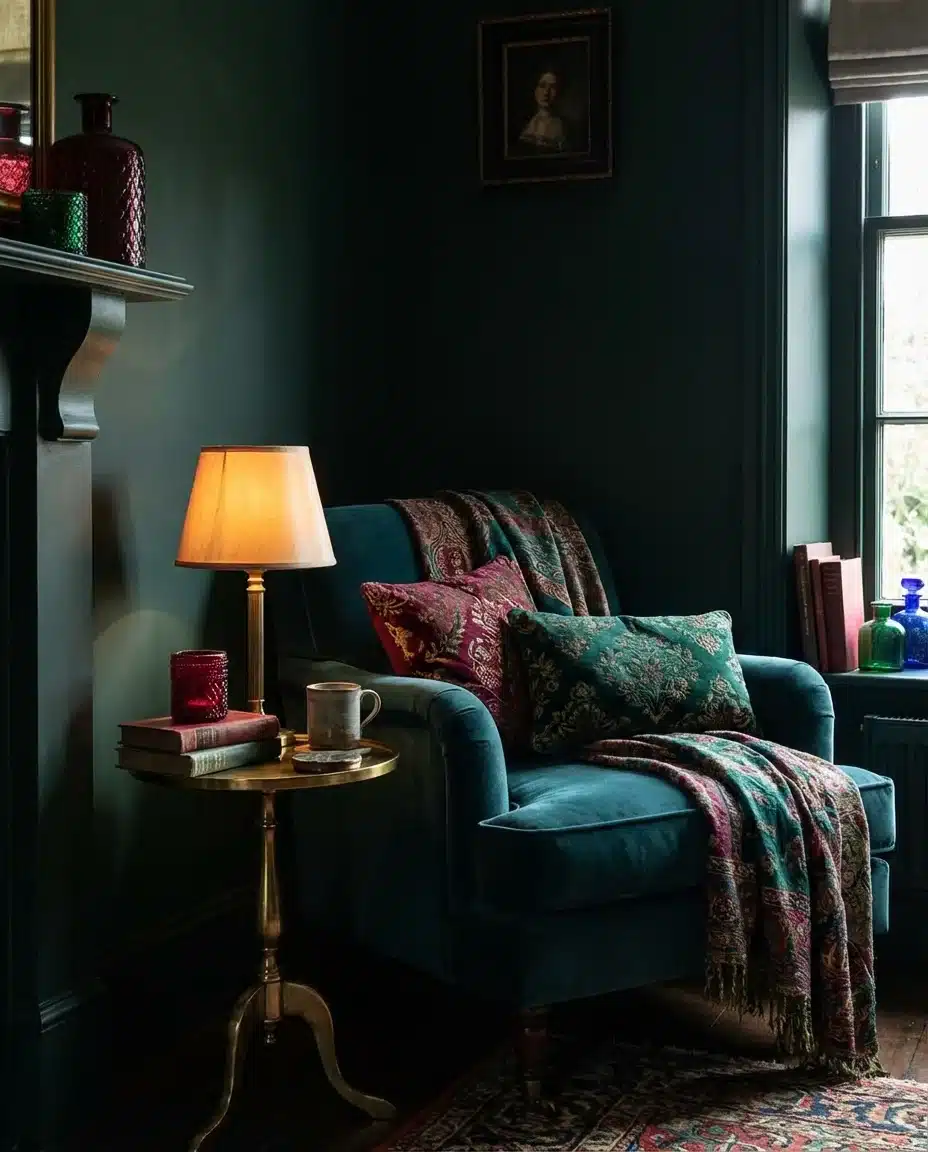
The key to making this combination work rather than overwhelm is restraint in the accessories. When both the wall and the upholstery are so visually rich, every other element in the room needs to earn its place. Keep accessories to a minimum: one large piece of art (a mirror or an oversized abstract work), a few quality ceramics, and well-chosen lighting. The temptation is to layer in more and more, but the room’s drama comes from the contrast between the living room’s lush surfaces and the breathing room you leave around them. Curate ruthlessly, and the result will be stunning.
22. Blue Limewash Accent Wall for Coastal Calm
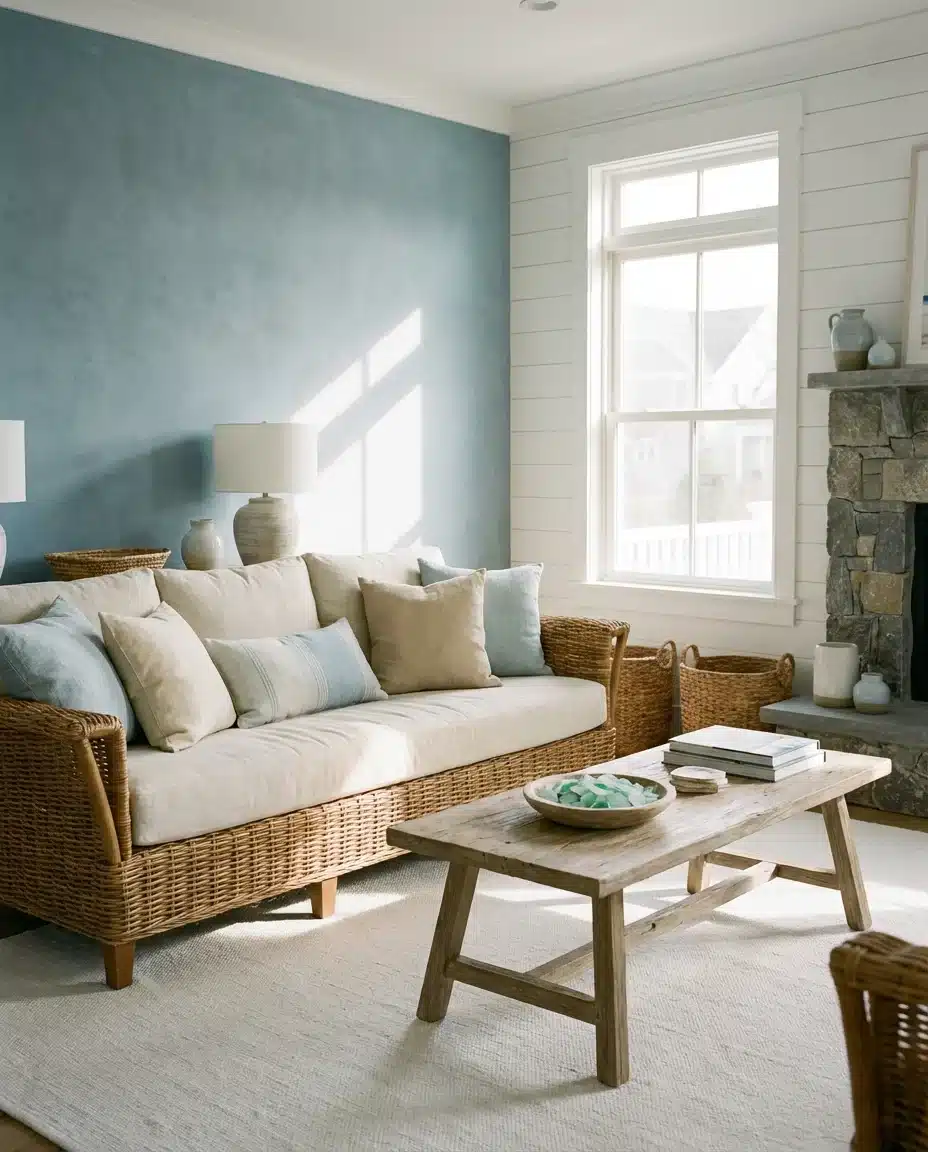
A blue limewash accent wall brings coastal energy indoors in a way that avoids every nautical cliché. The organic, layered quality of the limewash finish keeps the color from feeling flat or forced, and when applied in muted, grey-leaning blues—think washed denim or faded sea glass—the wall takes on the quality of something that has weathered naturally, like the inside of a Mediterranean fishing cottage or a New England summer house that’s been loved for decades. This works perfectly as a color backdrop for natural rattan furniture, linen slipcovers, and worn hardwood floors. It’s effortless and deeply livable.
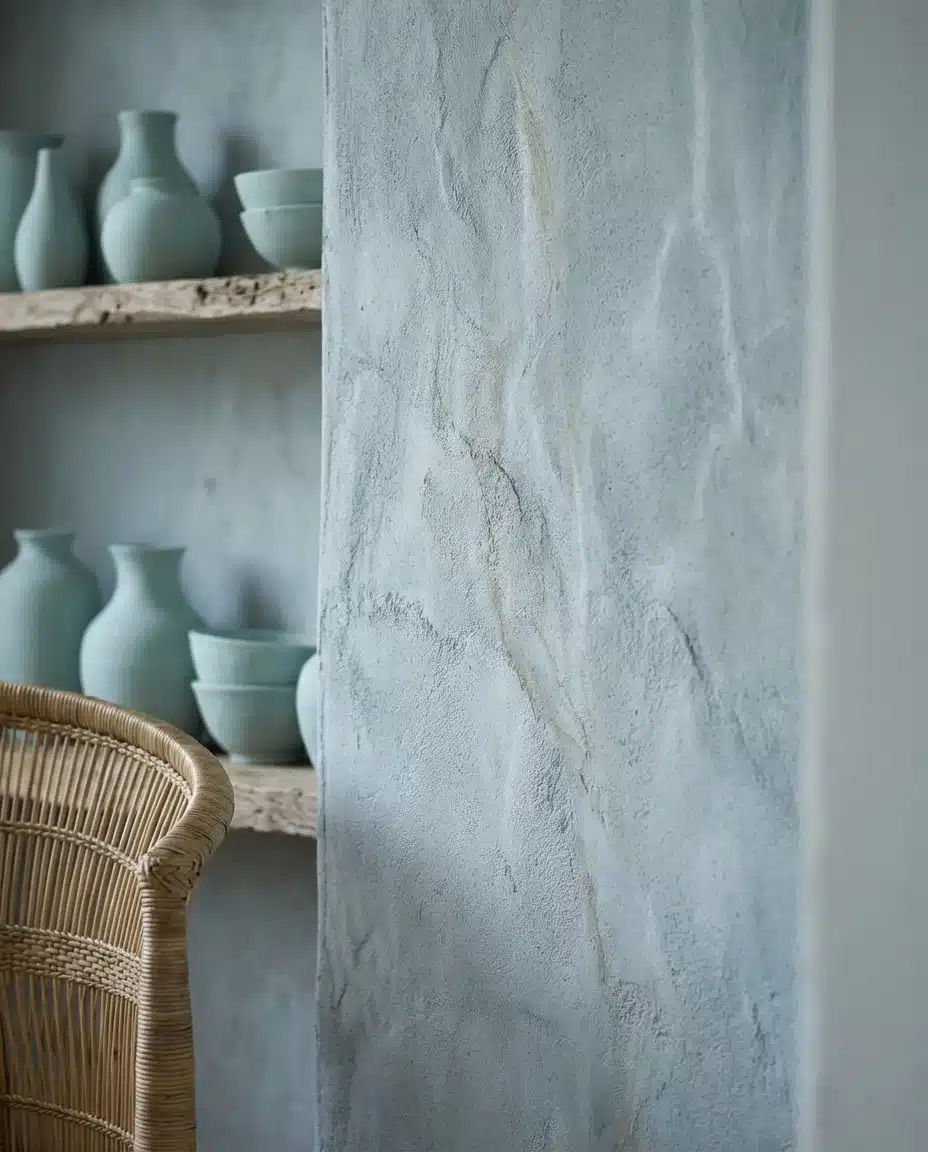
Blue limewash is particularly well-suited to coastal states—the Carolinas, Maine, California, and Florida—where homes already carry a connection to the ocean and the color feels like a natural extension of the environment outside. But it works just as powerfully inland for homeowners who want to invoke that coastal sense of ease and decompression in a landlocked space. If you ever needed proof that a single wall can change how a room feels emotionally, not just visually, a blue limewash accent wall is your best evidence. It doesn’t just look different—it genuinely makes the room feel calmer. That’s the real power of color done thoughtfully.
Conclusion
There’s no shortage of ways to make your living room’s accent wall the most talked-about feature in the house—whether that means going bold with a moody dark green limewash, keeping it architectural with slat paneling, or taking the renter-friendly route with peel-and-stick wallpaper that you can swap out next season. The 22 ideas here are meant to spark your own vision, not dictate it. Which direction are you leaning? Drop your thoughts in the comments below—we’d love to hear which look you’re planning to tackle first and whether you’re going the DIY route or calling in a professional.