Kitchen floors are having a major moment in 2026, and it’s not just about durability anymore. Homeowners across America are treating their kitchen floors as a style statement—whether they’re scrolling Pinterest for bold pattern ideas, exploring timeless marble looks, or considering budget-friendly alternatives that still feel elevated. With open-concept layouts continuing to dominate and more people investing in kitchen renovations post-pandemic, the floor has become a focal point that ties together cabinetry, countertops, and overall ambiance. This guide walks you through inspiring kitchen floor design ideas that blend function, beauty, and real-world practicality for every style and budget.
1. Classic Herringbone Hardwood
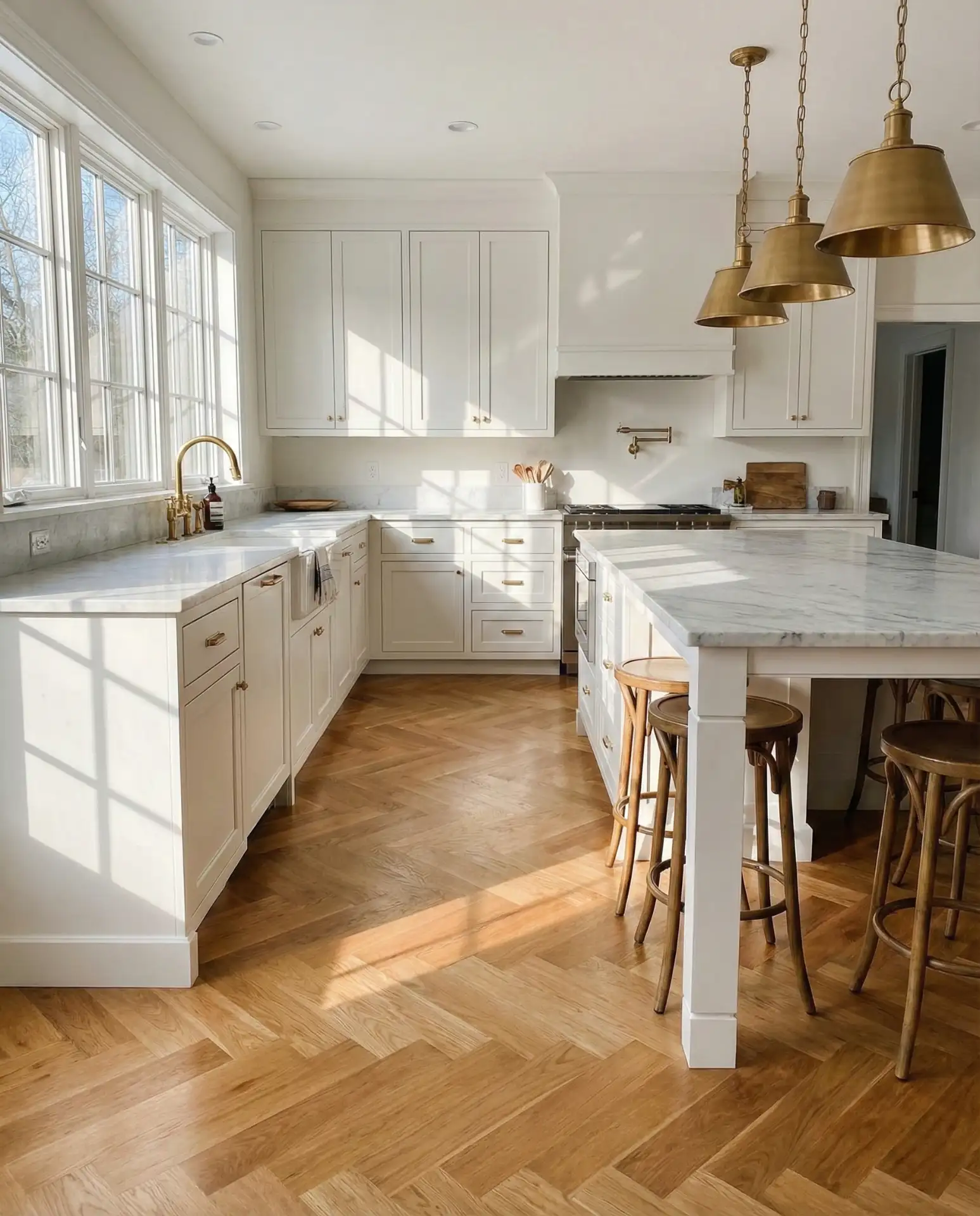
A classic herringbone hardwood floor brings timeless elegance to any kitchen, pairing beautifully with both traditional and transitional design schemes. The angled layout adds visual interest without overwhelming the space, and the warmth of natural wood creates an inviting atmosphere that complements marble countertops, white cabinetry, or even bold black and white backsplashes. This layout works especially well in galley kitchens or narrow spaces where the diagonal lines help elongate the room visually.
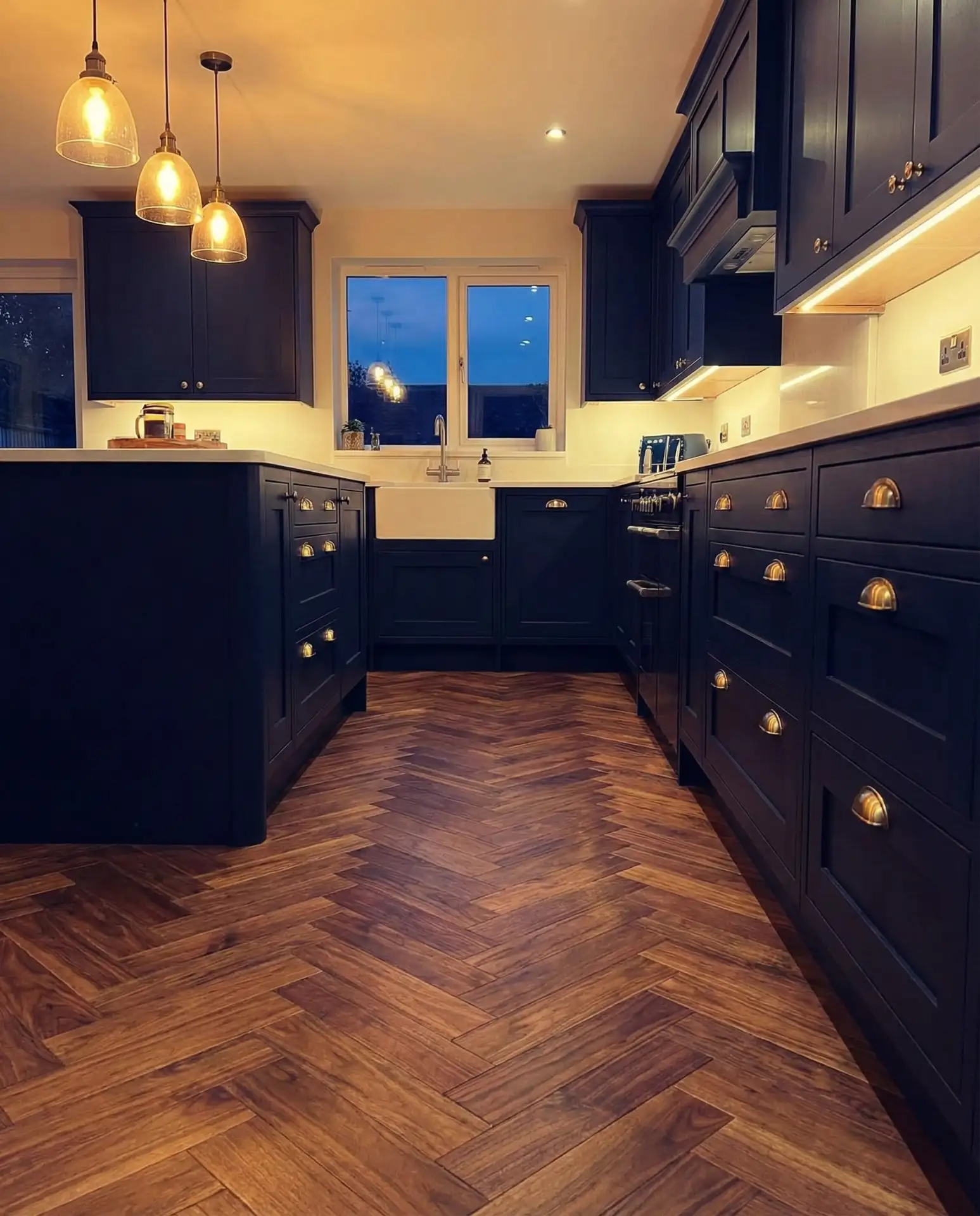
Herringbone works best in homes with a cohesive design language—think New England colonials, California craftsman bungalows, or updated Midwest farmhouses. The pattern is forgiving when it comes to hiding minor wear and tear, which makes it ideal for high-traffic kitchens where kids, pets, and frequent cooking are part of daily life. Just be mindful of moisture: engineered hardwood is a smarter choice than solid wood in humid climates or near exterior doors.
2. Modern Large-Format Concrete Tiles
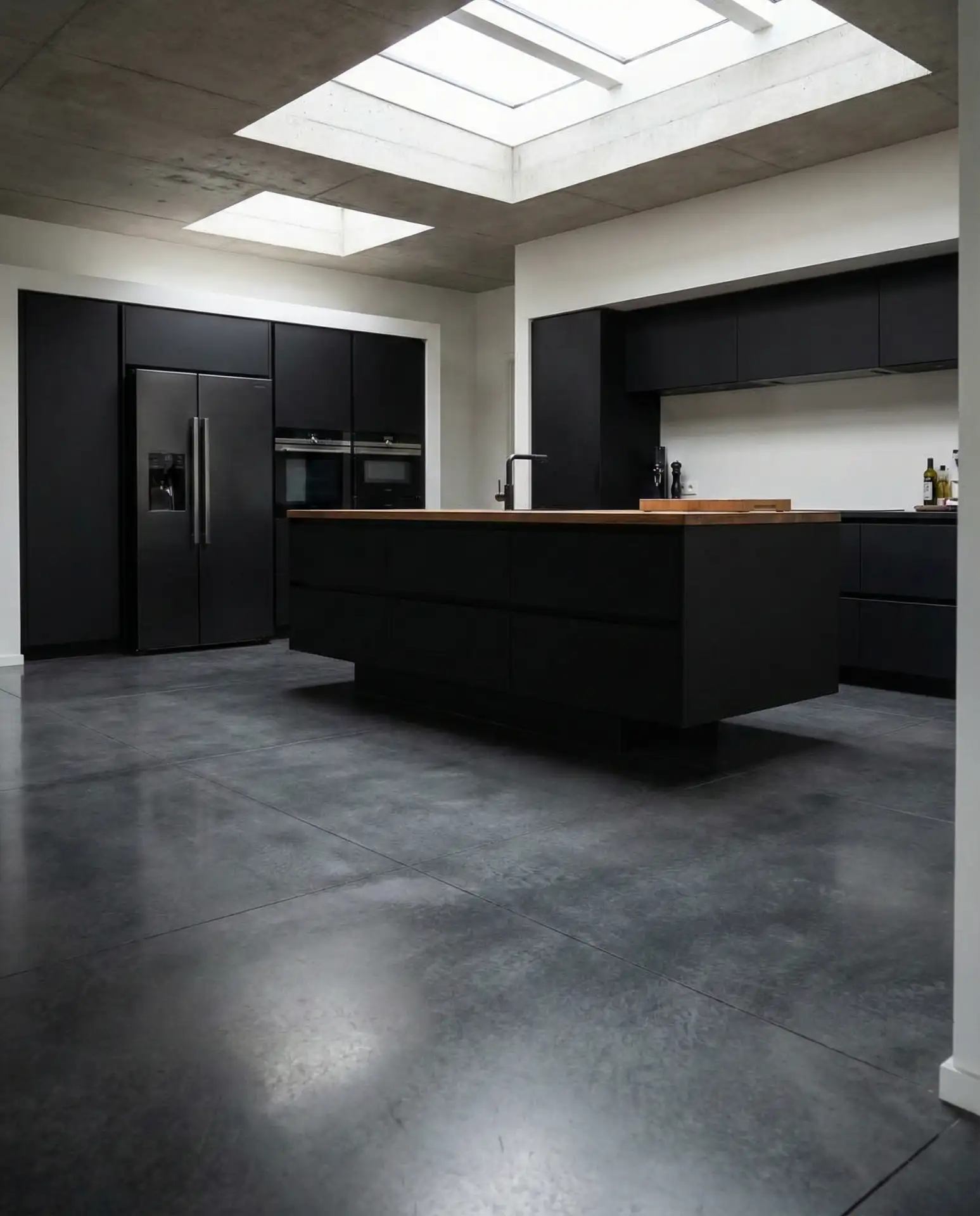
For a sleek, modern aesthetic, large-format concrete tiles deliver an industrial edge that feels both current and timeless. These oversized tiles—often 24×24 inches or larger—minimize grout lines, creating a seamless, gallery-like surface that pairs beautifully with minimalist cabinetry, stainless steel appliances, and open shelving. The matte finish and neutral gray tones make them a versatile backdrop for colorful textiles, plants, or bold artwork.
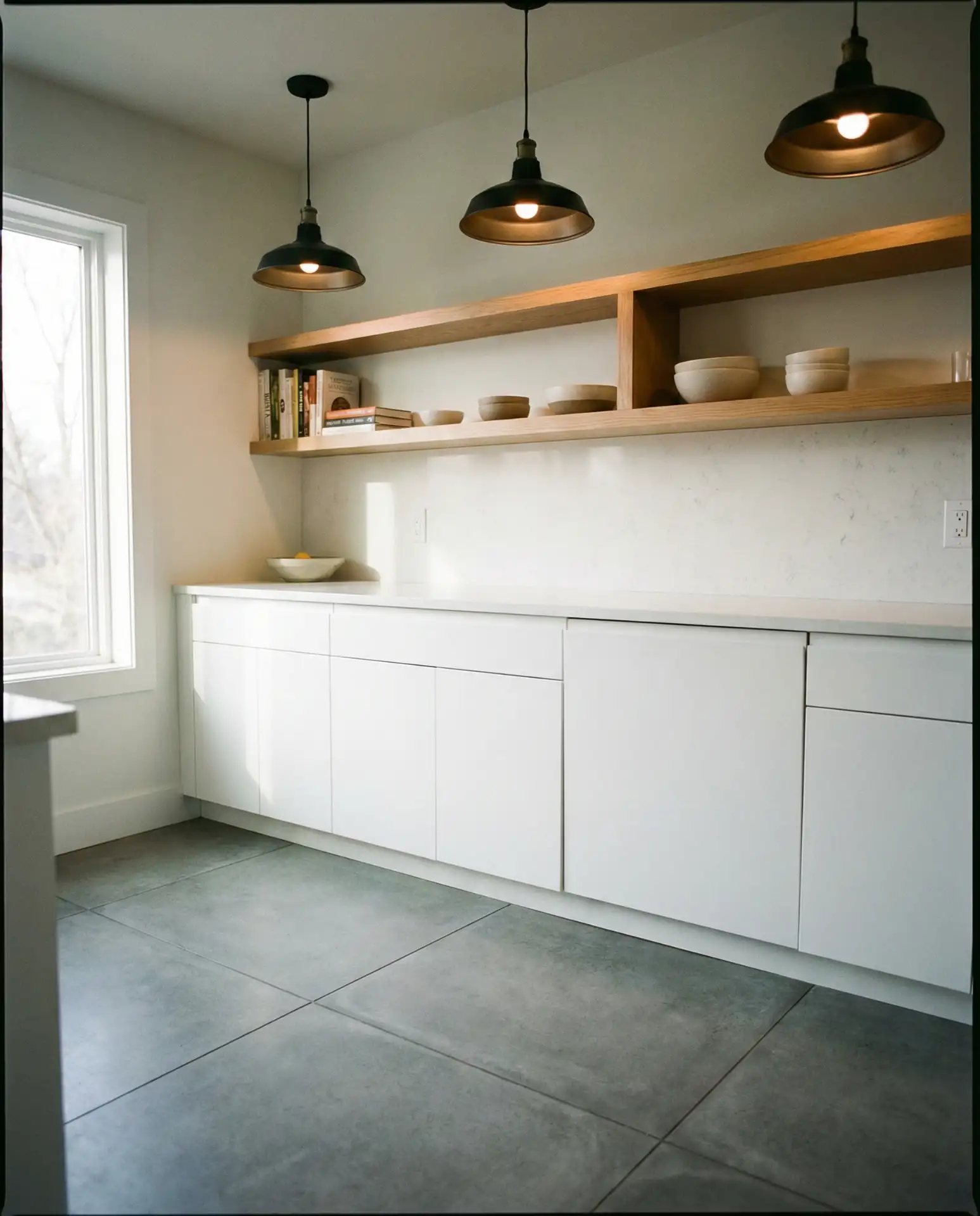
Concrete tiles are especially popular in loft apartments and urban homes across cities like Brooklyn, Austin, and Portland, where industrial-chic design is a lifestyle choice. They’re also budget-friendly compared to natural stone, with quality porcelain versions starting around $3–$5 per square foot. A common mistake is skipping the sealer—unsealed concrete will stain quickly from spills, so invest in a good penetrating sealer and reapply every couple of years.
3. Minecraft-Inspired Pixelated Mosaic
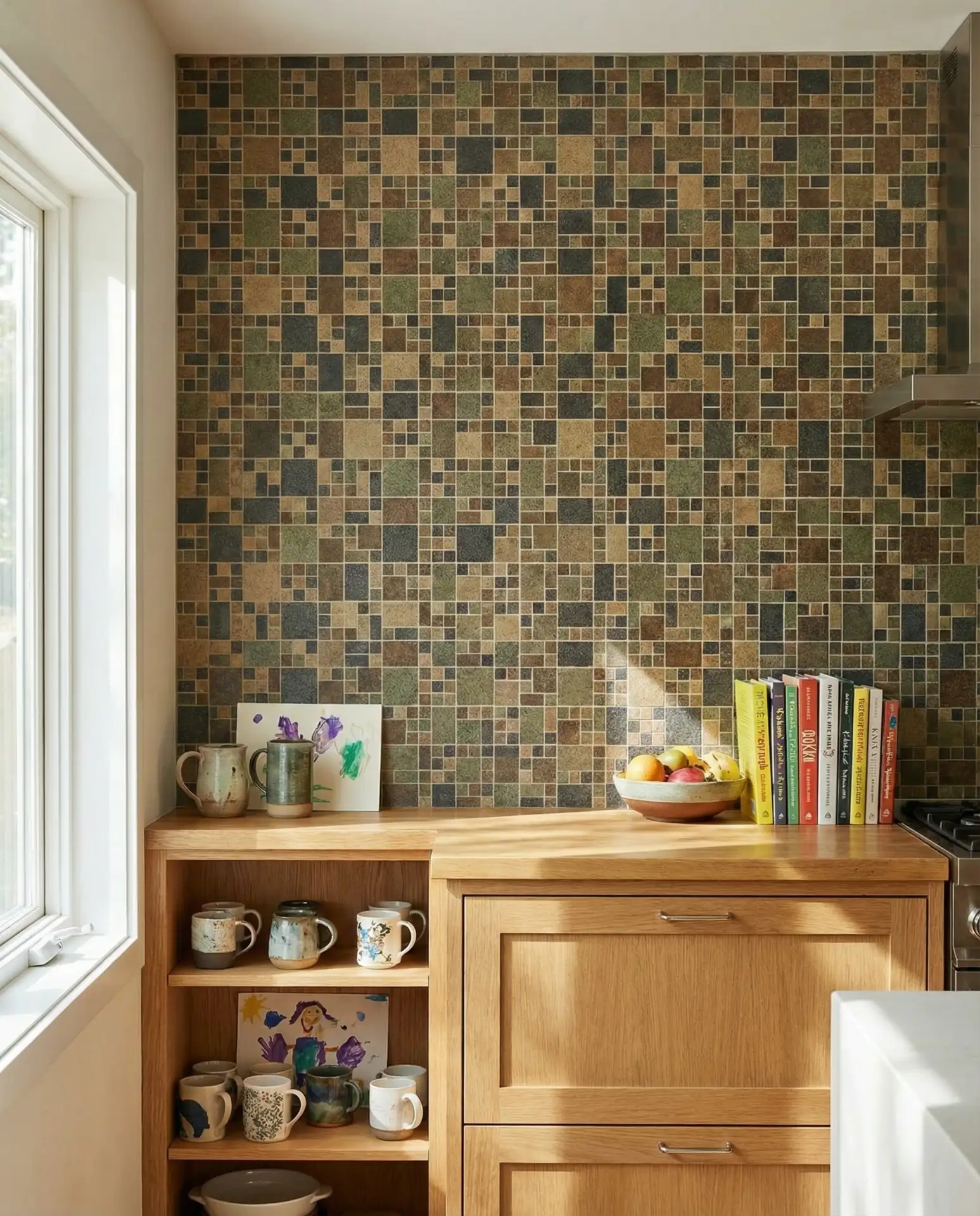
If you’re designing a playful family kitchen or a space that celebrates your kids’ interests, a Minecraft-inspired pixelated mosaic floor can be surprisingly chic when done right. Using small square tiles in earth tones—browns, greens, grays, and beiges—you can create a blocky, geometric look that feels like a nod to the beloved game without being overly literal. It’s a fun conversation starter and works especially well in open kitchens that connect to living or play areas.
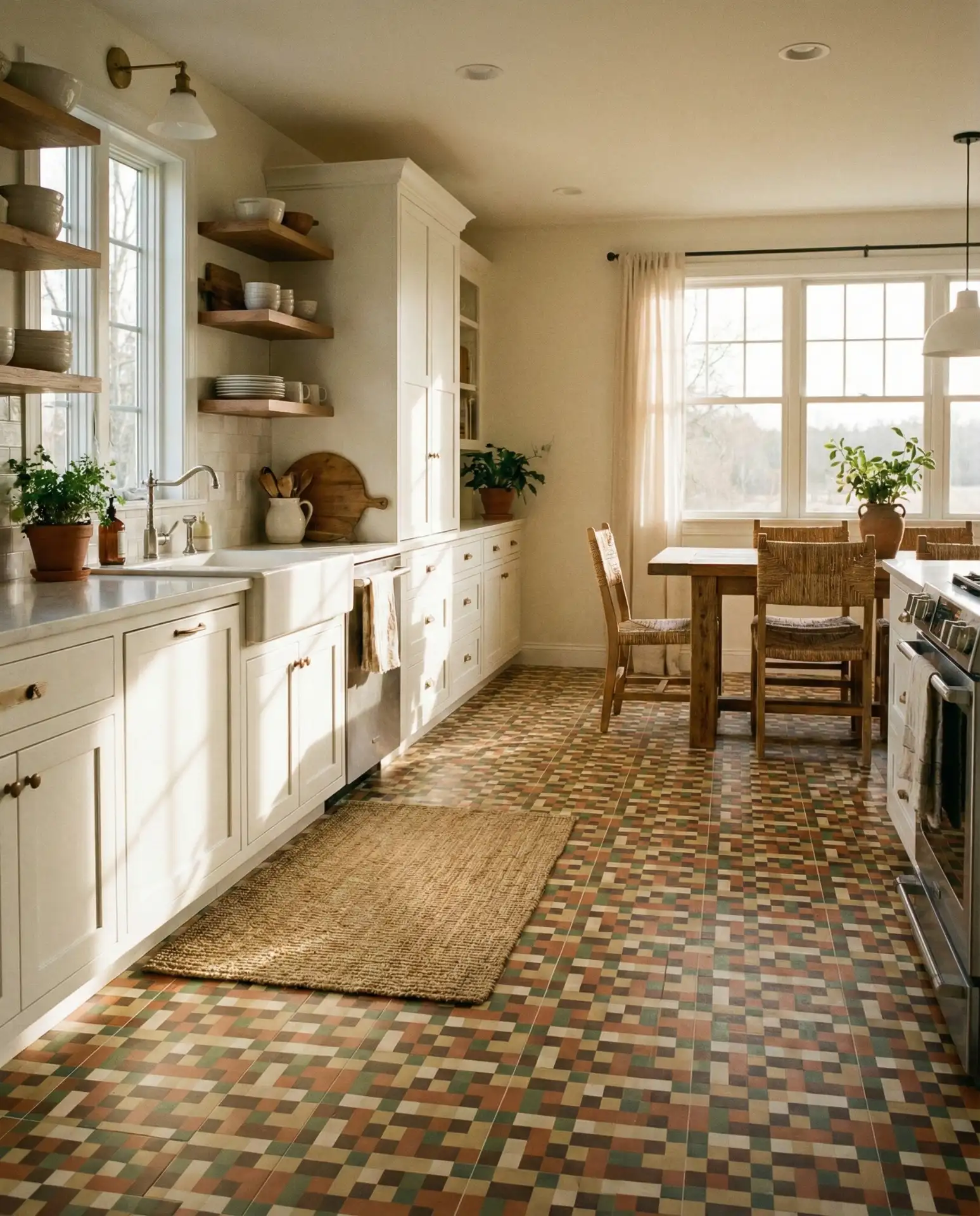
This design works best in suburban homes with younger families, particularly in Colorado, Texas, and the Pacific Northwest, where casual, nature-inspired interiors are on-trend. One homeowner in Denver told us her kids were thrilled to help pick out the tile colors, turning a renovation into a family project. Just be sure to use durable porcelain rather than ceramic—those little squares need to hold up to dropped pots and constant foot traffic.
4. Classic Subway Tile on the Floor
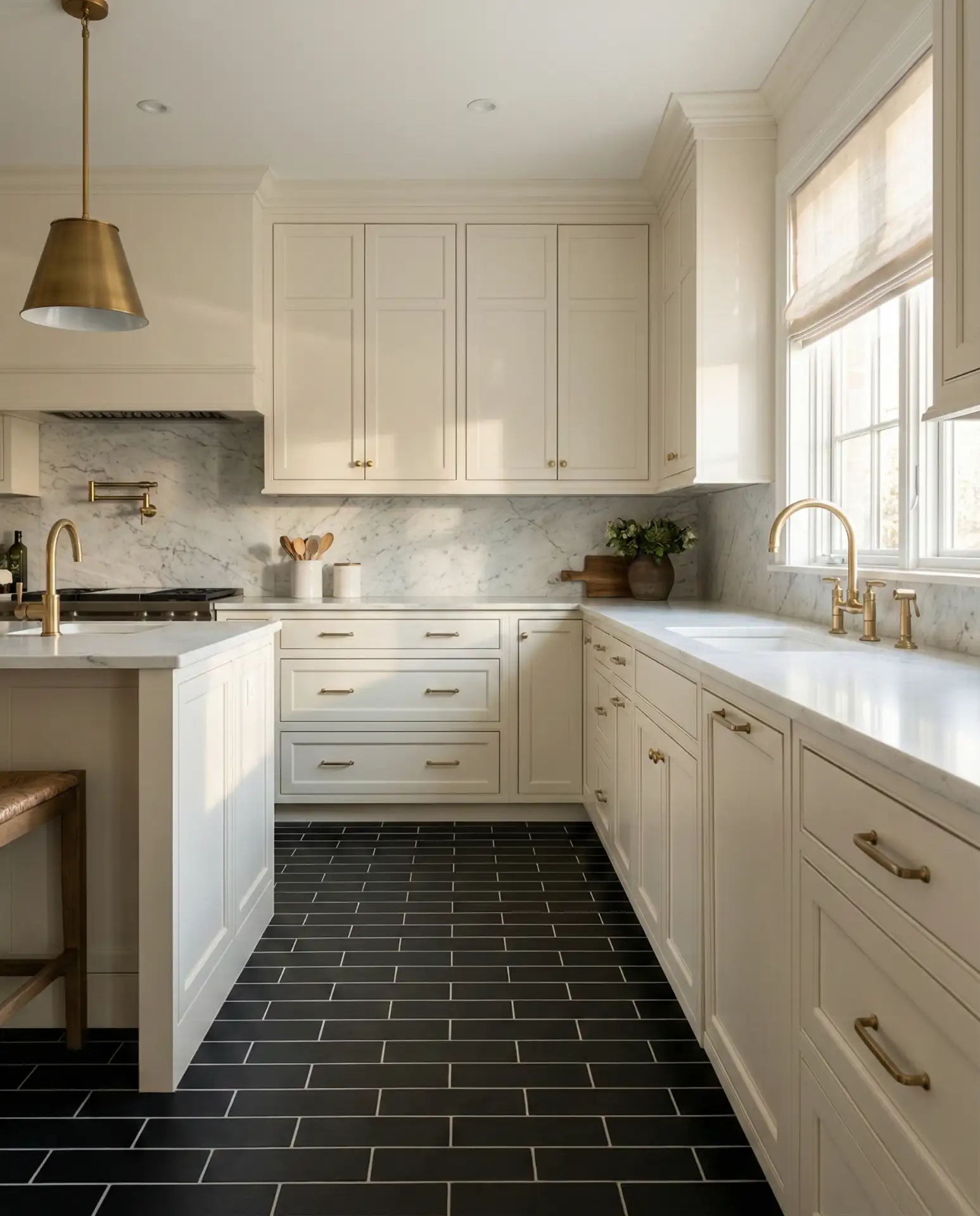
Subway tile isn’t just for backsplashes anymore—laying it on the floor in a running bond or herringbone pattern creates a clean, classic look that feels fresh and unexpected. White or off-white subway tiles brighten up smaller kitchens, while darker grays or blacks add drama and sophistication. The rectangular shape naturally guides the eye, making narrow kitchens feel longer and more spacious.
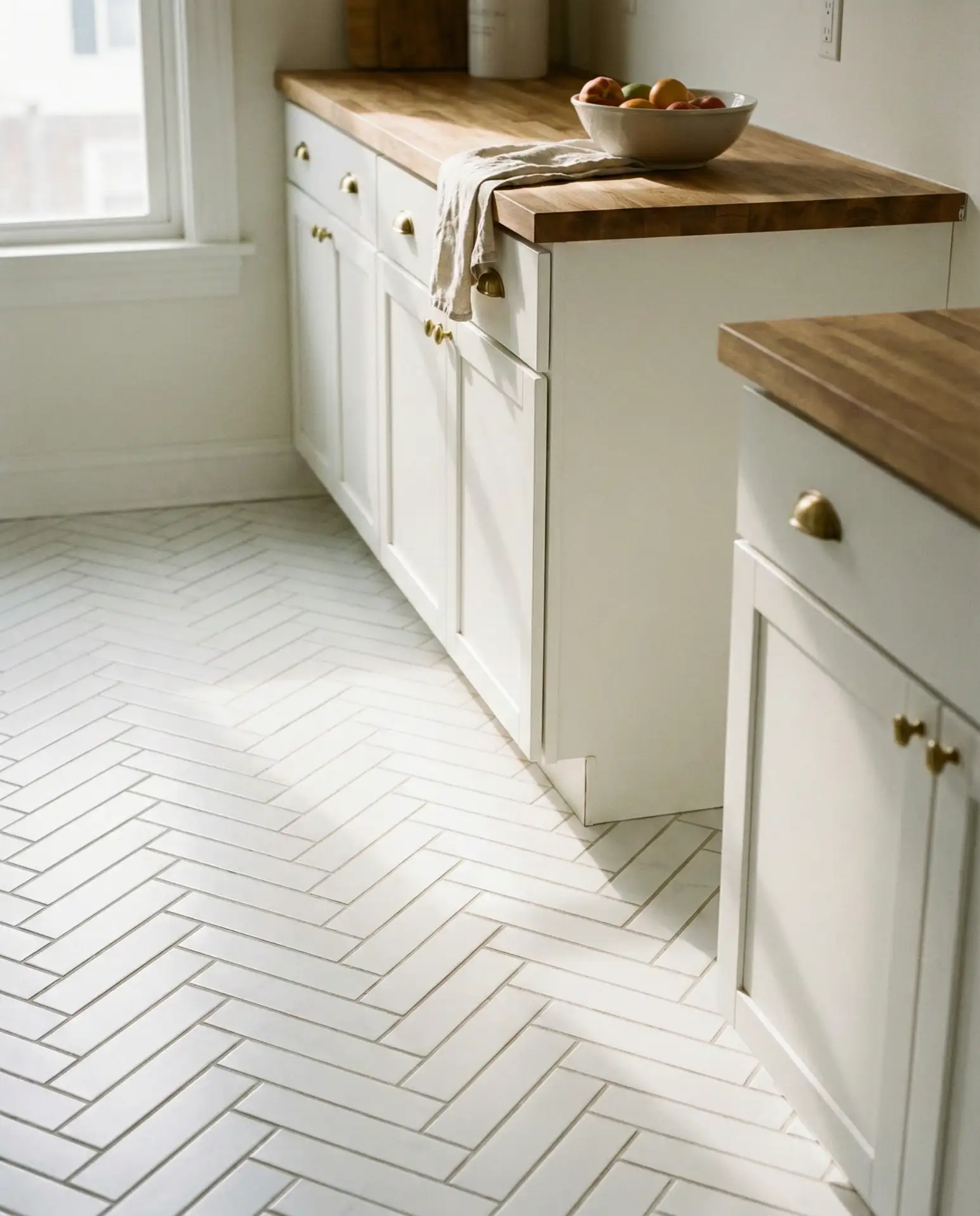
A common mistake is choosing grout that’s too light for high-traffic areas—white grout looks stunning at first but shows every speck of dirt within weeks. Go for a mid-tone gray or taupe grout to keep maintenance realistic. Expect to pay around $4–$8 per square foot for quality ceramic subway tile, making this an accessible option for budget-conscious renovators who still want a designer look.
5. Sleek Polished Marble Slabs
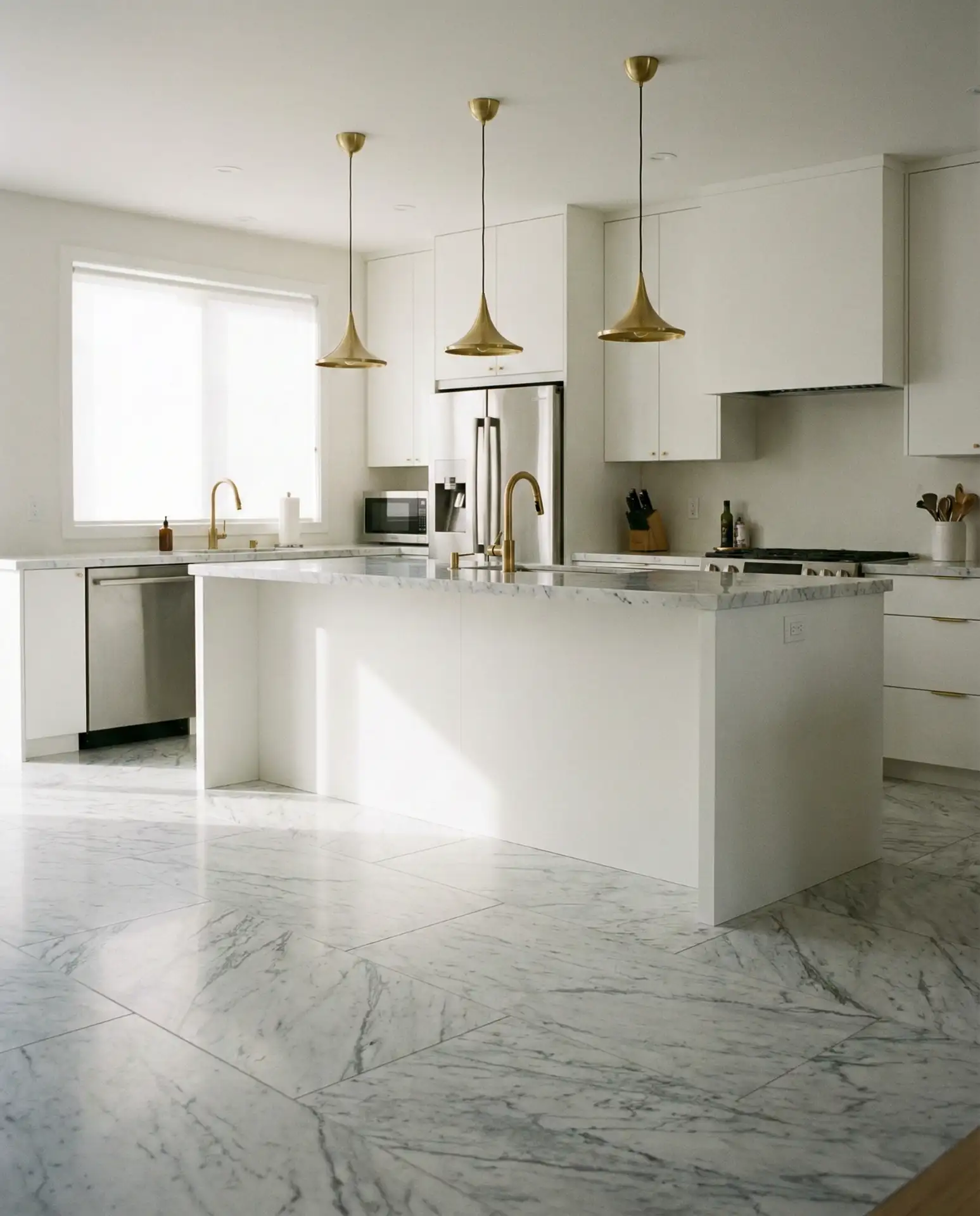
Nothing says luxury quite like a marble floor, and in 2026, homeowners are opting for large polished slabs that showcase the stone’s natural veining with minimal interruption. Whether you choose Carrara, Calacatta, or Statuario, the result is a stunning, high-end surface that reflects light beautifully and pairs seamlessly with both modern and traditional kitchen designs. The cool tones work especially well with warm wood cabinetry or brass fixtures for a balanced, elevated look.
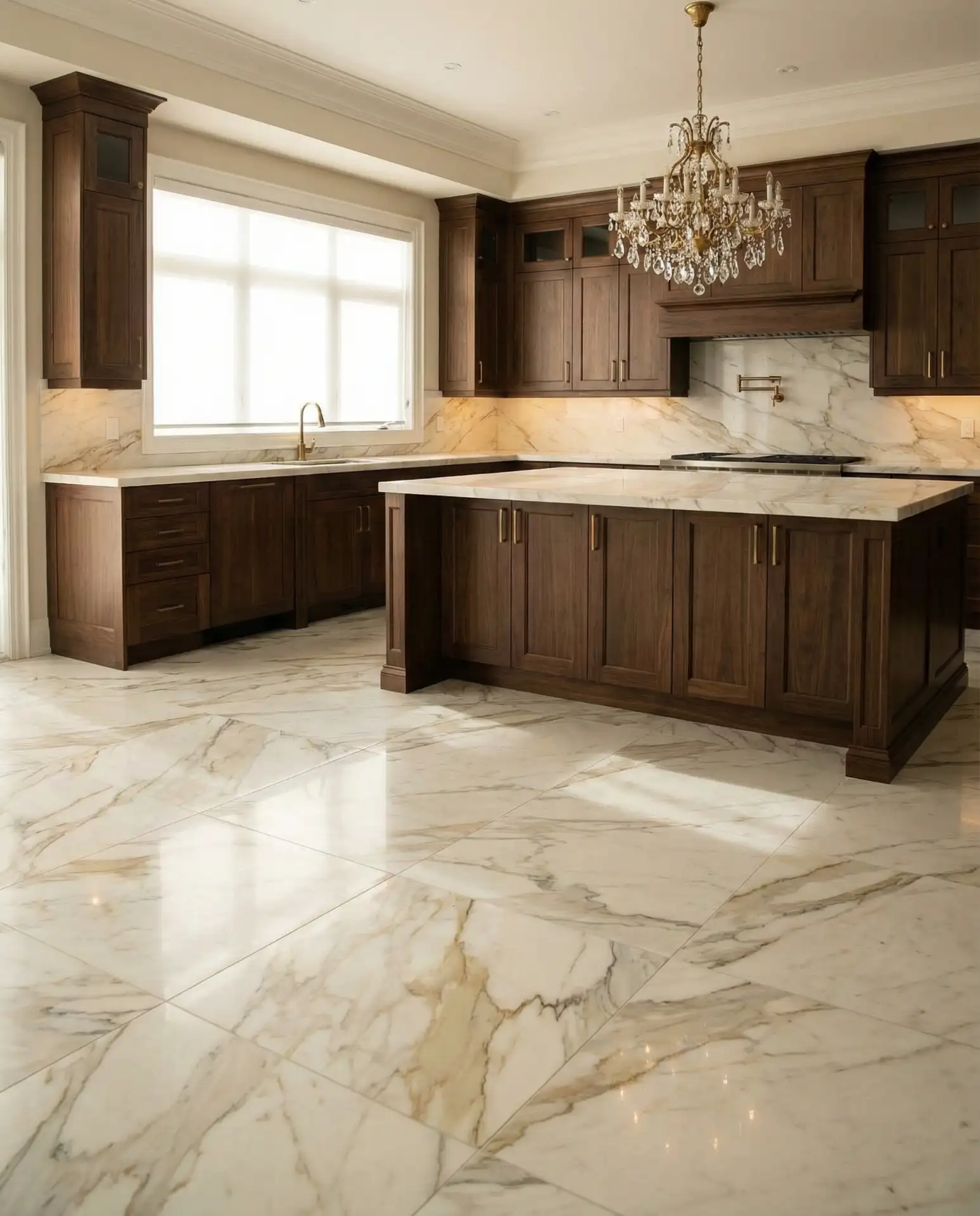
Marble floors are a splurge—expect to invest $15–$25 per square foot or more, depending on the variety and your region. They’re most popular in upscale neighborhoods in California, New York, and Florida, where homeowners prioritize timeless elegance. The main downside? Marble is porous and prone to staining, so you’ll need to seal it regularly and clean up acidic spills (like lemon juice or wine) immediately. Many homeowners find the patina that develops over time adds character, but if you want perfection, consider porcelain that mimics marble instead.
6. Rustic Reclaimed Barn Wood
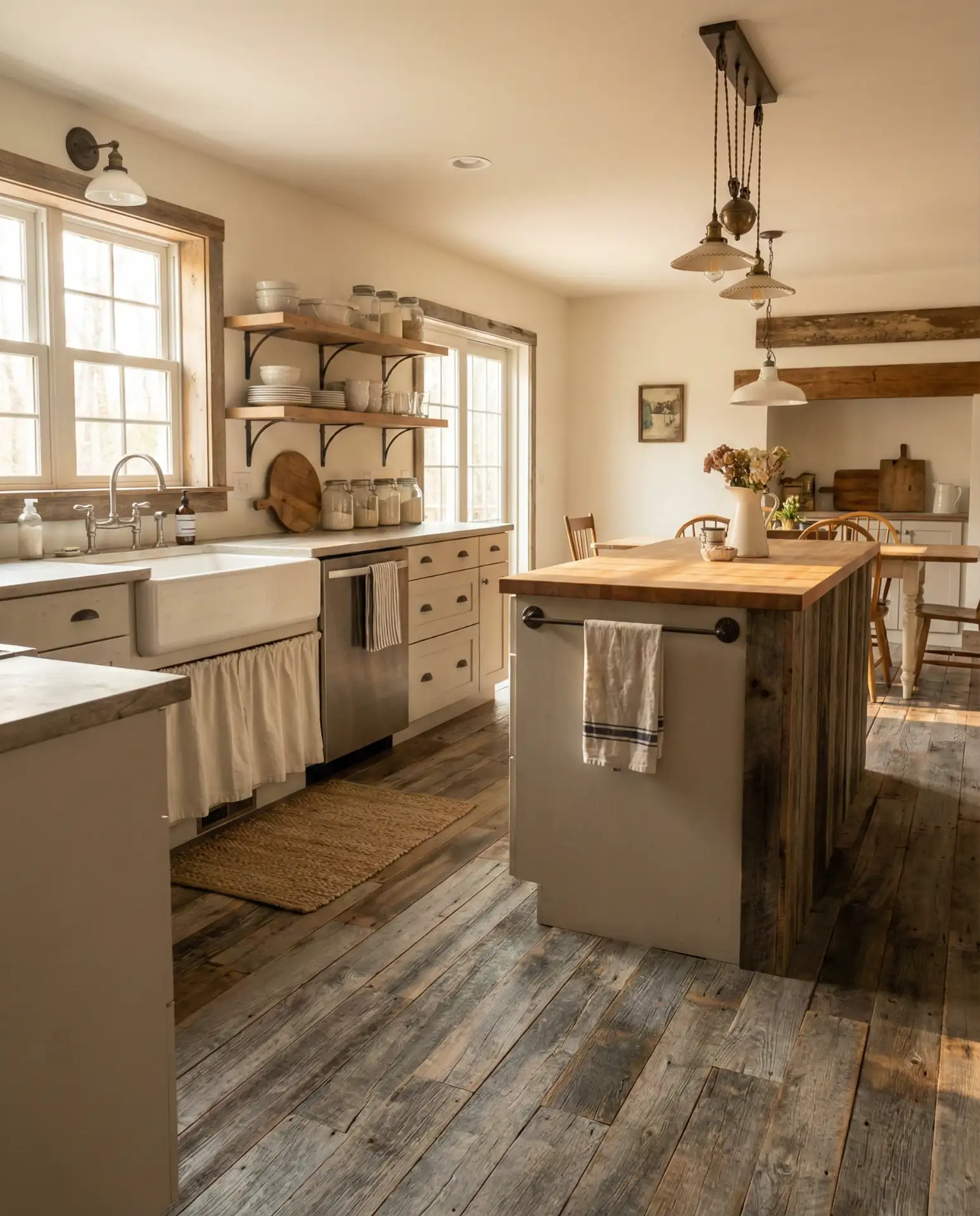
For a rustic, lived-in feel, reclaimed barn wood floors bring warmth, texture, and a story into your kitchen. These weathered planks—often salvaged from old barns across the Midwest or South—feature knots, nail holes, and natural variations that make each floor one-of-a-kind. They’re perfect for farmhouse kitchens, country homes, or urban spaces looking to add organic character. The aged patina pairs beautifully with white shiplap walls, open shelving, and vintage-inspired fixtures.
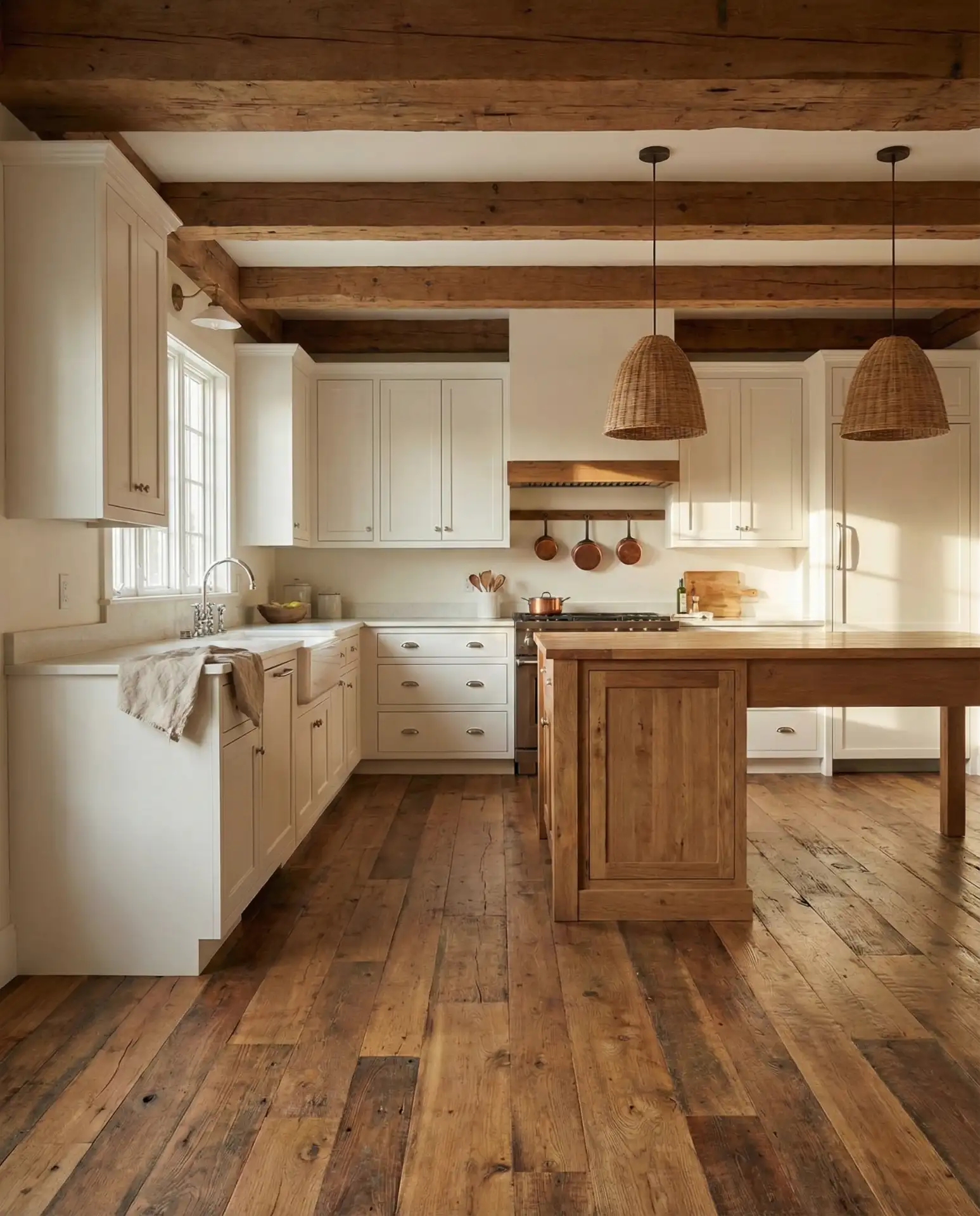
This flooring works best in homes with existing rustic or farmhouse design elements—think Texas ranches, upstate New York cottages, or renovated barns in Vermont. Reclaimed wood is typically more expensive than new hardwood, often running $8–$15 per square foot, but the character and sustainability factor make it worth the investment for many homeowners. Be sure to work with a reputable supplier who can verify the wood’s origin and ensure it’s been properly dried and treated.
7. Industrial Restaurant-Style Epoxy
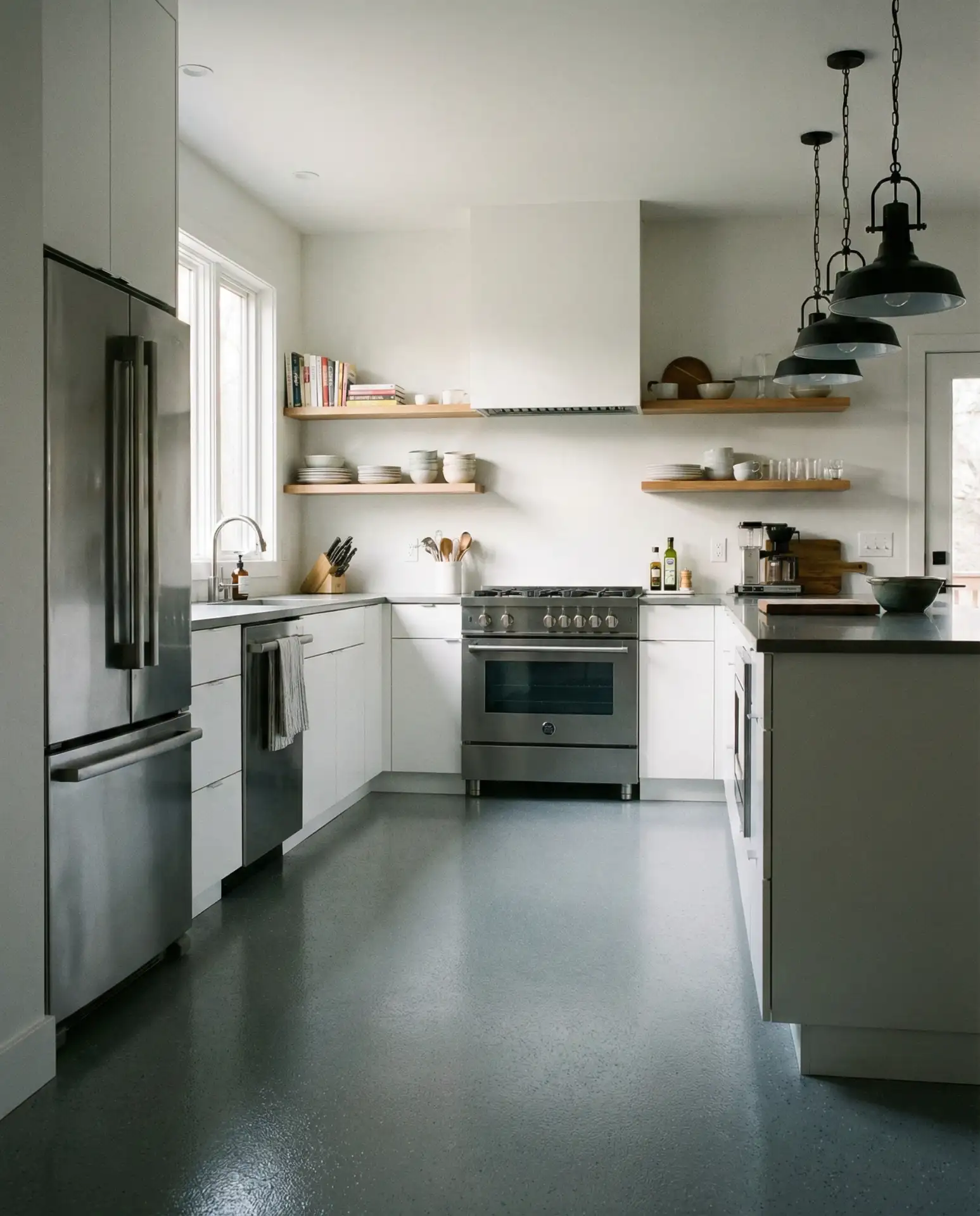
Inspired by commercial restaurant kitchens, seamless epoxy flooring is making its way into residential spaces for homeowners who prioritize durability and easy maintenance. This poured resin surface creates a continuous, joint-free floor that’s incredibly resistant to stains, spills, and wear. Available in a range of colors—from neutral grays to bold blacks—epoxy floors pair perfectly with modern stainless appliances, concrete countertops, and minimalist cabinetry.
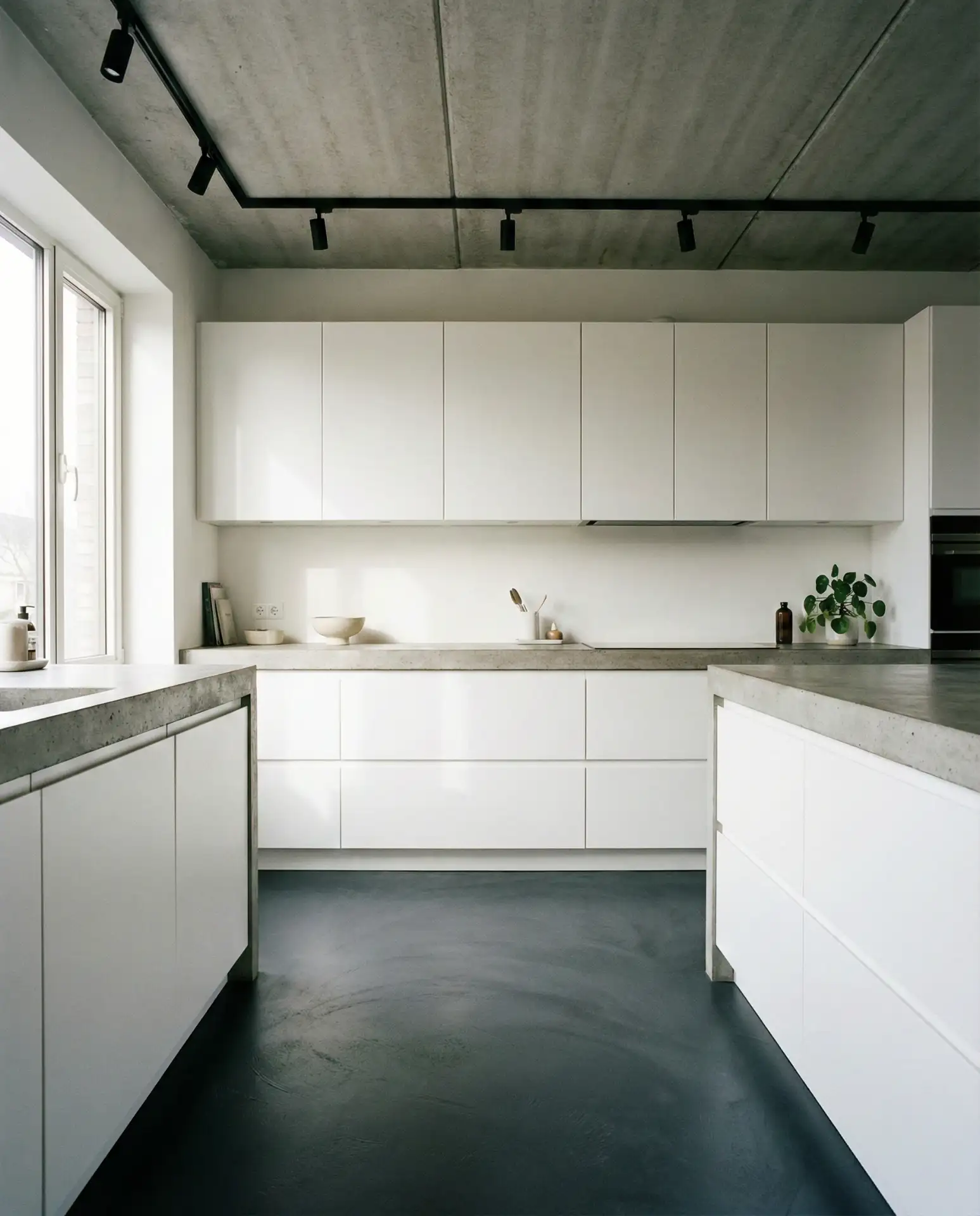
Epoxy is especially practical for serious home cooks or anyone who spends a lot of time in the kitchen—it’s virtually indestructible and wipes clean with minimal effort. Installation requires professional expertise to ensure a smooth, level finish, and costs typically range from $3 to $12 per square foot depending on the complexity and color. One pro tip from an installer in Chicago: make sure your subfloor is in excellent condition, as epoxy will highlight any imperfections.
8. Inspiring Brick Pavers
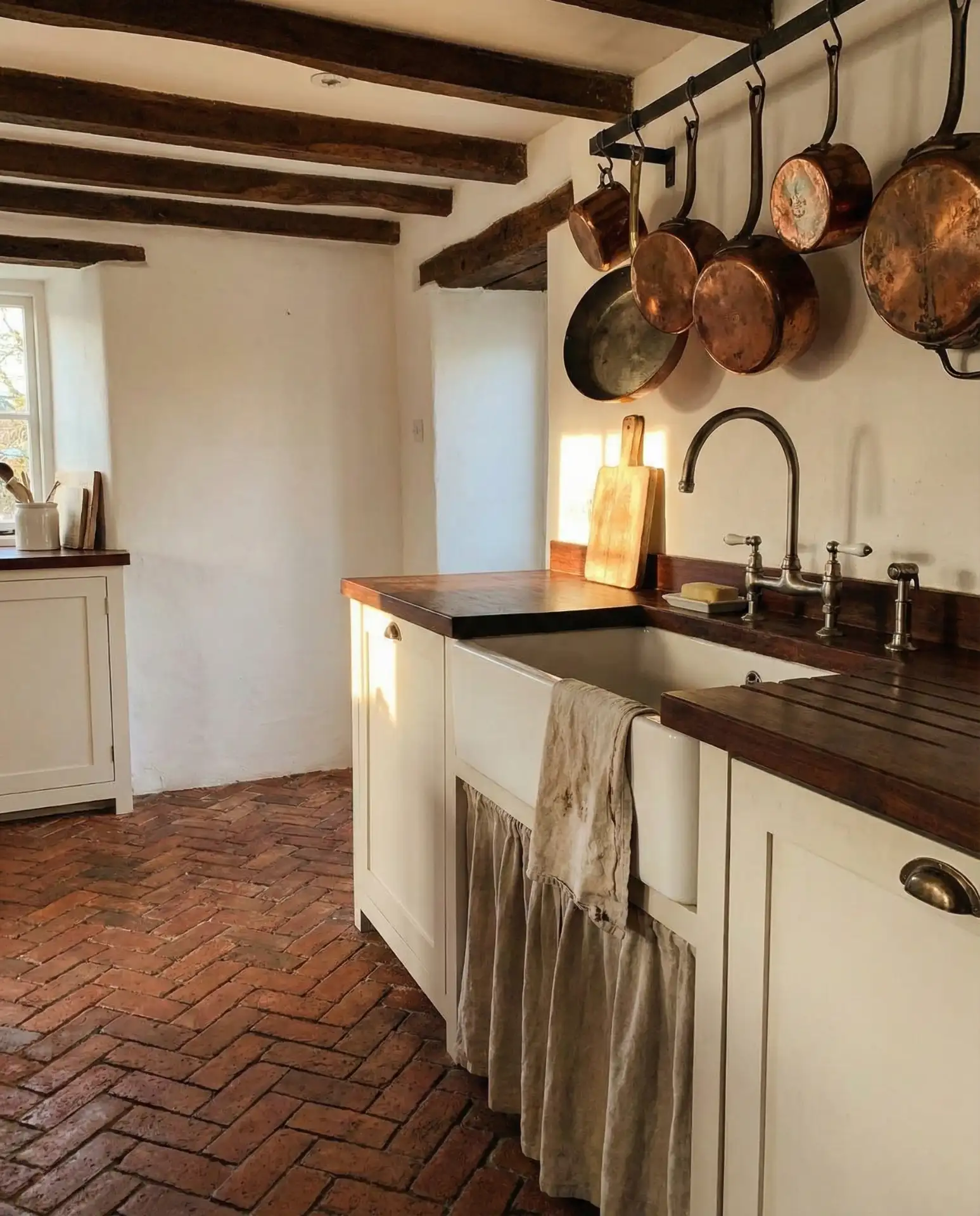
Traditional brick pavers bring an old-world charm that’s both inspiring and enduring, making them a natural fit for historic homes, cottage kitchens, or spaces with European-inspired design. The natural variations in color and texture add depth and warmth, while the classic rectangular shape works beautifully in herringbone, basketweave, or running bond patterns. Brick floors feel substantial underfoot and develop a beautiful patina over time, especially in rustic or country settings.
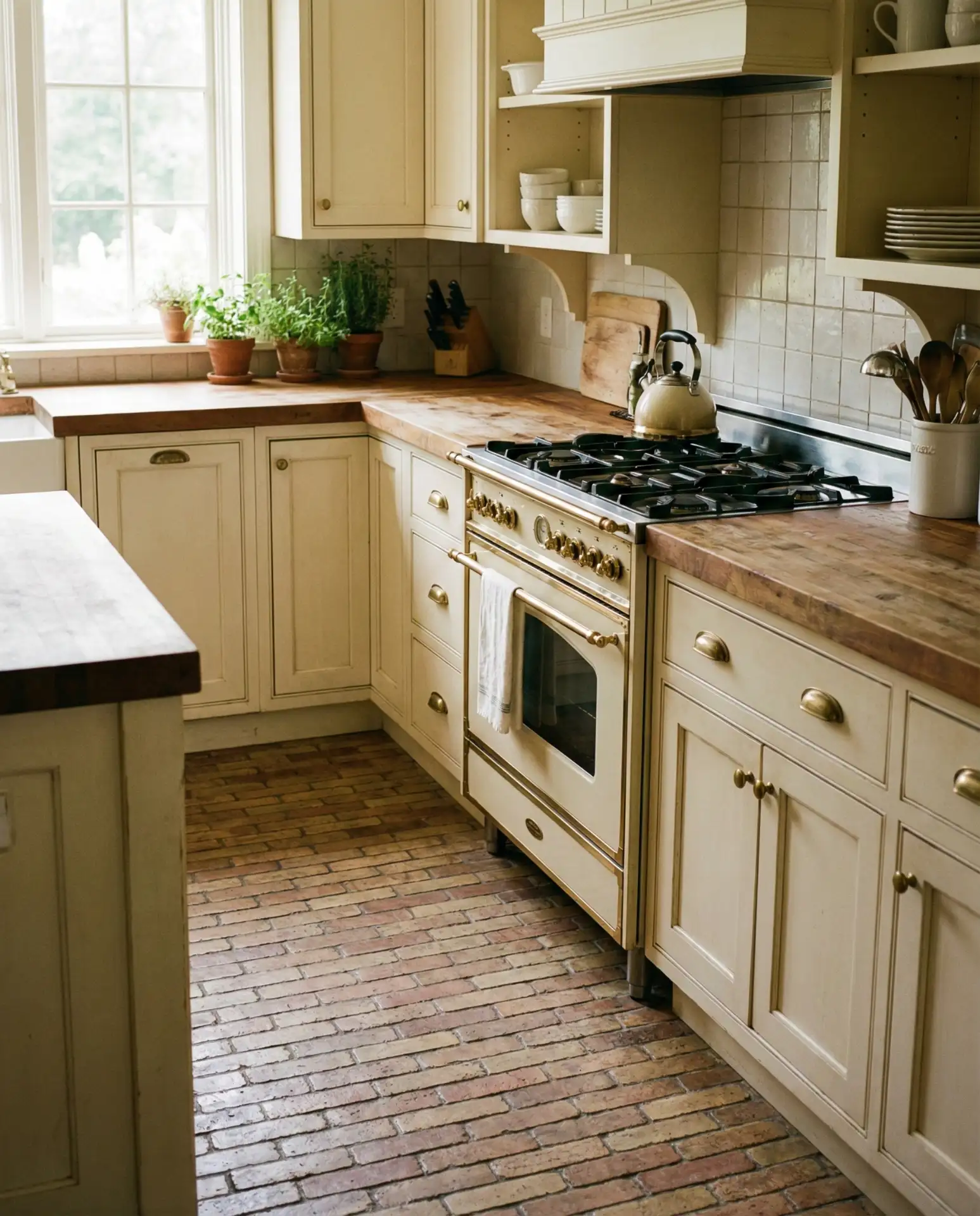
Brick works best in homes with existing architectural character—colonial Williamsburg-style houses, New England saltboxes, or Southern plantation-inspired kitchens. Thin brick pavers (about half an inch thick) are easier to install than full-depth brick and cost around $6–$10 per square foot. They do require sealing to protect against stains and moisture, and the uneven surface can be challenging for anyone with mobility issues, so consider your household’s needs before committing.
9. Open-Concept Polished Concrete
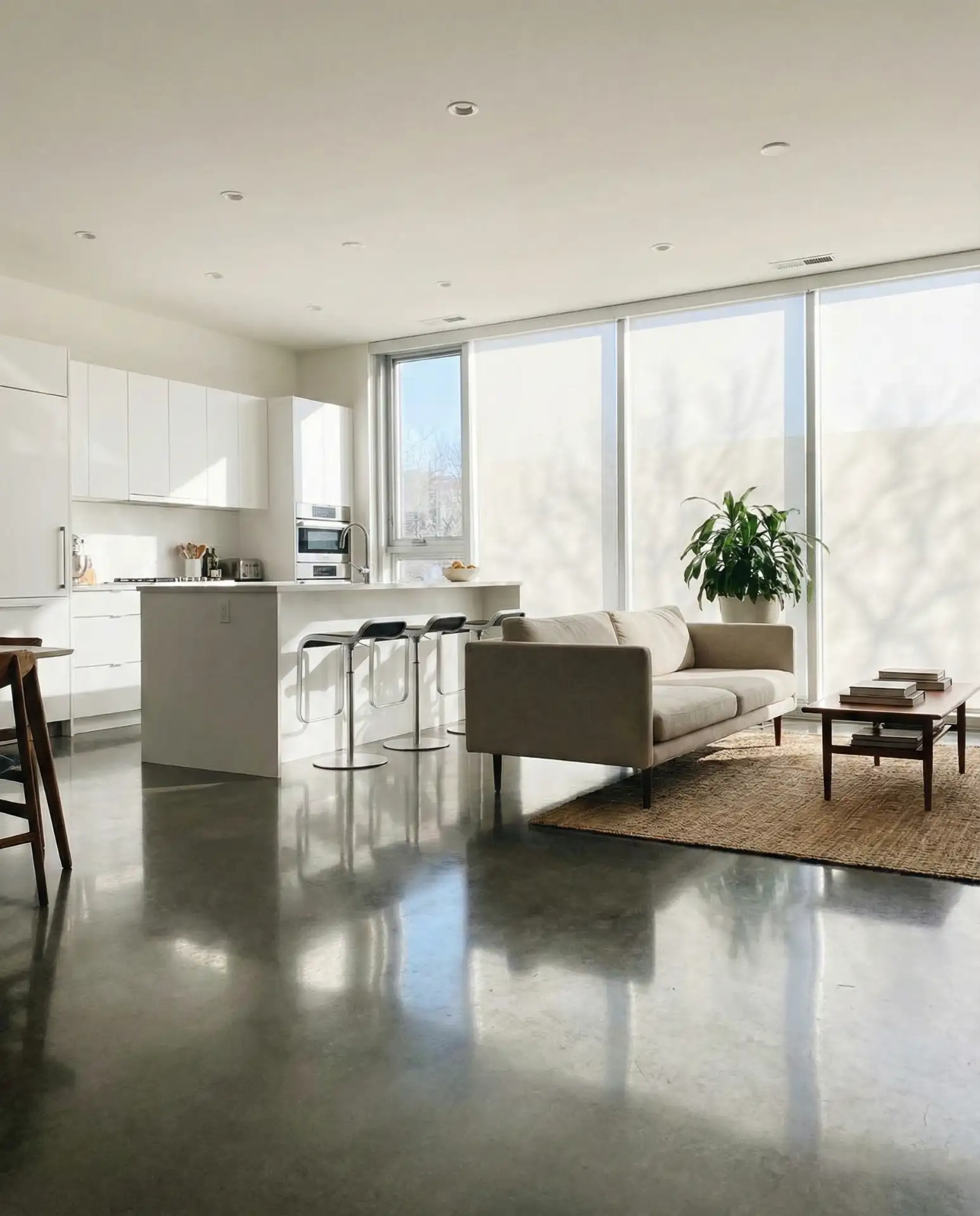
In open-plan homes where the kitchen flows into living and dining areas, polished concrete offers a unified, contemporary flooring solution that ties everything together. The glossy finish reflects light beautifully, making spaces feel larger and brighter, while the neutral palette complements a wide range of design styles from modern minimalist to industrial chic. It’s also incredibly durable and low-maintenance—perfect for busy households with kids, pets, or frequent entertaining.
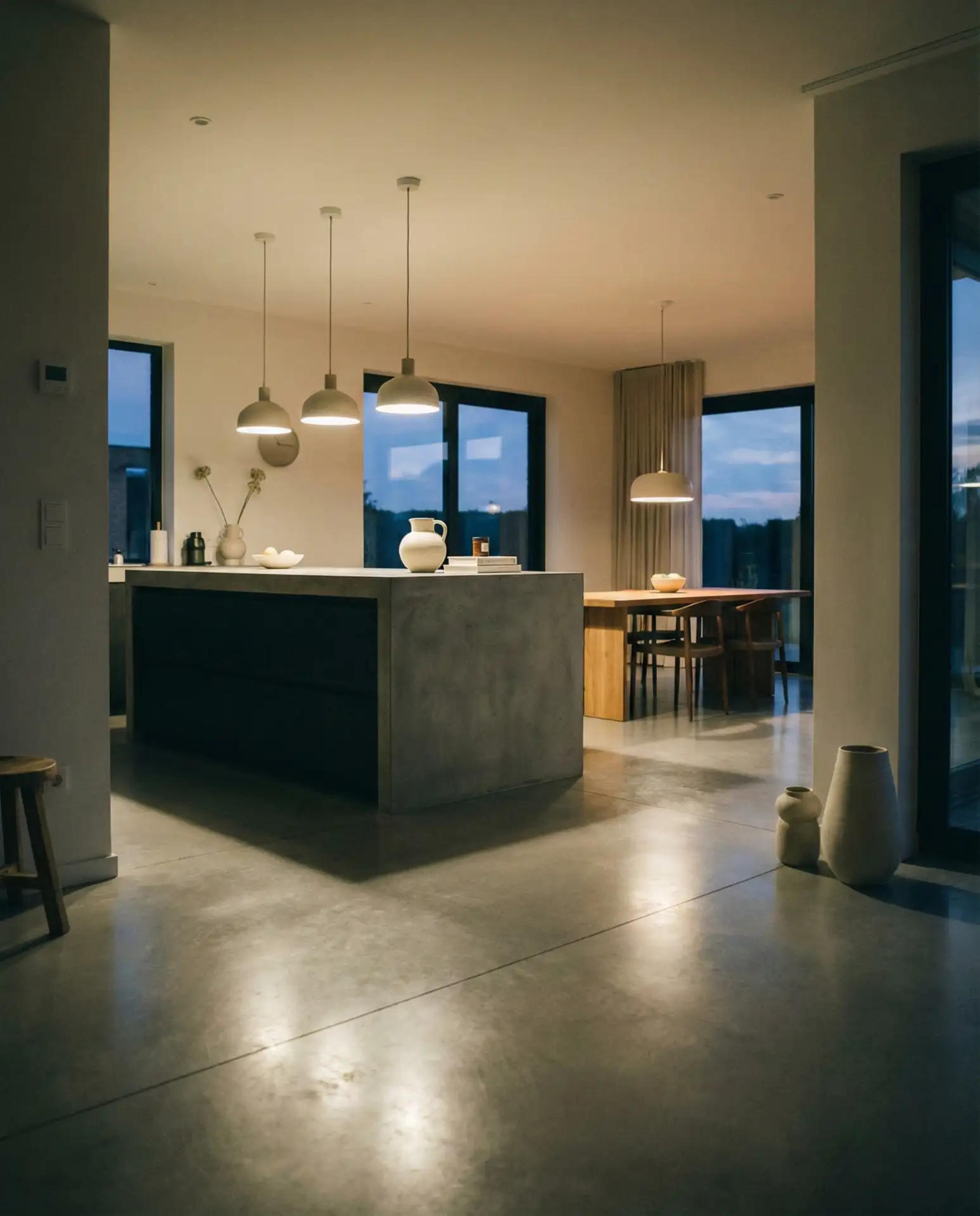
Polished concrete is a favorite in loft-style apartments and modern homes across California, Colorado, and Arizona, where the aesthetic aligns with a clean, uncluttered lifestyle. The process involves grinding down and polishing an existing concrete slab, which keeps costs reasonable—typically $3–$8 per square foot for a basic polish, more for decorative stains or scoring. One real homeowner in San Diego mentioned that adding radiant heating beneath the concrete makes it comfortable year-round, solving the only real drawback: coldness underfoot in winter.
10. Dramatic Black Tile with White Grout
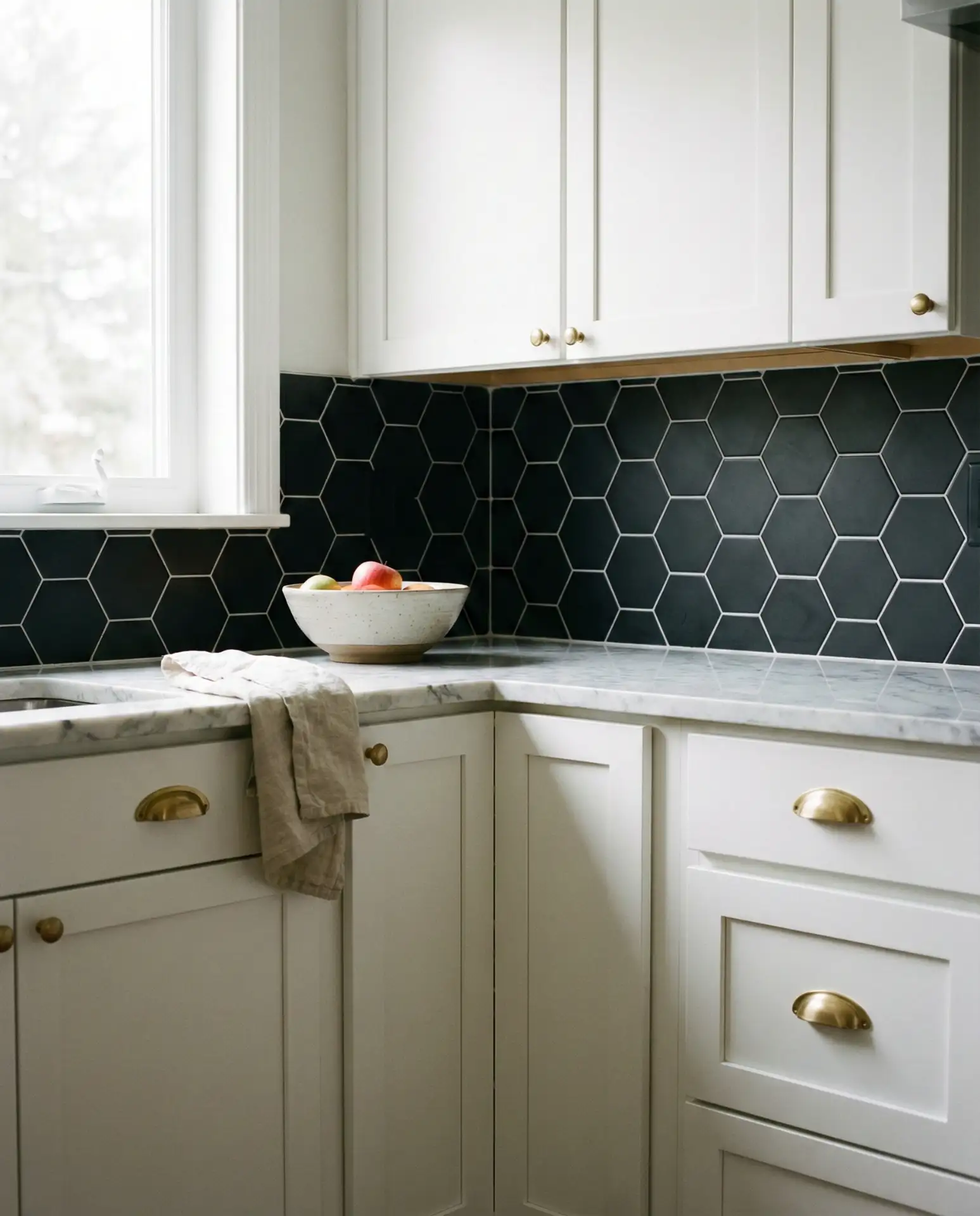
For a bold, graphic look, black tile with crisp white grout creates striking contrast that elevates any kitchen from ordinary to extraordinary. Whether you choose matte black hexagons, glossy subway tiles, or large-format porcelain, this high-impact combination pairs beautifully with white cabinetry, brass fixtures, and natural wood accents. The strong pattern draws the eye and anchors the space, making it ideal for modern or transitional kitchens that aren’t afraid to make a statement.
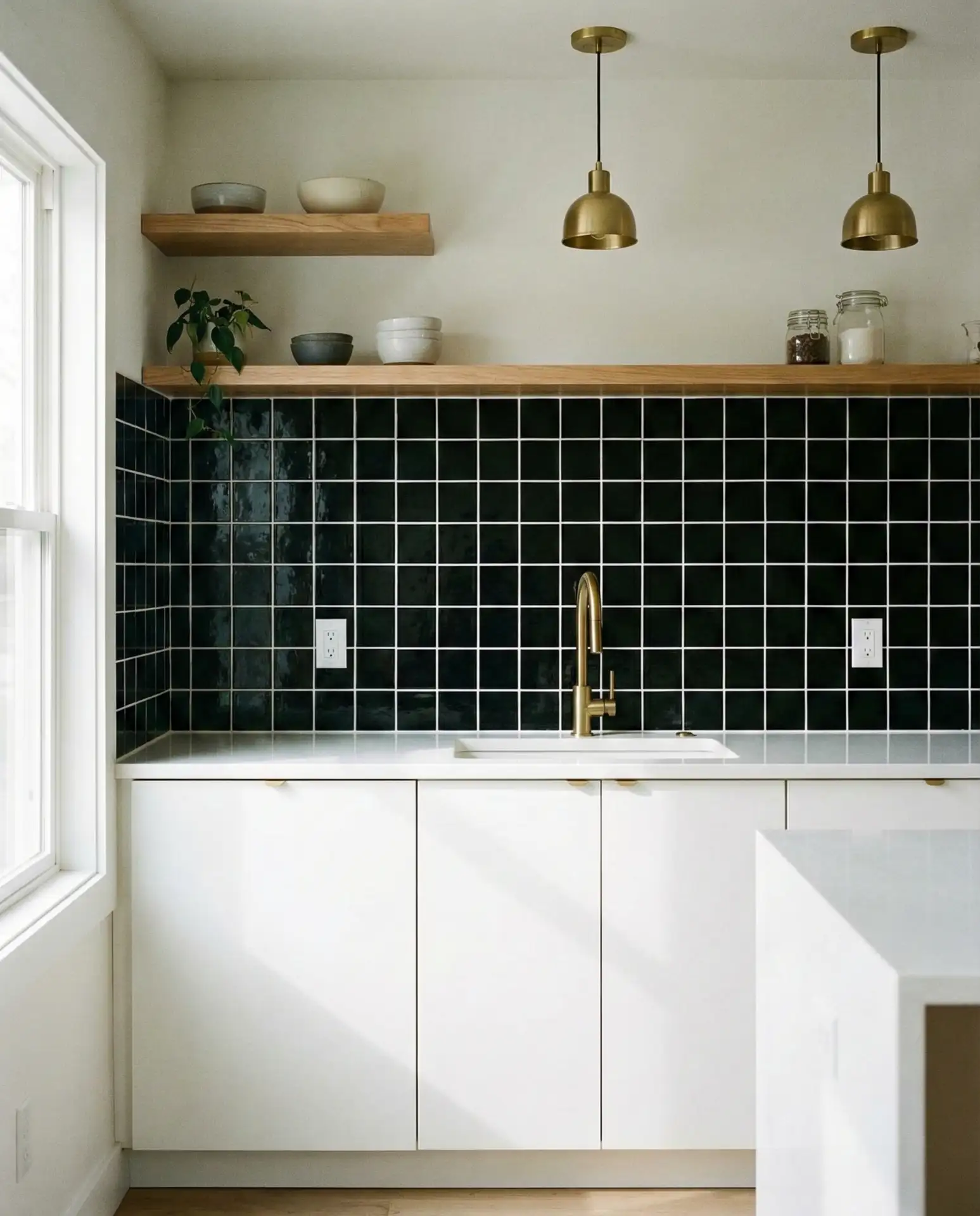
This combination works particularly well in smaller kitchens where you want to create visual interest without adding color. The white grout does require more frequent cleaning—expect to scrub or reseal it every few months to keep it looking fresh. Many designers recommend using an epoxy grout instead of traditional cement-based grout, as it’s far more stain-resistant. Budget around $5–$12 per square foot for quality black porcelain tiles.
11. Stylish Penny Tile in Soft Neutrals
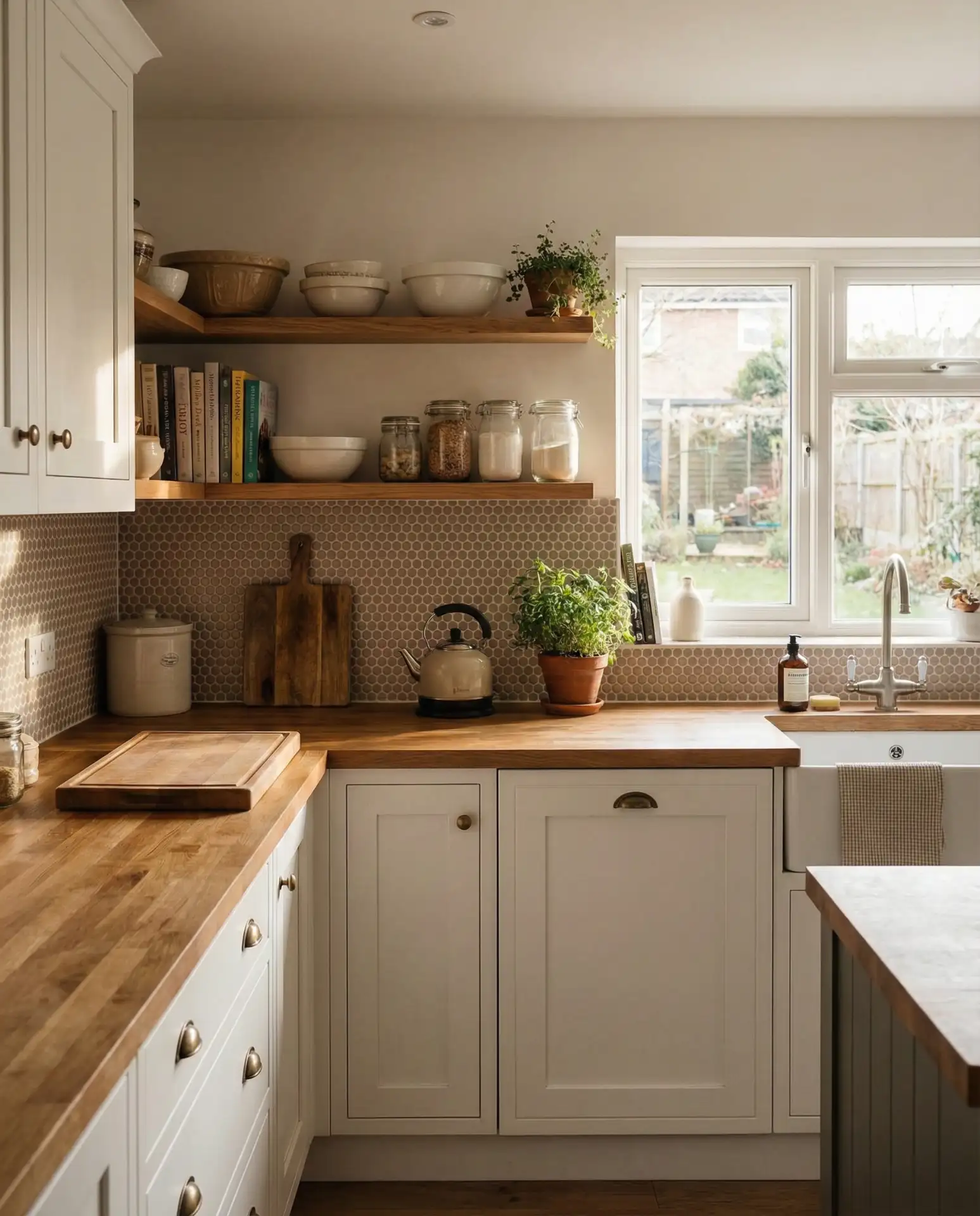
Small round penny tile creates a stylish, vintage-inspired floor that’s playful yet sophisticated. When done in soft neutrals like cream, gray, or taupe, it feels timeless rather than trendy, and the tiny scale adds texture without overwhelming the space. Penny tile works beautifully in compact kitchens, butler’s pantries, or as an accent area near a breakfast nook, and it pairs seamlessly with both classic and modern cabinetry.
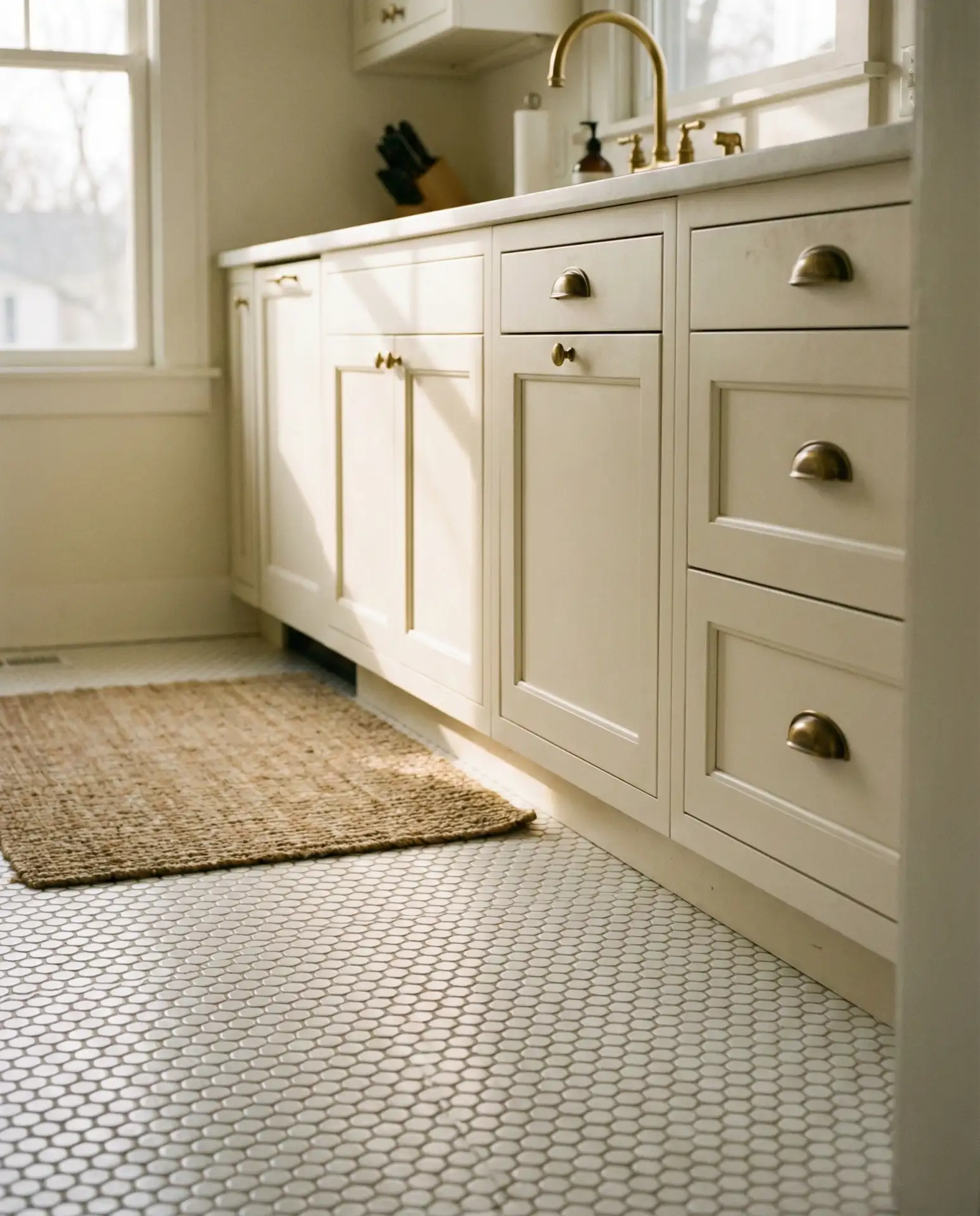
From a practical standpoint, the grout lines in penny tile provide excellent slip resistance, making it a smart choice for families with young children or elderly relatives. Installation is labor-intensive due to the small size, so expect to pay $8–$15 per square foot, including labor. Penny tile is especially popular in historic neighborhoods in cities like Charleston, Savannah, and Boston, where homeowners appreciate its vintage charm and period-appropriate aesthetic.
12. Elevated Wide-Plank Oak
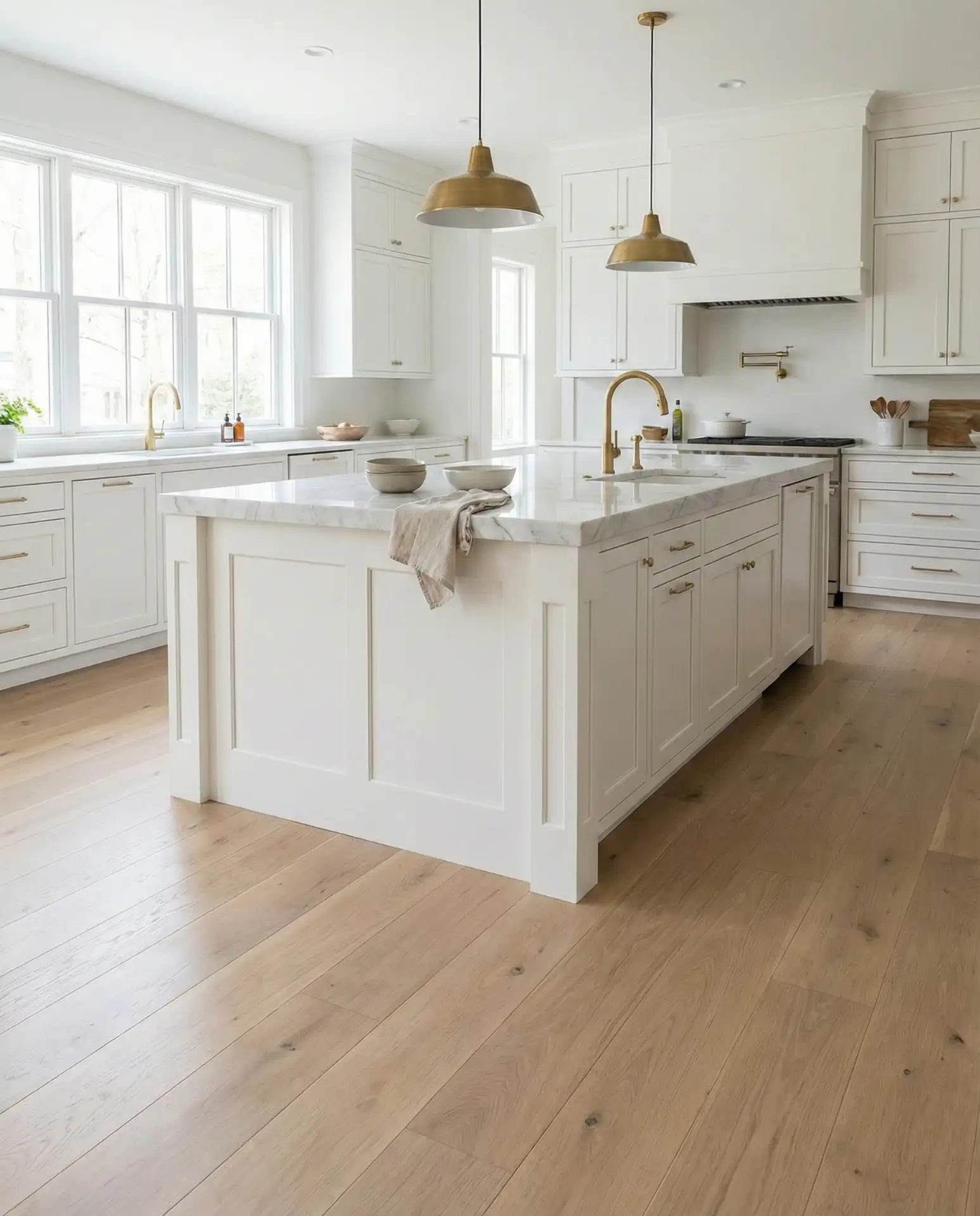
Wide-plank white oak flooring offers an elevated, contemporary take on traditional hardwood, with planks measuring 7 to 10 inches wide that showcase the wood’s natural grain and character. The generous width makes rooms feel more spacious and less busy, and the light, neutral tones work with virtually any color palette. This is a versatile choice that transitions beautifully from farmhouse to modern depending on how you style the rest of the space.
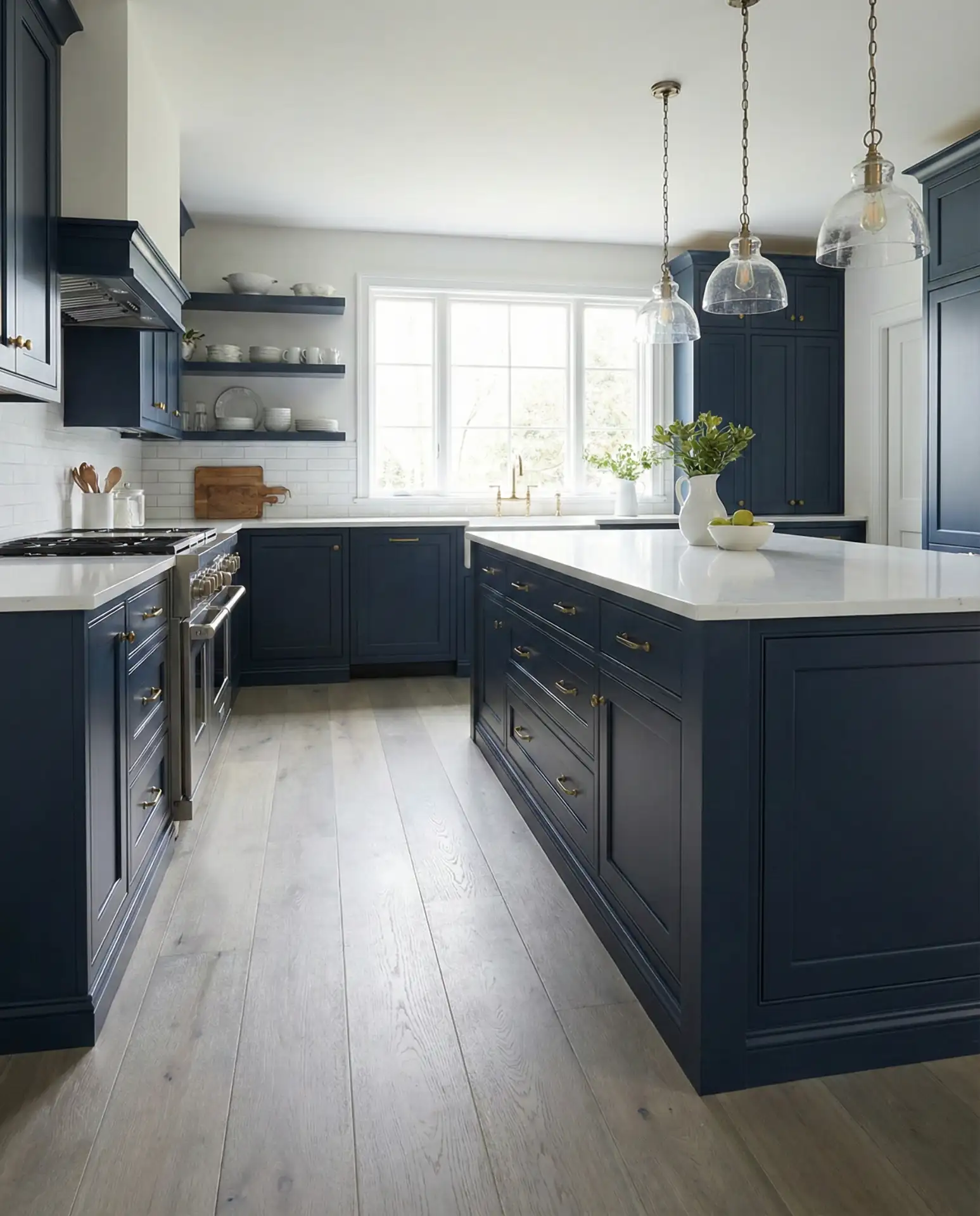
White oak is prized for its durability and resistance to moisture compared to other hardwoods, making it a practical choice for kitchens. Prices range from $6 to $12 per square foot for engineered wide-plank oak, with solid hardwood costing a bit more. A designer in Nashville shared that she always recommends a matte or satin finish rather than high-gloss—it shows fewer scratches and feels more current. This flooring is a favorite in upscale suburban homes from the Carolinas to the Pacific Northwest.
13. Outdoor-Inspired Slate Tile
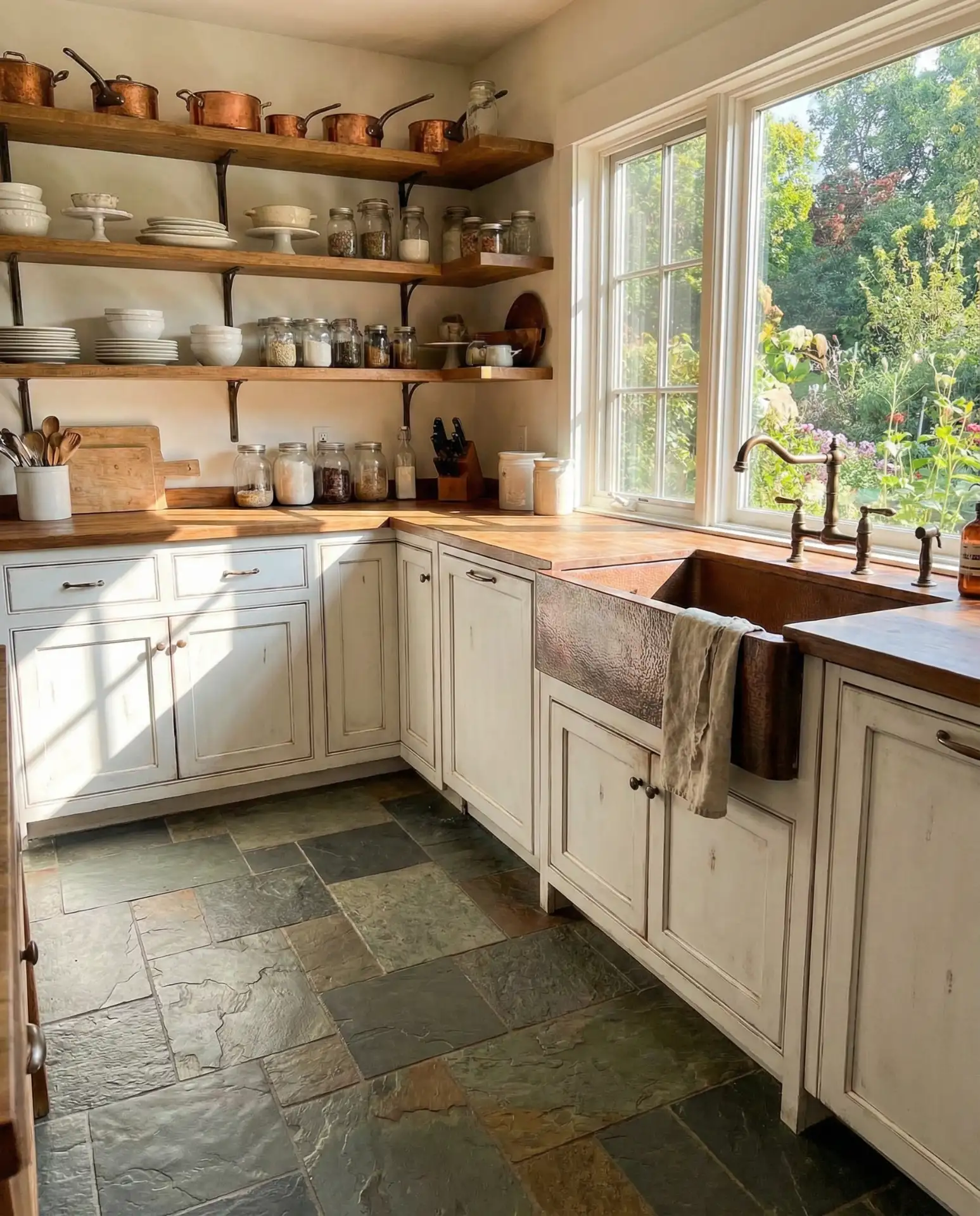
Slate tile brings a rugged, natural beauty that blurs the line between indoor and outdoor spaces—perfect for kitchens that open onto patios, decks, or gardens. The textured surface and earthy color variations (from charcoal and gray to green and rust) add organic character, while the stone’s natural durability stands up to heavy use, spills, and foot traffic. Slate works especially well in rustic, mountain, or coastal homes where the connection to nature is part of the design ethos.
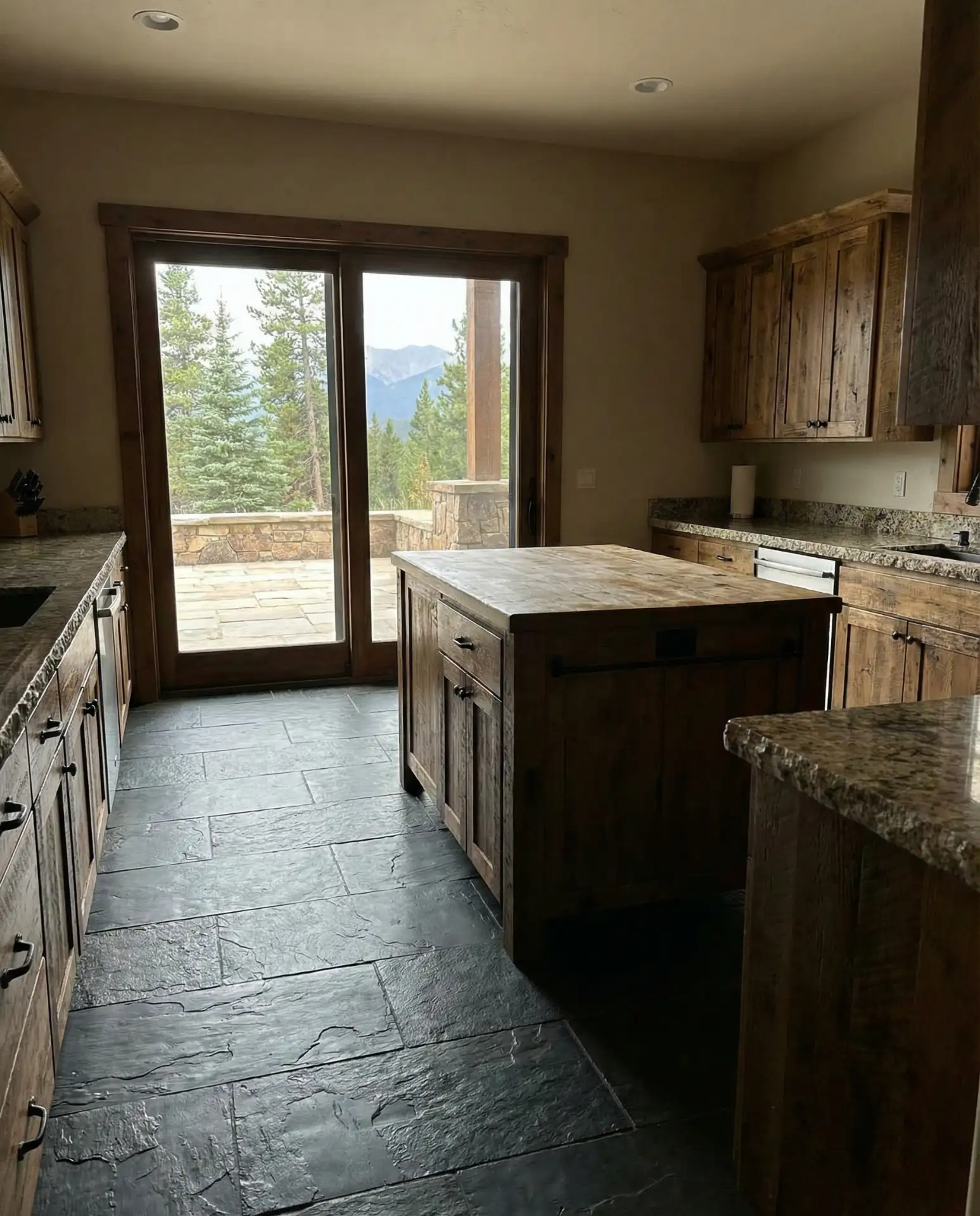
Slate is a smart investment for homes in rainy or snowy climates, as it’s naturally slip-resistant and handles moisture beautifully. Expect to pay $5–$10 per square foot for quality slate tile. One common mistake is skipping the sealer—while slate is durable, it’s also porous and will stain if not properly sealed. Plan to reseal annually or biannually depending on use. This flooring is particularly popular in Colorado, Montana, and the Pacific Northwest.
14. Crisp White Porcelain Planks
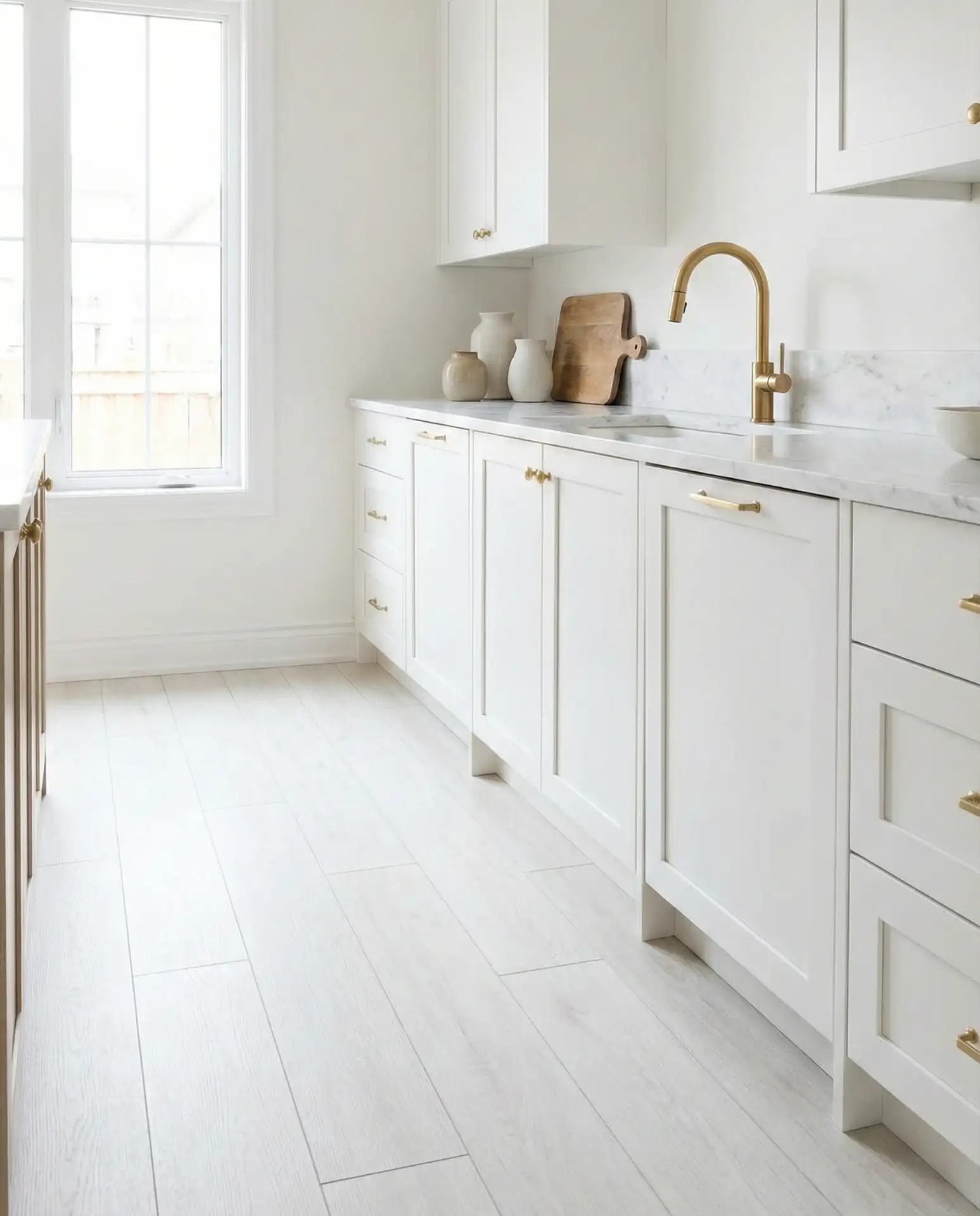
For a bright, clean aesthetic that feels fresh and contemporary, white porcelain planks mimic the look of painted or whitewashed hardwood without the maintenance headaches. These tiles are completely waterproof, scratch-resistant, and easy to clean—ideal for busy families or anyone who wants the look of wood with the performance of porcelain. The light color reflects natural light beautifully, making even small kitchens feel airy and spacious, and it pairs seamlessly with modern or Scandinavian-inspired design.
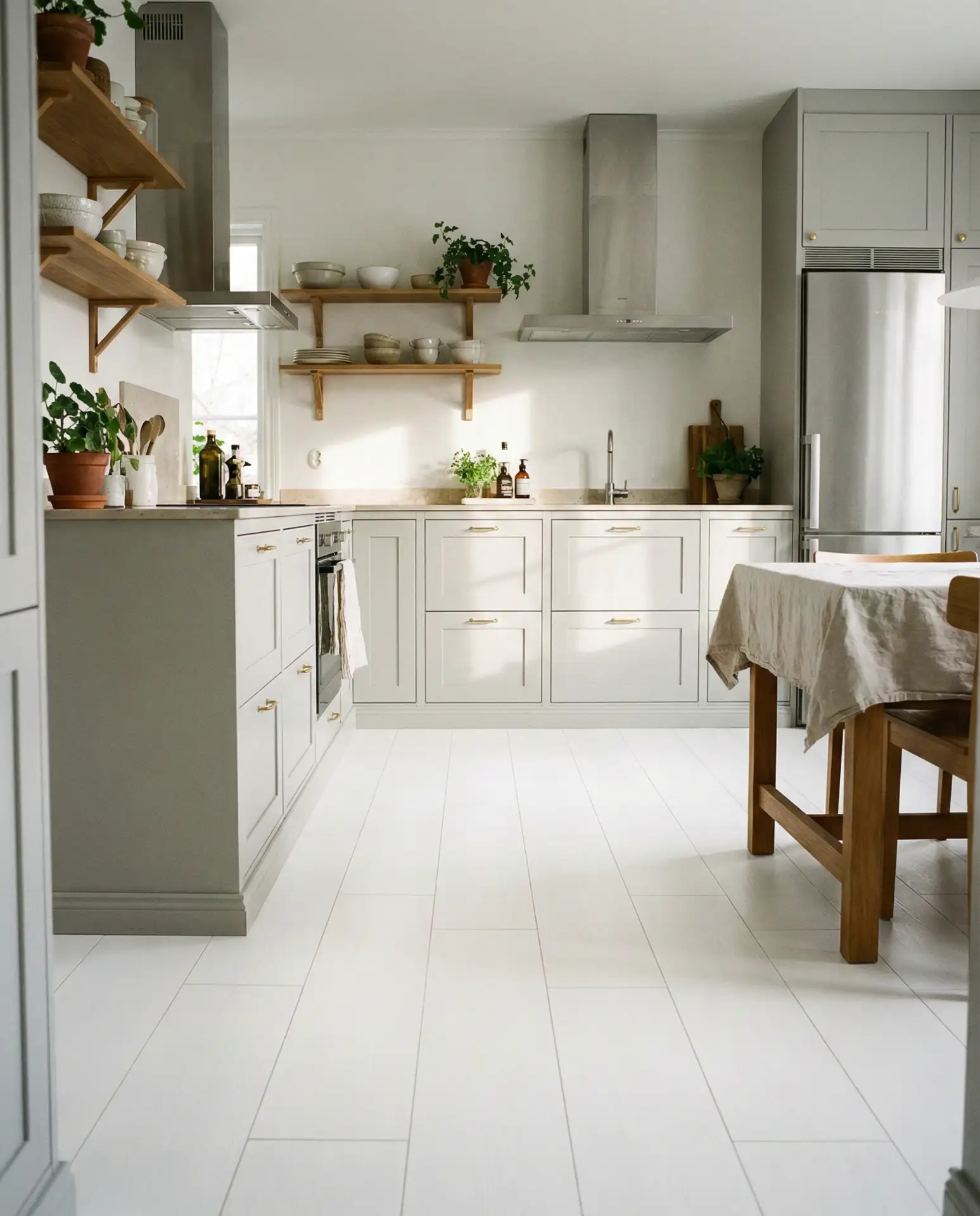
White porcelain planks are especially popular in coastal areas like Southern California, Florida, and Cape Cod, where the light, breezy aesthetic aligns with the region’s lifestyle. They’re also a favorite among homeowners with pets or kids, since the light color actually shows less dirt than darker floors and wipes clean in seconds. Pricing typically ranges from $4 to $8 per square foot, making this an affordable option that doesn’t compromise on style or durability.
15. Classic Checkered Black and White
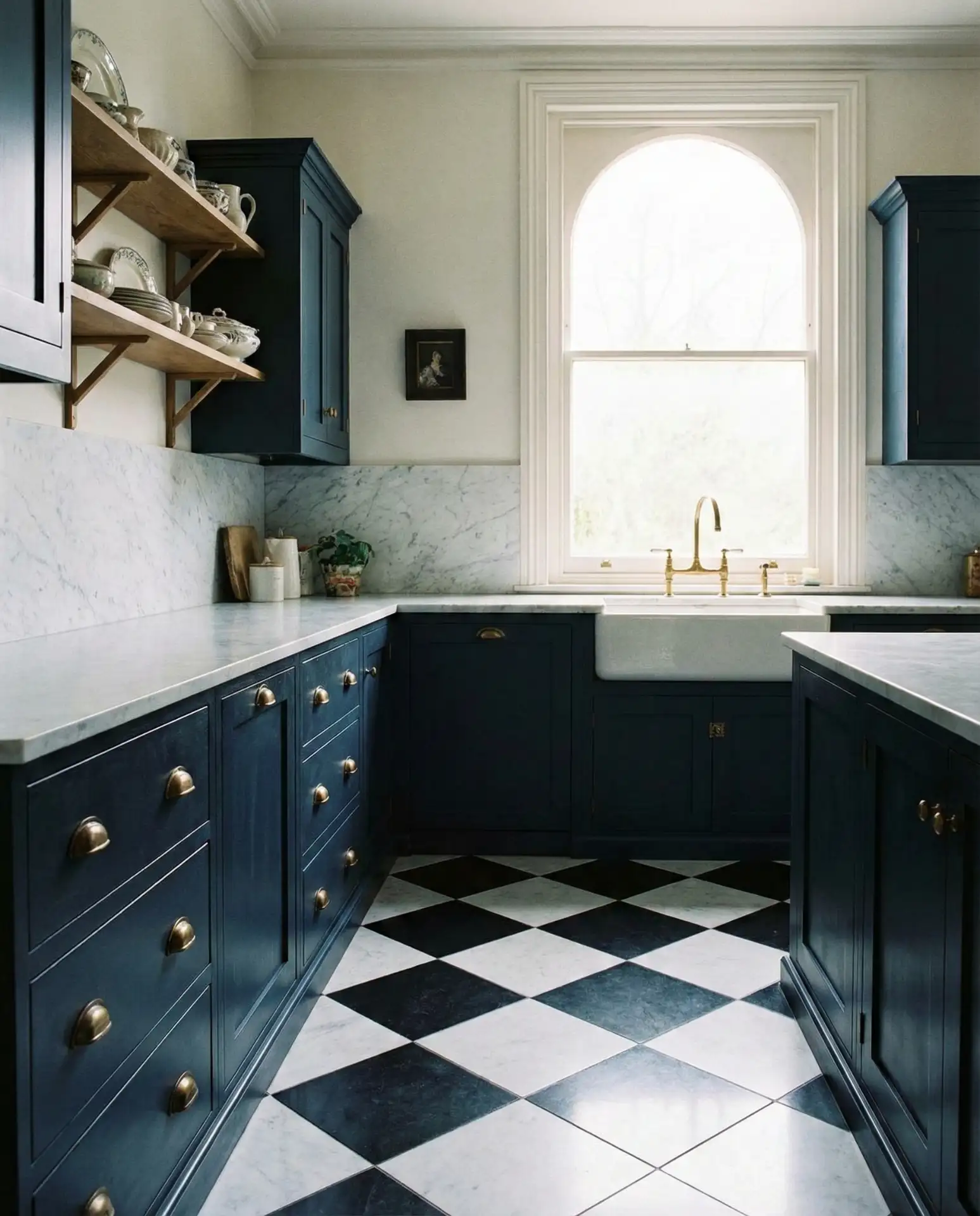
Few flooring choices are as instantly recognizable—or as timelessly chic—as a checkered black and white floor. This iconic pattern evokes vintage diners, retro kitchens, and European bistros, bringing a sense of nostalgia and playful sophistication to any space. The strong geometric pattern works beautifully in both small galley kitchens and larger open layouts, and it pairs just as well with classic farmhouse style as it does with bold, eclectic design.
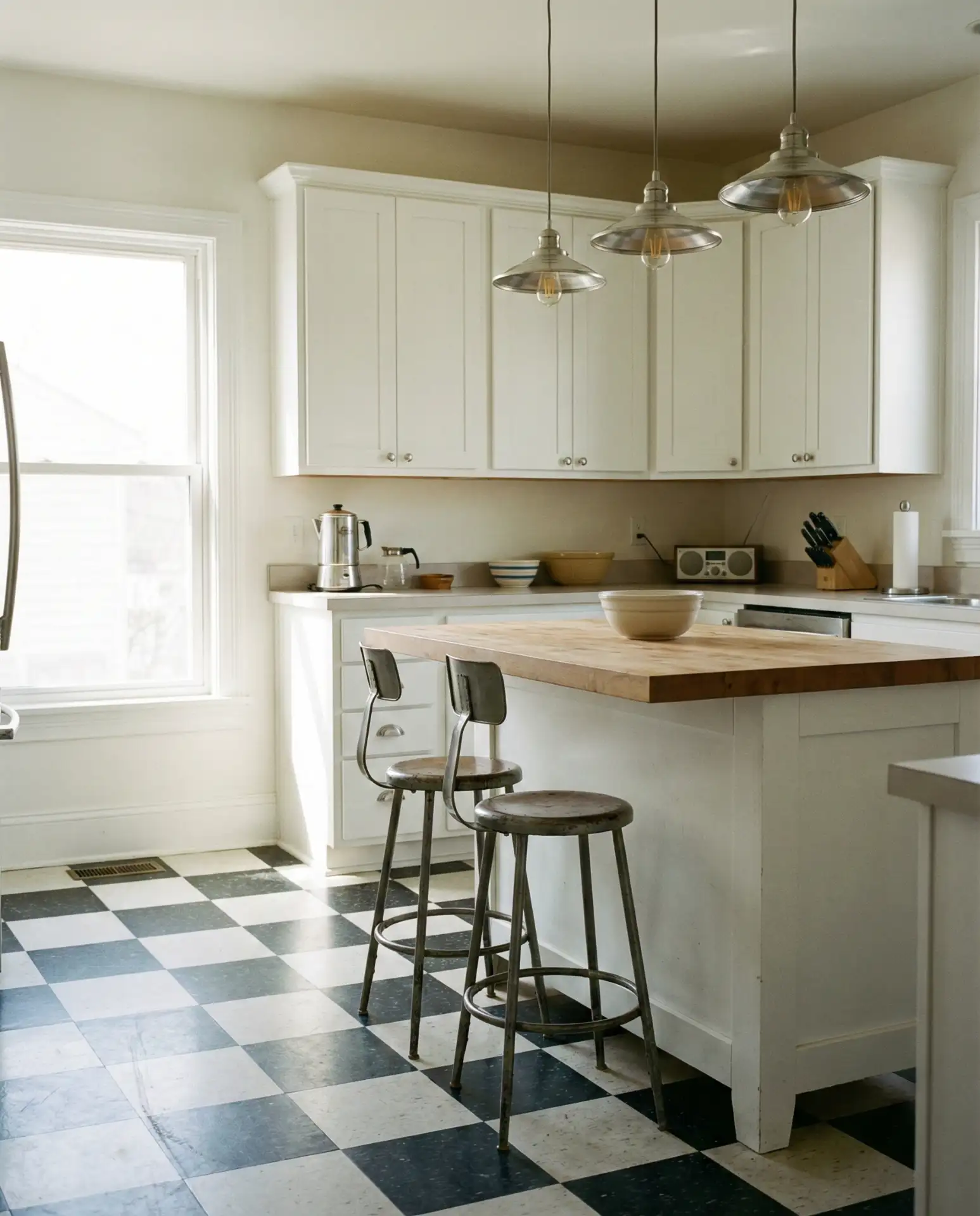
This pattern is forgiving when it comes to dirt and wear—the visual interest distracts from minor imperfections, and the alternating colors mean neither black nor white tiles show stains as readily. It’s a favorite in historic homes in cities like New Orleans, Philadelphia, and San Francisco, where homeowners appreciate its vintage authenticity. Budget around $4–$10 per square foot for vinyl or porcelain versions. Expert tip: scale the tile size to your room—12×12 inch tiles work for larger kitchens, while 9×9 or smaller suits compact spaces.
16. Bold Black Hexagon Tiles
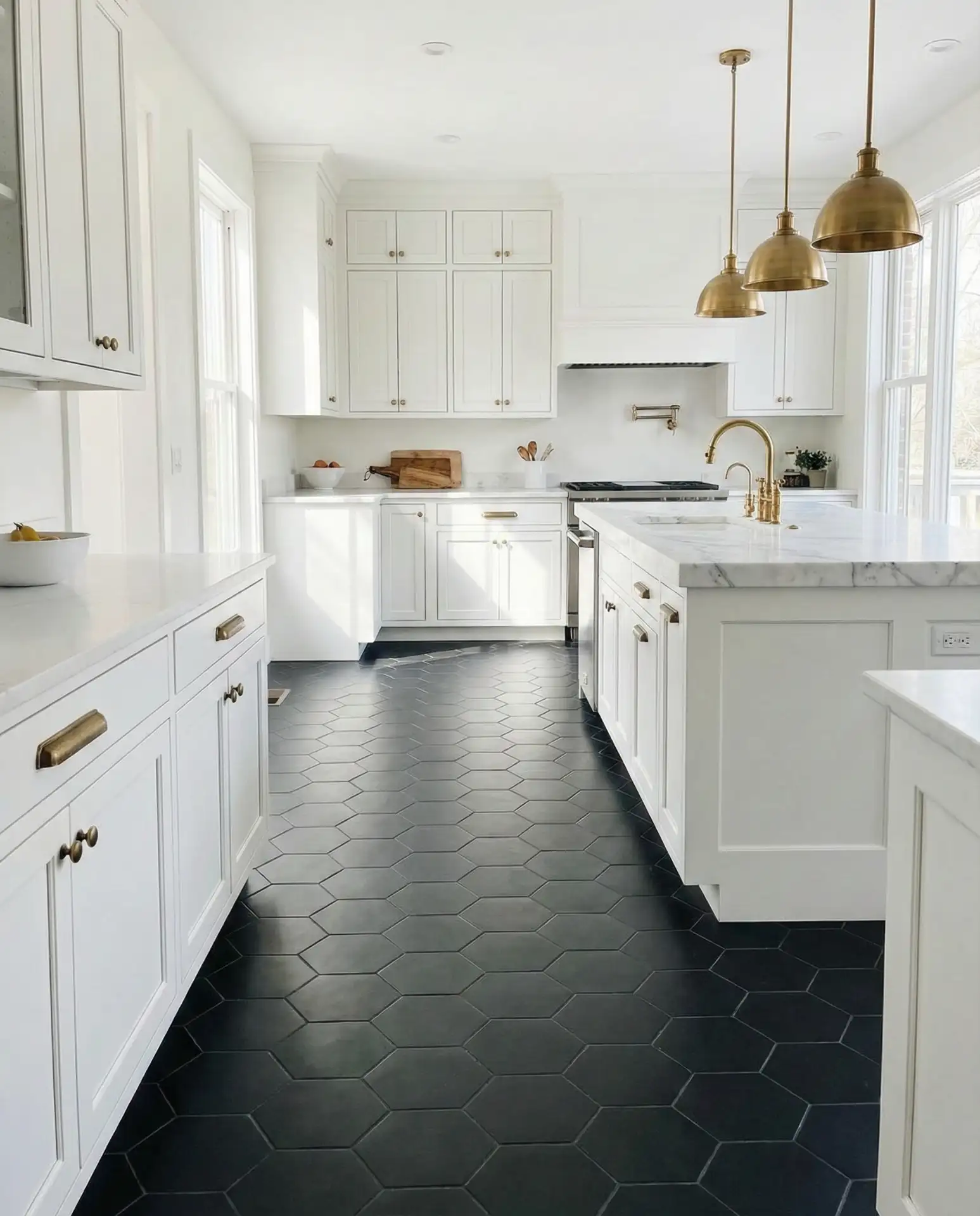
Matte black hexagon tiles create a dramatic, contemporary floor that anchors the entire kitchen with bold geometry and depth. The six-sided shape adds visual interest and a sense of movement, while the dark color grounds the space and provides a striking contrast to lighter cabinetry, countertops, or backsplashes. This modern choice is perfect for homeowners who want to make a confident design statement without resorting to color.
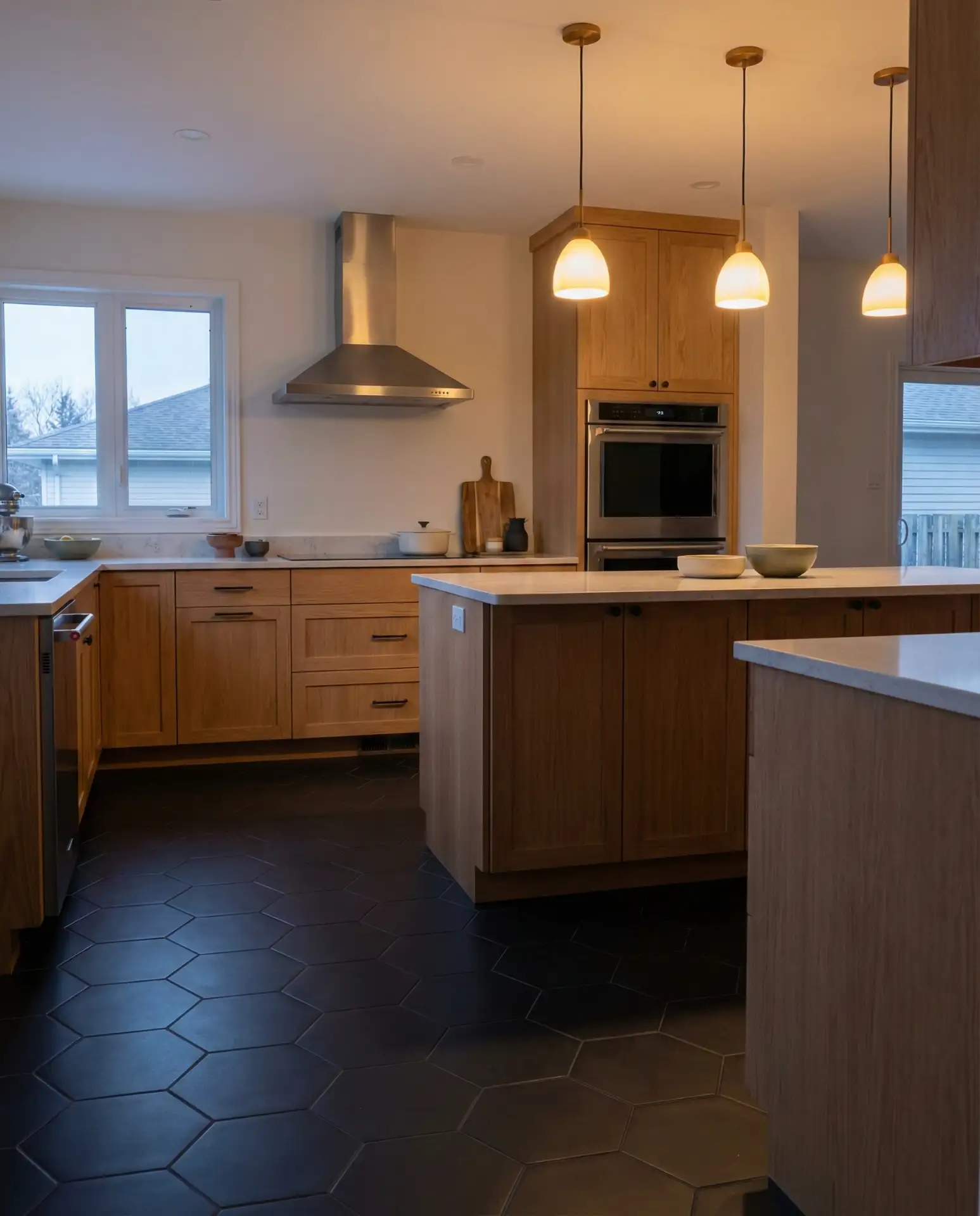
Black hexagons work best in kitchens with ample natural light or under-cabinet lighting to prevent the space from feeling too dark or heavy. They’re especially popular in urban lofts and modern homes in cities like Brooklyn, Seattle, and Austin. Installation can be tricky due to the shape, so hire an experienced tile setter—poorly aligned hexagons are immediately noticeable. Expect to pay $6–$12 per square foot for quality porcelain hexagons, plus additional labor costs for the intricate layout.
17. Timeless Checkerboard in Soft Gray and White
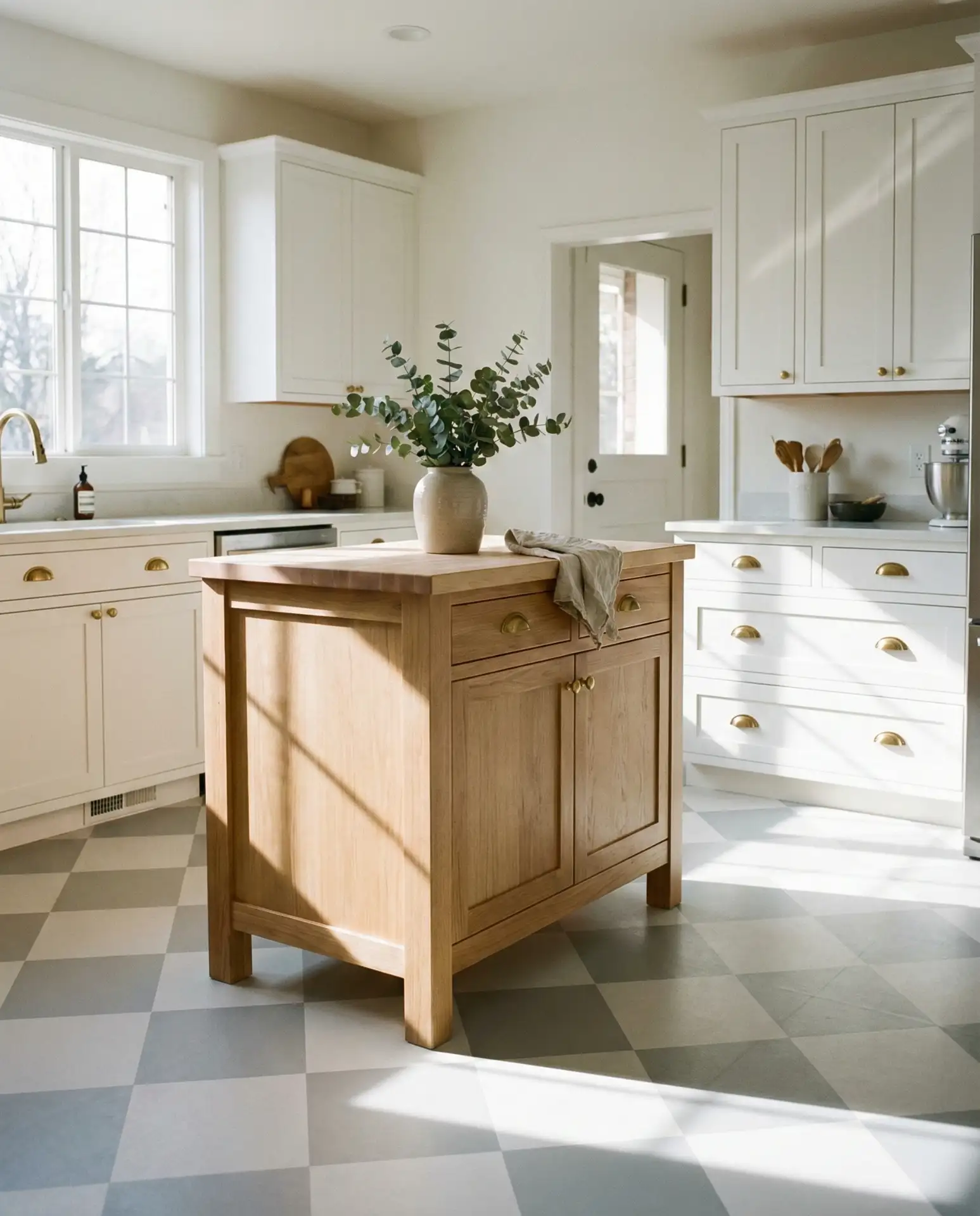
A softer take on the classic checkerboard, pairing light gray with white creates a subtle, sophisticated pattern that feels fresh and versatile. This gentler contrast works beautifully in kitchens where you want visual interest without the dramatic impact of black and white, and it complements a wider range of cabinetry colors—from warm woods to cool grays to navy blues. The pattern still has that timeless appeal but feels quieter and more modern.
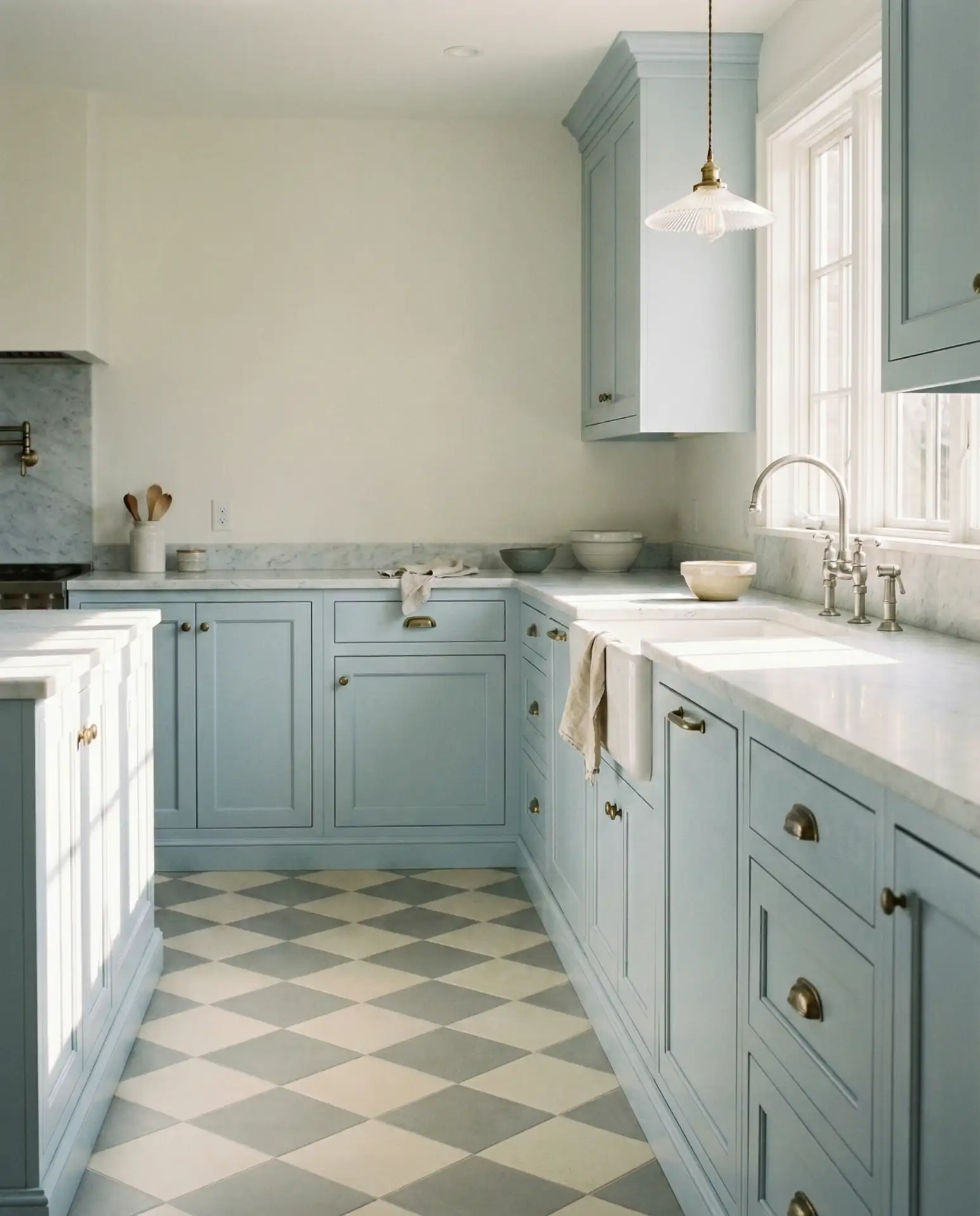
This color combination is ideal for homeowners who love pattern but worry about committing to something too bold—it’s easier to live with long-term than stark black and white. It’s particularly popular in the Mid-Atlantic and New England, where homeowners favor classic design with a contemporary twist. The softer palette also means dirt and scuffs are less visible, reducing maintenance stress. Budget $4–$9 per square foot for porcelain or luxury vinyl tile in these colors.
18. 2025 Trend: Terrazzo Revival
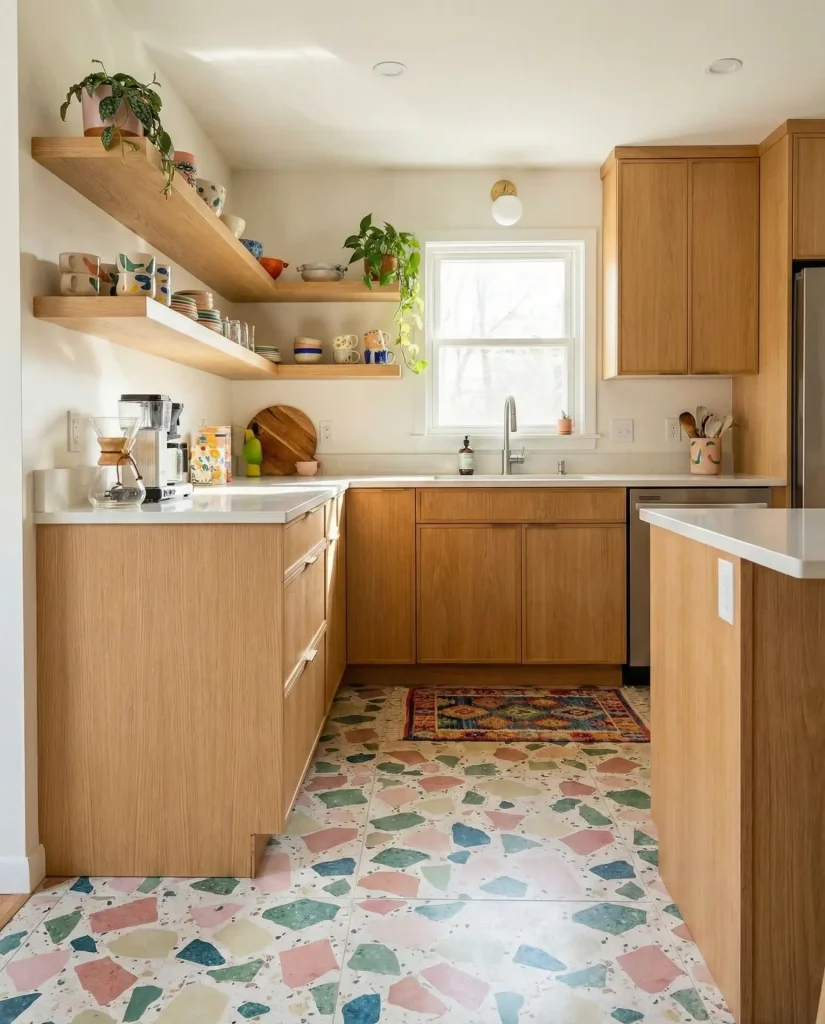
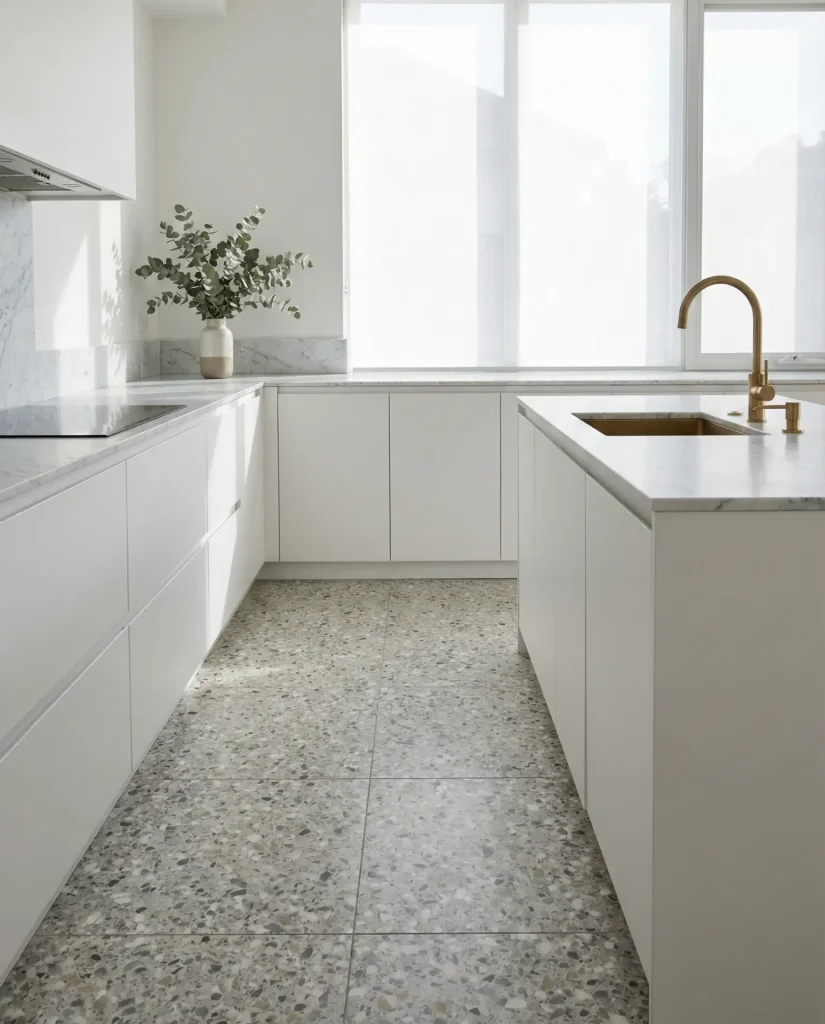
Terrazzo—a composite material of marble, quartz, granite, or glass chips set in cement or resin—made a huge comeback in 2025 and continues to dominate Pinterest boards in 2026. Modern terrazzo floors come in everything from neutral speckled grays to colorful, playful compositions featuring pastels or bold primaries. The speckled surface hides dirt and wear exceptionally well, and the seamless poured finish (or large-format tiles) creates a cohesive, gallery-like backdrop for modern or eclectic kitchen design.
Terrazzo appeals to design-forward homeowners in cities like Miami, Los Angeles, and Portland who appreciate its retro-modern vibe and eco-friendly credentials (it often incorporates recycled materials). Poured terrazzo is expensive—$25–$50 per square foot installed—but terrazzo-look porcelain tiles offer a more budget-friendly alternative at $6–$12 per square foot. One interior designer in Brooklyn mentioned that clients love terrazzo because it feels unique and personal, especially when they can customize the chip colors.
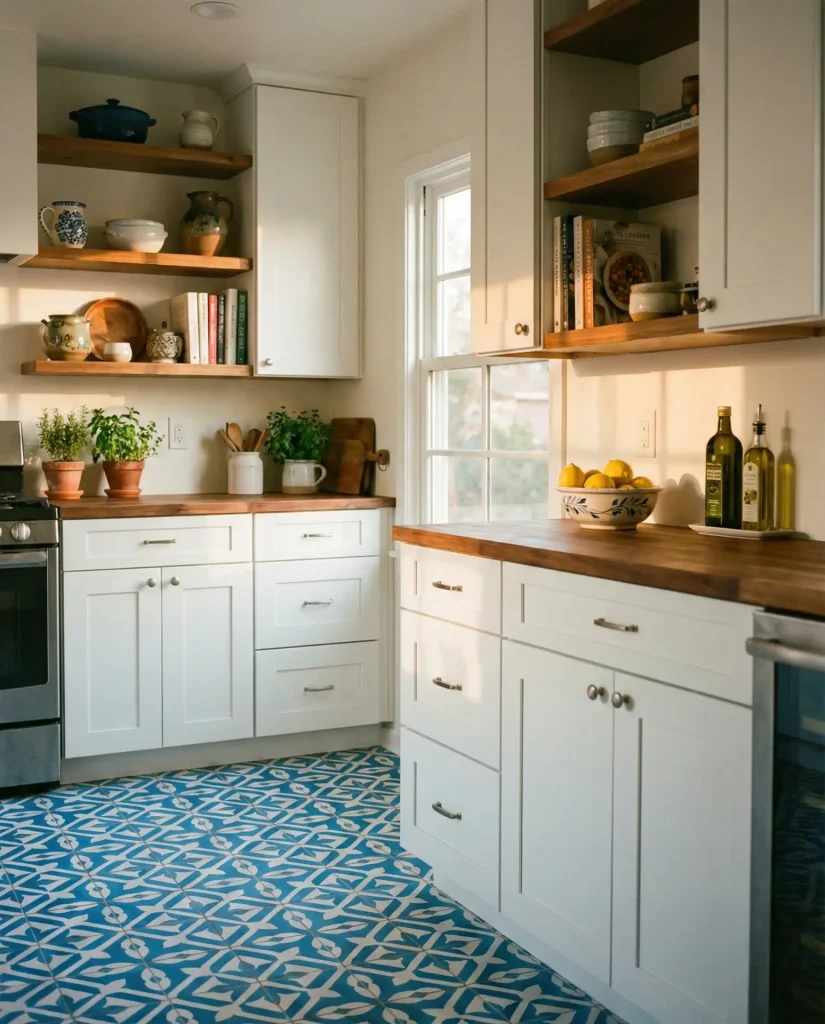
19. Pattern Play: Encaustic Cement Tiles
Handcrafted encaustic cement tiles bring intricate patterns and Old World charm to kitchen floors, with designs ranging from Moroccan geometrics to Spanish florals to Art Deco motifs. Each tile is made by hand using pigmented cement, resulting in rich, saturated colors and one-of-a-kind variations. These tiles work beautifully as an all-over floor treatment or as a focal zone—perhaps in front of the sink or beneath the island—adding personality and visual interest to both rustic and eclectic interiors.
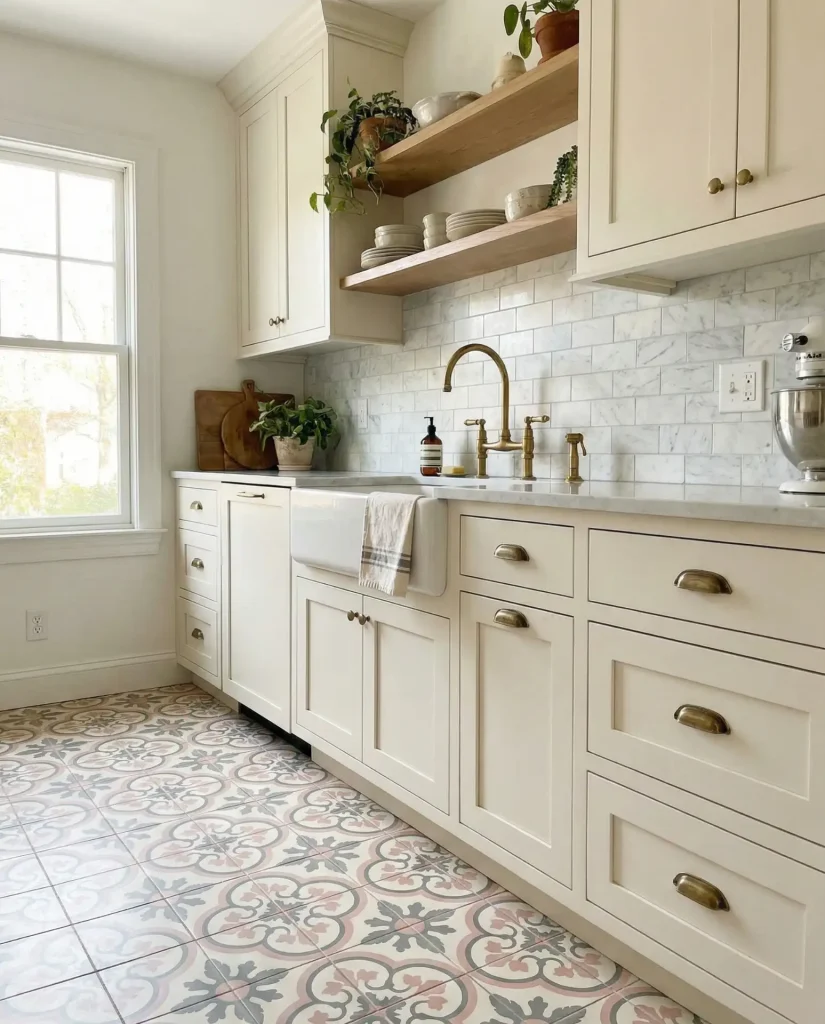
Encaustic tiles are a splurge—authentic handmade versions run $15–$30 per square foot—but the craftsmanship and character are unmatched. They’re popular in Southern California, Texas, and Florida, where Spanish and Mediterranean influences run deep. Because they’re porous, these tiles must be sealed regularly and aren’t as stain-resistant as porcelain, so they’re best for homeowners who are willing to maintain them properly. One common mistake is choosing overly busy patterns for large areas—use restraint and let the tiles be the star.
20. Modern Checkerboard in Large Format
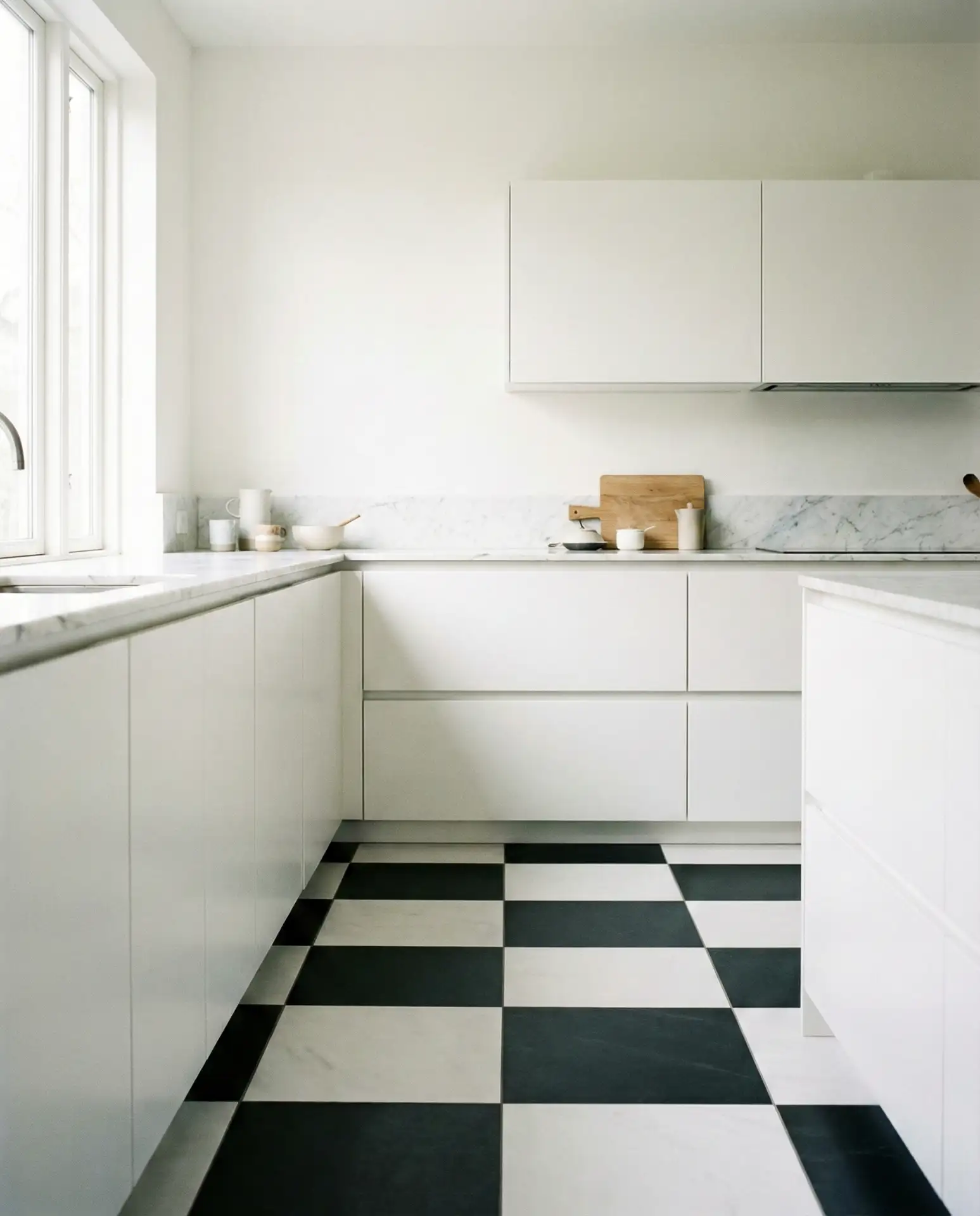
Supersizing the traditional checkerboard with large-format tiles—18×18 or 24×24 inches—creates a bold, modern checkerboard look that feels fresh and contemporary. The bigger scale means fewer grout lines and a cleaner, more streamlined aesthetic that works beautifully in open-concept kitchens or minimalist spaces. Pair it with sleek cabinetry, integrated appliances, and simple hardware to let the graphic floor take center stage.
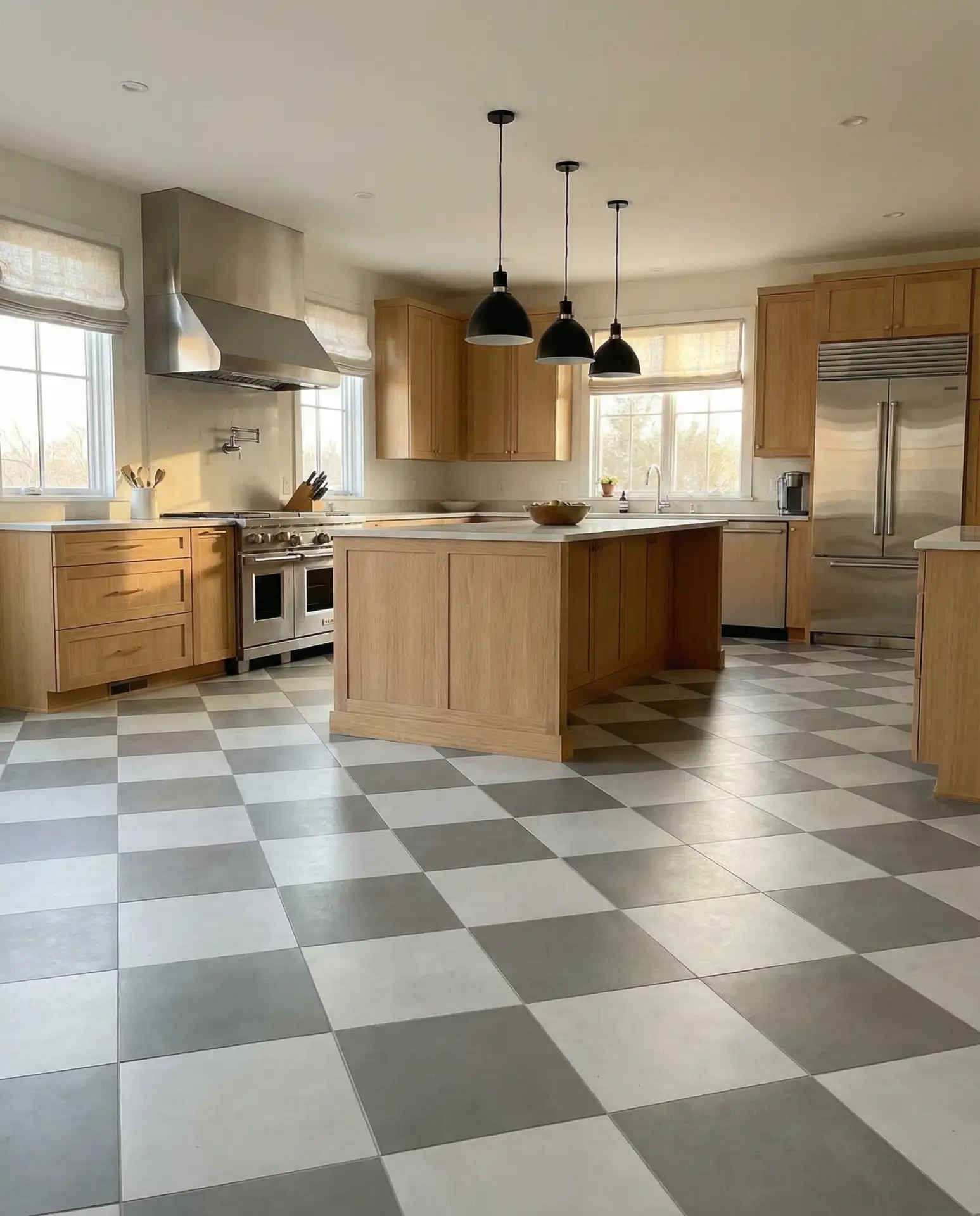
Large-format checkerboard floors work best in spacious kitchens where the scale feels proportional—in a small galley kitchen, oversized tiles can overwhelm the space. They’re a favorite in newly built modern homes and urban apartments across the West Coast and in cities like Denver and Dallas. Installation is straightforward since there are fewer tiles to lay, and large-format porcelain typically costs $5–$10 per square foot. The key is choosing high-quality tiles with precise dimensions to ensure crisp, even grout lines.
21. Drawing Inspiration: Hand-Painted Tiles
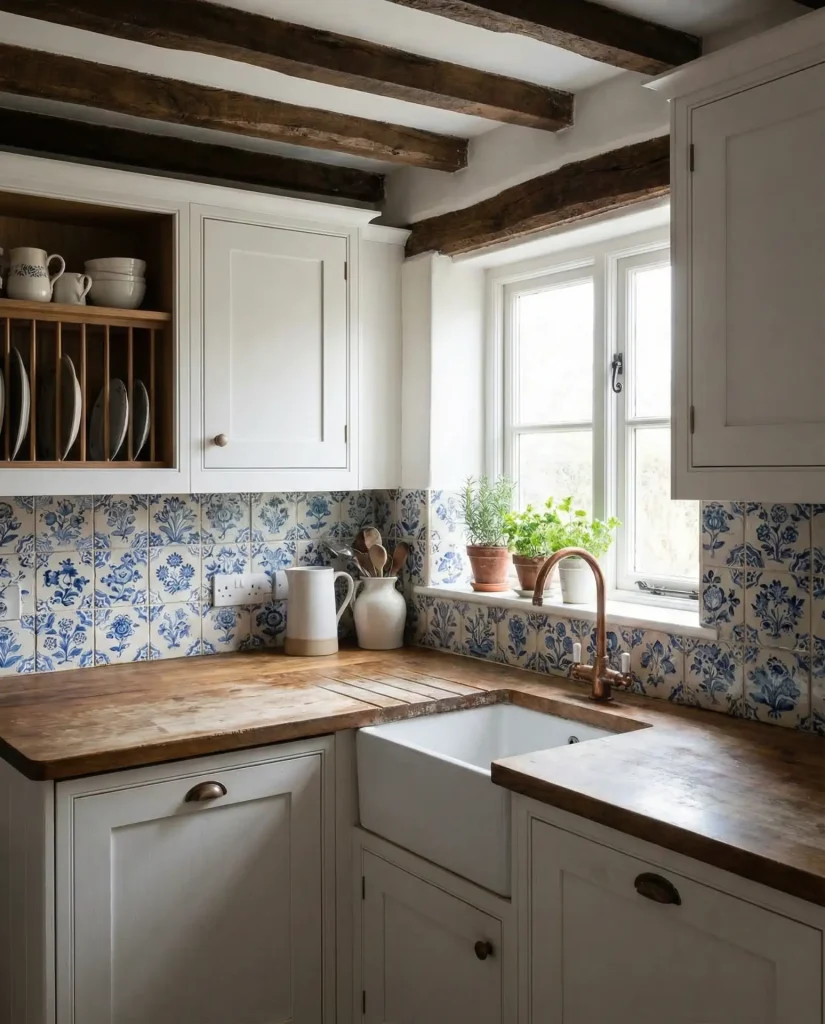
For homeowners who want their kitchen floor to be a true work of art, hand-painted tiles offer limitless possibilities for personalization and creative expression. Whether you choose a traditional Portuguese azulejo design, a whimsical botanical motif, or an abstract contemporary drawing, these artisan tiles transform a functional surface into a focal point that’s uniquely yours. This approach works especially well in eclectic, bohemian, or globally inspired kitchens where pattern and color are celebrated.
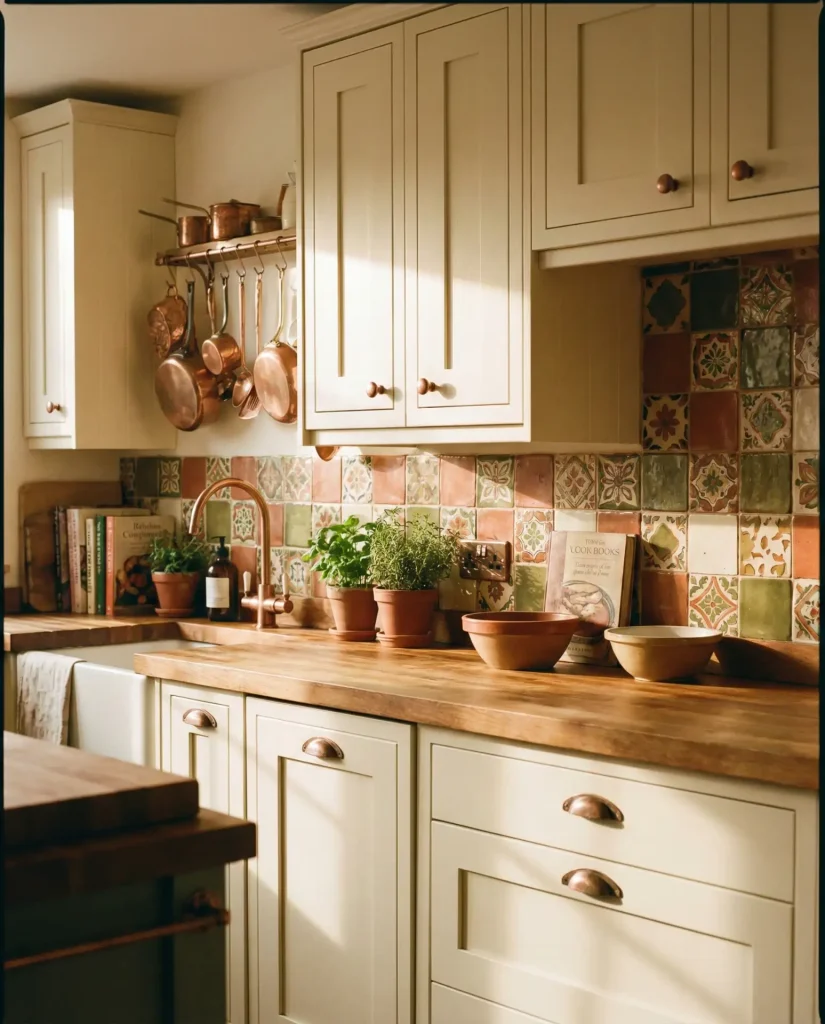
Hand-painted tiles are a significant investment, often costing $20–$50 per square foot or more depending on the artist and complexity of the design. They’re most commonly used as accents—perhaps a runner down the center of the kitchen or in a defined zone—rather than wall-to-wall coverage. This approach is popular in custom homes in Santa Fe, Tucson, and coastal California, where homeowners embrace regional craft traditions. Be sure to work with reputable artisans and seal the tiles properly to protect the artwork from wear.
22. Farmhouse-Chic Whitewashed Pine
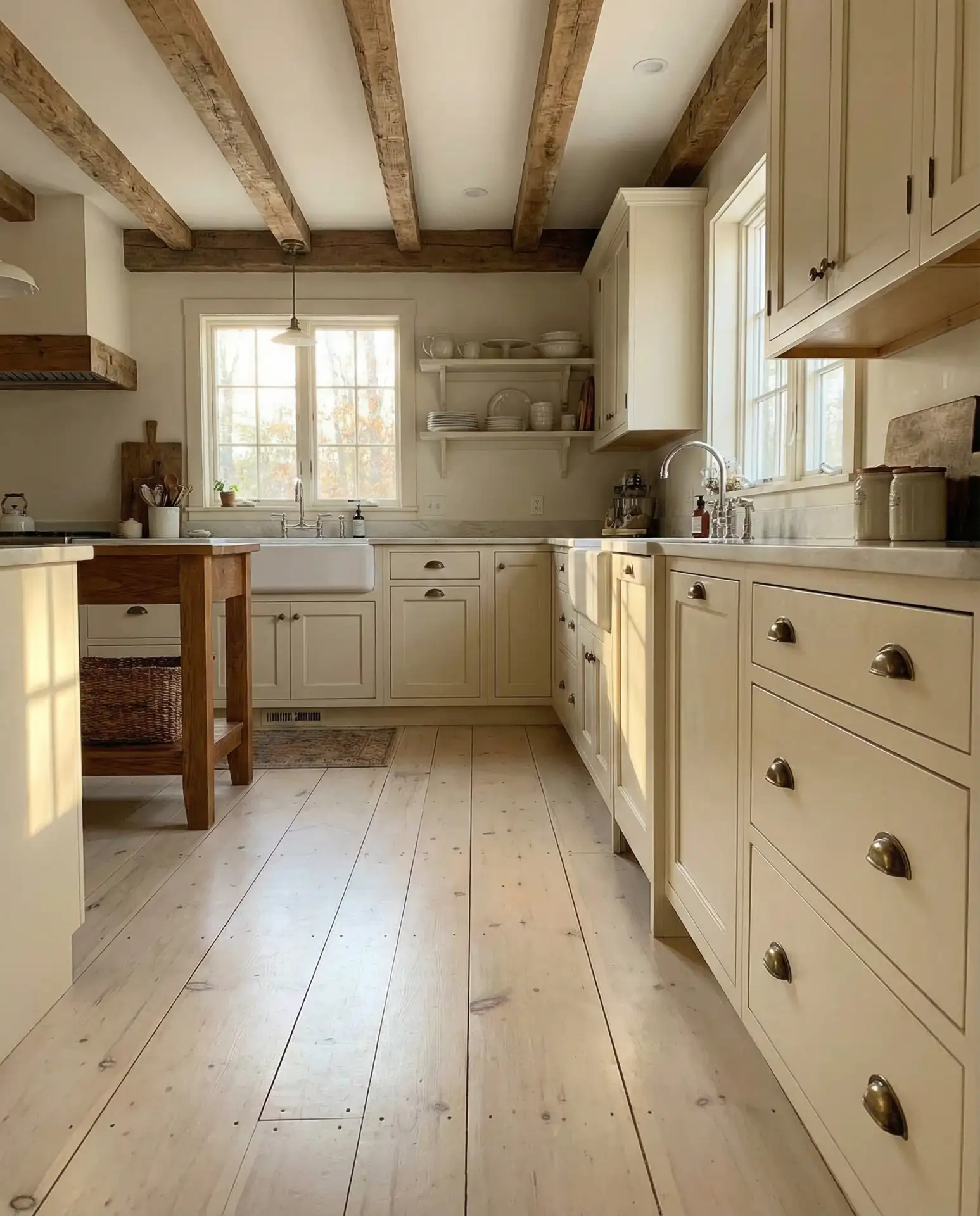
Whitewashed pine flooring captures the essence of farmhouse style with its soft, weathered appearance and natural texture. The pale finish allows the wood grain to show through while brightening the space, creating a light, airy foundation that pairs beautifully with shiplap walls, apron-front sinks, and vintage-inspired hardware. This look is perfect for country homes, renovated barns, or suburban kitchens aiming for that cozy, collected-over-time aesthetic.
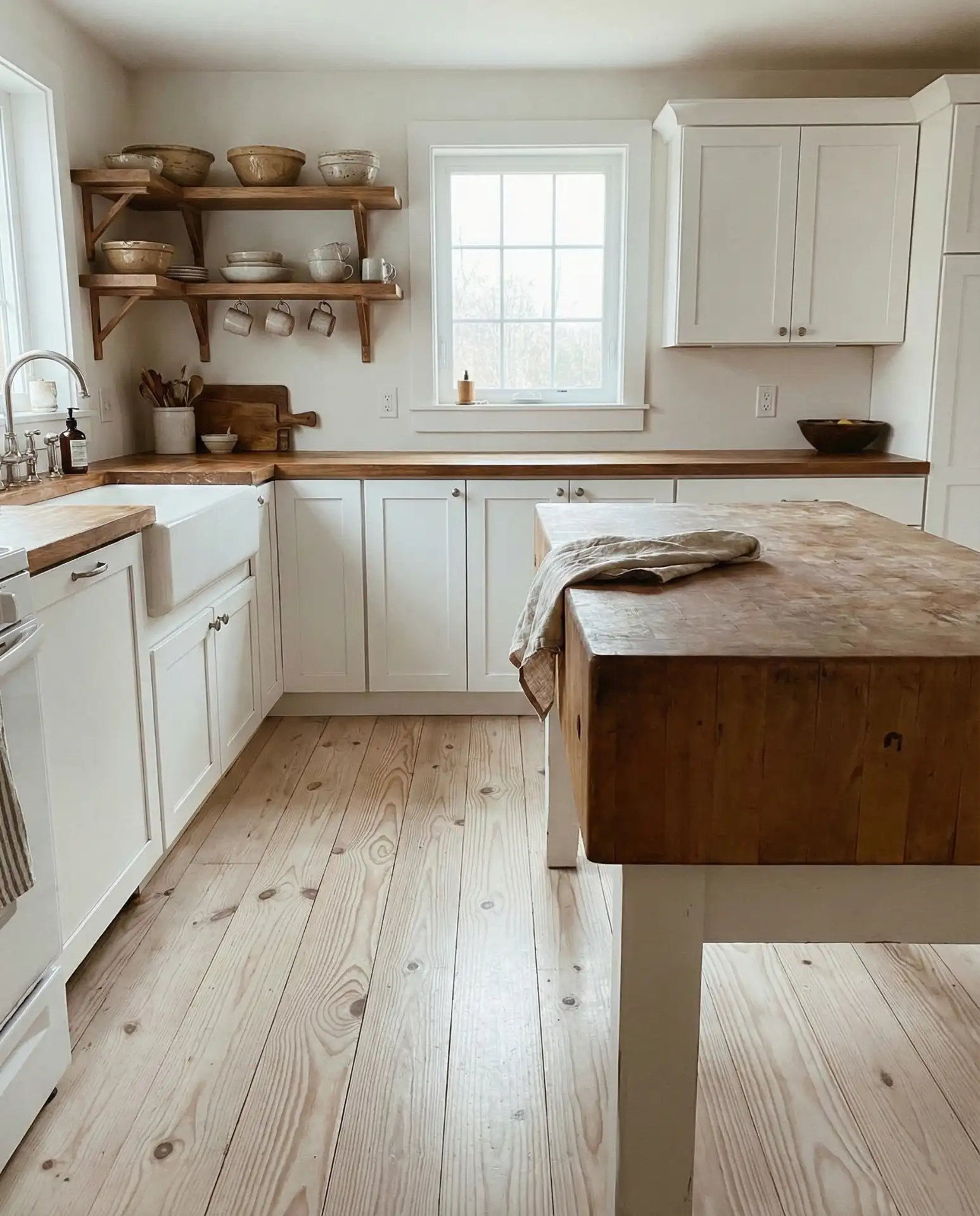
Whitewashed pine is most at home in the South, the Midwest, and rural New England, where farmhouse style is more than a trend—it’s a way of life. The finish requires periodic maintenance to keep it looking fresh, as high-traffic areas may show wear over time. Many homeowners consider this patina part of the charm, but if you prefer a pristine look, plan to refinish every five to seven years. Budget around $5–$10 per square foot for solid pine flooring, with engineered versions offering more stability in humid climates.
23. Dark Dramatic Charcoal Porcelain
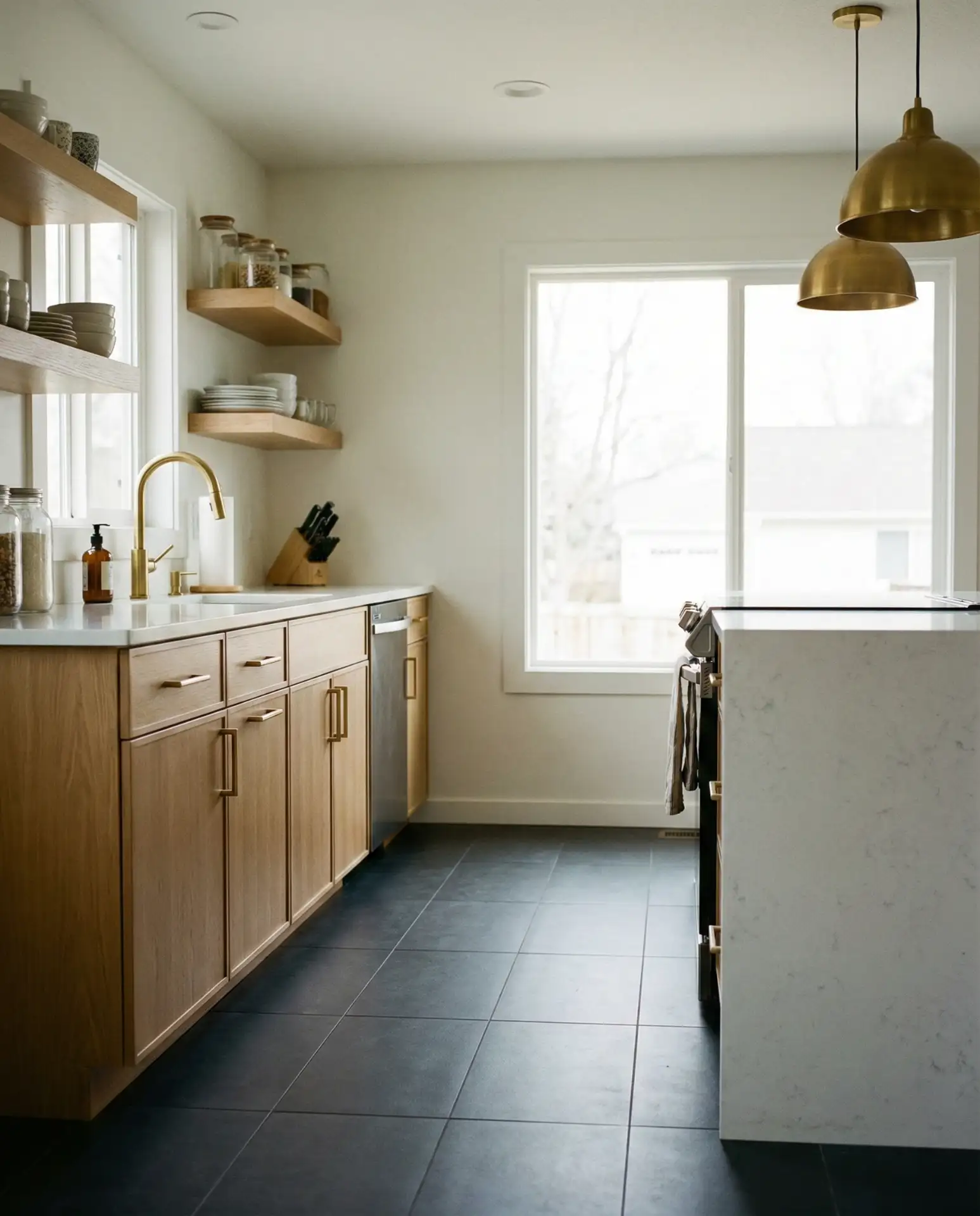
Dark charcoal porcelain tiles create a moody, sophisticated backdrop that elevates any kitchen into a space with real presence and drama. The deep color anchors the room and provides a striking contrast to light cabinetry, brass or copper fixtures, and natural wood elements. This modern choice works beautifully in both small kitchens—where it adds intimacy and focus—and large open spaces, where it grounds the design and defines zones.
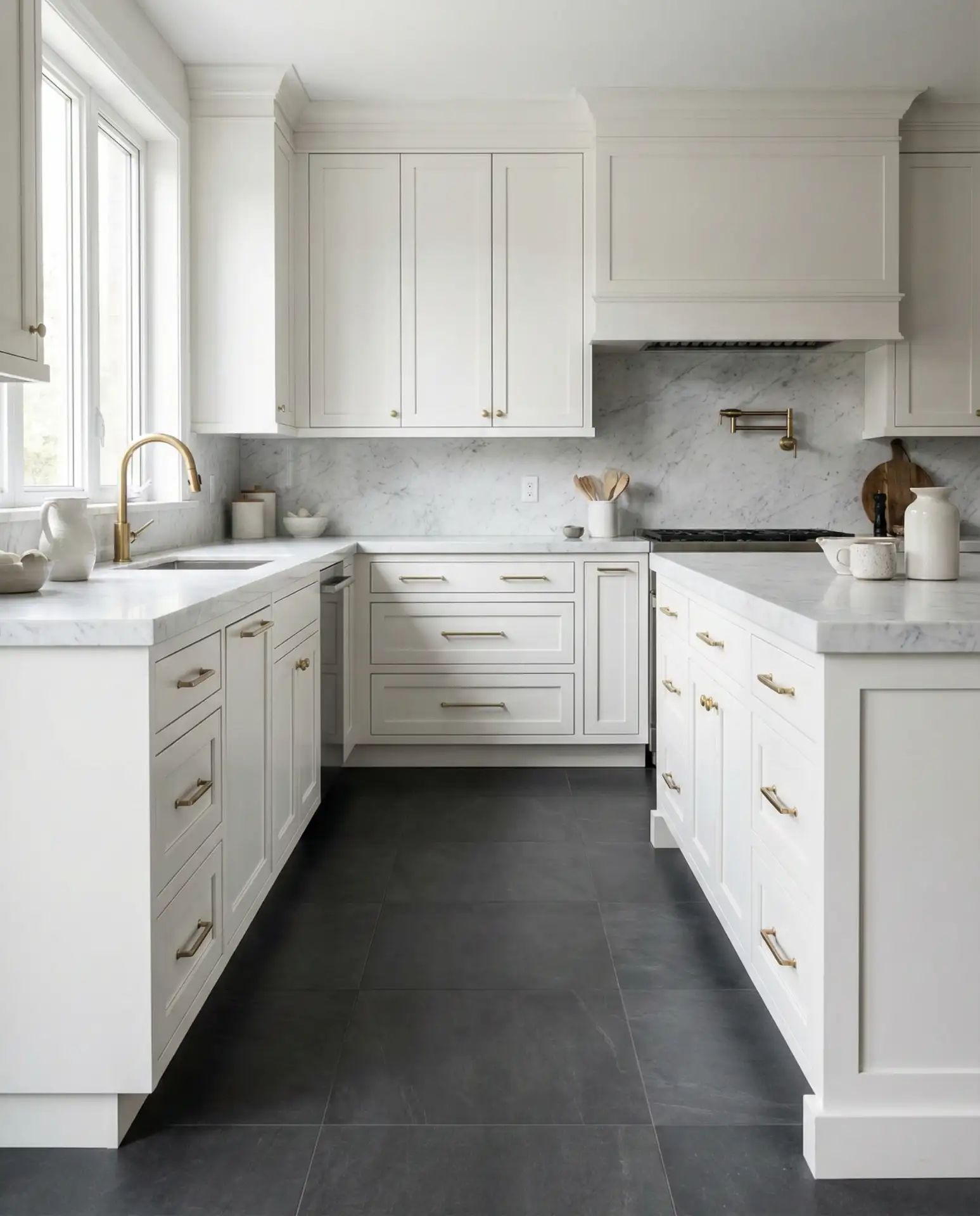
Dark floors can be polarizing—some homeowners worry they’ll show every speck of dust or make the space feel too heavy. In reality, darker floors hide dirt and scratches better than white or light gray, and when balanced with plenty of natural light and lighter upper elements, they create a grounded, sophisticated atmosphere. This look is particularly popular in upscale urban condos and modern suburban homes in the Northeast and Pacific Northwest. Expect to pay $4–$9 per square foot for quality porcelain, and consider matte finishes over glossy to minimize visible dust.
24. Elevated Luxury Vinyl Plank
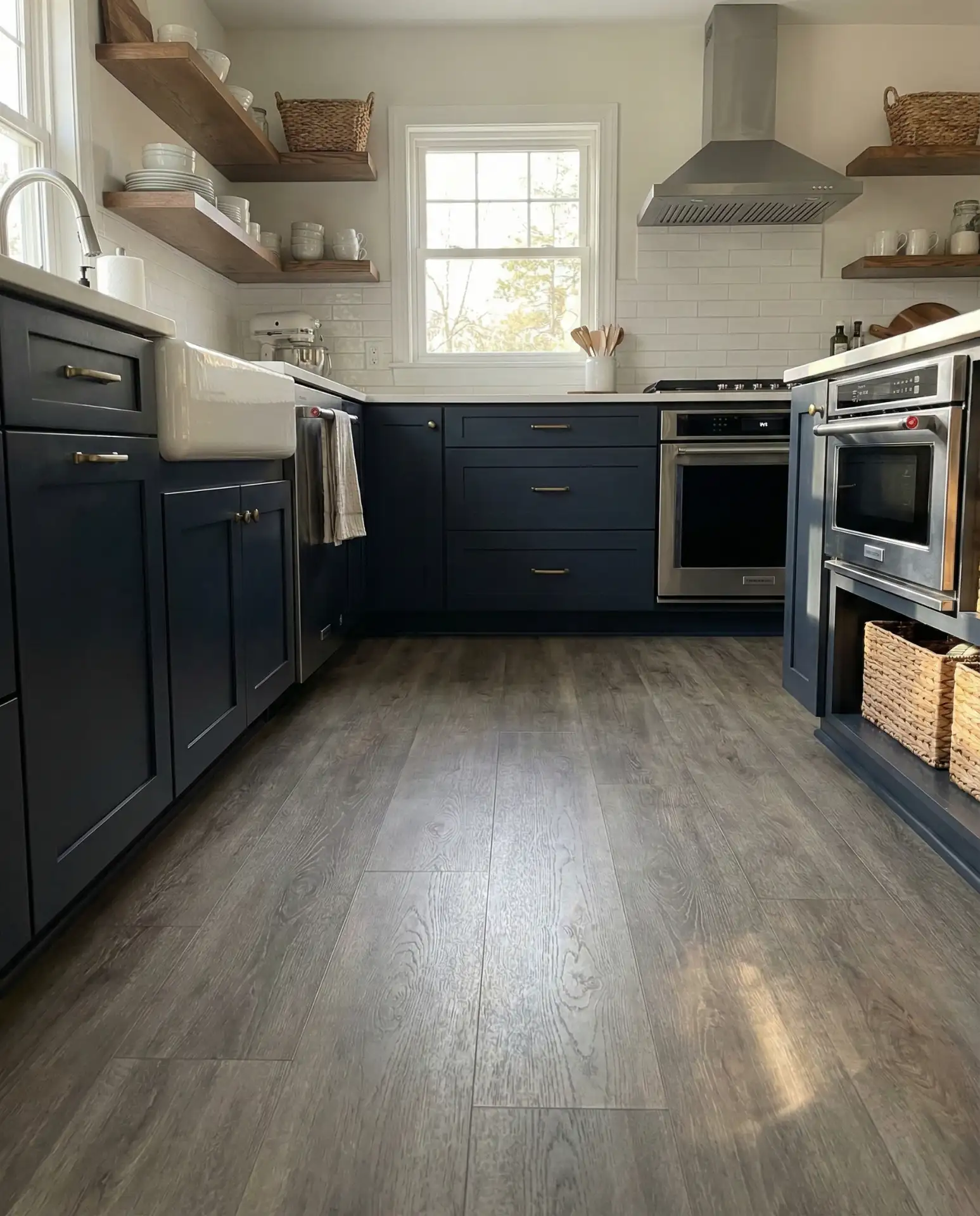
Luxury vinyl plank (LVP) has come a long way from its humble beginnings, and today’s elevated options convincingly mimic hardwood, stone, or even tile at a fraction of the cost and with far superior performance. Completely waterproof, scratch-resistant, and easy to install, LVP is a practical choice for busy families, pet owners, or anyone who wants a beautiful floor without high maintenance. Modern LVP comes in wider planks and longer lengths that look remarkably realistic, making it suitable for both modern and farmhouse kitchens.
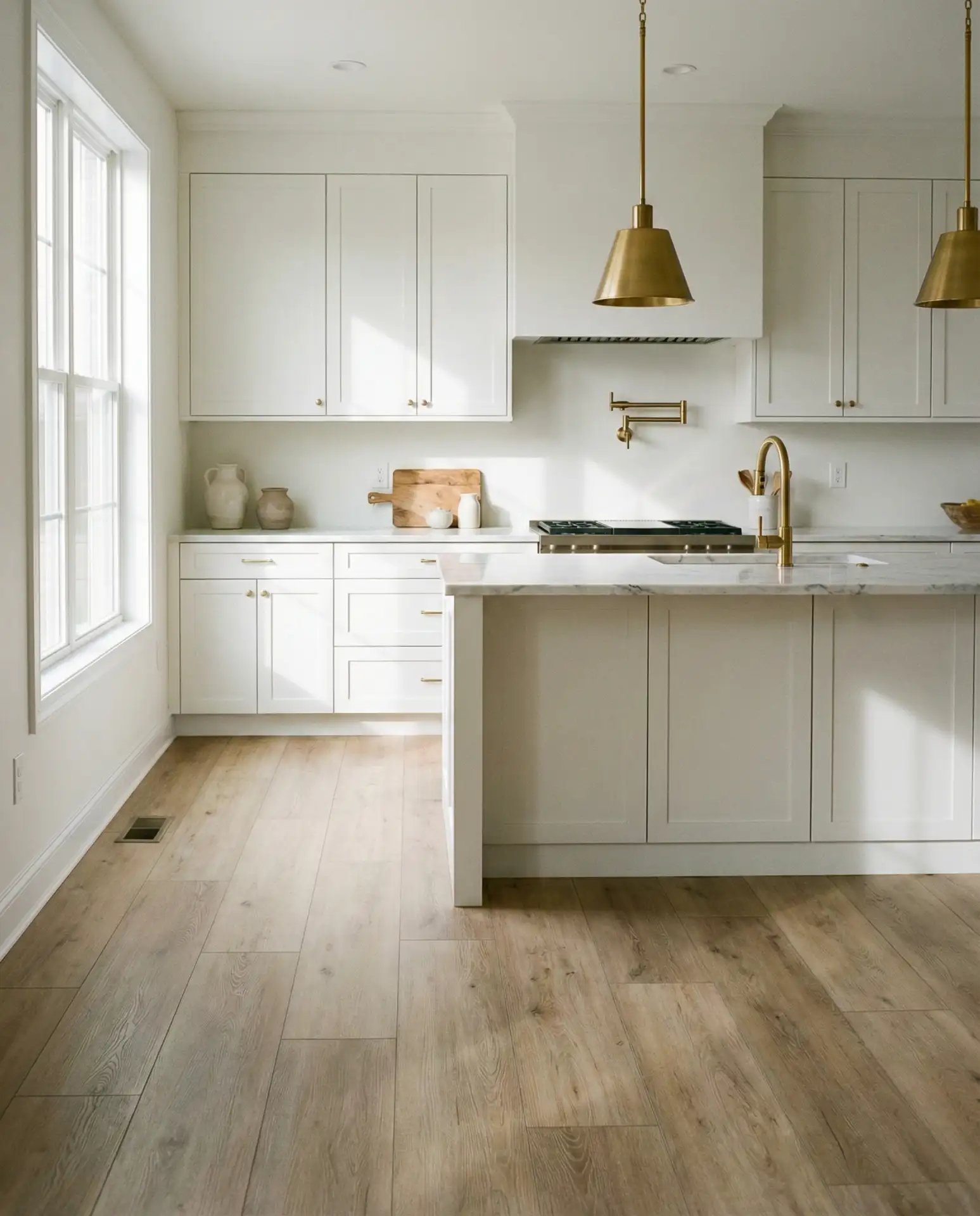
LVP is an excellent choice for DIY-ers, as many products feature click-lock installation that doesn’t require glue or professional help. Prices range from $2 to $7 per square foot, making it one of the most budget-friendly options on this list without sacrificing style. It’s become increasingly popular across all regions and income levels, as homeowners recognize that practical doesn’t have to mean boring. One real estate agent in Phoenix noted that homes with quality LVP actually sell just as well as those with hardwood, since buyers appreciate the low-maintenance lifestyle it offers.
Conclusion
Whether you’re drawn to the timeless elegance of marble, the bold geometry of checkered patterns, or the budget-friendly practicality of luxury vinyl plank, there’s a kitchen floor design in 2026 that’s perfect for your home and lifestyle. The key is choosing a floor that not only looks beautiful but also works with your daily routine, climate, and long-term plans. We’d love to hear which of these ideas resonates with you—drop a comment below and share your kitchen floor journey, questions, or favorite inspiration from this list!