If your hallway feels like an afterthought, you’re not alone. For years, most homeowners focused their decorating energy on living rooms and kitchens—and the corridor connecting everything got a bare bulb and a coat of beige paint. But in 2026, that’s changing fast. Americans are flooding Pinterest with searches for hallway lighting ideas that feel intentional, layered, and genuinely beautiful. Whether you’re working with a long, narrow tunnel or a short entry with low ceilings, the right light fixture can completely transform how a space reads. In this article, you’ll find 22 fresh ideas for every hallway type—from farmhouse charm to sleek modern, from Victorian grandeur to clever small-space solutions.
1. Statement Pendant Lights for a Modern Entry
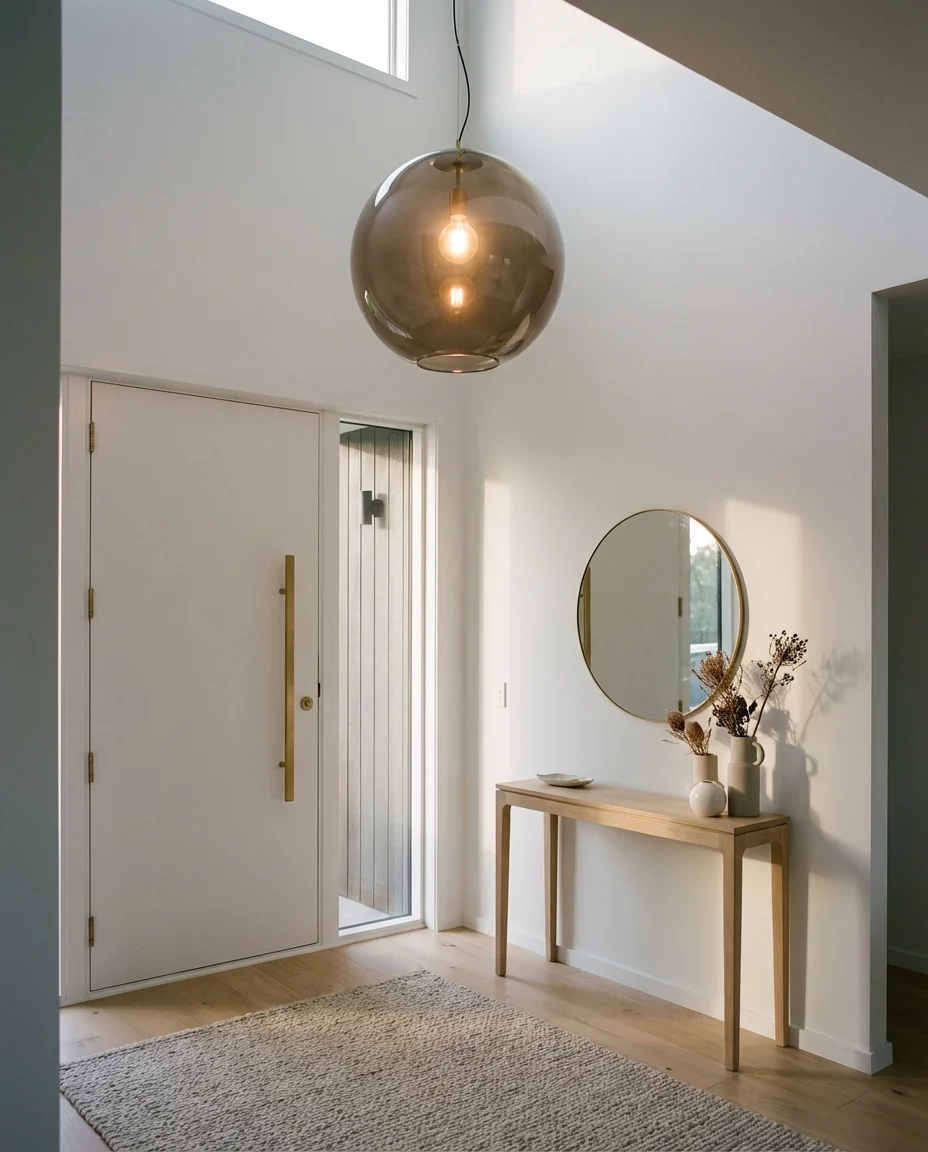
There’s something instantly welcoming about a well-chosen pendant light hanging in an entry hallway. In modern homes, a single oversized pendant—think smoked glass or brushed brass—sets an immediate design intention the moment guests walk through the door. This works especially well in homes with higher ceilings, where the drop of the fixture can be generous without feeling cramped. It draws the eye upward, makes the space feel taller, and signals that the rest of the home is just as considered.
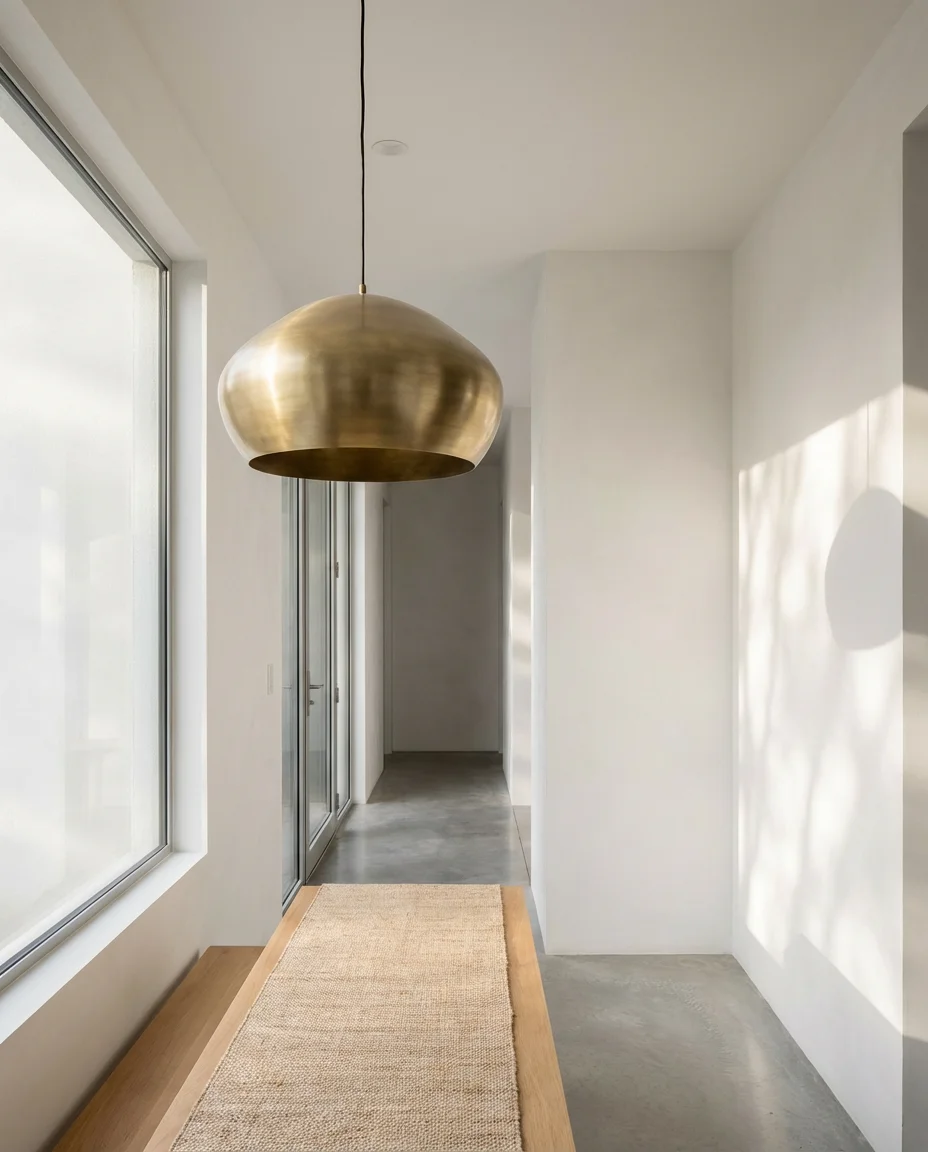
Interior designers often note that the entry pendant is doing double duty: it’s both functional lighting and sculpture. Choosing a fixture with a warm-toned bulb (2700K–3000K) rather than a cool white makes all the difference—it wraps the space in a glow that feels like a genuine welcome rather than a fluorescent interrogation. Look for pieces with adjustable cord or chain length so you can fine-tune the drop as your taste evolves.
2. Flush Mount Fixtures for Low Ceilings
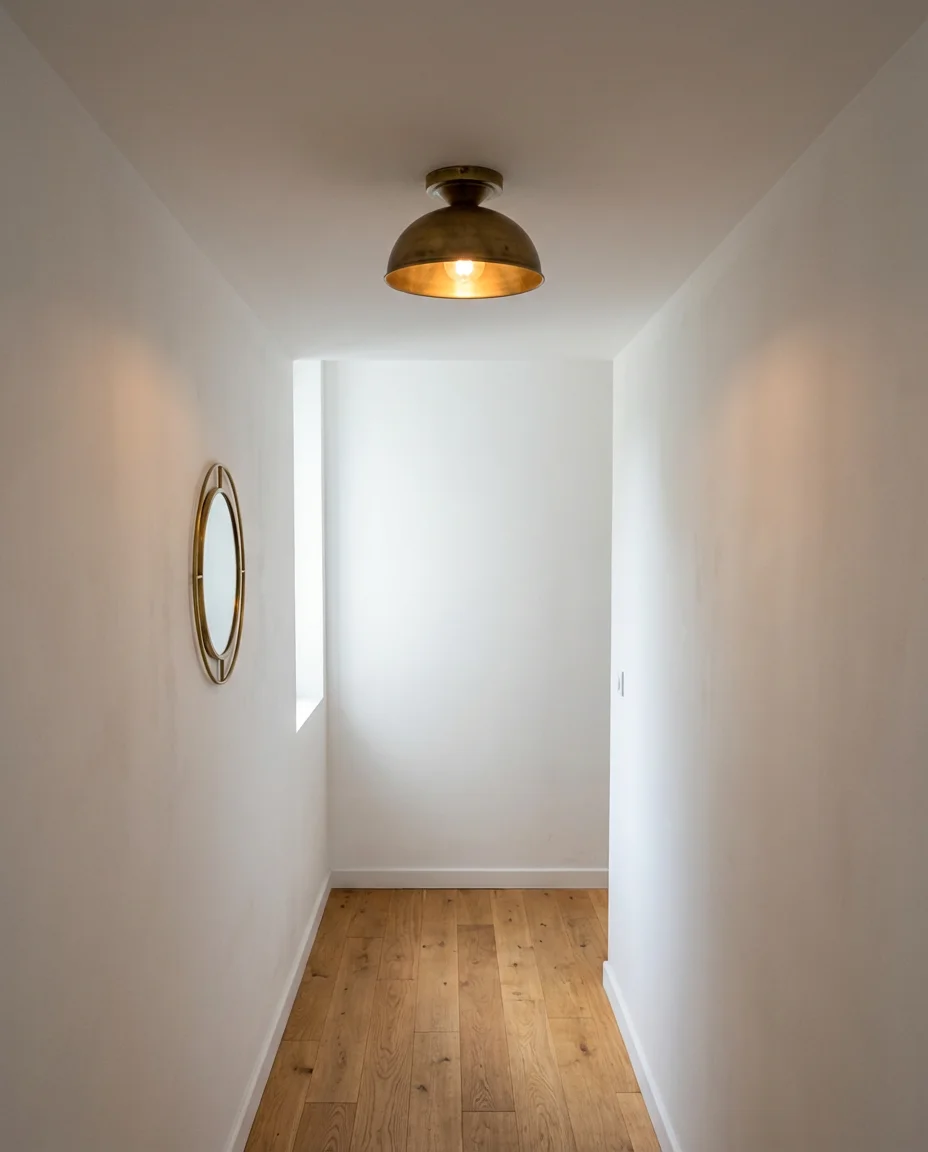
Not every hallway has the height for drama. In homes with short ceilings or small spaces, a flush mount fixture is often the smartest choice—and in 2026, “flush mount” no longer means plain or forgettable. Designers are leaning into sculptural semi-flush mounts with fabric shades, hammered metal, and even rattan accents that bring character without sacrificing headroom. The key is treating the fixture like jewelry: even a modest profile can make a statement if the material is interesting.
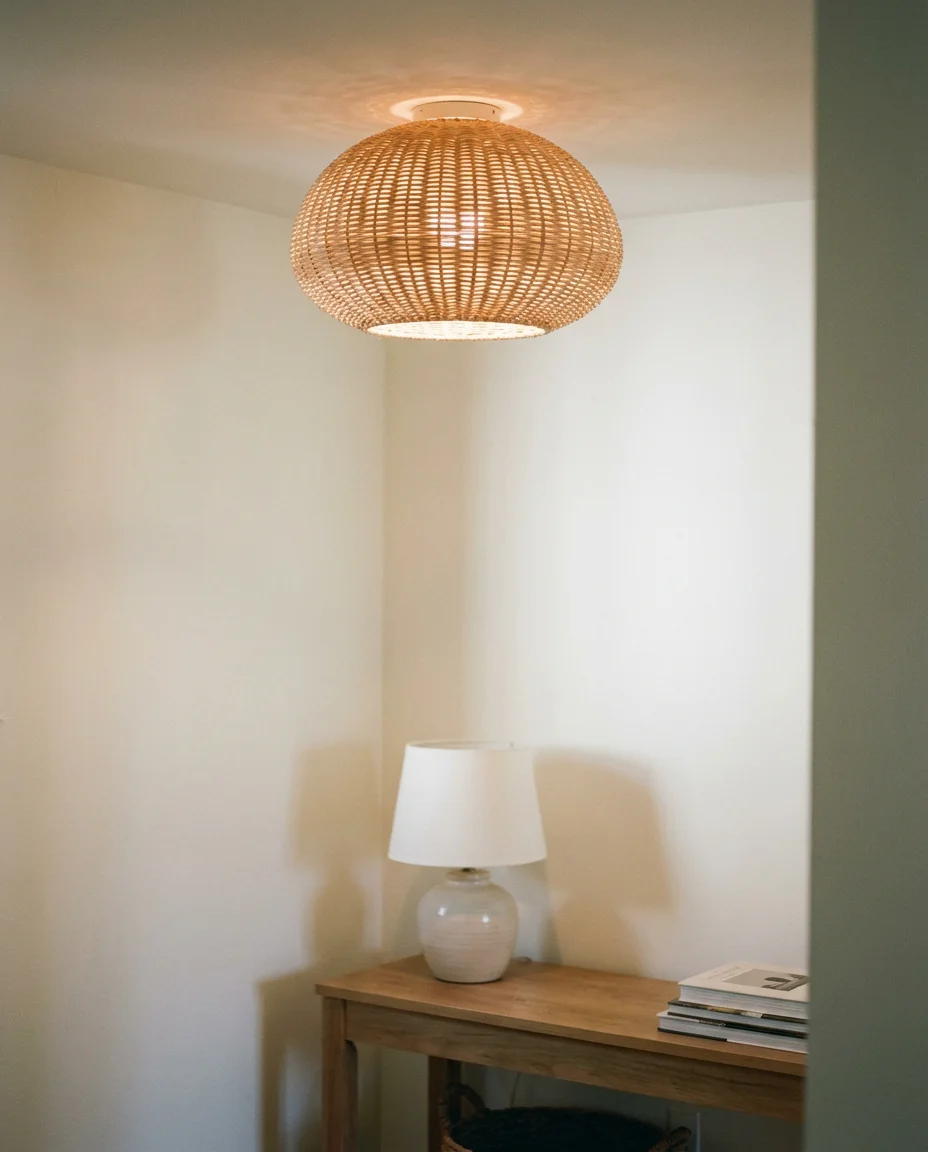
Budget-conscious homeowners will be pleased to know that stylish flush mounts have become remarkably affordable. Big-box retailers like Home Depot and Wayfair now carry designer-adjacent options starting around $60–$120, so you don’t have to choose between function and good looks. If you’re shopping on a tighter budget, focus on the finish—an unlacquered brass or matte black option in a simple dome shape will almost always look more intentional than a fussy, ornate piece at the same price point.
3. Wall Sconces Along a Long Narrow Hallway
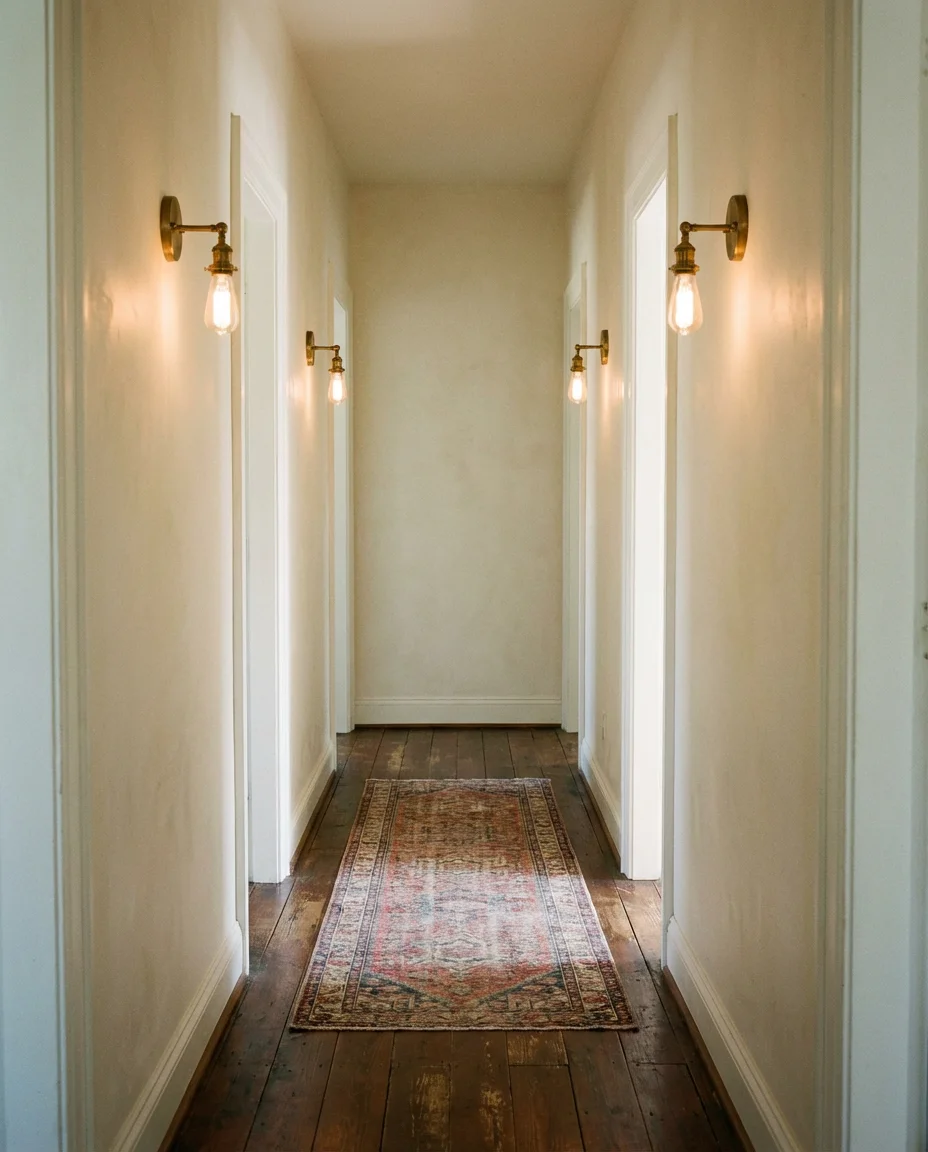
If you have a long, narrow corridor—the kind that feels more like a tunnel than a passage—a row of evenly spaced wall lights is the most elegant solution in the designer’s toolkit. Sconces placed roughly 60–66 inches from the floor create a rhythm that leads the eye forward while bathing the walls in warm, ambient light. In narrow hallways, this approach also avoids the claustrophobia that a single overhead fixture can produce, since the light emanates from the sides rather than pressing down from above.
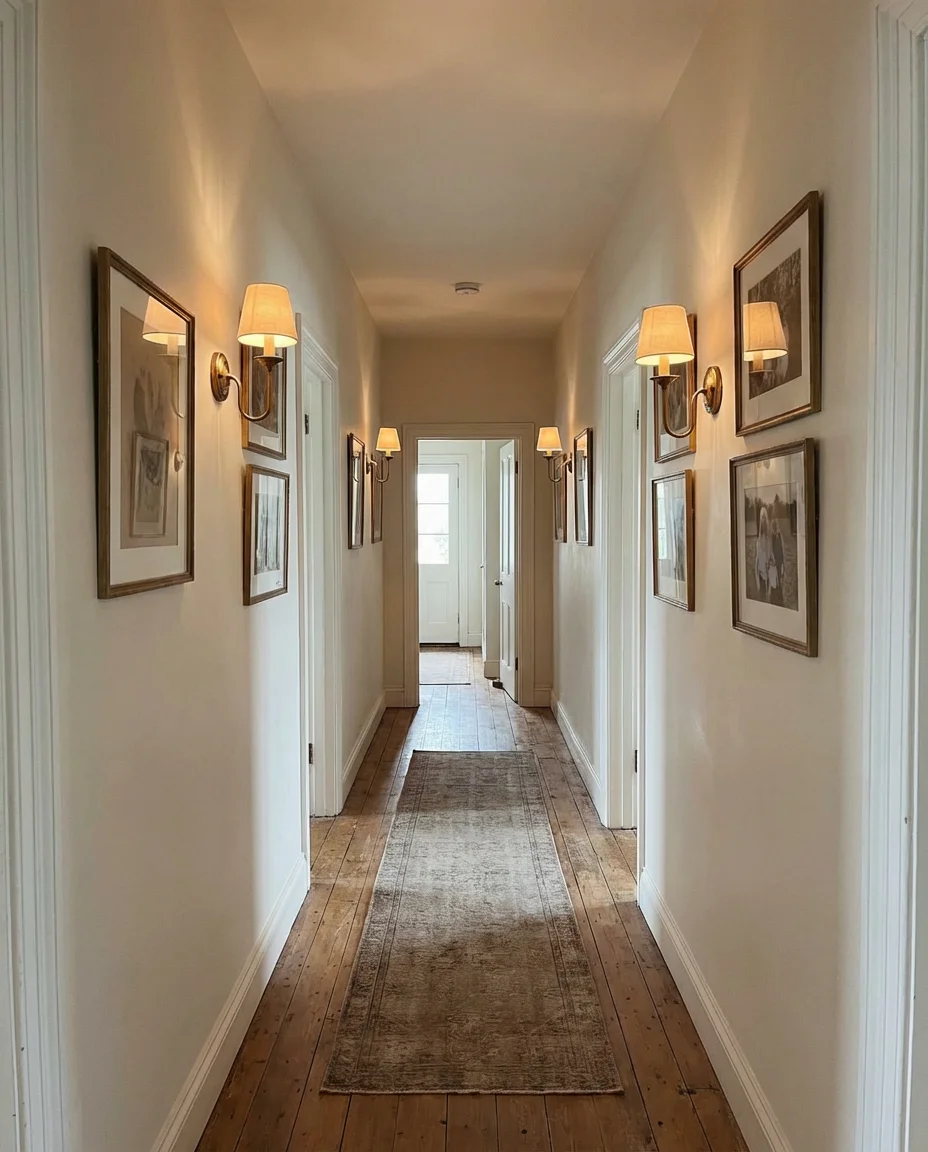
One mistake homeowners commonly make is choosing sconces that are too small for the space. In a long hallway, undersized fixtures look timid and fail to provide enough light. A good rule of thumb: the sconce shade or backplate should be at least 8–10 inches tall. Plug-in sconces are a game-changer here if you’d rather skip the electrician—several beautifully designed options are available that look completely hardwired once the cord is hidden behind a slim cable cover painted to match the wall.
4. Rustic Lantern Pendants for a Farmhouse Feel
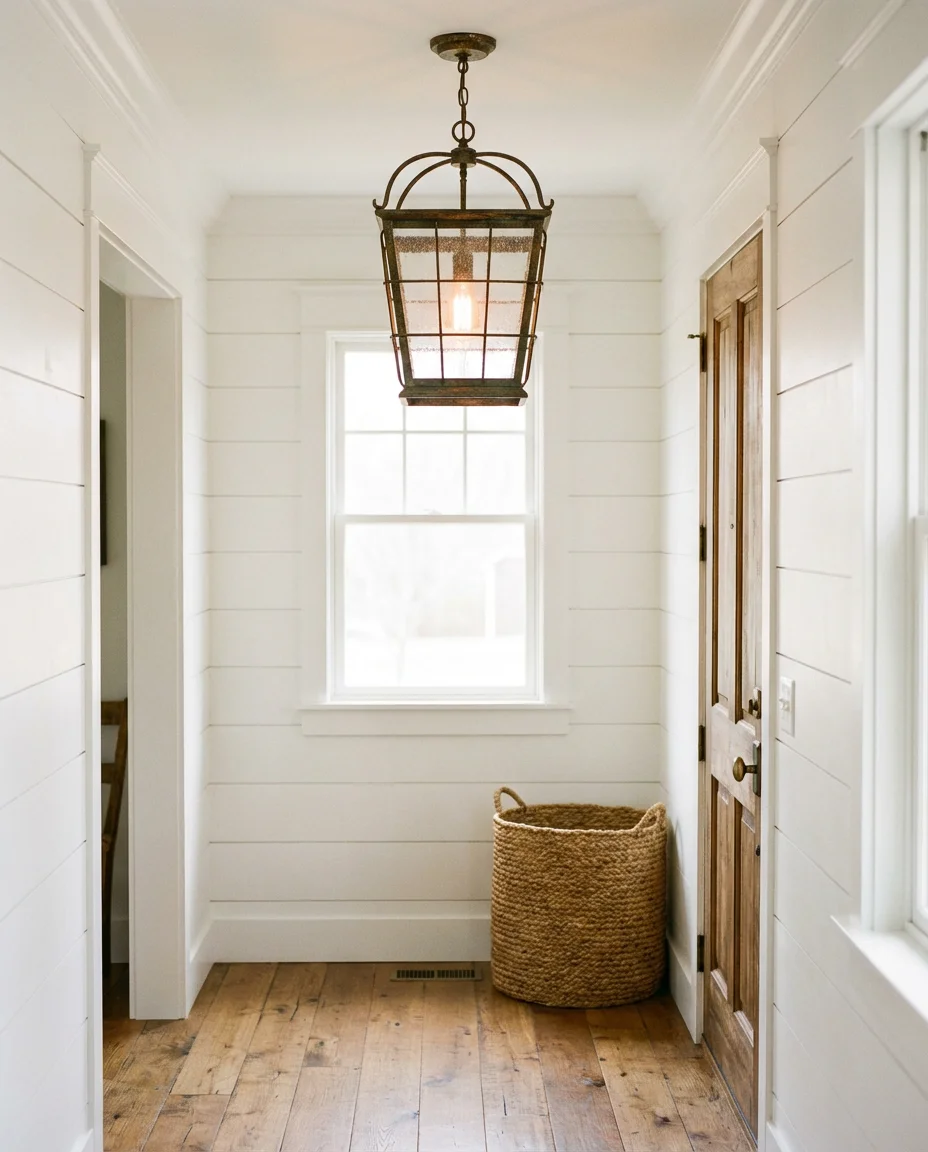
There’s a reason farmhouse style still dominates Pinterest boards from Texas to Vermont—it’s warm, unpretentious, and deeply livable. In a hallway, a rustic lantern-style pendant brings that same approachable energy. Think wrought iron frames with clear or seeded glass, exposed Edison bulbs, and aged bronze or blackened steel finishes. These fixtures look equally at home in actual farmhouses and in suburban craftsman bungalows, and they pair effortlessly with shiplap walls, wooden floors, and woven baskets stacked by the door.
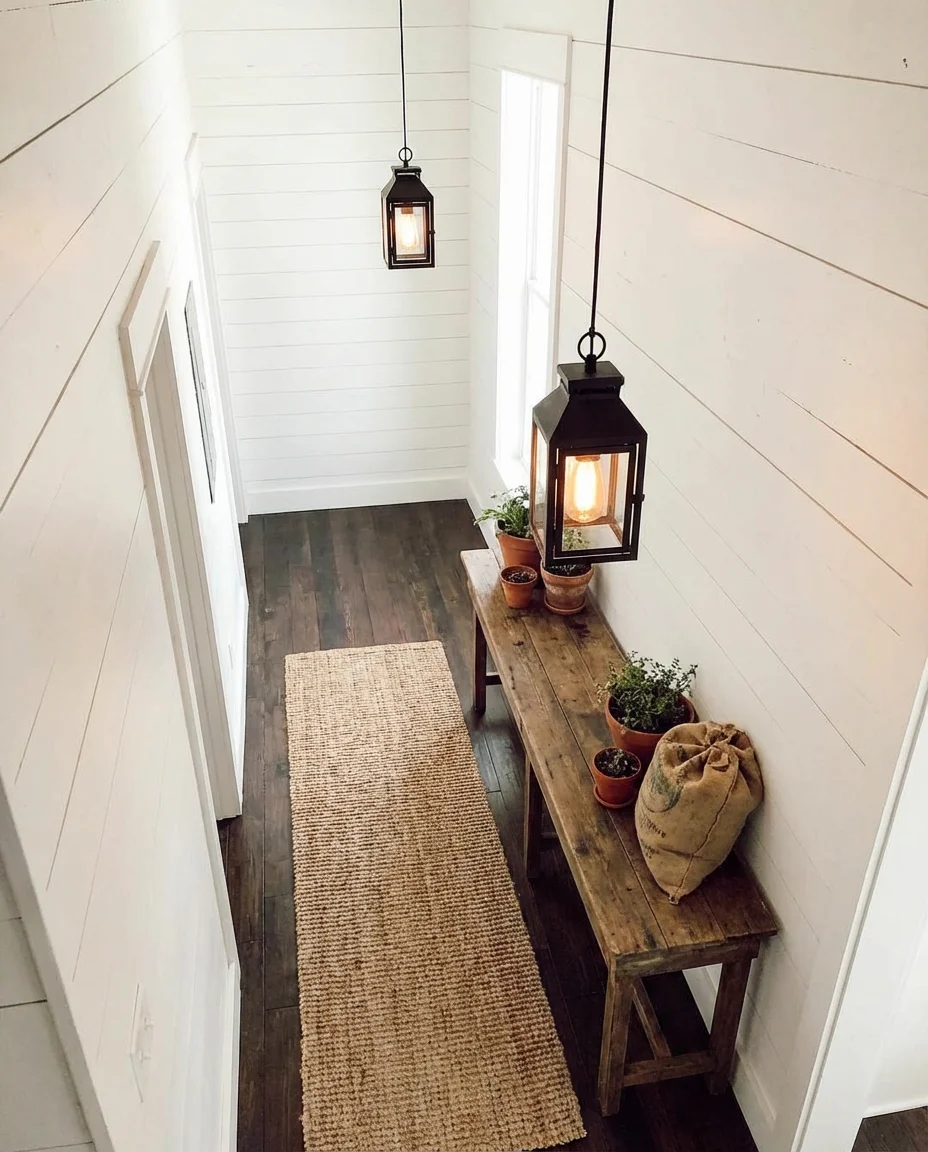
A homeowner in rural Tennessee recently swapped out her hallway’s builder-grade globe light for a cluster of three small farmhouse lanterns hung at staggered heights. “It changed the whole feel of the house,” she said. “It went from generic to something that actually looked like us.” That kind of personality-forward lighting choice is exactly what the farmhouse aesthetic does best—it tells a story without needing to shout. Pair with a vintage runner rug and an old mirror for the full effect.
5. Victorian-Inspired Gas-Style Fixtures
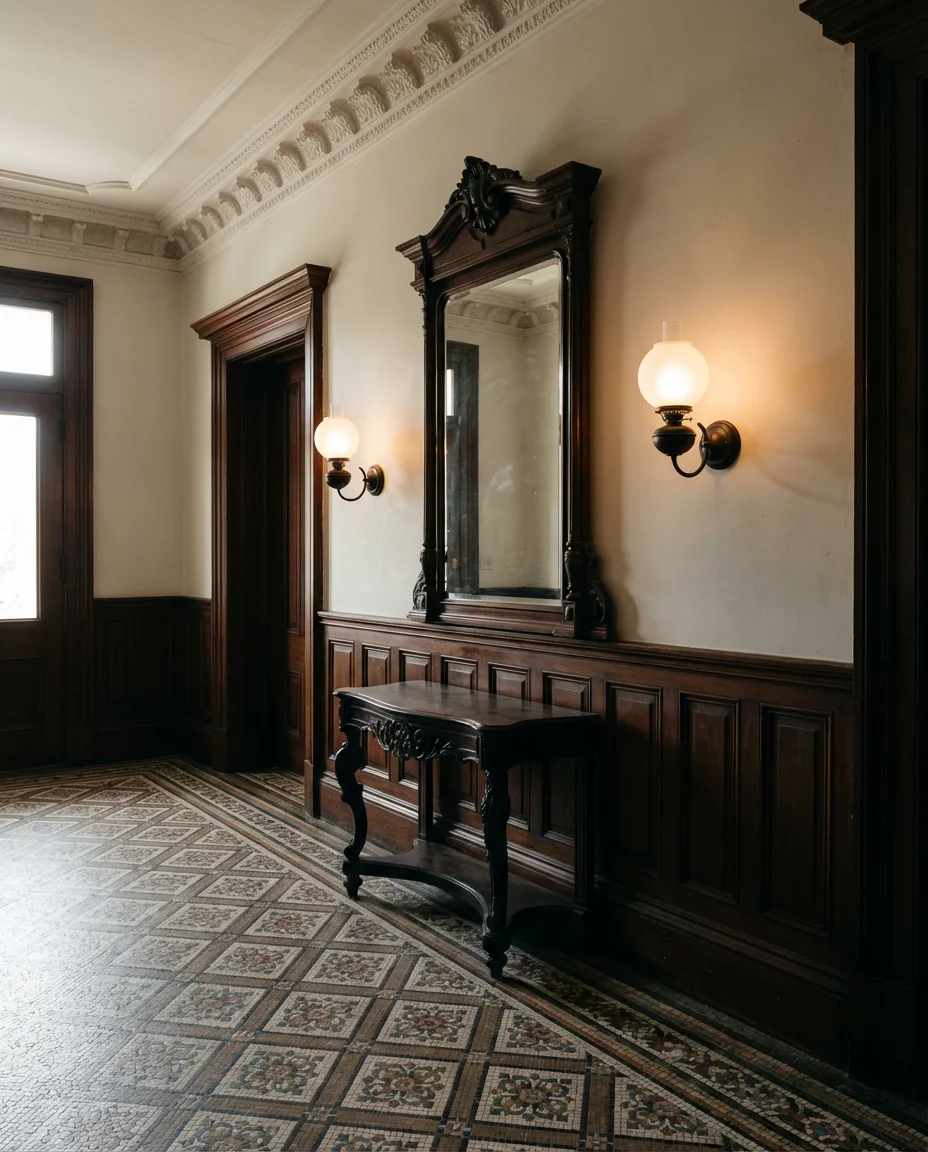
Homes with original Victorian architecture—or those built in the 1930s with period detailing—deserve lighting that honors their bones. Gas-style electric fixtures with milk glass globes, nickel or oil-rubbed bronze finishes, and ornate wall brackets are having a true moment in 2026. They work beautifully in entrance halls with original woodwork, tile floors, and picture-rail molding, reinforcing the sense of history rather than fighting it with something out of place.
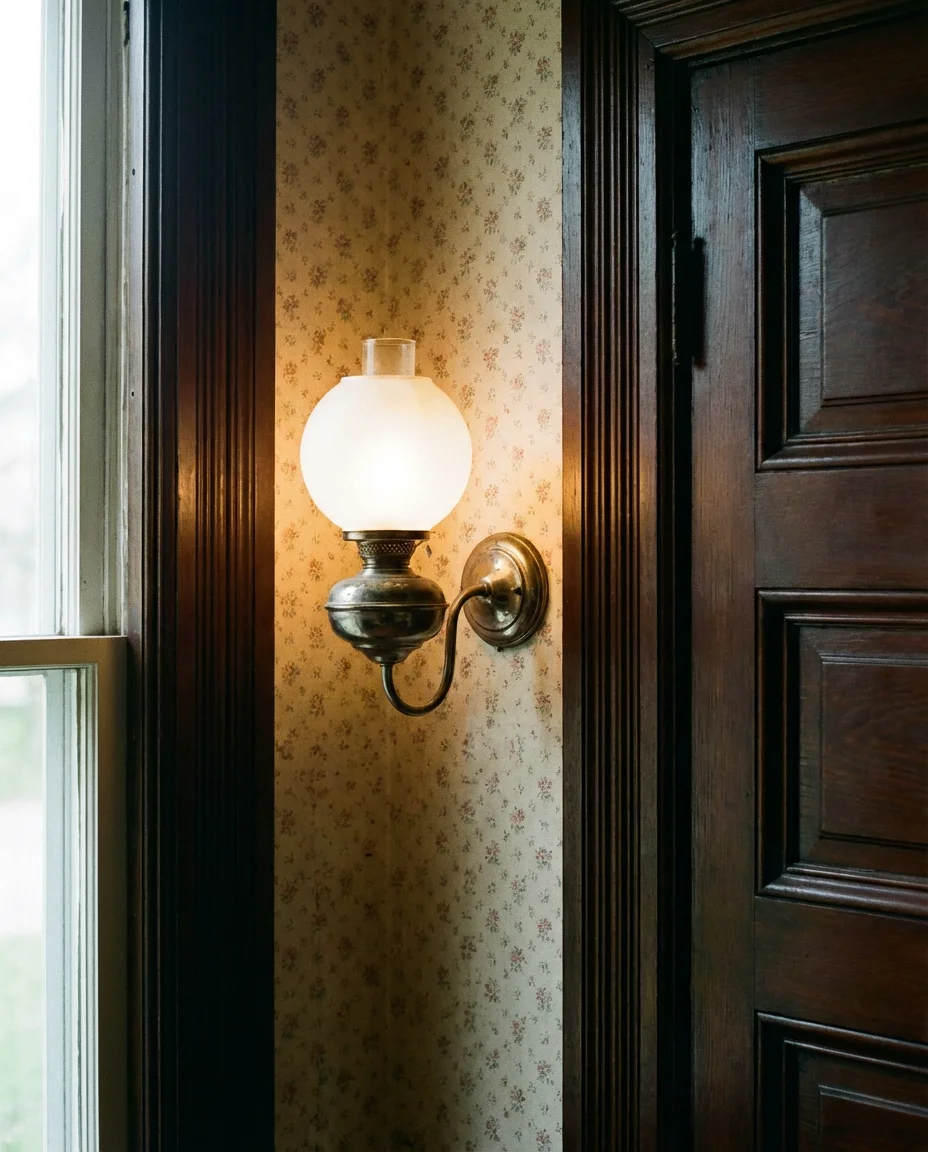
The key to pulling this off well is restraint. In a period hallway, one or two well-chosen Victorian fixtures are far more powerful than an entire collection of mismatched antiques. Focus on finishes that align with the home’s original hardware—if your door handles are brass, lean into aged brass fixtures. If the woodwork is dark walnut, oil-rubbed bronze is your friend. These small acts of coherence are what separate a curated historical interior from one that simply looks cluttered.
6. Recessed Lighting Rows for a Clean Modern Look
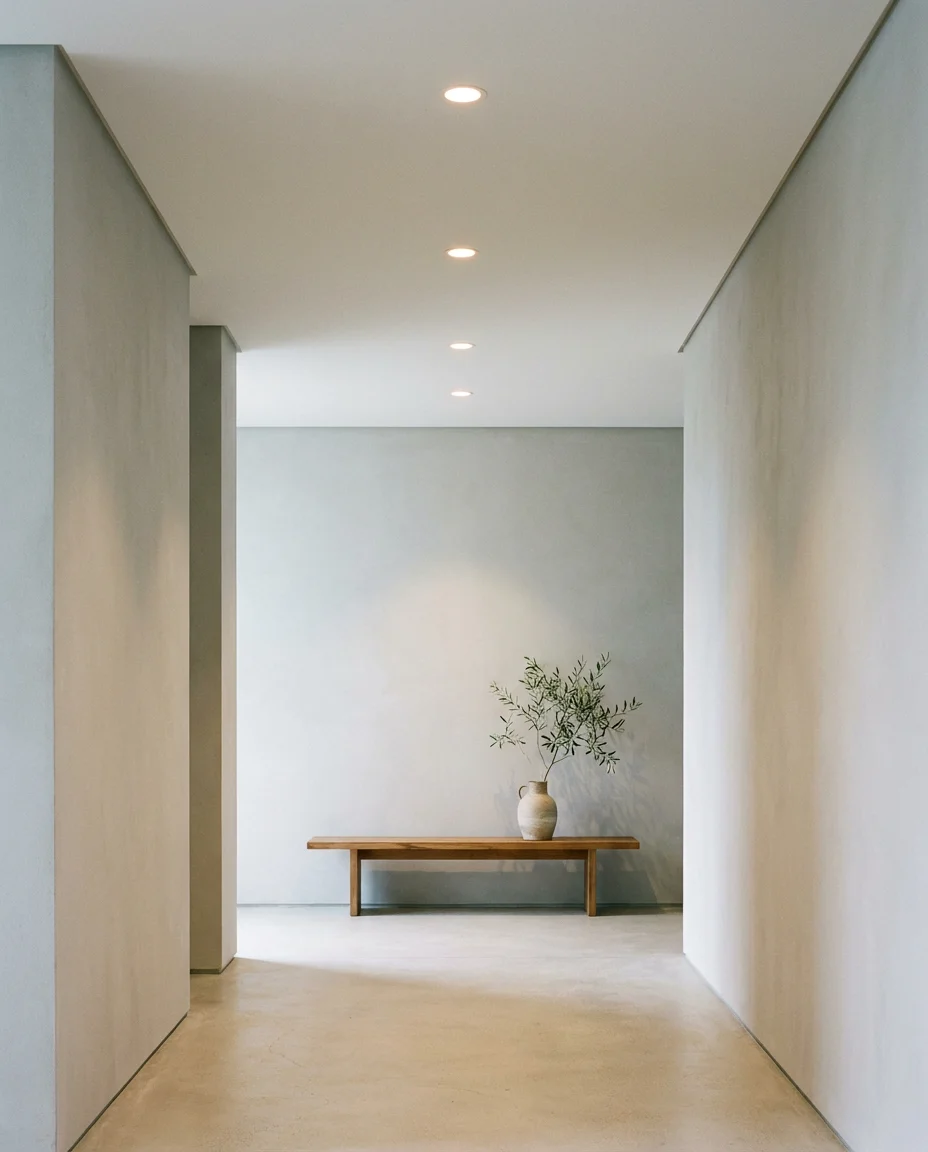
For homeowners who want their hallway to feel architecturally clean and uncluttered, a well-planned row of recessed lights is the answer. This approach suits modern interiors and ceilings modern in their profile—flat, smooth, and deliberately spare. Positioning recessed cans every 4–5 feet along the center of a hallway creates consistent, even illumination without any fixture competing for visual attention. When paired with a dimmer switch, you can shift the mood from bright and functional to soft and ambient in seconds.
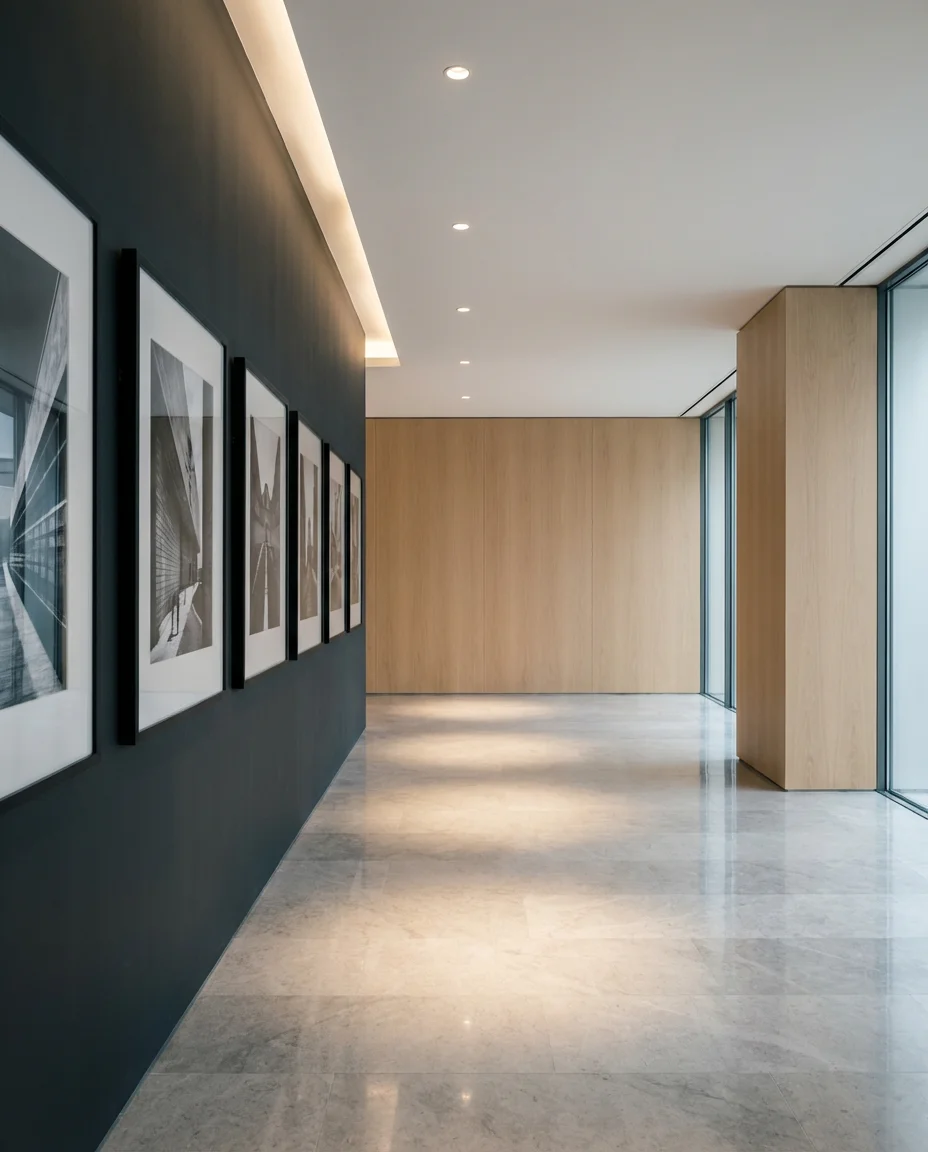
Where this approach works best is in open-plan homes where the hallway flows visually into a living room or kitchen, and you want the lighting language to stay consistent throughout. Recessed lighting lets the architecture speak for itself—the walls, the floor material, the art—rather than introducing a fixture that competes. For best results, choose LED trims with a color rendering index (CRI) of 90 or above, which renders colors accurately and makes everything in the hallway look its best.
7. Picture Lights to Brighten Dark Hallway Art
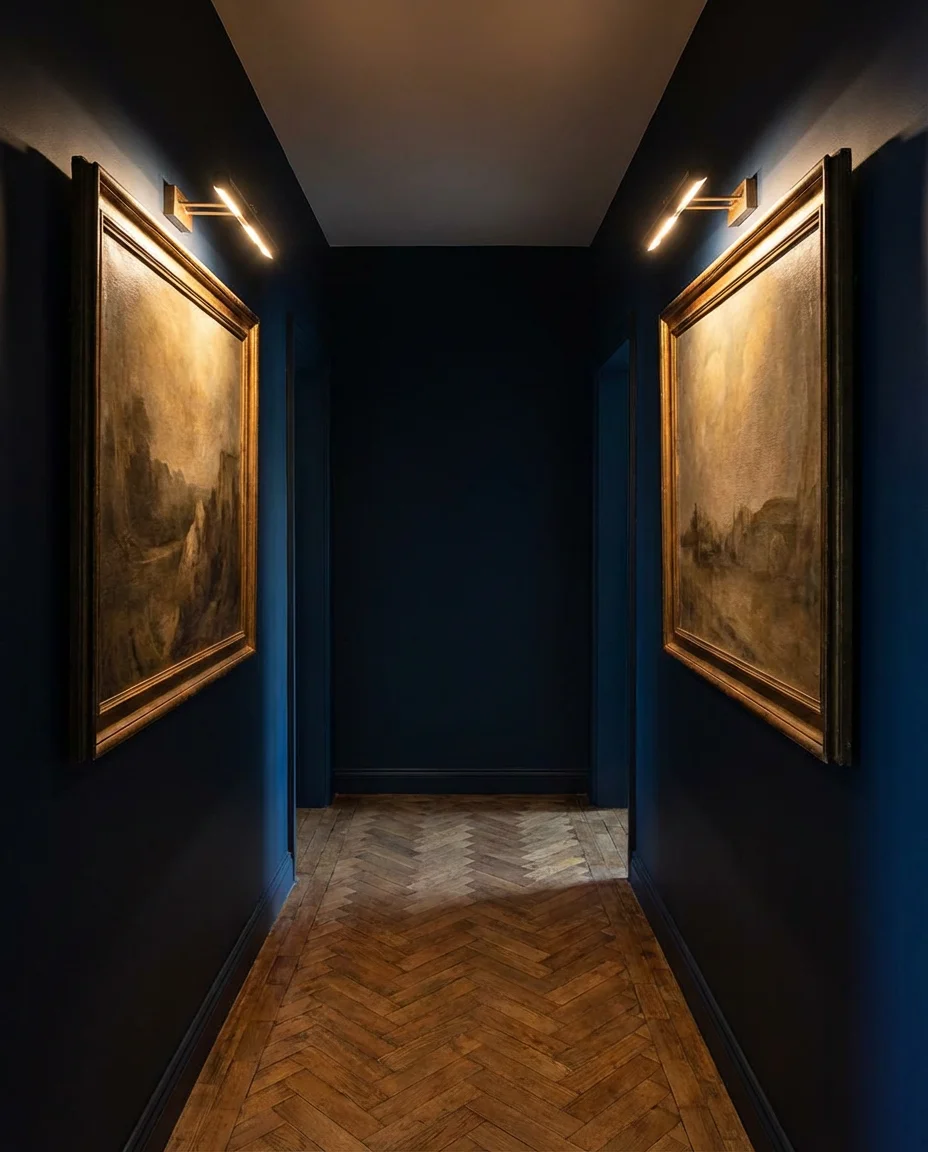
One of the most common problems in home design is the dark hallway—that interior corridor with no windows, where even daytime feels dim and a little forlorn. One of the most elegant fixes isn’t a new overhead fixture at all: it’s picture lights mounted above framed art or mirrors. The light they cast is warm and directed, reflecting off the art and bouncing back into the room in a way that genuinely brightens the long corridor without feeling harsh or clinical.
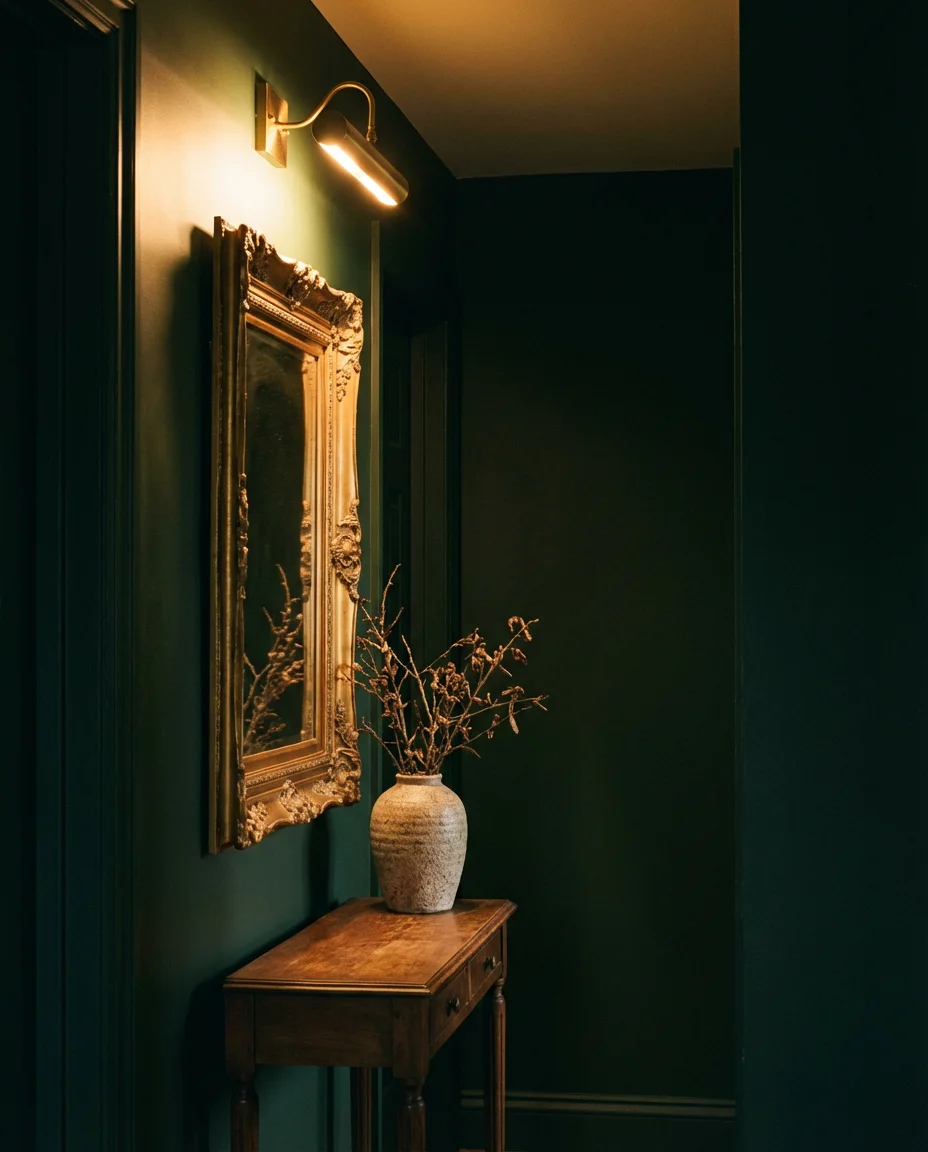
This technique is borrowed directly from gallery design, and it works in residential spaces for the same reasons: focused light on art creates depth and visual interest, making a flat, dim wall feel alive. Battery-operated, rechargeable picture lights have come a long way—brands like Cocoweb and Mitzi offer cord-free options with warm LEDs that look completely legitimate. If you’re displaying a large mirror rather than artwork, a picture light above it will double the perceived light in the space by bouncing it back across the room.
8. Cove Lighting for Upstairs Hallway Drama
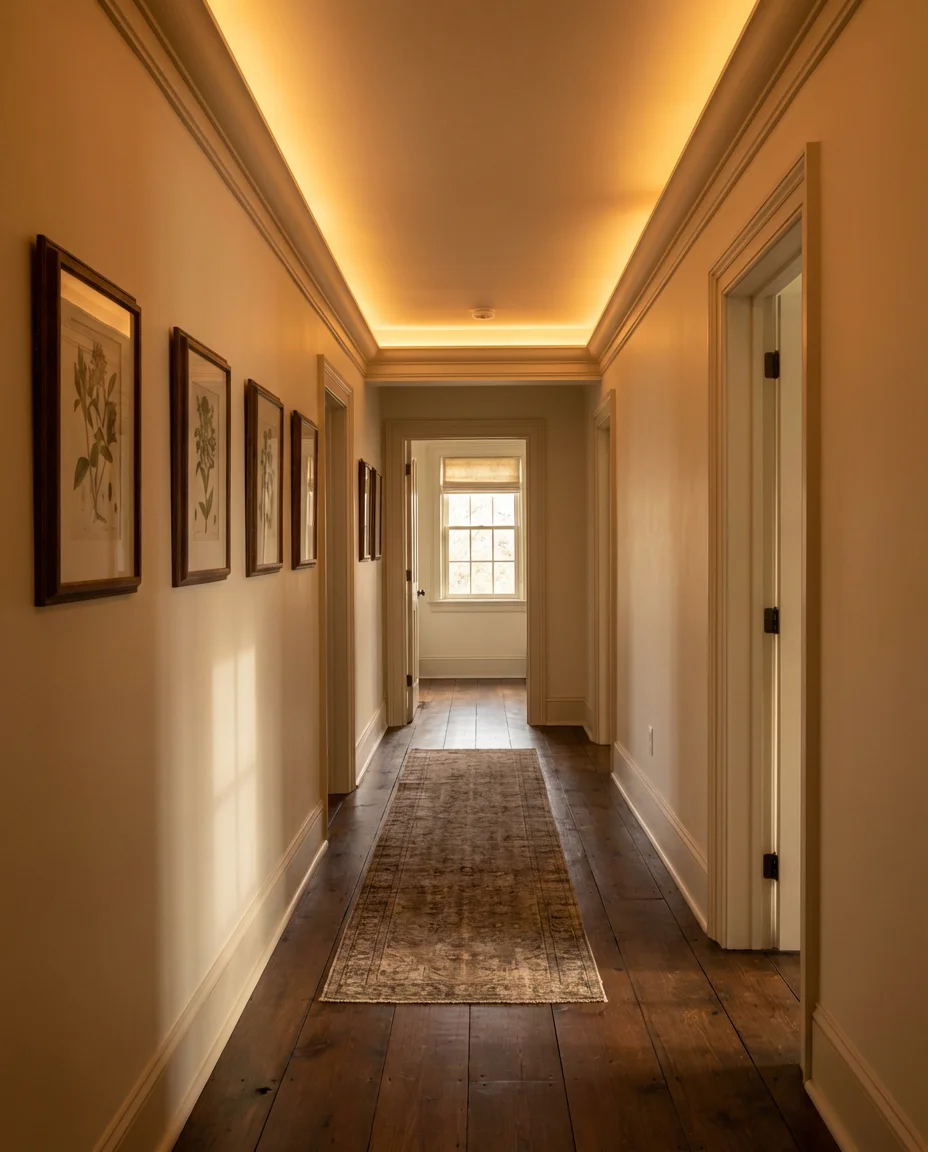
The upstairs hallway is often the last space to receive any design attention, but in 2026’s most interesting home renovations, it’s becoming a destination in its own right. Cove lighting—LED strips tucked into a recessed ledge at ceiling level—creates a halo of indirect light that wraps the top of the walls in a warm glow. It’s architectural, quiet, and genuinely dramatic when you step into it in the evening. Because the light source itself is hidden, the effect feels like the space is simply… glowing.
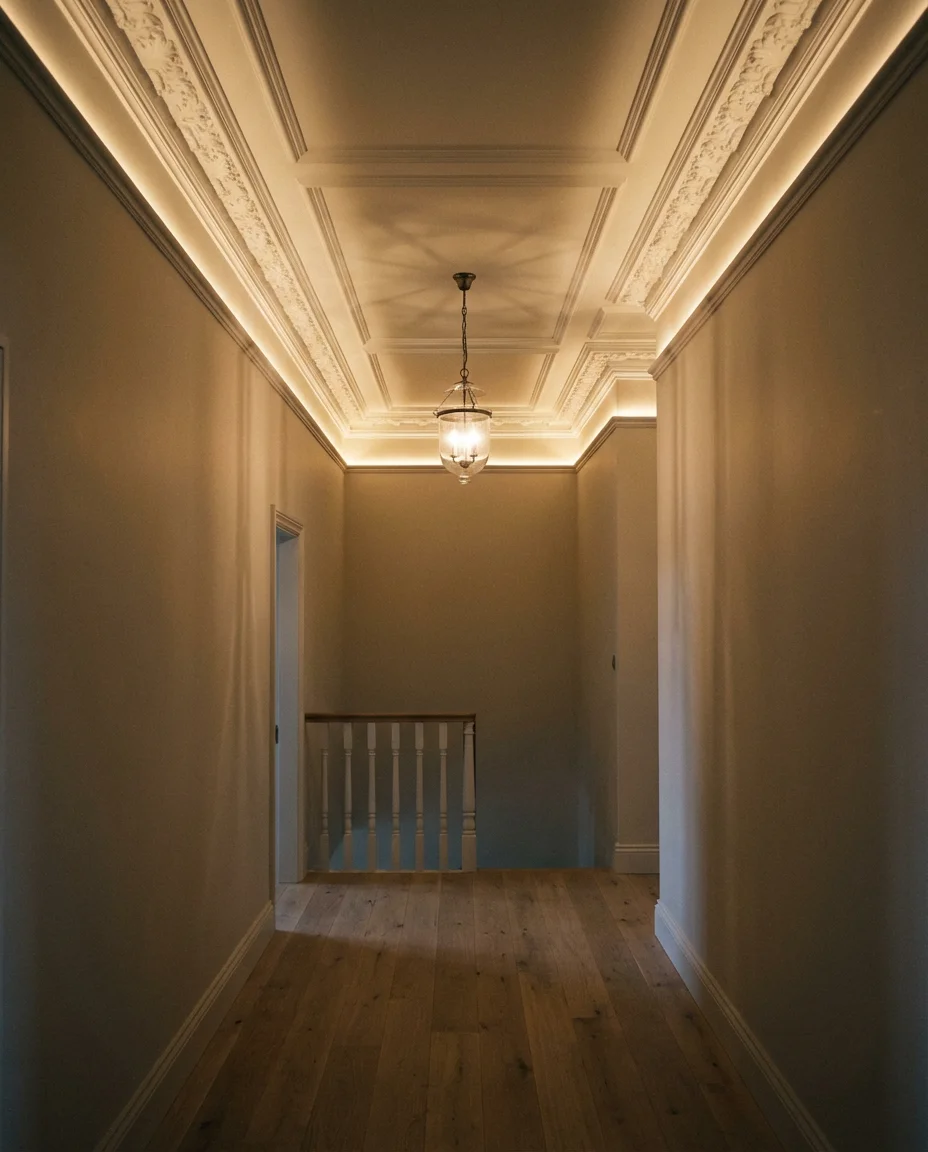
This is a project that typically requires a carpenter or contractor to build the cove detail, so it’s worth thinking of it as a renovation investment rather than a quick swap. That said, homeowners who’ve done it consistently report that it’s one of the highest-impact, lowest-regret changes they’ve made to their home. If a full cove isn’t in the budget, a simpler version using LED strip lights run along the top of a picture rail or floating shelf can achieve a similar soft, ambient effect for under $100 in materials.
9. Creative Cluster Pendants for a Playful Entry
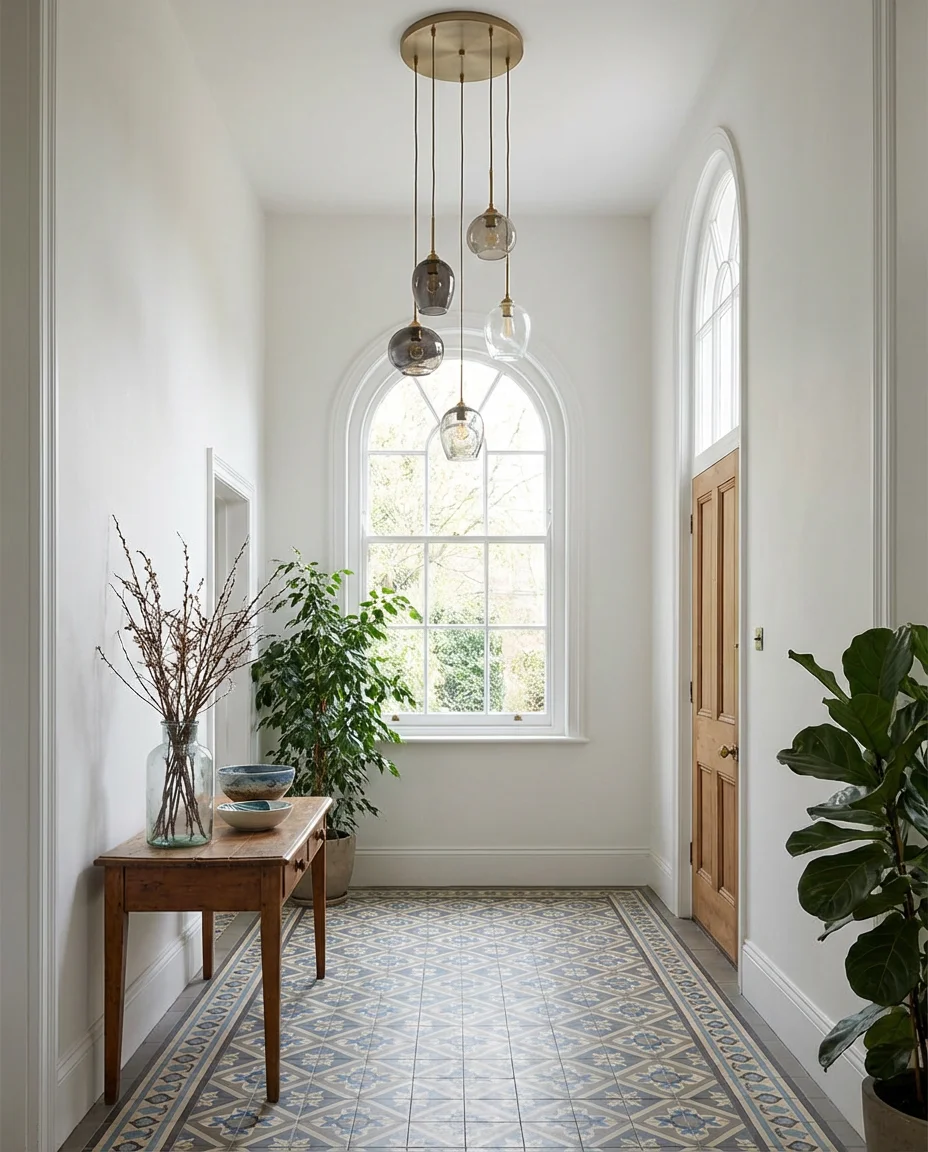
Not every hallway needs to be serene and polished. For design-forward homeowners who want their entryway to feel creative and personal, a cluster pendant arrangement—multiple smaller fixtures hung at varying heights from a central canopy—adds energy and personality that a single fixture simply can’t match. This works especially well in entrance halls with higher ceilings, where the staggered drop creates a cascading effect that’s genuinely theatrical. Mix materials: smoked glass with brass or woven rattan with matte black hardware.
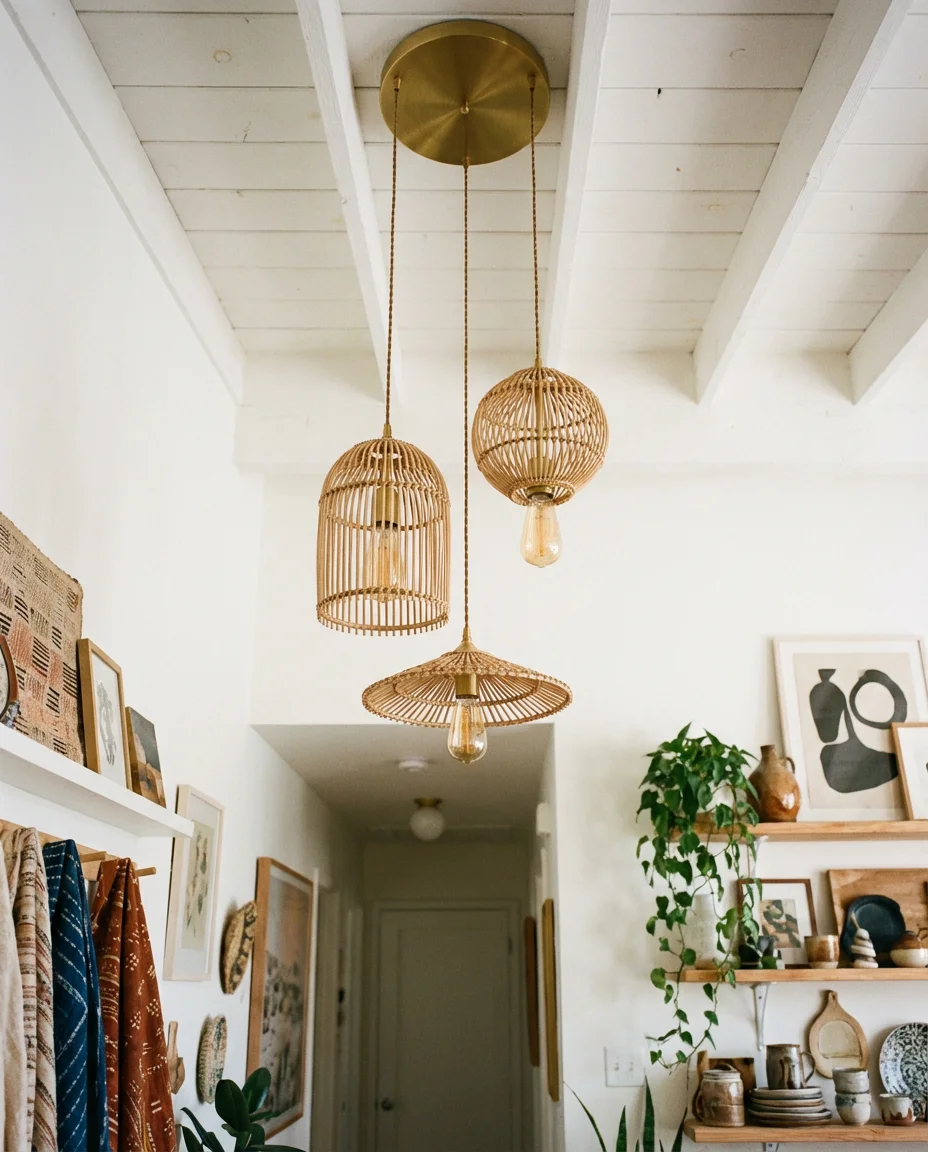
Real homeowner behavior shows that people are increasingly willing to invest in the entryway as a statement space—and that a cluster pendant is often the first bold choice they make. It signals to guests that the home is curated and intentional, and it sets a tone the rest of the interior can live up to. If you’re nervous about the commitment, start with three pendants in complementary finishes and add a fourth later. Most multi-pendant canopies have additional ports for exactly this reason.
10. LED Strip Lighting Under a Stair Rail
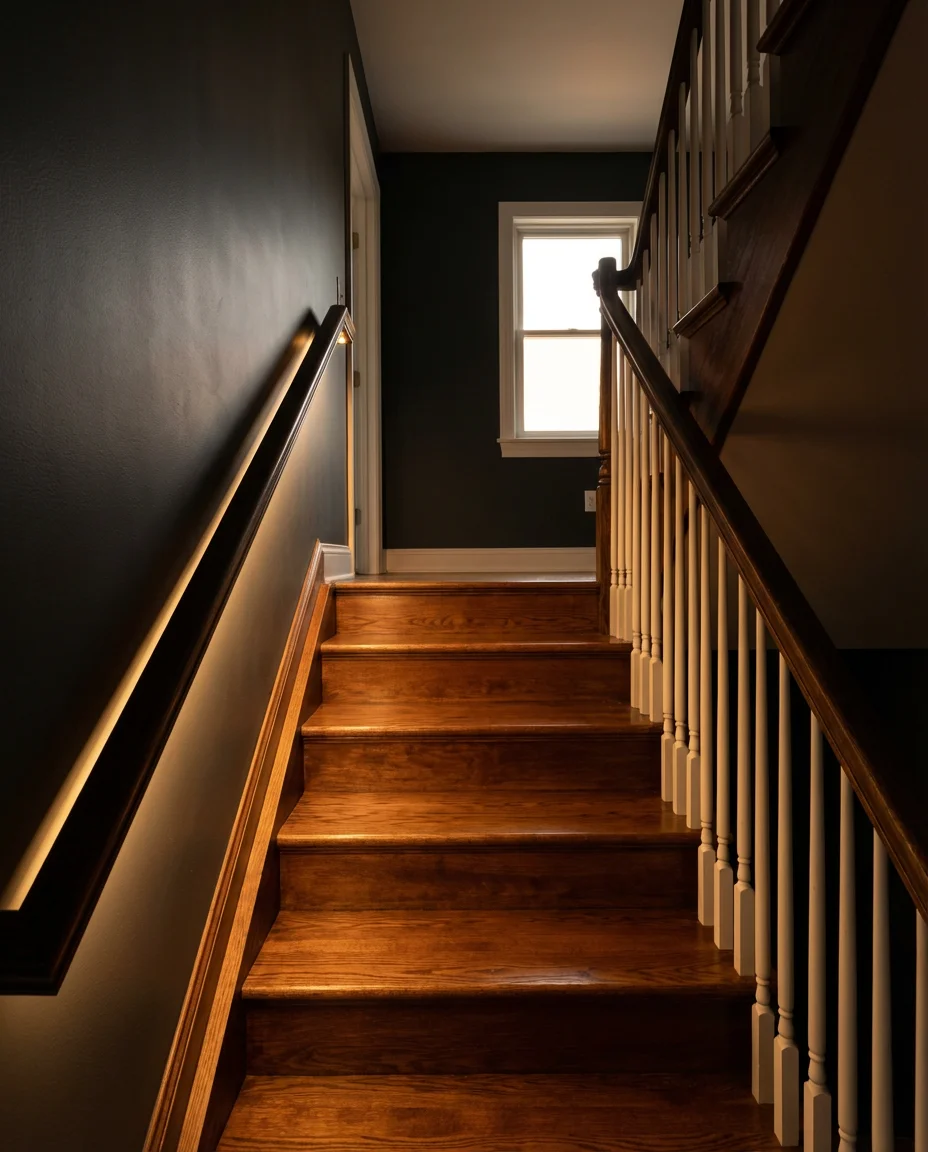
Staircase hallways—especially those leading from a main floor to an upstairs landing—often have a dead zone of dim light that makes navigating in the evening feel slightly precarious. Running LED strip lights under the handrail or along the stair stringer (the diagonal side board) solves this beautifully. The light grazes the steps at just the right angle to make each tread clearly visible while casting a warm, horizontal glow across the wall lights zone. It’s both a safety upgrade and a genuinely beautiful design choice.
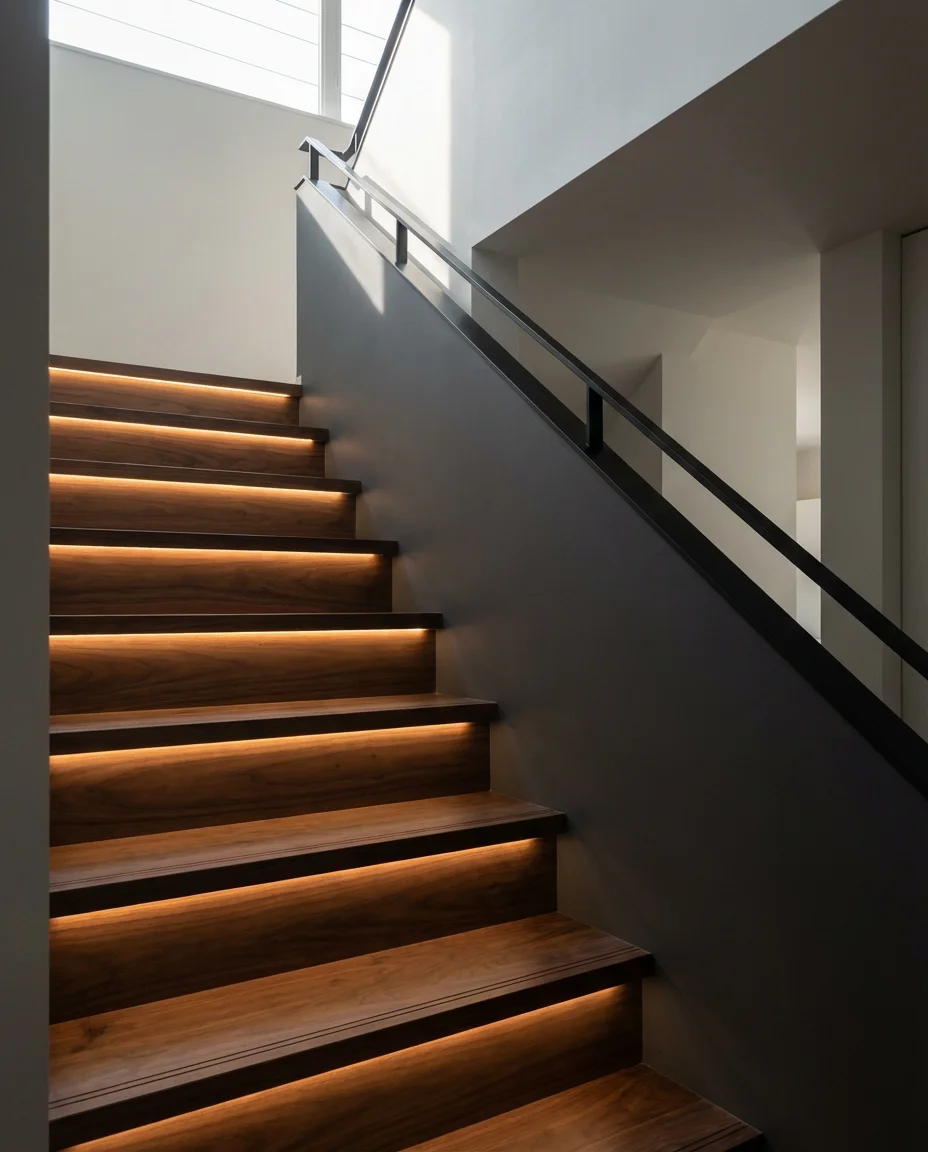
In the American market, smart LED strip kits from brands like Govee and Philips Hue have made this project accessible for DIYers—you don’t need an electrician, and the total cost typically runs $40–$80 for a standard staircase. Tunable white strips are worth the extra few dollars because you can shift the color temperature throughout the day: cooler and brighter in the morning, warmer and dimmer in the evening. Pair with a motion sensor so the staircase lights up automatically when someone approaches.
11. Industrial Pipe Sconces for a Loft-Style Hall
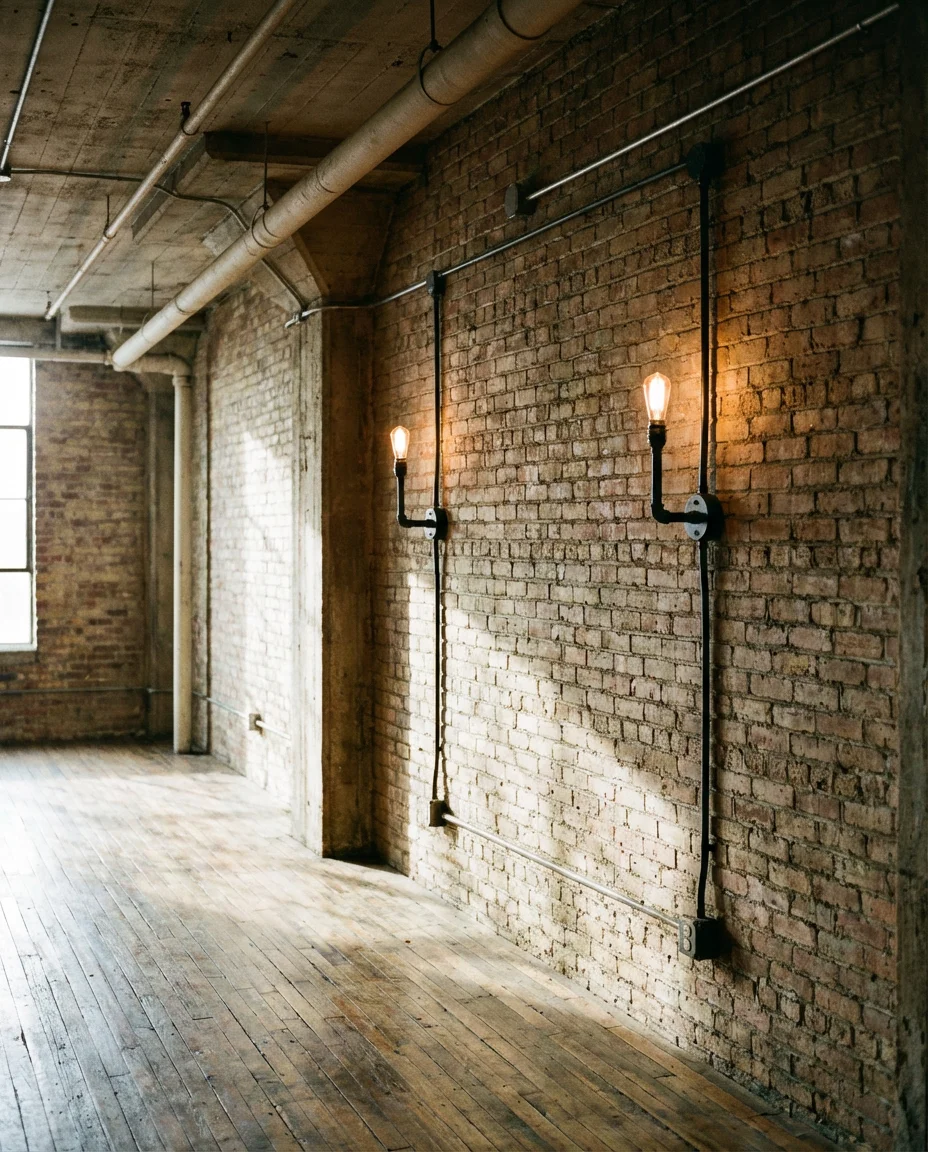
Industrial pipe sconces bring a raw, confident energy to hallways that are meant to feel a little edgy. Exposed black steel conduit, vintage Edison bulbs, and wall-mounted backplates are the hallmarks of this look—it’s creative and deliberate, borrowing from the language of converted warehouses and Brooklyn lofts. These fixtures pair especially well with exposed brick, concrete floors, or dark painted walls, creating a layered, textural atmosphere that feels lived-in and authentic rather than staged.
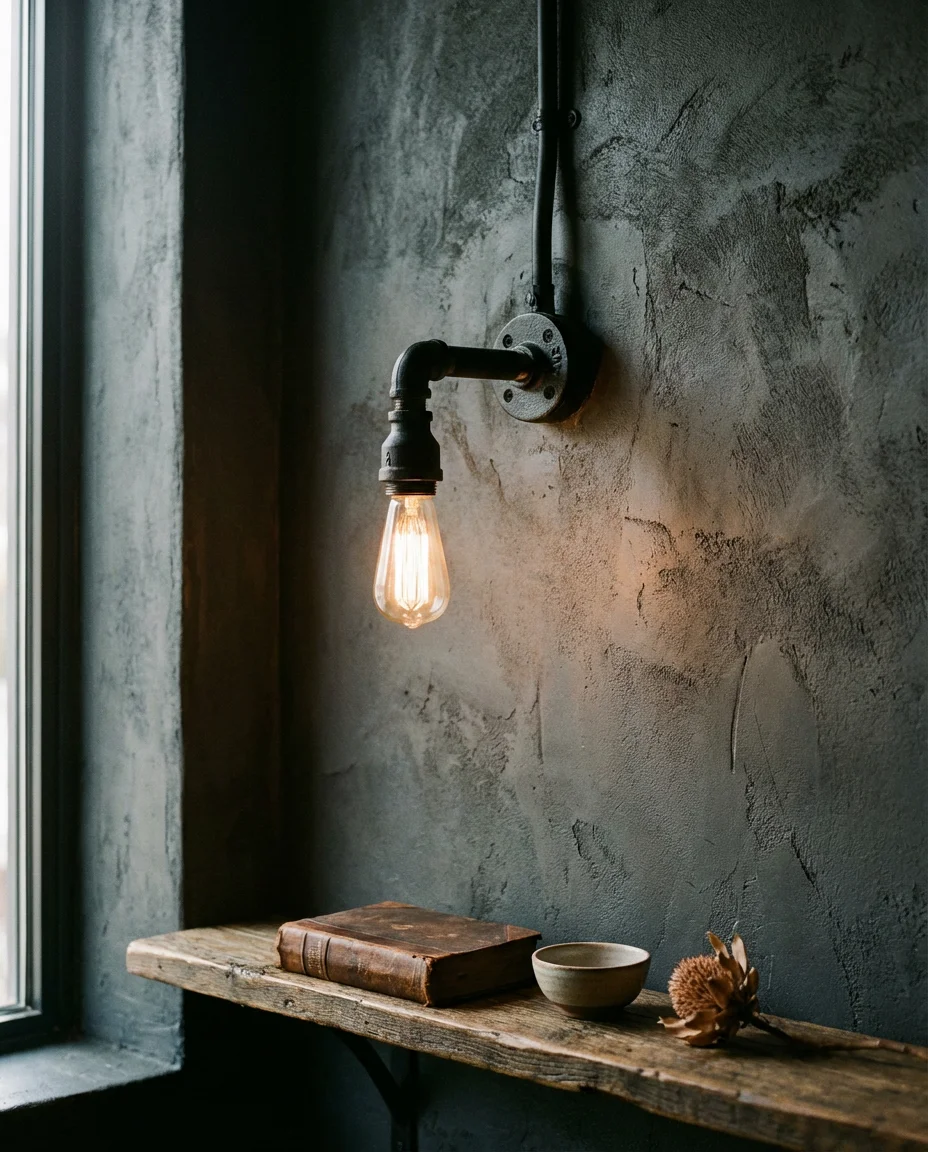
Where this look works best is in urban condos, renovated older homes, or any space where the architecture has interesting imperfections—cracked plaster, old hardwood with gaps, exposed ceiling joists. The industrial fixture embraces rather than corrects those qualities. One common mistake is over-committing to the aesthetic by using too many pipe fixtures in a single space; two sconces flanking a mirror or a piece of art is usually more powerful than a wall full of them.
12. Brass and Globe Lights for Mid-Century Hallways
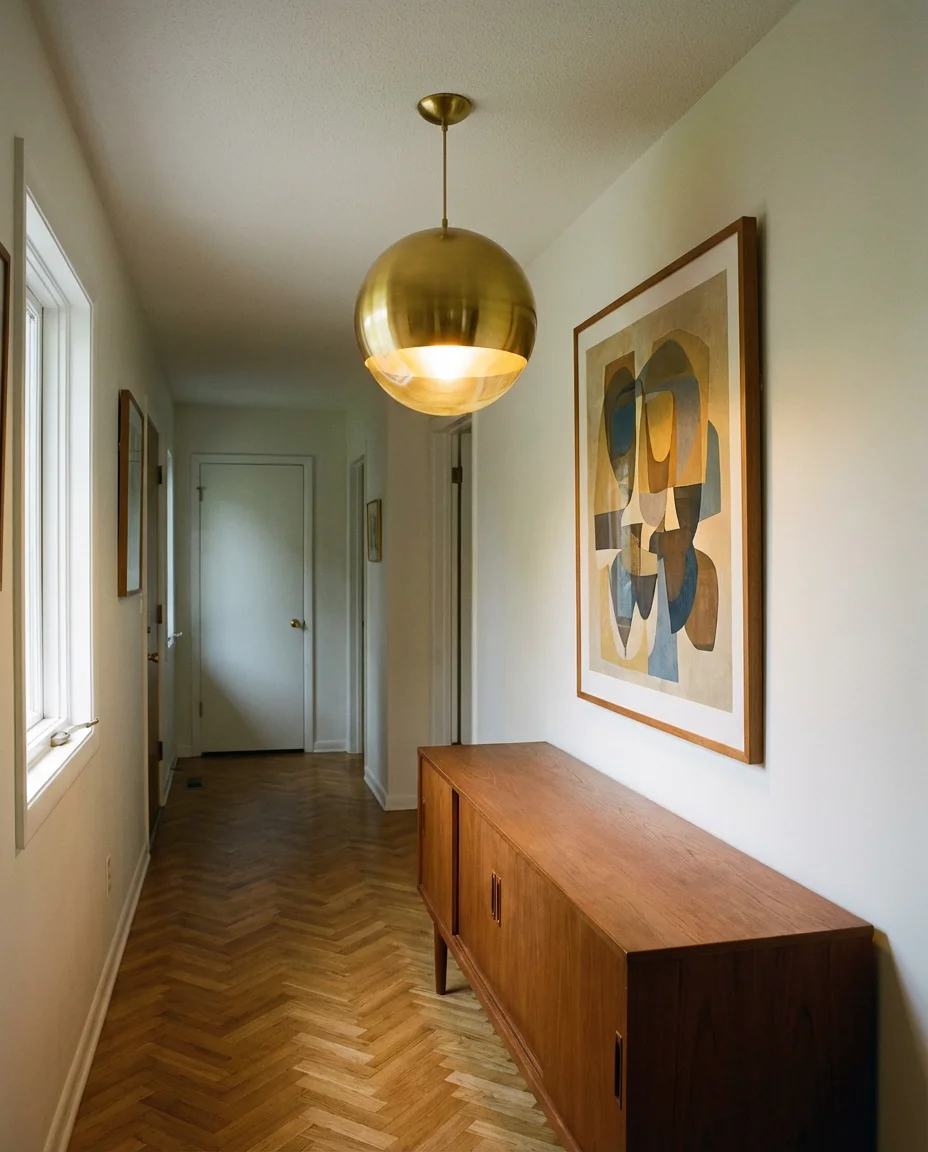
Mid-century modern design continues its long revival, and in hallway lighting, this translates to sputnik chandeliers, globe pendants, and sleek brass arm sconces that look like they belong in a 1960s Palm Springs home. For hallways with ceilings modern in their proportions—flat and reasonably high—a sculptural brass globe pendant is a near-perfect fit. The warm gold of unlacquered brass catches light beautifully, and the spherical form feels both timeless and forward-looking at once.
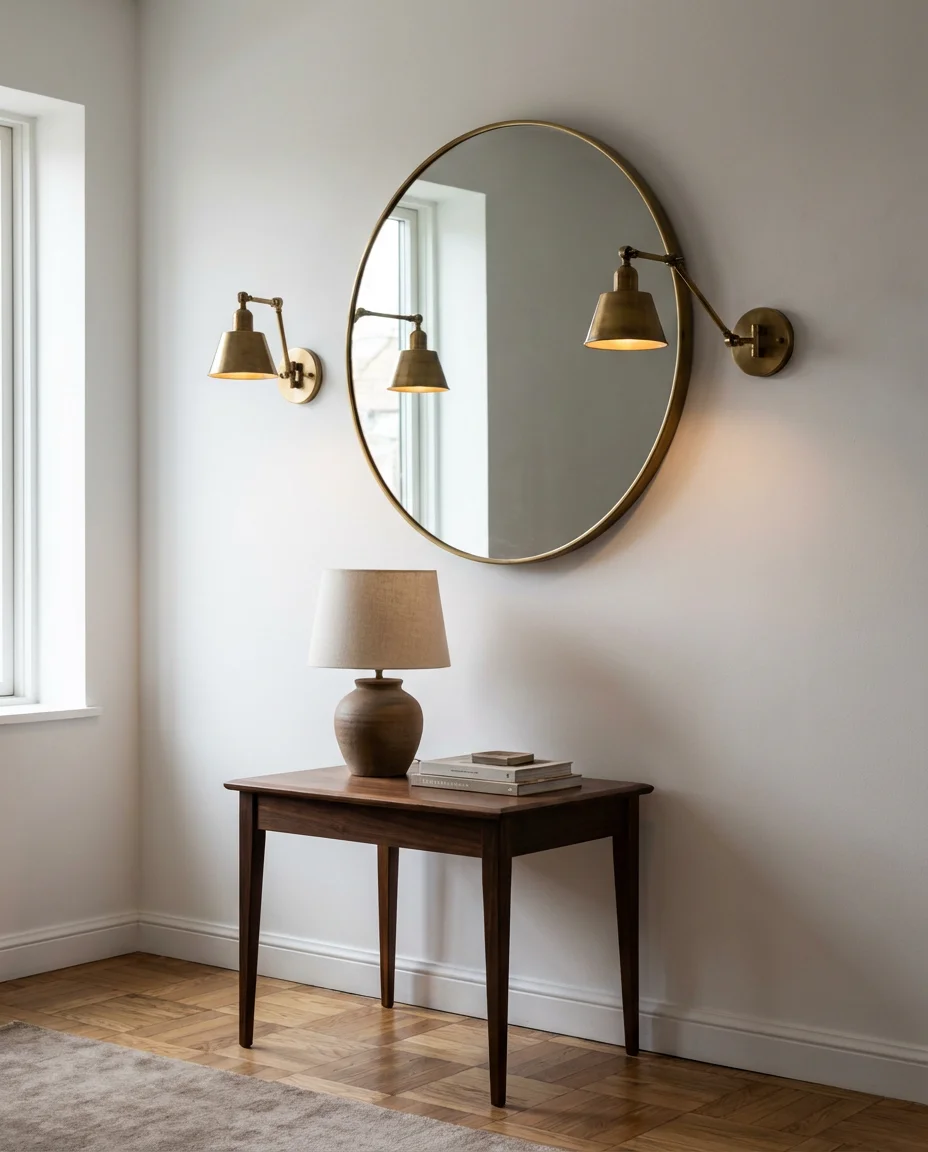
An expert tip for pulling off mid-century lighting without the space feeling like a museum: mix eras slightly. A vintage brass globe pendant over a contemporary console table with clean lines creates a conversation between past and present that feels genuinely sophisticated. Avoid going all-in on period authenticity unless you’re a true collector—the best mid-century-inspired rooms always have one or two modern elements that prevent them from feeling frozen in time.
13. Maximalist Chandelier for a Grand Entrance Hall
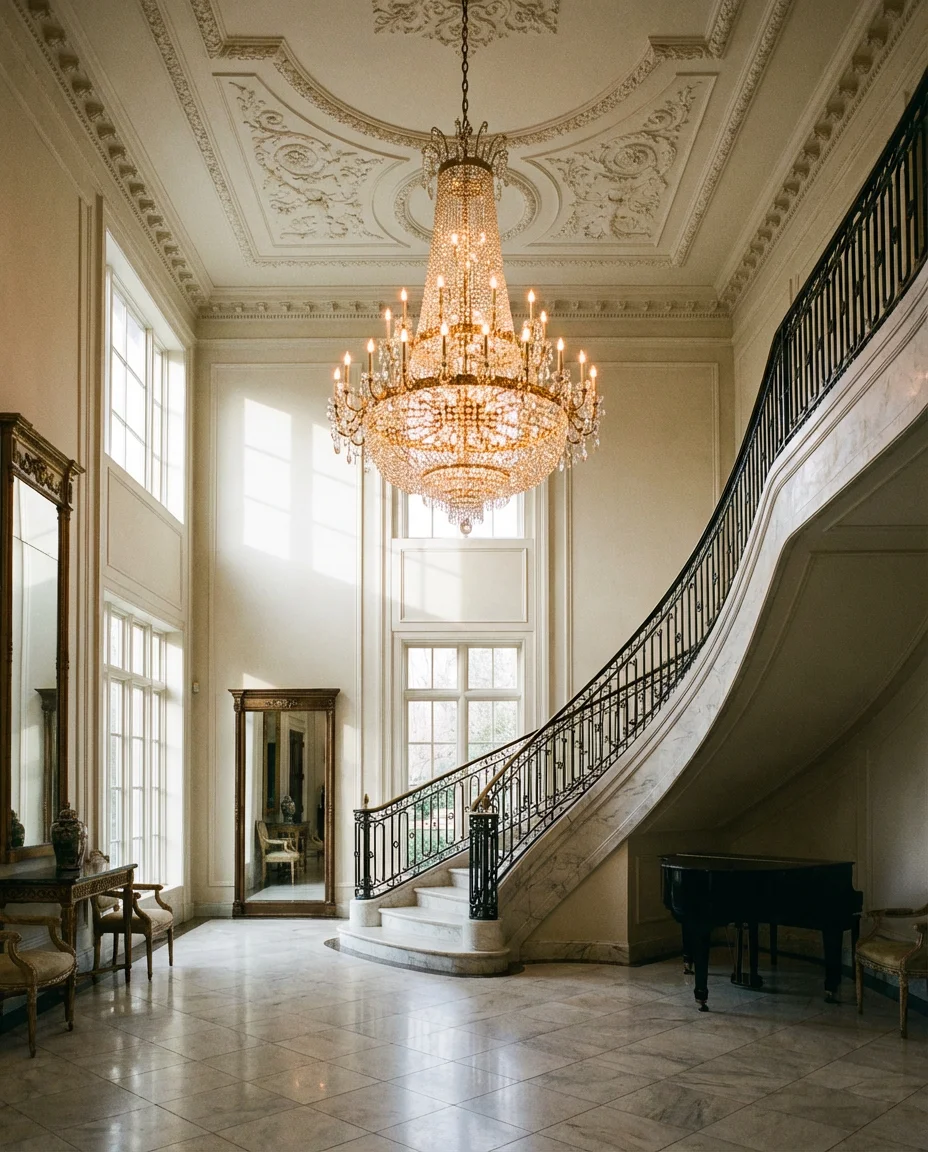
When the architecture gives you something to work with—a double-height foyer, arched doorways, original crown molding—the right response is to match the energy. A maximalist chandelier in an entry or long entrance hall reads as a confident design statement that honors the proportions of the space. We’re talking about crystal-draped, multi-armed, genuinely substantial fixtures that would have been at home in a Gilded Age townhouse. In 2026, these grand gestures are making a comeback after years of minimalist restraint.
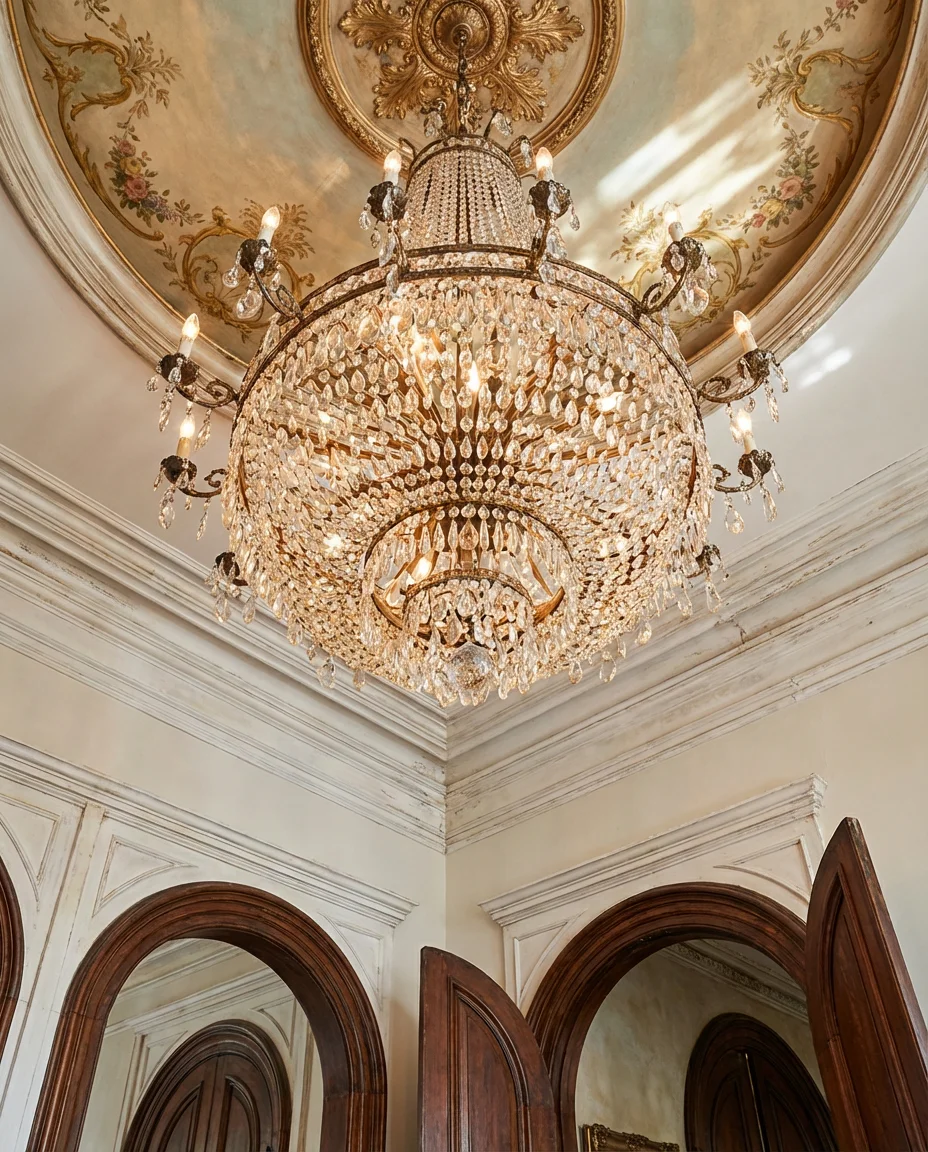
The American appetite for grandeur in the home—especially in the South and on the East Coast, where older residential architecture tends toward formality—means maximalist chandeliers are appearing in renovation projects at every price point. Restoration Hardware, Anthropologie Home, and independent artisan makers on Etsy all offer options ranging from a few hundred to several thousand dollars. The single most important factor is scale: measure your ceiling height first, and choose a fixture diameter in inches that equals the room’s dimensions in feet added together.
14. Minimalist Linear Pendant for a Long Hallway
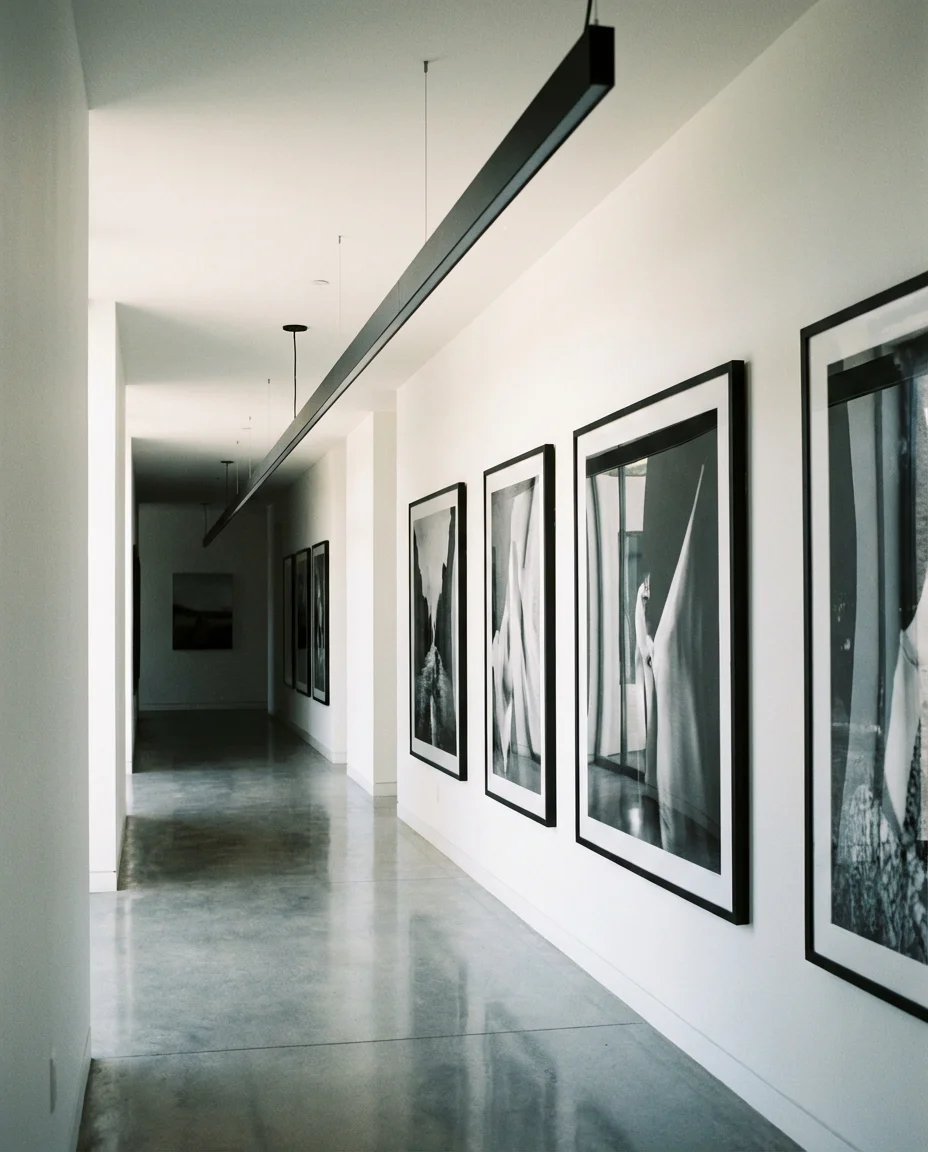
A linear pendant—a long, rectangular fixture suspended horizontally—is one of the most architecturally coherent choices for a long hallway. It mirrors the geometry of the corridor itself, stretching from end to end in a satisfying visual echo. In modern homes with clean-lined interiors, a matte black or brushed nickel linear pendant creates a gallery-like formality that elevates everything around it. It’s particularly effective over a console table or in a hall with a series of large-format photographs.
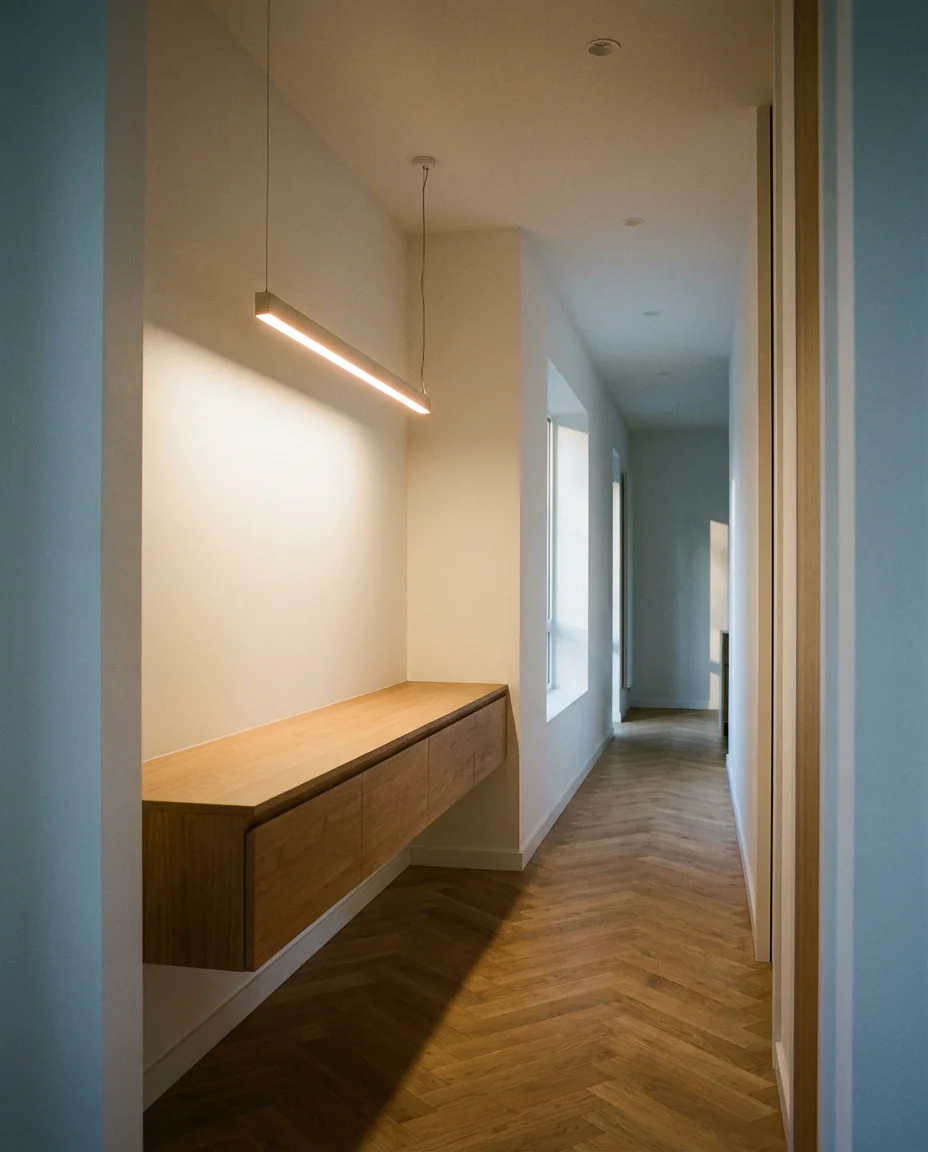
This is one of those choices that rewards commitment—a linear pendant that’s even slightly too short for the corridor will look timid, so don’t be afraid to go large. As a practical note, installing a linear pendant in a hallway that doesn’t have an existing ceiling box centered over the run may require an electrician to add a new junction point. Budget $150–$300 for the electrical work, and consider it part of the fixture’s total cost when comparing options.
15. Boho Woven Pendants for a Relaxed Entry
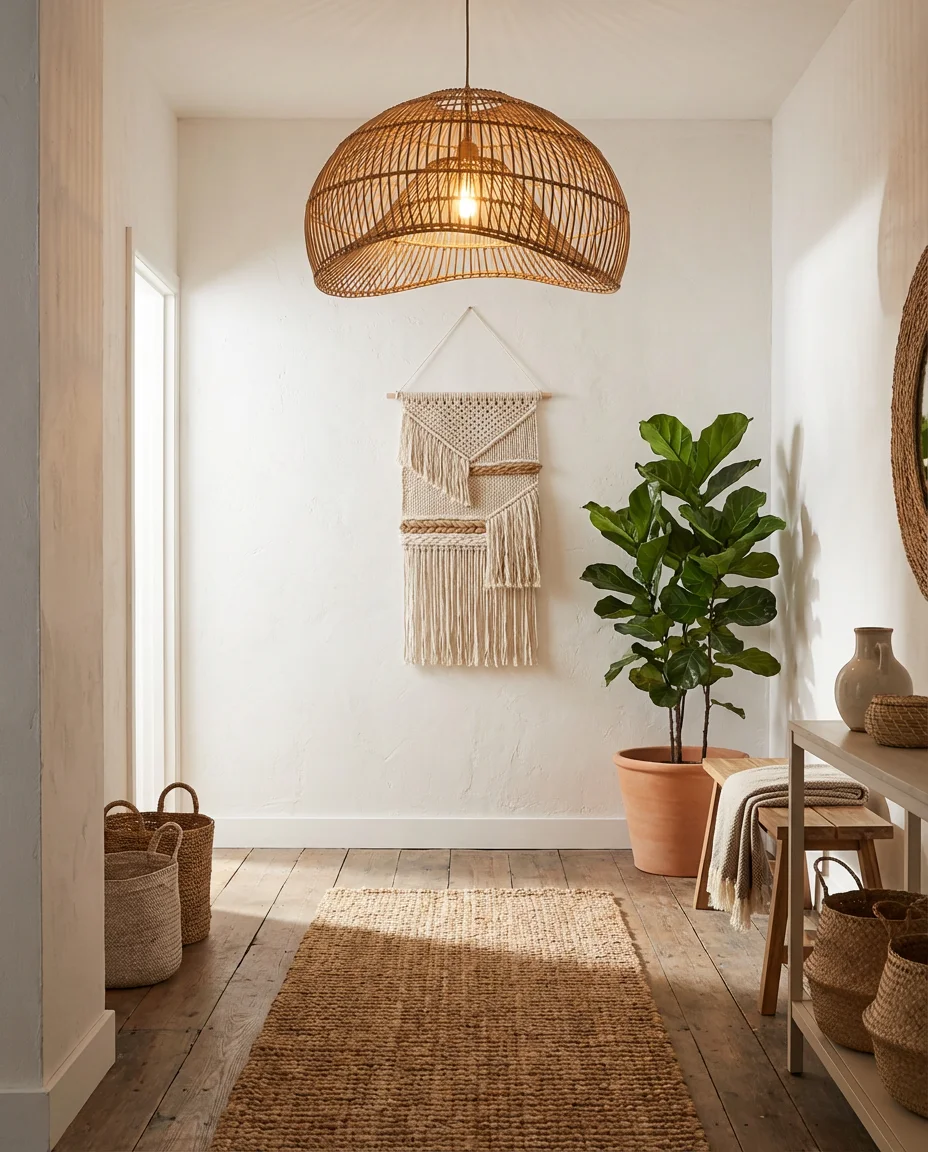
Woven rattan, seagrass, and natural fiber pendants have been a boho staple for years, but in 2026 they’ve matured into something more refined. In a hallway—especially a small space’s entry or a corridor connecting living areas—a single organic woven pendant adds warmth and texture without overwhelming the space. The natural materials graced the room, making it feel connected to the outside world even in a windowless interior passage. Paired with a jute rug and a wall hung with botanical prints, the effect is genuinely serene.
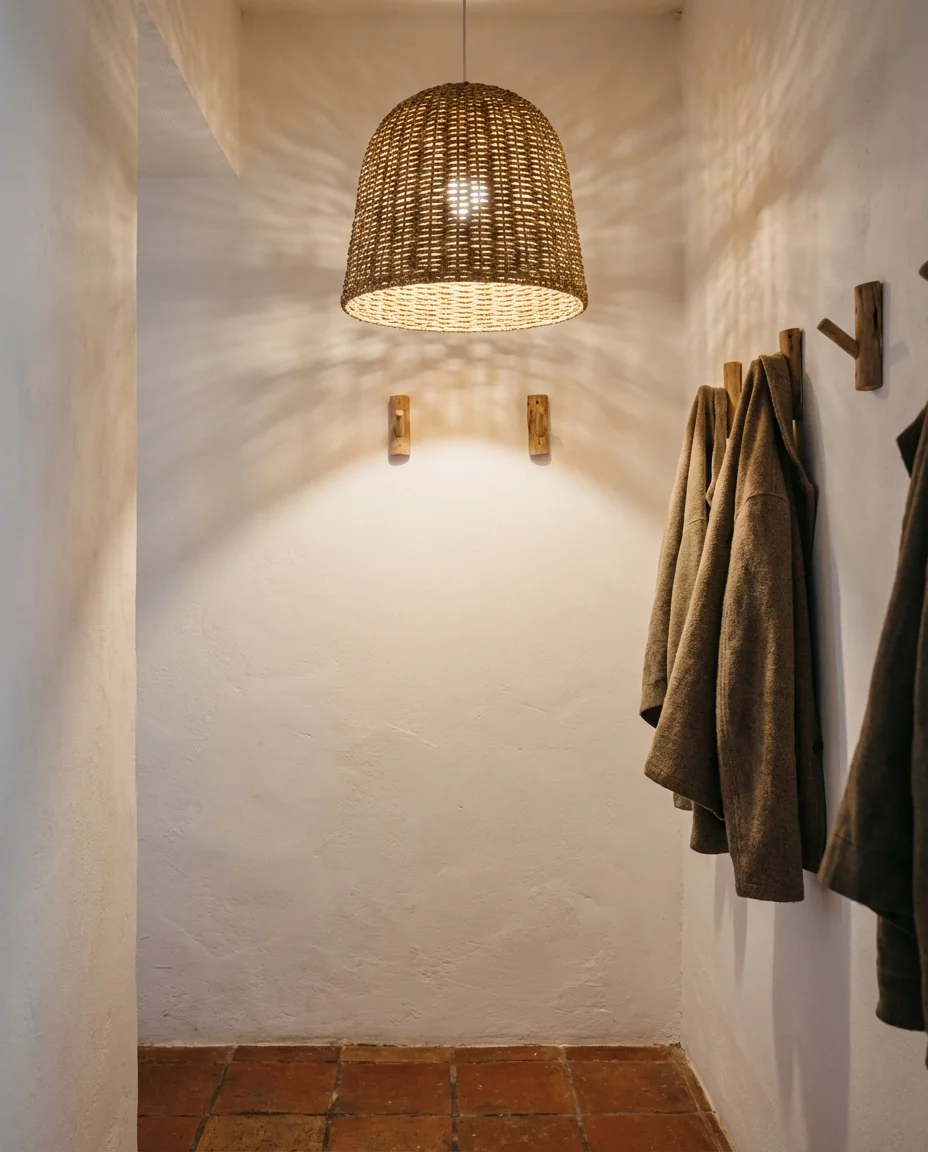
For homeowners in the Southwest and Pacific Northwest particularly, where indoor-outdoor living is a design priority, natural fiber pendants are a low-cost, high-impact way to bring that ethos indoors. Prices are extremely accessible—beautiful woven pendants from brands like Umbra, World Market, and Serena & Lily start around $45 and top out around $200 for larger, more intricate designs. The warm glow that filters through the weave at night is genuinely lovely, casting patterned shadows on the surrounding walls.
16. Torch-Style Wall Lights for Victorian Hallways
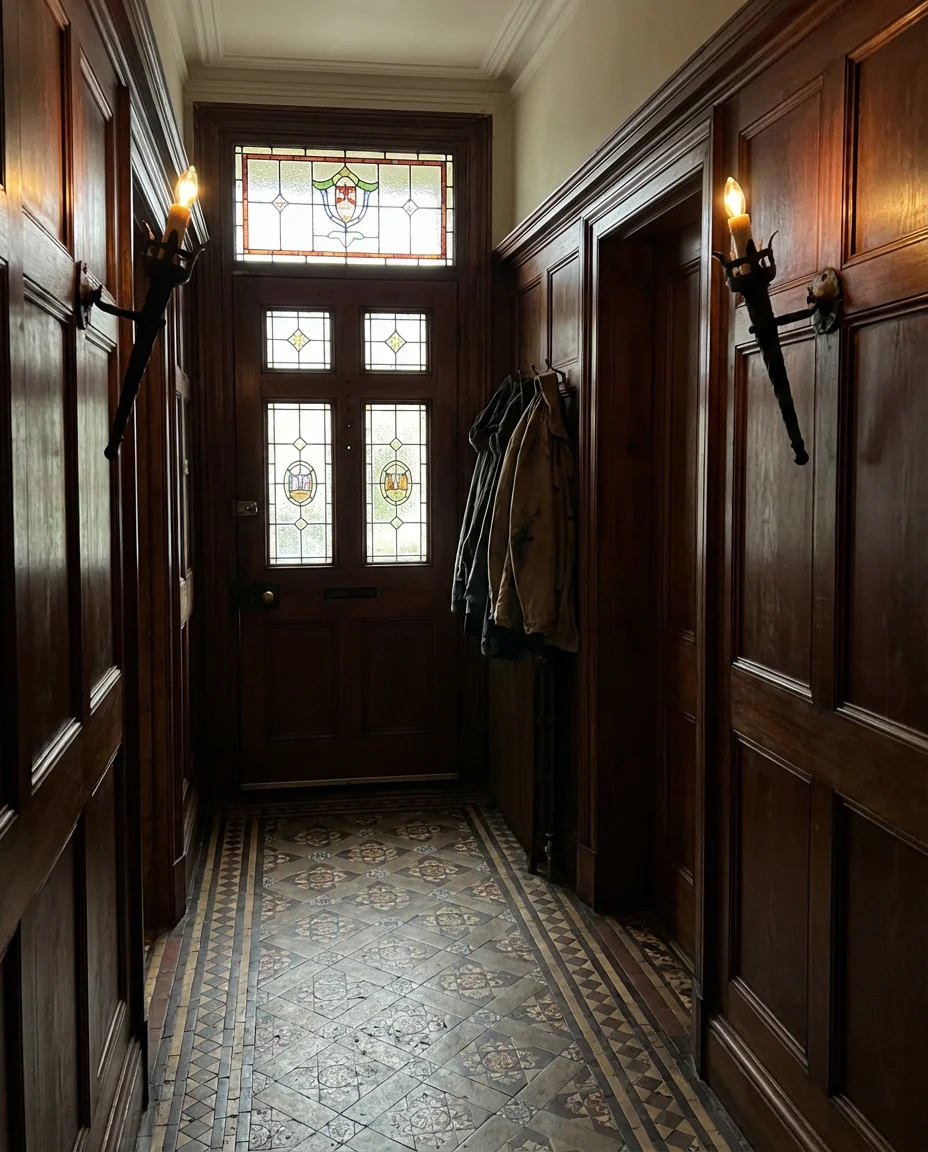
In a Victorian or 1930s home with paneled walls and stained woodwork, torch-style uplight sconces—fixtures that direct light upward, mimicking the flicker of a candle or gas flame—create an atmosphere of gothic elegance that suits the architecture perfectly. Usually made with wrought iron or aged bronze, these pieces have a solemnity to them that pairs well with dark paint colors, patterned wallpaper, and period-appropriate furniture. They’re not subtle, which is precisely the point.
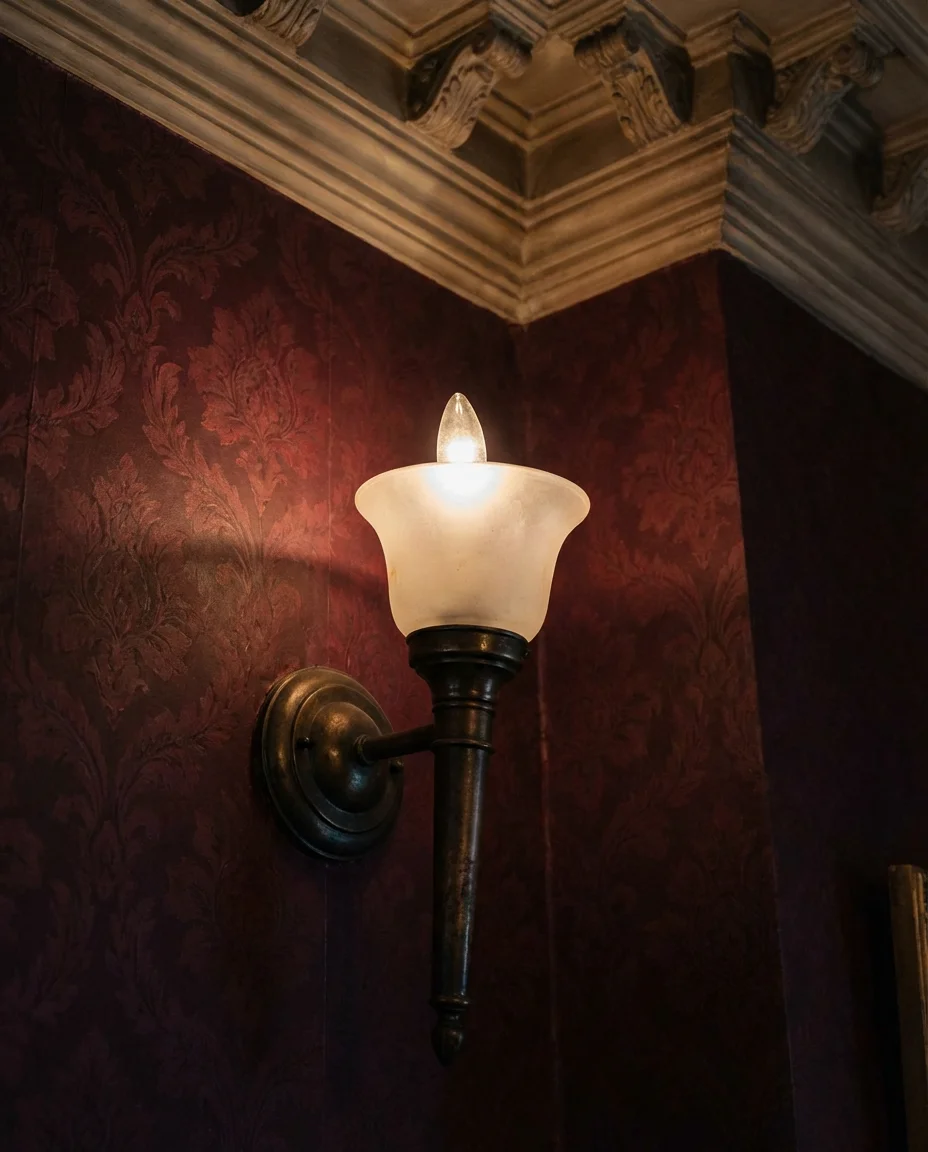
Using flameless LED candelabra bulbs inside these fixtures is the modern practical choice—they flicker authentically, run cool, and last thousands of hours. But the real advantage of torch-style uplights in a period hallway is the way they cast light upward toward the ceiling: in a space with decorative plasterwork or a painted ceiling medallion, the uplight brings those details dramatically into focus in the evenings. It’s the kind of lighting choice that rewards guests who look up.
17. Skylight-Style Flush Mounts for Dark Hallways
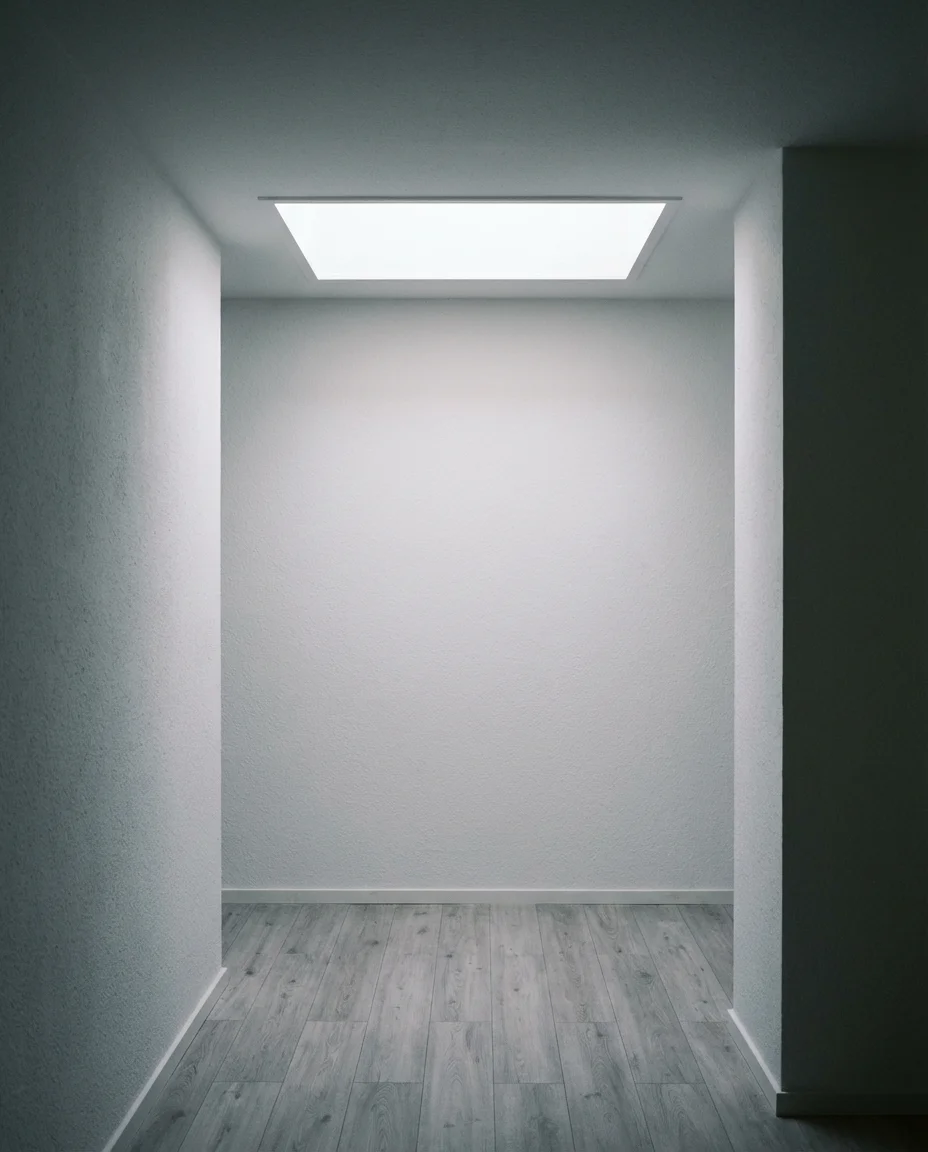
Interior hallways with no natural light—the kind found in apartments, ranch homes, and older urban townhouses—can feel oppressively dark without the right strategy. One clever solution that’s gaining traction in 2026 is the LED “skylight” flush mount: a flat, diffuse panel fixture that mimics the soft, even quality of natural light coming through a window above. These fixtures have a wide, glowing surface that fills the hallway with even illumination rather than a single hot spot, making the space feel genuinely open.
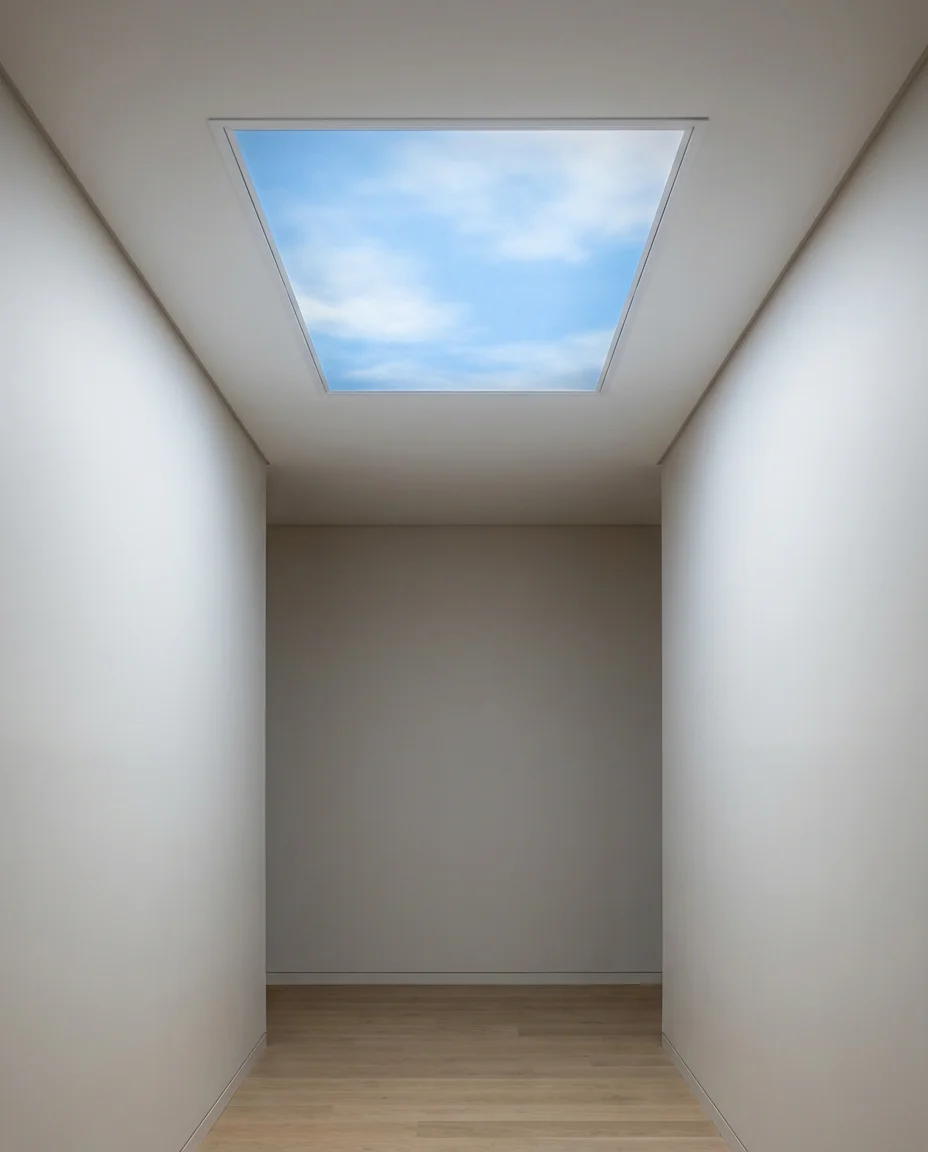
Tunable white LED panels—which can be adjusted from warm (2700K) to daylight (5000K)—are particularly valuable in hallways that transition from morning gathering spots to evening passages. Many smart home versions integrate with Alexa, Google Home, or Apple HomeKit, allowing you to set schedules that shift the color temperature automatically throughout the day. For renters who can’t hardwire anything, plug-in LED panels with a long cord running along the ceiling (secured with adhesive clips) are a surprisingly convincing alternative.
18. Nautical Lanterns for a Coastal Entry
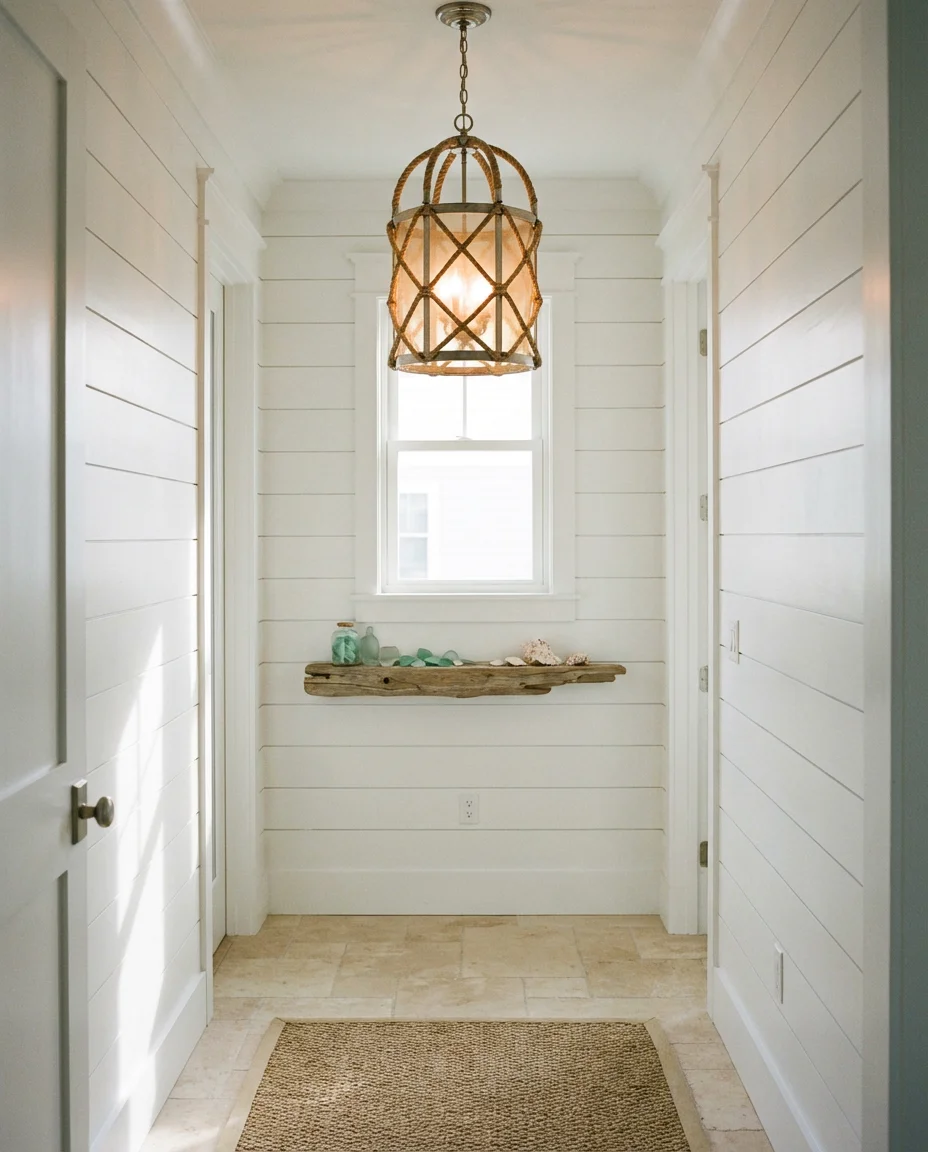
Along the Eastern Seaboard, Gulf Coast, and Pacific Northwest, coastal design has always had a devoted following—and in hallway lighting, that translates to entry lanterns with a nautical character. Rope-wrapped pendants, porthole-style sconces, and cage lanterns in weathered nickel or verdigris bronze all carry the unmistakable language of the sea. In a farmhouse coastal home, these fixtures feel completely natural alongside driftwood accents, striped textiles, and whitewashed wooden floors.
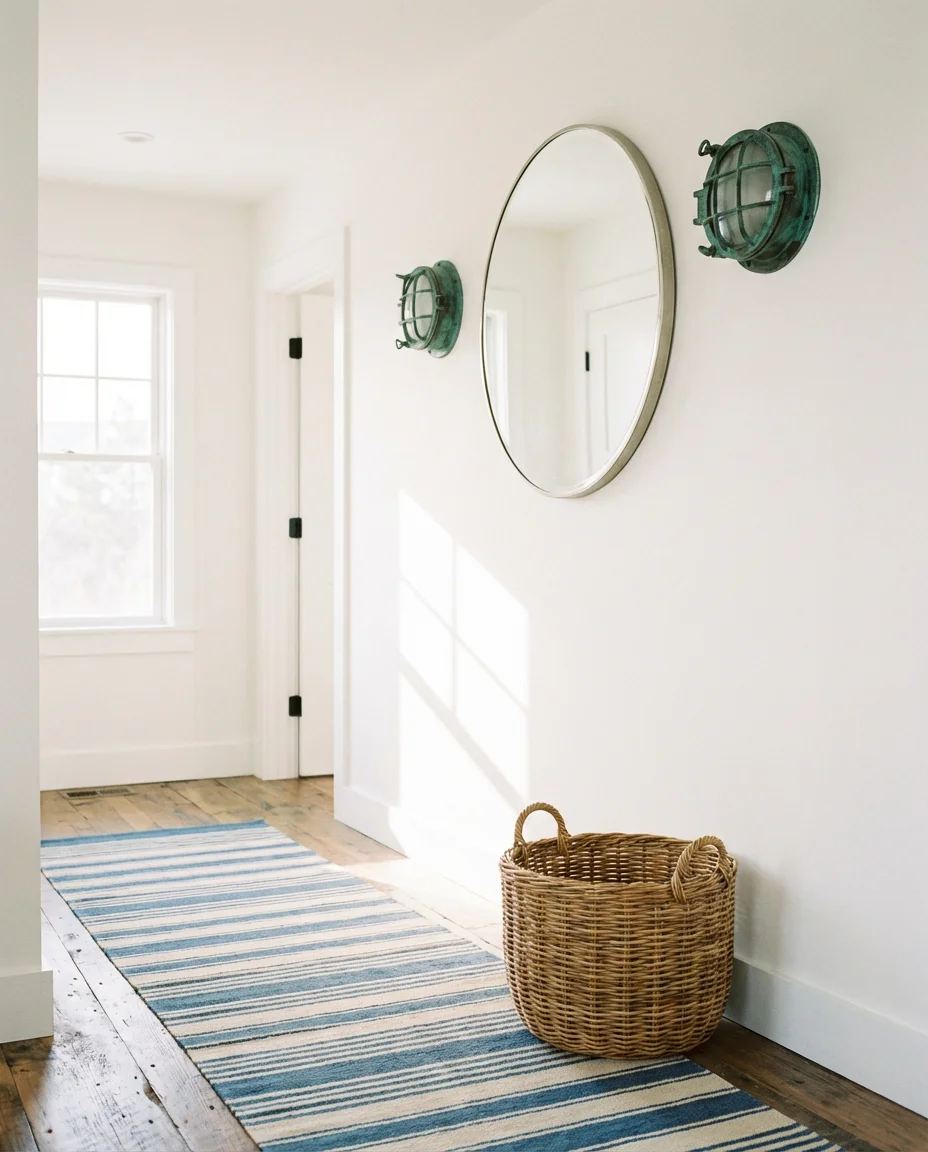
The best coastal lighting choices resist the urge to be too literal—you don’t need an anchor motif on every fixture. A simple, clean cage lantern in an antique nickel finish reads coastal without screaming it, which means it will still look appropriate if your decorating direction shifts. This restraint is where this style works best: in homes where the coastal context is present in the landscape and materials, the lighting just needs to feel right without spelling out the theme explicitly.
19. Color-Temperature Layering in a Narrow Hallway
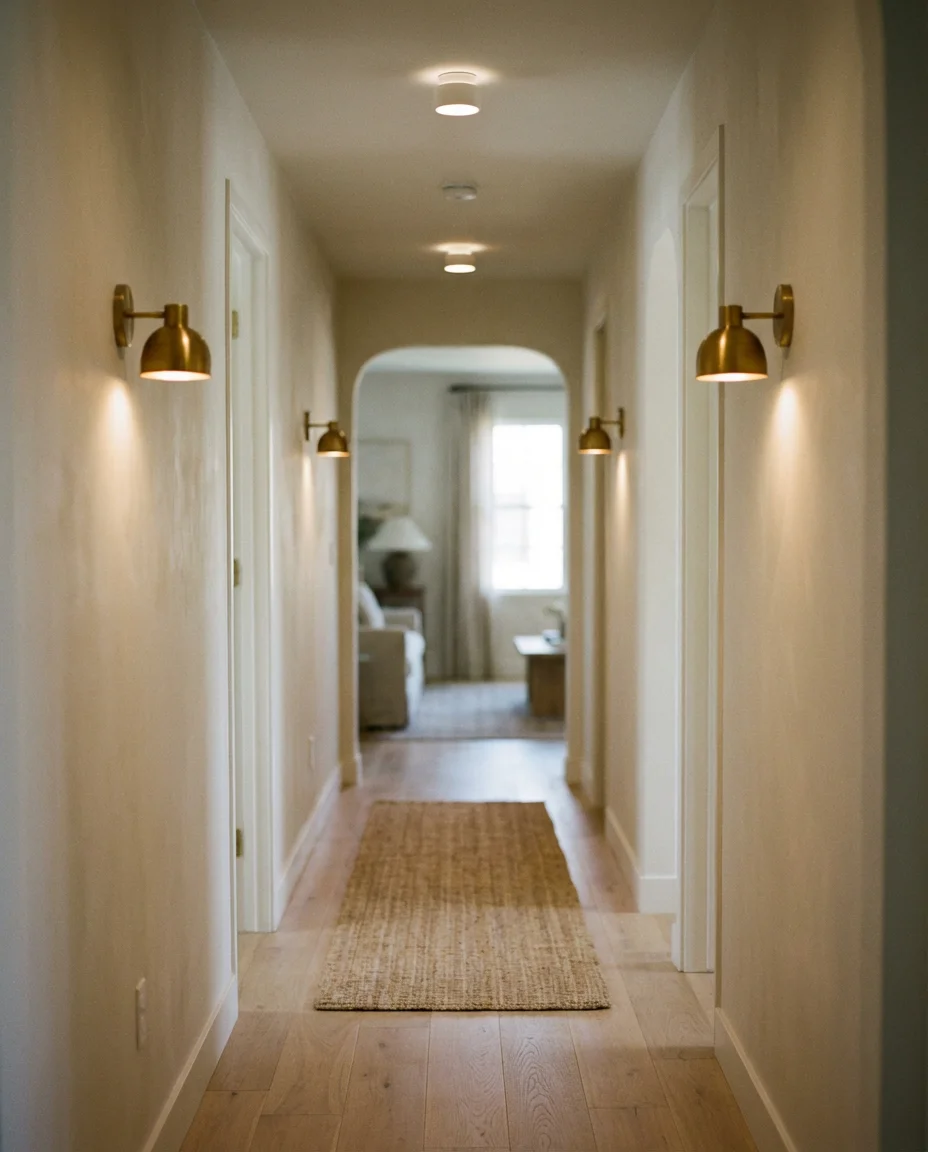
One of the most sophisticated lighting strategies—and one that’s underused in residential design—is deliberate color temperature layering in narrow spaces. The idea is to mix light sources of different warmth levels to create depth: perhaps warm sconces (2700K) at eye level combined with cooler recessed cans (3000K) overhead. In a narrow hallway, this prevents the single-layer flatness that makes many corridors feel dim and featureless. The warm-cool contrast creates a subtle tension that makes the space feel more dynamic and alive.
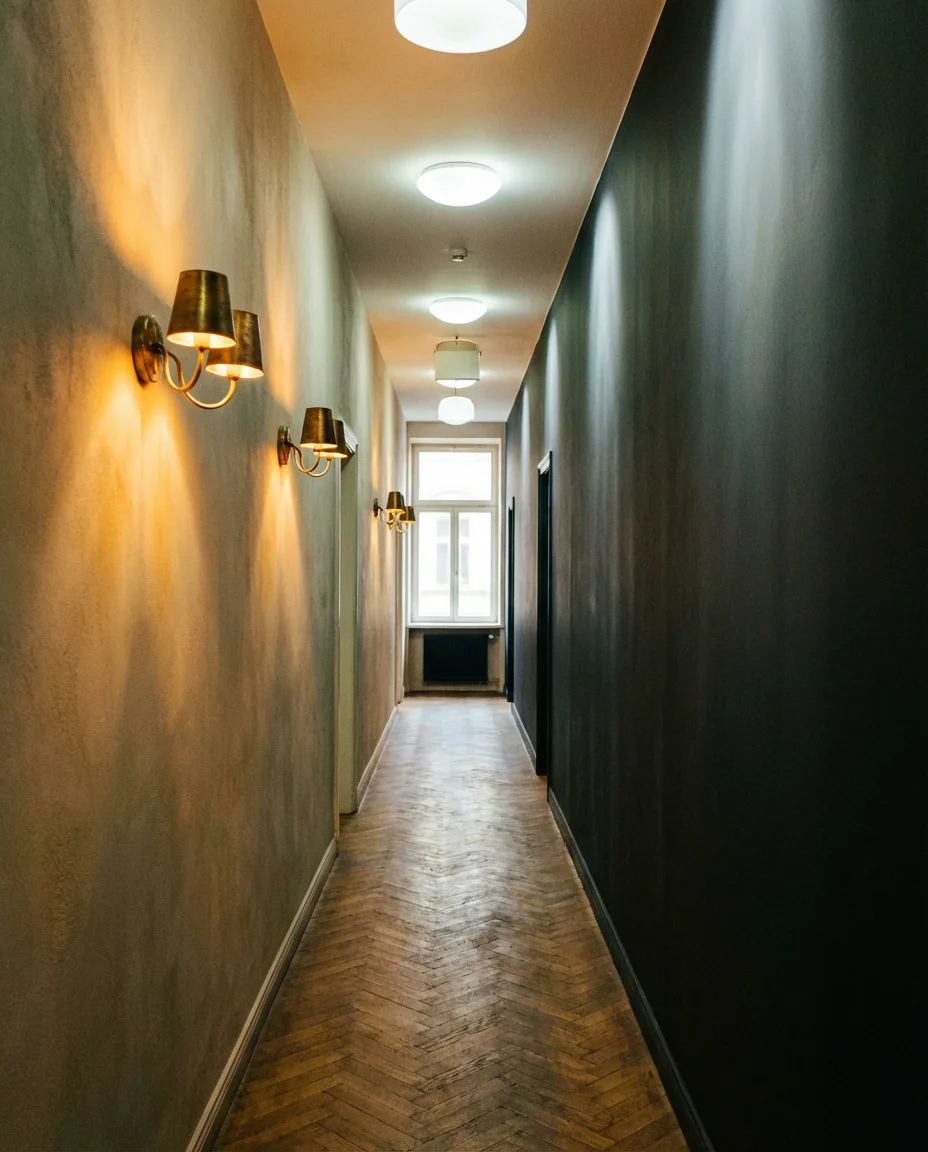
Interior designers describe this as the difference between lighting a space and sculpting it. When light sources vary in both position and temperature, the eye moves through the space more actively—reading depth, shadow, and dimension rather than encountering a uniform wash of illumination. For homeowners tackling this themselves, the simplest version is adding plug-in sconces with warm-toned bulbs to a hallway that already has overhead recessed lighting, then experimenting with the dimmer to find the balance that feels right.
20. Geometric Metal Pendants for a Modern Staircase Hall
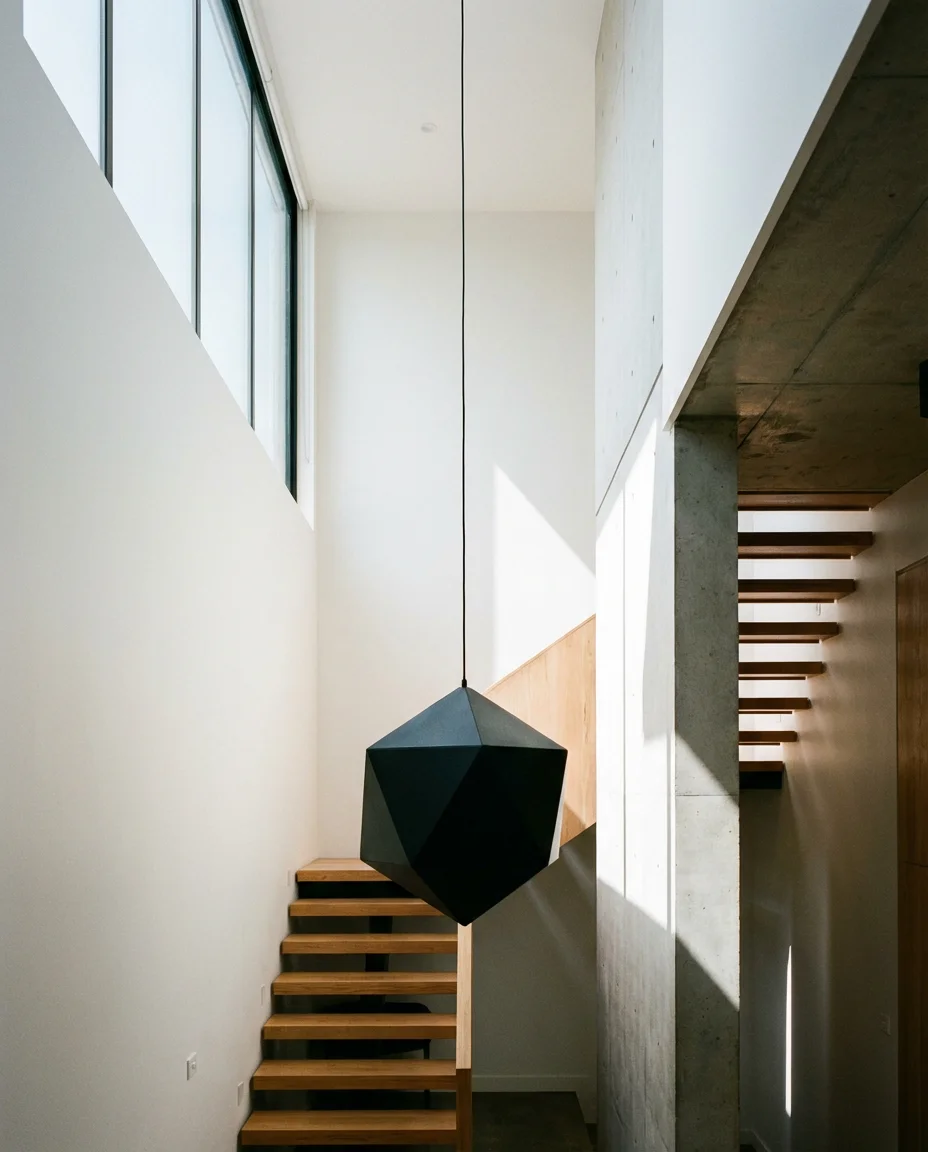
A staircase hallway offers one of the best opportunities in a home for a truly sculptural light fixture—and geometric metal pendants are perfectly suited to the role. Whether it’s an open-frame dodecahedron in matte black, a faceted diamond shape in brushed gold, or an angular rectangular lantern, these fixtures feel resolutely modern while still carrying enough visual weight to anchor a double-height space. In a long stairwell with white walls, the fixture becomes the art—you don’t need much else.
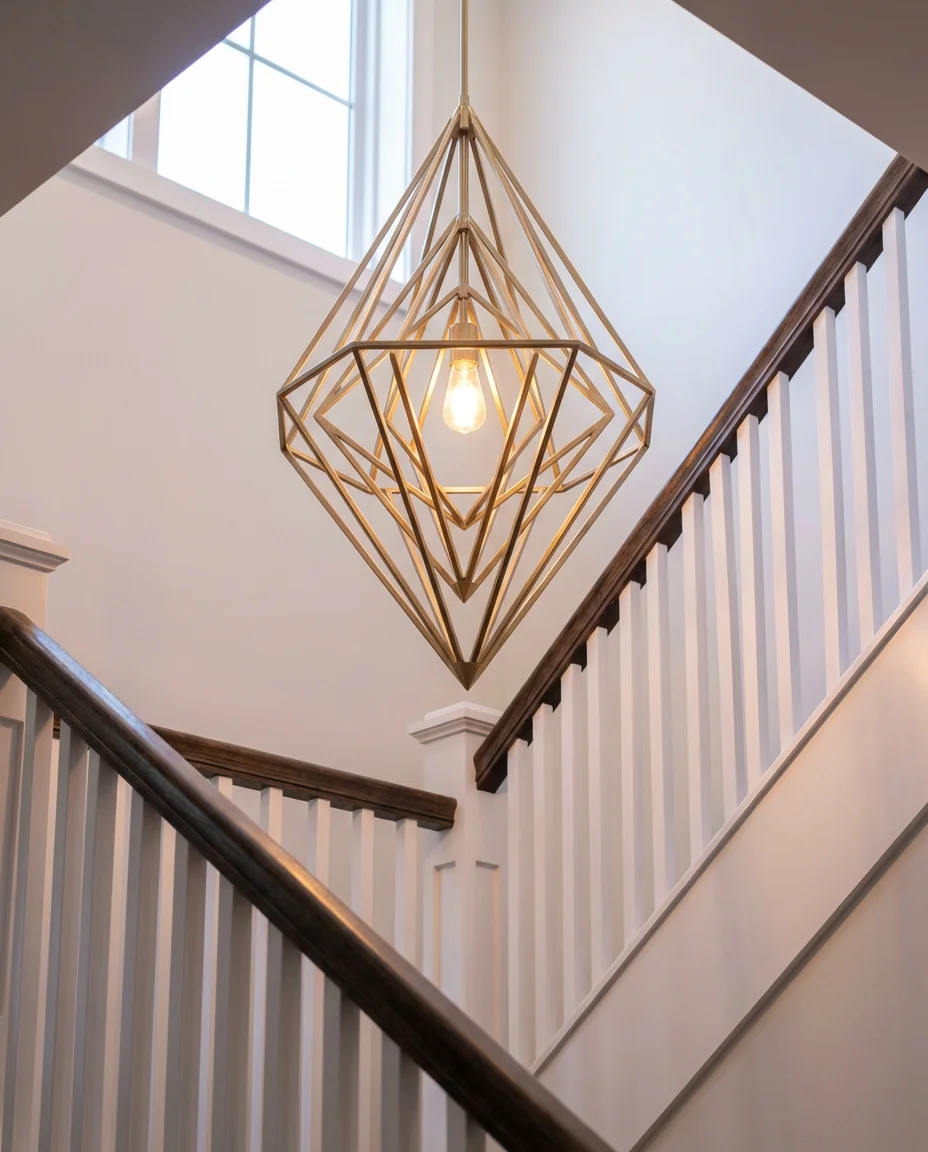
The practical consideration with staircase pendants is always the same: you need a very long cord or chain, and you need to be certain the fixture hangs above the highest point where someone will walk. The generally recommended clearance is 7 feet from the highest stair tread to the bottom of the fixture. If you’re not confident about the measurements, a lighting designer or experienced electrician can calculate the appropriate drop for your specific staircase geometry. Getting this right is well worth the extra effort.
21. Vintage Schoolhouse Pendants for a Timeless Entry
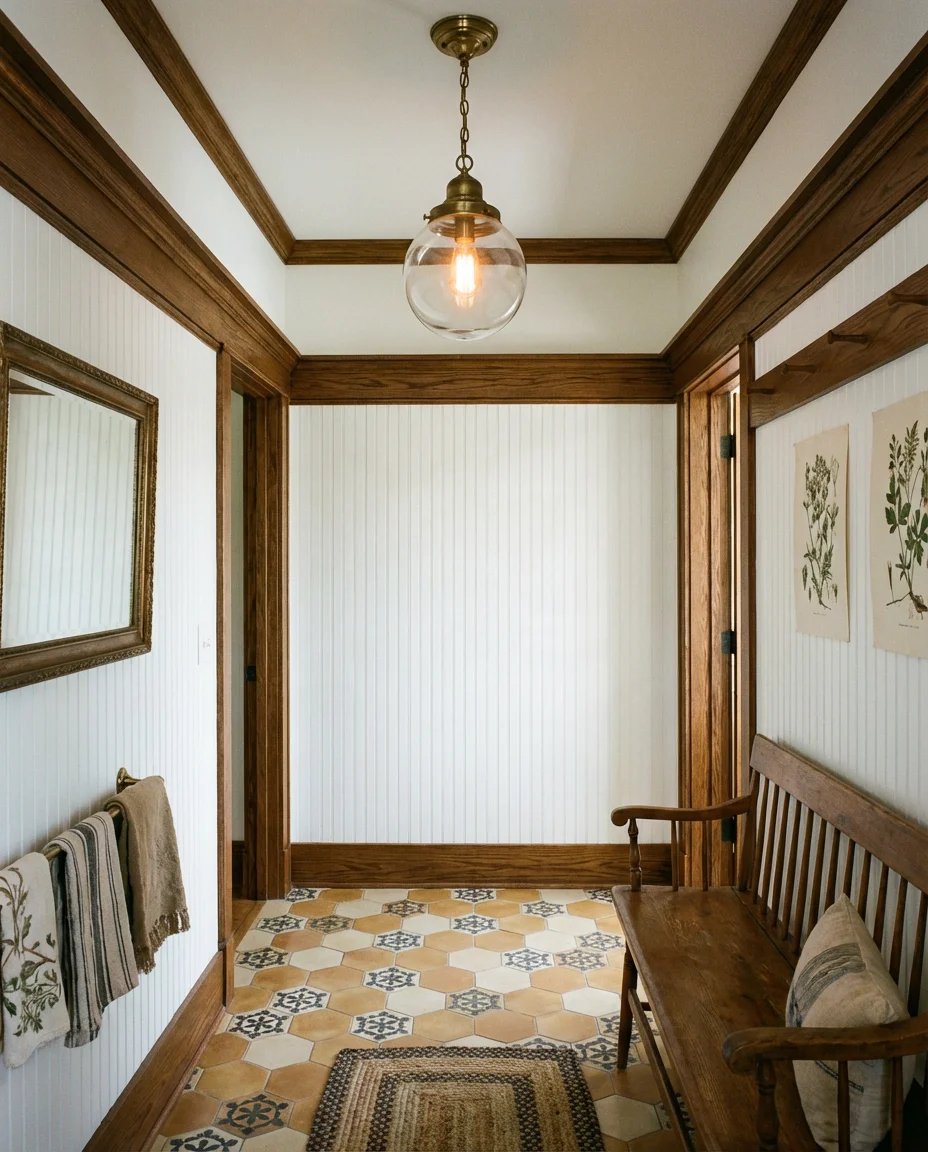
The schoolhouse pendant—that classic, slightly flared glass globe on a metal fitter—is one of those fixtures that transcends every style trend because it was never really about trend to begin with. In a hallway, a single schoolhouse pendant in aged brass or matte black delivers clean, unfussy light with an honest, utilitarian character. It suits everything from a farmhouse bungalow to a craftsman to a renovated 1930s apartment, and it pairs beautifully with subway tile, hardwood floors, and simple white walls.
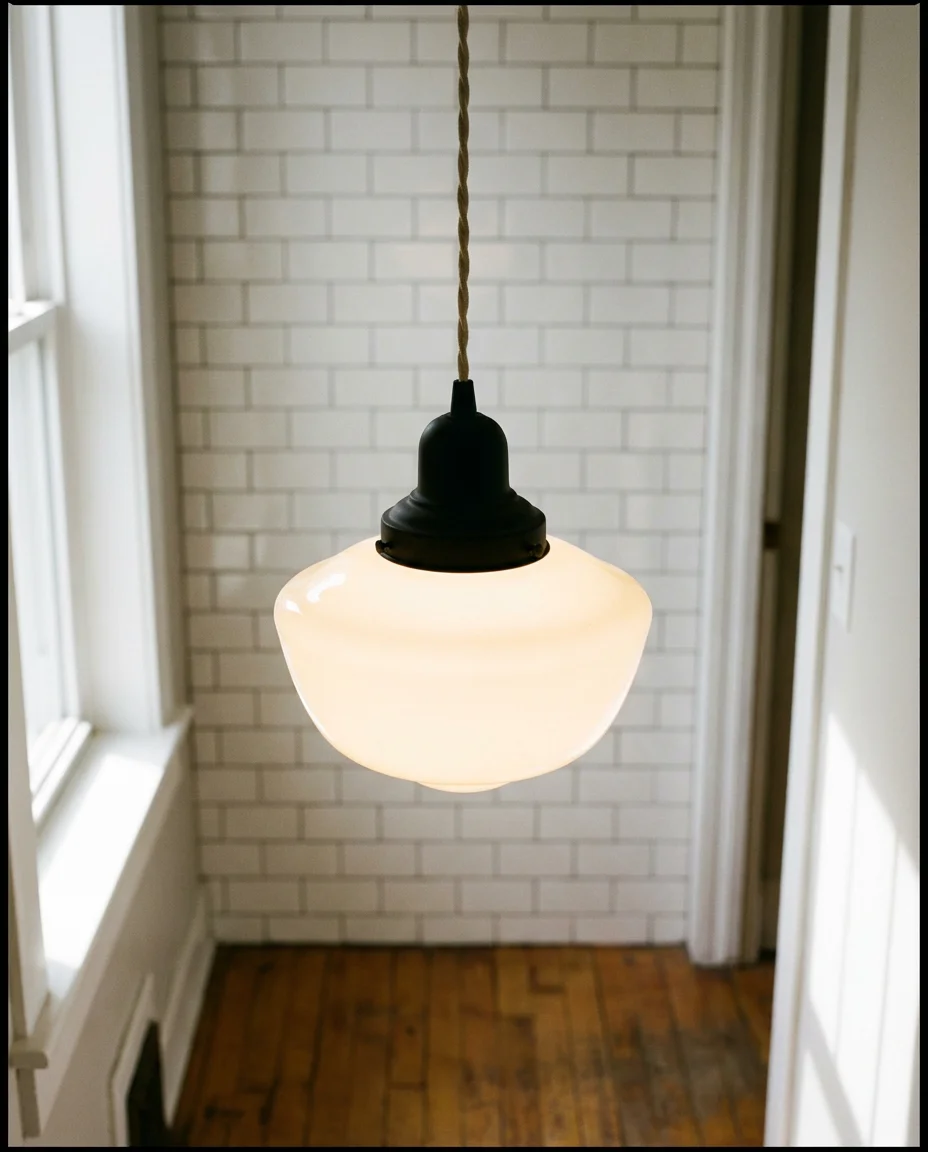
What makes the schoolhouse pendant so enduring is its economy of means—there’s nothing extraneous about it. American manufacturers like Barn Light Electric and Rejuvenation have built entire businesses around variations of this fixture because the demand never fades. For homeowners who want something reliable and beautiful without the anxiety of choosing a statement piece, the schoolhouse pendant is a near-perfect solution. Choose a globe size proportional to your ceiling height, and you almost can’t go wrong.
22. Smart Lighting Systems for the Connected Hallway
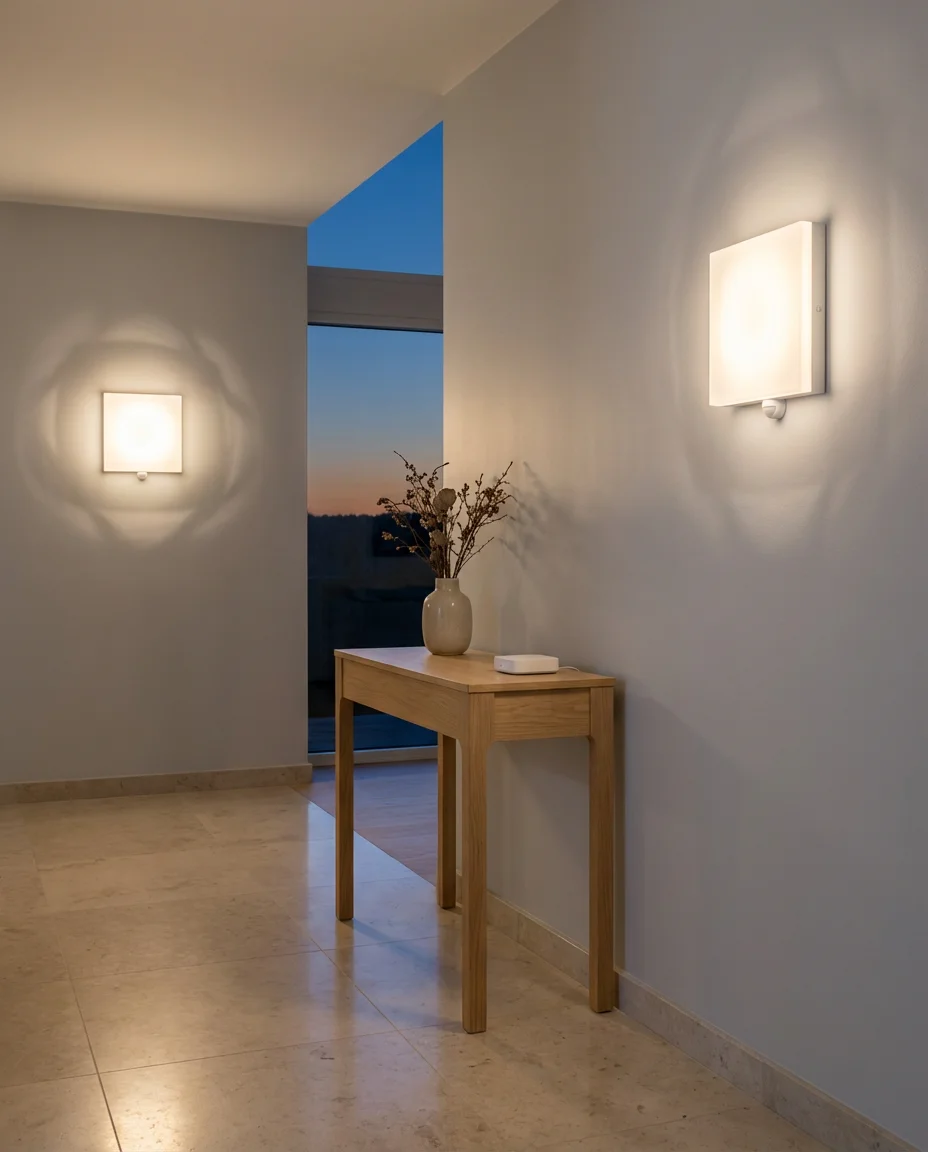
In 2026, smart lighting has moved well past the novelty phase and into genuine everyday utility—and the hallway is one of the spaces where it makes the most practical sense. Motion-activated smart bulbs in an entry or upstairs corridor mean the lights come on when you need them and turn off when you don’t, without a single fumbled switch in the dark. Paired with tunable color temperature, you can program the hall to greet you with warm, gentle light on a morning schedule and brighter, cooler light in the afternoon.
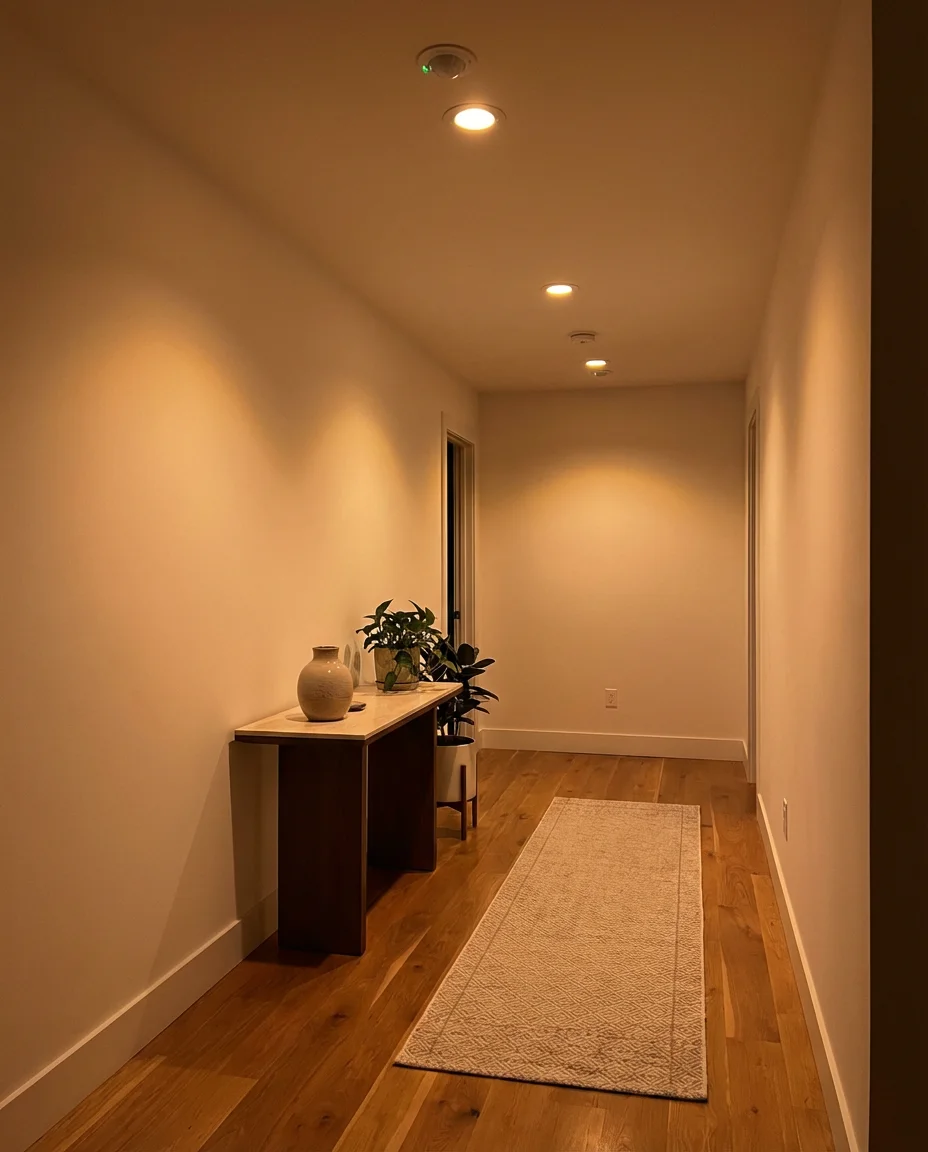
For families with young children or aging parents, the motion-activated hallway light is a genuine quality-of-life upgrade—it’s the kind of small change that pays dividends every single day in reduced frustration and improved safety. Philips Hue, LIFX, and Lutron Caséta are the most reliable ecosystems for connected hallway lighting, each with different strengths depending on whether you’re working with existing fixtures or starting fresh. Whatever system you choose, the hallway is the right place to start: it’s low-stakes and high-frequency, and you’ll feel the difference immediately.
 Conclusion
These ideas only scratch the surface of what’s possible when you treat the hallway as a real room rather than a transitional afterthought. Whether you’re drawn to the grandeur of a maximalist chandelier, the warmth of a farmhouse lantern, or the quiet intelligence of a smart lighting system, the right fixture can genuinely change how your entire home feels to live in. We’d love to hear what you’re planning—drop your ideas, questions, or before-and-after photos in the comments below. What’s the one lighting change that transformed a space in your own home?