French country living rooms continue to captivate American homeowners in 2026, blending timeless European elegance with the relaxed comfort we crave in our everyday spaces. This design style has surged on Pinterest as people search for ways to create warm, inviting rooms that feel both sophisticated and lived-in. Whether you’re drawn to rustic beams and vintage finds or prefer a cleaner, more modern interpretation, French country offers endless possibilities for personalizing your main gathering space. From choosing the right color palette to selecting furniture that balances beauty and function, these ideas will help you craft a living room that feels like a retreat. Let’s explore how to bring this enduring style into your home with authenticity and charm.
1. Modern French Country with Clean Lines
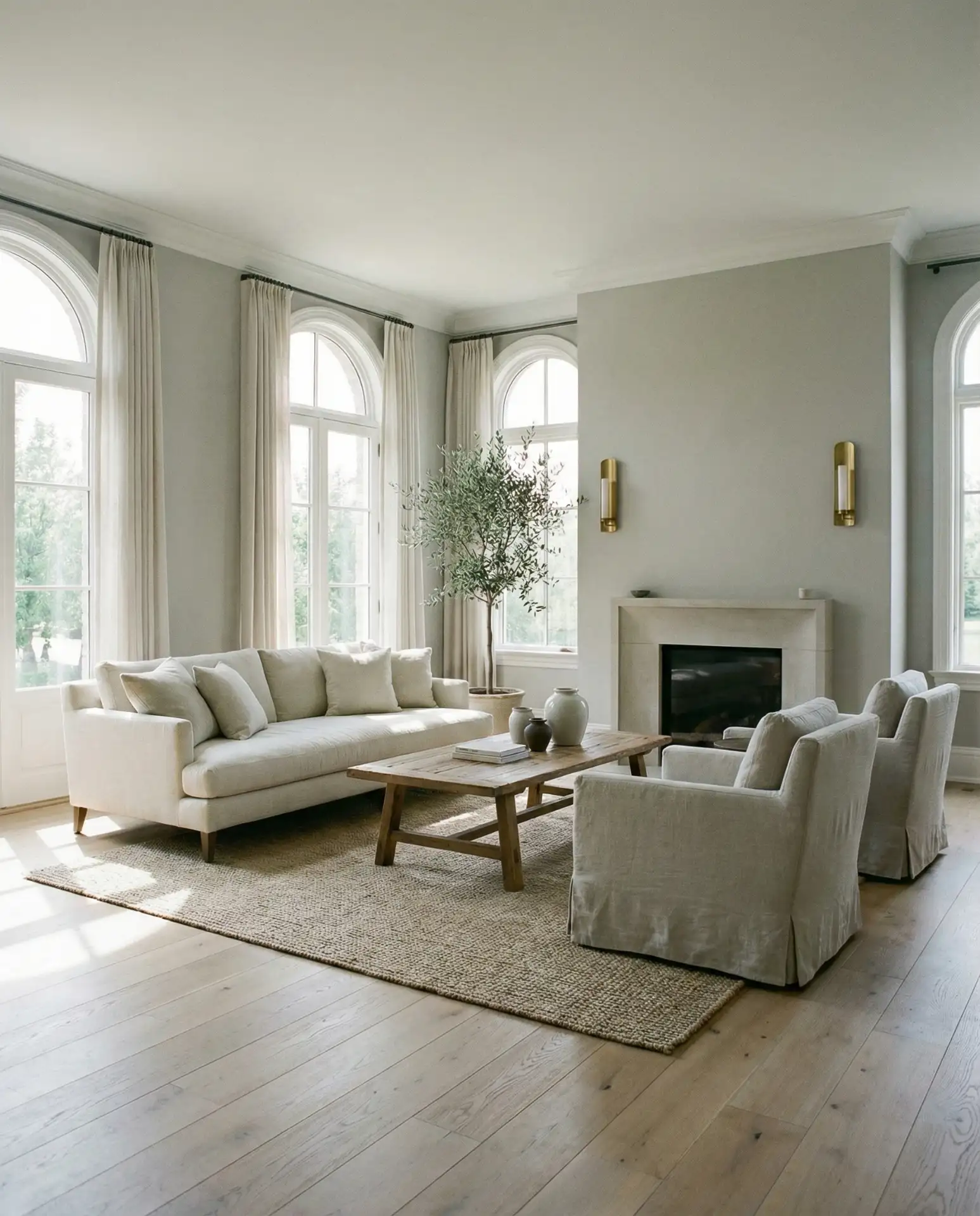
This approach strips away heavy ornamentation while keeping the soul of French country intact. Think modern silhouettes paired with natural linen upholstery, streamlined cabinetry with subtle carved details, and a restrained color scheme of whites, grays, and warm neutrals. The result feels fresh and uncluttered, perfect for open-concept homes where you want European charm without visual weight. Large windows, minimal window treatments, and edited decor keep the space breathing while nodding to provincial roots.
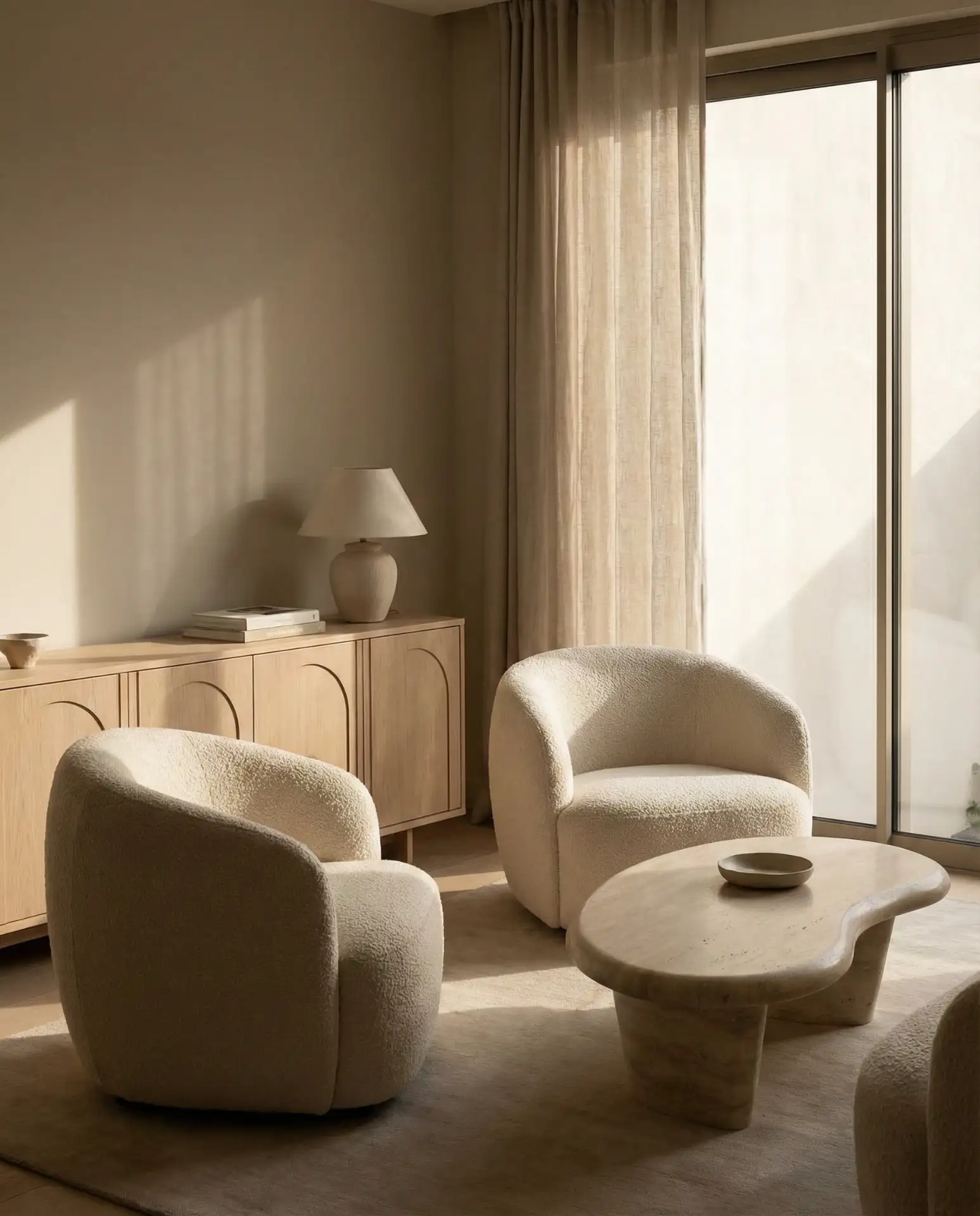
In suburban homes across Texas and California, homeowners are blending this style with smart-home technology and energy-efficient windows, proving French country can be as practical as it is beautiful. The key is choosing furniture with simple, elegant proportions and letting natural materials—oak, linen, and stone—do the talking. Avoid overloading shelves or mantels; instead, display a single antique pitcher or a small stack of art books. This restraint lets each piece shine and makes the room feel calm rather than cluttered, a quality busy American families genuinely appreciate.
2. Cozy Layers with Oversized Textiles
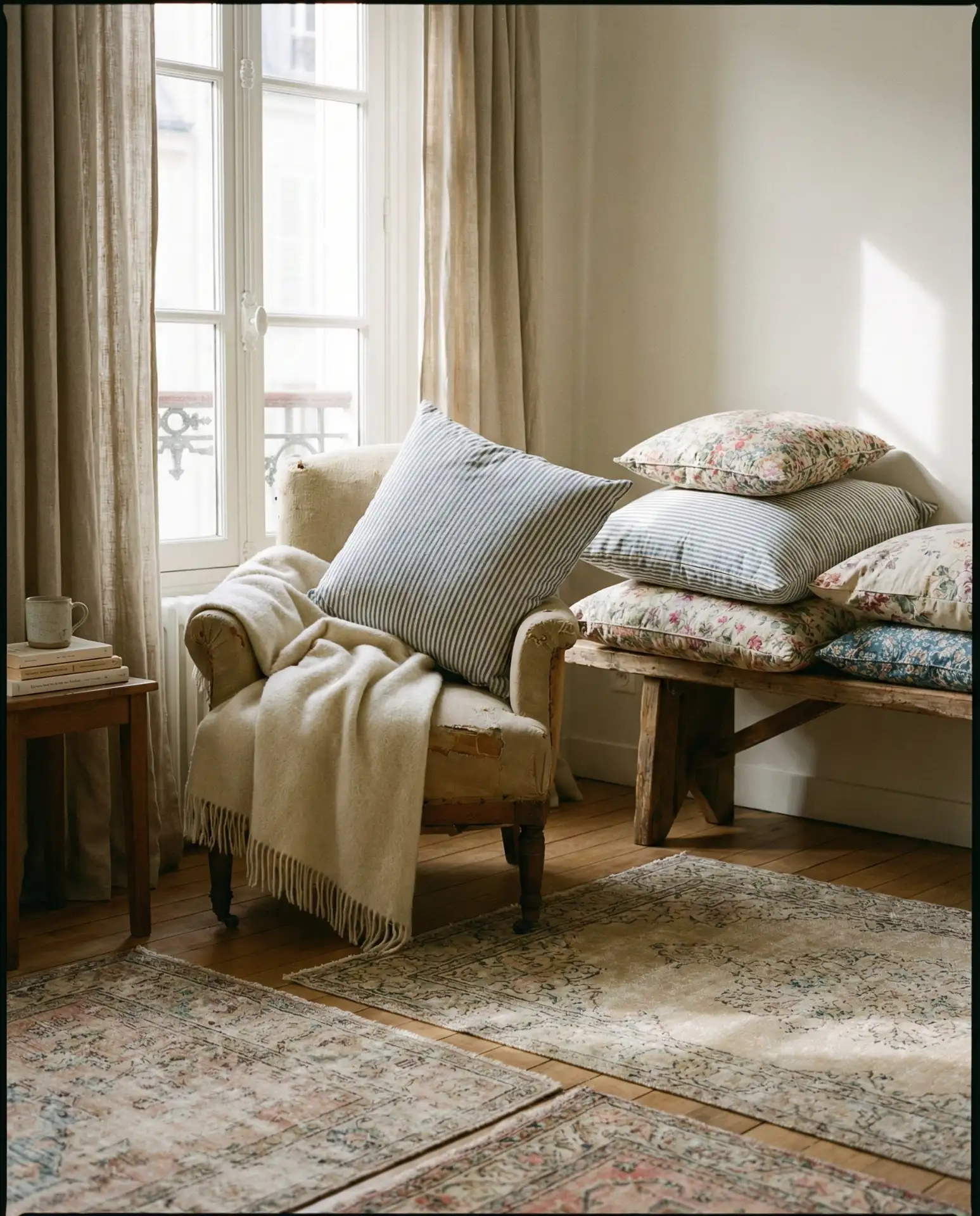
Nothing says French country comfort like generous throws, plump cushions, and cozy textures layered across seating. Use linen, wool, and cotton in varying weights to build depth, and don’t shy away from mixing patterns—ticking stripes with faded florals or checks with toile. Drape a chunky knit blanket over the arm of your sofa, pile on pillows in soft neutrals or muted blues, and add a sheepskin rug underfoot. These tactile elements invite you to sink in and stay awhile, turning your living room into a true sanctuary.
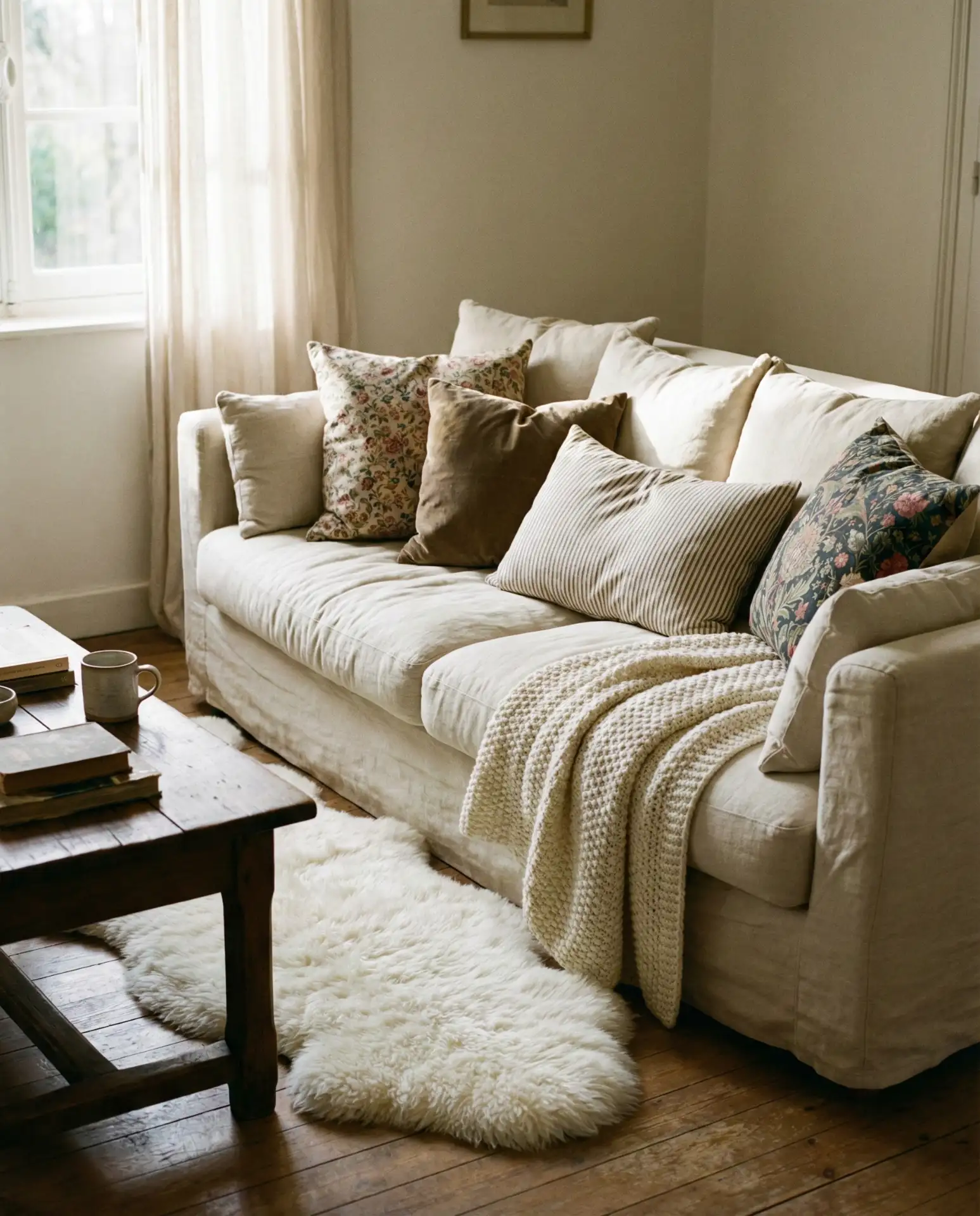
One common mistake is choosing pillows that are too small or too few—go for 20- to 24-inch inserts for a truly plush look, and aim for at least five or six on a standard sofa. Another pitfall is matching everything too perfectly; the beauty of French country is in the gentle clash of patterns and the slightly worn, collected-over-time feel. When textiles look a little mismatched and loved, the room feels authentic rather than staged, which is precisely what this style is all about.
3. Rustic Exposed Beams and Stone Accents
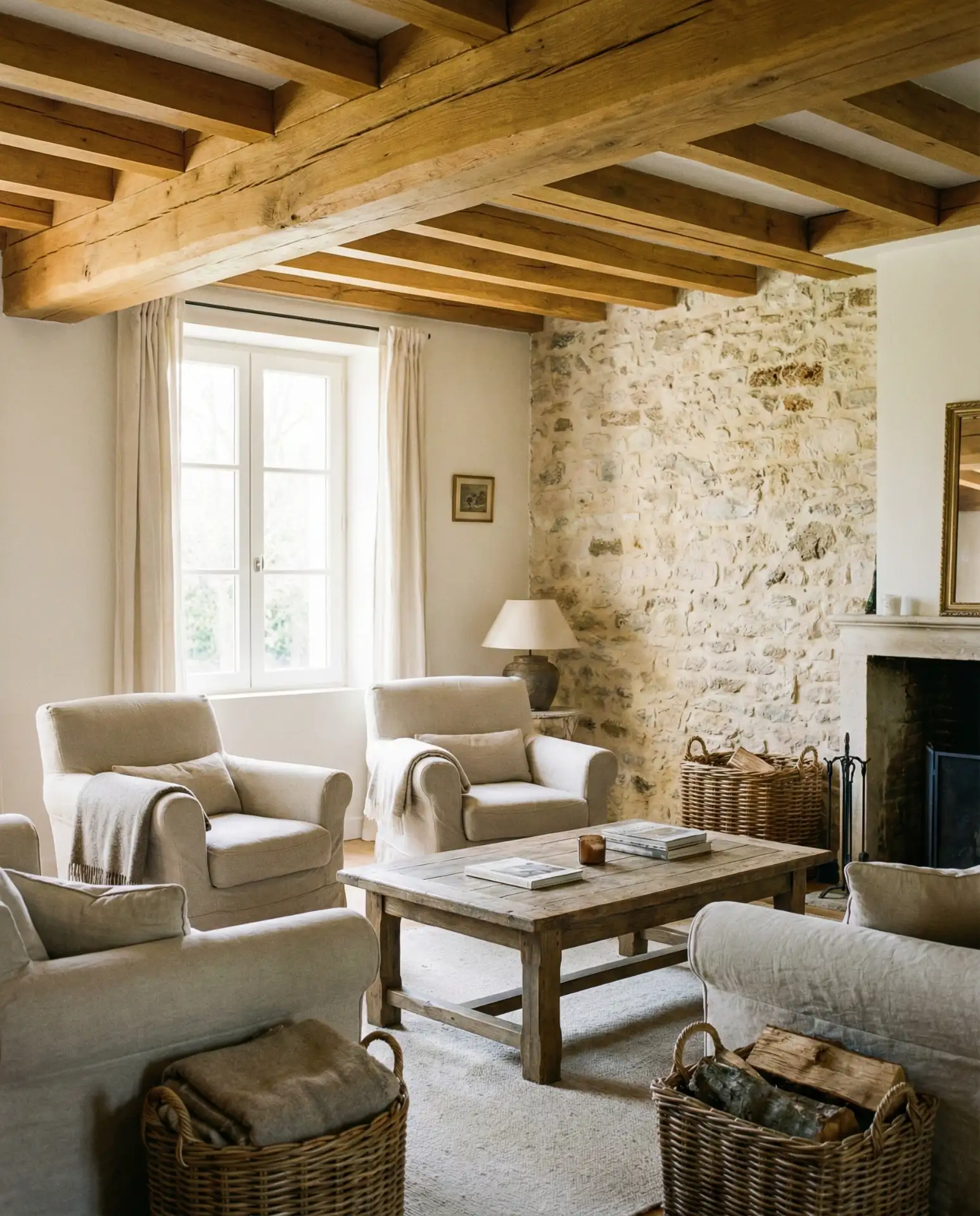
Exposed ceiling beams and natural stone fireplaces anchor a rustic French country living room with unmistakable character. These architectural features bring warmth and texture, grounding the space in a sense of history and craft. If your home lacks original beams, reclaimed wood can be installed to achieve the look; pair it with whitewashed or honey-toned walls for contrast. Stone surrounds on fireplaces or accent walls add weight and charm, especially when left in their natural, unpolished state.
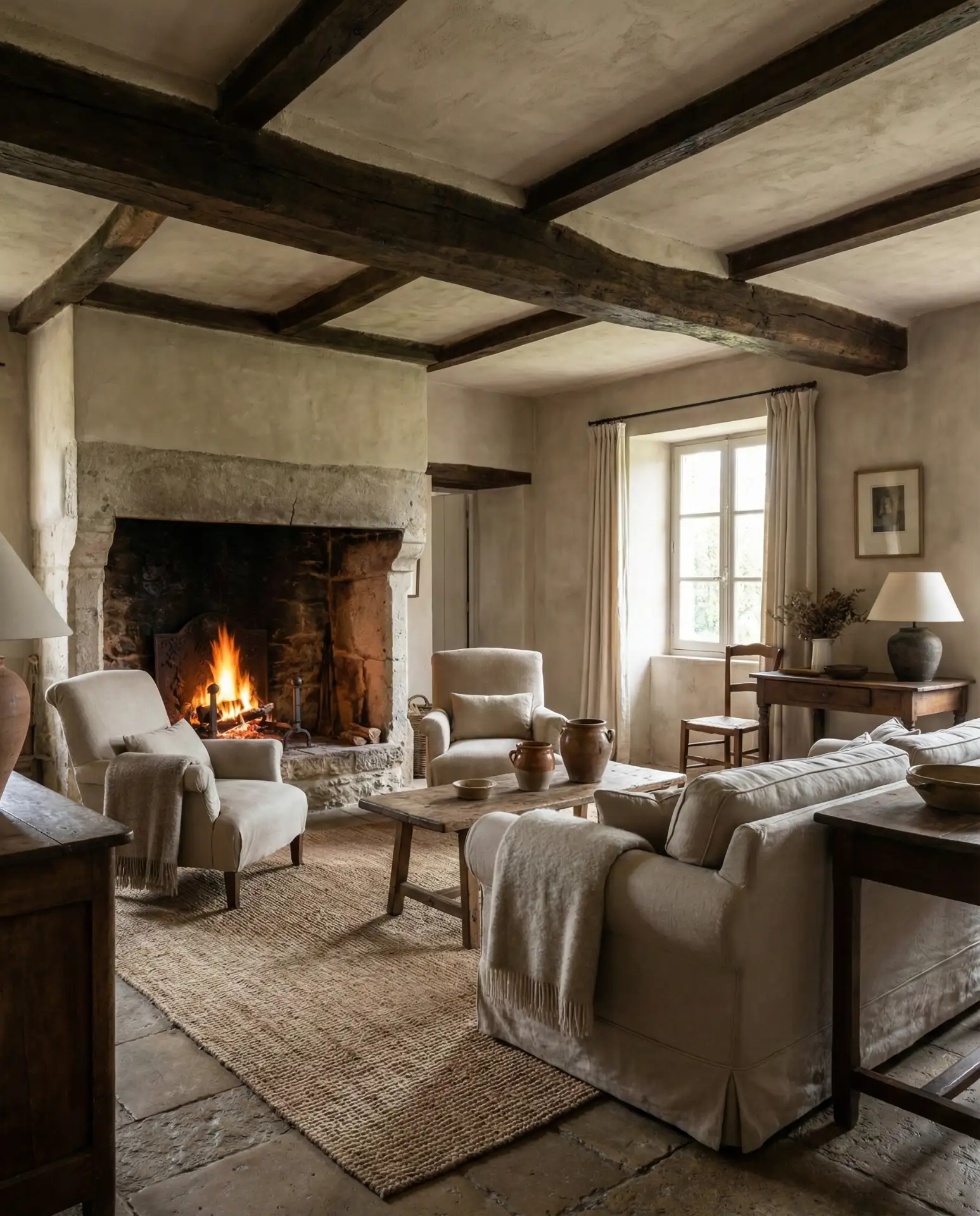
This look works best in homes with higher ceilings or open floor plans, where beams can run the full length of the room and create dramatic visual lines. In ranch-style homes across the Mountain West and Pacific Northwest, homeowners are embracing this aesthetic to echo the region’s log-cabin heritage while keeping interiors refined. Budget-wise, reclaimed beams can range from affordable barn wood to pricier hand-hewn timbers, so shop around and consider leaving them unstained for a more authentic, weathered appearance.
4. Vintage Furniture Finds and Flea Market Treasures
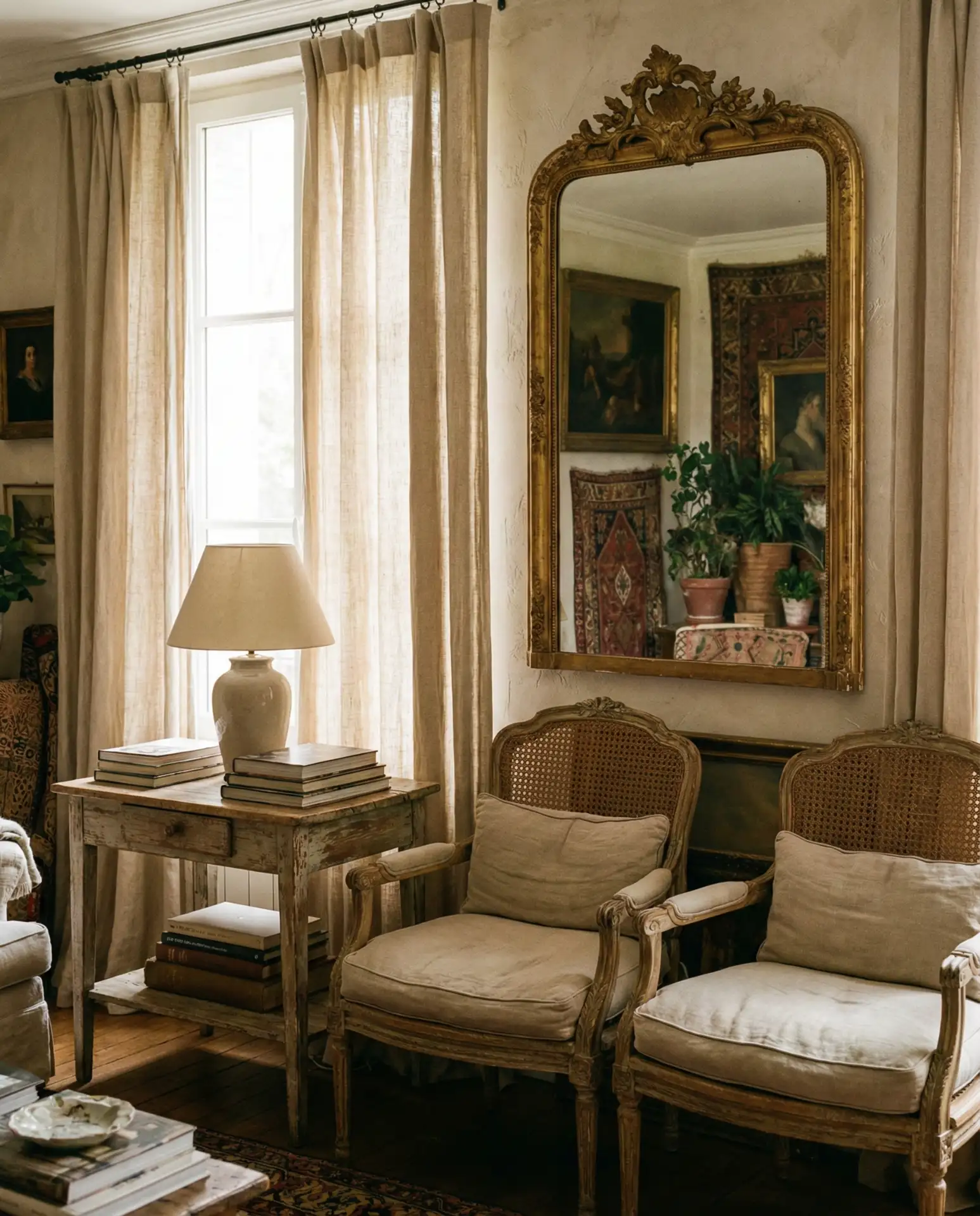
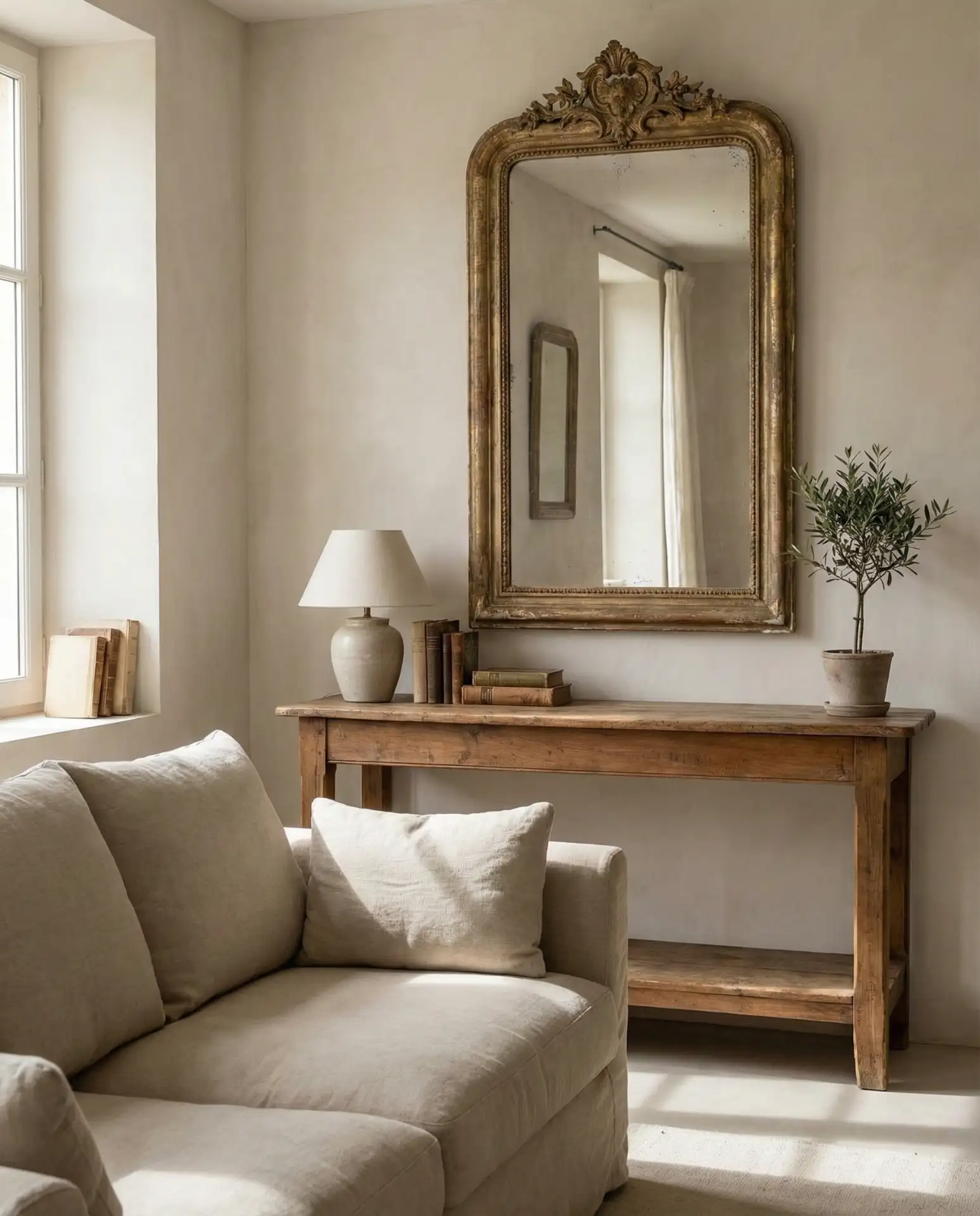
True French country style celebrates vintage pieces with patina and backstory. Scour estate sales, antique shops, and online marketplaces for armoires, side tables, and upholstered chairs that show gentle wear. A weathered wood console, a carved mirror with chipped gilt, or a set of cane-back dining chairs repurposed as accent seating all add soul and individuality. Mixing old and new keeps the room from feeling like a museum and reflects the French habit of layering family heirlooms with everyday furniture.
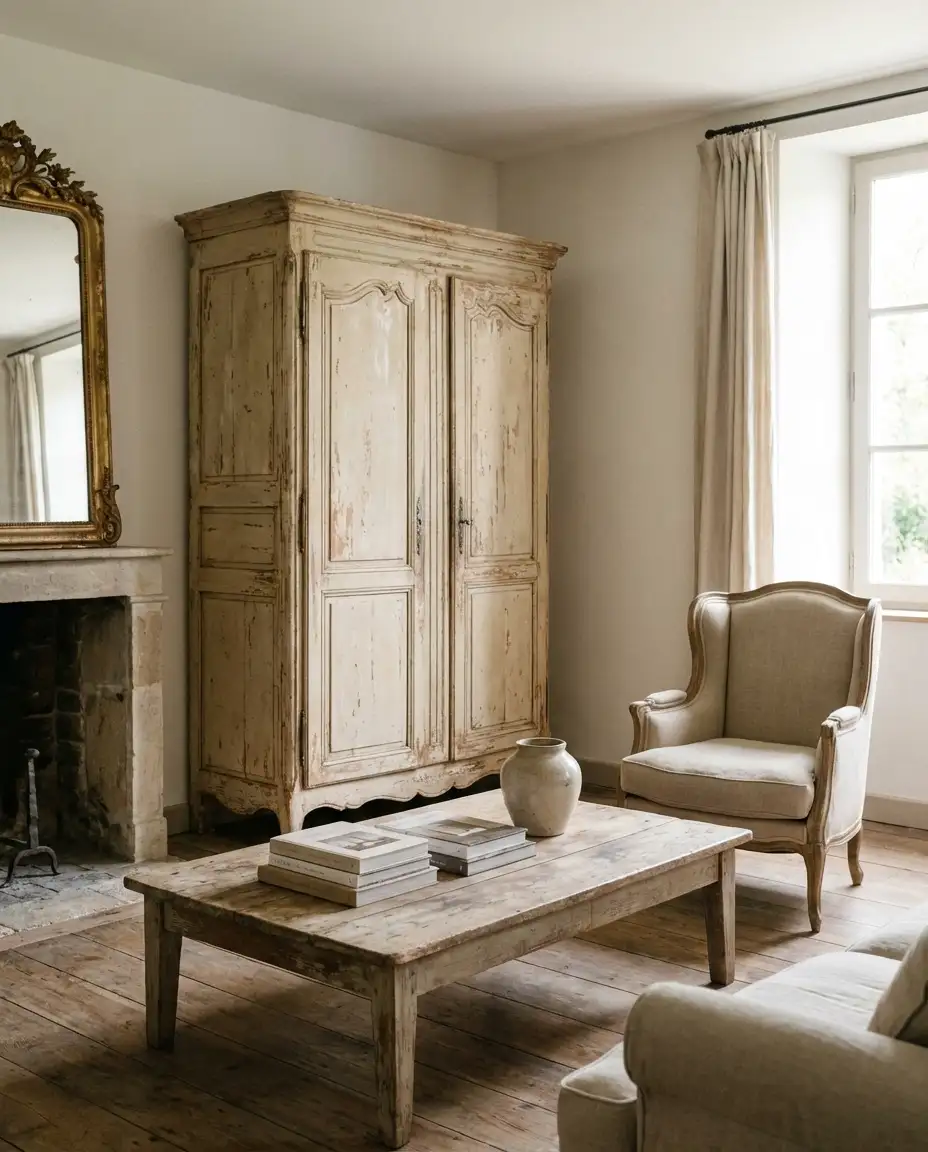
I once visited a farmhouse in upstate New York where the homeowner had found a 19th-century French baker’s rack at a barn sale for under $200. She used it to display ironstone pitchers and potted herbs, and it became the room’s focal point. The lesson: patience pays off. Don’t rush to fill your space with new pieces when the right vintage find can bring so much more character. Check local auctions and be ready to refinish or reupholster—those small investments turn secondhand scores into statement pieces.
5. Sage Green Walls for Soft Sophistication
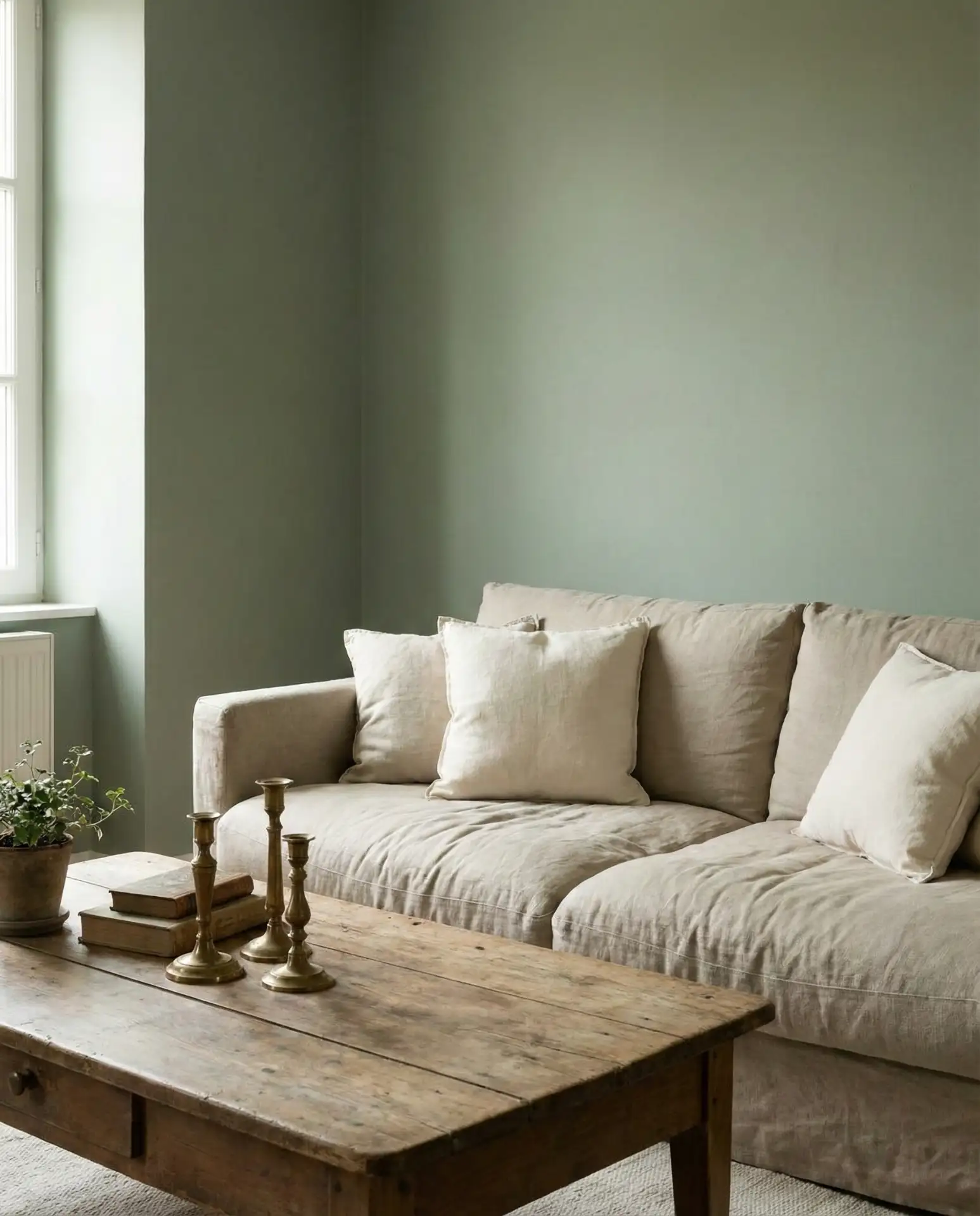
Sage green has emerged as a favorite in French country interiors, offering a muted, organic alternative to stark white or beige. This color brings the outdoors in, pairs beautifully with natural wood tones, and flatters both warm and cool lighting. It works as an all-over wall color or as an accent in a built-in bookcase or paneling. Pair it with creamy whites, soft grays, and touches of blush or terracotta for a palette that feels grounded and serene.
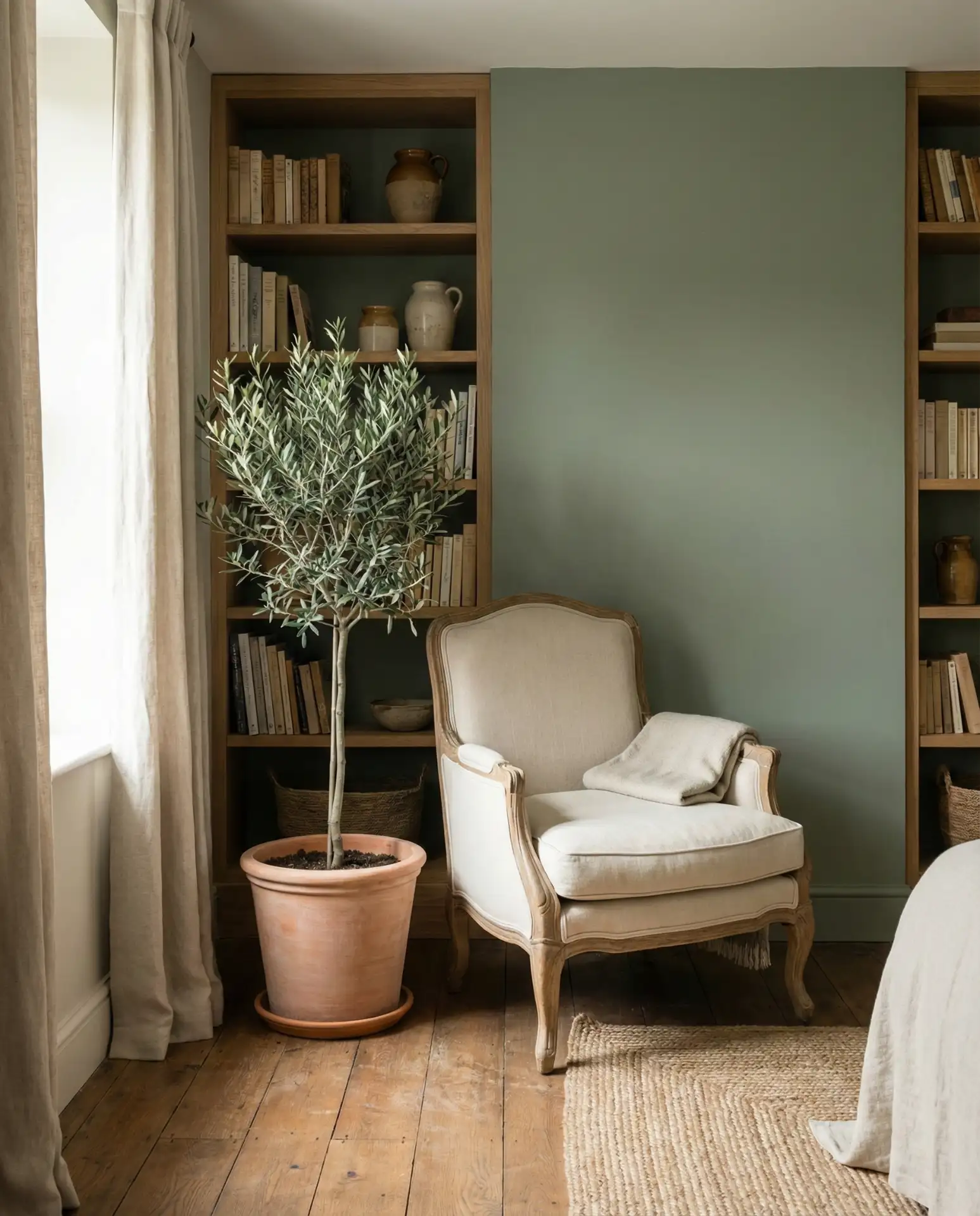
Real homeowners often test several shades before committing—sage can lean gray, yellow, or blue depending on your home’s natural light. In north-facing rooms, choose a warmer sage with more yellow undertones to prevent the space from feeling cold. In sun-drenched Southern or Western exposures, a cooler, grayer sage keeps things fresh. Paint samples on large poster boards and move them around the room throughout the day to see how the color shifts. This extra step prevents costly repaints and ensures you’ll love the result for years.
6. Leather Couch as a Masculine Anchor
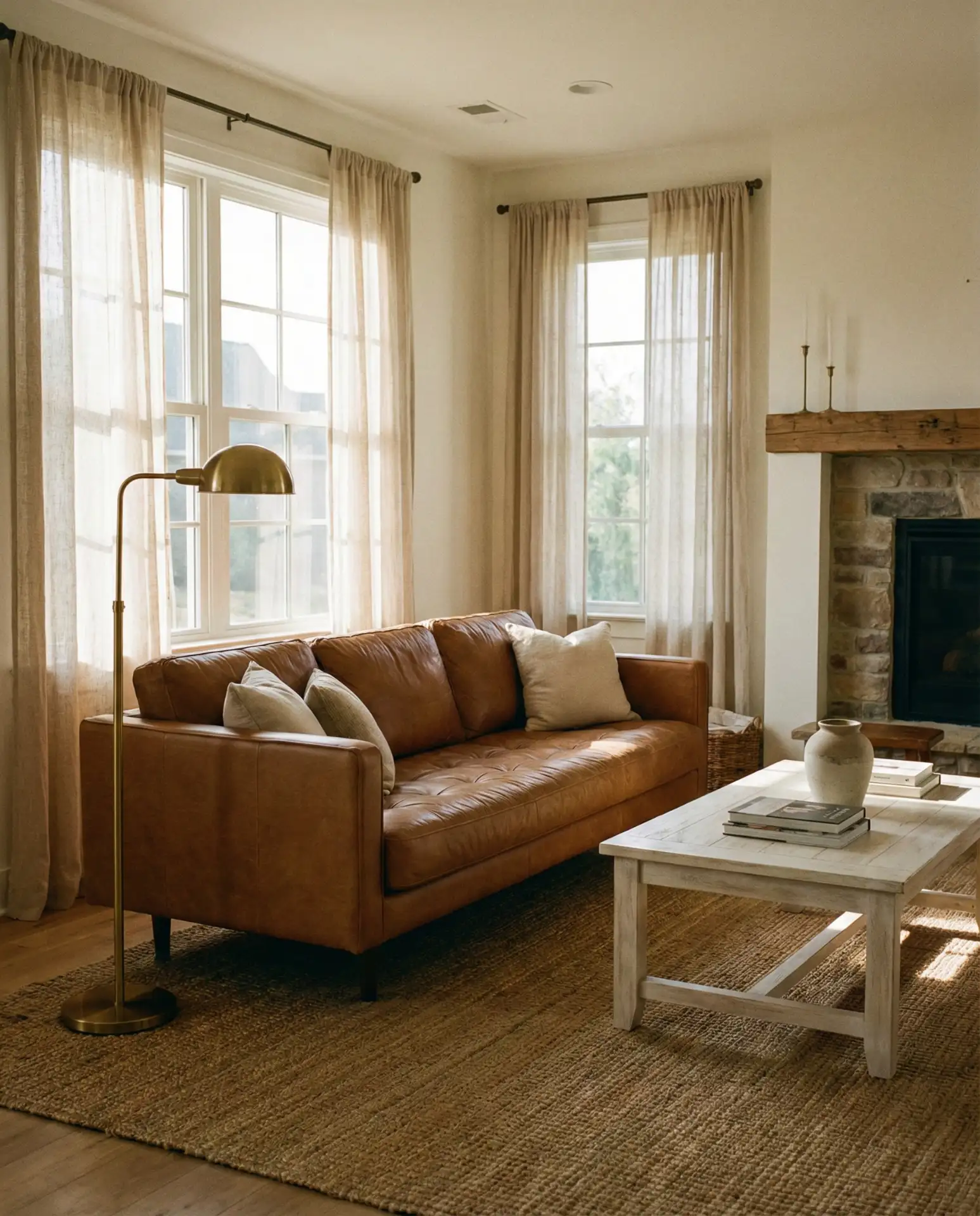
A leather couch in cognac, caramel, or even black adds a grounding, slightly masculine edge to the softness of French country style. Leather ages beautifully, developing a rich patina that aligns perfectly with the lived-in aesthetic. Choose a piece with simple lines and quality construction—French country is about longevity, not trends. Balance the leather’s weight with lighter elements like linen curtains, a jute rug, and open shelving to keep the room from feeling too heavy or dark.
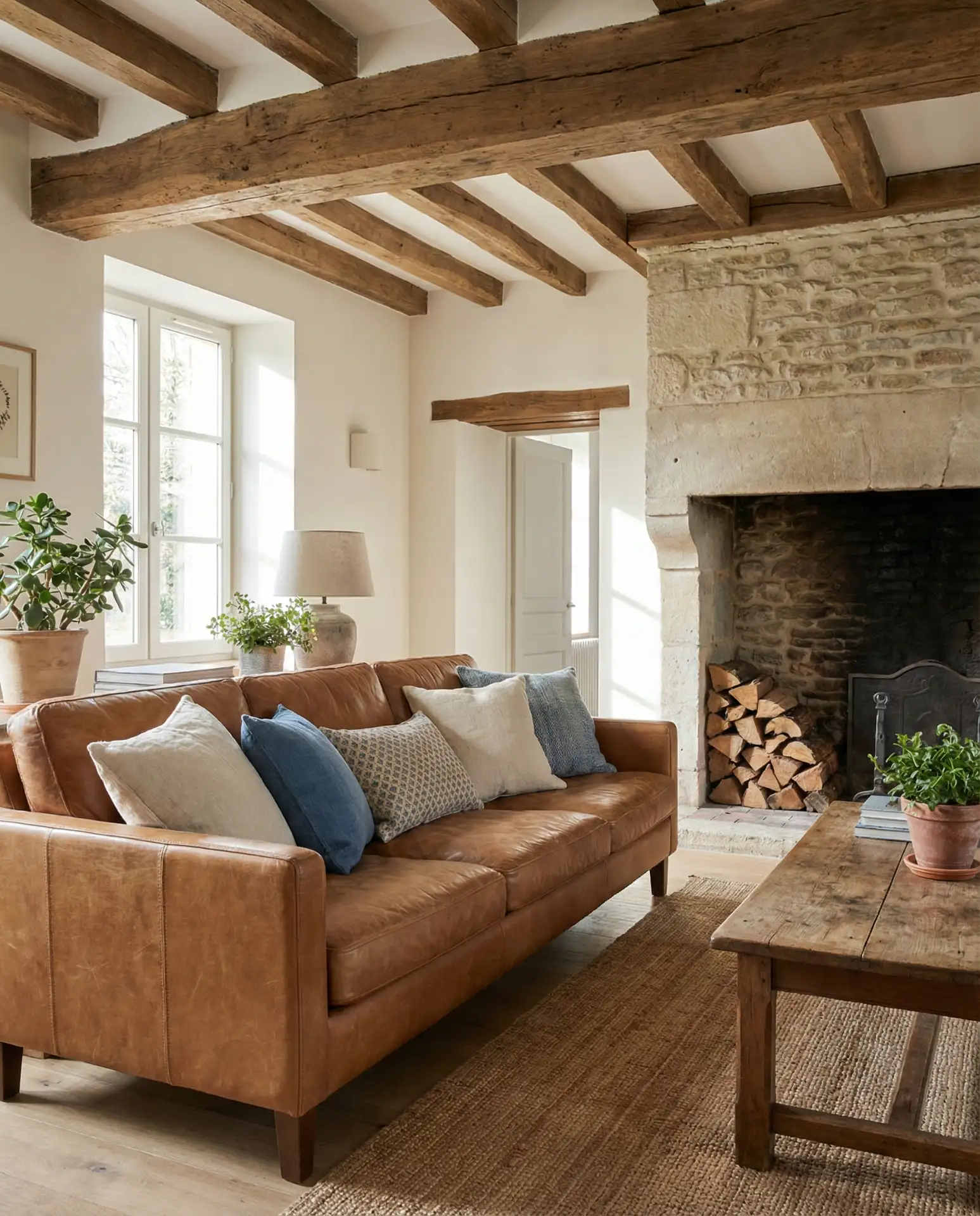
Leather furniture typically starts around $1,500 for quality pieces and can climb into the thousands for top-grain or full-grain options, but the investment pays off in durability and timeless appeal. Look for sales at direct-to-consumer brands or consider gently used pieces from higher-end retailers. Condition the leather every six months to prevent cracking, and embrace the natural marks and variations—they’re part of the charm. A well-chosen leather sofa can anchor your living room for a decade or more, making it one of the smartest purchases you’ll make.
7. Blue Accents for Calm and Contrast
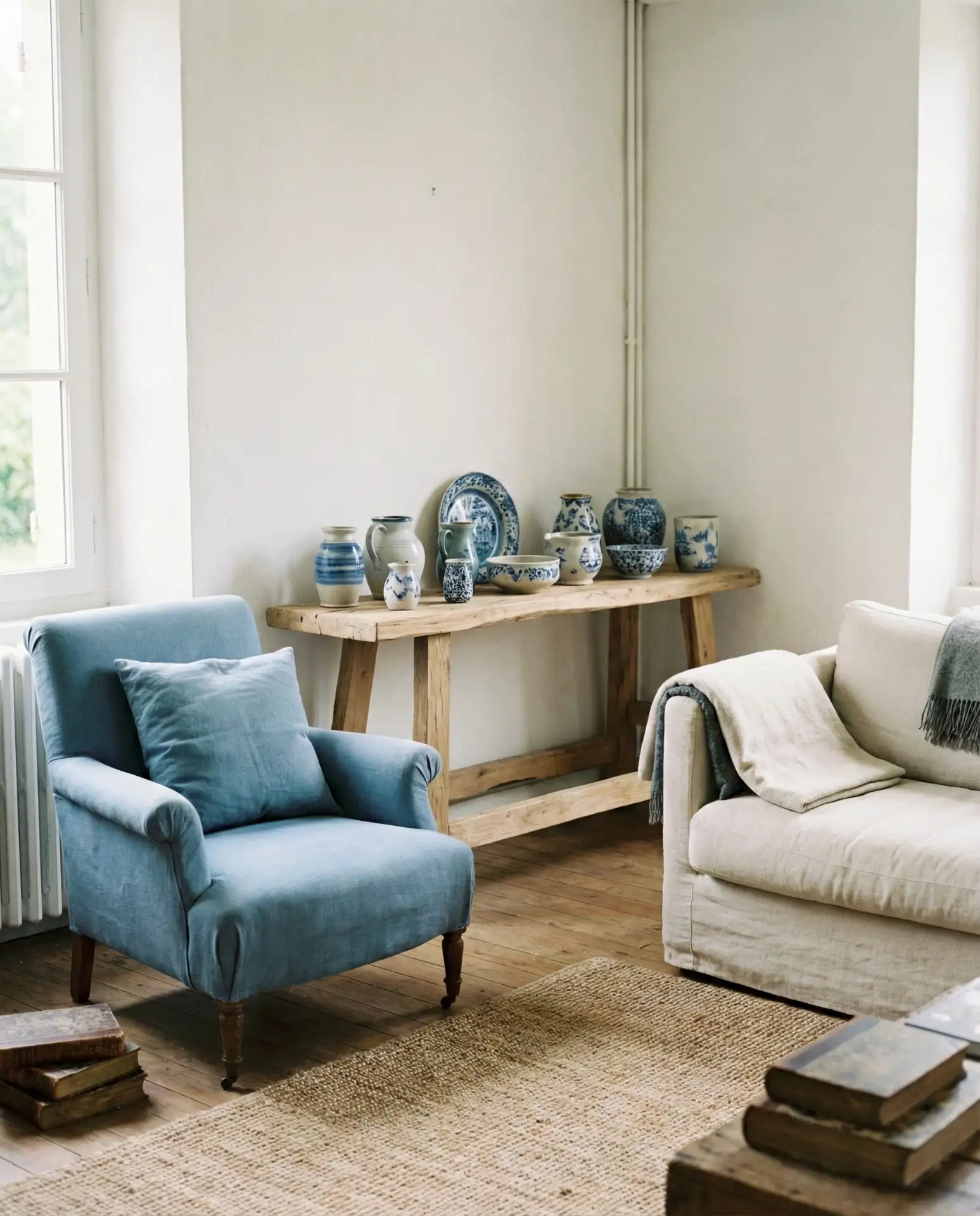
Blue appears throughout French country designss, from soft powder tones to deeper navy and indigo. It evokes the ceramics of Provence, the shutters of rural farmhouses, and the Mediterranean sky. Use blue in throw pillows, pottery, upholstered chairs, or even a painted cabinet to add cool contrast to warm wood and neutral backdrops. The color pairs effortlessly with whites, creams, and natural fibers, creating a palette that feels both classic and calming.
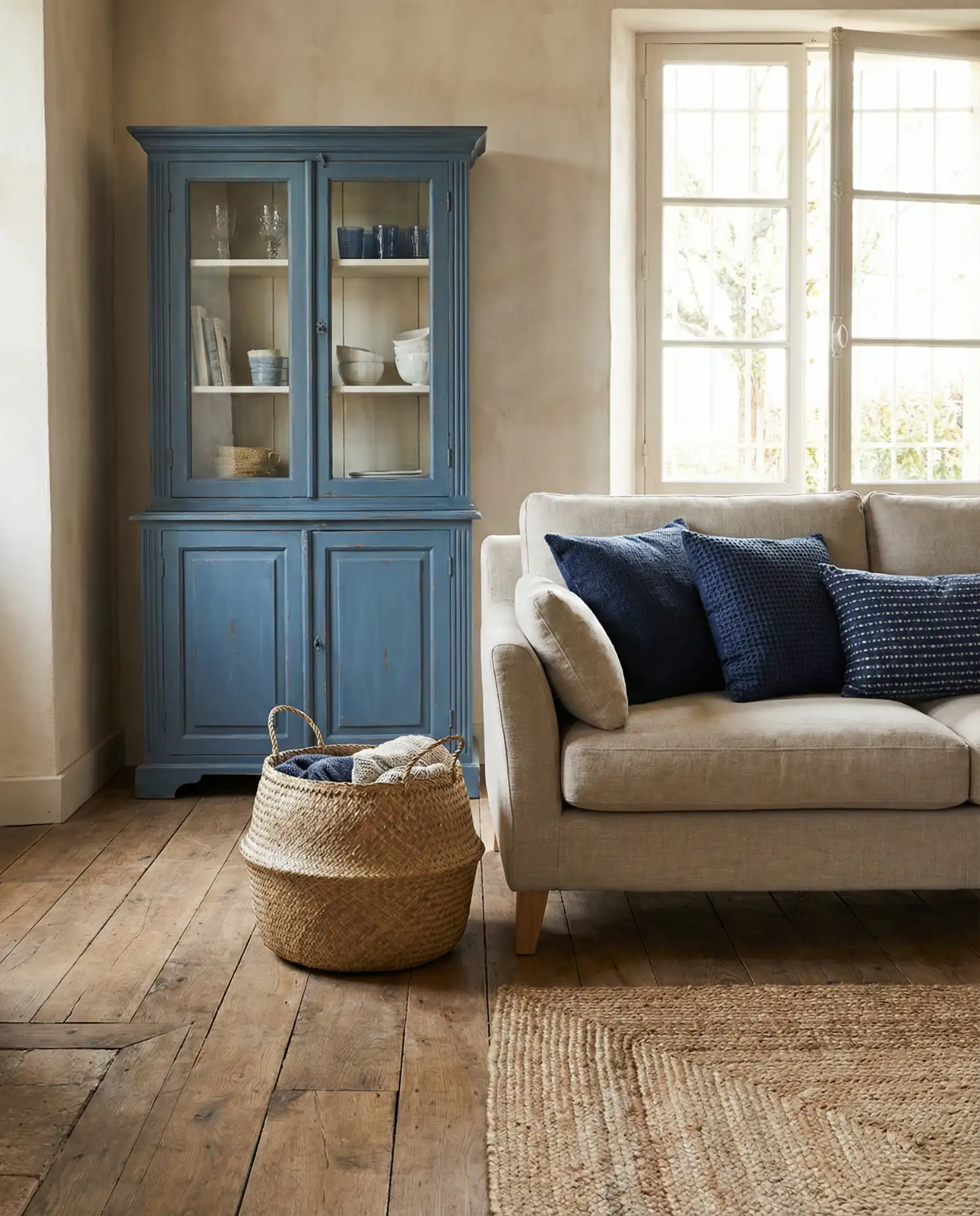
In Midwestern homes, where long winters can feel gray and heavy, homeowners often lean toward blue as a way to bring lightness and a hint of the sky into their living spaces. It works particularly well in rooms with south-facing windows, where natural light keeps the color from feeling cold. Expert designers recommend using blue in odd numbers—three pillows, five pieces of pottery—to create visual rhythm. And because blue is a recessive color, it won’t overwhelm a small room the way a warm red or orange might.
8. Cottage-Style Decor with Floral and Botanical Touches
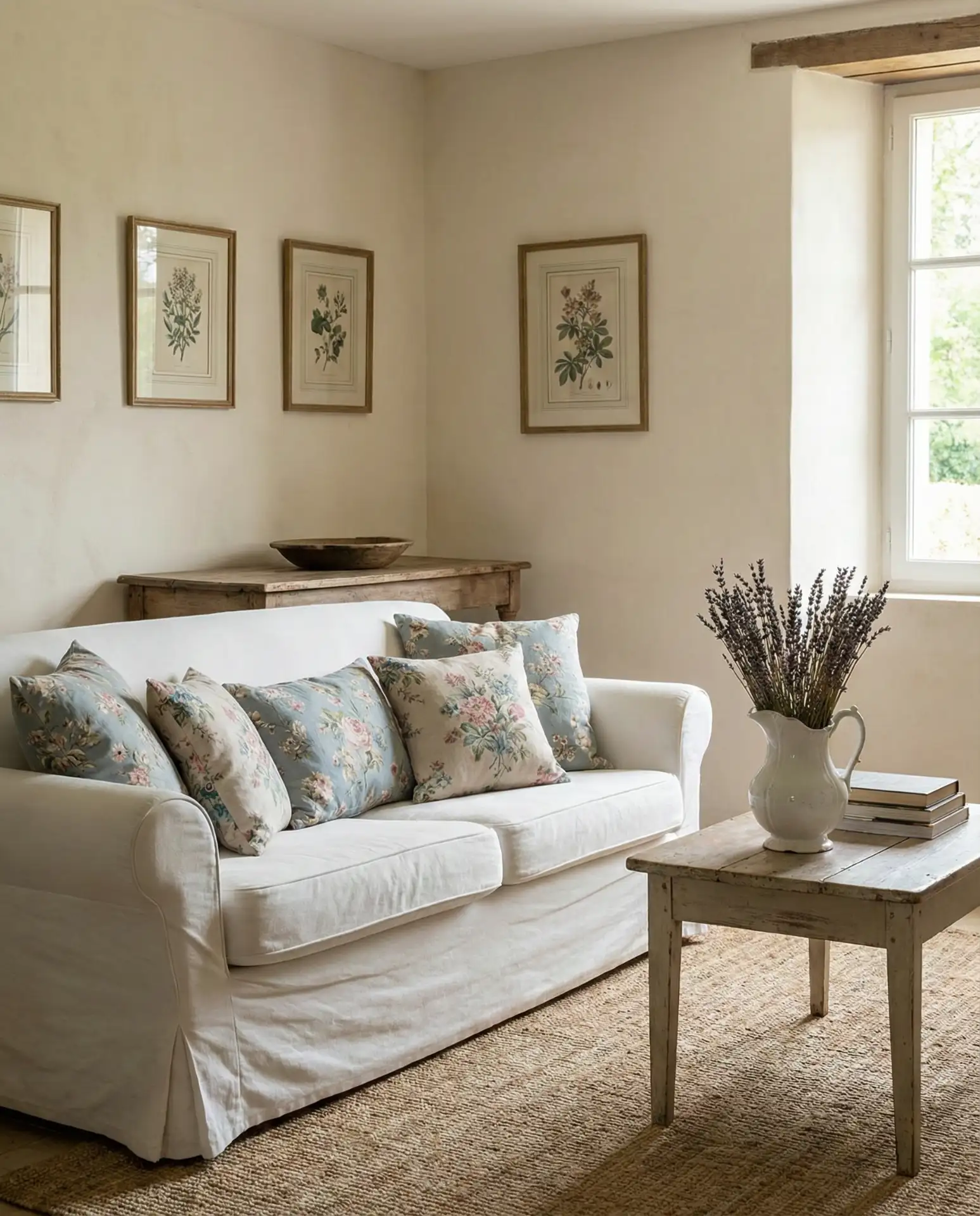
Cottage style within French country leans into softer, more romantic decor ideas, with floral prints, botanical art, and fresh or dried flowers throughout the space. Consider using toile wallpaper on one accent wall, linen slipcovers featuring delicate embroidery, and vintage botanical prints displayed in simple frames. Fresh lavender in ironstone pitchers, potted herbs on a windowsill, and floral throw pillows all reinforce the connection to the garden and countryside. This approach feels particularly at home in smaller, cozier living rooms where charm trumps grandeur.
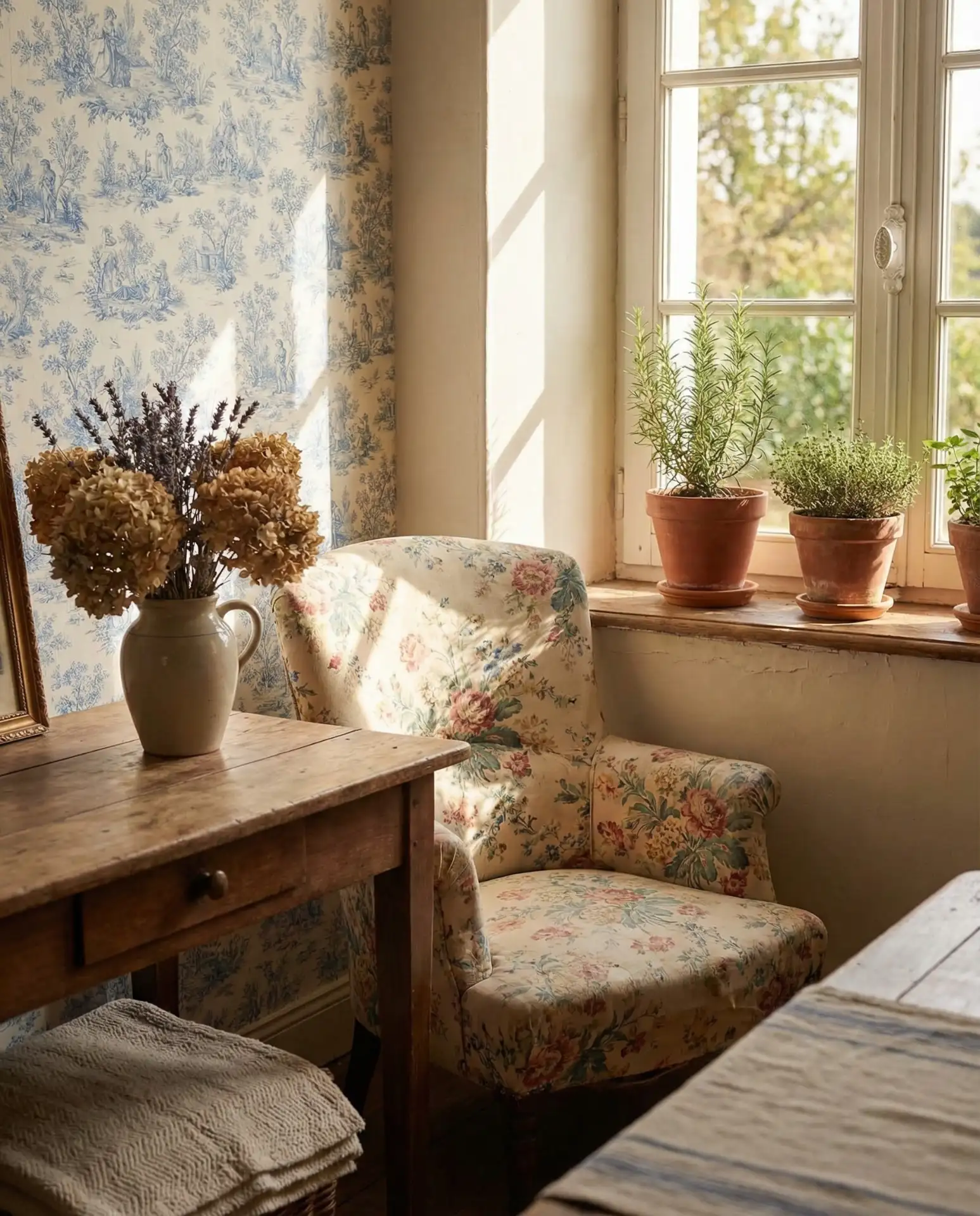
This style works best in homes with abundant natural light and a relaxed, informal vibe—think beach cottages in New England or bungalows in the Pacific Northwest. Formal, high-ceilinged spaces, where the delicate scale can lose its impact, are less suitable for this style. To avoid crossing into overly sweet or cluttered territory, limit floral patterns to a few key pieces and balance them with solid neutrals and natural textures like linen and wood. The goal is a room that feels picked from the garden, not a floral explosion.
9. White Walls for Timeless Simplicity
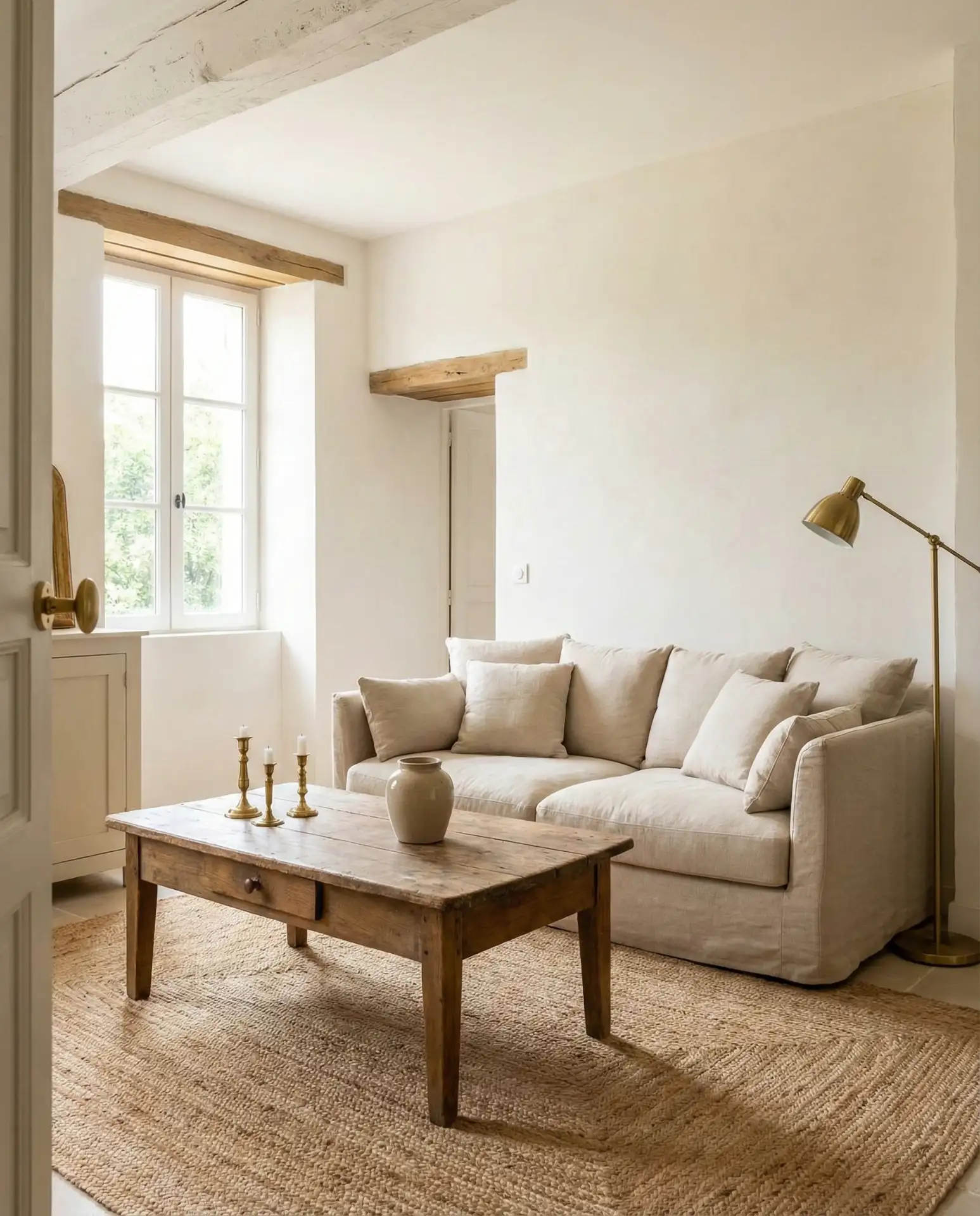
Crisp white walls remain a cornerstone of French country design, offering a clean backdrop that lets furniture, textiles, and architectural details shine. White reflects light beautifully, making even smaller rooms feel airy and open. It also provides flexibility—your decor can shift with the seasons or your mood without clashing with the walls. Choose warm whites with creamy or beige undertones to avoid a stark, clinical feel, and layer in plenty of texture through wood, linen, and woven elements.
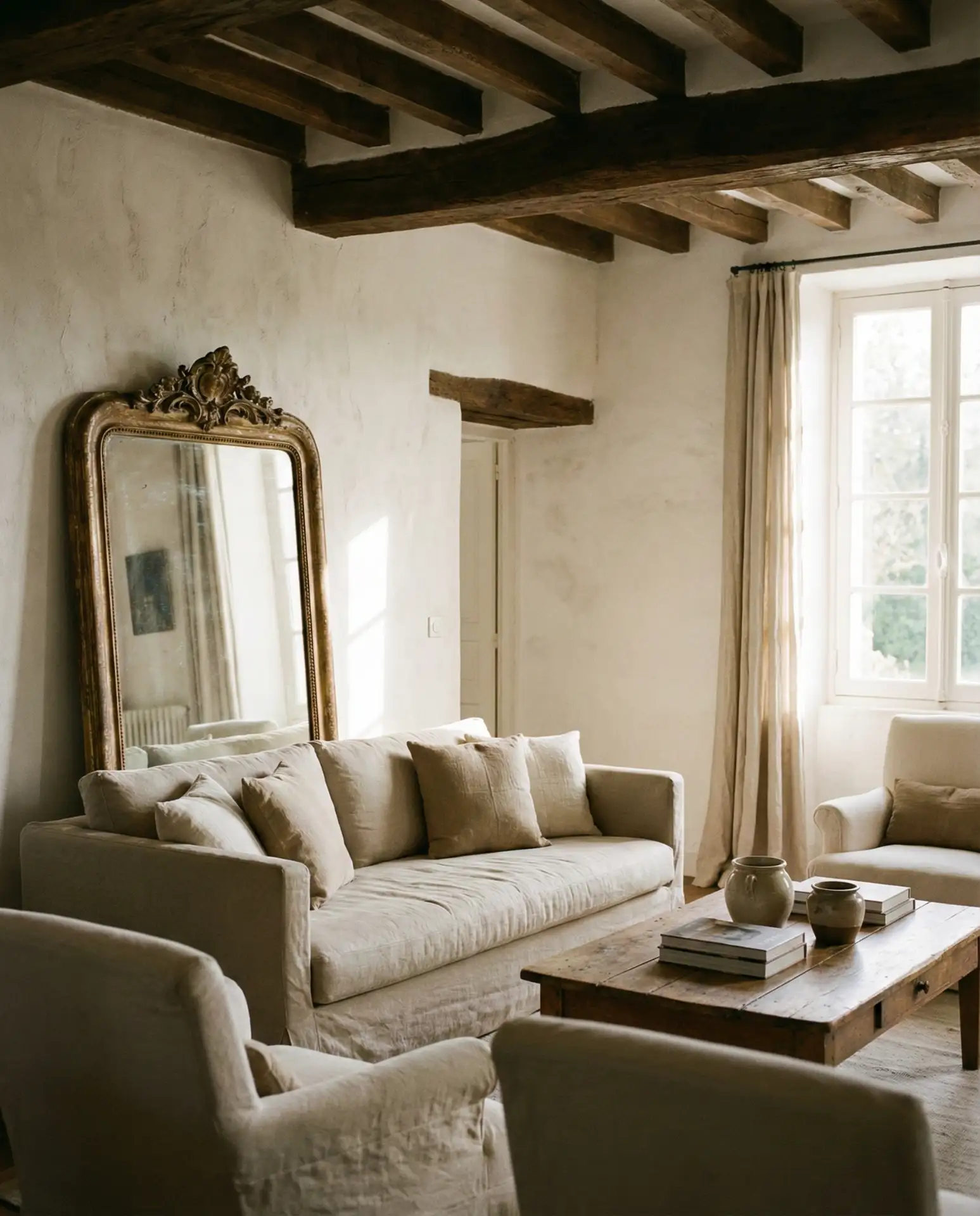
A common mistake is choosing the wrong white—cool, blue-based whites can make a room feel cold and unwelcoming, especially in climates with less natural light. Test paint samples next to your trim, flooring, and furniture to ensure harmony. In open-concept homes, a consistent white throughout creates flow, but don’t be afraid to vary the sheen—matte on walls, satin on trim—to add subtle dimension. White also shows dirt and scuffs more readily, so invest in washable, durable paint finishes if you have kids or pets.
10. Moody Dark Walls with Warm Lighting
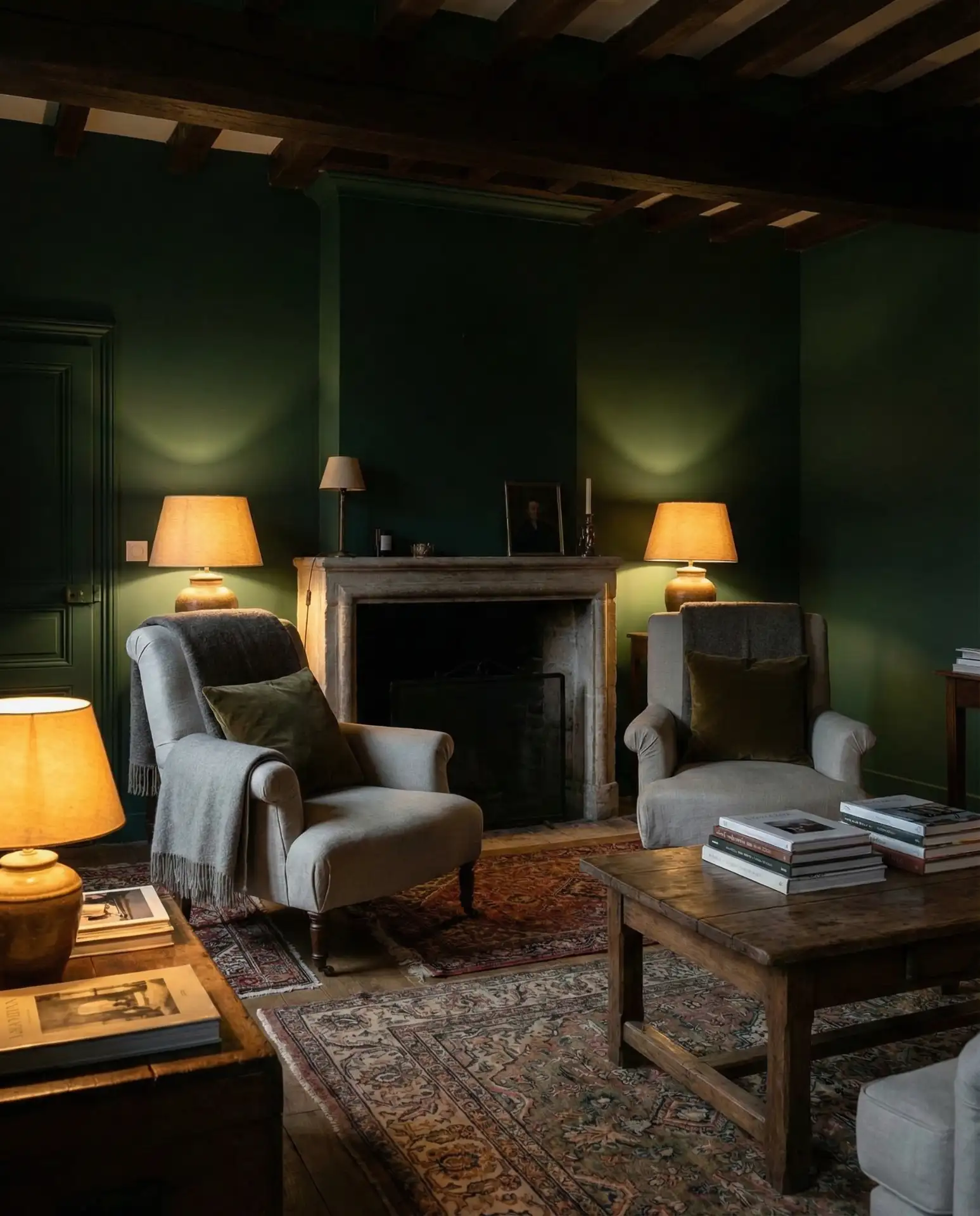
For a more dramatic take on French country, moody dark walls in charcoal, deep green, or navy create an intimate, cocooning atmosphere. This bolder choice works especially well in larger living rooms or spaces with high ceilings, where dark tones add warmth and scale. Balance the depth with warm lighting—think brass sconces, table lamps with linen shades, and candles—and plenty of light-colored textiles to prevent the room from feeling cave-like. The contrast between dark walls and pale furnishings is striking and sophisticated.
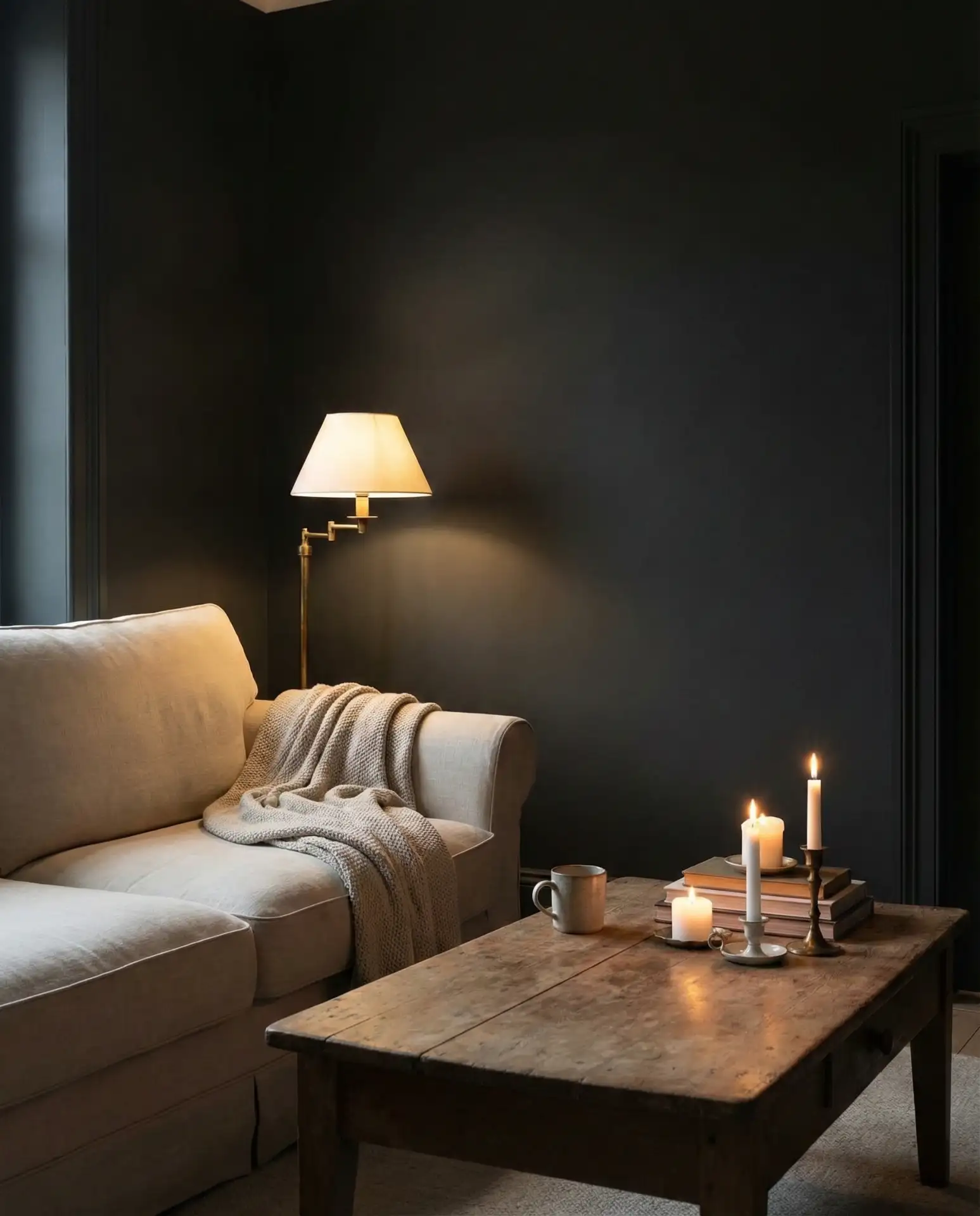
In urban lofts and brownstones across the Northeast, dark French country interiors have become a way to embrace coziness during long winters without sacrificing style. The key is layering multiple light sources—overhead, task, and ambient—so the room remains functional and inviting. Avoid dark walls in rooms with limited natural light or minimal square footage; they can make those spaces feel cramped. But in the right setting, a moody palette transforms a living room into a sophisticated retreat that feels both historic and utterly current.
11. Built-Ins with TV and Fireplace Integration
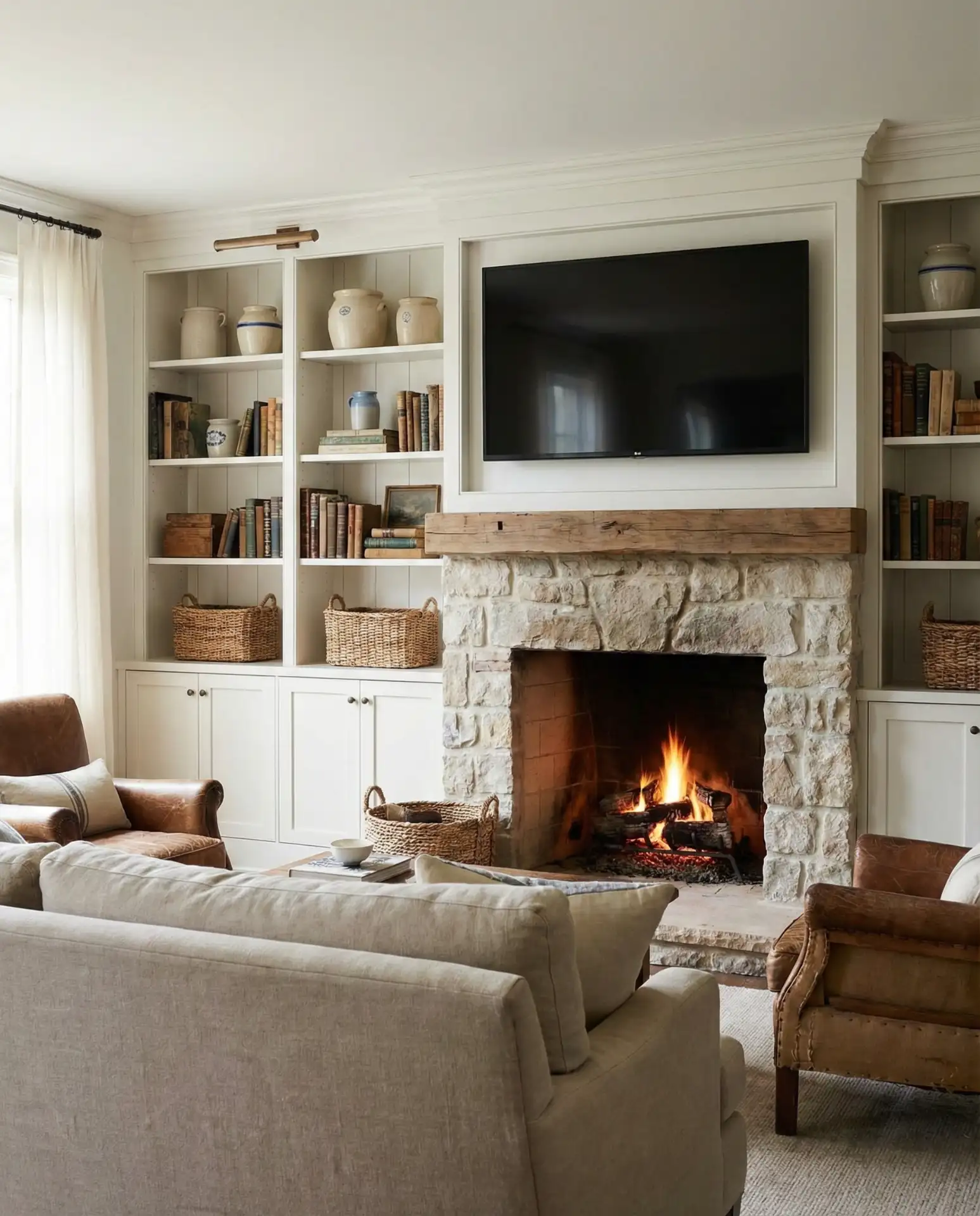
Custom built-ins flanking a fireplace solve the age-old challenge of where to put the TV while maintaining French country charm. By housing the screen within cabinetry or above the mantel, you preserve clean sight lines and create space for books, pottery, and collected objects. Choose cabinetry with simple, recessed-panel doors in a soft painted finish or natural wood, and balance open shelving with closed storage to avoid visual clutter. This approach keeps technology integrated but not dominant.
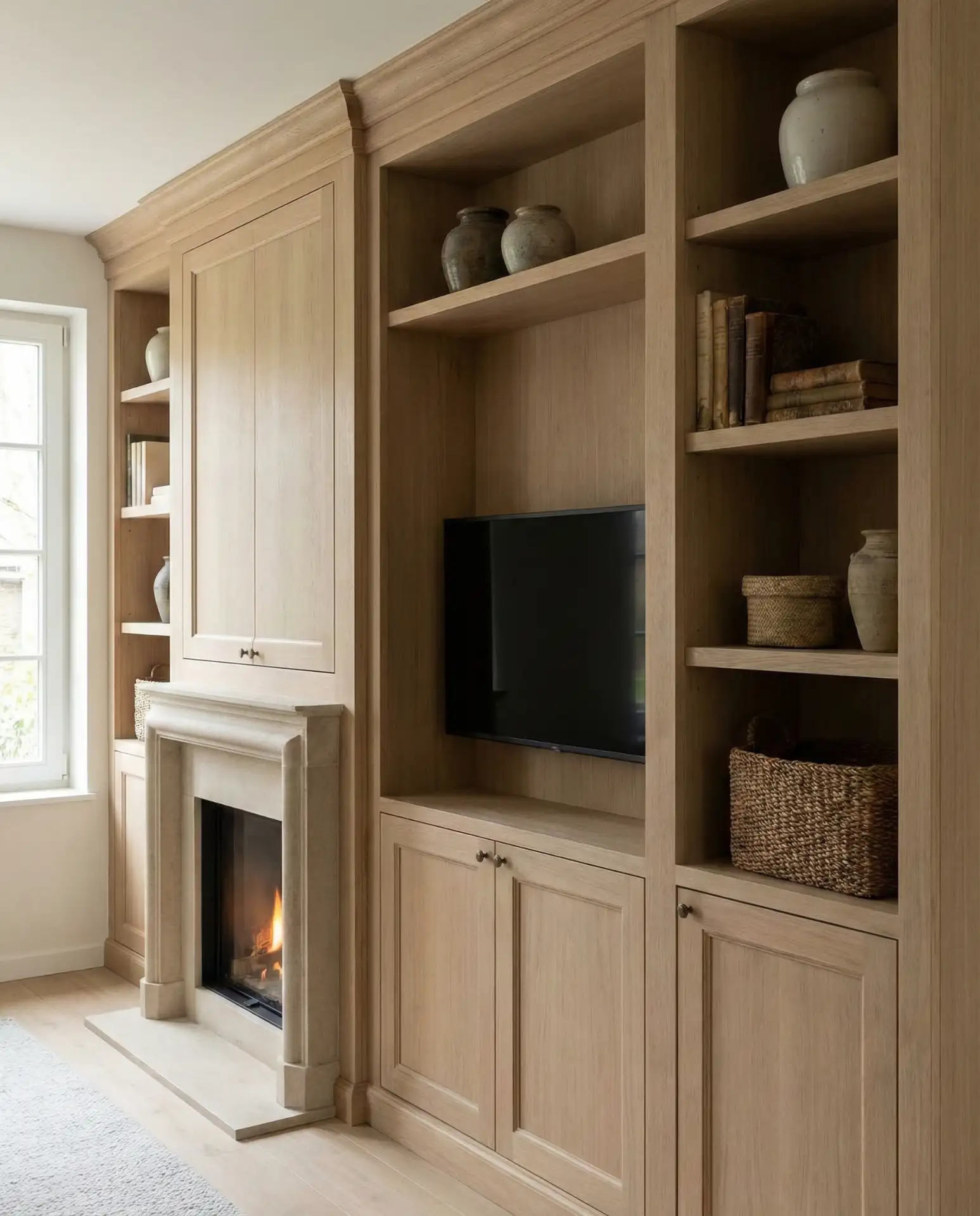
Custom built-ins can be a significant investment—expect to pay anywhere from $3,000 to $15,000 depending on size, materials, and local labor costs. However, they add real value to your home and solve multiple design challenges at once. If custom work is out of reach, consider combining ready-made bookcases from IKEA or other retailers with trim and paint to mimic the built-in look for a fraction of the price. Either way, the result is a focal wall that feels intentional, organized, and quintessentially French country.
12. Wall Decor Above the Couch
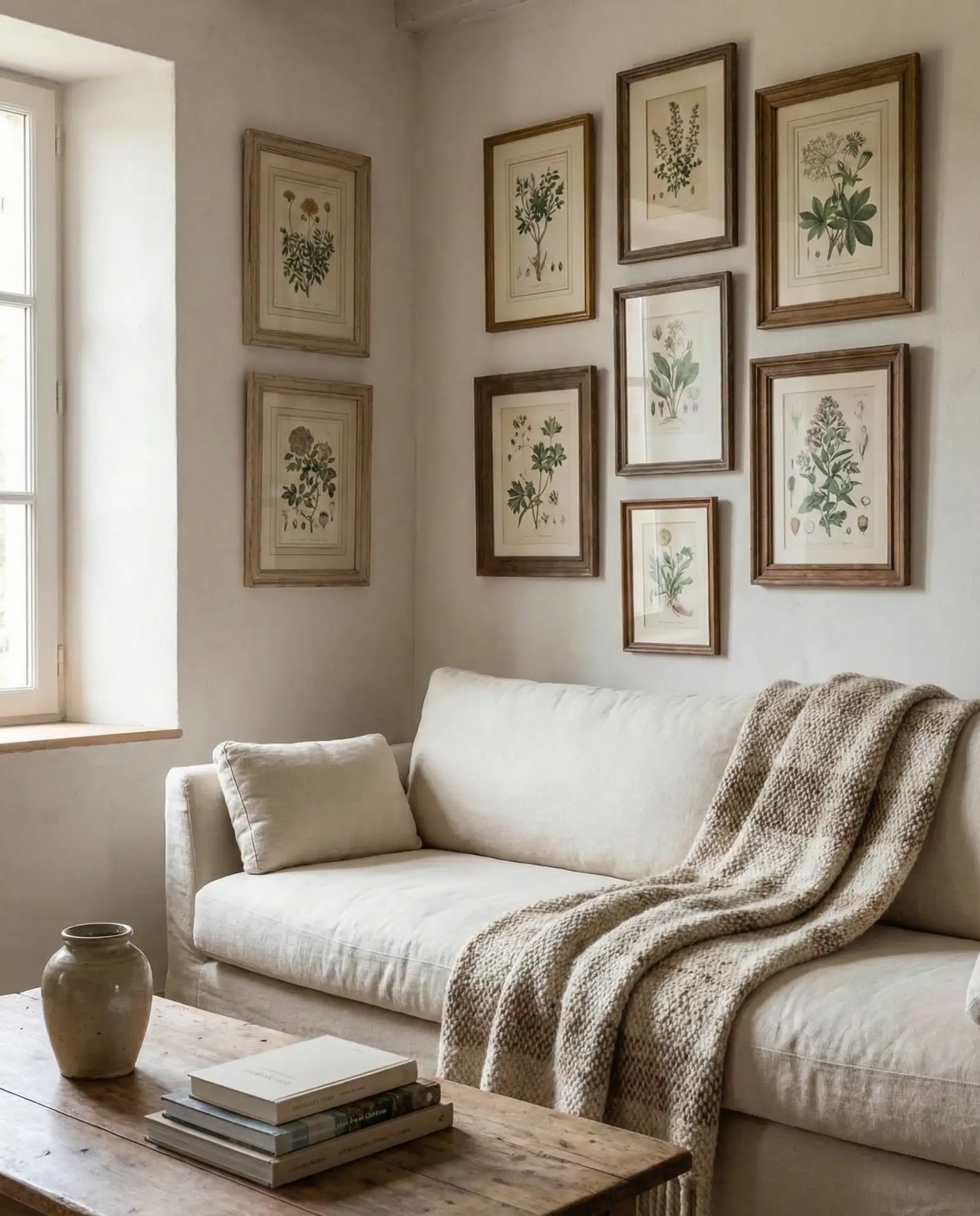
The space above your sofa is prime real estate for wall decor ideas, and French country style offers plenty of inspiration. Consider a large antique mirror to reflect light and create depth, a gallery wall of vintage botanical prints, or a single oversized piece of art in muted tones. Architectural salvage like old window frames, iron gates, or wooden shutters also works beautifully. The key is scale—whatever you hang should be roughly two-thirds the width of the sofa to feel balanced and intentional.
Real homeowners often hang their art too high—the center of your piece should be at eye level, typically around 57 to 60 inches from the floor. For a gallery wall, lay everything out on the floor first to experiment with spacing and arrangement before committing to nails. Another mistake is choosing frames that are too busy or mismatched in an unintentional way; French country thrives on curated eclecticism, not chaos. Keep frames in a cohesive color family—white, natural wood, or black—and let the art itself provide variety.
13. Traditional Symmetry and Formal Arrangements
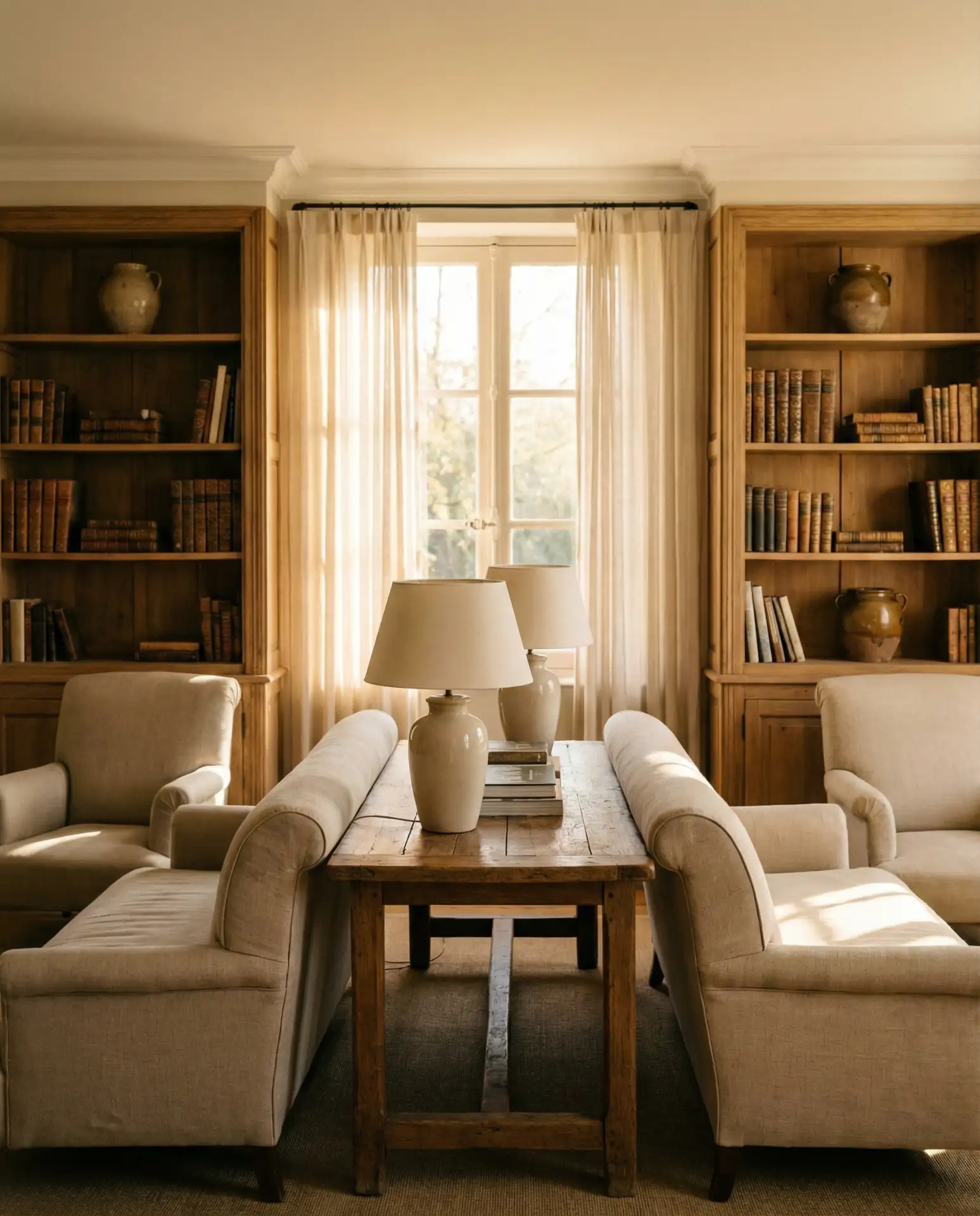
Traditional French country often embraces symmetry, with matching armchairs flanking a fireplace, identical lamps on either end of a sofa table, or balanced shelving. This formal approach creates a sense of order and elegance, particularly in living rooms used for entertaining. Pair symmetry with classic furniture shapes—rolled arms, turned legs, tufted backs—and a restrained color palette. The result is a room that feels polished and timeless, yet still warm and welcoming.
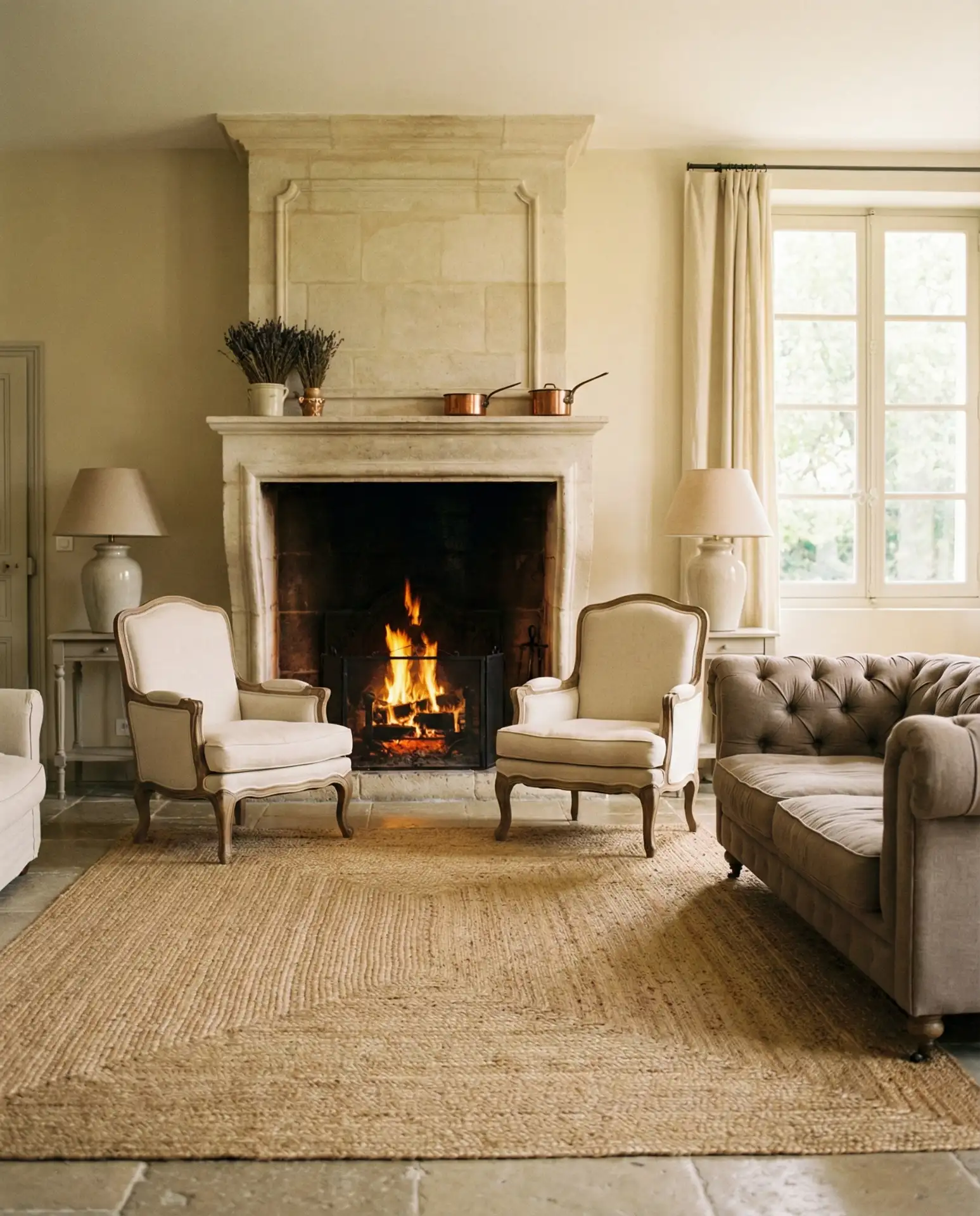
This style works best in homes with traditional architecture—think Colonial, Georgian, or French Provincial floor plans—where the bones of the house already suggest formality. In contemporary open-concept spaces, strict symmetry can feel stiff, so consider loosening the approach with a few asymmetrical elements like a single floor lamp or an off-center art piece. Symmetry is powerful, but it shouldn’t feel rigid. The French appreciate balance, yet they also value the beauty of imperfection and the craftsmanship of the maker.
14. Green Velvet Seating for Luxe Texture
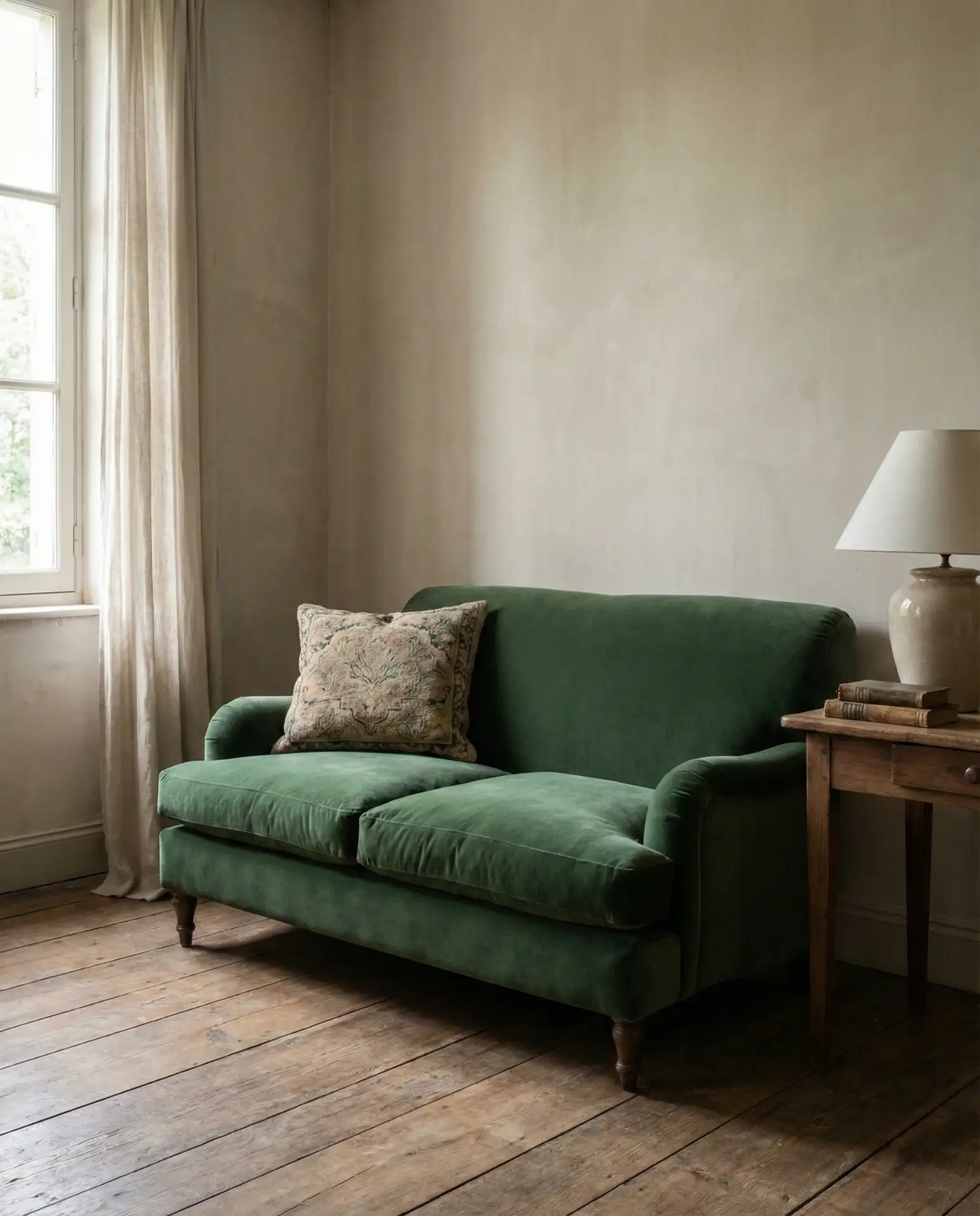
Green velvet upholstery brings a touch of luxury and depth to French country interiors, especially in jewel tones like emerald or forest. Velvet’s rich texture catches light beautifully and pairs well with natural wood, linen, and brass. A single green velvet armchair or loveseat can become a statement piece, adding visual weight and sophistication without overwhelming the space. Keep surrounding elements soft and neutral to let the velvet shine, and consider adding a patterned throw or pillow to introduce additional interest.
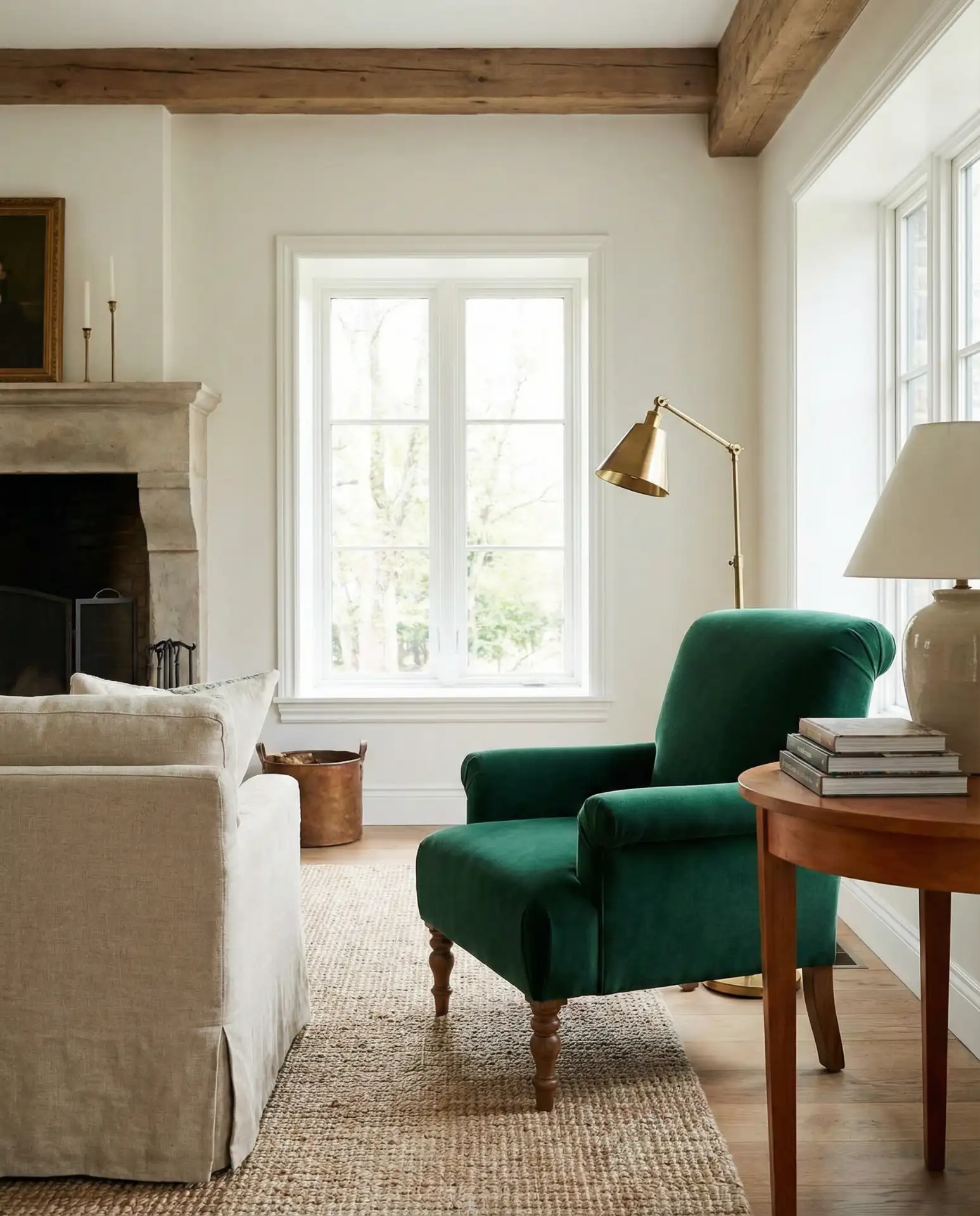
Velvet requires more care than cotton or linen—it can show wear and crush marks, so it’s best used in lower-traffic seating like accent chairs rather than a main family sofa. Rotate cushions regularly to even out wear, and vacuum gently with a soft brush attachment to keep the pile looking fresh. In American homes, green velvet has become especially popular in dining rooms and living rooms, where it adds a layer of formality and glamour. Just be mindful of pets and young children; velvet and sticky fingers are not the best match.
15. Coastal French Country with Soft Blues and Whites
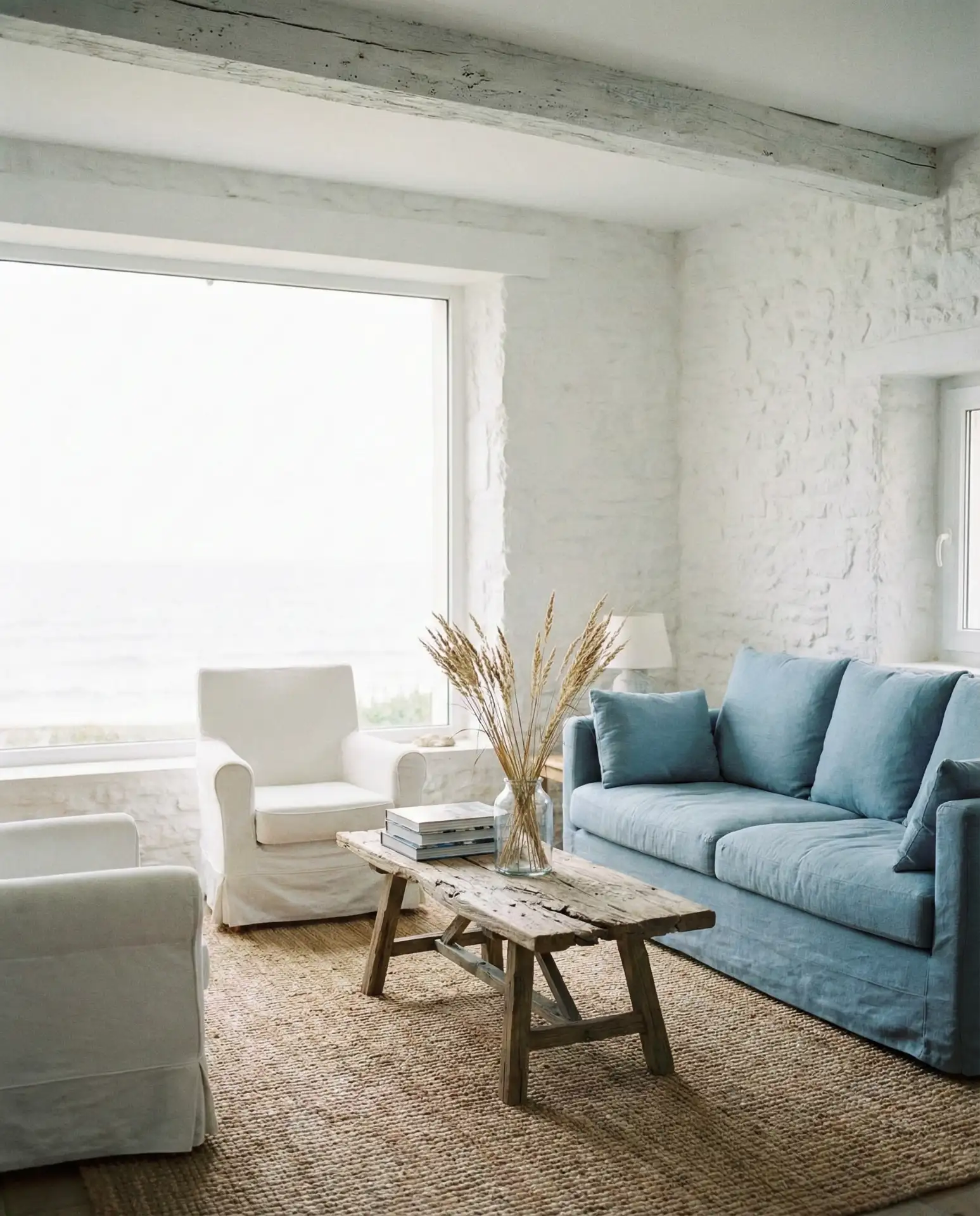
Coastal French country blends the rustic charm of Provence with the breezy, light-filled feel of seaside living. Think soft blues and whites, natural textures like jute and rattan, and plenty of linen. This hybrid style works beautifully in homes near the ocean or in warm climates, where indoor-outdoor living is a priority. Furnishings are casual and comfortable, with slipcovers, open shelving, and weathered wood finishes that nod to both farmhouse and beach house aesthetics.
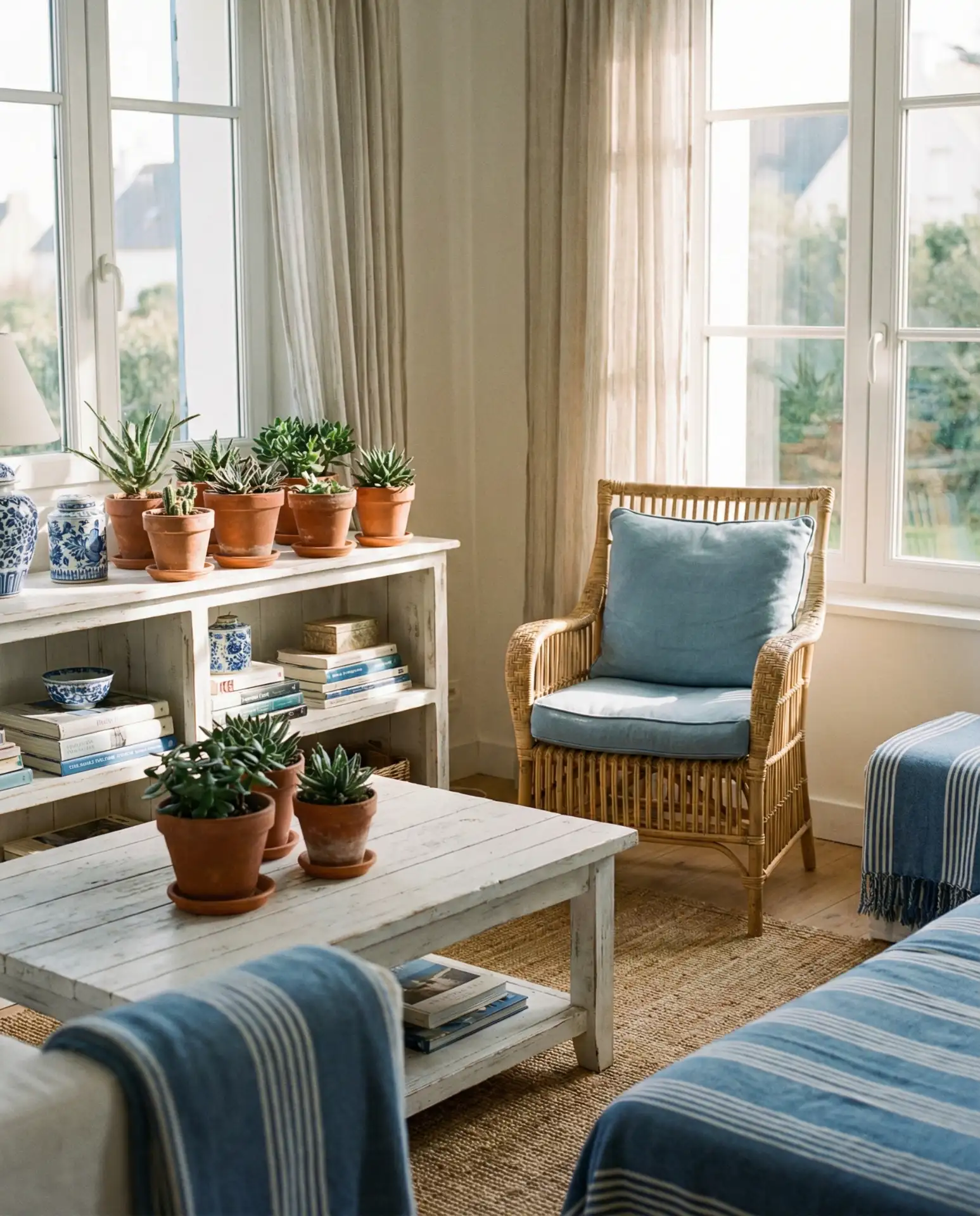
In homes along the Gulf Coast, the California coast, and the Carolinas, this style has taken off as a way to honor regional architecture while incorporating European influence. The palette stays light and airy, with blues ranging from powder to aqua and whites that lean warm rather than stark. Avoid nautical clichés like anchors and rope—this is French country, not a yacht club. Instead, focus on natural materials, organic shapes, and a relaxed approach to furniture arrangement that encourages conversation and ease.
16. Curtains that Frame and Soften
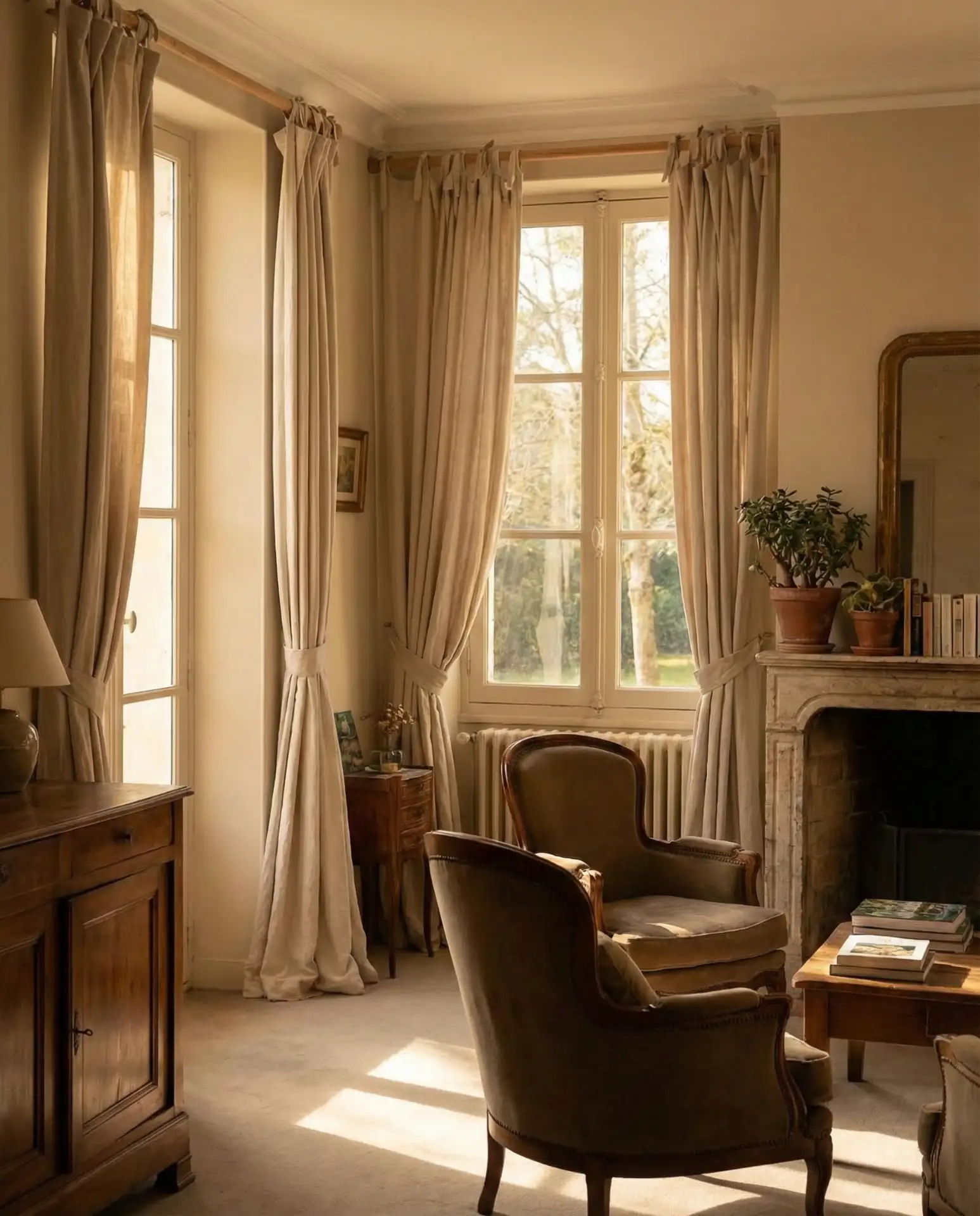
Floor-to-ceiling curtains in linen or cotton add softness and elegance while controlling light and privacy. French country style favors natural fabrics in neutral tones—cream, oatmeal, soft gray—hung from simple iron or wooden rods. Curtains should be generous, ideally 1.5 to 2 times the width of the window, so they gather softly when open. Hang them as close to the ceiling as possible to create the illusion of height, and let them puddle slightly on the floor for a relaxed, romantic look.
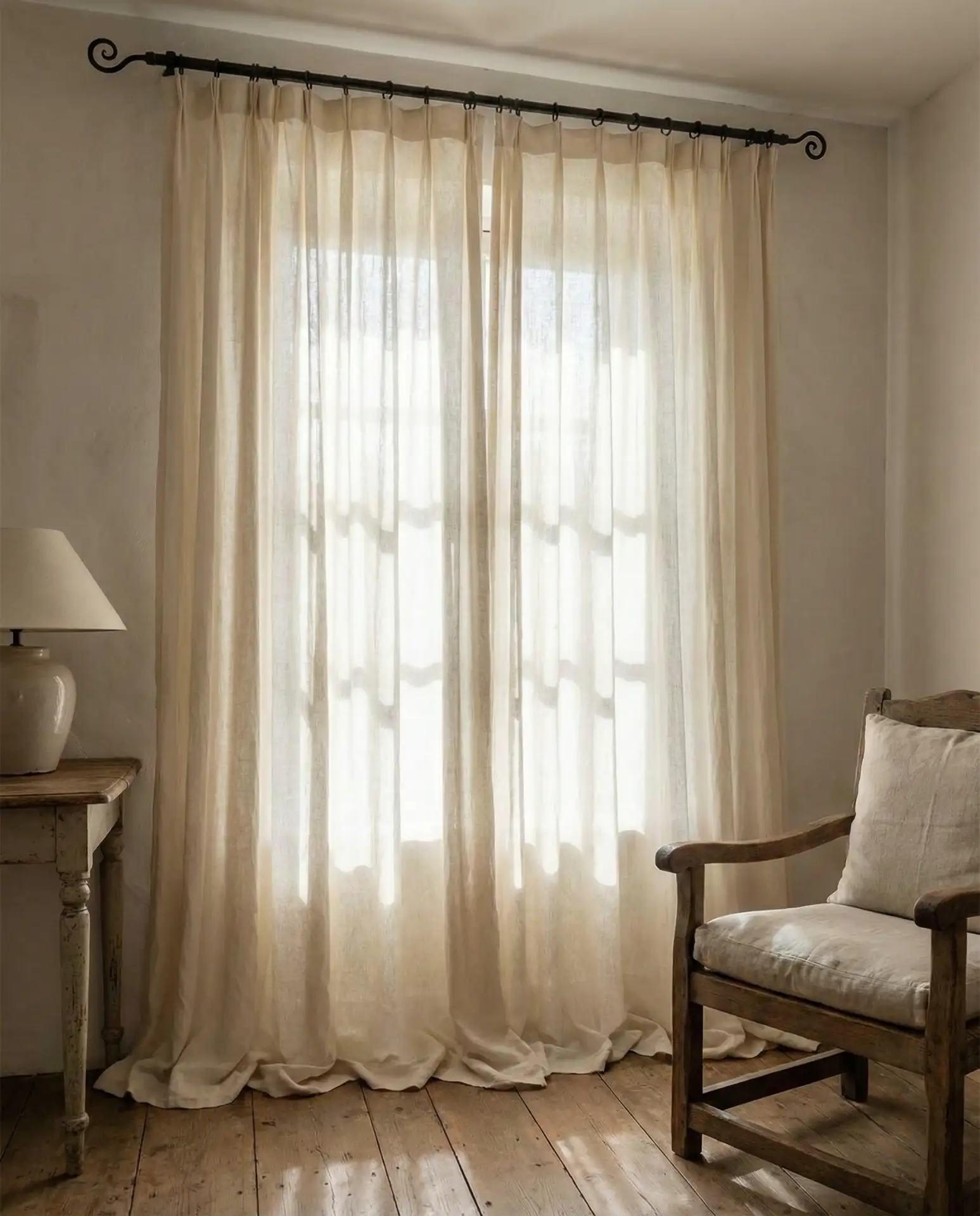
Practical insight: ready-made curtains are rarely long enough for a true floor-to-ceiling look. Most standard panels are 84 or 96 inches, but for a 9- or 10-foot ceiling, you’ll need custom or extra-long panels. Budget for hemming or ordering custom lengths if necessary—the investment makes a dramatic difference. Also, consider lining your curtains for better light control and longevity; blackout lining isn’t necessary, but a simple cotton lining helps the fabric hang better and protects against sun damage over time.
17. Pink Accents for Unexpected Warmth
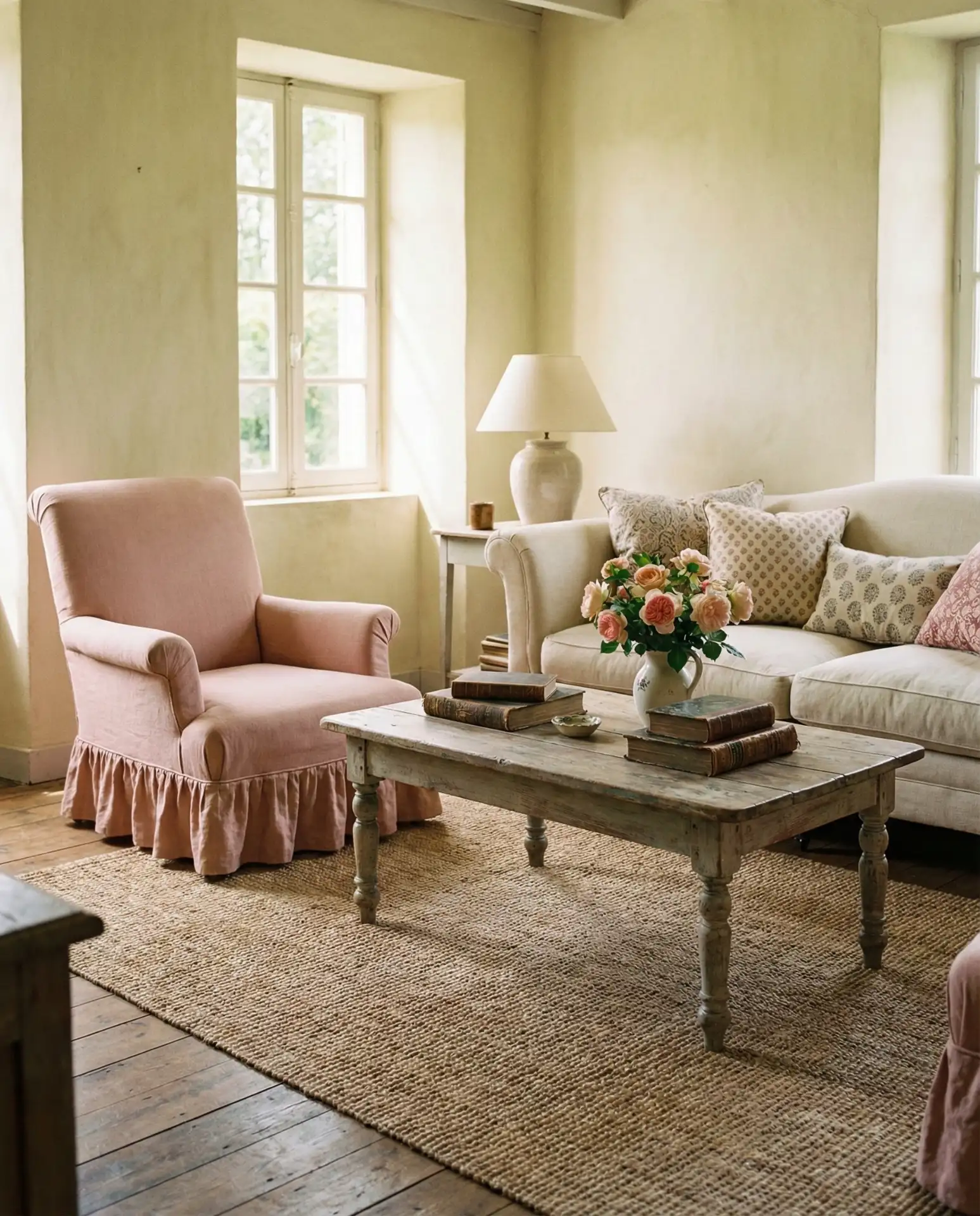
Soft, dusty pink tones inject warmth and subtle femininity into French country interiors without veering into overly sweet territory. Think blush linen pillows, a faded rose armchair, or a piece of ceramic in terracotta-pink. These hues pair beautifully with neutrals, grays, and even darker greens or blues, adding depth and a touch of romance. Used sparingly, pink feels sophisticated and grounded, especially when balanced with rustic wood and natural textures.
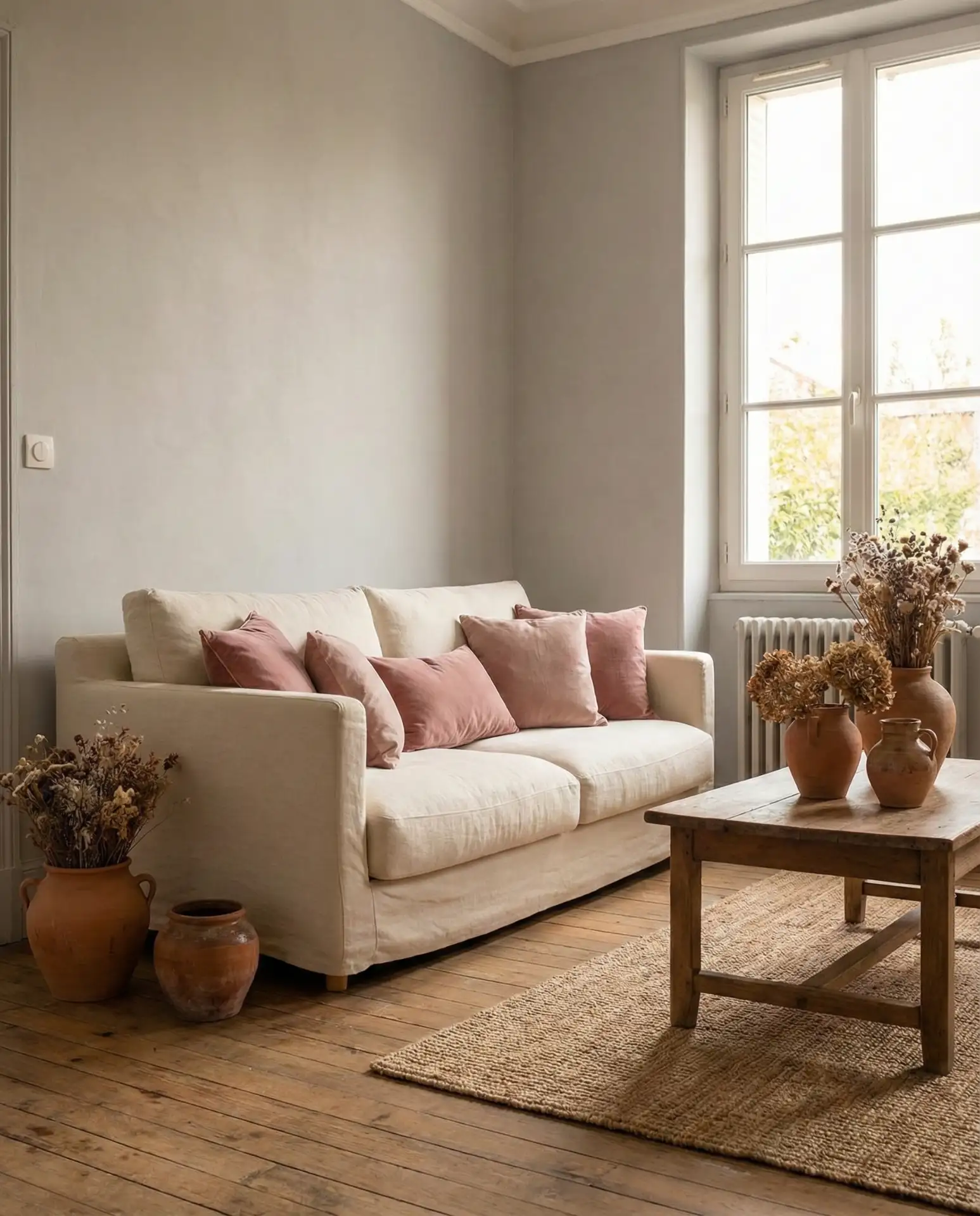
In American homes, pink can still carry associations with nurseries or overly feminine decor, but the right shade changes everything. Aim for tones with gray or brown undertones—dusty rose, mauve, terracotta-pink—rather than bubblegum or hot pink. These muted shades feel vintage and European, and they work for all ages and genders. Start small with a single pillow or vase, and see how it feels before committing to larger pieces. Pink is having a moment in interior design, and French country is the perfect style to embrace it with subtlety.
18. Fireplace as the Focal Point
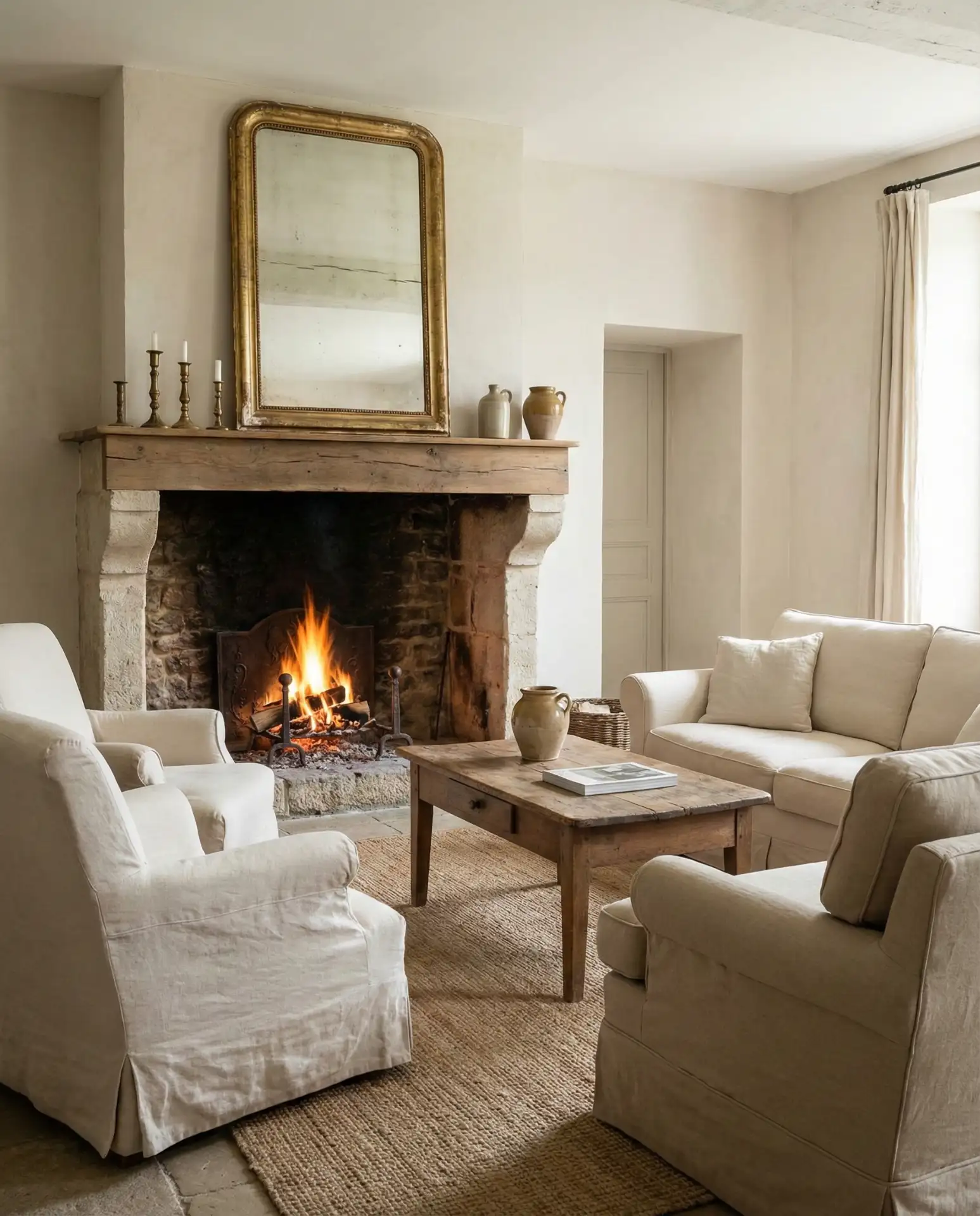
A fireplace naturally commands attention in a French country living room, and styling it thoughtfully enhances the entire space. Keep the mantel simple with a large mirror, a piece of art, or a few carefully chosen objects like candlesticks, a vintage clock, or a bundle of dried lavender. Avoid overcrowding—the French aesthetic values restraint. If the fireplace is wood-burning, keep a neat stack of logs nearby in a woven basket or iron holder. For gas or electric units, focus on the surround and mantel as the main design opportunities.
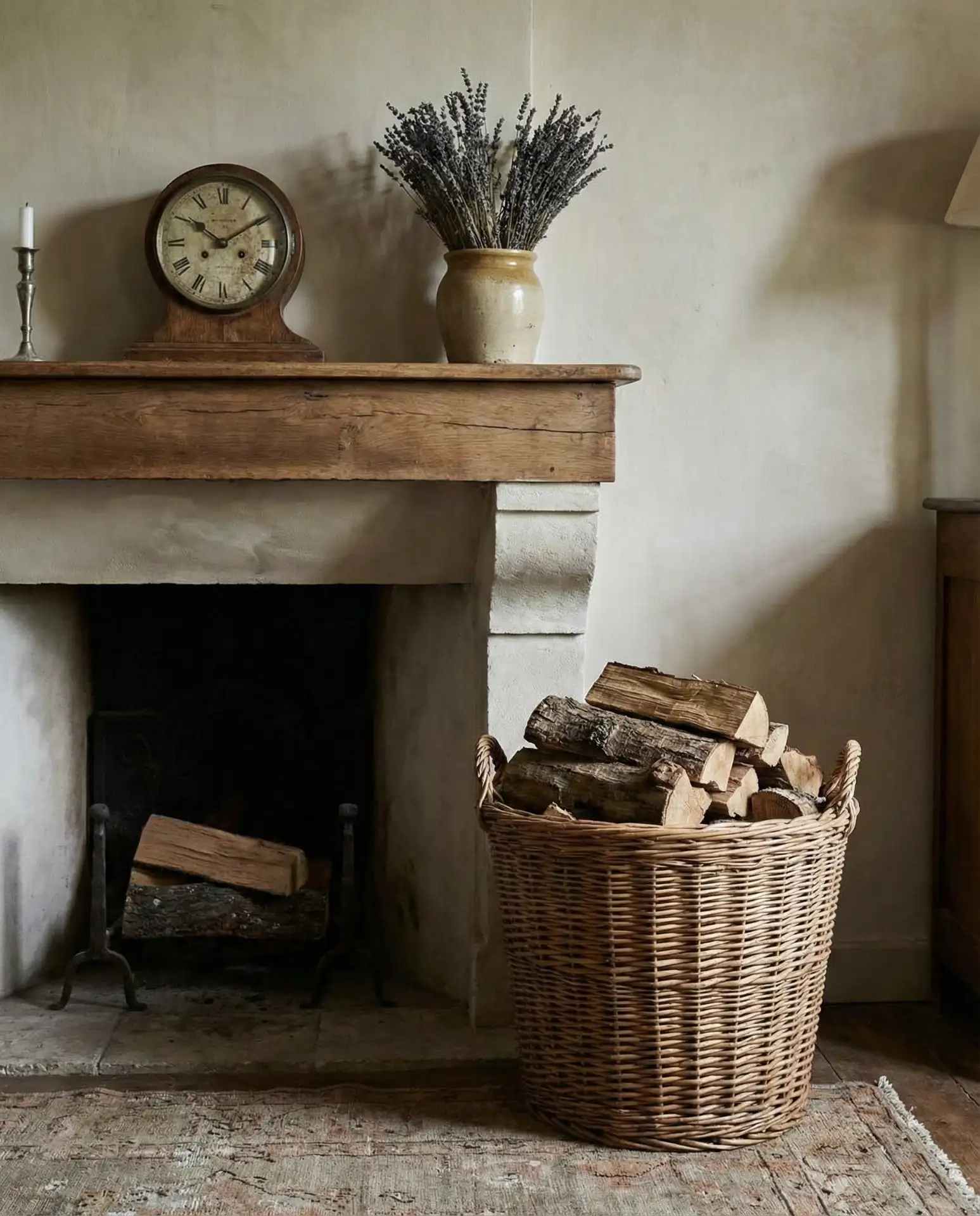
Where it works best: homes with original brick or stone fireplaces have a built-in advantage, as these materials are inherently French country. In newer construction, consider adding a wood or stone surround to give a gas insert more character. In mild climates where fireplaces are rarely used, treat the space as a decorative feature—fill the firebox with stacked logs, candles, or a large potted plant. The key is acknowledging the fireplace as the heart of the room and arranging seating to face it, creating a natural gathering spot.
19. Mixing Old and New for Authentic Character
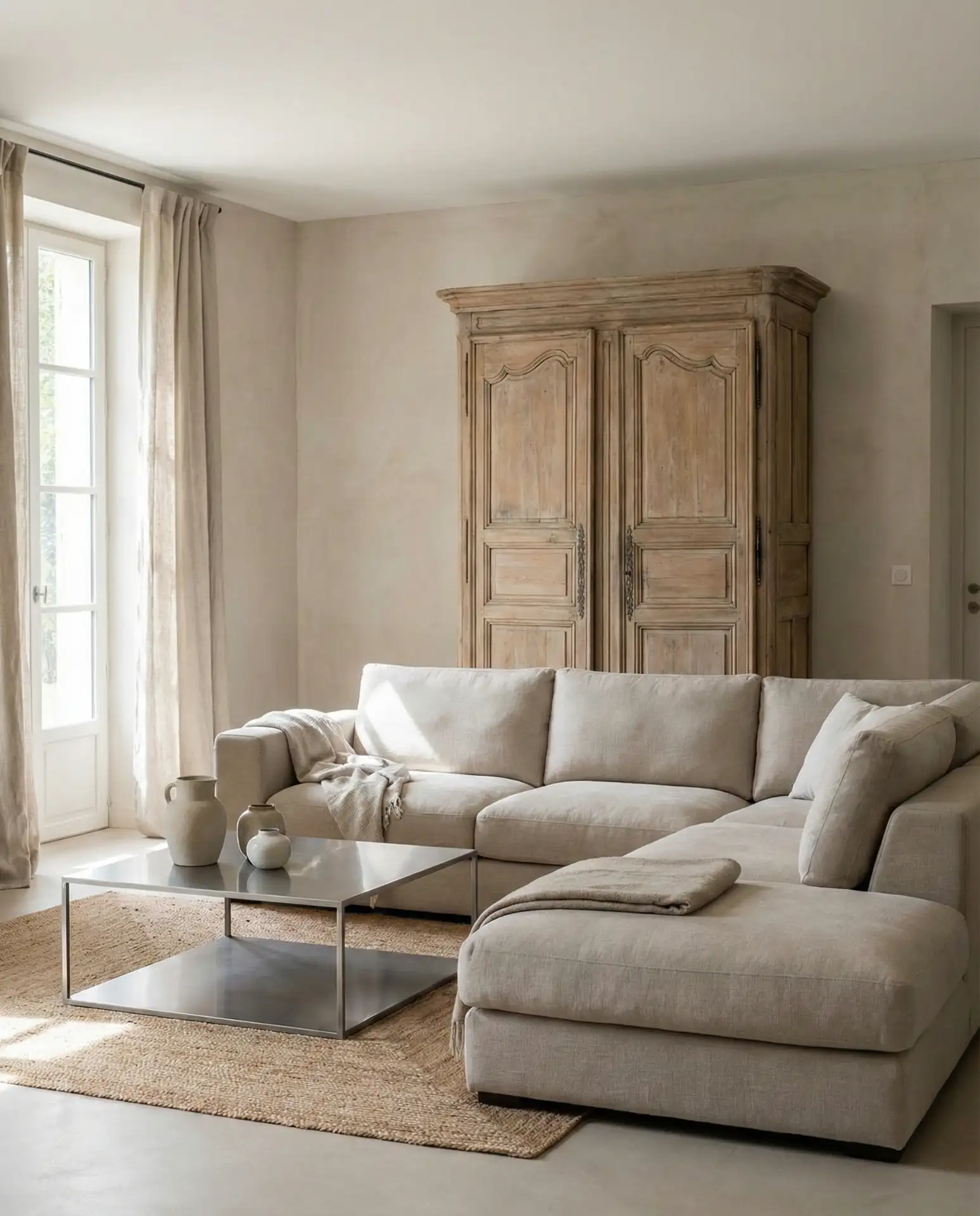
The most compelling French country living rooms blend vintage finds with contemporary comforts—an antique armoire next to a sleek sectional, or a modern coffee table paired with a 19th-century bergère chair. This mix keeps the room from feeling like a museum or a showroom, and it reflects how real French homes evolve over generations. Don’t be afraid to pair high and low, expensive and thrifted, inherited and store-bought. The contrast adds energy and authenticity.
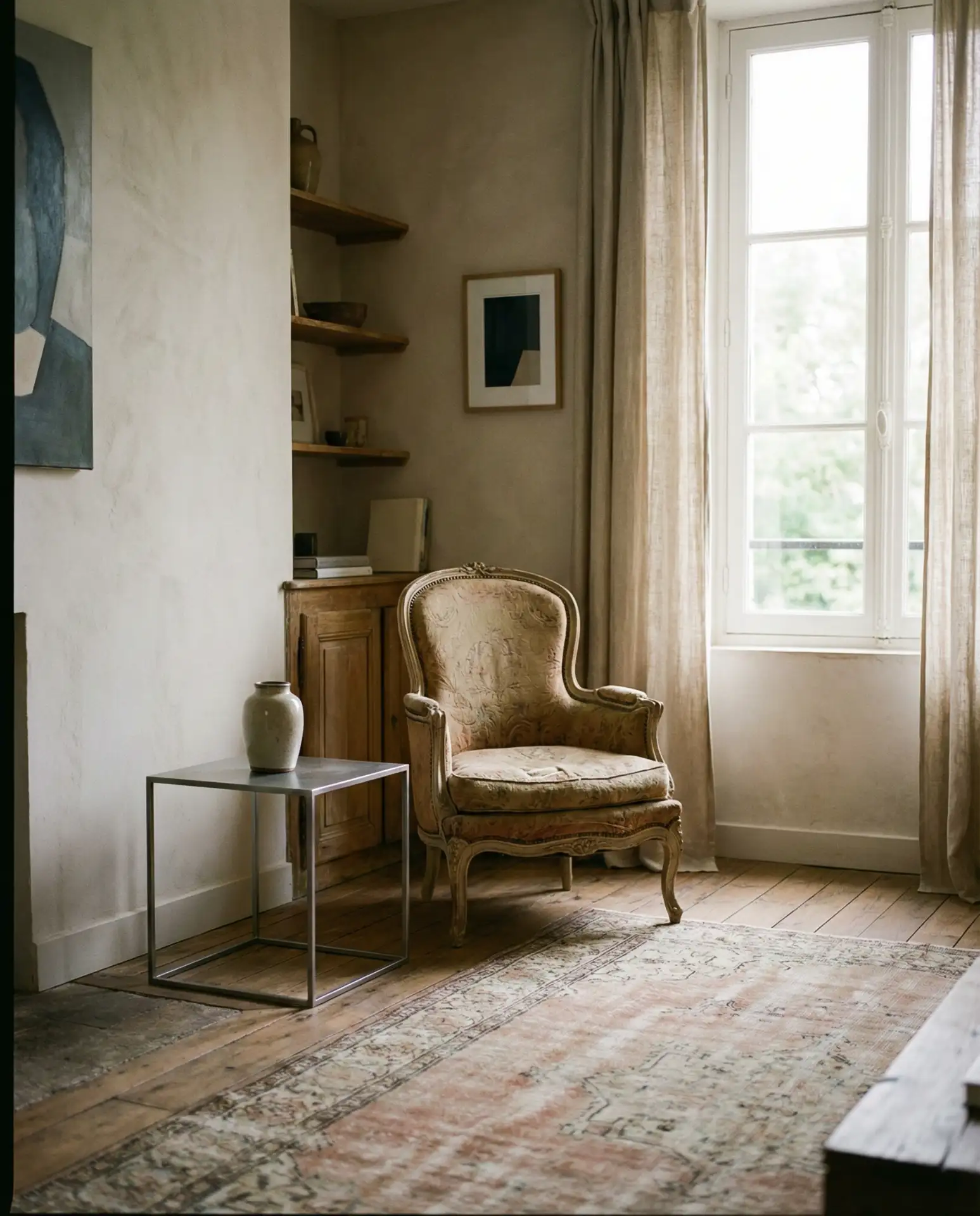
One approach that works well: choose one major vintage or antique piece as your anchor—a dining table, a buffet, a chandelier—and build around it with newer, more functional items. This gives you the character you want without sacrificing comfort or practicality. In a living room, that might mean a vintage console behind a brand-new sofa or an old wood coffee table paired with clean-lined modern chairs. The juxtaposition tells a story and keeps the room feeling dynamic rather than static.
20. Woven Baskets and Natural Storage
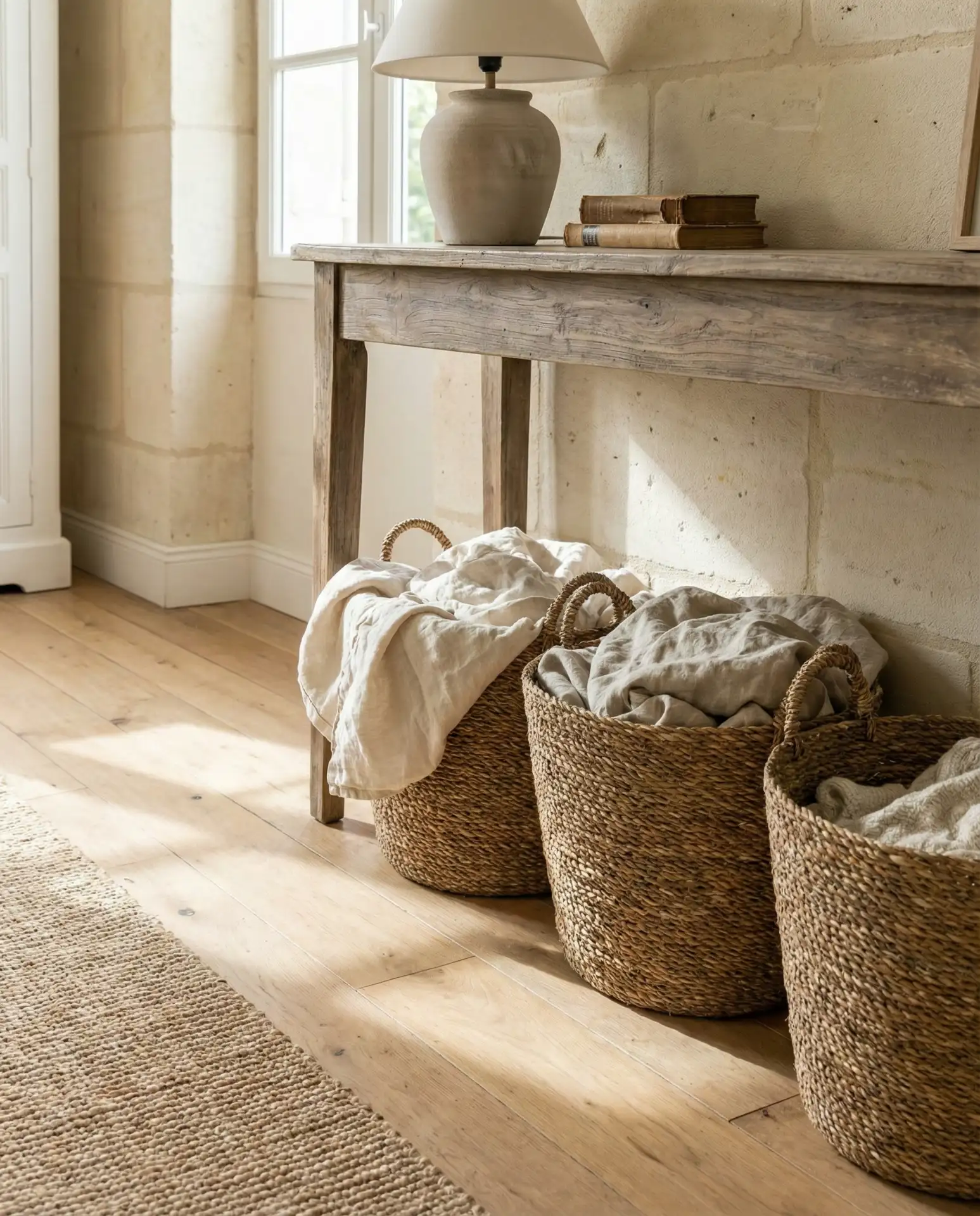
Woven baskets in rattan, wicker, or seagrass serve as both storage and decor in French country living rooms. Use them to corral throw blankets, magazines, firewood, or kids’ toys, keeping clutter at bay while adding organic texture. Baskets look beautiful tucked under consoles, stacked beside fireplaces, or displayed on open shelving. They’re affordable, versatile, and inherently French country, evoking the markets and farmhouses of rural France.
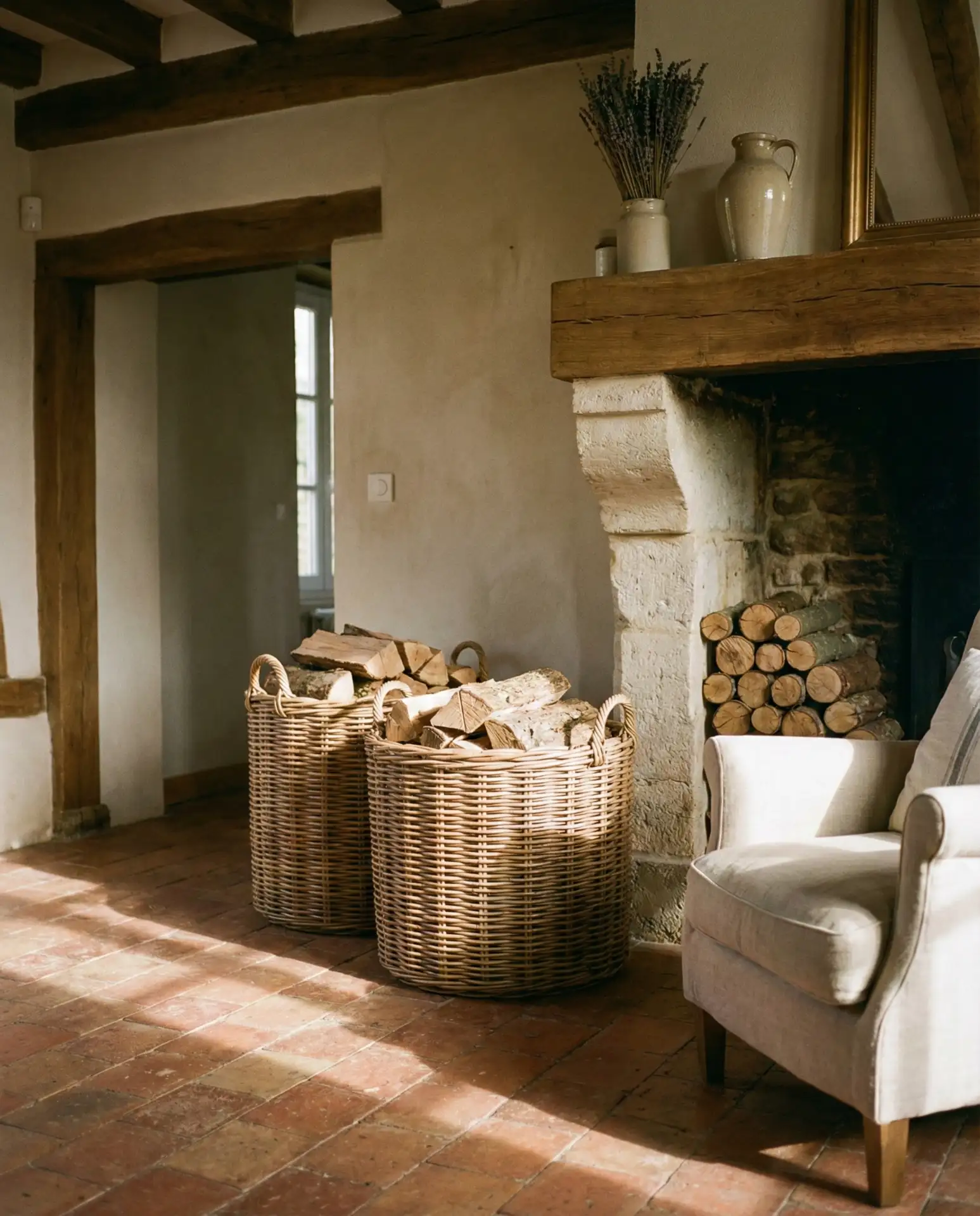
Expert-style commentary: baskets are one of the easiest and most cost-effective ways to introduce French country style. They work in virtually any room, and because they’re functional, they never feel like purely decorative filler. Look for baskets with varied sizes and weaves to create visual interest, and don’t worry if they don’t match perfectly—the handmade, imperfect quality is part of the appeal. Avoid synthetic materials; natural fibers age beautifully and contribute to the warm, organic feel that defines this style.
21. Soft Lighting Layers for Warmth
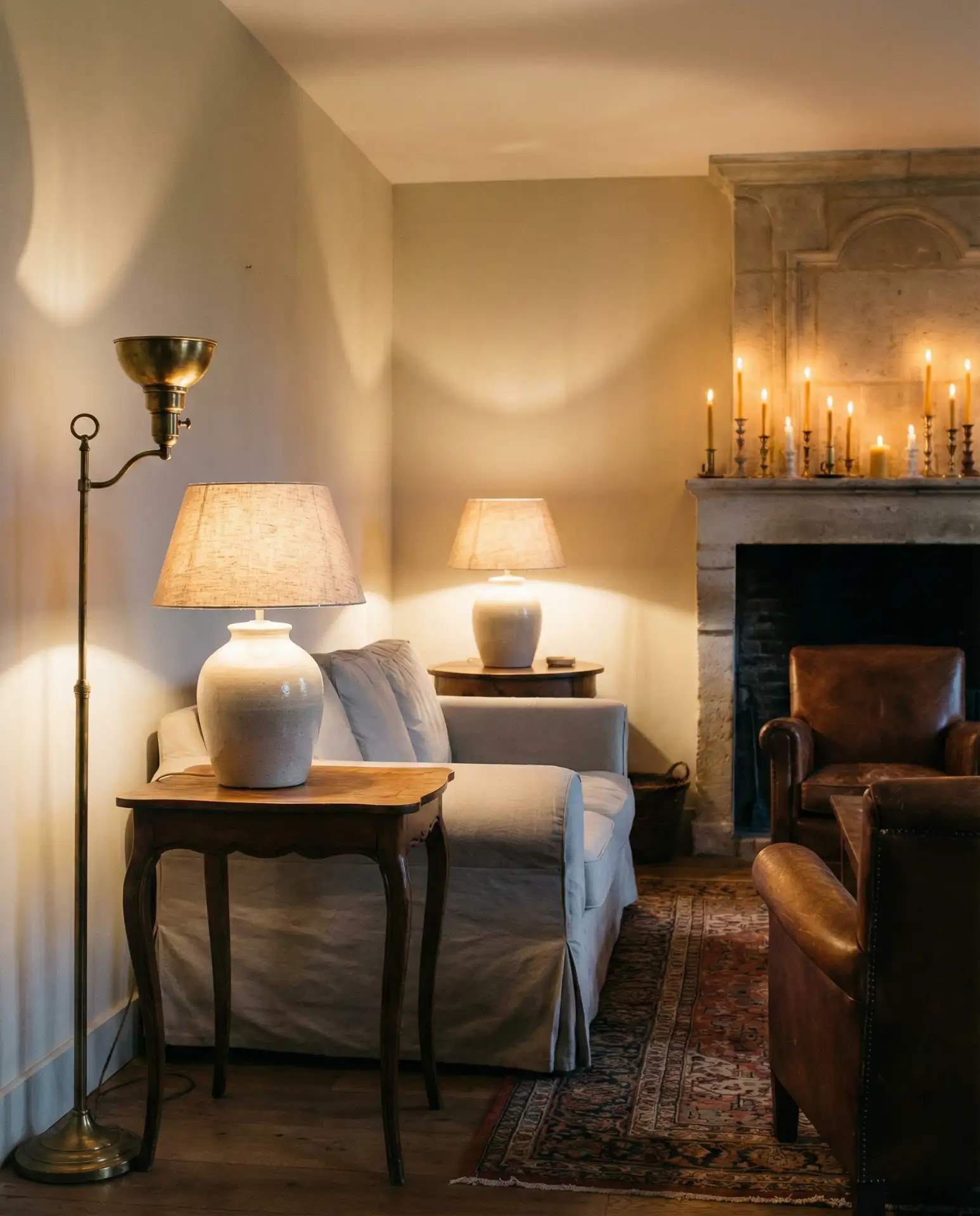
French country living rooms rely on multiple light sources to create a warm, inviting glow rather than harsh overhead lighting. Combine table lamps with linen or burlap shades, floor lamps with brass or iron bases, sconces flanking a mirror or fireplace, and candles clustered on the coffee table or mantel. Use warm-toned bulbs (2700K or lower) to enhance the cozy atmosphere. Dimmer switches add flexibility, letting you adjust the mood from bright and functional to soft and intimate.
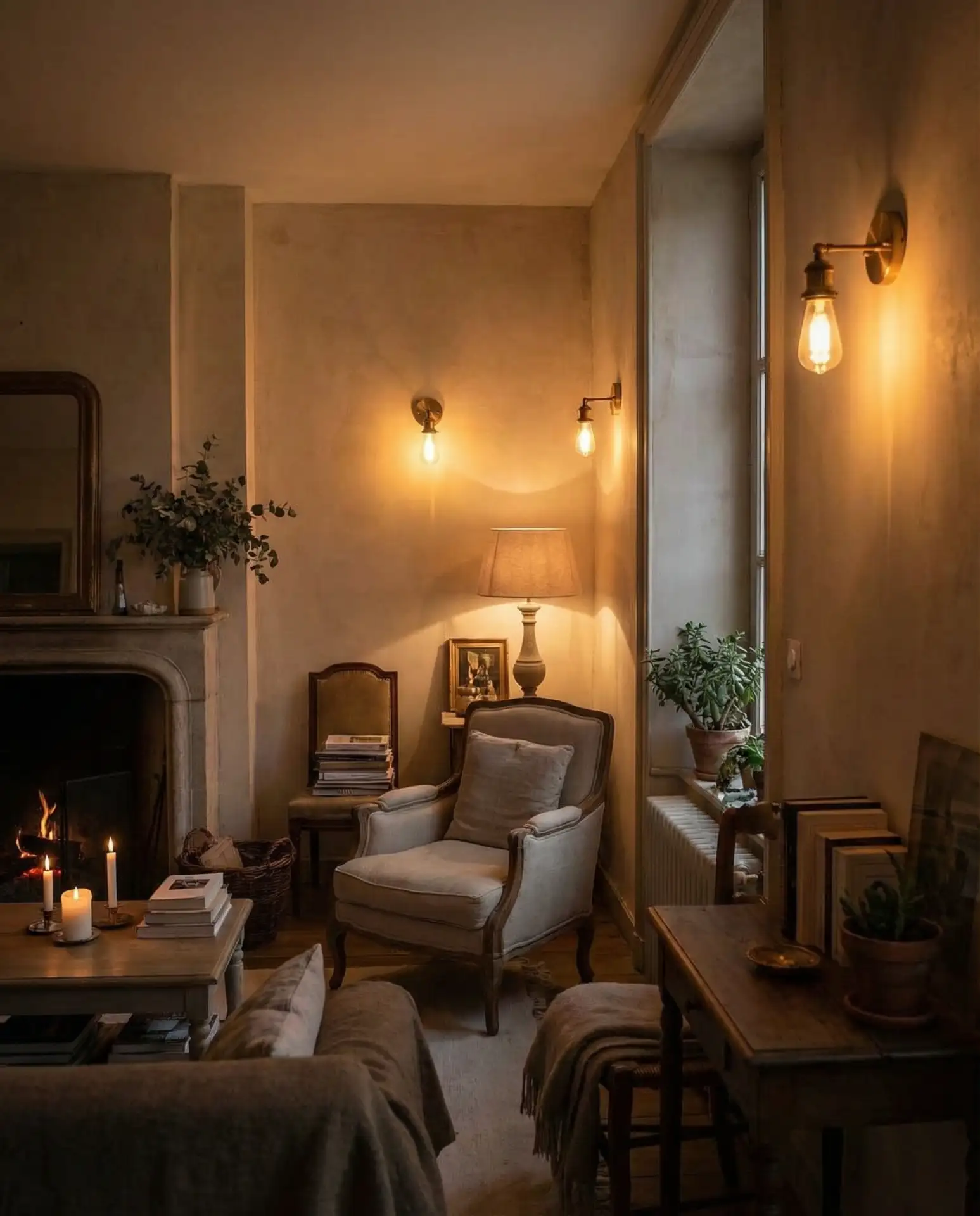
American lifestyle context: in homes with open floor plans, lighting zones become even more important. Define your living room area with distinct lighting—lamps near seating, sconces on a feature wall—to create visual separation from the kitchen or dining space. In the Midwest and Northeast, where winter evenings are long and dark, investing in quality lighting transforms your living room into a true refuge. Skip the builder-grade flush-mount ceiling fixture and opt for a vintage chandelier or pendant instead; it adds character and distributes light more beautifully.
22. Personal Touches and Collected Objects
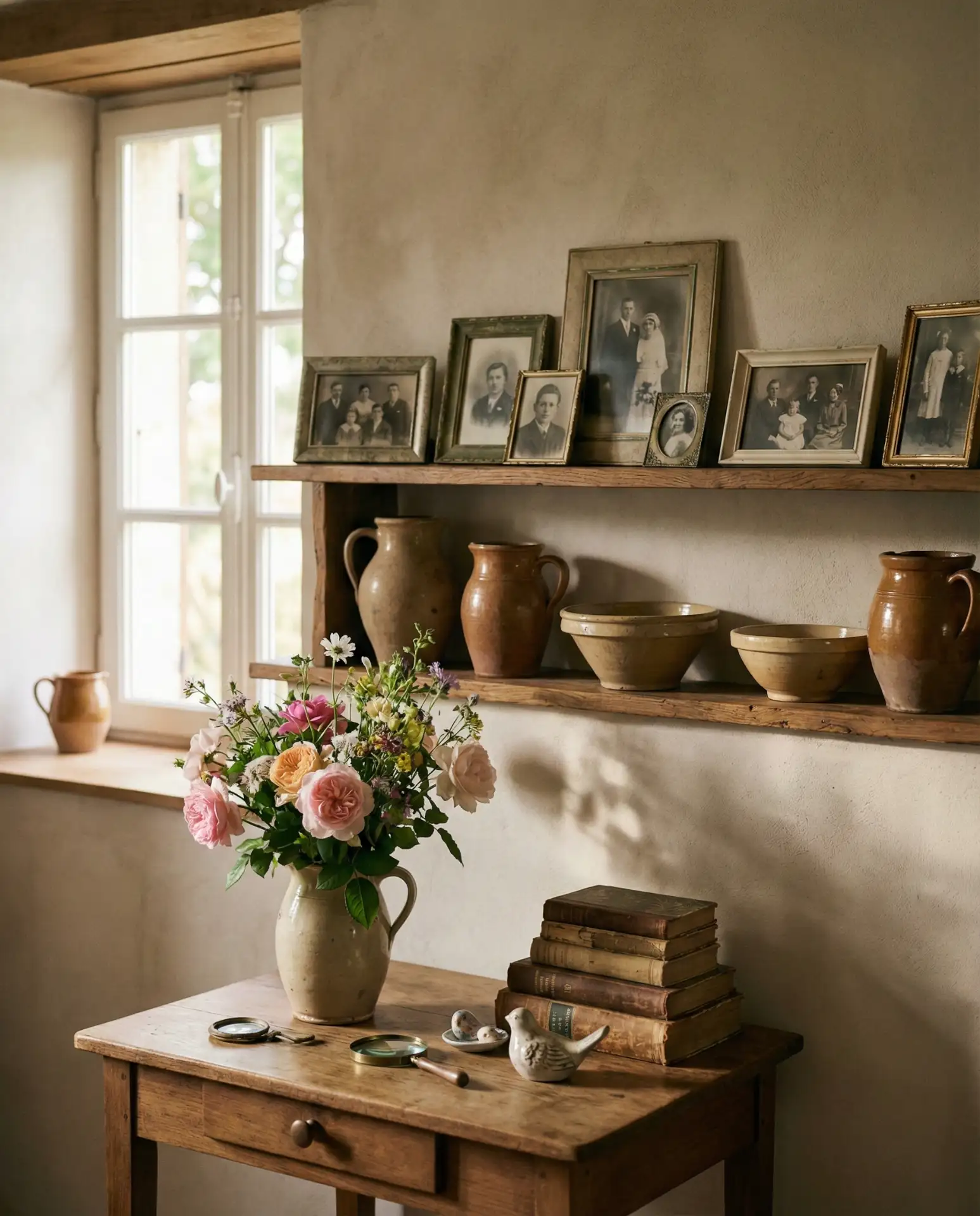
The final layer of French country style comes from personal touches—decor that tells your story. Display family photos in vintage frames, travel souvenirs from France or beyond, or handmade pottery from local artisans. Arrange books you actually read, not just decorative spines, and rotate seasonal elements like fresh flowers, branches, or holiday greenery. These details make the room feel lived-in and loved, not staged for a magazine shoot. French country is ultimately about creating a home, not a showpiece.
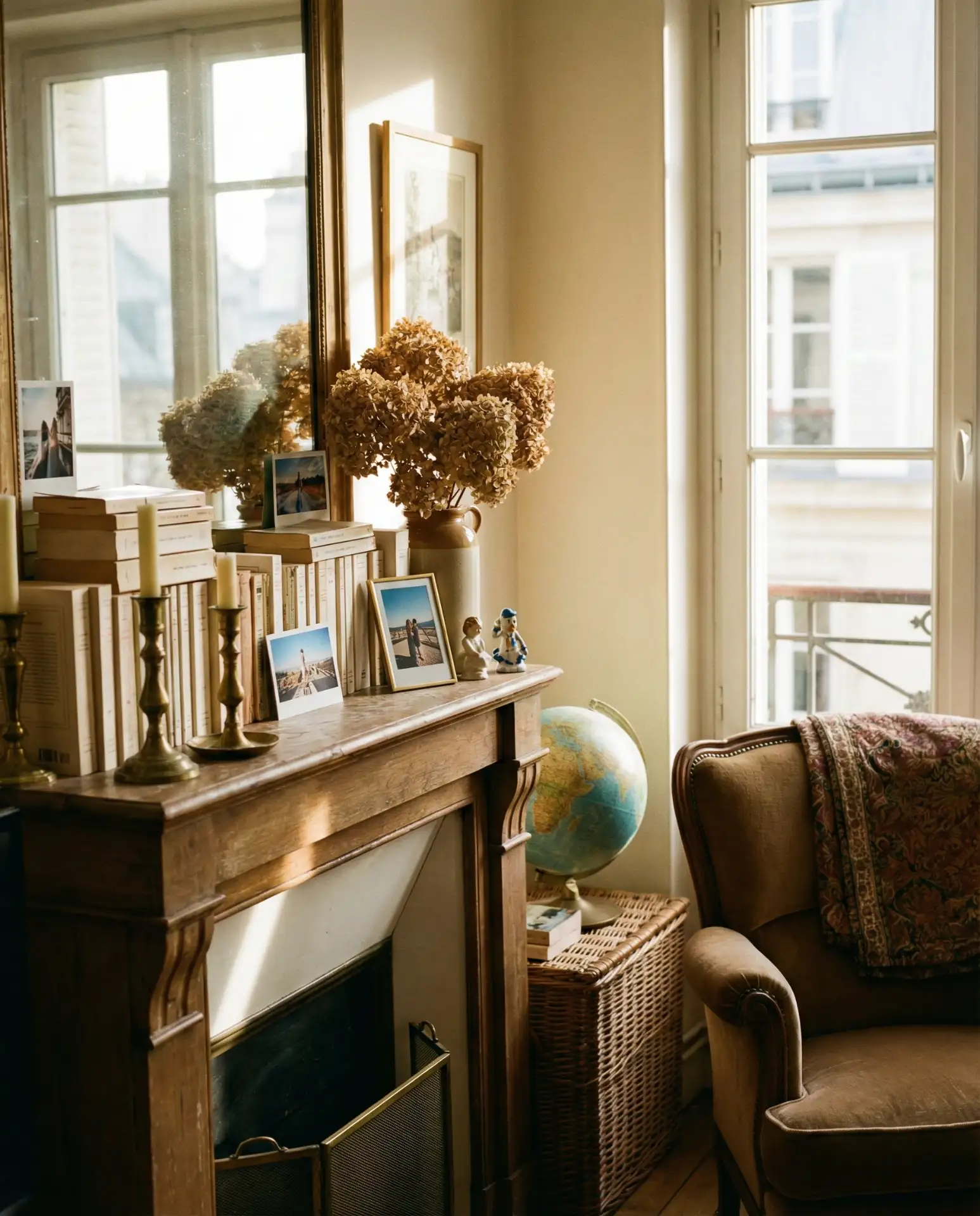
One micro anecdote: a friend in Vermont keeps a shallow wooden tray on her coffee table where she rotates small objects—pinecones in fall, seashells in summer, and vintage postcards year-round. It’s a simple habit that keeps the room feeling fresh and personal without requiring a full redesign. The lesson here is that French country invites you to be present and engaged with your space. Don’t overthink it; choose objects that make you happy, arrange them with care, and trust that your home will feel authentically you.
Conclusion
French country living rooms in 2026 remain a celebration of comfort, beauty, and the art of living well. Whether you’re drawn to the softness of cottage florals, the drama of dark moody walls, or the simplicity of white and wood, this style offers a framework that adapts to your life and tastes. The ideas above are starting points—mix them, modify them, and make them your own. We’d love to hear which approach resonates with you or see photos of your own French country living room. Share your thoughts and inspiration in the comments below, and let’s keep the conversation going.