There’s something almost primal about a fireplace—it pulls people in, anchors a room, and instantly makes a space feel like a home. But in 2026, Americans aren’t just lighting fires and calling it done. They’re treating the fireplace as a full design moment, layering texture, greenery, seasonal accents, and personal objects to create something that feels curated but lived-in. Pinterest searches for fireplace styling have surged year over year, reflecting a widespread hunger for warmth—literal and aesthetic. Whether you’re working with a grand stone hearth, a modest electric insert, or a completely unused opening, this guide covers 24 fresh ideas to make your fireplace the most beautiful corner of your home.
1. Layered Mantel Styling for the Living Room
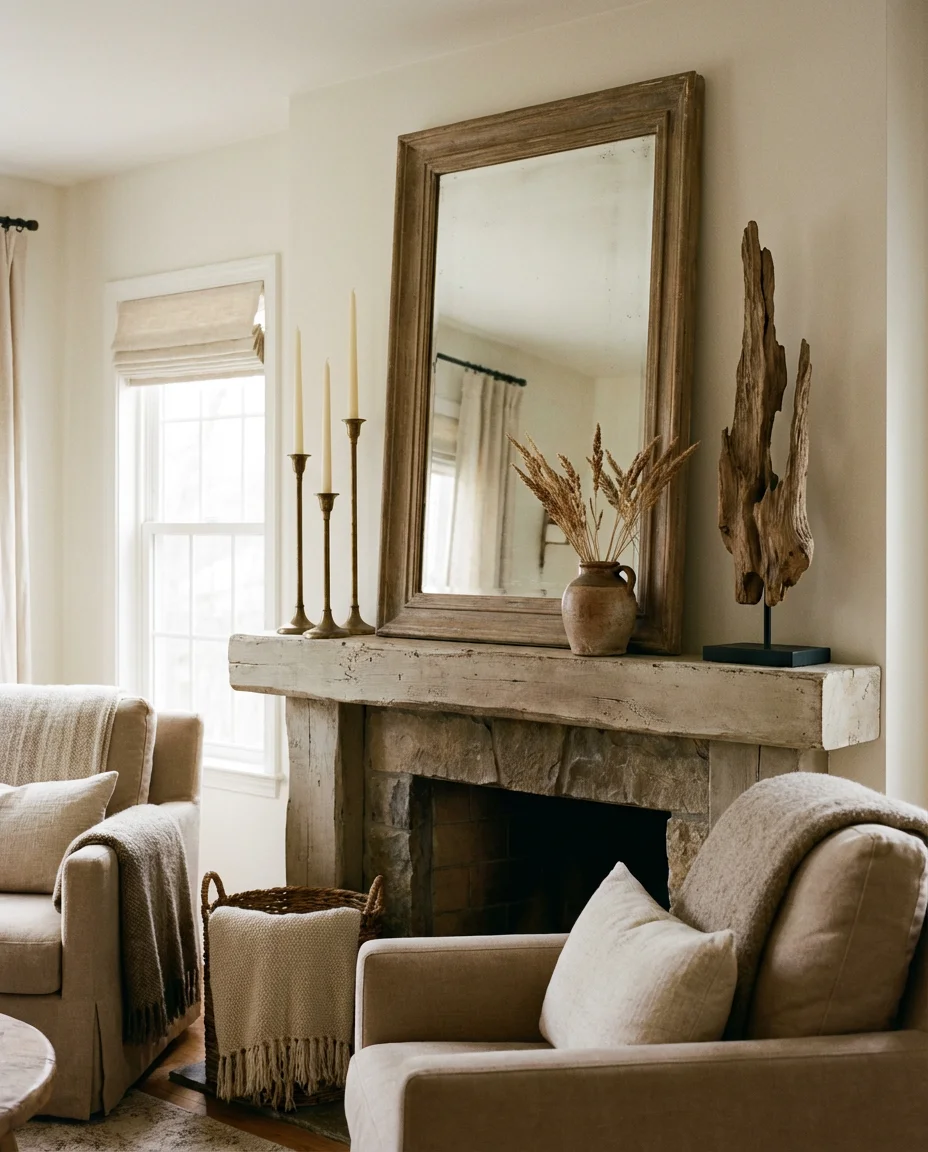
If there’s one place in a living room that deserves real attention, it’s the mantel. In 2026, the approach is less about symmetry and more about intentional layering—a mix of heights, textures, and materials that feels collected over time rather than staged. Think tall candleholders flanking a leaning mirror, a small ceramic vase tucked in front, and a piece of driftwood or a sculptural object anchoring one side. The living room ideas that resonate most on Pinterest right now share one thing: they look personal, not showroom-perfect.
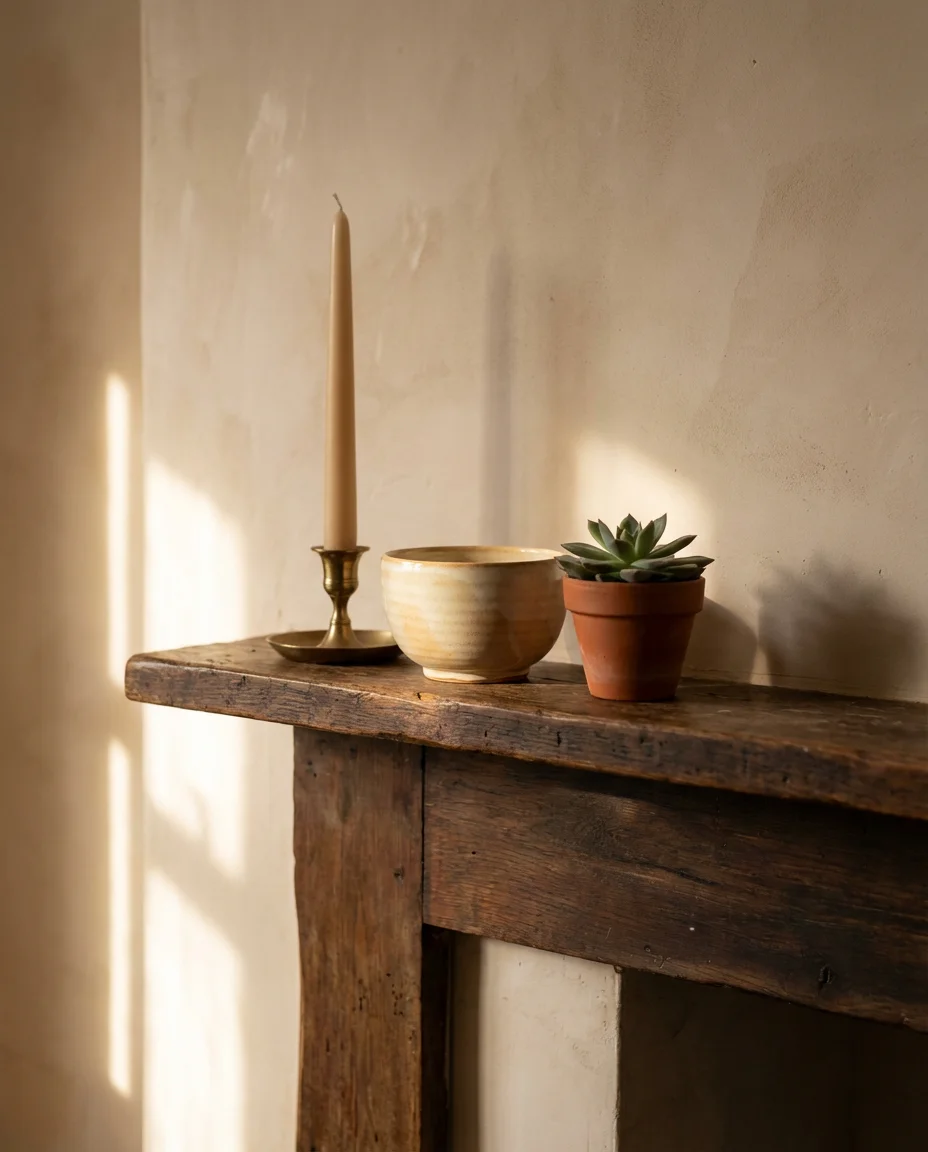
The secret to a great layered mantel is what designers call the “rule of odd numbers”—group objects in threes or fives, vary their heights, and leave intentional negative space. A common mistake is overcrowding the surface until it reads as clutter rather than curation. Step back, remove one item, and see if the whole arrangement breathes better. Almost always, it does. Keep the color palette tight—two or three tones maximum—and let one or two standout textures do the heavy lifting.
2. Above the TV Fireplace Display
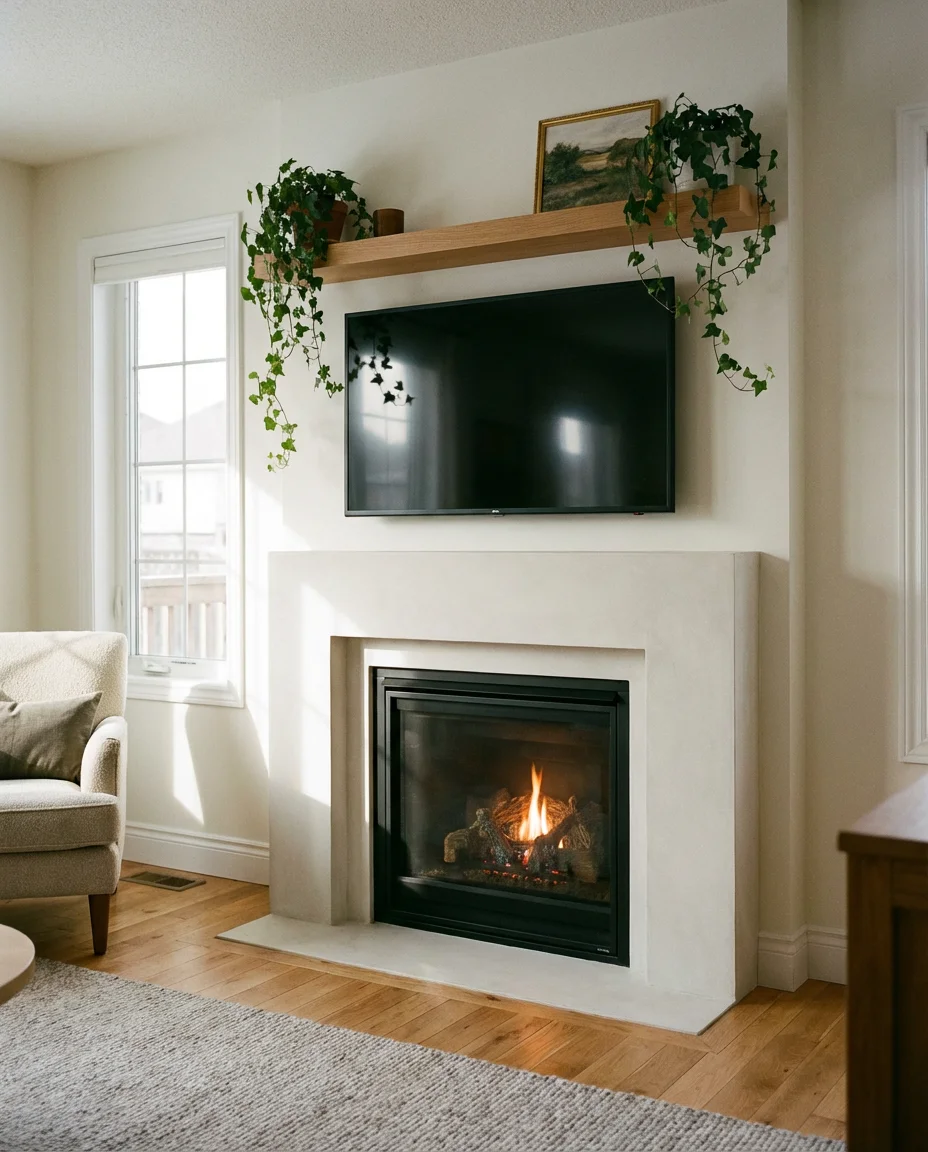
The eternal debate—TV above the fireplace or not—has evolved. In 2026, more homeowners are making it work beautifully by treating the space above the screen as a secondary focal point rather than an afterthought. A shallow floating shelf above the TV holds low-profile art or trailing greenery. Below the screen, the firebox can be framed with painted brick or a sleek tile surround to tie both elements together. The key is visual weight: if the TV dominates, the fireplace décor should be quieter—and vice versa.
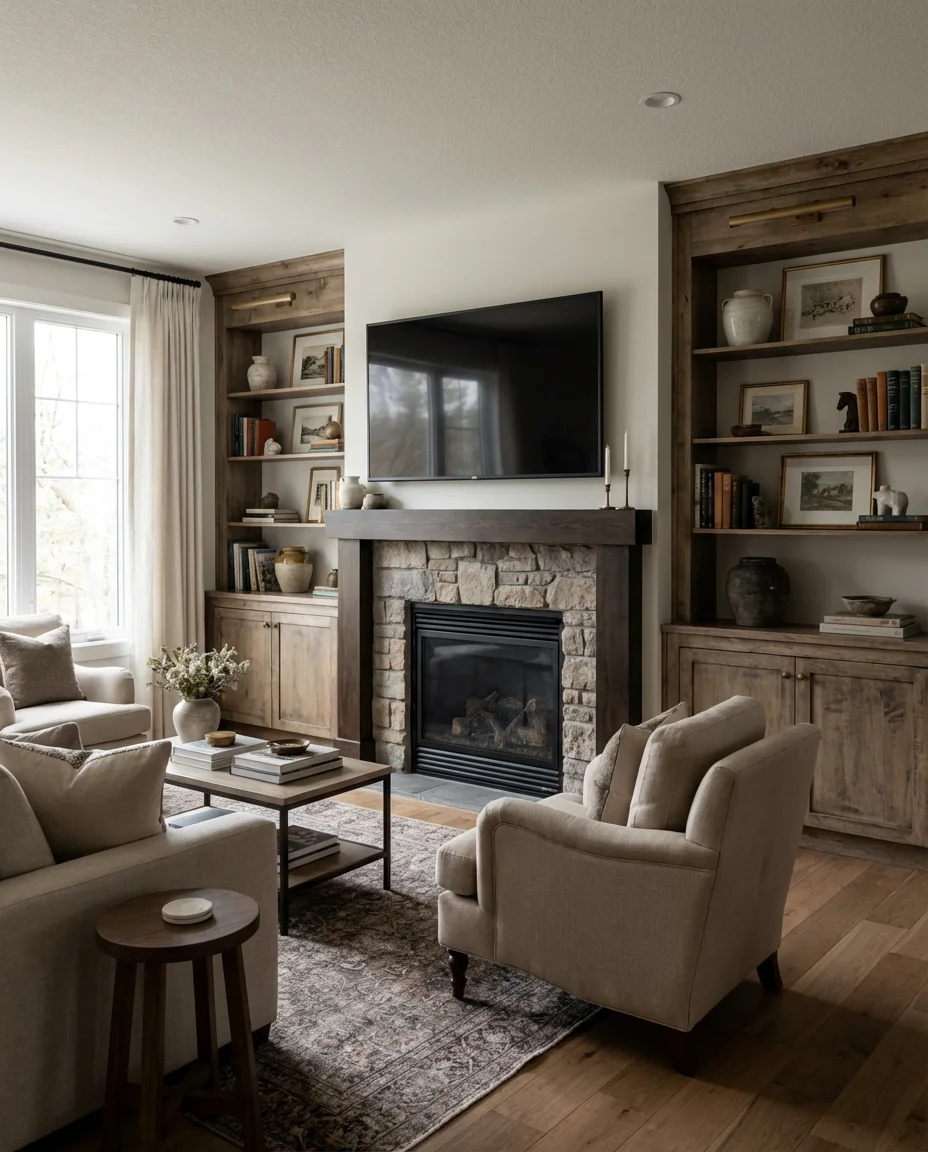
One practical tip most designers will tell you: the TV should sit no higher than eye level when you’re seated. When a TV is mounted directly above a fireplace, it often ends up too high, straining the neck over hours of watching. If repositioning isn’t possible, consider a tilting mount that angles the screen slightly downward. Frame the whole setup with built-in shelving on either side to give the wall a cohesive, intentional look that makes both the TV and the fireplace feel like they belong together.
3. Christmas Fireplace Decor with Stockings and Garland

Nothing in American home design gets more Pinterest traffic than Christmas fireplace styling. The classic image—stockings hung with care, fresh garland draped across the mantel, candlelight flickering—still holds enormous appeal, but 2026 interpretations are more sophisticated. Natural elements like eucalyptus, dried orange slices, and pinecones are replacing plastic greenery. Linen or velvet stockings in muted tones—sage, dusty rose, or ivory—feel more current than bright red velvet. The holiday look is warm and tactile, not loud.

A micro anecdote worth sharing: a family in Vermont started a tradition of weaving their kids’ drawings—laminated and hung on thin ribbon—into the garland every year. By the time the children were grown, the mantel had become a kind of living archive of the family. That’s the kind of sentimental layering that no design trend can manufacture, but that every great fireplace display should aspire to. Start simple, then let it accumulate meaning.
4. Stone Fireplace with Organic Accents
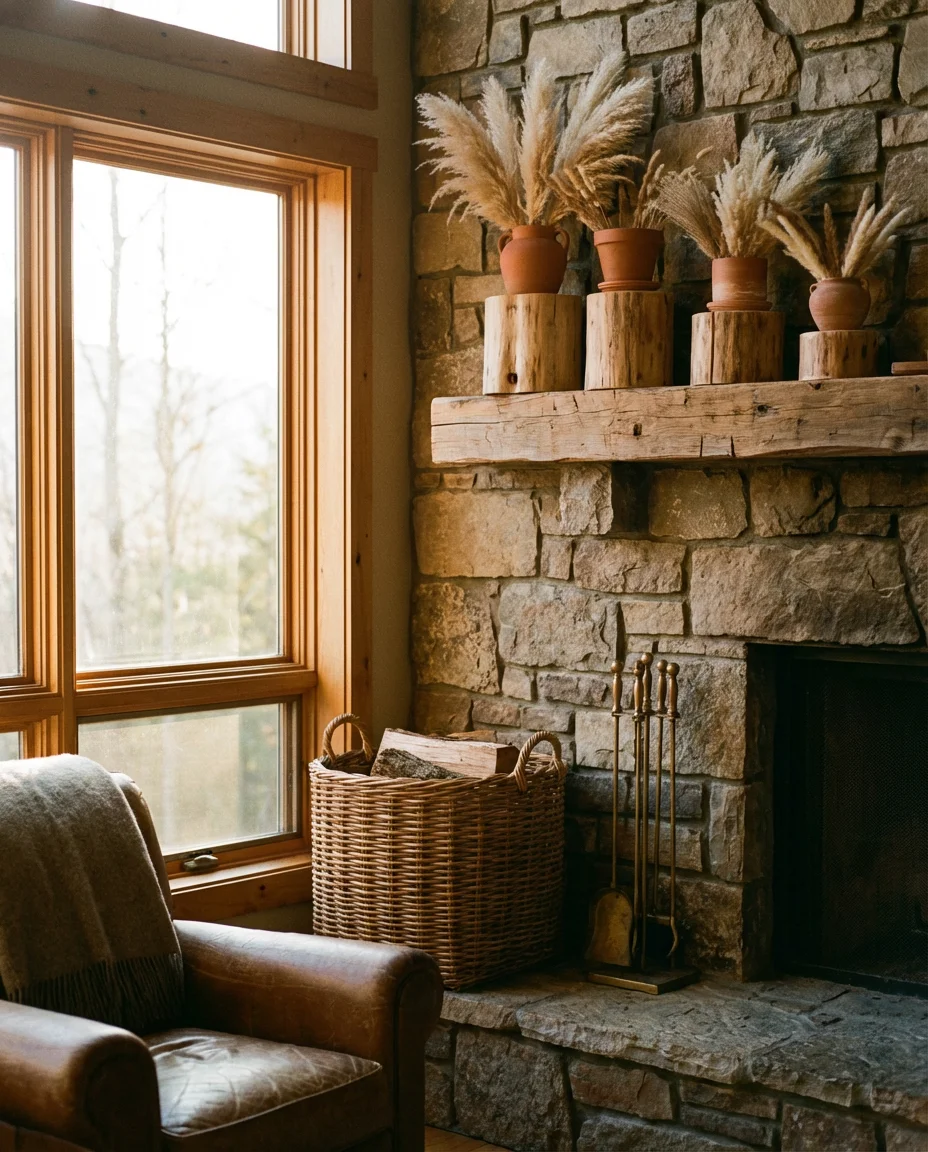
A stone fireplace is one of those architectural gifts that can handle almost any décor direction—rustic, modern, or transitional. In 2026, the strongest styling direction for stone hearths leans into natural materials: linen-wrapped candles, raw wood pedestals, terracotta pots holding dried grasses, and woven baskets stacked beside the firebox. The roughness of the stone calls for textures that match its weight. Polished brass or unlacquered bronze hardware on fireplace tools adds warmth without competing with the organic quality of the rustic material.
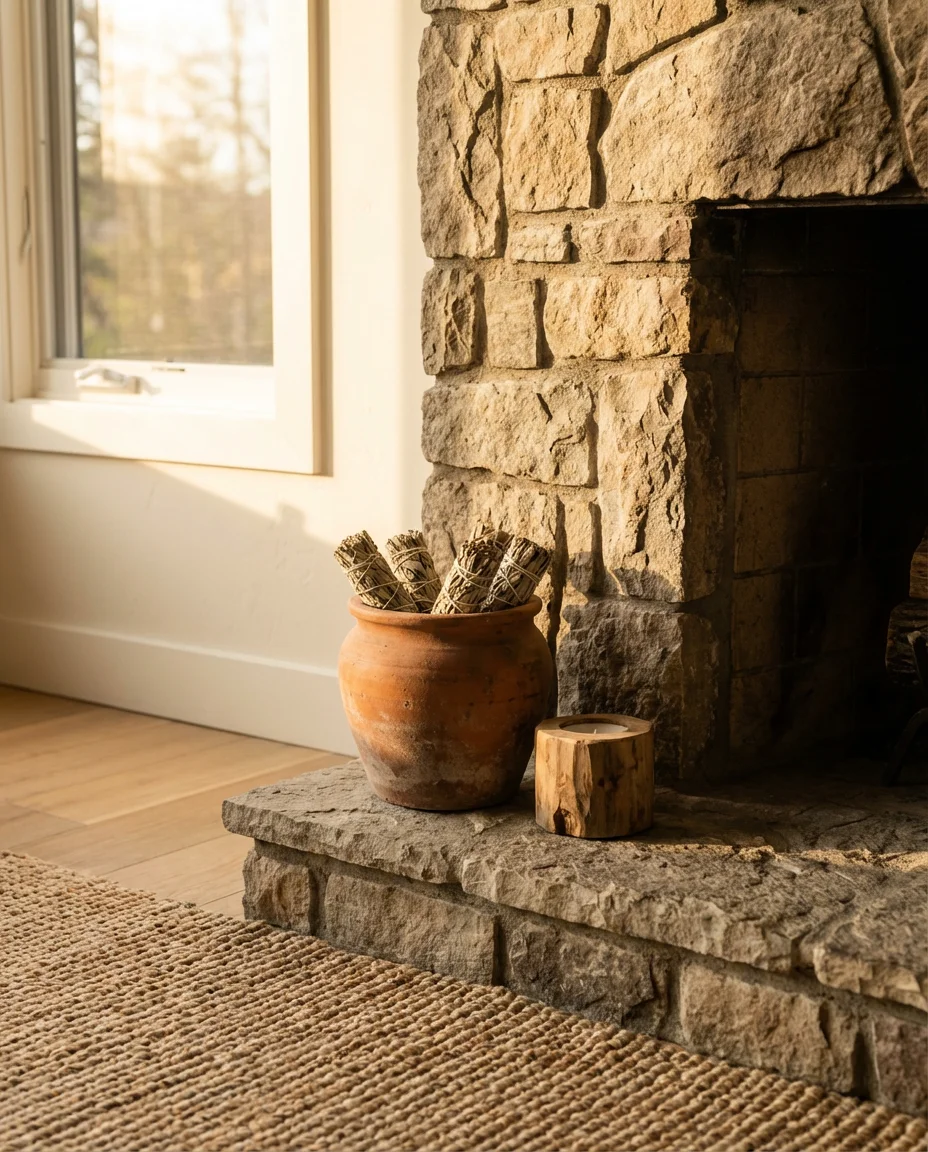
Where this works best: open-plan homes with high ceilings, mountain cabins, or any space where the architecture already has bones. A stone fireplace in a small urban apartment can feel overwhelming unless the rest of the room is kept deliberately spare. The stone should be the loudest thing in the room—let everything around it stay quiet and supportive. Resist the urge to add too many contrasting colors; let the natural variation in the stone do its own visual work.
5. Faux Fireplace for Apartments and Rentals
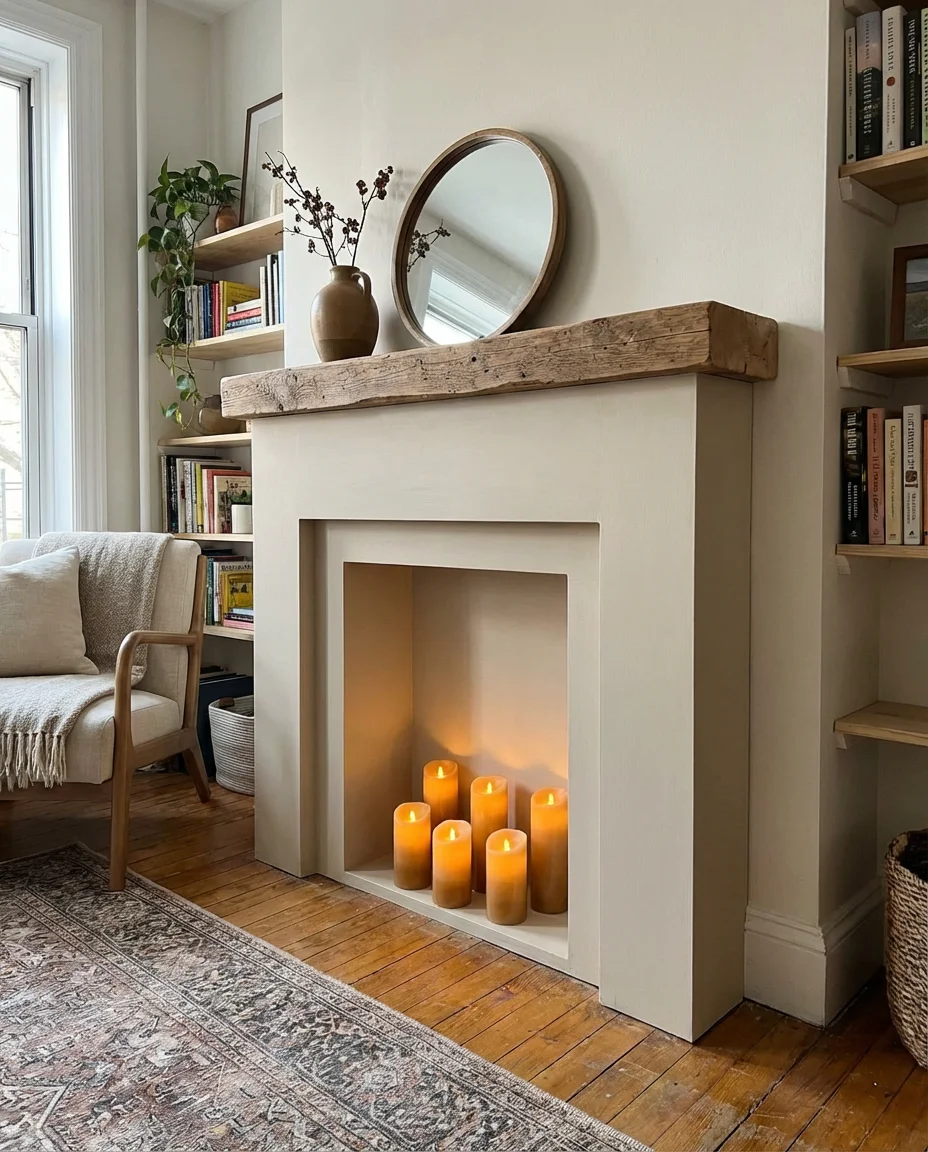
Not every home has a real hearth, but that hasn’t stopped a generation of renters and apartment dwellers from creating a convincing faux fireplace moment. The options in 2026 are genuinely impressive: prefabricated MDF surrounds painted to match the wall, reclaimed wood mantels mounted with heavy-duty brackets, and realistic-looking fake log inserts that glow with LED candles. With the right styling—a proper mantel, a decorative firebox, and well-placed lighting—the illusion is surprisingly complete, especially in photos.
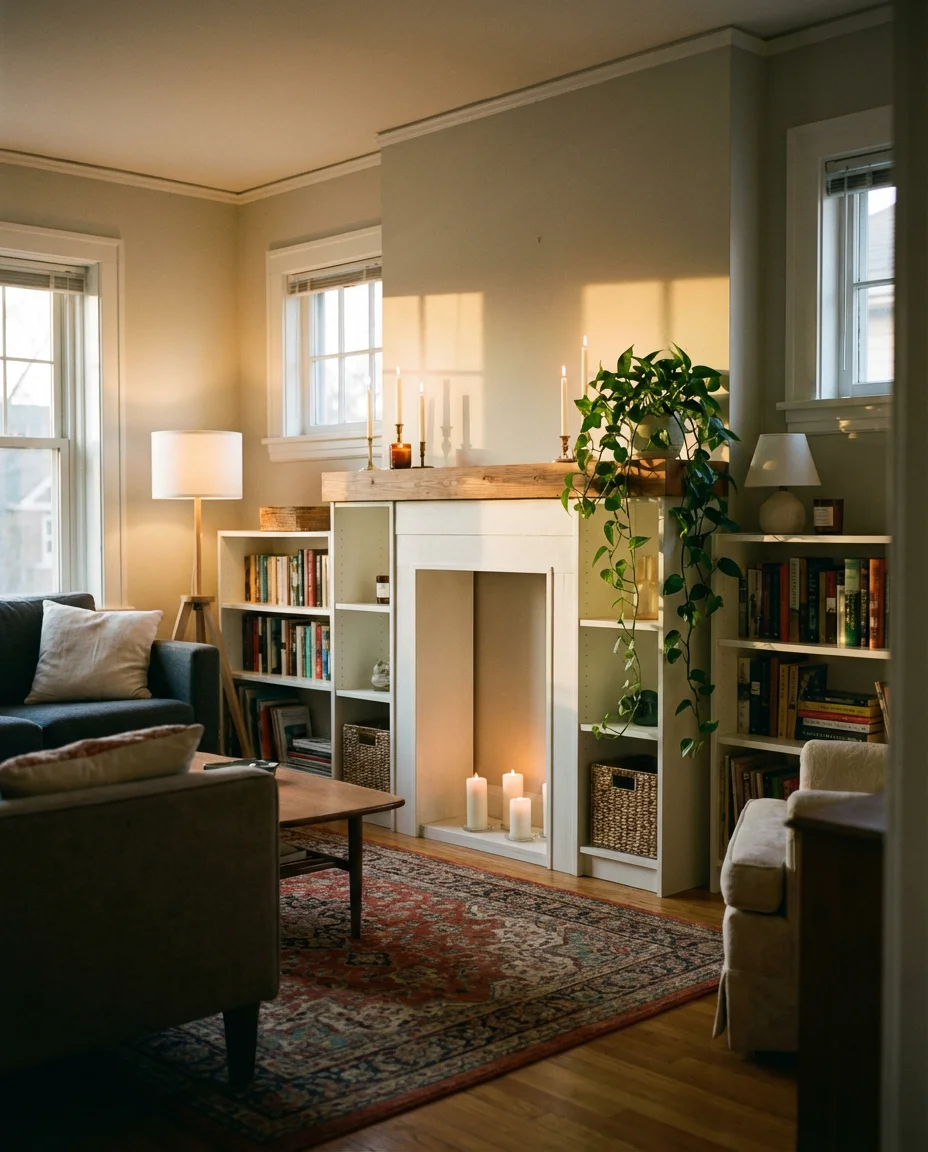
Budget-conscious decorators have found that the sweet spot for a convincing faux fireplace setup runs between $150 and $400, depending on the quality of the surround and whether you DIY the installation. IKEA KALLAX units, turned on their side and built out with trim and molding, have become a popular base. Add a coat of paint, a simple mantel shelf from a lumber yard, and a candle insert, and the whole thing looks intentional. It won’t fool anyone on close inspection, but it will absolutely anchor a room with warmth and presence.
6. Electric Fireplace in the Bedroom
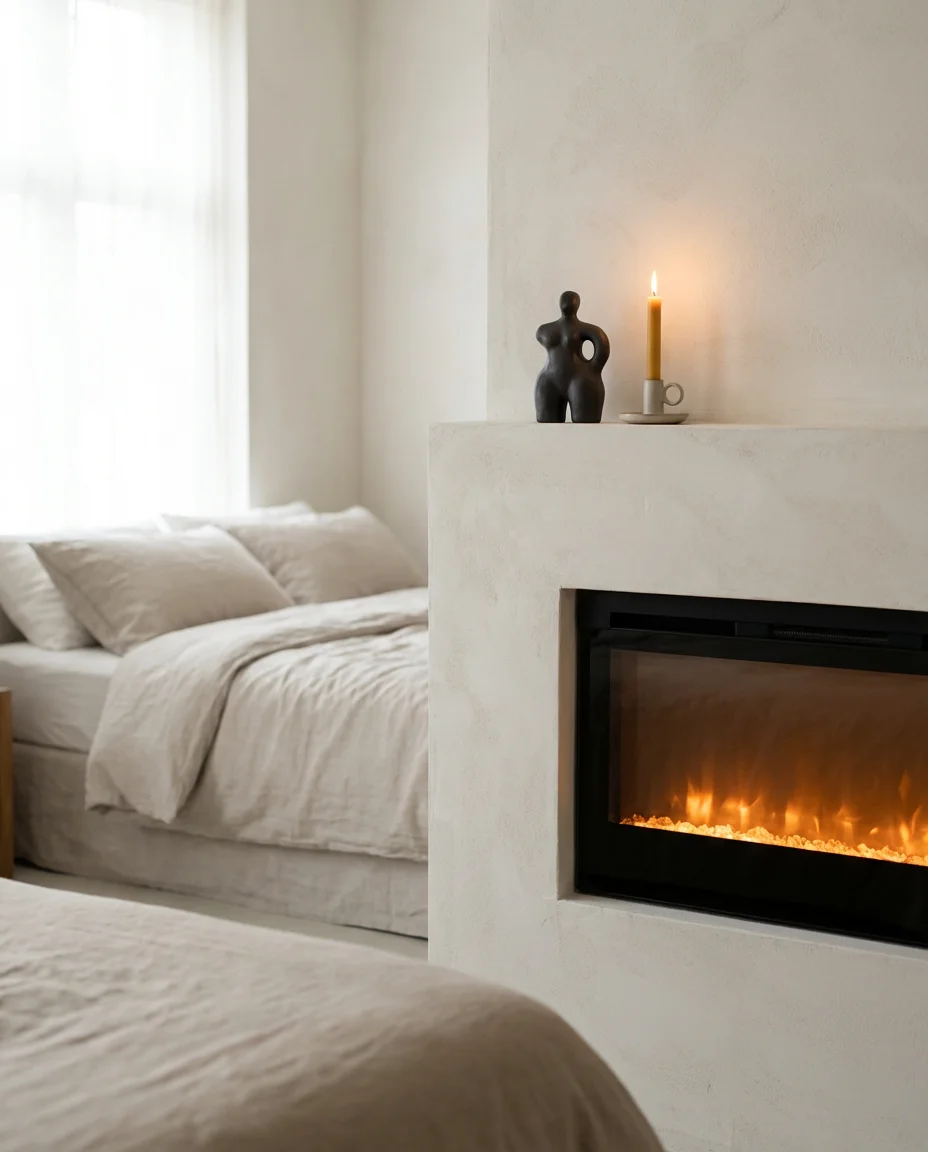
The electric fireplace has come a long way from its early reputation as a cheap substitute for the real thing. Today’s models feature realistic flame simulations, adjustable color temperatures, and whisper-quiet operation—making them genuinely compelling for bedroom use. In 2026, wall-mounted electric inserts are being built into custom millwork surrounds or framed with plaster to look completely integrated. The appeal for bedrooms is obvious: warmth, ambiance, and the visual comfort of a glowing firebox—all without the safety concerns of an open flame.
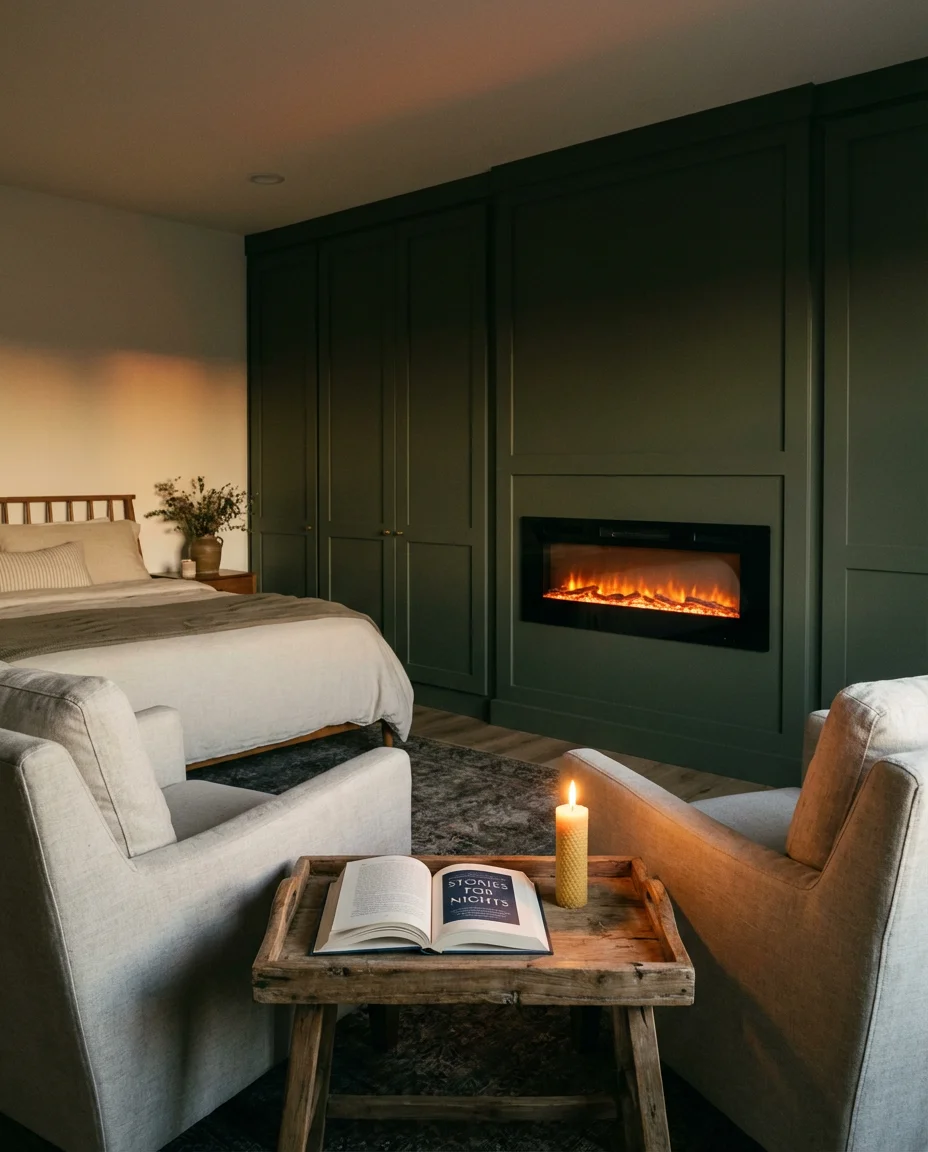
Interior designers who work with bedroom spaces often point out that the fireplace—even an electric one—changes the entire energy of a room by creating a second focal point that competes with the bed. That’s not a bad thing. It gives the eye somewhere to rest that isn’t a screen, and it encourages the kind of slow, contemplative relaxation that bedrooms should be designed for. Position it on the wall opposite the bed for maximum effect, and frame it simply—a clean surround, a few small objects, nothing fussy.
7. White Fireplace with Minimalist Styling
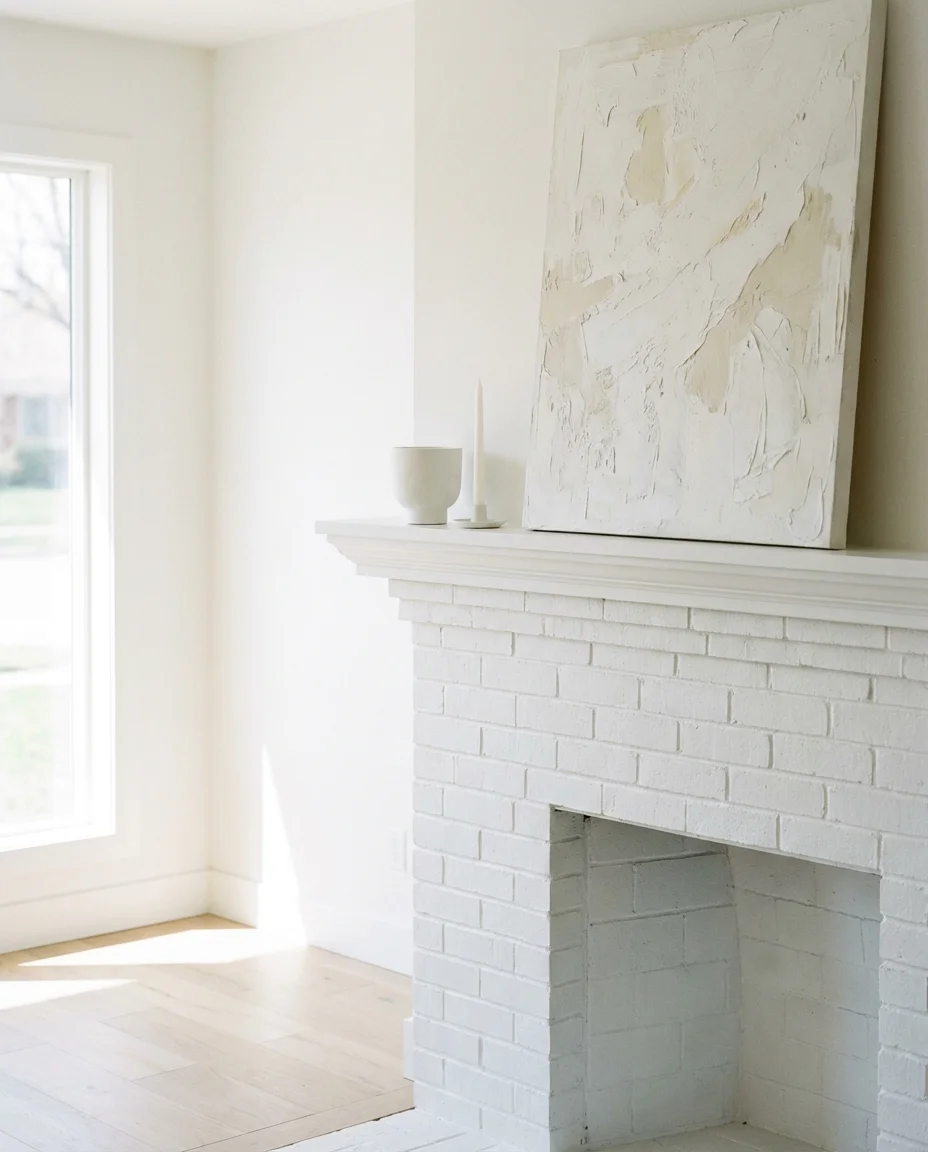
A white fireplace is a blank canvas—and in the hands of a confident decorator, that’s one of the most powerful things a room can have. In 2026, the minimalist approach to white fireplaces means restraint: a single large-scale piece of art leaning against the wall, one or two sculptural objects, and nothing else. The whiteness of the surround and mantel amplifies everything placed on it, so less really is more. This look works especially well in homes with light hardwood floors and white or soft gray walls—the whole room breathes together.
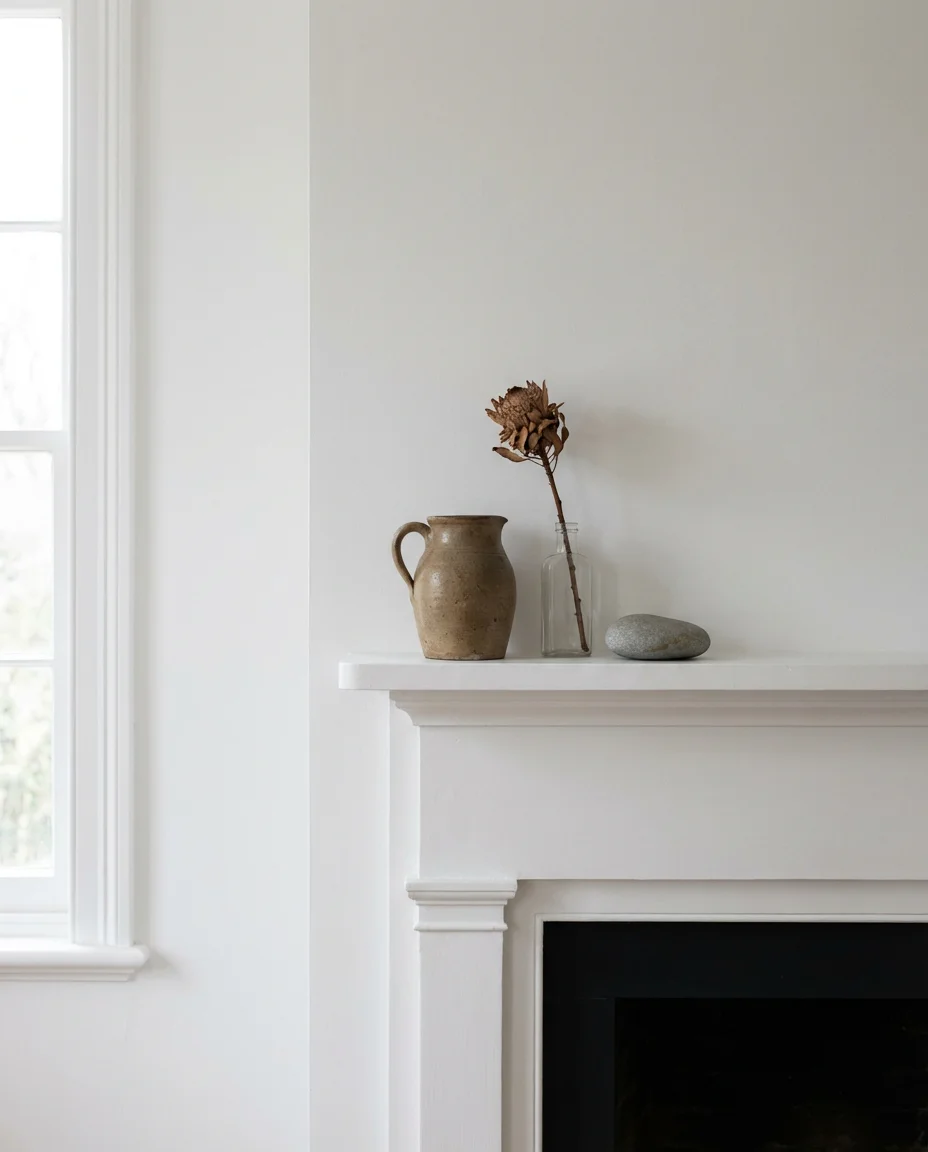
Real homeowners who’ve gone this route often describe the same experience: they styled the mantel with a dozen objects, hated it, stripped it back to three, and loved it. The temptation to fill a white mantel is real, but restraint is almost always the right call. One ceramic vessel, one piece of art, and a single candle or small plant is a complete vignette. If it feels bare at first, give it a week—the eye adjusts, and the calm starts to feel intentional rather than unfinished.
8. Red Brick Fireplace Refresh
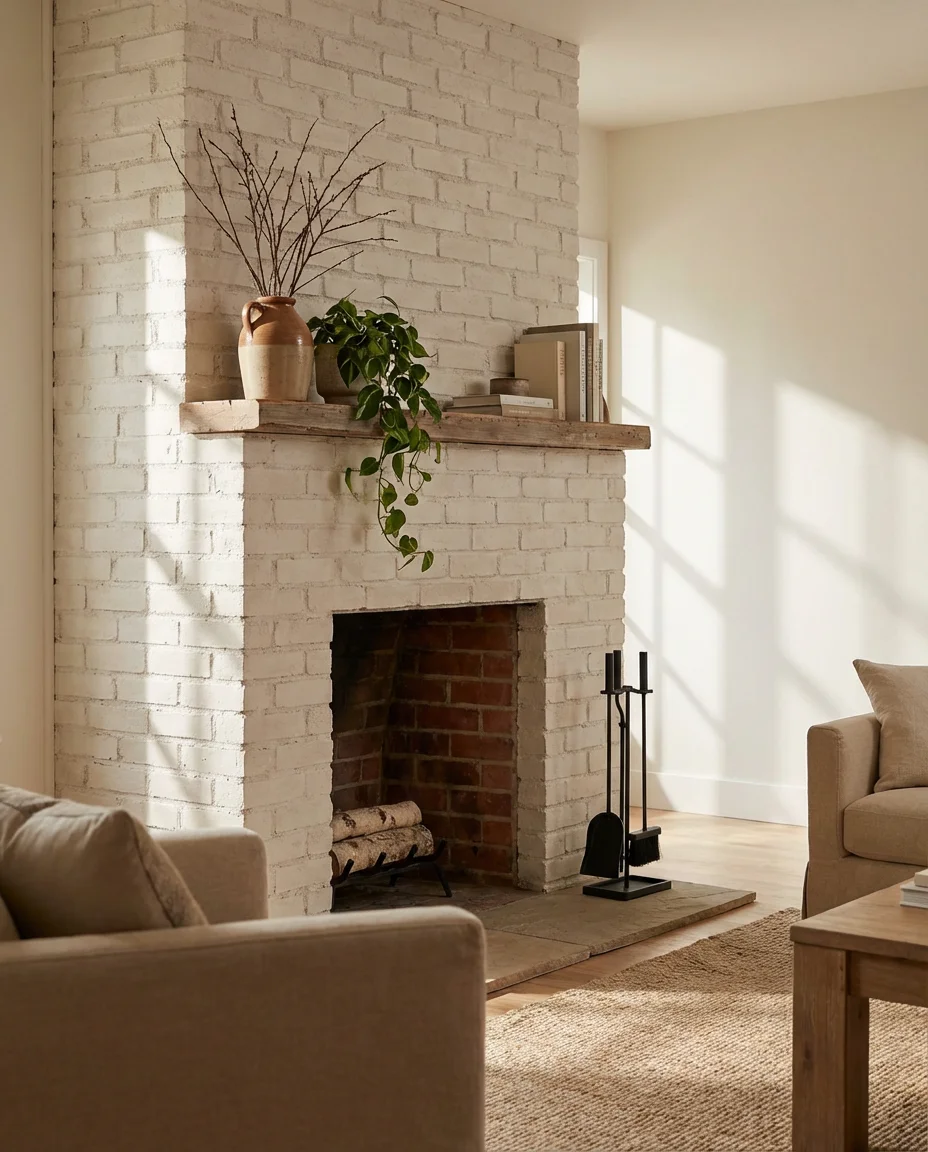
The red brick fireplace is one of the most common features in American homes built between the 1950s and 1990s, and it’s been divisive ever since. In 2026, the design conversation has shifted: instead of covering it up, many homeowners are leaning in—or applying a limewash or German smear technique to soften the color while preserving the texture. This approach honors the original material while updating the palette. Pair a limewashed red brick surround with warm wood tones and earthy textiles, and it reads entirely contemporary.
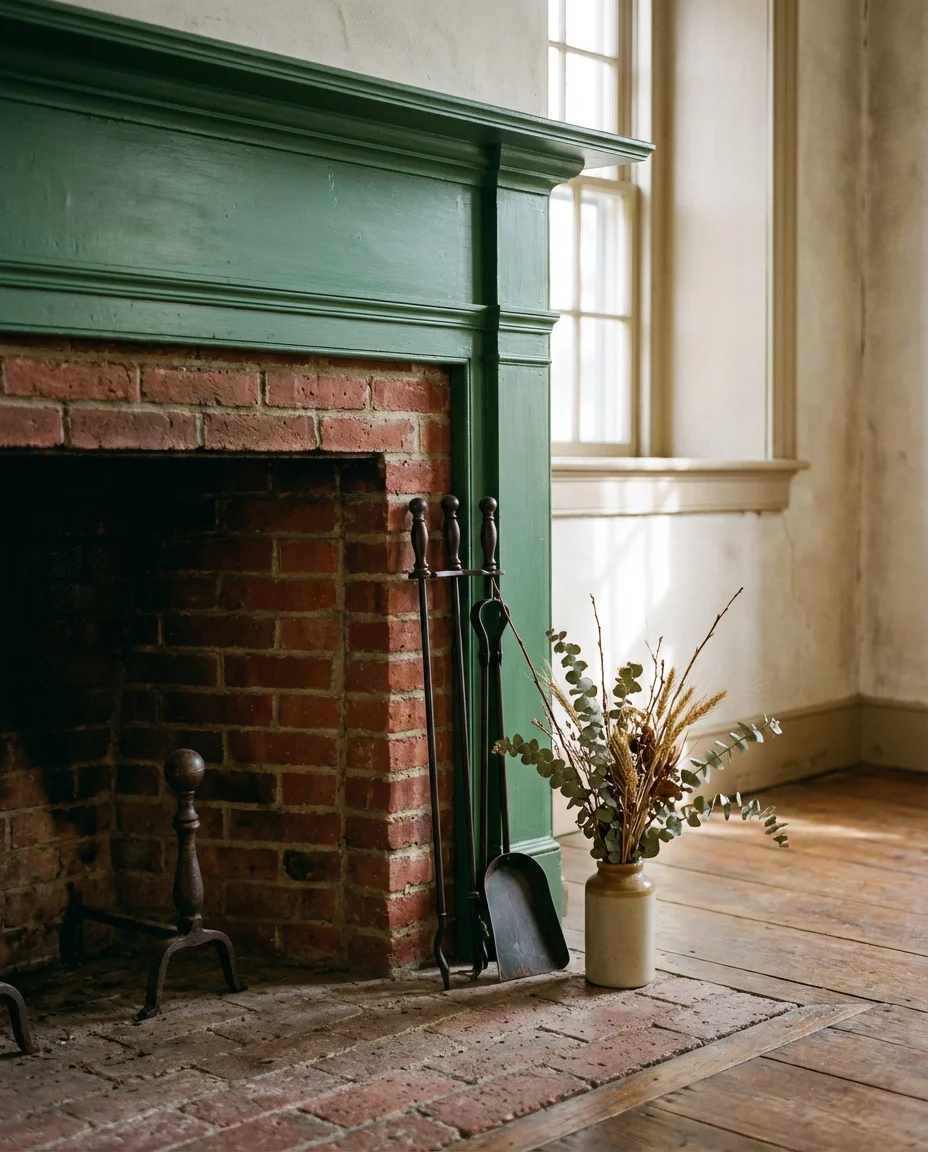
If a full limewash feels like too much commitment, try a painted wood mantel in a deep, warm tone—walnut stain, charcoal, or forest green—to ground the brick and give the surround a more finished appearance. Replacing dated brass hardware with matte black or oil-rubbed bronze fireplace tools is another high-impact, low-cost swap. For under $200 in updates, a tired red brick fireplace can become the most characterful feature in the room rather than the one you’re trying to distract from.
9. Easter and Spring Fireplace Mantel
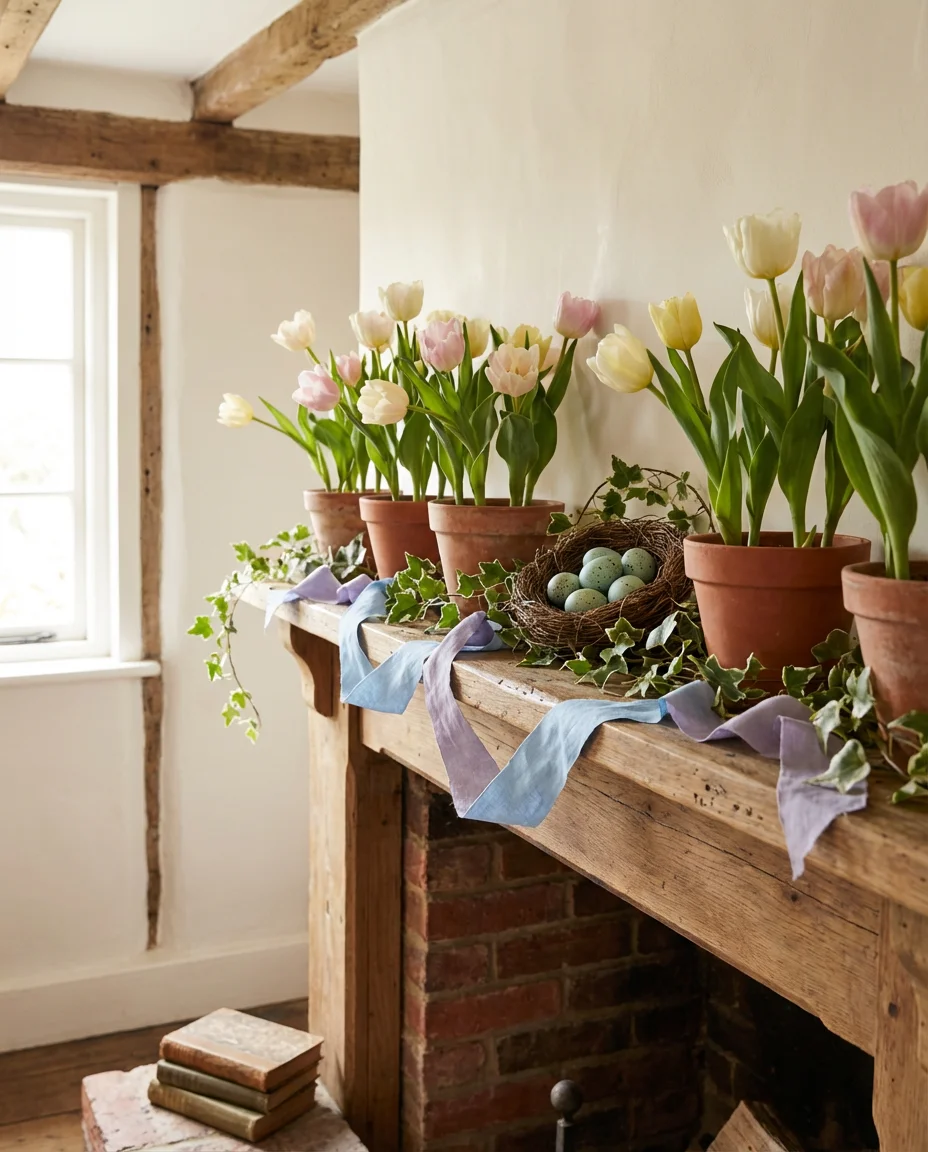
Seasonal decorating extends well beyond Christmas and holiday winter themes—and Easter fireplace styling has quietly become one of the most searched seasonal looks on Pinterest. The 2026 version skips the plastic eggs and goes botanical: fresh tulips or ranunculus in terracotta pots, nests of speckled ceramic eggs, trailing ivy, and pastel linen ribbon. Soft greens, lavenders, and warm whites dominate the palette. It’s spring on a mantel—and it feels genuinely fresh.
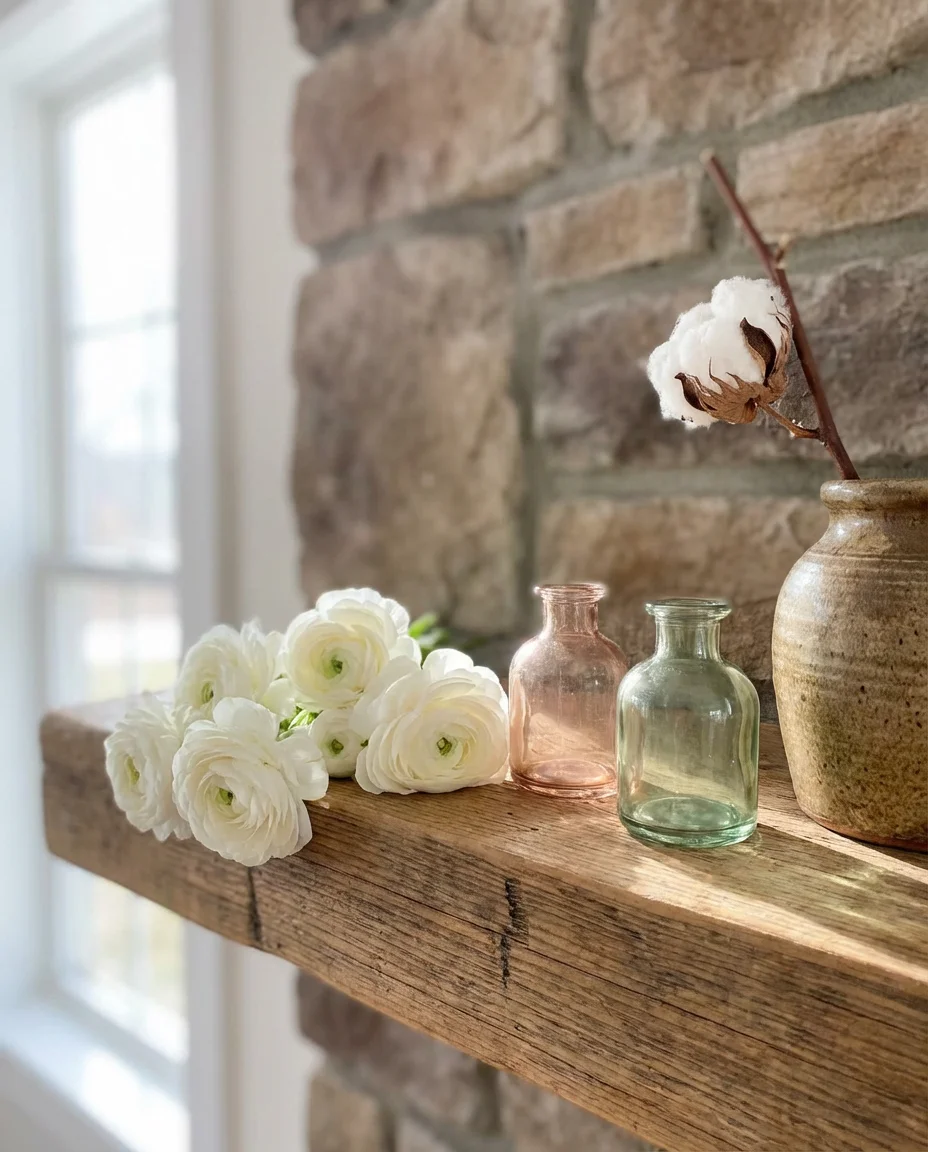
This look works best in homes where the rest of the décor already leans toward soft, organic styling—it’s harder to pull off in a very modern or industrial space. But even in a transitional home, a spring mantel requires only four or five thoughtfully chosen objects. Start with fresh flowers in a simple vessel as the anchor, then add two or three supporting elements. Keep it loose, not stiff—spring décor should feel like it grew there, not like it was arranged by a florist.
10. Black Fireplace Surround for Drama
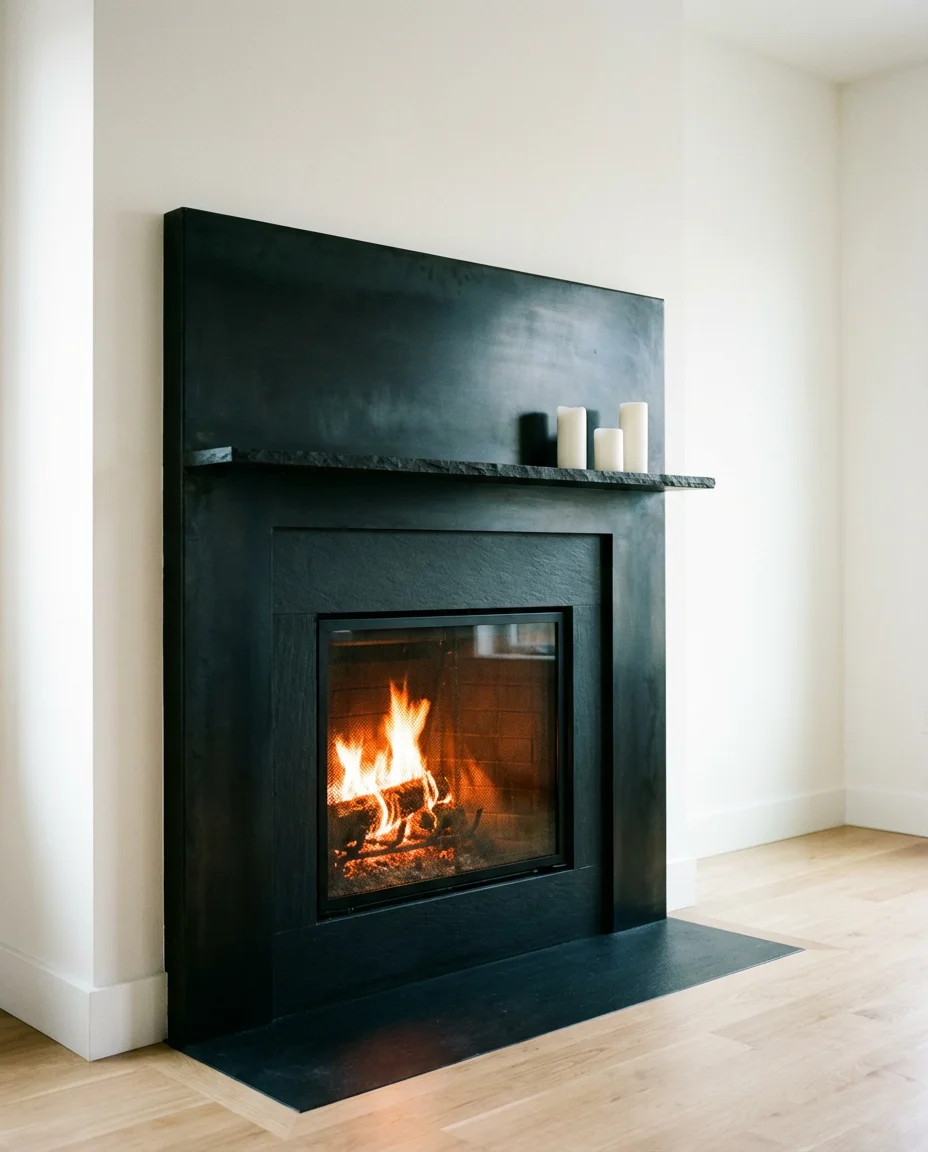
A black fireplace surround is one of the boldest moves in residential design, and in 2026, it’s more popular than ever. Whether it’s achieved through painted tile, blackened steel, or a powder-coated cast iron frame, the effect is immediate: the fireplace becomes the undisputed focal point of the room. The darkness of the surroundings makes the fire itself—or even a simple arrangement of candles—glow more intensely by contrast. This works beautifully in living room settings with light walls and natural wood floors.
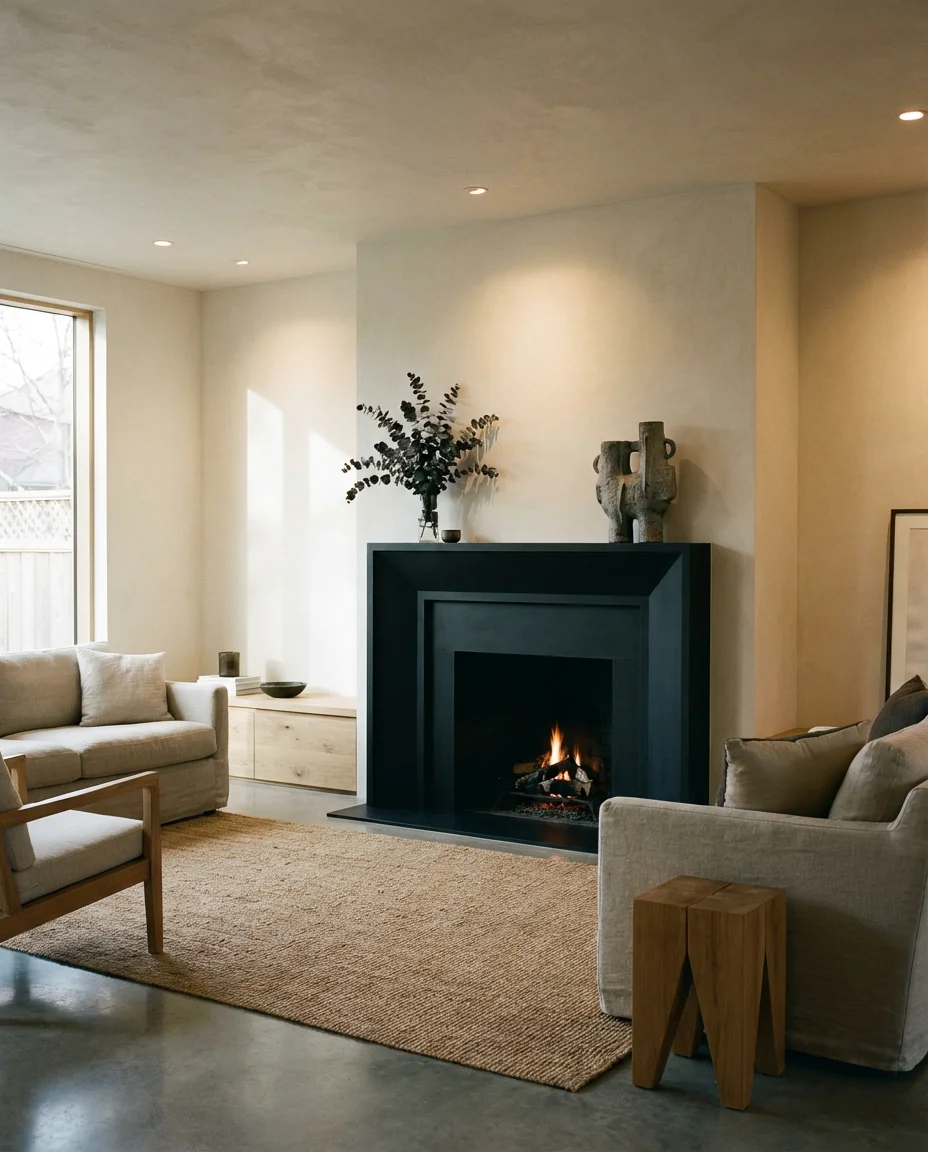
An expert-style observation: black absorbs rather than reflects, which means a black surround visually recedes even as it commands attention—a paradox that skilled designers use to their advantage. In a room that’s already busy with pattern or color, a black fireplace can actually calm the space by anchoring it. Keep the mantel styling minimal and architectural—a single sculptural object or a row of pillar candles—and let the contrast between the dark surround and everything around it carry the visual load.
11. Sides of the Fireplace—Built-In Shelving
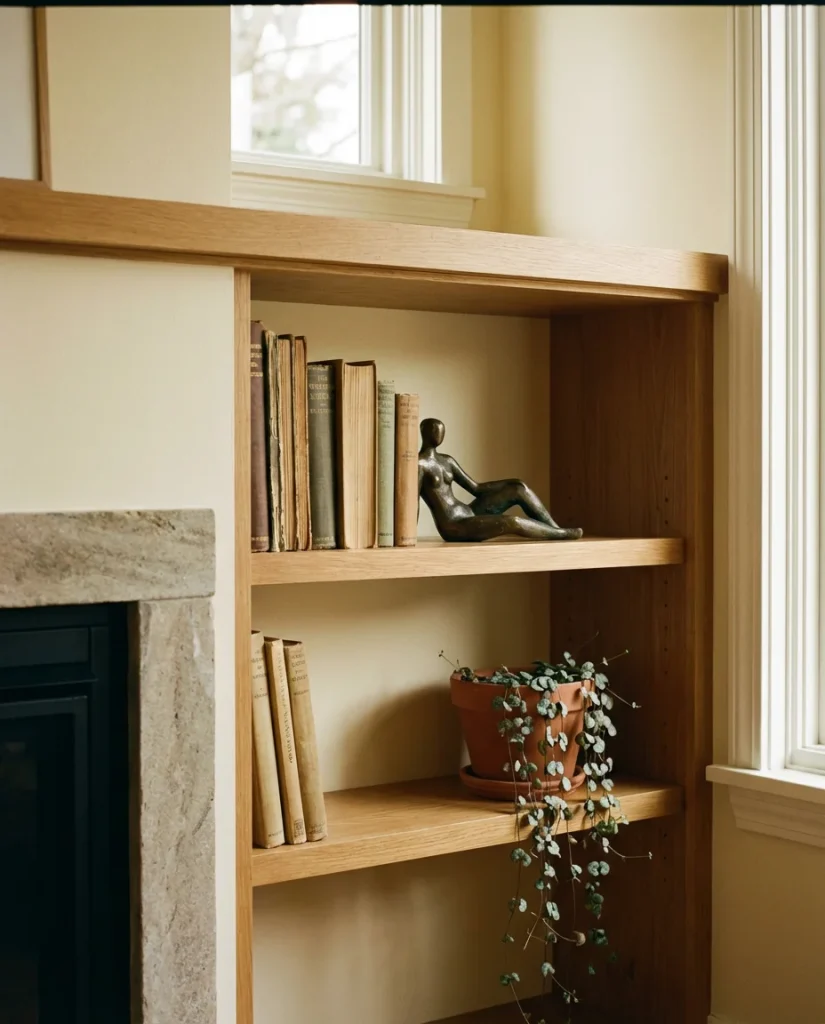
The space on either side of a fireplace is some of the most valuable real estate in a living room—and yet it’s consistently underused. In 2026, built-in shelving flanking the firebox has become the defining feature of well-designed American living rooms. These built-ins serve multiple functions: storage, display, and architectural framing that makes the fireplace feel more intentional. Whether they’re floor-to-ceiling or stop at the mantel line, they transform a single wall into a cohesive composition.

The most common mistake with fireplace built-ins is treating them as pure book storage and filling every shelf tightly with spines. The rooms that photograph best—and feel best in person—mix books with objects, plants, and intentional empty space. A good ratio: roughly 60% books or functional items and 40% decorative objects and breathing room. Paint the interior back of the shelves in a contrasting tone—navy, forest green, or warm clay—to add depth and make each shelf feel like its own little tableau.
12. Valentine’s Day Fireplace Vignette
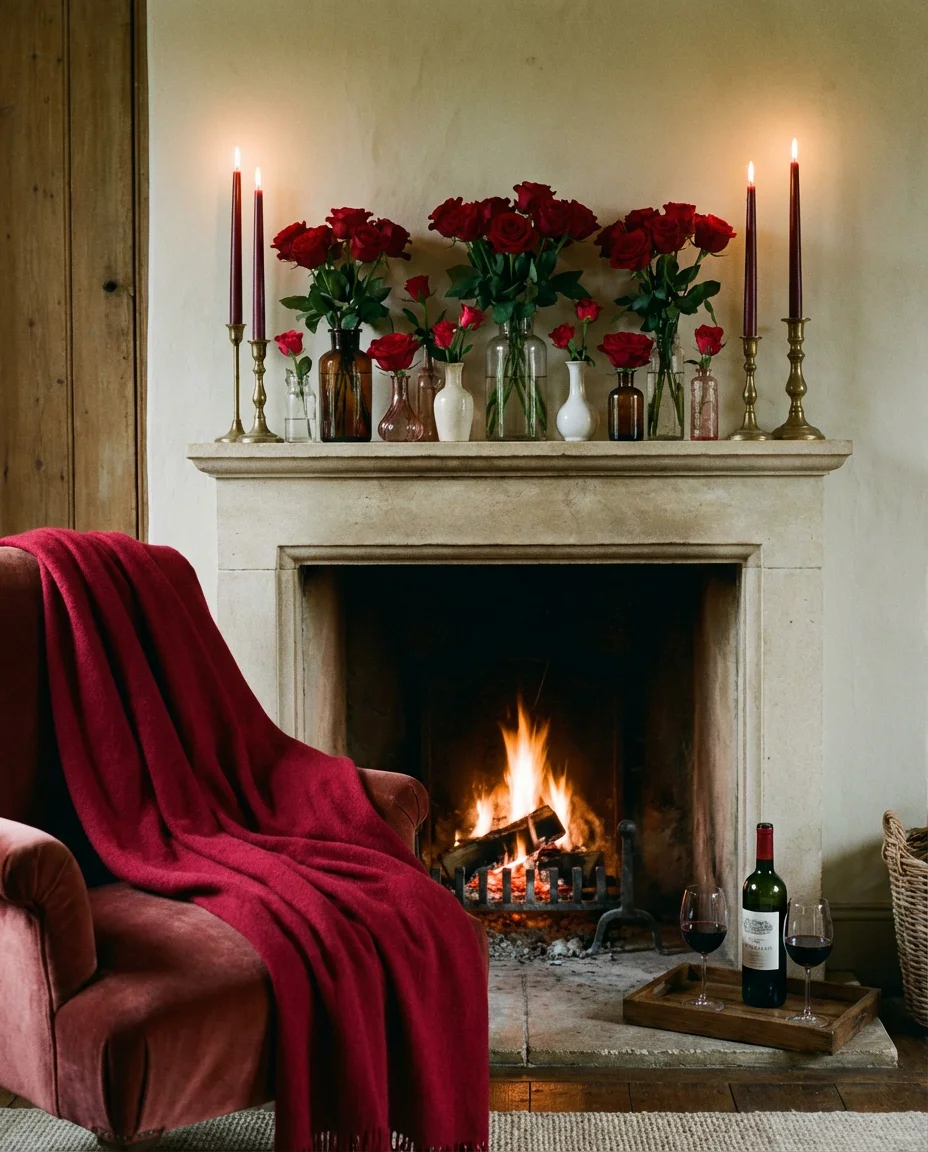
February 14th has inspired a quieter, more grown-up kind of Valentine fireplace aesthetic in 2026. Forget the heart-shaped tchotchkes—this year’s look is romantic in a genuinely atmospheric way: deep red roses in bud vases, black or burgundy tapered candles in brass holders, a soft cashmere throw draped over a nearby chair, and a bottle of something good within reach. The working fire in the background makes everything feel more intimate, but even candles in an unused firebox create the same mood.
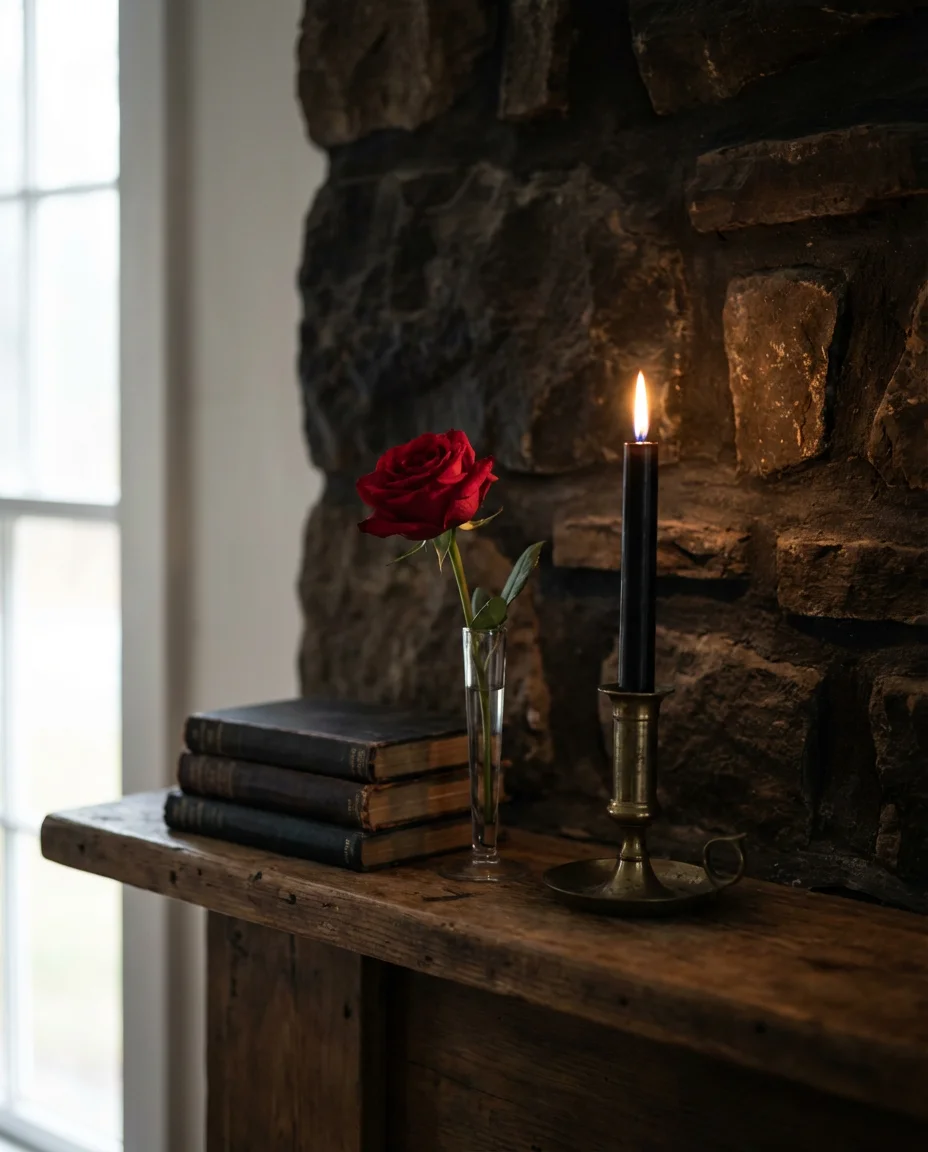
Practically speaking, this is one of the easiest seasonal fireplace looks to pull together quickly. Most of what you need—candles, flowers, a blanket—you probably already own. The styling trick is height variation: a tall taper candle next to a short bud vase next to a small stack of books creates visual rhythm. Keep the color palette tight: deep red, burgundy, black, and warm brass. It takes fifteen minutes to put together and photographs beautifully—which explains its consistent popularity on Valentine Pinterest boards.
13. Grinch-Themed Holiday Fireplace
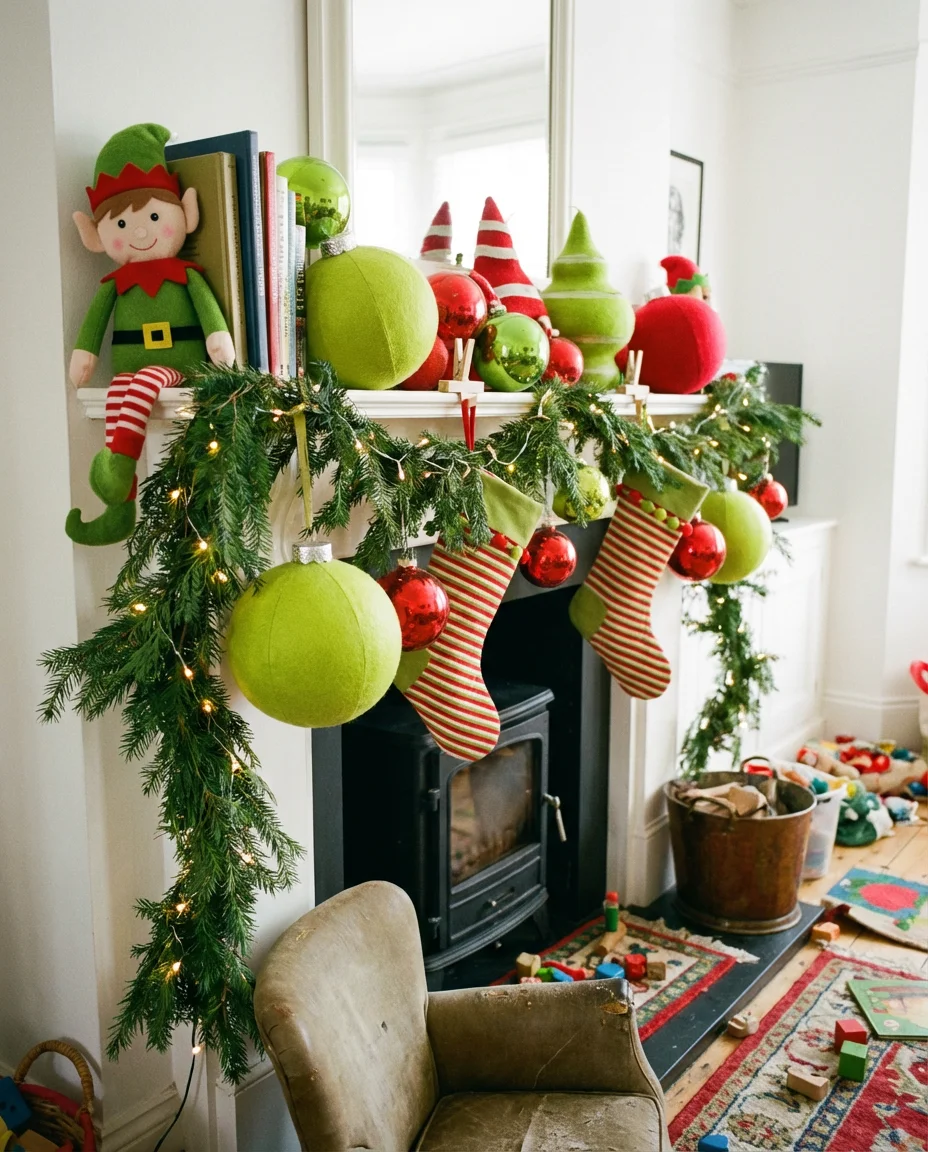
The Grinch-themed fireplace has developed a devoted following—especially among families with young children who want the Christmas magic to come with a sense of humor. The palette is lime green, red, and white, with whimsical elements like oversized ornaments, a stuffed Grinch figure peeking from the mantel, and stockings that lean playful rather than elegant. It’s a look that prioritizes joy and storytelling over sophistication, and in the right home—one with kids’ drawings on the fridge and crayon marks on the doorframe—it’s perfect.
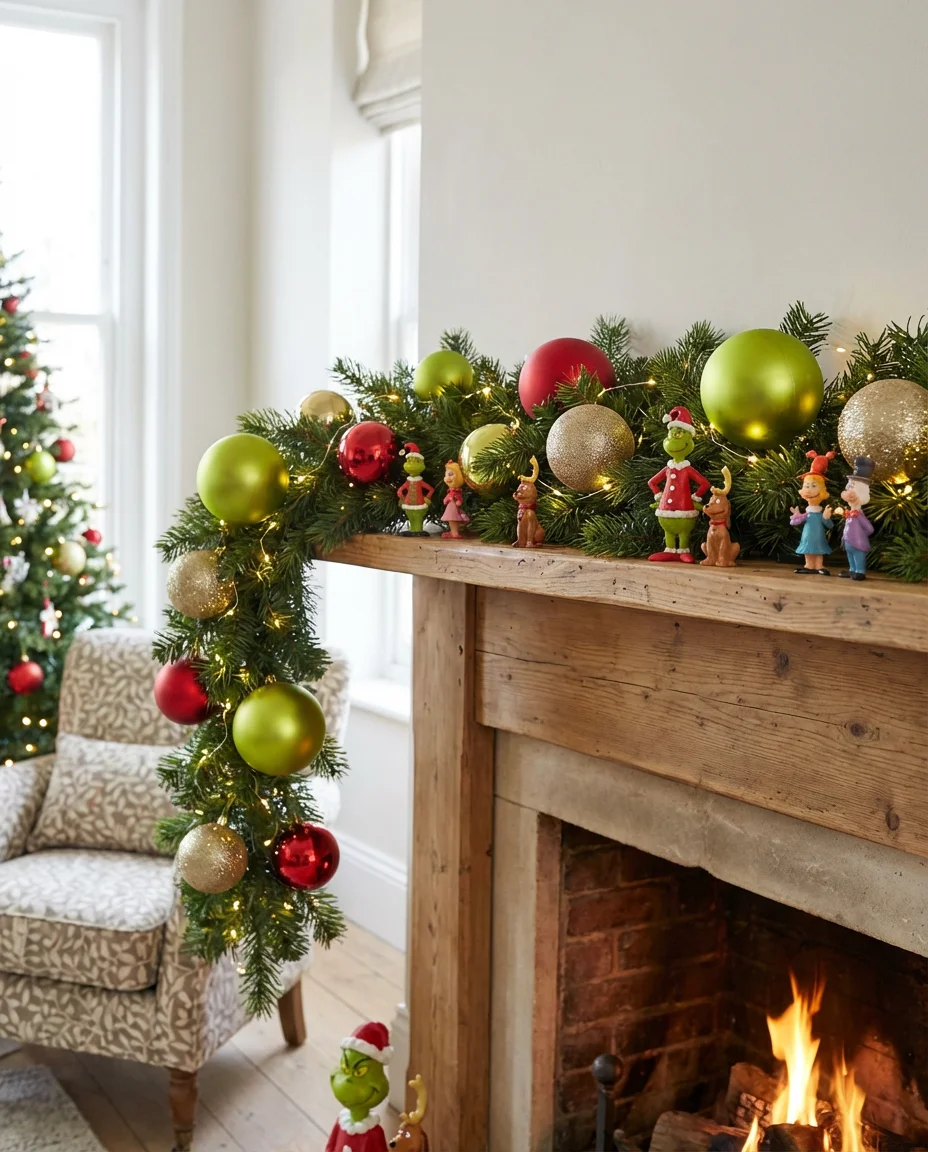
A practical insight for anyone attempting this look: anchor the chaos with something elevated. A garland of real or high-quality faux greenery as the base layer gives you room to layer on the whimsy without the whole thing reading as a novelty store display. Start with the garland, add your Grinch elements selectively, and finish with warm white lights to tie it together. The greenery provides the visual scaffolding that keeps the display from tipping into clutter, even when the individual elements are playful and silly.
14. Unused Fireplace Turned Decorative Feature
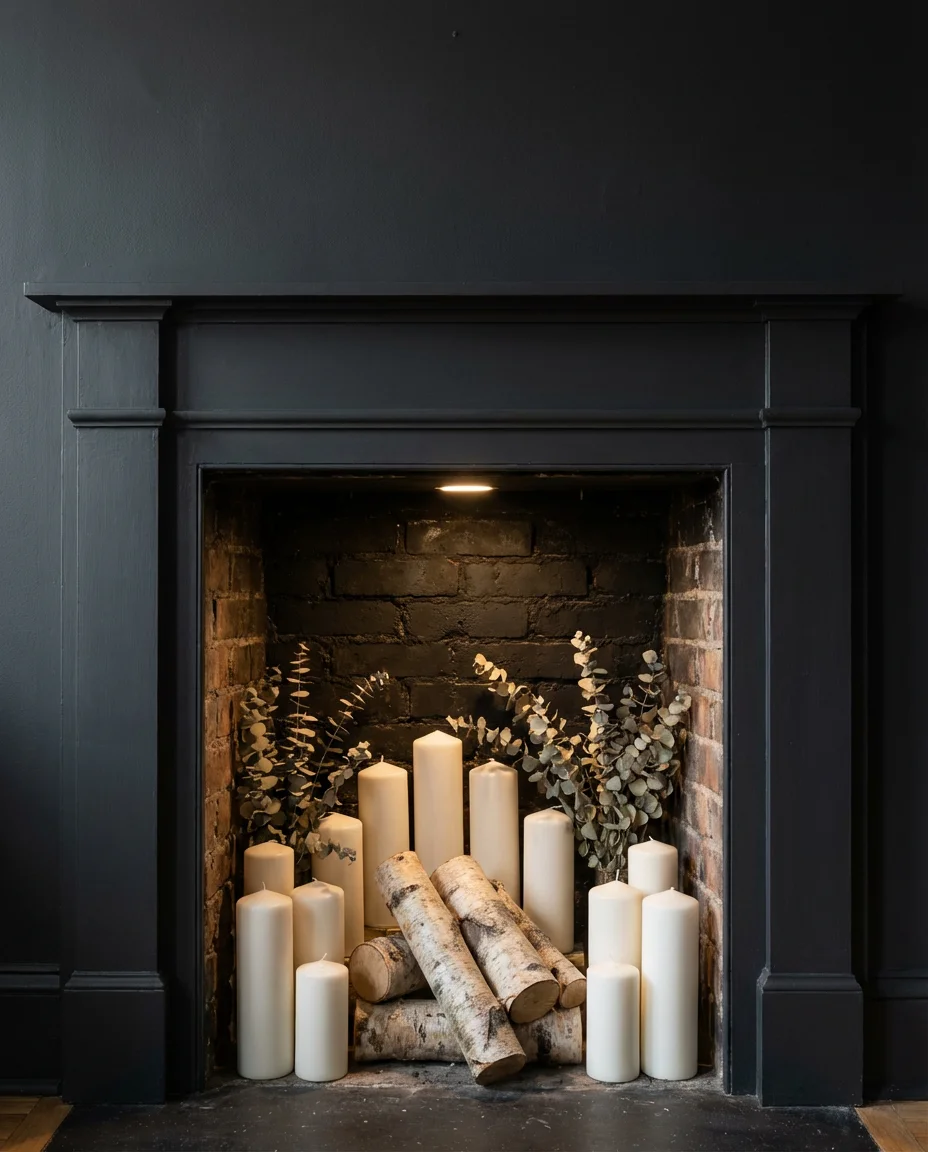
An unused fireplace doesn’t have to be a problem—in 2026, many designers are treating sealed or non-functional fireplaces as opportunities. The firebox itself becomes a display niche: a cluster of pillar candles in varying heights, a sculptural arrangement of branches, stacked vintage books, or even a small indoor plant that tolerates low light. The opening frames whatever is placed inside it like a natural architectural shadowbox. An inside arrangement done well makes the sealed firebox look entirely intentional.
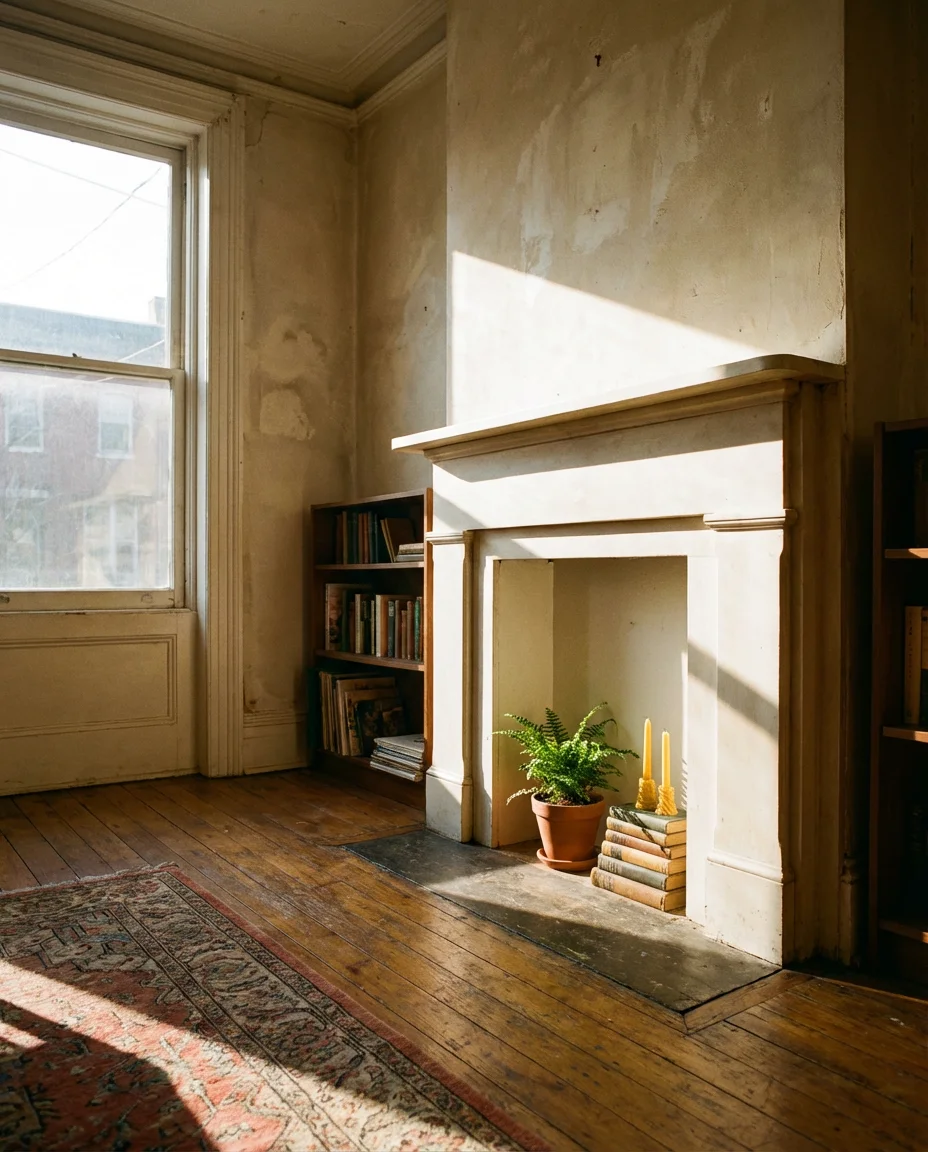
American homeowners in older urban rowhouses and bungalows often inherit sealed fireplaces that can’t be reopened for structural reasons. Rather than lamenting the loss, many have found that treating the firebox as a built-in display alcove gives the room a feature it wouldn’t otherwise have. A small spotlight aimed into the opening—from a recessed ceiling fixture or a clip-on directional light—dramatically elevates the display and makes the unused fireplace feel like a deliberate design decision rather than a compromise.
15. Rustic Fireplace with Wood Stack and Lanterns
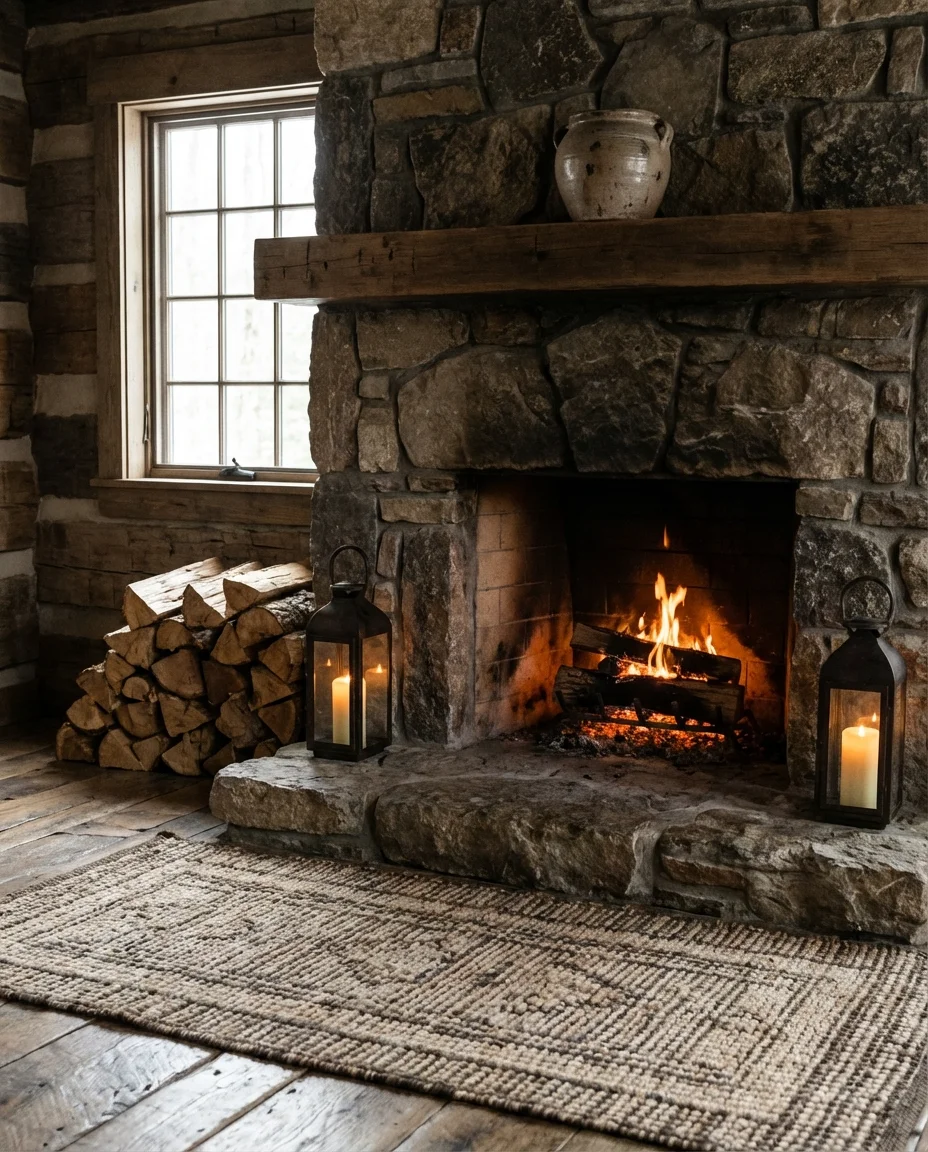
The rustic fireplace aesthetic is rooted in authenticity—the idea that a home should show evidence of being lived in, not staged for a photo shoot. In 2026, the most compelling rustic fireplace setups feature an honest stack of split firewood beside the hearth, iron lanterns with real pillar candles, a hand-thrown ceramic pot, and a woven rug that shows wear in all the right places. This look works in mountain homes, farmhouses, and anywhere the architecture has wood beams, plank floors, or other handmade character. The stone surround amplifies the whole effect.
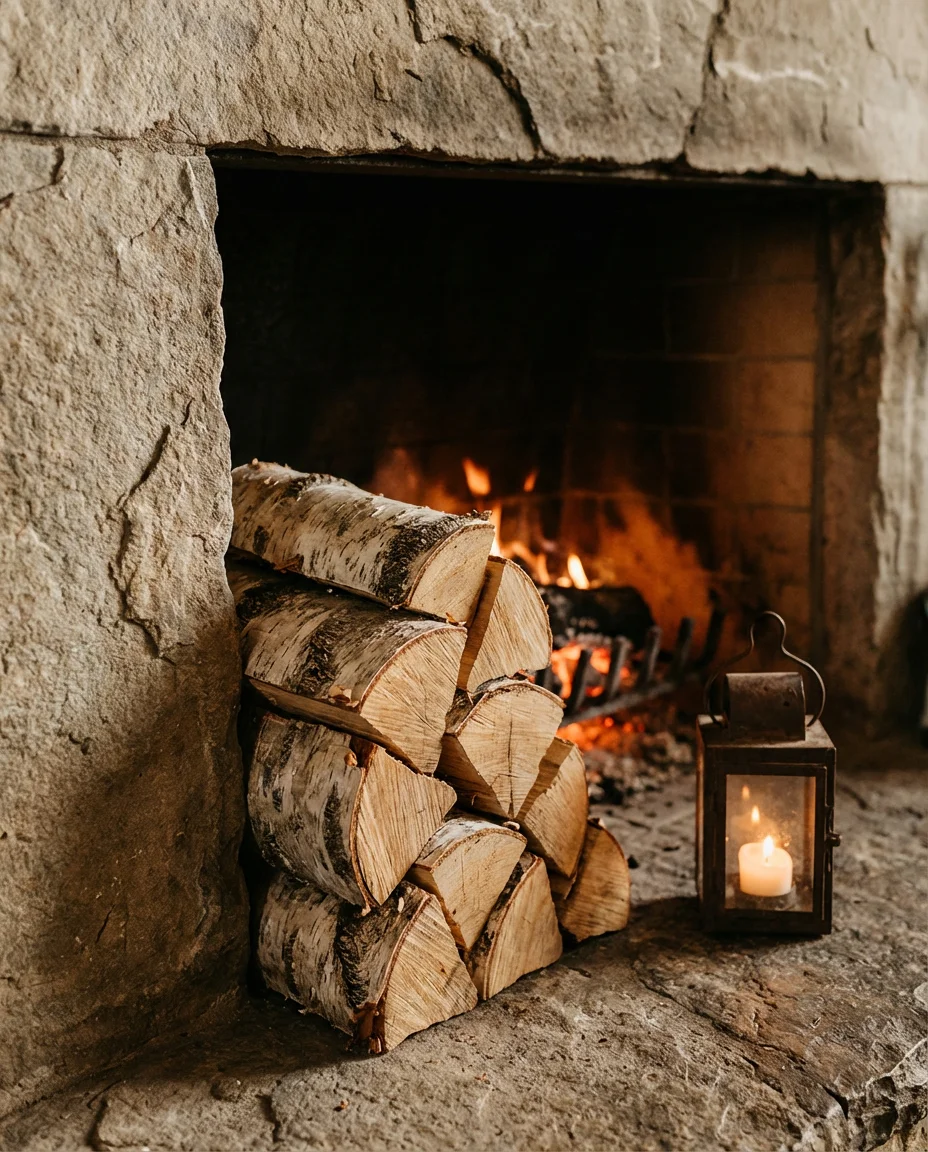
There’s a regional quality to this look that resonates deeply in the American West, Pacific Northwest, and New England—places where the seasons are distinct and the idea of a fire-lit room carries genuine cultural weight. But even in warmer climates like the South or Southwest, a rustic fireplace styled with organic materials and warm iron accents can evoke that same sense of sanctuary. The key is authenticity: use real wood, real iron, and real ceramics. The moment you substitute plastic for any of it, the whole aesthetic collapses.
16. Baby Shower Fireplace Backdrop
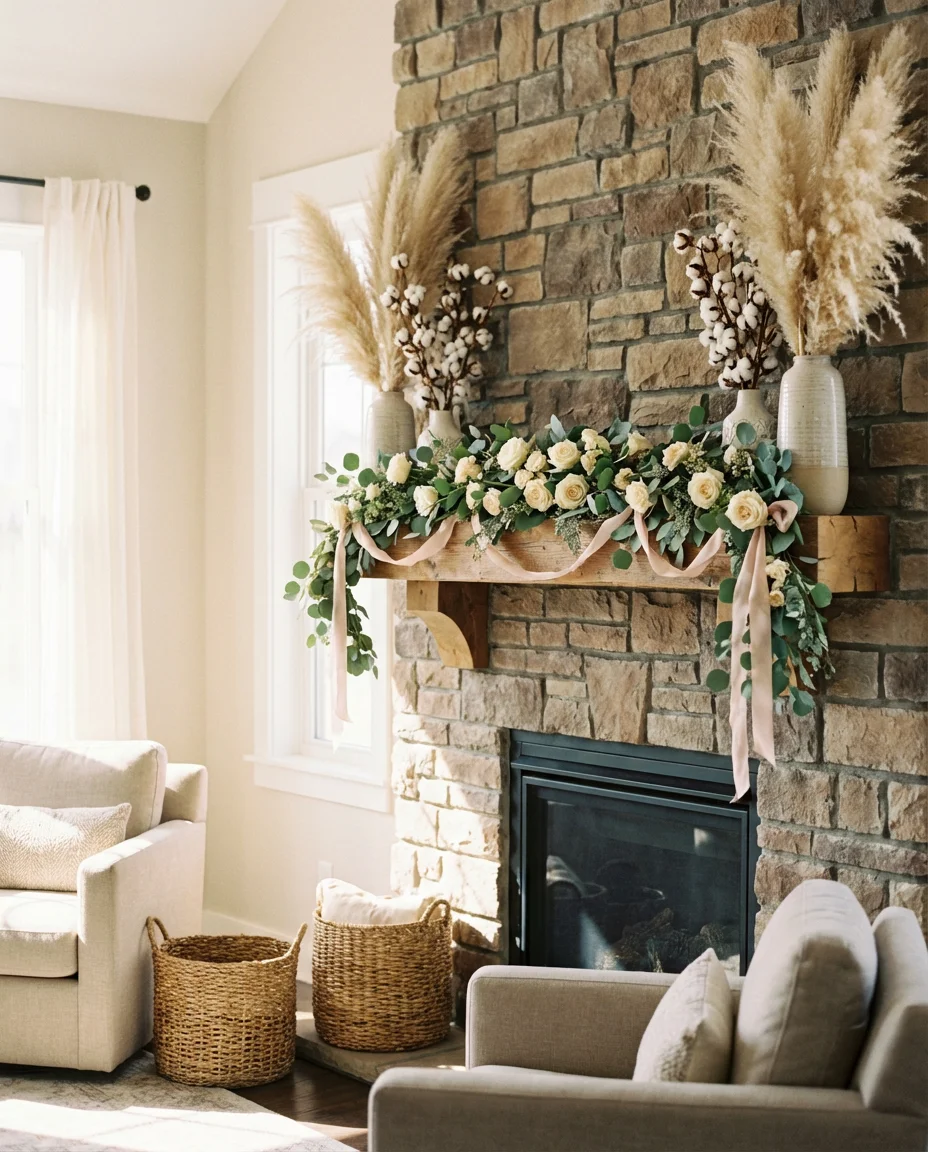
Fireplace walls have become one of the most popular backdrop choices for baby shower gatherings—and for good reason. The architectural warmth of a mantel and surround creates an immediate focal point for photo moments, and with the right garland, flowers, and a personalized banner, it transforms into something genuinely beautiful. Soft neutral palettes—cream, blush, sage, warm white—photograph particularly well against stone or painted brick surrounds. For a baby shower in 2026, pampas grass, dried cotton stems, and fresh white blooms are the florals of the moment.
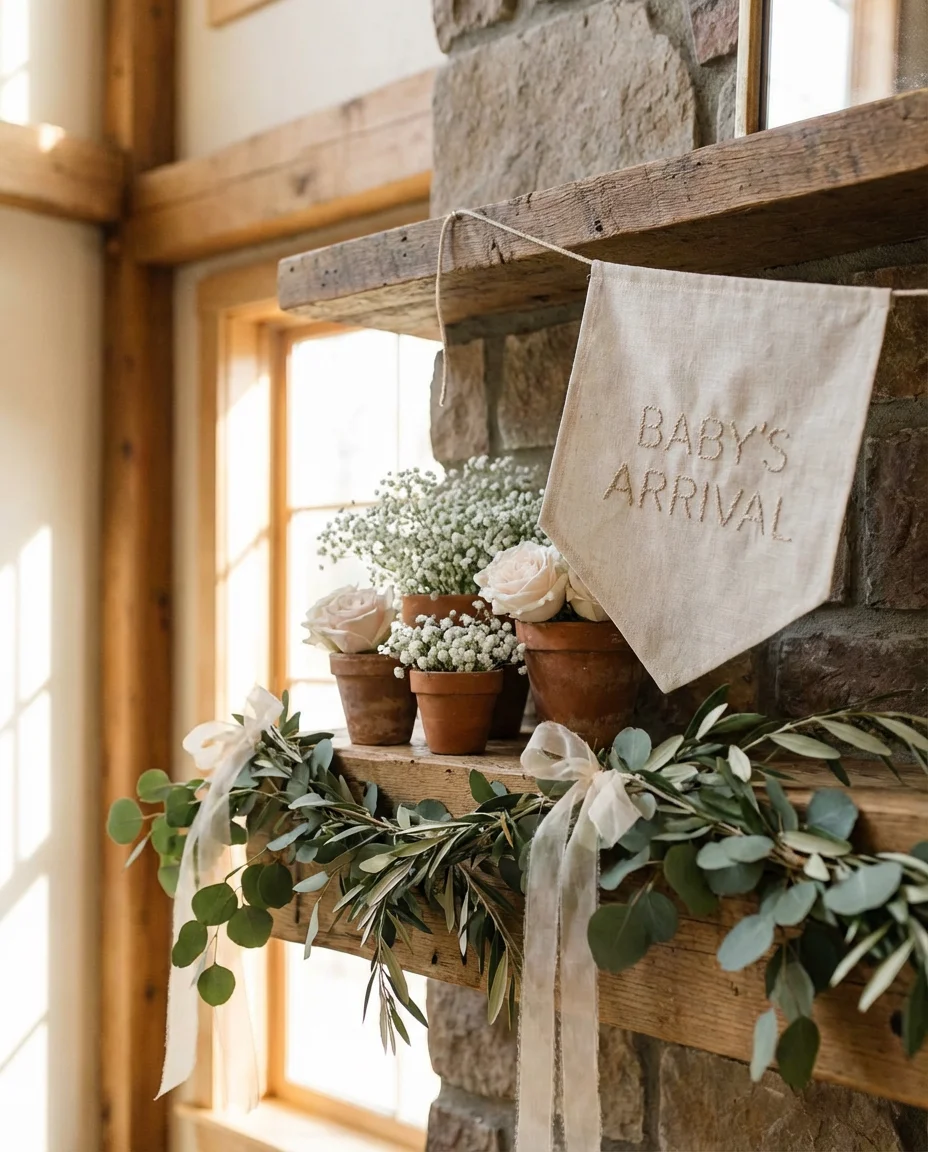
The fireplace backdrop also works well for the gift table setup: position it directly in front of the hearth so that every photo of the mom-to-be unwrapping gifts includes the styled mantel in the background. This doubles the function of the décor—it’s both the backdrop and the set dressing for the most photographed part of the event. Keep the mantel styling cohesive with the table décor: same color palette, same floral varieties, and same ribbon texture. Cohesion across the room makes everything photograph more professionally.
17. Working Fireplace Safety and Style Balance
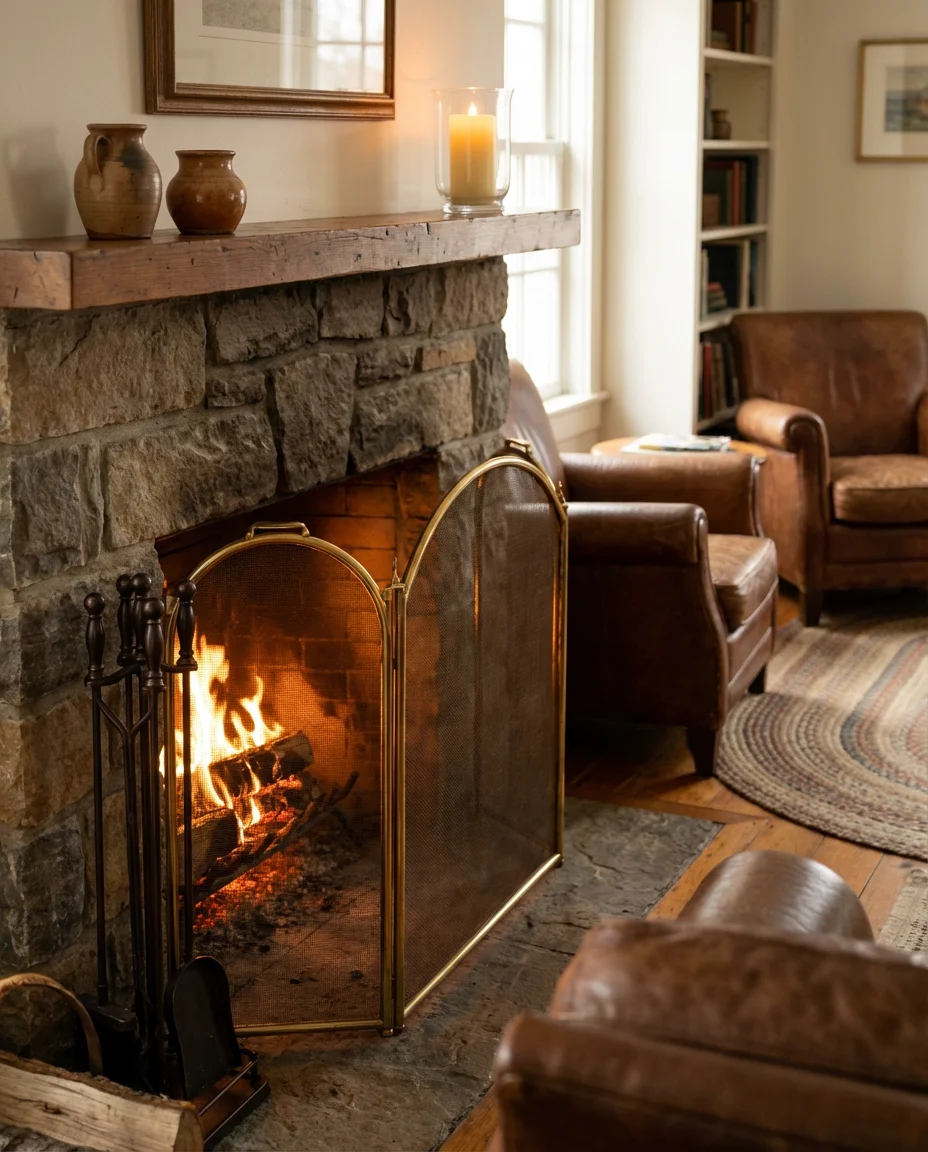
A working fireplace is both a luxury and a responsibility. Styling it beautifully while keeping it safe requires a few non-negotiable rules: nothing flammable within 18 inches of the firebox opening, a quality spark screen at all times when a fire is burning, and fireplace tools stored within reach but out of the path of foot traffic. In 2026, stylish spark screens—in arched brass, hand-forged iron, or custom geometric mesh—have made the safety element genuinely decorative. The screen becomes part of the design, not an obstacle to it. An electric alternative removes the concern entirely for households with young children.
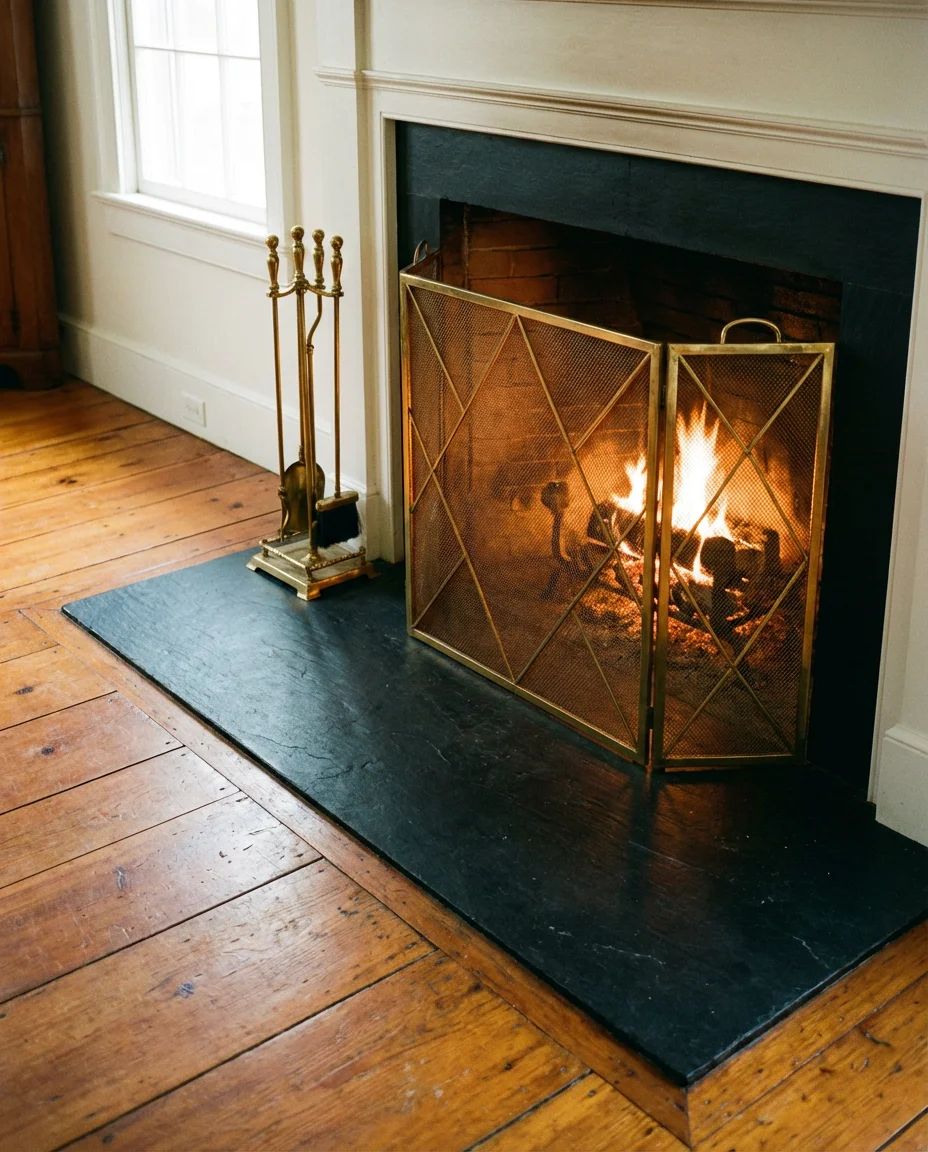
A detail that matters more than most people realize: the hearth pad. This flat stone or tile surface in front of the firebox is technically a safety feature, but it’s also a design opportunity. A large-format hearth tile in a contrasting material—black slate against white oak flooring, for example—creates a visual frame for the fireplace that makes the whole setup look more considered. Size matters: a generously proportioned hearth pad makes the fireplace feel grander; a small, narrow pad looks like an afterthought.
18. Wedding Ceremony Fireplace Backdrop
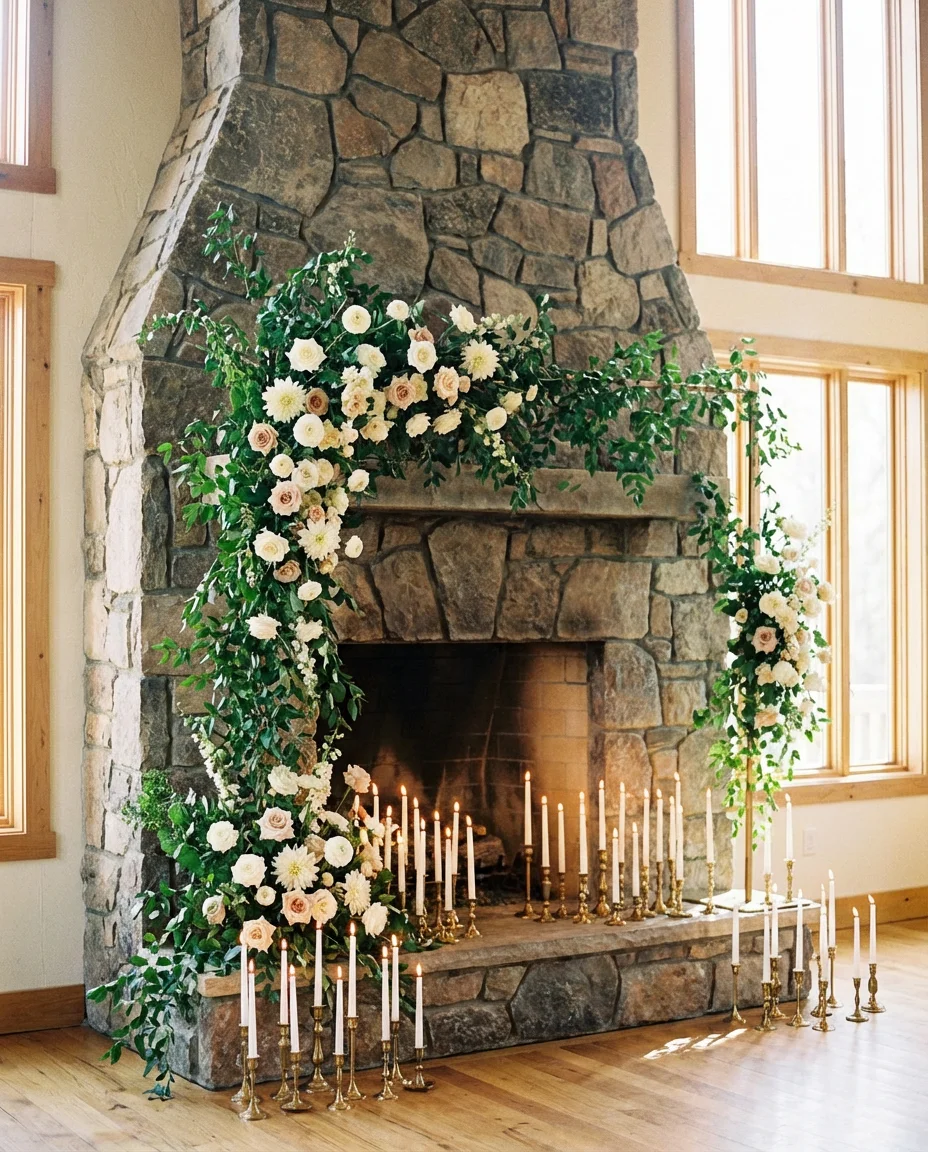
The wedding ceremony by the fireplace—whether in a private home, a barn venue, or a boutique hotel—is one of the most photographed moments in American event design. In 2026, the styling approach is lush but organic: cascading greenery over the mantel, asymmetric floral arrangements that tumble from one side, taper candles in clusters on the hearth, and a clean arch or geometric frame positioned just in front of the surround. The fireplace provides the architecture; the florals provide the romance. Together, they create an altar that feels like it grew there naturally.
For couples planning this setup, a practical reality check: coordinate with your florist and venue about ceiling height and mantel depth before committing to a cascading floral design. Some mantels are too shallow to support large arrangements safely, and some ceilings are too low for the dramatic draping effect that looks so good in inspiration photos. Measure first, dream second. A well-scaled arrangement that fits the actual space will always photograph better than a grand design that’s been compromised by logistics.
19. Inside the Firebox—Candle and Log Arrangements
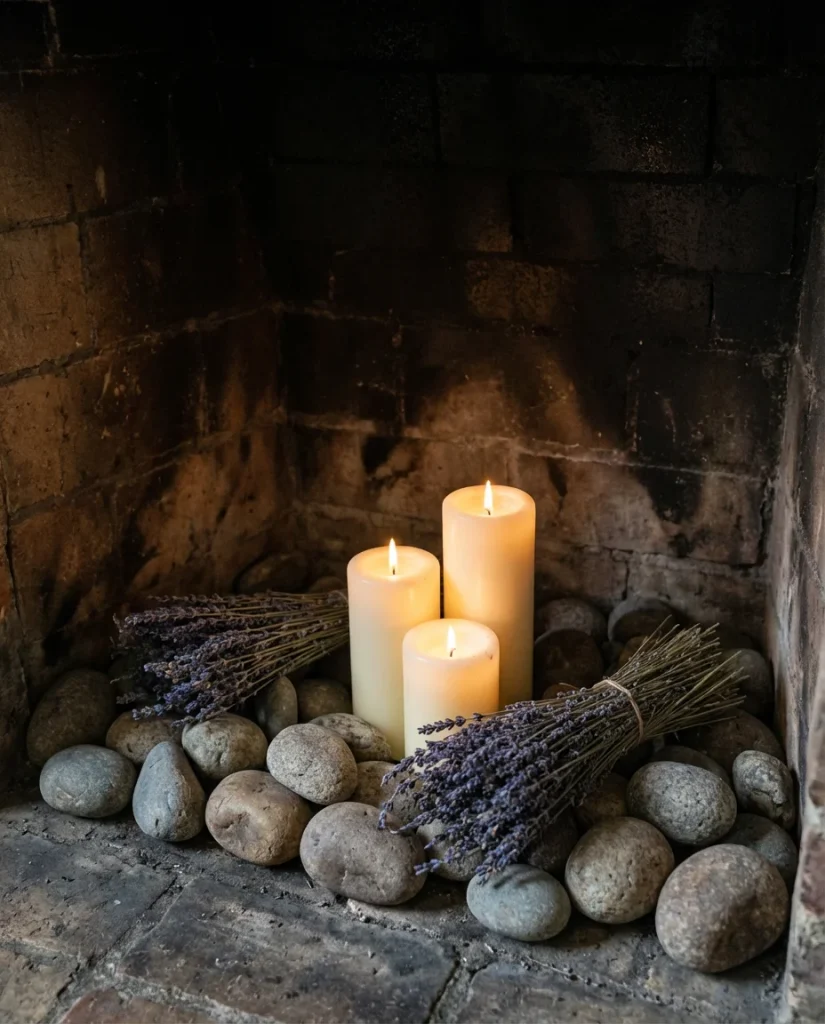
Styling the inside of the firebox itself—rather than just the mantel above it—is a design move that’s gaining serious traction in 2026. For unused or seasonal fireplaces, the opening becomes a deep, shadowy niche that benefits enormously from deliberate arrangement. Tall white pillar candles of varying heights, surrounded by a loose arrangement of birch logs and dried eucalyptus, create a scene that feels both natural and intentional. The depth of the firebox adds drama that a flat surface simply can’t replicate.
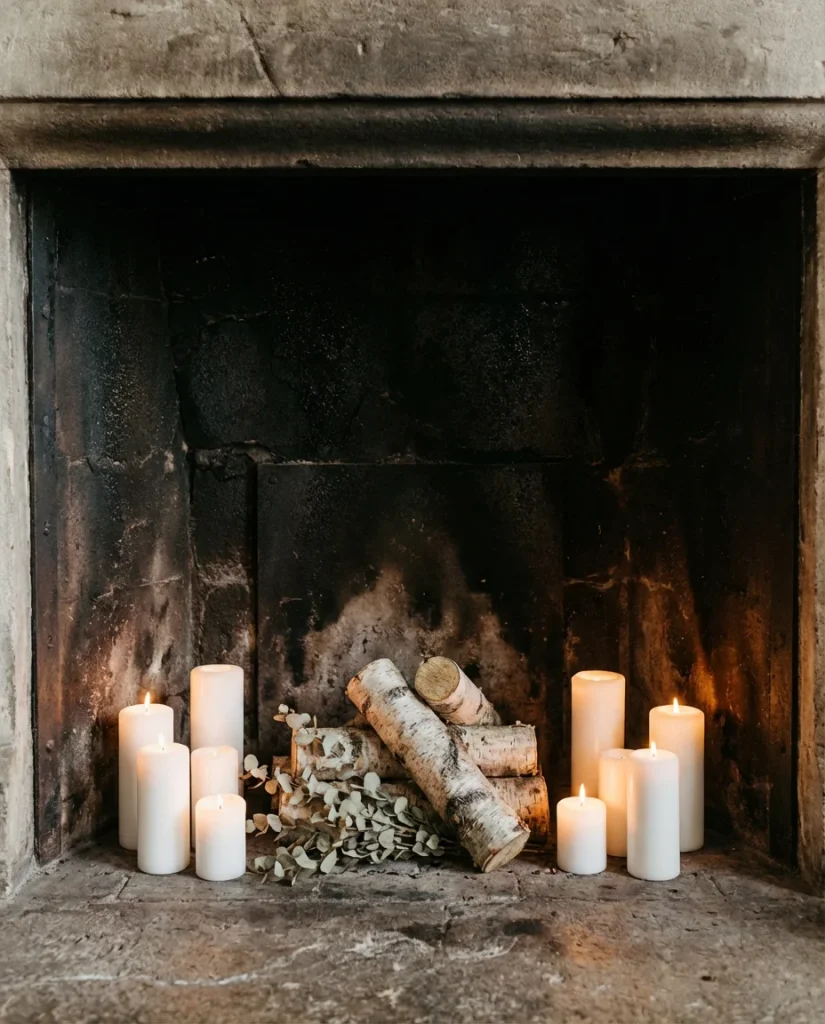
Homeowners who try this approach often discover that the firebox acts like a natural spotlight box—the dark interior walls amplify the glow of candlelight in a way that’s genuinely striking after dark. Safety note: if the fireplace has ever been used and the chimney hasn’t been sealed, place a grate or screen over the opening to prevent drafts from blowing out candles or, more importantly, creating a fire hazard with combustible decorative materials. A properly sealed or confirmed non-functional firebox is the only appropriate place for this kind of candle arrangement.
20. Ideas with TV — Integrated Entertainment Wall
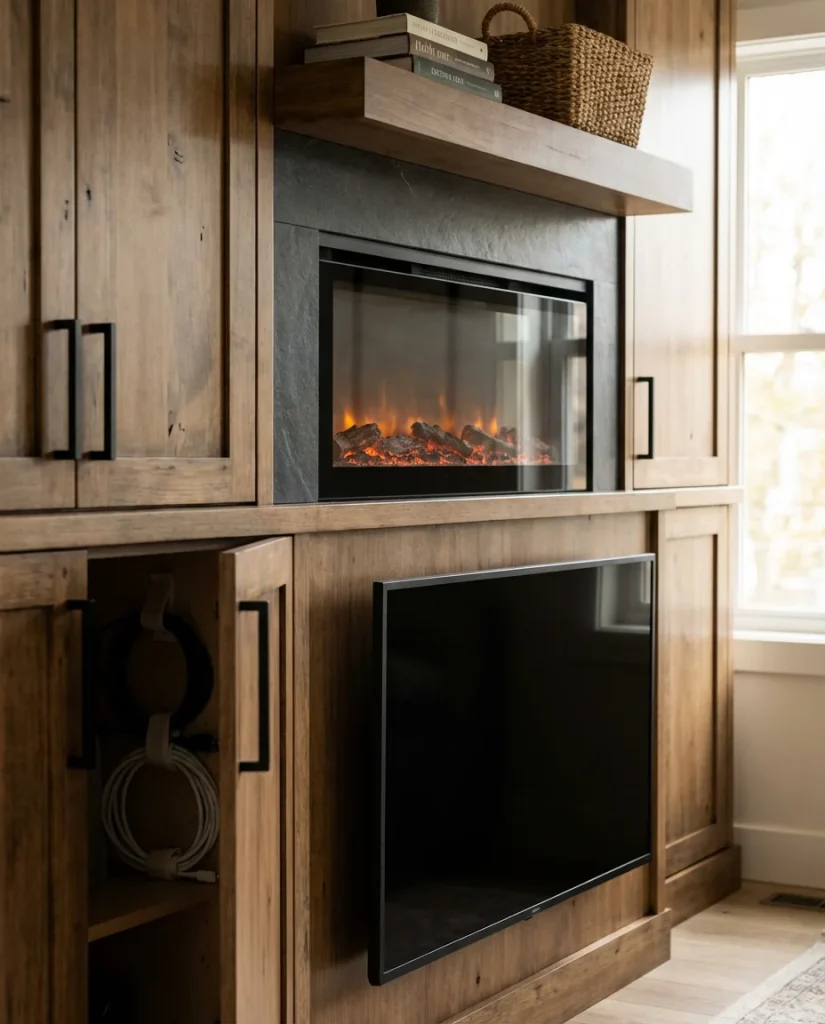
The ideas with the TV category—how to successfully combine a television and a fireplace in the same wall composition—have generated some of the most creative living room solutions in recent memory. In 2026, the trend is toward full wall integration: the TV sits within a custom millwork frame that also houses the fireplace insert, flanking shelves, and hidden media storage. The result is a single, unified wall that looks like it was designed rather than assembled. This approach works particularly well in living room spaces where the fireplace and TV are already on the same wall.
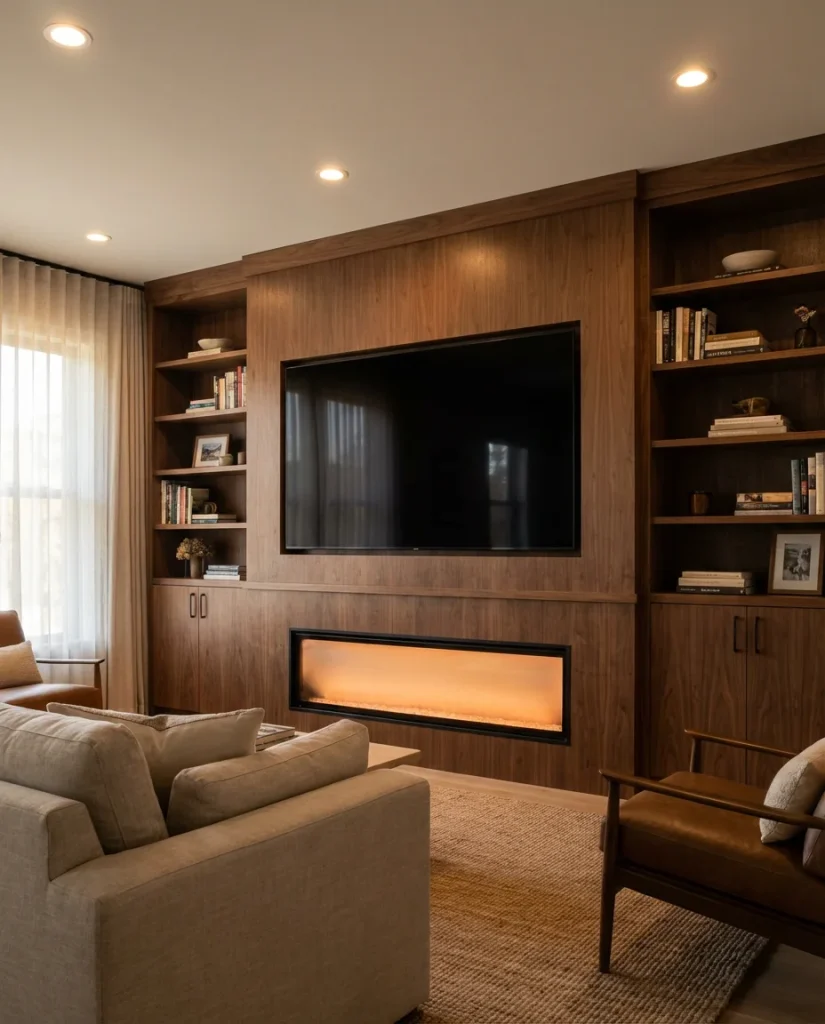
The budget range for a custom-built-in entertainment wall that includes fireplace integration typically runs from $3,000 for a basic DIY build to $15,000 or more for custom cabinetry with professional installation. For homeowners who want the look without the investment, a middle path exists: prefabricated entertainment center units from retailers like IKEA’s BESTA system or West Elm’s modular shelving can be configured around an existing fireplace for a fraction of the cost. Paint everything the same color as the wall for a seamless, built-in effect.
21. Black and White Fireplace—Graphic Contrast Styling
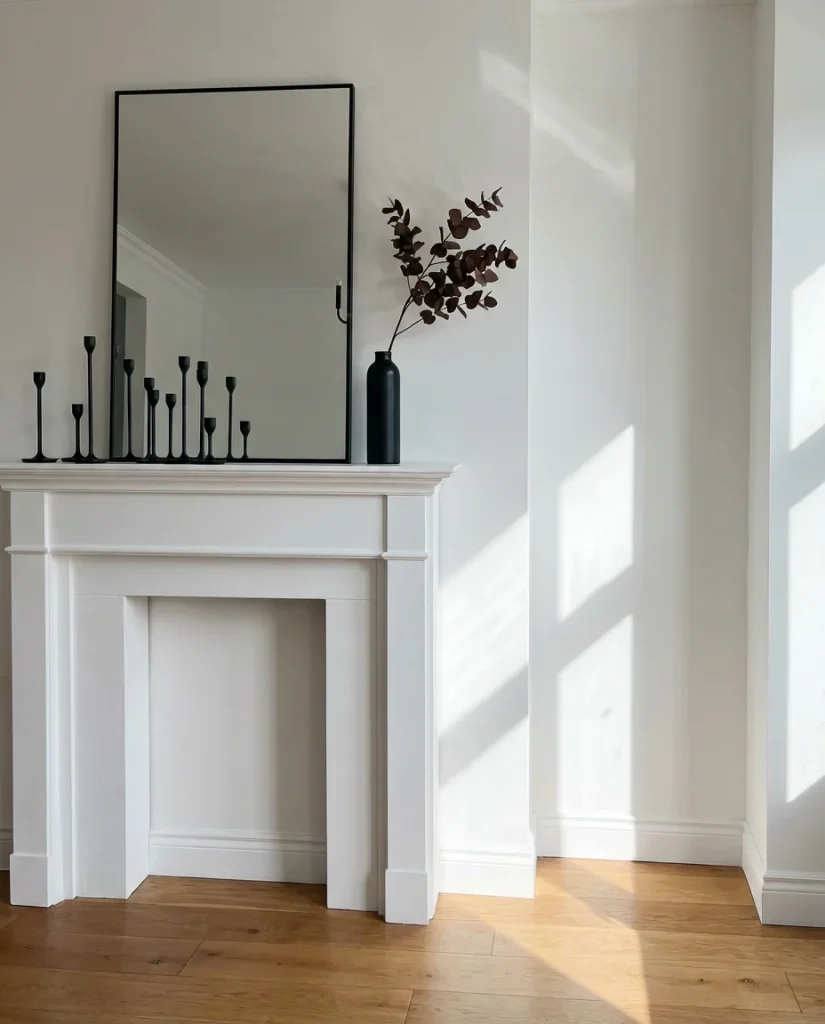
Combining a white fireplace surround with black accessories and art creates a graphic, high-contrast look that feels both timeless and very 2026. The approach: a crisp white painted mantel, a black-framed oversized mirror or piece of art leaning against the wall, matte black candleholders, and a deep charcoal or black fireback visible through a clean glass spark screen. The contrast is intentional and architectural—it works in both traditional and contemporary settings because it relies on tonal relationships rather than style-specific details.

What makes this look successful is commitment. A half-hearted black-and-white scheme—one black candle among mostly beige objects—reads as indecisive. When every element on the mantel is clearly either black, white, or a warm metallic that bridges the two, the whole composition becomes crisp and intentional. Introduce one organic element—a dried white flower stem or a branch of dark foliage—to soften the graphic quality and keep it from feeling cold. That one natural element is what separates a styled mantel from a showroom display.
22. Holiday Fireplace Decor Beyond Christmas
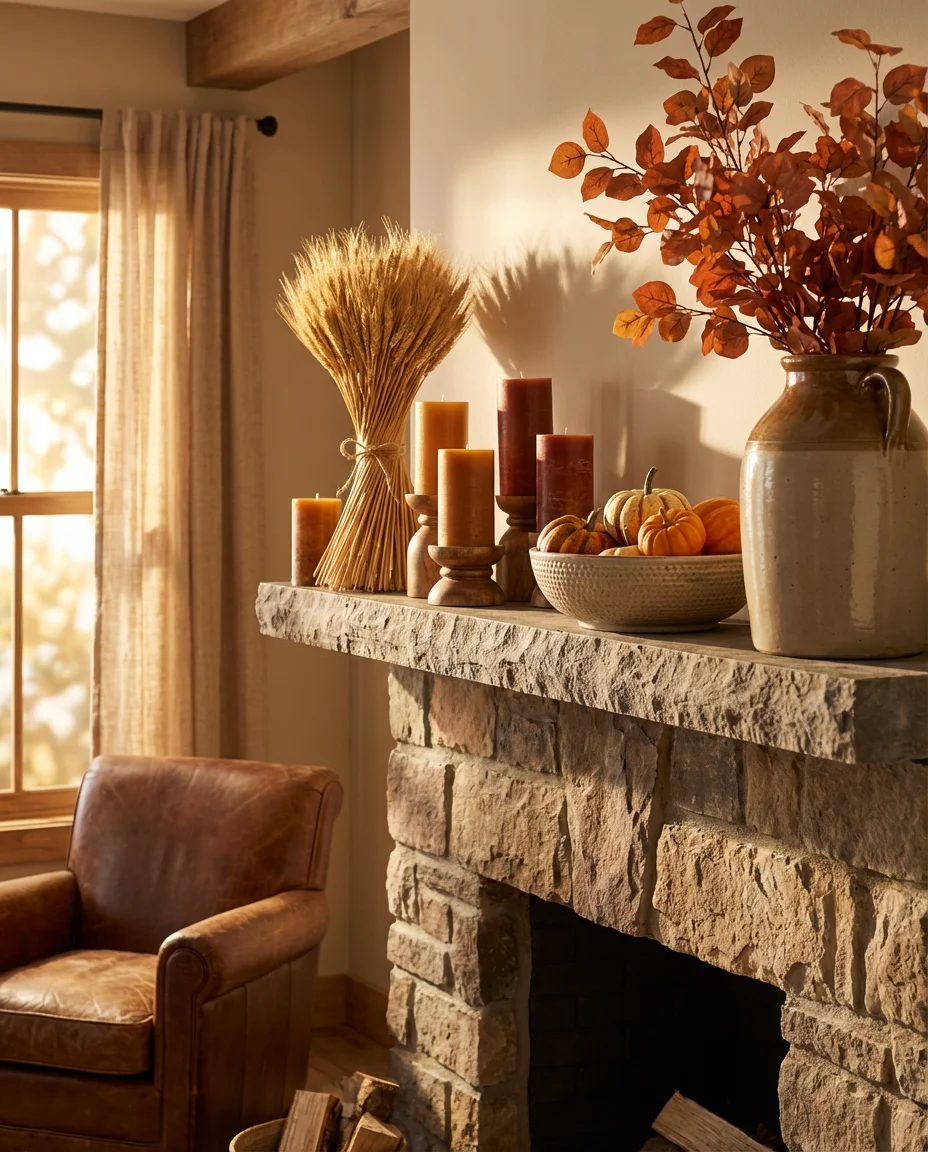
The word “holiday” in fireplace design has expanded far beyond December in 2026. Thanksgiving fireplaces—dressed in dried wheat, amber glogg-colored candles, and terracotta tones—have become almost as popular as Christmas styling on Pinterest. Hanukkah-inspired mantels, with blue and silver elements and a beautiful menorah as the centerpiece, have seen a significant rise in engagement. Fourth of July setups with coastal blue and white florals, summer candles, and small Americana touches round out a year-round approach to fireplace styling that keeps the hearth relevant in every season.
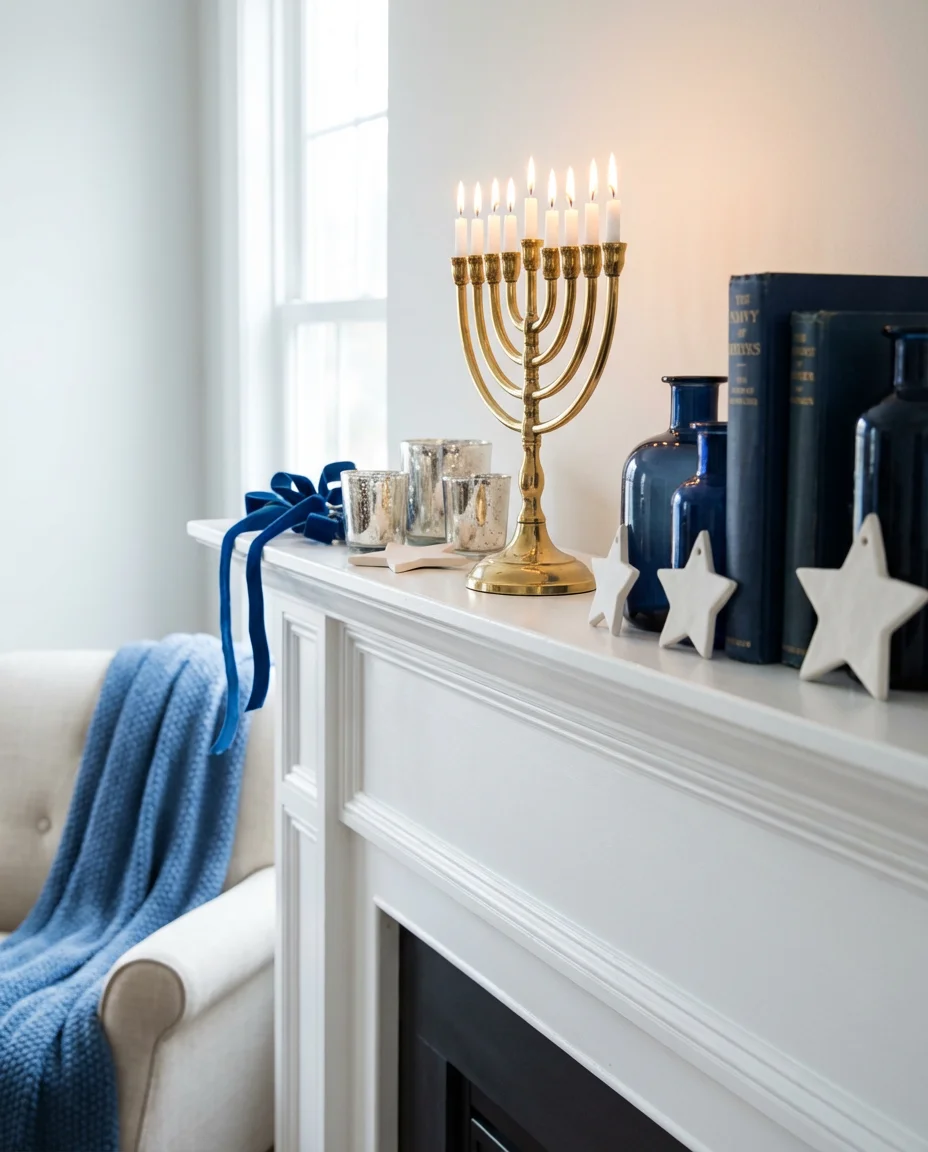
A practical framework for year-round holiday styling: invest in a quality base—a beautiful mantel clock, a pair of candleholders that work in any season, and a simple mirror—and swap out only the seasonal accent pieces. This approach means you’re not starting from scratch every two months; you’re just refreshing the supporting cast around a consistent foundation. It’s also significantly more cost-effective. A set of seasonal accents for each major holiday costs far less than completely restaging the mantel six times a year.
23. Bedroom Fireplace—Cozy Retreat Styling
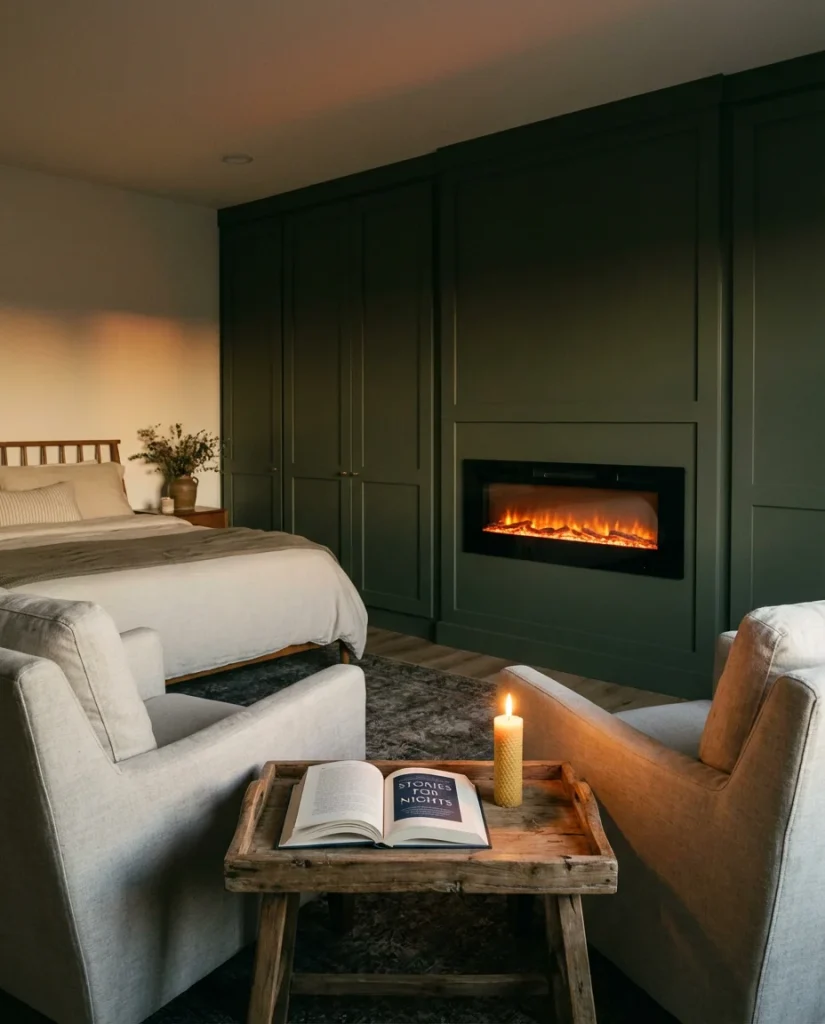
A bedroom fireplace—whether a vintage Victorian cast-iron insert or a sleek modern gas unit—is one of the most coveted features in American residential real estate. Styling it for maximum cozy-retreat energy means layering textures: a thick wool rug on the hearth, a pair of linen-upholstered chairs angled toward the fire, and a low wooden stool holding a stack of books and a single candle. In 2026, white bedroom fireplaces are often surrounded by intentionally imperfect plaster walls in warm off-white tones that deepen the sense of age and sanctuary.
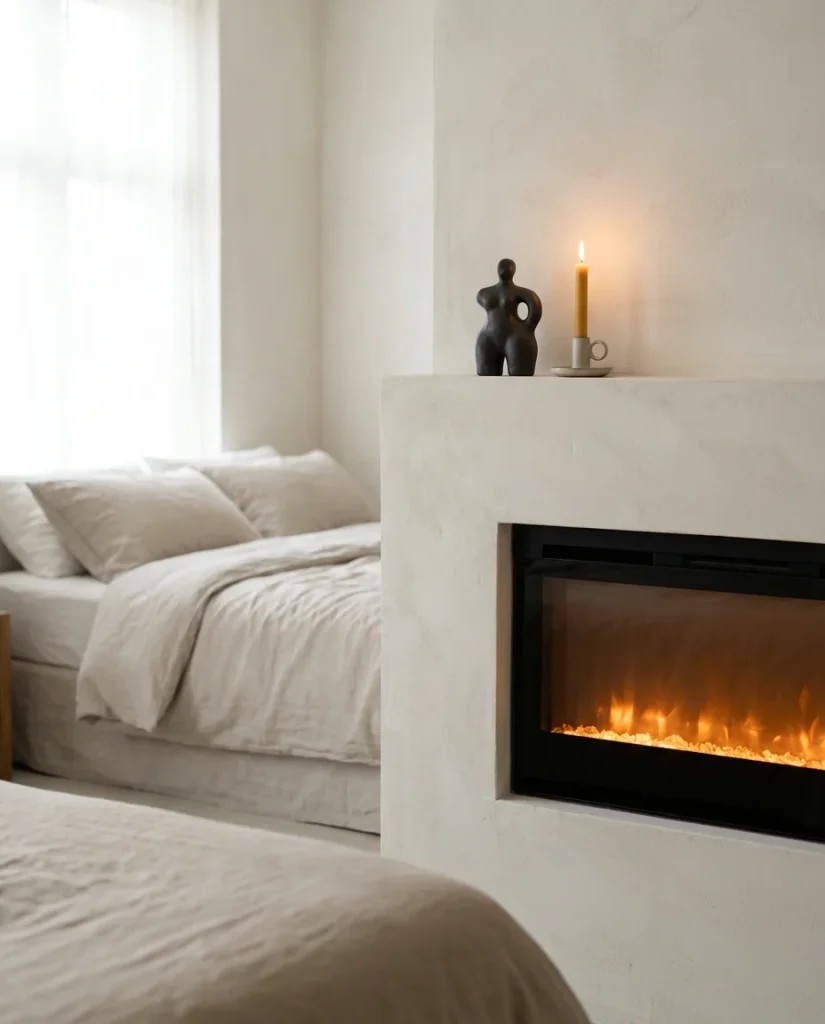
Something that actual homeowners consistently report: once you have a fireplace in the bedroom, you reorganize the entire room around it. Beds shift position. Seating appears. The room develops a sitting area that it probably didn’t have before, and that changes how you use the space—not just for sleep, but for reading, conversation, and morning coffee. The fireplace becomes an organizing principle for the whole room. That’s worth accounting for early in the design process if you’re adding a fireplace to an existing bedroom layout.
24. Ideas Living Rooms—Full Fireplace Wall Transformation
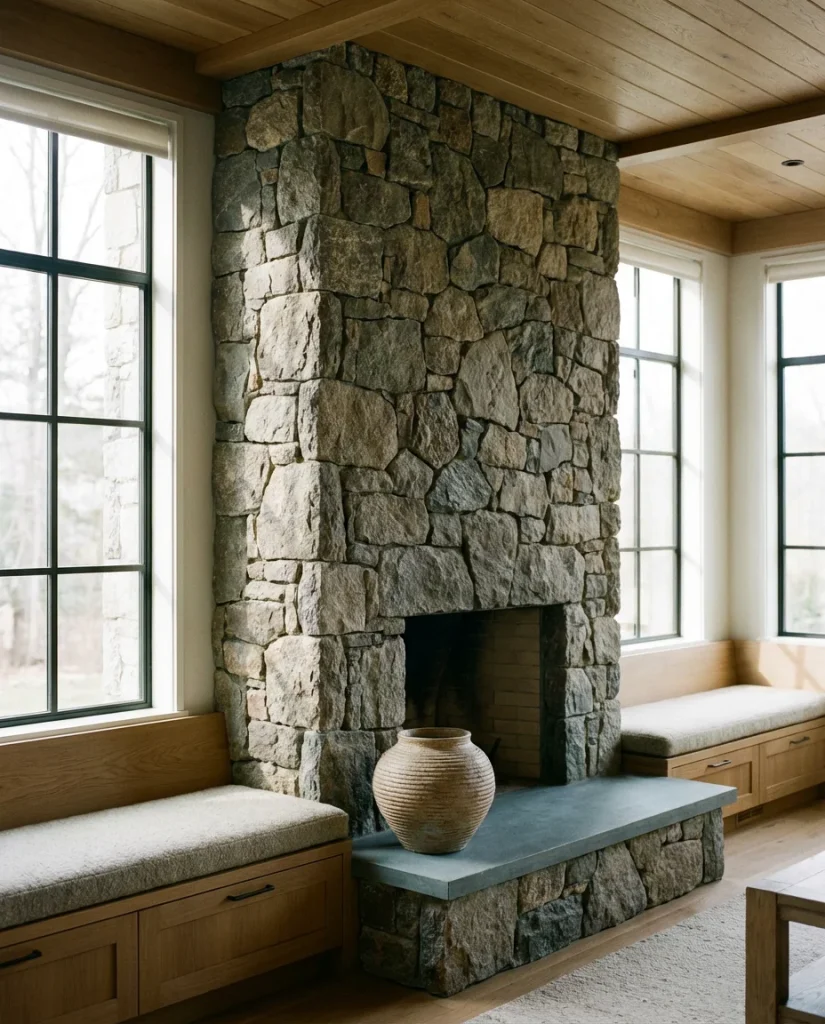
The most ambitious approach to ideas for living room fireplace design in 2026 is the full wall transformation—treating the entire fireplace wall as a single cohesive design statement. This might mean extending the tile or stone of the surround from floor to ceiling, adding built-in seating or window benches on either side, or commissioning a large-scale mural that frames the firebox. The fireplace shifts from feature to architecture. Combined with thoughtful lighting—picture lights, recessed spots, and the fire itself—these walls become the defining element of the entire home.

For rustic and traditional homes, the full wall treatment often involves extending original stone or brick up to the ceiling line—a project that can cost anywhere from $5,000 to $20,000 depending on material and labor but that dramatically increases both the livability and resale value of the home. For more contemporary spaces, a floor-to-ceiling plaster or limewashed panel flanked by integrated lighting and cabinetry achieves the same architectural gravitas at a broader range of price points. Either way, the investment in the fireplace wall pays dividends in daily pleasure that few other home upgrades can match.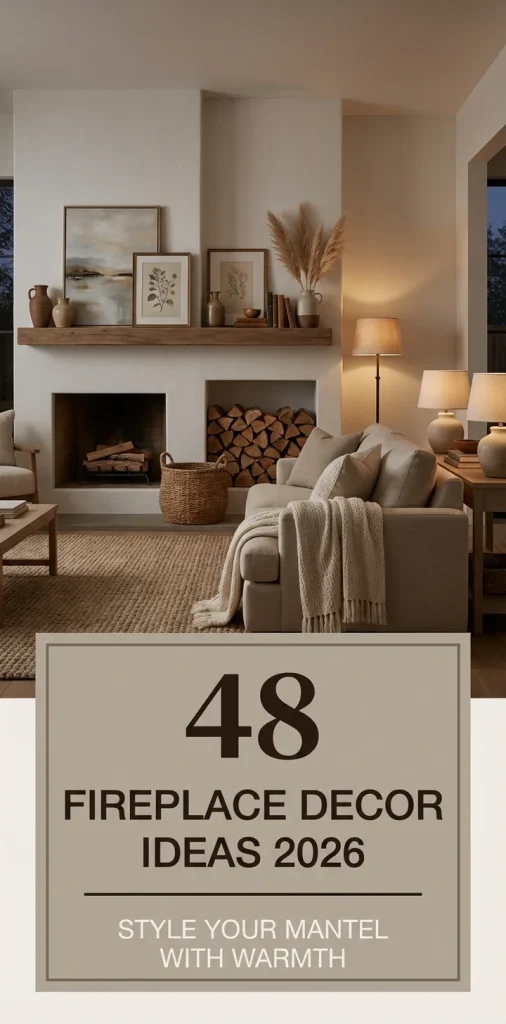
Conclusion
There’s a reason people never stop pinning fireplace photos—these spaces tap into something deeply satisfying about home, warmth, and belonging. Whether you’re taking on a full wall renovation or simply rearranging what you already own on the mantel, every idea here is worth trying in your own space. We’d love to hear what you’re working with: drop a comment below and tell us about your fireplace, what’s working, what isn’t, and which of these ideas you’re planning to steal first.