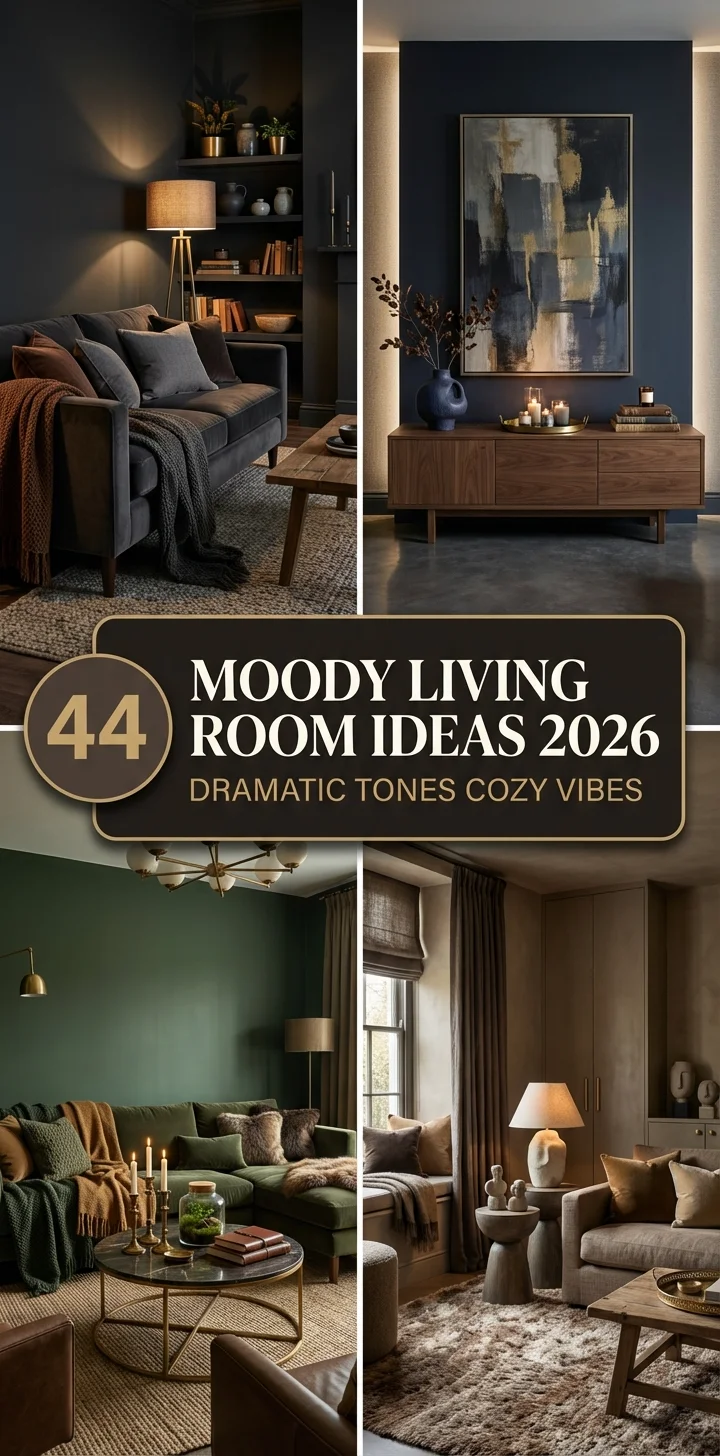
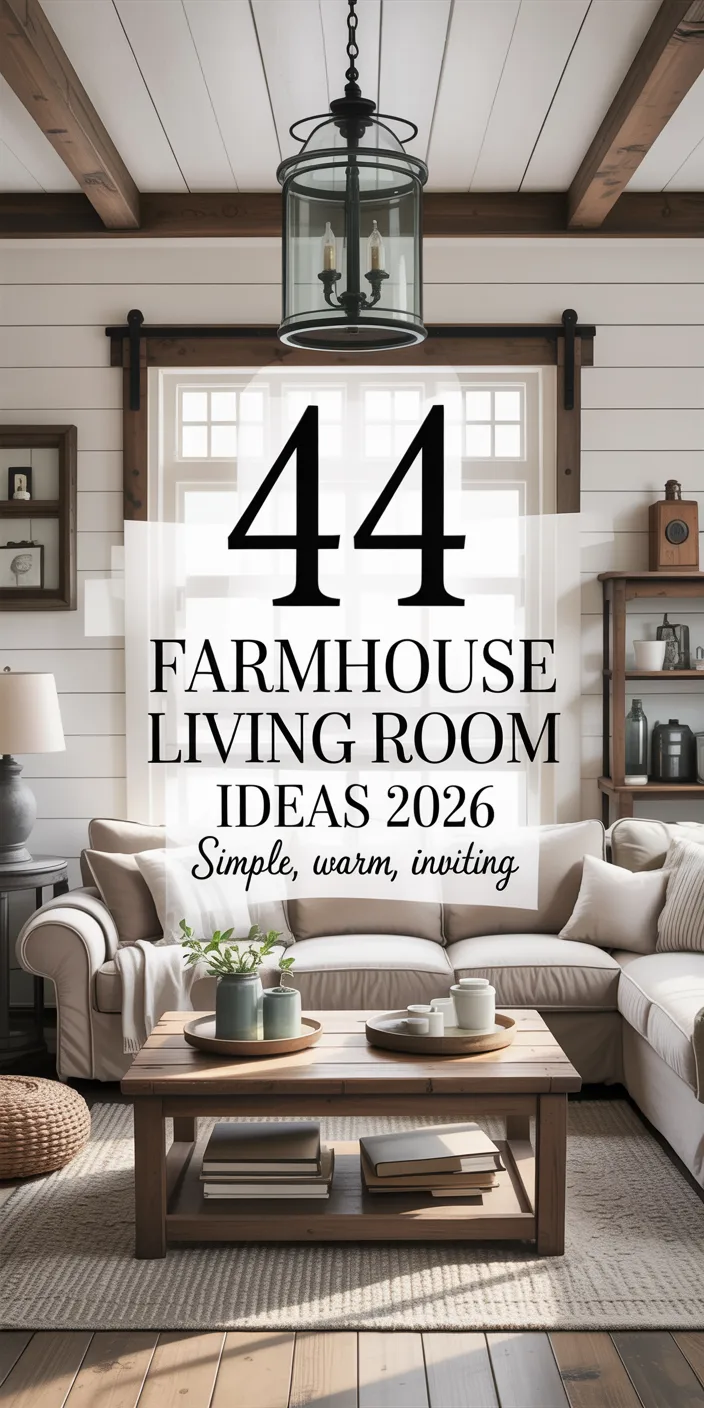
There’s something happening in American homes right now—a quiet, collective exhale toward spaces that feel grounded, warm, and genuinely lived-in. Earthy living rooms are dominating Pinterest boards in 2026, and it’s not hard to see why: after years of cold minimalism and sterile grays, people are craving organic textures, layered neutrals, and rooms that actually feel like somewhere you want to curl up. Whether you’re starting from scratch or just refreshing what you have, this guide covers 23 earthy living room ideas that span every style, budget, and square footage—from moody dark dens to bright sun-soaked apartments with a green couch as the star. Scroll through, save your favorites, and get ready to transform your space.
1. Dark Walls with Warm Wood Accents
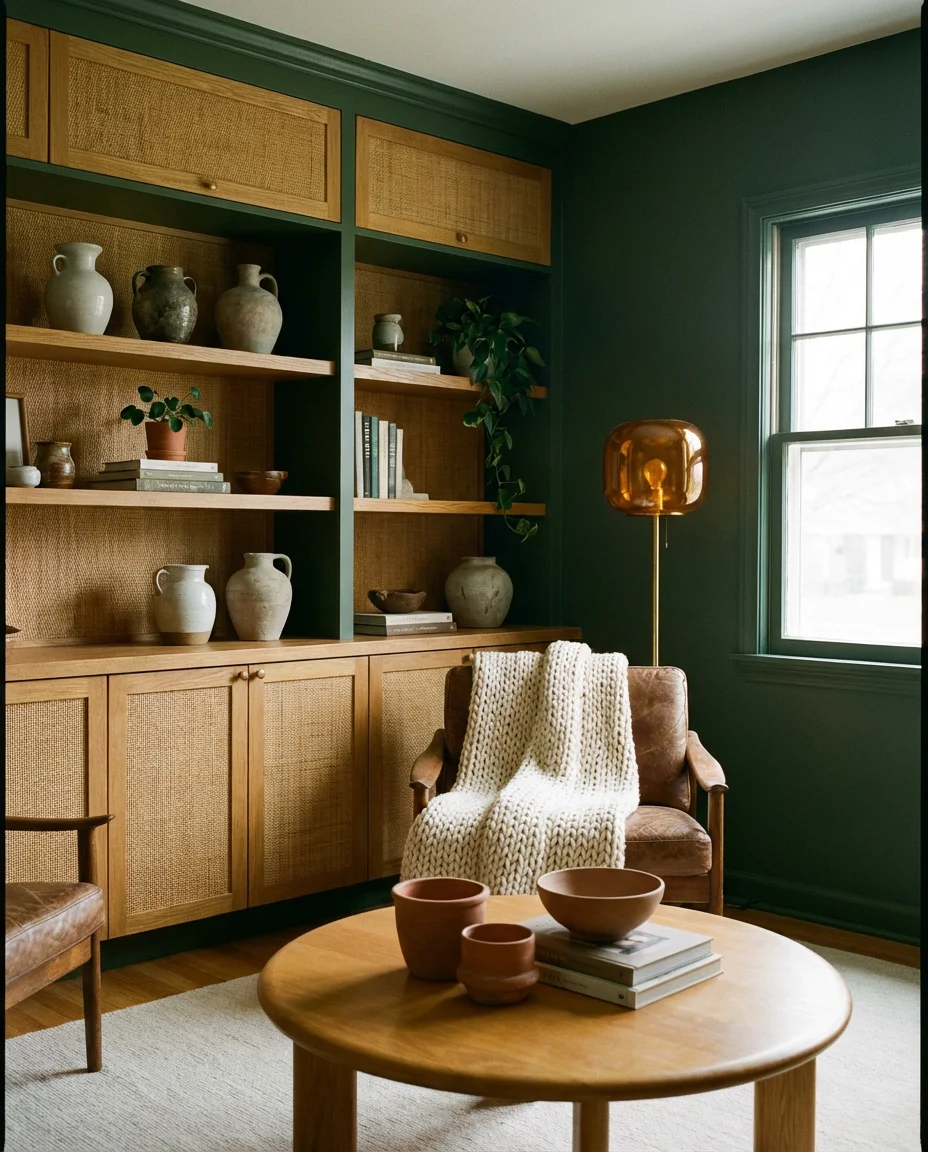
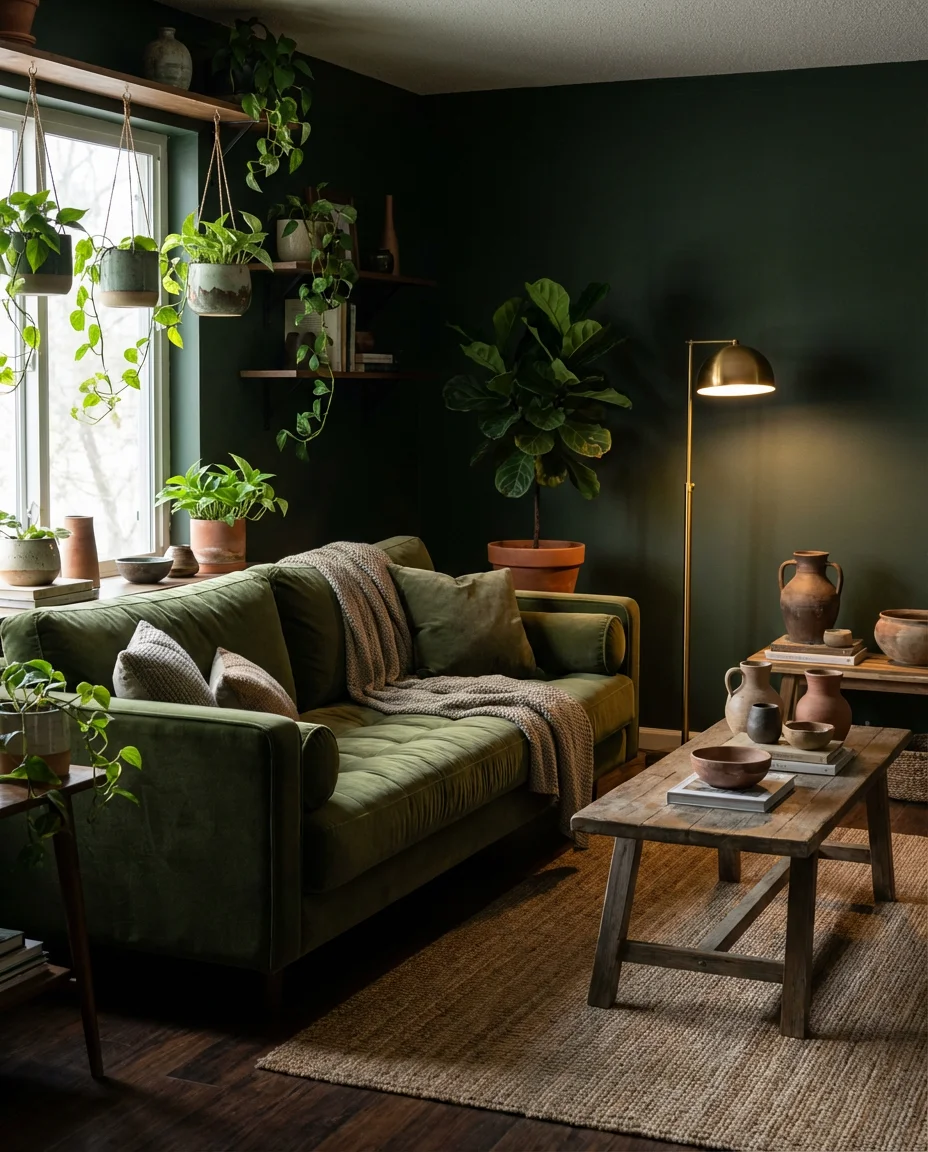
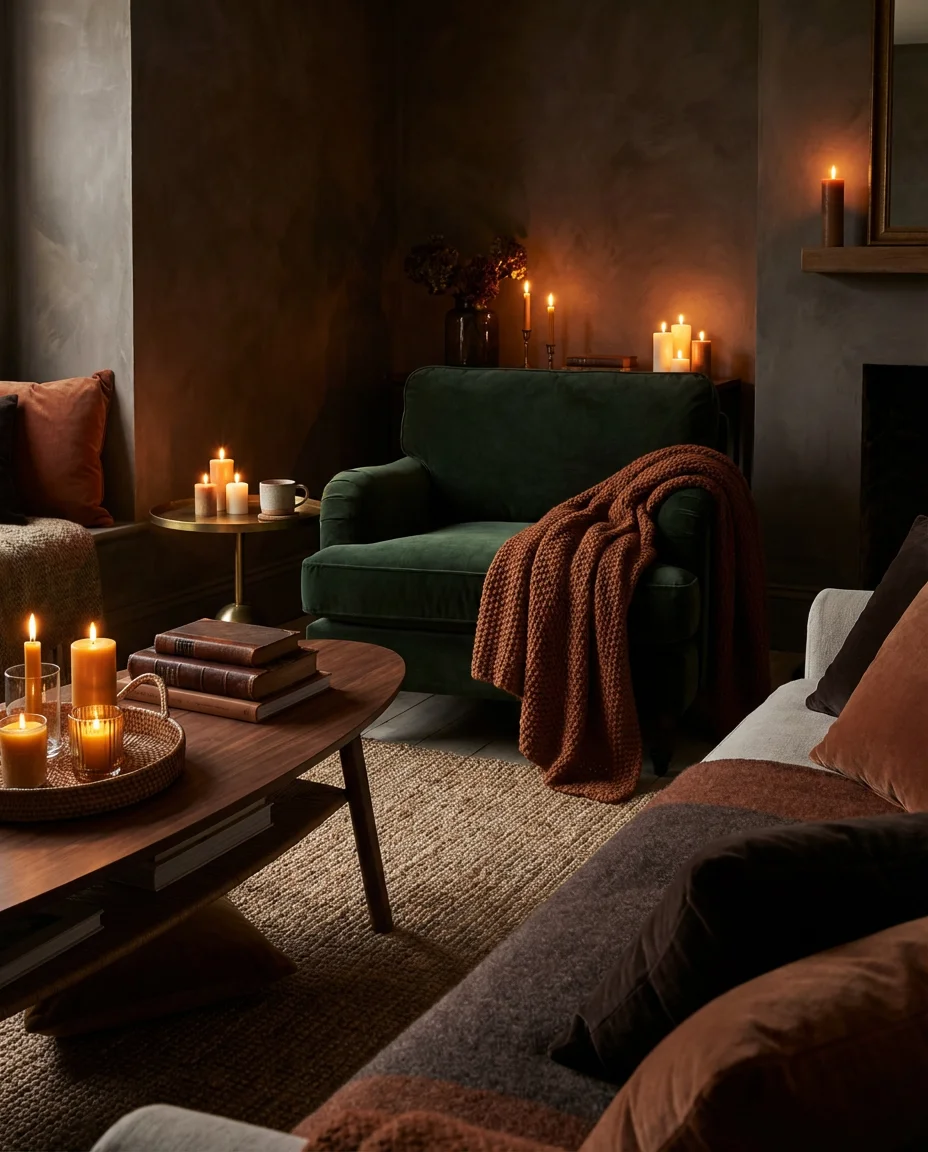
If you’ve been scrolling Pinterest and falling hard for those dark, moody living rooms that somehow feel like a hug, this idea is your starting point. Deep earthy wall colors—think forest green, aged umber, or near-black walnut—pair beautifully with warm honey-toned wood shelving, coffee tables, and trim. The contrast creates depth without feeling cold, especially when you layer in chunky throws and ceramic accents in clay or terracotta. It’s a look that reads as both sophisticated and deeply comfortable at once.

One common mistake people make with dark walls is keeping the rest of the room too dark—and then wondering why it feels like a cave rather than a sanctuary. The fix is surprisingly simple: balance the depth with at least two warm light sources, like a floor lamp with an amber bulb and a small table lamp near seating. This keeps the room feeling intentional rather than accidental, and you’ll actually want to spend time in it.
2. Organic Linen Sofas in Oat and Cream
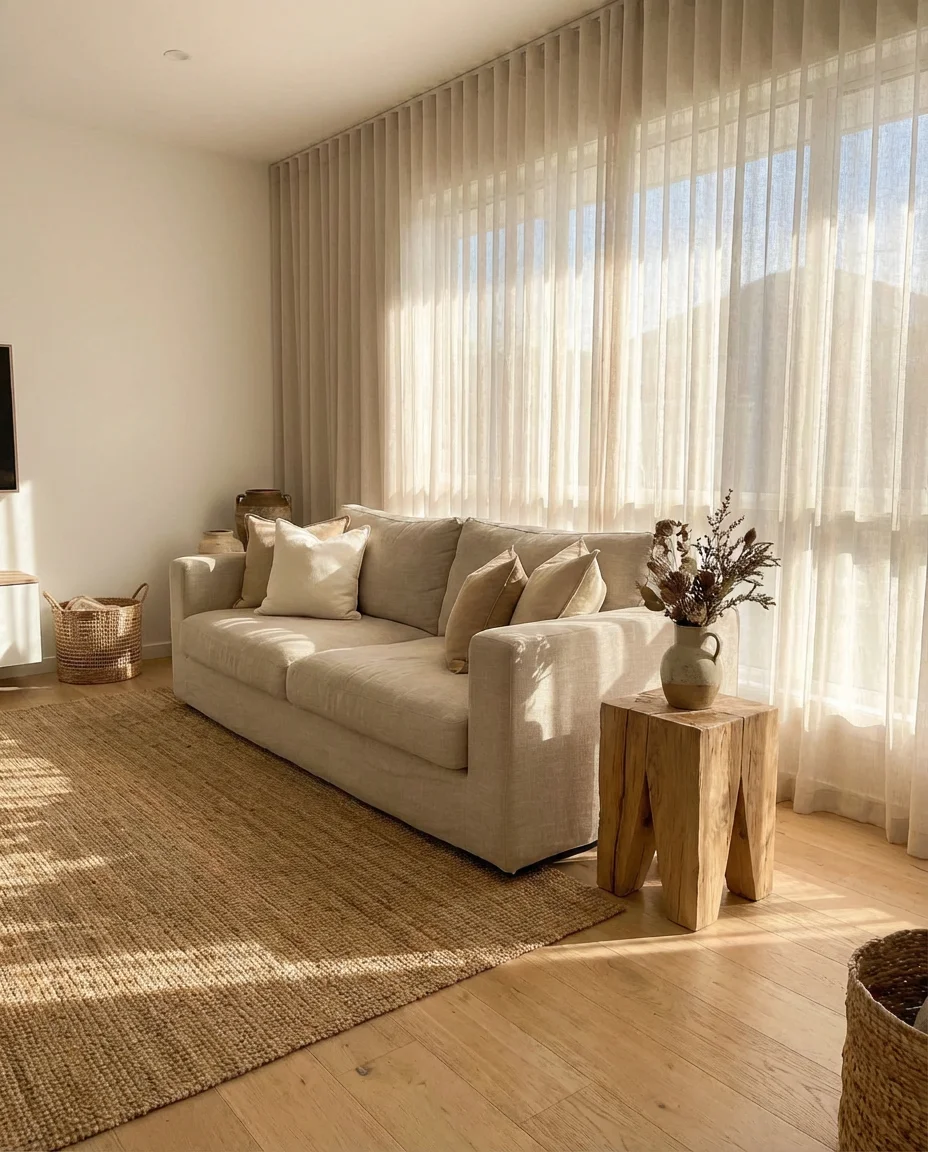
The neutral, organic sofa trend is having a genuine moment in 2026, and honestly, it’s earned it. Linen-upholstered sofas in shades like oat, warm cream, and undyed natural tones anchor earthy living rooms without competing with everything else in the space. They photograph beautifully, age gracefully, and work across a surprising range of aesthetics—from airy cottagecore spaces filled with dried botanicals to sleeker modern interiors with concrete floors and exposed beams. The fabric itself adds texture that synthetics simply can’t replicate.
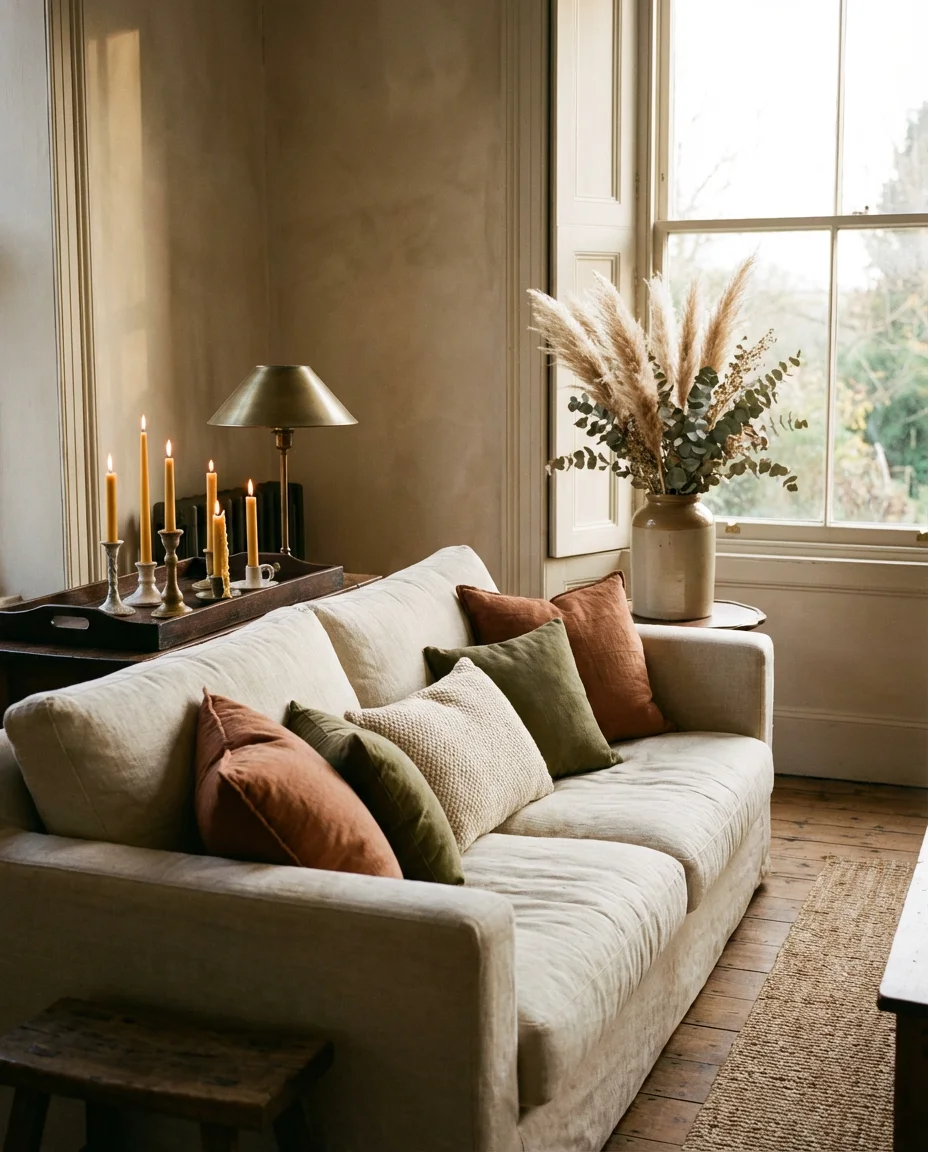
From a practical standpoint, linen sofas work especially well in homes with good natural light—the fabric catches daylight in a way that makes neutral tones glow rather than look flat. In the Pacific Northwest or New England, where overcast days are common, pairing a cream linen sofa with warm brass hardware and beeswax candles compensates beautifully. It’s a regionally smart choice that feels cozy no matter the weather outside.
3. Terracotta Paint Color on an Accent Wall
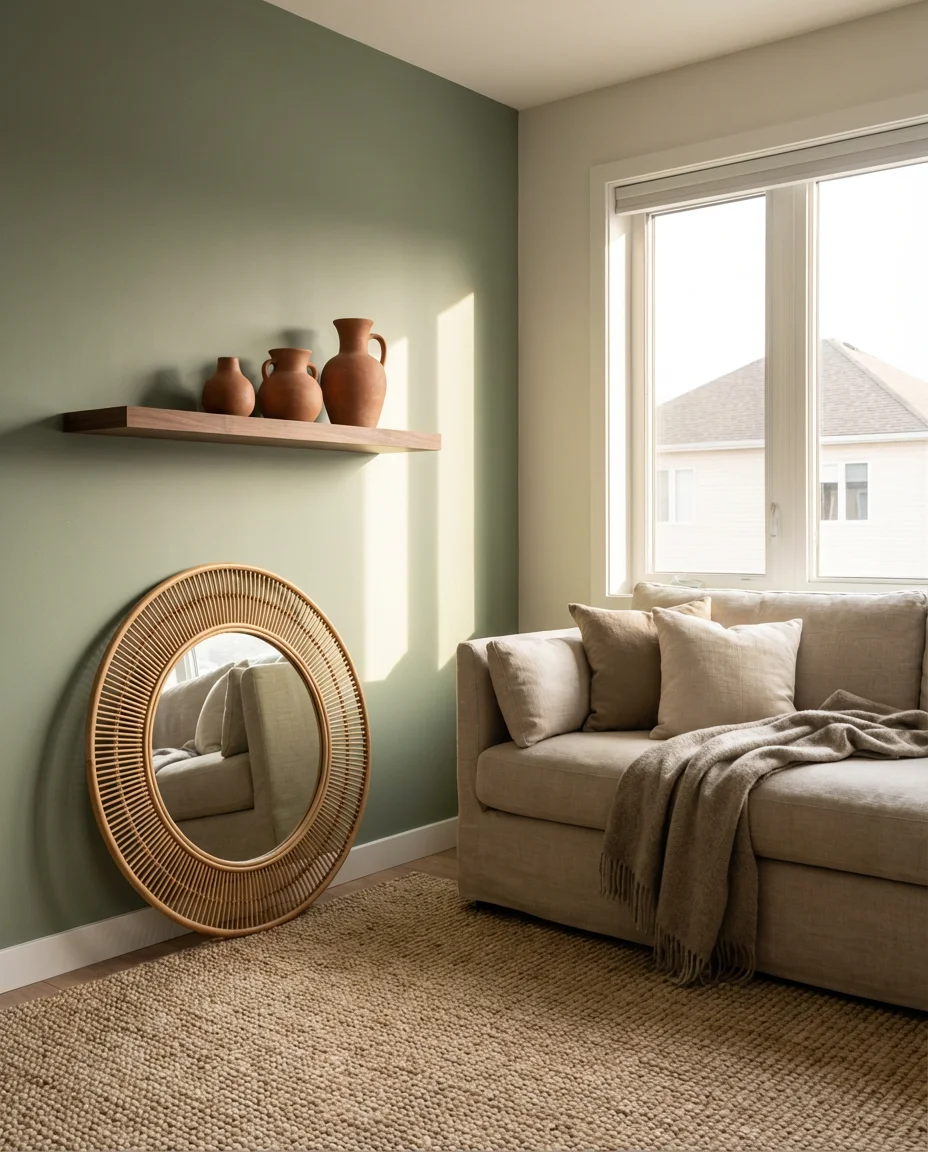
Among all the paint color ideas making the rounds right now, terracotta is the one with real staying power. It’s warm without being orange, bold without being aggressive—and it genuinely transforms a living room when applied to a single statement wall. Pair it with natural rattan furniture, woven jute rugs, and pottery in cream or rust, and you’ve got a space that feels curated without looking like a magazine set. The earthy, sun-baked quality of this hue evokes something primal and comforting at the same time.
Interior designers often point out that terracotta reads very differently depending on the finish you choose. A flat or matte finish will feel more ancient and rustic—perfect for bohemian or Southwest-inspired rooms. A soft eggshell gives it a cleaner, more contemporary edge. If you’re renting and can’t paint, removable terracotta-toned wallpaper has gotten remarkably good in recent years and produces nearly the same effect without the commitment.
4. A Sage Green Couch as the Room’s Anchor

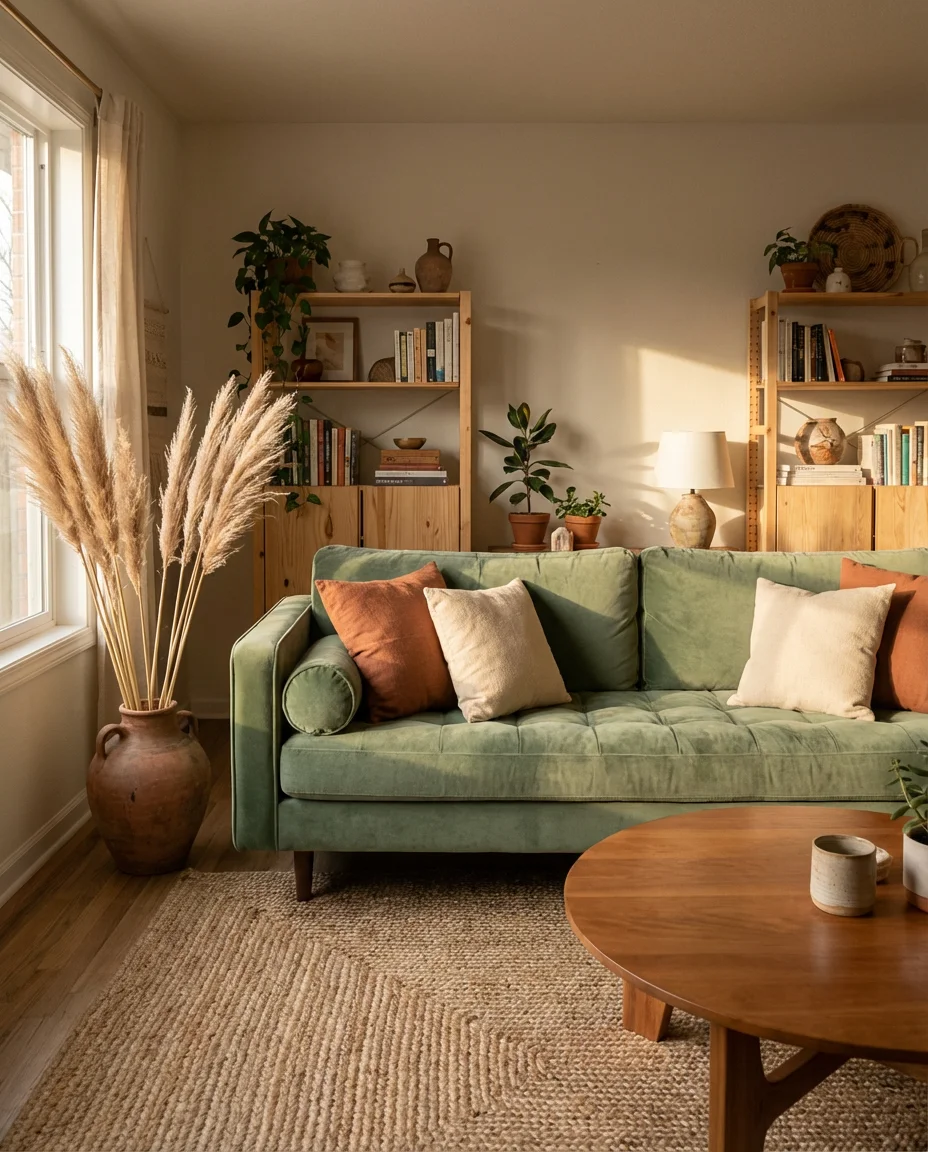
The green couch has become something of a signature piece for earthy living rooms in 2026, and sage in particular hits a sweet spot between natural and polished. It reads differently in varying light—almost gray in the morning, decidedly green in afternoon sun—which gives the room a sense of life that a static neutral sofa simply doesn’t offer. Surrounded by warm browns, aged wood, linen pillows, and terracotta ceramics, a sage sofa becomes the kind of piece guests always comment on first. It’s bold, but approachably so.
A real homeowner trick worth borrowing: instead of matching throw pillows to the sofa, go deliberately mismatched—terracotta, cream, and a deep olive together feel collected and personal rather than catalog-coordinated. Budget-wise, a velvet sage sofa from mid-range retailers can be found in the $800–$1,400 range, which is genuinely accessible for a piece that completely changes a room’s personality.
5. Cozy Rustic Layers with Chunky Knit Throws
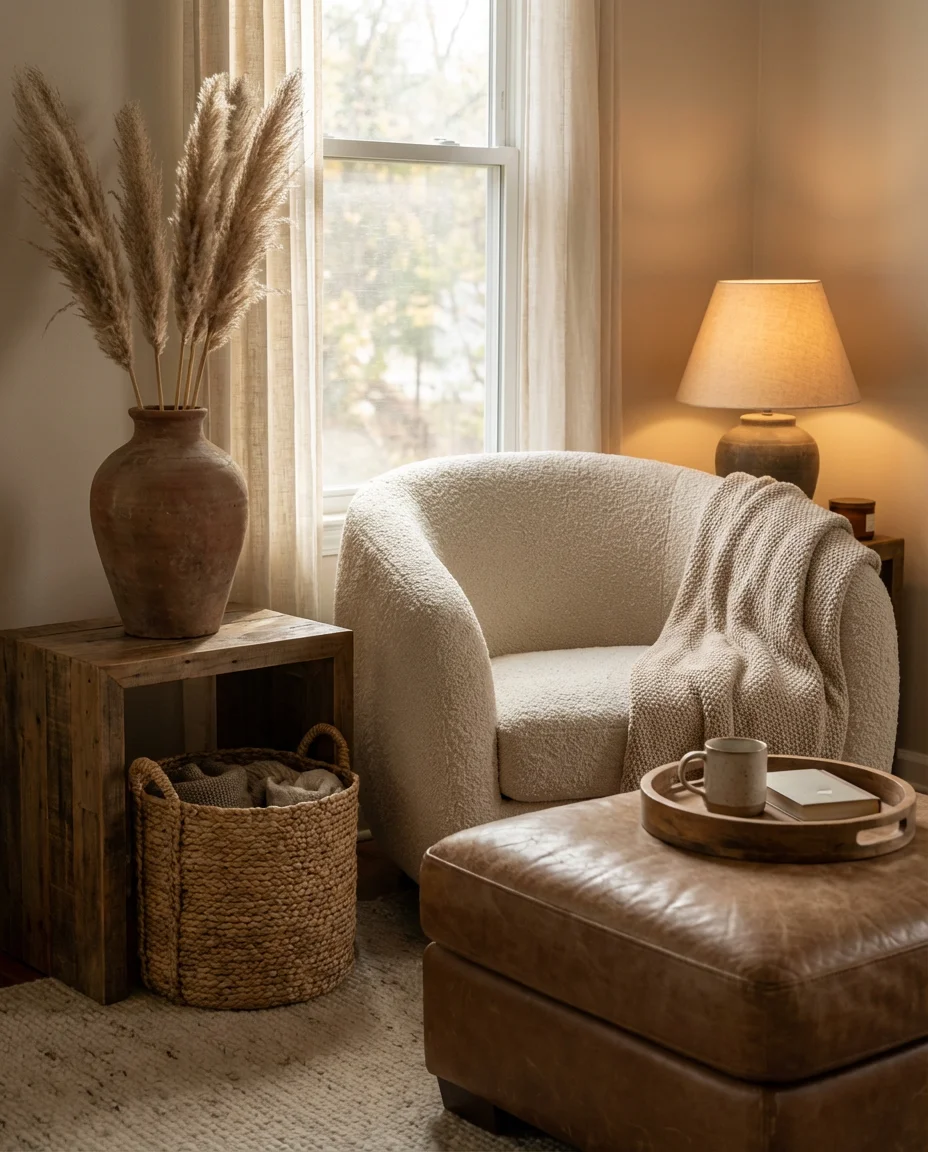
There’s a reason cozy, rustic living rooms perform so consistently well on Pinterest—they tap into something most of us are actively chasing: a home that genuinely feels restful. Chunky knit throws draped over a worn leather chair, a stack of linen cushions, a sheepskin on the floor near the fireplace—these layers create a tactile richness that no single piece of furniture can achieve on its own. The key is varying the textures so nothing feels matchy-matchy. Rough next to smooth, matte next to a soft sheen, heavy fabric next to something light and gauzy.
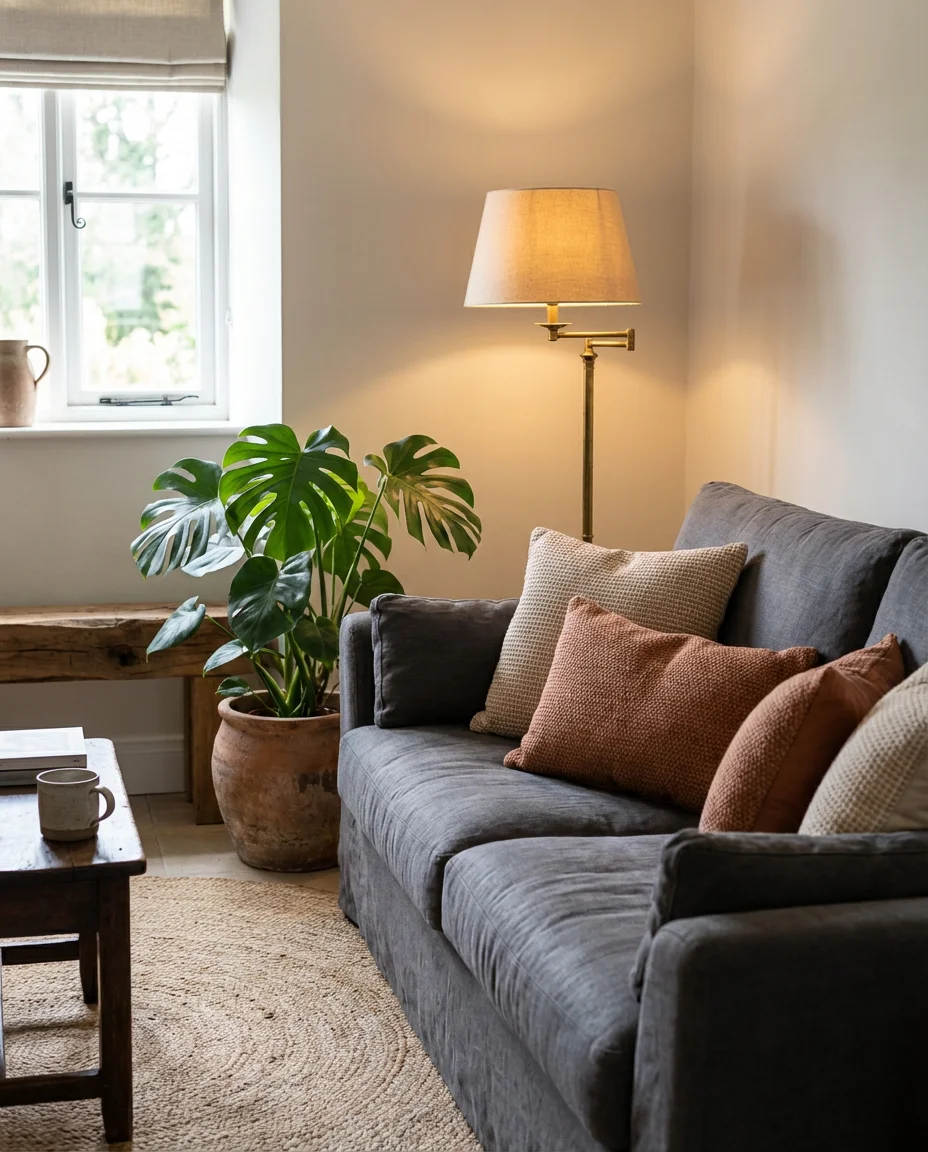
This approach works best in rooms that get a lot of family use—think Midwest farmhouses, cabin-style mountain homes, or any space where people actually flop down and stay awhile. The layered look also has a practical upside: it’s easy to swap out individual pieces seasonally. Trade the ivory knit throw for a deeper rust-toned one in fall, pull out lighter linen for summer, and the room always feels current without requiring a full overhaul.
6. Earth Tones Living Room with Grey Couch
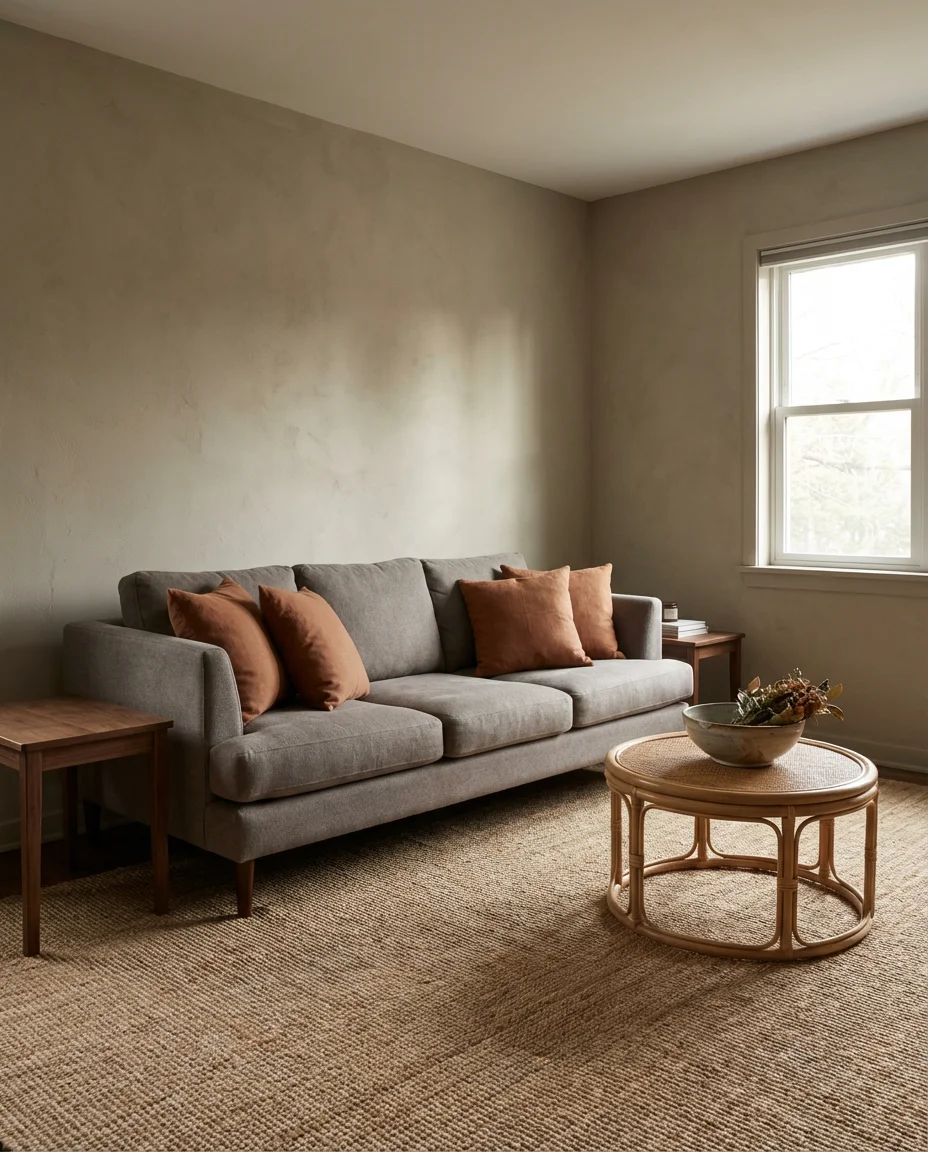
A gray couch doesn’t have to mean a cold, corporate living room—paired with the right earth tones, it becomes an incredibly versatile anchor that lets warm accents do all the talking. Think of a warm mid-gray sofa surrounded by terracotta cushions, walnut side tables, a sisal rug in warm sand, and walls painted in a soft clay or warm greige. The gray acts almost as a neutral backdrop, letting the earthy palette breathe around it. It’s a smarter approach than it might sound on paper.
The mistake most people make is choosing a gray that reads too blue or too cool—which creates a visual tension with warm earthy accents that never fully resolves. The fix is simple: look for grays described as “warm gray,” “greige,” or “taupe-gray” and hold swatches against terracotta or brown accents before committing. A warm-leaning gray sofa is one of the most adaptable pieces you can own and will serve you across multiple style evolutions.
7. Brown and Cream Tonal Decor Palette
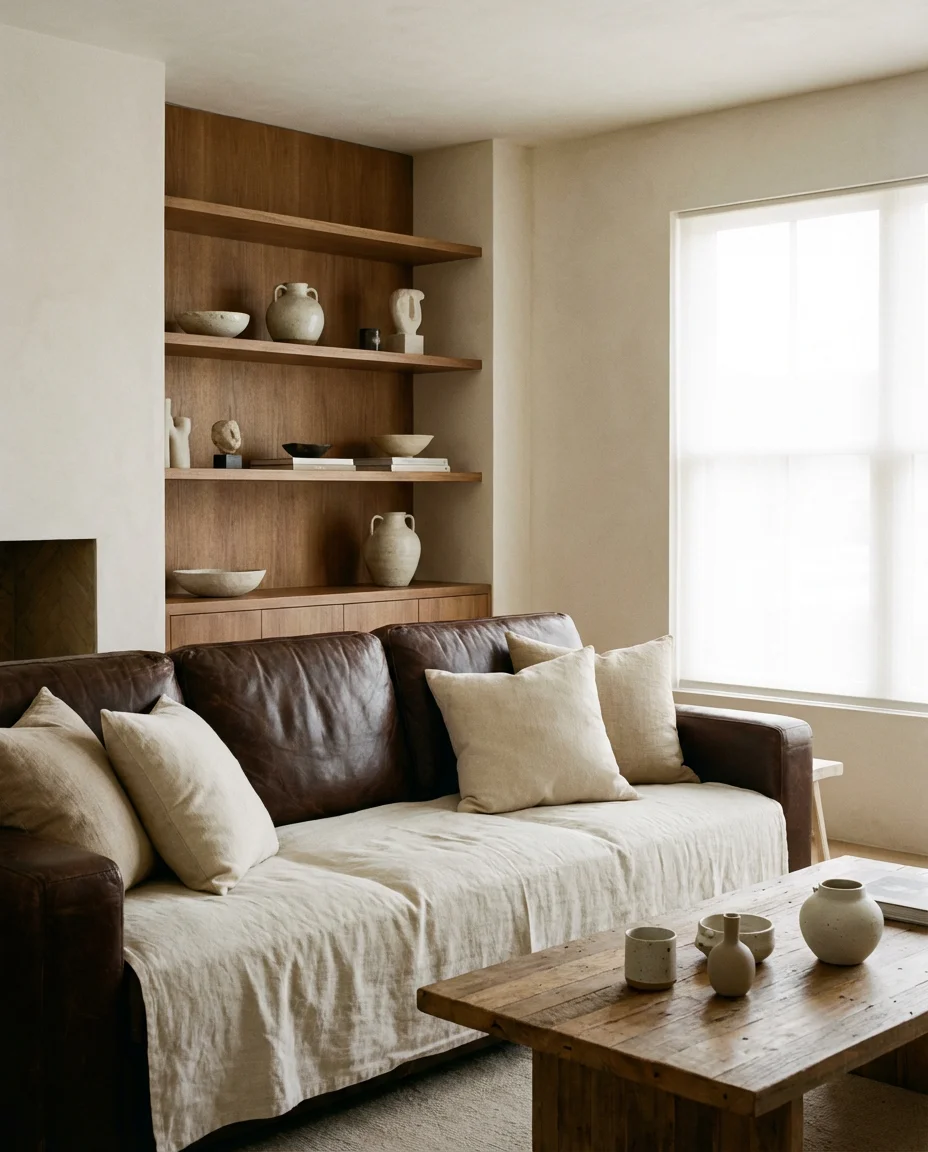
The brown and cream combination has quietly become one of the most searched decor palettes of 2026, and it makes complete sense when you see it in person. There’s something incredibly grounding about a room built in varying shades of the same warm family—chocolate leather, caramel wood, creamy plaster walls, ivory linen, and touches of raw linen or boucle. Done well, it avoids looking muddy by ensuring there are enough value contrasts—light against dark, smooth against textured. The result is deeply earthy without feeling heavy.
Here’s where it gets particularly smart for American homeowners: a brown-and-cream room is remarkably easy to photograph well, which matters when you’re eventually selling or just sharing your space. It reads as elevated and thoughtful in listing photos—one interior stager described it as “the palette that makes buyers feel like they’re already home.” ” That kind of emotional resonance has real dollar value.
8. Small Space Earthy Apartment with Natural Light
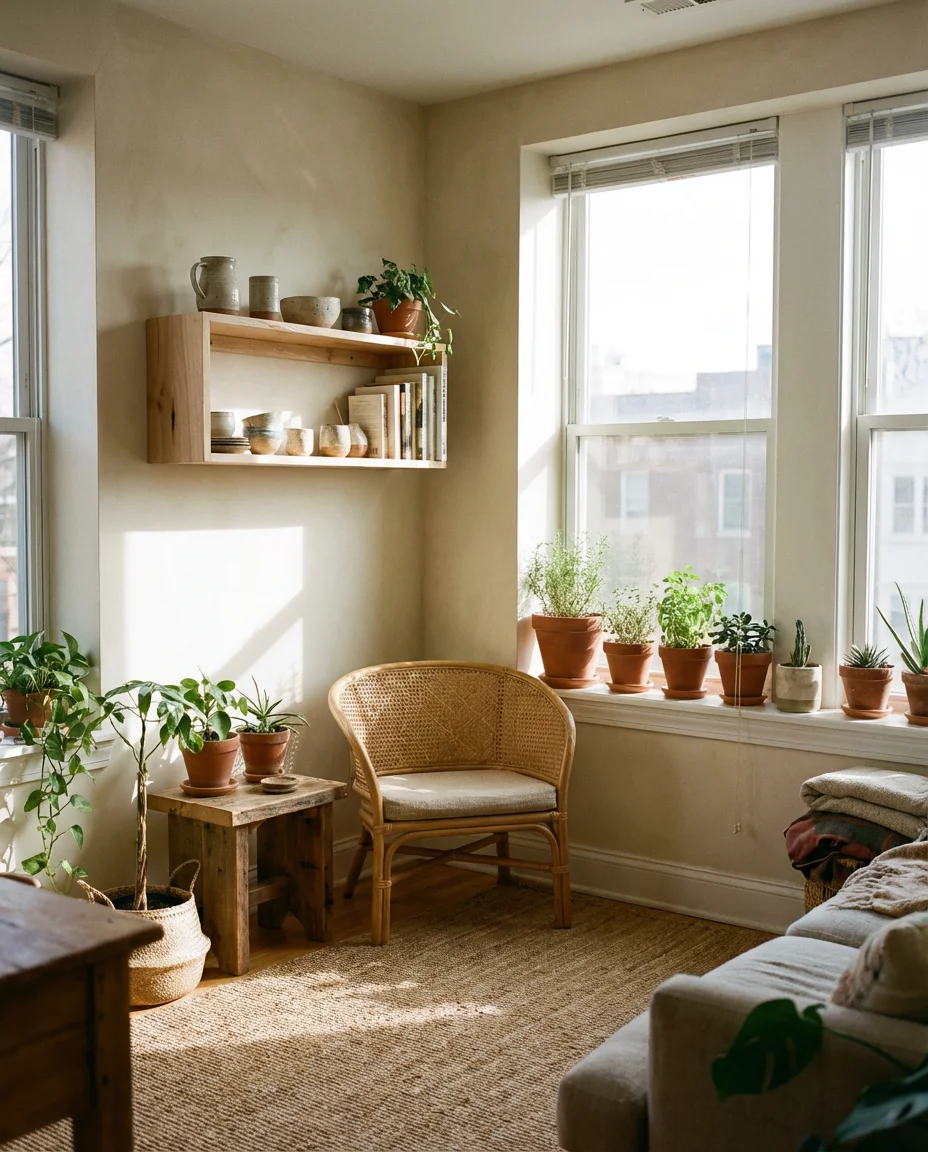
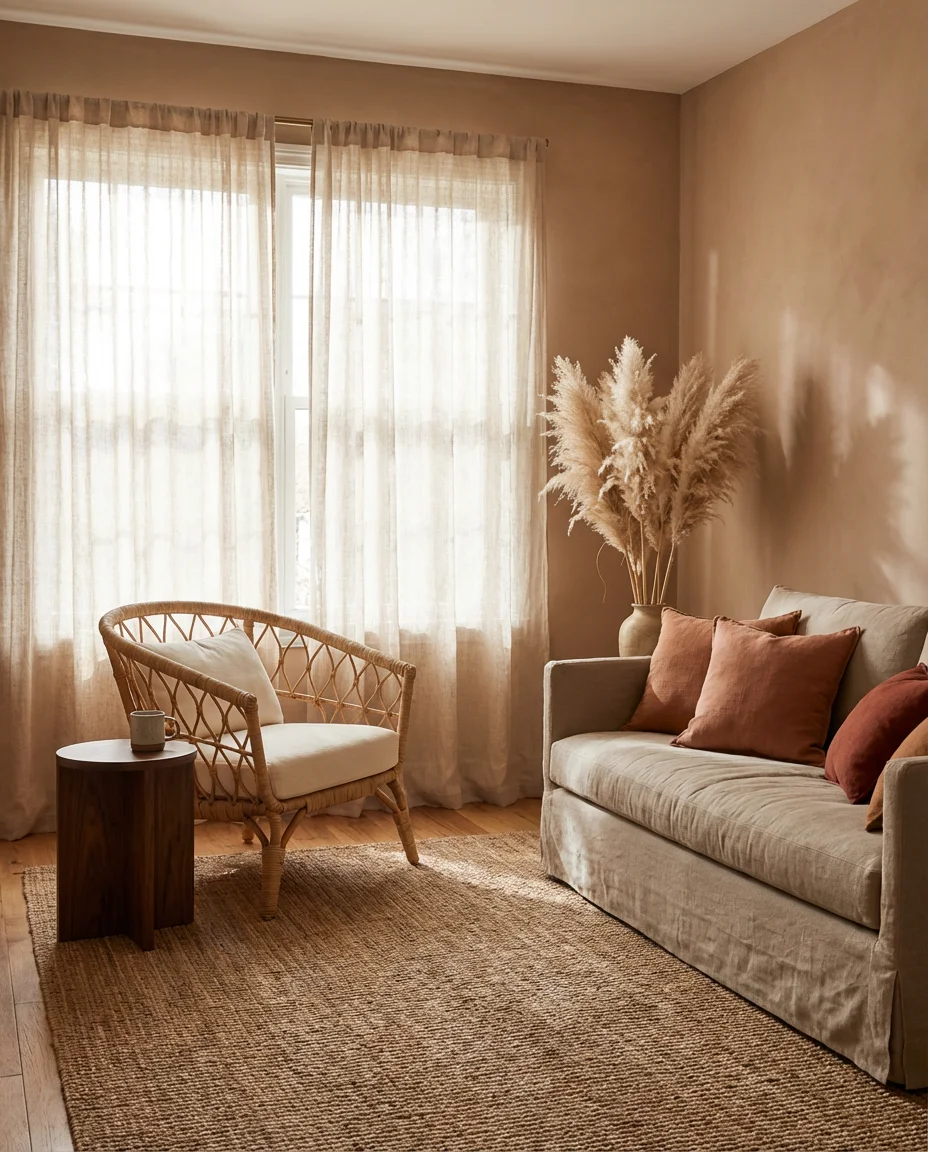
Living in a small space doesn’t mean giving up on earthy warmth—it just means being strategic. In a compact apartment, the goal is to use earthy tones in a way that adds depth without making rooms feel smaller. Warm whites and soft sand tones on walls keep things airy, while organic textures—a jute rug, a rattan side chair, and terracotta pots along the windowsill—bring in that grounded, earthy quality without consuming visual space. Fewer, larger pieces almost always work better than a crowded collection of small accents in tight rooms.
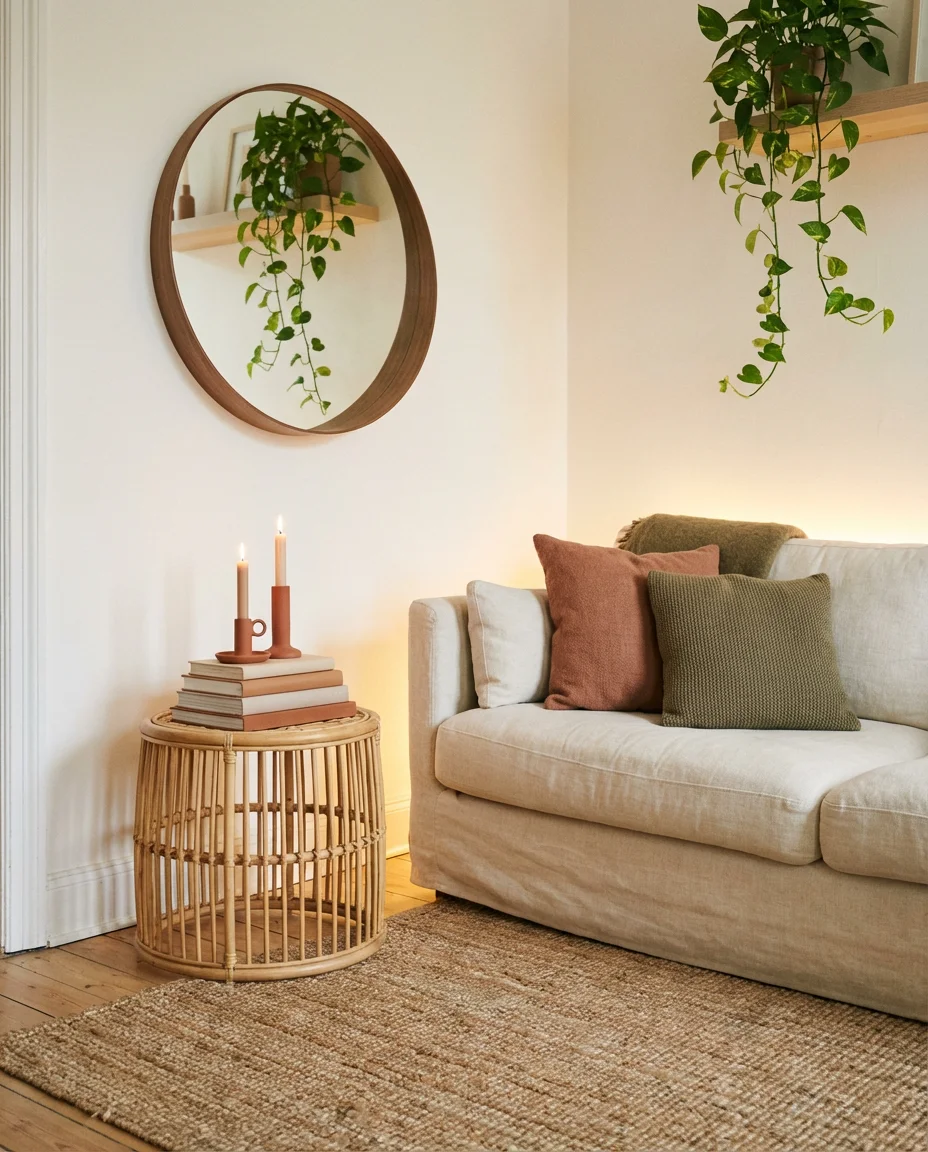
Natural light is the ultimate amplifier in a small earthy room—it transforms warm neutrals from flat to luminous throughout the day. If your apartment doesn’t get great light, warm-toned LED bulbs (look for 2700K) mimic the golden quality of afternoon sun and make even a north-facing room feel inviting. Mirrors framed in natural wood or rattan are another trick that doubles perceived space while staying completely on-theme.
9. Moody Green Plant-Filled Living Room
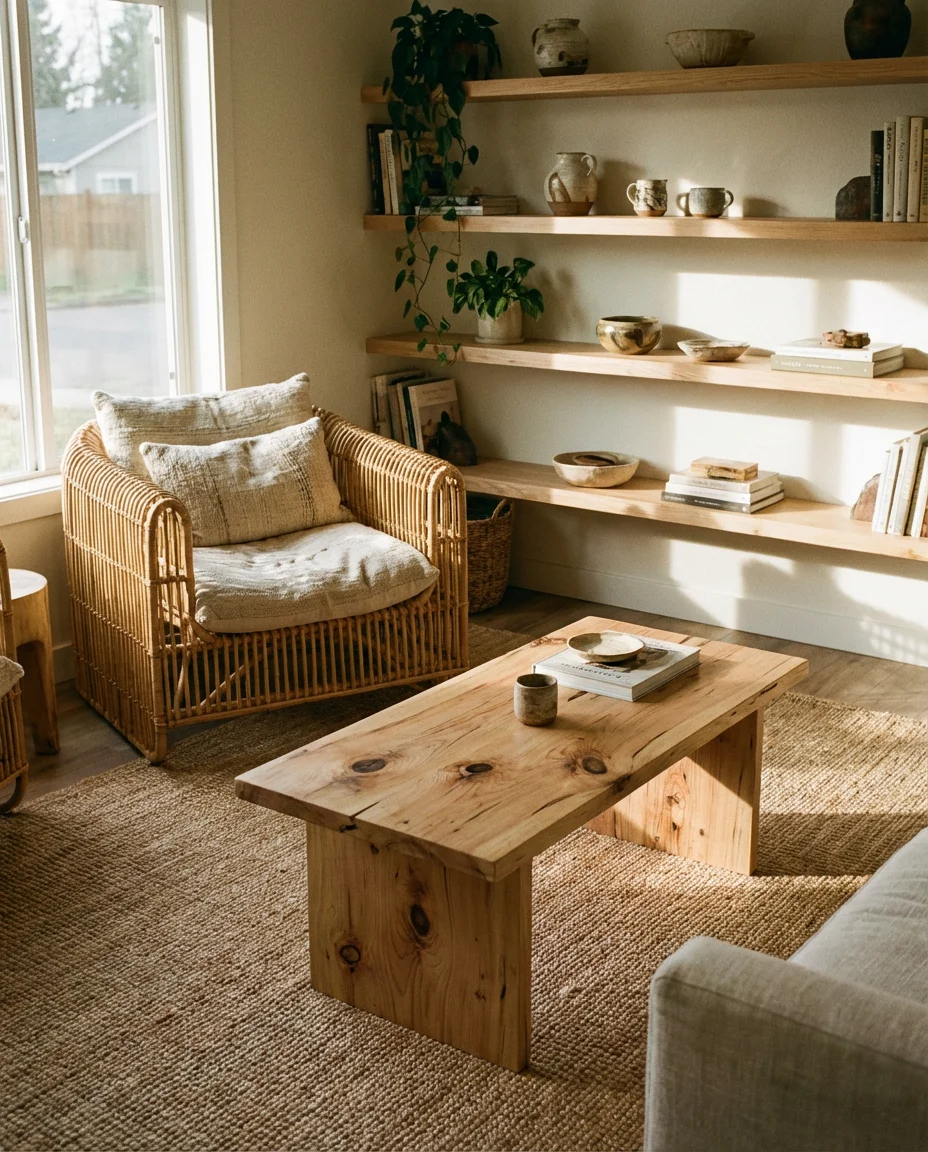
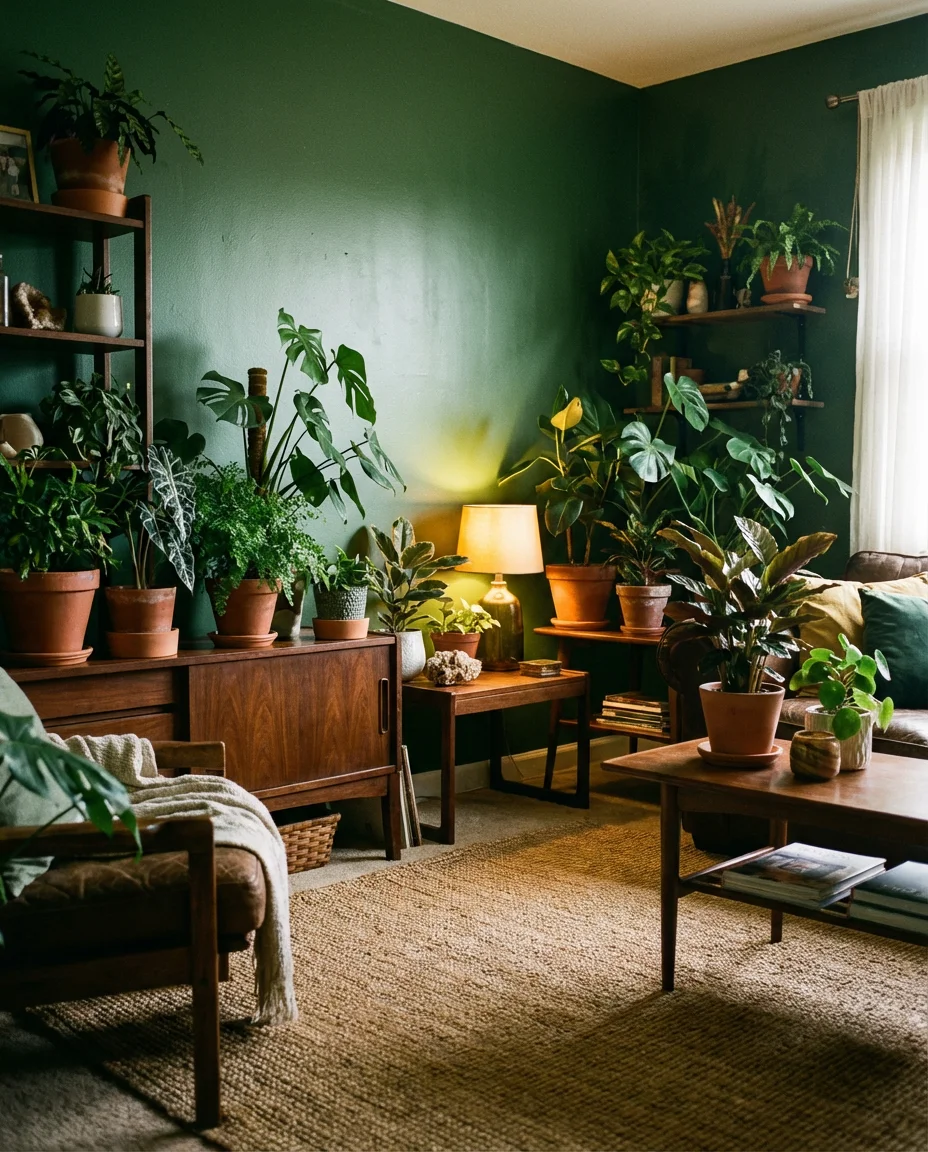
The moody, plant-filled living room is one of those aesthetics that photographs like a dream and lives even better in person. It’s built around a saturated deep green palette—walls, upholstery, or both—amplified by an abundance of real plants in varying sizes, textures, and heights. Fiddle-leaf figs, trailing pothos, sculptural snake plants, and clustering monsteras all contribute to a layered, almost jungle-like quality that feels intimate and alive. The darkness of the walls makes the green of the plants pop in a way bright rooms simply can’t achieve.
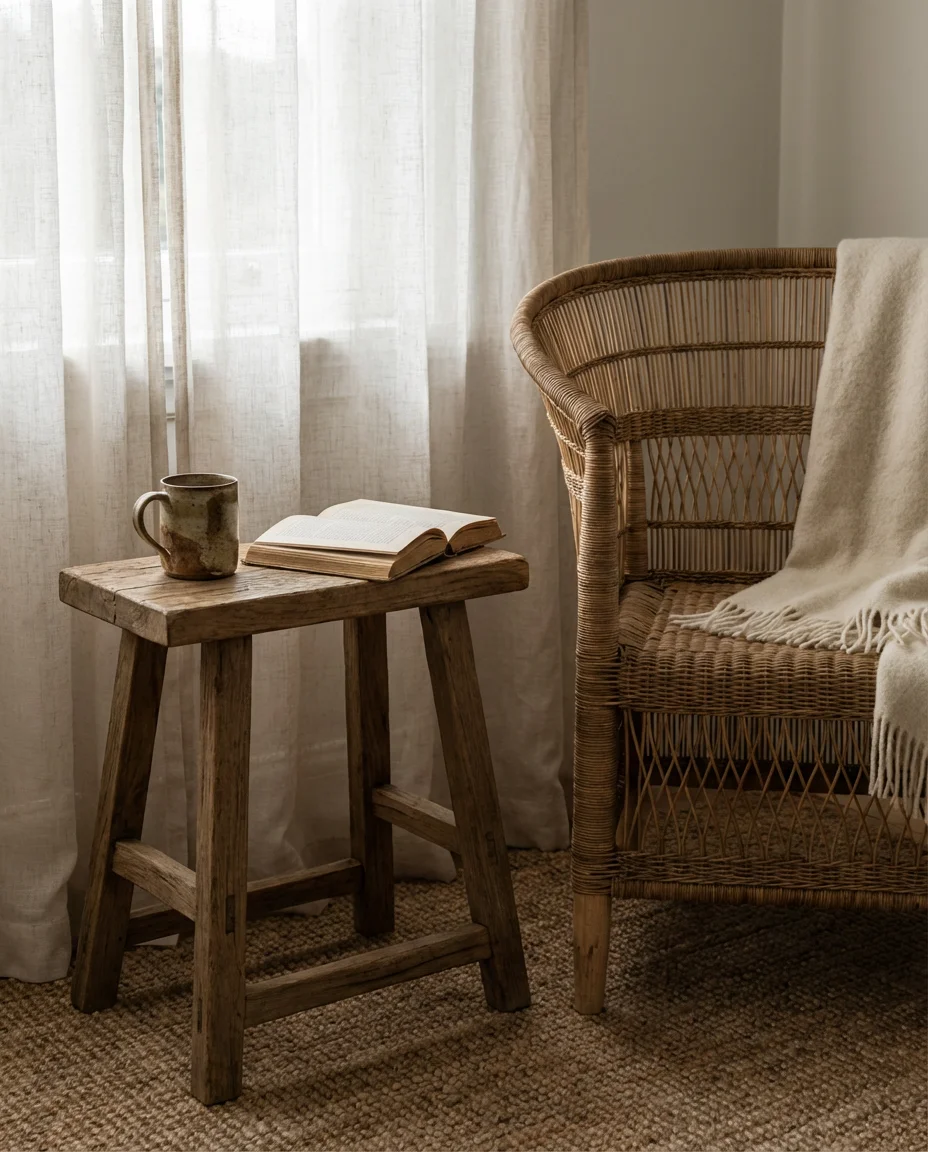
This works best in homes where at least one room gets decent indirect light—east- or west-facing rooms are ideal for keeping plants healthy in a darker-walled space. A practical note: if you’re going full dark green on the walls, use a paint with a slight sheen (eggshell rather than flat) so the room reflects rather than absorbs what light it does get. It’s a small technical detail that makes a noticeable difference in how the space feels on gray days.
10. Natural Wood and Woven Texture Inspo
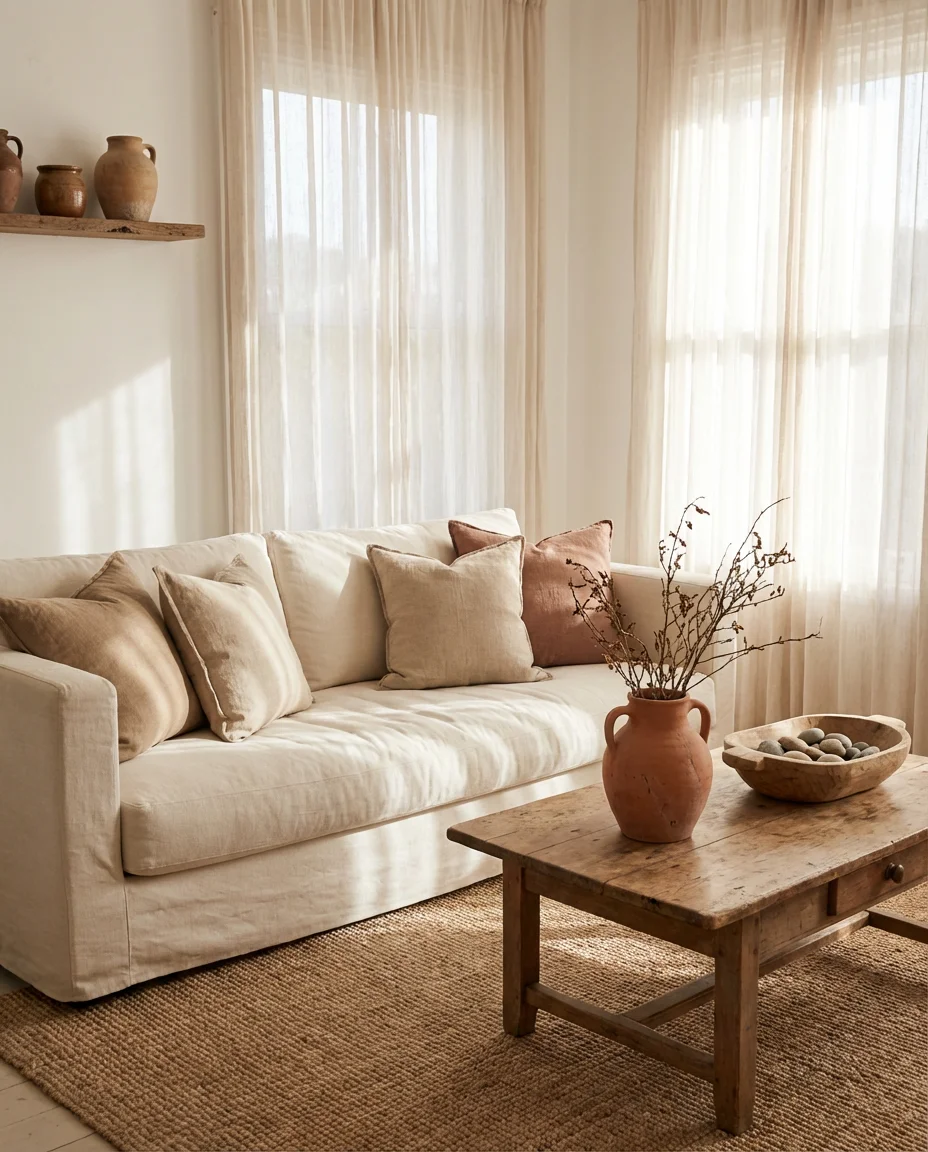
If there’s one combination that defines earthy living rooms in 2026, it’s the pairing of raw natural wood with woven textures—rattan, seagrass, jute, and hand-loomed fabrics that show the human hand in every thread. This inspo direction leans into imperfection as an asset: knots in wood, uneven weaves, and visible grain. A room built around these materials tends to age beautifully, developing character rather than looking worn. The warmth of wood alongside the tactile quality of natural fiber creates a sensory richness that feels genuinely different from synthetic alternatives.
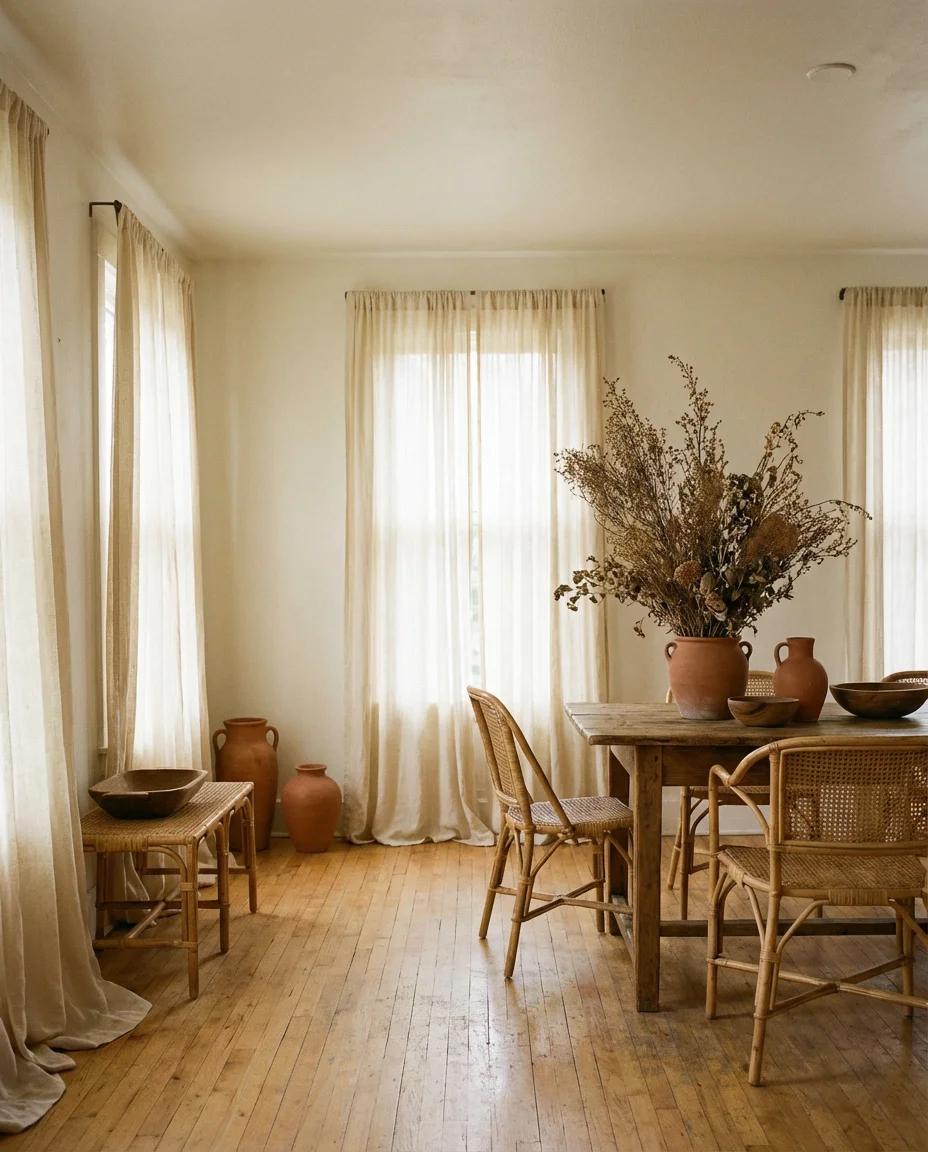
Budget-conscious shoppers have more options than ever here. Thrift stores and estate sales are excellent sources for vintage rattan and solid wood pieces that would cost significantly more if bought new. A worn rattan chair reupholstered in natural linen, or a raw wood slab repurposed as a coffee table, brings authenticity that no mass-produced piece can replicate—and usually for a fraction of the price. The “found” quality is actually part of what makes these rooms feel so personal.
11. Bright Earthy Living Room with Warm Whites
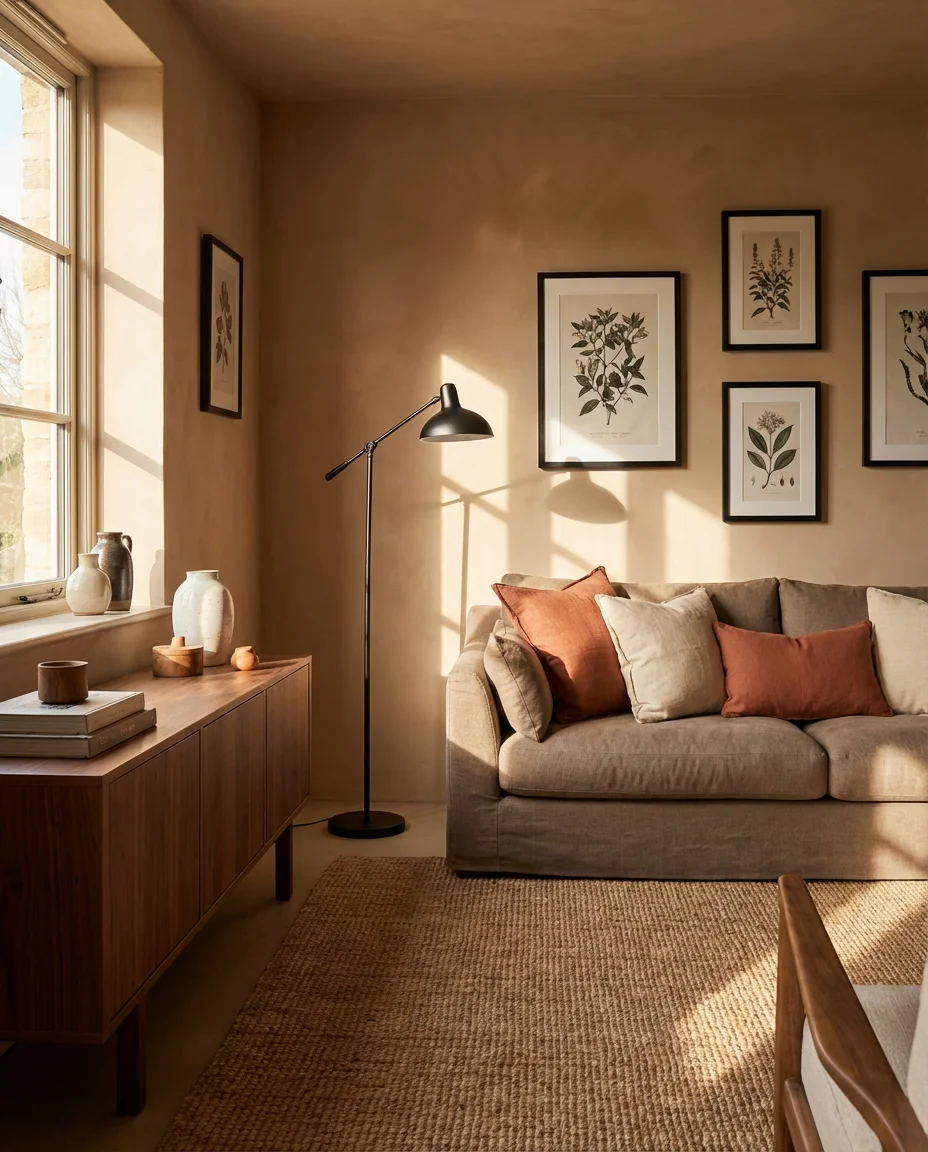
Not every earthy living room needs to be dark and dramatic—the bright, sun-drenched version is just as compelling and often more livable day-to-day. This style relies on warm whites and pale creams as the foundation, then layers in earthy accents: a terracotta vase here, a sisal rug underfoot, some raw linen cushions, and a wooden bowl on the coffee table. The lightness of the base keeps everything feeling open and airy while the earthy accents prevent it from tipping into cold or sterile. It’s the balance that makes Pinterest boards for this look endlessly saveable.
This direction is particularly well-suited to Southern California, Florida, and other sun-drenched regions where natural light is generous year-round. The warm whites bounce light around the room in a way that makes it feel expansive even in modest square footage. One insider tip: use warm white on ceilings too, not just walls—it creates a cohesive envelope that makes the whole room feel intentional and complete rather than an afterthought.
12. Cosy Cottagecore Living Room with Dried Botanicals
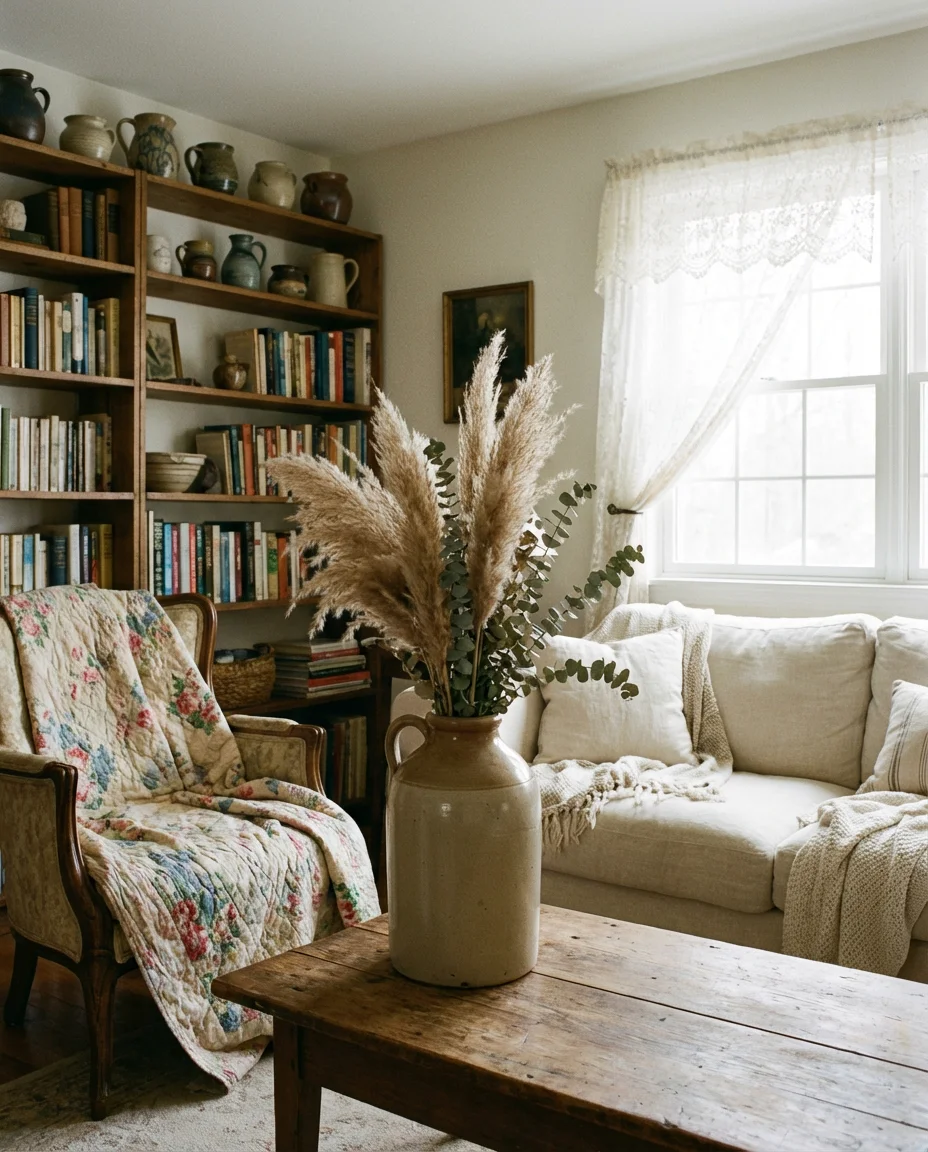
The cottagecore cozy aesthetic has evolved since its peak pandemic years into something more refined and genuinely livable—and in 2026, it’s finding a natural home within the earthy living room movement. Think dried pampas grass in a stoneware vase, bundles of eucalyptus hung near a window, a worn floral quilt draped over a reading chair, and bookshelves that hold both novels and pottery in equal measure. The cozy quality comes from the density of meaningful, handmade-feeling objects arranged without fussiness.
Dried botanicals are a remarkably practical choice beyond their aesthetic appeal: they require zero maintenance, last for years, and bring organic texture without the upkeep of live plants. A bundle of dried wheat, lavender, or billy balls can be found at most craft stores or farmers markets for under $20, and a well-styled arrangement in a ceramic pot will look just as intentional as far more expensive décor. It’s one of the highest-impact, lowest-cost moves in this entire guide.
13. Black and Brown Earthy Accent Combination
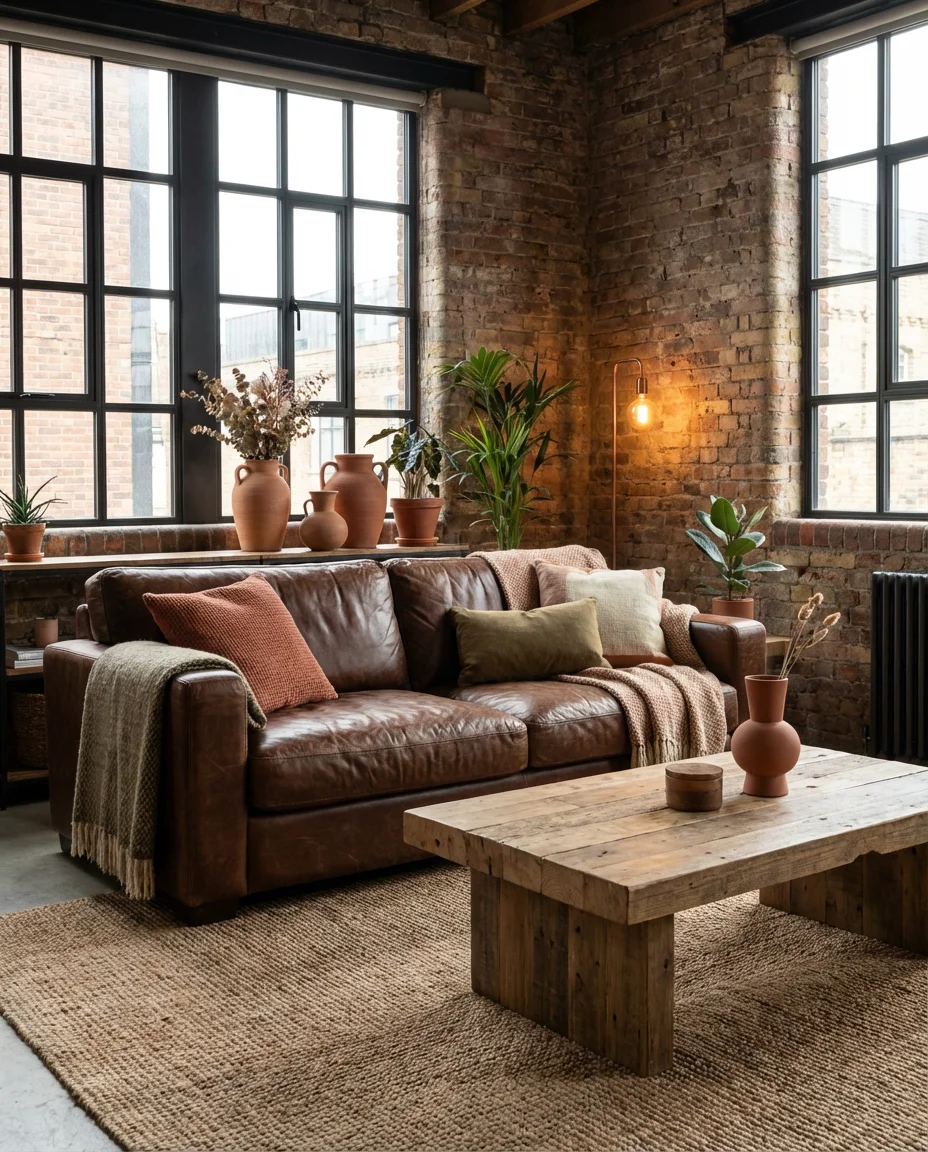
The black and brown combination in earthy living rooms is one of those pairings that feels unexpected until you see it—and then it seems completely obvious. Matte black iron hardware, picture frames, or light fixtures grounded alongside rich walnut furniture, leather accents, and terracotta create a room that feels grown-up and visually interesting. The black adds definition and keeps the warm browns from going soft or indistinct. It’s a trick borrowed from high-end interior design that translates beautifully to everyday homes at any budget level.
This combination works especially well in loft-style apartments or open-plan rooms where the architecture already has some industrial bones—exposed brick, raw concrete, or metal window frames. The black accents speak to those harder elements, while the browns warm everything up. If your space is more traditional, use black sparingly—a single matte black lamp or set of frames goes a long way without overwhelming the room’s earthy softness.
14. Decor Cozy Modern with Earthy Ceramics
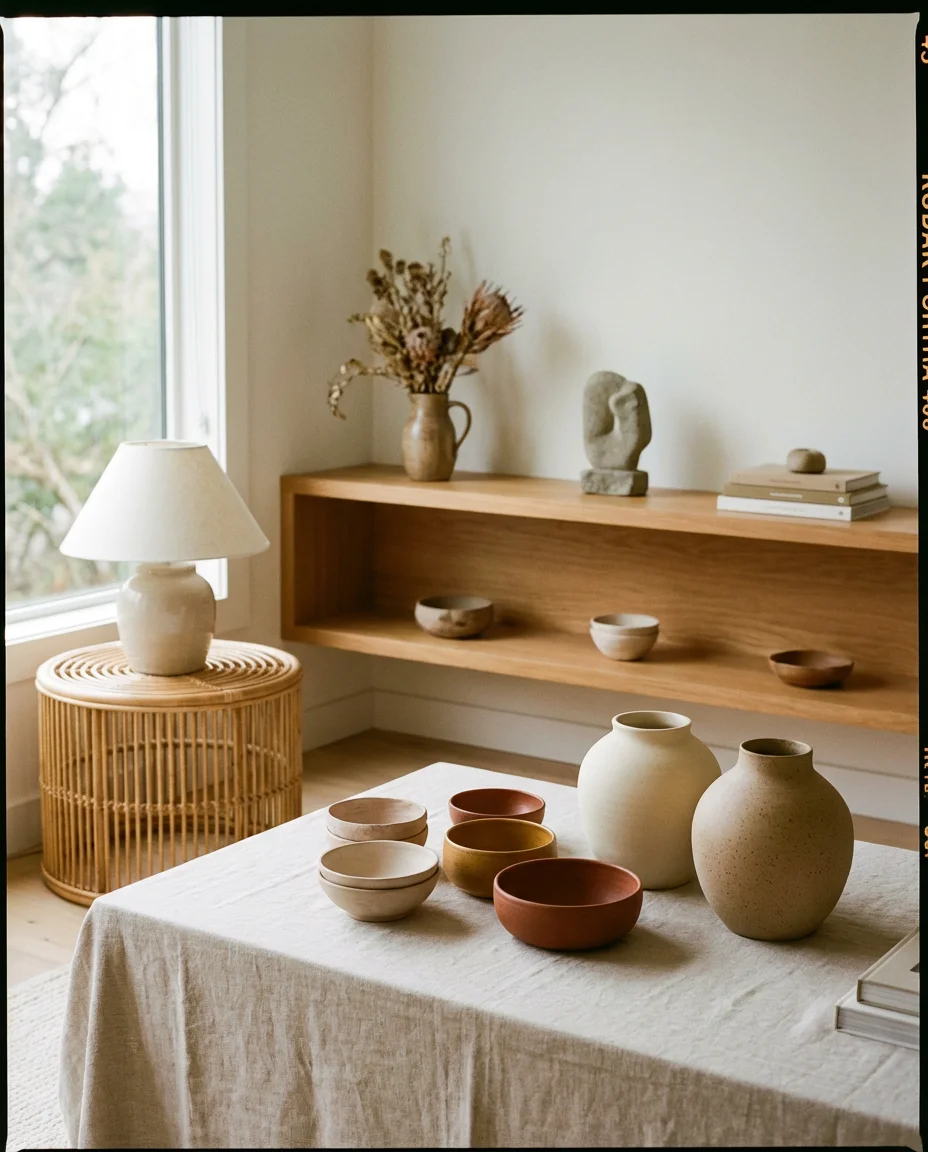
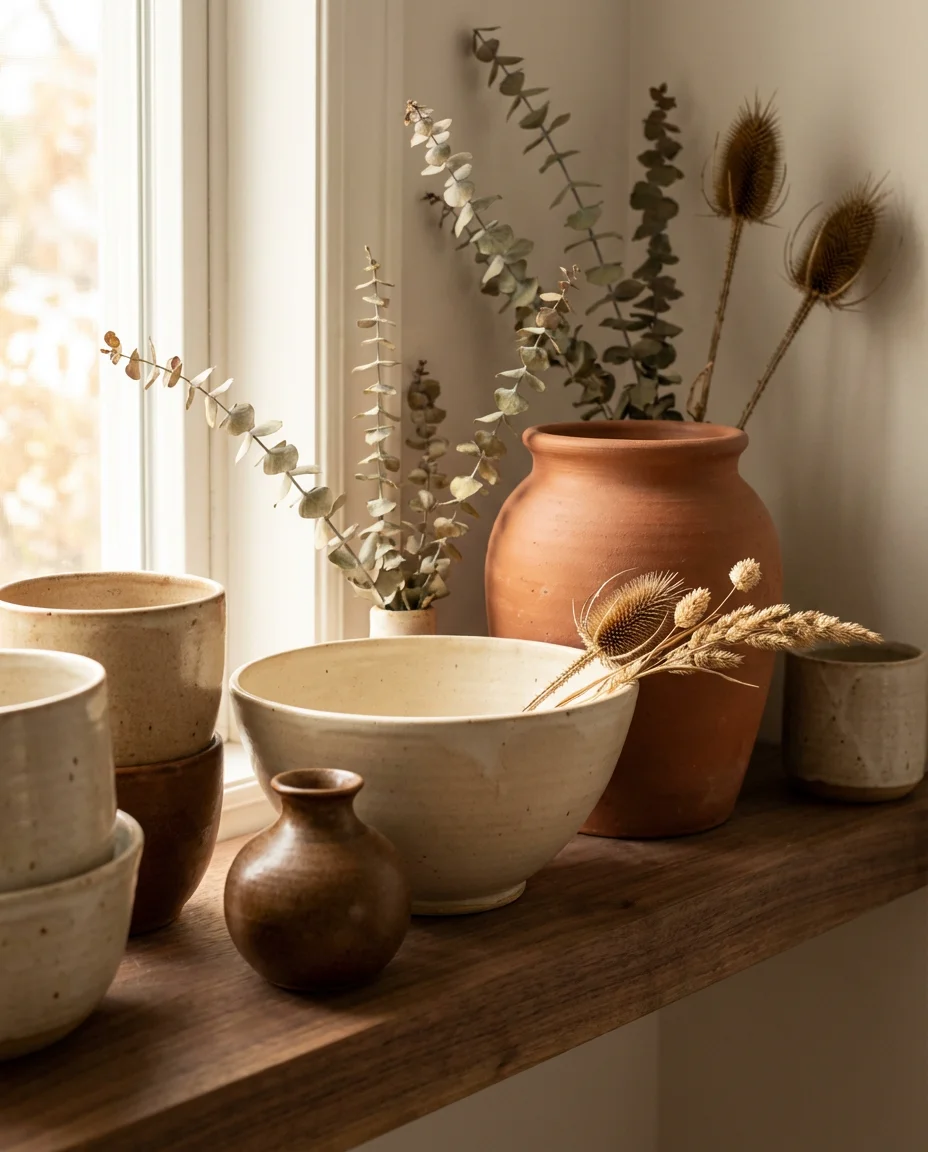
Cozy modern decor is exactly what it sounds like: the warmth and texture of cozy living, filtered through a clean modern sensibility that doesn’t clutter. Earthy ceramics are the connective tissue in this aesthetic—hand-thrown bowls in matte clay, vases with organic shapes and imperfect glazes, and small vessels clustered on a shelf or coffee table. These objects are functional, beautiful, and deeply personal in a way that mass-produced accessories simply aren’t. They bring the handmade quality that makes earthy interiors feel authentic rather than assembled from a shopping list.
A real homeowner behavior worth noting: people who gravitate toward earthy ceramics often start collecting gradually—one piece from a local market, another from a pottery studio, and a third found at a thrift store. That accumulation over time is precisely what gives a room its sense of story. If you’re starting out, resist the urge to buy an entire matching set. Mismatched ceramics in a shared color family feel far more considered and alive than a coordinated collection from a single retailer.
15. Ideas Earth Tones with Layered Area Rugs
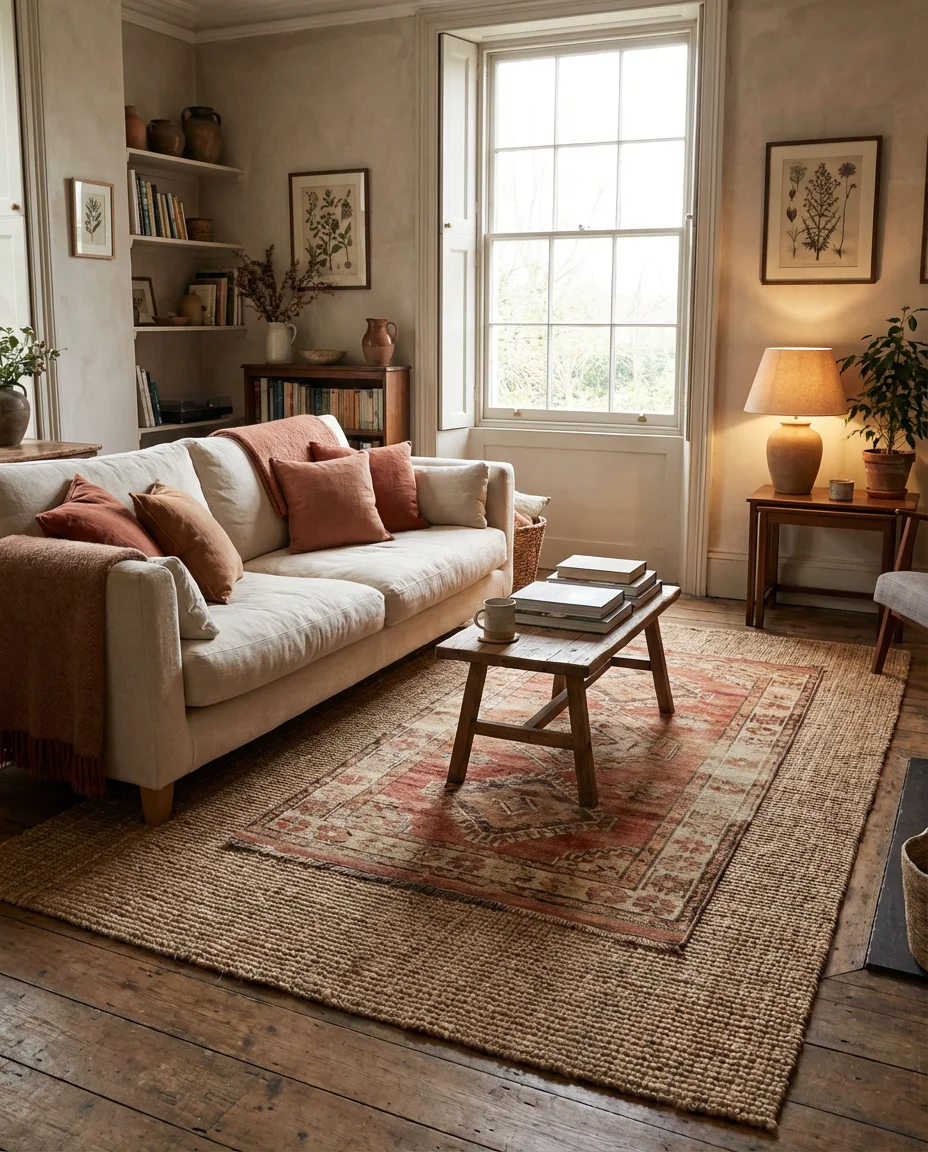
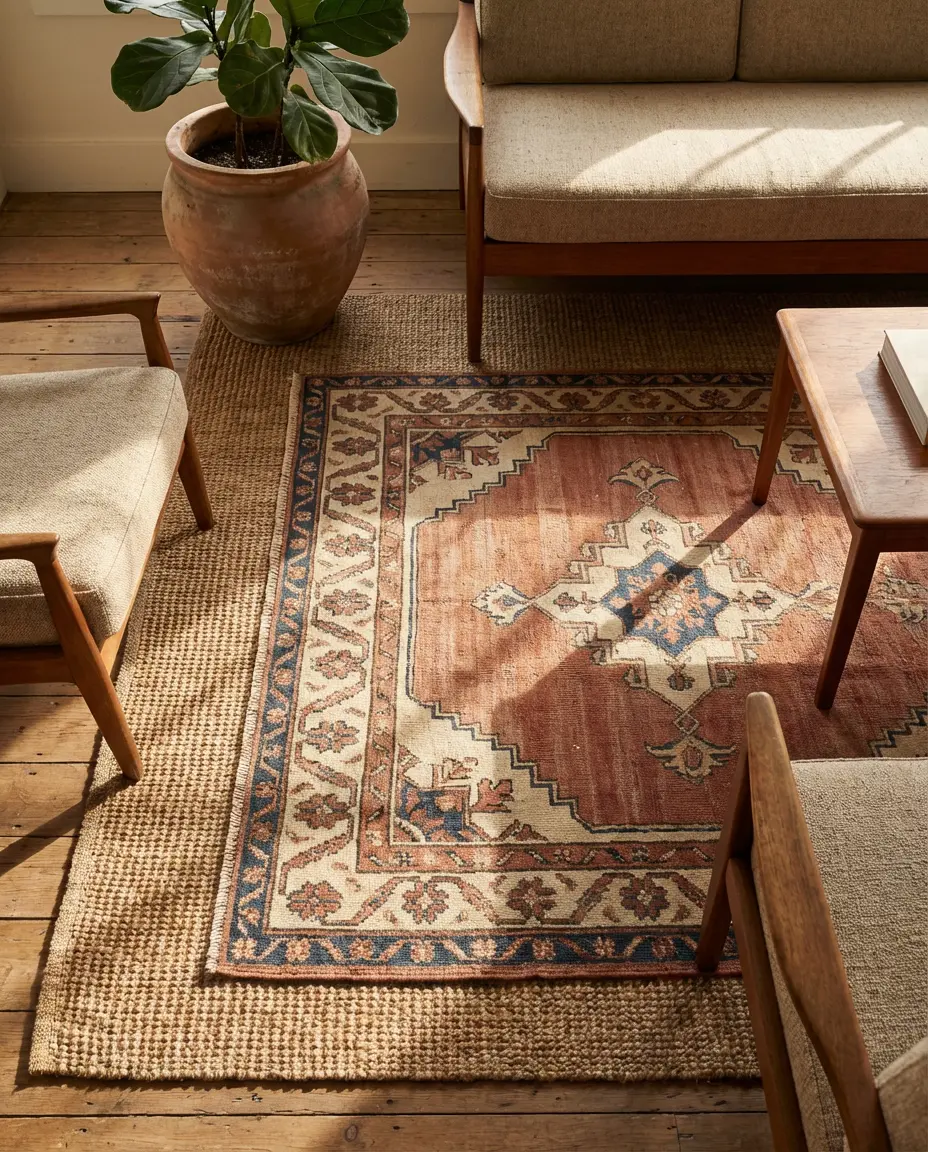
Among the most transformative ideas earth tones can offer, layered area rugs stand out for their immediate visual impact and accessibility. The technique involves placing a smaller, more decorative rug on top of a larger natural-fiber base—usually jute or sisal—to create depth and define a seating area without the expense of a single large statement rug. A vintage Moroccan rug layered over a chunky jute base, or a hand-knotted kilim over a sisal weave, creates the kind of rich, collected look that reads as deeply earthy and intentional.
Layering rugs is also one of the smartest budget moves in living room styling. A large jute rug in the $150–$300 range paired with a smaller vintage or overdyed rug found on eBay or at an estate sale can produce results that look far more expensive than the sum of their parts. The base rug handles scale, while the top rug handles personality—it’s a division of labor that genuinely works, and it’s one you can update season by season without replacing the whole thing.
16. Aesthetic Earthy Gallery Wall in Neutral Tones
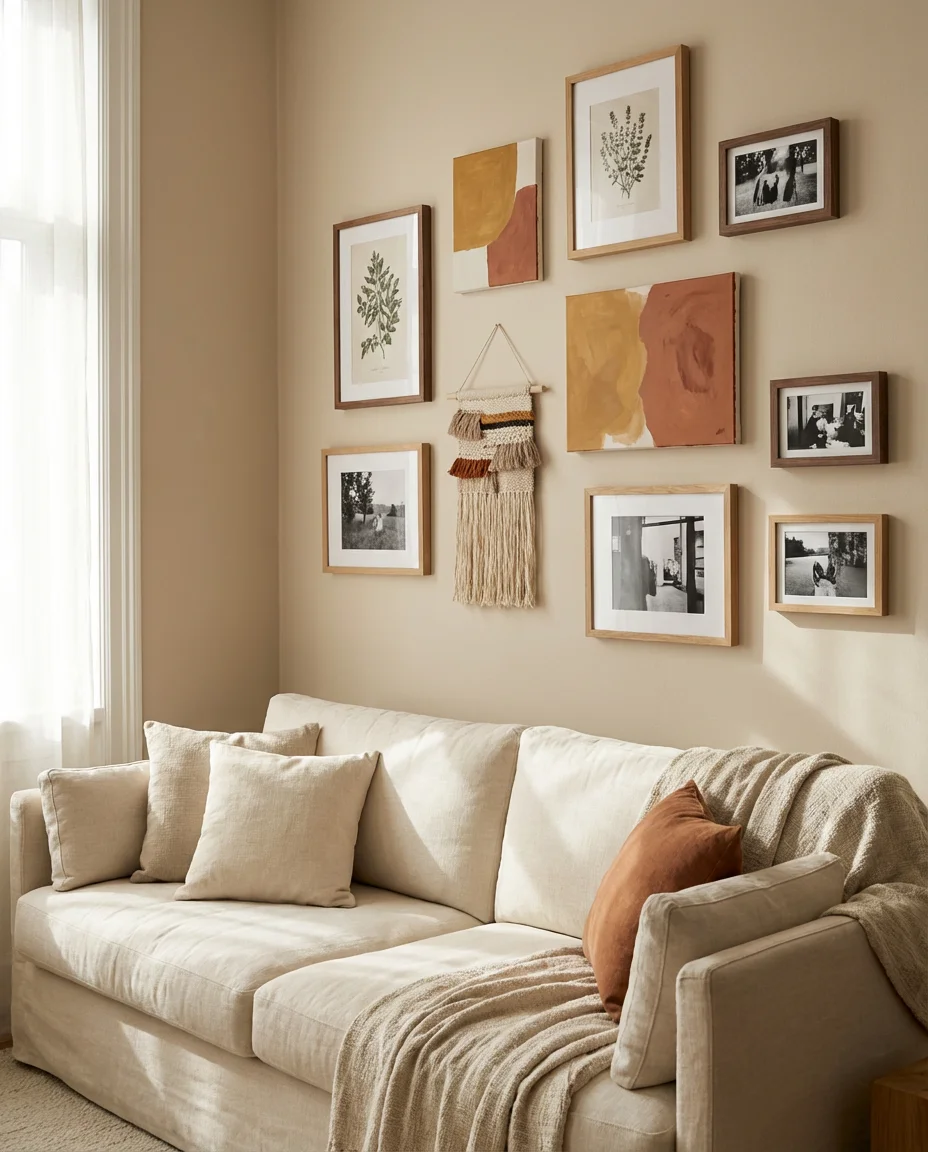
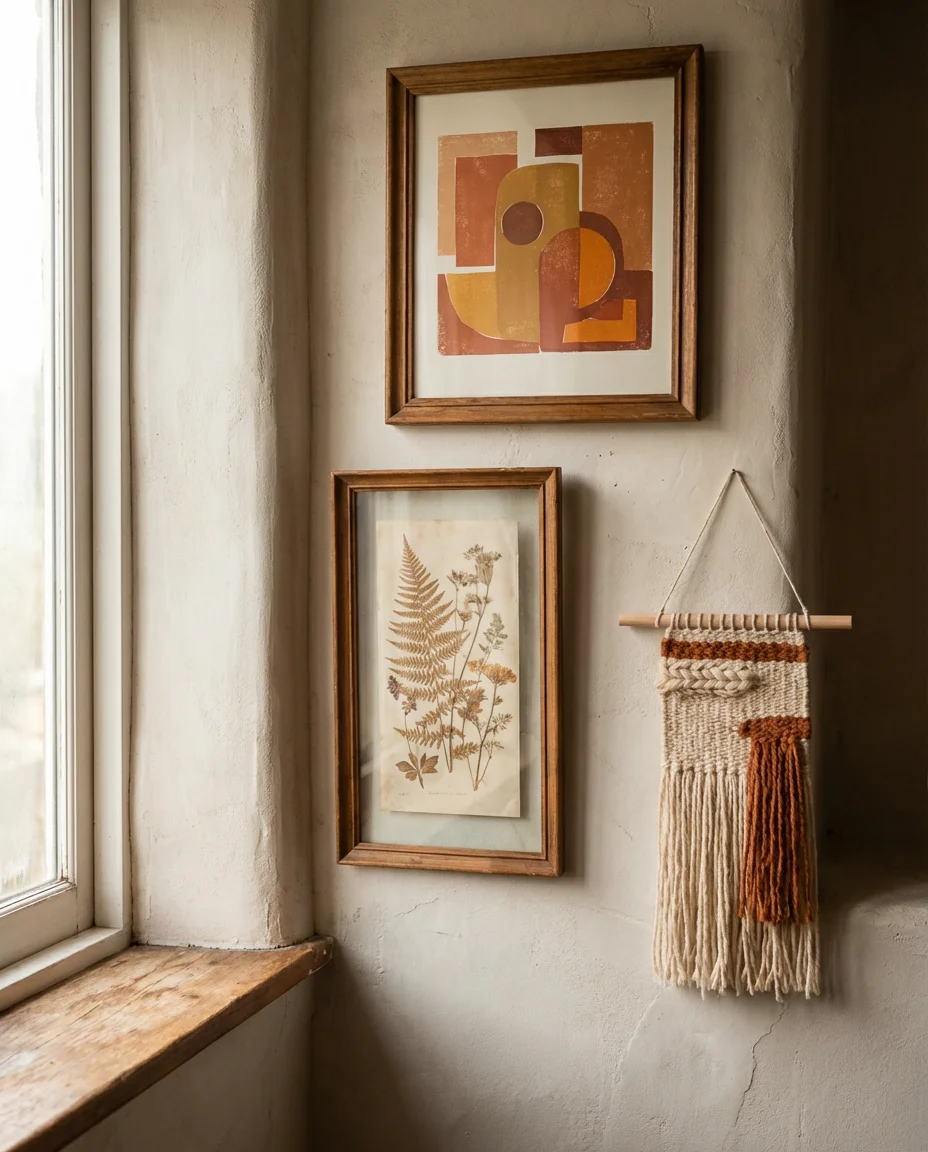
A gallery wall built in earthy neutral tones is one of the most personal expressions of this entire aesthetic—and when done thoughtfully, it becomes a genuine focal point that no single piece of furniture can rival. The aesthetic relies on a cohesive but not matching approach: botanical prints, abstract art in ochre and clay, black-and-white photography, and small woven fiber art pieces, all framed in natural wood or simple warm-toned metal. The common thread is tonal range rather than subject matter. Together, they tell a story.
Where this works best is above a sofa on a large blank wall or flanking a fireplace where there’s already a natural visual hierarchy to build around. The golden rule most designers give for gallery walls: lay everything out on the floor first, photograph it, adjust until it feels balanced, and only then put nails in the wall. It saves considerable frustration and means the first arrangement you commit to actually looks good. Command strips work for lighter pieces if you’re renting.
17. Warm Earthy Living Room with a Stone Fireplace
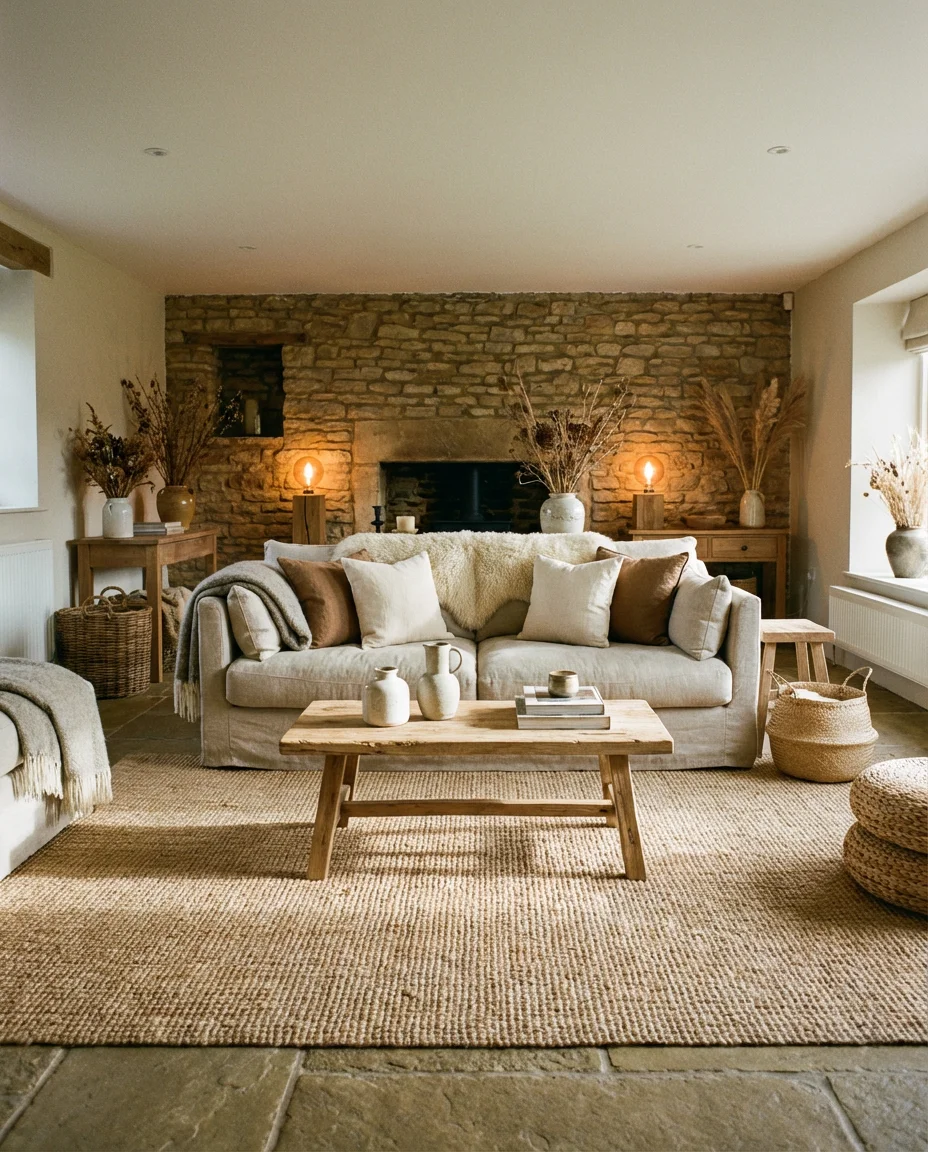
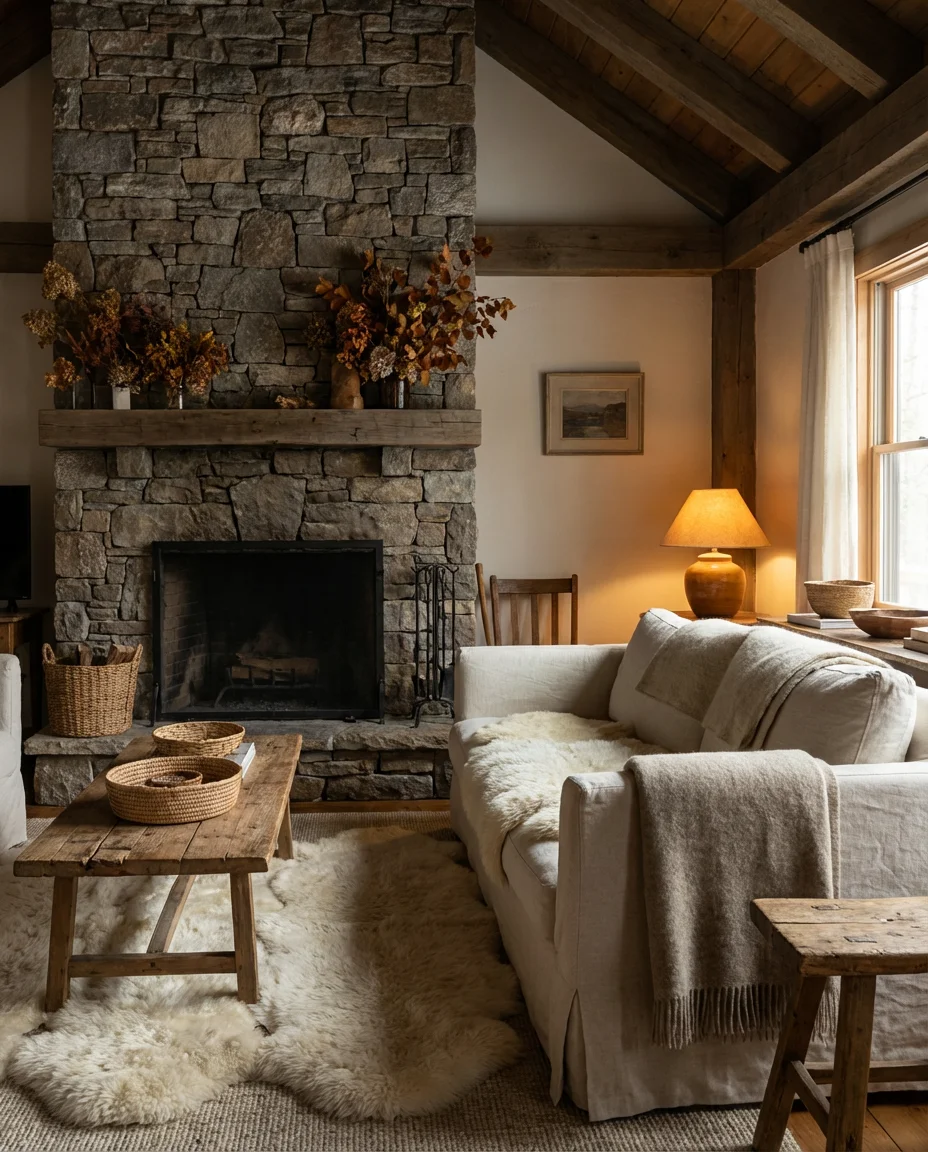
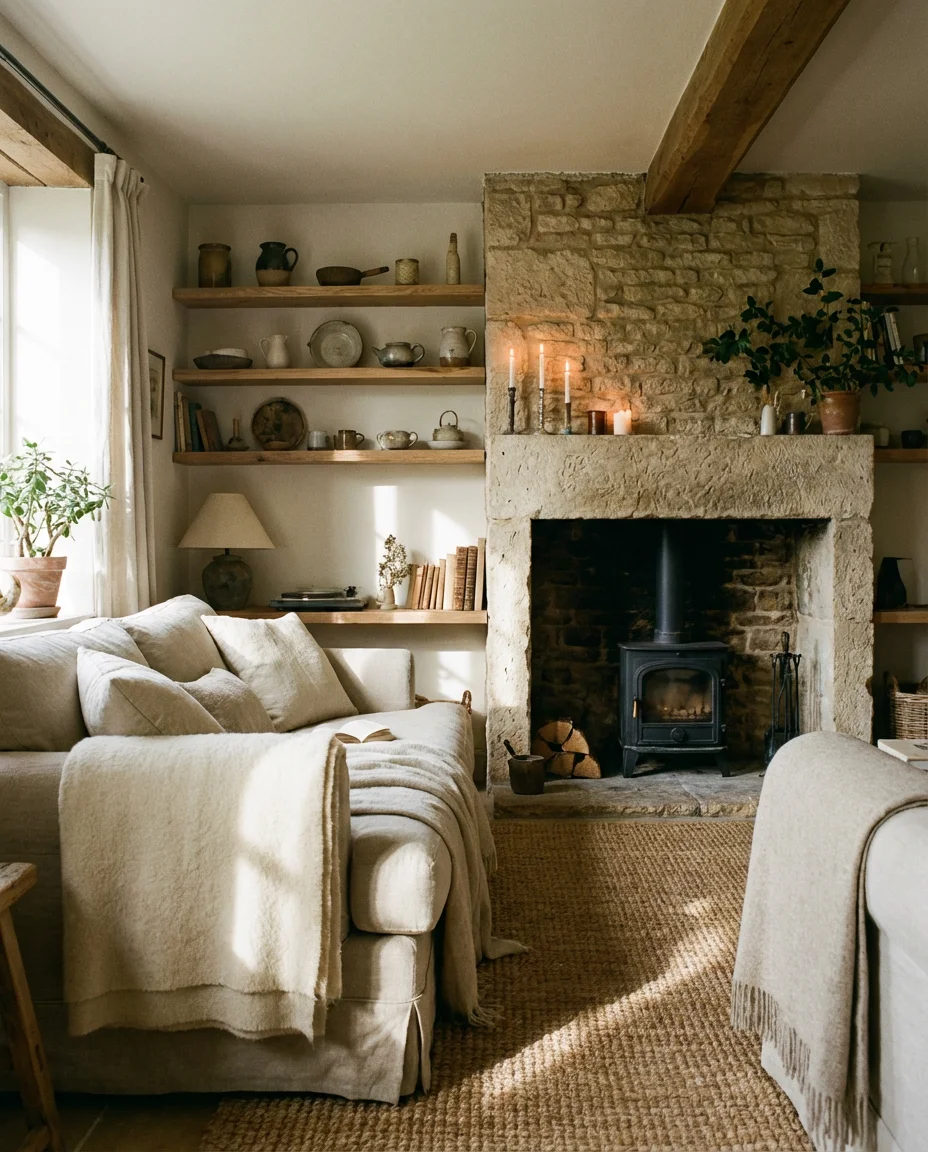
A stone fireplace is perhaps the original earthy living room anchor—and in 2026, it’s being embraced with new energy by homeowners leaning into the natural, organic warmth that raw stone naturally provides. Whether you’re working with an existing stacked stone surround or dreaming about a new build, the material qualities of stone—textured, varied, irreducibly grounded—do something to a room that no painted wall can fully replicate. The stone draws the eye, creates genuine warmth both visually and literally, and makes the whole room feel like it belongs somewhere meaningful.
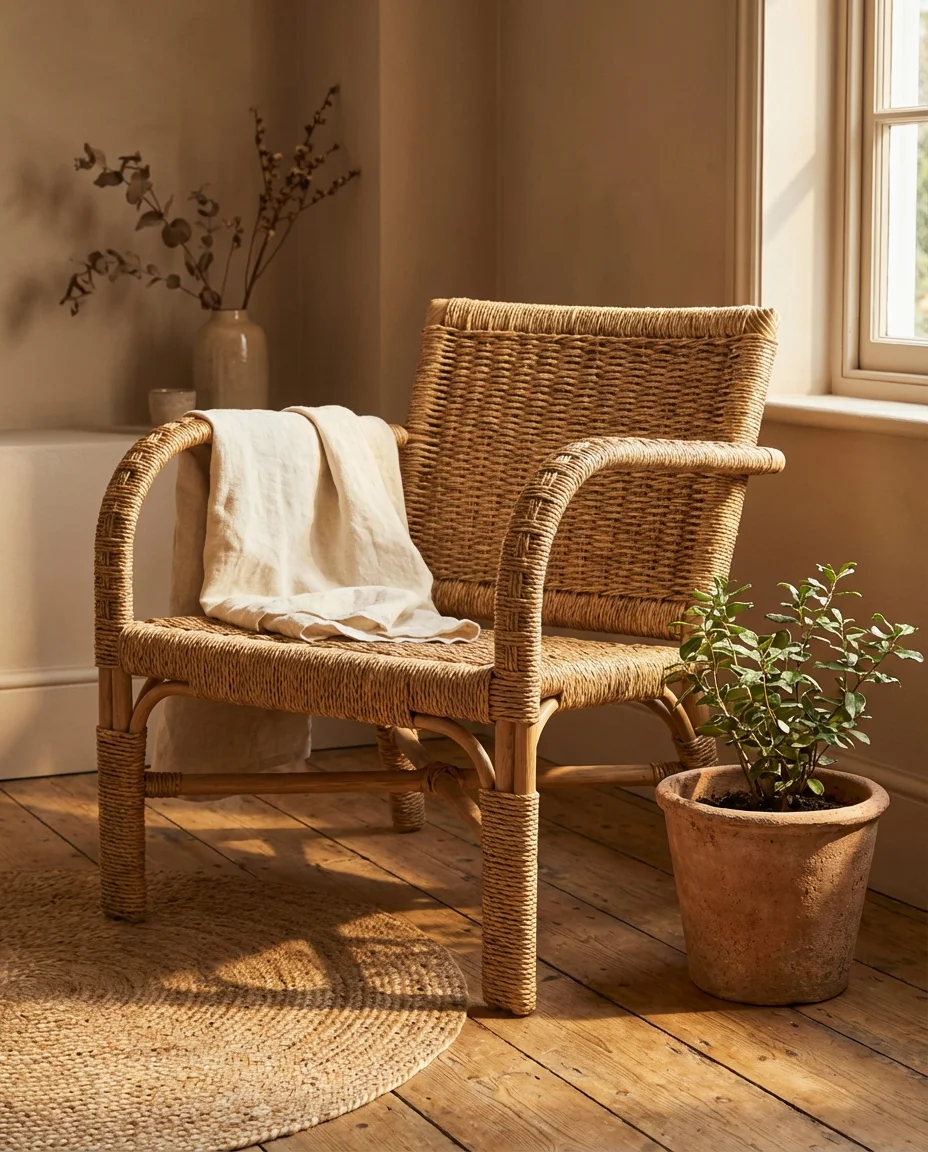
I once spoke with a Colorado homeowner who had inherited a mid-century cabin with a limestone fireplace. Rather than updating it, she styled everything around it—raw linen sofas, layered sheepskin rugs, low wood furniture—and the result was extraordinary. The fireplace became the room rather than a feature within it. That approach—letting one genuine material element lead—is a philosophy worth borrowing whether your fireplace is limestone, fieldstone, or stacked slate.
18. Earthy Tones Living Room Ideas with Rattan Furniture
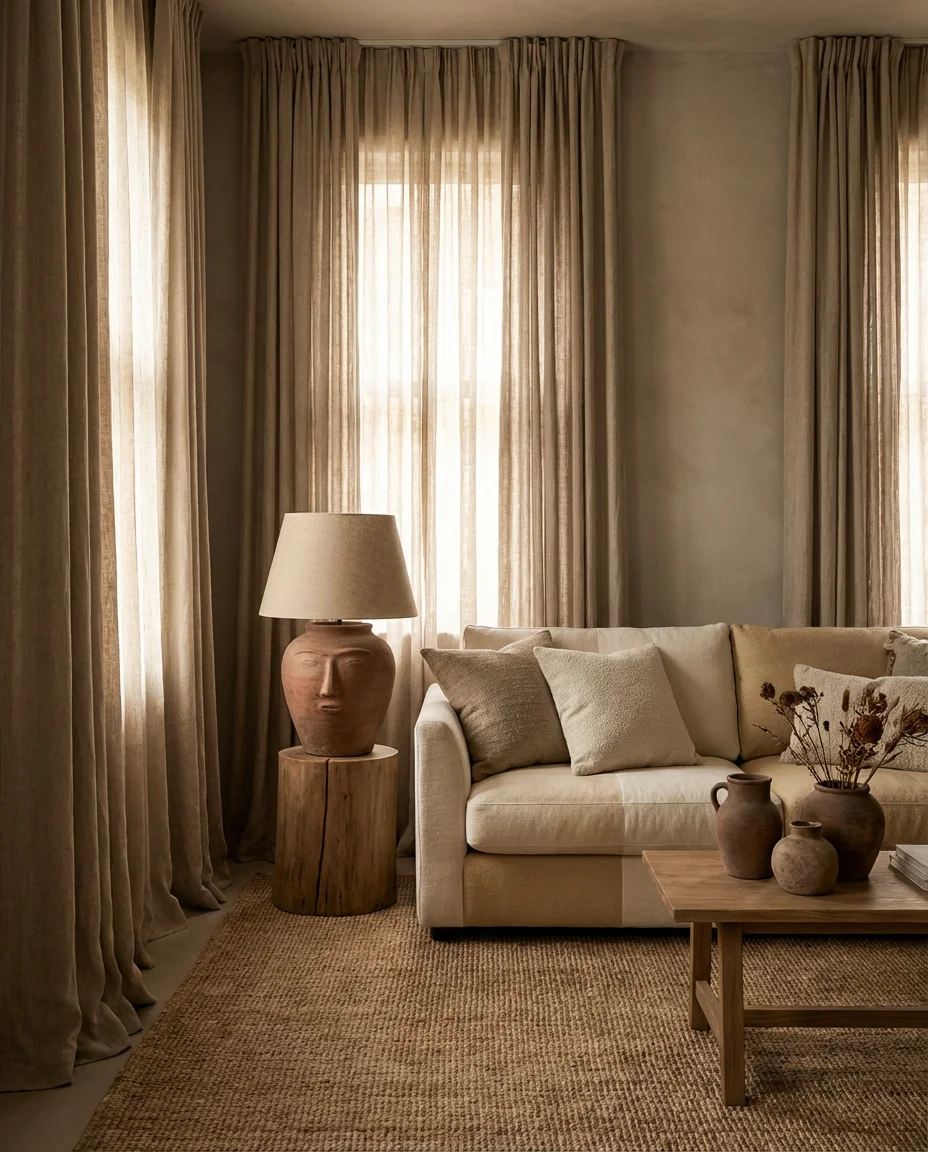
Rattan furniture has completed its journey from grandma’s sunroom to the pages of every major interiors publication—and in earthy living rooms for 2026, it’s finding its most sophisticated expression yet. The decor story around rattan is compelling: it’s sustainable, lightweight, brings natural texture in abundance, and pairs with an almost unlimited range of earthy companions—terracotta, cream linen, dark wood, jute, and clay. A rattan accent chair or side table introduces an organic lightness that heavier wood furniture alone can’t achieve.
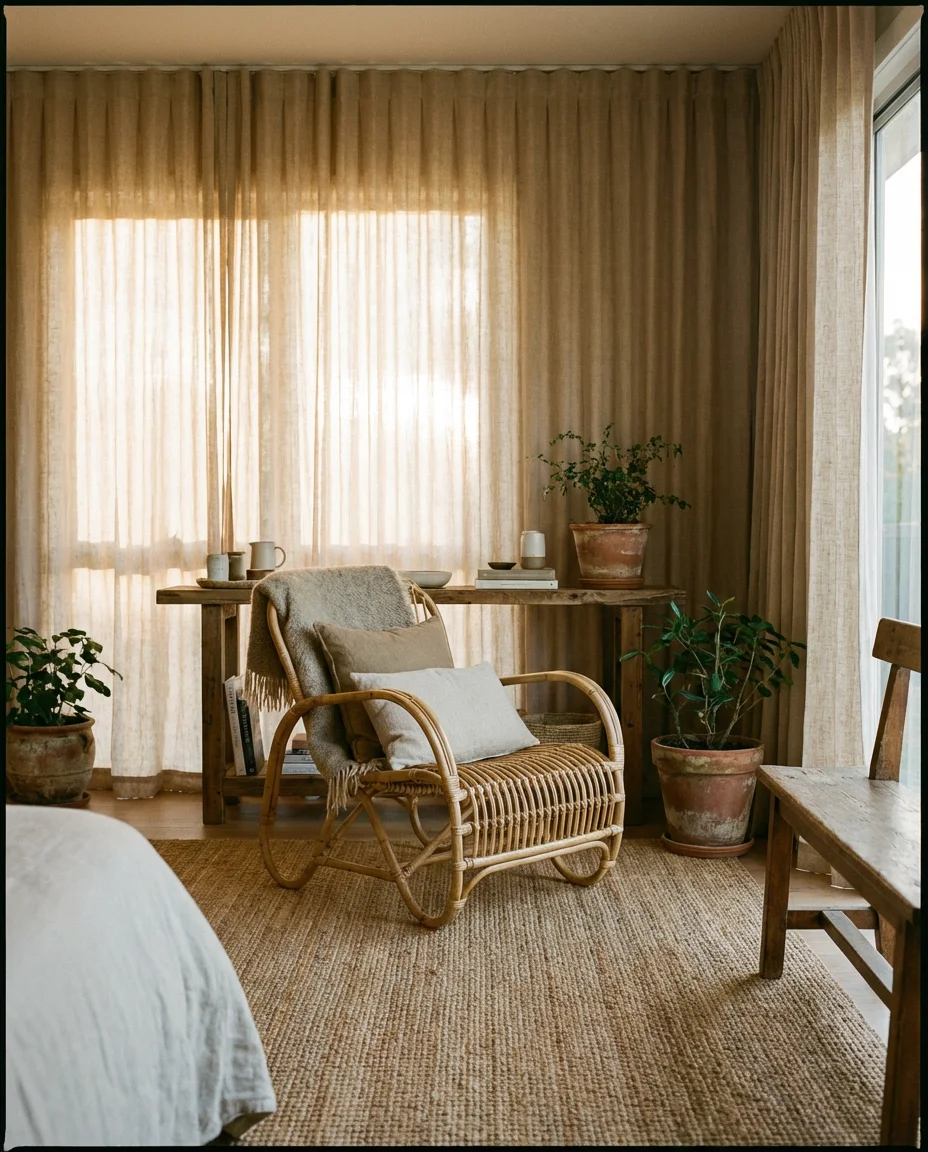
Rattan performs particularly well in living rooms that need texture without visual weight—a smaller room benefits enormously from the airy quality of rattan compared to a solid upholstered piece in the same spot. For longevity, keep rattan out of direct, intense sunlight (it can dry and crack over time) and treat it periodically with a light oil. Vintage rattan from the 1970s is especially well-made and can be found at thrift stores for far less than new equivalents of comparable quality.
19. Moody Neutral Living Room with Linen Curtains
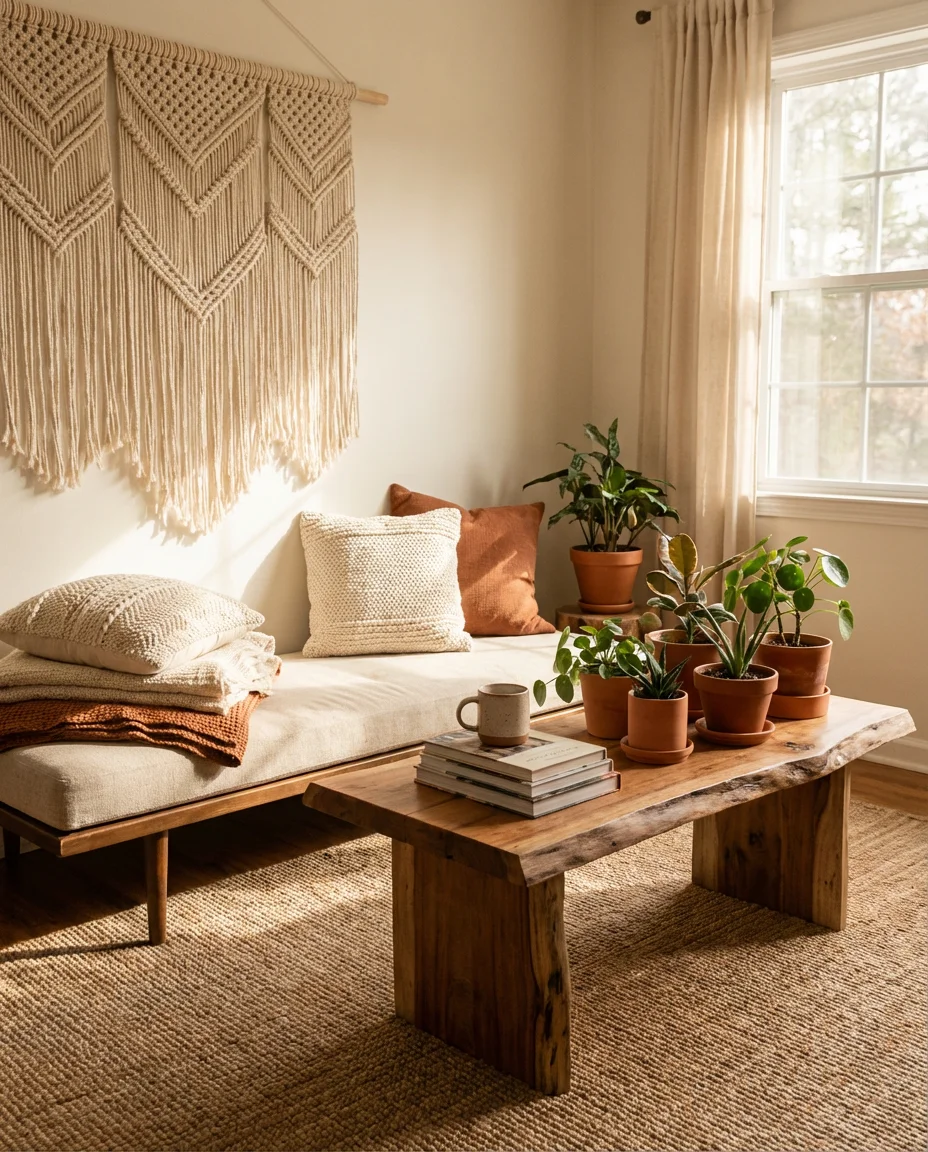
Window treatments are one of the most underrated elements in creating an earthy, moody living room atmosphere—and floor-to-ceiling linen curtains are doing enormous work in 2026 interiors. Hung high and wide (always above the window frame, always extending beyond it on each side), natural linen panels in oat, warm ivory, or barely-there sage add softness, scale, and organic texture all at once. The way linen moves in a breeze, catches afternoon light, and pools slightly on the floor is something no polyester drape can approximate.
The most common curtain mistake in earthy rooms is hanging them too low and too narrow—which makes ceilings feel shorter and windows smaller. The fix costs nothing extra: simply remount the rod as close to the ceiling as possible and choose panels that extend at least 12 inches wider than the window on each side. It’s the single most impactful change you can make to a room with existing curtains, and it takes less than an hour. Linen wrinkles are part of the charm—never iron them flat.
20. Earthy Bohemian Living Room with Macramé and Wood
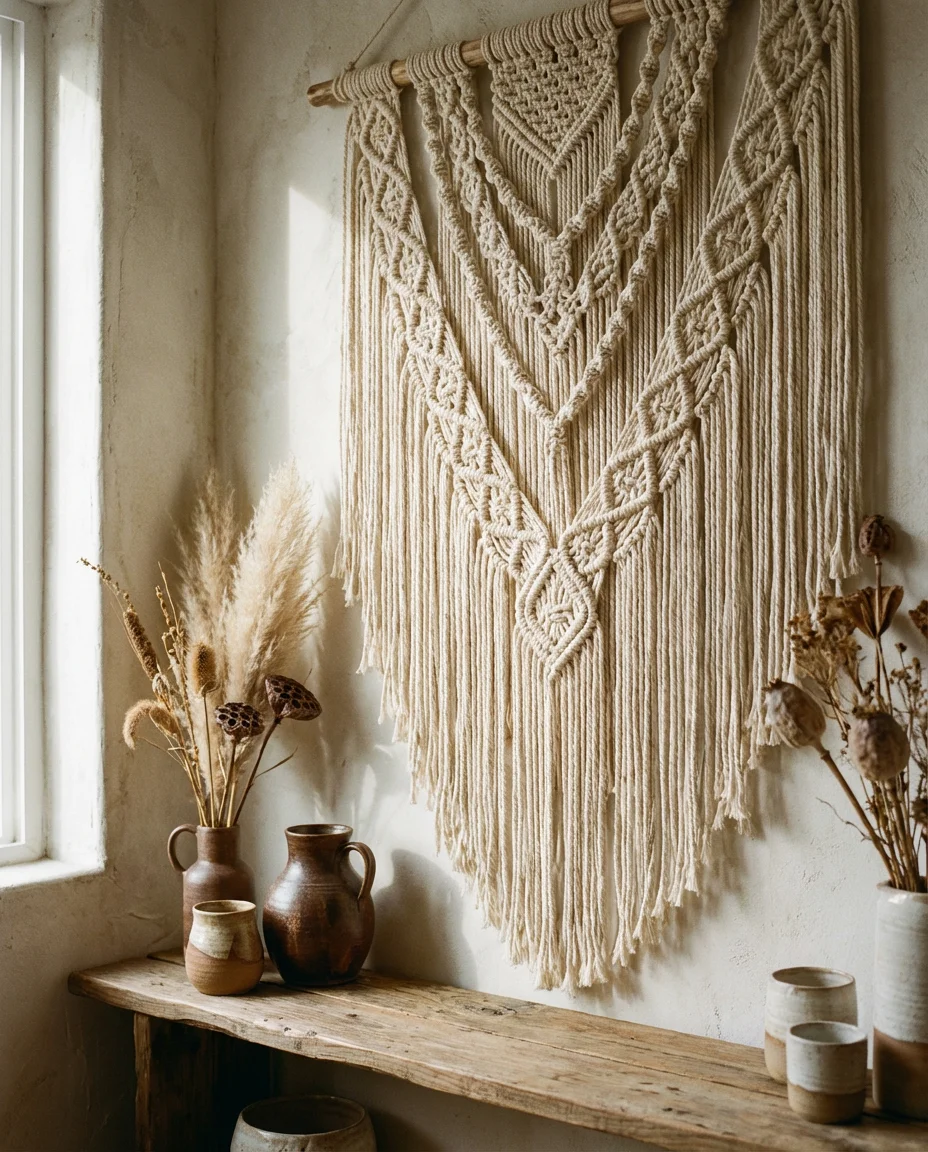
The bohemian living room has always been earthy at heart, and its 2026 iteration leans fully into that identity—layering handmade macramé wall hangings, raw wood furniture, and woven textiles into a space that feels genuinely crafted rather than assembled. This aesthetic celebrates imperfection, texture, and the accumulated beauty of handmade objects. A large macramé piece above a sofa, a low wood coffee table with a live-edge slab surface, and a mix of brown and cream cushions in varying sizes create that characteristic bohemian warmth that makes people want to stay all afternoon.
Etsy remains an extraordinary resource for the handmade macramé and textile pieces that anchor this look—and buying from independent makers means you’re getting something genuinely one-of-a-kind rather than a factory-made approximation. Prices for a quality large macramé wall hanging range from $80 to $300 depending on size and complexity, which is genuinely affordable for a piece that functions as the room’s primary art. Support a maker, get something beautiful—it’s a rare win-win in home decorating.
21. Dark Earthy Living Room with Velvet and Brass
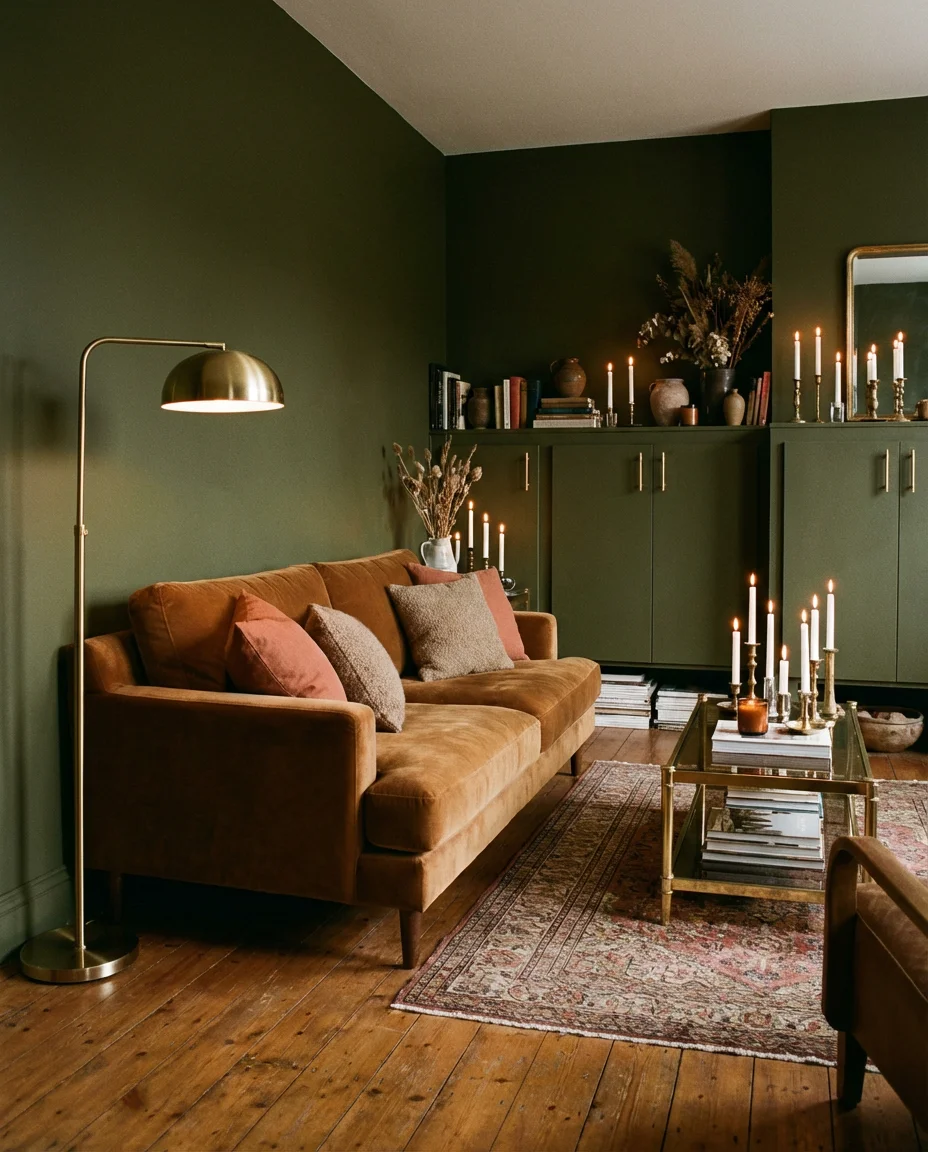
For those who want their earthy living room to tip toward glamorous rather than rustic, the combination of dark walls, velvet upholstery, and brushed brass accents delivers something genuinely seductive. Deep olive or espresso walls provide the earthy foundation, while velvet in cognac, rust, or forest green brings the tactile luxury. Brass—in lamp bases, cabinet hardware, picture frames, or candle holders—adds a warm metallic gleam that plays beautifully against both the dark walls and the rich upholstery. It’s maximalist in intent but earthy in palette.
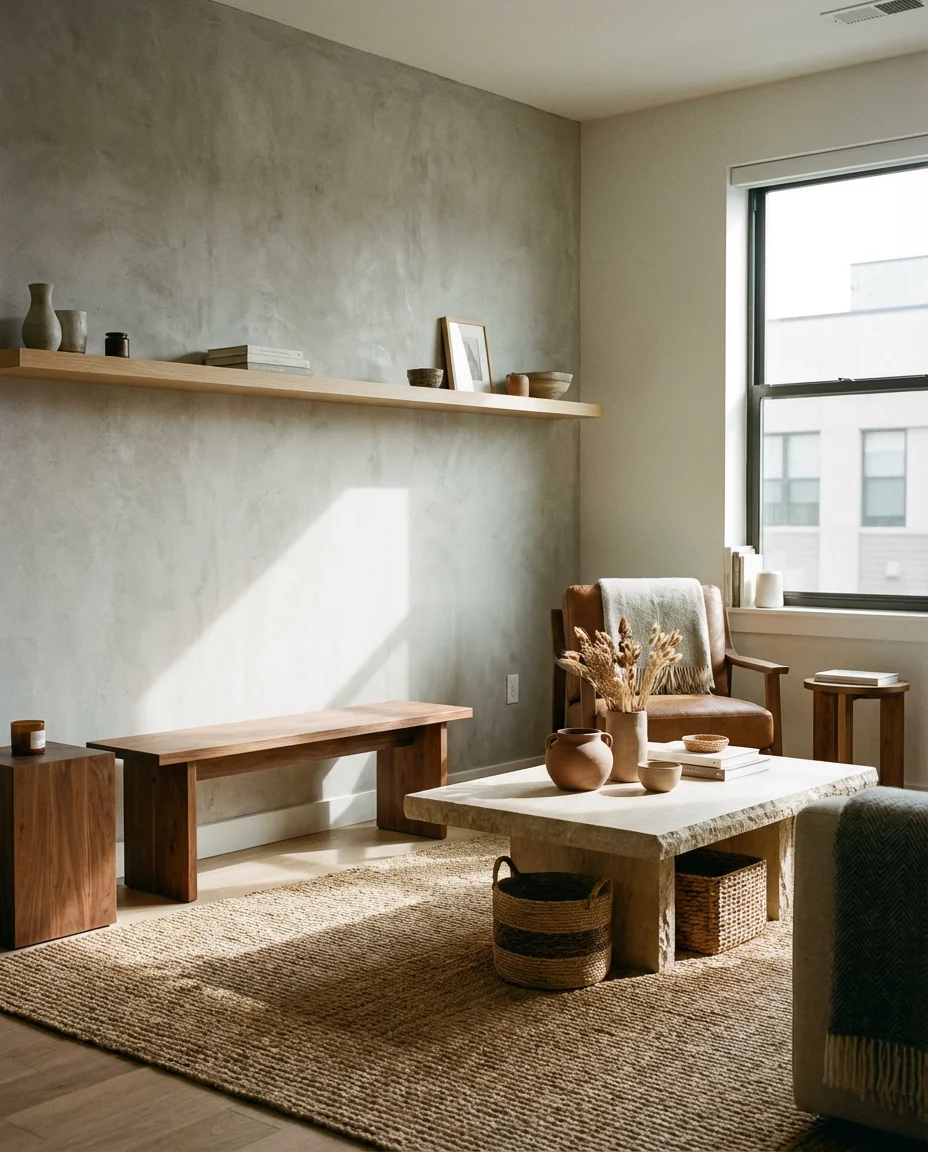
This direction works particularly well in dining-adjacent living rooms or spaces that double as entertaining areas—the moodiness and richness of the palette create a backdrop that genuinely flatters people and food alike. Candlelight, which reflects off brass and shimmers across velvet, is your secret weapon for making this room look extraordinary at night. A dimmer switch on the main light source transforms the space from daytime earthy to evening opulent in a single motion.
22. Modern Earthy Living Room with Concrete and Wood
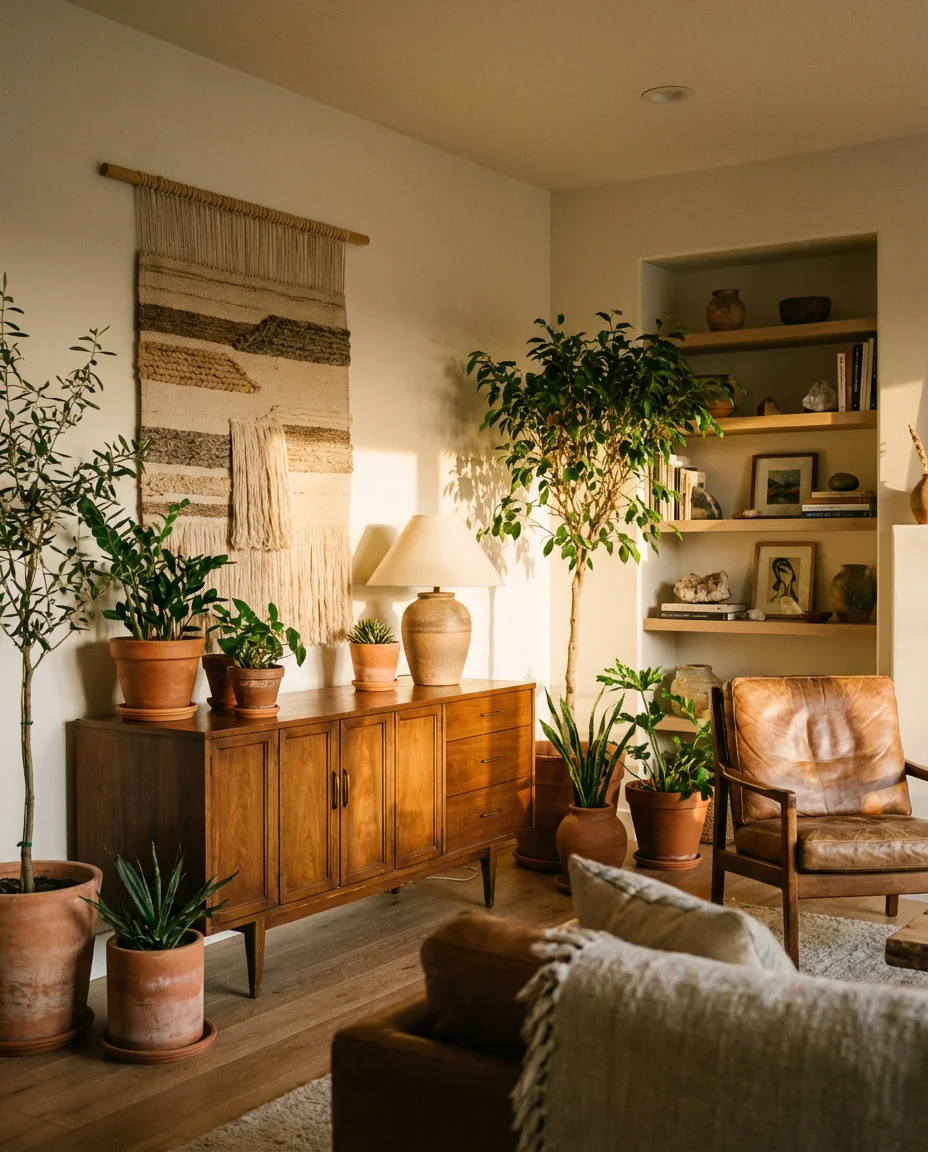
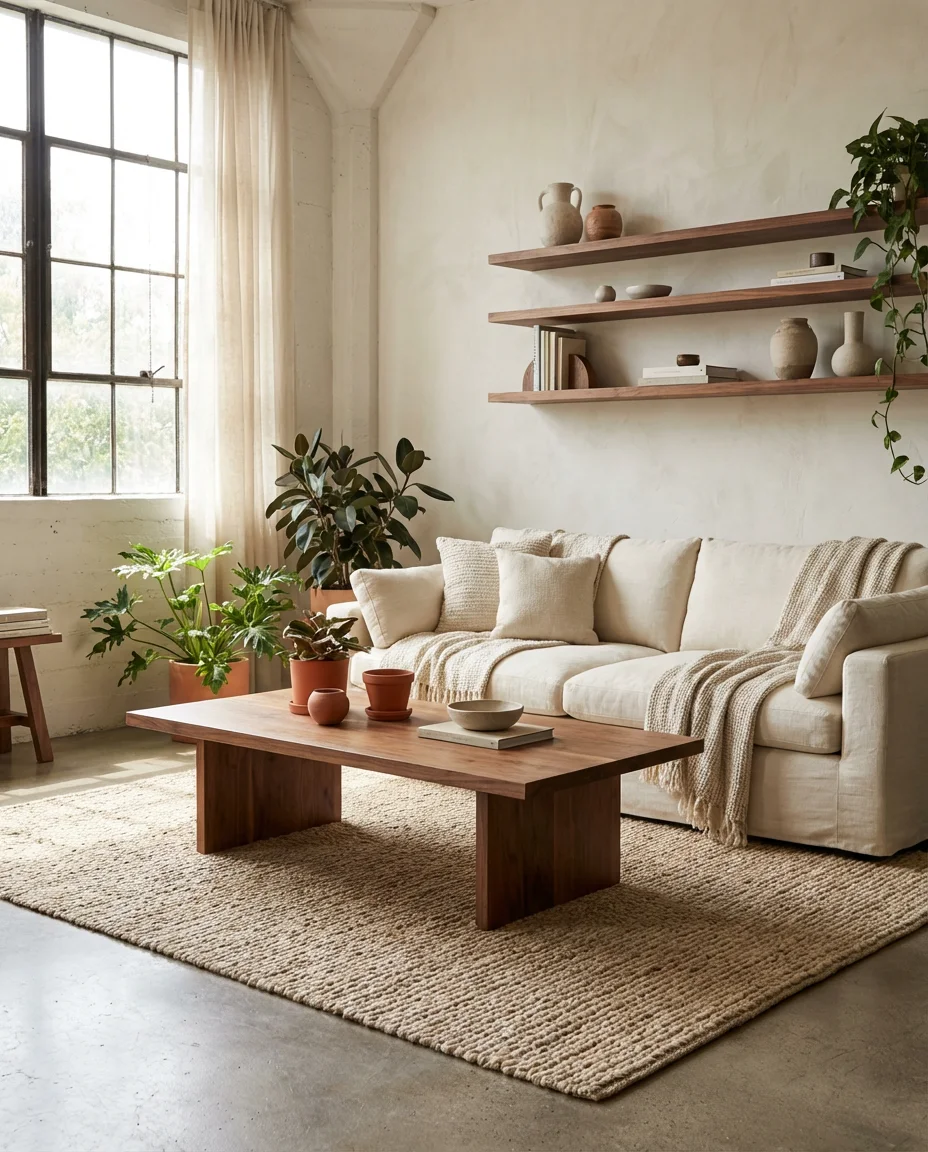
The pairing of raw concrete with warm wood is one of contemporary design’s most enduring love stories—and it translates beautifully into the earthy living room conversation happening in 2026. Concrete floors or a poured concrete fireplace surround provide a cool, mineral quality that grounds the space, while wood in warm amber or walnut tones brings the humanity and warmth that concrete alone lacks. The interplay between these two raw materials creates a room that feels both architecturally serious and genuinely livable. It’s the natural, neutral combination for people who find pure minimalism too cold.
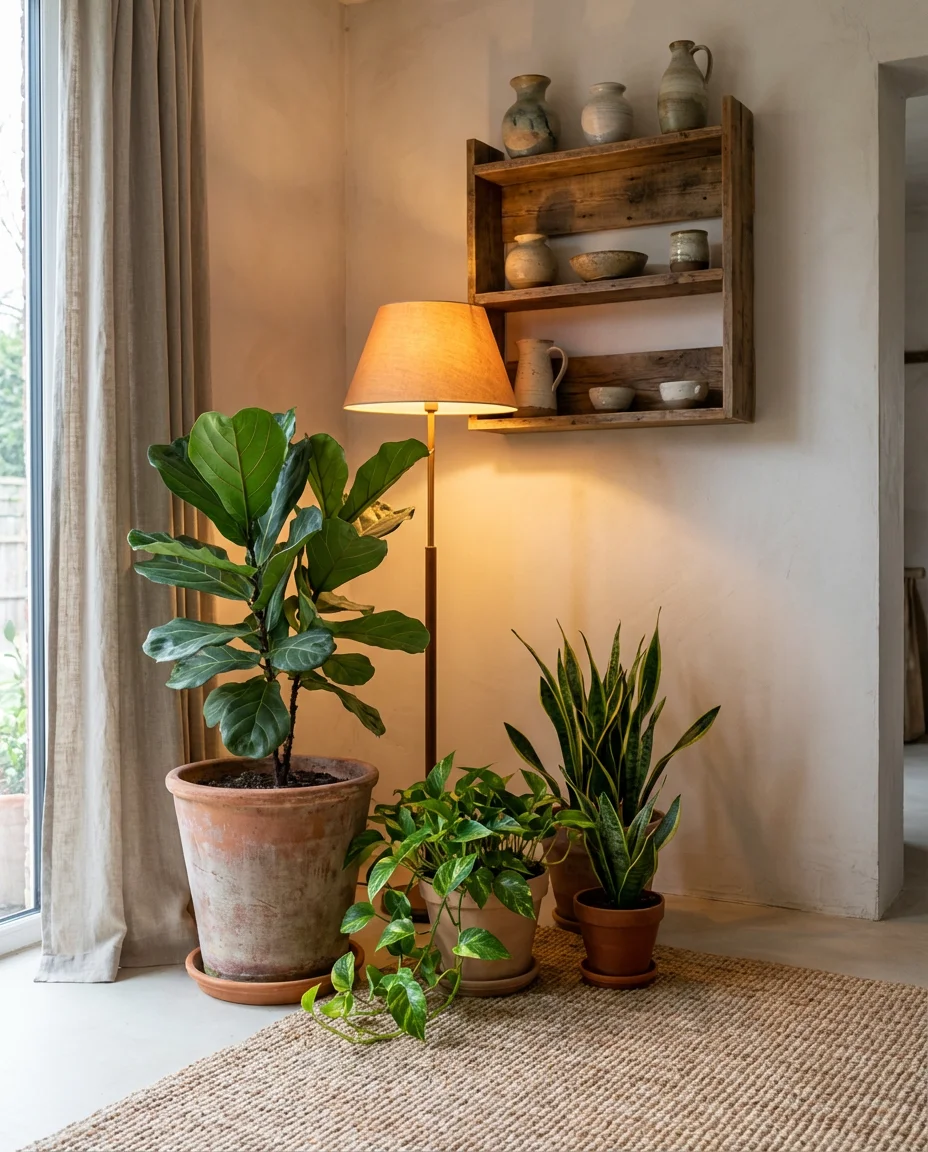
If you don’t have actual concrete in your home, concrete-look plaster walls and concrete-effect tiles are convincing and far more accessible alternatives. Combined with a solid wood floating shelf, walnut coffee table, and natural fiber rug, you can achieve the same essential contrast without architectural intervention. This is a look particularly well-suited to urban apartments and loft-style homes in cities like Chicago, Portland, and New York, where industrial materials feel contextually appropriate.
Conclusion
There you have it—earthy living room ideas that prove grounded, warm, and textured spaces are absolutely within reach, whether you’re working with a rented studio or a sprawling farmhouse. Which of these directions speaks most to your own home? Drop your favorite ideas in the comments below—we’d love to hear what earthy living looks like in your space and what you’re planning to try next.