Dark exterior house colors are having a major moment in 2026, and it’s not hard to see why. From deep charcoals and rich blacks to moody blues and forest greens, these bold hues offer a striking alternative to traditional neutrals while adding instant curb appeal and architectural drama. Americans searching Pinterest for exterior inspiration are drawn to the sophisticated, modern edge that dark palettes bring—whether applied to siding, trim, or accent details. This shift reflects a broader design trend toward individuality and statement-making homes that stand out in any neighborhood. In this article, you’ll discover 24 inspiring ideas that showcase how dark exterior colors can transform everything from farmhouses to ranches and small cottages to sprawling modern builds.
1. Matte Black Modern Farmhouse with White Trim
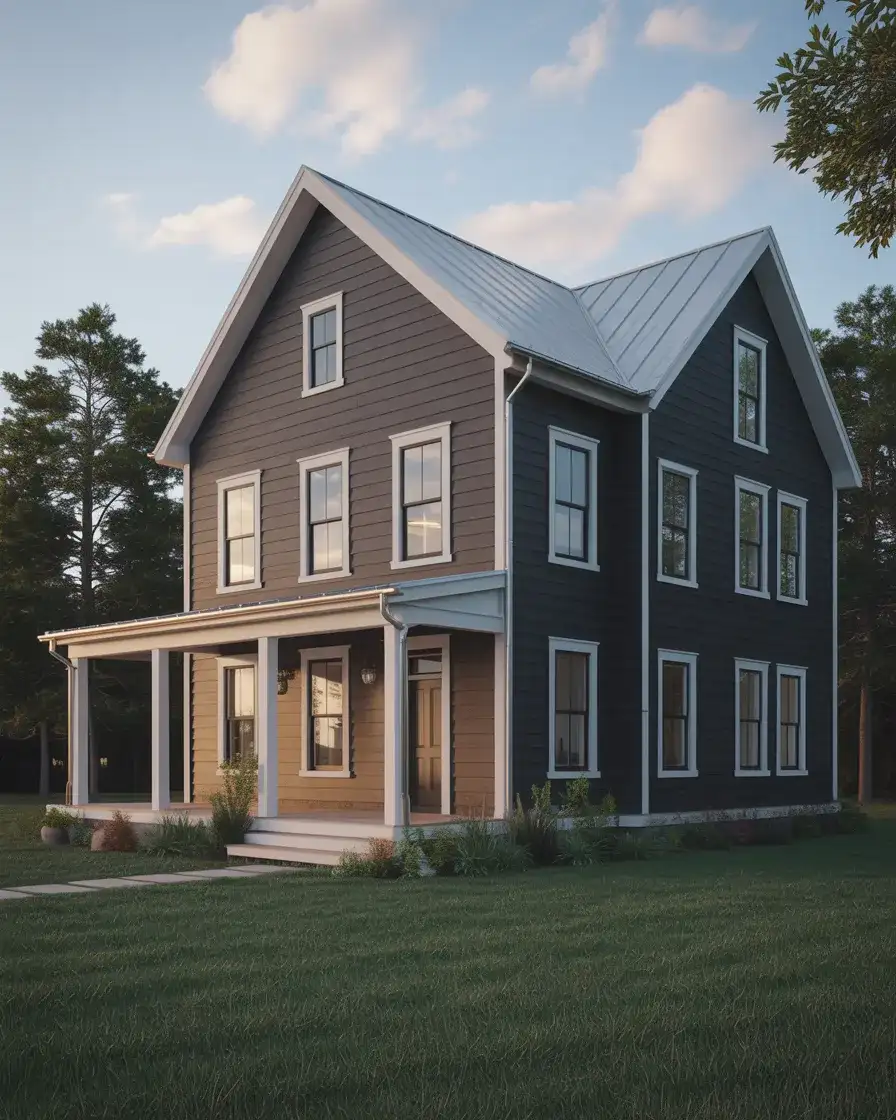
A modern farmhouse wrapped in matte black siding creates an unforgettable first impression, especially when paired with crisp white trim around windows and doors. This high-contrast combination has become a signature look in suburban neighborhoods across the Midwest and South, where homeowners want to honor traditional architecture while embracing contemporary style. The dark exterior grounds the home visually, making it feel substantial and intentional, while the white details add brightness and definition. This approach works beautifully on both new builds and renovations.
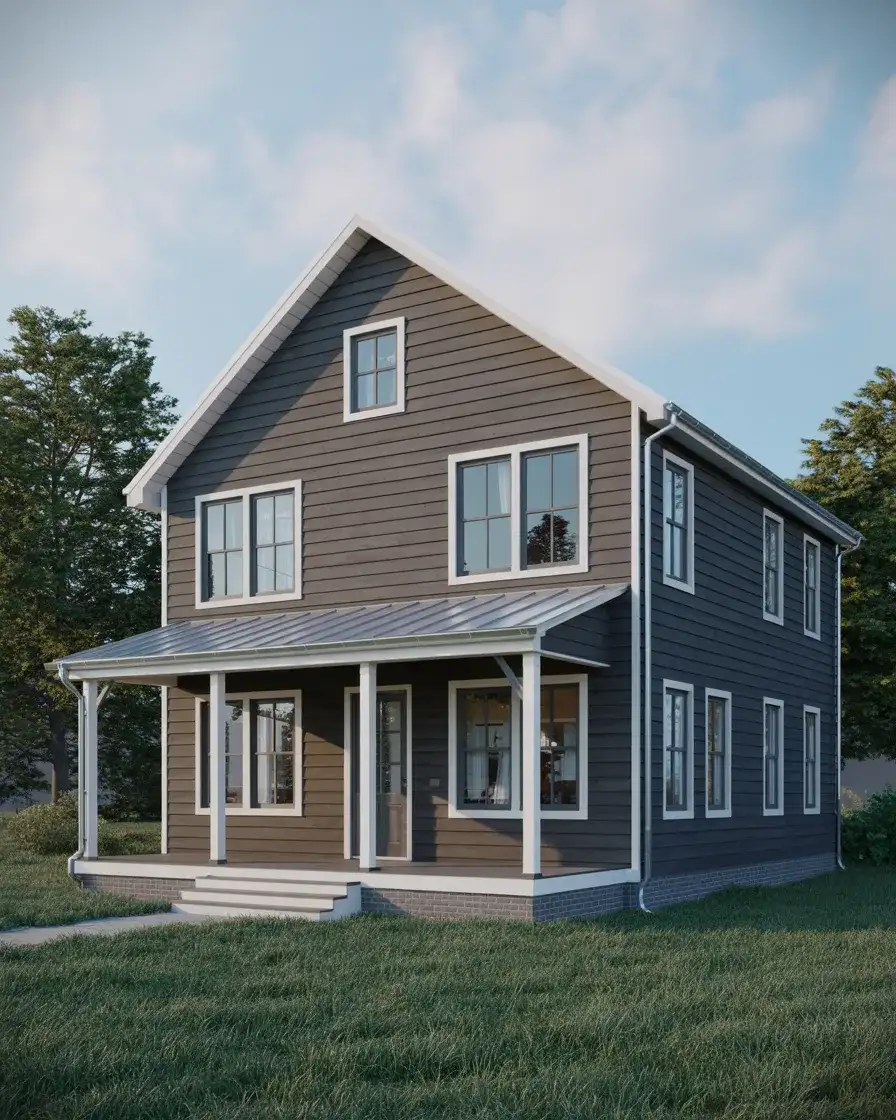
One common mistake is choosing a glossy black finish, which can look plasticky and show every streak or imperfection. Instead, opt for a matte or satin finish that reads as sophisticated and hides minor weathering. Pay attention to your roof color too—charcoal or dark gray shingles tend to complement black siding better than pure black, which can create a flat, monochromatic effect. Regional considerations matter: in very hot climates, darker colors absorb more heat, so ensure your insulation and HVAC can handle the load.
2. Charcoal Board and Batten with Black Windows
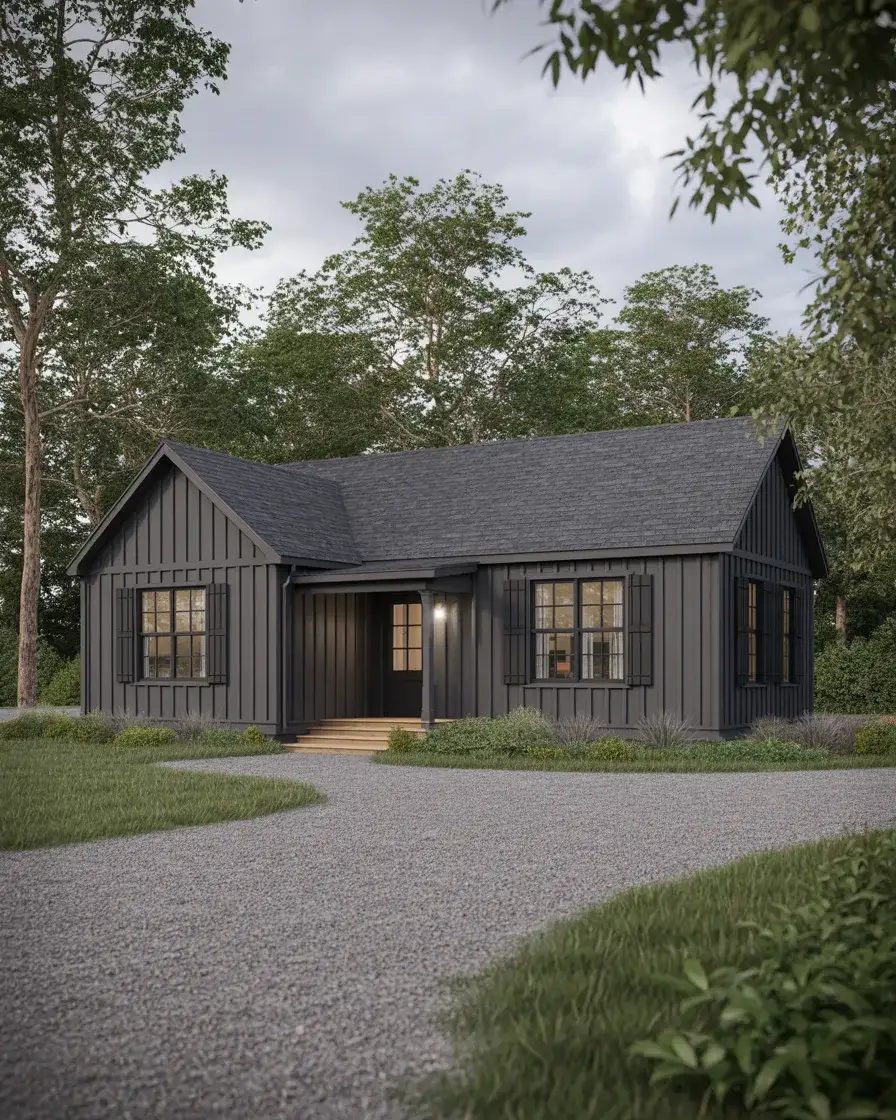
Deep charcoal board and batten siding brings texture and dimension to any home, creating vertical lines that draw the eye upward and make even modest structures feel taller. When you add black windows, the effect becomes even more cohesive and modern. This combination is particularly popular on ranch-style houses, where horizontal proportions benefit from the verticality of the siding pattern. The dark-on-dark palette feels intentional and curated, signaling a homeowner who values design continuity and contemporary aesthetics.
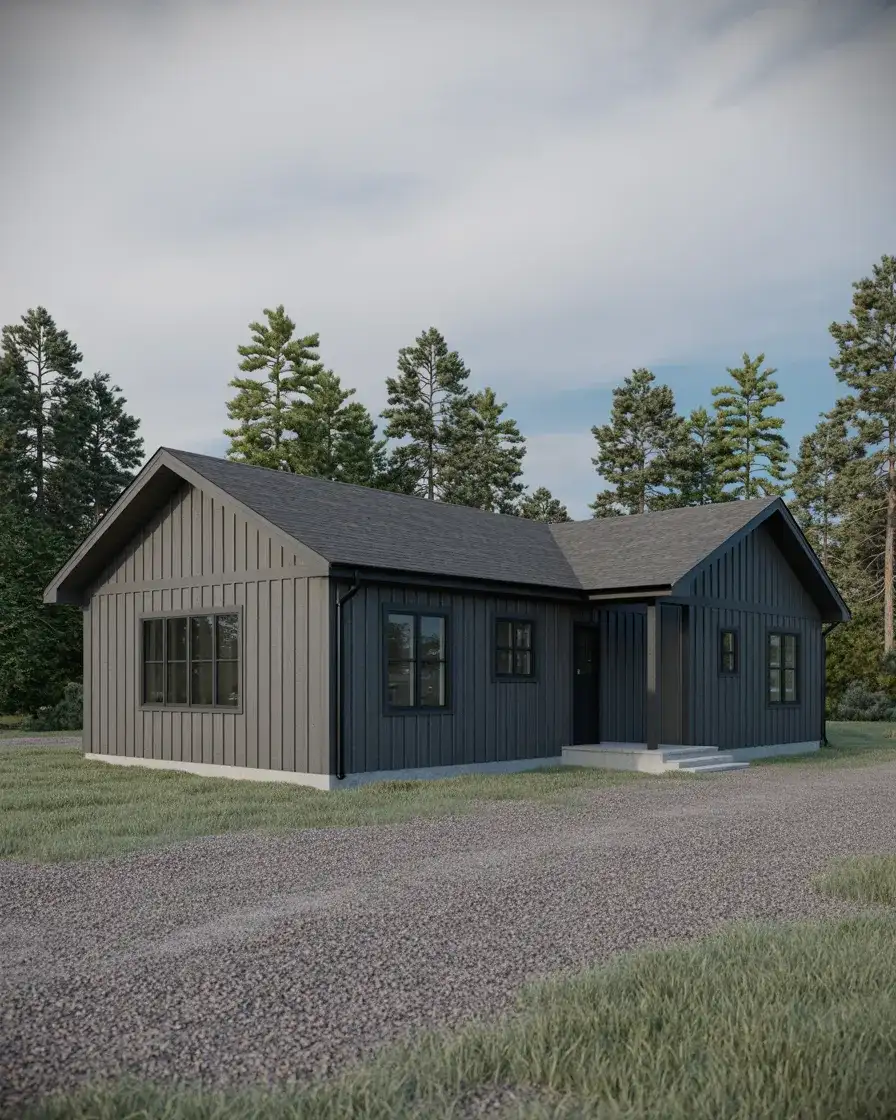
Board and batten works best on homes with clean, simple lines—think modern or transitional styles rather than ornate Victorians. In the Pacific Northwest, this look pairs beautifully with the natural landscape, blending into wooded settings while still feeling polished. The vertical siding also has a practical advantage: it sheds water more effectively than horizontal lap siding, which can be a bonus in rainy regions. If you’re worried about the home feeling too dark, balance it with lighter landscaping or a natural wood front door.
3. Deep Navy Blue with Natural Wood Accents
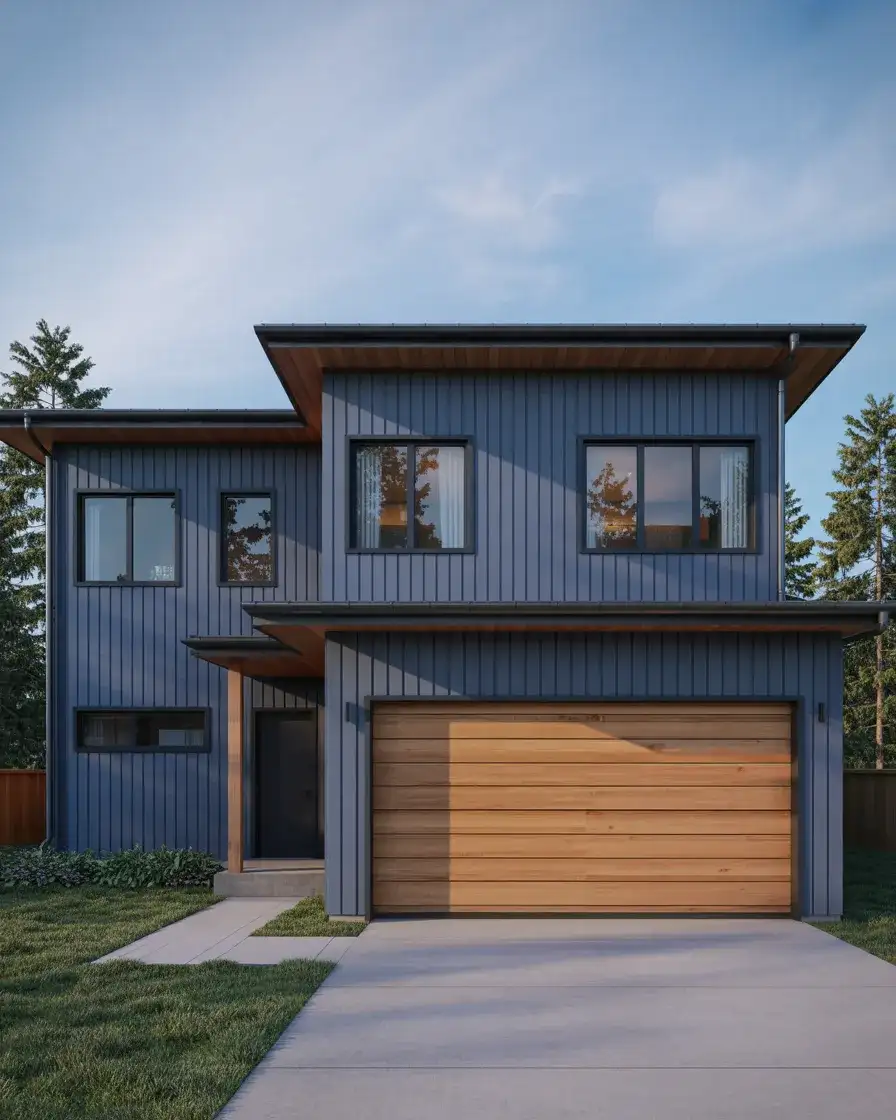
Navy blue has emerged as a sophisticated alternative to pure black, offering depth and richness without feeling quite as stark. When combined with natural wood accents—think cedar garage doors, wood shutters, or timber porch columns—the effect is both warm and elegant. This pairing is especially effective on modern homes where mixed materials are part of the architectural language. The tone reads as classic yet current, appealing to homeowners who want a timeless exterior that won’t feel dated in five years.
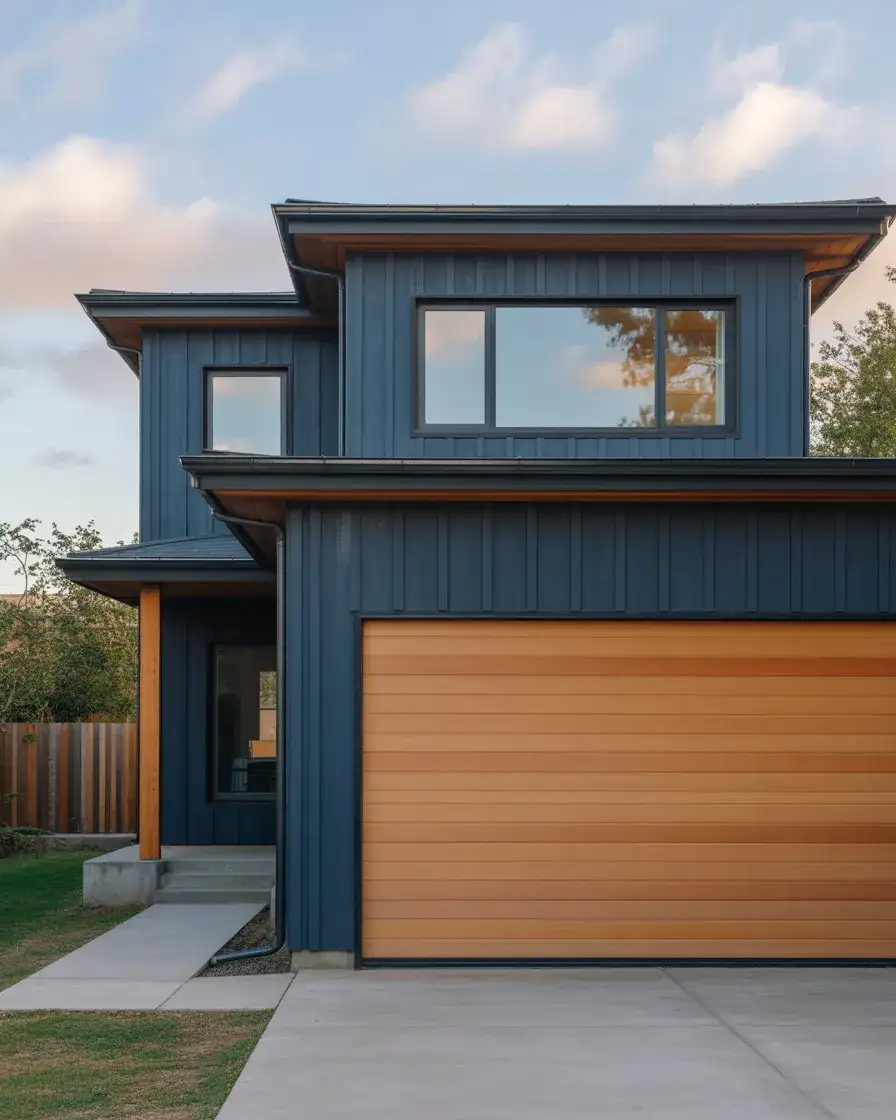
A designer I know recently used this combination on a coastal Maine renovation, and the navy siding played beautifully against the rocky shoreline and weathered driftwood. The key was choosing a navy with just enough gray undertone to avoid looking too nautical or theme-y. Wood accents should be left natural or lightly stained—avoid orange-toned finishes that clash with the cool blue. This look also ages gracefully, as natural wood develops a silvered patina over time that only enhances the overall aesthetic.
4. Black Brick Exterior with Minimalist Details
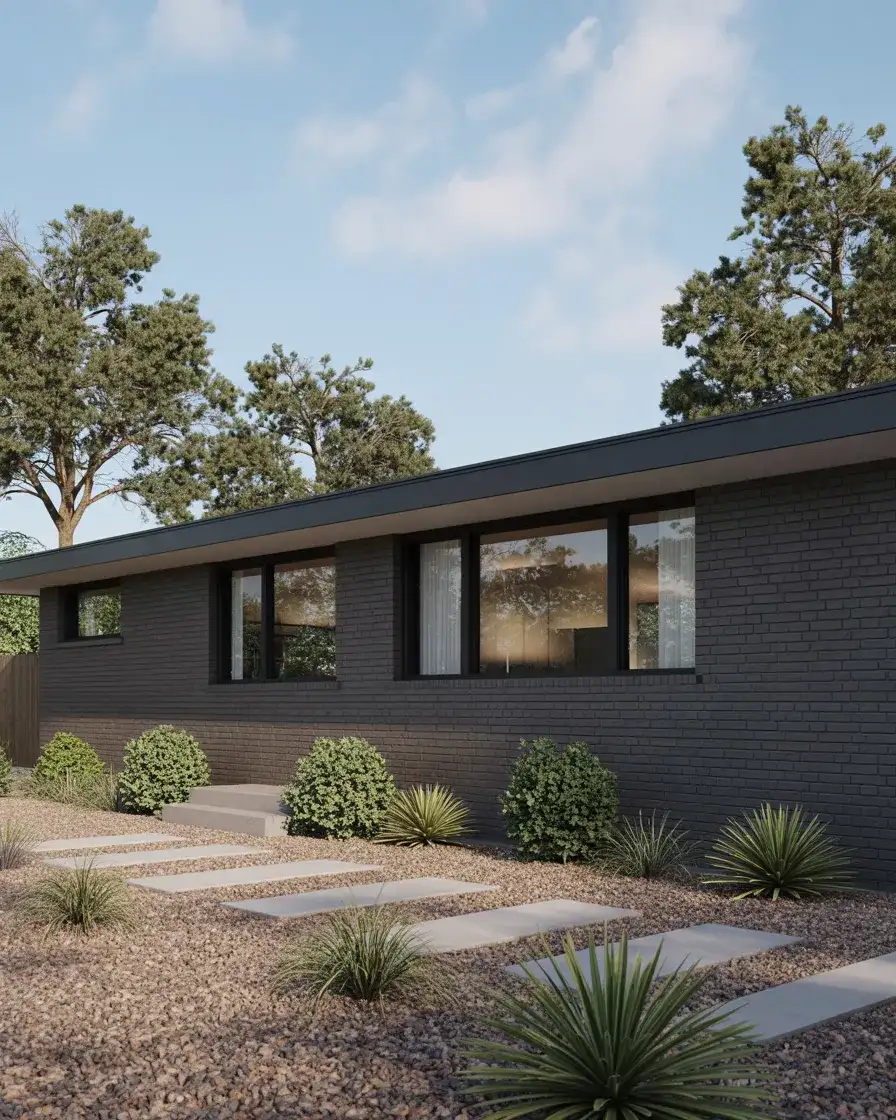
Painting brick black might seem radical, but it’s a transformative way to modernize dated red brick homes without tearing down original materials. The result is a sleek, urban look that feels fresh and contemporary, especially when paired with minimalist design elements like simple metal house numbers, a flat-panel front door, and restrained landscaping. This approach is gaining traction in cities like Atlanta and Denver, where mid-century brick ranches are being updated for a new generation of buyers who value architectural integrity but want a more current aesthetic.
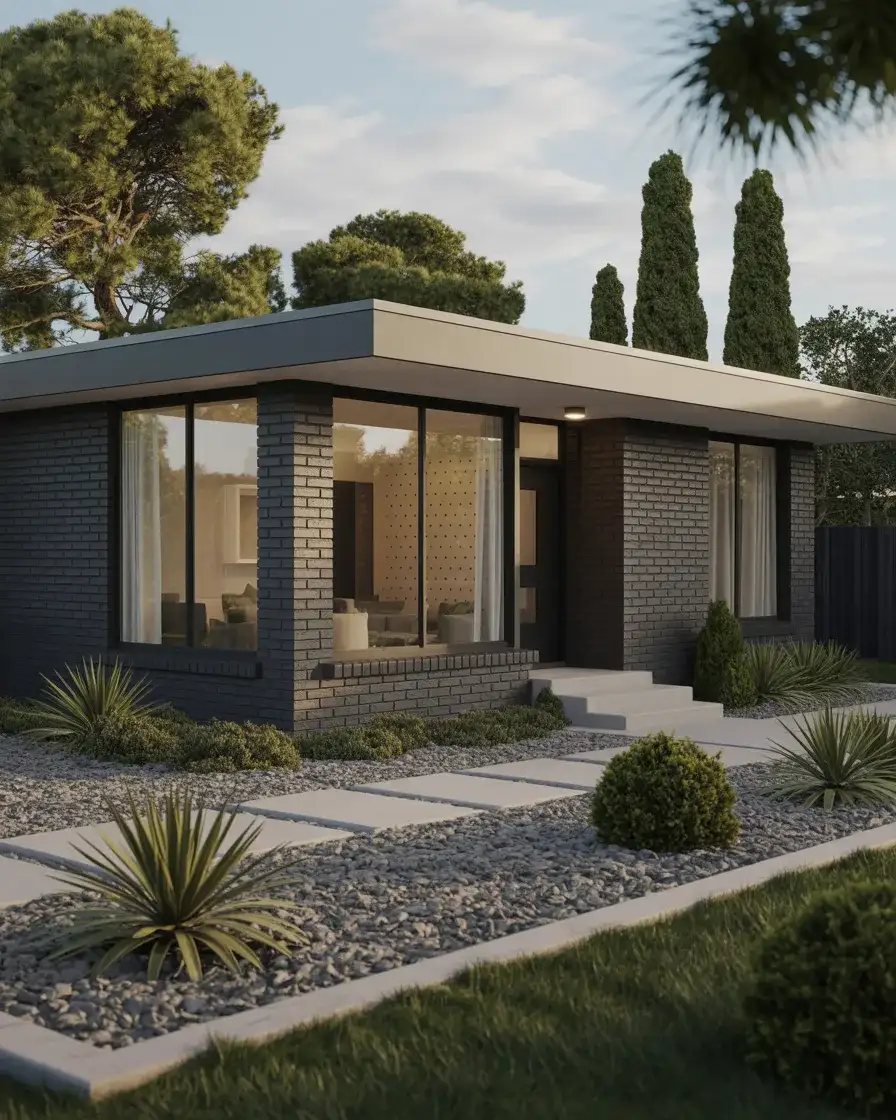
Before painting brick, use a high-quality masonry primer and exterior paint designed for porous surfaces—this prevents peeling and ensures the finish lasts. One homeowner mistake is going too matte, which can make the surface look chalky; a slight satin sheen adds depth while still feeling modern. Budget-wise, painting brick is more affordable than re-siding, typically running $3 to $5 per square foot when DIY, or $7 to $12 with professional labor. It’s a cost-effective way to achieve a high-impact transformation.
5. Forest Green Farmhouse with Stone Foundation
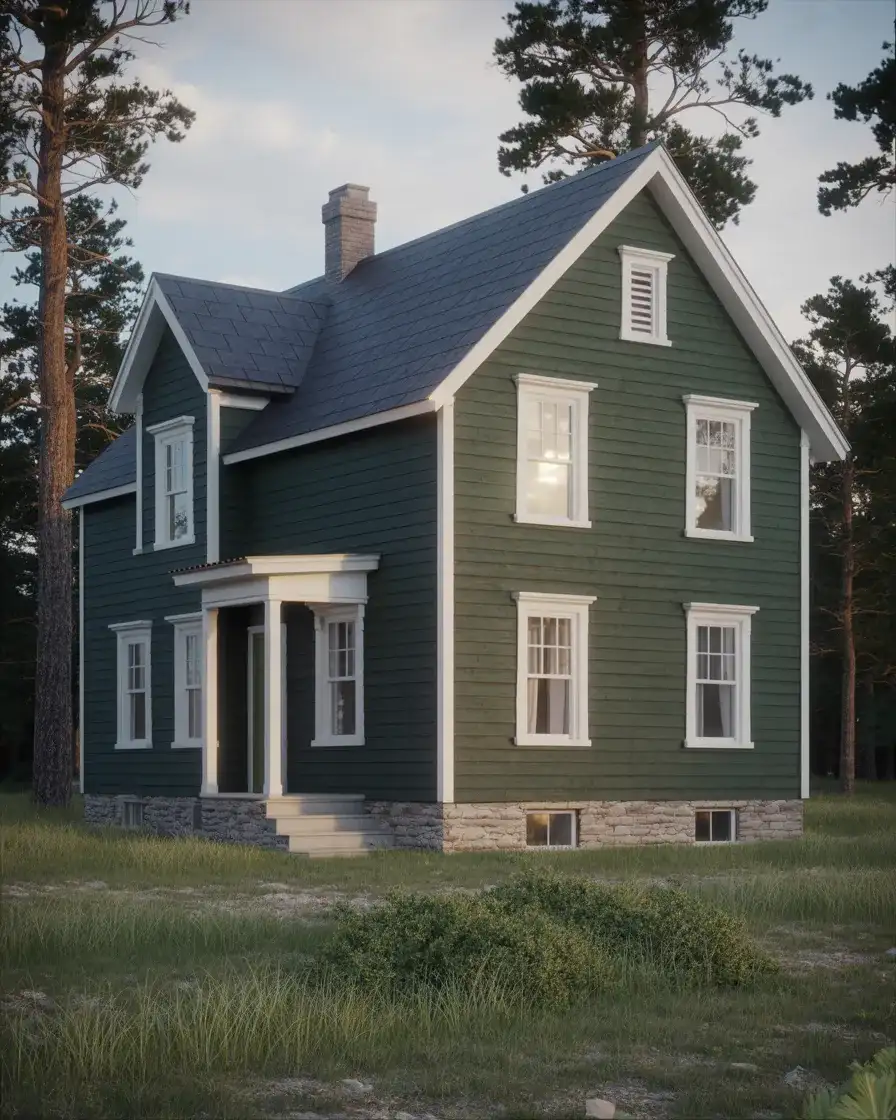
Forest green is quietly becoming one of the most sought-after dark exterior colors, especially for farmhouse styles set on wooded or rural properties. The color feels grounded and organic, blending beautifully with the landscape while still offering plenty of visual interest. Pairing it with a stone foundation or stone accent walls creates a layered, textured look that feels timeless and rooted in place. This combination works particularly well in New England and the Appalachian region, where stone is a native building material and green hues echo the surrounding forests.
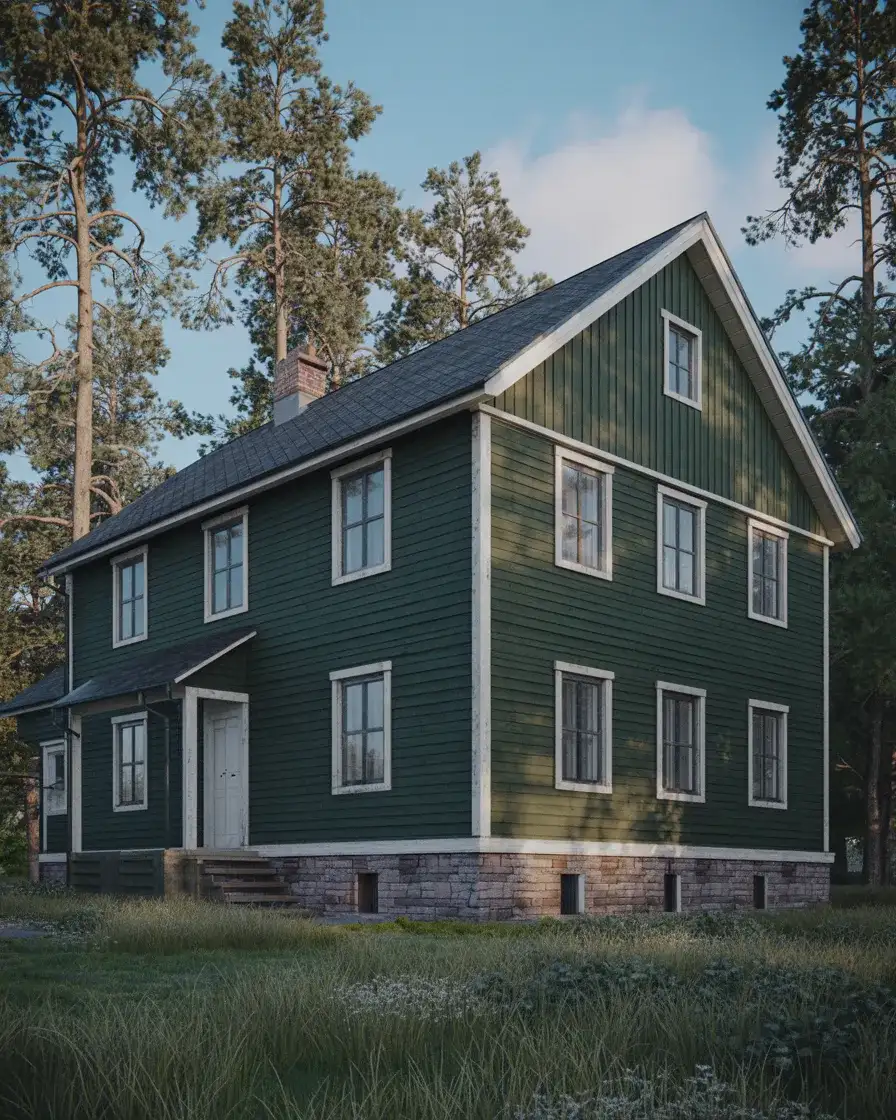
This color palette works best on properties with mature trees and natural landscaping—in stark suburban settings with manicured lawns, it can feel out of place. Consider the undertones of your green: cooler greens with blue notes feel more modern, while warmer greens with yellow undertones lean traditional. If you’re using natural stone, let it be the star by keeping other materials simple. White or cream trim provides a classic contrast, while black hardware and fixtures keep the look from feeling too country cottage.
6. Slate Gray Modern Mid-Century with Warm Wood Door
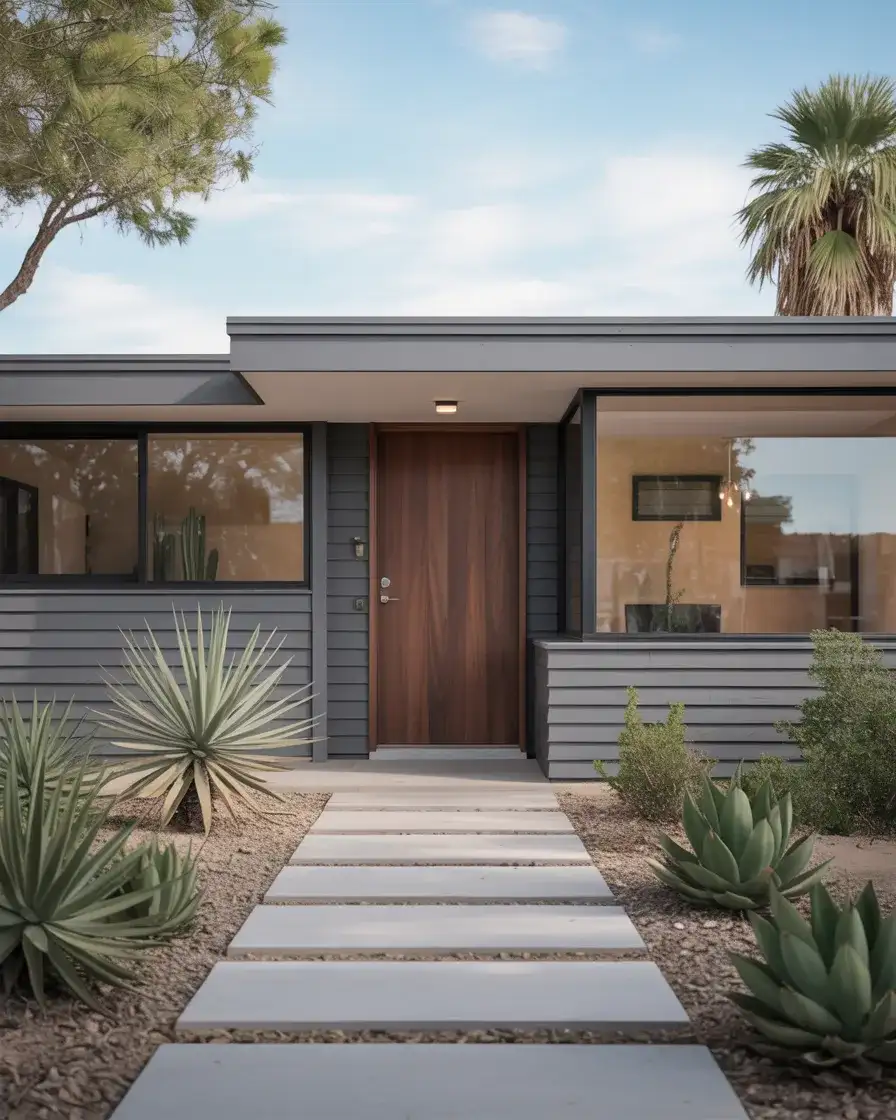
Slate gray is the perfect middle ground for homeowners who want a dark exterior but worry that black will feel too severe. On a modern mid-century home, slate gray honors the era’s aesthetic while adding contemporary gravitas. The real magic happens when you introduce a warm wood front door—walnut, teak, or mahogany—which becomes a focal point and welcoming gesture. This combination has become a go-to for the best curb appeal in neighborhoods from Palm Springs to Portland, where mid-century architecture is celebrated and preserved.
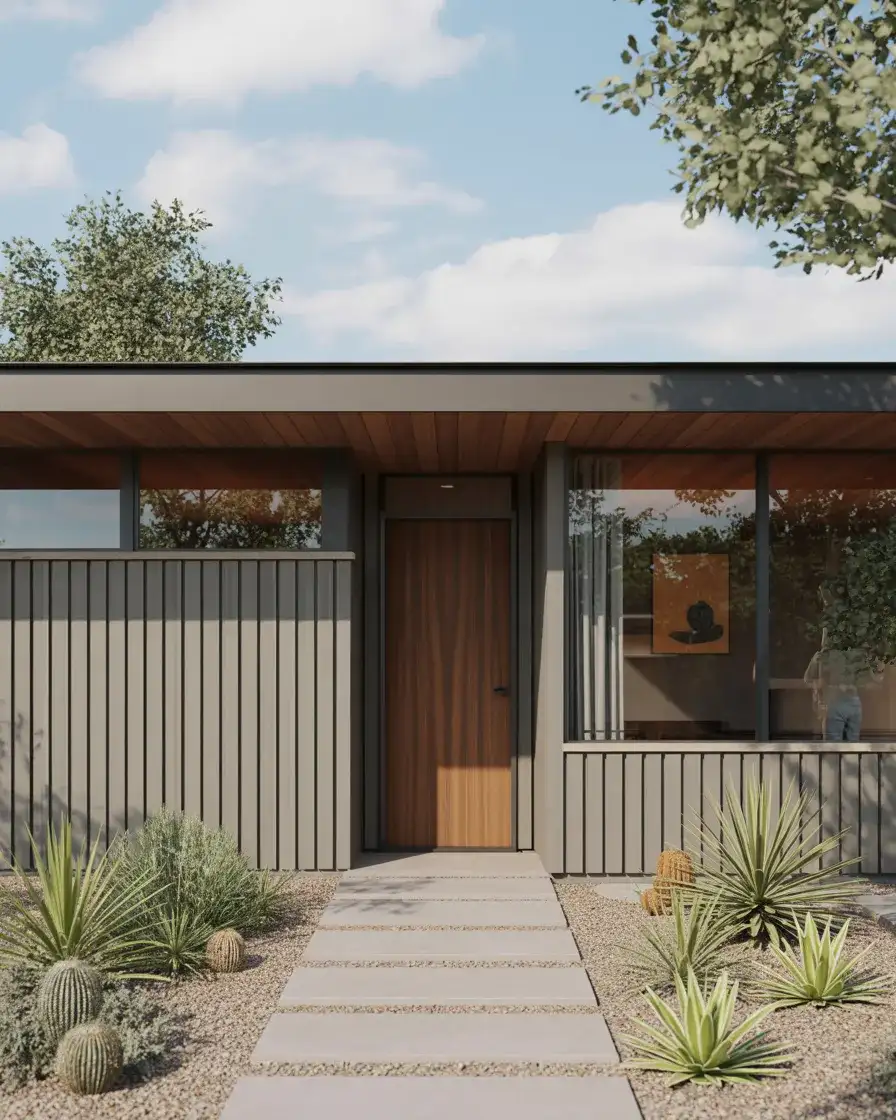
Many homeowners pair this look with updated landscaping—think low-maintenance xeriscaping or native grasses rather than traditional foundation plantings. The gray siding acts as a neutral backdrop that lets architectural details like exposed beams, clerestory windows, or geometric rooflines take center stage. In terms of maintenance, gray hides dirt and pollen better than lighter colors, making it practical for busy families. If you’re concerned about the color reading as cold, warm it up with exterior lighting in brass or aged bronze finishes.
7. Charcoal Stucco with Black Accents on Small Houses
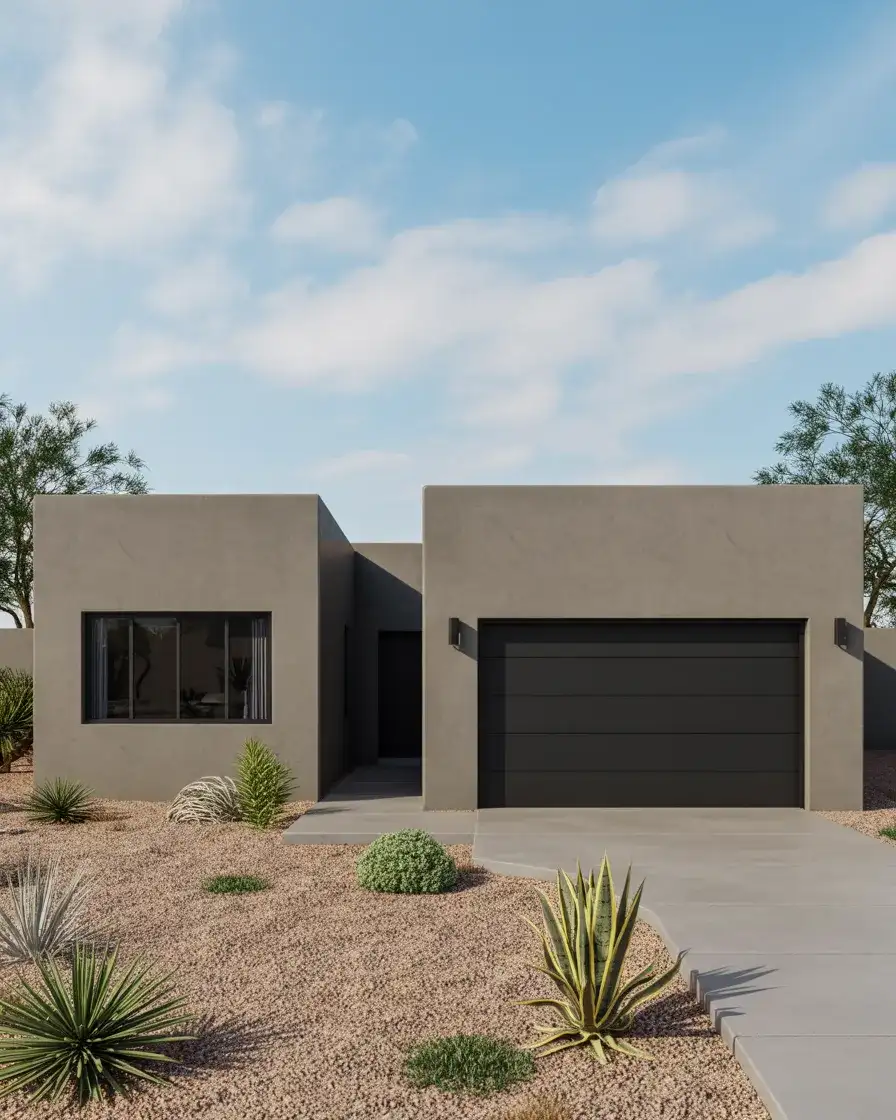
Dark stucco finishes are having a renaissance, particularly on small houses where the smooth, monolithic surface creates a clean, modern look without visual clutter. Charcoal stucco paired with black accents—window frames, gutters, and garage doors—delivers maximum impact on minimal square footage. This approach is especially popular in the Southwest, where stucco is a traditional building method, but it’s also gaining traction in urban infill projects and accessory dwelling units (ADUs) across California and Texas. The dark color makes small homes feel substantial and architecturally significant.
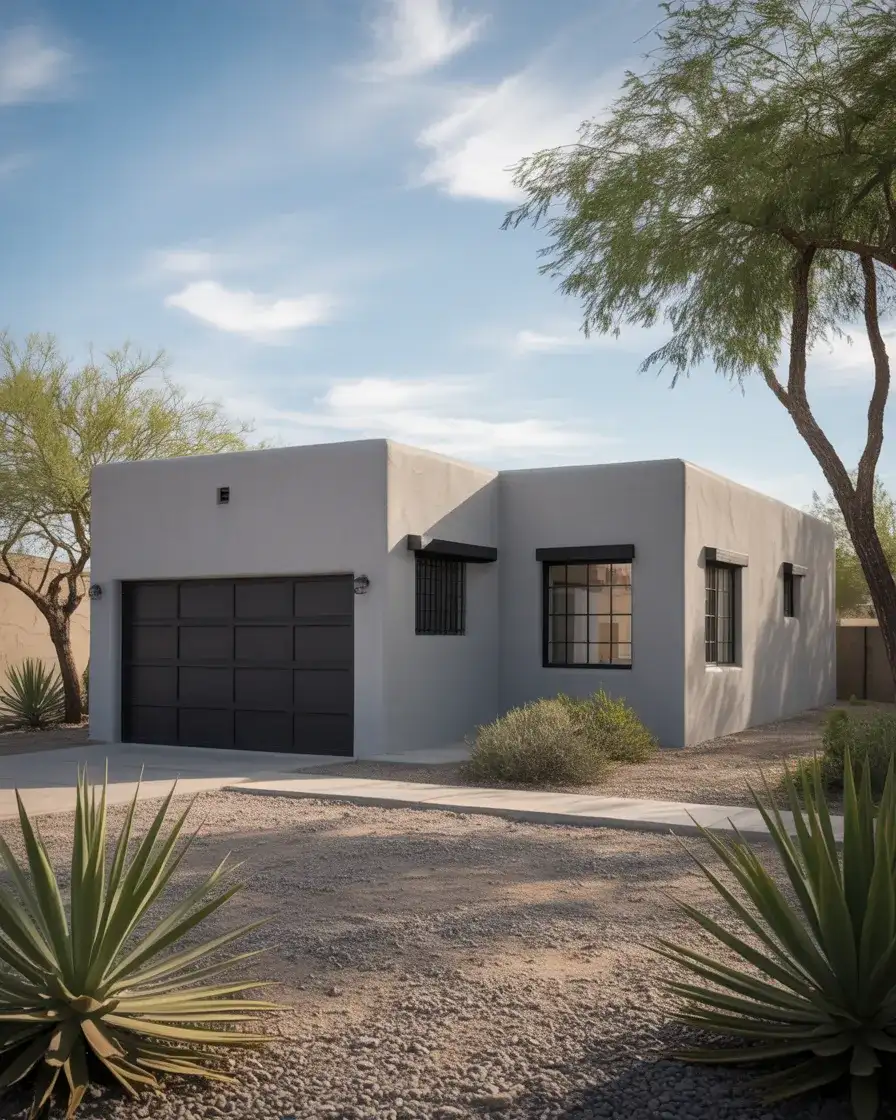
Real homeowners often worry that dark colors will overwhelm a small footprint, but the opposite is true—the visual cohesion actually makes the home appear more refined and intentional. Stucco is also incredibly durable and low-maintenance, which is ideal for cost-conscious buyers or those building rental properties. If you’re working with a tight budget, stucco finishes typically cost less than wood siding but more than vinyl, averaging $6 to $9 per square foot installed. The smooth finish also provides a perfect canvas for strategic exterior lighting that adds drama after dark.
8. Deep Plum Brown with White Windows on Large Houses
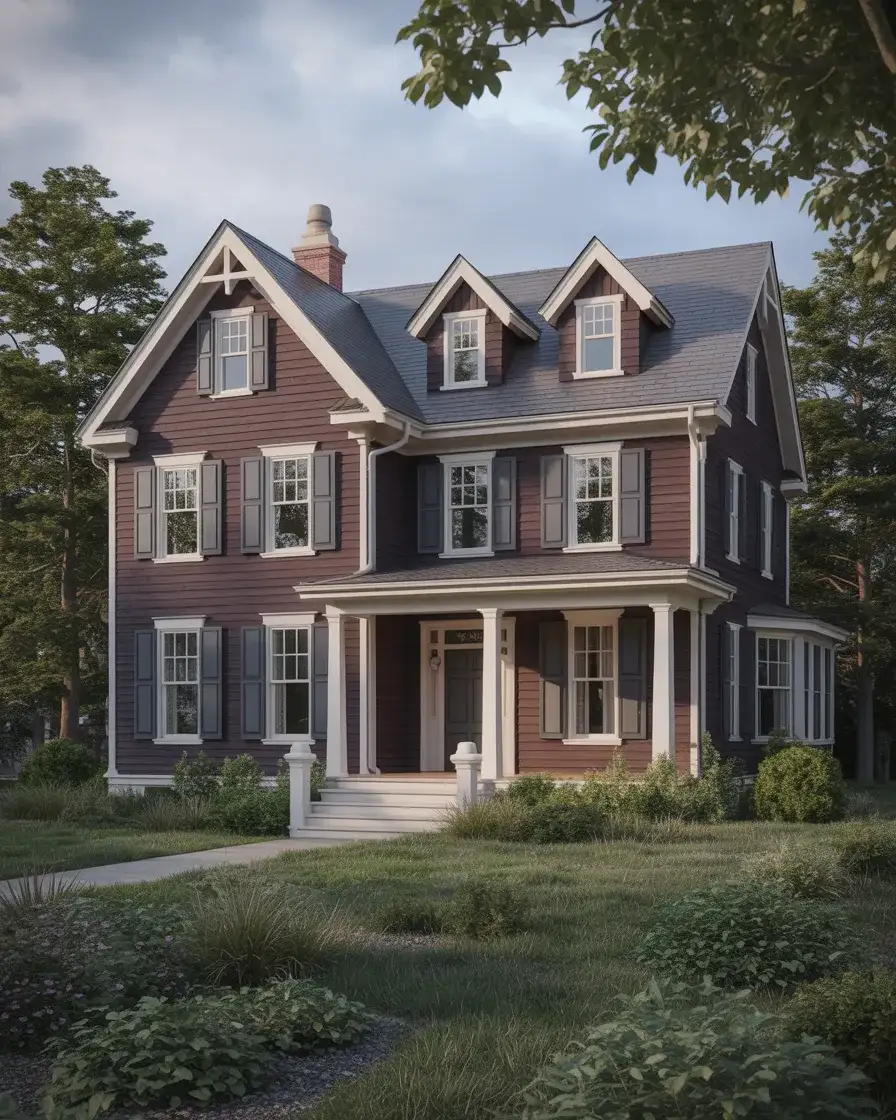
For homeowners who want dark drama without going full black or navy, deep plum brown offers a sophisticated alternative with unexpected warmth. On large houses, this rich, complex hue creates a sense of intimacy and coziness that lighter colors can’t achieve on expansive facades. White windows provide crisp contrast and break up the mass of a big home, preventing it from feeling heavy or fortress-like. This combination is particularly striking on Colonial or Craftsman-style homes, where traditional proportions benefit from a bold, modern color treatment.
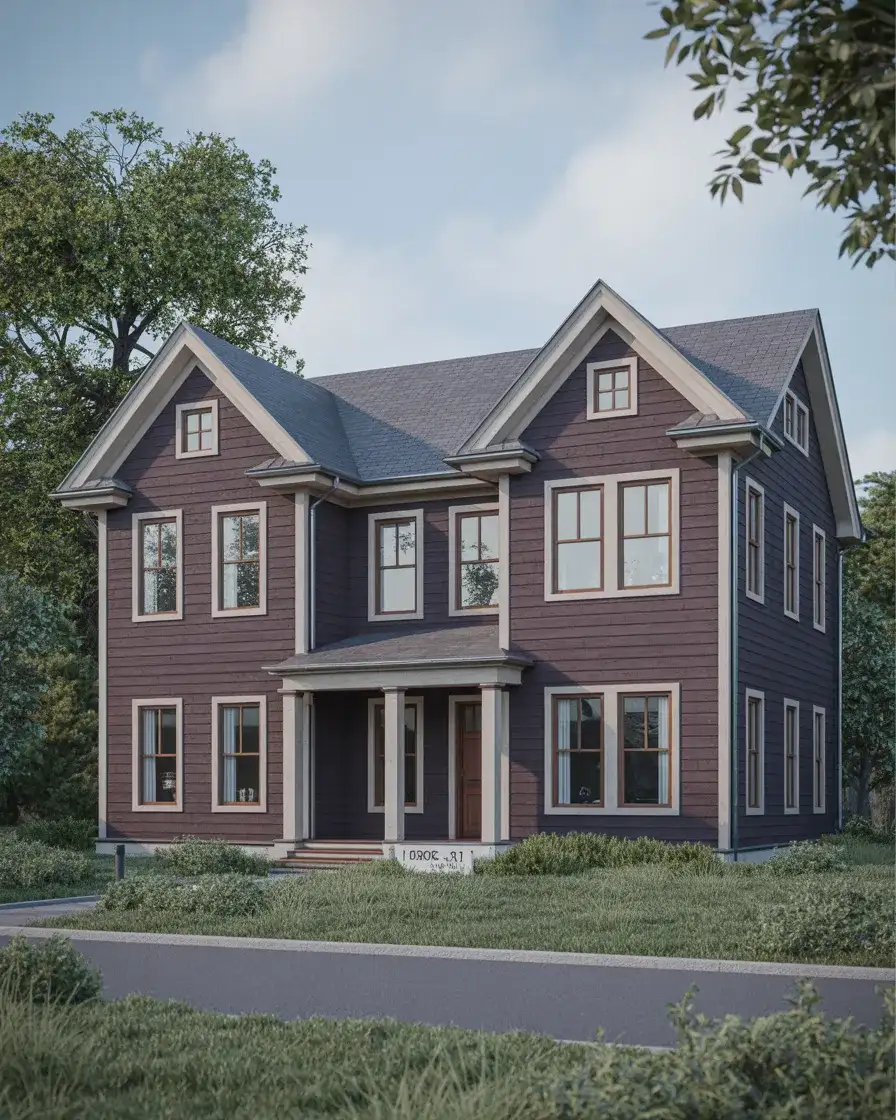
A homeowner in Connecticut recently chose this palette for her 1920s Colonial revival, and the transformation was remarkable—the plum brown highlighted the home’s architectural details while making it feel cozy rather than imposing. She noted that the color looks different throughout the day, appearing almost black in shadow but revealing warm purple-brown tones in direct sunlight. This chameleon quality is part of the appeal. When selecting your shade, test multiple samples on different sides of the house to see how light affects the color before committing.
9. Iron Ore Gray by Sherwin Williams with Cedar Shake Accents
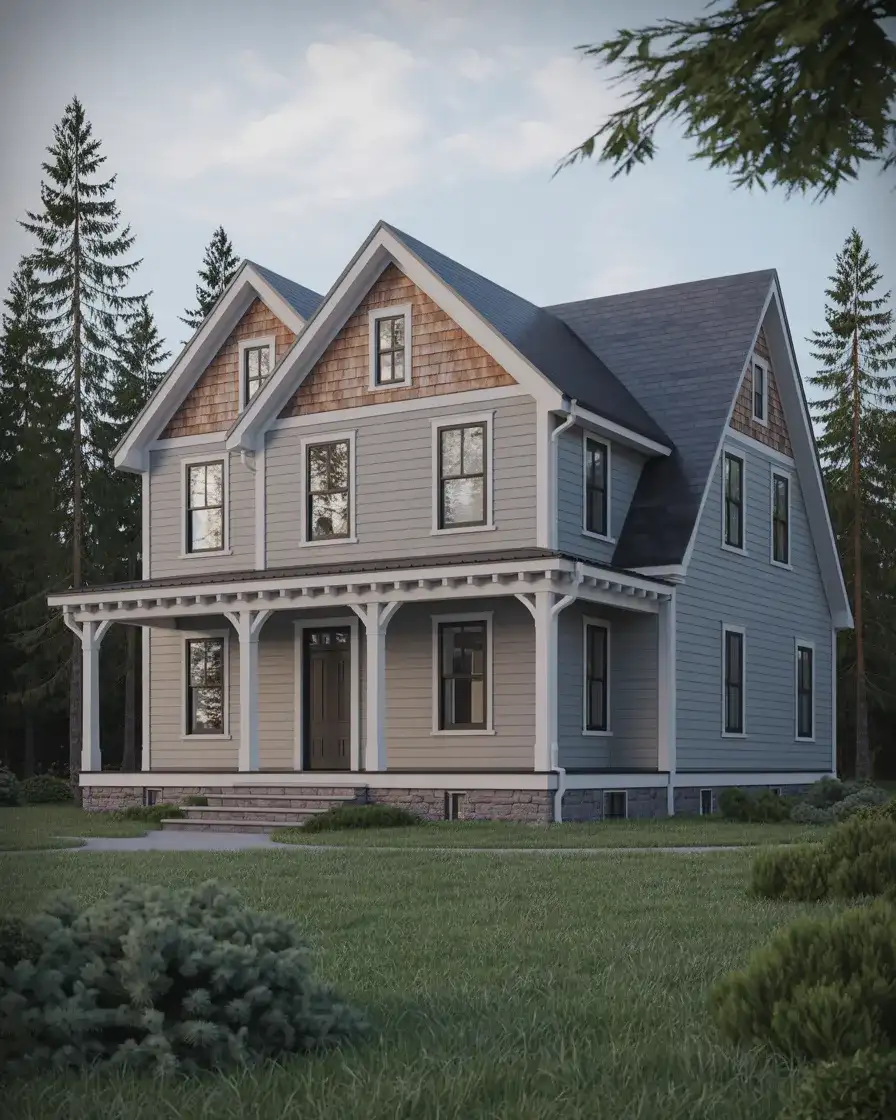
Sherwin Williams Iron Ore has become the go-to dark gray for countless exterior makeovers, and for good reason—it’s a true, neutral dark gray that works in virtually any climate and with any architectural style. When you combine it with natural cedar shake accents on gables or as a decorative wainscot, you get the perfect marriage of modern and organic. The gray provides a sleek backdrop, while the cedar introduces texture and warmth. This pairing is especially effective on modern farmhouses and transitional styles where mixed materials are part of the design vocabulary.
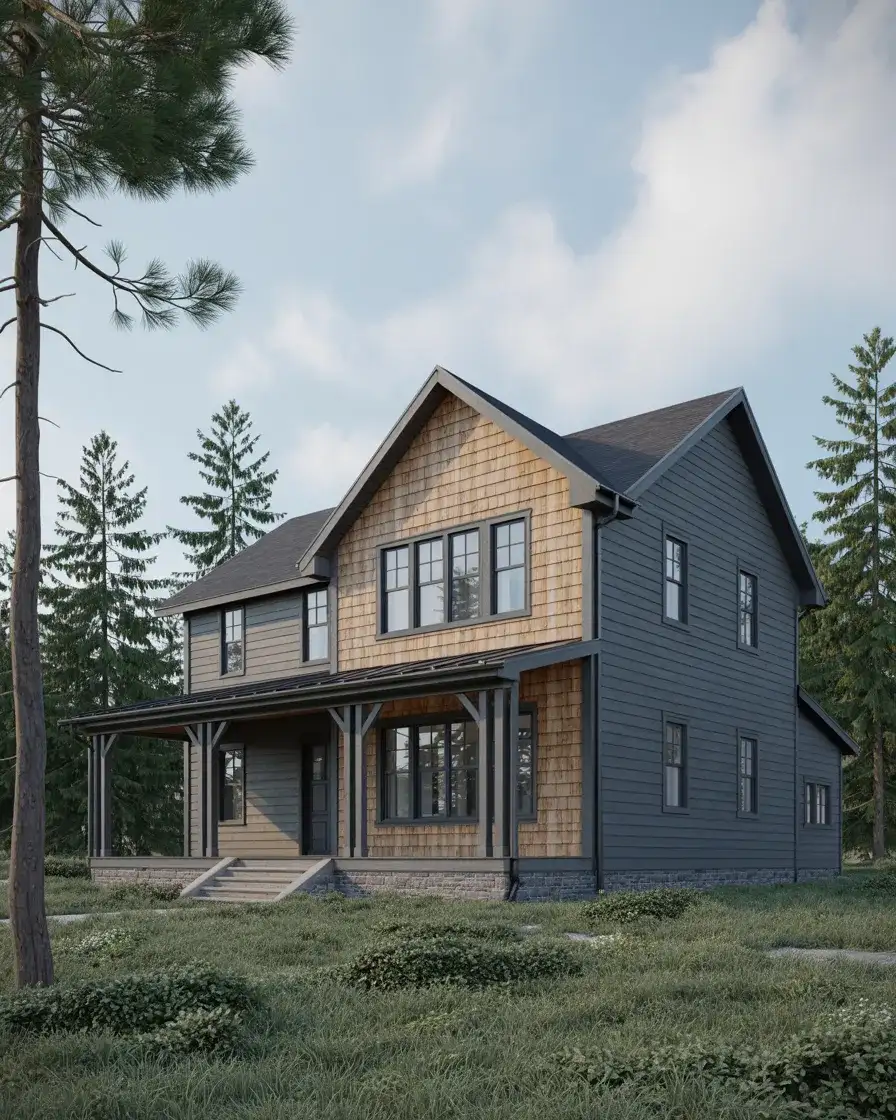
Iron Ore is dark enough to make a statement but not so dark that it absorbs all light and detail—it’s the Goldilocks of dark grays. The color works beautifully in regions with heavy tree cover, as it doesn’t compete with the natural greens and browns of the landscape. Many homeowners find that Iron Ore pairs effortlessly with both warm and cool accent colors, making it incredibly versatile for those who like to change up their front door color or outdoor decor seasonally. It’s also widely available and color-matched easily if you’re using different paint brands for different surfaces.
10. Black Modern Board and Batten on Ranch Homes
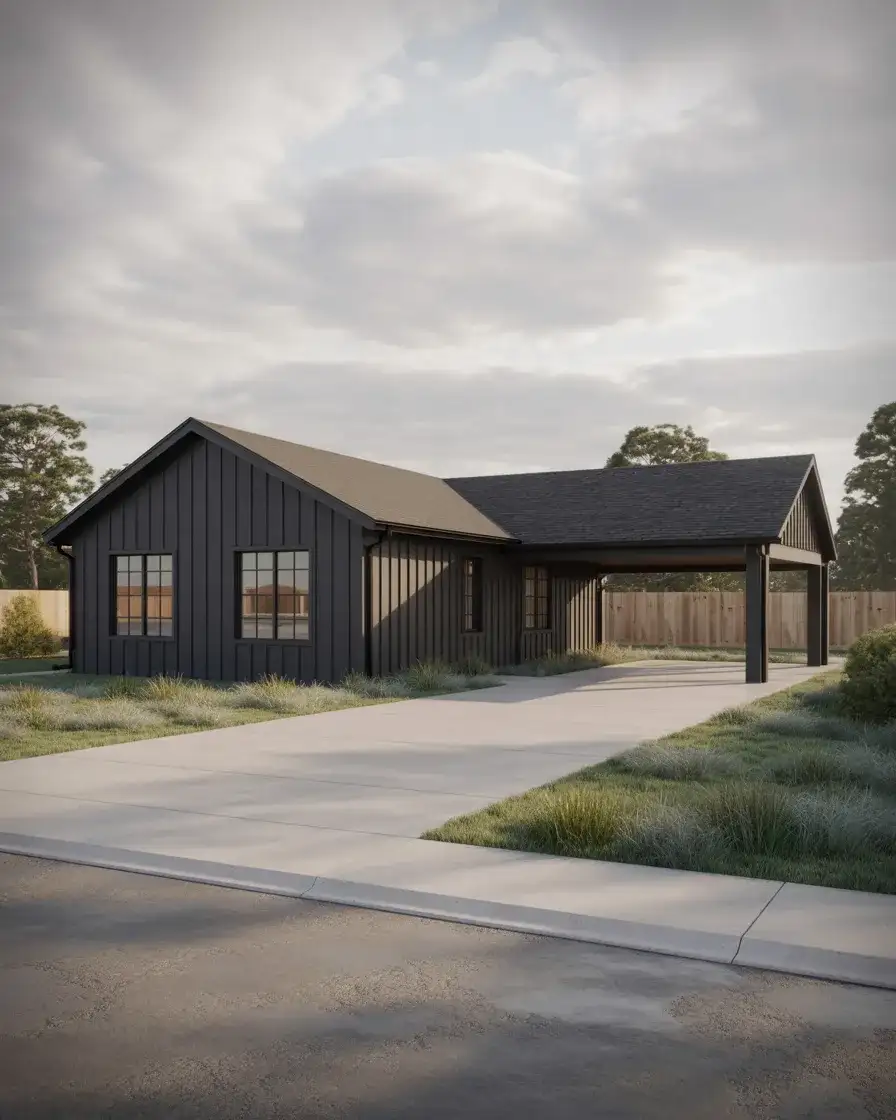
The classic American ranch gets a dramatic update when dressed in black modern board and batten siding. The vertical lines of the batten help counteract the horizontal sprawl typical of ranch architecture, adding visual interest and making the home feel more dynamic. This treatment works especially well on ranch-style houses with simple, clean lines—no fussy details to compete with the boldness of the color. Across the Midwest, where ranch homes dominate suburban landscapes, this update is helping homeowners stand out while honoring the home’s original mid-century DNA.
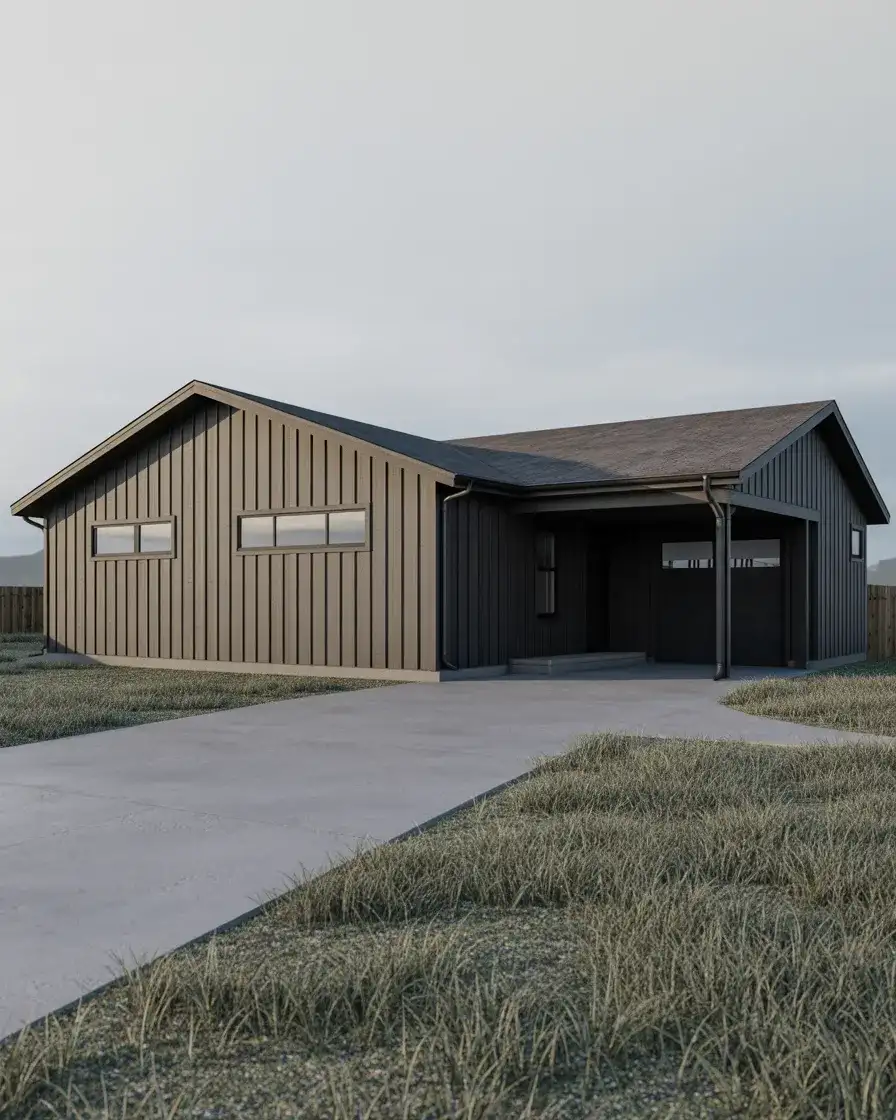
Expert commentary: this look works best when you commit fully to the modern aesthetic—swapping out dated shutters, updating light fixtures to simple black sconces, and removing unnecessary trim details. The goal is clean and contemporary, not cluttered. If your ranch has a brick facade, consider painting it black to match the new siding for a cohesive look. The transformation can be dramatic: a dated 1960s ranch suddenly reads as a sleek, modern retreat. Budget for quality materials, though—cheap board and batten can warp or gap over time.
11. Gunmetal Gray with Brick Foundation and Stone Accents
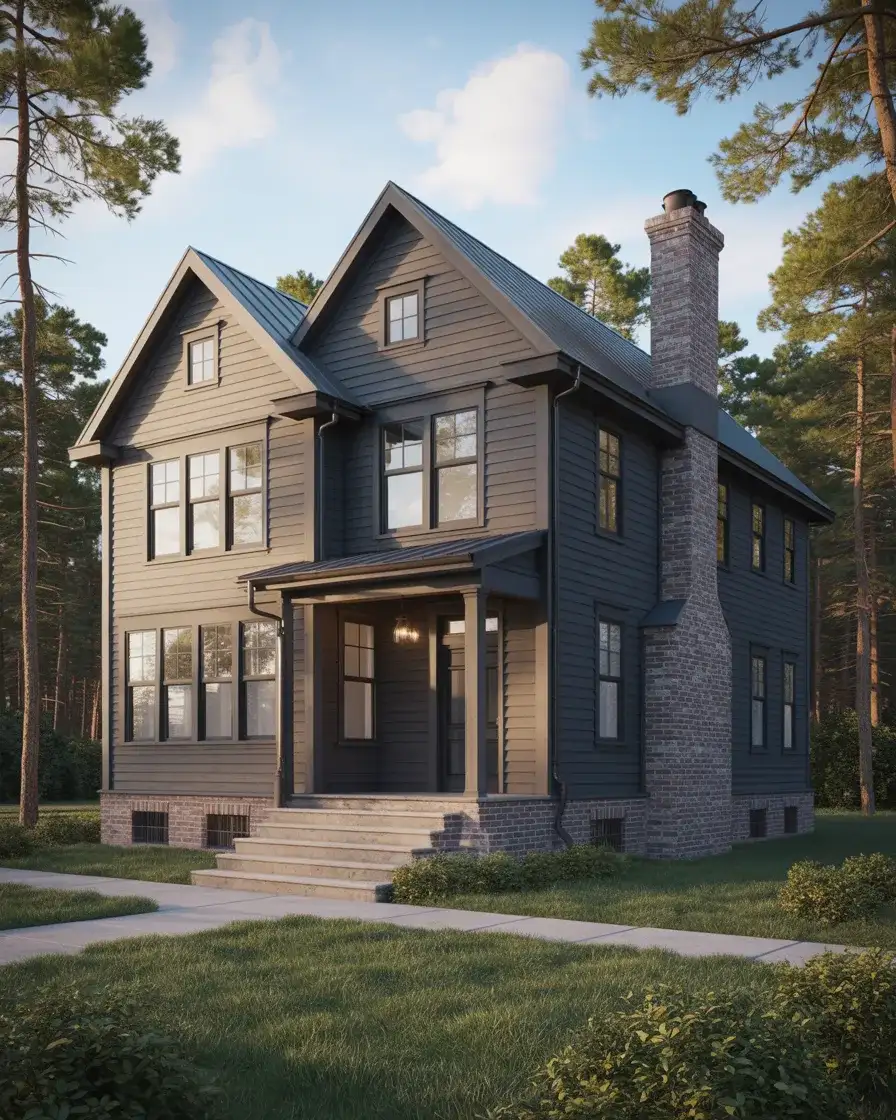
Gunmetal gray offers a middle-ground intensity that’s bolder than traditional grays but less severe than black. When layered over a home with an existing brick foundation or stone base, the effect is beautifully grounded and textural. The natural materials provide warmth and earthiness, while the cool gray siding feels contemporary and refined. This combination is particularly effective on split-level homes and walkout basements, where the foundation is a prominent visual element. In regions with native stone—think Pennsylvania, upstate New York, or the Ozarks—this look celebrates local building traditions while embracing modern color trends.
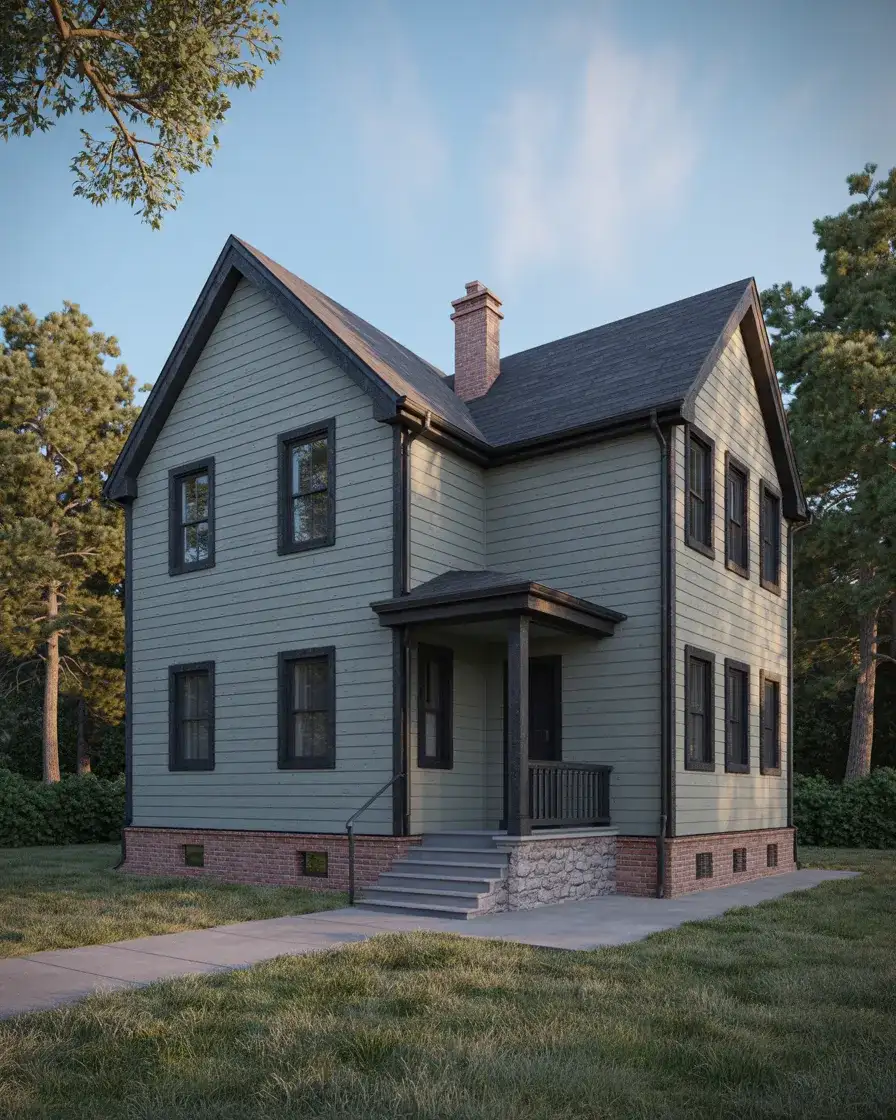
Where this works best: homes on sloped lots where the foundation is highly visible, or properties where stone or brick is already a key architectural feature. Rather than painting over these elements, let them shine by contrasting them with dark siding. The textural interplay between smooth painted siding and rough masonry creates visual depth that feels collected and intentional. If your foundation brick is dated orange-red, consider limewashing it in a softer tone to modernize without covering the texture completely.
12. Charcoal with Natural Wood Garage Door and Pallet Wood Details
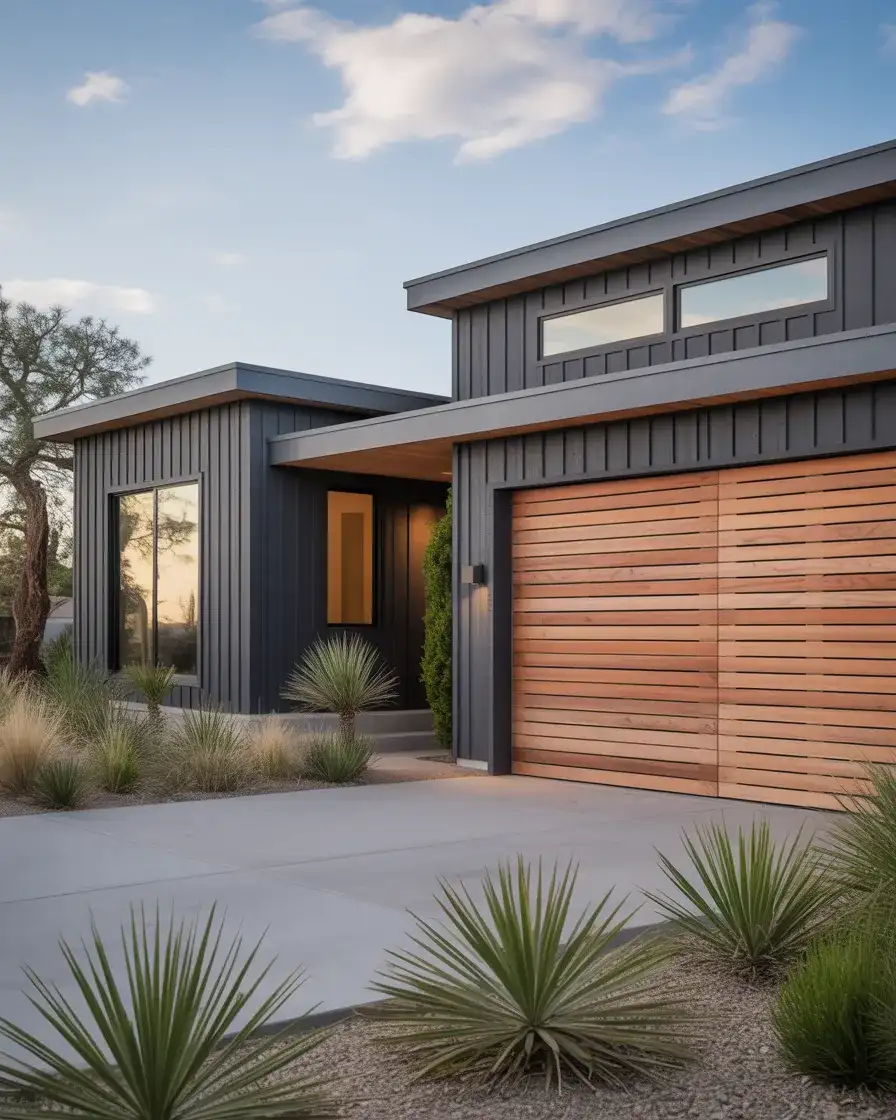
Charcoal siding gets an unexpected, earthy upgrade when paired with a natural wood garage door and decorative pallet wood accents. The garage door becomes a statement feature—think horizontal slat cedar or reclaimed barn wood—that adds warmth and texture to an otherwise sleek facade. Using natural wood accents in the form of pallet-style wall panels, pergola beams, or shutters reinforces the organic-modern vibe. This look is trending hard in Texas and the Mountain West, where rustic-modern hybrids are the architectural norm and homeowners value materials that reference the region’s ranching and timber heritage.
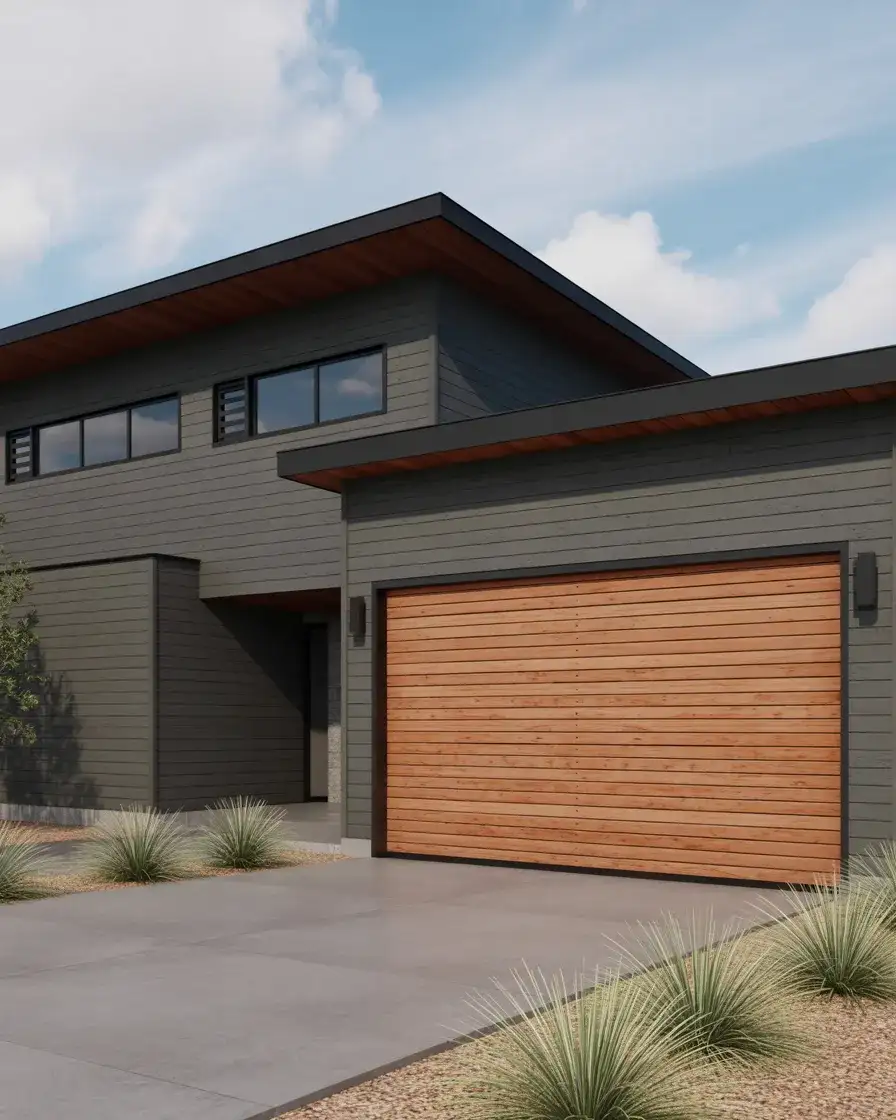
Practical insight: reclaimed wood and pallet wood finishes require sealing to prevent weathering, especially in wet climates. Use a penetrating oil or clear sealant that enhances the grain without adding a glossy sheen, which would clash with the matte charcoal siding. If budget is a concern, you can achieve a similar look with new lumber stained to mimic reclaimed wood, typically saving 30-40% compared to authentic salvaged materials. The key is choosing wood with visible grain and character—avoid perfectly smooth, uniform planks that read as generic.
13. Deep Slate Blue Minimalist with White Windows on Small Modern Homes
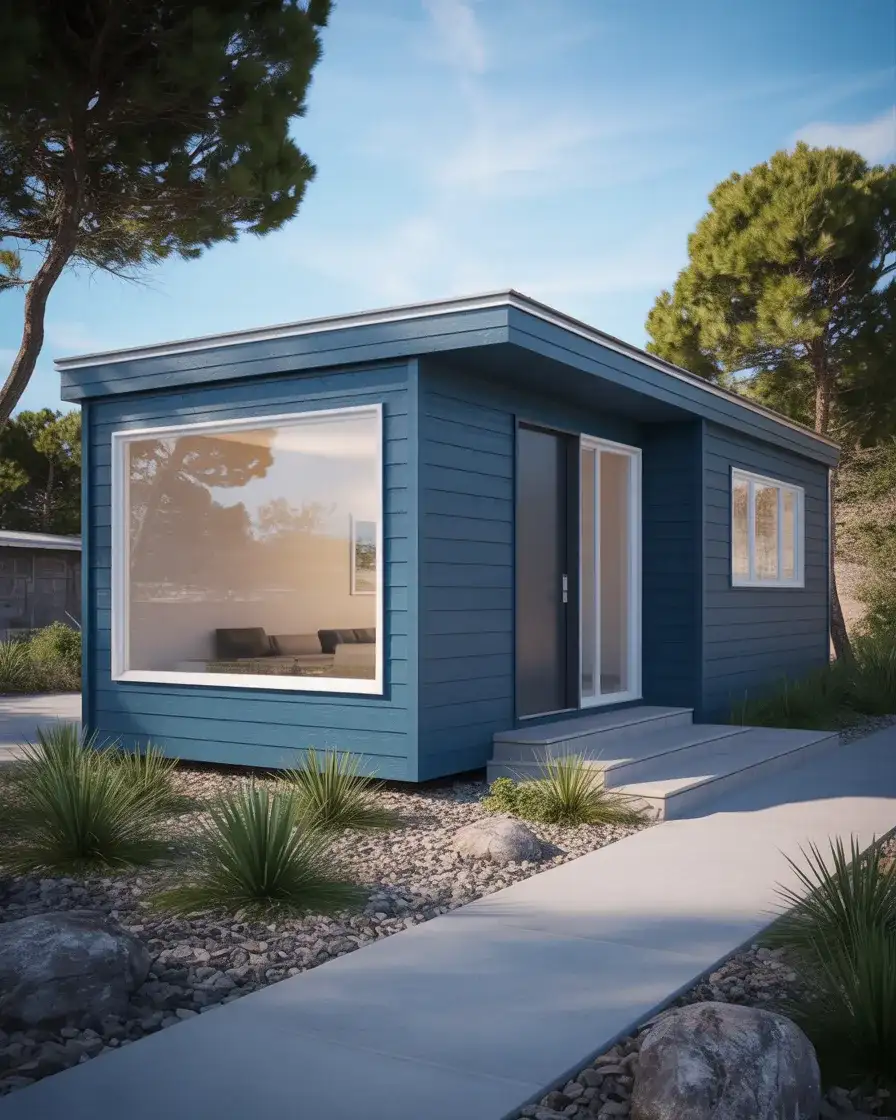
Deep slate blue is the dark horse of exterior color trends—literally. It’s moody and saturated but not as expected as navy, offering a fresh alternative for small houses and modern builds. The color’s cool tone feels both grounding and slightly mysterious, especially when paired with crisp white windows that pop against the dark backdrop. Minimalist homes benefit most from this palette because the simplicity of the architecture allows the color to be the star. This look is gaining serious traction in urban settings from Seattle to Denver, where modern tiny homes and compact ADUs are redefining residential architecture.
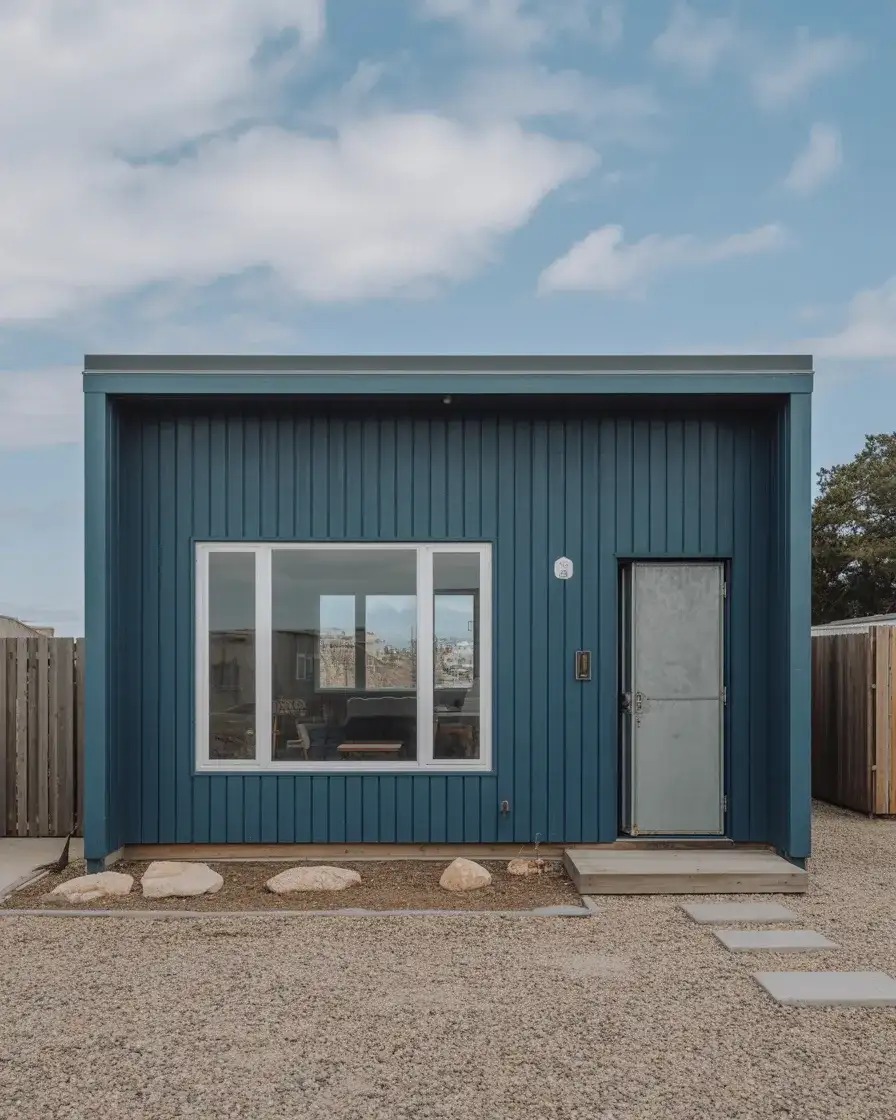
Real homeowner behavior: people living in small modern homes tend to embrace bold design choices because the compact footprint means every decision has an outsized impact. A striking exterior color becomes a personality statement and instantly elevates a modest structure into something architecturally noteworthy. Slate blue also photographs beautifully, which matters in a Pinterest-driven design culture—homeowners report that friends and neighbors often stop to compliment and photograph their homes. If you’re building new, this color works well with metal roofing in dark gray or black.
14. Black Stucco Modern with Large Windows and Flat Roof
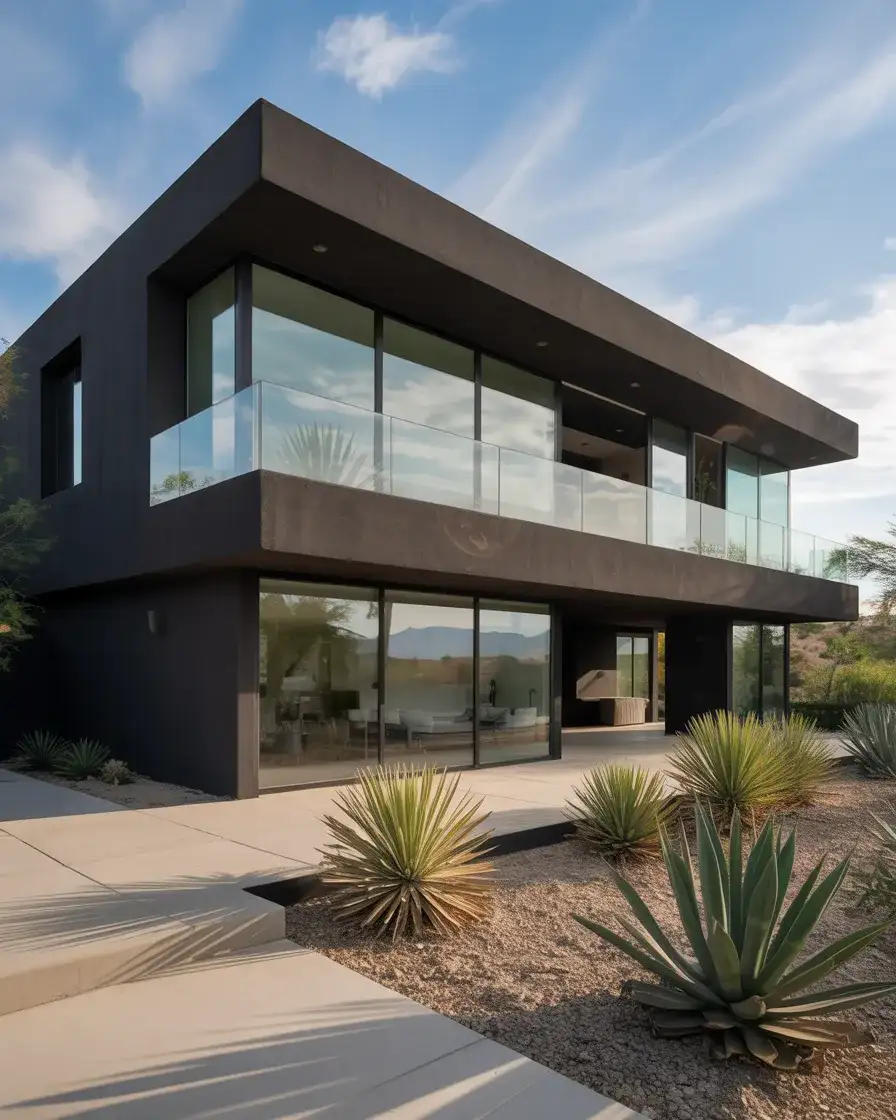
Black stucco on a modern home with expansive glass and a flat or low-slope roof is the epitome of contemporary residential design. The smooth, monolithic finish creates a sculptural quality, turning the home into a piece of architecture rather than just a dwelling. Large windows become glowing elements at night, providing contrast and visual interest against the solid black walls. This aesthetic dominates high-end modern construction in Southern California, Arizona, and South Florida, where the climate supports outdoor living and the architecture celebrates indoor-outdoor flow.
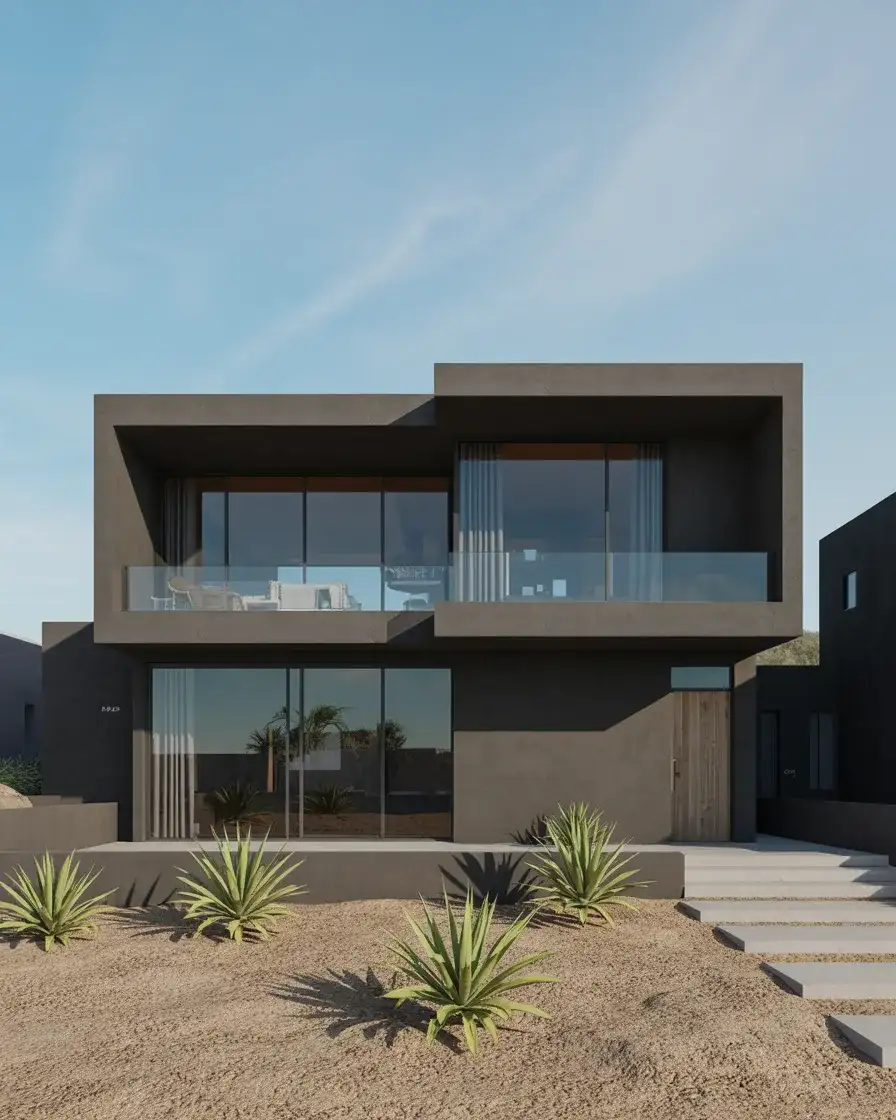
American lifestyle context: this style appeals to professionals and creatives who view their home as a design statement and lifestyle choice, not just a functional space. The aesthetic signals a certain cultural fluency with modern architecture and design. These homes often incorporate sustainable features like passive cooling, solar panels (which are less visually intrusive on dark roofs), and native xeriscaping. The black exterior also serves a practical purpose in cooler climates—it absorbs heat during the day, which can reduce heating costs in winter months.
15. Charcoal Clapboard with Red Brick Chimney
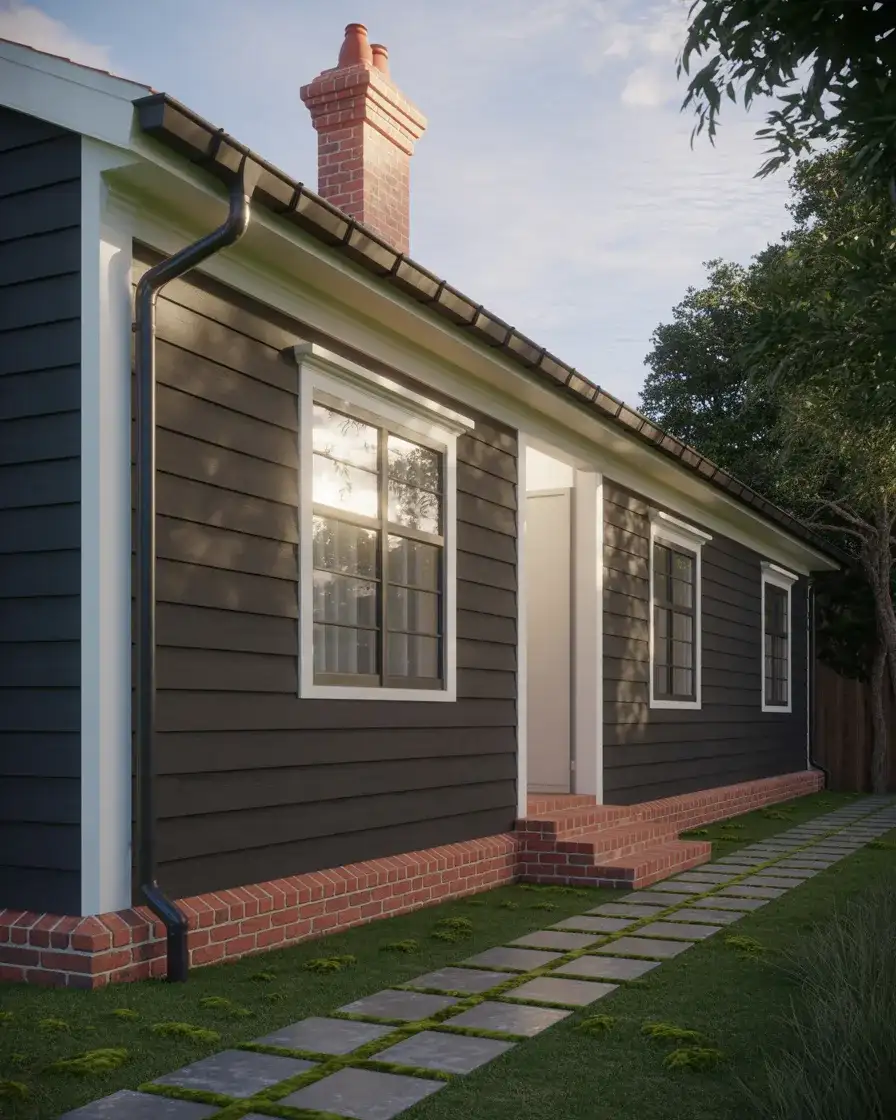
Charcoal clapboard siding provides a sophisticated update to traditional Colonial or Cape Cod homes, and when you leave the original red brick chimney untouched, you create a pleasing contrast between old and new. The warm brick reads as a historical anchor, while the dark gray siding signals that the home has been thoughtfully updated. This combination is especially successful in New England and the Mid-Atlantic, where brick chimneys are common architectural features and homeowners want to modernize without erasing the home’s heritage. The best part? You preserve the craftsmanship of the original masonry while still achieving a contemporary look.
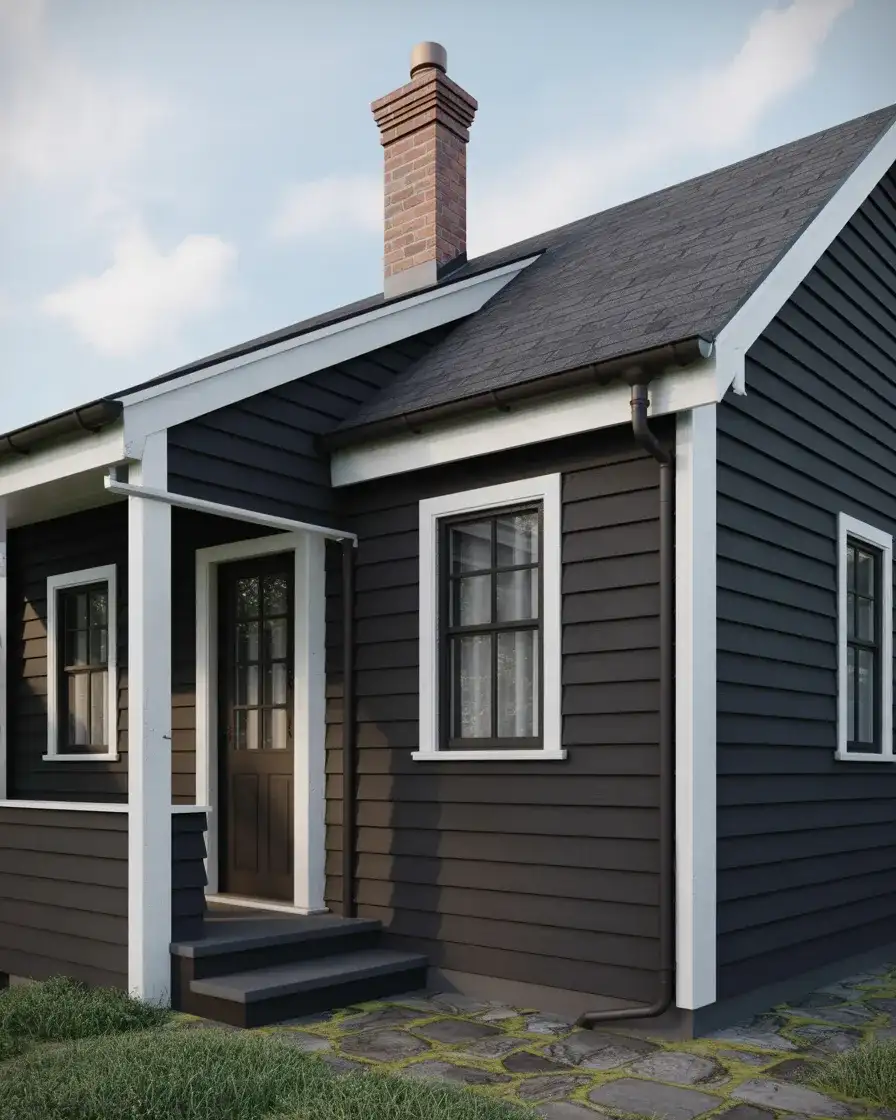
Budget angle: leaving the brick chimney unpainted saves money while adding character. Repointing (repairing the mortar joints) is far less expensive than painting and helps preserve the masonry long-term. If the brick is in good shape, a simple cleaning can make it look refreshed without any paint. On the flip side, if you do decide to paint the brick to match the siding for a more monochromatic look, expect to add $1,500 to $3,000 to your project cost depending on chimney size. Either way, the charcoal siding does the heavy lifting in modernizing the home’s appearance.
16. Deep Gray-Green with Natural Stone and Wood Entry
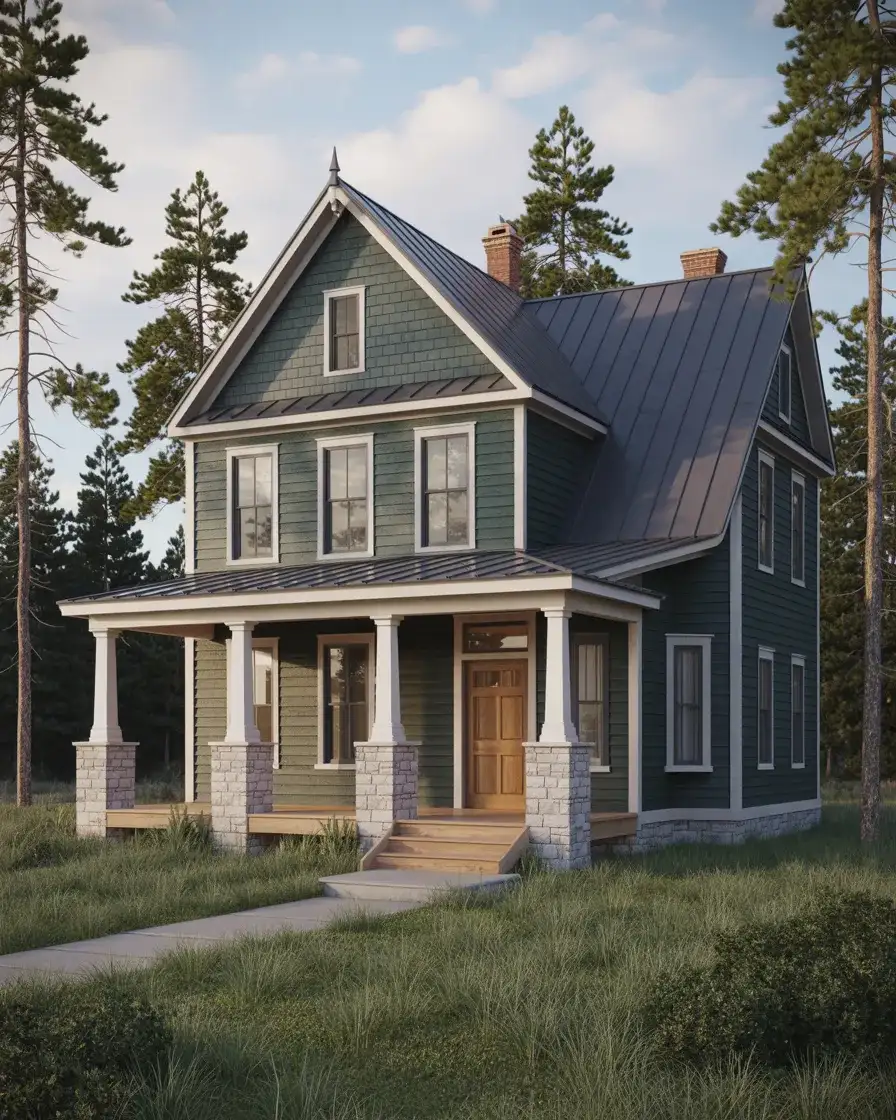
Deep gray-green is one of those complex, shifting colors that looks different depending on the light—sometimes reading as charcoal, other times as a moody forest green. When combined with natural wood accents at the entry and a stone porch or walkway, it creates a layered, organic feel that’s both modern and timeless. This palette works beautifully on farmhouse and transitional styles, especially in the Pacific Northwest and Rocky Mountain regions, where the color echoes the landscape of evergreens and rocky hillsides. The multi-material approach adds depth and prevents the dark color from feeling flat.
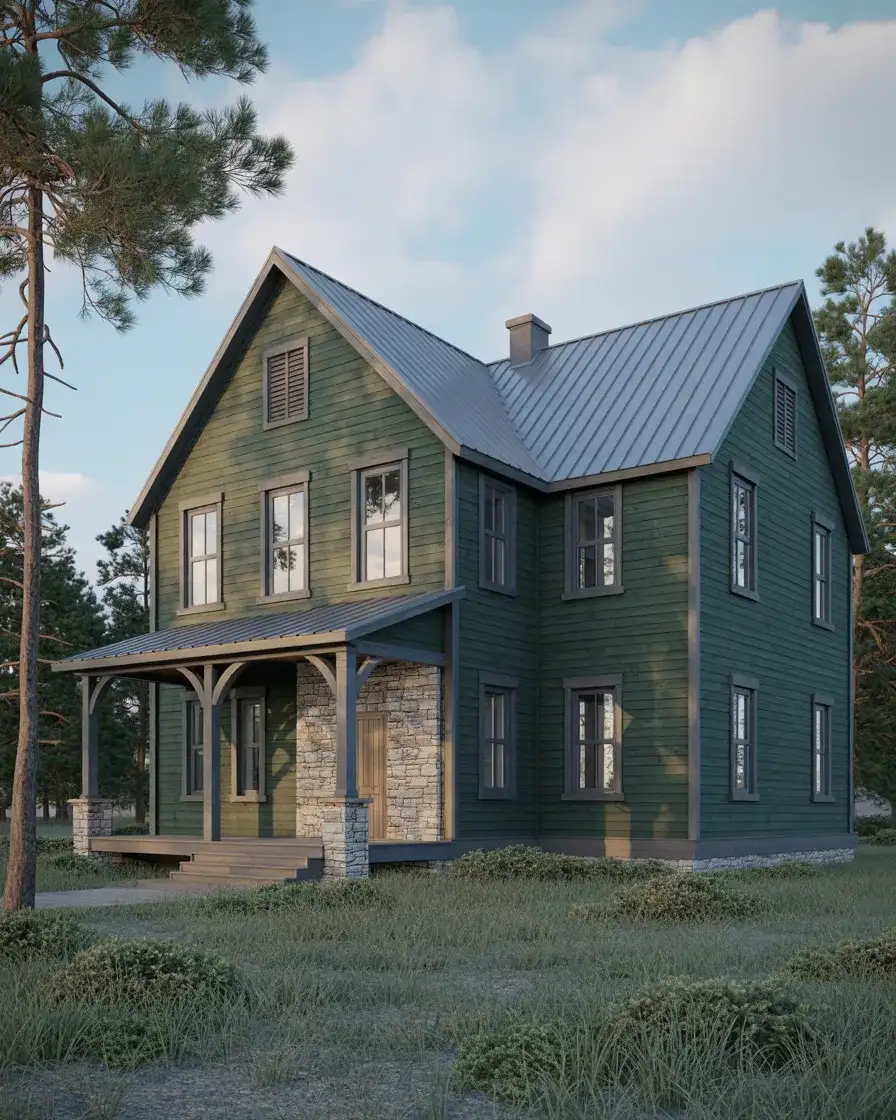
Common mistakes: pairing this color with orange-toned wood or warm beige stone, which can create an awkward clash. Instead, opt for cooler-toned woods like weathered cedar or gray-washed oak, and choose stone with blue or gray undertones—think bluestone or Pennsylvania fieldstone. The goal is a cohesive, slightly mysterious palette that feels like it grew out of the landscape. If you’re nervous about committing to such a specific color, test it on a hidden section of siding first and observe it over several days in different weather conditions.
17. Matte Black Bloxburg-Inspired Modern with Geometric Volumes
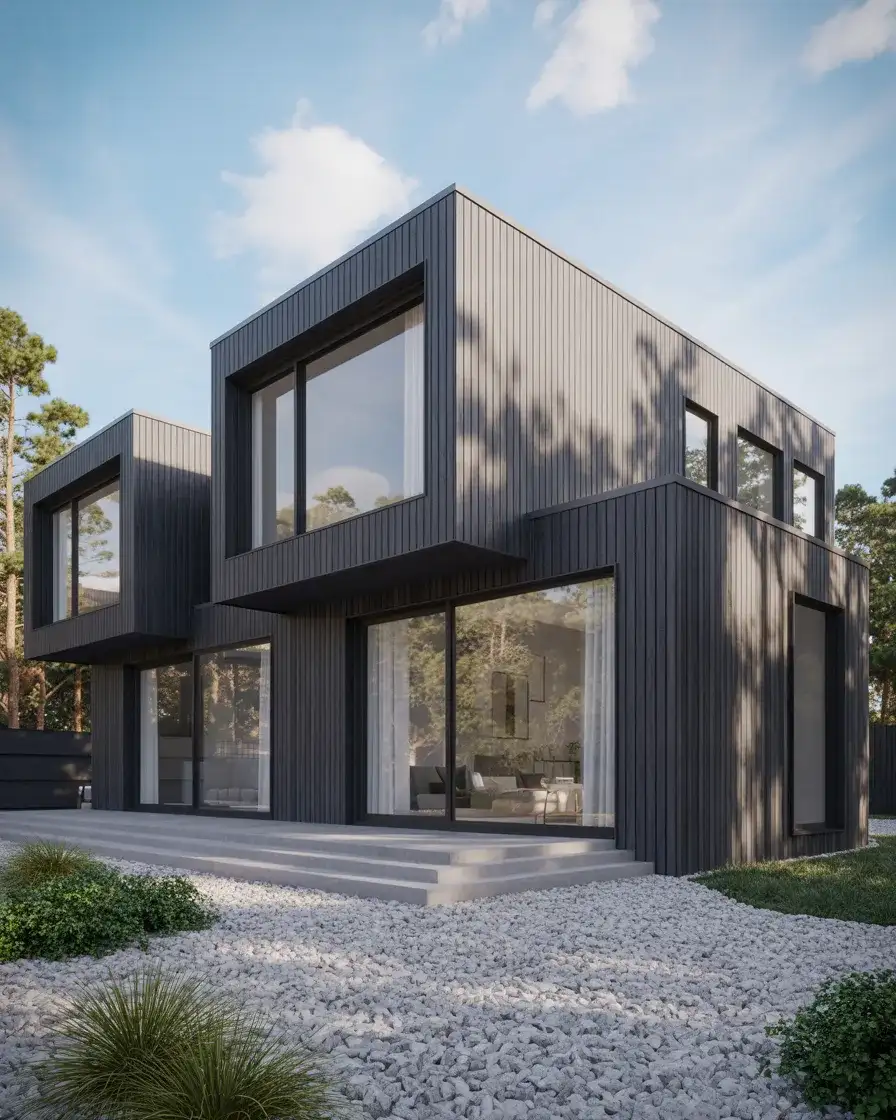
The aesthetic of Bloxburg—the popular building game—has surprisingly influenced real-world residential design, particularly among younger homeowners and first-time builders who grew up playing the game. The hallmark is matte black exteriors with bold geometric volumes, mixed materials, and a strong emphasis on symmetry and clean lines. Modern homes inspired by this look often feature stacked boxes, cantilevered sections, and dramatic window placements. It’s a style that celebrates simplicity and boldness, and it’s showing up in actual construction from Austin to Nashville, where millennial buyers are putting their own stamp on new builds.
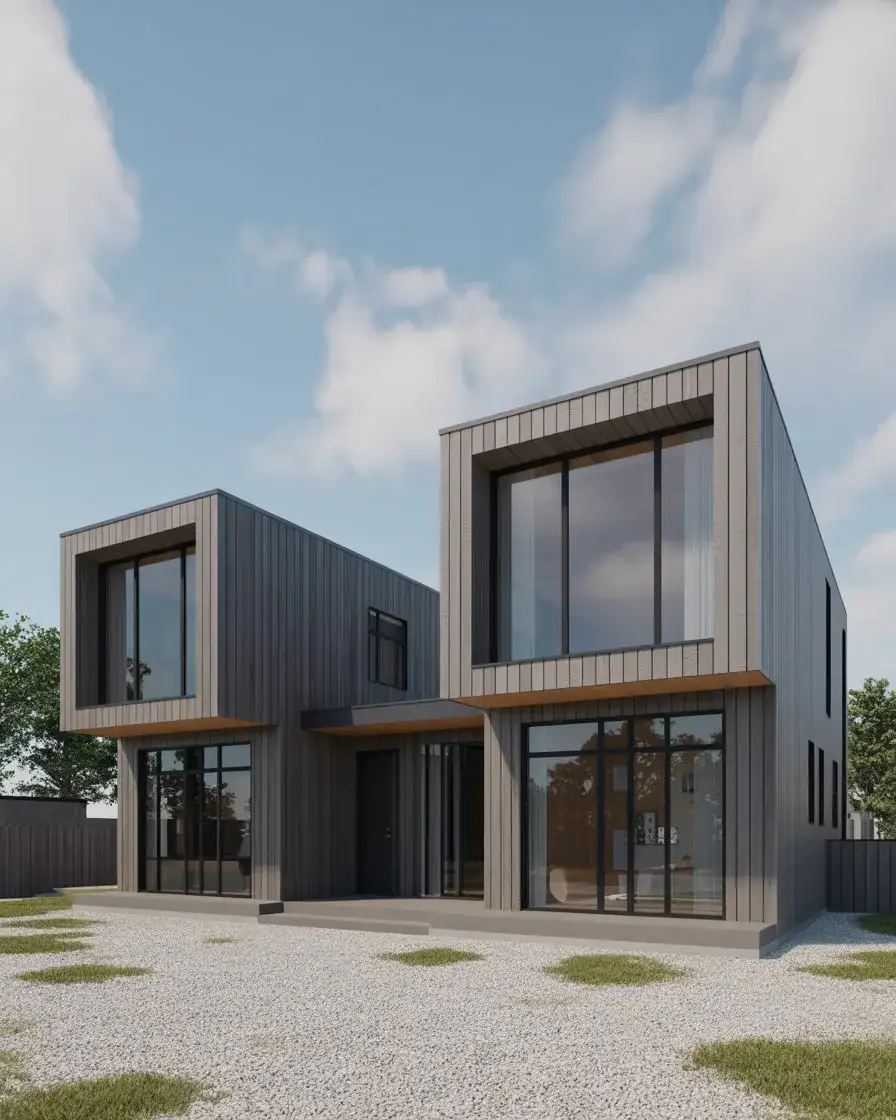
Expert-style commentary: what makes this work in real life is the same discipline required in Bloxburg—restrained material choices, precise proportions, and careful attention to how volumes relate to each other. You can’t just paint a traditional ranch black and call it Bloxburg-inspired; the architecture itself needs to be modern and geometric. This style benefits from working with an architect or using modern prefab companies that understand the aesthetic. The matte black finish is critical—any gloss will undermine the sleek, sophisticated effect you’re after.
18. Anthracite Gray with White Trim and Black Roof
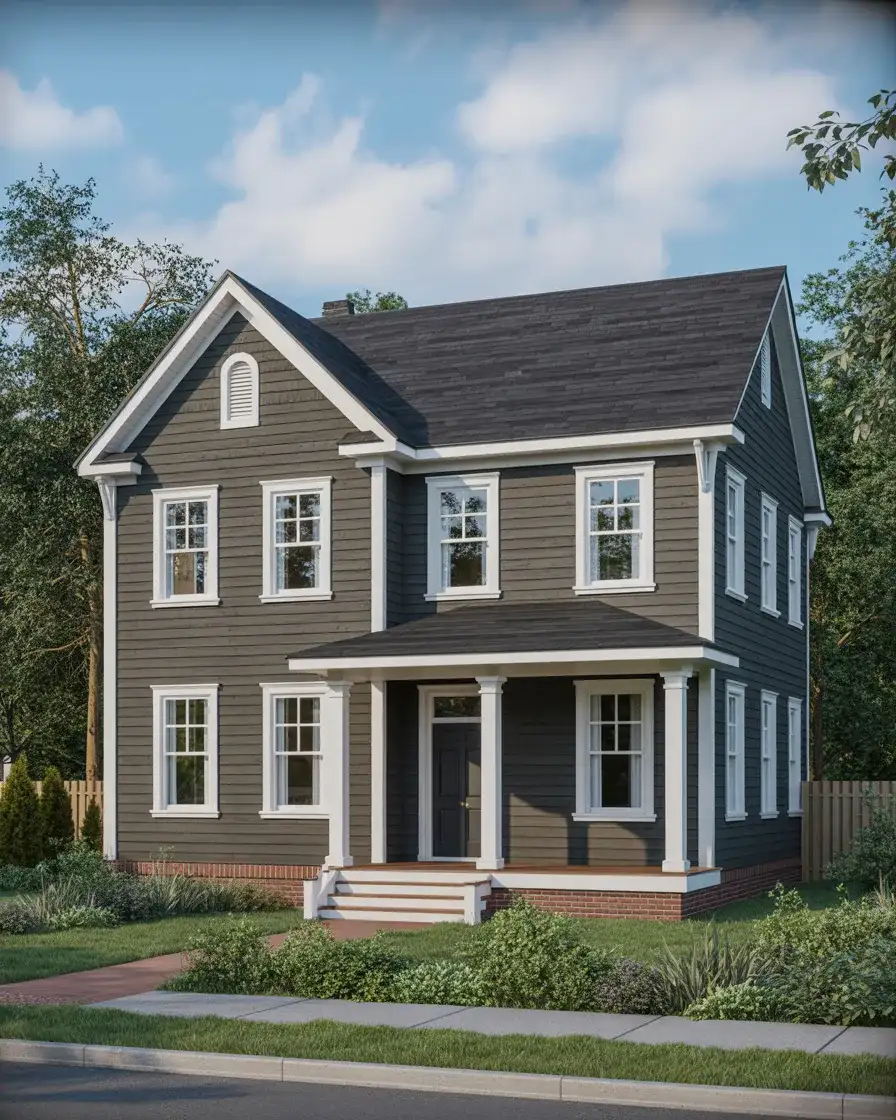
Anthracite gray sits right at the edge of darkness—it’s almost black but retains just enough gray to feel softer and more approachable. Paired with white trim around windows and doors, plus a black roof, this color scheme creates high contrast and architectural clarity. It’s an incredibly versatile palette that works on everything from Cape Cods to modern builds, and it’s become a safe-but-stylish choice for homeowners who want impact without feeling like they’re taking a huge risk. This combination is especially popular in suburban settings across the Northeast and Midwest, where traditional architecture meets contemporary color trends.
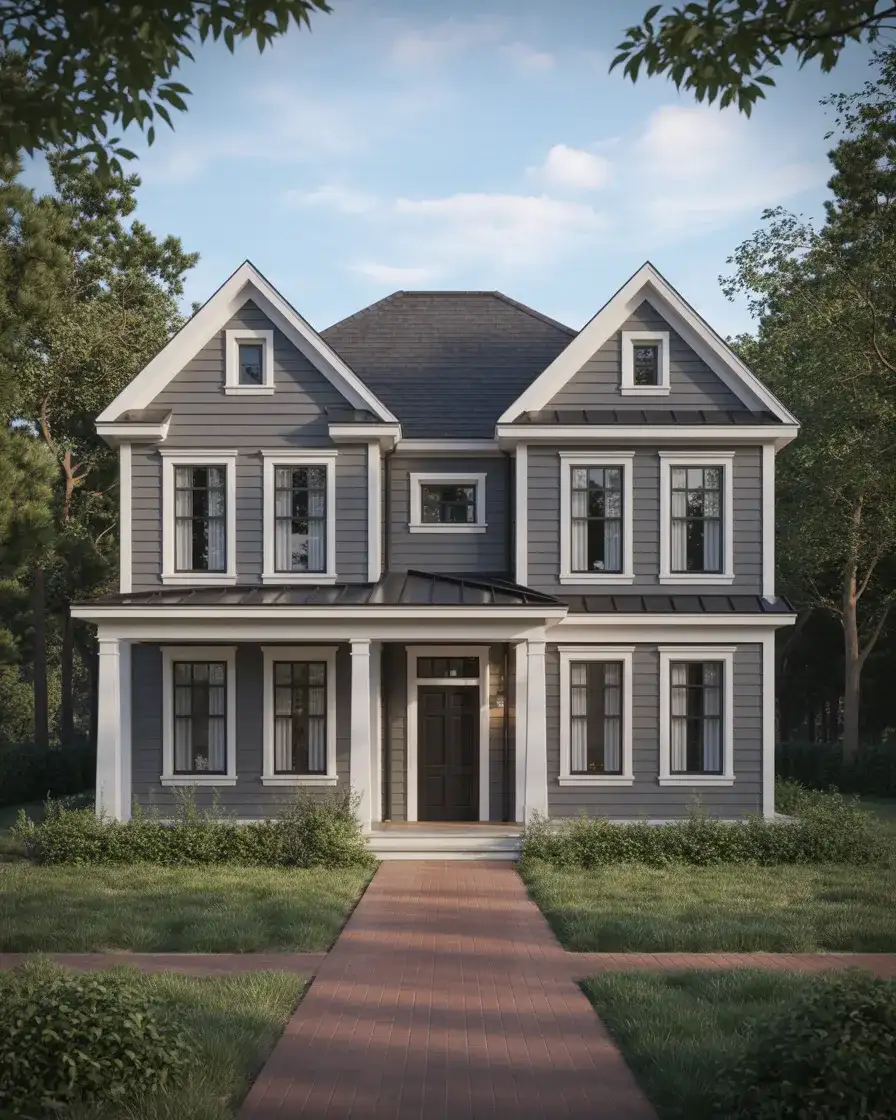
Where it works best: on homes with good architectural detail—moldings, trim, and window grids—that benefit from being highlighted in white. The contrast draws attention to these features rather than obscuring them as an all-one-color approach would. If your home lacks architectural interest, consider adding simple trim details or upgrading to multi-pane windows to give the white trim something to frame. This palette is also forgiving when it comes to seasonal decor—holiday wreaths, summer planters, and fall pumpkins all pop beautifully against the high-contrast backdrop.
19. Deep Charcoal with Brick Accents and Metal Roof
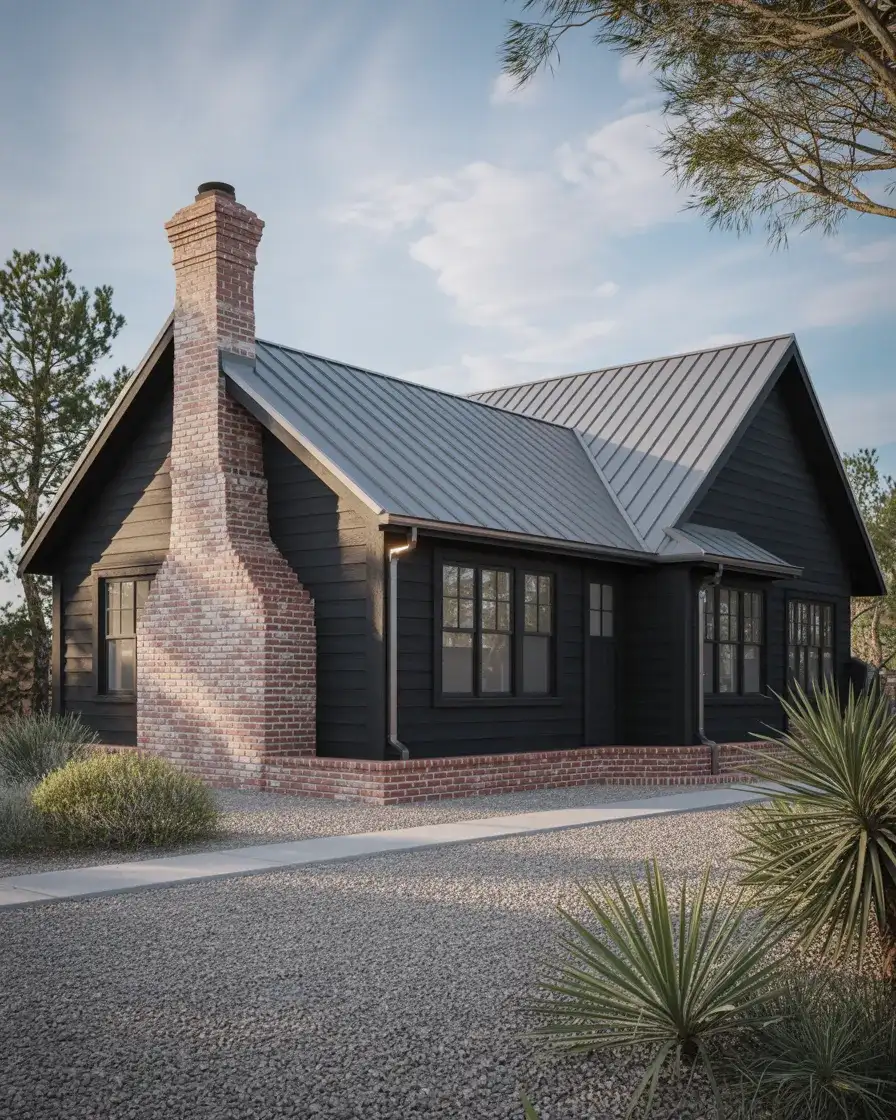
Deep charcoal siding gets added texture and visual interest when combined with original brick sections—perhaps an exposed brick chimney, a brick foundation, or brick accent walls. Adding a metal roof in dark gray or black brings the whole look into the modern era while providing a durable, long-lasting roof solution. This combination is particularly effective on homes with mixed materials already in place; rather than trying to unify everything in one color, you celebrate the variety. The approach is popular in the South and Southwest, where metal roofing is prized for its ability to reflect heat and withstand severe weather.
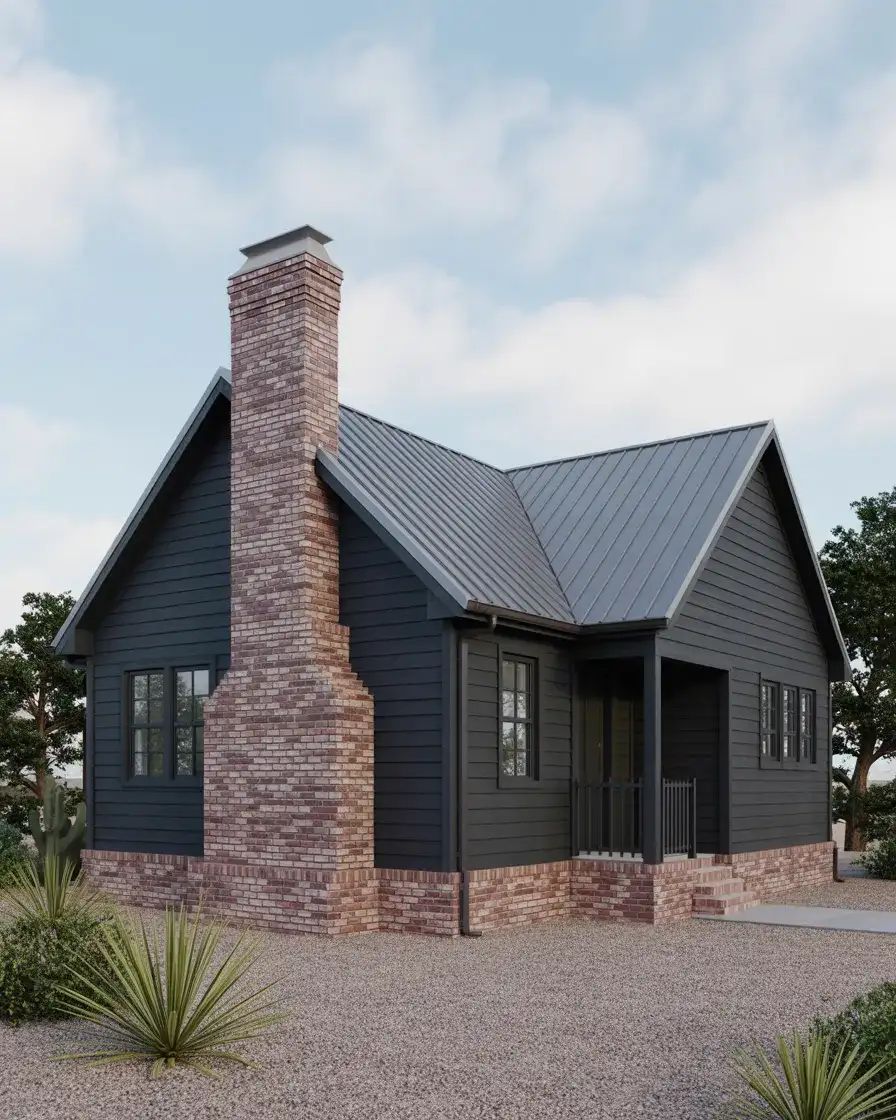
Practical insight: metal roofing costs more upfront than asphalt shingles—typically $7 to $14 per square foot installed versus $3 to $5 for asphalt—but it lasts 40 to 70 years compared to 15 to 30 for shingles. Over the life of the home, metal often proves more economical. The dark color of both the roof and siding also creates a cohesive, grounded look that many homeowners find more sophisticated than the traditional light siding/dark roof combination. Just ensure your contractor uses proper underlayment and ventilation to prevent heat buildup in the attic.
20. Black with Natural Stone Wainscot and Large Windows
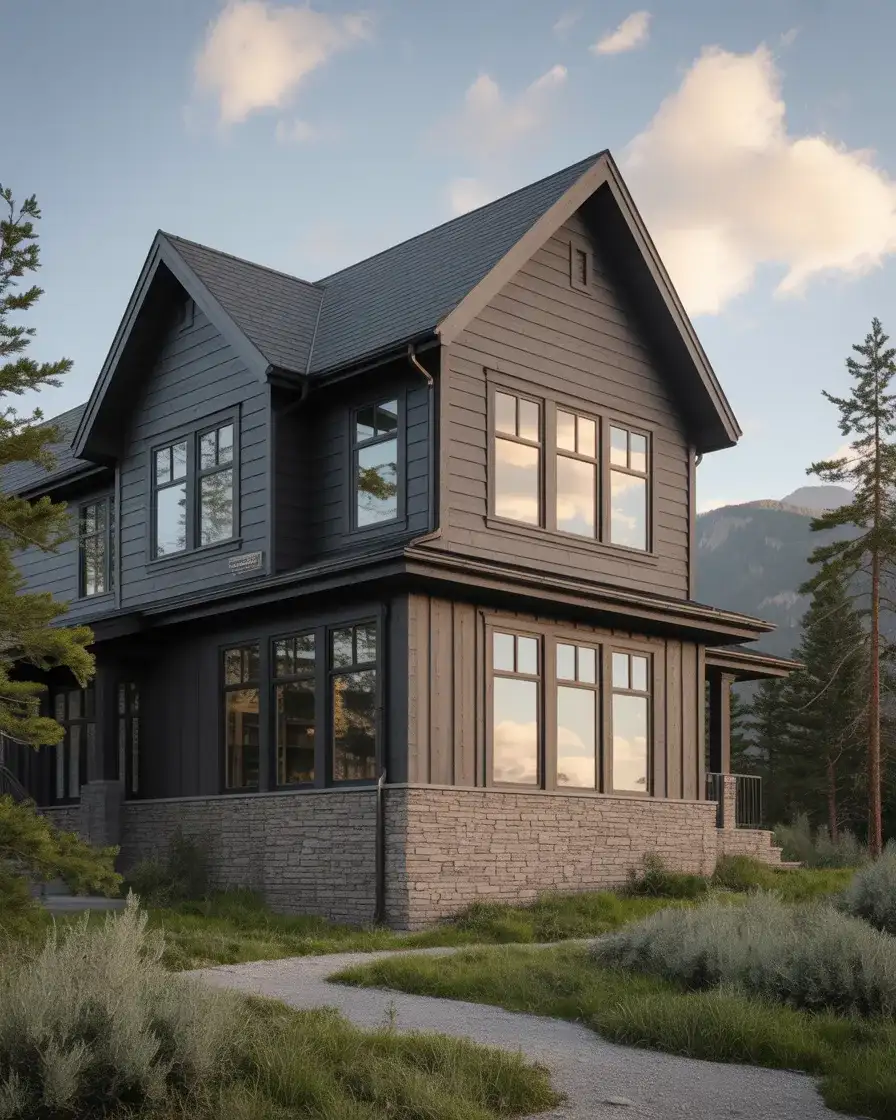
A black upper facade combined with a natural stone wainscot creates a dramatic two-tone elevation that’s both grounded and modern. The stone base provides visual weight and connects the home to the earth, while the black siding feels light and contemporary by comparison. Large windows punctuate the black walls, bringing in natural light and preventing the dark color from feeling oppressive. This approach works beautifully on large houses where breaking up the mass with different materials is architecturally wise. It’s a look that’s gaining traction in mountain and lake house construction, where natural materials are expected and celebrated.
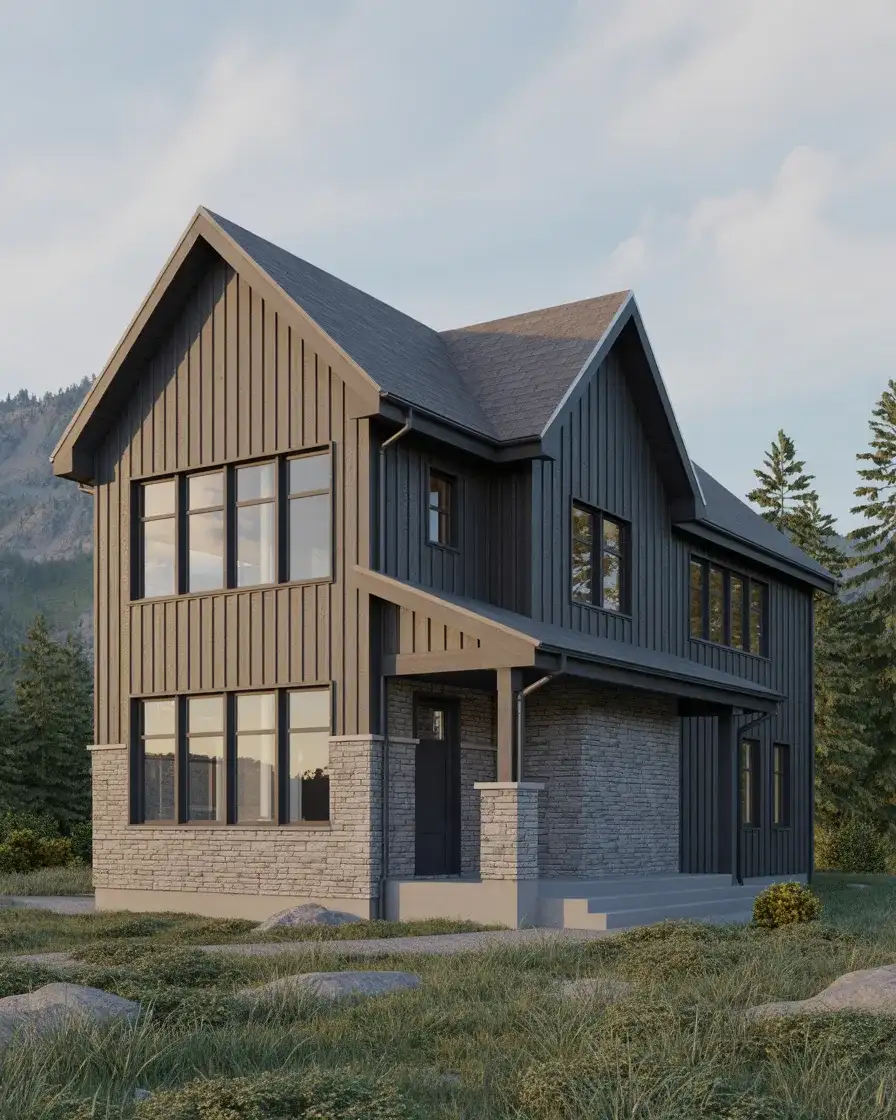
Regional context: in Colorado, Montana, and other Rocky Mountain states, this material combination is practically a regional style. The stone references the native landscape and traditional mountain architecture, while the black siding and large windows signal a contemporary lifestyle. Homeowners in these areas appreciate designs that fit the environment while still feeling fresh and current. When sourcing stone, choose varieties native to your region for the most authentic look—they’ll also be more affordable since they don’t require long-distance shipping.
21. Deep Espresso Brown with White Windows on Ranch Styles
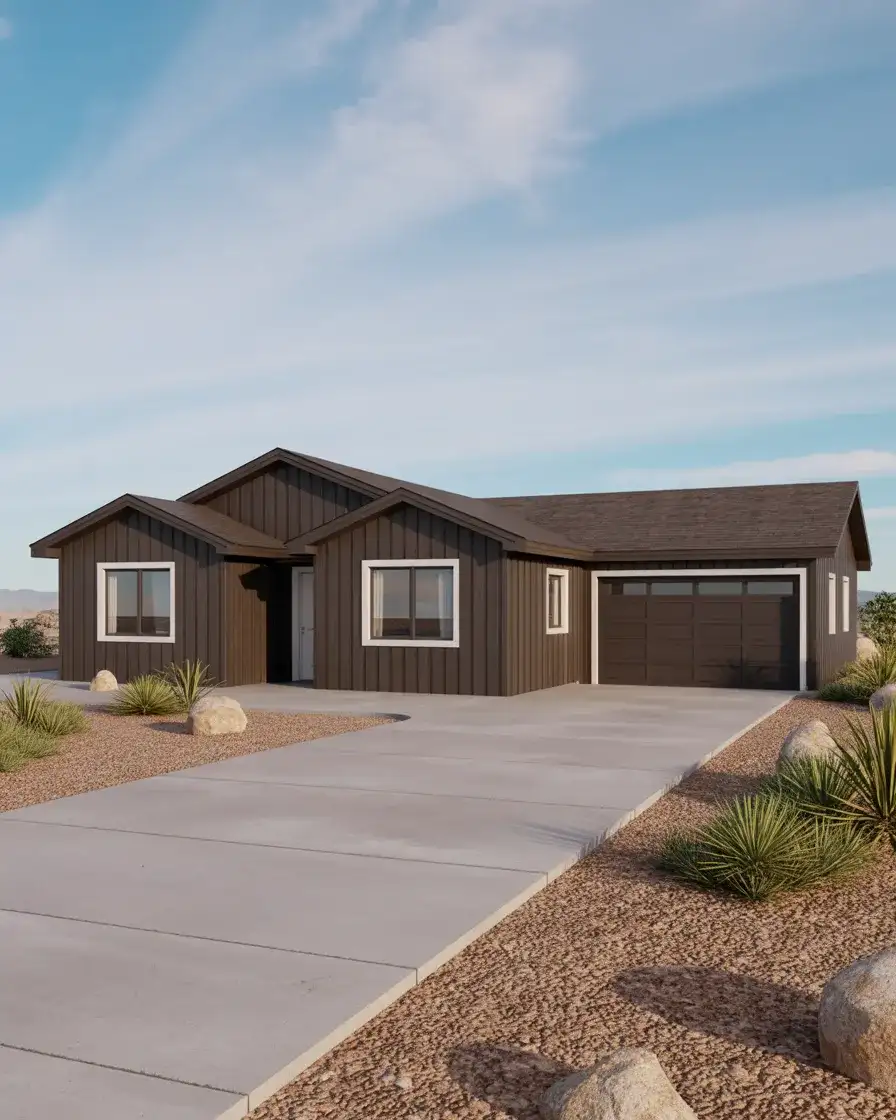
Deep espresso brown is a warm, inviting alternative to cooler dark grays and blacks, offering richness and depth without feeling stark. On ranch homes, this color provides a sophisticated update that respects the home’s mid-century roots—brown was a popular color in that era, so you’re working with rather than against the original aesthetic. White windows provide crisp, clean contrast and help break up the long horizontal lines typical of ranch architecture. This combination is particularly successful in California and the Southwest, where brown tones harmonize with the desert landscape and Spanish colonial influences.
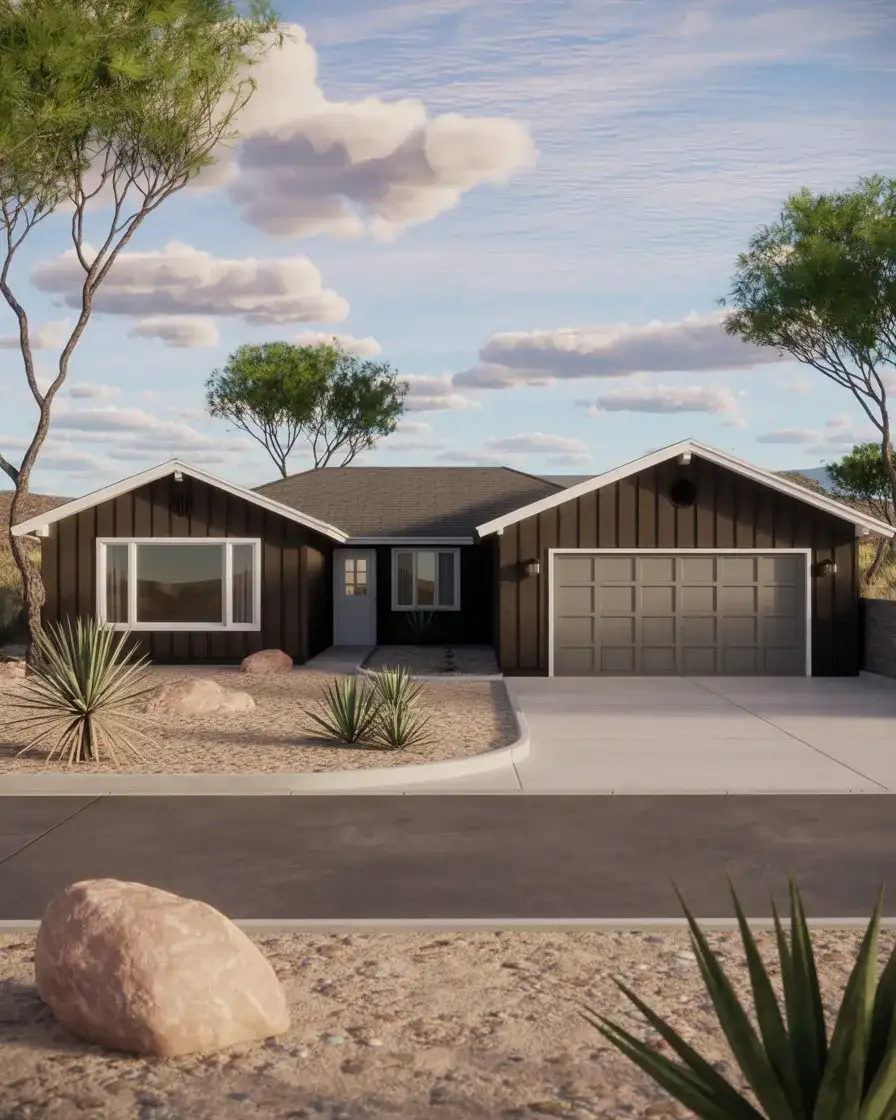
Real homeowner behavior: people who choose brown over black or gray often cite warmth as a key factor—they want their home to feel welcoming, not severe. Brown also tends to age more gracefully in sunny climates, where black can fade to a dull charcoal over time. If you’re concerned about the color reading as dated, choose a true deep brown rather than anything with orange or red undertones, which can look 1970s rather than contemporary. Pair with modern fixtures and hardware in black or bronze to keep the overall look current.
22. Matte Black with Stone Chimney and Wood Accents
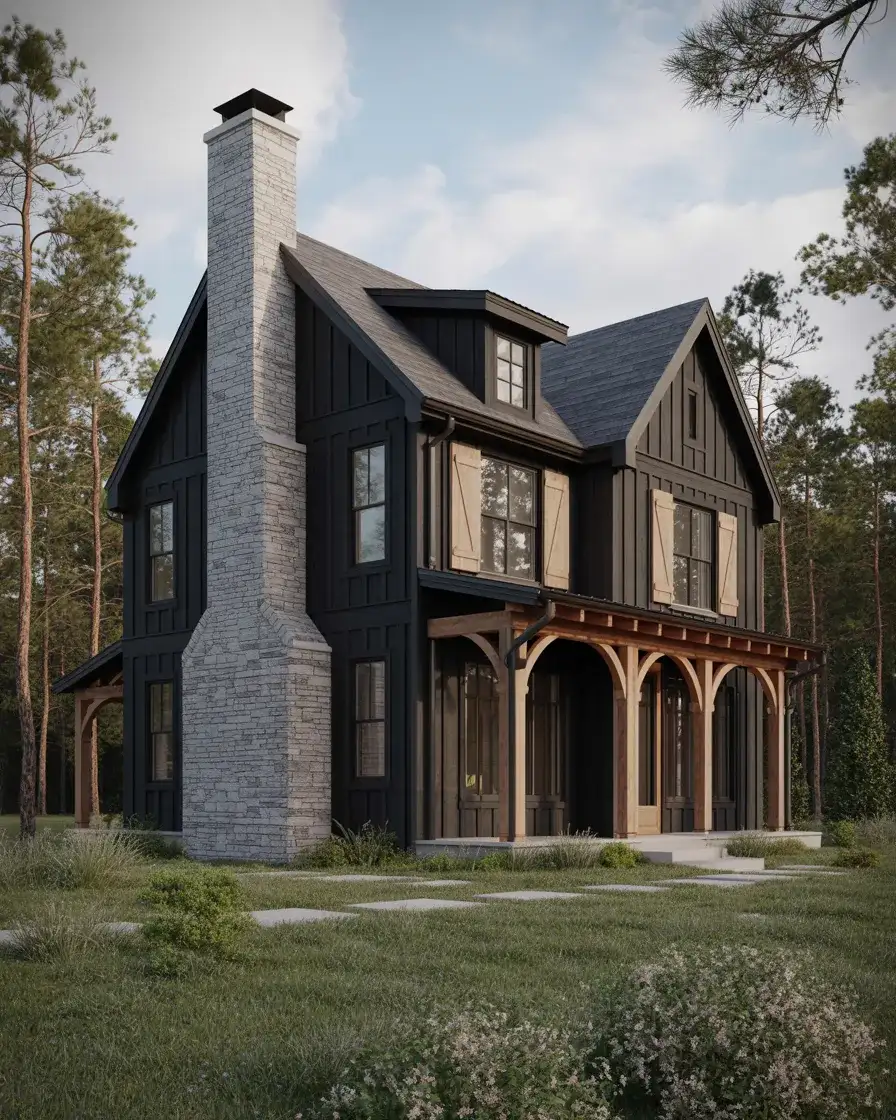
Matte black siding gets instantly warmed up when you introduce a natural stone chimney and natural wood accents like shutters, porch posts, or garage door trim. The black provides a dramatic canvas that makes the natural materials really sing. This combination is particularly effective on modern farmhouses and contemporary mountain homes, where the mixed-material aesthetic is part of the architectural language. The key is balance—too much black and the home can feel heavy; just enough, and it becomes a sophisticated backdrop for the organic textures of stone and wood.
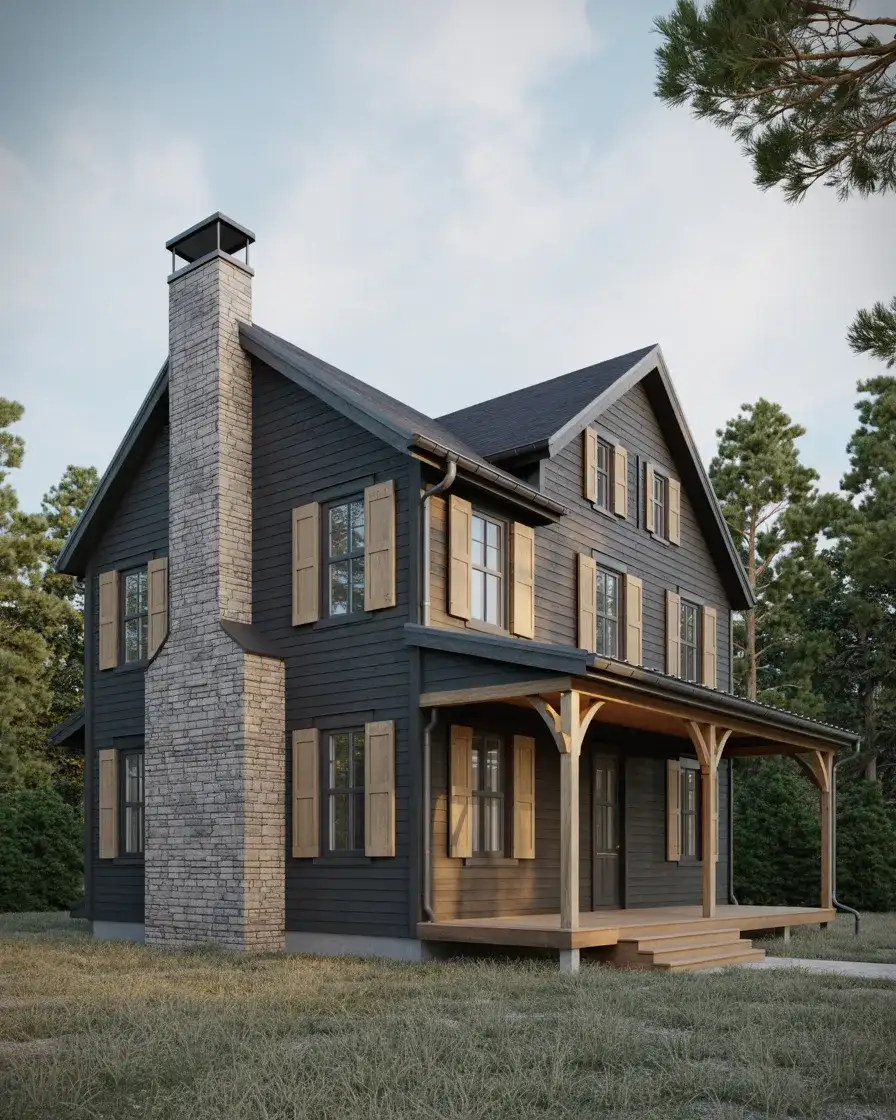
Common mistakes: using too many different wood tones, which can feel chaotic. Stick to one or two wood species and finishes throughout the exterior. If your garage door is natural cedar, use the same or a complementary wood for shutters and other trim. The stone chimney should ideally be a native stone or one that feels appropriate to your region—river rock in the Rockies, fieldstone in the Northeast, limestone in Texas. Mismatched materials can undermine the cohesive, intentional look you’re trying to achieve.
23. Deep Gray Board and Batten with Metal Roof and White Trim
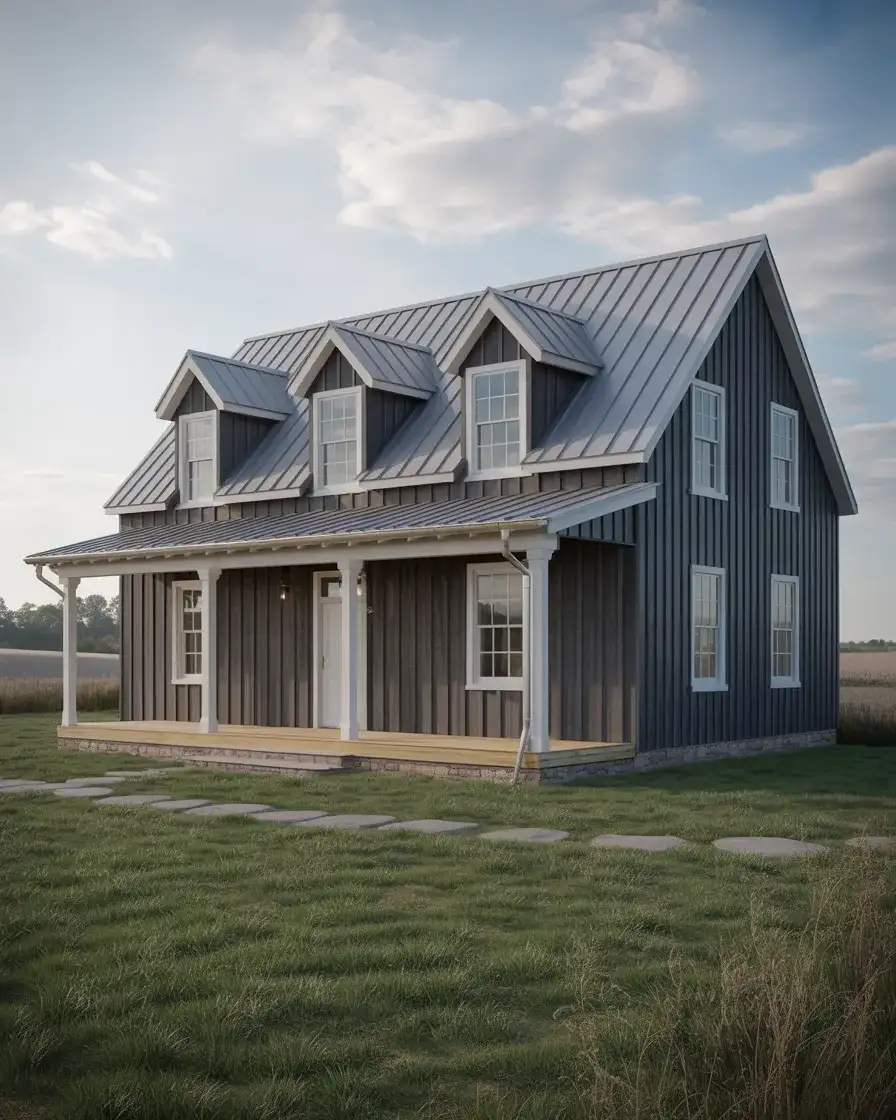
Deep gray board and batten siding offers all the modern appeal of black but with slightly more versatility and forgiveness in terms of maintenance and how it interacts with landscaping. When topped with a metal roof and accented with white trim, you get a crisp, contemporary look that works on everything from farmhouses to modern builds. The vertical lines of board and batten add texture and interest, while the metal roof contributes durability and a sleek profile. This combination is particularly popular in areas prone to severe weather—the Gulf Coast, Tornado Alley, and mountain regions—where metal roofing is valued for its wind and hail resistance.
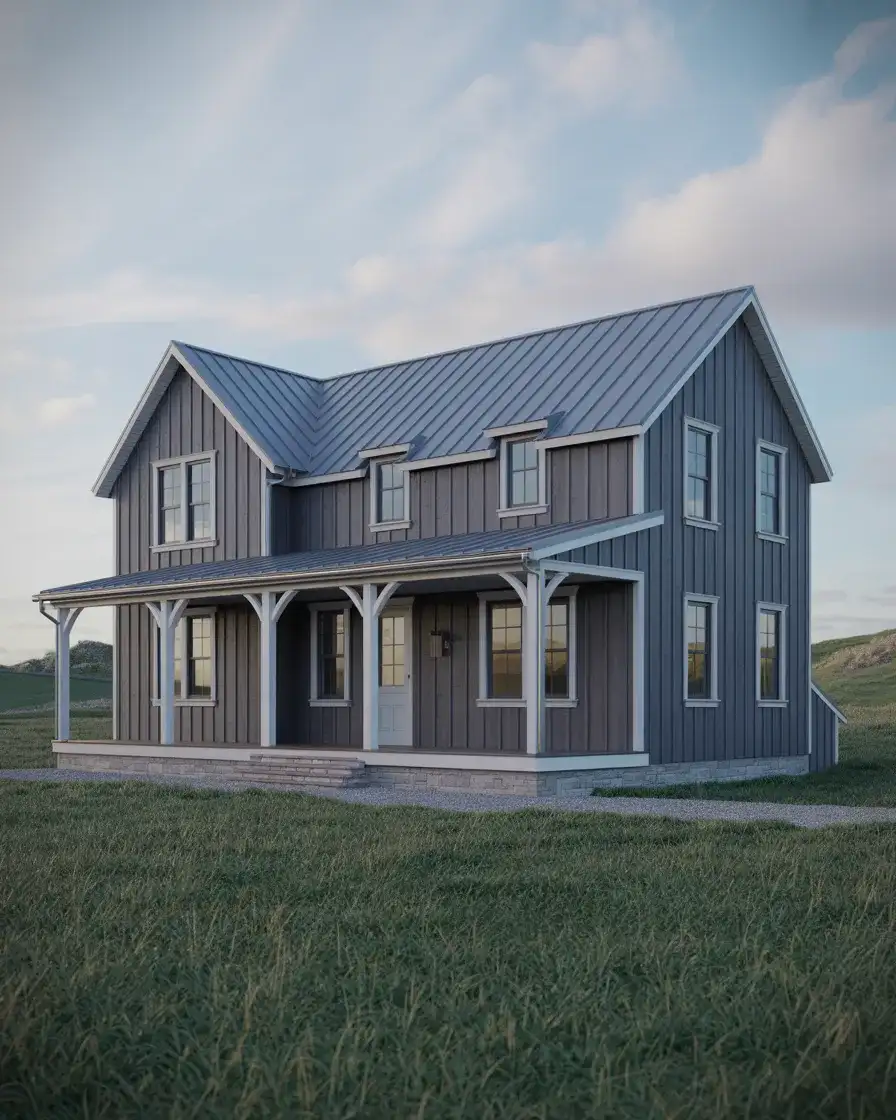
Budget and price angle: metal roofing represents a significant upfront investment, but homeowners insurance often offers discounts for impact-resistant roofing in high-risk areas, which can offset some of the cost over time. Board and batten siding falls in the mid-range price-wise—more than vinyl but less than wood shingles—averaging $4 to $9 per square foot installed. If you’re working with a limited budget, consider using board and batten as an accent on just one or two prominent walls, with standard lap siding elsewhere, to get the look for less.
24. Charcoal with Red Brick Lower Level on Two-Story Homes
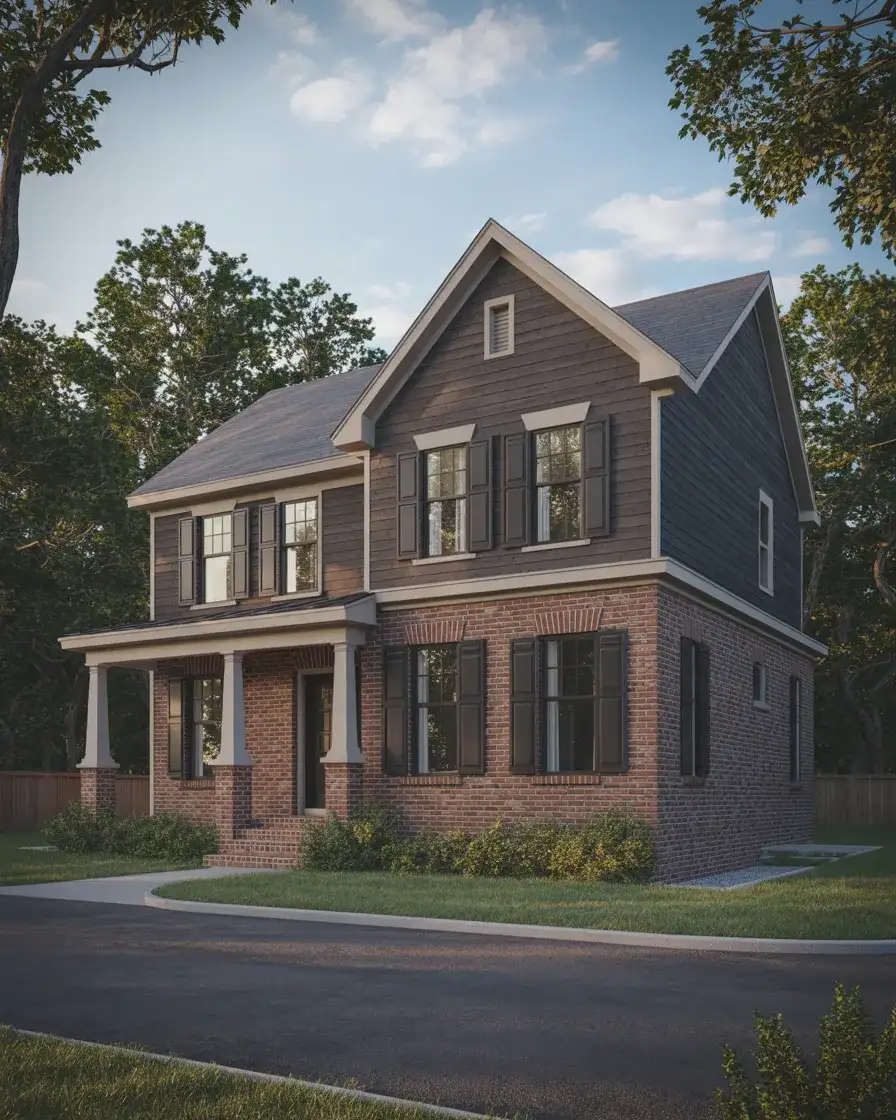
Many two-story homes have a red brick first floor with siding on the second story—a classic combination that can feel dated with the wrong color choices. Updating the upper siding to charcoal gray instantly modernizes the entire house while respecting the traditional brick below. The charcoal feels current and sophisticated, while the brick provides warmth and textural contrast. This update is one of the most cost-effective ways to transform a home’s curb appeal, since you’re only painting the siding and leaving the brick as-is. It’s a popular renovation move in suburbs across the Midwest and South, where brick-front homes are ubiquitous.
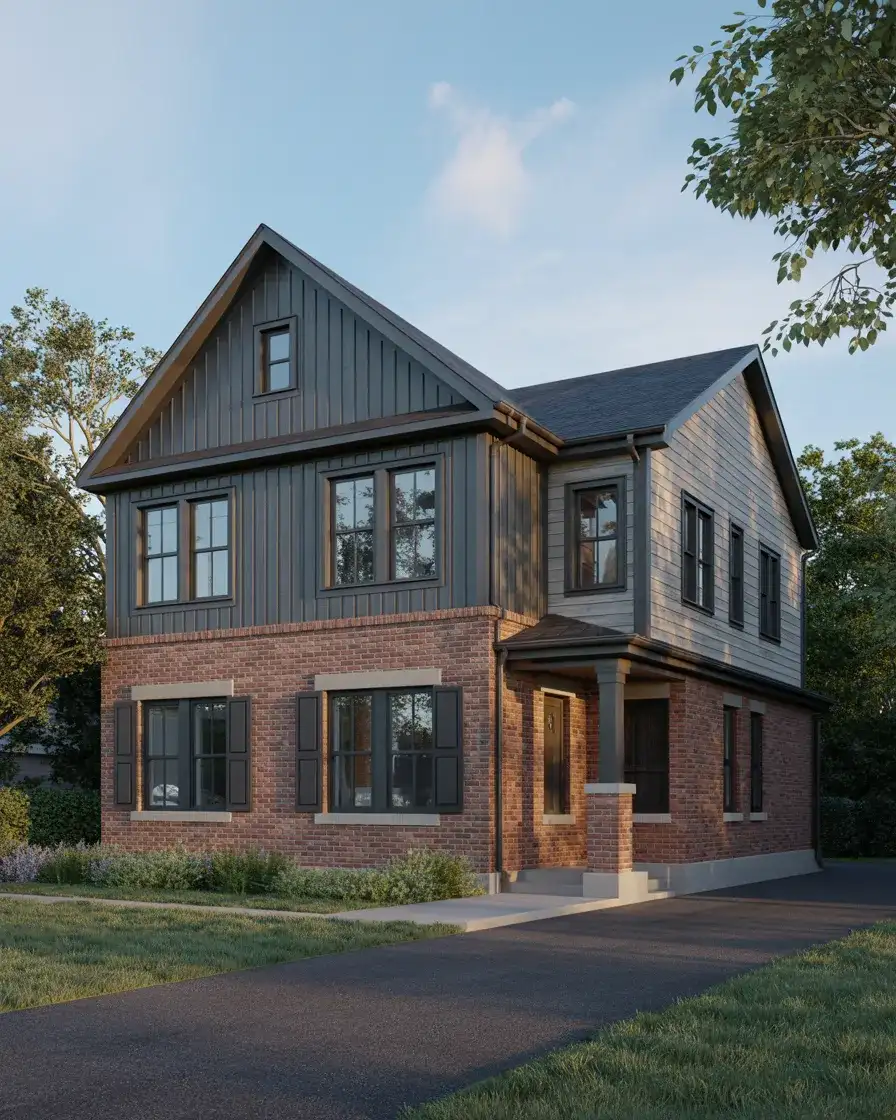
Expert-style commentary: the success of this look depends on choosing the right gray. Test your charcoal swatch against the brick in different lighting conditions—morning, midday, and evening—to ensure they work together. If your brick has orange or rust tones, a charcoal with warm gray undertones will harmonize better than a cool-toned gray. You can further unify the look by painting the trim and window frames black, which bridges the brick and siding. Adding black or bronze exterior lighting and a modern front door in black or navy completes the transformation without requiring a massive investment.
Conclusion
Dark exterior house colors in 2026 offer endless possibilities for creating a home that’s bold, sophisticated, and uniquely yours. Whether you’re drawn to the drama of matte black, the warmth of deep browns, or the complexity of moody blues and greens, there’s a dark palette that will work for your architecture, region, and personal style. The key is committing to the color with confidence and balancing it with thoughtful material choices, contrasting trim, and natural elements. Which of these ideas speaks to you? Share your favorite in the comments, or let us know which dark color you’re planning to use on your own home—we’d love to hear about your exterior transformation journey.