Cottagecore kitchens have blossomed from a niche aesthetic into one of the most searched interior styles on Pinterest in 2026, especially among Americans craving warmth, nostalgia, and a slower pace of life. This design movement celebrates handcrafted charm, natural materials, and a deep connection to heritage and home cooking. Whether you’re drawn to vintage farmhouse sinks, floral wallpaper, or open shelving lined with mason jars, cottagecore offers endless ways to transform your kitchen into a cozy, lived-in sanctuary. In this article, we’ll explore inspiring cottagecore kitchen ideas that blend timeless beauty with modern functionality, helping you create a space that feels both personal and welcoming.
1. Dark Cottagecore Kitchen with Moody Elegance
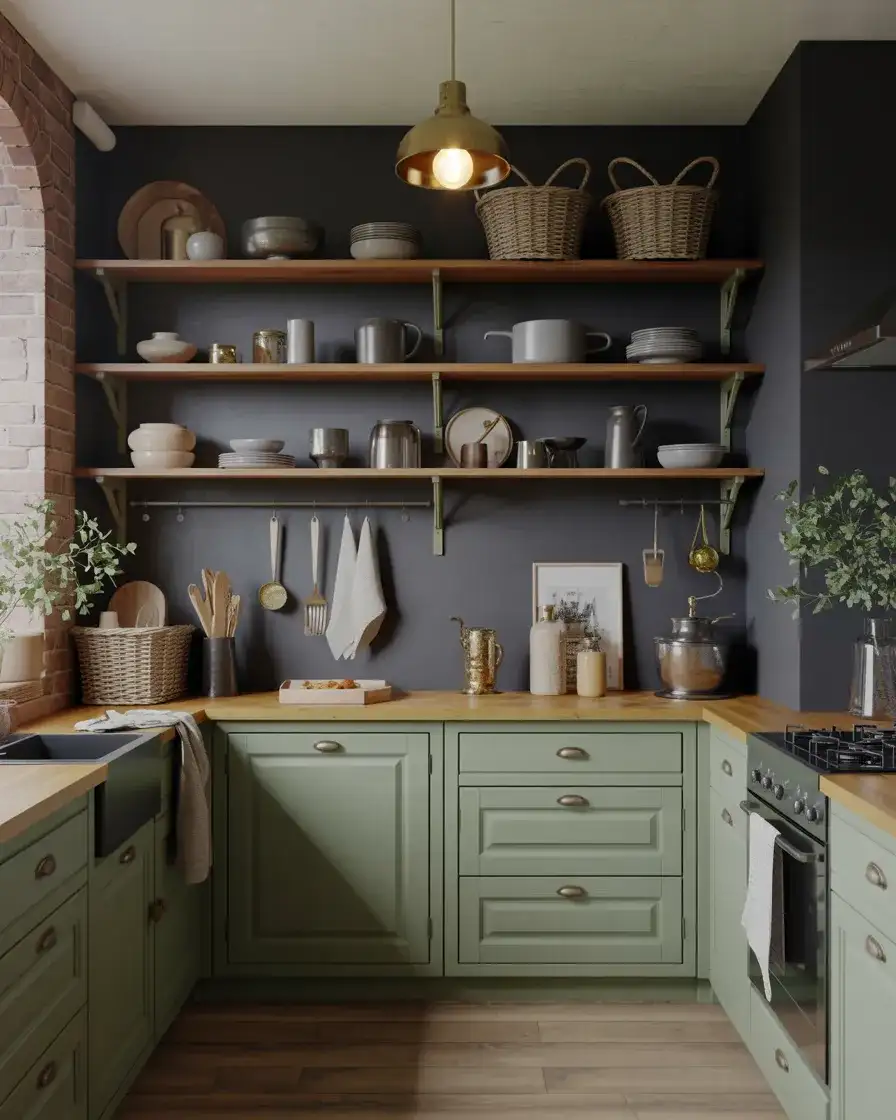
A dark cottagecore kitchen flips the script on traditional pastel palettes, embracing deep charcoal walls, forest green cabinetry, and rich wood tones that evoke the intimacy of an English country manor. This approach pairs beautifully with brass fixtures, open shelving displaying earthenware, and vintage textiles draped over ladder racks. The aesthetic feels grounded and dramatic, perfect for those who want cottage charm without the sweetness. Layered textures—think woven baskets, linen towels, and aged copper pots—add warmth and prevent the space from feeling too heavy or gothic.
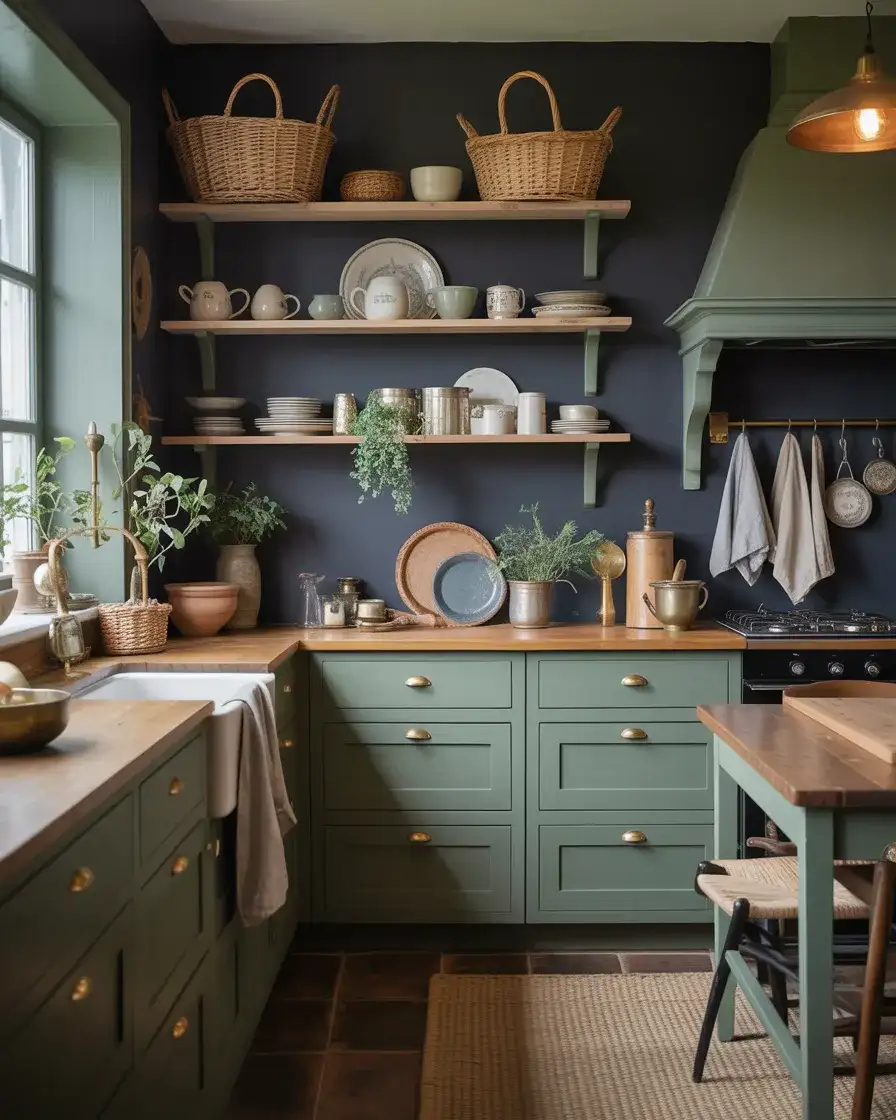
This style works best in homes with abundant natural light or large windows, as the darker palette can feel oppressive in small, dim spaces. In the Midwest and Pacific Northwest, homeowners are pairing dark cottage kitchens with large farmhouse windows and skylights to balance the moodiness with brightness during the day. A common mistake is overloading the room with black accents—stick to one or two dominant dark tones and let natural wood, cream linens, and greenery provide contrast.
2. Vintage Cottagecore Kitchen with Heirloom Touches
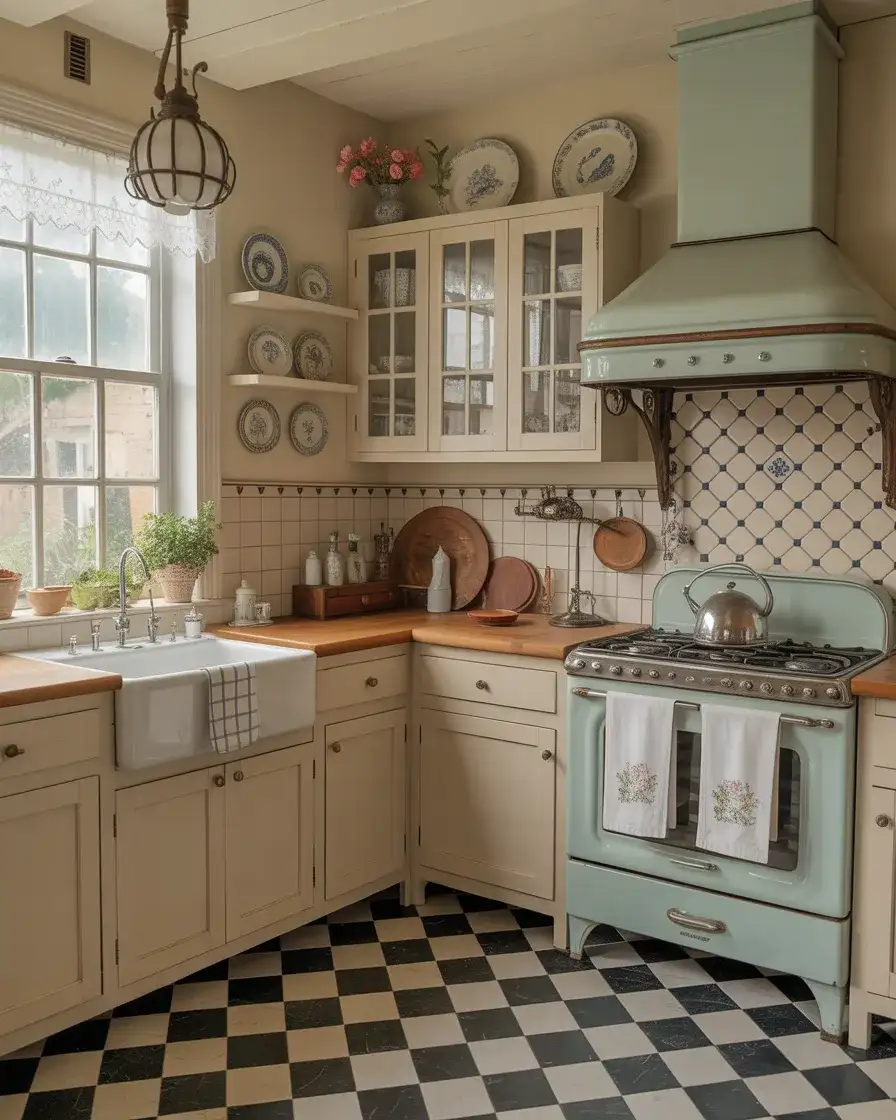
A vintage cottagecore kitchen celebrates the beauty of age and imperfection, showcasing antique finds like a porcelain farmhouse sink, a restored 1940s stove, or glass-front cabinets filled with mismatched china. This aesthetic vintage approach honors family heirlooms and flea market treasures, creating a space that feels like it’s been loved for generations. Soft cream walls, butcher block countertops, and checkerboard floor tiles ground the look, while embroidered tea towels and hand-painted ceramics add personal touches. The key is layering items with history rather than buying everything new.
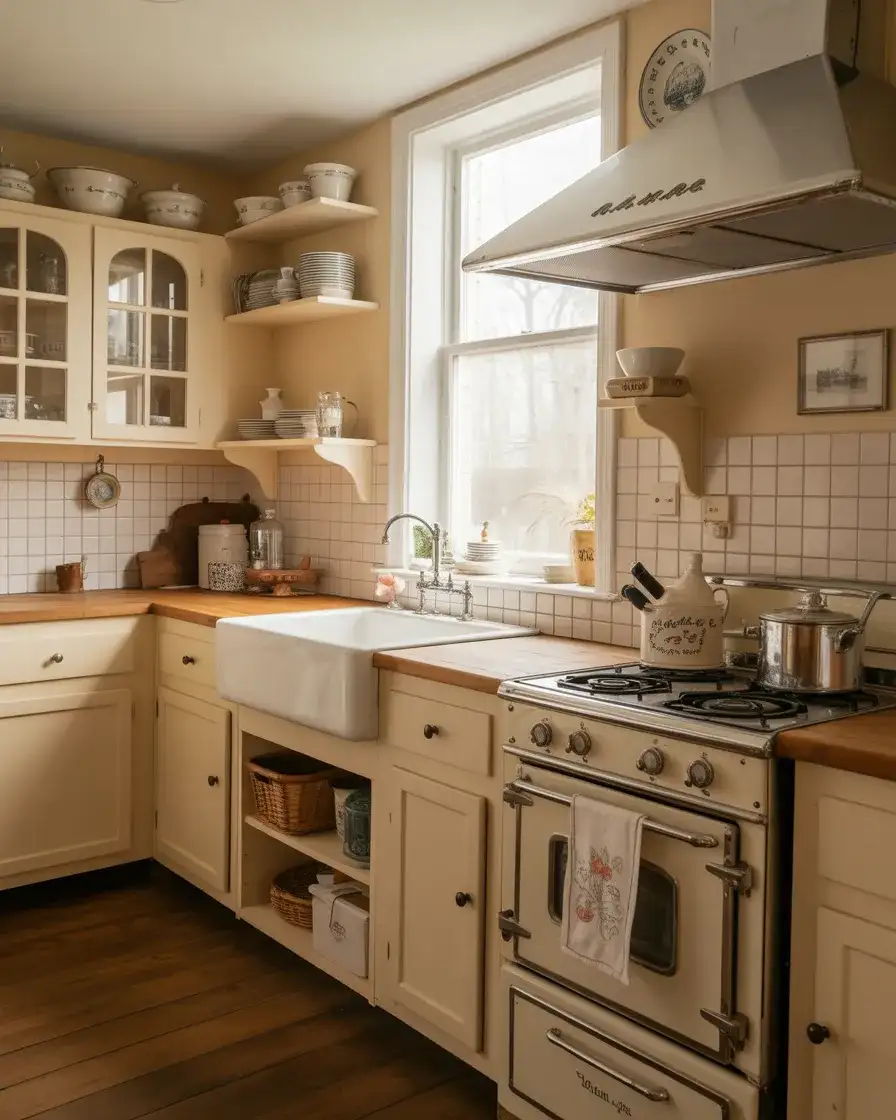
In 2026, Americans are increasingly shopping estate sales and online vintage marketplaces to source authentic pieces rather than buying mass-produced replicas. A neighbor once told me she built her entire kitchen around a set of Depression-era milk glass canisters her grandmother left her—those canisters became the color palette and emotional anchor of the space. That kind of storytelling is what makes vintage cottage kitchens so compelling.
3. Pink Cottagecore Kitchen with Blush Warmth
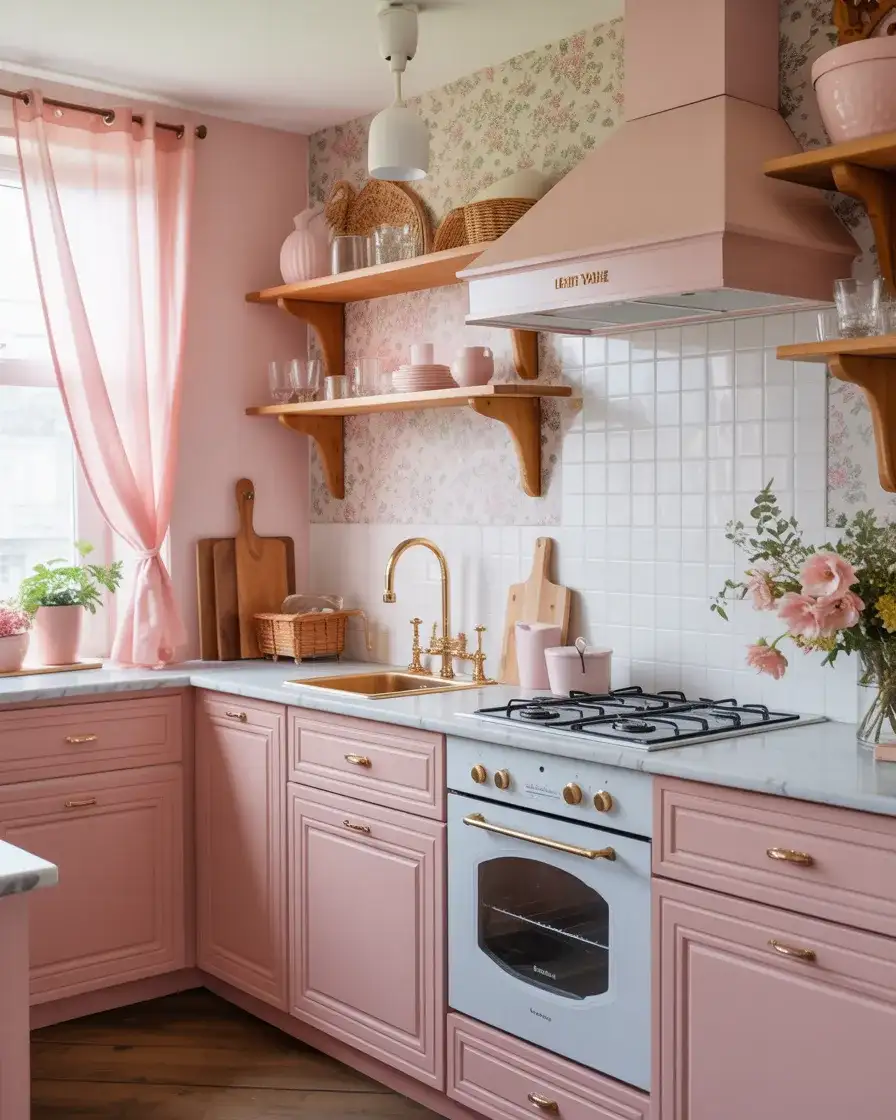
A pink cottagecore kitchen brings a soft, romantic femininity to the home, using blush-toned cabinets, rose-patterned wallpaper, or terracotta accents to create a space that feels both playful and sophisticated. This aesthetic pairs beautifully with natural wood, marble countertops, and brass or gold fixtures that echo the warmth of the pink tones. Open shelving displays delicate glassware, pastel mixing bowls, and botanical prints, while fresh flowers in ceramic vases complete the look. It’s a gentle, nurturing palette that invites you to linger over morning coffee or an afternoon baking session.
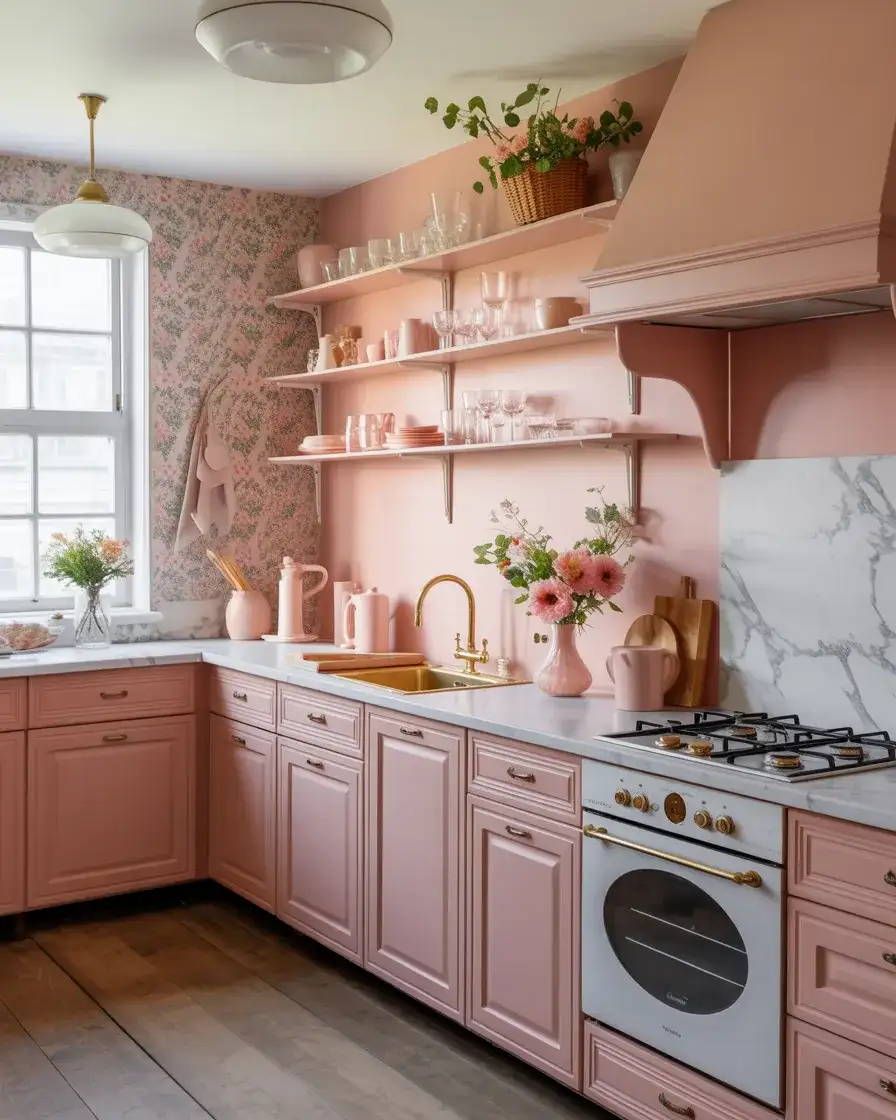
This look thrives in smaller kitchens or breakfast nooks where the softness of pink can make the space feel larger and more open rather than claustrophobic. In Southern states like Georgia and South Carolina, homeowners are using pink cottage kitchens to complement historic home architecture while adding a fresh, modern twist. The mistake to avoid here is going too matchy—vary your pink tones and introduce natural textures like linen, rattan, and unfinished wood to keep the palette from feeling flat.
4. Green Cottage Core Kitchen with Garden Vibes
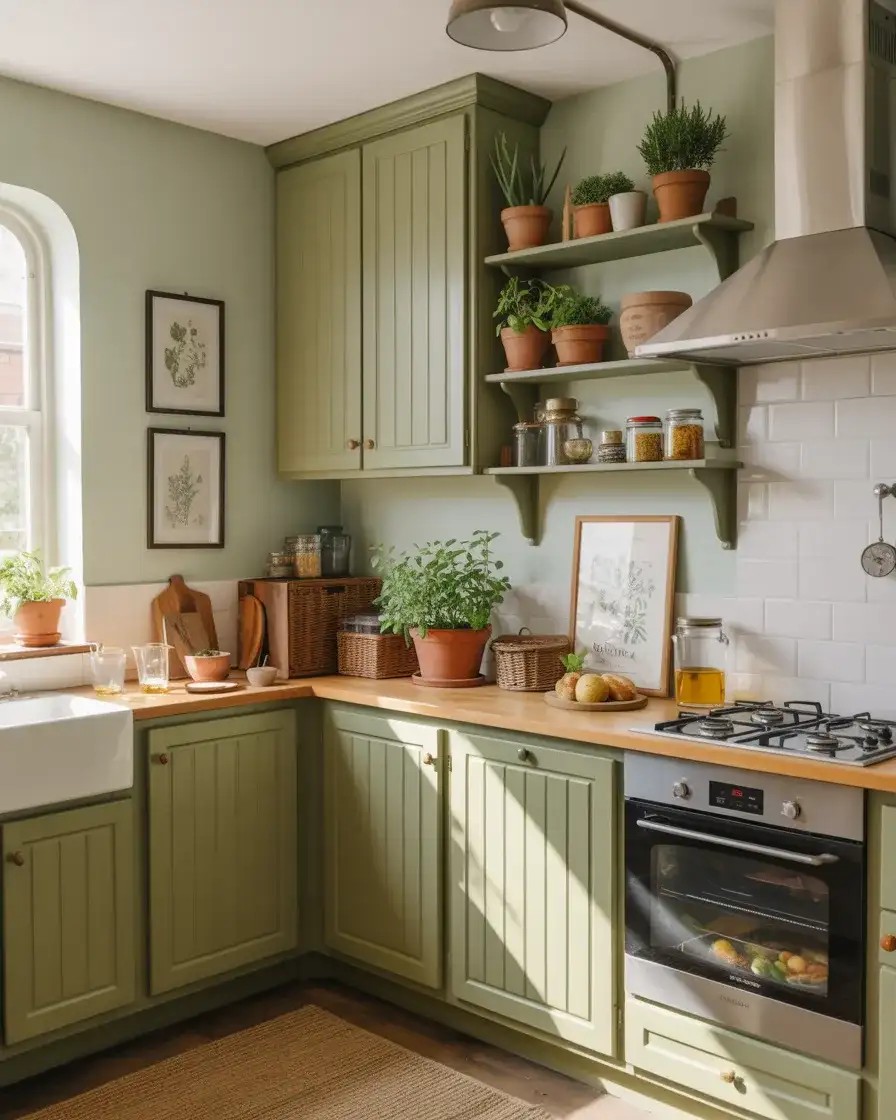
A green cottagecore kitchen draws inspiration directly from nature, featuring sage cabinetry, olive-toned tiles, or deep emerald accents that evoke the feeling of an English garden brought indoors. This decor style pairs beautifully with natural wood, terracotta pots filled with fresh herbs, and vintage botanical prints hung in simple frames. The palette feels calm and restorative, making it ideal for those who want their kitchen to be a retreat from the chaos of daily life. Brass or unlacquered copper fixtures add a warm metallic contrast that prevents the green from feeling too cool or clinical.
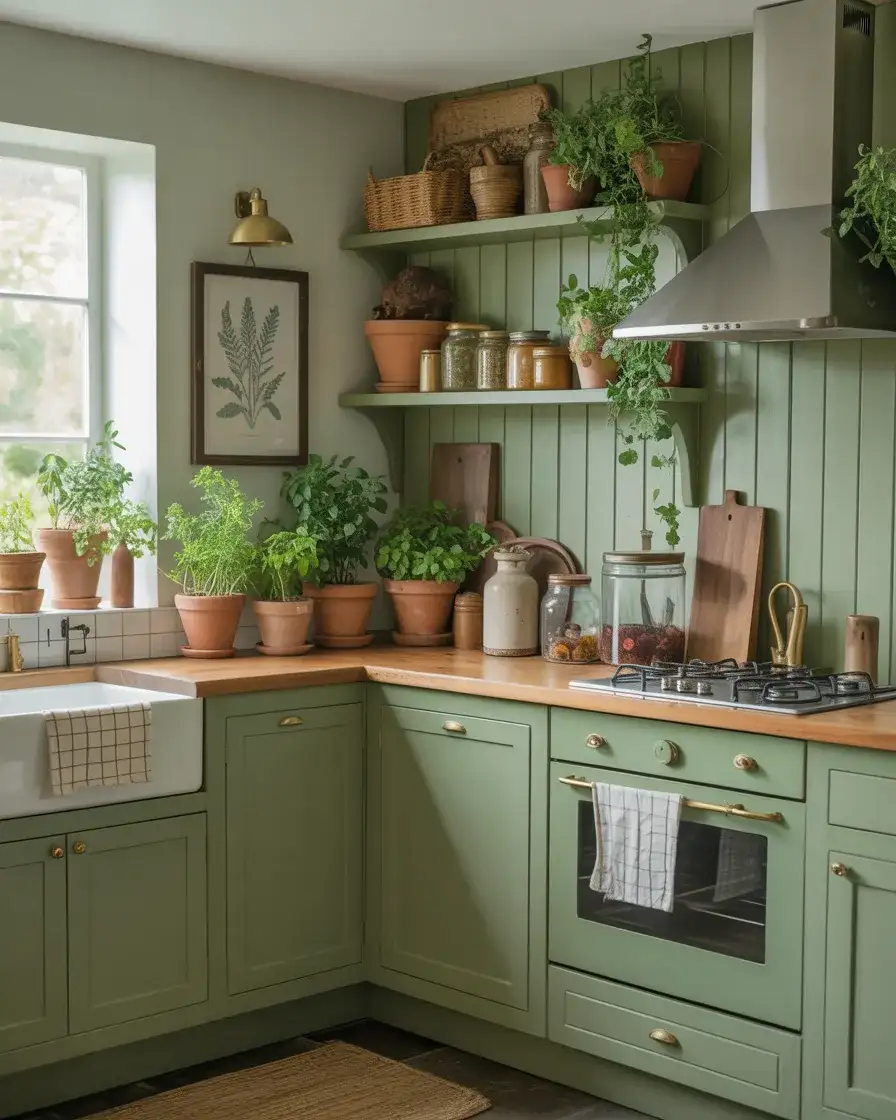
Expect to spend around $8,000 to $15,000 for a full kitchen refresh in this style if you’re painting existing cabinets and adding new hardware, or upwards of $25,000 if you’re replacing cabinetry entirely. The investment pays off in the timelessness of the palette—green has staying power and won’t feel dated in a few years. Many homeowners are also adding green backsplash tiles in subway or zellige finishes to tie the look together without overwhelming the space.
5. Modern Cottage Core Kitchen with Clean Lines
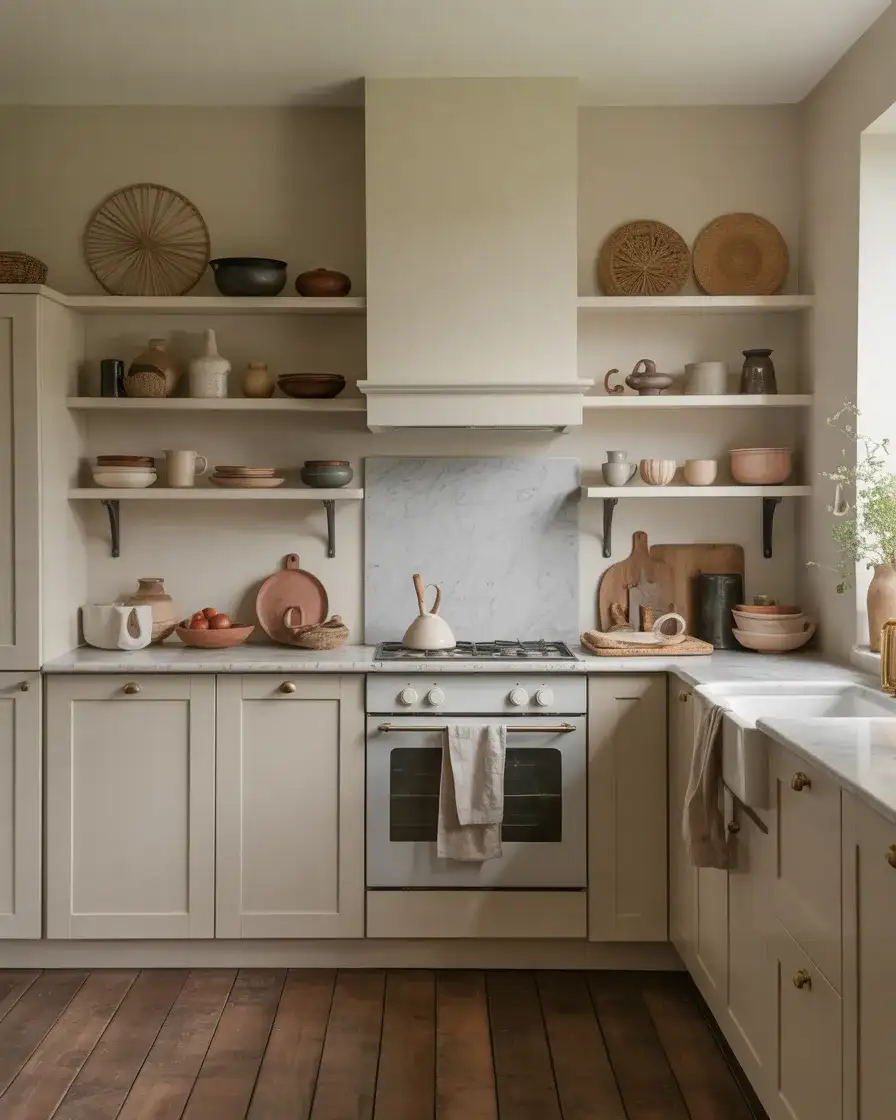
A modern cottagecore kitchen blends the warmth and nostalgia of traditional cottage style with the sleek minimalism of contemporary design, resulting in a space that feels fresh, uncluttered, and deeply livable. Think flat-panel cabinets in soft neutrals, integrated appliances, and simple open shelving that showcases a curated collection of handmade ceramics and linen tea towels. This aesthetic avoids heavy ornamentation, instead letting natural materials—marble, wood, and stone—do the talking. The look is intentional and restrained, appealing to those who love cottage charm but crave a more streamlined, functional kitchen.
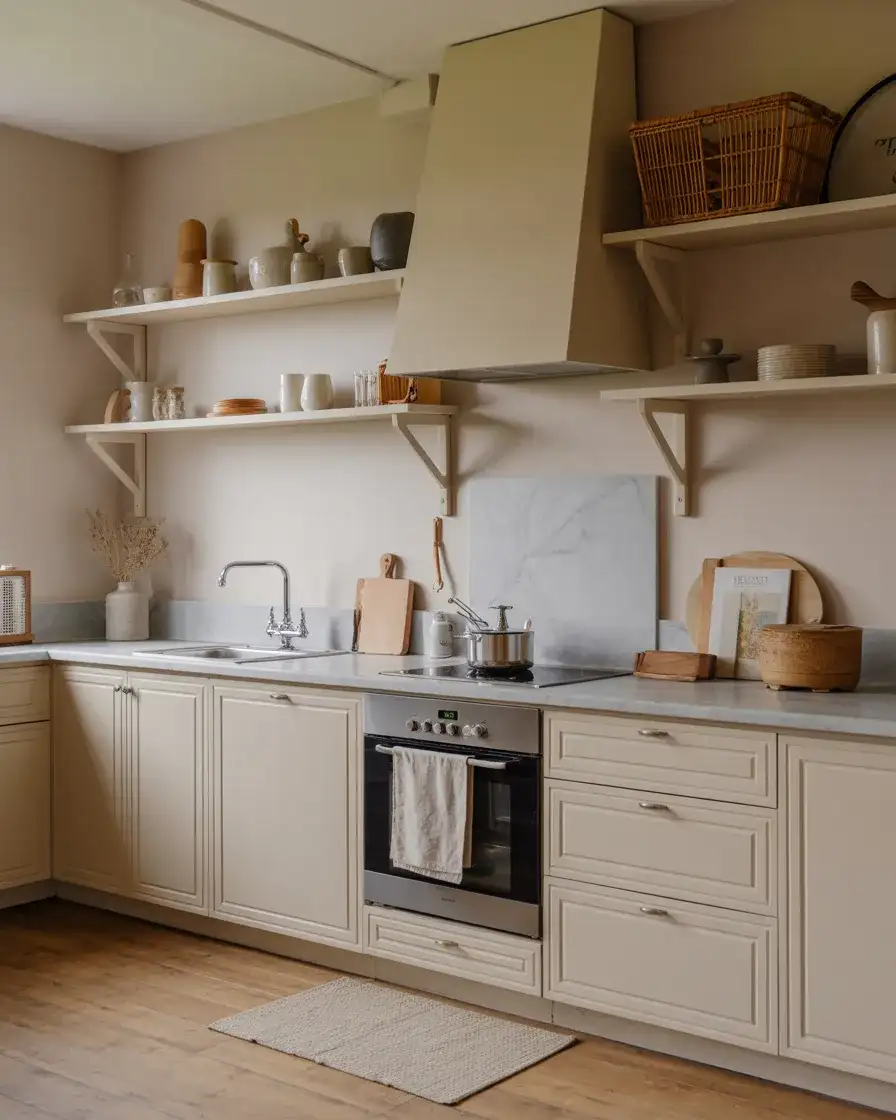
This hybrid style is especially popular in urban areas where space is at a premium—think loft apartments in Brooklyn or renovated Craftsman bungalows in Portland. Real homeowners often start with a modern shell and layer in cottage elements slowly: a vintage runner, a collection of ironstone, and a reclaimed wood cutting board. The beauty is in the restraint, which allows each piece to stand out rather than compete for attention.
6. Cottage Core Kitchen Island with Functional Charm
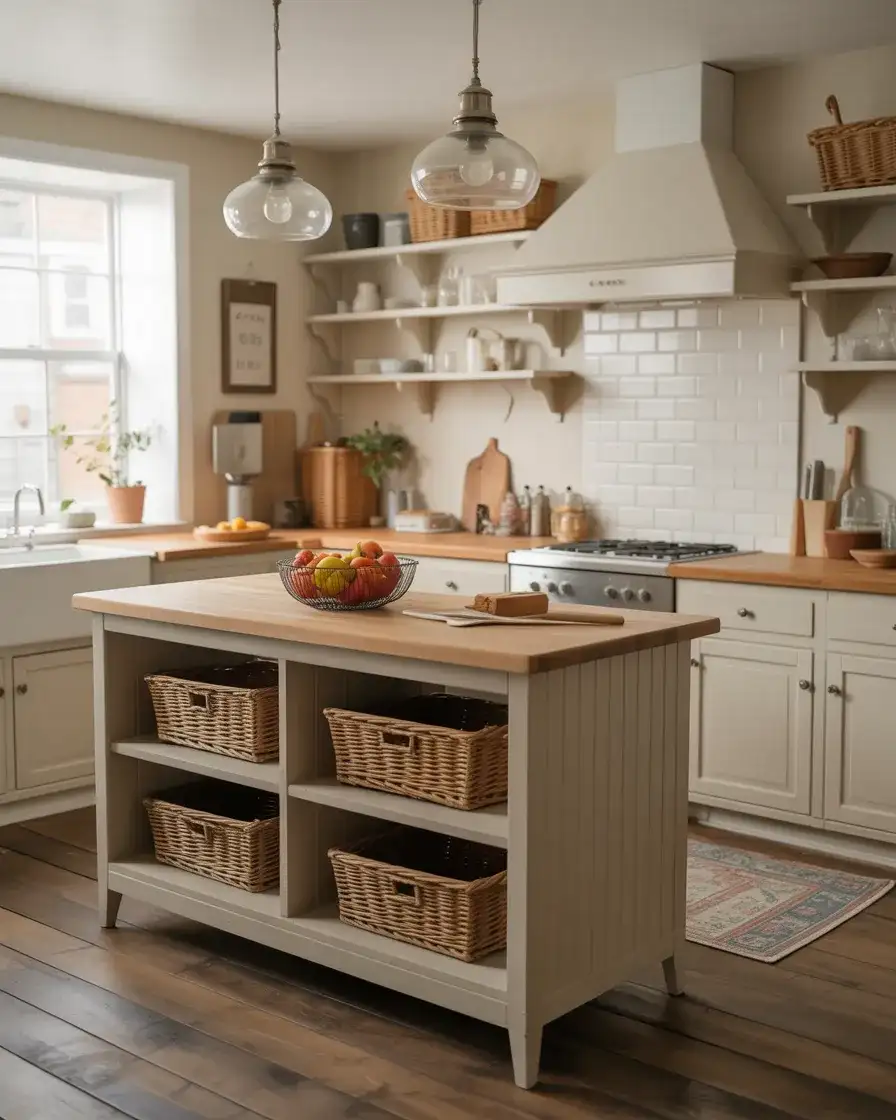
A cottagecore island serves as the heart of the kitchen, offering extra prep space, storage, and a gathering spot for family and friends. In true cottage fashion, the island might be a repurposed antique butcher block, a painted farmhouse table, or a custom-built piece with open shelving for baskets, cookbooks, and crockery. Pendant lights with glass or metal shades hang above, casting a warm glow over the workspace. The decor is intentionally lived-in, with flour canisters, wooden spoons in crocks, and a bowl of fresh fruit always within reach.
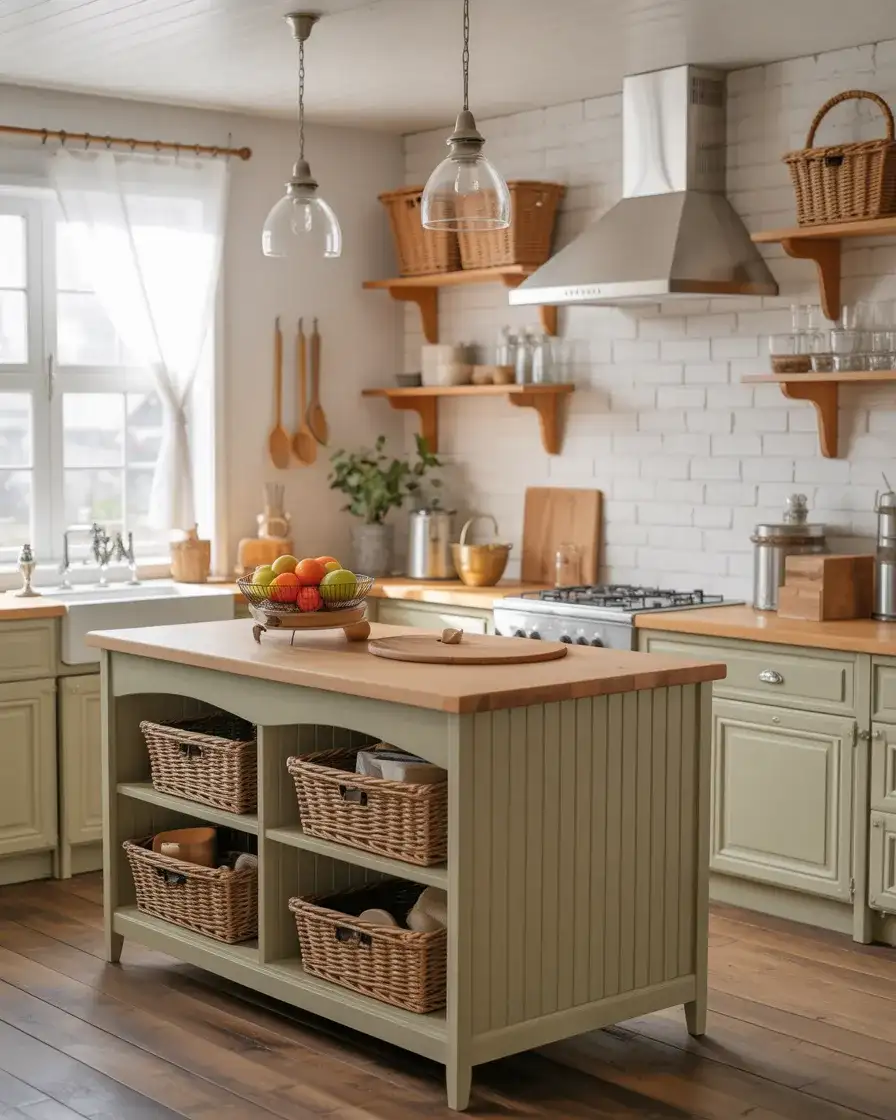
Across the country, particularly in Texas and the Midwest, large kitchen islands are a staple of new home construction, and cottage styling makes them feel less institutional and more personal. Instead of matching the island to the perimeter cabinets, many homeowners are choosing a contrasting color or finish—sage green against white, or natural wood against painted cabinetry—to create visual interest and flexibility.
7. Cottage Core Kitchen with Cozy Textiles
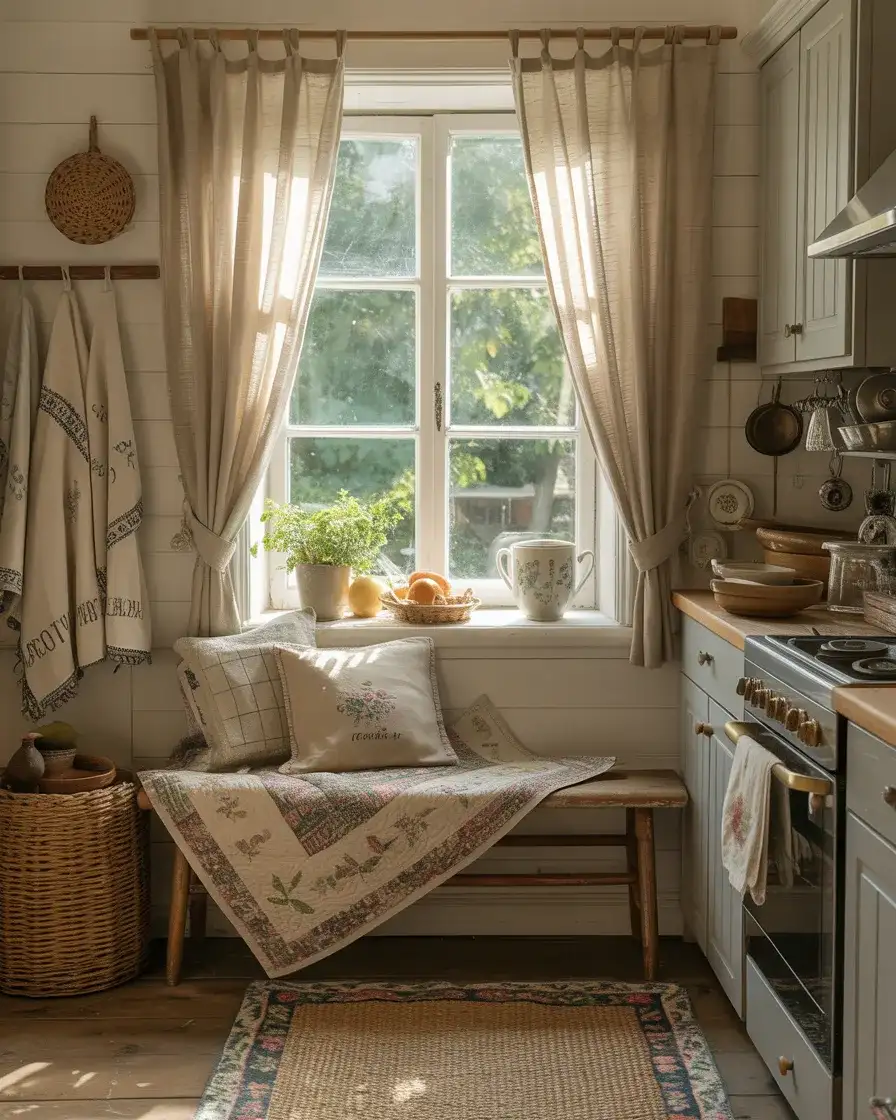
Layering cozy textiles throughout your cottagecore kitchen adds warmth, softness, and personality to what can otherwise be a hard, utilitarian space. Think linen curtains framing windows, embroidered tea towels draped over hooks, vintage quilts tossed over bench seating, and hand-woven rugs underfoot. These fabrics introduce pattern, color, and texture, making the kitchen feel more like a living room where you happen to cook. The aesthetic encourages you to slow down, pour a cup of tea, and savor the moment rather than rush through meal prep.
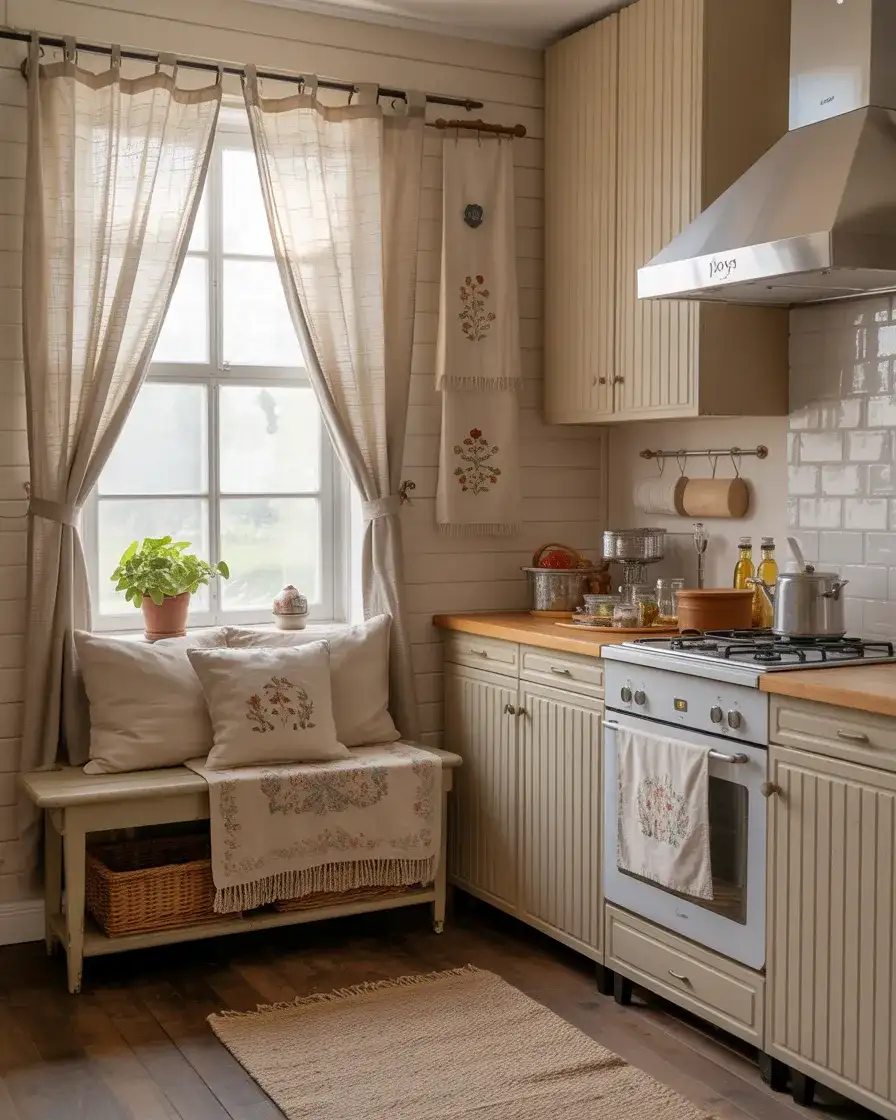
Design experts recommend rotating textiles seasonally to keep the space feeling fresh—lighter linens and florals in spring and summer, heavier wools and plaids in fall and winter. This approach is not only practical but also keeps the cottage aesthetic from feeling static or overly curated. It’s a low-cost way to update the look of your kitchen without committing to major renovations.
8. Blue Cottage Core Kitchen with Coastal Calm
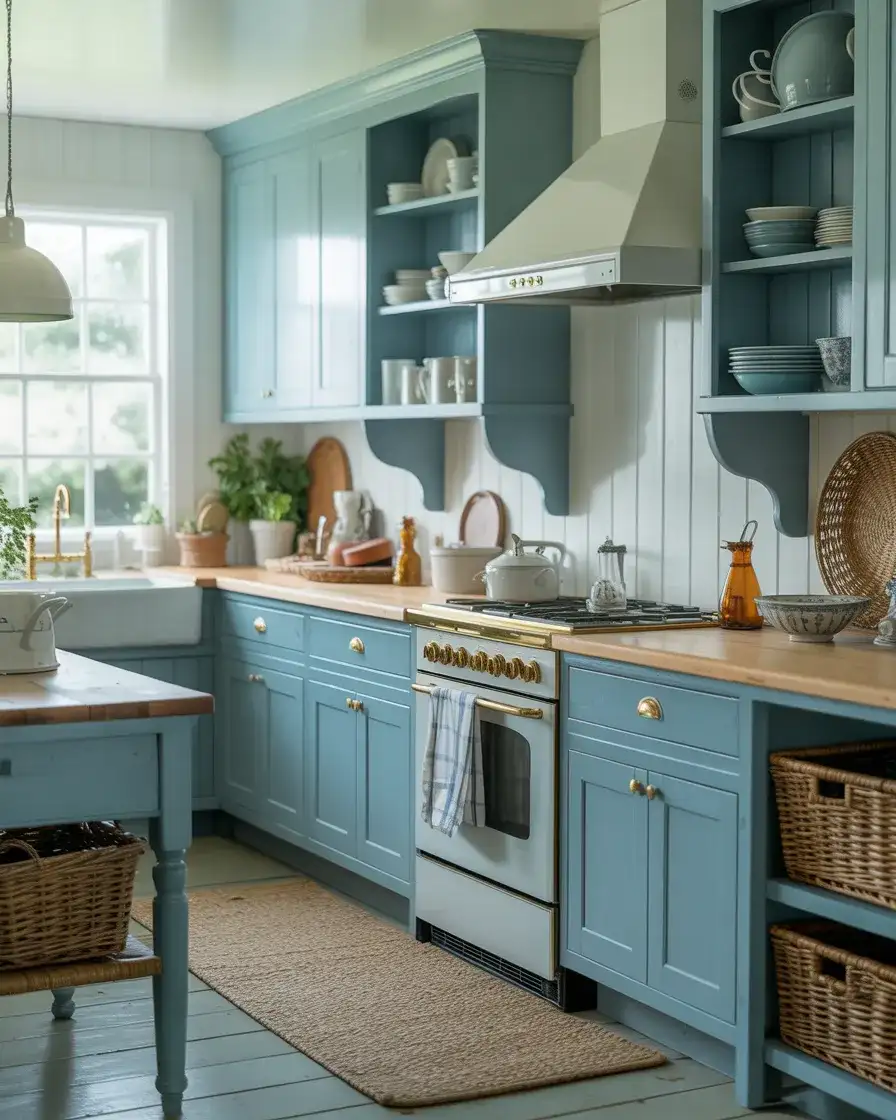
A blue cottagecore kitchen channels the tranquility of seaside living, using soft powder blue cabinets, navy accents, or robin’s egg tiles to create a serene, airy space. This palette pairs beautifully with crisp white trim, natural wood countertops, and vintage brass or nickel hardware that adds a subtle nautical touch. The aesthetic feels clean and calming, ideal for those who want a kitchen that evokes summer mornings and ocean breezes even if they’re landlocked. Open shelving displays white ironstone, blue-and-white china, and woven baskets filled with fresh herbs or linens.
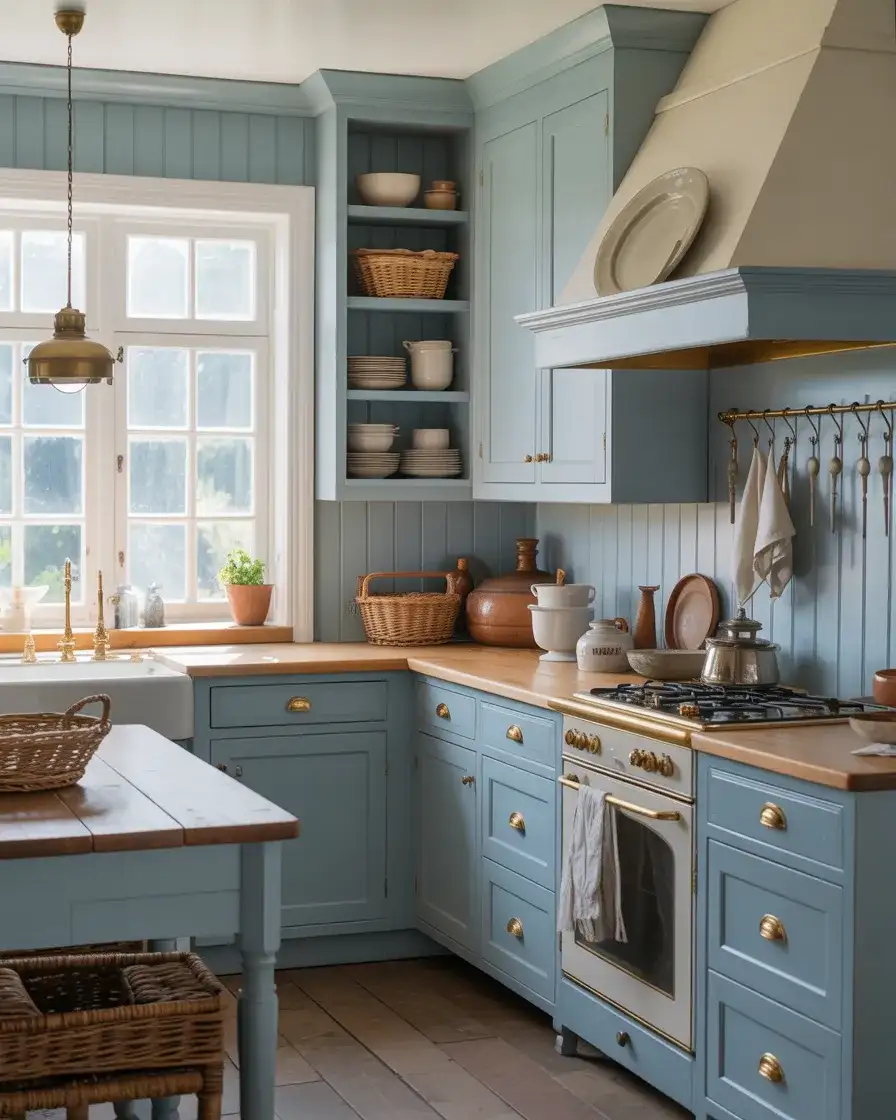
This style is a natural fit for homes near the coast—think Cape Cod, the Outer Banks, or Southern California—but it translates beautifully to inland settings as well, especially in homes with lots of natural light. A practical insight: blue cabinetry hides wear and fingerprints better than white, making it a smart choice for busy families who want beauty without constant upkeep.
9. Gothic Cottagecore Kitchen with Dark Romance
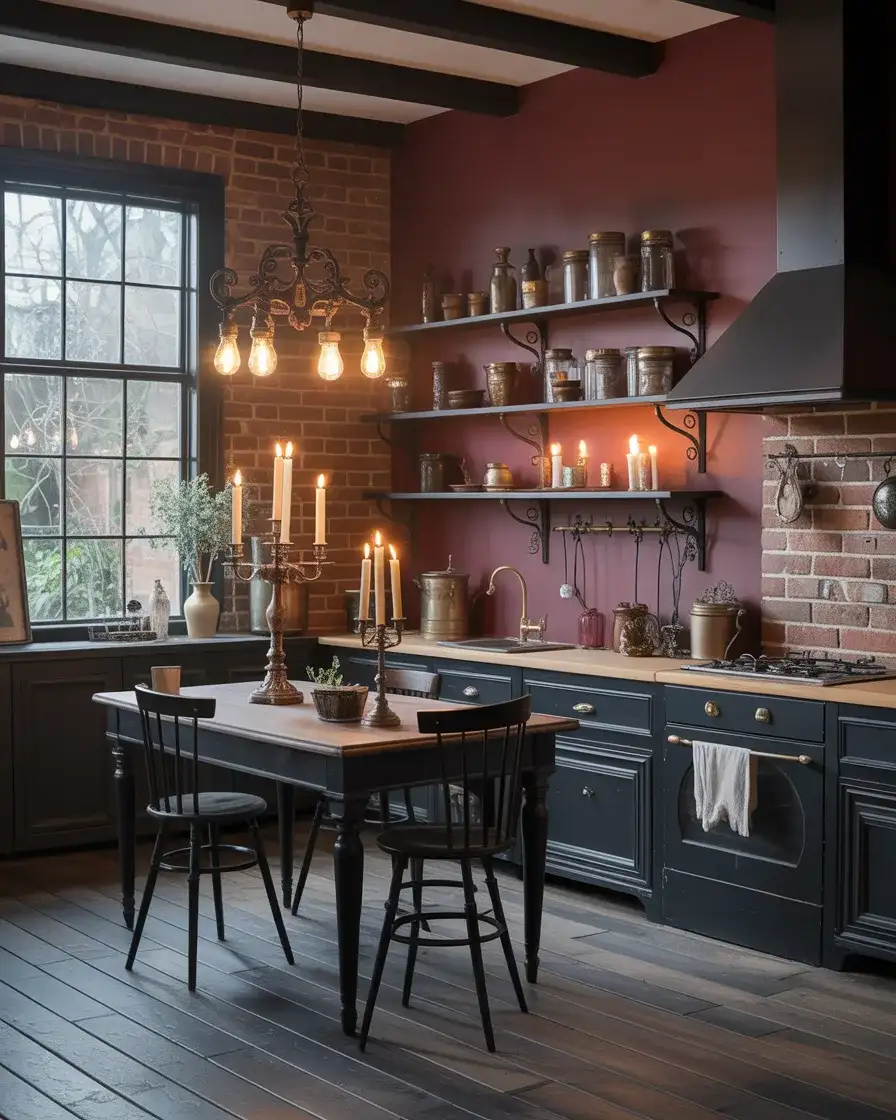
A gothic cottagecore kitchen embraces drama and mystery, blending traditional cottage elements with darker, more theatrical touches like black iron fixtures, deep burgundy walls, or antique candelabras. This aesthetic is for those who love the coziness of cottage living but want to infuse it with edge and sophistication. Think exposed brick, aged wood beams, and vintage apothecary jars filled with dried herbs and spices. The lighting is low and atmospheric, with Edison bulbs or wrought-iron sconces casting a warm, flickering glow.
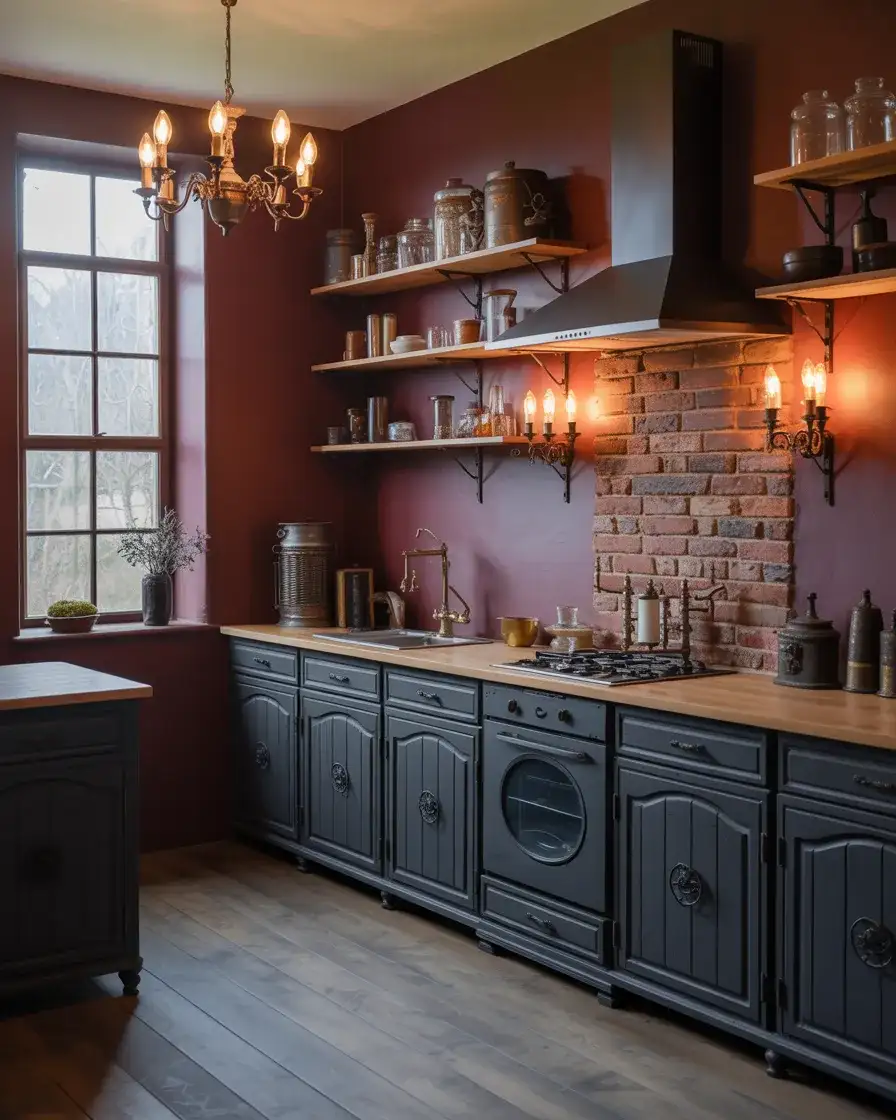
This look works best in older homes with architectural character—Victorian townhouses, converted barns, or stone cottages—where the bones of the space already lean toward the dramatic. In cities like New Orleans, Savannah, and Salem, gothic cottage kitchens are gaining traction as homeowners celebrate local history and folklore. To avoid a haunted house vibe, balance the darkness with plenty of warm wood, soft textiles, and fresh greenery.
10. Grandma’s Cottagecore Kitchen with Nostalgic Warmth
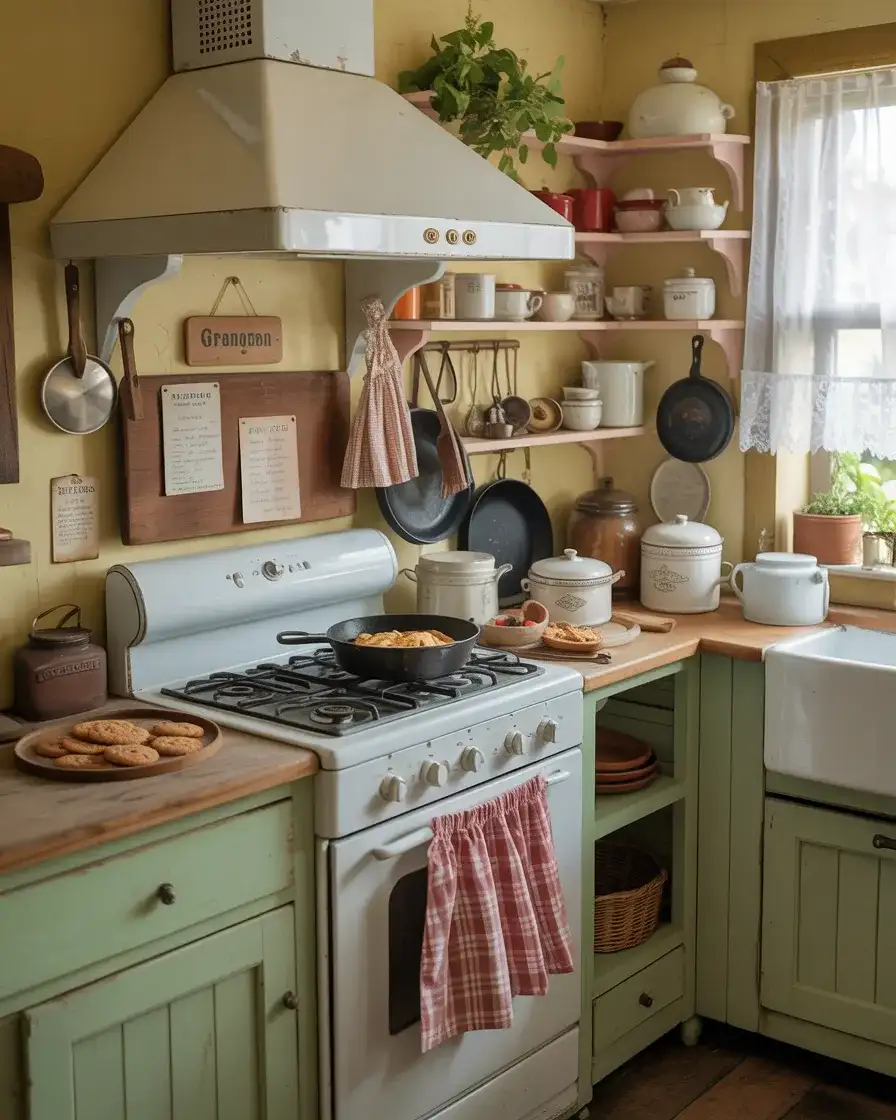
A grandma-inspired cottagecore kitchen is all about honoring the past and the comforting rituals of home cooking passed down through generations. This style features vintage appliances, enamelware, hand-stitched aprons hanging on hooks, and well-worn recipe cards tucked into a wooden box on the counter. The decor is unpretentious and deeply personal, filled with the kinds of objects that tell stories—a cast-iron skillet seasoned over decades, a cookie jar shaped like a farmhouse, or a crocheted potholder made by hand. The palette is soft and warm, with buttery yellows, sage greens, and creamy whites.
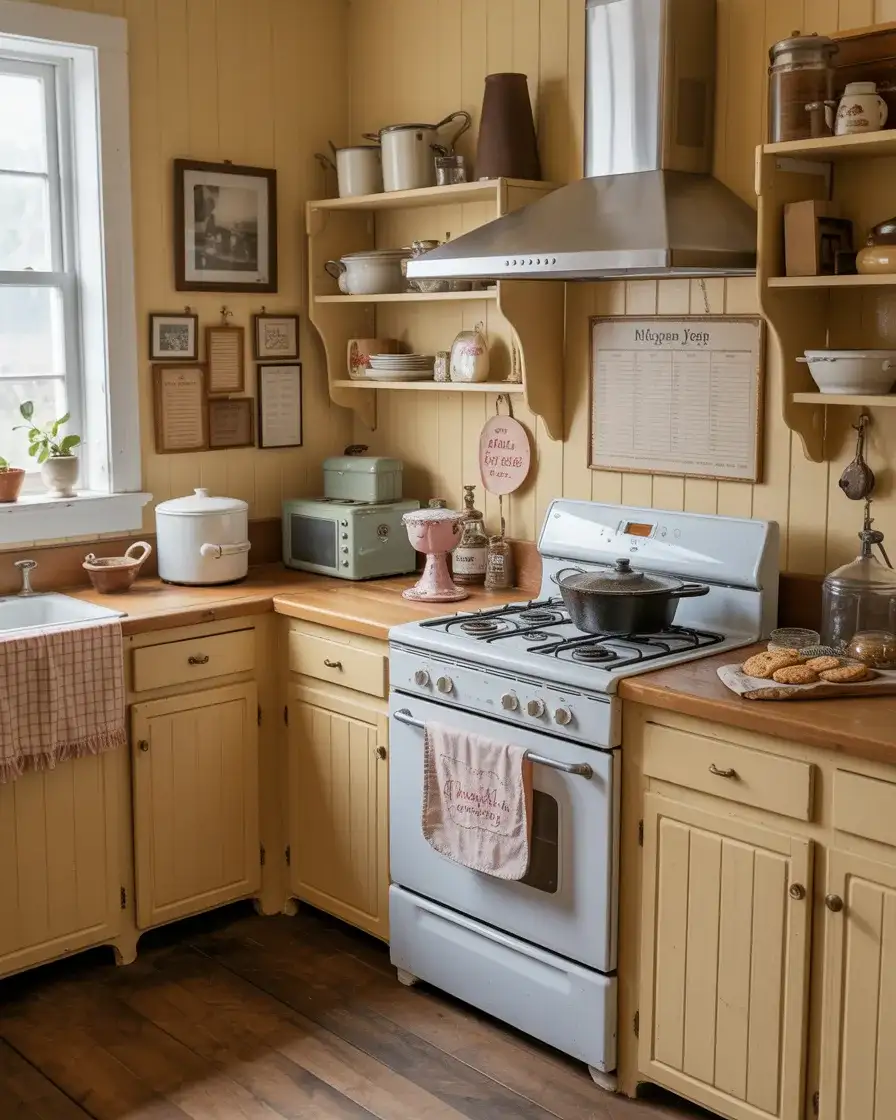
Many Americans are turning to this style as a way to reconnect with family heritage and simpler times, especially in the wake of the pandemic when home became the center of life again. One friend inherited her grandmother’s Hoosier cabinet and built her entire kitchen around it, using it as both storage and a visual anchor. That kind of emotional investment makes a space feel truly lived in and loved.
11. Cottage Core Kitchen with White Cabinets and Bright Simplicity
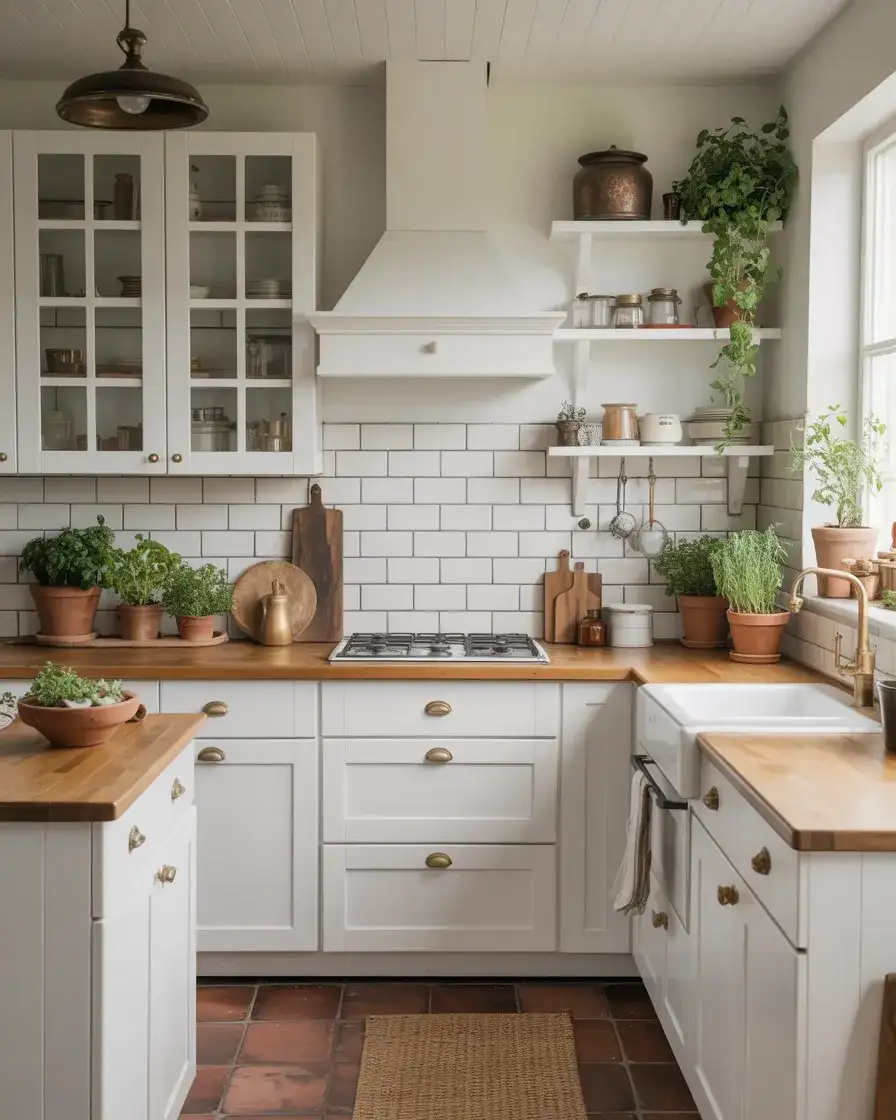
Crisp white cabinets form the foundation of a classic cottagecore kitchen, offering a bright, airy canvas that lets other elements shine. This timeless choice pairs beautifully with butcher block countertops, subway tile backsplashes, and vintage brass or porcelain knobs that add character without overwhelming the space. The aesthetic feels fresh and clean, making small kitchens appear larger and dark spaces feel brighter. Open shelving above the sink or stove allows you to display pretty dishware, glassware, and greenery, keeping the look light and approachable.
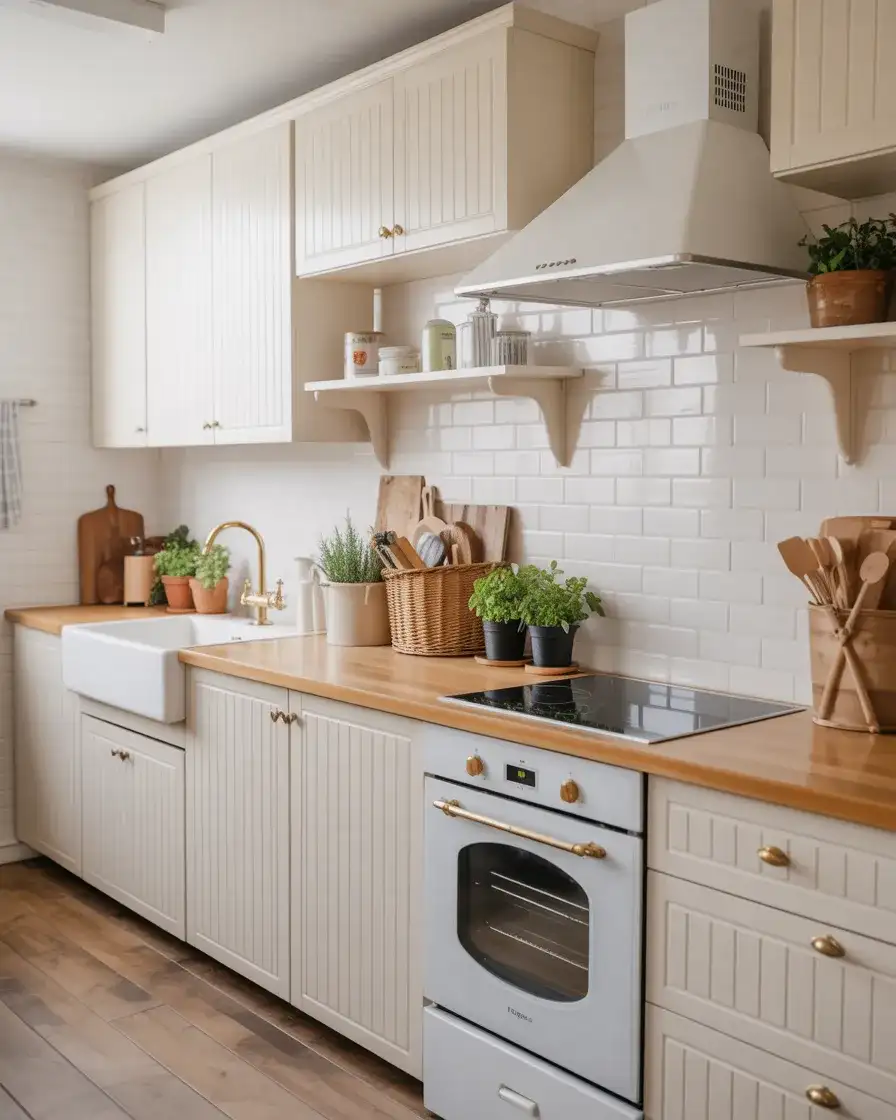
White cabinets are the most popular choice in American kitchens for good reason—they’re versatile, easy to update with new hardware or paint accents, and work in virtually any home style from colonial to contemporary. To keep a white cottage kitchen from feeling sterile or bland, layer in natural textures like wicker baskets, linen window treatments, and unfinished wood cutting boards. These organic elements add warmth and prevent the space from reading as too modern or clinical.
12. Cottagecore Kitchen with Farmhouse Ideas and Rustic Charm
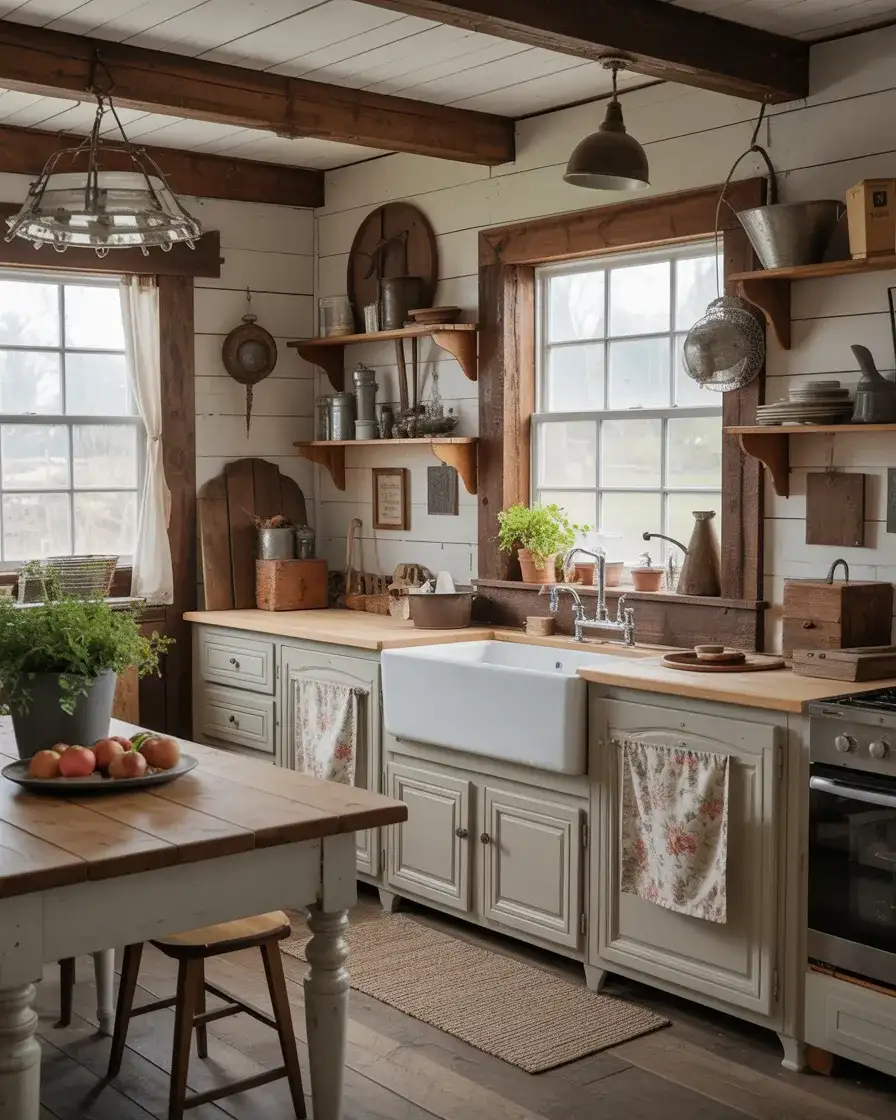
Blending ideas of farmhouse with cottagecore creates a kitchen that’s rugged yet romantic, combining reclaimed wood, galvanized metal, and vintage farm tools with softer floral fabrics and antique dishware. This inspiration draws from working farms and rural homesteads, where function and beauty go hand in hand. Think apron-front sinks, open-beam ceilings, and a large farmhouse table that serves as both prep space and gathering spot. The palette is earthy and neutral, with pops of color from fresh flowers, seasonal produce, or vintage enamelware.
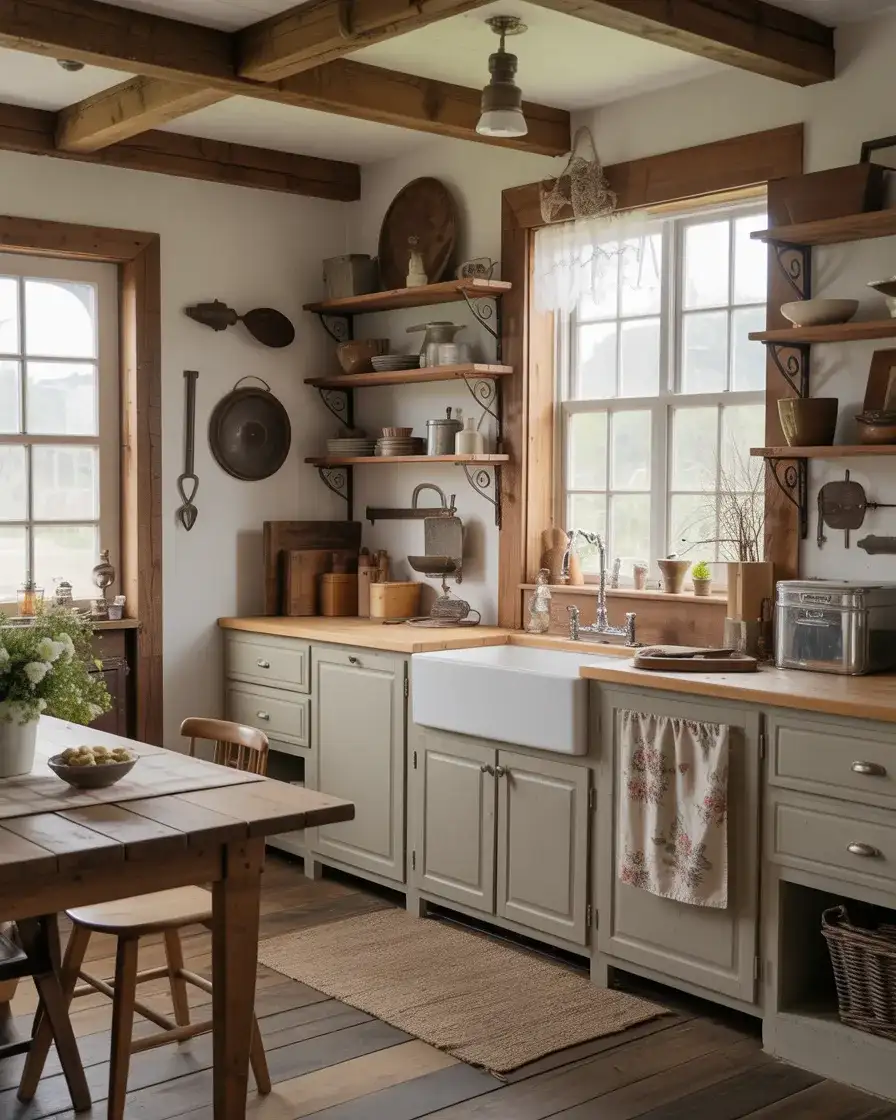
This hybrid style is particularly popular in the South and rural Midwest, where agricultural heritage runs deep and homeowners want their kitchens to reflect that connection to the land. Experts suggest anchoring the space with one or two large statement pieces—a weathered barn door, a vintage bread box, or a salvaged farm sink—and building the rest of the design around them. This prevents the room from feeling cluttered or overly themed.
13. Cottagecore Kitchen with Charming Wall Decor
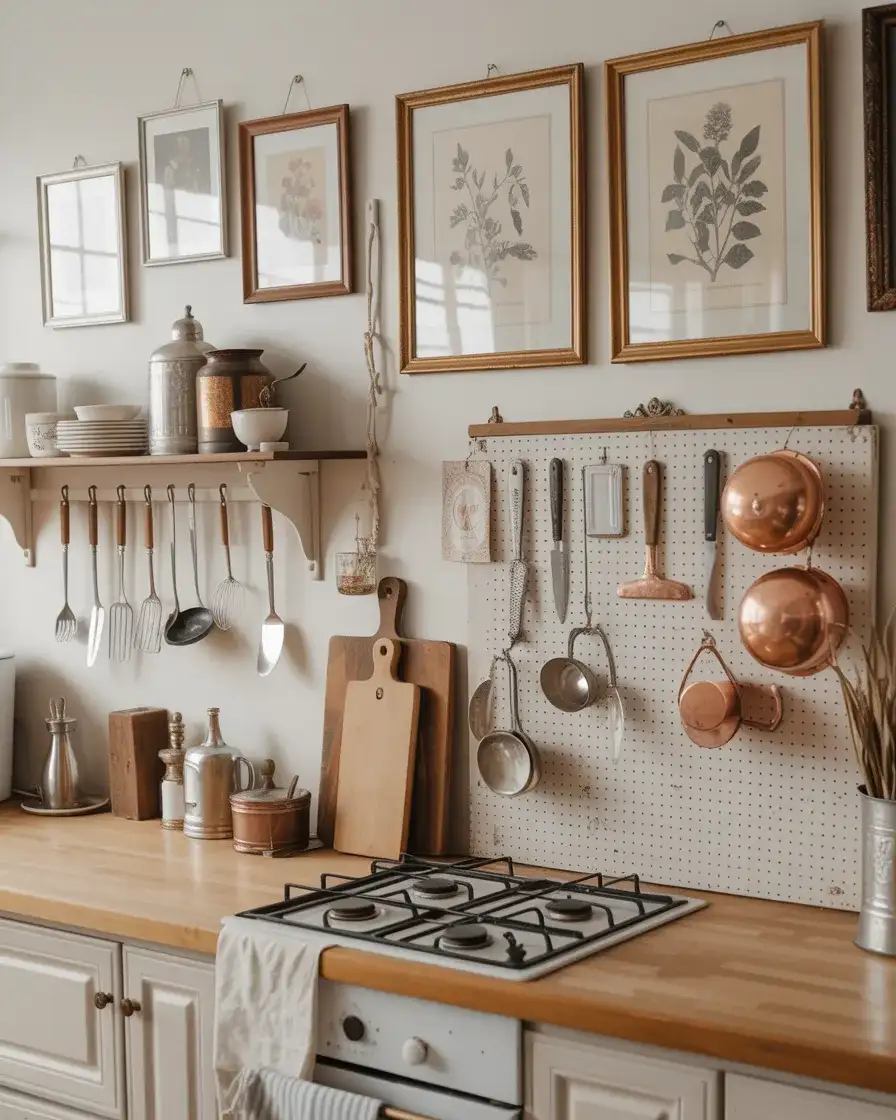
Thoughtful wall decor transforms a cottagecore kitchen from purely functional to deeply personal, showcasing your taste, interests, and memories. Hang vintage botanical prints in mismatched frames, display a collection of antique cutting boards or copper molds, or install a pegboard painted in a soft color to hold utensils, pots, and fresh herbs. The decor ideas are endless, but the goal is always the same: to make the walls feel intentional and curated rather than empty or cluttered. A single statement piece, like a large clock or a framed piece of embroidery, can anchor the entire space.
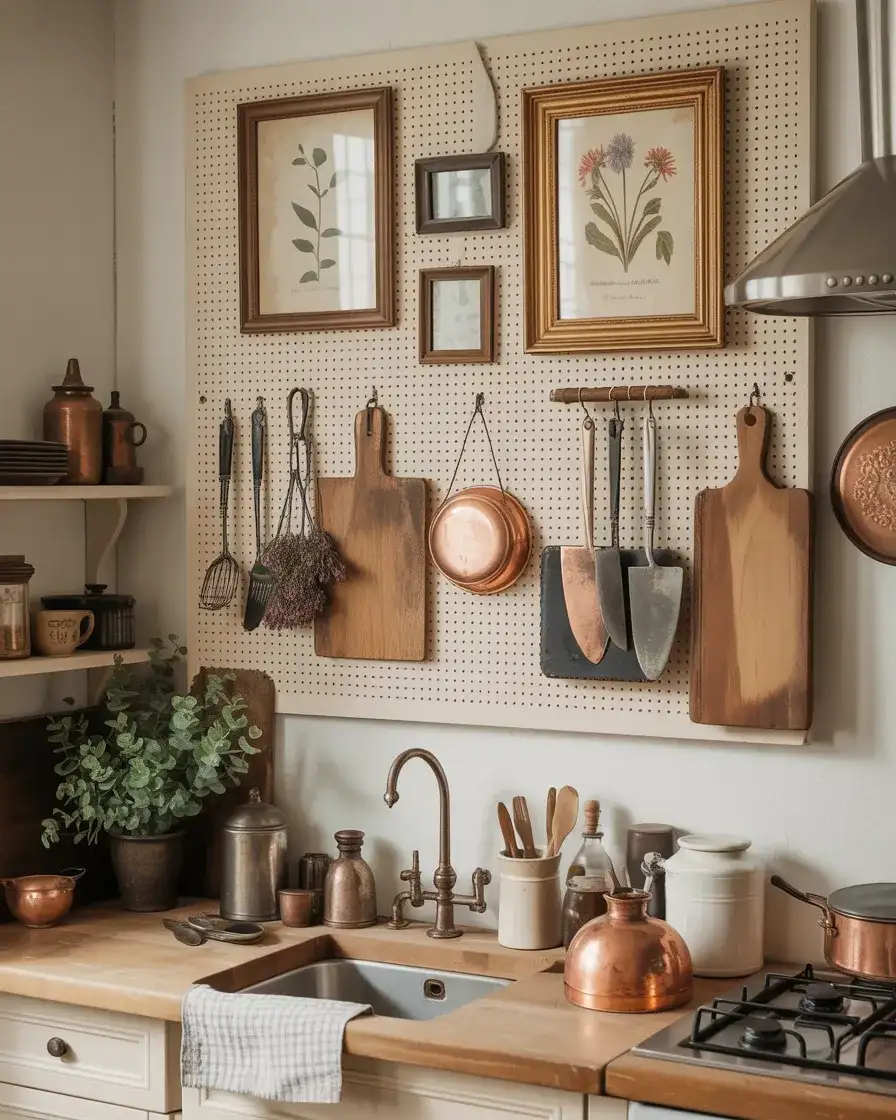
A common mistake is over-decorating every inch of wall space, which can make the kitchen feel chaotic rather than cozy. Instead, choose one or two focal walls and leave the rest relatively bare to let the eye rest. Real homeowners often rotate their wall decor seasonally—swapping in autumn-themed prints or winter botanicals—to keep the space feeling dynamic and connected to the rhythms of the year.
14. Cottage Core Kitchen Backsplash with Artisan Tile
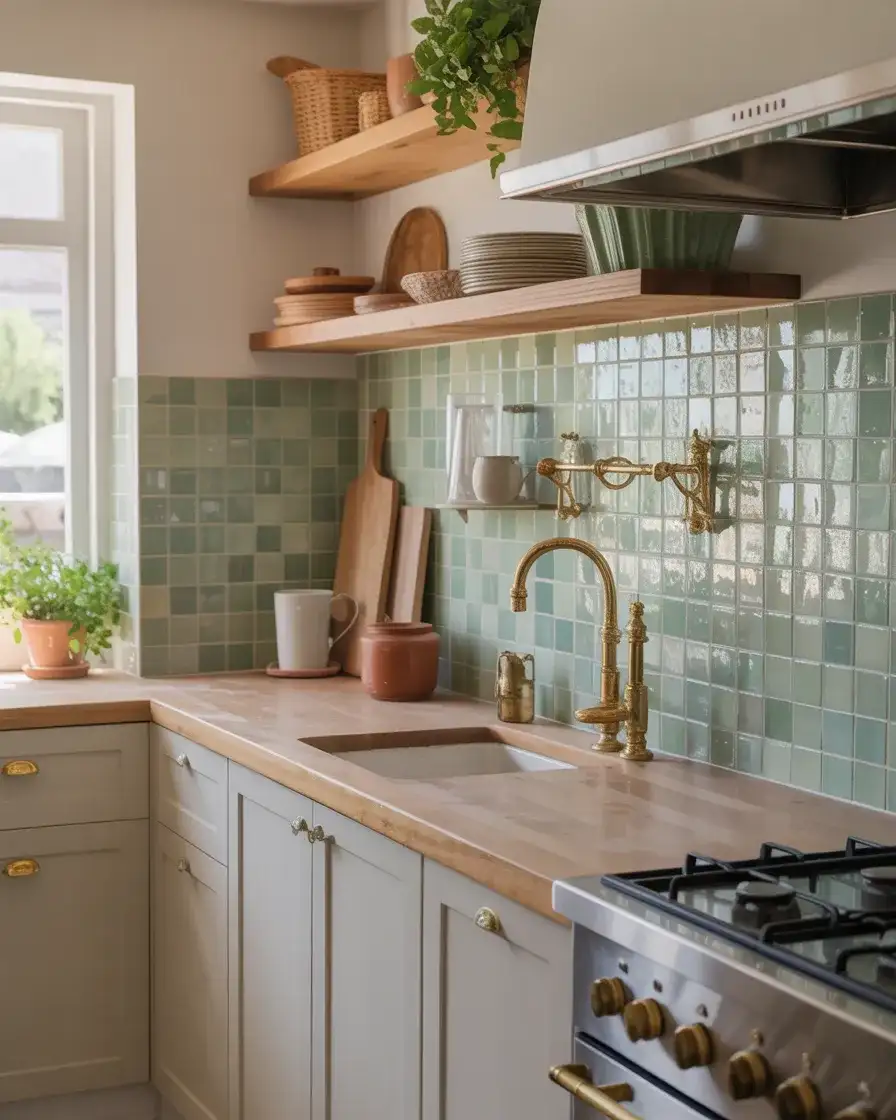
A carefully chosen backsplash can elevate a cottagecore kitchen from charming to unforgettable, adding color, pattern, and texture to the space between the counters and cabinets. Handmade zellige tiles, classic white subway tile with dark grout, or hand-painted ceramic tiles in floral or geometric patterns all fit the aesthetic beautifully. The key is choosing materials that feel artisanal and slightly imperfect, reflecting the handmade ethos of cottage living. Pair your backsplash with natural wood, marble, or soapstone countertops to let the tile shine without competing for attention.
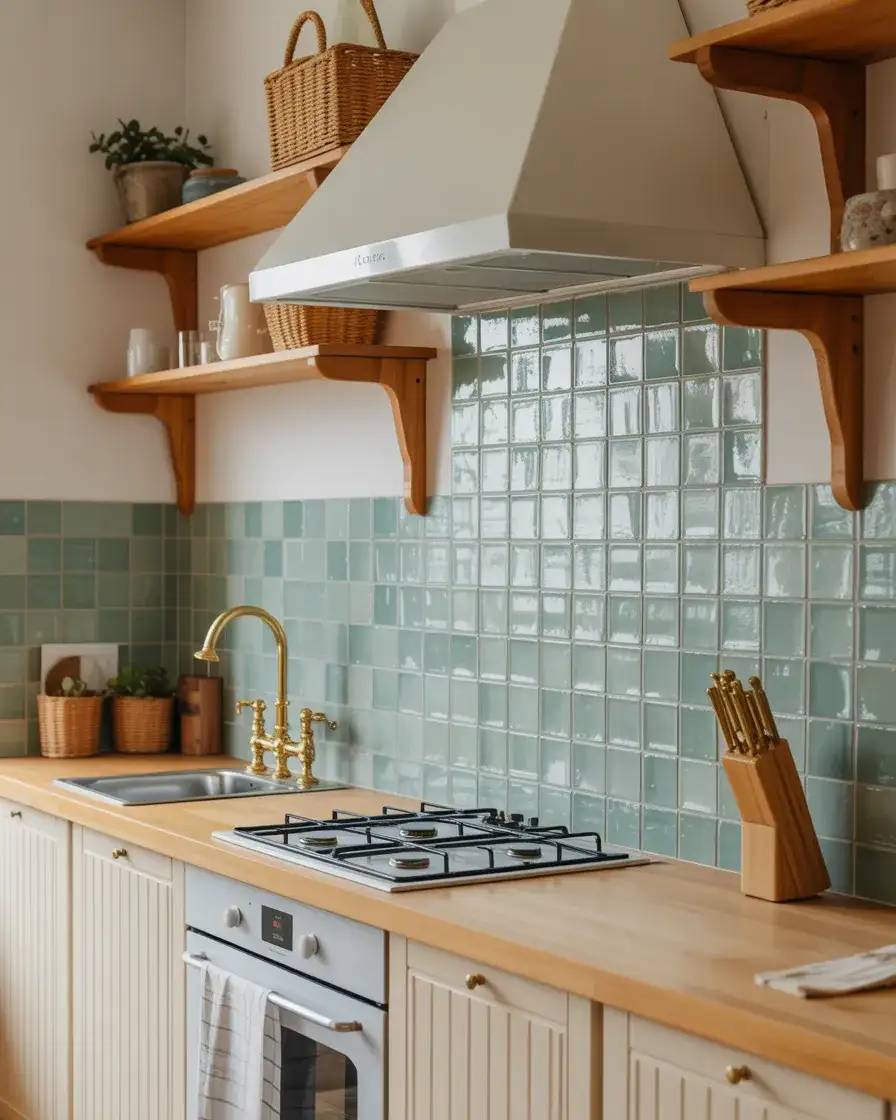
Installation costs for a quality cottage backsplash range from $1,200 to $3,500 depending on tile choice and labor, but many homeowners view it as a worthwhile splurge since it’s a highly visible feature that sets the tone for the entire room. Zellige in particular has surged in popularity in 2026, with its irregular, glossy finish lending an authentic old-world feel to modern American kitchens. Just be sure to seal porous tiles properly to avoid staining from cooking splatters.
15. Cottage Core Kitchen with Soft Paint Colors
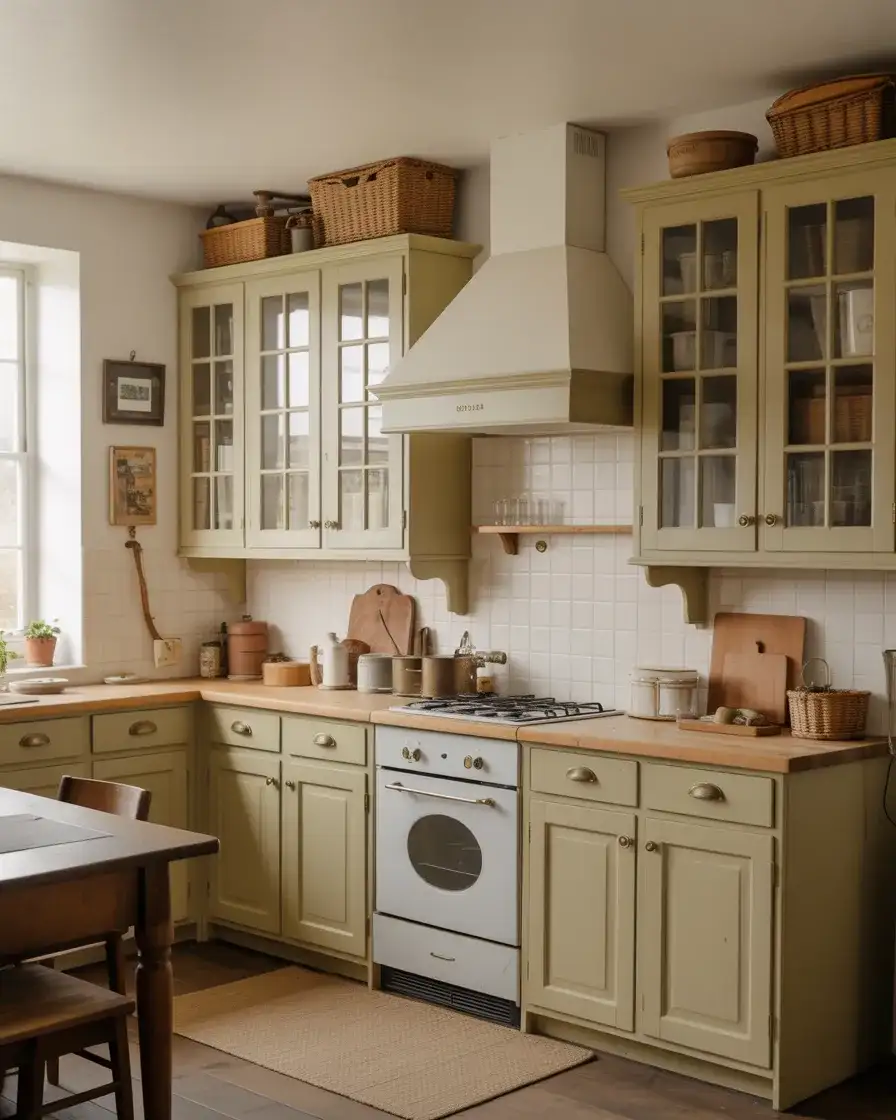
Choosing the right paint colors sets the emotional tone of your cottagecore kitchen, creating a backdrop that feels soothing, inviting, and timeless. Soft neutrals like warm ivory, pale sage, dusty blush, or buttery cream are classic choices that pair beautifully with natural wood and vintage accents. These ideas create a sense of calm and spaciousness, especially in smaller kitchens where darker colors might feel heavy. For a more dramatic look, consider a muted charcoal or deep olive on the lower cabinets, contrasted with lighter walls or uppers to maintain balance and light.
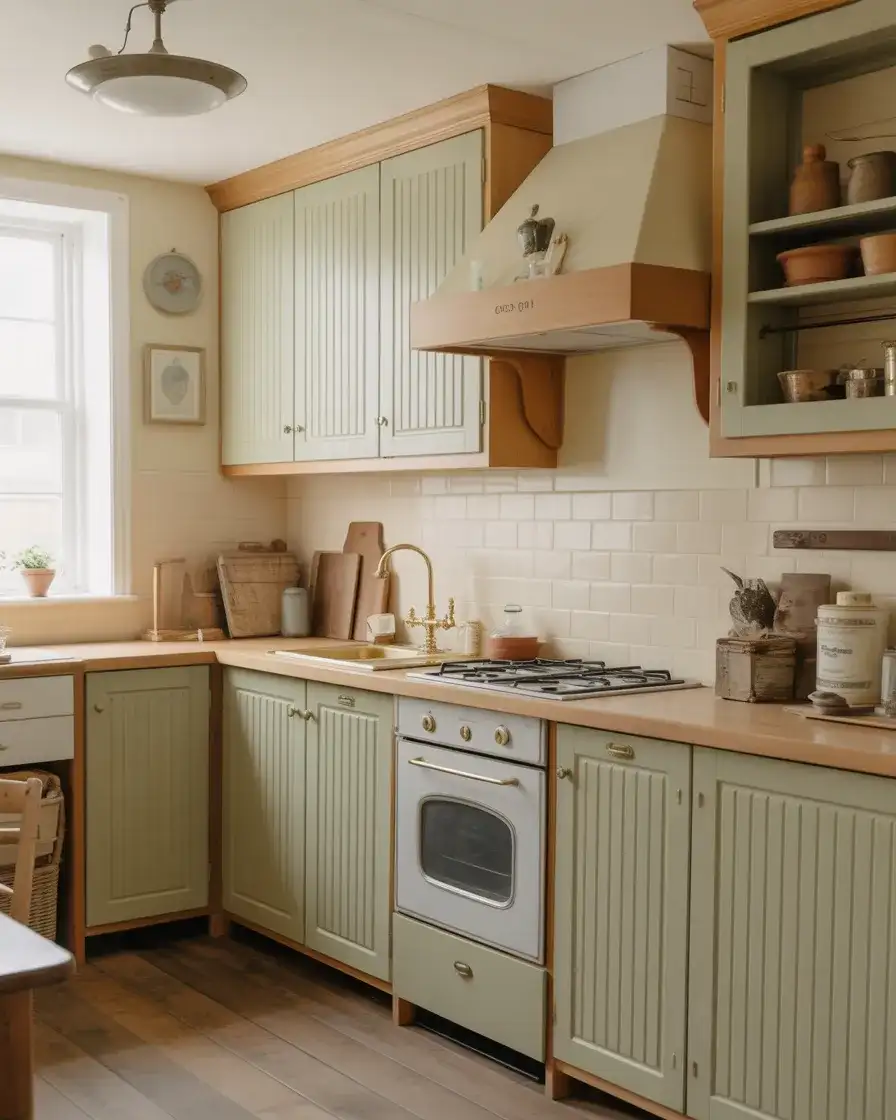
Test paint samples on large poster boards and move them around the kitchen at different times of day to see how natural light affects the color—what looks perfect at noon might feel too yellow at dusk or too gray at dawn. This step saves you from costly repainting and ensures you choose a shade you’ll love for years. In 2026, low-VOC and milk paint finishes are popular choices for cottage kitchens, offering both environmental benefits and an authentic matte texture.
16. Cottagecore Kitchen Curtains with Vintage Fabric
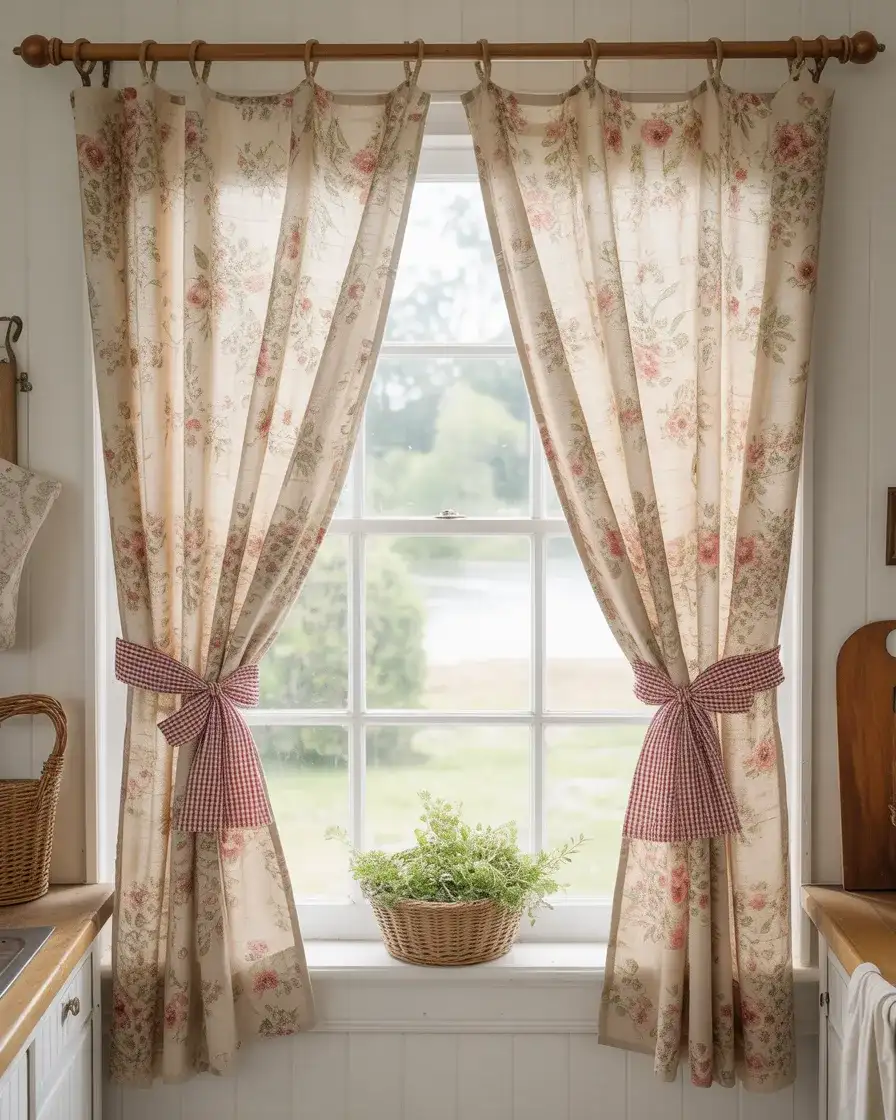
Soft, flowing curtains in vintage-inspired fabrics add instant warmth and character to a cottagecore kitchen, framing windows with pattern and color while filtering natural light. Think delicate florals, gingham checks, ticking stripes, or embroidered linen panels that puddle slightly on the floor or hang just above the sill. The aesthetic is relaxed and unpretentious, echoing the handmade textiles found in European country homes. Choose fabrics that can be easily laundered, since kitchens generate steam, grease, and odors that will eventually need to be washed away.
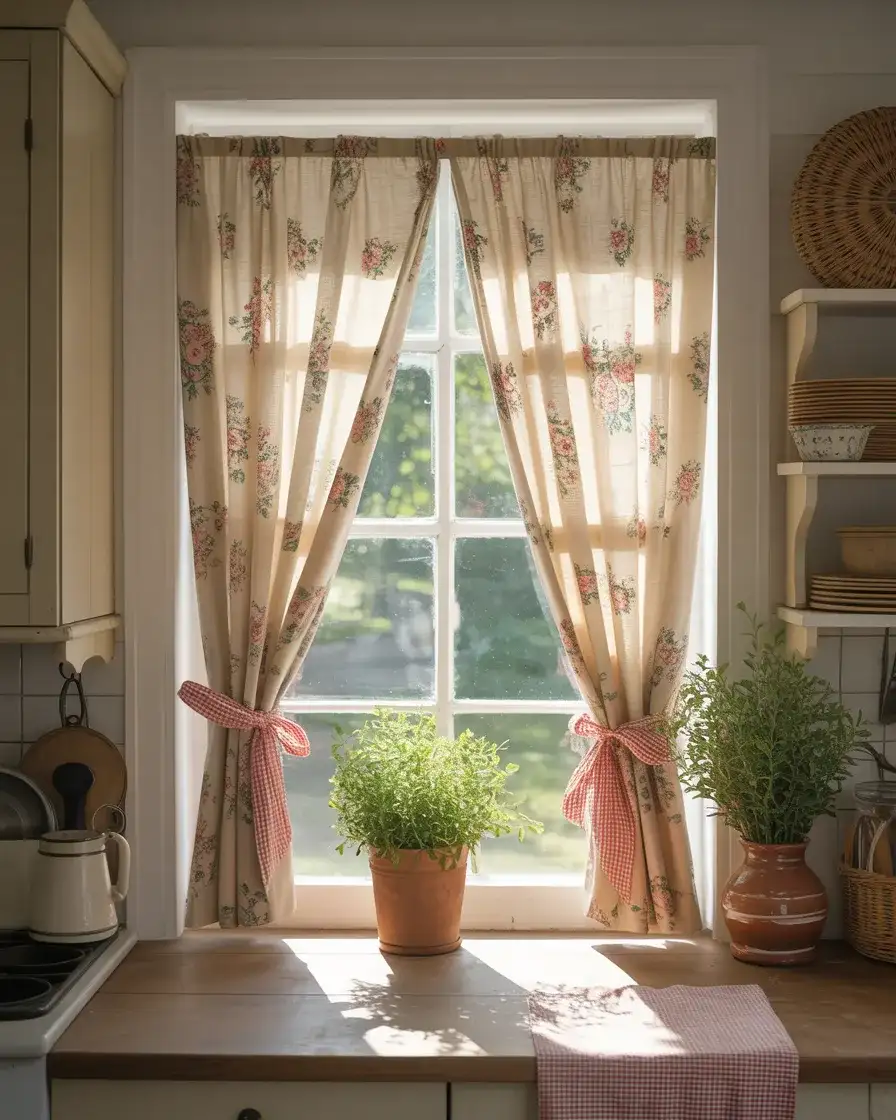
Many homeowners are making their own curtains from vintage tablecloths, bed linens, or fabric remnants found at estate sales and antique shops. This DIY approach not only saves money—custom curtains can run $200 to $500 per window—but also ensures a truly one-of-a-kind look that reflects your personal style. If sewing isn’t your strength, clip rings and tension rods offer a no-sew solution that still achieves the cottage aesthetic.
17. Cottage Core Kitchen Ideas for Small Spaces
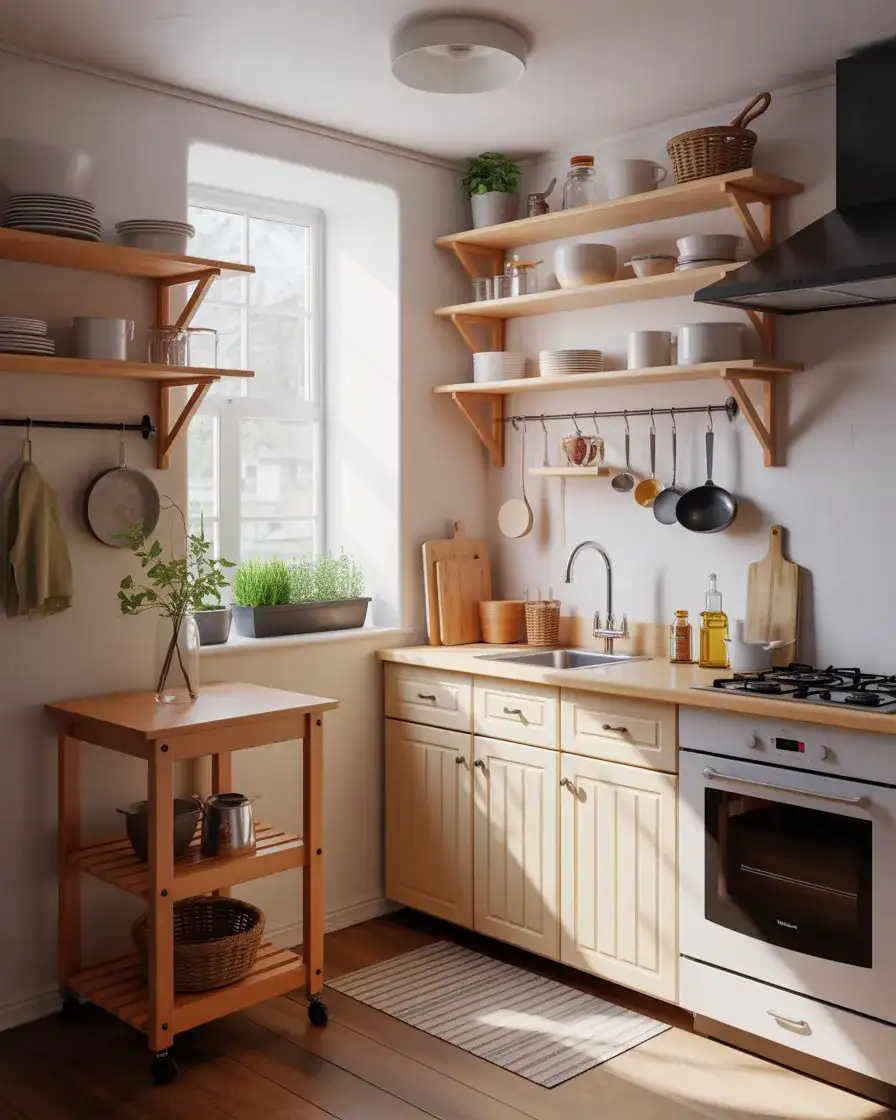
Even the smallest galley or studio kitchen can embrace cottagecore principles through thoughtful ideas that maximize charm without sacrificing function. Use vertical space with open shelving, hanging pot racks, and pegboards to keep counters clear while displaying your prettiest dishes and cookware. Choose light, reflective paint colors and minimal upper cabinets to maintain an airy feel. A small butcher block cart can serve as a mobile island, providing extra prep space and storage that can be tucked away when not in use. The decor should be edited but personal—a single vase of flowers, a favorite teapot, a small herb garden on the windowsill.
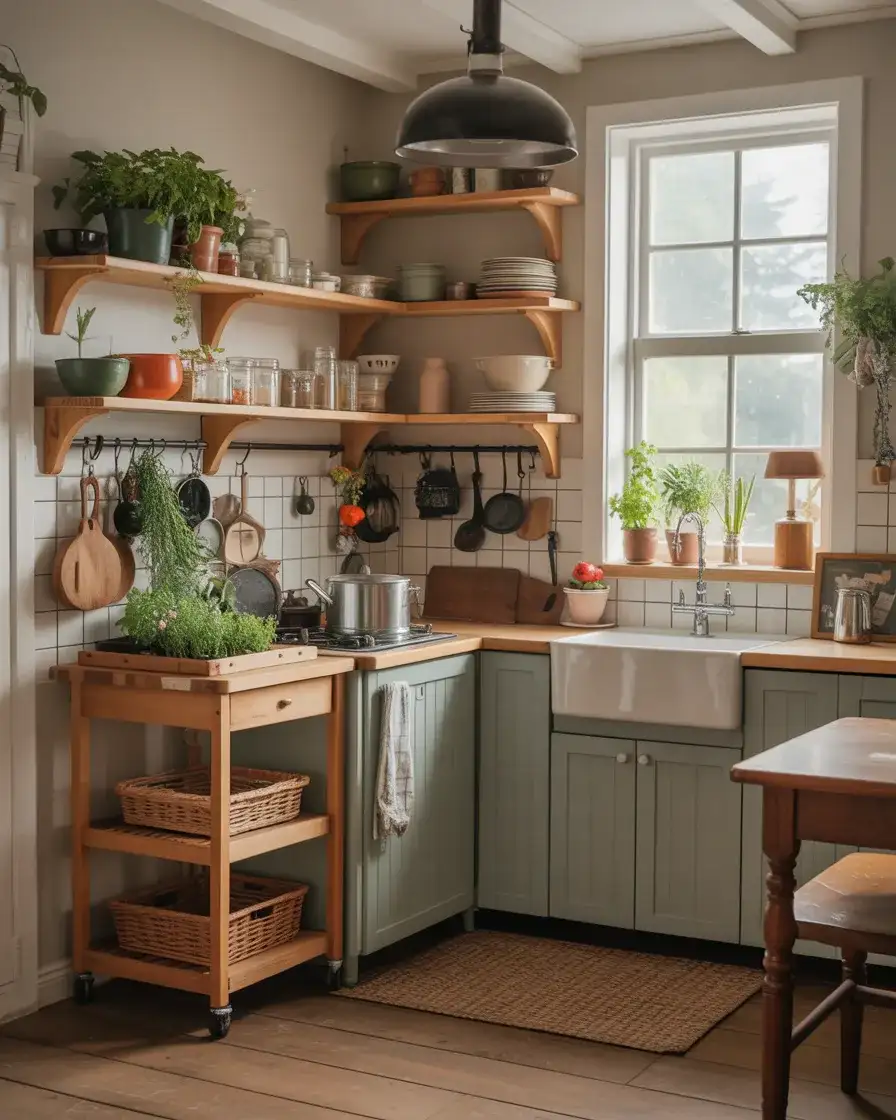
Small kitchens work best when every item has a clear home and you’re disciplined about editing your collection of dishes, utensils, and gadgets. Cottage style can quickly turn into clutter if you’re not mindful, so focus on quality over quantity—ten beautiful pieces of ironstone rather than forty mismatched mugs. This restraint allows the space to breathe and feel intentional rather than cramped.
18. Cottagecore Kitchen Table for Gathering
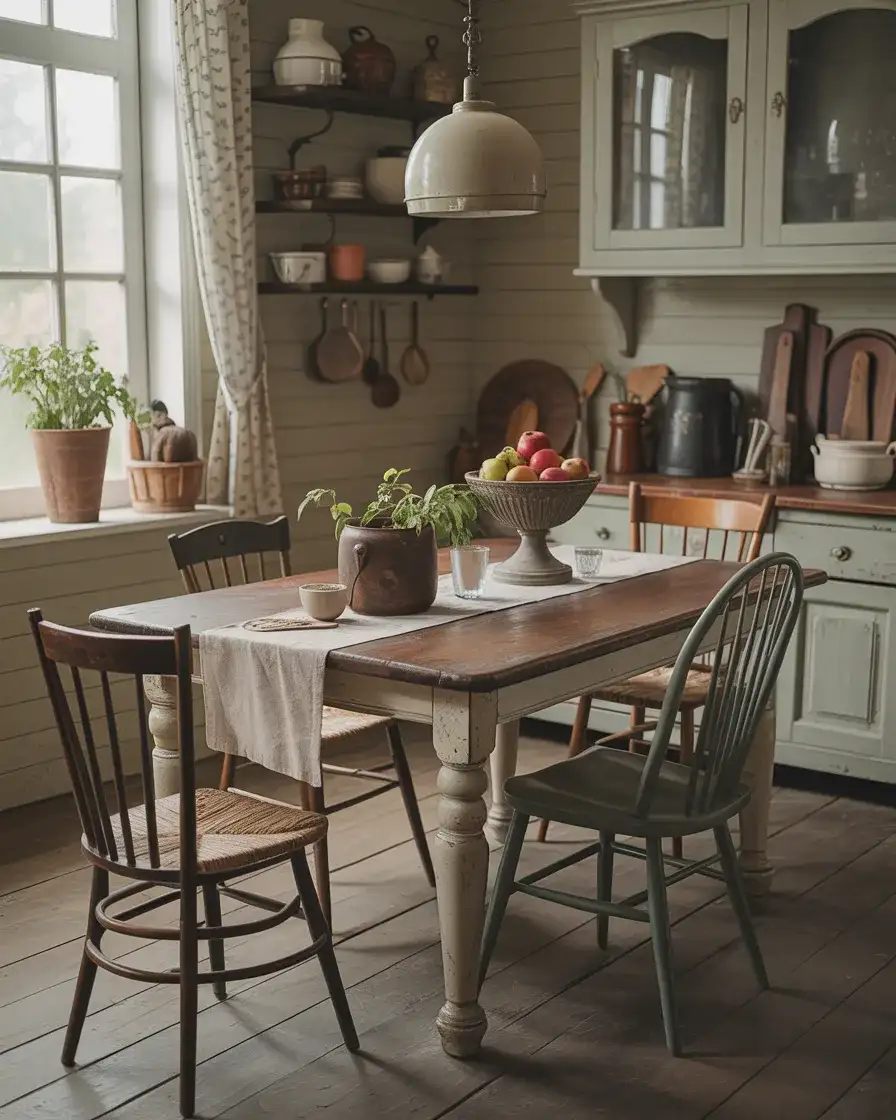
A well-loved kitchen table is the heart of cottage living, serving as the place where meals are shared, conversations unfold, and memories are made. In a true cottagecore kitchen, the table is often an antique farmhouse piece with a worn wood surface that tells its own story, surrounded by mismatched chairs collected over time. The aesthetic prioritizes function and warmth over perfection—scratches, water rings, and patina are badges of honor rather than flaws. A simple linen runner, a crock of wooden spoons, or a bowl of seasonal fruit keeps the surface both beautiful and practical.
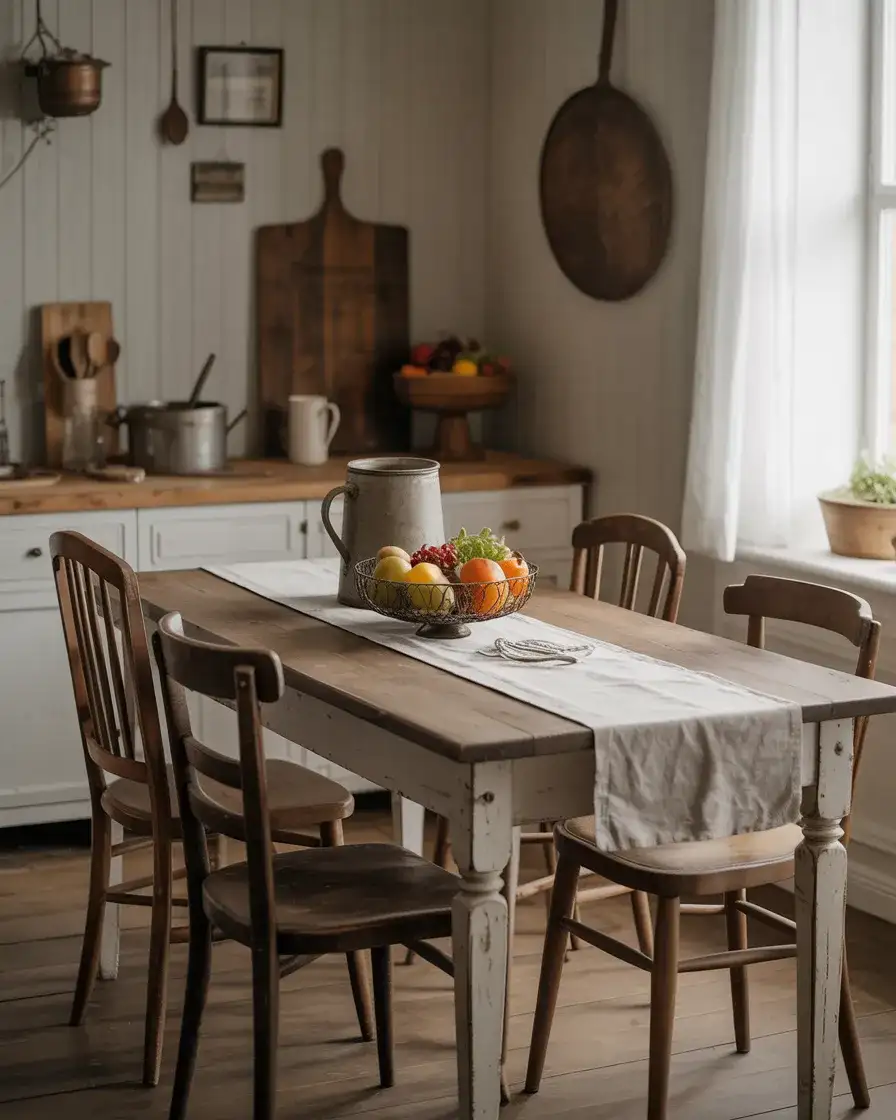
In American homes, especially those with open-concept layouts, the kitchen table often doubles as a workspace, homework station, and craft area, so it needs to be durable and easy to clean. Homeowners favor hardwoods like oak, maple, or pine that can be refinished if needed and will age gracefully over decades. The best tables are those inherited from family or discovered at estate sales, bringing instant history and soul to the space.
19. Cottagecore Kitchen Inspired by Bloxburg Builds
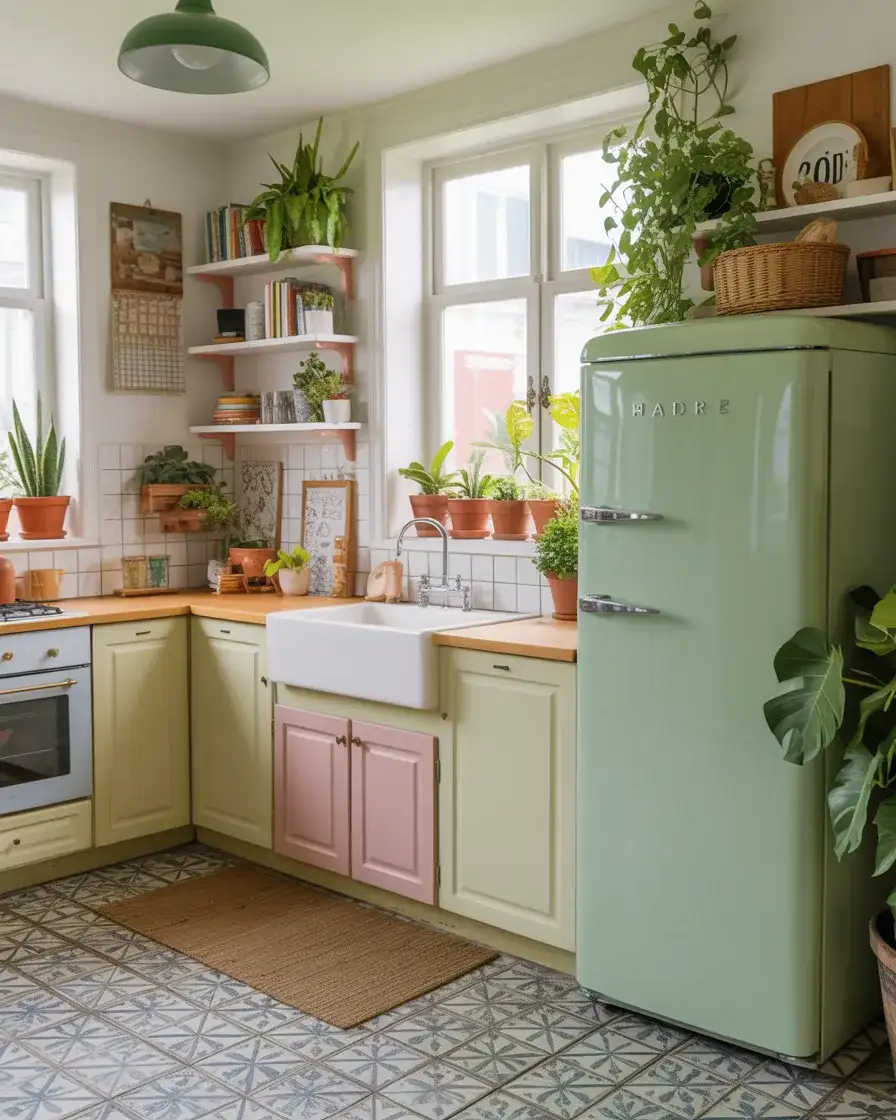
The virtual world of Bloxburg on Roblox has unexpectedly become a major source of cottagecore kitchen inspiration for Gen Z and younger millennials who are now renovating their first homes. These digital builds often feature exaggerated cottage elements—oversized farmhouse sinks, dramatic open shelving, pastel color schemes, and abundant plants—that translate surprisingly well to real-life spaces. The aesthetic is playful and maximalist, embracing color and pattern in ways that feel fresh and youthful. Real-world interpretations might include a mint green refrigerator, patterned tile floors, or a collection of vintage kitchen canisters arranged just so.
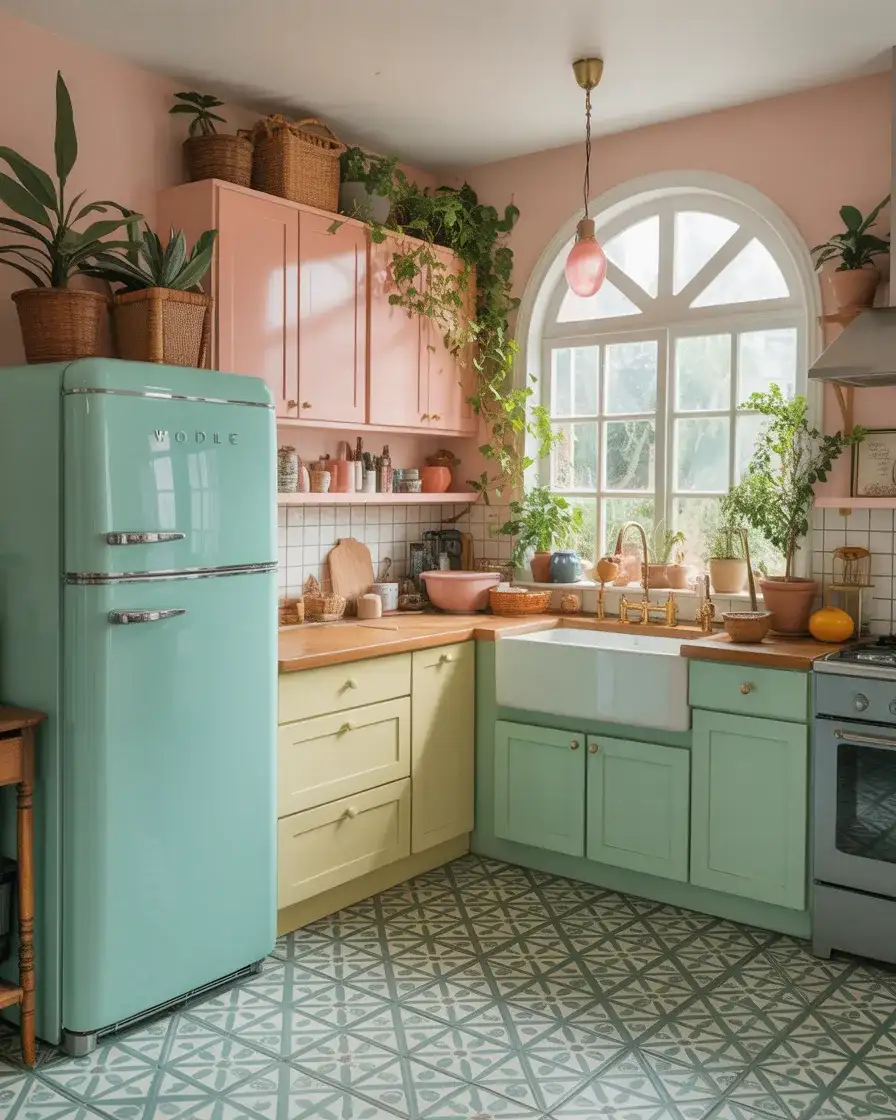
What’s interesting is how gaming communities are influencing real-world design trends—Pinterest boards tagged “Bloxburg kitchen IRL” have millions of saves, and interior designers are taking note. This cross-pollination between digital and physical spaces speaks to a generation that grew up customizing virtual homes and now wants to bring that same creative freedom to their actual living environments. The result is cottage kitchens that feel less stuffy and more personal.
20. Cottagecore Kitchen Decor Layering
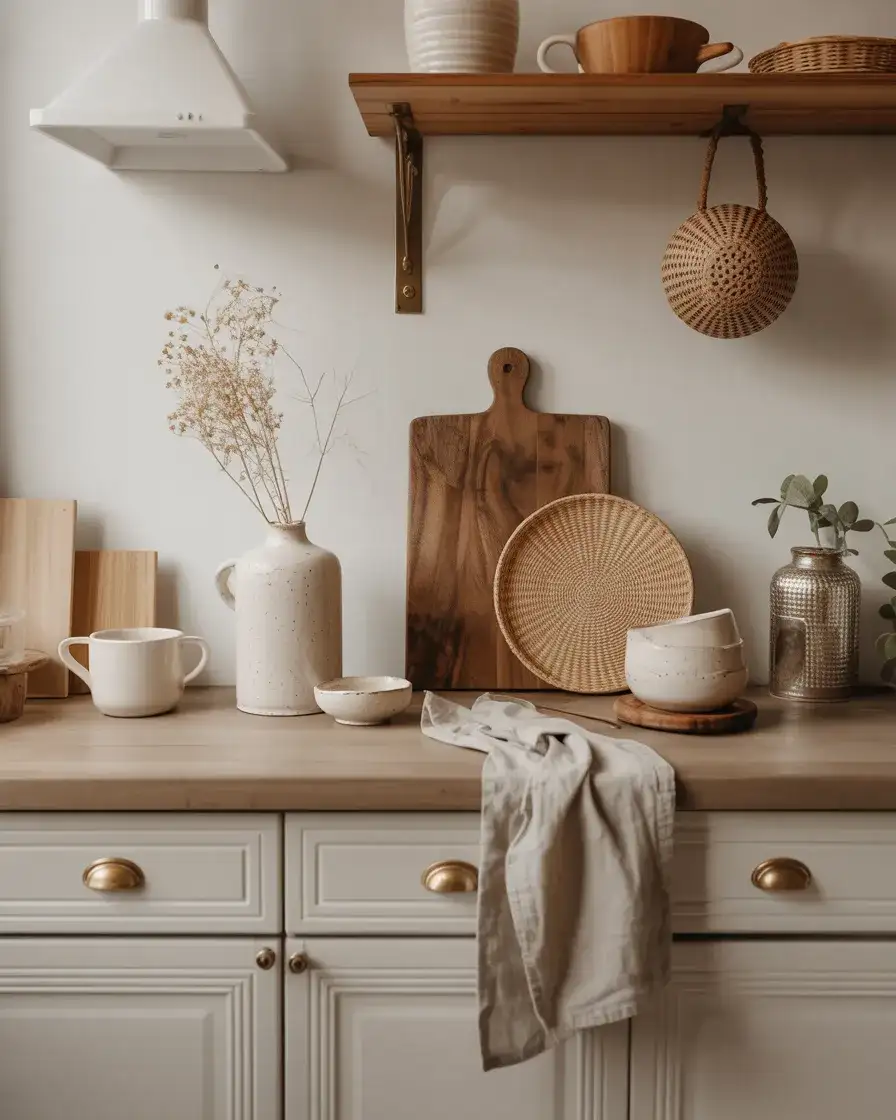
Mastering the art of decor layering is what separates a generic cottage kitchen from one that feels genuinely lived-in and loved. This means combining textures—smooth ceramics with rough wood, soft textiles with hard stone, and shiny brass with matte paint. It means mixing eras—a modern appliance next to a Victorian cutting board, a new linen towel beside a Depression-era mixing bowl. The inspiration comes from the way real kitchens evolve over time, accumulating objects that reflect the life of the household. The key is to avoid matchy-matchy sets in favor of curated collections that feel organic.
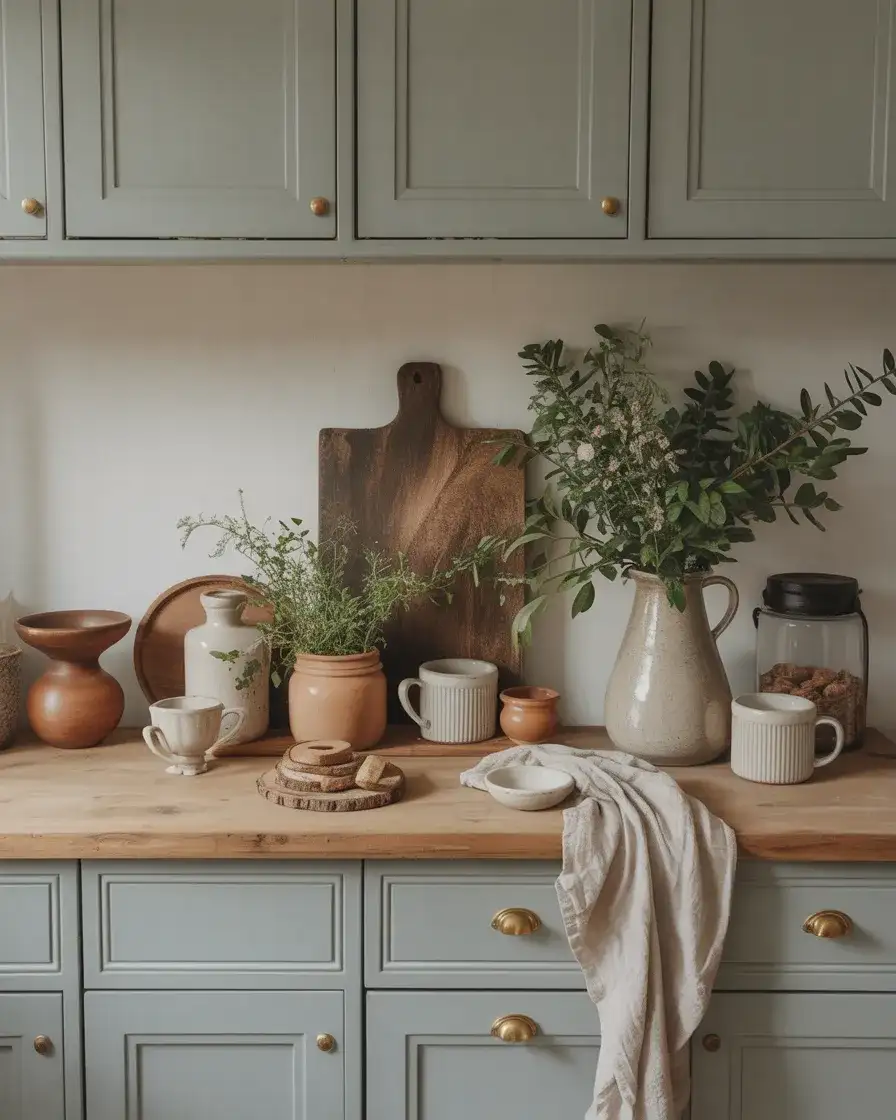
Think of your kitchen as a three-dimensional scrapbook where every object has a story and nothing is purely decorative. That cast-iron skillet gets used every Sunday for pancakes. Those jars of dried pasta aren’t just pretty—they’re dinner waiting to happen. This functional approach to layering keeps the space from feeling like a stage set and ensures it evolves naturally as your life changes.
21. Cottagecore Kitchen with Cozy Lighting
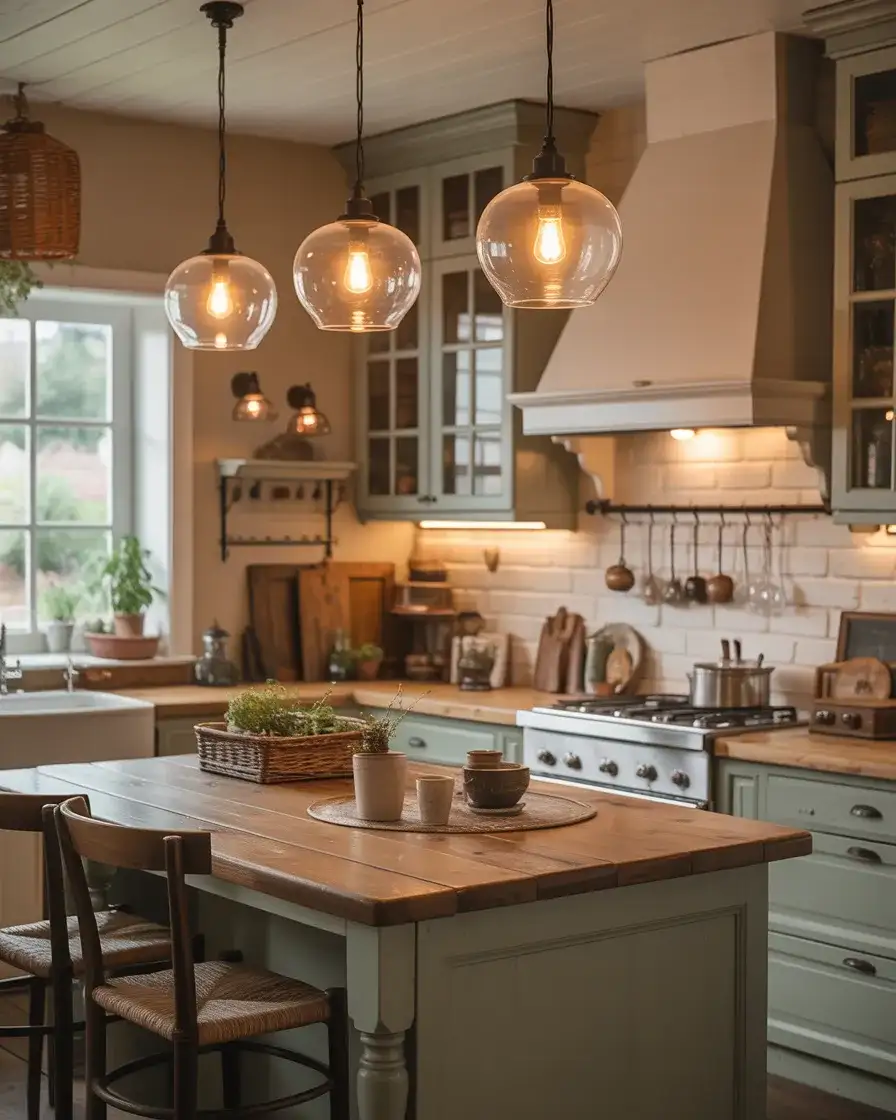
Thoughtful lighting transforms a cottagecore kitchen from merely functional to deeply atmospheric, creating pockets of warmth that invite you to linger long after the dishes are done. Layer your lighting with a mix of sources: pendant lights over the island or table, under-cabinet strips that illuminate work surfaces, and wall sconces flanking open shelving or windows. Choose fixtures with character—vintage-inspired glass shades, wrought iron frames, or woven rattan pendants—that complement the aesthetic rather than overpower it. Warm-toned bulbs (2700K-3000K) mimic candlelight and make the space feel cozy rather than clinical.
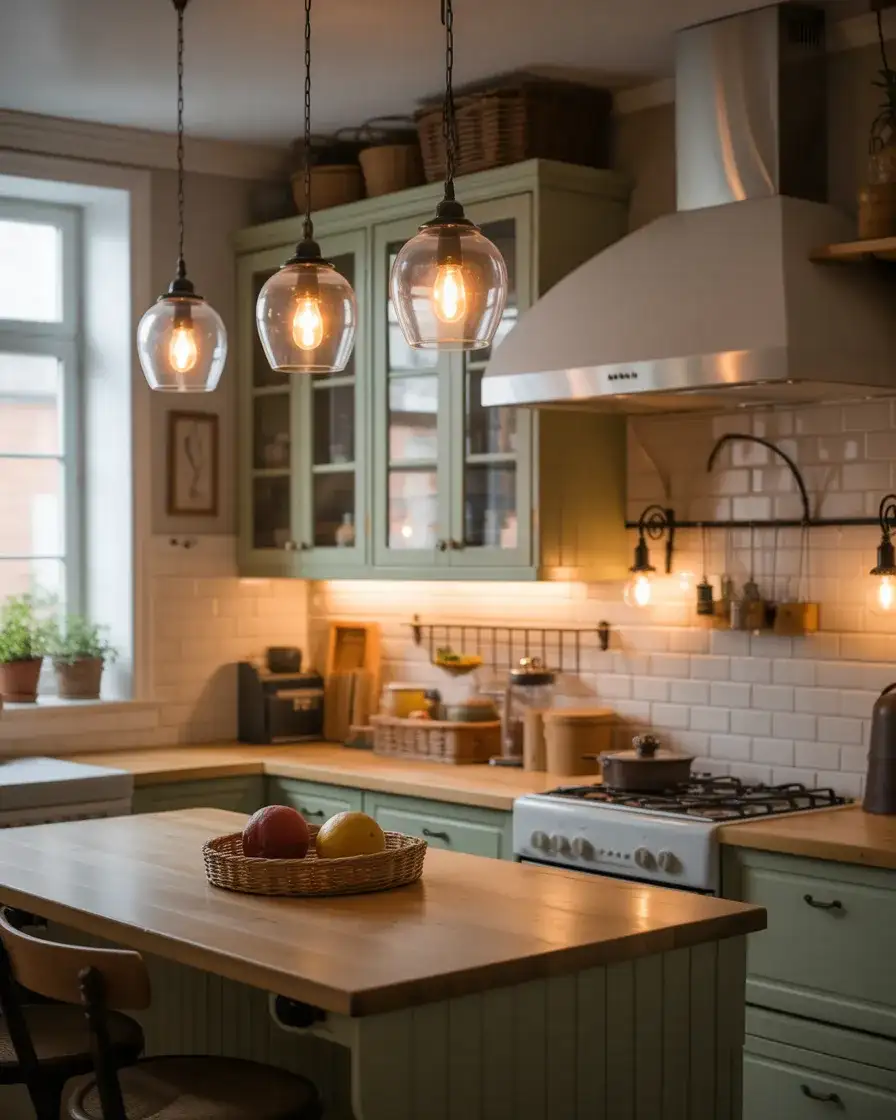
A common lighting mistake is relying solely on overhead fixtures, which can create harsh shadows and an unwelcoming glare. Dimmer switches are an inexpensive upgrade (around $20-50 per switch) that allow you to adjust the mood from bright task lighting during meal prep to soft ambient lighting during dinner. In homes across New England and the Pacific Northwest, where winter evenings are long and dark, homeowners are especially attuned to the importance of layered lighting in making their kitchens feel warm and welcoming year-round.
22. Cottagecore Kitchen with Seasonal Inspiration
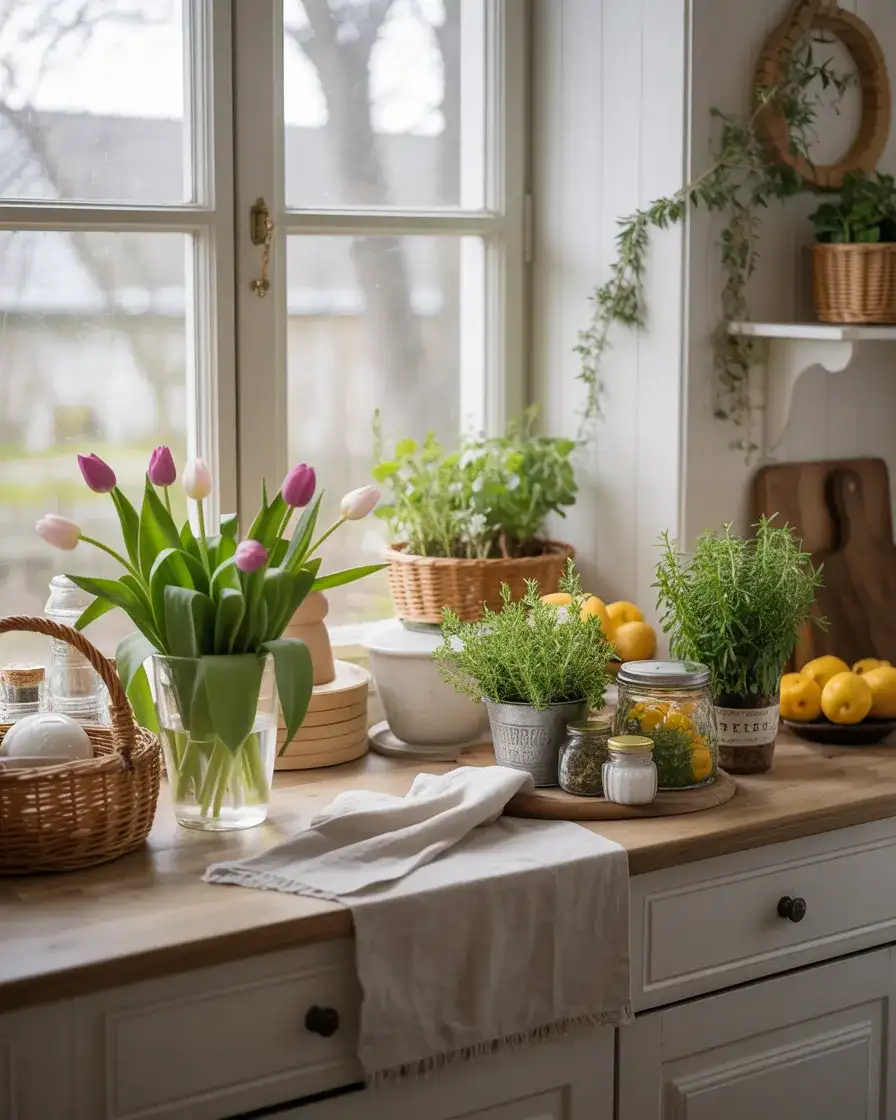
A true cottagecore kitchen evolves with the seasons, reflecting the rhythms of nature and the changing bounty of the garden or farmer’s market. In spring, display fresh tulips and daffodils, swap in lighter linens, and showcase tender greens and herbs in glass jars. Summer brings bowls of stone fruit, breezy curtains, and meals eaten at the kitchen table with windows thrown open. Autumn calls for copper molds, dried hydrangeas, and shelves lined with preserves and pickles. Winter invites evergreen boughs, plaid wool textiles, and the warm glow of candlelight. This seasonal approach keeps the aesthetic dynamic and rooted in the present moment rather than static and museum-like.
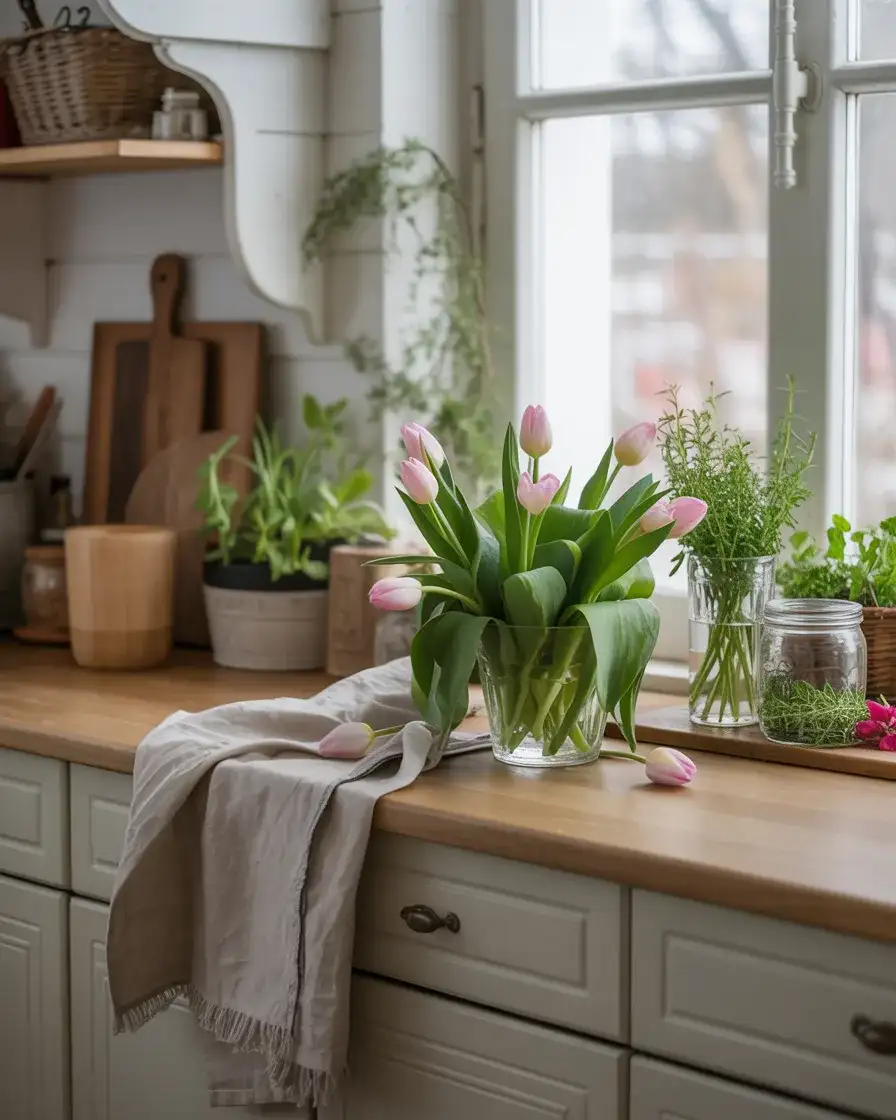
Rotating your kitchen decor seasonally doesn’t require a large budget or storage space—often it’s as simple as swapping out a few key textiles, changing the flowers on the counter, or bringing in foraged branches and leaves from the yard. This practice connects you more deeply to the natural world and the passage of time, which is at the heart of cottagecore philosophy. It’s a gentle reminder to slow down, pay attention, and find beauty in the everyday rhythms of home life.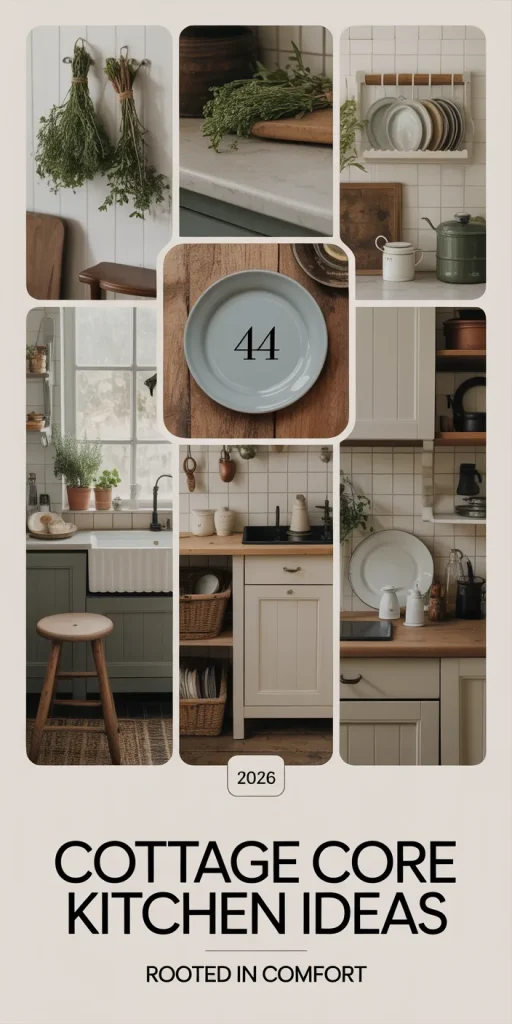
Conclusion
These cottagecore kitchen ideas offer a starting point for creating a space that honors tradition while embracing your personal style. Whether you’re drawn to dark moody tones, soft pastels, vintage treasures, or modern simplicity, the cottage aesthetic is flexible enough to accommodate your vision. We’d love to hear which ideas resonated with you most—share your thoughts, questions, or your own cottage kitchen journey in the comments below!