Black accent walls have become one of the most requested design features in American living rooms, and 2026 is shaping up to be their biggest year yet. Homeowners are turning to Pinterest in droves, searching for ways to add depth, drama, and sophistication to their spaces without a full renovation. A single black wall can anchor a room, highlight architectural details, and create a striking backdrop for art, furniture, and personal style. Whether you’re working with a farmhouse aesthetic, a modern minimalist vibe, or something eclectic and personal, black offers a versatility that few other colors can match. In this article, you’ll discover fresh, actionable ideas for incorporating a black accent wall into your living room—each one designed to inspire your next project.
1. Black Accent Wall with Built-In Fireplace and TV
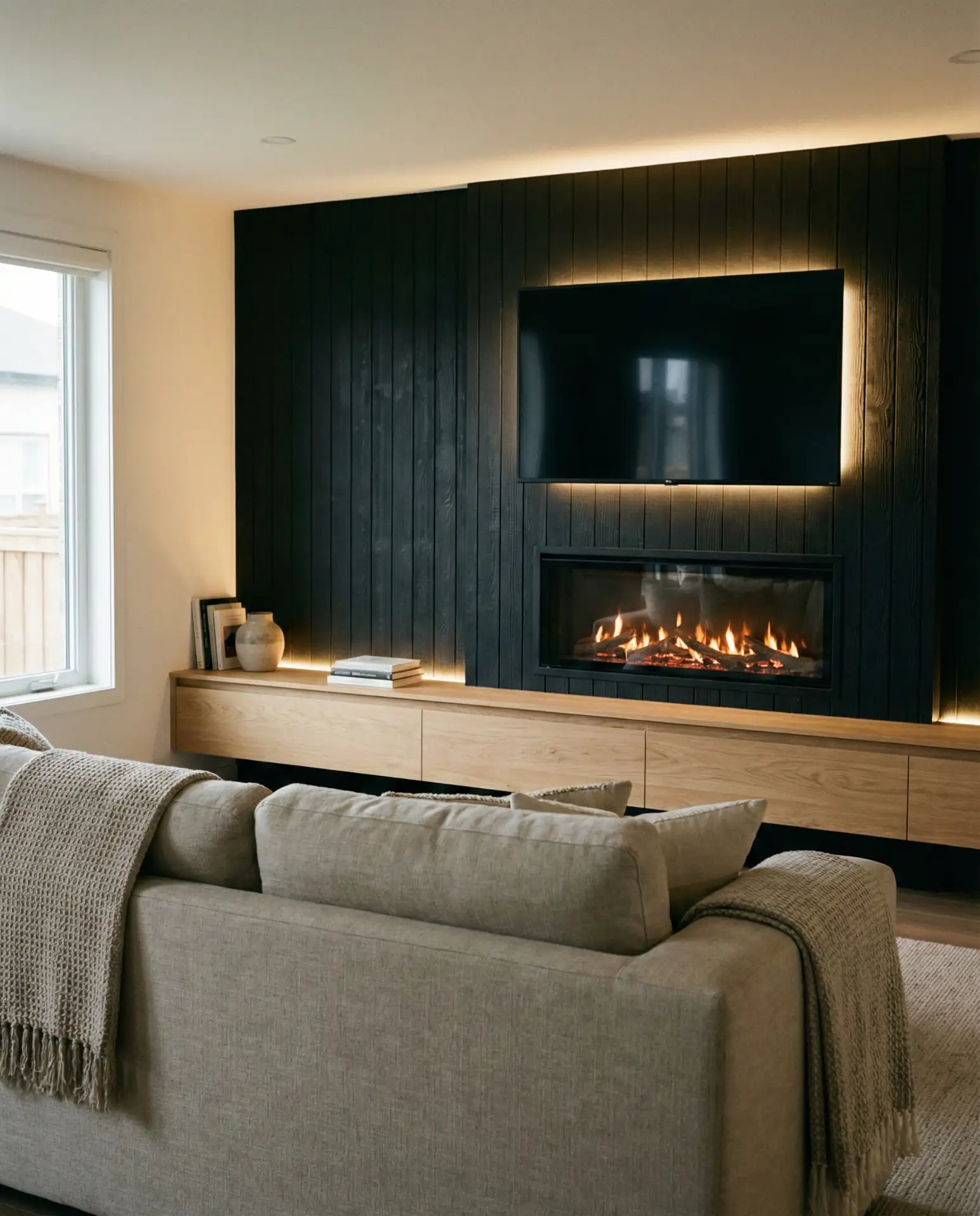
A black accent wall that houses both a TV and a fireplace creates a seamless focal point that feels both functional and luxurious. This setup works especially well in open-concept living rooms where the wall acts as a visual anchor. The dark backdrop minimizes the visual weight of the television, allowing it to blend in when not in use, while the fireplace adds warmth and texture. Pairing this with white walls on the surrounding surfaces keeps the room from feeling too heavy.
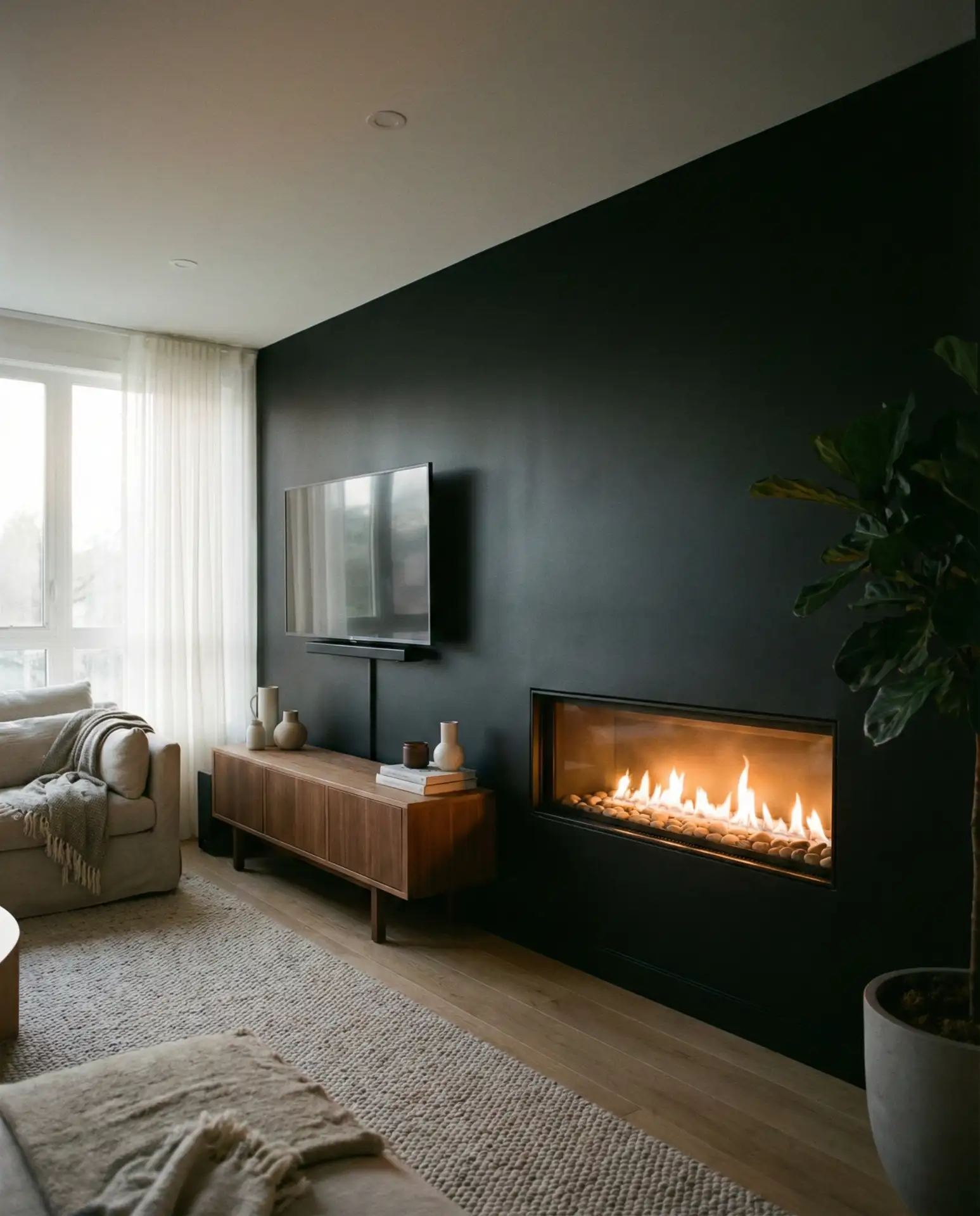
One common mistake is installing the TV too high above the fireplace, which strains the neck during viewing. Aim for eye level when seated, even if it means lowering the fireplace or choosing a slimmer model. This setup is ideal for families who want a single, organized entertainment zone without cords or clutter. It also suits homes in colder climates where a working fireplace adds both ambiance and actual heat during long winters.
2. Vaulted Ceiling with Black Accent Wall
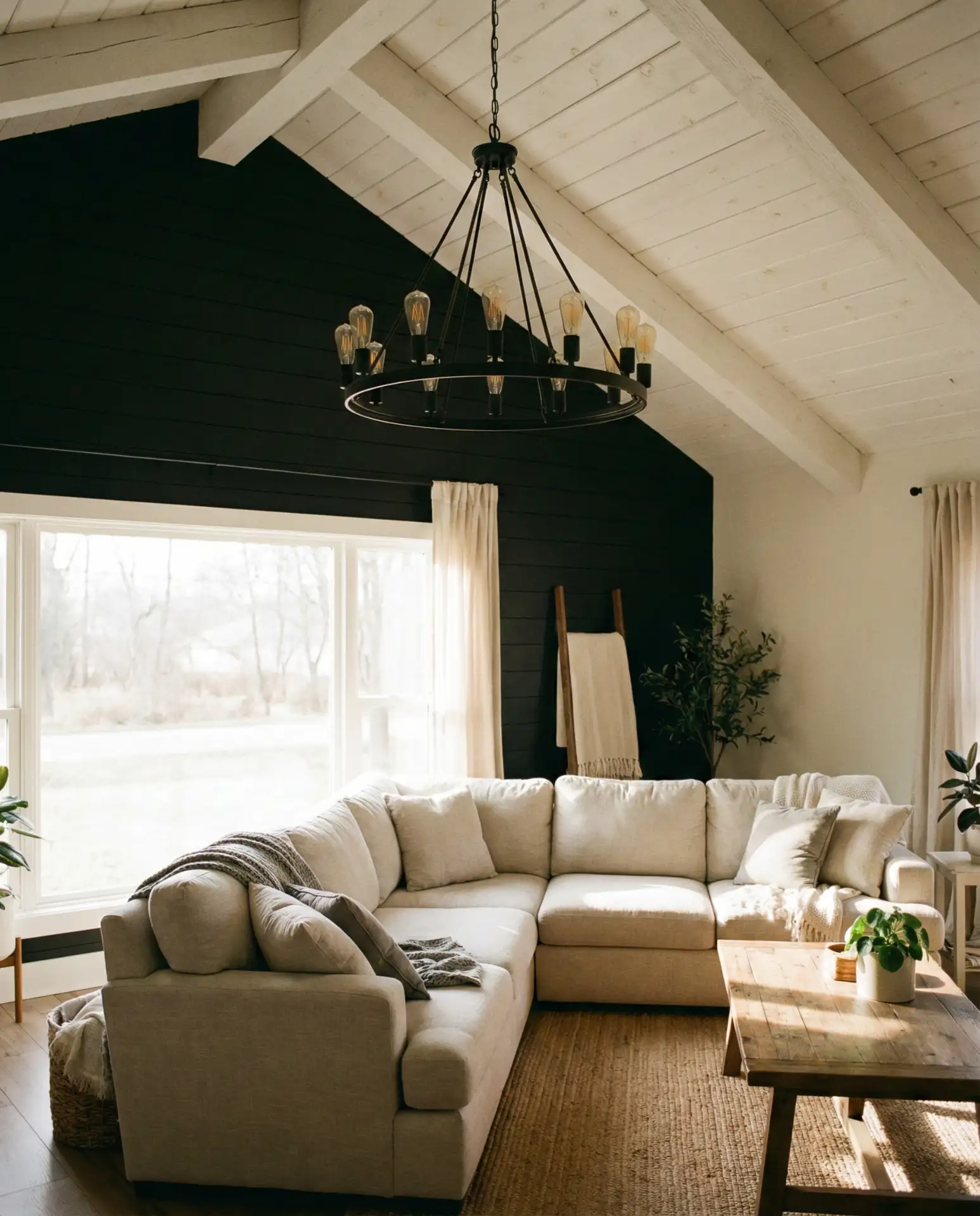
In a living room with a vaulted ceiling, a black accent wall can draw the eye upward and emphasize the room’s dramatic height. This approach works beautifully in farmhouse or rustic settings, where exposed beams and natural wood tones contrast against the dark surface. The black wall grounds the space, preventing it from feeling too airy or unfinished. Consider painting the wall that faces the main seating area to maximize impact.
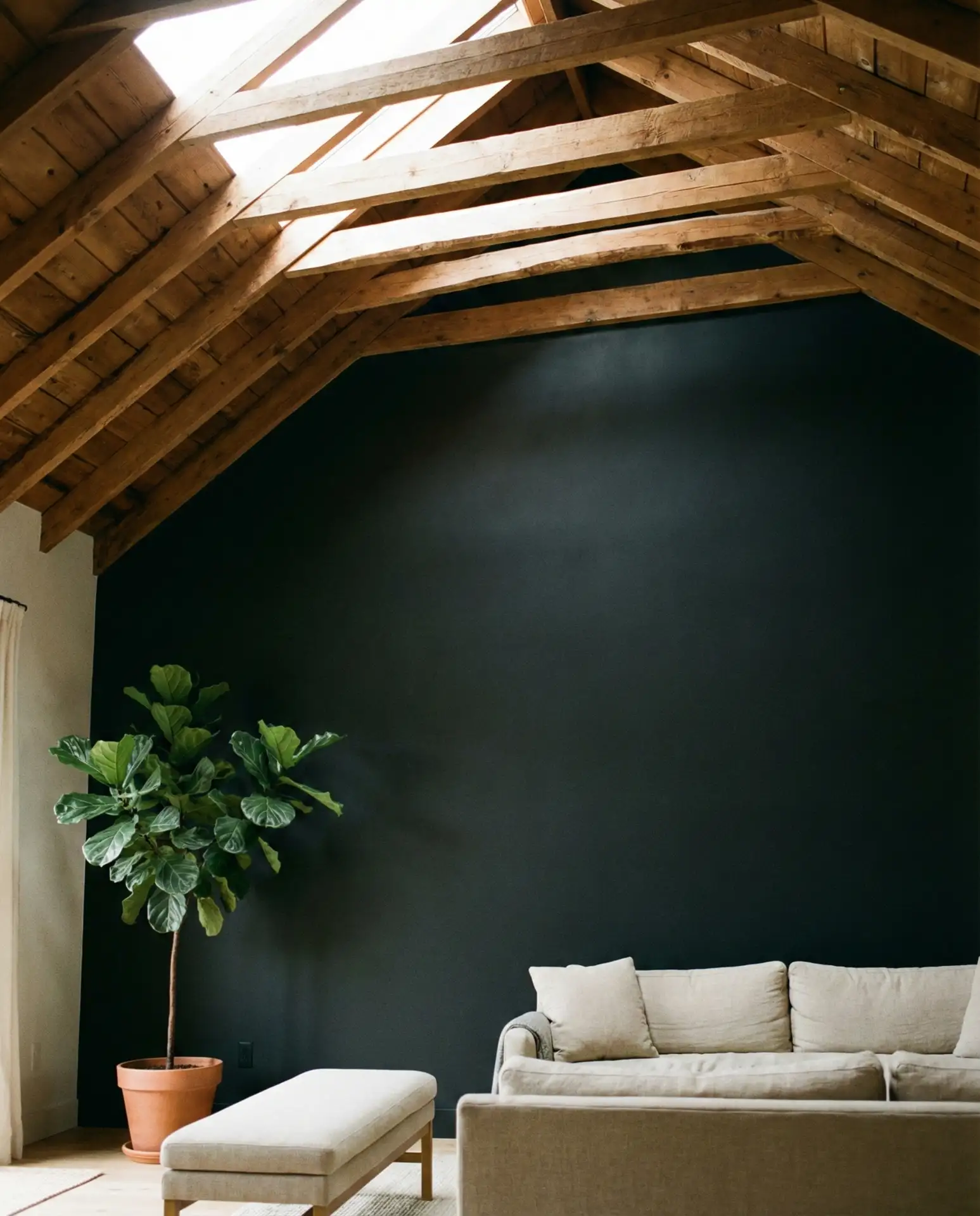
This works best in homes built in the 1980s and 1990s, which often feature soaring ceilings but lack a clear focal point. The black wall gives the room a sense of purpose and modernity without requiring structural changes. In the Pacific Northwest and mountain regions, homeowners often pair this look with stone fireplaces and leather seating for a lodge-inspired feel.
3. Black Accent Wall Behind Brown Leather Couch
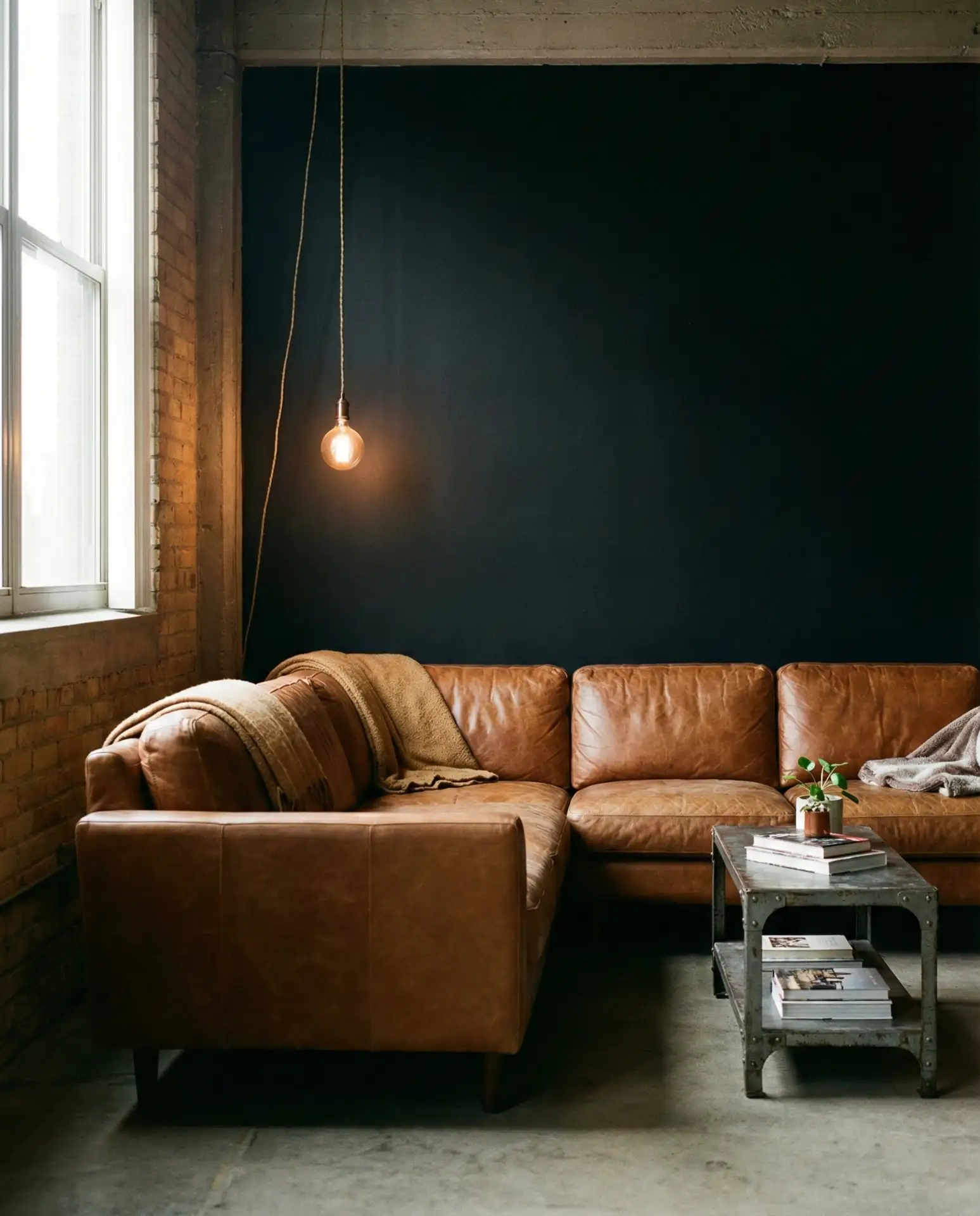
A black accent wall behind a brown couch—especially in leather—creates a rich, layered look that feels both masculine and timeless. The warmth of the brown plays beautifully against the cool depth of black, especially when you add brass or gold accents in lighting and hardware. This combination is popular in modern lofts and urban apartments, where a moody, sophisticated vibe is the goal.
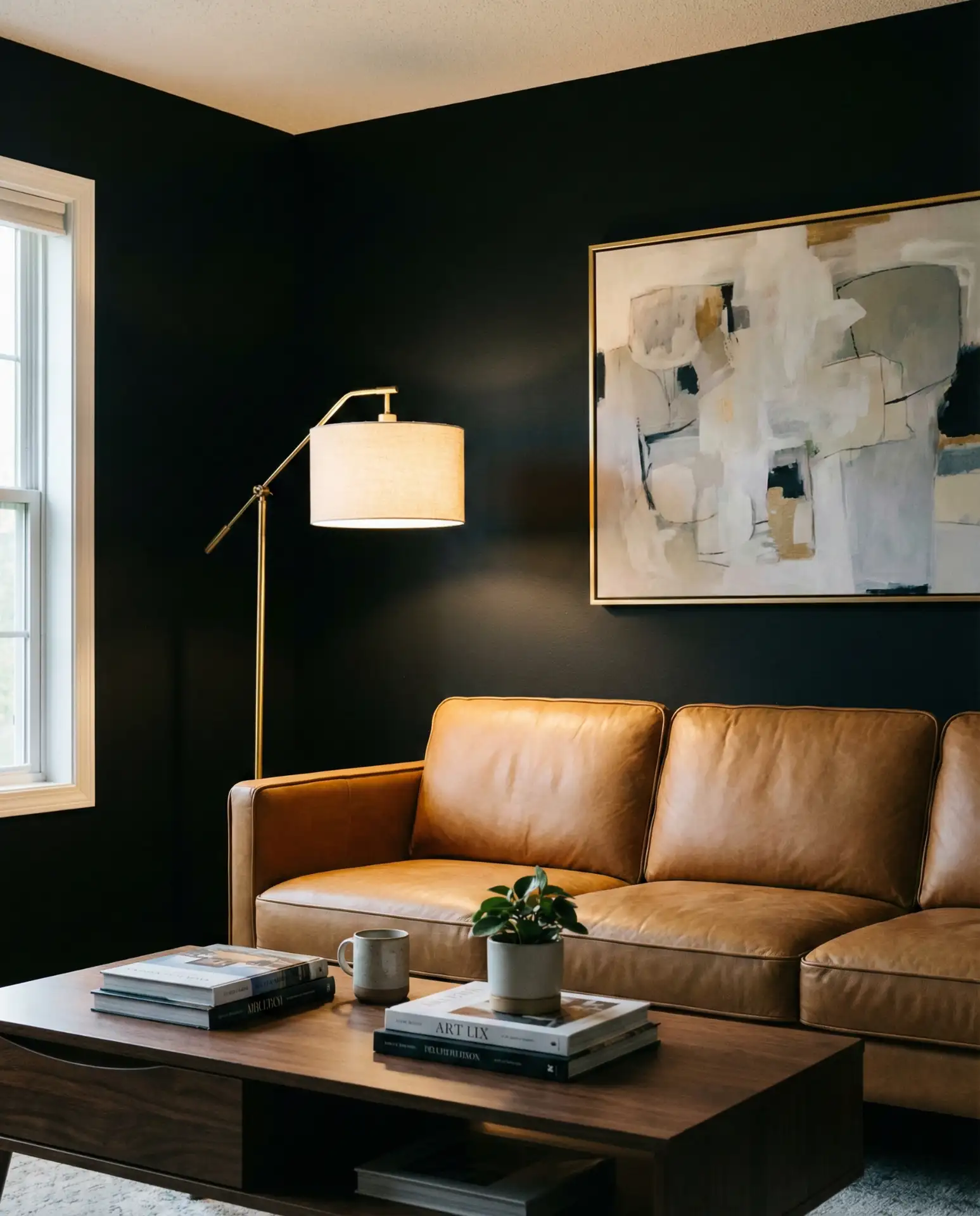
A friend who works in interior staging mentioned that this combo consistently photographs well and appeals to buyers in their 30s and 40s. It’s grounded enough to feel adult but not so formal that it’s uncomfortable for everyday living. If you’re working with a tight budget, skip the custom art and lean into textured throw pillows and a statement rug instead.
4. Charcoal Black Accent Wall with Large Windows
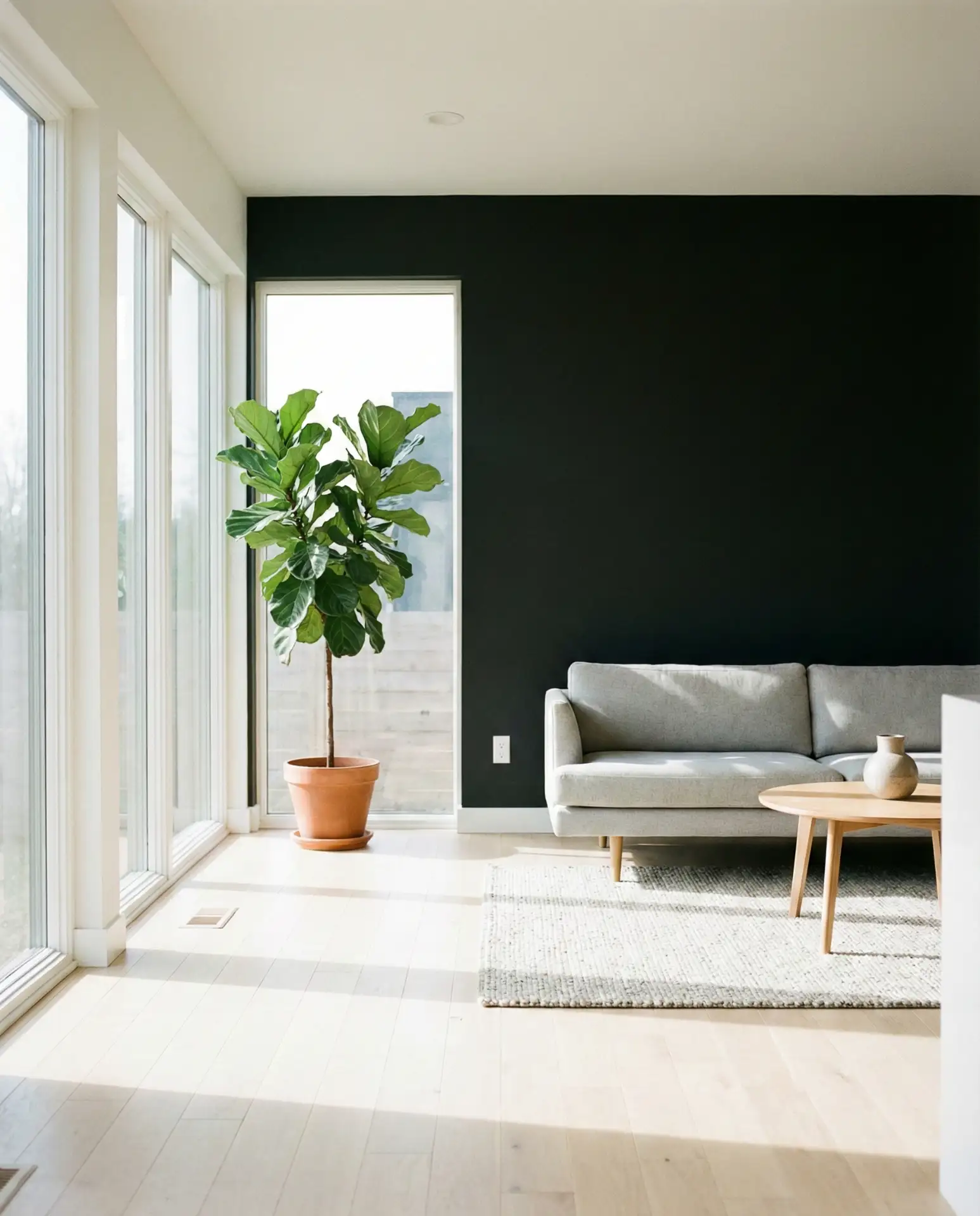
When you have large windows flooding the room with natural light, a charcoal or deep black wall won’t feel oppressive—it’ll feel intentional. The contrast between the dark wall and bright daylight creates a dynamic, gallery-like atmosphere. This approach is especially effective in modern homes with floor-to-ceiling glass or sliding doors that open to a deck or garden.
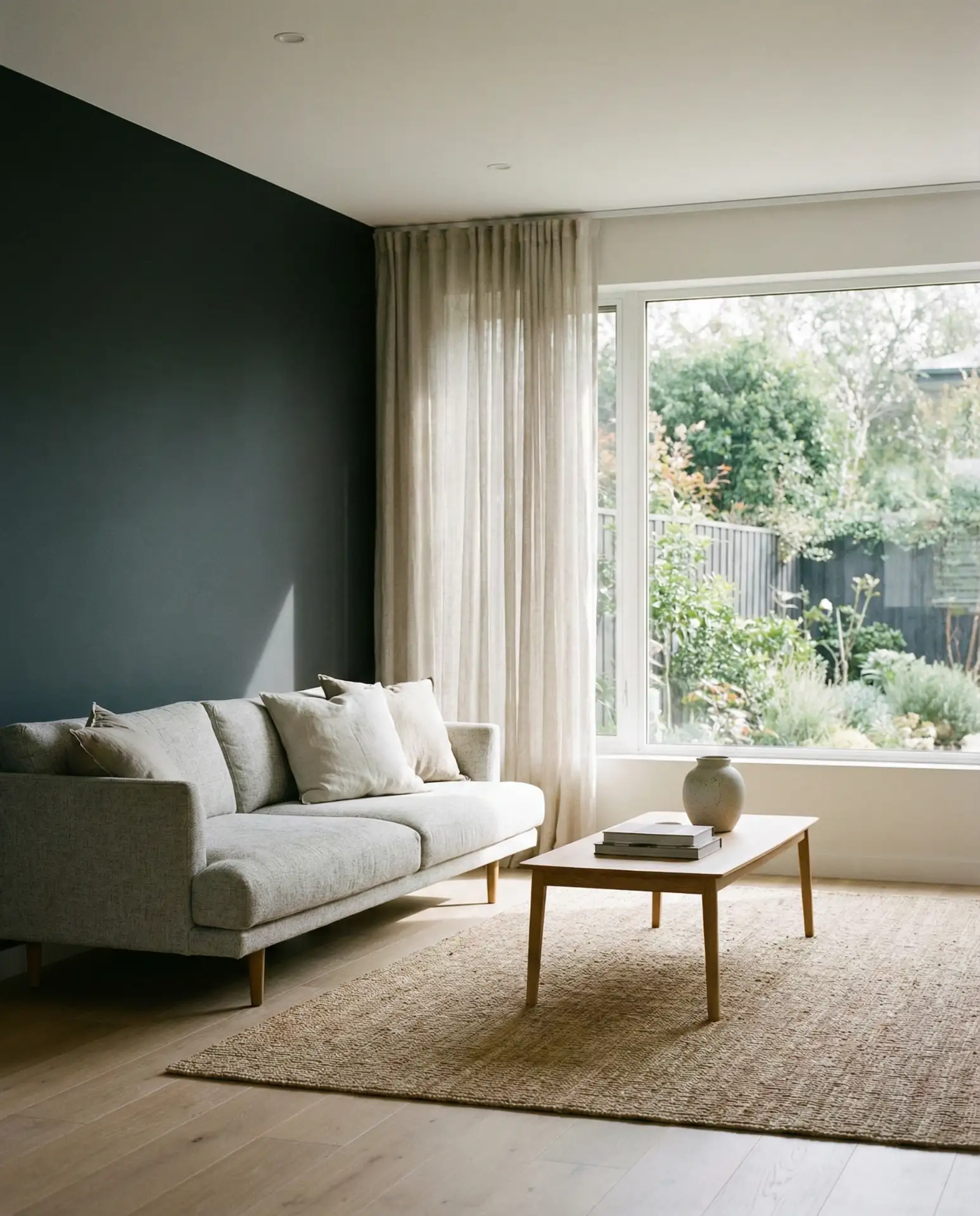
In the South and Southwest, where sunlight is intense year-round, homeowners use this trick to reduce glare and add visual interest without blocking views. The dark wall absorbs light rather than reflecting it, which can make a sunny room feel more balanced. Just be sure to use a matte or eggshell finish to avoid unwanted shine.
5. Black Accent Wall with Floating Wood Shelves
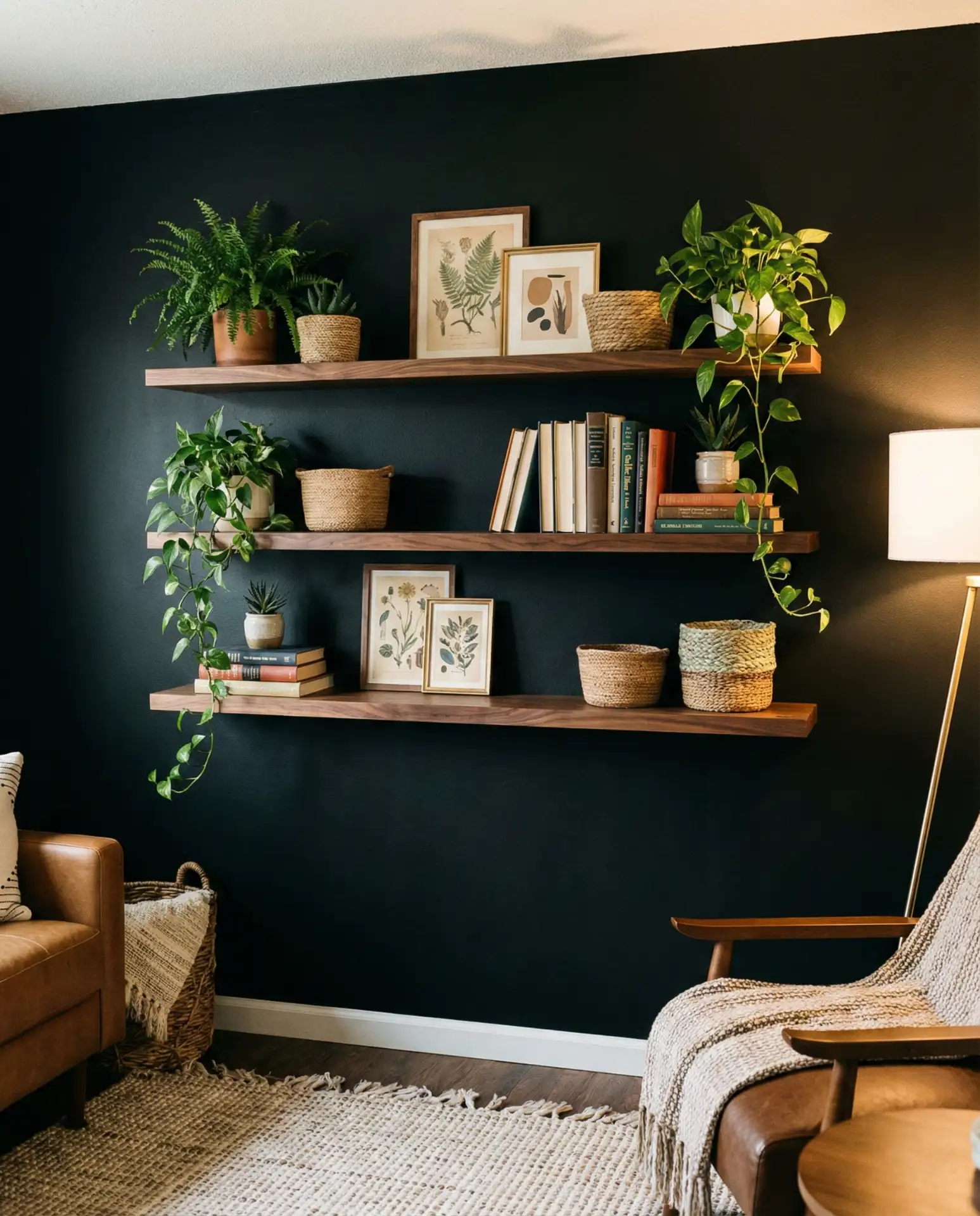
Installing wood shelves on a black accent wall gives you a functional display area that doubles as art. The natural grain of the wood pops against the dark backdrop, making books, plants, and ceramics look curated and intentional. This setup is a favorite in boho and eclectic interiors, where personal collections take center stage.
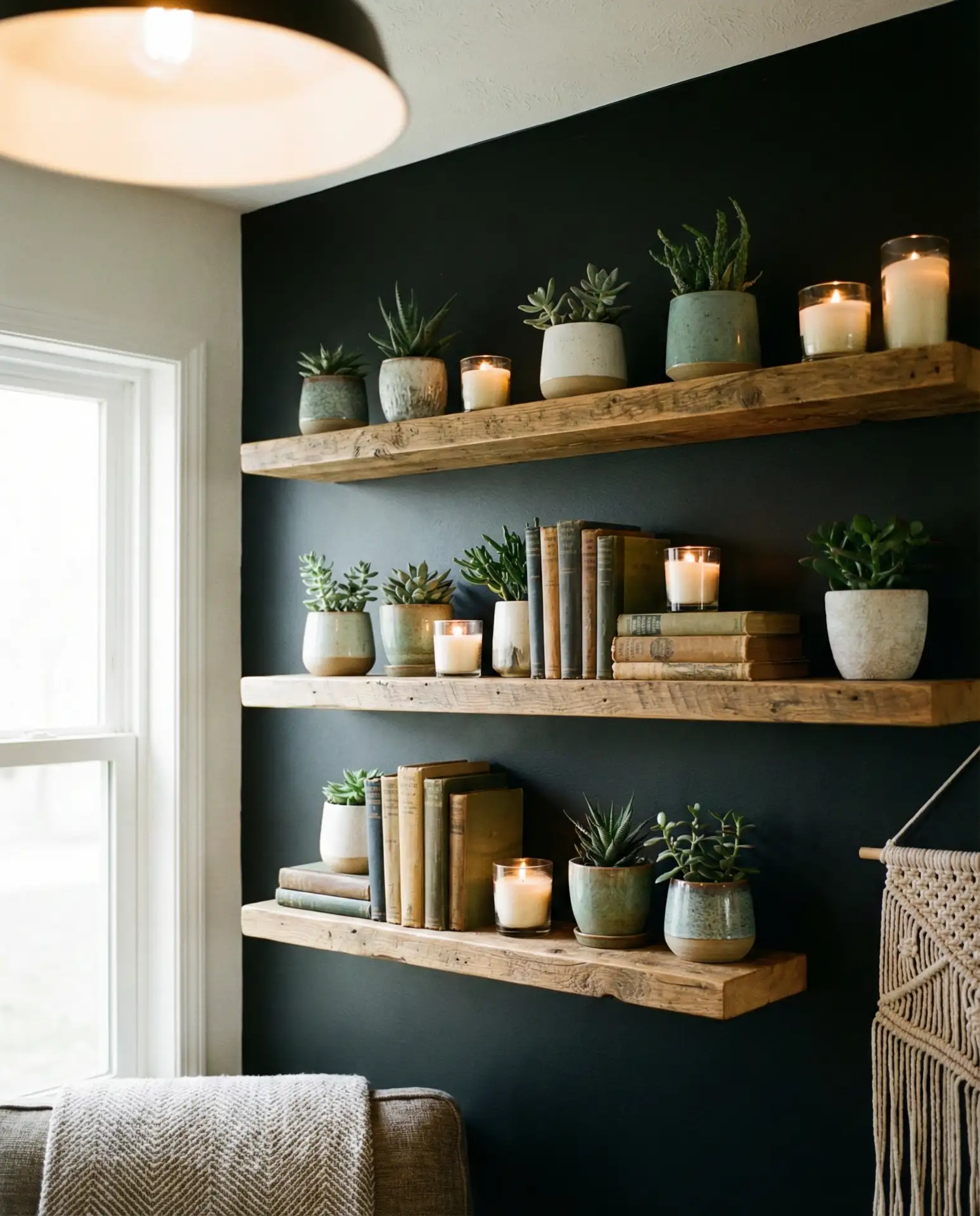
Real homeowners often underestimate how much styling open shelves require. The key is to edit ruthlessly—too many items create visual clutter, especially against a bold wall. Stick to a color palette of three to four tones, and leave some empty space. This look is ideal for renters, since floating shelves are easy to install and remove without major damage.
6. Black Accent Wall in Open Dining Room and Living Room
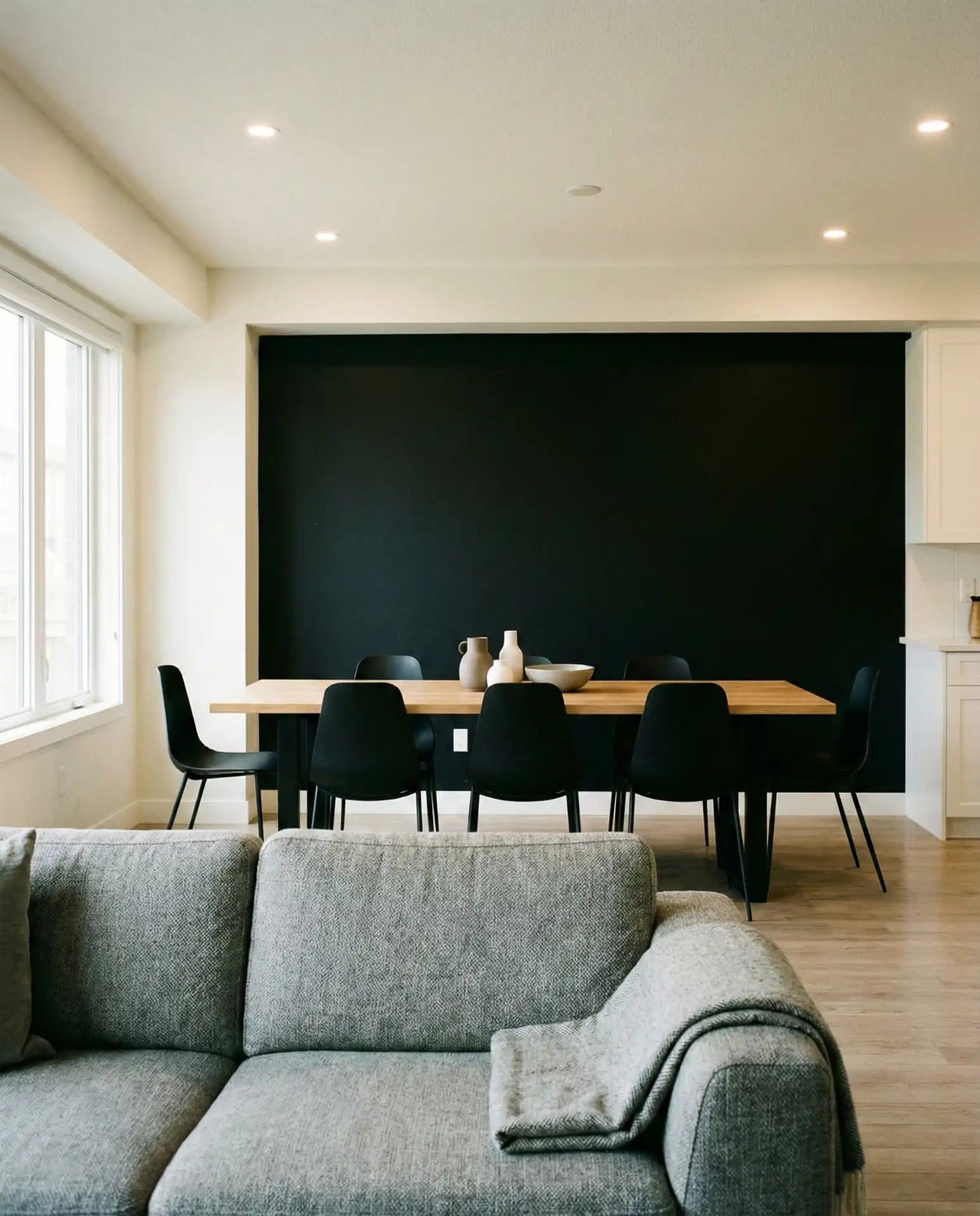
In an open-plan layout, a single black accent wall can define the boundary between the living room and dining room without the need for dividers or furniture placement. It creates visual separation while maintaining flow. This technique is especially useful in lofts and newer builds where walls are minimal and flexibility is key.
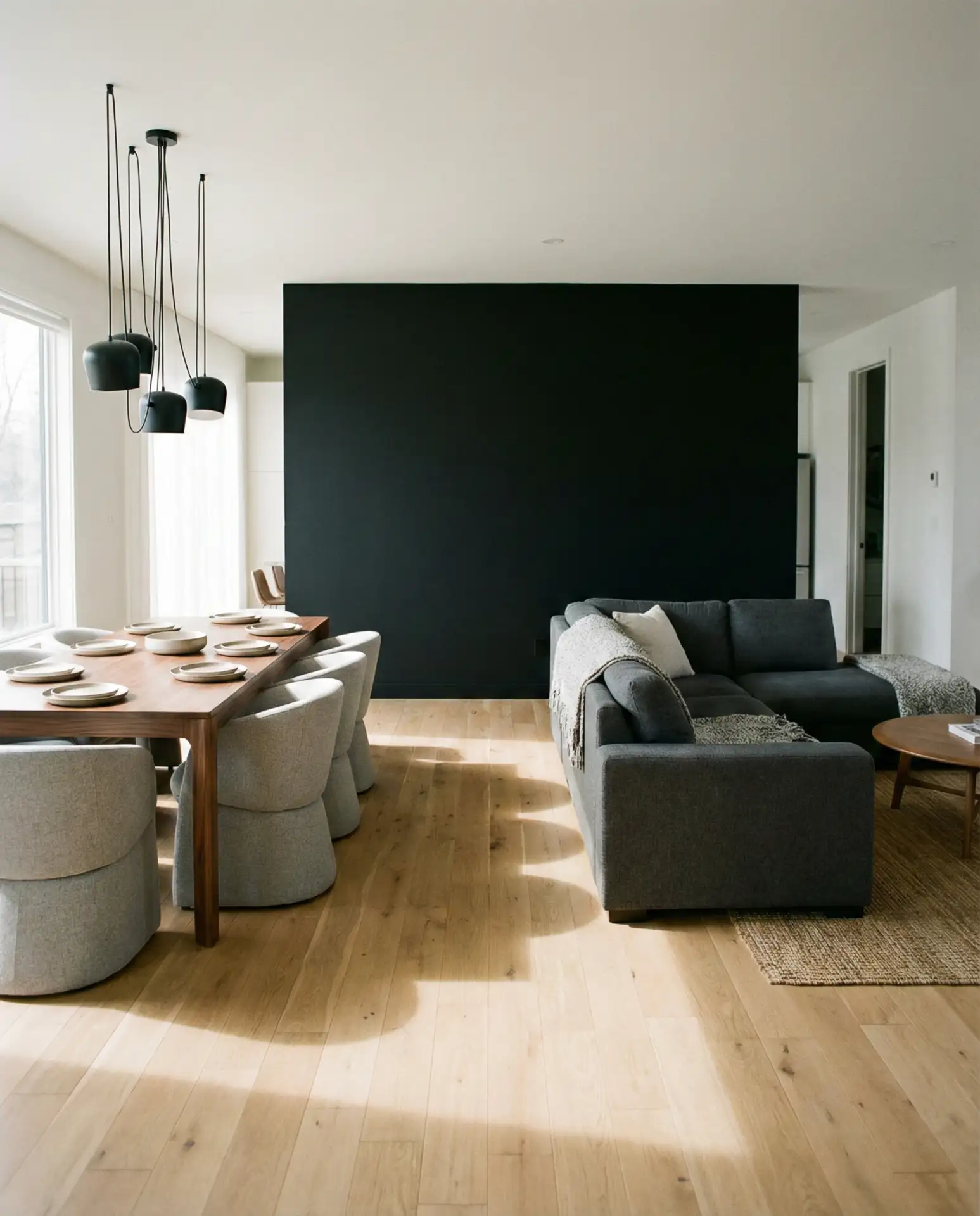
According to a designer based in Austin, this approach is gaining traction in new construction homes where buyers want defined zones but don’t want to lose square footage to hallways or walls. The black wall acts as a backdrop for both spaces, unifying the palette while giving each area its own identity. It’s also a smart move if you’re staging a home for sale.
7. Tricorn Black Accent Wall with White Trim
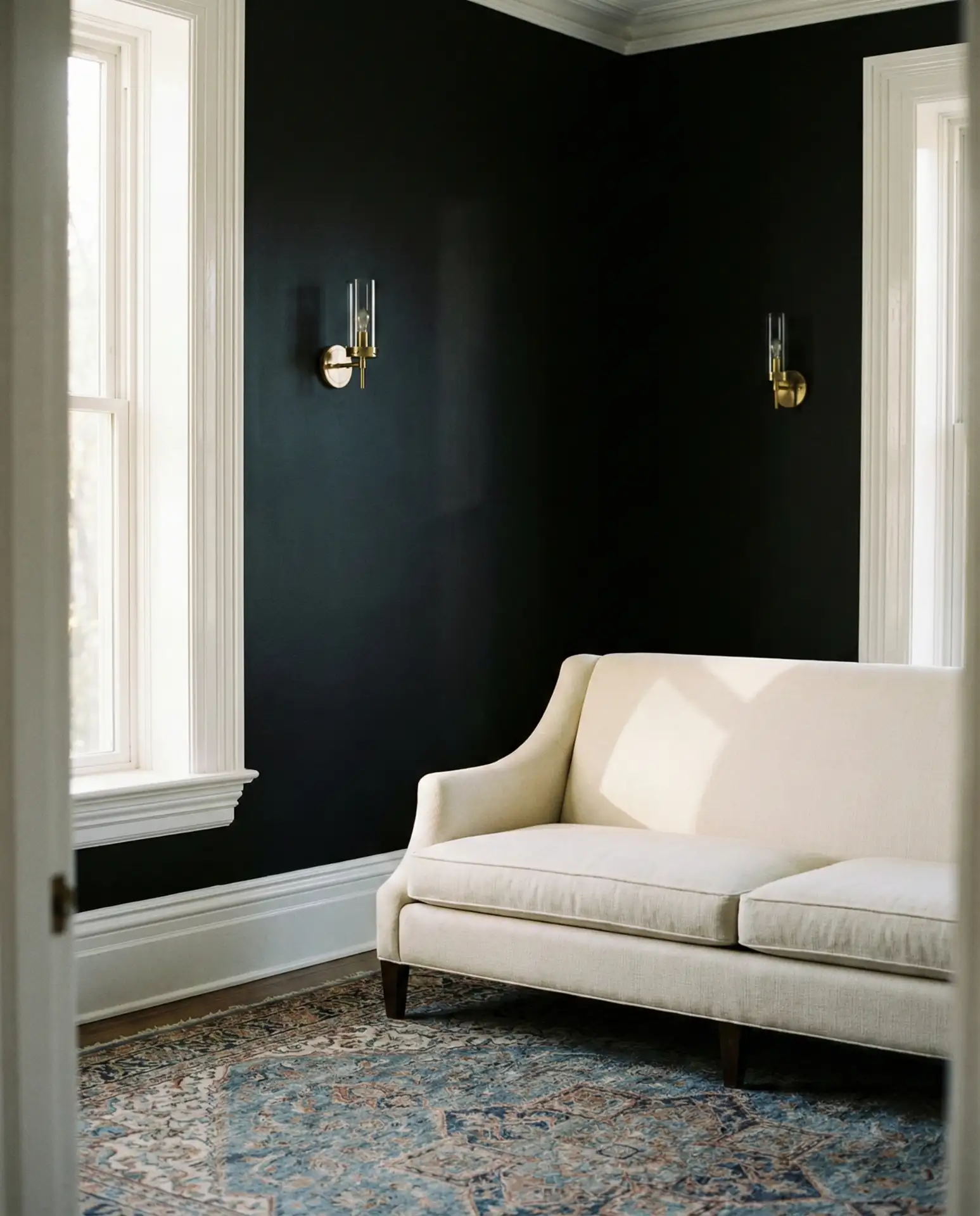
Sherwin-Williams Tricorn Black is one of the most popular true blacks for accent walls, and it looks stunning when paired with crisp white trim and molding. The contrast is bold but classic, and it works in both traditional and contemporary settings. This combination is especially effective in homes with original architectural details like baseboards, crown molding, or wainscoting.
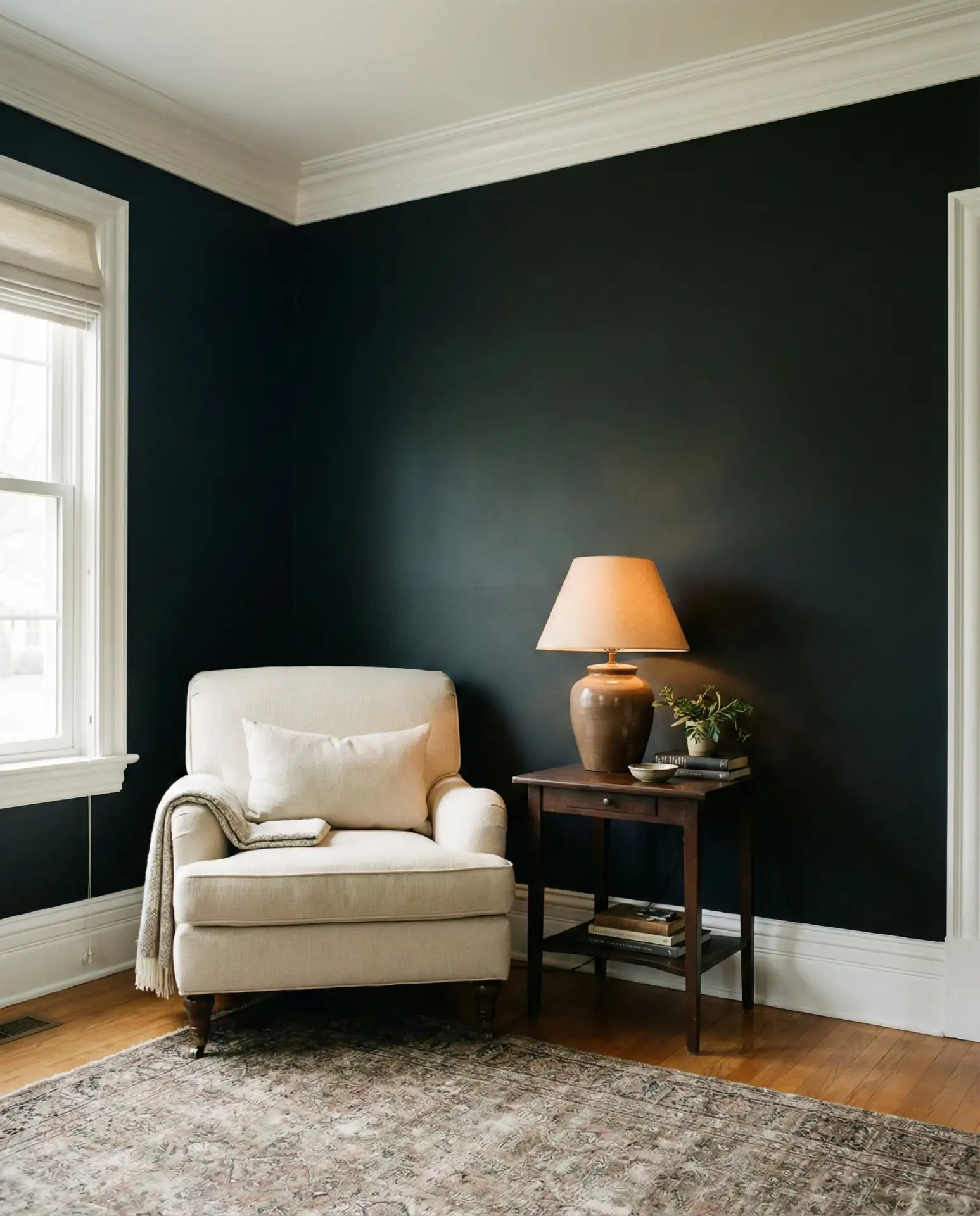
One practical insight: Tricorn Black has very little undertone, which means it won’t shift green or blue depending on the light. That consistency makes it easier to coordinate with other colors in the room. It’s also widely available at most hardware stores, which keeps the cost down compared to specialty or designer paints.
8. Matte Black Wall with High Ceilings
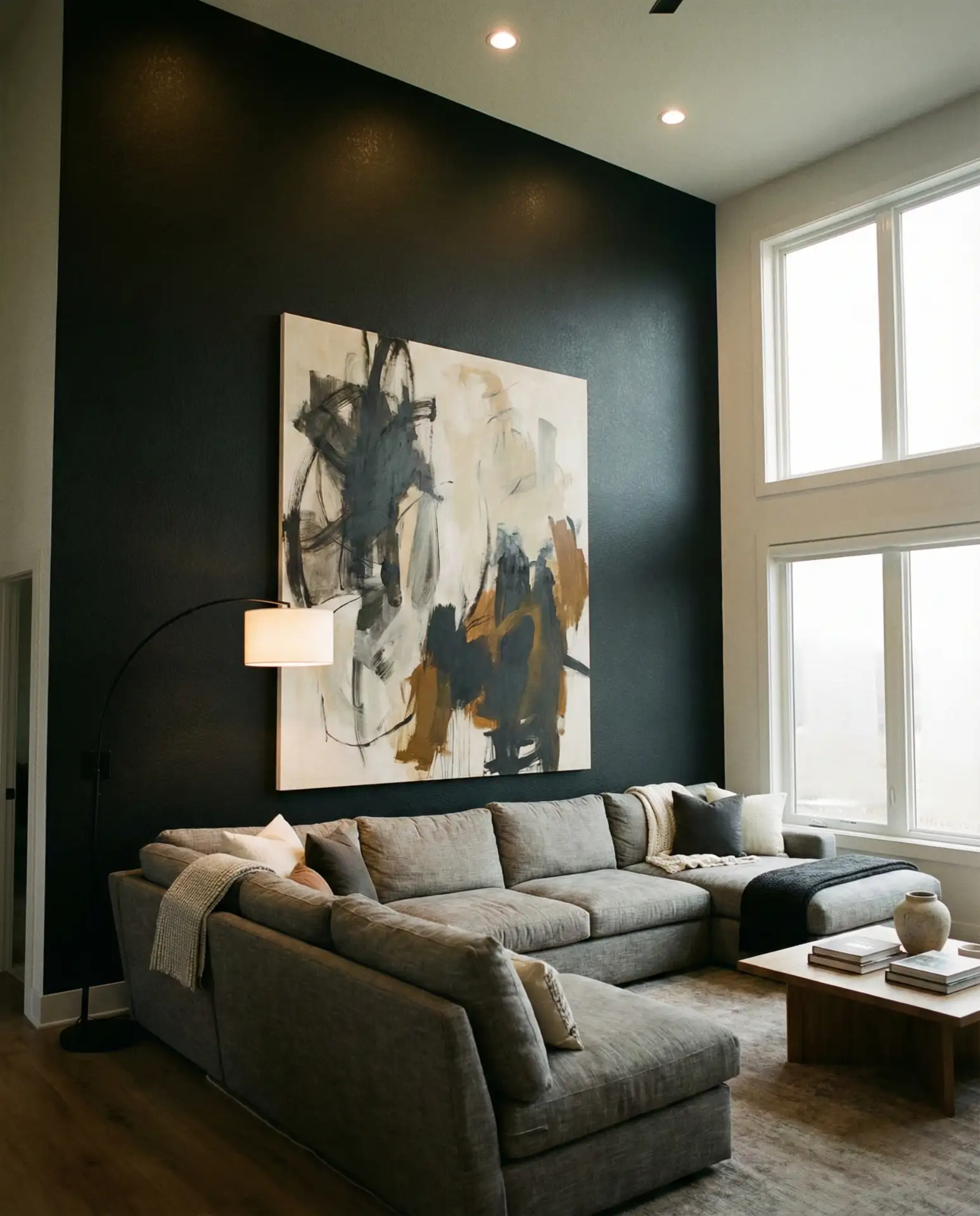
A matte finish on a black accent wall in a room with high ceilings creates a sense of intimacy and enclosure without sacrificing grandeur. The lack of sheen absorbs light and softens the space, making oversized rooms feel more livable. This is a go-to strategy in historic homes, converted warehouses, and suburban builds with 10- to 12-foot ceilings.
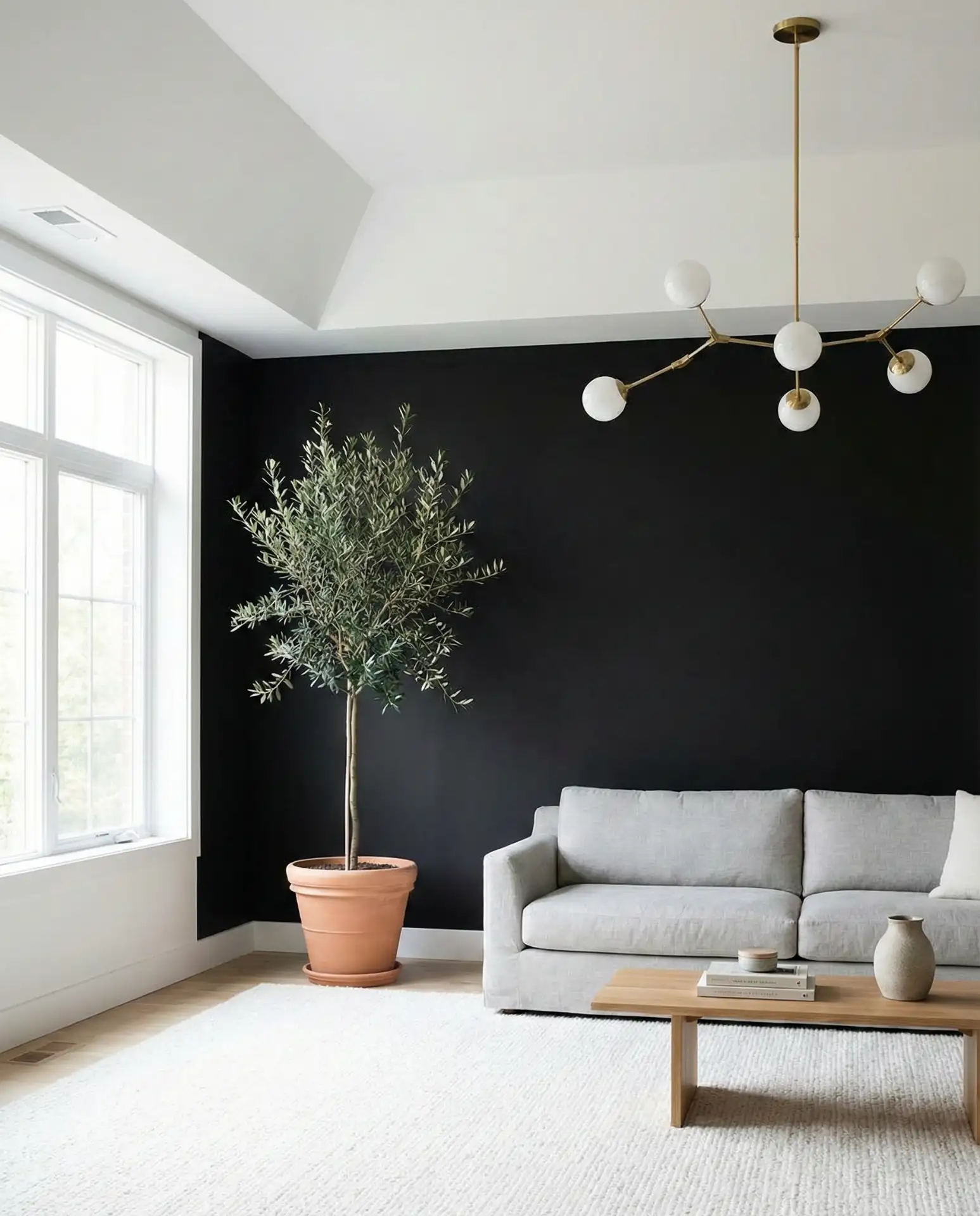
This works best in homes where natural light is abundant—think large windows or open floor plans. Without enough light, a matte black wall can make a tall room feel cave-like. In cities like Denver and Portland, where older homes often have high ceilings and good sunlight, this look has become a signature move for DIY renovators.
9. Black Accent Wall with Blue Velvet Couch
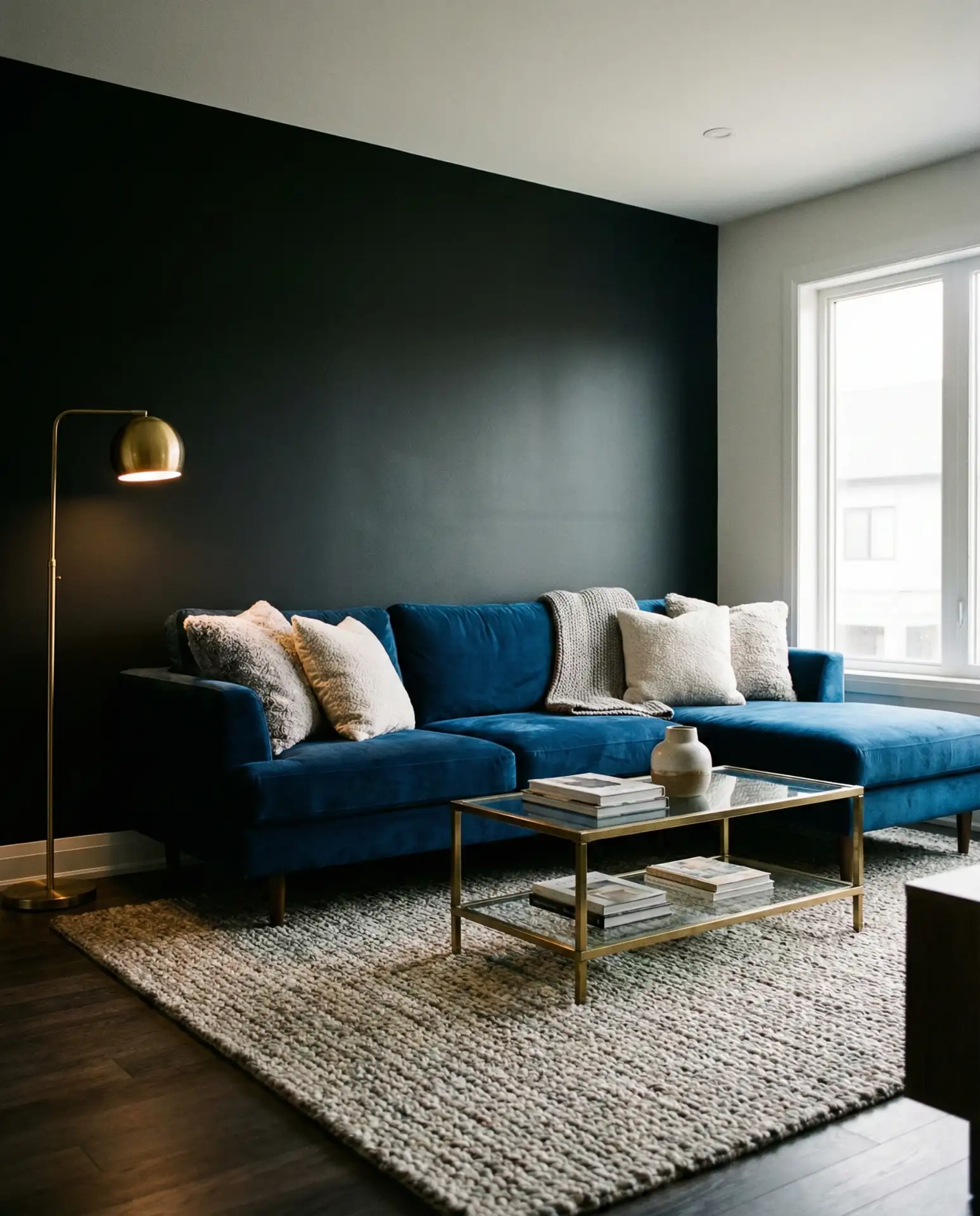
Pairing a black accent wall with a jewel-toned blue couch creates a moody, sophisticated palette that feels both luxurious and livable. Navy, sapphire, or teal velvet all work beautifully against black, especially when you add metallic accents in brass or copper. This combination has taken off on Pinterest among younger homeowners looking for something bolder than the ubiquitous gray-and-white scheme.
A common mistake is choosing a blue that’s too light or pastel—it won’t have enough weight to stand up to the black. Stick with rich, saturated tones. This look is especially popular in urban apartments and condos, where bold color can make a small space feel intentional and designed rather than generic.
10. Black Accent Wall in Western or Rustic Living Room
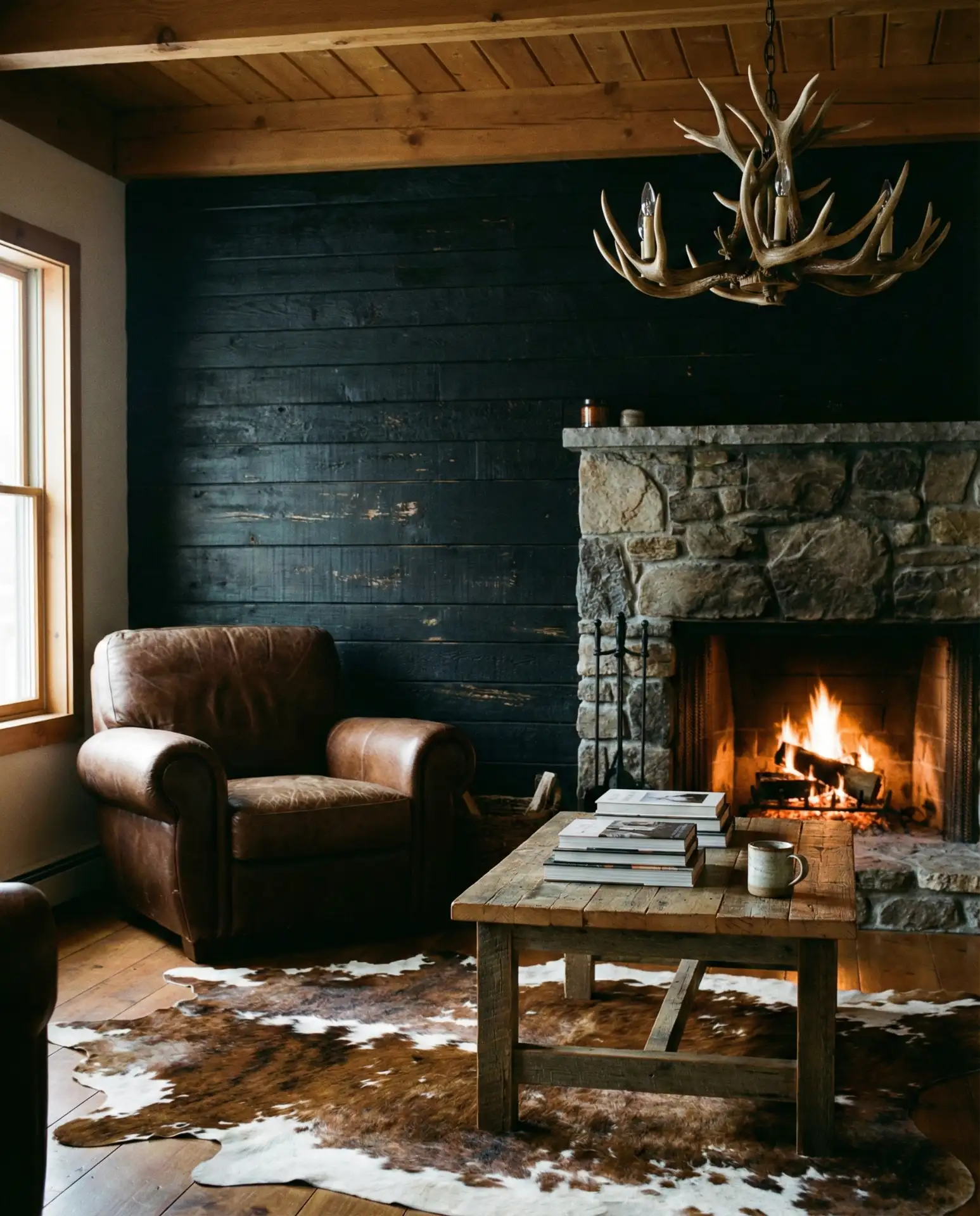
A black accent wall might seem unexpected in a Western or rustic interior, but it actually enhances the rough-hewn textures and earthy tones typical of the style. Think black shiplap or board-and-batten paired with leather furniture, cowhide rugs, and wrought iron accents. The dark wall makes the natural materials feel more intentional and less kitschy.
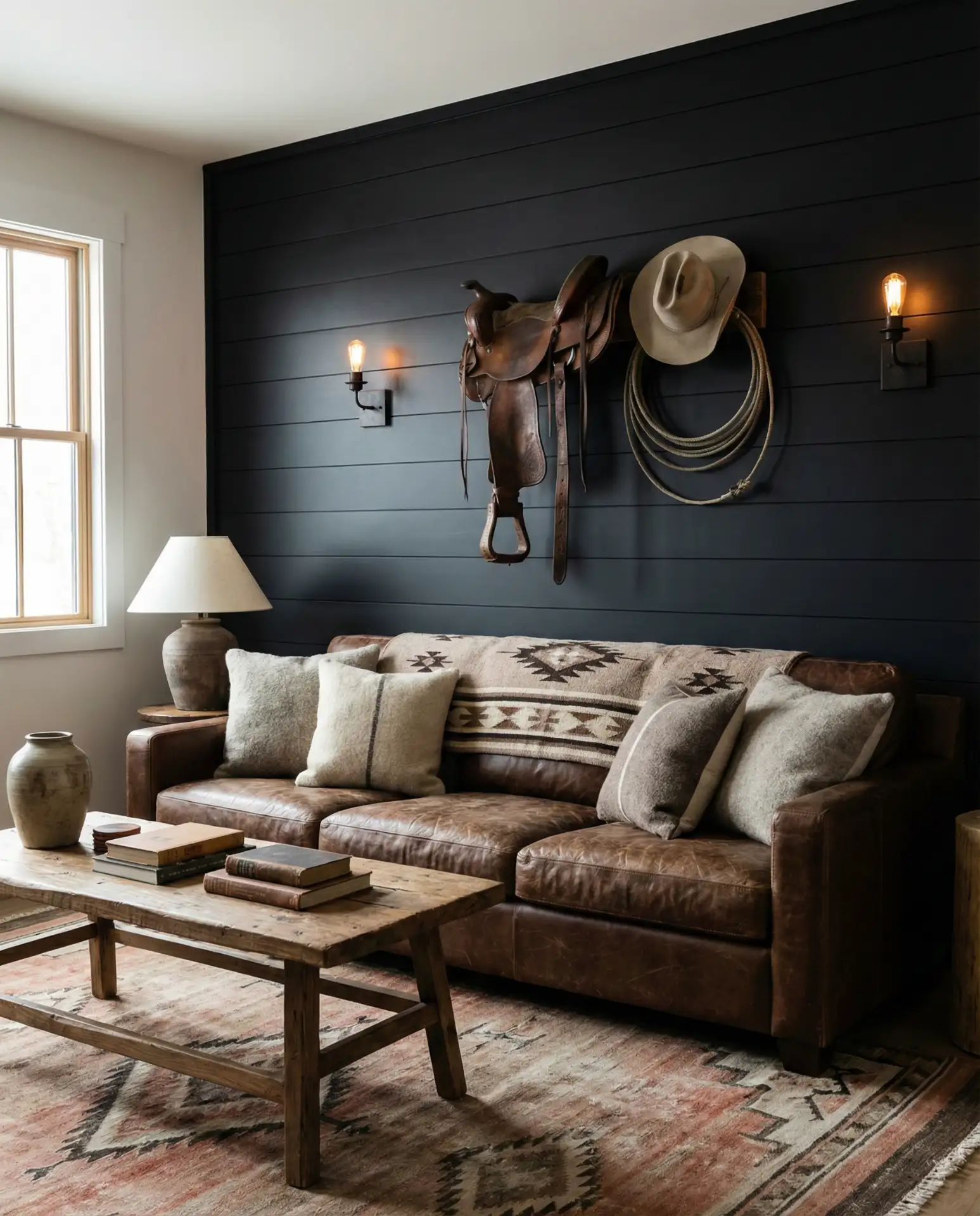
In Texas and Montana, this look has become a modern take on ranch style—it honors the heritage without feeling dated. Real homeowners report that it’s also easier to maintain than lighter walls in homes with pets and kids, since scuffs and dust are less visible. Budget-wise, shiplap or plywood planks painted black are far cheaper than reclaimed wood but deliver a similar vibe.
11. Black Accent Wall with Vintage Decor
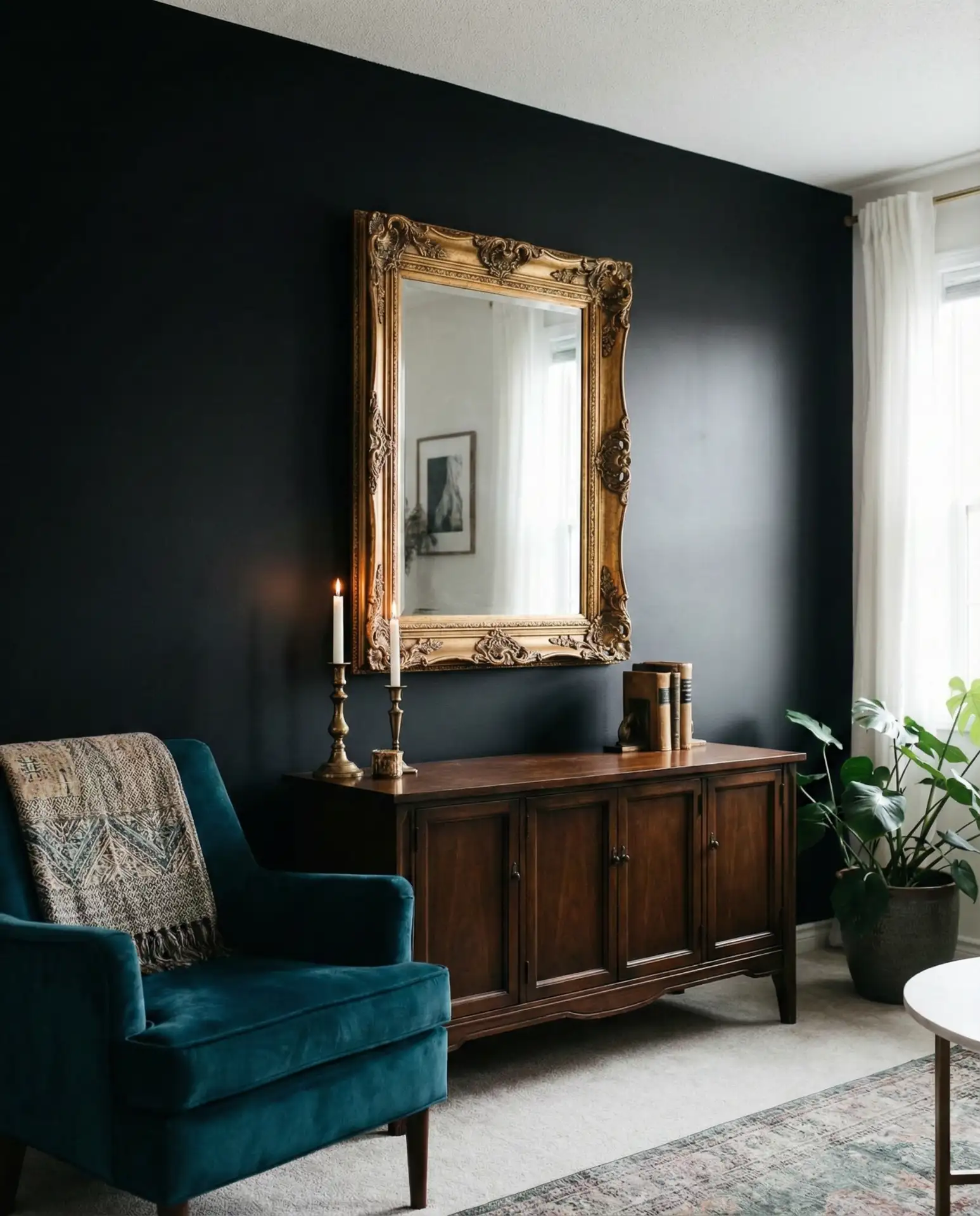
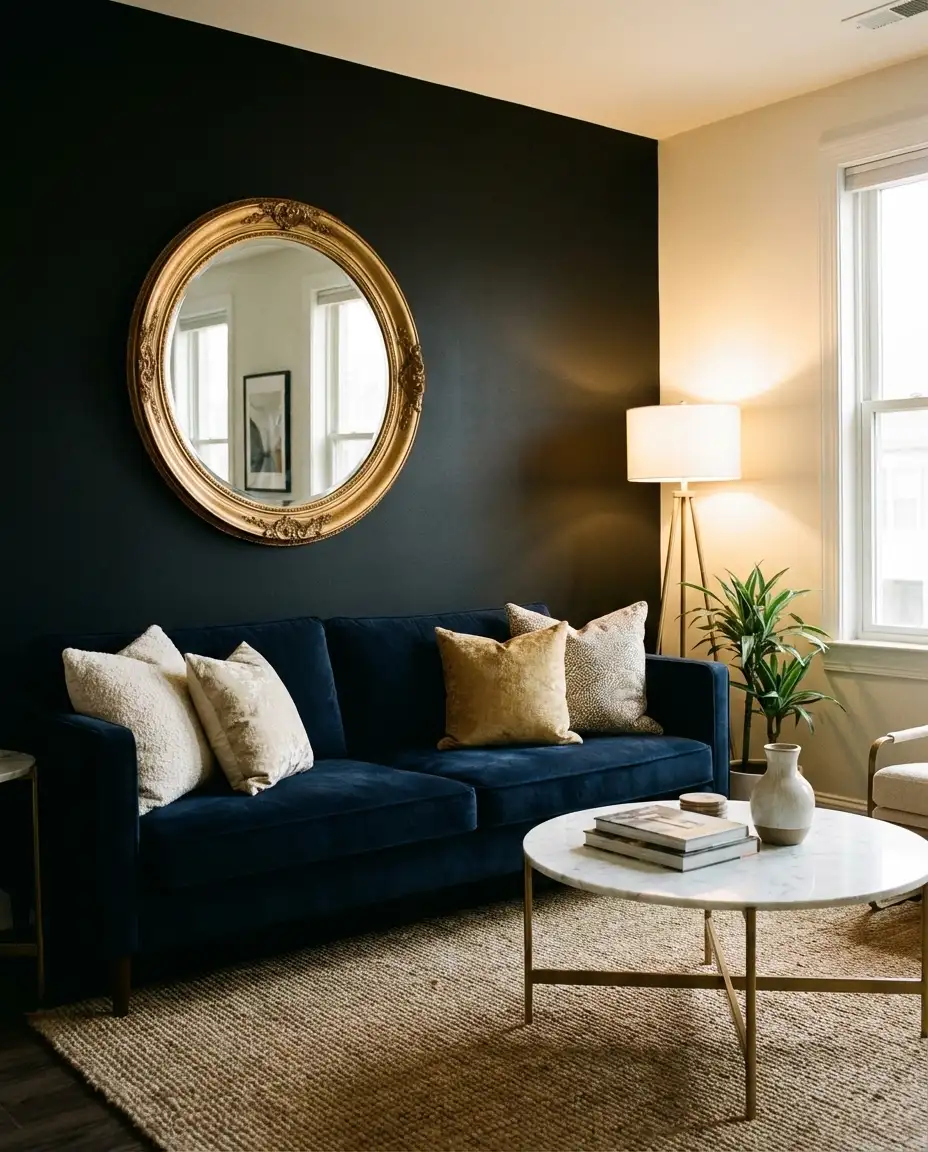
A black accent wall can make vintage furniture and accessories feel fresh and editorial rather than dated. Antique mirrors, gilded frames, and mid-century pieces all pop against a dark backdrop. This approach is ideal for collectors who want their finds to be the focus without competing with busy wallpaper or loud paint colors.
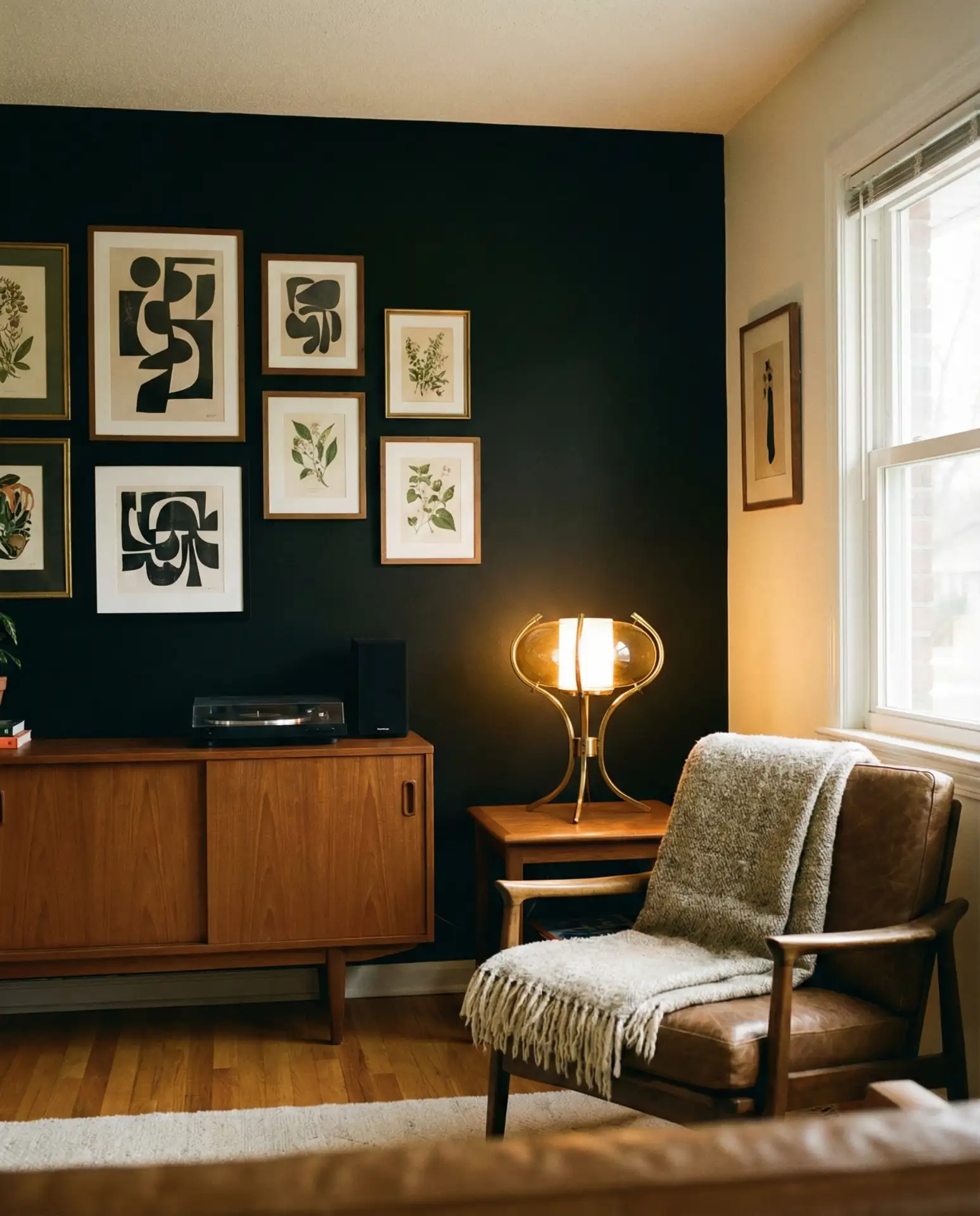
This works best in neighborhoods with strong thrift and antique scenes—think Brooklyn, Portland, or Asheville—where sourcing unique pieces is part of the fun. The black wall acts as a neutral canvas, letting you rotate items in and out without repainting. It’s also a budget-friendly way to make secondhand furniture look high-end and intentional.
12. Long Black Accent Wall in Narrow Living Room
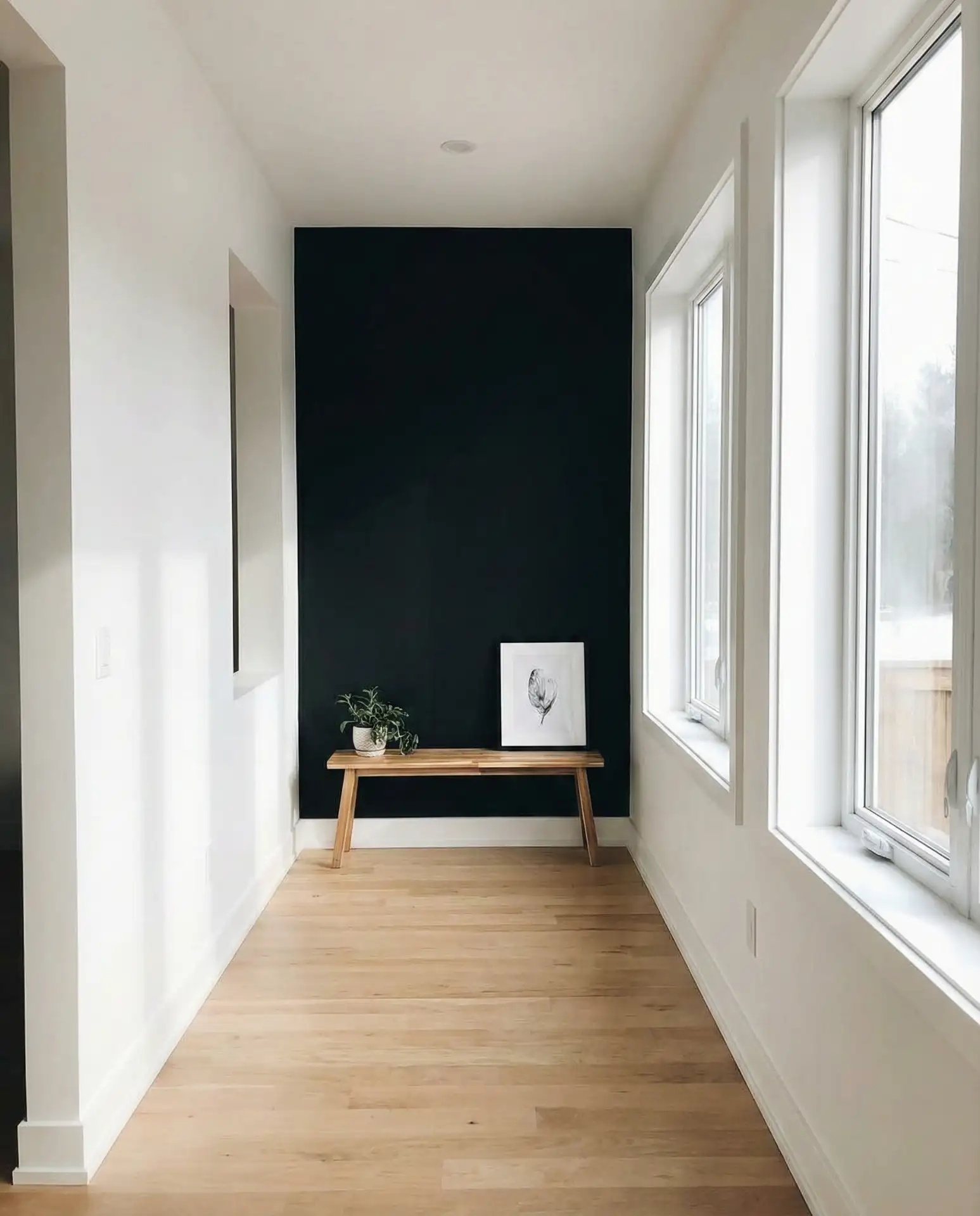
In a long, narrow living room, painting the shorter end wall black can visually pull it forward and balance out awkward proportions. This trick makes the room feel more square and cohesive rather than tunnel-like. It’s especially effective in older apartment buildings and row houses where room shapes are less than ideal.
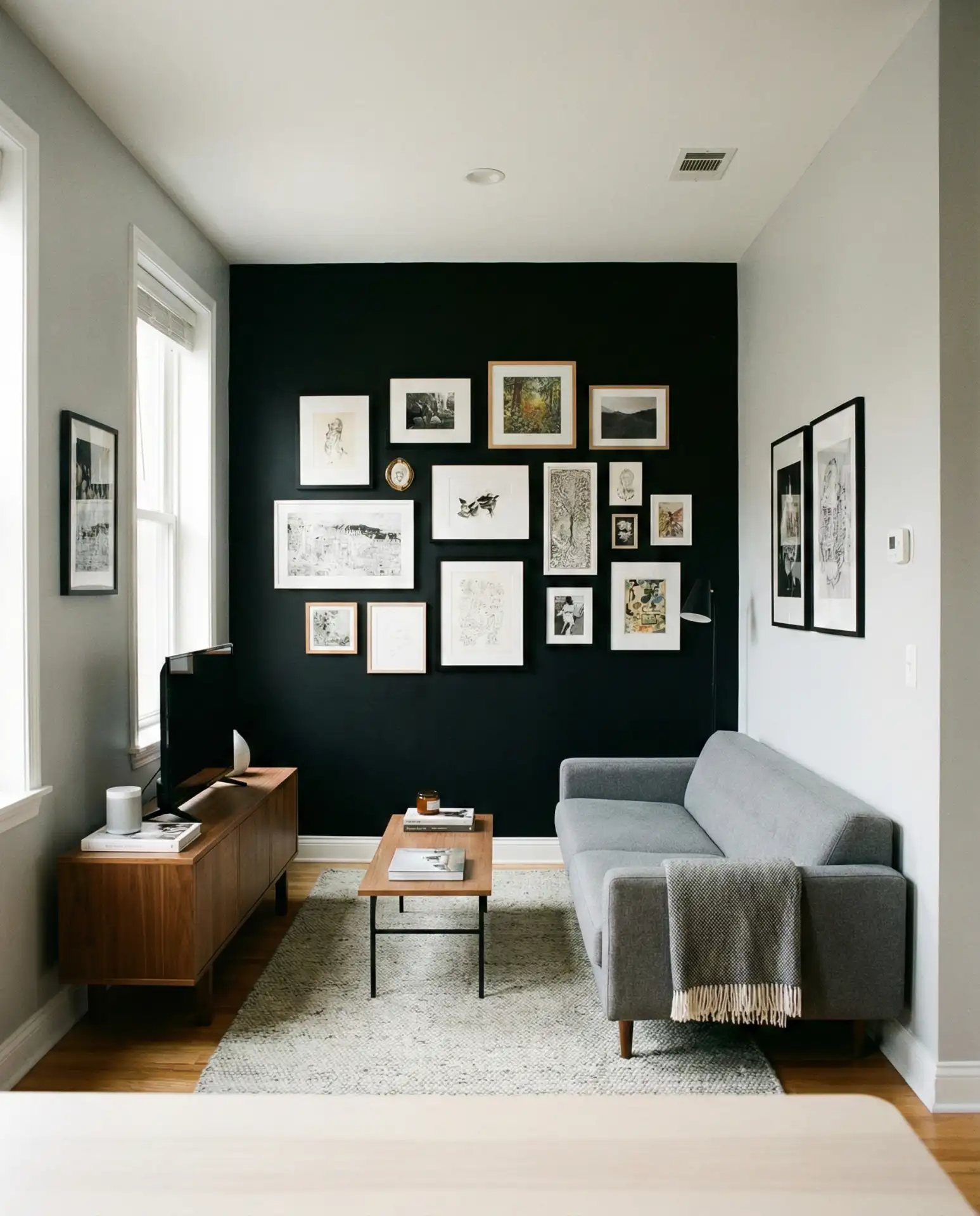
A designer in Chicago mentioned that this is one of the most underused tricks for fixing bad room layouts. It’s simple, inexpensive, and doesn’t require moving walls or furniture. Just be sure to keep the longer walls light to avoid shrinking the space. This approach is particularly popular in pre-war apartments and brownstones.
13. Flat Black Wall with Modern Minimalist Furniture
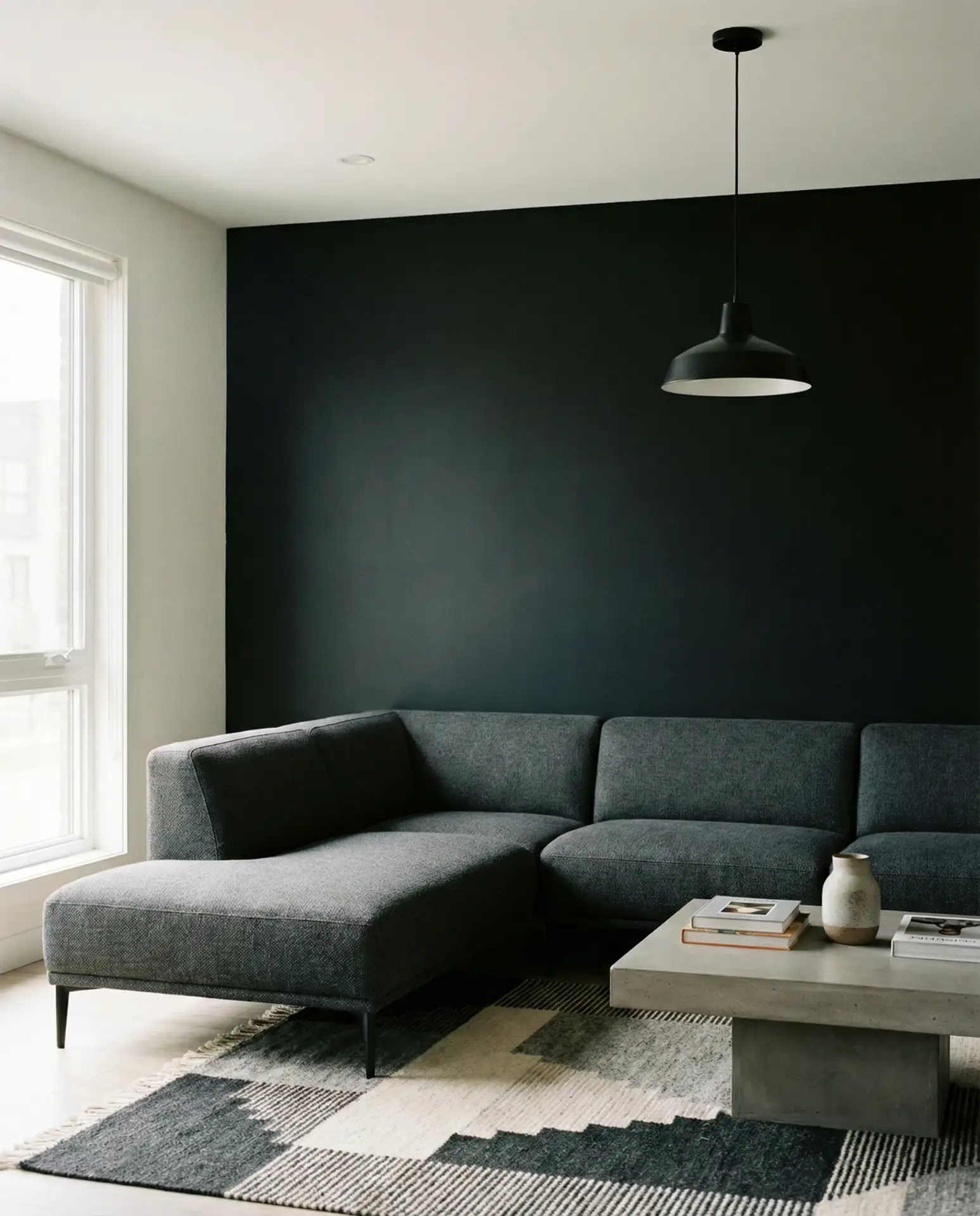
A flat black wall in a modern minimalist living room creates the ultimate backdrop for clean lines and sculptural furniture. The lack of texture or sheen keeps the focus on form and composition. This is a staple in Scandinavian-inspired and contemporary interiors, where less is always more.
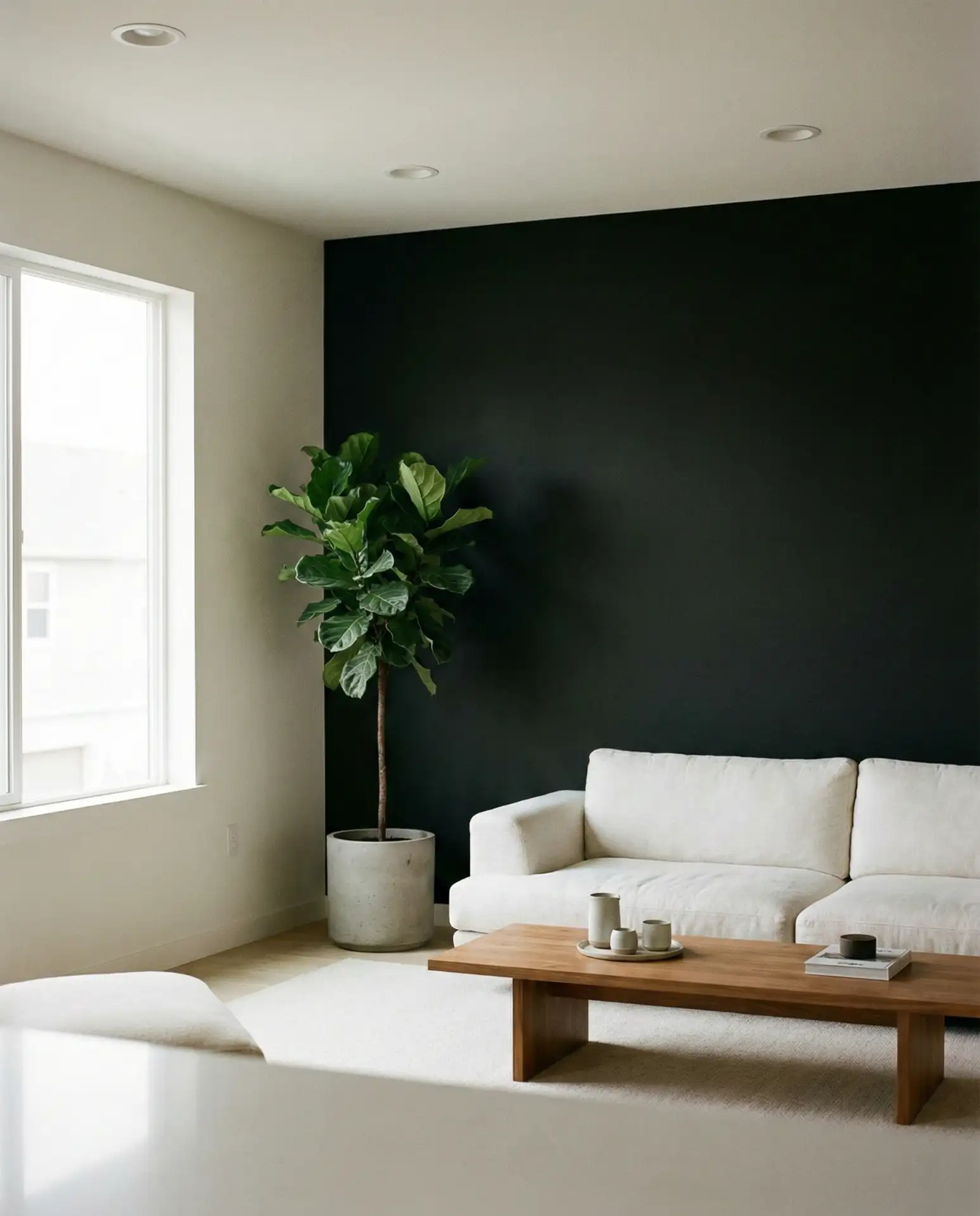
Minimalism requires restraint, and that includes the wall finish. A flat or matte black won’t distract from the furniture or add unwanted visual noise. It’s also more forgiving with imperfections—glossy finishes show every flaw. This look is ideal for urban condos and new builds where the architecture is already streamlined.
14. Black Accent Wall in Farmhouse Living Room with Shiplap
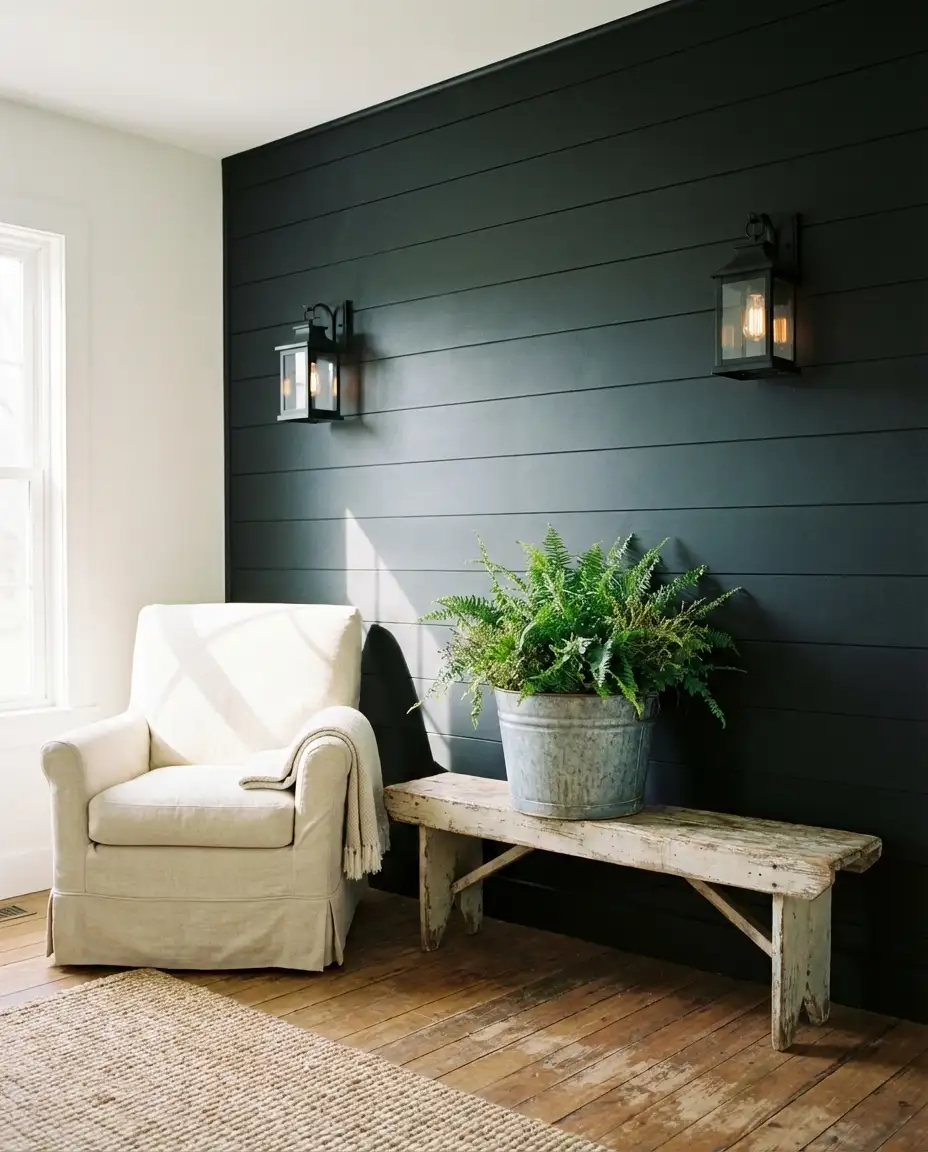
Black shiplap brings a modern edge to the farmhouse aesthetic without abandoning its roots. The horizontal lines add texture and interest, while the dark color grounds the space and offsets the bright whites and soft neutrals typical of farmhouse decor. This combination is hugely popular in renovated barns, fixer-uppers, and new builds inspired by rural Americana.
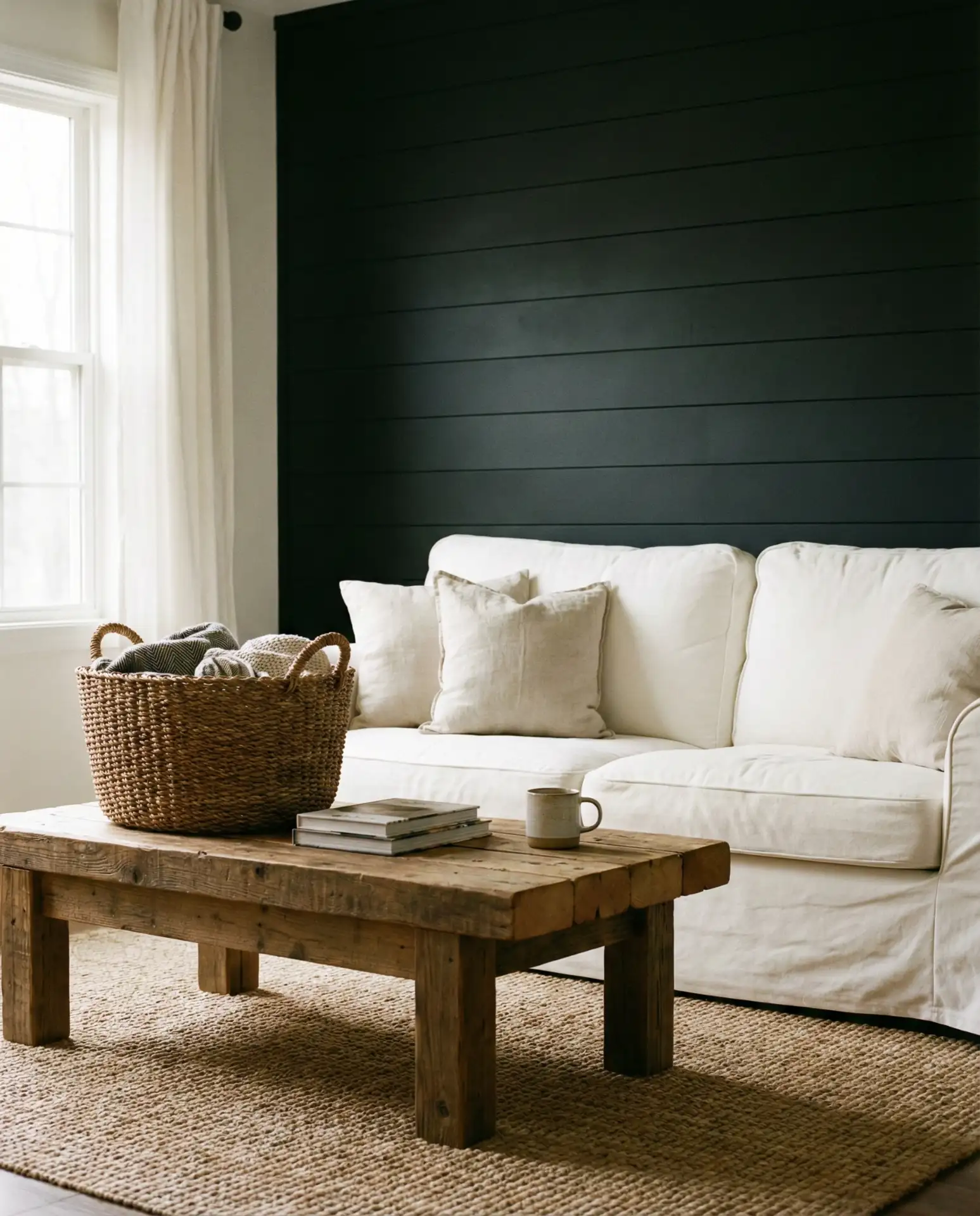
In rural areas and small towns across the Midwest and South, this look has become a way to modernize older homes without losing their character. Homeowners appreciate that shiplap is easy to install as a DIY project and that black hides the wear and tear of family life better than white. It’s also a smart choice if you’re flipping a home—it appeals to a wide range of buyers.
15. Black Accent Wall with Gray Sofas and Walls
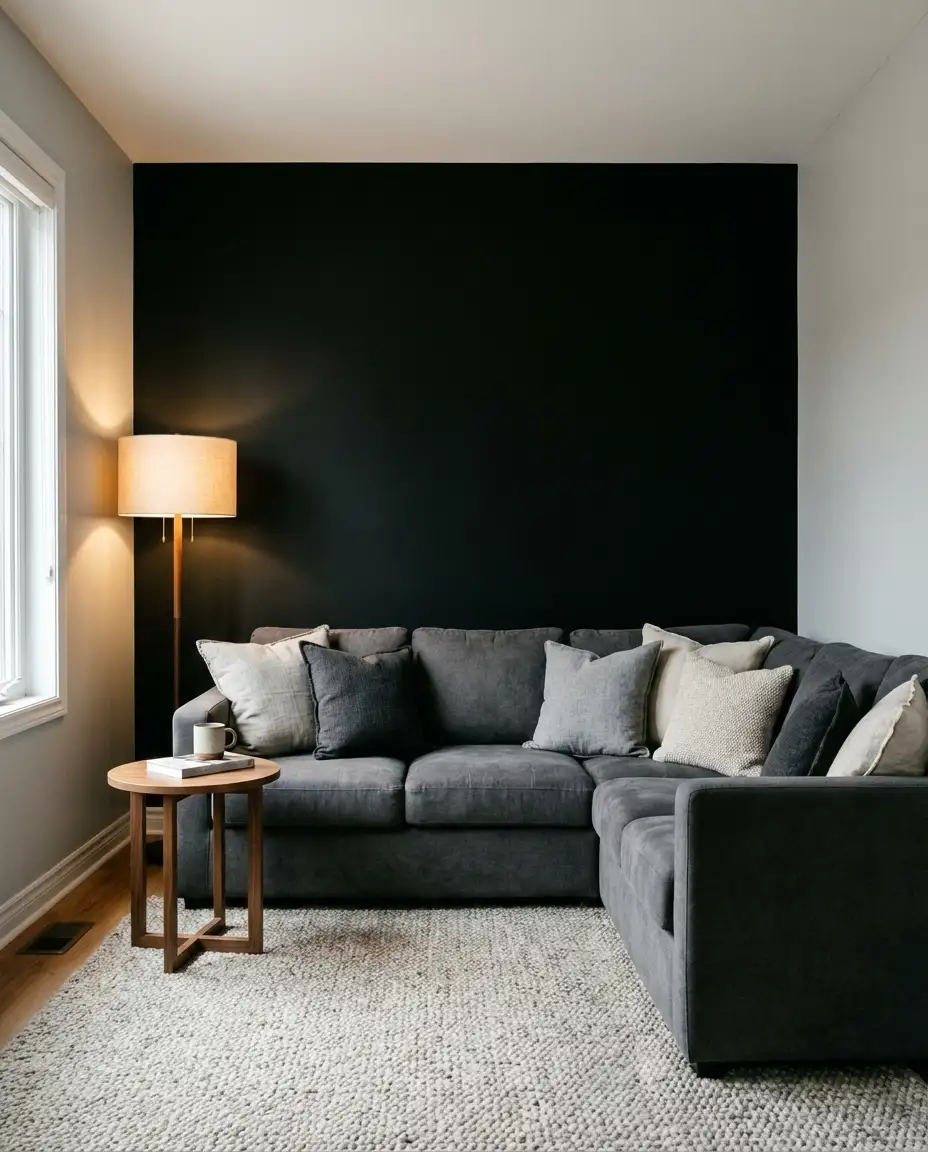
When you pair a black accent wall with gray walls and a gray sofa, you create a tonal, layered look that’s sophisticated without being stark. The key is varying the shades—charcoal, dove, and slate all work well together—and adding warmth through wood, textiles, and lighting. This palette is a favorite in contemporary and transitional homes.
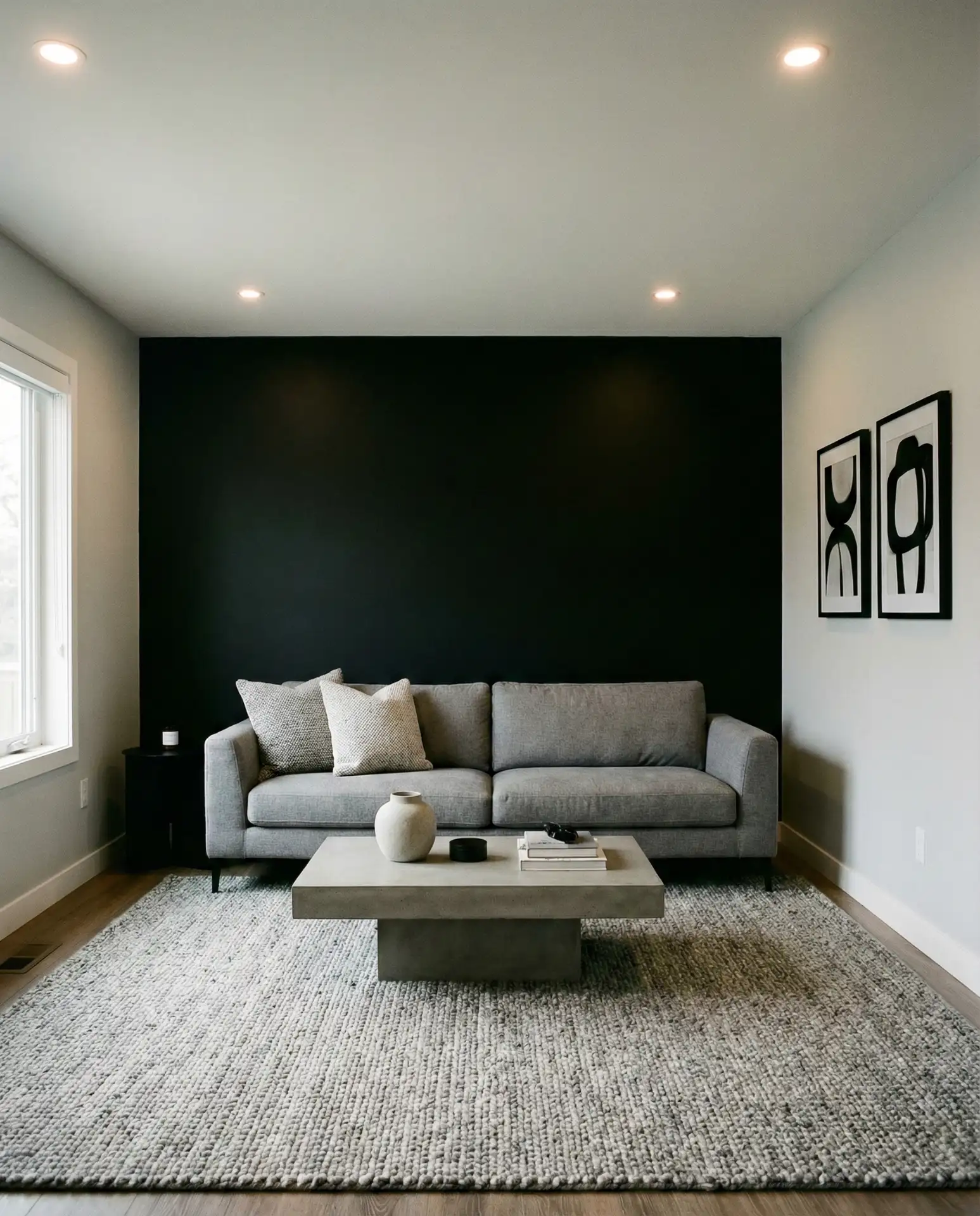
One homeowner in Seattle shared that this color scheme made her north-facing living room feel cozy rather than cold. The black wall absorbed light instead of reflecting it harshly, and the grays felt restful. It’s also a forgiving palette for pet owners—fur and dirt are far less visible than on all-white furniture.
16. Black Accent Wall with Boho Textiles and Patterns
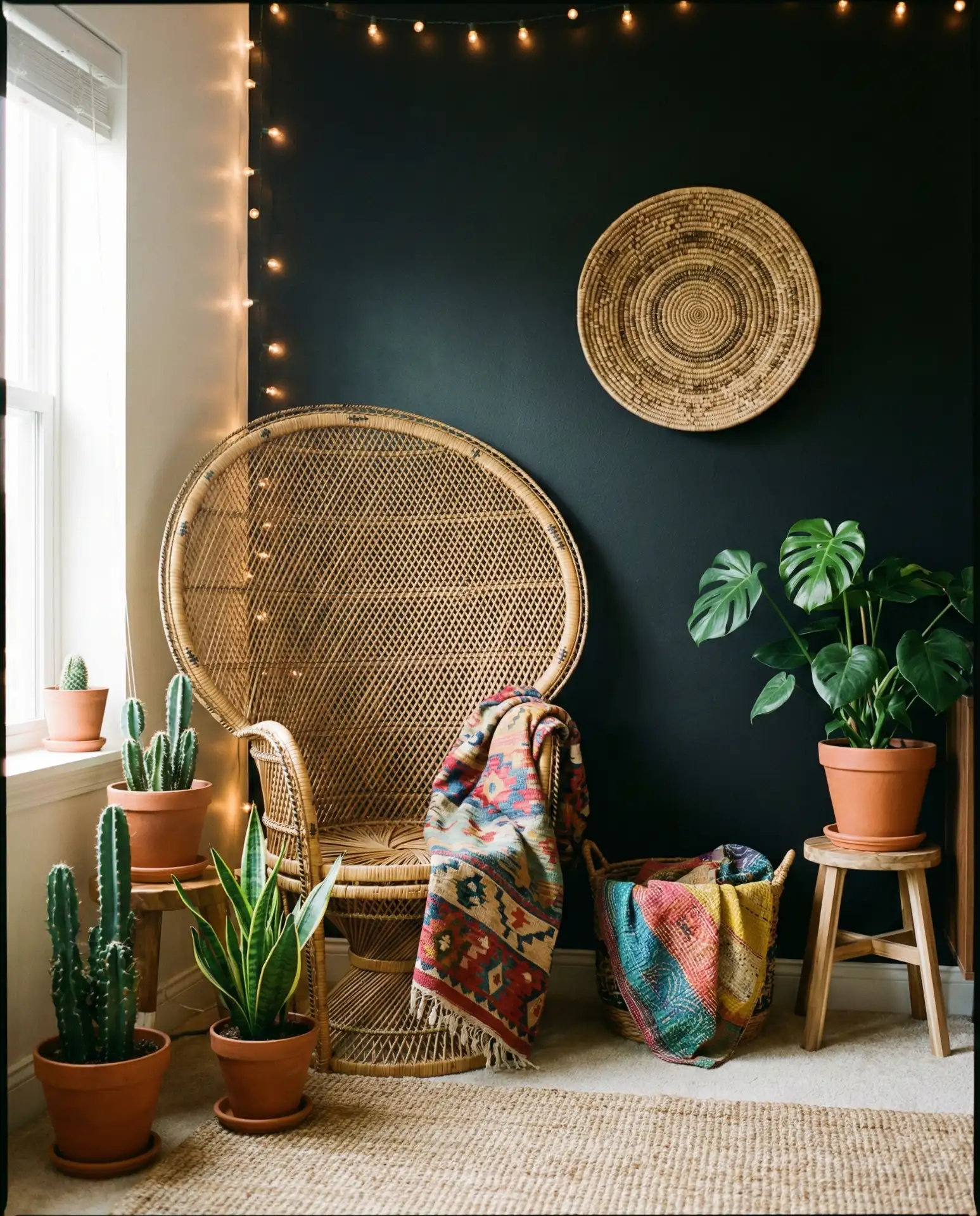
A black accent wall can actually enhance a boho aesthetic by providing a grounding element that lets colorful textiles, macramé, and global patterns shine. Without the dark backdrop, eclectic decor can look chaotic. The black wall organizes the visual field and makes each piece feel intentional rather than random.
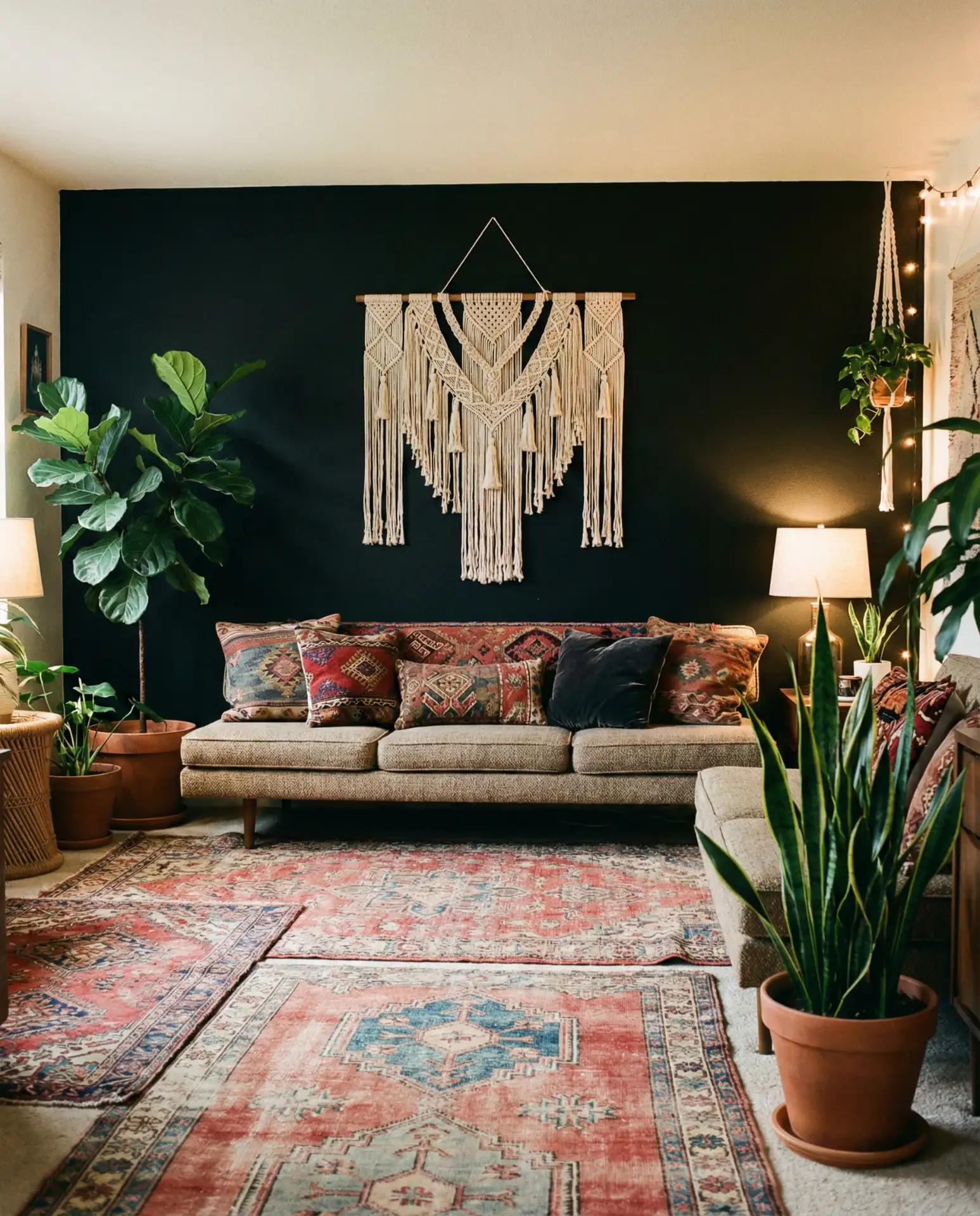
Real homeowners who lean into maximalism often struggle with making spaces feel cohesive. The black wall is like a gallery frame—it contains the energy without stifling it. This approach works especially well in rooms with lots of natural light and outdoor access, where the boldness of black doesn’t overwhelm the space.
17. Black Accent Wall with Built-In Shelving and TV Niche
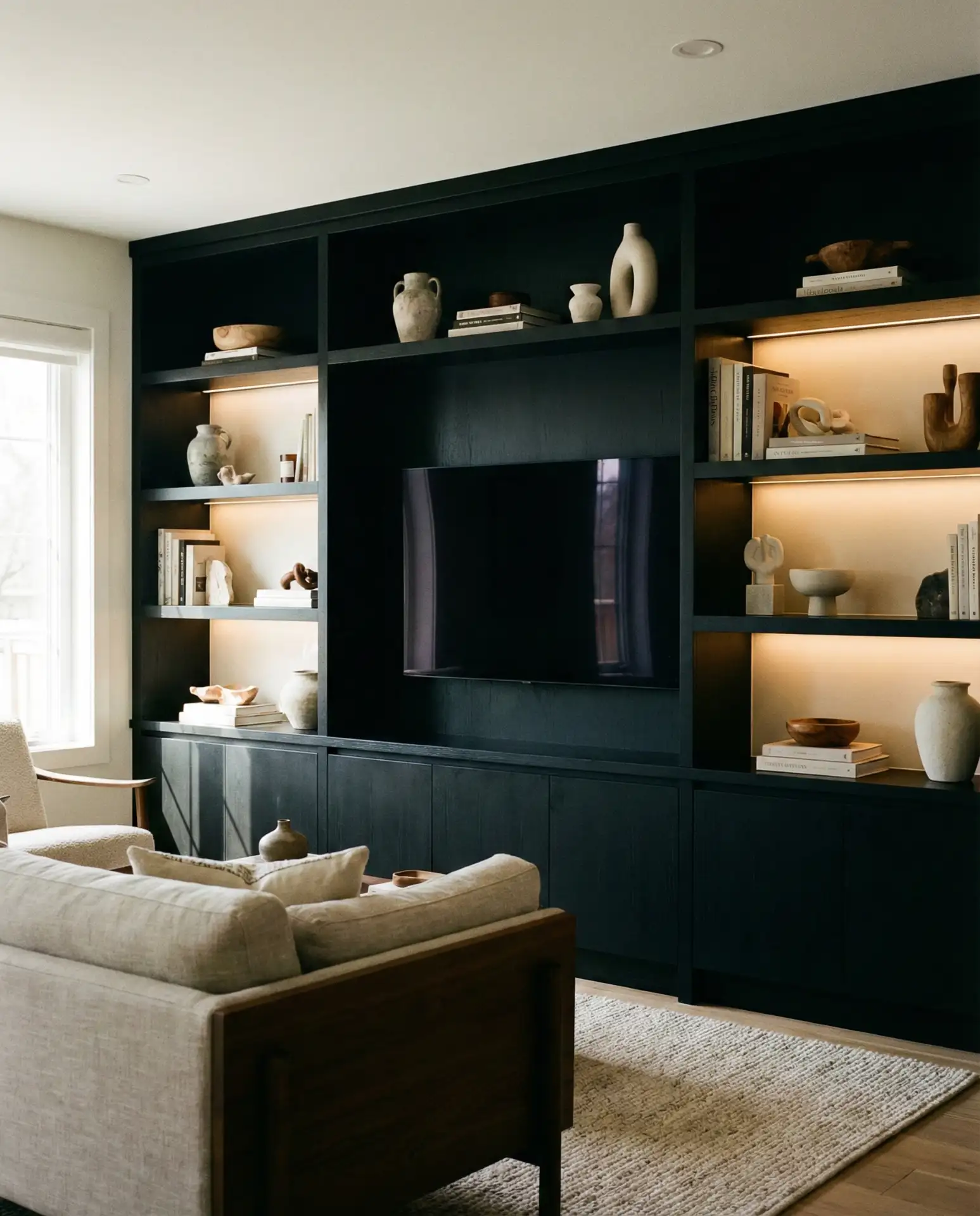
Custom built-ins painted black create a seamless, high-end look that hides the TV and provides storage without adding visual clutter. The black color recedes into the background, making the shelving feel like part of the architecture rather than an afterthought. This is a smart investment for homeowners who want a polished, permanent solution.
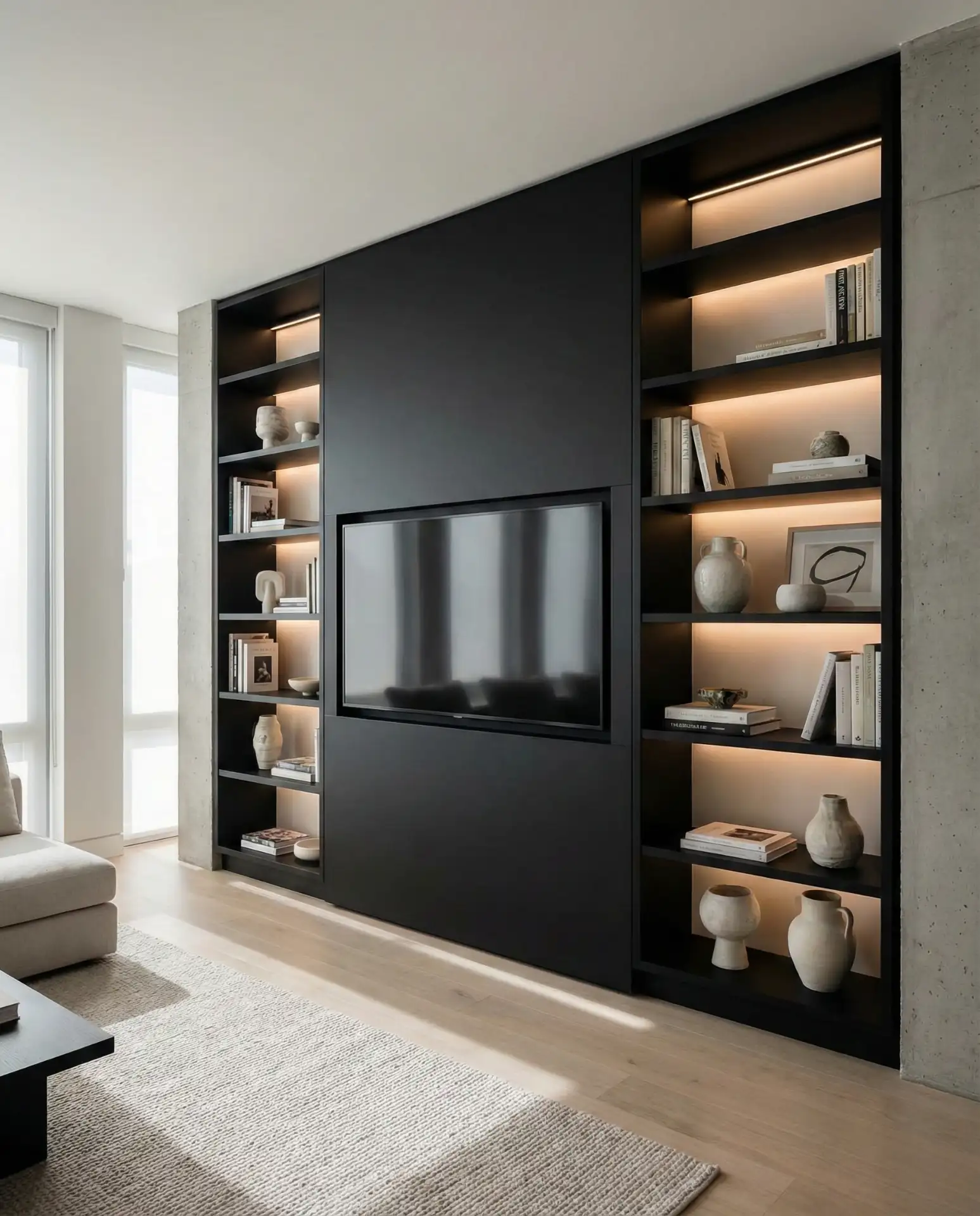
According to a contractor in Atlanta, this setup is one of the most requested upgrades in home renovations, especially in homes where the living room doubles as a media room. The cost can range from $2,000 to $8,000 depending on materials and labor, but it adds resale value and eliminates the need for standalone furniture. It’s also ideal for hiding cords and electronics.
18. Black Accent Wall in Living Room with Fireplace Mantel
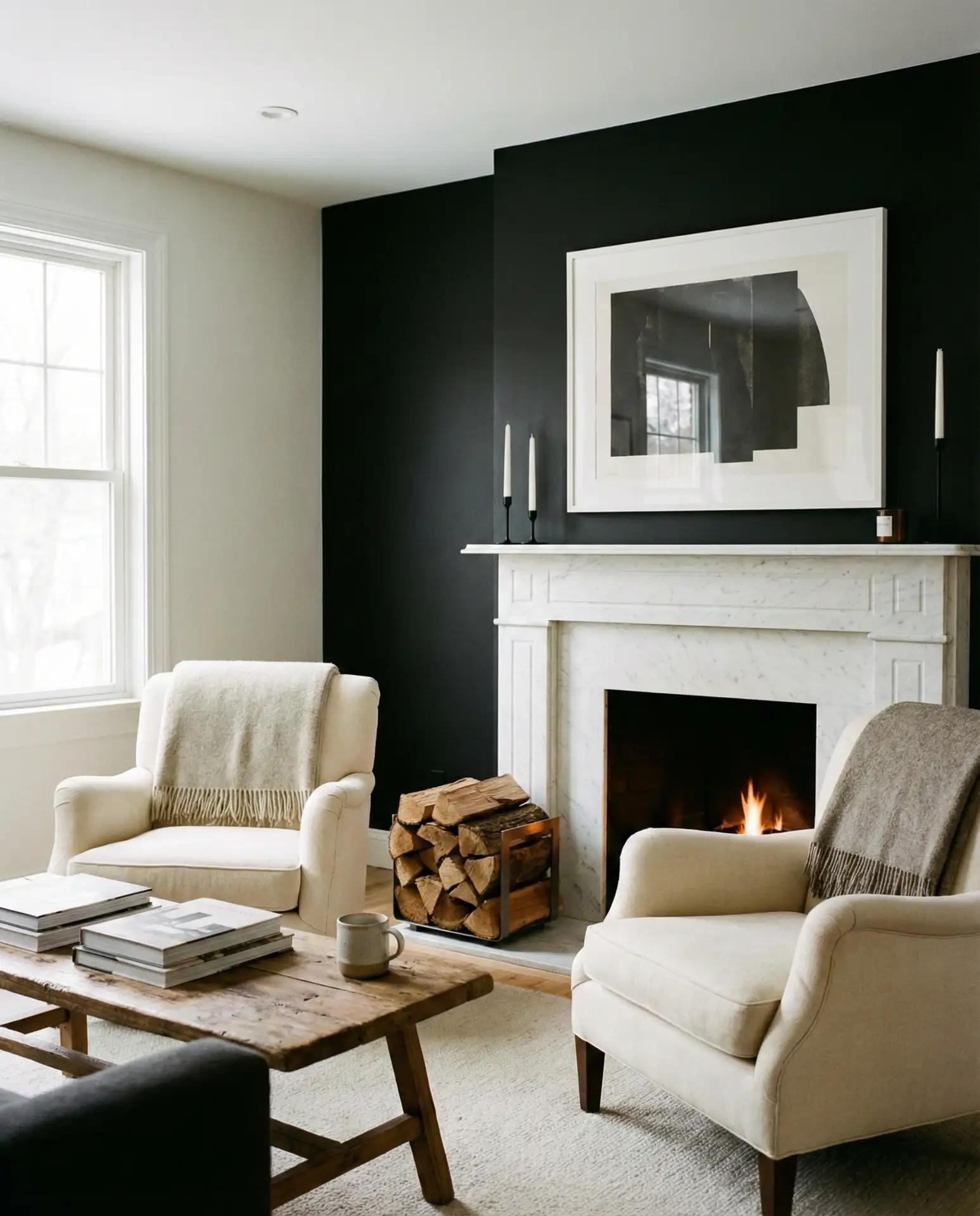
Painting the wall behind a fireplace black draws attention to the mantel and makes it the undisputed focal point. This works whether the fireplace is active or decorative, traditional or modern. The dark wall amplifies the fireplace’s presence and creates a sense of warmth and intimacy around it.
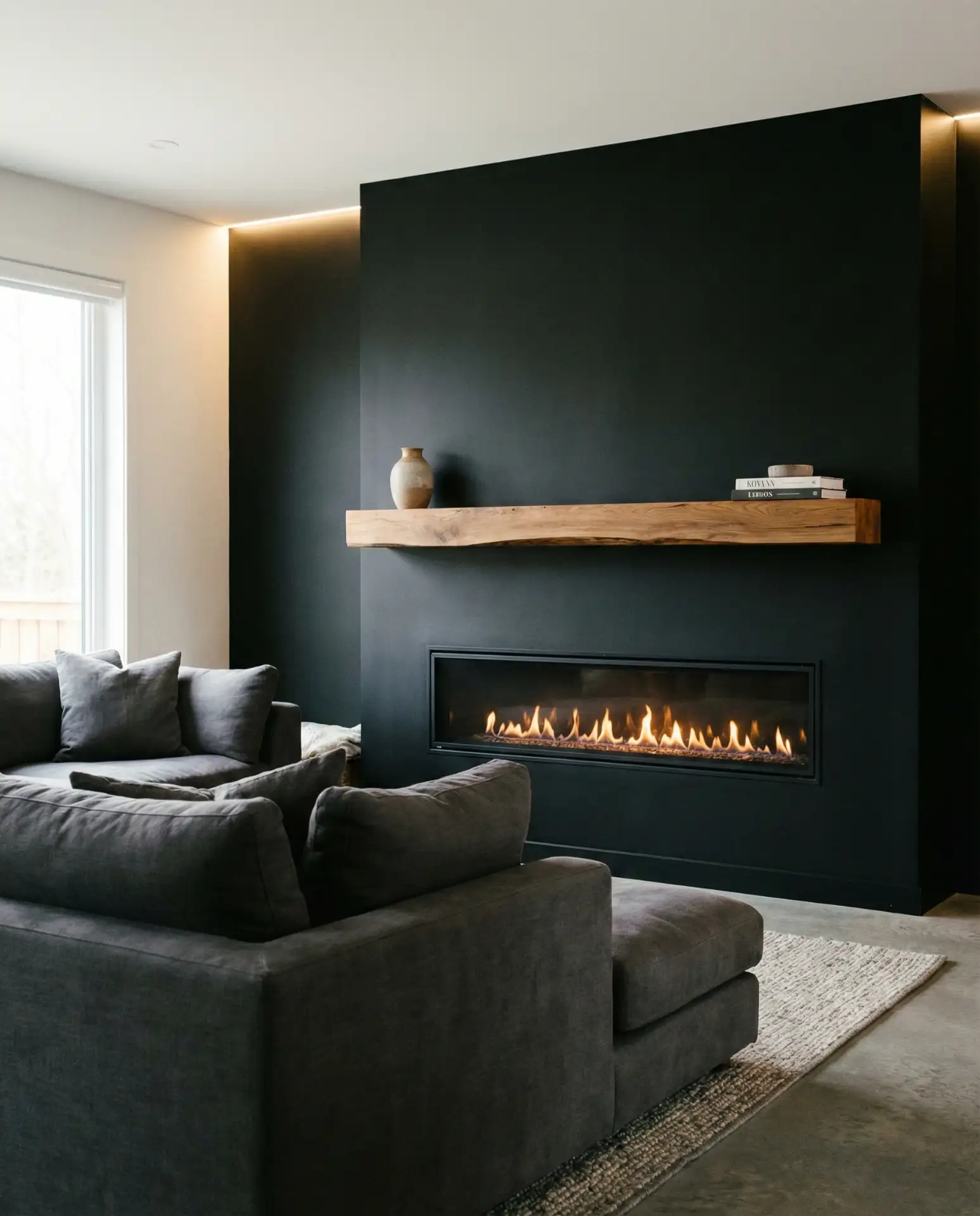
In colder climates like New England and the Upper Midwest, where fireplaces are still functional and central to the home, this approach has become a modern update to the traditional hearth room. The black wall makes the fireplace feel like a feature rather than just a utility, and it pairs beautifully with both painted brick and stone surrounds.
19. Black Accent Wall with Large-Scale Abstract Art
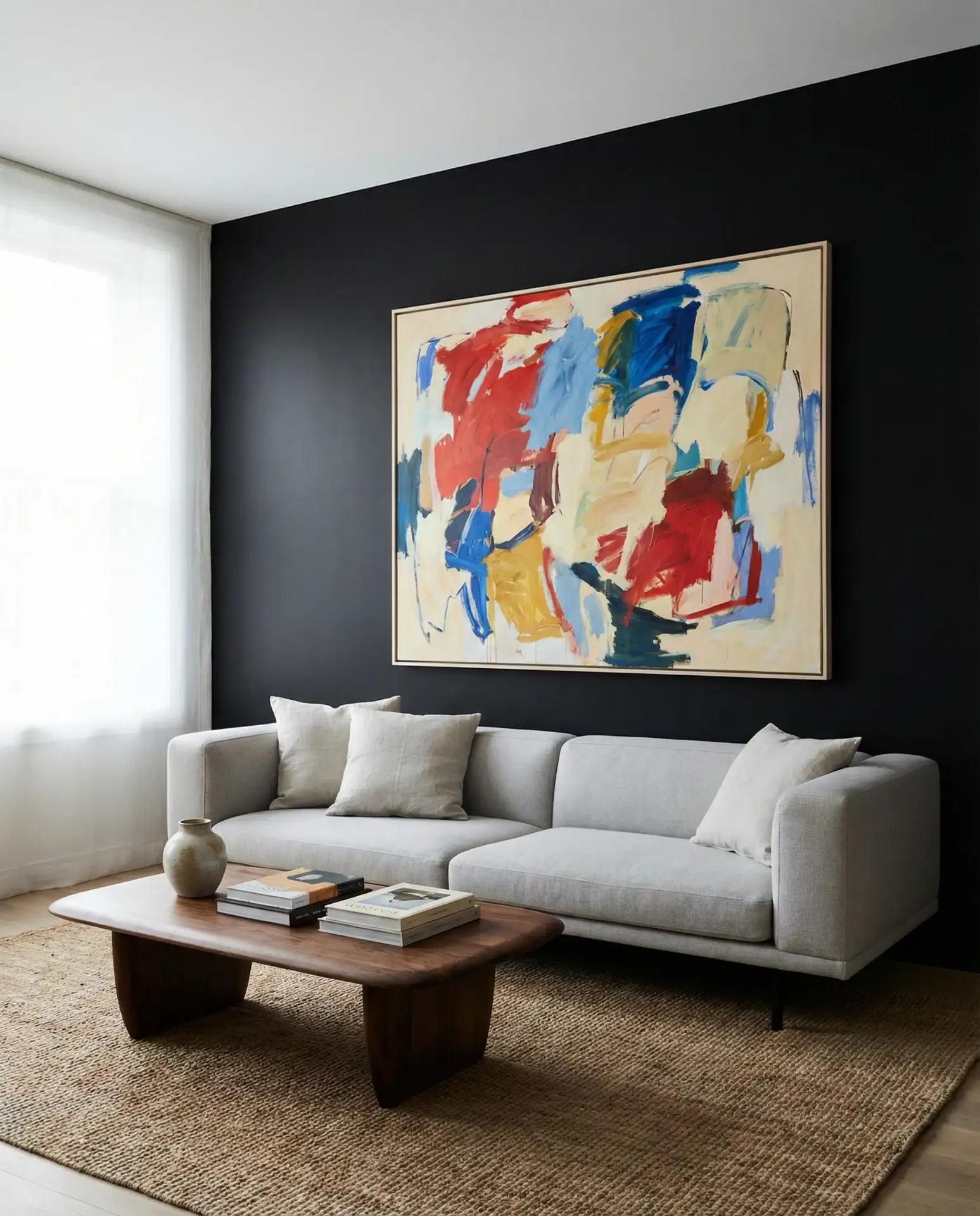
Hanging a large piece of colorful abstract art on a black accent wall creates instant drama and makes the artwork the hero of the room. The dark background intensifies the colors and makes the piece feel gallery-worthy. This is a favorite strategy among art collectors and design enthusiasts who want their walls to do more than just hold paint.
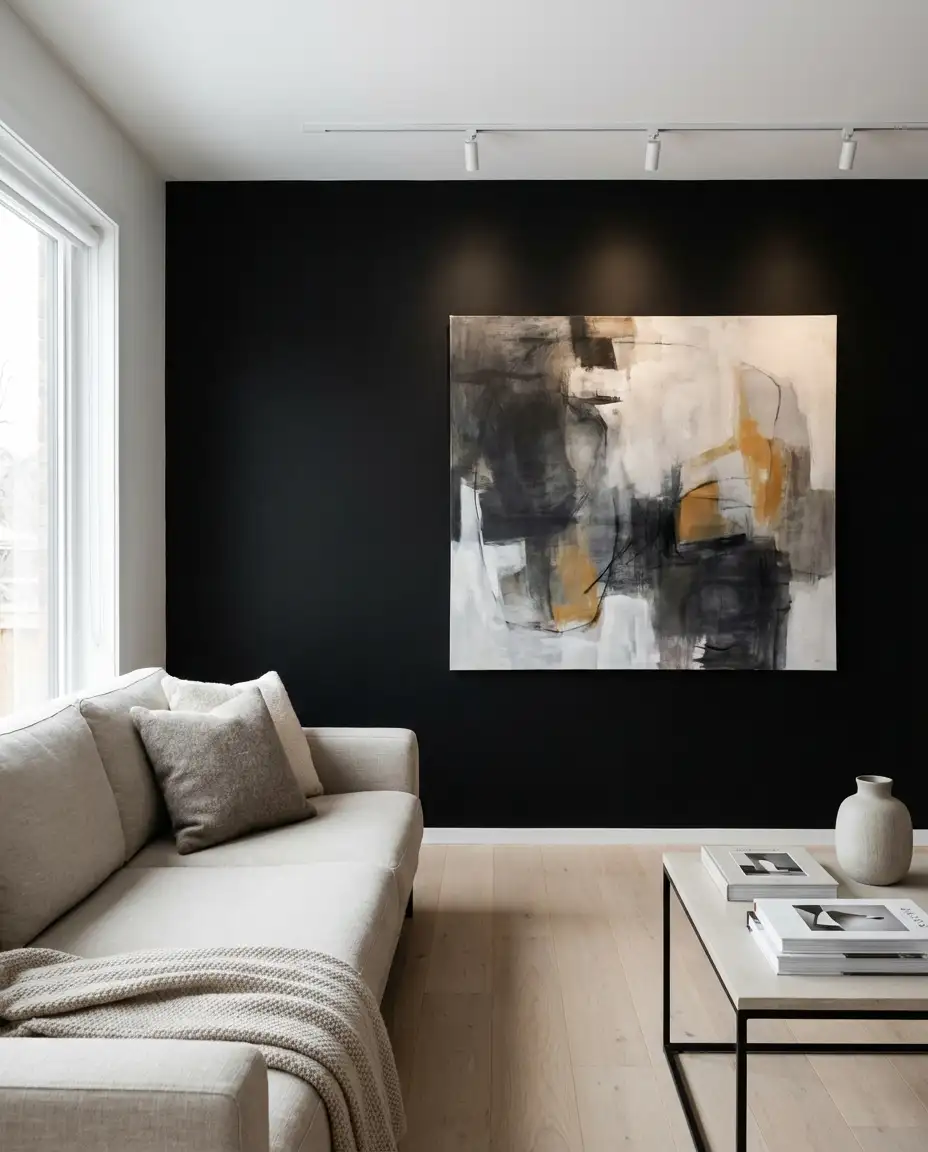
This works best when the rest of the room is kept simple—let the art speak. A common mistake is overcrowding the wall with multiple pieces or adding too many decorative objects nearby. Choose one statement piece, hang it at eye level, and give it breathing room. If you’re on a budget, printable art from independent artists can deliver a similar impact at a fraction of the cost.
20. Black Accent Wall in Small Living Room to Add Depth
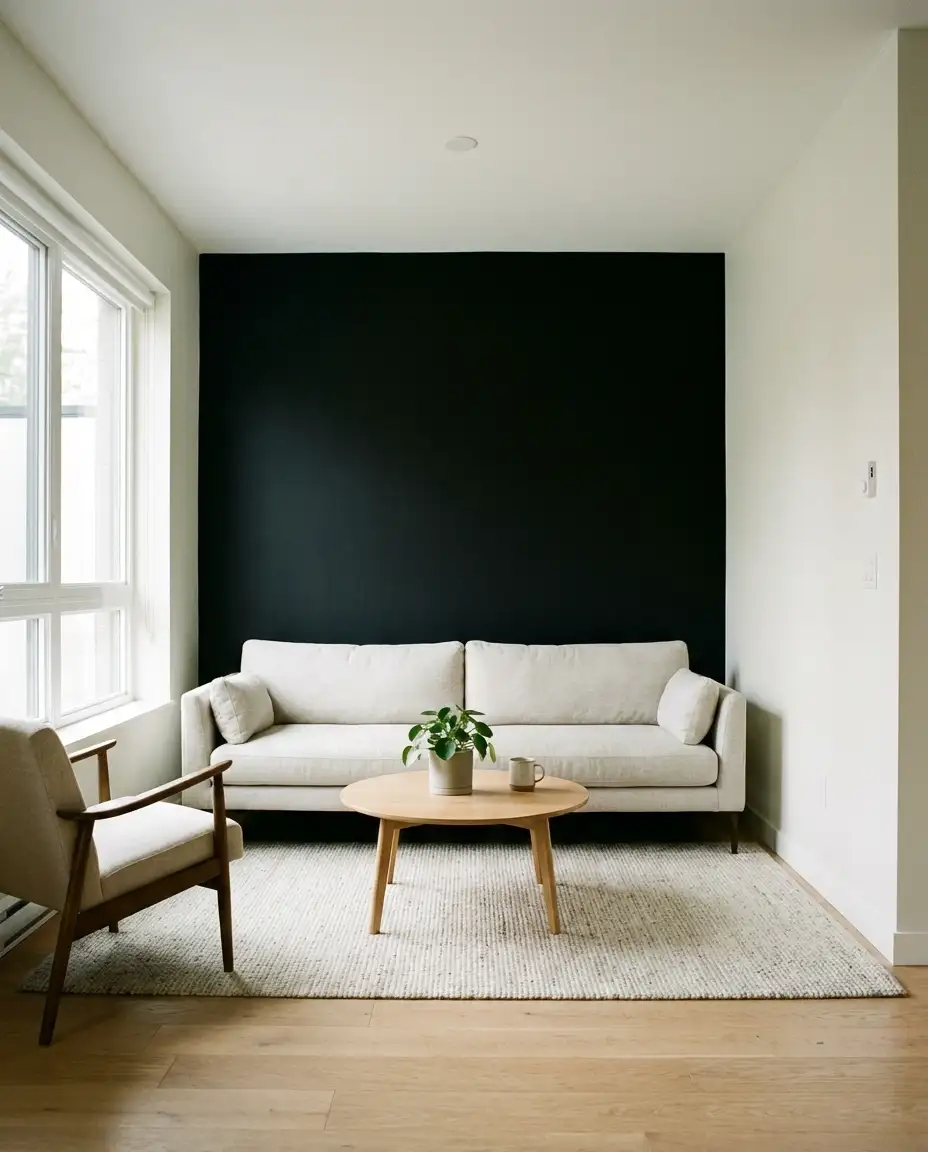
Contrary to popular belief, a black accent wall can actually make a small living room feel larger by adding depth and dimension. The dark color recedes visually, creating the illusion of more space. The key is to keep the other walls light and use mirrors or reflective surfaces to bounce light around.
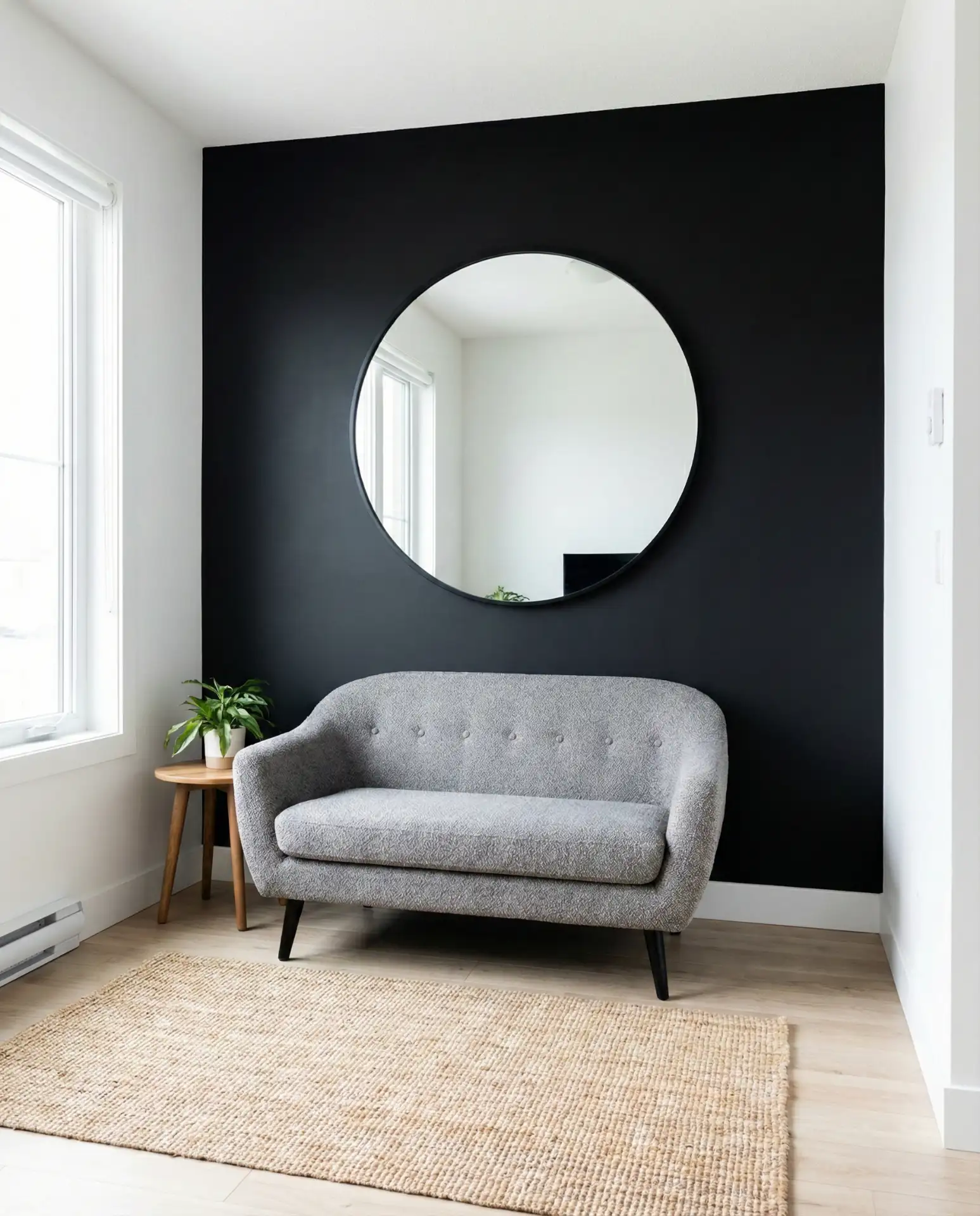
Where it works best: Studio apartments, condos, and starter homes where square footage is limited but style isn’t. The black wall adds personality and prevents the space from feeling generic or builder-grade. Just avoid heavy, oversized furniture that will make the room feel cramped.
21. Black Accent Wall with Metallic Accents and Lighting
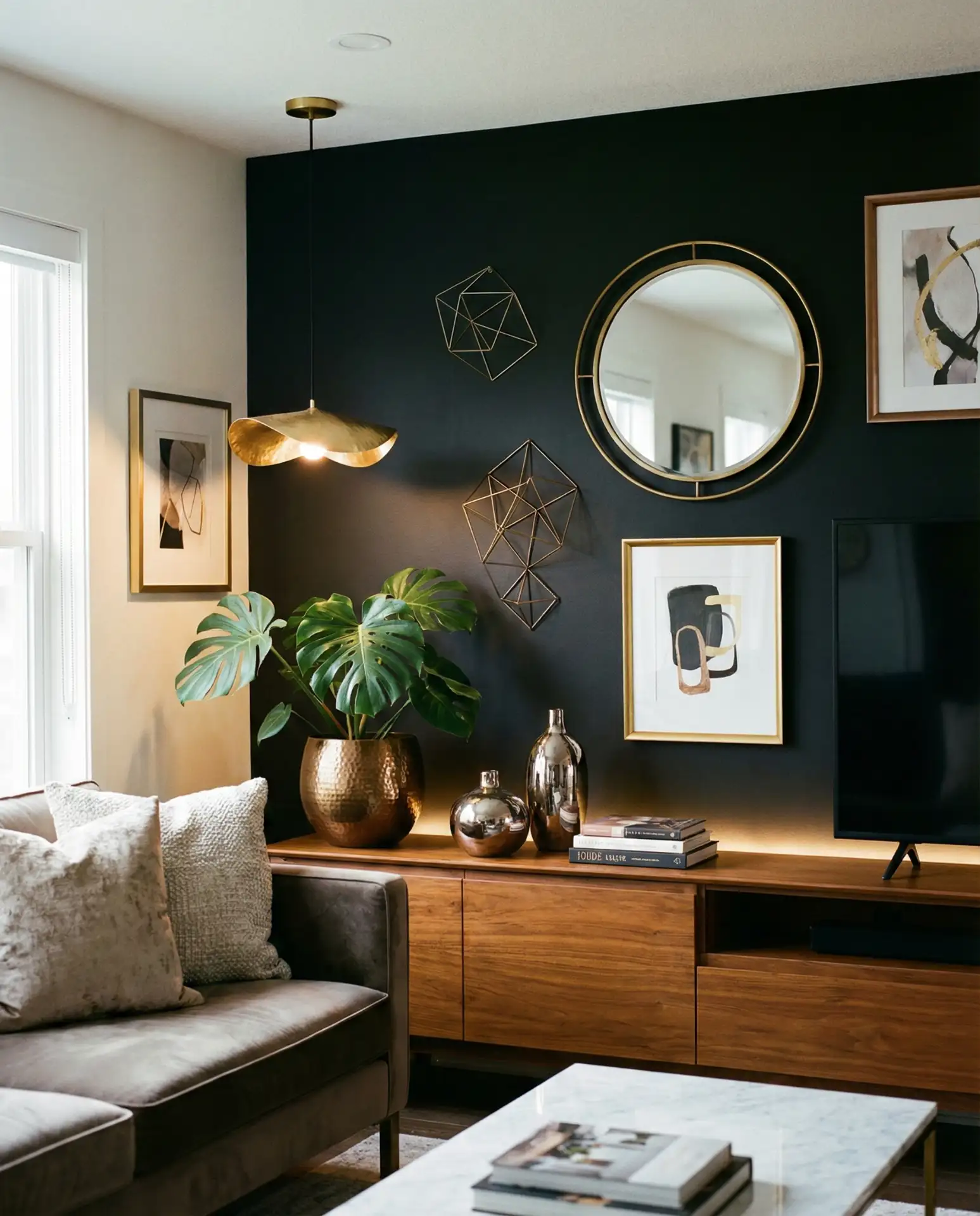
Layering metallics—brass, copper, or gold—against a black accent wall creates a luxurious, high-contrast look that feels both modern and timeless. The dark background makes metallic finishes glow, especially when lit with warm bulbs. This combination is especially popular in modern and glam interiors.
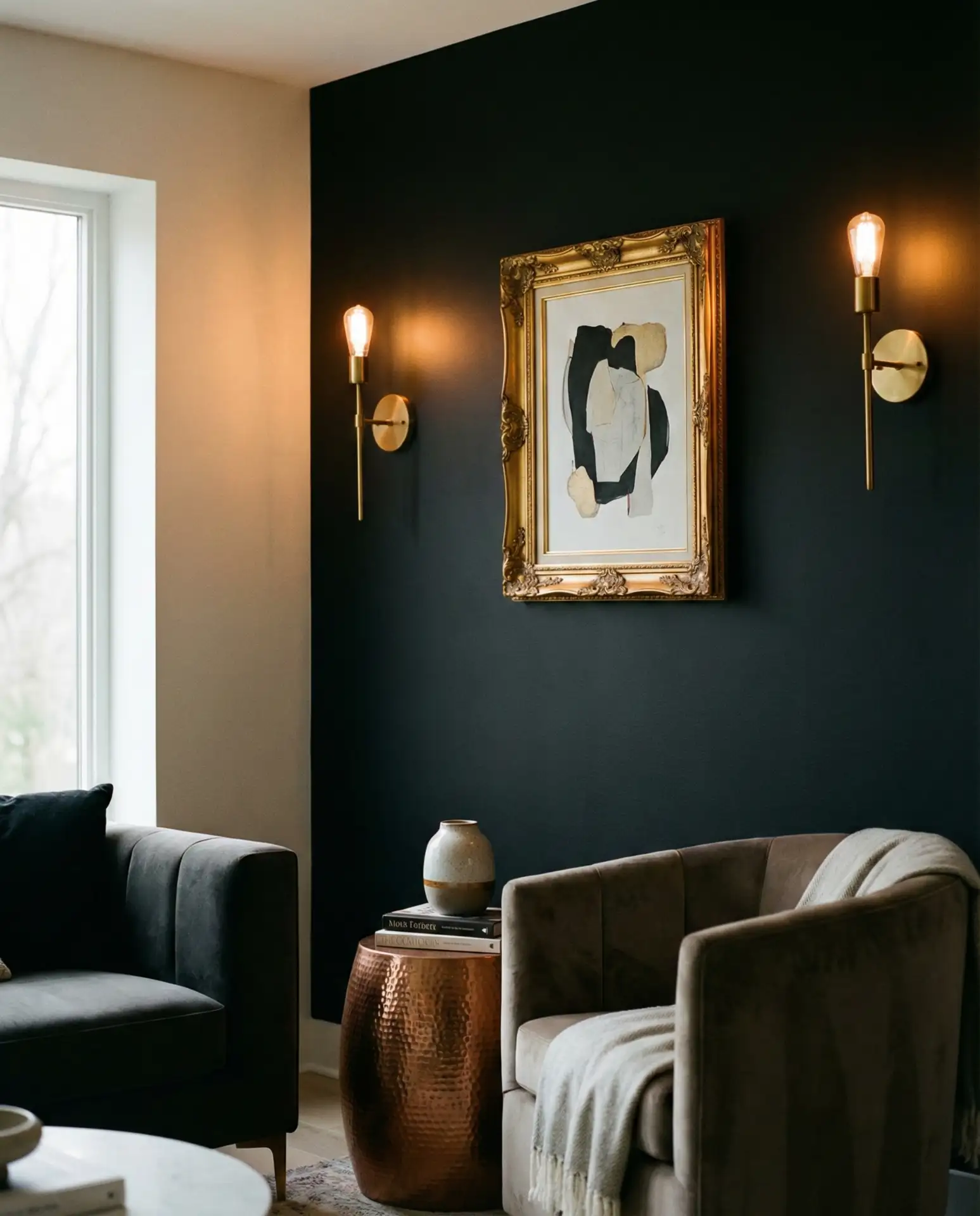
Expert-style commentary: Interior designers often recommend mixing two metallics—say, brass and black iron—to keep the look from feeling too matchy or dated. The black wall unifies the metals and prevents them from competing. This approach is ideal for homeowners who want a polished, editorial aesthetic without hiring a professional.
22. Black Accent Wall with Natural Light and Greenery
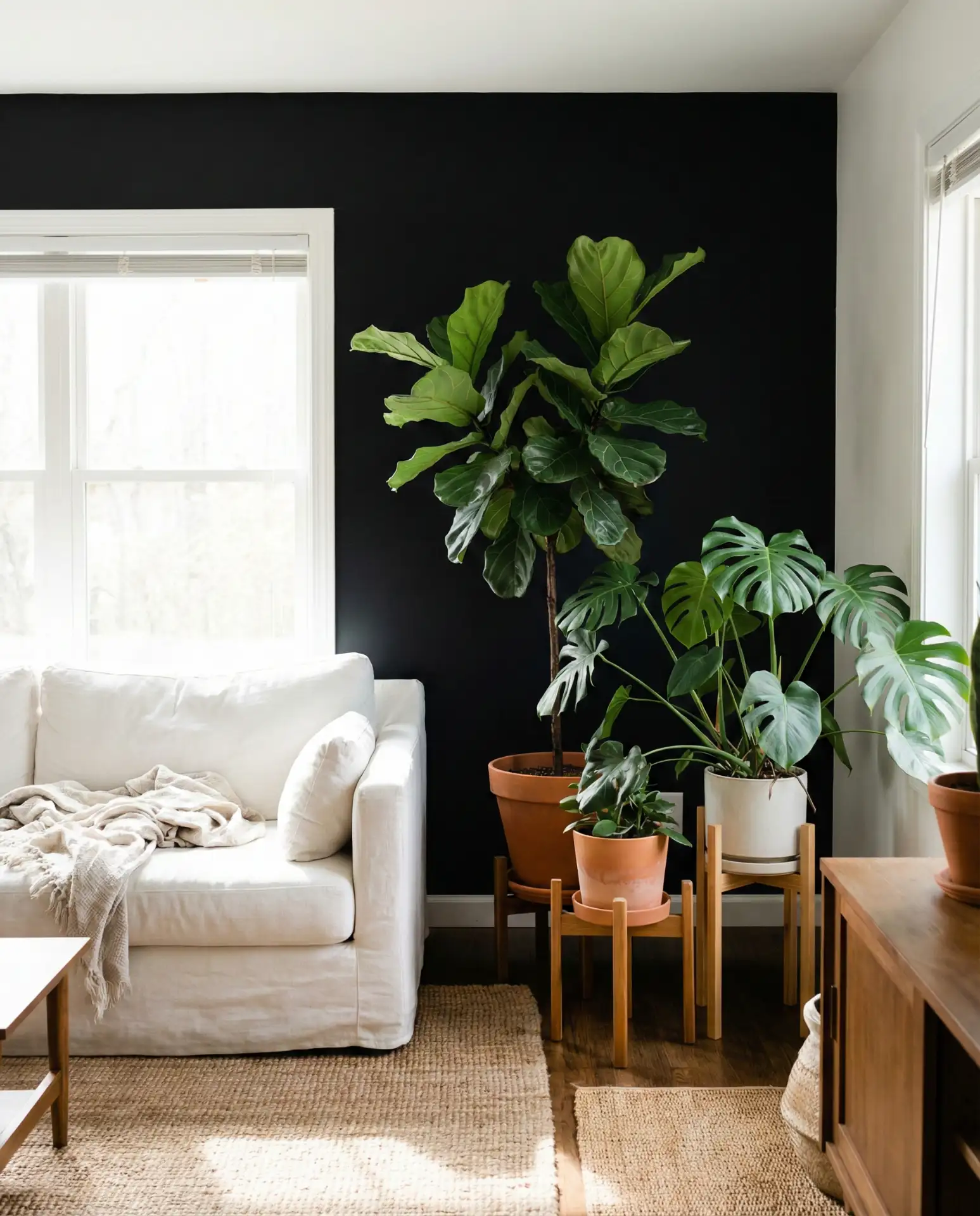
A black accent wall paired with abundant natural light and leafy green plants creates a fresh, unexpected contrast that feels both grounded and energizing. The dark wall makes the greenery pop and gives the room a botanical, almost tropical vibe. This look has gained traction in cities with strong plant-parent communities and in homes with good sun exposure.
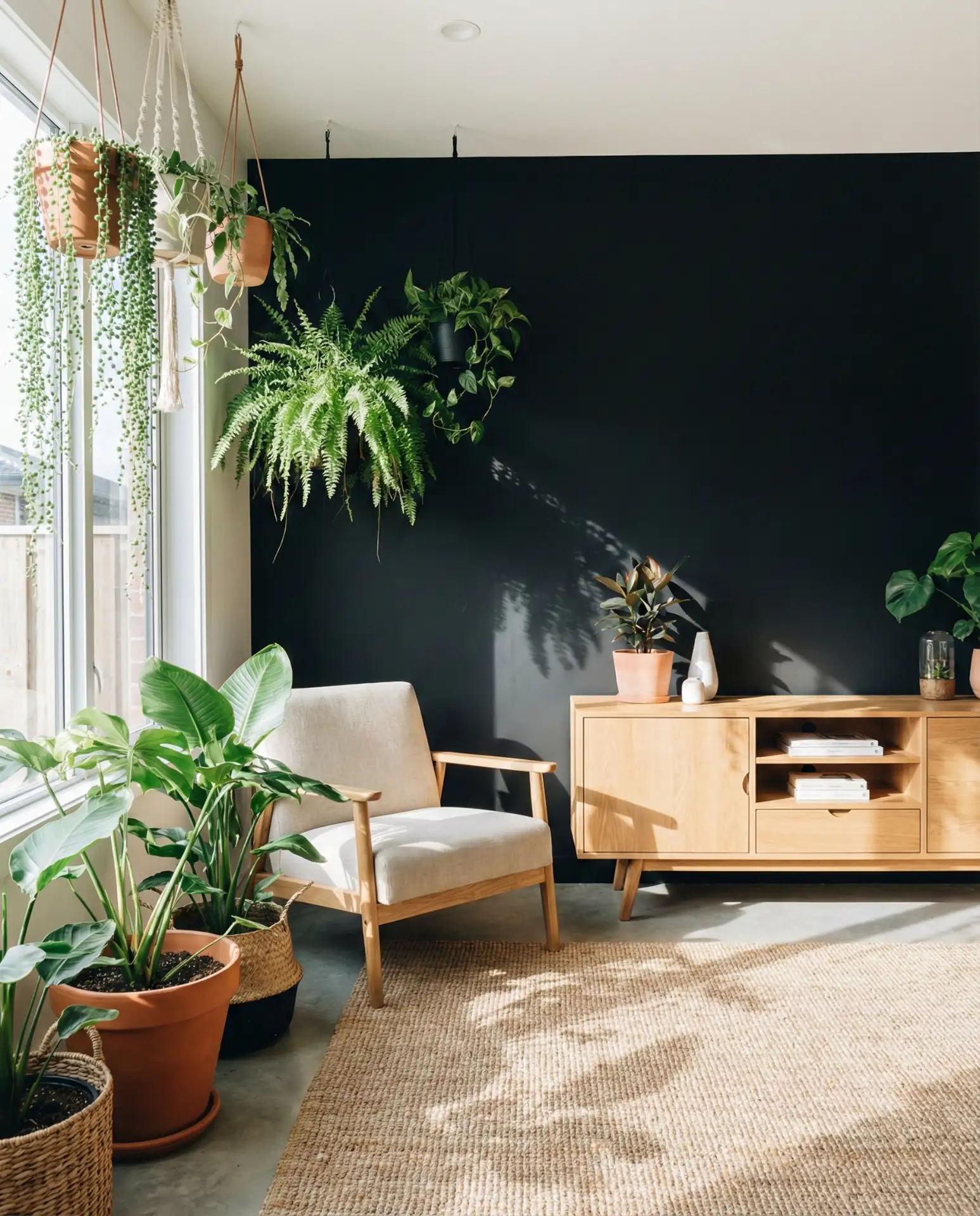
This setup is ideal for homes in warm climates or those with south-facing windows where light is strong year-round. The plants thrive, and the black wall doesn’t feel oppressive because there’s so much brightness to balance it. It’s also a budget-friendly way to make a space feel designed—plants are relatively inexpensive, and black paint is one of the cheapest ways to transform a room.
Conclusion
Black accent walls have proven themselves as more than a passing trend—they’re a versatile, powerful design tool that works across styles, budgets, and home types. Whether you’re drawn to the drama of a matte finish, the warmth of wood accents, or the boldness of jewel-toned furniture, there’s a black wall idea here that can work for your space. Don’t be afraid to experiment, and remember that paint is one of the easiest things to change if you want to try something new down the line. Drop a comment below and let us know which idea you’re planning to try first!