Bedroom lighting has quietly become one of the most searched interior topics on Pinterest—and heading into 2026, it’s easy to see why. After years of bare overhead fixtures and harsh recessed cans, American homeowners are finally rethinking the bedroom as a sanctuary that deserves the same lighting intention as a luxury hotel room. Whether you’re renovating a master suite or giving a small rental bedroom a glow-up on a budget, the right lighting can completely transform how a room feels at every hour of the day. In this guide, you’ll find fresh, Pinterest-worthy bedroom lighting ideas—from moody sconces to Japandi-inspired pendants—that are shaping the way we design our most personal spaces in 2026.
1. Warm Ambient Layers for a Cozy Retreat
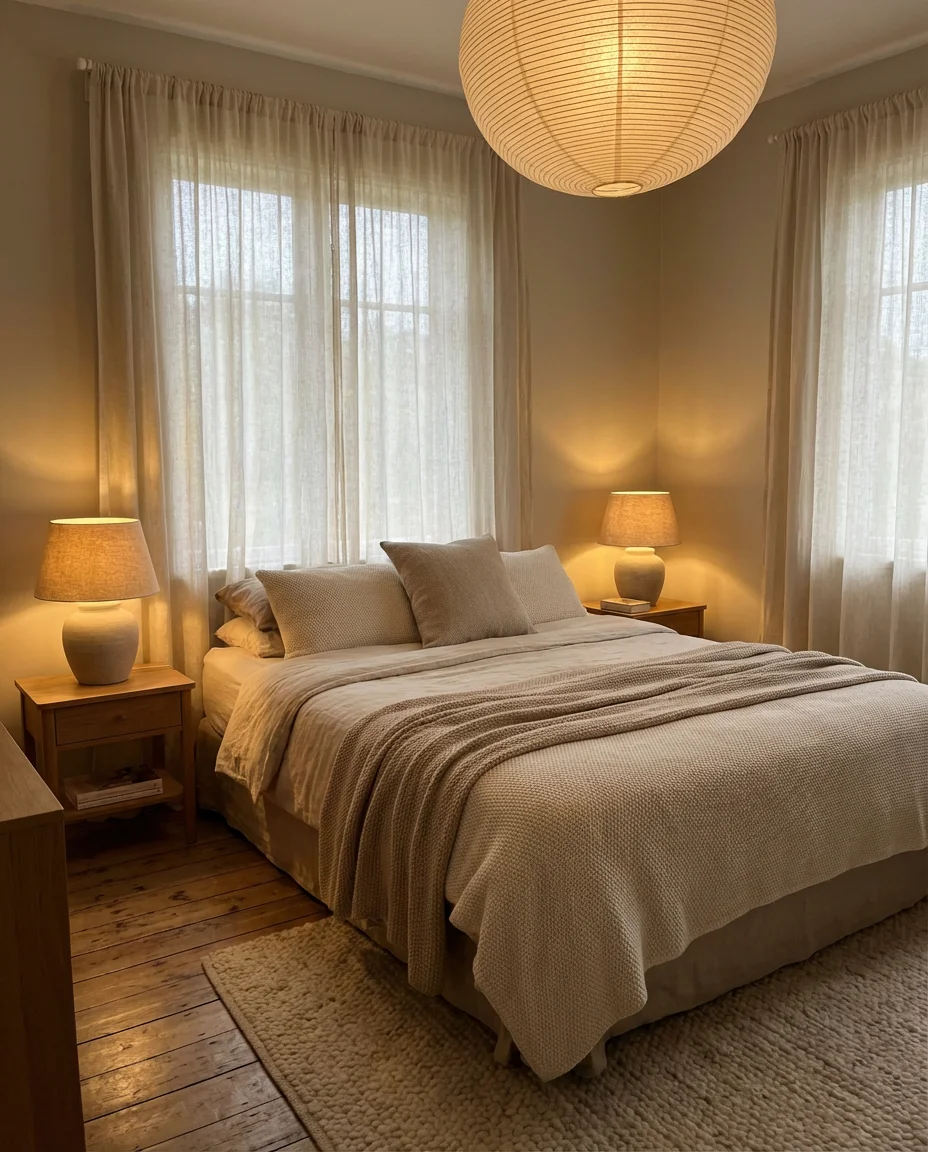
Layering light sources is the single most effective way to build a cozy, hotel-like bedroom atmosphere. The idea is simple: instead of relying on one overhead fixture, you combine multiple light levels—a ceiling source, bedside lamps, and accent lighting—to create depth and warmth. This approach plays beautifully in master bedrooms and guest suites alike, and it’s one of the most popular ambient lighting strategies flooding Pinterest boards right now. The result is a room that feels enveloping rather than exposed.
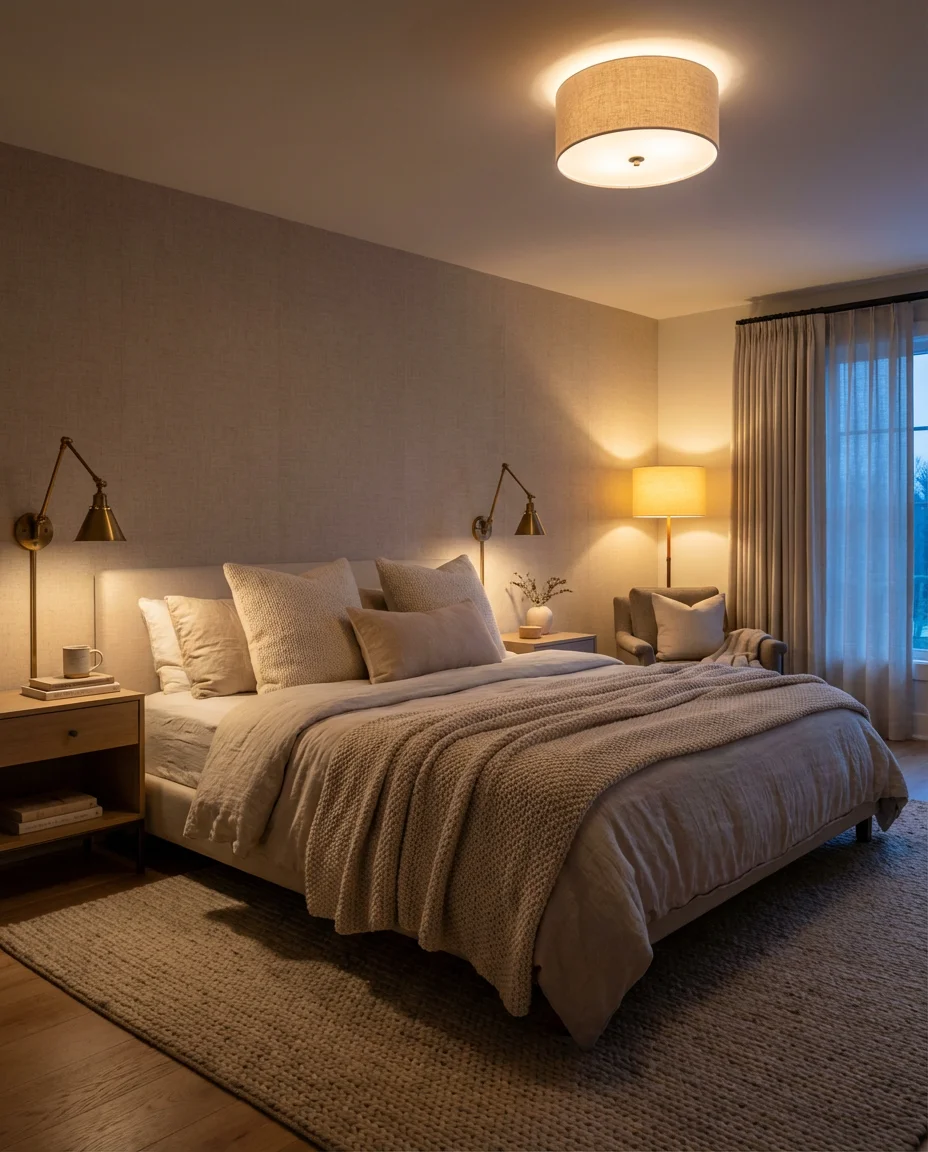
The key mistake most people make is stopping at just one lamp. Interior designers often recommend starting with a dimmer-equipped overhead fixture as your base layer, then adding directional task lighting at the bedside and soft accent lighting—think a plug-in LED strip behind the headboard or a small table lamp on a dresser. This “three-layer” rule keeps the room functional while dialing up the warmth whenever you need it most.
2. Japandi Pendant Lighting Over the Bed
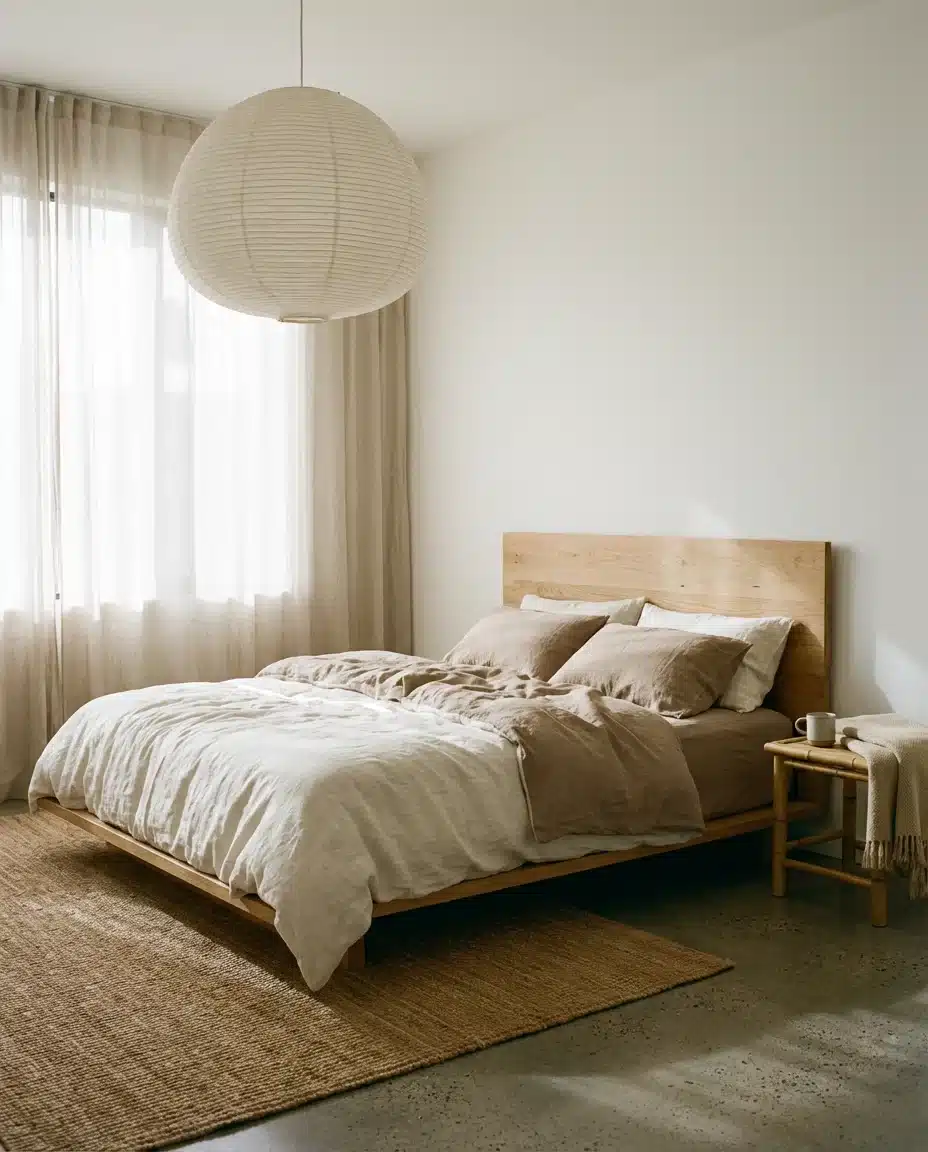
The Japandi aesthetic—that perfect marriage of Japanese minimalism and Scandinavian warmth—has taken the bedroom design world by storm, and its pendant lighting style is one of the clearest expressions of the trend. These fixtures tend to feature natural materials like washi paper, rattan, or light-toned wood, hanging low over the bed to create an intimate, focused glow. The result is elegant without being cold, and the organic forms feel quietly sculptural against a neutral wall. It’s an especially beautiful choice when you want a bedroom that feels both intentional and unhurried.
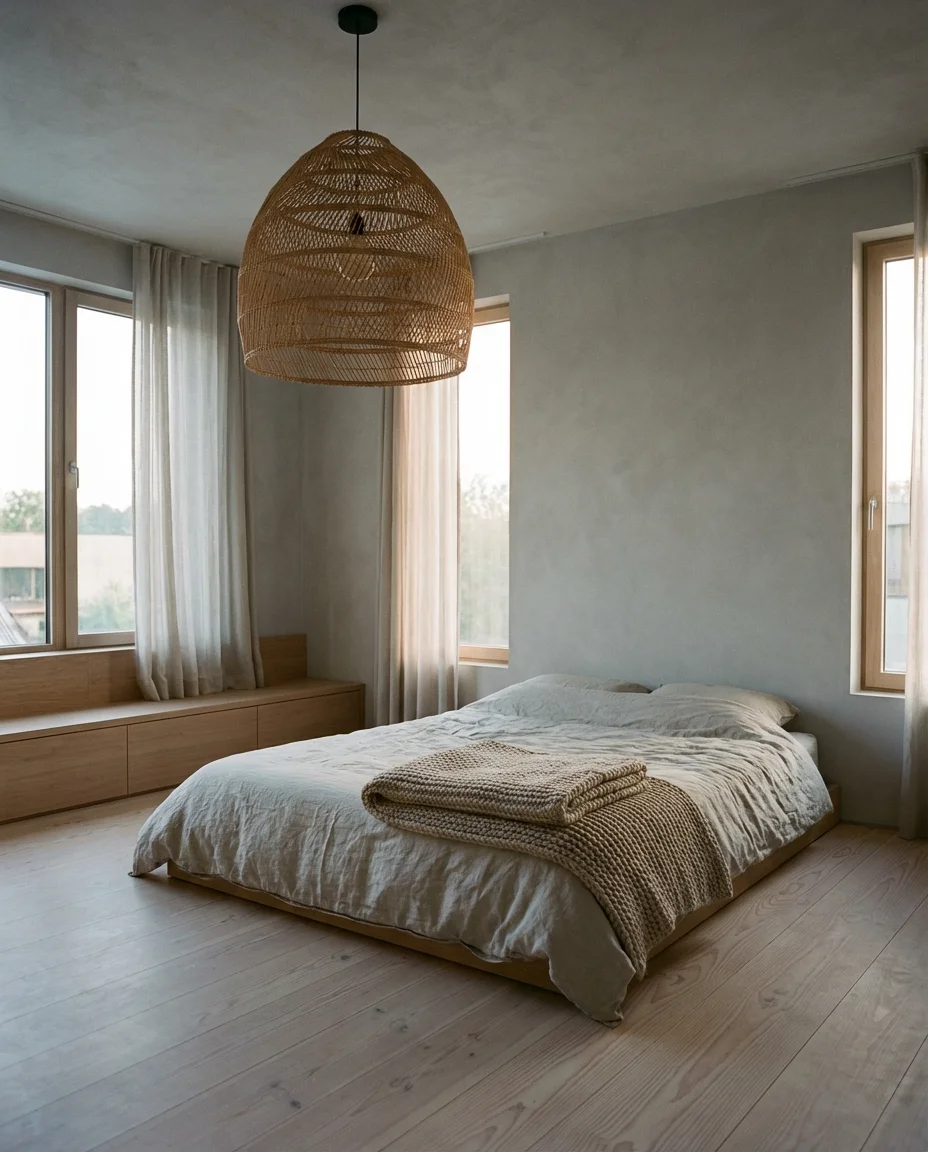
In Japandi-influenced spaces, proportion matters enormously. A common mistake is hanging the pendant too high, which kills the intimate effect entirely. A good rule of thumb: the bottom of the shade should sit roughly 18–24 inches above the pillow level. This keeps the light personal and usable for reading while letting the fixture act as a quiet focal point. Look for natural-fiber shades in the $80–$200 range—brands like Muuto and even IKEA’s Sinnerlig line hit this style at very accessible price points.
3. Moody Blue Walls with Soft Directional Fixtures
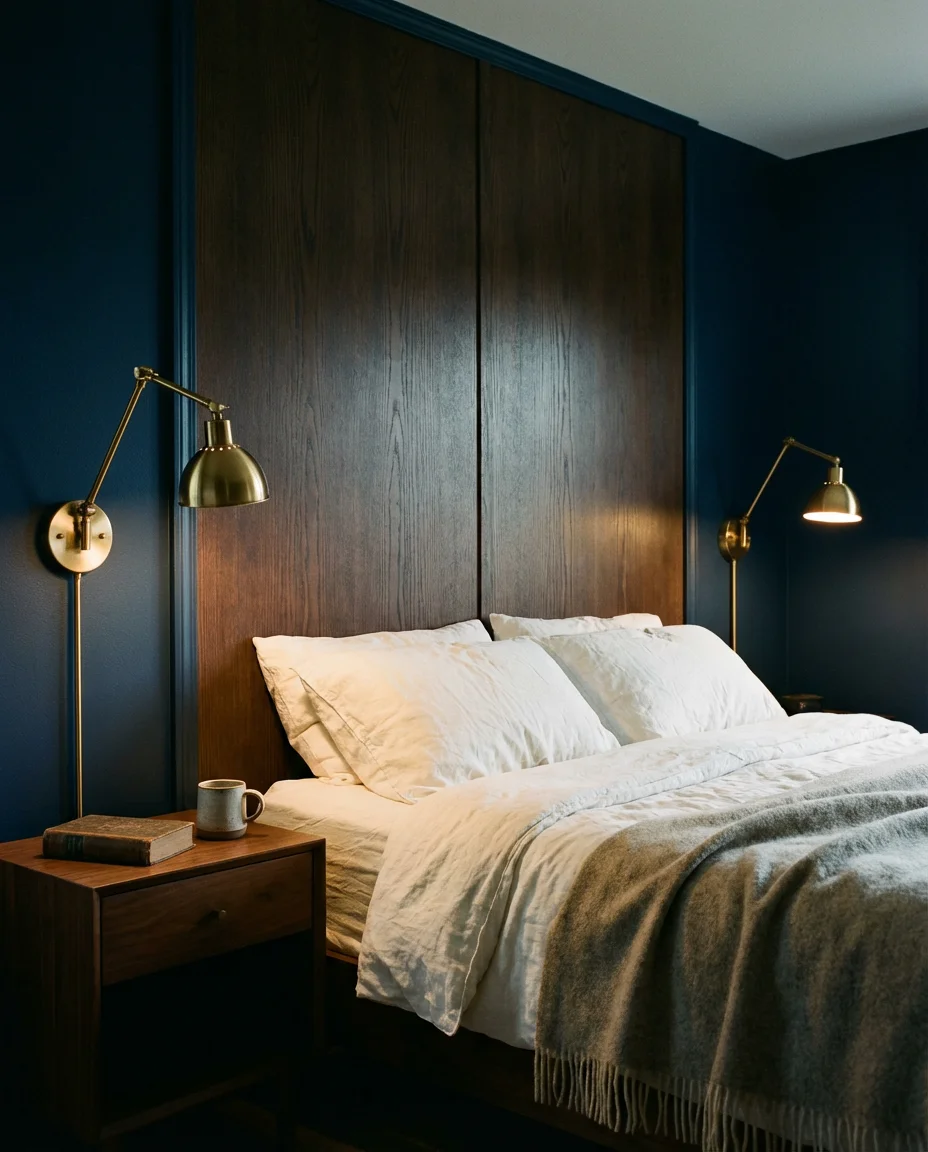
Nothing creates a moody, enveloping bedroom quite like pairing deep blue walls with warm, directional lighting. Shades like navy, slate, or ink-dipped midnight blue absorb and reflect light in ways that shift dramatically throughout the day—bright and airy in morning sunshine, rich and cave-like once the lamps come on at night. This combination has become a signature look on design-forward Pinterest accounts, and in 2026 it’s finding its way into bedrooms across the country, from Brooklyn brownstones to Phoenix new builds.
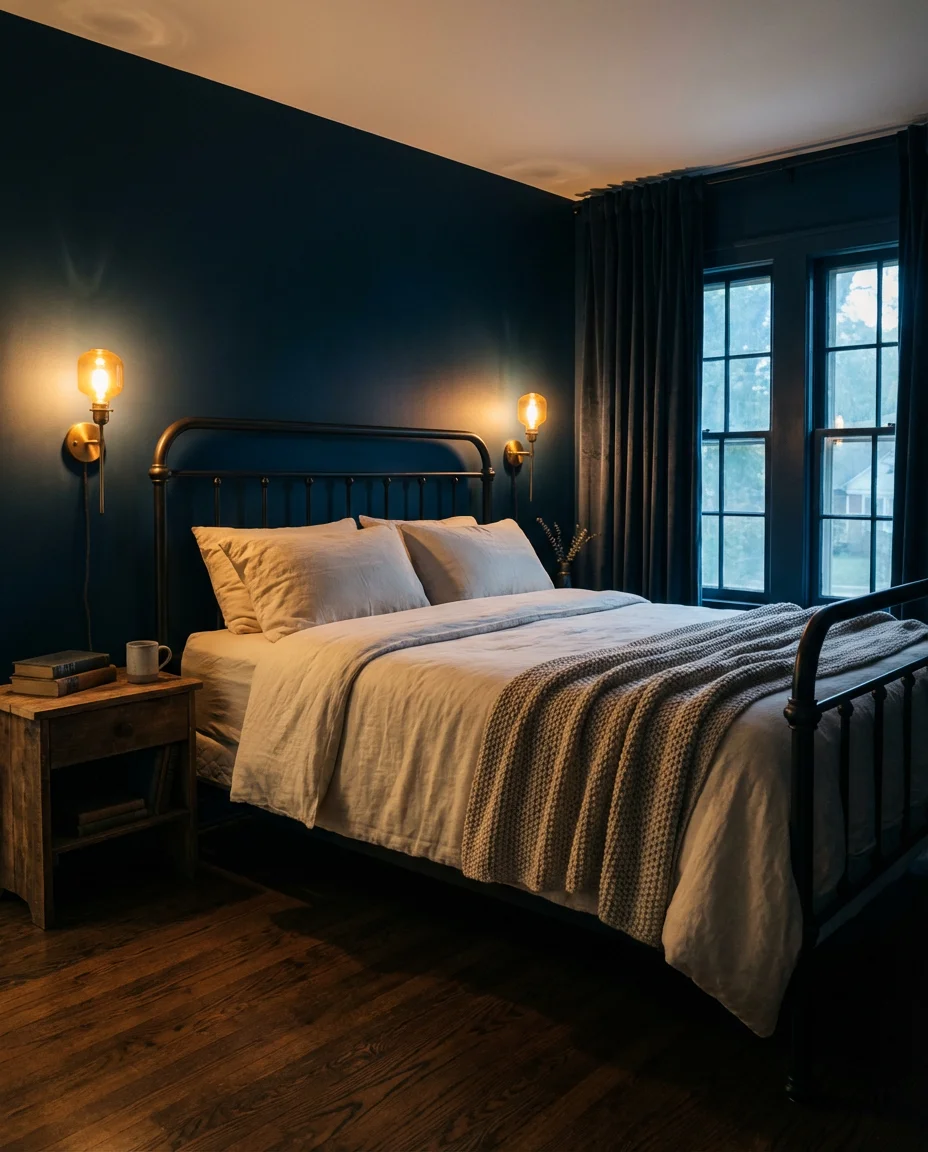
Where this works best is in north-facing rooms, where natural light tends to be cooler and more diffused—the deep wall color actually corrects for that, making the room feel warmer and more grounded. Pair the walls with brass or antique gold fixtures rather than chrome or nickel; the warm metal tones play beautifully against the cool depth of the blue. Interior designers consistently note that the contrast between a warm light source and a cool dark wall is one of the most visually satisfying combinations you can achieve in a bedroom.
4. LED Strip Lighting Behind the Headboard
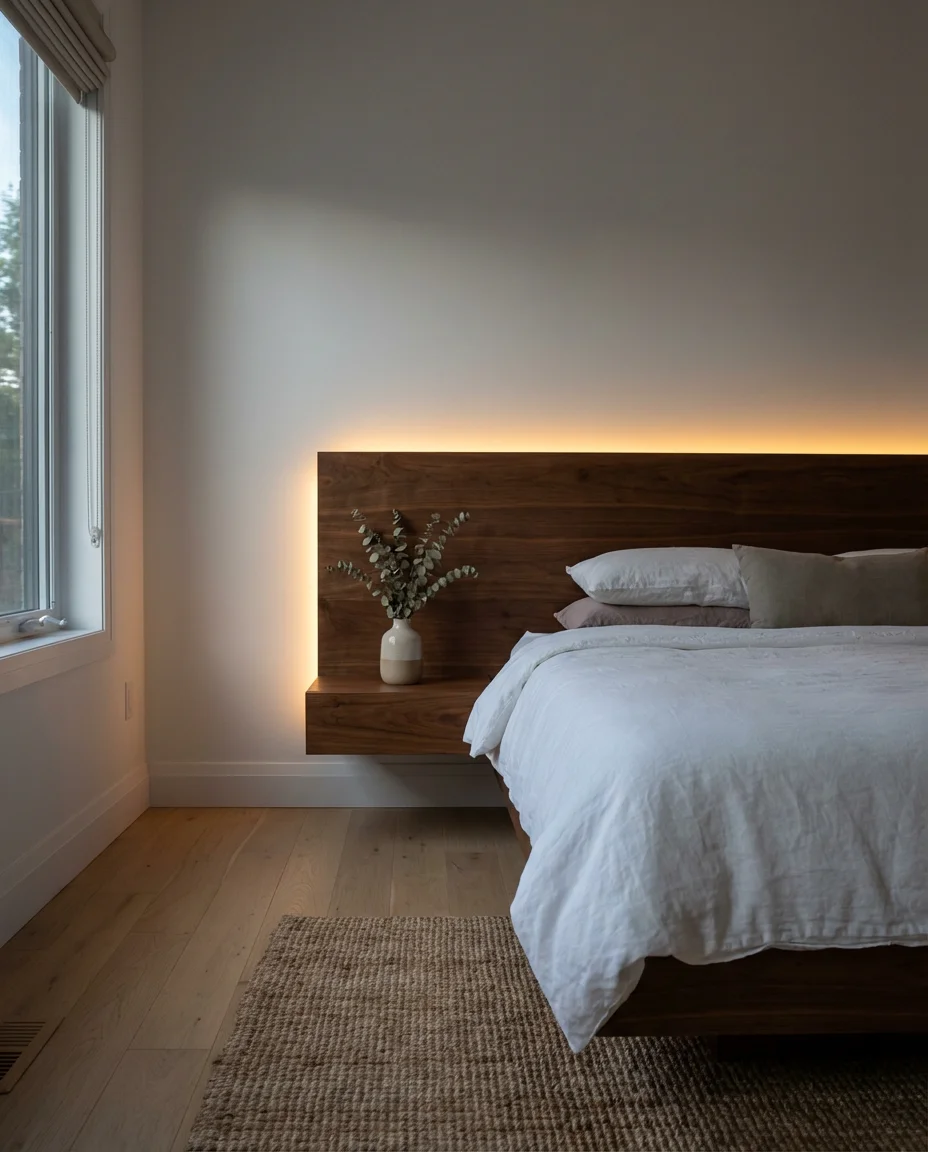
LED strip lighting has had a glow-up of its own. What started as a gamer-room staple has matured into a genuinely sophisticated bedroom accent technique—especially when the strips are hidden behind a floating headboard or a recessed wall panel, casting a halo of soft light that makes the entire bed area feel intentional and polished. For anyone chasing that aesthetic bedroom look that performs just as well in photos as in real life, this is one of the easiest wins available at almost any budget.
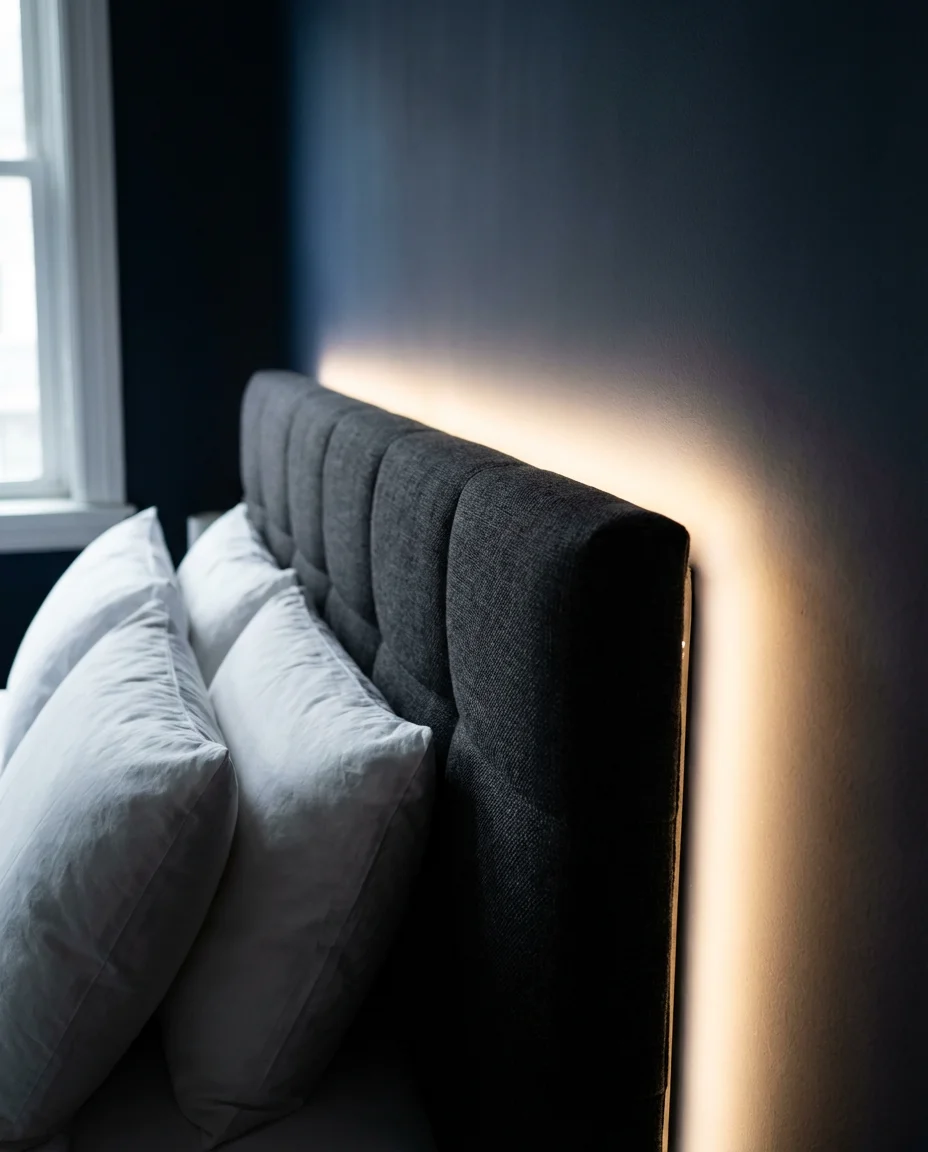
A real homeowner trick: use 2700K warm white LED strips rather than the RGB color-changing variety if you want the end result to look elevated rather than playful. Mount the strips at least 2–3 inches behind and above the headboard edge so the source stays completely hidden and you only see the glow—not the hardware. A 16-foot roll of quality LED strips typically runs $20–$50 and takes under an hour to install. It’s one of the highest-return lighting upgrades you can do in a weekend.
5. Modern Ceiling Fixtures for Low-Profile Rooms
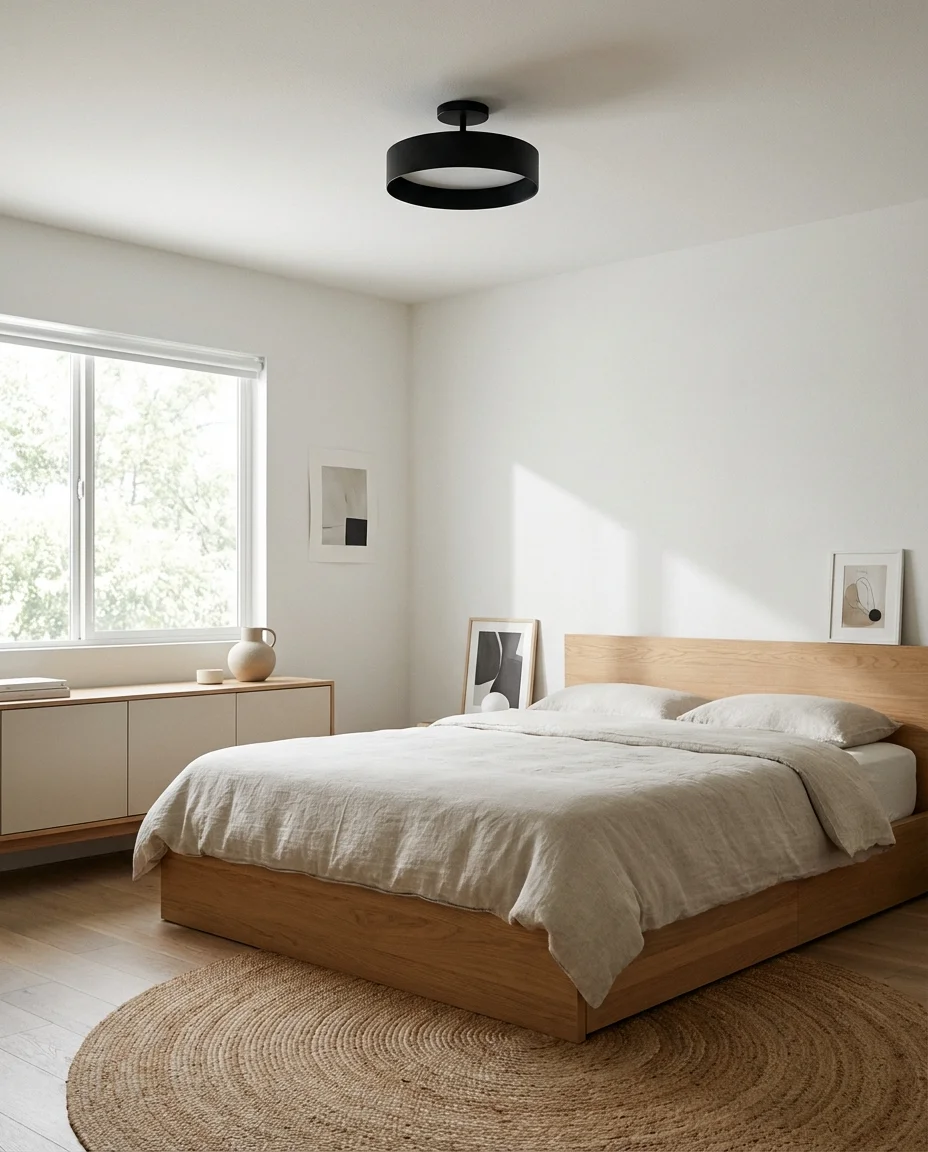
In rooms with standard 8-foot ceilings—which describes the majority of American homes—choosing the right fixtures and ceiling style can make or break the whole design. The good news is that modern ceiling lights have evolved far beyond the builder-grade flush mount. In 2026, thin-profile semi-flush fixtures in matte black, brushed brass, or warm white plaster are replacing dated ceiling fans and outdated boob lights, giving even modest bedrooms a design-conscious foundation that feels fresh and intentional.
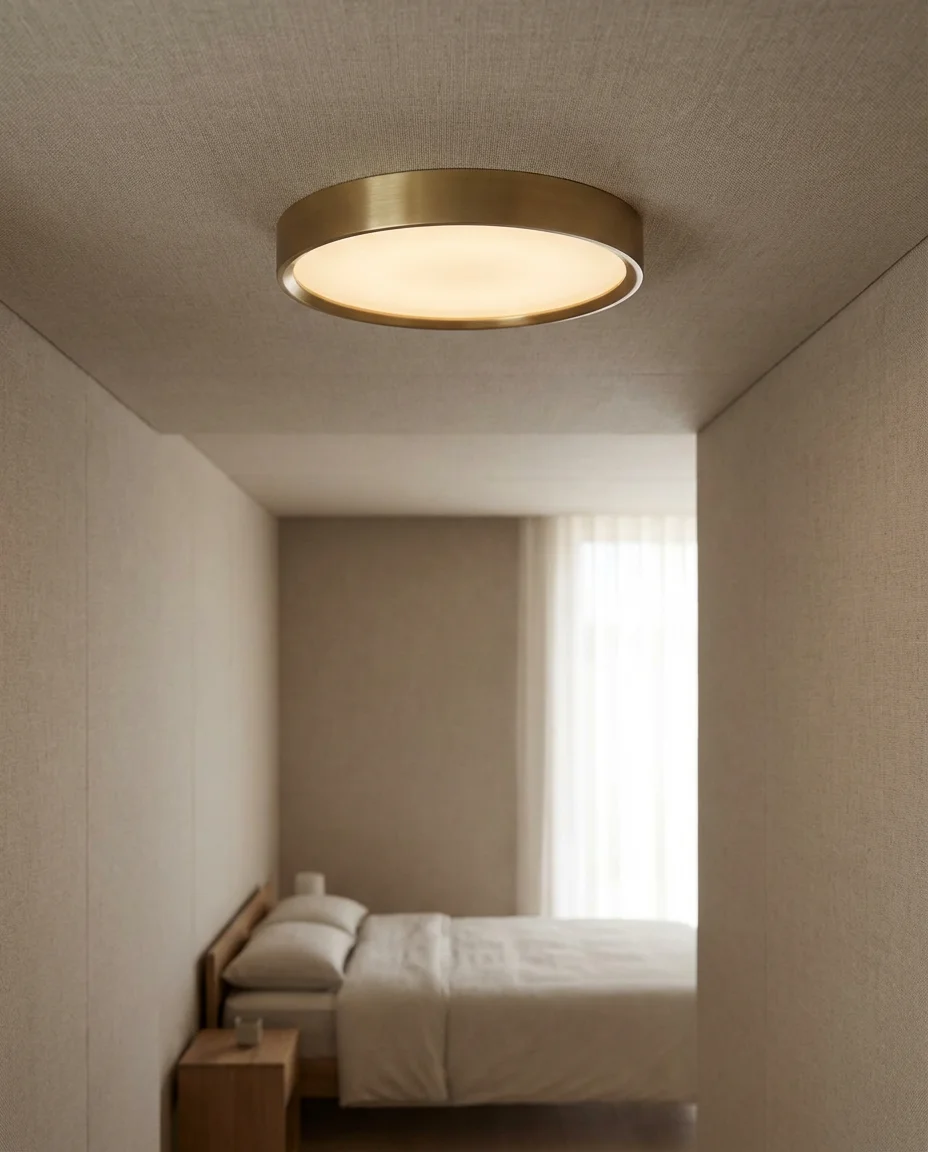
Budget-wise, this upgrade is more accessible than most people expect. Stylish semi-flush fixtures from brands like Lamps Plus, Schoolhouse, or even Target’s threshold line run anywhere from $60 to $250 — a fraction of what a full renovation costs, with a disproportionately large visual payoff. The single most important spec to check: opt for fixtures that accept standard E26 bulbs so you can dial in the exact color temperature and brightness yourself, rather than being locked into a proprietary LED module.
6. Hanging Pendant Bedside Lamps
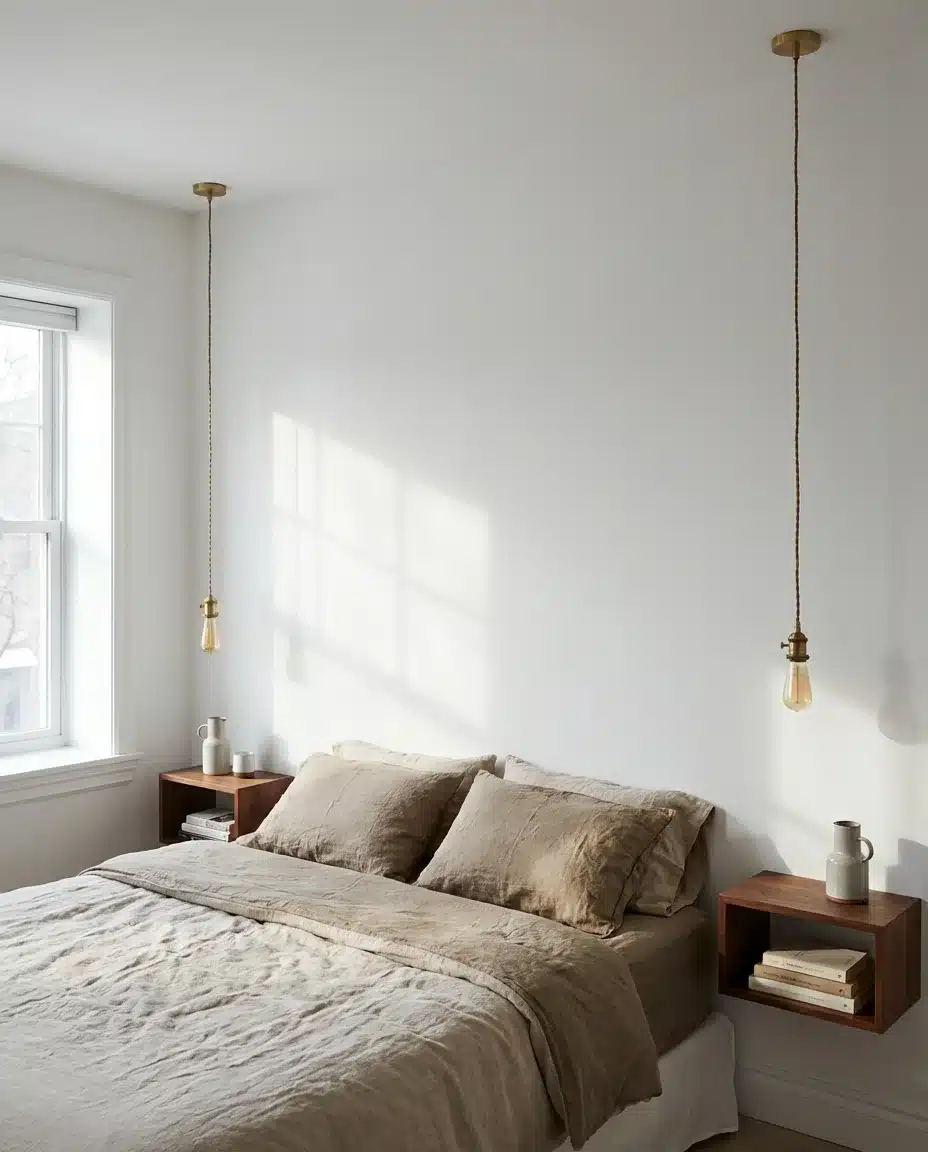
Swapping out traditional bedside table lamps for hanging pendants is one of those moves that looks expensive and complicated but is actually surprisingly simple to pull off—especially with the proliferation of plug-in pendant kits that require zero electrical work. The effect is dramatic: the light source drops from the ceiling on a fabric cord, freeing up the entire nightstand surface and giving the headboard wall a much cleaner, more architectural feel. It’s a particularly strong choice for design lovers who want a boutique hotel aesthetic without the renovation price tag.
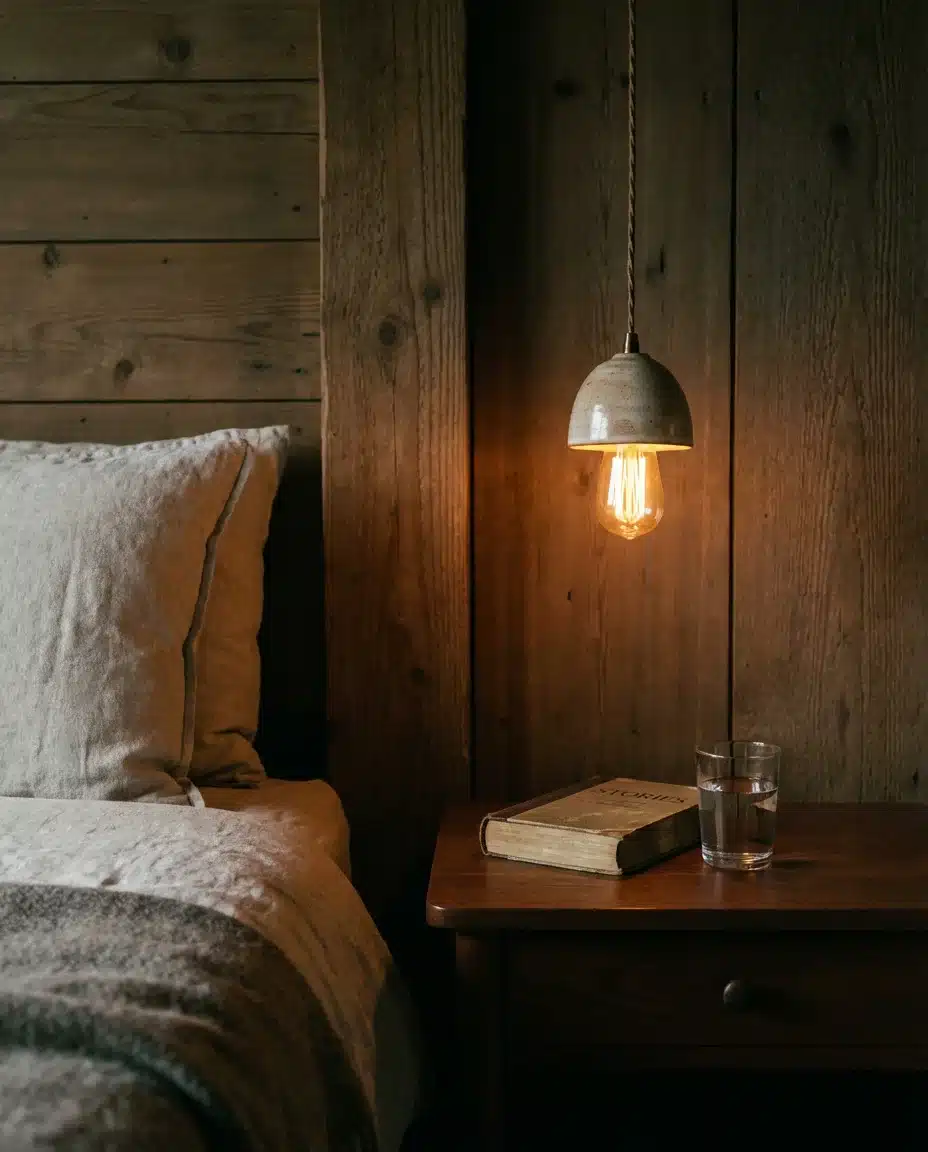
One thing to plan carefully: cord length. For pendant bedside lighting, you want the bottom of the shade to hang between 18 and 24 inches above the mattress top—low enough to be functional for reading, high enough that you won’t knock it getting into bed. If you’re using a plug-in version, make sure the cord runs cleanly along the wall using adhesive cable clips painted to match; exposed drooping cords are the number one thing that makes this look go wrong.
7. Green Velvet Shade Table Lamps
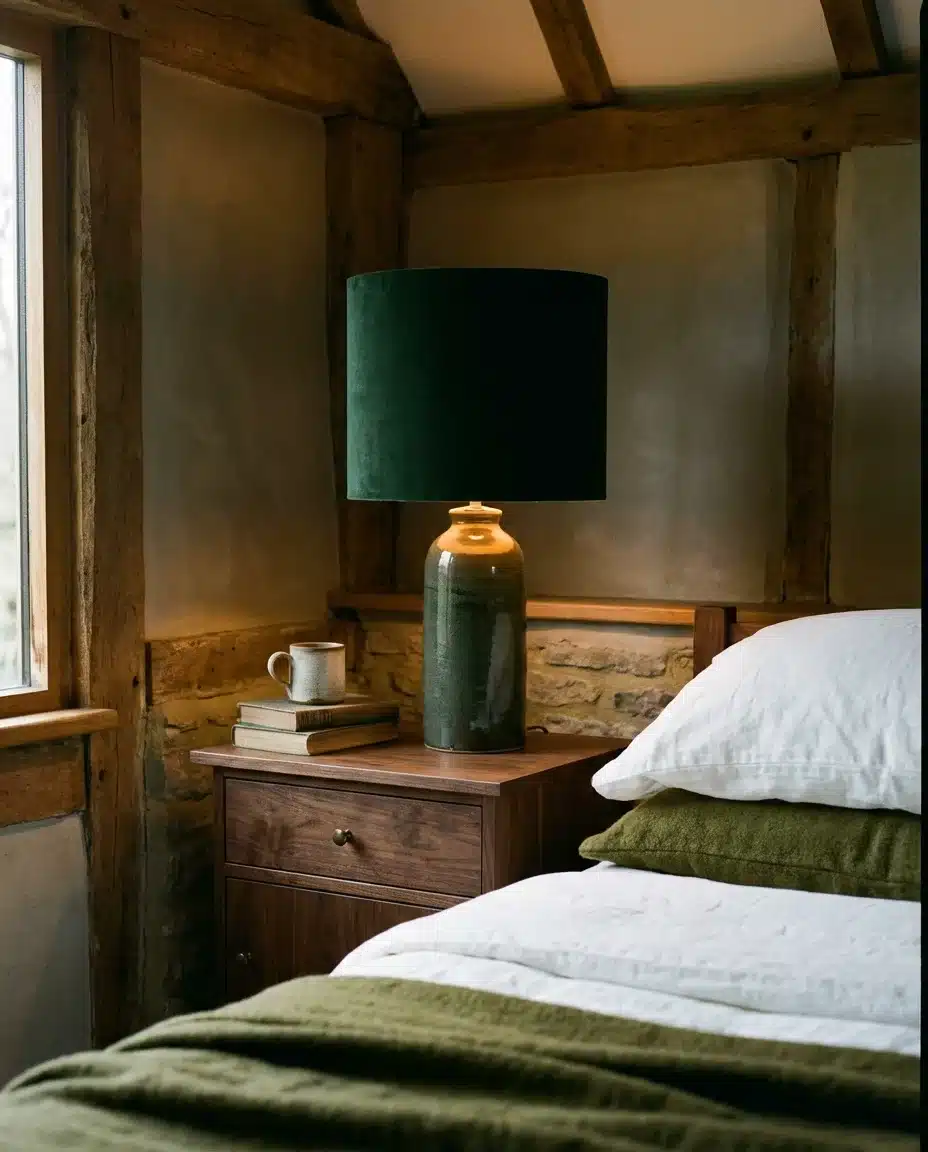
In 2026, green is having its biggest bedroom moment in years. And one of the most satisfying ways to bring the color in without committing to painted walls is through a pair of table lamps with rich, jewel-toned shades—hunter green, forest, or bottle green velvet or ceramic shades that cast a warm, tinted glow when lit. This is the kind of detail that looks completely at home in an earthy, maximalist space but also works beautifully against neutral backgrounds as a single pop of color. It’s a small change with a surprisingly large personality.
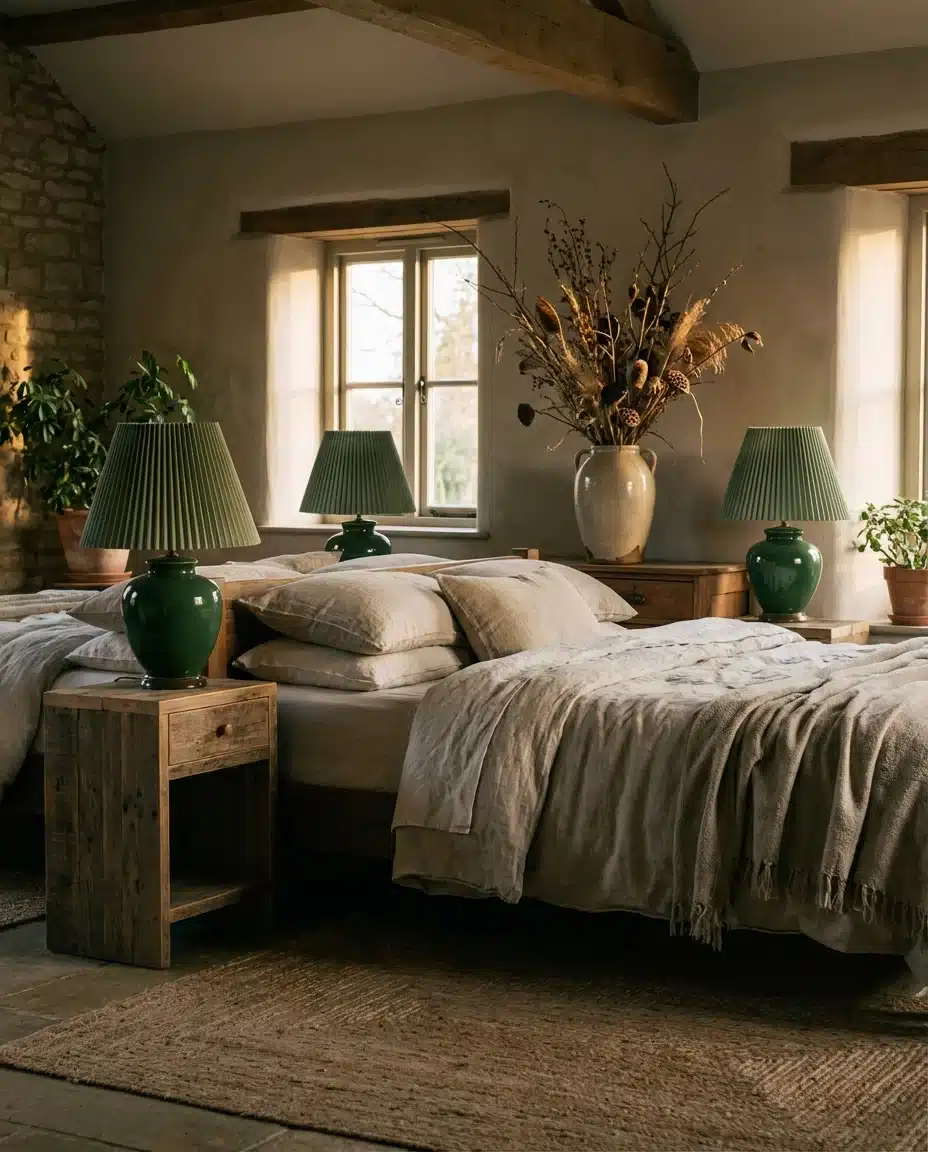
A micro-anecdote worth holding onto: a Brooklyn-based interior stylist once described green shaded lamps as “the earrings of a bedroom”—small enough to swap out seasonally, impactful enough to change the entire energy of the room. And that’s exactly how to think about them. Don’t invest in an expensive base; put your budget in the shade itself. A well-made velvet or linen shade in a saturated green can make even a basic brass lamp look intentional and high-end.
8. Pink Glow: Rosy Hue Fixtures for a Romantic Bedroom
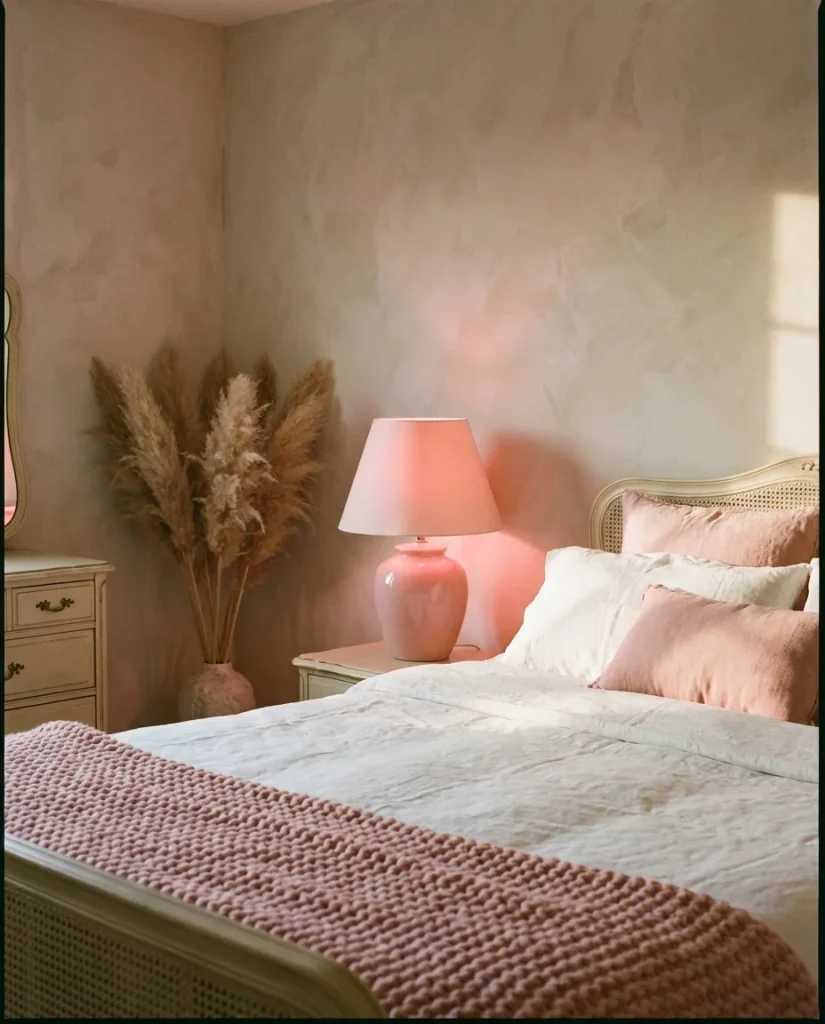
Pink lighting—whether from a blush ceramic lamp, a rose-tinted bulb, or a dusty mauve shade—creates some of the most flattering and romantic light a bedroom can have. It’s a trend that picked up real momentum in 2025 and shows no signs of slowing in 2026, appearing everywhere from high-design boutique hotels to everyday master bedrooms in the Midwest. The effect is warm, skin-flattering, and deeply soothing—a step beyond the standard warm white, adding the faintest flush of color that makes the entire room feel like golden hour all evening long. Pair it with soft textiles and light-toned walls for maximum impact.
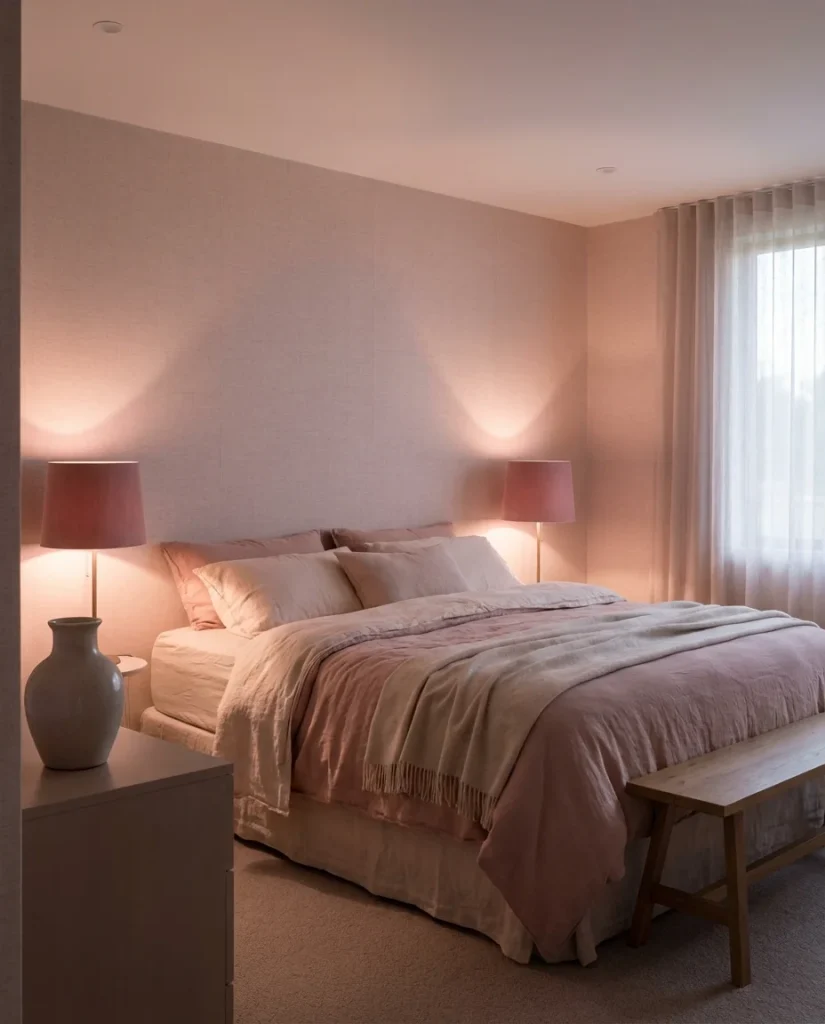
This works best in rooms where you want intimacy over functionality—so think of the primary bedroom rather than a home office hybrid. One practical tip: you don’t need to invest in pink-tinted bulbs (which can look artificial). A sheer blush or deep rose lampshade over a standard 2700K warm white bulb will naturally warm and tint the glow in a way that looks organic and beautiful. The effect is subtle in daylight, transformative at night.
9. Ceiling Ideas for Small Rooms: The Low-Hang Strategy
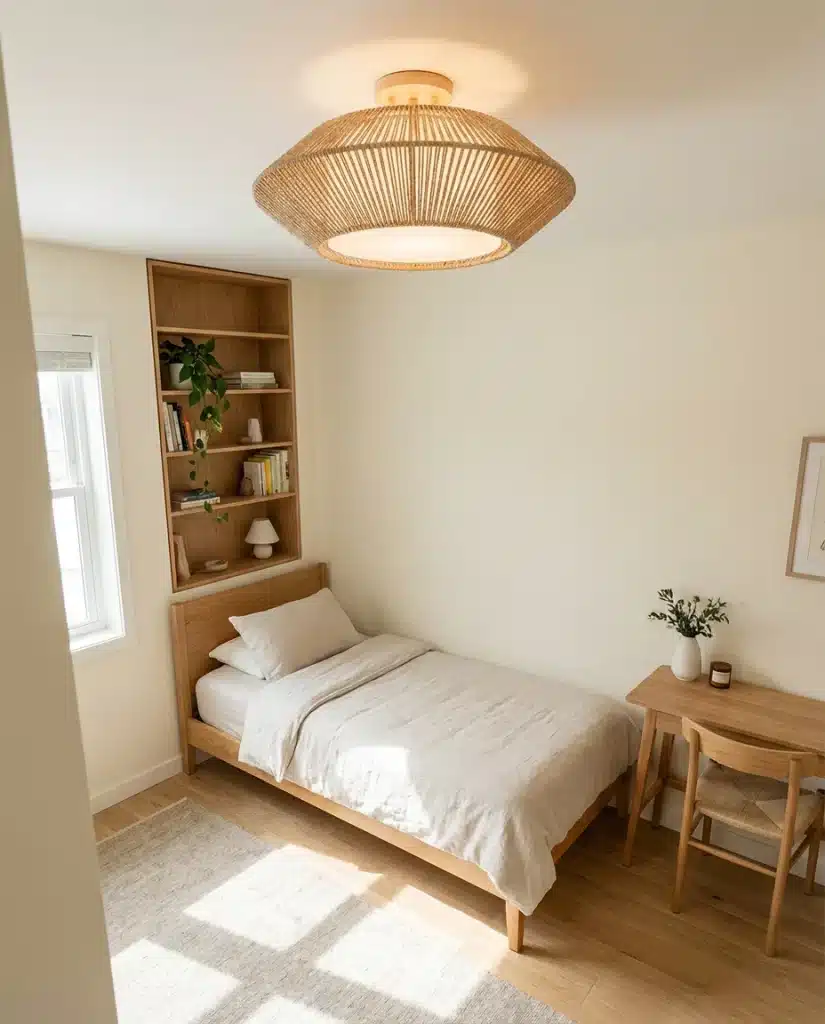
One of the most common lighting mistakes in small bedrooms is treating the ceiling fixture as an afterthought—a functional necessity rather than a design tool. But in tight spaces, the ideas for small rooms approach flips the script entirely: the fixture becomes a focal point rather than a footnote. Choosing a single, well-proportioned pendant or semi-flush mount hung slightly lower than you might expect actually makes a small room feel taller by drawing the eye up and then gently back down, creating a sense of vertical drama that standard recessed lighting simply cannot achieve.
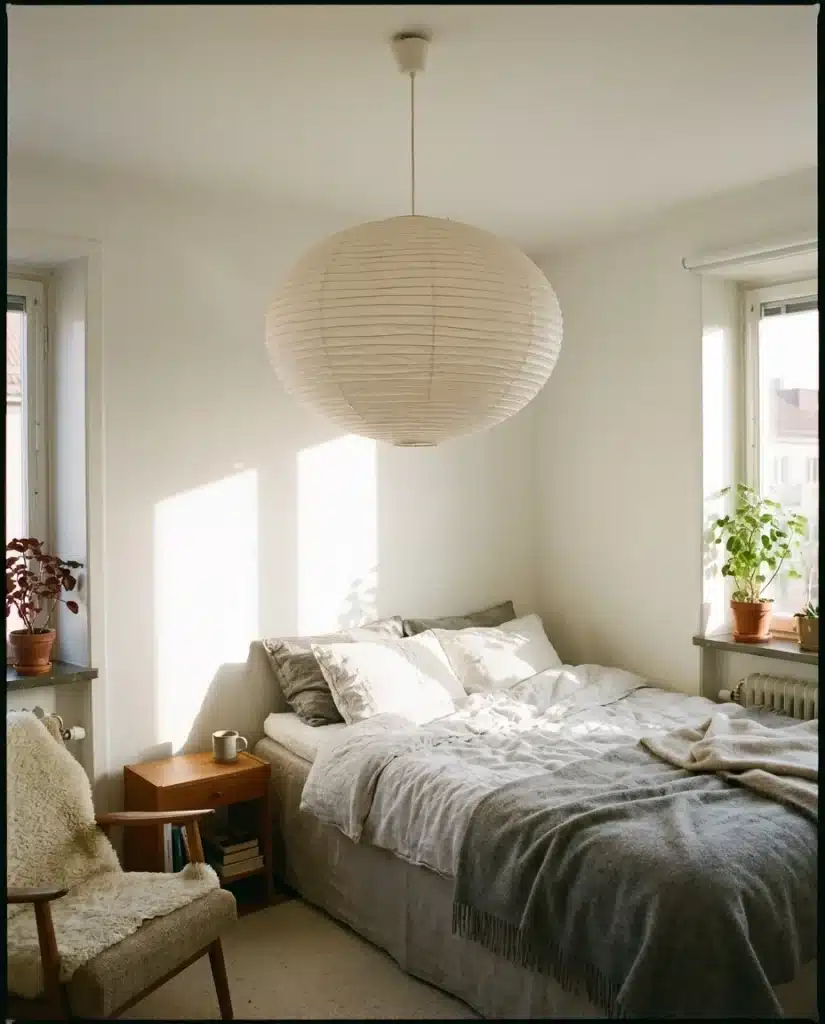
In American homes, small bedrooms—especially those in older houses or apartments—frequently suffer from fixtures that are too small for the room’s needs. As a general sizing rule, add the room’s length and width in feet, then convert that number to inches for the ideal fixture diameter. A 10×10 room, for instance, calls for roughly a 20-inch fixture. Going slightly oversized in a small room is almost always the bolder and better choice.
10. Blue Bedroom Lighting: Cool Tones Done Right
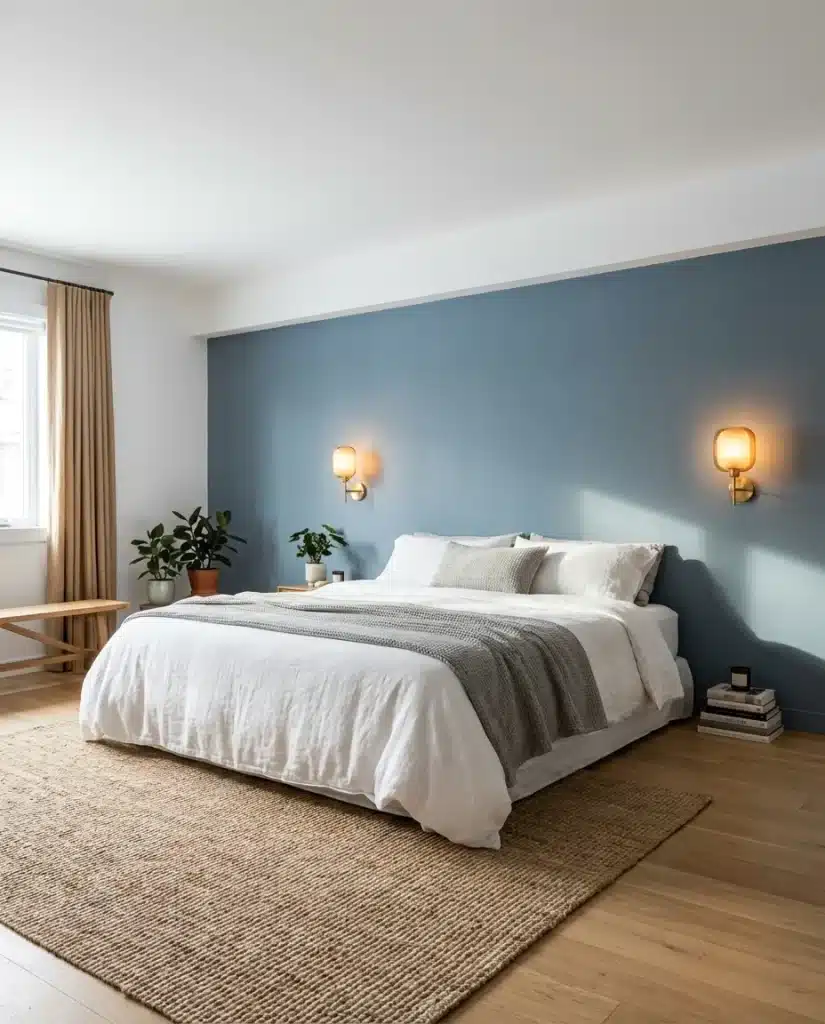
Working with blue in the bedroom requires a thoughtful approach to lighting—because cool-toned colors can easily read as cold and unwelcoming under the wrong light source. The key is creating contrast: pairing those beautiful blue walls, textiles, or furniture with warm-spectrum lighting (2700K–3000K range) that softens and enriches the cool tones rather than competing with them. Done right, the combination is some of the most striking and inspiration-worthy bedroom design happening right now, and it photographs beautifully for anyone building a Pinterest or Instagram presence around their home.
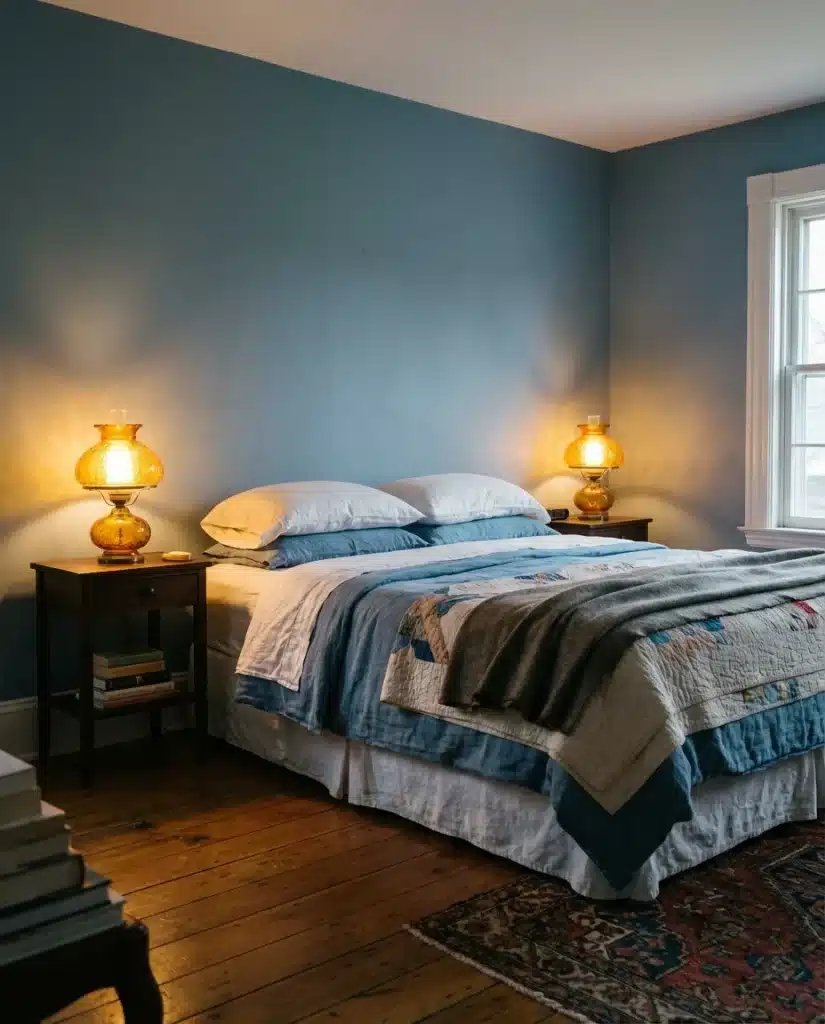
A common mistake is choosing 4000K or 5000K “daylight” bulbs in a blue room—the result ends up feeling clinical and flat, like a dentist’s office. Stick with amber-toned Edison-style bulbs or warm white LEDs throughout, and let the wall color provide all the cool, calming energy you need. This contrast isn’t just visually compelling—research in environmental psychology consistently finds that warm light in cool-toned spaces promotes deeper relaxation and better sleep onset.
11. Wood Beam Ceiling with Recessed Warm Spots
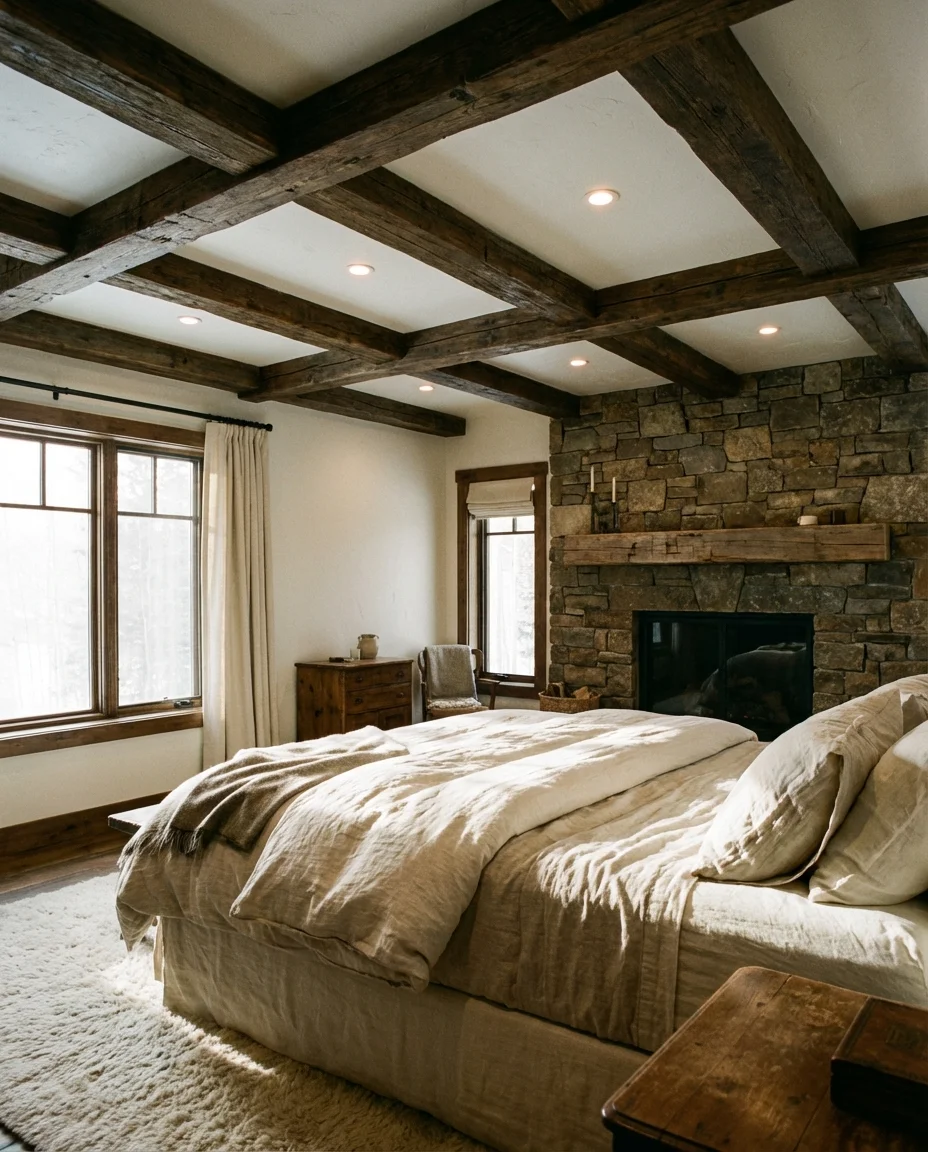
Few architectural features make a bedroom feel as rich and cozy as exposed wood ceiling beams—and the right lighting strategy can elevate them from a rustic backdrop to a genuine design statement. In 2026, the most sophisticated interpretation pairs clean, streamlined recessed spotlights (warm white, narrow beam angle) nestled between the beams, allowing the warm wood tones to be showcased by the light rather than flattened by it. This approach works equally well in a mountain cabin aesthetic and a transitional suburban master bedroom, making it one of the most versatile ceiling lighting plan choices available.
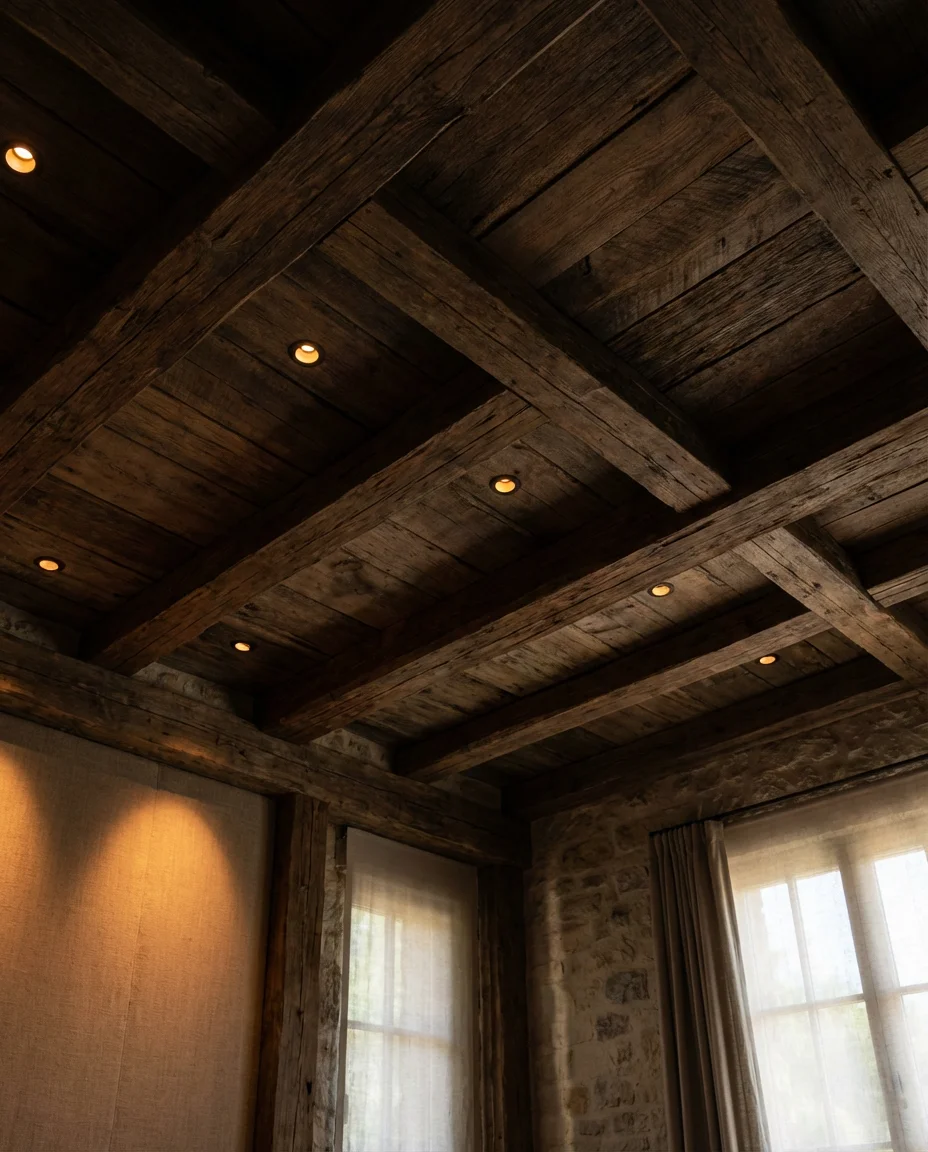
If you’re adding recessed lighting to a room with existing beams, always position the fixtures to aim slightly toward the beams rather than straight down—this washing effect highlights the grain and texture of the wood in a way that straight-down lighting never achieves. For beam-and-plaster ceilings, 3000K narrow-beam LED spots (around 25–36 degrees) give the most controlled and dramatic result without spilling light where you don’t want it.
12. Master Bedroom Fixtures: Statement Chandelier Over the Bed
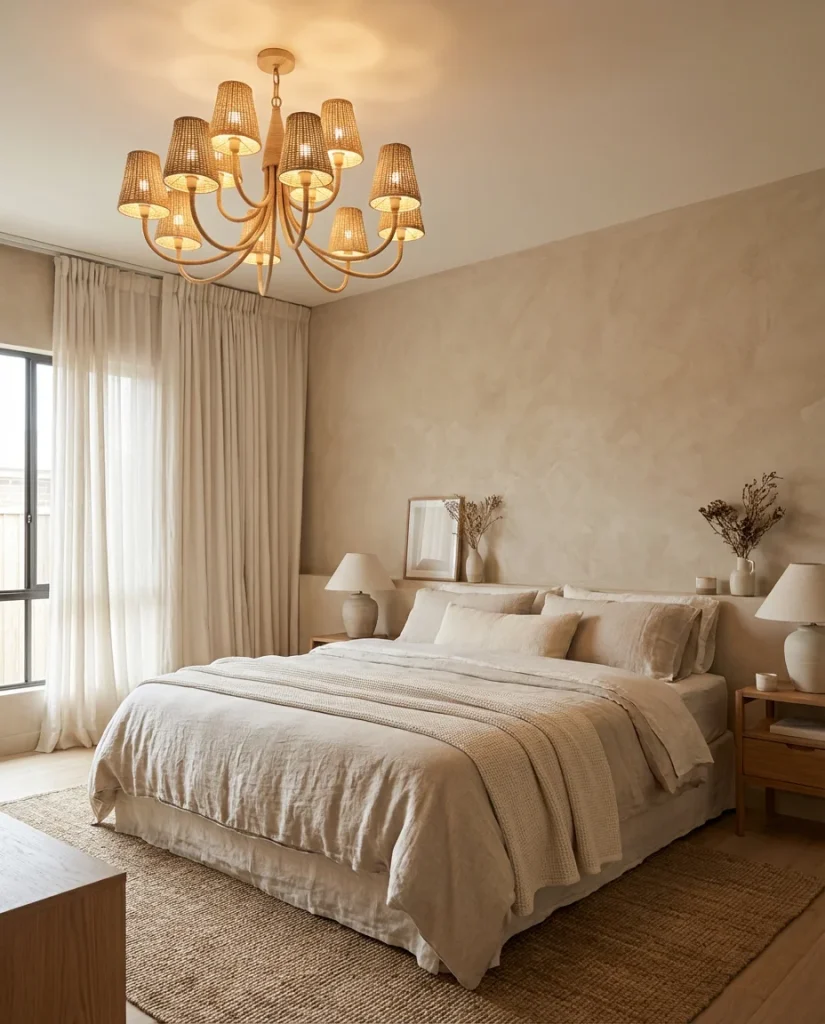
A chandelier in the bedroom—especially one positioned directly over the bed—has become one of the most sought-after elements in American master bedroom fixture design. In 2026, this doesn’t mean crystal dripping from a Victorian medallion; it means organic, modern forms: sculptural iron chandeliers, rattan multi-arm pendants, or minimalist cluster lights that feel more like art than architecture. The effect is undeniably romantic and transforms an ordinary sleeping space into something that feels genuinely considered. It’s the kind of upgrade that makes a room feel like a destination rather than just somewhere you sleep.
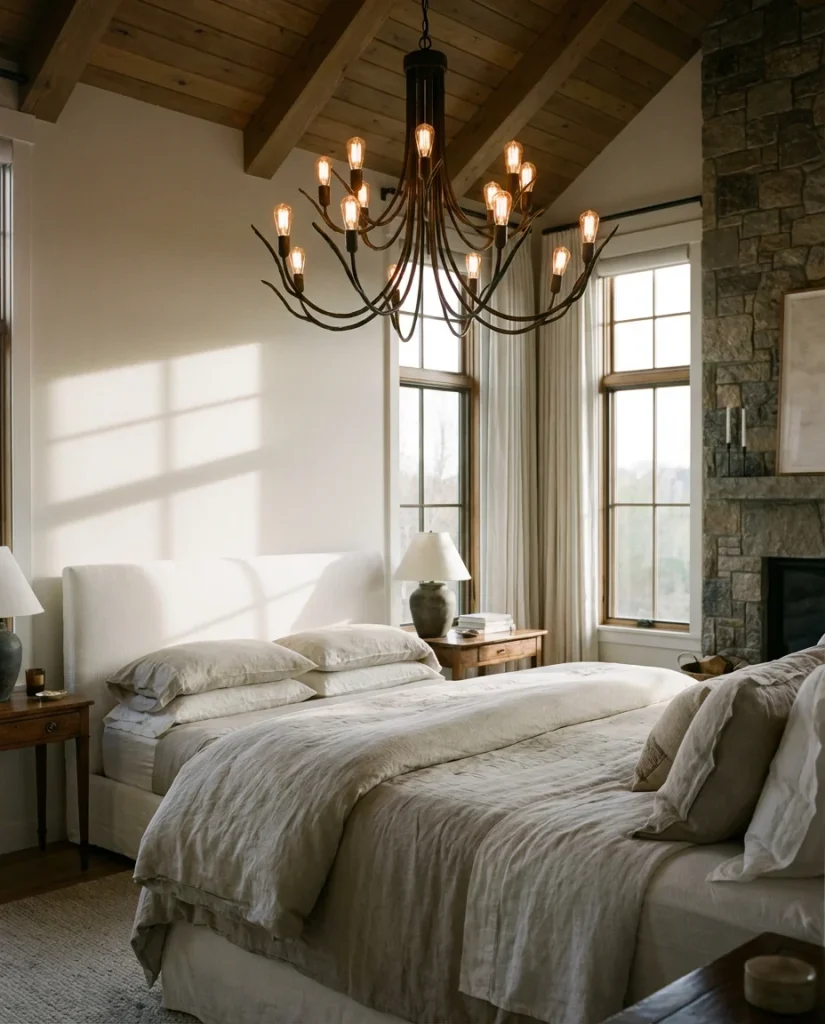
The most common mistake people make with bedroom chandeliers is going too small. A fixture that looks impressive in a showroom can disappear visually once it’s installed in a full-sized bedroom. For a king bed in a 12×14 room or larger, aim for a chandelier spanning at least 24–30 inches in diameter. And always, always put it on a dimmer—a chandelier that can’t be dimmed is one of the most frustrating lighting mistakes in a bedroom.
13. Primary Colors Pop: Bold Fixture as Accent
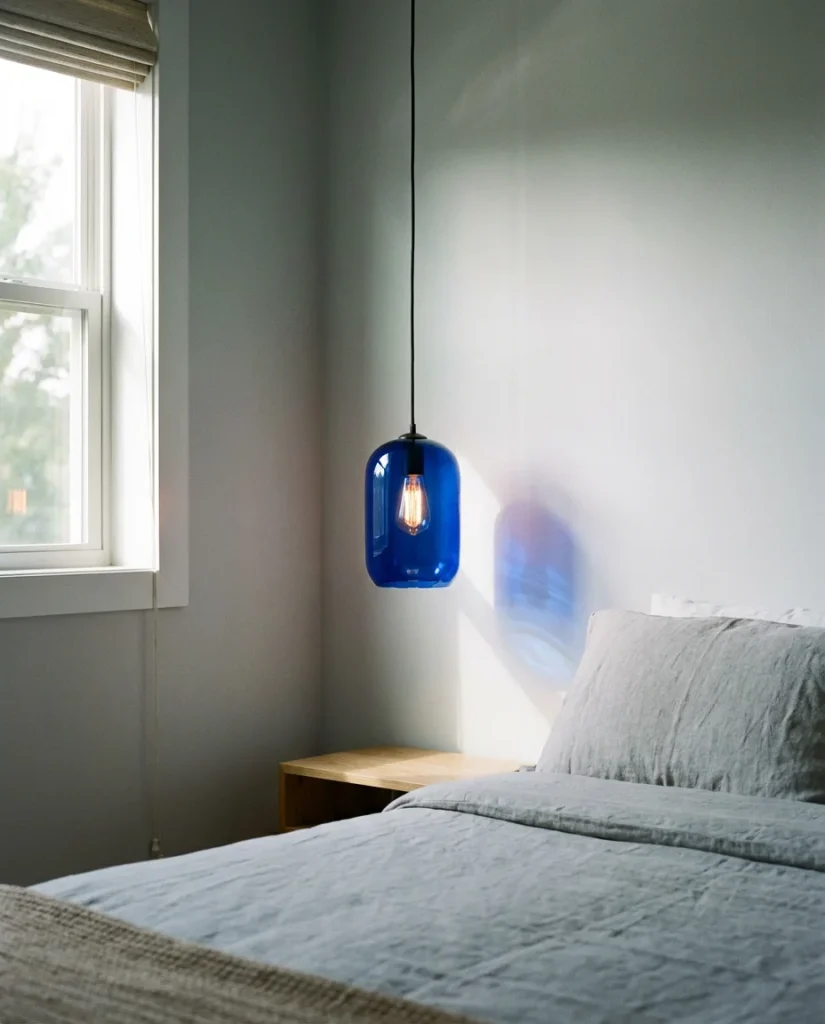
For those who want their bedroom to feel more alive and personality-driven, incorporating a fixture in a bold primary color—cherry red, cobalt, or sunflower yellow—against an otherwise neutral room is a move that’s gaining serious traction in 2026. Think: a single red ceramic table lamp on an otherwise white and linen dresser, or a cobalt blue glass pendant anchoring a soft grey room. These aren’t children’s room choices—when executed with restraint, they read as confident, cool, and deeply personal. It’s the lighting equivalent of wearing one great accessory and letting it do all the talking.
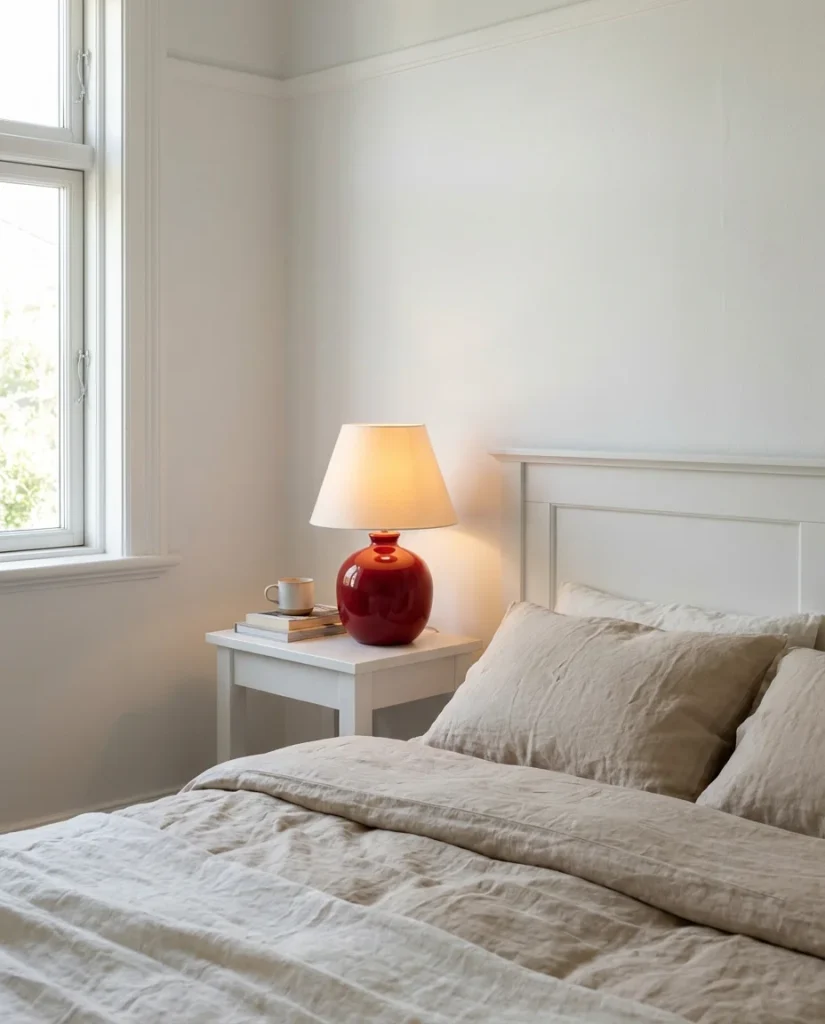
This is where a budget can actually work in your favor. A single statement fixture in a bold color doesn’t need to be expensive—it needs to be the right shape. Simple silhouettes (a cylinder, a globe, a classic tapered shade) in an unexpected color almost always look more expensive and intentional than elaborate shapes in neutral finishes. Target, CB2, and small Etsy ceramicists all carry this category well in the $40–$150 range.
14. Sconce Lighting for a Reading Nook Corner
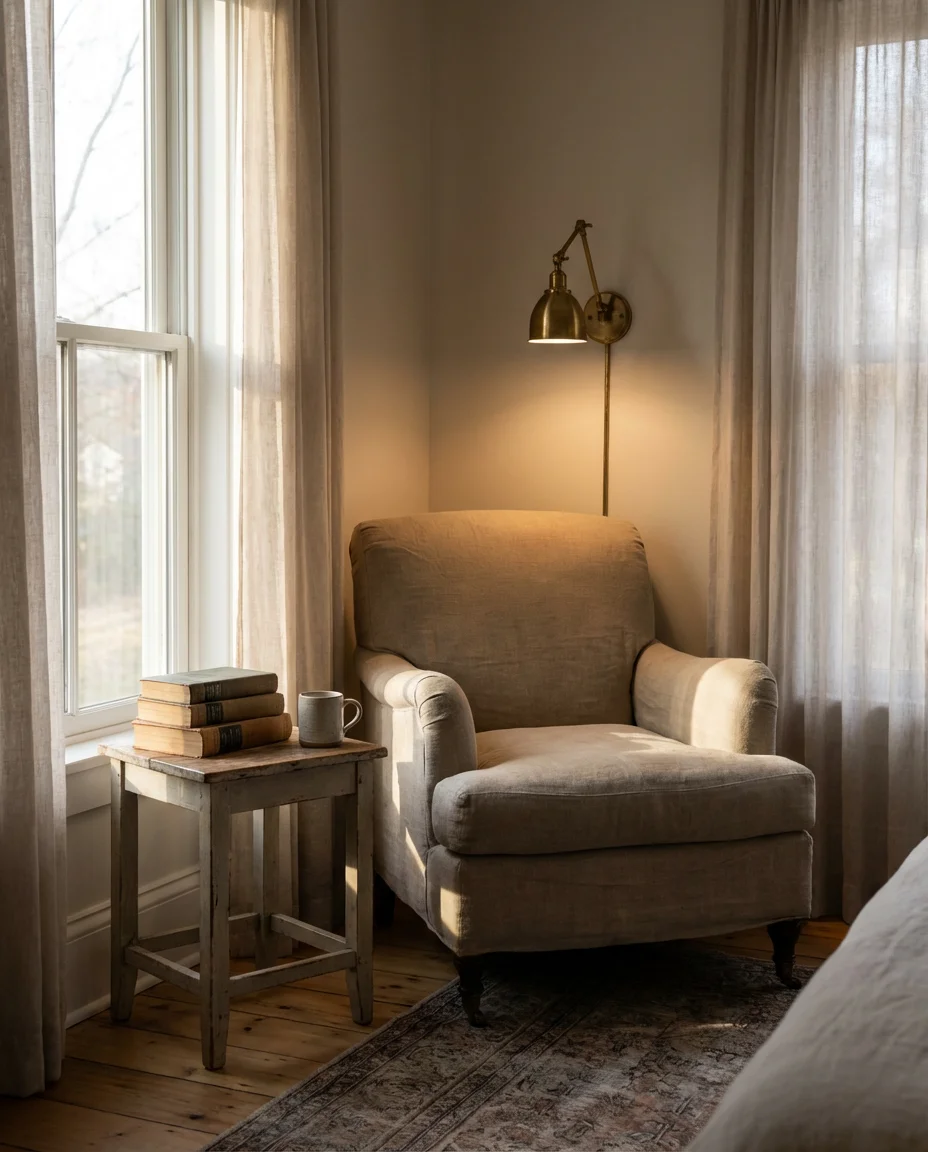
If your bedroom includes even a small armchair or window bench, a dedicated reading corner with its own sconce lighting is one of the coziest and most livable upgrades you can make in 2026. It creates a clear “second zone” within the bedroom—a place to wind down with a book before moving to bed—and the act of having a separate, task-specific light source makes the room feel thoughtfully curated rather than casually furnished. This is the kind of detail you see in inspiration-driven bedroom tours and wonder why you haven’t done it yourself yet.
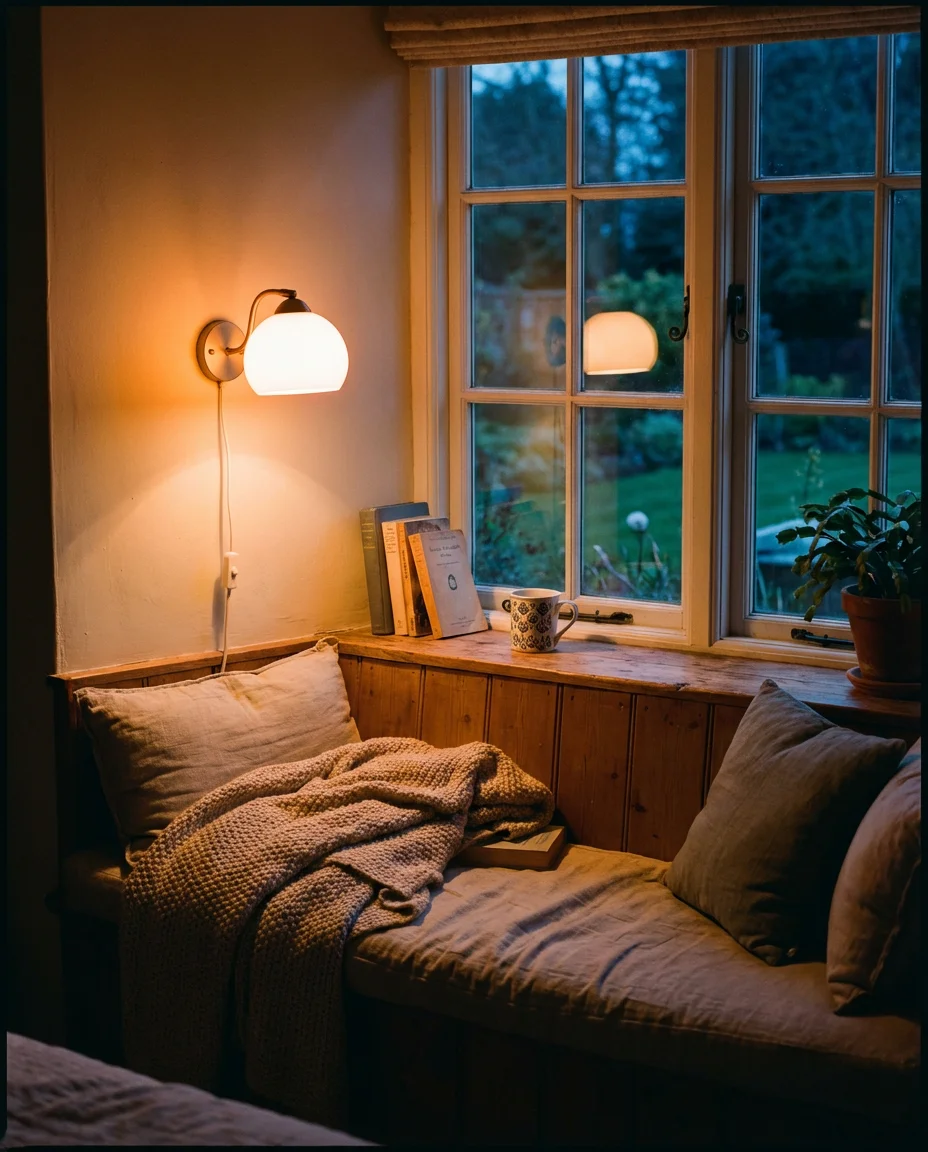
The beauty of plug-in wall sconces—which require no electrical work—is that this reading corner upgrade is achievable in a rental. Run the cord along the wall in a color-matched cable raceway (they run about $10–$20 at any hardware store), and it looks clean enough that most renters forget it isn’t hardwired. For reading, choose a sconce with an articulating arm so you can direct the light precisely over your shoulder, which is dramatically more comfortable than a fixed-direction source.
15. Ambient Ceiling Cove Lighting for a Spa Feel
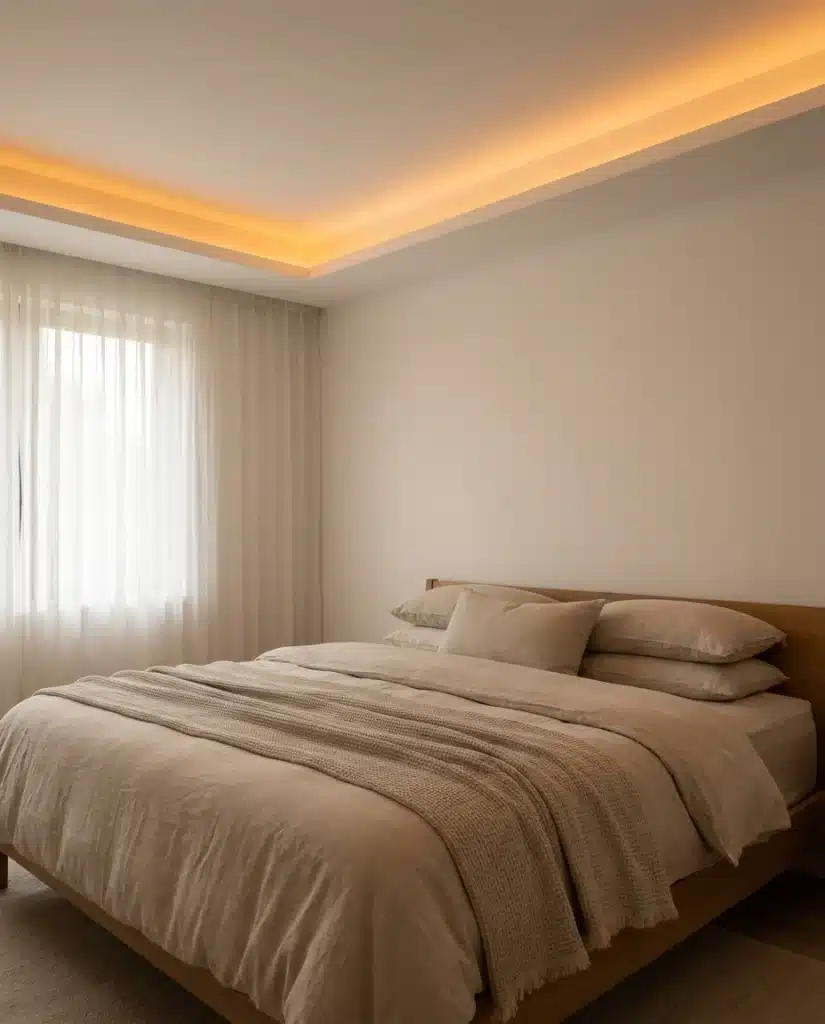
Cove lighting—LEDs or fluorescent strips hidden inside a recessed ledge built into the ceiling perimeter—creates the kind of ambient glow you typically associate with high-end spas and boutique hotels. In a bedroom, it functions as indirect uplighting that bathes the ceiling in a warm, diffused radiance without a single visible fixture. The effect is extraordinarily calming and feels genuinely luxurious even when the materials used are simple. For homeowners who want their bedroom to double as a restorative sanctuary, this is one of the most effective ceiling technique ideas available in 2026.
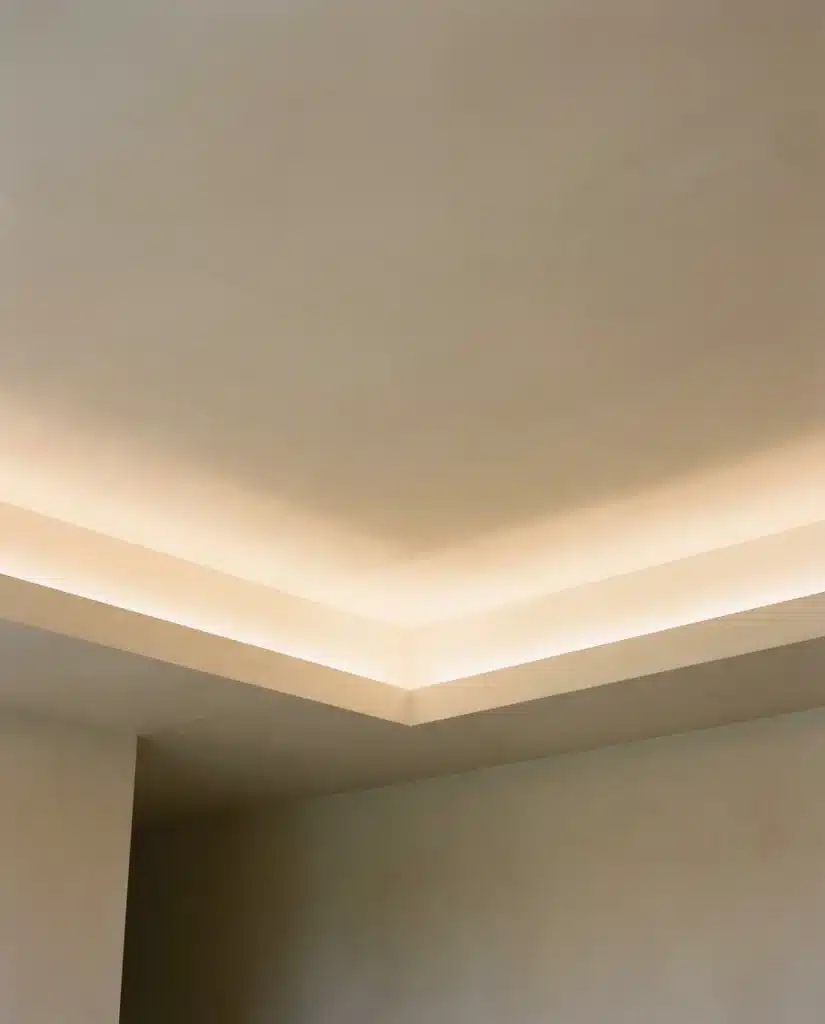
Cove lighting is a renovation-level project, but for homeowners who are already doing a ceiling refresh, it’s worth the planning. The most common mistake is making the cove ledge too shallow, which allows the LED strip to be visible from certain angles in the room. A minimum depth of 4 inches and height of 3 inches keeps the source fully concealed. Use 2700K LED strips at 90+ CRI for a glow that genuinely rivals the warmth of incandescent light.
16. Linen Drum Shade Pendants for a Soft, Textile-Rich Look
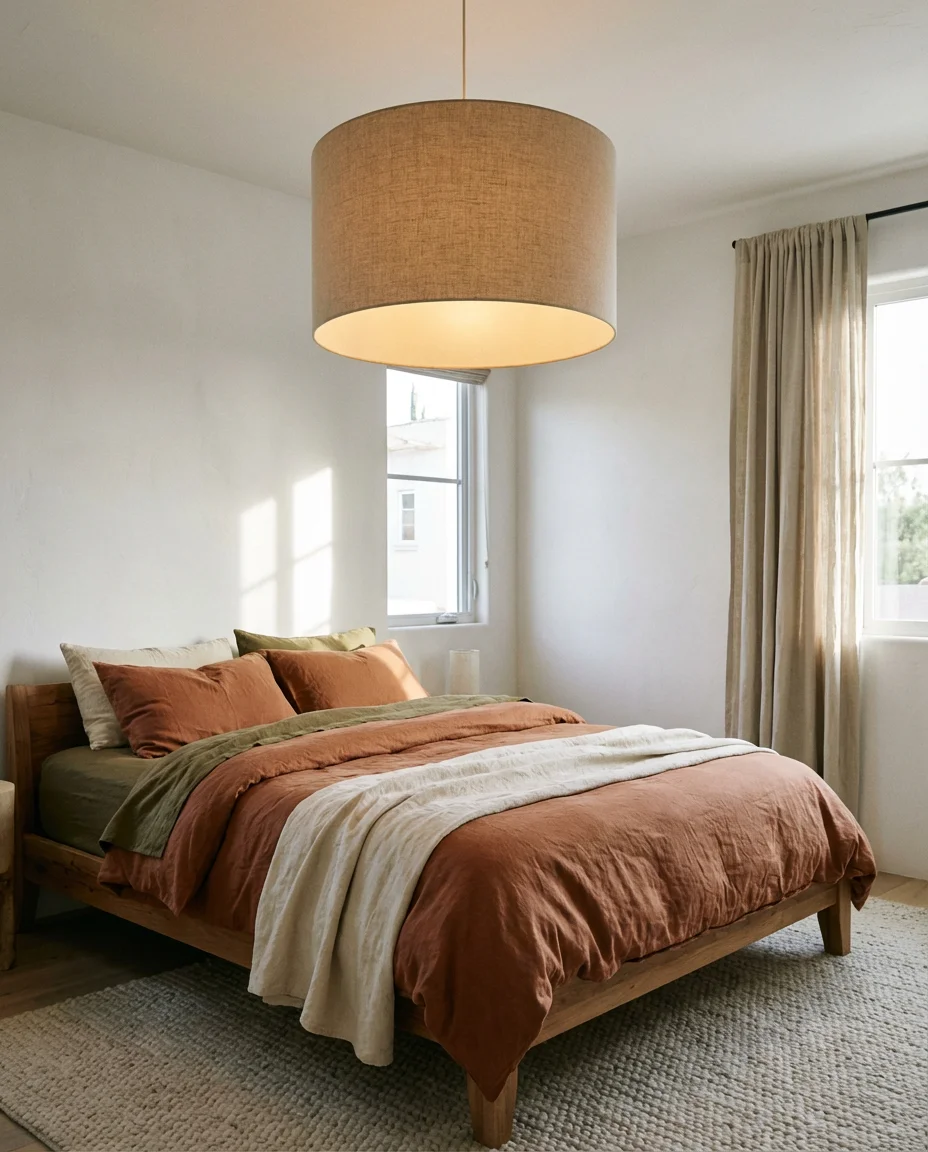
A linen drum shade pendant remains one of the most enduringly beautiful and versatile bedroom lighting choices available—and in 2026, it’s appearing in everything from Japandi spaces to maximalist earthy interiors, proving its design staying power. What makes it so adaptable is the material itself: natural linen diffuses light with a warm, slightly textured glow that flatters every wall color and pairs effortlessly with both light and dark interiors. Hung over the bed as a central fixture or in a pair as bedside pendants, the drum shade gives any room an aesthetic, carefully considered quality that feels natural rather than styled.
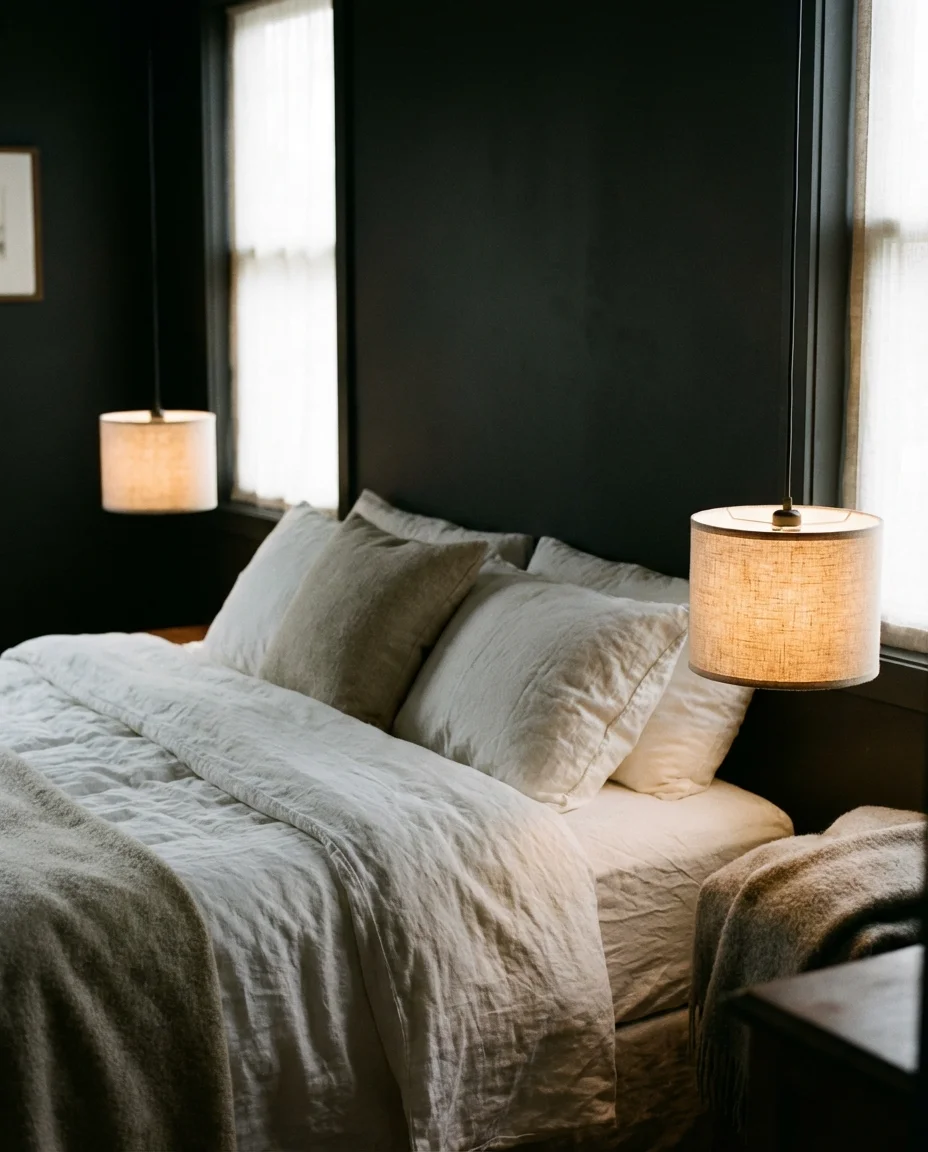
Real homeowners consistently report that linen shades are their most regret-free lighting purchase—they photograph beautifully, they age gracefully, and they play well with virtually any redecoration. One expert tip: look for shades where the linen is hand-stitched or has a visible weave texture rather than a smooth, tight finish. The texture catches and scatters light in a way that smooth fabric simply doesn’t, creating a warmer and more dimensional glow throughout the room.
17. Cool Minimalist Track Lighting for a Modern Bedroom
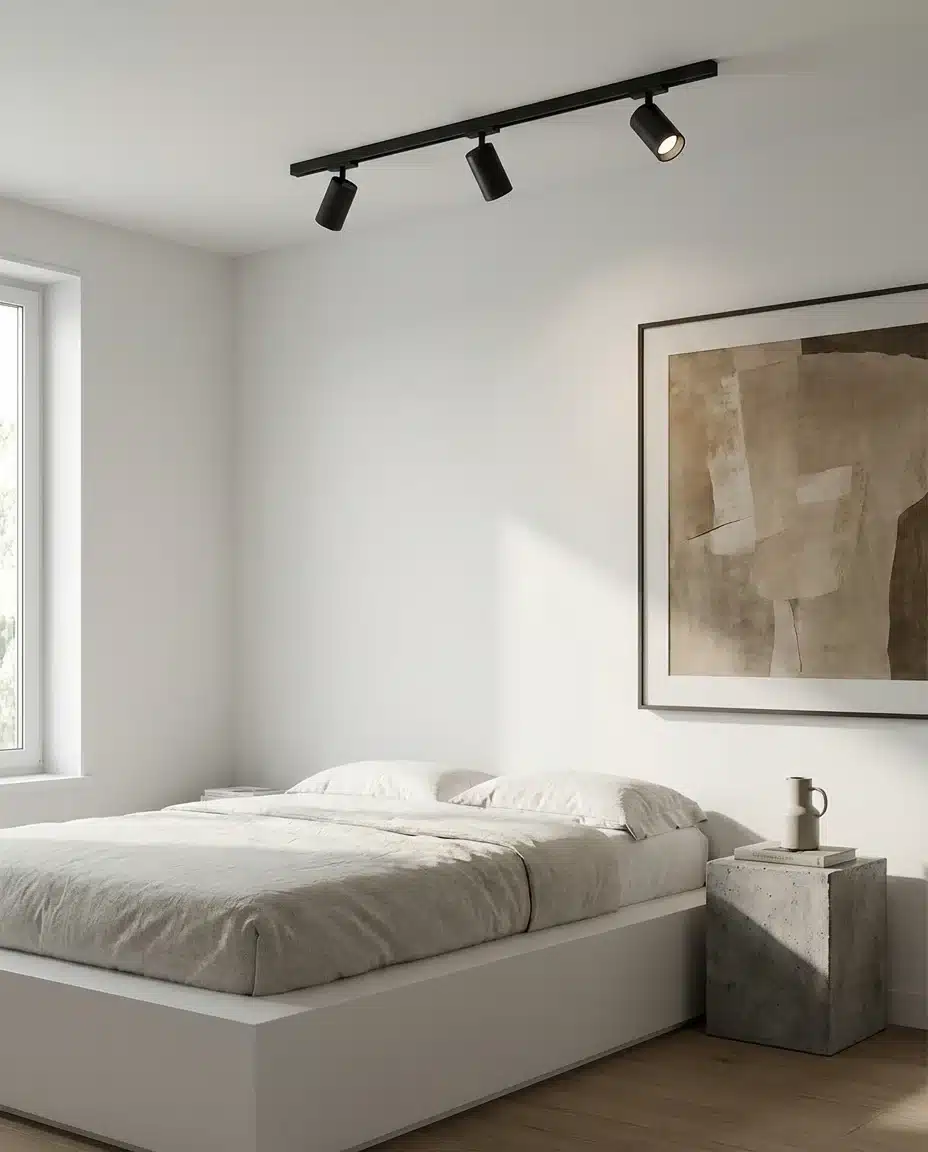
Track lighting has shed its commercial reputation and is increasingly being used in cool, architecture-forward bedrooms as a flexible, modern alternative to fixed overhead fixtures. In 2026’s most minimal bedroom spaces, a single matte black track with two or three adjustable heads allows homeowners to direct light exactly where they need it—across artwork, toward a reading chair, or softly aimed at the bed—without the permanence of built-in fixtures. It’s a particularly smart choice for renters who want a polished, design-conscious bedroom and the ability to take the fixture with them when they move.
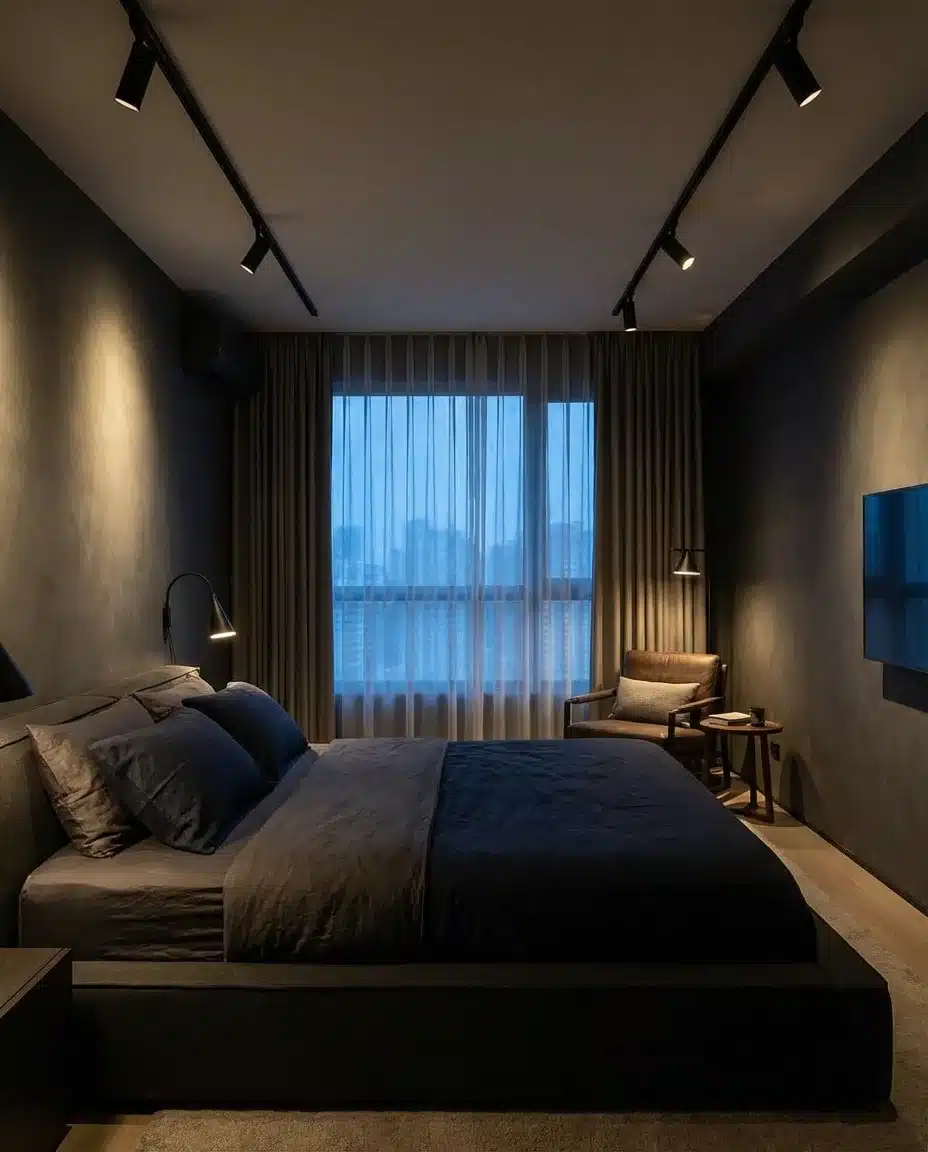
Track lighting works best when each head is aimed at a specific purpose rather than all pointing roughly in the same direction—which is the mistake most beginners make. Think of each head as its own task light: one for general ambient coverage, one for artwork or a specific wall, and one for reading. Use dimmer-compatible LED flood bulbs (GU10 base, 2700K) in each head, and the flexibility to adjust both position and intensity makes this one of the most practical and future-proof bedroom lighting systems you can install.
18. Moody Candlelight Cluster: Geometric Pendant Groupings
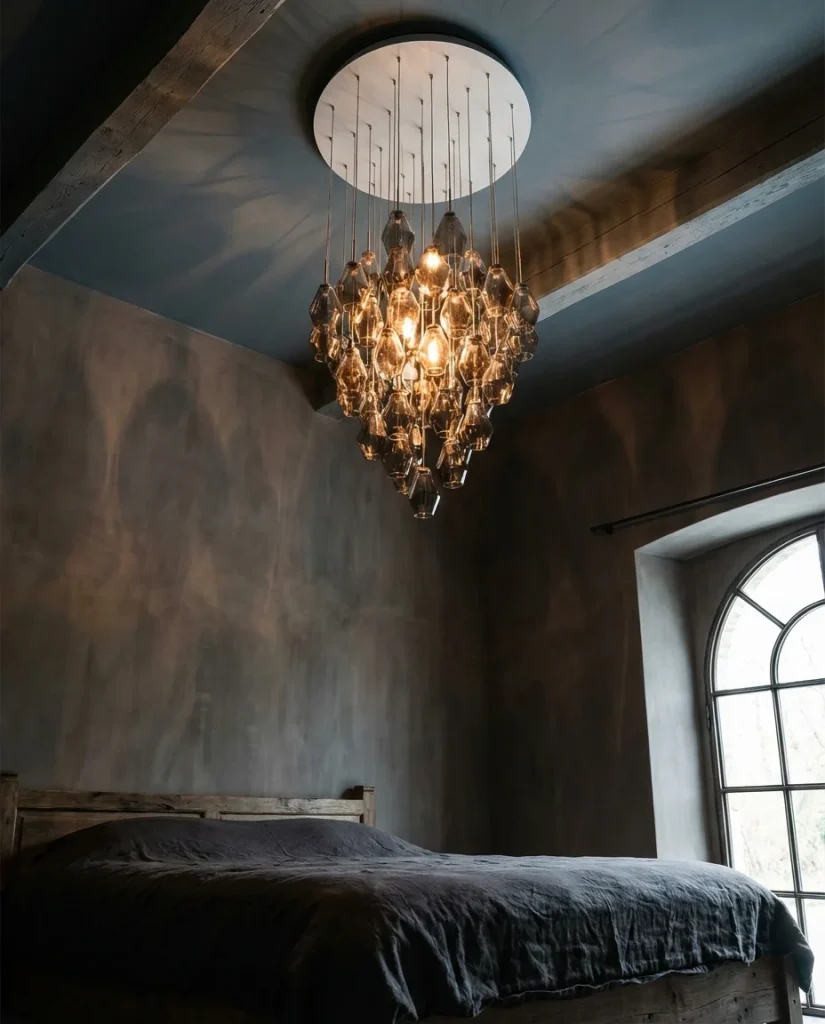
Cluster pendant groupings—multiple small pendants hanging at varied heights from a central canopy—create a bedroom ceiling moment that’s genuinely arresting, especially when the shades are geometric: faceted glass, hammered brass, or angular ceramic. The effect is moody, sculptural, and thoroughly of-the-moment, nodding to both the maximalist turn in 2026 interiors and the enduring love of ambient lighting that performs as art. These clusters work particularly well in rooms with higher ceilings (9 feet or more) where they have room to breathe and create that layered cascade effect that photographs so well on design accounts.
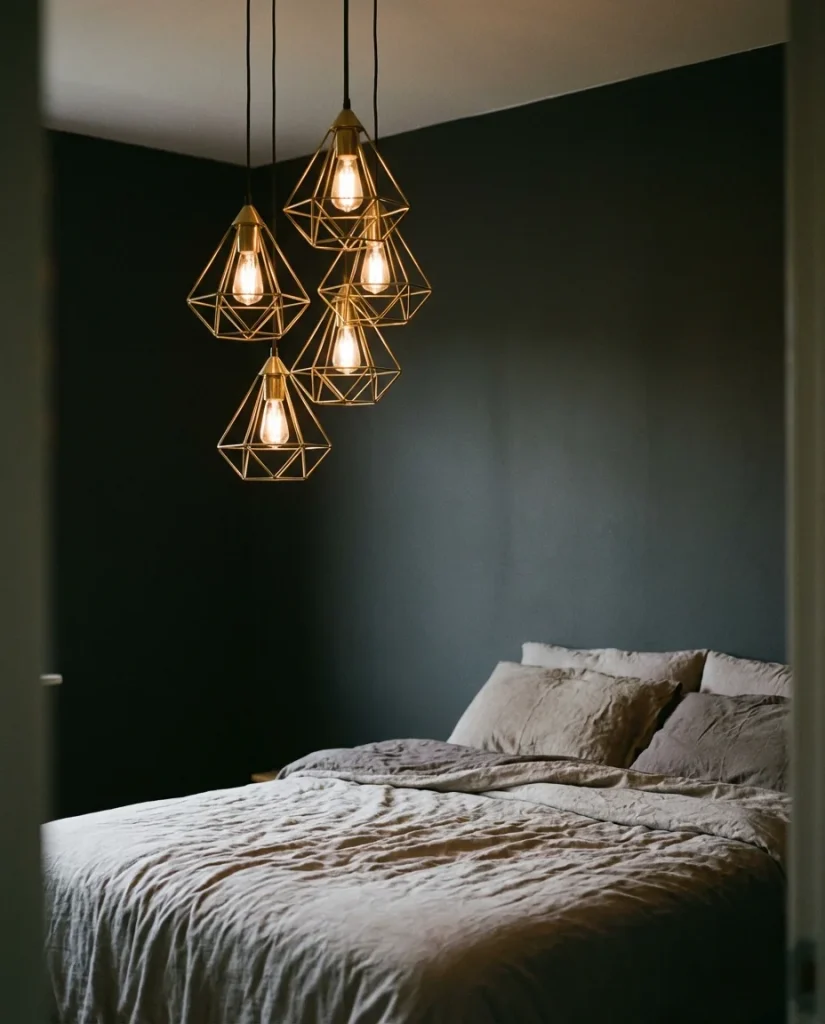
When planning a pendant cluster, the most important principle is intentional irregularity. The heights shouldn’t be random—they should have a clear visual logic: a tighter, lower grouping in the center that fans out and rises toward the edges, like a frozen waterfall. Stick to odd numbers (three, five, or seven pendants) for a composition that reads as natural rather than symmetric and studied. Most canopy kits allow 6–8 drops and retail between $150 and $400 before the shades.
19. Soft LED Floor Lamps for Layered Evening Light
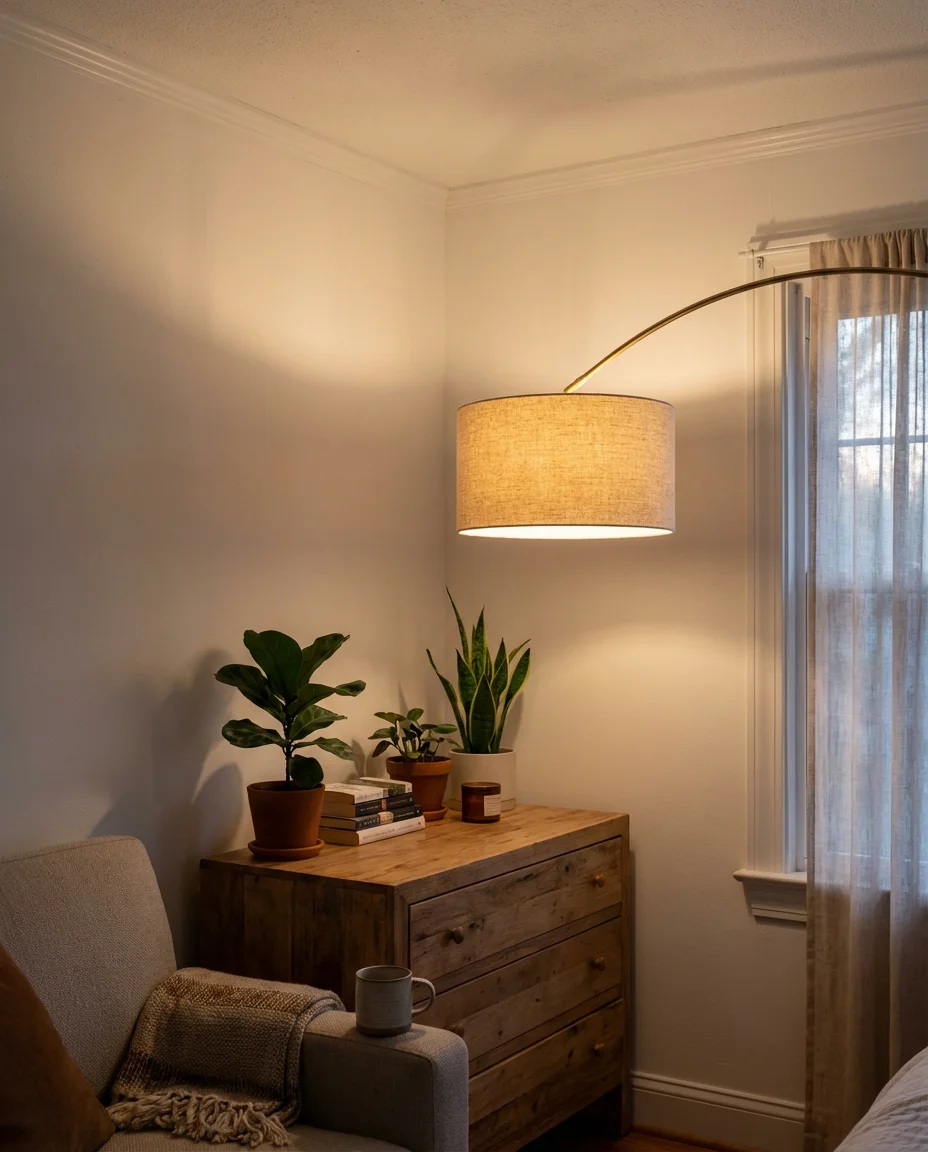
A well-placed floor lamp is one of the most underutilized tools in the bedroom lighting toolkit—and in 2026, the category has expanded well beyond the traditional arc lamp into curved, sculptural, and arc-with-diffuser designs that deliver soft, column-like ambient uplighting that no ceiling fixture can replicate from below. In American master bedrooms and studio apartment sleeping areas alike, a single linen-shaded or frosted-glass LED floor lamp in a corner creates a pillar of warm light that makes the room feel grounded, layered, and almost like a candlelit café at closing time—deeply relaxing and human-scaled.
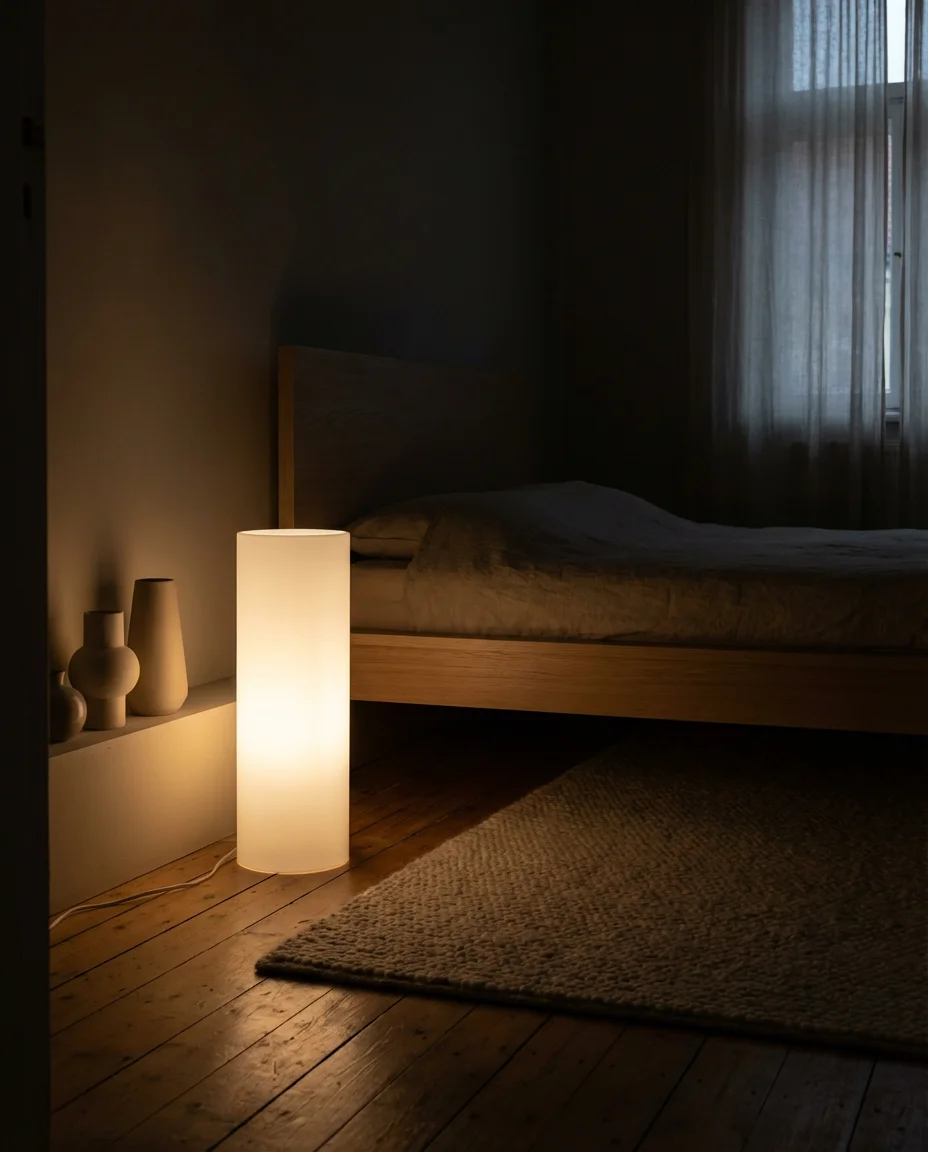
Floor lamps in the bedroom are at their best when they’re the only light source turned on—that’s when their particular quality of low, room-level warmth is most apparent and most effective for winding down before sleep. Sleep research consistently shows that keeping lighting at or below eye level in the hour before bed (rather than overhead) supports melatonin production and helps the body recognize that it’s time to rest. So this isn’t just a style choice—it’s a genuinely healthy one.
20. Japandi-Inspired Wall Sconces with Natural Materials
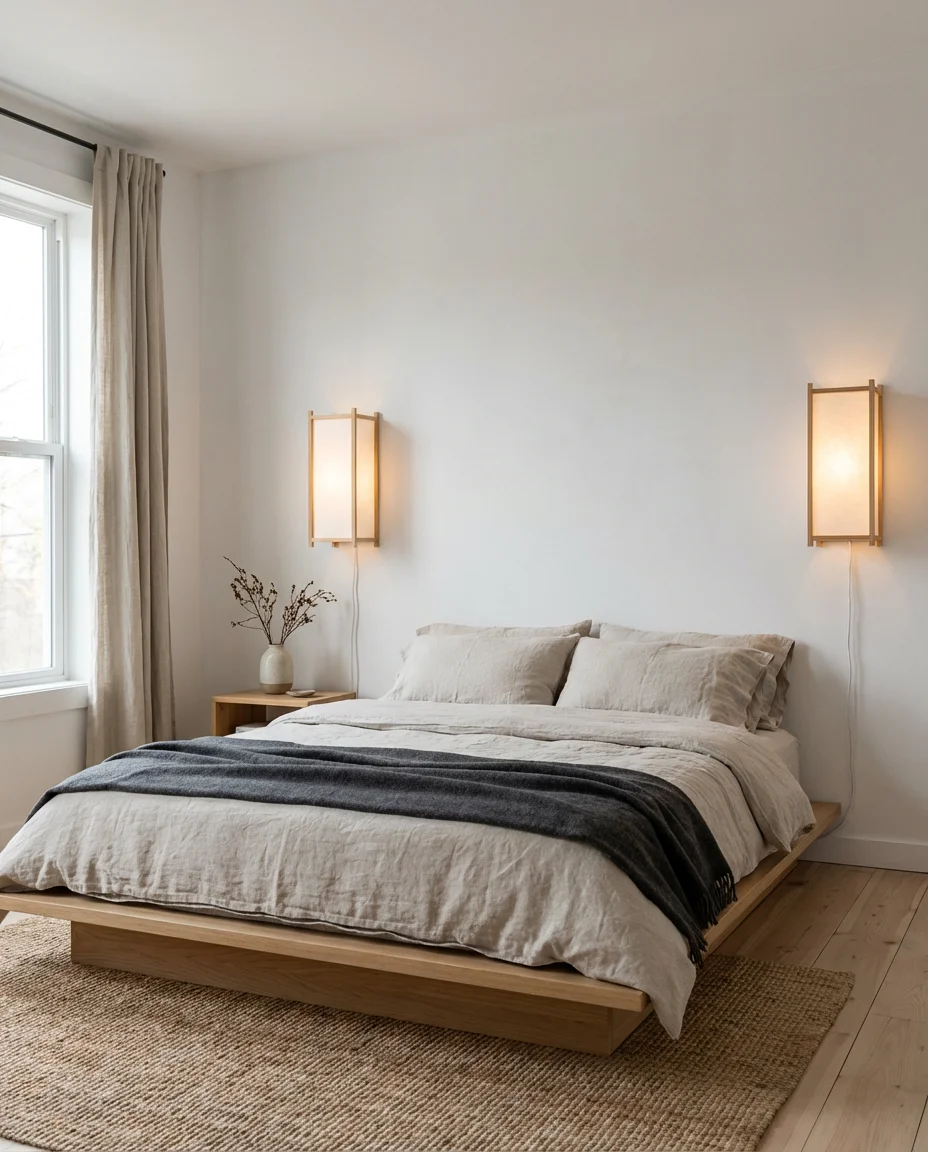
Wall sconces informed by Japandi design philosophy—pieces that pair the organic simplicity of Japanese craft with the pared-back warmth of Scandinavian design—are quietly becoming one of the most-saved bedroom lighting items on Pinterest in 2026. These fixtures typically feature washi paper shades, turned wood arms, or simple ceramic bodies in muted, earthy tones. They emit a soft, diffused glow that feels more like moonlight through shoji screens than artificial light—intimate, unhurried, and deeply soothing. As bedside lighting, they’re hard to beat for the quality of atmosphere they create.
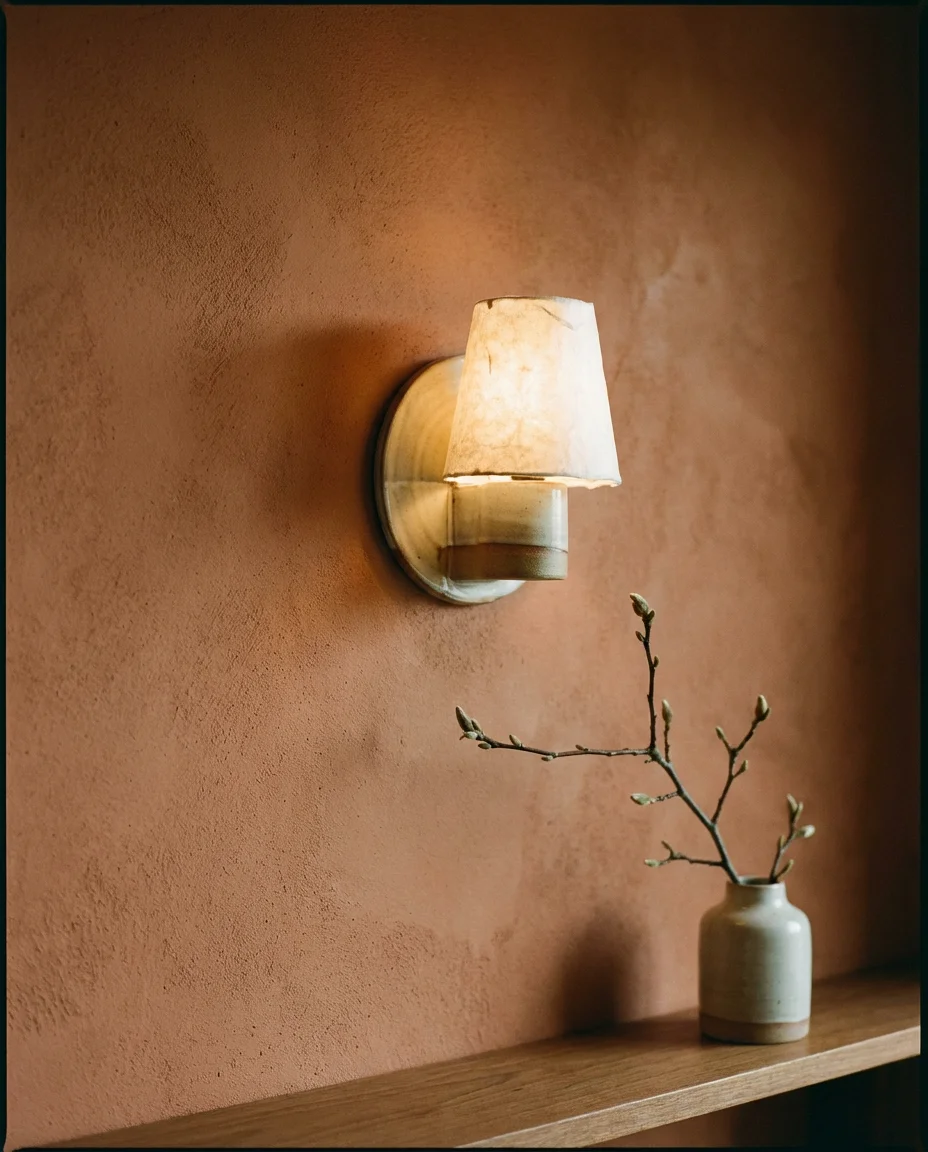
In the American market, the Japandi sconce category has expanded dramatically since 2023, and there are now excellent options at multiple price points. Handmade ceramic sconces from artisan makers on Etsy run $80–$200 per fixture and offer a level of craft and specificity that mass-market options rarely match. For plug-in versions (no electrician required), brands like Schoolhouse and West Elm carry well-made options in the $100–$180 range. Either way, the investment is modest for the quality of atmosphere returned.
21. Starlight Ceiling: Fiber Optic and Micro LED Panels
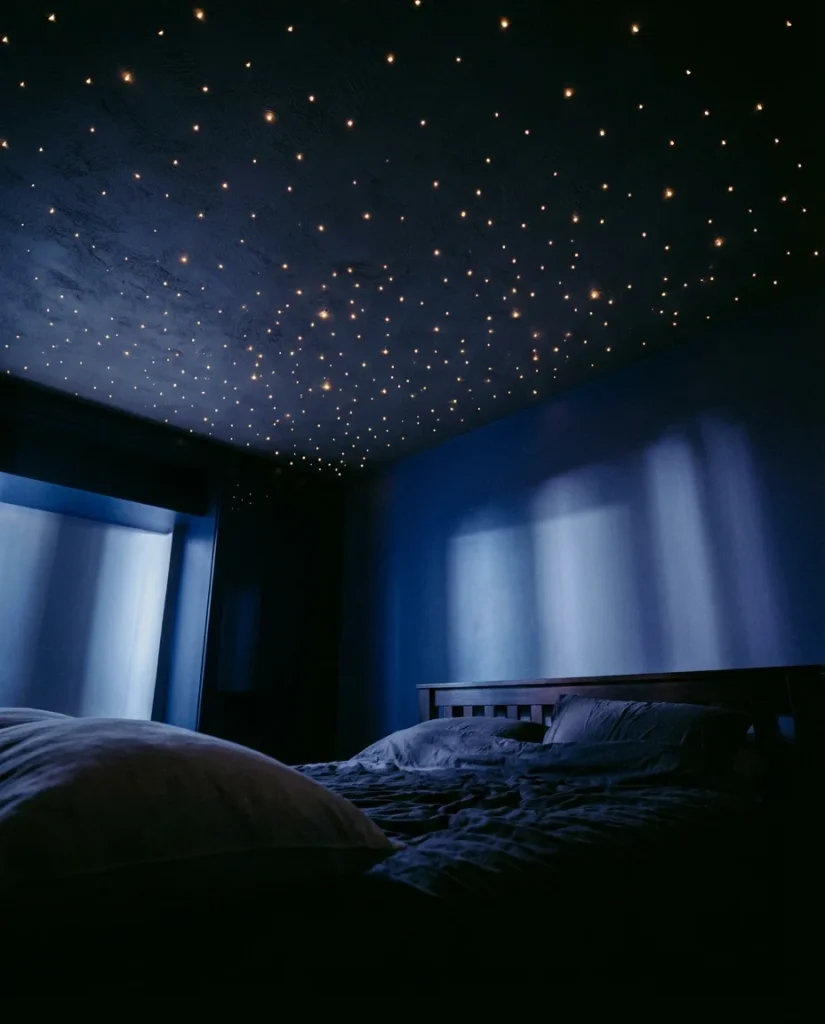
What was once strictly the province of custom home theaters and ultra-luxury master suites is now accessible to a much wider audience in 2026 — the starlight ceiling. Using fiber optic cables or pinpoint micro LED panels installed flush into a dark ceiling, this technique creates the impression of a night sky viewed from an open field: thousands of tiny, twinkling points of light scattered across a deep background. As a primary nighttime ambiance feature—not a reading light or task light—it’s one of the most uniquely ambient and genuinely memorable bedroom experiences you can create at home.
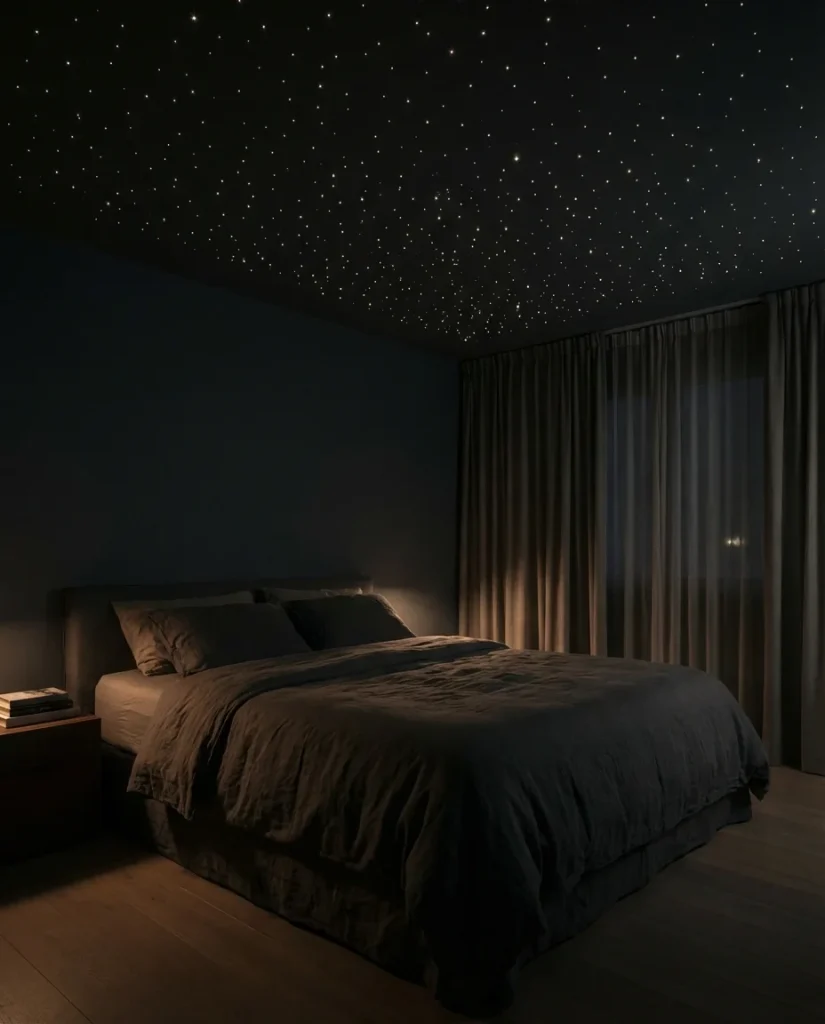
This is undeniably a higher-investment project, but the range is wider than most people expect: DIY fiber optic ceiling kits with a motor-driven light source start around $150–$300 and are genuinely achievable for handy homeowners over a weekend. Professional installations using custom-designed star maps or Milky Way patterns can run $2,000–$10,000. For those in the middle, several companies now offer peel-and-stick micro LED panel tiles that create a convincing effect without any ceiling penetration—a smart choice for renters or anyone unwilling to commit to permanent installation.
22. Dimmable Recessed Lighting Plan: The Functional Foundation
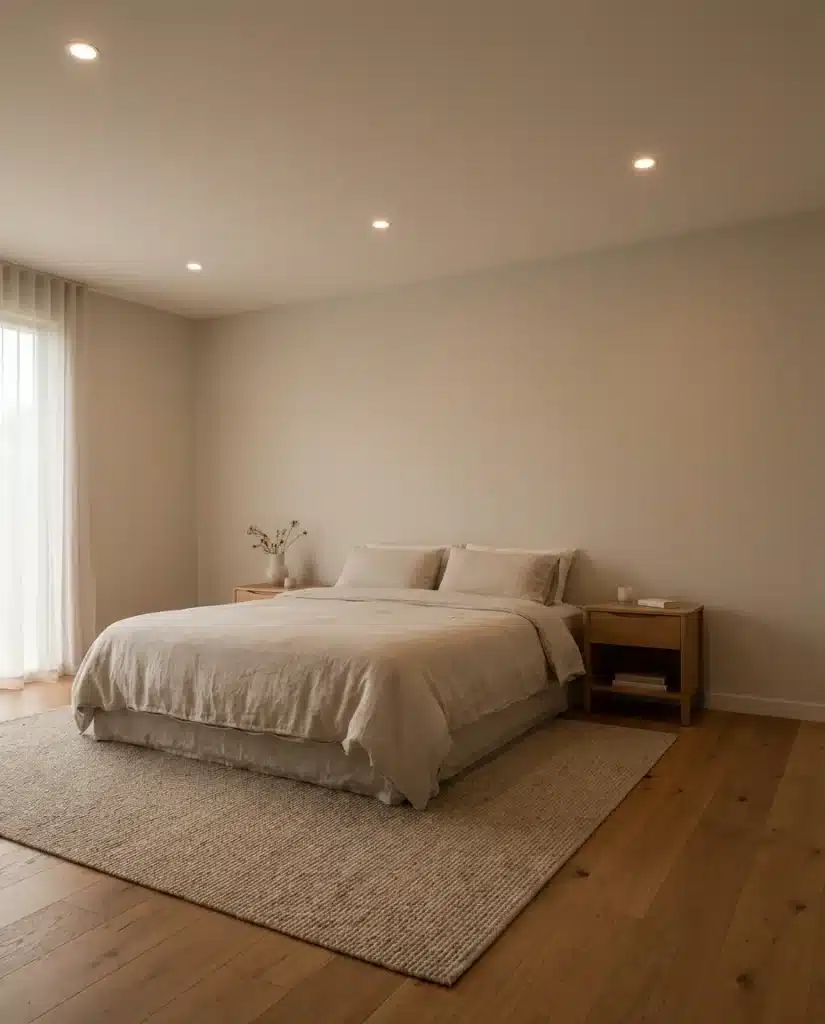
Before any of the beautiful, personality-forward fixtures are considered, every well-designed bedroom needs a solid foundational plan—and in 2026, that means thoughtfully placed, dimmable recessed lighting that disappears into the ceiling when you don’t need it and delivers smooth, controllable ambient light when you do. The key word is “dimmable”: a bedroom that can shift from bright morning wake-up light to soft evening wind-down glow on a single circuit is functionally far superior to rooms with fixed-output fixtures, regardless of how design-forward the decorative elements are. This is the infrastructure that makes everything else work.
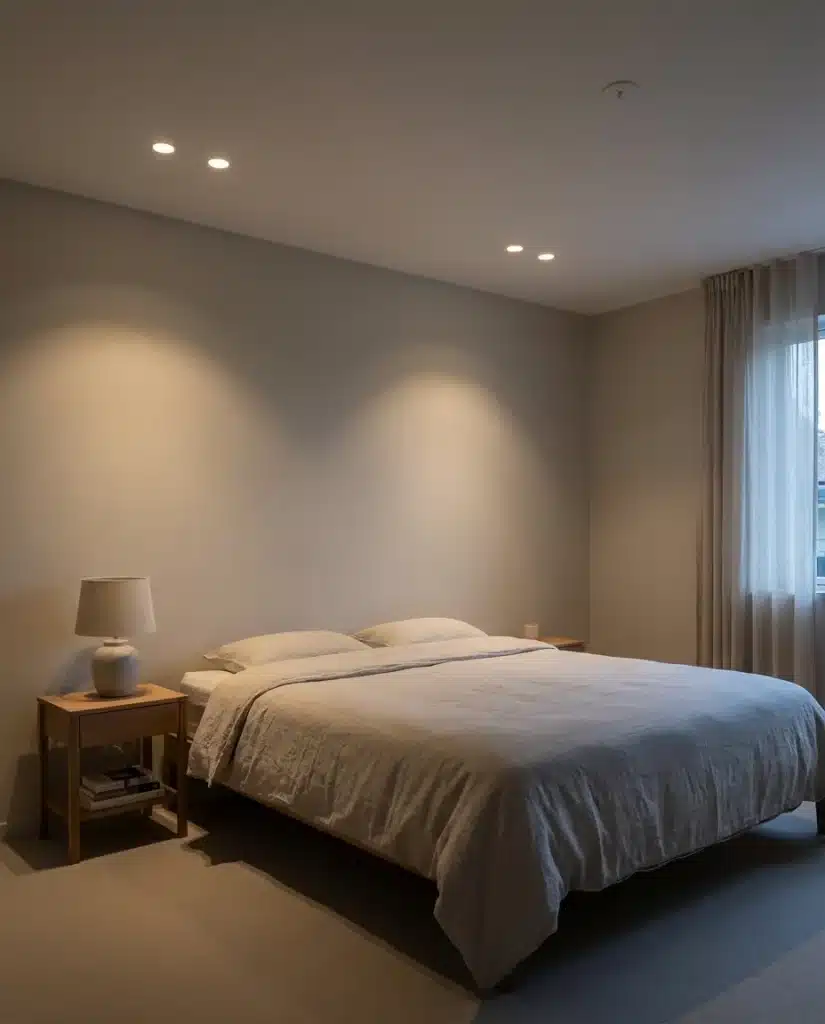
The most widespread mistake in bedroom recessed lighting is placing fixtures too close together, which creates a commercial, “office ceiling” effect completely at odds with a bedroom’s purpose. For an average 12×14 bedroom, four fixtures placed roughly 3 feet from each wall and centered in the space will deliver even coverage without the grid-like intensity. Always specify warm white (2700K) LED trim kits and pair them with a quality dimmer rated for LED loads—the Lutron Caseta line remains the gold standard for smooth, flicker-free dimming that works reliably with virtually every LED bulb on the market.
Conclusion
Bedroom lighting is one of those rare design decisions where the investment—whether it’s a $30 LED strip or a $500 custom chandelier—pays back in daily quality of life in ways that very few other upgrades can match. Which of these 22 ideas spoke to you most? Are you planning a full lighting overhaul or just one well-chosen addition to your space? Share your thoughts, questions, and your own bedroom lighting wins in the comments below—we’d love to see what you’re working on.