Attic bedrooms have become one of the most sought-after design challenges in American homes, especially as families look to maximize square footage without expensive additions. Whether you’re converting a dusty storage space into a dreamy master retreat or creating a cozy hideaway for teens, the unique architecture of attic spaces offers both charm and complexity. From slanted ceilings to unexpected angles, these rooms demand creative solutions that blend function with style. In 2026, Pinterest users are flooding the platform with searches for attic bedroom inspiration—from grunge aesthetics to Scandinavian minimalism—proving that these once-overlooked spaces are now prime real estate for personal expression. Here are fresh ideas to help you transform your attic into a bedroom that feels intentional, beautiful, and utterly livable.
1. Low-Ceiling Cozy Nook with Layered Textiles
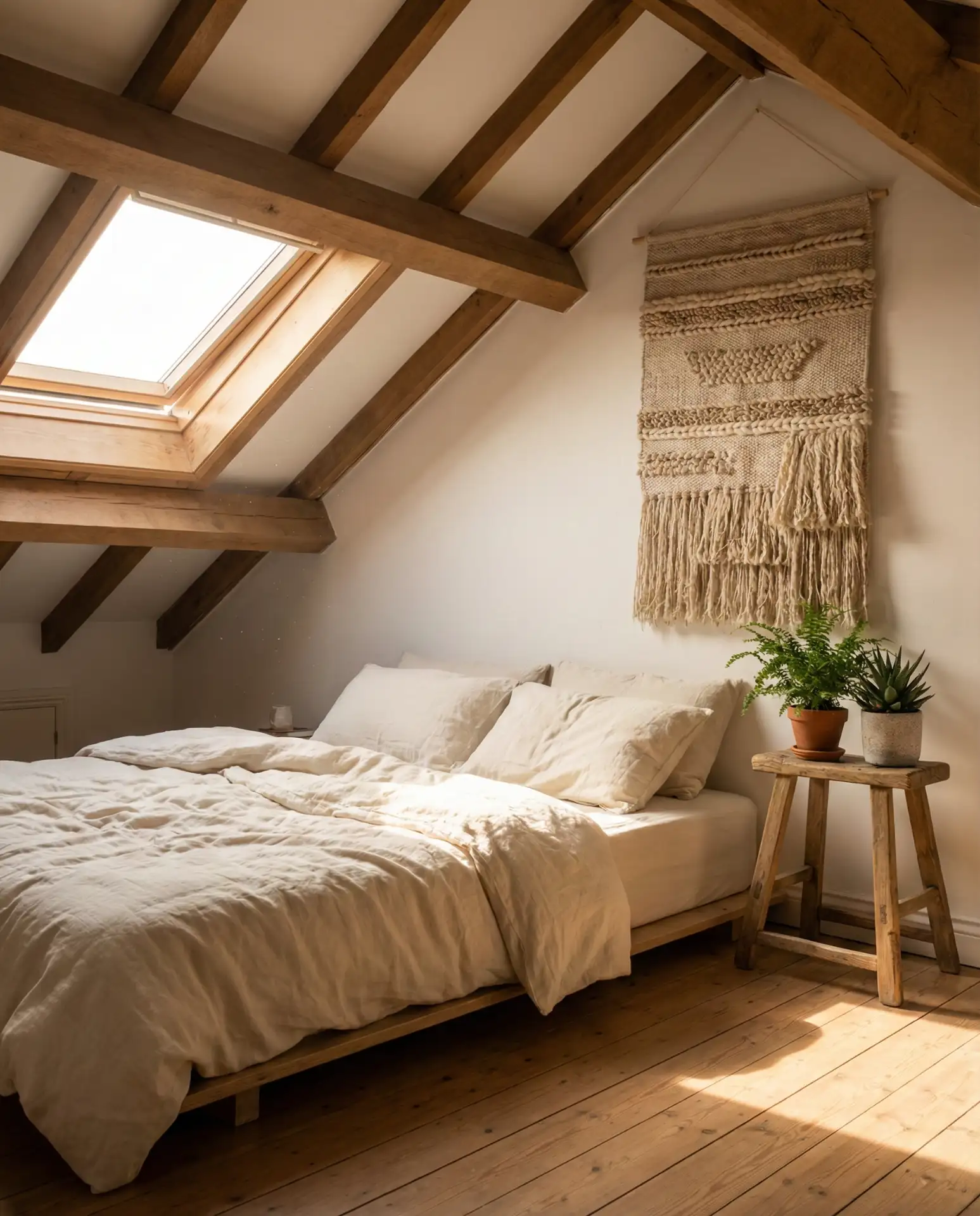
When working with a low-ceiling attic bedroom, the key is embracing the coziness rather than fighting it. Think of the space as a cabin retreat—layer soft linens, chunky knit throws, and oversized floor cushions to create a snug, inviting atmosphere. Cozy doesn’t mean cramped; it means intentional warmth. Choose low-profile furniture like platform beds or futons that won’t visually compete with the ceiling height, and keep vertical décor minimal to avoid making the room feel top-heavy.
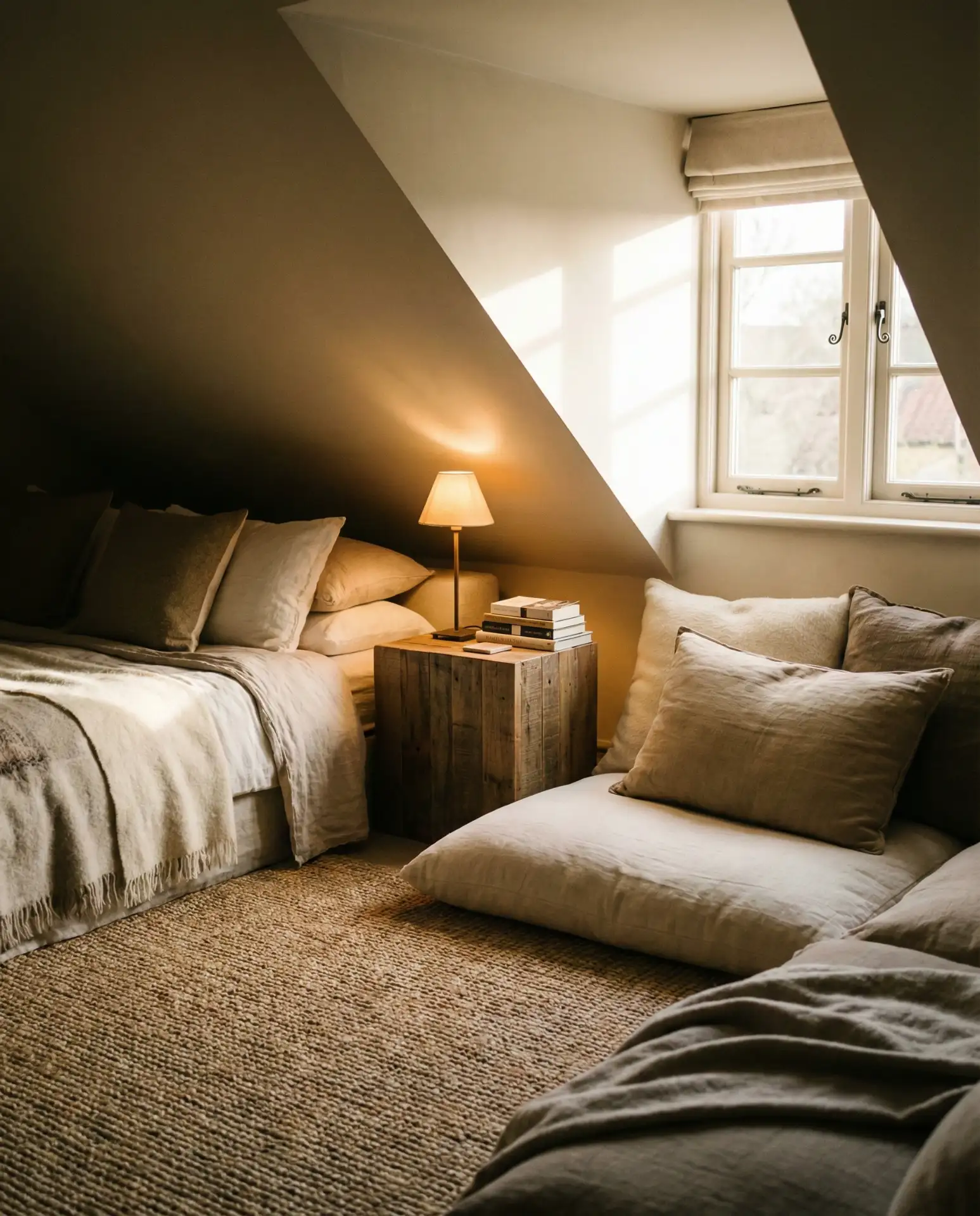
Where it works best: This approach shines in attics with ceiling heights between six and seven feet, especially in older homes with charming but restrictive architecture. In the Midwest and Northeast, where Cape Cod-style homes are common, homeowners are leaning into this cozy aesthetic rather than attempting costly ceiling lifts. Add dimmable string lights or a small wall-mounted sconce to enhance the intimate vibe without cluttering the limited floor space.
2. Angled Ceilings with Bold Accent Wall
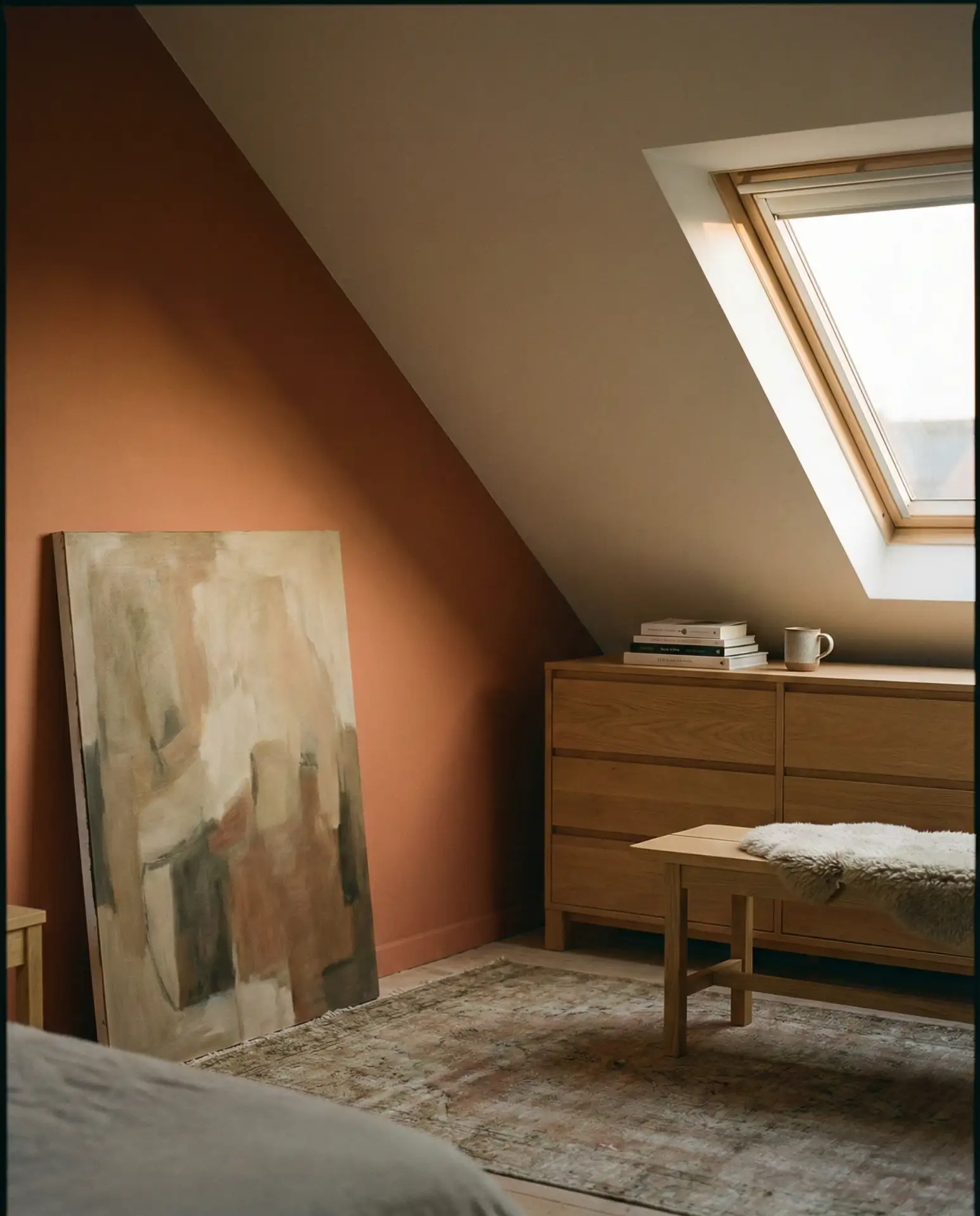
One of the smartest moves for angled ceilings is painting a single sloped wall in a bold, saturated color—think deep emerald, charcoal, or terracotta. This draws the eye and transforms what could be an awkward architectural feature into a statement moment. Pair your accent wall with crisp white or soft neutrals on the other surfaces to keep the room from feeling heavy. The contrast creates dimension and makes the ceiling feel intentional rather than accidental.
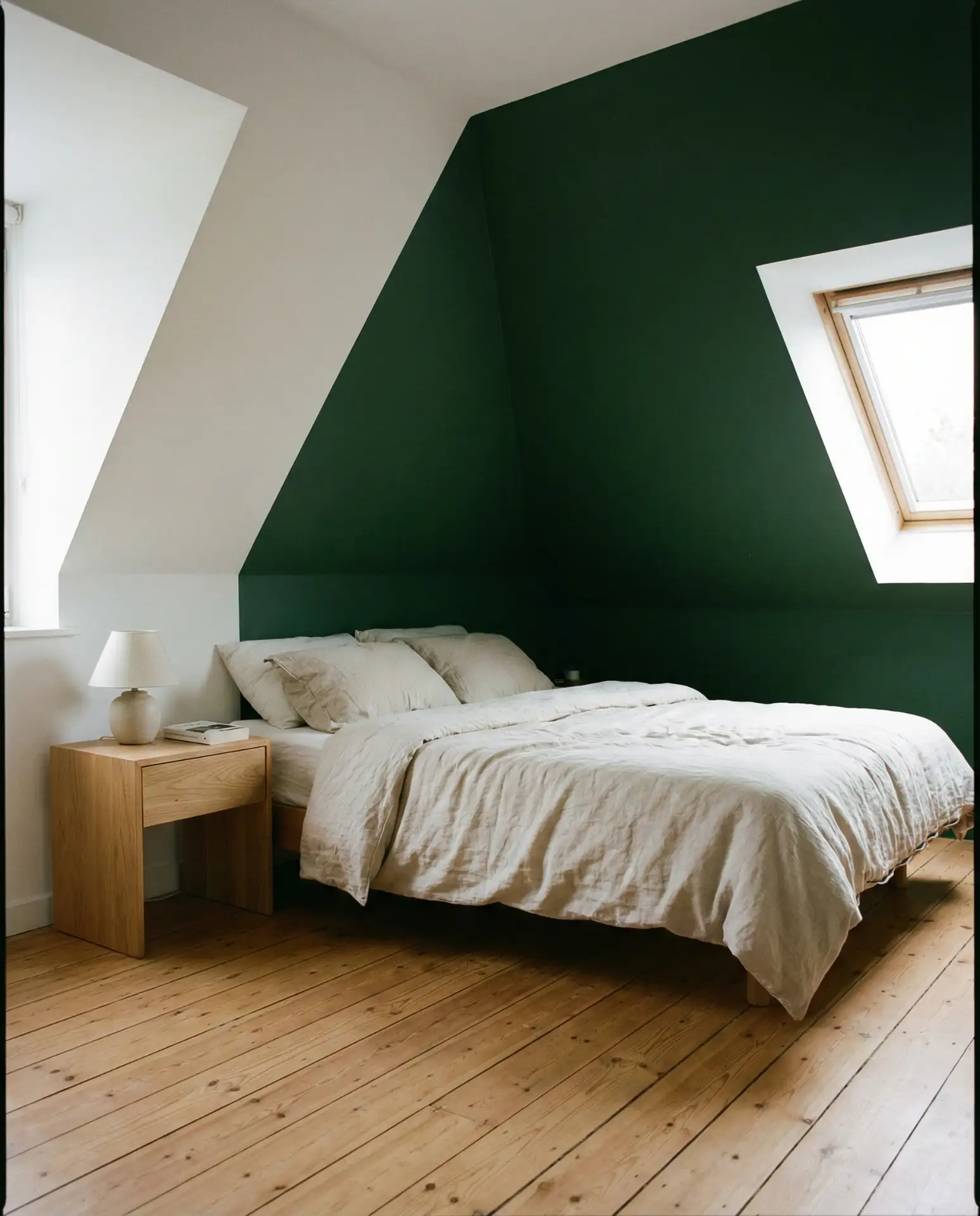
Budget tip: Paint is one of the most cost-effective ways to reimagine an attic bedroom, with a gallon of quality interior paint ranging from $40 to $70. If you’re DIYing, expect to spend a weekend on prep and application—angled surfaces require careful taping and multiple coats for even coverage. For renters or commitment-phobes, removable peel-and-stick wallpaper in bold patterns offers a similar effect without the permanence, and it’s easier to work around tricky angles.
3. Master Suite with Walk-In Closet Integration
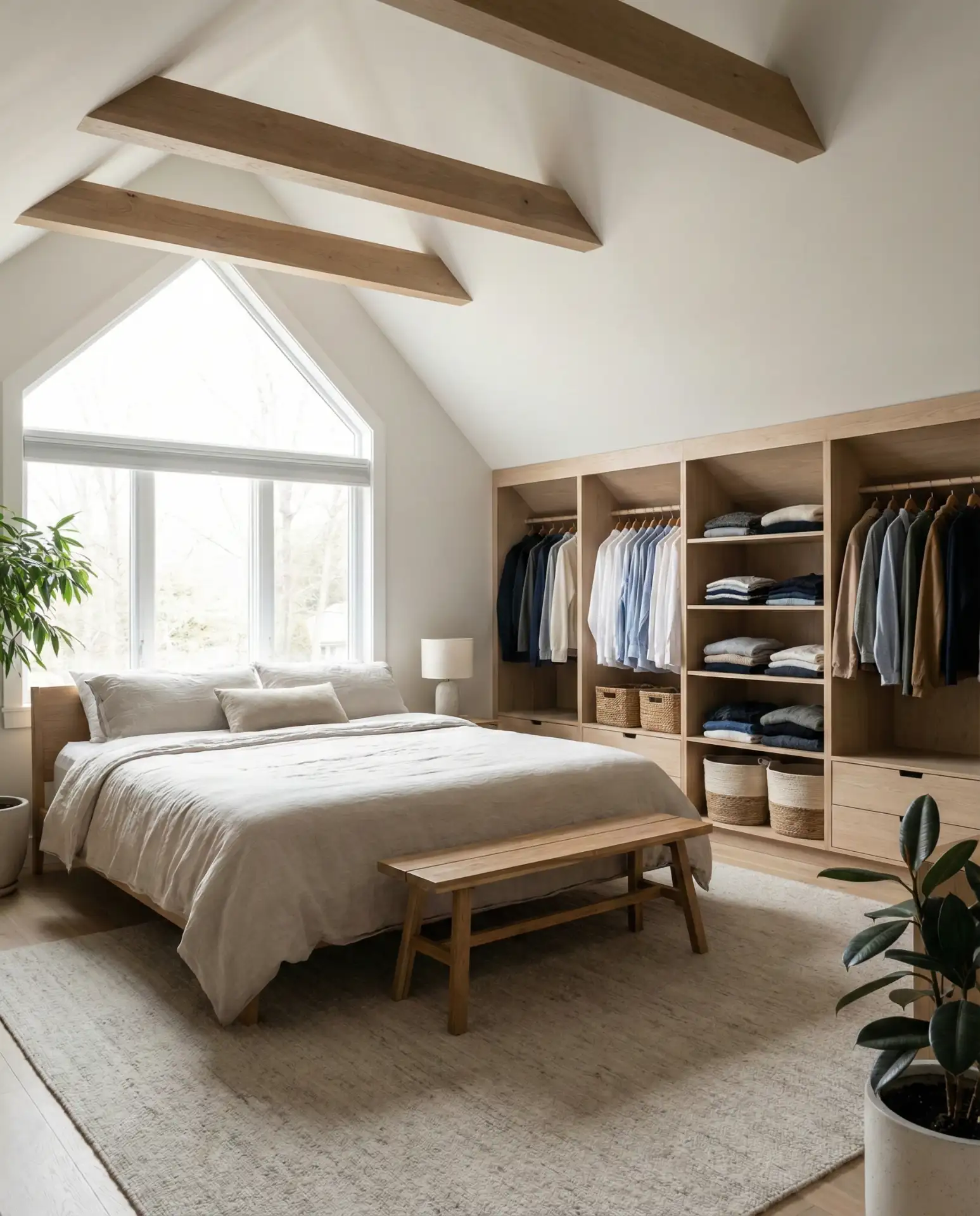
Converting your attic into a master bedroom means thinking beyond the bed—consider built-in storage that follows the roofline. Many American homeowners are carving out walk-in closets under the lowest sections of the sloped ceiling, where you wouldn’t comfortably stand anyway. This maximizes usable square footage and keeps the main sleeping area feeling open. Use the tallest section for the bed and seating, and tuck wardrobes, drawers, or hanging rods into the eaves.
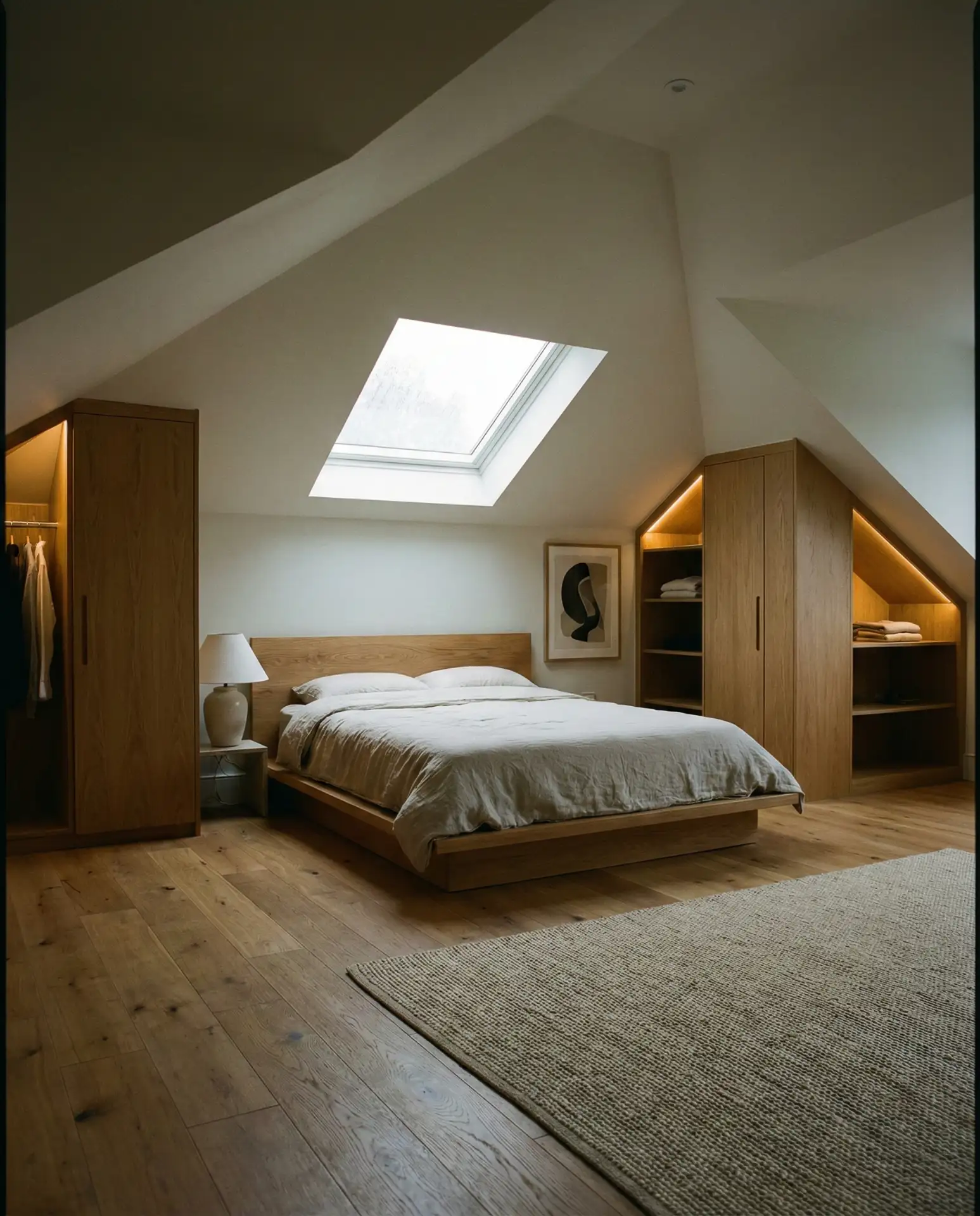
Real homeowner insight: Many people underestimate how much vertical storage can be gained in attic eaves. One couple in Portland, Oregon, installed floor-to-ceiling shelving units that followed their roofline perfectly, gaining nearly 30 linear feet of storage without sacrificing any standing room. The key is working with a carpenter who understands attic geometry—custom work pays off here. Don’t try to force standard furniture into angled spaces; it wastes potential and looks awkward.
4. Slanted Ceiling Painted in Graduated Tones
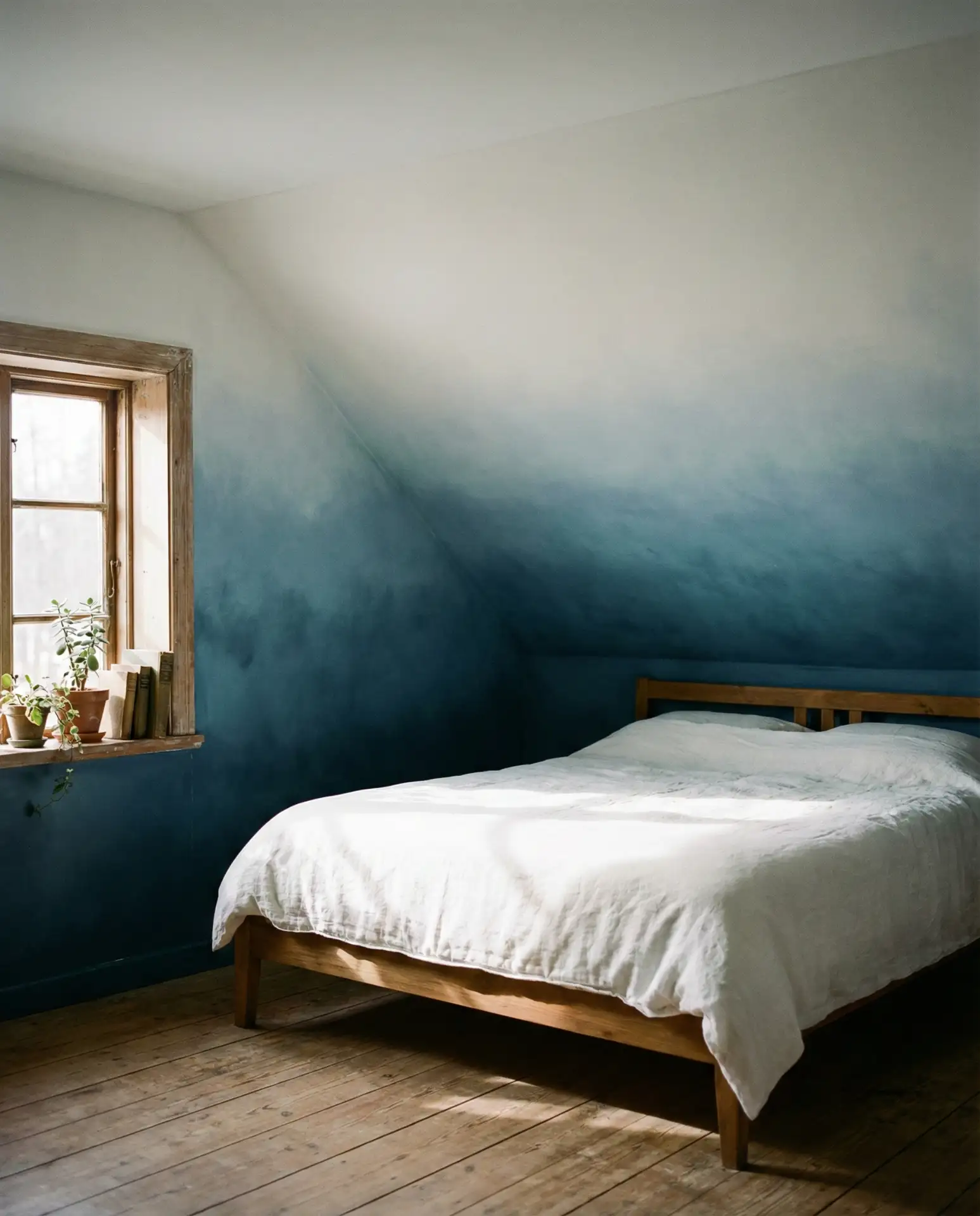
A slanted ceiling becomes a design feature when you paint it in graduated tones—start with a deep shade at the base and gradually lighten as the ceiling rises. This technique, borrowed from ombré trends, adds visual interest without overwhelming a small room. Angled ceilings with paint colors like dusty blue fading to white or warm beige transitioning to cream create a gentle flow that guides the eye upward and makes the space feel taller than it is.
Expert-style note: Interior designers recommend using a matte or eggshell finish for this technique rather than glossy paint, which can emphasize imperfections in older attic surfaces. The matte finish also absorbs light more evenly, which helps the gradient appear seamless. If you’re not confident blending paint yourself, consider hiring a decorative painter for a day—it’s a specialized skill that makes a huge difference in the final result, and rates typically range from $50 to $100 per hour depending on your region.
5. Kids’ Attic Hideaway with Built-In Bunks
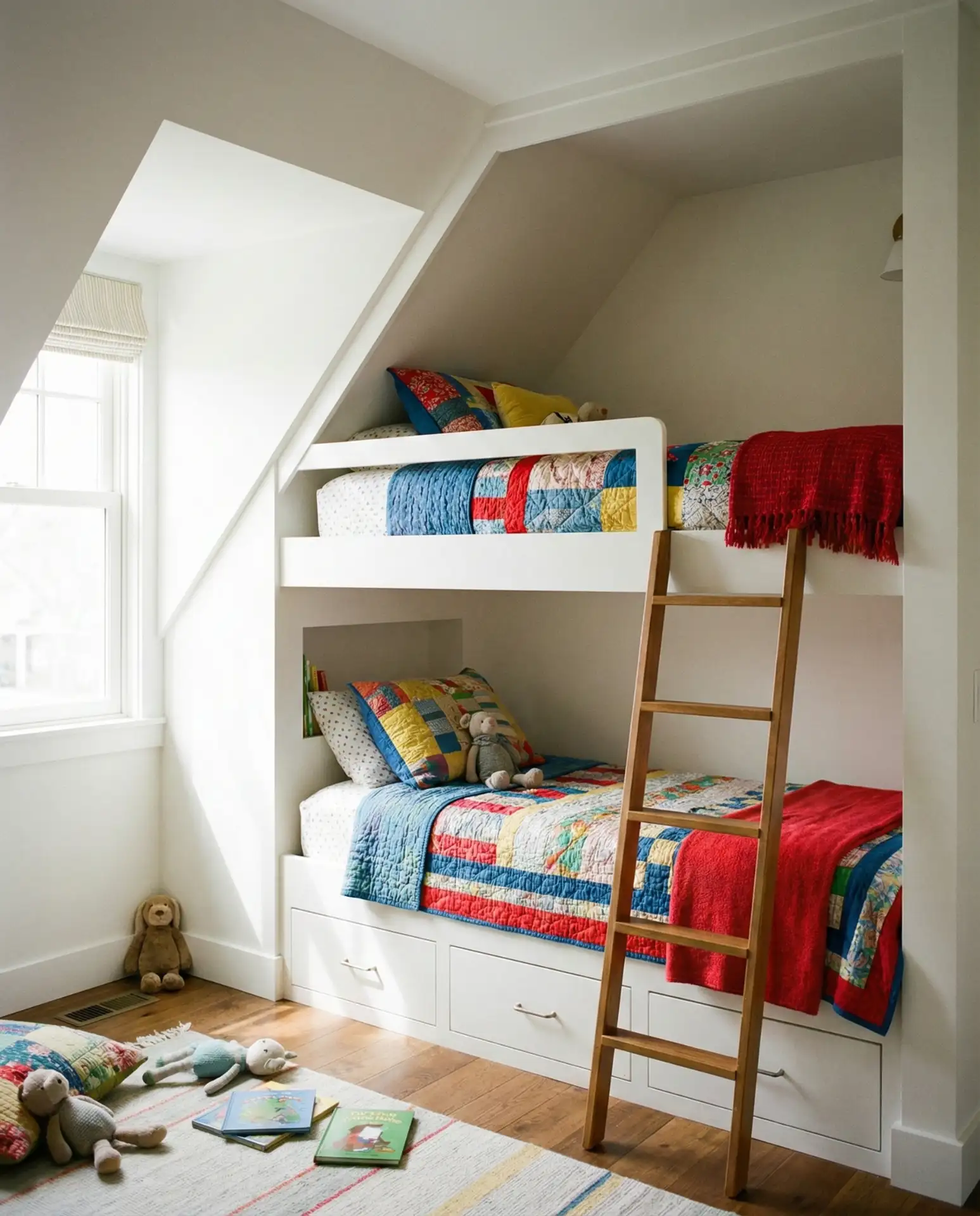
Kids love the novelty of an attic bedroom—it feels like a secret clubhouse. Built-in bunk beds that follow the roofline are a practical and playful solution, especially in homes where siblings share space. Use the lower, slanted sections for storage cubbies or reading nooks, and keep the sleeping areas under the tallest part of the ceiling. Paint the bunks in fun, durable colors, or leave them natural wood for a Scandinavian vibe.
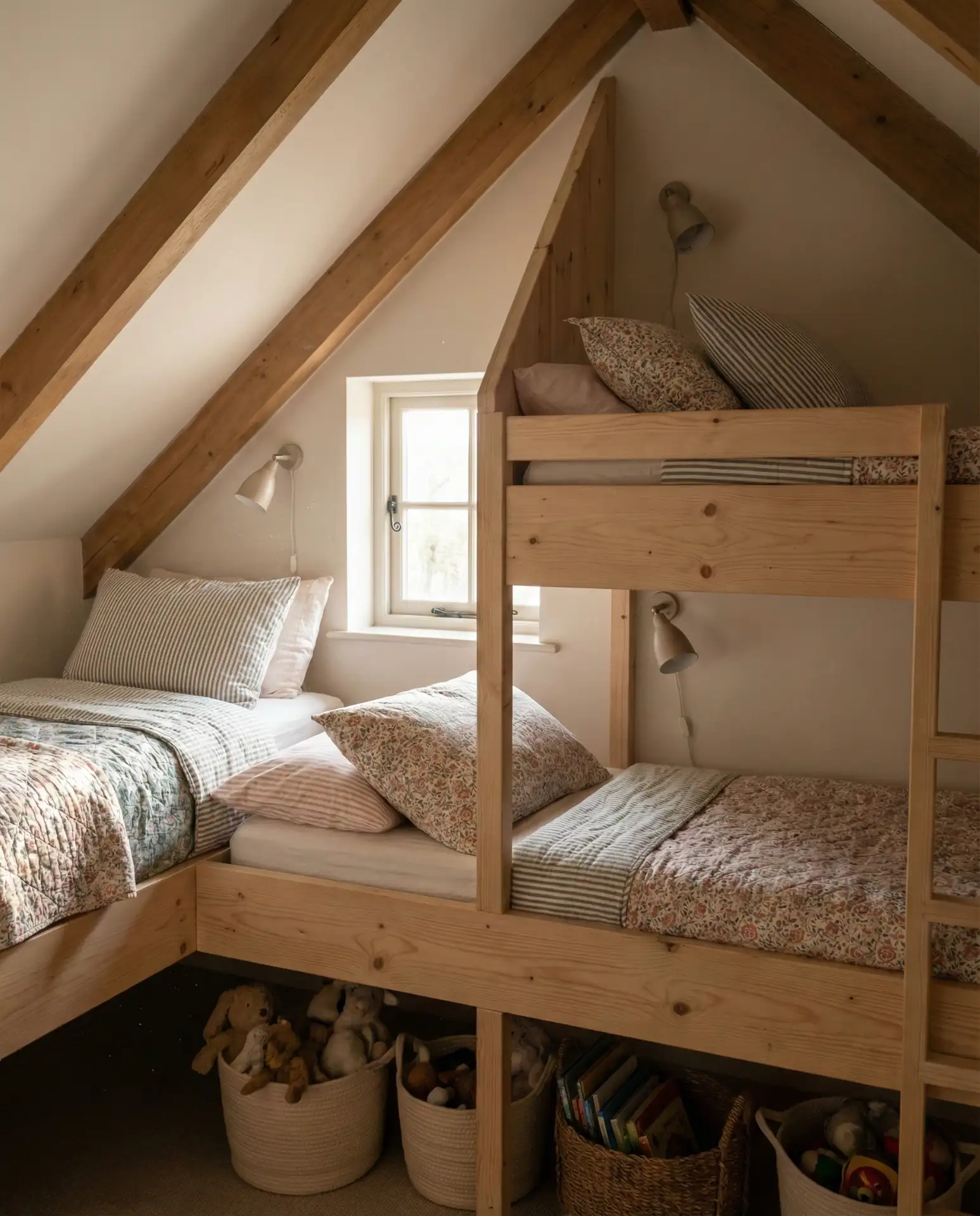
Common mistake to avoid: Don’t overlook safety when designing kids’ attic spaces. Ensure bunk ladders are securely anchored, add railings where needed, and double-check that windows have proper locks or guards. Also, avoid placing beds directly under skylights in climates with extreme heat—attics can get uncomfortably warm in summer, and a skylight over a sleeping child can make the space unbearable. Consider blackout shades and a ceiling fan to keep the room comfortable year-round.
6. Aesthetic Minimalist Retreat
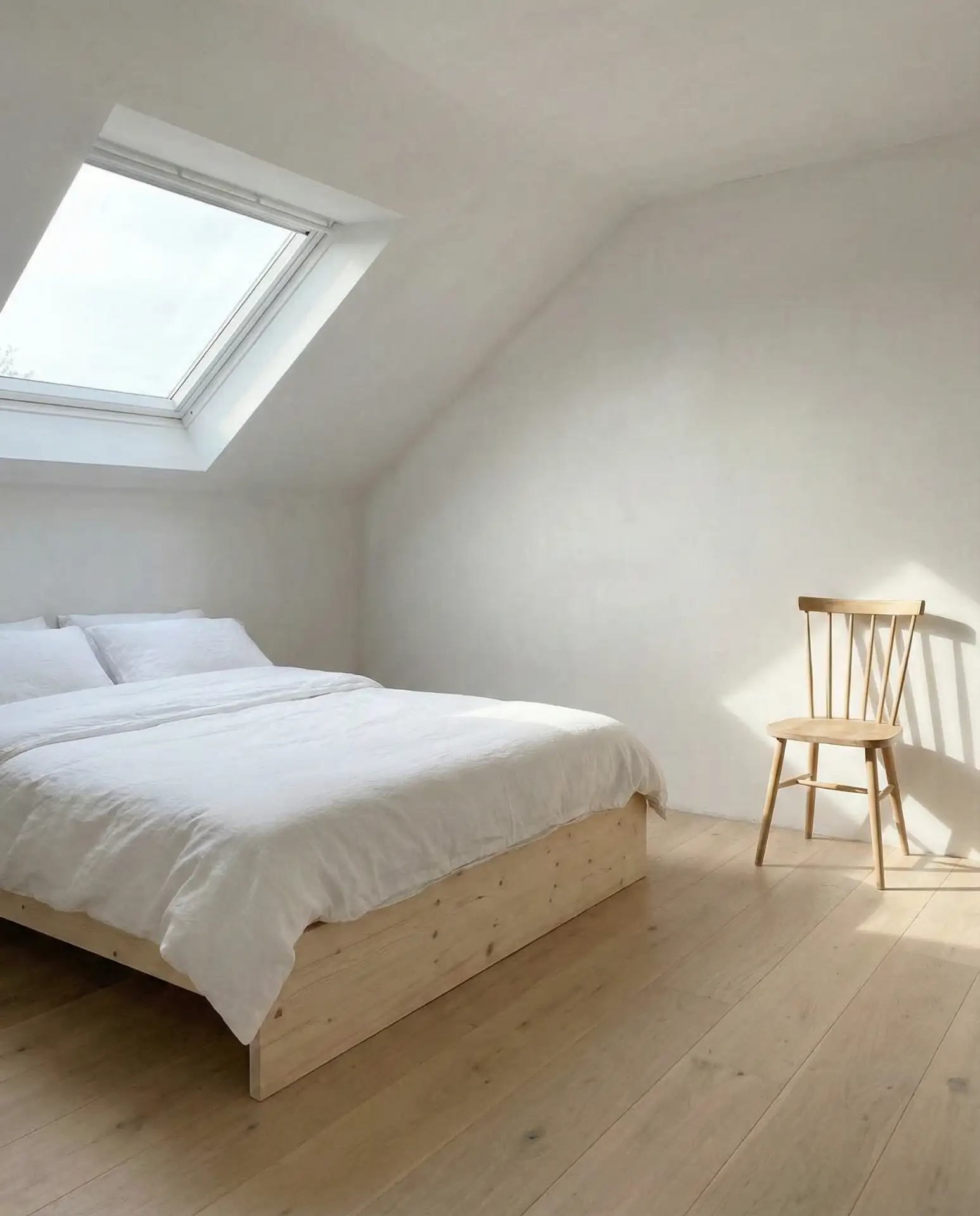
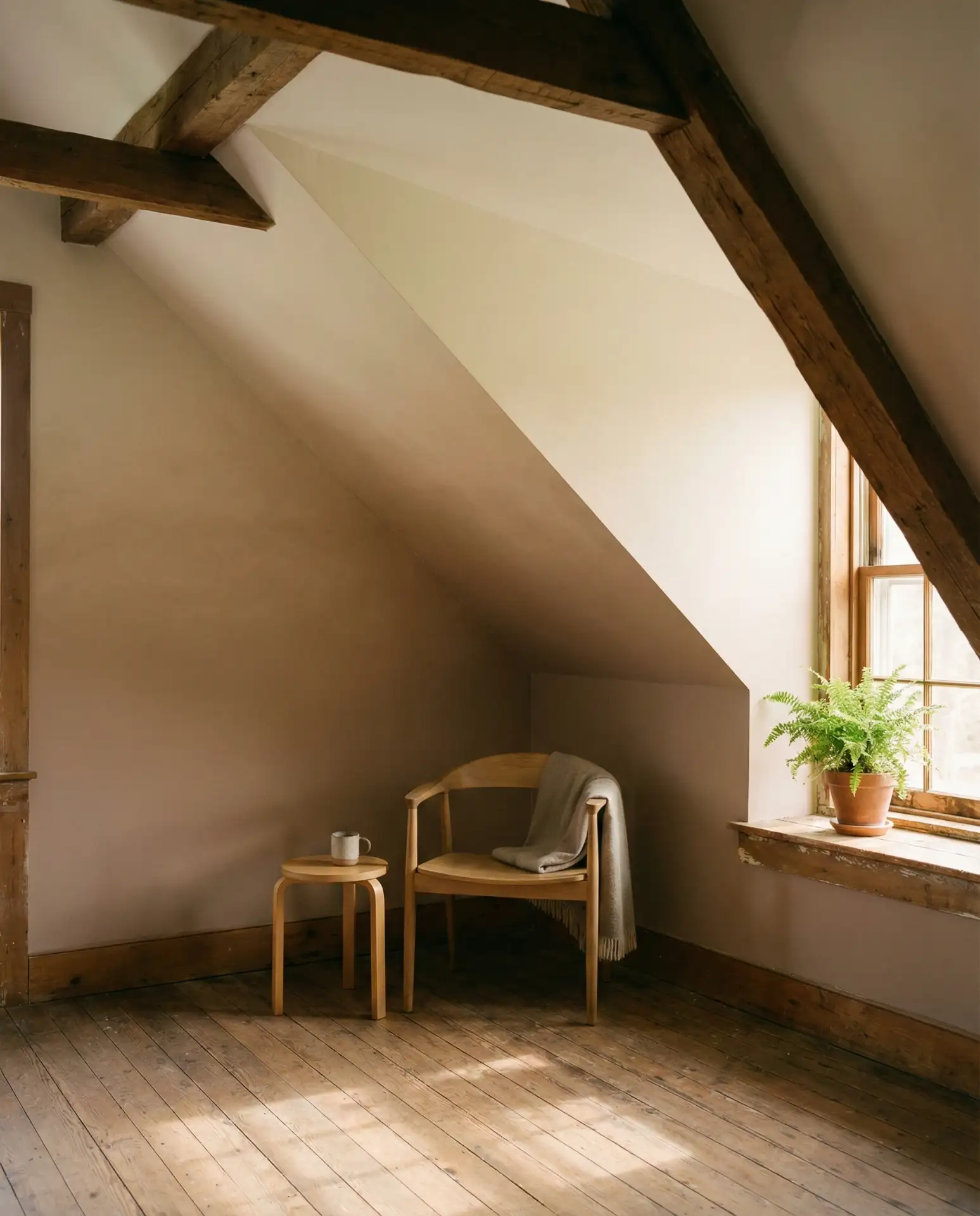
The aesthetic minimalist trend translates beautifully to attic bedrooms, where simplicity lets architectural quirks shine. Keep furniture sparse—a low bed, one statement chair, maybe a single floating shelf. Stick to a muted palette of whites, grays, and natural wood, and let texture do the talking through linen bedding, a jute rug, or a single piece of woven wall art. The beauty is in what you leave out, not what you add.
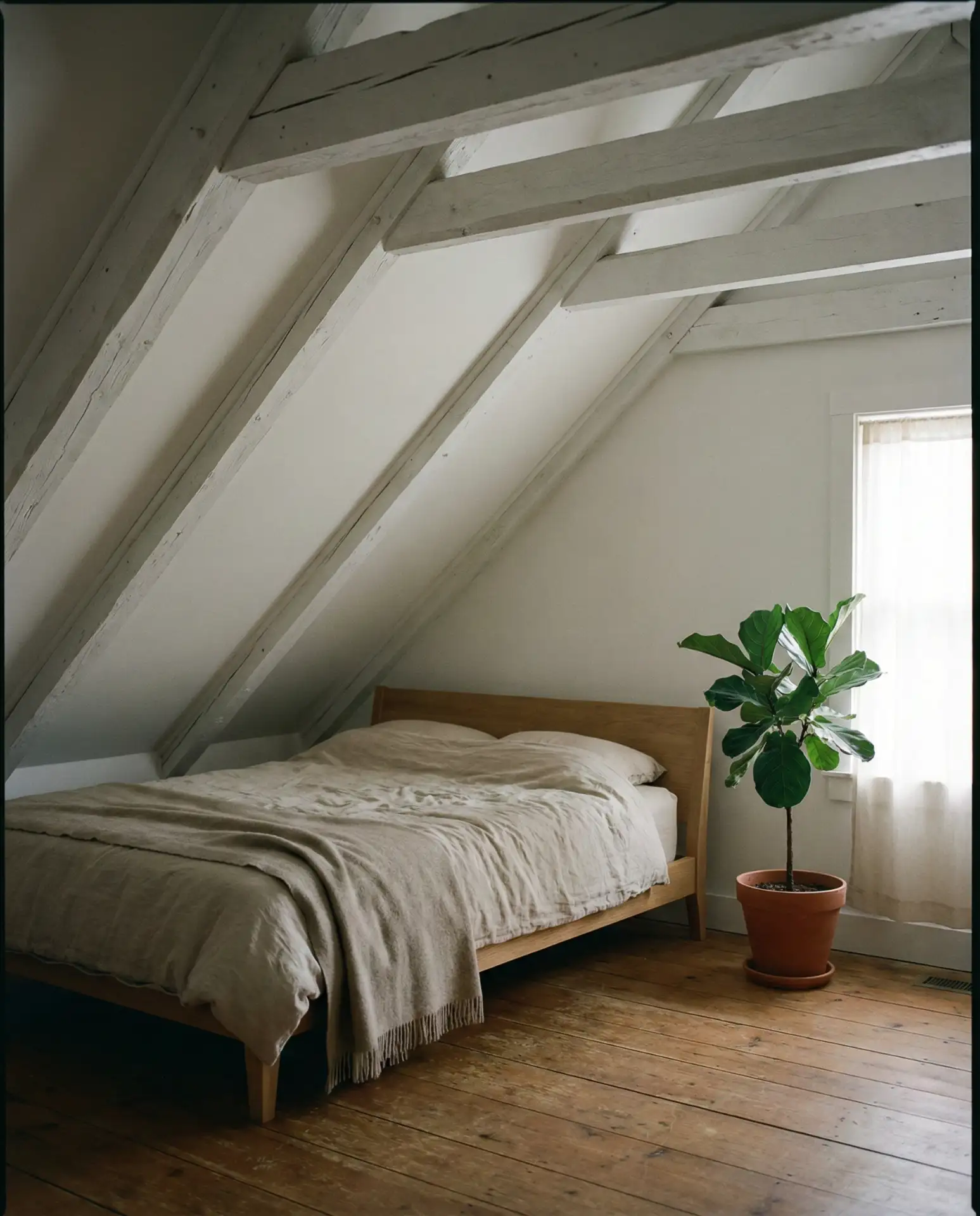
American lifestyle context: Minimalism is especially popular in West Coast cities like Seattle and San Francisco, where smaller living spaces and a focus on intentional living have made pared-down design a cultural norm. Attic bedrooms in these areas often double as meditation spaces or yoga nooks, with homeowners prioritizing calm over clutter. If you’re going minimal, invest in a few high-quality pieces rather than filling the room with budget items—one beautiful chair beats five mediocre ones every time.
7. Teens’ Creative Studio Space
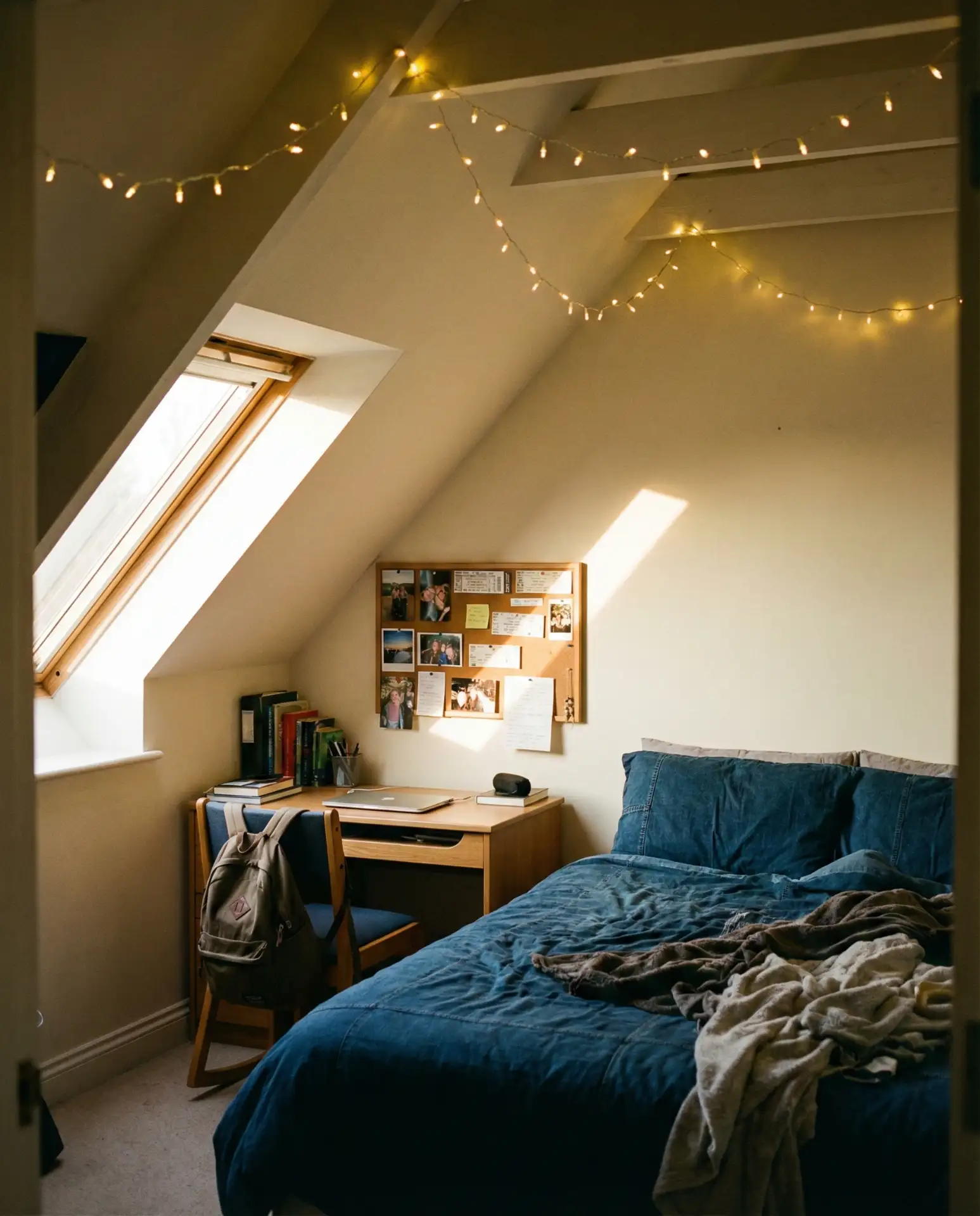
Teens crave autonomy, and an attic bedroom offers the perfect opportunity for them to express their style. Let them choose bold colors, hang string lights, or create a gallery wall of posters and prints. Include a dedicated desk or workspace—many teens use their rooms for homework, art projects, or gaming, so functional furniture is key. Keep storage flexible with bins, hooks, and shelves they can rearrange as their interests evolve.
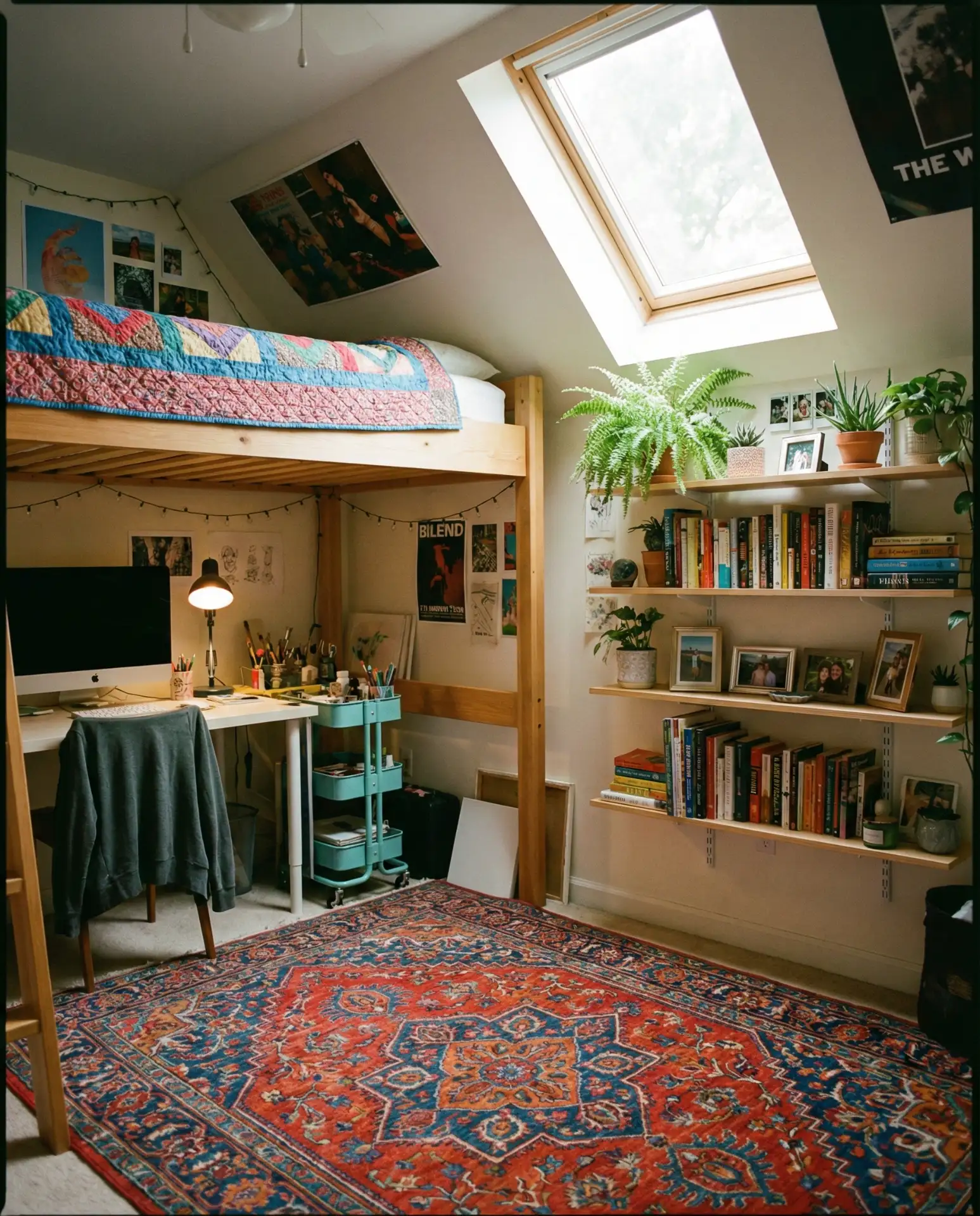
Practical insight: Soundproofing matters in attic bedrooms, especially for teens who listen to music, game, or video chat late into the evening. Adding a thick rug and heavy curtains can absorb sound, and foam panels designed for home studios are an affordable upgrade if noise is a real issue. Also, ensure the room has good ventilation—attics can get stuffy, and a small fan or window AC unit makes a big difference in comfort, particularly during summer months.
8. Large Attic with Zoned Areas
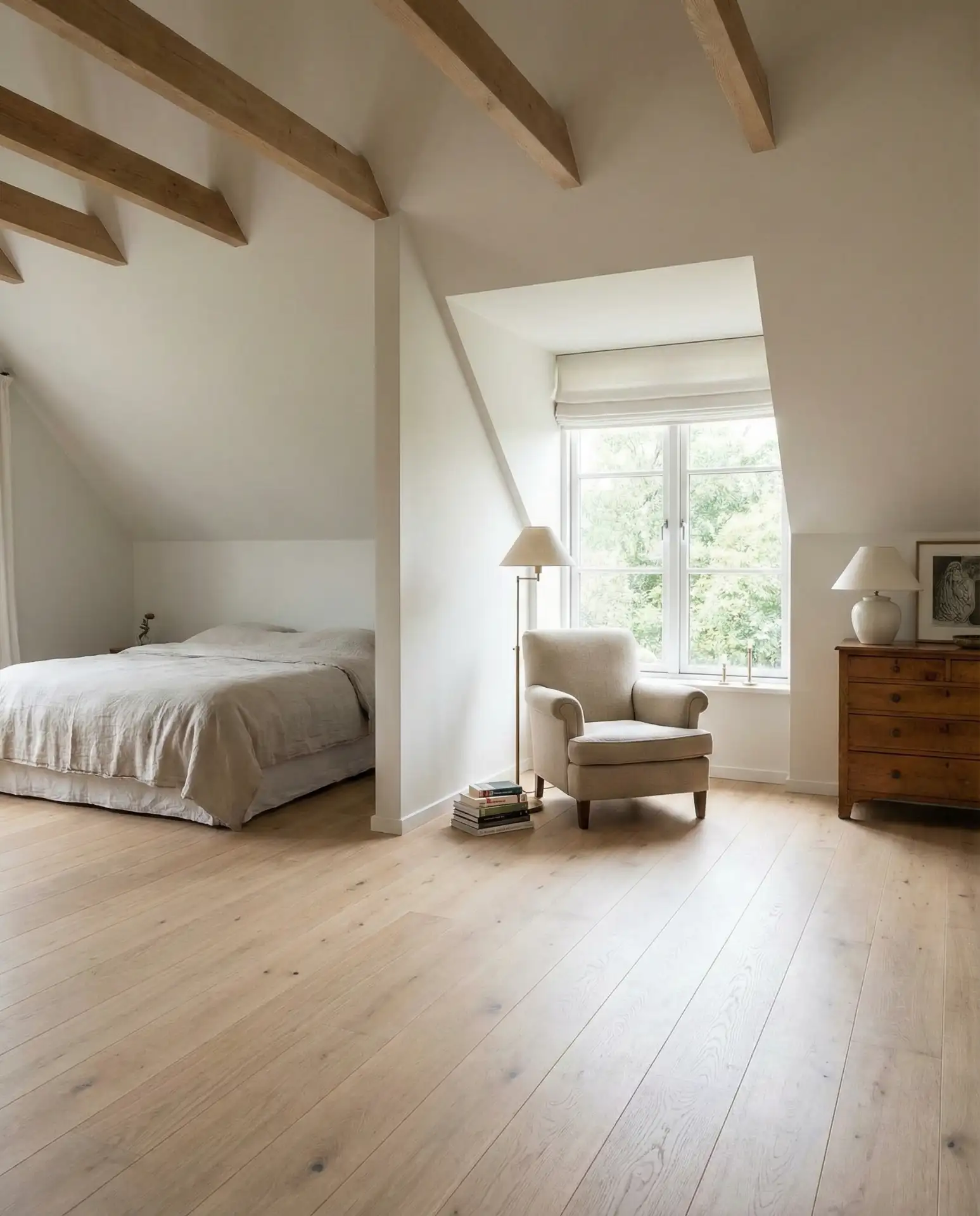
If you’re lucky enough to have a large attic footprint, resist the urge to fill every inch with furniture. Instead, create distinct zones—a sleeping area, a reading nook, a dressing corner, and even a small lounge. Use rugs, lighting, and furniture placement to define these spaces without building walls. A large attic can feel like a private apartment within your home, offering versatility that smaller bedrooms simply can’t match.
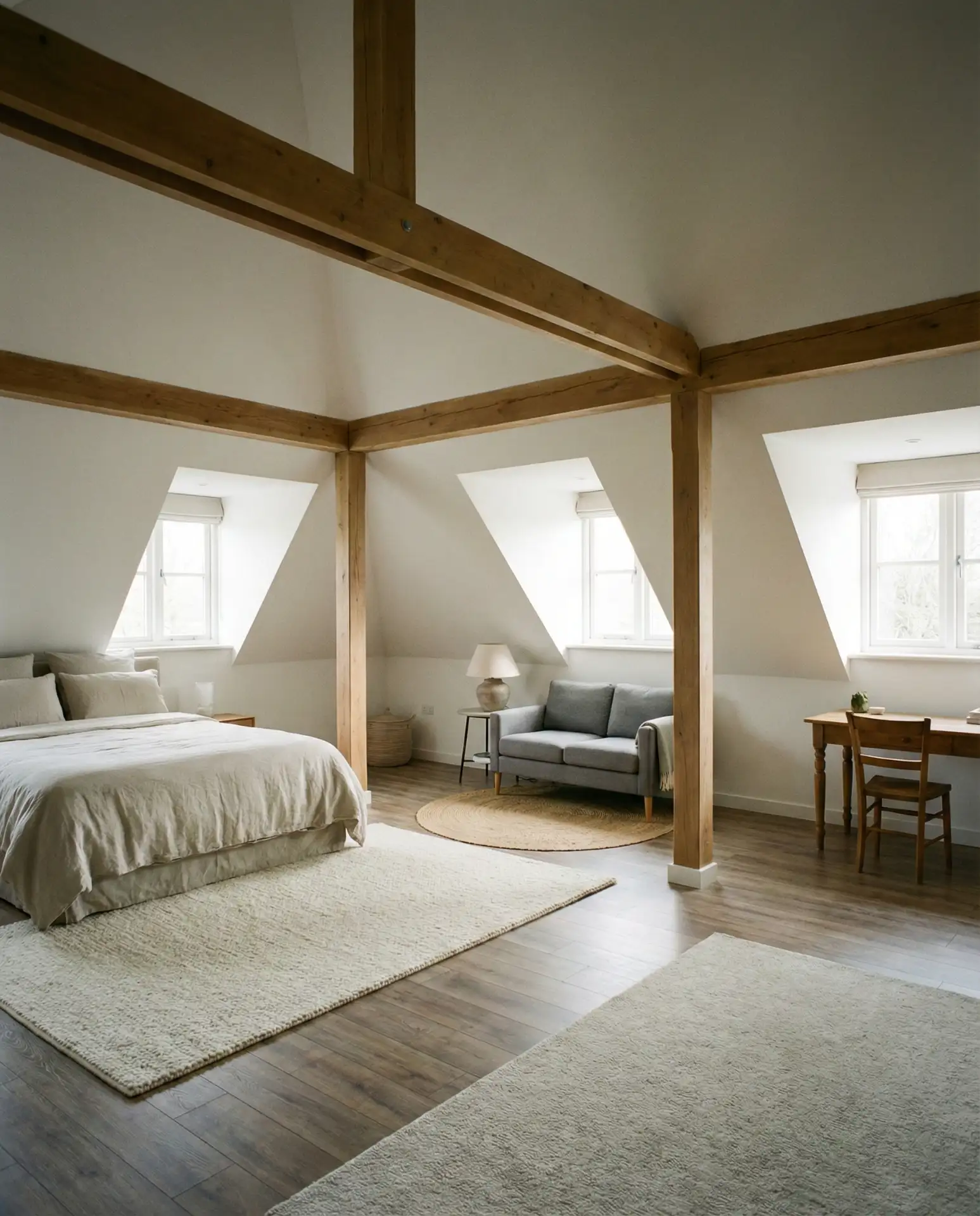
Where it works best: This zoning strategy is ideal in Craftsman-style homes or converted Colonial attics, where the square footage is generous but the roofline is still sloped. In cities like Boston or Philadelphia, where historic homes are being updated, homeowners are turning sprawling attics into luxurious master suites with sitting areas and walk-in closets. The key is using furniture to create implied boundaries—a bookshelf can act as a room divider without blocking light or airflow.
9. Cute Cottage-Style Attic
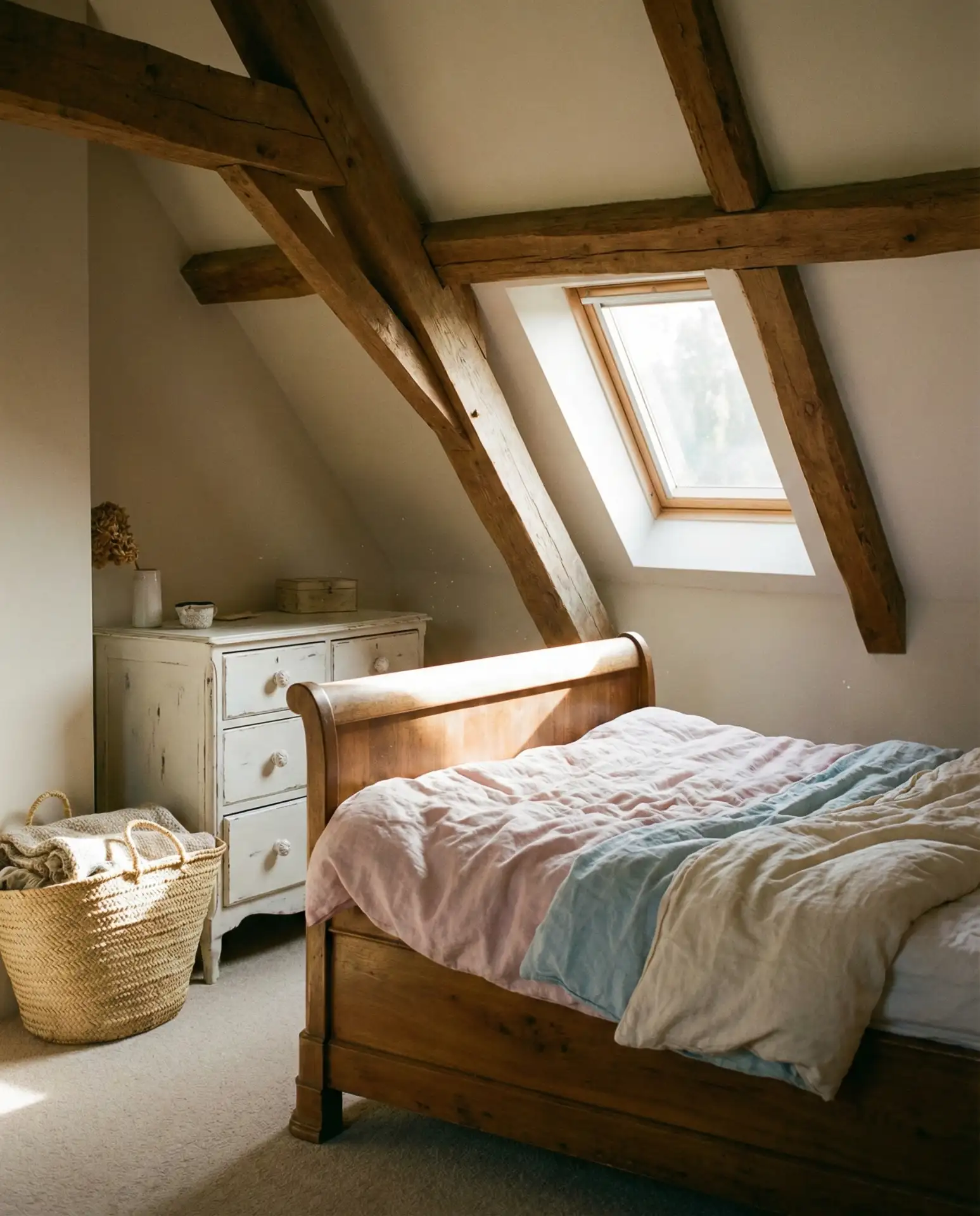
Channel cute cottage vibes with vintage-inspired furniture, floral textiles, and soft pastel tones. Think wrought iron bed frames, lace curtains, and mismatched nightstands sourced from flea markets. This look works especially well in older homes where the attic already has exposed beams or original wood floors—lean into that charm rather than covering it up. Add a vintage rug and some ceramic vases, and you’ve got a room that feels plucked from a storybook.
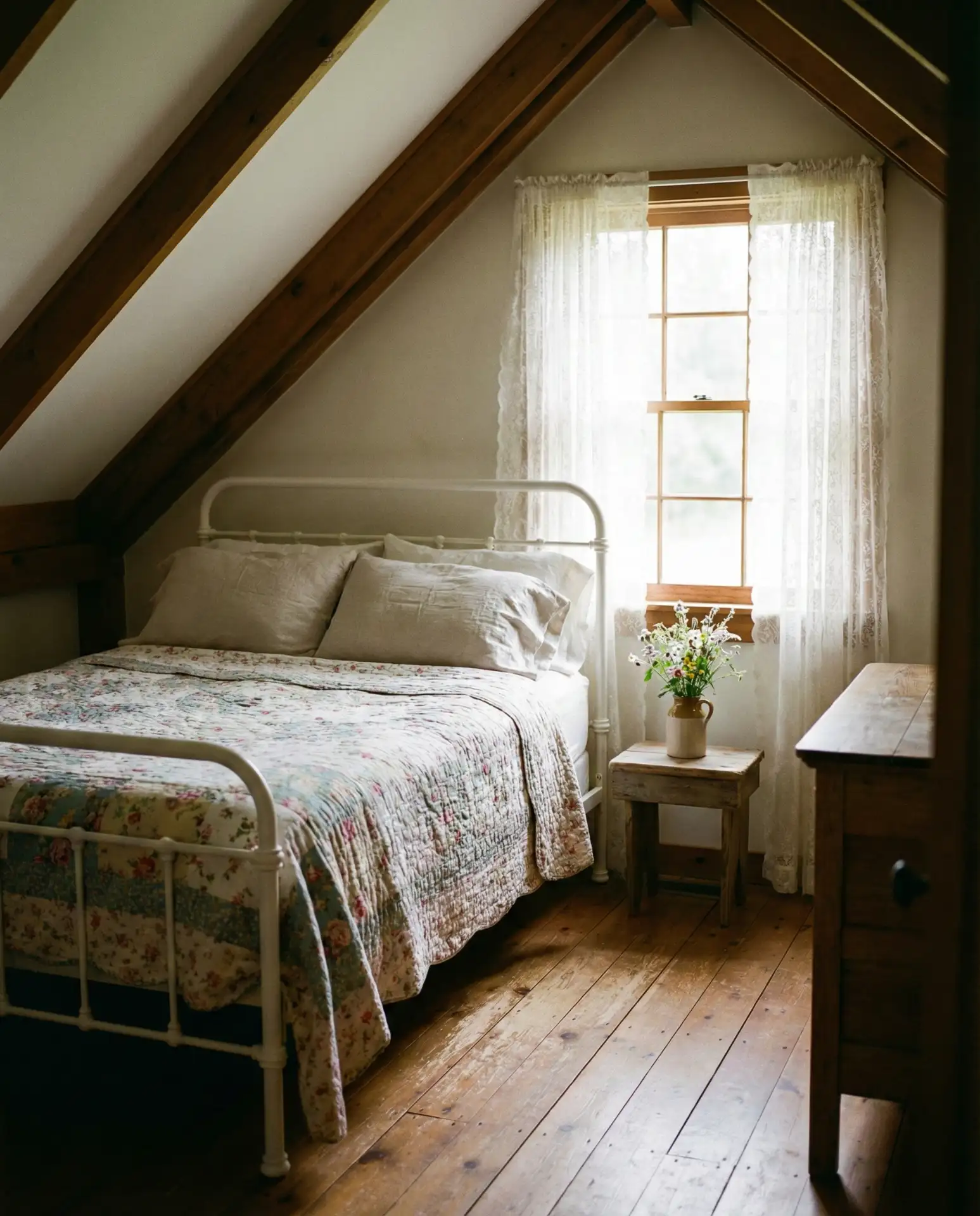
Budget angle: Cottage style is thrift-friendly by nature. Scour estate sales, Craigslist, and Facebook Marketplace for vintage furniture that just needs a fresh coat of paint or new hardware. A $30 dresser can be transformed with chalk paint and new knobs, and secondhand quilts or linens add character without the markup of new décor. This approach not only saves money but also gives your attic bedroom a unique, collected-over-time feel that can’t be replicated with store-bought matching sets.
10. Slanted Ceiling Interior Design with Skylights
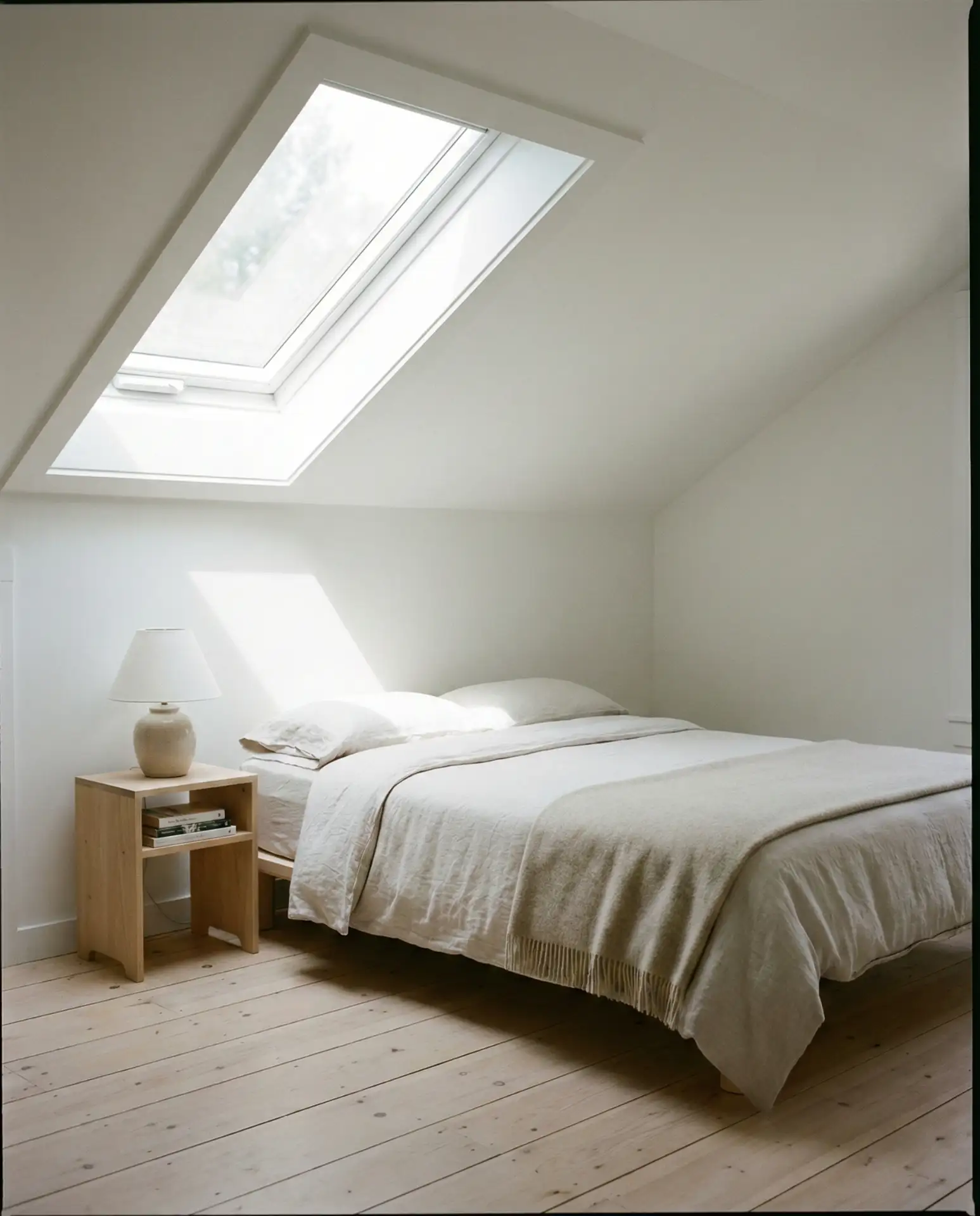
Slanted ceiling interior design reaches its full potential when you add skylights. Natural light transforms even the most awkward roofline into an architectural asset, and the view of the sky above your bed creates a dreamy, almost treehouse-like ambiance. If you’re renovating, consider installing operable skylights for ventilation—they’re especially helpful in attics that tend to trap heat. Dress them with blackout shades for flexibility between bright mornings and restful sleep.
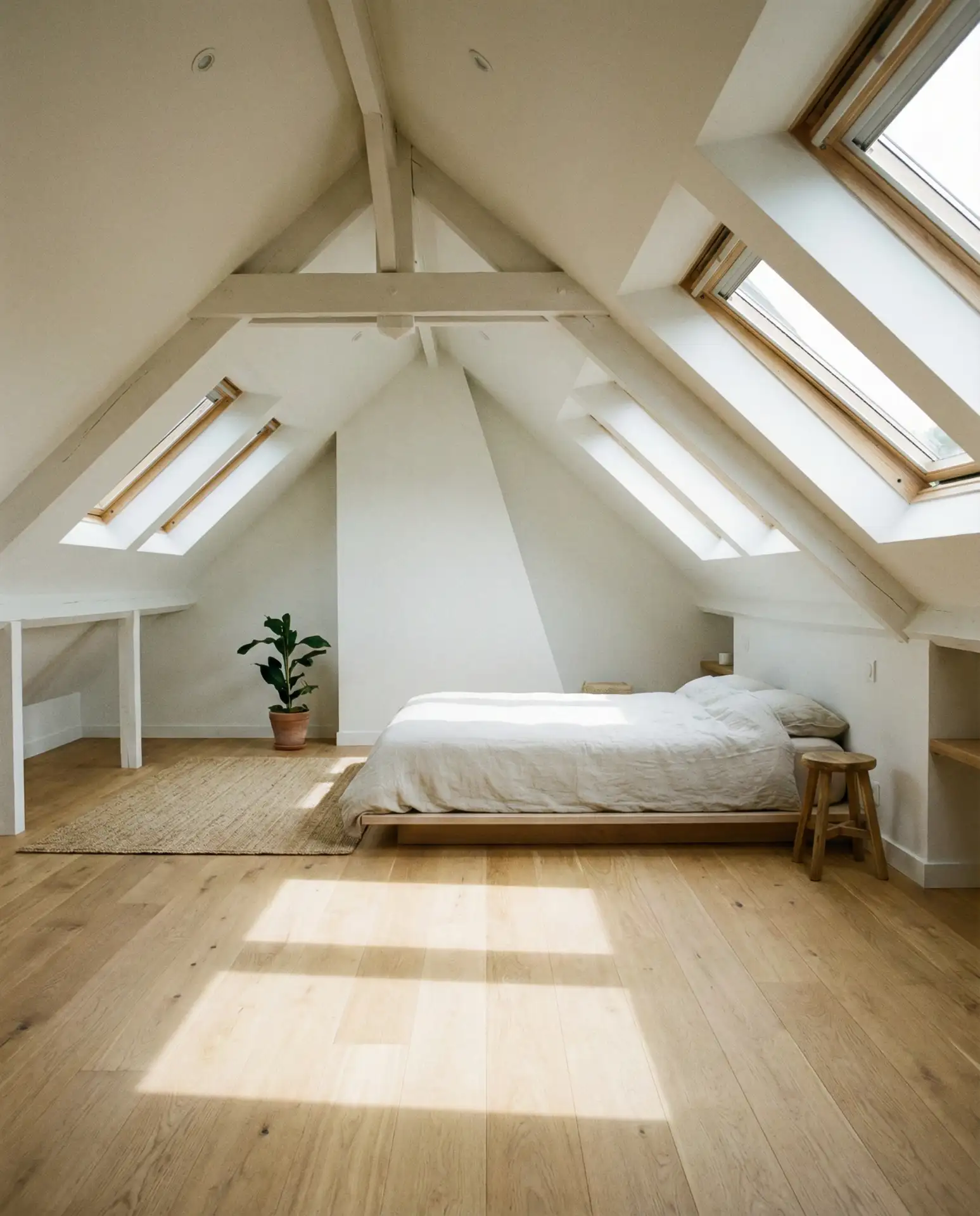
Real homeowner behavior: Many people hesitate to install skylights due to perceived cost, but the return on investment—both in livability and home value—is significant. In the Pacific Northwest, where gray days are common, skylights have become a must-have in attic conversions. Homeowners report that even on cloudy days, the diffused natural light makes the space feel twice as large. If full skylights aren’t in the budget, tubular skylights are a more affordable alternative and can bring in surprising amounts of light for around $300 to $500 installed.
11. Attic Bedroom Ideas Master with En Suite Bath
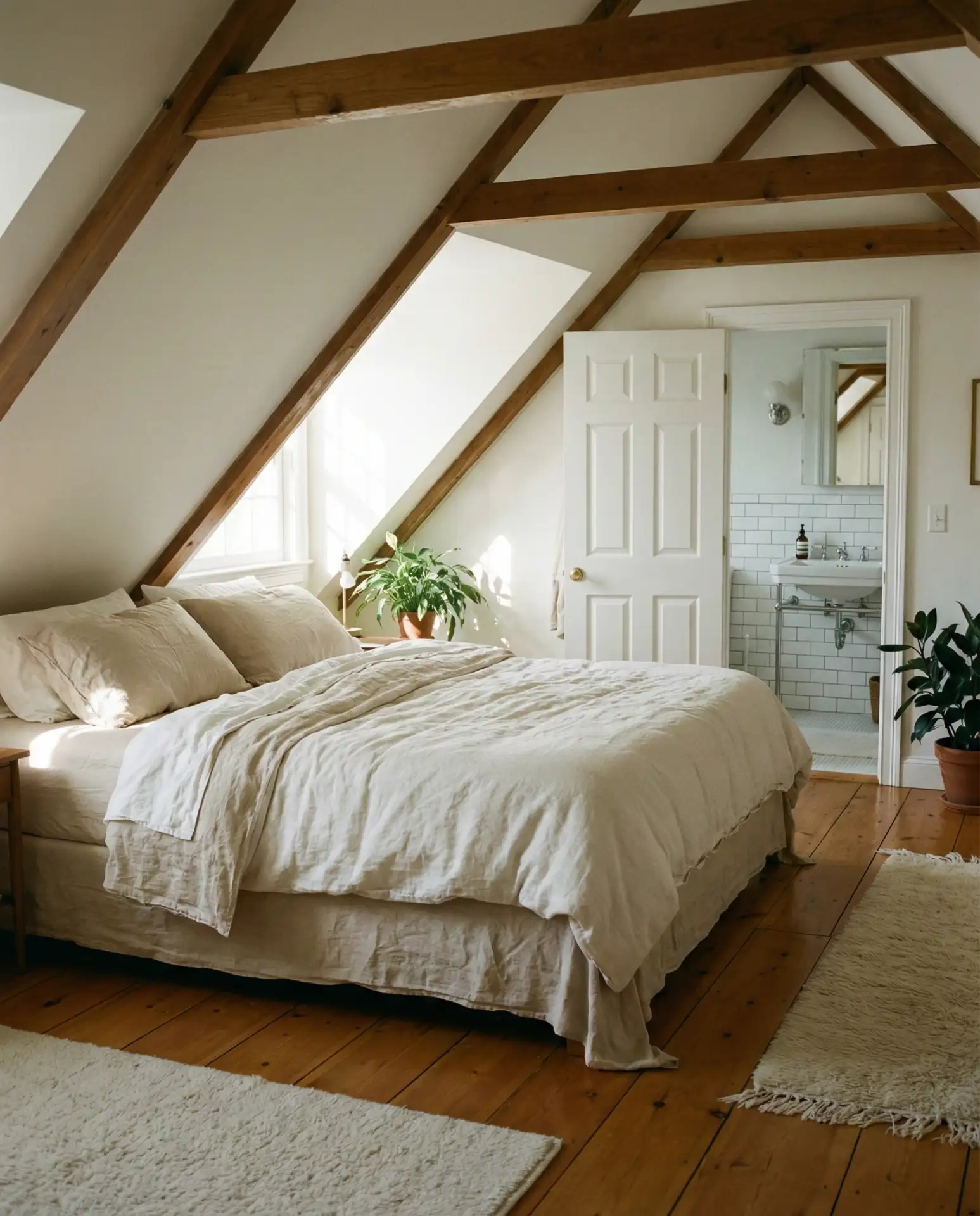
Turning your attic bedroom master vision into reality often means carving out an en suite bathroom. If your attic has enough square footage and access to plumbing, even a compact three-quarter bath—with a shower, toilet, and sink—can make the space feel like a true primary suite. Position the bathroom under the lowest part of the ceiling where you wouldn’t stand comfortably anyway, and use frosted glass or a pocket door to save space while maintaining privacy.
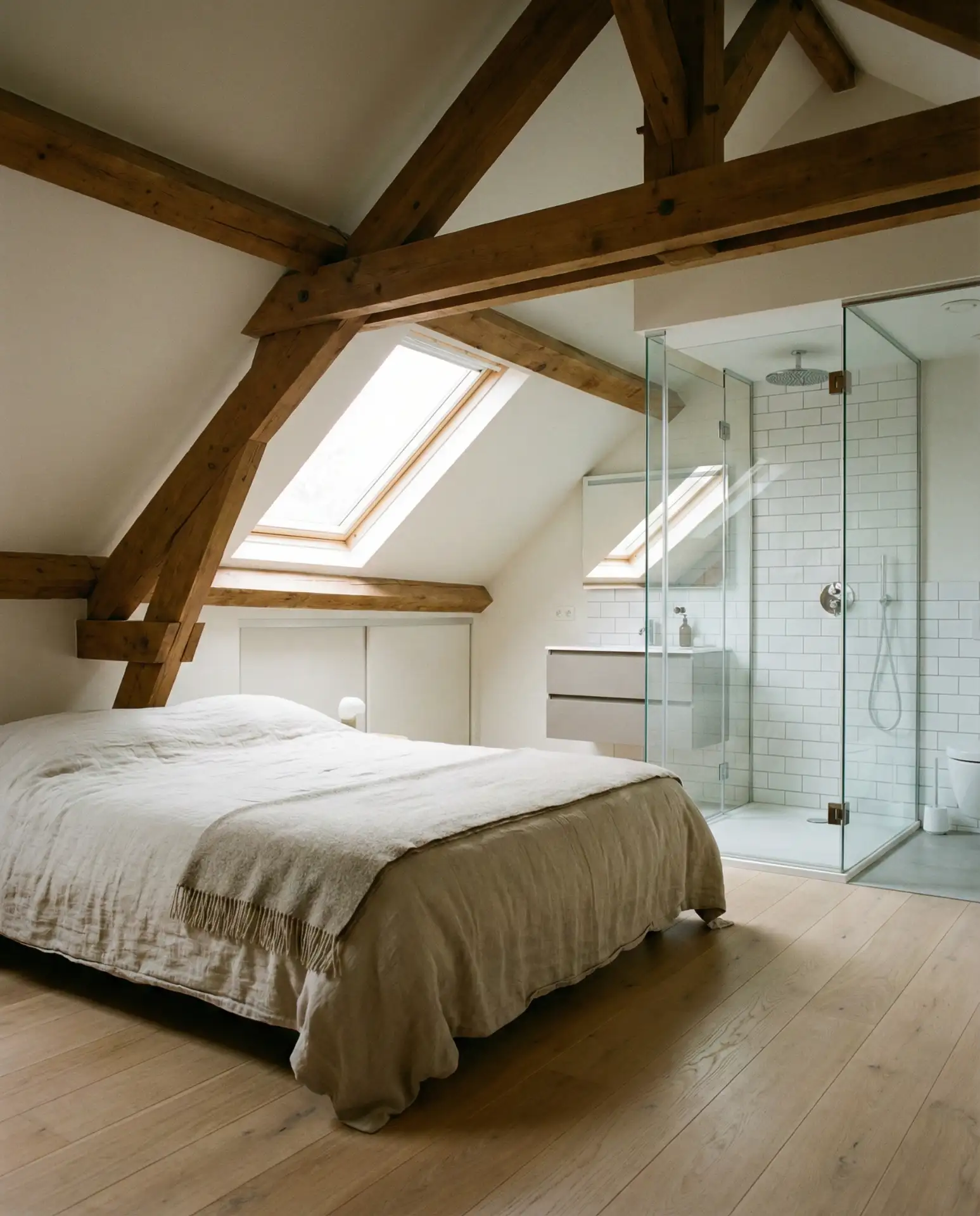
Expert-style commentary: Plumbing an attic bathroom is one of the more complex renovation tasks, often requiring permits and professional contractors. Expect costs to range from $10,000 to $25,000 depending on your home’s existing layout and local labor rates. That said, adding a bathroom to an attic suite can significantly increase your home’s resale value—buyers consistently rank en suite master bathrooms as a top priority. Work with a plumber early in the design process to map out feasible locations for fixtures based on where your water lines and drainage already exist.
12. Cozy Reading Nook Under Eaves
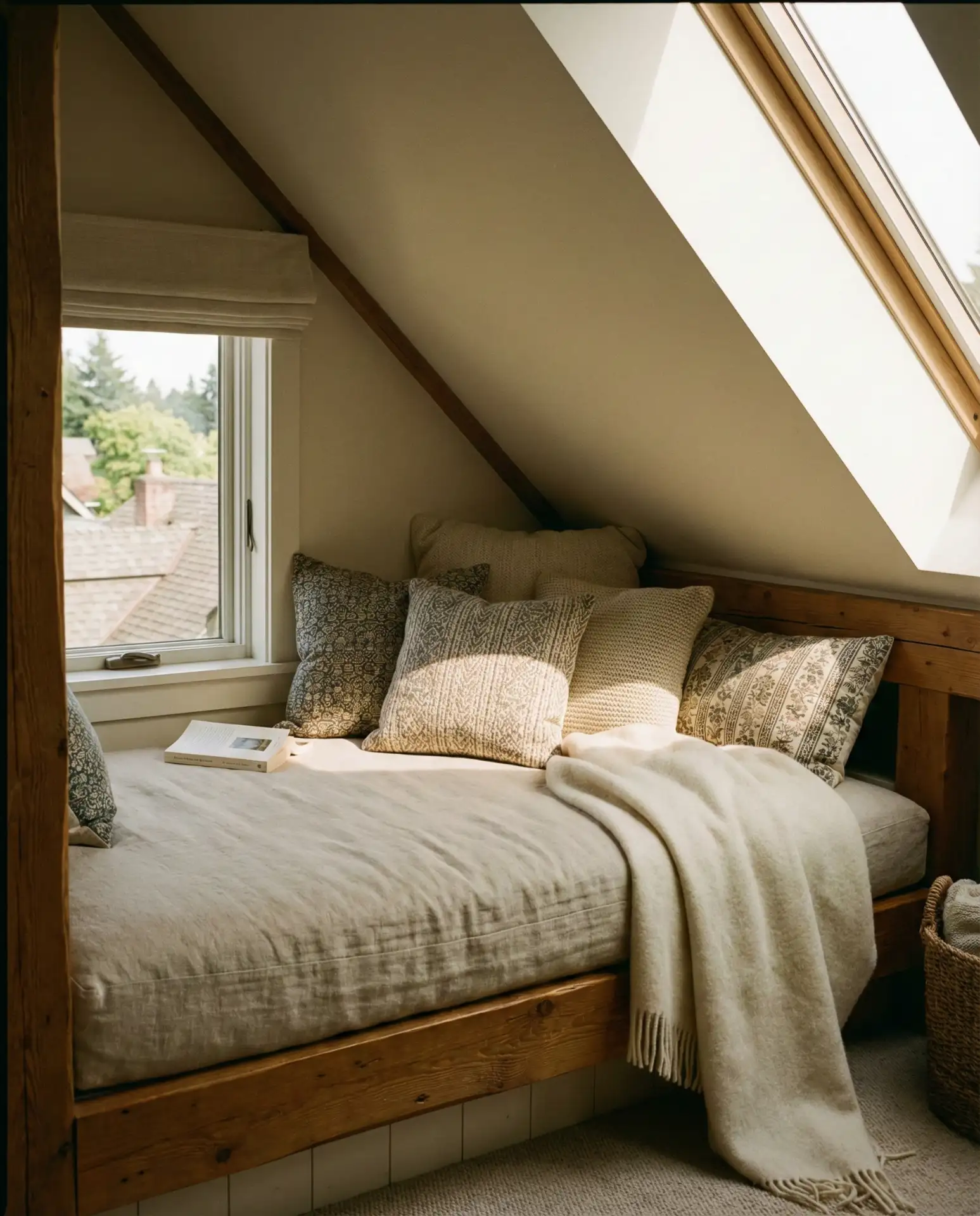
The lowest, most awkward section of your cozy attic can become its most charming feature—a built-in reading nook. Add a cushioned bench or pile floor pillows into the eaves, toss in a soft throw blanket, and install a wall-mounted reading light. This turns unusable space into a personal retreat where you can curl up with a book or just gaze out a small window. It’s the kind of detail that makes an attic bedroom feel intentionally designed rather than just functional.
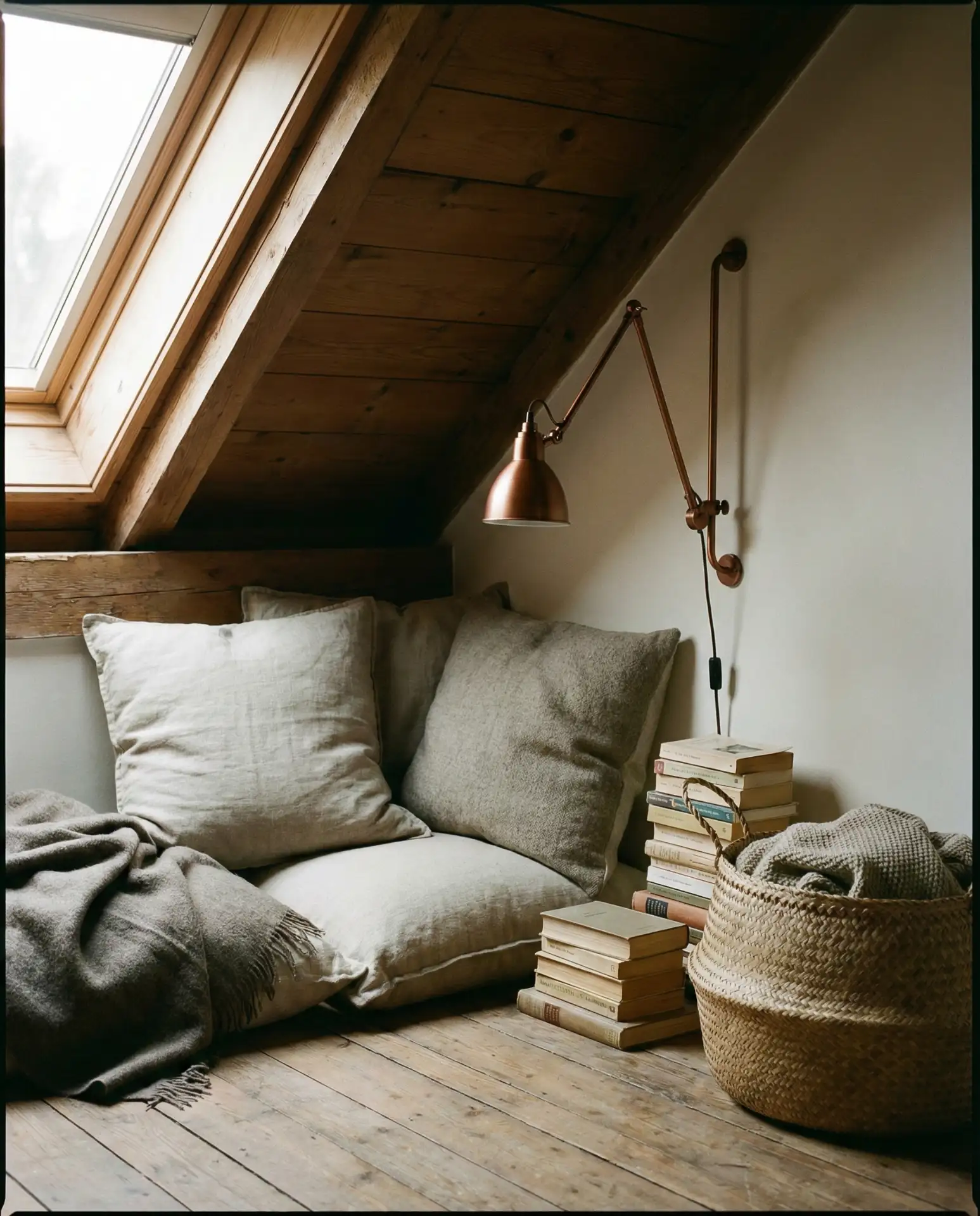
Micro anecdote: A friend recently converted her Chicago attic into a guest room and added a tiny reading nook under the lowest eave—barely four feet of clearance. Guests consistently comment that it’s their favorite feature of the space. She spent less than $100 on the cushion, pillows, and a clip-on lamp, proving that small, thoughtful touches often have the biggest impact. Don’t overlook these in-between spaces; they’re where personality really shines through.
13. Aesthetic Cozy Boho Layers
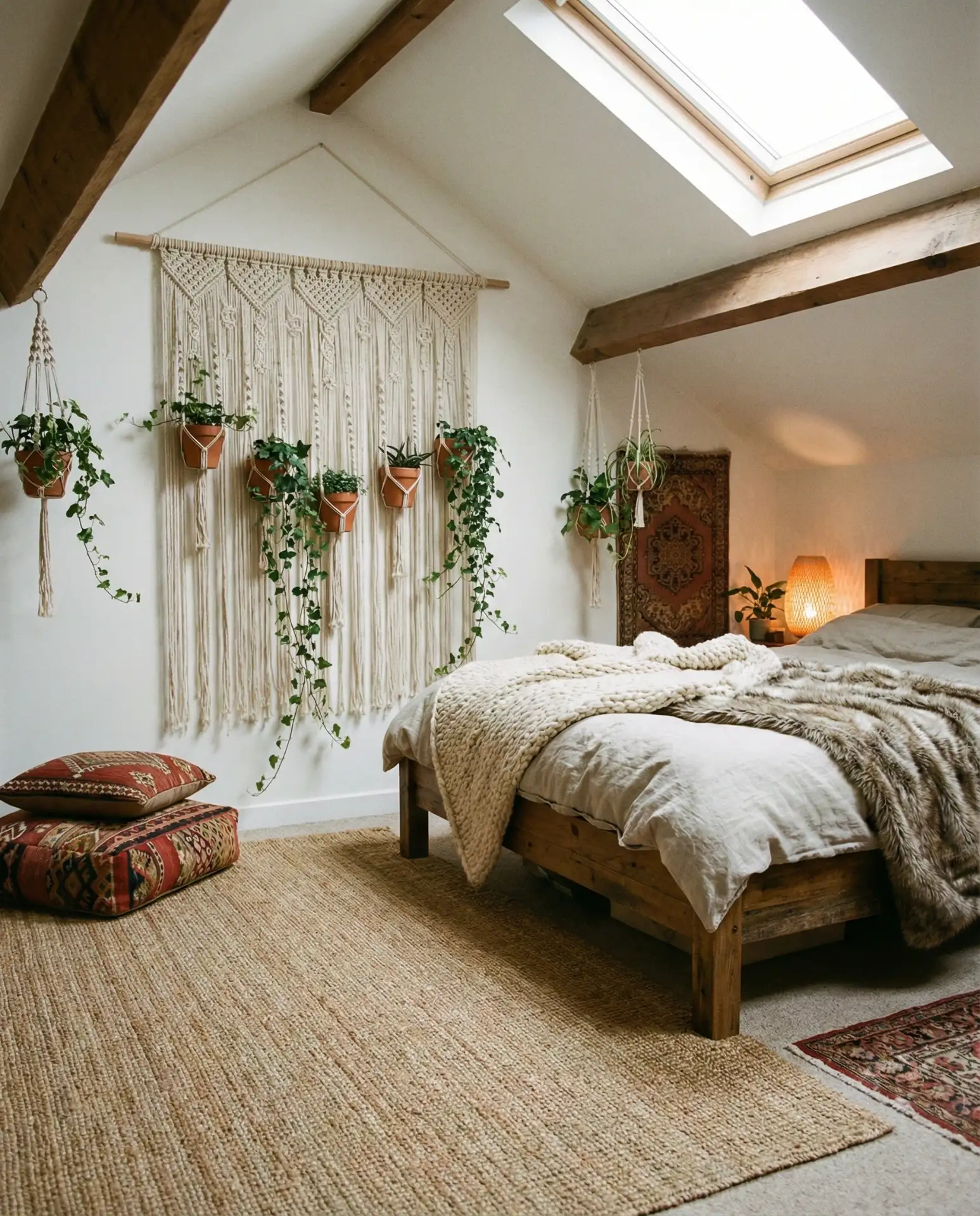
Combine aesthetic cozy with bohemian flair by layering patterns, textures, and natural materials. Think macramé wall hangings, rattan furniture, and plenty of plants. Mix a patterned rug with embroidered throw pillows, and don’t be afraid to combine warm woods with soft, flowing fabrics. The boho approach is forgiving and eclectic, which makes it perfect for attics where not everything is perfectly symmetrical or traditional.
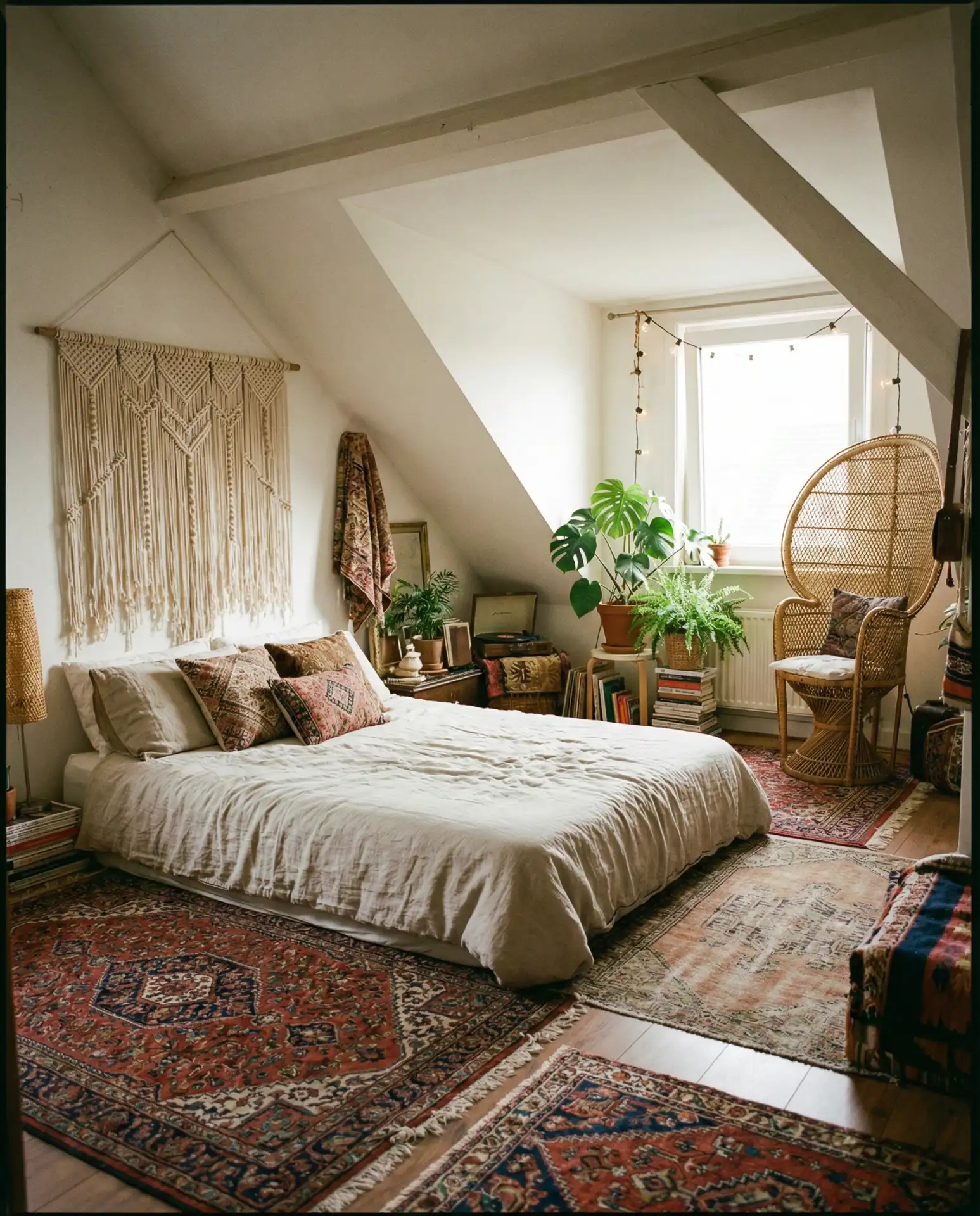
Common mistake to avoid: Boho style can quickly tip into clutter if you’re not careful. The key is editing—choose a few statement pieces like a large macramé hanging or a bold patterned rug, then keep the rest relatively simple. Too many patterns and textures competing for attention can make a small attic feel chaotic rather than cozy. Stick to a cohesive color palette, even if you’re mixing patterns, and use open shelving or baskets to keep smaller items organized and out of sight.
14. Tiny Attic for One
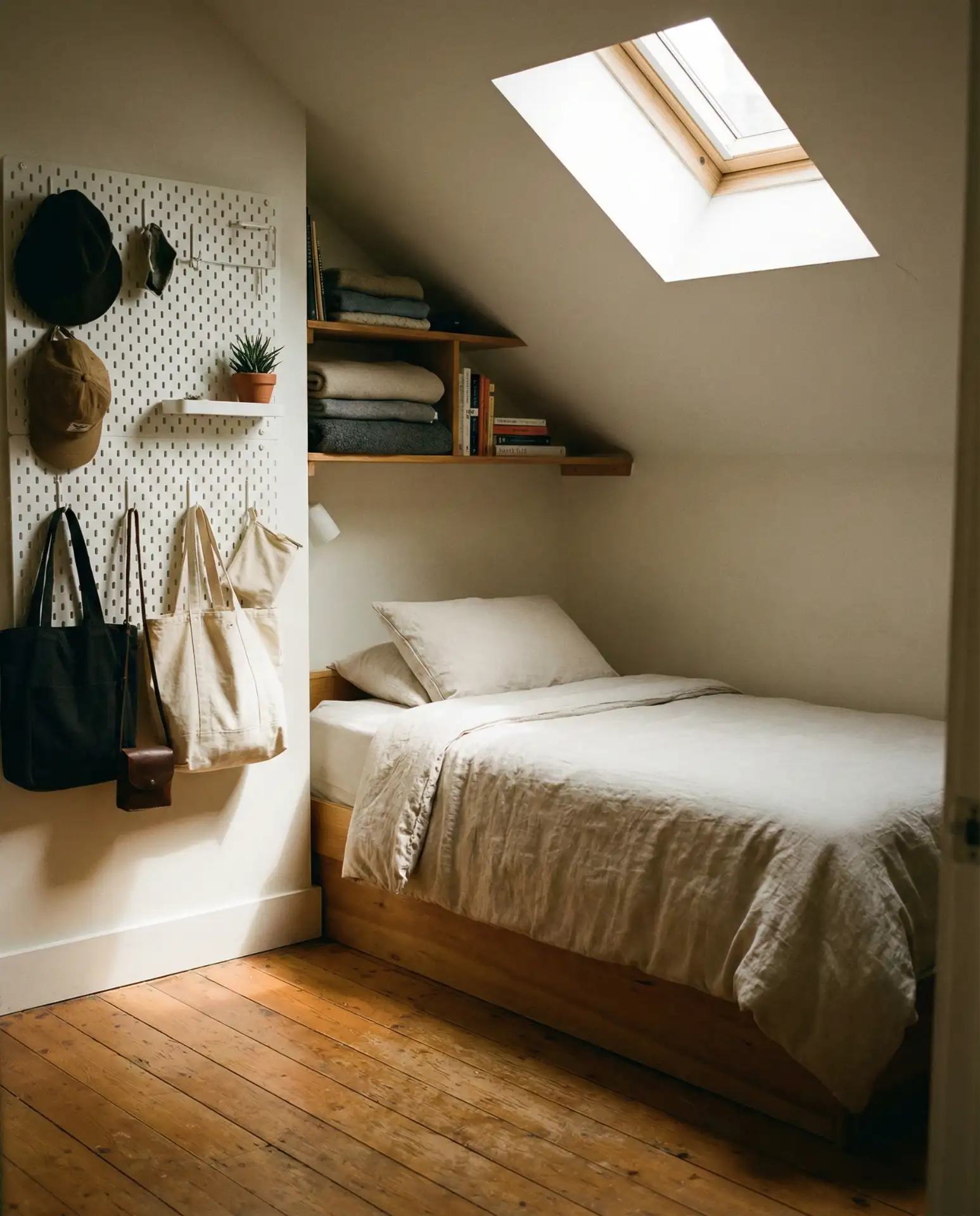
A tiny attic bedroom forces you to prioritize ruthlessly, which can actually result in a more peaceful, clutter-free space. Choose a narrow twin or full bed, mount floating shelves instead of bulky dressers, and use the walls for storage. Hooks, pegboards, and wall-mounted organizers keep the floor clear and make the room feel larger than it is. Every piece of furniture should serve at least two purposes—think storage ottomans or beds with built-in drawers.
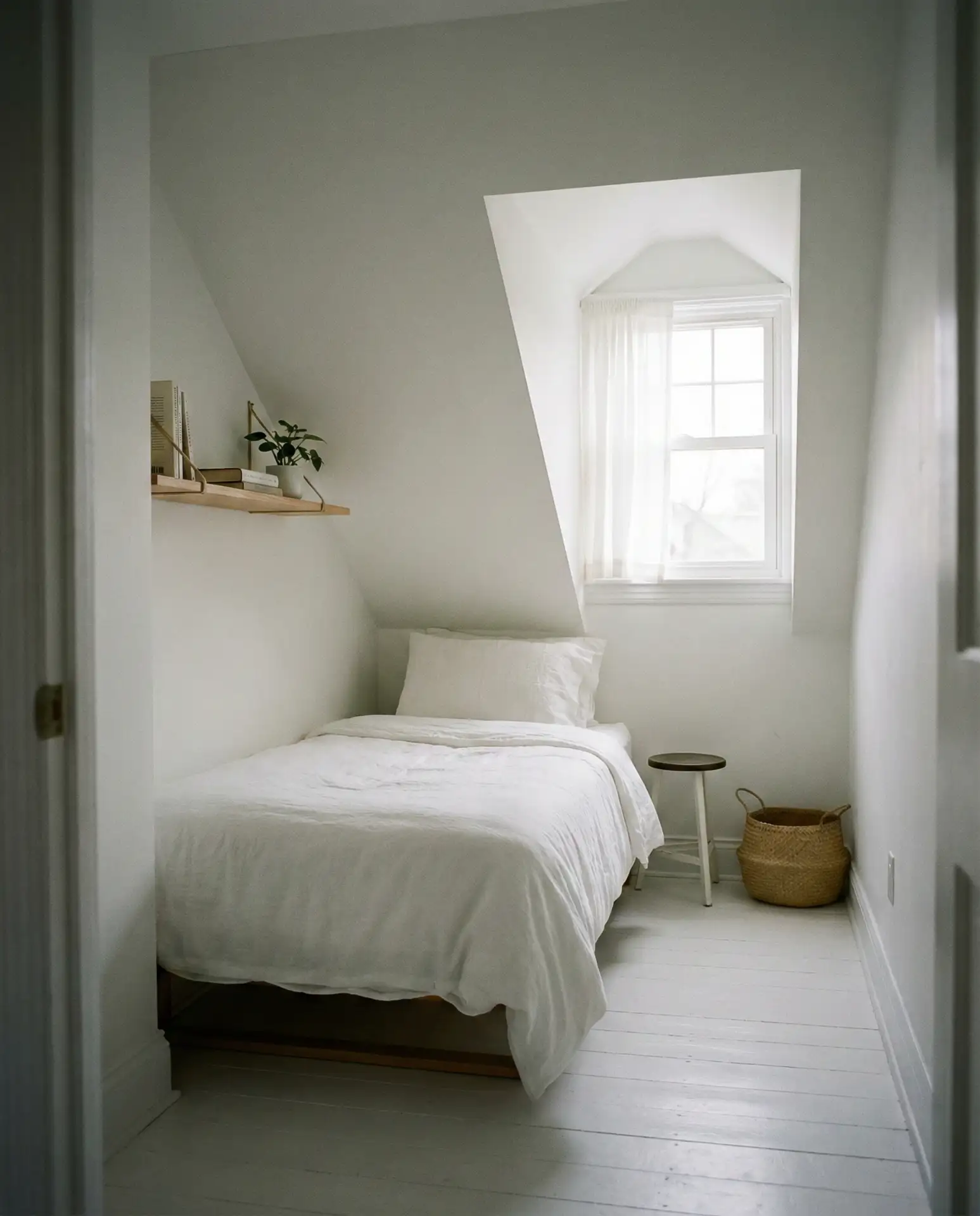
Regional context: Tiny attic bedrooms are especially common in older East Coast cities like New York, Boston, and Baltimore, where row houses and brownstones often feature narrow attic spaces originally intended for servants’ quarters. Today, these rooms are being reimagined as guest rooms, home offices, or teen retreats. The trick is embracing the smallness rather than fighting it—hang a mirror to visually expand the space, and keep décor light and airy to avoid feeling boxed in.
15. Half Attic Conversion with Dual Purpose
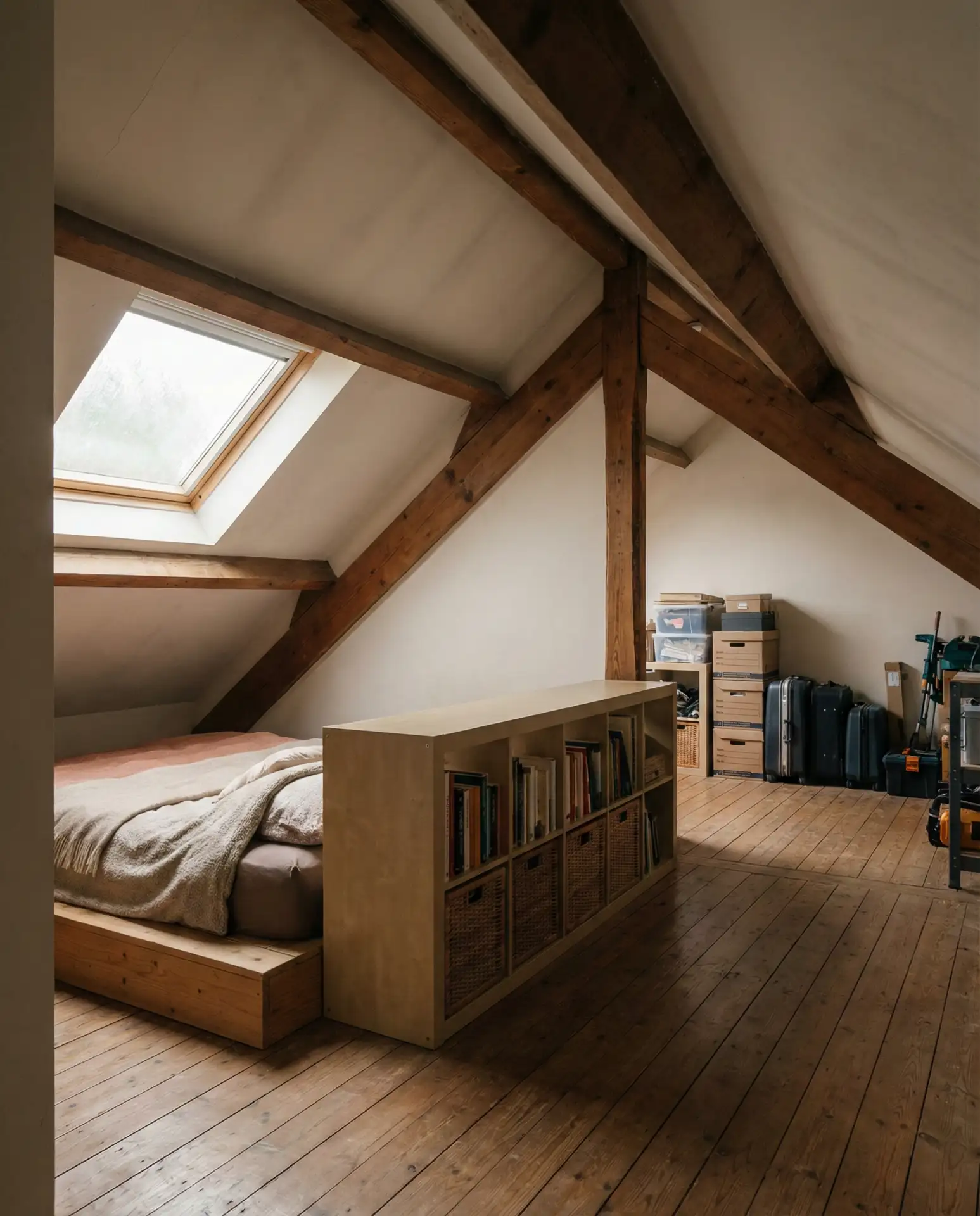
Not ready to commit the entire attic to a bedroom? A half attic conversion lets you maintain some storage space while carving out a sleeping area. Use a room divider, curtain, or even a low bookshelf to separate the bedroom zone from the rest of the attic. This approach is budget-friendly and flexible—you can always expand later if your needs change. It’s also ideal for homes where the attic isn’t quite large enough to feel comfortable as a full bedroom.
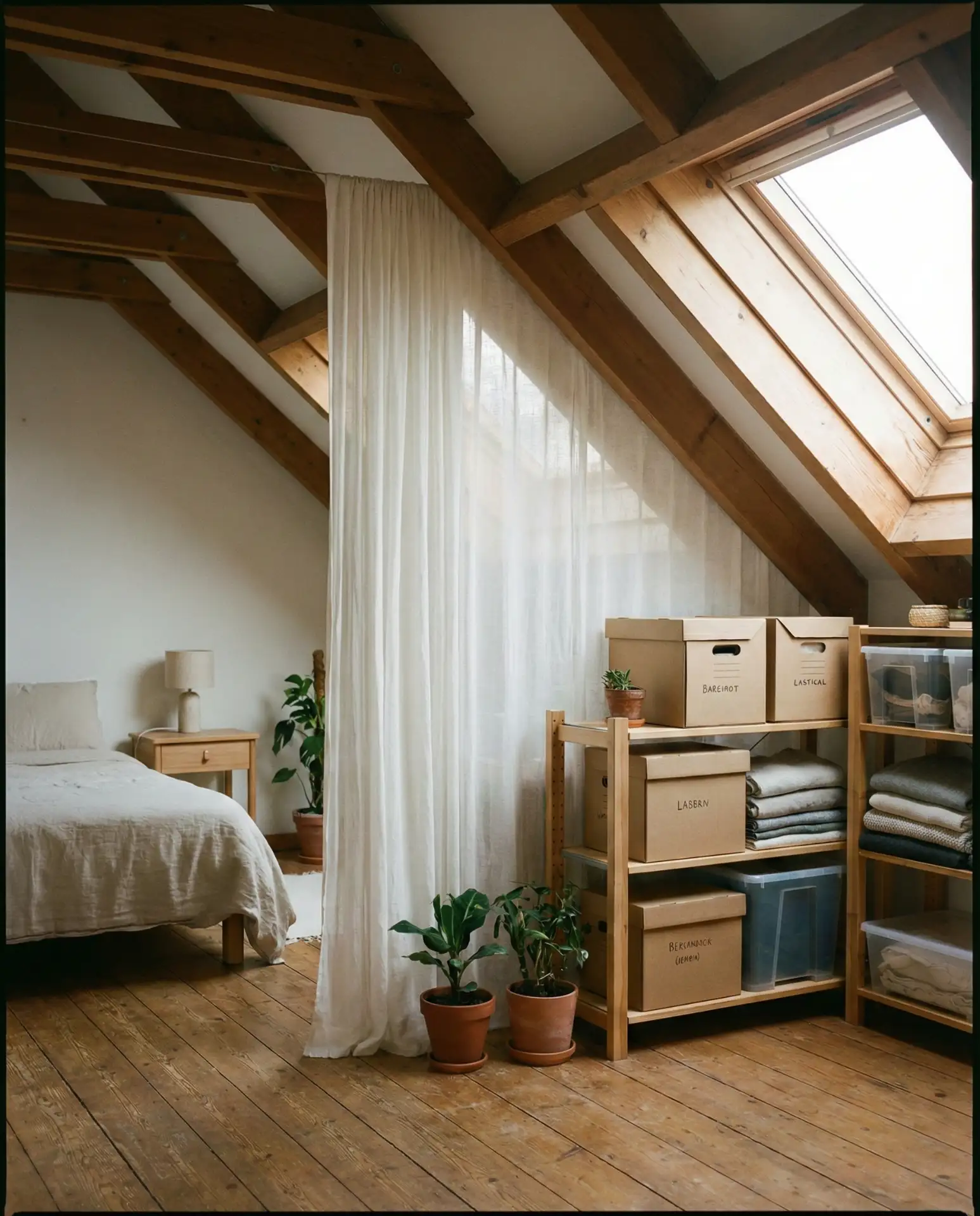
Practical insight: Many American homeowners use this strategy when they’re testing out an attic bedroom before committing to a full renovation. Start with a simple bed, a lamp, and minimal décor to see how the space feels and functions. If you love it, invest in better insulation, flooring, and built-ins. If it doesn’t work out, you haven’t sunk thousands into a space you won’t use. This phased approach also helps with budgeting—you can spread costs over multiple years instead of facing one enormous renovation bill.
16. Aesthetic Grunge Teen Hideout
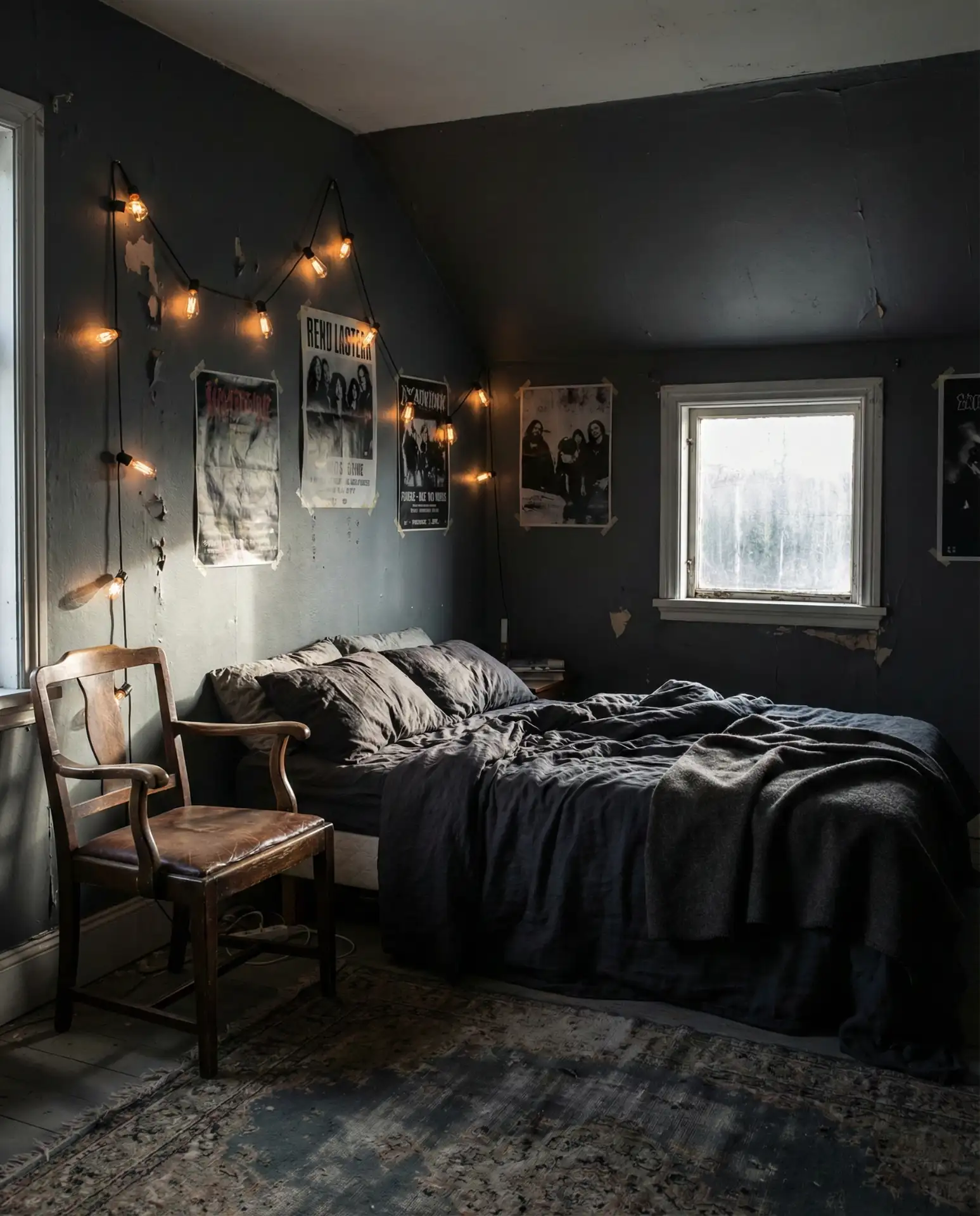
For teens drawn to aesthetic grunge, an attic bedroom is the perfect canvas. Dark walls—charcoal, navy, or even black—create a moody, dramatic vibe that feels rebellious without being overwhelming. Add string lights, band posters, vintage thrift finds, and a beat-up leather chair. This look embraces imperfection, so scuffed floors and exposed beams are assets, not flaws. Let your teen take the lead on styling; this is their space to own.
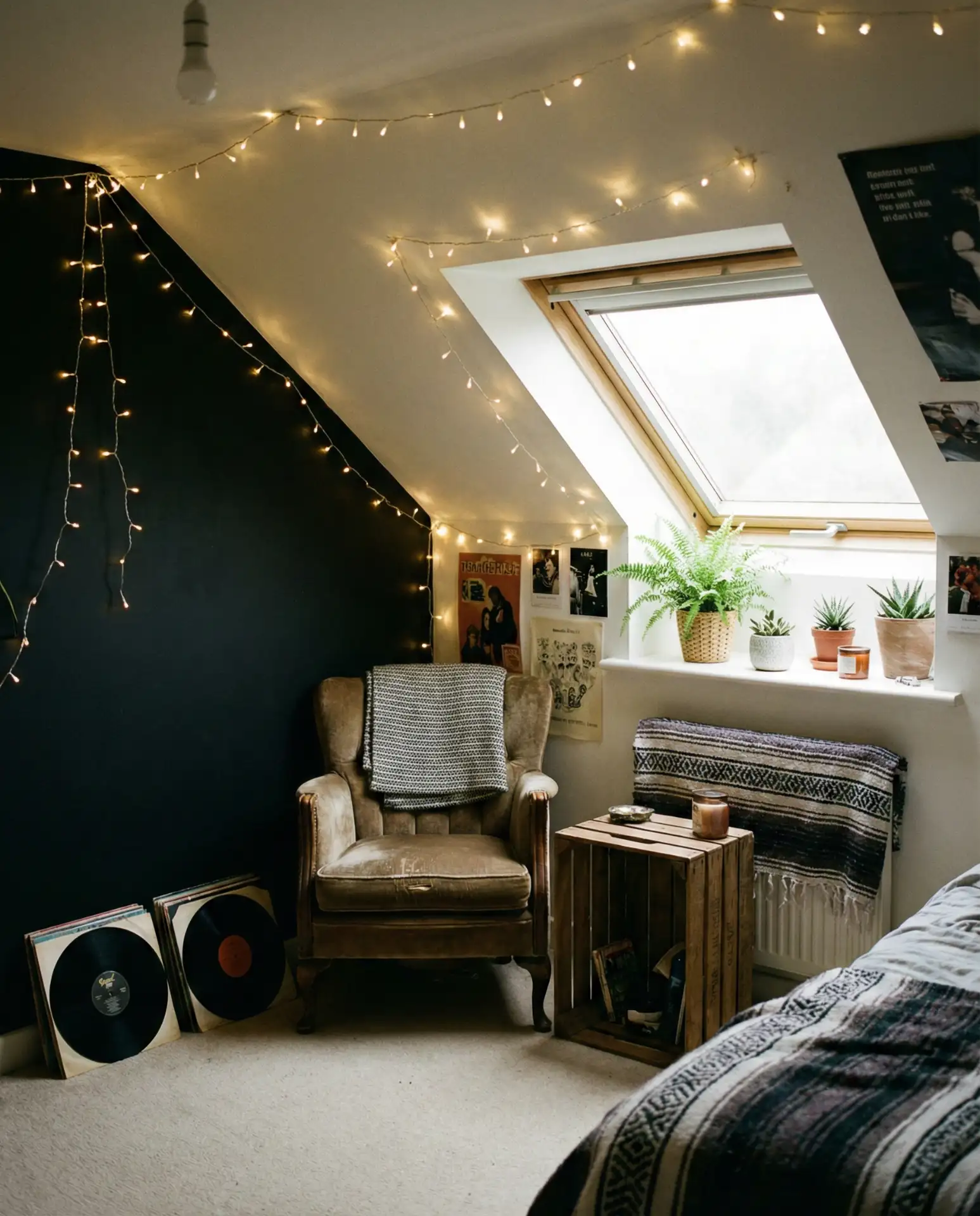
Common mistake to avoid: Dark colors can make a small attic feel cramped if you don’t balance them with enough light. Ensure the room has good overhead lighting—a ceiling fixture or track lighting—plus task lighting for reading or homework. Also, dark walls show dust more readily, so opt for matte or eggshell finishes rather than flat paint, which is harder to clean. Encourage your teen to keep at least one wall lighter or add reflective elements like a large mirror to bounce light around the room.
17. Triangle Window Feature Wall
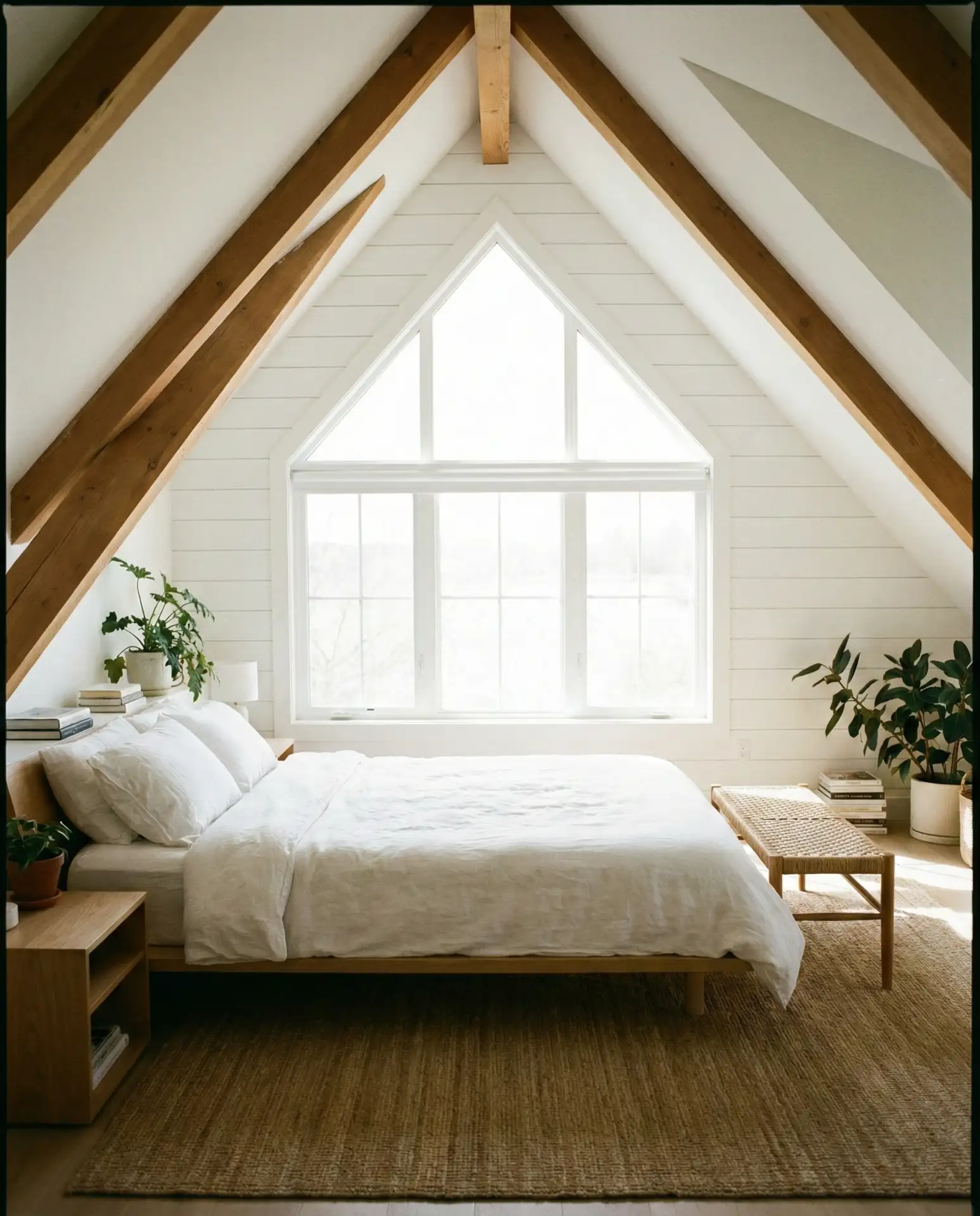
Many attics have a triangle gable window at one end—make it the focal point. Paint the surrounding wall in a contrasting color, or add shiplap or reclaimed wood paneling to draw the eye. Position your bed or a seating area to face the window so you can enjoy natural light and any views. This architectural quirk becomes a strength when you design around it intentionally rather than trying to hide or downplay it.
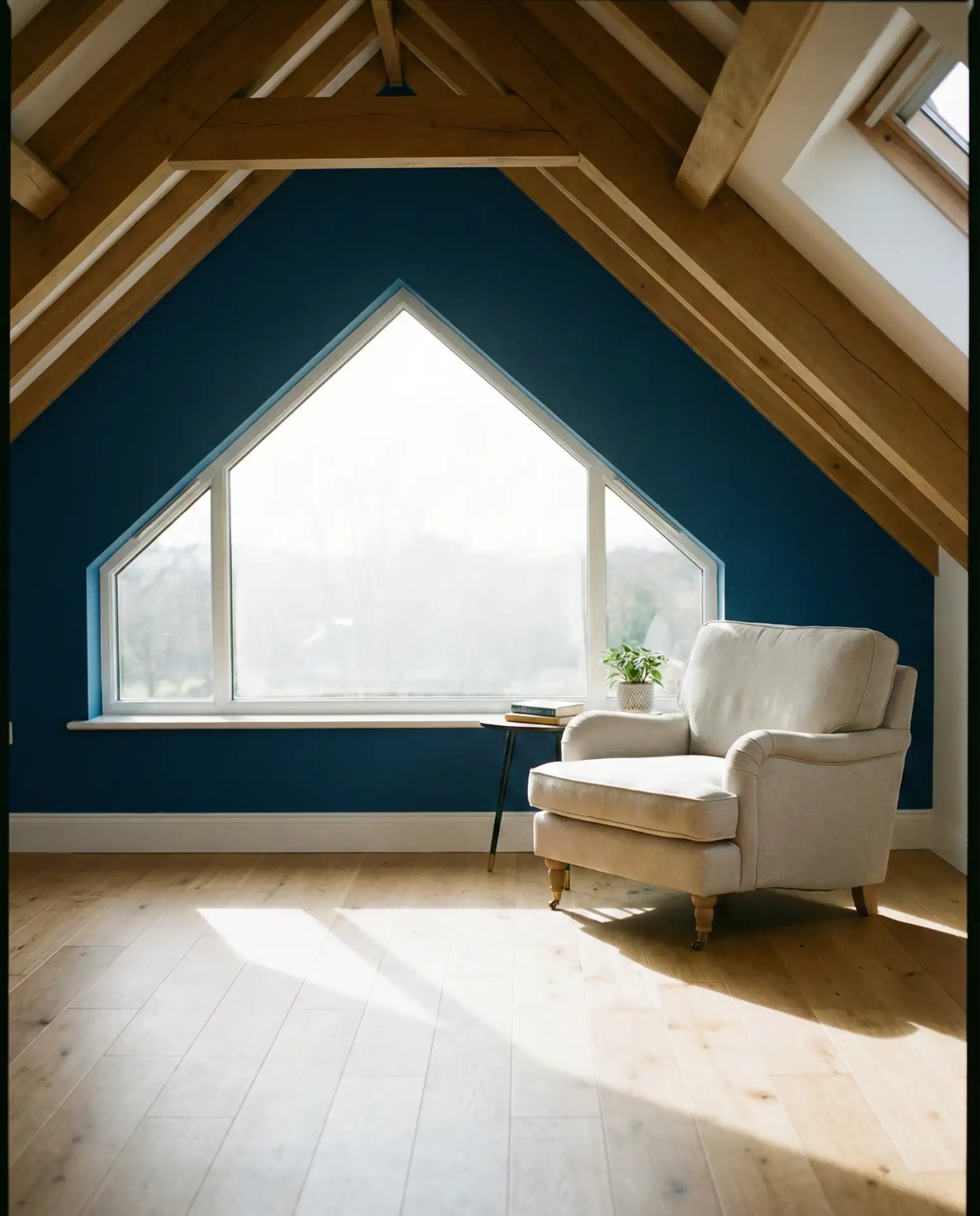
Where it works best: This design move is ideal in Victorian or Colonial-style homes where the attic gable is prominent and often includes decorative trim or original woodwork. In Southern states, where porches and views are part of the lifestyle, positioning the bed to face a gable window with a view of trees or the street creates a connection to the outdoors. Add a window seat below the triangle if there’s room—it’s a charming detail that boosts both function and aesthetics.
18. Minecraft-Inspired Kids’ Attic
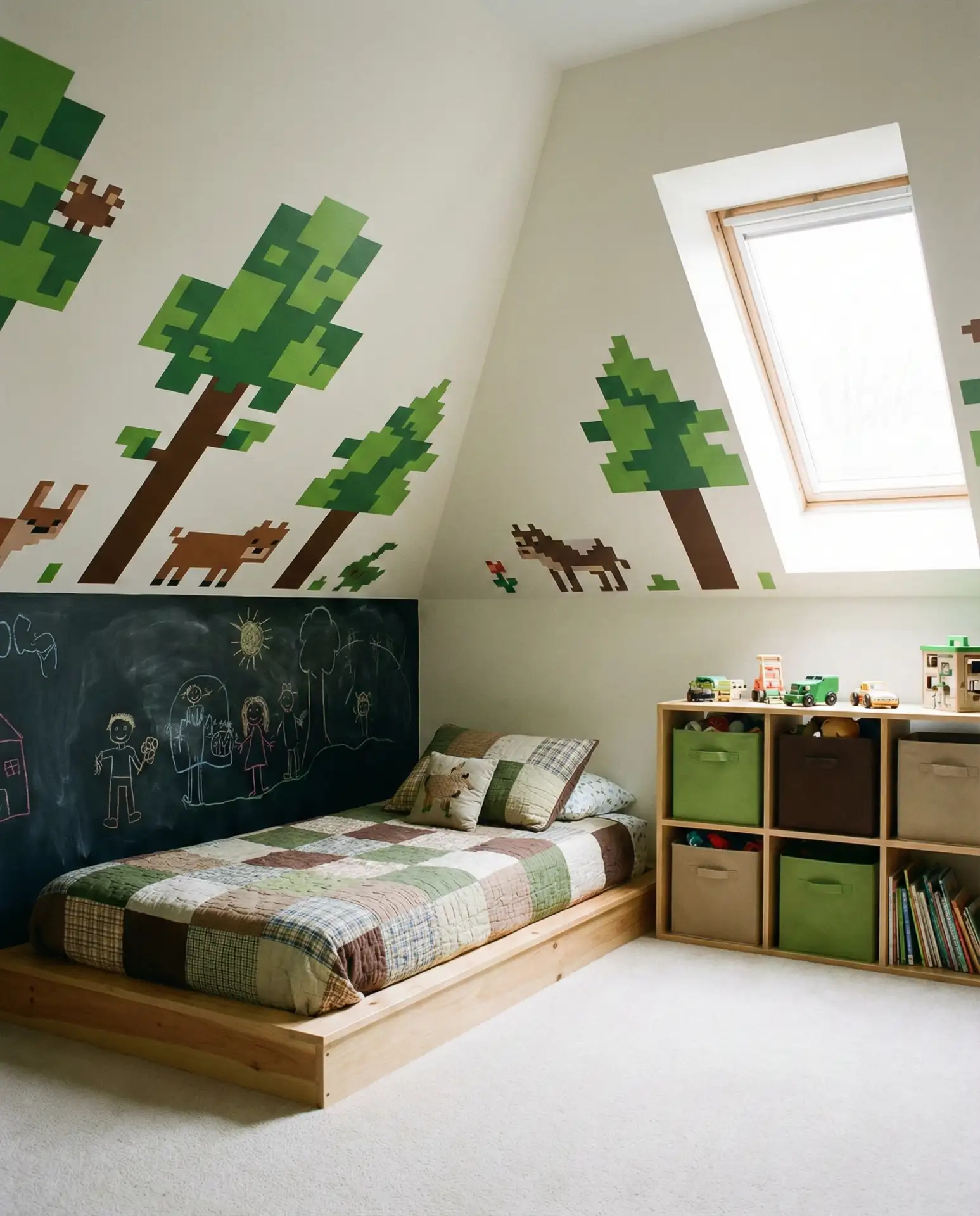
For kids who love Minecraft, an attic bedroom can be styled with blocky furniture, pixelated wall decals, and a color palette of greens, browns, and blues. Paint one wall with a chalkboard or whiteboard finish so they can draw their own Minecraft scenes. Add cube-shaped storage bins, a simple platform bed, and LED strip lights to mimic the game’s glowing elements. This theme is playful but adaptable—as they grow, you can swap out décor without needing a full redesign.
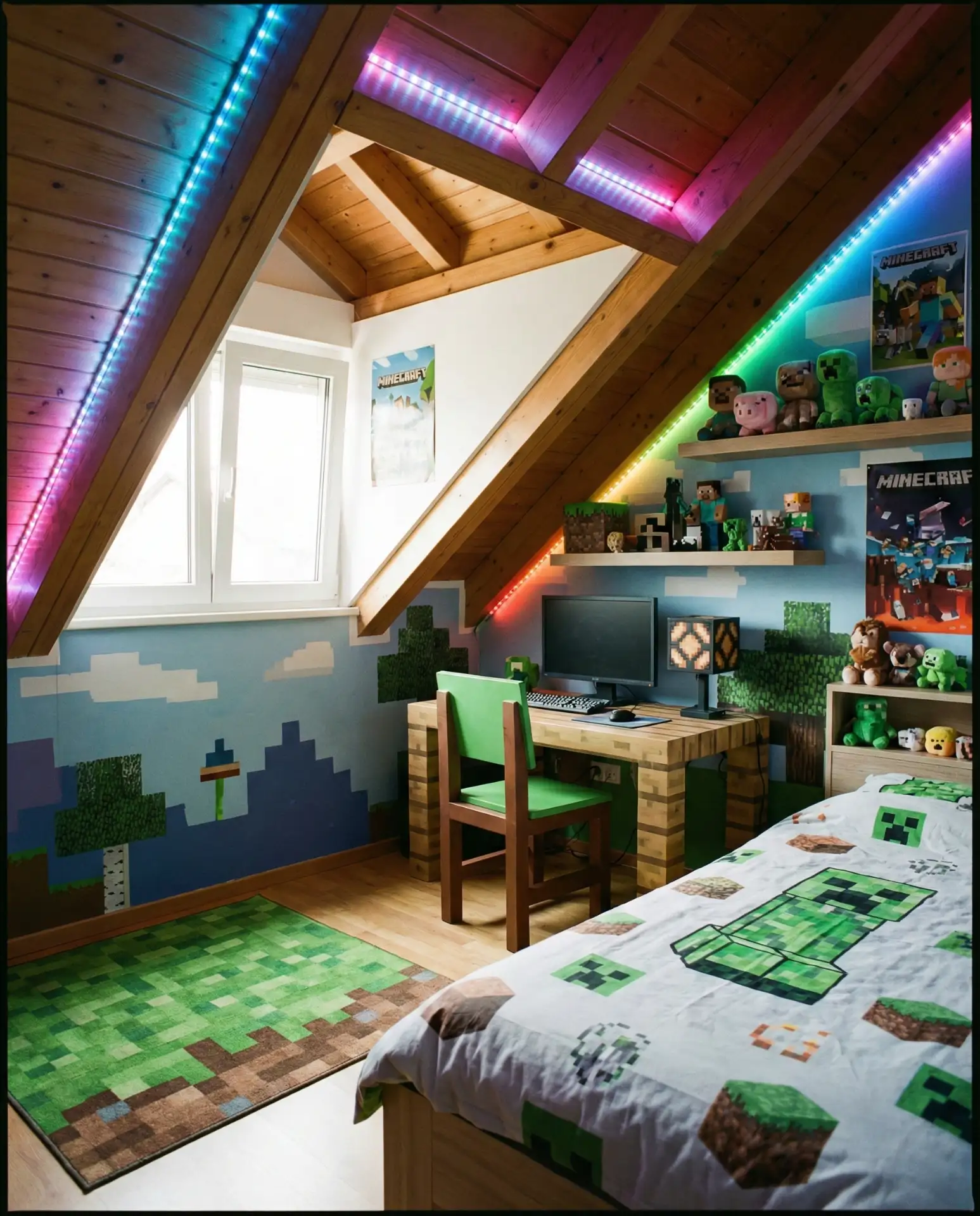
Budget tip: Themed rooms don’t have to cost a fortune. Shop for neutral furniture that will outlast the theme, and invest the decorating budget in removable items like bedding, wall decals, and bins that can easily be swapped out. A Minecraft comforter might cost $50, but a solid wood bed frame will last for years and can transition to a teen room with just a change of linens. Focus your themed spending on inexpensive, changeable elements rather than permanent fixtures.
19. Angled Ceilings Accent Wall with Wallpaper
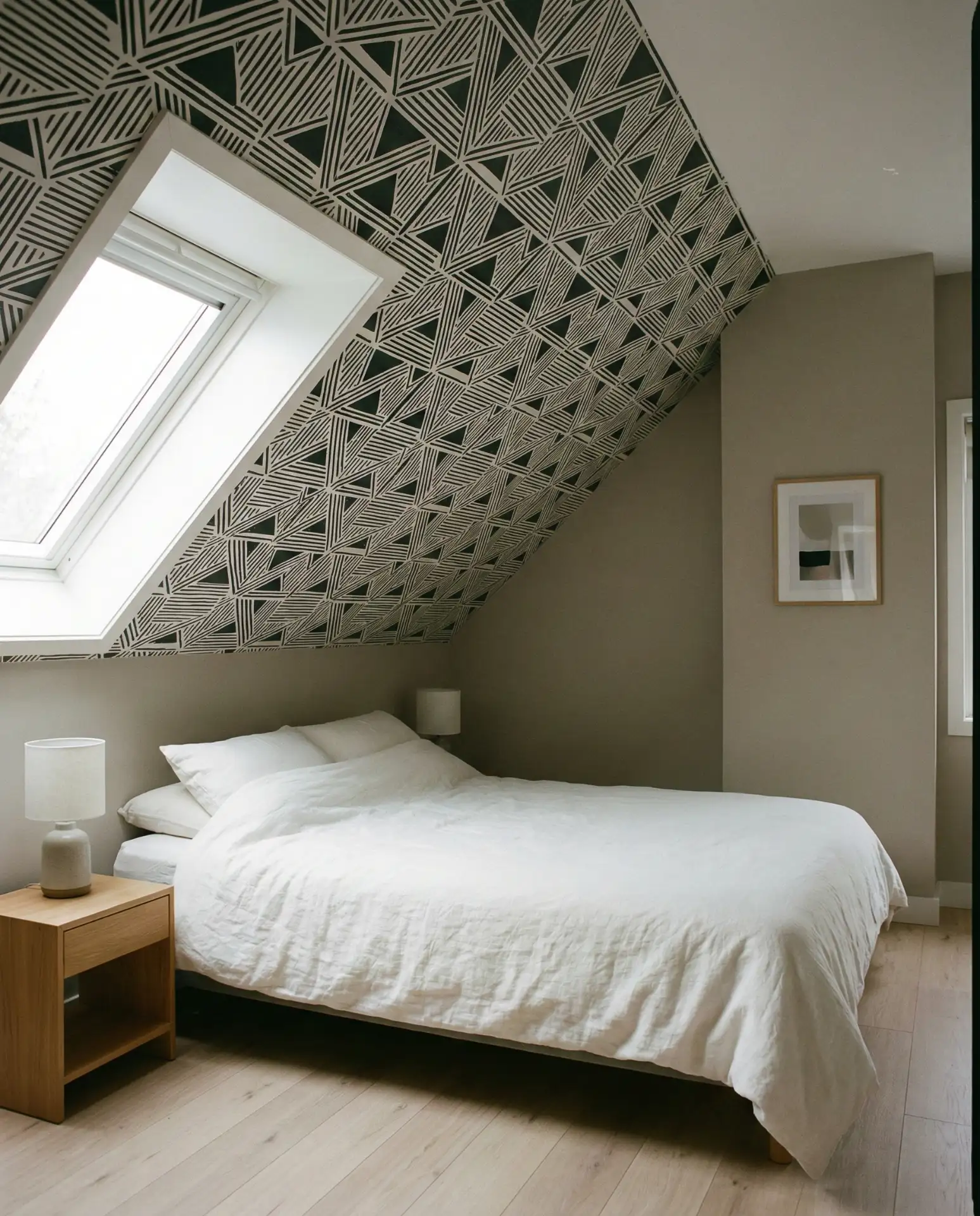
Transform your angled ceiling accent wall with bold wallpaper—a geometric pattern, oversized florals, or even a subtle texture. Wallpaper on a sloped surface creates visual drama and distracts from any awkwardness in the room’s proportions. Stick to one accent wall to avoid overwhelming the space, and keep the other walls neutral. Peel-and-stick options make this a renter-friendly project, and the variety available in 2026 is astounding—you’re no longer limited to Grandma’s florals.
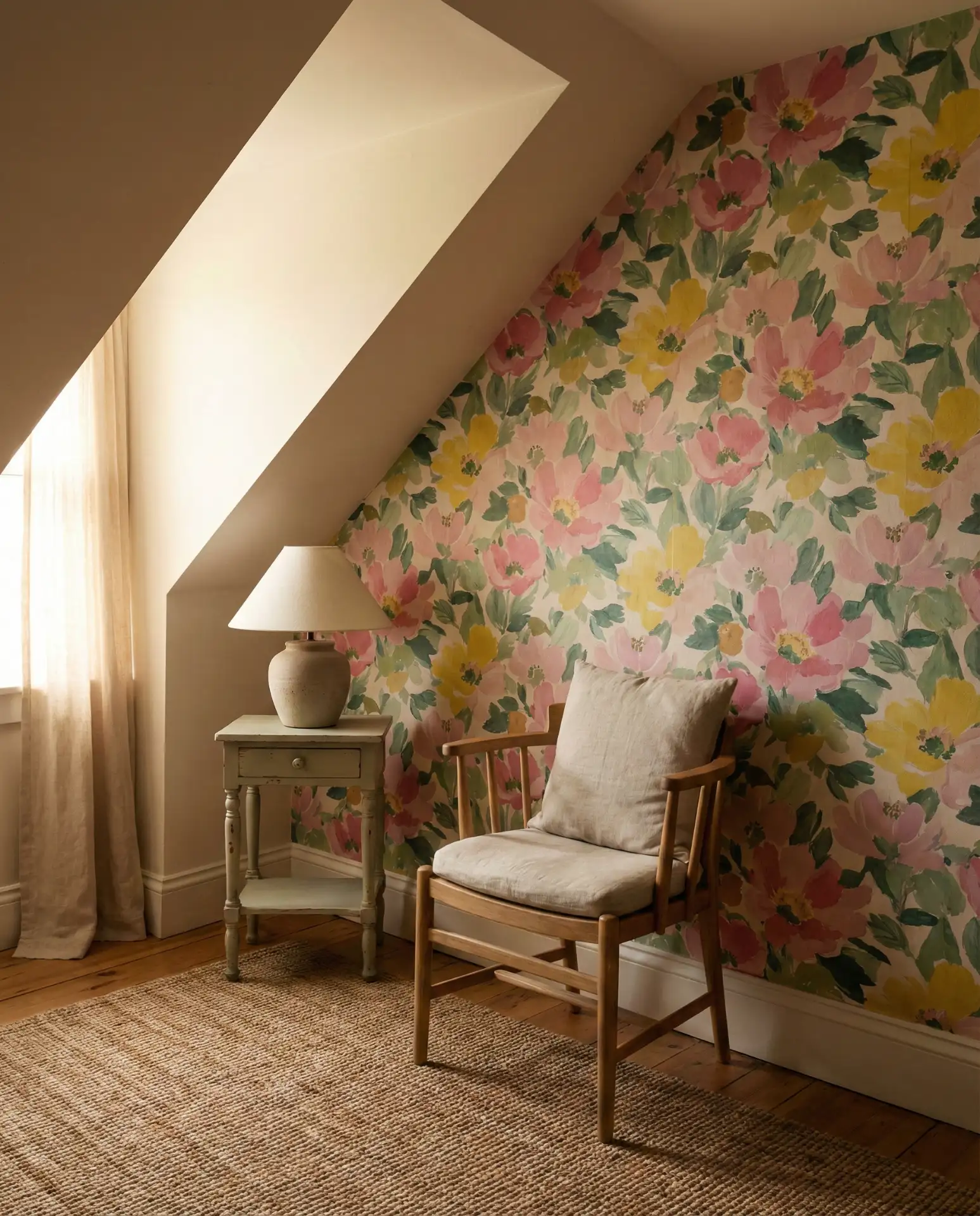
Expert-style commentary: When applying wallpaper to sloped ceilings, measure carefully and order extra—cutting around angles results in more waste than flat walls. Professional installers recommend starting at the highest point and working downward for the cleanest seams. If you’re DIYing, peel-and-stick wallpaper is far more forgiving than traditional paste-the-wall varieties, especially on textured or uneven attic surfaces. Prices range from $30 to $100 per roll depending on quality and design, and most attic accent walls require two to three rolls.
20. Long Narrow Attic Layout
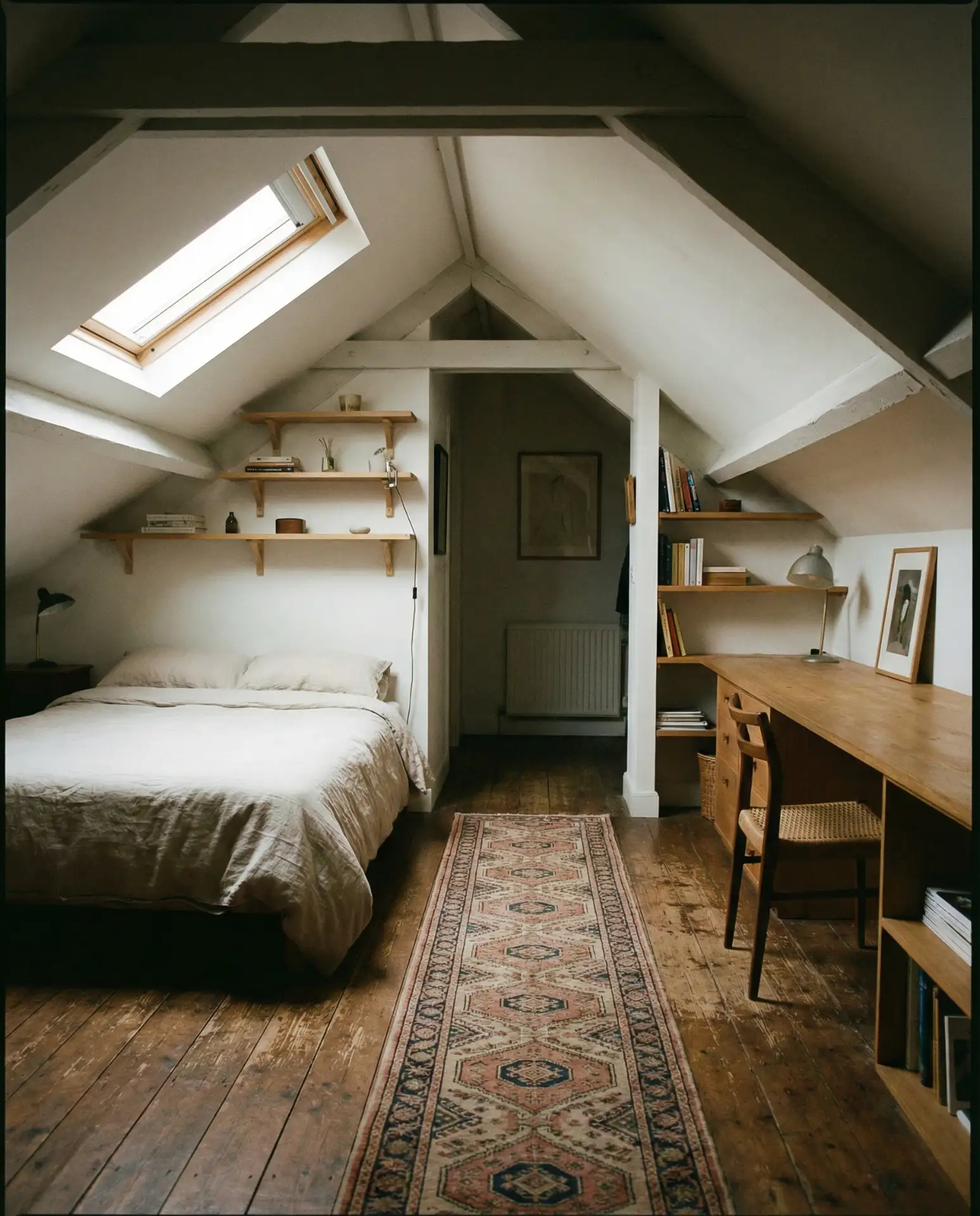
A long narrow attic requires thoughtful furniture placement to avoid a bowling alley effect. Position the bed along one of the long walls rather than at the narrow end, and use the opposite side for storage or a desk. Keep pathways clear and use vertical storage solutions to take advantage of wall height. A runner rug can help define the space and guide the eye, making the room feel intentional rather than awkwardly shaped.
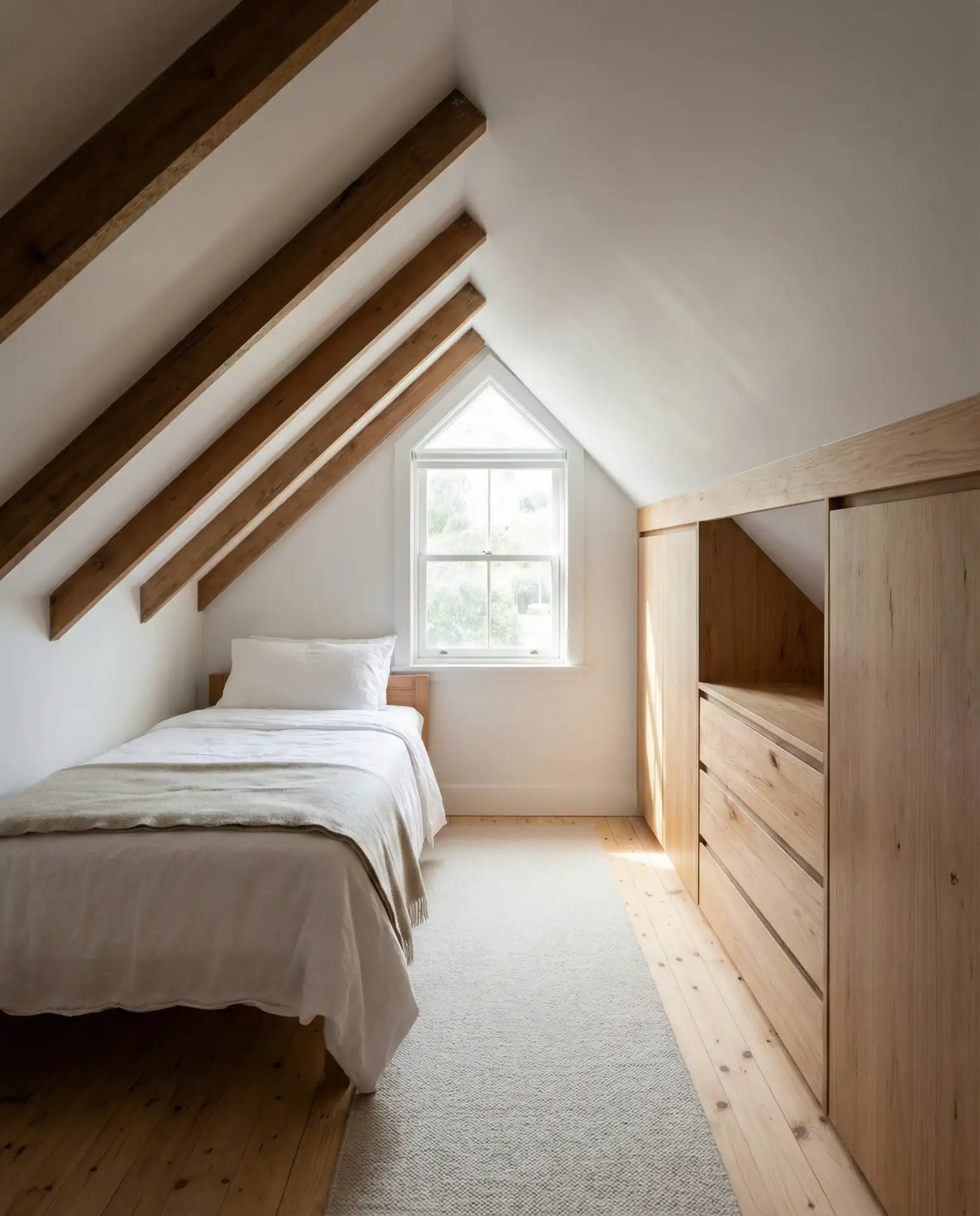
Real homeowner behavior: Narrow attics often work best as single-occupant bedrooms or guest rooms rather than master suites, simply because the footprint doesn’t allow for bulky furniture or seating areas. That said, they can feel surprisingly cozy—a Baltimore couple turned their long, narrow attic into a guest room and report that visitors consistently rave about how peaceful it feels. The confined dimensions actually enhance the sense of retreat, like sleeping in a train car or a ship’s cabin.
21. Dark Moody Sanctuary
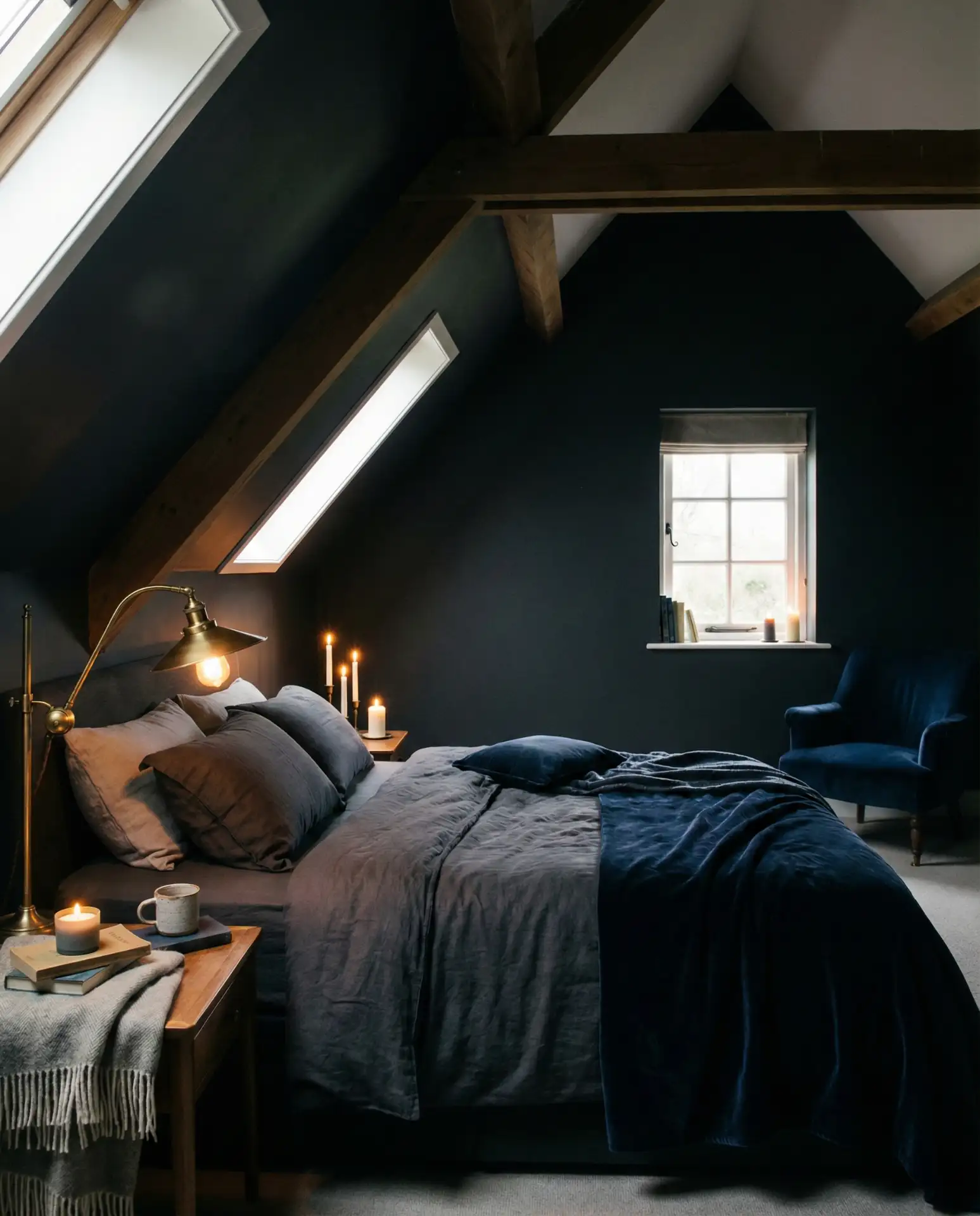
Embrace a dark, moody palette with charcoal walls, deep navy, or even rich burgundy. This approach works surprisingly well in attics, where the lack of abundant natural light can actually enhance the intimate, cocoon-like vibe. Pair dark walls with warm metallic accents—brass lamps, copper hardware—and plenty of soft textiles to keep the space from feeling cold. Add dimmable lighting and candles to control the mood and make the room feel luxurious.
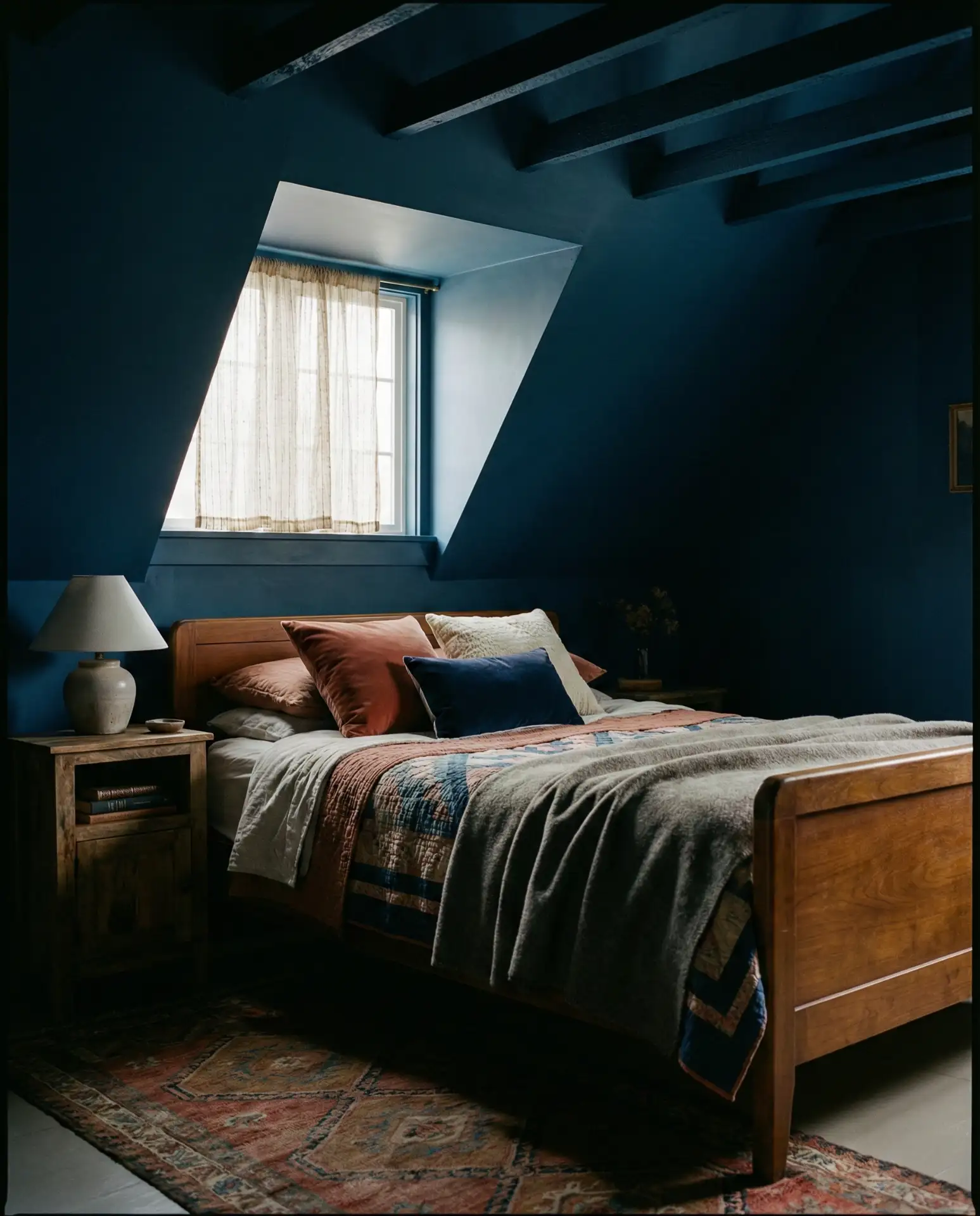
American lifestyle context: Dark, dramatic bedrooms have become increasingly popular in urban areas like Brooklyn, Portland, and Austin, where younger homeowners are moving away from the all-white minimalist trend. These moody spaces feel intentional and designed, offering a stark contrast to the bright, airy aesthetic that dominated the 2010s. If you go dark, balance it with texture—velvet, linen, wool—and multiple light sources at different heights to avoid a cave-like feel. The goal is intimate, not oppressive.
22. Pink Playful Kids’ Attic
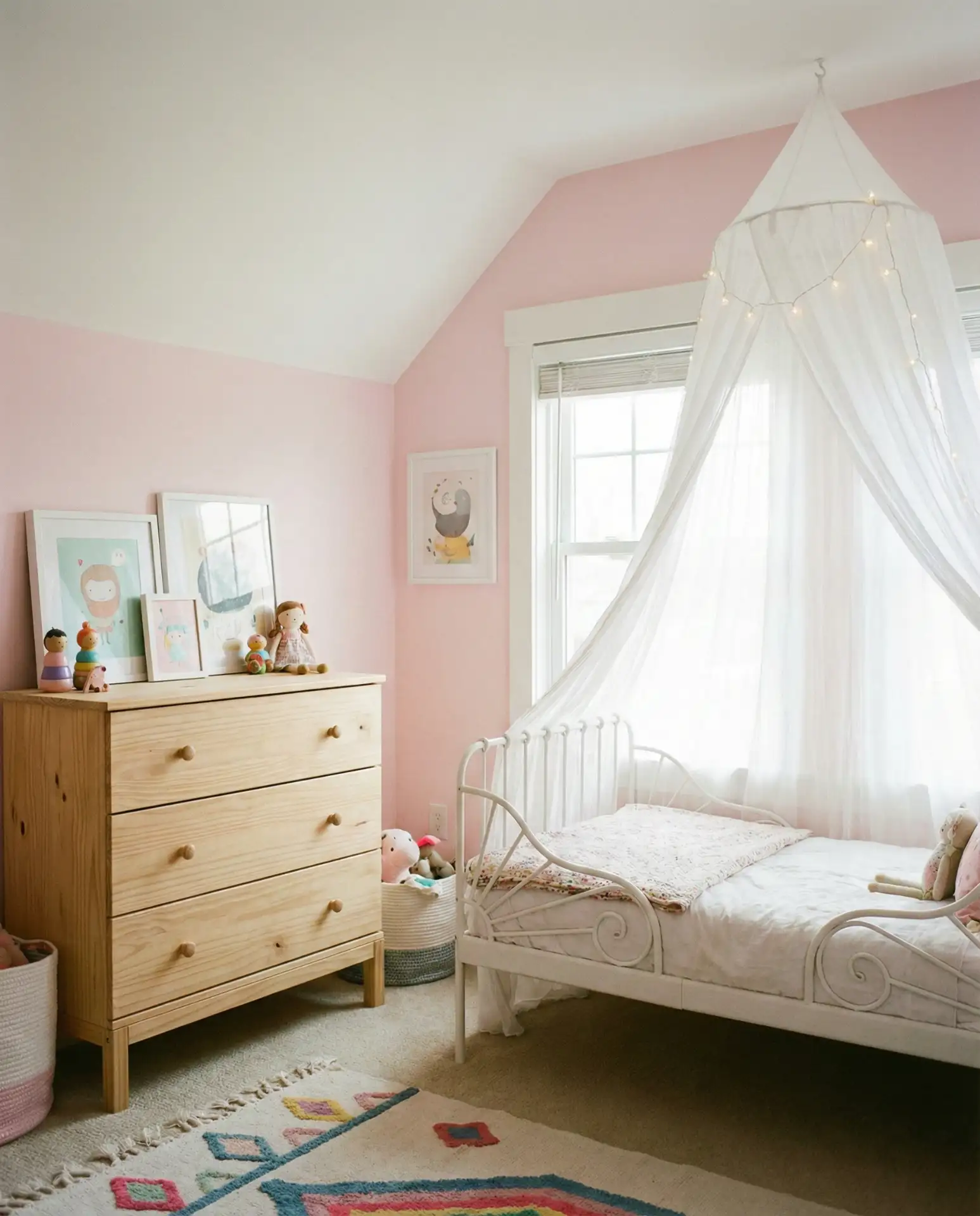
A pink attic bedroom doesn’t have to be overly saccharine—modern pink palettes range from dusty rose to terracotta blush. Pair pink walls with natural wood furniture and white bedding to keep the look fresh and sophisticated. Add playful touches like a canopy over the bed, fairy lights, or a gallery wall of framed art. This works beautifully for kids’ rooms but can also translate to a chic teen or guest space if you choose the right shade and balance it with grown-up accents.
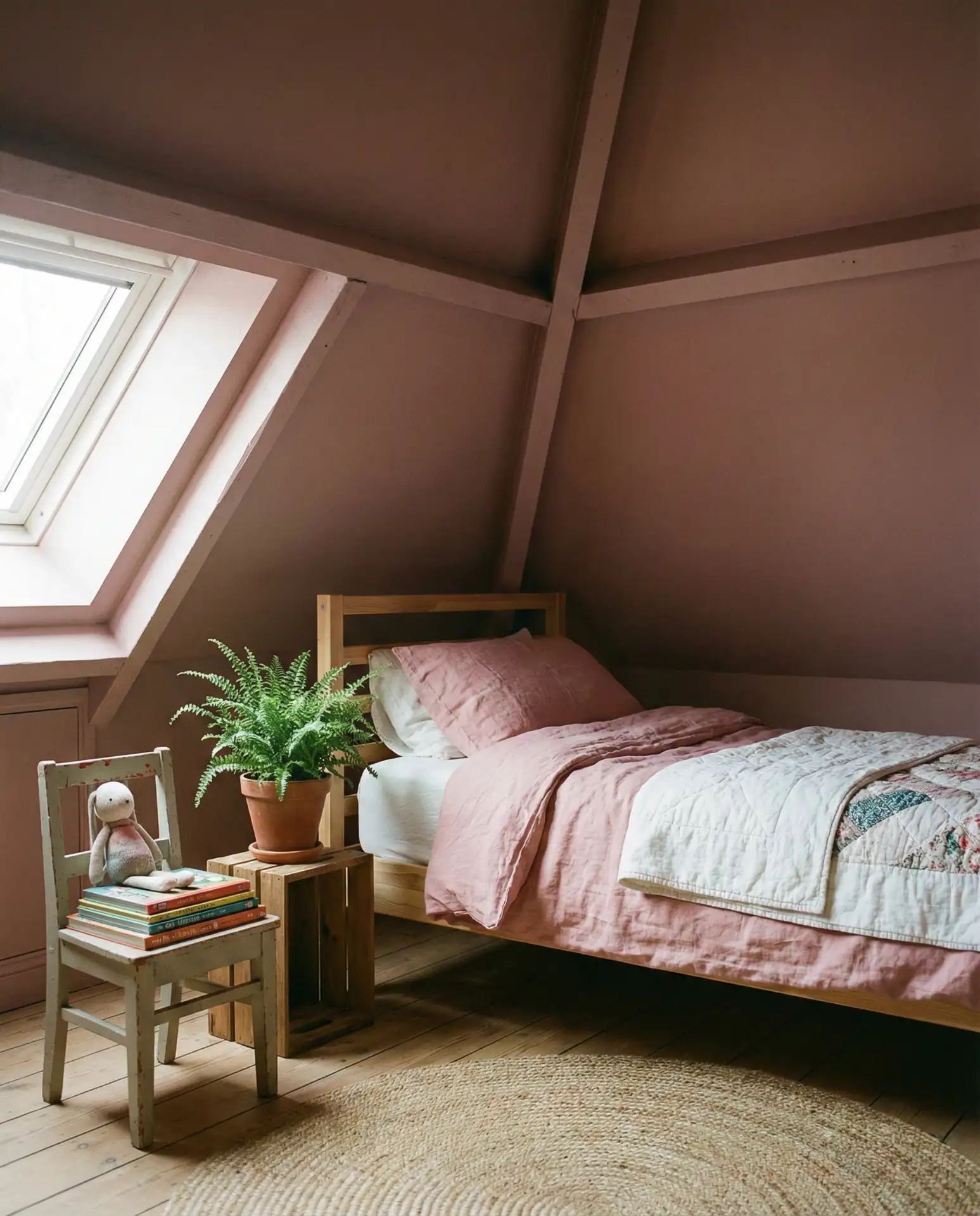
Practical insight: Pink is notoriously tricky to photograph and can look very different in person versus online. Before committing to a full room, buy sample pots of a few shades and paint large swatches on the wall to see how they look at different times of day. Natural light, artificial light, and even the direction your attic faces all affect how pink reads—what looks soft and blush in morning light might turn peachy or overly bright by afternoon. Testing is worth the extra effort to avoid repainting a space that’s already labor-intensive to access.
Conclusion
Attic bedrooms demand creativity, but they reward you with character and charm that standard rooms simply can’t match. Whether you’re working with low ceilings, slanted walls, or awkward angles, there’s always a way to turn those challenges into design assets. The key is embracing the quirks, investing in the right lighting and storage, and letting the architecture guide your choices rather than fighting against it. With these ideas as a starting point, your attic can become the most special room in your home—a space that feels uniquely yours and makes every climb up those stairs worthwhile. What’s your favorite attic bedroom idea, or do you have a conversion story to share? Drop your thoughts in the comments below.