Small bedrooms are having a serious moment right now, and it’s not hard to see why. As more Americans settle into apartments, starter homes, and compact urban spaces, the question of how to make a bedroom feel bigger, better, and more personal has never been more urgent. Pinterest searches for small bedroom transformations have surged, with people hunting for solutions that are equal parts beautiful and livable. Whether you’re working with 100 square feet or a narrow loft nook, this guide covers 24 real, practical, and genuinely stylish ideas to inspire your space in 2026.
1. Cozy Neutral Layers That Make a Tiny Room Feel Like a Retreat
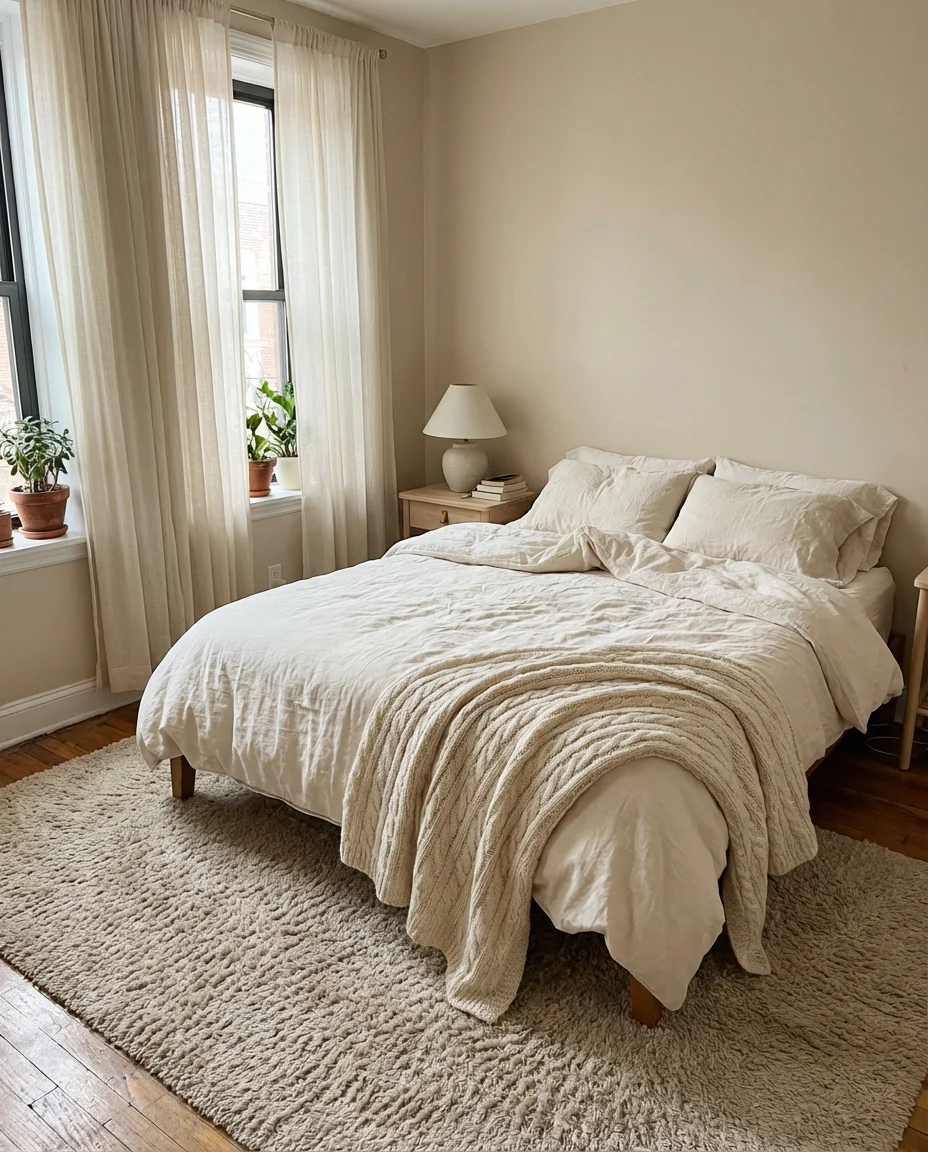
There’s something undeniably magnetic about a bedroom that wraps you in warmth the moment you walk in. For small rooms, leaning into cozy neutral tones—think warm whites, oat, and soft greige—creates a visual calm that makes tight spaces feel intentional rather than cramped. Layering textures like chunky knit throws, linen pillowcases, and a plush area rug adds dimension without visual noise. This approach is especially popular in cozy decor circles on Pinterest, where the goal is a space that feels like a hug.
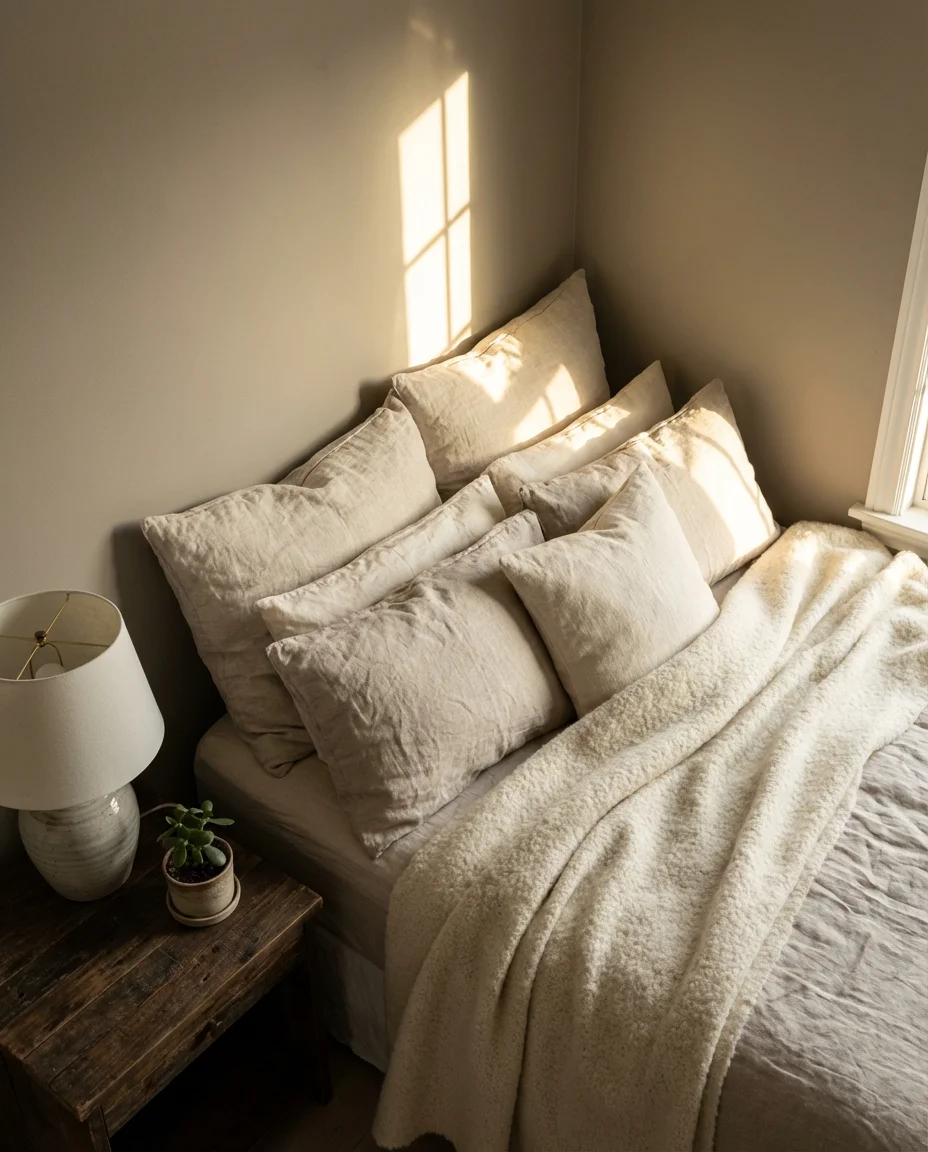
The practical magic here is in restraint. Stick to a palette of three tones maximum and repeat them across textiles, walls, and accents. A small room decorated this way feels curated, not cluttered. Interior stylists often recommend buying bedding in slightly oversized proportions—it makes even a twin or full bed look luxuriously full, which visually anchors the room and gives it a sense of scale it might otherwise lack.
2. DIY Platform Bed with Built-In Storage Drawers
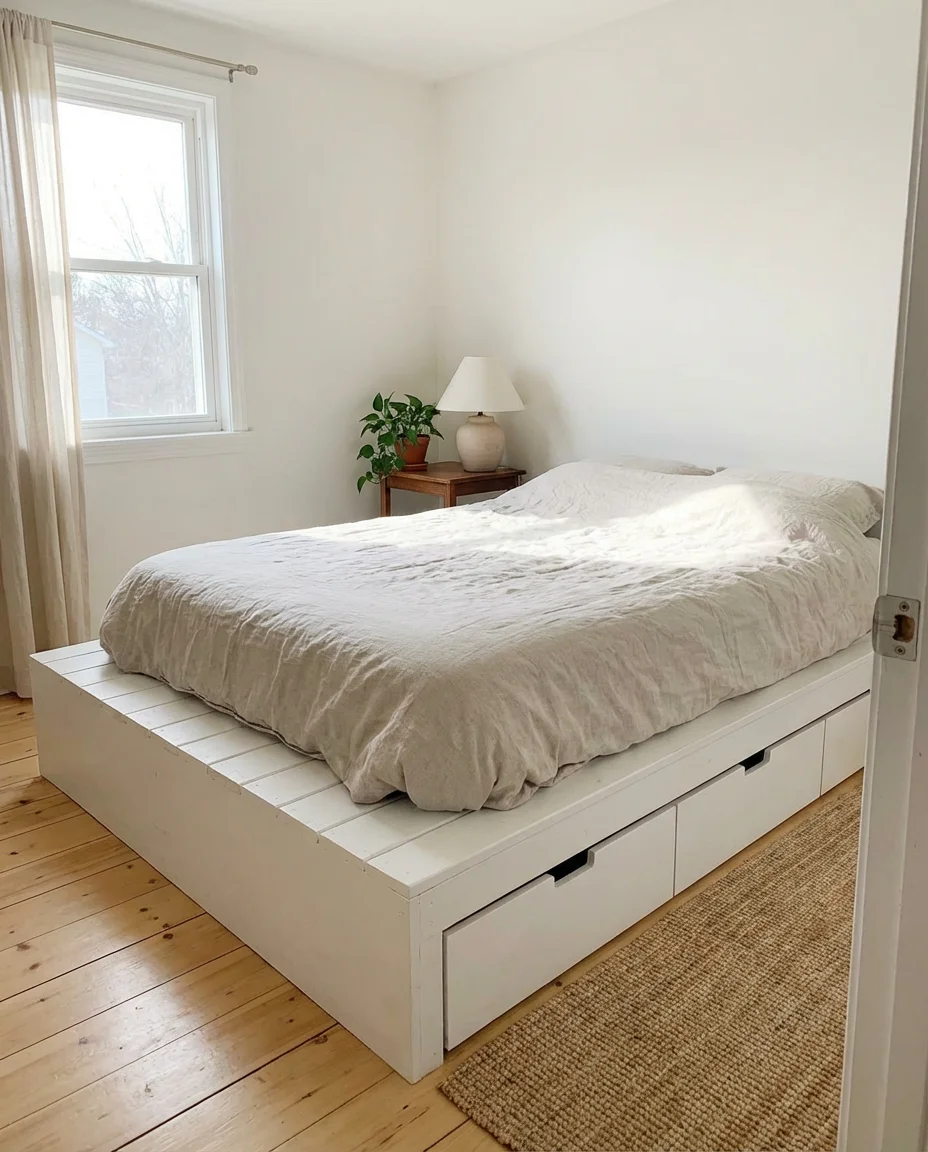
When square footage is limited, the bed itself has to do more than just hold a mattress. A DIY platform bed with built-in storage drawers solves two problems at once—it gives you a custom piece that fits your room exactly, and it eliminates the need for a separate dresser. For anyone in a budget-friendly mindset, building this from plywood and pocket screws costs a fraction of retail furniture. The result is a seamless, low-profile look that reads as high-design even on a modest build budget.
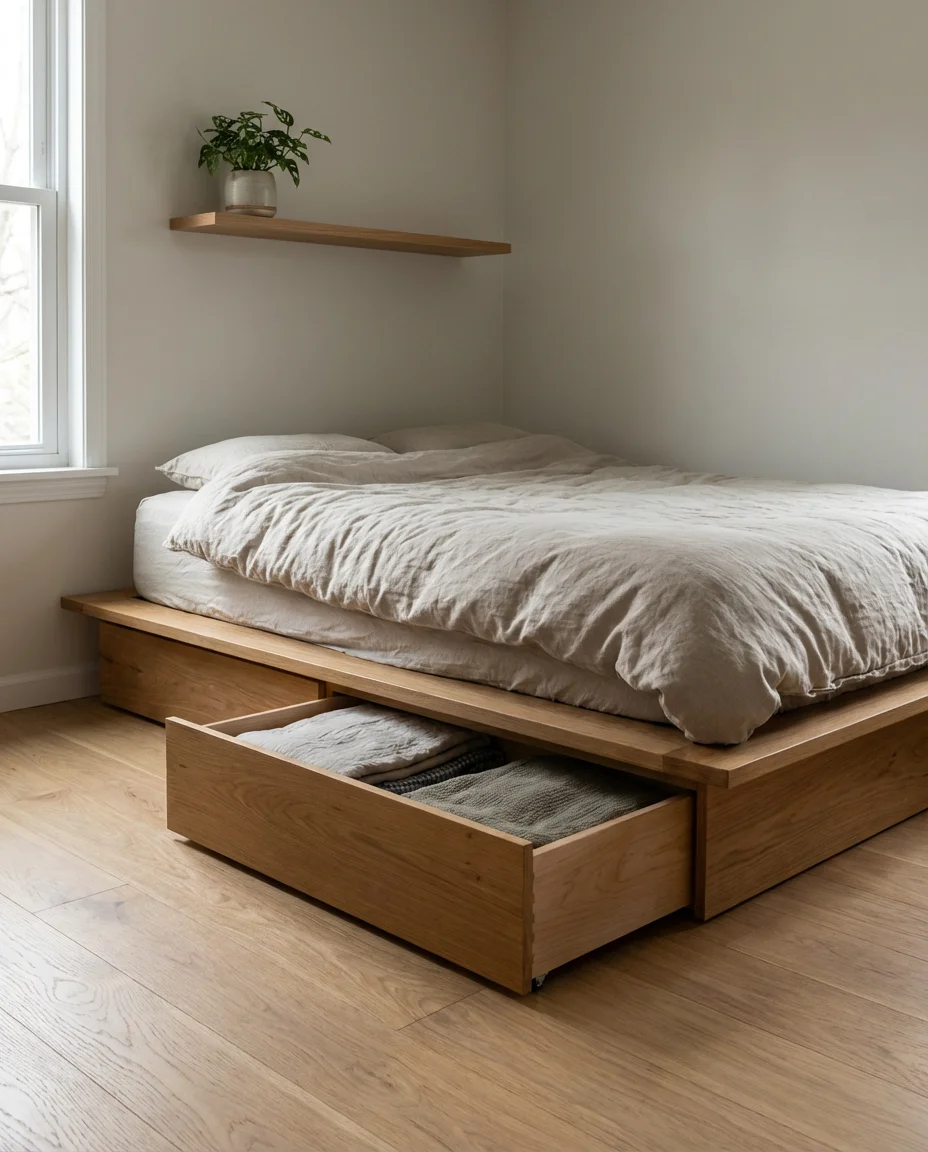
The most common mistake people make with DIY platform beds is building them too high. Keep the total height—frame plus mattress—under 24 inches to maintain the low, grounded look that makes small rooms feel taller. Adding soft-close drawer slides is a small upgrade that makes the whole piece feel premium. Paint the frame the same color as your walls for a built-in effect that genuinely fools the eye.
3. Teen Bedroom with a Bold Accent Wall and Study Zone

Designing for teens in a small room means balancing two very different needs: a place to sleep and decompress and a functional spot to study and be creative. One of the smartest layouts is placing a study desk along the wall opposite the bed, freeing the central floor space for movement and personality. A bold accent wall—deep forest green, moody navy, or even a black chalkboard paint—gives teens the expressive edge they crave without overwhelming the whole room. The result feels personal, not generic.

Where this works best is in older homes where bedrooms often sit at 10×11 feet—a standard American teen bedroom size that most parents underestimate. Floating the desk on the wall (wall-mounted rather than freestanding) gains a few inches of visual floor space, which matters enormously in tight quarters. A pegboard above the desk serves as both an art display and a practical organizer, keeping the desk surface clear for actual work.
4. Aesthetic Bedroom for Women with a Soft Blue Color Palette
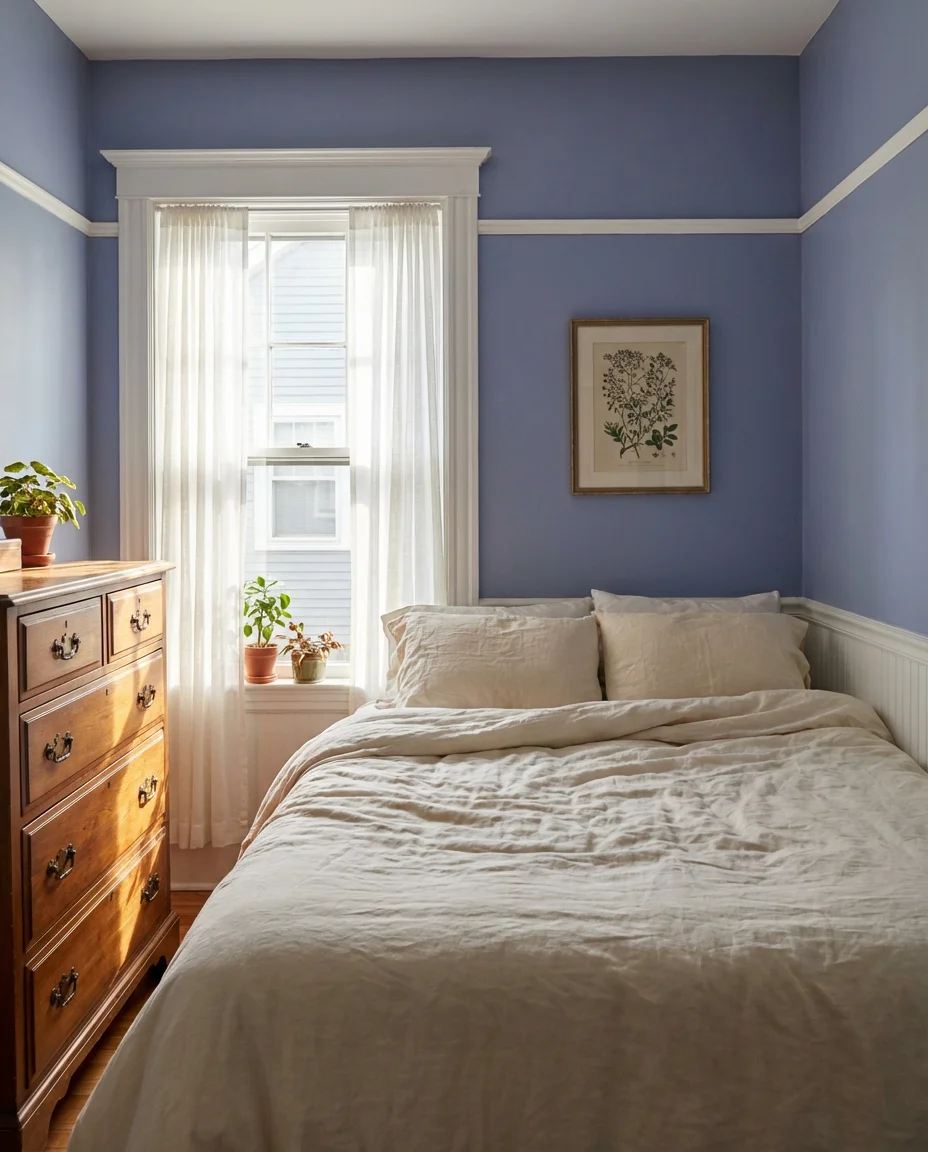
Soft blue has quietly become the color of 2026 bedroom design, and nowhere does it shine more than in a small room styled for a woman who wants her space to feel both aesthetic and genuinely restful. Women’s color schemes, blue color palettes, and blue are among the most-searched bedroom terms on Pinterest right now, and for good reason—dusty periwinkle, powder blue, and slate work like visual breathing room in tight spaces. Pair them with white woodwork, warm brass hardware, and a cream linen duvet for a bedroom that feels like a boutique hotel.
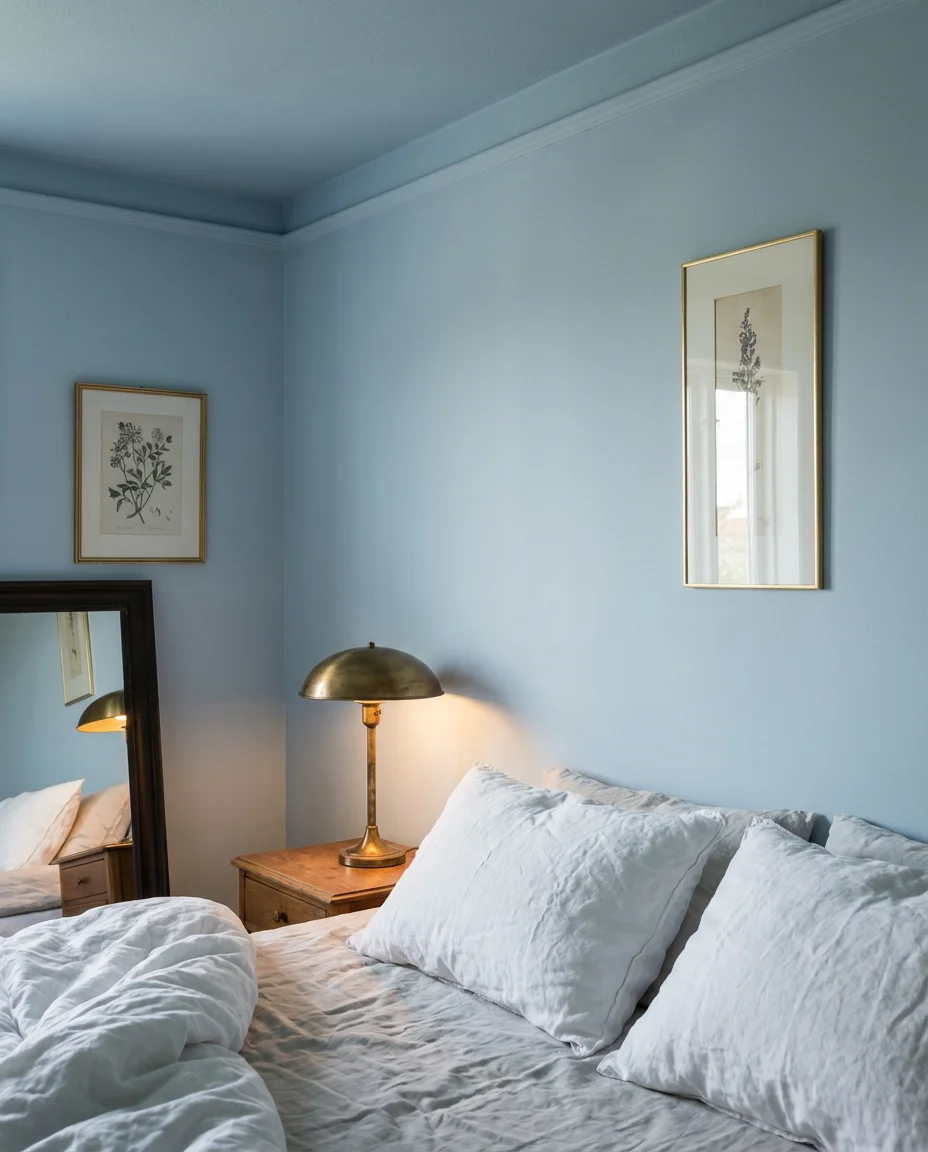
One designer trick worth borrowing: paint the ceiling in the same blue as the walls, just two shades lighter. In a small room, this wraps the space in color without feeling cave-like, and it draws the eye upward, making the ceiling feel higher. Add a single oversized mirror leaning against the wall to bounce light and double the perceived depth of the room—two interventions that cost almost nothing but transform everything.
5. Baddie Bedroom with Dark Drama and Moody Lighting
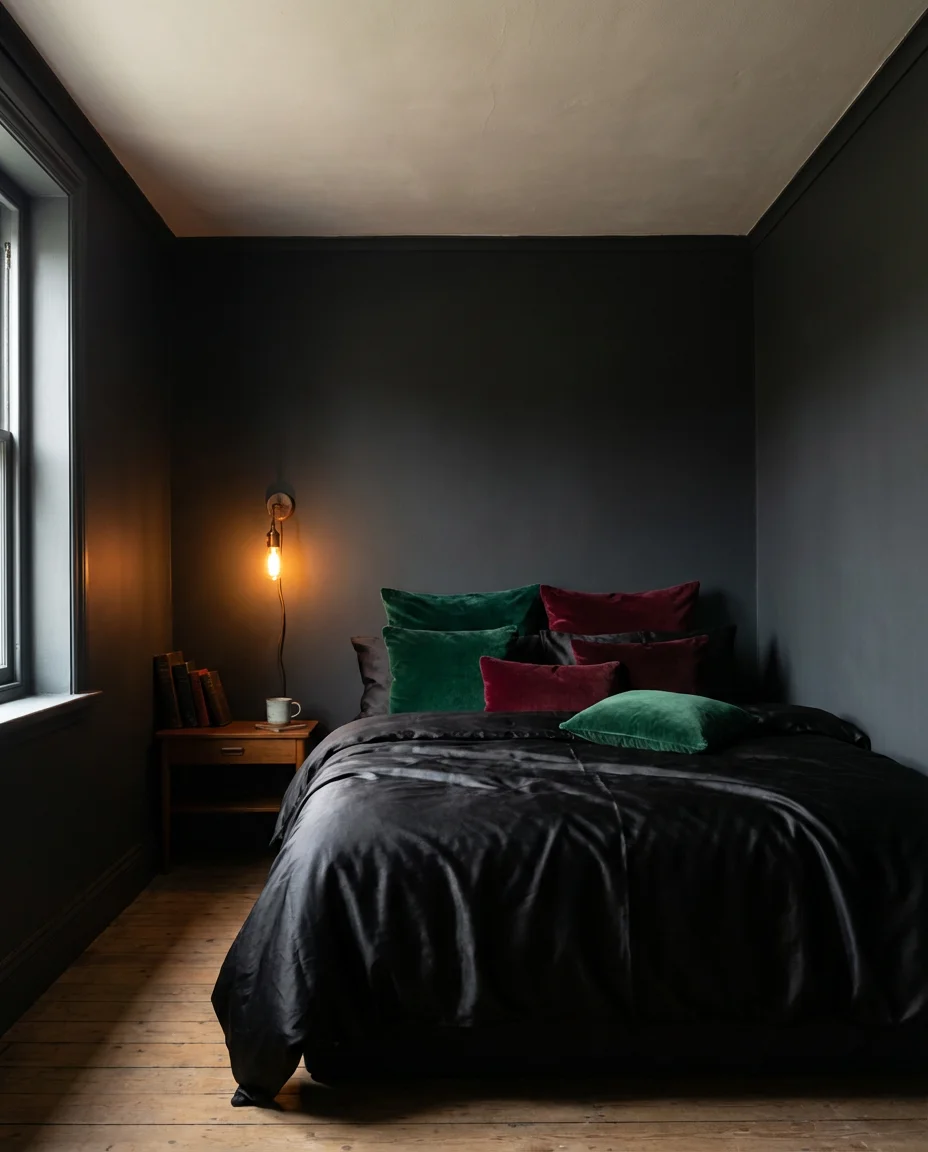
The baddie aesthetic has evolved well beyond neon signs and ring lights—in 2026, it’s become a genuinely sophisticated design direction that works surprisingly well in small bedrooms. Think charcoal walls, black satin bedding, velvet throw pillows in deep burgundy or emerald, and warm amber Edison bulbs on a dimmer. The key to making this feel intentional rather than gloomy is contrast: keep one surface (usually the ceiling or floor) noticeably lighter to prevent the room from collapsing in on itself visually.
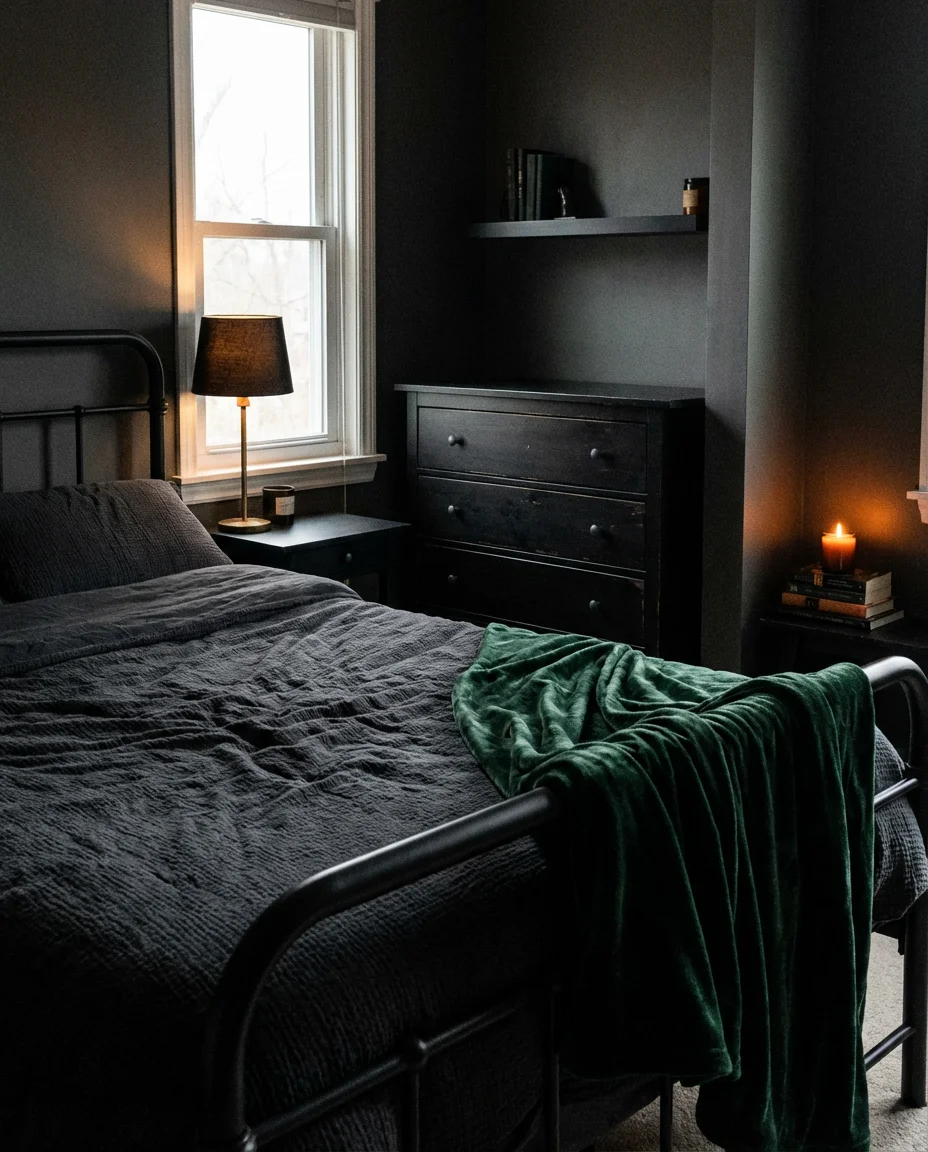
Real homeowners who’ve gone full darkroom often report a counterintuitive truth: their small room actually feels more spacious after painting it deep charcoal, because the walls seem to recede rather than advance. The mistake to avoid is layering too many competing textures—in a moody palette, two or three rich materials (velvet, satin, matte paint) carry more weight than five. Less is genuinely more here, and editing ruthlessly is what separates a baddie bedroom from a chaotic one.
6. Small Bedroom for 2 Kids with Bunk Beds and Smart Organization

Sharing a small bedroom between 2 kids is one of the most challenging design puzzles American parents face, and bunk beds remain the single most effective solution. The modern approach goes far beyond the basic metal bunk—today’s versions include built-in ladders with deep shelving steps, curtain rails for each bunk for privacy, and integrated lighting strips. Pair this with an organizing space-saving system on the walls—hooks, shallow cubbies, pegboards—and the room does serious work without feeling institutional.

Budget matters in a shared kids’ room because the space will inevitably be redecorated within a few years anyway. IKEA’s KURA bunk, customized with paint and aftermarket accessories, runs around $200–$350 and has been the foundation of thousands of beautifully designed kids’ rooms across the country. The real investment should go into the storage system, not the bed frame—kids’ rooms accumulate stuff fast, and a well-planned wall of cubbies will outlast every other design decision you make.
7. Cosy Single Bed Nook with Curtains and Warm Lighting

There’s a European tradition of the bed alcove—a snug, enclosed sleeping nook that feels like its own private world within a larger room. For small bedrooms with a cozy single bed, recreating this effect is surprisingly accessible. A tension rod with floor-length curtains framing the headboard wall transforms a basic twin setup into something that feels deliberately designed and deeply intimate. Warm-toned Edison string lights tucked behind the headboard add a layer of ambient glow that overhead fixtures simply can’t replicate.
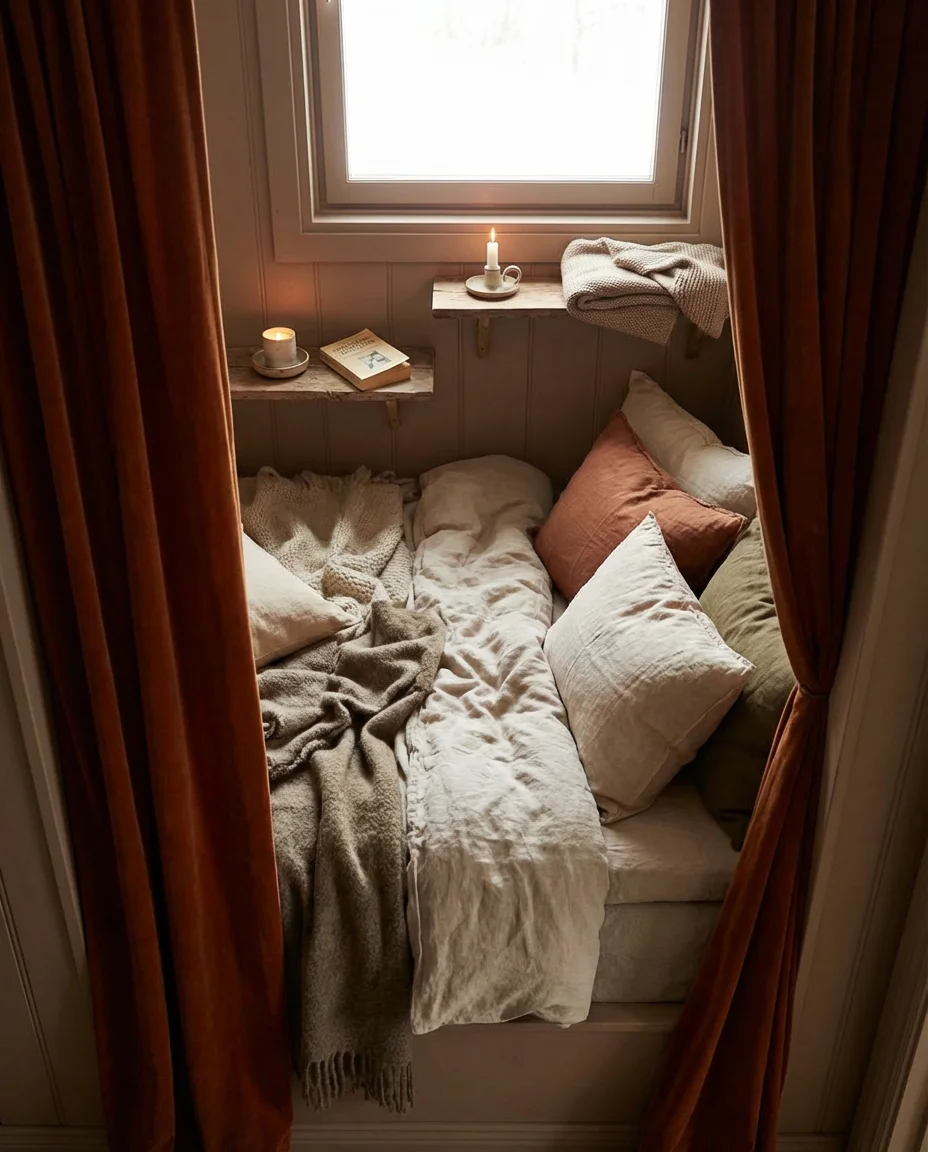
This setup works best in studio apartments and compact guest rooms where the sleeping area needs to feel defined without physical walls. The curtains do the visual work of a room divider while keeping the space airy. A practical tip: use curtains in the same family as your wall color so they blend rather than chop the room into unequal pieces. Velvet in a warm dusty rose or terracotta adds luxurious weight and dramatically improves both acoustics and light control.
8. Couples Bedroom with Dual Nightstands and Balanced Design
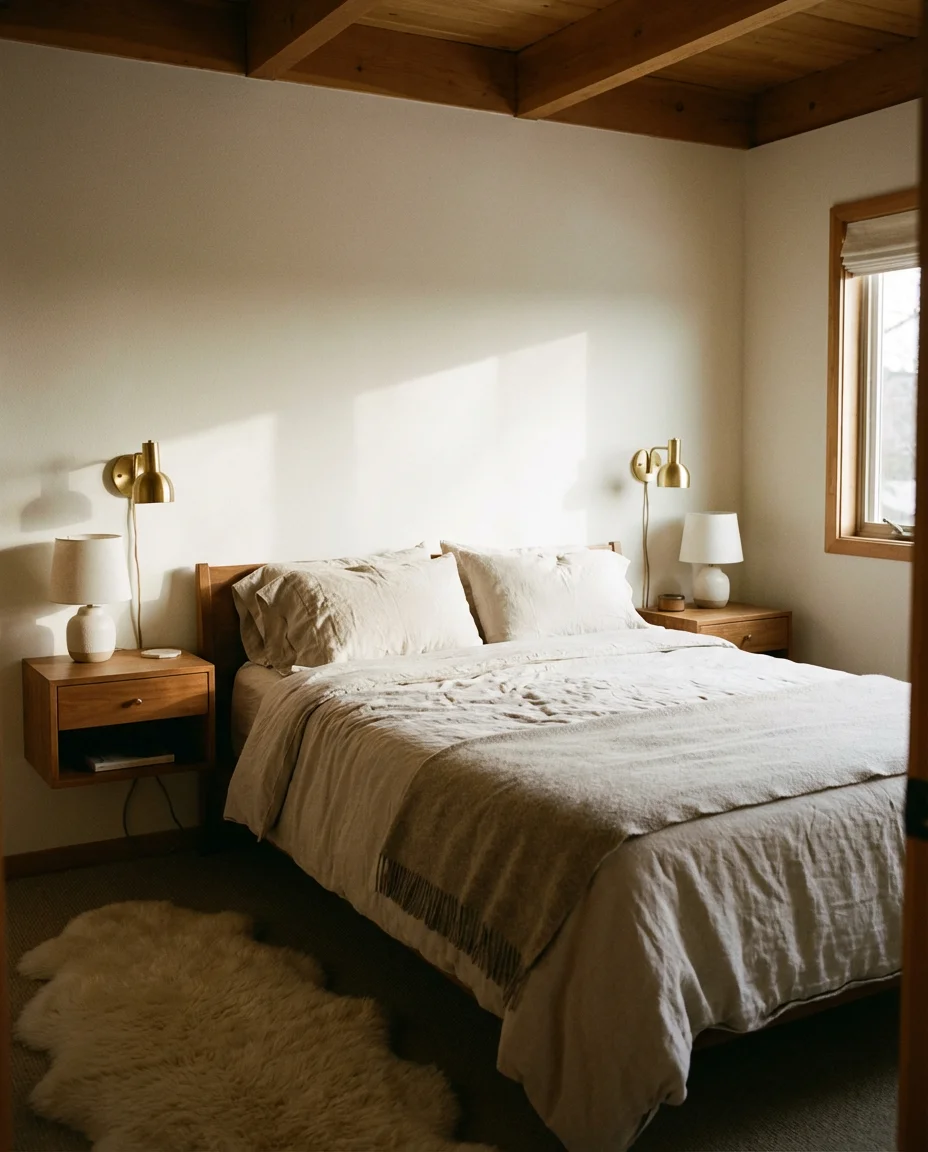
Designing a small bedroom for couples requires an honest negotiation of space—both literal and aesthetic. The biggest challenge is fitting a queen bed with access on both sides without turning the room into a narrow corridor. Wall-mounted bedside sconces instead of table lamps free up nightstand surfaces and remove two floor-footprint items entirely. For nightstands in a tight room, half-width floating shelves work better than full furniture pieces, keeping the visual weight low and the floor clear.
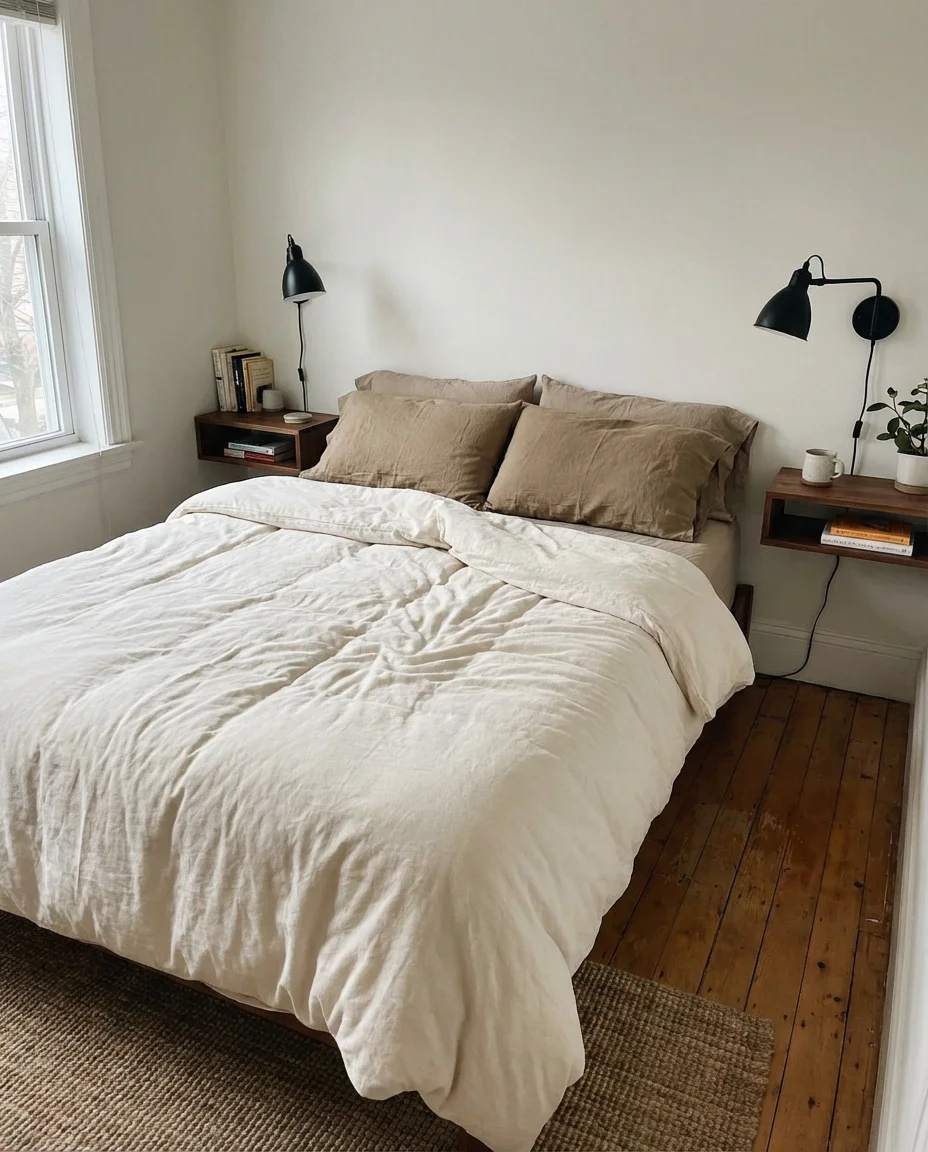
An interior designer once observed that the most common mistake couples make in small bedrooms is choosing a bed that’s too large for the room’s proportions. In a 10×12 room, a full-size bed often feels just as comfortable as a queen but gains you 6 inches on each side—enough to walk without turning sideways. That seemingly small margin changes how the entire room feels to live in, and it opens up space for a small dresser or chair that a queen configuration would eliminate entirely.
9. Cheap Small Bedroom Makeover Under $300
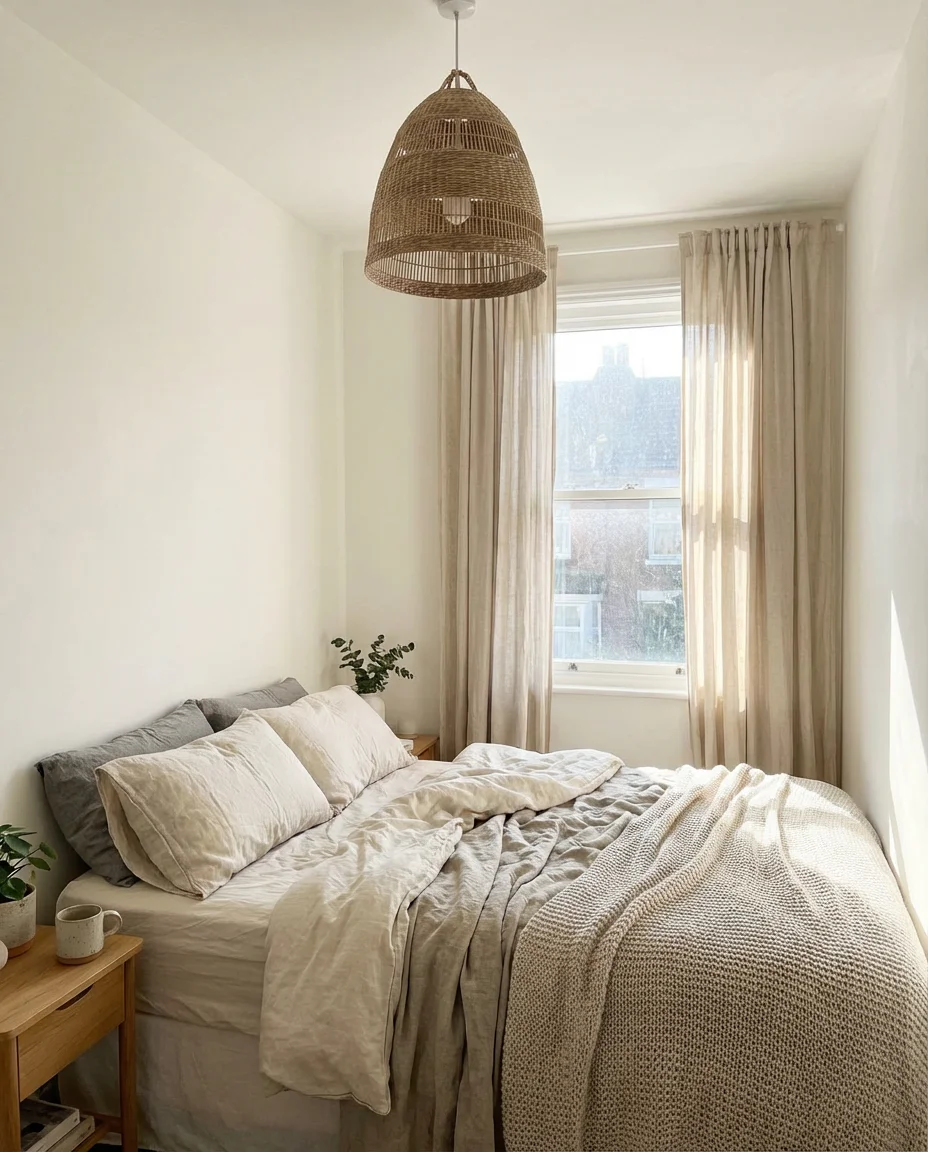
Transforming a small bedroom on a tight budget is less about sacrifice and more about strategy. The biggest bang-for-buck moves are always paint, lighting, and textiles—in that order. A single gallon of quality wall paint costs under $50 and has the most dramatic impact of any single change you can make. Layer in a new set of linen-look curtains from Amazon or Target, swap the overhead fixture for a pendant or arc lamp, and suddenly a forgettable room reads as thoughtfully designed. This is the foundation of any successful cheap makeover.

The American secondhand market is one of the most underused resources in bedroom design. Facebook Marketplace and thrift stores regularly yield solid wood dressers, side tables, and art for 10–20% of retail cost. One homeowner in Nashville furnished her entire 9×10 bedroom—bed frame, dresser, two side tables, mirror, and curtains—for $240 using secondhand finds and one coat of paint. The room was featured in a local design blog and regularly mistaken for a professionally styled space. Authenticity and creativity beat budget every time.
10. Cozy Pink Bedroom with Romantic Vintage Touches
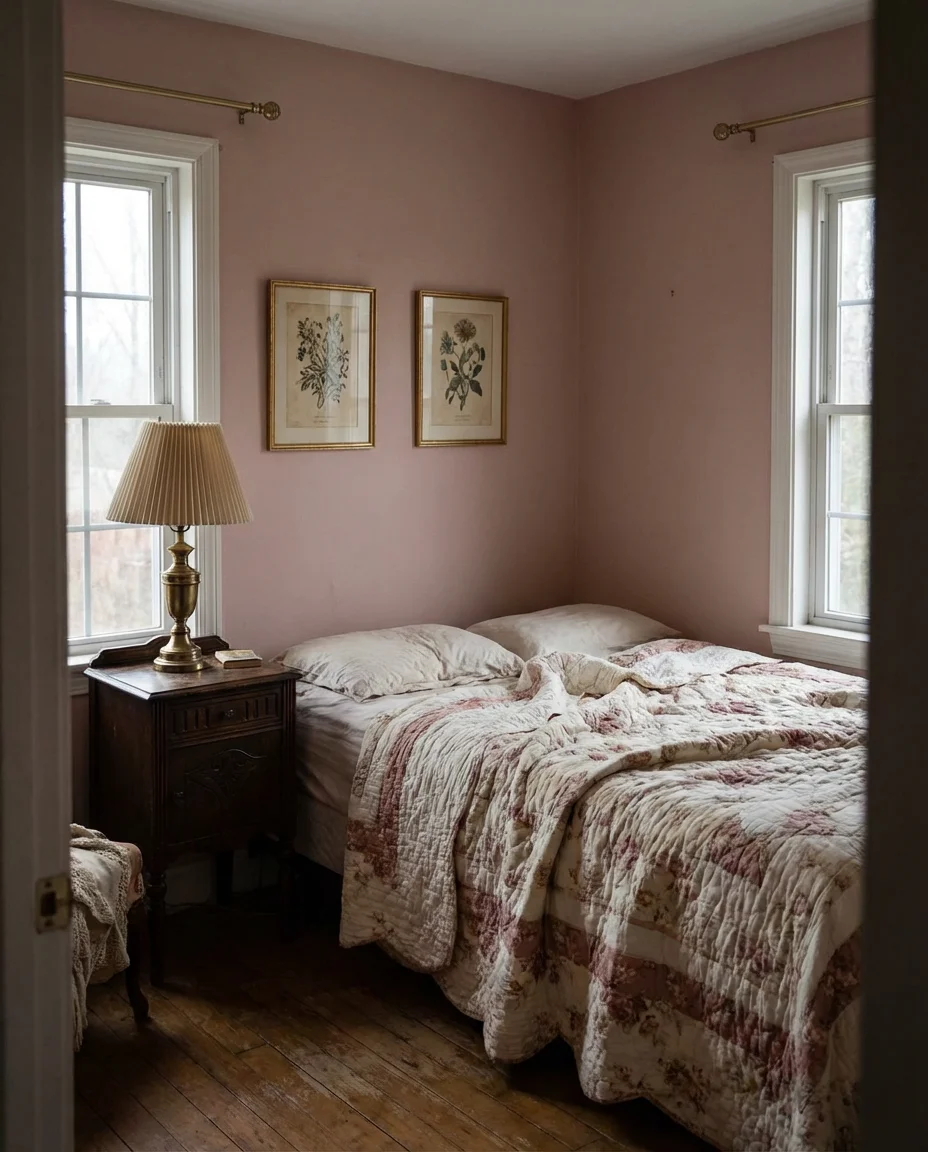
Pink in a small bedroom isn’t the bold statement it once was—in 2026, the shades doing the most work are muted, complex, and deeply livable. “Cozy pink” in design language means dusty rose, antique blush, and faded terracotta-pink, not bubblegum. These tones work beautifully in small rooms because they recede rather than advance, creating a softness that makes tight spaces feel enveloping rather than tight. Add vintage touches—a brass lamp, a carved wooden frame, an heirloom-style quilt—and the room takes on a timeless, layered quality.
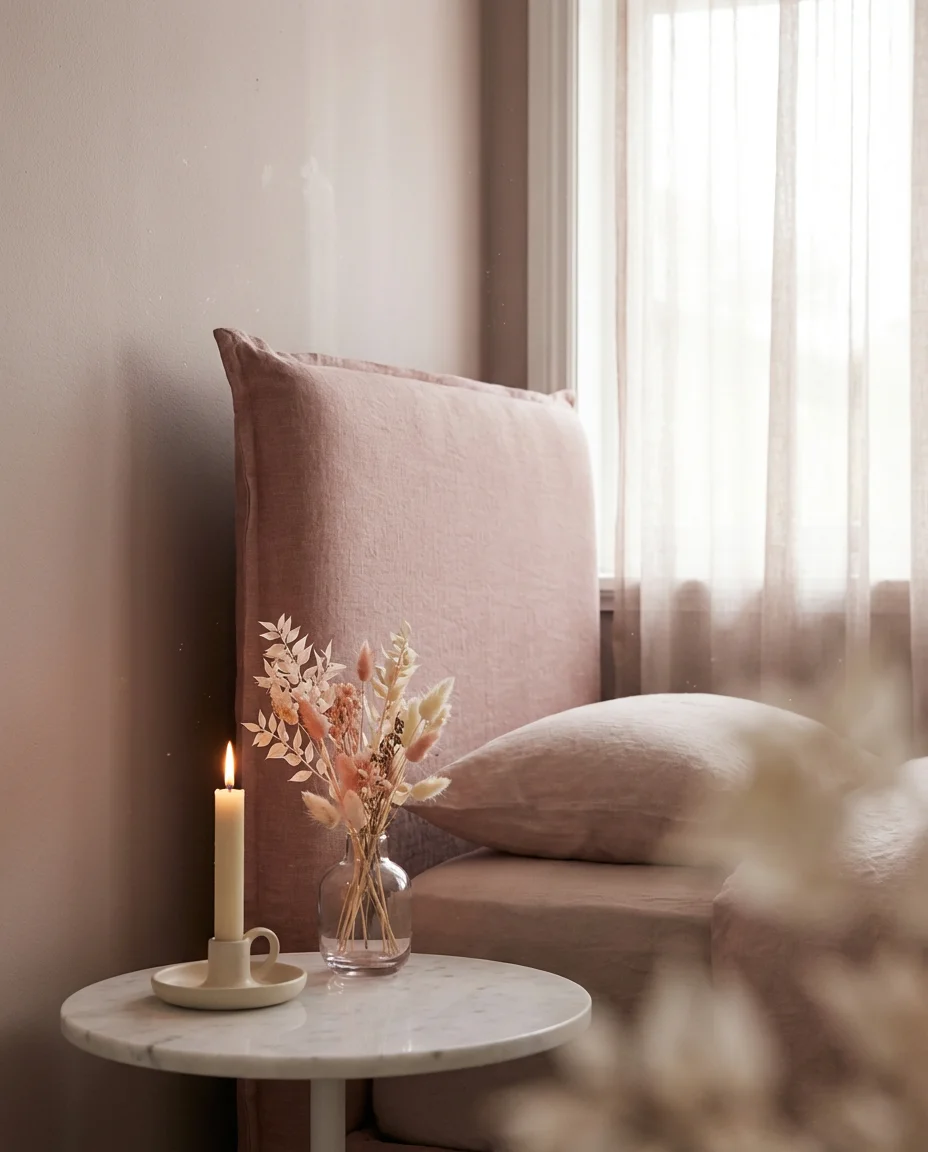
This aesthetic works best in older apartments and craftsman homes where the architecture already has some character to meet halfway. Crown molding painted the same shade as the walls, picture rail hooks displaying botanical prints, and a ruched linen headboard in dusty blush create a bedroom that feels curated over time rather than purchased in a single shopping trip. The lived-in quality is actually the point—and it’s what makes this kind of room feel genuinely personal rather than staged.
11. Victorian Small Bedroom with Rich Wallpaper and Antique Details
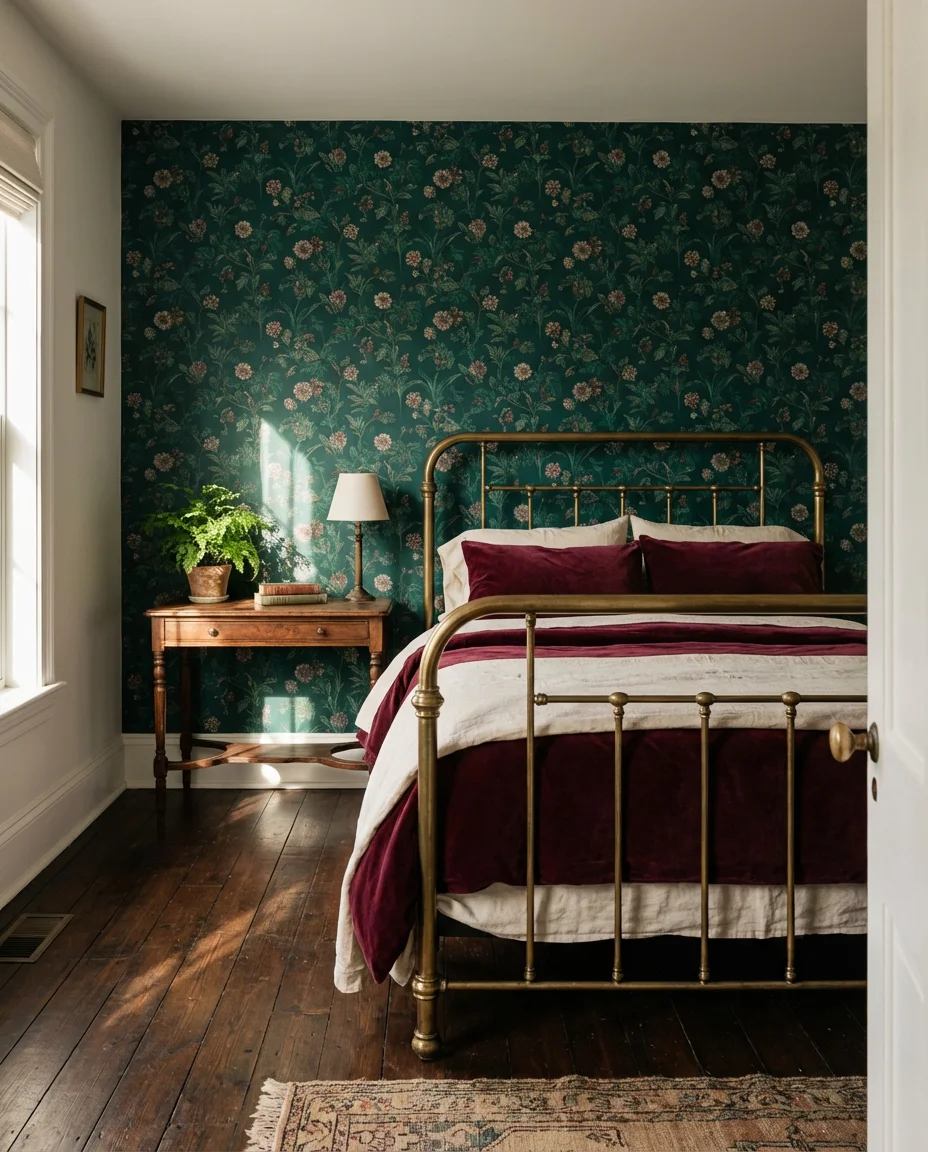
The Victorian design revival has found a particularly enthusiastic audience among younger homeowners who love maximalism done right. In a small bedroom, Victorian styling succeeds when you commit fully—half measures look cluttered rather than opulent. A single wall of richly patterned wallpaper in a deep jewel tone (forest green with gold botanical motifs is a perennial favorite) instantly transforms the room’s entire character. Combine with a brass or iron bed frame, dark hardwood floors, and layered bedding in burgundy and ivory.
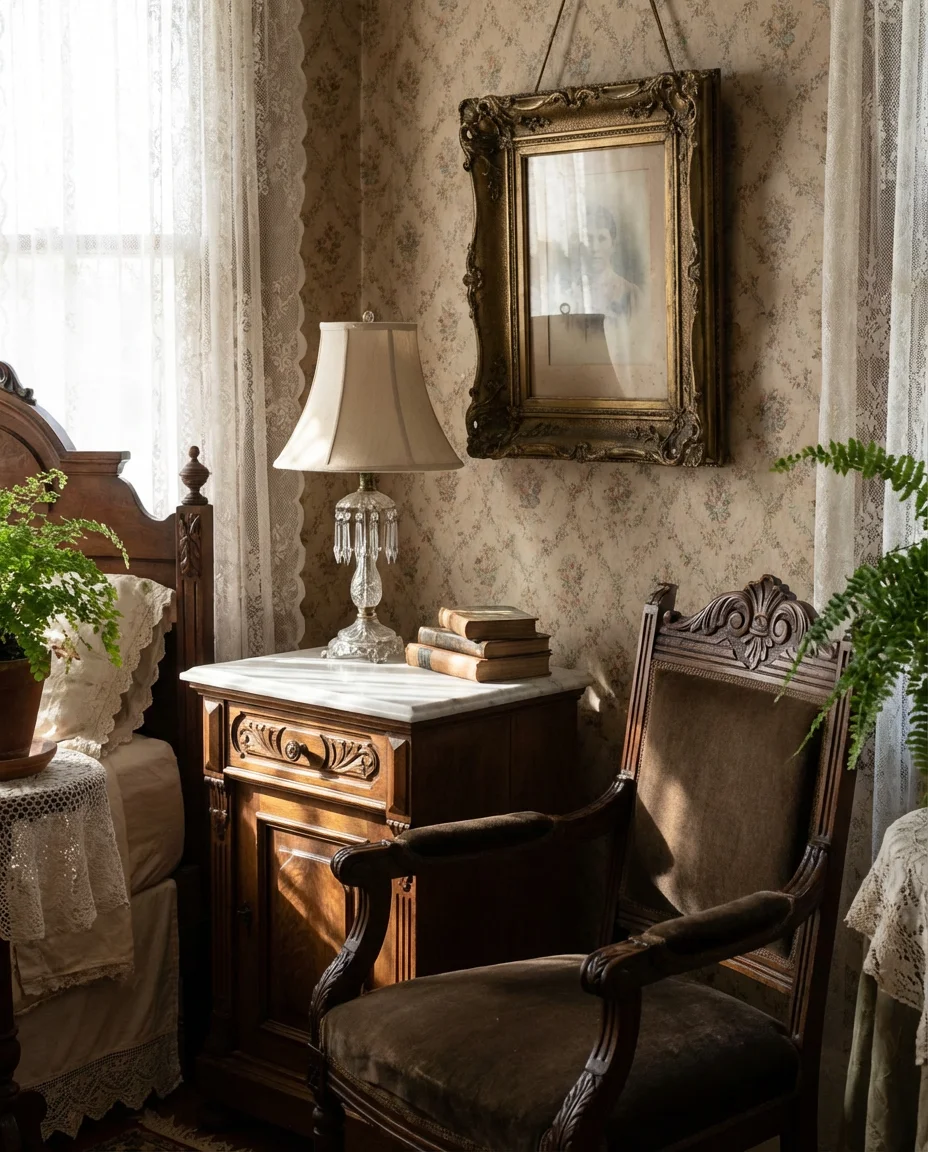
Where this approach works best is in pre-war buildings and older row houses in cities like Philadelphia, Boston, and Chicago, where the bones of the architecture already speak a Victorian dialect. The ceilings tend to be higher, the trim thicker, and the proportions more forgiving of decorative density. Antique details—a marble-top nightstand found at an estate sale, a crystal perfume tray on the dresser—add the layered authenticity that separates a Victorian bedroom from a costume. Source slowly, and the room will build itself beautifully over time.
12. Western Bedroom with Rustic Warmth in a Small Space
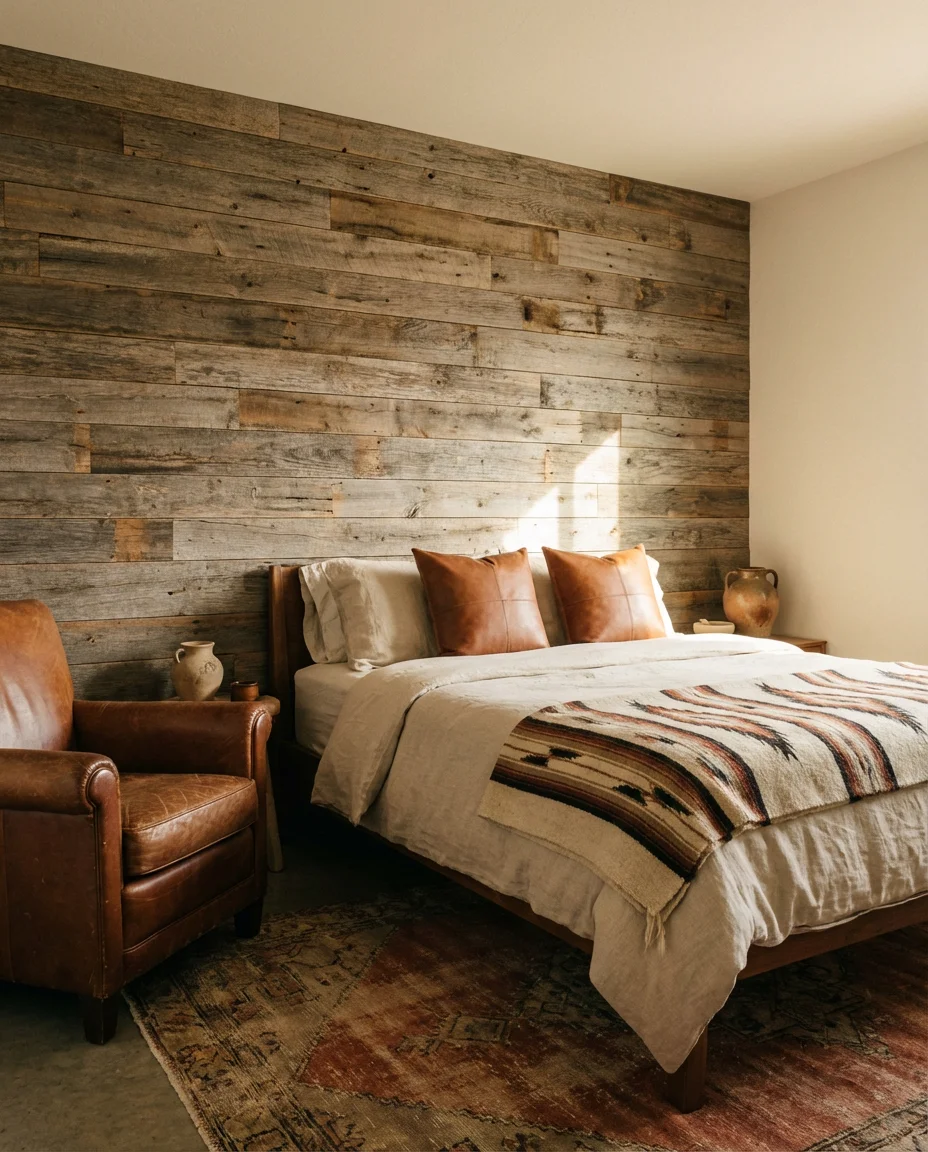
The western aesthetic has moved far beyond ranch-house clichés—in its modern interpretation, it’s warm, textural, and genuinely beautiful in small spaces. Think saddle-brown leather accents, a Navajo-inspired blanket folded at the foot of the bed, reclaimed wood wall panels on one feature wall, and earthy terracotta tones throughout. Wrought iron hardware on drawers and a rope-wrapped mirror frame complete the look without crossing into theme-park territory. The palette of rust, sand, and sage is naturally suited to small rooms because every tone is warm and harmonious.
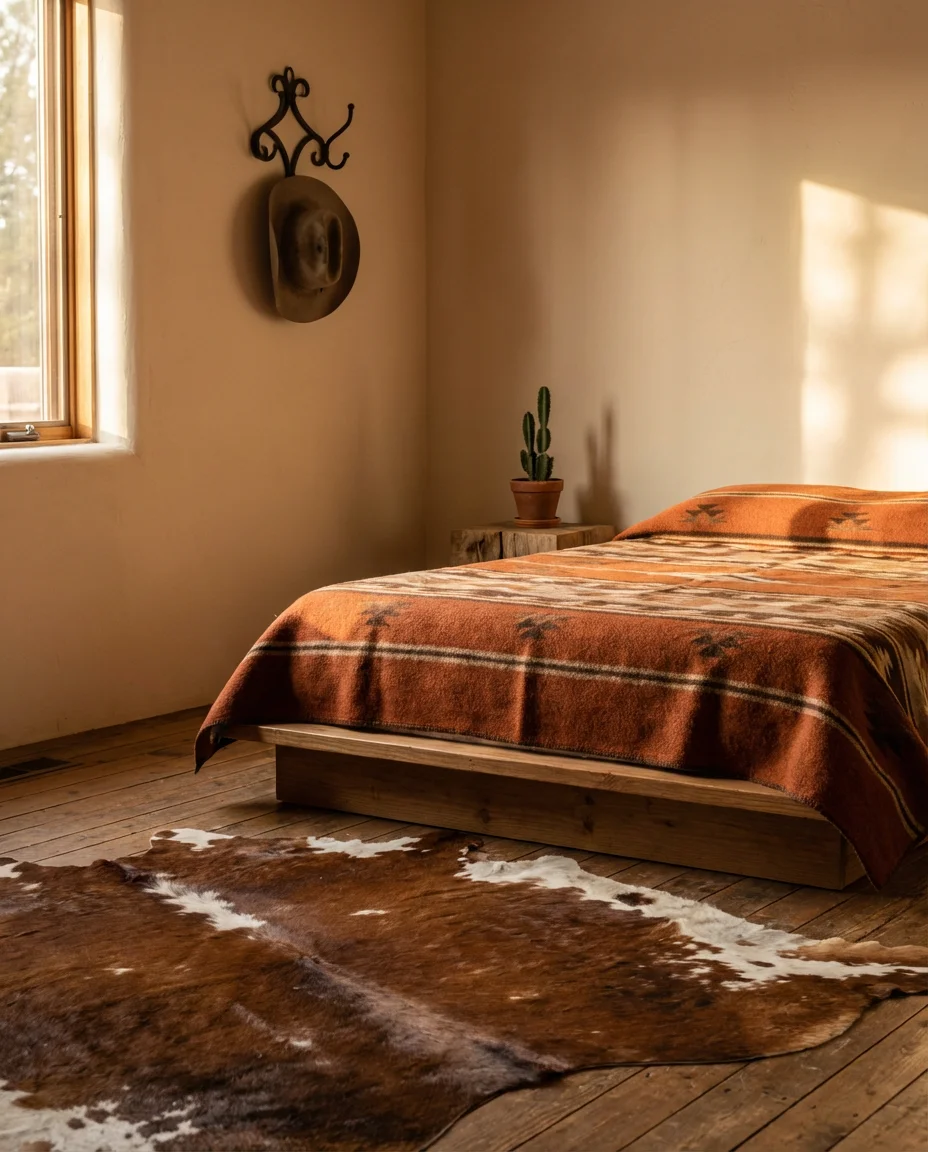
This style has a particular resonance in the American Southwest and Mountain West, where the landscape itself informs interior choices in a way that feels deeply authentic. Homeowners in Denver, Santa Fe, and Tucson have been quietly refining this look for years, and the best versions feel like extensions of the landscape rather than decorative impositions on it. Keep the furniture minimal and low—a platform bed, one wooden dresser, and a cowhide or woven rug—and let the materials do the talking.
13. Indian-Inspired Small Bedroom with Bold Color and Textile Richness
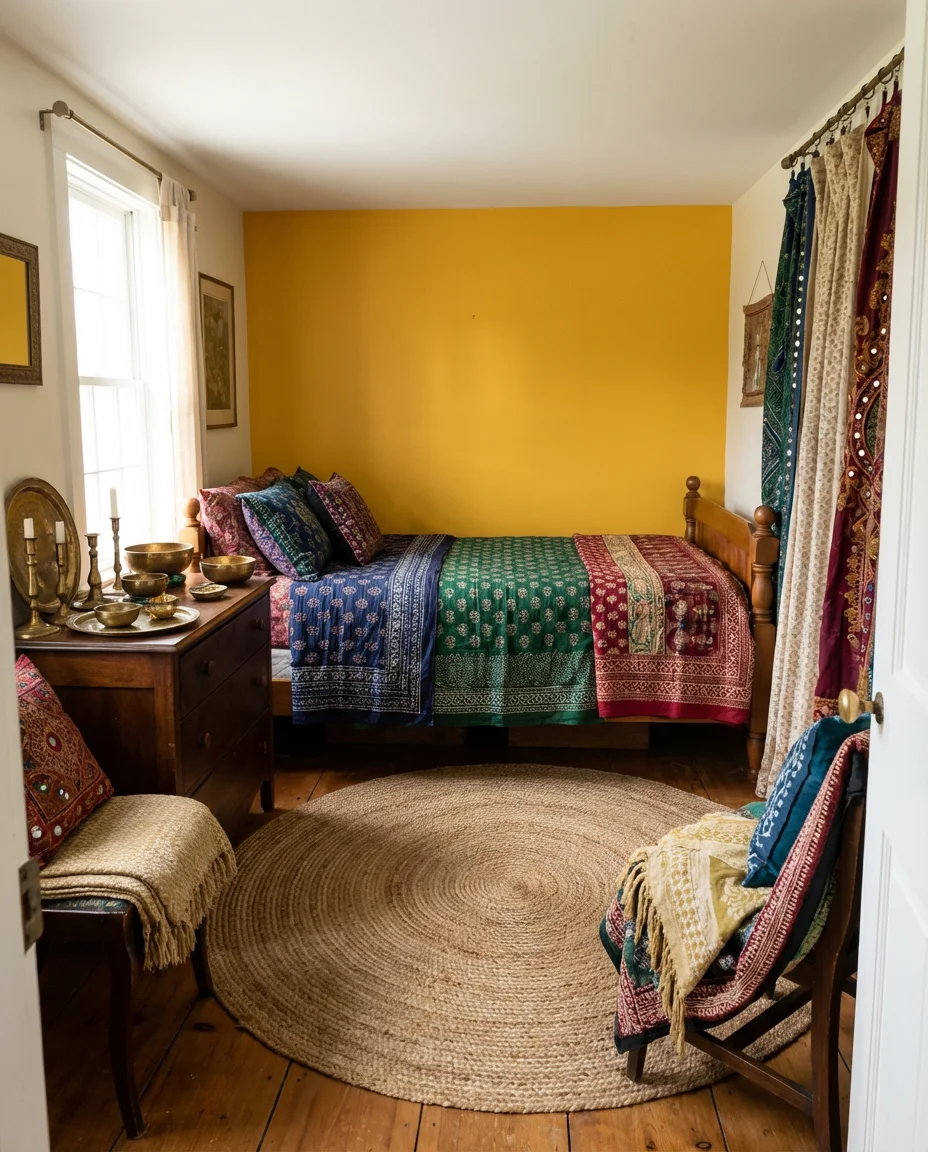
Indian design traditions bring an unmatched depth of color, pattern, and textile artistry that translates beautifully into small bedroom spaces—especially when applied with a modern, edited hand. A deep saffron or peacock blue accent wall, block-printed cotton bedding, a brass diyas collection on the dresser, and a hand-woven jute rug ground the space in genuine craft tradition. The secret is layering patterns of different scales: a large floral headboard textile against a small geometric pillow print against a solid duvet. The contrast creates richness without chaos.

Indian-inspired design works particularly well in small rooms because the emphasis is on sensory depth rather than spatial breadth. You don’t need square footage—you need layers. A small bedroom done in this style often feels more immersive and memorable than a large room in a more minimal aesthetic. Shop for authentic block-print textiles from importers like Fab India or smaller Etsy sellers; the quality and individuality are worth far more than mass-produced “boho” alternatives from big-box stores.
14. Art Deco Small Bedroom with Geometric Glamour
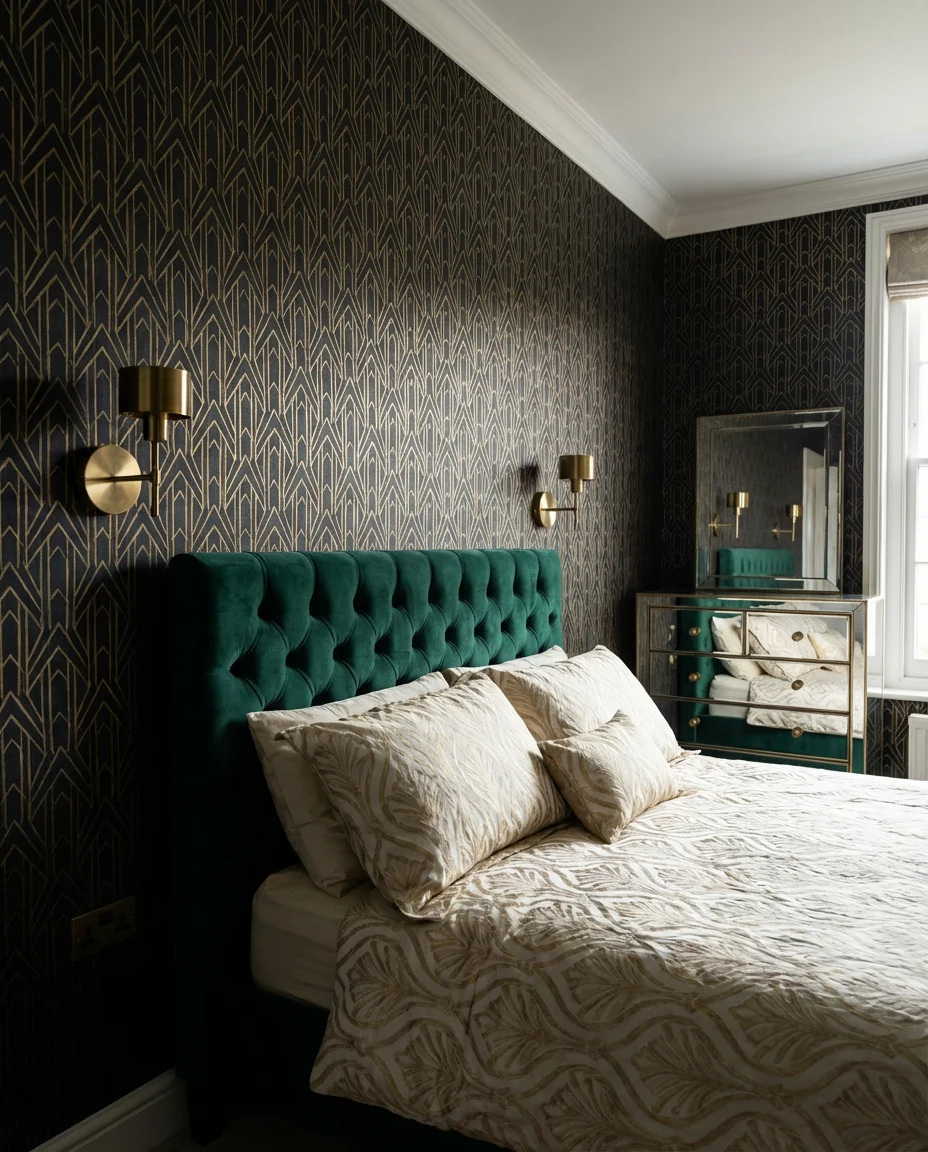
Art deco is having a genuine revival in 2026 bedroom design, and it’s perfectly scaled to small rooms. The style’s defining elements—geometric wallpaper, bold contrasts between black and gold or ivory and brass, fan-shaped headboards, and mirrored furniture—all work in tight spaces when applied with confidence. A small Art Deco bedroom might center on a velvet tufted headboard in deep emerald flanked by matching brass wall sconces, with a geometric tile-print rug anchoring the composition. The result reads as luxurious rather than cramped because every element is intentional.

Mirrored furniture is the Art Deco trick that genuinely expands small rooms—a mirrored dresser or bedside table doubles visual space while contributing to the glamorous, reflective palette the style demands. Keep the color scheme tight: black, white, and gold with one jewel-tone accent is a formula that has worked for 100 years and shows no signs of aging out. Avoid over-accessorizing; in an Art Deco room, three perfectly chosen objects on a dresser will always outperform twelve mediocre ones.
15. Loft Bedroom with Exposed Brick and Industrial Edge
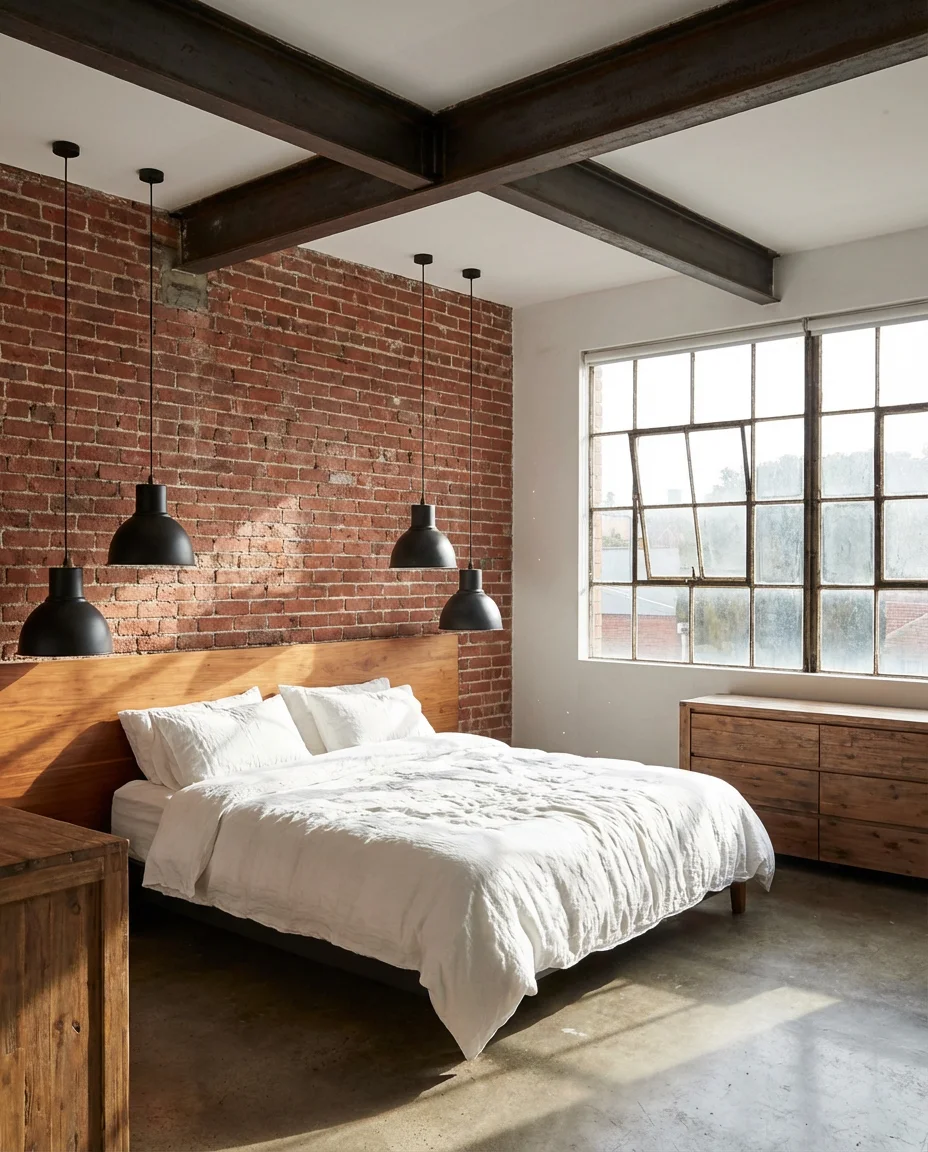
The loft bedroom is a design context unlike any other—the combination of raw industrial architecture and intimate sleeping quarters creates a uniquely charged atmosphere that’s hard to replicate in conventional spaces. If you’re lucky enough to have exposed brick, steel beams, or polished concrete floors, the room’s character is already half-built. The job of decoration is to complement rather than compete: simple white linen bedding, matte black hardware and light fixtures, and wood accents soften the industrial rawness without domesticating it entirely.
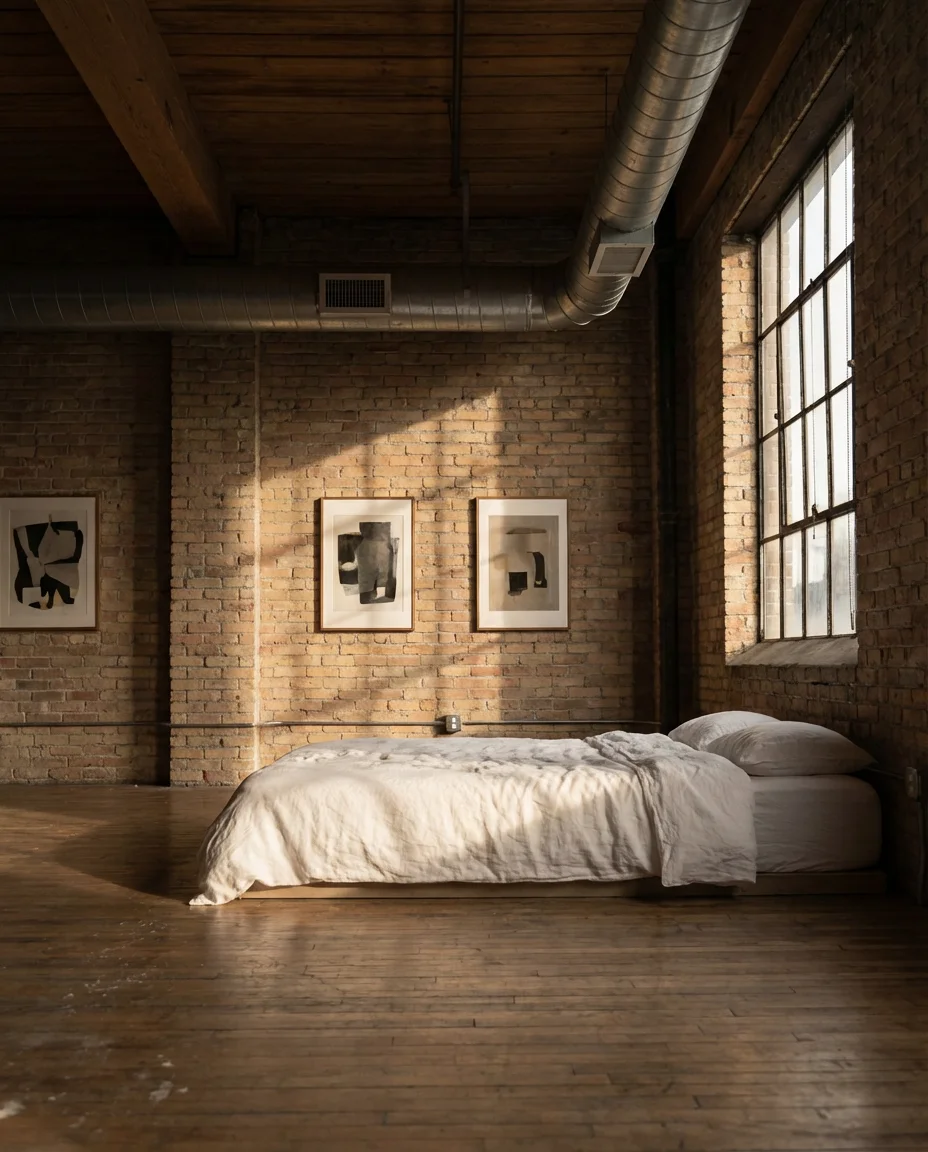
In converted loft spaces—particularly those in repurposed warehouses across cities like Brooklyn, Chicago, and Detroit—the challenge is often vertical rather than horizontal. Ceilings can soar to 14 or 18 feet, creating a small room that feels cavernous rather than intimate. Solving this means pulling the room down visually: use darker tones on lower walls, hang artwork and mirrors at eye level rather than up high, and choose furniture with visible legs to keep the visual plane grounded. Height becomes an asset rather than a problem once you learn to work with it.
16. Small Bedroom with a Built-In Study Desk Along One Wall

Combining sleeping and working in a small room requires architectural honesty about how space is actually used—and the built-in study desk along a single wall is the most efficient solution available. A continuous run of countertop from wall to wall, even at just 20 inches deep, provides enough workspace for a laptop, monitor, and task light without eating into the room’s floor footprint. Open shelving above keeps work materials accessible without requiring a separate bookcase. Paint everything—desk, shelves, and the wall behind them—in one color to minimize visual fragmentation.
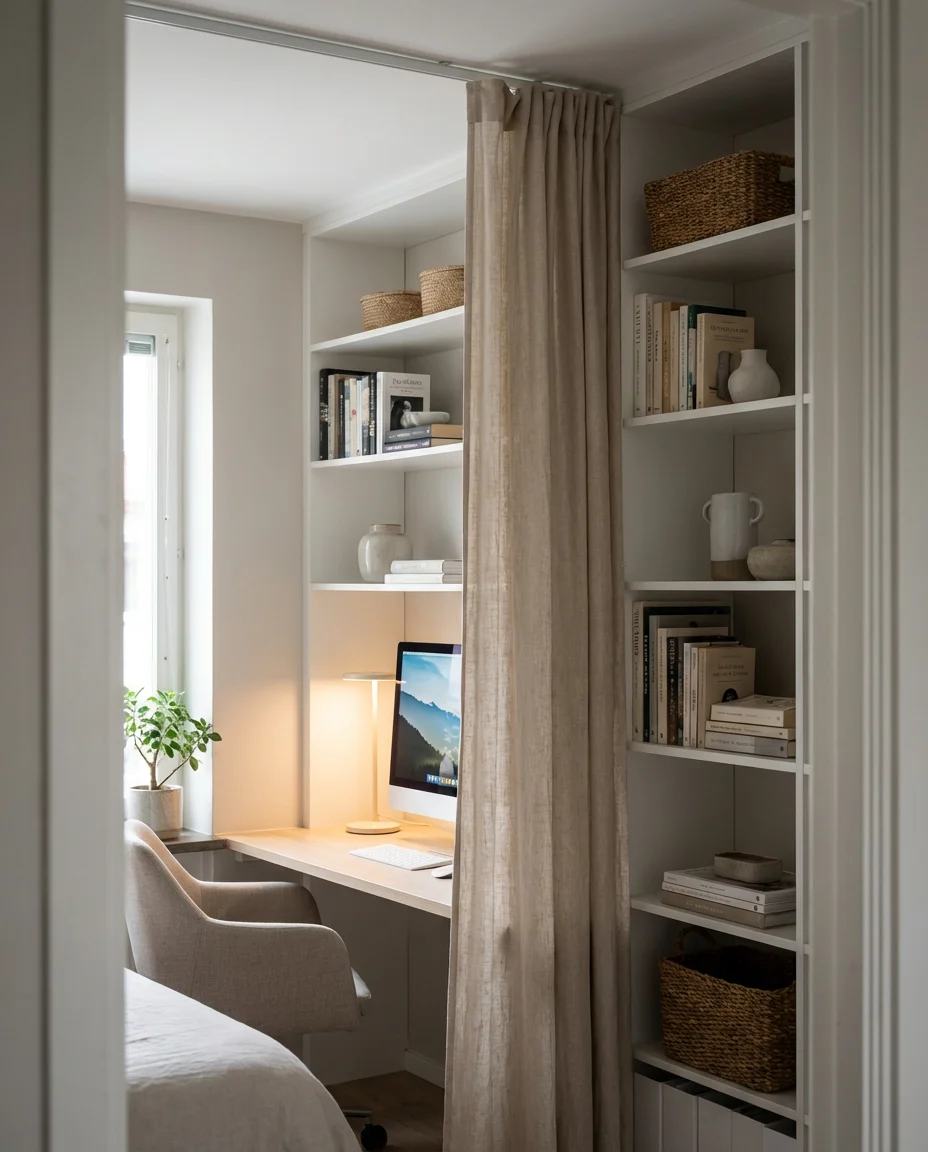
This is a particularly valuable layout for remote workers and students in cities like New York, San Francisco, and Boston, where small apartments must serve as both home and office. The key is creating visual separation between the work and sleep zones—even a simple curtain on a ceiling track that conceals the desk at night makes a measurable difference in sleep quality. Multiple studies have shown that keeping screens out of the visual field during sleep improves rest, and a drawn curtain achieves this without requiring any architectural changes to the room.
17. Cozy Cheap Bedroom with Thrifted Finds and Candles

The most atmospheric bedrooms on Pinterest almost never have the biggest budgets—they have the most intention. A cozy, cheap bedroom built from thrifted finds and sensory details like candles, dried botanicals, and layered rugs can outperform a $5,000 designer room in terms of warmth and character. The formula is simple: start with a clean, neutral base (paint is your cheapest transformation), then add one statement thrift find (a carved wood mirror or an interesting lamp), and layer in mood-setting details that appeal to multiple senses.

Candles are one of the most underrated tools in bedroom design. Beyond their obvious atmospheric quality, they shift the room’s entire light register in the evening—from functional overhead lighting to something warm, flickering, and deeply human. A collection of mismatched candleholders in varied heights costs almost nothing from thrift stores and creates a vignette that feels like it took hours to style. Keep a diffuser or a beeswax pillar nearby; scent is the invisible layer of home design that people remember most viscerally and almost never think to include.
18. Beds That Work Harder—Murphy, Daybed, and Trundle Options
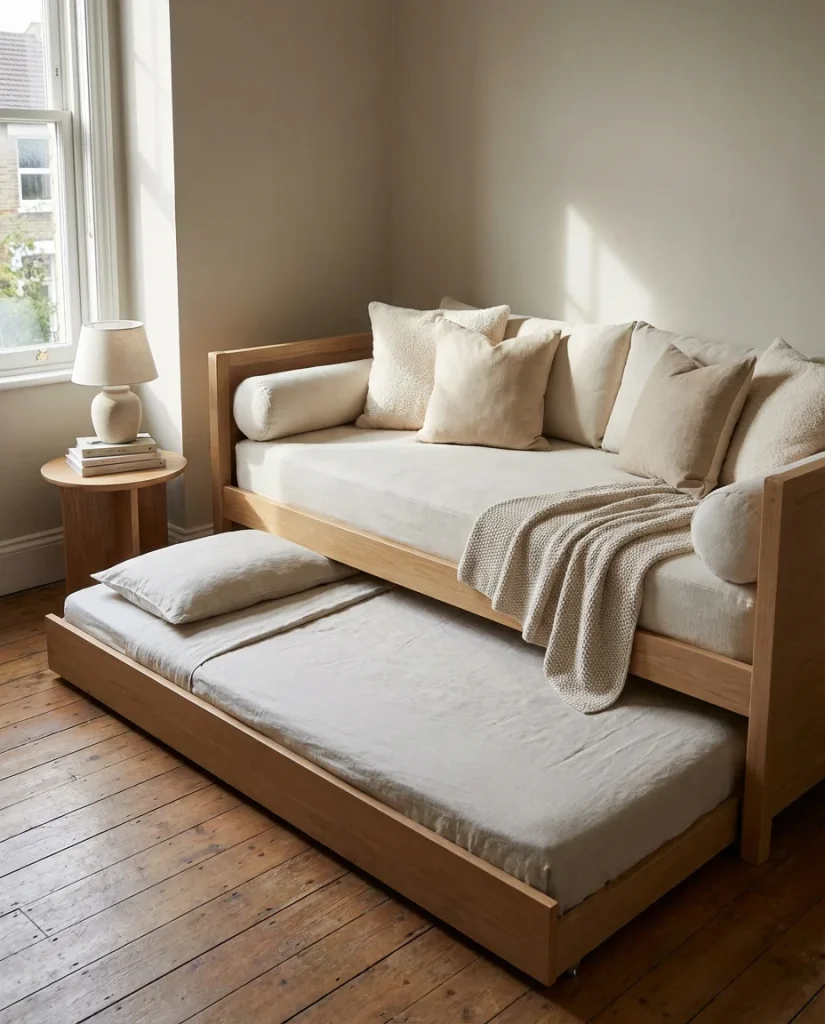
In a truly small room, the type of beds you choose may matter more than any other decision. Murphy beds (wall beds) have shed their 1970s stigma entirely—modern versions fold seamlessly into cabinetry that functions as a full wall unit when the bed is stowed, complete with desk, shelving, and sofa integration. A daybed with a trundle serves double duty as a sofa by day and accommodates guests at night without requiring a dedicated guest room. These solutions are especially powerful in studio apartments and home offices that double as sleeping spaces.

Murphy bed systems from companies like Resource Furniture or California Closets run $3,000–$8,000 installed—a significant investment that pays for itself in livability almost immediately. For a tighter budget, a standalone daybed from IKEA or Article in the $400–$900 range achieves much of the same versatility. The mistake to avoid: choosing a trundle that’s uncomfortable for regular sleeping. If the trundle gets used more than a few times a year, invest in a quality 6-inch memory foam mattress for it—overnight guests will thank you silently and repeatedly.
19. Organizing and Space-Saving Hacks for Ultra-Small Bedrooms
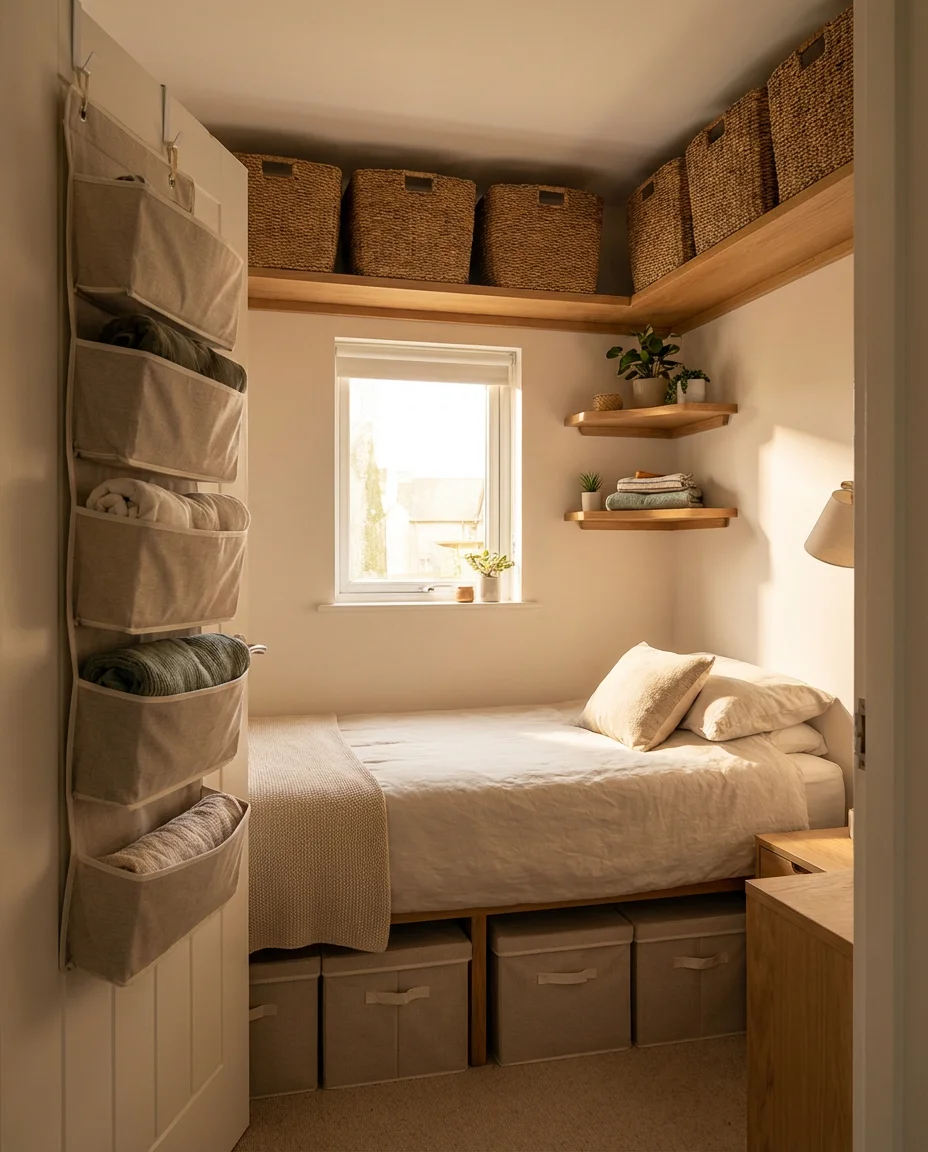
Great organizing and space saving in a small bedroom starts with a ruthless audit of what actually belongs in the room. Most small bedrooms are cluttered not because they’re small but because they’re storing things that should live elsewhere. Once you’ve edited down to essentials, the structural solutions become clear: over-door organizers for accessories, under-bed risers to create 6 inches of hidden storage, floating corner shelves that use dead-angle space, and vertical hooks on the back of the door for bags and next-day outfits. None of these require a contractor or a significant budget.
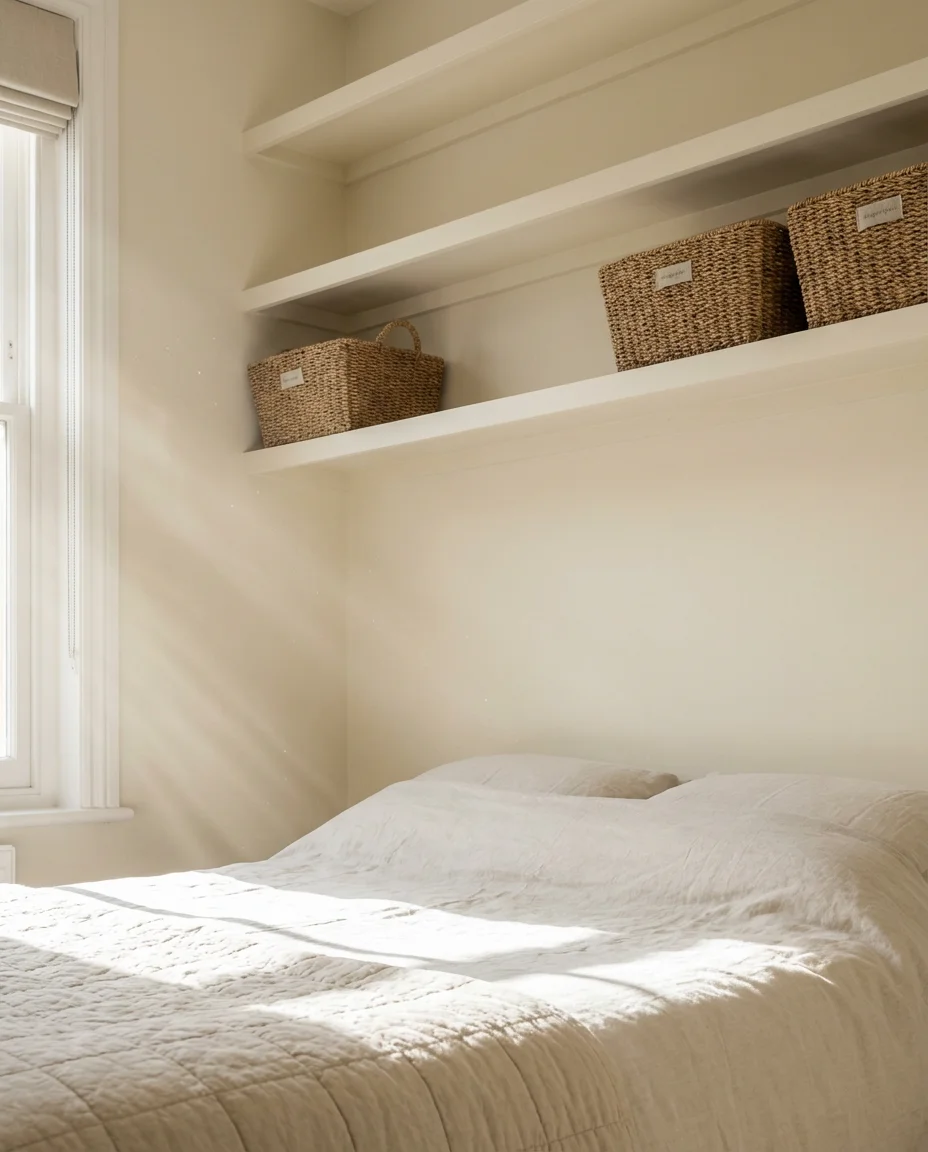
The vertical axis is chronically underused in American bedrooms. Most storage sits within 48 inches of the floor, leaving 3–4 feet of wall space above the furniture completely empty. Shallow shelves installed near the ceiling—even just 8 inches deep—provide a full additional circuit of storage for books, baskets, and seasonal items. Use uniform baskets in a natural material (seagrass, linen-covered cardboard) to keep the high shelf visually tidy. Label the baskets facing out, and the storage becomes both functional and organized without ever looking cluttered.
20. Loft-Style Bedroom—Soft, Slouchy, and Utterly Comfortable
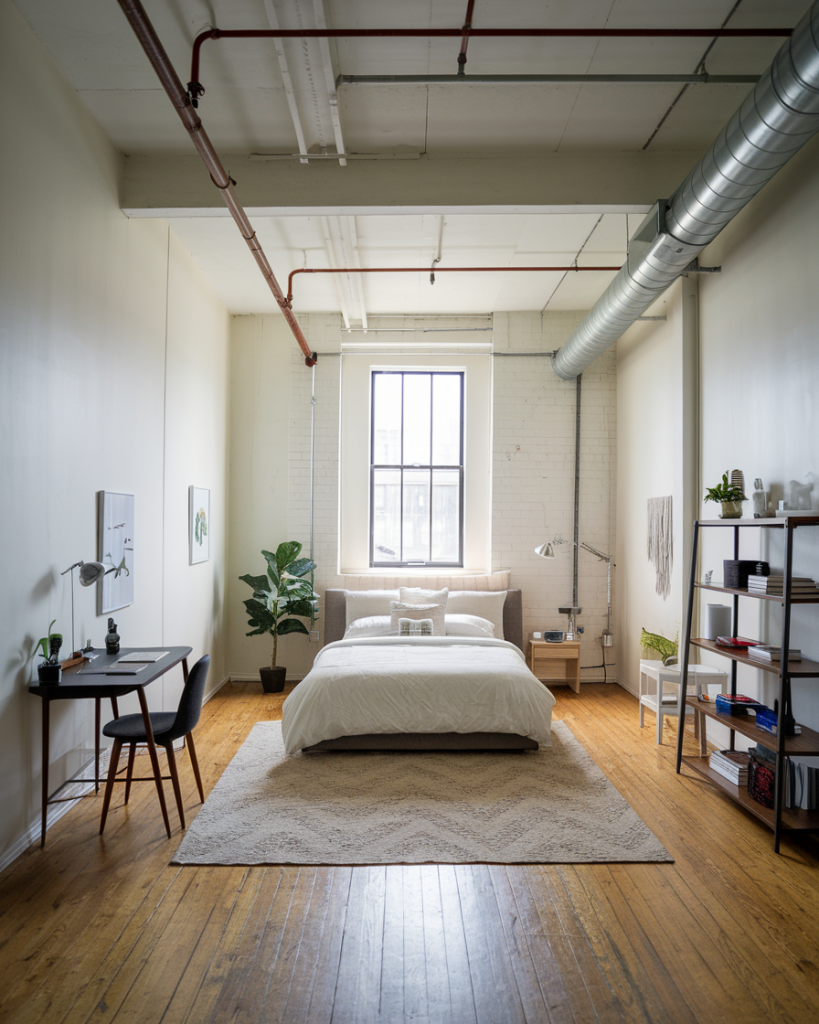
The loaf aesthetic—named after the beloved British furniture brand—is defined by deep, sink-in comfort and a deliberate resistance to anything overly polished or styled. In a small bedroom, this translates to an oversized linen headboard that grazes the ceiling, pillows piled with casual abundance, a well-worn Persian rug underfoot, and furniture with visible character and age. Nothing matches perfectly; everything feels chosen rather than purchased. This is the anti-showroom bedroom, and it’s genuinely difficult to achieve because it requires real confidence in what you find beautiful.
The loaf aesthetic thrives in small rooms because its philosophy is about depth and comfort rather than scale. You don’t need a vast room to have a headboard that fills a wall, a rug that’s slightly too large, or a lamp that tilts at an angle. These comfortable imperfections are features, not bugs, and they create a bedroom that people genuinely want to spend time in. Think of it as designing for feeling rather than photography—which, paradoxically, tends to produce the most photographed rooms of all.
21. Decor-Forward Small Bedroom with Gallery Wall and Curated Objects

A well-executed gallery wall can be the single most transformative element in a small bedroom’s decor—not just because it fills dead wall space, but because it tells a story about the person who lives there. The best gallery walls in small rooms maintain a cohesive visual logic: all black frames, or all natural wood, or a consistent color palette across the prints. Mix mediums freely—a watercolor alongside a photograph alongside a pressed botanical—but keep the frames unified. This creates the appearance of a collection built over time rather than purchased in one Target trip.
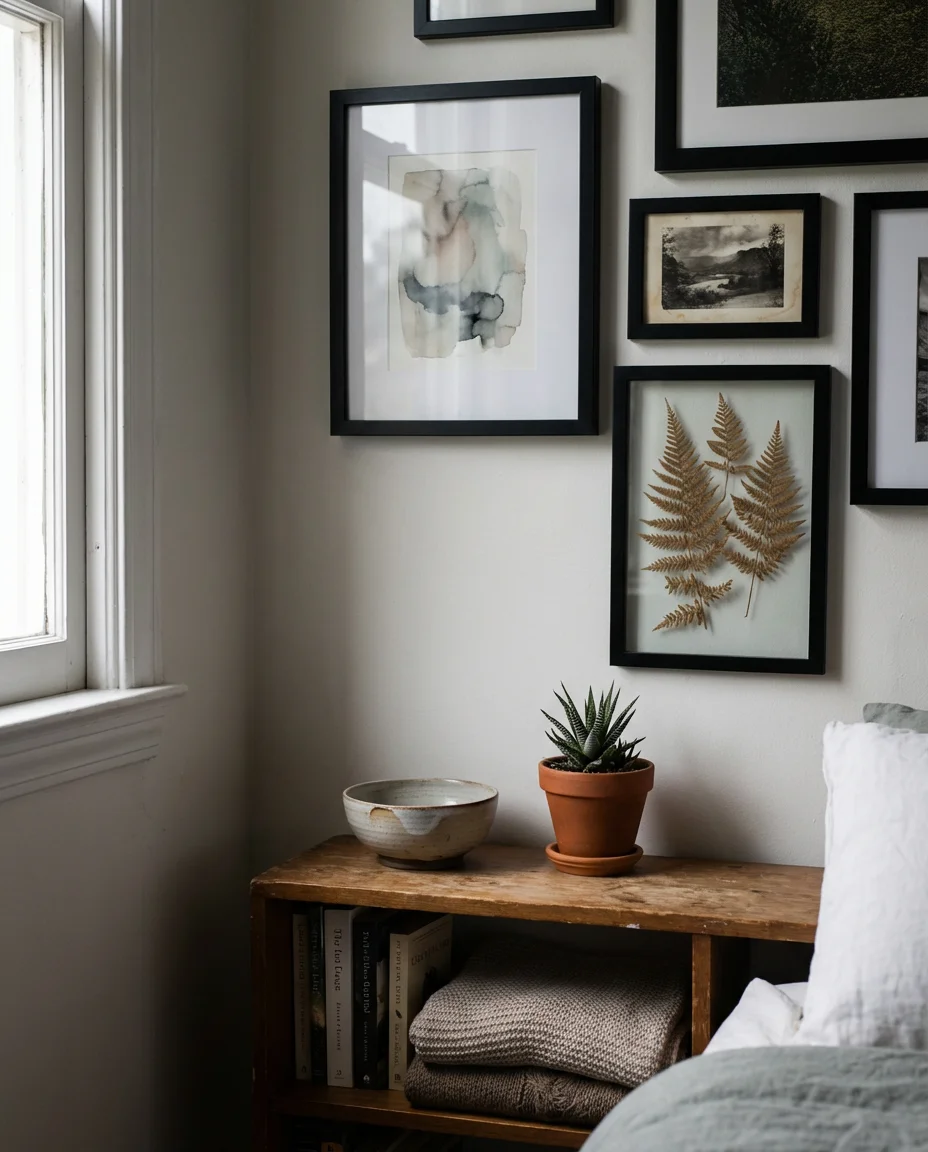
Curated objects on the dresser and nightstands complete the picture—but curation is the operative word. Three thoughtfully chosen objects (a meaningful book, a ceramic vessel, and a small plant) consistently outperform ten mediocre ones. The goal is visual rhythm: vary height, material, and texture across your objects so the eye moves between them with interest. Flat surfaces in small bedrooms are precious real estate; every object placed on them should earn its spot by contributing something to the room’s story or visual composition.
22. Budget-Friendly Small Bedroom with IKEA Hacks and Paint Magic
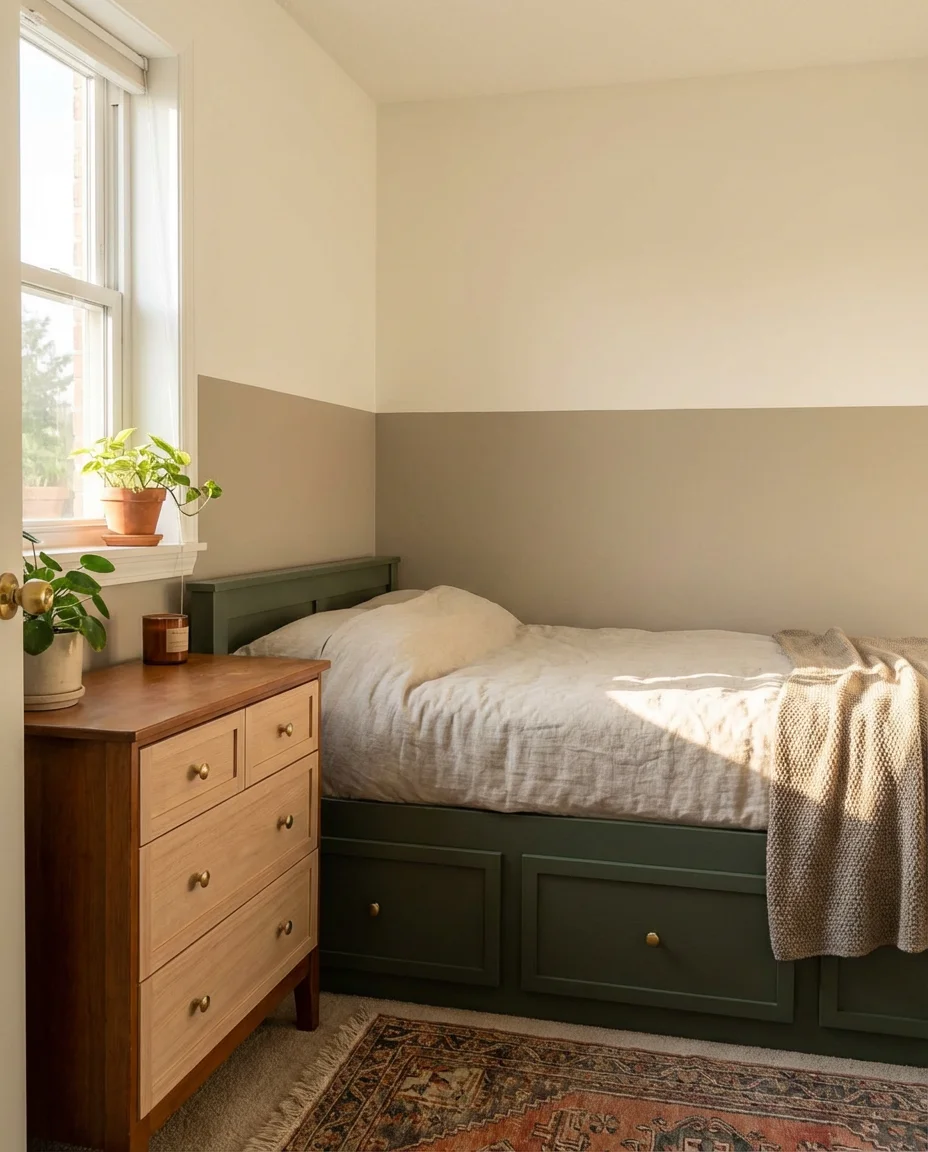
IKEA hacks have become a legitimate design genre, and for budget-friendly small bedroom transformations, they remain one of the most effective strategies available to American renters and first-time homeowners. The most impactful IKEA hack in a bedroom context is the BRIMNES headboard converted into a full wall panel with added trim and paint—a process that costs under $150 in materials and produces a built-in effect that reads as custom millwork. Add Shaker-style contact paper to HEMNES dresser fronts, and suddenly a $200 piece looks like bespoke furniture.
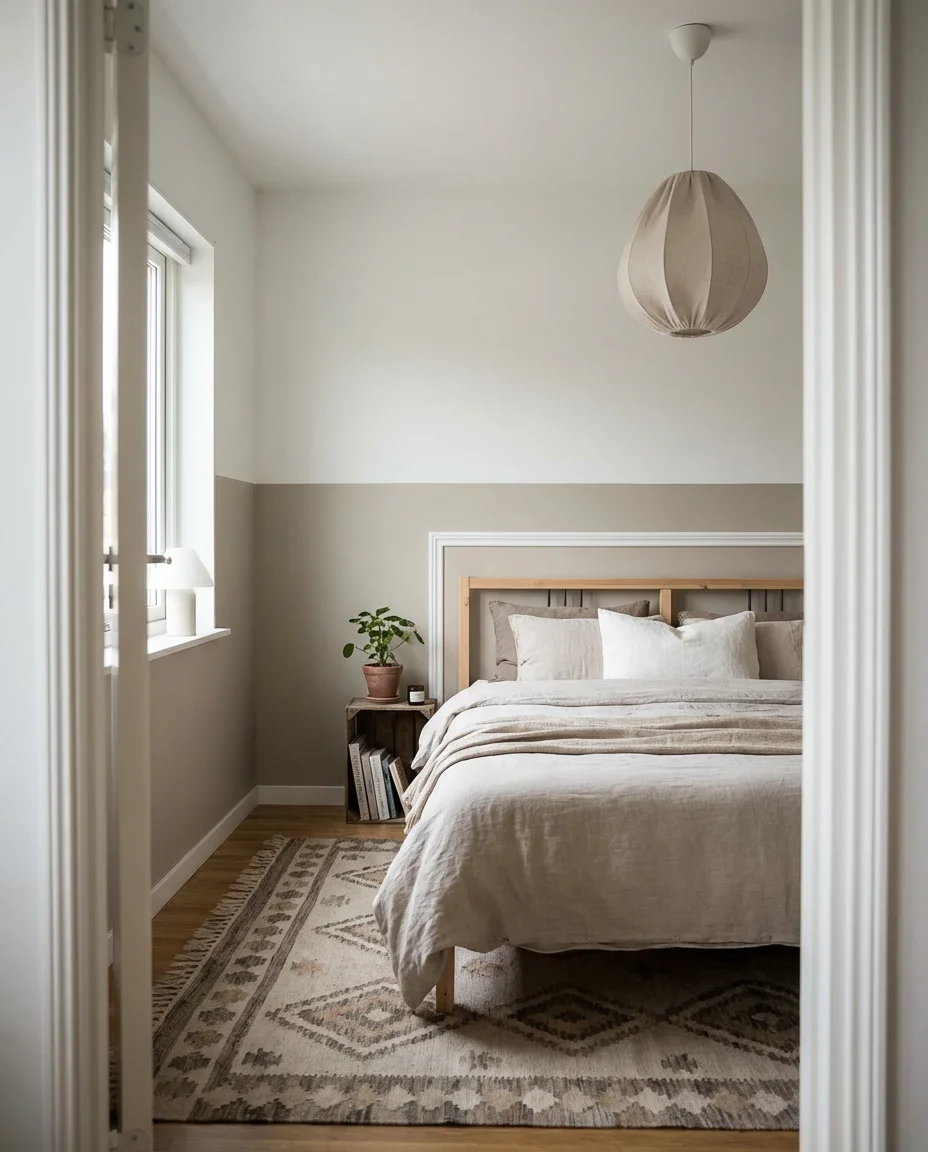
Paint is the real engine of this approach. A two-tone wall treatment—lower third in a warm greige, upper two-thirds in a lighter neutral—adds architectural interest to a plain box of a room without requiring wallpaper or wainscoting. The division creates the illusion of chair rail molding and makes the room’s proportions feel more considered. Combined with a few strategic IKEA hacks, an entire small bedroom can be transformed for $400–$600 in a single weekend—a return on investment that rivals almost anything else in home improvement.
23. Small Bedroom with a Cozy Decor Reading Corner
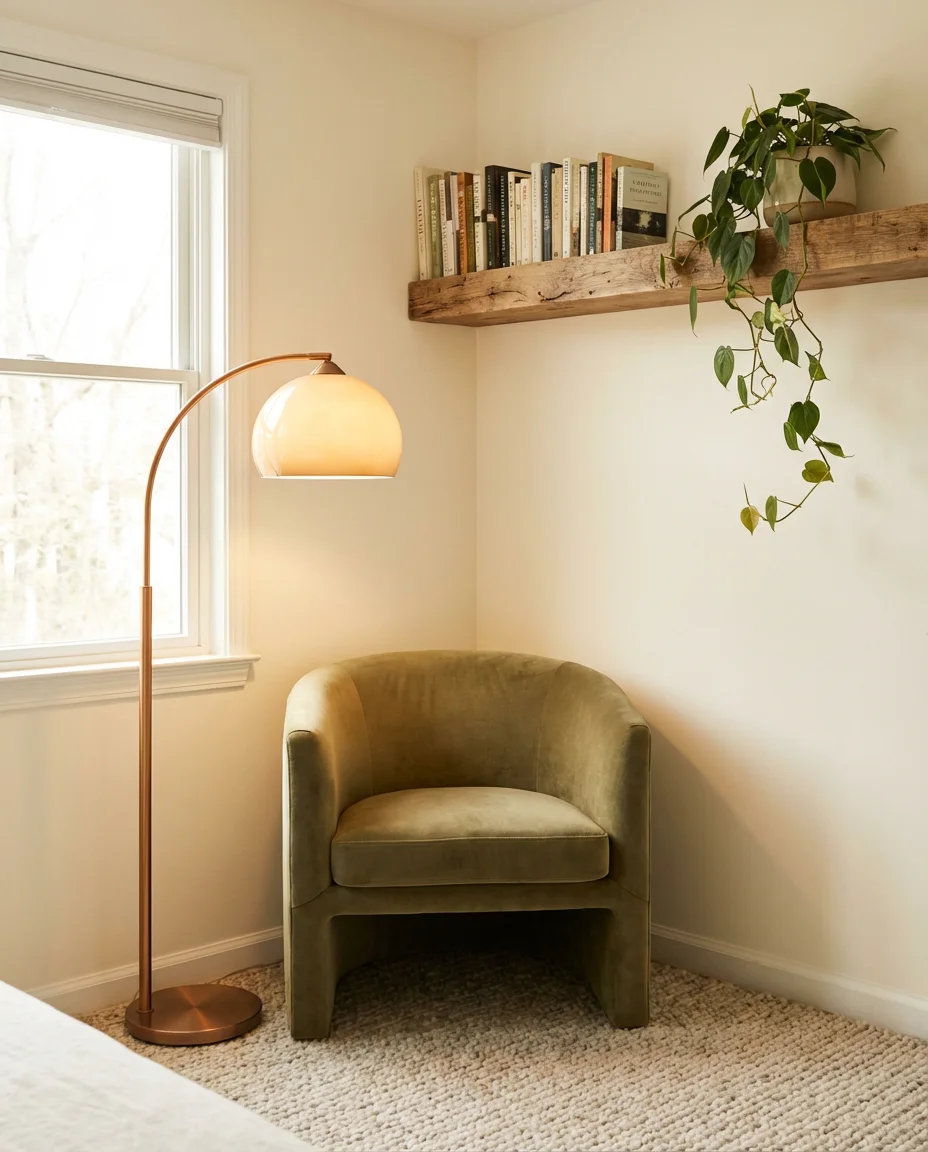
Every small bedroom deserves one nonfunctional luxury—a corner designed purely for pleasure. A reading nook built into an unused corner with a curved accent chair, a floor lamp with warm directional light, a small side table for tea and books, and a soft throw creates a space within the space that makes the whole room feel more intentional and generous. This is the essence of good cozy decor: not maximizing square footage, but acknowledging that some corners exist for comfort rather than storage. The psychological effect on a room’s perceived livability is significant.
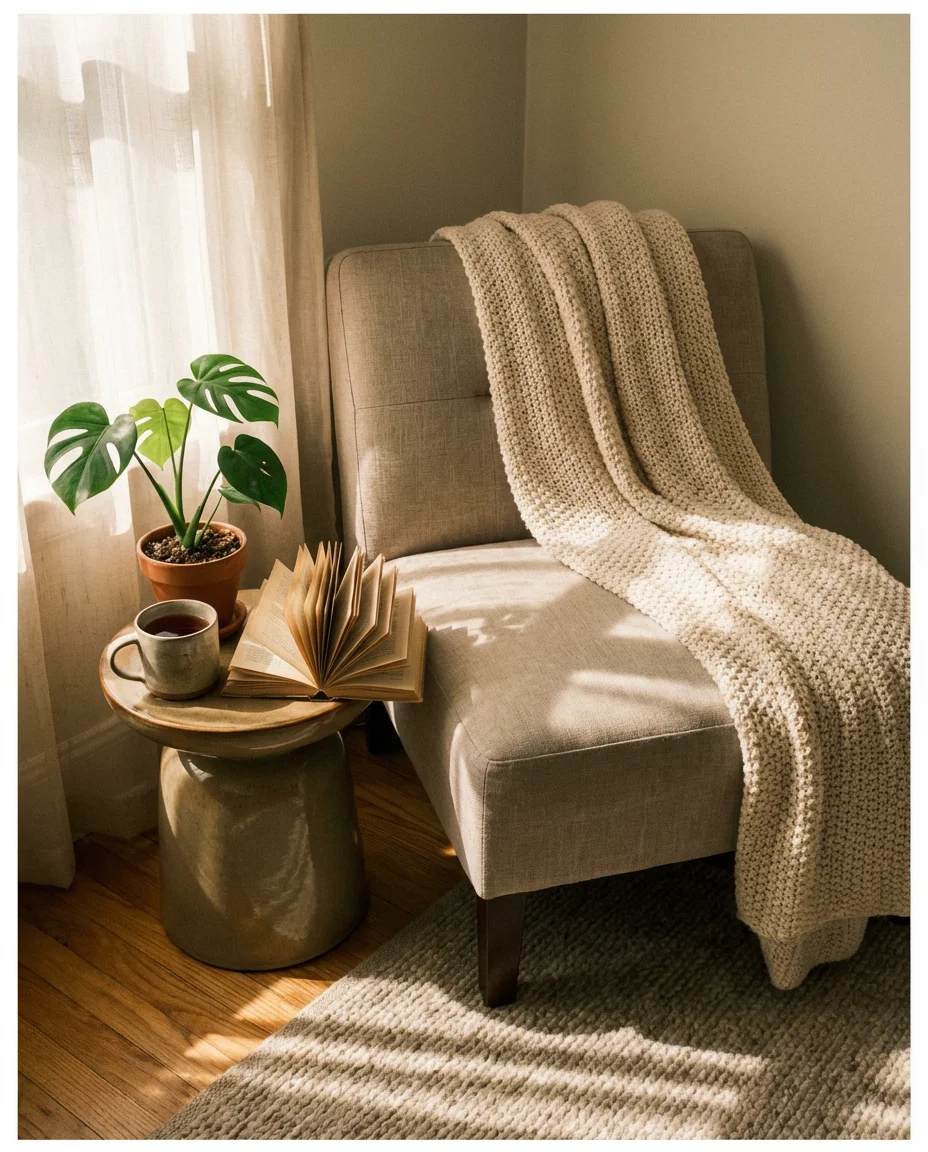
The reading corner concept works in rooms as small as 9×9 feet if the furniture is scaled correctly. A slipper chair or papasan takes up less than 4 square feet of floor space—less than a full-size nightstand—but contributes enormously to the room’s sense of being a place you want to be, not just sleep in. Mount a small floating shelf above the chair for books and a plant, and the corner becomes a fully realized vignette that photographs beautifully and functions even better. It’s the room’s reward for getting everything else right.
24. Maximizing a Small Bedroom with Strategic Mirror Placement
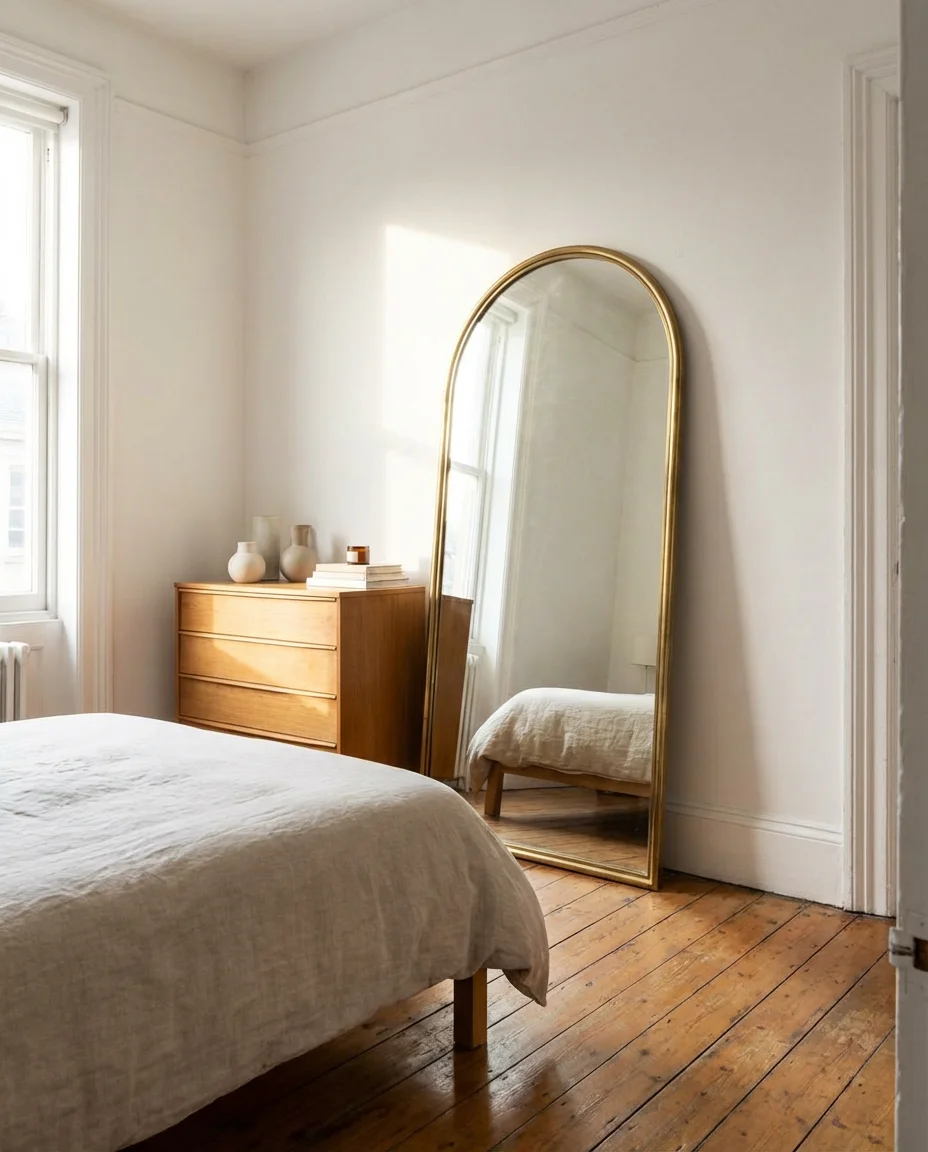
Mirrors are the oldest trick in the interior designer’s toolkit, and they remain one of the most reliably effective for small bedrooms—but placement is everything. A large leaner mirror positioned to reflect the room’s most interesting feature (a window, a gallery wall, a well-styled dresser) doubles that element visually and creates a sense of depth that no paint or furniture arrangement can fully replicate. For an aesthetic effect that also functions, a full-length mirror leaning against the wall opposite the window bounces daylight deep into the room, reducing the need for artificial lighting during the day.
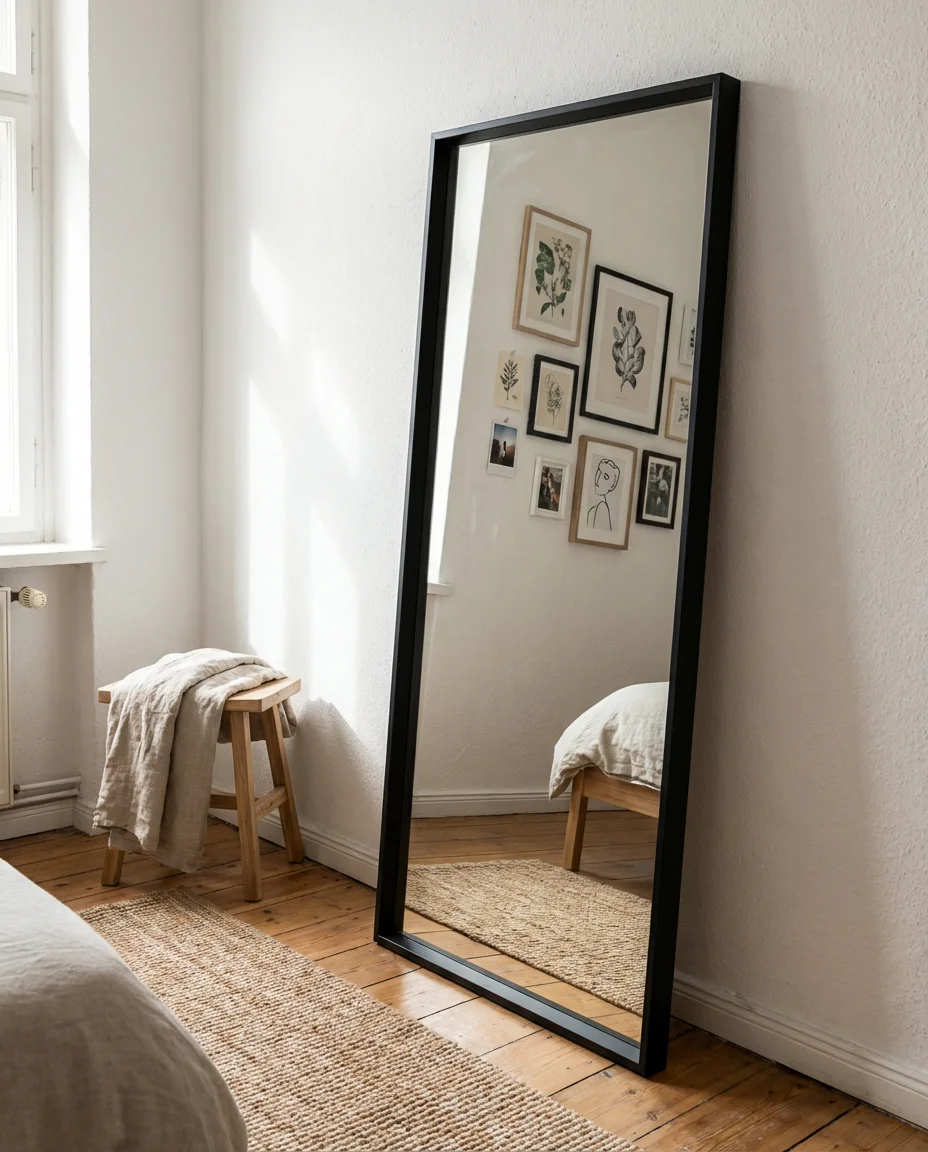
The mistake most people make with mirrors in small bedrooms is positioning them to reflect the door or the most cluttered corner of the room—which simply doubles the visual chaos. Point your mirror toward the best-looking wall, the brightest source of natural light, or a feature you’ve worked hard to style beautifully. An arched mirror in warm brass or matte black works as both a functional object and a sculptural art piece, contributing to the room’s aesthetic without requiring any additional wall decor nearby. One great mirror, properly placed, is worth more than a dozen smaller ones scattered at random.
Conclusion
Small bedrooms are a genuine design challenge—but they’re also one of the most rewarding to solve, because every decision matters more and the results feel more personal. Whether you take on one idea from this list or build your space around several that resonated, the most important thing is that your bedroom reflects how you actually want to live. We’d love to hear which ideas sparked something for you—drop your thoughts, questions, and your own small bedroom wins in the comments below. The best design ideas often come from real people in real spaces, and your experience might be exactly what someone else needs to hear.