Backyard decks have become the ultimate outdoor living space for American homeowners, and Pinterest is overflowing with inspiration for 2026. Whether you’re dreaming of a morning coffee spot, a space for weekend barbecues, or a full outdoor entertainment hub, the right deck design can transform how you use your backyard. From budget-friendly makeovers to elaborate multi-level structures, these ideas showcase what’s trending right now—and what actually works in real backyards across the country.
1. Ground Level Sanctuary with Modern Minimalism
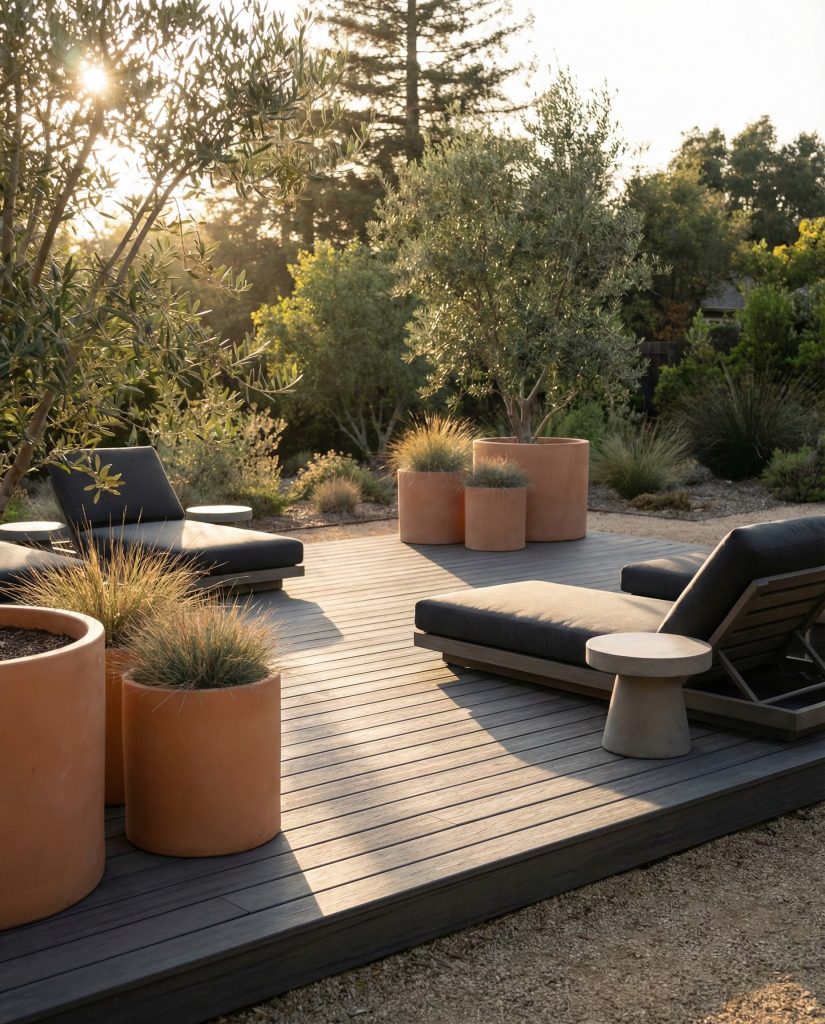
A ground level deck offers seamless access from your home to the yard, making it perfect for families with young kids or anyone who wants an effortless indoor-outdoor flow. This modern approach strips away unnecessary railings and embraces clean lines, horizontal boards, and a neutral palette that lets your landscaping shine. The beauty lies in simplicity—no stairs to navigate, no complicated construction, just a smooth transition that feels like an extension of your living room. 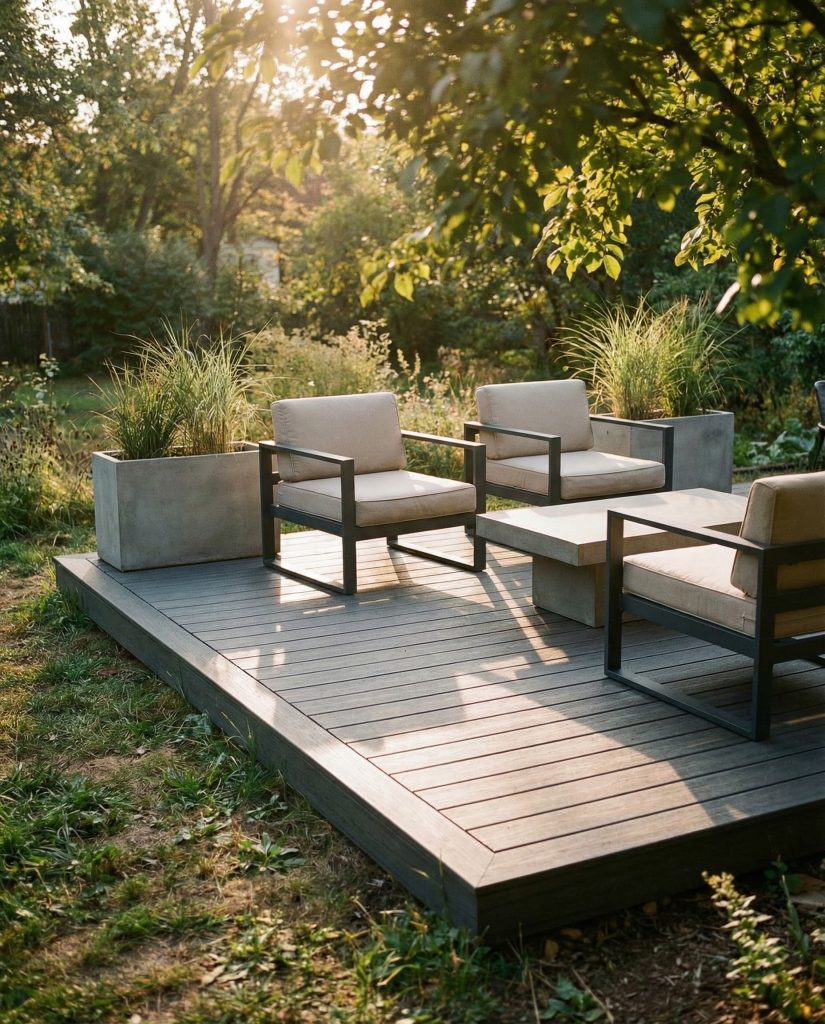
Where it works best: flat lots in suburban neighborhoods where you want to maximize usable outdoor space without the visual bulk of an elevated structure. The lack of railings means unobstructed sightlines to your garden, fire pit, or kids’ play area. Many homeowners add a subtle border of river rock or low evergreen shrubs to define the space without creating barriers. It’s also ideal if local building codes are strict about deck height—staying under 30 inches often means fewer permit headaches.
2. Two-Story Deck for Hillside Homes
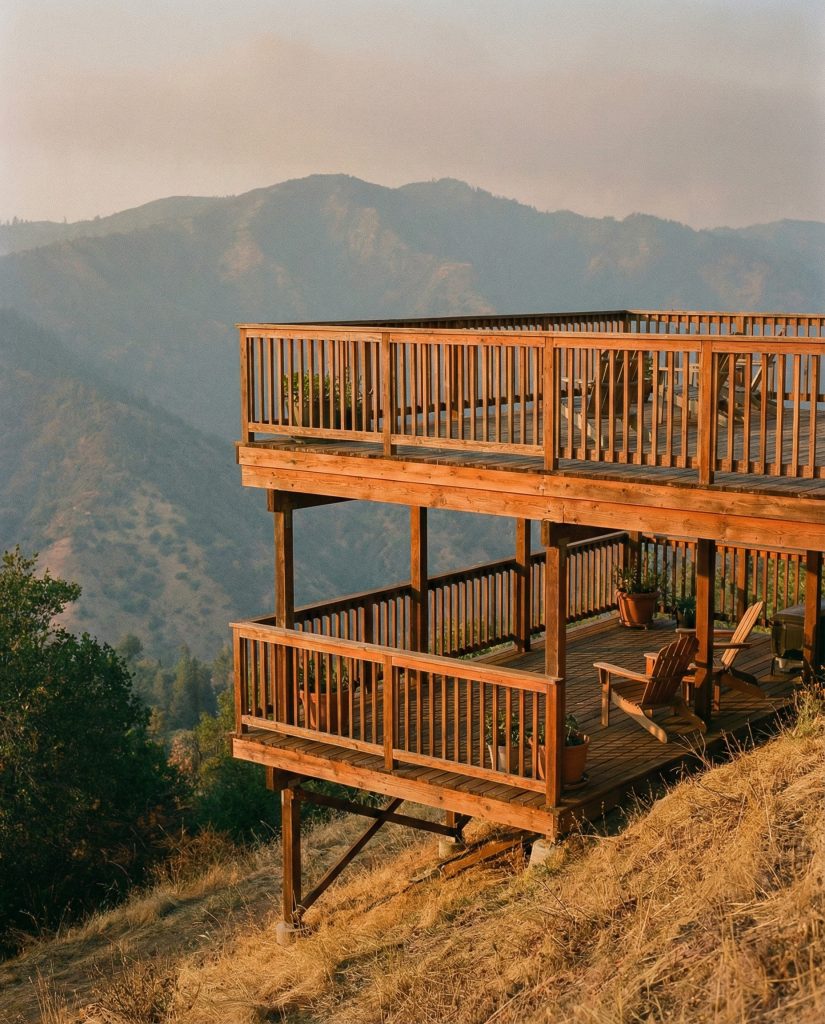
If your home sits on a slope, a 2 story deck can turn challenging terrain into your best feature. The upper level typically connects to your main living area, while the lower deck opens up additional space for dining, lounging, or even a hot tub setup. This layered approach maximizes square footage without sprawling into your yard, and the height advantage often delivers stunning views—whether that’s a wooded backdrop, a lake, or simply your neighborhood at sunset. 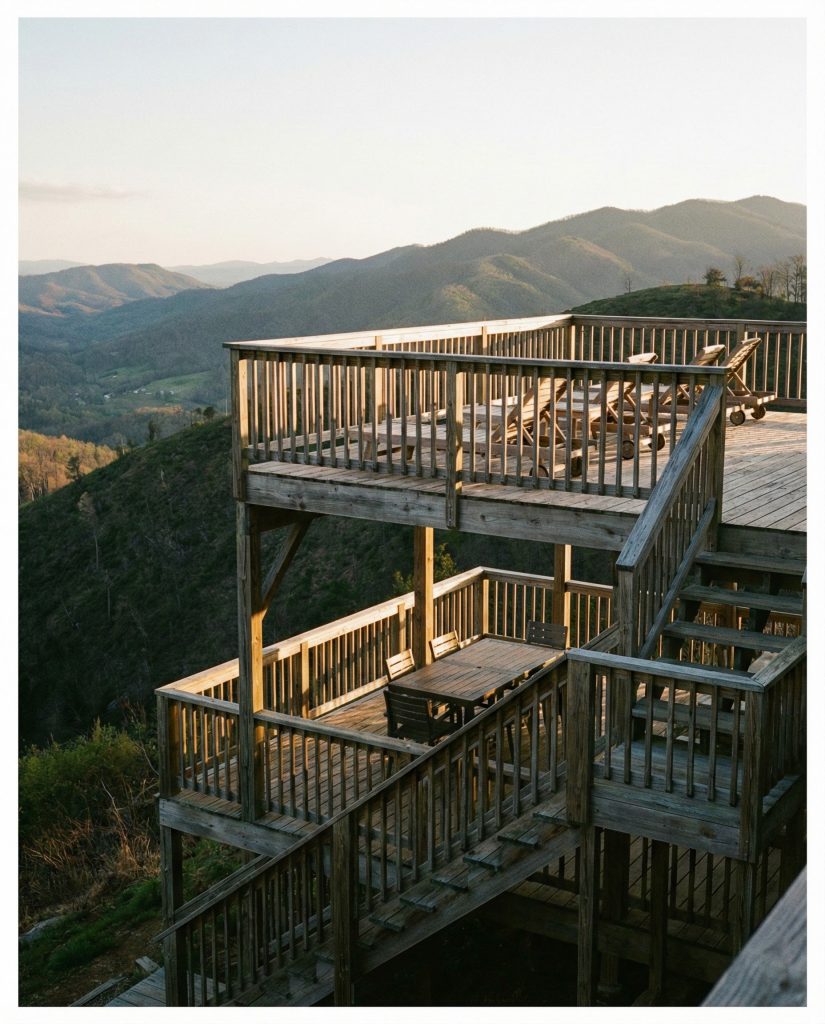
My neighbor installed one last summer and says the lower level stays cooler on hot afternoons—it’s tucked under the upper deck’s shade, making it the perfect spot for afternoon naps in the hammock. The upper level catches sunrise with coffee, while the lower becomes the evening hangout zone. It’s like having two separate outdoor rooms that serve completely different purposes throughout the day.
3. Pool Deck Paradise with Integrated Seating
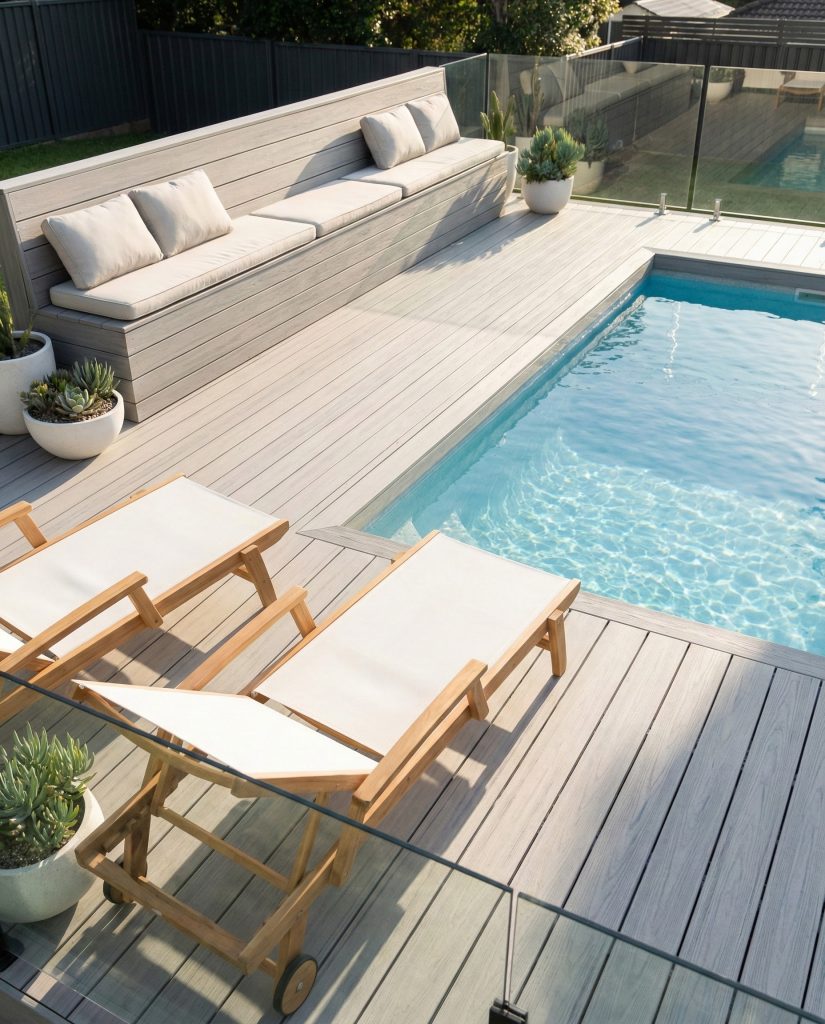
Wrapping your pool with decking creates a resort feel right at home, and built-in benches or lounging areas eliminate the need for bulky pool furniture. Trex or other composite materials work beautifully here—they don’t splinter, they stay cooler than traditional wood, and they handle constant moisture without warping. The key is creating zones: one area for sunbathing, another shaded spot for breaks, and maybe a corner with an outdoor shower or towel hooks. 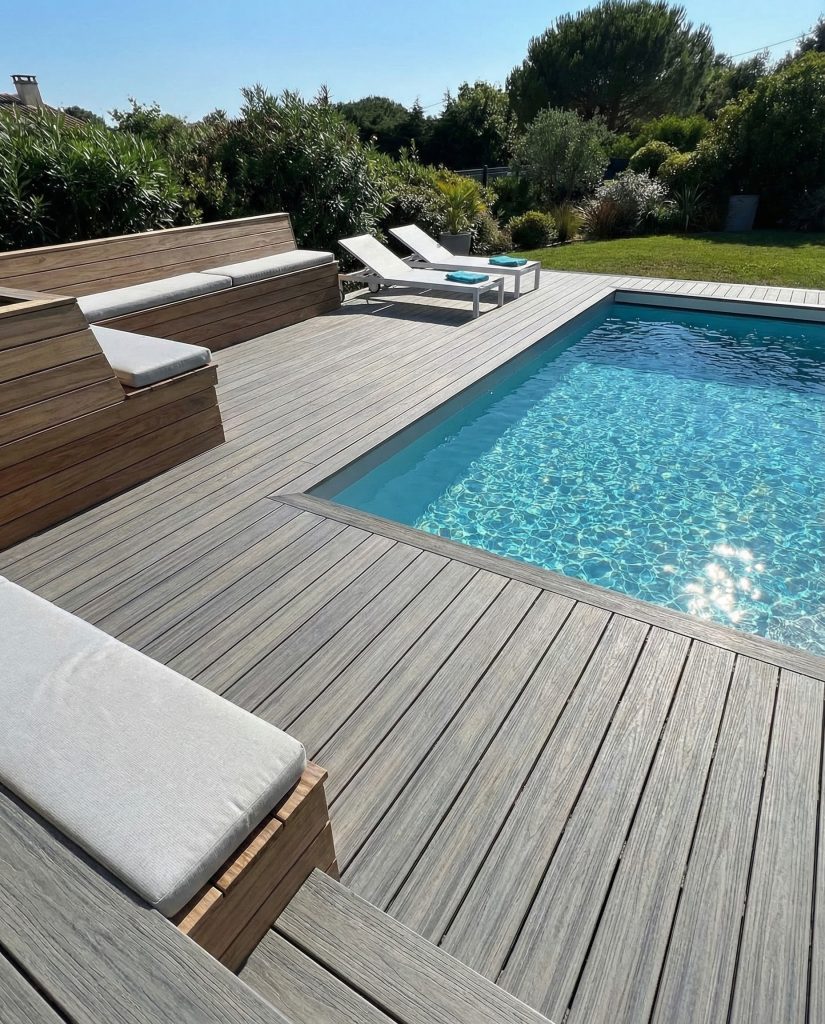
Practical insight: Leave at least 4 feet of deck space on all sides of the pool for safe passage. If you have a diving board or slide, allocate even more room. Many pool owners overlook drainage—make sure your decking has a slight slope away from the pool so rainwater doesn’t puddle. Adding wide steps into the pool not only looks luxurious but also provides a safe entry point for kids and older family members.
4. Covered Deck for Year-Round Use
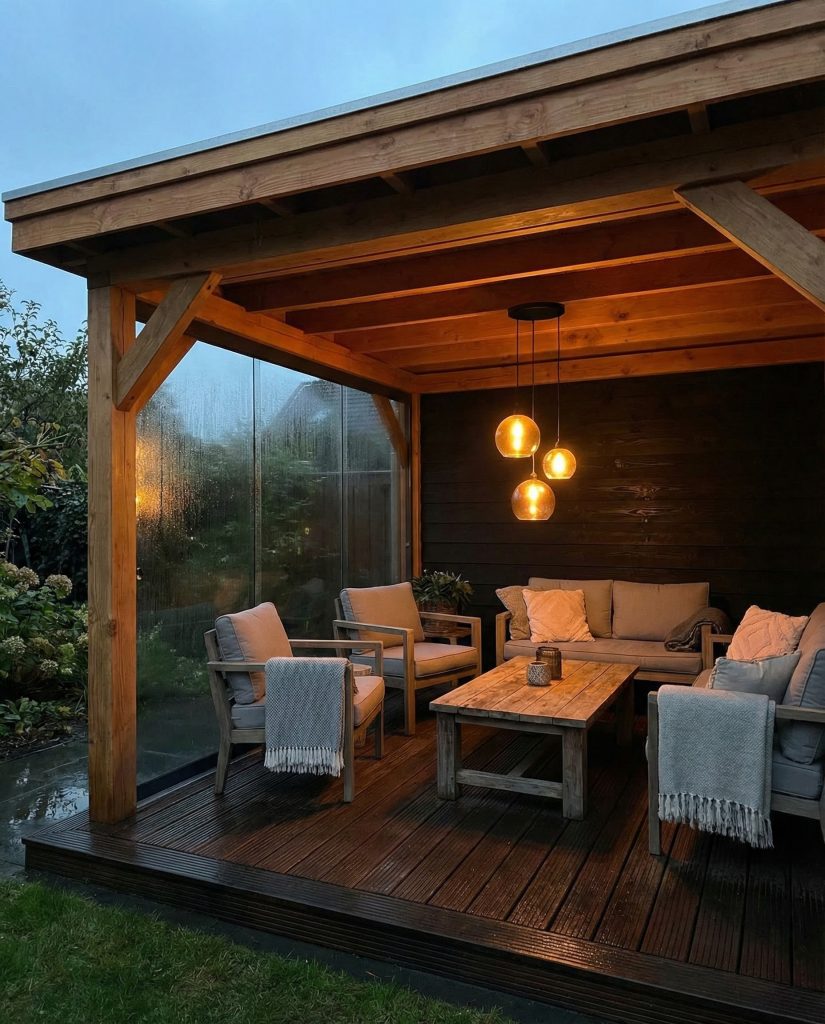
A covered deck extends your outdoor season well beyond summer, offering shelter from rain, intense sun, and even light snow. Whether you go with a traditional roof, a pergola with retractable shade, or a modern metal awning, that overhead protection changes everything. You can leave cushions out, hang ceiling fans or lights, and actually use the space during drizzly spring mornings or crisp fall evenings. It becomes a true outdoor room rather than a fair-weather zone. 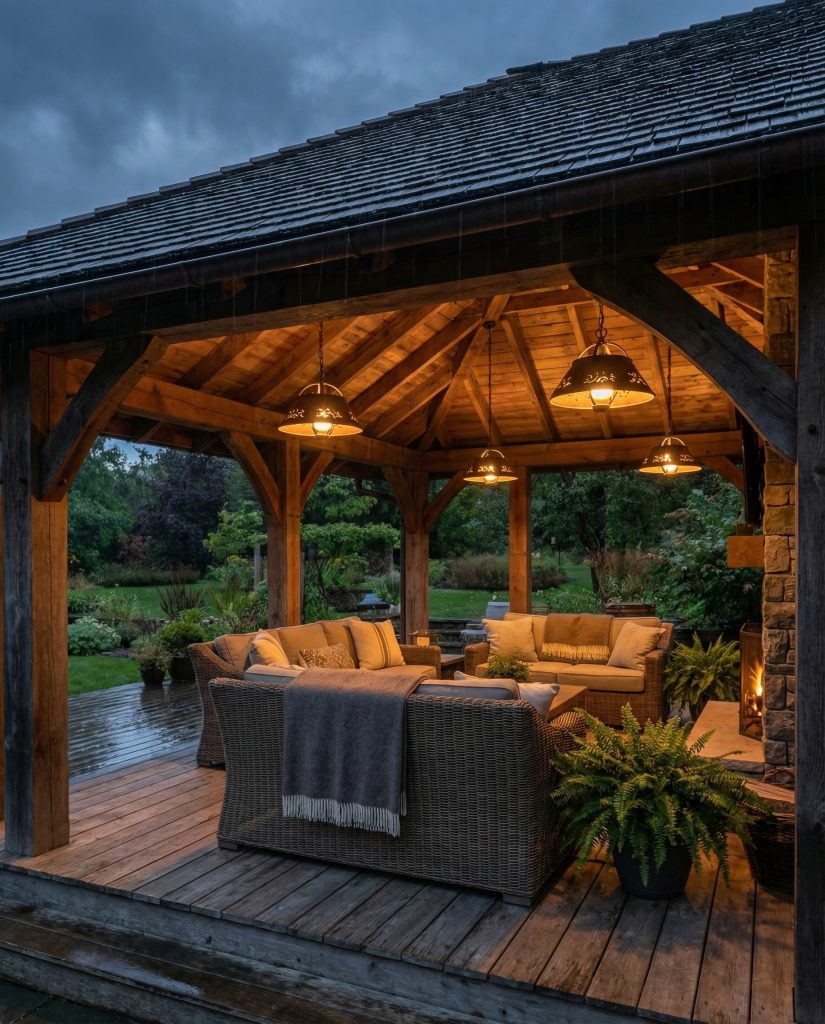
In the Pacific Northwest, covered decks are practically standard—homeowners joke that without a roof, you’d only use your deck three months a year. Even in sunnier climates like Arizona or Southern California, the shade makes summer afternoons bearable. The investment pays off in usability: you’re not constantly moving furniture around or canceling outdoor plans because of weather. Plus, it protects your decking itself, extending the life of your materials.
5. Budget-Friendly Pallet Deck Refresh
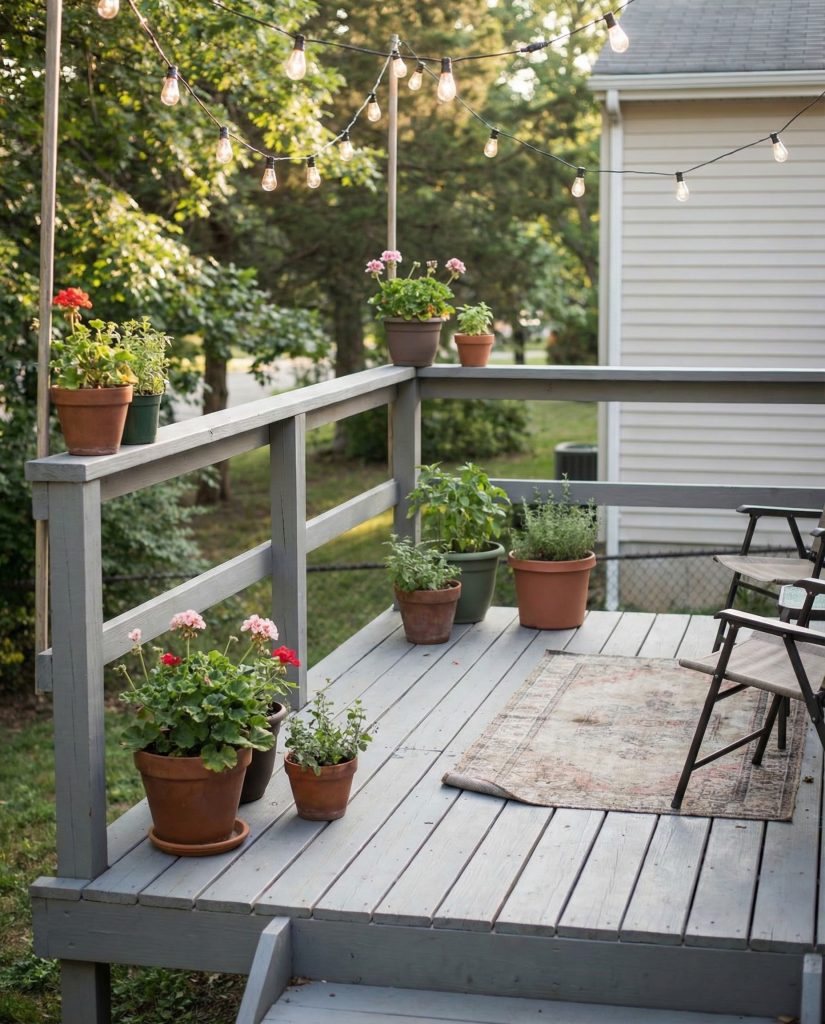
Going the budget route doesn’t mean sacrificing style—it means getting creative with materials and doing some of the work yourself. Pressure-treated lumber remains the most cheap option for framing and decking boards, and if you’re handy with a saw and drill, you can tackle a small deck over a weekend or two. Skip the intricate patterns and stick with a straightforward layout. Paint or stain in a fresh color to give it personality without adding much cost. 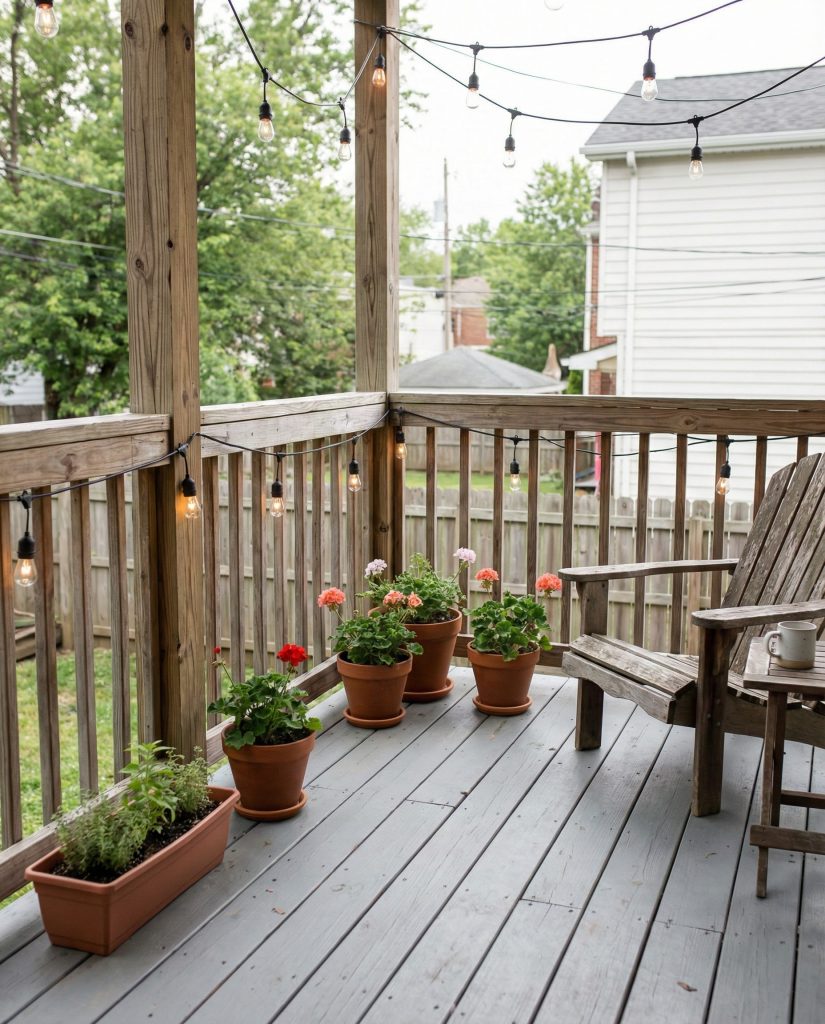
Budget angle: A basic 12×12 deck using standard pressure-treated wood can run around $1,500-$2,500 if you DIY, compared to $5,000+ for contractor-installed composite. Splurge on quality fasteners and structural components—those aren’t where you want to cut corners. Save money by shopping end-of-season sales for outdoor furniture, and use leftover paint from interior projects for a coordinated look. Many big-box stores offer free deck design consultations and cut lists.
6. Elevated Deck with Underneath Storage
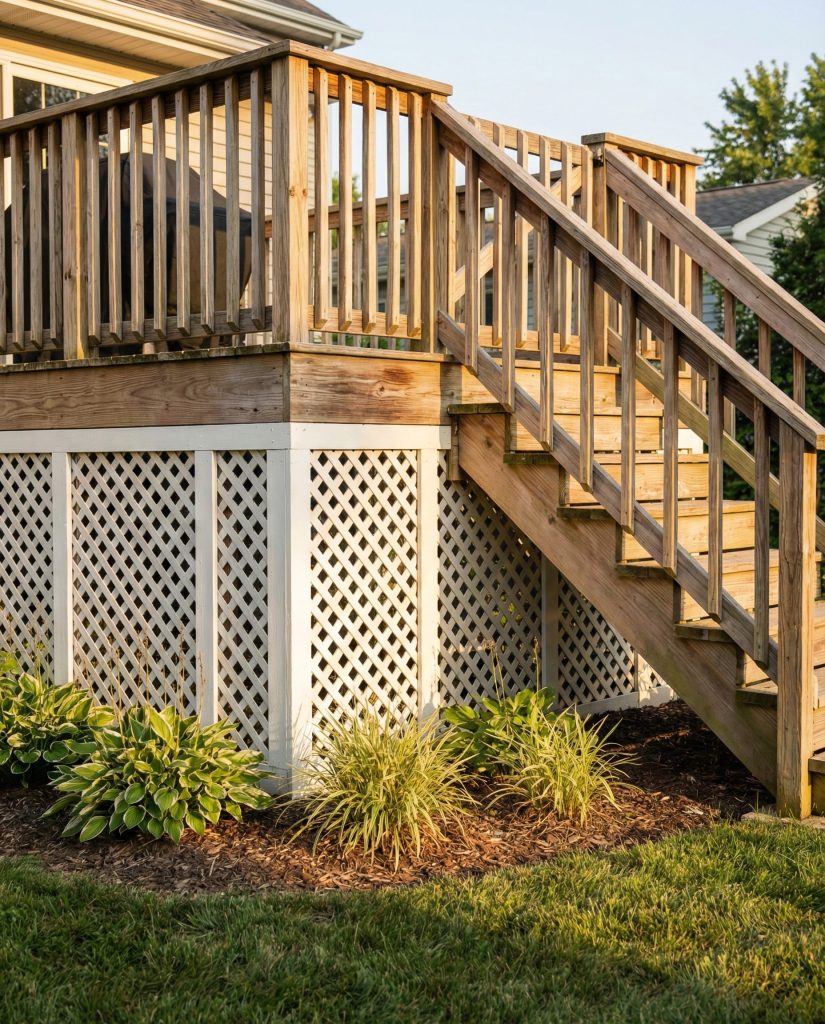
An elevated deck isn’t just about gaining height—it’s about claiming the space below for storage, a shaded retreat, or even a workshop. If your deck sits 3-4 feet off the ground, that underneath area is perfect for lawn equipment, pool supplies, or firewood. Enclose it with lattice or horizontal slats for a finished look, or go full walls with a door if you want weather-tight storage. The raised platform also improves drainage and keeps your outdoor living space high and dry. 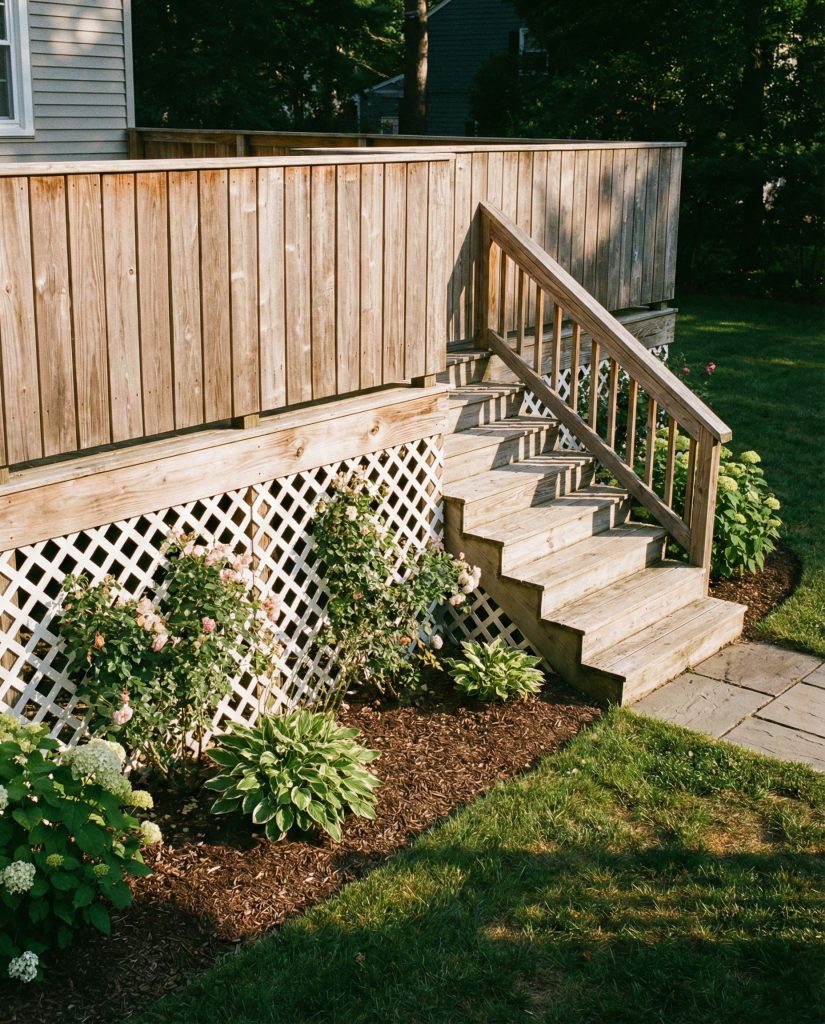
Common mistake: Not planning for access. Many homeowners build the deck and then realize they can’t easily get to the storage area underneath. Include a hinged panel or small gate in your lattice work from the start. Also, consider ventilation—that space can get musty if air doesn’t circulate. Adding gravel or pavers underneath prevents weed growth and creates a cleaner base than bare dirt.
7. Screened Porch Deck Hybrid
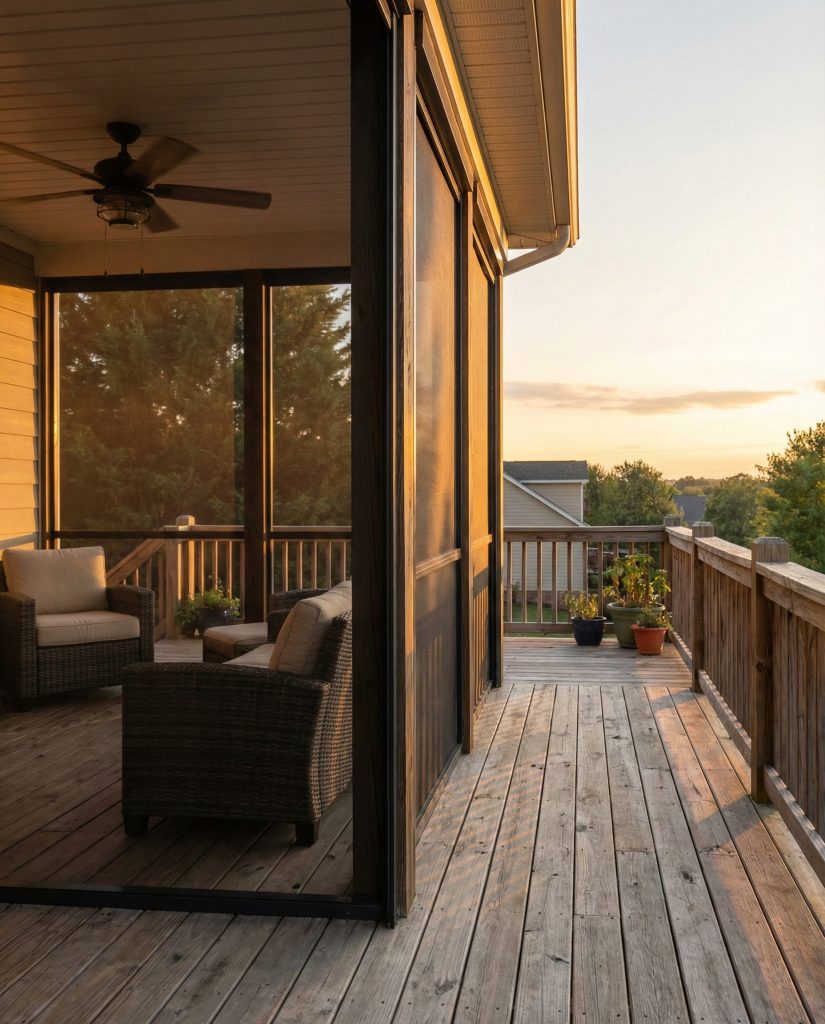
Combining screened porches with an open deck gives you the best of both worlds—an enclosed space where mosquitoes can’t ruin dinner, plus an open area for grilling and stargazing. The screened section often includes ceiling fans and comfortable seating, almost like an extra living room. The open deck portion connects seamlessly, perfect for overflow seating during parties or for anyone who wants to feel the breeze without the bugs. This setup is especially popular in the South and Midwest where summer evenings bring out the insects. 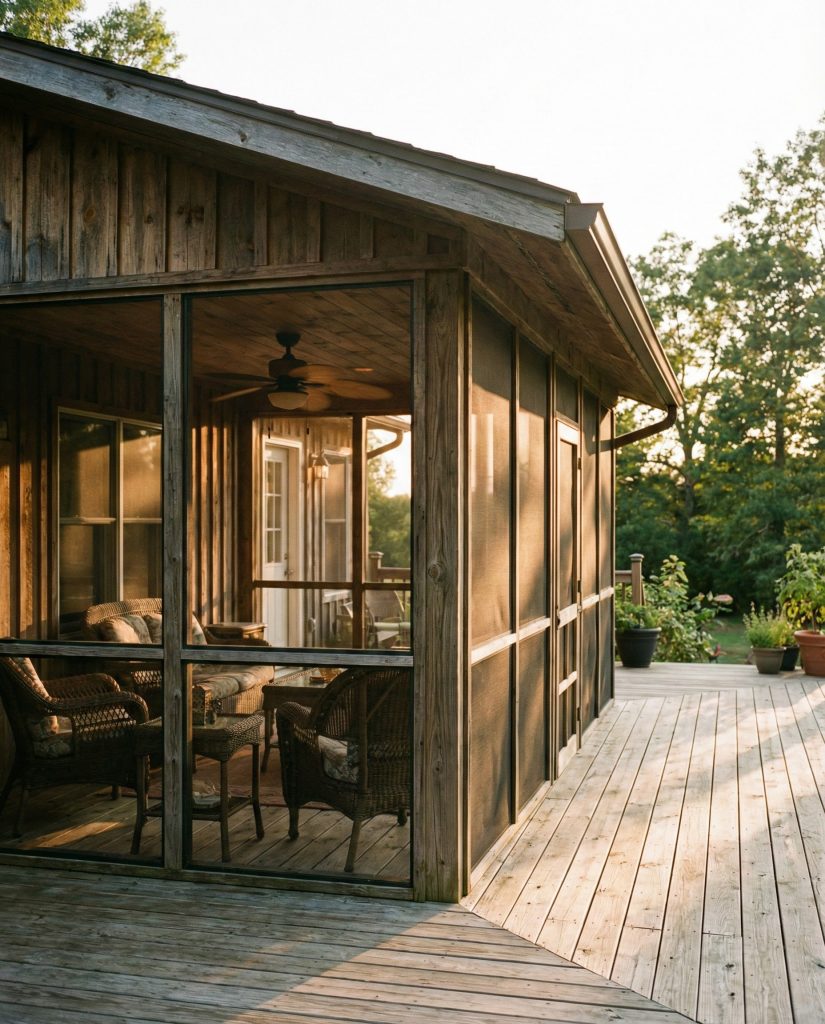
Expert insight: Frame the screened section first, then build the open deck to match the height exactly—you don’t want a step up or down between the two spaces. Use heavy-duty screening (20×20 mesh or better) to resist tears from pets or stray branches. Consider a retractable screen door instead of a traditional hinged one; it’s easier for carrying food and drinks in and out, plus it closes automatically so you’re not constantly shooing bugs away from an open door.
8. Multi-Level Deck for Large Yards
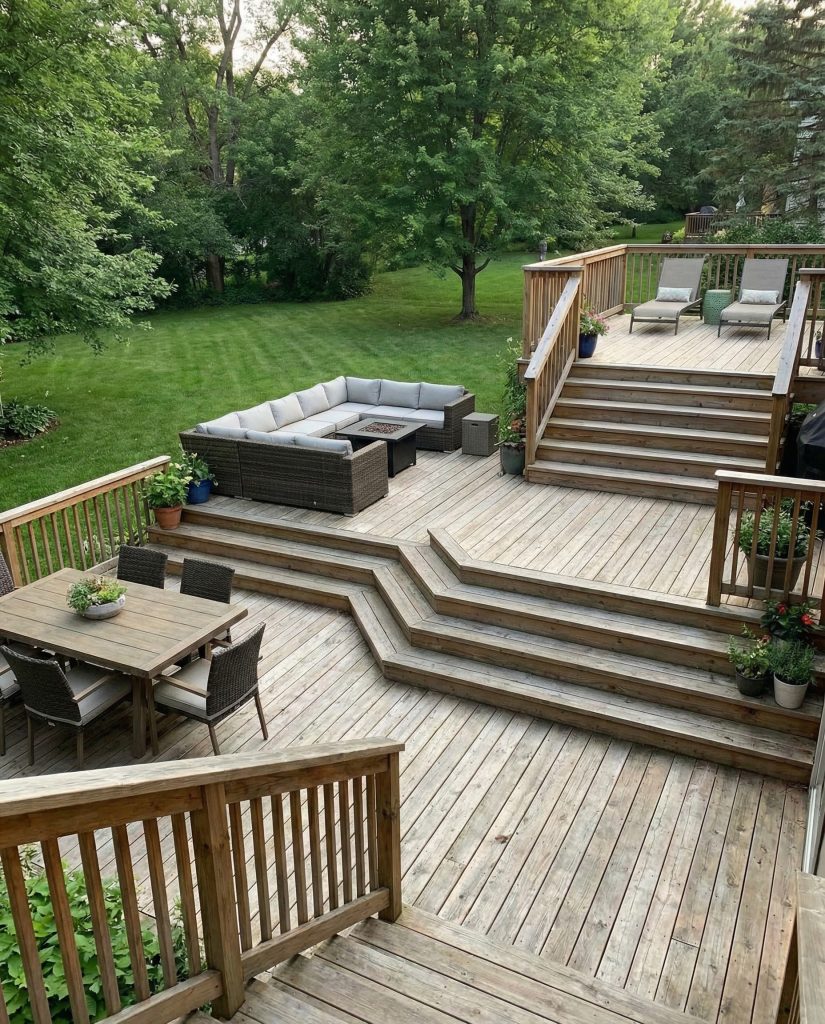
If you have a large backyard, a single-plane deck can feel like a missed opportunity. Creating multiple levels—even just a step down of 8-10 inches—defines separate zones without needing walls or dividers. One level might host your dining table, another your lounge seating, and a third could be dedicated to a fire pit or hot tub. The elevation changes add visual interest and make the space feel more dynamic, almost like indoor rooms that flow into each other. 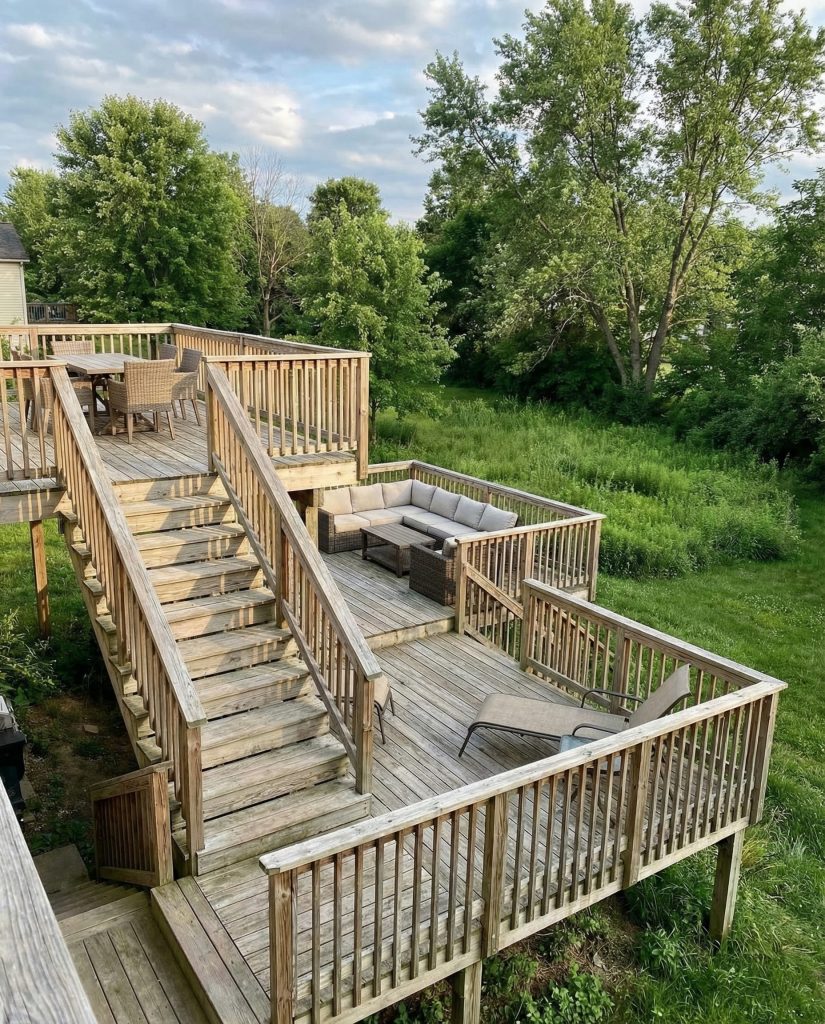
Real homeowner behavior: Most people use the level closest to the house most frequently—it’s just easier to step out with your morning coffee or evening wine. The farther levels tend to become destination spots: the place you go when you actually want to “go outside,” not just step outside. Plan your most-used furniture near the door, and save the lower or farther levels for occasional entertaining or seasonal use. It sounds obvious, but a lot of deck designs ignore this basic human behavior.
9. Narrow Deck for Tight Spaces
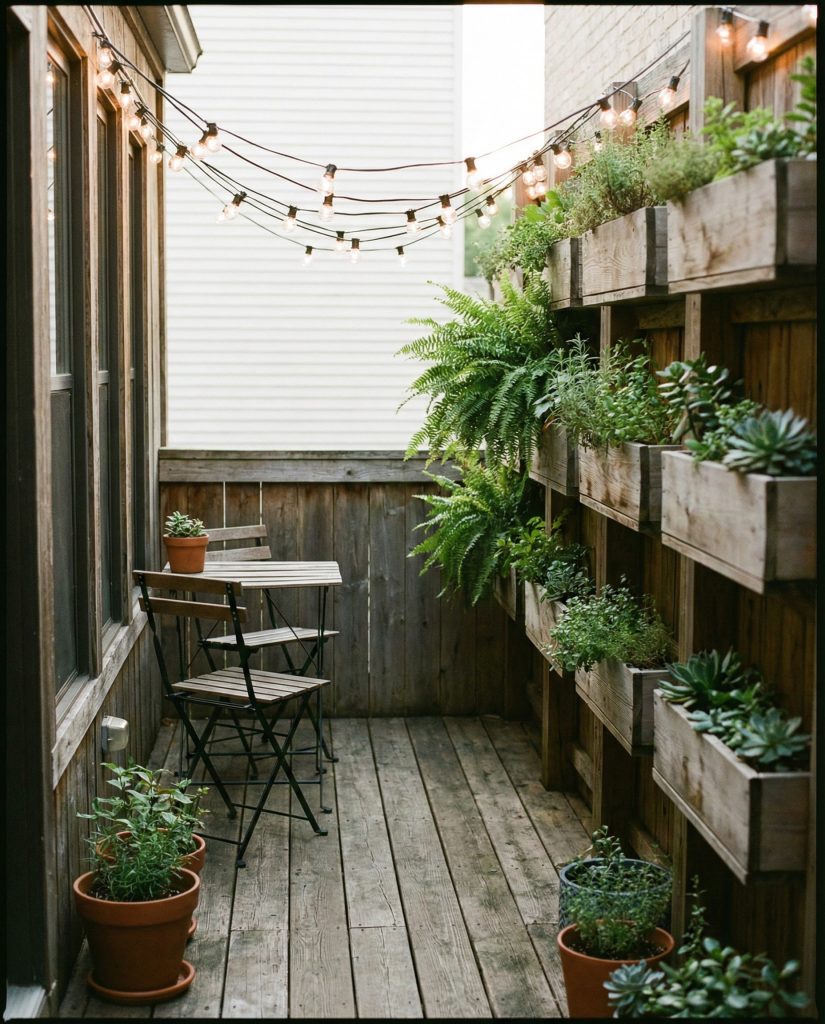
A narrow deck along the back of a townhouse or condo can still deliver major impact. Even a 6-8 foot depth gives you room for a bistro set, some planters, and a string of lights. The trick is treating it like a hallway rather than a room—arrange furniture against the house wall to keep the pathway clear. Long, skinny benches with storage underneath work beautifully here, and vertical gardens or hanging plants draw the eye up instead of emphasizing the limited width. 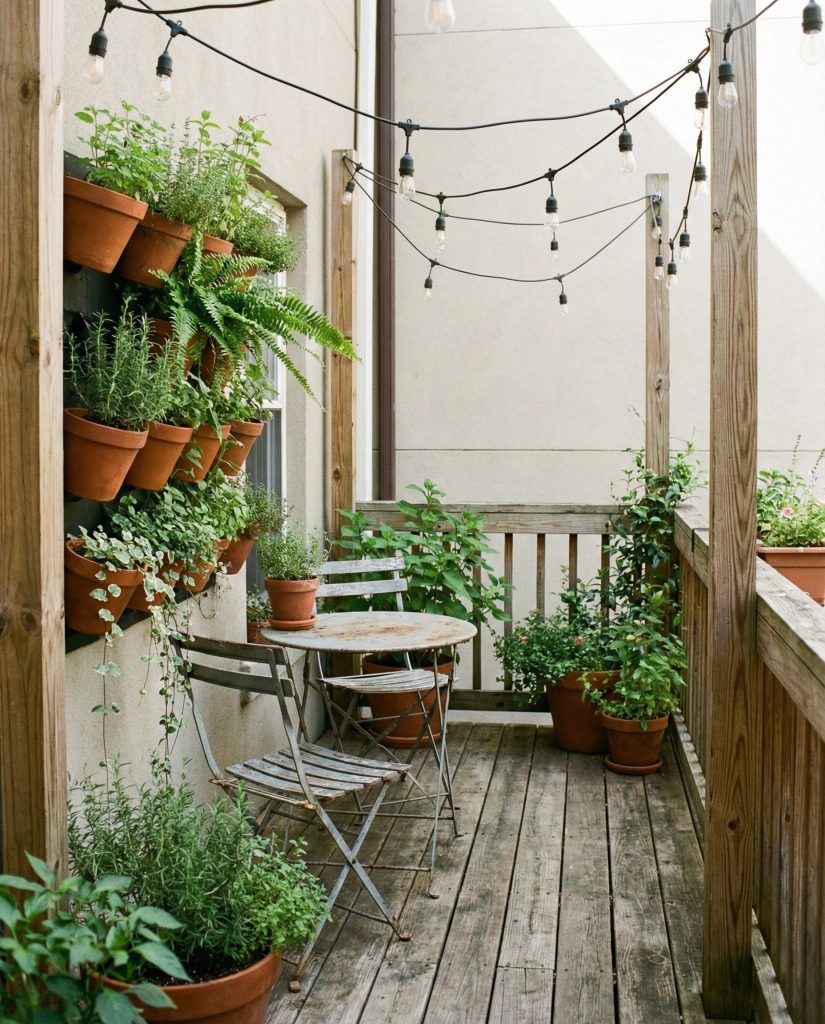
Where it works best: Urban rowhomes in cities like Philadelphia, Baltimore, or D.C., where backyards are more like courtyards. Also great for side-yard installations where you wouldn’t normally think to build a deck. Consider running the boards perpendicular to the house to create visual width—horizontal lines make narrow spaces feel wider. Skip bulky furniture; folding chairs and nesting tables let you adjust based on whether you’re solo with a book or hosting a few friends.
10. Wooded Deck That Embraces Nature
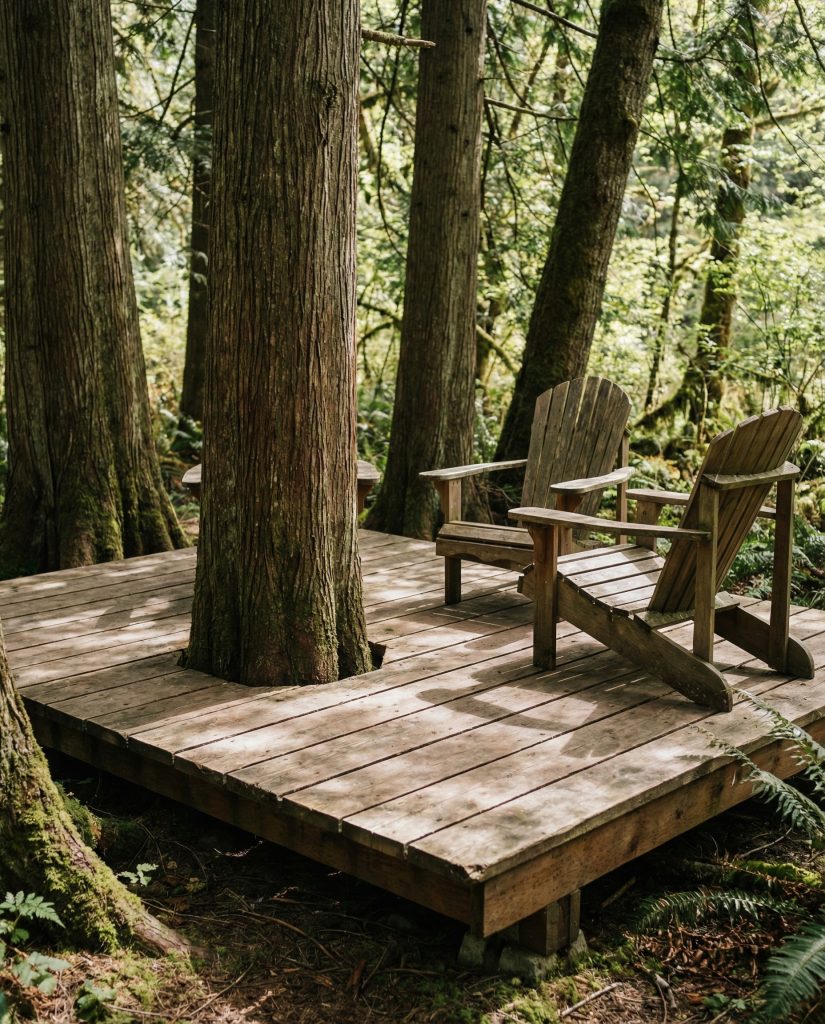
Building a deck in a wooded lot means working with trees, not against them. Instead of clearing every trunk in sight, consider leaving a tree or two growing through the deck itself—it creates an enchanting, treehouse vibe and provides natural shade. Use the existing canopy to your advantage by skipping a roof and letting branches create dappled light. Stain the wood in earthy tones that blend with bark and fallen leaves, and keep furniture simple so the forest remains the star. 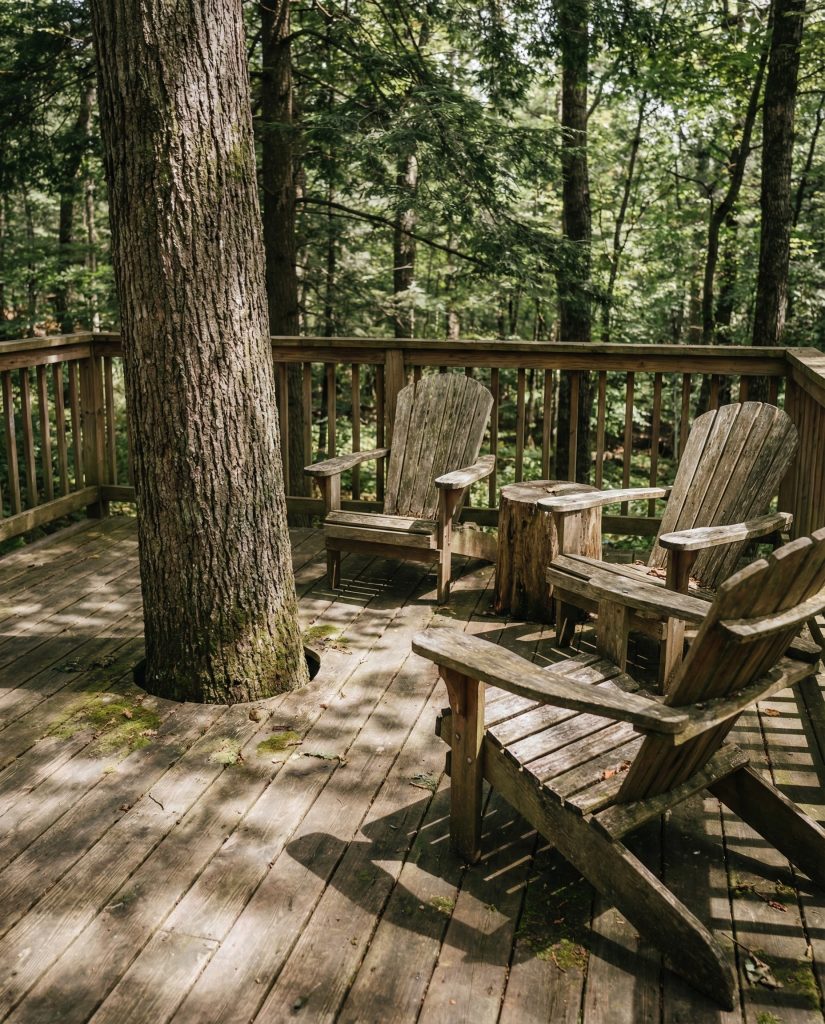
Practical insight: When you cut a hole for a tree, leave at least 4-6 inches of clearance around the trunk—trees grow, and you don’t want the deck to strangle it or create a maintenance nightmare as the trunk expands. Use a flexible rubber collar to close the gap and keep debris from falling underneath. Also, be prepared for leaf cleanup; wooded decks require more sweeping and occasional pressure washing to prevent moss and algae buildup on shaded boards.
11. Corner Deck Maximizing Property Lines
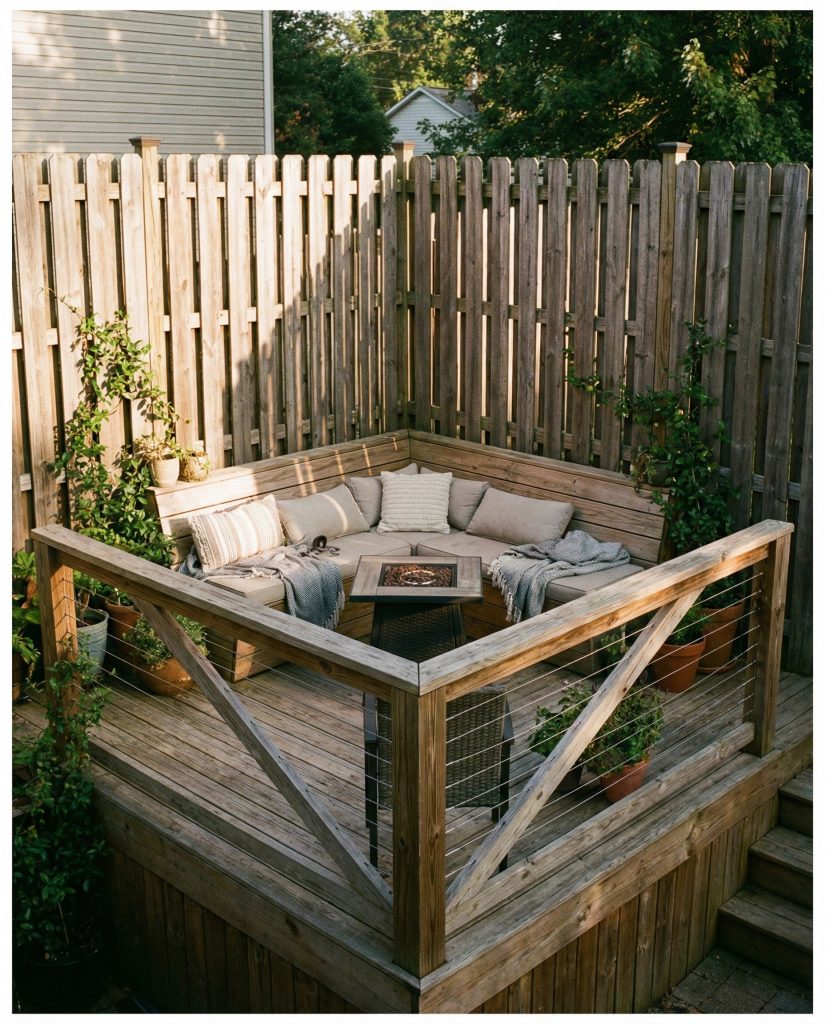
If your backyard corner catches the best sunlight or has the prettiest view, don’t waste it. A corner deck can feel like a private retreat, tucked away from the main traffic flow of your yard. This layout works especially well if you have an L-shaped house or if privacy is a concern—the two walls or fences naturally create enclosure. You can get creative with diagonal railings or angled benches that follow the property lines, making the geometry part of the design rather than a constraint. 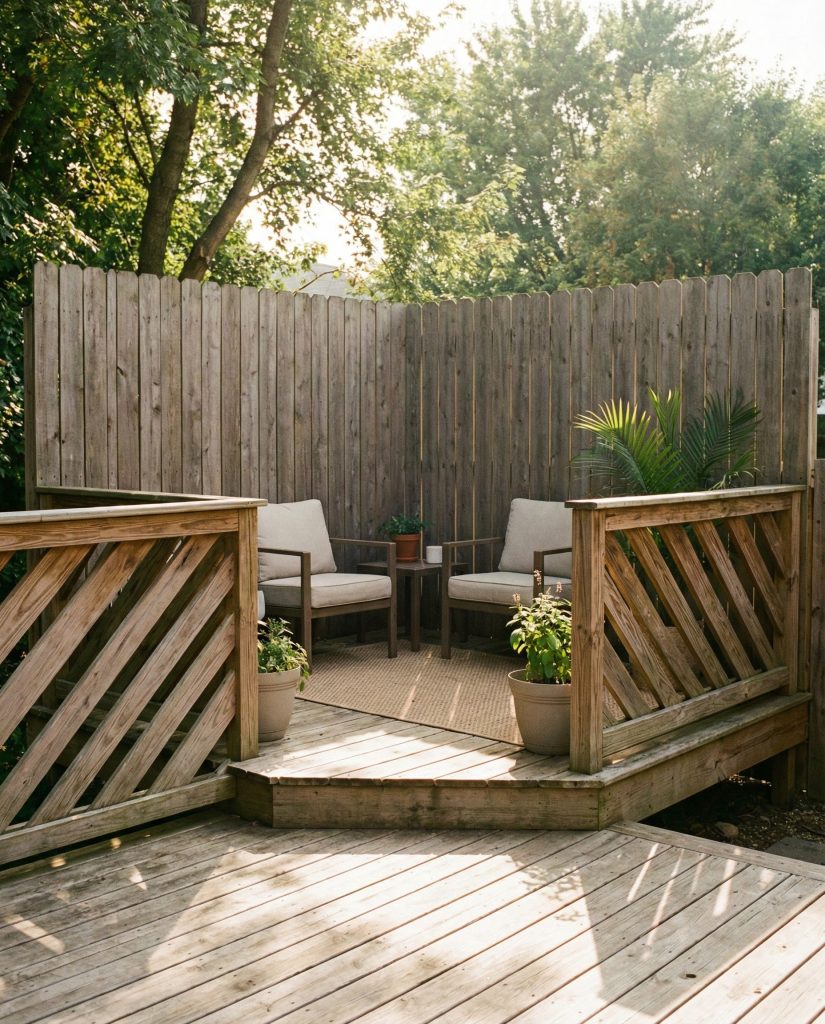
A couple on my street built a corner deck because their side yard was unusable otherwise—too narrow for anything but a walkway, but perfect when they extended it into the back corner. Now it’s their favorite spot for morning coffee, shielded from neighbors’ views and catching early sun that the main patio never gets. They strung a hammock across the diagonal, and it’s become the most-used part of their whole outdoor setup.
12. Long Linear Deck for Entertaining
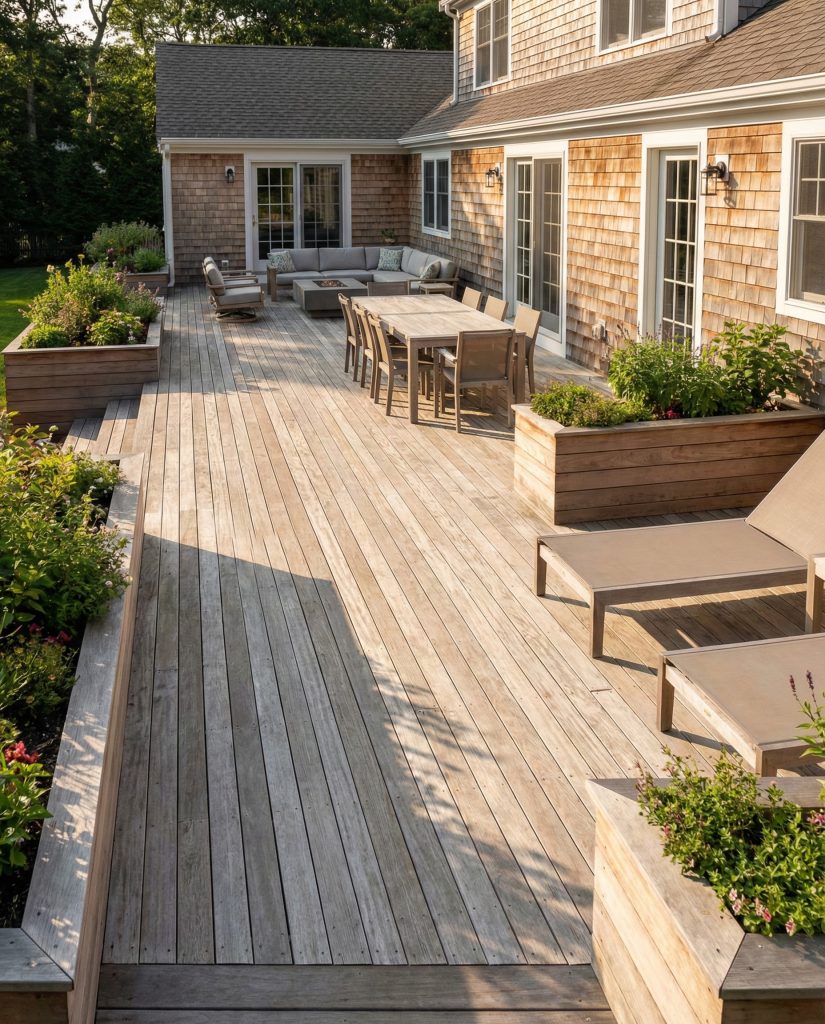
A long, runway-style deck works beautifully along the back of ranch homes or split-levels, giving you serious square footage for entertaining without eating up your whole yard. This outdoor layout naturally divides into zones—dining at one end, lounging in the middle, grilling at the far end. The length also creates a sense of flow, encouraging people to move around during parties rather than clumping in one spot. It’s perfect if you have a great view you want to emphasize, as the extended platform gives everyone a front-row seat. 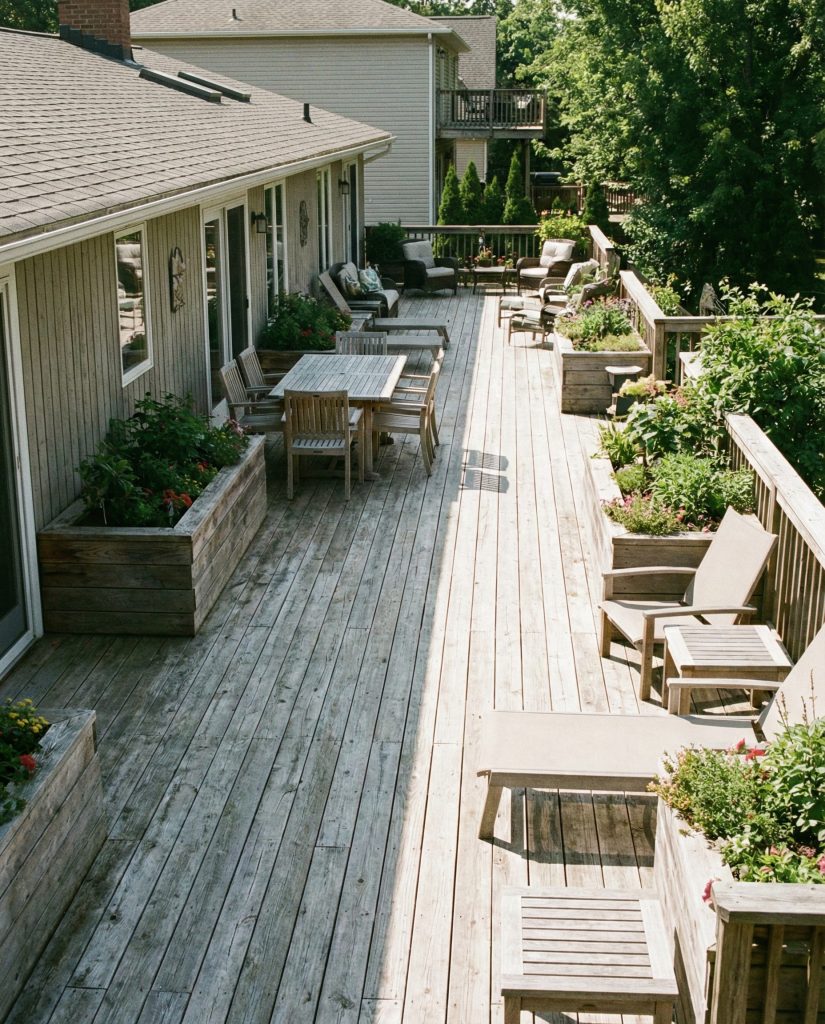
Common mistake: Building too narrow. A long deck needs to be at least 12 feet deep to feel functional—any less and furniture feels crammed against the house with no room to walk behind it. Many DIYers go 10 feet to save materials, then regret it when they can’t pull chairs out from the table without blocking the path. Aim for 14-16 feet if budget allows; the extra width transforms usability, especially if you plan to add a grill or bar cart.
13. Tiny Deck for Studio Living
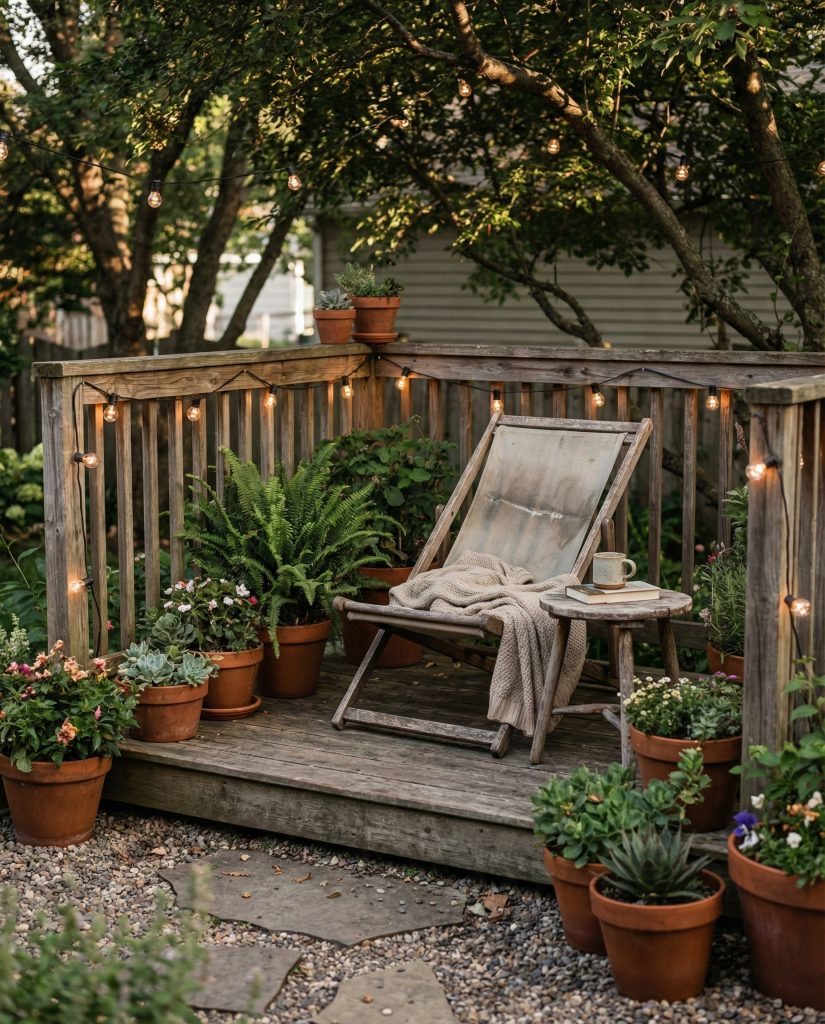
Even a tiny deck—maybe just 6×6 feet—can change your quality of life if you’re in a small home or apartment with a sliver of outdoor access. Think of it as a balcony you built yourself. One folding bistro chair, a potted herb garden, and some solar lanterns turn this micro-space into your morning sanctuary or evening wind-down spot. The key is choosing furniture that doesn’t overwhelm the space and leaning into vertical elements like trellises or wall-mounted planters to add greenery without stealing floor space. 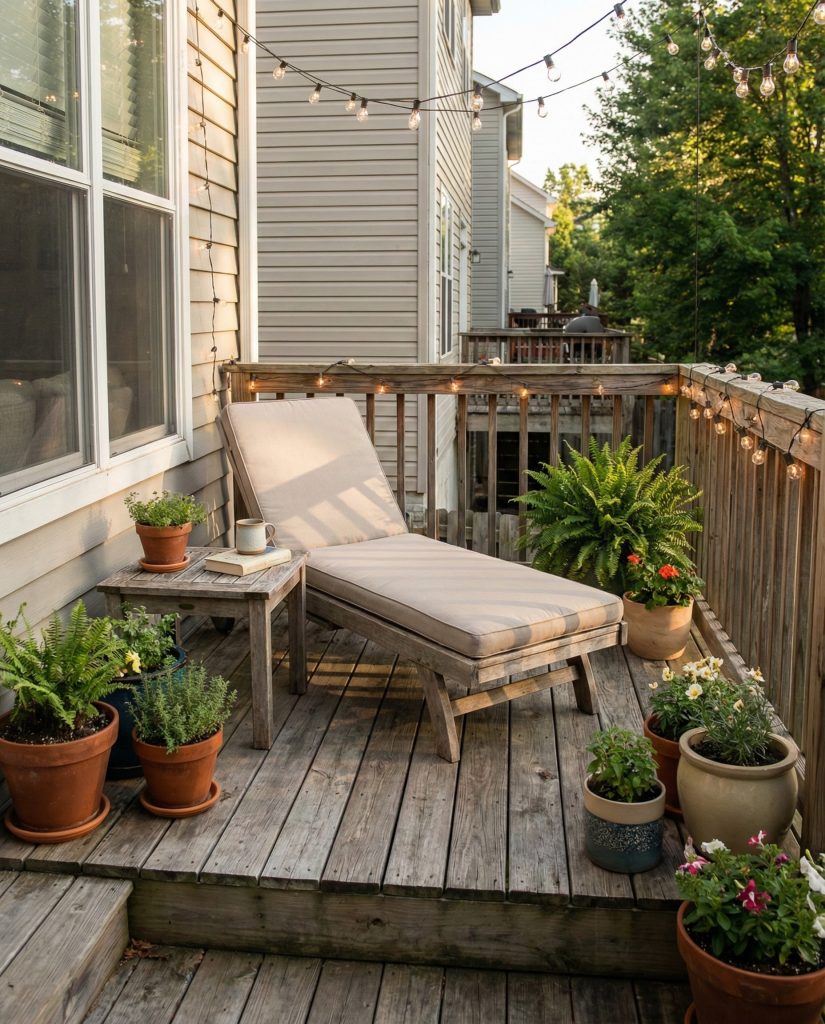
Budget angle: Small decks can be shockingly affordable—under $500 in materials if you keep it simple and do the labor yourself. The biggest expense is often the railing if your local code requires it. Some tiny deck builders skip traditional furniture altogether and use floor cushions or a low platform bench that doubles as storage. It’s amazing how much joy 36 square feet of outdoor space can bring, especially if you’ve been living without any private outdoor access.
14. Dream Deck with Outdoor Kitchen
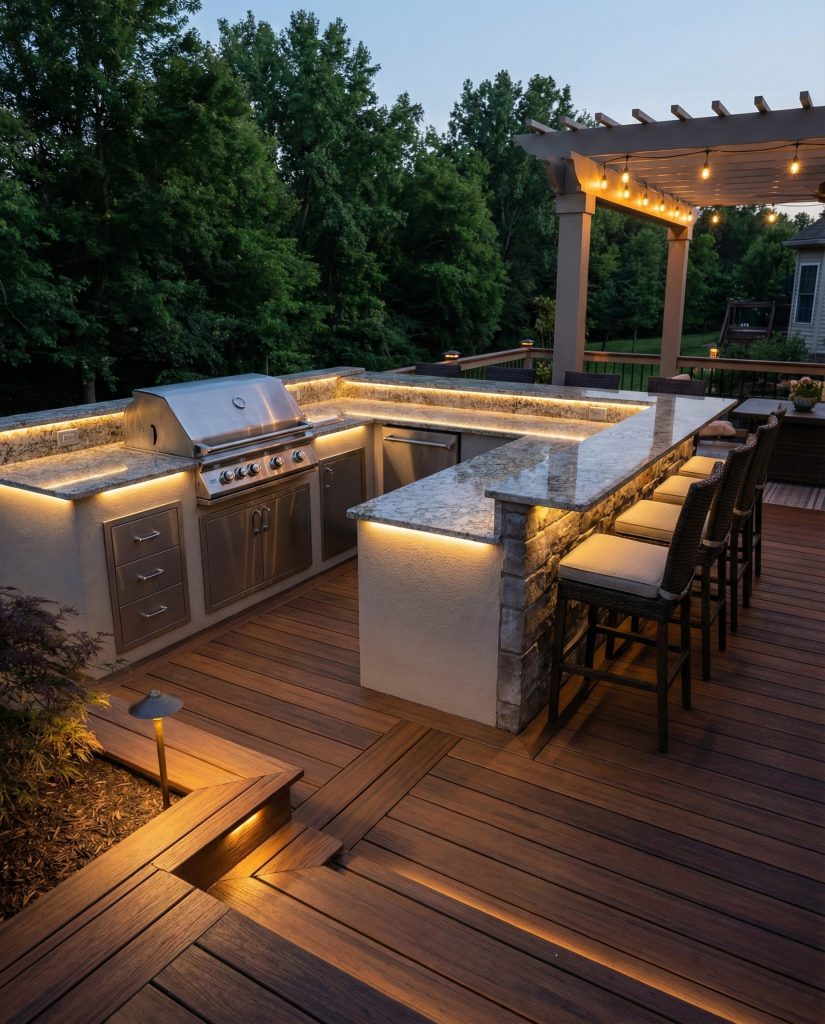
A dream deck for serious entertainers includes a full outdoor kitchen—built-in grill, sink, refrigerator, and ample counter space for prep work. This setup keeps the cook in the mix rather than isolated indoors while everyone else enjoys the party. Decor matters here: stainless appliances, stone or tile counters, and maybe a pergola overhead with pendant lights. It’s a significant investment, but for families who practically live outside from April to October, it fundamentally changes how you use your home. 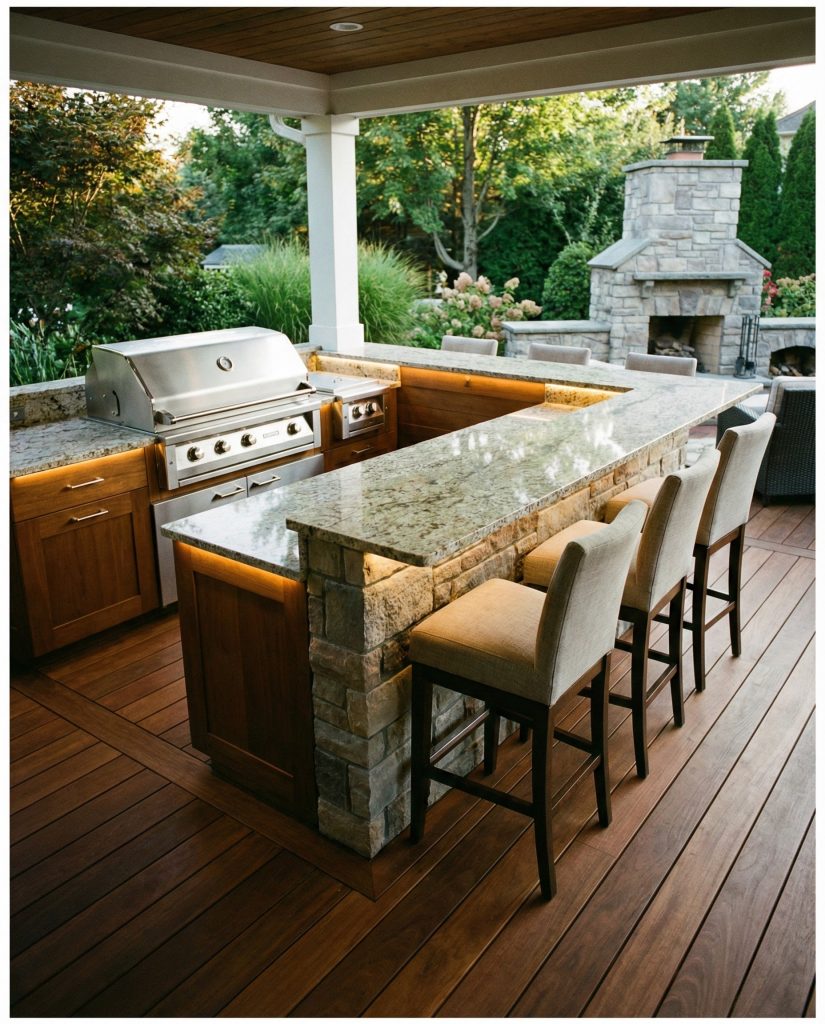
In Texas and California, outdoor kitchens are almost expected in higher-end homes—the climate supports year-round cooking outside, and it’s become a major selling point. Even in colder regions like Colorado or Minnesota, people are building them and just covering appliances during winter. The return on investment isn’t just financial; it’s about lifestyle. Families report eating together more often because the barrier to cooking outside is gone—you’re not lugging everything from the indoor kitchen and making six trips through the house.
15. Sloped Yard Solution with Strategic Grading
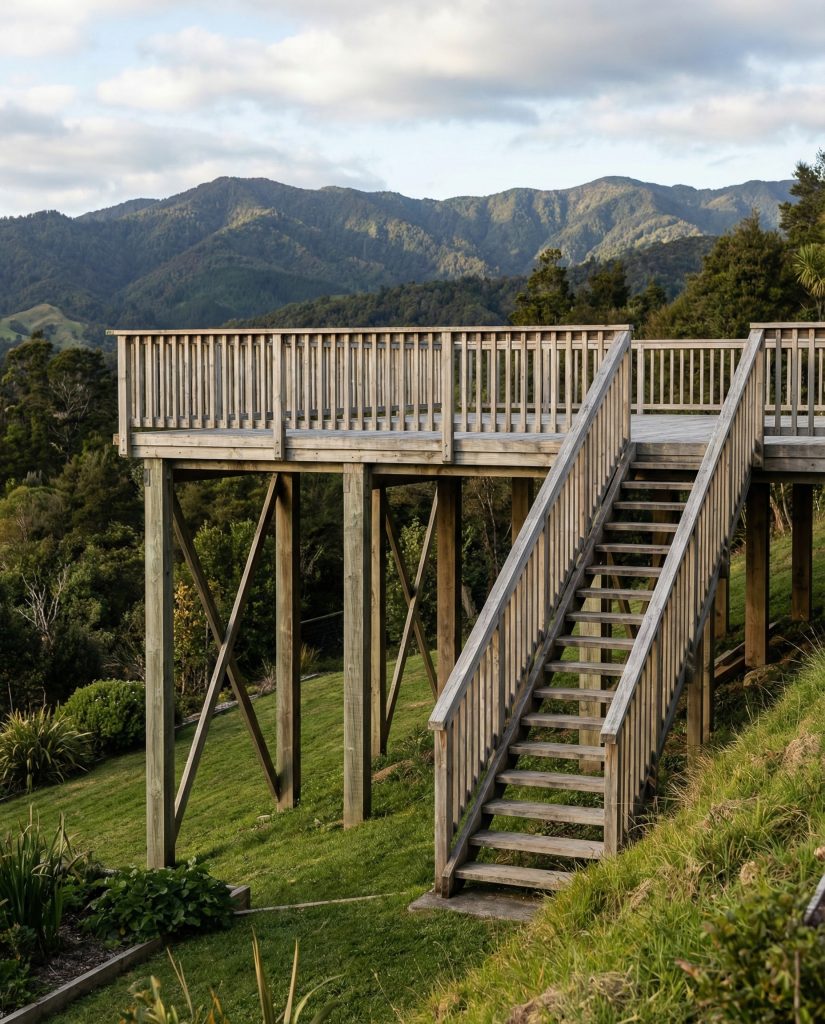
A sloped backyard doesn’t have to limit your deck dreams—it just requires smarter planning. The deck can step down with the grade using multiple small levels, or you can go the opposite route and build up to create one flat plane. The latter often involves taller posts on the downhill side and possibly retaining walls or deeper footings. Either way, you’re turning unusable slope into functional square footage, and the elevation often rewards you with better views and drainage. 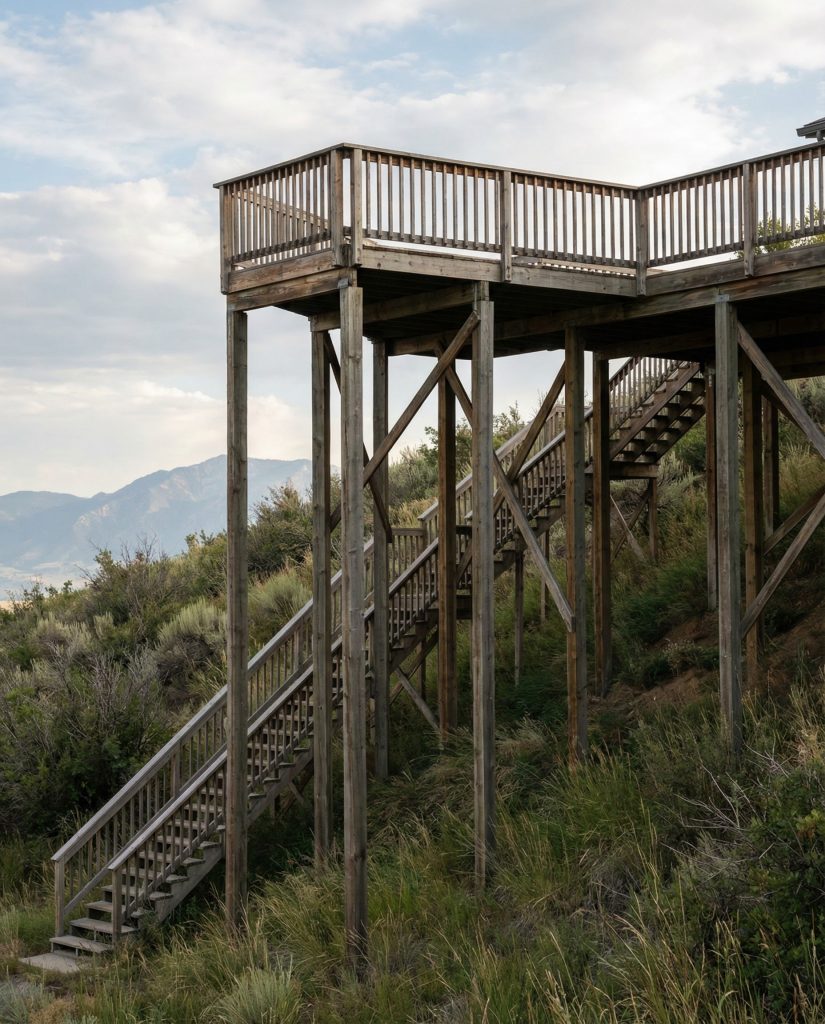
Expert commentary: Hire a structural engineer or experienced deck builder for sloped sites—DIY here can lead to serious problems down the road, including shifting, sagging, or even collapse if posts aren’t properly footed. The steeper the slope, the more critical professional design becomes. On the upside, sloped decks often need less excavation than level ones because you’re building up rather than digging down, and the space underneath can become bonus storage or a shaded patio area that stays cool naturally.
16. Hot Tub Deck with Privacy Screens
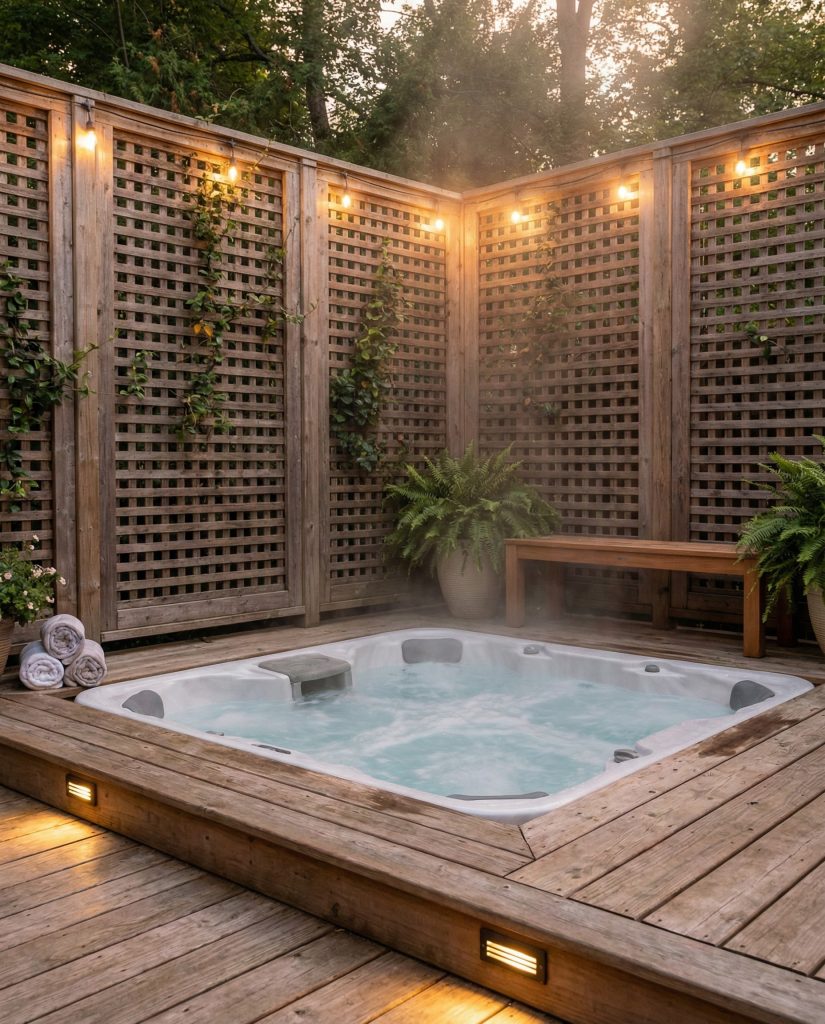
Dedicating a section of your deck to a hot tub requires planning for weight, access, and privacy. A typical 6-person hot tub filled with water and people weighs around 4,000-5,000 pounds, so the framing underneath needs beefing up—closer joist spacing and often doubled or tripled joists. Surround the tub with tall planters, lattice panels, or a three-sided pergola to create a sense of enclosure. You don’t necessarily need full walls, just enough screening so you feel comfortable relaxing without feeling like you’re on display to the neighbors. 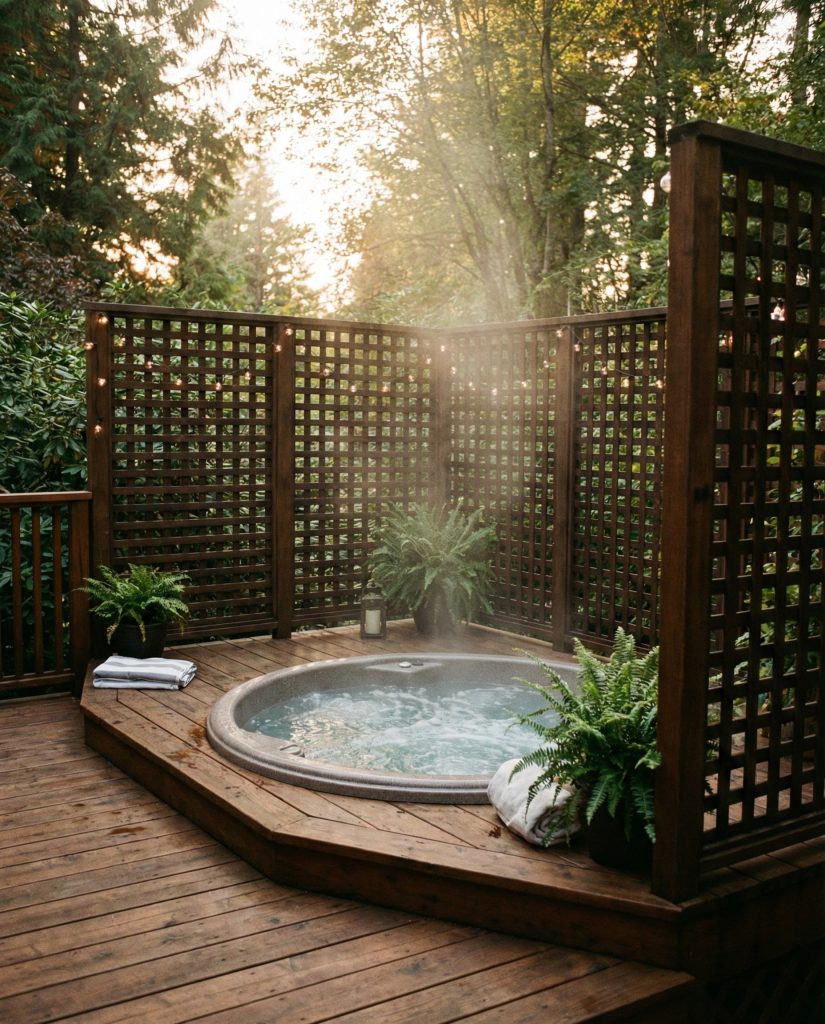
Real homeowner tip: Position the hot tub close to the house if possible—shorter electrical and plumbing runs save money, and you’re more likely to actually use it if you don’t have to trek across the yard in your robe and slippers on cold nights. Install a dedicated breaker and hire a licensed electrician; hot tubs draw serious power and improper wiring is dangerous. Also consider wind direction—nobody wants to sit in a hot tub in a cold breeze, so a corner spot with natural windbreaks (house walls, fences, or hedges) is ideal.
17. Stairs as Design Feature, Not Afterthought
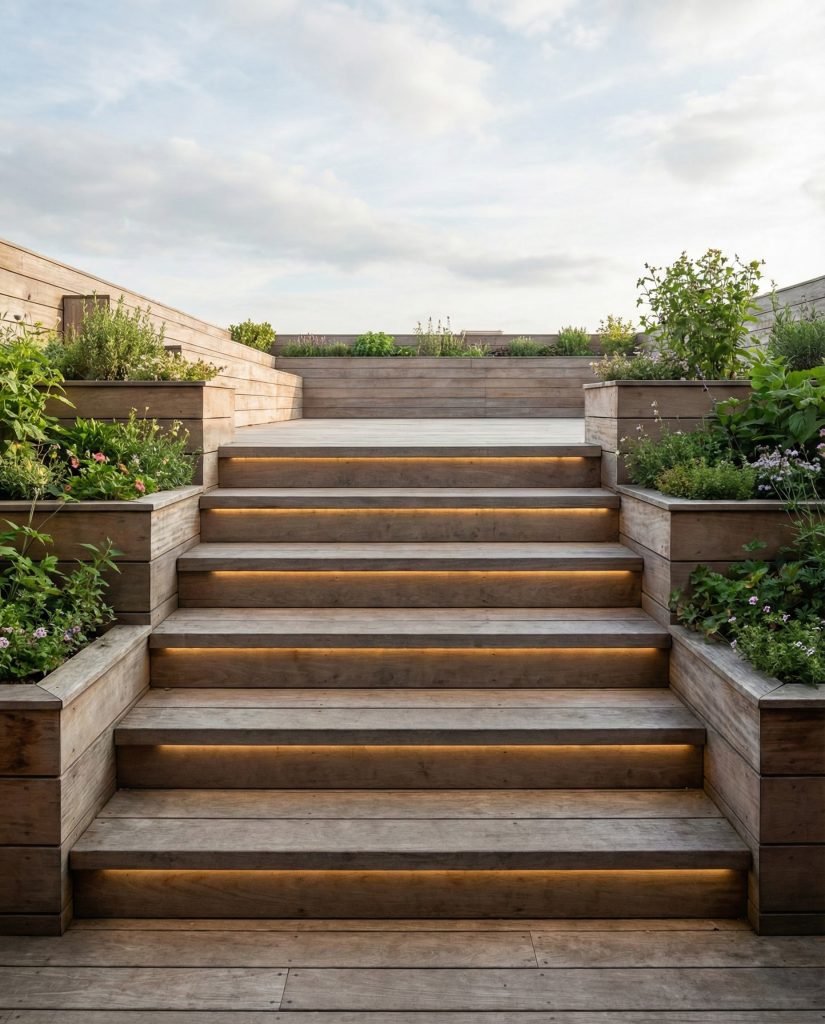
Most decks need stairs, so why not make them special? Wide, generous steps that wrap around a corner or cascade down in a fan shape turn a functional necessity into a focal point. Extra-deep treads (14-16 inches instead of the standard 11) can double as casual seating during parties. Some homeowners add built-in planters at each landing or LED strip lighting under each nose for safety and ambiance. The stairs become part of the deck’s personality, not just a means to an end. 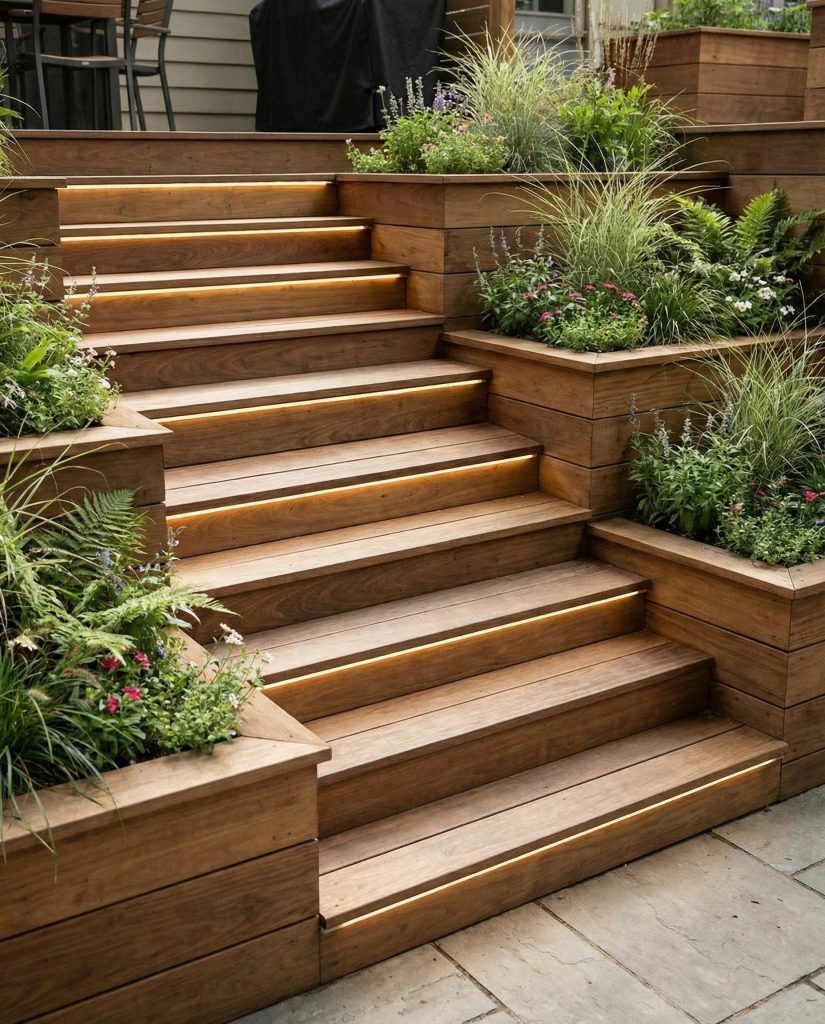
Where it works best: Properties where the deck connects to a garden, pool, or lower patio—somewhere people want to be drawn toward. Wide stairs create an inviting flow and handle party traffic better than a single narrow staircase where people bottleneck. If your deck is more than 3-4 feet off the ground, consider a mid-level landing to break up the climb. Building codes usually require a handrail above a certain height, so factor that into your design from the start rather than tacking it on later.
18. Composite Trex for Low Maintenance
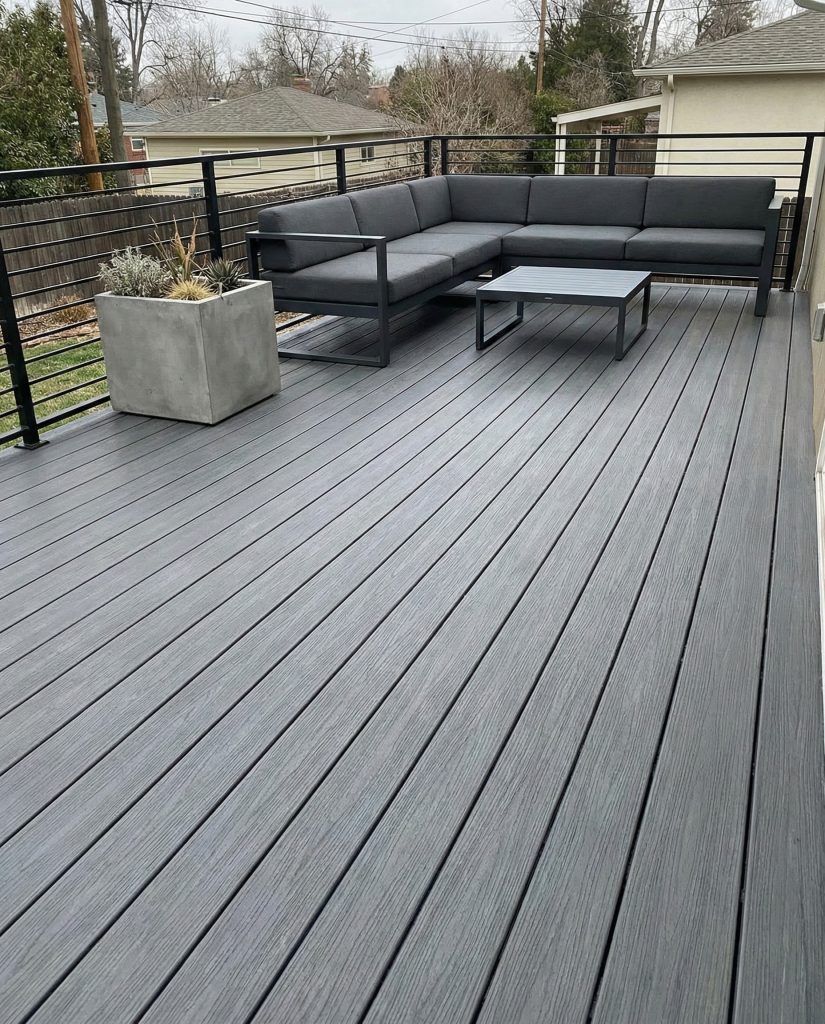
Trex and other composite decking materials cost roughly twice what pressure-treated wood does upfront, but the trade-off is minimal maintenance—no staining, no sealing, no worrying about splinters or rot. The boards resist fading, scratching, and mold better than wood, and they come in a range of colors from light grays to rich browns that mimic natural grain. For busy families or anyone who’d rather spend weekends enjoying the deck instead of maintaining it, composites deliver serious peace of mind. 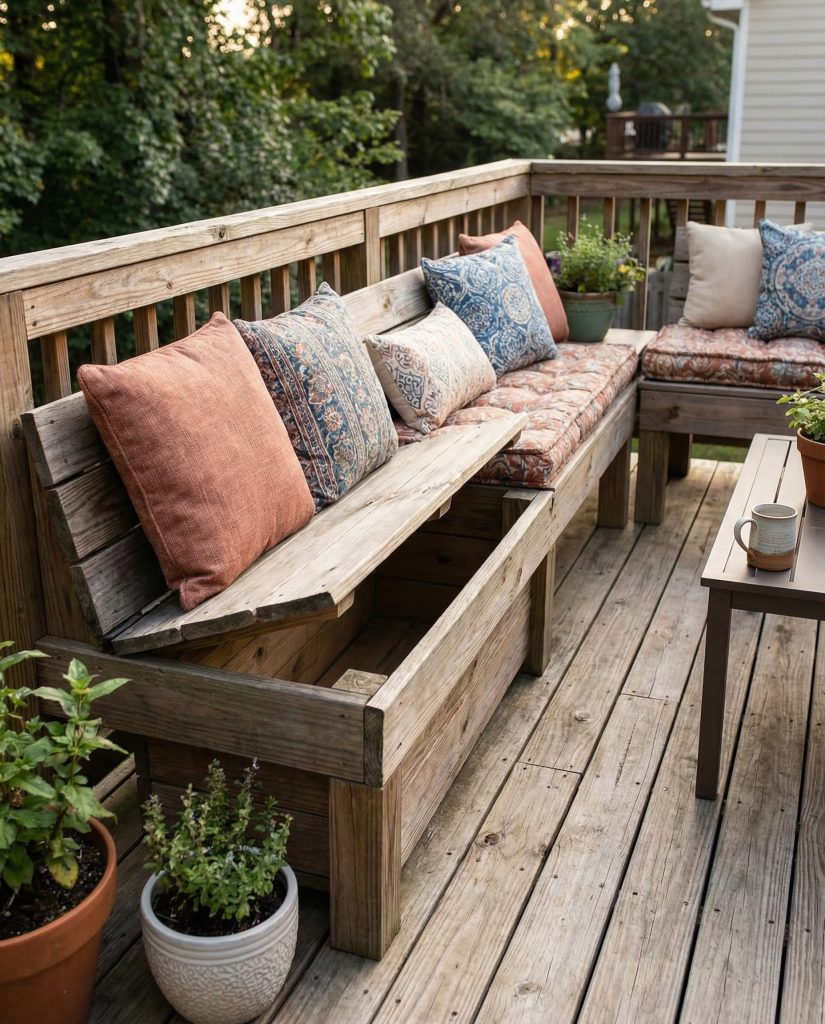
Practical insight: Composite decking can get hot in direct sun—sometimes uncomfortably so for bare feet. Choose lighter colors if you live in a hot climate or if your deck gets full afternoon sun. The material also expands and contracts slightly with temperature changes, so proper gapping during installation is critical; too tight and the boards can buckle, too loose and you’ll have drainage issues. Follow the manufacturer’s spacing guidelines religiously, especially if you’re in a region with big temperature swings.
19. Built-In Benches for Decor and Function
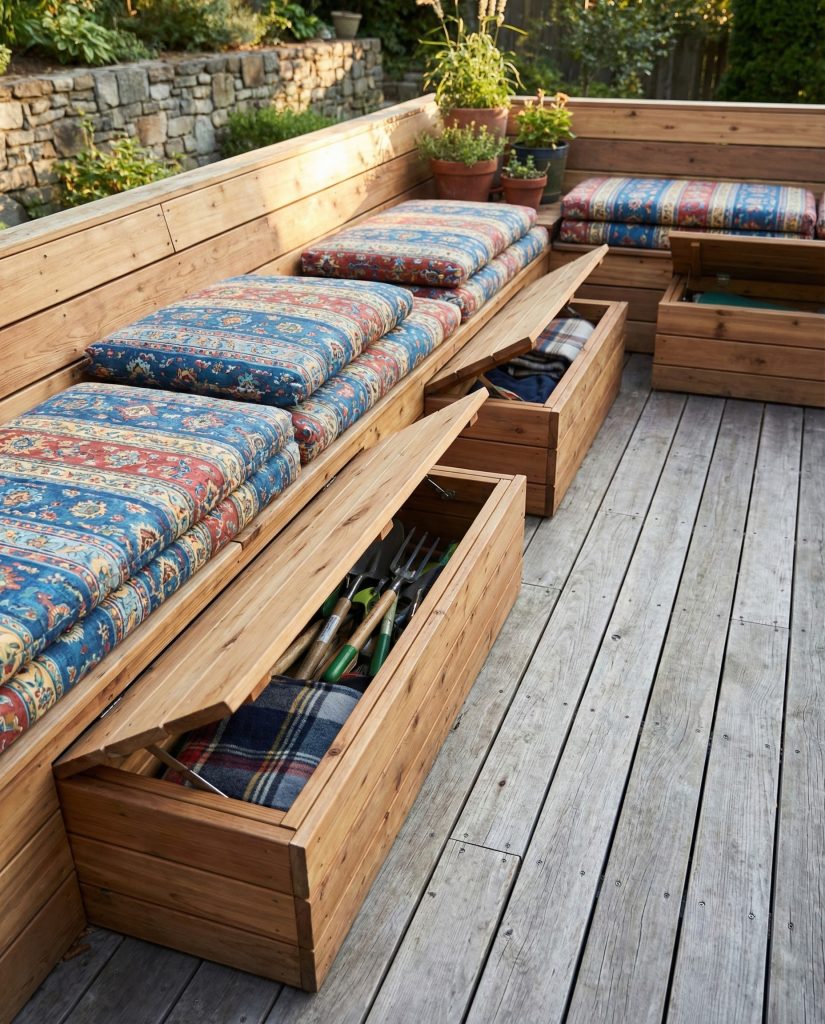
Built-in benches save money on furniture while adding architectural interest to your deck’s perimeter. They define the space naturally, provide seating that never blows away in a storm, and can hide storage underneath for cushions, toys, or grilling supplies. Add a few throw pillows and you have instant decor that feels custom and intentional. L-shaped configurations in corners create cozy conversation nooks, while straight benches along railings maximize seating without eating into walkways. 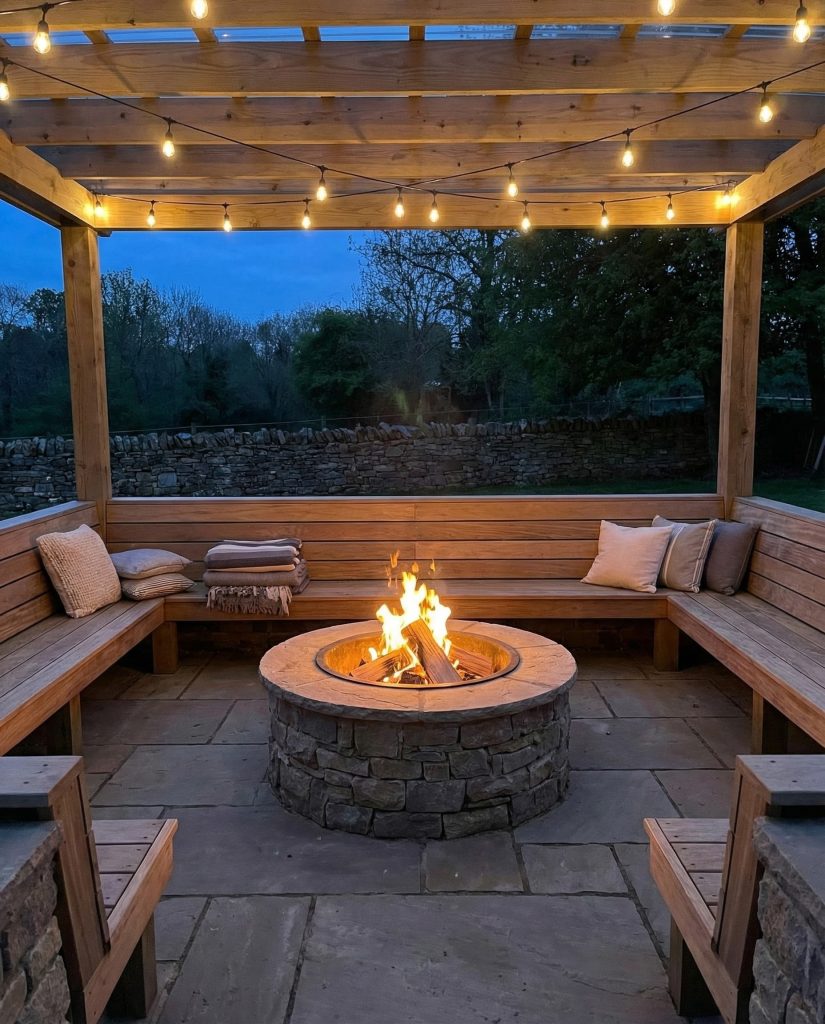
Common mistake: Building benches too low or too deep. A comfortable bench is typically 18 inches high (same as a dining chair) and 18-20 inches deep. Go shorter and it’s uncomfortable to sit on for more than a few minutes; go deeper and you’re perched on the front edge with your legs dangling or slouched against the backrest with feet not touching the ground. Test different heights with scrap lumber before you commit. Also, angle the seat slightly (1-2 degrees) toward the backrest for ergonomic comfort.
20. Sunken Fire Pit Deck
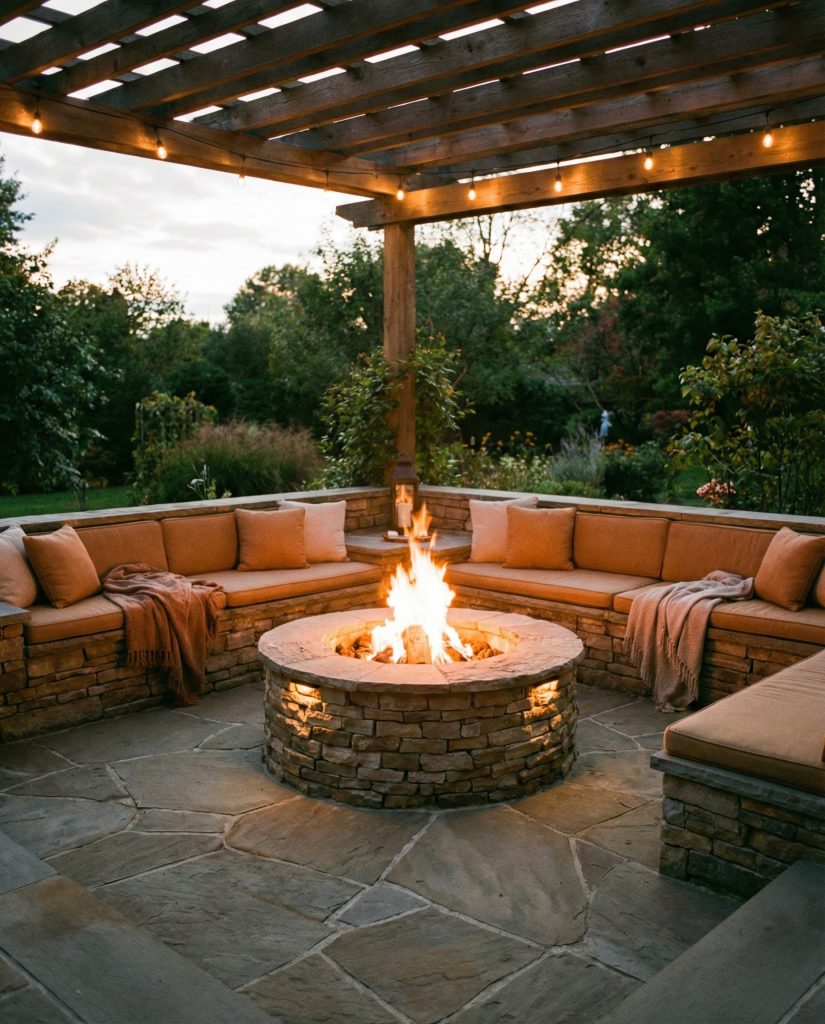
A sunken section of deck—even just 12-16 inches lower than the main level—creates an intimate gathering spot that feels like a cozy pit (pun intended). This is especially effective when centered around a fire feature. The lowered floor makes conversation easier because everyone’s seated at a more equal height, and it visually separates the fire zone from the dining or cooking areas. Built-in seating around the perimeter completes the circle and eliminates the need for dragging chairs around. 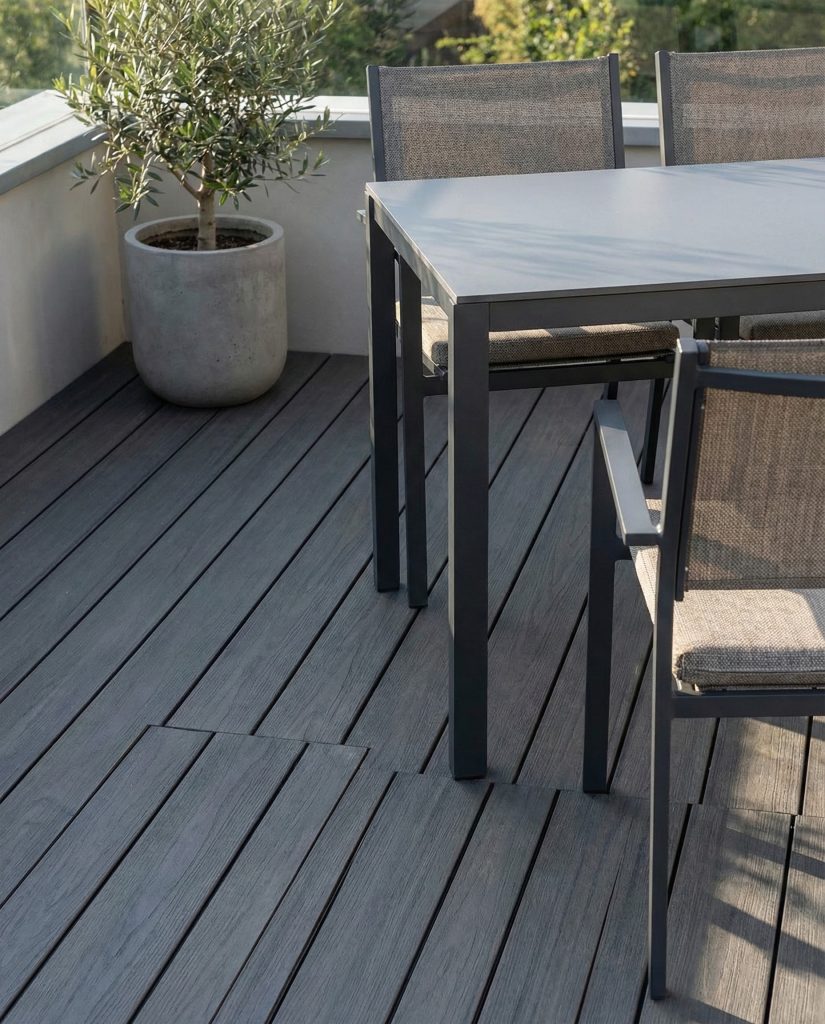
Real homeowner behavior: The sunken fire pit becomes the gravitational center of the deck. Even when there’s no fire going, people naturally gravitate there because it feels like “the spot.” It’s especially popular with teenagers who want a hangout space that feels separate from where the adults are grilling. One downside: leaves and debris collect more easily in the low spot, so plan for drainage or be prepared to sweep more frequently. Some builders install small drainage slots between boards to let water escape.
21. Modular Deck Tiles for Renters
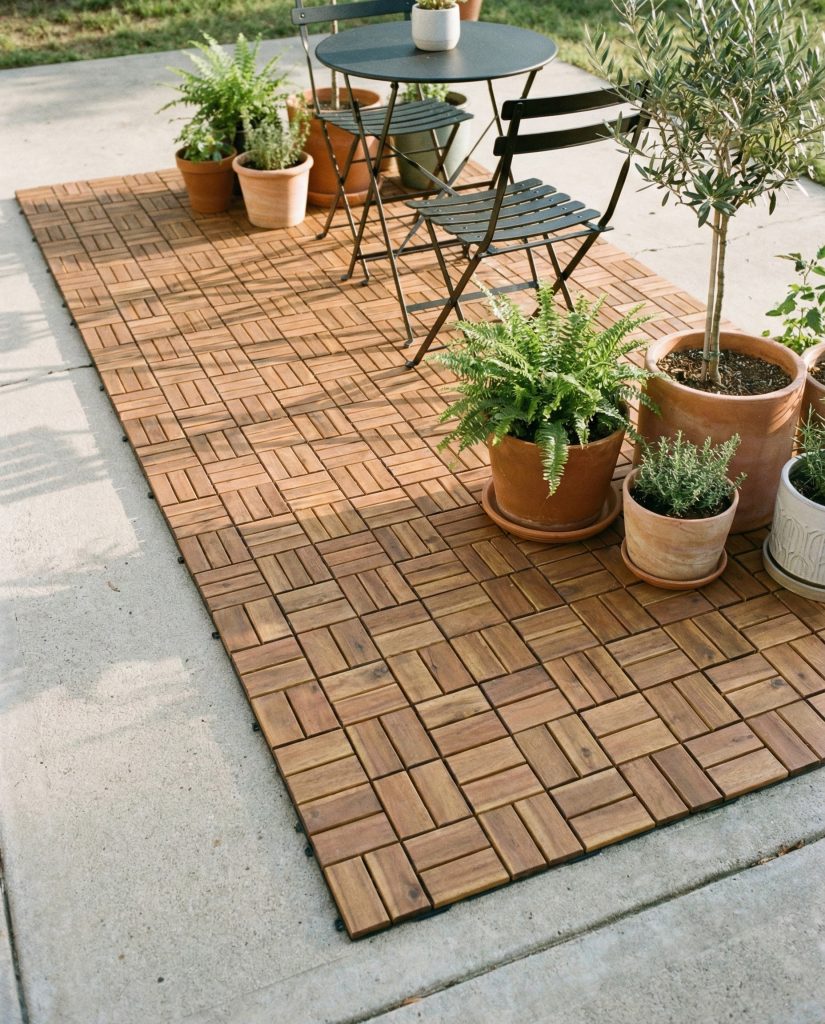
Renters or anyone wanting a temporary solution can transform a concrete patio into a wood deck using interlocking tiles. These snap-together squares (usually 12×12 or 24×24 inches) require zero construction skills—just a level surface and an afternoon. They’re perfect for covering ugly concrete, adding warmth to a sterile space, or defining an outdoor area. When you move, you can take them with you or pull them up at season’s end. Not as robust as a permanent deck, but for a few hundred dollars, it’s an instant upgrade. 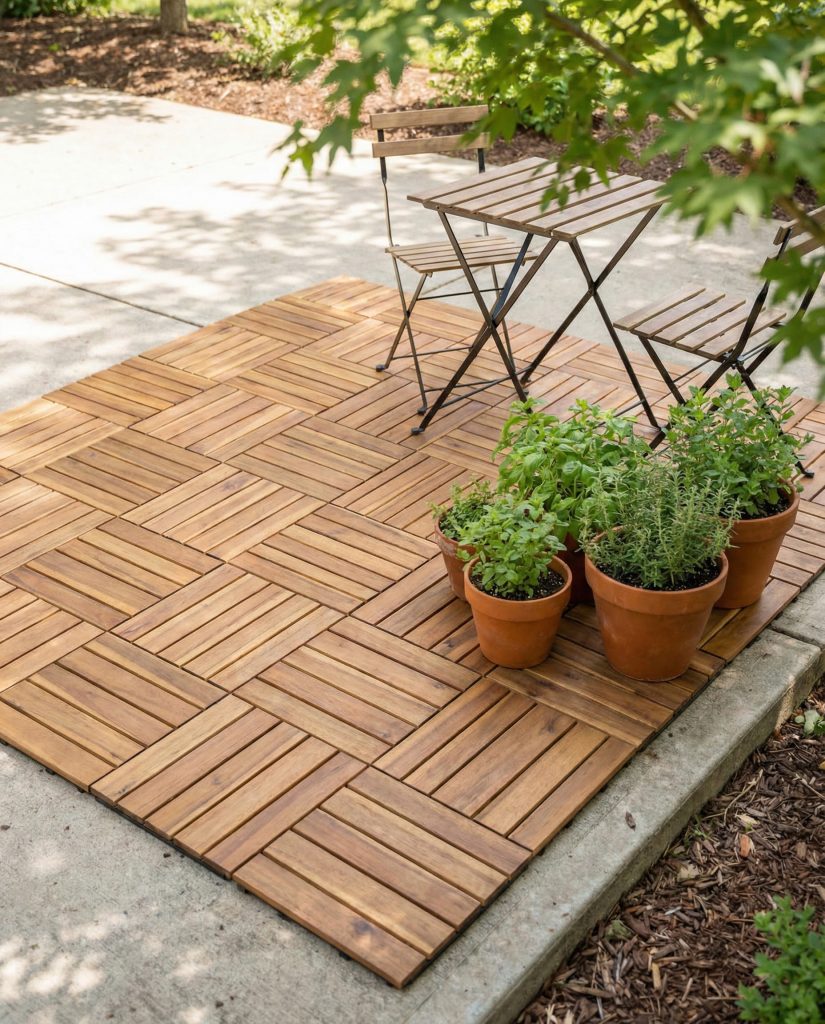
Budget angle: Deck tiles range from cheap plastic versions at $2-3 per square foot to premium hardwood at $10-12 per square foot. For a 100-square-foot patio, you’re looking at $200-$1,200 depending on material and quality. They work best on flat surfaces; any significant slope or uneven ground will cause wobbling. Many apartment dwellers use these to cover balconies or small patios, adding a homey touch without violating lease agreements. Just make sure water can still drain—don’t seal off existing drainage patterns.
22. Wraparound Deck for Maximum Access
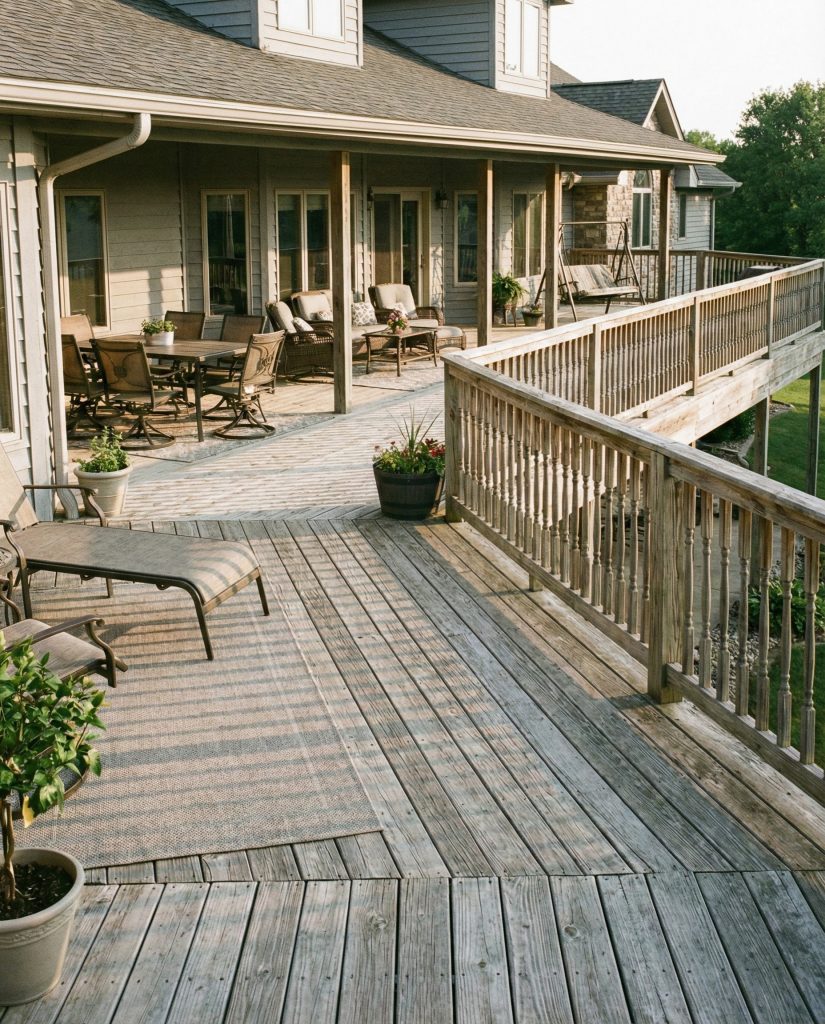
A wraparound deck hugs two or more sides of your house, giving you multiple access points and creating outdoor space that follows the sun throughout the day. Morning coffee on the east side, afternoon reading on the shaded north, and evening cocktails catching the western sunset. This design works beautifully on corner lots or homes with interesting architecture that benefit from the continuous flow. It’s a bigger project than a single-side deck, but the versatility and curb appeal make it worth considering if you have the budget and lot size. 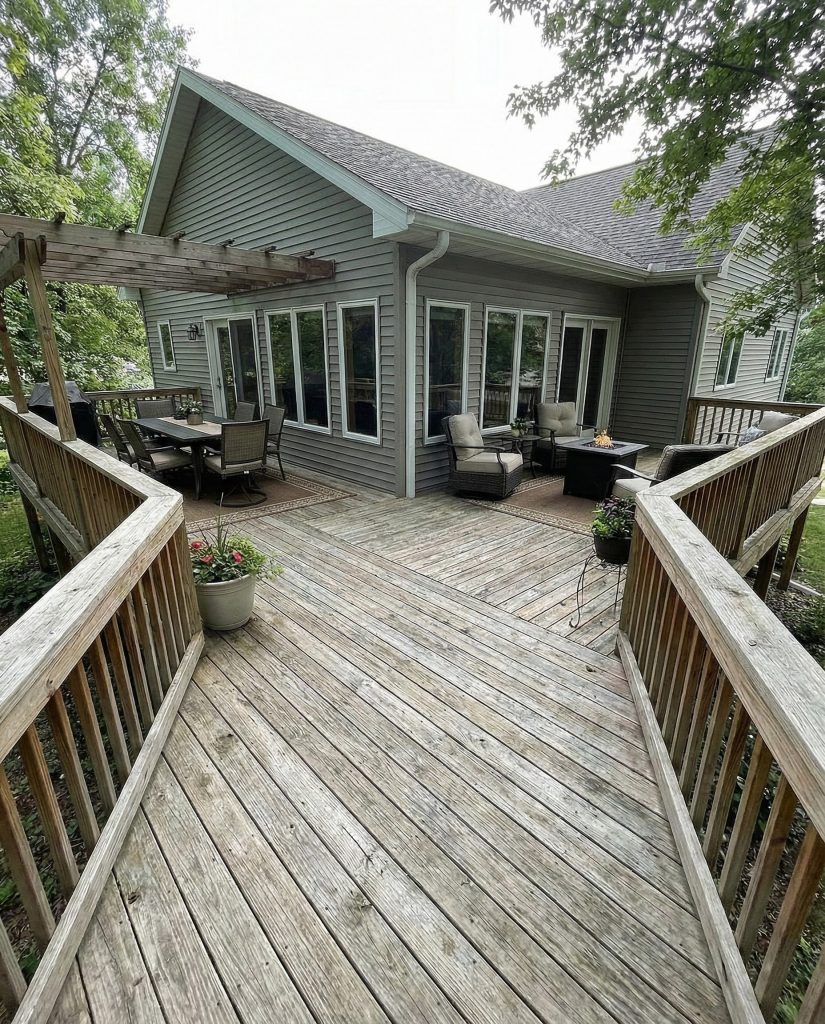
In the Southeast, wraparound decks often have multiple roof sections or pergolas over different areas to provide shade options. In the Northeast, they’re built to catch as much sun as possible and might include glass or cable railings to maintain views. The key is connecting the sections so they feel cohesive—same materials, same railing height, same board orientation—even if each side serves a different function. Think of it as several small decks that happen to connect rather than one enormous deck.
23. Smart Deck with Integrated Tech
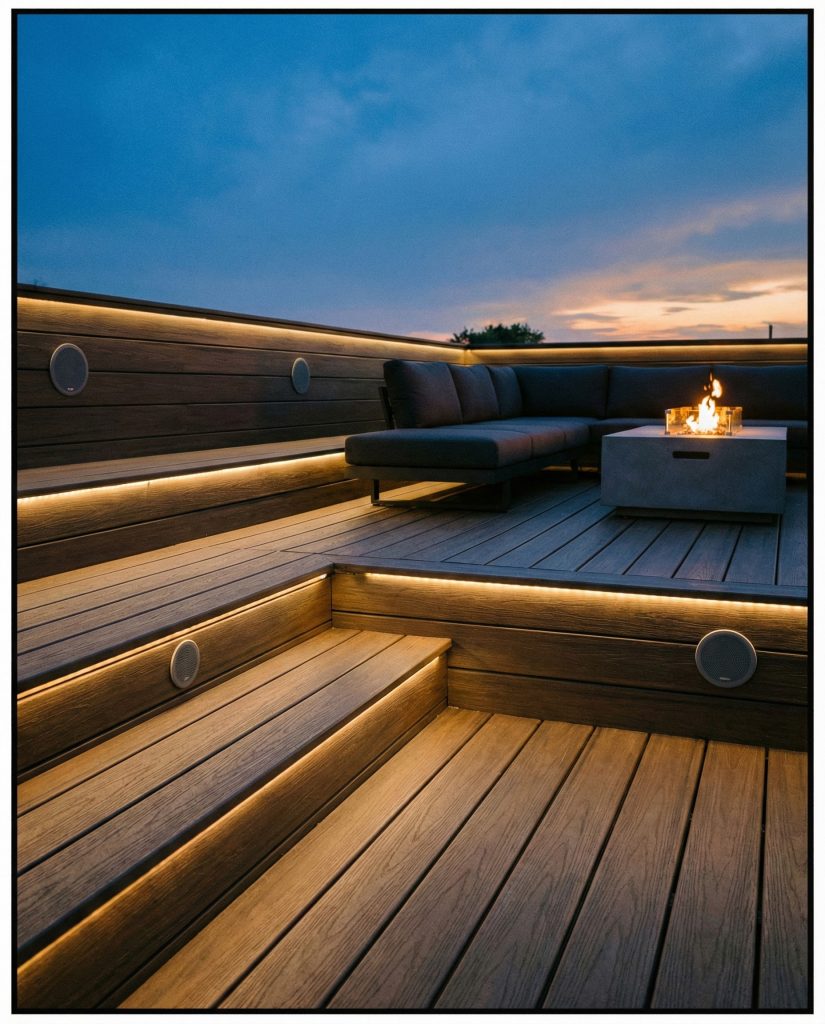
The latest trend is integrating technology directly into your deck design—LED lighting controlled via smartphone app, built-in Bluetooth speakers in post caps, weather-resistant outlets every 6-8 feet, and even heated boards for extending the season in cold climates. It sounds excessive until you experience the convenience of adjusting lights from your phone or having music that follows you around the deck without visible speakers. These features are becoming standard in higher-end builds and are surprisingly affordable if planned during construction rather than retrofitted. 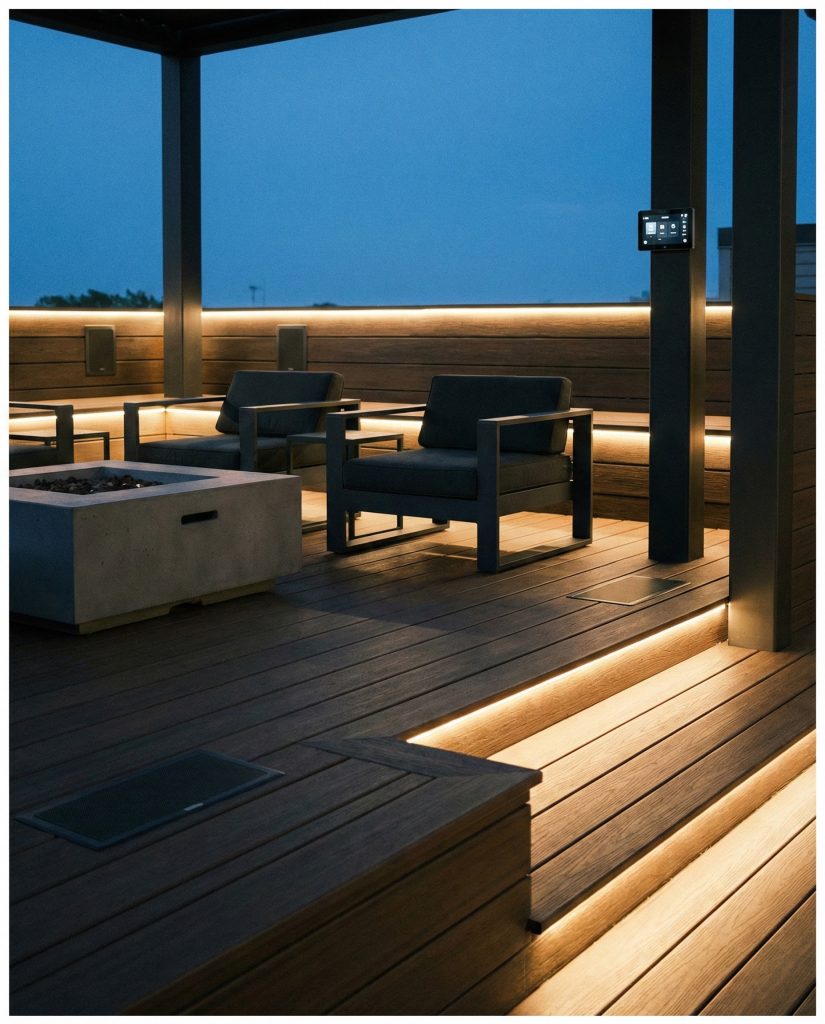
Expert commentary: Run extra electrical conduit during the build even if you’re not installing tech immediately—future-proofing costs pennies now versus hundreds later to add wiring. Low-voltage LED systems are DIY-friendly and energy-efficient; a whole deck can run on less power than a couple of lightbulbs. Motion-activated lights near stairs prevent nighttime tumbles, and dimmable ambiance lighting lets you adjust the mood for dinner parties versus casual evenings. The technology enhances the experience without overwhelming it—when done right, it’s invisible until you need it.
Conclusion
These ideas prove that deck design in 2026 is about more than just nailing boards together—it’s about creating outdoor spaces that genuinely improve how you live. Whether you’re drawn to the simplicity of a ground-level platform or the drama of a multi-story hillside build, the key is choosing features that match your lifestyle and property. What deck style is calling your name? Drop a comment and let us know what you’re planning for your backyard this year.